
Chapter IV
Japheth’s third son Madai, is mentioned more frequently in the Bible than most of his brothers. This is due to a close relationship with a certain cousin from Shem.
Herman Hoeh discusses Madai in his 1957 article, Origin of the Nations – capitalisation his, emphasis mine:
‘Herodotus mentions that the “Matienians” from the land of Rosh were associated with the people of Meshech and Tubal! (Thalia, 94.) And Pliny the Roman natural historian speaks of the “Matiani” as moving into Russia through the Caucasus (BooK VI, section xviii of NATURAL HISTORY). Not all Russians are Great Russians and White Russians. Some are called “Little Russians”. They live – in the Ukraine and the eastern parts of Romania and Poland. They are often called Ukrainians or Ruthenians. There are about 50 million of them! Who are these people? The MEDES! The sons of Madai! Here is the proof!
In Genesis 10:2 we have Madai, the son of Japheth listed. Now check in an exhaustive concordance. You will find the original Hebrew word translated into English as “Mede” or “Median” is always Madai. Madai is the father of the Medes. The Medes used to be associated with the Persians. You will read about them especially in the book of Daniel. But by the time of Nehemiah the Persians were much more prominent. Today there are no Medes left in Persia [Iran]. The Medes are gone. Certainly a great branch of the human family could not suddenly vanish from the earth!
Indeed they did not. Throughout South Russia – in the Ukraine – four centuries before Christ the Medes were beginning to settle. Here is what the historian Herodotus wrote of these people: “They say that they are a colony of the Medes. How they can have been a colony of the Medes I cannot comprehend; but anything may happen in course of time” (Terpsichore, 9). Herodotus, like many moderns, was prone to believe that the people who inhabited Mesopotamia and the”Bible lands” must be living there today. But they are not. The Arabs have taken their place! The fact that the Medes are the Little Russians today is further amplified by Pliny in his NATURAL HISTORY, Book VI, section xi. He mentions “the river Don, where the inhabitants are… said to be descended from the Medes”!
While Hoeh enthusiastically concludes the northeastern Slavic speaking nations, lead by Ukraine are descended from Madai, we will learn that the sons of Madai the Medes, are of an Asian line of descent – albeit with European admixture – and not living in eastern Europe – refer Chapter XXIV Arphaxad & Joktan: Balts, Slavs & the Balkans.
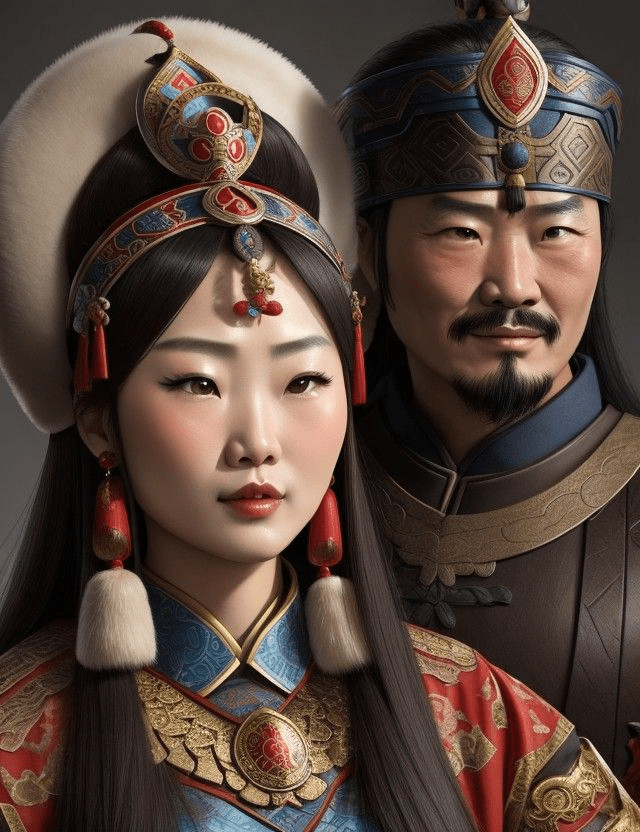
The Races of the Old Testament, A H Sayce, 1891, page 45:
‘Madai are the Medes, the Mada of the Assyrians. We first hear of them in the cuneiform records under the name of Amada, about B.C. 840, when their country was invaded by the Assyrian monarch. They were at that time settled in the Kurdish mountains, considerably to the east of Lake Urumiyeh. Some fifty years later, however, we find them in Media Rhagiana, where they are called no longer Amada but Mada. It was from the latter form of the name that the Greeks took the familiar Mede.’
Amazing Bible Time Line – emphasis mine:
‘According to the Book of Jubilees [10:35-36], [Madai] married the daughter of Shem and pleaded with the three brothers of his wife [Elam, Asshur and Arphaxad] to let him live on their land instead [of] occupying an area in Japheth’s land[!] They gave him a spot to dwell on with his family and it was later… named Media. The capital city of Media was Ecbatana [Ezra 6:2]… Media flourished in the trade industry and was… blessed in the field of agriculture. Its lands were fertile…’
Recall Genesis 9:27 in Chapter II Japheth Orientalium – the prediction of Japheth dwelling with Shem – where, Madai has intermingled with Shem in extraordinary fashion and has been blessed with fertile soil and mineral wealth in its modern location.
The Book of Jubilees 8:5 states that a daughter of Madai named Milcah [Aramaic: Melkâ] married Canaan, Ham’s youngest son.
The Book of Jasher 7:5
And the children of Madai were
Achon, Zeelo, Chazoni and Lot
We will meet another, well-known Lot, later – refer Chapter XXVI The French & Swiss: Moab, Ammon & Haran.
A selection of verses – in chronological order – regarding the Medes of Media in the Bible and revealing their intricate relationship with not only Elam of Persia, but also Asshur of Assyria.
2 Kings 17.6
English Standard Version
‘[Shalmaneser V]… the king of Assyria captured Samaria, and he carried the Israelites away to Assyria and placed them in Halah, and on the Habor, the river of Gozan, and in the cities of the Medes.
This occurred during 721 to 718 BCE – 2 Kings 18:11. Media while a powerful people, found themselves in the shadow of the Babylonian Empire and subject to the Assyrian Empire. The Persian Cyrus or Darius the Great, became King of Persia in 559 BCE. His father was King Astyages of Media, against whom he rebelled and desiring to remove Media’s dominance over Persia, annexed Media to the Persian Empire in 549 BCE.

Cyrus was the first ruler of the Achaemenid Empire, which lasted for over two hundred years. The Medes though conquered, continued to be honoured in the new empire and were invariably referenced together with the Persians – Acts 2:9.
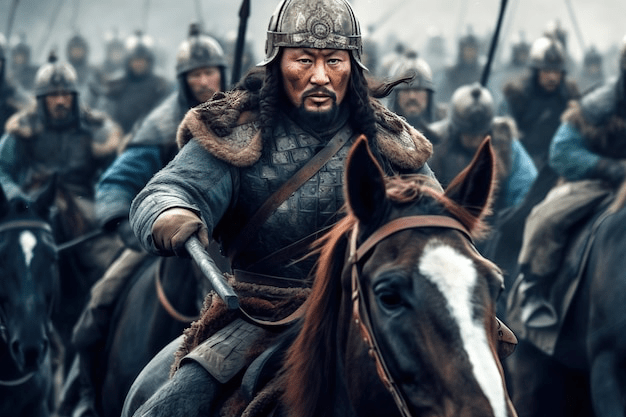
Isaiah 21:2
New Century Version
‘… Elam, attack the people! Media, surround the city and attack it! I will bring an end to the pain the city [of Babylon] causes.’
Cyrus conquered the Chaldean Empire in 539 BCE. This event was foretold long before by the prophets Isaiah (13:17) and Jeremiah (25:25; 51:11, 28) and it occurred one year before Cyrus/Darius issued the decree which allowed remnants of the Kingdom of Judah to return to Jerusalem – Ezra 1:1-4.
Daniel 5:28
English Standard Version
‘Peres, your kingdom [of the Chaldeans] is divided and given to the Medes and Persians.”
Daniel 5:31
New Century Version
‘So Darius the Mede became the new king when he was sixty-two years old.’
Cyrus ruled until 530 BCE. There were two interim kings and then Darius came to the throne of the Medes and Persians in 522 BCE, ruling until 486 BCE. Darius was not a son of Cyrus, being a Mede and not a Persian.

Daniel 6:15
New Century Version
Then those men went as a group to the king. They said, “Remember, O king, the law of the Medes and Persians says that no law or command given by the king can be changed.”
Daniel 6:28
New Century Version
‘So Daniel was successful during the time Darius [the Mede] was king and [later] when Cyrus the Persian was king.’
Daniel had found favour and was a key figure in the Court of both kings for half a century or more. In 485 BCE Xerxes I, the son of Darius the Mede became king, ruling until 465 BC. His son Artaxerxes I or Ahasuerus, ascended to the throne, when his father was murdered, at the age of twenty-six in 465/464 BCE. This was the apex of the empire, inherited from his father and when we are introduced to the biblical character Esther.
The second chapter of the Book of Esther reveals Esther’s rags to riches story. She was part of the returned captives originally from the Kingdom of Judah in 458/457 BCE. Esther descended from the tribe of Benjamin and was beautiful in countenance and spirit – Esther 2:7. She was placed in the King’s palace…
Esther 1:1-4
New Century Version
‘This is what happened during the time of King Xerxes, the king who ruled the one hundred twenty-seven states from India to Cush.’
Literally from present day India all the way west, to the nation in east Africa now known as Ethiopia.

‘In those days King Xerxes ruled from his capital city of Susa [or Susan]. In the third year of his rule [482 BCE], he gave a banquet for all his important men and royal officers. The army leaders from the countries of Persia and Media and the important men from all Xerxes’ empire were there. The banquet lasted one hundred eighty days. All during that time King Xerxes was showing off the great wealth of his kingdom and his own great riches and glory.’
Esther 2:16-18
English Standard Version
‘And when Esther was taken to King Ahasuerus, into his royal palace… in the seventh year of his reign [458/457 BCE], the king loved Esther more than all the women, and she won grace and favour in his sight more than all the virgins, so that he set the royal crown on her head and made her queen instead of Vashti.’
Esther 1:19
English Standard Version
‘If it please the king, let a royal order go out from him, and let it be written among the laws of the Persians and the Medes so that it may not be repealed, that Vashti is never again to come before King Ahasuerus. And let the king give her royal position to another who is better than she’ – Daniel 6:12.
‘Then the king gave a great feast for all his officials and servants; it was Esther’s feast. He also granted a remission of taxes to the provinces [including Jerusalem] and gave gifts with royal generosity.’
About a third of the references to the name Madai, including Media and the Medes in the Bible, occur in the Book of Esther.
The Medo-Persian Empire contained 44% – about 50 million people – of the world’s population within its borders, according to Ehsan Yarshater in The Cambridge History of Iran – the highest such percentage for any empire in history.
To fully appreciate Madai’s identity, we will briefly touch upon Shem’s sons Elam and Asshur – with a selected identifying defining biblical verse for each – before returning in detail to each in their own chapters.
The modern day descendants of Elam or ancient Persia, are the Turks and the nation of Turkey – refer Chapter XVIII Elam & Turkey.
Jeremiah 49:36
New English Translation
‘I will cause enemies to blow through Elam from every direction like the winds blowing in from the four quarters of heaven. I will scatter the people of Elam to the four winds. There will not be any nation where the refugees of Elam will not go.’
Footnote:
‘Or more simply, “I will bring enemies against Elam from every direction. / And I will scatter the people of Elam to the four winds.” Or more literally, “I will bring the four winds against Elam / from the four quarters of heaven./ I will scatter…” However, the winds are not to be understood literally here. God isn’t going to “blow the Elamites” out of Elam with natural forces. The winds must figuratively represent enemy forces that God will use to drive them out.’
We are provided an intriguing clue with regard to Elam’s location. It is vulnerable to attack from all sides: north, south, east and west. These are four points on a compass and represented by the direction of four winds, northerly, easterly and so forth. Turkey is literally at the crossroads of the Earth. It sits between the continents of Europe, Asia and the region of the Middle East geographically, politically and culturally – not quite a full member of any one.
Cyrus the Persian, the Elamite King, was known as:
‘The Great King, King of Kings, King of Anshan, King of Media, King of Babylon, King of Sumer and Akkad, King of the Four Corners of the World.’
Elam or Persia historically was geographically near Madai (or Media). Following points one, three and four in the introduction (primus verba), we should expect to find a European and Asian peoples not only in geographic proximity today but also connected through history, language and inter-marriage, revealed by their respective Haplogroups and autosomal DNA.
The reader is highly recommended to read Chapter XVIII Elam & Turkey in conjunction with this chapter.
Meanwhile, the modern day descendants of Asshur and Assyria, dwell in Russia – refer Chapter XX Will the Real Assyria Stand Up: Asshur & Russia.
Zephaniah 2:13
English Standard Version
‘And he will stretch out his hand against the north [H6828 – tsaphown: northward, northern, (direction of), north side, north wind] and destroy Assyria, and he will make Nineveh [the capital] a desolation, a dry waste like the desert.’
If one studies a world map, Russia is as far north as you can travel. There it is; exactly where the Bible says. The Assyrians historically used their neighbour Media, as a foot stool. We will find a similar relationship has continued into modern times.
One can hear those readers with more than a cursory knowledge, gasping incredulously. Edward Hine first proposed Germany was Assyria in the 1870s – with people influenced by its adversarial relationship with Great Britain in following decades – and the idea proceeded to cement firmly in people’s minds like reinforced steel concrete. When Edom was first linked with Turkey is not exactly clear; though the arguments used hang by tenuous threads for both identities, with genetics providing the knock out blow, as it shall be discovered.
Many will be thinking: then who are the Germans and where is Edom? We will look more closely at these two influential peoples in later chapters – including the intricate relationship between Madai and Elam – Chapter XVIII Elam & Turkey.
It would be very convenient if Madai and or Elam still lived in present day Iran… since Iranians call themselves Persian – but this does not mean they are Madai or Elam. Please refer to point number one and two in the introduction (primus verba).
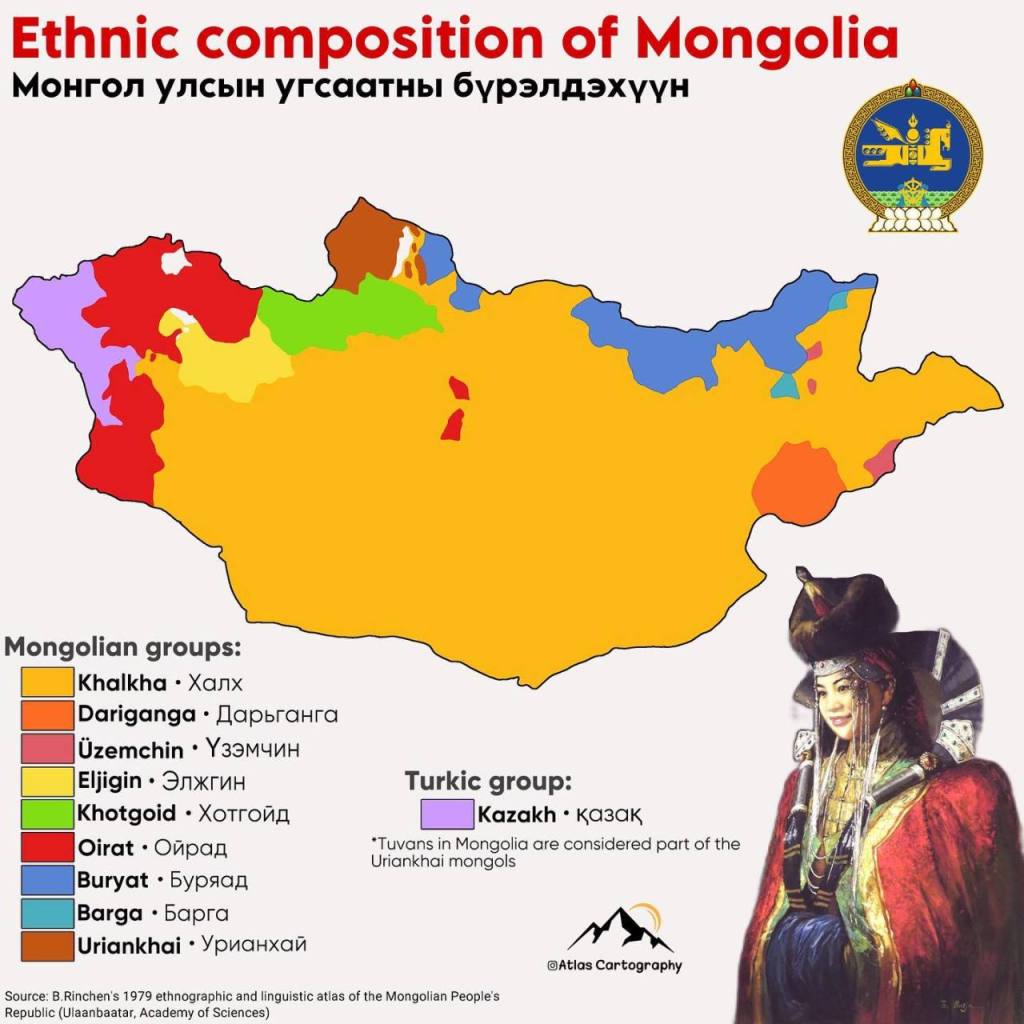
The cumulative evidence leads to Madai being the Turko-Mongol peoples of the Central Asian Republics; including the Tartars of Russia and the Mongols in Mongolia – namely, Kazakhstan, Kyrgyzstan, Uzbekistan,Turkmenistan, partially Tajikistan and possibly including the Sami and Lapps of Russia, Finland and Scandinavia.
Madai from the verb madad, means: ‘measure, sufficient, enough’ or ‘judging’ and ‘as often as’, as well as ‘middle land’, and ‘out of the abundance of’. It could also be interpreted as: ‘My Measure[ment].’
For now, we will only introduce the relationship Madai has with Elam; detailing a comprehensive study later when we discuss Elam in Chapter XVIII Elam & Turkey. We will see support for the subservient relationship of Madai towards Asshur, present day Russia and the abundance Madai has been given in fulfilment of their name. If one looks at a map of the world, it is evident just how in the middle of the world, Madai truly is.
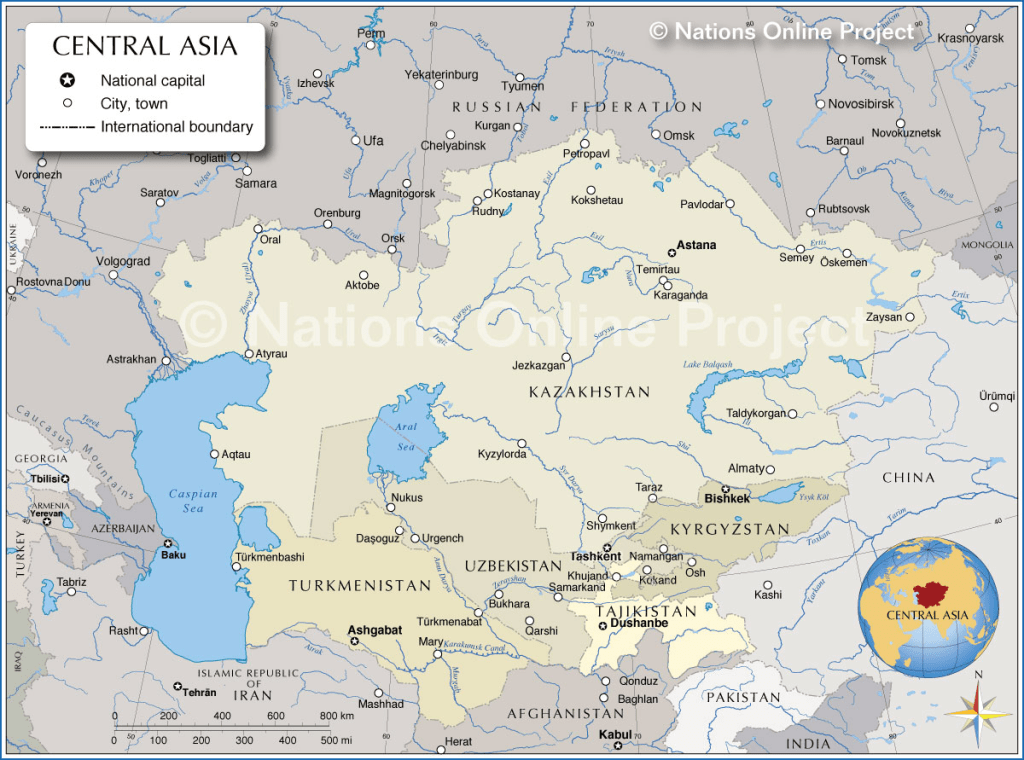
The five nations comprising Central Asia are former Soviet Republics, from the modern incarnation of the Assyrian Empire. They are referred to as ‘the stans’ – the Persian (Iranian) suffix meaning: land of.
The region historically connected the Silk Road, standing as the intersection for the movement of people, trade and philosophies between all parts of Asia and Europe. The population of the four principle nations is approximately 67 million people; not far off the Amerindian population of the Americas – Chapter III Tiras the Amerindian.
The people of Turkmenistan are known as Turkmen or Turkmen Turks.
Arlen Seitbatkal:
‘The word Turkmen stems from “Turk” and the intensifying suffix “men,” meaning true Turk. The word Trkmen is also mentioned in Mahmud al-Kashgari’s 11th-century dictionary, “Dīwān Lughāt al-Turk,” where it refers to an ethnic group and carries the meaning of Turk or Turkish person.’
Turkmen also live in Uzbekistan, Kazakstan, Iran and Afghanistan. They speak the Turkmen language; classified as part of the Eastern Oghuz branch of the Turkic languages – see map below.
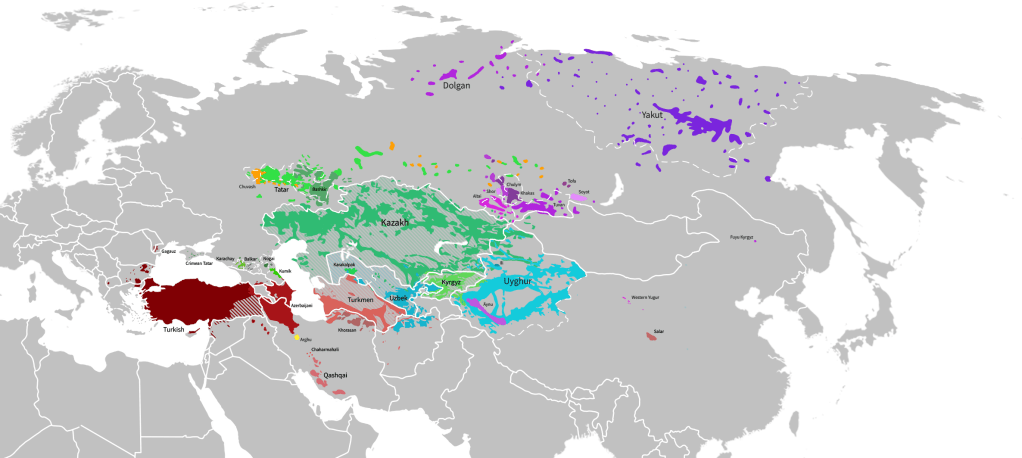
Examples of other Oghuz languages include Turkish and Azerbaijani. In the early Middle Ages, Turkmen originally called themselves Oghuz and then later as Turkmen.

Flag of Turkmenistan
Uzbekistan – the nation with the largest population of the four – mines 80 tons of gold yearly; 7th highest in the world. Uzbekistan’s copper deposits rank 10th in the world, its uranium deposits 12th and the country’s uranium production ranks 7th globally. The Uzbek national gas company, Uzbekneftegas ranks 11th in the world in natural gas production and the country has significant untapped reserves of oil and gas.
What’s in Name of Central Asian Nations, Aibarshyn Akhmetkali , 2025:
‘Scholars link the origin of the term Uzbek to the name of Uzbek Khan, the ruler of the Golden Horde in the 14th century. When the horde began to disintegrate, the nomadic tribes within his ulus began to call themselves Uzbeks.’
Arlen Seitbatkal:
“In the nomadic tradition, a strong leader has always been identified with the people. If someone had power and authority, people followed them, and their name became fixed after the group.”
Turkic influence in Central Asia during the first millennium CE brought Turkic culture and language to the lands now known as Kazakhstan.
Orexca:
‘Written sources of the 6th century register the term “Tyurk” which is pronounced as “Tutszyue” by the Chinese and as “Turk” by the Sogdians. Archeological studies of Turkic monuments make it possible to somehow compare “these” Turks with certain Turkic tribal associations. In the Sayano-Altai region they have identified certain archeological cultures which might well be likened to early Kyrgyz, early Kypchaks or early Oguzes.
In the course of not infrequent internecine wars, tribal discord, and struggles for power and pasture, a part of the Turkic tribes which inhabited the steppes and valleys of Kazakhstan moved southwards – to Central Asia (… Tyurgeshes, Karluks, Kypchaks, Uzbeks, Oguz, and Turkmens-Seldzhuks), to Asia Minor… [and] to the Caucasus (Turkmen and Seldzhuks)…
Starting from the 4th century up to the beginning of the 13th century, the territory of Kazakhstan was the seat of West-Turkic, Tyurgesh, Karluk Kaganates, of the state made by the Oguz, Karakhanides, Kimeks and Kypchaks. All of them successively replaced one another right up to the Mongol invasion.’
These states contributed to the spread of Islam and the development of urban culture.
Mongol influence occurred in the thirteenth century when Genghis Khan conquered the region (1219-1224), incorporating it into the vast Mongol territories – refer Chapter XVIII Elam & Turkey. The region then became part of the Golden Horde, a Mongol successor state.

Orexca: ‘After the invasion, [that is] in the beginning of the 13th century, uluses of the Mongol Empire of Zhuchi-Khan and Zhagatai were formed, which later gave birth to Ak-Orda, Mongolistan and finally to the Kazakh Khanate’ in about 1465.
The Kazakh Khanate was established by Jani Beg (Janibek) and Karay (Kerei) Khan. Various nomadic Uzbek tribes were unified under a single political entity and subsequently developed a distinct Kazakh identity.
Britannica:
‘[For these] separatist Uzbeks became known as Kazakh (“Independent” or “Vagabond”) Uzbeks, and over time a significant differentiation developed between them and the [non-separatist] Uzbeks in their respective ways of life: that of the Kazakh was more nomadic, that of the Uzbeks more sedentary.’
Online Encyclopaedia:
‘According to the latest research of population genetics, mainly of autosomal markers and Y-chromosome polymorphism, it is believed that during the 13th to 15th centuries that the Kazakh ethnicity emerged.’
The Kazakh Khanate reached its peak in the sixteenth century with a golden age under the leadership of Kasym Khan (1509-1518), who expanded its territory and influence.
Britannica: ‘… the Kazakhs were the masters of virtually the entire steppe region, reportedly able to bring 200,000 horsemen into the field and feared by all their neighbours. The prevailing view is that the rule of Kasym Khan marked the beginning of an independent Kazakh polity. Under his rule Kazakh power extended from what is now southeastern Kazakhstan to the Ural Mountains.’
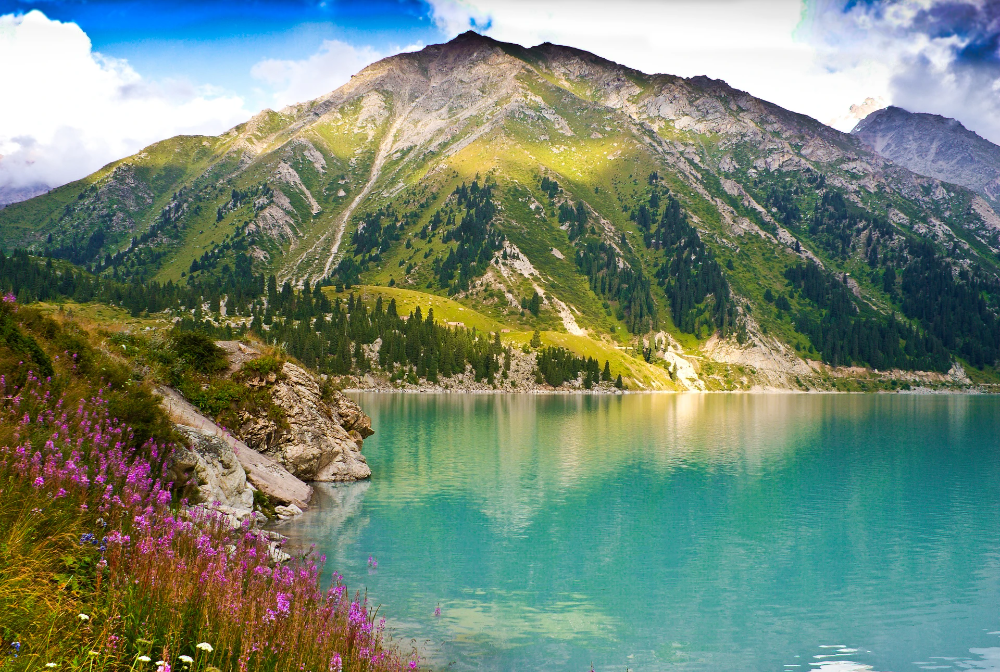
The Kazakh Khanate conducted wars with neighbouring states; the Uzbek Khanate and the Tsardom of Moscow (1547-1721). In the early sixteenth century, the Kazakhs faced an increasing threat from first the Mongols and then from Russia which was expanding its borders to the East.
Kazakhstan became part of the Russian Empire in the eighteenth century. Its colonisation was accompanied by significant changes in the traditional lifestyle of the Kazakh people. Russia sought to actively develop land resources and introduce new administrative structures.
History Central:
‘The situation worsened after 1861 when Russian and Ukrainian peasants flowed into Kazakhstan after the freeing of the serfs and were given Kazakh lands. (This influx of Russians and Ukrainians was not limited to this period – it continued throughout the first seven decades of the [twentieth] century as well such that by 1979, there were more Russians than native Kazakhs in the region.)
Simmering resentments [following repeated revolts] led to a major rebellion in 1916′, sparked by the forced mobilisation of Kazakhs to the Russian front during World War I. ‘In suppressing the uprising, the Russians killed thousands. The Communist revolution the next year [in 1917] plunged Kazakhstan into civil war. Defeated, Kazakhstan became part of Russia as an autonomous entity, eventually attaining the status of one of the Soviet Union’s republics [Kazakh SSR in 1936].’
Britannica:
‘From 1927 the Soviet government pursued a vigorous policy of transforming the Kazakh nomads into a settled population and of colonizing the region with Russians and Ukrainians.’ This period in its history was marked by industrialisation, collectivisation of agriculture and cultural repression.
Britannica: ‘Despite their nomadic rural existence, the Kazakhs were the most literate and dynamic Indigenous people in Central Asia. But the collectivisation brutally imposed by the Soviet regime resulted in a shocking decrease in the Kazakh population: between 1926 and 1939 the number of Kazakhs in the Soviet Union fell by about one-fifth. More than 1,500,000 died during this period, the majority from starvation and related diseases, others as a result of violence. Thousands of Kazakhs fled to China, but fewer than one-fourth survived the journey; about 300,000 fled to Uzbekistan and 44,000 to Turkmenistan.’
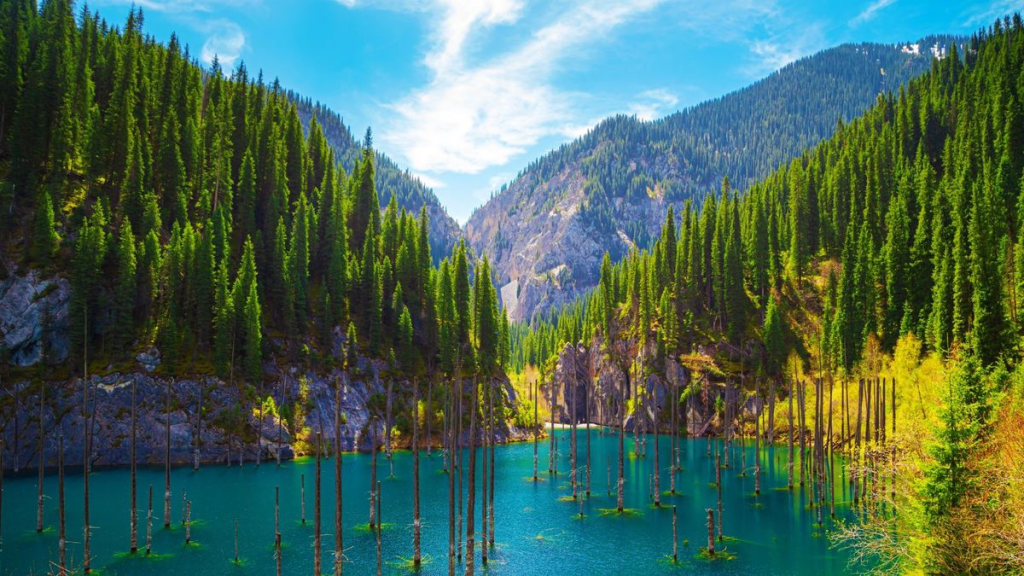
In 1991 after the collapse of the Soviet Union, Kazakhstan became an independent country and a member of the Commonwealth of Independent States (with Russia); under the leadership of the first President Nursultan Nazarbayev. The new state began to implement economic reforms and political changes aimed at integrating into the international community.
History Central:
‘Non-Muslim ethnic minorities departed Kazakhstan in large numbers from the mid-1990s through the mid-2000s and a national program has repatriated about a million ethnic Kazakhs (from Uzbekistan, Tajikistan, Mongolia, and the Xinjiang region of China) back to Kazakhstan. As a result of this shift, the ethnic Kazakh share of the population now exceeds two-thirds.’
This checkered history replicates the intertwined historical relationship between the descendants of Asshur (Assyria) and Madai (the Medes); the ancestors of the Russians and Central Asians respectively.
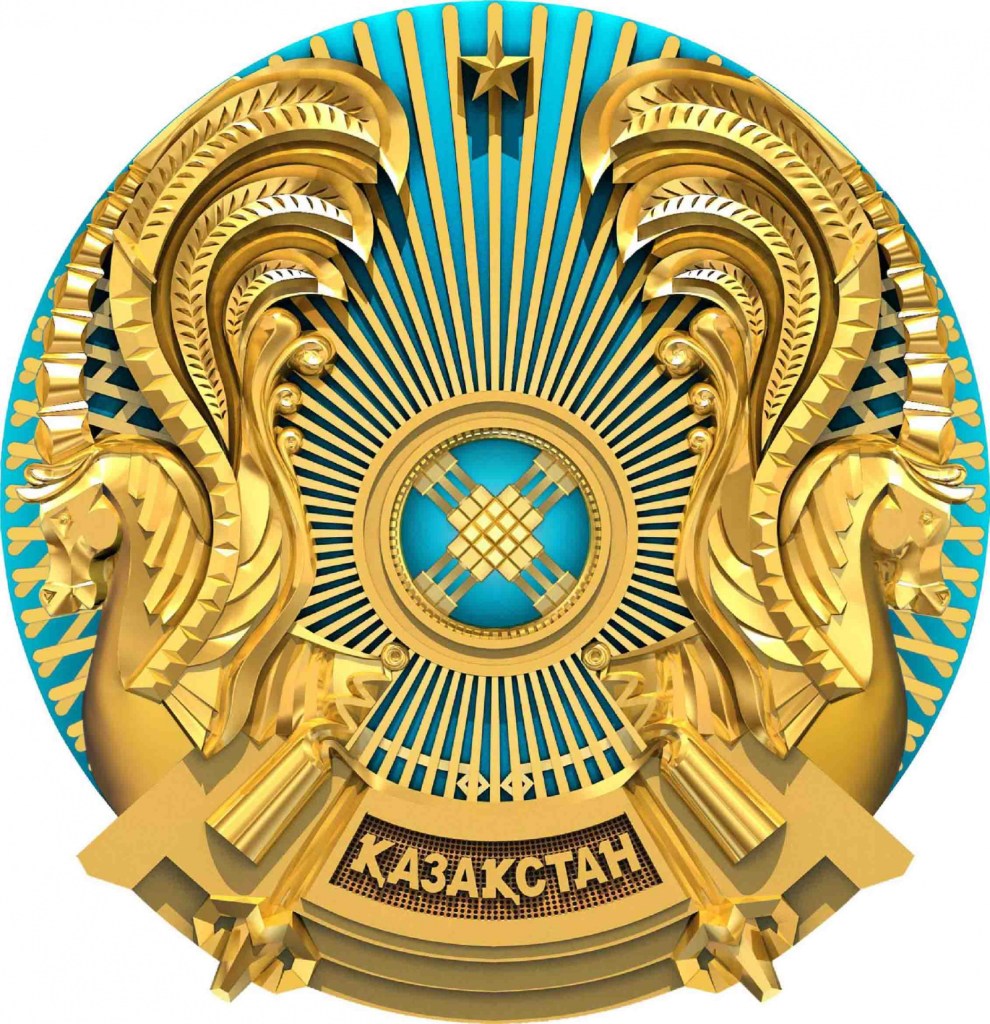
Coat of Arms of Kazakhstan – inscription: QAZAQSTAN
Today, the transcontinental Republic of Kazakhstan, the nation with the biggest land area of the four within Central Asia, has an additional smaller portion west of the Ural Mountains in Eastern Europe. It is the world’s largest landlocked country and the 9th largest country in the world, with an area of 1,052,100 square miles. Kazakhstan is the dominant nation of Central Asia economically, generating 60% of the region’s GDP, mainly through its oil and gas industries. It also possesses vast mineral resources.
The Kazakh language is a member of the Turkic language family, with Uzbek, Kyrgyz, Tatar, Uyghur, modern Turkish, Azeri, Turkmen and numerous other languages spoken in Eastern Europe, as well as Central and Eastern Asia.
Arlen Seitbatkal:
“In the works of academician Abduali Kaidarov and professor Telkozha Januzakov, it is explained that the word ‘qazaq’ can be associated both with ‘qas saq’ (true Sakas) and with the combination of the words ‘qaz’ (goose) and ‘aq’ (white). But most researchers agree that the concepts of yerkin (free) and batyr (warrior) are at the core. The people who broke away from Khan Abulkhair called themselves free, i.e. qazaq.”
| Country | Population (2025*) | Area (km²) | GDP (nominal*) |
| Kazakhstan | 20,963,956 | 2,724,900 | $304.67 billion |
| Kyrgyzstan | 7,347,316 | 199,900 | $20.16 billion |
| Uzbekistan | 37,386,036 | 447,400 | $137.48 billion |
| Turkmenistan | 7,678,550 | 488,100 | $72.12 billion |
| Total | 73,375,858 |
Kazakhstan has the 2nd largest uranium, chromium, lead, and zinc reserves; the 3rd largest manganese reserves; the 5th largest copper reserves; and ranks in the top ten in the world for coal, iron, and gold. It is also an exporter of diamonds.
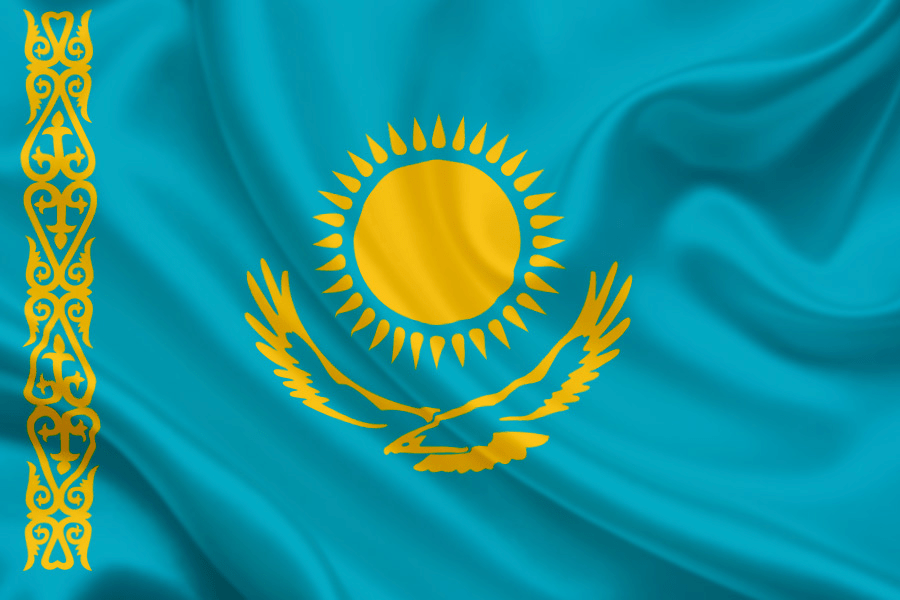
Flag of Kazakhstan
Most significantly for its economic future, Kazakhstan has the 11th largest proven reserves of both petroleum and natural gas in the world. There are three refineries in the country and not being capable of processing the total crude output, much of it is exported to Russia.

Russian Proton launch vehicle with the Granat high-energy astrophysics observatory, prior to launch on December 1, 1989, from the Baikonur Cosmodrome, Kazakhstan.
Kazakhstan, while part of the Soviet Union was instrumental in the Russian Space Program; providing the launch sites for CCCP rockets.
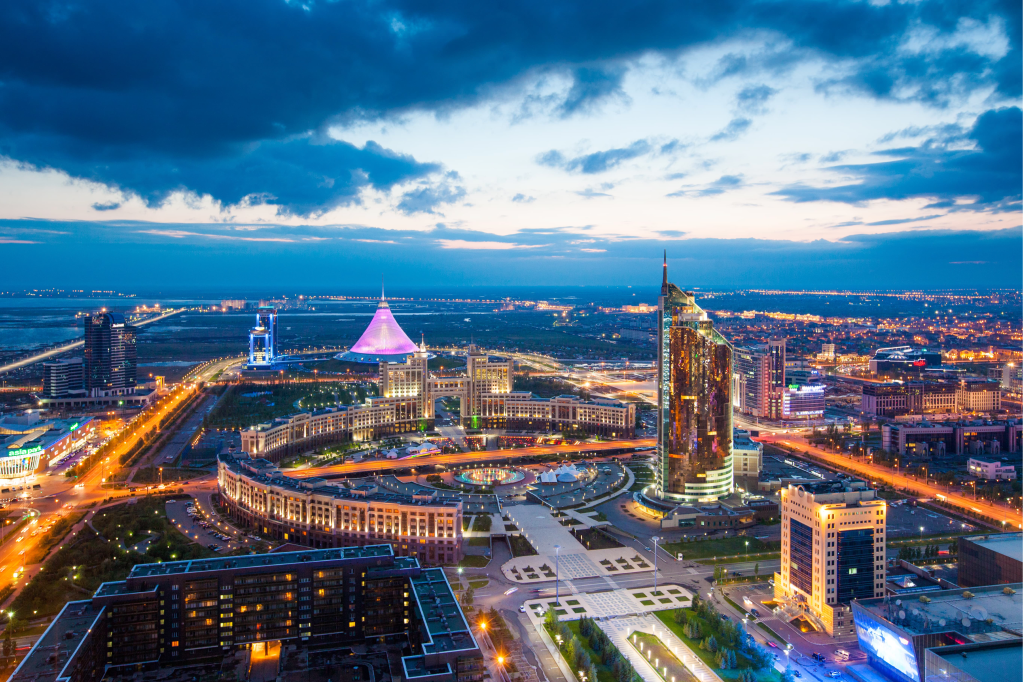
Astana, the capital of Kazakhstan since 1997 and renamed from Aqmola in 1998
The Tatars are a collective of Turkic-speaking groups – nearly 7 million people – living in the Russian Federation. The Chinese referred to these nomadic tribes as Ta-Ta or Da-Da – meaning dirty or barbarian. During the early thirteenth century, Ghenghis Khan united the nomadic tribes then living in Mongolia. One of his grandsons Batu Khan, led the Mongol invasion of Eastern Europe – refer Chapter XVIII Elam & Turkey.

Tatar man
Web source:
‘The… Tatars were conquered by imperial Russian forces during the reign of Tsar Ivan IV in 1552… When the Russian Empire collapsed in 1917, the Tatars… formed their own home-land, the Idil-Ural State. The Soviet government… instead formed the Bashkir Autonomous Republic (Bashkortostan) and the Tatar Autonomous Soviet Socialist Republic (Tatarstan) on the same soil. When the Soviet government took over these regions, it redrew the boundaries and gave neighboring Russian provinces the best lands. By changing the boundaries, about 75 percent of the Tatar population found itself living outside the borders of Tatarstan.
Tatar culture was… affected… through the policy of Russification, where the Russian language and culture were legally forced on the Tatars and other ethnic groups… Tatars, of whom about 26 percent live in Tatarstan… is about the size of Ireland or Portugal.
About 15 percent of all Tatars live in Bashkortostan, another ethnic homeland in the Russian Federation that lies just east of Tatarstan. There are also smaller Tatar populations in Kazakstan, Kyrgyzstan, Tajikistan, Turkmenistan… In 922, the Tatars’ predecessors, the Bulgars, converted to Islam, and the old Turkic script was replaced by the Arabic alphabet.
A famous old Tatar… proverb is Tuzga yazmagannï soiläme, which means, roughly, “If it’s not written on salt, it’s wrong to even mention it.” The proverb refers to the ancient method of keeping records on plaques made of wood and salt, and commends the practicality of keeping written records.’
Recall ‘the Law of the Medes and Persians’, where a proclamation stood fast and could not be altered as discussed in the Books of Esther and Daniel.
Top 14 Tribes of Ancient Central Asia, Mahesh Shant – emphasis & bold mine:
‘Before the Turks entered the arena of history the Awars occupied the regions which later came under the sway of the Turks. After the destructions of the Huns, Syan Pi took over Manchuria, Mongolia and some parts of China. One of the dynasties descended from them, the To-Ba dynasty, was founded in 315 A. D. and continued till the 5th Century. This Hunnish tribe lived in the areas near Lake Baikal… and north of the Gobi desert [Mongolia].
At first the Chinese name for the Awar tribe was Ju-Jun but it was later (in 451 A. D.) changed to Jvan–Jvan by the To-Ba Emperor Tai-Hu-Ti (425-452 A.D.)…
She Lun, a powerful chieftain, who conquered the Kao She tribe and, consolidating his military strength, took the title of Kagan (Khan). The kingdom of the She Lun, which spread from Korea to the Altai, included a part of China as well as a section of the trade route of Central Asia. The Awars relations with the Chinese were not unlike those of their Hunnish ancestors. At times they plundered the border regions of China, at others they gave military aid to the Chinese Emperor. The Turks put an end to the military might of the Awars in 546 A. D.’
Of interest is the remarkable coincidence of the To-Ba dynasty – who were related to descendants from Madai (just as the Huns were from Elam) – should take on the name of their long distant uncle, Japheth’s fourth son, Javan (Jvan-Jvan).
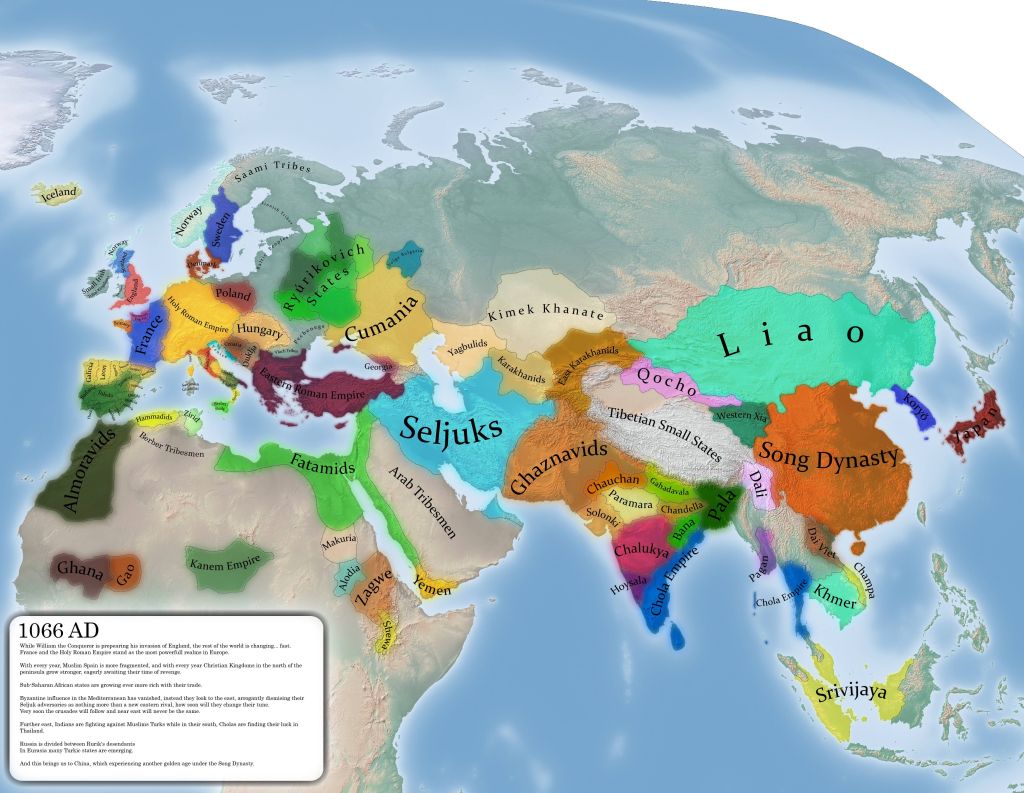
Shant:
‘The Selzuks were a nomadic people inhabiting the regions north of the Sir Darya [Syr Darya River]. They were also known as Turkmans and the region once inhabited by them now forms part of the Soviet Socialist Republic. A branch of the Aguz, they spread in the course of their wanderings to the northern banks of the Sir Darya.
The Guz or Aguz [Oghuz] Turks were divided into three branches – Kipchiaks, Kankalis and Karluks. The Selzuk dynasty, which ruled over Central Asia and Iran for a long time, was descended from the Kipchiaks, and the Turks of modern Turkey are descended from the Osmanali branch of this tribe.
The similarity in language points to the Uzbeks, Turkmans, Khirgiz and Kazaks having sprung alike from Turkish stock.
They can be divided into three parts:
(i) The Northern Turks – the Yakuts of Siberia,
(ii) The Eastern Turks – the Sinkiang Turks, Uzbeks, Kazaks are Kufa Tatars
(iii) The Western Turks – Osman Ali, Azerbaijanians and Turkmans.
A branch of the Turks left its original homeland in the Altai mountains and advanced into Turkestan, driving out or absorbing the Scythian and Sogdhian tribes inhabiting these regions. Among these Turks were the Selzuks and the Chingiz Mongols.
The Sulzuks acquired that name from Selzuk Turk their first Muslim Chief, although they were equally well-known as Turkmans. The Western Turks, of whom Turkmans were the majority, brought Asia Minor and Armenia under their control, while another branch of the Western Turks, the Osmani Turks, brought about the downfall of the Byzantine Empire, made Constantinople their capital in the 15th century and later extended their rule over Eastern Europe.’
The entwined relationship between Madai (Mongols) and Elam (Turks) – the Medes and Persians of old – has endured through the cyclic phases of their history. The label Turk, used interchangeably for Uzbeks, Kazakhs and Turkmen of Central Asia as well as for the Turkish in Asia Minor – Chapter XVIII Elam & Turkey.
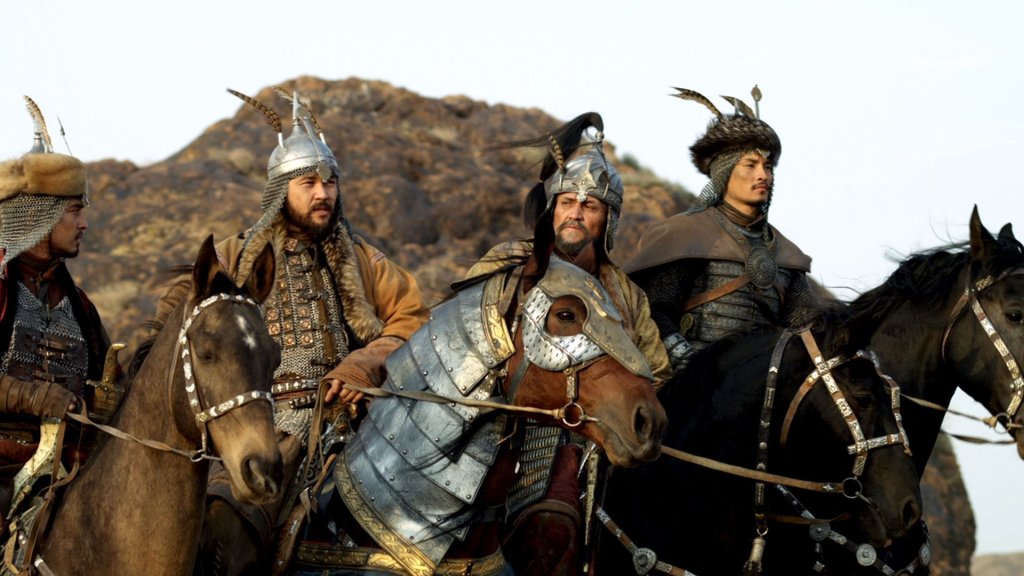
Facts and Details, People of Central Asia:
‘The people of Central Asia are basically divided into two types: the traditional nomads and semi-nomads (Kazakhs, Kyrgyz, Mongols and Turkmen) and the settled people (the Uzbeks and Tajiks). According [to] DNA studies, Tajiks, Uzbeks and Turkmen have retained their “ethnic purity.”
There has traditionally been a lot of intermarriage between the ethnic groups of Central Asia. Uzbeks and Tajiks have traditionally been difficult to distinguish from one another. The same is true with Kyrgyz and Kazakhs. Up until the 20th century… [the Uzbeks and Tajiks] were regarded as essentially the same people except that Uzbeks spoke a Turkish language and the Tajiks spoke a Persian language.
Tajiks are… distinguished from other Central [Asians] by their traditional Islamic-Iranian culture [and ethnicity]. Uzbeks consider themselves the [dominant] people of Central Asia by virtue of their numbers and their historic links to… Genghis Khan. Other ethnic groups in Central Asia dispute this claim.
Kazakhs and Kyrgyz are close relatives. They look similar, have many similar customs and speak similar languages. Many believe they are [essentially] the same people with Kazakhs traditionally residing in the steppes and Kyrgyz living in the mountains. The Kyrgyz, however, have a longer and more coherent history than the Kazakhs. Clan and regional ties have historically been more important than ethnic identity.
Central Asia is a meeting point of Turkic, Persian and Mongol cultures.’

The Analysis of the Genetic Structure of the Kazakh Population as estimated from mitochondrial Dnapolymorphism, Scientific Centre of Obstetrics, Genecology and Perinatology, Galina Berezina, Gulnara Svyatova & Zhanar Makhmutova, 2011:
‘The most closely related populations are the Kazakhs and Uighurs, they are accompanied by the Uzbeks and the nation(s) of the southern Altai on one level. The Kyrgyz and Bashkir [Tatar] nations formed an independent taxonomic group in this cluster. The contribution of [European] and [Asian] components in the formation of the anthropological type of the Kazakhs was proved… by Ismagulov (1970) on the basis of a comprehensive study of paleoantropological and craniological materials.’

The land of Kazakhstan has been a place of interaction comprising many ethnic layers during a historically long period. Mongolian tribes, Turkic-speaking populations from Siberia and Altai, Indo-Iranians from the Near East, as well as Slavs from Eastern Europe took part in the formation of the Kazakhs. Thus, it is possible to explain a high level of genetic variability of mtDNA, with a complicated ethnic history.

Khazaria, Kazakh Genetics: Abstracts and Summaries, Kevin Alan Brook – emphasis mine:
‘Kazakhs (Qazaqs, Kazaks) are a Turkic-speaking people living in several modern countries including (but not limited to) Kazakhstan, China, and Mongolia. They are approximately 70% [Asian] and 30% [European] and this admixture explains why some Kazakhs have light European physical features in contrast to the majority who have black hair, brown eyes, and epicanthic eyefolds.
The Kazakhstan DNA Project‘s Y-chromosome records show that among its male members are the Y-DNA haplogroups C3, C3*, C3c, G… O2, Q1a3, E1b1b1, N1c1, R1a1, R1b1b1, R2, J2a1, J2a, and J2.’
The paternal Haplogroups in bold are indicative of lineages from Japheth; with the ancient C Haplogroup the defining marker for descendants from Madai.
Brook: ‘C3 [C2] (M217, P44) is not only common among Kazakhs but also frequent in Mongolia [and the Kyrgyz].
The analysis shows that Western Europe… and Eastern Europe… mtDNA lineages exist in the Kazakhs population. A high genetic diversity was observed in the Kazakhs population (h=0.996). “We have studied the relation between East Eurasian and West Eurasian lines in the gene pool of the Kazakhs using the data on polymorphism HVSI of mtDNA (frequencies of haplogroups). It was found out that the main contribution of East Eurasian lines (55% of the total gene pool) to the modern gene pool of mtDNA of the Kazakhs make haplogroups D, C, G and Z (36.2%), A and F (6.9%) and other haplogroups of Asian origin (11.9%) [B].’
The complexity of the Kazakh genetic make up is due to their Haplogroups being split between Asian (64-70%) and European lineages (30-35%); with their European genealogy being split further, between western (41%) and eastern European (55%) gene pools.
Brook: ‘West Eurasian lines (41% of the total gene pool) in the Kazakh gene pool are most frequently represented by the haplogroups H (14.1%), K (2.6%), J (3.6%), T (5.5%), U5 (3%) and others (12.2%).” We found that more than 64% of mtDNA lineages belong to Asian-specific haplogroups (M, C, Z, D, G, A, B, F, N9). Supercluster M was found with most high frequency (45%).’
Japheth’s son Tiras possesses the mtDNA Haplogroups in common with Madai: C, D, A and B – refer Chapter III Tiras the Amerindian. Haplogroups C and D derive from super sub-Haplogroup M, itself from L3 while Haplogroup A derives from super sub-Haplogroup N and B from super sub-Haplogroup R.
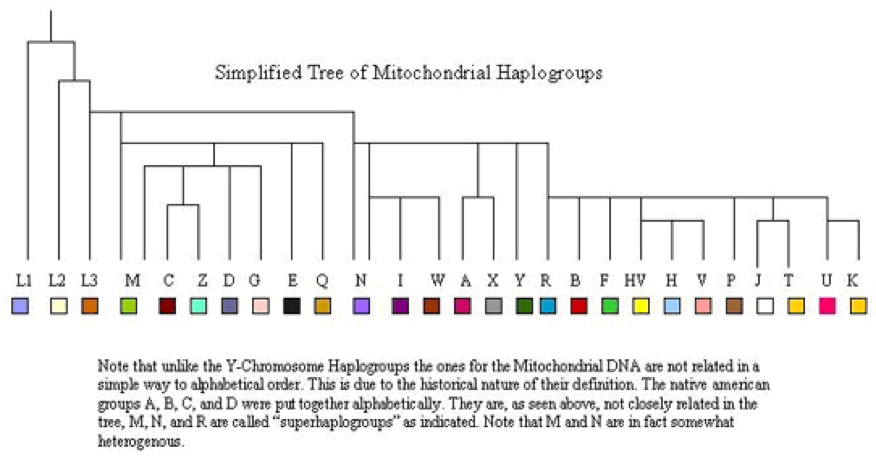
Brook: ‘Western-Eurasian specific haplogroups were observed in 35% (H, V, HV, J, T, U1, U2, U4, U5, U7, K, W, X)… the lineage of Hg U7, typical for all Levant, including Iran, was revealed in Kazakhs… East Asian hgs – A, B, F, N9 – make up about 18% in Kasakhs, like in all Central Asian populations, Altaics, Tuvinians and Bashkirs…
While those Kazak people who reside in China are mostly [Asian], just like Kazakhs in Kazakhstan, this study showed that 30.2% of their ancestry is western Eurasian. “In this study, we also find that all Turkic and Mongolic groups possess a common set of maternal haplogroups (C, D, G2a, H)…*
Kyrgyz (Kirghiz, Kirgiz) are a Turkic-speaking people living mostly in Kyrgyzstan but also in neighboring Uzbekistan, Tajikistan, Afghanistan, and China. They are descended from multiple different ancient peoples. Mongoloid (East Eurasian) ancestry represents between half and two-thirds of Kyrgyz ancestry.
Kyrgyz living in Tajikistan and western areas of Kyrgyzstan have less Mongoloid ancestry and more Caucasoid ancestry than other Kyrgyz. Central and South Asian ancestry is the next most important element representing about one-fourth. West Eurasian (including European) represents about one-eighth. Ancestry from West Asia [Arab, Persian] is not significant in any Kyrgyz person and many have none of it.
The Kirgiz DNA-Project’s Y-chromosome records show that among its male members who are Kyrgyz from Kyrgyzstan are the Y-DNA haplogroups C-M217 (C3) [C2], I-M253 (I1), J-M172 [J2], N-M232, O-P201, R-M198 (R1a1a), R-M269 (R1b1a2), and R-M343 (R1b1a1). R1a1 (and its subtypes) is also found among Kazakhs, eastern Siberians, South Asians, East Slavs, and West Slavs.’

‘This study of Y-DNA includes Kyrgyz samples as well as samples from other Central Asian peoples like Tajiks, Uzbeks, and Karakalpaks, plus many other populations from elsewhere. M17 [R1a1] is suggested to be “a diagnostic Indo-Iranian marker”… [resulting from admixture with European lineages]. “The exceptionally high frequencies** [63%] of this marker in the Kyrgyz, Tajik/Khojant, and Ishkashim populations are likely to be due to drift, as these populations are less diverse, and are characterized by relatively small numbers of individuals living in isolated mountain valleys.”

The most prevalent mtDNA Haplogroups for the Kyrgyz, in order are: D, H and C.* D, C and G are indicative of Asian ancestry and H is reflective of European admixture in the maternal line.
The main Y-DNA paternal Haplogroups for the men from half of the seven million Kyrgyz are in descending percentage order:
R1a [63.5%] – C2 [13.5%] – O [5.8%] – K [1.9%] – O2 [1.9%] – N1c1 [1.9%] –
P [1.9%] – R1b [1.9%] – I1 [1.9%] – J2 [1.9%]
The Haplogroups, R1a, R1b and I1 are indicative of European admixture. The Haplogroups C2, K, O2 and N1c1, are the main Asian lineages for the Kyrgyz men, with C2 the principle defining Asian paternal Haplogroup. The very high frequency of R1a** is somewhat of an anomaly and reveals considerable admixture. For R1a is mainly associated with either the Eastern European peoples of Slavic descent; from eastern Siberia; or from mixed Indian ancestry in northern India.
J2 is typically a west Asian Haplogroup and particularly associated with Turkey, Iran and Pakistan. R1b is the main identifying Haplogroup for western European men and Haplogroup I1 originates with northwestern Europeans. What is important, is that Haplogroups C, K, N and O are key Asian Y-DNA Haplogroups.
The main Amerindian mtDNA Haplogroups – in order – are A, B, C and D. The Kyrgyz and the Kazakhs have the same Haplogroups, though with different variations and percentages. Similarly, the American Indian has Y-DNA Haplogroups Q and C, of which they share C with the Kyrgyz and both C2 and Q1a3 with the Kazakhs.

Kazakhstan Soldiers
The following prevalent Asian mtDNA Haplogroups are found in the Kazakh population of nearly twenty million people: D, C, G, Z, followed by A, F and also B and N9. The supercluster M is found with the highest frequency of 45%. The main European mtDNA Haplogroups include, H at 14%, K, J, T and U5. These two sets are very similar to the Kyrgyz people.
The main Y-DNA Haplogroups include:
C2 [40%] – K [10%] – O2 [8%] – J2 [8%] – R1a [7%] – N1c1 [7%] –
R1b [6%] – P – [3.3%] – Q1a3 [2%] – R2 [1%] – I1 [1%]
This is where they differ, with the Kazakh’s showing less European admixture as shown by the predominant and distinct C, K and O Asian Haplogroups. It also highlights how principle admixture has passed from the maternal^ line, with Madai males taking Elamite wives, or in other words, Turko-Mongol males marrying primarily Turkish women. J2 is the most prevalent Y-DNA Haplogroup of Turkish men with R1b and a lesser extent R1a and so the Kazakh and Kyrgyz males possessing the same is not a coincidence.
Decoding a Highly Mixed Kazakh Genome, multiple authors, 2020 – emphasis mine:
‘We present the whole genome sequence and thorough genetic variant and admixture analysis of a Central Asian, Kazakh MJS. We found several SNVs associated with drug toxicity, metabolism, diseases, phenotypic features and identified recent and ancient admixtures. Both PCA and phylogenetic analyses confirm closer MJS and other Kazakh similarity to modern East Asians than Europeans and showed the overall closest genetic affinities are with other Central Asian populations, namely, Kalmyk, Uzbek and Kyrgyz. All populations with significant similarity to MJS genome could be backed up by historic migration events involving the Kazakh population and the major fraction of genomic variation could be attributed to fairly recent admixture with geographically close populations.
However, MJS’s mitochondrial^ DNA [maternal] haplogroup is of European [Turkish] or Near Eastern (West Asian) [Iranian] ancestry. It corresponds to the heterozygous SNPs associated with European phenotypic features and confirmed by admixture f3 statistics and all other Kazakh autosomal data showed very similar ancestral compositions to MJS’s. This highly heterozygous and admixed Kazakh genome provides insights into complex admixtures and can serve as a reference for mapping complex heterogeneity in Central Asian populations.’
The males from the total eight million Tajiks exhibit these main Y-DNA Haplogroups:
R1a [44.7%] – J2 [18.4%] – R2 [7.9%] – C2 [2.6%]
Tajikistan shows only a slim oriental link with their near neighbours and could have either mixed heavily or more likely, have more in common paternally with their southern Asian neighbours in Afghanistan and Pakistan – refer Chapter XIII India & Pakistan: Cush & Phut.
The males from the six million people of Turkmenistan carry the following Y-DNA Haplogroups:
R1b [37%] – J2 [17%] – K [13%] – P [10%] – R1a [7%] – R2 [3%]
The Haplogroup R2a (M124) is typically associated with the southern Asian men of particularly India with 10%; Pakistan with 8%; Western Asia; plus the Central Asian nations.
The Turkmen on the other hand show strong admixture with the Turks (and related peoples) as revealed by their R1b and to a lesser extent J2 Haplogroup levels. The K and P Haplogroups are indicative of their Oriental ancestry. Haplogroup P derives from K and Q descends from P. Even though Y-DNA Haplogroups P and Q can be associated with Europeans in trace quantities due to admixture, they are sourced originally from and consistently found in, Asiatics .

Kazakh Women

The Y-DNA Haplogroups for the men of half of the thirty million plus people in Uzbekistan:
R1a [25.1%] – J2 [13.4%] – C2 [11.5%] – R1b [9.8%] – K [6.8%] –
P [5.5%] – O2 [4.1%] – R2 [2.2%] – I1 [2.2%] – N1c1 [1.4%]
Uzbekistan like the smaller Kyrgyzstan and Turkmenistan has obviously mixed with a people not descended from Japheth but rather from Shem, though not as heavily and thus retains more of their core Oriental Haplogroups such as C, K and O. Their R1a, J2 and R1b Haplogroups again link them as we will learn, with primarily Turkey.

Uzbek man
Seen together, their respective Y-DNA Haplogroups appear as the following:
Tajikistan: R1a – J2 – R2 – C2
Turkmenistan: R1b – J2 – K – P – R1a – R2
Kyrgyzstan: R1a – C2 – O – K – O2 – J2 – N1c1 – P – R1b – I1
Uzbekistan: R1a – J2 – C2 – R1b – K – P – O2 – R2 – I1 – N1c1
Kazakhstan: C2 – K – O2 – J2 – R1a – N1c1 – P – R1b – Q1a3 – R2 – I1
On the one hand they are all similar and on the other, there are differences highlighting the extent of the admixture experienced by Madai with principally Elam. Kazakhstan, the furthest north remains the closest to its genetic Asian roots. It is the nations of Kyrgyzstan and Uzbekistan tucked underneath Kazakhstan to the south who are more mixed and it is Kyrgyzstan further east which remains purer than Uzbekistan in its core Asian Haplogroups.

Meanwhile it should be no surprise that the nation the most southwards – Turkmenistan which is the closest to Turkey – exhibits the most genetic influence with higher frequencies in Haplogroups J2 and R1b. Tajikistan is the most distant and has more in common with southern Asia than it does with Central or East Asia. Of the two bigger populated nations, Uzbekistan reveals intermarriage levels similar to the others and only Kazakhstan is the nation that has mixed the least, thus retaining a truer Central Asian identity.
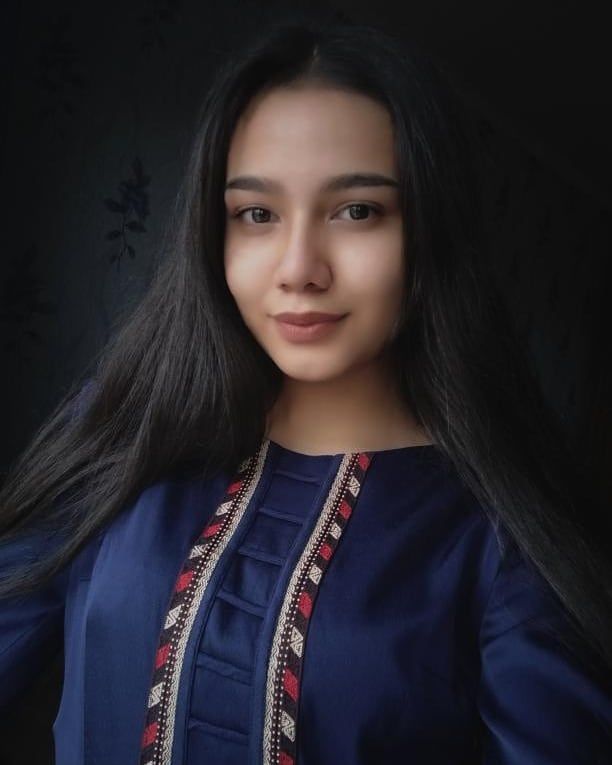
Turkmen woman
Within the Haplogroup sequencing, Kazakhstan and Kyrgyzstan are more eastern in orientation, while Turkmenistan the most western oriented. Turkmenistan is geographically, linguistically and culturally more connected to Turkey – Chapter XVIII Elam & Turkey. Uzbekistan bridges the gap between the other three.
The Haplogroups C2, O2 and major sub-Haplogroups K and P are all indicative of these nations descending from Japheth and their close genetic relationship with northern and eastern Asians.
A comparison table below for the principle Y-DNA defining marker Haplogroups for the North American Indian and Central Asian men.
C O K P Q
NA Amerindian 6 77
Kazakhstan 40 8 10 3 2
Kyrgyzstan 14 8 2 2
Uzbekistan 12 4 7 6
Turkmenistan 13 10
What does this table tell us? Noah would have carried Y-DNA Haplogroup A, which later mutated to C, D and F in his descendants descending principally from his eldest son Japheth. Japheth in carrying the proto-type C (and F) Haplogroup, gave his sons the mutations which would eventually derive into C, D, K, N, O1, O2 and Q.
Coincidentally totalling seven principle Y-DNA Haplogroups and thereby equaling the same number of sons descending from Japheth. Overall, the predominant oriental Haplogroups for Central Asia chronologically being C, followed by K, P and finally O.
It is Haplogroup C2 which is the defining marker Haplogroup for the male descendants of Japheth’s third born son Madai.

Tiras the Amerindian likely received Haplogroup C from admixture rather than inheriting it; thus proving interaction with either Madai or perhaps other sons of Japheth in the distant past. Some Native Indian tribes possess none and others varying levels of Haplogroup C.
More importantly, what we do know is that Japheth passed on the mutation which would eventually form Haplogroup Q. In this, the descendants of Tiras stand out with their relatively recent and unique Y-DNA Haplogroup marker. For other Asian peoples only carry Q in small quantities. Those European men who carry it, also possess it in small percentages, signifying admixture.
The table from Decoding a Highly Mixed Kazakh Genome, shows the genetic markers in comparing Asian populations. AM = America, CA = Central Asia, EA = East Asia, EUR = Europe, NA = North Asia, OC = Oceania, SA = South Asia, SEA = Southeast Asia and WA = West Asia.

Interestingly as expected, Tajikistan is not represented. The closeness between Kazakhstan and Kyrgyzstan is confirmed as it is between Uzbekistan and Turkmenistan following their westernisation and particularly Turkmenistan’s proximity to West Asia – Turkey and Iran. Both Tiras the Amerindian, and more so Madai in Central and North Asia, have experienced varying degrees of admixture as evidenced by the table.
We will confirm that Japheth’s remaining five sons are all grouped in the bottom right hand corner of the table, incorporated within East Asia and Southeast Asia.
These findings correlate to what we should expect to find if the Turko-Mongol peoples are descended from Madai… an Asian people descended from Japheth, which have absorbed European DNA from Shem’s line at different times in their history. The variety of admixture may be accounted for by the following:
- A historical alliance with the children of Elam in ancient Persia, and the intermarriage between the two peoples over a number of centuries.
- The Assyrian* removal of captive Israelites to Media. There may have been relationships formed between the two peoples – with possibly the subsequent original introduction of the R1a* Y-DNA Haplogroup.
- The Medes were in a unique position of migrating across the vast Asiatic continent, yet they did not remain and become far removed from their original homeland. The circuitous route via East Asia and Mongolia, meant the bulk of Madai ultimately returned to the middle of the world, merely settling a little northwards from their ancestral home in ancient Persia, now modern Iran – refer Chapter XVIII Elam & Turkey.
This central position meant they were also exposed to travellers travelling east and west and therefore the recipients of the resultant impact on their racial diversity and identity. Only the surface has been scratched regarding Madai; their place in the world; and their historical impact. We will revisit Madai, when we study Elam – Chapter XVIII Elam & Turkey.
Chapter five discusses two of the three sons of Gomer. A surprise for a number of researchers will be the fact that the descendants from Gomer are not located in Europe. A further revelation is that the third born son of Gomer, did not dwell near his brothers and this geographic patten is replicated today.
Words come again and again to our ears, but we never hear enough, nor can we ever really see all we want to see.
Ecclesiastes 1:8 New Century Version
“… being wrong can be dangerous, but being right, when society regards the majority’s falsehood as truth, could be fatal.”
Thomas Szasz
© Orion Gold 2020 – All rights reserved. Permission to copy, use or distribute, if acknowledgement of the original authorship is attributed to orion-gold.com
 The Lightkeeper
I stumbled on your site, coming from a different page. I like what I see so now I’m following you. Spot on with this write-up, I really suppose this web site needs rather more consideration. Simply want to say your article is surprising. The clarity on your post is just spectacular. Thanks, one in a million and please keep up the rewarding work. Look forward to looking at your web page again.
Howdy! Someone in my Myspace group shared this website with us so I came to look it over. I’m definitely loving the information. I’m bookmarking and will be tweeting this to my followers! Fantastic blog and fantastic design and style.
Awesome site! Just wanted to say I love reading your blog and look forward to all your posts! You actually make it seem so easy with your presentation. Keep up the fantastic work!
Fantastic website you have here but I was curious if you knew of any community forums that cover the same topics? I’d really love to be a part of a community where I can get suggestions from other experienced people that share the same interest. If you have any recommendations, please let me know. Appreciate it!
Some genuinely fantastic information and glad I found your website.
Your style is refreshingly different in comparison to other identity information I have read before. Thanks for posting, I found it very interesting.
Good post, thank you. I learned a lot from your well put together research on the peoples of Central Asia.