
Pro-Life or Pro-Choice?
What is the “let’s be really real and genuinely honest” answer to this most important of all ethical dilemmas?
If there is a law higher than man’s law and it was agreed it is the Law of God, then what does His law say about unarguably the most contentious and provocative moral debate in either the political or theological arenas?
What does the Bible truly say on this pivotal matter?
And does science refute or support the scriptures?
Is one stance ‘right’ over the other, or isn’t it?
This study will investigate both sides of the debate in the Bible. That is, the question of the sanctity of human life, or not… as opposed to a right to choose, or not.
The Books of the Law, comprise the first five in the Old Testament. The authorship of the books are credited to Moses, with possibly Genesis and probably the other four books – Exodus, Leviticus, Numbers and Deuteronomy – being compiled by Moses with later editing by others and their final form likely completed by the scribe and priest, Ezra.
The Orthodox Jews call these books the Torah and they allegedly comprise 613 commandments or mitzvot (adds up to 10 [6+1+3], the number of the Ten Commandments). This count includes 248 positive commandments (adds up to 14 which is 1+4 = 5) and 365 negative commandments (adds up to 14 which is 1 + 4 = 5 and 5+5 = 10), although the exact number and interpretation can vary among scholars.
It is important to remember that these laws were given to the physical nation of Israel, known as the Old (Mosaic) Covenant, which has been superseded by the New Covenant and the great commandments whereby a believer is to first, love God with all their heart, soul and mind; and two, love their fellow man and woman as themselves – Matthew 22:34-40.
That said, a number of the statutes and judgements expressed in the Old Covenant would be beneficial if adhered to in society today, including those on hygiene, health and dealing with crime. Most ended with Christ’s sacrifice that were associated with the rituals of the sacrificial system; including animal sacrifices, festivals, holy days, tithing, the physical temple and the Levitical priesthood – Article: The Sabbath Secrecy.
The sixth commandment (Exodus 20:13, Deuteronomy 5:17) of the Decalogue (Ten Commandments) is:
“You shall not murder.”
The Hebrew word for murder (H7523 – ratsach) means to slay, kill and assassinate, whether by premeditation, intentionally during the heat of the moment, in revenge, or by accident. Today this is covered by first, second and third degree murder as well as voluntary manslaughter.
According to one source the word includes causing human death through carelessness or negligence. In other words, (involuntary) manslaughter. Though there could be that rare incident where a death is caused by accident which has not resulted from carelessness or negligence on the other persons part. For example a car accident which is not your fault but someone else’s, yet they have died when you have survived.
Yet according to Jesus, just as severe as killing another human being is to harbour hatred in one’s heart for this breaks the spirit of the law and is tantamount to murder – Matthew 5:21-22, 27-28, 1 John 3:15, 2 Corinthians 3:6.
Moses speaks a profound statement to the Israelites towards the end of Deuteronomy, where they have had all the laws, statutes and judgements read to them.
Deuteronomy 30:19
Good News Translation
“I am now giving you the choice between life and death, between God’s blessing and God’s curse, and I call heaven and earth to witness the choice you make. Choose life.”
Moses called upon the congregation of Israel to make a choice.
Between obeying God and disobeying Him. A choice between a blessing and a curse. Between life and death. The people had a right in choosing their own destiny.
Did the Israelites really have a choice? How could death be a viable option? Like a trick question, there was only one true choice… life.
Profoundly and importantly, Moses slips in at the end, even though they were free to choose either life (obedience) or death (dis-obedience), Moses says: “Choose life”.
Of course he did.
For who in their right mind would willingly choose a path which leads to death? Would not everyone wish to live?
Yet it seems the Israelites were quite content to repeatedly disobey and thereby continually chose death. Ultimately, they experienced the death of their kingdoms, their land, their good fortune, their possessions, their children and for many, their lives.
And so it has continued throughout history and remains the same way heading into the future, where much of humanity will continue in choosing death over life – with devastating consequences… for eternity.
Matthew 13:38-42, 47-50
English Standard Version
‘The field is the world, and the good seed is the sons of the kingdom. The weeds are the sons of the evil one, and the enemy who sowed them is the devil. The harvest is the end of the age, and the reapers are angels.
Just as the weeds are gathered and burned with fire, so will it be at the end of the age. The Son of Man will send his angels, and they will gather out of his kingdom all causes of sin and all law-breakers, and throw them into the fiery furnace…
“Again, the kingdom of heaven is like a net that was thrown into the sea and gathered fish of every kind. When it was full, men drew it ashore and sat down and sorted the good into containers but threw away the bad. So it will be at the end of the age. The angels will come out and separate the evil from the righteous and throw them into the fiery furnace…’
The author of Matthew repeats the words of Christ concerning the horrific and terrible scenario due to befall the world at the end of this age.
Matthew 25:31-34, 41, 46
English Standard Version
“When the Son of Man comes in his glory, and all the angels with him, then he will sit on his glorious throne. Before him will be gathered all the nations, and he will separate people one from another as a shepherd separates the sheep from the goats. And he will place the sheep on his right, but the goats on the left.
Then the King will say to those on his right, ‘Come, you who are blessed by my Father, inherit the kingdom prepared for you from the foundation of the world [Article: The Good Gospel]. “Then he will say to those on his left, ‘Depart from me, you cursed, into the eternal fire prepared for the devil and his angels. And these will go away into eternal punishment, but the righteous into eternal life” – Article: Heaven & Hell.
The Apostle John describes the end time judgement of the the good who desire to live forever and the bad who it seems are not too bothered about obtaining immortal life.
Revelation 20:11-15
English Standard Version
‘Then I saw a great white throne and him who was seated on it… And I saw the dead, great and small, standing before the throne, and books were opened. Then another book was opened, which is the book of life. And the dead were judged by what was written in the books, according to what they had done.
And the sea gave up the dead who were in it, Death and Hades gave up the dead who were in them, and they were judged, each one of them, according to what they had done. Then Death and Hades were thrown into the lake of fire. This is the second death, the lake of fire. And if anyone’s name was not found written in the book of life, he was thrown into the lake of fire.’
One could rightly divine from these passages that life is (very) important and not a thing to be trifled with.
‘If any person or animal kills a human, I will certainly punish them. Their punishment will be death. God made people so that they were like himself. So if anyone kills a human, another human must kill him’ – Genesis 9:5-6, EEB.
Added to this is the aspect whereby our lives, whether the physicality of them as represented by our soul or the spiritual component of them, represented by our human spirit are not our own.
Jeremiah 10:23
Easy-to-Read Version
“Lord, I know that our lives do not belong to us. We have no control over what happens.”
Not even our bodies are ours which house both the soul and the spirit (in man) – Article: DEATH: Dead End or New Beginning?
1 Corinthians 6:19-20
English Standard Version
‘Or do you not know that your body is a temple of the Holy Spirit within you, whom you have from God? You are not your own, for you were bought with a price. So glorify God in your body.’
Jesus warned about focussing too much on the physical cares and distractions of this world or selfish striving after shallow goals which consume our brief time on Earth – of wealth, fame and power – and in the process ignoring the path which leads to everlasting life.
Matthew 16:24-27
English Standard Version
‘Then Jesus told his disciples, “If anyone would come after me, let him deny himself and take up his cross and follow me.
For whoever would save his life will lose it, but whoever loses his life for my sake will find it.
For what will it profit a man if he gains the whole world and forfeits his soul? Or what shall a man give in return for his soul? For the Son of Man is going to come with his angels in the glory of his Father, and then he will repay each person according to what he has done.’
The life that is not ours hangs in the balance and the one who holds power over it, is the one to respect and obey. While other people can kill us and our physical life ends, it is the one who holds power over our eternal life whom we should truly fear – Matthew 10:28.
Hopefully the reader recognises human life is of indescribable value. Particularly from a spiritual and everlasting perspective. Choosing the path which leads to immortality makes perfect sense.
Choosing to die (for all eternity)? Well, that makes no sense whatsoever.
Some may be thinking… case closed or practically closed for those who maintain a Pro-Life position – not just on abortion but in all instances – as the right stance or dare one say, the only view.
The scriptures contain further insight on life, death and (freedom in) making choices that give pause for thought.
The Book of Ecclesiastes is credited to King Solomon, the wisest man who ever lived – Article: Seventh Son of a Seventh Son.*
Ecclesiastes 11:8-10
Easy English Bible
‘People may live for many years, and they should happily enjoy every day. But they should remember that their lives will end in death…
Young people, enjoy your life while you are young. Do the things that you think are good. Enjoy the things that you see. But remember that God will judge you for all the things that you do.
… You will not be young and strong for very long. We all become old too quickly.’
Solomon understood the fleetingness of life, particularly of youth and counsels to make the most of being young and then every day thereafter.
Ironically, it is the young who are discovering life and making many choices often for the first time. It is a period when perhaps more mistakes or harmful decisions are made – for ideally as one grows older, choices which are less than wise diminish.
Solomon, who himself later tragically lived* a life of selfish excess, had appreciated earlier in his life that being young was a time to enjoy, to try new things and learn about life and oneself. Though he rightly cautions that a day of reckoning beckons and arrives all too soon in the big scheme of things where a person will one day be required to give an account.
As read in the books of Matthew and Revelation, mistakes which are repented of will lead to forgiveness and eternal life. A life lived where no remorse is expressed for wrong motives and bad or wicked actions, will go in an entirely different direction at the time of judgement.
So while encouraged to make choices, a young person should aim to make good choices over bad ones. And, as what is common to all people, when bad choices are made, it is how a person deals with them, which will affect the outcome of their own life.
There are moments when living is not the prime or only important objective, as Solomon under inspiration acknowledges that there are times for death… because ‘there is a right time for everything’.
Even more important to grasp is that the Eternal decides and decrees both when the living come into existence and when the living are to die.
Ecclesiastes 3:13, 5–6, 8, 11-12, 16-20
Easy English Bible
There is a right time for everything. Everything that we do on the earth has a proper time.
There is a time to be born, and there is a time to die…
There is a time to kill people.
There is a time to make people well.
There is a time to destroy things. There is a time to build things.
… There is a time to hug people. There is a time to turn away from people.
… There is a time to keep things. There is a time to throw things away.
There is a time to love. There is a time to hate.
There is a time for war. There is a time for peace.
God has chosen… [an appropriate] time for all things to happen. He has caused people to think about things that will continue for ever. But nobody can completely understand everything that God has done, from the beginning of their lives to the end.
So I [realised] that people should be happy. They should enjoy good things as long as they live. There is nothing better for people to do than that.
I saw something else that happens on the earth.
Judges should choose what is right, but instead they choose what is wicked. They should decide what is fair, but they do evil things.
I said to myself, “One day, God will judge everyone, righteous people and wicked people. He has chosen a time for everything. So there is a right time when he will judge people.”
I also thought, “God wants people to know that they are like animals. That is why he tests us. The same thing happens to humans as happens to animals. We all breathe for a time and then we die. Humans are no different to animals. Life has [little] purpose.
All living things finally go to the same place. We all come from the dust [out] of the ground. And we all go back to the dust when we die.”
Solomon writes in a morbidly serious vein, though elsewhere it is clear that God does want us to be happy. Part of being happy is not just making good choices but also making choices which eliminate situations and people who make us unhappy – Article: How to be Happy.
And so while there are times to gladly celebrate love, peace and life it is the nature of this world – which will be discussed later – where a good person (by God’s definition) is exposed to, is confronted by and at times is forced to take action against, episodes involving war, hate, destruction, murder and death.
Unfortunately, a person cannot remain wholly sanitised from the wickedness in the world and thus difficult, compromising and at times ugly decisions, are required to be made by good people.
What is telling in the passage above, is that God does not move Solomon to say:
‘There is a time for good and a time for evil.’
Nor does he say:
‘There is a time for righteousness and a time for wickedness.’
For clearly, God does not condone evil or wickedness, which are judged not solely by the actions of an individual but what is in the person’s heart – 1 Samuel 16:7.
For God just as clearly shows elsewhere in the Bible that times of war, hate, destruction, murder and death are not always to be equated with evil and wickedness.
Context and motivation are everything of which God is the perfect judge – Psalm 18:30; 96:13.
Humankind was given dominion over animals. Genesis 1:26, EEB: Then God said… ‘humans… will rule over the fish in the sea and over the birds in the sky. They will rule over the farm animals. They will rule over the whole earth and all the animals that move along the ground.’
While farm animals are raised to be slaughtered, a good man is kind to the animals under his provision. Proverbs 12:10, EEB: ‘Righteous people take care of their animals. But wicked people are cruel even when they think they are kind.’
People who endorse factory farming where the treatment of animals is sickening and vile (v, i, l, e = e, v, i, l) are an abomination. Thus livestock raised in this tragic manner, live and die at the hands of very wicked people who are only concerned with money and profit – Article: Red or Green?
In the Old Testament there are numerous examples of the God of Israel sanctioning wholesale death and destruction of their enemies – whether they had been attacked by them or not. So that war, hate, destruction, murder and death permeates all the way through Israelite history. In fact, these verses are used by disgruntled Christians and atheists alike to cast doubt on a loving Creator who cares for His creation.
This subject is not as straight forward as it seems – Article: The Creator Criterion; and Chapter XXII Alpha & Omega.
Therefore to cut a long story short, the instructions given to decimate whole cities and their inhabitants were aimed at populations which were wholly or principally comprised of Nephilim related descendants and giants – Articles: Nephilim & Elioud Giants I & II.
These self same peoples were guilty of child sacrifice, deviant sexual immorality, violence, cruelty, cannibalism and drinking blood. Self same practices of the global elite – Articles: The Establishment: Who are they… What do they want? and Principalities & Potentates: What they want… Who they are.
In addition, these evil ‘Canaanite’ tribes had positioned themselves in the land of Canaan on purpose in endeavouring to thwart God’s plan for the descendants of Jacob – Chapter XXII Alpha & Omega.
Hence the repeated instructions given to Moses, Joshua (Joshua 6:21) and King Saul to destroy these wicked peoples.
Deuteronomy 20:16-18
English Standard Version
‘But in the cities of these peoples that the Lord your God is giving you for an inheritance, you [Moses] shall save alive nothing that breathes, but you shall devote them to complete destruction, the Hittites and the Amorites, the Canaanites and the Perizzites, the Hivites and the Jebusites, as the Lord your God has commanded, that they may not teach you to do according to all their abominable practices that they have done for their gods, and so you sin against the Lord your God.’
1 Samuel 15:3
English Standard Version
‘Now [King Saul] go and strike Amalek and devote to destruction all that they have. Do not spare them, but kill both man and woman, child [H5768 – owlam: little one, infant], and infant [H3243 – yanaq: suck, nurse, milch], ox and sheep, camel and donkey.’
Notice young children (and babies) were not to be spared either.
Brutal and uncompromising, yet for good reason as the peoples in question were evil beyond comprehension and the sworn generational enemies of the Israelites – refer Amalek, Chapter XXIX Esau: The Thirteenth Tribe.
So that while it could be argued that these actions broke the sixth commandment not to kill; it can also be argued that it was a time to hate (the deeds of the Canaanites, not the Canaanites themselves); a time to kill (death); and a time for war (destruction). Allowing wickedness to remain in their land and run the risk of having that influence spread like an evil cancer throughout Israel was not an option permitted by God.
This also would not be the definition of being happy. For happiness (and peace) to prevail, the Canaanites in question had to be eradicated. Allowing sworn enemies to live in Israel’s borders was just not feasible – Exodus 17:16, 1 Samuel 15:2. No nation today would willingly tolerate an enemy to remain within their borders amidst a declaration of a state of emergency and an urgent priority of strict national defence.
Which in real essence means that though the sixth commandment is a perpetual law (including the spiritual component of hate with the physical element of murder), there are legitimate occasions when it is the right course of action to choose and as a consequence, overrides the commandment not to kill.
Both a nation and an individual has a duty and right to defend themselves against aggression, whether it be another country crossing its borders, a criminal entering someone’s property, or a person invading a person’s personal space with the intention of assault.
The result from these actions is that murder (or manslaughter) is or can be the result of taking a defensive position. Does this stance contravene the sixth commandment and the other person’s right to life?
Yes, it does.
Is it right to choose to defend against the wrong (or wickedness) being perpetrated by an aggressor who is planning to either steal* from you (8th commandment) and or kill* you (sixth commandment)?
Yes it is.
If the perpetrator – of what is tantamount to sin*, transgressing both God’s law and breaking man’s law – did not take steps to affect a person’s own happiness (and peace); then an individual responding by necessity in retaliation wouldn’t eventuate.
In the Old Testament, provision was given for these situations whereby a principle of justice was implemented, known today as Lex Talionis which means the law of retaliation. For the Israelites it was called “an eye for an eye” in that the punishment would be proportional to the offence committed – Leviticus 24:17-20.
Deuteronomy 19:21
English Standard Version
‘Your eye shall not pity. It shall be life for life, eye for eye, tooth for tooth, hand for hand, foot for foot.’
“Whoever takes a human life shall surely be put to death” – Leviticus 24:17, ESV.
Yet just as important as retaliation being just was the act of restitution being fair (law of restitution – Exodus 21:1-36).
“When men quarrel and one strikes the other with a stone or with his fist and the man does not die but takes to his bed, then if the man rises again and walks outdoors with his staff, he who struck him shall be clear; only he shall pay for the loss of his time, and shall have him thoroughly healed” – Exodus 21:18-19, ESV.
Of course some readers will be thinking, yes, but this was changed by Jesus and was transcended by the ‘spirit of the law’ as per the terms of the New Covenant.
It is true that Christ was teaching true believers to be conciliatory towards others, to seek peace and non-retaliation. This is an outward expression of showing love to others and treating them as we would like to be treated – Leviticus 19:34, Matthew 22:39.
Matthew 5:38-48
English Standard Version
“You have heard that it was said, ‘An eye for an eye and a tooth for a tooth.’
But I say to you, Do not resist the one who is evil.
But if anyone slaps you on the right cheek, turn to him the other also. And if anyone would sue you and take your tunic, let him have your cloak as well. And if anyone forces you to go one mile, go with him two miles. Give to the one who begs from you, and do not refuse the one who would borrow from you.
“You have heard that it was said, ‘You shall love your [neighbour] and hate your enemy.’
But I say to you, Love your enemies and pray for those who persecute you, so that you may be sons of your Father who is in heaven. For he makes his sun rise on the evil and on the good, and sends rain on the just and on the unjust. For if you love those who love you, what reward do you have? Do not even the tax collectors do the same? And if you greet only your brothers, what more are you doing than others? Do not even the Gentiles do the same? You therefore must be perfect, as your heavenly Father is perfect.’
For everyday living and interactions with sometimes difficult people, including even family members this is not just good advice, but the way of life which shall be experienced by everyone on the Earth when the Kingdom of God is established – Article: The Good Gospel.
Though does this mean a believer (Christian) is to be a walk over and if their life or a loved one’s was in danger, they would literally do nothing to save their own or someone else’s life or safety?
No it doesn’t.
Christ was accustomed to violence, living in a violent age – even with the Pax Romana which lasted from 27 BCE to 180 CE, marking a period of relative peace and stability across the Roman Empire.
Matthew 11:12
English Standard Version
‘From the days of John the Baptist until now the kingdom of heaven has suffered violence, and the violent take it by force.’
To underline the point, the returning Christ will arrive with an avenging army of angels who will go to war against Earth’s ruling kingdoms leading to considerable violence and bloodshed.
Revelation 19:11-15
English Standard Version
‘Then I saw heaven opened, and behold, a white horse! The one [Christ] sitting on it is called Faithful and True, and in righteousness he judges and makes war. His eyes are like a flame of fire, and on his head are many diadems, and he has a name written that no one knows but himself. He is clothed in a robe dipped in blood, and the name by which he is called is The Word of God.
And the armies [angels] of heaven [Psalm 103:19-21], arrayed in fine linen, white and pure, were following him on white horses. From his mouth comes a sharp sword^ with which to strike down the nations, and he will rule them with a rod of iron. He will tread the [wine press] of the fury of the wrath of God the Almighty.’
Not only that, Jesus advocated being prepared for violence.
Luke 22:35-36, 38
English Standard Version
And he said to them, “When I sent you out with no moneybag or knapsack or sandals, did you lack anything?” They said, “Nothing.” He said to them, “But now let the one who has a moneybag take it, and likewise a knapsack.
And let the one who has no sword^ sell his cloak and buy one… And they said, “Look, Lord, here are two swords.” And he said to them, “It is enough.”
Later in the same chapter, Simon Peter who brandished one of the swords used it to strike the servant of the High Priest – John 18:10.
Luke 22:49-52
English Standard Version
‘And when those who were around him saw what would follow, they said, “Lord, shall we strike with the sword?” And one of them [Peter] struck the servant [Malchus] of the high priest and cut off his right ear.
But Jesus said, “No more of this!” And he touched his ear and healed him.
Then Jesus said to the chief priests and officers of the temple and elders, who had come out against him, “Have you come out as against a robber, with swords and clubs?’
What is interesting is that Christ did not contradict himself in what he had said in Matthew chapter five for he was not speaking about being a pacifist as clearly shown by allowing the disciples to wield swords. On the other hand, Jesus exemplified the ideal of treating others with love and not vengeance in performing an immediate miracle in re-attaching the severed ear of Malchus.
Christ also shows that it was normal for the authorities to carry weapons in seeking out a criminal and bringing them to justice. For not all criminals submit to an arrest quietly or peaceably. Hence force and violence are not wrong of and by themselves, when it is a ‘right time’ to do so.
King David was a man after God’s own heart (1 Samuel 13:14), which can also be translated as the following.
God said this about David: “I have watched David, the son of Jesse. He does things that make me happy. I know that he will do everything that I want” – Acts 13:22, EEB.
Unlike King Saul before him, David conscientiously and zealously hunted down all the enemies of the United Kingdom of Israel and killed them. This included the Nephilim related clans and giants. This then allowed Israel during his reign and his son Solomon’s reign to live happily in peace.
Thus David by violence established a peaceable kingdom – an embryonic type of the future Kingdom of God – just as Christ will do in the future – Article: The Good Gospel.
As David was loyal to God and followed His instructions, one can safely assume that David’s actions were satisfying to Him. Many lives were lost, including those of infants and babies – 2 Samuel 8:1-15.
Reading David’s life story it becomes apparent that David took to his role as warrior king too heartily, so that the Eternal denied David the opportunity to build a temple and gave the responsibility to his son King Solomon instead.
But God said to me, ‘You may not build a house for my name, for you are a man of war and have shed blood’ – 1 Chronicles 28:3, ESV.
David had at least twenty sons by his wives, plus an unknown number from his concubines and this is not even including daughters. Thus it is well conceivable that David easily had thirty or more children.
David might not have always thought so with some of his children’s actions, but overall they are a blessing.
Psalm 127:4-5
English Standard Version
‘Like arrows in the hand of a warrior are the children of one’s youth. Blessed is the man who fills his quiver with them! He shall not be put to shame when he speaks with his enemies in the gate.’
In other words a father having a number of sons – like a small army – gives him leverage strength politically, financially and militarily.
We will now explore scriptures in the Bible which cover various aspects of a death of a baby. While the word abortion is not directly used in the Bible, principles associated with the life and death of an unborn are. And of course proponents of Pro-Life use some in their arguments for no abortion and the ‘right’ to live and advocates for Pro-Choice use alternative verses to support abortion and the ‘right’ to choose.
‘As you do not know the way the spirit [H7307 – ruwach: energy of life] comes to the bones [H6106 – etsem: essence, substance] in the womb of a woman with child, so you do not know the work of God who makes everything’ – Ecclesiastes 11:5, ESV.
This verse is not well known amongst those who campaign about abortion using scripture in support. This verse derives from the wisdom of Solomon and leaves little doubt as to the miraculous interplay between the spiritual component of the ‘spirit in man’ and the physical body (bones) in a foetus inside the womb – Article: DEATH: Dead End or New Beginning?
Bones begin to harden in a foetus during the thirteenth week of pregnancy (4+ months, 84+ days) – especially in the skull and the long bones forming arms and legs. Bones become visible at 15 weeks and can be seen in ultrasound images.
A prayer of David recognising his relationship with the Eternal began prior to his birth.
‘On you was I cast from my birth, and from my mother’s womb you have been my God’ – Psalm 22:10, ESV.
Another prayer recorded of David showing his understanding on how a human is a living, individual being while forming in its mother’s womb.
‘For you formed [H7069 – qanah: create] my inward parts [H3629 – kilyah: kidneys, heart, mind]; you knitted me together [H5526 – cakak: cover, hedge, protect, overshadow] in my mother’s womb. I praise you, for I am fearfully and wonderfully made. Wonderful are your works; my soul knows it very well’ – Psalm 139:13-14, ESV.
The prophet Jeremiah was told that he had been chosen for the Lord’s work prior to his conception and Isaiah also had a similar calling. They were both consecrated or set apart before birth, therefore God saw them as alive and already human enough to be considered as individuals – even naming Isaiah while in the womb of his mother.
“Before I formed [H3335 – yatsar: fashion] you in the womb I knew you, and before you were born I consecrated [H6942 – qadash: sanctify, hallow, set apart] you; I appointed you a prophet to the nations” – Jeremiah 1:5, ESV.
Thus says the Lord, your Redeemer, who formed you from the womb: “I am the Lord, who made all things…” – Isaiah 44:24, ESV.
‘Listen to me, O coastlands, and give attention, you peoples from afar. The Lord called me from the womb, from the body of my mother he named my name’ – Isaiah 49:1, ESV.
“Can a woman forget her nursing child, that she should have no compassion on the son of her womb? Even these may forget, yet I will not forget you” – Isaiah 49:15, ESV.
This is a rather profound remark from the Eternal concerning Isaiah. God is saying it is not normal for a woman to be ambivalent about a baby she has given birth to, let alone one still inside her. Yet Isaiah’s mother appears to have not been a maternal woman, or one who had a mother’s normal affection for her son. Which is incredible, considering the great man he became. Regardless, God expressed affection for Isaiah which was clearly lacking from his own mother.
While Solomon may have been the wisest man to have ever lived and David one of the most philosophical; it is Job who had some of the most profound conversations with God – Article: Job.
Thus Job had great insight in the disciplines of science, including astronomy, zoology, botany and geology.
‘You clothed me with skin and flesh, and knit me together with bones and sinews [body]. You have granted me life [soul] and steadfast love, and your care has preserved my [human] spirit’ – Job 10:11-12, ESV.
‘Did not he who made me in the womb make him [Job’s servant]? And did not one fashion us in the womb?’ – Job 31:15, ESV.
The occasion when Mary newly pregnant with Jesus, visited Elizabeth the mother of John the Baptist is worth noting – Article: The Christ Chronology.
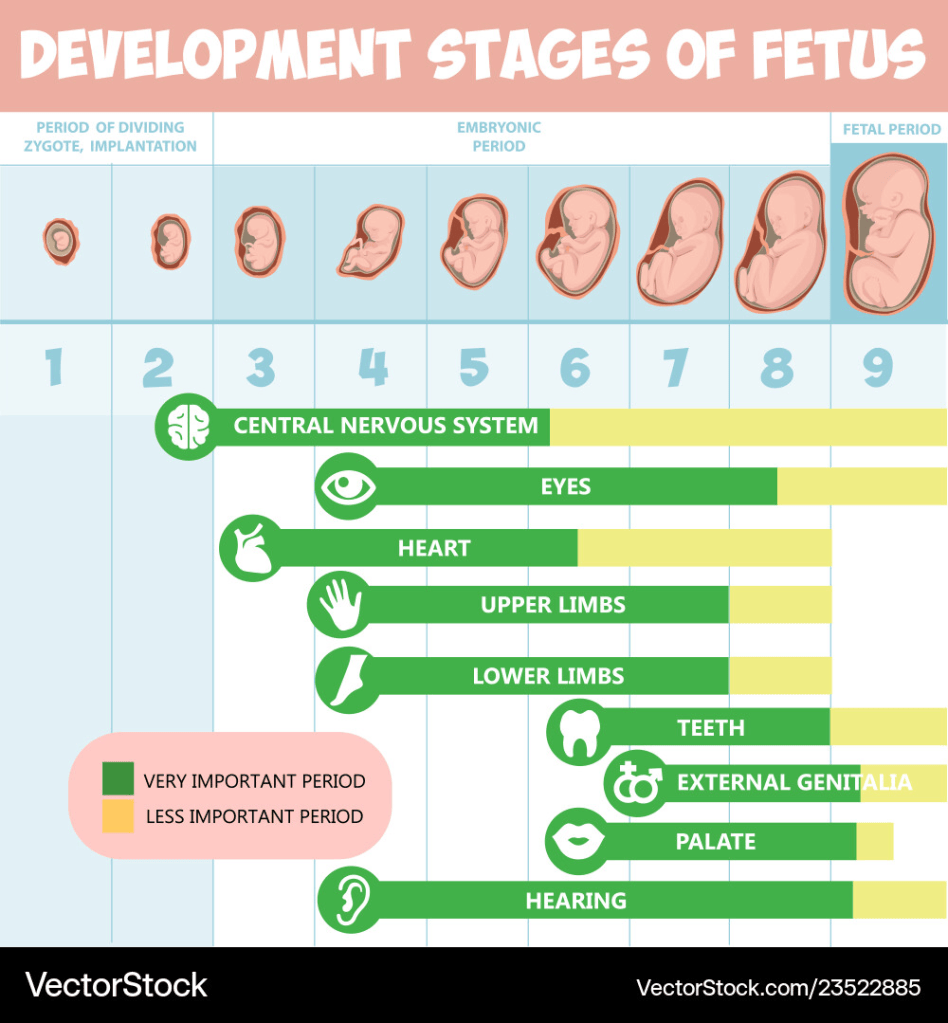
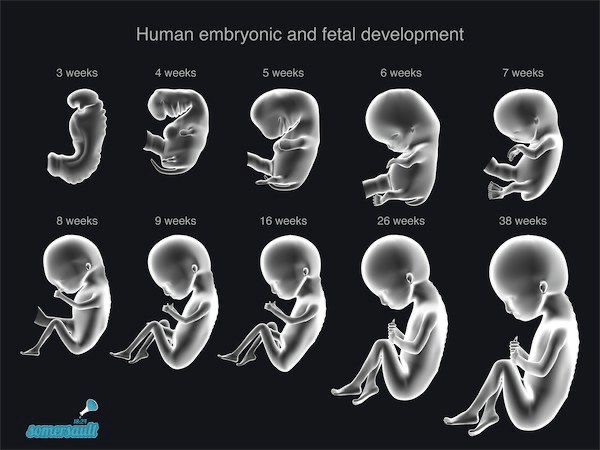
They may have been cousins or by virtue of the fact Elizabeth was older, niece and aunt – Luke 1:36. John the Baptist was six months old and therefore at least 24 weeks – 168 days – along in the womb (note 26 week old foetus in diagram below). Developed enough to respond to external influences inside Elizabeth.
Luke 1:41-44
English Standard Version
‘And when Elizabeth heard the greeting of Mary, the baby [G1025 – brephos] leaped [G4640 – skirtao: ‘as the quickening of a foetus’] in her womb. And Elizabeth was filled with the Holy Spirit, and she exclaimed with a loud cry, “Blessed are you among women, and blessed is the fruit [G2590 – karpos: ‘fruit of one’s loins’, progeny, posterity] of your womb!’
Remember the term ‘fruit’ describing the unborn baby Jesus, as we will progressively encounter this term in a difficult scripture.
And why is this granted to me that the mother of my Lord should come to me? For behold, when the sound of your greeting came to my ears, the baby [G1025 – brephos] in my womb leaped [G4640 – skirtao: leap (for joy)] for joy.’
This prenatal recognition by John reveals he was a fully cognisant human being. We will address what features have normally developed in a foetus by 24 weeks a little later. The Greek word brephos is translated as: babe five times in the King James Version; child once; infant once; and young child once.
While brephos can refer to a new-born child, a baby and an infant, the word also means an unborn child, embryo or foetus. The same Greek word is used for Jesus after he was born (Luke 2:11, 16) and for the children who approached Christ during his ministry (Luke 18:15).
‘Keep far from a false charge, and do not kill the innocent and righteous, for I will not acquit the wicked’ – Exodus 23:7, ESV.
For some, this verse contains implications for the unborn who are viewed as ‘innocent’. Thus it could be deemed ‘wicked’ to kill an unborn in this context.
Another verse considered in support of the unborn is in the Book of Proverbs, though not attributed to Solomon but rather a King Lemuel – refer article: Seventh Son of a Seventh Son.
‘Open your mouth on behalf of those unable to speak, for the legal rights of all the dying’ – Proverbs 31:8, NET.
Continuing, the Bible speaks about rape though not necessarily about unwanted pregnancies resulting from such an action. Yet the scriptures do contain instruction on miscarriages.
An extremely important passage is found in the Book of Exodus. Perhaps no other section of scripture has generated more heated debate. The Hebrew text describes the punishment to be exacted when people fighting, accidentally injure a pregnant woman through violence thereby causing a miscarriage.
Exodus 21:22-25
Living Bible
“If two men are fighting, and in the process hurt a pregnant [H2030 – hareh: with child, from H2029: conceive] woman so that she has a miscarriage [H3206 – yeled: child, offspring, fruit, from H3205: bring forth – and H3318 – yatsa: to come out, exit, depart], but she lives, then the man who injured her shall be fined whatever amount the woman’s husband shall demand, and as the judges approve.
But if any harm comes to the woman and she dies, he shall be executed.
“If her eye is injured, injure his; if her tooth is knocked out, knock out his; and so on – hand for hand, foot for foot, burn for burn, wound for wound, lash for lash.”
One source states:
‘Exodus 21:22-25 contains the Bible’s most direct legal statement related to pregnancy [injury]… not intentional abortion. But, it’s widely cited in abortion debates because it establishes penalties for causing pregnancy loss.’
While on first reading in the English language, the passage appears to be clear cut, though frustratingly it isn’t.
The English word miscarriage is more correctly rendered in Hebrew as: “her womb shall discharge” or “she shall drop her fruit”. So that yatsa yeled (יָצָא יֶלֶד), literally means: “the child comes forth” or “comes out”.
But does this describe a miscarriage (death) of a foetus or a premature (live) delivery?
The same source:
‘The Septuagint (the ancient Greek translation of Hebrew Scripture) renders it as exeikonismenon, suggesting a “formed” child. Meanwhile, the Latin Vulgate uses abortivum, which leans toward miscarriage. This translation ambiguity matters tremendously because the passage continues to describe different penalties…’
Thus there is ‘translation ambiguity’ between the Greek and Latin as well from the Hebrew to English.
How to unravel?
If the text is saying a baby has died (miscarriage) and/or the mother dies too; it more than implies that the foetus has a different (lesser) status (monetary compensation) compared with its mother (life for life).
If such is the case then the Bible is drawing a distinction between the moral and legal status of the foetus and the woman.
But, if it means ‘the child comes out’ in context of a premature delivery, yet the mother suffers harm and dies, it suggests an equal status.
Either way, it highlights the value of a life in the womb. Yet cannot be used conclusively in settling contemporary abortion debates.
What it does reveal and this may be a pivotal factor later on, is that the life of the foetus is viewed as either less than that of its mother or the same as its mother.
It is not though, described as being of higher value than its mother.
Concerning Exodus 21:22-25, the understanding of this writer is that the focus is on a pregnant woman – therefore the woman and her child – who is either hurt to the degree that firstly, she loses her baby through a miscarriage; or secondly, the baby dies and she dies with it.
Perhaps any more than this is reading something into the text that is not there.
Apart from torture, it could be universally agreed that murder and rape are the two most grievous crimes against a fellow human. Rape constitutes an aggressive sexual assault and with murder is an act of extreme violence.
The Book of Deuteronomy discusses a number of situations involving adultery, fornication and incest. In chapter twenty-two, the act of sex against someone else’s will is addressed.
Deuteronomy 22:25-29
English Standard Version
“But if in the open country a man meets a young woman who is betrothed, and the man seizes her and lies with her, then only the man who lay with her shall die.
But you shall do nothing to the young woman; she has committed no [offence] punishable by death. For this case is like that of a man attacking and murdering his [neighbour], because he met her in the open country, and though the betrothed young woman cried for help there was no one to rescue her.
“If a man meets a virgin who is not betrothed, and seizes her and lies with her, and they are found, then the man who lay with her shall give to the father of the young woman fifty shekels of silver, and she shall be his wife, because he has violated her. He may not divorce her all his days.”
Two scenarios of rape are differentiated and again judging by the punishments, a higher degree of seriousness is attached to the first crime than the second. Both are situations occurring without witnesses.
The first example concerns a woman who is betrothed (engaged) or promised to a man who is to be her husband. In the past this was tantamount to being married. The perpetrator loses their life in this instance. One wonders if the severity of the sentence (capital punishment) reflects the possibility that the couple already have an intimate relationship – for she is not called a virgin – and so clearly, adultery (seventh commandment) is a factor; yet more importantly, potential pregnancy prior to the rape a possible consideration.
The second example is a classic, “you have made your bed and now you will lie in it”. Some cynical readers might be thinking the punishment is worse than for the first man. Having to marry a virgin you have defiled and cannot divorce is not the best start to a lifelong marriage of hopeful wedded bliss. It would certainly make most men stop and think before committing rape on a virgin and it goes without saying even more so against an engaged (betrothed) woman.
Way worse, is the fact that the woman who is innocent is being punished by having to marry her attacker. Perhaps for some, love could blossom but for most would it not be the complete opposite? Decidedly, this ruling is difficult to comprehend from the perpetrator’s perspective and especially more so from the victim’s.
The Bible is not silent on sexual assault, though it is on any pregnancies resulting from rape. We shall return to this question and the dilemma it poses.
Examples of serious sexual impropriety where the consequences were devastatingly tragic include when Jacob’s daughter Dinah was abducted and raped by Shechem the Hivite (Genesis 34:1-31) – Chapter XXXI Reuben, Simeon, Levi & Gad – the Celtic Tribes; and Chapter XXVII Abraham & Keturah – Benelux & Scandinavia.
Shechem eventually lost his life, murdered by Dinah’s brothers, Simeon and Levi.
David’s son Amnon raped his half-sister Tamar (2 Samuel 13:1-39) – Chapter XXX Judah & Benjamin – the Regal Tribes.
Tamar was avenged by her brother Absalom who had his servants kill Amnon for the incestuous violation of his sister.
An absolutely appalling and horrific incident involved men from the tribe of Benjamin who brutally gang-raped and killed a Levite’s concubine (Judges 19:1-30). The matter so serious, that the combined tribes of Israel and Judah went to war against Benjamin, leaving only six hundred men alive in its terrible aftermath (Judges 20:1-48). Needless to say, the culprits involved most probably were amongst the thousands slaughtered.
An attempted rape which still ended in utter disaster with the whole city dying was when the men of Sodom sought to gang-rape Lot’s two angelic visitors – Chapter XXVI The French & Swiss: Moab, Ammon & Haran.
Following on from this incident is the unusual scenario where a man is raped. The patriarch Lot was plied with alcohol by his two surviving daughters after fleeing the impending destruction of Sodom and taken advantage of in his drunken state – Genesis 19:30-38. In this instance involving incestuous rape no one died or was punished, but rather two peoples were birthed in the form of Lot’s sons Moab and Ammon.
A couple of additional examples which are easily overlooked, include Jacob’s eldest son, Reuben and his sleeping with Rachel’s maidservant, Bilhah – Genesis 35:22. The Book of Jubilees and the Testament of Reuben provide additional details, revealing how Bilhah was bathing and Reuben spied upon her. Bilhah proceeded to get drunk (like Lot) and was laying in her tent uncovered. Reuben entered into her quarters and feasting upon her nakedness, proceeded to perform an impious act on Bilhah while she slept (like the daughters of Lot).
There is no mention of a child, though Reuben lost his birthright – subsequently given to Joseph – and ironically was prophesied to be the smallest tribe with the fewest descendants – Deuteronomy 33:6. This after apparently being punished with an affliction of his loins (genitals). Though we know he went on to have children – 1 Chronicles 5:1-8.
Genesis 35:22 and Genesis 49:4 imply that intimate relations between Jacob and Bilhah ended after the incident and Bilhah had no more children.
The second incident involved Noah, who had become drunk like Lot and Bilhah, and as the two of them were taken advantage of while in a drunken stupor, so was Noah – Genesis 9:21. And as with Lot, it was the unusual occurrence of a man being raped by a woman. In this instance, by Ham’s wife Na’eltama’uk – Chapter XI Ham Aequator; and Chapter XII Canaan & Africa.
The severity of the punishment for the act perpetrated on Noah reflecting how an additional racial lineage had been created without consent with the three already from Shem, Japheth and Ham. Hence Noah’s curse on the child’s descendants who himself (Canaan) had been born from rape and incest – Genesis 9:24-25.
Shocking and chilling imagery of wartime atrocities are included in the prophetic books of Amos and Hosea. Yet these accounts rarely enter discussions on abortion.
“For three transgressions of the Ammonites [Chapter XXVI The French & Swiss: Moab, Ammon & Haran], and for four, I will not revoke the punishment, because they have ripped open pregnant women in Gilead [Chapter XXXIII Manasseh & Ephraim – the Birthright Tribes], that they might enlarge their border’ – Amos 1:13, ESV.
‘Samaria [Chapter XXXIII Manasseh & Ephraim – the Birthright Tribes] shall bear her guilt, because she has rebelled against her God; they shall fall by the sword; their little ones shall be dashed in pieces, and their pregnant women ripped open’ – Hosea 13:16, ESV.
A source observes:
‘The prophets single out violence against pregnant women as particularly heinous, revealing the special vulnerability of pregnancy and the moral horror of attacking it. They condemn the brutality of armies who would destroy both mother and child in acts of conquest. What’s fascinating is that while these passages clearly view attacks on pregnant women as especially evil, they don’t specify whether the horror lies in the death of the unborn, the violence against women, or the combination of both.’
There are two crucial questions in the abortion/anti-abortion debate.
First:
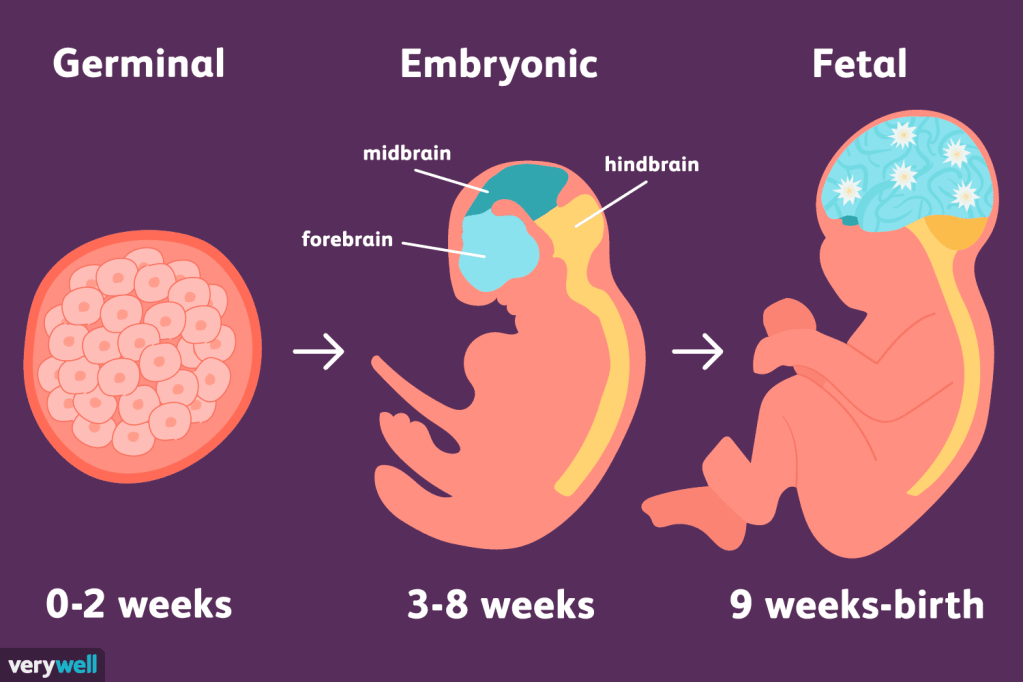
Does human life begin at conception with a Zygote, or at a later point in development when it becomes an embryo for example, or even a foetus?
And is the presence of self-consciousness required in defining the individuality and ‘personhood’ of a human being?
Second:
Is there supremacy or equality when comparing a woman’s right to choose with an unborn baby’s right to live?
It is both necessary and informative to compare the arguments for and against abortion.
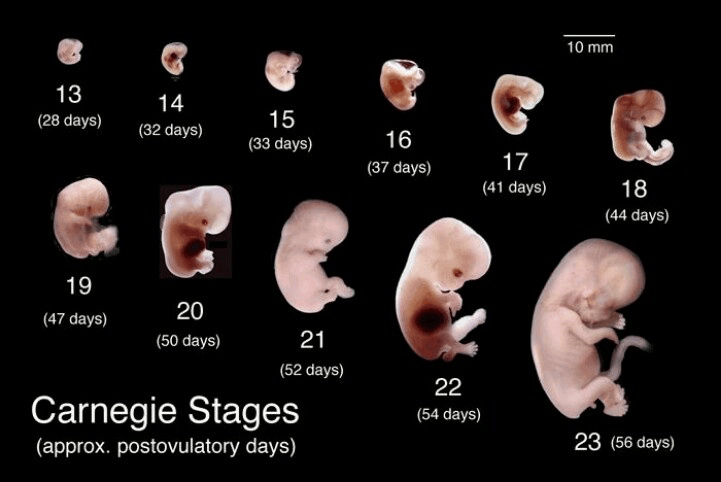
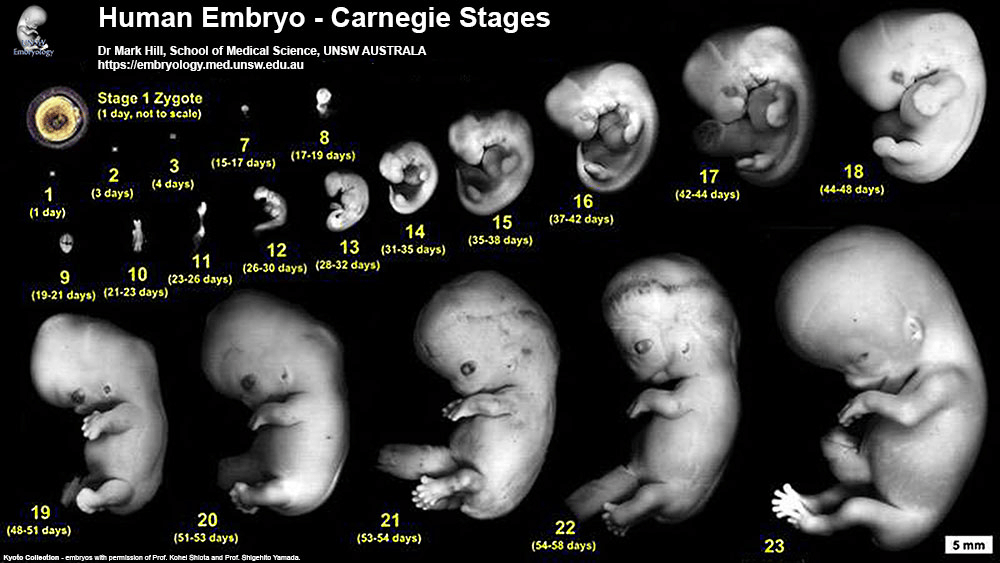
As well as investigating the development of an embryo (from a zygote) to a foetus in endeavouring to understand when exactly a newly formed human being is considered truly sentient. Thereby gauging whether all terminations are actually murder or whether there is a dividing line that separates the murder of a living entity from let’s say, merely a procedure to remove cellular tissue that is unquestionably prehuman.
Part of comprehending the full equation of this debate involves the understanding – ignored or rejected by science – that humans are composed of three core defining elements: a body; a soul; and a spirit – refer article: DEATH: Dead End or New Beginning?
Abortion was common practice in the ancient world and recorded for example in Egyptian medical papyri and Greek medical texts, yet the Bible never directly mentions abortion. A significant silence when we consider the thoroughness with which biblical law addresses other aspects of sexuality and reproduction.
The status of abortion in society has changed markedly as the centuries have unfolded over the past two millennia with the growing influence of Christianity and more recently – since the 1960s and 1970s – when women began advocating assertively for their reproductive rights.
This resulted in the landmark 1973 Supreme Court decision – Roe versus Wade – where abortion was legalised across the United States.
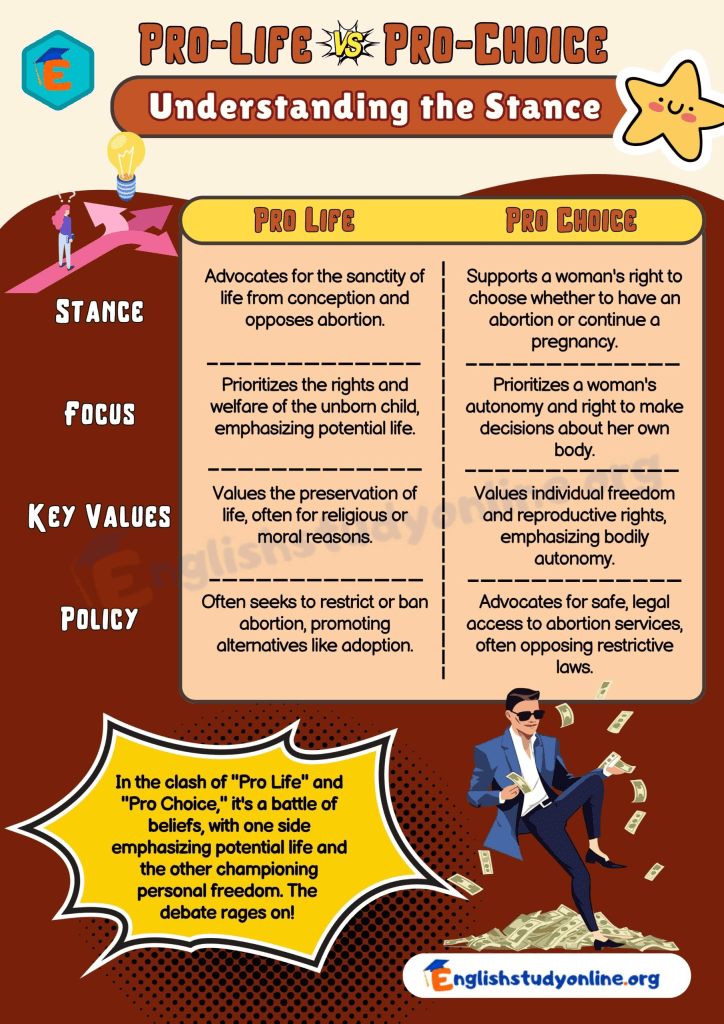
Consequently igniting a fierce ongoing debate which remains unresolved. Pro-Life advocates the emphasis of an unborn child’s rights; whereas Pro-Choice supporters champion a woman’s right to make decisions about their own bodies.
Pro-Life offers adoption as an alternative to abortion, which ‘reinforces the notion that choosing life can lead to positive outcomes for both mothers and babies’ and that ‘life is precious, and every child deserves a chance to love and be loved’ – Pro-Life vs. Pro-Choice – Major Debates and Legislation Explained, Shawn Bell, August 25, 2026.
Shawn Bell:
‘Many supporters of the Pro-Choice stance argue that decisions about pregnancy should remain a private matter, free from governmental or societal interference. For them, access to safe and legal abortion services is crucial for protecting women’s health. Data shows that countries with restrictive abortion laws tend to have higher rates of unsafe procedures, leading to severe health risks.
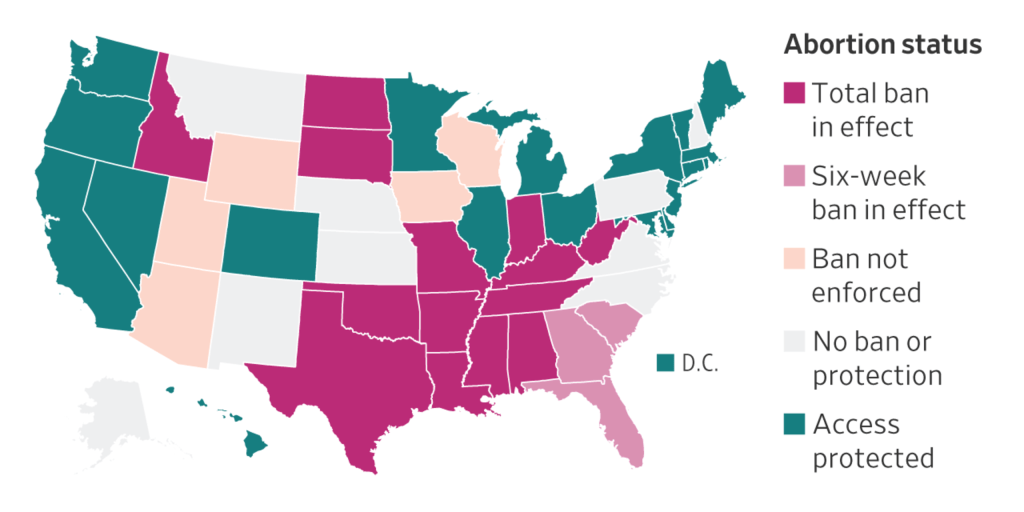
… after the Supreme Court’s decision in 2022 to overturn Roe v. Wade, many states have enacted new laws that either restrict or expand access to abortion services. State laws can differ widely; some states have enacted strict bans on abortions after a certain number of weeks, while others have maintained or even increased protections for women seeking these services.
According to a study by the Guttmacher Institute, about 26 states are likely to implement restrictive abortion laws following the Supreme Court’s decision, while 13 states may take steps to protect or enhance access.’
Facts & Faith, The Pro-Life vs. Pro-Choice Debate, Andrina G Hanson, 2014 – emphasis mine:
‘As the law stood in 2014, no state in the United States may ban an abortion unless the baby is able to sustain life outside the mother’s womb (i.e., the baby is viable). See, Planned Parenthood v. Casey (1992).
A baby is normally considered viable around the 7 month of pregnancy (28 weeks), although babies have been known to survive outside the womb as early as 20 weeks.
As of 2013, well over 55 million abortions had been legally performed in the United States since the Roe v. Wade decision. The enormity of that number is clear when one considers that in 2014 the total number of people living in New York City was ≈ 8.5 million and the entire State of California was ≈ 37.6 million.’
By 2020, the figure in the United States had risen to 63,459,781 abortions – National Right to Life.
Factually, January 13, 2026:
‘Since 2020, the landscape of abortion provision and reporting has shifted: Guttmacher’s Monthly Abortion Provision Study reported an estimated 1,037,000 abortions in 2023 alone – the first full year after the Supreme Court’s Dobbs decision.’
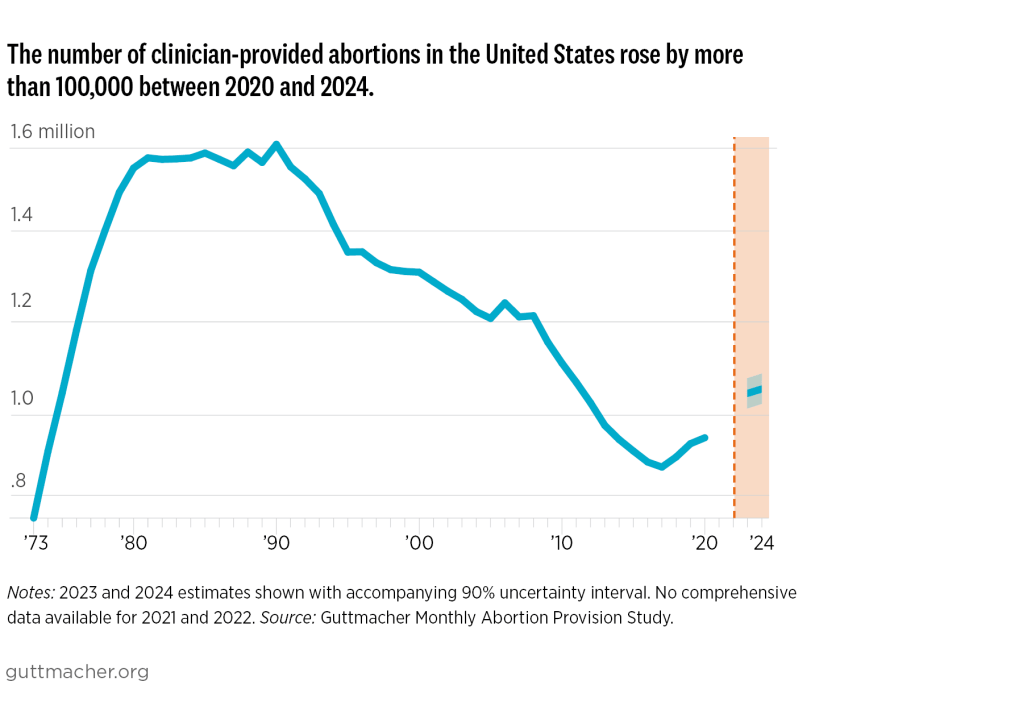
The up-to-date figure at time of writing is 68,073,071 abortions in the United States since 1973 – Number of Abortions. Nearly equivalent to the population of the United Kingdom or Thailand.
Yet these figures do not account for all abortions. As historically, recorded abortions were ‘surgical abortions’. The percentage of abortions performed with chemical abortifacients such as mifepristone rose from 16.4% in 2008 to 39.4% in 2017 and according to the Guttmacher Institute, chemical abortions rose to 53% in 2020 in the United States.
The Pharmacists for Life organisation estimates that approximately 250 million babies (the population of Pakistan) have been aborted chemically in America since 1973 – Number of Abortions.
Thus the combined figure of surgical and chemical abortions in the United States since 1973 is almost the same incredible number as the present population of America (at time of writing) – 349,496,705 people.
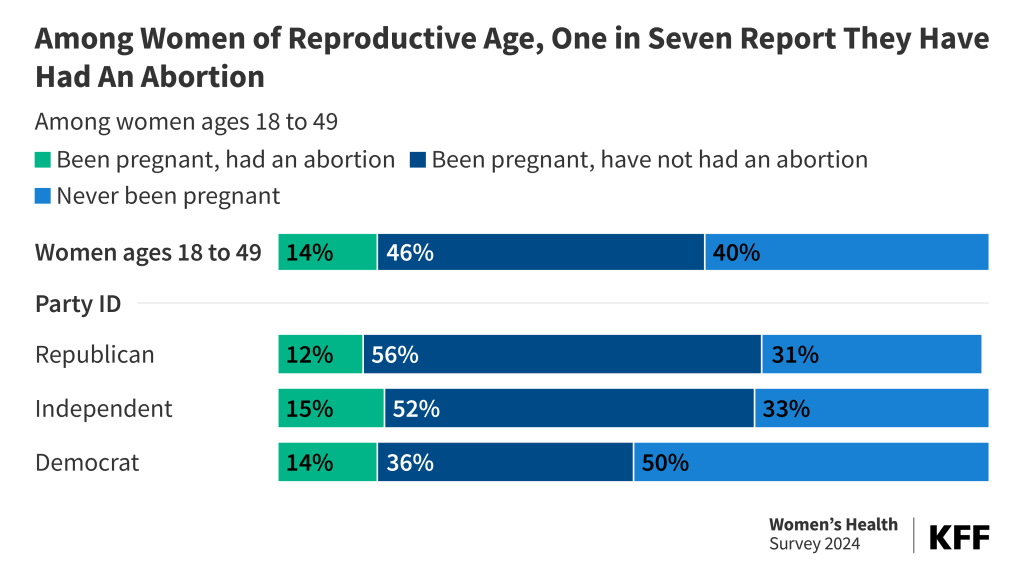
Still, not to put the United States (Chapter XXXIII Manasseh & Ephraim – the Birthright Tribes) singularly under the spot light, the estimated amount of abortions worldwide each year is 73 million – World Health Organisation (WHO).
Three out of ten of all pregnancies worldwide end in abortion and six out of ten of all unintended pregnancies end in abortion.
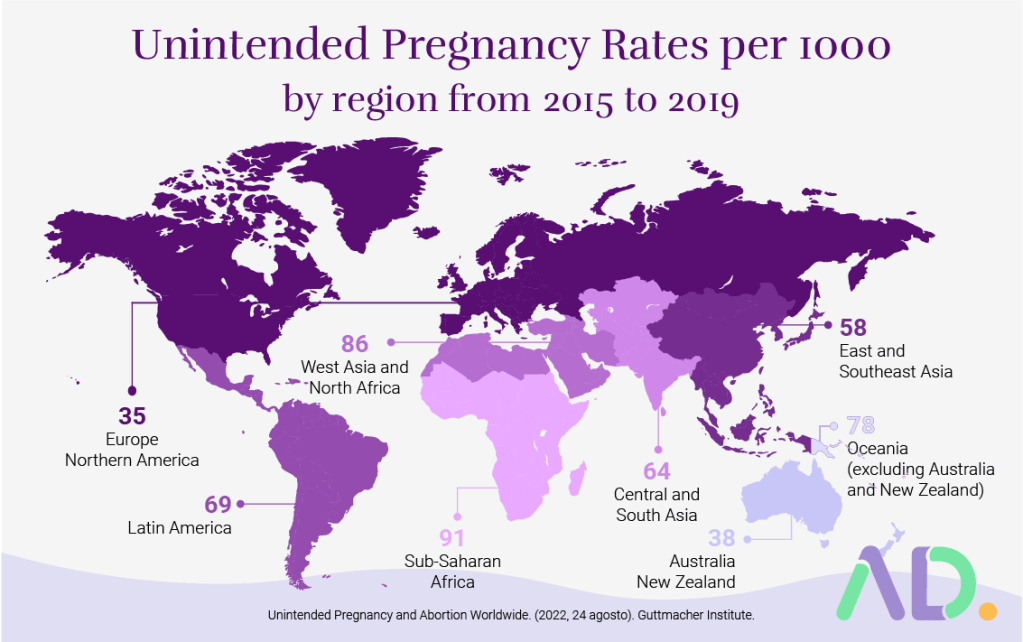
Since the year 1980, a staggering 1,827,697,344+ foetuses and embryos globally have died from abortion… literally equalling one every second – Number of Abortions.
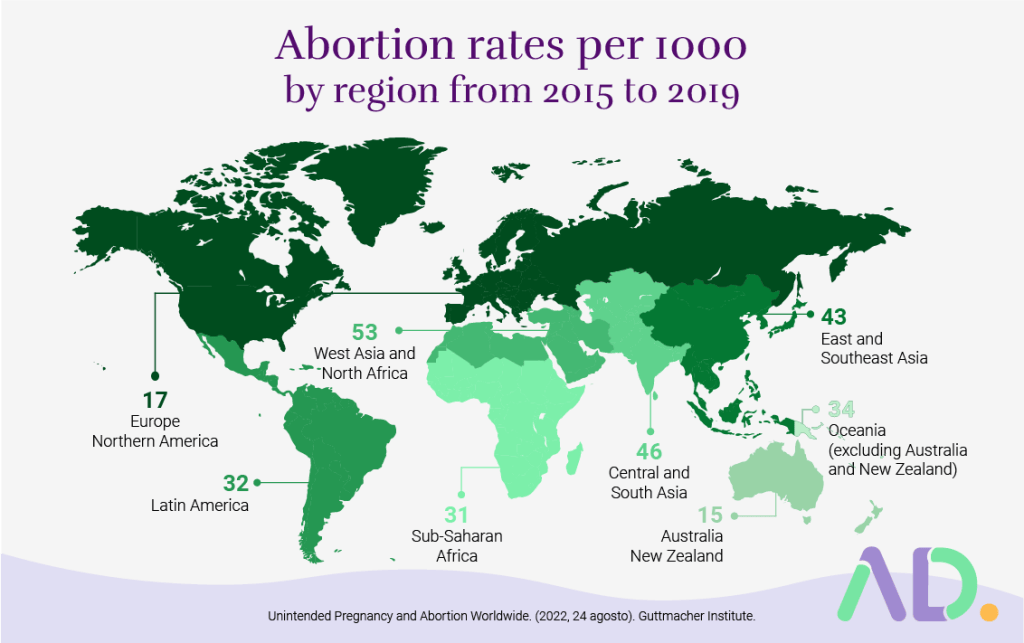
A study by the Guttmacher Institute published in 2019 highlights that abortion rates are highest in Africa and the Middle East, followed by Latin America and the Caribbean. The abortion rate is the lowest in Europe at only 17 per 1000 women – Viva Futura, Abortion Data, 2026.
The Pro-Life vs. Pro-Choice Debate, Andrina Hanson:
‘The fact that people have inherent rights by virtue of being human is recognised in both the Declaration of Independence and the United Nations’ Universal Declaration of Human Rights – William Lane Craig, Hard Questions, Real Answers, pages 114-115 (2003).
The Declaration of Independence was adopted on grounds that the British parliament and the king had violated their… rights granted to all men by their Creator:
“We hold these truths to be self-evident, that all men are created equal, that they are endowed by their Creator with certain unalienable Rights, that among these are Life, Liberty and the pursuit of Happiness.”
Notice the pursuit of… happiness.
Hanson:
‘Although Christians have clearly been on the forefront of the pro-life stance on abortion, many non-religious people oppose abortion on grounds that babies in the womb are living human beings with an inherent right to life deserving of protection under the law.’
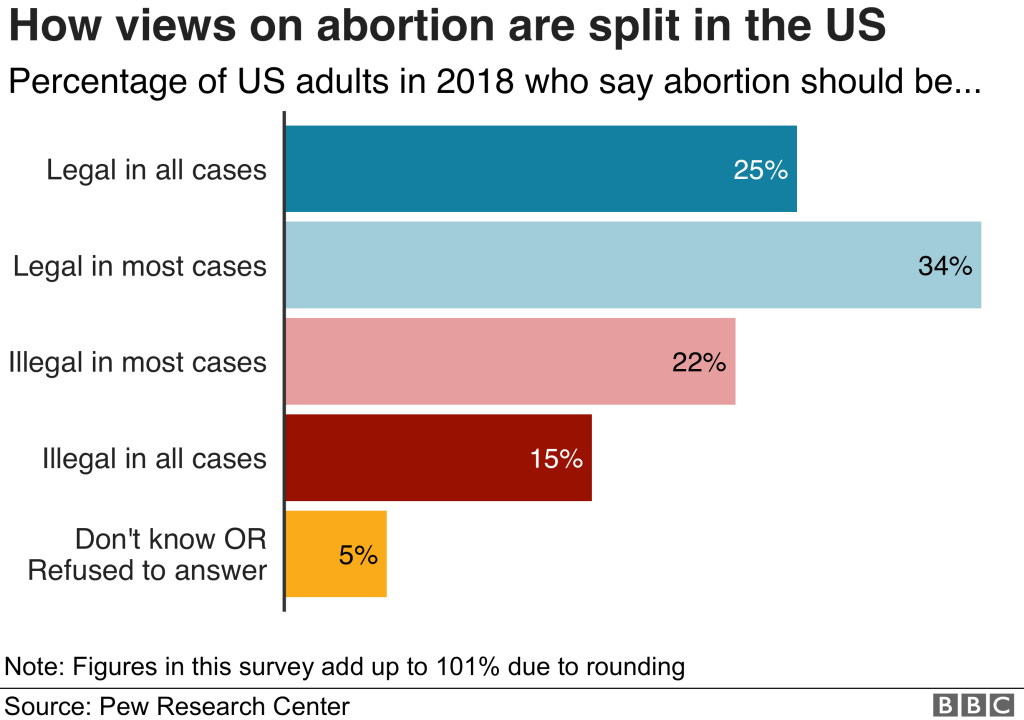
‘Contrarily, pro-choice advocates fervently contend that whether a woman continues with a pregnancy is a matter of her personal choice involving decisions about her body, her health and her future. In their view, pro-choice involves issues of individual liberty as well as individual reproductive freedom which, in the context of the abortion, are personal to each woman.’
Pro-Choice Contention No. 1
An Abortion Performed During Early Pregnancy Does Not Involve the Killing of a Human Being and/or a Being with “Personhood”
‘Many pro-choice advocates contend an abortion performed during early pregnancy does not involve the killing of a human life because, in their view, an embryo/[foetus] does not become a human being or a “person” until it reaches a certain stage of development. Until it reaches that stage of development, the embryo/[foetus] is not a human being (or at least isn’t fully human) and, therefore, does not have an inherent right to life.
Some pro-choice advocates argue a [foetus] is no more “alive” than the individual sperm or the individual egg that eventually come together to form the [foetus] are “alive”.
They also contend that since a [foetus] is attached to the mother’s body and is dependent on the mother’s body for life, it isn’t viable on its own and, therefore, is not a separate living entity with a right to life.
Those who support pro-choice often note that while many pro-life advocates contend life begins at conception, others do not. In their view, because there are different theories regarding the point at which life begins, laws prohibiting abortion unfairly force one viewpoint on those who hold a different belief.’
Pro-Life Responses
1. At the point of conception every individual is genetically complete and it is purely arbitrary to contend life doesn’t begin until the baby reaches a particular stage of human development
‘Neither a human sperm nor a human egg is genetically complete and, if left alone, neither will develop into anything. The sperm dies and the egg is naturally expelled from the woman’s body’ – W L Craig, Hard Questions, Real Answers, page 116 (2003).

‘Contrarily, at the moment of conception (i.e., when a sperm [fertilises] an egg), a human being is formed who is 100% genetically complete with everything needed to progress through all the stages of human development[…] it is either male or female and all of his/her individual traits (body type, eye [colour], hair [colour], facial features, etc.) are already determined. A genetically new individual human being exists who did not previously exist’ – Dennis M Sullivan, The Conception View of Personhood: A Review (2003).
‘If left alone, he/she will continue through progressive stages of human development – the embryo will develop into a [foetus], the [foetus] will develop into a newborn, a newborn will develop into a toddler, a toddler will develop into a child, a child will develop into an adolescent and, eventually, the adolescent will develop into an adult’ – W L Craig, Hard Questions, Real Answers, page 116 (2003).
‘From the moment of conception on, there exists a living organism which is a genetically complete human being and which, if left [to] develop naturally, will grow into an adult member of its species’ – W L Craig, Hard Questions, Real Answers, page 115 (2003).
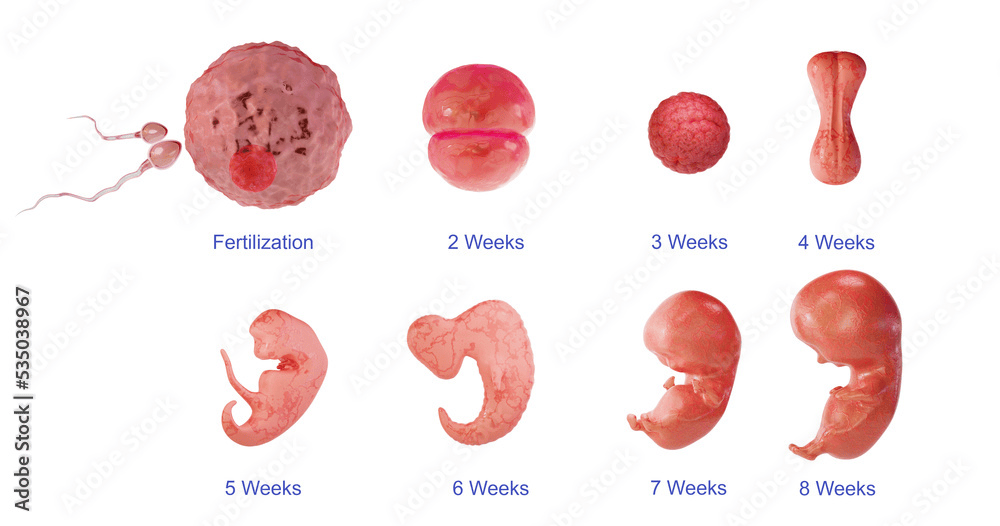
The scientific evidence is so strong on this point that many pro-choice advocates acknowledge an abortion kills a human life.
“Clinging to a rhetoric about abortion in which there is no life and no death, we entangle our beliefs in a series of self-delusions, fibs and evasions. And we risk becoming precisely what our critics charge us with being: callous, selfish and casually destructive men and women who share a cheapened view of human life…
… we need to [contextualise] the fight to defend abortion rights within a moral framework that admits that death of a [foetus] is a real death”
– Naomi Wolf (prominent pro-choice feminist), The New Republic, Our Bodies, Our Souls, page 26 (October 16, 1995).
‘Likewise, Bernard Nathanson, M.D. (co-founder of the pro-choice advocacy group NARAL) stated the following:
“There is simply no doubt that even the early embryo is a human being. All its genetic coding and all its features are indisputably human. As to being, there is no doubt that it exists, is alive, is self-directed, and is not the same being as the mother – and is therefore a unified whole”
– Bernard N Nathanson, The Hand of God, page 131 (1996).
‘Despite such acknowledgements, many pro-choice advocates continue to refer to an embryo as a “mass of cells” to give the impression that an embryo is something less than a human being. The truth is that all human beings can be described as a “mass of cells”.’
A case in point is demonstrated by an article in: Ms. More than a Magazine, a Movement.
Physicians Share Photos of Early Pregnancy Tissue: ‘We Just Want People to Have Accurate Information’, Carrie N Baker, 2022 – emphasis mine:
‘Anti-abortion rhetoric [undue use of exaggeration or display; bombast] and images saturating the internet and political discussions portray embryos in early pregnancy as fully formed miniature human beings. Recently enacted abortion bans refer to embryos as “babies” and claim there’s a “[foetal] heartbeat” at six weeks of pregnancy.’
A foetus typically develops a detectable heartbeat by six to seven weeks (42-49 days) of pregnancy. This is an important milestone in confirming the viability of the pregnancy.
Week five is when cardiac tissue begins to contract and the first visible sign of the embryo, known as the foetal pole, may be seen.
Week six, the heartbeat^ can be consistently detected by ultrasound, with a heart rate around 110 beats per minute.
Week ten the heart is fully developed, with all chambers formed.
Baker:
‘But what does an early pregnancy actually look like?
The MYA Network (short for “My Abortion Network”) set out to answer this question in their recent Issue of Tissue Project, which shows what tissue removed during early abortions looks like. The MYA Network is composed of clinicians working to expand early abortion options in primary care settings using abortion pills and manual uterine aspiration.
“There’s a lot of misinformation out there and many people have come to believe it,” said MYA Network co-founder Dr Michele Gomez, a family care physician in Burlingame, [California]. “There’s also accurate information out there but mostly in the form of highly magnified embryos at these early stages. People have a right to know and understand that they are magnified.”
This does not make the embryo any less of an embryo (human) because it is minutely small.
Baker:
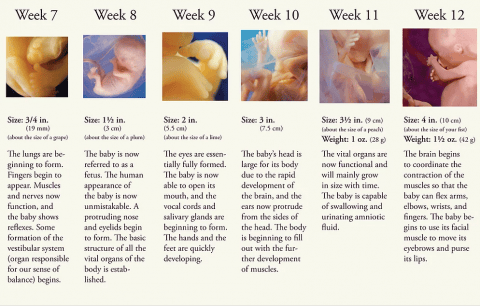
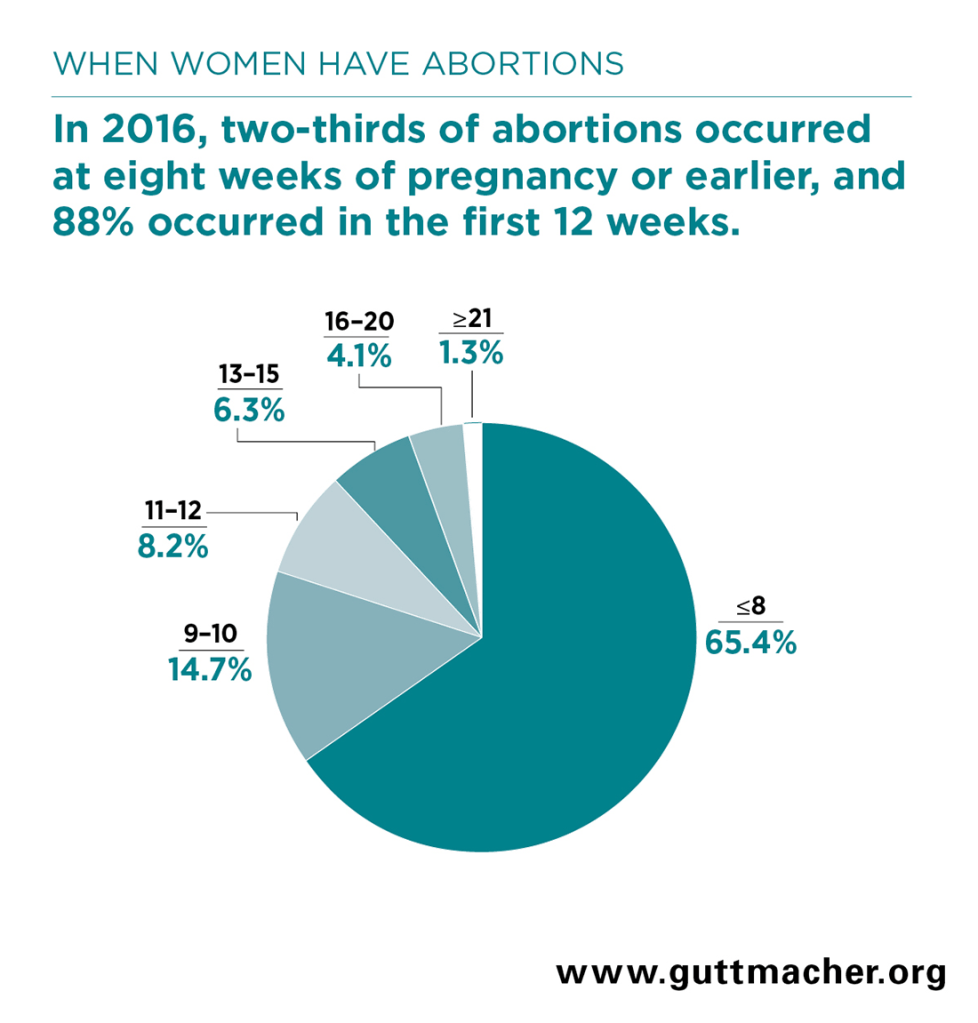
‘In fact, before nine weeks of pregnancy – when 80 percent of abortions take place – the embryo [which becomes a foetus in the ninth week] is not visible with the naked eye in the pregnancy tissue removed during an abortion.
There is no “heartbeat”^ at six weeks of pregnancy, only the electrical activity of cells before an actual heart is formed, said Gomez.’
“The anti-choice movement has been showing inaccurate[?] and graphic pictures for a long time, and these images shock us so they tend to stick with us,” said Gomez. “Without factual images to counter the inaccurate images, many people just accept the only things they’ve ever seen, which is completely understandable.”
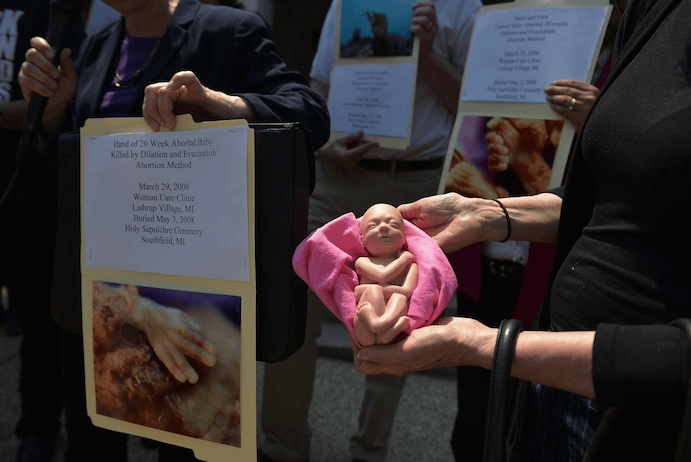
“Seeing actual images of early pregnancy tissue, as seen with the naked eye, can help people replace the graphic and inaccurate images they may have come to accept as true.”
And by extension de-humanise the embryo to just a mass of cellular tissue.
Note how the Pro-Choice writer calls the Pro-Life movement, ‘anti-choice’. Does that mean they consider themselves and are content to be labelled, ‘anti-life?
Baker:
‘MYA Network created the Issue of Tissue Project to share accurate images of early pregnancy tissue. After manual aspiration abortions, they rinsed the blood [and menstrual lining] from the tissue removed from the uterus and photographed it for pregnancies of five weeks through nine weeks [see below].’
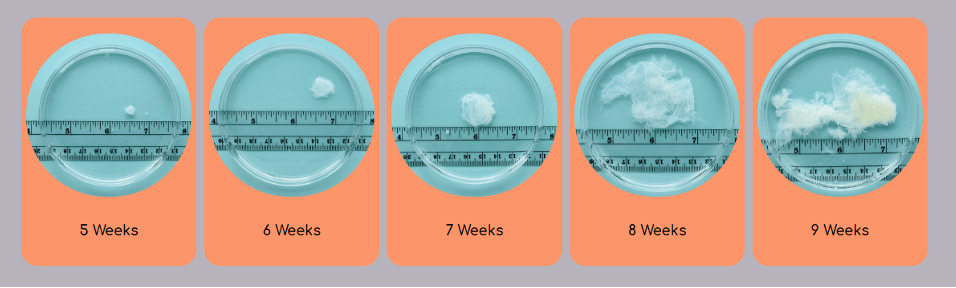
The images above show the tissue in a petri dish next to a ruler to indicate its size.
‘After an egg joins with a sperm at [fertilisation], it’s called a zygote [correct]. After five days of development, it’s called a blastocyst [correct]. In week four of the pregnancy, the blastocyst embeds in the uterine wall and becomes an embryo [incorrect]. At around the 10th [ninth] week of pregnancy it becomes a [foetus].’
For an article eager to convince on accurate images of an embryo removed from the womb, one would think they would be just as conscientious in providing accurate information. The blastocyst typically implants into the uterus on day six or seven.
‘Up to 50 percent of all pregnancies end in miscarriage.’
(Nature’s natural termination).
Baker:
‘Gomez said the MYA Network’s decision to share these images grew from their own experiences as clinicians.’
“Many of us in the MYA Network provide in-office abortions by manual uterine aspiration, which a simple, non-surgical procedure that takes five to 10 minutes to complete and can be done with only ibuprofen for pain control,” she said. “We’ve often had the experience of a patient asking to see the pregnancy tissue after the procedure, and then being very surprised by what they see.
In my experience, pregnant people and their partners have felt some relief when they see the tissue, because it doesn’t look like what they’ve seen in anti-choice imagery,” Gomez continued. “We in the MYA Network discussed this, and decided that as clinicians we wanted our patients to have more information, so they could be better informed.”
Yes and in the process it minimises guilt in witnessing a small sample of tissue. Though looking at it under a microscope would no doubt maximise the level of guilt.
Baker:
‘Seeing the tissue resulting from pregnancy termination can dispel the myths [on how the tissue contains an aborted embryo which is a microscopic human being?] surrounding abortion, help clear up confusion and misunderstandings [that the embryo is alive?] resulting from anti-abortion misrepresentations [stemming from the desire to protect an innocent life?], and combat abortion stigma and shame [reflected from the mirror being held up against murderous beliefs and actions?].’
An incredibly biased sentiment of thought, enveloped in a mass of denial and deflection.
‘On their website, the MYA Network shares recordings of patients speaking about their surprise and relief after viewing their own pregnancy tissue after an abortion. One woman explained,
“It wasn’t what I expected at all. It was so small… and seemed a lot less scary” [of course it would… why the surprise?].
‘Others spoke about how seeing their pregnancy tissue relieved feelings of guilt.’
“It just looked like mucus, it was just a little thing… nothing that made us feel guilty,”
said another patient after viewing her pregnancy tissue’ [how convenient and pleasing to be guilt relieved after sanctioning a murder].
‘Explaining why MYA Network decided to share these patients’ reactions, Gomez said,
“We wanted to make the information more personal – facts* are helpful, but there are so many feelings that can come up with viewing these images, and everyone’s feelings are valid. A lot of people are comforted by seeing these images – they’re just so different from what they’d previously seen,” said Gomez. “People need and deserve facts,* [which facts, the ones which have been demagnified and sanitised?] love and compassion to make decisions about their own bodies and their own lives.”
‘TikTok influencers are now using the MYA Network images to raise awareness about early abortion and point out the…
… absurdity of this early pregnancy tissue having more rights than the actual person who is pregnant.’
Or is it absurd that the author of the article thinks the ‘early pregnancy tissue’ should have no rights at all?
Hanson:
‘With the advancement of science it is now understood that what makes a human being a human being is not his/her size or the way he/she looks, but his/her DNA which is human in nature and exists from the point of conception.
The terms embryo and [foetus] do not refer to non-humans, but to human beings who have only reached a particular stage of development. If something is non-human, it does not become human by getting older, bigger or more intelligent.
The fact that a human embryo or [foetus] hasn’t yet reached a later point of development doesn’t mean it isn’t a human being any more than it can be said that because an infant hasn’t developed into a child, he/she is not a human being or because a child hasn’t developed into an adult he/she isn’t a human being’ – W L Craig, Hard Questions, Real Answers, pages 116-117 (2003).
‘Whatever is human is human from the very beginning.
Indeed, a geneticist cannot distinguish between the DNA of a developing embryo and that of a full-grown human being.
There are several different stages of human development and it is completely arbitrary to propose life doesn’t begin until a certain stage of development has been reached’ – W L Craig, Hard Questions, Real Answers, pages 116-117 (2003).
‘The contention that human life or “personhood” only begins at the point of viability is just one example of the drawing of an arbitrary line. This is evidenced by the fact that the point of viability has changed and will probably continue to change as advancements in technology permit babies to be kept alive at earlier stages of development:
“[The] decisive moment of viability is a “moving target”. In 1973, the presumed limit on viability was 28 weeks, with an occasional infant surviving birth at 24 weeks gestation. Now such survivals are much more routine and some can live outside the womb as early as 20 weeks”
– Dennis M Sullivan, The Conception View of Personhood: A Review (2003).
‘If life or “personhood” begins at the point of viability and technology advances to the point that unborn babies are viable from the point of conception, would that advancement in technology make the embryo a human being or a person? Would pro-choice advocates then be willing to say the mother no longer has the right to choose to abort the baby?
That life begins at the time of conception is based on undisputed scientific evidence that from the point the sperm enters the egg, a new individual exists who is 100% genetically complete having everything needed to progress through all the stages of human development.’
Support for this premise is found in the scriptures listed earlier showing the interaction of God’s Holy spirit with certain individuals while in the womb prior to birth.
This would only be feasible or possible because a baby is already alive inside the womb with a body, soul and a human spirit for the holy spirit to connect with – Article: DEATH: Dead End or New Beginning?
Sensibly and logically when would a soul (life) come into existence? At the same time as their body perhaps and when is that? When the sperm enters the egg and a zygote is formed.
Again sensibly and logically, how could or why would a zygote remain dormant, inactive or dead, only to become awake, active or alive four days later when the morula is formed; or two days after that when the morula implants into the uterine lining becoming an embryo; or a further fifty days later when the embryo becomes a foetus?
2. Multiple passages in the Bible demonstrate God considers an unborn baby a human being with personhood
3. Just because there is no consensus on the issue of when life begins, doesn’t mean there isn’t a morally right answer worth contending for
4. Any reasonable doubt that remains regarding the point at which life begins should be weighed in [favour] of life
‘The criminal justice system [recognises] that despite all the evidence that may be presented in a case, some doubt as to what the truth is in a particular situation may remain. Because the defendant’s life or freedom is at risk, the American justice system requires any reasonable doubt be weighed in [favour] of the defendant.’
Pro-Choice Argument No. 2
Even if a Pre-Born Baby is Technically a Human Being, a Pre-Born Baby is Not Self-Conscious and, Therefore, Does Not Have a Right to Life
‘In this view, although human life may occur at conception, [fertilisation] of the egg does not make human life a “person” worthy of protection under the law.’
Pro-Life Responses
1. If left alone, an embryo/[foetus] in a womb will develop a self-consciousness
‘Even assuming an embryo/[foetus] in a mother’s womb isn’t self-conscious, if left alone, the embryo[foetus] will naturally become self-conscious and there is no good reason why anyone (including the mother) has a right to prevent this potentiality from occurring’ – W L Craig, Hard Questions, Real Answers, pages 120-121 (2003).
2. Even after babies are born they aren’t self-conscious
‘Even though embryos and [foetuses] aren’t self-conscious, even newborns aren’t self-conscious. Does that mean newborn babies aren’t entitled to have their lives protected until they demonstrate signs of being self-conscious?’ – W L Craig, Hard Questions, Real Answers, page 121 (2003).
3. Self-consciousness isn’t necessary to be a person, it is only to function as a person
‘If self-consciousness is necessary to be a person, then someone who is asleep or in a coma isn’t a person either. Although a person who is in a coma or asleep may not be functioning as a person, they are still a person with the potential to function as a person in the same way a pre-born baby has the potential to function as a person’ – W L Craig, Hard Questions, Real Answers, pages 120-121 (2003).
4. The designation that a pre-born baby doesn’t have a right to life because he/she is not yet self-conscious is purely arbitrary
‘Any attempt to carve out pre-born human beings in the womb as a group of humans whose lives are undeserving of protection is a purely arbitrary distinction seemingly only arising from a personal bias in [favour] of abortion.
The arbitrary [dehumanisation] of a certain group of people to attempt to justify the abuse and murder of those individuals is the same tactic used by slave owners in America and Nazis in Germany to justify their abuse, mistreatment and killing of innocent human beings.’
Pro-Choice Argument No. 3
Abortion is About a Woman’s Choice to Decide what to do With Her Body
‘Many pro-choice advocates adamantly maintain abortion only concerns what a woman chooses to do with her body; therefore, it is a personal choice she has to make and isn’t anyone else’s business. Even if the embryo/[foetus] is a person who has a right to life, the mother still has a right to abort the embryo/[foetus] because she has a right to control her body and her body’s life-support functions.
As argued by many, if the government is allowed to force a woman to proceed with a pregnancy and give birth to a baby she doesn’t want, that would set precedent for the government to force people to do other things they may want/not want to do such as using/not using contraceptives, being/not being [sterilised], etc.
Pro-choice advocate, Judith Jarvis Thomson acknowledges…
… “the [foetus] has already become a human person well before birth”…
… but argues that just as a woman cannot be forced to allow her body to be used as a dialysis machine to keep another person alive, a mother cannot be forced to use her body to keep an embryo/[foetus] alive inside her body’
– Judith Jarvis Thomson, Philosophy & Public Affairs, A Defense of Abortion, Volume 1, number 1 (1971).
‘In the pro-choice view, no woman should be forced to donate her body to be a life support system for an unborn child she does not want. Under no circumstances should the government be allowed to force a woman to endure the inconvenience and potential embarrassment of a nine month pregnancy or to endure the emotional pain of having to give a baby she does not want up for adoption.’
Pro-Life Responses
1. Abortion involves two bodies (the body of the mother and the body of the baby)
‘Although requiring a mother to continue with a pregnancy would prevent the mother of her right to choose, a mother’s decision to abort her baby robs the baby of it’s entire life, including a lifetime of choices and prevents him/her from ever exercising any of his/her rights.’
2. The right to use one’s own body as one sees fit has never been without limits
‘The temporary inconvenience a woman would face if required to continue through an unwanted pregnancy can never outweigh the baby’s right to continue his/her life.’
3. A mother owes a duty to provide her baby with the necessities of life
‘Given the pre-existing special relationship between an unborn baby and his/her mother, the mother has a duty to provide the unborn baby with necessities of life just like the duty she owes to her child after the child is born.’
4. Many people are dependent on others for their survival just like [foetuses] are dependent on their mothers for survival
5. It is the government’s job to protect those who can’t protect themselves
6. Abortion is not genuinely a gender issue
7. Pro-choice advocates often exhibit hypocrisy in their pro-choice positions
‘Where a catastrophe occurs in which some people die and others live, many pro-choice skeptics call God’s moral character into question by saying God wrongfully chose to let some die. At the same time they insist pregnant women have a right to choose whether the child they are carrying should live or die.
So, when God (the Creator of life) decides who should live or die, he is somehow immoral, but when a woman chooses whether her baby should live or die, she is exercising an inherent right of free choice’
– Ravi Zacharias, The End of Reason, page 60 (2008).
8. Adoption is a reasonable alternative to taking the life of an innocent baby
‘Although it may be painful for a mother who does not want her baby to give the baby up for adoption, there is no comparison between that emotional pain and requiring the baby to give up his/her innocent life.’
Pro-Choice Argument No. 4
An Embryo/[Foetus] in a Mother’s Womb is the Mother’s Property and She Alone Has a Right to Decide What to do with that Property
‘Human beings at any stage of development (pre-born or post-born) are “persons”, not “property” that can be owned. Although parents are entrusted with the care of their children, they do not own their children, even when their children are 100% dependent on them for all the basic necessities of life. A human being inside the womb is a person which cannot be owned any more than a human being outside the womb can be owned.’
Pro-Choice Argument No. 5
Abortion is A Matter of Personal Opinion
Pro-Life Responses
1. The taking of innocent life has never been a matter of personal choice
‘If an unborn baby is a human being, why does anyone (including the mother) have the legal or moral right to take the innocent life of that human being? Under our present laws, anyone who unlawfully takes the life of an innocent human being is subject to criminal prosecution for homicide.’
2. Comparing the issue of abortion with past ethical failures demonstrates the danger in [categorising] abortion as a matter of personal opinion
Pro-Choice Argument No. 6
There are Too Many People and Too Many Unwanted Children in the World to Prohibit Abortion
Pro-Life Responses
1. Population growth problems and the number of unwanted children in the world doesn’t justify the extermination of innocent human beings
2. There are a lot of “unwanted” people in the world and the state doesn’t permit those people to be killed
3. Abortion doesn’t prevent child abuse; it is child abuse
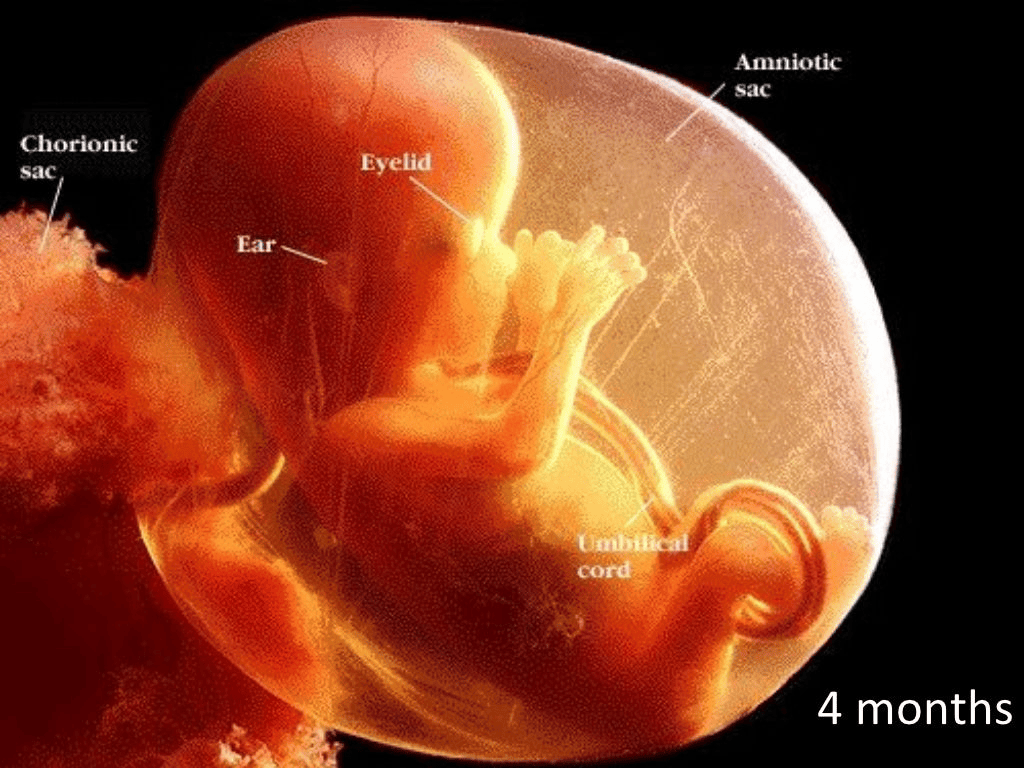
Pro-Choice Argument No. 7
If Abortion is Outlawed, Women Will be Forced to Give Birth in Cases of Rape, Incest, when Her Life is at Risk and when the Baby has Serious Defects
‘Forcing a woman who is a victim of rape or incest to proceed through a pregnancy she does not want would only cause further unnecessary harm to someone who has already suffered enough.
Likewise, requiring a mother to give up her life to give birth to and care for a baby she doesn’t want or a baby who has physical or mental disabilities is callous and uncaring.
Finally, there is no good reason a mother should be forced to give up her life for an unborn child who will then be left motherless.’
Pro-Life Responses
1. In cases of rape and incest, the baby is as innocent as the mother
‘Because acts of rape and incest are so morally outrageous, it is certainly understandable why people (even some in the pro-life camp) want to make an exception in such cases. However, there is no getting around the fact that the baby is as innocent as the mother. As truly grievous as it may be for the mother, aborting the baby still constitutes the taking of innocent human life’ – R C Sproul, Now, That’s a Good Question, pages 455-456 (1996).
It was of interest to this writer whether Sproul is a man or a woman and whether they are a Christian. Robert Charles Sproul now dead (1939-2017), was an American Reformed theologian, Christian apologist, and Presbyterian pastor. It is of note then, that he was a ‘religious’ man advocating a rigid uncompromising black or white view upon the opposite sex.
His viewpoint will be discussed, for not every situation is always black and white in a world full of many shades of grey. The reader is reminded that there is a ‘right time for everything’ and a time to exact an ‘eye for an eye’.
Surely only a victim of rape (or incest) can truly know or relate to the suffering inflicted from such an act. Only a woman would know what it would feel like to have a baby growing inside her that she loathed or feared. Something akin to Rosemary’s Baby or the Omen no doubt.
While one could say, well: “If the Eternal wished the baby to die it would miscarry.” Yet this invariably does not happen. A woman who could not live with this severe vicissitude may then seek termination. We will discuss this scenario’s ramifications further.
An interesting situation occurred for King David, who committed a myriad of crimes when he first lusted (1) after Bathsheba, another man’s wife (2). She was the wife of Uriah the Hittite an able soldier or ‘General’ in David’s Army. David sent for Bathsheba and slept with her (3). Bathsheba became pregnant with David’s child (4). David then conspired (5) to have Uriah while on leave go and spend (intimate) time with his wife. Which he did not do. David then planned to have Uriah killed (6). David gave orders to his commander in chief, Joab – making him an accomplice to David’s crime (7) – to have Uriah serve in a position on the battlefield where he would die and so he did (8). Now a widow, David stole Bathsheba to become his own wife (9).
God took a dim view of all this selfish plotting and told David through the prophet Nathan that the baby who had been born, would die.
2 Samuel 12:15-25
English Standard Version
‘… And the Lord afflicted the child that Uriah’s wife bore to David, and he became sick. David therefore sought God on behalf of the child. And David fasted and went in and lay all night on the ground. And the elders of his house stood beside him, to raise him from the ground, but he would not, nor did he eat food with them.
On the seventh day the child died. And the servants of David were afraid to tell him that the child was dead, for they said, “Behold, while the child was yet alive, we spoke to him, and he did not listen to us. How then can we say to him the child is dead? He may do himself some harm.”
But when David saw that his servants were whispering together, David understood that the child was dead. And David said to his servants, “Is the child dead?” They said, “He is dead.”
Then David arose from the earth and washed and anointed himself and changed his clothes. And he went into the house of the Lord and [worshipped]. He then went to his own house. And when he asked, they set food before him, and he ate. Then his servants said to him, “What is this thing that you have done? You fasted and wept for the child while he was alive; but when the child died, you arose and ate food.”
He said, “While the child was still alive, I fasted and wept, for I said, ‘Who knows whether the Lord will be gracious to me, that the child may live?’ But now he is dead. Why should I fast? Can I bring him back again? I shall go to him, but he will not return to me.”
Then David comforted his wife, Bathsheba, and went in to her and lay with her, and she bore a son, and he called his name Solomon. And the Lord loved him and sent a message by Nathan the prophet. So he called his name Jedidiah, because of the Lord.’
Salient points are that though it was not rape in the normal sense – certainly adultery – David’s seducing of Bathsheba was predatory (Bathsheba allowing herself to be spied upon by the king perhaps not withstanding). All can agree, the baby boy was an innocent, yet God chose to take his life.
It is a tragic story, yet shows in this instance that David had gone down such a deceitful self-serving path, that there had to be recompense. One could say good came from it in that Solomon was conceived, though considering his eventual outcome, not really and thus the penalty for David’s one and only major slip-up in life (1 Kings 15:5) continued with devastating results – Article: Seventh Son of a Seventh Son.
Recall in the case of Canaan who was an innocent victim resulting from rape (incest), who while not aborted was cursed as were all his descendants. Some, probably most would view this action by Noah and endorsed by the Eternal as a far, far worse punishment (on an innocent no less) than if Canaan had mercifully died. Yet there was a reason for him living as constant readers will be readily aware – Chapter XI Ham Aequator.
2. Only 2% of all abortions involve rape, incest or situations where the mother’s life is at risk
‘Even if there is sincere disagreement regarding abortion in the case of rape, incest and where the life of the mother is at risk, all of these combined only account for about 2% of all abortions.’
This writer concurs with the arguments put forward in favour of Pro-Life in this article by Hanson thus far. Yet here is an admission that there can be “sincere” disagreement on the matter of violent or incestuous rape giving a leeway of hope for perhaps common sense and non-judgemental concession towards these rare occurrences, to then dash this expectation by saying dismissively even so, they ‘only count for about 2% of all abortions’.
There are always exceptions to the rule in law, and even in the Bible we can find examples, where God does not condone a normally immoral action (according to His law), but then works with the situation for a positive and favourable outcome.
3. Limitations in mental or physical function have nothing to do with one’s beingness
‘If life begins when the baby is a genetically complete human being (i.e., at conception), then the abortion of a mentally or physically challenged unborn baby isn’t any different than killing a mentally or physically challenged person after he/she is born.
The real issue is whether there is a morally justifiable right to kill innocent human life after life begins. If the taking of innocent human life after it begins is homicide, then there is no good reason why it isn’t homicide when the killing is done before the baby is born’ – R C Sproul, Now, That’s a Good Question, page 454 (1996).
Sproul maintains his dogmatic black and white view. While ending the life of a healthy human is no different to ending the life of a challenged person from a letter of the law perspective, it ignores and thereby does not take into account any reason beyond the narrowness of this view (the spirit of the law).
The Catholic Church call situations where life is unavoidably taken, or required for the greater good, as ‘justifiable homicide’.
Realistically, emotionally, there is a difference if someone’s quality of life is jeopardised and their suffering is put to an end. An act of kindness towards the victim and one of release for the person(s) obliged to care for them.
Hanson:
‘What about human beings who become severely physically disabled years after they are born, like Stephen Hawking and Joni Eareckson Tada? Does their acquired dependence on others for survival make them inhuman justifying the taking of their lives?’
This is a non-argument and redundant.
Hanson:
‘As argued by many pro-life advocates, humanness is an innate state of [being-ness] which has nothing to do with one’s ability to function physically or mentally…
… therefore, there is no morally justifiable reason to take their lives due to physical or mental disabilities.’
The first half of the sentence is indisputable; whereas the second half of the sentence is disputable.
It is no different to euthanasia, where it can apply to someone of any age, though invariably to someone of old age. A baby is the beginning of a spectrum of life which ends with the old.
So that the sparing of suffering for some one at the end of their life (euthanasia) could be argued that it is little or no different from saving an unborn from potential mental or physical suffering and pain through a termination.
The key here, is permission is granted by an older person to end their own life. In the case of an unborn baby, this weighty decision rests on the parents. Who can judge in this instance? A black and white, right or wrong label is not an accurate picture in a dramatic situation such as this.
In Dutch law, the term euthanasia is not used – understood as “termination of life by a doctor at the request of a patient” – but rather as “assisted suicide and termination of life on request”.
In light of this, the patriarch Job makes some relevant comments while he was enduring insufferable hardship and loss, only exceeded by that suffered by Jesus Christ – Articles: Job; and Appendix VIII: When the Creator came to dwell with His Creation.
Job 3:1-13, 16-17
English Standard Version
‘After this Job opened his mouth and cursed the day of his birth. And Job said:
“Let the day perish on which I was born, and the night that said, ‘A man is conceived.’
Let that day be darkness! May God above not seek it, nor light shine upon it. Let gloom and deep darkness claim it. Let clouds dwell upon it; let the blackness of the day terrify it. That night – let thick darkness seize it! Let it not rejoice among the days of the year; let it not come into the number of the months.
Behold, let that night be barren; let no joyful cry enter it. Let those curse it who curse the day, who are ready to rouse up Leviathan. Let the stars of its dawn be dark; let it hope for light, but have none, nor see the eyelids of the morning, because it did not shut the doors of my mother’s womb, nor hide trouble from my eyes.
“Why did I not die at birth, come out from the womb and expire?
Why did the knees receive me? Or why the breasts, that I should nurse? For then I would have lain down and been quiet; I would have slept; then I would have been at rest…
Or why was I not as a hidden stillborn child, as infants who never see the light?”
The Hebrew word for stillborn (or miscarriage) is interestingly H5309, nephel, which means an ‘untimely death’ and ‘something fallen’, that is, ‘an abortion’ or a baby which is ‘discarded’.
“There the wicked cease from troubling, and there the weary are at rest.”
This passage reveals the depth of Job’s despair and presents a haunting image (particularly verses 11 and 16) rarely cited in abortion debates.
Job perceptibly perceives the stillborn child as someone who never was in terms of existence, moving from the womb directly to the grave without experiencing the hardships of life and thus in essence blessed.
Solomon deduces the same conclusion.
Ecclesiastes 6:3-6
Easy English Bible
‘Someone may have many children and he may live for a long time. But even if he lives until he is very old, he may not enjoy a good life. After he dies, people may not bury him with honour. His life would be useless.
Even a child that is dead at birth is happier than that person. That is what I think. The child’s birth has no purpose. He immediately goes to a dark place. Nobody ever speaks his name. He never sees the light of day. He never knows anything. But he enjoys more rest than that rich person. A rich person might live for 2,000 years. But if he never enjoys his riches, it would be better if he died at birth. Remember that after death, we all go into our graves.’
A source states – emphasis mine:
‘While the unborn and stillborn were certainly viewed as human, these texts suggest a different status than those who had breathed and lived outside the womb. The stillborn is seen as having missed life rather than having fully lived and died. What emerges from these overlooked passages is that ancient Hebrew thought [recognised] development and stages in human existence, viewing life not as a binary switch that flips at conception, but as a process with meaningful transitions. This nuance gets lost when we force biblical texts to answer modern questions about when precisely “full” personhood begins.’
4. Ethical issues faced in extreme circumstances don’t [legitimise] abortion across the board
‘Christian apologist, Ravi Zacharias… makes the point that “the struggle of a decision in the face of extreme possibilities” [in the context of abortion] (such as when the mother’s life is at risk) “does not [legitimise] decisions made across the board.”
Zacharias provides the following example:
“A man may be faced with the extreme and difficult decision to either hit a home intruder over the head with a bat or let the intruder rape his wife. If the man decides to hit the intruder over the head to protect his wife, that would not [legitimise] him going around the [neighbourhood] hitting other men over the head to lessen the possibility of any other men trying to rape his wife again.
Similarly, it would not be legitimate to kill off half the population of the world under the guise of reducing the total amount of suffering throughout the world. Likewise, the ethical issues faced when having to choose between saving the life of a mother or her baby cannot be used as a logical basis for [legitimising] abortion across the board” – Ravi Zacharias, The End of Reason, page 106 (2008).
Hanson:
‘Although good people may differ in their opinions on the issue of abortion in certain cases like rape, incest and cases where the mother’s life is at risk…
… it must be [recognised] that such disagreement is a much different issue than that involved in abortion on demand.’
Agreed, for the biblical and scientific evidence supports the procedure of abortion as an act of murder. But, as the Bible (Exodus 21:22-25) reveals and common sense shows, the rare instances where a mother’s life is in danger are times when deliberate and thoughtful termination of a baby’s life may be required. Nor should unnecessary judgement be cast by those not intimately involved.
The same applies to the broader though still rare matter of pregnancies caused by rape and incest. Those souls who have been affected by such tragedy and trauma should be able to make their decision within prescribed law and not outside of it.
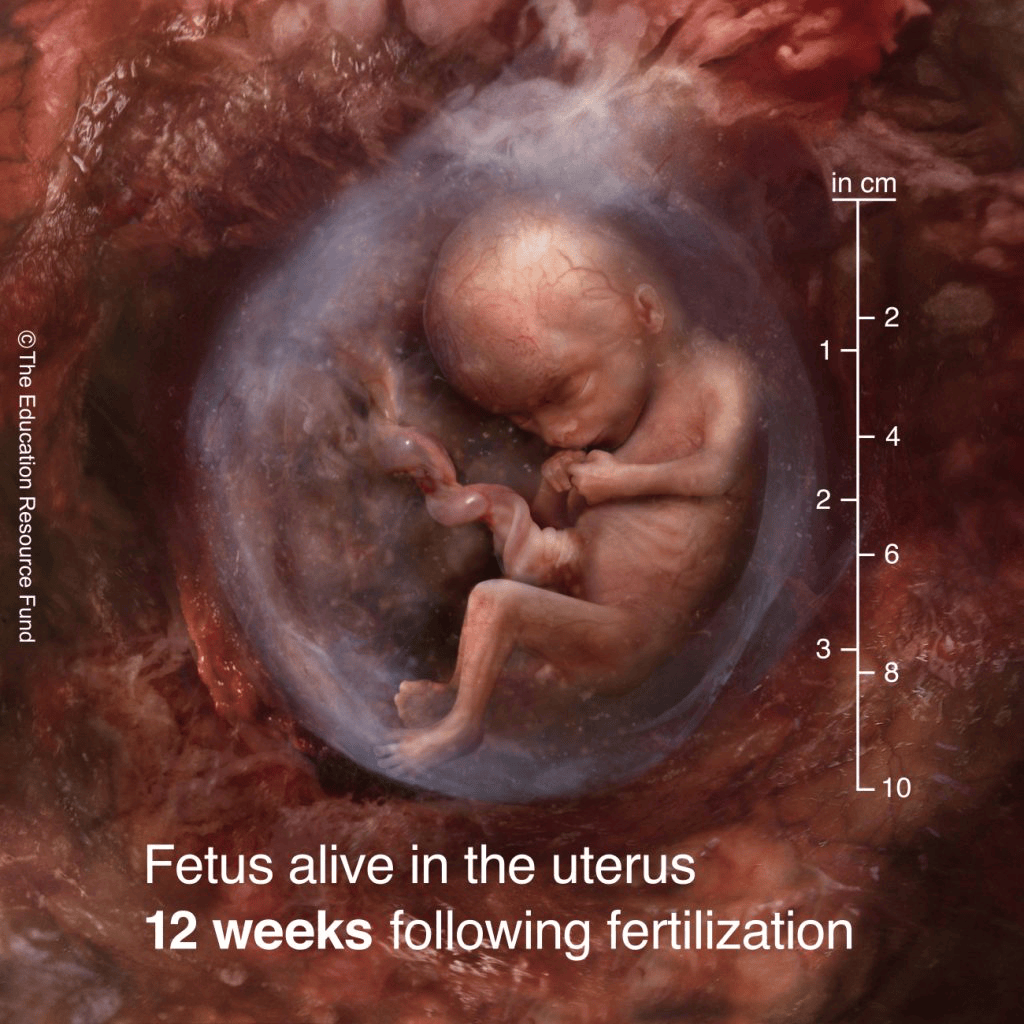
Pro-Choice Argument No. 8
Abortion Isn‘t Murder because there is No Malicious Intent
Pro-Life Response
Under the Law, Malice Does Not require Hatred Toward the Victim
‘“Malice” in the criminal law is much broader than some people may [realise] and includes a reckless disregard for the value of human life.
Numerous people in history have been charged with criminal homicide and convicted for the unintentional killing of another human being. For example, drunk drivers are regularly prosecuted for homicide even though there is no question that they had no malicious intent toward their victims.
Nevertheless, it should be noted that for over a half a century before Roe v. Wade, criminal prosecutions in cases of abortion treated women as a second “victim” in the crime. The criminal targets were the abortionists who financially profited from performing abortions. Indeed, since 1922, there is no documented case of any woman being charged with having an abortion in the United States.’
Pro-Choice Argument No. 9
Abortion Isn‘t Wrong Because It Isn’t Against the Law
‘Some pro-choice advocates take the position that abortion, at least before the point of viability is not wrong because it is legal under the law.’
Pro-Life Response
The Fact that Something is Legal Doesn’t Mean an Act is Morally Right
‘Many things have been “legal” that were not morally right.
Nazi Germany’s Action T4 program, which [authorised] the forced euthanasia of the “incurably sick” (including those with severe physical and/or mental disabilities, patients in psychiatric facilities and elderly people in nursing homes) was “legal”, but that didn’t make the murder of those individuals morally right.
Slavery was legal in the United States for many years, but the legality of slavery didn’t make it morally right.
Lying to friends and family and committing adultery are not against the law in the United States, but that doesn’t mean those things are morally right.
Likewise, the fact that abortion is legal in the United States (at least prior to the point of viability) does not make it morally right.’
Pro-Choice Argument No. 10
You Can’t Legislate Morality
‘Pro-Choice advocates often argue that legislation shouldn’t be enacted against abortions because it is a moral issue and “you can’t legislate morality”.’
Pro-Life Response
The Purpose of Legislation is to Deter [Behaviour], which Laws Successfully Do all the Time
‘Taken to its logical end, the claim that “you can’t legislate morality” would mean a whole host of laws should not have been passed (e.g., laws prohibiting drunk driving, discrimination, theft, domestic abuse, murder, etc.) However, even though morality can’t be legislated in the sense of forcing people to change their hearts or opinions on a particular issue, changing hearts and opinions isn’t the purpose of the law. The purpose of the law is to discourage certain [behaviour] regardless of the feelings or opinions of those engaging in the [behaviour].
In the context of abortion, the purpose of passing laws prohibiting abortion isn’t to convince people abortion is morally wrong, but to save innocent human lives by deterring the conduct.
Passing laws prohibiting abortion will deter a great number of people from taking an innocent life the same way laws deter people from driving under the influence, committing theft, discriminating on the basis of race or sex, etc.’
“It may be true that the law cannot make a man love me, but it can keep him from lynching me, and I think that’s pretty important”
– Martin Luther King, Wall Street Journal, November 13, 1962, Notable & Quotable, page 18.
Hanson – emphasis theirs:
Conclusion
‘As set forth above, pro-choice advocates offer a number of arguments in support of the view that a woman[’s] decision to have an abortion is a matter of her personal choice which involves decisions about her body, her health and her future.
In their view, pre-born babies are not entitled to a right to life until they reach a certain stage of development; rather, the issue narrows down to the mother’s right of individual liberty and individual reproductive freedom.
Pro-life advocates rebut the contentions made by pro-choice advocates and arduously maintain the killing of innocent life (no matter at what stage of human development) is not a matter of personal choice, but an unlawful taking of human life depriving its victims of the fundamental right to [live].’
Timeline of development for an unborn baby.
On day one the successful male sperm enters the female egg and a zygote is formed.
During days two and three, the zygote divides into multiple cells.
On day four the morula is formed.
Between days five and six the morula develops into a blastocyst and implants into the uterine (womb) lining.
After implantation, the developing structure is referred to as an embryo, marking the beginning of significant growth and development.
An embryo is the early stage of development for a multicellular organism which has advanced through cell division from the fertilised egg of a vertebrate animal – prior to all the major organs developing.
The nervous system begins to form in a foetus during the third week of its development, beginning with the formation of the neural plate, which in the fourth week folds to create the neural tube.
Blood circulation in a foetus begins usually in the fourth week of gestation. The blood is oxygenated in the placenta and then circulated through the foetus via the umbilical cord.
By the sixth week, the brain starts to separate into three main parts – front, mid and hind – with the development of the spinal cord and central nervous system.
This embryonic stage lasts until the end of the eighth week of pregnancy and from the beginning of the ninth week the embryo is now called a foetus.
A foetus which has developed from an embryo, is an unborn offspring of a viviparous animal or ‘unhatched vertebrate’ in the later stages of development – typically characterised with the presence of all major body organs as recognisable features of the mature animal.
Recall, it is in the tenth week that the heart is fully developed, with all its chambers formed.
In the fourteenth week, red blood cells form.
In the nineteenth week, a protective coating forms around the foetus.
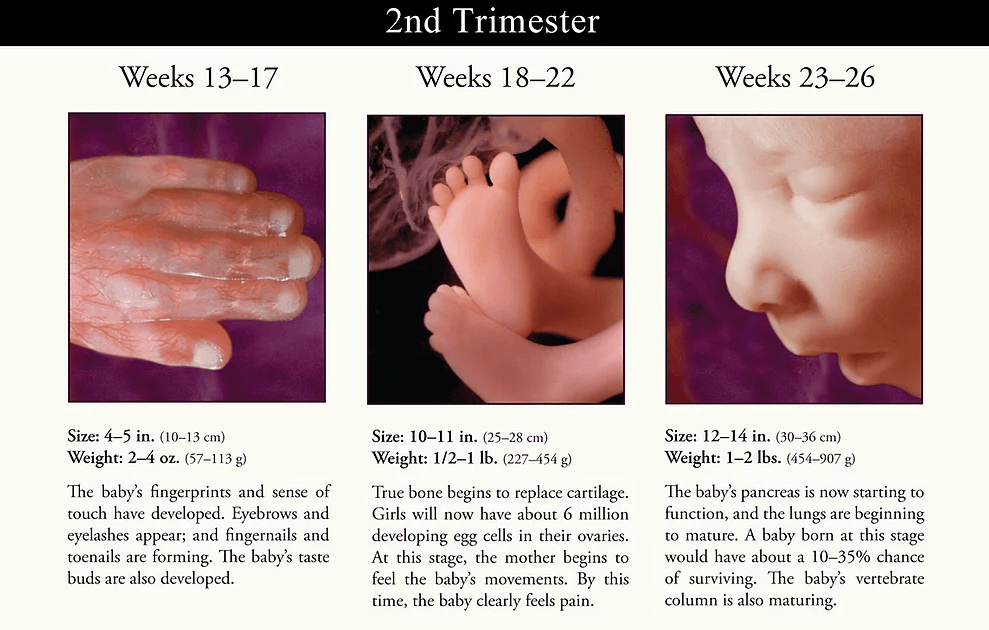
Those in favour of abortion argue the debate centres upon when the foetus becomes ‘sufficiently human’ to have a right to life. Yet as we have observed earlier, science reveals a baby in the womb (whether an embryo or foetus) is alive and terminating it is murder – pure and simple.
Thus it suits Pro-Choice campaigners in disputing over exactly when some form of moral guilt is commensurable with killing said baby. If it can be postponed to a later stage in a foetus’ development, all well and good. Basing this arbitrary line on self consciousness or self awareness; how developed its brain or nervous system is; or any other organ development, are all nothing but deflection.
This aspect has only become a key point in the abortion debate because of faulty reasoning. Hence those involved in drafting laws regulating abortion speak about viability – yet whether a foetus can survive outside the womb depends on the following inconsistent factors:
a. the state of medical science;
b. the medical facilities available at a particular location;
c. the competence or willingness of the mother (or some other care-giver);
d. the gender of the foetus;
e. the ethnicity of the foetus
– and when a foetus can survive outside the womb by itself independent of its mother.
But this only serves to distract from the reality that a new life begins at conception. A reality which Pro-Choice advocates either ignore, do not wish to admit too, or reluctantly accept.
This vagueness allows for the view called ‘gradualism’, whereby there are proposed degrees of a right to life and the foetus obtains a stronger right to life as it develops (and looks more human*). Thus, the further evolved the foetus, the less willing Pro-Choice supporters are about aborting it and the more weight they give the rights of the foetus in comparison with the rights of the mother.
Yet this does not undo the damage that presently exists with mothers possessing more rights than an embryo or (young) foetus and the power to kill it for any reason.
This world relentlessly exhibits atrocities performed by humans on other humans every day all over the Earth. Thus cruelty to children and babies – for example, paedophilia, physical violence and satanic ritual abuse – are a tragic par for the course.
What remains incredulously barbaric is how hundreds of millions of unborn babies have died at the hands of their own mothers. Mothers who not only share half their DNA with their babies, but some 98% have irresponsibly become pregnant (through their own negligent choices), to then change their mind and dispatch their own (living) flesh and blood back to the dark void of death.
Does no one who supports Pro-Choice see anything amiss here?
Has this section of society taken leave of their senses?
With deep sorrow stretching to abyssal depth, it would seem that they have.
1 Timothy 4:1-2
Amplified Bible
‘… in later times some… paying attention instead to deceitful and seductive spirits… misled by the hypocrisy of liars whose consciences are seared [burned, scarred] as with a branding iron leaving them incapable of ethical functioning…’
The deliberate act of a mother killing her child is called filicide. Derived from the Latin word filia (daughter, female) and the suffix cide, from the word caedere meaning ‘to kill’.
Whereas opponents (whether religious or not) believe, no rather understand the foetus is never anything other than human beginning from conception and therefore has a right to life from this instant in time onwards – the moment when a body, soul and spirit ignite into a new life. A form of Big Bang in miniature if you like, yet a poor analogy… borrowed from a false theory of Cosmology – Articles: The Creator Criterion; and The Atheist Anomaly.
Arbitrary lines of development chosen include:
Brain Activity
BBC: ‘This is a logical point, as it marks a necessary state for many of the characteristics that some people think a “moral person” has to possess. But brain activity at this stage is no more than a precondition – it doesn’t demonstrate that the foetus is actually “conscious”.’
Tissue separation
BBC: ‘This is the time when tissues in the foetus separate into different types. This covers a lengthy period of time. Tissue type separation doesn’t seem to have any obvious moral – so the choice of this as the key date is probably because the increasingly human* appearance of the foetus causes us to feel increasingly protective of the foetus.’
Aristotle’s theory
BBC: ‘Aristotle suggested 40 days (males), 90 days (females) was the time. These are purely arbitrary times – and there’s certainly no reason for males and females to get the right to life at different stages of development. The idea itself came out of Aristotle’s three-stage theory of life: vegetable, animal, rational. The vegetable stage was reached at conception, the animal at ‘animation’, and the rational soon after live birth.’
Similarly, Jewish tradition understood life as a process rather than a moment. The Talmud (Yevamot 69b) suggests that before 40 days, the embryo is “mere fluid.” This though reflects ancient understanding which differs significantly from our post-ultrasound, post-microscope era where we can clearly visualise development from conception.
‘Quickening’
BBC: ‘This is when the foetus first moves in the womb. This happens about 16 to 17 weeks after fertilisation. The idea came from a now abandoned Christian theory that this was the moment that the foetus got its soul. For example St. Augustine [354 CE – 430 CE] made a distinction between embryo inanimatus, not yet endowed with a soul, and embryo animatus, endowed with a soul.
Without “ensoulment”, quickening does not seem to have any merit as the start time for human rights. Medically, the time of quickening is influenced by irrelevant factors, such as the number of previous pregnancies that the mother has had.’
Implantation
BBC: ‘This is the moment when the fertilised egg is implanted in the womb. This happens about a week after conception. This point is easy to identify but this point is just as arbitrary as any other date.’
The least arbitrary point of when a new life has formed with a right to life (in the view of this writer) – regardless** of whether or when it is (self-)conscious, a person, becomes a soul (with a spirit) – is that of conception.
Conception
BBC: The ‘Catechism of the Catholic Church’ states that the embryo must be treated as a person from conception and so do many others who oppose abortion…
– the moment of fertilisation is an entirely logical point to choose as the beginning of human life
– it’s one of the few points that isn’t arbitrary or difficult to judge, as an egg is either fertilised or not
– at this point the fertilised egg has begun to develop into a separate and unique human being
– at this point the fertilised egg contains the full genetic code of a human being
(not a very good argument, since so do all the cells of the body)
– It’s the beginning of a process of development and maturation that doesn’t end until the individual naturally dies, or is killed
– but it only marks the beginning of biological life**
– some people believe that biological life is not sufficient to give the foetus the right to life
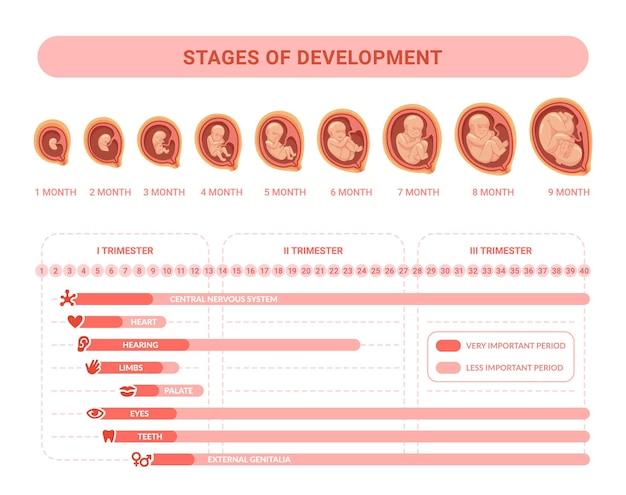
A brief and concise synopsis of abortion is provided by Britannica.
Abortion, John W Huffman, August 28, 2026 – emphasis mine:
‘Abortion is the termination of a pregnancy before the infant can survive outside the uterus.
The age at which a [foetus] is considered viable has not been completely agreed upon.
Many obstetricians use either 21 weeks or 400-500 grams (0.9-1.1 pounds) birth weight as the baseline between abortion and premature delivery, because few infants have survived when they weighed less than 500 grams at birth or when the pregnancy was of less than 21 weeks’ duration. Generally speaking, the [foetus] has almost no chance of living if it weighs less than 1,000 grams (2.2 pounds) and if the pregnancy is of less than 24 weeks’ duration.
In one effort to resolve the matter, the American College of Obstetricians and Gynecologists has defined abortion as the expulsion or extraction of all (complete) or any part (incomplete) of the placenta or membranes, with or without an abortus, before the 20th week (before 134 days) of gestation.’
An obstetrician specialises in caring for women during pregnancy (and the unborn foetus) as well as delivering babies during childbirth. Whereas a gynecologist specialises in the female reproductive system; whilst also diagnosing and treating conditions related to it, including pregnancy.
John Huffman:
‘Early abortion is an abortion that occurs before the 12th completed week of gestation (84 days); late abortion is an abortion that occurs after the 12th completed week but before the beginning of the 20th week of gestation (85–134 days).
In the past the word abortion usually meant to [non-medical] persons the elective interruption of a pregnancy, whereas “miscarriage” indicated a spontaneous expulsion of the uterine contents.
The term miscarriage is seldom used medically.
Spontaneous abortion is the expulsion of the products of conception before the 20th week of gestation without deliberate interference. As a general rule, natural causes are responsible for loss of the pregnancy.
An induced abortion is the deliberate interruption of a pregnancy by any means before the 20th week of gestation. In medical terminology an abortion may be therapeutic or elective (voluntary).
A therapeutic abortion is the interruption of a pregnancy before the 20th week of gestation because it endangers the mother’s life or health or because the baby presumably would not be normal.
An elective abortion is the interruption of a pregnancy before the 20th week of gestation at the woman’s request for reasons other than maternal health or [foetal] disease.
Most abortions in the United States are performed for this reason.
A spontaneous abortion usually passes through several progressive stages. The first stage is a threatened abortion in which a woman, known to be less than 20 weeks pregnant, notices a small amount of bloody discharge from her vagina and, perhaps, a few cramping pains in her uterus. By pelvic examination it is determined that her cervix has not started to open or dilate. Either the symptoms subside or the matter progresses to an inevitable abortion, in which there is increased bleeding, the uterine cramps become more severe, and the cervix, or mouth of the uterus, opens for the expulsion of the uterine contents.
An inevitable abortion terminates either as a complete or an incomplete abortion, depending on whether or not all the products of gestation are expelled. The process may start abruptly with pain and profuse bleeding and be over in a few hours, or it may go on for days with only a modest loss of blood. Spontaneous abortions early in pregnancy tend to be complete. When the pregnancy is further advanced, it is more likely to be incomplete. Usually the physician removes the retained tissue in the uterus surgically when there is an incomplete abortion.
If the [foetus] dies and is retained in the uterus for eight weeks or longer, the condition is referred to as a missed abortion. Women who lose three or more consecutive pregnancies of less than 20 weeks’ duration are said to suffer from recurrent abortion. An infected abortion is an abortion associated with infection of the genital organs.
Approximately 15 percent of all clinically evident pregnancies terminate in spontaneous abortion.
A much higher rate of early pregnancy loss – more than 40 percent – is believed to occur. Some are lost so early that the woman and her physician are not sure whether she aborted or had a menstrual period that was slightly delayed, particularly heavy, and more painful than usual.
The majority occur between the 6th and the 12th week after conception.
Modifications in the abortion laws in several countries, including the United States, have greatly increased the number of requested abortions; it is believed that in some areas the number of abortions exceeds that of babies delivered alive.
At least half of all spontaneous first-trimester abortions have been found by karyotyping (examination of chromosome characteristics) to have a chromosomal abnormality.
Some of these genetic mistakes are caused by abnormal characteristics carried in the egg or sperm or by the failure of normal rearrangement of the chromosomes to occur after the egg and sperm unite.
It has been shown in animals that disturbances in the transportation of the [fertilised] egg to the uterus may cause premature or delayed implantation of the conceptus; [fertilised] eggs that are too young or too old tend to abort. Inadequate secretion of the ovarian hormones estrogen and progesterone needed for the development of the newly [fertilised] egg, may cause failure of the lining of the uterus and its secretions to sustain the young embryo.
Later, failure of the placenta to take over the hormone-producing function of the ovary may adversely affect the growth of the uterus and its contractility. X rays in large doses, radium, and certain drugs may cause abortion because they damage embryonic tissues. Abnormal development of the mother’s uterus may make it impossible for it to retain the pregnancy.
Late abortion is sometimes caused by the weakness of the cervix or by [foetal] death following knotting of the umbilical cord. Uterine [tumours] may cause abortion because they increase uterine irritability or create an [unfavourable] environment for embryonic growth.
In most instances in which psychological factors allegedly caused an abortion, examination of the baby and of the afterbirth have shown defects in one or both that had occurred before the mother had suffered her emotional disturbance.
Physical injury to the mother is a causative factor in only one in a thousand abortions.
Abortions thought to be caused by automobile accidents, falls, kicks, and so forth are often the result of deleterious changes in the [foetus] and sac that occurred before the injury.
Systemic diseases may play a role in causing an abortion. This is particularly true of acute infectious diseases with high fever and bacteria in the bloodstream, or of diseases such as pneumonia, in which there is a marked reduction in the supply of oxygen to the [foetus]. Heart disease, kidney disease, diabetes, high blood pressure, and other chronic diseases may be associated with premature birth and [foetal] death after the 21st week but do not ordinarily cause abortions.
Perhaps 3 percent of threatened abortions are prevented by rest and hormonal therapy.
Most abortions are inevitable because the [fertilised] egg is abnormal; these cannot be controlled medically. Many women who suffer from recurrent abortion respond well to treatment; in some of these cases corrective surgery is necessary. An early spontaneous abortion without infection is rarely followed by ill health when the affected person receives proper medical treatment. Infected abortions, many the result of elective interruptions of pregnancy, have caused chronic pelvic distress and, in some cases, sterility.’
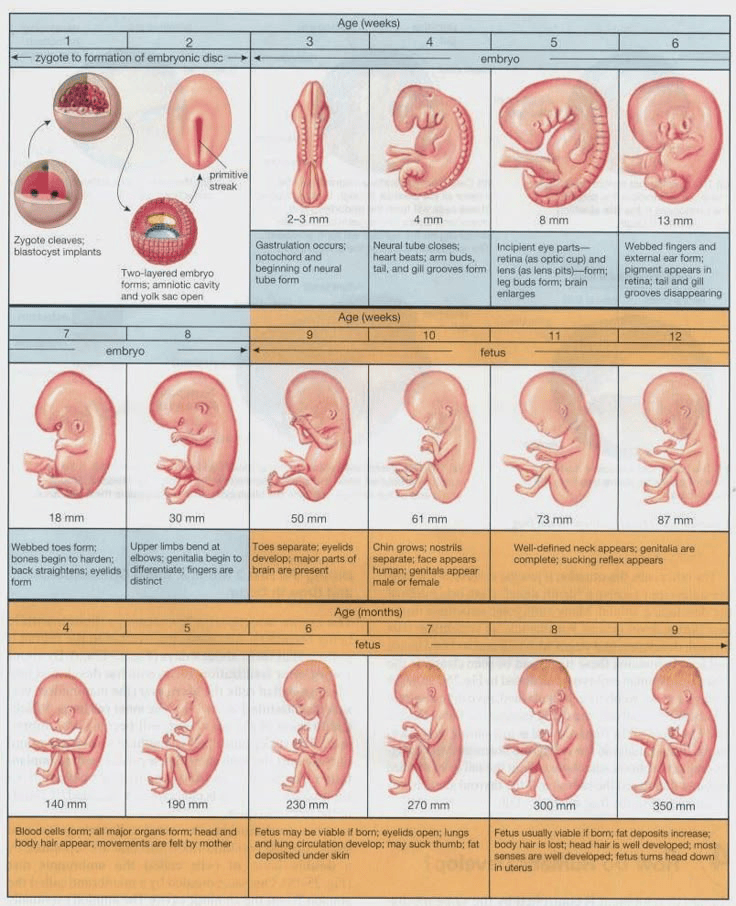
In the Book of Numbers, consists a passage which on first reading is seemingly a difficult scripture. This term is almost exclusively used in connection with only certain writings of Paul or those credited to him – Article: The Pauline Paradox.
The chapter in question is viewed for example by atheists as one which endorses abortion, while most Christians not surprisingly argue otherwise. It is one of if not the most controversial and frequently misunderstood passage in abortion discussions.
Numbers 5:11-31
English Standard Version
11 ‘And the Lord spoke to Moses, saying, 12 “Speak to the people of Israel, If any man’s wife goes astray and breaks faith with him, 13 if a man lies with her sexually, and it is hidden from the eyes of her husband, and she is undetected though she has defiled herself [committed adultery and broken the seventh commandment – Exodus 20:14], and there is no witness against her, since she was not taken in the act, 14 and if the spirit of jealousy comes over him and he is jealous of his wife who has defiled herself, or if the spirit of jealousy comes over him and he is jealous of his wife, though she has not defiled herself [not committed adultery], 15 then the man shall bring his wife to the priest and bring the offering required of her, a tenth of an ephah of barley flour [Barley signifying an offering of lesser quality – 2 Kings 7:1, 16, 18].
He shall pour no oil on it and put no frankincense on it [each symbols of grace and acceptance being withheld], for it is a grain offering of jealousy, a grain offering of remembrance, bringing iniquity to remembrance.’
Bible Hub:
‘Barley (a poor-man’s grain) accentuated humility; absence of oil/incense [signalled] that jealousy, unlike thanksgiving, brings no fragrant pleasure to God.’
16 “And the priest shall bring her near and set her before the Lord. 17 And the priest shall take holy water [set apart and blessed] in an earthenware vessel and take some of the dust that is on the floor of the tabernacle and put it into the water [dust an emblem of a state of condemnation – Genesis 3:14, Micah 7:17].
18 And the priest shall set the woman before the Lord and unbind the hair of the woman’s head [an uncovered head is a token of shame and represents the temporary loss of her glory and her good reputation] and place in her hands the grain offering of remembrance, which is the grain offering of jealousy.
And in his hand the priest shall have the water of bitterness [H4751 – mar: angry, discontented, heavy] that brings the curse [H423 – ‘alah: oath, swearing, execration].’
The Hebrew word mar can relate to a ‘cry’ and ‘pain’ and also in context of adultery, ‘of harlot’s end’ and ‘end of wickedness’.
19 ‘Then the priest shall make her take an oath, saying, ‘If no man has lain with you, and if you have not turned aside to uncleanness [H2932 – tum’ah: filthiness (sexual)] while you were under your husband’s authority, be free from this water of bitterness that brings the curse.
20 But if you have gone astray [Hosea 4:12], though you are under your husband’s authority, and if you have defiled yourself, and some man other than your husband has lain with you, 21 then’ (let the priest make the woman take the oath of the curse, and say to the woman) ‘the Lord make you a curse and an oath among your people, when the Lord makes your thigh fall away and your body swell.
22 May this water that brings the curse pass into your bowels [H4578 – me’ah: belly, heart, womb] and make your womb [H990 – beten: belly, body, abdomen, (within)] swell [H6638 – tsabah: fight, swell up (of adulteress’ belly)] and your thigh [H3409 – yarek: side, loins, generative parts (as the seat of procreative power)] fall away [H5307 – naphal: fail, shrivel, rot, cease, die].’
And the woman shall say, ‘Amen, Amen [truly, so be it].’
While the Hebrew word me’ah broadly refers to ‘internal organs’, ‘inward parts’ and ‘digestive organs’, it can also contextually mean ‘organs of procreation’.
“The thigh is often used as a euphemism for the sexual organs” – Walter Riggans, Numbers, 1983, Page 50 (refer Genesis 24:2, 9; 47:29).
“The most probable explanation for the phrase [“her womb shall swell, and her thigh shall fall away”]… is that the woman suffers a collapse of the sexual organs known as a prolapsed uterus. In this condition, which may occur after multiple pregnancies, the pelvic floor (weakened by the pregnancies) collapses, and the uterus literally falls down.
It may lodge in the vagina, or it may actually fall out of the body through the vagina. If it does so, it becomes edematous and swells up like a balloon. Conception becomes impossible, and the woman’s procreative life has effectively ended…” – Tikva Simone Frymer-Kensky, The Strange Case of the Suspected Sotah (Numbers V 11-31), 1984.
Frymer-Kensky (1943-2006) an American theologian ‘was a professor at the University of Chicago Divinity School. She received her MA and PhD from Yale University. She had previously served on the faculties of Wayne State University, the Jewish Theological Seminary of America, Yale University, Ben Gurion University, and the Reconstructionist Rabbinical College, where she served as director of Biblical studies.’
The English Standard Version is not as clear as the following two versions.
The Voice: If you are guilty, may this curse-causing water run through your bowels, make your belly swell, and your womb miscarry. And the woman shall say, “Amen. Let it be so.”
New Century Version: This water that brings a curse will go inside you and make your body unable to give birth to another baby. The woman must say, “I agree.”
Considering the context, a paraphrased alternative rendering more clearly delineating the intent could be expressed as:
“May this water that carries the curse pass into your stomach causing your abdomen to swell and your womb to empty and waste away (so that you cannot conceive) and the woman shall agree.”
This is a grim punishment for adultery and correlates with verse twenty-eight, whereby an innocent woman is still able to conceive and become pregnant.
23 “Then the priest shall write these curses in a book and wash them off into the water of bitterness. 24 And he shall make the woman drink the water of bitterness that brings the curse, and the water that brings the curse shall enter into her and cause bitter pain [H4341 – mak’ohv: painful, sorrow, sufferings (physical and emotional)].
25 And the priest shall take the grain offering of jealousy out of the woman’s hand and shall wave the grain offering before the Lord and bring it to the altar. 26 And the priest shall take a handful of the grain offering, as its memorial portion, and burn it on the altar, and afterward shall make the woman drink the water.
27 And when he has made her drink the water, then, if she has defiled herself and has broken faith with her husband, the water that brings the curse shall enter into her and cause bitter pain (Psalm 109:18), and her womb shall swell [‘discharge’], and her thigh shall fall away [‘drop’], and the woman shall become a curse among her people.’
Bible Hub:
‘Curse is written, wiped into water, and ingested – mirroring Christ who “became a curse for us” (Galatians 3:13). He drinks the cup of wrath (Matthew 26:39) so His Bride may be presented “without stain or wrinkle” (Ephesians 5:27).’
Albert Barnes:
‘Of itself, the drink was not noxious; and could only produce the effects here described by a special interposition of God.’
Or alternatively.
Study Light:
‘M. R. [Martin Ralph] DeHaan [1891-1965] offered a natural, as opposed to a supernatural, explanation of what happened in this trial by ordeal… He believed that the treated water that the woman drank reacted to the chemical composition of the juices in her digestive system that had become abnormal because of her guilt.
Science has established that certain emotions and nervous disturbances change the chemical composition of our body secretions… [and] this might be what produced the symptoms described in the text, DeHaan… [also interpreted] the “dust” (Numbers 5:17) that the priest mixed with the water as a “bitter herb”.’
“We believe that, if we knew the identity of the bitter herb which Moses used, the same test would work today” – M R DeHaan, The Chemistry of the Blood and Other Stirring Messages, 1943, page 48.
‘The physical symptoms of God’s [judgement] on the woman if she was guilty (Numbers 5:23; Numbers 5:27) point to a special affliction rather than one of the natural diseases that overtook the Israelites.
Merrill believed her sense of guilt produced a psychosomatic reaction. Noordtzij concluded that the woman’s pregnancy resulted in a miscarriage because the bitter water destroyed the [foetus]. It is interesting, whatever the cause, that the punishment fell on the organs that had been the instruments of the woman’s sin.’
Biblia Plus:
‘The trial by red water, which bears a general resemblance to… [the ritual]… prescribed [here] by Moses, is still in use among the tribes of Western Africa.’
28 ‘But if the woman has not defiled herself and is clean, then she shall be free and shall conceive [H2232 – zara: seed, to become (be made) pregnant] children.
29 “This is the law in cases of jealousy, when a wife, though under her husband’s authority, goes astray and defiles herself, 30 or when the spirit of jealousy comes over a man and he is jealous of his wife. Then he shall set the woman before the Lord, and the priest shall carry out for her all this law.
31 The man shall be free from iniquity, but the woman shall bear her iniquity”.’
Study Light:
‘This procedure protected the wife of an extremely jealous husband who might continually accuse her. He would suffer shame by her innocence since this was a public ceremony.’
Bible Hub:
‘Textual parallels in regions around ancient Israel show that protective and guilt-determining rites were common. Archaeological tablets found in Mesopotamia and surrounding regions attest to ordeals through water, fire, or oath-bound processes. These parallels clarify that such ceremonies aimed to expose deception before deities, rather than to end a pregnancy.’
Teach about the Bible:
‘Unlike harsh laws in surrounding nations – like the Code of Hammurabi [refer Hammurabi, Chapter XIX: Chedorlaomer & the War of Nine Kings], where a suspected wife had to undergo drowning as a test – this ritual protected the woman from immediate violence and placed judgement in God’s hands, not human impulse. She could not be punished without this divine process, showing a concern for fairness even in accusation.’
Bible Hub:
‘Code of Hammurabi 132: wife suspected of adultery undergoes river-ordeal; survival equals innocence. Israel’s alternative keeps the accused within the sanctuary – the offender must confront Yahweh’s presence rather than impersonal nature. Hittite Law 197 threatens death; Israel’s law defers execution to God. These contrasts highlight Yahweh’s distinct character: just, yet patient.’
Study Light:
‘This case raises some questions. Why was only the woman punished if she had been unfaithful? The answer seems to be that her male companion in sin was unknown. If she had been unfaithful and the adulterer was identifiable, both partners should have suffered death by stoning (Leviticus 20:10, Deuteronomy 22:22).’
Though some ancient Jewish commentators believed the curse would affect the adulterous male, as well (Talmud, Sotah 27b:3).
An example where both guilty parties were put to death is where there is adultery and the woman does not call for help – insinuating she is a willing participant.
“If there is a betrothed virgin, and a man meets her in the city and lies with her, then you shall bring them both out to the gate of that city, and you shall stone them to death with stones, the young woman because she did not cry for help though she was in the city, and the man because he violated his [neighbour’s] wife. So you shall purge the evil from your midst” – Deuteronomy 22:23-24, ESV.
What about a situation where a wife is suspicious of her husband – a scenario much more likely to occur.
Study Light:
‘What about a wife who suspected that her husband had been unfaithful to her? Did she not have the same recourse as the husband? Evidently she did not. The Israelites were to observe God’s revealed line of authority consistently. A man was directly responsible to God, but a woman was directly responsible to her father (if unmarried) or her husband (if married).
Thus a wife was responsible to her husband in a sense in which the husband was not responsible to his wife. This does not mean that marital infidelity was a worse sin for a wife than it was for a husband. It simply explains how God wanted the Israelites to handle infidelity in the case of a wife. Perhaps God Himself retained the responsibility for judging a husband who was unfaithful to his wife (Hebrews 13:4).’
The question here is not just that the womb has been irrevocably closed, but also whether those translations which use the word miscarry are correct.
Has an unborn baby resulting from adultery been terminated?
Simply though, the procedure described is one to test the claim of adultery. If innocent, no curse applies and a woman remains fertile. If guilty and she does not confess but chooses to drink the bitter water, she runs the risk of being cursed and painfully loses the use of her uterus – and therefore whatever life may be inside at the time.
The text ostensibly does not state whether a woman is pregnant or not. Though there is the implication. If she was, it would be in the early stages before it was noticeable for the husband to have his suspicions obviously confirmed without the need for the ritual.
Unless of course a man’s wife was visibly pregnant and hence his suspicion is that his wife has committed adultery because the husband does not believe the baby is his.
That said, traditional interpretations of the ritual restricted it from being performed on pregnant women or those nursing a child (Mishnah: Nashim, Sotah 4:3).
There is a curious verse worth noting in light of poisoned water and a link to miscarriage.
2 Kings 2:19-22
English Standard Version
‘Now the men of the city said to Elisha, “Behold, the situation of this city is pleasant, as my lord sees, but the water is bad, and the land is unfruitful.” He said, “Bring me a new bowl, and put salt in it.” So they brought it to him. Then he went to the spring of water and threw salt in it and said, “Thus says the Lord, I have healed this water; from now on neither death nor miscarriage [H7921 – shakol: miscarry, barren, childless, deprived] shall come from it.” So the water has been healed to this day, according to the word that Elisha spoke.’
The Hebrew word shakol also means, ‘to be bereaved’ and interestingly, ‘abortion’.
An additional verse in a similar vein to the one in 2 Kings is in the Book of Exodus.
Exodus 23:25-26
English Standard Version
‘You shall serve the Lord your God, and he will bless your bread and your water, and I will take sickness away from among you. None shall miscarry [H729 – shakol] or be barren [H6135 – aqar: sterile] in your land; I will [fulfil] the number of your days.’
The ongoing lively debate over Numbers chapter five is understandable due to the fact that the act of abortion is not the primary focus of the passage; yet it cannot be entirely dismissed as an integral secondary aspect.
As there are countless examples of the God of the Old Testament sanctioning death and murder, then the times children are mentioned means that one cannot rule out the unborn in certain contexts.
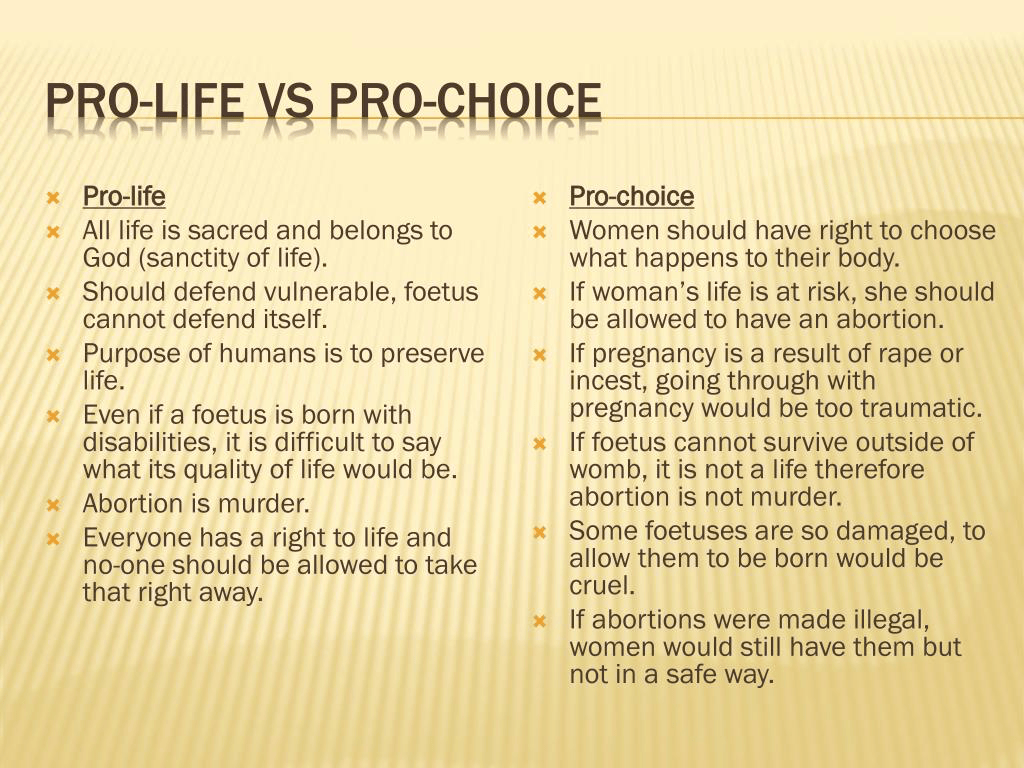
Regarding Numbers chapter five, a heated exchange is located on Reddit, where the question is posed:
What is going on in Numbers 5:11-31?
Below are a sample of answers favouring the inclusion of a termination in the ritual. While the first answer provides an alternative answer to the meaning of the curse.
Atombomb1945:
‘From what I can remember of Jewish laws, a woman was unclean during her monthly cycle and discharge. So this not only eliminated her sleeping with any man (even her husband) but also kept her from being touched by any man. The ESV calls it a curse, other translations call it a miscarriage, but it boils down to the woman was unfaithful to her husband and God cursed her with a continuous flow for the rest of her life. No man who wished to remain clean under the law would be able to be too near her.’
Naturalist-Rick:
‘It’s about making a wife sterile if she’s been unfaithful. Why? Because like most middle eastern religion’s women are treated like cattle. Drinking something to make you miscarriage sure sounds like abortion/[sterilisation] to the educated.’
Friend_of_Eevee:
‘Right? It’s literally a priest giving a woman a morning after pill. Herb induced abortion has been practiced by Jews and Christians for thousands of years. Bitter water is literally how Herb induced abortion was referred to before modern times. 99% of abortions are drug induced and have nothing to do with clamps and saws.’
Sinzy94:
‘There are multiple Talmudic references that talk about how the [foetus] is considered by rabbinic scholars to be only water from conception to the first 45 days [6 1/2 weeks], after that and until birth it is considered a limb of the mother and referred to as the mothers “thigh.” Translating it to miscarriage completely reasonable, because that’s what it is.
What else do you think would happen if a woman’s uterus is made barren during a pregnancy? There is nothing telling the priest to wait a certain period of time to make certain the woman is not with child. This passage clearly demonstrates that no care should be taken to protect an unborn child. This is consistent [behaviour] by God throughout the Old Testament. There are multiple descriptions of [God] killing children because of the sins of their parent. 2 Samuel 12:14, Numbers 16:33.
Keep in mind God is commanding action by the priest. It is through the actions of that priest that God is working. So he is condoning action by humans to punish a sin with disregard to current unborn and future life.’
Deleted:
“It’s okay to kill a baby if mommy was unfaithful. That’s what it means. Meanwhile, conservative religious men think women shouldn’t be able to get an abortion if raped. Funny that.”
Agnostic – emphasis mine:
‘It straight up says that because of infidelity the woman must partake in a ritual. If the infidelity is not true she will not be cursed (because she won’t have a miscarriage). If she did commit an act of infidelity she will be cursed. This curse mentioned is a concoction that causes miscarriage which is painful.
These verses 100% support abortion, they straight up say that a bastard child should be condemned to miscarriage because it will punish the mother.
Either way banning abortion is a very evil thing, think of all of the victims of rape and incest that will be forced to carry the baby of their assailant and charged with murder if they choose not to, it’s messed up.”
The last sentence is of particular interest and leads into a pivotal argument.
Murder and rape – as discussed earlier – are acts of repugnant violence. It is morally and legally wrong to murder, yet as discussed there is a right time to kill (Ecclesiastes 3:3). For there are scenarios involving the taking of human life which are exceptions to the rule and where pacifism is not the answer.
Obvious examples of when killing someone is either unavoidable or in the latter case an act of mercy, include: self-defence performed by an individual in preserving life; a country’s commitment to national defence (war) in maintaining peace; as well as recall, euthanasia in releasing a loved one from suffering.
While the New Testament teaches not to seek revenge, many would emphasise with someone if they retaliated in response to a loved one (such as a partner or child) having been either tortured, raped or brutally murdered.
To say all murder is wrong is correct when measured against the law of God or held up to the judicial laws in society; though practically speaking, it is a limiting hindrance on any situation which requires justice and compassion.
Still, all can agree that murder committed in an act of rage, hatred, criminally, or for any other selfish, evil motive is unacceptable.
Even so, many on the Pro-Life side of the debate do not entertain that there could be exceptions to an all out blanket law prohibiting all abortion. After all the material covered thus far, it would appear that those in the minority of the Pro-Life movement who support women having
a. the law to protect them; and
b. the inalienable right and freedom to choose to terminate a pregnancy
– in those rare instances where it has resulted from wickedness (whether rape or incest) or the mother’s life is in danger – are being reasonable, sensible and… upright.
Pro-Life supporters seek to protect the unborn, above and beyond its mother.
Almost as if, ‘aren’t we doing well protecting the baby’s life and their rights’, but who in turn place less value on protecting a woman’s right to mental and physical wellbeing.
The philosophy is ‘well, once a woman is pregnant, she ceases to have the same rights as before as they have transferred to her baby.’
If a woman were attacked (by a man) and she killed him in self-defence, she would probably receive commendation for her bravery and only a cynical jury would find her guilty of manslaughter, let alone murder.
Yet, should she seek to terminate a baby impregnated inside her against her will, she is in turn considered (by some, most?) reprobate and reprehensible for killing ‘her’ baby.
A woman/girl in this instance should have the choice whether to forgive (and treat the baby as hers) or to exact an ‘eye for an eye’ (treating the baby as his), if she feels she is not able to come to terms with the ghastly act perpetrated against her.
How can anyone judge a woman when faced with the aftermath of rape (or incest) and an unwanted baby.
Who is truly able to judge such a matter with righteous judgement?
“If pride is a sin… moral pride is the greatest sin” – John Irving, The Cider House Rules.
To deny any woman an abortion in these rare and extreme cases is giving more rights to the unborn child than to its mother. From what we have addressed within the scriptures, the Bible does not support such thinking. If anything – judging by Exodus 21:22-25 – it is the opposite.
Of course, allowing the baby to live, it could grow up to be a saint. On the other hand, it could exhibit the same unsavoury nature and behaviour of its father. For it carries tainted (bad) DNA.
Deuteronomy 21:18-21
English Standard Version
“If a man has a stubborn and rebellious son who will not obey the voice of his father or the voice of his mother, and, though they discipline him, will not listen to them, then his father and his mother shall take hold of him and bring him out to the elders of his city at the gate of the place where he lives, and they shall say to the elders of his city, ‘This our son is stubborn and rebellious; he will not obey our voice…
Then all the men of the city shall stone him to death with stones.
So you shall purge the evil from your midst, and all Israel shall hear, and fear.”
If one were to kill a rapist (Exodus 21:23), then why not their child?
There is a ‘right time to be born and a right time to die’ – Ecclesiastes 3:2.
Is the child in this instance really as innocent as its mother, the true victim… as Pro-Life advocators purport?
John 8:41, 44, 47
English Standard Version
“You are doing the works your father did.” They said to him, “We were not born of sexual immorality…” [Jesus replied:] “You are of your father the devil, and your will is to do your father’s desires. He was a murderer from the beginning… you are not of God.”
Recall, Canaan was cursed because of what his mother did to Noah. Noah did not treat Canaan as an innocent – Genesis 9:25.
This writer is not sure who to be more angry and disgusted with, the Pro-Life supporters who are self-righteous, judgemental; lacking wisdom and compassion…
… or Pro-Choice advocators who choose to rebelliously and selfishly ignore the sanctity of human life. Their actions in willingly and flippantly sacrificing the unborn for no good reason is tantamount to the evil sacrificial rites perpetrated by ancient Israel – Article: Belpheghor.
Psalm 106:37-38
Easy English Bible
‘They even killed their sons and their daughters as sacrifices for those idols of demons! Their sons and their daughters did not deserve to die, but they killed them as sacrifices for the idols of Canaan. Those murders made the land unclean.’
A sickening and (un)worthy description of modern America at least, and the whole world at most – Article: Is America Babylon? and Chapter XXXIII Manasseh & Ephraim – the Birthright Tribes.
To abort a child merely because it doesn’t fit into one’s life or plans is heinous beyond description. Utter shame on those who think this way and deem it acceptable behaviour.
There should be no law or court in the land which tolerates this wickedness.
All in the name of a woman’s right to choose.
To choose what exactly?
These same woman – mostly young adults and teenagers – wish to play as grown ups and have sex, yet do not want the responsibility of raising a child to go with it.
Nor have they even been responsible in using protection and birth control.
Mothers (and father’s) are supposed to nurture, protect (at all costs) and raise their children – not kill them before they are even born.
In comparison, what about all the mother’s who heart rendingly suffer miscarriages and who cannot have children?
Society has become truly warped… and corrupted beyond belief.
May God’s kingdom be established soon – Article: The Good Gospel.
Yet the grand mess our modern and advanced civilisation finds itself is no surprise and had its seeds a very long time ago – Chapter XXII Alpha & Omega.
As the Garden of Eden was all about choice and life.
Eve and Adam had explained to them how they could remain spiritual entities (in Heaven – Article: The Eden Enigma) and who it would seem would (or could) not reproduce. But, they would be like God and live forever. This was symbolised by the Tree of Life (Christ).
The Serpent (fallen archangel Samael) offered a different path. This was symbolised by the Tree of the knowledge of Good and Evil (his mother Asherah) – refer article: Asherah.
The Lord God had already warned Adam and Eve not to take the fruit from this tree – Genesis 2:16-17.*
The Serpent appealed to Eve’s intellectual vanity and painted a picture of a wonderful life on Earth instead. For God had not been truthful and had hidden the pleasurable benefits in becoming physical, having sex and of procreating. While the Serpent lied on one hand saying, “you will not surely die”, he cleverly did not on the other.
For though trapped in physical bodies, humans possess a spirit (in man – Job 32:8) which means they can be resurrected in the future after they die – articles: The Good Gospel; and DEATH: Dead End or New Beginning?
Similarly, the ages of antediluvian humans were incredibly long in comparison to ourselves and so for them, it seemed like they were living for ever; but eventually they did die just as the Lord God had warned* – refer article: Younger Dryas Stadial: Ending of the Earth… Beginning of the World; and The Devils Butte.
Of course, the big thing was sex and hasn’t that gotten mankind into all sorts of bother and continual strife ever since.
Adultery, fornication, homosexuality, incest, rape and… child birth – Genesis 3:16.
The Bible – let alone history – is replete with sexual sin and its repercussions. Beginning in the Garden of Eden – Genesis 3:7.
This is the history of the world and as our first mother and father made their fateful and disastrous choice, humankind have become masters at repeating this woeful catalogue and endless cycle of bad decisions.
This is why all endeavours on this Earth are a mixture of good and evil.
Abortion laws are no different in that while they seek to appease both sides – that is making abortion legal, yet prior to viability – they wholly fail to do what is right (good).
And so, the test in the Garden of Eden was too have freedom of choice as all humans so vehemently campaign and fight for. Yet what seems to escape such a large percentage of the population, is that the choice was given… to do what is right.
We have surveyed examples of God taking human life, including that of children. As we owe our lives to Him, it is certainly His prerogative. Is it our prerogative to do the same?
No, not without good cause. Ninety-eight percent or more of abortions fall into this category and that makes them murder without just cause.
While not everyone will agree on incest, rape, sickness (and perhaps disability) as justifiable reasons to abort a baby, it should be the right of the parents afflicted in such cases to be able to make their own choice with the support of
a. proper legal protection; and
b. without undue (hypocritical prejudice.
It is notable that many women miscarry and this is nature’s way (or God’s direction) in ensuring mostly healthy babies are born.
Up to a million pregnancies in the United States end in miscarriage every year. Most miscarriages occur in the first trimester of pregnancy. The miscarriage rate in the United States is estimated to be between 10% and 25% of all pregnancies, which is similar too many other countries. Thus up to a quarter of all pregnancies may be being ‘aborted’ naturally.
Most early miscarriages in the United States are caused by random chromosomal abnormalities which prevent a pregnancy from going full term and these account for approximately half to two-thirds of first-trimester losses.
Other factors that may raise the risk of miscarriage include: advanced maternal age; hormonal imbalances; uterine or cervical problems; thyroid disease; unmanaged diabetes; infections; blood clotting disorders; obesity; smoking; and heavy caffeine or alcohol use.
It is a simplistic view though in a more perfect world it could work, and that is the fact that abortion numbers could be greatly decreased if people were more responsible and reduced unwanted pregnancies by either using contraception or abstaining from sex – at least from that not within a marriage or an exclusive relationship.
Another point is that Pro-Life press for women to choose adoption over abortion.
Unfortunately, adoption is not always the answer. While superficially this seems a non-negotiable argument, the Pro-Lifer’s forget that children who become ‘orphans’ and who enter orphanages or foster care in the main, do not have a happy time. Physical, psychological and sexual abuse being common issues.
The majority of the 400,000 children in care in the United states do not even graduate from High School or obtain a GED. The majority are not adopted (75% or more) and therefore most at 18 years of age (or at twenty-one) are forced to fend for themselves.
Homelessness and unemployment are serious and real issues for many.
Of this number many become workers in the sex industry, others live on the streets while some simply disappear off the face of the Earth. For many of these young people life is much, much harder than if their parents had been responsible in the first place.
What must our Creator think on all this?
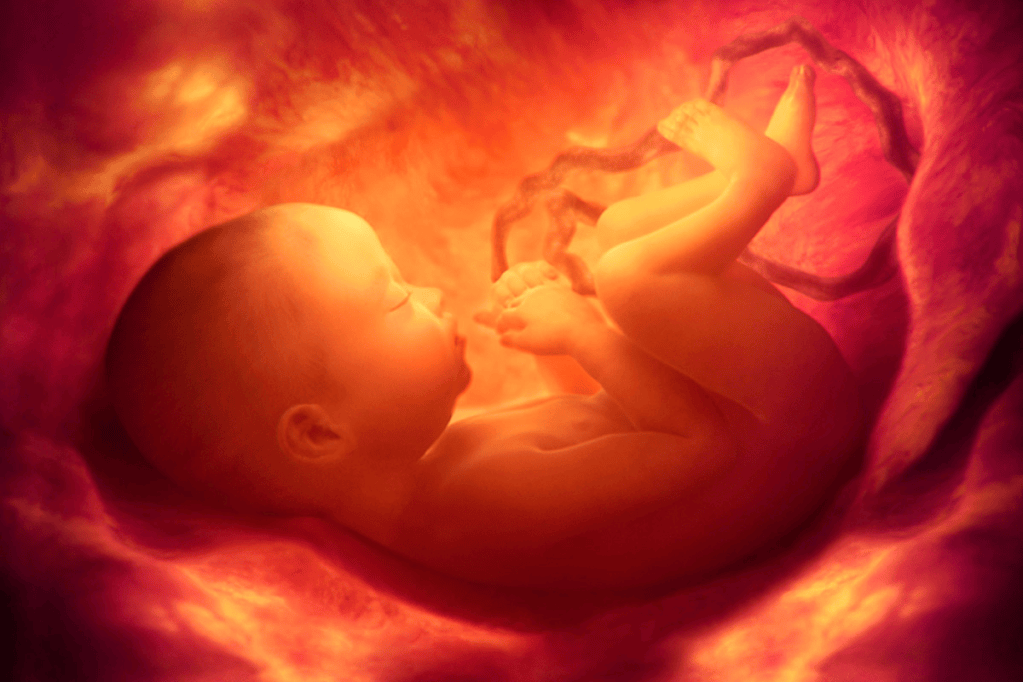
A couple of final thoughts in conclusion.
Pro-Life vs Pro-Choice: An In-Depth Nursing Perspective on Abortion Ethics and Clinical Care, Rachel Logan, January 15, 2026 – emphasis mine:
‘Ethical nursing practice [emphasises non-judgemental] care… [and] respect for individual dignity… nurses must navigate diverse belief systems among patients and colleagues… [and] manage personal values that may influence care delivery… These challenges are further intensified by the emotional weight often associated with reproductive decision-making, making it essential for nurses to approach care with empathy, professionalism, and… sensitivity.
Understanding pro-life vs pro-choice as ethical frameworks – rather than political identities – allows nurses to approach sensitive clinical encounters with professionalism, clarity, and respect.
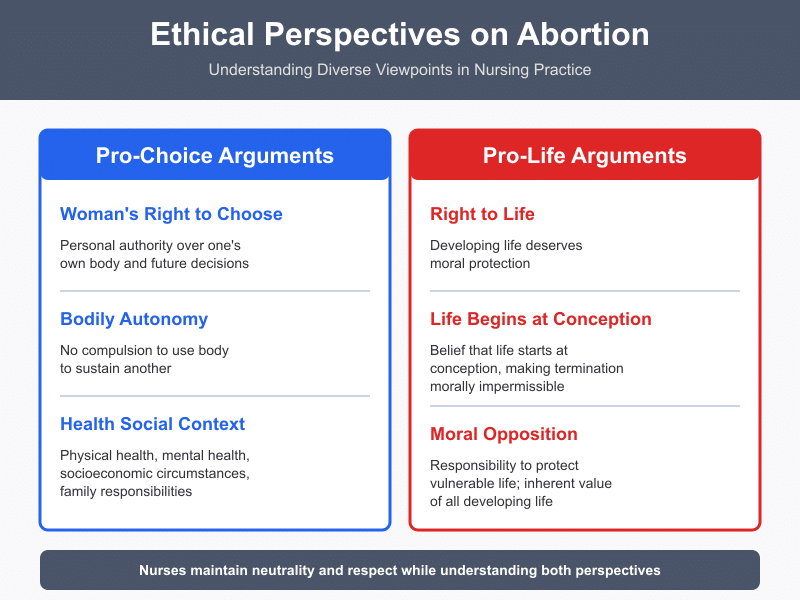
Example: A patient considering abortion after rape or incest requires sensitive [counselling]. Nurses must provide factual, [non-judgemental] guidance, regardless of whether they are pro-life individuals or support a pro-choice stance.
Example: A patient with an ectopic pregnancy may require immediate termination to save the mother’s life. The nurse [who faces ‘heightened ethical and legal responsibilities’] must provide urgent care, ensure patient understanding, and facilitate follow-up while adhering to abortion rights regulations.’
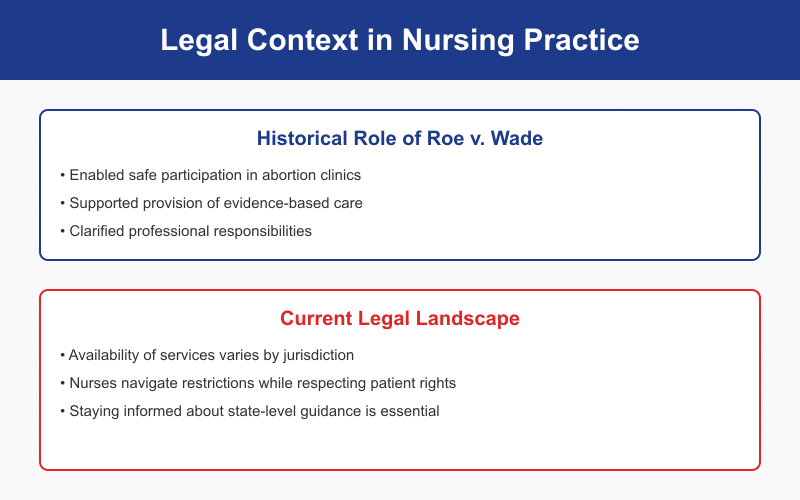
The advice and recommendations provided for nurses in treating patients with respect and dignity regardless of their own beliefs is a looked over yet profound equation in the abortion debate. While Pro-Lifers may (think they) own the moral high ground… in a perfect world; they forget that we do not live in a perfect world and thus showing a non-judgemental care towards those who do not believe the same as yourself is both following the law of love and the words of Jesus in not judging others lest we also be judged.
Matthew 7:1-3, 5, 12
Easy English Bible
Jesus then said, ‘Do not say to anyone, “You are a bad person.” If you do that, God will say to you, “You are a bad person.” God will think about you in the same way that you think about other people. He will use the same rules for you as you use for other people.
Perhaps you want to tell your friend about his little mistake. If you want to do that, first remember your own bigger mistakes. Do not be like that person. You think that you are better than your friend. But you are not…
So do the good things for other people that you would want them to do for you. That is true in everything you do. That is what God’s Law and the messages of God’s prophets teach us.’
Certain human beings can be righteous and just, but no human being is perfectly just and righteous because our moral judgement can be clouded by personal biases, motives and desires. In distinction, God’s nature is to be just (Psalm 89:14) and God knows the heart of every man and woman (1 Samuel 16:7, Psalm 44:21, Jeremiah 17:10) so that He uniquely is a perfect judge of every situation, including reasons for abortion.
This writer is opposed to abortion on principle and must side with God’s word on the sanctity of life and its clarity on an unborn baby being an alive individual human being – made in the image of God (Genesis 1:27).
Though this is tempered by the fact that we are to exhibit justice, mercy (compassion, kindness, love) and faith in upholding the law, with wisdom – Micah 6:8, Matthew 23:23.
As a certain percentage of women – in the troubled world in which we live – will always seek abortions, it is wholly proper and right that they are able to have access to trained professionals and that we do not return to the conditions which were as recent as early last century where most women were forced to have abortions through very dubious means at great risk.
Or lower in tandem with the invariably unsafe practices conducted globally where ‘unsafe abortion is a serious public health concern that affects millions of [women] around the world. Every year, an estimated 20 million unsafe abortions occur, resulting in approximately 68,000 deaths and 5 million cases of disability. This is particularly common in countries with restrictive abortion laws, where access to safe, legal abortion services is limited or non-existent’ – Viva Futura, Abortion Data, 2026.
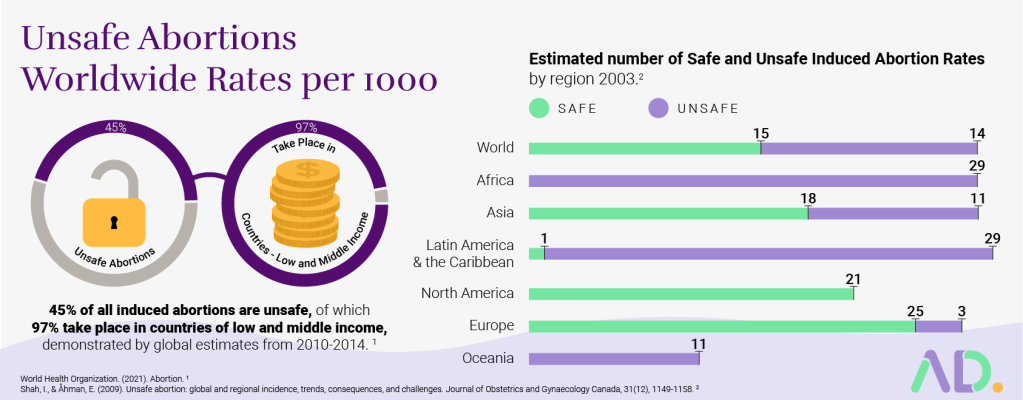
Is abortion a complex issue where it is acceptable under specific extreme situations and not acceptable under most others? Based on all the scriptures investigated in this article and the scientific data, the conclusion is… that such is the case.
But also tell the people that the Lord says this: I will let you choose between two things. One is a way that will give you life. The other is a way that will give you death.
Jeremiah 21:8 Easy English Bible
Let everything that has breath praise the Lord!
Psalm 150:6 English Standard Version
“These same people who tell us we must defend the lives of the unborn – they are the same people who seem not so interested in defending anyone but themselves after the accident of birth is complete! These same people who profess their love of the unborn’s soul – they don’t care to make much of a contribution to the poor, they don’t care to offer much assistance to the unwanted or the oppressed! How do they justify such a concern for the fetus and such a lack of concern for unwanted and abused children? I thought that freedom of choice was obviously democratic – was obviously American!”
John Irving, The Cider House Rules
“Although the issue of abortion will likely remain a passionate debate for years to come, there is always hope that the most reasonable minds will eventually prevail as occurred in the debate over slavery.”
Andrina G Hanson
“Belief is an opinion backed by conviction.”
Michael Amaranthine
© Orion Gold 2026 – All rights reserved. Permission to copy, use or distribute, if acknowledgement of the original authorship is attributed to Orion Gold
Addendum I
How Much Money Does The Abortion Industry Make Each Year? | By The Numbers,
How Much Blog, by Mo:
‘The United States recorded about 1.04 million abortions in 2023 in the formal health system… with 1,037,000 total cases. [To calculate yearly profit] apply the 63% medication share and 37% procedural share.
Next… pair each branch with a realistic average receipt. For medication… use ~$562 as a grounded midpoint from the KFF payer-side data.’
KFF is the Kaiser Family Foundation – or The Henry J Kaiser Family Foundation – which is an American non-profit organisation, headquartered in San Francisco, California. The KFF is the leading health policy organisation in the United States.
Mo:
‘For in-clinic procedures, prices vary by gestation. Most occur early; a small share uses D&E later.’
D&E stands for dilation and evacuation, which is a surgical procedure used to terminate a pregnancy during the second trimester, typically between thirteen to twenty-four weeks. ‘It involves dilating the cervix and removing the foetus and placental tissue from the uterus.’
Mo:
‘A practical blended figure uses a heavy weight on early D&C and a light weight on D&E.’
D&C stands for dilation and curettage, which ‘is a procedure that removes tissue from inside the uterus and it can be used in some abortion situations but it is not the same as an abortion by itself. An abortion is the intentional ending of a pregnancy, and not all abortions use a D&C.’
Mo:
A 85/15 split with KFF’s medians yields a procedural average near $1,620 per case. This keeps the math conservative while reflecting that later care is less common but costlier.
Medication abortions: 1,037,000 × 63% ≈ 653,000 cases. Receipts: 653,000 × $562 ≈ $367 million.
Procedural abortions: 1,037,000 × 37% ≈ 384,000 cases. Receipts: 384,000 × ~$1,620 ≈ $622 million.
Add those together, and the result is about $989 million in service receipts. Round it to a clean range to reflect price and mix variation, and you land near $0.9 – $1.2 billion.
This tally captures patient and payer payments for abortion care itself; it does not include grants, donations, or revenue from other services at the same sites.’
Addendum II
Right to Life News, April 27, 2020 – emphasis mine:
‘Today marks the 52nd anniversary of the Abortion Act coming into effect – 6 months after it received Royal Assent [refer article: The Life & Death of Charles III].
Since then, a staggering 9,446,068[+] unborn babies have lost their lives to abortion in England, Scotland and Wales – more than one death every three minutes; 20 lives ended every hour.
Almost 1 in 4 (24%) pregnancies in England and Wales now ends in abortion, according to the most recent figures.
Compared with 1969 – the first year with complete figures for a total number of abortions – where there were 54,819 abortions, there has been a 270% increase in the total number of pregnancies ending in abortion in England and Wales.
The number of resident abortions in England & Wales is also at an all-time high at 200,608, with the total number in the UK at a ten year high with 205,295.
Unfortunately, that figure is likely to increase due to an extreme abortion regime recently coming into force in Northern Ireland’ – refer Chapter XXXI Reuben, Simeon, Levi & Gad – the Celtic Tribes.
‘The extreme legislation allows [an] abortion on demand up to 24-weeks and disability – selective abortion right up to birth – including for Down’s syndrome, cleft lip and club foot.
Since the passing of the Act, what was once a crime has become a lucrative industry. Abortion provider Marie Stopes International’s chief executive* earned £434,500 last year, according to the latest accounts released by Companies House.
The accounts also show the abortion provider had a record income of £296.8 million from operations here in the UK and overseas, receiving over £48 million in 2018 from the Department for International Development (DfID), who remain their single largest donor.
The amount that Mr Cooke* was paid in 2018 would put him in the top-10 highest earners in the charity sector.
BPAS [British Pregnancy Advisory Service], the UK’s largest abortion provider, paid 7 of its staff over £100,000 in 2017.
The Department for International Development (DfID) has increased the UK Government’s financial contributions to Marie Stopes International for overseas abortions by over 5000% in the last 12 years. The figure rose from £905,000 in 2006 to £48,173,000 in 2018.
Financial statements for the company found in Companies House reveal that since 2006 DfID has given over £300 million worth of taxpayers’ money to Marie Stopes International, with over three-quarters of that total given between 2014 and 2018.
While abortion bosses in the UK receive record salaries and Government contributions, standards at abortion facilities across the UK continue to place women at risk.
Over 60% of England’s abortion clinics are rated inadequate or require improvement when it comes to safety.
In recent months, the CQC [Care Quality Commission] has released alarming reports detailing health and safety abuses at two of the largest abortion clinics in the UK.
Earlier this year, inspectors found an abortion clinic in London which specialises in late-term terminations was putting the lives of women at risk and, in November, the CQC handed BPAS Merseyside the worst rating of any private abortion provider so far.
In England and Wales, people with disabilities have been unjustly and disproportionately targeted by abortion legislation.
Earlier this year, it was revealed the number of abortions performed on unborn babies with cleft lip and palate in England & Wales has increased 150% since 2011.
The latest available figures show that 90% of children diagnosed with Down’s syndrome before birth are aborted and that 3,269 disability-selective abortions took place in 2018.
There is also evidence of sex-selective abortions taking place in the UK.
Analysis of last year’s general election, conducted by pro-life charity Right To Life UK, revealed the number of pro-life MPs has increased while the pro-abortion lobby has lost a large number of MPs.
Opinion polls repeatedly show that the public wants increased protections for unborn babies and the number of abortions reduced – rather than the wholesale removal of legal safeguards around abortion.
Only 1% of the UK population want abortion to be available up to birth and over 70% of women want the abortion limit to be reduced to 20 weeks or lower.
Polling from earlier this year revealed that over 41% of Londoners believe abortion should be illegal in almost all circumstances.
Polling also revealed that two-thirds of women and 70% of 18-34-year-olds in Northern Ireland did not want Europe’s most extreme abortion law imposed on the province by Westminster.’

