
Chapter VI
There are exceptions to every rule in family living together, as per point number one in the introduction (primus verba). We will encounter two significant exceptions amongst Japheth’s grandsons, with the first being the youngest son of Gomer and his prompt decision to dwell apart from his siblings, Ashkenaz and Riphath. Togarmah is highlighted as a people with military capability and forms a prominent part of the formidable future alliance with Magog and Gomer’s other sons – refer Chapter V Gomer: Continental South East Asia; and Chapter X China: Magog, Tubal & Meshech.
Book of Jasher 10:10-12
10 ‘And the children of Tugarma are ten families, and these are their names:
Buzar, Parzunac*, Balgar**, Elicanum, Ragbib, Tarki, Bid, Zebuc, Ongal and Tilmaz;
all these spread and rested in the north and built themselves cities. 11 And they called their cities after their own names, those are they who abide by the rivers Hithlah and Italac unto this day.
12 But the families of Angoli, Balgar** and Parzunac*,
they dwell by the great river Dubnee; and the names of their cities are also according to their own names.’
The sons of Togarmah are not recorded in the Bible. It is of significance that of the eleven families in the Book of Jasher, there was a division with eight living in one location and three in another. Remember this detail, for we will discover that modern Togarmah is in fact split into two.
Ancient Civilisation:
‘Encyclopaedia Britannica says that the Armenians traditionally claim to be descended from Togarmah… Ancient Armenia reached into Turkey. The name Turkey probably comes from Togarmah.’
On our journey we will experience more than once, nations claiming a specific biblical identity, though this does not make it so.
Israel a History of:
‘The Jewish Targums claim that Germany was also derived from Togarmah and his descendants. Turkey and Turkestan also have possible connections with Togarmah.’
Derek Walker – emphasis mine:
‘Togarmah is another country aligned with Russia [Russia is not Magog, Meshech or Tubal]. He was a son of Gomer, son of Japheth (Genesis 10:1-3), known in Assyrian records as Tilgarimmu, a city state in Eastern Anatolia (Asia Minor, modern Turkey)… This identification is generally acknowledged by all. The Bible confirms Togarmah’s location in Ezekiel 38:6: “Beth-Togarmah from the uttermost parts of the north with all its troops.”
The word Beth at the beginning of the word is the Hebrew word for “house.” It means “house or place of Togarmah.” In Ezekiel 38:6: “the house of Togarmah, and all its hordes” are specifically pointed out as being from the north.
Therefore we know it is directly north of Israel [the sons of Jacob – not the state of Israel]. Some of the sons of Togarmah can be traced to the Turkoman tribes of Central Asia. Rimmer had no doubts that Togarmah is ancient Armenia (most of which is in Turkey today…) and cited certain Assyrian chronicles as well as Tacitus in support of his view.’

Walker: ‘He said that the title the House of Togarmah is a common description for Armenia in Armenian literature.
All agree to identify Togarmah with Armenia and Turkey. This fits Ezekiel, for Turkey is directly north of Israel. There’s a possible etymological connection between the names Togarmah and Turkey and Turkestan. In Ezekiel’s time, there was a city in Cappodocia (Turkey) known as Tegarma, Tagarma, Til-garimmu, and Takarama. It’s significant that [four] of the ancient locations Ezekiel gives are found today in the nation of Turkey. Clearly God is emphasising Turkey’s important part in the end-time coalition…’
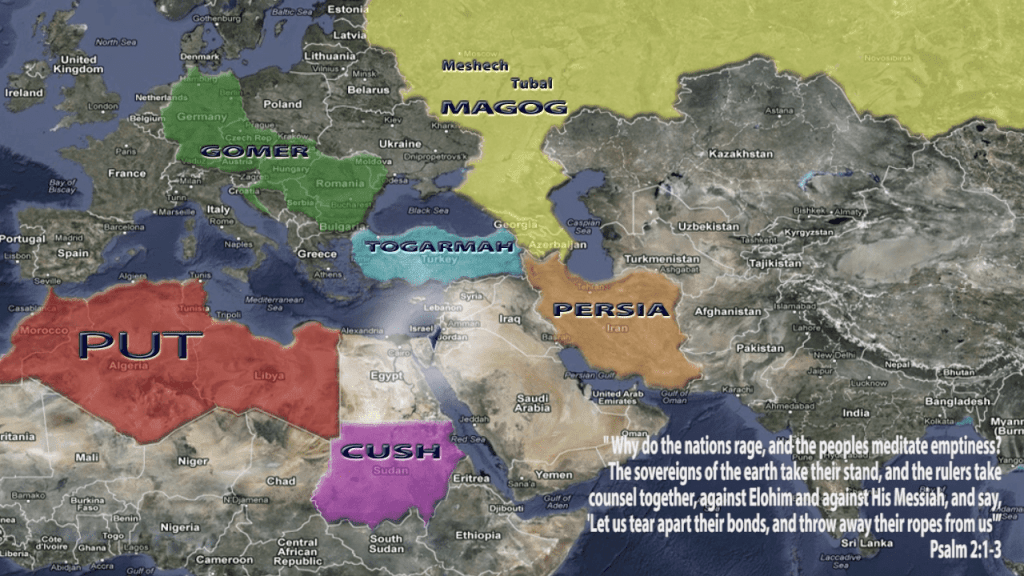
Who Togarmah is not… the map above is an example of a common representation for the biblical identities listed in Ezekiel chapter thirty-eight. All without exception are incorrect, as our progression through the descendants of Japheth, Ham, Canaan and Shem will reveal. Put and Cush are cold; Magog (Meshech and Tubal) is cool; Persia warm; and Gomer with Togarmah, freezing.
The once location of Togarmah in Asia Minor relates to thousands of years ago, directly after the Flood – refer Chapter I Noah Antecessor Nulla. Many peoples have dwelt at this major continental intersection at one time or another; migrating as new peoples encroached. All these different groups of people cannot now still be living there, or all be identified as Turks.
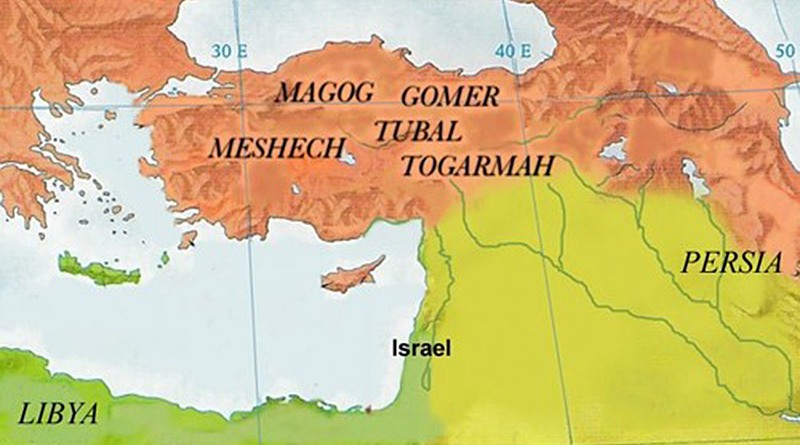
The Origin of the Nations, Herman Hoeh, 1957:
‘One branch of the family of Gomer, however, did not journey to Southeast Asia’ – Chapter V Gomer: Continental South East Asia.
‘Ezekiel 38:6 explains it: “The house of Togarmah in the uttermost parts of the north, and all his bands” (Jewish translation). The far, far north means Russian Siberia today! That is where the descendants of Togarmah (Genesis 10:3) live. These Asiatics are still a wild nomadic people, much as they were 2500 years ago, trading “with horses and horsemen and mules” (Ezekiel 27:14).’
While Hoeh is closer to the truth than those who identify Togarmah with Armenia or Turkey, the descendants of Togarmah figure far more prominently in world affairs than as non-specifically identified nomadic, tribal, horsemen.
The first of the two scriptures referenced by Hoeh pertaining to Togarmah:
Ezekiel 38:6 English Standard Version, translates as quoted by Hoeh.
‘Gomer and all his hordes; Beth-togarmah from the uttermost parts of the north with all his hordes – many peoples are with you.’
Derek Walker explained the meaning of Beth as house. It is a family unit. Its use is showing Togarmah as a separate entity from his brothers Ashkenaz and Riphath – refer Chapter V Gomer: Continental South East Asia.
We learned when studying Madai, that Asshur (or Assyria) lives in the North – Chapter IV Central Asia – Madai & the Medes; and Chapter XX Will the Real Assyria Stand Up: Asshur & Russia.
There are not many options in Central Asia and East Asia for who Togarmah might be today. Other translations state:
New Century Version
… the nation of Togarmah from the far north…
New English Translation
… and by Beth Togarmah from the remote parts of the north…
There are only four peoples or five nations, which Togarmah could be: China, Mongolia, North Korea, South Korea and Japan.
Youngs Literal Translation
… The house of Togarmah of the sides of the north…
This is a more specific translation and eliminates China and Mongolia.
Modern King James version
… the house of Togarmah from the recesses of the north…
This translation effectively eliminates Japan, for the connotation of this word is a bend, a crook or even a hook. In the King James version it says ‘of the north quarters.’
North in Hebrew – tsaphon from the root H6845 tsaphan – signifies ‘hidden, stored up, dark, gloomy’ and ‘unknown.’
Quarters in Hebrew, from H3411: yrekah, meaning side or sides; is used 21 times in the KJV; coasts (3), parts (2); border (1); quarters (1). It also means ‘flank, extreme parts, the rear or recess’ and ‘recesses.’
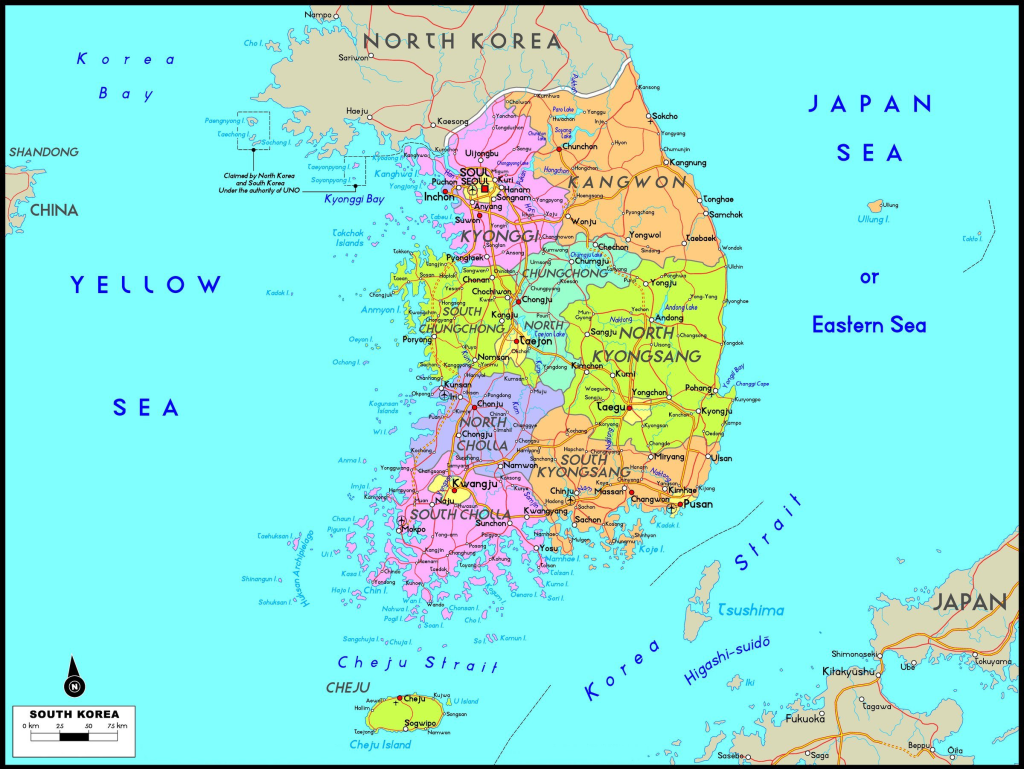
The Peninsula jutting out from the Asian continent with the Democratic People’s Republic of Korea in the north and the Republic of Korea in the South, is the clear answer to where Togarmah is located today.
It was not so obvious until studying this verse very closely. This writer had initially considered that Meshech and Tubal were North Korea and South Korea respectively and that Japan was Togarmah. Though only Korea, could equate to being tucked away in this manner and hidden in a crook or recess.
Yet Korea’s strategic geographical location meant it was a ‘target for domination, occupation and plunder’, so that in attempting to isolate itself it earned the name, The Hermit Kingdom in the eighteenth century – Prisoners of Geography, Tim Marshall, 2016 & 2019, pages 223-224. Even today, North Korea exists under self-imposed isolation.
The second of the two scriptures referenced by Hoeh pertaining to Togarmah:
Ezekiel 27:14
New Century Version
‘People of Beth Togarmah traded your goods for work horses, war horses, and mules.’
This verse is a past reference to when Koreans were one people. Though with a modern application today, it reveals a nation who is economically and technically advanced; producing machinery and transport for industry as well as military armaments and weaponry.
Ancient Korea, Mark Cartwright, 2016:
In the past ‘[ancient] Korea has provided many unique contributions to world culture including the invention of movable metal type printing, superb celadon ceramics, the exquisite gold crowns of Silla [refer Addendum], the oldest astronomical observatory in Asia, fine gilt-bronze Buddist figurines, stone pagodas, hanji, the most prized paper in the world, and the ondol underfloor heating system.’
Today, South Korea is a major player in the global arms trade, significantly increasing its exports in recent years and establishing itself as a competitive supplier of military technology. South Korea is ranked the eighth largest weapons exporter in the world. After once relying heavily on the United States for supplying its military hardware to its armed forces, the country manufactures a range of military equipment, including: tanks, artillery and aircraft.
South Korea is ranked fifth in the world for both its automobile production and export volume. Major manufacturers include Hyundai, Kia and GM Korea. South Korea also possesses an impressive 22.5% market share of the world’s smart phone sector through Samsung Electronics.

Korea was split in two – arbitrarily along the 38th parallel – in 1945 and unlike North Vietnam and South Vietnam does not look like uniting anytime soon.
The use of House of Togarmah in Ezekiel 38:6, does not hint at just one of the Koreas being part of the far distant military alliance with Magog and the remainder of Gomer (refer article: Four Kings & One Queen) – but rather reveals the eventual unification of North Korea and South Korea.
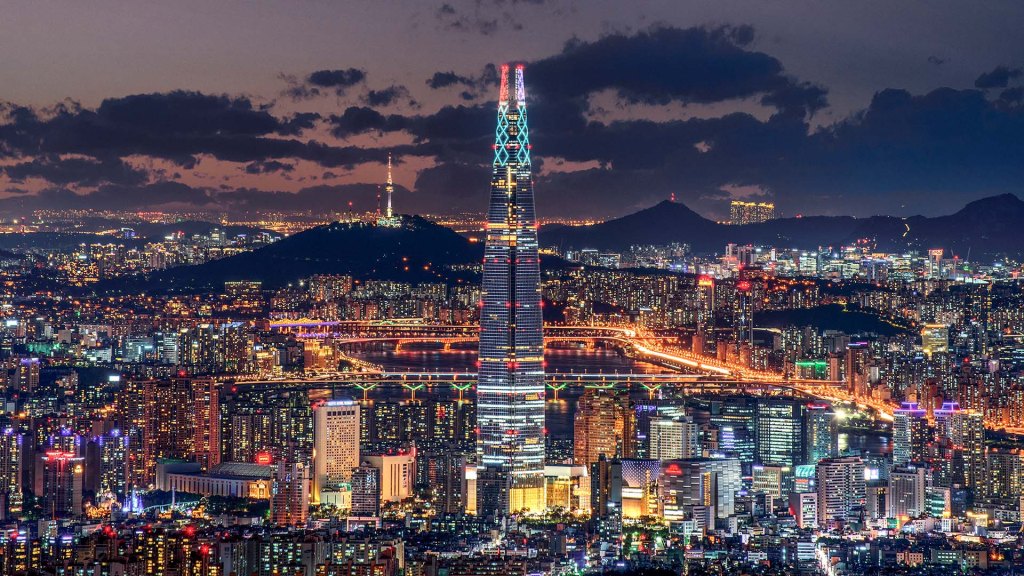
Seoul: Capital of South Korea
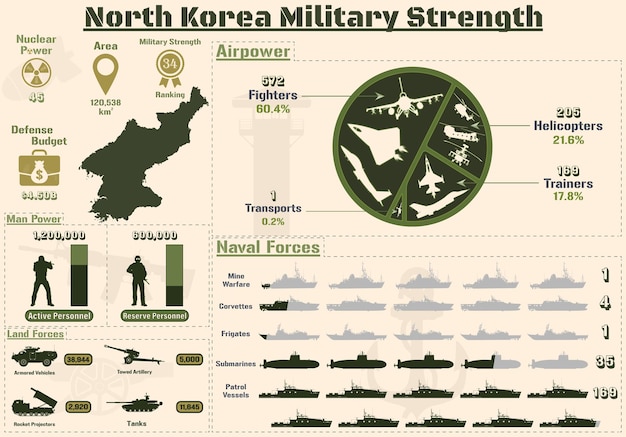
Tim Marshall: ‘The two Koreas are still technically at war, and given the hair-trigger tensions between them a major conflict is never more than a few artillery rounds away. South Korea’s capital, the mega-city of Seoul, lies just 35 miles south of… the DMZ [demilitarised zone]. Almost half of South Korea’s 51 million people live in the greater Seoul region, which is home to much of its industry and financial centres, and it is all within range’ of the estimated ten thousand North Korean artillery pieces along the 148 mile long DMZ border… ‘each side continues to prepare for a war; as with Pakistan and India, they are locked in a mutual embrace of fear and suspicion’ – pages 227-228, 232.

Korea in Prophecy, Bob Thiel, 2009:
‘A Chinese tradition [states] that Korea came from a small kingdom within China:
“Somewhere north of that vast region watered by the Sungari River, itself only a tributary to the Amur, there existed, according to Chinese tradition, in very ancient times, a petty kingdom called Korai, or To-li. Out of this kingdom sprang the founder of the Corean race…” (Griffis, William Elliot. Corea, The Hermit Nation: I. Ancient and mediæval history. II. Political and social Corea. III. Modern and recent history 8th Edition. C. Scribner’s sons, 1907, pages 19, 21).
Koreans [maintain] their own tradition about where they [originate] from:
“Korean legends say that Tangun,* who lived in the 2300’s B.C., was the father of the Korean civilization – refer Addendum. Korea developed by itself until Kija, an exile from China, led about 5,000 followers to Korea in 1122 B.C. He founded a kingdom called Chosen [Chosun, meaning Morning Calm].” (Hu, Charles Y. Korea. World Book Encyclopedia, 50th edition, Volume 11. Chicago, page 296).’
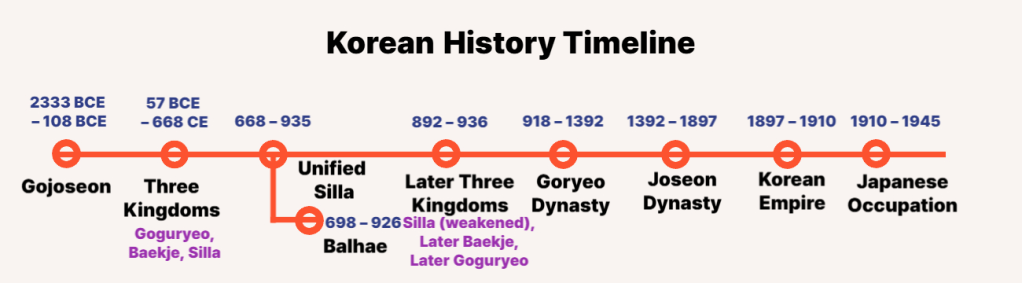
The Goguryeo Kingdom was one of the great powers in East Asia and located in the northern and central regions of the Korean Peninsula, as well as the southern and central portion of Northeast China.
The Goguryeo Kingdom was established in 37 BCE, lasting until the fall of Pyongyang in 668. It was later known as Goryeo (meaning ‘high and beautiful’) – alternatively spelled as Koryŏ – a shortened form of Goguryeo (Koguryŏ), meaning ‘high Castle.’
The word was adopted as the official title in the fifth century and is the origin of the English word, Korea.

Encyclopaedia:
At the peak of its power, ‘Goguryeo encompassed most of the Korean peninsula and large parts of Manchuria, along with parts of eastern Mongolia, Inner Mongolia, and modern-day Russia. It was an active participant in the power struggle for control of the Korean peninsula and was… associated with the foreign affairs of neighboring polities in China and Japan.’
Prior to the Goguryeo Kingdom there was the Gojoseon, recognised as the first Korean kingdom. This kingdom emerged in northern Korea and parts of Manchuria, having developed a distinct culture and governance.

Ancient Korea, Mark Cartwright, 2016:
‘Gojoseon, according to Korean mythology as recounted in the 13th-century CE Samguk yusa (‘Memorabilia of the Three Kingdoms’), was founded in 2333 BCE by Dangun Wanggeom (aka Tangun*) who was the offspring of the god Hwanung and a female bear transformed into a woman.’

Cartwright:
‘Gojoseon’s territories would later become Goguryeo (Koguryo) while the southern part of Korea at this time, often referred to as the Proto-Three Kingdoms Period, was spilt into the Three Hans of…
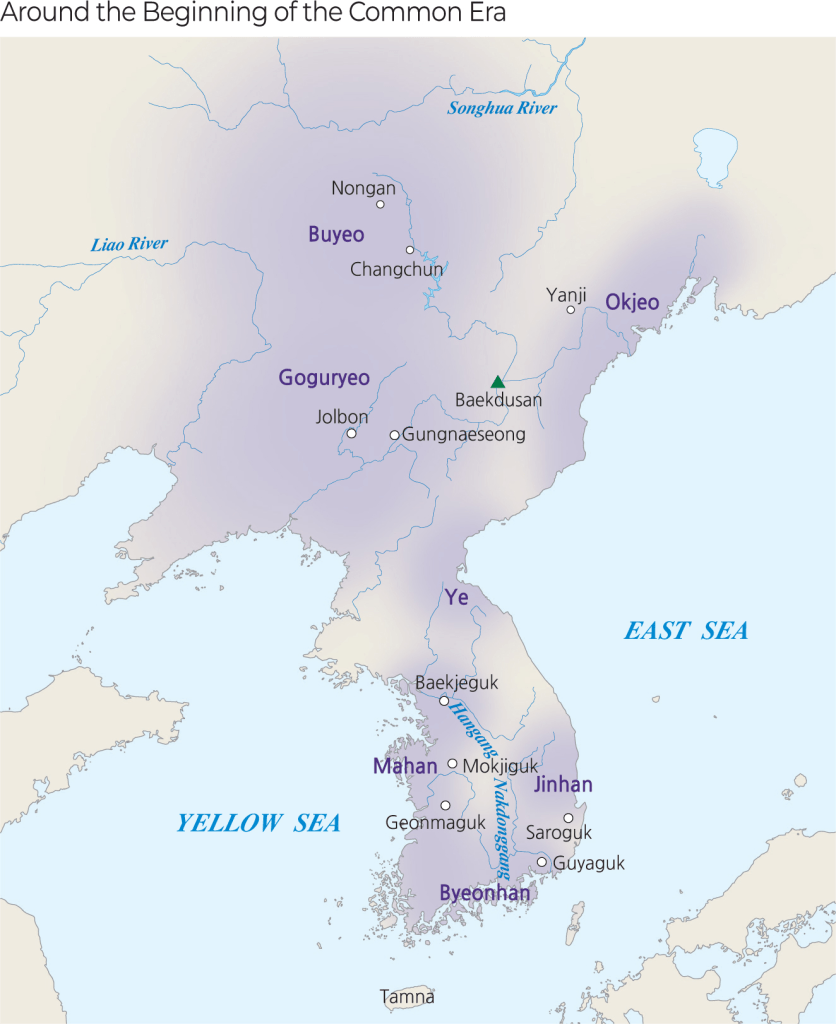
… Byeonhan, Mahan, and Jinhan (no connection to the Chinese Han), which became the three states of Baekje (Paekche), Gaya (Kaya), and Silla in the subsequent Three Kingdoms Period.’
Following Gojoseon, Buyeo arose in approximately the second century BCE, lasting until 494 CE. It was influential in the region before being absorbed by the Goguryeo Kingdom.
Cartwright:
‘Silla captured the Gaya ruling city-state Geumwan Gaya (Bon-Gaya) in 532 CE, and the state collapsed completely a few decades later.
Baekje had… [an] alliance with Silla between 433 and 553 CE [which] brought some stability, but in 554 CE at a battle at Gwansanseong Fortress (modern Okcheon) Baekje tried to reclaim territory it had lost to a Silla invasion and their 30,000-strong army was defeated and the Baekje king Seong killed.
The in-fighting between the Korean states was finally settled by outside intervention from China. Goguryeo had successfully rebuffed three invasions from Sui China in the 7th century CE, and then the Tang Dynasty (618-907 CE) attempted an invasion in 644 CE, but the great general Yang Manchun… brought victory to the Koreans.
Goguryeo had joined forces with Baekje and successfully invaded Silla territory two years before, but the Tangs were not done with their plans for Korea and they decided on Silla as their temporary ally to defeat the other two remaining Korean states. In 660 CE, a Silla army of 50,000 led by the general Kim Yu-sin and a naval force of 130,000 men sent by the Tang emperor Gaozong proved more than enough to crush Baekje and its king, Uija, was taken to China.
Then in 667 CE Pyongyang fell, and the next year the Goguryeo king Bojang was likewise taken prisoner to China along with 200,000 of his subjects. Silla had no intention, though, of becoming a Chinese vassal state and defeated the remaining Tang army in battles at Maesosong (675 CE) and Kibolpo (676 CE). Silla then took control of all of Korea… forming a new state, the Unified Silla Kingdom.‘

Silla Gold Crown – National Museum of Korea
Cartwright:
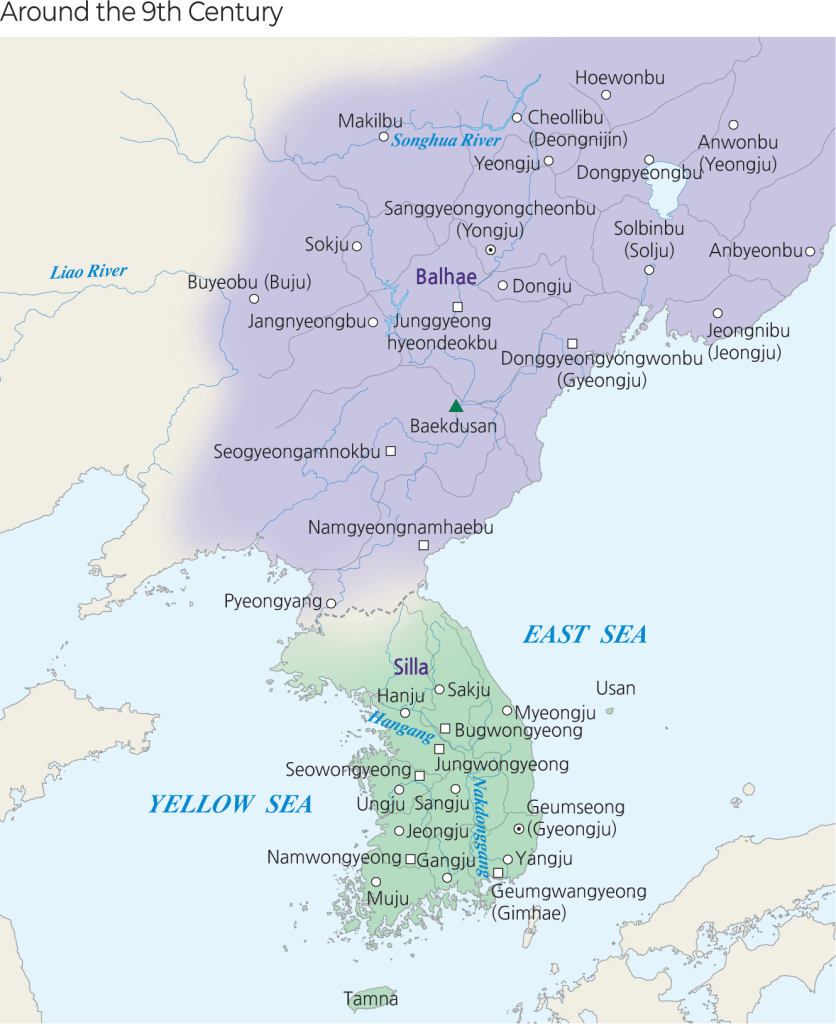
‘The Unified Silla Kingdom (668- 935 CE) was the first dynasty to rule over the whole of the Korean peninsula. There was a state in the north at this time, Balhae (Parhae), but most of its territory was in Manchuria… so the majority of historians do not consider it a Korean state proper.’
Korea History Insights:
‘After… unification, the Unified Silla period brought peace, learning, and the golden age of Korean Buddhism. Beautiful temples and sculptures were built, and Korean culture flourished. At the same time, a new kingdom called Balhae was founded in the north by former Goguryeo people. Balhae controlled parts of Manchuria and northern Korea and had a highly advanced culture. For a time, the Korean Peninsula was divided between these two powerful states.
Next came the Goryeo Dynasty [from 918 to 1392]… This period was known for its support of Buddhism, beautiful celadon pottery, and the creation of the Tripitaka Koreana, a massive collection of Buddhist texts carved on over 80,000 wooden blocks. Goryeo faced many invasions, including attacks from the Mongols, but it survived for nearly 500 years through diplomacy and adaptation.’

‘In 1392, General Yi Seong-gye overthrew the Goryeo government and established the Joseon Dynasty [beginning in 1392 and lasting till 1897], which would rule Korea for over 500 years. Joseon was based on Confucianism, which created a strict social system and valued education, family, and loyalty. One of the greatest achievements of this era was the invention of the Korean alphabet, Hangul, by King Sejong the Great in 1443. This allowed common people to read and write for the first time.
Joseon also faced many challenges, including Japanese invasions in the 1590s and internal struggles. Despite hardships, it was a time of scholarly learning, art, and traditional Korean culture that still influences modern society today.
As Western powers and Japan grew stronger, Korea tried to protect itself by declaring the Korean Empire in 1897 under Emperor Gojong. Unfortunately, this didn’t last long. In 1910, Japan took full control of Korea, starting a 35-year period of colonization. During this time, Korean language and culture were suppressed, and many people suffered greatly.
But Koreans did not give up. Brave activists and students led movements for independence, such as the March 1st Movement in 1919. Many Koreans also fought alongside other countries during World War II, hoping to gain freedom.
When Japan was defeated in World War II in 1945, Korea was finally liberated. However, the country was soon divided into two zones [in uncanny parallel with Vietnam – refer Chapter V Gomer: Continental South East Asia]: the Soviet Union controlled the north and the United States controlled the south. In 1948, two separate governments were established: North Korea and South Korea.
In 1950, North Korea invaded South Korea, beginning the Korean War. It was a brutal conflict that left millions dead or wounded. The war ended in 1953 with a ceasefire – but not a peace treaty – meaning the two Koreas are still technically at war today.’
Notice the striking similarity of the words Gay-a, Goj-oseon and particularly Gog-uryeo with the name Gog.
This name association in Korea’s history being of considerable interest. Particularly in light of the prophetic significance of Ezekiel chapter thirty-eight and thirty-nine; whereby a united Korea (Togarmah) is included with not only its brothers (Gomer), but Ma-gog, Meshech, Tubal and their leader, Gog – refer Chapter X China: Magog, Tubal & Meshech.

North Korea
Abarim Publications:
‘The name Togarmah most likely originated in a language other than Hebrew, and therefore does not occur as a word in the Hebrew language. But, transliterated as is, at the heart of the name Togarmah sits the common Hebrew noun (gerem), bone, which figuratively is used to mean self or strength. It comes from the verb (garam), meaning to lay aside or save… The verb [garam] means to leave over, to save for later… to break bones [or breaking bones].’
Recall the names of Gomer, Riphath and Ashkenaz:
‘Bring to an end’, ‘Crushers’, ‘fire is scattered’ or ‘sprinkling of blood’ – refer Chapter V Gomer: Continental South East Asia.
Further dread then, with the addition of ‘Bone breaker’ to this formidable list of adversaries.

Readers paying careful attention, may recall the following quote from the preceding chapter regarding Gomer – emphasis mine:
‘The study said that Vietnamese people were the only population in the study’s phylogenetic analysis that did not reflect a sizable genetic difference between East Asian and Southeast Asian populations. Jung Jongsun et al. (2010) said that genetic structure analysis found significant admixture in “Vietnamese (or Cambodian) with unknown Southern original settlers.” The study said that it used Cambodians and Vietnamese to represent “Southern people,”… The study also said that Vietnamese people are located between Chinese and Cambodian people in the study’s genome map.’
Bhak Jong-hwa, a professor in the biomedical engineering department at the Ulsan National Institute of Science and Technology (UNIST) states:
‘… the ancient Vietnamese, which was a population that flourished with rapid agricultural development after 8,000 BC, slowly travelled north to ancient civilizations in the Korean peninsula and the Russian Far East. Bhak said that Korean people were formed from the admixture of agricultural Southern Mongoloids from Vietnam who went through China – [according to most linguists and archaeologists with expertise in ancient Korea, the linguistic homeland of proto-Korean and of the early Koreans is located somewhere in Manchuria, particularly the Liao River.] – and hunter-gatherer Northern Mongoloids in the Korean Peninsula. Bhak said, “We believe the number of ancient dwellers who migrated north from Vietnam far exceeds the number of those occupying the peninsula,” making Koreans inherit more of their DNA from southerners.’
Regarding Vietnam, recall that the Vietnamese have a genetic structure that is partially dissimilar to their related neighbours (with an unknown admixture) and contrastingly aligned to East Asian peoples instead. Korea has been populated partially from a migratory wave of people travelling eastward in the North and primarily from another wave of migrants travelling northwards through China from… Vietnam – with Koreans actually possessing a majority of their DNA inherited from these southern immigrants.
This is quite an admission and provides a genetic link between Togarmah and his brother Ashkenaz in continental South East Asia. Who would have thought there is an ancestral association between the Vietnamese and Koreans. Yet the Bible acknowledged this fact millennia’s ago, when it described Togarmah dwelling separately from his brothers.
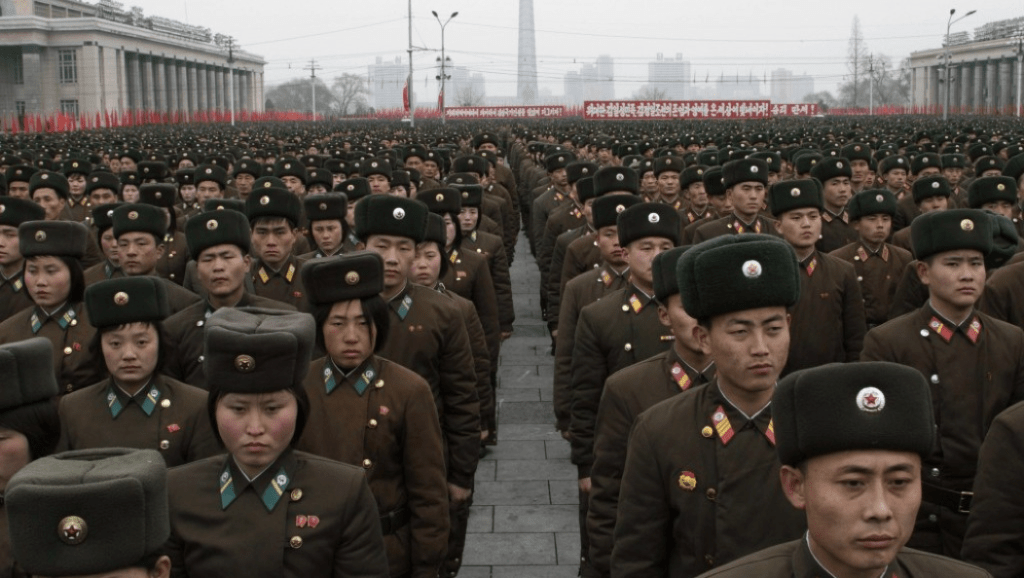
North Korean soldiers
South Korea holds 5th in conventional power as North Korea climbs to 31st, Choi On-jung, January 27, 2026:
‘Korea’s conventional military strength ranked fifth in the world for the third straight year…
Korea’s GFP military strength ranking steadily climbed from ninth in 2013, to seventh in 2014, and sixth in 2020. Since 2024, it has held fifth.
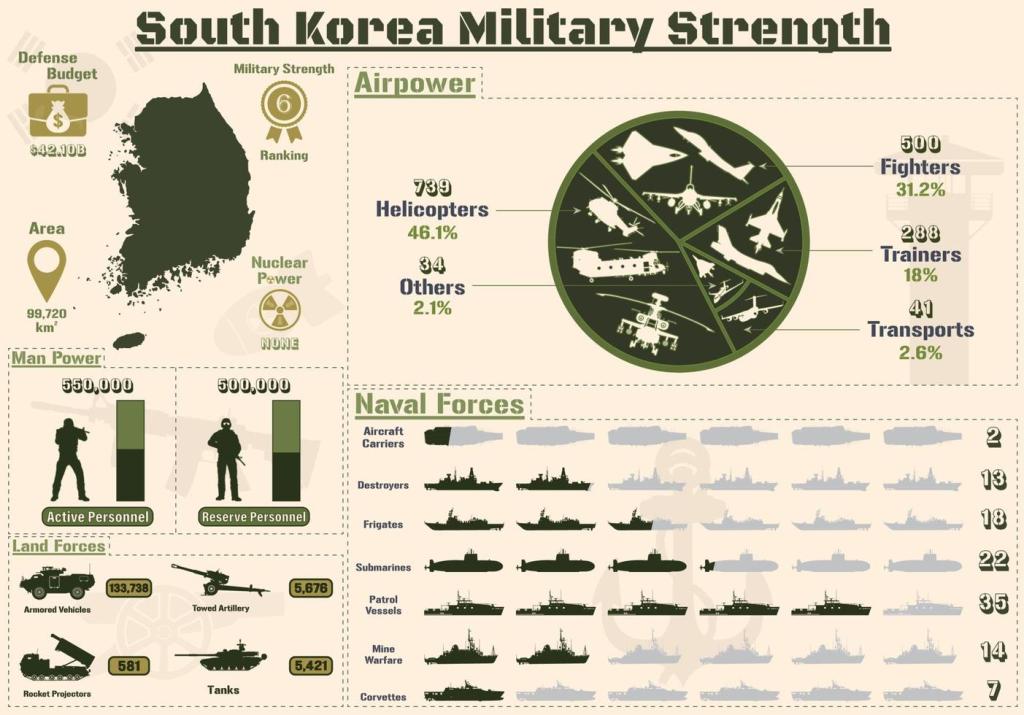
North Korea ranked 31st, up three spots from last year (34th). After rising to 18th in 2019, North Korea’s ranking continued to fall to 36th in 2024, then rebounded over the past two years.’
The Genetic history of Koreans: Studies of polymorphisms in the human Y-chromosome produced evidence to suggest that:
‘the Korean people have a long history as a distinct, mostly endogamous [marrying their own] ethnic group, with successive waves of people moving to the peninsula and three major Y-chromosome haplogroups [O2a1, O1b and C]. Several studies confirmed that Koreans have both a Northeast and Southeast Asian genome.’
Paternal lineages, Jin Han-jun, 2003:
‘Korean males display a high frequency of Haplogroup O-M176 [O1b2, formerly O2b], a subclade that probably has spread mainly from somewhere in the Korean Peninsula or its vicinity, and Hapologroup O-M122 (O2, formerly O3), a common Y-DNA haplogroup among East and Southeast Asians in general.’
The men of the South East Asian nations of Gomer – Vietnam, Cambodia, Laos, Thailand and Myanmar – likewise predominantly carry Y-DNA Haplogroup O2a1 and secondly, Haplogroup O1b.
Maternal lineages:
‘Haplogroup B [B4 and B5], which occurs very frequently in many populations of Southeast Asia, Polynesia, and the Americas, is found in approximately 10% (ethnic Koreans from Arun Banner, Inner Mongolia) to 20% (Koreans from South Korea) of Koreans. Haplogroup A has been detected in approximately 7% (Koreans from South Korea) to 15% (ethnic Koreans from Arun banner, Inner Mongolia) of Koreans. Haplogroup A is the most common mtDNA haplogroup among the Eskimo and many other Amerind ethnic groups of North and Central America.’
Other major Korean mtDNA Haplogroups include: D4 (29%), M7 (11%), G (6%) and F (5%). Similarly, the prevalent maternal Haplogroups in the South East Asian nations comprising Gomer include Haplogroups B, F and M7.
Immunoglobulin G: Hideo Matsumoto professor emeritus at Osaka medical College, tested Gm types [genetic markers] of immunoglobulin G of Korean populations in 2009.
Matsumoto said that, ‘Gm afb1b3 is a southern marker gene possibly originating in southern China and found at high frequencies across Southeast Asia, southern China, Taiwan, Sri Lanka, Bangladesh, Nepal, Assam and parts of the Pacific. Matsumoto said that the average frequency of Gm afb1b3 for Koreans was 14.7% which was intermediate between a frequency of 10.6% for general Japanese and a frequency of 24.1% for Beijing Han Chinese.’
Autosomal DNA, Jin Han-jun, 1999:
‘… based on genetic studies of classic genetic markers of protein and nuclear DNA… that these 9-bp deletion frequencies are consistent with earlier surveys which showed that 9-bp deletion frequencies increase going from Japan to mainland Asia to the Malay peninsula.’

South Korean men

‘The Cavalli-Sforza’s chord genetic distance (4D,) from Cavalli-Sforza & Bodmer (1971), which is based on the allele frequencies of the intergenic COII/tRNALys region, showed that Koreans are more genetically related to Japanese than Koreans are genetically related to the other East Asian populations which were surveyed. The close genetic affinity between present day Koreans and Japanese is expected due to the Yayoi migration from China and the Korean Peninsula to Japan which began about 2,300 years ago. Horai [1996] detected mtDNA D-loop variation which supports the idea that a large amount of maternal lineages came into Japan from immigrants from the Korean Peninsula after the Yayoi period.’
‘Kim Jong-jin [2005] conducted a study about the genetic relationships among East Asians based on allele frequencies. Focusing on how close Chinese, Japanese and Koreans are genetically related to each other.
The study concluded that Middle West Korea was a melting pot in the Korean Peninsula with people traveling from North to South, South to North, and people traveling from East China…’
Jung (2010) said that Koreans are genetically homogenous.
The study stated ‘the affinity of Koreans is predominately Southeast Asian with an estimated admixture of 79% Southeast Asian and 21% Northeast Asian for Koreans… all of the Koreans which were analyzed uniformly displayed a dual pattern of Northeast Asian and Southeast Asian origins.
The study said that Koreans and Japanese displayed no observable difference between each other in their proportion of Southeast Asian and Northeast Asian admixture.’
We will refer again to this fascinating duality and the parallelism between the Korean and Japanese people when we discuss Japan – Chapter IX Tarshish & Japan.

South Korean women

The Emerging Limbs and Twigs of the East Asian mtDNA Tree, multiple authors, 2002 – emphasis & bold mine:
‘Haplogroups A, C, D, G, Y, and Z almost completely cover the mtDNA pool of Northeast Asians, whereas in Southeast Asians C, Y, or Z mtDNAs have rarely been found, but instead haplogroups B and F are predominant.’
Recall the Korean population exhibit the maternal Haplogroups associated with South East Asia – B: 10% to 20%; M7: 11%; F: 5%. Haplogroup B is of particular interest for both Central Asians and the Amerindians carry it as well. Thus creating a common maternal ancestral tie between South East Asia, Central Asia and the Native Indians of the Americas.
Though it is mtDNA Haplogroup D4, which highlights the unique maternal inheritance for Koreans.
‘N9a** is, compared with its sister bough Y, widely spread [in SE Asia], although at very low frequencies, among most East Asian populations… Considering the geographic distribution of the boughs and twigs we see further regional patterns. In contrast to A4, which is widely spread, the A5 twig, with its low diversity suggesting shallow time depth [not sons of Japheth but grandsons of Japheth with a mutational evolution and migration, unlike their siblings and uncles], is specific to Koreans and Japanese…
Similarly, B4 is the prevailing bough in haplogroup B… covering all haplogroup B types in Native Americans and Polynesians. B5 is found most frequent, accounting for about one third to one half of the B types, in eastern China, Korea, and Japan…
E1 is so far found only in Southeast Asia…F1a is the main branch of F… in Southeast Asia, whereas F1b is more frequent in Central Asians and Mongols, Koreans, and Japanese. G2a is highest among Central Asians (8.8%) [Kazakhstan] and also above 3% in Tibetans and Ainu and rare or absent among southern Chinese, Vietnamese, island Southeast Asians… and Siberians. G3 is not yet well screened, but evidently it is seen in Korea, Mongolia, and Central Asia.
Haplogroup M7, although characteristic for East Asian populations, has not been found in the northeast of the continent…It is also very rare in Central Asians… This haplogroup has been detected so far in China and Vietnam, the Korean peninsula and Japanese islands, as well as among Mongols, the West Siberian Mansi, and island Southeast Asia. Koreans possess lineages from both the southern and the northern haplogroup complex and share M7a with Japanese, Ainu, and Ryukyu islanders.
The geographic specificity of the boughs and twigs of M7… is most intriguing:
M7c1c is specific to island Southeast Asia and M7b1 is of Chinese provenance, whereas M7a, M7b2, and M7c1b are found almost exclusively in Korea and Japan. In fact, M7 is one of the prevailing haplogroups not only among Japanese (of Honshu and Kyushu) but also for Ainu and Ryukyuans, thus testifying to a common genetic background.’

South Korea
Khazaria, Korean Genetics – emphasis & bold mine:
‘Among Korean males who have been studied, the Y-DNA (paternal DNA) haplogroups [O1b2] (P49) [M176] and [O2] (M122) were particularly common… Koreans are racially a purely Mongoloid population. They carry the 1540C allele on their EDAR gene which among other things results in thicker hair than other races. Koreans also have the ABCC11 gene nearly universally so they have dry earwax as opposed to the wet earwax of most people in Europe, the Middle East, and Africa.’
The Peopling of Korea Revealed by Analyses of Mitochondrial DNA and Y-Chromosomal Markers, Han-Jun Jin, Chris Tyler-Smith, and Wook Kim, 2009:
‘The mtDNA haplogroup D4 is very common among Korean people. This haplogroup is also prevalent in Siberia. The study found mtDNA haplogroup A in about 10% of the Koreans tested.
A is the most frequently encountered mtDNA haplogroup among… New World Indian (Amerindian) populations from North America and Central America. Meanwhile, the mtDNAhaplogroup B is also found in some Koreans and it’s also common in China and Japan. Less common Korean mtDNA haplogroups include F, M, R, U, and Z.’
“The Koreans are generally considered a northeast Asian group because of their geographical location. However, recent findings from Y chromosome studies showed that the Korean population contains lineages from both southern and northern parts of East Asia.”
Y-chromosoaml DNA haplogroups and their implications for the dual origins of the Koreans, multiple authors, 2003:
“We have analyzed eight Y-chromosomal binary markers (YAP, RPS4Y(711), M9, M175, LINE1, SRY(+465), 47z, and M95) and three Y-STR markers (DYS390, DYS391, and DYS393) in 738 males from 11 ethnic groups in east Asia in order to study the male lineage history of Korea… the distribution pattern of Y-chromosomal haplogroups reveals the complex origin of the Koreans, resulting from genetic contributions involving the northern Asian settlement and range expansions mostly from southern-to-northern China.”
“The haplogroups carrying the M9-G mutation and additional sublineages of M9-G in Korea appear to be at an intermediate frequency (81.9%) between southeast and northeast Asian populations.
This result implies that the Korean population may be influenced by both the northeast and southeast Asian populations.
Even within haplogroup O, the most frequent Korean STR haplotype (23-10-13 with the markers DYS390-DYS391-DYS393), 19% of haplogroup O… is the most frequent in the Philippines (27%), whereas the second most frequent Korean haplotype (24-10-12, 16%) is the most frequent in Manchuria (45%)…”
‘In this study, the Koreans appear to be most closely related overall to the Manchurians among east Asian ethnic groups… although a principal components analysis of haplogroup frequencies reveals that they also cluster with populations from Yunnan and Vietnam…’
“Using two multiplex systems, all 593 Korean mtDNAs were allocated into 15 haplogroups: M, D, D4, D5, G, M7, M8, M9, M10, M11, R, R9, B, A, and N9. As the D4 haplotypes occurred most frequently in Koreans, the third multiplex system was used to further define D4 subhaplogroups:
D4a, D4b, D4e, D4g, D4h, and D4j.”
“[Mitochondrial] Haplogroup N9a** is characteristic of eastern Asian populations, where it is detected at… frequencies in Japan (4.6%), China (2.8%), Mongolia (2.1%) and Korea (3.9%)…”
Mapping Human Genetic Diversity in Asia, 2009:
‘Koreans were found to have the least amount of Austronesian DNA compared to other East Asian peoples, even a little less than the Japanese.’
This is a significant point, as this lends weight to the proposal that the Koreans with the Japanese, have been separated from the main body of their respective family enclaves. The Austronesian peoples, including the related archipelago southeast Asian nations of the Philippines, Indonesia, Malaysia and Polynesia, migrated southwards from Taiwan after crossing from mainland China thousands of years ago – refer Chapter VII Javan: Archipelago South East Asia & Polynesia.
The Japanese as the remaining major Island people, were not included in this migratory path. Similarly, for the majority of the Korean people. Thus the Koreans and Japanese having the lowest amount of Austronesian DNA is not a surprise and supports their unorthodox movement and mutual mutational evolution in relation to their respective brothers and cousins.
Dual origins of the Japanese: common ground for hunter-gatherer and farmer Y chromosomes, multiple authors, 2005:
“All southeastern Asian populations cluster together on the left side of the plot [not shown]; with only northern Han Chinese, Korean, and Manchu populations showing closer affinities with southeastern groups than with their geographic neighbors. All other northeast Asians, as well as central Asians, south Asians, and Oceanic populations, are on the right side of the plot…
[There is a] very low incidence of (Y-DNA) D chromosomes in Korea [D1 (M174)]… [and] very few O-47z [sub-clade of M176 – O1b2] chromosomes found in Korea [8.7%] and Southeast Asia… Haplogroup M12 is the mitochondrial counterpart of Y chromosome D lineage. This rare haplogroup was detected only in mainland Japanese, Koreans, and Tibetans, with the highest frequency and diversity in Tibet (Tanaka et al. 2004).
…Y chromosomes that originated in Southeast Asia expanded to Korea and Japan…”
The final sentence is highly significant for the Japanese – as we shall discover – like the Koreans, they are related to their brother nations in South East Asia; and for whatever reason, both chose to dwell separately in the ancient past, replicating this pattern in the ages which followed into the present era.
There is a wealth of Haplogroup data for South Korea and the opposite for North Korea. Even so, there is confirmation unsurprisingly, that the paternal Haplogroup percentages match for they are a single people artificially separated and politically divided within two states.
The male South Korean Y-DNA Haplogroups in descending percentage order:
O2a [42.1%] – O1b2 [ 33.1%] – C [12.9%] – N [3.8%] – O1a [3.1%] –
D1 [ 2.5%] – Q [1.8%] – K [0.5%]
It is now interesting to compare South Korea and Vietnam.
Vietnam: O2a [40%] – O1b [32.9%] – Q [7.1%] – O1a [5.7%] – C [4.3%] –
D1 [2.9%] – N [2.9%] – J2 [2.9%]
Vietnam: O2a – O1b – Q – O1a – C – D – N – J2
South Korea: O2a – O1b – C – N – O1a – D – Q – K
If we disregard Vietnam’s West Asia influenced J2; the rarer Q for East Asian populations; the northern Eurasian N; the maverick Haplogroup D; and the ancient Haplogroup C (indicative of Central Asians); it is remarkable how aligned Korea and Vietnam are not only in their prime paternal marker Haplogroup of O2a1 – followed by O1b and O1a – but also in line with their autosomal DNA, as shown below on the PCA graph. One can with little difficulty, readily accept they had the same ancestral father – refer Chapter V Gomer: Continental South East Asia.

Therefore substantiating the palpable familial link with the paradoxical geographic estrangement – as revealed in the scriptures – regarding Togarmah and his older brothers Ashkenaz and Riphath (Genesis 10:3).
What would be the odds that these two peoples (blood brothers) consisting of Vietnam and Korea would both be cut in half so-to-speak, during the twentieth century. The two peoples are also located on the eastern extremity – or coastline – of their respective south easterly and north easterly abodes.
Now adding the prime Korean Haplogroups to the table we began in Chapter Three – with the addition of Y-DNA Haplogroup N – while also delineating between the three main strains of the O Haplogroup.
O O2a O1a O1b C D K Q N
NA Amerindian 6 77
Kazakhstan 8 40 10 2 7
Vietnam 79 40 6 33 4 3 7 3
South Korea 79 42 3 33 13 2.5 0.5 2 4
The Koreans show a clear link with north Asian migration, with a considerably higher level of Haplogroup C, as found in Central Asia and Mongolia.
Some dispute Y-DNA Haplogroups O1 and O2 as East Asian defining markers, but as we progress it will become difficult to support their premise.
We have now studied all three of Gomer’s sons, of which Haplogroup O is clearly the principle group. As O2a followed by O1b are the principle paternal defining marker Haplogroups for continental South East Asian males, so they are for Korean men as well.

South Korea
We will soon turn our attention to Javan and his four sons, whom parallel Gomer’s sons in more ways than one – Chapter VII Javan: Archipelago South East Asia & Polynesia.
The House of Togarmah is a very specific title and carries an uncommon usage in the Bible. It distinctly alludes to one Korea in the predicted East Asian Army of the future; specifying a united Korea’s involvement in Magog’s military machine – Chapter X China: Magog, Tubal & Meshech.
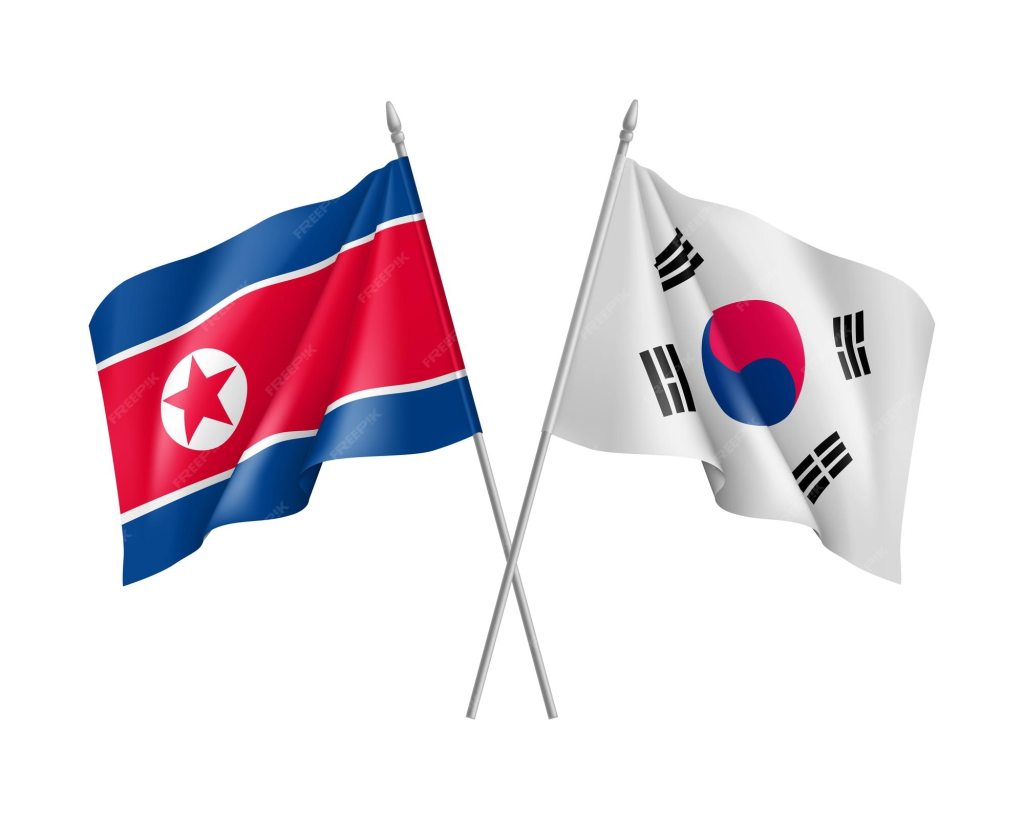
Flags of North Korea (left) and South Korea (right)
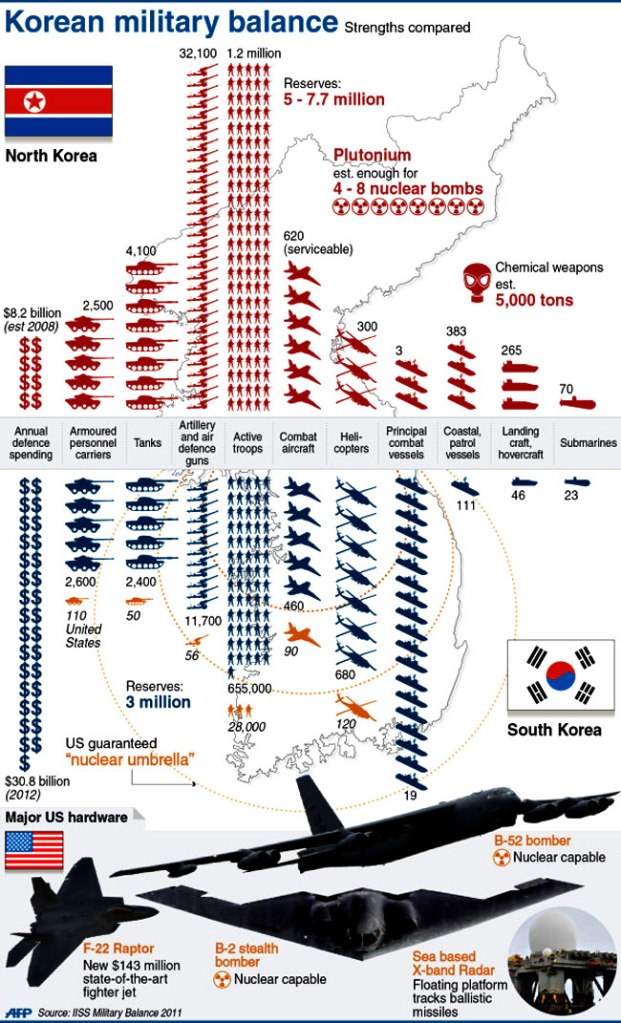
A comparison of North Korea and South Korea:
| Indicator | North Korea | South Korea |
| Capital | Pyongyang | Seoul |
| Official languages | Korean | |
| Government | Juche single-party state | Representative Democracy |
| Formal declaration | 9 September 1948 | 15 August 1948 |
| Area | 120,540 km2 | 100,210 km2 |
| Population (2025) | 26,605,369 | 51,643,062 |
| GDP total (2025) | $34.9 billion | $1.79 trillion |
| Currency | Korean People’s won | Korean Republic won |
| Active military personnel | 1,106,000 | 639,000 |
| Military expenditure (2010/2012) | $10 billion | $30 billion |
North and South Korea’s combined population is comparable to the Amerindian and the Turko-Mongol populations in the world. With regard to Ezekiel 27:14 and the economic and military strength of Togarmah – it is worth listing and re-iterating the key industries and exports for both countries.
North Korea: military products, machine building, electric power, chemicals, mining (coal, iron ore, limestone, magnesite, graphite, copper, zinc, lead and precious metals), metallurgy, food processing and tourism.
South Korea: electronics, telecommunications, automobile production, chemicals, shipbuilding, steel and military products.
South Korea, with a 2025 GDP of $1.79 trillion was the 13th largest economy in the world and is the third biggest in East Asia.
South Korea’s economic journey is a twentieth century success story – the miracle on the Han River.
South Korea is reputed for its strategy of export led growth, the dominance of its large business conglomerates called Chaebols and its highly motivated and educated populace. South Korea has built a network of free trade agreements with as many as fifty-eight countries which account for over three-quarters of the world’s GDP.
Korea History Insights:
‘After the war, South Korea was one of the poorest countries in the world. But through hard work, education, and innovation, it transformed into one of the world’s leading economies. Today, South Korea is known for its global influence in music (K-pop), film, technology, and fashion.’
South Korea ranks highly on the index of nations with superior technology – at number three in the world. South Korea is the birthplace to some of the biggest names in technology and development: LG, Hyundai, and Samsung are all global leaders. South Korea is also in the forefront of the incredibly vital robotics field. In 2023, South Korea was ranked tenth in the world on the Global Innovation Index – only one of two East Asian countries in the top ten, the other being Singapore at number five.
Coat of Arms of South Korea – inscription: Republic of Korea
South Korea is included in the group of Next Eleven countries which are projected to dominate the global economy in the middle of the 21st century. The other N-11 nations include Bangladesh, Egypt, Indonesia, Iran, Mexico, Nigeria, Pakistan, the Philippines, Turkey, and Vietnam.
Most of the group’s total gross domestic product derives from Mexico, Indonesia, South Korea and Turkey, whose economies have grown significantly. The World Bank described South Korea as one of the fastest growing major economies of the next generation along with the burgeoning economies of the BRIC nations originally comprising Brazil, Russia, India and China as well as non-BRIC nation Indonesia – Chapter VIII Kittim & Indonesia.
Since time of first writing, the intergovernmental organisation has expanded into the BRICS, now including some of the N-11 nations as well as three additional countries (in italics):
Egypt, Ethiopia, Indonesia, Iran, South Africa and the United Arab Emirates.
Korea History Insights:
‘[South Korea] is… a democratic country with free elections, freedom of speech, and a strong desire for peace and reunification with the North.’
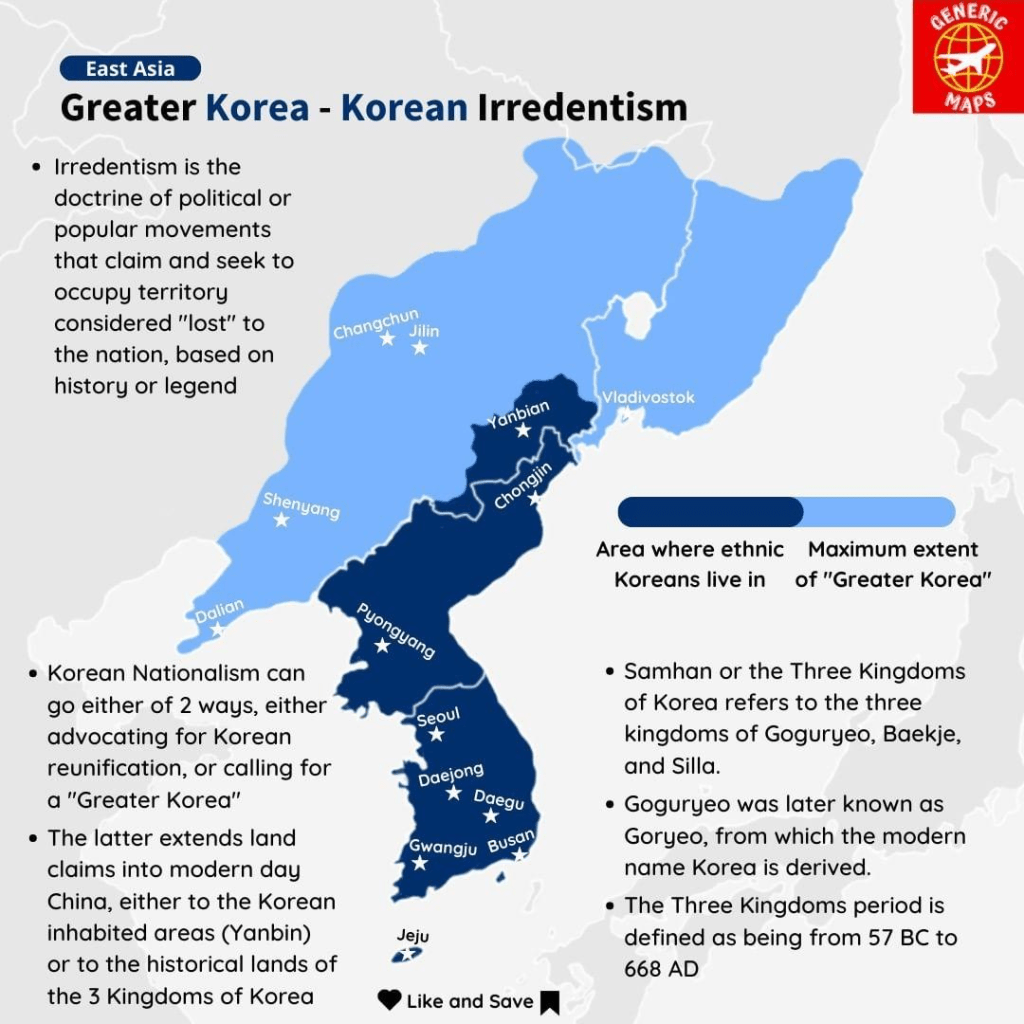
China buys 84.48% of North Koreas’s exports and in turn North Korea imports 84.12% of its goods from China; so fragile is the North Korean economy –Observatory of Economic Complexity figures, 2014.
The Democratic People’s Republic of Korea is the ‘least democratic state in the world’ and is ‘not run for the people’ or a republic. ‘North Korea is a stain on the world’s conscience, and yet few people know the full scale of the horrors taking place there’ – Prisoners of Geography, Tim Marshall, 2016 & 2019, page 222.
Coat of Arms of North Korea – inscription: Democratic People’s Republic of Korea
North Korea holds the dubious honour of being one of the world’s foremost powder kegs. While there are potential military hotspots in the world – such as the Middle East, Africa and nations bordering Russia – where conflagrations could ignite in a flash; it would not be a surprise if East Asia were to become the focus of attention, should a third world war enveloping the major powers arise over a geo-political crisis regarding North Korea or perhaps Taiwan for instance. Or even from escalated economic tension stemming from rapidly evolving trading-blocs.
Regardless, an infamous place in history lays in wait for a combined Korean nation when they join in the august Asian alliance at the very end of the age following our present era – refer articles: Four Kings & One Queen; Is America Babylon? and Chapter X China: Magog, Tubal & Meshech.
Chapter seven focuses on Gomer’s younger brother and his nearest neighbours in South East Asia.
Fools do not want to understand anything. They only want to tell others what they think.
Proverbs 18:2 New Century Version
“Did I ever think I might have been wrong? Yes, sometimes and briefly. But never because of the supposed majority against me.”
Christopher Hitchens
© Orion Gold 2020 – All rights reserved. Permission to copy, use or distribute, if acknowledgement of the original authorship is attributed to orion-gold.com
Addendum
Imagine the startling surprise when this writer noticed the following article, drawn to its eye catching title and anticipated insight.
Who Is North Korea In The Bible, Cassie Grissom, October 28, 2023:
‘North Korea is often regarded as one of the most mysterious countries in the world, shrouded in secrecy and largely isolated from the rest of the world. But there are some surprising references to North Korea in the Bible. Here, we take a closer look at this fascinating connection.
The most common biblical reference to North Korea comes from the Old Testament. In the Book of Isaiah, chapter 64, verse 2, there is mention of a land that the Hebrews call “Haemim”. The Hebrew word “Haemim” translates to “the hidden” or “the secret” and is believed to be a reference to North Korea, which was then known as Goguryeo.
This passage reads: “As wax melteth before the fire, so let the wicked perish at the presence of God. He rooted out their cities; no one was left to inhabit them. Haemim was taken in his wrath and his fury, his fierce anger and whirlwinds of devouring fire.”
The passage appears to describe the power of God destroying the kingdom of Goguryeo and its inhabitants. It is also believed to be a prophetic warning to the North Korean government of the potential consequences of ruling an oppressive and authoritarian regime.’
Regrettably, anticipation turned to disappointment for Isaiah 64:2 does not seem to express the sentiments above and a search for the passage quoted (to date), has remained fruitless.
The Hebrew word hā·’ê·mîm (H348) is the plural of H357 and means ‘terrors’. The Emim were one of the Nephilim descended clans of giants, recorded in Genesis 14:5 and Deuteronomy 2:10-11. This particular clan was located in Moab – refer articles: Nephilim & Elioud Giants I & II.
Grissom:
‘The Bible itself does not give any specific information about North Korea [apart from Ezekiel 27:14], but there are some scholars who believe that there are other references to North Korea scattered throughout scripture. In Deuteronomy 33:1, for instance, the author talks about a “people inhabiting the mysterious north [Ezekiel 38:6]”. This could be referring to the kingdom of Goguryeo, which was located in the northern part of the Korean peninsula.’
While we have investigated Togarmah dwelling in the North, chapter thirty-three of Deuteronomy does not discuss Togarmah but rather the sons of Jacob in the latter days.
Grissom:
‘Others point to the fact that the names of the two main rivers in North Korea, the Taedong and the Yalu, appear in the Bible as well. In the Book of Habakkuk, the prophet refers to “the streams of Taedong and Yalu”, which suggests that these were known to the Hebrews at one time.’

The banks of the Taedong River in the North Korean capital, Pyongyang (the former capital of the Goguryeo Kingdom)
This would be spectacular to say the least, though a search of the three chapters in the Book of Habakkuk did not yield any positive results regarding the rivers in question.
Alas, the three separate claims for North Korea in the scriptures in this instance, are unfounded.
 The Lightkeeper
A powerful share. I have just given this onto a colleague who was doing a bit of analysis on this subject. And he in fact bought me breakfast because I found it for him… smile. Thank you for spending the time to discuss this, I really feel strongly about it and would love to read more on this topic. Massive thumbs up for this blog published!
Howdy I am so excited I found your webpage. I would just like to say kudos for a fantastic post, it was really remarkable. Especially since I was searching for thoughts on Togarmah and their identity today. I will be back to read a great deal more. Please do keep up the excellent work.
Absolutely fascinating argument on the biblical identity of Togarmah, which makes a whole lot more sense than anything else I have ever read regarding Gomer’s high profile son. The Korean Peninsula, definitely fits what you have proposed. Your blog is well presented and convincing.
My brother recommended I might like this web site. He was entirely right. Wow! This post actually made my day. You can’t imagine simply how much time I had spent searching for information on the origin of the Korean people. It is one of the best I have ever come across. As I am also knowledgable on this topic, I can appreciate your hard work in putting this together. Thank you
You have presented a formidable survey of Togarmah in the Bible, making it difficult to refute what you say.
I’m happy I found your website and enjoyed reading about Korea.
You have raised superb arguments. Thank you for the post.