
Chapter XI
Noah’s second and middle son is Ham – Genesis 5:32. We will discover that his descendants have spanned across the globe, principally throughout the hottest regions of the earth relative to the equator. Ham’s children have dispersed widely and comprise the darker skinned peoples of the world, ranging from black to olive skin and all the shades of brown in between. They are located in Central and South America, Africa, the Middle East, South Asia, the Indian Sub-Continent, South East Asia and Oceania.
The Races of the Old Testament, A H Sayce, 1891, page 50 – emphasis mine:
‘It is true that although Semites, Aryans, and Alaro-dians represent different races of mankind, they nevertheless all alike belong to the white stock, and may thus be said to be but varieties of one and the same original race… even granting it to be probable that the various white races are all descended from a common ancestry… it is possible that they may have developed out of more than one dark race’ – refer Chapter XVI Shem Occidentalis.
While Sayce is correct in his summation that the specific races stated above have stemmed from a common source, he is incorrect in believing they are ‘white’ or in this case, would have descended from Shem. For the peoples of the Middle East and India descend from Ham instead, yet admixture at more than one time is evident in both their paternal and maternal lineages.
Abarim Publications, emphasis mine:
‘The name that occurs in the English Bible as Ham is really two completely different Hebrew names; one which is pronounced Cham, and the other Ham. They have two completely different meanings, but since English readers are so used to the name Ham… call them Ham I and Ham II:
The name Ham I – Meaning:
Hot, or Protective Wall from the verb (ham), to be hot, or the verb (hmh), to protect or surround.
This name [C]Ham is identical to the adjective (ham), meaning warm, and also to the noun (ham), meaning father in law… The verb (hamam) means to be hot and is sometimes used to describe mental agitation. The noun (hamman) denotes [a] kind of mysterious small pillar (perhaps a device). The verb (yaham) also means hot, but mostly in a mental sense: to be excited or angered. The noun (hema) mostly refers to a severe mental “burning”: anger or rage.
For the meaning of this name [C]Ham, Alfred Jones (Dictionary of Old Testament Proper Names) confidently derives it from the verb (hamam), meaning to be hot, and renders it Heat, Black. Then he… connects blackness with sin. What escapes the… scholar is that:
- This version of the name Ham is also identical to (ham), father-in-law, from the unused root (hmh) of which the cognates mean to protect or surround.
- In the Bible not blackness but whiteness is associated with sin. Miriam turned white [2 Kings 5:27] because of her aggression against Moses’ second [3rd] wife, who was a Cushite and thus quite likely very black. And the bride of the Song of Solomon, often regarded as a type of the Church, was black as well (Song of Solomon 1:5).
- NOBSE Study Bible Name List simply reads Hot for Ham, but in view of the above, a closer rendering would be Passion or Intensity.
The name Ham II – Meaning: Noisy from the verb (hama), to be noisy.
Ham II, which is spelled and pronounced as Ham, denotes a once-mentioned town where kings Amraphel, Arioch, Chedorlaomer and Tidal defeated the Zuzim during the war of four against five kings (Genesis 14:5).
Jones’ Dictionary of Old Testament Proper Names derives this Ham from the verb (hama), meaning cry aloud… The… verb (hama) means to be noisy… derived masculine noun (hamon) denotes a noisy multitude.’
The Zuzim (or Zuzites) from Zuz, in Ham, are one of six clans of the Nephilim descended giants mentioned in the Old Testament who lived on the Earth after the Flood – Chapter XXII Alpha & Omega.
They are also called Zamzummim (or Zamzummites) – Deuteronomy 2:21. We will study Genesis chapter fourteen in more detail in a later section – Chapter XIX Chedorlaomer & the War of Nine Kings.
Nephilim are associated with at least two of the four sons of Ham. The definition of the word Ham infers that his descendants would be intense, passionate and at times hot headed – each accurate and applicable.
Psalm 105:23, 26-27
New English Translation
‘Israel moved to [entered] Egypt; Jacob lived for a time [lived as a resident foreigner] in the land of Ham [Africa]… He sent his servant Moses, and Aaron, whom he had chosen. They executed his miraculous signs among them, and his amazing deeds in the land of Ham.’
Egypt is translated from the Hebrew and Aramaic: Mizraim, for Mizra is a son of Ham. He was located in Northern Africa with two of his three brothers – Chapter XIV Mizra: North Africa & Arabia.
Psalm 78:50-52 and 106:21-22
English Standard Version
‘… he did not spare them from death, but gave their lives over to the plague. He struck down every firstborn in Egypt, the firstfruits of their strength in the tents of Ham. Then he led out his people [the sons of Jacob] like sheep and guided them in the wilderness like a flock… They forgot God, their Saviour, who had done great things in Egypt, wondrous works in the land of Ham, and awesome deeds’ by the Red Sea – refer Appendix VII: Moses, the Exodus & the Red Sea Crossing – Fabrication or fact?
The Book of Jubilees provides additional geographic information on the land inheritance of the sons of Ham. It is referenced against the location of the Garden of Eden. We will return to this passage when we investigate Eden – refer article: The Eden Enigma.
The lands of Ham were to the south and west of Shem, as opposed to the north for Japheth – refer Chapter II Japheth Orientalium.
Ham originally was located principally, in the continent of Africa.
Book of Jubilees 8:10-11, 22-24
10 ‘And it came to pass… that they divided the earth into three parts, for Shem and Ham and Japheth, according to the inheritance of each… 11 And [Noah] called his sons, and they drew nigh to him, they and their children, and he divided the earth into the lots, which his three sons were to take in possession, and they reached forth their hands, and took the writing out of the bosom of Noah, their father.
22 And for Ham came forth the second portion, beyond the Gihon [the River Nile] towards the south to the right [facing East] of the Garden, and it extends towards the south [Ethiopia and Kenya] and it extends to all the mountains of fire [African Rift Valley], and it extends towards the west to the sea of ‘Atel [Red Sea] and it extends towards the west till it reaches the sea of Ma’uk – that (sea) [Atlantic Ocean] into which everything which is not destroyed descends.’

Notice the line of active volcanoes in modern day Ethiopia and Kenya; the ancient lands of Ham’s son Cush. It is called the Rift Valley as the Nubian and Somalian plates are causing the continent of Africa to split into two land masses.
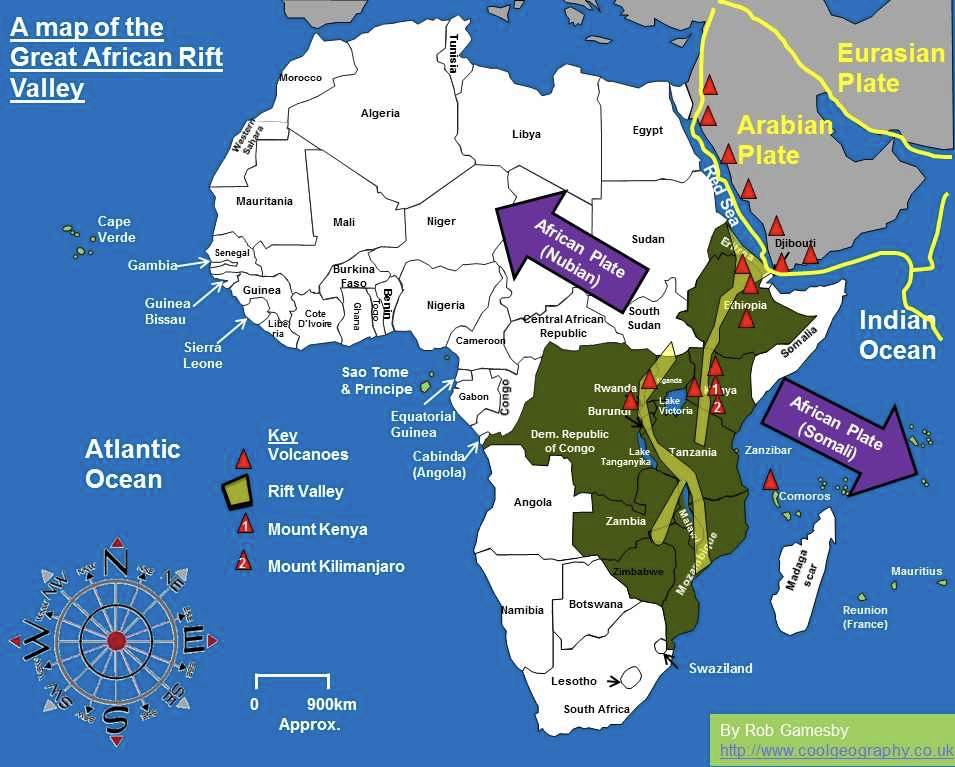
Jubilees: 23 ‘And it goes forth towards the north to the limits of Gadir [Gibraltar, Spain], and it goes forth to the coast of the waters of the sea to the waters of the great sea [Mediterranean] till it draws near to the river Gihon, and goes along the river Gihon till it reaches the right of the Garden of Eden.’
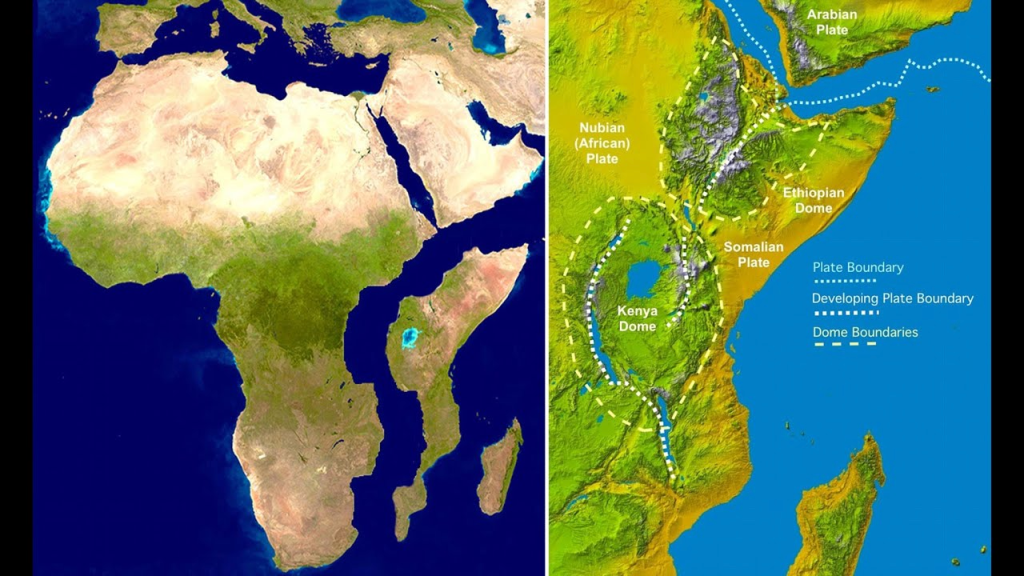
24 ‘And this is the land which came forth for Ham as the portion which he was to occupy forever for himself and his sons unto their generations forever [rather, a very long time].’
We now arrive at an enigmatic passage of scripture in Genesis chapter nine. A comprehensive or definitive answer to the account was thought elusive, yet we will discover there is embedded in the verses in question a logical answer.
It is as mysterious as Noah’s role as Ancestor Zero – Chapter I Noah Antecessor Nulla. The early chapters of Genesis are a very abbreviated, amalgamated coded version of events. The Bible stereotypically understates rather than overstates, and Genesis nine exhibits deliberate editing and censorship. Moses, who is credited with compiling the early books of the Bible would likely not have glossed over events as they now stand and thus, subsequent scribes and translators are likely culpable.
The subject matter is unsavoury, unsettling and altruistically, it is lightly trusted that the editing was intended for our sensibilities rather than a deliberate desire to cover over the truth.
Recall, we learned earlier that Noah planted a vineyard and made wine after the Flood, very possibly in the region of Kashmir – refer Chapter I Noah Antecessor Nulla.
Further details are added in the Book of Jubilees.
Book of Jubilees 7:1-7
1 … ‘Noah planted vines on the mountain on which the ark had rested, named Lubar, one of the Ararat Mountains [in the Himalayas], and they produced fruit [it typically takes newly planted vines up to three years to grow grapes] in the fourth year [circa 10,833 BCE] and he guarded their fruit, and gathered it in this year in the seventh month [Tishri: September/October].
2 And he made wine… and put it into a vessel, and kept it until the fifth year, until the first day, on the new month [new Moon] of the first month [Abib/Nisan: March/April]. 3 And he celebrated with joy the day of this feast…’
Due to the use of the word feast, it likely refers to the following Full Moon of the 14/15 day, equating to the Passover* and Feast of Unleavened Bread.
‘… he made a burnt sacrifice unto Yahweh, one young ox and one ram, and seven sheep, each a year old, and a kid of the goats, that he might make atonement thereby for himself and his sons…’
Similar to a later Patriarch named Job (Job 1:5) – refer article: Job.
4 ‘… he prepared the kid* first [young goat], and placed some of its blood* on the flesh that was on the altar which he had made, and all the fat he laid on the altar where he made the burnt sacrifice, and the ox and the ram and the sheep, and he laid all their flesh upon the altar. 5 And he placed all their offerings mingled with [olive] oil upon it, and afterwards he sprinkled [red] wine on the fire which he had previously made on the altar, and he placed incense on the altar and caused a sweet savoir to ascend acceptable before Yahweh his Sovereign Ruler.’
The system of worshipping and obeying the Eternal One, through animal sacrifices was not inaugurated by Moses and Aaron during the time of the Israelites, but rather, re-activated. Abel and Noah in the antediluvian age and Abraham, Isaac and Jacob after the flood, all offered sacrifices to the Creator; for either the purpose of thanksgiving or atonement (and forgiveness) – Article: The Sabbath Secrecy.
6 ‘And he rejoiced and drank of this wine, he and his children with joy. 7 And it was evening, and he went into his tent, and being drunken he lay down and slept, and was uncovered in his tent as he slept.’
A number of scenarios are possible, with it resembling an ancient crime scene and a re-opening of an investigation into a very cold case. Initially, the protagonists appear to include Noah; his son Ham; and or, his son Canaan. Though this will alter as we progress. While reading, it is not ostensibly clear who the perpetrator is nor entirely would you believe, the identity of the potential victim(s).
Genesis 9:18-26
New Century Version
18 ‘The sons of Noah who came out of the boat with him were Shem, Ham, and Japheth. (Ham was the father of Canaan.)’
The Voice: “… (Ham, by the way, was the father of Canaan)” – emphasis theirs.
Amplified: “… Ham was the father of Canaan [born later].” Brackets theirs.
We are first alerted to misadventure by the concluding disjunctive clause, the parenthetical, Ham was the father of Canaan.
The interlinear states:
‘And sons Noah that went forth ark were Shem Ham Japheth Ham [H2526 – Cham] father [H1 – ‘ab: literally or figuratively] Canaan [H3667 – Kenaan]’
We are told who the sons of Noah are; why delineate Canaan as Ham’s son, in a context about Noah’s sons. Could Canaan actually be Noah’s son… born after the Flood?
Genesis: 19 ‘These three men were Noah’s sons, and all the people on earth came from these three sons.
20 Noah became a farmer [H376 – ‘iyesh: husbandman] and planted a vineyard.’
NET: ‘The epithet a man of the soil indicates that Noah was a farmer. “Noah, a man of the soil, was the first to plant a vineyard”; Hebrew “and Noah, a man of the ground, began and he planted a vineyard.”
Genesis: 21 ‘When he drank wine made from his grapes, he became drunk and lay naked in his tent.’
NET: ‘The Hebrew verb (galah) in the Hitpael verbal stem (vayyitgal) means “to uncover oneself” or “to be uncovered.” Noah became overheated because of the wine and uncovered himself in the tent.’
Genesis: 22 ‘Ham, the father of Canaan, looked at his naked father and told his brothers outside.’
The interlinear states:
‘And Ham father Canaan saw* [H7200 – Ra’ah] nakedness** [H6172 – ‘ervah] his father told his two brethren outside’
We are told that Ham is the father of Canaan. Why not just state Ham. The writer or editor desperately wants the reader to believe Canaan is Ham’s son.
Is this because he is, though not legally. Or is it because Canaan isn’t Ham’s son at all. By including Canaan; the implication is that Ham is looking upon something that may have a. involved Canaan himself; or b. led to Canaan’s existence.
‘Looked at his naked’ father implies that there had been a sexual act; but, by whom and whom too?
NET: ‘some would translate “had sexual relations with,” arguing that Ham committed a homosexual act with his drunken father for which he was cursed. However, the expression”see nakedness” usually refers to observation of another’s nakedness, not a sexual act (see Genesis 42:9, 12 where “nakedness” is used metaphorically to convey the idea of “weakness” or “vulnerability”; Deuteronomy 23:14 where “nakedness” refers to excrement; Isaiah 47:3; Ezekiel 16:37; Lamentations 1:8.
The following verse (v.23) clearly indicates that visual observation, not a homosexual act, is in view here. In Leviticus 20:17 the expression “see nakedness” does appear to be a euphemism for sexual intercourse, but the context there, unlike that of Genesis 9:22, clearly indicates that in that passage sexual contact is in view. The expression “see nakedness” does not in itself suggest a sexual connotation. Some relate Genesis 9:22 to Leviticus 18:6-11, 15-19, where the expression “uncover [another’s] nakedness” (the Piel form of galah) refers euphemistically to sexual intercourse.
However, Genesis 9:22 does not say Ham “uncovered” the nakedness of his father. According to the text, Noah uncovered himself; Ham merely saw his father naked. The point of the text is that Ham had no respect for his father. Rather than covering his father up, he told his brothers. Noah then gave an oracle that Ham’s [Canaan’s] descendants, who would be characterized by the same moral abandonment [for merely looking at a sleeping naked person and then cursing his son instead?], would be cursed.
It is hard for modern people to appreciate why seeing another’s nakedness was such an abomination, because nakedness is so prevalent today. In the ancient world, especially in a patriarchal society, seeing another’s nakedness was a major [offence]. (See the account in Herodotus, Histories 1.8-13, where a general saw the nakedness of his master’s wife, and one of the two had to be put to death.) Besides, Ham was not a little boy wandering into his father’s bedroom…’
The thrust of the verse is that Ham is somehow complicit. If he is momentarily discounted from an actual act against Noah directly, he is not absolved from witnessing a possible aftermath of an episode either involving or against his father and not responding accordingly. Rather, he flippantly abrogates responsibility and chooses to alert his brothers instead. This response makes sense once we discover Ham conspired in the execution of what occurred in Noah’s tent.
In verse 22, the Hebrew word for saw* is translated by the KJV as see 879 times and look 104 times, but also as enjoy, four times. It can mean to ‘look intently at, behold, to gaze at.’ The circumstances hint that Ham did more than spot his naked father and then quickly leave to go and tell his brothers. There are two possibilities, in that Ham lingered, while observing the situation before him for longer than was appropriate and in the process gained some level of enjoyment or arousal from it; or incriminatingly, somehow re-arranged or manipulated the [crime] scene he discovered. Did he try to extricate himself, or was it Canaan he sought to protect?
As plausible as it may be that Ham or perhaps Canaan just looked, this verse has to be connected with verse 24, where it says: ‘when [Noah] woke up and learned what his youngest son^^ had done to him.’ Support for this line of reasoning is in the meaning for the Hebrew word nakedness** in verse 22. The KJV translates it as nakedness fifty times, though also as shame, one time, unclean, one time and uncleanness once.
The nakedness in question is implying that the nudity on display was a shameful exposure of indecency or improper behaviour; as in ‘exposed, undefended, disgrace, blemish.’ The latin term pudenda would apply, in that in the very least, the genitalia of Noah were visible.
Interestingly, pudendum while signifying human external genital organs, is especially applied to those of a female.^
We will discover that this is the first of a number of massive clues.
23 Then Shem and Japheth got a coat [H8071 – simlah] and, carrying it on both their shoulders, they walked backwards into the tent and covered their father. They turned their faces away so that they did not see their father’s nakedness.
NET: ‘The word translated “garment” has the Hebrew definite article on it. The article may simply indicate that the garment is definite and vivid in the mind of the narrator, but it could refer instead to Noah’s garment. Did Ham bring it out when he told his brothers?’
Why would Ham go to the trouble of telling his brothers and not cover his father himself if it was simple exposure? Why would Shem and Japheth cover their father simply because he was naked, unless they were actually reacting to something more serious. The Hebrew word for coat is translated in the KJV as raiment, eleven times; clothes, six times; garment, six times; and apparel twice. It signifies a wrapper or mantle – sleeveless cloak or cape – as a covering garment.
It does contain the ‘permutation for the feminine (through the idea of a cover assuming the shape of the object beneath); [for instance] a dress^, especially a mantle.’ It may have simply been a unisex dressing gown suitable for someone who is sleeping lying down, or there may be significance in this feminine association.
We will learn that there is in fact here in the text a second significant clue.
Genesis: 24 ‘Noah was sleeping because of the wine [H3196 – Yayin]. When he woke up and learned [H3045 – Yada‘] what his youngest [H6996 – Qatan] son^^[H1121 – ben] had done [H6213 – asah] to him…’
NET: ‘Hebrew “his wine,” used here by metonymy for the drunken stupor it produced. The Hebrew verb (‘asah, “to do”) carries too general a sense to draw the conclusion that Ham had to have done more than look on his father’s nakedness and tell his brothers.’
Though it does imply more than just looking was undertook by someone other than Ham.
The Interlinear states:
‘And Noah awoke from his wine knew what his younger son had done’
The Hebrew word for knew, yada’ is translated by the KJV as know, 645 times; knowledge, nineteen times; perceive, eighteen times; and understand, seven times.
It can mean to ‘know a person carnally’ and ‘to be revealed.’
Surprisingly, Ham is not specifically mentioned. We now find two clues in the Hebrew words for younger and son. The KJV translates younger from Qatan as small, thirty-three times; little, nineteen times; youngest, fifteen times; younger, fourteen times; least, ten times; and lesser, twice. It signifies one who is ‘insignificant or unimportant.’
This indirect reference to Ham as the youngest is revealing in light of the recorded positions in the family hierarchy. Shem and Japheth vary in the order they are positioned in the Old Testament book of Genesis; between first and last, eldest or youngest, though Ham is always placed in the middle of his brothers – refer Chapter I Noah Antecessor Nulla.
Piecing scripture together, we learn Japheth is actually the eldest and thus the reader assumes Shem is the youngest due to Ham’s position always being in the middle. Yet Noah is adamant that Ham is the youngest – which places Shem in the middle.
The possibility exists that Canaan could be being referenced as he is ostensibly Ham’s youngest son of four – Genesis 10:6. Alternatively, was Canaan Noah’s youngest son of four?
The Hebrew word for son ben, is translated by the KJV as son, 2,978 times; children, 1,568 times; old, 135 times; first, 51 times; man, twenty times; and young, eighteen times. A variety of meanings, though the one of considerable interest sandwiched between son and child – a member of a family group – is… grandson.
The use of this word, could suddenly shift focus to someone other than Ham, who is not even stated in verse 24. Canaan on the other hand is mentioned in verse 22, when Ham looked on his father. Canaan in comparison with Ham, would be less significant in importance and ‘smaller’ than Ham literally in age and figuratively in stature.
The Hebrew word for ‘had done’ is translated in the KJV as do, 1,333 times; make, 653 times; wrought, 52 times; commit, 49 times; perform, eighteen times; and dress^, thirteen times. It signifies, ‘to fashion, to be used, to press, squeeze.’ Strong’s adds:‘bruise’ and ‘dress(ed).’ These definitions* may be of tell tale sexual significance when we investigate different theories next and in light of the hinted at feminine garment used to cover Noah’s nakedness.
Noah knew something had happened. Just being looked at doesn’t warrant cursing an innocent grandson. It only makes any kind of sense, if either Ham or Canaan were guilty of more than just prurient observation. How would Noah have known he was stared at, especially while inebriated? If an act of some kind had been committed against him, or affecting him, there must have been evidence for Noah to know.
Genesis: 25 he said, “May there be a curse [H779 – ‘arar] on Canaan! May he be the lowest slave [H5650 – ‘ebed] to his brothers.”
The Hebrew word for curse is translated as simply a curse, sixty-two times and once, as bitterly. It is a severe curse, which from the primitive root means to ‘bitterly curse, execrate.’ Execrate means ‘to detest utterly, abhor, abominate, imprecate evil upon, damn’ and ‘denounce.’
This is no simple curse but one with enormous repercussions. If it is a punishment to fit the crime, then the crime must be one of great consequence for Noah to invoke a malediction of this degree.
The Hebrew word for slave is translated by the KJV as servant, 744 times; manservant, twenty-three times; bondman, twenty-one times; and bondage, ten times. It means to be a slave and the interlinear says a ‘servants of servants’; not a servant to other servants, but the lowest of all servants. This is an enormous clue in identifying Canaan’s descendants – Chapter XXII Canaan & Africa.
The people of Canaan are accused of sins in the scriptures; their ancestor Canaan is apparently guilty of nothing. Why does Noah curse Canaan and not Ham?
NET: ‘Cursed be Canaan. The curse is pronounced on Canaan, not Ham. Noah sees a problem in Ham’s character, and on the basis of that he delivers a prophecy about the future descendants who will live in slavery to such things and then be controlled by others. In a similar way Jacob pronounced oracles about his sons based on their revealed character… Wenham points out that”Ham’s indiscretion towards his father may easily be seen as a type of the later behavior of the Egyptians and Canaanites.
Noah’s curse on Canaan thus represents God’s sentence on the sins of the Canaanites, which their forefather Ham had exemplified.” He points out that the Canaanites are seen as sexually aberrant and Leviticus 18:3 describes Egypt [Mizra] and Canaan, both descendants of Ham, as having abominable practices. Hebrew “a servant of servants” (’eved ’avadim), an example of the superlative genitive.
It means Canaan will become the most abject of slaves.’
The New English Translation footnote supports the mildest interpretation of Genesis nine and adopts the view that Ham saw his father in a compromising position of nakedness. Noah thus disrespected, then felt compelled to curse Ham’s youngest son’s descendants to perpetual slavery and impoverishment. An honest appraisal of this line of enquiry would have to admit there are gaping plot holes. Strikingly, nor does the punishment have equivalency for the crime.
Looking closely at the story, the scenario includes Ham (or Canaan) as a perpetrator of varying degree, with Noah as the – or, as strange as it may sound, a further unknown second person (both a perpetrator and) also a – victim.
***Reader beware, the following segment may be unsettling***
Dr Rabbi Tzemah Yoreh in his article Noah’s Four Sons, puts forward a case of a combination of two texts from two editors in the scriptural account – emphasis mine:
‘A Supplementary-Hypothesis Solution
Viewed through the conceptual tool-kit of the supplementary paradigm of biblical criticism, one form of source criticism, it is likely that in an earlier version of the story (the J source), Noah had four sons, not three: Shem, Ham, Japheth, and Canaan. The later Priestly source had a different tradition, however, that Noah had only three sons (5:31, 6:10, 7:13, 9:19, 10:1, all P texts). P was by nature a conservative supplementer/editor – he finds a way to assert his view that does minimal violence to the biblical text.
(According to the supplementary paradigm of biblical criticism, erasure or deletion was rarely if ever employed.) Accordingly, I would argue that P was not comfortable erasing Canaan entirely from the text in [favour] of his own view – and adds the clause “and Ham was the father of” to verse 18 to make it seem as though Canaan were Noah’s grandson rather than his son. P adds these same words again in verse 22, thereby making Ham the assailant instead of Canaan. Finally, he adds 9:19 to re-emphasize his view that Noah had only three sons. By doing so he brings J’s text in line with his own tradition of three sons, but at the expense of the coherence of the story.
Here is the original text: [Note: // represents where the seams are.]
The J Text 9:18 The sons of Noah who went out from the ship were Shem, Ham, and Japheth, and// Canaan // 9:20 Noah started out as a farmer, and planted a vineyard. 9:21 He drank of the wine and got drunk. He lay naked within his tent. 9:22 // Canaan saw the nakedness of his father, and told two of his brothers outside. 9:23 Shem and Japheth took a garment, and laid it upon both their shoulders, walked backwards, and covered the nakedness of their father. Their faces were averted, and they didn’t see their father’s nakedness. 9:24 Noah awoke from his wine (-induced stupor), and knew what his youngest son had done to him. 9:25 He said, “Canaan is cursed. He will be a servant of servants (serving) his brothers.” 9:26 He said, “Blessed be YHWH, the God of Shem. Let Canaan be his servant. 9:27 May God make Japheth mighty. Let him dwell in the tents of Shem. Let Canaan be his servant.”
… a coded version of the original J text with the P supplements [italicised]: J + P (Canon)
9:18 The sons of Noah who went out from the ship were Shem, Ham, and Japheth, and Ham was the father of Canaan. 9:19 These three were the sons of Noah, and from these, the whole earth was populated. 9:20 Noah started out as a farmer, and planted a vineyard. 9:21 He drank of the wine and got drunk. He lay naked within his tent. 9:22 Ham, the father of Canaan, saw the nakedness of his father, and told his two brothers outside…
An Unexpected Corroboration?
Some intriguing corroboration to this enumeration is found in the midrash (late first millennium C.E.) – Pirkei de-Rabbi Eliezer… which also saw Canaan as one of Noah’s sons and solves the text-critical problem similarly. It goes without saying that Pirkei de-Rabbi Eliezer had no knowledge of J’s base text, though his harmonistic reading may be suggestive of a similar thought pattern:
Noah found a vine… the vine still had grapes upon it…he planted a vineyard from this vine…and on that very day fruit grew…he drank wine from it (the vine) and he revealed himself in his tent. Canaan came in, saw his father’s nakedness, tied a string to his penis and castrated* him, then he went out to tell his brothers… Ham came in, saw his father’s nakedness and neglecting the commandment to honor one’s father, reported it to his two brothers as though he were in the market and laughing at his father. His brothers rebuked him, they took a cover, and walking backwards covered their father’s nakedness… Noah arose from his stupor, discovered what his youngest son had done to him, and cursed him, as it says, “Cursed is Canaan”.
The author of Pirkei de-Rabbi Eliezer not only solves the problem of Canaan, but that of Ham as well. In J, it is unclear where Ham appears in the story; he plays no part and goes unmentioned. In Pirkei de-Rabbi Eliezer, Canaan is the son who castrates his father, thereby receiving a curse, and Ham laughs at his father instead of helping him, thus he does not get the blessing his brothers, Shem and Japhet receive, nor the curses Canaan receives. It is unclear how the author of this midrash understood the biblical text that says that Canaan was Noah’s grandson and not his son.
Similarly, and perhaps even stranger, the Quran notes that Noah had four sons (Sura 11, Hud v. 42-43). This unnamed fourth son refuses to come aboard the Ark, and instead climbs a mountain and is drowned. Some later Islamic commentators give his name as either Yam or Kan’an, the latter the Arabic version of Canaan. It is difficult to determine the relationship between Pirkei de-Rabbi Eliezer and the Quran, though they may have shared the same source. In any case, it is striking that an ancient tradition that was erased by P hundreds of years before the first millennium C.E. found its way back into texts over a thousand years later in such disparate sources as Pirkei de-Rabbi Eliezer and the Quran.’
The irony is not lost of a Rabbi quoting the Quran. Conjecture and assumptions of the author aside, the explanation of an older text stating Canaan as a son of Noah possibly answers the parenthetical conundrum of Genesis 9.18. It may add meaning to why Canaan as a son of Noah was cursed directly by his father and yet still allows for the involvement of Ham and his tantamount condoning of either Canaan’s purported actions or even his own.
In a similar incident (with an opposite result) in Genesis 21:8-10, Sarah the wife of Abraham, sees Ishmael mocking Isaac. She takes a dim view and Ishmael’s banishment with his mother Hagar stems in part, from this incident. Though Ishmael is punished by being banished, he still receives a future blessing and inheritance – Chapter XXVIII The True Identity & Origin of Germany & Austria – Ishmael & Hagar.
Nota Bene
For the ease of the established biblical paradigm it was formerly accepted by this writer that Noah had three sons, with Canaan being Ham’s youngest son. Subsequent research has led to the conclusion that Canaan is actually Noah’s fourth son, cementing the earlier manuscripts of Genesis as accurate. In support of this recognition is the fact that an investigation of autosomal DNA, including Y-DNA and mtDNA Haplogroups for Canaan’s descendants indicates the probability they are a fourth racial line in their own right – in addition to the three originating from Japheth, Shem and Ham.
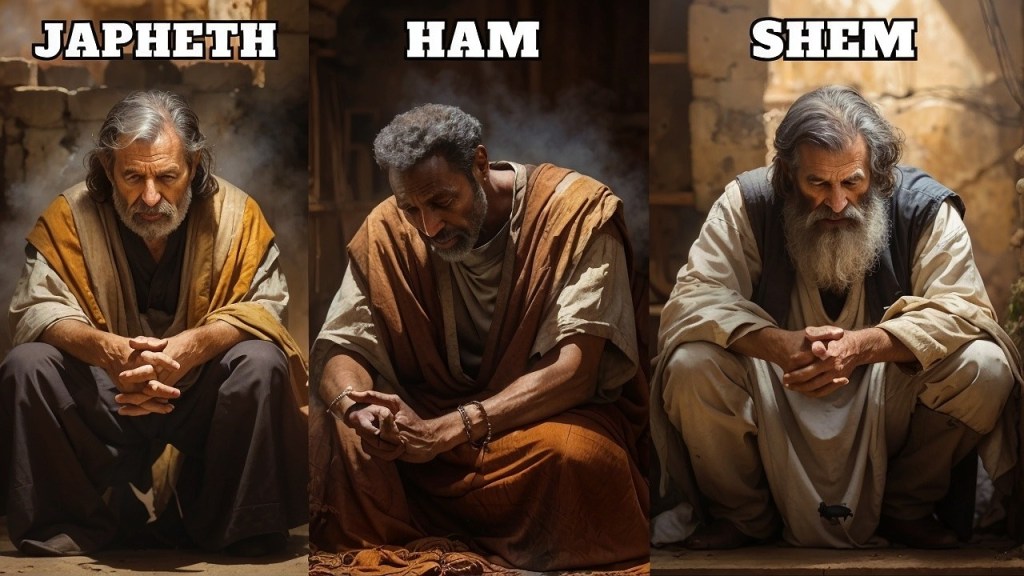
It is incongruous that while Herman Hoeh upheld the established understanding that Noah had only three sons; he should in turn recognise the obvious in that there are four principal skin tones and therefore four types of people (and not three) constituting humankind.
Herman Hoeh:
‘You will never find in the Bible such expressions, as
the “white race” [Shem], or
the “black race” [Canaan], or
the “yellow race” [Japheth], or
the “brown race” [Ham],
yet these four primary races ARE MENTIONED in the Bible! Why hasn’t this knowledge been known?’ – The Origin of the Nations, 1957.
Castration as an explanation would certainly answer the reason for the severity of the curse inflicted; as opposed to death. This was not a great option, when considering Canaan was to be the ancestor of at least six sons and distinct lineages of descent. Though, we are left scratching our heads as to what would be the motive? Stop Noah siring more sons, who would receive blessings and allotments of land, thus decreasing Canaan’s share? We will return to this notion.
In Genesis 9:24, with Noah saying he knew what his youngest (grand)son had done to him, leaves no doubt that something tangible had been done to Noah. Like Ham, Canaan was the youngest, whether his father was Ham (or Noah). This convincingly yet confusingly, shines the spotlight on both Ham and Canaan as dual persons of interest.
Dr Rabbi David Frankel in his article, Noah, Ham and the Curse of Canaan: Who Did What to Whom in the Tent? A new solution to why Canaan (not Ham) was cursed, presents alternative solutions – italics his:
‘What Did Noah’s Youngest Son Do?
As already anticipated by the Rabbis, and suggested by some modern scholars, an earlier version of our story probably related a much more severe crime – the homosexual rape of his father when he was inebriated. This indeed is the kind of [offence] that would most naturally provoke the severe reaction depicted in the text. This assumption also accounts for the formulation of verse 24,
Noah awoke from his drunken stupor and knew what his youngest son had done to him. If his son had only looked at him, how would Noah have “known” when he awoke that this had occurred? Further, the final words “had done to him” imply a much more concrete and physical act than mere gazing. The statement that Noah knew what was done to him after waking from his drunken stupor contrasts with Lot who was similarly abused sexually by his daughters while drunk, and concerning whom we read (Genesis 19:35), and he did not know when she lay down or when she arose.
Leviticus 20:17 shows that “seeing nakedness” is a euphemism for sex: Leviticus 20:17 If a man has sexual intercourse with his sister, whether the daughter of his father or his mother, so that he sees her nakedness and she sees his nakedness, it is a disgrace. They must be cut off in the sight of the children of their people. He has exposed his sister’s nakedness; he will bear his punishment for iniquity.
Most likely, the phrase describing Noah’s nakedness, “and he became revealed inside his tent” was meant to evoke the theme of incest, as “revealing of nakedness”serves as the euphemism for incest in the prohibitions of Leviticus: Leviticus 18:6 None of you shall come near anyone of his own flesh to uncover nakedness… Thus, the sin, in the original narrative, is not homosexual sex itself, but forced incest of a son with his father in a situation in which the father has no ability to defend himself; this would explain the harshness of the father’s curse.’
While it is agreed with the author that incest (and rape) is an accurate integral aspect of what transpired in Noah’s tent – and hence a third major clue – an act of homosexual (sodomy or castration) by either Ham or Canaan will be shown to be wholly inaccurate.
David Frankel:
‘How then do we explain the part of the story in which Noah’s other sons enter the tent and cover their father without looking at him: Genesis 9:23 Shem and Japheth took the garment and placed it on their shoulders. Then they walked in backwards and covered up their father’s nakedness. Their faces were turned the other way so they did not see their father’s nakedness.
This clearly implies that [the] sin was gazing and nothing more. Nevertheless, I believe that the evidence in [favour] of the sexual interpretation is too strong to simply dismiss. I suggest that the text was revised by an editor who took the euphemism “seeing nakedness” literally, as if the sin was really visual alone.
Whether out of deference to Noah or in the name of modesty more generally, this editor sought to temper the severe [offence] of forced incest with an incapacitated father. This reinterpretation was accomplished by adding a report about the two brothers’ contrasting act of covering their father without looking.
The same editor also added the report of the perpetrator mockingly (?) relating to his brothers that he saw their father’s nakedness (verse 22b: “He told his two brothers who were outside”) so as to facilitate the subsequent presentation of the brothers’ contrasting act; the same editor then added the blessings of Shem and Japhet, the two “good” brothers/sons, at the end of the story.
In short, according to this reconstruction, the blessings of Shem and Japhet (beginning with “he also said”) and the subordination of Canaan to both of them are secondary (verses 26-27) additions. Thus, the original story told simply of the sin of the youngest son against his father, and the cursing of Canaan to be subservient to his unnamed brothers. Admittedly, this story is disappointingly brief in comparison with the one we are used to. On the other hand, it seems only fitting that a story as unseemly as this one would lack narrative embellishment and be as concise and to the point as possible.’
A similar scenario occurred when Jacob’s eldest son Reuben, commits adultery – incest of sorts – with his fathers wife’s handmaiden Bilhah. Reuben disqualifies himself and his descendants from the birthright blessings – which are then given to Joseph’s sons (Ephraim, Manasseh) and Judah – Chapter XXXI Reuben, Simeon, Levi & Gad – the Celtic Tribes.
Frankel:
‘The original story about forced rape of a father would explain why Noah would curse his youngest son so harshly, but Canaan is not Noah’s youngest son; Japhet is! In fact, Canaan isn’t Noah’s son at all! For this reason, many scholars suggest that in an earlier form of the story, Canaan must have been Noah’s youngest son, not Japhet. Without the redaction supplement of “Ham the father of,” v. 22 would have originally read “Canaan saw his father’s nakedness.” It indeed makes perfect sense to accept this reconstruction of v. 22, and to assume that if the story concludes with the cursing of Canaan, Canaan must have been the original youngest-son-culprit of the story.
On the other hand, the idea that Canaan was Noah’s youngest son is difficult. Verses 18-19, which introduce the non-Priestly account here, state that Noah’s three sons are Shem, Ham, and Japhet, and that they are the progenitors of the world. Moreover, the nation lists in chapter 10 (Priestly and non-Priestly alike) treat Ham as the father of Canaan and the progenitor of nations; Canaan and his offspring are only a subgroup under Ham.
The most important thing to note about the edited story is the strange preservation of the curse as directed at Canaan (three times!), in spite of the identification of the sinner of the story as Ham and the brothers as Shem and Japhet. Wouldn’t it have been more consistent to change the curse of Canaan into the curse of Ham?’
In this case scenario, Noah may have disowned his son Canaan. As Ishmael was banished, Canaan would have been relegated in status by Noah, not just by the curse. Ham was not blameless, even so, Canaan’s posterity could have been included with Ham in the scriptures – to save face – rather than shown as a separate fourth line of people from Noah as originally intended.
The only way this could be legitimately recorded with Canaan being identified as a son of Ham, is that Ham was not the father of Canaan at all but rather, the stepfather of Canaan. There is no other reason why the subsequent Bible texts included an adjusted table of nations to accommodate the change in Canaan’s status.
Considering the data thus far, it is problematic in ascribing to Ham the role of perpetrator – rather than that of an accomplice – and somewhat problematic in affirming Canaan as Noah’s son, rather than his being Ham’s youngest son and by extension, Noah’s youngest grandson.
Yet, serious consideration should be given to this second hypothesis, as Canaan’s descendant’s lines listed in Genesis Ten are numerous and more genetically divergent than for Japheth, for Shem or for Ham’s other sons. Eleven potential ancestry groups are listed for Canaan. Canaan stands out, for his sons descendants exhibit a wider spectrum of skin tones; more racial characteristics; and the most variations in their genome than all the other peoples in the world put together – refer Chapter XII Canaan & Africa.
Dr Rabbi Tzemah Yoreh has presented the case for Genesis 9:19 ‘These three were the sons of Noah, and from these, the whole earth was populated’, as being part of the supplemented text P edit. This writer would offer that the whole sentence may not be additional but just the quick change from four to three sons, though the seam would indicate the whole sentence.
Dr Rabbi David Frankel concludes his article with a theory that the Genesis nine account is in fact about Ham and Canaan. Ham the actual victim. Having considered this theory, the conclusion is that considerable editing is required in proving it. Whereas, it can be readily accepted that additions or deletions to biblical text; the wholesale change of names; and shifting verses into other chapters seems a stretch too far.
The same author is eager to down grade Canaan’s curse to a limited curse – subservient only to Ham or Mizraim of Egypt – rather than encompassing Shem and Japheth; thus throwing doubt on the biblical account as it stands, saying it is an editorial agenda in text P to strengthen the future family status of Jacob’s sons.
Further evidence in supporting Canaan as a son of Noah and not Ham is found in verses twenty-five to twenty-seven of Genesis chapter nine. As it says Canaan was to be a servant of ‘his brothers’ and not his uncles. Likewise, the brothers are revealed as Shem and Japheth and not as Mizra, Cush and Phut the sons of Ham. We will confirm in later chapters that Canaan’s descendants have tragically been slaves to Mizra and Shem, thus verifying it would seem, that Canaan is a brother of both Ham and Shem and not a son of Ham. That said, we will investigate the possibility that Canaan was born to Ham out of wedlock.
For it is curious that no matter how strenuously editing tries to transfer blame to Ham, it is Canaan who re-emerges as the accused. One commentator suggests that Canaan was Ham’s son though not by Ham’s wife Na’eltama’uk, but by Noah’s wife Emzara. Alternatively, there may have been an undisclosed act of incest between Ham and a relation of Noah, but not Noah’s wife; as a peculiar anomaly links Canaan to the family of Arphaxad, one of the five sons of Shem.
While this writer since the first writing of this chapter has established this explanation as being in error, it remains included in this discussion for interests sake and in contrast to the actual sequence of events delineated in the conclusion.
The Creator has much to say on the matter of incest and it was considered a grievous transgression, punishable by death under the Mosaic Law during Israelite times. We saw in the line of Seth that it was the fifth generation which began marrying their cousins – refer Chapter I Noah Antecessor Nulla. Prior to this, the second through to the fourth generation had little choice but to marry their sisters.
If such an act was committed with a relation of Noah and or Noah, it would seem that Ham, Canaan or a mysterious third party were fortunate to retain their lives; yet death would have been an impossible stumbling block to Ham or Canaan’s lines continuing following the flood. Ultimately, the curse placed on Canaan’s descendants is unarguably, the most serious action Noah could have taken. Death would have been kinder, but would have eliminated a whole racial line of people before it had even begun.
The most well known incident of incest in the Bible involved the daughters of Lot, which is discussed in a subsequent chapter when we study their sons – Chapter XXVI The French & Swiss: Moab, Ammon & Haran.
The Book of Leviticus chapter 18, verses 6-18 is dedicated to every possible situation of incest – of which a few are quoted and statements potentially associated with the incident in Genesis chapter nine in italics. As might of happened with Ham in verse twenty-one and Canaan in verse thirteen – see below.
English Standard Version
6 “None of you shall approach any one of his close relatives to uncover nakedness. I am the Lord. 7 You shall not uncover the nakedness of your father, which is the nakedness of your mother; she is your mother, you shall not uncover her nakedness… 9 You shall not uncover the nakedness of your sister, your father’s daughter or your mother’s daughter, whether brought up in the family or in another home.
10 You shall not uncover the nakedness of your son’s daughter [granddaughter] or of your daughter’s daughter, for their nakedness is your own nakedness. 11 You shall not uncover the nakedness of your father’s wife’s daughter, brought up in your father’s family, since she is your sister [step sister]… 14 You shall not uncover the nakedness of your father’s brother, that is, you shall not approach his wife; she is your aunt.
15 You shall not uncover the nakedness of your daughter-in-law; she is your son’s wife, you shall not uncover her nakedness… 17 You shall not uncover the nakedness of a woman and of her daughter, and you shall not take her son’s daughter or her daughter’s daughter to uncover her nakedness; they are relatives; it is depravity. 18 And you shall not take a woman as a rival wife to her sister, uncovering her nakedness while her sister is still alive.”
The Patriarch Jacob married two sisters, though not by choice, but rather a shrewd play by his father-in-law Laban – Chapter XXX Judah & Benjamin – the Regal Tribes.
Leviticus chapter 20:11-21 continues with punishment for incest.
English Standard Version
11 ‘If a man lies with his father’s wife, he has uncovered his father’s nakedness; both of them shall surely be put to death; their blood is upon them. 12 If a man lies with his daughter-in-law, both of them shall surely be put to death; they have committed perversion; their blood is upon them.
13 If a man lies with a male as with a woman, both of them have committed an abomination; they shall surely be put to death; their blood is upon them.
If a man takes a woman and her mother also, it is depravity; he and they shall be burned with fire, that there may be no depravity among you… 17 “If a man takes his sister, a daughter of his father or a daughter of his mother, and sees her nakedness, and she sees his nakedness, it is a disgrace, and they shall be cut off in the sight of the children of their people…
21 If a man takes his brother’s wife, it is impurity. He has uncovered his brother’s nakedness; they shall be childless.”
In Genesis 5:6-14 ESV ‘… Seth… he fathered Enosh… Enosh… fathered Kenan…’
Kenan derives from H7018 Qeynan, also spelt as Cainan. It is similar to Canaan, though not etymologically derived from, for Canaan is H3667 kna’an, also spelt Kenaan. The name Kenan, is in Noah’s family line. The name Cain is derived from H7014 Qayin. All three are similar: Cain in Cain’s line; Cainan or Kenan in Seth’s; and Canaan or Kenaan ostensibly in Ham’s family. One could say, this is a family name.
We read in the Book of Jubilees 8:1-6
‘… in the beginning thereof Arpachshad took to himself a wife and her name was Rasu’eja, the daughter of Susan, the daughter of Elam [Arphaxad’s older brother], and she bare him a son… and [Arphaxad] called his name Kainam. And the son grew, and his father taught him writing, and he went to seek for himself a place where he might seize for himself a city.
And he found a writing which former (generations) had carved on the rock, and he read what was thereon, and he transcribed it and sinned owing to it; for it contained the teaching of the Watchers in accordance with which they used to observe the omens of the sun and moon and stars in all the signs of heaven [astrology and black magic]. And he wrote it down and said nothing regarding it; for he was afraid to speak to Noah about it lest he should be angry with him on account of it.
And… he took to himself a wife, and her name was Melka, the daughter of Madai’ – refer Chapter IV Central Asia – Madai & the Medes – ‘the son of Japheth, and… he begat a son, and called his name Shelah; for he said: ‘Truly I have been sent’… and Shelah grew up and took to himself a wife, and her name was Mu’ak, the daughter of Kesed his father’s brother…’
Another Chesed was a son of Nahor, Abraham’s brother – refer Chapter XXV Italy: Nahor & the Chaldeans.
In Genesis 10:24-25 ESV we read: ‘Arpachshad fathered Shelah; and Shelah fathered Eber. To Eber were born two sons: the name of the one was Peleg, for in his days the earth was divided, and his brother’s name was Joktan.’
In the Masoretic text of the Bible Kainam is left out of the genealogy as we see here, yet in the Septuagint – LXX – Cainan is included, as in the Book of Jubilees. In the New Testament Gospel of Luke, we read the genealogy of Christ through his adoptive father, Joseph.
Luke 3:35-38
New English Translation
35 ‘the son of Serug, the son of Reu, the son of Peleg, the son of Eber, the son of Shelah, 36 the son of Cainan [G2536 – Kainan from H7018], the son of Arphaxad, the son of Shem, the son of Noah, the son of Lamech, 37 the son of Methuselah, the son of Enoch, the son of Jared, the son of Mahalalel, the son of Kenan [G2536 – Kainan], 38 the son of Enosh, the son of Seth, the son of Adam, the son of God.’
Footnote:
‘It is possible that the name Καϊνάμ (Kainam)should be omitted, since two key mss, P75vid and D, lack it. But the omission may be a motivated reading: This name is not found in the editions of the Hebrew OT, though it is in the LXX, at Genesis 11.12 and 10:24. But the witnesses with this reading (or a variation of it) are substantial: א B L ƒ1 33 (Καϊνάμ), A Θ Ψ 0102 ƒ13 M (Καϊνάν, Kainan).
The translation above has adopted the more common spelling “Cainan,” although it is based on the reading Καϊνάμ.The Greek text has Kainam here. Some modern English translations follow the Greek spelling more closely (NASB, NRSV Cainan) while others (NIV) use the OT form of the name (Kenan in Genesis 5:9, 12).’
Thus the names Cainan, Kainan, Kainam and Kenan are all related; with the Septuagint reading supporting Luke 3:36. The fact that Kenan has been inserted in enough manuscripts to draw attention and not be discounted, is a significant red flag. Though it is not the exact name of Kenaan, it is difficult to explain who else it could be?
The insertion of Kenan’s name leads to one viable conclusion if Canaan was the biological son of Ham. That he was the adoptive son of Arphaxad, who became his legal father. The Hebrew word fathered includes more than just a biological, blood-line parent. It can mean a father-in-law, a grandfather and even a distant relative; or in this case, a male, non-blood-line parent who raises the child.
Why would Arphaxad adopt Canaan or make him his ward? As Canaan is shown as being between Arphaxad and his blood-line son Shelah, Canaan must have been born before Shelah. Arphaxad would be Ham’s nephew and Canaan’s cousin. As he was considerably older, Arphaxad may have taken Noah’s youngest grandson Canaan under his wing. The relationship is noteworthy because in the Septuagint version of Genesis 10:22 it says: ‘Sons of Sem, Elam, and Asshur, and Arphaxad, and Lud, and Aram, and Cainan…’ In this scenario, Canaan was ethnically Hamitic lineage, but he is also listed in the lineage of Shem.
The Book of Jubilees reveals that Rasueja, Arphaxad’s wife, gave birth to Cainan. The ambiguous origin of Canaan as Ham’s son and his subsequent upbringing in Arphaxad’s household would be understandable, if Ham conducted a sexual liaison with Rasueja. This would have been incest and all the ramifications that went with it; for she was Noah’s great, great granddaughter.
Canaan was Ham’s fourth son and as such, one of the sixteen (twenty-one) blood-lines which re-populated the earth. Did Arphaxad retain Canaan in his family to spite Ham or perhaps, to maintain a close grip and control over Canaan, who with his descendants were ordained to be slaves. Or, was it an act of compassion towards his wife Rasueja and her bastard child.
From everything we have discussed, the key questions are:
a. Are Ham and Canaan father and son or brothers?
b. Was Noah violated and if so, was it by Ham, Canaan or someone else?
c. Was there a previous event that culminated with the incident in Noah’s tent?
It can be argued that there has been concerted effort in the scriptures to lessen Canaan’s role and heighten Ham’s. To take the spotlight off Canaan and portray him as a victim of Ham’s transgression(s). Ham did something unspeakable and Canaan’s children have paid an exacting price. At face value and with behind the scenes editing, the Bible appears to favour this scenario.
Previously, this writer has accepted this interpretation from those teachers who expounded the tenant that Ham is the prime subject of Genesis chapter nine and consequently the guilty party. A closer inspection of the Genesis nine passage as we have discovered, has convinced this writer that this interpretation is incorrect.
The parenthetical addition of Canaan as the son of Ham is an important fourth clue.
So is Noah waking up to know what his youngest (son) had done to him. And, it is Canaan who is cursed by Noah – not Ham.
The inclusion of a ‘Canaan’ in Arphaxad’s household and family line, with the naming of Canaan’s mother as Rasueja; yet his still remaining in Ham’s genealogical family tree in the table of nations as a Hamite not as one from Shem, underpins the likelihood that Ham is his father by incest. (But… is Ham Canaan’s real father or his stepfather?)
In this scenario (as well as the one investigated in the Addendum), Ham transgressed twice.
Once with the alleged incestuous act with Arphaxad’s wife Rasueja and again when he disrespectfully handled his father’s predicament and sided with his son. Ham observed Noah and the aftermath of an encounter, sexual or not. The phrase, looked upon his nakedness is categorically more than just seeing a naked body, though in Ham’s case, does not mean he is culpable of more himself – as the Hebrew infers. For the Bible in connection with Ham, does not use the euphemism for a sexual act: uncovered the nakedness of Noah.
Whereas later, Noah was very much aware of what had been done and by whom – resulting in the profound proclamation against Canaan.
Book of Jubilees 7:13
‘And Ham knew that his father had cursed his younger son, and he was displeased that he had cursed his son and he parted from his father, he and his sons with him, Cush and Mizraim and Put and Canaan.’
Part of the predicament Canaan found himself in, was compounded by his decision to practice the occult secrets of the Watchers; communicating with dark spirits. An interesting verse is found in the Old Testament.
Habakkuk 2:15-16
New English Translation
“Woe to you who force your neighbour to drink wine – you who make others intoxicated by forcing them to drink from the bowl of your furious anger so you can look at their naked bodies. But you will become drunk with shame, not majesty. Now it is your turn to drink and expose your uncircumcised foreskin! The cup of wine in the Lord’s right hand is coming to you, and disgrace will replace your majestic glory!”
The severity of the sin committed, resulted with Canaan becoming only the second person recorded in the Bible to receive an imprecation of this magnitude, following the infamous Cain.
Genesis 4:10-11
English Standard Version
And the Lord said, “What have you done? The voice of your brother’s blood is crying to me from the ground. And now you are cursed…”
In verse one of Genesis nine, the Creator blesses Noah and his sons, which includes Ham. Later in chapter nine after the incident, Ham is left out from a specific blessing and does not receive one with Japheth and Shem – such is the severity of the situation.
From the context and Noah’s response, a sexual act and or trick of some kind was undeniably inflicted on Noah.
Whether castration (unlikely) or incest by rape (probably), both acts are extremely weighty accusations.
Castration is difficult to accept without further evidence and motive.
The feminine aspect raised earlier of what may have been ‘done’, could be a reference hinting at the result of some sort of emasculation either through castration or incest involving transvestism on Canaan’s part as implied by various commentators – refer Chapter XXII Alpha & Omega.
If Canaan was conceived in incest, it would be a peculiar parallelism indeed for him to then have possibly committed a similar transgression.
Conversely, the subtle feminine clues are in fact evidence pointing towards an incestuous rape by a mysterious third party, who’s identity is divulged in the Addendum following.
The family tree of Ham, with the addition of Canaan’s descendants.

The principal mtDNA maternal Haplogroups associated with Ham’s descendants and originating with his wife Na’eltama’uk, include:
Haplogroup L0 – oldest and original Haplogroup on the human mtDNA phylogenetic tree.
L0 supposedly arose ‘one hundred and fifty thousand years ago in eastern Africa’ where the alleged oldest fossils of anatomically modern humans have been found. These facts are open to debate, for the oldest fossils discovered are no where near that age. L0a arose later, associated with the peoples dwelling in the southeastern region of the African continent.
Haplogroup L equates to the original Homo sapiens, a mitochondrial Eve of science, also known as the biblical Eve – refer Chapter I Noah Antecessor Nulla; and Chapter XXII Alpha & Omega.

Haplogroup L1 – one of the oldest branches of the maternal family tree is a daughter of mitochondrial Eve and sister to L0.
Frequently found in western and central sub-Saharan Africa, though seldom appears in eastern or southern Africa.
L2 – direct descendant of mitochondrial Eve.
It is currently found in a third of sub-Saharan Africans and its subgroup L2a is the most common mtDNA Haplogroup among African Americans.
Haplogroup L3 – another daughter of mitochondrial Eve and not only associated with Ham’s descendants; for it is the ancestor of all the non-African Haplogroups in the world today.
Haplogroup M – Subgroup M1 ‘intrigues scientists with its presence in East Africa’ and another subgroup M3, is native to India.
Haplogroup N – from L3, is one of the two major lineages with M, from which non-African Haplogroups descend.
Today, members of this Haplogroup are found in most of the continents around the world.
Haplogroup R – both ancient and complex.
Its carriers are found all over the world. Hamitic members of super Haplogroup R are located in Africa and the Middle East.
Haplogroup X – located globally, as well as North Africa, and the Near East.
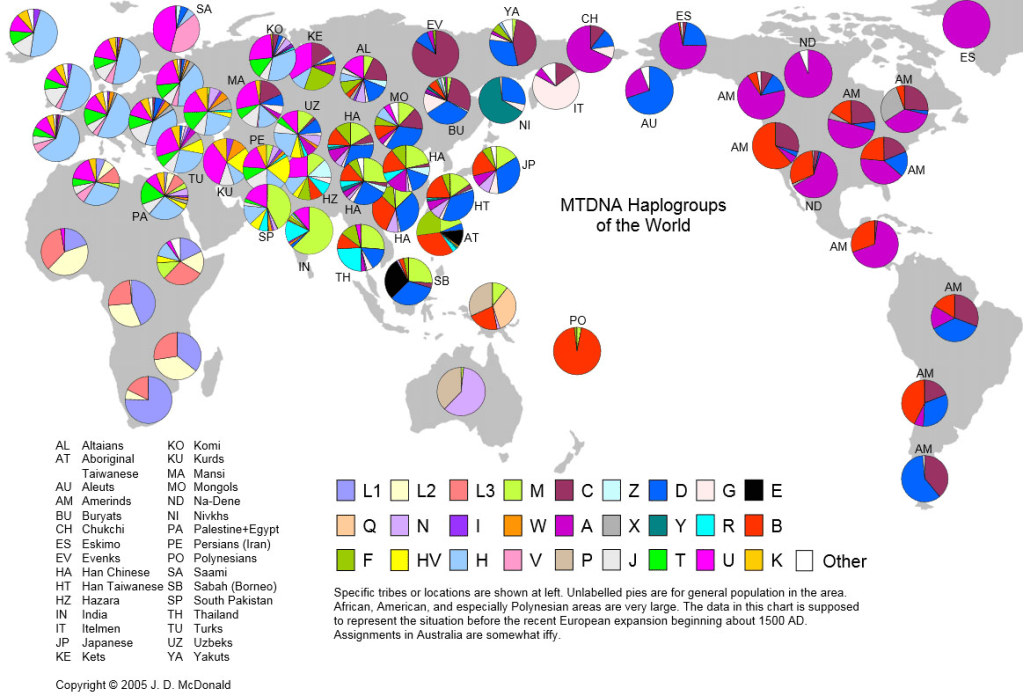
It is important to realise that Ham was like his brothers Japheth and Shem, who had inherited DNA from their father Noah and Emzara, their mother – Chapter I Noah Antecessor Nulla.
The mtDNA Haplogroup mutations in Ham’s descendants are those deriving from Ham’s wife, Na’eltama’uk. She is certainly the maternal ancestor of Cush, Mizra and Phut; while also the mother of Canaan.
The global distribution of Y-DNA paternal Haplogroups associated with Ham (and Canaan’s) descendants are summarised in Retina, Fifth Edition, 2013:
‘Y DNA haplogroup A represents the oldest branch of the Y-chromosome phylogeny. Like haplogroup B, it only appears in Africa, with the highest frequency among… groups in Ethiopia and Sudan.
Haplogroup E [M96] is one of the most branched, with many subhaplogroups described. E1 [P147] and E2 [M75] were described in… Africa, and [E1b1 (P2), formerly E3] shows a wide geographic distribution, with two main [sub-]clades: [E1b1a V38], present all around Africa and among African-Americans; and [E1b1b M215], present in Western [southern] Europe [derived from admixture*], North Africa, and the Near East.’

The African dominated V38 clade divides again into E1b1a1 (M2) and E1b1a2 (M329). The M215 clade shared with Europeans* and Berbers divides into E1b1b1a (V68) and E1b1b1b (Z827). We will encounter these sub-Haplogroups frequently in the following chapters concerning specifically Canaan (and partially Ham’s) descendants.

‘Haplogroup F is the parent of haplogroups from G to R; however excluding these common haplogroups, the minor clades F, F1, and F2, seem to appear in the Indian continent. Until now, haplogroup H has not been well studied, members of this haplogroup were mainly found in the Indian continent.’

‘It is generally agreed that haplogroup J was dispersed by the westward movement of people from the Middle East to North Africa, Europe, Central Asia, Pakistan, and India.
Haplogroup K is the ancestral haplogroup of major groups L to R, but, in addition, also includes the minor K and K1 to K5 [K2] haplogroups, which are present at low frequencies in dispersed geographic regions all around the world.’

‘Haplogroup L is found mainly in India and Pakistan, as well as in the Middle East and, very occasionally, in Europe, particularly in Mediterranean countries.
The highest frequencies of haplogroup M are shown in Melanesia, being restricted to the geographical distribution of Papuan languages’ – refer Chapter VII Javan: Archipelago South East Asia & Polynesia.
‘The P clade is the parent of haplogroups Q and R, and is rarely found. It has been detected at low frequencies in the Caucasus and India.
Haplogroup R1a [mutations deriving from admixture are] currently found in central and western Asia [as well as in] India… [while R1a carried by] Slavic populations of Eastern Europe [is a specific and original defining marker Haplogroup].’
Haplogroup T is unusual in that it is both geographically widespread and relatively rare. It is found predominantly in East Africa, Egypt, Western Asia, South Asia and adjoining areas.
The following chapter investigates the enigmatic Canaan and the role of his descendants in the world today.
Do your best to present yourself to God as one approved, a worker who has no need to be ashamed, rightly handling the word of truth.
2 Timothy 2:15 English Standard Version
“A man may imagine things that are false, but he can only understand things that are true.”
“I do not know what I may appear to the world, but to myself I seem to have been only like a boy playing on the sea-shore, and diverting myself in now and then finding a smoother pebble or a prettier shell than ordinary, whilst the great ocean of truth lay all undiscovered before me.”
Isaac Newton 1643 – 1727
© Orion Gold 2020 – All rights reserved. Permission to copy, use or distribute, if acknowledgement of the original authorship is attributed to orion-gold.com
Addendum
The enigma of Genesis chapter nine is now finally solved and the pieces of the puzzle all fall into their rightful place, both scripturally (and genetically – which will be discussed in chapter twelve). While certain aspects of our case summary remain the same others have changed. Such as the heart of the crime involving incestuous rape – with Canaan not in the role of the perpetrator but rather the result of the act. Ham is not his biological father, but rather Noah is and while Canaan may still have been taken in as Arphaxad’s ward, his biological mother was not Rasueja.
This writer admits being influenced by the biblical scholars before him, into thinking that the crime involving rape and a play for power was a male centric riddle to solve. Thus a rather chauvinistic approach was adopted. Though the truth is that a woman can exert the same influence and use rape as a tool in acquiring power.
The start of chapter nine begins with the Eternal blessing Noah and all three of his sons, including Ham – Genesis 9:1. At some point between this event and after the flood cataclysm, when Noah drank wine for the first time, coupled with the sacrifices he offered – around the time of the Passover and Unleavened Bread festivals – a plan was hatched by either Ham or his wife, Na’eltama’uk.

Na’eltama’uk
As the woman involved is not named or punished directly, it is safe to assume she either shared her idea with Ham or he shared it with her. Regardless, she was a willing accomplice even if coerced by her husband. It may even have been a spur of the moment decision when the family was together and Noah grew steadily drunk.
Either way, the motive was to increase the share of the pie to be divided between Japheth, Shem and Ham. Each was to receive 33% of the whole world. An addition of another son – born from Noah and Na’eltama’uk, Ham’s wife – would increase the Hamite share to 50%.
Ham was clearly involved even if not the instigator, for he witnessed the aftermath of the act between his wife and his father and couldn’t wait to tell his two brothers what had happened – Genesis 9:22. Shem and Japheth came in and covered Noah and Na’eltama’uk, so that Noah would learn what had happened to him – Genesis 9:23. One would assume Ham’s wife was as inebriated as Noah at this point and may explain her being able to follow through in her role.
The feminine clues now also make sense. In that not just the genitalia of Noah were exposed, but that of a woman too. The covering sheet or cloak was covering not just Noah but the woman laying next to him. Also, this is how Noah knew when he woke up, what his son Ham had plotted when he witnessed Na’eltama’uk by his side – Genesis 9:24. For the Hebrew word for ‘knew’ can mean to know a person carnally and to be revealed.

Ham and his wife Na’eltama’uk – while their skin tones would have been opposite to that shown, it captures the unsavouriness of the scheming pair.
Recall the three questions raised for one of the most enigmatic passages of scripture in the Bible.
Q: Was there a previous event that culminated with the incident in Noah’s tent?
A: No
Q: Are Ham and Canaan father and son or brothers?
A: Brothers
Q: Was Noah violated and if so, was it by Ham, Canaan or someone else?
A: Yes, by Ham’s wife Na’eltama’uk
The only seeming minor anomaly in this scenario is that Ham is equated as the youngest son, when he always appears as the middle son. Of course this is allied with the fact Shem is always placed first and Japheth last when listed in Genesis. The Bible states Japheth was the elder brother of Shem, yet some translations misleadingly word it the other way around – Genesis 10:21. It shows Shem was next in age after Japheth; so that it appears Ham really was the youngest son after all. For even Genesis chapter ten where all the grandsons of Noah are named has them listed beginning with Japheth, then confusingly with Ham and Canaan next before Shem last.
Verse twenty-five supports the idea Ham and his wife were seeking power and control over Japheth and Shem’s descendants when Noah curses the offspring of their diabolical plot, Canaan. While Canaan was innocent, it struck a blow at his mother Na’eltama’uk in particular. The following two verses lend weight to the intrigue hatched and the substantial role played by Canaan’s stepfather Ham and not just his wife, Na’eltama’uk – Genesis 9:26-27.
For Ham does not receive a blessing from Noah at the end of chapter nine like he did from God at the beginning. Only Shem and Japheth are recipients, each at the expense of Ham and particularly, Canaan – Chapter XII Canaan & Africa.
 The Lightkeeper