
It was in 1616, that William Harvey – an English physician and scientist who made influential contributions in anatomy and physiology – confirmed what was already in the scriptures, declaring:
‘Life is in the blood.’
‘Any man… who eats [or mingles] any blood, I will set my face against that person who eats the blood, and I will cut him off from the midst of his people, for the life of every living thing is in the blood…’
Leviticus 17:10-11 New English Translation
Blood services the body in delivering oxygen and nutrients. It also polices, by attacking what it perceives to be invaders. This perception of what is an invader, varies from person to person. The immune system is complex and based on recognising certain proteins and removing those it does not recognise. What sets of proteins blood removes, determines your blood type. There are three basic types of blood, A, B and O. With minor variations these combine to make thirty types of blood.
Blood that is designated O is a universal blood type and the most prevalent among the Earth’s human inhabitants – 40%. O positive is deemed the oldest blood type. Though some consider A the oldest, then B and O the most recent. O blood does not possess the antigens of either A or B type blood. The opposite blood type does have both antigens and is called AB. Antigens are molecules that the body responds, in producing an antibody or a cell, to destroy the antigen. There are about six hundred antigens, though most are not significant to typing blood.
Blood is also designated as either positive or negative. It depends on a single protein – on the surface of red blood cells – the D antigen, called the Rh factor. Rh factor used to be called the Rhesus factor, after the monkey which was used to learn about this substance in 1937. If it is present, it is Rh positive and if the protein is absent, it is called Rh negative. This missing factor can be problematic in blood transfusions and conditions of the newborn where it can be life threatening.
Women who are blood type O or Rh negative are at risk of frequent miscarriages, especially if their partner is an antigen-positive blood type and thus the foetus is also Rh positive. As a mother is not exposed to antigens until the first childbirth, it’s only when she is pregnant for the second time that problems could be present. Alternatively, if the baby goes to term, there is a risk of haemolytic disease for the newborn – when the baby’s blood cells are destroyed by antibodies from the mother’s blood.
Curiously, Rh negative blood type O, is considered the purest blood known to mankind and is the universal donor blood for all blood types. Rh- factor is something called a recessive trait. Someone who is Rh+ might have a hidden Rh- in their DNA. If that person and his or her partner both pass an Rh- down to a child, that child will be Rh negative. Even though at least one parent is Rh+ factor.
There are two types of Rh positive men. Fifty-five percent of men are heterozygous, whereby their genetics allow them to produce an Rh- child fifty percent of the time and Rh+ the other fifty percent. The second type of male is homozygous and produces only Rh+ offspring.
Having pure O Rh negative blood means one’s ancestors were also O Rh negative and this is why it is very rare. A higher percent of this pure blood survives in certain sections of people, for instance in old royal family lines. O, A and B Rh positive are all common as A and B Rh negative are also very rare with O Rh negative. The exception is blood type AB which is very rare whether one is Rh- or Rh+.
O-positive is most prevalent in Latinos then Africans and less so in Asians and Caucasians. Whereas O-negative is most prevalent in Caucasians and least in Asians.
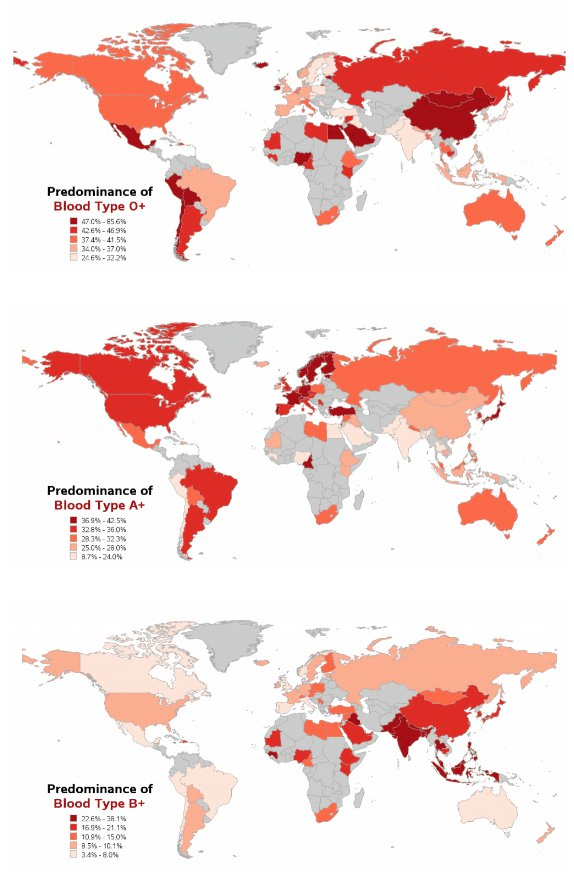
A-positive and A-negative are most prevalent in Caucasians, then Latinos. B-positive is most prevalent in Asians and Africans and B-negative is most prevalent in Caucasians, though least in Asians.
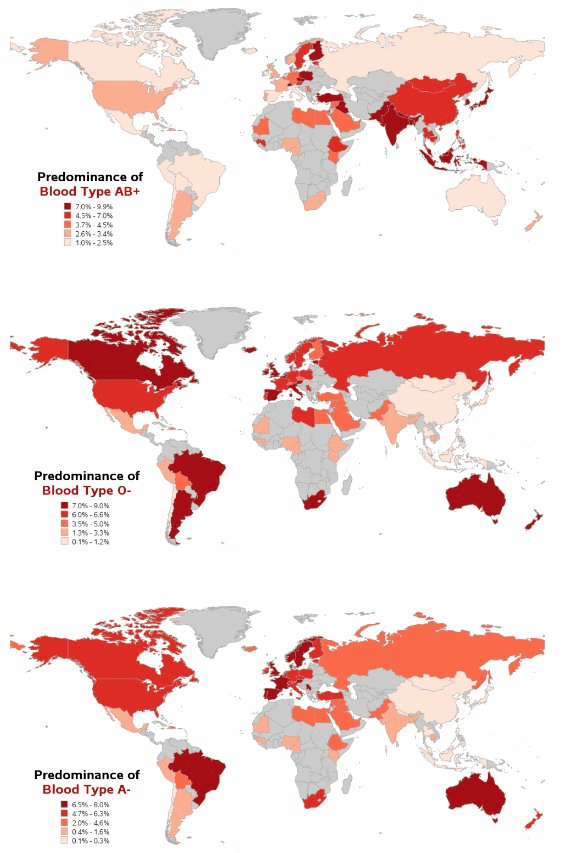
AB-positive is most prevalent in Asians and AB-negative while least in Asians, is found most in Caucasians.
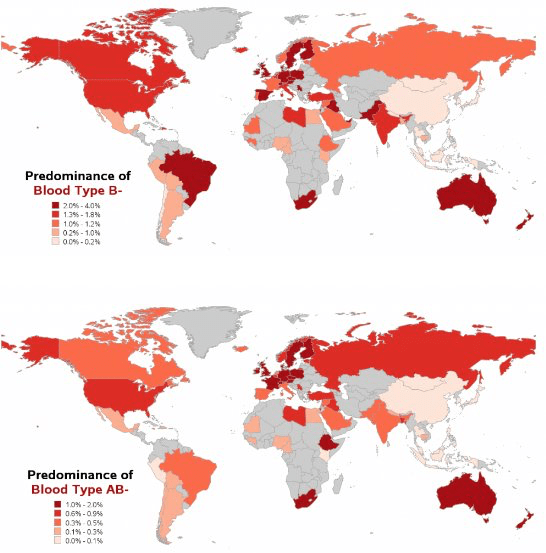
In summary, the most predominant blood types for the four racial strains delineated are:
Africans: O-positive, B-positive
Latinos: O-positive, A positive
Caucasians: A-positive – O-negative, A-negative, B-negative, AB-negative
Asians: B-positive, AB-positive
These findings reveal that all four negative blood types are predominant amongst Caucasian people. Latinos and Africans who are related partially through Ham and Canaan, both dominate O-positive. Caucasians dominate A-positive and Asians dominate B-positive. Interestingly, the predominant French blood types are A-positive and A-negative (including AB negative).
According to distribution of blood types per blood donors:
O+ 37%
A+ 36%
B+ 9 %
AB+ 3%
O- 7%
A- 6%
B- 1%
AB- 1%
As all mankind descended from the same ancestors, that is Adam and Eve, our blood should be compatible – humankind would all have the same blood… but, we don’t. Rh Positive blood can be traced back to the Rhesus monkey and other primates. Rh negative blood cannot be traced to anywhere else in nature and… cannot be cloned.
As one can’t successfully mate a mule with a mule – the result from a horse and a donkey – one cannot breed two mixed species even if they are the same. The result as mentioned, is Haemolytic disease, a condition where the immune system attacks an Rh positive baby, inherited from the father, if the mother is Rh negative. The mother’s blood collects antibodies to destroy an alien presence, like it would a virus. A staggering situation. So why would a mother’s body sabotage and annihilate her own flesh and blood? Unless perhaps for some reason, it isn’t. A Rh- woman with a Rh- man has an even smaller chance of having a baby born alive.
Nowhere else in nature, does this occur… apart from animal hybrids. This fact, by itself, indicates deliberate outside interference of cross-breeding between two similar but genetically different species. This fact puts a serious dent in the evolutionary process as Rh Negative blood indicates that at some point in humankind’s supposed evolution, it was paused while a mutational intervention took place and then evolution was restarted.
Points in history where this may have happened are a. when Cain’s Homo sapiens line integrated with the Homo neanderthalensis line of people from Day Six of creation (Articles: Homo neanderthalensis I, II, III & IV), b. at the time of Noah and the genetic split between his three sons, c. the time of Peleg and the scattering of the nations from Babel, or d. could it be a much more recent event and possibly linked with the birth of Moab and Ammon? Refer Chapter XXVI The French & Swiss: Moab, Ammon & Haran.
As we have previously discovered the link between Neanderthal man and the East Asians today, it is worth noting an article reprinted from Archaeology, entitled: Genetic Study Examines Neanderthal Blood Types, Stephanie Mazieres, July 30, 2021 – emphasis & bold mine:
‘Marseille, France – According to a Cosmos Magazine report, paleoanthropologist Silvana Condemi and her colleagues at Aix-Marseille University used information from three Neanderthal genomes and one 64,000-year-old Denisovan genome to investigate their blood types. Only one Neanderthal’s blood had been typed in the past, and was found to be type O under the ABO system used to classify the blood of modern humans. Since all chimpanzees are type A, and all gorillas are type B, it was assumed that all Neanderthals were type O.
But the new study found that the Neanderthal woman’s 100,000-year-old remains from Siberia’s Denisova Cave had type A blood; the Neanderthal woman’s 48,000-year-old remains from Siberia’s Chagyrskaya Cave also had type A blood; and the Neanderthal woman’s 64,000-year-old remains from Croatia’s Vindija Cave had type B blood. All three Neanderthals, however, carried a now-rare Rhesus type called “Rhesus plus incomplete,” which had only been found in the DNA of one member of Australia’s Western Desert Aboriginal people. “At the time, it was assumed to be a new Rhesus type that had arisen in Australia,” Condemi said. The rare Rhesus type has also now been found in 80 people from Papua New Guinea. “Now we know that it had existed in the past and was lost,” Condemi explained.’
What is relevant about this finding is that the Aborigine and Papua New Guineans are primarily descendants of Ham from Cush, though they have intermixed with descendants of Japheth from Javan as shown by their Haplogroups. The peoples of East Asia are descended from Japheth and also possess the highest levels of Neanderthal DNA. Hence the Rhesus plus incomplete is probably linked with Japheth rather than Ham – refer Chapter VII Javan: Archipelago South East Asia & Polynesia; and Chapter XIII India & Pakistan: Cush & Phut.
One researcher considered the theory that the Neanderthals were Rh negative and that they are the key to our ancestry. They contacted the Max Planck Institute in Leipzig, Germany and found out that not only were the two specimens examined Rh+, but they were homozygotes, meaning they didn’t even carry the Rh- blood factor recessively. In fact, the amount of Neanderthal DNA is very high within populations with very low or no Rh negatives amongst them. For instance, the Native American tribes have absolutely zero Rh negative genes in their populations. Added to this, it is now agreed upon that the differences between the Neanderthal tribes was actually greater than those of human ethnic groups.
In northern Spain and southern France amongst the Basque, there is the highest concentration of the Rh negative factor in the world, some 32%; with the range – depending on location – between 21% to 43%. Up to 60% of the Basque carry one negative gene. Only about 16% of Europeans have a Rh negative group. As little as 3% of Africans and 1% of Asian or Native American descendants have a Rh negative group. Added to this, the Basque exhibit substantially lower levels of Type B blood and a higher incidence of Type O blood of 55%, which is very similar to Latinos with 53%.

Recall in chapter III, that the Amerindian exhibits the following: ‘Type O happens to be the primary blood type among the indigenous populations of the Americas, in particular within Central and South America populations, with a frequency of nearly one hundred percent. In contrast, in indigenous North American populations the frequency of type A ranges from sixteen to eighty-two percent. This data supports the initial Amerindians descended from an isolated population with a minimal number of individuals.’ Thus it would seem that a restricted gene pool maintains a predominant genetic factor, whether it be a particular blood type or rhesus factor.
Today’s Basques are offspring of an original group which could well have been one hundred percent Rh negative. They exhibit the highest Rh- factor in Europe when compared with other groups. There are a few communities in Switzerland and the Netherlands with similarly high percentages. The Swiss finding is pertinent since they are also descended from Haran, as are the French via Haran’s son Lot.
On a national level, Australia has invariably topped the percentage of Rh- in the world with 19.5%. A couple of factors offered as likely causes are: 1. A high percentage of Australians have Scottish and Irish ancestry and so their high number of Rh- negatives impacts the percentage. 2. Some believe that amongst the prisoners England re-located to Australia, a very high percentage were Rh negative. Though this is likely inaccurate as the data for Poland from a 1997 study, placed them at an overall frequency of 19.67%.
Another group often mentioned are the Berber tribes in the Atlas mountain region of Morocco. It has been claimed that they have a 40% Rh- factor; whereas on a national average, the Moroccans are approximately 9% Rh negative. A more recent study has contradicted this high percentage with a result of 5.5% Rhesus negative. The previous observation of a high frequency of blood type O was confirmed; which may have been impacted by the inclusion of 40% African admixture. Thus, claims that Berber groups have unusually high numbers of Rh negatives should not be counted until a new, large scale definitive study is conducted.
Of interest, is the high percentage of Rh- people in Ireland and Scotland. Particularly, the peoples of northwest Ireland, the Highland Scots and the western Islanders of Norway, who all have between 16% and 25% Rh negatives. The Norwegians are accounted for by those (predominantly female) Scots, who were transported to Norway as slaves. Scotland is a country where there is a strong variation of blood type frequencies based on location. Between twenty and a little bit over thirty percent of Rh- can be expected in most of the extreme northern and western regions. In the west coast region of Inverness, where the Rh negative percentage has been measured at 30.44%, the percentage of blood type O has also been noted as substantially high. Ireland is purported to have around 25% Rh negatives in several reports while others demonstrate a percentage nearer 15% to 16%. However studies have indicated that Northern Ireland has a high percentage of approximately 27%. The following list shows those countries and regions in order with the highest rates of Rhesus negative.
Basque Country
(Atlas Mountain region of Moroccan Berbers – to be confirmed)
Scotland
Northern Ireland
(Parts of Switzerland and the Rhone Valley – 26.5%)
Catalonia 20% to 25%
(Parts of the Netherlands; Bunschoten-Spakenburg – 25%)
Poland
Australia – high proportion of Irish – 30% of population – and Scottish
(Parts of Brazil with high proportion of Basque – 19%)
(Parts of Chile – high proportion of Basque)
Republic of Ireland
(Sinai Peninsula Bedouins; what is interesting about this particular group is the similarity between their male DNA and the male DNA of Cohanim Jews)
(Scandinavia – specifically Southwest Norway, from Scottish slave ancestry)
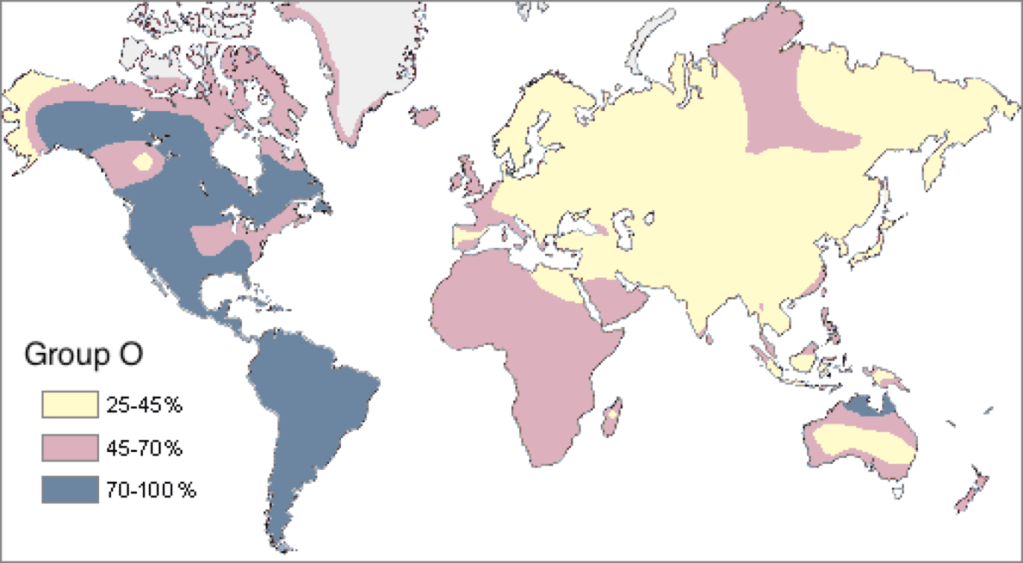
Notice on the world map that the predominant Rh- levels are in all the nations descended from Shem and specifically his sons Arphaxad and Aram. Though Aram is misleading, as it is the inclusion of the Basque in Spain and Brazil which increases the percentages in those countries.

Iceland is worth noting in that only one percent of its population is Rh negative. A very low figure compared to Scandinavia. It is perplexing, as two-thirds of its population is Scandinavian and one-third from Irish (or Scottish) descent. These peoples range from 16% to 25% and above, yet Iceland contradicts the pattern. We will learn in Chapter XXVII Abraham & Keturah – Benelux & Scandinavia, that Icelanders are a distinct people in their own right and a classification of either Scandinavian or Celtic from a migratory and historical perspective is correct, it is inaccurate with regard to their ethnic identity.
Celts and the Basques, James Vandale, 2006 – emphasis & bold mine:
‘… the geneticist Luiga Luca Cavalli-Sforza has completed a gene map of the peoples of Europe… The genetic boundary between Basques and non-Basques is very sharp on the Spanish side. On the French side, the boundary is more diffuse: it shades off gradually toward the Garonne in the north.’
These findings are entirely in agreement with what is known of the history of the distinctly different and unique, Basque language. It is the oldest language in Europe, and its origins are unknown. As the languages in neighbouring countries in Europe show no resemblance to the Basque language, it has become an inexplicable mystery to the linguist.
Vandale: ‘The people of the Basque region have a greater than 50 percent concentration of the RH negative gene… Basques are believed to have been the originators of the RH negative blood factor – the original genetic pool from which this factor came. While RH negatives are a small minority in the “white” and other races, and practically non-existent in “orientals”, the current Basques still are over 33% RH negative. [A] salient genetic feature is the shape and sutures (bone joints) of cranial bones of Basques… [and a] skeletal difference is the tendency to having a thicker breast bone.’
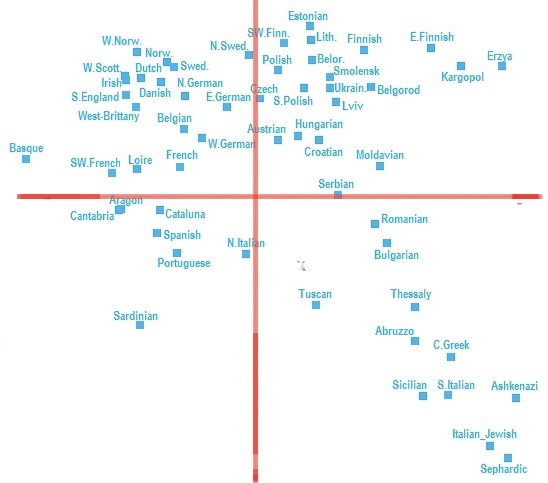
Thus, the Basque are more like the French than the Spanish – refer upper left on graph below. This supports their link with Moab and Ammon rather than from Gether – Chapter XXIII Aram & Tyre: Spain, Portugal & Brazil. If the Basque are the originators of the Rh- factor then this would date the origin to almost exactly 3,900 years ago and the births of Moab and Ammon in 1878/77 BCE.
When blood type is inherited from parents, the factor element of the blood is the most consistent characteristic passed on to offspring. Variations or aberrations are extremely rare. The majority of people – as high as 94% – have Rh positive blood. As blood type is one of the least mutable human characteristics, the big question facing scientists remains: Where did the Rh negative factor come from?
Due to the high percentage of European numbers, some conclude this may be when a Caucasian line was introduced into the genetic code. Dates proposed for this range from 35,000 to 5,000 years ago. The fact that a number of people lack this factor is a puzzling phenomenon that appears to defy evolution. Most scientists advocate a ‘random’ mutation – in other words, one that defies evolution. As there is a cause for every effect, a reason for the mutation must exist.
Rh-Negative Blood: An Exotic Bloodline or Random Mutation? Caleb Strom, 2020 – emphasis mine:
‘… some [people] suggest that Rh-Negative blood must be of a non-human origin. Theories range from supernatural ones such as being of divine descent or membership in a divinely chosen people-group, to more scientific or pseudoscientific explanations… One blogger has gone as far as to say that those with Rh-Negative blood are descendants of the Hyperborean race, which they believe to be the original human race’ – refer Chapter XXII Alpha & Omega. ‘Followers of this idea believe that this race was blonde-haired and blue-eyed and included most major spiritual teachers in history, including Jesus. Some people who are not satisfied with the idea that those with RH-Negative blood are another form of humanity have suggested that the trait originates from extraterrestrials either interbreeding with humans or creating humans through genetic engineering.
What is unusual about Rh-Negative blood is that the gene for it is surprisingly common despite being potentially harmful. When a woman who is Rh-Negative is pregnant with a child that is Rh-Positive, the mother’s immune system creates protective anti-bodies to the Rh-Positive blood, and her blood essentially becomes toxic to the child. To some people, this looks like the mother’s body is rejecting the baby – which has led them to suggest that perhaps the reason for the rejection is incompatibility based on the mother and child being of different species. Others suggest that lineages with the gene for Rh-Negative blood are merely special in some way and were not meant to be mixed with lineages which are predominantly Rh-Positive.
This unusual trait can, however, also be explained in terms of relatively mundane human genetics and natural selection. One possibility is that the gene for Rh-Negative blood has some sort of selective advantage that outweighed the negative consequences of having Rh-Negative blood. Although it could still be that there is a common, unique ancestral lineage connecting populations with high prevalence of Rh-Negative blood [yes, most likely due to mainly descending from Arphaxad], the fact that the populations where the gene occurs in high prevalence appear otherwise unrelated to each other makes it less likely and in need of more evidence.’
Not so, as these peoples are predominately from Arphaxad and intermarrying between them all is highly likely.
Strom: ‘The extraterrestrial explanation is even more problematic because the Rh-Negative gene is clearly a variation of an otherwise completely human gene. Unless it was specifically engineered by extraterrestrials from a pre-existing human gene, it is unlikely that it comes from anything other than Homo Sapiens. The other problem with the Rh-Negative blood type being the result of hybridization with extraterrestrials is that extraterrestrials are likely to have a completely different biology and genome than human beings. Their genome might not even be based on DNA – but something else such as RNA, or some exotic form of genetic storage that never evolved on Earth.
… the explanation that the Rh-Negative blood type is just a mutation that became common in some populations due to a selective advantage [is] the most likely option. It is also the one that most easily survives the application of Occam’s Razor. If this blood type was because of another human species, let alone extraterrestrials, many more unnecessary assumptions that are difficult to verify have to be made. As a result, the evidence currently points toward little more than an ordinary mutation as the cause of the Rh-Negative blood phenotype.’
Humans are not from Earth, Ellis Silver 2017, pages 152-154 – emphasis mine:
‘The origins of rhesus negative blood are unknown, but it’s also commonly known as “alien blood” so that might provide a clue. Whether there’s any genetic advantage in having (or not having) rhesus negative blood is currently unknown. Some researchers suspect that those with this type of blood might be more resistant to parasitic diseases… The D antigen could have been lost through genetic mutation or external manipulation. If we’d all evolved from a single African ancestor… then we’d all be biologically compatible. But we’re not, and our scientists can’t explain why. Since we’re not all compatible, this suggests that we aren’t just a single species. It also lends credence to the fact we may be a hybrid race… as well as being nicknamed alien blood… [it] is also… known as royal blood. There’s reported to be a very high incidence of it in members of the royal families of Western Europe, and especially in the British royal family… you could easily come up with the hypothesis that the original kings and queens of Europe might have been aliens.’
The Mystery of Rh- Negative Blood – Genetic Origin Unknown, Nella Adriana Corak-Sebetic, 2017 – capitalisation theirs, emphasis mine:
‘Geneticists generally claim the RH-negative factor is a mutation of unknown origin which apparently happened only a few thousand years ago. These ‘negative’ blooded people spread heavily into the area of what is now Spain, England, Ireland, France and later into America, Canada and Australia.
Interestingly, popular sciences [endeavour] to attribute Rh-neg blood groups to “mutations.” A solid alternative case may be extended to the conclusion that Rh-neg is NOT a mutation, but possibly the original human blood group. This, however, does not reflect tenured thought, and thus has never been adequately researched.
That there was a group of “pure” humans, not directly related to the evolutionary processes on Earth, is a distinct possibility. This reasoning would suggest that the original humans on our planet [were] not directly related to the apes, but at some point were “MADE” or “genetically engineered” to give such impression.
Perhaps it was never intended that the Rh-positives become the dominant species. That through some as yet undetermined epoch, the genetically impure group gradually became the controlling species, except for several remote enclaves, initiated a wide-ranging genocidal pogrom, effectively wiping out those who gave birth to them. All of which begs the questions: What reasons were the sub-species created, what was the process of conquest, what was the duration, and does it continue?’
From this same article, a selection of quotes from the scientific community.
a. In all blood groups there exists a common microbe that in essence is the life force itself.
b. Do not ever take a blood transfusion. The main reason for this has to do with cellular/genetic/galactic memory of blood. This is coded into the entire structure of the blood. All the emotions that the donor has felt during his entire lifetime are part of the blood.
This cannot be filtered out. For example if you get a heart of a man who died in a car accident, all the cells of that organ have the memory of the accident and every emotion that was felt while dying. These emotions confuse your own coding and then mass internal confusion happens at the cellular level and the order turns into chaos. When you measure the heart harmonics of people with “O” RH-neg blood, they are usually lower if they are smokers and heavy red meat eaters. The ones who eat fish and vegetables are in the normal range.
c. The Celtic people of Ireland and Great Britain also have high incidences of the RH- factor and it has recently been proven that there is a genetic link between the Basque and the Celts. This research proves that the Celtic people came from the Basque regions of France and Spain and a group must have migrated over to the islands of Great Britain.
d. In some areas, the Rh-Negative blood factor is referred to as “Blood Royale” or “Royal Blood”. For centuries, European royalty have been inflicted with Hemophilia or “bleeders disease”.
Corak-Sebetic: ‘Apparently, Queen Victoria was a “carrier” of Hemophilia and gave it to all of her children who then intermarried and infected the bloodlines of [every] throne in Europe during the 1800s and 1900s. As a direct result, Hemophilia became known as the “Royal Disease”. To keep this in perspective, only about 5% of all “royalty” have Rh-Factor negative blood… which means less than the general population. That would indicate that the vast majority of “rulers” and “monarchs” are NOT Rhesus-factor negative. Is this by chance? or by genetic engineering called “arranged marriages”?
… but if European Royalty refuse to marry into the Rh Negative blood line it means one thing… Rh-Neg people are a “competing royal line”. How do you get rid of it once and for all? Although the British would love for you to think that Victoria was the world’s first carrier… don’t be confused. It was the Hapsburg’s disease. Was Victoria a Hapsburg? The unofficial motto of the Hapsburg family was “Bella gerunt alii, tu, felix Austria, nubes!” (“Where others must fight wars, you, fortunate Austria, marry!”). It’s curious that “marriage’ can be a “dynastic” undertaking but it can also be a perverse form of “bio-warfare” or “genetic warfare”.
Was [haemophilia] a disease of Spanish Royalty? … [and] was marriage to Victoria’s daughters a way to kill or weaken future “non-Hapsburg” kings… since mostly males only contract the disease from their mothers? Still, Hemophilia was in Royalty long before Victoria. Victoria’s daughters passed the disease into the Spanish, German and Russian Royal lines and threatened the thrones of all of Europes major powers. It would appear that Victoria is actually a direct descendant of Ferdinand of Castille…’
Eye color, hair color, blood type, and the rhesus factor: exploring possible genetic links to sexual orientation, Lee Ellis, Christopher Ficek, Donald Burke and Shyamal Das, 2008 – emphasis mine:
‘The present study sought to expand the limited evidence that sexual orientation is influenced by genetic factors. This was accomplished by seeking statistical differences between heterosexuals and homosexuals for four traits that are known to be genetically determined: eye color, natural hair color, blood type, and the Rhesus factor.
Using a sample of over 7,000 U.S. and Canadian college students supplemented with additional homosexual subjects obtained through internet contacts, we found no significant differences between heterosexuals and homosexuals regarding eye color or hair color. In the case of blood type and the Rh factor, however, interesting patterns emerged. Heterosexual males and females exhibited statistically identical frequencies of the A blood type, while gay men exhibited a relatively low incidence and lesbians had a relatively high incidence [of type A blood](p < .05). In the case of the Rh factor, unusually high proportions of homosexuals of both sexes were Rh- when compared to heterosexuals (p < .06). The findings suggest that a connection may exist between sexual orientation and genes both on chromosome 9 (where blood type is determined) and on chromosome 1 (where the Rh factor is regulated).’
This paper is quoted not as condemnation of alternative lifestyles, but rather because of the significant coincidence of Lot living in a city, where same sex relations occurred and not to mention a society where humans and Nephilim (and/or Angels) were having sexual congress. While the Rh- factor may, or may not have a connection with these encounters, the question (in neon flashing lights) remains.
The alternative is to concentrate on Lot’s daughter’s sons, Moab and Ammon. Was the Rh- factor a mechanism in response to the incest… for the protection of the descendants of Moab and Ammon, which has gradually filtered through to other descendants of Shem through intermarriage and relationships with those outside of Moab and Ammon’s people. In the pages of the Bible there is not any other indication that any nation or peoples began directly through a father and his daughters; so that this event is portrayed as a one time, unique occurrence in human history.
This may explain the low percentages of Rh- factor in the equatorial inhabitants of the Earth and even lower levels in the oriental peoples. It is curious that Rh negative blood cannot be duplicated or cloned. As is the higher percentage of Rh negative people who claim to have been abducted by aliens.
Is it just a coincidence that the Basque possess the highest percentages of Y-DNA Haplogroup R1b in Europe; or that they have the highest percentages of Rh negative blood in the world? So that by these two criteria, they exhibit endogamy to its fullest extreme and so are in all probability, descended from Moab or Ammon… who were born from the most restricted gene pool through incest ever documented?
Unknown author – emphasis & bold mine:
‘For many years people have been searching for the wrong thing. Could the true “missing link“ actually be man himself? The unknown link between earth and the stars – hybrid man. Man may be the missing link between primate and extraterrestrial. It seems inconceivable to me that those working on the evolution theory have overlooked this possibility. How can they state, that these people are lacking a factor contained in all other earthly primates, including the naked ape, and not ask why? What other characteristics are common among these people that are uncommon to other people? Is there a real difference other than just a different blood?’
This could not be worded better. These are serious and legitimate questions. Come on science, why do you purposely overlook these alternative options? Perhaps because it leads down a certain road and to unwanted conclusions which just don’t fit the creation without a creator paradigm.
A school of thought, is that white skin, with blond (or red hair) and blue (or green eyes), was introduced into the Homo sapien line from the Nephilim; who exhibited the exact same characteristics. It is claimed that people with the following traits (a single comprehensive list compiled from various other lists) are in some way related to Nephilim, or by extension aliens. Confusingly – though likely more accurately – the same list is also applied to Rh negative people, so that there has been a blurring of symptoms and traits.
- Higher than average IQ
- More sensitive vision, hearing and other senses
- Lower body temperature
- Higher blood pressure or lower, with a low pulse rate
- Increased occurrence of psychic and intuitive abilities, particularly if type O negative
- Predominantly green or hazel eyes that change colour, including piercing blue eyes
- Red or reddish tint to hair colour
- Widows peak, tongue rolling, ear lobes, freckles, polydactyly – 6 fingers or toes – webbed feet or hands, Albinism
- Increased sensitivity to heat and sunlight
- Cannot be cloned
- Extra rib or vertebra, a tail bone (cauda)
- Alien abduction and other unexplained or strange phenomenon – UFO, para-normal
- A feeling of not belonging to the human race
- Truth seekers and a desire for higher wisdom
- Sense of a “mission” in life
- Empathy and compassion for mankind
- ESP ability
- Love of space and science
- Unexplained scars
- Empathetic illnesses and tendency to be healers
- Higher negative-ion shielding from positive ‘charged’ viruses and bacteria around the body
- Capability to disrupt electrical devices
- Psychic dreams
- High sensitivity to electromagnetic, as well as, extremely low frequency fields
True World History Humanity’s Saga, Stewart A Swerdlow 2014, page 32 – bold mine:
‘… Noah was born with red skin and had white hair. He was depicted in appearance as the “Sons of God”. This text refers to him as if he had alien features. Noah was not the same as other human beings on Earth.’
If Noah – who according to Enoch looked like the Nephilim – and or, his son Shem and their wives introduced the white skin mutation (refer Chapter XVI Shem Occidentalis) then the characteristics above may or may not be linked to non-humans.
Human blood is iron based, but some animals have copper based blood turning it blue – called hemocyanin. Blood is red because of the presence of haemoglobin. Octopi, Lobsters, spiders, molluscs, arthropods and other animals can and do in fact have blue blood. Humans do not. The claim that rhesus negative blood is copper based, or that the term blue blood originates from copper based blood in rhesus negatives is not true. Though the concept of blue blood must have an origination from somewhere. Is it linked to the Nephilim. Is this why Royalty and the powers that be, historically have been labeled as Blue Blooded.
Royals have tended to have paler skin than average; therefore their veins are more easily seen and viewed through skin tissue, look blue. As it is mainly sea creatures which have blue blood, Angellica Goodson labels it as copper based aquatic blood. She also claims that it is a ‘human alien hybrid blood’ line that carries it. The hybrid lines are associated with the Serpent and Reptillian bloodlines as purported by various authors, such as conspiracy theorist David Icke – refer article: Principalities & Potentates: What they want… Who they are.
Goodson explains that the misidentification of Rh negative with Nephilim ‘started years ago on a physic website where a letter was posted from an anonymous person stating that she was an Rh negative but giving her alien human hybrid characteristics instead of the characteristics of a “Pure Scandinavian Rh Negative.” The misidentification has [since] gone viral online as [incorrect information].’
Goodson continues – emphasis mine:
‘Some people carry both Rh Negative and Copper Based Aquatic Alien human hybrid anomalies. They number [under 7% of the global Population]. Copper Based Aquatic Blood is alien human hybrid blood, which has nothing to do with the Rh- Blood Factor. Those with the pure Rh- Factor carry what is referred to as “Power in the Blood.” Those with Copper Based Aquatic Blood [include] those who are being abducted by aliens… because they carry alien genetics, which they inherited from their ancestors… The main reason aliens are interested in those with pure Rh- Negative blood is for their DNA.’
As the subject is drifting away from the original topic yet still related, we will conclude with three additional quotes; that may be of value to readers interested in the topics addressed in Chapter XXII Alpha & Omega.
The Genesis 6 Conspiracy, Gary Wayne, Page 353 – emphasis mine:
‘Alien Abductions hold familiar kinship with fairy folk and fairy abductions… fairies have a need to reproduce with humans… like aliens. Fairies never abduct old people – only babies, young men, and young women… like aliens. Goblins, elves, trolls, and gnomes are known in mythology as beings that are described as “grays”… they are eager to breed with humans to modify and refresh their genetic makeup so that they might continue to survive… they need to mate with humans because they need an injection of new genes to bolster their weakened genetic makeup.’
Blue Blood, True Blood, Conflict and Creation, Stewart A Swerdlow, 2002 – emphasis mine:
‘[Reptilians] developed a plan to insidiously… [blend] their genetics with the genetics of… humans. Because the human prototype already had Reptilian genetics, it was easy to access the mind-pattern’ – refer Chapter XXII Alpha & Omega. ‘The Reptilian frequency was already established in the brain stem as well as the Reptilian brain section of these hybrid humans.
The population of Sumer was chosen as the starting point. These humans were primarily descendants of the Martian, Maldekian, and Lyraen refugees. The Reptilians have a preference for the genetics of blonde-haired, blue-eyed people whose mind-patterns and genetics are so easily controlled. They abducted members of the ruling classes, including political leaders. Using these humans, they began a new hybridization program that took several generations to perfect. Their goal was to reach a human/Reptilian genetic 50/50 split. This would produce a human-looking Reptilian that could easily shapeshift from Reptilian to human, then back again.
Shapeshifting was accomplished simply by concentrating on the genetics the hybrid wished to open, or lock up, whatever the case may be. Once the hybridization program was complete, the Sumerian leaders were now shapeshifting Reptilians. The new Reptilian hybrid became the elite of that culture. Their blood, because of the increased Reptilian DNA, contained more of a copper content. Since copper-based blood turns blue-green upon oxidizing, these Reptilian hybrids were called “Bluebloods”.
The Bluebloods quickly realized that with a 50/50 human/Reptilian genetic split, it was necessary to intermarry to maintain the 50/50 split bloodline necessary to shapeshift. When the split increased too far to the Reptilian side, shapeshifting became difficult, and holding human form became impossible. In these cases, it was discovered that the ingestion of human hormones, flesh, and blood, allowed the Reptilians to maintain the human form.
Human form was necessary to maintain to avoid scaring the population, which was now not accustomed to the Reptilian form. Control of the masses was easier when the orders came from a humanoid. The Reptilian format was kept to religious icons and legends. The statues of their gods and goddesses reflect the Reptilian influence, even showing a female Reptilian holding a hybrid baby’ – Chapter XXII Alpha & Omega.
‘The shapeshifting Reptilian Bluebloods asked the Sirians for help with the daily maintenance of their human forms. The Sirians determined that feeding the hybrids human hormones and blood in an altered animal form would be the easiest way to do it unnoticed by the population. The sacrificial animal used by most Middle Eastern people was the wild boar, so the Sirians chose it as the basis for this new animal hybrid. Human genetics were mixed with those of the wild boar to create the domesticated pig. This animal was served daily to the Bluebloods as a method of temporarily maintaining their human form until they could use an actual human in a sacrificial ceremony.
Because the domesticated pig is a combination of human and animal genetics, eating it is a form of cannibalism. This explains why the Hebrews considered it unclean to eat’ – Leviticus 11:7-8, Deuteronomy 14:8. ‘This is also why the pig is considered to be the most intelligent animal on Earth, why pig skin can be grafted directly onto humans in burn cases, and why pig heart valves can be used in humans with little difficulty. Cancer drugs and other chemicals are often tested on pigs before humans. In many respects, pigs can be considered a form of humanity. To a lesser degree, the same is true about cats.
As time progressed, the civilization of Sumer declined and transformed into other cultures. Vast migrations from Sumer to other locations in Central Asia occurred [the time of Peleg – Genesis 10:10, 25]. The migrating peoples took their Blueblood leaders with them, as they were their royalty and kings. The Sumerians became known as the sum-Aryans, or just, Aryans.’
Starseed Journey – RH Negative Blood, 2009 – capitalisation theirs, emphasis mine:
‘… the British Royal Family… [and] the Blue Bloods of Europe… are said to have stolen THE DIVINE RIGHT TO RULE the world from their Scandinavian predecessors before recorded history. The British Royals and Blue Bloods of Europe appear to be a bloodline of people with Scandinavian DNA and the DNA of a dark race… The Royals and “Blue Bloods” can be tracked back to the Lost Tribe of Dan and Cain in the Old Testament who are described as having had red hair and green-eyes’ – refer Chapter XXXIV Dan: The Invisible Tribe.
‘They are also referred to as the “Serpent Bloodline” or “Reptilian Bloodline.” Further some even say these royal “Blue Bloods,” are a hybrid human reptilian bloodline… If this is true, they are not the original bloodline on earth and worse than that they have… reptilian DNA flowing through their veins’ – Article: Principalities & Potentates: What they want… Who they are.
‘It would appear that the Hindus ancient history is wrapped round spiritual traditions… [in] which ancient peoples referred to… [a] Land of the Gods… The ancient histories of all the major nations and religions on earth mention a time when… mankind lived in a temperate paradise… referred to [as] Hyperborea… a “GARDEN OF EDEN”… – refer Chapter XXII Alpha & Omega; and article: The Eden Enigma.
‘These legends tell us that the Scandinavian race was the original race in Hyperborea until the gods came down and started to… manipulate the DNA of the original Scandinavians creating hybrid races of genetically altered human beings. These evil gods began a human hybrid program in Hyperborea, which is eerily similar to what was being described in Genesis Chapter 6. All cultures also speak of reptilian gods who created a hybrid race of kings and queens that sat on the thrones of all ancient kingdoms that can be tracked back to ancient Sumer [and] Babylon in Iraq.
[A] group of evil entities entered our three dimensional world that were created by Yaldabaoth the Demiurge, they were reptilian entities. One of these entities was known as Yahweh Ildabaoth… Once the physical bodies had been created these evil artisans… were able to… clone human DNA. Those falling for the “Alien [Agenda”] believe that the (spirit) entities we wrongly call Aliens today, created human beings. However… the entities who came into our… world to… clone human beings were NOT CAPABLE OF CREATING HUMAN BEINGS AND ARE STILL NOT ABLE TO. These entities did have the ability to… clone hybrids using human, reptilian, animal and bird DNA, which is how the “Serpent Bloodlines” were created… illicit sexual activity with the gods is the actual meaning behind “ORIGINAL SIN” – refer Chapter XXII Alpha & Omega.
Scientists cannot explain the Rhesus negative factor found in Europeans, whom would they accept, descend from Noah’s son Shem. There are a series of dots – both scientific and biblical – and it would seem a simple task in joining them to discover the answer to why the Rhesus negative factor exists and how it came to be. Yet, the obvious blends into the fantastical and so it would seem next to impossible to fathom.
Here are the salient points and let the reader decide for themselves.
While Rh negative is found almost wholly in Europeans, it is primarily focused in northwestern European peoples and their daughter nations in the New World. Concentrating further again it is indicative of the peoples nestled in northern Spain and southern France. While the majority of Basque by fate dwell in Spain, they are logically (genetically) a spilling over from the minority who find themselves residing within French borders.
By itself this point stands alone, though it has added impetus when understood that the French people descend from Lot and is amplified because his two sons were born from incest. It is then intensified by the fact incest levels in the world are the highest in France – refer Chapter XXVI The French & Swiss: Moab, Ammon & Haran.
It does not prove the incest which fathered a people, a modern day nation in fact has produced Rh- blood types. But, serious consideration should be given to a situation where close family members – only some 3900 years ago – had sexual relations which throughout history (and supported by research) has shown to be an endangerment to unborn children where they can be born with abnormalities.
Signs of inbreeding in inbred children include: decreased cognitive abilities; muscular function; reduced height; lung function; higher risk of rare recessive genetic disorders; and greater risk from diseases in general.
Why would a mother’s immune system endeavour to destroy its own baby and perceive it as alien or an enemy? Surely incest would not be sufficient reason for such an adverse reaction? Thus what would be a grave situation to warrant such a protective measure?
Again, the following is not proof, but must be considered no matter how unsavoury in seeking an explanation. Perhaps those who have put forward a Nephilim connection with Rh negative blood types are close to the truth.
Therefore, it may not be a coincidence that the father and daughters of the incestuous sons Moab and Ammon had been inhabitants of a city where a post-flood irruption of angelic sexual activity with humans had occurred – refer Chapter XXVI The French & Swiss: Moab, Ammon & Haran.
What if the two daughters of Lot had been ‘victims’ of just such a liaison? This may answer two issues. One, where Lot seemed content in offering his daughters to the angry Sodomites. Perhaps they were still virgins in relation to men, but not otherwise.
Two, the Rh negative factor may have been a mutational response against sexual indiscretion prior to Moab and Ammon’s births, so as to protect against unwanted children being born with genetics from an unworldly origin. Thus over time, the Rh negative factor remained even though the threat from non-physical DNA traits diminished, eventually disappearing.
An original excerpt transferred from Chapter XXVI The French & Swiss: Moab, Ammon & Haran.
© Orion Gold 2021 – All rights reserved. Permission to copy, use or distribute, if acknowledgement of the original authorship is attributed to Orion Gold






 The Lightkeeper