
Chapter XXVII
Abraham is a dominant figure on the genetic landscape with Noah and his sons, for his descendants loom large on the pages of history. Abraham is likened to Abel before the Flood, in similarly being the first person after the deluge to stand out as a towering presence in obedience to the true Creator.
As Noah projects a large shadow on the antediluvian world (with Abel and Enoch, who though giant pillars themselves, never-the-less are caught in the shadow cast by Noah and his genetic role in the line of Seth), so Abraham is the pivot in the genetic evolution of the line of Shem – the principal agent in the lineage continuum originating from their forefather Seth.
All those who followed Abraham such as Isaac, Jacob, Joseph, Moses, Joshua, David, Elijah and Daniel, are enveloped not just through his genetic inheritance but also by Abraham’s faith.
For Abraham is the Father of the faithful.
David A Snyder aptly states:
“We will follow the life of this Abram whom God will later name Abraham. We will discover that he may have been as great a secular figure as he was a Biblical one.”
He continues in his book.
Abraham of Ur – A Critical Analysis of the Life and Times of the Patriarch, 2014 – emphasis mine:
‘At first I was not sure that Abraham even existed.
After I investigated the secular history of the day and considered the Ugaritic literature… and the Tell el-Amarna tablets… I came to realize that the geopolitical climate at the time Abraham entered Canaan was perfectly conducive to support the stories of his travels into the Promised Land… Abraham’s family was well-educated, literate and wealthy.
And if we are to believe Josephus, Abraham was possibly an astronomer and military leader. This is contradictory to the image most people have of Abraham as a nomadic shepherd leading a flock of sheep; however, I believe that only a well-educated and worldly man such as Abraham would be able to achieve the goal that God gave to him – to establish the Hebrew nation[s].’
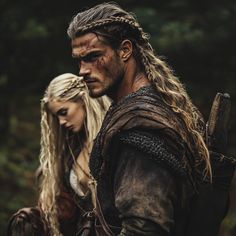
An image of a young Abram and Sarai, whom very few would entertain. For Abram was of noble pedigree and warrior stock. Abraham was once young yet invariably depictions of him picture an unflattering rugged old man sporting a long beard and white hair. Albeit – as their descendants demonstrate – Abraham was likely blonde or fair as was Sarah.
Gerard Gertoux, The Pharaoh of the Exodus Fairy tale or real history – emphasis mine:
‘Very few Bible scholars believe now (2016) in the historicity of the book of Genesis, especially the narrative of Abraham and Sarah’s life, but what is really incomprehensible is that their conclusion is based only on the following prejudice: the lack of archaeological evidence implies an absence of historicity of these biblical narratives!’
Yes, a small matter of a lack of archaeological evidence hinders the likelihood of a biblical figure being genuine; but doesn’t stand in the way at all, of scientists espousing a belief in an untenable theory to explain mankind’s existence – Article: Chance Chaos or Designated Design?
Greater and incontestable evidence of Abraham’s existence… is the fact that he has become a father of many nations as we shall learn.
Gertoux:
‘Today, according to mainstream Egyptologists as well as prominent archaeologists there would never have been:
1) any biblical writing in the time of Moses (Deuteronomy 31:24),
2) neither domesticated camels in the time of Abraham (Genesis 12:6),
3) nor Philistines (Genesis 21:34),
4) nor Hittites (Genesis 23:10),
5) nor Arameans (Deuteronomy 26:5),
6) nor Chaldeans (Genesis 11:28), etc.
All these criticisms are paradoxical because despite the absence of reliable chronologies these academics and Bible experts say in a dogmatic manner having found numerous anachronisms in the narrative of Abraham and Sarah.’
Egyptologists and Archaeologists should be aware that the Bible has been edited after events have transpired. Thus, terms for various peoples who are more recent than Abraham are still valid in referring to a people of an earlier time during his life.
The Philistines already existed as they descend principally from Aram, a son of Shem and in part from Mizra-im, a son of Ham. Whether they were known as Philistines, Caphtorim, Minoans, Mycaeneans even or yet an entirely different name does not invalidate their existence or their kings’ interaction with Sarah and Abraham.
Similarly regarding the Hittites descended from Heth of Canaan – not the later Hittites – and the Aramaeans who were Syrians.
Granted, the Chaldeans are descended principally from Abraham’s brother, Nahor though they existed as proto-Chaldeans via the descendants of Peleg (Aram) and the early Babylonians – refer Hatti and Mitanni: Chapter XXIII Aram & Tyre: Spain, Portugal & Brazil; and Chapter XXV Italy: Nahor & the Chaldeans.
Gertoux:
‘Regarding biblical chronology, the Vatican’s biblical scholars made Abraham enter into Canaan in 2138 BCE (Vigouroux: 1899, 737), while nowadays they say 1850 BCE (De Vaux: 1986, 1805). How can one explain such discrepancies in dates [of 288 years]?’
It is a step in the right direction, as the latter dating is fifty-two years out from 1902 BCE based on an unconventional chronology, compared with two hundred and thirty-six years for the former date – Appendix IV: An Unconventional Chronology.
James 2:22-24
Common English Bible
‘See, his faith was at work along with his actions. In fact, his faith was made complete by his faithful actions. So the scripture was fulfilled that says, Abraham believed God, and God regarded him as righteous [like Daniel, Job, Noah and Abel – Ezekiel 14:14, Hebrews 11:4].
What is more, Abraham was called God‘s friend.
So you see that a person is shown to be righteous through faithful actions and not through faith alone’ – refer article: The Pauline Paradox.
The word friend in Greek is philos.
It signifies a deep friendship, where each knows the other and can fully count on them. A close friend of long-standing and one that has been through everything of consequence with you.
A quite profound reflection of the Creator’s relationship with Abraham, for this was no ordinary friendship – it had transcended to an intimate, special bond between Abraham and the Eternal.
Isaiah 41:8
Darby Translation
‘But thou, Israel, my servant, Jacob, whom I have chosen, the seed of Abraham, my friend…’
There are two other people in scripture who are referred to in the context, of being a friend of God; though not specifically as: ‘God’s friend’ or ‘my friend’ as described of Abraham. The resurrected Lazarus is described by Christ as ‘our friend’ (John 11:11) and Moses spoke face to face with God ‘as one speaks unto his friend’ – Exodus 33:11.
There is a further link between Abraham and Moses not just the family connection, which we will explore when we study Moses.
2 Chronicles 20:5-7
New English Translation
‘Jehoshaphat [the fourth king of Judah] stood before the assembly of Judah and Jerusalem at the Lord’s temple, in front of the new courtyard. He prayed:
“O Lord God of our ancestors, you are the God who lives in heaven and rules over all the kingdoms of the nations. You possess strength and power; no one can stand against you.
Our God, you drove out the inhabitants of this land before your people Israel and gave it as a permanent possession to the descendants of your friend Abraham.’
The Hebrew word for friend in both verses is ahab.
This word implies a deep love and respect for another. There is encouragement in knowing that we too (like Lazarus), can be counted as the Son of Man’s friend.
John 15:14-15
New English Translation
‘You are my friends if you do what I command you. I no longer call you slaves, because the slave does not understand what his master is doing.
But I have called you friends, because I have revealed to you everything I heard from my Father.’
‘Friend of God’ is the meaning of the name Theophilus.
In 2 Samuel chapter twelve, David comforts Bathsheba after the death of their first baby. The second child and David’s seventh son, is named Solomon – Article: Seventh Son of a Seventh Son.
Verses 24-25 ESV: ‘And the Lord loved him and sent a message by Nathan the prophet. So he called his name Jedidiah [H3041 – beloved of the Lord], because of the Lord.’
Solomon was blessed with a special name, which can also mean friend of God.
Abarim Publications – emphasis & bold mine:
‘The name Abram [means:] Exalted Father, Their Shield, Their Protection From (1) (‘ab), father, and (2) (rum), to be elevated.
From (1) the verb (abar), to be strong or to protect, and (2) the 3rd person plural pronominal suffix (am), their.
There’s only one man named Abram in the Bible, namely the famous son of Terah who left Ur of the Chaldeans and headed for a land which YHWH would show him (Genesis 11:31). Since Abram is the first complex character in the Bible, a lot of the Bible’s primeurs are his.
However, Abram is typically not the first to call upon the name of YHWH, because that went on as far back as the generation of Enosh, the grandson of Adam and Eve (4:26). He was also not the first to worship the one and only God, because when he arrived in Canaan he found Melchizedek well engaged as priest of El Elyon (14:18). He was also not the first to be called righteous (15:6), because that was Noah (6:9) and in retrospect Abel (Matthew 23:25).
Abram is nevertheless the first on record to be approached by… the Lord (15:1), the first to be called Hebrew (14:13) and the first to engage in international commerce. He’s the first to itinerate and circulate… the first to be rich (in cattle and precious metals; Genesis 13:2), the first to compete and to establish a peaceful economic pact (with Lot; 13:6-12), the first to view the entire world as his oyster (13:14-15) and to whom the sky was the limit (15:5).
Abram was the first to pay property tax, namely 10 percent (to Melchizedek; 14:20), and this was adopted into Israel’s national policy (Genesis 28:22, Numbers 18:26, Hebrews 7:5). The first time the Bible speaks of a commercial purchase is in Genesis 17, where circumcision is instituted as sign of the great covenant… and the Lord renames Abram as Abraham and orders the inclusion into the covenant of all the men Abram had acquired via purchase (miqna, which is related to the name Cain). The first monetary transaction occurs as restitution for Sarah’s disgrace by Abimelech (Genesis 20:16; because Abram was also the first to [loan] his wife… Genesis 20 and 12:11-20).
The first actual purchase with money described in the Bible is Abraham’s flamboyantly negotiated acquisition of the cave of Machpelah from Ephron, son of Zohar of Heth. Abraham wanted that cave and wanted to pay for it in order to properly bury Sarah (Genesis 23). He paid 400 shekels for it (23:16), according to the “passing of trade”…
A somewhat more hairy unit of wealth was the camel, but where the English word “camel” is solely reserved for that humped beast of burden, the Hebrew cognate (gamal), meaning camel, comes from the identical verb (gamal), which means to trade or invest. In other words: the Hebrew noun (gamal) does not denote a specific biological genus, it describes a particular economic function, namely that of investing and long-distance trading… The camel too gets its Biblical introduction in the Abram cycle, namely when the Egyptian Pharaoh reimburses Abram for the Sarai incident with sheep, cattle, donkeys, servants and camels (12:16).
The next time Abraham’s proverbial camels are mentioned is when Abraham sends his chief of staff (probably Eliezer) north to his family’s land with “ten” camels and the whole of Abraham’s wealth in his hand (24:10), in order to obtain a wife for Isaac…’

Abraham
‘There are two ways to go about the name Abram. Traditionally this name is interpreted to consist of two elements, the first of which would be (‘ab), meaning father: The noun (‘ab) means father, but describes primarily a social relationship rather than a biological one. That social fatherhood was the defining quality of the community’s alpha male, the one around whom all economy revolved and from whom emanated all instructions by which the ‘sons’ (ben) operated. It’s unclear where this word (‘ab) comes from but the verb abu means to decide.
The second part of our name is traditionally considered to be part of the great (rum)-cluster of names: The verb (rum) means to be high or high up in either a physical, social or even attitudinal sense, and may also refer to the apex in a natural process: the being ripe and ready-for-harvest of fruits. Derived nouns, such as (rum) and related forms, describe height or pride. Noun (ramut) describes some high thing. The noun (‘armon) refers to a society’s apex: a citadel or palace. The noun (re’em) describes the wild ox, which was named possibly for the same reason why we moderns call a rising market a “bull” market. The similar verb (ra’am) means to rise.
The name Abram relates to Abraham the way Sarai relates to Sarah; the latter two names are basically variations of the same word… The core of both names comes from the root (‘br), meaning to be strong or to protect: The name Abraham is often reported to mean Father Of Many Nations but that’s rather obviously incorrect. In Genesis 17:5, the Lord promises Abram that he would be the father of many nations – in Hebrew: ‘ab hamon goyim – but that does not mean that Abram’s new name, namely Abraham, means Father Of Many Nations.
God changes Abram’s name to Abraham. Likewise, the Lord promises that Abraham’s… wife Sarai would “become nations” or rather: “become international” (heyata le’goyim) and changed her name to Sarah (17:16). As with our name Abraham, the phrase does not relate to the name. The name Abraham follows from the name Abram by inserting the letter (he) in front of the final (mem), and the name Sarah follows from Sarai by replacing the final (yod) with the same letter (he). This letter (he) is one of a few Hebrew letters that may represent both a consonant and a vowel… and it’s probably no coincidence that the name of the Lord, or YHWH consists of only those vowel-consonant symbols, and contains twice this potent letter (he).
The names Sarai and Sarah both stem from the root (sarar), which possibly means to rule or to be strong.
The final (yod) of the original name Sarai suggests a possessive form: my strength or strength(s) of, whereas the new name Sarah reflects the general idea of ruling or being strong. The names Sarai and Sarah reflect the same core idea, but the form Sarai reflects locality and the form Sarah reflects universality.’

Sarah
‘The same transition between locality and universality is reflected in the names Abram and Abraham, which are both based on the root (‘abar), meaning to be strong (or to be able to protect)… Like Sarai, the name Abram seems to denote a nation’s private strength, whereas the name Abraham, like Sarah, reflects the strength that arises from synchronicity among states.
The core of the name Abraham comes from the exquisite root (‘br): The verb (‘br) means to be strong or firm, particularly in a defensive way (rather than offensive). The derived nouns (‘eber) and (‘ebra) refer to the pinion(s) that make up a bird’s wings, which in turn means that the ancients saw avian wings as means to protect rather than to fly with (the signature trait of angels, hence, is not an ability to fly but a tendency to protect). The verb (‘abar) describes activities done with pinions, which is to fly or to protect.
Another detail worthy of note is that the first and last letters of the name (Abraham) are often used as formatives that do not change the meaning of the core word. These two letters obviously aren’t inconsequential formative letters in our name, but if we remove them anyway, what remains is (bara), the assumed root of the noun (berit), meaning covenant.
The Lord told Abraham that he would be the father of many nations (‘ab hamon goyim; Genesis 17:4-5) – not simply the father of many people…
The word (hamon), in turn, does not express simply a large number, but the rain-like noise that emerges from a unified but seething throng, and the throng, in this case, consists of autonomous nations. The Bible indicates that a multitude of goyim, or “nations” is the ultimate form of human society, which is remarkable because since time immemorial people have believed that they could somehow form a global empire that would unite all the nations, dissolve all borders and reign the entire world from one throne. But despite the efforts of many an emperor, it appears that humanity is designed to operate by means of nations…
It should be emphasized that despite the claims of Jews, Christians and Muslims alike, neither Jesus nor Abraham has anything to do with any formal religion.
Abraham is not a border-maker; he is a border-breaker… His patriarchy is one of consilience; in him are summed up the peacemakers of which Jesus said they would be called Sons Of God (Matthew 5:9).
The table of nations of Genesis 10 denotes the world’s various states of the first stage, and the members of the family of Abraham denote the states of the second stage.
Most of these very early states have long gone (or went by other names than modern ones; very early states probably changed names much more often than states do today and were doubtlessly known to their contemporaries by multiple names)…’
The constant reader will have noted that we can actually decipher the early states and nations and who they are today, even though their names have continuously altered and evolved, their core, original identities have remained and have only to be unlocked.
Abraham’s family, including his two brothers were a second wave of nations which arrived on the world stage relatively recently – some nine thousand years after those originating from off the Ark.
We have covered part of Abraham’s early life as well as his wife Sarah, whilst studying Nahor and Haran in the preceding two chapters. Further insight can be gleaned into Abram’s early life from the Book of Jubilees. Abram’s mother is named as Edna, though another source says Terah’s wife’s name was Amathlai.
Refreshing our mind regarding Abraham in the Book of Jubilees; Jubilees 11:16-23 explains that Abram as a child “began to understand the errors of the earth that all went astray after graven images and after uncleanness… and he separated himself from his father, that he might not worship idols with him.”
‘And he began to pray to the Creator of all things that He might save him from the errors of the children of men, and that his portion should not fall into error after uncleanness and vileness. And the seed time came for the sowing of seed upon the land, and they all went forth together to protect their seed against the ravens, and Abram went forth with those that went, and the child was a lad of fourteen years.
And a cloud of ravens came to devour the seed, and Abram ran to meet them before they settled on the ground, and cried to them before they settled on the ground to devour the seed… [saying], ‘Descend not: return to the place whence ye came,’ and they proceeded to turn back… his name became great in all the land of the Chaldees… they sowed their land, and that year they brought enough grain home and eat and were satisfied…
Abram taught those who made implements for oxen, the artificers in wood, and they made a vessel above the ground, facing the frame of the plough, in order to put the seed thereon, and the seed fell down there from upon the share of the plough, and was hidden in the earth, and they no longer feared the ravens.’
Following this, Abram confronts his father in Jubilees 12:1-7, on the always heated topic of religion.
Why are discussions on anything deeper than the weather subject to confrontation and aggression? As with any difference of opinion which turns into an argument, it only becomes hostile, because people uphold an idea that is only just an intangible thought in their own mind, as if it is something of great significance or immense value, because it is part of them; to be defended vigorously at all costs, spurred on by one’s own ego.
If a person sees all beliefs (or thoughts) as opinions, whether they be correct or false and that one can always build on them or if necessary tear them down and start again; then all arguments are pointless and merely based on an individual’s own pride and not truly on a premise of seeking knowledge, understanding, wisdom or… the truth.
Jubilees:
‘… it came to pass… that Abram said to Terah his father, saying, ‘Father!’ And he said, ‘Behold, here am I, my son’… he said,
‘What help and profit have we from those idols which thou dost worship, And before which thou dost bow thyself?
For there is no spirit in them, For they are dumb forms, and a misleading of the heart.
Worship them not: Worship the God of heaven, Who causes the rain and the dew to descend on the earth And does everything upon the earth, And has created everything by His word, And all life is from before His face. For they are the work of (men’s) hands… on your shoulders do ye bear them… ye have no help from them, But they are a great cause of shame to those who make them… a misleading of the heart to those who worship them:
And his father said unto him, I also know it, my son, but what shall I do with a people who have made me to serve before them?
… if I tell them the truth, they will slay me; for their soul cleaves to them to worship them and honour them.
Keep silent, my son, lest they slay thee’ … these words he spake to his two brothers, and they were angry with him and he kept silent.’
Book of Jubilees 12:12-21
‘… Abram arose by night, and burned the house of the idols, and he burned all that was in the house and no man knew it… they arose in the night and sought to save their gods from the midst of the fire… Haran hasted to save them, but the fire flamed over him, and he was burnt in the fire, and he died in Ur of the Chaldees before Terah his father, and they buried him in Ur of the Chaldees. And Terah went forth from Ur of the Chaldees, he and his sons, to go into the land of Lebanon and into the land of Canaan, and he dwelt in the land of Haran, and Abram dwelt with Terah his father in Haran…
Abram sat up throughout the night on the new moon of the seventh month [1st of Tishri, Feast of Trumpets] to observe the stars from the evening to the morning, in order to see what would be the character of the year with regard to the rains, and he was alone as he sat and observed.
And a word came into his heart and he said: All the signs of the stars, and the signs of the moon and of the sun are all in the hand of the Lord. Why do I search (them) out? If He desires, He causes it to rain, morning and evening; And if He desires, He withholds it, And all things are in his hand.
And he prayed that night and said, ‘My God, God Most High, Thou alone art my God, And Thee and Thy dominion have I chosen. And Thou hast created all things, And all things that are the work of thy hands.
Deliver me from the hands of evil spirits who have dominion over the thoughts of men’s hearts… let them not lead me astray from Thee, my God… establish Thou me and my seed for ever that we go not astray from henceforth and for evermore.’
And he said, ‘Shall I return unto Ur of the Chaldees who seek my face that I may return to them, am I to remain here in this place?
The right path before Thee prosper it in the hands of Thy servant that he may fulfil (it) and that I may not walk in the deceitfulness of my heart, O my God.’
Jeremiah 17:9
Amplified Bible
“The heart is deceitful above all things And it is extremely sick; Who can understand it fully and know its secret motives?’
As discussed previously, the likelihood of Terah fleeing Ur due to Nimrod’s wrath seems decidedly remote and even more so to accept Nimrod was even still alive… alive, as in a corporeal human body.
Haran dying in a furnace appears less likely than dying tragically in a house fire, set by Abraham or not. Josephus remarks that when Haran died, he was memorialized by the city where ‘… his monument is shown to this day.’ He also conjectured that Terah left Ur on account of the death of his son Haran and says: ‘Now hating Chaldea on account of his mourning for Haran, they all removed to Haran [in] Mesopotamia, where Terah died.’
Apart from these explanations it may simply be, that Terah also recognised the decline of the Ur III civilisation and prudently departed. A relative time of peace during King Shulgi’s reign could have been the time when Terah’s family left one city which had the Moon god Sin as its chief deity, for the only other city which coincidently worshipped the same god, Sin… Haran.
Whichever scenario, it appears Nahor lingered in Ur, possibly to tie up property and family affairs as they were a family of substance. Ironically, it would be many centuries later when descendants of Nahor would return as the ruling Chaldean dynasty – Chapter XXV Italy: Nahor & the Chaldeans.
Whereas, Abraham’s descendants would never return – aside from the captive tribes of Judah and Benjamin some thirteen centuries later.
Joshua 24:2
New Century Version
‘Then Joshua said to all the people, “Here’s what the Lord, the God of Israel, says to you: ‘A long time ago your ancestors lived on the other side of the Euphrates River.
Terah, the father of Abraham and Nahor, worshiped other gods.’
Regarding the Moon god Sin, David A Snyder comments – emphasis & bold mine:
‘In 1994, archaeologists found an ancient civilization at Gobekli Tepe in southwest Turkey, just 40 km north of ancient Haran’ – refer article: Monoliths of the Nephilim.
‘It consisted of several temples with large stone-carved monoliths in a circular pattern much like those found at Stonehenge in England… Archeologists were stunned to discover that the site was twelve thousand years old [circa 10,000 BCE – shortly after the Flood]. The intricacy of the carvings on the monuments indicated a far more advanced civilization than historians thought existed at this early time in history.
James Q. Jacobs, an anthropologist and part time astronomer, was investigating the Gobekli Tepe site on Google Earth. He knew of the moon god Sin’s temple at Haran and the Ziggurat at Ur and wondered if there was a relation to the temples at Gobekli Tepe.
Google Earth revealed that the latitude at Haran equals Three-fourths atan and the Ziggurat at Ur Three-fifths atan (atan = arc tangent) and that the latitude number at the Ur Ziggurat is an accurate value for pi. The only thing I know for sure about Jacob’s statements is that both pi and atan are significant in higher mathematics. It is incredible that these mathematical calculations are from a society four thousand years old. He opines that Ur and Haran were therefore:
“Astronomical observatories and geodetically positioned where the math is easiest. Their local level planes and the rotation axis form triangles with low integer proportions.” Further, the temple at Haran is exactly 40 km from the monolith circles at Gobekli Tepe, which is exactly 1/1000th of the circumference of the earth.
This meant that whoever located these three temples may have known the distance to the equator and poles of the earth from mathematical calculations alone, which he found amazing.
Jacobs continues:
“Gobekli Tepe features the oldest known room aligned north-south which is evidence of astronomy in practice”.
The Ur and Haran moon temples evidence a relationship to astronomy and precise knowledge of geodesy – what we call exact sciences. This knowledge would require an extremely high level of math.”
Josephus comments on this subject… he explains that Abraham claimed that the movement of the sun, moon, and all the heavenly bodies are the result of the actions of the God who created them, not the other way around. He was chastised by the local authorities… If God had already spoken to Abraham while still in Ur, it is likely that Abraham would make such an argument against astrology using astronomy, and in doing so, he would have upset the local priesthood. This then became another reason for Terah to move from Ur.
Josephus concludes this episode when he states:
“… the Chaldeans and the other peoples of Mesopotamia raised a tumult against him, he thought fit to leave that country; and by the assistance of God, he came and lived in the land of Canaan.”
In the 1930s, more than Twenty thousand plus ancient tablets were found in the Palace at Mari, south of Haran. The tablets were dated approximately 1800 BCE – Abraham lived between 1977 to 1802 BCE. The tablets greatly aided Assyriologists understanding of the geography of the region. Names included were linked to Abraham’s family such as Serug and Nahor. As Terah’s family were an aristocratic lineage from Ur, they would have been welcomed and known within the palace at Mari.
Tablets refer to the H-ebre-ws or Hapiru, from Terah’s ancestor Eber, his Great, great, great grandfather. Hebrews did remain in Haran and Padan-Aram for some time, as both Isaac and Jacob took wives from family living there, as did some of Jacob’s sons – Chapter XXVI The French & Swiss: Moab, Ammon & Haran.
If these records refer to Terah’s clan, then he was an important figure in his day, and we are provided an extra-Biblical record of Abraham’s family – Chapter XXV Italy: Nahor & the Chaldeans.
Book of Jubilees 12:28-31
‘… it came to pass… that [Abram] spoke to his father and informed him, that he would leave Haran to go into the land of Canaan to see it and return to him. And Terah his father said unto him; Go in peace: May the eternal God make thy path straight. And the Lord be with thee, and protect thee from all evil, And grant unto thee grace, mercy and favour before those who see thee, And may none of the children of men have power over thee to harm thee; Go in peace. And if thou seest a land pleasant to thy eyes to dwell in, then arise and take me to thee and take* Lot with thee [Abraham’s nephew], the son of Haran thy brother as thine own son: the Lord be with thee. And Nahor thy brother [will live] with me till thou returnest in peace, and we go with thee all together.’
Abraham departed Ur when he was fifty in 1927 BCE. When he was seventy-five years of age in 1902 BCE, the Creator told him to leave Haran and depart for Canaan. From this time onwards, Abraham left city life and became a sojourning nomad, living in temporary dwellings in the countryside for the remaining one hundred years of his life.
Genesis 12:1-5
Amplified Bible
‘Now (in Haran) the Lord had said to Abram, “Go away from your country, And from your relatives And from your father’s house, To the land which I will show you…
I will make you a great nation, And I will bless you (abundantly), And make your name great (exalted, distinguished); And you shall be a blessing (a source of great good to others); And I will bless (do good for, benefit) those who bless you, And I will curse (that is, subject to My wrath and judgment) the one who curses (despises, dishonors, has contempt for) you. And in you all the families (nations) of the earth will be blessed.”
So Abram departed (in faithful obedience) as the Lord had directed him; and Lot (his nephew) left with him. Abram was seventy-five years old when he left Haran [and Lot was sixty-eight]. Abram took Sarai his wife and Lot his nephew, and all their possessions which they had acquired, and the people (servants) which they had acquired in Haran, and they set out to go to the land of Canaan.’
Book of Jubilees 12:22-27
‘… and behold the word of the Lord was sent to him… saying: ‘Get thee up from thy country, and from thy kindred and from the house of thy father unto a land which I will show thee, and I shall make thee a great and numerous nation. And I will bless thee And I will make thy name great, And thou shalt be blessed in the earth, And in Thee shall all families of the earth be blessed, And I will bless them that bless thee, And curse them that curse thee. And I will be a God to thee and thy son [Isaac], and to thy son’s son [Jacob], and to all thy seed: fear not, from henceforth and unto all generations of the earth I am thy God.’
Much is said to Abram in a short passage. Notice the Creator said He would show Canaan to Abram. Abram was constantly on the move throughout Canaan, as if on a guided tour of the land that would one day fall to his descendants, but not to him directly or in its entirety.
Genesis 13:17
English Standard Version
‘Arise, walk through the length and the breadth of the land [of Canaan], for I will give it to you.”

Abram is told he will father a great nation – yet Sarai was barren and he had no son or heir. Even though all the nations on the earth had been in existence for many thousands of years since the Flood, new nations would come from his loins. This also happened for his brother Nahor – the modern peoples of Northern and Central Italy – and Haran, including the peoples of Switzerland, France and Quebec in Canada.
The ‘great good to others’, encompasses the fulfilment of the prophecy of Genesis 3:15 and the promised Messiah, Immanuel – Isaiah 7:14.
Mary, pregnant with the Saviour, ‘in the fullness of time (Galatians 4:4) would undoubtedly recall the divine promise in Luke 1:54-55, CEB: “He has come to the aid of his servant Israel or Jacob, remembering his mercy, just as he promised to our ancestors, to Abraham and to Abraham’s descendants forever.”
The profound association between Abraham’s promises for materially blessed posterity and the inextricably entwined link with the spiritual blessing of the Messiah, who would share the same ancestral heritage, is summarised by John Harden Allen.
Judah’s Sceptre and Joseph’s Birthright, J H Allen, 1902 – emphasis mine:
‘Throughout the world it is most generally known, and throughout Christendom it is universally known, that “the seed to whom the promise was made,” did come; but it is not universally known, nor acknowledged throughout Christendom, that the many peoples are included in that same covenant with this one seed, without whom the entire structure of Christianity must fall, and that every argument for the Christ, from the covenant standpoint, must stand the crucial test of a numerous posterity from the loins of Abraham, or go down.
True, the covenant with the people failed… the people sinned, and violated their obligations… the law was added, because of their transgressions, to bridge over, “till the (one) seed should come to whom the promise was made… in favor of the Messianic covenant against all this is, that “the covenant which was confirmed before of God in Christ, the law… cannot disannul, that it should make the promise of none effect.” How could it? We… believe that it could not.
All Christendom believes that it could not. And if it could not, neither can the promise concerning a multiplicity of children for Abraham be annulled.’
Abram did not obey in all though, as the command to leave his kindred behind was not adhered to when he allowed Lot to accompany him. How much did Terah* influence Abraham. We have discussed the close relationship between Abraham and Lot, due to their similar age; the death of Lot’s father Haran; and the fact Abraham was childless. But by taking Lot with him, it led to repercussions which caused Abraham considerable trouble – Chapter XXVI The French & Swiss: Moab, Ammon & Haran.
David A Snyder:
‘[The Abrahamic Covenant]… was given to Abraham in three separate revelations in exchange for Abraham’s righteousness (faith) and his acceptance of the revealing God as the God of the Hebrews… The covenants in Chapter 12 and 15 seem to have been written by the “J” (Yahweh) and “E” (Elohist) sources respectively. The last covenant in Chapter 17 seems to be from the “P” (Priestly) source.’
This highlights the important matters discussed previously with regard to first, the different sources of material and writer-editors of the Bible and second; the significance of a shadowy god in the scriptural background – Article: Asherah.
Who at the worst does not always seem to have the best interests of the person or people in question and in the least, interacts with humankind in an abrupt and dismissive manner.
We have learned that the Ancient of Days has not and does not interact with mankind directly and does so indirectly via His Son – Habakkuk 1:13; John 6:46, 14:6; 1 Timothy 2:5. We have learnt that there is a personage who is not His son, another angel of the Lord – very possibly an entity named Azrael or unknown. Added to this, there is more than one angel of the Lord – refer article: DEATH: A Dead End or a New Beginning?
Flying Serpents and Dragons, R A Boulay, 1997 & 1999, page 85 – emphasis mine:
‘… there are two traditions which make up the books of the Old Testament, the older or Elohist tradition which refers to the deity in generic terms, and the Priestly tradition where the deity is called Yahweh, often called Jehovah, somewhat erroneously, due to [a] mistranslation from the Greek Septuagint.
The two main streams are intertwined throughout the Old Testament and sometimes exists side-by-side as, for example, in Genesis where there are two versions of the Creation’ – refer Chapter XXII Alpha & Omega.
‘The god of the Old Testament has many human attributes – he is jealous, and vindictive; he does not seem omnipotent for at times he allows evil to exist and often gets into debate with the devil. There are many gaps in the narrative; it is disjointed: jumps abruptly from one subject to another without explanation or resolution.
It leaves more questions unanswered than it resolves.
In the scriptures, the deity is called El (plural Elohim) some of the time and Yahweh the rest of the time. Biblical scholars agree that the usage of Yahweh [the true name of the Creator] appears to be an anachronism and may have been inserted at later times…
Elohim is… a plural form… translated as “God”… [and] “Gods” or “divine beings”… because the text is often ambiguous. Generally, the name for the deity is El… when the serpent is tempting Eve he says: “You are not going to die. No, the gods (Elohim) will know… you will be the same as the gods (Elohim)…’
Another example is during the Tower of Babel incident, we read of the ‘gods’ saying: ‘Let Us go down.’
Flying Serpents and Dragons, Page 90 – emphasis & bold mine:
‘According to Exodus 6:3 the appellation Yahweh did not come into use until the time of Moses, for Moses is told by the deity that “I am Yahweh [‘the One who is’ – Exodus 3:14], I appeared to Abraham, Isaac and Jacob as El-Shaddai [God ‘Almighty’], but I did not make myself known to them by my name Yahweh.”
The Hebrew root shaded… means “to overpower,” “to treat with violence,” or “to lay waste”… [giving] the deity a fearful character, that of devastator or destroyer… the god of the Hebrews is known as an uncompromising and vindictive god… Shaddai [refer Shaddai, article: Asherah] may be connected linguistically with the Hittite shadu, or mountain…the God of Lightening and Thunder of the Hittites [the storm god – its symbol a Bull]. He was the Anatolian god of the twin mountain^ often depicted with thunderbolts in his hand.’
The god Enlil, lord of the Air*, is also associated with being a storm god. Researchers have rightly or wrongly linked El with Enlil and Enki with Yahweh. Baal is typically seen as another name for Satan, though the truth is more subtle. For Baal serves Satan and is a tempter and deceiver described as the prince of the power of the air* in Ephesians 2:2 – Chapter XXII Alpha & Omega.
David A Snyder – emphasis mine:
‘Ba’al Hadad was the storm god, a god of rain, thunder, fertility, agriculture, and the lord of heaven’ – Chapter XXV Italy: Nahor & the Chaldeans.
‘We see him called the “Rider of the Clouds” in the Ba’al Cycle. The Hurrians… had a storm god named Teshub; and the Hittites, from what is now Turkey, had a storm god named Tarhunt… A Christian who knows his Bible will recognize a God who “Rides the Clouds”. After all, Jesus ascended into heaven on a cloud and will return the same way. There are also the following scriptural passages that refer to a Yahweh who rides the heavens or the clouds:
There is no god like the God of the darling, who rides the heavens in his power, and rides the skies in his majesty. (Deuteronomy 34:26)
See the Lord is riding on swift cloud on his way to Egypt. (Isaiah 19:1)
Who rides the heights of the ancient heavens, whose voice is thunder, mighty thunder (Psalm 68:34)
You raised your palace upon the waters. You make the clouds your chariot. (Psalm 104:3)
Dr. Michael S. Heiser in his excellent article, What’s Ugaritic Got to do with anything analyzes the similarities of the Ugarit Ba’al Cycle with Daniel 7. Here is a paraphrase of his analysis:
1. El, the aged high god, is the obvious leader of the assembly in council, while in Daniel 7, The court was convened, and the books were opened and The Ancient One (Yahweh) is seated on the fiery, wheeled throne. Both the Ugaritic text and Daniel depict God as white haired and aged and both show an assembly in heaven.
2. El bestows “eternal kingship and dominion” on Ba’al, “Rider on the Clouds” after Ba’al defeats Yam, while in Daniel 7, the Ancient One bestows dominion, glory and kingship upon the son of Man [or the Word, who is not the same being as Ba’al (Lucifer)], who is coming on the clouds of heaven after the beast was slain and its body was thrown into fire to be burnt up (which also occurred in the Ba’al Cycle).
3. El is the father of the pantheon at the same time that Ba’al is “king of the gods”, implying two thrones. Daniel 7 says: Thrones were set up and later the Ancient one took His throne (singular). The Son of Man is given everlasting dominion over the nations. He and God have dominion much like El and Ba’al in the Ugaritic text. This part of Daniel clearly refers to…** the Son as [a] second person… but is an anathema to Jews and Muslims who have a difficult time explaining the use of the plural thrones.’
This does not contradict the central edict of monotheism and a unitarian Godhead. The writer is correct regarding the plural thrones (Colossians 3:1), as the Son of Man is the image of the invisible God (Colossians 1:15) and has received His authority and rulership from the Ancient of Days, his Father. In fact, Christ will share his throne with those who overcome – Ephesians 2:6; Revelation 3:21.
A massive assumption has been made by the writer – because of his Trinitarian bias – to call the Son of God, God** the Son, as this is not biblical or supported by scripture – refer article: Arius, Alexander & Athanasius.
The plural thrones of the Ancient of Days and the separate person of the Son of Man is an anathema not just to the Jewish and Islamic faiths but also to orthodox Catholic and Protestant Christians. Some do not believe the Nicene Creed and they are applauded for not swallowing the Universal Church’s agenda inspired, dogma – Article: The Seven Churches – A Message for the Church of God in the Latter Days.
Those who do, would do well in searching the scriptures, as the commended Bereans did (Acts 17:10-11) as well as taking to heart what Christ’s half-brother, says in Jude 1:3. It is incomprehensible that any faith believing, Christ affirming Christian, would claim to worship a Father and Son, that they do not even know. They run the risk of being ensnared in the words of the Messiah.
Matthew 25:12
Amplified Bible
But [Christ] replied, “I assure you and most solemnly say to you, I do not know you [we have no relationship].”
Snyder continues:
‘Some will have difficulty accepting that Yahweh, the God of the Hebrews, had any relationship to the pagan gods El or Ba’al. There are dozens of books by highly qualified Biblical scholars arguing this point; and by no means, do any of their opinions agree.
Some say Yahweh and El are the same God [incorrect], and [others] say they are not [correct].
Some say that Yahweh, like El, had a consort (the Asherah) [correct]; and others vehemently deny this claim [incorrect]’ – refer article: Asherah.*
‘There is much discussion of the perspective of the authors of the four sources having a lot to do with these divergent theories. In some, El is the God of the Hebrews in early Genesis while Yahweh is the God of the Hebrews by other sources.’
References to God which include El, such as El Shaddai (God Almighty – Genesis 17:1), El Elyon (Most High God – Genesis 14:18-20) and El Olam (Everlasting God – Genesis 21:33) for example relate to the God, Yahweh (Exodus 3:5-6, 14; 6:3), the God as opposed to one of the gods (or Elohim).
While references to purely El (H410 – ‘el: God, mighty, strong, powerful, great) as part of the Elohim, appear to refer to another god, the entity known as Baal in the Old Testament.
From what we have studied thus far: Yahweh (the Eternal) did have a wife* (Asherah) who later became a consort of her son Baal. Therefore both these points are true.
Asherah was the partner (or wife) of the Ancient of days – the one and only Creator and life giver – who is otherwise known by his true and once secret, proper name, YHWH (H3068 – Yahweh: lord, the existing one, eternal). Therefore, the Lord God is Yahweh the ‘eternally powerful’ one.
Ba’al (or El) on the other hand is not to be confused with Yahweh.
Baal is none other than the being in scripture who is called by a number of titles and descriptions, including:
Beelzebub in the Greek of the New Testament;
Lucifer in Latin (Heylel in Hebrew);
and who is the Serpent in the Garden of Eden.
His personal name is not included in the Bible, though other sources reveal it to be Samael – Chapter XXII Alpha & Omega.
In Gnosticism, Samael is none other than Yaldabaoth – the son of Sophia (Wisdom) the Demiurge (Article: Asherah).
There is a verse in the Psalms, which is repeated by the Messiah in Matthew 22:44, which clearly shows the impossibility of the Trinity and that the Son of Man is a distinct entity apart from the one true Yahweh, or Eternal – Article: Arius, Alexander & Athanasius.
Psalm 110:1
English Standard Version
The Lord [H3068 – Yahweh] says to my Lord [H113 – Adonai]: “Sit [on a throne] at my right hand, until I make your enemies your footstool.”
Notice the second Lord is distinct from the first Lord, who is Yahweh.
The Hebrew word adonai means ‘to rule.’ It also infers a ‘master or king’ and runs parallel with Yahweh, revealing the special relationship the Son of Man has with the Ancient of Days.
Though in no circumstance are they one entity, but rather two separate and different beings who are one in mind and purpose; yet also in no manner, is the Son of Man, God as the Eternal One is LORD, but rather he is the Son of God.
King David – ‘a man after God’s own heart’ – understood this relationship and the unique sovereignty of the Ancient of Days as with certainty, so did Abraham the friend of the (Adonai) Lord.
Abraham of Ur, 2014 – emphasis mine:
‘… by the 14th century BC the god El had become a primary god controlling the actions of the other gods in the pantheon. The pantheon of Canaan, found in the Ugaritic texts, is called Elohim, which means the children of El or the children of god.
El is referred in Ugaritic literature as “Bull El” or the bull god, “creator of creatures and mankind”, and “creator eternal” which would indicate that by this time in history, the concept of a creating god, was beginning to enter Canaanite polytheism. There is a single tablet found at Ugarit titled “El’s Drinking Party” which displays he was quite promiscuous in his early days, which will become an issue when he is compared to Yahweh in many scholarly studies.
It is interesting to note that in the Ba’al Cycle, El is sometimes mentioned with the assembly in council which would seem to indicate a bi-cameral [bilateral] ruling authority^ within the pantheon as we see here:
“Do not fall at El’s feet, do not prostrate yourself before the assembly in council; still standing speak your speech, repeat your message; and address the bull, my father El, repeat to the assembly in council.”
Bicameral: ‘having two branches, chambers, or houses, as a legislative body’.
Snyder:
‘An Assembly of gods would be nothing new to Abraham since the epic stories of Sumer and Akkad frequently referred to gods conspiring together. One superior god [El (Baal)] within the pantheon established a new dynamic in polytheism, creating a four-tier hierarchy within the assembly.
The first place was held by the supreme god [Yahweh] and his consort [Asherah] such as Ea in Akkad and El in Canaan.
The second place is held by the royal children [archangels], the third place is held by gods who serve the royal family [Cherubim and Seraphim], and the fourth place is held by minor deities who assist all the gods such as messenger-gods [angels].
This pantheon was anthropomorphic since it was arranged along the same lines as their society. There are signs that the Israelis, who lived among the Canaanites, also placed their God within an assembly of gods.
In Psalm 82:1 and 6-7 we see Elohim within the divine council when he tells the other gods they will all die: God (Elohim) rises in the divine council; gives judgment in the midst of the gods. I declare, “Gods [literally, mighty ones, similar to Nephilim] though you be, offspring of the most high [the Ancient of Days] all of you, yet like any mortal you shall die; like any prince you shall fall.”
‘Note that the gods are offspring of the most high, and are arranged… similar to the pantheon of El. The early reference to a hierarchy of gods in the Hebrew Scripture [makes] me believe that when Abraham entered Canaan (a thousand years prior to the authors of the Psalms and Deuteronomy), a hierarchy of gods [angelic beings] was part of his understanding of deity.
While the epic stories of Canaan identified El as a supreme god, this deity was still not a transcendent, boundless God above human understanding as he was still created in man’s image [rather Adam was created in His image].
El and the other supreme gods of Mesopotamia were usually depicted as old, retired and very wise as we observed in Sumer when Enki assumed this role and Ea became the father of the gods in Akkad. When Abraham entered Canaan, El had assumed this role.
Ba’al seems to become the primary god in later Ugaritic literature, pushing El to the side as a grandfather figure. The gods El and Ba’al were important deities in Canaan not only when Abraham entered in 1900 BC, but also when his descendants returned from Egypt five hundred years later.’
Though the author is promoting El as more than who he is; nevertheless, El remains one and the same as Baal (and Samael) – Chapter XXII Alpha & Omega; and article: Asherah.
Abraham in Greek Mythology, Abraham and the Minyan Athamas, John R Salverda – emphasis mine:
‘The Athamas of Greek Mythology, as the King of Orchomenus a city founded by Minyas, was a well known Minyan. Abraham and his family were said to have been from Ur of the Chaldees. These two statements fit together because the Minyans were the Armenians (Ur-Manneans indicating those from the mountains [Ur] of Minni), and the Armenians of Urartu were famously known as the Chaldians of Urartu… there are fairly convincing connections between the Greek, Minyas, and the Armenians’ – refer Urartu: Chapter XVII Lud & Iran; and Chadeans: Chapter XXV Italy: Nahor & the Chaldeans.
‘Historians know well these People and call them the Manneans, or the kingdom of Van. This group lived in the mountains*, (alternately known as, the Gordyan or Cordyaean mountains by Berosus, and as, the Chaldean mountains by Xenophon)’ – refer Haran*: Chapter XXVI The French & Swiss: Moab, Ammon & Haran.
‘… the Manneans, are known to have been largely composed of Hurrians* it seems reasonable to assume that the Hurrians were so called after Ur, the homeland of Abraham (The pre-Canaan home of Abraham, the city of Haran, named for Abrahams brother, and the surrounding quod-city area, including the cities of Nahor, named for either Abrahams brother or his grandfather, Pethor the home of Balaam, and Carchemish were also settled, according to modern archaeologists, by the Hurrians).’
Genesis 13:2
Amplified Bible
‘Now Abram was extremely rich in livestock and in silver and in gold’ – Article: The Ark of God.
This is the first time we are told in the scriptures of the economic status of an individual. Abraham was not just well off or rich, he was wealthy… the equivalent of a billionaire today. Abraham inherited influence and power. Abraham had at his command a large retinue of people who were either part of his armed forces, his animal husbandry for his flocks, or servants in his household.
We have learnt in the previous chapter, that Abraham was a magnetic personality and a good speaker and how local people in Haran and its environs were drawn to him and sojourned with his family when they travelled to Egypt and then returned later to both Haran and Canaan. A wanderer’s life appeals to some people and a life with Abraham would have been an interesting adventure. The fact that Abraham had the wherewithal to meet with other kings and go to battle against them, lends credibility to the understanding that Abraham was more than merely aristocratic and was in fact royal himself (a prince) and perhaps a king in his own right.
David Snyder:
‘According to Josephus, Abraham stopped in Damascus on his way to Canaan and became a person of great importance there. Josephus quotes a contemporary historian, Nicolaus of Damascus:
“Abram reigned at Damascus, being a foreigner, who came with an army out of the land [of] Babylon, called the land of the Chaldeans. Now the name of Abram is even still famous in the country of Damascus: and there is shown a village named for him, The Habitat of Abram.”
We discussed previously the Battle of Siddim from Lot’s perspective (Chapter XXVI The French & Swiss: Moab, Ammon & Haran) and we shall look at it again when we study Amalek, a grandson of Esau – Chapter XXIX Esau: The Thirteenth Tribe.
Now, the aspects surrounding this event from Abraham’s experience – also refer Chapter XIX Chedorlaomer & the War of Nine Kings.
Nephilim Giants – Enemies of God in the Bible, Beginning and End, 2017:
‘What is amazing about this very brief passage in Genesis 14 is that Cherdolaomers’s 4-king coalition is able to vanquish the Nephilim in combat. They slaughtered the giants on the way to conquering the vassal states and specifically the king of Sodom. In this latter battle, Lot, the nephew of Abraham, was kidnapped. With a late-night raid, Abraham divided his forces and was able to rout Cherdolaomers’s armies. Not only did his small band defeat the 4 kings, they chased them far north to the area of Dan, passing through a fortified gate [see below] that is now named after Abraham (this gate still exists and was uncovered by archaeologists in 1966 – yet another stunning discovery that confirms the Bible’s accounts).’

Genesis 6 Giants – emphasis mine:
‘Following their victory in the field, Chedorlaomer’s warriors plundered Sodom and Gomorrah and the other cities and took some of their principal inhabitants away captive. Among these were Lot and his family. To the king of Elam’s great misfortune, however, one who had managed to escape from Sodom came and reported this news to Abraham. Lot’s uncle at this time still lived in tents pitched near the great trees of Mamre the Amorite. Mamre was a brother of Eshcol and Aner. All three were Abraham’s allies.
When Abraham heard that his relative had been taken captive, he called out the three hundred and eighteen “trained men born in his household,” and, being joined by the forces of Mamre, Eshcol, and Aner, he pursued the enemy as far as Dan.’
The last two men’s names are remarkably similar to the names given in the Book of Jasher 7:16, for two of Arphaxad’s three sons: Shelach (or Shelah), Anar and Ashcol – refer Chapter XXIV Arphaxad & Joktan: Balts, Slavs & the Balkans.
‘When the right opportunity presented itself, Abraham and his men came upon Chedorlaomer’s camp in the dead of night, took the confused, frightened foe by surprise, put them to a rout, rescued Lot and his fellow captives, and recovered all Chedorlaomer’s plundered goods.’
Battle of Siddim, Andy, 2016 – emphasis mine:
‘The fact that this is one of the greatest battle areas to be mentioned in scripture is also notable. Indeed, the path of the invading armies foreshadows the destiny of the promised land (and of Abraham) as they practically circumvent almost the entire borders of modern Israel. Although the practical objective was to free the Cities of the Jordan plain from the Mesopotamian rule, God’s agenda was for Abraham to rescue Lot’s family. So the fact that the kings of the Jordan plain were victorious, this was so because Abraham was fighting on their side (even though he and his 318 men were not under their command).
Abraham made a point that he was not under them when he refused to take plunder from the battle.
This action is salient for two reasons, one worldly and one spiritual.
He refused the plunder so that:
(a) He could keep his reputation of independence and neutrality (as no one would say that one of the kings made him rich) and
(b) he was giving this tithe to God via the priest of God most high Melchizedek King of Salem. The episode was the first instance where Scripture mentions tithing and the elements of communion; long before Jesus and even before the Law of Moses.
God had an unspoken covenant with Adam and Eve and a symbolic one with Noah.
The covenant with Abraham was the first one actively initiated by both parties, as in a contract.
Abraham had to walk between the halves of animals to make the covenant with God. A Hittite text from Anatolia, dated after the mid-2nd millennium BC, also records this ritual. The main differences between the Abrahamic covenant and that of other eastern cultures were:
(a) In the other nations, the focus was on what the vassal state (here a parallel to Abraham) was promising their master.
In Abraham’s covenant, the focus was on what God promised Him.
(b) For the other cultures, the animals cut in half represented what would happen when failing to keep a covenant.
For the Hebrews, with the passing of the torch between the animals, it meant God would rather die before He broke the covenant.’
Genesis 14:17-24
English Standard Version
17 ‘After his return from the defeat of Chedorlaomer and the kings who were with him, the king of Sodom went out to meet him at the Valley of Shaveh (that is, the King’s Valley). 18 And Melchizedek king of Salem brought out bread and wine’ – Matthew 26:26-
28. ‘(He was priest of God Most High.) 19 And he blessed him and said, “Blessed be Abram by God Most High, Possessor of heaven and earth; 20 and blessed be God Most High, who has delivered your enemies into your hand!” And Abram gave him a tenth of everything.
21 And the king of Sodom said to Abram, “Give me the persons, but take the goods for yourself.” 22 But Abram said to the king of Sodom, “I have lifted my hand to the Lord, God Most High, Possessor of heaven and earth, 23 that I would not take a thread or a sandal strap or anything that is yours, lest you should say, ‘I have made Abram rich.’
24 I will take nothing but what the young men have eaten, and the share of the men who went with me. Let Aner, Eshcol, and Mamre take their share.’
There are differing views regarding the mysterious Melchizedek.
Some teach the name is not a personal name, but rather a title. The word is comprised of two parts: melek, meaning ‘king of’ and sadeq, meaning ‘to be just’ or ‘righteous.’
Melchizedek is also known as the Prince of Peace or of Salem, an early name for Jerusalem.
Others teach that Melchizedek can be none other than the Messiah. There are scriptures referring to Immanuel – the true name of the Son of Man – with similar epithets.
Isaiah 9:6
English Standard Version
For to us a child is born [Immanuel], to us a son is given; and the government shall be upon his shoulder, and his name shall be called Wonderful Counselor, Mighty God, Everlasting Father, Prince of Peace.
Jeremiah 23:5-6
English Standard Version
Behold, the days are coming, declares the Lord, when I will raise up for David a righteous Branch, and he shall reign as king and deal wisely, and shall execute justice and righteousness in the land.
In his days Judah will be saved, and Israel will dwell securely. And this is the name by which he will be called:
‘The Lord is our righteousness.’
Psalm 110:4
English Standard Version
The Lord has sworn and will not change his mind, “You [the Son of Man] are a priest forever after the order of Melchizedek.”
Hebrews 5:5-10
English Standard Version
5 ‘So also Christ did not exalt himself to be made a high priest, but was appointed by [the Eternal] who said to him, “You are my Son, today I have begotten you”;
6 as he says also in another place, “You are a priest forever, after the order of Melchizedek.” 7 In the days of his flesh, Jesus offered up prayers and supplications, with loud cries and tears, to him who was able to save him from death, and he was heard because of his reverence.
8 Although he was a son, he learned obedience through what he suffered. 9 And being made perfect, he became the source [the author] of eternal salvation to all who obey him, 10 being designated [called] by God a high priest after the order of Melchizedek.’
As the Son of Man is inadvertently by some though incorrectly, equated with the Archangel Michael, so He is mistakenly equated with Melchizedek.
The similar descriptions are because both are in the same Order, as Priests of the Most High. Theologians call it a Christophany if the pre-incarnate Christ appears in the Old Testament. The giving of bread and wine is a reason why some think it was the Word, yet this ceremony was a precursor to the Passover that was instituted for physical Israel under the Mosaic Law and then reverted to bread and wine for spiritual Israel, as re-instituted by the Messiah at the last supper which preceded the Passover the following day (and night) – refer articles: The Christ Chronology; and The Sabbath Secrecy.
Hebrews 7:1-16
Common English Bible
1 ‘This Melchizedek, who was king of Salem and priest of the Most High God, met Abraham as he returned from the defeat of the kings, and Melchizedek blessed him. 2 Abraham gave a tenth of everything to him. His name means first “king of righteousness,” and then “king of Salem,” that is, “king of peace.”
3 He is without father or mother or any family. He has no beginning or end of life, but he’s like God’s Son and remains a priest for all time.
4 See how great Melchizedek was! Abraham, the father of the people, gave him a tenth of everything he captured. 5 The descendants of Levi who receive the office of priest have a commandment under the Law to collect a tenth of everything from the people who are their brothers and sisters, though they also are descended from Abraham.
6 But Melchizedek, who isn’t related to them, received a tenth of everything from Abraham and blessed the one who had received the promises. 7 Without question, the less important person is blessed by the more important person. 8 In addition, in one case a tenth is received by people who die, and in the other case, the tenth is received by someone who continues to live, according to the record.
9 It could be said that Levi, who received a tenth, paid a tenth through Abraham.
13 The person we are talking about belongs to another tribe, and no one ever served at the altar from that tribe. 14 It’s clear that our Lord came from the tribe of Judah, but Moses never said anything about priests from that tribe. 15 And it’s even clearer if another priest [Christ] appears who is like Melchizedek. 16 He has become a priest by the power of a life that can’t be destroyed, rather than a legal requirement about physical descent [from Levi].’
The author of Hebrews, very likely Apollos – refer articles: The Sabbath Secrecy; and The Pauline Paradox – explains that Melchizedek has apparently just appeared post-flood, with no discernible genealogy and that he is like the Son of God, not that he is the Son of God.
The author then explains the irony of Abraham, who fathers by descent, Jacob’s son Levi who was the progenitor of Israel’s priesthood; is at the same time paying a tithe to a person who is not descended from Levi, or part of the Levitical priesthood, yet prefigures that priesthood. Rather, Melchizedek is a Priest of a different order.
Similarly, the Word was from the tribe of Judah, not Levi, yet is another priest like Melchizedek, forever in the same priestly Order. The true identity of Melchizedek may have to remain a mystery much like the life of Melchizedek himself. There is an account in the Book of Enoch – if reliable – which is an explanation as to why his presence on the Earth was seemingly from nowhere.
Noah had a younger brother, called Nir and Nir had a wife called Sopanim, who was sterile. Even so, Sopanim became pregnant in old age, claiming no one had impregnated her, much like Lamech’s wife who claimed no one but Noah’s father had been near her.
Nir in his fury and jealousy due to the scandal, decided to banish Sopanim, and though he eventually relents, she suddenly dies at his feet. Nir and Noah prepared her burial garments – a black shroud, in a secret grave. Nir and Noah are more than shocked when they later see a fully formed child – a toddler of about three – sitting next to his dead mother. Noah was alarmed and Nir was afraid. The child spoke and blessed the Lord. They recognised his ‘glorious appearance’ and the ‘badge’ of the ‘priesthood on his chest.’ They thus named him Melchizidek and dressed him in priestly clothes.
The brothers hid the child, so that others would not kill him. Like Noah when he was born, Melchizedek had an ethereal appearance. Prior to the flood, Nir was told that his son would not perish. A messenger angel – purportedly Michael – came and took Melchizedek from the Earth after forty days; possibly to the same plane and existence, as Enoch (and later Elijah) – Genesis 5:24, 2 Kings 2:11.
Nir, losing both his child and wife in quick succession, died soon after from a ‘broken heart.’ Mysteriously, Melchizedek was prophesied to reappear in the twelfth generation after the flood – Abraham was the eleventh counting Noah – becoming King of Salem.
Melchizedek and his Uncle Noah, may have had the same similarity, in sharing very fair, white skin, red or blond hair and blue eyes. It was Methusalah who had chosen to skip his son Lamech and his eldest grandson Noah, to pass the priestly line of Seth to his other grandson Nir.
Noah was a prophet – as well as of royal pedigree – but was he a priest? Genesis 8:20 would perhaps indicate otherwise, in addition with the example of King David being a king and priest – 2 Samual 6:17-19. Regardless, it transpired that the priestly line was kept alive and continued from antediluvian to postdiluvian epochs via Melchizedek.
As an aside… not only is there a link with Abraham being an ancestor of Levi and thus the priesthood, as well as Judah – and the sceptre promise of kings – from whence the Son of Man descended; but Abraham himself, is descended from Noah and is thus perhaps related to Melchizedek the possible nephew of Noah. Therefore, Abraham served one greater than he, yet of the same family; while Melchizedek ministered to one of his own family’s descendants.
Zechariah 4:1-14
English Standard Version
‘And the angel… said to me, “What do you see?” I said, “I see, and behold, a lampstand all of gold, with a bowl on the top of it, and seven lamps on it, with seven lips on each of the lamps that are on the top of it. 3 And there are two olive trees by it, one on the right of the bowl and the other on its left”… 6 Then he said to me, “This is the word of the Lord to Zerubbabel: Not by might, nor by power, but by my Spirit, says the Lord of hosts. 7 Who are you, O great mountain? Before Zerubbabel you shall become a plain. And he shall bring forward the top stone [the Son of Man] amid shouts of ‘Grace, grace to it!’
9 “The hands of Zerubbabel have laid the foundation of this house; his hands shall also complete it. Then you will know that the Lord of hosts has sent me to you. 10 For whoever has despised the day of small things shall rejoice, and shall see the plumb line in the hand of Zerubbabel.
“These seven are the eyes of the Lord [Messenger angels], which range through the whole earth” – refer article: The Seven Churches: A Message for the Church of God in the Latter Days.
11 ‘Then I said to him, “What are these two olive trees on the right and the left of the lampstand?” 12 And… the two golden pipes from which the golden oil is poured out?” 13 He said to me, “Do you not know what these are?” I said, “No, my lord.” 14 Then he said,
“These are the two anointed ones [the two witnesses] who stand by the Lord of the whole earth” – Revelation 11:1-12.’
It is reasonable and plausible that the two Witnesses at the end of the age and during the final three and one half years of tribulation (and the time of Jacob’s Trouble), would be the two individuals who were translated and did not see the first death: righteous Enoch and the prophet, Elijah.
Yet, in Mark 9:1-5, it is Elijah and Moses who are speaking with Christ in the transfiguration. Both Elijah and Moses were prophets – not priests.
The two witnesses prophesy and appear to fulfil the role of prophets. As they are specially anointed, could they be priests or both? – Exodus 29:6; Leviticus 8:12; Psalm 133:2.
Enoch is not mentioned in scripture as a priest, yet his interaction with the Nephilim hints at a priestly role, particularly as he is mentioned as the seventh from Adam, via the priestly line of Seth by Jude – the half-brother of Christ.
The pairing of Enoch with Melchizedek is worth considering. The fact that both Enoch and Melchizedek were alive to witness and interact with the Watchers and their Nephilim offspring in their respective epochs is especially significant; as the two witnesses go up against Nephilim, in the guise of Nimrod – the False Prophet – and a fallen dark Angel, in the guise of Azazel, the Beast – refer Chapter XXI The Incredible Identity, Origin & Destiny of Nimrod; Chapter XXII Alpha & Omega; and article: Is America Babylon?
Revelation 11:1-13
English Standard Version
1 ‘Then I was given a measuring rod like a staff, and I was told, “Rise and measure the temple [the people] of God and the altar [originally in the Garden of Eden (Article: The Eden Enigma)] and those who worship there [true believers], 2 but do not measure the court outside the temple [originally in Eden]; leave that out, for it is given over to the nations [originally the land of Nod], and they will trample the holy city for forty-two months [beginning with the abomination of desolation]. 3 And I will grant authority to my two witnesses, and they will prophesy for 1,260 days [3 1/2 years], clothed in sackcloth [symbol of mourning].”
4 These are the two olive trees and the two lampstands that stand before the Lord of the earth.
5 And if anyone would harm them, fire pours from their mouth and consumes their foes. If anyone would harm them, this is how he is doomed to be killed. 6 They have the power to shut the sky, that no rain may fall during the days of their prophesying, and they have power over the waters to turn them into blood and to strike the earth with every kind of plague, as often as they desire.’
Recall Moses and Aaron worked together when confronting the Pharaoh and his magicians Jannes [‘he vexed’] and Jambres [‘ebullient healer’ or ‘contentious, rebellious’] – Exodus 7:11; 2 Timothy 3:8.
Moses was a prophet and his brother Aaron was a priest, a High Priest no less. In fact it was Aaron who threw down the staff to turn it into a snake (Exodus 7:10) and again struck the Nile River to turn it into blood – Exodus 7:20.
There is support for one witness then being a prophet and the other a priest, or for them to fulfil both roles. It must also be considered, that as they will be opposing supernatural beings that they may be angelic themselves and not human, as scholars unanimously assume – because they die and are then resurrected. The Bible reveals angels do not die, not that they cannot be killed.
Revelation: 7 And when they have finished their testimony [prophecy, the word of the Lord], the beast [Apollyon] that rises from the bottomless pit will make war on them and conquer them and kill them, 8 and their dead bodies will lie in the street of the great city* that symbolically is called Sodom [symbolising evil and an indirect link with Melchizedek] and Egypt [symbol of sin], where their Lord was crucified [in Jerusalem*].
9 For three and a half days some from the peoples and tribes and languages and nations will gaze at their dead bodies and refuse to let them be placed in a tomb, 10 and those who dwell on the earth will rejoice over them and make merry and exchange presents [the month of December and Christmas – the tenth month of the sacred calendar], because these two prophets had been a torment to those who dwell on the earth.
11 But after the three and a half days a breath of life from God entered them [and they are resurrected], and they stood up on their feet, and great fear fell on those who saw them. 12 Then they heard a loud voice from heaven saying to them, “Come up here!” And they went up to heaven in a cloud, and their enemies watched them. 13 And at that hour there was a great earthquake, and a tenth of the city fell. Seven thousand people were killed in the earthquake, and the rest were terrified and gave glory to the God of heaven.’
Genesis 15:1-19
Common English Bible
‘After these events, the Lord’s word came to Abram in a vision,
“Don’t be afraid, Abram. I am your protector. Your reward will be very great.”
2 But Abram said, “Lord God, what can you possibly give me, since I still have no children? The head of my household is Eliezer, a man from Damascus [an Aramaean].” 3 He continued, “Since you haven’t given me any children, the head of my household will be my heir.”
4 The Lord’s word came immediately to him: This man will not be your heir. Your heir will definitely be your very own biological child.” 5 Then he brought Abram outside and said, “Look up at the sky and count the stars if you think you can count them.” He continued, “This is how many children you will have.”

6 Abram trusted the Lord, and the Lord recognized Abram’s high moral character.’
Abraham toys with the Lord in saying that He still hasn’t given him an heir and that he can give his inheritance to Eliezer. Is that a good idea Lord? Pushing the Lord God to promptly re-confirm His promise; which the Eternal emphatically does. The Lord seems content to play along with Abraham, as a friend would and does not rebuke him for his impertinence, as would be the likely outcome for most in testing the Lord’s response this way. Abraham continues the little dance, when the Lord states the land of Canaan is his inheritance.
Genesis: 7 ‘He said to Abram, “I am the Lord, who brought you out of Ur of the Chaldeans to give you this land as your possession.” 8 But Abram said, “Lord God, how do I know that I will actually possess it?”
9 He said, “Bring me a three-year-old female calf [1], a three-year-old female goat [2], a three-year-old ram [3], a dove [4], and a young pigeon [5].” 10 He took all of these animals, split them in half, and laid the halves facing each other, but he didn’t split the birds. 11 When vultures swooped down on the carcasses, Abram waved them off. 12 After the sun set, Abram slept deeply.
A terrifying and deep darkness settled over him.
13 Then the Lord said to Abram, “Have no doubt that your descendants [seed] will live as immigrants [strangers] in a land that isn’t their own, where they will be oppressed slaves [in Egypt] for four hundred years. 14 But after I punish the nation they serve, they will leave it with great wealth.
15 As for you, you will join your ancestors in peace and be buried after a good long life.
16 The fourth generation will return here since the Amorites’ [Nephilim and Elioud giants] wrong doing won’t have reached its peak until then.”
17 After the sun had set and darkness had deepened, a smoking vessel with a fiery flame passed between the split-open animals.
18 That day the Lord cut a covenant with Abram:
“To your descendants I give this land, from Egypt’s river to the great Euphrates, 19 together with the Ken-ites [possibly descended, from the line of Cain], the Kenizzites, the Kadmonites… [Nephilim infiltrators, trying to thwart Abraham and his descendants from their inheritance].’
The reference to four hundred years, includes living as immigrants and being oppressed as slaves (Acts 7:6-7) and can be computed a number of ways. For instance, from the Exodus in 1446 BCE, back to when Abraham plans to offer Isaac as a sacrifice in 1847 BCE is four hundred years. As the verses in question state the peak of the Amorites evil, one needs to count with this in mind. We will look at the fourth generation part of the verse later.
The 400 years is linked to the 430 stated elsewhere in Exodus 12:40-41. If we add 430 years to Abraham’s year 100 when Isaac is born, the total is 530 years from Abraham’s birth to the Exodus: 1977 BCE to 1446 BCE.
Adding 45 years to the time Joshua divided the land of the Amorites (Joshua 14:7-10, Joshua is 20 years younger than Caleb), the number is 575 years from Abraham’s birth.
Abraham did live a good long life as the Lord said, for one hundred and seventy-five years. Subtracting 175 from 575, gives 400 years from Abraham’s death in 1802 BCE, to the year the sins of the Amorite’s reached maturity in 1402 BCE, while the sons of Jacob were conquering and possessing the land between 1406 to 1400 BCE.

Genesis 16:1-16
English Standard Version
‘Now Sarai, Abram’s wife, had borne him no children. She had a female Egyptian servant whose name was Hagar. 2 And Sarai said to Abram, “Behold now, the Lord has prevented me from bearing children. Go in to my servant; it may be that I shall obtain children by her.” And Abram listened to the voice of Sarai.
3 So, after Abram had lived ten years in the land of Canaan [from 1902 BCE to 1892 BCE], Sarai, Abram’s wife, took Hagar the Egyptian, her servant, and gave her to Abram… 4 And he went into Hagar, and she conceived. And when [Hagar] saw that she had conceived, she looked with contempt on her mistress [Sarai]. 5 And Sarai said to Abram, “May the wrong done to me be on you! I gave my servant to your embrace, and when she saw that she had conceived, she looked on me with contempt. May the Lord judge between you and me!” 6 But Abram said to Sarai, “Behold, your servant is in your power; do to her as you please.” Then Sarai dealt harshly with her, and she fled from her.’
We shall continue with this story when we study Ishmael and his mother Hagar in the next chapter. Sarai recognised her age at seventy-five and thought, pregnancy isn’t happening, I need to take matters into my own hands. To be fair, it wasn’t the best idea and revealed impatience as well as possibly a lack of faith in the Lord’s promises. It didn’t go well and Sarai certainly regretted her decision, judging by her inclusion, as only one of two women mentioned in the chapter of faith in the Bible – the other being Rahab the harlot.
Hebrews 11:11
English Standard Version
‘By faith Sarah herself received power to conceive, even when she was past the age, since she considered him faithful who had promised.’
Hagar did not do herself or Ishmael any favours looking down on Abraham’s wife, as we will learn. Possibly, Hagar was a gift from Pharaoh in Egypt when Abram and Sarai visited as reconciliation for their misunderstanding. It is thought that she may have even been the Pharoah’s daughter. The Bible renders Hagar as Egyptian, though this is more likely to be where she was from, rather than her ethnicity as a descendant of Mizra from Ham.
Joseph married a woman from Egypt, provided by the Pharaoh, though she was from a priestly family, much the same way Moses’ second wife was the daughter of Jethro the Priest of Midian. Midian being a son of Abraham. Also, Sarai may have suggested the idea to Abram, but she did not make a habit of riding roughshod over the man she allegedly called lord.
The author of 1 Peter (likely not the Apostle Peter, refer article: The Pauline Paradox), states: ‘For example, Sarah accepted Abraham’s authority when she called him master. You have become her children when you do good and don’t respond to threats with fear’ – 1 Peter 3:6, CEB.
Genesis 17:1-26
English Standard Version
1 ‘When Abram was ninety-nine years old the Lord appeared to Abram and said to him, “I am God Almighty; walk before me, and be blameless, 2 that I may make my covenant between me and you, and may multiply you greatly.”
3 Then Abram fell on his face. And God said to him, 4 “Behold, my covenant is with you, and you shall be the father of a multitude [H1995 – hamown: ‘company, many, great number, abundance’] of nations.
5 No longer shall your name be called Abram, but your name shall be Abraham, for I have made you the father of a multitude of nations.
6 I will make you exceedingly fruitful [especially the tribe of Ephraim], and I will make you into nations [plural], and kings [from the tribe of Judah] shall come from you. 7 And I will establish my covenant between me and you and your offspring after you throughout their generations for an everlasting covenant, to be God to you and to your offspring after you. 8 And I will give to you and to your offspring after you the land of your sojournings, all the land of Canaan, for an everlasting possession, and I will be their God.”
Abraham of Ur, David A Snyder, 2014:
‘Now there was to be a God of the Hebrews, a God that Abraham would hear from again when he was being prepared to be the father of a great nation. It is interesting to note that none of the three covenants demand that Abraham accept God as the creator – only that he will be the God of the Hebrews. As we shall see, because of Abraham’s pagan culture, his concept of God would be something he was familiar with – the practice of worshiping one deity among many (monolatry) rather than the monotheistic faith that we know today.’
Genesis: 9 And God said to Abraham, “As for you, you shall keep my covenant, you and your offspring after you throughout their generations. 10 This is my covenant, which you shall keep, between me and you and your offspring after you: Every male among you shall be circumcised. 11 You shall be circumcised in the flesh of your foreskins, and it shall be a sign of the covenant between me and you. 12 He who is eight days old among you shall be circumcised.’
Just before the eighth day after a male baby’s birth, the amount of blood clotting material increases rapidly, until on the eighth day itself, it is 110% from the norm. This is due to the levels of vitamin K being at its highest. Vitamin K plays a key role in regulating the coagulation mechanism that controls bleeding.
Genesis: ‘Every male throughout your generations, whether born in your house or bought with your money from any foreigner who is not of your offspring, 13 both he who is born in your house and he who is bought with your money, shall surely be circumcised [every male]. So shall my covenant be in your flesh an everlasting covenant [until the new Covenant, Romans 2:29, Matthew 26:28]. 14 Any uncircumcised male who is not circumcised in the flesh of his foreskin shall be cut off from his people; he has broken my covenant.’
Flying Serpents and Dragons, R A Boulay, 1997 & 1999, pages 127-128:
‘As part of the covenant between the deity and Abraham, and later reinforced by being repeated many more times to his descendants, he is told: You shall circumcise the flesh of your foreskin, and that shall be the mark of the [old] covenant between me and you. Just as the serpent achieves long life through sacrificing and [shedding its skin] leaving off part of himself, so may man also be saved by ritually sacrificing part of himself… a perpetual reminder… [of] his true origins…’
Genesis: 15 ‘And God said to Abraham, “As for Sarai your wife, you shall not call her name Sarai, but Sarah shall be her name.
16 I will bless her, and moreover, I will give you a son by her. I will bless her, and she shall become nations; kings of peoples shall come from her.” 17 Then Abraham fell on his face and laughed and said to himself, “Shall a child be born to a man who is a hundred years old? Shall Sarah, who is ninety years old, bear a child?”… 19 God said, “No, but Sarah [presently 89 years old] your wife shall bear you a son [a miracle, an intervention] by the Creator, and you shall call his name Isaac. I will establish my covenant with him as an everlasting covenant for his offspring after him…’
David A Snyder, 2014:
‘Abram is the Akkadian Abu-ramu which is of west Semitic origin and means exalted father. Sarai, Abraham’s wife… whom God will later call Sarah, is an epithet of the consort of the moon god Sin of Haran. Milcah, Abraham’s sister-in-law, is derived from Malkatu, the consort of the sun god Shamash’ – Article: Monoliths of the Nephilim.
‘The relation of the moon-god of Ur and Haran to Abraham and his family might be troubling to some Bible fundamentalists; however, it might also explain why God changed Abram’s name to Abraham and Sarai’s name to Sarah.’
Genesis: 23 ‘Then Abraham took Ishmael his son and all those born in his house or bought with his money, every male among the men of Abraham’s house, and he circumcised the flesh of their foreskins that very day, as God had said to him. 24 Abraham was ninety-nine years old when he was circumcised in the flesh of his foreskin. 25 And Ishmael his son was thirteen years old [in 1878 BCE] when he was circumcised in the flesh of his foreskin. 26 That very day Abraham and his son Ishmael were circumcised.’
Snyder – emphasis mine:
‘… one will notice that before these covenants are made, man is required to sever one or more animals in two parts. In ancient times this symbolizes what will happen to the party that breaks the covenant. In Hebrew, the verb to seal a covenant literally means :”to cut”… scholars believe that the removal of the foreskin in circumcision is a symbol of the sealing of the covenant with God.’
Genesis 18:1-33
English Standard Version
1 ‘And the Lord appeared to him by the oaks of Mamre, as he sat at the door of his tent in the heat of the day. 2 He lifted up his eyes and looked, and behold, three men [angels] were standing in front of him.
When he saw them, he ran from the tent door to meet them and bowed himself to the earth 3 and said,
“O Lord [H136 – Adonay: lord, as in the Son of Man (Psalm 110:1)], if I have found favor in your sight, do not pass by your servant.
4 Let a little water be brought, and wash your feet [indicative of the foot washing at the last supper, John 13:1-13], and rest yourselves under the tree, 5 while I bring a morsel of bread, that you may refresh yourselves, and after that you may pass on – since you have come to your servant.” So they said, “Do as you have said.”
6 And Abraham went quickly into the tent to Sarah and said, “Quick! Three seahs [measures] of fine flour! Knead it, and make cakes.” 7 And Abraham ran to the herd and took a calf, tender and good, and gave it to a young man, who prepared it quickly. 8 Then he took curds and milk and the calf that he had prepared, and set it before them. And he stood by them under the tree while they [the three angels] ate.
9 They said to him, “Where is Sarah your wife?” And he said, “She is in the tent.” 10 The Lord said, “I will surely return to you about this time next year, and Sarah your wife shall have a son.” And Sarah was listening at the tent door behind him. 11 Now Abraham and Sarah were old, advanced in years. The way of women had ceased to be with Sarah. 12 So Sarah laughed to herself, saying, “After I am worn out, and my lord is old, shall I have pleasure?”
13 The Lord said to Abraham, “Why did Sarah laugh and say, ‘Shall I indeed bear a child, now that I am old?’ 14 Is anything too hard for the Lord? At the appointed time I will return to you, about this time next year, and Sarah shall have a son.” 15 But Sarah denied it, saying, “I did not laugh,” [not outwardly] for she was afraid. He said, “No, but you did laugh” [Sarah did inwardly].
16 Then the men set out from there, and they looked down toward Sodom. And Abraham went with them to set them on their way.
17 The Lord said, “Shall I hide from Abraham what I am about to do, 18 seeing that Abraham shall surely become a great and mighty nation, and all the nations of the earth shall be blessed in him? 19 For I have chosen him, that he may command his children and his household after him to keep the way of the Lord by doing righteousness and justice, so that the Lord may bring to Abraham what he has promised him.”
20 Then the Lord said, “Because the outcry against Sodom and Gomorrah is great and their sin is very grave, [refer Chapter XXVI The French & Swiss: Moab, Ammon & Haran] 21 I will go down to see whether they have done altogether according to the outcry that has come to me. And if not, I will know.”
22 So the men [two angels] turned from there and went toward Sodom, but Abraham still stood before the Lord [the Son of Man… who was not Melchizedek]. 23 Then Abraham drew near and said, “Will you indeed sweep away the righteous [Lot and his family] with the wicked? 24 Suppose there are fifty righteous within the city. Will you then sweep away the place and not spare it for the fifty righteous who are in it? 25 Far be it from you to do such a thing, to put the righteous to death with the wicked, so that the righteous fare as the wicked!
Far be that from you! Shall not the Judge of all the earth do what is just?” [Acts 10:42]
26 And the Lord said, “If I find at Sodom fifty righteous in the city, I will spare the whole place for their sake.”
27 Abraham answered and said, “Behold, I have undertaken to speak to the Lord, I who am but dust and ashes…
32 … “Oh let not the Lord be angry, and I will speak again but this once. Suppose ten are found there.” He answered, “For the sake of ten I will not destroy it.” 33 And the Lord went his way, when he had finished speaking to Abraham, and Abraham returned to his place.’
The Lord was certainly patient with Abraham, especially as Abraham really drew out the conversation. As the word Adonay is used for Lord, we know it is the Son of Man, the Word and not an angel of the Lord or someone else entirely. As it is the pre-incarnate Christ, it is odd it doesn’t use the name Melchizidek in the text if they are one and the same as many propose. The two messenger angels may have been Michael and Gabriel, who left before the Lord and were the same angels whom Lot welcomed and looked after and who then in turn, protected him and his family – Chapter XXVI The French & Swiss: Moab, Ammon & Haran.
Genesis 21:1-7, 34
English Standard Version
1 ‘The Lord visited Sarah as he had said [a year later], and the Lord did to Sarah as he had promised. 2 And Sarah conceived and bore Abraham a son in his old age at the time of which God had spoken to him. 3 Abraham called the name of his son who was born to him, whom Sarah bore him, Isaac.
4 And Abraham circumcised his son Isaac when he was eight days old, as God had commanded him. 5 Abraham was a hundred years old when his son Isaac was born to him. 6 And Sarah said, “God has made laughter for me; everyone who hears will laugh over me.” 7 And she said, “Who would have said to Abraham that Sarah would nurse children? Yet I have borne him a son in his old age.” 34 And Abraham sojourned many days in the land of the Philistines.’
The promised son and heir-proper to Abraham, Isaac, was finally born to Sarah and Abraham in 1877 BCE, one hundred years after Abraham’s birth. In Genesis chapter twenty, Abraham moves to the Negeb in the southwestern region of Canaan or the northeastern limits of Egypt depending on your interpretation. Abimelech ruled the area and it was located where the Philistines* officially settled from Crete nearly one thousand years later.
The view of Bible detractors is that this anachronism* of term proves the Bible is fantasy, rather than understanding that the passages have been written and edited later, with the term Philistine added for clarity on the location. It is possible that the children of Caphtor (from Casluh and Pathros), as well as from Aram originally dwelt here before their migration to the Aegean Sea and that these were a residue of their people. Alternatively, early migrations of Minoans may have already begun. It would explain why the main body of them migrated from Minoan Crete to this exact same location – refer Chapter XV The Philistines: Latino-Hispano America.
As the location is near to the Delta region of Lower Egypt, could Abimelech be the same person as Pharaoh Narmer, also known as Menes – who united Egypt as the first Pharaoh of the 1st Dynasty and had met with Abraham and Sarah in Genesis chapter twelve. A case for this is made by Damien F Mackey.
From Genesis to Hernán Cortés Volume Four: Era of Abraham – emphasis mine:
‘But who was the ruler of Egypt at the time, anachronistically called “Pharaoh” (which was a much later, New Kingdom, designation for Egyptian rulers)? The era of Abram also closely approximated to – as determined by Dr. John Osgood – the time of a great and mysterious potentate named Narmer. Now, whilst some consider this Narmer to have been the father of Egypt’s first pharaoh, Menes, my preference is for Narmer as the invasive Akkadian king, Naram-Sin…
What makes most intriguing a possible collision of Menes of Egypt with a Shinarian potentate is the emphatic view of (then) Dr. W. F. Albright that Naram-Sin had conquered Egypt, and that the “Manium” whom Naram-Sin boasts he had vanquished was in fact Menes himself (“Menes and Naram-Sin”, JEA, Volume 6, No. 2, April 1920, pp. 89-98).
Tradition does seem to favour Abram as a contemporary of the first dynastic ruler of Egypt, Menes. Certainly, Emmet Sweeney has provided a strong argument for a close convergence in time of Abram and Menes: I am also inclined to accept the view that the classical name “Menes” arose from the nomen, Min, of pharaoh Hor-Aha (“Horus the Fighter”). Most importantly, according to Manetho, Hor (“Menes”) ruled for more than 60 years: Sixty years was the approximate span of time from Abram’s famine to the marriage of Isaac and Rebekah. Why is this length of time significant? It is because… [Abimelech is the] “Pharaoh”, with the addition… of this Abimelech figuring again later in the marriage of Isaac and Rebekah.
Critics may not be correct in claiming that the lack of an Egyptian name for the ruler in the case of the Abram and Joseph narratives of Genesis (cf. 12:15 and 39:1) is a further testimony, as they think, to these texts being unhistorical. Since these texts refer to the ruler of Egypt only as “Pharaoh” it is argued that we ought not to take them as being serious histories. From the now well-known theory of toledot (a Hebrew feminine plural), we might be surprised to learn that so great a Patriarch as Abram (later Abraham), did not sign off the record of his own history (as did e.g. Adam, Noah, and Jacob).
No, Abram’s story was recorded instead by his two chief sons, Ishmael and Isaac. “These are the generations of Ishmael …” (Genesis 25:12). “These are the generations of Isaac …” (Genesis 25:19).
So, there were two hands at work in this particular narrative, and this fact explains the otherwise strange repetition of several famous incidents recorded in the narrative. And it is in the second telling of the incident of the abduction of Abram’s wife, Sarai (later Sarah), that we get the name of the ruler who, in the first telling of it is called simply “Pharaoh”. He is “Abimelech” (20:2).
Admittedly, there are such seeming differences between the two accounts, as regards names, geography and chronology, as perhaps to discourage one from considering them to be referring to the very same incident; and that despite such obvious similarities as:
– the Patriarch claiming that his beautiful wife was his “sister”;
– the ruler of the land taking her for his own;
– he then discovering that she was already married (underlined by plagues);
– and asking the Patriarch why he had deceived him by saying that the woman was his sister;
– the return of the woman to her husband, whose possessions are now augmented.
The seeming contradictions between the two accounts are that, whereas the first narrated incident occurs in Egypt, and the covetous ruler is a “Pharaoh”, the second seems to be located in southern Palestine, with the ruler being “King Abimelech of Gerar”, and who (according to a somewhat similar incident again after Isaac had married) was “King Abimelech of the Philistines” (26:1).
Again, in the first narrated account, the Patriarch and his wife have their old names, Abram and Sarai, whereas in the second account they are referred to as Abraham and Sarah, presumably indicating a later time. In the first narrated account, the “Pharaoh” is “afflicted with great plagues because of Sarai”, whereas, in the second, “God healed Abimelech, and also healed his wife and female slaves so that they bore children” (20:17). The differences can be explained fairly easily…
Ishmael understandably wrote his father’s history from an Egyptian perspective, because his mother, Hagar, was “an Egyptian slave-girl” in Abram’s household, and she later “got a wife for [Ishmael] from the land of Egypt” (cf. 16:1 and 21:21). Ishmael names his father “Abram” because that is how he was known to Ishmael. Moreover, the incident with “Pharaoh” had occurred while the Patriarch was still called Abram. Isaac was not even born until some 25 years after this incident. His parents were re-named as Abraham and Sarah just prior to his birth. So, naturally, Isaac refers to them as such in the abduction incident, even though they were then Abram and Sarai.
Again, there is no contradiction geographically between Egypt and Gerar because we are distinctly told in Ishmael’s account that it was just before the family went to Egypt (12:11) that Abram had told his wife that she was to be known as his sister. Gerar is on the way to Egypt, and in a later Volume we shall encounter an Egyptian king who also had control over Gerar (or southern Geshur). Finally, whether the one whom Isaac calls “Abimelech” was still, in Isaac’s day, “Pharaoh” of Egypt – as he had been in former times – he most definitely was, at least, ruler over the Philistines at Gerar. Perhaps he ruled both lands, Egypt and Philistia.
In Hebrew [Abimelech] means “Father is King”, or “Father of the King”. Since Abimelech is not an Egyptian name (though the Egyptian name, Raneb, is of similar meaning), and since the other designation that we have for him is simply “Pharaoh”, that data, in itself, will not take us to the next step of being able to identify this ruler in the Egyptian historical (or dynastic) records. But that our Abimelech may have – according to the progression of Ishmael’s and Isaac’s toledot histories – ruled Egypt and then gone on to rule Philistia, could well enable us to locate this ruler archaeologically.
Dr. John Osgood has already done much of the ‘spade work’ for us here, firstly by nailing the archaeology of En-geddi at the time of Abram (in the context of Genesis 14) to the Late Chalcolithic period, corresponding to Ghassul IV in Palestine’s southern Jordan Valley; Stratum V at Arad; and the Gerzean period in Egypt (“The Times of Abraham”, Ex Nihilo TJ, Volume 2, 1986, pp. 77-87); and secondly by showing that, immediately following this period, there was a migration out of Egypt into Philistia, bringing an entirely new culture (= Early Bronze I, Stratum IV at Arad).
P. 86: “In all likelihood Egypt used northern Sinai as a springboard for forcing her way into Canaan with the result that all of southern Canaan became an Egyptian domain”.
Then there is the all-important structural (chiasmus) guide (thanks to reader, Ken Griffith), admittedly, not well-formatted, but note how B. 1 and B’. 1′ merge beautifully with “Pharaoh” in B. 1 reflecting “Abimelech in B’. 1′: My tentative estimation would be that Abram came to Egypt at the approximate time of Narmer, the Akkadian Naram-Sin {the name Narmer (N-R-M) equates rather well phonetically with Naram- (N-R-M)}, and right near the beginning of the long reign of Hor-Aha (Menes)…’
Naram-Sin reigned for 36 years from 2145 BCE to 2109 BCE in Akkad; while Narmer (Ur-Nammu) reigned from 1988 BCE to 1970 BCE in Egypt and so they are two different people – Appendix IV: An Unconventional Chronology.
Mackey:
‘It can also be thought in favour of Middle Bronze I [MBI]’s being the suitable period for Abraham that king Hammurabi of Babylon, a possible candidate for Abraham’s contemporary, Amraphel king of Shinar [refer Chapter XIX Chedorlaomer & the War of Nine Kings] (Genesis 14:1), has been dated… within range of the Middle Bronze I Age (2000-1750 BC).’
In the preceding quote, John Osgood confirms an extension of Egypt into the southern Canaan region. The chances of these people descending in part from Caphtor (Casluh and Pathros), rather than any other son of Mizra is more than probable. There is a measure of confidence in Mackey’s conclusions, as he has highlighted Hammurabi’s identity with Amraphel, which we have already ascertained when studying Chedorlaomer in Genesis chapter fourteen and the Battle of Siddim.
According to an unconventional chronology, Hammurabi was born in 1912 BCE and ruled as King of Babylon from 1894 to 1852 BCE, well within the Middle Bronze Age period.
It would explain how Egypt was united into one kingdom and the beginning of its ‘First’ Dynasty. Where there is disagreement, is on which Pharaoh met with Sarah and Abraham; since an unconventional chronology points to Hor-Aha’s son and third ruler of the 1st Dynasty, Pharaoh Djer instead.
Additionally, this writer would disagree with the linkage of the names or titles of ‘Manium’ and ‘Min’ with Menes and therefore concluding Menes was the pharaoh prior to Djer. Evidence leans towards Narmer and Menes perhaps being the same person where, Narmer meaning ‘painful, stinging, harsh’ or ‘fierce’ (as well as raging catfish), is a Horus name and Menes a birth name.
Genesis 22:1-19
English Standard Version
1 ‘After these things God [H430 – ‘elohiym: ‘one’ of the gods] tested [H5254 – nacah: did tempt or try] Abraham and said to him, “Abraham!” And he said, “Here I am.“ [1]
2 He said, “Take your son, your only son [of promise] Isaac, whom you love, and go to the land of Moriah [Mount of Olives in Jerusalem], and offer him there as a burnt offering on one of the mountains of which I shall tell you” – refer article: The Eden Enigma.
3 ‘So Abraham rose early in the morning, saddled his donkey, and took two of his young men with him, and his son Isaac. And he cut the wood for the burnt offering and arose and went to the place of which God had told him. 4 On the third day Abraham lifted up his eyes and saw the place from afar. 5 Then Abraham said to his young men, “Stay here with the donkey; I and the boy [H5288 – na’ar: young male] will go over there and worship and come again to you.”
Flying Serpents and Dragons, R A Boulay, 1997 & 1999, page 88:
‘[An] example of the conflict between [El and Yahweh] was the sacrifice of Isaac… a close reading of this verse shows that it was El who requested the sacrifice from Abraham and that he was stopped at the last moment by the intervention of the angel of Yahweh.’
Boulay raises the seeming complex point regarding Yahweh and El, which we have discussed earlier. The real issue is the difference between Yahweh and the Elohim as investigated in Genesis chapters one and two – refer Chapter XXII Alpha & Omega.
The evidence for different Elohim or sons of God, including the god, El is repeated in verse one of Genesis chapter twenty-two.
The Creator (Yahweh) chooses to not look upon sin, rather the Word was appointed to put away sin and intercede on our behalf, making a relationship with the Father possible.
Habakkuk 1:12-13
New King James Version
‘Are You not from everlasting, O Lord my God, my Holy One… You are of purer eyes than to behold evil, And cannot look on wickedness…’
Hebrews 9:24-28
English Standard Version
‘For Christ has entered… into heaven itself, now to appear in the presence of God on our behalf… he has appeared once for all at the end of the ages to put away sin by the sacrifice of himself. And just as it is appointed for man to die once, and after that comes judgment, so Christ, having been offered once to bear the sins of many…‘
We also know that the Creator tests (or tries) mankind, though indirectly, as it is actually the Serpent Samael who tempts mankind with the aim of making us sin.
Psalm 11:5
New King James Version
‘The Lord tests the righteous…’
Job 2:6
English Standard Version
And the Lord said to Satan, “Behold, he is in your hand; only spare his life.”
The Creator allows this to test our hearts to see if we will choose righteousness. The Creator does not desire for us to slip and fall (or sin) and hence He is not the tempter, the Devil and its minions bear that role.
Matthew 4:1, 7
English Standard Version
Then Jesus was led up by the Spirit into the wilderness to be tempted by the devil… Jesus said… Again it is written, ‘You shall not put the Lord your God to the test [or tempt God].’
Thus, verse one could easily read: ‘After these things the god of this world, (2 Corinthians 4:4) did tempt Abraham…’
Further evidence that this was not the Creator speaking is that the Eternal would not ask any of his servants to sacrifice a human being. The sacrificial system of God – until His Son put an end to it – only required animals. The Israelites prior to their captivity had fallen to hideously sacrificing their own children, in imitation of the nations surrounding them – Articles: Belphegor; and Na’amah.
Psalm 106:34-39
English Standard Version
‘They did not destroy the peoples, as the Lord commanded them, but they mixed with the nations and learned to do as they did. They served their idols, which became a snare to them. They sacrificed their sons and their daughters to the demons; they poured out innocent blood, the blood of their sons and daughters, whom they sacrificed to the idols of Canaan, and the land was polluted with blood. Thus they became unclean by their acts, and played the whore in their deeds.’
Isaac is described as a boy or a lad and this has been misleading, as it has inferred that it was sprung upon him by Abraham and that he may not have been a willing participant once he understood that he was in fact the sacrificial lamb – a type of the promised Messiah (Genesis 22:4, Isaiah 53:7).
The Hebrew word na’ar can be translated as ‘child, youth, young’ or even ‘babe.’ In this context with Isaac being male it could be boy or lad. The translators have assumed Issac must have been a child or teenager at most.
The King James version translates this word different ways, though its most common translation is actually young man, seventy-six times; and then servant fifty-four times; with child forty-four times and so forth. Young man is correct, as Isaac was thirty years old at the time in 1847 BCE; the same age the Messiah began his ministry – Article: The Christ Chronology.
As Isaac lived to one hundred and eighty years of age, he was still a young man at thirty and could not be identified as either a child or a middle aged man.
Genesis: 6 ‘And Abraham took the wood of the burnt offering and laid it on Isaac his son. And he took in his hand the fire and the knife.
So they went both of them together.
7 And Isaac said to his father Abraham, “My father!” And he said, “Here I am [2], my son.” He said, “Behold, the fire and the wood, but where is the lamb for a burnt offering?”
8 Abraham said, “God will provide for himself the lamb for a burnt offering, my son.”
So they went both of them together. 9 When they came to the place of which God had told him, Abraham built the altar there and laid the wood in order and bound Isaac his son and laid [H7760 – siym] him on the altar, on top of the wood.’
The Hebrew word for laid has various meanings. The English word laid suggests Abraham cradled a boy in his arms. Yet in different contexts it can mean the following: ‘to put, place, set, appoint, make, direct, determine, plant.’ In reference too Isaac a young man, it can mean to fix, extend and to put upon. While a struggle with Isaac is not inferred at all in the scripture, it can also mean: ‘lay violent hands on.’
Genesis: 10 ‘Then Abraham reached out his hand and took the knife to slaughter his son.’

While this image is inaccurate in its depiction of Isaac, it realistically portrays the dramatic unfolding of events.
11 ‘But the angel [Messenger – Mal’ak] of the Lord [Yahweh] called to him from heaven and said, “Abraham, Abraham!” And he said, “Here I am” [3].
12 He said, “Do not lay your hand on the boy or do anything to him, for now I know that you fear God, seeing you have not withheld your son, your only son, from me.”

13 ‘And Abraham lifted up his eyes and looked, and behold, behind him was a ram, caught in a thicket by his horns. And Abraham went and took the ram and offered it up as a burnt offering instead of his son. 14 So Abraham called the name of that place, “The Lord will provide”; as it is said to this day, “On the mount of the Lord it shall be provided.”
Notice, it is not El-Shaddai (or Yahweh) who calls out to Abraham. Not even the shadowy figure of the original tempting Elohim, El but rather the Angel of the Lord (the Messenger of Yahweh) who intercedes on the Eternal’s behalf.
Genesis: 15 ‘And the angel of the Lord called to Abraham a second time from heaven 16 and said,
“By myself I [the Lord] have sworn, declares the Lord, because you have done this and have not withheld your son, your only son,
17 I will surely bless you, and I will surely multiply your offspring as the stars of heaven and as the sand that is on the seashore. And your offspring shall possess the gate of his enemies, [NCV: ‘and they will capture the cities of their enemies’] 18 and in your offspring shall all the nations of the earth be blessed, because you have obeyed my voice.”
19 So Abraham returned to his young men, and they arose and went together to Beersheba. And Abraham lived at Beersheba.’
The Angel of the Lord is not speaking of himself or swearing by himself but declaring the testimony of the Lord – of Yahweh Himself. Notice in the promised blessing, that the addition of possessing the gates of their enemies is included. This promise is stated more specifically later and is a key piece of information in identifying certain peoples descending from Abraham. A crucial element which has been missed, even by those within the identity movement who have thought they understood it correctly.
Secrets of Golgotha, Ernest L Martin, 1996, pages 158-159:
‘… when one compares the history of Isaac with that of Jesus, the similarities are very profound.
- The birth of Isaac was miraculous (Genesis 18), so was the birth of Jesus (Matthew 1:18)
- In Abraham’s attempt to sacrifice Isaac, Isaac even assisted Abraham in carrying the wood to the altar (Genesis 22:6). In like manner Jesus also helped to carry his own crosspiece to his crucifixion.
- Isaac did not dispute Abraham’s will in the matter of his own sacrifice, nor did Jesus with God the Father.
- Jesus and Isaac were both “offered” on the Mount of Olives
- Isaac was willing to lay down his life of his own free will, just as Jesus did.
- Abraham also was willing to sacrifice his only son who was his legal son (or legitimate son for inheritance) while God the Father did in fact give up his only begotten Son. As God provided a ram caught in a thicket as a substitute sacrifice for Isaac so that Isaac could live… the Father provided Jesus as a substitute sacrifice for Israel and the world so that they may live forever.
- Abraham came down from the mountain sacrifice… with Isaac still alive… tantamount to Isaac having been resurrected from the dead (Hebrews 11:17-19)… Jesus was also resurrected… at the same site and on the same mountain… Isaac had a three day journey to the spot to be “offered”… and resurrected… while… the resurrection of Jesus also took place after a period of three days.’
Abraham is the father of the faithful and he is a type of God the Father, as Isaac prefigures the coming of Christ. In turn, physically and spiritually they are the head of the family, of those who are loved by the Creator, who love the Creator and are obedient to Him.
Hebrews 11:8-18
Common English Bible
8 ‘By faith Abraham obeyed when he was called to go out to a place that he was going to receive as an inheritance. He went out without knowing where he was going. 9 By faith he lived in the land he had been promised as a stranger. He lived in tents along with Isaac and Jacob, who were coheirs of the same promise.
10 He was looking forward to a city that has foundations, whose architect and builder is God… these people died in faith without receiving the promises, but they saw the promises from a distance and welcomed them. They confessed that they were strangers and immigrants on earth.
14 People who say this kind of thing make it clear that they are looking for a homeland. 15 If they had been thinking about the country that they had left, they would have had the opportunity to return to it. 16 But at this point in time, they are longing for a better country, that is, a heavenly one.
Therefore, God isn’t ashamed to be called their God – he has prepared a city for them [Revelation 21:1-3].
17 By faith Abraham offered Isaac when he was tested. The one who received the promises was offering his only son. 18 He had been told concerning him, Your legitimate descendants will come from Isaac.’
It was a monumental request to sacrifice his one and only son born from his wife Sarah, who had been specified as the heir for all the promises and blessings to derive from him. With Sarah well past child bearing age – it would require an additional miracle conception – yet Abraham’s faith, meant he knew the Creator could replace Isaac if that was His intention. For instance, Seth replaced Abel who was also a type of the future Saviour.
Further, Abraham would have also believed in the Eternal’s power to resurrect Isaac, if that had been His purpose.
In Abraham, we have one of the prime examples of what is desired and acceptable to the Creator in all of the history of humankind.
In Genesis 26:5 ESV, the promise is repeated to Isaac, with the Creator saying:
“because Abraham obeyed my voice and kept my charge, my commandments, my statutes, and my laws.”
God doesn’t leave much out and nor does obedience get much better than Abraham’s example. Abraham was the consummate believer in the Eternal. He set the bar immeasurably high. Abraham being a truly difficult act to follow, is a grand understatement. Abraham the true friend of God, well may be the most honourable human follower of the Creator who has ever lived, next to His very own Son and John the Baptist – Matthew 11:11.
Genesis 25:7-11
English Standard Version
‘These are the days of the years of Abraham’s life, 175 years. Abraham breathed his last and died in a good old age [in 1802 BCE], an old man and full of years, and was gathered to his people.
Isaac [75 years of age] and Ishmael [89 years old] his sons buried him in the cave of Machpelah, in the field of Ephron the son of Zohar* the Hittite, east of Mamre, the field that Abraham purchased from the Hittites. There Abraham was buried, with Sarah his wife.
After the death of Abraham, God blessed Isaac his son. And Isaac settled at Beer-lahai-roi.’
The death of Abraham is poignantly described in the Book of Jubilees.
Chapter 23:1-7
1 ‘And he placed two fingers of Jacob on his eyes, and he blessed the Almighty of gods, and he covered his face and stretched out his feet and slept the sleep of eternity [a long sleep until the resurrection, Job 14:14], and was gathered to his fathers. 2 And notwithstanding all this Jacob [15 years of age] was lying in his bosom, and knew not that Abraham, his father’s father, was dead. 3 And Jacob awoke from his sleep, and behold Abraham was cold as ice, and he said ‘Father, father’; but there was none that spoke, and he knew that he was dead.
4 And he arose from his bosom and ran and told Rebecca, his mother; and Rebecca went to Isaac in the night, and told him; and they went together, and Jacob with them, and a lamp was in his hand, and when they had gone in they found Abraham lying dead. 5 And Isaac fell on the face of his father and wept and kissed him. 6 And the voices were heard in the house of Abraham, and Ishmael his son arose, and went to Abraham his father, and wept over Abraham his father, he and all the house of Abraham, and they wept with a great weeping.
7 And his sons Isaac and Ishmael buried him in the double cave, near Sarah his wife, and they wept for him forty days, all the men of his house, and Isaac and Ishmael, and all their sons, and all the sons of Keturah [six sons, aged between approximately twenty-one to thirty-one years of age] in their places; and the days of weeping for Abraham were ended.’
Due to the time frame, Zohar* the Hittite was descended from the son of Canaan, Heth and not from those people living later, called the Hittite empire in Anatolia. This would have been the last of the Black people living in Canaan as nearly all would have already migrated to northwestern Africa, southwest of Phut, who in turn were westwards of Egypt.
The land of Canaan had been steadily swamped with Nephilim as evidenced by the cities of the plain – Sodom and the others – and the Battle of Siddim. Later, some of Abraham’s other children returned into the region.
We have closed this section with the ending of Abraham’s life in Genesis chapter twenty-five with his sons Isaac and Ishmael present – both to be discussed further in subsequent chapters – and now we turn our attention to his subsequent six sons which he sired with his second wife, Keturah.
Keturah
Genesis 25:1-6
English Standard Version
‘Abraham took another wife, whose name was Keturah.
2 She bore him Zimran, Jokshan, Medan, Midian*, Ishbak, and Shuah.
3 Jokshan fathered Sheba* and Dedan*.
The sons of Dedan were Asshurim, Letushim, and Leummim.
4 The sons of Midian were Ephah*, Epher, Hanoch, Abida, and Eldaah.
All these were the children of Keturah.
5 Abraham gave all he had to Isaac. 6 But to the sons of his ‘concubines’ [Hagar and Keturah] Abraham gave gifts and while he was still living he sent them away from his son Isaac, eastward to the east country.’
We learn a couple of salient points from this passage. The sons who are mentioned directly or indirectly, more than once in the Bible have an asterisk. Abraham took Keturah as his wife unlike Hagar – and after Sarah died – though she may have been a concubine prior to this, as she is listed as a concubine in 1 Chronicles 1:32 ESV:
“The sons of Keturah, Abraham’s concubine: she bore… All these were the descendants of Keturah.”
The other notable matter is the sending away of the six sons of Keturah, though not quite as harshly as the banishment of Ishmael and his mother. Ishmael had been given a separate blessing; different from Isaac as we shall learn. There is no recording of individual blessings in the Bible for Keturah’s sons, though we read that they did not leave without each receiving a portion of Abraham’s wealth. They also like Ishmael, travelled eastward away from Isaac. It infers a more easterly locale, or that they had already left.
Josephus states: “Accordingly Isaac married Rebekah, the inheritance being now come to him; for the children by Keturah were gone to their own remote habitations.” (Antiquities of the Jews, Book. I, 16, iii).
Book of Jubilees 20:1-2, 11-13:
1 ‘… Abraham called Ishmael, 2 and his twelve sons, and Isaac and his two sons [Esau and Jacob], and the six sons of Keturah, and their sons.
2 And he commanded them that they should observe the way of Yahweh; that they should work righteousness, and love each his neighbour, and act on this manner amongst all men; that they should each so walk with regard to them as to do just judgment and righteousness on the earth.
11 And he gave to Ishmael and to his sons, and to the sons of Keturah, gifts, and sent them away from Isaac his son, and he gave everything to Isaac his son.
12 And Ishmael and his [twelve] sons, and the [six] sons of Keturah and their sons, went together and dwelt from Paran to the entering in of Babylon in all the land which is towards the East facing the desert. 13. And these mingled with each other, and their name was called Arabs [Arabians], and Ishmaelites.‘
As addressed in part already, concerning Mizra and the Arab related peoples: the Arabs have taken their name from the Arabian Peninsula. When the sons of Keturah and Ishmael migrated east to the wilderness – the ‘desert’ which is Arabia – they collectively became known as Arabians, but this does not make them modern day Arabs.
One could say, they were the original Arabs and that the sons of Mizra have appropriated that name. Similar to sons of Shem and the Nephilim each being known as Canaanites, where the original sons of Canaan had first dwelt in ‘Palestine’ and their name had been appropriated. It is hoped the constant reader now cognisant of this repeating pattern, does not require elaboration.
It is not provided when Keturah or her sons were born, thus some conjecture is required.
Ishmael was born in 1891 BCE when Abraham was eighty-six; and Ishmael was fourteen when Isaac was born in 1877 BCE.
Sarah died in 1840 BCE at the age of 126 years. Isaac married Rebekah in 1839 BCE and with a little time to pass before marrying Keturah, it could have been approximately 1835 BCE. Abraham would have been 142 years old.
If the boys were born a couple of years apart and there were six of them, then circa 1833 BCE for the firstborn Zimran, till 1823 BCE for the sixth and youngest son, Shuah.
As Abraham had these additional sons late in life, they were born in the same generation as and just prior to, the birth of the twins Esau and Jacob to Isaac in 1817 BCE. Even so, they were actually half-brothers to Ishmael and Isaac. Thus, Jokshan’s sons and Midian’s sons listed in the Bible, were cousins of Esau and Jacob; while Dedan’s sons were cousins to Esau and Jacob’s children.
We are not told who Keturah was or where she was from.
One source claims she was from Japheth, though this does not fit the paradigm for Abraham’s descendants – refer Chapter II Japheth Orientalium.
Images online invariably render Keturah as a black woman. This is as equally misleading.
The Book of Jubilees hints that they she may have descended from Abraham’s family from either his brother Nahor or likely Haran; but judging by the close, yet distinct Haplogroups (and autosomal; DNA) for Keturah’s descendants it would appear that she may have been from another line of Arphaxad – refer Chapter XXIV Arphaxad & Joktan: Balts, Slavs & the Balkans.
Book of Jubilees 19:11
‘And Abraham took to himself a third [second] wife, and her name was Keturah, from among the daughters of his household servants, for Hagar had died before Sarah. And she bare him six sons, Zimram, and Jokshan, and Medan, and Midian, and Ishbak, and Shuah…’

We are therefore looking for a cluster of smaller nations which have shared the blessings promised to Abraham and his kindred. We would expect them to be dwelling near or next to Nahor in (northern/central) Italy; Haran in Switzerland; and Moab and Ammon in France – as well as Ishmael as we shall discover – Chapter XXVIII The True Identity & Origin of Germany & Austria – Ishmael & Hagar.
Abarim Publications – emphasis & bold mine:
‘The name Keturah, meaning: Incense [or perfumed from SHD 6989].
We know surprisingly little about Keturah.
We don’t know from what nation she came, who her parents were or whether she outlived Abraham or not.
Some Jewish sages have proposed that Keturah and Hagar, the mother of Ishmael, are the same person, but there’s no evidence in the text to support this, and this proposition is ultimately fantastic [agreed].
What we do know is that Keturah became the mother of six Abrahamic sons, one of whom, Midian, became a nation that both rivaled Israel and became one of the most dominant tributaries to its theology and social structure.
After all, Moses met YHWH in Midian… and Moses’ priestly father-in-law Jethro [taught] Moses all about the great benefits of delegated governance…
It’s rarely noticed that Abraham complained that he was too old to have Isaac (Genesis 17:17), but when Isaac was 36 years old (compare 17:17 to 23:1) Sarah died, and some undisclosed time after, Abraham married Keturah and sired another six sons.
The name Keturah comes from the verb (qatar) meaning to produce pleasant smoke: The verb (qatar) probably originally meant to rise up but came to denote the rising up of sacrificial smoke, which in turn commonly marked celebrations and surplus, and smelled pleasant after roasts or incense.
What may not be immediately obvious to the modern reader is that the name Keturah demonstrates a very high level of governance and social sophistication… the government endows all elements with enough safety that none needs to be scared, enough food that none needs to be hungry, and enough wealth that none needs to feel stifled, stunted or duped.’
This is a startling accurate depiction of the forward thinking, progressive and liberal societies which typify the modern nations of Keturah’s sons.

The Origin of the Nations, Herman Hoeh, 1957 – emphasis & bold mine:
‘… Abraham had a concubine, Keturah, who was his wife after Sarah died. She bore him a number of children whose wanderings are often lost sight of… Abraham sent them northeast [southeast] toward Mesopotamia [Arabia].
There they formed the powerful Kingdom of Mitanni, named after Midian or Medan. They lived mainly along the Euphrates River. The [Assyrians] destroyed their kingdom, sending some east and others north. In the east, evidence is that they became known as the Persians or Parthians (two names for the same people) and, in India, as the Brahmins – the sons of Abram! In India one branch of Keturah’s children form the highest caste and call themselves Brahmins after their father’s original name, Abram.
Among the sons [of] Keturah who later went north were the “Letushim” (Genesis 25:3). And where are the Letushim today? Along the shores of the Baltic Sea in Russia. We call them the “Lettish” people today. Many Letts have fled to this country from Russian oppression. The Letts are closely related to the other peoples living along the southeastern shores of the Baltic Sea [descended rather from Joktan]… [and] the Asshurim of North Germany…’
Keturah’s children travelled in a south easterly direction into Arabia. We have studied the Mitanni in Mesopotamia and their descent from Abraham’s brother Nahor in part and from Shem’s son Aram; though not from Abraham – refer Chapter XXIII Aram & Tyre: Spain, Portugal & Brazil; and Chapter XXV Italy: Nahor & the Chaldeans.
The Parthians we will learn are linked to Abraham, but an alternative line of his family and not from Keturah – Chapter XXX Judah & Benjamin – the Regal Tribes.
We have also studied the connection between Moses and King Solomon with the castes of India and thus any association with Abraham’s name is both possible and plausible – refer Chapter XIII India & Pakistan: Cush & Phut.
Rather than along the shores of the Baltic Sea and the descendants of Joktan from Arphaxad, the offspring of Keturah are in fact dwelling on the other side of the Baltic Sea; along the shores of the North Sea and Norwegian Sea – comprising the liberal democratic northwestern European nations of Scandinavia and the Low countries.
Historically, by most within the identity movement, these nations have been incorrectly espoused as the descendants of Jacob and therefore identified as part of the so called lost tribes of Israel.
The first born son of Keturah is Zimran.
He is not mentioned outside of Genesis and 1 Chronicles. Four out of the six sons may have some interplay regarding their exact identity and any advanced understanding or definitive information is welcomed.
Putting what pieces there are together, Zimran is the nation of Norway.
Norway has a population of 5,655,802 people.
Norway’s nominal GDP for 2025 was 504.28 billion, making it the 32nd largest economy in the world.
This places Norway ahead of nations such as Vietnam, Colombia, South Africa, Pakistan, Egypt and Iran – showing the measure of the blessings afforded to the Norwegians descended from Abraham.
Abarim Publications defines Zimran as meaning: ‘One Who Makes Music’ (H2175) or ‘One Who Prunes’ based on the the verb zamar, to ‘prune or praise.’ Specifically, to ‘prune trees in an orchard or vineyard’ or ‘to hone a crowd into a choir.’

Norwegian man and Icelandic woman

Norway’s kingdoms were united by Haraldr Harfagri during the wars of the 860s and early 870s, though Norway at this time only comprised the southern third of the modern country. From 1450 the kings of Denmark ruled Norway. Norway insisted on an election process to confirm the king, usually after they were proclaimed in Denmark. From 1536, governors were appointed to manage the country’s interests. Following the Napoleonic Wars, Sweden became the senior partner.
Norway gained full independence from Sweden on June 7, 1905, when Sweden withdrew from the Union to avert war. The Norwegian government asked Prince Carl of Denmark to become the country’s new king. He arrived during a blizzard on 25 November, with his wife Maud – the daughter of King Edward VII of England – and his son Alexander – Article: The Life & Death of Charles III.
Carl changed his name to the more agreeable Haakon VII and was welcomed as the first Norwegian king for six hundred years. The royal anthem is sung to the same melody as that of England’s God Save the Queen, which is also Liechtenstein’s anthem, though understandably with different lyrics.
Recall, the Eternal promised Abraham and Sarah, that kings would descend from them. It is therefore interesting to note that barring one son today, all of Abraham’s children with Keturah retain constitutional monarchies. There are only twenty-nine states out of about two hundred in the world with monarchies. Norway’s monarch is King Harald V, crowned in 1991. He married Sonja Haraldsen in 1968.

Norwegian flag
The fifth son of Abraham and Keturah is Ishbak.
He is not mentioned outside of the genealogical record either, though it appears that Ishbak is the nation of Iceland.
Iceland has a population of 401,716 people.

Abarim Publications gives the following meaning: Leaving, He will forsake from the verb shabaq. Also offered are: ‘He will abandon’ or ‘He will set free.’ An additional meaning includes: ‘He releases’ (H3435).
The Norwegian-Norse chieftain Ingolfr Arnarson built a homestead in the present day capital Reykjavik, in 874 CE. Other emigrant settlers followed from Scandinavia* – primarily male Norwegian seafarers and adventurers (comprising 66% of the settler-era population) – and their female Celtic thralls (serfs and slaves) coming from Irish or Scottish stock (comprising 60% of the settler-era population). It is recorded that monks – the Papar – lived in Iceland before the Scandinavian settlers arrived, again Hiberian in origin.
As part of the Kalmar Union, Iceland had been under the control of the Crown of Denmark from 1380 – though formally a Norwegian possession – until 1814. In 1874 – a thousand years after the first settlement – Denmark granted Iceland home rule and in 1918, agreed its status as an independent, constitutional and hereditary monarchy, through a Union with Denmark. In 1944, a national referendum led to Iceland leaving the Union and becoming a republic.
The term Nordic refers to Iceland, Norway, Denmark, Sweden and Finland principally, though it can also include Scotland, Northern Germany, the Netherlands and with a stretch, Russia.
Whereas Scandinavia* – originating from Scania a small region on the peninsula, the southern tip of modern Sweden from which the three peoples sprang – strictly refers to the three kingdoms of Norway, Sweden and Denmark, as these three are bound intrinsically in their shared ethno-cultural Germanic heritage and related languages.
More broadly, it can include Iceland and the Faeroe Islands on related languages and ancestry – as borne out by DNA and Haplogroup identity – and Finland on geographic, economic and political grounds.
The Finns, unlike Icelanders are descended from a different Arphaxad lineage and are separated from Scandinavia genetically; by their Finno-Ugric language; and proximity to Russia, geographically and historically – refer Chapter XXIV Arphaxad & Joktan: Balts, Slavs & the Balkans.

The third born son, who is only listed in the Biblical family tree in Genesis chapter twenty-five and in 1 Chronicles One, is Medan, the modern nation of Denmark.
The identification includes the Faeroe Islands, with 56,424 people and Greenland, with 55,687 people.
Denmark has a population comparable with – yet higher than – Norway of 6,020,152 people.
Denmark’s nominal GDP for 2025 was 449.94 billion, making it the 36th largest economy in the world and perhaps a little surprisingly, four places behind Norway.
The meaning of Medan according to Abarim Publications is: Strife or Judgment from the noun madon, meaning strife and from the verb din, ‘to judge’ or ‘govern.’ It can also mean: ‘contention’ (H409) or ‘discord’ (H4091).
Danish Coat of Arms (foreground) and Danish Flag (background)
A very important aspect to comprehend, is that the early Danes who were located in what is now southern Sweden were different people from the Danes living in Denmark today. Population pressures in the fourth and fifth centuries CE forced them to begin a migration into Denmark, once the Saxon tribes comprising Angles, Jutes and Frisians departed for Britain en masse.
It wasn’t until after the Battle of Hastings in 1066, that Denmark as we know it was free of the original Danes and their migration into Britain as the Danish Vikings. The latter Danes also settled in Greenland, the Faroe Islands, and Iceland, which they retained after the dissolution of the Dano-Norwegian Union under the terms of the 1814 Treaty of Kiel.
In 1380 Queen Margaret’s husband, Haakon VI of Norway died. Margaret of Denmark, then ensured that their son Olaf, was proclaimed king there, thus adding Norway to his territories and thereby, creating the Union of Denmark and Norway, with Denmark gaining Greenland and Iceland.
Margaret was the de facto ruler, for Olaf was a minor. In 1387, Olaf’s sudden and unexpected death at the age of seventeen, gave Margaret firm control as queen regent of Denmark and Norway; with Norway ruled as an appendage of Denmark.
The nobility of Sweden unhappy with their own King Albert, invited Margaret to invade and take the throne. In 1388 she is accepted, at her own insistence, as Sovereign Lady and Ruler of Sweden; forming the Kalmar Union.
Danish man and Swedish woman

A later monarch, Christian I (1448-1481 CE) had a daughter named Margaret, who married King James III of Scotland. Her dowry included the islands of Orkney and Shetland, which were passed by the Danish crown to Scotland.
The current Danish monarch is Queen Margrethe II and she was crowned in 1972. Margrethe married Prince Henri de Laborde de Monpezat in 1967, who died in 2018.
On the 2023 Global Innovation Index, where 132 countries are ranked, Denmark is the ninth most innovative country in the world. Recall Finland was placed at number six and Switzerland was ranked number one in the world.
The sixth and youngest son of Keturah is Shuah.
Shuah is the nation of Sweden.
Sweden has a population of 10,691,527 people.
Abarim Publications give the meaning of Shuah as: ‘brought low, to sink, be bowed down’ or ‘humbled, prostration; a cry’ and ‘prosperity’ from the verbs shuah, which ‘denotes a motion towards a low position’ and from shawa, ‘to cry out for salvation.’
Abarim – emphasis mine:
‘There are four different Hebrew names that transliterated into English form the name Shuah, or variations thereof depending on the translation. The name Shoa (or variations thereof) is spelled the same as one of the Shuahs but pronounced slightly different.
The first Shuah (pronounced shuach) is a son of Abraham with Keturah (Genesis 25:2).
A feminine variation of this name occurs in 1 Chronicles 4:11 (Shuhah; pronounced shuachah), which is assigned to a (female?) descendant of Judah.
A completely different name occurs in Genesis 38:2 and 38:12 (pronounced shua’), where it is the name of the father of a wife of Judah (perhaps also known as Bath-shua – Genesis 38:12). \
A variant of this name occurs in 1 Chronicles 7:32 (pronounced shua’a), where it is assigned to a daughter of Heber, a granddaughter of Asher, son of Jacob.
The name Shoa occurs in Ezekiel 23:23, where it is the name of a Chaldean[?] tribe.
The name of this son of Abraham and the name of this… female descendant of Judah mean Brought Low or Put In A Pit. Jones’ Dictionary of Old Testament Proper Names reads Prostration. BDB Theological Dictionary refers both versions of this form of Shuah to the verb (yasha’), meaning to be saved.
The names of the father of Judah’s wife and the Asherite woman may therefore mean Noble… NOBSE Study Bible Name List reads Rich for Shoa and Prosperity for all variations of Shuah. Jones’ Dictionary of Old Testament Proper Names reads Wealth [H7744] for Shua.’
Shuah is not directly mentioned, though one of his descendants is included in the Book of Job, as one of his three friends who attends to him while he is undergoing sore trials – refer Shuah, article: Job.
Shuah’s descendants may have been known to the Assyrians who referred to a people as the Suhu; though describing their land as being on the right bank of the Euphrates River, south of Carchemish is probably not the same Shuah.
Job 2:11
English Standard Version
‘Now when Job’s three friends heard of all this evil that had come upon him, they came each from his own place, Eliphaz the Temanite, Bildad the Shuhite, and Zophar the Naamathite. They made an appointment together to come to show him sympathy and comfort him.’
Bildad is also mentioned in Job 8:1-22; 18:1-21 and 25:1-6. We will discuss Bildad again in the article: Job.
Job 42:7-9
English Standard Version
‘After the Lord had spoken these words to Job, the Lord said to Eliphaz the Temanite: “My anger burns against you and against your two friends, for you have not spoken of me what is right, as my servant Job has. Now therefore take seven bulls and seven rams and go to my servant Job and offer up a burnt offering for yourselves. And my servant Job shall pray for you, for I will accept his prayer not to deal with you according to your folly. For you have not spoken of me what is right, as my servant Job has.”
So Eliphaz the Temanite and Bildad the Shuhite and Zophar the Naamathite went and did what the Lord had told them, and the Lord accepted Job’s prayer.’
It was from the eighth century that the Scandinavian Vikings expanded outwards, building an extensive trading network across Europe and beyond. The Norwegians and Danes travelled west into Britain and Ireland, while the Swedes ventured eastwards. The eastern bound Vikings (Chapter XXXII Issachar, Zebulun, Asher & Naphtali – the Antipodean Tribes) were different from the western in that they were descendants of Keturah.
They penetrated deeply into the vast lands of modern Russia, following the navigable rivers, creating trading connections as far south as the Byzantine empire. By the ninth century they had trading settlements in the eastern Baltic and in the lands of the Rus – Chapter XX Will the Real Assyria Stand Up: Asshur & Russia.
The Swedish Vikings founded their own states, where a Viking nobility ruled Slavic populations, such as that of Polotsk. In 970 CE, Eric the Victorious became the first King of Sweden. In 1249, Finland was incorporated into Sweden after the Second Swedish Crusade led by Birger Jarl.
The year 1252 saw the city of Stockholm established and in 1319, Sweden and Norway were united under the rule of Magnus IV. Danish forces invaded Sweden and executed rebellious nobility in the Stockholm Bloodbath of 1520. Three years later, Sweden declared independence from the Kalmar Union when Gustav Vasa was hailed as the new King of Sweden.
Flag of Sweden
During the 1550s many Finns migrated westwards across Scandinavia to settle. Thousands of farmers made the journey as far as eastern Norway and into central Sweden; known as the Forest Finns. They turned forests to farmlands using slash-and-burn agriculture and in return they were given land.
In 1563 the Northern Seven Years War with Denmark began, ending in 1570 with the Treaty of Stettin and Sweden giving up claims on Norway. Sweden entered the Thirty Years War on the side of France and England. In 1648, when it came to an end, Sweden gained territory, giving rise to the Swedish Empire.
By 1700 Sweden had reached the peak of its power – controlling areas of Denmark, Russia, Finland and northern Germany – and the Great Northern War began. It was fought against Russia – led by Tsar Peter the Great – Denmark and Poland. The Swedes defeated the Russians at the Battle of Narva. In 1707, Sweden emboldened, invaded Russia, though bad weather weakened the army as they marched further east and the young Swedish King Karl XII fell in battle. By 1709, the Russians defeated the Swedes at the Battle of Poltava and in 1721, the Great Northern War ended with Sweden’s defeat and its Empire significantly reduced.
In 1809, Finland was lost to Russia. In 1813, Sweden fought against the French, who were led by Napoleon at the Battle of Leipzig. From the victory, Sweden gained control of Norway from Denmark. In the late 1800s about one million Swedes immigrated to the United States due to poor economic conditions.
In 1867, scientist Alfred Nobel obtained a patent for the explosive invention of dynamite. In 1875, Sweden, Norway, and Denmark, ahead of their time, established a single currency called the Kroner.
In 1927, the famous car marque Volvo, produced their first vehicle, nicknamed interestingly enough, Jakob. Sweden diplomatically remained neutral in both World Wars.
It was tragically in 1947 that Prince Gustaf Adolf, heir to the throne, was killed in an airplane crash on January 26 at Kastrup Airport in Copenhagen, Denmark. He and two companions were returning from a combined hunting trip and a visit to Princess Juliana of the Netherlands – shortly before she acceded to the Dutch throne. Gustaf’s son, Karl – aka Charles XVI Gustav – then became heir to the Swedish throne and he was crowned in 1973. He married Silvia Sommerlath in 1976.
Sweden joined the European Union in 1995, but did not join the Monetary Union and therefore, still uses the Swedish Krona as currency rather than the Euro; as does Iceland, Norway and Denmark, whereas Finland adopted the Euro in 2002. Just this fact alone, is interesting in interpreting Scandinavian versus Nordic definitions – or sons of Keturah and Abraham compared with other sons from Arphaxad.
Sweden punches above its weight with a GDP of $620.30 billion in 2025, making it the 25th largest economy in the world – ahead of Thailand and one place behind Argentina.
Sweden has a competitive economy and a high standard of living, with a mix of free-enterprise in tandem with a generous social welfare state. ‘Sweden’s manufacturing economy relies heavily on foreign exports, including machinery, motor vehicles, and telecommunications.’
On the 2023 Global Innovation Index, where Denmark ranked ninth, Sweden was ranked an impressive 2nd in the world behind Switzerland in first place.
The three Scandinavian countries comprising Sweden, Denmark and Norway are all constitutional monarchies but Finland has never been a kingdom or had a monarchy.
The histories of Sweden, Denmark, Norway and Iceland are closely intwined and highlight their close family relationship as four of the six siblings.
The two remaining brothers, also share a close relationship and are spread across three kingdoms, with five separate territories and two to four distinct ethnic groups depending on defining criteria.
The second son of Keturah is Jokshan.
Jokshan is the ancestor of the peoples comprising the nations of Belgium and Luxembourg.
The population of Belgium, higher than Sweden is 11,772,530 people; while Luxembourg has 685,694 people.
The Belgium Flag and Coat of Arms – Unity Makes Strength
Abarim Publications gives the meaning of Jokshan as: ‘one who sets a snare’ or ‘fowler’ from the verb yaqosh or qush, ‘to lay a snare’ and figuratively “snaring” a person using ‘alluring enticements.’
Jokshan is not mentioned outside of the genealogies, though his two sons, Sheba and Dedan are. The constant reader will recall, we have already met a Sheba and Dedan, the sons of Raamah of India, the son of Cush – refer Chapter XIII India & Pakistan: Cush & Phut.
We have also encountered Sheba, a son of Joktan in Romania – refer Chapter XXIV Arphaxad & Joktan: Balts, Slavs & the Balkans.
Genesis Twenty-five provides the added detail of Dedan’s sons. Yet they are not mentioned directly, though Letush* is possibly an indirect reference.
It would appear to be a clue in identifying Dedan and highlighting a unique tripartite relationship, which is only replicated one other time with Haran, Canneh and Eden in Switzerland – refer Chapter XXVI The French & Swiss: Moab, Ammon & Haran.
The only other similar occurrence in the world today, is in part reflected in England, Wales and Scotland – Chapter XXX Judah & Benjamin – the Regal Tribes; and Chapter XXXI Reuben, Simeon, Levi & Gad – the Celtic Tribes.
Isaiah 15:5
English Standard Version
‘My heart cries out for Moab [French]; her fugitives flee to Zoar…
For at the ascent [H4608 – ma’aleh: incline, elevation, going up (hill)] of Luhith* [H3872 – luwchiyth: tablets: anciently a town of Moab south of the Arnon River (possible future link with a grandson of Abraham and Keturah – Letush ancestor of the Walloons – and the Ardennes mountains in Wallonia bordering France. See map below)] they go up weeping; on the road to Horonaim they raise a cry of destruction…’ – Jeremiah 48:5.
We have covered the definitions of Sheba and Dedan’s names previously, though a brief recap.
Sheba can mean, ‘man, drunk, captive, splinter, seven’ and ‘oath.’
Dedan means: ‘leading gently’ or ‘to move slowly.’
Abarim states the ‘NOBSE Study Bible Name List reads Low.’
The Benelux nations comprising the Netherlands, Belgium and Luxembourg are also called the Low countries as they are either close to the sea, or below sea level.
Dedan’s three sons names according to Abarim mean the following.
Asshur-im: ‘happy people, upright people, to be level, straight up’ or ‘just.’ The word can means ‘steps’, as in taking steps to go somewhere.
Letush-im: ‘metal workers’ from the verb latash, to hammer or sharpen. ‘[The] NOBSE Study Bible Name List reads Sharpened. Jones’ Dictionary of Old Testament Proper Names reads Artificers, or Hammerers’ [of weaponry].’ Letush can also mean ‘oppressed’ or ‘strong.’
Leumm-im: ‘peoples’ from the noun le’com, nation, people.’ It refers to ‘communities’ from the root word ‘to gather.’
Job 1:15
English Standard Version
“… and the Sabeans fell upon them and took them and struck down the servants with the edge of the sword, and I alone have escaped to tell you.”
Job’s children while celebrating and feasting were attacked by Sabeans. It is not clear which Sabeans; though from a geographic view, they are very likely Sheba from Abraham’s son Jokshan. It could also be referring to Sheba from Joktan; while unlikely to be Sheba from Cush.
Ezekiel 27:23
English Standard Version
‘Haran, Canneh, Eden, traders of Sheba, Asshur, and Chilmad traded with you.’
This verse, as with the one preceding in Job could possibly apply to Sheba from Joktan and be referring to Romania, as they are linked with Asshur (Russia) in eastern Europe.
The first part of the verse mentions Haran, Canneh and Eden of Switzerland and so if this Sheba is meant, it would be Belgium – or more specifically the Flemish people of Flanders in northern Belgium.
Job 6:19
English Standard Version
‘The caravans of Tema look, the travelers of Sheba hope.’
Isaiah 60:6
English Standard Version
‘A multitude of camels shall cover you, the young camels of Midian and Ephah; all those from Sheba shall come. They shall bring gold and frankincense, and shall bring good news, the praises of the Lord.’
Tema is a son of Ishmael and Midian a son of Keturah; as both of these peoples are neighbours with Sheba, this is undoubtedly speaking of Sheba, descended from Abraham and Keturah. These verses confirm the economic prosperity of Sheba.
Isaiah 21:13
English Standard Version
‘The oracle concerning Arabia. In the thickets in Arabia you will lodge, O caravans of Dedanites.’
Jeremiah 25:23-24
Young’s Literal Translation
‘Dedan, and Tema, and Buz, [all that are (in the) utmost (or farthest) corners] And all cutting the corners (of the beard), And all the kings of Arabia [Western Europe], And all the kings of the mixed [mingled] people, Who are dwelling in the wilderness… [Eastern Europe]’
Arabia was the region where Ishmael and the six sons of Keturah migrated to be apart from Isaac’s descendants. Arabia today, equates with northern and western Europe, where the peoples descended from Keturah and Ishmael live. Dedan – southern Belgium – is associated with Tema, a leading clan of Ishmael; and Buz, a leading family of Nahor in northern Italy.
Jeremiah 49:8
Complete Jewish Bible
‘Flee! Turn back! Hide yourselves well, you who live in D’dan [Dedan]; for I am bringing calamity on [Esau], when the time for me to punish him comes.’
Ezekiel 25:13
Amplified Bible
‘… therefore thus says the Lord God, “I will also stretch out My hand against Edom and I will cut off and destroy man and beast. I will make it desolate; from Teman [leading tribe of Edom] even to Dedan they will fall by the sword.’
The calamity of Esau will be so severe, that they will flee even as far as Dedan to try and escape. Dedan (southern Belgium), is warned to either hide or head in the opposite direction themselves. Definitely not to travel towards Edom – Chapter XXIX Esau: The Thirteenth Tribe.
Ezekiel 27:19-21
Common English Bible
‘Vedan [Dedan (or ‘even Dan’)] and Javan [Archipelago Southeast Asia] from the region of Uzal [Greece] traded with you. They exchanged wrought iron, cinnamon, and spices for your wares. Dedan was your agent for saddle blankets [military products]. Arabia [Western Europe] and all the princes of Kedar [leading tribe of Ishmael] traded for you. They procured lambs, rams, and goats for you.’
Dedan is associated with a leading son (or clan) from Ishmael, Kedar and both are spoken of as trading with the mighty Tyre, which is a near future Brazilian led South American alliance – Chapter XXIII Aram & Tyre: Spain, Portugal & Brazil.
Dedan’s three sons reveal three components in southern Belgium’s composition.
Dedan’s sons include Wallonia; the separate Brussels-Capital region; and the Grand Duchy of Luxembourg.
Leumm represents the people of Brussels;
Letush the Walloons; and the
Asshur–im in Luxembourg (including any overspill in Wallonia’s southeastern province, Luxembourg)
Their names are remarkably clear clues, as Leumm signifies the unique gathering of people in Brussels;
Letush the artificer of weapons; and
Luxembourg is one of the happiest states in the world – being the second wealthiest ‘country’ in the world following Qatar – with regard to individual prosperity per person.
Wallonia produce a number of weapons in quantity, including the M4 assault rifle made by FN Herstal and owned by the Wallonia government. Wallonia is also home to the pharmaceutical giant GlaxoSmithKline.
A 2021 survey listed the top Ten Happiest countries to live in and Luxembourg was placed at number ten. It is interesting to note, that apart from Belgium, all the sons of Keturah make the top ten.
Number 9 is Austria; 8 New Zealand; 7 Sweden; 6 Netherlands; 5 Norway; 4 Iceland; 3 Switzerland; 2 Denmark; and number 1, is Finland. Maybe they have a case to be included as Scandinavian after all.

The Lion, state symbol of Flanders – indicating its Dutch heritage, language and cultural ties – and the Cockerel or Rooster, state symbol of Wallonia – reflecting its French heritage, language and cultural ties.
Over two thousand years ago, the Celtic tribe of the Belgae occupied the region – before they migrated to Britain, leaving only their name behind.
In time, the area was ruled by the Romans, then the Merovingian Franks and incorporated into West Francia, remaining under French influence until the Belgian lands were first dominated by the Spanish Hapsburgs from 1555 – who split the Netherland region in two, known as the Spanish Netherlands – and then by the Austrian Hapsburgs from 1713.
From 1815 to 1830, it was again the southern part of the newly formed United Kingdom of the Netherlands, created as a buffer state against France. Though, being predominantly French speaking, Catholic and industrialised, meant a rift ensued with the Dutch speaking, Protestant and commercialised north – present day Netherlands.
Wallonia pressed for independence with a reluctant Flanders following suit due to military pressure.

Belgian men
The fact that the Bible makes a distinction between Sheba and Dedan and speaks of them separately would indicate that the union of Flanders and Wallonia into one Kingdom in 1830 will ultimately dissolve.
An historian of the Belgian revolution observed:
“In Belgium, there are parties and provinces, but no nation.”
Of the eleven and a half million plus people, 58% live in Flanders, 32% in Wallonia – yet Wallonia accounts for 55% of Belgium’s territory – and 10% in Brussels.
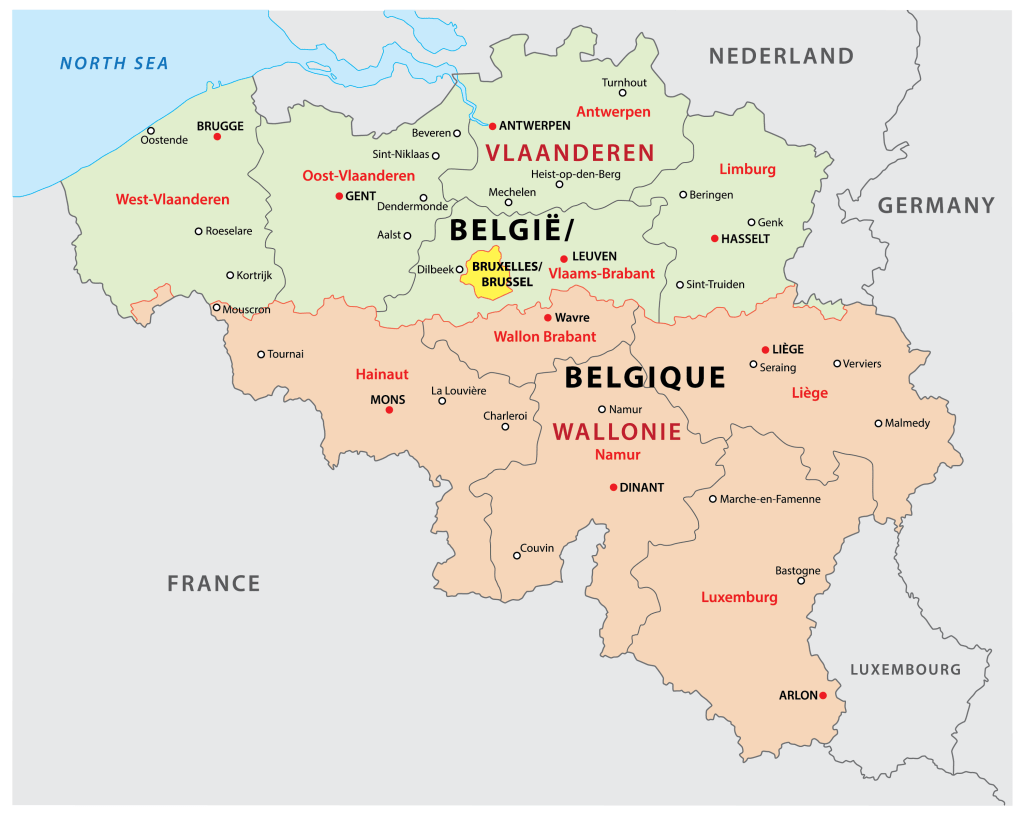
Unlike the Flemish – who are economically more prosperous – the Walloons do not consider themselves a nation or necessarily desire an independent state. Polls reveal that only a minority of Walloons want Belgium to break up and if secession was forced on them by Flanders, about half would want to be attached to France.
A 2020 poll found that 28% of the Flemish were in favour of a partition, compared to 18% of Walloons and 17% of Brussels residents. With that said, 56% of the same respondents ‘said it would be impossible to keep the country together in [the] future [58% in Wallonia, 46% in Flanders and 47% in Brussels].’
A Liege resident foresees a split, saying:
“In Flanders they live differently, see things differently and envisage the future differently.”
Remembering that the Flemish are descended from Sheba and the Walloons coupled with the predominately French speaking Brussels are Dedan, makes the differences understandable and an eventual split likely.

Belgian women

‘The Brussels-Capital Region has the same status as Flanders and Wallonia within the federal structure… though it measures only 161 [square km] (barely 0.5% of the national territory) its population of one million [plus] represents 10% of the national total. An enclave within Flanders, it is primarily French-speaking – around 85% of inhabitants speak French… [though] officially the region is bilingual… Brussels is not only the capital of Belgium and of the European Union, but also of the “French” [speaking communities]… of [both] Brussels and Wallonia, [as well as] the Flemish community and region.’
Many people incorrectly assume that the term Walloon applies to all Belgian French speakers; including those born and living in the Brussels-Capital Region. The mixing of the population over preceding centuries means that most families can trace their ancestors from ‘both sides of the linguistic divide’ in Brussels.
The local dialect – Brussels Vloms – is a Brabantic dialect that reflects ‘the Dutch heritage of the city.’ The status of Brussels in a partitioned Belgium is uncertain and a source of considerable debate, with a variety of options that are all complex. Forming a city-state as a European capital district, similar to Washington DC or the Australian Capital Territory are suggestions; as is an extended Brussels region, so that its borders reach Wallonia.

Brussels
Belgium’s 2025 nominal GDP was $684.86 billion making it the 23rd largest world economy, two places ahead of Sweden.
Belgium, a trade and transport hub, has a diversified economy with a mix of services, manufacturing and high tech industry. Its heavy integration with the rest of the European economy, means Belgium is highly sensitive to swings in the overall economic performance of its neighbours.
The Belgium monarch is King Philippe Leopold Louis Marie, who was crowned in 2013. He married Queen Matilda, born Jonkvrouw Mathilde d’Udekem c’Acoz.
The monarch of Luxembourg is Henri Albert Gabriel Felix Marie Guillaume, who was crowned in 2000. He married Maria Teresa Mestre y Batista in 1981.
Finally, the monarch of the Netherlands is King Willem Alexander, crowned in 2013. He married Princess Maxima in 2002.
The Grand Duchy of Luxembourg began as a stronghold known as Lucilinburhuc, after the break-up of the Frankish empire. A town grew up around the stronghold, which today is Luxembourg Castle. The territory quickly grew in stature becoming a full county in the eleventh century and a duchy in the fourteenth century. In the fifteenth century it was acquired by the Duchy of Burgundy and then by the Austrian Hapsburgs in 1482. Under the terms of the Treaty of Paris in 1815, it was passed to the new king of the Netherlands, William I, but in 1890 it gained full independence.
The fourth and most prominent son of Keturah is Midian.
Midian comprises the Dutch people of the Netherlands.
The country has a population of 18,430,201 people – the 10th highest in Europe.
Abarim give the meaning of Midian, similar to Medan as: ‘strife’ and ‘place Of Judgment’ from the noun madon, strife, which derives from the verb din, ‘to judge’ or ‘govern.’
Midian is mentioned in the Bible numerous times and had five sons of his own, though only one is mentioned once in scripture.
The Midianites are the dominant descendants from Keturah. They have had a close association with Ishmael, with the name ‘Midianite’ being interchangeable and they have also had a close link with Moab and Ammon when seeking to fight their adversaries, the sons of Jacob.
The Midianites were a successful trading people, building economic wealth like their cousins Sheba and Dedan.

Midian’s eldest son is Ephah, his name meaning: ‘gloom[y], covering’ from the noun ‘epa, gloom, from the verb ‘up, to use wings or cover.
It can also mean ‘volant’ [moving lightly, nimble] and ‘darkling.’ The ‘NOBSE Study Bible Name List translates this name with Dark One; Jones’ Dictionary of Old Testament Proper Names reads Darkness.‘ Ephah is also a word used for a dry measurement of grain and is approximately twenty litres.
Another Ephah is mentioned as a second wife of Caleb, as well as part of Jahdai’s family in Judah – 1 Chronicles 2:46-47.
The second son of Midian is Epher: meaning, ‘Dust, Ore, Malleable, Young [Deer or Hart].’ It can also mean a calf [H6081].
There is an Epher, the son of Ezra in the genealogies of Judah and also the half-tribe of East Manasseh – eldest son of Joseph (1 Chronicles 4:17; 5:24).
Hanoch or ‘Enoch’ is the third son of Midian.
His name means: ‘inaugurated, trained’. ‘Jones’ Dictionary of Old Testament Proper Names… proposes initiated… NOBSE Study Bible Name List reads dedicated [or (God’s) follower H2585] for the ‘name Hanoch is also a name of one of Reuben’s sons [Reuben, the eldest son of Jacob].
Midian’s fourth son is Abida[h]: ‘father of knowledge, the [or my] father knows [H28], my father took knowledge’ from the noun ‘ab, father, and the verb yada’, to know.
Midian’s fifth and youngest son is Eldaah: ‘God has called, knowledge of God’ or ‘God is knowledge.’ The name can also mean: ‘God has known’ [H420] or ‘called of God.’
Dutch men

Genesis 37:25-28, 36
English Standard Version
‘Then they sat down to eat. And looking up they saw a caravan of Ishmaelites [H3459 – Yishma’e’liy: God will hear] coming from Gilead, with their camels bearing gum, balm, and myrrh, on their way to carry it down to Egypt. Then Judah said to his brothers, “What profit is it if we kill our brother [Joseph] and conceal his blood? Come, let us sell him to the Ishmaelites [H3459], and let not our hand be upon him, for he is our brother, our own flesh.” And his brothers listened to him.
Then Midianite [H4084 – Midyaniy: strife (Midian)] traders passed by. And they drew Joseph up and lifted him out of the pit, and sold him to the Ishmaelites [H3459] for twenty shekels of silver.
They took Joseph to Egypt. Meanwhile the Midianites [H4092 Mdaniy: (Midianite) a variation of H4084] had sold him in Egypt to Potiphar, an officer of Pharaoh, the captain of the guard.’
Some claim that there is a contradiction in this passage or alternatively, that the Ishmaelites and Midianites are one and the same, as some researchers incorrectly try to make their mothers, Hagar and Keturah the same person.
There are two different Hebrew words used for Midianite in the text. The first term used for these merchants is Midyaniy, an adjective signifying a member of the tribe of Midian or an inhabitant of Midian. This word H4084, is used for the Midianites throughout the Bible, for instance when describing Moses’ father-in-law Jethro in Numbers 10:29.
For Midian himself, Strongs H4080 Midyan, is used.
The second term Mdaniy is a variation of H4084 and has the exact same meaning. What is interesting, is that it is only used once in the scriptures, here in this account about Joseph.
This is clue number one, that we are not dealing with literal Midianites, but ‘Midianites’ from the region of Midian.
Clue two, is the fact that Ishmaelites are mentioned three times to the two used for Midian and clue three is in Genesis 39:1 ESV:
“Now Joseph had been brought down to Egypt, and Potiphar, an officer of Pharaoh, the captain of the guard, an Egyptian, had bought him from the Ishmaelites who had brought him down there.”
The traders were Ishmaelites from Midian who purchased Joesph and then sold him.
Once we uncover the identities of Ishmael and Joseph, there is symbolic national significance in this act by Ishmael – as there is also with the true identity of Judah – in the weighty ramifications of selling Joseph in the first place.
Anciently and again in modern times, Ishmael and Midian have been immediate adjacent neighbours. The use of the term Midianite for Ishmael will become readily apparent when we study Ishmael in the succeeding chapter – Chapter XXVIII – The True Identity & Origin of Germans & Austrians – Ishmael & Hagar.

Frisian woman (above) and Dutch woman (below)

Exodus 2:11-25
English Standard Version
11 ‘One day, when Moses had grown up, he went out to his people and looked on their burdens, and he saw an Egyptian beating a Hebrew, one of his people. 12 He looked this way and that, and seeing no one, he struck down the Egyptian and hid him in the sand. 13 When he went out the next day, behold, two Hebrews were struggling together. And he said to the man in the wrong, “Why do you strike your companion?” 14 He answered, “Who made you a prince and a judge over us? Do you mean to kill me as you killed the Egyptian?” Then Moses was afraid, and thought, “Surely the thing is known.”
15 When Pharaoh heard of it, he sought to kill Moses. But Moses fled from Pharaoh and stayed in the land of Midian.’
Moses fled Egypt in 1486 BCE at the age of forty.
The Pharaoh in question and the Pharaoh at the time of the Exodus forty years later, has received an enormous amount of scholarly debate. We will study the chronology of the Exodus and the respective identities of Moses’ adoptive Egyptian mother and father in depth when we study the tribe of Levi and Moses’ life – refer Chapter XXXI Reuben, Simeon, Levi & Gad – the Celtic Tribes; and Appendix VII: Moses, the Exodus & the Red Sea Crossing – Fabrication or Fact?
For now, the Pharaoh at the time of Moses’ personal exodus from Egypt was the sixth king of the Twelfth Dynasty: Amenemhet III.
Exodus: ‘And he sat down by a well. 16 Now the priest of Midian [H4080 – Midyan] had seven [H7651 from H7650 – Sheba] daughters, and they came and drew water and filled the troughs to water their father’s flock’ – refer article: Seventh Son of A Seventh Son.
17 ‘The shepherds came and drove them away, but Moses stood up and saved them, and watered their flock. 18 When they came home to their father Reuel [*1], he said, “How is it that you have come home so soon today?” 19 They said, “An Egyptian delivered us out of the hand of the shepherds and even drew water for us and watered the flock.” 20 He said to his daughters, “Then where is he? Why have you left the man? Call him, that he may eat bread.”
21 And Moses was content to dwell with the man, and he gave Moses his daughter Zipporah [H6855 – Tsipporah: ‘bird’ Acts 7:29].
22 She gave birth to a son, and he called his name Gershom [H1647 ‘foreigner’], for he said, “I have been a sojourner in a foreign land” [like Abraham].
23 During those many days the king of Egypt died, and the people of Israel groaned because of their slavery and cried out for help. Their cry for rescue from slavery came up to God. 24 And God heard their groaning, and God remembered his covenant with Abraham, with Isaac, and with Jacob.
25 God saw the people of Israel – and God knew.’
Exodus 3:1
English Standard Version
‘Now Moses was keeping the flock of his father-in-law, Jethro [*2], the priest of Midian, and he led his flock to the west side of the wilderness and came to Horeb, the mountain of God’ – Exodus 4.18-19; 18.1.
The Genesis 6 Conspiracy, Gary Wayne, 2014, Pages 196, 198 – emphasis & bold mine:
‘Jewish legends suggest Jethro had seven names, all conveying his transformation from an idolatrous priest to a priest of God… along with, Heber [*3], Putiel [*4], and Keni [*5 – Kenite?]…
legends recorded that a Pharaoh immediately before the Exodus maintained three famous high Priests during the latter part of the Israelite enslavement in Egypt: Job, Balaam, and Jethro.
Jethro was regarded as the High Priest of a Library of Stone Tablets [precursor perhaps of the Ten Commandments, Exodus 32:15-16] in some versions.
Pharaoh did not welcome the pre-Exodus advice provided by Jethro about the growing Israelite problem, banning the priest Jethro-Reuel in disgrace… which was ample motive for Jethro to have helped Moses prepare for his return to Egypt.’
Moses’ father-in-law was also called Hobab (*6), who was the son of Raguel (or Reuel)[*7] – LXX Septuagint, Numbers 10:29.
There is much confusion caused by all these names, especially as Reuel was also known as Jethro, meaning ‘his excellence’ from H3502, Yithrah.
The name Hobab (H2246) means ‘cherished’ or ‘loved fervently.’
According to Josephus, Hobab had ‘Iothor [or Jethro] for a surname.’
Jethro’s descent is given as: son of Nawil, son of Rawail, son of Mour, son of Anka, son of Midian, son of Abraham.
Josephus claims that Raguel (or Reuel), was Moses’ father-in-law and Judges 4:11 clearly states that he was known as Hobab.
ESV: ‘Now Heber the Kenite had separated from the Kenites, the descendants of Hobab the father-in-law of Moses, and had pitched his tent as far away as the oak in Zaanannim, which is near Kedesh.’
Some commentators claim that Jethro was an honorary title, while Reuel was his personal name.
Reuel [H7467, Re’uw’el] means, ‘one who is intimate with God’ or Friend of God – the very title given to Abraham.
Raguel is another version of this name – refer Strong’s Hebrew Dictionary.
Putting it all together, it seems to this writer that Hobab was his personal (or first) name.
As Hobab was the son of Reuel, he could have been known by his father’s (or family) name and thus Reuel would fit as his last name (or surname).
Jethro then it would appear, is a title relating to his official position as a Priest of Midian.
Therefore, all three names would be correct and thus all are used to identify the same man. There is also a Reuel mentioned in the Bible who is a son of Esau by his wife Basemath, herself a daughter of Ishmael – Genesis 36:4, 13, 17.
The Gold-Mines of Midian, Richard Burton, 1878 – emphasis mine:
‘Jethro’s Moslem title is “Khatib el-Anbiya,” or Preacher to the Prophets, on account of the words of wisdom which he bestowed upon his son-in-law [Moses]… El-Kesai states that his original name was Boyun; that he was comely of person, but spare and lean; very thoughtful, and of few words… Other commentators add that he was old and blind… [Jethro] and Rahab are Gentiles, or strangers, affiliated to Israel [Ephesians 2:12-13; Romans 11:13, 17, 22] on account of their good deeds.’
The Desert of the Exodus, E H Palmer, 1871 – emphasis & bold mine:
‘Sho’eib, as the Arabs call Jethro, Moses’ father-in-law, is said to have been blind, notwithstanding which infirmity he was divinely commissioned to preach the true religion lately revealed unto Abraham, and to convert the people of his native city Midian. They rejected his doctrine and mocked the blind prophet, for which sin they were destroyed by fire from heaven, while Midian was laid waste by an earthquake, Jethro alone escaping alive. He fled to Palestine, and is said to be buried near Safed.’
The Quran says: “The chiefs of his people, who were elated with pride, answered, We will surely cast thee, O Shuaib, and those who believe with thee, out of our city: or else thou shalt certainly return unto our religion. He said, What! though we be averse thereto?” Jewish tradition states similarly: “We will surely cast thee . . out of our city.”
Shuaib was a true believer and a priest of the Most High. Shuaib responds: “My support is from God alone: on him do I trust… O my people, let not your opposing of me draw on you a vengeance like unto that which fell on the people of Noah… neither was the people of Lot far distant from you. Ask pardon, therefore, of your Lord; and be turned unto him: for my Lord is merciful and loving.”
“They answered, O Shuaib, we understand not much of what thou sayest, and we see thee to be a man of no power among us: if it had not been for the sake of thy family, we had surely stoned thee, neither couldst thou have prevailed against us. Shuaib said, O my people, is my family more worthy in your opinion than God? and do ye cast him behind you with neglect?”
Regarding a man of no power, one commentator quotes: “The Arabic word dhaif, weak, signifying also, in the Himyaritic dialect, blind, some suppose that Shuaib was so, and that the Midianites objected that to him, as a defect which disqualified him for the prophetic office.”
Muslim writers identify Shuaib with Jethro, the father-in-law of Moses. Baidhawi states Shuaib was the son of Mikail, the son of Yashjar, the son of Midian; whereas, the Tafsir-i-Raufi adds that Jethro was descended from Lot through Midian having married a daughter of Lot. Shuaib is not recorded as performing any miracles in the Quran or Islamic traditions, though they do repeat as the Jews do, that Jethro gave his son-in-law the ‘wonder-working rod’ with which he performed – with Aaron – all his mighty miracles in Egypt and the wilderness – refer article: The Ark of God.
Exodus 18:1-27
English Standard Version
‘Jethro, the priest of Midian, Moses’ father-in-law, heard of all that God had done for Moses and for Israel his people, how the Lord had brought Israel out of Egypt. 2 Now Jethro, Moses’ father-in-law, had taken Zipporah, Moses’ wife, after he had sent her home, 3 along with her two sons.
The name of the one was Gershom (for he said, “I have been a sojourner in a foreign land”), 4 and the name of the other, Eliezer [H461 ‘God is help’] (for he said, “The God of my father was my help, and delivered me from the sword of Pharaoh”). 5 Jethro, Moses’ father-in-law, came with his sons and his wife to Moses in the wilderness where he was encamped at the mountain of God.
6 And when he sent word to Moses, “I, your father-in-law Jethro, am coming to you with your wife and her two sons with her,” 7 Moses went out to meet his father-in-law and bowed down and kissed him. And they asked each other of their welfare and went into the tent.
8 Then Moses told his father-in-law all that the Lord had done to Pharaoh and to the Egyptians for Israel’s sake, all the hardship that had come upon them in the way, and how the Lord had delivered them. 9 And Jethro rejoiced for all the good that the Lord had done to Israel, in that he had delivered them out of the hand of the Egyptians.
10 Jethro said, “Blessed be the Lord, who has delivered you out of the hand of the Egyptians and out of the hand of Pharaoh and has delivered the people from under the hand of the Egyptians. 11 Now I know that the Lord is greater than all gods, because in this affair they dealt arrogantly with the people.” 12 And Jethro, Moses’ father-in-law, brought a burnt offering and sacrifices to God; and Aaron came with all the elders of Israel to eat bread with Moses’ father-in-law before God.
13 The next day Moses sat to judge the people, and the people stood around Moses from morning till evening. 14 When Moses’ father-in-law saw [not blind at this point in time] all that he was doing for the people, he said, “What is this that you are doing for the people? Why do you sit alone, and all the people stand around you from morning till evening?” 15 And Moses said to his father-in-law, “Because the people come to me to inquire of God; 16 when they have a dispute, they come to me and I decide between one person and another, and I make them know the statutes of God and his laws.”
17 Moses’ father-in-law said to him, “What you are doing is not good. 18 You and the people with you will certainly wear yourselves out, for the thing is too heavy for you. You are not able to do it alone. 19 Now obey my voice; I will give you advice, and God be with you! You shall represent the people before God and bring their cases to God, 20 and you shall warn them about the statutes and the laws, and make them know the way in which they must walk and what they must do.
21 Moreover, look for able men from all the people, men who fear God, who are trustworthy and hate a bribe, and place such men over the people as chiefs of thousands, of hundreds, of fifties, and of tens. 22 And let them judge the people at all times. Every great matter they shall bring to you, but any small matter they shall decide themselves. So it will be easier for you, and they will bear the burden with you.
23 If you do this, God will direct you, you will be able to endure, and all this people also will go to their place in peace.” 24 So Moses listened to the voice of his father-in-law and did all that he had said. 25 Moses chose able men out of all Israel and made them heads over the people… 26 And they judged the people at all times. Any hard case they brought to Moses, but any small matter they decided themselves. 27 Then Moses let his father-in-law depart, and he went away to his own country [of Midian].’
In Exodus chapter Eighteen there are some interesting similarities in the meeting between Moses and Jethro and the one between Abraham and Melchizedek some four centuries earlier. Abraham had recently rescued Lot, defeating Chedorlaomer, King of Elam in the process. Moses had witnessed the defeat of Pharaoh king of Egypt, while delivering the descendants of Jacob. Both events had a miraculous outcome provided by the Creator.
Melchizedek was the priest of the Most High God and Jethro was the Priest of Midian. Melchizedek and Jethro blessed and praised the Creator for their deliverance using very similar language. Melchizedek brought out ceremonial bread and wine with Abraham. Jethro also prepared bread with a sacrificial meal to be eaten with Moses, Aaron and all the elders of Israel. There is a theme of peace and friendship in the two respective encounters. The king of Salem (Peace H8004, H7999) blessed Abraham, and Jethro and Moses likewise would have exchanged Shaloms (H7965, H7999) as evidenced in Exodus 18:7 and Exodus 4:18.
Numbers 10:1-2, 29-32
English Standard Version
‘The Lord spoke to Moses, saying, “Make two silver trumpets. Of hammered work you shall make them, and you shall use them for summoning the congregation and for breaking camp. And Moses said to Hobab the son of Reuel the Midianite [H4084], Moses’ father-in-law, “We are setting out for the place of which the Lord said, ‘I will give it to you.’
Come with us, and we will do good to you, for the Lord has promised good to Israel.” But he said to him, “I will not go. I will depart to my own land and to my kindred.” And he said, “Please do not leave us, for you know where we should camp in the wilderness, and you will serve as eyes for us [Jethro not blind]. And if you do go with us, whatever good the Lord will do to us, the same will we do to you.”
It is through Jethro that we are introduced to the mysterious Kenites [H7017 – Qeyniy: smiths].
Some commentators link the Kenites with the contrived word Kainite based on the name of Cain, as the Hebrew word Qeyniy derives from H7014 – Qayin and Qain (or Kain), meaning, ‘possession’ or ‘purchase’.
Though linked etymologically, it is ideologically a stretch to arrive at this conclusion and would mean if true, that
a. the line of Cain survived the Flood (excepting that which passed through Ham’s wife, Na’eltama’uk – refer Chapter XI Ham Aequator; though in counterpoint to this refer article: Nephilim & Elioud Giants I) and
b. that Jethro was descended in part from a corrupted line. One that would be hard to imagine was his real ancestry and or acceptable to the Eternal, as a priest and true believer.
Judges 1:16
Common English Bible
‘The descendants of Moses’ father-in-law the Kenite [H7017] went up with the people of Judah from Palm City into the Judean desert, which was in the southern plain near Arad. They went and lived with the Amalekites.’
We have learned that Jethro may have been descended in part from related ancestor Lot (the French), that he was a priest of ‘Midian’ and that his father Reuel was a ‘Midianite’. Though the Hebrew word used is not the one used for the name of the original Midian. Does this mean he was a Midianite as in ethnology or just in a geographic context? Similarly, if Jethro is a Kenite, are they separate from the Midianite proper – living with them – or a distinct tribe originating from the land of Midian?
Plus, a branch of the Kenites – those descended from Jethro – may have attached themselves to the tribe of Judah and or then, the Amalekites who are affiliated with Edom – refer Chapter XXIX Esau: The Thirteenth Tribe.
Judges 4:11
Common English Bible
‘Now Heber [1] the Kenite [H7017] had moved away from the other Kenites [H7017], the descendants of Hobab [2], Moses’ father-in-law, and had settled as far away [far removed] as Elon-bezaanannim [‘removing, wandering’], which is near Kedesh [northern part of the tribes land in Israel equating to those of Zebulun or Naphtali].
Remember well the association with the names Elon and Zebulun – Chapter XXXII Issachar, Zebulun, Asher & Naphtali – the Antipodean Tribes.
It appears that part of the Kenite people were either associated with the tribe of Judah, or actually were from the tribe of Judah. The most plausible answer is that they had intermarried. The Rechabites were a clan of the Kenites and their progenitor was Hammath [3]; though not Hammath the son of Canaan (Genesis 10:18) – Chapter XII Canaan & Africa.
The following verse is from the end of one genealogical record of the House of Judah.
1 Chronicles 2:55, RSV:
“The families also of the scribes [H5608 – caphar: learned men] that dwelt at Jabez: the Ti’rathites, the Shim’e-athites, and the Su’cathites. These are the Ken’ites [H7017] who came from Hammath, the father of the house of Rechab.”
The Rechabites as scribes would have been given respect for their standing, as we read in in 2 Kings chapter ten, when Jehu – an adversary to wicked King Ahab of Israel, who ruled from 874 to 853 BCE – invites Jehonadab the son of Rechab to assist in slaughtering every last soul in a Temple of Baal worshippers.
Jael was the wife of Heber the Kenite (H7017) – Judges 4:17.
Deborah the prophetess and a Judge of Israel blessed Jael in her victory song because of her resolute courage in killing Sisera, the enemy of Israel – beginning a period of forty years of peace, lasting from 1184 BCE to 1144 BCE. When King Saul was commanded to destroy the Amalekites, he honourably advised the Kenites to move away from their neighbours and allies, the Amalekites in order not to be slaughtered along with them.
1 Samuel 15:6
English Standard Version
‘Then Saul said to the Kenites [H7017], “Go, depart; go down from among the Amalekites, lest I destroy you with them.
For you showed kindness to all the people of Israel when they came up out of Egypt.”
So the Kenites [H7017] departed from among the Amalekites.’
The Kenites acted as guides in the wilderness – just as Moses had requested Jethro to act as a guide for the Israelites – even so, the prophesied fate of the Amalekites and the Kenites was apparently tied together. We will study Amalek separately in a later chapter – Chapter XXIX Esau: The Thirteenth Tribe.
Numbers 24:21-22
Common English Bible
‘He looked at the Kenites [H7017] and raised his voice and gave his address:
“Your dwelling is secure [H386 – ‘ethan: strong, hard, rough, permanent]; your nest [H7064 – qen: nest of a bird, high] is set in the rock [H5553 – bassela: crag, cliff, stronghold, protected]. Yet Kain [H7014 Kenite] will burn when Asshur [Assyria] takes you away captive.”
The Kenites were to be taken captive by the Assyrians, at the same time that the Kingdom of Israel was conquered, which occured between 721 and 718 BCE. Though there may be a future application of Balaam’s prophesy as indicated in verses twenty-three and twenty-four.
The mention of nest in the rock is a play on the word for nest: Qen or ken, which is pronounced “kaine” and thus the tribal name Ken-ite. The use of the Hebrew word Qayin in verse twenty-two does on the surface, appear to support a lineage from Cain, but in the context of the preceding verse where the Kenites dwell securely and on elevated ground, the use of this word meaning ‘possession’ is more applicable than Qeyniy, meaning ‘smiths’.
Remember well again, the dwelling on elevated ground as we will discover the specific significance of this description.
Jeremiah 35:2, 6-10, 16-18
English Standard Version
2 “Go to the house [family] of the Rechabites and speak with them and bring them to the house [temple] of the Lord, into one of the chambers; then offer them wine to drink.” 6… “We will drink no wine, for Jonadab the son of Rechab, our father, commanded us, ‘You shall not drink wine, neither you nor your sons forever. 7 You shall not build a house; you shall not sow seed; you shall not plant or have a vineyard; but you shall live in tents all your days, that you may live many days in the land where you sojourn.’
8 We have obeyed the voice of Jonadab the son of Rechab, our father, in all that he commanded us, to drink no wine all our days, ourselves, our wives, our sons, or our daughters, 9 and not to build houses to dwell in. We have no vineyard or field or seed, 10 but we have lived in tents and have obeyed and done all that Jonadab our father commanded us. 16 The sons of Jonadab the son of Rechab have kept the command that their father gave them, but this people [Judah] has not obeyed me.
17 Therefore, thus says the Lord, the God of hosts, the God of Israel: Behold, I am bringing upon Judah and all the inhabitants of Jerusalem all the disaster that I have pronounced against them, because I have spoken to them and they have not listened, I have called to them and they have not answered.”
18 But to the house of the Rechabites Jeremiah said, “Thus says the Lord of hosts, the God of Israel: Because you have obeyed the command of Jonadab your father and kept all his precepts and done all that he commanded you, 19 therefore thus says the Lord of hosts, the God of Israel: Jonadab the son of Rechab shall never lack a man to stand before me.”
The Rechabites fled to Jerusalem when Nebuchadnezzar the Chaldean began subjugating the Kingdom of Judah. The Rechabites were spared – and their line continued – because of their faithful adherence to the commands of their forefather Jonadab. Whereas Judah who had not heeded the Creator’s warnings suffered punishment at the hands of Nebuchadnezzar II – Chapter XXV Italy: Nahor & the Chaldeans.
In verse two, the Lord calls for the Rechabites to be brought into His House, where figuratively there are many chambers or rooms.
John 14:2, ESV: “In my Father’s house are many rooms…”
The obedience of the Rechabites was in contrast with the disobedience of the Kingdom of Judah – principally comprising the tribes of Judah, Benjamin, (Simeon and Levi) – who, for all their outward piety and devotion in performing the required animal sacrifices, were not wholly obedient to the Creator in their worship.
Rather than the Rechabite Kenites being a line of Cain, they are in fact the exact opposite and were an extraordinarily obedient people, who did not own property or farm land. A line of Cain, would not be summoned by the Eternal to His temple.
Isaiah 1:13-14, ESV: “Bring no more vain offerings; incense is an abomination to me. New moon and Sabbath and the calling of convocations – I cannot endure iniquity and solemn assembly. Your new moons and your appointed feasts my soul hates; they have become a burden to me; I am weary of bearing them.”
The Creator prefers obedience rather than sacrifice.
1 Samuel 15:22, ESV: ‘And Samuel said, “Has the Lord as great delight in burnt offerings and sacrifices, as in obeying the voice of the Lord? Behold, to obey is better than sacrifice, and to listen than the fat of rams.”
It was an honour for Jonadab and his descendants to stand before the Lord. The Tribe of Levi were selected to stand before the Lord in Deuteronomy 10:8, in special service. Moses and Samuel (Jeremiah 15:1) and Elijah all stood before the Lord – 1 Kings 18:15. As did King David who even danced before the lord – 2 Samuel 6:14.
We have spent time on Jethro’s Kenite lineage and the offshoot branch of the Rechabites, yet there is another famous and righteous person with a similar yet distinct descent.
The question remains: were the Kenites descended from Midian; Judah; someone else entirely; or a mixture?
Joshua 14:6-14
Common English Bible
‘In Gilgal, the people of Judah approached Joshua.
Caleb son of Jephunneh the Kenizzite [H7074 – Qnizziy: descendant of Kenaz] said to [Joshua], “You know what the Lord said to Moses, man of God, about you and me when we were in Kadesh-barnea. I was 40 years old when Moses the Lord’s servant sent me from Kadesh-barnea to scout out the land [in 1444 BCE]. I brought back a report to him of what I really thought. My companions who had gone up with me made the people’s heart melt. But I remained loyal to the Lord my God.
So Moses pledged on that day,
‘The land on which you have walked will forever be a legacy for you and your children. This is because you remained loyal to the Lord my God.’
Now look. The Lord has kept me alive, exactly as he promised. It is forty-five years since the Lord spoke about this to Moses. It was while Israel was journeying in the desert. Now look. Today I’m 85 years old [in 1400 BCE].
I’m just as strong today as I was the day Moses sent me out. My strength then was as my strength is now, whether for war or for everyday activities.
So now, give me this highland that the Lord promised me that day. True, the Anakim [Elioud giants] are there with large fortified cities, as you yourself heard that day. But if the Lord is with me, I should be able to remove them, exactly as the Lord promised.” So Joshua blessed him. He gave Hebron to Caleb, Jephunneh’s son, as a legacy. So Hebron still belongs to Caleb son of Jephunneh the Kenizzite as a legacy today. This was because he remained loyal to the Lord God of Israel.’
The passage says the people of Judah approached Joshua. This does not prove that the Kenizzites or Kenezites are from Judah, as the Kenites from Jethro travelled with Judah – yet perhaps confusingly appear to be listed in a genealogy of Judah. Similarly, Caleb the Kenizzite was given the city of Hebron which was within Judah’s territory.
As an aside, both the patriarch Issac and King David lived in Hebron.
If the Kenizzites are descendants of Kenaz, then which Kenaz are they descended from? The name Kenaz derives from the verb qanaz, ‘to hunt or snare’ and thus means a ‘hunter’ or ‘hunting.’
In Genesis chapter thirty-six we read of the sons of Esau. Esau had five sons with ostensibly, three women – refer Chapter XXIX Esau: The Thirteenth Tribe.
One son already mentioned was Reuel – the family (surname) name of Jethro. Another son was Eliphaz and Esau had a grandson by Eliphaz called, Kenaz; who was also a chief of Edom – Genesis 36: 11, 15, 42.
It is interesting to note that Caleb had a grandson called Kenaz – 1 Chronicles 4:15. And to underscore the family name further, Caleb also had a younger brother called Kenaz (Joshua 15:17, Judges 1:13; 3:9-11) and it was his son Othniel, who was the first Judge of Israel from 1342 BCE to 1302 BCE and had ‘the Spirit of the Lord… upon him…’ As with the Kenites, it is difficult to equate the Kenizzites with an evil pedigree, when each example constitute men displaying obedience with righteousness.
The Genesis 6 Conspiracy, Gary Wayne, 2014, pages 198-199 – emphasis mine:
‘Kenizzites were skilled in the arts of metal-working, like Cain and Tubal-Cain [Article: Na’amah], and were related somehow to Kenites [also skilled in metallurgy]. Caleb, then though eighty-five years old, fought like he was forty-five, driving the Anakim [giants] from Hebron, and was thus rewarded as the head of the tribe of Judah, receiving the land of Kiriath Arba, Hebron, the homeland of the Anakim.
It is astounding to me that a Kenizzite, a person from a tribe with no genealogy linking back to Noah, and a tribe that mysteriously descended back to Cain and Nephilim, inherited Hebron, the home and capital city of the Anak!
Both the Kenizzite and Kenite tribes are generally believed descended from Kenaz the descendant of Esau, but this cannot be. They like the Amalekites, existed before the birth of Esau and before the time of Abraham.’
Genesis 15:18-21
English Standard Version
On that day the Lord made a covenant with Abram, saying, “To your offspring I give this land, from the river of Egypt to the great river, the river Euphrates, the land of the Kenites, the Kenizzites, the Kadmonites, the Hittites, the Perizzites, the Rephaim [Nephilim], the Amorites, the Canaanites, the Girgashites and the Jebusites.”
Gary Wayne raises a number of points.
First, he makes the assumption that a similar skill in metallurgy links Tubal-Cain and the Kenizzites biologically?
Second that the Kenizzites descend from Cain(ite) Nephilim without argument?
Third, his only valid point, which Genesis chapter fifteen corroborates is that the Kenizzites and Kenites, like the Amalekites, existed before Esau and even prior to Abraham.
It can be agreed that Kenaz, the son of Eliphaz, Esau’s son inherited his name from the Kenizzites, as did Eliphaz’s other son Amalek, from the Amalekites. This anomaly is discussed in depth in Chapter XXIX Esau: The Thirteenth Tribe.
Whereas the Amalekites are clearly linked with the Nephilim as discussed elsewhere, the same evidence is lacking for the Kenites and Kenizzites.
Putting the pieces together, the Kenites and Kenizzites appear to have an ancient origin which prefigures Abraham and his family.
The link between Jethro being a Kenite and living in Midian favours the Kenite people having become associated with the Midianites. We will explore this further in this chapter.
The Kenizzites are different in that they do not have the Midianite association though like the Kenites, they do have a relationship with the tribe of Judah. Just to make it interesting, there is the overall connection the Kenites and Kenizzites share with the Amalekites, who themselves include a peoples prior to Esau’s grandson Amalek – Genesis 14:7. Later, they are included with an amalgamation of peoples descended from Esau’s grandson Amalek – Genesis 36:12. And remember, Esau is Jacob’s twin brother and thus family links between all four – Esau, Judah, Kenites and Kenizzites – are plausible and likely.
This does raise the important question, regarding whether anyone apart from Noah and his seven other family members survived the Flood – 2 Peter 2:5. A careful reading of Genesis 7:21-23, reveals that all physical birdlife, animal life on the land – not the oceans – and humankind, that is, both Homo neanderthalensis and Homo sapiens which were composed of flesh and breathed, died. It does not state or include hybrid creatures such as Nephilim and Elioud giants.
The Genesis 6 Conspiracy, Gary Wayne, 2014, pages 200-201 – emphasis mine:
‘Even Gnostic gospels record Noah denying that he or his kin created the postdiluvian giants, even though his apostate descendants evidently intermarried with postdiluvian Nephilim… Nephilim are not listed in the Table of Nations that is limited to only Noah’s posterity… the Genesis flood account [is] a general accounting of events kept by saints descended from Noah for only the faithful, not a global, forensic accounting for cynical seculars and revisionist mystics.’
The Genesis 6 Conspiracy, Gary Wayne, 2014, page 169:
‘The Incorruptible* Race of giants is the mysterious race that… Cain [and his posterity] have all allegedly and eagerly connected themselves to in legend. Cain… claimed a more royal and divine legacy, void of Adamite impurity, which the posterity of Cain, in turn, pollinated into the people of day six [the Neanderthal]. The Gnostic gospels record that not only Noah survived the deluge but also many people from the Immoveable* Race did and that they were guided to a certain place within a luminous cloud to ensure they survived the flood. The Nephilim and the Immoveable Race survived because of the intercession of fallen angels saving them and their illicit legacy from utter destruction, all to poison the postdiluvian world…’
The ancient land of Canaan and its many peoples is a complex issue. It has perplexed biblical scholars and secular historians alike.
We have studied the first inhabitants of the land, the literal sons of Canaan who left their imprint in the region before fully migrating to northern and central Africa – Chapter XII Canaan & Africa.
There was a residue of these true Canaanites in the land, as humans and Nephilim were mixing and living in ancient cities such as Sodom, Hebron and Jericho. Ephron the descendant of Heth, son of Canaan, lived in the region and sold his field at Machpelah to Abraham.
The Nephilim and Elioud had been roaming the Earth for thousands of years after the flood – refer articles: Monoliths of the Nephilim; Stonehenge; and The Pyramid Perplexity.
They were instrumental in all the titanic building structures and otherworldly architectural feats around the globe; from Stonehenge in England to the Great Pyramid of Giza in Egypt, Machu Pichu in Peru and the Statues (Moai) on Easter Island.
Pyramids of Giza
At a certain point – at least by the time of Abraham for they were there then and possibly arrived much earlier – most Nephilim and their Elioud descendants converged on the land of Canaan; for these were the second wave of inhabitants in Canaan. Why Canaan? Because they were aware of the promises of the Creator; that His chosen people would descend from Abraham and ultimately dwell in Canaan. The Nephilim and Elioud were ready and waiting. This is why the Creator’s instructions were brief yet uncompromising – kill them all.
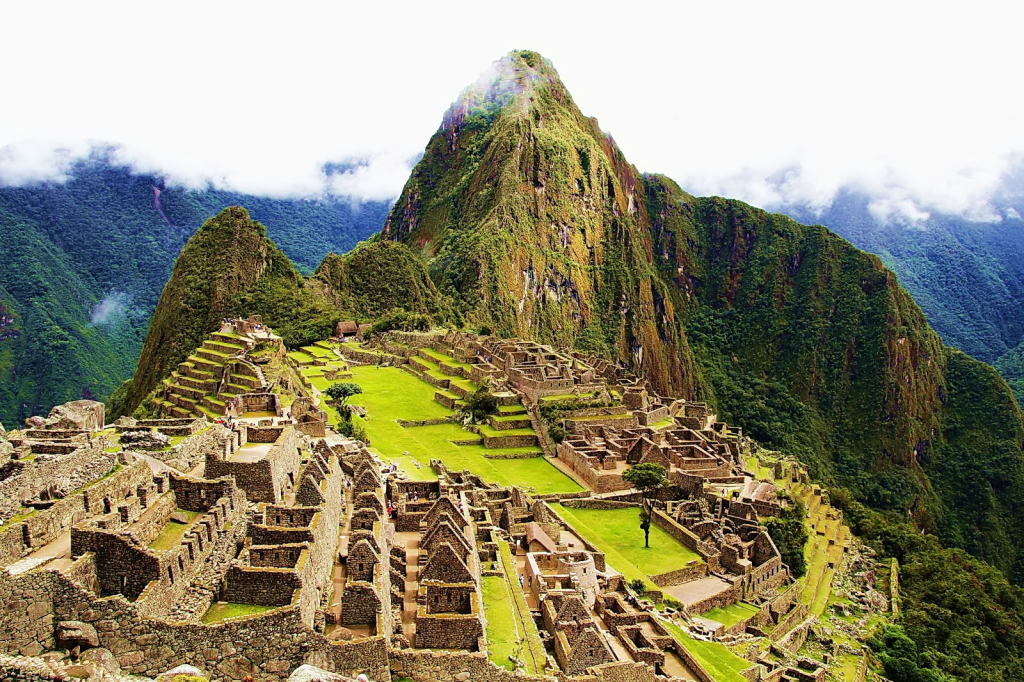
Machu Pichu
The Creator did not instruct the sons of Jacob – the fledgling Israelite nation – to murder Black people, or even White people, it was a plain and clear instruction to exterminate the giants who were there to do the exact same thing to Israel, if the sons of Jacob didn’t pre-emptively strike first. The young Israelite nation failed these simple instructions and allowed many to live amongst them. It was only some four hundred years later that King David finally permanently eradicated the problem of the Elioud giants from the land of Canaan.

Easter Island
The land of Canaan had numerous clans of Nephilim as we have already studied – Article: Nephilim & Elioud Giants II.
The principal seven nations the Israelites were instructed to exterminate were the Canaanites – a specific tribe by that name, not the broad definition of the term – Perizzites, Jebusites, Girgashites, Amorites, Hivites and Hittites. Notice the last five are inherited names from sons of the original Canaan. To add to the complex mix of inhabitants, there was a third wave of people.

These were different descendants from Shem and they were a spill over from Mesopotamia, including: Aramaeans (Syrians) and Arphaxad (Akkad and Sumer) to the North; the Arabian Peninsula, including Keturah and Ishmael to the East; and from Egypt, Caphtor (Casluh and Pathros) to the South.
We have investigated the Aramaean and Amorite connection previously – Chapter XXIII Aram & Tyre: Spain, Portugal & Brazil.
There was also the Phoenician migration to the northwestern coast and the Minoan (Philistine) immigrations to the southwestern coast – Chapter XV The Philistines: Latino-Hispano America.
Some of the descendants of Abraham and Keturah as well as Ishmael, had ventured into the land of Canaan, though they also continued northwards to Anatolia and the Aegean Sea.
Finally Moab, Ammon and Esau with Amalek his grandson, also moved into the south western portion of the land of Canaan. In time, at least one son of Keturah was known by sons of Canaan’s names – possibly others – and also Ishmael, just as some of the Nephilim tribes.
Two prominent examples of this name transference, are the Hivites from the name Hiv and the Hittites called after Heth – Genesis 10:15, 17.
To summarise a complicated scenario, using Hiv as an example.
Hiv was a son of Canaan. The original Hivites in the land would have been Black people descended from Hiv. In time, most of these Hivites migrated southward, though not all, because the Nephilim arrived en masse. They integrated with the remaining Hivite people. Those Nephilim living in the Hivite region, became known as… Hivites. Later still, a son of Abraham and Keturah also dwelt, in the northern Palestine region, now known as Lebanon. In this case, some of the children of Midian… and these Midianites became known as: Hivites.
The Canaanites and Perizzites are almost always mentioned together though the Perizzites are the odd one out, in that they are not an original son of Canaan.
Perizzite according to one source means: ‘to drag away violently, hate’, which resounds with a description applicable to the giants.
Joshua 24:11 and Judges 1:4
English Standard Version
‘And you went over the Jordan and came to Jericho, and the leaders of Jericho fought against you, and also the Amorites, the Perizzites, the Canaanites, the Hittites, the Girgashites, the Hivites, and the Jebusites. And I gave them into your hand… Then Judah went up and the Lord gave the Canaanites and the Perizzites into their hand, and they defeated 10,000 of them at Bezek.’
The warlike Jebusites were associated with the environs of the ancient city of Salem which became the capital Jerusalem of the southern Kingdom of Judah.
Jerusalem frequently changed hands and it was captured by Joshua – Joshua 18:28. In Judges 19:9-12, it was occupied by foreigners – Judges 1:8. The tribe of Benjamin inherited the surrounding land of Jerusalem. Judges 1:21, ESV: “But the people of Benjamin did not drive out the Jebusites who lived in Jerusalem, so the Jebusites have lived with the people of Benjamin in Jerusalem to this day [time of writing].”
Four hundred years after Joshua lived, King David retook the city. 1 Chronicles 11:4-8, ESV: “And David and all Israel went to Jerusalem, that is, Jebus, where the Jebusites were, the inhabitants of the land. The inhabitants of Jebus said to David, “You will not come in here.”
Nevertheless, David took the stronghold of Zion, that is, the city of David. David said, “Whoever strikes the Jebusites first shall be chief and commander.” And Joab the son of Zeruiah went up first [reportedly building an underground water shaft or tunnel to enter], so he became chief. And David lived in the stronghold; therefore it was called the city of David. And he built the city all around from the Millo in complete circuit, and Joab repaired the rest of the city.”
David bought the threshing floor of Araunah the Jebusite and later built the Temple on that location – 2 Samuel 24:16-25. Archaeologists have confirmed that the original inhabitants of Jerusalem were Jebusites.
The later Amorite name was applicable to Gether’s descendants from Aram.
Ezekiel 16:45-46
English Standard Version
‘You are the daughter of your mother, who loathed her husband and her children; and you are the sister of your sisters, who loathed their husbands and their children. Your mother was a Hittite and your father an Amorite. And your elder sister is Samaria, who lived with her daughters to the north of you; and your younger sister, who lived to the south of you, is Sodom with her daughters.’
These verses are interpreted by some to prove that the Israelites were a bastard or mixed nation. This chapter is actually addressed to Judah about her sinful ways. The identities here are types or euphemisms and not literal lines of descent. Samaria is a sister as it refers to the Kingdom of Israel.
The Hittites here are a people descended from Shem who had influence on Judah – and were related to them – as did the Aramaean-Amorites. The Amorites included Nephilim in their midst and had two famous Giants as their kings – one being King Og, the other King Sihon.
Deuteronomy 4:47
English Standard Version
‘And they took possession of his land and the land of Og, the king of Bashan, the two kings of the Amorites, who lived to the east beyond the Jordan.’
1 Kings 21:25-26
English Standard Version
‘(There was none who sold himself to do what was evil in the sight of the Lord like Ahab, whom Jezebel his wife incited. He acted very abominably in going after idols, as the Amorites had done, whom the Lord cast out before the people of Israel.)’
2 Kings 21:11-13
English Standard Version
“Because Manasseh king of Judah has committed these abominations and has done things more evil than all that the Amorites did, who were before him, and has made Judah also to sin with his idols, therefore thus says the Lord, the God of Israel: Behold, I am bringing upon Jerusalem and Judah such disaster that the ears of everyone who hears of it will tingle. And I will stretch over Jerusalem the measuring line of Samaria, and the plumb line of the house of Ahab, and I will wipe Jerusalem as one wipes a dish, wiping it and turning it upside down.”
The most evil king in Israelite history was King Ahab and for Judah, it was King Manasseh – Article: The Life & Death of Charles III.
Both are compared to the Amorites in setting a standard of corruption like no other before them or afterward. Baal was the Amorite’s chief god and Baal’s wife (consort) was – in this instance – Ashtoreth, their chief goddess… the same goddess as Ishtar in Chaldea, Astarte in Greece and Venus in Rome (refer article: Lilith).
Their worship involved human sacrifice, temple prostitution and orgies. There have been many temples, high places, stone pillars and altars excavated in the land of Israel. Some of the sites contained large numbers of containers with the remains of young children who had been sacrificed to Baal – refer articles: Na’amah; and Belphegor; including Chapter XXI The Incredible Identity, Origin & Destiny of Nimrod; and Chapter XXII Alpha & Omega.
The Girgashites, named after Girgash son of Canaan were the fifth nation.
Their name means: ‘to draw away; to entice’.
As with the Amorites, they made many of their sons and daughters pass through the fire to Moloch – the Bull cult which permeates and dominates false god worship and is purportedly at the centre of the infamous Bohemian Grove (refer article: Lilith).
The two nations known as Hivites and Hittites are not only linked but – also, while classed as Canaanites, as in the oft-repeated lists of the seven nations, the Hivites and Hittites (with the Amorites) – should also be considered separately from the rest because each had dual origins, histories, ethnic characters and national identities.
Exodus 23:28
English Standard Version
‘And I will send hornets before you, which shall drive out the Hivites, the Canaanites, and the Hittites from before you.’
The Hivites were unique in that by using the subterfuge of claiming they lived afar, fooled Joshua into a treaty of peace and non-interference; in that the Hivites dwelt ‘forever’ in the land of Israel, though they did have to serve as woodcutters and water carriers – Joshua 9:1-27.
Joshua 11:19
English Standard Version
‘There was not a city that made peace with the people of Israel except the Hivites, the inhabitants of Gibeon. They took them all in battle.’
The Genesis 6 Conspiracy, Gary Wayne, 2014, page 238 – emphasis & bold mine:
‘Gibeonites were Hivites/giants conscripted as woodcutters and water carriers for Israel by Joshua, after Israel had been deceived into a treaty with [the] Gibeonites not to destroy them, as the Gibeonites said they did not live in the Covenant Land. Gibeonites survived in the Covenant Land well past the time of David because of this treaty, as a portion separate to Israel, within Israel. Gibeonites were clearly identified as surviving Amorites [2 Samuel 21:2], spared in this treaty from the Exodus, which Saul later violated in his zeal, endeavoring to annihilate the Gibeonites, which cost Saul seven of his [grand]sons as punishment.’
The Hivites as well as the Hittites, at the time they appear in the Scriptures, were each divided into a smaller southern and a larger northern branch, inhabiting widely distant territories. This made them distinct from the other five Canaanite nations. The Hivite’s – Hebrew chivim meaning ‘wicked’ – main cities at the time of Joshua were in the South and included Gibeon, Chephirah, Beeroth, and Kirjath-jearim. The Hivite territory in the north was adjacent to the Sidonians in Mount Lebanon. The very same area which Heber the Kenite had moved to live – away from the other Kenites who had descended from Moses’ father-in-law, Jethro – Judges 4:11.
Judges 3:3, ESV: “These are the nations: the five lords of the Philistines and all the Canaanites and the Sidonians and the Hivites who lived on Mount Lebanon, from Mount Baal-hermon as far as Lebo-hamath.”
The southern Hivites were the residue of Canaan’s children and Nephilim descended Elioud giants.

It is the northern Hivites which are of more interest, as there is a connecting ethnic link between these Hivites, Midian, the Kenites, the later Phoenicians from Sidon and the Dutch – German and French – Afrikaner settlers in South Africa. There could be a connection between Midian and the Hivites of Nephilim extraction, or likely an unusual coincidence, as the Dutch for example have the tallest male average height in the world and the second tallest women average height in the world according to a 2016 survey.
Previously, we have discussed the early Phoenician link between Tyre, the Portuguese and descended peoples of Brazil – Chapter XXIII Aram & Tyre: Spain, Portugal & Brazil.
Strabo wrote that the Phoenicians originated ‘from the eastern part of the Arabian Peninsula.’ The later Phoenicians of Sidon were different from those at Tyre and today equate to the Dutch of the Netherlands. As part of the children of Keturah, they migrated from Arabia and settled in the Sidon coastal area.
They were master traders, explorers, ship builders and sailors; similar to Tyre in the past. In recent centuries, it has been the Portuguese and Dutch – non-coincidently – who have exhibited the Phoenician legacy with the exact same traits. The African beginnings of Sidon’s heritage have been represented in the nation of South Africa – refer Chapter XXII Canaan & Africa.
The southern Hittites in the time of Abraham made their headquarters at Kiriath-Arba; driving out the Anakim and re-naming the city, Hebron. In this region they controlled another city, Kiriath-Sepher – the city of Books – which was another name for Kiriath-Sannah, a city of Instruction. Names suggesting the existence of a repository of ancient knowledge. By Joshua’s time, these southern Hittites had been crowded out of Hebron by the Anakim and had withdrawn to more mountainous country further north.
In Numbers 13:29, ESV: “The Amalekites dwell in the land of the Negeb. The Hittites, the Jebusites, and the Amorites dwell in the hill country. And the Canaanites dwell by the sea, and along the Jordan.”
The northern Hittites on the other hand, constituted a great kingdom of confederated states, occupying the whole of northern Syria between the Mediterranean Sea and the Euphrates; extending also as we shall learn, over much of Asia Minor from Armenia to the Aegean Sea. This is why in the Encyclopaedia Britannica, Reverend T K Cheyne says: “The Hittites seem to have been included among the Canaanites by a mistake.”
One could include the Hivites and the blond Amorites in this context. The southern Hittites with the Hivites and Amorites, were part of the seven Canaanite nations – a blend of the minority Black descended Canaanites and majority Nephilim infiltration. The northern Hivites and Amorites – Aramaeans descended from Gether – like the Hittites, were descended from Shem and it is these Hittites that Cheyne is referring to. Once this is understood, any apparent secular-biblical crossover contradictions, regarding who, when and where for these peoples, dissolve.
Numbers 22:4, 7
English Standard Version
‘And Moab said to the elders of Midian, “This horde [the sons of Jacob] will now lick up all that is around us, as the ox licks up the grass of the field”… Balak the son of Zippor, who was king of Moab at that time… So the elders of Moab and the elders of Midian departed with the fees for divination in their hand. And they came to Balaam and gave him Balak’s message.’
When King Balak of Moab felt threatened by the Israelites arriving en masse into Canaan and planned to employ Balaam to pronounce a curse, he enlisted the Midianites – an unwise agreement – as co-conspirators. This is why Midian brought condemnation upon themselves with the Moabites and so began a perpetual strife between Midian and Israel. In modern times, we have witnessed the same relationship as the nations of France and the Netherlands built impressive navies, mercantile enterprises and colonial empires.
Those who even have a passing knowledge of European history during the decades encompassing 1600 to 1820 will recognise which country France in particular (and Holland) displayed antagonism towards; were in competition with; continually in conflict either militarily, politically or via trade routes; and in colonial territorial disputes – Chapter XXX Judah & Benjamin – the Regal Tribes.
Numbers 25:1-18
English Standard Version
1 ‘While Israel lived in Shittim, the people began to whore with the daughters of Moab. 2 These invited the people to the sacrifices of their gods, and the people ate and bowed down to their gods’ – Revelation 2:14. 3 ‘So Israel yoked himself to Baal of Peor’ – Psalm 106:28, Hosea 9:10. ‘And the anger of the Lord was kindled against Israel.
4 And the Lord said to Moses, “Take all the chiefs of the people and hang them in the sun before the Lord, that the fierce anger of the Lord may turn away from Israel.”
5 And Moses said to the judges of Israel, “Each of you kill those of his men who have yoked themselves to Baal of Peor.”
6 And behold, one of the people of Israel came and brought a Midianite woman to his family, in the sight of Moses and in the sight of the whole congregation of the people of Israel, while they were weeping in the entrance of the tent of meeting. 7 When Phinehas the son of Eleazar, son of Aaron the priest, saw it, he rose and left the congregation and took a spear in his hand 8 and went after the man of Israel into the chamber and pierced both of them, the man of Israel and the woman through her belly. Thus the plague on the people of Israel was stopped.
9 Nevertheless, those who died by the plague were twenty-four thousand’ – Deuteronomy 4:3, 1 Corinthians 10:8. 10 ‘And the Lord said to Moses, 11 “Phinehas the son of Eleazar, son of Aaron the priest, has turned back my wrath from the people of Israel, in that he was jealous with my jealousy among them, so that I did not consume the people of Israel in my jealousy. 12 Therefore say, ‘Behold, I give to him my covenant of peace, 13 and it shall be to him and to his descendants after him the covenant of a perpetual priesthood [until replaced by Christ], because he was jealous for his God and made atonement for the people of Israel.”
14 The name of the slain man of Israel, who was killed with the Midianite woman, was Zimri the son of Salu, chief of a father’s house belonging to the Simeonites.’
Notice the name of the Simeonite, Zimri bears resemblance to the name of Keturah’s first son, Zimran – Geneses 25:2.
15 ‘And the name of the Midianite woman who was killed was Cozbi the daughter of Zur, who was the tribal head of a father’s house in Midian. 16 And the Lord spoke to Moses, saying, 17 “Harass the Midianites and strike them down, 18 for they have harassed you with their wiles, with which they beguiled you in the matter of Peor, and in the matter of Cozbi, the daughter of the chief of Midian, their sister, who was killed on the day of the plague on account of Peor.”
The Israelite who blatantly brought a Midianite woman into the camp was from the tribe of Simeon. We will return to this story when we study Simeon and Levi, the priestly tribe to which Phinehas belonged – Chapter XXXI Reuben, Simeon, Levi & Gad – the Celtic Tribes.
It would appear that the sons of Jacob were very easily influenced by the religions and false gods of their neighbouring nations; who were in reality, extended family. As they followed the gods of Moab and Ammon (French), they also worshipped the same gods of Midian (Dutch). A case in point, is the false god outlined in Numbers chapter twenty-five, prominent amongst the Moabites and Midianites, Baal of Peor – refer article: Belphegor.
Peor was a mountain located on the Abarim range in Moab: Beth-peor – Numbers 23:28, Deuteronomy 3:29. This god was known as Peor (Numbers 31:16, Joshua 22:17), with the title Baal meaning, lord. It is sometimes associated with the national Moabite deity, Chemosh – 2 Kings 23:13, Jeremiah 48:46.
All Baal worship was synonymous with licentious sin, though Baal Peor ‘especially called for sensual indulgence.’ According to Rabbinical literature, ‘the worship of this idol consisted in exposing that part of the body which [people] usually take the utmost care to conceal’ with the idol’s symbol being a giant phallus. Baal Peor was also known as Ba’al Phegor, or more commonly today as the latinised, Belphegor – pronounced as bell-fih-gore.
Its name meaning: ‘Master of the Opening’ or ‘Gap’. The Hebrew word peor derives from the root word pa’ar, meaning: ‘open, gap, wide’ or ‘hole.’
According to Professor Geller on Mythology:
‘He is a shape shifter, delighting in using this ability to deceive mortals. His most common forms are polarized in their appearances. He will take the form of a beautiful woman, naked in all her glory, to seduce those who would fall for his wiles. He also appears as a terrible demon, with leathery flesh, huge horns, long sharp teeth [a beard] and fingernails… a gaping mouth [wings and a tapered tail]. He was a phallic deity, associated with sex, orgies, and all forms of debauchery… Belphegor is one of the many demons [and one of the seven princes of hell] with the attribute “Baal,”… [though] As one of the fallen angels, Belphegor was originally a member of the order of principalities…’
Belphegor allegedly presides over twenty-six legions of demons and is referred to as the Lord of Sloth, one of the seven cardinal sins. Belphegor is invoked by persons today who wish to find fame, fortune or power through invention; often with as little effort as possible. Most demonic invocations fail. Likewise with Belphegor, whose ‘true mission is to draw the lazy into the sin of Sloth.’
Acceptable offerings to Belphegor, though somewhat puzzling, are farting and excrement. Yet, as Belphegor is the lord of openings or holes, Talmudic tradition asserts Belphegor’s association with exposure, defecation and faeces. Thus, Belphegor is linked to the god Pet and wind (or gas); Crepitus, a Roman god of flatulence; as well as Priapus, a fertility god with an oversized and permanent erection.
Notice in Numbers twenty-five, verse one it states Israel lived in Shittim. Though the Hebrew word means ‘acacia wood’, the similarity of Shit-tim with the slang word for faeces is undeniable. It was at Peor, where worship included eating ‘beets, drinking strong drink’ and exposing oneself in front of the idol. Rabbi Shlomo Itzhaki, otherwise known as Rashi, comments that the people would uncover their anus and relieve themselves; incorporating the act into deviant sexual practices.
What is especially of eldritch interest, is the fact that first Belphegor was a deity of the ancient Moabites, whose descendants comprise much of the French nation – Chapter XXVI The French & Swiss: Moab, Ammon & Haran.
To which country is Belphegor an ambassador of Hell? It is France no less and particularly the capital, Paris. As a deity of debauchery, Belphegor apparently became ‘enamoured with the seedier side of the nation… and the [capital] in particular.’
Belphegor is considered an adversary of Mary Magdalene, the patron saint of France – refer Appendix VIII: When the Creator came to dwell with His Creation.
Numbers 31:1-18, 32-34
English Standard Version
1 ‘The Lord spoke to Moses, saying, 2 “Avenge the people of Israel on the Midianites… 3 So Moses spoke to the people, saying, “Arm men from among you for the war, that they may go against Midian to execute the Lord’s vengeance on Midian. 4 You shall send a thousand from each of the tribes of Israel to the war.” 5 So there were provided, out of the thousands of Israel, a thousand from each tribe, twelve thousand armed for war. 6 And Moses sent them to the war, a thousand from each tribe, together with Phinehas the son of Eleazar the priest, with the vessels of the sanctuary and the trumpets for the alarm in his hand. 7 They warred against Midian, as the Lord commanded Moses, and killed every male [adult].’
The Midianites exist today, so we presume it was the soldiers who died and not the whole male population.
8 ‘They killed the kings of Midian with the rest of their slain, Evi, Rekem, Zur, Hur, and Reba, the five kings [representing the five sons/clans] of Midian. And they also killed Balaam the son of Beor with the sword.
9 And the people of Israel took captive the women of Midian and their little ones, and they took as plunder all their cattle, their flocks, and all their goods. 10 All their cities in the places where they lived, and all their encampments, they burned with fire, 11 and took all the spoil and all the plunder, both of man and of beast…
13 Moses and Eleazar the priest and all the chiefs of the congregation went to meet them outside the camp. 14 And Moses was angry with the officers of the army, the commanders of thousands and the commanders of hundreds, who had come from service in the war. 15 Moses said to them, “Have you let all the women live? 16 Behold, these, on Balaam’s advice, caused the people of Israel to act treacherously against the Lord… 17 Now therefore, kill every male among the little ones, and kill every woman who has known man by lying with him. 18 But all the young girls who have not known man by lying with him keep alive for yourselves… Now the plunder remaining of the spoil that the army took was 675,000 sheep, 72,000 cattle, 61,000 donkeys, and 32,000 persons in all, [virgin] women who had not known man by lying with him.’
Thirty-two thousand Midianite girls is a large amount to be integrated into the tribes of Israel. Some of the tribes barely had a total census of men, women and children of this number. It shows the close family connection, meaning similar autosomal DNA, which did not significantly alter Israel’s identity. Remember, the six sons of Keturah are half-brothers of Isaac, the father of Jacob – sharing Abraham as their paternal ancestor.
While we will learn that the Dutch are closely related to their near neighbours (and brothers) in Scandinavia as well as the related peoples of Germany; they also unsurprisingly, bear a strikingly close genetic kinship with the British and Irish.
Keturah may have been from the family of Nahor (1) – northern/central Italian – and therefore much younger as Isaac’s wife Rebecca and Jacob’s wives Leah and Rachel were and with the gene pool continuing to remain similar on both parent’s sides.
It is also possible that Keturah was from Haran’s family (2) – Swiss – like Sarah.
Or the third option, the one considered the most probable, is that Keturah like Hagar who was Ishmael’s mother, was – from either a different though still inherently similar line from Peleg (3a) – Western Europe – or perhaps more likely still, from another son of Arphaxad (3b), possibly equating today to the peoples of Finland for example – refer Chapter XXIV Arphaxad & Joktan: Balts, Slavs & the Balkans.
Judges 6:1-6, 11-16, 20-23, 25-27, 32- 40
English Standard Version
1 ‘The people of Israel did what was evil in the sight of the Lord, and the Lord gave them into the hand of Midian seven years [from 1191 to 1184 BCE].
2 And the hand of Midian overpowered Israel, and because of Midian the people of Israel made for themselves the dens that are in the mountains and the caves and the strongholds. 3 For whenever the Israelites planted crops, the Midianites and the Amalekites and the people of the East [Joktan] would come up against them. 4 They would encamp against them and devour the produce of the land, as far as Gaza, and leave no sustenance in Israel and no sheep or ox or donkey. 5 For they would come up with their livestock and their tents; they would come like locusts in number – both they and their camels could not be counted – so that they laid waste the land as they came in.
6 And Israel was brought very low because of Midian. And the people of Israel cried out for help to the Lord.
11 Now the angel of the Lord came and sat under the terebinth at Ophrah, which belonged to Joash the Abiezrite, while his son Gideon was beating out wheat in the winepress to hide it from the Midianites. 12 And the angel of the Lord appeared to him and said to him, “The Lord is with you, O mighty man of valor.”
13 And Gideon said to him, “Please, my lord, if the Lord is with us, why then has… the Lord… forsaken us and given us into the hand of Midian.” 14 And the Lord turned to him and said, “Go in this might of yours and save Israel from the hand of Midian; do not I send you?” 15 And he said to him, “Please, Lord, how can I save Israel? Behold, my clan is the weakest in Manasseh, and I am the least in my father’s house.”
16 And the Lord said to him, “But I will be with you, and you shall strike the Midianites as one man” – Isaiah 66:2.
These same words were echoed nearly one hundred and twenty years later by Saul who would be the first king of Israel. 1 Samuel 9:21 NET:
‘Saul replied, “Am I not a Benjaminite, from the smallest of Israel’s tribes, and is not my family clan the smallest of all the clans in the tribe of Benjamin? Why do you speak to me in this way?”
Later Samuel referred to this humility which made Saul and Gideon prime candidates for service, in 1 Samuel 15:17 ESV:
‘And Samuel said, “Though you are little in your own eyes, are you not the head of the tribes of Israel? The Lord anointed you [Saul as] king over Israel.’
Gideon – who was the fifth Judge of Israel from 1184 to 1144 BCE – then asks the Angel of the Lord for a sign. He prepares a goat and unleavened bread (the Passover and Feast of Unleavened Bread – March/April).
20 ‘And the angel of God said to him, “Take the meat and the unleavened cakes, and put them on this rock, and pour the broth over them.” And he did so. 21 Then the angel of the Lord reached out the tip of the staff that was in his hand and touched the meat and the unleavened cakes. And fire sprang up from the rock and consumed the meat and the unleavened cakes. And the angel of the Lord vanished from his sight.
22 Then Gideon perceived that he was the angel of the Lord. And Gideon said, “Alas, O Lord God! For now I have seen the angel of the Lord face to face.” 23 But the Lord said to him, “Peace be to you. Do not fear; you shall not die.”
25 That night the Lord said to him, “Take your father’s bull, and the second bull seven years old, and pull down the altar of Baal that your father has, and cut down the Asherah [tree, pole] that is beside it [refer article: Asherah] 26 and build an altar to the Lord your God on the top of the stronghold here, with stones laid in due order. Then take the second bull and offer it as a burnt offering with the wood of the Asherah that you shall cut down.” 27 So Gideon took ten men of his servants and did as the Lord had told him. But because he was too afraid of his family and the men of the town to do it by day, he did it by night.’
The Lord described Gideon as a ‘mighty man of valour.’ Was He being sarcastic, or was the Eternal seeing the man he would become? Gideon doesn’t quite seem the right man for the job. He appears to be hard to convince and faith and fortitude don’t seem to be his first two attributes; but as the Creator looks on the heart, we know Gideon was special to Him. As Gideon rightly supposed, the men of the town once they saw what had happened in the morning sought Gideon out so they could kill him. Gideon’s father Joash, challenges the townsmen to let their god, Baal contend with Gideon directly or die themselves for their false worship.
32 ‘Therefore on that day Gideon was called Jerubbaal, that is to say, “Let Baal contend against him,” because he broke down his altar.
33 Now all the Midianites and the Amalekites and the people of the East [Joktan] came together, and they crossed the Jordan and encamped in the Valley of Jezreel. 34 But the Spirit of the Lord clothed Gideon, and he sounded the trumpet, and the Abiezrites were called out to follow him. 35 And he sent messengers throughout all Manasseh [his own tribe], and they too were called out to follow him. And he sent messengers to Asher, Zebulun, and Naphtali [all in northern Israel], and they went up to meet them.’
Gideon, not about to alter his path of reticence in being the Creator’s instrument, asks a second and third time, for additional signs. There is an impression of the Old Testament God being one of impatience and wrath. Yet, as we saw with the discussion with Abraham about how many righteous souls in Sodom it would take to save the whole city, we observe a very patient Deity in the face of Gideon’s stubbornness and procrastination.
36 ‘Then Gideon said to God, “If you will save Israel by my hand, as you have said, 37 behold, I am laying a fleece of wool on the threshing floor. If there is dew on the fleece alone, and it is dry on all the ground, then I shall know that you will save Israel by my hand, as you have said.” 38 And it was so. When he rose early next morning and squeezed the fleece, he wrung enough dew from the fleece to fill a bowl with water.
39 Then Gideon said to God, “Let not your anger burn against me; let me speak just once more. Please let me test just once more with the fleece. Please let it be dry on the fleece only, and on all the ground let there be dew.” 40 And God did so that night; and it was dry on the fleece only, and on all the ground there was dew.’
The Book of Judges chapter seven relates how Gideon whittled down thirty-two thousand men [the same number of Midianite girls saved from slaughter] to just three hundred as the Lord decreed, so that Israel’s strength of numbers wasn’t given credit instead. As with the taking of Jericho, trumpets were blared and these led to the Midianites panicking and beginning to mistakenly kill each other before fleeing – refer Jericho/trumpets, article: The Ark of God.
One of the Princes of Midian was named Zeeb and reminds of the Netherland Province called Zee-land. In like manner the name and word elon (Hebrew for oak, strong) appears a number of times in the Old Testament in relation to the tribe of Zebulun. We shall discover a connection between the descendants of Zebulun and Midian in none other than South Africa.
It is a compelling coincidence then that businessman and inventor extraordinaire Elon Musk (the ‘wealthiest’ man in the world) should have – while a varied ethnic background – one which is dominated on his mother’s side by Canadian (English); it is on his father’s side English and Afrikaner (Dutch, French Huguenot, German) which is of even more interest.

A correlation that will bear relevance for the constant reader as we progress.
Judges 7:23-25
English Standard Version
‘And the men of Israel were called out from Naphtali and from Asher and from all Manasseh [but ironically not Zebulun], and they pursued after Midian. Gideon sent messengers throughout all the hill country of Ephraim, saying, “Come down against the Midianites and capture the waters against them, as far as Beth-barah, and also the Jordan.” So all the men of Ephraim were called out, and they captured the waters as far as Beth-barah, and also the Jordan.
And they captured the two princes of Midian, Oreb [meaning: raven] and Zeeb [meaning: wolf]. They killed Oreb at the rock of Oreb, and Zeeb they killed at the winepress of Zeeb. Then they pursued Midian, and they brought the heads of Oreb and Zeeb to Gideon across the Jordan.’
Isaiah 10:26
English Standard Version
‘And the Lord of hosts will wield against them a whip, as when he struck Midian at the rock of Oreb. And his staff will be over the sea, and he will lift it as he did in Egypt.’
Judges 8:1-34 recounts the Ephraimites being upset that they hadn’t been included in the ‘fight against Midian.’ Nor were they willing to help with food and supplies for Gideon’s exhausted three hundred men. Gideon, said that once he had captured the two Midianite kings, he would return to flail their flesh in Succoth and break down their tower in Penuel. Once he captured the Midianite kings Zebah and Zalmunna, Gideon returned and flailed the flesh of the elders of the first city with thorns and broke adown the tower and killed all the men of the second city.
Judges 8:10-12, 22-34
English Standard Version
10 ‘Now Zebah [meaning: sacrificial victim] and Zalmunna [meaning: protection denied] were in Karkor with their army, about 15,000 men, all who were left of all the army of the people of the East, for there had fallen 120,000 men who drew the sword. 11 And Gideon went up by the way of the tent dwellers east of Nobah and Jogbehah and attacked the army, for the army felt secure. 12 And Zebah and Zalmunna fled, and he pursued them and captured the two kings of Midian, Zebah and Zalmunna, and he threw all the army into a panic… And Gideon arose and killed Zebah and Zalmunna, and he took the crescent [moon] ornaments [with demonic astrological significance] that were on the necks of their camels.
22 Then the men of Israel said to Gideon, “Rule over us, you and your son and your grandson also, for you have saved us from the hand of Midian.”
23 Gideon said to them, “I will not rule over you, and my son will not rule over you; the Lord will rule over you.”
24 And Gideon said to them, “Let me make a request of you: every one of you give me the earrings from his spoil.” (For they had golden earrings, because they were Ishmaelites.) 25 And they answered, “We will willingly give them.” And they spread a cloak, and every man threw in it the earrings of his spoil.
26 And the weight of the golden earrings that he requested was 1,700 shekels of gold, besides the crescent ornaments and the pendants and the purple [a colour of Phoenicia] garments worn by the kings of Midian, and besides the collars that were around the necks of their camels. 27 And Gideon made an ephod of it and put it in his city, in Ophrah. And all Israel whored after it there, and it became a snare to Gideon and to his family. 28 So Midian was subdued before the people of Israel, and they raised their heads no more. And the land had rest forty years [from 1184 to 1144 BCE] in the days of Gideon.’
An Ephod in the Old Testament refers to two different things.
One, it can refer to the garment or breastplate worn by the high priest.
Two and incredibly, it can refer to a transportable idol.
29 ‘Jerubbaal the son of Joash went and lived in his own house. 30 Now Gideon had seventy sons, his own offspring, for he had many wives. 31 And his concubine who was in Shechem also bore him a son, and he called his name Abimelech [the sixth Judge of Israel, Judges 9:17]. 32 And Gideon the son of Joash died in a good old age and was buried in the tomb of Joash his father, at Ophrah of the Abiezrites. 33 As soon as Gideon died, the people of Israel turned again and whored after the Baals and made Baal-berith [‘Lord of the Covenant’] their god. 34 And the people of Israel did not remember the Lord their God, who had delivered them from the hand of all their enemies on every side…’
Isaiah 60:6
English Standard Version
‘A multitude of camels shall cover you, the young camels of Midian [Netherlands and the Dutch] and Ephah [Holland or Hollanders]; all those from Sheba [Flanders and the Flemish] shall come. They shall bring gold and frankincense, and shall bring good news, the praises of the Lord.’
This is the one instance where a son of Midian is mentioned outside the genealogical lists. Camels are a bit of a re-occurring theme in the Old Testament, particularly for Abraham’s descendants. A multitude of camels, is a reference to the abundance of wealth and treasure that is able to be carried upon camels. The camel was used for the carriage of gold and spice and other valuables – Judges 6:5. Job 1:3 mentions camels when describing Job’s vast wealth and riches – 1 Chronicles 5:21.
The word Ephah is a unit of measure. One of the trading Midianite business tricks was utilising two different kinds of weights and measures – buying by one and selling by the other according to Baidhawi, Tafsir-i-Raufi.
Leviticus 19:36
New English Translation
‘You must have honest balances, honest weights, an honest ephah, and an honest hin. I am the Lord your God who brought you out from the land of Egypt.’
Proverbs 20:10
New English Translation
‘Diverse weights and diverse measures – the Lord abhors both of them.’

As Ephah is the first born son of Midian and inferred as the most prominent; so too have the people of the two provinces of North Holland and South Holland on the western coast, been the dominant factor during Dutch history – with the Netherlands widely known as, or called: Holland.
This usage of the name Holland, is accepted by other countries and is also employed by the Dutch; though those from regions outside Holland, may find it misrepresentative to use the term for the whole nation.
Netherlands means ‘low-lying country’ and the name Holland is from Houtland, or ‘Wooded Land.’
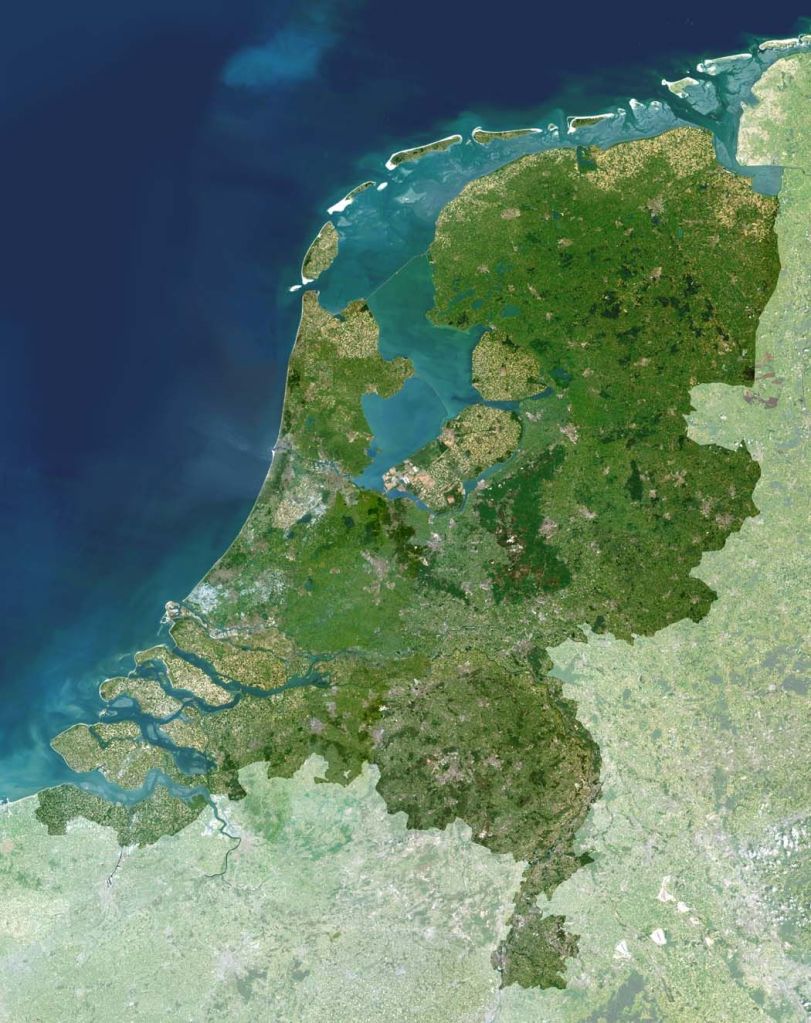
About 2,700 square miles, equating to 17% of the Netherlands’ current land area has been reclaimed from the sea, lakes and marshes. This extensive land reclamation process, beginning in the fourteenth century has been a significant part of the country’s history and development. Significant modern reclamation efforts began with the Zuiderzee Works in 1919. Twenty-six percent of the country is located below sea level, with twenty-one percent of the population living in these areas.
From the 900s to the 1500s, Holland was a unified political region within the Holy Roman Empire and ruled by the counts of Holland. By the 1600s, the province of Holland had grown to become a maritime and economic power; dominating the other provinces of the Dutch Republic. The area of the former County of Holland broadly covers the modern provinces of North Holland and South Holland.
These provinces include the Netherlands’ three biggest cities: Amsterdam, the capital and Europe’s largest port; Rotterdam, the third busiest port in the world behind 1. Shanghai, China and 2. Singapore; and The Hague, the seat of government. The two provinces of Holland have a population of 6,583,534 people as of 2019.
Amsterdam
Habakkuk 3:6-7
New English Translation
‘He took his battle position and shook the earth; with a mere look he frightened the nations. The ancient mountains disintegrated; the primeval hills were flattened. His are ancient roads. I saw the tents of Cushan overwhelmed by trouble; the tent curtains of the land of Midian were shaking.’
Some have interpreted this verse to prove a link between Cush and Midian, in that Keturah was from Cush like Moses’ third wife. This verse is merely showing the distance of the parameters of the Creator’s wrath; from the Netherlands in the West, right across to India in the East.
Additional notable scriptures pertaining to Midian include: Joshua 13:21, 1 Kings 11:18, Psalm 83:9 and Isaiah 9:4.
The Etruscan civilisation has long held a strong fascination for many people. For instance, the renowned author D H Lawrence, fell in love with the Etruscans in his closing years and explained his infatuation:
“Myself, the first time I consciously saw Etruscan things, in the museum at Perugia, I was instinctively attracted to them. And it seems to be that way. Either there is instant sympathy, or instant contempt and indifference. Most people despise everything B.C. that isn’t Greek, for the good reason that it ought to be Greek if it isn’t. So Etruscan things are put down as a feeble Greco-Roman imitation. And a great scientific historian like Mommsen hardly allows that the Etruscans existed at all. Their existence was antipathetic to him… So being a great scientific historian, he almost denies the very existence of the Etruscan people. He didn’t like the idea of them. That was enough for a great scientific historian.”
If the Etruscans weren’t Greeks – equating in the main, to the modern French – who were they? We have read the quote from Dr Orville Boyd Jenkins from Italians and Race and his comment on the ancient Greeks being blond and blue-eyed. Here is his comment about the Etruscans:
“Some scholars suggest they were thought to have been a blond, blue-eyed people. On a mural in an Etruscan tomb, a banquet scene portrays the women with blond hair.”
It is an enduring and highly controversial mystery as well as a subject of much debate for historians and scholars alike regarding the subject of where the Etruscans originated from; let alone where they went or who they were. Regardless, we will learn that their geographic proximity to the growing Roman civilisation was not a fluke and this relationship has been repeated in our times as well as extending all the way back to ancient Israel.
Mehmet Kurtkaya in his article Etruscan Origins states:
“… finding Near Eastern Anatolian DNA from the period of the migration, from around 1000 BC, in local Tuscans and local cattle proves beyond any doubt that the Etruscans had migrated from Turkey to Italy with their cattle, probably on [ships] out of Troy, and/or [Smyrna] or anywhere in the Aegean coast of Turkey. It is also probable that some Etruscan migration waves took place by land, via the Balkans.”
Etruscan Origins – emphasis mine:
‘Etruscans were famed for their naval prowess! [and possibly as one of the sea peoples of the 14th to 13th centuries BCE].
People with [Iranian – Turkish/Anatolian (geographic)] ancestry arrived in Sicily in around 1900 BC! Ancient genome samples were similar to Mycenaean Greece and Minoan Greece samples. Etruscans arrived in Italy during the Mycenaean period.
In 1894, Paul Kretschmer… suggested an Etruscan substrate in Indo-European languages, and since then Etruscan/Tursenoi/Tyrrhennian was considered by a handful of European scholars as the pre-Greek substrate which [constitutes] a large part of the Greek vocabulary.
Congratulations to all European scholars in the last 140 years, including Italian linguists and scholars, who have offered evidence for the migration of the Etruscans from the Near East [also]… Minoans [Philistines] and Mycenaeans [Greeks] were genetically similar… however, the Mycenaeans differed from Minoans in deriving additional ancestry… another research paper… suggests the arrival of people to Anatolia from the Caucasus and/or Iran around 3800 BC.
Considering this genetic study together with… Etruscan genetic studies, we can decisively conclude that the founders of Minoan and Mycenaean Greek and the Etruscan civilizations migrated from Turkey! [Further], DNA analysis in 2016 and 2017… identified a massive expansion, or a series of expansions, from Mesopotamia and/or [the] surrounding area.’

According to tradition, Tarchun and his brother Tyrrhenus, were the Lydian founders of Etruria, circa 1100 BCE. They were called Etrusci (or Tusci) by the Romans – whom they were closely related to – and Tyrrhenoi (or Tyrseni); that is, Tuscans by the Greeks.
Herodotus wrote that Tyr-senians – note the similarity with the word Tyre – were descended from Lydian colonists who landed in Etruria in the thirteenth century BCE following a great famine in Lydia in Eastern Anatolia. It was decided to split the population in half, with those who drew the short straw being sent off to settle in the west and so ending up in northern Italy.
The Etruscans called themselves Rasenna, which was shortened to Rasna. Hellicanus of Lesbos ascribes their existence to a settlement of Pelasgian refugees, who had fled from the Hellenic domination of Thessaly.
Interestingly, the island of Lemnos appears to bear close links with the Etruscans; as the Lemnos Stele, dated to about 600 BCE is written in a language which is remarkably similar to that of the Etruscans. It was found in a warrior’s tomb on the island along with artefacts that were similar to Etruscan items. The inference is that a community on the island was related to the Etruscans. Possibly the Pelasgians and so this would indicate a shared origin for all Etruscans, including the Lemnian pirates.
Some postulate that Rome was founded before the arrival of the Etruscans. Though dates reveal which was first and who influenced who. In this case the majority, if not all of the cities of Etruria have been found to pre-date Rome. In fact, the name of Rome itself is Etruscan in origin, as are the names of its legendary founders, Romulus and Remus.
Early Rome was heavily influenced by Etruscan culture and so it is more than likely that Rome was founded by the Etruscans. The Etruscan alphabet though inherited from the Greeks, was in turn passed on to the Romans.
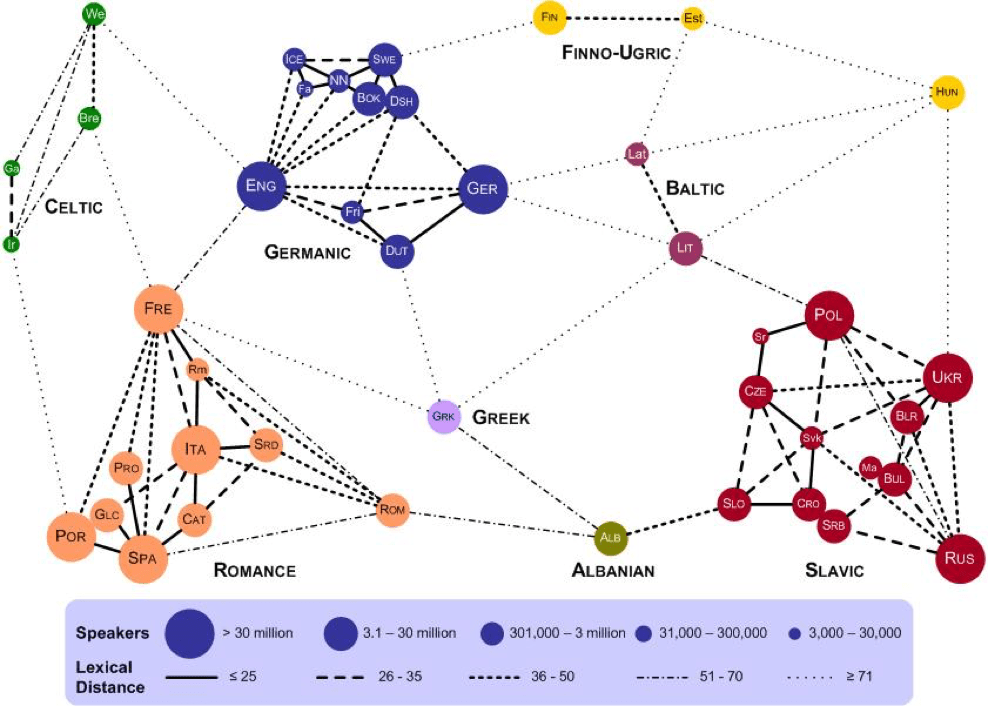
This is significant, as we will learn that the relationship shared between Midian and the ‘Midianites’ of Ishmael, comprises not only a geographic proximity and similar culture but also a parallel linguistic origin and language group as shown in blue above, which includes Dutch and German.
The Etruscan religion included human sacrifice, just as ancient Midian had practiced. Prisoners of war could end up on the altars of the Etruscan gods. As a part of these sacrifices, prisoners were sometimes set to fight one another. The Romans later adopted this practice and it grew into the huge gladiatorial entertainment of the Roman amphitheatres. Like the Romans, the Etruscans used bronze bars as a form of money with their value stamped on them. The Etruscans had a more affluent economy than the early Romans, yet it was not a free market economy built on money.
The Lion of the Netherlands
The Etruscans introduced lions onto the Italian peninsula. Both Belgium and particularly the Netherlands, use lions prominently on their state heraldry.
Beginning circa 800 BCE until 400 BCE, Etruscan civilisation and culture flourished in Etruria located in central Italy and the northern Italian Po Valley, eventually achieving regional dominance. Etruscan tribes established a series of independent city states which sometimes acknowledged the authority of a form of high king. The Etruscans of the eighth and seventh centuries were significantly influenced by eastern Greek culture.
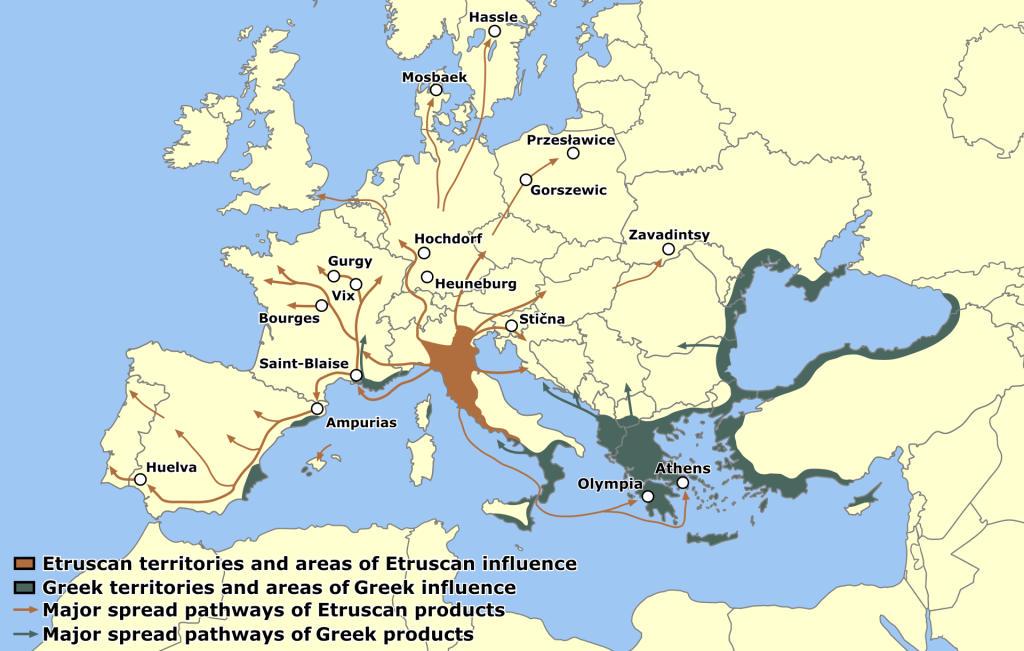
The territorial reach of the Etruscan civilisation attained its maximum area circa 750 BCE, during the foundational period of the Roman Kingdom. Its culture flourished in three confederacies of cities; Etruria – comprising Tuscany, Latium and Umbria – the Po Valley and Campania. According to legend, there was a period between 600 BCE to 500 BCE in which an alliance of the Dodecapolis, or the Etruscan League was formed among twelve Etruscan settlements.
The Etruscans dominated northern Italy until their influence over the burgeoning Roman Republic on their southern border, gradually declined and with it their territory.
After 529 BCE, the balance of political power shifted away from the Etruscans in favour of Rome. The Romans grew to perceive the Etruscans as ‘former colonial masters’ thus colouring the relationship between the two peoples. It led to a series of long running wars beginning in 477 BCE. Rome and the powerful Etruscan city of Veii – which Rome saw as a rival and threat – went to war. A year later in 474 BCE, Veii’s navy was destroyed by Hieron of Syracuse at Cumae and the city was forced to agree a treaty with Rome.
The Greek colonies in Sicily who are labelled ‘Greeks’ but were rather kin of the Romans, attained their height at this time and for the Greeks in Sicily, the prime enemy were the Carthaginians, who were also seeking to expand in the Mediterranean. The Carthaginians – who were Phoenicians from Tyre and today include the Portuguese descended peoples (refer Chapter XXIII Aram & Tyre: Spain, Portugal & Brazil) – and the Etruscans of Midianite origin and today are the Dutch, were often allied, but once defeated by the Greeks from Syracuse, the Etruscans ceased to be a major maritime power, militarily and politically.
Etruscan water jar, circa 525 BCE
Meanwhile, the Etruscans who had been migrating northwards to the River Po from central Italy, had been clashing increasingly with the Celts for regional domination. A pivotal showdown took place at the Battle of Ticinum in 474 BCE. The Etruscan force, which was little more than a well-armed militia, was butchered by the Celts in a ferociously fought battle.
The Etruscans flourished for a couple of centuries prior to their collapse; which was not entirely due to Roman aggression. The Etruscans had stablished city states – similar to Greece – but as they didn’t use money, they did not have the essential economic underpinning to endure like the Greek states. Nor did they establish a powerful unified state under one ruling emperor. For there are no signs of any palaces and the burials reflect a very wealthy upper class, but no sign of one individual elevated above the rest.
Thus they were engulfed by Rome’s rising consolidation of power. Many cities became Roman municipia – chartered towns. In Imperial Rome, stemming from envy, ‘the fat Etruscan became a figure of fun’. Eventually the rich land of Etruria flourished again, but as part of the growing Roman Empire.
The Etruscans, predominately descended from Midian may have quite possibly included Sheba and Dedan, as the Flemings and Walloons have been unified within the Low Countries in modern times.
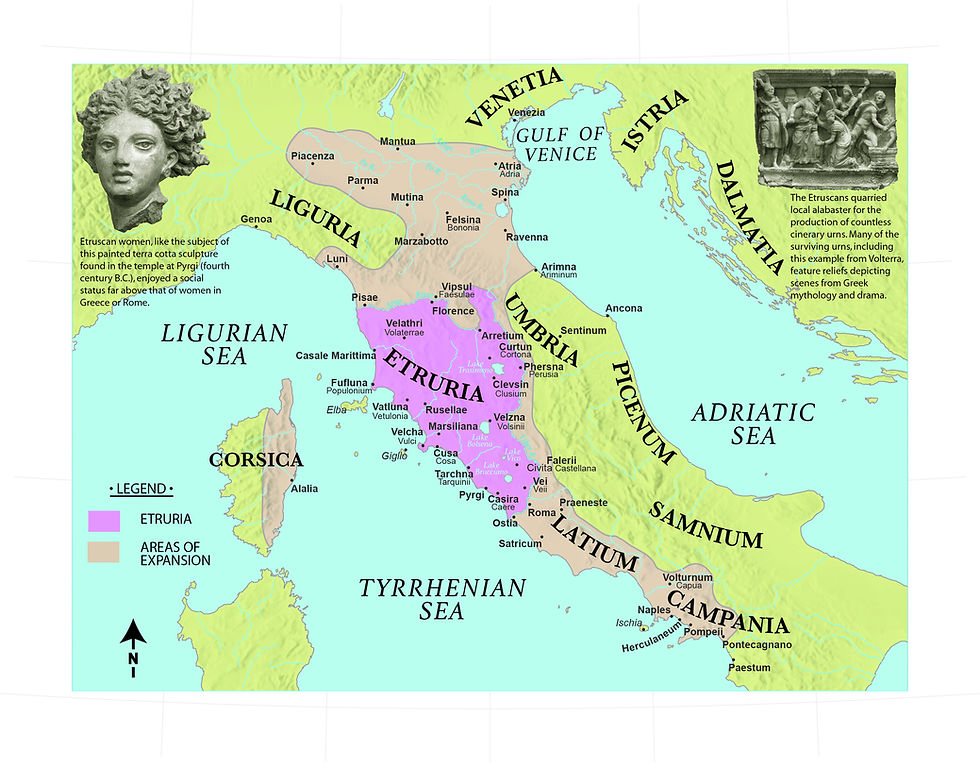
We Are Not Our Ancestors: Evidence for Discontinuity between Prehistoric and Modern Europeans, Journal of Genetic Genealogy, Ellen Levy-Coffman, 2005 – emphasis mine:
‘Like the ancient Basque, the origin of the Etruscan people remains obscure.
The Etruscans lived in central Italy from the 8th-2nd centuries BCE. Like the Basque, they spoke a non-Indo-European language, but unrelated to the Basque language. After the Romans rose to [dominate] Italy in the 2nd century BCE, the Etruscan language disappeared from the records. It was therefore assumed that the Etruscan population had been culturally and genetically assimilated by the Romans.
But the aDNA evidence tells a different story.
Two separate aDNA studies on the Etruscans reached similar conclusions, finding essentially
no genetic relationship between the ancient Etruscans and the modern-day inhabitants of Tuscany
(ie, “Tuscans”) (Belle 2006; Vernesi 2004).
Specifically, out of twenty-eight mtDNA sequences, only six occur in any modern-day groups. The remaining twenty-one haplotypes, identified as belonging to the JT haplogroup, do not occur in any contemporary European populations, including the common Etruscan haplotypes 16126-16193 and 16126-16193-16278. These sequences, while occurring among modern-day haplogroups J2 and T, are not accompanied by substitutions at 16069 and 16294, respectively, which are inevitably present among the contemporary motifs (Vernesi 2004).
The researchers attributed this lack of genetic relationship between Etruscans and Tuscans to two possible processes – the extinction of Etruscan mtDNA lineages among modern-day Europeans [incorrect], or demographic and evolutionary processes occurring in the last 2,500 years [correct]. These processes, if they occurred, were severe enough to disrupt the genetic continuity between the modern and ancient inhabitants of Tuscany.
Researchers performed a number of simulations to investigate whether certain phenomenon, such as genetic drift, migration or a higher than average mtDNA mutation rates, could have impacted the genetic continuity between Etruscans and Tuscans. (Belle 2006)
None of their simulations were compatible with the DNA results.
The genetic evidence did not support the conclusion that Tuscans were the modern-day descendants of the Etruscans,
although the researchers noted that the skeletal remains used for their aDNA samples may not have been representative of the entire Etruscan population, but of a more elite sub-strata. Even so, they seemed to have contributed very little to the mtDNA background of modern Tuscans.
However, the researchers also found that genetic continuity could be generated if the mtDNA mutation rate was set very high (0.5 mutations per million years as opposed to commonly used lower rate of approx. 0.05 mutations per million years per nucleotide) or if gene flow from other areas was so extensive that Etruscan descendants became underrepresented in the modern Tuscan samples.
They concluded, however, that the very high mtDNA mutation rates needed to reproduce genetic continuity were “implausible” and, furthermore, the only way to determine if descendants were underrepresented in the study was to collect more modern samples over time.
Thus, the study concluded that modern-day Tuscans largely descend from non-Etruscan ancestors [correct].
Regarding the fate of the Etruscans, the suspicion voiced by the researchers was that the Etruscan lineages simply went extinct’ [incorrect].
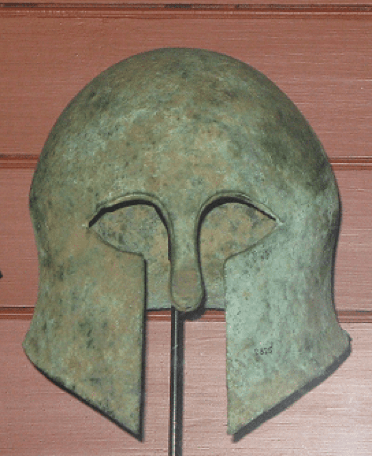
An Etruscan helmet in the British Museum
This article tells us two things.
First, the modern people of Tuscany have inherited the Etruscan name; but as the descendants of Abraham’s brother Nahor, they are not the Etruscans of two thousand to two thousand, five hundred years ago – refer Chapter XXV Italy: Nahor & the Chaldeans; and Chapter XXVIII The True Identity & Origin of Germany & Austria – Ishmael & Hagar.
Second, just because a people have seemingly vanished into the mists of time, it does not mean that they have disappeared without a trace. They had to go somewhere, be somewhere and be someone today.
A portion of the future land of the Netherlands, became a Roman province which was conquered by Julius Caesar in the first century BCE. The Saxon peoples, including the original Frisians, followed by the Angles and Jutes settled in the area before migrating to Britain. Later, the land became part of the empire of the Franks under Charlemagne; the House of Burgundy from 1384 to 1482 (refer Chapter XXVI The French & Swiss: Moab, Ammon & Haran), and then the Habsburg Empire from 1482 to 1567.
From 800 CE to 1000 CE, the Vikings raided towns and cities along the coast, settling in some areas.
In 1083, the name Holland first appears in a legal document. In 1568 the land was under Spanish King Philip II, when the Dutch revolted. Their leader was Willem I, the Prince of Orange and in 1581 the Republic of the Seven United Netherlands was formed.

The Netherlands has one of the oldest standing armies in Europe; established by Maurice of Nassau in the late 1500s.
During the seventeenth century, the Netherlands became an international power known for its strong navy – much like their forebears the Etruscans. The Dutch empire expanded throughout the world through its colonies on nearly every continent. The Dutch were among the earliest empire-builders of Europe, following the Portuguese, the Phoenician descendants of Tyre; and the Spanish, descended from the ancient Aramaeans (Syrians).
During this time, the arts in the Netherlands were at their peak with notable artists such at Rembrandt and Vermeer. Wars with Spain, France and England in 1652 weakened the country, heralding its decline; with the fourth Anglo-Dutch War from 1780 to 1784, resulting in the Dutch Republic losing a number of its colonial possessions and trade monopolies to the rising British Empire.
In 1688, King William of Orange and Queen Mary of England became the rulers of the Netherlands – Article: The Life & Death of Charles III.
In 1795, the French army invaded the Netherlands and took control; declaring the Batavian Republic. Then in 1806, French emperor, Napoleon, appointed his brother Louis, King of the Netherlands. In 1813, Napoleon and the French were defeated and the United Kingdom of the Netherlands was formed. It included Belgium and possessed two capitals: Brussels and Amsterdam. In 1830, Belgium rebelled and broke away, forming its own independent nation.
The Netherlands endeavoured to stay neutral during both World Wars. In World War II they were occupied by Germany. The Dutch Jews were heavily targeted by the Germans. Over seventy-five percent of the one hundred and forty thousand Jewish people who lived in the Netherlands, were killed by the Germans as part of the Holocaust atrocities. A Jewish girl called Anne Frank became famous through her writing about hiding from the Nazis in Amsterdam; before being captured, taken to a concentration camp and her death.
After World War II, most of the Netherland’s remaining colonies were granted independence. In 1948, the International Court of Justice was established at The Hague.

The Netherlands military is ranked 34th out of 145 countries in terms of strength, with approximately 44,245 active personnel and a defence budget of about $23.2 billion for 2024. It consists of four main branches: the Royal Netherlands Army; Navy; Air and Space Force; and the Marechaussee, focusing on NATO readiness and international stability.
The Netherlands military ranking of 34th* in the world is disproportionally lower than its economic standing. While it is enhanced by the country’s advanced technology; modern equipment; and significant integration within NATO; it is also limited by a smaller force size; reliance on collective security mechanisms; budget constraints; and a lack of independent strategic deterrent capabilities.
To assist in remedying this, the Netherlands military is integrated with German forces for enhanced operational capabilities and rapid deployment.
Additionally, the ‘Dutch Ministry of Defence… confirmed it aims to more than double its military personnel, from 70,000 to 200,000 by 2030. Fears about Russia and doubts about the future of US protection are pressuring EU countries to boost their defence spending’ – Euronews, March 25, 2025.
The Netherlands has a highly developed economy; playing a significant role in the European economy for centuries. Since the sixteenth century, shipping, fishing, agriculture, trade and banking have been leading sectors in the Netherlands. The Netherlands was ranked the fifth most competitive economy in the world by the Swiss International Institute for Management Development in 2017.
Additionally, the country was ranked the second most innovative nation in the world in the 2018 Global Innovation Index – slipping to seventh in 2023.
The Netherlands stands as the 18th* largest economy in the world, with a GDP of $1.272 trillion in 2025 – punching way above its size and weight economically.
The Netherlands is a major commercial transportation hub with industrial manufacturing as well as petroleum extraction and processing. It has a highly developed agricultural sector and is the second largest agricultural exporter in the world. The Netherlands has a large financial services sector, with assets four times the size of the Dutch GDP.
Amongst the top ten countries with the largest gold reserves, the Netherlands is number ten in the world; with 612.5 tonnes, comprising 67.4% of its foreign reserves. When the Dutch Central Bank repatriated a large amount of its gold from the United States, it also oddly announced that it would move ‘its gold vaults from Amsterdam to Camp New Amsterdam, about an hour outside the city, citing burdensome security measures.’

The original flag of the Netherlands (above) and the current flag from circa 1650 (below).
The main explanation for the change, is that the orange variant was used by the Prince and a distinction between the Prince’s flag and the National flag was required.

‘The following export product groups represent the highest dollar value in Dutch global shipments during 2024.
- Mineral fuels including oil: US$105.7 billion
- Machinery including computers: $99 billion
- Electrical machinery, equipment: $63.6 billion
- Optical, technical, medical apparatus: $48.1 billion
- Pharmaceuticals: $39.3 billion
- Plastics, plastic articles: $26.4 billion
- Vehicles: $24.9 billion
- Organic chemicals: $20.9 billion
- Other chemical goods: $16.7 billion
- Dairy, eggs, honey: $13.5 billion
Pharmaceuticals represent the fastest grower among the top 10 export categories, up by 14.9% from 2023 to 2024. In second place for improving export sales was dairy, eggs and honey via a 4.8% advance. The Netherlands’ shipments of optical, technical and medical apparatus posted the third-fastest gain in value, up by 3.9%. The leading decliner among Netherlands’s top 10 export categories comprise vehicles, pulled down by a -19.2% year-over-year drop.’

Coat of Arms: I will Maintain.
Portuguese explorer Vasco da Gama arrived at Calicut in 1498 and opened a gateway from Western Europe to Asia via the Cape of Good Hope on Africa’s southern tip. By 1510, the Portuguese had started making raids inland and not long after this, the Dutch Republic began sending merchant vessels to India. In 1602 – two years after England – the Dutch founded the Vereenigde Oostindische Compagnie – the Dutch East India Company, or VOC.
Dutch settlement in South Africa began in March 1647, with the Dutch ship Nieuwe Haarlem, wrecked at the Cape. The shipwreck victims built a small fort named Sand Fort. They stayed for nearly one year and were later rescued by a fleet of twelve ships. Jan van Riebeeck was aboard one of these ships. A few years later, persuaded by some of those who had been wrecked in 1647, the VOC established a supplies station at the Cape of Good Hope under the command of Jan van Riebeeck for ten years until 1662. The party was made up of ninety Calvinist settlers and they arrived in the bay of today’s Cape Town, on April 6, 1652, on board five ships.
The objective was not to develop a colony but to establish a port of call to service the Dutch ships travelling between the Netherlands and its trading posts in the east – supplying meat, vegetables, fruit, wine and wheat. The VOC were surprisingly dismayed in the popularity of the port and its growth into a settler colony. As the only permanent settlement option and not solely serving as a trading post, the Cape Colony proved an ideal retirement destination for employees; for after several years of service in the company, an employee could lease a piece of land in the colony as a ‘free citizen’ – a Vryburgher or Vrijburger – on which he had to cultivate crops, which he then was required to sell to the United East India Company for a fixed price. As these farms were labour-intensive, Vryburghers imported slaves from Madagascar, Mozambique and Asia.
After King Louis XIV of France revoked the Edict of Nantes in 1685 – which had protected the right of Huguenots in France to practise Protestant worship without persecution from the state – the colony attracted many Huguenot settlers, who eventually mixed with the general Vryburgher population. The authoritarian rule of the Company – telling farmers what to grow, for what price, controlling immigration and trade – influenced some farmers to escape the company rules, by moving far inland.
There were two distinct subgroups in the Vrijburger population and the first group were the itinerant farmers who began to settle further inland, seeking better pastures for their livestock as well as freedom from the VOC’s regulations. This settler community identified themselves as Boers in describing their agricultural way of life. Their farms were enormous by European standards for the land was free and underpopulated. A few Boers adopted a semi-nomadic lifestyle; known as trekboers. The Boers were suspicious of the centralised government and the increasing complexities of administration at the Cape. They continually migrated inland from the reaches of the colonial officialdom, every time it attempted to regulate their activities.
By the mid-eighteenth century the Boers had penetrated a thousand kilometres into South Africa’s interior beyond the Cape of Good Hope, at which point they encountered the Xhosa people migrating southwards. Competition between the two communities over resources on the frontier sparked the Xhosa Wars. ‘Harsh Boer attitudes towards black Africans were permanently shaped by their contact with the Xhosa, which bred insecurity and fear on the frontier.’
The second subgroup of the Vrijburger population were known as the Cape Dutch and remained in the southwestern Cape and especially in the growing settlement of Cape Town. They were urban dwellers and more educated, maintaining greater cultural ties with the Netherlands than the Boers did. The Cape Dutch became the backbone of the colony’s economic growth. They purposely did not venture inland so as to maintain close contact with a viable market. This was in sharp contrast with the Boers on the frontier, who lived on the margins of the market economy.
It was not viable for the Cape Dutch to participate in migrations to escape the colonial system like ‘the Boer strategy of social and economic withdrawal… Their response to grievances with the Cape government was to demand political reform and greater representation, a practice that became commonplace under Dutch and subsequently British rule.’ In 1779, hundreds of Cape burghers smuggled a petition to Amsterdam, demanding an end to the VOC corruption and its contradictory laws. Unlike the Boers, the contact most Cape Dutch had with black Africans were mainly peaceful and so ‘their racial attitudes were more paternal than outright hostile.’
In 1752, French astronomer Nicholas-Louis de Lacaille when visiting the Cape, observed that the third-generation descendants of the original Huguenot – French and German – settlers spoke Dutch as their first language. While Afrikaans had developed from the Dutch vernacular of South Holland.
In 1795, after the battle of Muizenberg in present day Cape Town, the British occupied the colony. Then under the terms of the Peace of Amiens in 1802, Britain acceded the colony to the Dutch in March 1803. As the Batavian Republic had nationalised the United East India Company in 1796, the colony now came under the direct rule of The Hague. The outbreak of the Napoleonic wars in May 1803, then invalidated the Peace agreement. In January 1806, the British re-occupied the colony.
The Anglo-Dutch Treaty in 1814 cemented the transfer of sovereignty finally and completely to Great Britain.
Nearly one hundred years later, dissatisfaction with British rule led to bloodshed in the Anglo-Boer Wars during 1880 to 1881 and again from 1889 to 1902, with the loss of many innocent Boer lives in British Concentrations camps. The Union of South Africa occurred in 1910 when the four British colonies combined:
the Cape, Natal, Transvaal and the Orange River (Orange Free State).
In the twentieth century Afrikaner nationalism took the form of political parties and secret societies, like the Broederbond. In 1914, the National Party formed to promote Afrikaner economic interests and finally sever South Africa’s ties to the United Kingdom. It rose to prominence in winning the 1948 general election; thereby enforcing a harsh policy of racial segregation known as apartheid and declared South Africa a republic, withdrawing from the British Commonwealth. The National Party eventually left power in 1994 following negotiations to end apartheid and losing South Africa’s first multiracial elections.
Thousands of Flemish along with the Dutch, migrated to South Africa for many years between the 1600s and the twentieth century. Immigration slowed eventually, but there remains a considerable Flemish population in Southern Africa.
Judging by the 2011 census figures – and South Africa’s population of 65,273,835 people in March 2026 – some 8.2% are of white European extraction. Within that percentage the Afrikaners make up approximately 60% in the nine provinces and 5.2% of the total population: 3,394,239 people. The British descended peoples comprise about 40% and 3% of the total population: 1,958,215 people. A total white population of approximately 5,352,454 people.
Afrikaners are descended mainly from Dutch, German and French immigrants, coupled with small percentages of other Europeans and also indigenous African peoples. By 1691 over a quarter of the white Afrikaner population of South Africa was not ethnically Dutch.
The number of permanent settlers – just prior to the end of the Dutch administration in 1795 – numbered 26,720, of whom 50% were Dutch, 27% German, 17% French and 5.5% Scandinavian, Belgian and others. This demographic breakdown has been used in many studies to represent the ethnic makeup of modern Afrikaners, which has been criticised by academics such as Dr. Johannes Heese.
‘Based on Heese’s genealogical research of the period from 1657 to 1867, his study Die Herkoms van die Afrikaners (“The Origins of the Afrikaners”) estimated an average ethnic admixture for Afrikaners of 35.5% Dutch, 34.4% German, 13.9% French, 7.2% non-European [Chinese, India, Madagascar], 2.6% British, 2.8% other European [Danish, Norwegian, Portuguese] and 3.6% unknown.
Heese argued that previous studies wrongly classified some German progenitors as Dutch, although for the purposes of his own study he also reclassified a number of Scandinavian (especially Danish) progenitors as German… British historian George McCall Theal estimated an admixture of 67% Dutch, with a nearly equal contribution of roughly 17% from the Huguenots and Germans. Theal argued that most studies suggesting a higher percentage of German ancestry among Afrikaners wrongly counted as “German” all those who came from German-speaking Swiss cantons and ignored the VOC’s policy of recruiting settlers among the Dutch diaspora living in the border regions of several German states.’
The degree of intermixing among Afrikaners can be attributed to the unbalanced sex ratio when under Dutch governance. Most VOC employees who sailed from the Netherlands were not allowed to bring their families with them. Between 1657 and 1806 only 454 women arrived at the Cape, compared to the 1,590 male colonists. Thus, white South African women, like their counterparts in colonial North America began to marry much younger and so also bear more children than Western Europeans. Afrikaner families were much larger in size, more interconnected and also became more clannish than those of other colonial settlements in the world.
Some of the more common Afrikaner surnames include Botha (deriving from the East Frisian word bota, meaning ‘to do’ or ‘to perform’), Joubert (originating from central France), Pienaar (derived from the French word Pinard), Pretorius (from the Latin word for leader) and Van der Merwe (meaning someone from the banks of the Merwede River in South Holland).
Similar to other large population groups which have been propagated by a smaller gene pool of progenitors (refer Chapter XXVI The French & Swiss: Moab, Ammon & Haran), Afrikaners have experienced an increase in the frequency of some rare ailments, including skin disorders such as variegate porphyria and higher levels of cholesterol type familial hypercholesterolaemia. Afrikaners have some peculiarities genetically, which has made them of interest to scientists. They seem to exhibit high frequencies of classical Mendelian diseases – an inherited single mutated gene – a hallmark of inbreeding or of population bottlenecks.
Whether the percentage proportions are exactly correct for the Dutch, German and French components of the Afrikaners may not be as important as the fact there are undoubtedly multiple strains which constitute the genetic composition of the Afrikaner. It is proposed that they are not the exact same people as the Dutch – the descendants of Midian – but perhaps the later Kenite lineages; which appear to have a genetic affiliation with Midian.
We have ascertained that the Hivites in the North lived in the northern regions of Israel (modern Lebanon) and constituted the white population who lived with the residue of black peoples descended from Hiv the son of Canaan – each living together in Sidon and known as Phoenicians, yet distinct from the Aramaean Phoenicians of Tyre (Chapter XXII Canaan & Africa; and Chapter XXIII Aram & Tyre: Spain, Portugal & Brazil).
We noted that Heber the Kenite and his family departed from the Kenites descended from Jethro and dwelt in the north of Israel’s territory in Zebulun’s and Naphtali’s allotments. The significance of this will be borne out when we study Jacob’s sons – Chapter XXXII Issachar, Zebulun, Asher & Naphtali – the Antipodean Tribes.
We have also deduced that Jethro was likely a Kenite on one side of his family and either Midianite on the other, or possibly a shared Midian and Lot lineage; the equivalent of Dutch and French ancestry combined.
Finally, we learned of a branch of the Kenites, called the Rechabites, who were a god-fearing people; which runs a striking parallel with the Huguenots. Strictly, the Huguenots were French Protestants from the sixteenth to eighteenth centuries living primarily in southern and western France. They were followers of the teachings of John Calvin, known as Calvinists; who emphasised the sovereignty of God and the authority of the Bible. The Huguenots were invariably ‘skilled artisans, craftsmen… and professional people’ – which included: ‘doctors, schoolmasters, merchants, mariners, shipwrights’ and aristocrats. They were not pastoralists or farmers.
As they gained influence in society and openly displayed their faith, this attracted Catholic hostility; particularly when they declared their intention to create a ‘state within the state.’ A series of religious conflicts ensued known as the French Wars of Religion between 1562 to 1598. Persecution by the French Catholic government headed by King Louis XIV led to some three hundred thousand Huguenots fleeing France for England, Holland, Switzerland, Prussia and the Dutch and English colonies in the Americas. Interestingly, the Huguenot Society of London was formed in 1885 and it decided to not only define a Huguenot as a French Protestant but also, to include religious refugees from Belgium and the Netherlands.
In South Africa’s settlement apart from the British, the three main contributions represented by the Dutch (and Flemish), Germans and the French underline the interconnectedness of the Dutch and German contributions as the white descendants of the ancient Hivites and Hittites respectively.
The Dutch imposed their language upon the French Huguenots and imposed their religion upon the northern Germans who were predominantly Lutheran. The Reformed Calvinist religion and Afrikaans language have both had a unique impact on South Africa’s evolution. The strong connection of the Afrikaners with the Netherlands has been significant. The Prime Minister of South Africa from 1958 to 1966, Hendrik Verwoerd for instance, was born in Amsterdam, Netherlands. Another fact hard to ignore, is that the Huguenot French component seems to have persevered to a greater extent culturally than the German. The last Afrikaner President for example was named F W de Klerk; his surname actually being a form of Le Clerc. Another prominent South African head of state was Daniel Francois Malan.
One Afrikaner author, J M Greeff, 2007, states regarding his own ancestry:
“It is not clear if my higher estimate of French contribution is because of a systematic mistake in Heese’s (1970) estimate, or if it is because of a quirkiness in my own ancestry. It seemed to be the case that when a lineage hit the French Huguenots it stayed in this group. It will be interesting to compare the degree of inbreeding of the early generations of Huguenots to the other early immigrants. In the light of the calculations of Heyer et al. (2005) there is an interesting possibility that the cultural inheritance of fitness may have led to a systematic bias in Afrikaners, since Huguenots tended to be more educated and trained than German emigrants who tended to be soldiers. We are currently investigating this hypothesis.”
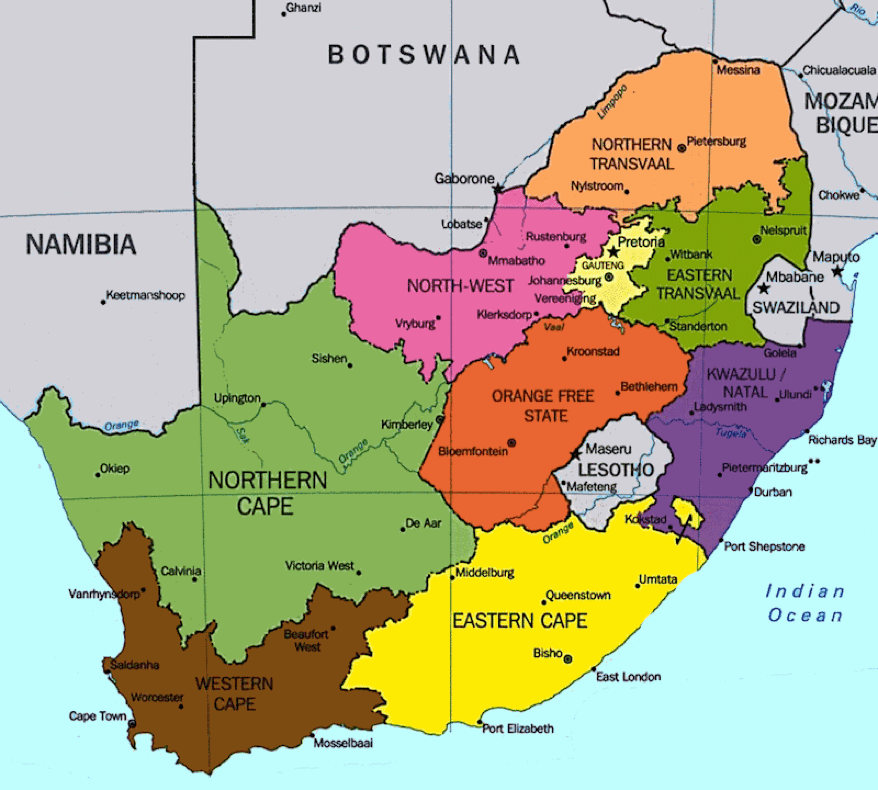
This is pertinent when viewed with our study of the French; the French Quebecers; the Basque; and the Catalonians. Both the Dutch and Germans had less pressure to emigrate than the French Huguenots, who having been vigorously persecuted while fleeing for their lives in vacating France, had a far stronger incentive in moving to the Cape to be completely clear of any further maltreatment. Likely, the genetic contribution of the French and those who fled to Holland, has had a greater proportional impact on the whole Afrikaner composition.
The rural male population surplus from northern Germany died abroad, not returning home. These men contributed greatly to the census figures of the Afrikaner population during much of its history, though it seems plausible that their fitness was lower than the Dutch and Huguenot groups, as they lacked the resources to prosper in a world which was much closer to the Malthusian (exponential growth based on a constant rate) edge than today. Not everyone leaves descendants and it is plausible that these Germans were fated not to do so to a greater extent than the Dutch and Huguenots, whom they were employed to protect and serve.
This would explain why the German contribution has been a shadow of the Dutch rather than the other way around. Additionally, the genetic closeness of the north German and Dutch populations may simply be the reason for the blurring of the two. It is thought by many that the Dutch are an example of ‘simply another group of north Germans who transformed their regional identity into a national one for various reasons.’
If this were true, then every small nation next to a larger one, would just be an offshoot. Biblical and secular histories, plus autosomal and Haplogroup DNA prove this line of reasoning incorrect.

Before we delve deeper, a few interesting Haplogroup facts indicative of Abraham’s and Keturah’s sons. According to Eupedia, Iceland has the fewest number of Haplogroups in all of Europe. Y-DNA Haplogroup I1a is far more distributed in Nordic countries, like Norway and Sweden, while only faint traces of it can be found in Southern European countries. A genetic study of Iceland’s population revealed that the majority of their male ancestors are Nordic, while the majority of their female ancestors are Celtic. A similar DNA study of the people of the Faroe Islands showed that 87% of their male ancestors are Scandinavian and 84% of their female ancestors are either Scottish or Irish.
Ninety-nine percent of European R1a people belong to subclades of R1a1a1 (M417, with an origin circa 3400 BCE from a bottleneck lineage purportedly originating in Ukraine), which itself derives from R-M198, R1a1a and it in turn stems from R-M459, R1a1.
A few pertinent sub-clades are: R1a-L664, which is essentially Northwest European and found chiefly in Western Germany, the Low Countries and the British Isles and R1a-Z284, which is a Scandinavian sub-clade with an epicentre in central Norway; found also in parts of Scotland, England and Ireland. There is a central European clade R-M458, which peaks in the Czechs and an eastern clade, R-M558 peaking in Russia.
What is important to note at this point, is that R1a in Scandinavian men is a result of intermixing and intermarriage; whereas I1 is an older, related lineage from a different line of Arphaxad’s male descendants. It is actually Haplogroup R1b which is the defining marker Haplogroup for all of Abraham’s male descendants, including: Scandinavia, Iceland and the Low countries.
Khazaria, Abstracts and Summaries, Kevin Alan Brook: emphasis & bold mine:
‘In “The Norway Project”… I1 is Scandinavia’s most common Y-DNA haplogroup and it probably originated in Denmark.
R1a, common in eastern Europe, is also found in this project in subclades like R1a1a and R1a1a1. R1b, common in western Europe, is also found… and… N1c1 is a subclade found… especially common among Finns, Estonians, and Saami [Madai-Japheth] so it’s believed to have come from intermarriage with Saami men.
Less common haplogroups that members have include, among others, E1b1b, G2a, I2, J1, J2b, Q1a3, and Q1a3a. E and J haplogroups have Middle Eastern origins, while Q may originate in Central Asia or Siberia, and G2a subclades probably originate in either Iran or the Caucasus region… in terms of Y-DNA, “The presence of Eu14 in Norway suggests that some admixture between Norwegians and the Finno-Ugric Uralic speakers of Scandinavia (Saami, Finns) has occurred.” (Eu14 is very common in Finland.)
Haplogroup N3 [N1c1] was found at an elevated 11% of Norwegians from northern Norway (especially Finnmark where 18.6% of the Norwegians have it) whereas none of the Norwegians in southern Norway had it. Scientists believe N3 came to Norwegians through intermarriage with Saami and Finnish men, as based on data from all populations N3 “has been interpreted as a signature of Uralic Finno-Ugric speaking males migrating to northern Scandinavia about 4000-5000 years ago”.
Haplogroup R1b is more prevalent in western and southern Norway, near the seacoast.
The project’s most common mtDNA (maternal) lineages are H, J, K, T2, U5, and V.
Other mtDNA haplogroups include I1a, I4, T1, T1a, U1b, U2, U2e, U4a1, X, and Z1a.
H is the most common mtDNA haplogroup in Norwegians according to published studies, at a frequency of about 40%.
Research by B. Berger, S. Willuweit, et al. confirmed that pre-modern Norwegian men also possessed I1, R1a, R1b, and Q.’
These ‘pre-Norwegian’ men were the true Vikings – and though related, are different peoples – who migrated to the British Isles and Ireland.
Brook:
‘Among 23andMe’s customers, 8-10%** of Norwegians carry the T red hair allele in the R160W gene, 8-10% carry the T red hair allele in the R151C gene, and 0-2% carry the C red hair allele in the D294H gene.
“Different genetic components in the Norwegian population revealed by the analysis of mtDNA and Y chromosome polymorphisisms.” European Journal of Human Genetics 10:9 (September 2002), multiple authors: pages 521-529.
‘The scientists studied Norwegians’ maternal and paternal lineages using DNA technology.
Overall, Norwegians are genetically similar to Germans.
They concluded, for instance, that the mtDNA haplogroup J, found among 10% of Norwegians, was probably “brought by the Germanic migrations to Norway.” They also showed that 75% of Norwegian men have one of the Y-DNA haplotypes Eu7 and Eu18, which are both common in Germany.
They found that the non-Germanic Saami people contributed “mtDNAs with the 16144,16189, 16270 motif” to Norwegians.’
Excerpts from the Abstract:
“… Both mtDNA and Y chromosome polymorphisms showed a noticeable genetic affinity between Norwegians and central Europeans, especially Germans… Although Y chromosome binary and microsatellite data indicate that 80% of the haplotypes are closely related to Central and western Europeans, the remainder share a unique binary marker (M17) common in eastern Europeans with informative microsatellite haplotypes suggesting a different demographic history. Other minor genetic influences on the Norwegian population from Uralic speakers and Mediterranean populations were also highlighted.”
‘The breakdown of the 4 top [Norwegian] haplogroups was:
I1 = 37.3%
R1b = 31.3%
R1a = 26.3%
N3 [N1c1] = 3.8%
This breakdown reveals 30.1% of Norwegian men have a Haplogroup indicating admixture from either an eastern European origin (R1a) or an East Eurasian lineage (N1c1). The 31.3% of Norwegian men with Haplogroup R1b are the closest to an unadulterated lineage descending from Abraham; while the 37.3% of men with Haplogroup I1 while related to those with R1b, are an older line of descent through a related ancestor from Arphaxad predating Abraham.
Brook:
‘Haplogroup R1a, which is common in East European populations, is most frequently encountered among Norwegians in eastern-central areas of Norway, reaching its peak (31% frequency) among those living in the Trøndelag region in central Norway. Haplogroup R1b is more prevalent in western and southern Norway, near the seacoast.’
The History and Geography of Human Genes, Princeton, NJ: Princeton University Press, Luigi Luca Cavalli-Sforza, Paolo Menozzi, and Alberto Piazza, 1994.
‘Their research shows that Norwegians are nearest to Germans and Dutch by genetic distance, followed closely behind by Danes, then Swedes, then English.
These data are reportedly on page 270 in the table “Occidental/European genetic distances for reference purposes”. Icelanders are largely descended from male Norwegian migrants to medieval Iceland. Many people living in northern Scotland and the islands of Orkney and Shetland have partial descent from Norwegian settlers as well.’
While common geographic, cultural and historical aspects strongly link the three Scandinavian nations, it is fascinating to learn Norwegians are not closest to Swedes and Danes ethnically, but actually with their cousin, Germany and their sibling the Dutch.
Brook:
‘Especially common Y-DNA (paternal) haplogroups in the “Danish Demes Regional DNA Project” include I1, I1d and I1d1, I2, R1a, and R1b (and subhaplogroups like R1b1a2a1a1a4 which is also known as R-L48), and less common haplogroups include ones within the broad letter groups E, F, G, J, N, Q.
In the “Denmark DNA Project”, Y-DNA haplogroups in Denmark-origin lineages include E1b1b1a1b, I2b1, I1, I1d1, J2a4b3, Q1a3, R1a1a, R1b1a2, R1b1a2a1a1, R1b1a2a1a1b4, and certain others. Y-DNA I1… is typically found among the Nordic peoples of Scandinavia… and in northern Germany. It is also very common in western Finland.’

‘According to The ALlele FREquency Database, 10.8%* of… [Danish] people studied carry at least one T allele in the R151C (rs1805007) gene where TT usually causes red hair. “
… Associations between SNP alleles and dark versus light hair colour in 378 Danes” reveals that 9 percent of these Danes carry at least one copy of the minor allele T in the SNP rs1805007 (R151C) and 8 percent** of these Danes carry at least one copy of the minor allele T in the SNP rs1805008 (R160W), both on the MC1R gene.
These alleles are frequently associated with red hair in various populations. The correlation of red hair alleles in MC1R with actual red hair was found to be stronger among the Scottish participants than among the Danish participants.
… 23andMe and other population distance and admixture tools… [studied] the autosomal DNA of about 600 Danish high school students who documented their ancestry… “chromosome painting revealed strong genetic influence from neighboring Nordic (Sweden and Norway) and Germanic (Germany and Holland) countries and negligible influence from Finland, France and Portugal.”
‘In “The Swedish DNA Project”, Y-DNA haplogroups… show about 35-40% of Swedish males carry I1 or its subclades.
In the project are participants with I1 (L22-) itself as well as I1b, I1d, I1d1, and I1d4. Among 23andMe’s customers, 10-12%** of Swedes carry the T red hair allele in the R160W gene (one of the highest frequencies in the world), 6-8%* carry the T red hair allele in the R151C gene, and 0-2% carry the C red hair allele in the D294H gene.’
Swedish population Substructure Revealed by Genome-Wide Single Nucleotide Polymorphism Data, multiple authors, PLoS ONE 6(2) (February 9, 2011):
‘… 350,000 single nucleotide polymorphisms (SNPs) were genotyped from 1,525 Swedes. The researchers compared the Swedish samples to 3,212 samples from populations worldwide, “including Finns, northern Germans, British and Russians”. Excerpts from the Abstract: … The Swedes – especially southern Swedes – were genetically close to the Germans and British, while their genetic distance to Finns was substantially longer.
An excerpt from the body of [a] paper:
“Genetically the Swedes have appeared relatively similar to their neighboring populations – for example the Norwegians, Danish, Germans, Dutch and British… In contrast, the Finns… do not appear genetically very close to the Swedes although they are geographically nearby.”
‘3,112 European people (including among others Swedes, Estonians, Finns, Russians, Poles) were genetically tested.
The Swedish samples came from the capital city of Sweden, Stockholm. The study describes a genetic barrier “between the Baltic region [Arphaxad] and Poland [Joktan] on the one hand, and Sweden on the other”. Further down it refers to the “barrier [that] emerged between the Eastern Baltic region and Sweden, but not between the Eastern Baltic region and Poland”. The study’s data comparing Swedes with Finns is consistent with how Swedes are descended mainly from Germanic people but came to mix somewhat with Finns… especially in the case of northern Swedes…’
We have learned that the Baltic people are related to the Poles from Joktan as both descend from Arphaxad a son of Shem. The Finns are more closely related to the Baltic peoples of Estonia, Latvia and Lithuania and hence their difference with the Scandinavians and particularly their neighbours, Sweden.
The percentage of I1a and N1c1 in Norwegian males and specifically the Swedes reflects their intermarrying in part with the Finns and or the Sammi regarding Haplogroup N1c1.
While I1 could be indicative of Keturah’s male relatives likely ancestry and descent from possibly one of Arphaxad’s other sons such as Anar or Ashcol and hence the strong similarity between the Scandinavian nations (and northern Germans) regarding Y-DNA Haplogroup I1.
For I1 is an older yet still related lineage to the more recent Haplogroup R1b mutation. Even though R1b is reflective of the true lineage for Scandinavian and Dutch men from Abraham for example; I1 men amongst the population are merely an older ancestral line of descent from Abraham’s ancestor Arphaxad and possibly also via Peleg.
This scenario would mirror the line of descent from Arphaxad through Peleg’s brother, Joktan; where his male descendants in eastern Europe possess the defining marker Haplogroup R1a, yet related older descendants in southeastern Europe carry I2a1.
Eupedia – emphasis & bold mine:
‘What about modern Belgium, this small country divided by unending linguistic quarrels?
Do Flemings and Walloons really have different origins?
It is easy to claim that the Flemings are of Germanic descent just because they speak a Germanic language. This type of reasoning has already proved false in the case of… South Germany, where the Neolithic, Celtic and even Roman inhabitants remained slightly dominant genetically compared to the later Germanic invaders. Are Flemings and Walloons really genetically divided across linguistic lines, or could there be unexpected unity among them… For the first time in history, these issues are going to have a scientifically provable answer, thanks to DNA.
The dominant haplogroup in the Benelux is R1b, almost equally divided between the Germanic R1b-U106 and Italo-Celtic R1b-P312 subclades.
Both are present in all the Benelux, but with a very different distribution.
R1b-U106 (S21) reaches its maximum frequency in Frisia (42%) and the central Netherlands (35%), then decreases progressively in the southern Netherlands (30%), Flanders (25%) and Wallonia (22%), to increase again in Luxembourg (32%).
Not all subclades of U106 may be of Germanic origin. Some subclades appear to have expanded from Scandinavia and North Germany…
These include L48 [second tree, downstream from Z381 and Z301], the largest branch of U106, and Z18 [first tree], another major branch.
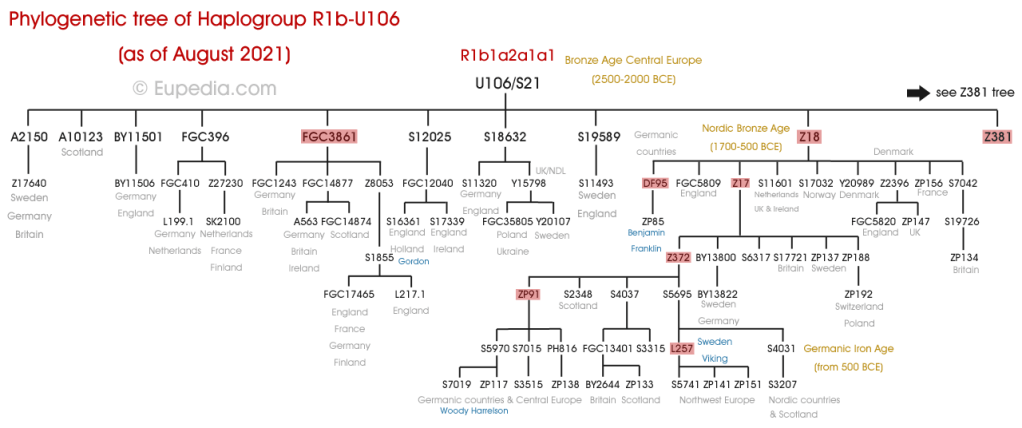
These also happen to be the two dominant. subclades in the Benelux.
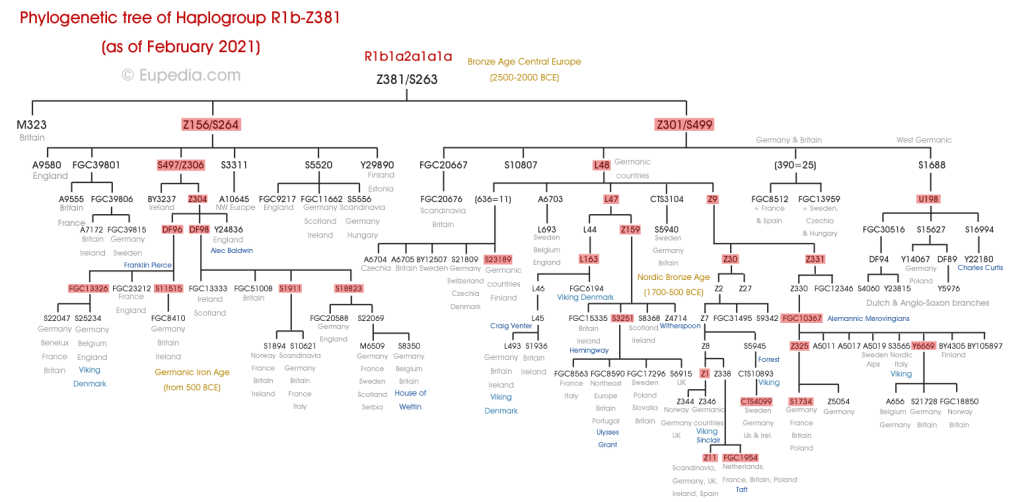
Within L48, Scandinavians belong almost exclusively to the Z9 branch, while the L47 branch appears to be found mostly in the Benelux and Britain.
The other major branch, Z156 is subdivided in DF96 and DF98. DF98 is also found in Scandinavia and could be considered Germanic.
However the vast majority of Z156 in Flanders is DF96, a subclade that is very rare in Scandinavia. DF96 might be more Proto-Celto-Germanic and would have dispersed around Germany and the Benelux without passing by Scandinavia… 100% of the Luxembourg samples were Germanic.
The sample size may to too small to judge, but it appears that Wallonia has a higher percentage of true Germanic/Nordic U106 (67%) than Flanders (56%), despite Flanders having a slightly higher percentage of U106 in total.’
The largest branch of R-U106 is L48 and the split between the Scandinavians with Z9 and the L47 of the Benelux peoples, highlights that four sons from Keturah are similar: the Nordic-Scandinavian nations. While the remaining two brothers are similar to each other: the Benelux-Germanic nations.
Just as we would expect similarity and diversity within a family of six sons. We will also learn that the Nordic sons from Keturah are genetically aligned with their German-Teuton cousin; while the Low Countries are as aligned with their English Saxon-Viking cousin.
Eupedia:
‘Dutch R1b-U106 has a particularly large swath of Z18 (25% of U106) like Scandinavia, but with more diversity of subclades. The dominant branch is L48 (about 40%), which has about three quarters of Z9 for one quarter of L47.
In contrast with Belgium, the Dutch also have a considerable amount of S1688 (about 15%, including U198), a subclade that reaches its maximum frequency in England, but is rare in Germany and mostly absent from Scandinavia, central and eastern Europe, Italy or Iberia.
So far, S1688 has not been found in Wallonia or Luxembourg and only makes up 4% of Flemish R1b-U106.
U198 might be native to the Netherlands and would have been brought to England by the Anglo-Saxons from Frisia.***
In contrast with Flanders and England this time, the Dutch have hardly any Z156, and the little there is is DF96, perhaps of Flemish or Saxon origin. Interestingly the high percentage of Z18 and L48>Z9 in the Netherlands resembles more the pattern observed in Wallonia than in Flanders. The main difference is that the Walloons have more Z156 (from Germany) and the Dutch more S1688 (native to the region).
The other main R1b subclade in the Benelux is R1b-P312 (S116), which is found in equal proportions in Flanders [Sheba] and Wallonia [Dedan] (33%), but decreases as one moves north to reach 20% in the southern Netherlands, 15% in the central Netherlands and 10% in Frisia.’
The strong link between the Dutch and English via S1688 may have its origin from primarily, the taking of 32,000 Midianite virgin girls and inserting them into the Israelite gene pool. For while their sons would have been R1b from their Israellite fathers, it could have mutated differently with each subsequent generation of males.
Secondarily, Zipporah’s two sons with Moses, may have chosen to ultimately dwell in Midian and marry Midianite wives. The various R1b sub-clade differences we have just read between the Flemish, and Walloons of Belgium, compared with the Dutch, highlights the fact that Belgium is a different brother, stemming from Jokshan and his sons Sheba and Dedan; while the Netherlands is the separate and distinct^^ brother, Midian.
Eupedia: ‘Here is breakdown of R1b subclades in Belgium from the Brabant Y-DNA Project.
About half of Belgian R1b-P312 belong to the U152 (S28) subclade [associated with France, Switzerland and Italy]… with a slightly higher frequency in Wallonia (16%) and Luxembourg (14%) [Dedan] than in Flanders (10%) [Sheba], and it keeps decreasing as one moves north to the southern Netherlands (6%) [Midian], the central Netherlands (3.5%) [Midian], and is almost absent from Frisia (1%) [Midian].
A bit over half of U152 in Wallonia and over 80% of U152 in Flanders belong to the L2 subclade.
Wallonia seems to have more diversity, with a higher presence of typically Italic/Roman subclades like Z56 and Z192, but also of… Z36. Autosomal ancestry analysis of Belgian individuals who tested with 23andMe shows that Walloons are much more likely than the Flemings to have a small percentage of Italian DNA (typically 2 to 4% + a few more percents of ‘broadly southern European’)…’
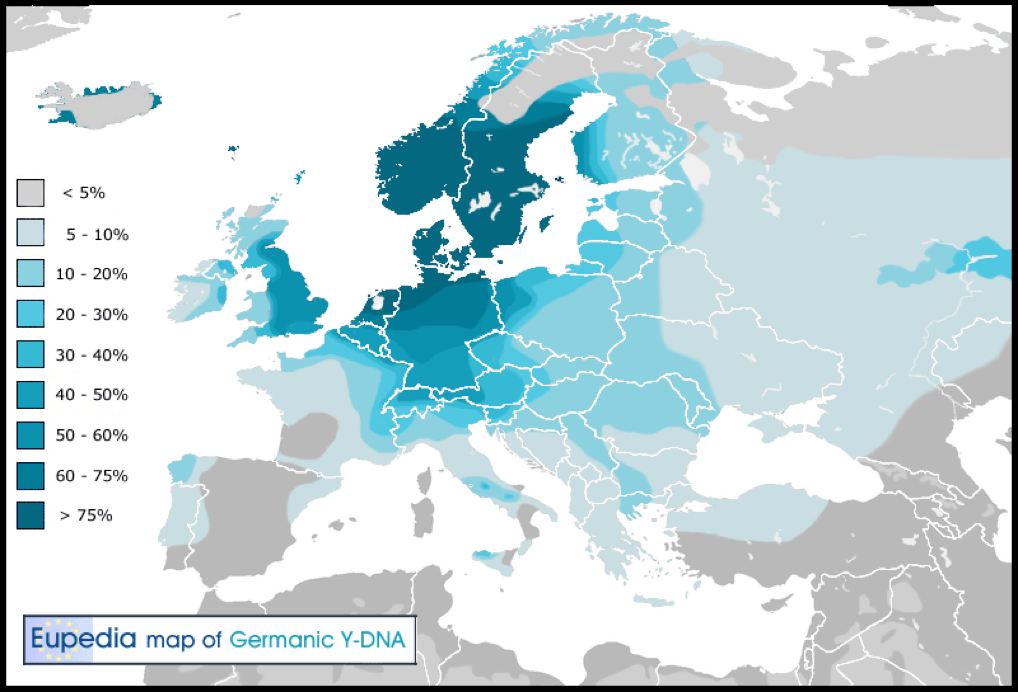
‘The Atlantic Celtic R1b-L21 (S145) [M529] lineage, most commonly found in the British Isles [Ireland, Scotland, Wales], reaches its maximum in the western half of Belgium (10%), including Flemish and Walloon Brabant, then decreases to 7-8% to the east of the country. Its frequency falls to 3-5% in the Netherlands, with little difference nationwide. Most of these lineages are probably of Gaulish [Celtic] origin, although some could have been brought by the Vikings from the British Isles, especially in coastal areas.
The Vikings are well known to have taken slaves among the British and Irish populations, which they brought with them to their colonies (e.g. Iceland, Normandy) and back to Scandinavia. Nowadays, over one quarter of Icelandic paternal lineages and half of the maternal lineages descend from those slaves [Scottish and Irish] brought by the Vikings. In Norway the proportion is about 15% and 30% respectively. It would not be surprising if the Vikings also brought slaves to places they founded on the continent, like Bruges, explaining how some typically Scottish or Irish subclades of L21 ended up there.
R1a was the other main Indo-European lineage… the (southern) Dutch and the Belgians have considerably lower levels of haplogroup R1a than all the Germans. Over half of the R1a in the Benelux belongs to the West Germanic L664 subclade. Other lineages include the Scandinavian Z284 subclade [see map below] and the Central/Eastern European lineages M417 and Z280. Only a few R1a samples (from Luxembourg, Utrecht) belonged to the Z2123 subclade of R1a-Z93… One R1a sample from Amsterdam belonged to CTS6, the Jewish subclade of R1a, also under Z93.’^

‘Haplogroup I1, one of the most reliably Germanic lineages, has nearly identical frequencies in Flanders (12%) and Wallonia (10.5%), but is slightly higher in the Netherlands (16.5%), although that is still a far cry from the 35% observed in Scandinavia. Only Luxembourg has [a] surprisingly low frequency of I1 (2.5%)…
The Nordic CTS6364 clade (including L22) was found in 18.5% of Dutch and 33% of Belgian I1 samples. The West Germanic Z58 branch accounted for 20% of Belgian samples (Z60>L573, Z138 and Z382 clades), and 63% of Dutch samples.’
A further divide between the Midianite Dutch and the Belgians descended from Jokshan. Dutch men with I1 having a stronger influence from and similarity with the Germanic Z58; whereas conversely Belgian men with I1 showing a stronger tie with the Nordic L22.
Eupedia:
‘Half of the Dutch Z58 belonged to the Z140 clade, which so far hasn’t been found in Belgium [Jokshan]. Z140 is found chiefly in Denmark [Medan], the Netherlands [Midian] and Britain, and to a lower extent Germany. It seems that it is mostly a Frisian and Anglo-Saxon clade***. The rest of Dutch Z58 belonged mostly to Z138 and Z382. The more East Germanic Z63 branch made up 13% and 12% of Belgian and Dutch samples, respectively.
Overall, Belgians appear to carry a considerably higher percentage of Nordic/Scandinavian subclades of I1, while the Dutch possess mostly West Germanic clades.^^ This could be explained by the higher percentage of Frankish ancestry in Belgium, since the Franks originated in Denmark. The majority of the Dutch I1 might be native to the Netherlands itself or neighbouring Saxony.’

‘Haplogroup J1 is one of the most common Jewish lineages, alongside E-M34 and J2a1. In the Benelux, J1 was found almost exclusively around Amsterdam and Antwerp, two cities known for welcoming Jewish immigrants in past centuries, while J2 was also higher in both… Holland and in the province of Antwerp. It is therefore likely that the differential of 2% for these lineages in Holland and Antwerp are of Jewish origin.’^
Khazaria, Dutch & Frisian Genetics, Kevin Alan Brook – emphasis & bold mine:
‘The Dutch people live in the northwestern European country called the Netherlands. Traditionally Protestant by religion, they differ from the traditionally Catholic Dutch-speaking Flemings of the Flanders region of Belgium, a neighboring country.
From 1815 until 1830, however, both countries were part of a United Kingdom of the Netherlands, and until 1581 the lands were also united.
The Dutch language, with many similarities to English, is part of a linguistic continuum that stretches into northern Germany, as varieties of Low German are distinct from the High German dialects/languages of southern Germany, Austria, Switzerland, Liechtenstein, and Luxembourg.
The Dutch people are linguistically and culturally distinct from the Frisian people who also inhabit the Netherlands. (Many centuries ago, the Frisians*** had their own independent country.)’
We will return and address the subject of the divide between northern and southern Germany in the following chapter.
The Frisians are interesting in that they are a legacy of the Frisians who with the Angles and Jutes, constituted the wave of (British) Saxons migrating (invading) Britain. Thus some Frisians in the Netherlands though not all, may have a closer genetic affinity with the British (English) than with the Dutch. We will discover that more truth to this idea may be attached than meets the eye, for many of the descendants of the (English) Frisians ended up in… wait for it, South Africa – refer Chapter XXXII Issachar, Zebulun, Asher & Naphtali – the Antipodean Tribes.
Eupedia:
‘The Dutch people themselves are split into multiple autosomal DNA clusters, with a notable difference [? observe PCA plot below] between North Dutch and South Dutch people [Recall, Midian has five* sons].’

Relatively speaking as the North Dutch and South Dutch each cluster closer to the Germans and English than any other European country.
Eupedia:
‘North Dutch people autosomally cluster close to Frisians, English, and Danes, whereas South Dutch and the Flemish autosomally cluster close to Walloons and West Germans.
According to Piotr Kapuscinski, this is caused by the ancient division between North Sea Germanic (Ingvaeonic) peoples and Wesser-Rhine Germanic (Istvaeonic) peoples, and he notes that North Dutch descend from Frisians, Angles, Saxons, and Norse (all Germanic peoples) whereas South Dutch descend from Celts and Germanic Franks.
Therefore, North Dutch and South Dutch don’t cluster close to one another* on autosomal plots of population averages [? refer PCA graph below].’

‘Genetically, R1b haplogroups are very commonly found in the Y chromosomes of Frisian males just as in the males of other ethnic groups in this geographic region (Atlantic-bordering Europe). As one would expect, participants in the Frisian Waddenproject often have R1b. The “Frisian Modal Haplotype” (FMH), called R1b-8, was discovered by Kenneth Nordtvedt and is tested by looking at only 6 markers.
Below R1b-8 on the genetic tree is R-U106, and a level below R-U106 on the tree are subclades including R-L47, R-L48, R-L48x, and R-L148.
The primary Frisian Y-DNA haplogroup is the R1b subclade called U106/S21, defined by its mutations U106 (and L48) and negative for P312. It’s coded by Family Tree DNA as haplogroup R1b1b2a1a.
U106 is also found among partial descendants of Frisians like English people, as well as in parts of Benelux, Germany, and Denmark.
Some other Frisian men have the Y-DNA haplogroup I1 which is most common in Scandinavia.
“Y Chromosome Evidence for Anglo-Saxon Mass Migration.” Molecular Biology and Evolution 19:7, multiple authors, (2002): pages 1008-1021.
English and Welsh people are among those studied and compared to each other. They also collected samples from Norwegians and Frisians. The Frisian samples came from 94 males who live in Friesland in the northern part of the Netherlands. Excerpt from the Abstract:
“When we compared our data with an additional 177 samples collected in Friesland and Norway, we found that the Central English and Frisian*** samples were statistically indistinguishable.”
Excerpt from the Discussion section: “The best explanation for our findings is that the Anglo-Saxon cultural transition in Central England coincided with a mass immigration from the continent.
Such an event would simultaneously explain both the high Central English-Frisian affinity and the low Central English-North Welsh affinity.”
We will return in subsequent chapters to address the red hair alleles of the Scots; the J1 and J2 paternal Haplogroups of the Jews; the English-Frisian link; as well as the English-North Welsh relationship – Chapter XXIX Esau: The Thirteenth Tribe; Chapter XXX Judah & Benjamin – the Regal Tribes; and Chapter XXXI Reuben, Simeon, Levi & Gad – the Celtic Tribes.
As at time of writing, any substantial material on the Haplogroups for the Afrikaners in South Africa have not been found, or for the indigenous inhabitants of Brussels, possible descendants of the Leummim. One interpretation for the name Leumm is ‘countries without water.’ Which is ironic in view of Belgium’s low level coastline, yet reflective of the landlocked territory of the capital, Brussels.
Daniel Boffey:
“… the unloved [River] Senne running through Brussels… [viewed] as a constant flood risk and source of cholera… was vaulted in… buried away under concrete, built over and hidden from sight for the last 150 years… condemned by locals as little more than a sewer and cause of disease and unhappiness.”
The graph below represents the regional genetic variation in Belgium and at once reveals both the closeness of Brussels, Flanders and Wallonia and the subtle distinctiveness of all three.
With regard to South Africa we have investigated its black citizens and so can compare with the Y-DNA Haplogroups for its white citizens; which include those of British descent – refer Chapter XII Canaan & Africa.
We will endeavour to obtain a partial picture at least, by isolating the Black and British elements and including what we learn from the Dutch in the Netherlands.
The top seven most common mtDNA Haplogroups for Iceland, Scandinavia, Bel-Lux and the Netherlands.
Iceland: H [37.7%] – J [13.7%] – T2 [10.1%] –
K [9.8%] – U5 [7.7%] – I [3.9%] – HV [3.6%]
Norway: H [45.7%] – U5 [11.4%] – J [10.5%] –
T2 [7.6%] – K [5.4%] – HV0+V [ 3.8%] –
U4 [2.7%]
Sweden: H [45.8%] – U5 [12.1%] – J [7.7%] –
K [6.4%] – HV0+V [5%] – T2 [4%] –
U4 [3%]
Denmark: H [47.3%] – J [13.4%] – K [8.9%] –
T2 [5.8%] – U5 [5.8%] – HV0+V [3.6%] –
U2 [2.7%]
Belgium & Luxembourg: H [46.9%] – K [12.1] –
T2 [9.4%] – J [6%] – U [5.4%] – U5 [3.4%] –
W [3.3%]
Netherlands: H [45%] – T2 [12%] – J [11%] –
K [10%] – HV0+V [8%] – U5 [7.5%] –
U4 [6.5%]

H HV0+V J K T2 U4 U5
Finland 36 7 6 5 2 1 21
Iceland 38 2 14 10 10 3 8
Netherlands 45 8 11 10 12 7 8
Norway 46 4 11 5 8 3 11
Sweden 46 5 8 6 4 3 12
Denmark 47 4 13 9 6 2 6
The six sons of Keturah bear a close resemblance in their maternal Haplogroups.
Iceland-Ishbak, is the only one which deviates slightly, which we have addressed with their ancestry of Scandinavian fathers and markedly high percentage from Celtic mothers. The addition of Keturah’s possible family’s descendants (from either Anar or Ashcol) – akin to modern Finland’s mtDNA Haplogroups – shows both the plausibility of the previously speculated line of reasoning and at the same time, the variable difference which highlights Finland in not being a mutual descendant with the other seven countries but rather, their possible progenitor with their father Abraham.
H J T2 U5 K HVO+V HV U4 T1
Italy 40 8 8 5 8 3 3 2 3
Switzerland 48 12 9 7 5 5 0.5 3 2
France 44 8 6 8 9 5 3 3 2
Benelux 47 6 9 3 12 3 0.7 3 2
Netherlands 45 11 12 8 10 8 7 2
Denmark 47 13 6 6 9 4 2 1
Sweden 46 8 4 12 6 5 0.5 3 3
Norway 46 11 8 11 5 4 0.2 3 1
Iceland 38 14 10 8 10 2 2 3 0.5
The table above compares Abraham and Keturah’s descendants with the main mtDNA Haplogroups of Abraham’s brothers, Nahor and Haran.
The table below a continuation of the table of nations descended from Shem studied to date, with the addition of Keturah’s descendants.
H HV HV0+V J T2 U U5 K
Switzerland 48 0.4 5 12 9 0.4 7 5
Bel-Lux 47 0.7 3 6 9 5 3 12
Denmark 47 4 13 6 1 6 9
Norway 46 0.2 4 11 8 2 11 5
Sweden 46 0.5 5 8 4 3 12 6
Netherlands 45 8 11 12 0.5 8 10
France 44 2 5 8 6 1 8 9
Brazil 44 2 11
Portugal 44 0.1 5 7 6 3 7 6
Spain 44 0.7 8 7 6 2 8 6
Poland 44 1 5 8 7 1.4 10 4
Russia 41 2 4 8 7 2 10 4
Greece 41 3 1.8 10 7 3 5 5
Italy 40 3 3 8 8 3 5 8
Ukraine 39 4 4 8 8 0.6 10 5
Iceland 38 4 2 14 10 0.2 8 10
Romania 37 2 4 11 5 2 7 8
Finland 36 7 6 2 0.8 21 5
Turkey 31 5 0.7 9 4 6 3 6
Iran 17 7 0.6 14 5 12 3 7
Switzerland remains as one bookend of the European descended peoples, with Iran remaining at the other end as per the dominant mtDNA Haplogroup H.
The addition of the Benelux and Scandinavian nations sees them clustered together, as well as with those peoples of western Europe with which they are more closely related – the exception being Icelanders.
A pattern has emerged showing the percentage levels of the main European mt-DNA Haplogroup H, increasing as one heads west across Europe. Switzerland though, has not fitted into this genetic type as it sits firmly in central Europe. What we will notice as we progress, is that the nations of northwestern Europe in the main exhibit higher levels of mtDNA Haplogroup H further north and west; with the Swiss being the first to evidence this fact. The addition of Keturah’s sons supports this correlation, as they now bookend with Switzerland.
Regarding Y-DNA Haplogroup R1b: Haplogroup R-M269 is the sub-clade of human Y-chromosome Haplogroup R1b which is defined by the SNP marker M269. According to ISOGG 2020 it is phylogenetically classified as R1b1a1b (now R1b1a1a2). R-M269 is the most common European Haplogroup in the genetic composition of mainly Western Europe; increasing in frequency from an east to west gradient. For instance in Poland, it is found in 22.7% of the male population, compared to Wales at 92.3%. It is carried by over 110 million European men.
Scientists propose that the age of the M269 mutation is somewhere between 4,000 to 10,000 years ago. This time frame is plausible and neatly fits with the birth of Peleg and hence the beginning of the R1b mutation, circa 7727 BCE, according to an unconventional chronology. The most recently significant R1b mutations originated with Abraham and his descendants beginning with his birth in 1977 BCE.
The sub-Haplogroup of R1b, U106 (S21), is frequent in central to western Europe, reaching 66.8% in Germany; while the sub-lineage R-S116 is the most frequent in the Iberian Peninsula. R-U152 is more frequent in France and Italy; R-U198 in England; and R-M529 in the Celtic nations of the United Kingdom and the Republic of Ireland.
As we progress through the descendants of Shem, the levels of R1b vary and gradually increase. We will keep a record of the levels for the two main R1b sub-Haplogroups – M269 and U106 – for some of the nations we will study.
It is worth mentioning that the North to south axis is as important as the East to west and so this explains why for instance Poland has slightly higher percentages of both clades of R1b than Russia as it is further west.
Comparably, the Czech Republic displays a higher level of R-U106 than Italy (due to admixture with Germany) which is further south; yet less R-M269 overall as it is the descendants of Peleg and Aram which have the highest levels of R1b – refer Chapter XV The Philistines: Latino-Hispano America; and Chapter XXIII Aram & Tyre: Spain, Portugal & Brazil.
Turkey R-M269 14% – R-U106 0.4%
Russia R-M269 21% – R-U106 5.4%
Slovenia R-M269 17% – R-U106 4%
Czech R-M269 28% – R-U106 14%
Poland R-M269 23% – R-U106 8%
Ukraine R-M269 25% – R-U106 9%
Italy R-M269 53% – R-U106 6%
France R-M269 52% – R-U106 7%
Swiss R-M269 58% – R-U106 13%
Netherlands R-M269 54% – R-U106 35%
Denmark R-M269 34% – R-U106 17%
The Dutch possess a similar percentage of R1b-M269 as their near relatives the French, Italians and the Swiss. The Germanic sub-clade of R-U106 is especially high in the Netherlands, partially due to the Frisian element of the population. In fact it is a far higher percentage even than in Germany, which we will find is similar to Denmark.
Denmark exhibits a higher level of R-U106 in keeping with their position in both northern and western Europe. Unexpectedly, the Danish percentage of R-M269 is lower than 50%. The reason is partially due to the fact that Denmark has a higher percentage of R1a at 15%, compared to say the Netherlands with 4%; though mainly due to the high percentage of Y-DNA Haplogroup I1, indicative of northern Europe at 34%; compared to the Netherlands with 16.5% and France at 9%.
The Y-DNA Haplogroups for the six sons of Abraham and his second wife, Keturah. Belgium’s Haplogroups are near identical to the Flemish percentages; therefore figures are included for both Flanders and Wallonia.
Iceland: R1b [42%] – I1 [ 29%] – R1a [23%] –
I2a2 [4%] – N1c1 [1%] – Q [1%]
Norway: R1b [32%] – I1 [31.5%] – R1a [25.5%] – I2a2 [4.5%] –
N1c1 [2.5%] – G2a [1%] – E1b1b [1%] – Q [1%] – J2 [0.5%]
Sweden: I1 [37%] – R1b [21.5%] – R1a [16%] – N1c1 [7%] –
I2a2 [3.5%] – E1b1b [3%] – J2 [2.5%] – Q [2.5%] –
I2a1 [1.5%] – G2a [1%]
Denmark: I1 [34%] – R1b [33%] – R1a [15%] – I2a2 [5.5%] –
J2 [3%] – E1b1b [2.5%] – G2a [2.5%] – I2a1 [2%] –
N1c1 [1%] – Q [1%]
Netherlands: R1b [49%] – I1 [16.5%] – I2a2 [6.5%] –
G2a [4.5%] – R1a [4%] – J2 [3.5%] – E1b1b [3.5%] –
I2a1 [1%]- T1a [1%] – J1 [0.5%]
Frisians: R1b [55.3%] – I [34%] – R1a [7.4%] –
E1b1b [2.1%] – J [1.4%]
Flanders: R1b [61%] – I1 [12%] – E1b1b [5%] – I2a2 [4.5%] –
R1a [4%] – G2a [4%] – J2 [4%] – I2a1 [3%] – J1 [1%] –
T1a [0.5%] – Q [0.5%] – L [0.5%]
Wallonia: R1b [59.5%] – I1 [10.5%] – R1a [7%] – G2a [5.5%] –
E1b1b [5.5%] – I2a2 [4.5%] – T1a [3.5%] – J2 [2%] –
I2a1 [1.5%]
Luxembourg: R1b [60.5%] – J2 [8%] – I2a2 [5.5%] – G2a [5.5%] –
E1b1b [5%] – R1a [2.5%] – I1 [2.5%] – I2a1 [2.5%] – J1 [2.5%]
R1b R1a I1 I2a1 I2a2 E1b1b J2 J1 G2a
Finland 4 5 28 0.5 0.5
Iceland 42 23 29 4
Norway 32 26 32 5 1 0.5 1
Sweden 22 16 37 2 4 3 3 1
Denmark 33 15 34 2 6 3 3 3
Frisians 55 7 [34] 2 [1]
Netherlands 49 4 17 1 7 4 4 0.5 5
Flanders 61 4 12 3 5 5 4 1 4
Wallonia 60 7 11 2 5 6 2 6
Luxembourg 61 3 3 3 6 5 8 3 6
A comparison of the main Y-DNA Haplogroups reveals and supports a number of points.
Finland is obviously an outlier; even more apparent than as already shown by its mtDNA Haplogroups. Recall its percentage of Haplogroup N is extraordinarily high and indicative of a very northerly location in Europe such as the Baltic nations and Russia who border Finland. Finland shares a similarly high percentage of Haplogroup I1 shared by all the Nordic nations.
The three Scandinavian countries, with Iceland are all uniquely I1 driven, thus explaining the lesser percentages for R1b. Haplogroup I1 is a far older line of descent from Shem, yet still related to those men who carry the more recent R1b mutation. Even so, Haplogroup R1b is the defining marker Haplogroup for Abraham’s male descendants.
Even the Netherlands has a relatively high percentage of I1.
Sweden shows the impact of mixing and intermarriage with the Finns and Sammi; whereas, the Norwegians less so. In the past, Swedish men probably had a R1b Haplogroup percentage near identical with Norway and Denmark. And prior to that, the Scandinavian males would have possessed primarily R1b as still somewhat reflective in Icelandic men today.

The R1b percentages support the premise that Belgium and Luxembourg comprise the descendants of Jokshan; as their levels are all comparable yet distinct from their other five siblings. Jokshan had two sons; Sheba and Dedan, who in turn had three sons. Thus providing four lines of people and with the other five sons, making a total of nine. Sheba equating to the Flemish, Letush to the Walloons, Leumm to the Brussels Capital region and the Asshurim to Luxembourg.
Continuing our Y-DNA comparison table from previous chapters with the addition of Abraham and Keturah’s sons Midian, Medan, Jokshan, Ishbak, Zimran and Shuah.
J J1 J2 E1b1b G R1a R1b R1
Georgia 43 16 27 2 30 9 10 19
Armenia 33 11 22 6 12 5 30 35
Turkey 33 9 24 11 11 8 16 24
Iran 32 9 23 7 10 16 10 26
Greece 26 3 23 21 6 12 16 28
Italy 19 3 16 14 9 4 39 43
Romania 15 1 14 14 3 18 16 34
Portugal 13 3 10 14 7 2 56 58
Luxembourg 11 3 8 5 6 3 61 64
Brazil 10 10 11 5 4 54 58
Spain 10 2 8 7 3 2 69 71
France 8 2 6 8 6 3 59 62
Ukraine 5 1 5 7 3 44 8 52
Flanders 5 1 4 5 4 4 61 65
Netherlands 4 1 3 4 5 4 49 53
Switzerland 4 0.5 3 8 8 4 50 54
Poland 3 3 4 2 58 13 71
Russia 3 3 3 1 46 6 52
Denmark 3 3 3 3 15 33 48
Sweden 3 3 3 1 16 22 38
Wallonia 2 2 6 6 7 60 67
Frisians 1.4 2 7 55 62
Norway 0.5 0.5 1 1 26 32 58
Iceland 23 42 65
Finland 0.5 5 4 9
Georgia continues as one bookend with the highest Haplogroup J2, J1 and G2a percentages. Finland is the opposite bookend, with no Haplogroup J and the lowest R1 levels. Poland exhibits the highest percentage of R1a while Greece has the most E1b1b. Spain’s total R1 is equalled by Poland, though in opposite percentages for R1a and R1b.
The Walloons move into third place for combined R1 Haplogroups. Both Luxembourgers and the Flemish pass the French for possessing the second highest levels of R1b after Spain.
Focussing on the key Y-DNA Haplogroups associated with the majority of the European nations, Haplogroups R1a, R1b, I1 and I2 segment Europe roughly into quarters.
Haplogroup R1b is dominant in the West; R1a in the East; I1 and I2a2 in the North and west; with I2a1 in the South and east.
Added to this, is N1c1 from admixture with Japheth, prevalent in northern Europe and in counter balance to Haplogroups J2 and J1 derived from Ham, which are more common in southern Europe.
R1a R1b I1 I2a1 I2a2 N1c
Portugal 1.5 56 2 1.5 5
Spain 2 69 1.5 5 1
Luxembourg 3 61 3 3 6
France 3 59 9 3 4
Switzerland 4 50 14 2 8 1
Netherlands 4 49 17 1 7
Flanders 4 61 12 3 5
Brazil 4 54 [9]
Italy 4 39 5 3 3
Finland 5 4 28 0.5 62
Frisians 7 55 [34]
Wallonia 7 60 11 2 5
Turkey 8 16 1 4 0.5 4
Greece 12 16 4 10 1.5
Denmark 15 33 34 2 6 1
Sweden 16 22 37 2 4 7
Iran 16 10 0.5 1
Romania 18 16 4 28 3 2
Iceland 23 42 29 4 1
Norway 26 32 32 5 3
Ukraine 44 8 5 21 0.5 6
Russia 46 6 5 11 23
Poland 58 13 9 6 2 4
The comparison table shifts in emphasis (with the exception of N1c from admixture with Japheth) when northern European Y-DNA Haplogroups from Shem, comprising the intermediate, yet relatively old Haplogroups of I1 and I2a2 are included.
From a Y-DNA Haplogroup perspective it is interesting that the males descended from Abraham and Keturah form into pairs aside from Luxembourg. Rather than the defining marker Haplogroup R1b-U106, it is Haplogroups R1a and I1 which show the pairing similarity.
For instance, Denmark and Sweden; Norway and Iceland; and the Dutch and Flemish stand out. Correspondingly, the four Nordic nations possess less R1b and more I1 and R1a, in contrast with the five Benelux peoples who contrastingly possess more R1b and less I1 and R1a.
Similarly, it is only the four northern nations which possess Haplogroup N1c1 amplified from admixture with near northern neighbours. Sweden possessing the third highest levels after Finland and Russia. Finland had the highest level of I1 previously, though is now surpassed by Sweden, Denmark, Norway and Iceland. Switzerland still retains the highest levels of I2a2, with the Netherlands in second place.
The principal Y-DNA Haplogroups for South Africa include: E1b1a, R1b, E2, A1, B2, E1b1b and J.
The Haplogroups reflective of the Black male population are E, B and A; R1b for White men; with Haplogroups E1b1b and J stemming from admixture. There is diversity just within the Black population of South Africa as it contains the Bantu, Zulu, Xhosa and Khoisan peoples.
Khoisan: E1b1a [36%] – A1 [33%] – E1b1b [15%] –
B2 [12%] – E2 [4%]
Xhosa: E1b1a [54%] – E2 [28%] – A1 [5%] –
B2 [5%] – E1b1b [5%]
Bantu: E1b1a [55%] – E2 [21%] – B2 [11%] –
A1 [5%] – E1b1b [4%]
Zulu: E1b1a [55%] – E2 [21%] – B2 [20%] – A1 [3%]
White South African: R1b [51.6%] – E1b1b [9.6%] –
J [3.8%] – E1b1a [0.6%] – E1a [0.6%]
Netherlands: R1b [49%] – I1 [16.5%] – I2 [7.5%] –
J [4%] – E1b1b [3.5%]
Disregarding the British factor in South Africa for a moment and using the predominant element of the Dutch for White South Africans, we can observe the close percentage similarity between the R1b Haplogroup.
Haplogroup I is missing from the data available though it would be safe to assume it is included amongst the White population as the British descended males also possess I1 and I2. What is of interest, is the higher percentage of E1b1b and is probably attributable to admixture with the indigenous population.
The defining Y-DNA Haplogroups for those men dwelling in western Europe – and aside from Aram^ – principally descended from Arphaxad’s great grandson Peleg:
In Portugal^ and Spain,^ it is R1b-DF27; and in
Italy it is R1b-U152 and J2; and in
France it is also R1b-U152 (and I1); while in
Scandinavia they include I1 and R1b-U106; and similarly for the
Benelux nations it is R1b-U106 and I1.
Inside the ancestry of South Africa’s Afrikaners, The Conversation, May 21, 2021 – emphasis mine:
‘By comparing the Afrikaners in our study to 1,670 individuals from 32 populations across the world we found that 4.7% of Afrikaner DNA has a non-European origin. That may seem like a small percentage, but 98.7% of the Afrikaners were admixed.
The admixture between European and Khoe-San was more common than church records suggest. In our study, though only 1.3% of Afrikaner genes came from the Khoe-San, most Afrikaners contained some Khoe-San genes.
The highest non-European contribution (1.7%) came from South Asia, or India. This reflects colonial men’s stated preference for marrying freed Indian slaves during the founding years. A little less than 1% of Afrikaner genes have an East Asian (Chinese or Japanese) origin.
The contribution of West and East Africa is the lowest, at 0.8%. This is likely to stem from the almost 18,000 slaves imported from Africa’s west and east coasts. The fraction of genes from West Africa is slightly higher than from East Africa, reflecting the fact that while West African slaves were few, they arrived four generations before slaves from East Africa.
A common perception about Afrikaners is that they stem from very few ancestors, which would have resulted in inbreeding. Inbreeding results in long stretches of the paternal and maternal chromosomes being identical to each other. By looking at the lengths of identical stretches, it is clear that Afrikaners are as variable as the average European. This is in part due to admixture between non-Europeans and Europeans, but also because Europeans came from all over Europe.
The strongest European genetic contribution is from northwestern Europe, with the most similar population being the Swiss German population. This signal could also be interpreted as a mixture between German, Dutch and French populations – as genealogical records indicate.
In conclusion, despite laws prohibiting mixed marriages from as early as 1658, and discrimination that culminated in the apartheid system, these genetic analyses confirm that most Afrikaners have admixed ancestry. Genealogical information has indicated as much, but these genetic findings are irrefutable.’

For now – until an exhaustive study of the Afrikaner in conjunction with the Dutch is available – the true identity of the Dutch Afrikaner remains a tantalising mystery. Are the Afrikaners Midianites, or a slightly different composition compared with the native Dutch? If so, the question remains whether the Kenite factor is hidden there.
It has been said:
‘the people in Europe the most like the English, are the Dutch.’
The close tie between England and the Netherlands is one that will become clearer when we study the United Kingdom – Chapter XXX Judah & Benjamin – the Regal Tribes.
Another saying – and one the Dutch may not be particularly fond, though it is not intended as a slight – is:
‘the Dutch are Germans with clogs.’
As we progress, the historically close geographic and cultural relationship shared between the Dutch and the Deutsch will become increasingly evident – Chapter XXVIII The True Identity & Origin of Germany & Austria – Ishmael & Hagar.
For the ancient link between the Hivites and Hittites will be cemented further;
the interchanging terms, Midianites and Ishmaelites – as well as Arabia and the wilderness – will be reconfirmed;
the neighbouring states comprising the wealthy Etruscans and the militaristic Romans will crystallise in clarity;
while the true identity of Ishmael, will fascinate like no other.
Hold on to your hats constant reader… for there is more than one dramatic surprise ahead as we explore the remaining descendants of Abraham from his wife Sarah (and their son Isaac), as well as Sarah’s remarkable handmaiden, Hagar.
Turn your ear toward wisdom, and stretch your mind toward understanding. Call out for insight, and cry aloud for understanding. Seek it like silver; search for it like hidden treasure. Then you will understand… and discover the knowledge of God.
Proverbs 2:2-5 Common English Bible
“Let me say to you that truth has always lived with the minority; what the majority says at a given moment is usually wrong.”
Alan Redpath
© Orion Gold 2021 – All rights reserved. Permission to copy, use or distribute, if acknowledgement of the original authorship is attributed to orion-gold.com

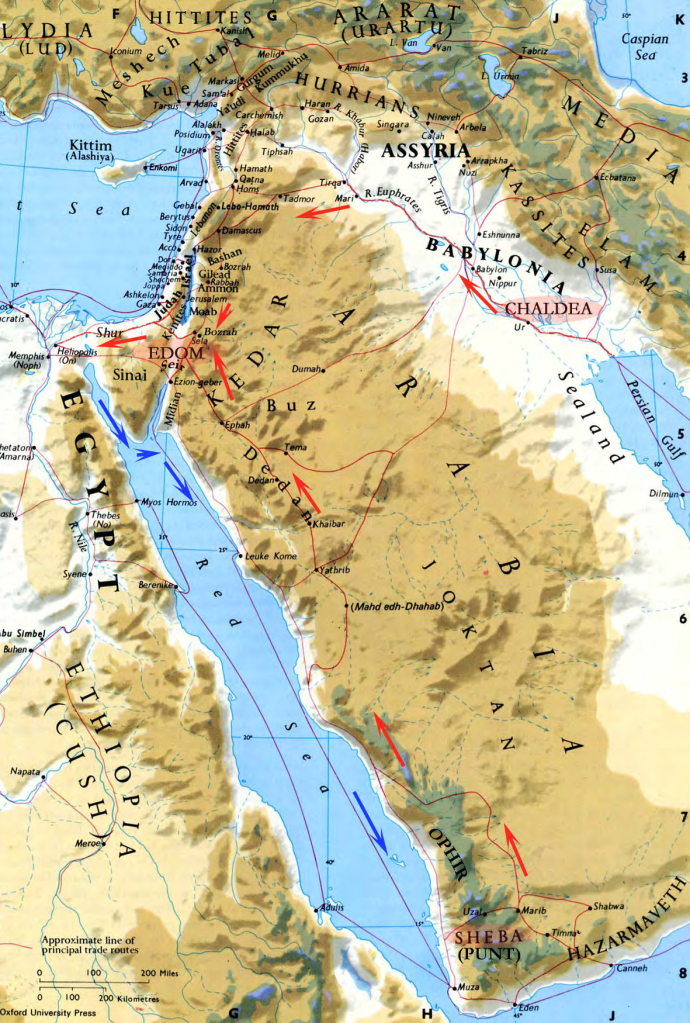


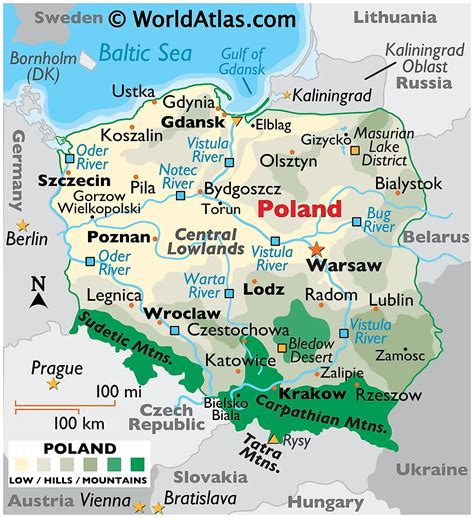













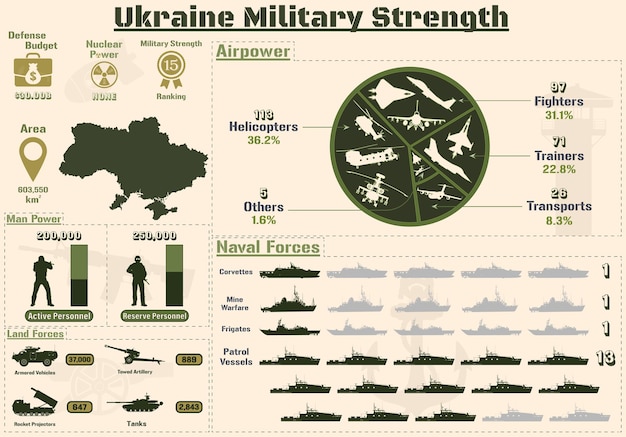
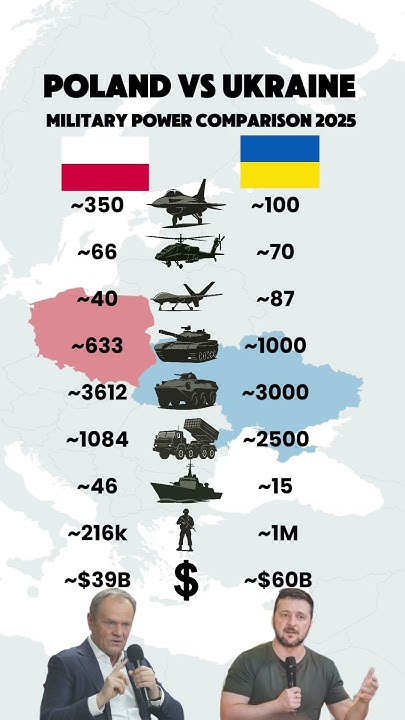



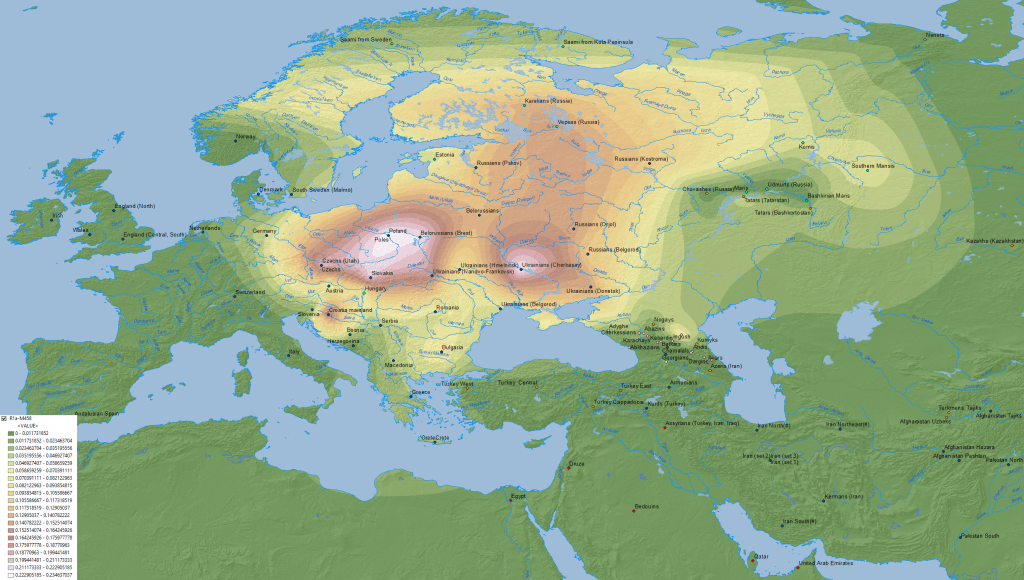

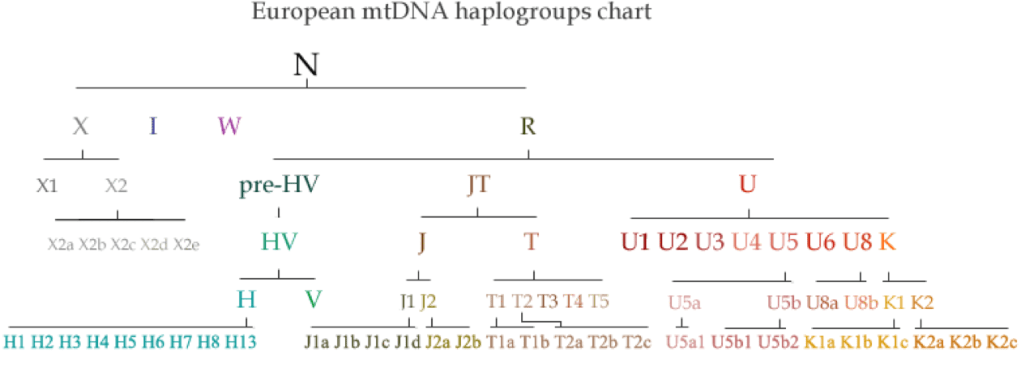

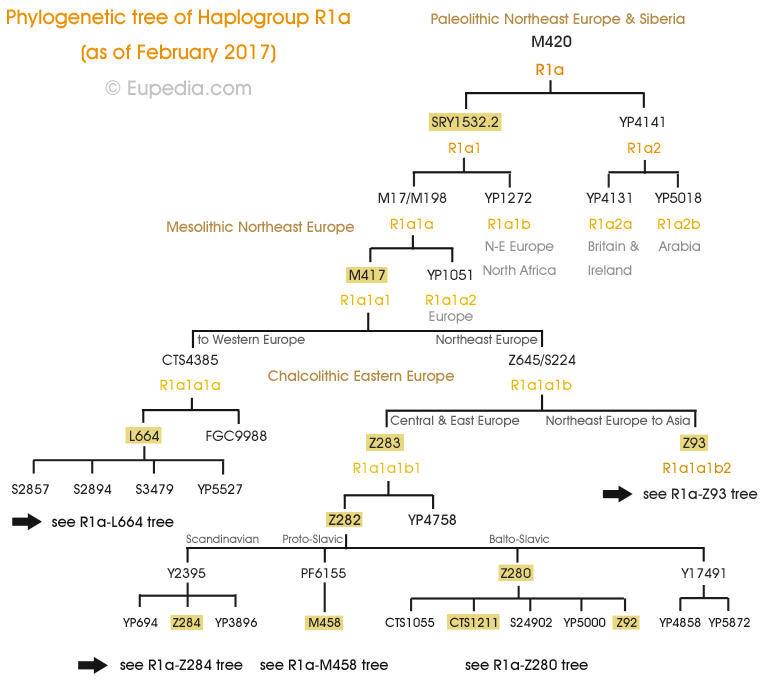
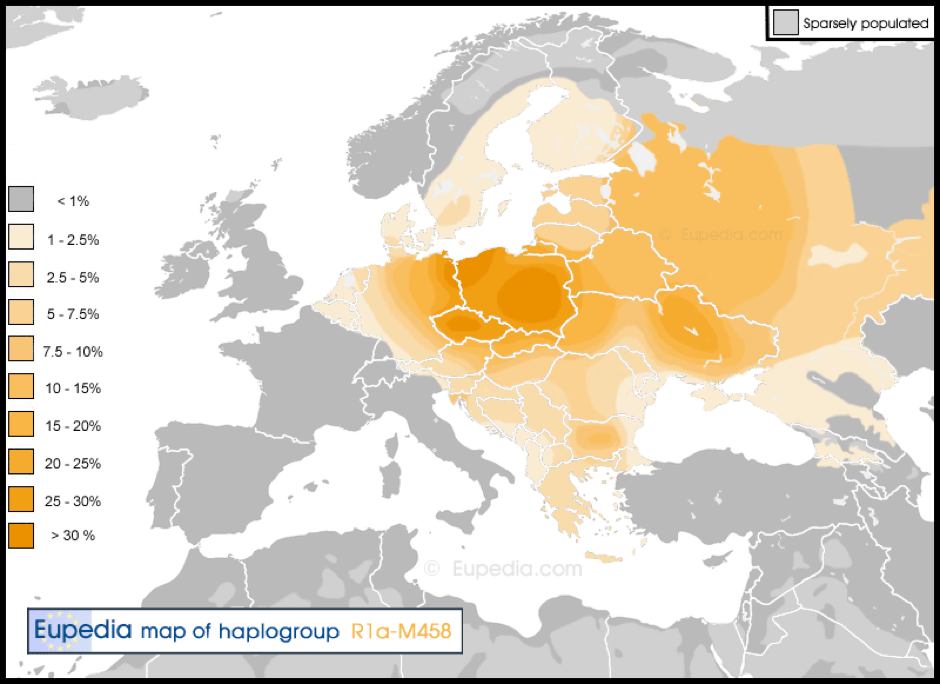


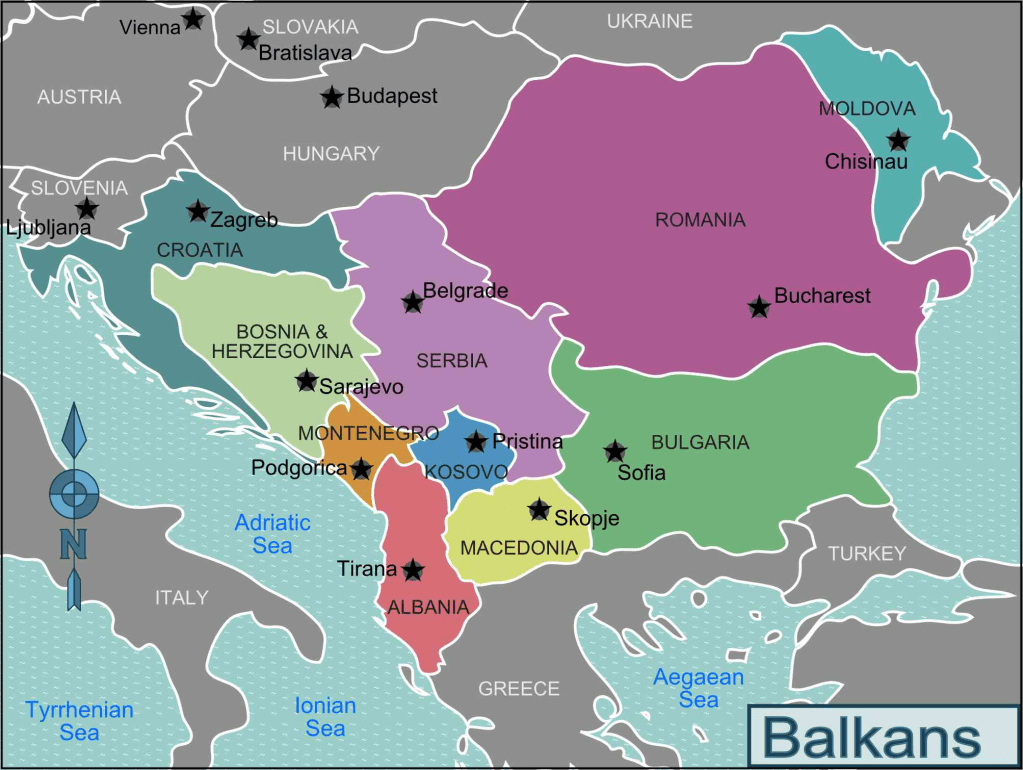
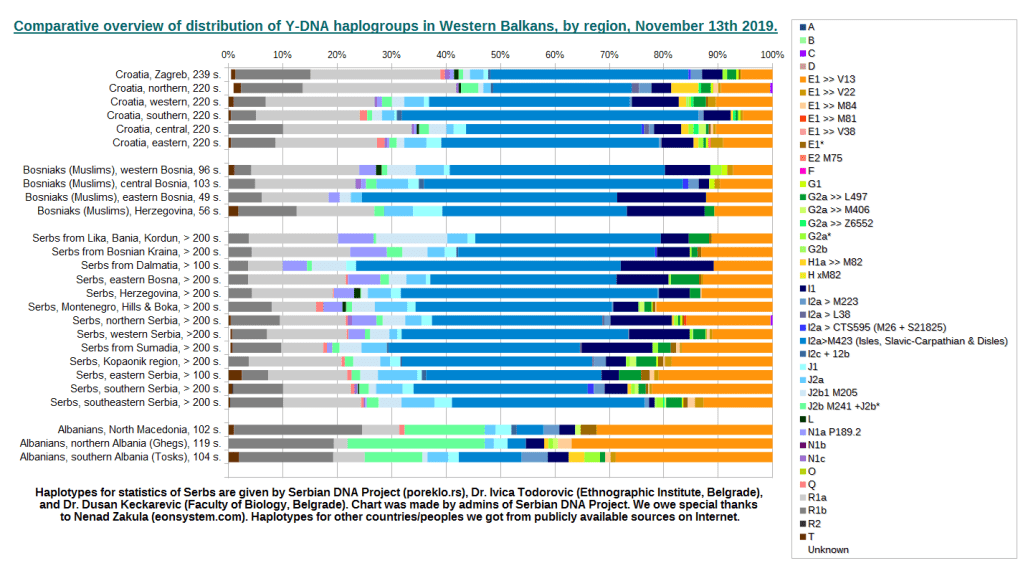
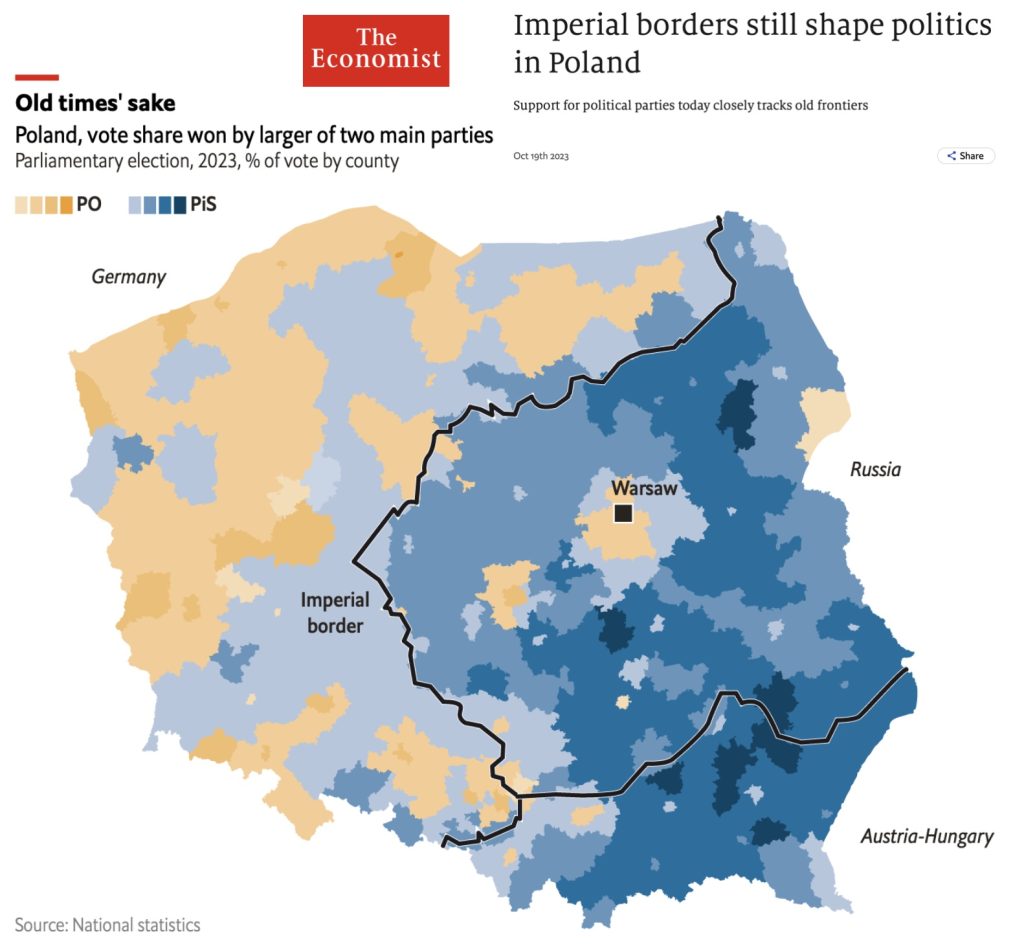

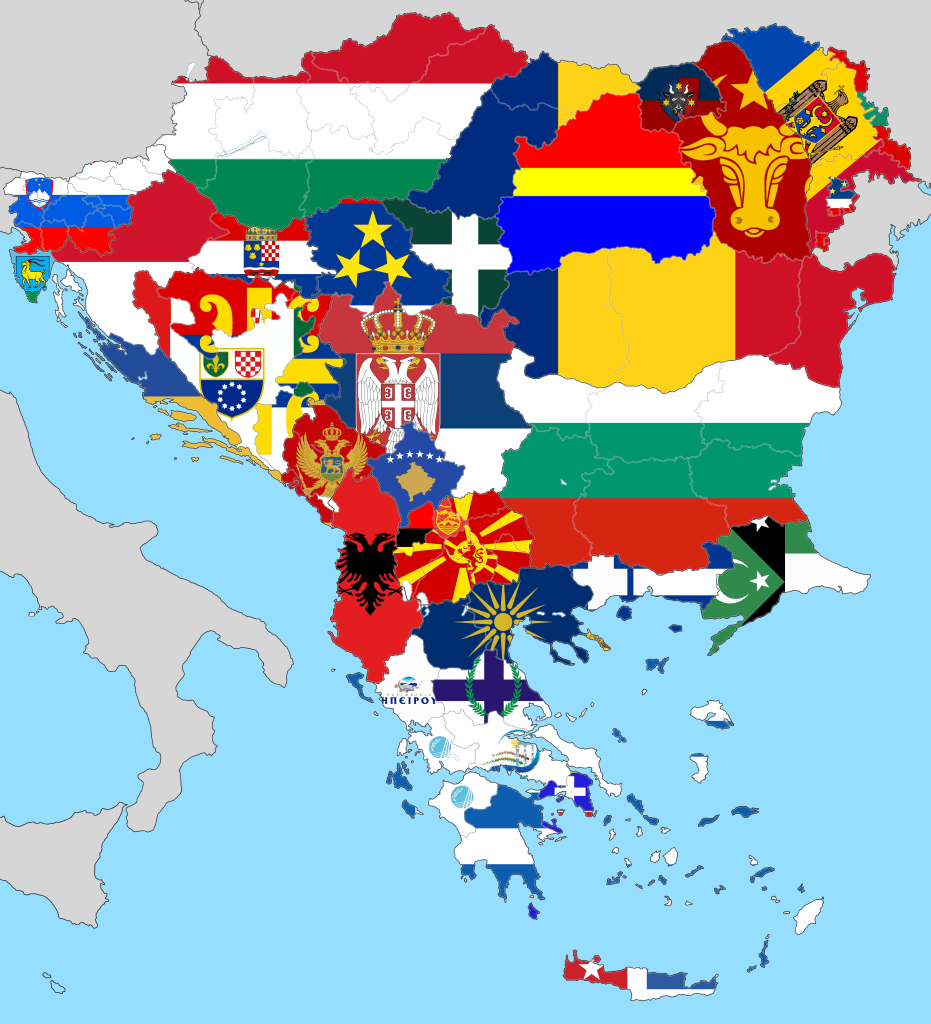





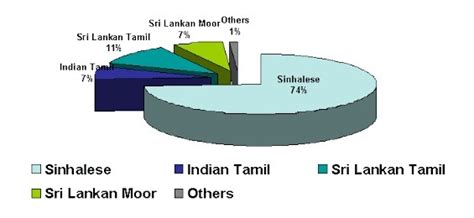

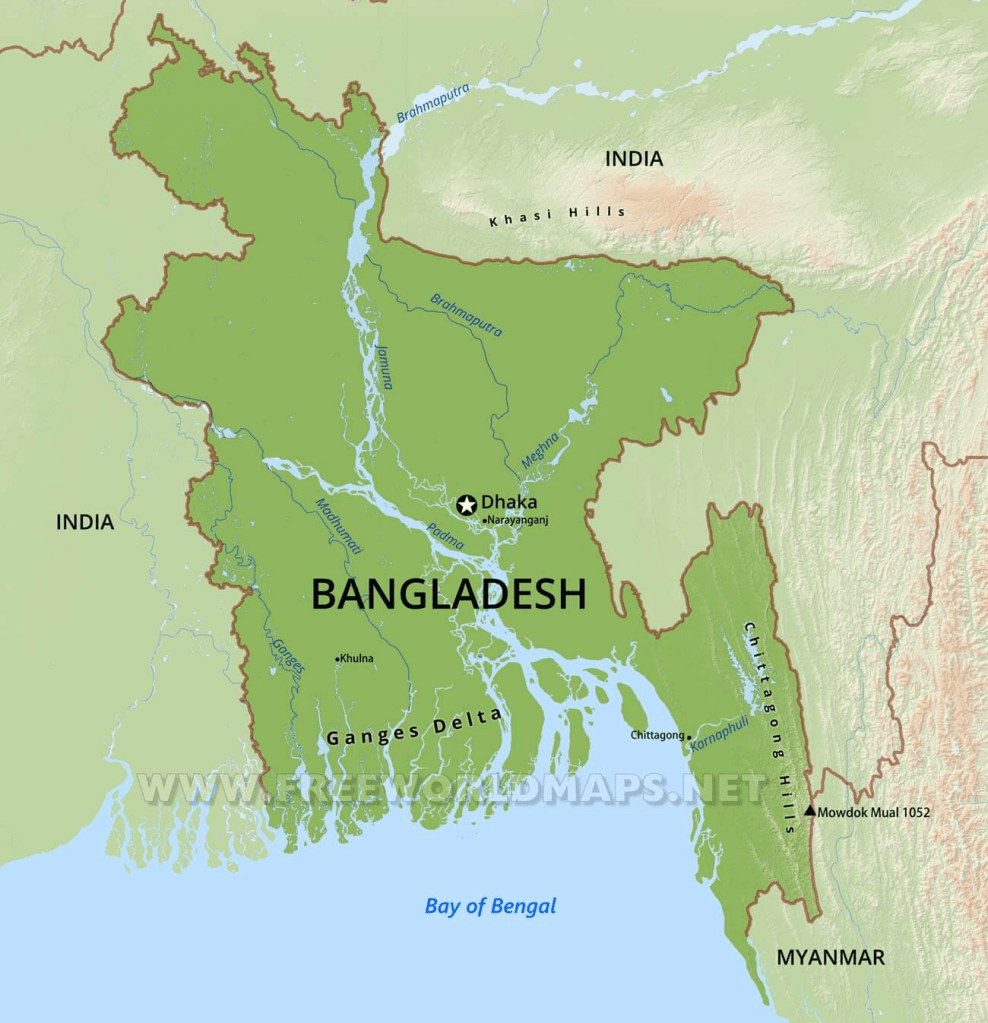






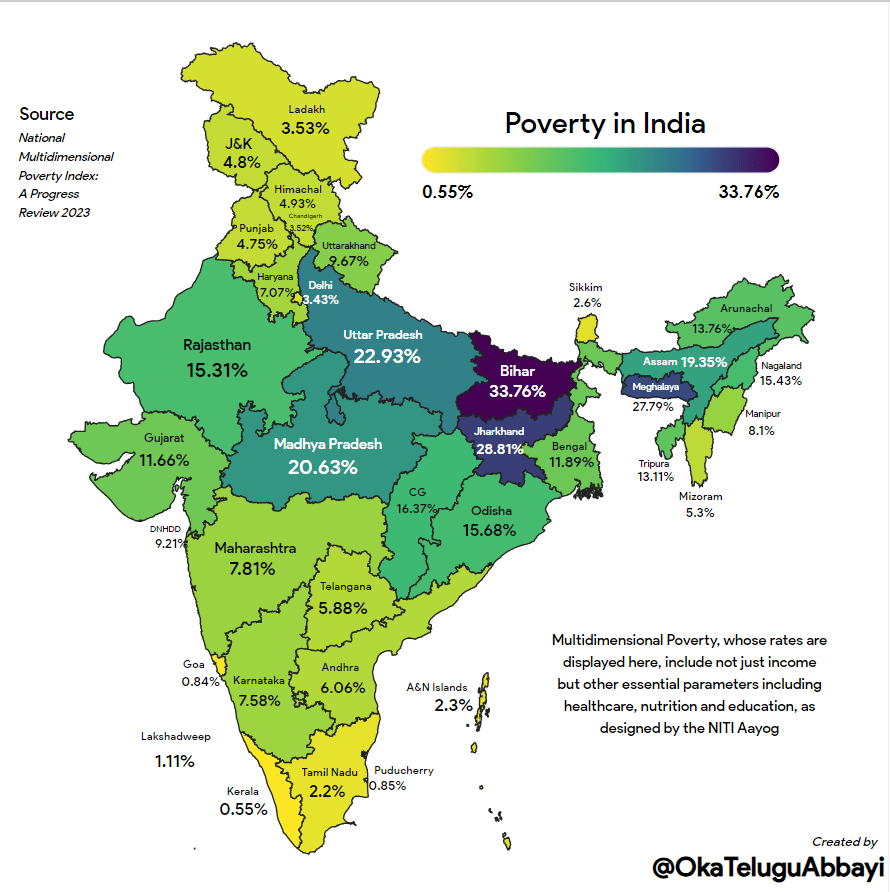

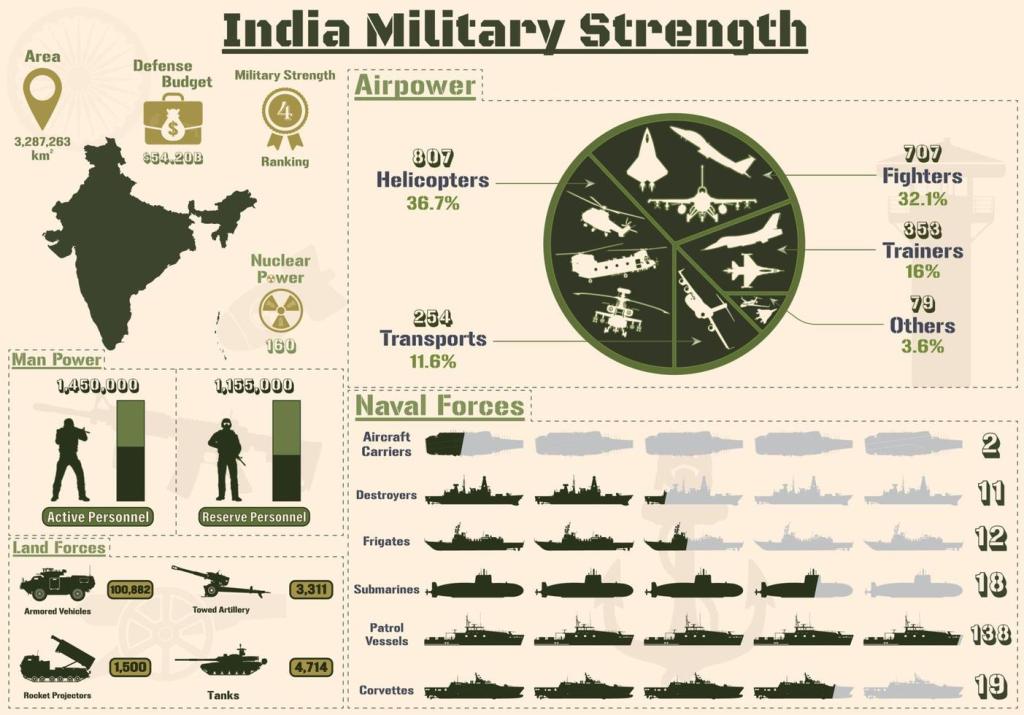
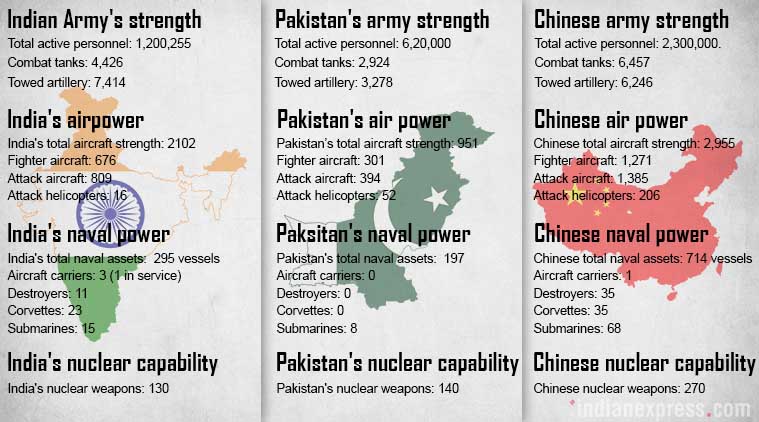
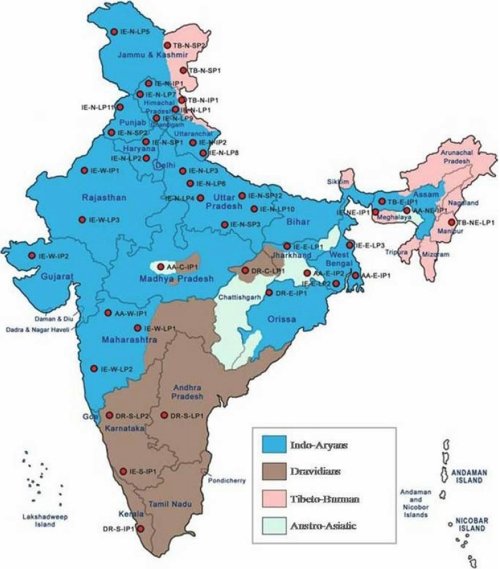




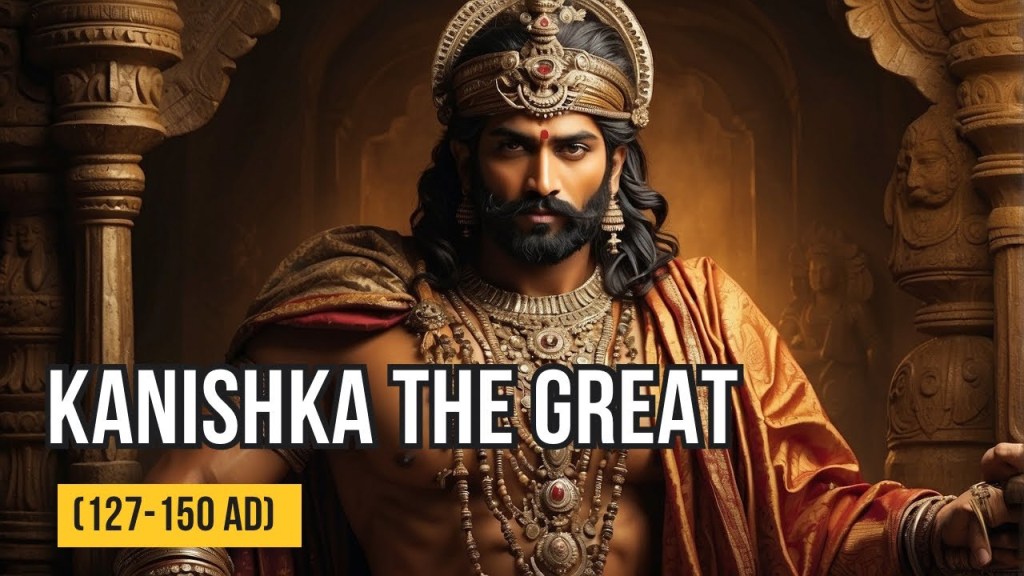
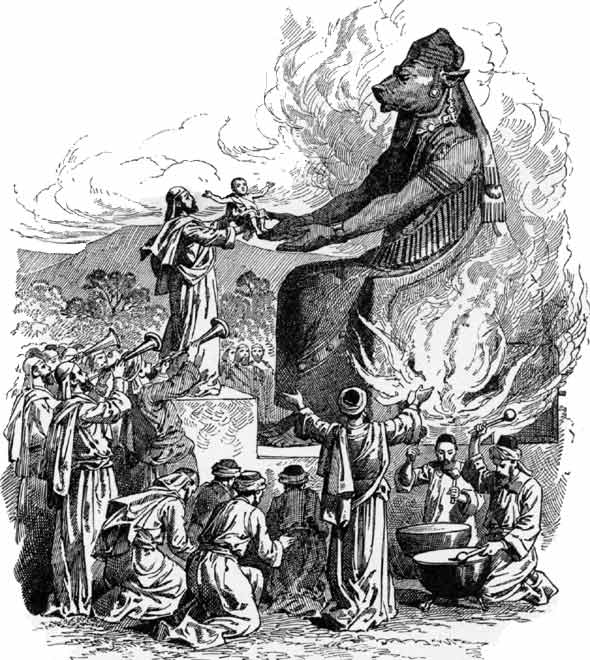


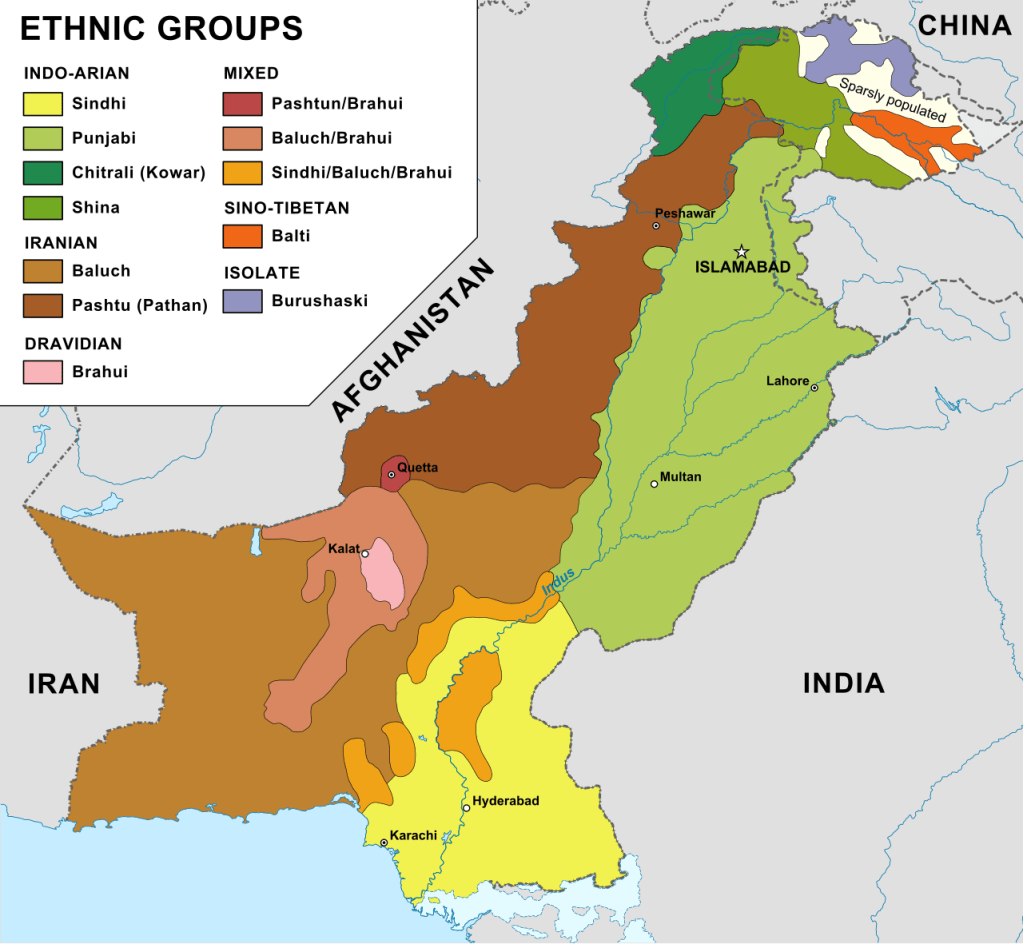
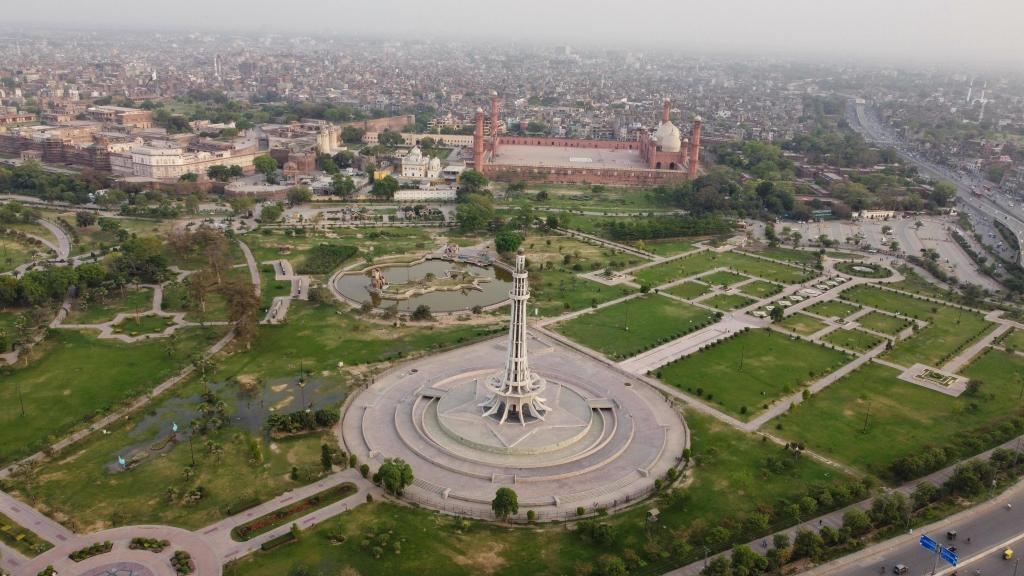
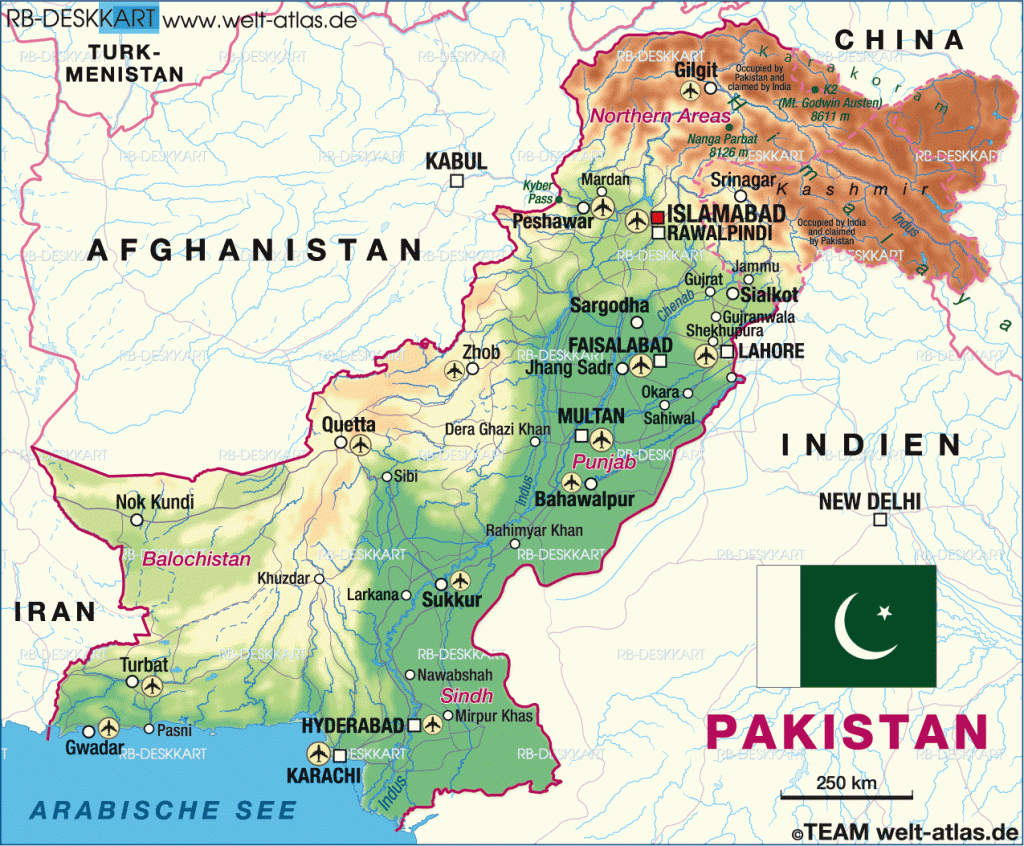


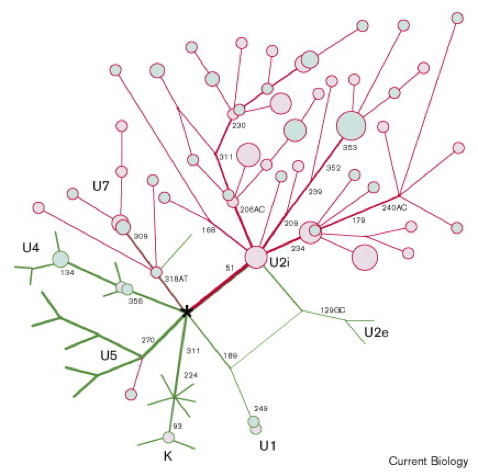
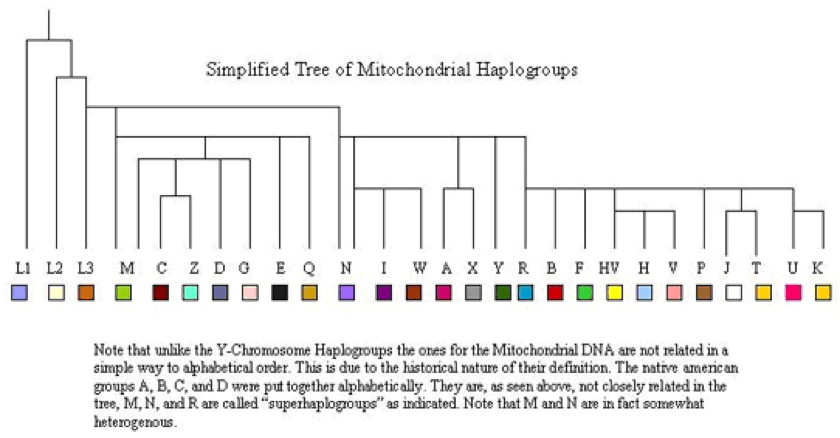


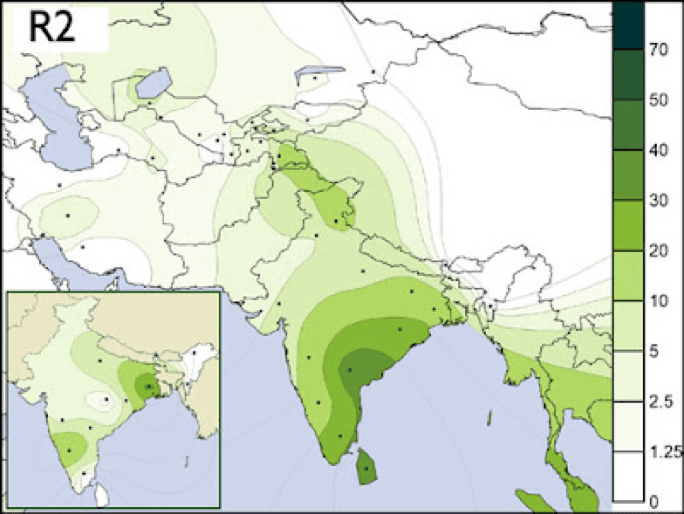



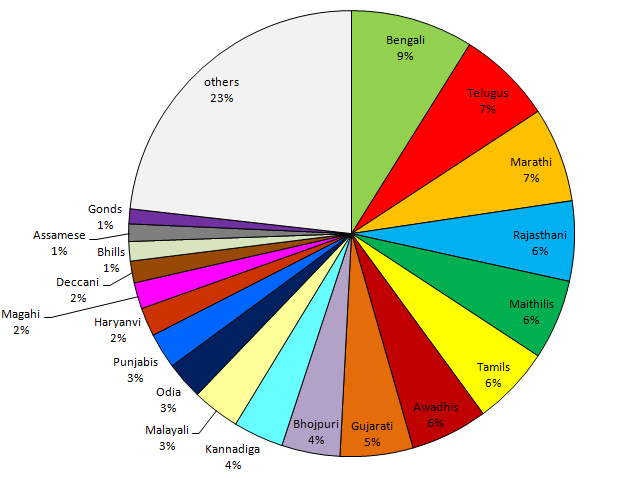
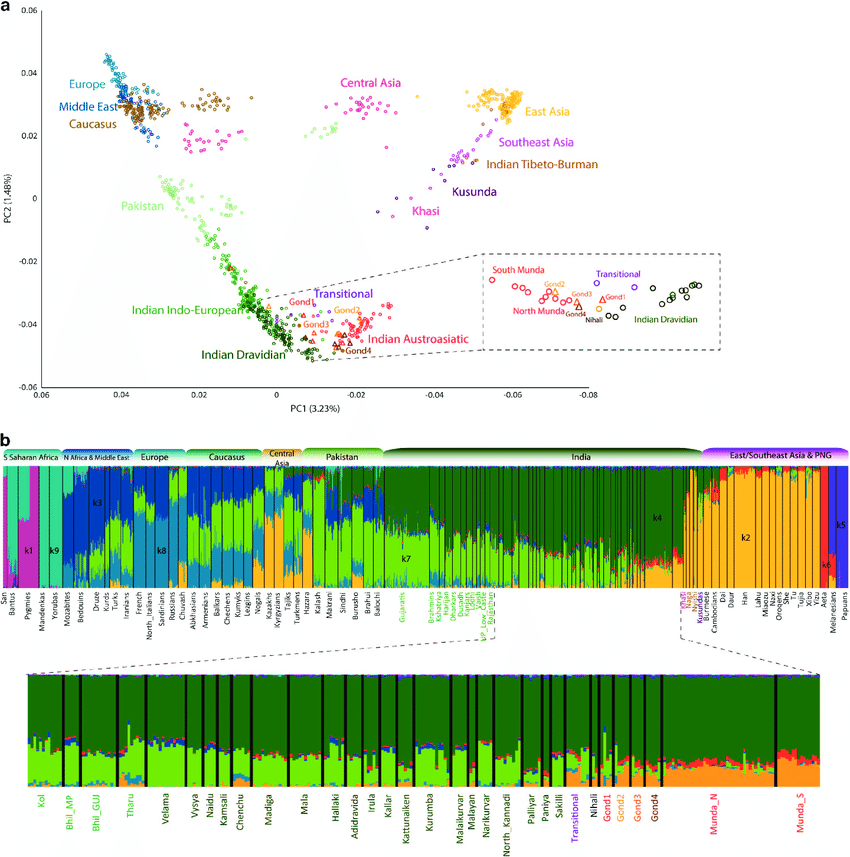


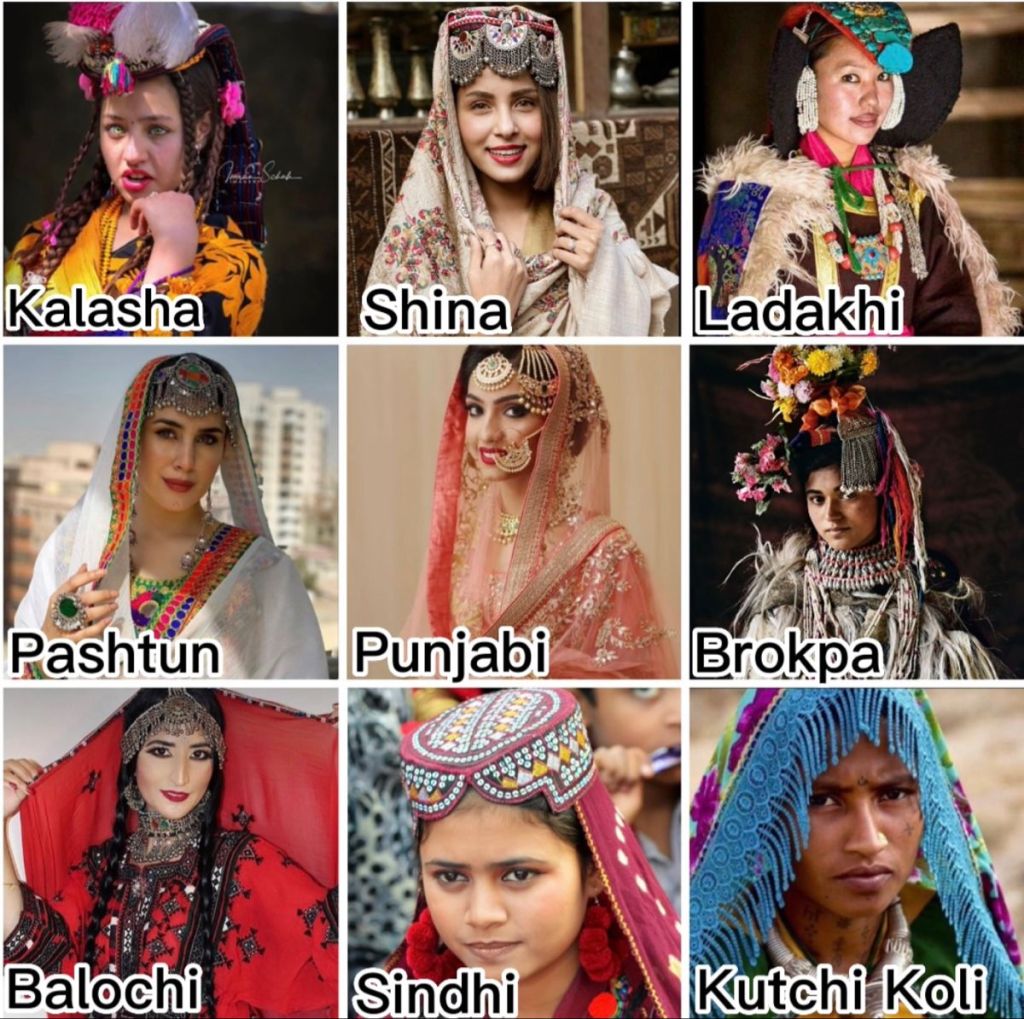

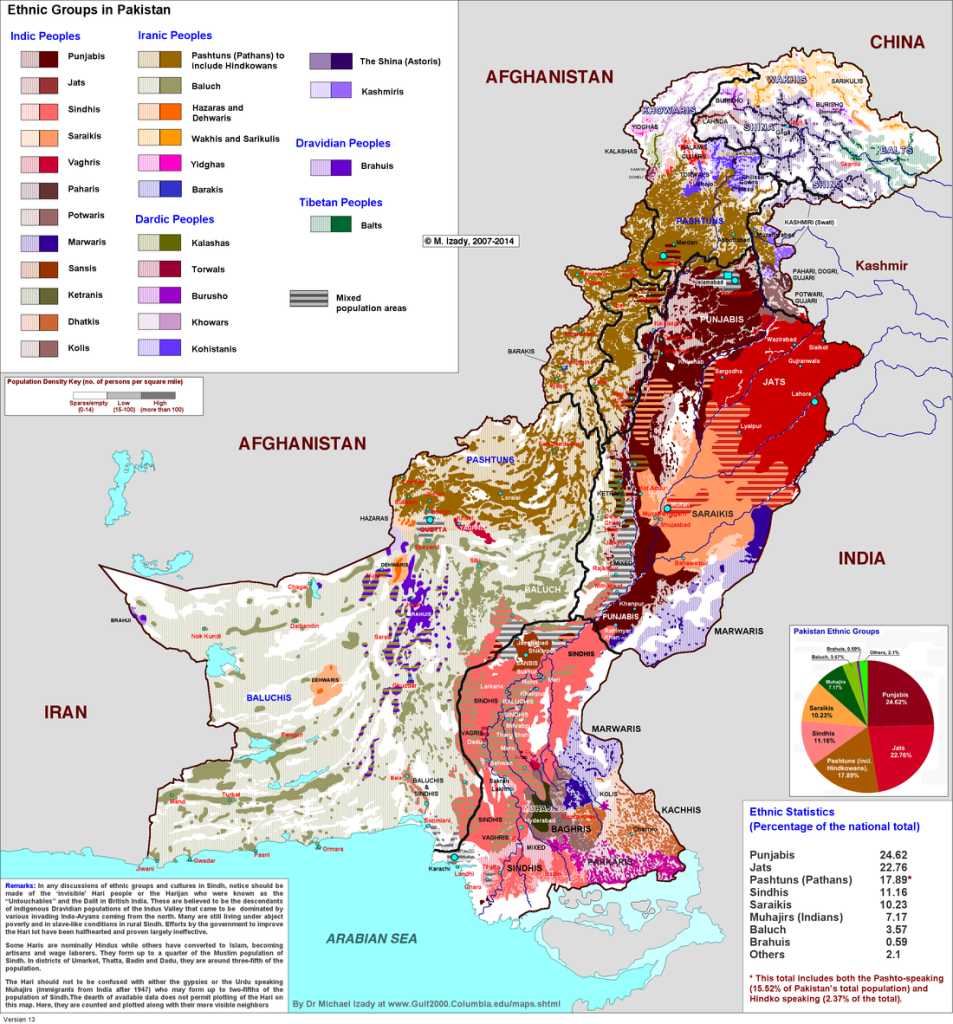
 The Lightkeeper