
Chapter XXV
Peleg, the brother of Joktan, is not only synonymous with a split in Arphaxad’s line, but most famously with the division of all the peoples and ethnicities descending from Japheth, Ham, Canaan and Shem who had congregated in the Mesopotamian region – refer Chapter I Noah Antecessor Nulla; Chapter XVI Shem Occidentalis; and Chapter XXIV Arphaxad & Joktan: Balts, Slavs & the Balkans.
The failed Tower of Babel venture circa 6755 BCE, had ended with the Son of Man – by some means unexplained – confounding the universal language spoken – refer Chapter XXI The Incredible Identity, origin & Destiny of Nimrod; and article: The Pyramid Perplexity.
Now, eleven of the main lines of people began to spread abroad; the seven from Japheth and the three from Ham. Cush, Phut and Mizra travelled to northeast Africa and Egypt; Canaan eventually to northwest Africa, via the land now known as Palestine. Gomer and Javan headed towards the Mediterranean and Magog, Tubal, Meschech and Madai northward to Anatolia – Asia Minor. The majority of Tiras’ descendants heading west into south eastern Europe as Gomer and Javan; but unlike them, continuing westwards via Scotland, Iceland, Greenland and onto North America – refer Chapter III Tiras the Amerindian.
Abarim Publications – emphasis mine:
‘The name Peleg meaning Division, Dividing Canal from the verb (palag), to split or divide.
Noun (peleg) means channel or canal and noun (pelagga) means stream or division. Nouns (pelugga) and noun (miplagga) mean division.
NOBSE Study Bible Name List and Jones’ Dictionary of Old Testament Proper Names agree: the name Peleg means Division or Divider, although the word is commonly used to denote a channel or canal. Note that this “division of the earth” follows the pattern of the second creation day, in which Joktan represents the waters under the dividing firmament, which eventually produced dry land and all its creatures, while Peleg represents the dividing firmament, which eventually came to house the celestial lights that would lead the living on earth (Genesis 15:5, Daniel 12:3).’
The genealogy of Arphaxad to Abraham is listed in Genesis chapter eleven. Peleg had a son called Reu, born 6827 BCE, according to an unconventional chronology – refer Chapter XXII Alpha & Omega.
Reu’s name in Hebrew means, a ‘friend, associate.’
In the Book of Jubilees we read further in chapter 10:18-27.
‘… Peleg took to himself a wife, whose name was Lomna the daughter of Sina’ar, and she bare him a son… and he called his name Reu; for he said: ‘Behold the children of men have become evil through the wicked purpose of building for themselves a city and a tower in the land of Shinar
… for in his days they built the city and the tower, saying, ‘Go to, let us ascend thereby into heaven…’ And the Lord sent a mighty wind against the tower* and overthrew it upon the earth, and behold it was between Asshur and Babylon in the land of Shinar, and they called its name ‘Overthrow’ – Article: The Pyramid Perplexity.
Two points of interest are the dating of the tower of Babel during the time of Peleg and the meaning of Peleg’s name to include a division associated with water. In an unconventional chronology, Peleg was born in 7727 BCE and died in 4737 BCE; during the precessional Age of Cancer, which lasted from 8810 to 6650 BCE.
Human life spans were considerably reduced post-flood – in part due to the changes in Earth’s atmosphere – though still enormously long compared with the dramatic decrease, which eventuated in Abraham’s lifetime some five generations later – refer article: The Younger Dryas Stadial: Ending of the Earth… Beginning of the World.
Peleg lived for 2,990 years.
During this time frame, Nimrod challenged the Eternal and gathered the nations in support of his rebellion; with the Tower of Babel being a literal and symbolic statement of their united defiance. Nimrod had been alive for about a thousand years or longer when Peleg was born. An earlier date for the confusion of the languages and the dividing of the earth is circa 7275 BCE and a later date is 6232 BCE. Dividing in two gives 6755 BCE. This appears plausible as Nimrod would still be ‘young’ and Peleg about a third of the way through his life.
This approximate dating supports a gap in history between this event and the sudden ‘(re)appearance’ of the early – but more accurately intermediate – Sumerian Civilisation circa 4000 BCE (or earlier). It also ties in with the three hundred year transitional period – from 6976 to 6676 BCE – between the Treta Yuga Silver Age and the Dwapara Yuga Bronze Age; the epoch before our current Kali Yuga Iron Age, running from 3676 BCE to 2025 CE. Four short years from the time of writing until we enter another three hundred year transitional period, which also coincides with the Age of Aquarius beginning in 1990. Though Aquarius is an air sign, it has a strong connection with water. Thus a starling coincidence is that Cancer – the Age at the time of the Earth’s division – is a water sign.
The end of the Kali Yuga in 2015: Unravelling the mysteries of the Yuga Cycle, Bibhu Dev Misra, 2012 – emphasis & bold mine:
‘The 300 year transitional period between the Treta Yuga (Silver Age) and the Dwapara Yuga (Bronze Age) from 6976 BC – 6676 BC also coincides with a significant environmental event – the
Black Sea Catastrophe which has recently been dated to 6700 BC.
The Black Sea once used to be a freshwater lake. That is, until the Mediterranean Sea, swollen with melted glacial waters, breached a natural dam, and cut through the narrow Bosphorous Strait, catastrophically flooding the Black Sea. This raised the water levels of the Black Sea by several hundred feet, flooded more than 60,000 square miles of land, and significantly expanded the Black Sea shoreline (by around 30%). This event fundamentally changed the course of civilization in Southeastern Europe and western Anatolia. Geologists Bill Ryan and Walter Pitman of Lamont-Doherty Earth Observatory in New York, who had first proposed the Black Sea Catastrophe hypothesis, have gone to the extent of comparing it to Noah’s Flood.
Similar major flooding events were taking place in many parts of the world, as massive glacial lakes, swelled by the waters of the melting ice, breached their ice barriers, and rushed into the surrounding areas.
In the book Underworld, Graham Hancock has described some of the terrible events that ravaged the planet during that time’ – refer article: The Younger Dryas Stadial: Ending of the Earth… Beginning of the World.
‘Sometime between 6900 BC – 6200 BC the Laurentide ice-sheet disintegrated in the Hudson Bay and an enormous quantity of glacial waters from the inland Lake Agassiz/Ojibway discharged into the Labrador Sea. This was possibly the “single largest flood of the Quarternary Period”, which may have single-handedly raised global sea-level by half a metre. The period between 7000 BC – 6000 BC was also characterized by the occurrences of gigantic earthquakes in Europe. In northern Sweden, some of these earthquakes caused “waves on the ground”, 10 metres high, referred to as “rock tsunamis”. It is possible that the global chain of cataclysmic events during this transitional period may have been triggered by a single underlying cause, which we are yet to find out.’
The ‘mighty wind’ which the Lord sent against the tower* could have been a detonation of some kind. We will run into a similar scenario in the next chapter when we investigate the life of Lot and the destruction of Sodom with its neighbouring cities some five thousand years after the tower of Babel’s apparent obliteration – refer article: The Pyramid Perplexity; and Chapter XXVI The French & Swiss: Moab, Ammon & Haran.
A blast of this magnitude may have set off considerable seismic activity, leading to earthquakes and localised flooding throughout the Middle East and well beyond.
Reu also had a son, called Serug, born in 5867 BCE. Serug’s name in Hebrew means, ‘branch’ from the verb sarag to be ‘intertwined.’ Between Serug’s birth and his son Nahor (I), Shem died in 5717 BCE, age 6,120 years and Arphaxad died in 5617 BCE, age 5,100 years – refer Chapter XXII Alpha & Omega.
Book of Jubilees 11:1-6
‘… Reu took to himself a wife, and her name was ‘Ora, the daughter of Ur, the son of Kesed, and she bare him a son, and he called his name Seroh… And the sons of Noah began to war on each other, to take captive and to slay each other, and to shed the blood of men on the earth, and to eat blood, and to build strong cities, and walls, and towers, and individuals (began) to exalt themselves above the nation, and to found the beginnings of kingdoms, and to go to war people against people, and nation against nation, and city against city, and all (began) to do evil, and to acquire arms, and to teach their sons war, and they began to capture cities, and to sell male and female slaves.
And Ur, the son of Kesed, built the city of ‘Ara of the Chaldees^, and called its name after his own name and the name^ of his father.
And they made for themselves molten images, and they worshipped each the idol… and they began to make graven images and unclean simulacra, and malignant spirits assisted and seduced (them) into committing transgression and uncleanness. And the prince Mastema [chief of spirits – Beelzebub]… sent forth other spirits, those which were put under his hand, to do all manner of wrong and sin… to corrupt and destroy, and to shed blood upon the earth.
For this reason he called the name of Seroh, Serug, for every one turned to do all manner of sin and transgression. And he grew up, and dwelt in Ur of the Chaldees, near to the father of his wife’s mother, and he worshipped idols, and he took to himself a wife… and her name was Melka, the daughter of Kaber, the daughter of his father’s brother.’
Kesed is a family name, as Nahor (II) had a grandson called Chesed.
We will return to the people called the Chaldees (Chaldeans). Nahor I, Abraham’s grandfather was born in 4967 BCE, while Peleg later died in 4737 BCE. Nahor I died in 2887 BCE, though his son Terah of purported Nimrod fame (refer previous chapter), was born in 4077 BCE.
Terah in Hebrew derives from the verb tarah, meaning: ‘wanderer’ or ‘turn’ and the noun ruah, means, ‘wind, breath’ or ‘spirit.’
Book of Jubilees 11:7-14
‘And she [Melka] bare him Nahor [I]…and he grew and dwelt in Ur of the Chaldees, and his father taught him the researches of the Chaldees to divine and augur, according to the signs of heaven [astrology].
And… he took to himself a wife, and her name was ‘Ijaska, the daughter of Nestag of the Chaldees. And she bare him Terah… And the prince Mastema sent ravens and birds to devour the seed which was sown in the land, in order to destroy the land, and rob the children of men of their labours. And the years began to be barren… it was only with great effort that they could save a little of all the fruit of the earth in their days… Terah took to himself a wife, and her name was ‘Edna, the daughter of ‘Abram, the daughter of his father’s sister. And… she bare him a son, and he called his name Abram, by the name of the father of his mother; for he had died before his daughter had conceived a son.’
Abram is a family name along with Kesed and Nahor.
There are two Nahors: Nahor I, the grandfather of Abraham and Nahor II, the brother of Abraham.
It is Abraham’s brother we are studying and will refer to him simply, as Nahor. In Genesis 11:26, we learn of Terah’s three sons, Abram, later known as Abraham, Nahor and Haran.
It is a similar situation to Genesis 10:1, where Shem, Ham and Japheth are listed, but in fact Japheth is the eldest and while Shem appears the youngest in certain contexts, it is Ham who was the youngest of the three (Canaan not withstanding) – Genesis 9:24.
Abram is stated first as his descendants would fulfil the Genesis 3:15 prophecy. Though Haran is the eldest and Nahor is in the middle as the second born son of Terah. We will discover that Haran died prematurely and it was territory named after him, where Abraham later dwelt. More importantly, in support for Haran being the eldest is that Nahor married a niece from Haran’s family. Haran had children first and they were marriageable age, for Nahor. Similarly, Abraham also married family. What is not clear superficially, is whose exactly.
Haran was born in 2009 BCE and Abraham was born in 1977 BCE. Nahor was born perhaps circa 1993 BCE.
Nahor in Hebrew means: ‘snort’ or ‘scorched’ from the verb nhr, ‘to snort vigorously’ and the root harar, ‘to be a central hub of heat.’
Abarim Publications – emphasis mine:
‘The root (harar) describes a society’s central and enclosed source of heat. It thus may express a geographical depression, but more so… being hot and ultimately… being a ruler (whether by might, political clout or wisdom).
Verb (harar I) means to be hot, burned or charred.
Noun (harer) denotes a parched place and noun (harhur) describes a violent heat or fever. The unused verb (harar II) means to be free… which is the opposite of being a slave. Noun (hor) means noble or nobleman. The unused verb (harar III) appears to refer to the enclosure of kilns and ovens, as the first ones were most likely built in natural hollows. The noun… (hor)… [means] hole or cavern, but obviously relate to the previous word in that freemen surround themselves with walls and armies.
Verb (hara) means to burn or ignite (in the Bible solely in an emotional way: to get angry). Noun (haron) describes the burning of anger. Verb (hawar) means to be or grow white (like ash or baked bricks). Verb (nahar) looks very much like a passive or reflexive version of (harar) or its participle. This verb isn’t used in the Bible but nouns (nahar) and (naharah) describe the vigorous snorting of a horse, and noun (nahir) means nostril (which in turn reminds of a cavern).
Whatever the true etymology and original meaning, to any Hebrew audience the name Nahor would mean both A Snort or A Snorting, and Charred or Scorched, or even Noble or Freeman. For a meaning of the name Nahor… Jones’ Dictionary of Old Testament Proper Names reads… Breathing Hard.’

Joshua 24:2
English Standard Version
And Joshua said to all the people, “Thus says the Lord, the God of Israel, ‘Long ago, your fathers lived beyond the Euphrates [Ur of the Chaldees], Terah, the father of Abraham and o fNahor; and they served other gods’ – Genesis 31:53
Book of Jasher 9:7-8
‘And the king [of Ur] and all his servants, and Terah with all his household were then the first of those that served gods of wood and stone. And Terah had twelve gods of large size, made of wood and stone, after the twelve months of the year, and he served each one monthly, and every month Terah would bring his meat offering and drink offering to his gods; thus did Terah all the days.’
Jubilees 12:1-15
‘And it came to pass… that Abram said to Terah his father, saying, ‘Father!’ And he said, ‘Behold, here am I, my son.’
And he said, “What help and profit have we from those idols which thou dost worship, And before which thou dost bow thyself? For there is no spirit in them, For they are dumb forms, and a misleading of the heart. Worship them not:
Worship the God of heaven, Who causes the rain and the dew to descend on the earth And does everything upon the earth, And has created everything by His word, And all life is from before His face. Why do ye worship things that have no spirit in them? For they are the work of (men’s) hands, And on your shoulders do ye bear them, And ye have no help from them, But they are a great cause of shame to those who make them, And a misleading of the heart to those who worship them: Worship them not.”
And his father said unto him, ‘I also know it, my son, but what shall I do with a people who have made me to serve before them? And if I tell them the truth, they will slay me; for their soul cleaves to them to worship them and honour them. Keep silent, my son, lest they slay thee.’ And these words he spake to his two brothers, and they were angry with him and he kept silent.’
Recall, Terah is recorded as originally serving Nimrod directly at his command, administering the Babylonian religious system resurrected by Nimrod after the Flood with his mother-wife Semiramis… the evil angel Lilith – refer Chapter XXI The Incredible identity, Origin & Destiny of Nimrod; and article: Lilith.
Though historically, the king in question was perhaps Shulgi, the son of Ur-Nammu and 2nd king of the 3rd Dynasty of Ur. Shulgi ruled 46 years, from 1970 to 1924 BCE – Chapter XIX Chedorlaomer & the War of Nine Kings.
Though in reality it was likely a far earlier, unknown king whom maintained the traditions of Nimrod.
Regardless, the entanglement of that situation clung to Terah as if he were shrink-wrapped in plastic. This alignment to the mystery religion is beyond coincidental, as Terah’s descendants through Nahor, have continued their unrivalled involvement and allegiance, to the present day – Articles: The Pauline Paradox: and Is America Babylon?
After the unknown king’s death, Terah maintained an exalted position in Ur with huge strings attached. To give this up was a monumental request from Abraham. To defy the people who viewed Terah as synonymous with Nimrod’s legacy, was tantamount to death.
Book of Jasher 7:41, 49-51
‘And he [the king] placed Terah the son of Nahor the prince of his host, and he dignified him and elevated him above all his princes… And Terah the son of Nahor, prince of [the king’s] host, was in those days very great in the sight of the king and his subjects, and the king and princes loved him, and they elevated him very high. And Terah took a wife and her name was Amthelo [Edna in the Book of Jubilees] the daughter of Cornebo; and the wife of Terah [later] conceived and bare him a son… and Terah called the name of his son that was born to him Abram, because the king had raised him in those days, and dignified him above all his princes that were with him.’
Different sources include Shem, Abraham or Esau as the eventual slayer of Nimrod. If Nimrod was born circa 8700 BCE, it is dubious whether he would still be alive some 7,000 years later when Abram was born in 1977 BCE. Shem died in 5717 BCE and is the only candidate of the three who makes chronological sense. Nimrod’s days after the failed tower were numbered and his demise in this era would appear logical – Article: The Pyramid Perplexity.
We will look at two different versions of the events that transpired surrounding the death of Abram’s eldest brother Haran and his family’s rather hasty departure from Ur in Sumer. Both accounts may be inaccurate or contain elements of what happened. Either way, Abram’s family fled; most likely driven by their dissatisfaction with a religious-political system they could no longer support.
The Book of Jasher in chapter 8:1-36, enumerates an apparent history between Nimrod and Abraham, which began at his birth. It is proposed that it was actually the second king of the Third Dynasty of Ur. Shulgi is to Ur as Hammurabi was to Babylon and Chedorlaomer to Elam – refer Chapter XIX Chedorlaomer & the War of Nine Kings.
King Shulgi preceded them both by a few years and was a prominent ruler of his time and the most famous monarch to have reigned from Ur – after his father the renowned Ur-Nammu.
It was in 1927 BCE when Abram’s family departed Ur for Haran; with Abram being fifty years old. Therefore, the name of Nimrod has been substituted with either Ur-Nammu – who reigned from 1988 to 1970 BCE – or Shulgi as applicable, to give the account an element of veracity that it lacks with Nimrod as the king of Ur. Besides, Nimrod had been the king of ancient Babylon, yet the king of Babylon at the time of Abram’s birth in 1977 BCE was the second king of the Amorite Dynasty I of Babylon, Sumu-la-El who began his thirty-five year reign three years earlier in 1980 BCE.
1 ‘And it was in the night that Abram was born, that all the servants of Terah, and all the wise men of [Ur-Nammu], and his conjurors came and ate and drank in the house of Terah, and they rejoiced with him on that night.
2 And when all the wise men and conjurors went out from the house of Terah, they lifted up their eyes toward heaven that night to look at the stars, and they saw, and behold one very large star came from the east and ran in the heavens, and he swallowed up the four stars from the four sides of the heavens.
4 And they said to each other, This only betokens the child that has been born to Terah this night, who will grow up and be fruitful, and multiply, and possess all the earth, he and his children for ever, and he and his seed will slay great kings, and inherit their lands.
6 And they spoke and said to each other, Behold the sight that we saw last night is hidden from the king, it has not been made known to him. 7 And should this thing get known to the king in the latter days, he will say to us, Why have you concealed this matter from me, and then we shall all suffer death; therefore, now let us go and tell the king the sight which we saw, and the interpretation thereof, and we shall then remain clear.
8 And they did so… and we saw a great star coming from the east, and the same star ran with great speed, and swallowed up four great stars, from the four sides of the heavens. 11 … this thing applies to the child that is born to Terah,who will grow up and multiply greatly, and become powerful, and kill all the kings of the earth, and inherit all their lands, he and his seed forever. 14 And the king heard their words and they seemed good in his sight, and he sent and called for Terah… 15 And the king said to Terah…
16 And now thereforegive me the child, that we may slay him before his evil springs up against us, and I will give you for his value, your house full of silver and gold. 28 And Terah saw that the anger of the king was kindled against him, and he answered the king, saying, All that I have is in the king’s power; whatever the king desires to do to his servant, that let him do, yea, even my son, he is in the king’s power, without value in exchange, he and his two brothers that are older than he [Haran and Nahor]. 29 And the king said to Terah, No, but I will purchase your younger son for a price…’
‘Terah said, Let my king give me three days’ time [three is the biblical number of decision and finality] till I consider this matter within myself, and consult with my family concerning the words of my king; and he pressed the king greatly to agree to this. 31 And the king hearkened to Terah, and he did so and he gave him three days’ time, and Terah went out from the king’s presence, and he came home to his family and spoke to them all the words of the king; and the people were greatly afraid. 32 And it was in the third day that the king sent to Terah, saying, Send me your son for a price as I spoke to you; and shouldst you not do this, I will send and slay all you hast in your house, so that you shall not even have a dog remaining.
33 And Terah hastened, (as the thing was urgent from the king), and he took a child from one of his servants, which his handmaid had born to him that day, and Terah brought the child to the king and received value for him.
34 And Yahweh was with Terah in this matter, that [Ur-Nammu] might not cause Abram’s death, and the king took the child from Terah and with all his might dashed his head to the ground, for he thought it had been Abram; and this was concealed from him from that day, and it was forgotten by the king, as it was the will of Providence not to suffer Abram’s death. 35 And Terah took Abram his son secretly, together with his mother and nurse, and he concealed them in a cave, and he brought them their provisions monthly.
36 And Yahweh was with Abram in the cave and he grew up, and Abram was in the cave ten years, and the [new] king [Shulgi] and his princes, soothsayers and sages, thought that the [previous] king [Ur-Nammu] had killed Abram.’
Book of Jubilees 12:1-15:
‘And in the [fiftieth] year [1927 BCE] of the life of Abram… Abram arose by night, and burned the house of the idols, and he burned all that was in the house and no man knew it. And they arose in the night and sought to save their gods from the midst of the fire.
And Haran hasted to save them, but the fire flamed over him, and he was burnt in the fire, and he died [at 82 years of age] in Ur of the Chaldees before Terah his father [who died in 1842 BCE], and they buried [Haran] in Ur of the Chaldees [in Sumer].’
Stalled by the palpable reticence from Terah, Abraham took matters into his own hands. Abraham would later when rescuing Lot, attack and ambush King Chedorlaomer the Elamite and his coalition army by cover of night. This Ur of Chaldea was located south of Babylon, in the area known as Sumer – the southern portion of the Land of Shinar. The descendants of Joktan had primarily dwelt in Sumer and the descendants of Peleg, mainly to the North in Akkadia where the city of Babylon was located – Chapter XXIV Arphaxad & Joktan: Balts, Slavs & the Balkans.
Jubilees:
‘And Terah went forth from Ur of the Chaldees, he and his sons, to go into the land of [northern] Lebanon… and he dwelt in the land of Haran, and Abram dwelt with Terah his father in Haran [for 25 years, from 1927 to 1902 BCE].’
At this point, after the devastating loss of his eldest son Haran, Terah – his name meaning, wanderer – decides to leave Ur and his privileged life behind. They leave to begin a new life, to soften the blow of the loss of Haran as well as possibly concern about retribution from Shulgi the king. Terah may have acted differently if he had known Haran had died at the hands of Abraham. Saying that, the Book of Jasher claims a very different version of events surrounding Haran’s death.
Book of Jasher 11:33-61, 12:1-70
33 ‘And when Abram saw all these things his anger was kindled against his father, and he hastened and took a hatchet in his hand, and came unto the chamber of the gods, and he broke all his father’s gods. 34 And when he had done breaking the images, he placed the hatchet in the hand of the great god which was there before them, and he went out; and Terah his father came home, for he had heard at the door the sound of the striking of the hatchet; so Terah came into the house to know what this was about.
35 And Terah, having heard the noise of the hatchet in the room of images, ran to the room to the images, and he met Abram going out. 36 And Terah entered the room and found all the idols fallen down and broken… 37 And when Terah saw this his anger was greatly kindled… 38 And he found Abram his son still sitting in the house; and he said to him, What is this work you hast done to my gods?
… 42 Is there in these gods spirit, soul or power to do all you hast told me? Are they not wood and stone, and have I not myself made them, and canst you speak such lies, saying that the large god that was with them smote them? It is you that didst place the hatchet in his hands, and then say he smote them all. 43 And Abram answered his father and said to him, And how canst you then serve these idols in whom there is no power to do any thing? Can those idols in which you trust deliver you? Can they hear your prayers when you call upon them? Can they deliver you from the hands of your enemies, or will they fight your battles for you against your enemies, that you shouldst serve wood and stone which can neither speak nor hear?
46 Did not our fathers in days of old sin in this matter, and Yahweh the Almighty of the universe brought the waters of the flood upon them and destroyed the whole earth?
52 … and they went and brought Abram before the king. And [Shulgi] and all his princes and servants were that day sitting before him, and Terah sat also before them. 53 And the king said to Abram, What is this that you hast done to your father and to his gods? And Abram answered the king in the words that he spoke to his father…
The large god that was with them in the house did to them what you hast heard.’
Abram exhibits a black sense of humour and a level of audaciousness before the king.
Jasher: 54 ‘And the king said to Abram, Had they power to speak and eat and do as you hast said? And Abram answered the king, saying, And if there be no power in them why dost you serve them and cause the sons of men to err through your follies? 56 O foolish, simple, and ignorant king, woe unto you forever.
60 And if your wicked heart will not hearken to my words to cause you to forsake your evil ways, and to serve the eternal Yahweh, then wilt you die in shame in the latter days, you, your people and all who are connected with you, hearing your words or walking in your evil ways.’
It is worth noting that a later Chaldean king, Nebuchadnezzar II, faced a similar challenge and after being humbled, became a believer in the Eternal.
Jasher:
1 ‘And when the king heard the words of Abram he ordered him to be put into prison; and Abram was ten days in prison.3 And the king said to the princes and sages, Have you heard what Abram, the son of Terah, has done to his father? 5 And they all answered the king saying, The man who reviles the king should be hanged upon a tree [a reference to crucifixion]; but having done all the things that he said, and having despised our gods, he must therefore be burned to death, for this is the law in this matter.
6 … And the king did so, and he commanded his servants that they should prepare a fire for three days and three nights in the king’s furnace… and the king ordered them to take Abram from prison and bring him out to be burned [a pre-shadowing of Shadrach, Meshach and Abednego: Daniel 3:12-30].
7 And all the king’s servants, princes, lords, governors, and judges, and all the inhabitants of the land, about nine hundred thousand men, stood opposite the furnace to see Abram. 8 And all the women and little ones crowded upon the roofs and towers to see what was doing with Abram, and they all stood together at a distance; and there was not a man left that did not come on that day to behold the scene. 9 And when Abram was come, the conjurors of the king and the sages saw Abram, and they cried out to the king, saying, Our sovereign lord, surely this is the man whom we know to have been the child at whose birth the great star swallowed the four stars, which we declared to the king…
10 And behold now his father has also transgressed your commands, and mocked you by bringing you another child, which you didst kill. 11 And when the king heard their words, he was exceedingly wroth, and he ordered Terah to be brought before him. 15 And the king said Who advised you to this? Tell me, do not hide aught from me, and then you shall not die. 16 And Terah was greatly terrified in the king’s presence, and he said to the king, It was Haran my eldest son who advised me to this; and Haran was in those days that Abram was born, two and thirty years old. 17 But Haran did not advise his father to anything, for Terah said this to the king in order to deliver his soul from the king, for he feared greatly; and the king said to Terah, Haran your son who advised you to this shall die through fire with Abram; for the sentence of death is upon him for having rebelled against the king’s desire in doing this thing.
18 And Haran at that time felt inclined to follow the ways of Abram, but he kept it within himself.
19 And Haran said in his heart, Behold now the king has seized Abram on account of these things which Abram did, and it shall come to pass, that if Abram prevail over the king I will follow him, but if the king prevail I will go after the king. 20 And when Terah had spoken this to the king concerning Haran his son, the king ordered Haran to be seized with Abram. 22 And the king’s servants took Abram and his brother, and they stripped them of all their clothes excepting their lower garments which were upon them. 23 And they bound their hands and feet with linen cords, and the servants of the king lifted them up and cast them both into the furnace.
24 And Yahweh loved Abram and he had compassion over him, and Yahweh [the Son of Man] came down and delivered Abram from the fire and he was not burned [just as the Son of God had saved Shadrach and his friends: Daniel 3:25]. 25 But all the cords with which they bound him were burned, while Abram remained and walked about in the fire. 26 And Haran died when they had cast him into the fire, and he was burned to ashes, for his heart was not perfect with Yahweh; and those men who cast him into the fire, the flame of the fire spread over them, and they were burned, and twelve men of them died.
27 And Abram walked in the midst of the fire three days and three nights, and all the servants of the king saw him walking in the fire, and they came and told the king, saying, Behold we have seen Abram walking about in the midst of the fire, and even the lower garments which are upon him are not burned, but the cord with which he was bound is burned. 28 And when the king heard their words his heart fainted and he would not believe them; so he sent other faithful princes to see this matter, and they went and saw it and told it to the king; and the king rose to go and see it, and he saw Abram walking to and fro in the midst of the fire, and he saw Haran’s body burned, and the king wondered greatly.
29 And the king ordered Abram to be taken out from the fire; and his servants approached to take him out and they could not, for the fire was round about and the flame ascending toward them from the furnace. 30 And the king’s servants fled from it, and the king rebuked them, saying, Make haste and bring Abram out of the fire that you shall not die. 31 And the servants of the king again approached to bring Abram out, and the flames came upon them and burned their faces so that eight of them died.
32 And when the king saw that his servants could not approach the fire lest they should be burned, the king called to Abram, O servant of Yahweh who is in heaven, go forth from amidst the fire and come hither before me; and Abram hearkened to the voice of the king, and he went forth from the fire and came and stood before the king. 34 And the king said to Abram, How is it that you wast not burned in the fire?
35 And Abram said to the king, Yahweh of heaven and earth in whom I trust and who has all in his power, He delivered me from the fire into which you didst cast me.
36 … And the king, princes, and inhabitants of the land, seeing that Abram was delivered from the fire, they came and bowed down to Abram. 38 And Abram said to them, Do not bow down to me, but bow down to Yahweh of the world who made you, and serve him, and go in his ways for it is he who delivered me from out of this fire, and it is he who created the souls and spirits of all men, and formed man in his mother’s womb, and brought him forth into the world, and it is he who will deliver those who trust in him from all pain. 39 And this thing seemed very wonderful in the eyes of the king and princes, that Abram was saved from the fire and that Haran was burned; and the king gave Abram many presents and he gave him his two head servants from the king’s house; the name of one was Oni and the name of the other was Eliezer.
40 And all the kings, princes and servants gave Abram many gifts of silver and gold and pearl, and the king and his princes sent him away, and he went in peace. 41 And Abram went forth from the king in peace, and many of the king’s servants followed him, and about three hundred men joined him.
42 And Abram returned on that day and went to his father’s house, he and the men that followed him, and
Abram served Yahweh his Almighty all the days of his life, and he walked in his ways and followed his law’ – Article: The Sabbath Secrecy.
43 ‘And from that day forward Abram inclined the hearts of the sons of men to serve Yahweh.
57 Now therefore my king, surely you know… since your sages saw this at the birth of Abram, and if my king will suffer Abram to live in the earth it will be to the injury of my lord and king, for all the days that Abram lives neither you nor your kingdom will be established, for this was known formerly at his birth; and why will not my king slay him, that his evil may be kept from you in latter days?
58 And [Shulgi] hearkened to the voice of Anuki [Anunnaki?], and he sent some of his servants in secret to go and seize Abram, and bring him before the king to suffer death. 59 And Eliezer, Abram’s servant whom the king had given him, was at that time in the presence of the king, and he heard what Anuki had advised the king, and what the king had said to cause Abram’s death.
60 And Eliezer said to Abram, Hasten, rise up and save your soul, that you may not die through the hands of the king, for thus did he see in a dream concerning you, and thus did Anuki interpret it, and thus also did Anuki advise the king concerning you. 61 And Abram hearkened to the voice of Eliezer, and Abram hastened and ran for safety… and the king’s servants… searched through out the country and he was not to be found, and… the king’s anger against Abram was stilled, as they did not find him, and the king drove from his mind this matter concerning Abram. 63 And Abram… was still afraid of the king; and Terah came to see Abram his son secretly… 64 And Abram said to his father, Dost you not know that the king thinks to slay me, and to annihilate my name from the earth by the advice of his wicked counsellors?
65 Now whom hast you here and what hast you in this land? Arise, let us go together to the land of Canaan, that we may be delivered from his hand, lest you perish also…
66 Dost you not know or hast you not heard, that it is not through love that [the king] gives you all this honor, but it is only for his benefit that he bestows all this good upon you? 67 And if he do unto you greater good than this, surely these are only vanities of the world, for wealth and riches cannot avail in the day of wrath and anger. 68 Now therefore hearken to my voice, and let us arise and go to the land of Canaan, out of the reach of injury from [the king]; and serve you Yahweh who created you in the earth and it will be well with you; and cast away all the vain things which you pursuest.
70 And Terah hearkened to the voice of his son Abram, and Terah did all that Abram said, for this was from Yahweh, that the king should not cause Abram’s death.’
In this version, it wasn’t Abraham who accidentally killed his brother. Terah had his own firstborn son murdered. It was Terah with the grisly secret to hide. Nor did Terah altogether need Abraham to convince him to leave Ur, for how long before Shulgi’s mind returned to Terah’s betrayal, by hiding Abram after his birth.
In each account, the common denominators are
a. the death of Haran (by fire) because he did not have the same relationship with the Eternal as Abram;
b. Abram’s dissatisfaction with his fathers’ religious beliefs and allegiance to Ur’s king and his persuading Terah to repent; and
c. motives for Terah and or Abram to leave Ur behind.
This was no mean decision, as Terah’s family were counted as aristocracy; royalty even, for Terah was a prince and as we shall discover as well about Abraham. It was a complete uprooting and sacrifice to abandon the privileged yet complicated life, titles, standing and influence they enjoyed in Ur.
The land of Haran, named after Terah’s eldest son Haran, was in a direct line northwest from Ur. Ur was fifty miles south of Babylon. From Ur of the Chaldees to the region of Haran is approximately 600 miles. Haran was located on the edge of southeastern Asia Minor, halfway along the Fertile Crescent between Mesopotamia and the Mediterranean and just beyond the northern reaches of the land which became known as Lebanon – the ‘land of Laban’ a grandson of Nahor. Terah and his family did not make it to the final destination of Canaan, deciding to linger in Haran.
Genesis 11:31
English Standard Version
‘Terah took Abram his son and Lot the son of Haran, his grandson, and Sarai his daughter-in-law, his son Abram’s wife, and they went forth together from Ur of the Chaldeans to go into the land of Canaan, but when they came to Haran, they settled there.‘
Book of Jasher 13:1-2
‘… And when they came as far as the land of Haran they remained there, for it was exceedingly good land for pasture, and of sufficient extent for those who accompanied them. And the people of the land of Haran saw that Abram was good and upright with Yahweh and men, and that Yahweh his Almighty was with him, and some of the people of the land of Haran came and joined Abram, and he taught them the instruction of Yahweh and his ways; and these men remained with Abram in his house and they adhered to him.’
Terah died in Haran in 1842 BCE – Genesis 11:32.
Apart from Haran, there was another city called Ur – though not to be confused with Ur located six hundred miles southeast.

Genesis 11:27-29
English Standard Version
‘Now these are the generations of Terah. Terah fathered Abram, Nahor, and Haran; and Haran fathered Lot. Haran died in the presence of his father Terah in the land of his kindred, in Ur of the Chaldeans. And Abram and Nahor took wives. The name of Abram’s wife was Sarai, and the name of Nahor’s wife, Milcah, the daughter of Haran the father of Milcah and Iscah.
30 Now Sarai was barren; she had no child.’
Nahor married his niece – the daughter of his deceased brother Haran. Haran has three children mentioned in the Bible, Lot, Milcah and the mysterious Iscah. They were all born and raised in the city of Ur in Sumer. Before we turn to Milcah and Nahor, let’s investigate Iscah and Sarai.
Genesis 20:9-13
English Standard Version
‘Then Abimelech [the Philistine king] called Abraham [c. 1878 BCE] and said to him, “What have you done to us? And how have I sinned against you, that you have brought on me and my kingdom a great sin? You have done to me things that ought not to be done.” And Abimelech said to Abraham, “What did you see, that you did this thing?” Abraham said, “I did it because I thought, ‘There is no fear of God at all in this place, and they will kill me because of my wife.’
Besides, she is indeed my [half] sister, the daughter of my father though not the daughter of my mother, and she became my wife. And when God caused me to wander from my father’s house, I said to her, ‘This is the kindness you must do me: at every place to which we come, say of me, “He is my brother.”
Abraham feared he would be murdered for his beautiful wife Sarai – her name was later changed to Sarah. Sarai in Hebrew means, my princess and Sarah similarly means, princess.
He says to Abimelech that she is his half-sister. Yet, we read above in Genesis 11:31, that Sarai was Terah’s daughter-in-law. It does not say that Sarah is Terah’s daughter. Abraham also claims that she has a different mother. We learned in the Book of Jasher that Terah had a wife named Amthelo. The Bible delineates if a man has more than one wife. It doesn’t say this for Terah. The Book of Jasher states that Terah married again, though later in his old age. Two clear falsifications from Abraham, to add to the original one, of Sarah not being his wife. This situation had apparently already occurred when Abraham and Sarah had previously travelled to Egypt.’
Genesis 12:10-20
English Standard Version
10 ‘Now there was a famine in the land. So Abram went down to Egypt to sojourn there, for the famine was severe in the land. 11 When he was about to enter Egypt, he said to Sarai his wife, “I know that you are a woman beautiful in appearance, 12 and when the Egyptians see you, they will say, ‘This is his wife.’ Then they will kill me, but they will let you live.
13 Say you are my sister, that it may go well with me because of you, and that my life may be spared for your sake.”
14 When Abram entered Egypt, the Egyptians saw that the woman was very beautiful. 15 And when the princes of Pharaoh saw her, they praised her to Pharaoh. And the woman was taken into Pharaoh’s house. 16 And for her sake he dealt well with Abram; and he had sheep, oxen, male donkeys, male servants, female servants, female donkeys, and camels.17 But the Lord afflicted Pharaoh and his house with great plagues because of Sarai, Abram’s wife.
18 So Pharaoh called Abram and said, “What is this you have done to me? Why did you not tell me that she was your wife? 19 Why did you say, ‘She is my sister,’ so that I took her for my wife? Now then, here is your wife; take her, and go.” 20 And Pharaoh gave men orders concerning him, and they sent him away with his wife and all that he had.’
These two accounts are often highlighted by commentators to show that the highly obedient patriarch to the Creator, lied – twice. Technically, the lie to Abimelech was a half-truth if the story were true. It would be more constructive, if the time spent on critiquing Abraham’s behaviour had been used to question the discrepancy in Abraham and Sarah’s cover story. For Sarah was accomplice in saying that Abraham was her brother.
The Pharaoh in question – according to an unconventional chronology and a synchronisation of the Egyptian dynasties – was the third Pharaoh of Dynasty I: Djer.
The meeting took place in 1902 BCE, when Sarah was sixty-five years old and just after Abraham had moved from Haran to Canaan. Djer ruled a united Egypt from 1922 to 1875 BCE.
The only plausible answer, if Sarah was not Terah’s daughter and therefore not Abraham’s sister, is that she is Iscah; the sister of Milcah and the daughter of Haran.
In the Talmud, Rabbi Isaac states that Iscah is synonymous with Sarai. Thus, the two sisters, Milcah and Sarai, married the two younger brothers of their father, Haran: Nahor and Abraham. The uncles, married their nieces. In the Book of Leviticus, marriages between aunt and nephew would be later outlawed, though it did not forbid marriage between an uncle and niece, nor deem it incestuous – Leviticus 18:14; 20:19.
The name Iscah in Hebrew means, one who looks forth.
This is interesting, as Sarah was barren, and so ‘one who looks forth’ for a baby, is an apt name.
The Book of Jasher 12:44 & 9:1-6
‘And at that time Nahor and Abram took unto themselves wives, the daughters of their brother Haran; the wife of Nahor was Milca and the name of Abram’s wife was Sarai. And Sarai, wife of Abram, was barren; she had no offspring in those days. And Haran, the son of Terah, Abram’s oldest brother, took a wife in those days. Haran was thirty-nine years old when he took her; and the wife of Haran conceived and bare a son, and he called his name Lot [who was born in 1970 BCE, seven years after Abraham]. And she conceived again and bare a daughter, and she called her name Milca; and she again conceived and bare a daughter, and she called her name Sarai.
Haran was forty-two years old when he begat Sarai [in 1967 BCE], which was in the tenth year of the life of Abram; and in those days Abram and his mother and nurse went out from the cave, as the king and his subjects had forgotten the affair of Abram… and Abram knew Yahweh from three years old, and he went in the ways of Yahweh until the day of his death…’
It is interesting to note that Abraham’s nephew was of a similar age. An easy interpretation of their relationship – their closeness as evidenced with Abraham following Lot when he had been captured, securing his life in a dare devil night time raid – can incorrectly be perceived that they (as Uncle and Nephew) were like a father and son. Rather, their ages show that they must have had a relationship akin to brothers. This presumably would have been strengthened with the loss of Lot’s father – when he was forty-three – and Abraham’s eldest brother, Haran.
Also if accurate, Abraham’s tender age highlights that the Eternal was working with Abraham from very young, showing that Abraham was precocious, open minded and humble. Quite often, though not always, it is a reoccurring theme that the Creator works with His true servants either very rarely from before birth; sometimes rarely, from birth; or less rarely (yet still infrequently), from a young child.
Genesis 22:20-24
English Standard Version
‘Now after these things it was told to Abraham, “Behold, Milcah also has borne children to your brother Nahor:
Uz [family name of Aram, Joktan and Esau] his firstborn,
Buz his brother,
Kemuel the father of Aram [family name of Shem’s son Aram],
Chesed [family name],
Hazo, Pildash, Jidlaph [7th son]’ – Article: Seventh Son of a Seventh Son – ‘and
Bethuel.” (Bethuel fathered Rebekah.)’ – Genesis 24:24.
‘These eight Milcah bore to Nahor, Abraham’s brother.
Moreover, his concubine, whose name was Reumah, bore
Tebah, Gaham, Tahash, and Maacah.’
Nahor and Milcah had eight sons – Uz the firstborn (or Huz) in some translations and the interlinear version.
Buz means ‘to despise’ or ‘hold as insignificant’ and ‘my contempt.’ Huz is similar with Uz and means ‘wood, counsel’ and ‘fastened.’ We briefly covered Uz, the son of Aram and their fastened location in Italy previously – refer Chapter XXIII Aram & Tyre: Spain, Portugal & Brazil.
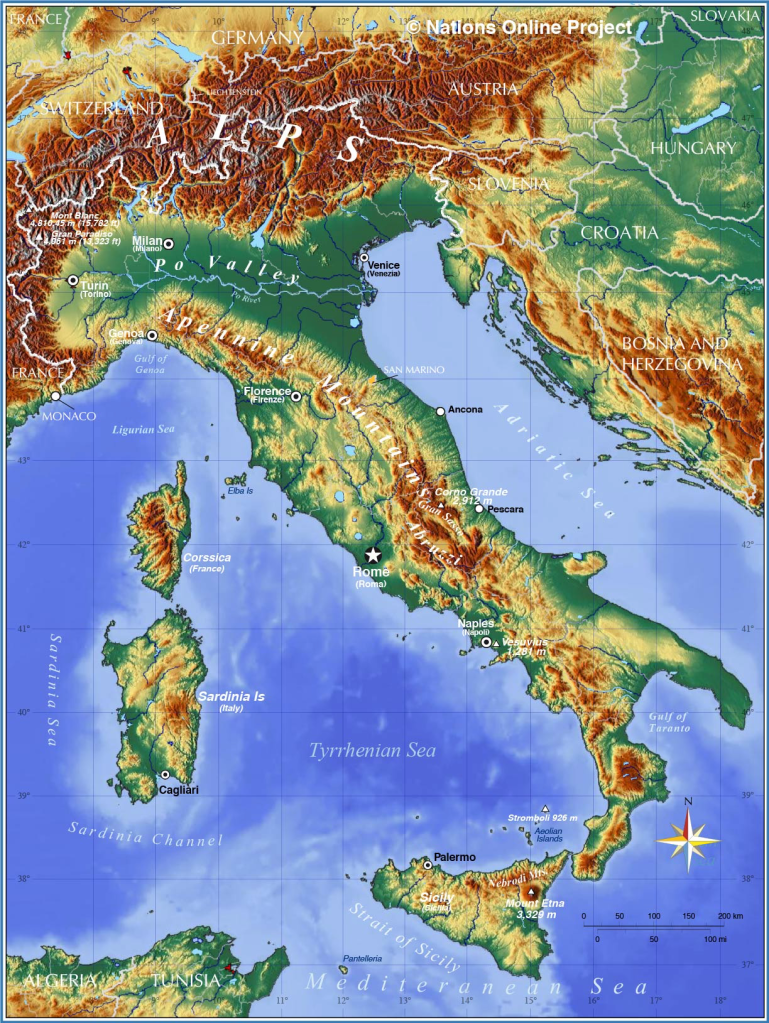
The peoples of (northern and central) Italy, are the principal descendants of Nahor – by his wife and concubine.
Early in their northern Mesopotamian history, they settled in the same region as sons of Aram – specifically Uz – and that relationship is evident in modern Italy. To reinforce this, Kemuel, the third son is the only one stated with a son, or grandson of Nahor and his name is… Aram.
Nahor had a concubine called Reumah and she bare four sons to Nahor and so we have a third gene pool to add to Milcah’s sons and the descendants of Uz from Aram. DNA and Haplogroup evidence point to Reumah’s ancestry being possibly from Arphaxad’s great grandson Joktan – Chapter XXIV Arphaxad & Joktan: Balts, Slavs & the Balkans.
Whereas Milcah as her husband Nahor, were descended from Joktan’s brother Peleg – Genesis 10:25.
What is significant, is that the southern Italians and Sicilians are more closely related to Greeks than they are to other Italians. The Greeks themselves are descended from Joktan’s sixth son, Uzal – refer Chapter XXIV Arphaxad & Joktan: Balts, Slavs & the Balkans.
It is more than a passing coincidence that variations of Uz, H-uz, B-uz and Aram from Nahor; Uz from Aram; and Uz-al from Joktan, should all be found either in the modern Italian nation or nearby neighbours, Greece.
Therefore two of the three sections of Italy: Northern and Central are represented by Milcah, Aram (Uz) and Reumah. That said, the descendants of Nahor and Uz from Aram have in part blended, so that northern and central Italy are a mix of the two. Still, PCA graphs reveal that northern Italians are genetically closer to the related peoples from Aram in Spain and Portugal. And while the central Italians sit between the northern and southern Italians; it is the Italians in the north of Italy with which they share more in common.
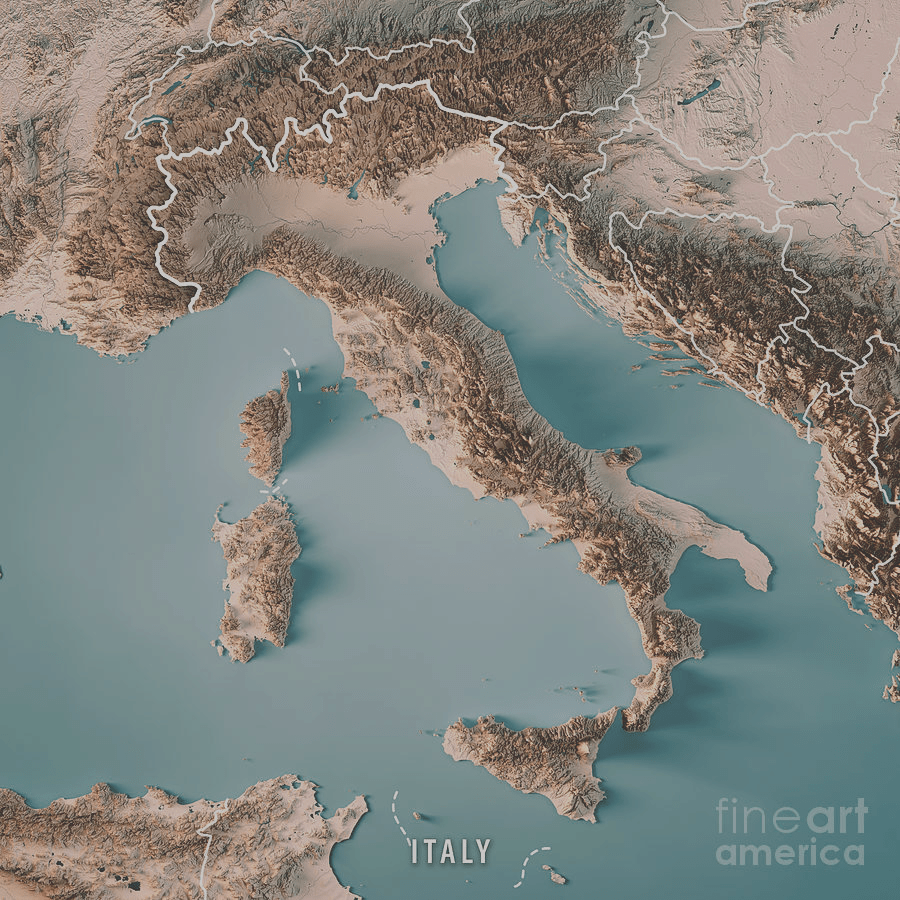
Apart from Aram, many additional grandson’s of Nahor are listed in the Book of Jasher 22:15-39:
15 ‘And Abraham’s brother Nahor and his father and all belonging to them dwelt in Haran, for they did not come with Abraham to the land of Canaan. 16 And children were born to Nahor which Milca the daughter of Haran, and sister to Sarah, Abraham’s wife, bare to him.
17 And these are the names of those that were born to him, Uz, Buz, Kemuel, Kesed, Chazo, Pildash, Tidlaf, and Bethuel, being eight sons, these are the children of Milca which she bare to Nahor, Abraham’s brother… 19 And the children that were born to Nahor were twelve sons besides his daughters, and they also had children born to them in Haran.
20 And the children of Uz the first born of Nahor were Abi, Cheref, Gadin, Melus, and Deborah their sister.
21 And the sons of Buz were Berachel, Naamath, Sheva, and Madonu.
22 And the sons of Kemuel were Aram and Rechob.
23 And the sons of Kesed were Anamlech, Meshai, Benon and Yifi;
and the sons of Chazo were Pildash, Mechi and Opher.
24 And the sons of Pildash were Arud, Chamum, Mered and Moloch‘ – refer Moloch, article: Belphegor.
Note that Nahor’s fifth son Chazo named his firstborn son the same name as his younger and sixth brother, Pildash.
25 ‘And the sons of Tidlaf [Jidlaph] were Mushan, Cushan and Mutzi.
26 And the children of Bethuel were Sechar, Laban and their sister Rebecca.
27 These are the families of the children of Nahor, that were born to them in Haran; and Aram the son of Kemuel and Rechob his brother went away from Haran, and they found a valley in the land by the river Euphrates.
28 And they built a city there, and they called the name of the city after the name of Pethor the son of Aram, that is Aram Naher-ayim [near Padan-Aram] unto this day.
29 And the children of Kesed also went to dwell where they could find a place, and they went and they found a valley opposite to the land of Shinar, and they dwelt there. 30 And they there built themselves a city, and they called the name at the city Kesed after the name of their father, that is the land Kasdim* unto this day, and the Kasdim [Chaldeans] dwelt in that land and they were fruitful and multiplied** exceedingly.’
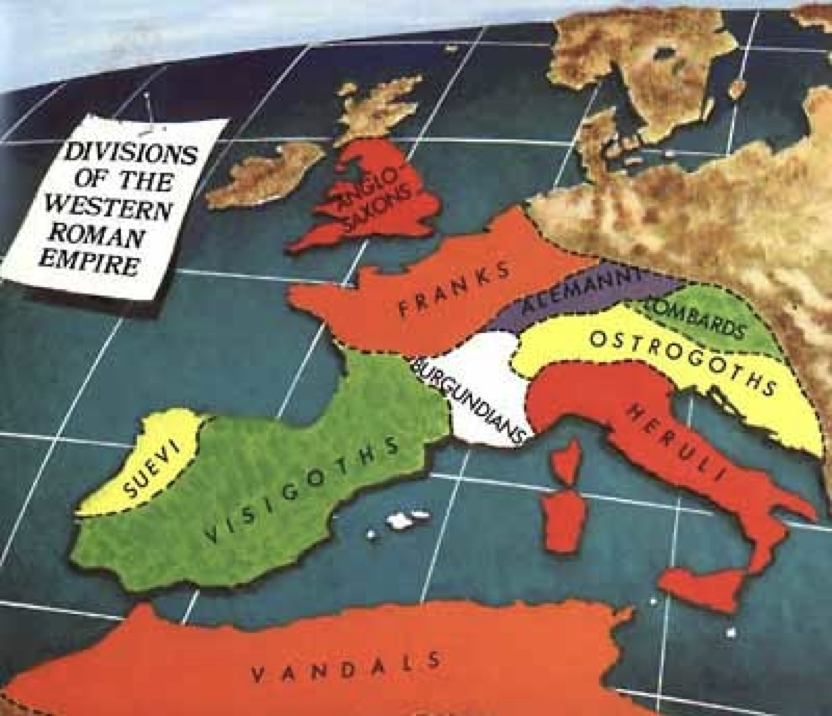
A simplified map of the three main waves of people who entered the Italian Peninsula after the departure of the Romans. They constituted the Heruli, Ostrogoths or eastern Goths and the Lombards; who broadly represent descendants of Joktan, Aram and the branches of Nahor’s family respectively.
Anciently, Nahor’s tribes were known as the Chaldees who overthrew Babylon and made it their capital; just as in Italy today and the appropriating of Rome – the modern ‘city’ of Babylon (refer article: Is America Babylon?) – as the capital of the Italian people.
As an aside, the Suevi were the descendants of Shem’s son Aram and the ancestors of the Portuguese. The Visigoths are also descendants from Aram and are the ancestors of the Spaniards. The Spanish – like the Italian nation – are a complex amalgamation of peoples. That said, the majority of Spanish who departed for the Americas are either descended from a different branch of Aram’s four sons (Vandals and Alans), or are of Moorish and Berber stock – refer Chapter XV The Philistines: Latino-Hispano America; and Chapter XXIII Aram & Tyre: Spain, Portugal & Brazil.
Jasher:
31 ‘And Terah, father of Nahor and Abraham, went and took another wife in his old age, and her name was Pelilah, and she conceived and bare him a son [in 1867 BCE] and he called his name Zoba.
32 And Terah lived twenty-five years after he begat Zoba. 33 And Terah died in that year, that is in the thirty-fifth year [1842 BCE] of the birth of Isaac [in 1877 BCE the] son of Abraham…
35 And Zoba the son of Terah lived thirty years [1837 BCE] and he begat Aram, Achlis and Merik.
Potentially, a fourth lineage could be included with the two descending from Nahor – his wife Milcah and concubine Reumah – with the one from Uz of Aram.
36 And Aram son of Zoba son of Terah, had three wives and he begat twelve sons and three daughters; and the Lord gave to Aram the son of Zoba, riches and possessions, and abundance of cattle, and flocks and herds, and the man increased** greatly.’
And so today, the descendants of Terah and Nahor have been richly blessed as figures show for the economy, standard of living and quality of life in the Italian nation.
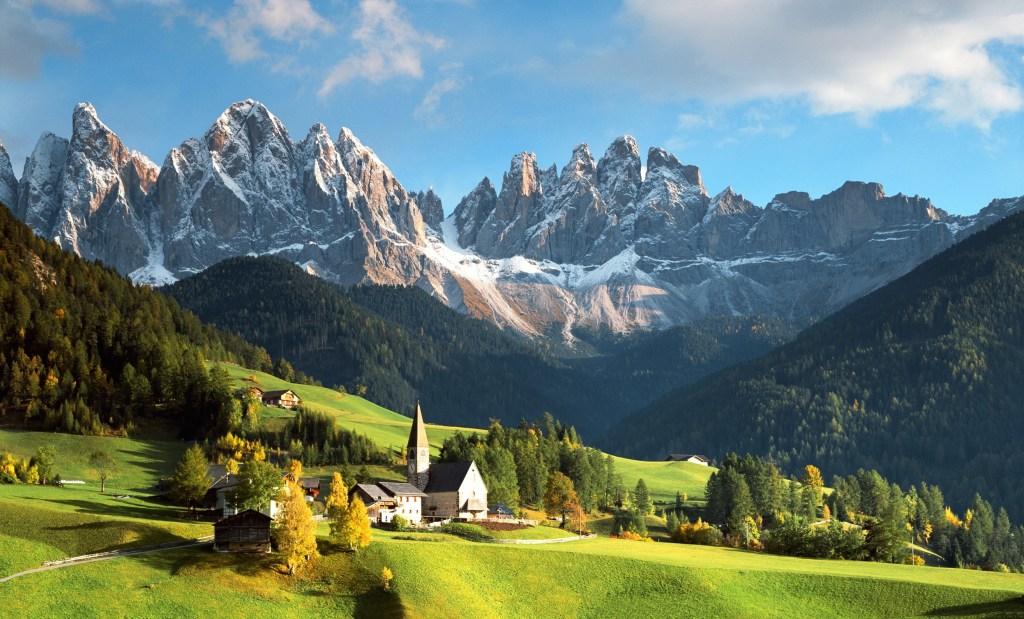
The Dolomites (or Pale Mountains) mountain range is located in northeastern Italy
Jasher:
37 ‘And Aram the son of Zoba and his [brothers] and all his household journeyed from Haran, and they went to dwell where they should find a place, for their property was too great to remain in Haran; for they could not stop in Haran together with their brethren the children of Nahor. 38 And Aram the son of Zoba went with his brethren [Achlis and Merik], and they found a valley at a distance toward the eastern country and they dwelt there. 39 And they also built a city there, and they called the name thereof Aram, after the name of their eldest brother; that is Aram Zoba to this day.’
Aram, Achlis and Merik – sons of Zoba, son of Terah – went to dwell where the sons of Kesed the son of Nahor – Anamlech, Meshai, Benon and Yifi – had gone to dwell. Also, where Aram and Rechob – sons of Kemuel, son of Nahor – had travelled (Kemuel means, ‘congregation of God, God’s rising’ and ‘God’s grain’).
All three groups dwelt south of Haran and in a vicinity west of Shinar. This region was adjacent to Uz, son of Aram the son of Shem, and is the Padan-Aram where Bethuel’s family also migrated. In essence, this means that the ‘Aramaean’ elements from Nahor and Terah merged with Uz from Aram and form the dual regions of northern and central Italy today.
The ancient peoples of Nahor were instrumental in perpetuating the Babylonian Mystery religion inherited from Nimrod and today the legacy is perpetuated through the Universal Roman Catholic Church in the smallest state in the world, the Vatican City – Chapter XXI The Incredible Identity, Origin & Destiny of Nimrod;^ and article: Is America Babylon?

Nahor’s descendants made the city of Babylon as their own and today that great capital is represented by the city of Rome.

In like manner the ancient capital of Assyria, Nineveh, is replicated today in Moscow – refer Chapter XX Will the Real Assyria Stand Up: Asshur & Russia.^
Another parallel, is that as the sons of Joktan lived in ancient Sumer, the Southeastern portion of the Land of Shinar, the descendants of Peleg – including Nahor’s children – lived adjacently to the Northwest in Akkad. Today, the sons of Joktan live to the East in juxtaposition with the Italian Peninsula – Chapter XXIV Arphaxad & Joktan: Balts, Slavs & the Balkans.
Chesed means, as if it were a: ‘field, mountain, breast, protecting spirit.’
The Alfred Jones’ Dictionary of Old Testament Proper Names reads for Chesed: Increase. Though for the word Chaldean: ‘as it were demons.’ The Hebrew word for Chaldeans is Kashedim* the plural of Chesed.
Researchers state that Nahor named his son after the people he came from. That is, an earlier Kesed as mentioned in the Book of Jubilees. Similarly, others claim the word Chaldean (or Chaldee) does not derive from Chesed, because Chesed is stated in chapter twenty-two of Genesis, whereas the word Chaldean is used in Genesis chapter eleven to describe Abraham’s origination in ‘Ur of the Chaldeans.’ The second view is explained by either post-dated editing, or by the fact it is substantiating the first view raised.
The line from Arphaxad to Peleg and then on to Nahor is just one line of descent. It is recorded in the Bible, that other peoples came from that line. It goes without saying that other sons and daughters were born to all the different families, even from Terah as discussed. Family trees grow large very quickly and could not all be recorded in scripture.
In the book of Jubilees we read of Peleg’s son Reu.
Reu married Ora, the daughter of Ur, who was the son of the earlier Kesed. Both Ur and Kesed were family names. The name Ur first being used in southern Mesopotamia for a city and then used again in Haran. The A-kkad-ians and Kashed-im were Arphaxad’s children and so Nahor using the name Kesed was not inexplicable, nor a deliberate attempt to name his son after the Kashedim. It would be like being an English person from England and having either word as your last name as people do today, for instance: John England or Johnny English.
Another point is that the word or prefix Kish (Kash, Kush) which was common in the Babylonian region, is reflective of the original Babylonians and Assyrians than that of Cush, descended from Ham; as discussed previously.^
Speaking of family names, the prime repeating name in Arphaxad’s family has the prefix Reu.
Reu the son of Peleg, just mentioned; Reu-mah the concubine of Nahor; and later we will see there is a Reu-el, in the family of Esau – also Jethro the father-in-law of Moses, the priest of Midian who’s name was Reu-el – and; a Reu-ben, the first born son in the family of Jacob.

Amalfi Coast
Nahor’s fifth son’s name Hazo means, ‘seer, vision’ or ‘to see or have a vision.’
Pildash means, ‘steely, flashing steel, fiery iron.’
Jidlaph means, ‘he will weep, he weeps, he drips.’
Bethuel, the father of Rebekah means, ‘man of God, house of God’ and ‘virgin of God.’
There is a religious or pious theme reflected in the definitions for these names. Today, the Italian people are not just staunchly Catholic, they are the heart, soul and headquarters for the Catholic faith.
The mother of these eight sons, Milcah’s name means, ‘queen’ or ‘counsel.’
Milcah was an ancestor of the patriarch Jacob. Milcah’s son Bethuel moved to Padan-Aram and fathered Rebekah – Genesis 24:15.
Milcah’s granddaughter Rebekah, then married Milcah’s nephew Isaac (Genesis 24:67) and gave birth to Jacob (Genesis 25:21), who became Israel. Milcah and her sister Sarah are contrasted in that she conceived a bounty of sons and Sarah was barren. Eventually though, Sarah shared being an ancestor in that she bore Isaac, Jacob’s father – Genesis 21:1-4.
The mother of Nahor’s remaining four sons was Reumah and her name means, ‘exalted’ or ‘wild ox.’
Reumah’s sons names are
Tebah, which means, ‘confidence, slaughter’ or ‘butcher’;
Gaham, which means, ‘flame, burning’;
Tahash, meaning, ‘to hurry’ or ‘hasten’; and
Maacah meaning, ‘oppression, to press’ or ‘squeeze.’
It could be ventured that these names reflect the Latin temperament.
Nahor moved from Ur of the Chaldees with his father Terah and younger brother Abraham. While they settled in Haran, Nahor dwelt adjacent to Aramean territory and the land of Aram’s son Uz, which became known as Aram Nahar-aim, founding the city of Nahor.
Genesis 24:10
Young’s Literal Translation
‘And the servant taketh ten camels of the camels of his lord and goeth, also of all the goods of his lord in his hand, and he riseth, and goeth unto Aram-Naharaim, unto the city of Nahor…‘
The word Nahar-aim means ‘two rivers,’ that is, the Euphrates and the Tigris. From Hebrew, it has been translated into Greek as the midst of [two] rivers.
Genesis 25:20
English Standard Version
‘…and Isaac was forty years old when he took Rebekah, the daughter of Bethuel the Aramean of Paddan-aram, the sister of Laban the Aramean, to be his wife.’
The word paddan means ‘area’ in Aramaean, thus the name Paddan-aram could be translated as the region, area – or even field – of the Aramaeans.
The descendants of Nahor had become interchangeably known as Aramaeans (or Syrians). Bethuel had moved away from but still adjacent to the region of Aram-Naharaim.
Genesis 27:43
English Standard Version
‘Now therefore, my son, obey my voice. Arise, flee to Laban my brother in Haran.’
Rebekah is speaking to Jacob after he had deceived his own father regarding the birthright blessing. Laban was her brother, the son of Bethuel, son of Nahor and was living in Haran.
Haran was synonymous with the territory of Padan-Aram, near Aram-Naharaim.

Genesis 29:4-5
English Standard Version
4 ‘Jacob said to them, “My brothers [or cousins], where do you come from?” They said, “We are from Haran.”
5 He said to them,“Do you know Laban the son of Nahor?” They said, “We know him.”
Laban is called the son of Nahor, though the Hebrew word for son can mean a descendant, as in a grandson. Abraham, Lot the son of Haran and Nahor each dwelt near each other either in Haran which included the northern Ur, Aram-Naharaim or Padan-Aram.
Nahor’s descendants in the Bible are collectively called Chaldeans from the word Chaldees, derived from Kashedim, linked to the Hebrew names Kesed and Chesed. They are not called Aramaeans (or Syrians) from an historical or prophetic viewpoint after the book of Genesis.
The Origin of the Nations, Herman Hoeh, 1957 – capitalisation his, emphasis mine:
‘Abraham lived among the Chaldeans. One whole book of the Bible – Habakkuk – is entirely devoted to a prophecy concerning the Chaldeans in these latter days! But where are the Chaldeans today? Certainly they are not at ancient Babylon. No one lives there! Notice first where the Chaldeans were. Abraham came from “Ur of the Chaldees”. Ancient Ur was in Mesopotamia. Ur is a shortened name for Urfa. There were once two cities by that name.
Stephen, in his inspired sermon, makes plain that it was the northern Ur in Mesopotamia from which Abram came (Acts 7:2-3). That is where the Chaldeans first dwelt – over 400 miles northwest of ancient Babylon. Who are these Chaldeans so frequently mentioned in Bible prophecy? Here is the plain, simple explanation recognized by most Hebrew scholars. The word “Chaldean” comes from the Greek. The original Hebrew word is Chasdim, meaning “the people of Chesed”. Notice that Chesed was a common name in the family of Abraham (Genesis 22:22).
Next, consider the original Hebrew word translated in our Bibles as “Arphaxad”. Most biblical encyclopaedias will clearly show that the Hebrew form is Arfachesed – MEANING ARFA OR URFA THE CHALDEAN! The Chaldeans come from Arphaxad. They are his children. Abraham was a branch of this stock! The city of Ur was named after Arfa or Urfa, the Chaldean. Chaldean probably means “capturer”, just as Jacob means “supplanter”. The reason that some Chaldeans were later associated with Babylon in Daniel’s time is that a small part of them was later settled by the Assyrians near Babylon. The original inspired Hebrew of Isaiah 23:13 explains this: “Behold, the land of the Chaldeans – this is the people that was not, when Asshur founded it for shipmen”. How clear.
The Chaldeans were divided, not an organized nation.
A part of them was transplanted to Babylon. At Babylon they became the ruling class. But the remainder settled farther north around Lake Van, about halfway between the Caspian Sea and the Mediterranean. Here they were called [Chaldeans]… Sometimes they were referred to as HURRI or Hurrians, after Haran (Genesis 11:29; 22:20-24). Sometimes they bore the name GUTI, probably meaning“people of God.”
The Amorites and Kassites; the Guti and Gutium; the Goths and Visigoths; were all descended from Aram as studied in Chapter XXIII Aram & Tyre: Spain, Portugal & Brazil.
The Ostrogoths or eastern Goths who swept into the Italian Peninsula and partially into the Balkans were related and possibly composed of a mix of the descendants of Nahor, Aram and Zoba. Dr Hoeh raises the point for two locations for the ancient Chaldeans. The fragmented nature of their structure mirrors modern day Italy, which did not form a single unified nation until between 1861 to 1871.
The Chaldeans from Nahor are not the same as the Guti from Gether a son of Aram; nor with the Hurrians who descend from Nahor’s elder brother Haran. Similarly, the ancient Mitanni kingdom may have comprised a mixture of Nahor and Uz from Aram. We will revisit this when we study Haran in the following chapter.
The Races of the Old Testament, A H Sayce, 1891 – emphasis mine:
‘At a later date the tribe of Kassi obtained a permanent footing in Babylonia and established a dynasty there which lasted for several centuries [circa 1200-800 BCE]. Kassites and Babylonians intermingled together, and the long continuance of Kassite rule has been thought to explain the name of Kasdim given to the inhabitants of Babylonia in the Old Testament.
Chesed, of which Kasdim is the Hebrew plural, has been explained as Kas-da the country of the Kassites… it is quite as easy to derive Kasdim from the Assyrian verb Kasddu to conquer so that the Kasidi or Kasdim would be the Kassite conquerors of the Chaldaean plain.
In the Septuagint the Hebrew word Kasdim is translated… Chaldaeans… Chaldaean and Babylonian had become synonymous terms, and Babylonia had come to be known as Chaldaea…’
This writer is not convinced the Kassites were one and the same with the Chaldeans; rather, they are considered a division of Aram. The Kassites migrated from the east, from a similar location as the Guti. The Kassites, in direction of travel and time-frame, do not sit squarely enough to identify as the Chaldeans. The Kassites rose to prominence in the south of Mesopotamia at the same time as the Mitanni were rising in the North. The Mitanni are linked with the descendants of Nahor (and or Uz from Aram) – refer Chapter XXIII Aram & Tyre: Spain, Portugal & Brazil.
The major accomplishment of the Kassites was to unify Mesopotamian culture, centred around Babylon, instead of continuing the separate independence of the surrounding city-states. This paved the way for the Chaldeans to rule a strong capital in Babylon (below) and a unified region of neighbouring cities.

Dynasty X from 626 to 539 BCE was the most famous ruling dynasty of the Chaldeans and included Nebuchadnezzar II (below), who features prominently in the Old Testament.
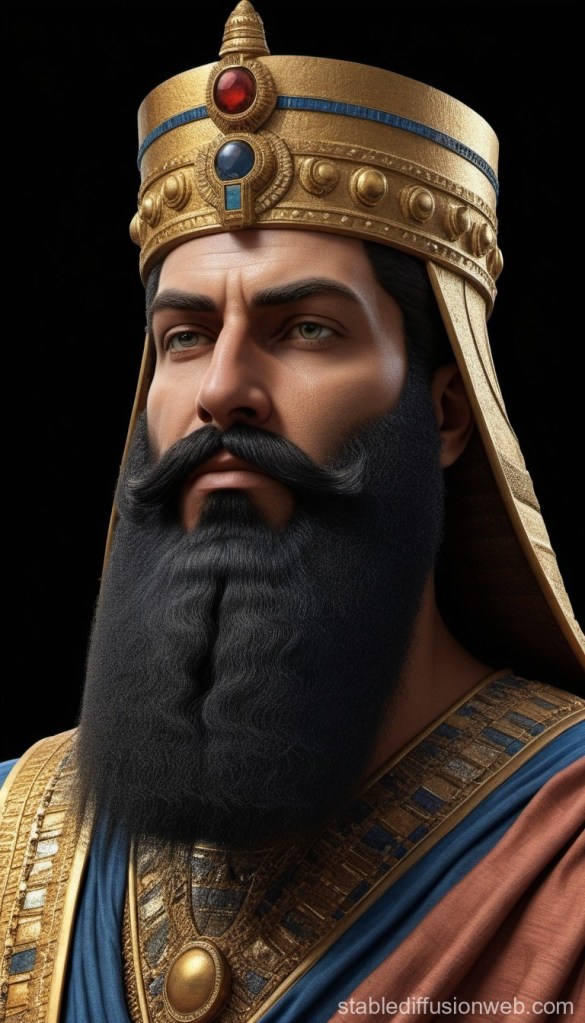
The first king, Nabopolassar – who reigned from 626 to 605 BCE – was a native of Babylon, who drove out the Assyrians and re-established an independent Babylonian kingdom.
His son Nebuchadnezzar II, ruled from 605 to 562 BCE and it was he, who took the Kingdom of Judah into captivity.
He was succeeded by his son, Amel-Marduk (565-560 BCE). His reign was short-lived as the throne was usurped by Nebuchadnezzar’s son-in-law Neriglissar from 560 to 556 BCE. Then his son Labashi-Marduk, briefly reigned in 556 BCE, who in turn had the throne usurped by another possible son (Daniel 5:2, 11, 13, 18) of Nebuchadnezzar, Nabonidus (556-539 BCE). Nabonidus ruled until the fall of Babylon, at the hands of Cyrus the Great and the Medo-Persian empire – refer Chapter IV Central Asia – Madai & the Medes; and Chapter XVIII Elam & Turkey.
This tumultuous sequence of rapidly toppled regimes is reminiscent of modern day Italian government and its frequent changes of ruling political parties and prime minsters. In 2019, Italy had endured sixty-nine governments since the ending of World War II, with an average of nearly one every year, each lasting on average for merely thirteen months.
It ‘is a revolving door like no other in Europe.’

The Chaldeans are mentioned in a number of passages in the Bible.
Isaiah 23:13
New English Translation
‘Look at the land of the Chaldeans, these people who have lost their identity! The Assyrians have made it a home for wild animals. They erected their siege towers, demolished its fortresses, and turned it into a heap of ruins.’
The Chaldeans had originally transformed Babylon and Babylonia into a wealthy, prosperous region. Assyrian rule left it impoverished and powerless.
Habakkuk 1:6
English Standard Version
‘For behold, I am raising up the Chaldeans, that bitter and hasty nation [Latin temperament], who march through the breadth of the earth to seize dwellings not their own.’
Job 1:17
Amplified Bible
‘While he was still speaking, another [messenger] also came and said,”The Chaldeans formed three bands and made a raid on the camels and have taken them away and have killed the servants with the edge of the sword, and I alone have escaped to tell you.”
Ezra 5:11-13
English Standard Version
‘And this was their reply to us: ‘We are the servants [tribes of Judah and Benjamin] of the God of heaven and earth, and we are rebuilding the house that was built many years ago, which a great king of Israel [Solomon] built and finished. But because our fathers had angered the God of heaven, he gave them into the hand of Nebuchadnezzar king of Babylon, the Chaldean, who destroyed this house and carried away the people to Babylonia. However, in the first year of Cyrus… Cyrus the king made a decree that this house of God should be rebuilt.’
Ezekiel 23:14-17, 23
English Standard Version
‘… She [Kingdom of Judah] saw men portrayed on the wall, the images of the Chaldeans portrayed in vermilion, wearing belts on their waists, with flowing turbans on their heads, all of them having the appearance of officers, a likeness of Babylonians whose native land was Chaldea.
When she saw them, she lusted after them and sent messengers to them in Chaldea. And the Babylonians came to her into the bed of love, and they defiled her with their whoring lust. And after she was defiled by them, she turned from them in disgust… the Babylonians and all the Chaldeans, Pekod [visitation] and Shoa [rich] and Koa [cutting off]…’
The vermillion is reminiscent of the crimson (purple [magenta] and red) worn by Bishops and Cardinals respectively – Revelation 17:4.

The next passage laments the fall of Babylon to the Medes. The Chaldeans were zealous, religious and deeply steeped in astrology, the occult and the mystery religion. Plus, the Chaldeans were renowned for their cultural influence and artistic talent. Just as modern Italy led the renaissance and is a global influencer in cuisine, fashion, art and film.
This may explain the focus on the feminine aspect describing their empire in the Book of Isaiah (Ezekiel 16:1-58).
Isaiah chapter forty-seven, is similar to the verses we read regarding the Prince and the ‘King’ (or Queen) of Tyre in Ezekiel twenty-eight – refer article: Asherah.
The description of the fall of ancient Babylon, runs in tandem with the descriptions in the Book of Revelation regarding the future Babylon – Article: Is America Babylon?
The “Queen forevermore, I am “and” there is no one besides me”, is a veiled reference to none other than the original Queen of Heaven, Asherah.
Her wisdom – pride and knowledge – from which the Tree of Knowledge of Good and Evil derives, led her astray.
This path was chosen in her desire to remain in the blended spirit and physical realm, where she was a god, pseudo-creator and is mystically and meta-physically known as the Architect or Demiurge – Article: Asherah.
This is what the Serpent in the Garden of Eden, Samael, offered by trickery to Eve – a descent wholly from spirit to the physical with no way (seemingly) back – Chapter XXII Alpha & Omega; and article: The Eden Enigma.
Isaiah 47:1-15
Amplified Bible
1 ‘Come down and sit in the dust, O virgin daughter of Babylon; Sit on the ground [in abject humiliation]; there is no throne for you, O daughter of the Chaldeans, For you will no longer be called tender and delicate.
2 “Take millstones [as a female slave does] and grind meal; Remove your veil, strip off the skirt, Uncover the leg, cross the rivers [at the command of your captors]. 3 “Your nakedness will be uncovered, Your shame will also be exposed; I will take vengeance and will spare no man.” 4 Our Redeemer [will do all this], the Lord of hosts is His name, The Holy One of Israel. 5 “Sit in silence, and go into darkness, O daughter of the Chaldeans; For you will no longer be called The queen of kingdoms.”
6 “I was angry with My people, I profaned [Judah] My inheritance And gave them into your hand [Babylon]. You showed them no mercy; You made your yoke very heavy on the aged.
7 “And you said, ‘I shall be a queen [H1404 – gbereth: ‘lady, mistress’ from root H1376 – gbiyr: lord, ruler] forevermore [H5769 – olam: perpetual, continuous existence, unending].’
You did not consider these things, Nor did you [seriously] remember the [ultimate] outcome of such conduct. 8 “Now, then, hear this, you who live a luxuriant life, You who dwell safely and securely,
Who say in your heart (mind), ‘I am [the queen], and there is no one besides me. I shall not sit as a widow, Nor know the loss of children.’
9 “But these two things shall come to you abruptly, in one day: Loss of children and widowhood. They will come on you in full measure In spite of your many [claims of power through your] sorceries, In spite of the great power of your enchantments.
10 “For you [Babylon] have trusted and felt confident in your wickedness; you have said, ‘No one sees me.’ [like Samael, the ‘blinded of God’] Your wisdom [Matthew 10:16 ESV “… so be wise as serpents…] and your knowledge [Genesis 3:6 Amplified Bible “And when the woman saw that the tree was… to be desired in order to make one wise and insightful (knowledgable)…” ] have led you astray,
And you have said in your heart (mind), ‘I am, and there is no one besides me [H657 ‘ephec & H656 ‘aphec, meaning: ‘to cease, come to an end, be clean gone, fail, finality, end, at an end].’
Exodus 3:14 ESV “God [elohiym, a God, not the God] said to Moses,
“I am [H1961 hayah & H1933 hava, meaning: ‘to fall, to become, to happen, to come about, to come to pass. to appear, to arise, to come into being, to be instituted, to be established, to be brought about, to be, to exist’]
who I am. (or I will be what I will be)”
And he said, “Say this to the people of Israel: ‘I am has sent me to you.’
Either an evasive, cryptic and somewhat derisive reply or just honest, blunt and to the point?
The Name of God as revealed in Exodus 3:14, An explanation of its meaning, K J Cronin – emphasis & bold mine:
‘Moses was quite understandably anticipating what the Israelites would say to him when he told them that their God had sent him to them. The first thing he anticipated them asking for was the name of their God, YHWH, which if Moses had not known would have proved that he was not sent by Him.
It would, therefore, have been a perfectly reasonable and practical question for the Israelites to ask. As for Moses’ question of Exodus 3:13, “What should I say to them?”, we need only keep in mind one certainty to understand what Moses was asking for in these words. That certainty is that Moses already knew of the existence of a Divine name in Israelite tradition when he asked this question of God. We know this for certain because Moses refers to a Divine name in Israelite tradition immediately before he asks the question of God. It is very unlikely that he could have been aware of the existence of a Divine name without being aware of what it was and so I believe that we can say with certainty that Moses knew the name YHWH before he asked his question of Exodus 3:13.
Moreover, we are informed that as a young man Moses regarded the Hebrews in his midst as his kinsfolk (Exodus 2:11). It is very unlikely that he would not have known the most important feature of his kinsfolk’s religion – the proper name of their God – and so our certainty is confirmed that Moses knew the name YHWH before asking the question of Exodus 3:13. Furthermore, his father-in-law in Midian was a priest (Exodus 2:16) and as such would surely have known the names of the most prominent regional deities amongst whom YHWH would have been counted, which also confirms our certainty that Moses would have known the name YHWH before he asked the question of Exodus 3:13.
Bearing in mind these three points the question of Exodus 3:13 can perhaps best be understood as Moses saying to God “I know that You have a proper name, and I even know what that name is, but I still want direction from You as to how I should respond to the Israelites if they ask me for Your name.”
In response to his question Moses received what was no doubt more than he had expected when he asked the question of God, just as the Israelites received more than they could have expected when they asked Moses for the name of their God. Neither Moses nor the Israelites could have expected to receive two names in response to their respective questions but that is what they did receive.
For his part Moses received two answers to his question of Exodus 3:13, or two parts of the one answer, one of them in Exodus 3:14 and one in Exodus 3:15. He was told that when the Israelites ask him for the name of the God who sent him to them, he was first to say that ehyeh had sent him to them (3:14b) and he was then to say that YHWH had sent him to them (3:15). Both words are clearly intended to be understood as answers to the same question because the sentence structure in the two verses is identical, they have a shared vocabulary and there is only one question being answered.
Irrespective of the widespread opinion that these verses are attributable to the Elhoistic source, the entire passage is written with great care and deliberation and is clearly intended to be read and understood precisely as we find it.
Considered in this way, and as the bold-type text makes clear, the most important difference between the two answers Moses receives to his question is that in the position where Exodus 3:14b has the word ehyeh, Exodus 3:15 has the name YHWH. Both are identified as sending Moses to the Israelites and because there is only one God doing the sending both must be names of the God of Israel.
Moreover the word ehyeh is a first person singular of the verb, which means that as a name it can only be one by which God knows Himself; a Personal name.
Therefore Ehyeh must be the Personal name of God and YHWH His proper name.
It will be recalled that this conclusion is supported by the interpretations of Recanati, Rashbam, Ibn Ezra, Sarna and Buber among others.’

Isaiah: 11 “Therefore disaster will come on you; You will not know how to make it disappear [with your magic]. And disaster will fall on you For which you cannot atone [with all your offerings to your gods]; And destruction about which you do not know Will come on you suddenly. 12 “Persist, then, [Babylon] in your enchantments and your many sorceries with which you have labored from your youth; Perhaps you will be able to profit [from them], Perhaps you may prevail and cause trembling.
13 “You are wearied by your many counsels.
Just let the astrologers, The stargazers, Those who predict by the new moons [each month] Stand up and save you from the things that will come upon you [Babylon].
14 “In fact, they are like stubble; Fire burns them. They cannot save themselves from the power of the flame [much less save the nation], There is no blazing coal for warming Nor fire before which to sit! 15 “This is how they have become to you, those [astrologers and sorcerers] with whom you have labored, Those who have done business with you from your youth; Each has wandered in his own way. There is no one to save you.’
This passage in Isaiah chapter forty-seven is dual in intention and loaded with meaning.
We have read previously regarding Nebuchadnezzar’s dream and the statue of gold, silver, brass, iron and clay in preceding chapters – Article: Is America Babylon?
The first five chapters of the Book of Daniel are dedicated to the Chaldean empire; with the first four relating to the ruler King Nebuchadnezzar himself. The king’s astrologers were not able to recount the dream, let alone explain it. Daniel had it revealed to him by the Creator through Gabriel (Daniel 9:21) and explains:
Daniel 2:1-2, 31-38
English Standard Version
‘In the second year of the reign of Nebuchadnezzar, Nebuchadnezzar had dreams; his spirit was troubled, and his sleep left him. 2 Then the king commanded that the magicians, the enchanters, the sorcerers, and the Chaldeans be summoned to tell the king his dreams. 31 You saw, O king, and behold, a great image. This image, mighty and of exceeding brightness, stood before you, and its appearance was frightening.
32 The head of this image was of fine gold…
37 You, O king, the king of kings, to whom the God of heaven has given the kingdom, the power, and the might, and the glory, 38 and into whose hand he has given, wherever they dwell, the children of man, the beasts of the field, and the birds of the heavens, making you rule over them all – you are the head of gold.’
Recall, the Medo-Persian Empire (Chapter IV Central Asia – Madai & the Medes; and Chapter XVIII Elam & Turkey) was the chest and arms comprising silver and one of the legs of iron was the Byzantine Empire, the eastern leg of the Roman Empire – refer Chapter XX Will the Real Assyria Stand Up: Asshur & Russia.
The feet and toes of iron and clay are a spirit-human mixture.
Daniel 2:43 states: ‘As you saw the iron mixed with soft clay, so they will mix with one another in marriage – by the seed of men – but they will not hold together, just as iron does not mix with clay.
The Chaldean empire was the most cultured, refined and resplendent of the six kingdoms described or predicted. It remained shorter – less widespread – than the ones that followed and was not as militarily dominant as evidenced by the softer, though more valuable element of gold – Article: The Ark of God.
Another description of Nebuchadnezzar’s empire is in the Book of Daniel in chapter seven. We have previously covered the Medo-Persian empire, the second kingdom being described as a bear and also in chapter eight as a ram; the fourth kingdom, of which the Byzantium empire constitutes half of, being described in chapter seven as a ‘terrible beast with ten horns.’
Daniel 7:1-4, 17
English Standard Version
‘In the first year of Belshazzar [556 BCE, son of Nabonidus] king of Babylon, Daniel saw a dream and visions of his head as he lay in his bed. Then he wrote down the dream and told the sum of the matter. Daniel declared, “I saw in my vision by night, and behold, the four winds of heaven were stirring up the great sea. And four great beasts came up out of the sea, different from one another.
The first was like a lion and had eagles wings [like the Cherubim].

Then as I looked its wings were plucked off, and it was lifted up from the ground and made to stand on two feet like a man, and the mind of a man was given to it…” ‘These four great beasts are four kings who shall arise out of the earth.’

The lion – or a bull with a human head, known as a Lamassu – with eagles wings is a prevalent animal hybrid symbol in Chaldean history.
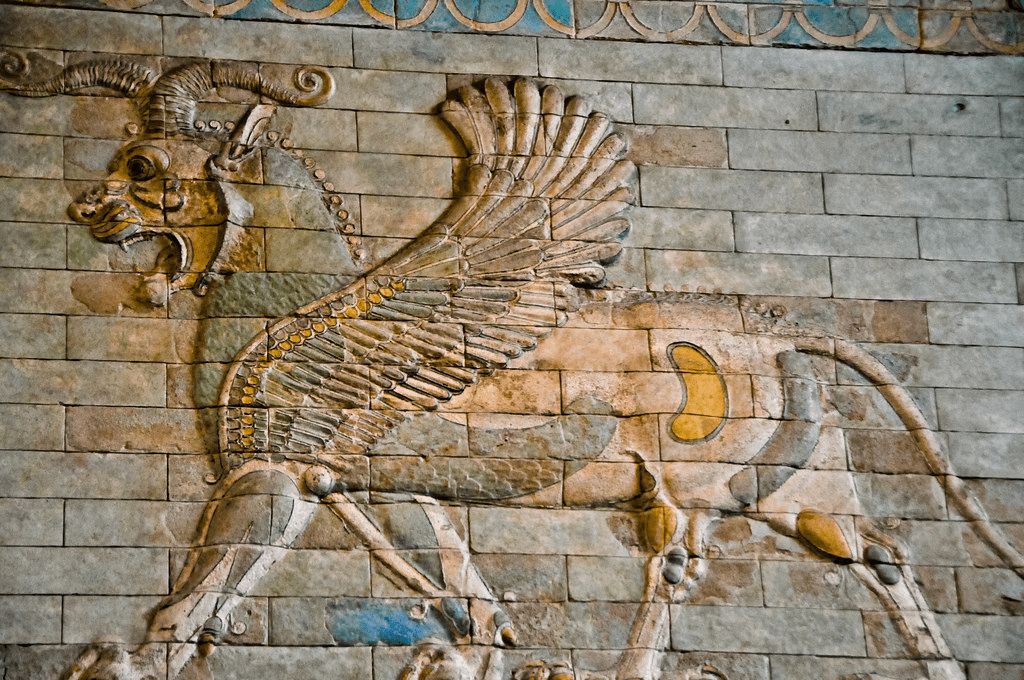
It is also seen sometimes in Asshur’s monuments as well in Lud’s – refer Chapter XVII Lud & Iran.
Today, it is frequently seen in none other than… Italy.
The symbol of Saint Mark of Venice is a prime example below.
In Daniel chapter four we read of Nebuchadnezzar’s greatness; his pride; his being humbled through madness; and then his subsequent acknowledgment of the Creator for all that he had been given.
The tree described, is a parallel analogy of the restraint of Asherah – refer article: Asherah.

Daniel:
‘… I know that the spirit of the holy gods is in you [Daniel] and that no mystery is too difficult for you, tell me the visions of my dream that I saw and their interpretation. 10 The visions of my head as I lay in bed were these… [Daniel] answered and said…
The tree you saw, which grew and became strong, so that its top reached to heaven, and it was visible to the end of the whole earth, 21 whose leaves were beautiful and its fruit abundant, and in which was food for all, under which beasts of the field found shade, and in whose branches the birds of the heavens lived – 22 it is you, O king, who have grown and become strong. Your greatness has grown and reaches to heaven [the attention of the spirit realm], and your dominion to the ends of the earth.
23 And because the king saw a watcher, a holy one, coming down from heaven and saying, ‘Chop down the tree and destroy it, but leave the stump of its roots in the earth, bound with a band of iron and bronze, in the tender grass of the field, and let him be wet with the dew of heaven, and let his portion be with the beasts of the field, till seven periods of time pass over him…’
27 Therefore, O king, let my counsel be acceptable to you: break off your sins by practicing righteousness, and your iniquities by showing mercy to the oppressed, that there may perhaps be a lengthening of your prosperity.”
29 At the end of twelve months he was walking on the roof of the royal palace of Babylon, 30 and the king answered and said,
“Is not this great Babylon, which I have built by my mighty power as a royal residence and for the glory of my majesty?”
Pride before a fall.
31 ‘While the words were still in the king’s mouth, there fell a voice from heaven, “O King Nebuchadnezzar, to you it is spoken:
The kingdom has departed from you… until you know that the Most High rules the kingdom of men and gives it to whom he will.”
33 Immediately the word was fulfilled against Nebuchadnezzar. He was driven from among men and ate grass like an ox, and his body was wet with the dew of heaven till his hair grew as long as eagles’ feathers, and his nails were like birds’ claws.’

34 ‘At the end of the days [seven years] I, Nebuchadnezzar, lifted my eyes to heaven, and my reason returned to me, and I blessed the Most High, and praised and honored him who lives forever…
35 all the inhabitants of the earth are accounted as nothing, and he does according to his will among the host of heaven and among the inhabitants of the earth; and none can stay his hand or say to him, “What have you done?” 36 At the same time my reason returned to me, and for the glory of my kingdom, my majesty and splendor returned to me. My counselors and my lords sought me, and I was established in my kingdom, and still more greatness was added to me [like Job].
37 Now I, Nebuchadnezzar, praise and extol and honor the King of heaven, for all his works are right and his ways are just; and those who walk in pride he is able to humble.’
This was a remarkable experience, lesson and process of conversion for the arrogant and self-righteous Nebuchadnezzar who had been brought low, humbled and in an about turn admitted gratitude and became thankful to the supreme source of all his blessings.
Prior to looking at the golden age of the Chaldeans, we will look at their ancient ancestors and clarify an important scholarly debate. We have noted the sons of Canaan; as the original inhabitants of the land of Canaan – with the Nephilim and Elioud giants.
In time, other peoples came to be known by the names of some of the sons of Canaan. We have seen this with the Amorites and how that name became more well known for the blond Aramaeans, than it did for the darker-skinned Amor-ites descended from Canaan.
A case in point is Heth. We have studied the original Heth, living in Hamath and now equating to modern Nigeria – refer Chapter XII Canaan & Africa.
In time there were a light-skinned people called Hittites. Where it becomes complex, is that these Hittites inherited the name of Hatti, not from the original Heth of Canaan, but rather from the proto-Chaldeans, who were known as Chatti. To further complicate the issue, historians have associated Khatti and Kheta (or Khetae) a reference to the Kittim, to then conclude that the Hatti and Hittites were tawny-skinned Asiatics descended from the Kittim of Javan.
The Kittim – present day Indonesians – do not constitute the true identity of the Hatti or the Hittites.
We will study the Hittites in detail, for their imprint and impact on the world has been monumental in successive re-incarnations throughout ancient and modern history.
Regarding the Hatti (and the Hittites), the New World Encyclopaedia states, emphasis and bold mine:
‘”Hittites” is the conventional English-language term for an ancient people who spoke an Indo-European language and established a kingdom centered in Hattusa (the modern village of Bogazkoy in north-central Turkey), through most of the second millennium B.C.E.
The Hittite kingdom, or at least its core region, was apparently called Hatti in the reconstructed Hittite language.
However, the Hittites should be distinguished from the “Hattians,” an earlier people who inhabited the same region until the beginning of the second millennium B.C.E., and spoke a non–Indo–European language conventionally called Hattic.
Hittites or more recently, Hethites is also the common English name of a Biblical people, who are also called Children of Heth. These people are mentioned several times in the Old Testament, from the time of the Patriarchs up to Ezra’s return from Babylonian captivity of Judah.
The archaeologists who discovered the Anatolian Hittites in the nineteenth century initially believed the two peoples to be the same, but this identification remains disputed.
Around 2000 B.C.E., the region centered in Hattusa that would later become the core of the Hittite kingdom was inhabited by people with a distinct culture who spoke a non-Indo-European language. The name “Hattic” is used by Anatolianists to distinguish this language from the Indo-European Hittite language, that appeared on the scene at the beginning of the second millennium B.C.E. and became the administrative language of the Hittite kingdom over the next six or seven centuries.
As noted above, “Hittite” is a modern convention for referring to this language. The native term was Nesili, i.e. “in the language of Nesa.”
The early Hittites, whose prior whereabouts are unknown, borrowed heavily from the pre-existing Hattian culture, and also from that of the Assyrian traders – in particular, the cuneiform writing and the use of cylindrical seals.
Since Hattic continued to be used in the Hittite kingdom for religious purposes [a trait of the Chaldeans], and there is substantial continuity between the two cultures, it is not known whether the Hattic speakers – the Hattians – were displaced by the speakers of Hittite [yes], were absorbed by them [no], or just adopted their language [no].’
To summarise the aforementioned quote:
Two different, successive peoples dwelt in ancient Anatolia, with different languages, the Hatti and Hattic, a non-Indo-European language and then the Hittites, speaking Hittite an Indo-European language. The Hittites are definitely not the same as the sons of Heth, or Hethites from Canaan. Identifying them as one and the same is a false premise, which is correct to remain disputed amongst scholars.
We will learn definitively when we study the Hittites, that the Hatti – the future Chaldeans – did not adopt the Hittite language nor did they become absorbed into the Hittite civilisation.
Rather, the Hatti were displaced by the encroaching Hittites.
Amazing Bible Time Line – emphasis mine:
‘It is a matter of considerable scholarly debate whether the biblical “Hittites” signified any or all of:
1) the original Hattites of Hatti; [no, they do not]
2) their Indo-European conquerors (Nesili), who retained the name ‘Hatti” for Central Anatolia, and are today referred to as the “Hittites” (the subject of this article); [yes, they are the same] or
3) a Canaanite group who may or may not have been related to either or both of the Anatolian groups, and who also may or may not be identical with the later Neo-Hittite, Luwian polities [redundant].
Other biblical scholars have argued that rather than being connected with Heth, son of Canaan, [Heth and the Hittites are different] instead the Anatolian land of Hatti was mentioned in Old Testament literature and apocrypha as “Kittim” (Chittim), a people said to be named for a son of Javan [incorrect].’
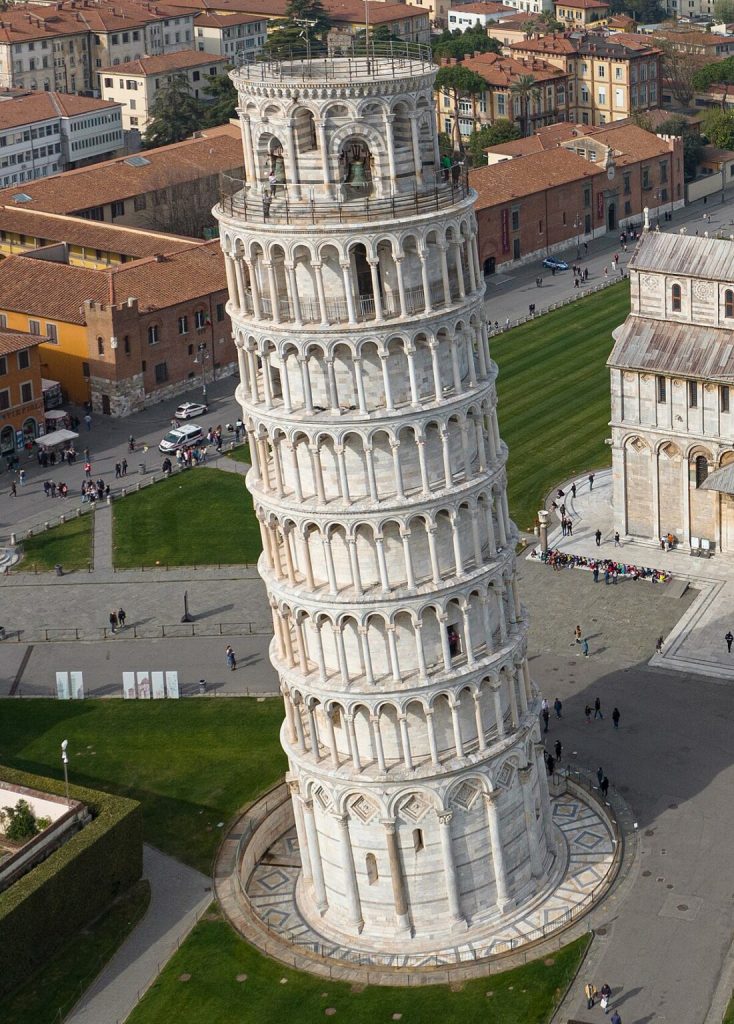
The leaning Tower of Pisa
Sarah wife of Abraham. Fairy tale or Real History? Gerard Gertoux – emphasis mine:
‘The Hittites who lived in Syria, and sometimes in Canaan, wanted to define themselves by their genealogical link “people from the land of Heth” as does the Bible (Genesis 26:34; 36:2), the original land being likely the region around Hat(ti)-tusa (Hattusa). According to the Bible, when Joshua entered the Promised Land (in 1493 BCE) [1407 BC] he expelled a number of nations, including the Hittites. These Hittites were located north of Syria. The few scattered references that we have to Hantili’s reign (1500-1495) indicate that he intended on maintaining Hittite influence on Syria. The Hittites, south of Euphrates, mentioned in the time of Joshua and Hantili I, are therefore the same.
The Hittites met by Abraham were not quite the same as those of Joshua 37 since they are identified as sons of Heth, not Hittites. In the biblical narrative (Genesis 23:2-10), Ephron (“of a calf”), son of Zohar (“tawny”), was not a Hittite in the usual manner because his birth name and that of his father are not Hittite but Canaanite, implying that they had been settled in this region for a long time.’
Yes… Ephron was an original son of Heth, a son of Canaan, an African with dark skin – Chapter XII Canaan & Africa.
Gertoux:
‘Consequently the history of Hittites is complex, its official beginning is the period called Early Empire (c. 1530 BCE) but previously there was a period called Hattian period, with 3 ancestors kingdoms, those of Hattusa, Kanesh and Carchemish. Those ancient Hittites, called Hattians by scholars or sons of Heth, son of Canaan in Genesis 10:15, were [incorrectly called] the ancestors of the Hittites.’
The sons of Heth – Black people – were not the ancestors of the Hittites; nor were the Hattians. The Hittites are related to the Hattians, but the Hattians are not the ancestors of the Hittites. Heth, Hatti and the Hittites are three separate, distinct peoples. Egyptian depictions of the Battle of Kadesh, show long-nosed Hattian soldiers, while the Hittite leaders look different; highlighting two different peoples.
Ancient history can be hazy for all cultures and empires with information largely based on king lists and inscriptions on tablets, steles and so forth. The Akkadian kingdom in central Mesopotamia, the northern half of the land of Shinar with Sumer, the older civilisation in the south, fascinates; yet their rise and fall are cloaked in shadows. After the Tower of Babel, all peoples dispersed eventually – refer article: The Pyramid Perplexity.
The sons of Shem stayed closer to the main theatre of events, for longer. The Akkadians were the main body – or rather became the most influential – from Peleg’s branch of Arphaxad’s family tree and later Sumer were the branch from Joktan (refer Chapter XXIV Arphaxad & Joktan: Balts, Slavs & the Balkans).
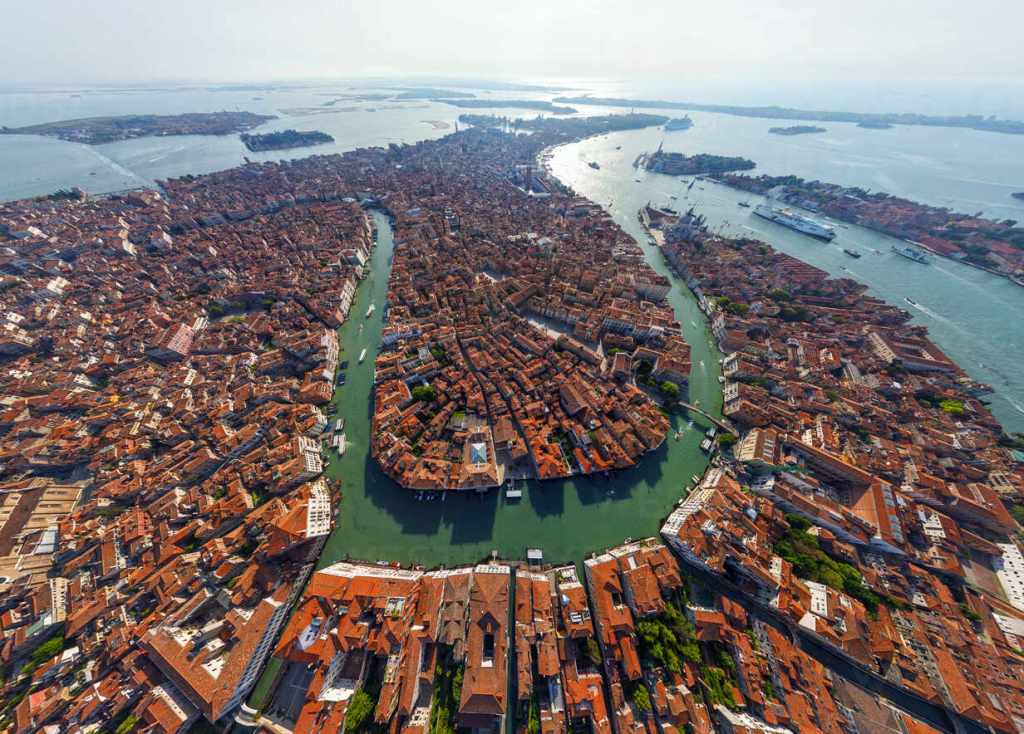
Venice (above and below)
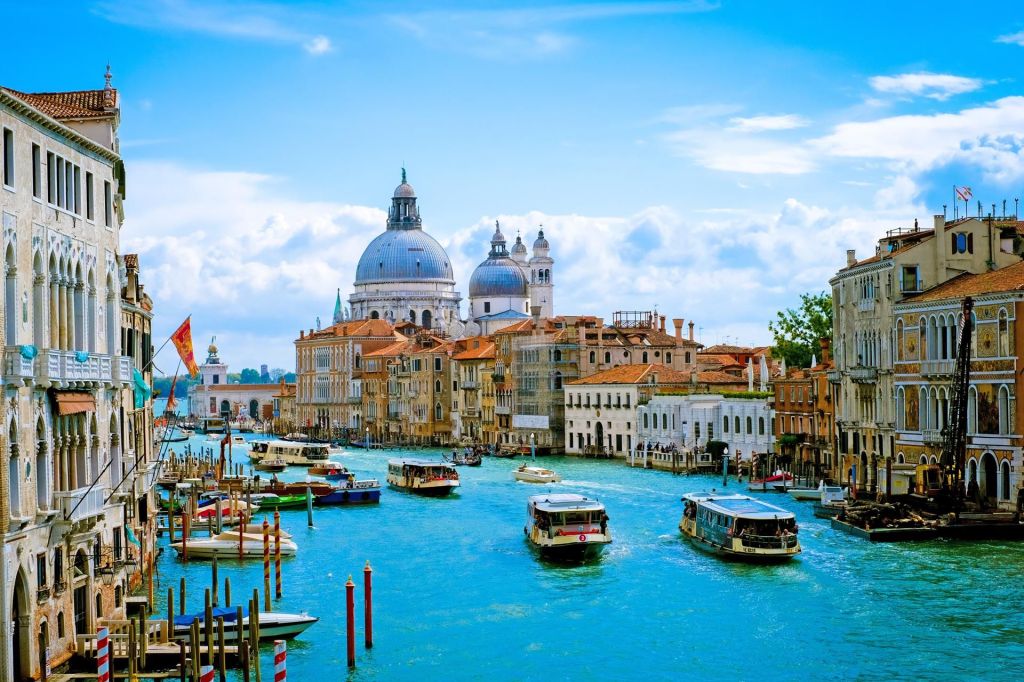
The Amurru or Amorites from the Northwest, circa 1994 BCE and the Gutians – both Aramaean peoples – from the East, circa 2067 BCE had invaded the region, with Terah and his family living further south, in northern Sumer at this time. Accad is listed in Genesis chapter ten with Babel, Erech and Calneh as the beginning of Nimrod’s kingdom. The Akkadian Empire reached its political peak between 2224 and 2064 BCE, following the conquests by its founder the great Sargon during 2224 to 2169 BCE. Under Sargon and his successors, the Akkadian language was imposed on the neighbouring conquered states of Elam, the Guti and the Martu – or Amurru. Sargon had also defeated Sumer, Canaan and the Assyrians.
Akkad is regarded as the first empire in recent ancient history.
Sargon claimed he did not know his father and that his mother was a changeling. A changeling is believed to be a fairy which has been left in place of a human, who has been stolen by fairies. Other sources say his mother was La’ibum (or Itti-Bel), either
a. a humble gardener;
b. a hierodule – ‘a slave-prostitute living in a temple and dedicated to the service of a god’ – or
c. a priestess to the Babylonian goddess Ishtar – Inanna in Sumer.
Sargon was originally a Rabshakeh, or cupbearer to a king of Kish, Ur-Zababa – Kish as in the Khatti and not from Cush – Chapter XXI The Incredible Identity, Origin & Destiny of Nimrod.
After the fall of the Akkadian Empire, the people of Mesopotamia eventually split into two major Akkadian speaking nations; Assyria in the upper north, and a few centuries later, Babylonia to its south.
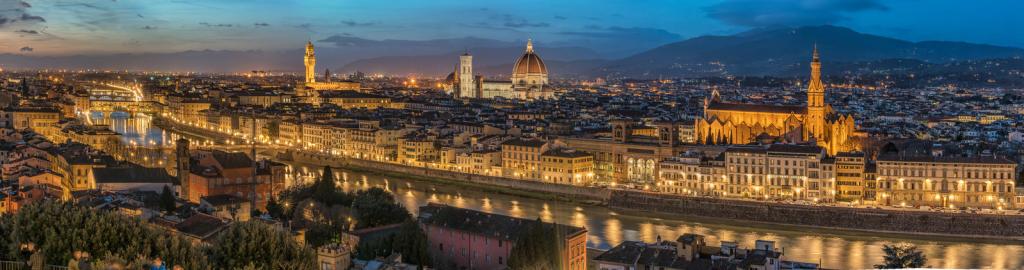
Firenze (Florence)
The third Dynasty of Ur from 1988 to 1882 BCE was founded by Ur-Nammu (or Ur-Namma).
Ur-Nammu became king after serving as governor to his father and Ur-Nammu – notice family name of Ur – was the first king to use the title, King of Sumer and Akkad. Ur-Nammu is credited with building the ziggurats at Ur and Uruk. The Code of Ur-Nammu, parallels the later Code of Hammurabi – refer Chapter XIX Chedorlaomer & the War of Nine Kings.
The phrase: There will come a king of the four quarters of the earth, originated from Akkadian soothsaying.
During the same time period of the preeminence of Akkad – from 2224 to 2039 BCE – the kingdom of the Hatti existed in western Asia Minor – as evidenced by Hittite and Assyrian records. The structure of archeological finds in sites like Hattush, reveal a highly developed culture, with distinct social classes. The Hattians were organised ‘in monarchial city-states. These states were ruled as theocratic kingdoms or principalities.’
A theocracy is ‘a system of government by priests claiming a divine commission’ and ‘a form of government in which a deity is recognised as the supreme civil ruler, the deity’s laws being interpreted by the ecclesiastical authorities.’ The Pope and Cardinals of the Vatican, bearing a more than coincidental parallel in similarity.
The pantheon of gods in Hatti, included the storm god Taru, represented by a bull and the sun goddess Furusemu, represented by a leopard, amongst other symbols. Certain reliefs show a female figure giving birth to a bull; as the the mother goddess Kattahha was mother to the storm god Taru – refer Chapter XV The Philistines: Latino-Hispano America; and article: The Calendar Conspiracy.
Ancient symbols are often replicated in modern insignias by businesses and sports teams. For instance, the famous Italian sports car marque, Lamborghini.

The Hittites incorporated much of the Hattian pantheon into their own religious beliefs. James Mellaart proposed that the Hattian ‘religion revolved around a water-from-the-earth concept. Pictorial and written sources show that the deity of paramount importance to the inhabitants of Anatolia was the terrestrial water-god. The Hittite legends of Telipinu and the serpentine dragon Illuyanka found their origin in the Hattian civilization’ – Article: Asherah.
Note the water incorporated on the Basilicata and Venerto coats of arms; and the lion on the Valle d’Aosta and Veneto coats of arms.
World History Encyclopaedia, Hatti, Joshua J Mark, 2012 – emphasis & bold mine:
‘The Hatti… migrated to the area sometime prior to 2400 BCE. The region was known as ‘Land of the Hatti’ from c. 2350 BCE until 630 BCE, attesting to the influence of the Hattian culture there. Controlling a significant number of city states and small kingdoms, they had established lucrative trade with the region of Sumer (southern Mesopotamia) by the year 2700 BCE.
The historian Erdal Yavuz writes: ‘Besides the timber and stone essential for construction, but deficient in Mesopotamia, Anatolia had rich mines which provided copper, silver, iron, and gold.’ Their trade with the cities of Mesopotamia enriched the region and helped to develop their kingdom. The historian Marc Van De Mieroop includes the Hatti among the nations… in the diplomatic and trade consortium he refers to as The Club of the Great Powers…it, included Mitanni, Babylonia, Assyria, Hatti and Egypt…
In 2500 BCE the Hatti established their capital high on a hill at the city of Hattusa [seven Hills of Rome] and held lands securely in the surrounding areas, administering laws and regulating trade in a number of neighboring states. Between c. 2334-2279 BCE the great Sargon of Akkad invaded the region after sacking the city of Ur in 2330 BCE. He then turned his attention to Hattusabut failed to gain an advantage over the city’s defences which were especially strong in that it was located high on a well-defended and fortified plateau.
Following Sargon’s campaigns in the region, his grandson Naram-Sin (2261-2224 BCE) continued his policies, fighting against the Hattic King Pamba late in the 23rd century BCE with as little success as his grandfather had. In spite of the constant harassment from the Akkadians, Hattic art flourished around 2200 BCE and, by 2000 BCE, their civilization was at its height with prosperous trading colonies established between Hattusa and their other city of Kanesh and, of course, continuing trade relations with Mesopotamia.
In 1700 BCE, the Kingdom of the Hatti was again invaded, this time by the Hittites, and the great city of Hattusa was stormed and destroyed by a king named Anitta from the neighboring Kingdom of Kussara. Excavations at the site show that the city was burned to the ground. King Anitta had such contempt for the city he had vanquished that he cursed the ground and further cursed whoever should re-build Hattusa and try to rule there. Even so, not long after, the city was re-built and re-populated by a later king of Kussara who called himself Hattusili [I].
Whoever the Hatti originally were, or where they came from, remains a mystery in the modern day owing to the… lack of ancient records. The actual nature of the relationship between the Hatti and the Hittites remains a mystery in the modern day and waits on the discovery of ancient documentation to be resolved.’
Joshua Mark confirms the distinction between the Hatti and Hittites; admitting the lack of historical information regarding their relationship. When we study the Hittites, the relationship will become clearly apparent – Chapter XXVIII The True Identity & Origin of Germany & Austria – Ishmael & Hagar.
The dates he provides are all earlier than Nahor’s life, for he was not born until circa 1993 BCE. These Hatti were ante-descendants of Nahor, descending from Peleg and perhaps Terah. It was from the Hatti in Anatolia that the Mitanni of upper Mesopotamia descended – refer Chapter XXIII Aram & Tyre: Spain, Portugal & Brazil.
Later, the Chaldeans dwelt near the coastal area of the Persian Gulf and had not been entirely subjugated by the Assyrians. In 630 BCE Nabopolassar became king of the Chaldeans and by 626 BCE he had forced the Assyrians out of Uruk and crowned himself king of Babylonia. He endeavoured to destroy Assyria, while at the same time, to restore the dilapidated network of canals in the neighbouring cities of and including, Babylon.
As the Babylonians had grown tired of Assyrian rule and weary of internal struggles, they were easily persuaded to submit to the new Chaldean king. The result was a rapid social and economic consolidation, assisted by the fact that after the fall of Assyria, no external enemy threatened Babylonia for decades. In the cities, the temples were an important part of the economy and the business class regained its strength in the trades, commerce, livestock breeding as well as in agriculture. The collapse of the Assyrian empire, had meant many trade arteries were rerouted through Babylonia with the city of Babylon emerging as a world centre.
Naboploassar had fought the Assyrian King Ashur-uballiṭ II and then turned his attention against Egypt; his successes alternating with defeats. In 605 BCE Nabopolassar died in Babylon.
Nabopolassar had named his oldest son Nabu-kudurri-usur*, after the famous king of the second dynasty of Isin. He was trained carefully for his future kingship and shared responsibilities with his father. When Nabopolassar died, Nebuchadnezzar* II was with his army in Syria. He had just crushingly defeated the Egyptians near Carchemish in a bloody battle and was pursuing them toward the South. He returned immediately to Babylon on hearing the news of his father’s death. Nebuchadnezzar’s numerous building inscriptions enumerate his many wars, most of them interestingly, ending with prayers.
Nebuchadnezzar continued to frequently campaign in Syria in the bid to drive out the Egyptians. In 604 BCE he took the Philistine city of Ashkelon and attacked Canaan at the end of 598 BCE. King Jehoiakim of Judah had rebelled and was relying on aid from Egypt. Even so, Jerusalem was won on March 16, 597 BCE. Jehoiakim died during the siege, and his son, King Johoiachin, together with at least 3,000 people from Judah, were led into exile in Babylonia. The captives were treated well, according to document records.
Judah rebelled again in 589 BCE and Jerusalem was placed under siege. The city finally fell between 587 and 586 BCE and was completely destroyed, along with the Temple. Many thousands from Judah and Benjamin were forced into Babylonian exile. The former Kingdom of Judah, was reduced to a province of the Babylonian empire. The revolt had been caused by an Egyptian invasion which pushed as far north as Sidon. Nebuchadnezzar laid siege to Tyre for thirteen years without taking the [Rock] city [fortress], as he had no decisive winning fleet at his disposal. In 568 and 567 BCE he attacked Egypt, again without much success, but from that time on the Egyptians refrained from further attacks on Canaan.
Nebuchadnezzar was at peace with Media throughout his reign and he was a mediator after the Median-Lydian war which lasted five years from 590 to 585 BCE. The Babylonian empire under Nebuchadnezzar grew, becoming one of the richest lands in western Asia – a remarkable transformation as it had been rather poor when it was ruled by the Assyrians.
Babylon was the largest city of the civilised world.
Nebuchadnezzar maintained the revitalised canal systems of his father and built many supplementary canals, making the land even more fertile; with trade and commerce booming during his reign.
Nebuchadnezzar’s building efforts easily surpassed those of most of the Assyrian kings before him. He fortified the old double walls of Babylon, adding a triple wall outside the old wall and erected a further wall, the Median Wall, north of the city between the Euphrates and the Tigris rivers. According to Greek estimates, the Median Wall was about one hundred feet high.
Nebuchadnezzar enlarged the original palace, ‘adding many wings, so that hundreds of rooms with large inner courts were now at the disposal of the central offices of the empire. Colourful glazed-tile bas-reliefs decorated the walls. Terrace gardens, called the Hanging Gardens in later accounts, were [built]. Hundreds of thousands of workers are thought to have been required for all his ambitious building projects.’
Note the bull on the Turin coat of arms; and the water symbols comprising the dolphin, the trident and the fleur-de-lis ([water] lilly) on the Taranto, Trieste, Florence and Prato coats of arms respectively.
Britannica- emphasis mine:
‘The temples were objects of special concern. He devoted himself first and foremost to the completion of Etemenanki, the “Tower of babel.’ Construction of this building began in the time of Nebuchadrezzar I about 1110 [BCE]. It stood as a “building ruin” until the reign of Esarhaddon of Assyria, who resumed building about 680 but did not finish.
[Nebuchadnezzar] II was able to complete the whole building. The mean dimensions of Etemenanki are to be found in the Esagila Tablet, which has been known since the late 19th century. Its base measured about 300 feet on each side, and it was 300 feet in height.’
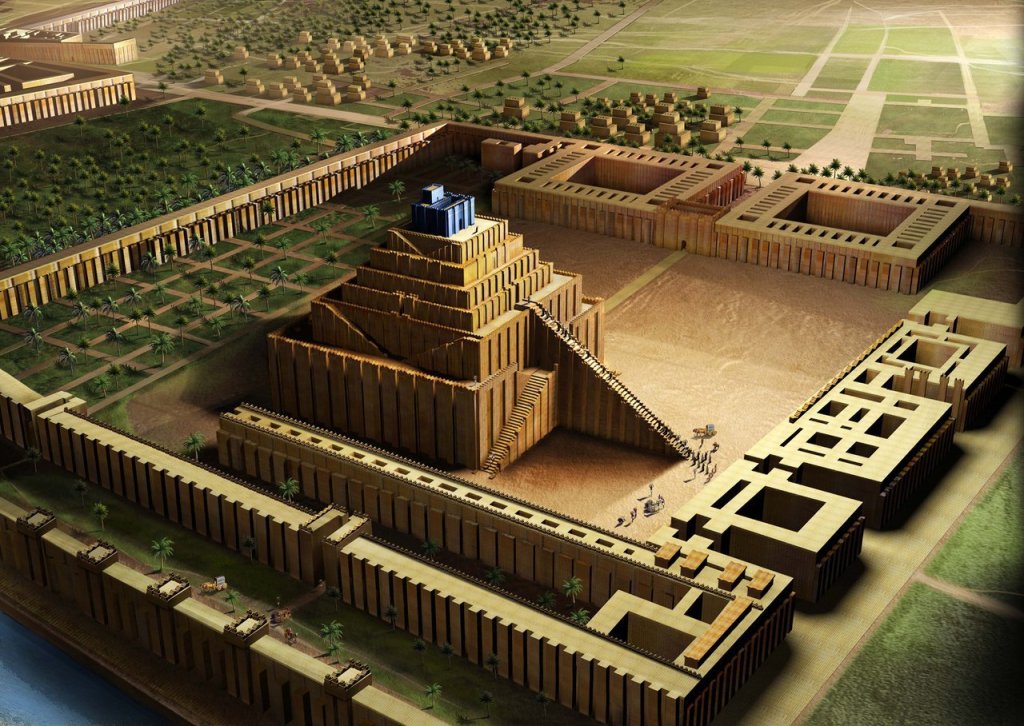
‘There were five terrace like gradations surmounted by a temple, the whole tower being about twice the height of those of other temples. The wide street used for processions led along the eastern side by the inner city walls and crossed at the enormous Ishtar gate with its world-renowned bas-relief tiles. [Nebuchadnezzar] also built many smaller temples throughout the country.
The [last] king [of Dynasty X] was the Aramaean Nabonidus… [556–539 BCE] from Harran, one of the most interesting and enigmatic figures of ancient times. His mother, Addagoppe, was a priestess of the god Sin* in Harran; she came to Babylon and managed to secure responsible offices for her son at court. The god of the moon* rewarded her piety with a long life – she lived to be 103 – and she was buried in Harran with all the honours of a queen in 547 [BCE].
His viceroy in Babylonia was his son Bel-shar-usur, the Belshazzar of the Book of Daniel in the Bible.
Cyrus… [annexed] Media in 550. Nabonidus, in turn, allied himself with Croesus of Lydia in order to fight Cyrus. Yet, when Cyrus attacked Lydia and annexed it in 546, Nabonidus was not able to help Croesus. Cyrus bode his time. In 542 Nabonidus returned to Babylonia, where his son had been able to maintain good order in external matters but had not overcome a growing internal opposition to his father. He appointed his daughter to be high priestess of the god Sin in Ur, thus returning to the Sumerian-Old Babylonian religious tradition.
The priests of Marduk looked to Cyrus, hoping to have better relations with him than with Nabonidus; they promised Cyrus the surrender of Babylon without a fight if he would grant them their privileges in return. In 539 [BCE] Cyrus [I] attacked northern Babylonia with a large army, defeating Nabonidus, and entered the city of Babylon without a battle. The other cities did not offer any resistance either. Nabonidus surrendered, receiving a small territory in eastern Iran. Babylonia’s peaceful submission to Cyrus saved it from the fate of Assyria. It became a territory under the Persian crown but kept its cultural autonomy. Even the racially mixed western part of the Babylonian empire submitted without resistance.’
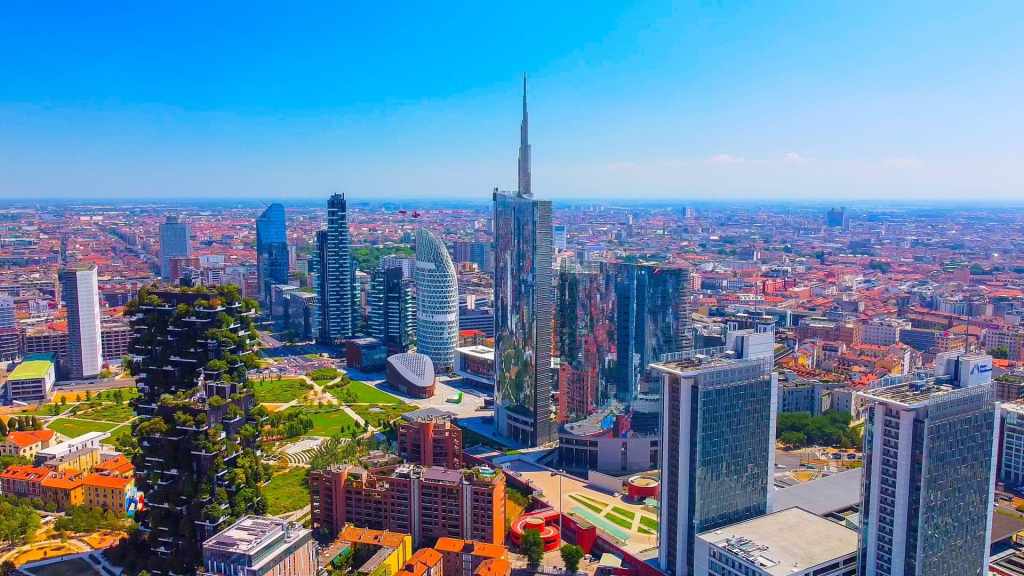
The city of Milan – like Frankfurt, Germany; Paris, France; and London, England – is the banking and financial capital of Italy. Milan houses the Italian stock exchange, the Borsa Italiana and numerous national banks and financial institutions; while playing a significant role in the country’s economy and as a major centre for commerce and industry.
King Nebuchadnezzar was reportedly a very short man, though he overshadowed his height with his personality and achievements.
Nebuchadnezzar II king of Babylonia, Henry W F Saggs – emphasis mine:
‘Nebuchadnezzar II… is known from cuneiform inscriptions, the Bible and later Jewish sources, and classical authors. His name, from the Akkadian Nabu-kudurri-usur, means “O Nabu, watch over my heir.” While his father disclaimed royal descent, Nebuchadnezzar claimed the third-millennium Akkadian ruler Naram-Sin as ancestor. The year of his birth is uncertain, but it is not likely to have been before 630 BCE, for according to tradition Nebuchadnezzar began his military career as a young man, appearing as a military administrator by 610. He is first mentioned by his father as working as a labourer in the restoration of the temple of Marduk, the chief god of the city of Babylon and the national god of Babylonia.
After his father’s death on August 16, 605, Nebuchadnezzar returned to Babylon and ascended the throne within three weeks. This rapid consolidation of his accession and the fact that he could return to Syria shortly afterward reflected his strong grip on the empire. Much influenced by the Assyrian imperial tradition, Nebuchadnezzar consciously pursued a policy of expansion, claiming the grant of universal kingship by Marduk and praying to have “no opponent from horizon to sky.”
Nebuchadnezzar’s main activity, other than as military commander, was the rebuilding of Babylon. He completed and extended fortifications begun by his father, built a great moat and a new outer defense wall, paved the ceremonial Processional Way with limestone, rebuilt and embellished the principal temples, and cut canals. This he did not only for his own glorification but also in honour of the gods. He claimed to be “the one who set in the mouth of the people reverence for the great gods” and disparaged predecessors who had built palaces elsewhere than at Babylon and had only journeyed there for the New Year Feast. Little is known of his family life beyond the tradition that he married a Median princess, whose yearning for her native terrain he sought to ease by creating gardens simulating hills.
Despite the fateful part he played in Judah’s history, Nebuchadnezzar is seen in Jewish tradition in a predominantly favourable light. It was claimed that he gave orders for the protection of Jeremiah, who regarded him as God’s appointed instrument whom it was impiety to disobey, and the prophet Ezekiel expressed a similar view at the attack on Tyre’ – Article: The Ark of God.
‘A corresponding attitude to Nebuchadnezzar, as God’s instrument against wrongdoers, occurs in the Apocrypha in 1 Esdras and, as protector to be prayed for, in Baruch. In Daniel (Old Testament) and in Bel and the Dragon (Apocrypha), Nebuchadnezzar appears as a man, initially deceived by bad advisers, who welcomes the situation in which truth is triumphant and God is vindicated.
In modern times Nebuchadnezzar has been treated as the type of godless conqueror; Napoleon was compared to him. The story of Nebuchadnezzar is the basis of Giuseppe Verdi’s opera Nabucco [the coincidental irony of a modern Italian (Chaldean) writing about an ancient Chaldean (Italian)], while his supposed madness is the theme of William Blake’s picture “Nebuchadnezzar.”

Coat of Arms of Italy, which bears a clear similarity with the Brazilian Coat of Arms
Did King Nebuchadnezzar Really Go Mad and Eat Grass for 7 Years? David Roos, 2020 – emphasis mine:
‘The Babylonian King Nebuchadnezzar II is one of the greatest villains of the Hebrew Bible… In… 2 Kings, Nebuchadnezzar and his army lay siege to Jerusalem, loot gold and other treasures from the temple, abduct the Judean king and his court, and carry off 10,000 officers, artisans and skilled workers into exile in Babylon. Ten years later, Nebuchadnezzar returns and razes Solomon’s temple to the ground. And in another unforgettable story in Daniel, Nebuchadnezzar is punished for his hubris and wanders the wilderness like a beast eating grass for seven years.
The question is: Did any of this really happen? For centuries, historians and biblical scholars have searched for clues about the real-life Nebuchadnezzar II… We know from the archaeological record that Nebuchadnezzar was a master builder, raising Babylon to a grandeur unmatched in the ancient Near East. But was Nebuchadnezzar really the tyrant who sacked Jerusalem and sent the Judeans into exile, and is there any truth to the Bible’s account of his “bestial” bout with madness?’
“Nebuchadnezzar is one of those characters in the Bible for whom we have an enormous amount of data from non-biblical sources,” says Eckart Frahm, a professor of Near Eastern languages and civilizations at Yale University. “There’s just a tremendous amount of material.”
‘Archaeologists have recovered tens of thousands of clay tablets and other inscribed objects from sites across the ancient Babylonian Empire, which stretched from the Mediterranean Sea (modern-day Egypt and Israel) to the Persian Gulf (Iraq, Iran and Kuwait). They were written in cuneiform and include everything from royal proclamations to accounting documents. “Among [these texts] are many, many inscriptions written in Nebuchadnezzar’s own name,” says Frahm, “and obviously in these texts he presents himself not as a villain, but as the ‘great builder.’ He’s very eager to indicate that he built these massive temples and palaces, and that he’s also very pious. He confesses that he’s constantly thinking of the gods when building temples to them.”
Nebuchadnezzar doesn’t write anything about his political or military exploits, but some important details were captured in a remarkable set of clay tablets known as the Babylonian Chronicles.’
Or, it may have been the measure of the man, why Nebuchadnezzar chose to leave these aspects of pride in his life in the background and reflect on those of higher altruistic value. Nebuchadnezzar as recoded in the Book of Daniel had a change of heart after his affliction with madness – Daniel 4:34-37. His self image was humbled to include a relationship with a Creator who had opened his mind to understand and appreciate the matters that carry important consequence.
Roos:
‘In 2 Kings, we learn that the Judean King Jehoiakim refused to pay tribute to Babylon, so Nebuchanezzar invaded Judah to quash the rebellion. The Babylonian Chronicles confirm this, and provide an exact date for the conquest of Jerusalem (597 B.C.E.)’
“There’s no reason to doubt that this really happened,” says Frahm of both the first Babylonian siege in 597 B.C.E. and the second in 587 B.C.E. “On both occasions, many people in Jerusalem were in fact taken into exile, including the royal family.”
‘King Jehoiakim died either before or during the siege, leaving his 18-year-old son Jehoiachin to taste Nebuchadnezzar’s wrath. Along with the young king and his extended royal family, thousands of Jerusalem’s elites – officials, priests, warriors, artisans – were all marched to Babylon. In the early 20th century, archaeologists excavating beneath the ruins of an ancient Babylonian palace found 14 vaulted rooms they first believed to be part of the legendary Hanging Gardens of Babylon, but later figured out were part of a royal storehouse. In that storehouse were more clay tablets, mostly records of the day-to-day affairs of the palace.
And among those tablets was a 3-inch tall fragment containing the name “Jehoiakhin, king of Judah.” The fragment turned out to be part of a “ration list” indicating how much oil and foodstuffs were given to King Jehoiachin and his exiled Judean court in Babylon. “That was a remarkable find,” says Frahm. The ration list specifically mentions Jehoiachin, other Judean dignitaries and Jehoiachin’s five sons. The quantities of the rations were sizable…
So where does this leave the famous story of Nebuchadnezzar losing his marbles and eating grass for seven years? [author allows his prejudice to spill over into derogatory sarcasm] Are there also hints in the historical record?… Nebuchadnezzar has a disturbing dream that none of his court magicians could interpret, so he asks Daniel, a young exiled Judean known as a visionary.
To Daniel, the dream is clear: If Nebuchadnezzar doesn’t repent and praise the one true God, he will be stricken with a madness that will cause him to wander the wilderness like a beast.’
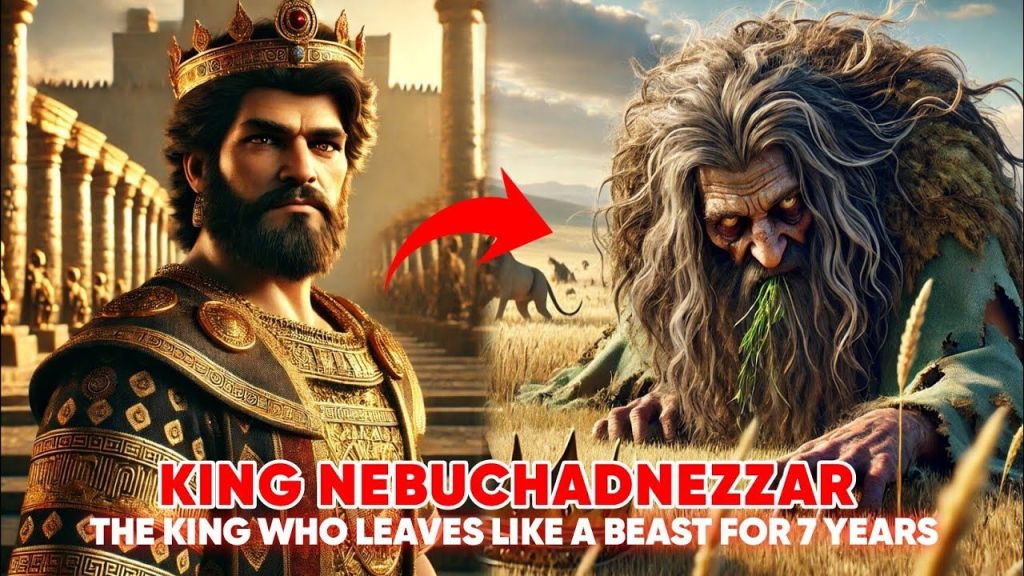
‘Incredibly, there is an independent record of a Babylonian king going mad and wandering in the wilderness for years. But it wasn’t Nebuchadnezzar, says Frahm. In Babylonian texts, the “mad king” was Nabonidus, a king who ruled two decades after Nebuchadnezzar and ended up losing the Babylonian Empire to the Persians.’
The author places too much confidence in the suppositions of Frahm; as well as reading the Babylonian text at face value. Why would an otherwise impressive record of Nebuchadnezzar’s achievements be tarnished with the sensitive episode of a sustained mental breakdown, or the fact he converted to worship the one true God of the tribe of Judah? Easy to pin the story on a later, lesser king, if such is the case?
Roos:
‘According to the records, King Nabonidus replaced the Babylonian gods with a new moon god and then led his troops on a strange campaign into the Arabian Desert to attack some towns, including Yathrib, the later Medina. He then dwelled the next 10 years in the Arabian city of Tayma. “This sojourn of Nabonidus in Arabia for 10 years is clearly the background of the story of Nebuchadnezzar in the wilderness,” says Frahm. There’s even physical proof of the Nabonidus story also being tied to a Hebrew sage.
Four fragments discovered among the Dead Sea Scrolls contained what’s now known as the Prayer of Nabonidus: I was afflicted [with an evil ulcer] for seven years… and an exorcist pardoned my sins. He was a Jew from among the [children of the exile of Judah, and said,] “Recount this in writing to [glorify and exalt] the Name of the [Most High God].”
Frahm says that the “exorcist”in the Nabonidus account is clearly Daniel, and it’s easy to understand why the authors of Daniel would have substituted the “tyrant” Nebuchadnezzar in their retelling. “In this theology, where you have to be punished for the sins you committed, it makes sense that it’s Nebuchadnezzar and not Nabonidus who is said to have had this strange episode,” says Frahm.”
It would seem that this parallel, yet different account is about Nabonidus. An exorcist and ulcer are not part of Nebuchadnezzar’s story. Frahm has made sizeable jumps in assumption which are not necessarily true. Likewise, his very reasons why Nebuchadnezzar is in the biblical account and not Nabonidus, can be swapped as to why Nabinidus is recorded in the Dead Sea Scroll fragments and not Nebuchadnezzar.
Roos:
‘The Hebrew Bible is an incredible document, not only for the faithful, but for historians like Frahm. In books like 2 Kings and Jeremiah, there are accounts of Nebuchadnezzar and later Babylonian kings that have been independently confirmed by ancient cuneiform tablets recovered from Babylonian sites. But then you have the [story] in Daniel about… Nebuchadnezzar’s dreams and being cursed with a seven-year madness, all of which Frahm describes not as history, but literature [can’t have it both ways; either both are fiction or both are historical accounts].
What does the example of Nebuchadnezzar teach us about the historicity of the Bible? That it’s neither entirely factual nor entirely made up, Frahm says. “You have to look at the details,” says Frahm. “When we have these independent sources, as we do for the sixth century B.C.E., you do have a good chance of figuring out what is historically correct and what is later theological interpretation [this line of reasoning is circular, flimsy and biased].”
Roos is keen to discredit the biblical account and promote Frahm’s agenda driven interpretation of the Babylonian texts. A blurring of Nebuchadnezzar’s bout with madness with a similar event concerning Nabonidus or by the lack of it in secular sources would not be hard to understand and has support for at least two reasons.
Firstly, Nebuchadnezzar II was the most prominent and successful ruler of the Chaldean Dynasty X of Babylon. Why besmirch his legacy and renown with an account of madness? It would have been easy perhaps to transfer this episode to a weak king who was the last king of the dynasty and whom allowed the kingdom to slide away irrevocably into the hands of the Medes and Persians.
Secondly, the Bible is clear that Daniel and Nebuchadnezzar had an involved and complex relationship. They have the starring roles in the first four chapters of the Book of Daniel. There is just one chapter devoted to Daniel and Nabonidus and it does not portray as close a relationship. Nor does Nabonidus appear to have any affinity with the Eternal as Nebuchadnezzar before him.
Therefore, as the Babylonian text accounts appear suspiciously inaccurate and do not align with the Bible, they are to be either mistrusted before the Book of Daniel on one hand; or viewed as a separate and distinct story in its own right, unrelated to Nebuchadnezzar.

Italian men

Forwarding some five hundred years or more, Germanic tribes are credited with originating from a homeland in southern Scandinavia – modern day Sweden and Norway – including the Jutland area in northern Denmark and a narrow strip of Baltic coastline. The East Germanic Goths were one of the first of the Germanic tribes to form a recognised kingdom and Jordanes states, according to Dio: ‘the Goths were ever wiser than other barbarians and were nearly like the Greeks.’ This is more than coincidental, in that the eastern Goths are closely related to the people we will study as the Greeks in the next chapter – Chapter XXVI The French & Swiss: Moab, Ammon & Haran.
Those of noble birth amongst the Goths – from whom their kings and priests were appointed – were first known as Tarabostesei. The word ‘tarabostesei’ with its suffixe removed leaves tarabost. The first part, tara can have several meanings, including ‘bull’ or ‘fast.’
Recall the storm god of the Hatti, Taru the bull. The second half, ‘bost’ means ‘hand’ or ‘fist’.
The Goths were constantly attended by a subject tribe, the Heruli who later emerged in Italy as part of the Gothic kingdom of Rome, and to an extent by the Scirii as well. Edward Dawson proposes that there is a distinct possibility that the Goth name emerged as a result of Gaulish (Celtic) influence on a tribal name which derived from Woden (or Wodan). ‘The use of Godan instead of Wodan by the Langobard tribe is [key], given the known tendency of Gaulish to convert a ‘w’ into a ‘gw’ or ‘gu’ sound. It then appears that Wodan [from Odin], Goth, and God are cognates.’
The people of Guti, Goth, or God.
The Ostrogoths (Eastern Goths), dominated a vast swathe of what is now southern Russia and Ukraine by the mid-third century. In the Old English epic poem Widsith, the Ostrogoths are known as the Hreo-Gotum or Victory Goths. They migrated through eastern Europe and southwards through modern day Poland. In 487 CE the Scirian commander of Rome, Odoacer, defeated the Rugli tribe, long time allies of the Ostrogoths. This presented a future threat for Italy, with the Langobards migrating into the Rugli homelands in Lower Austria. Theodoric the Great, led the Ostrogothic invasion of Italy, supported by elements of the Rugli – over throwing Rome and ruling from 493 to 526 CE.

Italian women

The Langobards or Langobardi were the other significant body of people to invade and settle in Italy; who had originated in northwestern Germany from the 1st century CE and later migrated above northern Silesia – now western Poland as part of the Suevi or Suebi confederation of tribes. Recall, the Suevi continued on into the Iberian Peninsula and settled in Portugal – refer Chapter XXIII Aram & Tyre: Spain, Portugal & Brazil.
The Suebi were comprised of principally Hul a son of Aram. It is probable that they, like the Goths had earlier origins in southern Scandinavia and were forced to migrate due to population expansion. They were also known by their original ethnic name, the Winnili – ‘Winn’ Germanic for ‘striving’ or ‘being victorious’, reminiscent of the Victory Goths.
In 415, continuing to wander – recall Terah’s name means, wanderer – from Poland, the Langobards had entered Vurgundaib. This is thought to be the original lands of the Burgundians – who eventually settled in present day Switzerland – located in the northern Carpathians. Their westwards journey by the tail end of the fifth century lead to the area equating with modern Austria. They began to attack the established order in Italy from 568 CE; invading northern Italy and surrounding the ‘island’ dominion in Venice. The Langobards, were now known as Lombards and they filled a void left by the demise of the Ostrogoth kingdom at the hands of Byzantium.
The Lombards occupied territory which had been home to various Celtic tribes since the sixth century BCE, almost unopposed. Their attacks badly affected Rome, cutting it off from the Byzantine empire. Unlike the Ostrogoths, the Lombards did not seek to preserve the ancient Roman methods of governance. Their kingdom in the North and the independent Lombard duchies to the South in central Italy, added a Germanic essence to the peninsula which had begun with the Goth’s arrival.
This highlights the distinction between the northern and north central Italians with the South central and southern Italians; with the Lombards in the North descending from Nahor’s wife Milcah and the Goths from Aram’s son Uz. Whereas, the southern Italians and Sicilians contain a mixture from Nahor’s concubine Reumah and Joktan’s children, such as Uzal, the progenitor of the modern Greeks.
Somewhere in this mix is Terah’s other son, Zoba and his son Aram. Zoba’s descendants, like those from Uz of Aram may be represented by the ancient Mitanni of Mesopotamia – refer Chapter XXIII Aram & Tyre: Spain, Portugal & Brazil.
The biggest city in southern Italy is Naples, with some three million people. The biggest city in central Italy is the capital Rome, with approximately four million people. The biggest city in northern Italy and the fashion capital of the world, Milan – though the French would beg to differ – has three million people. It is the capital of the Lombardy region and has the third largest economy in Europe according to GDP after the cities of London and Paris.
The Three Capitals of Italy, Scuola Leonardo da Vinci, 2021 – emphasis mine:
‘Although Rome has always been at the center of Italian events, it was not the only capital of the country. Italy has had three!
The first Italian capital was Turin [top]: when the Unification of Italy was proclaimed in 1861, Rome did not fall within the national borders. After the Expedition of the Thousand led by Garibaldi, the Veneto, still in the hands of the Austrians, remained outside the Kingdom of Italy and the Papal State, where the intransigent Pope Pius IX had no intention of giving the “eternal city” to the newborn Italian kingdom. Thus Turin, the former capital of the kingdom of Sardinia, was provisionally elected as the administrative center of the new state.
Under pressure from the French Emperor Napoleon III, nephew of Napoleon Bonaparte and a powerful ally of the Pope, on 15 September 1864, an agreement was signed with the Italians which established that the capital was moved from Turin to Florence [centre] and that the expansionist aims on Rome were abandoned.
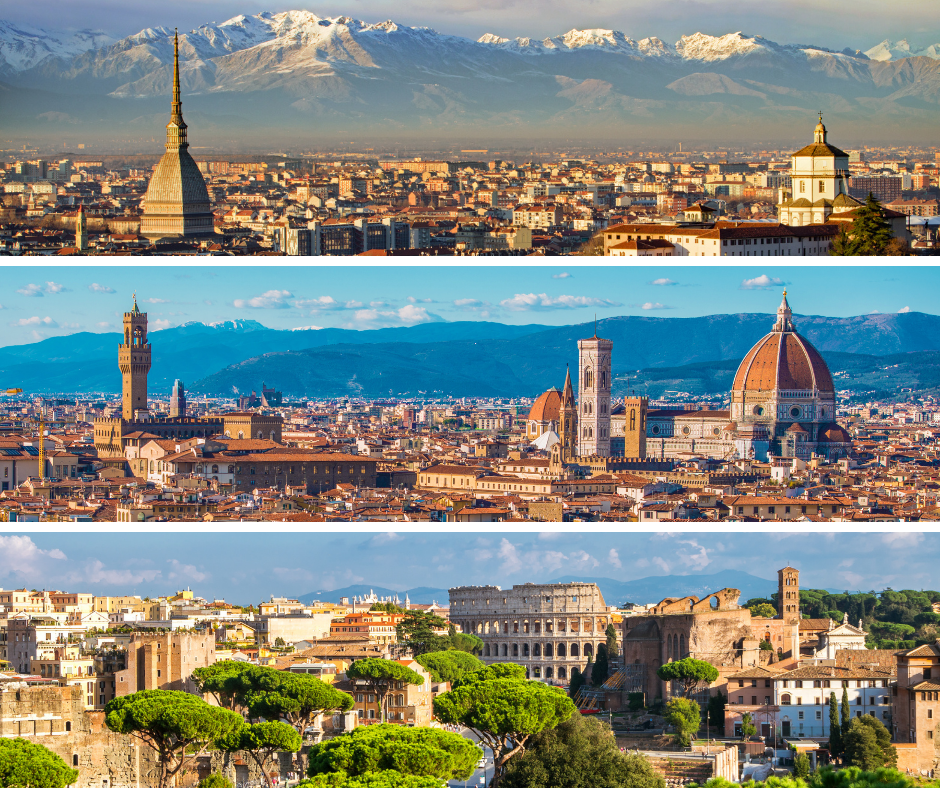
Since Florence should have remained the capital of the very young Italian kingdom, huge public works began immediately to adapt the then small Tuscan city to its new role: most of the old fourteenth-century walls were demolished to make room for avenues and administrative buildings, while the majestic Renaissance palaces became the headquarters of ministries and state offices.
But contrary to what was promised to Napoleon III, Italy organized a military attack against the Papal State and, in 1870, with the famous episode of the Porta Pia breach, conquered Rome [bottom], which from 1871 became the third capital of Italy.
It is curious to note that the city of Rome obtained constitutional recognition of the status of capital only in 2001 with the reform of Title V of the Italian Constitution.’
During 584 to 585, the Lombards invaded the Merovingian Frankish region of Provence. Returning in kind, the Frankish king of Austrasia, Childebert II and Guntramn, king of Burgundy, invaded Lombard Italy, or Lombardy as it came to be known.
They captured Trent and opened negotiations with the eastern Roman emperor with the probable view, of carving up Italy between them. The Lombards, fearing Frankish domination, elected a new king called Authari, to end their disunity after ten years of rule by various Dukes. In 590, Authari was succeeded by Agilulf, the Duke of Turin, who was able to recover most of the portions of land that had been lost to the Frankish-Byzantine alliance. The Lombards, like the Visigioths of Spain were Arians, though they later converted to orthodox christianity in the latter part of the seventh century – refer Chapter XV The Philistines: Latino-Hispano America.
The invasion of papal territories by the Lombard kings Aistulf (749–756) and Desiderius (756–774) compelled Pope Adrian I to seek aid from the Frankish king Charlemagne. The Franks entered Italy in 773 and after a year’s siege Pavia fell to their armies. Desiderius was captured and Charlemagne became king of the Lombards as well as of the Franks. Lombard rule in Italy came to an end in 774. In a momentous and astute act, Pope Leo III crowned Charlemagne head of the Holy Roman Empire on December 25, 800 CE.
The Frankish king Charlemagne conquering Lombardy would be echoed centuries later, when the French Emperor Napoleon also subjugated Italy.
In the 1200s, powerful city-states – indicative of the ancient Chaldeans – began to develop throughout Italy including Florence, Milan, Venice, and Naples. The Renaissance began in Florence, Italy in the 1300s. The Lombards of Florence (or Firenze), are credited with initialising banks and the system of banking. From these Princedoms, famous merchant families arose such as the Medici in Florence, who then formed political dynasties.
Italy is responsible for driving the arts, sciences and exploration forward with massive worldwide impact; a precursor to the age of discovery, later joined by Portugal (1400-1500) and Spain (1500-1600).
Famous influencers, included: Galileo, Michelangelo, Da Vinci, Volta, Dante, Ariosto, Verdi and Vivaldi. Today, Italian artists, writers, designers, musicians, chefs, actors and filmmakers have added immeasurably to global art and culture.
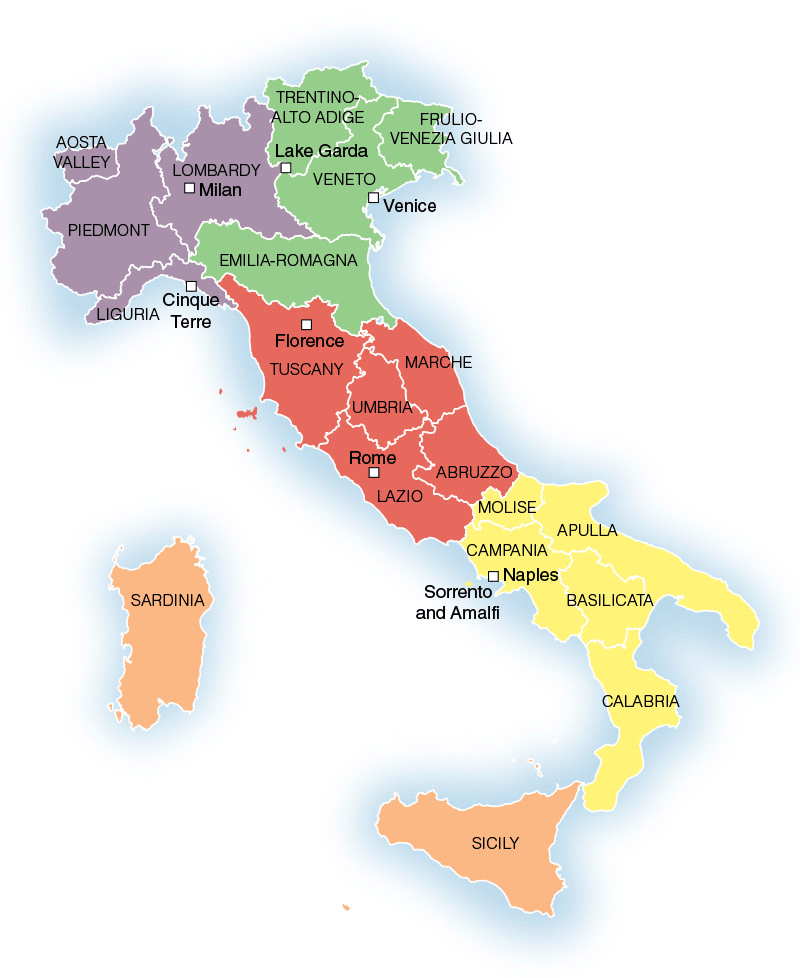
In 1796, Northern Italy was conquered by Napoleon and incorporated into the French Empire. Later in 1805, Napoleon declared Italy a kingdom. Subsequently in 1814, Napoleon was defeated and Italy was divided up into small states. In 1815, the process of reunification began and in 1861, the Kingdom of Italy was established for the second time. Rome and Venice had been separate states, but by 1866, Venice became part of Italy and by 1870, Rome was included in one united kingdom.
The key personalities in achieving unification were General Garibaldi, spear heading the campaign in Naples and Sicily, the Count of Cavour who led the government of the House of Savoy in the Kingdom of Sardinia for the Northern Italian monarchy and Victor Emmanuel II – who became the first king of the united Italy.
Italy remained a monarchy until 1946.

‘From the late 19th century to the early 20th century, Italy rapidly industrialised, mainly in the north, and acquired a colonial empire, while the south remained largely impoverished and excluded from industrialisation, fuelling a large and influential diaspora.’
Many Italians migrated to Brazil – as well as Argentina, Uruguay and the United States.
Italy’s geographic shape resembles a boot. The other boot that completes the pair exists elsewhere – Chapter XXXII Issachar, Zebulun, Asher & Naphtali – the Antipodean Tribes.
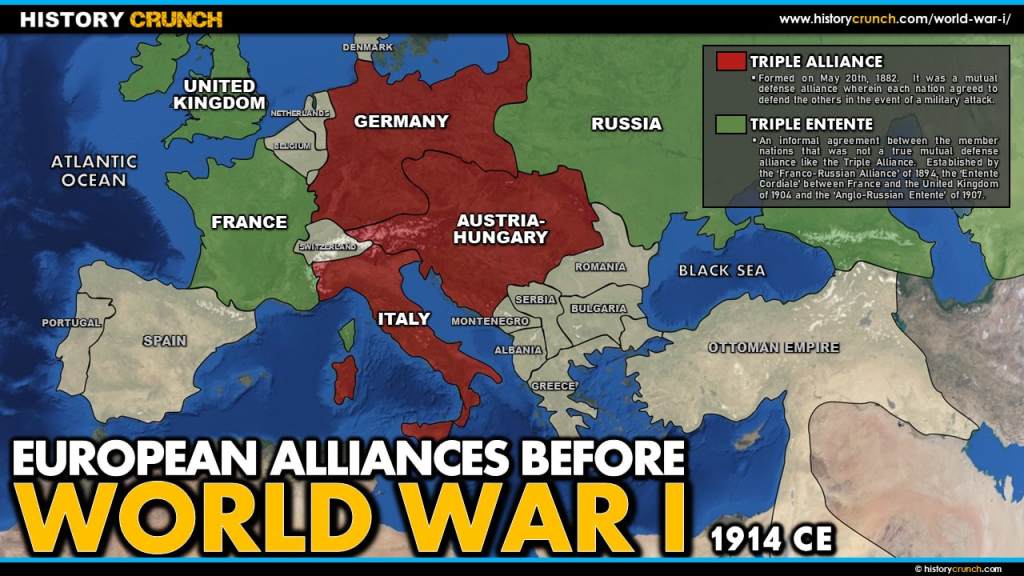
During World War I, Italy fought on the side of the Allies, though under the rule of the fascist leader Benito Mussolini (1922-1943), it waged war against the Allied powers in World War II.
From 1945, Italy has had a multiparty system dominated by two large parties: the Christian Democratic Party and the Italian Communist Party.
In the early 1990s the Italian party system underwent a radical transformation and the political centre collapsed, leaving a right and left polarisation of the party options which threw the north and south divide of Italy into sharper contrast and gave rise to political leaders like media magnate Silvio Berlusconi.
Italy is considered to be one of the world’s most culturally and economically advanced countries, with 59,015,707 people.
It is the third largest economy in the European Union, in the top ten in the world according to national wealth and the third largest with a central bank gold reserve, behind the United States and Germany. Italy has 2,451.8 tonnes of gold which equates to 69.3 percent of its foreign reserves. Italy has maintained the size of its reserves over a long period.
Mario Draghi, a former Bank of Italy and European Central Bank governor, ‘when asked by a reporter in 2013 what role gold plays in a central bank’s portfolio, answered that the metal was “a reserve of safety,” adding, “it gives you a fairly good protection against fluctuations against the dollar.”
Recall that the Chaldeans were represented by the head of gold in Nebuchadnezzar’s dream.
Italy ‘ranks very highly in life expectancy [due to its mediterranean diet], quality of life, healthcare and education. The country plays a prominent role in regional and global economic, military, cultural and diplomatic affairs; it is both a regional power and a great power’ and is ranked the world’s tenth most-powerful military out of 145 countries for 2026.
Italy’s Armed Forces are characterised by modern technology and high readiness, being well-equipped and maintaining a strong naval presence, advanced air capabilities and a professional military structure. Italy plays a crucial role in NATO operations through a strong defence industry, contributing to both national and European security.
Italy has shared repeated ideological cooperation with Germany (and previously German states) over the past one and a half millennia, which has been evidenced through political, religious and military alliances – Chapter XXVIII The True Identity & Origin of Germans & Austrians – Ishmael & Hagar.
This will continue into the future and is set for a great climax at the end of the present age – Article: Is America Babylon?
Another relationship not so obvious, yet delineated in the scriptures is between Italy and Brazil. For as part of future Babylon the Great (with Germany) Italy will cement closer ties with Brazil who is modern Tyre – Chapter XXIII Aram & Tyre: Spain, Portugal & Brazil.
Italian and Brazilian Armies: an Alliance of Strength and Innovation, Alessandro Generotti, 2025:
‘The year 2025 marks… a significant meeting… between Lieutenant General Carmine Masiello [right], Chief of Staff of the Italian Army, and the Commander of the Brazilian Army, Lieutenant General Tomás Miguel Miné Ribeiro Paiva [left], on an official visit to Italy.’
‘This meeting… between two armed forces that, despite belonging to distant countries, share common values and objectives in guaranteeing peace and global security. The cooperation between Italy and Brazil… is not limited to exchanges of information and resources, but also embraces a strategic development concept that aims to ensure that both armies are ready to face the challenges of the future.
The ties between the two armies are based on a long tradition of alliance, rooted in the sacrifice and contribution of Brazilian soldiers during World War II. Joint peacekeeping operations have strengthened the bond between the two nations, and operations under the auspices of the United Nations have witnessed a common commitment to international stability.
‘The sharing of experience, knowledge and technology between the two armies contributes not only to the growth of each army, but also to global security and peace [from] common threats such as terrorism, natural disasters and international crime.’
Encyclopaedia;
‘Italy is a founding and leading member of the European Union… the country has long been a global centre of art, music, literature, philosophy, science, [technology and fashion; greatly influencing and contributing] to diverse fields including cinema, cuisine, sports, jurisprudence, banking and business. As a reflection of its cultural wealth, Italy is home to the world’s largest number of World Heritage sites (55), and is the fifth-most visited country’ in the world.
The Chaldeans were one of, if not the foremost cultured civilisation in the ancient world, just as Italy is today.
Italy is a member of the elite group of G7 nations; comprising the most advanced, developed and biggest economies in the world – excepting the burgeoning economies of the BRICs nations – which encompass a number of nations, though primarily – comprising Brazil, Russia, India and China.
These four as we have learned, represent the most prominent descendants from Japheth, Ham and Shem in the scriptures, in that they represent respectively: Tyre from Aram; Asshur and the Assyrians; Cush (biblically translated Ethiopia); and Magog, Tubal and Meschech.
Japan is the one non-European nation in the seven, though by irony is the most westernised nation of those from the East just as Tarshish was historically – Chapter IX Tarshish & Japan.
Italy is one of the four influential nations from Europe and as we shall discover, is closely related to them all – France, Germany and the United Kingdom – for they are all descended from either Nahor or one of his brothers, Haran and Abraham.
There are numerous theories on the etymology of the name Italia. One is that it was borrowed via Greek from the Oscan Viteliu, ‘land of calves’ which in Latin is vitulus. Nahor’s concubine Reumah’s name, included wild ox as a meaning. The daughters of Laban, a grandson of Nahor, both married Jacob, Abraham’s grandson.
Leah’s name includes the definition of wild cow and her younger sister Rachel, includes ewe, a female sheep in hers.
Flag of the Italian Navy, displaying the coat of arms of Venice, Genoa, Pisa and Amalfi the most prominent maritime republics. The strong shipping tradition is indicative of all the sons of Aram – Spanish and Portuguese.
‘The following export product groups represent the highest dollar value in Italian global shipments during 2024.
- Machinery including computers: US$116 billion
- Pharmaceuticals: $55.5 billion
- Vehicles: $47 billion
- Electrical machinery, equipment: $45.8 billion
- Gems, precious metals: $25.7 billion
- Plastics, plastic articles: $24.3 billion
- Articles of iron or steel: $21.4 billion
- Mineral fuels including oil: $19.4 billion
- Optical, technical, medical apparatus: $17.4 billion
- Clothing, accessories (not knit or crochet): $16.4 billion
Gems and precious metals represent the fastest grower among the top 10 export categories, up by 27.1% from 2023 to 2024. In second place for improving export sales was pharmaceuticals via a 10.4% advance. Italy’s shipments of electrical machinery and equipment posted the third-fastest gain in value, up by 3.4%. The leading decliner among Italy’s top 10 export categories was mineral fuels including oil, pulled down by an -18.4% year-over-year drop.’
Flag of Italy
Allegedly, Napoleon chose the Italian flag in 1796 during the annexation of Piedmont, based on the French Tricolore and substituting blue for green. Though it may have been inspired by the colour of the uniforms of the Milanese City militia; whose members since 1782, had worn a green uniform with red and white gorget patches. Also, red and white were peculiar to the ancient municipal coat of arms of Milan and were common on Lombard military uniforms.
The world’s eighth largest economy according to GDP belongs to Italy, with $2.422 trillion in 2025.
Italy’s economy and level of development vary notably by region, with a more developed, industrial economy in the North contrasted by underdeveloped southern regions. Italy’s third biggest export is automobiles, including several famous marques such as Alfa Romeo, Fiat, Ferrari, Lamborghini and Maserati.
One of Italy’s most famous exports is clothing, which includes world-famous brands such as Versace, Gucci, Giorgio Armani and Prada.

The flag of Venice above and of the Vatican City below

Did you know that Italians have the most diverse DNA in Europe? L’Italo Americano, Giulia Franceschini, 2020 – emphasis & bold mine:
‘We usually say that America is a melting pot of cultures and races, but did you know that, according to genetic research, Italy may be just as varied? The study was carried out by a team of researchers from Rome’s Universita La Sapienza, in collaboration with the universities of Bologna, Cagliari and Pisa, and led by anthropologist Giovanni Destro Bisol in 2014.
Its main findings show that Italian DNA has from 7 to 30 times more differences than those registered between the Portuguese and the Hungarians.
This variety is present everywhere, from North to South and includes also Italy’s islands, Sardinia and Sicily. In other words, Bisol et al.’s research shows that Italians have a higher level of diversity among themselves than populations living at opposite corners of the continent.’
The diagram below is a good example of the difference between those peoples predominantly descended from Ham’s son Mizra in the Middle East (gold) and a certain extent from North Africa (brown) – refer Chapter XIV Mizra: North Africa & Arabia – who fall below the 0.0 x axis; whereas the peoples of Europe descending in the main from Shem’s son Arphaxad are represented above the 0.0 x axis. It also shows the East to west gradient divide studied in the preceding chapter – Chapter XXIV Arphaxad & Joktan: Balts, Slavs & the Balkans.
The red markers show the similarity between Eastern Europeans such as Poles and Ukrainians with southeastern Europeans including Romanians and Greeks, who all descend from Joktan and are positioned less than the 0.0 y axis. The Blue of southern (central) Italy is the interconnection between Eastern and Western Europe (green) showing both the similarity with each half of the continent, yet also its uniqueness. Their markers lie predominantly above the 0.0y axis, as befits the majority of Italian descent from either Peleg (or Aram) rather than from Joktan.

Genetic History of Ethnic Italians, unknown author, 2017:
‘In… recent decades there has been a huge increase in the study of human genetics. Practically it has substituted the banned (after WW2) studies on human races. Now we don’t divide world populations because of their eyes and/or hair color, but because of their so called genetic “haplogroup.”

Ratio of blond or fairer haired people in Italy: with yellow shading, over 20% of the population; and black below 2.4% of the population. Highlighting the difference between the Teutonic (Chaldean) north; the Gothic (Aramaean/Zoba) Centre; and the Grecian (Joktan) south.
Eupedia explains the Y-DNA Haplogroup correlation for blond hair, red hair and blue eyes.
‘Fair hair was another physical trait associated with the Indo-Europeans.
In contrast, the genes for blue eyes were already present among Mesolithic Europeans belonging to Y-haplogroup I [I1, I2a1 and I2a2].
The genes for blond hair are more strongly correlated with the distribution of haplogroup R1a,
but those for red hair have not been found in Europe before the Bronze Age [beginning circa 2500 to 2000 BCE], and appear to have been spread primarily by R1b people.’
United States National Library of Medicine, Is eye color determined by genetics? – emphasis mine:
‘A person’s eye color results from pigmentation of a structure called the iris, which surrounds the small black hole in the center of the eye (the pupil) and helps control how much light can enter the eye. The color of the iris ranges on a continuum from very light blue to dark brown.
Most of the time eye color is categorized as blue, green/hazel, or brown. Brown is the most frequent eye color worldwide.
Lighter eye colors, such as blue and green, are found almost exclusively among people of European ancestry.
Eye color is determined by variations in a person’s genes. Most of the genes associated with eye color are involved in the production, transport, or storage of a pigment called melanin. Eye color is directly related to the amount and quality of melanin in the front layers of the iris. People with brown eyes have a large amount of melanin in the iris, while people with blue eyes have much less of this pigment.
A particular region on chromosome 15 plays a major role in eye color. Within this region, there are two genes located very close together: OCA2 and HERC2. The protein produced from the OCA2 gene, known as the P protein, is involved in the maturation of melanosomes, which are cellular structures that produce and store melanin. The P protein therefore plays a crucial role in the amount and quality of melanin that is present in the iris.
Several common variations (polymorphisms) in the OCA2 gene reduce the amount of functional P protein that is produced. Less P protein means that less melanin is present in the iris, leading to blue eyes instead of brown in people with a polymorphism in this gene.
A region of the nearby HERC2 gene known as intron 86 contains a segment of DNA that controls the activity (expression) of the OCA2 gene, turning it on or off as needed. At least one polymorphism in this area of the HERC2 gene has been shown to reduce the expression of OCA2, which leads to less melanin in the iris and lighter-colored eyes.
Several other genes play smaller roles in determining eye color. Some of these genes are also involved in skin and hair coloring.
Genes with reported roles in eye color include ASIP, IRF4, SLC24A4, SLC24A5, SLC45A2, TPCN2, TYR, and TYRP1. The effects of these genes likely combine with those of OCA2 and HERC2 to produce a continuum of eye colors in different people.’

As with fairer coloured hair, lighter eyes predominate in the northern regions of Italy. In previous chapters, particularly with the descendants of Shem, there have been sometimes irregular patterns in which nations are more closely related with other countries when comparing mitochondrial DNA inherited from mothers, or Y chromosome DNA inherited from fathers.

As Franceschini states, there is wide diversification in Italy from north to south. We will compare the maternal mtDNA from several regions now we recognise the three component parts of Italy: northern, central and southern Italy, including Sicily. Specific regions chosen to reflect these three sections are the highest population areas of Lombardy in the North; Tuscany and Latium (or Lazio) in Central Italy; and Campania and Sicily in the South.
Lombardy: H [38.4%] – K [11.3%] – T2 [9%] – X [6.8%] –
J [5.1%] – U5 [5.1%] – U4 [4%] – HV0+V [3.9%] –
HV [3.4%] – T1 [2.8%] – U1 [1.7%] – U2 [1.1%]
Lombardy has the highest percentages of lesser Haplogroups K and X in Italy; though with regard to the most common mtDNA Haplogroup in Europeans, Lombardy has less than the Italian average for H.
Whereas neighbouring Piedmont has the highest percentage of Haplogroup H with 56.5% and yet the lowest level of HV at 1.2%.
The region of Veneto stands out with the highest percentage of Haplogroup T2 – a relatively young Haplogroup – of 18.8%. In contrast, Liguria has the lowest level of T2 with 4% but has the highest percentage of HV0+V, with 10%.
Friuli-Venezia-Guilia in the far northeast has the second highest levels of Haplogroup H with 54%, yet interestingly, has the lowest levels of a number of Haplogroups, including: HV0+V, 0%; J, 4%; T1, 0%; K, 2%; I, 0% and X, 0%.

Tuscany: H [41.4%] – T2 [8.6%] – K [7.8%] – J [6.4%] –
HV0+V [5.1%] – HV [4.8%] – U5 [4%] – U3 [3.5%] –
T1 [2.7%] – U3 [2.4%] – U4 [2.1%] – X [2.1%] –
U2 [1.9%] – U1 [0.5%]
Latium: H [39.3%] – J [8.4%] – K [7.6%] – U3 [5.3%] –
HV0+V [4.7%] – T2 [4.6%] – U5 [4.2%] – HV [3.2%] –
X [3.1%] – T1 [2.9%] – U2 [1.9%] – U1 [1.6%] –
U [1.2%] – U4 [0.6%]
Both Tuscany and Latium are not far removed from each other or from Lombardy; with mainly average levels of most Haplogroups. In fact on PCA graphs, Northern Italians and Central Italians are similar. Even Corsicans though part of France; have a genetic composition in keeping with Central Italians.
It is as we move southwards that we find observable differences. For Southern Italians are more alike with Greeks… and Sardinians are not comparable with anyone, being as far removed from Southern and Central Italians as say an Iranian.
Campania: H [43.8%] – J [8%] – K [7.4%] – T2 [6.3%] –
U3 [5.2%] – U5 [4.1%] – T1 [4.1%] – HV [2.8%] –
HV0+V [2.8%] – U [2.2%] – U4 [1.9%] –
X [1.7%] – U1 [1.1%] – U2 [0.6%]
Sicily: H [45.2%] – J [6.7%] – K [6.3%] – HV [5%] –
T2 [4.4%] – X [3.7%] – U5 [3.3%] – T1 [2.7%] –
HV0+V [2.3%] – U1 [2%] – U1 [1.7%] –
U4 [1.3%] – U2 [1%] – U3 [0.7%]
Sardinia: H [44.3%] – J [13%] – T2 [10.3%] – U5 [10%] –
K [6%] – HV [4.4%] – HV0+V [3.7%] – T1 [2.9%] –
U [1.4%] – L [0.5%] – X [0.4%]
Both Campania and Sicily, as well as Sardinia exhibit above average percentages of prime Haplogroup H. Campania has the highest levels of T1 and Sardinia lacks a number of the U sub-Haplogroups.
Calabria located in the southern most tip of Italy has the highest level of HV with 10% and also the lowest percentage of Haplogroup H with 28%. Calabria also has the highest percentage of Haplogroup J and Sardinia second with 14% and 13% respectively.
The average percentages as shown across Italy as a whole.
Italy: H [40.2%] – T2 [8.2%] – J [8.1%] – K [7.7%] – U5 [4.6%] –
HV0+V [3.3%] – HV [2.9%] – T1 [3.3%] – U [2.7%] –
U3 [2.1%] – X [2%] – U4 [1.9%] – U2 [1.6%] –
U1 [1.5%] – L [0.8%]
H HV HV0+V J T2 U5 K X
Piedmont 57 1.2 7 7 6 1.2 7 3
Lombardy 38 3 4 5 9 5 11 7
Tuscany 41 5 5 6 9 4 8 2
Latium 39 3 5 8 5 4 8 3
Campania 44 3 3 8 6 4 7 1.7
Calabria 28 10 4 14 10 12 8 2
Sicily 45 5 2 7 4 3 6 4
Sardinia 44 4 4 13 10 10 6 1.3
Italy 40 3 3 8 8 5 8 2
The demarkation between regions is blurred and not overly obvious. There are few clear patterns.
For example, Haplogroup H percentages fluctuate rather than steadily increase or decrease when heading southwards; though T2 levels do decrease overall. Lombardy’s higher levels of Haplogroup K, is invariably associated with Ashkenazi Jews and the Basque in Spain and France.
H J T2 K HV U5 HV0+V
Lombardy 38 5 9 11 3 5 4
Campania 44 8 6 7 3 4 3
Portugal 44 7 6 6 0.1 7 5
Spain 44 7 6 6 0.7 8 8
According to PCA graphs, Portugal and Spain are closer to Lombardy.
Contrastingly, the stronger link in maternal mtDNA is between Campania in the south of Italy and Iberia. The addition of Brazil confirms a maternal similarity amongst these four regions.
H U T J HV0+V HV X
Spain 44 14 9 7 8 0.7 1.7
Portugal 44 13 10 7 5 0.1 2
Brazil 44 16 14 11 2 3
Campania 44 15 10 8 3 3 2
It is now enlightening to add Italy to the mtDNA comparison table of the principle descendants of Shem studied thus far.
H HV HV0+V J T2 U U5 K
Brazil 44 2 11
Portugal 44 0.1 5 7 6 3 7 6
Spain 44 0.7 8 7 6 2 8 6
Poland 44 1 5 8 7 1.4 10 4
Russia 41 2 4 8 7 2 10 4
Greece 41 3 1.8 10 7 3 5 5
Italy 40 3 3 8 8 3 5 8
Ukraine 39 4 4 8 8 0.6 10 5
Romania 37 2 4 11 5 2 7 8
Finland 36 7 6 2 0.8 21 5
Turkey 31 5 0.7 9 4 6 3 6
Iran 17 7 0.6 14 5 12 3 7
A frequency comparison of the principal mtDNA Haplogroups for Italy with the other prominent descendants of Shem studied to this point, shows that Italy with its diverse blood lines, is unlike Turkey or Iran and with its combined genetic input from Nahor, Terah, Aram and Joktan sits quite closely with Greece. Italy in fact sits squarely in the middle of the table and bisects the descendants of Arphaxad in half. From an mtDNA perspective, it is not as close to its Latin cousins.
We have Aram at one end of the spectrum and Lud at the other, with the sons of Joktan interspersed between them and Asshur and now Nahor, relatively in the centre of those nations dominated by Haplogroup H. This highlights how closely related the sons of Shem are and particularly those from Arphaxad. Note the similarity between Portugal and Spain; Russia and Ukraine; and Greece and Italy.
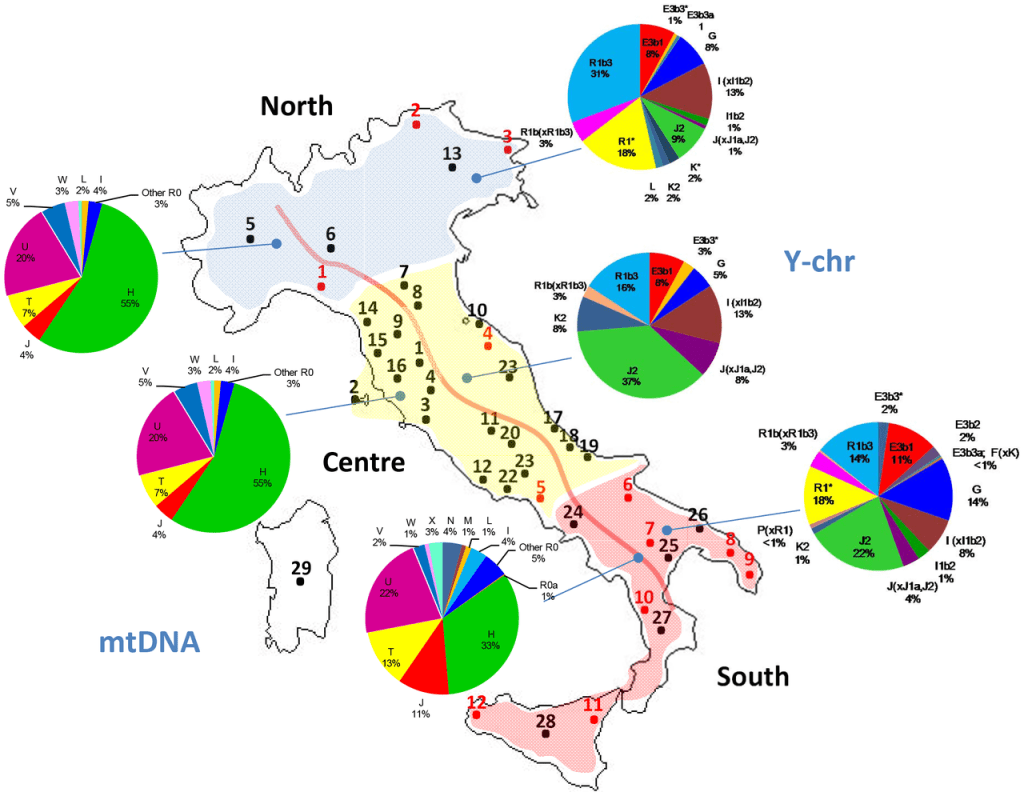
The Haplogroup map above emphatically shows on the maternal mtDNA side how closely related north and central Italy are; yet their paternal Y-DNA (classifications now out of date) rightly reveals a considerable difference. In other words, their original fathers were from different families, yet their mothers are near identical.
This would mean that Aram’s son Uz must have married a relative of Milcah and Sarah, the daughters of Haran. On the other hand, southern Italy has a markedly different maternal lineage, as well as a unique paternal line of descent. Therefore, their original progenitors were not related to Uz, Nahor or either of their wives.
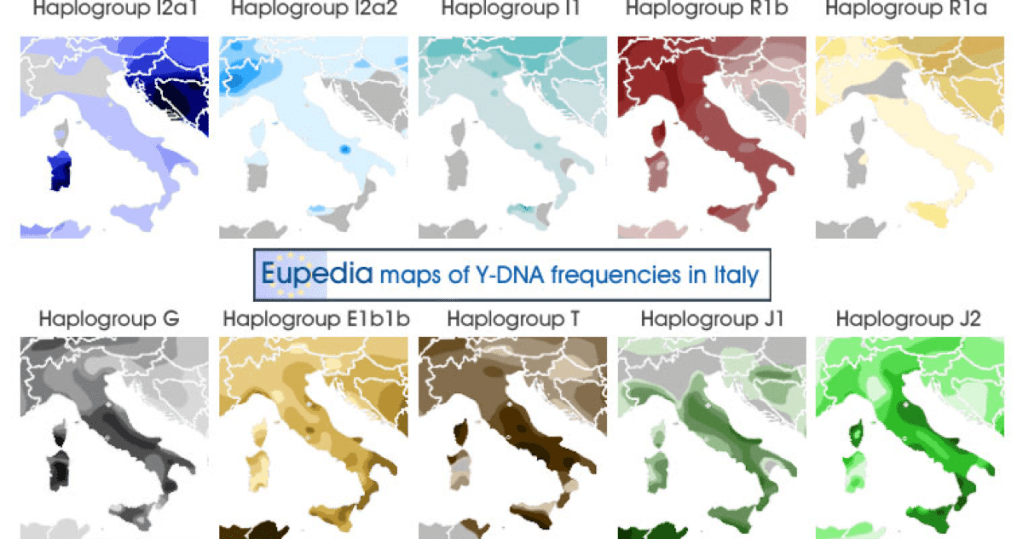
The Fifty-Three Known Forefathers of the Italian People: Latest Discoveries from Genetics, Michael Curtotti, 2018 – emphasis & bold mine:
‘If we go back far enough (thousands of years) we find (along the patrilineal line) that virtually all Italians are descended from only fifty-three men.
A third kind of DNA “autosomal DNA” [First two: Y-DNA (paternal) and mt-DNA (maternal)] (found on all the chromosomes except the sex chromosome) is also used to find relatives and estimate ethnicity (although the latter process is controversial).
R1b, the highest proportion across Italy and one of the 53 forefathers we can now identify is “R1b-U152” [(S28) is most frequent in northern and central Italy, France and Switzerland]… and is the patrilineal ancestor of over 22% of Italians.
The highest representation of R1b-U152 occurs in Bergamo plains (53%) and Bergamo Valleys (46%) and Tortona (35%).
The next of our fifty-three forefathers is R1b-S116 [P312] who is the patrilineal ancestor of 8% of Italians. R1b-S116 is found most frequently in Spain [and Portugal].
R1b-U106 [S21, M405], who comes in at 3.8% is a forefather of proto-Germanic speakers [Germany, Low Countries, Scandinavia and the United Kingdom].
He lived 4700 years ago and his branch expanded from northern Europe around 1700-500 BCE. Some of his descendants will have arrived in Italy during the Gothic and Lombard periods.
R1b-L23 dates to 6100 years before the present and represents 3.5% of Italian paternal ancestry [Southern Italy, Greece, the Caucasus]. The branch is most strongly represented in Anatolia [Asia Minor, modern Turkey] and may be associated with the ancient Hittites [the Hatti]…’

In connection with sub-Haplogroup R1b-U106, this – in the form of its prototype mutations – would have been passed along Arphaxad’s line via Peleg and though present in Italy’s male descendants, is actually the dominant R1b in the Germanic related peoples of western Europe. R-U106 perhaps appearing nearly 4,000 years ago when Nahor and his two brothers (particularly Abraham) were born. The approximate date given of 4,700 years ago by scientists is then seemingly quite accurate.
The R1b-L23 date of 6100 BCE is also interesting in that this goes back to Peleg, the ancestor, of Nahor and his descendants, the Chaldeans; when the divisional Haplogroup split, between R1b and R1a in Arphaxad’s line likely occurred, at the very latest. Thus the dates for U106 and L23 may need to be called into question and a more recent (revised) mutation for each is probable.
It is actually R1b-U152 which is the defining marker Haplogroup for men descended from Nahor.
R1b-S116 (DF27) is the marker paternal Haplogroup for those men descended from Aram’s son Uz.
Haplogroup R1b-L23 (Z2103) is the Haplogroup through admixture associated with males descended from Joktan’s son Uzal.
Terah’s son Zoba is a guess and could be either of the R1b sub-clades U152, L23 or even U106.
The author, inadvertently says ancient Hittites, this doesn’t mean the later Hittites, but the earlier Hatti (or Chatti), who are none other than the Chaldeans, descended primarily from Nahor – the modern day Italians.
Eupedia, Maciamo Hay, 2013 & 2017 – emphasis & bold mine:
‘According to the founding myth of Rome, Romulus and Remus descended from the Latin kings of Alba Longa, themselves descended from Trojan prince Aeneas, who fled to the Latium after the destruction of Troy by the Greeks. Troy may well have been founded by the early M269 and/or L23 branches of R1b… If there is any truth in the myth (as there usually is), the Trojans might have brought M269 or L23 (probably with other haplogroups, notably J2) to central Italy circa 1200 BCE, around the same time as U152 invaded from the north.
The Etruscans, who are thought to have originated in western Anatolia, not far from Troy, might also have brought R1b-L23 to Italy, also blended with other haplogroups. Nowadays R1b-L23 [in the south] is the second most common subclade of R1b in Italy, although well behind R1b-U152 [in northern and central Italy]. By comparing Sardinian… DNA, it can be estimated that the Sardinians have inherited between 16% and 24% of their Y-DNA from the Phoenicians.’
Investigation will show that with regard to the Trojans, M269 is an accurate assessment and L23 is not. The same can be said of the Etruscans. The more specific R1b sub-Haplogroups for both are actually M269 and U106. With regard to the Phoenicians, Hay is more accurate if he meant R1b-S116.
Eupedia:
‘In 475, various East Germanic tribes (Herulians, Rugians, and Scirians) were refused federated status by [the] Roman emperor. Under the leadership of Odoacer, a former secretary of Attila, they deposed the last emperor and created the first Kingdom of Italy (476-493), bringing to an end the Western Roman Empire.
The kingdom was taken over by the Ostrogoths, who ruled the whole of Italy except Sardinia until 553. The Ostrogoths’s capital was Ravenna. They were succeeded by the Lombards (568-774), who had to contend for the political control of Italy with the Byzantines. Like the Ostrogoths, the Lombards had invaded Italy from Pannonia and settled more densely in north-east Italy and in Lombardy, which was named after them. The Lombard capital was in Pavia, Lombardy. They set up many duchies, notably those of Friuli (based in Cividale), Trento, Tuscany (based in Lucca), Spoleto, Benevento, as well as in the major cities of Lombardy and Venetia.
In the 5th century the Goths would have become such a melting pot that their original Germanic Y-DNA might have only represented a small percentage of their lineages. This explains why there is apparently so little Germanic Y-DNA in south-western France and Spain (location of the former Visigothic kingdom) compared to other regions conquered by Germanic tribes in Western Europe, including Italy.
In contrast with the Goths and the Vandals, the Lombards left Scandinavia and descended due south through Germany, Austria and Slovenia, only leaving Germanic territory a few decades before reaching Italy.
The Lombards would have consequently remained a predominantly Germanic tribe by the time they invaded Italy.’
Hay has drawn correct conclusions though possibly via incorrect summations. The reason there is ‘little’ Germanic DNA in Spain is because they are different peoples from the Germanic Germans.
Northern Italians are labelled ‘Germanic’ yet they are in part kindred peoples with the Spanish and Portuguese – refer Chapter XXIII Aram & Tyre: Spain, Portugal & Brazil.
The migratory route of the Lombards had little to do with their Germanic-ness.
The Vandals and Alans were not Germanic and the Visigoths and Suevi – the Spanish and Portuguese today – were not purely Germanic. The Visigoths and Suevi were relatively Germanic, when compared with the Vandals, Alans and Moors, who were a blend of Aram and descendants from Ham, via Mizra’s sons Casluh and Caphtor – refer Chapter XV The Philistines: Latino-Hispano America.
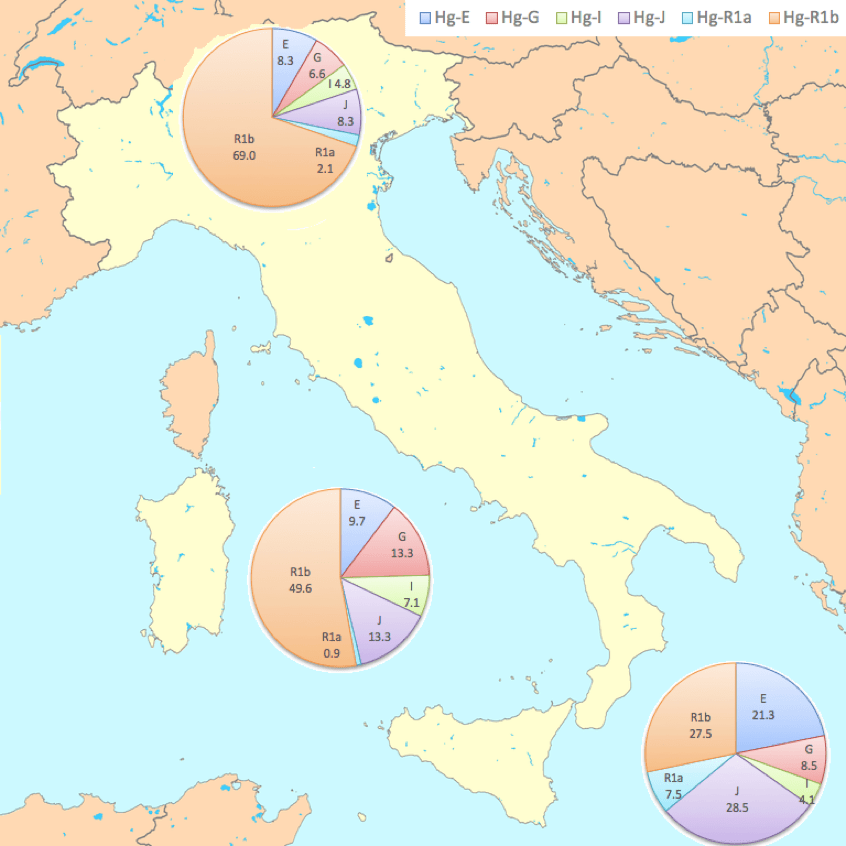
Note the decrease of R1b heading southwards and the increase through admixture of the Hamitic J, either from inhabitants from southeastern Europe or the Middle East. Like wise the Canaanite E1b1b Haplogroup also increases as a result of intermixing from the same regions as well as North Africa. The old Shem Haplogroup G and the intermediate Haplogroup I generally increase towards the South. As does R1a from intermarriage with principally eastern Europeans descended from Joktan.
The Y-DNA percentages below for the higher population regions of Italy, plus Sardinia; followed by a comparison with the nations of Shem studied to date, reveal the following.
Lombardy: R1b [59%] – G2a [10%] – E1b1b [10%] – J2 [6%] –
I2a2 [5%] – R1a [4%] – I1 [2.5%] – I2a1 [1%] – T1a [1%]
Tuscany: R1b [52.5%] – J2 [11.5%] – G2a [9%] – E1b1b [9%] –
I1 [4%] – R1a [4%] – I2a2 [2.5%] – J1 [2%] – T1a [2%] –
I2a1 [1.5%] – L [0.5%]
Latium: R1b [29%] – J2 [18.5%] – E1b1b [16.5%] – G2a [11%] –
I1 [8.5%] – T1a [4.5%] -I2a2 [3%] – R1a [2%] – J1 [2%] –
Q [2%] – I2a1 [1%]
Campania: R1b [29%] – J2 [18%] – E1b1b [16%] – G2a [11%] –
J1 [6%] – I2a1 [4%] – T1a [4%] – R1a [3%] – I1 [3%] –
I2a2 [1.5%]
Sicily: R1b [26%] – J2 [23%] – E1b1b [20.5%] – G2a [8.5%] –
R1a [4.5%] – T1a [4%] – J1 [ 3.5%] – I1 [3.5%] –
I2a1 [3%] – I2a2 [1%] – Q [1%]
Sardinia: I2a1 [37.5%] – R1b [18.5%] – G2a [12%] –
E1b1b [9.5%] – J2 [9%] – J1 [4%] – I2a2 [2%] –
T1a [1.5%] – R1a [1%] – L [0.5%]
With the exception of Sardinia, the four predominant Italian Y-DNA Haplogroups overall, include R1b, J2, E1b1b and G2a. This grouping is similar with Spain, Portugal and Brazil. Haplogroup R1b is indicative of western Europe, J2 of West and South West Asia, E1b1b of North Africa and G2a of the Caucasus region. It is important to remember that E1b1b and J2 are paternal lines of descent from Canaan and Ham respectively and are the result of admixture from intermixing and intermarriage.
Haplogroup G on the other hand is an ancient lineage descending from Shem and it is very interesting that it has a consistently strong presence in Italian males from the South running all the way up the peninsula to the North.
Again, it is Haplogroup R1b which is the defining marker Haplogroup for Italian men descended from either Nahor or Aram.
What is also worth noting is the almost lack of Haplogroups I2 and I1 in Italy overall, with Sardinia being the exception and showing its parallel ties with the Balkans – Chapter XXIV Arphaxad & Joktan: Balts, Slavs & the Balkans.
Lombardy has the highest average for R1b, though the highest level has been recorded in Tuscany with 76.2%. Sardinia has the lowest level of R1b, followed by Sicily.
Lombardy has the lowest percentage for J2, while Calabria in the very south possesses an average of 29%.
The highest percentage for E1b1b is found in Sicily; while Piedmont and Trentino-South Tyrol have the lowest with 6%.
The highest level by far of I2a1 is Sardinia and is similar to certain countries in the Balkans. The highest percentages for I1 are found in Friuli-Venezia-Giuliai with 21% and also R1a with 13%; while Sardinia has the lowest I1 and Umbria and Molise each share the lowest R1a with 0%.
R1b J2 E1b1b G2a I1 I2a1 I2a2 R1a J1
Lombardy 59 6 10 10 3 1 5 4
Tuscany 53 12 9 9 4 2 3 4 2
Latium 29 19 17 11 9 1 3 2 2
Campania 29 18 16 11 3 4 2 3 6
Sicily 26 23 21 9 4 3 5 4
Sardinia 19 9 10 12 38 2 1 4
There are a number of salient points highlighted in the Table. It is strikingly clear as confirmed by PCA data that the paternal ancestry for Sardinia is unlike the rest of Italy. Tuscany is counted with Central Italy, though from a paternal Haplogroup perspective, it has much in common with Lombardy in the North.
Haplogroup R1b indicative of western Europe, decreases from north to central Italy markedly, with Latium – which includes Rome – being closer with southern Italy. It also supports the evidence that R1b generally decreases as one heads in a south eastern direction in Europe.
In contrast, Haplogroups J2 and E1b1b increase. The J2 increase is understandable as it is rarer in northern Europe. Though even the Spanish and Portuguese do not have as high a percentage of J2. One has to look to Greece, Turkey and Iran for similarly high levels. Haplogroup J2 is reflective of admixture in southern European and southeastern European males, as in the near east and West Asia with a source likely in South West Asian males – Chapter XIII India & Pakistan: Cush & Phut.
Haplogroup J2 is related to the Hamitic J1 carried by the majority of Arab men.
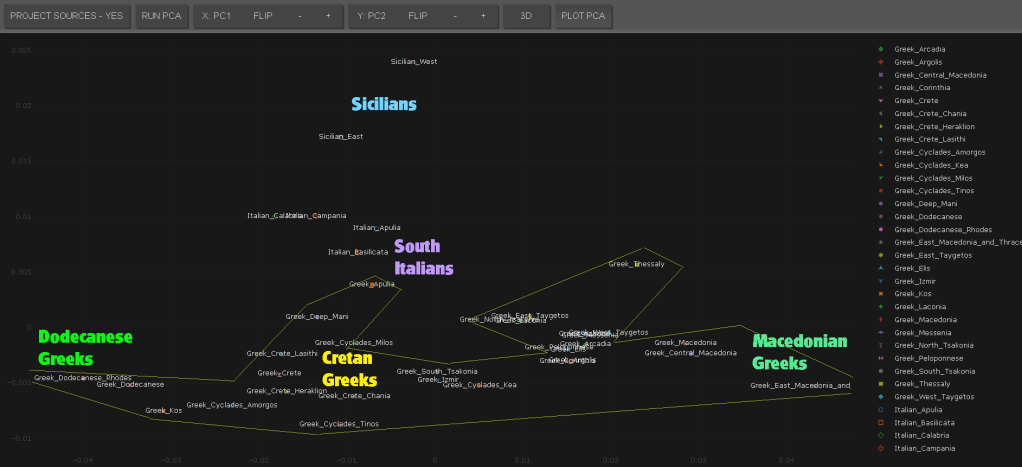
Haplogroup E1b1b percentages – a Canaanite paternal Haplogroup – are different, in that even Turkey and Iran do not compare with Sicily. It is only Greece which matches southern Italy. This should not be a surprise as remember, all these nations descend from Shem and as with cousins, some similarities are shared with certain cousins and other likenesses with different relatives.
It bears out that those nations with these higher levels have
a. been drawn to dwell further south in warmer climes and latitudes; and
b. due to their location, they therefore show higher levels of admixture with men principally descended from Canaan and Mizra in North Africa and the Middle East.
The approximate breakdown for E1b1b in Italy is E1b1b1a, 10%; E1b1b1c, 3%; and E1b1b1b, 1 %.

Combining the regions into the three main areas as well as a total average for Italy produces the following results.
Italy North: R1b [49.5%] – E1b1b [11%] – J2 [10%] – G2a [7.5%] –
I1 [7%] – R1a [4.5%] – I2a2 [3.5%] – T1a [2%] – J1 [1.5%] –
I2a1 [1%]
Italy Central: R1b [36%] – J2 [23%] – E1b1b [11.5%] – G2a [11%] –
J1 [5%] – R1a [3%] – T1a [3%] – I1 [2.5%] – I2a1 [2%] –
I2a2 [1.5%]
Italy South: R1b [27.5%] – J2 [21.5%] – E1b1b [18.5%] – G2a [10.5%] –
J1 [4%] – I2a1 [3.5%] – R1a [3%] – I1 [2.5] – T1a [2.5%] –
I2a2 [1%]
Italy: R1b [39%] – J2 [15.5%] – E1b1b [13.5%] – G2a [9%] –
I1 [4.5%] – R1a [4%] – I2a1 [3%] – J1 [3%] – I2a2 [2.5%] –
T1a [2.5%]
Aside from the R1b sub-Haplogroups mentioned of U152, U106, L23 and S116, others include: L21 (M529) found in the Celtic arc of Europe and M167 found in northern Spain.
R1b J2 E1b1b G2a I1 I2a1 I2a2 R1a J1
Italy North 50 10 11 8 7 1 4 5 2
Italy Central 36 23 12 11 3 2 2 3 5
Italy South 28 22 19 11 3 4 1 3 4
Italy 39 16 14 9 5 3 3 4 3
Italy subdivided into its three key parts, highlights a little clearer the Haplogroup level changes. Italy as a whole and averaged out reflects central Italy in both R1b and E1b1b levels. There is a clear three way split, which can be explained by three separate paternal lineages that have intertwined, yet remain distinct.
The fathers being Uz from Aram and a wife probably related to Terah’s family;
Nahor from Arphaxad and Peleg and his wife Milcah from Haran;
as well as his concubine Reumah, possibly descended from Joktan.

Added to this mix and not to be discounted is a mysterious father, such as Aram from Zoba (via Terah) and again a wife possibly from Joktan’s family. Perhaps revealed in the undefined grey areas above.
In total, three original progenitors with Nahor providing two of the eventual four lines. Central Italians show evidence of similar admixture in that J2 Haplogroup levels are akin to southern Italy, yet their E1b1b levels are different, being closer to northern Italy. Plus, the R1b percentage is marginally closer to southern Italians which also highlights increased intermixing as opposed to northern Italian men.

Haplogroup R-M269 is the sub-clade of human Y-chromosome Haplogroup R1b that is defined by the SNP marker M269. According to ISOGG 2020 it is phylogenetically classified as R1b1a1b (now R1b1a1a2). R-M269 is the most common paternal European Haplogroup in the genetic composition of mainly Western Europe; increasing in frequency from an east to west gradient. For instance in Poland, it is found in 22.7% of the male population, compared with Wales at 92.3%. It is carried by over 110 million European men.
Scientists propose that the age of the M269 mutation is somewhere between 4,000 to 10,000 years ago. This time frame is plausible and neatly fits with the birth of Peleg and hence the beginning of the R1b mutation, circa 7727 BCE, according to an unconventional chronology. The most recently significant R1b mutations originated with Abraham and his descendants beginning in 1977 BCE.
The sub-Haplogroup of R1b, U106 (or S21), is frequent in central to western Europe, reaching 66.8% in Germany;
while the sub-lineage R-S116 is the most frequent in the Iberian Peninsula.
R-U152 is more frequent in France and Italy;
R-U198 (and U106) in England; and
R-M529 in the Celtic nations of the United Kingdom and the Republic of Ireland.
As we progress through the descendants of Shem, we will find the levels of R1b vary, though gradually increase. We will keep a record of the levels for the two main R1b sub-Haplogroups for some of the nations we will study. R-M269 stretches across Europe, with levels increasing as one heads westwards. R-U106 covers western Europe eastwards with its epicentre in Central Europe.
Turkey: R-M269 14% – R-U106 0.4%
Russia: R-M269 21% – R-U106 5.4%
Slovenia R-M269 17% – R-U106 4%
Czech R-M269 28% – R-U106 14%
Poland R-M269 23% – R-U106 8%
Ukraine R-M269 25% – R-U106 9%
Italy R-M269 53% – R-U106 6%
Italy’s dominant male Haplogroup is R1b and we can see the marked difference comparing with nations from Eastern Europe and beyond. It is worth mentioning that the north to south axis is as important as the east to west and so this explains why for instance Poland has slightly higher percentages of both clades of R1b than Russia as it is further west.
Comparably, the Czech Republic displays a higher level of R-U106 than Italy which is further south; yet less R-M269 overall as it is the descendants of Peleg and Aram which have the highest levels of R1b – Chapters XV The Philistines: Latino-Hispano America; and Chapter XXIII Aram & Tyre: Spain, Portugal & Brazil.

Our Y-DNA comparison table from the previous chapters, now sees the addition of Italy – the first major descendant from Peleg’s line, Nahor.
J J1 J2 E1b1b G R1a R1b R1
Georgia 43 16 27 2 30 9 10 19
Armenia 33 11 22 6 12 5 30 35
Turkey 33 9 24 11 11 8 16 24
Iran 32 9 23 7 10 16 10 26
Greece 26 3 23 21 6 12 16 28
Italy 19 3 16 14 9 4 39 43
Romania 15 1 14 14 3 18 16 34
Portugal 13 3 10 14 7 1.5 56 58
Brazil 10 10 11 5 4 54 58
Spain 10 1.5 8 7 3 2 69 71
Ukraine 5 0.5 4.5 7 3 44 8 52
Poland 3 3 4 2 58 13 71
Russia 3 3 3 1 46 6 52
Finland 0.5 5 4 9
Georgia continues as one bookend with the highest Haplogroup J2, J1 and G2a percentages. Finland is the opposite bookend, with no Haplogroup J and the lowest R1 levels. Poland exhibits the highest percentage of R1a while Greece has the most E1b1b.
Spain’s total R1 is equalled by Poland, though in opposite percentages for R1a and R1b. Italy slots in towards the middle of the table with relatively average figures for all their main Haplogroups. This mirrors Italy’s geographic position in bisecting western and eastern Europe represented by the descendants of Peleg and Joktan.
Focussing on the key Y-DNA Haplogroups associated with the majority of the European nations, Haplogroups R1a, R1b, I1 and I2 segment Europe roughly into quarters.
Haplogroup R1b is dominant in the West; R1a in the East; I1 and I2a2 in the North and west; with I2a1 in the South and east.
Added to this, is N1c1 from admixture with Japheth, prevalent in northern Europe and in counter balance to Haplogroups J2 and J1 derived from Ham, which are more common in southern Europe.
R1a R1b I1 I2a1 I2a2 N1c
Portugal 1.5 56 2 1.5 5
Spain 2 69 1.5 5 1
Brazil 4 54 [9]
Italy 4 39 5 3 3
Finland 5 4 28 0.5 62
Turkey 8 16 1 4 0.5 4
Greece 12 16 4 10 1.5
Iran 16 10 0.5 1
Romania 18 16 4 28 3 2
Ukraine 44 8 5 21 0.5 6
Russia 46 6 5 11 23
Poland 58 13 9 6 2 4
The comparison table shifts in emphasis (with the exception of N1c from admixture with Japheth) when northern European Y-DNA Haplogroups from Shem, comprising the intermediate, yet relatively old Haplogroups of I1 and I2a2 are included.
Italy has more in common with the other Aramaean nations of south western Europe, which is not a surprise. It sits towards the top of the table due to its low levels of R1a and higher percentage of R1b. Being a southern and western European nation, Italy does not exhibit more than low percentages for Haplogroups I1 and I2. Italy has little in common with those nations further north and east such as Poland, Ukraine and Russia. Though as mentioned, Southern Italy has marked autosomal DNA commonality with Greece.
The defining Y-DNA Haplogroups:
In Iran the dominant paternal Haplogroups are J2 and R1a-Z93; for
Turkey they comprise J2 and R1b-Z2103; whereas in
Russia they include R1a–Z282 and N1c1; for
Brazil, Portugal and Spain, it is R1b-DF27; the
Baltic, Slavic, Balkan nations are R1a-Z283, I2a1 and I1; additionally
Italy is R1b-U152 and J2.
Italy is a Latin country and like Spain, it has a Gothic core. While Gothic may be considered broadly Germanic it is not an accurate label. Spain has experienced multiple influences, yet a Visigoth demographic dominance, means it is a Latin nation. Unlike Spain, Italy includes a Germanic – in a more Teuton sense – ethnic element in its north and a Balkan, Grecian composition in its south.
While Spain is wholly Latin, Italy becomes more latinised as one heads southwards.
Italy during its multi-layered past received Greek, Roman and Celtic influences amongst others, yet even so, it is today a Latin nation dominated by its Ostrogoth centre. For Latin nations encompass a similar culture, a related romance language, the same religion and to some degree, shared ethnicity.
In fact, Italy’s composition is closer to France – the nation forming the centre of our focus in the following chapter.
Italy is a complex yet subtle blend from Germanic to Latin and sits between Spain and the French. For France has a more pronounced Latinised south and Germanic north. Still, both France and Italy, straddle the two world’s; while linguistically, it is Italy and Spain which are more closely related.
Incline your ear, and hear the words of the wise, and apply your heart to… knowledge…
Proverbs 22:17 English Standard Version
“Majorities are generally wrong, if only in their reasons for being right.”
George Saintsbury
© Orion Gold 2021 – All rights reserved. Permission to copy, use or distribute, if acknowledgement of the original authorship is attributed to orion-gold.com
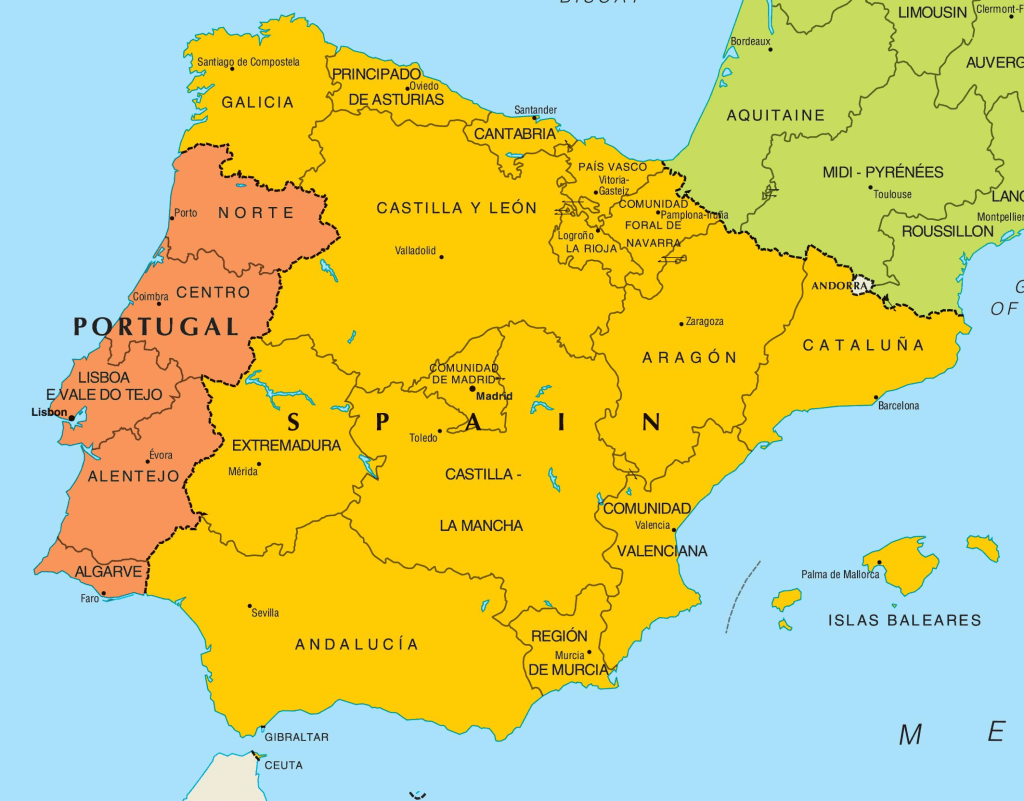


















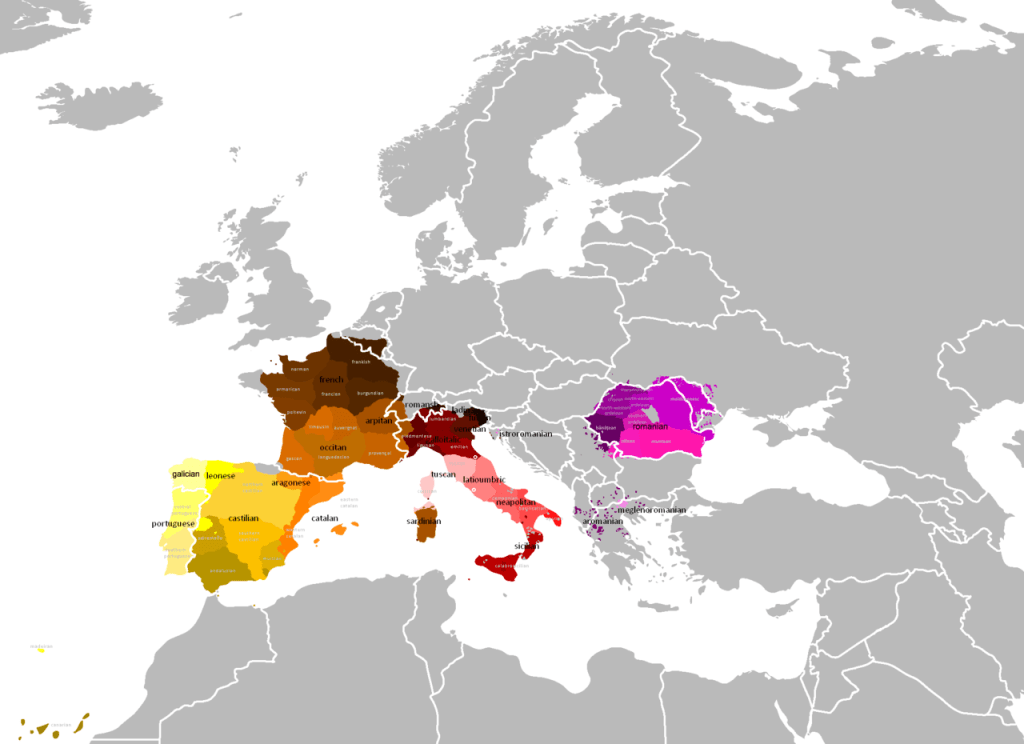
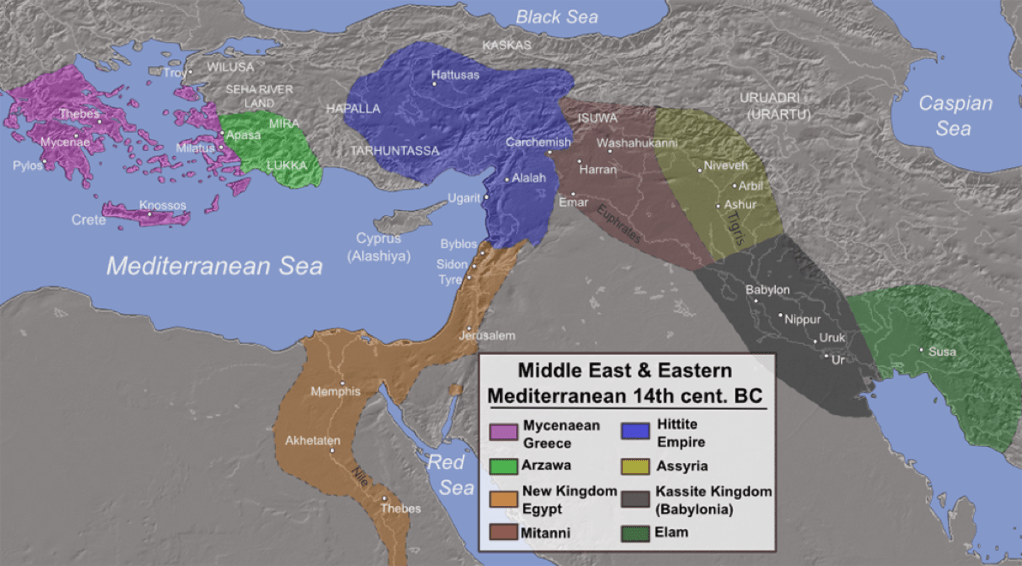
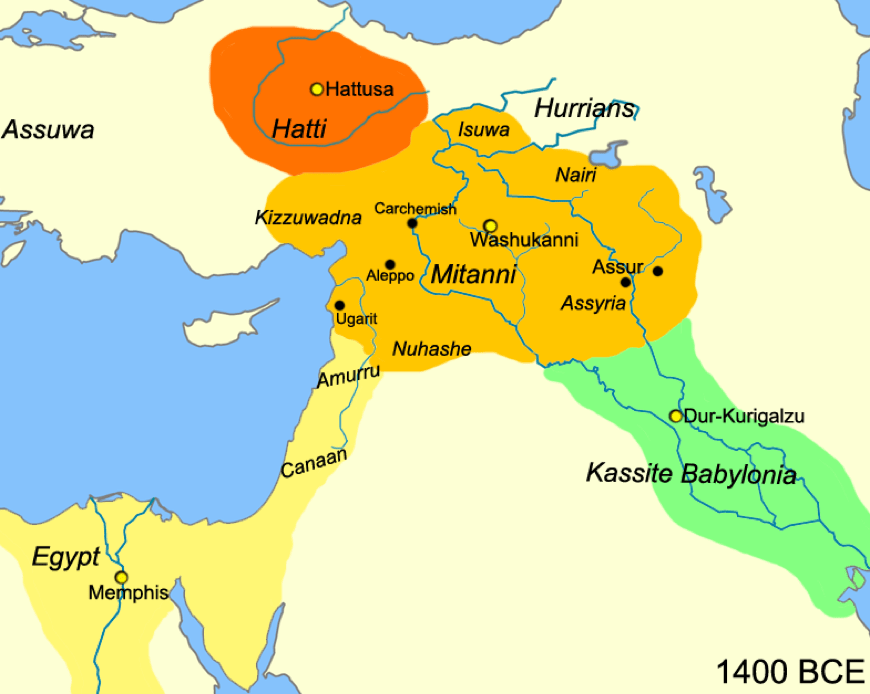













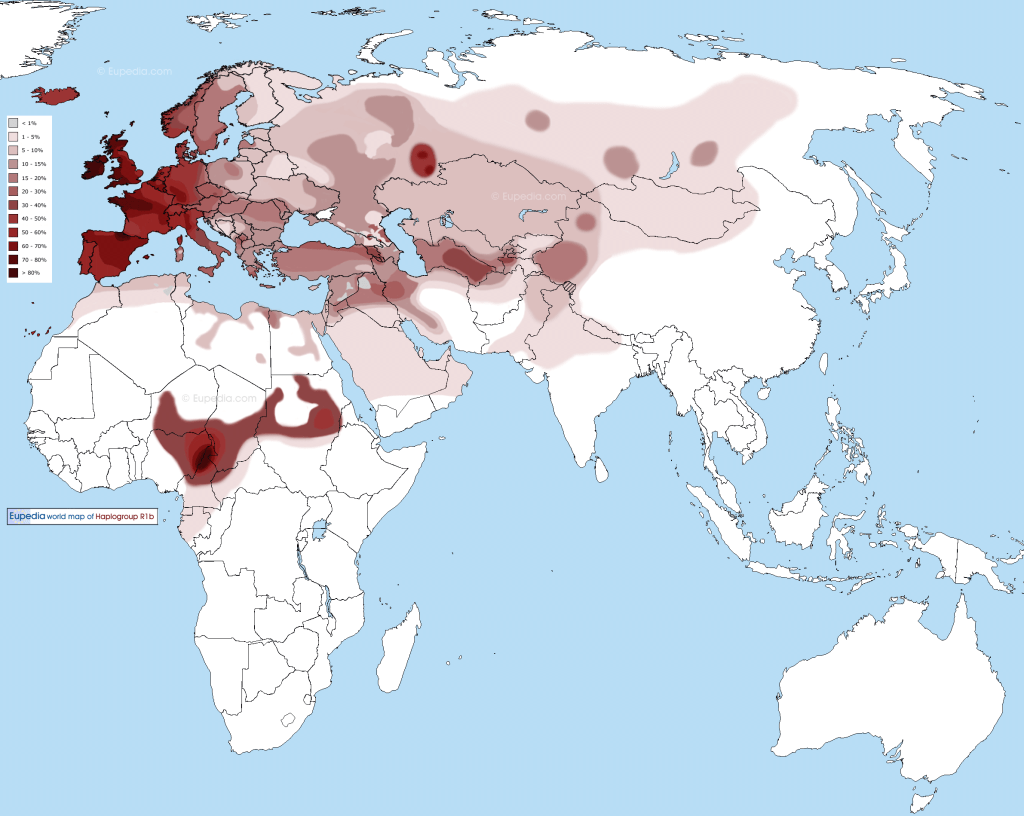
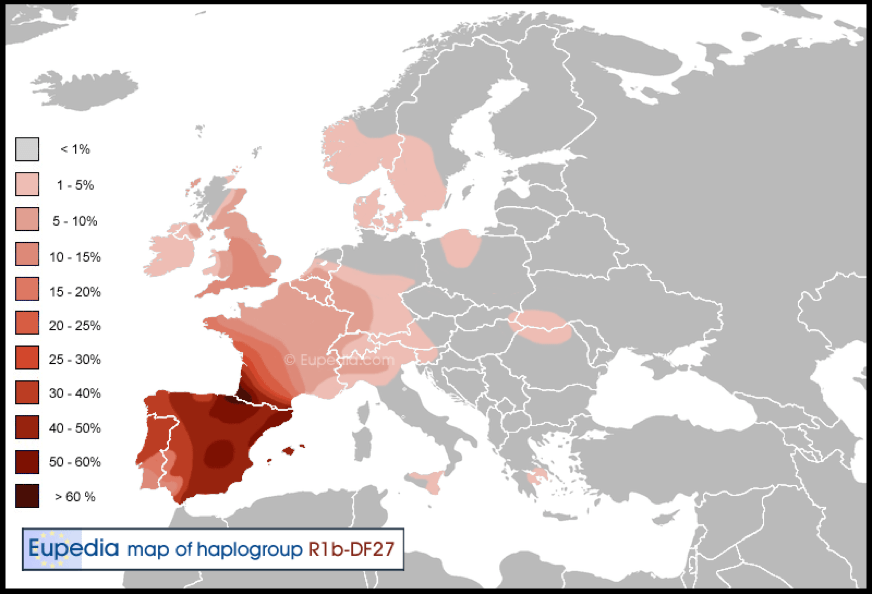
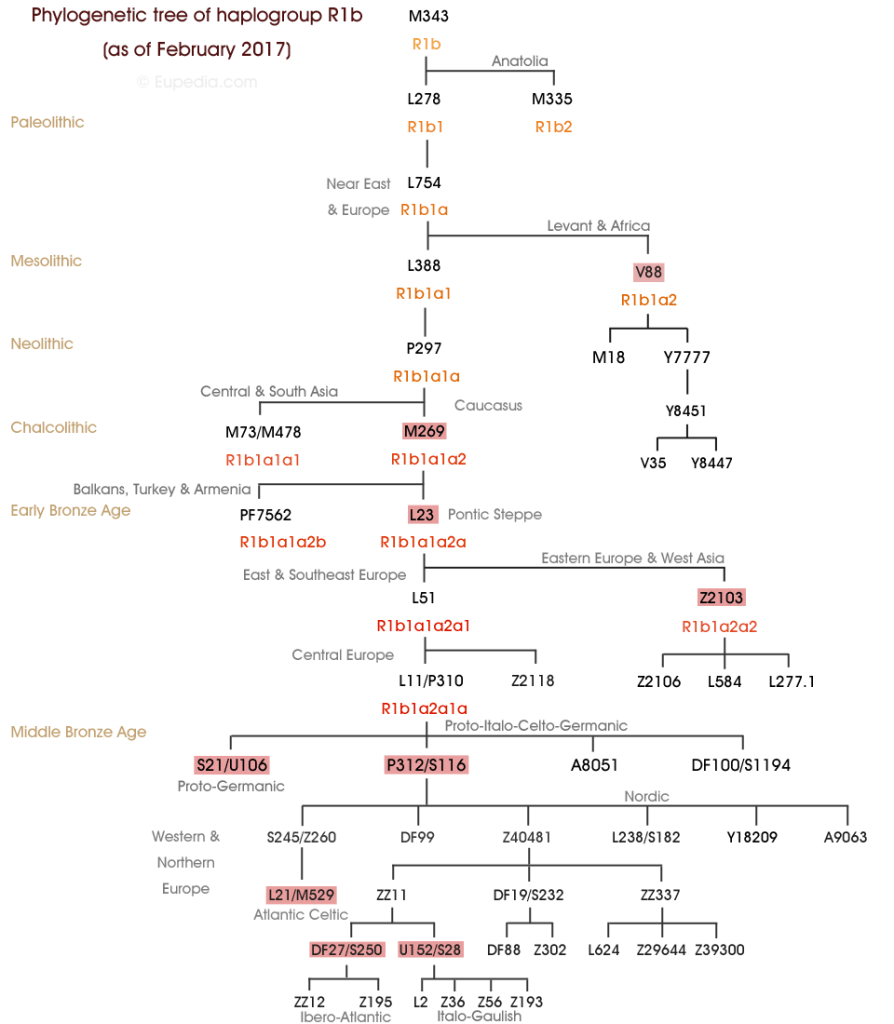

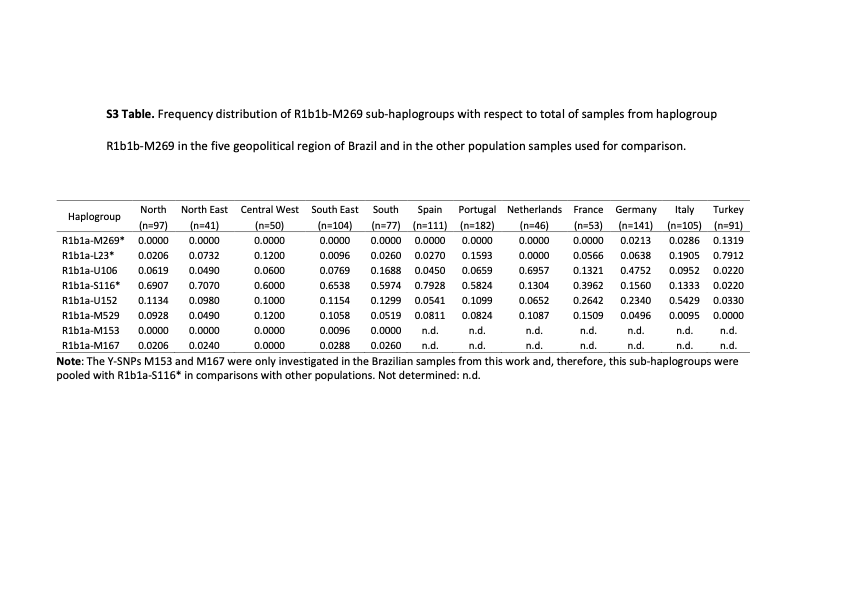
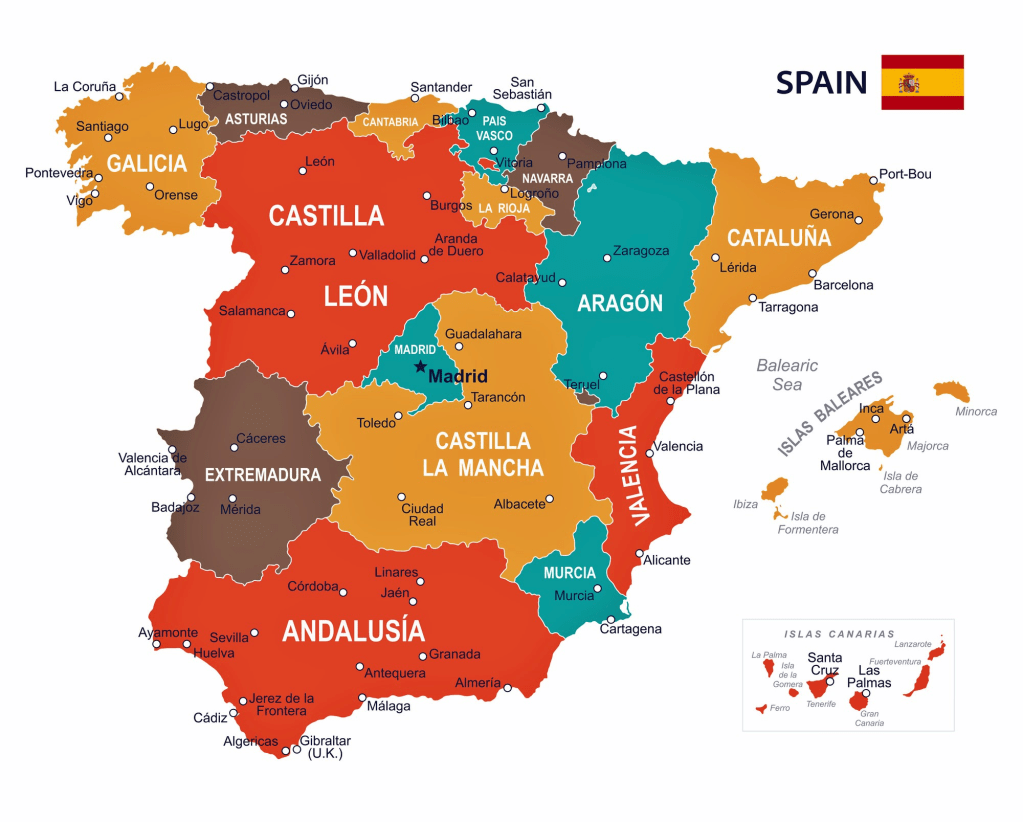

 The Lightkeeper