Modern human DNA contains bits from all over the Neanderthal genome – except the Y chromosome. What happened, Jenny Graves, June 16, 2024:
‘Genetic studies are revealing ever more about the links between modern humans and [Neanderthals]… But one mystery still remains.
The Homo sapiens genome today contains a little bit of Neanderthal DNA. These genetic traces come from almost every part of the Neanderthal genome – except the Y sex chromosome, which is responsible for making males. So what happened to the Neanderthal Y chromosome? It could have been lost by accident, or because of mating patterns or inferior function. However, the answer may lie in a century-old theory about the health of interspecies hybrids.
Scientists have recovered copies of the full male and female Neanderthal genomes, thanks to DNA from well-preserved bones and teeth of Neanderthal individuals in Europe and Asia. Unsurprisingly, the Neanderthal genome was very similar to ours, containing about 20,000 genes bundled into 23 chromosomes. Like us, they had two copies of 22 of those chromosomes (one from each parent), and also a pair of sex chromosomes. Females had two X chromosomes, while males had one X and one Y.’
‘Y chromosomes are hard to sequence because they contain a lot of repetitive “junk” DNA, so the Neanderthal Y genome has only been partially sequenced. However, the large chunk that has been sequenced contains versions of several of the same genes that are in the modern human Y chromosome.
In modern humans, a Y chromosome gene called SRY kickstarts the process of an XY embryo developing into a male. The SRY gene plays this role in all apes, so we assume it did for Neanderthals as well – even though we haven’t found the Neanderthal SRY gene itself.
There are lots of little giveaways that mark a DNA sequence as coming from a Neanderthal or a H. sapiens. So we can look for bits of Neanderthal DNA sequence in the genomes of modern humans.
The genomes of all human lineages originating in Europe contain about 2% Neanderthal DNA sequences. Lineages from Asia and India contain even more, while lineages restricted to Africa have [little to] none. Some ancient Homo sapiens genomes contained even more – 6% or so – so it looks like the Neanderthal genes are gradually fading out.
At least half of the whole Neanderthal genome can be pieced together from fragments found in the genomes of different contemporary humans. There is one glaring exception. No contemporary humans have been found to harbour any part of the Neanderthal Y chromosome.
Was it just bad luck that the Neanderthal Y chromosome got lost? Was it not very good at its job of making males? Did Neanderthal women, but not men, indulge in interspecies mating? Or was there something toxic about the Neanderthal Y so it wouldn’t work with human genes?
A Y chromosome comes to the end of the line if its bearers have no sons, so it may simply have been lost over thousands of generations. Or maybe the Neanderthal Y was never present in interspecies matings. Perhaps it was always modern human men who fell in love with (or traded, seized or raped) Neanderthal women? Sons born to these women would all have the H. sapiens form of the Y chromosome. However, it’s hard to reconcile this idea with the finding that there is no trace of Neanderthal mitochondria DNA (which is limited to the female line) in modern humans.’
Ancient DNA and Neanderthals, Robin Teague, Ryan McRae and Briana Pobiner:
‘Researchers compared the Neanderthal mtDNA to modern human and chimpanzee mtDNA sequences and found that the Neanderthal mtDNA sequences were substantially different from both (Krings et al. 1997, 1999). Most human sequences differ from each other by an average of 8.0 substitutions, while the human and chimpanzee sequences differ by about 55.0 substitutions. The Neanderthal and modern human sequences differed by approximately 27.2 substitutions.
There is evidence that some other hominin contributed to the Neanderthal mtDNA gene pool… (Posth et al., 2017). A femur discovered in Germany had its mtDNA genotyped and it was found that there was introgression from a non-Neanderthal African hominin, either Homo sapiens or closely related to us… This mitochondrial genome is also highly divergent from the Neanderthal average discussed previously, indicating that Neanderthals may have been much more genetically diverse in their more distant past.
As for Neanderthal introgression into the modern human mtDNA genome, it is possible that the evidence of such admixture is obscured for a variety of reasons (Wang et al 2013). Primary among these reasons is sample size: There are to date only a dozen or so Neanderthal mtDNA sequences that have been sampled. Because the current sample of Neanderthal mtDNA is so small, it is possible that researchers simply have not yet found the mtDNA in Neanderthals that corresponds to that of modern humans.’
Graves: ‘Or perhaps the Neanderthal Y chromosome was just not as good at is job as its H. sapiens rival. Neanderthal populations were always small, so harmful mutations would have been more likely to accumulate.
We know that Y chromosomes with a particularly useful gene (for instance for more or better or faster sperm) rapidly replace other Y chromosomes in a population (called the hitchhiker effect). We also know the Y chromosome is degrading overall in humans. It is even possible that SRY was lost from the Neanderthal Y, and that Neanderthals were in the disruptive process of evolving a new sex-determining gene, like some rodents have.
Another possibility is that the Neanderthal Y chromosome won’t work with genes on other chromosomes from modern humans. The missing Neanderthal Y may then be explained by “Haldanes rule”. In the 1920s, British biologist J.B.S. Haldane noted that, in hybrids between species, if one sex is infertile, rare or unhealthy, it is always the sex with unlike sex chromosomes.
In mammals and other animals where females have XX chromosomes and males have XY, it is disproportionately male hybrids that are unfit or infertile. In birds, butterflies and other animals where males have ZZ chromosomes and females have ZW, it is the females.
Many crosses between different species of mice show this pattern, as do feline crosses. For example, in lion–tiger crosses (ligers and tigons), females are fertile but males are sterile.
We still lack a good explanation of Haldane’s rule. It is one of the enduring mysteries of classic genetics.
But it seems reasonable that the Y chromosome from one species has evolved to work with genes from the other chromosomes of its own species, and might not work with genes from a related species that contain even small changes. We know that genes on the Y evolve much faster than genes on other chromosomes, and several have functions in making sperm, which may explain the infertility of male hybrids.
So this might explain why the Neanderthal Y got lost. It also raises the possibility that it was the fault of the Y chromosome, in imposing a reproductive barrier, that Neanderthals and humans became separate species in the first place.’
Constant readers having read the first three articles in this series will be conversant with this writer’s explanation regarding Neanderthal man. For new readers or those who have skipped articles, it is briefly the following.
The Genesis account in the Bible discusses a creation of a human on what is referred to as Day Six, not a literal day but meaning an epoch of time. A pause of a ‘Day’ occurred where the Creator ‘rested’ and then Adam and Eve were created on Day ‘Eight’ – article: The Sabbath Secrecy; and Chapter XXII Alpha & Omega.
The people of Day Six equate to Homo neanderthalensis and those of Day Eight to Homo sapiens. A genetic bottleneck occurred during the Great Deluge in 10,837 BCE, whereby a handful of people survived – Article: The Younger Dryas Stadial:Ending of the Earth… Beginning of the World.
The Bible says eight people survived to then reproduce in the post-diluvian world. From this family, all the ethnicities in the world have evolved – Article: Y-DNA Adam & mtDNA Eve: The Genesis & Evolution of Homo sapiens.
Noah had three sons before the Flood, Japheth, Ham and Shem. They in turn had three wives. This was the advent of Homo sapiens sapiens. At least one of Noah’s daughters-in-law had Neanderthal DNA.
This perhaps answers why the Neanderthal Y Chromosome is missing; as every son born after the flood would have a Homo sapiens Y sex chromosome.
With regard to “no trace of Neanderthal mitochondria DNA in modern humans”; yet “evidence that some other hominin contributed to the Neanderthal mtDNA gene pool.”
There is a theory – as postulated by the late Alan Alford – that the DNA of Homo erectus was used in the formation of Homo sapiens. It is possible Homo erectus contributed the mystery genetic material in the Homo neanderthalensis mtDNA.
The descendants of Japheth, exhibit the most Neanderthal DNA – refer articles: Homo neanderthalensis I, II & III. Thus the wife of Japheth, Adataneses, was likely not fully Neanderthal – possessing a mixture of Neanderthal and Homo sapiens mtDNA.
A 28,000-year-old ‘hybrid child’ confirms interbreeding between humans and Neanderthals, Jordan Joseph, 2025:
‘… found [were] a child’s bones 27 years ago in a shallow rock shelter in central Portugal. Researchers immediately noticed that the young skeleton [of a child] only around four years old, had traits belonging to modern humans and to Neanderthals… [indicating a] mixed heritage. The limb proportions were similar to those seen in Neanderthals, while the skull and jaw had features reminiscent of modern humans… suggesting these two groups once had children together.’
The Neanderthal carried 22 pairs of chromosomes (autosomes) and one pair of sex chromosomes (X and Y) just like Homo sapiens.
Perhaps the merging of mtDNA from the two different, yet related humans has obscured the recessive like Neanderthal mtDNA, so that it is present but hidden?
Japheth’s third son Madai, is mentioned more frequently in the Bible than most of his brothers. This is due to a close relationship with a certain cousin from Shem.
Herman Hoeh discusses Madai in his 1957 article, Origin of the Nations – capitalisation his, emphasis mine:
‘Herodotus mentions that the “Matienians” from the land of Rosh were associated with the people of Meshech and Tubal! (Thalia, 94.) And Pliny the Roman natural historian speaks of the “Matiani” as moving into Russia through the Caucasus (BooK VI, section xviii of NATURAL HISTORY). Not all Russians are Great Russians and White Russians. Some are called “Little Russians”. They live – in the Ukraine and the eastern parts of Romania and Poland. They are often called Ukrainians or Ruthenians. There are about 50 million of them! Who are these people? The MEDES! The sons of Madai! Here is the proof!
In Genesis 10:2 we have Madai, the son of Japheth listed. Now check in an exhaustive concordance. You will find the original Hebrew word translated into English as “Mede” or “Median” is always Madai. Madai is the father of the Medes. The Medes used to be associated with the Persians. You will read about them especially in the book of Daniel. But by the time of Nehemiah the Persians were much more prominent. Today there are no Medes left in Persia [Iran]. The Medes are gone. Certainly a great branch of the human family could not suddenly vanish from the earth!
Indeed they did not. Throughout South Russia – in the Ukraine – four centuries before Christ the Medes were beginning to settle. Here is what the historian Herodotus wrote of these people: “They say that they are a colony of the Medes. How they can have been a colony of the Medes I cannot comprehend; but anything may happen in course of time” (Terpsichore, 9). Herodotus, like many moderns, was prone to believe that the people who inhabited Mesopotamia and the”Bible lands” must be living there today.But they are not. The Arabs have taken their place! The fact that the Medes are the Little Russians today is further amplified by Pliny in his NATURAL HISTORY, Book VI, section xi. He mentions “the river Don, where the inhabitants are… said to be descended from the Medes”!
While Hoeh enthusiastically concludes the northeastern Slavic speaking nations, lead by Ukraine are descended from Madai, we will learn that the sons of Madai the Medes, are of an Asian line of descent – albeit with European admixture – and not living in eastern Europe – refer Chapter XXIV Arphaxad & Joktan: Balts, Slavs & the Balkans.
The Races of the Old Testament, A H Sayce, 1891, page 45:
‘Madai are the Medes, the Mada of the Assyrians. We first hear of them in the cuneiform records under the name of Amada, about B.C. 840, when their country was invaded by the Assyrian monarch. They were at that time settled in the Kurdish mountains, considerably to the east of Lake Urumiyeh. Some fifty years later, however, we find them in Media Rhagiana, where they are called no longer Amada but Mada. It was from the latter form of the name that the Greeks took the familiar Mede.’
Amazing Bible Time Line – emphasis mine:
‘According to the Book of Jubilees [10:35-36], [Madai] married the daughter of Shem and pleaded with the three brothers of his wife [Elam, Asshur and Arphaxad] to let him live on their land instead [of] occupying an area in Japheth’s land[!] They gave him a spot to dwell on with his family and it was later… named Media. The capital city of Media was Ecbatana [Ezra 6:2]… Media flourished in the trade industry and was… blessed in the field of agriculture. Its lands were fertile…’
Recall Genesis 9:27 in Chapter II Japheth Orientalium – the prediction of Japheth dwelling with Shem – where, Madai has intermingled with Shem in extraordinary fashion and has been blessed with fertile soil and mineral wealth in its modern location.
The Book of Jubilees 8:5 states that a daughter of Madai named Milcah [Aramaic: Melkâ] married Canaan, Ham’s youngest son.
The Book of Jasher 7:5
And the children of Madai were
Achon, Zeelo, Chazoni and Lot
We will meet another, well-known Lot, later – refer Chapter XXVI The French & Swiss: Moab, Ammon & Haran.
A selection of verses – in chronological order – regarding the Medes of Media in the Bible and revealing their intricate relationship with not only Elam of Persia, but also Asshur of Assyria.
2 Kings 17.6
English Standard Version
‘[Shalmaneser V]… the king of Assyria captured Samaria, and he carried the Israelites away to Assyria and placed them in Halah, and on the Habor, the river of Gozan, andin the cities of the Medes.
This occurred during 721 to 718 BCE – 2 Kings 18:11. Media while a powerful people, found themselves in the shadow of the Babylonian Empire and subject to the Assyrian Empire. The Persian Cyrus or Darius the Great, became King of Persia in 559 BCE. His father was King Astyages of Media, against whom he rebelled and desiring to remove Media’s dominance over Persia, annexed Media to the Persian Empire in 549 BCE.
Cyrus was the first ruler of the Achaemenid Empire, which lasted for over two hundred years. The Medes though conquered, continued to be honoured in the new empire and were invariably referenced together with the Persians – Acts 2:9.
Isaiah 21:2
New Century Version
‘… Elam, attack the people! Media, surround the city and attack it! I will bring an end to the pain the city [of Babylon] causes.’
Cyrus conquered the Chaldean Empire in 539 BCE. This event was foretold long before by the prophets Isaiah (13:17) and Jeremiah (25:25; 51:11, 28) and it occurred one year before Cyrus/Darius issued the decree which allowed remnants of the Kingdom of Judah to return to Jerusalem – Ezra 1:1-4.
Daniel 5:28
English Standard Version
‘Peres, your kingdom [of the Chaldeans] is divided and given to the Medes and Persians.”
Daniel 5:31
New Century Version
‘So Darius the Mede became the new king when he was sixty-two years old.’
Cyrus ruled until 530 BCE. There were two interim kings and then Darius came to the throne of the Medes and Persians in 522 BCE, ruling until 486 BCE. Darius was not a son of Cyrus, being a Mede and not a Persian.
Daniel 6:15
New Century Version
Then those men went as a group to the king. They said, “Remember, O king, the law of the Medes and Persians says that no law or command given by the king can be changed.”
Daniel 6:28
New Century Version
‘So Daniel was successful during the time Darius [the Mede] was king and [later] when Cyrus the Persian was king.’
Daniel had found favour and was a key figure in the Court of both kings for half a century or more. In 485 BCE Xerxes I, the son of Darius the Mede became king, ruling until 465 BC. His son Artaxerxes I or Ahasuerus, ascended to the throne, when his father was murdered, at the age of twenty-six in 465/464 BCE. This was the apex of the empire, inherited from his father and when we are introduced to the biblical character Esther.
The second chapter of the Book of Esther reveals Esther’s rags to riches story. She was part of the returned captives originally from the Kingdom of Judah in 458/457 BCE. Esther descended from the tribe of Benjamin and was beautiful in countenance and spirit – Esther 2:7. She was placed in the King’s palace…
Esther 1:1-4
New Century Version
‘This is what happened during the time of King Xerxes, the king who ruled the one hundred twenty-seven states from India to Cush.’
Literally from present day India all the way west, to the nation in east Africa now known as Ethiopia.
‘In those days King Xerxes ruled from his capital city of Susa [or Susan]. In the third year of his rule [482 BCE], he gave a banquet for all his important men and royal officers. The army leaders from the countries of Persia and Media and the important men from all Xerxes’ empire were there. The banquet lasted one hundred eighty days. All during that time King Xerxes was showing off the great wealth of his kingdom and his own great riches and glory.’
Esther 2:16-18
English Standard Version
‘And when Esther was taken to King Ahasuerus, into his royal palace… in the seventh year of his reign [458/457 BCE], the king loved Esther more than all the women, and she won grace and favour in his sight more than all the virgins, so that he set the royal crown on her head and made her queen instead of Vashti.’
Esther 1:19
English Standard Version
‘If it please the king, let a royal order go out from him, and let it be written among the laws of the Persians and the Medes so that it may not be repealed, that Vashti is never again to come before King Ahasuerus. And let the king give her royal position to another who is better than she’ – Daniel 6:12.
‘Then the king gave a great feast for all his officials and servants; it was Esther’s feast. He also granted a remission of taxes to the provinces [including Jerusalem] and gave gifts with royal generosity.’
About a third of the references to the name Madai, including Media and the Medes in the Bible, occur in the Book of Esther.
The Medo-Persian Empire contained 44% – about 50 million people – of the world’s population within its borders, according to Ehsan Yarshater in The Cambridge History of Iran – the highest such percentage for any empire in history.
To fully appreciate Madai’s identity, we will briefly touch upon Shem’s sons Elam and Asshur – with a selected identifying defining biblical verse for each – before returning in detail to each in their own chapters.
The modern day descendants of Elam or ancient Persia, are the Turks and the nation of Turkey – refer Chapter XVIII Elam & Turkey.
Jeremiah 49:36
New English Translation
‘I will cause enemies to blow through Elam from every direction like the winds blowing in from the four quarters of heaven. I will scatter the people of Elam to the four winds. There will not be any nation where the refugees of Elam will not go.’
Footnote:
‘Or more simply, “I will bring enemies against Elam from every direction. / And I will scatter the people of Elam to the four winds.” Or more literally, “I will bring the four winds against Elam / from the four quarters of heaven./ I will scatter…” However, the winds are not to be understood literally here. God isn’t going to “blow the Elamites” out of Elam with natural forces. The winds must figuratively represent enemy forces that God will use to drive them out.’
We are provided an intriguing clue with regard to Elam’s location. It is vulnerable to attack from all sides: north, south, east and west. These are four points on a compass and represented by the direction of four winds, northerly, easterly and so forth. Turkey is literally at the crossroads of the Earth. It sits between the continents of Europe, Asia and the region of the Middle East geographically, politically and culturally – not quite a full member of any one.
Cyrus the Persian, the Elamite King, was known as:
‘The Great King, King of Kings, King of Anshan, King of Media, King of Babylon, King of Sumer and Akkad, King of the Four Corners of the World.’
Elam or Persia historically was geographically near Madai (or Media). Following points one, three and four in the introduction (primus verba), we should expect to find a European and Asian peoples not only in geographic proximity today but also connected through history, language and inter-marriage, revealed by their respective Haplogroups and autosomal DNA.
The reader is highly recommended to read Chapter XVIII Elam & Turkey in conjunction with this chapter.
Meanwhile, the modern day descendants of Asshur and Assyria, dwell in Russia – refer Chapter XX Will the Real Assyria Stand Up: Asshur & Russia.
Zephaniah 2:13
English Standard Version
‘And he will stretch out his hand against the north [H6828 – tsaphown: northward, northern, (direction of), north side, north wind] and destroy Assyria, and he will make Nineveh [the capital] a desolation, a dry waste like the desert.’
If one studies a world map, Russia is as far north as you can travel. There it is; exactly where the Bible says. The Assyrians historically used their neighbour Media, as a foot stool. We will find a similar relationship has continued into modern times.
One can hear those readers with more than a cursory knowledge, gasping incredulously. Edward Hine first proposed Germany was Assyria in the 1870s – with people influenced by its adversarial relationship with Great Britain in following decades – and the idea proceeded to cement firmly in people’s minds like reinforced steel concrete. When Edom was first linked with Turkey is not exactly clear; though the arguments used hang by tenuous threads for both identities, with genetics providing the knock out blow, as it shall be discovered.
Many will be thinking: then who are the Germans and where is Edom? We will look more closely at these two influential peoples in later chapters – including the intricate relationship between Madai and Elam – Chapter XVIII Elam & Turkey.
It would be very convenient if Madai and or Elam still lived in present day Iran… since Iranians call themselves Persian – but this does not mean they are Madai or Elam. Please refer to point number one and two in the introduction (primus verba).
The cumulative evidence leads to Madai being the Turko-Mongol peoples of the Central Asian Republics; including the Tartars of Russia and the Mongols in Mongolia – namely, Kazakhstan, Kyrgyzstan, Uzbekistan,Turkmenistan, partially Tajikistan and possibly including the Sami and Lapps of Russia, Finland and Scandinavia.
Madai from the verb madad, means: ‘measure, sufficient, enough’ or ‘judging’ and ‘as often as’, as well as ‘middle land’, and ‘out of the abundance of’. It could also be interpreted as: ‘My Measure[ment].’
For now, we will only introduce the relationship Madai has with Elam; detailing a comprehensive study later when we discuss Elam in Chapter XVIII Elam & Turkey. We will see support for the subservient relationship of Madai towards Asshur, present day Russia and the abundance Madai has been given in fulfilment of their name. If one looks at a map of the world, it is evident just how in the middle of the world, Madai truly is.
The five nations comprising Central Asia are former Soviet Republics, from the modern incarnation of the Assyrian Empire. They are referred to as ‘the stans’ – the Persian (Iranian) suffix meaning: land of.
The region historically connected the Silk Road, standing as the intersection for the movement of people, trade and philosophies between all parts of Asia and Europe. The population of the four principle nations is approximately 67 million people; not far off the Amerindian population of the Americas – Chapter III Tiras the Amerindian.
The people of Turkmenistan are known as Turkmen or Turkmen Turks.
Arlen Seitbatkal:
‘The word Turkmen stems from “Turk” and the intensifying suffix “men,” meaning true Turk. The word Trkmen is also mentioned in Mahmud al-Kashgari’s 11th-century dictionary, “Dīwān Lughāt al-Turk,” where it refers to an ethnic group and carries the meaning of Turk or Turkish person.’
Turkmen also live in Uzbekistan, Kazakstan, Iran and Afghanistan. They speak the Turkmen language; classified as part of the Eastern Oghuz branch of the Turkic languages – see map below.
Examples of other Oghuz languages include Turkish and Azerbaijani. In the early Middle Ages, Turkmen originally called themselves Oghuz and then later as Turkmen.
Flag of Turkmenistan
Uzbekistan – the nation with the largest population of the four – mines 80 tons of gold yearly; 7th highest in the world. Uzbekistan’s copper deposits rank 10th in the world, its uranium deposits 12th and the country’s uranium production ranks 7th globally. The Uzbek national gas company, Uzbekneftegas ranks 11th in the world in natural gas production and the country has significant untapped reserves of oil and gas.
What’s in Name of Central Asian Nations, Aibarshyn Akhmetkali , 2025:
‘Scholars link the origin of the term Uzbek to the name of Uzbek Khan, the ruler of the Golden Horde in the 14th century. When the horde began to disintegrate, the nomadic tribes within his ulus began to call themselves Uzbeks.’
Arlen Seitbatkal:
“In the nomadic tradition, a strong leader has always been identified with the people. If someone had power and authority, people followed them, and their name became fixed after the group.”
Turkic influence in Central Asia during the first millennium CE brought Turkic culture and language to the lands now known as Kazakhstan.
Orexca:
‘Written sources of the 6th century register the term “Tyurk” which is pronounced as “Tutszyue” by the Chinese and as “Turk” by the Sogdians. Archeological studies of Turkic monuments make it possible to somehow compare “these” Turks with certain Turkic tribal associations. In the Sayano-Altai region they have identified certain archeological cultures which might well be likened to early Kyrgyz, early Kypchaks or early Oguzes.
In the course of not infrequent internecine wars, tribal discord, and struggles for power and pasture, a part of the Turkic tribes which inhabited the steppes and valleys of Kazakhstan moved southwards – to Central Asia (… Tyurgeshes, Karluks, Kypchaks, Uzbeks, Oguz, and Turkmens-Seldzhuks), to Asia Minor… [and] to the Caucasus (Turkmen and Seldzhuks)…
Starting from the 4th century up to the beginning of the 13th century, the territory of Kazakhstan was the seat of West-Turkic, Tyurgesh, Karluk Kaganates, of the state made by the Oguz, Karakhanides, Kimeks and Kypchaks. All of them successively replaced one another right up to the Mongol invasion.’
These states contributed to the spread of Islam and the development of urban culture.
Mongol influence occurred in the thirteenth century when Genghis Khan conquered the region (1219-1224), incorporating it into the vast Mongol territories – refer Chapter XVIII Elam & Turkey. The region then became part of the Golden Horde, a Mongol successor state.
Orexca: ‘After the invasion, [that is] in the beginning of the 13th century, uluses of the Mongol Empire of Zhuchi-Khan and Zhagatai were formed, which later gave birth to Ak-Orda, Mongolistan and finally to the Kazakh Khanate’ in about 1465.
The Kazakh Khanate was established by Jani Beg (Janibek) and Karay (Kerei) Khan. Various nomadic Uzbek tribes were unified under a single political entity and subsequently developed a distinct Kazakh identity.
Britannica:
‘[For these] separatist Uzbeks became known as Kazakh (“Independent” or “Vagabond”) Uzbeks, and over time a significant differentiation developed between them and the [non-separatist] Uzbeks in their respective ways of life: that of the Kazakh was more nomadic, that of the Uzbeks more sedentary.’
Online Encyclopaedia:
‘According to the latest research of population genetics, mainly of autosomal markers and Y-chromosome polymorphism, it is believed that during the 13th to 15th centuries that the Kazakh ethnicity emerged.’
The Kazakh Khanate reached its peak in the sixteenth century with a golden age under the leadership of Kasym Khan (1509-1518), who expanded its territory and influence.
Britannica: ‘… the Kazakhs were the masters of virtually the entire steppe region, reportedly able to bring 200,000 horsemen into the field and feared by all their neighbours. The prevailing view is that the rule of Kasym Khan marked the beginning of an independent Kazakh polity. Under his rule Kazakh power extended from what is now southeastern Kazakhstan to the Ural Mountains.’
The Kazakh Khanate conducted wars with neighbouring states; the Uzbek Khanate and the Tsardom of Moscow (1547-1721). In the early sixteenth century, the Kazakhs faced an increasing threat from first the Mongols and then from Russia which was expanding its borders to the East.
Kazakhstan became part of the Russian Empire in the eighteenth century. Its colonisation was accompanied by significant changes in the traditional lifestyle of the Kazakh people. Russia sought to actively develop land resources and introduce new administrative structures.
History Central:
‘The situation worsened after 1861 when Russian and Ukrainian peasants flowed into Kazakhstan after the freeing of the serfs and were given Kazakh lands. (This influx of Russians and Ukrainians was not limited to this period – it continued throughout the first seven decades of the [twentieth] century as well such that by 1979, there were more Russians than native Kazakhs in the region.)
Simmering resentments [following repeated revolts] led to a major rebellion in 1916′, sparked by the forced mobilisation of Kazakhs to the Russian front during World War I. ‘In suppressing the uprising, the Russians killed thousands. The Communist revolution the next year [in 1917] plunged Kazakhstan into civil war. Defeated, Kazakhstan became part of Russia as an autonomous entity, eventually attaining the status of one of the Soviet Union’s republics [Kazakh SSR in 1936].’
Britannica:
‘From 1927 the Soviet government pursued a vigorous policy of transforming the Kazakh nomads into a settled population and of colonizing the region with Russians and Ukrainians.’ This period in its history was marked by industrialisation, collectivisation of agriculture and cultural repression.
Britannica: ‘Despite their nomadic rural existence, the Kazakhs were the most literate and dynamic Indigenous people in Central Asia. But the collectivisation brutally imposed by the Soviet regime resulted in a shocking decrease in the Kazakh population: between 1926 and 1939 the number of Kazakhs in the Soviet Union fell by about one-fifth. More than 1,500,000 died during this period, the majority from starvation and related diseases, others as a result of violence. Thousands of Kazakhs fled to China, but fewer than one-fourth survived the journey; about 300,000 fled to Uzbekistan and 44,000 to Turkmenistan.’
In 1991 after the collapse of the Soviet Union, Kazakhstan became an independent country and a member of the Commonwealth of Independent States (with Russia); under the leadership of the first President Nursultan Nazarbayev. The new state began to implement economic reforms and political changes aimed at integrating into the international community.
History Central:
‘Non-Muslim ethnic minorities departed Kazakhstan in large numbers from the mid-1990s through the mid-2000s and a national program has repatriated about a million ethnic Kazakhs (from Uzbekistan, Tajikistan, Mongolia, and the Xinjiang region of China) back to Kazakhstan. As a result of this shift, the ethnic Kazakh share of the population now exceeds two-thirds.’
This checkered history replicates the intertwined historical relationship between the descendants of Asshur (Assyria) and Madai (the Medes); the ancestors of the Russians and Central Asians respectively.
Coat of Arms of Kazakhstan – inscription: QAZAQSTAN
Today, the transcontinental Republic of Kazakhstan, the nation with the biggest land area of the four within Central Asia, has an additional smaller portion west of the Ural Mountains in Eastern Europe. It is the world’s largest landlocked country and the 9th largest country in the world, with an area of 1,052,100 square miles. Kazakhstan is the dominant nation of Central Asia economically, generating 60% of the region’s GDP, mainly through its oil and gas industries. It also possesses vast mineral resources.
The Kazakh language is a member of the Turkic language family, with Uzbek, Kyrgyz, Tatar, Uyghur, modern Turkish, Azeri, Turkmen and numerous other languages spoken in Eastern Europe, as well as Central and Eastern Asia.
Arlen Seitbatkal:
“In the works of academician Abduali Kaidarov and professor Telkozha Januzakov, it is explained that the word ‘qazaq’ can be associated both with ‘qas saq’ (true Sakas) and with the combination of the words ‘qaz’ (goose) and ‘aq’ (white). But most researchers agree that the concepts of yerkin (free) and batyr (warrior) are at the core. The people who broke away from Khan Abulkhair called themselves free, i.e. qazaq.”
Kazakhstan has the 2nd largest uranium, chromium, lead, and zinc reserves; the 3rd largest manganese reserves; the 5th largest copper reserves; and ranks in the top ten in the world for coal, iron, and gold. It is also an exporter of diamonds.
Flag of Kazakhstan
Most significantly for its economic future, Kazakhstan has the 11th largest proven reserves of both petroleum and natural gas in the world. There are three refineries in the country and not being capable of processing the total crude output, much of it is exported to Russia.
Russian Proton launch vehicle with the Granat high-energy astrophysics observatory, prior to launch on December 1, 1989, from the Baikonur Cosmodrome, Kazakhstan.
Kazakhstan, while part of the Soviet Union was instrumental in the Russian Space Program; providing the launch sites for CCCP rockets.
Astana, the capital of Kazakhstan since 1997 and renamed from Aqmola in 1998
The Tatars are a collective of Turkic-speaking groups – nearly 7 million people – living in the Russian Federation. The Chinese referred to these nomadic tribes as Ta-Ta or Da-Da – meaning dirty or barbarian. During the early thirteenth century, Ghenghis Khan united the nomadic tribes then living in Mongolia. One of his grandsons Batu Khan, led the Mongol invasion of Eastern Europe – refer Chapter XVIII Elam & Turkey.
Tatar man
Web source:
‘The… Tatars were conquered by imperial Russian forces during the reign of Tsar Ivan IV in 1552… When the Russian Empire collapsed in 1917, the Tatars… formed their own home-land, the Idil-Ural State. The Soviet government… instead formed the Bashkir Autonomous Republic (Bashkortostan) and the Tatar Autonomous Soviet Socialist Republic (Tatarstan) on the same soil. When the Soviet government took over these regions, it redrew the boundaries and gave neighboring Russian provinces the best lands. By changing the boundaries, about 75 percent of the Tatar population found itself living outside the borders of Tatarstan.
Tatar culture was… affected… through the policy of Russification, where the Russian language and culture were legally forced on the Tatars and other ethnic groups… Tatars, of whom about 26 percent live in Tatarstan… is about the size of Ireland or Portugal.
About 15 percent of all Tatars live in Bashkortostan, another ethnic homeland in the Russian Federation that lies just east of Tatarstan. There are also smaller Tatar populations in Kazakstan, Kyrgyzstan, Tajikistan, Turkmenistan… In 922, the Tatars’ predecessors, the Bulgars, converted to Islam, and the old Turkic script was replaced by the Arabic alphabet.
A famous old Tatar… proverb is Tuzga yazmagannï soiläme, which means, roughly, “If it’s not written on salt, it’s wrong to even mention it.” The proverb refers to the ancient method of keeping records on plaques made of wood and salt, and commends the practicality of keeping written records.’
Recall ‘the Law of the Medes and Persians’, where a proclamation stood fast and could not be altered as discussed in the Books of Esther and Daniel.
Top 14 Tribes of Ancient Central Asia, Mahesh Shant – emphasis & bold mine:
‘Before the Turks entered the arena of history the Awars occupied the regions which later came under the sway of the Turks. After the destructions of the Huns, Syan Pi took over Manchuria, Mongolia and some parts of China. One of the dynasties descended from them, the To-Ba dynasty, was founded in 315 A. D. and continued till the 5th Century. This Hunnish tribe lived in the areas near Lake Baikal… and north of the Gobi desert [Mongolia].
At first the Chinese name for the Awar tribe was Ju-Jun but it was later (in 451 A. D.) changed to Jvan–Jvan by the To-Ba Emperor Tai-Hu-Ti (425-452 A.D.)…
She Lun, a powerful chieftain, who conquered the Kao She tribe and, consolidating his military strength, took the title of Kagan (Khan). The kingdom of the She Lun, which spread from Korea to the Altai, included a part of China as well as a section of the trade route of Central Asia. The Awars relations with the Chinese were not unlike those of their Hunnish ancestors. At times they plundered the border regions of China, at others they gave military aid to the Chinese Emperor. The Turks put an end to the military might of the Awars in 546 A. D.’
Of interest is the remarkable coincidence of the To-Ba dynasty – who were related to descendants from Madai (just as the Huns were from Elam) – should take on the name of their long distant uncle, Japheth’s fourth son, Javan (Jvan-Jvan).
Shant:
‘The Selzuks were a nomadic people inhabiting the regions north of the Sir Darya [Syr Darya River]. They were also known as Turkmans and the region once inhabited by them now forms part of the Soviet Socialist Republic. A branch of the Aguz, they spread in the course of their wanderings to the northern banks of the Sir Darya.
The Guz or Aguz [Oghuz] Turks were divided into three branches – Kipchiaks, Kankalis and Karluks. The Selzuk dynasty, which ruled over Central Asia and Iran for a long time, was descended from the Kipchiaks, and the Turks of modern Turkey are descended from the Osmanali branch of this tribe.
The similarity in language points to the Uzbeks, Turkmans, Khirgiz and Kazaks having sprung alike from Turkish stock.
They can be divided into three parts:
(i) The Northern Turks – the Yakuts of Siberia,
(ii) The Eastern Turks – the Sinkiang Turks, Uzbeks, Kazaks are Kufa Tatars
(iii) The Western Turks – Osman Ali, Azerbaijanians and Turkmans.
A branch of the Turks left its original homeland in the Altai mountains and advanced into Turkestan, driving out or absorbing the Scythian and Sogdhian tribes inhabiting these regions. Among these Turks were the Selzuks and the Chingiz Mongols.
The Sulzuks acquired that name from Selzuk Turk their first Muslim Chief, although they were equally well-known as Turkmans. The Western Turks, of whom Turkmans were the majority, brought Asia Minor and Armenia under their control, while another branch of the Western Turks, the Osmani Turks, brought about the downfall of the Byzantine Empire, made Constantinople their capital in the 15th century and later extended their rule over Eastern Europe.’
The entwined relationship between Madai (Mongols) and Elam (Turks) – the Medes and Persians of old – has endured through the cyclic phases of their history. The label Turk, used interchangeably for Uzbeks, Kazakhs and Turkmen of Central Asia as well as for the Turkish in Asia Minor – Chapter XVIII Elam & Turkey.
Facts and Details, People of Central Asia:
‘The people of Central Asia are basically divided into two types: the traditional nomads and semi-nomads (Kazakhs, Kyrgyz, Mongols and Turkmen) and the settled people (the Uzbeks and Tajiks). According [to] DNA studies, Tajiks, Uzbeks and Turkmen have retained their “ethnic purity.”
There has traditionally been a lot of intermarriage between the ethnic groups of Central Asia. Uzbeks and Tajiks have traditionally been difficult to distinguish from one another. The same is true with Kyrgyz and Kazakhs. Up until the 20th century… [the Uzbeks and Tajiks] were regarded as essentially the same people except that Uzbeks spoke a Turkish language and the Tajiks spoke a Persian language.
Tajiks are… distinguished from other Central [Asians] by their traditional Islamic-Iranian culture [and ethnicity]. Uzbeks consider themselves the [dominant] people of Central Asia by virtue of their numbers and their historic links to… Genghis Khan. Other ethnic groups in Central Asia dispute this claim.
Kazakhs and Kyrgyz are close relatives. They look similar, have many similar customs and speak similar languages. Many believe they are [essentially] the same people with Kazakhs traditionally residing in the steppes and Kyrgyz living in the mountains. The Kyrgyz, however, have a longer and more coherent history than the Kazakhs. Clan and regional ties have historically been more important than ethnic identity.
Central Asia is a meeting point of Turkic, Persian and Mongol cultures.’
The Analysis of the Genetic Structure of the Kazakh Population as estimated from mitochondrial Dnapolymorphism, Scientific Centre of Obstetrics, Genecology and Perinatology, Galina Berezina, Gulnara Svyatova & Zhanar Makhmutova, 2011:
‘The most closely related populations are the Kazakhs and Uighurs, they are accompanied by the Uzbeks and the nation(s) of the southern Altai on one level. The Kyrgyz and Bashkir [Tatar] nations formed an independent taxonomic group in this cluster. The contribution of [European] and [Asian] components in the formation of the anthropological type of the Kazakhs was proved… by Ismagulov (1970) on the basis of a comprehensive study of paleoantropological and craniological materials.’
The land of Kazakhstan has been a place of interaction comprising many ethnic layers during a historically long period. Mongolian tribes, Turkic-speaking populations from Siberia and Altai, Indo-Iranians from the Near East, as well as Slavs from Eastern Europe took part in the formation of the Kazakhs. Thus, it is possible to explain a high level of genetic variability of mtDNA, with a complicated ethnic history.
Khazaria, Kazakh Genetics: Abstracts and Summaries, Kevin Alan Brook – emphasis mine:
‘Kazakhs (Qazaqs, Kazaks) are a Turkic-speaking people living in several modern countries including (but not limited to) Kazakhstan, China, and Mongolia. They are approximately 70% [Asian] and 30% [European] and this admixture explains why some Kazakhs have light European physical features in contrast to the majority who have black hair, brown eyes, and epicanthic eyefolds.
The Kazakhstan DNA Project‘s Y-chromosome records show that among its male members are the Y-DNA haplogroups C3, C3*, C3c, G… O2, Q1a3, E1b1b1, N1c1, R1a1, R1b1b1, R2, J2a1, J2a, and J2.’
The paternal Haplogroups in bold are indicative of lineages from Japheth; with the ancient C Haplogroup the defining marker for descendants from Madai.
Brook: ‘C3 [C2] (M217, P44) is not only common among Kazakhs but also frequent in Mongolia [and the Kyrgyz].
The analysis shows that Western Europe… and Eastern Europe… mtDNA lineages exist in the Kazakhs population. A high genetic diversity was observed in the Kazakhs population (h=0.996). “We have studied the relation between East Eurasian and West Eurasian lines in the gene pool of the Kazakhs using the data on polymorphism HVSI of mtDNA (frequencies of haplogroups). It was found out that the main contribution of East Eurasian lines (55% of the total gene pool) to the modern gene pool of mtDNA of the Kazakhs make haplogroups D, C, G and Z (36.2%), A and F (6.9%) and other haplogroups of Asian origin (11.9%) [B].’
The complexity of the Kazakh genetic make up is due to their Haplogroups being split between Asian (64-70%) and European lineages (30-35%); with their European genealogy being split further, between western (41%) and eastern European (55%) gene pools.
Brook: ‘West Eurasian lines (41% of the total gene pool) in the Kazakh gene pool are most frequently represented by the haplogroups H (14.1%), K (2.6%), J (3.6%), T (5.5%), U5 (3%) and others (12.2%).” We found that more than 64% of mtDNA lineages belong to Asian-specific haplogroups (M, C, Z, D, G, A, B, F, N9). Supercluster M was found with most high frequency (45%).’
Japheth’s son Tiras possesses the mtDNA Haplogroups in common with Madai: C, D, A and B – refer Chapter III Tiras the Amerindian. Haplogroups C and D derive from super sub-Haplogroup M, itself from L3 while Haplogroup A derives from super sub-Haplogroup N and B from super sub-Haplogroup R.
Brook: ‘Western-Eurasian specific haplogroups were observed in 35% (H, V, HV, J, T, U1, U2, U4, U5, U7, K, W, X)… the lineage of Hg U7, typical for all Levant, including Iran, was revealed in Kazakhs… East Asian hgs – A, B, F, N9 – make up about 18% in Kasakhs, like in all Central Asian populations, Altaics, Tuvinians and Bashkirs…
While those Kazak people who reside in China are mostly [Asian], just like Kazakhs in Kazakhstan, this study showed that 30.2% of their ancestry is western Eurasian. “In this study, we also find that all Turkic and Mongolic groups possess a common set of maternal haplogroups (C, D, G2a, H)…*
Kyrgyz (Kirghiz, Kirgiz) are a Turkic-speaking people living mostly in Kyrgyzstan but also in neighboring Uzbekistan, Tajikistan, Afghanistan, and China. They are descended from multiple different ancient peoples. Mongoloid (East Eurasian)ancestry represents between half and two-thirds of Kyrgyz ancestry.
Kyrgyz living in Tajikistan and western areas of Kyrgyzstan have less Mongoloid ancestry and more Caucasoid ancestry than other Kyrgyz. Central and South Asian ancestry is the next most important element representing about one-fourth. West Eurasian (including European) represents about one-eighth. Ancestry from West Asia [Arab, Persian] is not significant in any Kyrgyz person and many have none of it.
The Kirgiz DNA-Project’s Y-chromosome records show that among its male members who are Kyrgyz from Kyrgyzstan are the Y-DNA haplogroups C-M217 (C3) [C2], I-M253 (I1), J-M172 [J2], N-M232, O-P201, R-M198 (R1a1a), R-M269 (R1b1a2), and R-M343 (R1b1a1). R1a1 (and its subtypes) is also found among Kazakhs, eastern Siberians, South Asians, East Slavs, and West Slavs.’
‘This study of Y-DNA includes Kyrgyz samples as well as samples from other Central Asian peoples like Tajiks, Uzbeks, and Karakalpaks, plus many other populations from elsewhere. M17 [R1a1] is suggested to be “a diagnostic Indo-Iranian marker”… [resulting from admixture with European lineages]. “The exceptionally high frequencies** [63%] of this marker in the Kyrgyz, Tajik/Khojant, and Ishkashim populations are likely to be due to drift, as these populations are less diverse, and are characterized by relatively small numbers of individuals living in isolated mountain valleys.”
The most prevalent mtDNA Haplogroups for the Kyrgyz, in order are: D, H and C.* D, C and G are indicative of Asian ancestry and H is reflective of European admixture in the maternal line.
The main Y-DNA paternal Haplogroups for the men from half of the seven million Kyrgyz are in descending percentage order:
R1a [63.5%] – C2 [13.5%] – O [5.8%] – K [1.9%] – O2 [1.9%] – N1c1 [1.9%] –
P [1.9%] – R1b [1.9%] – I1 [1.9%] – J2 [1.9%]
The Haplogroups, R1a, R1b and I1 are indicative of European admixture. The Haplogroups C2, K, O2 and N1c1, are the main Asian lineages for the Kyrgyz men, with C2 the principle defining Asian paternal Haplogroup. The very high frequency of R1a** is somewhat of an anomaly and reveals considerable admixture. For R1a is mainly associated with either the Eastern European peoples of Slavic descent; from eastern Siberia; or from mixed Indian ancestry in northern India.
J2 is typically a west Asian Haplogroup and particularly associated with Turkey, Iran and Pakistan. R1b is the main identifying Haplogroup for western European men and Haplogroup I1 originates with northwestern Europeans. What is important, is that Haplogroups C, K, N and O are key Asian Y-DNA Haplogroups.
The main Amerindian mtDNA Haplogroups – in order – are A, B, C and D. The Kyrgyz and the Kazakhs have the same Haplogroups, though with different variations and percentages. Similarly, the American Indian has Y-DNA Haplogroups Q and C, of which they share C with the Kyrgyz and both C2 and Q1a3 with the Kazakhs.
Kazakhstan Soldiers
The following prevalent Asian mtDNA Haplogroups are found in the Kazakh population of nearly twenty million people: D, C, G, Z, followed by A, F and also B and N9. The supercluster M is found with the highest frequency of 45%. The main European mtDNA Haplogroups include, H at 14%, K, J, T and U5. These two sets are very similar to the Kyrgyz people.
This is where they differ, with the Kazakh’s showing less European admixture as shown by the predominant and distinct C, K and O Asian Haplogroups. It also highlights how principle admixture has passed from the maternal^ line, with Madai males taking Elamite wives, or in other words, Turko-Mongol males marrying primarily Turkish women. J2 is the most prevalent Y-DNA Haplogroup of Turkish men with R1b and a lesser extent R1a and so the Kazakh and Kyrgyz males possessing the same is not a coincidence.
‘We present the whole genome sequence and thorough genetic variant and admixture analysis of a Central Asian, Kazakh MJS. We found several SNVs associated with drug toxicity, metabolism, diseases, phenotypic features and identified recent and ancient admixtures. Both PCA and phylogenetic analyses confirm closer MJS and other Kazakh similarity to modern East Asians than Europeansandshowed the overall closest genetic affinities are with other Central Asian populations, namely, Kalmyk, Uzbek and Kyrgyz. All populations with significant similarity to MJS genome could be backed up by historic migration events involving the Kazakh population and the major fraction of genomic variation could be attributed to fairly recent admixture with geographically close populations.
However, MJS’s mitochondrial^ DNA [maternal] haplogroup is of European [Turkish] or Near Eastern (West Asian) [Iranian] ancestry. It corresponds to the heterozygous SNPs associated with European phenotypic features and confirmed by admixture f3 statistics and all other Kazakh autosomal data showed very similar ancestral compositions to MJS’s. This highly heterozygous and admixed Kazakh genome provides insights into complex admixtures and can serve as a reference for mapping complex heterogeneity in Central Asian populations.’
The males from the total eight million Tajiks exhibit these main Y-DNA Haplogroups:
R1a [44.7%] – J2 [18.4%] – R2 [7.9%] – C2 [2.6%]
Tajikistan shows only a slim oriental link with their near neighbours and could have either mixed heavily or more likely, have more in common paternally with their southern Asian neighbours in Afghanistan and Pakistan – refer Chapter XIII India & Pakistan: Cush & Phut.
The males from the six million people of Turkmenistan carry the following Y-DNA Haplogroups:
R1b [37%] – J2 [17%] – K [13%] – P [10%] – R1a [7%] – R2 [3%]
The Haplogroup R2a (M124) is typically associated with the southern Asian men of particularly India with 10%; Pakistan with 8%; Western Asia; plus the Central Asian nations.
The Turkmen on the other hand show strong admixture with the Turks (and related peoples) as revealed by their R1b and to a lesser extent J2 Haplogroup levels. The K and P Haplogroups are indicative of their Oriental ancestry. Haplogroup P derives from K and Q descends from P. Even though Y-DNA Haplogroups P and Q can be associated with Europeans in trace quantities due to admixture, they are sourced originally from and consistently found in, Asiatics .
Kazakh Women
The Y-DNA Haplogroups for the men of half of the thirty million plus people in Uzbekistan:
Uzbekistan like the smaller Kyrgyzstan and Turkmenistan has obviously mixed with a people not descended from Japheth but rather from Shem, though not as heavily and thus retains more of their core Oriental Haplogroups such as C, K and O. Their R1a, J2 and R1b Haplogroups again link them as we will learn, with primarily Turkey.
Uzbek man
Seen together, their respective Y-DNA Haplogroups appear as the following:
Tajikistan: R1a – J2 – R2 – C2
Turkmenistan: R1b – J2 – K – P – R1a – R2
Kyrgyzstan: R1a – C2 – O – K – O2 – J2 – N1c1 – P – R1b – I1
Uzbekistan: R1a – J2 – C2 – R1b – K – P – O2 – R2 – I1 – N1c1
On the one hand they are all similar and on the other, there are differences highlighting the extent of the admixture experienced by Madai with principally Elam. Kazakhstan, the furthest north remains the closest to its genetic Asian roots. It is the nations of Kyrgyzstan and Uzbekistan tucked underneath Kazakhstan to the south who are more mixed and it is Kyrgyzstan further east which remains purer than Uzbekistan in its core Asian Haplogroups.
Meanwhile it should be no surprise that the nation the most southwards – Turkmenistan which is the closest to Turkey – exhibits the most genetic influence with higher frequencies in Haplogroups J2 and R1b. Tajikistan is the most distant and has more in common with southern Asia than it does with Central or East Asia. Of the two bigger populated nations, Uzbekistan reveals intermarriage levels similar to the others and only Kazakhstan is the nation that has mixed the least, thus retaining a truer Central Asian identity.
Turkmen woman
Within the Haplogroup sequencing, Kazakhstan and Kyrgyzstan are more eastern in orientation, while Turkmenistan the most western oriented. Turkmenistan is geographically, linguistically and culturally more connected to Turkey – Chapter XVIII Elam & Turkey. Uzbekistan bridges the gap between the other three.
The Haplogroups C2, O2 and major sub-Haplogroups K and P are all indicative of these nations descending from Japheth and their close genetic relationship with northern and eastern Asians.
A comparison table below for the principle Y-DNA defining marker Haplogroups for the North American Indian and Central Asian men.
C O K P Q
NA Amerindian 6 77
Kazakhstan 40 8 10 3 2
Kyrgyzstan 14 8 2 2
Uzbekistan 12 4 7 6
Turkmenistan 13 10
What does this table tell us? Noah would have carried Y-DNA Haplogroup A, which later mutated to C, D and F in his descendants descending principally from his eldest son Japheth. Japheth in carrying the proto-type C (and F) Haplogroup, gave his sons the mutations which would eventually derive into C, D, K, N, O1, O2 and Q.
Coincidentally totalling seven principle Y-DNA Haplogroups and thereby equaling the same number of sons descending from Japheth. Overall, the predominant oriental Haplogroups for Central Asia chronologically being C, followed by K, P and finally O.
It is Haplogroup C2 which is the defining marker Haplogroup for the male descendants of Japheth’s third born son Madai.
Tiras the Amerindian likely received Haplogroup C from admixture rather than inheriting it; thus proving interaction with either Madai or perhaps other sons of Japheth in the distant past. Some Native Indian tribes possess none and others varying levels of Haplogroup C.
More importantly, what we do know is that Japheth passed on the mutation which would eventually form Haplogroup Q. In this, the descendants of Tiras stand out with their relatively recent and unique Y-DNA Haplogroup marker. For other Asian peoples only carry Q in small quantities. Those European men who carry it, also possess it in small percentages, signifying admixture.
The table from Decoding a Highly Mixed Kazakh Genome, shows the genetic markers in comparing Asian populations. AM = America, CA = Central Asia, EA = East Asia, EUR = Europe, NA = North Asia, OC = Oceania, SA = South Asia, SEA = Southeast Asia and WA = West Asia.
Interestingly as expected, Tajikistan is not represented. The closeness between Kazakhstan and Kyrgyzstan is confirmed as it is between Uzbekistan and Turkmenistan following their westernisation and particularly Turkmenistan’s proximity to West Asia – Turkey and Iran. Both Tiras the Amerindian, and more so Madai in Central and North Asia, have experienced varying degrees of admixture as evidenced by the table.
We will confirm that Japheth’s remaining five sons are all grouped in the bottom right hand corner of the table, incorporated within East Asia and Southeast Asia.
These findings correlate to what we should expect to find if the Turko-Mongol peoples are descended from Madai… an Asian people descended from Japheth, which have absorbed European DNA from Shem’s line at different times in their history. The variety of admixture may be accounted for by the following:
A historical alliance with the children of Elam in ancient Persia, and the intermarriage between the two peoples over a number of centuries.
The Assyrian* removal of captive Israelites to Media. There may have been relationships formed between the two peoples – with possibly the subsequent original introduction of the R1a* Y-DNA Haplogroup.
The Medes were in a unique position of migrating across the vast Asiatic continent, yet they did not remain and become far removed from their original homeland. The circuitous route via East Asia and Mongolia, meant the bulk of Madai ultimately returned to the middle of the world, merely settling a little northwards from their ancestral home in ancient Persia, now modern Iran – refer Chapter XVIII Elam & Turkey.
This central position meant they were also exposed to travellers travelling east and west and therefore the recipients of the resultant impact on their racial diversity and identity. Only the surface has been scratched regarding Madai; their place in the world; and their historical impact. We will revisit Madai, when we study Elam – Chapter XVIII Elam & Turkey.
Chapter five discusses two of the three sons of Gomer. A surprise for a number of researchers will be the fact that the descendants from Gomer are not located in Europe. A further revelation is that the third born son of Gomer, did not dwell near his brothers and this geographic patten is replicated today.
Words come again and again to our ears, but we never hear enough, nor can we ever really see all we want to see.
Ecclesiastes 1:8 New Century Version
“… being wrong can be dangerous, but being right, when society regards the majority’s falsehood as truth, could be fatal.”
For the purpose of this work, we will begin with Noah and his family as our starting point and the family tree or Table of Nations, listed in Genesis 10:1-32 and 1 Chronicles 1:1-20.
Professor Aaron Demsky comments in Reading Biblical Genealogies, The Table of Nations, Humanity as an extended Family:
‘Genesis 10, known as the “Table of Nations,” describes mankind after the Flood; it is a veritable storehouse of ethnographic and geographical information regarding the biblical period. The chapter divides humanity into the descendants of the three sons of Noah: Japheth, Ham and Shem in that order according to their increasing numbers and according to their ethnic closeness to the unmentioned Israel, whose Patriarch Abraham was not yet born. This chapter expresses the ideal brotherhood of humanity, implying an innate equality and collective responsibility. This ideal is expressed in the use of segmented genealogies creating a world of one big family: the Sons of Noah.’
Continuing in Genesis, English Standard Version:
1 These are the generations of the sons of Noah, Shem, Ham, and Japheth. Sons were born to them after the flood.
2 The sons of Japheth:
Gomer, Magog, Madai, Javan, Tubal, Meshech, and Tiras. 3 The sons of Gomer: Ashkenaz, Riphath, and Togarmah. 4 The sons of Javan: Elishah, Tarshish, Kittim, and Dodanim. 5 From these the coastland peoples spread in their lands, each with his own language, by their clans, in their nations.
6 The sons of Ham:
Cush, Egypt [Mizra], Put, and Canaan.
7 The sons of Cush: Seba, Havilah, Sabtah, Raamah, and Sabteca. The sons of Raamah: Sheba and Dedan…
13 Egypt [Mizra] fathered Ludim, Anamim, Lehabim, Naphtuhim, 14 Pathrusim, Casluhim (from whom the Philistines came), and Caphtorim.
20 These are the sons of Ham, by their clans, their languages, their lands, and their nations.
15 Canaan fathered Sidon his firstborn and Heth, 16 and the Jebusites, the Amorites, the Girgashites, 17 the Hivites, the Arkites, the Sinites, 18 the Arvadites, the Zemarites, and the Hamathites. Afterward the clans of the Canaanites dispersed…
21 To Shem also, the father of all the children of Eber… children were born.
22 The sons of Shem: Elam, Asshur, Arpachshad, Lud, and Aram.
23 The sons of Aram: Uz, Hul, Gether, and Mash.
24 Arpachshad fathered Shelah; and Shelah fathered Eber. 25 To Eber were born two sons: the name of the one was Peleg, for in his days the earth was divided, and his brother’s name was Joktan…
31 These are the sons of Shem, by their clans, their languages, their lands, and their nations.
32These are the clans of the sons of Noah, according to their genealogies, in their nations, and from these the nations spread abroad on the earth after the flood.’
Dr Herman Hoeh’s Introduction in Origin of the Nations – capitalisation his:
‘Let us first turn to Genesis 10 and 1 Chronicles 1. Here is the place to start. Yet here is the place from which almost no one begins. To begin here is looked upon as “unscientific.”
These two chapters hold THE KEY NAMES… The whole human family sprang from the three sons of Noah. But their descendants turn up today in the least expected places! Now read Genesis 10:32: “These are the families of the sons of Noah, after their generations, in their nations; and OF THESE were the nations divided in the earth after the flood.” Did you notice the wording of this verse! “of these” were the nations divided – not after some other families, but OF THESE VERY FAMILIES MENTIONED IN GENESIS 10. The nations today are descendants of these family names.
All nations and races sprang from Japheth, Ham and Shem, the three sons of Noah. From the three sons sprang 16 grandsons of Noah. These 16 family names illustrate all the general types of people extant today. All these sons had children, but their names are not recorded in Scripture. We did not need to know their names in order to understand the Bible.
Historian Arthur Kemp explains race versus ethnicity and the importance of understanding the second point raised in the introduction, discussing migration.
March of the Titans, 1999 & 2016, pages 1, 8:
‘A race is defined as a group of individuals sharing common genetic attributes which determine that group’s physical appearance and, more controversially, their cognitive abilities. Ethnicity is defined as the creation of groups by individuals (most often within racial groups but also possible across racial divides) of certain common traditions, languages, art forms, attitudes, and other means of expression. A culture is the name given to the physical manifestations created by ethnic groups – the actual… religion, social order, and achievements of a particular group… ethnicity and culture – are directly dependent upon each other, and flow from each other in a symbiotic relationship.
… If all [of a specific nation of] people on earth had to disappear tomorrow, then fairly obviously, [their] civilization and culture would disappear with them. It is this startlingly obvious principle which determines the creation and dissolution of civilizations – once the people who create a certain society or civilization disappear, then that society or civilization will disappear with them. If the vanished population is replaced by different peoples, then a new society or culture is created which reflects the culture and civilization of the new inhabitants of that region… That this should happen is perfectly logical. It has nothing to do with which culture is more advanced, or any notions of superiority or inferiority. It is merely a reflection of the fact that a civilization is a product of the nature of the people making up the population in the territory.’
Regarding Haplogroups – the fourth point mentioned in the introduction (primus verba) – Eupedia explains:
‘Mitochondrial DNA is found outside the cell’s nucleus, inside the mitochondria – organelles that provide energy to the cell. It consists of only 16,569 base pairs, or 0.000005% of the human genome. Mitochondrial DNA (mtDNA) is inherited only through one’s mother. As it does not recombine like chromosomes, it can be used in population genetics to trace back ancestry on the matrilineal side and to divide populations into haplogroups. The same can be done on the patrilineal side using the Y-chromosome (Y-DNA), which is inherited exclusively from father to son and does not recombine with the X chromosome. Only a few mutations distinguish the Y chromosome of a man and his father. These mutations are cumulative from generation to generation, so it is easy to trace the family tree of humanity by analyzing these mutations (SNPs) [single nucleotide polymorphism] on the Y chromosome and mtDNA.’
Humanity have two lineages, the Y-DNA Haplogroups traceable via their fathers and mtDNA Haplogroups traceable from their mothers. Maternal Haplogroups are determined from mitochondrial DNA information passed down from mothers to all of her offspring; whereas paternal Haplogroups are determined from the Y sex chromosome passed down only from fathers to sons. Every single human being belongs to or has, a Haplogroup. However, males have input from two Haplogroups and females have only one. Thus males inherit a maternal Haplogroup from their mother and a paternal Haplogroup from their father; while females only inherit a maternal Haplogroup.
A brief summary of Mitochondrial DNA analysis by John M Butler, Defining mtDNA Haplogroups in Advanced Topics in Forensic DNA Typing: Methodology, 2012:
‘Over the course of typing mtDNA samples from various populations, researchers have observed that individuals often cluster into haplogroups that can be defined by particular polymorphic nucleotides… These haplogroups were originally defined in the late 1980s and 1990s by grouping samples possessing the same or similar patterns when subjected to a series of restriction enzymes that were used to separate various mtDNA types from diverse populations around the world…
Haplogroups A, B, C, D, E, F, G, and M are typically associated with Asians while most Native Americans fall into haplogroups A, B, C, and D. Haplogroups L1, L2, and L3 are African, and haplogroups H, I, J, K, T, U, V, W, and X are typically associated with European populations…’
Scientific discovery in the decade beginning the late 1980s has corroborated the table of nations in Genesis Ten. Ostensibly, we can be confident as we progress, that Noah’s three sons and their wives represent the main racial strands on the Earth today.
As we progress, we will make a startling discovery in that there are actually four lineages in the world – East Asian and South Eastern Asian (1); African (2); Middle Eastern and South Asian (3); and European (4).
March of the Titans, Arthur Kemp, 1999 & 2016, page 3:
‘Research carried out by L.L. Cavalli-Sforza and two colleagues, P. Menozzi and A. Piazzia, in their work The History and Geography of Human Genes (1994), has revealed an astonishing 2,288 genetic point difference between whites and black Africans… the English differ from the Danes, Germans, and French by a mere 21-25 points of genetic difference, whereas they differ from North American Indians by 947 points…’
During the course of this research it became imperative that an improved chronology was devised. It is impossible to have a wholly complete chronology for the very distant past. Conversely, it is possible to form a reasonably accurate time frame much further back than one would first anticipate. It has involved considerable effort to create a reliable timeline from before Adam through to the present day. A whole different jig-saw puzzle and a significant challenge in its own right. A chronology based on a re-interpretation of the Old Testament chronology prior to the Great Flood, combined with the Sumerian sexagesimal numerical counting system for the postdiluvian age to Abraham, has contributed to a pragmatic timeline of Earth’s ancient history. As there are already conventional and revised chronologies, it is an unconventional chronology – refer Appendix IV: An Unconventional Chronology.
Everything You Know Is Still Wrong, Lloyd Pye, 2009 & 2017, pages 375-376:
‘Sumerians… created an efficient system of mathematics based on the number 60 (called sexagesimal). It enabled them to easily divide into tiny fractions and to multiply with equal ease into the millions, to calculate roots and raise numbers by any power. The 60-second minute and the 60-minute hour are two vestiges that remain from their original system. So are the 360-degree circle, the 12-inch foot, and the dozen’ – Article: The Calendar Conspiracy.
‘They had accurate calendars fashioned around the mind-boggling timeframe of 25,920 years, the “Great Year” based on a sophisticated celestial phenomenon known as precession (the time Earth’s polar axis needs to circle the sky and point again at the same North star)’ – refer Chapter XXII Alpha & Omega; and article: The Pyramid Perplexity.
There is considerable support in dating the biblical flood to coincide with when the Last Glacial Maximum ended approximately 13,000 years ago, coinciding with the Younger Dryas event; or precisely, 10,837 BCE – refer article: The Younger Dryas Stadial: Ending of the Earth… Beginning of the World. A growing number of scientists and historians – outside of the mainstream institutions which deliberately support an erroneous agenda of either no flood at all, a localised Middle Eastern flood, or that it occurred about 2400 BCE – concur with the dating of circa 11,000 BCE.
For instance, though humans were eating cereal-based foods well before the flood, wheat was only domesticated since the last ice age; created from a still-living ancestor plant known as emmer. Wheat is a grain crop with some 25,000 different cultivars in the world today and most of these 25,000 different forms of modern wheat are varieties of two broad groups, called common wheat and durum wheat. Common or bread wheat, Triticumaestivum, accounts for some 95 percent of all the consumed wheat in the world today – the other 5 percent is made up of durum or hard wheat, Turgidum durum, used in pasta and semolina products.
Lloyd Pye, pages 517-519, 523:
‘In The Twelfth Planet Zecharia Sitchin calls Sumeria “The Sudden Civilisation”… it blossomed out of nowhere nearly 6,000 years ago… its roots extend back twice that far… The first official traces of domesticated plants and animals appear… around 12,000 ya, which scientists acknowledge was the time and point of origin for virtually all the domesticated agriculture and animal husbandry that has subsequently spread around the world.
… the first farmers… chose to begin cultivation in highlands… a terrible choice because they are subject to extreme variations in weather, they possess thin, less-than optimally-fertile soil, and they require construction of labour-intensive terraces to hold the poor soil in place… After the Flood, the plains were covered with soggy mud and silt that could not dry out or be washed away until new riverbeds provided drainage by carving their way down from the mountains above, which would have required many centuries.
In the Wars of Gods and Men, Zecharia Sitchin points out:
“Scholars are agreed that agriculture began… with the harvesting of ‘wild ancestors’ of wheat and barley some 12,000 ya (10,000 BCE), but (they) are baffled by the genetic uniformity of those early grains grasses; and they are totally at a loss to explain the botano-genetic feat whereby – within a mere 2,000 years (8,000 BCE) – such wild emmers doubled, trebled, and quadrupled their chromosome pairs to become the cultivable wheat and barley of outstanding nutritional value (and) with the incredible ability to grow almost anywhere, and with the unusual twice-a-year crops.”
We first read of the patriarch Noah in Genesis 5:28-29, English Standard Version:
28 … Lamech… fathered a son 29 and called his name Noah [H5146 – Noach: rest], saying, “Out of the ground that the Lord has cursed, this one shall bring us relief [comfort] from our work and from the painful toil of our hands” – Genesis 3:17-18.
During the antediluvian epoch the terrain was affected by the worsening ice age, making agricultural farming in particular extremely difficult. The deluge in effect, ended the ice age so that the process of crop growing began as we recognise it today.
Noah is referred to in Sumerian texts as ZI.UD.SUD.DRA and in separate Akkadian accounts as Atra-hais, meaning ‘exceedingly wise’ and in the Epic of Gilgamesh, as Ut-napishtim. The Greco-Roman account, records the name Duecalion for Noah. Noah means rest or quiet. Noah being saved from the impending doom of a worldwide flood meant mankind could continue and therefore we are alive today; a testament to the Creator’s promise to spare Noah.
Ezekiel 14:14
English Standard Version
‘… even if these three men, Noah, Daniel, and Job, were in it, they would deliver but their own lives by their righteousness, declares the Lord God.’
Noah was one of the three most righteous men to live, listed with Daniel and Job. When this was written, Daniel was still alive. Even though Noah’s righteousness didn’t save humanity; it was in part because of his very righteousness, that ultimately mankind was spared.
2 Peter 2:5
King James Version
‘And spared not the old world, but saved Noah the eighth person, a preacher of righteousness, bringing in the flood upon the world of the ungodly…’
It is of note that Noah is counted as the eighth person of eight. For the number 8 is simply a vertical symbol for infinity (∞) – derived from the last letter of the Greek alphabet omega (Ω ω) – representing something which is ongoing and eternal. In this case, Noah was the progenitor for the preservation and continuation of humankind.
Book of Enoch Chapter Ten:
1. ‘Then said the Most High, the Holy and Great One spake, and sent Uriel’ [Ariel the Archangel] – refer Chapter XXII Alpha & Omega – ‘to the son of Lamech, and said to him: 2. and tell him in my name “Hide thyself!” and reveal to him the end that is approaching: that the whole earth will be destroyed, and a deluge is about to come upon the whole earth, and will destroy all that is on it. 3. And now instruct him that he may escape and his seed may be preserved for all the generations of the world.’
The world in Noah’s day had grown evil beyond compare. Corrupted by fallen Angels who had interfered with the creation on Earth and humankind in particular. The Creator planned to cleanse the Earth and start anew.
The account is explained in Genesis 6:1-22, New Century Version:
‘The number of people on earth began to grow, and daughters were born to them. 2 When the sons of God saw that these girls were beautiful, they married any of them they chose. 3 The Lord said, “My Spirit will not remain in human beings forever, because they are flesh. They will live only 120 years.” 4 The Nephilim were on the earth in those days and also later.* That was when the sons of God [angels] had sexual relations with the daughters of human beings. These women gave birth to children, who became famous and were the mighty warriors [giants] of long ago. 5 The Lord saw that the human beings on the earth were very wicked and that everything they thought about was evil. 6 He was sorry he had made human beings on the earth, and his heart was filled with pain. 7 So the Lord said, “I will destroy all human beings that I made on the earth. And I will destroy every animal and everything that crawls on the earth and the birds of the air, because I am sorry I have made them” [note: marine life was not included].
8 But Noah pleased the Lord. 9 This is the family history of Noah. Noah was agood [H6662 – tsaddiyq: ‘just, lawful, righteous’ – spiritual] man, the most innocent [H8549 – tamiym: ‘complete, healthful, without blemish, undefiled’ – physically] man of his time, and he walked with God.
10 He had three sons: Shem, Ham, and Japheth. 11 People on earth did what God said was evil, and violence was everywhere. 12 When God saw that everyone on the earth did only evil, 13 he said to Noah, “Because people have made the earth full of violence, I will destroy all of them from the earth.
14 Build a boat of cypress [H1613 – Gopher: meaning ‘to house in’] wood [H6086 – ets: meaning ‘tree’ from H6095 – atsah: meaning ‘firmness, shut’] for yourself. Make rooms in it and cover it inside and outside with tar [H3722 – kaphaph: meaning ‘to cover over’ (with bitumen [pitch]) or ‘to make an atonement, to cleanse’]…”
We will return to the Ark and examine its exact composition and design.
17 “I will bring a flood of water on the earth to destroy all living things that live under the sky, including everything that has the breath of life. Everything on the earth will die. 18 But I will make an agreement with you [Genesis 9:8-17] – you, your sons, your wife, and your sons’ wives will all go into the boat. 19 Also, you must bring into the boat two of every living thing, male and female. Keep them alive with you. 20 Two of every kind of bird, animal, and crawling thing will come to you to be kept alive. 21 Also gather some of every kind of food and store it on the boat as food for you and the animals.”
22 ‘Noah did everything that God commanded him.’
The Nephilim will be repeatedly encountered during our journey and they will be discussed in more detail – refer Chapter XXI The Incredible Identity, Origin and Destiny of Nimrod; Chapter XXII Alpha & Omega; articles: Nephilim & Elioud Giants I & II; Monoliths of the Nephilim; and Na’amah. Various sources which recount a global flood, mention other survivors apart from Noah’s family; consequently, Nephilim presence in the post-flood world is mentioned repeatedly in the Old Testament.*
Not only does Noah receive high praise about his character from his Maker, these verses also describe the physical purity of his genealogy. An unarguable reason why Noah was the ideal candidate to continue the human race. Noah’s ancestors going back to Adam and his son Seth, are listed in Genesis chapter five.
Author Alan Alford says the following regarding Noah in his first book, Gods of the New Millennium, 1996:
‘Noah’s birth was far from normal. According to the Book of Enoch, when Noah was born, his father Lamech was extremely perturbed to find that, “his body was white as snow and red as the blooming of a rose”. Lamech was so shocked that he asked his father Methuselah to make enquiries of Enoch who was staying among the sons of the Gods (the Nephilim), because: “I have begotten a strange son, diverse from and unlike man, and resembling the sons of the God of Heaven and his nature is quite different, and he is not like us… And it seems to me that he is not sprung from me but from the angels.” Enoch’s response was to assure Lamech that Noah was indeed his son, but his unusual disposition was part of a plan to save Noah and his family in a coming deluge.
It would seem that Noah’s father may have become known as Lamech, meaning “He who was Humbled”, as a result of this rather embarrassing accusation against his wife. Lamech’s hope for better times was not to come true, for mankind’s problems were only just beginning. According to the Atra-Hasis, some time before the Flood… God…decided to punish… man with infectious diseases and a series of droughts… and the Biblical reference to the ground which had been cursed by the Lord may well refer to the beginning of the last ice age…’ – which gradually began about 27,000 BCE, reaching its greatest advance some 21,000 years ago and ending with the flood almost 13,000 years ago.
This description is not necessarily saying Noah was an albino, though this is a plausible scenario. It could be referring to Noah being pale, with very fair skin. We find a remarkably similar description, of the Son of Man in Revelation 1:14-15, New Century Version:
‘His head and hair were white like wool, as white as snow, and his eyeswere like flames [G5395 – phlox: ‘a flash or blaze’] of fire. His feet were like bronze [G5474 – chalkolibanon: superficially ‘fine brass’, though could be a ‘metal like gold if not more precious’] that glows in a hot furnace…’
The description is not saying the Son of Man has red or orange eyes. He could have blue eyes which are radiant and piercing. The colour of a pure oxygen rich, high temperature flame is blue-white. People can be described as having flaming eyes or smouldering blue eyes – refer article: The Seven Churches – A Message to the Church of God in the Latter Days.
Similarly, it is not necessarily correct to assume bronze or brass means brown or coppery, as the Greek word chalkolibanon derives from a compound of G5475 and G3030, which mean ‘whiteness’ or ‘brilliancy.’ When fine brass is burnt in a furnace it becomes white hot. When it cools, it remains white with a golden hint to it.
In Daniel 7:9-10, New English Translation:
9 “While I was watching, thrones were set up, and theAncient of Daystook his seat. His attire was white like snow; the hair of his head was like lamb’s wool. His throne was ablaze with fire and its wheels were all aflame. 10 A river of fire [the Holy Spirit] was streaming forth and proceeding from his presence.”
The Ancient of Days and source of all life is similarly described as the Son of Man. Some translations say the Ancient One. The CEV translates as, the Eternal God and the TEV as, One who had been living for ever.
The Book of Enoch corroborates the biblical description of the Son of Man and the Ancient of Days.
Book of Enoch 46:1-4
1 At that place, I saw the One to whom belongs the time before time. And his head was white like wool, and there was with him another individual, whose face was like that of a human being. His countenance was full of splendor like that of one among the kodesh [holy] malakim [angels]. 2 And I asked… “Who is this, and from whence is he who is going as the prototype of the Before-Time?” 3 … “This is the Son of Man, to whom belongs righteousness, and with whom righteousness dwells… for Yahweh [Lord] of Hosts has chosen Him, and He is destined to be victorious before Yahwehof Hosts… 4 “This Son of Man whom you have seen is the One who would remove the kings and the mighty ones [rulers of this world] from their comfortable seats and the strong ones [the unseen rulers of this world] from their thrones…” – refer articles: The Establishment:Who are they… What do they want? and Principalities & Potentates: What they want… Who they are.
The Bible states that Noah was ‘perfect’ in his ‘generations’. The word generations, is the Hebrew word Toledah, and means ‘descent.’ The Hebrew word Tamim means ‘without blemish’ in his generations and is the technical word for bodily and physical perfection; not a reference to Noah’s righteousness. It is the same word used for the purity of sacrificial animals. Noah was without blemish physically because – in his pedigree from Adam and Seth – his lineage had not mixed with any other human line or more crucially, been tainted by the Nephilim.
The Genesis Apocryphon parallels the birth of Noah in the Book of Enoch:
‘… behold I thought then without my heart that conception was due to the watchers [fallen dark Angels] and the holy ones [righteous Angels] and to the giants [Nephilim], and my heart was troubled within me because of this trial. Then I, Lamech approached Bathenosh my wife in haste and said to her, ‘… by the Most High, the Great Lord, the King of all the world and Ruler of the Sons of Heaven, until you tell me all things truthfully… Tell me… and not falsely… Then Bathenosh my wife spoke to me with much heat [and mastered her anger]…’
Though she cryptically replies: ‘… O my brother, oh my lord, remember my pleasure… the lying together and my soul within its body. [And I tell you] all things truthfully… I swear to you by the Holy Great One the King of the heavens, that this seed is yours and this conception is from you, whose spirit was planted by you and by no stranger or watcher or son of heaven.’
The Genesis 6 Conspiracy, Gary Wayne, 2014, page 31 – emphasis mine:
‘Lamech mistook the holy nature of Noah as possessing the startling physical characteristics of [a] baby Nephilim… the first book of Enoch:
“… Methuselah, took a wife for his son Lamech, and she became pregnant by him and bore him a son. And his body was white as snow and as red as a rose; the hair of his head as white as wool and his demdema (long curly hair) beautiful; and as for his eyes, when he opened them the whole house glowed like the sun… And his father, Lamech, was afraid of him and fled and went to Methuselah his father; and he said to him, “I have begotten a strange son. He is not like [an ordinary] human being, but [he] looks like the children of the angels of heaven to me, his form is different and [he is] not like us… It does not seem to me that he is of me, but of angels.”
‘So too, did Atlantean giants, according to Frank Joseph, author of the Destruction of Atlantis, possess ruddy, white skin, with blond and red hair and glowing eyes… other ancient giants… also possessed fair skin and were known as lucent, or “shining gods”…’
Something was strikingly evident immediately upon Noah’s birth, reflected in his unique physical appearance. The description again, could refer to albinism, with a white, pinkish skin and white hair; or pale skin with platinum blond hair. If the Nephilim, being angelic-human hybrids had white skin, with blond or red hair, and Noah stood out like one of them, this would imply that humans naturally possessed darker shades of skin tone rather than lighter up to this point. Lamech’s reaction signifies that he saw something special in Noah’s ‘miraculous’ birth aside from the colour of his skin and hair. One chosen by the Creator before birth, as were Jeremiah, John the Baptist and Christ after him.
Jeremiah 1:5
English Standard Version
“Before I formed you in the womb I knew you, and before you were born I consecrated you; I appointed you a prophet to the nations.”
Lamech is afraid of Noah, and runs to his father Methusaleh with his concern. Methusaleh contacts his own father Enoch, who responds in calming their fears; revealing to them Noah’s role as the saviour of humanity in the upcoming Flood cataclysm, as well as actually giving Noah his name.
Book of Enoch 106:6-8, 10, 12, 16, 18-19
“… and [Lamech feared] that a wondrous phenomenon may take place upon the earth in [Noah’s day]. So I am beseeching you now, begging you in order that you may go to his grandfather Enoch, our father, and learn from him the truth, for his dwelling place is among the [angels].” When Methuselah heard the words of his son, he came to us at the ends of the earth; for he had heard that I [Enoch] was there… [Methuselah says:]
“my father, hear me: For unto my son Lamech a son has been born, one whose image and form are not like unto the characteristics of human beings; and his color is whiter than snow and redder than a rose, the hair of his head is whiter than white wool, and his eyes are like the rays of the sun”… Lamech, became afraid and fled, and he did not believe that he the child was of him but of the image of the [angels] of heaven…
“There shall be a great… deluge and a great destruction for one year… Now, make known to your son Lamech that theson who has been born is indeed righteous; and call his name Noah, for he shall be the remnant for you, and he and his sons shall be saved from the corruption, which shall come upon the earth on account of all the sin and oppression that existed, and it will be fulfilled upon the earth in his days. After that there shall occur still greater oppression than that which was fulfilled upon the earth the first time[yet future]; for I do know the mysteries of the [holy] ones; for He, Yahweh, has revealed them to me and made me know; and I have read them in the heavenly tablets.”
By having Enoch name his great-grandson, it intensifies a connection that is already found in the Bible; in their typological location in the primeval genealogy; seventh – the number symbolising perfection and applicable to Enoch – and tenth – the number symbolising completion or judgement and highly applicable for Noah – from Adam.
Enoch and Noah are kindred spirits, as the same phrase is applied to both of them and to them alone: they walked with God – contrast with Abraham in Genesis 17:1, Genesis 6:9 and 5:24, ESV.
‘When Abram was ninety-nine years old the Lord appeared to Abram and said to him, “I am God Almighty; walk before me, and be blameless.‘
‘Noah was a righteous man; he was blameless in his age; Noah walked with God.’
‘Enoch walked with God; then he was no more, for God took him.’
It would appear that the Nephilim – and likely their fallen angelic fathers, based on the description of the Son of Man and the Ancient of Days – were not white as in a typical European, but rather they were white like an albino. For those who have watched the Matrix trilogy, the second film features twin dreadlocked characters who exhibit exactly the kind of white skin we are speaking of.
Serious consideration must be given to Noah being the first truly light skinned human. His father’s description of him in the Book of Enoch, would explain Noah’s seemingly other-worldliness. It may well be more than coincidental that Albinism affects the production of the pigment melanin, which colours skin, hair and eyes – Chapter XVI Shem Occidentalis.
While it is a lifelong condition from birth, it does not worsen with age. People with albinism have a reduced amount of melanin, or no melanin at all. This affects albinos colouring and eyesight. Albinism is caused by for the want of a better word, ‘faulty’ genes a child inherits from its parents.
One in 17,000 babies in Europe and the USA are born with either Oculocutaneous albinism (OCA), which involves the eyes, hair and skin, or Ocular albinism (OA), which is much less common and affects only the eyes.
Dr Mary Lowth clarifies – capitalisation theirs:
‘People presume that all people with albinism have white hair and white skin; however, this is not usually the case. A common myth is that they have red eyes; however, this is also not true. Most people with albinism have blue eyes and some have hazel or brown eyes. However, in certain light conditions there is a reddish tint reflected through the iris and pupil from the retina and the eyes appear red (similar to the ‘red eye’ in flash photography). Albinism results from inheriting an albinism gene from both the mother and the father (who often have normal pigmentation themselves, as their OTHER gene is normal). When both parents carry the albinism gene (and neither parent has albinism) there is a one in four chance at each pregnancy that the baby will be born with albinism. If a parent has albinism then they will pass on one affected gene to their child. The child will still only develop albinism if they also inherit an albinism gene from the other parent.’
There are seven types of Oculocutaneous albinism. We will look at the main condition.
‘OCA1 results from a genetic defect in an enzyme called tyrosinase. This enzyme helps the body to make melanin pigment. There are two subtypes of OCA1. In OCA1A, the enzyme is completely inactive and absolutely no melanin is produced, leading to white hair and very light skin. In OCA1B, the enzyme is minimally active and a small amount of melanin is produced. This leads to hair that may darken to blond, yellow/orange or even light brown, as well as slightly more pigment in the skin.’
Noah’s whiteness may or may not have been a faulty gene or defect, but he does seem to be the melanin absent or reduced, Ancestor Zero and fulcrum in the equation on either the actual origination of the different races or more likely, the increased diversity of races after the flood. Thereby impacting their characteristics and the varying amount of melanin skin pigmentation exhibited by a variety of skin tones, that would ultimately differentiate the descendants from his three (four) sons and sixteen (twenty-one) grandsons from one another – refer Chapter XVI Shem Occidentalis; and Chapter XI HamAequator.
Alan Alford’s comments on this question, in Gods of the New Millennium – emphasis mine:
‘The Flood thus acted as a gateway or bottleneck through which the genes of man were transmitted to the post-Flood generations. According to the Bible, the three sons of Noah – Shem, Ham and Japheth – took separate territories and fathered everyone in the world alive today. Did these three sons represent three distinct races? Modern studies of human racial diversity are unfortunately few and far between. As Jared Diamond notes:
“The subject of human races is so explosive that Darwin excised all discussion of it from his famous 1859 book On the Origin of species. Even today, few scientists dare to study racial origins, lest they be branded racists simply for being interested in the problem.”
‘Genetic scientists, however, have projected backwards from all of the human racial diversity which exists today and found a common point, known as mtDNA Eve (Mitochondrial Eve)… These findings suggest that racial diversity must have been preserved on Noah’s Ark if the Flood occurred only 13,000 years ago. Biblical scholars would (agree) with this conclusion.
A major clue lies in the names of Noah’s sons, particularly the name Ham which literally means “He who is Hot”, implying a dark coloured skin. Furthermore, the location of the Hamitic tribes in the Table of Nations (Genesis 10) has been clearly identified by Biblical scholars as the African lands. The Koran, too, is explicit in referring to separate nations on board Noah’s Ark, when it states “blessings upon thee and on the nations with thee”. The scenario of preserving mankind’s racial diversity on Noah’s Ark is entirely consistent with the Biblical record that all living creatures were saved.
Unfortunately, most people have regarded the tale of the Ark as a myth, due to the logistical problems of confining so many types of animals and birds in such close proximity, added to the practical difficulties of gathering together so many different species.
However, if we were to be forewarned of a Flood tomorrow, we would, with the benefit of modern scientific knowledge, not round up the animals themselves but theirgenes. And there are two clues which suggest that this is exactly what happened 13,000 years ago. The Utnapishtim legend of Noah states that Utnapishtim loaded aboard whatever he had of “the seed of all living creatures”. And in the Atra-Hasis (Fragment III)… God… (says) “game of the field and beasts of the field, as many as eat herbs, I will send unto thee”. An echo of this is found in Genesis 6:20 which states that “two of every kind… will come to you”. If the seed or genes of all living animals were kept alive in the Ark, why not also the genes representing human diversity? However, the problem of human races goes much further back in time, prior to Noah’s Ark, for no-one can explain how the races evolved. As Jared Diamond points out, all of the current theories on the origin of racial characteristics have fundamental weaknesses. In my view, the key to the mystery is genetic science. Here is my theory on how (it was done).
The unusual birth of Noah, discussed earlier, was the first step in (a) far-sighted strategy… (before) selecting… three women from three diverse races of mankind… the eggs of each of these women were fertilized by Noah’s sperm, and implanted into three surrogate mothers. Nine months later, Noah became the father of three sons, Shem, Ham and Japheth, as recorded in the Bible… the three ethnic mothers of Shem, Ham and Japheth were to marry their own sons.
These, then, were the three women who accompanied Noah, his unnamed wife and his three sons onto the Ark. Using this strategy… caused a further significant dilution of Noah’s “pure” genes and a significant increase in the proportion of “ethnic” genes in the next generation. Whilst Shem, Ham and Japheth had retained 50 per cent of the pure seed. Their sons and daughters became 25 per cent pure seed and 75 per cent ethnic… three separate races emerged…
There are several further factors which tend to corroborate the above theory… the independent account in the Book of Enoch of Noah’s unusual white/red pigmentation describes a deliberate step… for obtaining a greater range of colour variation in the three new lines of mankind. Without Noah’s whiteness… could only have blended three shades of black. Is it possible that Lamech’s fathering of Noah was really subject to genetic intervention?
A fragment from the Book of Noah, discovered at Qumran, records an ambiguous response from Lamech’s wife, when questioned about the conception of Noah. She implored her husband to “remember my delicate feelings” – perhaps a sign that she was keeping a secret of the Gods. (Another) corroborating factor is the apparent birth of all Noah’s three sons in the same year. The King James Versionof the Bible (KJV) translates the original Hebrew literally: And Noah was five hundred years old: and Noah begat Shem, Ham and Japheth.
The New International Version of the Bible (NIV), on the other hand, has attempted to conceal the impression of three sons in the same year by altering the translation: After Noah was 500 years old, he became the father of Shem, Ham and Japheth. The deliberate vagueness of the word “after” suggests a fudge. However, in order to make the illusion succeed, it is also necessary to disguise the fact that all three sons were 100 years old when the Flood occurred 100 years later. Therefore the NIV states: Two years after the Flood, when Shem was 100 years old, he became the father of Arphaxad. However, the KJV retains the original and literal meaning of the Hebrew: Shem was a hundred years old, and begat Arphaxad two years after the Flood.
Whilst the NIV fudge conveniently allows 24 months for the birth of three separate children, the reality is that all of Noah’s sons were born in the same year. Why did the NIV Biblical revisionists find this idea so offensive that they tried to hide it? Could it have implied to them that Noah’s three sons came from three different wives within the same year?’
A thought provoking hypothesis which certainly gives pause for consideration. The origin of the races is a complete mystery to researchers and theologians alike. Alan Alford’s theory offers an original and plausible solution. As the introduction of the variety of racial branches from sixteen (twenty-one) grandsons strongly appears to have been new, how many races before the flood were there? Just the one from Adam and Eve’s son Seth; two including Cain; or perhaps three? As we shall later investigate – refer Chapter XXII Alpha & Omega.
It has been entertained that the mark of Cain introduced in Genesis 4:15, relates to Cain’s skin changing from white to black. An alternative explanation would be required, if Cain was already dark skinned. Regarding Adam, it states in Genesis 2:7, English Standard Version:
‘… then the Lord God formed the man of dust from the ground and breathed into his nostrils the breath of life, and the man became a living creature.’
There is an anomaly in that we will learn that Adam was not Cain’s biological father – refer Chapter XXII Alpha & Omega. Nor did Adam start as ‘dust from the ground’ but became dust from the ground; this was not his original beginning. The incident in the Garden of Eden led to his and Eve losing their spiritual status in exchange for a composition that was physical. This was the core of the Serpents’s trick played on Eve.
The name Adam in Hebrew from the root, dmm means ‘to begin, to produce.’ Adam had a beginning, asone from the soil. The name Adam is the same as the noun, ‘adam, which means man[kind] in [the] sense of ‘a creature made from earth,’ or likeness-made-from-soil. The verb dama, describes making an ‘image’ and the noun dimyon means ‘likeness.’ Adama means ‘arable soil’ or ‘clay-red earth’.
Adam does not mean red as in colour or complexion. Verbs adom and adem mean red, as do the adjectives adom and admoni, as well as the noun edom, used for Abraham’s Grandson, Esau – Chapter XXIX Esau: The Thirteenth Tribe. The ubiquitous noun, dam means ‘blood, the seat of life.’
Abarim Publications – emphasis mine:
‘The name Adam… means Acre Man, but since the word for acre is distilled from the action of producing agricultural crops, the name Adam really means Produce… But that root that covers the action of producing is also the same as the root that covers redness. That means that Adam is also Red Man. Since red is the color of blood (2 Kings 3:22) and also since the nameAdam is the word (dom), meaning blood, with an aleph in front of it, and alephs sometimes appear in front of words without essentially altering the meaning, Adam also means Blood Man. And since blood is the seat of the breath (or life), Adam is also Life Man. All in all, the name Adam is probably best interpreted as Living Creature or rather the corporeal part of a living creature. The name Adam simply means Corporeal One or Dustling; prior to receiving breath, Adam was quite literally a corpse (Genesis 2:7).’
Some have incorrectly surmised that Adam’s redness – from red-clay earth – meant he was white with a ruddy complexion. One commentator says: “Adam means ruddy complexioned, to show blood (in the face), flush or turn rosy.” Later, we will learn that King David of Judah and Jacob’s brother Esau are described in this manner. Adam is not. For Adam, it is accentuating his coming alive and beginning as the first of his kind – with different genetic DNA, symbolised by his blood – for indeed, their were other humans created prior to Adam – refer Chapter XXII Alpha & Omega.
The line of Cain in Genesis chapter four is fascinating, because we learn that another Lamech – different from the father of Noah – is a progenitor of polygamy, having two wives. They are only the second and third women after Eve to be recorded in the Old Testament, implying significance. Adah means ‘ornament’ and has the connotation of beauty.Zillah means ‘dark’ or ‘to be dark’. So some have conjectured that Adah was light skinned and Zillah dark skinned; or, it could be referring to Zillah possessing a proclivity towards the dark arts – Article: Na’amah.
Intriguing, are the two sons born of Adah and especially the son from Zillah and their very Japheth-like names. There is the primogenitor of Cain’s line, Cain and on Seth’s family tree, a Cainan – of which a derivative becomes a Hamitic name. The Book of Jasher in chapter two says that Cainan, the Grandson of Seth was the father of three sons and two daughters, who are none other than Adah and Zillah. The book also says that Zillah was barren when she was old, until towards the end of her life.
In Genesis chapter four, we learn there were other humans – not descended from Adam and Eve – in the Land of Nod, where Cain went to dwell.
Genesis 4:16-17
New Century Version
16 ‘So Cain went away [not just physically but also spiritually] from the Lord and lived in the land of Nod, east of Eden. 17 He had sexual relations with his wife, and she became pregnant and gave birth to Enoch. At that time Cain was building a city, which he named after his son Enoch.’
Cain already had a wife – a sister according to some sources, a fallen Angel in others – before sojourning to Nod and building a city.
Book of Jubilees 4:9
‘And Cain took Awan his sister to be his wife and she bare him Enoch… And… houses were built on the earth, and Cain built a city, and called its name after the name of his son Enoch.’
Cain would not build a city, if it were not for an already large population of people living in Nod – Article: Monoliths of the Nephilim. Genesis 1:27 reveals man was created on the Sixth Day or era, whereas, Genesis 2:7 shows Adam was created on the ‘Eighth Day’, the day or era after the Seventh Day rest. If there were inhabitants prior to Cain’s arrival, they were not descended from Adam and Eve. We will return to this question in a later chapter – Chapter XXII Alpha & Omega.
Cain didn’t waste any time, in becoming the first person in endeavouring to establish and consolidate centralised power – a precursor for a one world government. The Way of Cain has survived many millennia right through to our present day and age – Chapter XXI The Incredible Identity, Origin & Destiny of Nimrod.
When Adam’s son Seth is born, we learn in Genesis 5:3 NCV:
‘When Adam was 130 years old, he became the father of another sonin his likeness [H1823 – dmuwth: ‘similitude’] and image [H6754 – tselem: ‘resemblance’], and Adam named him Seth.’
Seth was in other words, the spitting image of his biological father. The line of Seth, his sons and their wives is amplified in the Book of Jubilees.
Book of Jubilees 4:11-28
11 ‘… Seth took Azura his sister to be his wife, and… she bare him Enos. 13 … Enos took Noam his sister to be his wife, and she bare him a son… [calling] his name Kenan. 14 And… Kenan took Mualeleth his sister to be his wife, and she bare him a son… and he called his name Mahalalel. 15 … Mahalalel took unto him to wife Dinah, the daughter of Barakiel the daughter of his father’s brother, and she bare him a son… and he called his name Jared, for in his days the malakim of Yahweh descended on the earth, those who are named the Watchers, that they should instruct the children of men, and that they should do judgment and uprightness on the earth.
16 And… Jared took to himself a wife, and her name was Baraka, the daughter of Rasujal, a daughter of his father’s brother… and she bare him a son… and he called his name Enoch. 20 And… he took to himself a wife, and her name was Edna, the daughter of Danel, the daughter of his father’s brother, and… she bare him a son and he called his name Methuselah. 27 And… Methuselah took unto himself a wife, Edna the daughter of Azrial, the daughter of his father’s brother… and he begat a son and called his name Lamech. 28 And… Lamech took to himself a wife, and her name was Betenos the daughter of Baraki’il, the daughter of his father’s brother, and… she bare him a son and he called his name Noah, saying, ‘This one will comfort me for my trouble and all my work, and for the ground which Yahweh has cursed.’
Let’s ask the question: was the consternation exhibited by Lamech toward his son Noah due to everyone – Cain, Seth and the inhabitants of Nod, the people of Day Six – in the antediluvian world, having darker shades of skin, black or brunette hair and brown eyes. The Earth then – during the antediluvian epoch – whether it be human beings, flora and fauna or the climate, was not exactly the same as today – refer article: The Younger Dryas Stadial:Ending of the Earth… Beginning of the World.
This is partly why the conundrum of the origin of the races exists. If there were only one, two or three races and they ranged between dark to medium brown skin, with dark hair and brown eyes, then Lamech’s shock of seeing Noah so completely and utterly white skinned and fair, with platinum blond hair and blue eyes would not be surprising at all. Instead, it would have been very disturbing.
The names of Japheth, Ham and Shem’s wives are not stated in the bible, though they are mentioned in the Book of Jubilees (dated between 160 to 150 BCE) as ‘Adataneses the wife of Japheth; Na’eltama’uk the wife of Ham; and Sedeqetelebab, Shem’s wife. The Syriac Targum, a similar work, states the wives names as Arathka for Japheth’s wife, Zedkat Nabu for Ham’s wife and Nahalath Mahnuk as Shem’s wife.
Noah’s wife is mentioned five times in Genesis, without her name being revealed. Some believe she could be Naamah, the sister of Tubal-Cain in Genesis 4.22. As she is from the already imperfect line of Cain, it would seem to be a contradiction for Noah to marry Naamah, mixing the two genetic lines – refer article: Na’amah. With that said, if there is any merit in Alan Alford’s theory or a version of it, Noah may have had three wives from which three sons were born; taking only one wife on board the Ark.
The Book of Jubilees 4:46-47, supports the Bible and states Noah had one wife and that she bore all three sons:
‘… Noah took to himself a wife, and her name was Emzara, the daughter of Rakeel, the daughter of his father’s brother [a brother of Lamech]… And in the third year thereof she bore him Shem, in the fifth year thereof she bore him Ham, and in the first year… she bore him Japheth.’
Genesis 11:10 states Shem is two years younger than Japheth, yet Genesis 10:21 says Shem is the eldest. Comparing all the Bible verses where the three sons are mentioned, it establishes their order of birth as Japheth first, then Shem and lastly Ham. Shem is sometimes placed first in order because from him, the patriarch Abraham would later be born. If Noah only had one wife and Alford’s theory is not applied, then Japheth, Shem and Ham very likely had wives with different genetic characteristics.
The Book of Tobit – dated between 225 to 175 BCE – does not name Noah’s wife, though does say she was one of his ‘own kindred’. An Arabic source with Islamic tradition links Noah’s wife descended from either his own family bloodline from Methuselah or less accurately, Mehujael from Cain’s line, giving her name as Haykel or Amzurah respectively – Amzurah being similar to Emzara.
Unknown source:
‘[Noah’s] family were probably mid-brown, with genes for both dark and light skin, because a medium skin colour would seem to be the most generally suitable (dark enough to protect against skin damage and folate destruction, yet light enough to allow vitamin D production). Adam and Eve would most likely have been mid-brown as well, with brown eyes and brown (or black) hair. In fact, most of the world’s population today is mid-brown.’
There is genetic evidence supporting the premise that the world’s inhabitants before the flood were darker skinned and medium brown in tone – Chapter XII Canaan & Africa.
We will investigate this question in a later section, as Y-DNA and mtDNA Haplogroups support such a conclusion – refer article: Y-DNA Adam & mtDNA Eve:The Genesis & Evolution of Homo sapiens. Noah would have been the carrier of the genes that were passed on to his three sons, while combining with the DNA of their wives and producing sixteen (twenty-one) grandsons now ranging from dark to light, black to white, who had not existed previously.
If Noah did possess a DNA mutation or variation which introduced racial distinction and produced numerous ethnicities, he must have either inherited recessive genes, passed down from Adam, Eve and Seth, or his genetic code was manipulated prior to his birth.
Albinism seems to be a throwback to when humans were dark and the mutated gene* that causes reduced melanin and white skin appeared. Research supports the introduction of light skin in our more recent past – an acknowledgment that earlier humans did possess brown skin.
White Skin Developed in Europe Only As Recently as 8,000 Years Ago Say Anthropologists, Liz Lea Floor, 2015 – emphasis mine:
‘The myriad of skin tones and eye colors that humans express around the world are interesting and wonderful in their variety. Research continues on how humans acquired the traits they now have and when, in order to complete the puzzle that is our ancient human history. Now, a recent analysis by anthropologists suggests that the light skin color and the tallness associated with European genetics are relatively recent traits to the continent.
An international team of researchers as headed by Harvard University’s Dr. Iain Mathieson put forth a study at the 84th annual meeting of the American Association of Physical Anthropologists recently. Based on 83 human samples from Holocene Europe as analyzed under the 1000 Genomes Project, it is now found that for the majority of the time that humans have lived in Europe, the people had dark skin, and the genes signifying light skin only appear within the past 8,000 years.This recent and relatively quick process of natural selection suggests to researchers that the traits which spread rapidly were advantageous within that environment, according to the American Association for the Advancement of Science (AAAS).
This dramatic evidence suggests modern Europeans do not appear as their long ancient ancestors did.
Previous research published in 2008 found thatthe earliest mutations in the eye-color genes that led to the evolution of blue eyes probably occurred about 10,000 years ago in individuals living in around the Black Sea. The surprising aspect of the findings is that while it is fundamental to natural selection that advantageous genetic attributes spread, it is not often a speedy process. The study shows that these genetic pale skin traits swept across Europe speedily, andthatphenomenon is of particular interest to researchers.’
Humans are not from Earth – A Scientific Evaluation of the Evidence, Ellis Silver, 2017, pages 27, 42 and 278 – emphasis mine:
‘Until about 7,700 years ago, all humans had brown eyes… Since blue eyes offer more protection against cataracts, it’s surprising that they didn’t evolve much sooner. And it’s bizarre that they’re rarely found in climates where the sunlight is strongest… Everyone with blue eyes has a single, common ancestor who lived about 7,700 years ago and had a genetic mutation – a single switch that turns off or limits the eye’s ability to produce melanin. Researchers have found that if this gene is completely destroyed it leads to albinism.* Around the time that blue eyes first appeared, so did white skin…
… light skinned people appeared on Earth more recently than most of us realize… when the allele associated with light skin first originated in the SLC24A5 gene… lighter skin, like blue eyes, might simply have been a genetic anomaly rather than a necessity.The Caucasian did first appear around 7,700 years [ago], and we don’t know why. We’d been living in temperate regions including Scandinavia for tens of thousands of years before that time, yet we retained our dark skin, hair, and eyes. And it seems we hadn’t succumbed to vitamin D deficiency. So the sudden switch to white skin, blond hair, and blue eyes is both unexpected and unexplainable. Most mainstream biologists say it was a simple genetic mutation that people found attractive. But another explanation is that the Caucasians were hybrids…’
White skin, blond and red hair with blue and green eyes, suddenly came out of nowhere, springing out of the genetic gene pool, much like Noah. A recent study has offered alternative dating for this genetic mutation, between 11,000 to 19,000 years ago. We will learn that this dating is especially accurate.
The dating of nearly 8,000 years ago is still highly relevant, as that takes us back to the time of Peleg and the Tower of Babel, at which time one of Shem’s sons had a pronounced divisional split in his descendant’s line. This was represented by the major Y-DNA paternal mutations of the European R1a and R1b Haplogroup strains. R1a being one of the principle Haplogroups for Eastern European men – aside from mutations found in Central and South Asia as the result of admixture – and R1b, the primary Haplogroup of Western Europeans, including the Latino-Hispano peoples of the Americas.
The Genetic Origin of the Nations, 2006 & 2020:
‘The scientific evidence indicates that there were seven so-called “Eves” to the genetic mtDNA pool in the Caucasian [line] but that there are 26 female lines overall.
Noah was understood to be pure in his generations. The Bible also maintains that the people in the Ark were all the family of Noah. Thus, to properly account for the genetic diversity, Noah must have maintained the capacity to throw genetically distinct offspring, and this offspring had the characteristics of the line from which it came, but not the entire sequence that Noah had originally. For Noah to be the father of the human structure he is held to have had the capacity for the… YDNA substructure, as all humans are descended from him. Any male on the planet will have only the mutations that signify his branch and path.Noah held the base YDNA that was able to mutate into… other subgroups [that is, Haplogroup A].
… when we examine the tree of mtDNA we find some interesting group derivatives. The so-called “supergroups” are really only in three basic groups. In other words, they came from three main female lines. That is what we would expect to find if we assume there were only three females that bred on from the Ark, namely the wives of Shem, Ham and Japheth. These Haplogroups are all descended from a single female supergroup, namely Haplogroup L. So in reality, all females are descended from one female line, Hg L. That is super L. This line then split into L1, and then L2 and L3. The line L3 diverged and from L3 came the other mtDNA mutations. Thus, all females came from one Eve whose mtDNA line was L.
The supergroups M and N were next to diverge or mutate. From a biblical point of view we can argue easily that L was formed with Eve and the other groups were pre-Flood divisions that came on to the Ark. Thus, we could correctly argue that L, M, and N came on to the Ark within the accepted biblical account.All mtDNA Haplogroups are subdivisions of L, then M and N and subsequently R, which itself is a mutation of Hg N.
Thus, we can assume that Eve produced the line L and the three wives of Shem, Ham and Japheth are at least the three groups L, M and N. There may have been further divisions given the fact that Noah may have had daughters not mentioned and their mtDNA line may have been L, or M or N. It may have even been R, if we assume that the entire L line came in through the wife of Ham, as the L line is almost confined to the sub-Saharan tribes. We also have to address the fact that Eve was dark skinned and the fact that Adam means the one who was red. Thus the capacity for the development of skin colour was an original trait [even if recessive] of the human creation.
M produced three subdivisions… including C [and Z, which split from each other], and D and G… [with subdivisions] E and Q… [all associated with East Asian peoples].
We might thus also deduce that the wives of the sons of Noah were taken from the one family lineage, maintaining purity in the generations in the female line also. The L2 and L3 split may have come from the family structure before the Flood. [Any] daughters of Noah and the wives of the sons could have carried all three of the L subdivisions and the basic core sub-groups of M, N and perhaps R. It is therefore possible that the women of the Ark… could easily have contained the basis for the modern mtDNA diversity.
The supergroup N… split… [including] Haplogroups I and W… The R supergroup split into the following: B; F; HV, which split into H and V; P; The J and T subdivision; and U, from which came K… [all associated with European peoples].’
According to the author, the mtDNA super Haplogroup L originated with Eve and split into L0, L1, L2 and L3. All mtDNA L haplogroups from L0 to L6 are primarily associated with sub-Saharan African people and to a lesser extent, Berbers (and Arabs). The remainder of the mtDNA Haplogroups then derived or mutated from L3. L3 gave rise to the super subgroups M and N.
Broadly speaking, L3 relating to African peoples, M with East Asian and N for Europeans. The author states that Japheth, Ham and Shem’s wives would have carried these new mutations. Though in reality, it would have been the potential for them to be realised in their descendants.
For the three wives of Noah’s sons to each represent these three core racial strands in the future, the connecting dots not suggested by the author are that these wives could have also been daughters of Noah by his wife Emzara. Though there is reason to believe this is not the case.
More probable and advanced by this writer, is that Noah would have passed on to each son the paternal genetic Y sex chromosome represented by Haplogroup A. First to Japheth and his subsequent seven sons, then Ham and his three sons; Shem and his five sons; and finally Canaan* and his six sons with each of the twenty-one grandson’s male descendants forming the Haplogroup mutations presently today of B through to T.
While Ham, Shem and Japheth resembled each other, it would be their descendants who would exhibit the mutations which would arise respectively in the darker equatorial peoples, dwelling from Africa to India; the lighter skinned peoples inhabiting Europe; and the eastern peoples of Asia and the Americas.
Noah’s wife would have received the maternal recessive genes consisting of Mitochondria DNA, originating in the L line from Eve, which included the future Haplogroup M and N mutations. Thus, L3, M and N were new mutations that had not existed during the antediluvian epoch.
The new racial characteristics carried by Noah’s daughters (in law), ‘Adataneses, Na’eltama’uk and Sedeqetelebab and possessed by Japheth, Ham and Shem, would eventually reveal two further racial strands: yellow from Japheth (C, D) and ‘Adataneses (M); and white from Shem (G) and Sedeqetelebab (N, R); to add to an original brown skin tone. The latter now carried a new mutation too; creating extra diversity in Ham (H, J) and Na’eltama’uk (L0, L1-L6). Canaan* (A, B, E) is a separate line again and is discussed in depth in Chapter XI Ham Aequator; and Chapter XII Canaan & Africa.
What is of fascinating interest is that while the white line when it mutated long after the Flood was new; the yellow line of descent was a throwback to the people of Day Six – refer articles: Homo neanderthalensis I, II, III & IV; and Chapter II Japheth Orientalium.
It is understandable why these eight people were saved and that not just Noah was genealogically pure, but so was his wife. They then had (probably) three to (possibly) six children prior to the flood who received the three (actually four) new core racial lines, which then mutated into the sixteen (in reality twenty-one) new sub-racial strands through their children after the flood – Noah’s and Emzara’s grandchildren.
This leaves the L and specifically the L0 pre-flood line from Eve. The simple answer is that L was passed to Cain and his family line and what became L0 was passed to Seth and his line of descent which later included Noah and his wife. L3 with M and N, being the later mutations from Seth’s line L0 after the Flood. The L and L0 lines were mid-toned skinned lines, with the darker and lighter shades of skin and racial diversity included in the L3 line we presently have now, deriving from Noah’s descendants. The undeniable scientific support for this argument, is that a black couple can have white children, but a white couple cannot have a black child.
Recent research has found incredible evidence to corroborate the Genesis account regarding humankind descending from at least three original fathers.
Finding Ham, Shem, and Japheth via the Y-Chromosome, Genesis and Genetics, 2021 – emphasis & bold mine:
‘… we have examined [paternal] Y-chromosome genomes searching for Noah and his three sons, Ham, Japheth, and Shem. They were easy to find. According to our analysis, if you have the rs17306671 Y-chromosome mutation nucleotide A you are from Shem. If you have the rs9786139 Y-chromosome mutation nucleotide A you are from Ham. If you have the rs3900 Y-chromosome mutation nucleotide G you are from Japheth. The following presents the easy-to-follow logic and analysis… [and] Our findings are consistent with the Bible and modern science raw data.
…Y-chromosome DNA is exclusively found in males; it is inherited from one’s father. The Y-chromosome has approximately 60 million base pairs, each of which is subject to mutations. Mutations develop in the Y-chromosome, typically at the rate of 2 mutations per generation. This is based on a mutation rate of 1.0*10^-9 mutations /nucleotide/year (Reference 1) and 30 years per generation.
These mutations allow us to track ancestry. If one man populated all the earth, all males would have his Y-chromosome, and if this man had two sons, one would expect that roughly half of the world would have one son’s mutations and the other half would have the other son’s mutations. Furthermore, if our original ancestor had 10 grandsons, one would expect that each grandson would have mutations that would each exist in approximately 10 percent of the male population. Successive generations would continue to generate new mutations that would form a human family tree, known as a phylogenetic tree to geneticists.
In our research, we used the above principles in tracking our most ancient ancestors. We made no assumptions and shelved our preconceived ideas. We wanted to see where the data led us. Our strategy was simple; we gathered the Y-chromosome mutations, which are seen in more than 5 percent of human males, and entered them into a spreadsheet. We looked for patterns and color-coded the resulting groups. The data used in this research came from the 1000 genomes project and retrieved using the Ensembl browser. The data appeared to be correct with no errors. No data was eliminated due to suspect errors, and no data was “cherry-picked” to suit any preconceived ideas. Our thanks to the great effort of those who did the sequencing and publishing of the raw data. We also greatly appreciate that it was made available to the public.
We started by taking 57 Y-genomes of diverse people (Americas, East Asia, Europe, South Asia, and Africa). Next, we gathered mutations that were in at least 5 percent of the world’s male population. The technical term for this is those with a Mean Allele Frequency (MAF) greater than or equal to 0.05 (5 percent). These mutations are the most interesting; any smaller MAF mutation is a subset of those greater than 5%.’
‘The spreadsheet… provides 57 rows (individual male humans) and 30 columns (mutations over 5 percent of the population). Each column element of the matrix was color-coded to show us whether the individual had the mutation or not. We noticed patterns beginning to form… Next, we switched columns and rows to form groups. The groups were obvious. We also took each group and moved the columns so that the columns for each group with the largest MAF were on the left. Now we can see a clear pattern in the figure below. We see that each individual fits into just one group and had no mutations in any other group. Also, we see that every individual in the group has the mutation with the greatest MAF; this is the mutation of the most ancient ancestor of that group.
Looking at the matrix… we see that each group has one maximum MAF. The yellow is .38, the red is .52, and the green is .10. They add up to 100 percent. Now that we have shown that our most ancient ancestor had three sons, we can state that this finding is consistent with the Bible. The three groups are consistent with the three sons of Noah: Ham, Shem, and Japheth. Therefore, one could easily conclude that Ham is the yellow group, Shem is the green group, and Japheth is the red group.
Note: Noah’s Y-chromosome is also known since it would be that of the three sons with all mutations removed.
Bible in Genesis 10, the Table of Nations, states that all humanity came from these three sons:
Genesis 10:1 Now these are the generations of the sons of Noah, Shem, Ham, and Japheth: and unto them were sons born after the flood.
Genesis 10:32 These are the families of the sons of Noah, after their generations, in their nations: and by these were the nations divided in the earth after the flood.
This means that roughly 1/3 of the earth’s male population came from each son, but, since Japheth had 7 sons, Ham had 4 sons, and Shem had 5 sons; therefore, the worldwide distribution should be closer to the following:
Patriarch Number of sons % Projected World Population Observation
Japheth 7 sons 43.75 52
Ham 4 sons 25 38
Shem 5 sons 31.25 10
The chart above shows that both the Ham and Japheth results were higher than expected, and Shem was lower than expected. However, this can be explained in at least two ways:
The Ham and Japheth offspring are in the world’s heavily populated areas, namely South and East Asia.
The Thousand Genomes Project did not provide representatives of the Near East, the Mid-East, or Northern Africa, all of which would increase the Shem percentage, thereby decreasing Ham and Japheth’s percentages.
The above two issues are not meant as criticism but offered as an explanation.’
The percentage is lower for Shem, compared with Japheth and Ham because the descendants from Shem only include those people who are of European descent. The grey area includes the Latino-Hispano peoples of Central and South America who are in part either Hamitic or descend from Japheth. While primarily descended from Shem’s fifth son Aram, considerable intermixing means only a minority are deemed fully white.
As well as the fact and a surprise for many, that the Arabic peoples of North Africa and the Middle East, are related to the equatorial people of Ham and not Shem. Adding the White western populations of Europe with those in the New World equals approximately eight hundred million people, or a tenth of the approximate eight billion people on the planet – therefore confirming the figures above.
A further vital element to consider in the above figures is that the percentage for Ham comprising 38% is in fact shared with Canaan (who is not Ham’s son) – refer Chapter XI Ham Aequator. So that Canaan’s descendants reflect 19% to 20% of the world’s population, with Ham’s three sons – Cush, Mizra and Phut – constituting the remaining nineteen percent.
‘Our findings are consistent with the Bible, secular ancient history, and genetic diversity:
The Bible documents Noah and his family to be the only ones spared from the deluge which flooded the entire earth, and the earth was repopulated through Noah’s three sons.
The historical period began when the Sumerians began writing cuneiform tablets. These early writings documented the kings before and after the flood.Also, the Sumerian legends are consistent with the world being populated by the three sons on the Ark.
According to the Bible and Sumerian history, all humanity came from one family. As they migrated throughout the world, the genetic diversity would be lost from those who separated from the core population; therefore, the most genetic diversity should be where Noah’s family settled, the Near East. Those who migrated to the Americas, Australia, and southern Africa lost some genetic diversity. We can consider two levels of observing genetic diversity, first, what we see and, second, what DNA tells us. We can easily see eye color, skin color, and hair color. Looking at a globe, it is apparent that those with the most visual diversity meet in the Near East, the place of disembarkation from Noah’s Ark. From a DNA standpoint, one can look at the diversity of haplogroups, both Y-chromosomal and mitochondrial. The extremities are South Africa, Australia, and the Americas, which have only a few haplogroups. The location with the most haplogroups is, again, in the Near East.’
Rather, the reason being that the Middle East was not the disembarkation from Noah’s Ark, but where the prime settlement of human beings some time after the Flood was located. Coupled with the fact, that the Middle East has been the region where the greatest number of migrations and changes in resettlement have taken place.
‘To summarize our findings:
(1) From a Y-chromosome perspective, it appears that all humanity came from three male humans.
(2) Item (1) is not proof of the Biblical narrative concerning Noah’s three sons, but it is consistent with it. To prove it, one would have to sequence every human male ever born and analyze his genome. If anyone can trace an individual human Y Chromosome back to some basal mutation other than the three given, please let us know…
(3) We can now project Noah’s DNA; it is that of his three sons with no mutations.
(4) Our findings are consistent with the Bible, Sumerian history, and our current state of human diversity.
Future analysis: It is now possible to know the Y-chromosome DNA of each of Noah’s grandchildren. This is in our job jar.’
Noah’s epoch prior to the Flood comprised major centres of civilisation and futuristic alien-like advancements – Article: Antartica: Secrets of the Lost Continent of Atlantis. Staggeringly further ahead than our current technology – though we ourselves are rapidly progressing to that point. We read in Matthew 24:37-38, English Standard Version:
‘For as were the days of Noah, so will be the coming of the Son of Man. For as in those days before the flood they were eating and drinking, marrying and giving in marriage, until the day when Noah entered the ark…’
These verses reveal that mankind will be living life as usual and acting as if the Son of Man is not coming. As the Flood caught the world unawares in the past, so too will the return of the Son of Man in the future.
Alan Alford comments on the literal boarding of every animal species – presumably some plant species as well – on to the Ark, has left the credibility of the account vulnerable. The exception, would be the seven of each kind of clean or domesticated animals taken on board and the birds stated; these would have been literal animals.
The world was an impressive, yet tragic dystopia, so for Noah to protect and continue each species primarily via DNA, may explain how an improbable event becomes a very plausible one. The word ark in Hebrew [H8392 – tebah] can mean a ‘box, basket or chest’. It has the connotation of a protective egg. A safe place which is enclosed; offering a nourishing environment. Given the superior technological capability of the age, we can begin to appreciate the length of time it took to build the ark – in reality, either a submersible vessel such as a submarine, an aircraft like a space ship, or combination of the two. For we learnt in Genesis 6:14 that the Ark was hermetically sealed.
The cataclysm of the Flood was so violent and severe, a literal wooden ship – incorrectly translated gopher wood, but not a wood from timber at all, but an unknown substance, perhaps like titanium – would have easily been destroyed. Descending down very deep – or possibly into Earth’s orbit – would have been the only way to survive.
If the ark contained primarily DNA samples, seven pairs of clean animals – see Leviticus 11:1-46 and Deuteronomy 14:3-21 – birds and vegetation to eat, with just eight people, then it would have been a realistic, controllable size to manoeuvre. It corroborates the dimensions of the vessel in Genesis 6:15-16, New Century Version, that would have been too small for every animal species to be included.
‘This is how big I want you to build the boat: four hundred fifty feet long, seventy-five feet wide, and forty-five feet high. Make an opening around the top of the boat that is eighteen inches high from the edge of the roof down. Put a door in the side of the boat. Make an upper, middle, and lower deck in it.’
R A Boulay in his first published version of Flying Serpents and Dragons, printed in 1990, devotes a chapter to Noah’s Ark; yet in later additions the original chapter thirteen is intriguingly omitted. Boulay discusses the only two descriptions of the Ark, one in the scriptures and the second a Sumerian account. Zecharia Sitchin confirms the Flood occurred circa 11,000 BCE and the god Enki instructed Ziusudra (Noah) to build a submersible ship.
Boulay says the dimensions of the Ark, reveal it would ‘displace 43,300 tons.’ He adds: ‘In his study The Gilgamesh Epic and Old Testament Parallels, the noted scholar Aleksander Heidel brought up the problem of interpretation where certain scholars believe that a circular design of [a submersible] ark would be much more practical and that the text lends itself easily to this interpretation. Their views, however, have been summarily dismissed by other scholars.’
Of special interest is Boulay’s comments on the Sumerian description of the craft having ‘punting poles’. Where he states: ‘Apparently these were of paramount importance for they were loaded while the construction was going on and before the Ark was finished. Only then were the food, supplies, and personnel brought aboard. This was a closed and sealed craft and… [so a] traditional translation and interpretation [is] illogical. This strange item also appears earlier in the epic at the time that Gilgamesh had to cross a dangerous area called the “sea of death,”… While this dangerous “sea” which he had to cross has been interpreted as a watery area, it may very well have been a metaphor for a journey through that vast sea of air called the atmosphere, that had to be traversed to reach the gods.
For this trip, Gilgamesh had to procure 120 of these punting or thrusting poles. These could be used only once and were consumed as they were used. Each pole was good for only one thrust and then became contaminated and had to be thrown away. For want of a better name, they have been called “punting poles,” no doubt influenced by modern day river craft, but the meaning is not clear and basically the term means a thrusting stick or rod. In modern terms we would describe them as fuel rods since they were associated with the propulsion system of a ship. In this sense, they could be either fuel rods inserted into a nuclear reactor in order to control its energy output or, more probably, tubes or rods filled with solid propellant used in some sort of rocket propulsion system.’
Genesis and Genetics, delve deeper into the logistics of the Ark and its inhabitants and the actual housing of the Earth’s primary species.
The Genetics of Kinds – Ravens, Owls, and Doves, 2013 – emphasis & bold mine:
‘The basic dilemma concerning the voyage of Noah’s Ark is: how did Noah keep so many kinds of animals alive on the Ark for a year?’ – refer article: The Calendar Conspiracy. ‘Since there are so many birds species presently living on earth (Sibley, Charles G., and Monroe, Burt L.), the tendency for creationists is to speculate that the Biblical kinds were only a portion of the present-day species, and that the Ark contained possibly only the “genus,” “family,” or “order.” The problem with this speculation is that it is in conflict with the Biblical, fossil, and DNA evidence. The Bible clearly states that every kind and sort of bird was taken on the Ark (Genesis 6:19, Genesis 7:14); and, the fossil record shows that before the flood there were multiple species of each genus, family, and order. Then, the most daunting task encountered by this speculation is explaining how the reduced number of kinds expanded into the numerous species living today.This dilemma has placed creationists in the position of having to decide between the Bible and evolution.
Many have chosen a euphemistic version of evolution and used terms such as microevolution, natural selection, speciation, etc., However, it is still evolution. This means that if evolution could produce these species in such a short time, there would be much available proof of evolution; however, this is not the case and evolution is not observable; theonly reason evolutionary theory has survived is by expanding the time frame to millions of years and by adding the multiple, fictitious common ancestors.
John Woodmorappe addressed these problems of lodging large numbers of animals in a book called “Noah’s Ark: a Feasibility Study” (Woodmorappe, John. 1996). He went into great detail in discussing the problems of space, feeding, cleanliness, ventilation, air quality and all the other problems associated with the Ark.
His feasibility study resulted in the conclusion that if only a portion of the present-day species (fewer than 16,000) were onboard, it would be possible, although difficult, to keep them alive on the Ark for approximately one year. This book did a very good job of defining the problems involved with lodging so many animal[s] and keeping them alive; however, in all practicality, it would take a miracle to survive the work, the environment and the predator/prey instincts.
Anyone who has kept one horse in a stall knows what a Herculean task it would be to keep thousands of animals on the Ark.’
Woodmorappe: “Our conclusion would necessitate that on the order of 6000 amphibia, 10,000 bird, 6,000 mammals, and 8,000 reptile kinds/species were aboard the Ark. Accounting for pairs, sevens of clean animals, and those that have gone extinct since the flood, the total number aboard the Ark would be on the order of 100,000. This would be no problem for the very large Ark with all of the animals in Biblical “deep sleep”.
Genesis and Genetics: ‘Genetic resets are documented in the Bible…
The First Genetic Reset
As a result of the original sin, God reset the creation genetics. The DNA was necessarily changed in humans in that they became mortal and women’s pain was multiplied in childbirth (Genesis 3:16).Other DNA changes included the serpent who lost his legs (Genesis 3:14);and,all of the livestock and beasts of the field were cursed (Genesis 3:14), “but not as much as the serpent.” This implies… DNA changed in all the livestock and beasts of the field. Concerning plants, the earth brought forth “thistles” and “thorns” (Genesis 3:18) implying new and different DNA and a new ecosystem to accommodate the new genetics.
The Second Genetic Reset
The second DNA reset occurred at the time of the flood. Man’s life span was greatly reduced from 900[0] plus years (Genesis chapter 11) implying a DNA change; the concept of clean and unclean animals appeared in the scriptures (Genesis 7:2) ; and, the authorization of eating meat was introduced (Genesis 9:3). The flood changed the entire ecosystem implying significant DNA changes to all life forms. The fossil record bears out that the ecosystem was very different before the flood, e.g. massive dinosaurs with small nostrils, dragonflies with 2 foot wingspans, and tropical vegetation near the poles.
Twice, God gave the command to “be fruitful and multiply and fill the earth”. The first occasion was in the beginning on day six… (Genesis 1:28). The second occasion was after the departure from the Ark (Genesis 8:17,9:1). So, it is evident that His purpose did not change in the new ecosystem; He wanted the new world to be filled; this required man and animals to be equipped for survival and reproduction in the new world, including its new ecosystem. There was no time for natural processes (i.e., multiple accidents and accidental selection of accidents) to prepare the creation for the new world…
It is evident that God reduced lifespan immediately [long] after the flood down to approximately 120 years at the time of Moses (Deuteronomy 34:7) and 70 years at the time of David (Samuel 5:4, 1 Kings 2: 10-12).
This is a transition that is probably coincident with the ice age which was initiated [ended] by the flood… And, the entire ecosystem was changing to what we have today. These facts render the question, “what mechanism did God use to accomplish this?” – refer article: The Younger Dryas Stadial:Ending of the Earth… Beginning of the World.
DNA is a language (Collins, 2006) and God possibly spoke the genetic reset… and it appears that mitochondrial heteroplasmy is a possible [tool] that he used for this task.
In human reproduction, the mature oocyte contains 100,000 to 750,000 mitochondrial DNA (mtDNA) copies and is fertilized by the sperm which generates a blastocyst containing approximately 483,000 copies of the mtDNA in the Inner Cell Membrane (ICM); which in turn develops and harbors the Primodial Germ Cells (PGM) each of which contains approximately 200 copies of the mtDNA (St. John, Justin C., 2010); and each of the embryonic stem cells used in this construction contain approximately 20 copies of mtDNA (Rivolta MN, 2002). The processes involved with replication and inheritance of mtDNA are not well understood, but show what varied genetic information is available for transmission of mitochondrial DNA from generation to generation.
This transmission of mtDNA is quite different than nuclear DNA in that with nuclear DNA, only one copy is transferred to the next generation. It is a shuffled mixture of ovum haploid and sperm haploid DNA, but once it is determined the resulting embryo is defined by only one nuclear DNA. This method of transmission of mtDNA is of great interest concerning the inheritance and possible prevention of mitochondrial diseases, but also of interest from a genealogy standpoint. It has been found that it is common to have mitochondria that are heteroplasmic, meaning that it contains more than one mitochondrial genome. From a creationist standpoint, this is very interesting in that this heteroplasmic mitchondria could explain why the genetic reset took several generations to establish as documented in Genesis chapter 11. If there are only a few copies of a certain variation of mtDNA in the oocyte, they can be latent for several, or even many generations.
Mitochondrial heteroplasmy is somewhat common in humans. The American Journal of Human Genetics reported in 2010 that 37 heteroplasmies at 10% frequencies or higher at 34 sites were found in 32 individuals (Li, M., et. al. 2010). It would be tempting to use this heteroplasmic attribute coupled with a stocastic modeling to explain speciation after the flood; but, it wouldn’t fit the general theme of the Bible. There is a difference between natural variation which gives us our uniqueness and mutations which have developed due to the original sin. Mutations result in disease and shorter life span. Heteroplasmy, is most probably a result of sin.
The subject species examined in this paper [Raven, Owl, Dove] are genetically distinct, meaning the species do not have a genetic overlap, but all demonstrated a genetic void between species. The data show that within species the natural variation, genetic distance, is approximately one percent of cytb [Great Owl to great Owl 1% or less] and between species the variation is much greater: between 4.1 percent and 25.3 percent. This means that if one species varies from another by 10 percent of cytb, there is a void of 9 percent (10-1/2-1/2). There is no known mechanism that can bridge this void to produce a new species, especially in the short, young earth, timeframe. This is true for all our subjects as shown by the data presented in section 3.0 of this paper [not shown].
Any variation of [a] bird displaying this genetic void is assumed to be a unique kind and most probably was represented on the Ark.
Tables 5a. and 5b. [not shown] show that even owls of the same genus have diversity commensurate with the human compared to chimpanzee variation[of] (11%) [Great Owl to Eagle Owl, 11%; Spotted Eagle Owl to Barn Owl, 25.3%]. So, considering that speciation was involved in generating these owls is tantamount to saying that the ark not need carry a chimpanzee since they could evolve from Noah, or worst yet that Noah was a chimpanzee and evolved to modern humanity. This is a severe logic problem.’
Other comparisons include Pig to Mouse, 20.3%; African Lion to Domestic Cat, 12.9%; Horse to Cow, 19.3% and Cow to Zebra Fish, 29%.
‘It appears from this owl analysis that it is not possible to decide which creatures were on the Ark without having DNA.
Another tool God uses to control His creation is that of “deep sleep.” Here are three Biblically documented examples of God using “deep sleep”:
To make physiological changes – When God created Eve, he put Adam into a “deep sleep” so Adam would not feel the pain of the surgery in which Adam’s rib was removed (Genesis 2:21).
To establish a new covenant – When God established the covenant with Abram (Abraham), he, Abraham, was put into a deep sleep. While Abraham was in this “deep sleep” the Lord dealt with him and prepared Abraham for a new covenant (Genesis 15:12).
To separate enemies – When Saul wanted to kill David and had the opportunity, God put Saul and his entire army of 3000 into a “deep sleep” (1 Samuel 26:2,12) so that David would be spared.
The tool of “deep sleep” may very well have been employed on the Ark providing the perfect solution to all the problems: it would provide the anesthetics for the physiological changes required to reset the DNA; it would give God an opportunity to establish His new covenant with all flesh; it would protect the prey from the predators; and, of course, it would solve all the problems of space, food, waste, and air quality.
The design of the Ark is obviously not suited to keep the creatures alive in the full metabolic state, but well suited to the “deep sleep” state. The exact mechanism for “deep sleep” is not known, but it is logical to assume that it shares some similarities with the various mechanisms that we observe in nature: hibernation, comas, aestivation, brumation, and dormancy. Each of these mechanisms is different and serves the purpose for which it was designed.
We know that God… masterfully designed the Ark to accommodate the safe and peaceful transportation of the creation from one eco-system to another. It is a point of interest that all mammals have the ability to hibernate and that mammalian metabolic rates can be reduced to as little as 1% of normal rates (Carey HV, et. al, 2003).
The results of this investigation support the Biblical statement of Genesis 7:14 “… and every fowl after his kind, every bird of every sort.”
All of the birds in this investigation were distinct and differed from one another sufficiently to secure a birth on the Ark. Also, these results support the long held stance of creationists that the species are distinct with no intermediate forms (Morris, 1974).
There is no known mechanism that could explain the genetic diversity of the post-flood birds; even evolution, if it did exist, could not function quickly enough to explain the genetic diversity in the Biblical time frame. Any attempt to explain this genetic diversification by natural processes, such as speciation, is indefensible faced with the DNA evidence.
The following hypotheses are submitted which are in tune with the DNA evidence and the Bible, requiring no reliance on evolutionary principles.
1. The DNA of the original creation was reset to accommodate the new ecosystem.
This is in agreement with the fossil record, the cytochrome b genetics presented in this paper and the Bible. The fossil record is clear, many existing species lived before the flood, but they were somewhat different: usually in size or small differences in bone structure. The genetic reset hypothesis explains this and can be generalized as follows: the genetics of pre-flood creatures are different than the genetics of modern creatures; this was accomplished by God’s voice, speaking the required changes into the creation preparing it for the new covenant and the new eco-system. One of the best examples of this is in pre-flood [Homo neanderthalensis] man (Genesis and Genetics, 2011).
2. The occupants of the Ark were generally in a deep sleep.
The Ark’s design is perfectly suited to the deep sleep scenario and in God’s own words the goal was to “keep them alive” ( Genesis 6:19). There are examples of God using deep sleep in the Bible… all of which apply to the state of affairs on the Ark. Contrary to common perception, life on the Ark may have been very peaceful with all of the animals asleep; this presents a comforting picture: all the reset animal DNA necessary to replenish the world with its new eco-system, in one peaceful… Ark.
3. Divine wisdom and creativity
God created all things in six days [epochs], it should not be difficult to accept that He had the perfect design for the Ark and made the perfect provisions for those on it; He is not only a divine creator, but He is also full of mercy (Psalm 100:5)… the Bible implies that not one animal was lost, during the voyage of Noah’s Ark (Genesis 8:19). Just looking at the Ark design should be enough to lead one to believe the animals, and [possibly] Noah, were in a deep, merciful sleep.
4. Defining “Kinds” – Rule of Thumb
From this very limited research, it appears that a kind will vary in cytochrome b from its own kind by generally one percent or less; if the variance is 4 percent [or] more, the subjects are different “kinds”; and any variance between 1 percent and 4 percent are in a gray area and would need more investigation using additional genes.’
Lloyd Pye discusses the incredible aspects and implications of the Great Flood, offering his theory on its cause, in Everything You Know Is Still Wrong 2009 & 2017, pages 495, 497-498, 501-503, 505-507 – emphasis & bold mine:
‘… a remarkable number of cultures past and present believe a worldwide inundation did occur within human history, though they tend to be hazy on its details. The Sumerians are not. They state emphatically that a Great Flood surged up from the south… a sudden, overwhelming event… They say it occurred around 11,000 BCE [within 163 years of 10,837 BCE according to an unconventional chronology] at the end of the last Ice Age.
Ironically, their contention is strongly supported by conventional science, which has determined that the last interglacial warming trend began slowly, at around 13,000 BCE in the northern hemisphere, and gradually moved south until around 11,000 BCE, when something happened to accelerate full global warming to warp speed – in perhaps as little as twenty years.
Because so many sources around the world forcefully assert that a Great Flood did cause widespread death and destruction, we need to explore the kinds of actual events that might have created one. And guess what? There is a genuinely legitimate candidate in the Antarctic icecap – refer article: Antartica: Secrets of the Lost Continent of Atlantis. Today it covers 5.5 million square miles, it contains 7.0 million cubic miles of ice, and it has an average thickness of over a mile. A ridge of mountains under it divides it into two sections: the West Antarctic Ice Sheet [WAIS] (about 1/4 of the total), and the East Antarctic Ice Sheet (3/4 of the total).
The WAIS slants from the mountain range division toward the Pacific Ocean. The much larger East Sheet points opposite, toward the Atlantic and Indian Oceans. At the South Pole the ice is two miles thick and flows slowly toward Africa. All that was quite different…[in] 11,000 BCE. Earth was coming out of the last ice age that had gripped Earth for the previous 90,000 years [probably closer to between 8,000 to 16,000 years], and world sea levels were more than 300 feet lower than today.
Today those 330-plus feet are covered by 3.5 million cubic miles of water, but during the ice age much of that water was trapped in ice swirled across the polar ice caps. Even today, the Antarctic continent at the South Pole holds over 60% of the fresh water on Earth, and if it were all to melt, sea levels would rise by over 190 foot (58 metres).
… a strong earthquake could rattle the continent to its foundations… [caused by] a large celestial body passing in the vicinity… with enough gravitational force to create geophysical disturbances on any other planet it passes near. A planet like… Nibiru, for example?’ – refer Chapter XXII Alpha & Omega; and article: The Pyramid Perplexity.
‘As it happens, Sumerian texts claim Nibiru did indeed pass through the solar system at around 11,000 BCE, which makes it a prime candidate to shake a badly cracked icecap off of its foundations on Antartica… [after] 90,000 [16,000 years of icecap build up and] 2,000 years of warming… [causing] huge cracks to develop along the shelf edges where the unstable water-supported ice adjoined the far more stable land-supported ice.
Now imagine the size of waves that would be kicked up by icebergs with volumes from hundreds of thousand to perhaps a million or more cubic miles! Walls of water as high as a mile (over 5,000 feet) or more might surge forward! Apart from disrupting worldwide weather patterns, the tsunamis would strike every ocean, sea, and coastal plain on earth. The planet would slosh for days (the text says six), until equilibrium was reached at some greatly elevated sea level… the new level… is where it would stay, because as any iceberg melts, it only changes its form, not its volume.
In 2010, researchers at the University of Sheffield in England announced that they had found evidence of a catastrophic flood at approximately 13,000 ya (exactly when the Sumerian tablets place the flood), which created such havoc that it temporarily shut down the Gulf Stream (the constantly circulating current of warm water that keeps global temperatures as steady as they are)… a sudden influx of cold water into the North Atlantic… temporarily impaired the current’ – Article: The Younger DryasStadial: Ending of the Earth… Beginning of the World.
An alternative theory was published… [by]… the National Academy of Sciences in May 2012, proposing that some sort of celestial body entered Earth’s atmosphere at roughly 12,900 ya [within a mere 38 years of 12,862 years according to an unconventional chronology], but broke up before it could make a large, easy-to-find impact crater (although thousands of smaller impact craters may have been produced by the debris). Nonetheless, the force of its passage through the atmosphere could have initiated tidal waves… new evidence collected from Greenland ice core samples in 2013, combined with evidence from soil samples in North America published in 2017, shows that right about 13,000 ya… there was suddenly an “abundance” of platinum at surface level in these areas. This precious metal is extremely rare on Earth, but it is common in asteroids. The new results fit perfectly with a large, platinum-laden asteroid crumbling on entry into Earth’s atmosphere and spraying fine debris over a huge area’ – refer article: The Younger DryasStadial: Ending of the Earth… Beginning of the World.
Outside the Genesis account, the Flood is mentioned in the following Bible verses:
Psalm 29:10
English Standard Version
‘The Lord sits enthroned over the flood…’
Isaiah 54:9
English Standard Version
“This is like the days of Noah to me: as I swore that the waters of Noah should no more go over the earth…”
1 Peter 3:19-20
English Standard Version
‘… when God’s patience waited in the days of Noah, while the ark was being prepared, in which a few, that is, eight persons, were brought safely through water.’
New Zealand born actor Russell Crowe in the 2014 film, Noah.
Added to the scenario presented by Lloyd Pye, there would have been the following dramatic influences.
Genesis 1:6-8
New English Translation
‘God said, “Let there be an expanse in the midst of the waters and let it separate water from water.” So God made the expanse [H7549 – raqiya: ‘firmament, vault (arch) of heaven supporting waters above’] and separated the water under the expanse from the water above it. It was so. God called the expanse sky. There was evening, and there was morning, a second day [or epoch].’
Footnotes
The Hebrew word refers to an expanse of air pressure between the surface of the sea and the clouds, separating water below from water above. It is called “sky.” An expanse. In the poetic texts the writers envision, among other things, something rather strong and shiny, no doubt influencing the traditional translation “firmament” (NRSV “dome”). Job 38:18 refers to the skies poured out like a molten mirror. Daniel 12:3 and Ezekiel 1:22 portray it as shiny. The sky or atmosphere may have seemed like a glass dome.Though the Hebrew word can mean “heaven,” it refers in this context to “the sky”.
The atmosphere was different on the antediluvian Earth. It was an important component in the added longevity of humans before the flood, an explanation for the lengthy Ice age and an additional puzzle to the production of Vitamin D.
The expanse or sky, divided the oceans, seas and land from a vault or canopy of water surrounding the Earth raised above the sky, in the Earth’s atmosphere. A cloudier sky would have positively affected the climate, generating less distinction between seasons; levelling out both temperate and tropical regions so that the whole planet was highly habitable – until the Ice age hit. Another difference would have been the decreased rays of UV radiation from the Sun to safer levels than today.
Genesis and Genetics, 2017 – emphasis & bold mine:
‘The early atmosphere was different from what we have now. The fossil evidence shows us that there were giant dragonflies, mammoth millipedes, and huge cockroaches, just to name a few. These insects could not survive in our present atmosphere and would have required 30 to 50 percent more oxygen than we have presently.
This early atmosphere would affect the vitamin D production in humans… Increased oxygen, by itself, would not significantly reduce the amount of ultraviolet radiation on the surface of the Earth, but ozone which does filter ultraviolet radiation is a product of oxygen. The assumption being that a higher percentage of oxygen in the atmosphere would result in a more protective ozone layer.’
Vitamin D is required for healthy bones, teeth and muscles. As it is contained in only a few seafoods, our bodies can produce it through certain cholesterols in other foods, which are converted into Vitamin D from exposure to the Sun’s radiation. The liver and kidneys then turn the vitamin into an active form we can use called D3. Dark skinned people can be prone from deficiency as the higher percentage of melanin in their skin, blocks the suns rays more effectively. This is a factor in our present climatic conditions.
Reliance on the Sun may not have been the primary option; or human skin tone was dark enough to protect against skin cancer, yet light enough to receive the necessary UV rays. Did the inhabitants of the early Earth have an alternative way of procuring Vitamin D, or did they have different food? Genesis 3:18 reveals the world before the flood – specifically, the agrarian line of Seth – had a plant based diet and it was only later after the flood that enigmatically, meat – including Vitamin D rich seafood – was introduced into the diet: Genesis 9:3-4 – Article: Red or Green?
The passing of a celestial body, whether a rogue planet and or, an accompanying comet, meteorites or asteroids would have undoubtedly impacted on this firmament dome of water – Article: The YoungerDryas Stadial: Ending of the Earth… Beginning of the World. The plunging of this vast volume of water downwards to the earth would have been seismic and added with the huge tidal waves sweeping the Earth, could have easily and literally covered the entire planet and left no one alive, unless protected.
Genesis 7:4-24
New English Translation
“For in seven days I will cause it to rain on the earth for forty days and forty nights, and I will wipe from the face of the ground every living thing that I have made.”
Genesis and Genetics – emphasis mine:
‘Noah was… old when the floodwaters engulfed the earth. Noah entered the ark along with his sons, his wife, and his sons’ wives because of the floodwaters. And after seven days the floodwaters engulfed the earth.
In the six hundredth year of Noah’s life, in the second month [April/May, Hebrew calendar], on the seventeenth day of the month – on that day all the fountains [springs] of the great deep [underneath the ocean] burst open and the floodgates of the heavens were opened. And the rain fell on the earth forty days and forty nights. The flood engulfed the earth for forty days. As the waters increased, they lifted the ark and raised it above the earth.
The waters completely overwhelmed the earth, and the ark floated on the surface of the waters. The waters completely inundated the earth so that even all the high mountains under the entire sky were covered. The waters rose more than 20 feet above the [tallest] mountains. And all living things that moved on the earth died, including the birds, domestic animals, wild animals, all the creatures that swarm over the earth [insects], and all humankind. The waters prevailed over the earth for 150 days.’
The heavens were opened, in that the vast canopy of water dropped onto the earth – for forty days and nights – so that even the top of Mount Everest was covered. The verses are very specific even, of the level the waters reached; leaving no doubt that the Great Flood was a global catastrophic event, smothering the earth for five months.
Noah and the Deluge Chronological, Historical and Archaeological Evidence, Gérard Gertoux – emphasis mine:
‘The sudden disappearance of many animal species as well as moving erratic blocks would fit better with the biblical explanation of the Flood. The flood story is presented as an authentic history in the Gospels (Matthew 24:37-39, Luke 17:26-27).
According to the Bible there was at the origin some waters upon the earth (sea and ocean) and waters above the earth in the form of a vault of water (Genesis 1:7). At the time of the Flood… the vault of water fell to earth…
The disappearance of the vault of water (2 Peter 3:5-6) resulted in anew climate (Genesis 8:22) and its collapsing on the earth’s crust led to the emergence of big mountains (Psalm 104:6-8), which is consistent with the model of Pangaea in the plate tectonics.
In the past the oceans were smaller and the continents were larger than they are now, as is evidenced by river channels extending far out under the oceans. It should also be noted that scientists have stated that mountains were much lower than at present, and some mountains have even been pushed up from under the seas.’
Pangaea: a scientifically proved supercontinent which broke up and resulted in the seven continents we know today… North America, South America, Europe, Africa, Asia, Australia and Antarctica – Chapter XXII Alpha & Omega.
Gertoux: ‘As to the present situation, it is said that: there is ten times as much water by volume in the ocean as there is land above sea level. Dump all this land evenly into the sea, and water would cover the entire earth, one and one-half miles [2,400 metres] deep (National Geographic, January 1945, page 105). With the sudden opening of the ‘springs of the watery deep’ and “the floodgates of the heavens,” untold billions of tons of water deluged the earth (Genesis 7:11). This may have caused tremendous changes in earth’s surface.
The earth’s crust is relatively thin (estimated at between 30 km and 160 km thick), stretched over a rather plastic mass thousands of kilometres in diameter. Hence, under the added weight of the water, there was likely a great shifting in the crust. In time new mountains evidently were thrust upward, old mountains rose to new heights, shallow sea basins were deepened, and new shorelines were established, with the result that now about 70 per cent of the surface is covered with water. This shifting in the earth’s crust may account for many geologic phenomena, such as the raising of old coastlines to new heights. It has been estimated by some that water pressure alone was equal to “2 tons per square inch”, sufficient to fossilize fauna and flora quickly.
The concentration of [Carbon-14] during the last glaciation was much lower than at present, this fact has been highlighted by dendrochronology (measure of age by the rings of a tree). Scientists suppose that the long-term variation correlates with fluctuations in the earth’s magnetic field strength (the geomagnetic moment). The geomagnetic moment affects C-14 production because cosmic rays are charged particles and are therefore deflected by a magnetic field. If the magnetic moment is high, more cosmic rays are deflected away from the earth and production of Carbon will fall; if low, the production rises.
According to the biblical account, the earth was surrounded by a vault of water before the Deluge (perhaps in the stratopause where the temperature is at present around 0°C) – Article: The YoungerDryas Stadial: Ending of the Earth… Beginning of the World. Now water has the remarkable property of stopping neutrons very effectively since a screen of 23 mm thick stops 90% of neutrons (and a screen of 46 mm thick stops 99%), as demonstrated by nuclear pools. If there was water, Carbon production could not take place, which would explain the decrease in C-14 before 1000 BCE…’
Above: the Okotoks Erratic in Alberta, Canada, where ‘according to geologists, this enormous quartzite block, weighing about 16,500 tonnes and measuring about 41 x 18 x 9 metres, was carried here on the surface of a glacier. It came from the Rocky Mountains (Canada) in the Jasper area (a location 450 km away), probably between 18 and 10 thousand years ago. That means that Canada was completely under a sheet of ice 10,000 years ago (a deluge of ice).’
In Genesis chapter seven, all physical life ended that was not aboard the Ark. The Bible uses the word humankind instead of humans or people. It does not include all the Nephilim-kind with those destroyed. It was noted earlier that the Nephilim were on the Earth following the Flood. A number of post-flood Nephilim, included survivors – Article: Nephilim & Elioud Giants I.
The flood was decreed to halt the corruption of humanity by rebellious dark spirits and so these fallen angels were put in restraint. Presumably, they did not produce further offspring this side of the deluge. Though we will find this is not entirely true – Chapter XXVI The French & Swiss: Moab, Ammon & Haran. As this matter has wider repercussions in explaining biblical identities, this topic will be returned to in later sections. The Book of Jubilees also records the Flood narrative, with additional details.
Book of Jubilees Chapter Five:
22 ‘And Noah made the ark in all respects as He commanded him, (on the new month [moon] of the first month) [1st of Abib/Nisan – March/April]… 23 And he entered in the sixth (year) thereof… in the second month [Iyar – April/May], on the new month [new moon] of the second month, till the sixteenth [first day of the week]; and he entered… and Yahweh closed it from without on the seventeenth evening [2nd day of the week].
24 And Yahweh opened seven flood-gates of heaven, And the mouths of the fountains of the great deep, seven mouths in number. 25 And the flood-gates began to pour down water from the [heavens] forty days and forty nights, And the fountains of the deep also sent up waters, until the whole world was full of water. 26 And the waters increased upon the earth: Fifteen cubits did the waters rise above all the high mountains, And the ark was lift up above the earth, And it moved upon the face of the waters. 27 And the water prevailed on the face of the earth five months – one hundred and fifty days.’
28 ‘And the ark went and rested on the top of Lubar,* one of the mountains of Ararat. 29 And (on the new month [moon]) in the fourth month [Tammuz – June/July] the fountains of the great deep were closed and the flood-gates of heaven were restrained; and on the new month [1st day – Feast of Trumpets] of the seventh month [Tishri – September/October] all the mouths of the abysses of the earth were opened, and the water began to descend into the deep below.
30 And on the new month of the tenth month [Tevet – December/January] the tops of the mountains were seen, and on the new month [new moon] of the first month [1st day of Abib/Nisan – March/April] the earth became visible [almost one year to the day]. 31 And the waters disappeared from above the earth in the fifth week in the seventh year… [seven years since Noah began to build the Ark] thereof, and on the seventeenth day [2nd day of the week] in the second month [Iyar – April/May] the earth was dry. 32 And on the twenty-seventh** [5th day of the week] thereof he opened the ark, and sent forth from it beasts, and cattle, and birds, and every moving thing.’
As the worst of the flood effects dissipated, the ark would have risen to the oceans surface or perhaps descended down onto the surface as explained in Genesis 8:1-5, New Century Version:
‘But God remembered Noah and all the wild and tame animals with him in the boat. He made a wind blow over the earth, and the water went down. The underground springs stopped flowing, and the clouds in the sky stopped pouring down rain. The water that covered the earth began to go down. After one hundred fifty days it had gone down so much that the boat touched land again. It came to rest on one* of the mountains of Ararat on the seventeenth day of the seventh month. The water continued to go down so that by the first day of the tenth month the tops of the mountains could be seen.’
Kashmir above and below
A salient point is that when the early part of Genesis was compiled, many thousands of years had elapsed. It states ‘mountains’, not Mount Ararat, so that the location is a mountain range not a specific peak – Book of Jubilees excepted. There is reason to consider that the Ararat Mountains in Asia Minor drew their name from a more ancient location: the Himalayan Mountain range to the East and North – refer Chapter XIII India & Pakistan: Cush & Phut. Searchers for Noah’s Ark may well have been looking in entirely the wrong place, when heading to Mount Ararat in present day Turkey.
Heading westward from Turkey leads to southern Europe, not Mesopotamia or Sumer – Genesis 11:2. Please refer to point number two in the introduction (primus verba). It is worth noting Roman author Pliny the Elder in 50 CE, recorded the ancient Atlantean civilisation had fled to the Himalayas after catastrophic events had destroyed their homeland – Article: Antartica: Secrets of the Lost Continent of Atlantis.
A persistent belief is that the Garden of Eden was located below the Hindu Kush in present day Kashmir – Article: The Eden Enigma. What is not considered, is that Kashmir may be the re-beginning of civilisation after the flood.
When the Ark could safely navigate the surface of the oceans, it is credible that the first observed land to appear would be amongst the now highest mountains on the earth. If the Ark rested on one of these peaks in the original mountains of Ararat, it would explain how civilisation after the Flood appeared first in the Indus Valley, present day Pakistan. There are numerous mountains – all plausible sites for landing, including K2 – which are over 8,000 metres in height, such as Mount Everest.
It would be logical that after the passengers on the Ark eventually disembarked, they found a suitable region to live, right where they were. Kashmir is stunning with its majestic mountains and lakes and is located in one of the four Himalayan Mountain ranges, the Karakoram range in the north west. Below is the Western Himalayan range. To the east is the Great Himalayan range, where Everest is located and then the Eastern range – Brahmaputra. Its climate was likely quite different 13,000 years ago and would account for:
Genesis 9:20
New Century Version
‘Noah became a farmer and planted a vineyard.’
Book of Jubilees Chapter Seven:
1 ‘And in the seventh week** [late in the 4th month Tammuz – early July] in the first year [after the flood] thereof… Noah planted vines [today, ideal planting is from October to March] on the mountain on which the ark had rested, named Lubar, one of the Ararat Mountains, and they produced fruit in the fourth year [it takes a grapevine from rootstock, four to five years to mature]… and he guarded their fruit [by pruning in the ninth and tenth months (November) – and ensuring roots are not damp through adequate drainage and the soil is nutrient rich], and gathered it in this year in the seventh month [end of summer harvest, September/October – usually from August to October]. 2 And he made wine… and put it into a vessel, and kept it…’
Remember, the lower lands and plains were water soaked, soggy and boggy for many years. According to Zecharia Sitchin, the god Enlil granted the remnants of mankind implements and seeds, with agriculture indeed beginning in the highlands.
Legend holds that Noah was rather reclusive and dwelt near where the Ark came to rest; with the Book of Jubilees stating in 10:15: ‘And Noah slept with his fathers, and was buried on Mount Lubar in the land of Ararat.’ Possibly, remaining in Kashmir was as far as Noah travelled after the flood.
The Epic of Gilgamesh – part of the plot summary repeated below – alleges the King of Urek, Gilgamesh (normally attributed to Nimrod – Noah’s great great grandson – though possibly Nimrod’s son instead) begins a quest and journeys very far to the solitary Utnapishtim (or Noah). He seeks immortality and apparently meets with Utnapishtim to learn his secret, as he has lived longer than any other mortal man after the Flood – refer Chapter XXI The Incredible Identity, Origin & Destiny of Nimrod.
Spark Notes: ‘… Gilgamesh, king of Uruk [south of Babylon]… was two-thirds god and one-third man. He built magnificent ziggurats, or temple towers, surrounded his city with high walls, and laid out its orchards and fields. He was physically beautiful, immensely strong, and very wise. Although Gilgamesh was godlike in body and mind, he began his kingship as a cruel despot. He lorded over his subjects, raping any woman who struck his fancy… He accomplished his building projects with forced labor, and his exhausted subjects groaned under his oppression… Gilgamesh… traveled to the edge of the world and learned about the days before the deluge and other secrets of the gods, and he recorded them on stone tablets’ – refer article: Thoth.
‘… Gilgamesh hopes that Utnapishtim can tell him how he might avoid death… After a harrowing passage through total darkness, Gilgamesh emerges into a beautiful garden by the sea… Gilgamesh [journeys] across the sea and through the Waters of Death to Utnapishtim.
Utnapishtim tells Gilgamesh the story of the flood – how the gods met in council and decided to destroy humankind. Ea, the god of wisdom, warned Utnapishtim about the gods’ plans and told him how to fashion a gigantic boat in which his family and the seed of every living creature might escape. When Gilgamesh insists that he be allowed to live forever, Utnapishtim gives him a test. If you think you can stay alive for eternity, he says, surely you can stay awake for a week. Gilgamesh tries and immediately fails. So Utnapishtim orders him to… return to Uruk where he belongs… When Gilgamesh returns to Uruk, he is empty-handed but reconciled at last to his mortality…’
Gilgamesh eventually found the reclusive Utnapishtim, though was left frustrated as access to the Tree of Life had been withdrawn and there was no way to cheat death.
Noah’s family would have grown quickly and with sixteen (twenty-one) grandsons all jockeying for position, they would later travel south along the Indus River, populating it as they travelled. Mankind continued migrating westward and civilisation eventually re-emerged in the fertile crescent of the Middle East. The family groups now substantially larger, stamped their names throughout the Middle East, North Africa, West Asia, Asia Minor (Anatolia) and the Greek Archipelago, and it is from these records that Genesis Ten’s geography is derived. Well after the initial, early smaller groupings along the Indus River.
A possible reason the bulk of Noah’s family travelled west and not east, is that either a. the grandchildren knew civilisation had once been important in that location before the Flood and were keen to re-visit so-to-speak – yet we do not know where Noah and his sons had dwelt previously, perhaps Lemuria or even Atlantis (refer article: Antartica: Secrets of the Lost Continent of Atlantis) – or b. the Middle East might have actually been their original homeland.
The Races of the Old Testament, A H Sayce, 1891, pages 39-42:
‘… the tenth chapter of Genesis is ethnographical rather than ethnological. It does not profess to give an account of the different races of the world and to separate them one from another according to their various characteristics. It is descriptive merely, and such races of men… are described from the point of view of the geographer and not of the ethnologist.’
Sayce’s stance is peculiar, for it would seem the converse would be more logical, since a genealogical family tree is being listed. This writer proposes the account in Genesis Ten is both ethnological and ethnographical. That is, the family groups are listed in a certain order and described living next to each other in a particular fashion because they are family. Families stay together and the listing of Noah’s son’s grandchildren is to help us understand who is more related to who. Please refer to point number one in the introduction (primus verba).
Sayce: ‘… when it is said that Elam and Assur were the children of Shem, it is to geography, and not to ethnology, that we must look for an explanation. Assyria, Elam, and Babylonia, or Arphaxad as it seems to be called in the Ethnographical Table, all bordered, at one time, one upon the other. They constituted the three great monarchies of the eastern world, and their three capitals, Nineveh, Susa, and Babylon, were the three centres which regulated the politics of Western Asia. They were brethren not because the natives of them claimed descent from a common father, but because they occupied the same quarter of the world.’
Sayce is claiming geography is the key element in their positioning, yet the land they occupy is secondary and merely reflects their relationship as brothers from the same father. Elam, Asshur and Arphaxad are three of the five sons of Shem. The remaining two sons, Aram and Lud, migrated further afield. We will discover that Elam, Asshur and Arphaxad’s descendants today live in a similar pattern as they did in the past – Chapter XVIII Elam & Turkey; Chapter XX Will the Real Assyria Stand Up: Asshur & Russia; and Chapter XXIV Arphaxad & Joktan: Balts, Slavs & the Balkans.
They each dwell closer to one another and more than their mere geographical histories have been entwined. Aram and Lud are located on the periphery of Shem’s children today, as they were in the past – Chapter XVII Lud & Iran; and Chapter XXIII Aram & Tyre: Spain, Portugal & Brazil. Please refer to point number one in the introduction (primus verba).
Sayce: ‘Attempts have been made to explain the names of the three sons of Noah as referring to the colour of the skin. Japhet has been compared with the Assyrian ippatu white, Shem with the Assyrian samu olive-coloured while in Ham etymologists have seen the Hebrew kham to be hot. But all such attempts are of very doubtful value. It is, for instance, a long stride from the meaning of heat to that of blackness a meaning, indeed, which the Hebrew word never bears. Moreover, the sons of Ham were none of them black-skinned, with the possible exception of a part of the population of Cush. [Professor] Virchow has shown that the Egyptian, like the Canaanite, belongs to the white race, his red skin being merely the result of sunburn.’
We will endeavour to show that Japheth’s children can be light skinned, though others are not; that some of Shem’s children are olive-coloured and that Ham’s children do in fact live in the hottest parts of the world, in relation to the equator. We will find, that all very dark skinned people have descended from either Ham or Canaan – though not all of Ham’s children are dark – and that the original children of Canaan were dark skinned, not red or sunburned and that in time, white people became known as Canaanites because they lived in the same land after the original Canaanites had migrated south-west. Please refer to point number two in the introduction (primus verba).
A H Sayce comments regarding our origin, page 38:
‘Great as may be the diversity between race and race under the microscope of the ethnologist, the unity which underlies it is greater still. God hath made of one blood all nations of men for to dwell on all the face of the earth. Black or white, [brown] red or yellow, we are all bound together by a common nature ; we can all alike claim a common ancestry, and recognise that we have each been made in the image of the Creator.’
Sayce is quoting from the Book of Acts, where Paul in the midst of the Areopagus, addressed the men of Athens.
Acts 17:26
King James Version
“And hath made of one blood [from Adam] all nations of men for to dwell on all the face of the earth, and hath determined the times before appointed, and the bounds of their habitation…”
In the English Standard Version it says in verses 24-25:
‘The God who made the world and everything in it… nor is he served by human hands, as though he needed anything, since he himself gives to all mankind lifeand breath and everything.’
New Century Version, verse 26:
‘God began by making one person, and from him came all the different people who live everywhere in the world. God decided exactly when and where they must live.’
Daniel 7:13-14
New English Transaltion
“I was watching in the night visions, And with the clouds of the sky one like a son of man was approaching. He went up to the Ancient of Days and was escorted before him. To him was given ruling authority, honor, and sovereignty. All peoples, nations, and language groups were serving him. His authority is eternal and will not pass away. His kingdom will not be destroyed.”
We really are one, not as in ‘one human race’ – for we are a variety of ethnicities – but rather one humankind; containing family groups grown large, now called peoples and nations. Most scientists now agree that all humans are genetically extremely similar – unexpectedly so, for evolutionists to adequately explain why.
The biological differences between races are small. The DNA differences are minute. The DNA of any two people in the world typically differs by just 0.2%. Of this, only 6% – a minuscule 0.012% – can be linked to racial categories – the rest is within race variation. Most evolutionists would concur that the various races did not have separate origins and evolve from different groups of animal primates. They would reluctantly agree with the biblical creationist, that all peoples have come from the same original ancestor.
There is a false perception that different racial characteristics like skin colour are due to remarkably different genetic configurations. An understandable but incorrect premise. For example, it is easy to think that since different groups of people have yellow skin (red skin), black skin, white skin, and brown skin, there must be many different skin pigments and therefore different chemicals for colouring, involving numerous codes in the DNA for each ethnicity.
Rather, we all have the same colouring pigment in our skin: melanin. It is a dark-brown pigment that is produced in varying amounts in unique cells in our skin. If we had none as previously discussed, then we would exhibit a very white or pinkish skin colouring of an albino. If we produce small amounts of melanin, we are white. If our skin produces a lot of melanin, we are black and in between, all the shades of brown.
Races of People, William C. Boyd PhD [Geneticist], 1955, pages 43-45:
‘The color of normal human skin is due to the presence of three kinds of colored chemicals, or pigments. The most important of these pigments is melanin, a dark-brown substance…
The second of the three pigments is carotene. This is a yellow substance which is present in carrots (from which it gets its name) and egg yokes as well as human skin…
The third pigment is haemoglobin, which is the red coloring matter of blood… the haemoglobin occurs in the blood vessels beneath the skin, so that very little can show through.
The presence of fair amounts of either melanin or carotene in the skin covers it up completely. Haemoglobin does show up however in the skin of white men, particularly in those of light complexion. It is the haemoglobin that accounts for pink cheeks and the ability to blush.’
From an untitled article:
‘Other substances can in minor ways affect skin shading, such as the coloured fibres of the protein elastin and the pigment carotene… we all share these same compounds… Factors other than pigment in the skin may influence the shade perceived by the observer in subtle ways, such as the thickness of the overlying (clear) skin layers, and the density and positioning of the blood capillary networks.
In fact, ‘melanin’, which is produced by cells in the body called melanocytes, consists of two pigments, which also account for hair colour. Eumelanin is very dark brown, phaeomelanin is more reddish. People tan when sunlight stimulates eumelanin production. Redheads, who are often unable to… tan, have a high proportion of phaeomelanin.’
We will encounter individuals on our journey who are red. An article on Eupedia elaborates – emphasis mine:
‘Red hair is a recessive genetic trait caused by a series of mutations in the melanocortin 1 receptor (MC1R), agene located on chromosome 16′ – refer Chapter XVI Shem Occidentalis. ‘As a recessive trait it must be inherited from both parents to cause the hair to become red. Consequently there are far more people carrying the mutation for red hair than people actually having red hair. In Scotland, approximately 13% of the population are redheads, although 40% carry at least one mutation. There are many kinds of red hair, some fairer, or mixed with blond (‘strawberry blond’), some darker, like auburn hair, which is brown hair with a reddish tint.
This is because some people only carry one or a few of the several possible MC1R mutations. The lightness of the hair ultimately depends on other mutations regulating the general pigmentation of both the skin and hair. Skin and hair pigmentation is caused by two different kinds of melanin: eumelanin and pheomelanin. The most common is eumelanin, a brown-black polymer responsible for dark hair and skin, and the tanning of light skin. Pheomelanin has a pink to red hue and is present in lips, nipples, and genitals.
The mutations in the MC1R gene imparts the hair and skin more pheomelanin than eumelanin, causing both red hair and freckles. Redheads have very fair skin, almost always lighter than non-redheads. This is an advantage in northern latitudes and very rainy countries, where sunlight is sparse, as lighter skin improves the absorption of sunlight, which is vital for the production of vitamin D by the body. The drawback is that it confers redheads a higher risk for both sunburns and skin cancer.
Studies have demonstrated that people with red hair are more sensitive to thermal pain and also require greater amounts of anesthetic than people with other hair colours. The reason is that redheads have a mutation in a hormone receptor that can apparently respond to at least two different hormones: the melanocyte-stimulating hormone (for pigmentation) and endorphins (the pain relieving hormone).
Folk wisdom has long described redheads as hot-tempered and short-tempered. Red hair has long been associated with Celtic people. Both the ancient Greeks and Romans described the Celts as redheads… red hair is an almost exclusively northern and central European phenomenon…these people share a common ancestry that can be traced back to a single Y-chromosomal haplogroup: R1b.
… the frequency of red hair is highest in Ireland (10 to 30%) and Scotland (10 to 25%), followed by Wales (10 to 15%), Cornwall and western England, Brittany, the Franco-Belgian border, then western Switzerland, Jutland [Denmark] and southwest Norway. The southern and eastern boundaries, beyond which red hair only occurs in less than 1% of the population, are northern Spain, central Italy, Austria, western Bohemia, western Poland, Baltic countries and Finland.
The question that inevitably comes to many people’s minds is:did red hair originate with the Celtic or the Germanic people? Southwest Norway may well be the clue to the origin of red hair. It has been discovered recently, thanks to genetic genealogy, that the higher incidence of both dark hair and red hair (as opposed to blond) in southwest Norway coincided with a higher percentage of the paternal lineage known as haplogroup R1b-L21, including its subclade R1b-M222, typical of northwestern Ireland and Scotland… It is now almost certain that native [predominantly women] Irish and Scottish Celts were taken (probably as slaves) to southwest Norway by the Vikings, and that they increased the frequency of red hair there.
What is immediately apparent to genetic genealogists is that the map of red hair correlates with the frequency of haplogroup R1b in northern and western Europe. It doesn’t really correlate with the percentage of R1b in southern Europe, for the simple reason that red hair is more visible among people carrying various other genes involved in light skin and hair pigmentation.’
‘Mediterranean people have considerably darker pigmentations (higher eumelanin), especially as far as hair is considered, giving the red hair alleles little opportunity to express themselves. The reddish tinge is always concealed by black hair, and rarely visible in dark brown hair. Rufosity being recessive, it can easily stay hidden if the alleles are too dispersed in the gene pool, and that the chances of both parents carrying an allele becomes too low. Furthermore, natural selection also progressively pruned red hair from the Mediterranean populations, because the higher amount of sunlight and strong UV rays in the region was more likely to cause potentially fatal melanoma in fair-skinned redheads.
At equal latitude, the frequency of red hair correlates amazingly well with the percentage of R1b lineages. The 45th parallel north, running through central France, northern Italy and Croatia, appears to be a major natural boundary for red hair frequencies. Under the 45th parallel, the UV rays become so strong that it is no longer an advantage to have red hair and very fair skin. Under the 41th parallel, redheads become extremely rare, even in high R1b areas.
The 45th parallel is also the traditional boundary between northern European cultures, where cuisine is butter-based, and southern European cultures, preferring olive oil for cooking. The natural boundary probably has a lot to do with the sun and climate in general, since the 45th parallel is exactly halfway between the Equator and the North Pole.’
We will investigate further the Celts, the British Isles, the significance of red hair and its correlation with the Y-DNA, R1b Haplogroup.
It is unimaginable how anyone, could hate, torture, or kill their fellow human being because of the colour of their skin. Skin is only skin deep – just seven layers of tissue, coloured by a pigment we all possess in varying degree. An African and a European could have two children. One has dark skin and straight hair, thin lips, a smaller nose and narrower, blue eyes. The skin may be dark, the features European. Whereas, the other child has light skin, curly hair, fuller lips, a broader nose and larger brown eyes. The skin may be light, the features African. The physical features are more racially characteristic than the skin tone.
1 Samuel 16:7
New Century Version
“… God does not see the same way people see. People look at the outside of a person, but the Lord looks at the heart.”
The Bible laid bare, is simply an incredible story about a family. That family has grown exceptionally large, comprising multiple billions. At the heart of that extended family, there is one particular family which was given certain responsibilities and in turn had certain expectations required of them. They were to be blessed regardless if they measured up or not, as a promise had been made by the Creator, bound by his word to an ancestor who proved himself faithful beyond measure. The Bible is written in essence from this family’s perspective and the messages, warnings, events and circumstances in the scriptures, pertain to them. Other family members – people and nations – are mentioned either directly or indirectly in proportion to their interaction with this one central family.
Acts 10:34-35
New Century Version
Peter began to speak: “I really understand now that to God every person is the same. In every country God accepts anyone who worships him and does what is right.”
There are a number of subjects we have touched upon in this chapter which deserve continued consideration and so we will return to these topics in later sections. Chapter Two focuses on the Table of Nations in Genesis chapter ten, beginning with the eldest son of Noah, Japheth and his seven sons.
God gave the people a dull mind so they could not understand. He closed their eyes so they could not see and their ears so they could not hear. This continues until today.
Romans 11:8 New Century Version
“There is nothing new in the world except the history you do not know.”





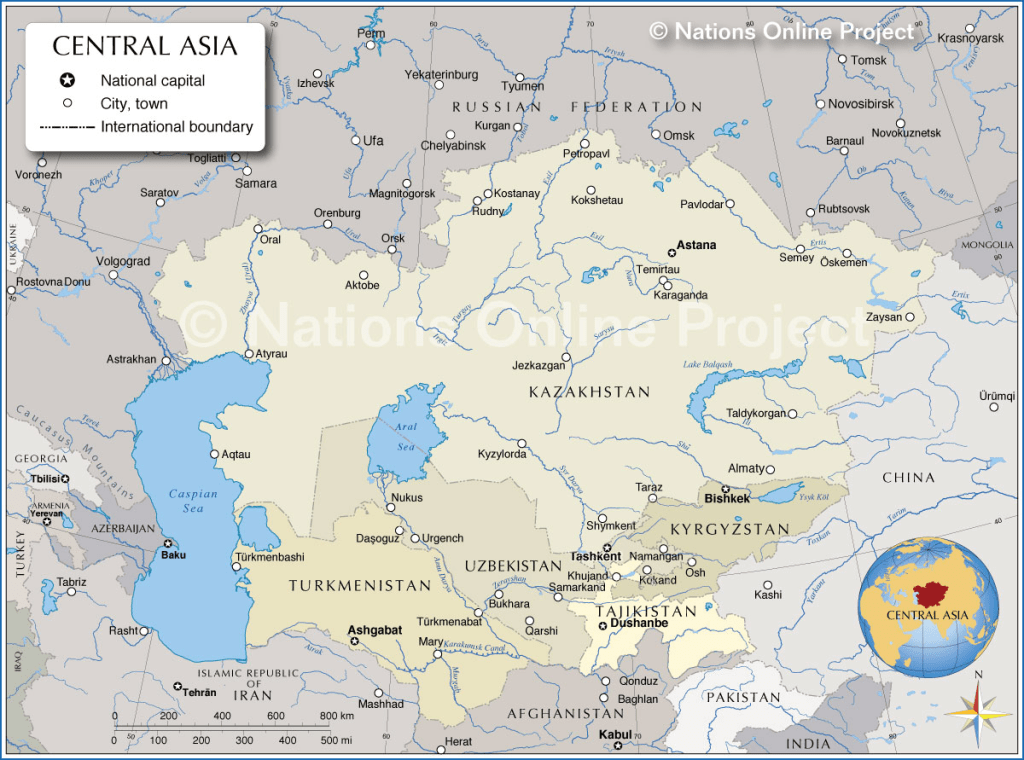
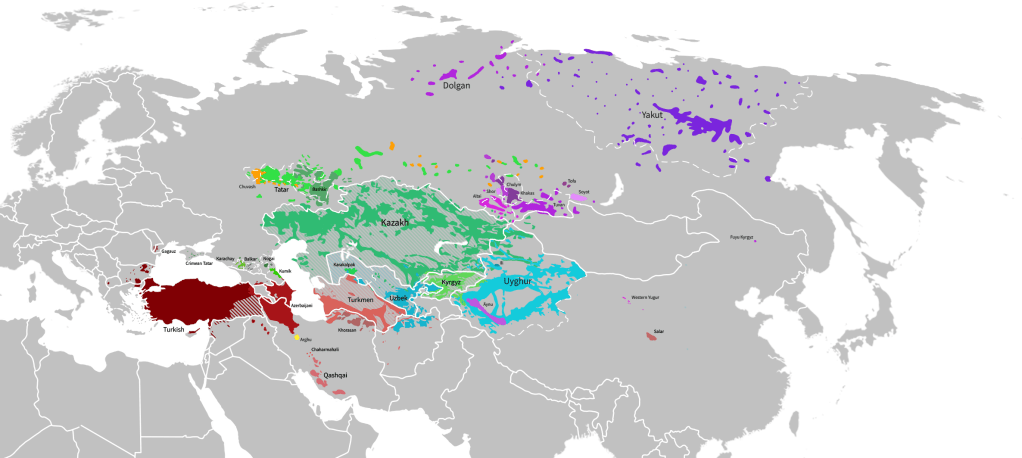


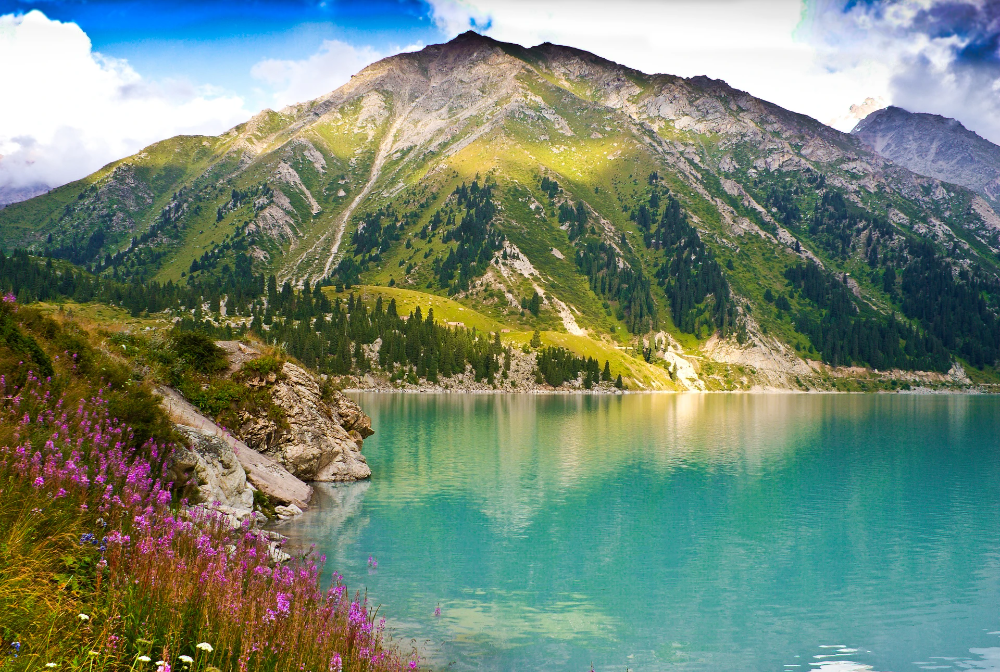
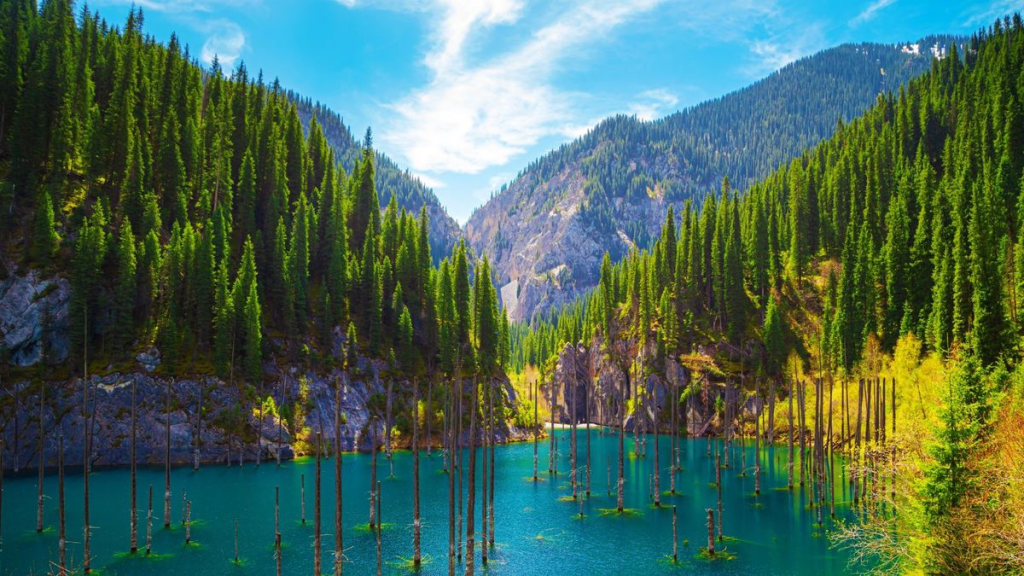
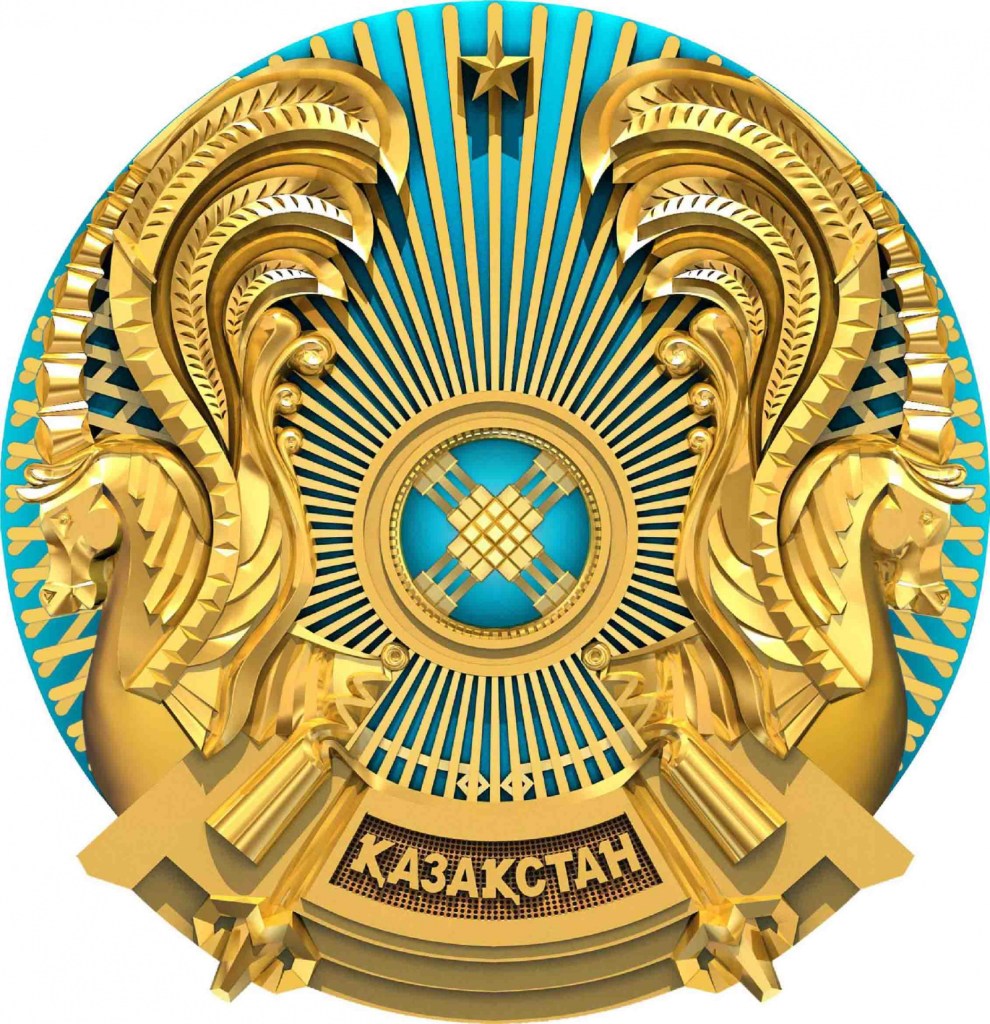
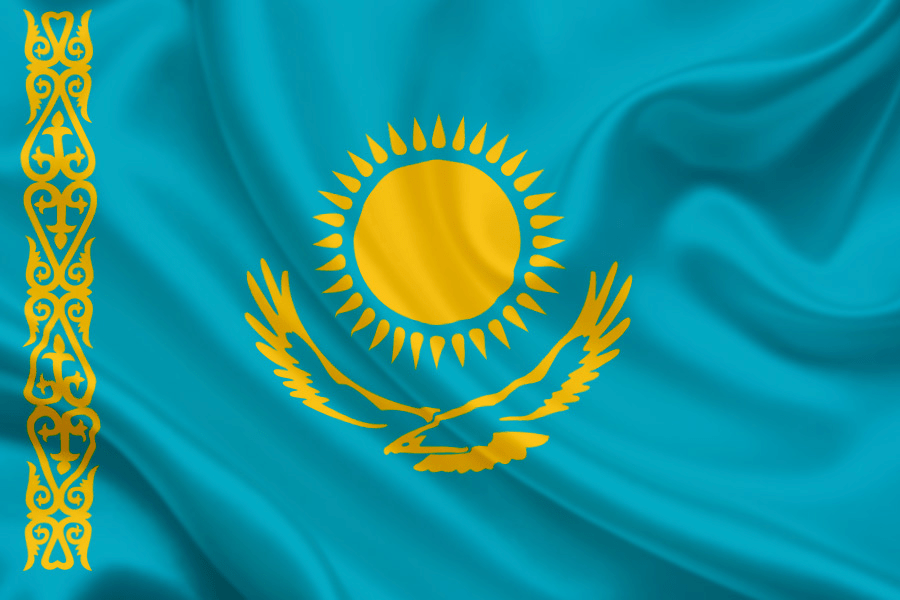

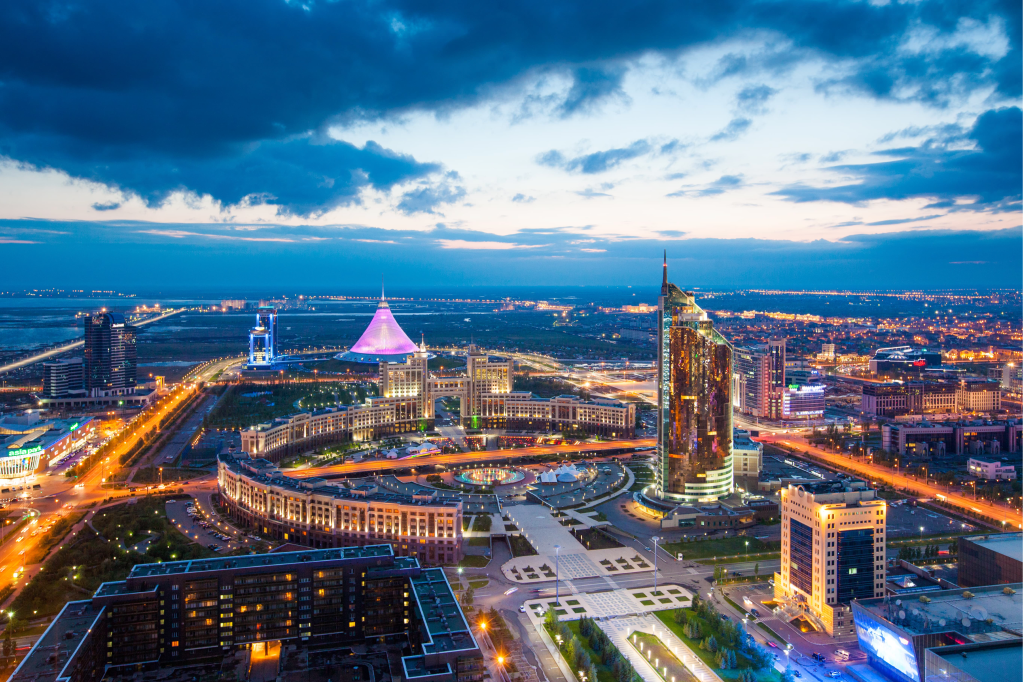

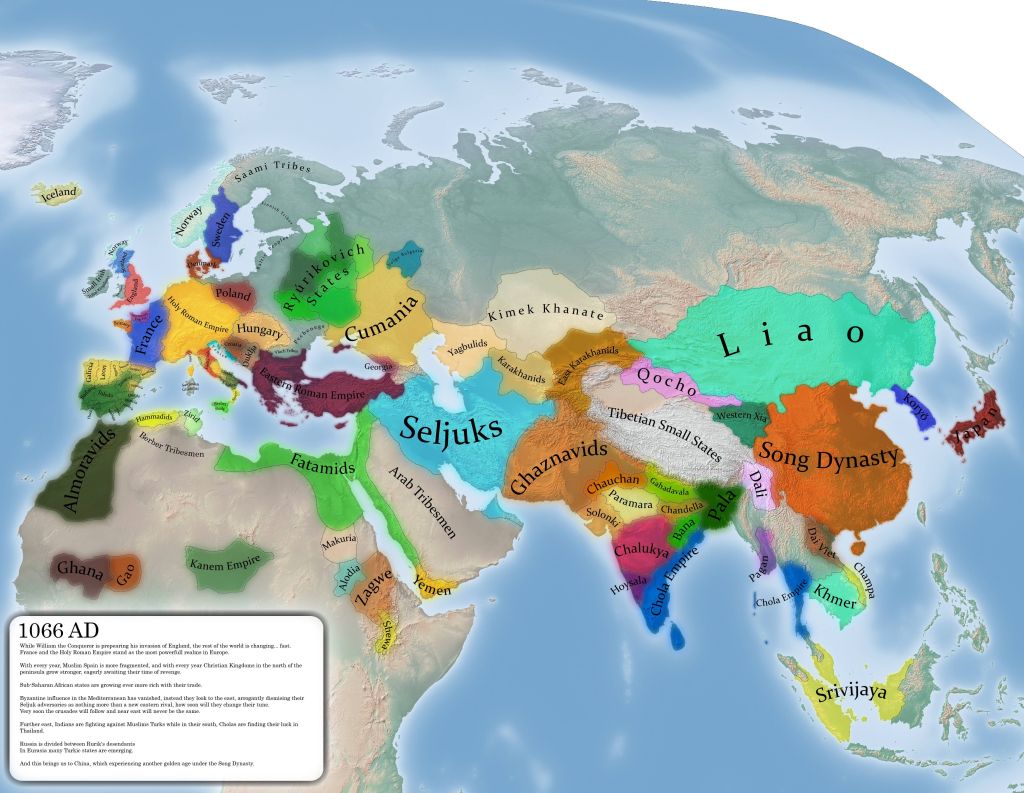
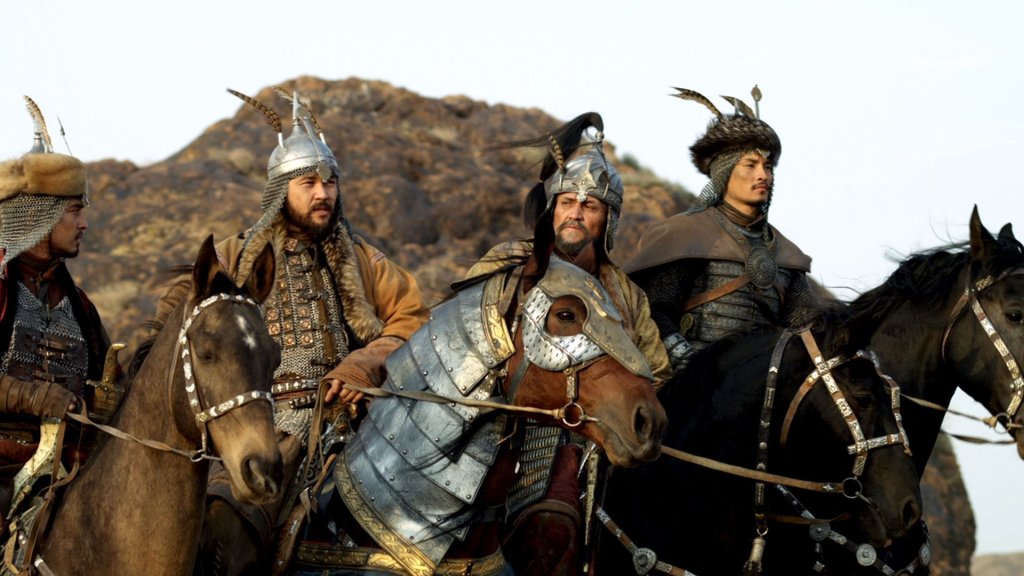


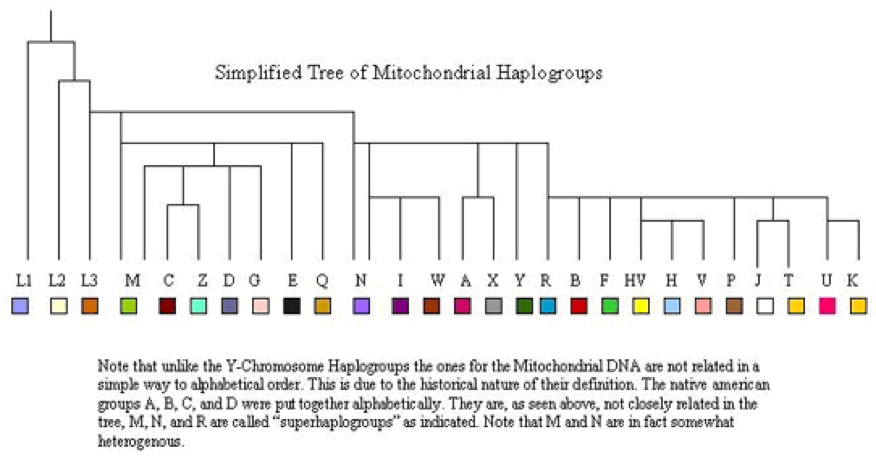





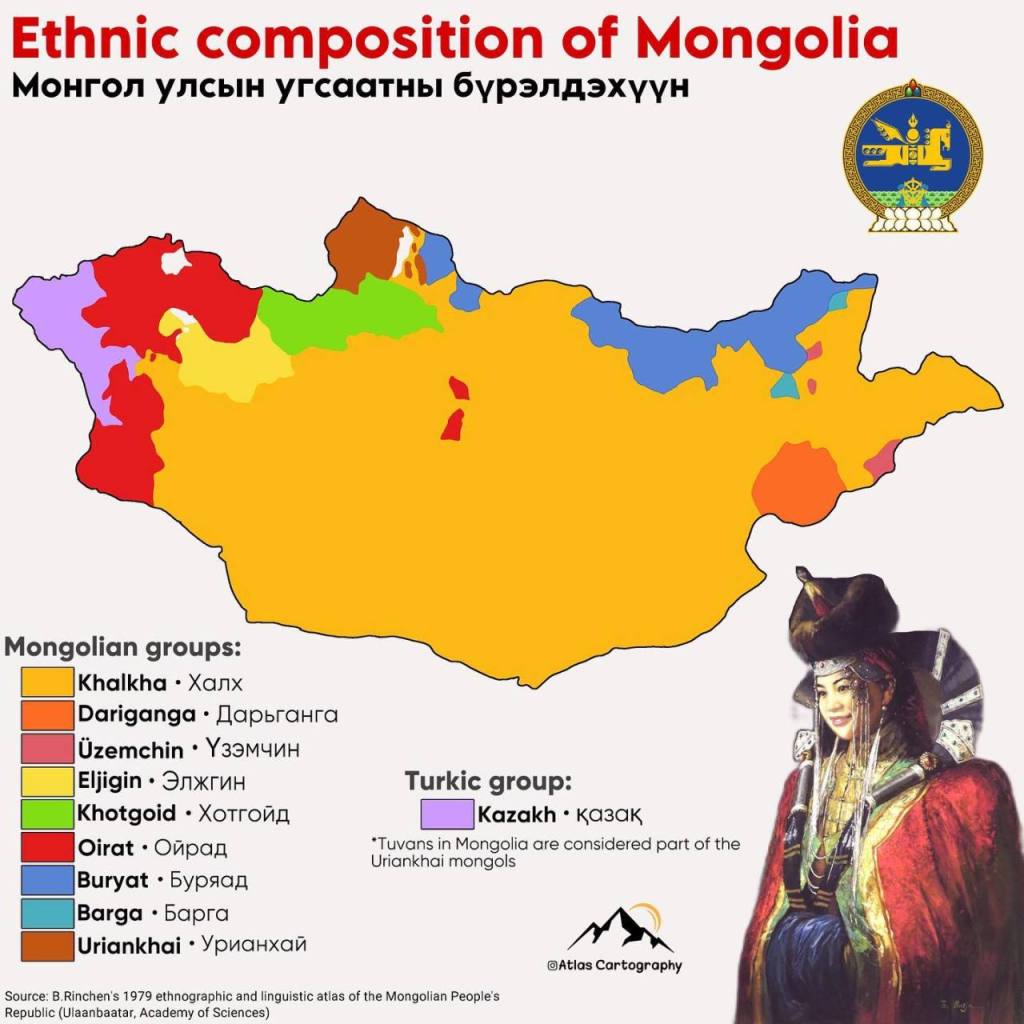


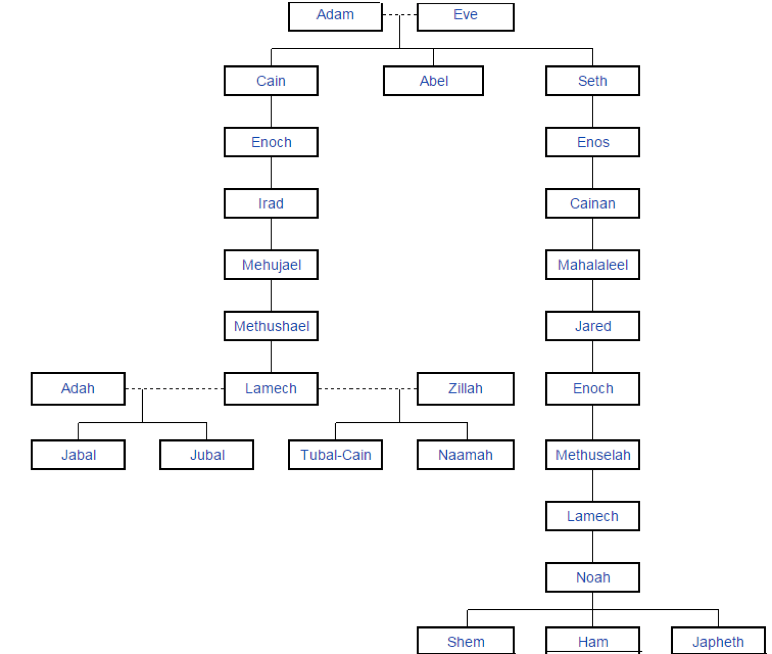







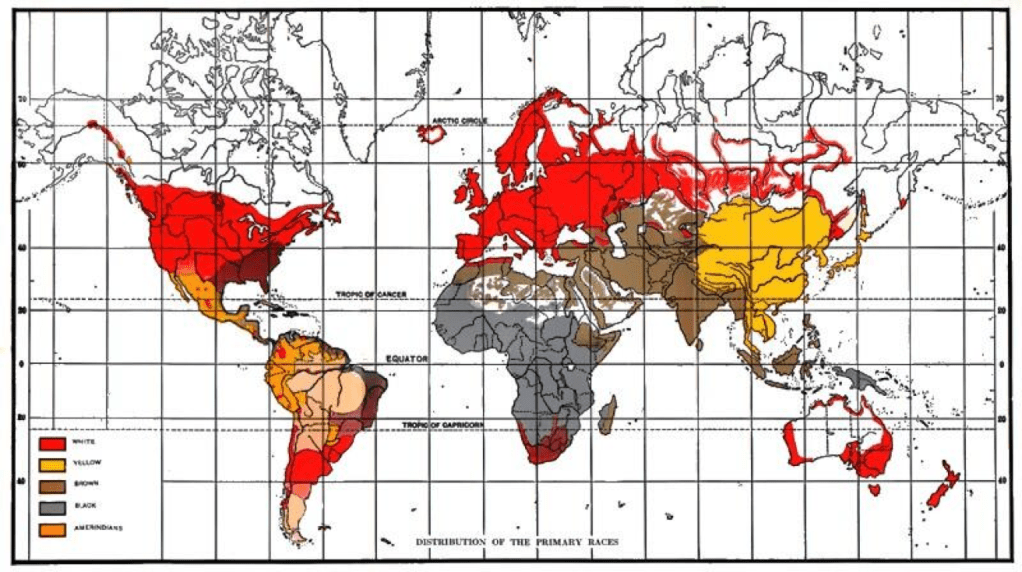
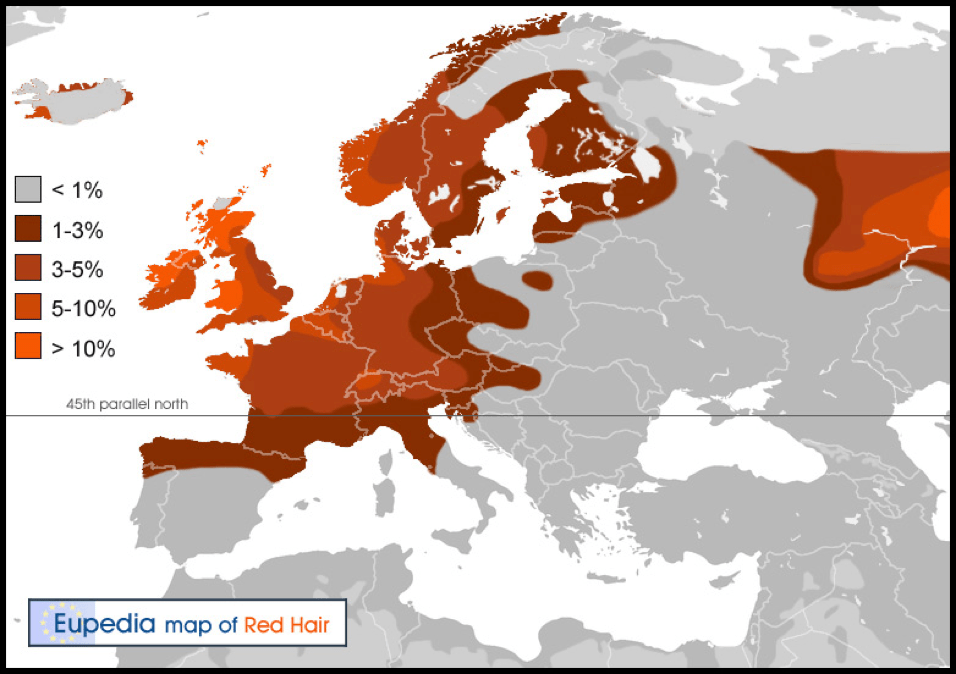

 The Lightkeeper