There is a supernatural being recorded in the Bible, who while not the same spirit entity as the Old Testament Baal otherwise known by his secondary title in the New Testament, as Beelzebub; it is perhaps the next most important personage in the Baal pantheon. In the scriptures, he is introduced as the Baal of Peor. The Hebrew word Ba’al – H1168 – means: ‘lord, ruler, owner, master, husband, adversary’ as well as ‘master of dreams.’ The plural form is Baalim. The Hebrew word Peor is H1187 – P’owr; meaning in its simplest, ‘gap.’ Baal-of-Peor pronounced bah’-al peh-ore’ was the Lord of the Gap – the Moabite deity worshipped with licentious rites.
Baal Peor was also known as Ba’al Phegor, or more commonly today as the latinised, Belphegor – pronounced as bell-fih-gore. Other spellings include Belphegore and Belphagor – both master number names in numerology. His name, or more accurately his descriptive title literally means: ‘Master of the Opening’. The Hebrew word peor derives from the root word pa’ar, meaning: to ‘open wide’. It includes the extended definitions of: hole, orifice, crack, cleft, crevice, cavity, hollow, tunnel and shaft. All having a sexual connotation; while from a spiritual perspective, an opening to the other side as in a gate way or portal.
Abarim Publications: ‘The Verb pa’ar is ‘used to apply to the mouth but suggests to allude to other bodily cavities. This verb yields no nouns, which suggests that it describes doings out of a kind of hunger or desire rather than merely the mechanics of opening. [In] that sense it means to desire, to yearn and obviously also to lust.’
Images for Belphegor fall into one of two categories, either comical or monstrous. This one is perhaps leaning towards some semblance of accuracy in that, he is horned and black.
The constant reader will be aware that we have encountered Ba’al of Peor twice before. Once in Chapter XXVII Abraham & Keturah – Benelux & Scandinavia.
Numbers 25:1-18
English Standard Version
1 ‘While Israel lived in Shittim, the people began to whore with the daughters of Moab. 2 These invited the people to the sacrifices of their gods, and the people ateand bowed down to their gods. 3 So Israel yoked himselfto Baal of Peor. And the anger of the Lord was kindled against Israel. 4 And the Lord said to Moses, “Take all the chiefs of the people and hang them in thesun before the Lord, that the fierce anger of the Lord may turn away from Israel.” 5 And Moses said to the judges of Israel, “Each of you kill those of his men who have yoked themselves to Baal of Peor.”
6 And behold, one of the people of Israel came and brought a Midianite woman to his family, in the sight of Moses and in the sight of the whole congregation of the people of Israel, while they were weeping in the entrance of the tent of meeting. 7 When Phinehas the son of Eleazar, son of Aaron the priest, saw it, he rose and left the congregation and took a spear in his hand 8 and went after the man of Israel into the chamber and pierced both of them, the man of Israel and the woman through her belly. Thus the plague on the people of Israel was stopped.
9 Nevertheless, those whodied by the plague were twenty-four thousand – Deuteronomy 4:3. 10 And the Lord said to Moses, 11 “Phinehas the son of Eleazar, son of Aaron the priest, has turned backmy wrath from the people of Israel, in that he was jealous withmy jealousy among them, so that I did not consume the people of Israel in my jealousy. 12 Therefore say, ‘Behold, I give to him my covenant of peace, 13 and it shall be to him and to his descendants after him the covenant of a perpetual priesthood, because he was jealous for his God and made atonement for the people of Israel.”
14 ‘The name of the slain man of Israel, who was killed with the Midianite woman, was Zimri the son of Salu, chief of a father’s house belonging to the Simeonites’ – Chapter XXXI Reuben, Simeon, Levi & Gad – the Celtic tribes. 15 ‘And the name of the Midianite woman who was killed was Cozbi the daughter of Zur, who was the tribal head of a father’s house in Midian. 16 And the Lord spoke to Moses, saying, 17 “Harass the Midianites and strike them down, 18 for they have harassed you with their wiles, with which they beguiled you in the matter of Peor, and in the matter of Cozbi, the daughter of the chief of Midian, their sister, who was killed on the day of the plague on account of Peor” – Numbers 31:16.
The Phillip Medhurst Picture – Idolatry with Baal-Peor
It would appear that – even after coming out of Egypt and the infamous golden calf incident – the sons of Jacob were easily influenced by the religions and false gods of their neighbouring nations; who were in reality, extended family – refer article: The Calendar Conspiracy. As they followed the gods of Moab and Ammon, they also worshipped the same gods as Midian. A case in point, is the false god just outlined in Numbers chapter twenty-five, prominent amongst the Moabites and Midianites, Baal of Peor. Peor was a mountain located in the Abarim Range in the territory of Moab. The name Abarim comes from the verb abar, meaning ‘to pass over’ or ‘through’. It can connote ‘regions beyond, crossings’ and ‘passages.’ All of which have a dual spiritual application in passing over to the other side. The precise location of Mount Pe’or itself is uncertain. Some researchers have identified it with Mt. Nebo – refer article: The Ark of God.
Abarim: ‘This mountain is so very special because Moses was given a birds-eye view of the promised land of Israel (Numbers 27:12, Deuteronomy 32:48-52). After he had seen it he was ‘gathered to his people’ and he was never to enter what he had seen and towards which he had led the people for forty years of suffering and wars. Moses, the friend of God… was kept in God’s ultimate esteem. When he died God himself buried him in the valley in the land of Moab (Deuteronomy 34:6), close to Mount Abarim. Moses’ body was even such a prize that none less than Michael the arch-angel and the Devil entered into a dispute over it’ – Jude 9.
Dragon of the Two Flames, Demonic Magic and Gods of Canaan, Michael W Ford, 2019:
“… Moses… called upon the ‘angel’ Haron/Horon, who is called in the ‘Legends of the Jews’ by Louis Ginzberg as ‘Baal-Peor’. Horon, being a manifestation of Baal of Peor is ‘drawn once more into the depths of the earth’. Baal-of-Peor… was bound in the chthonic depths by… Yahweh, who buried Moses opposite of where the old god was bound. Baal-of-Peor as Horon would ascend from the underworld to cause plague and destroy Israel if they did not follow the rules and structure Moses defined.”
Not only is the link between Moses and Baal of Peor of interest, so is the personal name given for the Baal… of Peor: Horon. For the meaning of Horon is parallel with that of Peor in that Horon means ‘hollow; from the noun hor. Abarim include the definition of ‘freeman’ for Horon. ‘There are two towns named Beth-horon in the Bible: Upper [located in Ephraim] and Lower Beth-horon [in Benjamin], which were built by Ephraim’s daughter Sheerah (1 Chronicles 7:24). Much later king Solomon would fortify both Beth-horons (2 Chronicles 8:5).’
This is an interesting coincidence in light of Solomon’s relationship with Naamah of Ammon; her relationship with Molech; Molech’s relationship with Chemosh; and Chemosh’s relationship with Belphegor – refer article: Na’amah. For Chemosh is none other than Baal of Peor the Moabite deity – 2 Kings 23;13, Jeremiah 48:46.
Ford notes that ‘Astarte is mentioned as the equivalent of Ishtar [aka Lilith] and holds power of not only magic (in spells regarding snakes* often with Horon) yet also of love and of course war’ – article: Lilith.
Abarim: ‘Because the area of Beth-horon had at least one major cave, scholars assume that the horon-part comes from the word (hor), meaning hollow or hole, or else (hur), meaning cavern. The extension is a common device to personify or localize the word it’s attached to. In this case horon would thus mean: of the hor [or the hollow].’
Belphegor by Louis Le Breton drawn in 1863 for the Dictionnaire infernal written by Collin de Plancy – which unfortunately for Belphegor stuck.
Michael W Ford: “In Ugaritic literature there are two demon-gods who are associated with the netherworld yet also have a balanced role in the world of the living… ‘Horon’, called ‘The One of the Pit’… [or] ‘The One of the Netherworld’ is mentioned in the legend of Keret and other texts as [not just] a striking, deadly Deific Mask but also one who is a powerful magickian [and] who can keep other underworld powers from attacking humans… Horon… a very powerful underworld god… [is] invoked in curses against not only enemies but also snakebites* and other demons… [indicating] his powers are much greater than most rebel spirits… Horon… [relates] to the Arabic ‘haur’ which translates [as] ‘bottom of a well’… [as in] ‘under’ the earth or ‘hole’ in the earth… [and] represents the ‘underworld’. Associated with Horon is the meaning ‘deep one, the one inhabiting the underworld’. Horon’s name is connected to hor signifying a ‘pit’. The Pit is more than the underworld… – [it is] the ‘place for necromancy, offering libations… sacrifices to the dead… [and] an entrance into Hell.
Horon is known by the epithet ‘Horanu Habiruma’… which translates “Horanu, the Spellcaster”… a powerful god of death and dark magick. His powers are invoked in the direst circumstances and Horon was rightly feared due to the degree of harm in which he could inflict upon his enemies.
The abode of Horon is a rather mysterious name, ‘msd’ (Ugarit epithet of ‘hrn msd’)… [meaning]: ‘fortress’, ‘stronghold’ or ‘melting oven’ (Akkadian ‘Masadu’ which [means] ‘Hiding Place’, i.e. [the] ‘Underworld’).’ This word is almost the same as the fortress Masada in Israel (Chapter XXIX Esau: The Thirteenth Tribe)… ‘Horon is a balanced god who is both chthonic darkness, the predatory instinct of hunting and survival with the discipline of restraint and assisting those worthy of the [god’s favour].
Horon is a greatly [revered] Deific mask in the Ugarit texts, yet he is also a beneficial power… an expert in sorcery and magick; his spells and instruction of magick can hold back his demonic creatures which often threaten humanity… [these] ‘Creatures of Horon’… are called ‘flying demons’ and can avert any other demonic being; his specialty is the serpent… Horon holds power over hordes of phantoms and… demons known as ‘creatures of agitation’, ‘creatures of insanity’, ‘sons of disease and terror’, ‘legions’, ‘flies’ and ‘those of the flood.’ All these names are in common with Beelzebub.
“Despite being a neglectful father… especially based on what I’ve heard from other warlocks and cambions about their own sire. He acknowledged me, that’s first, and his authority alone protects me from all demonic forces. All demons know better than to harm a child of the Lord of Opening, whose hatred of many of his brethren rivals none. All of Hell knows that he hates many of the demonic nobility, to their cores and is waiting for an opportunity to rain hell upon them” – Matt Wright
The previous image has greatly influenced how Belphegor is perceived, as shown by the replica statue above.
Ford: “In Egyptian texts, Horon is the son of Astarte which is akin to the assimilation of Horus and Isis. Horus being the child of Isis…” This is revealing, for it would mean that Horon as Belphegor is the son of Lilith and thus perhaps the son of, Samael – Chapter XXII Alpha & Omega. “In Upper Egypt, Horon is identified with Shed and amulets from Deir el-Medina present both Horon and Shed as [a] double-name[…], Heron-Shed. This is the manifestation of Horon as the Horus-Hawk, the Lord of the Desert.
In Tanis a large statue of Horon in the form of the hawk-god is protecting the Pharaoh Ramesses II… This bird of prey for the Egyptian pantheon represented mastery of the sky… In Canaan, Ugarit and the Levant the… hawk had underworld associations… Horon is shown… as a hawk holding a snake in his talons; his power and essence indicates his dominion over serpents.
The spelling of… [Horon] is varied depending on the ancient source and translation. Hauron, Hawran, Choron, Chauron… are a few versions of the name… The Enochian grimoires of John Dee, the Elizabethan court astrologer and John Kelly present ‘Coronzon’ (Aleister Crowley’s spelling is ‘Choronzon’) as the ‘mighty devil’… As a powerful ‘devil’, Coronzon is an assimilated mask of the Adversary known as Samael, who is… an enemy of the Hebrew religion and a powerful fallen angel.”
Belphegor seems destined to remain on a commode, yet this interpretation is less unflattering – for at least Belphegor has wings and a decent set of horns.
Michael W Ford: “Chemosh is equated with the god ‘Baal-Peor’, becoming in Christin antiquity the demon “Belphegor”. As a Chthonic god, Baal-Peor is… [associated with] the deified dead known as the Raphaim… Baal-of-Peor is a god of the underworld… the subconscious desire and [the] lust of both women and men. Among the temple-cults one of the most esteemed Deific Masks [was] the god Kamish… Third Millennium B.C.E. [city-state] Ebla had the [prominent] Temple of Kamis… [and] the twelfth month (August/September, ITU NIDBA ka-mi-is) was named after the god, called [the] ‘Month of the Sacrifice (Feast) of the god Kamish (Chemosh)… Kamish had a cult centre at Ebla… [while] later on Kamish appears with a temple in Ugarit and manifests various aspects of Deific Energy: Athar (Ashtar-Chemosh), Kemosh the Dust/Darkness (in Ugarit)… an underworld god and later [is] elevated as a major Deific Mask of the Moabite tribes.” In the grimoire Key of Solomon, Belphegor is listed near the end of the book as an Assyrian idol, who was destroyed.
“In a Middle-Assyrian god list, the divine name Ka-am-mus and Ka-mu-us is a name of [the Babylonian] Nergal. The spelling… in Sumerian cuneiform is ‘GUD’ and the other [word] ‘Etemmu’ [is a] sign for ‘ghost’ [or ‘Spirit of a dead one’]. Kamasu has etymological origin in Assyrian as meaning ‘to kneel down in submission’ as well as ‘to prepare for burial’. Kamasu is a conquering god, and thus his enemies are meant to kneel into the grave. GUD is also translated ‘Bull’…” – refer article: The Calendar Conspiracy. “From Middle Babylonian (1595-1157 BC)… a record… lists a group of gods who are named… GUB which is…[also] ‘Bull’; nearly all these gods are associated with death and the netherworld.
Chemosh is found in several Ugaritic texts in which his name, ‘kmt’ was compounded with ‘clay, ‘darkness’, ‘mud and ‘bird of prey’ indicating his nature… of the underworld. In the Babylonian tradition the demons… may be clothed in the feathers of ravens, owls and [hawks]… [all having] the wings of predatory birds. Kemosh has the wings of a Black Raven or Owl [Article: Lilith]; his feet terminate into the talons of a bird of prey with razor-sharp claws, black as night. His body is covered in dust and black feathers and the fur of a bull. The arms are long, and his hands have extended black predatory claws. Kemosh has… blazing, illuminated eyes… yet his face is emaciated, with a hairless skull… His mouth reveals rows of fangs, jagged and uneven… his tongue is that of a serpent and his crown is a… conical golden one with two Bull horns protruding in front.
There is a connection between the Lemegethon-Goetia grimoire and the 66th Spirit, Kimaris… symbols associated with Chemosh include a phallus (as Baal-Peor), a tree branch [and a] pillar” the same as Ba’al Peor.
Abarim Publications define Chemosh from ke, ‘as if’ and the verbs yasha, ‘to save’ and mush, ‘to be ambulant’ or ‘feel.’ Thus meaning either, as if he feels; as if he moves; and as if he saves. One source also offers for Chemosh: destroyer and subduer.
An intimidating depiction of Chemosh aka Ba’al of Peor
Prior to the events recorded in Numbers chapter twenty-five involving the Israelite apostasy with Ba’al Peor, there is a potent background story. Previously quoted in Chapter XXVI The French & Swiss: Moab, Ammon & Haran, an excerpt from Chapter XI, The Moabites and the Ammonites, Emanuel Swedenborg – emphasis mine:
‘Both became great and powerful clans or nations, but the Ammonites always preferred the roving life of… marauders, while Moab… [developed] into a settled, well organized and prosperous nation, the chief characteristics of which were wealth and moral corruption. The prosperity and riches of Moab are vividly portrayed in the Word. In the cities of this land there was “a great multitude of people,” living on the “glory” and “fat of the land,” possessing “great treasure,” and crowding the temples of Chemosh and Baal Peor, where infants were sacrificed, and virgins prostituted in the name of religion. Outside of the towns were the “plentiful fields,” the vineyards [how French] and gardens of “summer fruit,” the meadows where hundreds of thousands of sheep and cattle were browsing. Peace and prosperity reign everywhere; the people are fat and self-satisfied, but of the worship of the true God there is not a trace.
Small wonder that such a nation should view with alarm the approach of a great horde of desert wanderers, asking permission to pass through the land on their way to Canaan. They came as Hebrew kinsmen, worshipping an ancient but generally forsaken deity named Jehovah. Balak, the king of the Moabites, now bethought himself of a Syrian wizard, Balaam, who was [known]: to prophecy in the name of Jehovah and who was wont to dispense his blessings or cursings for filthy lucre.
If a prophet of Jehovah were to curse the children of Israel, the latter would surely be put to confusion. He, therefore, sent for the complaisant prophet, but great was his disgust when the magician was forced by his God to turn the intended curse into a blessing, the power and beauty of which are almost without equal in Hebrew literature. Dismayed, Balak now allied himself with the Midianites in an effort to destroy Israel by the seductions of harlots in the lascivious ritesof Baal Peor, but again his scheme was frustrated, and he was glad to escape the frightful punishment meted out to the Midianites, who had been the most active in the plot’ – Numbers 22:1-41; 23:1-30; 24:1-25.
Recall Baalim is the plural for Baal – note the spelling similarity with Balaam. According to Abarim Publications, the name Balaam includes the following definitions: ‘destroyer of people, destruction of the people, confuser of the people’ and ‘swallowing up the people’ – article: The Seven Churches – A message for the Church of God in the Latter Days. Balaam was from Pethor to the north in Upper Mesopotamia and the son of Beor; both names showing similarity with Peor, also known as Beth-peor – Deuteronomy 3:29.
In fact, when the cursing of the Israelites failed – Numbers 23:27-28, ESV: ‘… Balak said to Balaam, “Come now, I will take you to another place. Perhaps it will please God that you may curse them for me from there.” So Balak took Balaam to thetop of Peor, which overlooks the desert.’
Hell’s most wanted possesses a sense of humour
The collective sins of the Israelites committed at Peor remained a dirty stain, long in the memory of the Eternal and the righteous.
Psalm 106:28-29
English Standard Version
‘Then they yoked themselves to the Baal of Peor, and ate sacrifices offered to the dead [spirits of the Nephilim]; they provoked the Lord to anger with their deeds, and a plague broke out among them.’
Joshua 22:17
English Standard Version
‘Have we not had enough of the sin at Peor from which even yet we have not cleansed ourselves, and for which there came a plague upon the congregation of the Lord…’
Hosea 9:10
English Standard Version
‘Like grapes in the wilderness, I found Israel. Like the first fruit on the fig tree in its first season, I saw your fathers. But they came to Baal-peor and consecrated themselves to the thing of shame, and became detestable like the thing they loved.’
Even Paul mentions the incident at Peor to the Corinthian brethren, who lived in a city infamous for similar rituals.
1 Corinthians 10:5-12
English Standard Version
‘Nevertheless, with most of them God was not pleased, for they were overthrown in the wilderness [worshipping the golden calf]. Now these things took place as examples for us, that we might not desire evil as they did. Do not be idolaters as some of them were; as it is written, “The people sat down to eat and drink and rose up to play.” We must not indulge in sexual immorality as some of them did, and twenty-three thousand fell in a single day. We must not put Christ to the test, as some of them did… Now these things happened to them as an example, but they were written down for our instruction… Therefore let anyone who thinks that he stands take heed lest he fall.’
Ultimately, Balaam paid with his life, as do those souls who follow his way – Joshua 13:22, Jude 11, 2 Peter 2:15.
Revelation 2:14
English Standard Version
‘But I have a few things against you: you have some there who hold the teaching of Balaam, who taught Balak to put a stumbling block before the sons of Israel, so that they might eat food sacrificed to idols and practice sexual immorality.’
The Moabites themselves likewise paid the price for their disobedience in worshipping Ba’al Peor and were also taken into captivity.
Jeremiah 48:7, 46
English Standard Version
‘For, because you trusted in your works and your treasures, you also shall be taken; and Chemosh shall go into exile with his priests and his officials. Woe to you, O Moab The people of Chemosh are undone, for your sons have been taken captive, and your daughters into captivity.’
This did not stop the wisest man who ever lived from worshipping Chemosh the false god of the Moabites and Molech the false god of the Ammonites – refer article: Na’amah.
1 Kings 11:7
English Standard Version
‘Then Solomon built a high place for Chemosh the abomination of Moab, and for Molech the abomination of the Ammonites, on the mountain east of Jerusalem.’
2 Kings 23:13
English Standard Version
‘And the king defiled the high places that were east of Jerusalem, to the south of the mount of corruption, which Solomon the king of Israel had built for Ashtoreth [Ishtar] the abomination of the Sidonians, and for Chemosh the abomination of Moab, and for Milcom the abomination of the Ammonites.’
Yves Tourigny: ‘The Moabite Stone, a stele bearing an inscription commemorating the activites of King Mesha [“son of Chemosh-Melech king of Moab”] (c. 840* BCE), was discovered in 1870. It is the only known extensive text in Moabite. It makes frequent mention of Chemosh… :
“I assaulted the wall and captured it, and killed all the warriors of the city for the well-pleasing of Chemosh and Moab, and I removed from it all the spoil, and offered it before Chemosh in Kirjath; and I placed therein the men of Siran, and the men of Mochrath. And Chemosh said to me, Go take Nebo against Israel, and I went in the night and I fought against it from the break of day till noon, and I took it: and I killed in all seven thousand men, but I did not kill the women and maidens, for I devoted them to Ashtar-Chemosh; and I took from it the vessels of Jehovah, and offered them before Chemosh.” – From an 1878 translation by James King
Left: Mesha Stele, Reconstructed parts are black, original parts are grey – Right: 1898 Mesha Stele drawing.
The taking of Nebo (refer article: The Ark of God) may be a clue that it was one and the same with Mount Peor, as some scholars assert. The book of 2 Kings chapter three appears to contradict the events of the battle depicted in the Mesha Stele, until we read right through to the very end of the chapter.
2 Kings 3: 1-5, 21-27
English Standard Version
‘In the eighteenth year of Jehoshaphat king of Judah, Jehoram the son of Ahab became king over Israel in Samaria, and he reigned twelve years. 2 He did what was evil in the sight of the Lord, though not like his father and mother, for he put away the pillar of Baal that his father had made. 3 Nevertheless, he clung to the sin of Jeroboam the son of Nebat, which he made Israel to sin; he did not depart from it. 4 Now Mesha king of Moab was a sheep breeder, and he had to deliver to the king of Israel 100,000 lambs and the wool of 100,000 rams. 5 But when Ahab died, the king of Moab rebelled against the king of Israel.’
The sin of Jeroboam I – the first king of the Kingdom of Israel from 930 to 910 BCE, after it split from Judah following Solomon’s death – was to erect two golden calves in Bethel and Dan. This Horned Bull worship was tantamount to serving Ba’al Hadad the storm god and – according to Michael W Ford – in supreme irony would the reader believe, for ‘the Bull has a relation to… the Deific Masks of Chemosh [and] Molech…’ A Deific Mask being a “representation of a type of ‘power’, [and] ‘energy’ which has a connection to the mind-body-spirit of the human being…” In other words, what one would ‘identify’ as a ‘God’ or ‘Demon’.
Evil king Jehoram enlists the help of righteous Jehoshaphat the King of Judah, as well as an un-named king of Edom against King Mesha of Moab. Jehoshaphat reigned for twenty-five years, circa 869 to 844 BCE. His eighteenth year would have been 852/851* BCE, coinciding with Jehoram’s first year of rule.
2 Kings : 21 ‘When all the Moabites heard that the kings had come up to fight against them, all who were able to put on armor, from the youngest to the oldest, were called out and were drawn up at the border. 22 And when they rose early in the morning and the sun shone on the water, the Moabites saw the water opposite them as red as blood. 23 And they said, “This is blood; the kings have surely fought together and struck one another down. Now then, Moab, to the spoil!”
24 But when they came to the camp of Israel, the Israelites rose and struck the Moabites, till they fled before them. And they went forward, striking the Moabites as they went. 25 And they overthrew the cities, and on every good piece of land every man threw a stone until it was covered. They stopped every spring of water and felled all the good trees, till only its stones were left in Kir-hareseth, and the slingers surrounded and attacked it. 26 When the king of Moab saw that the battle was going against him, he took with him 700 swordsmen to break through, opposite the king of Edom, but they could not.
27 Then he took his oldest son who was to reign in his place and offered him for a burnt offering on the wall. And there came great wrath against Israel. And they withdrew from him and returned to their own land.’
It is here that we learn of an incredible about shift in the battle, where Mesha received supernatural intervention from Chemosh in recompense for his grisly sacrifice – corroborating the Mesha Stele’s claims of a famous Moabite victory.
Belphegor is associated with gluttony, misanthropy, the colour green, the month of April – when his power is strongest – the Zodiac sign, Cancer, the North, the element Earth, the metal Iron, Sandalwood incense, Lemon Balm, Devil’s Claw, Absinthe – refer Wormwood, Chapter XXII Alpha & Omega – and a prime number with 666 in the centre.
Beth Elias: ‘Belphegor’s Prime is not only a prime number, but also a palindrome. It begins and ends with 1, and 666 is in the middle: 1000000000000066600000000000001. The symbol for this demonic number is an upside-down Pi. It’s not so much that the prime number itself is mysterious, but its symbol definitely is. It was first seen in the Voynich Manuscript, which is a large book written entirely in a code that appears to be one of a kind and has kept historians and scientists stumped… It includes astrology, plants, [and] naked women… The 600-year-old tome is understood by absolutely no one – even the most elite Voynich scholars don’t even know what language it was written in before it was put into a cipher – and… attempts to crack the code using artificial intelligence haven’t worked.’
Whether significant or not, the number 666 is the number of the Beast which is loosed from the Abyss (the Pit) and rises from its opening. The Beast as identified elsewhere, is the fallen Watcher angel, Azazel – Chapter XXII Alpha & Omega; and Chapter XXI The Identity, Origin & Destiny of Nimrod.
Christian demonology labels Belphegor as the Arch-devil. Belphegor allegedly presides over twenty-six legions of demons – approximately 130,000 – and is referred to as the Lord of Sloth, one of the seven cardinal sins. Thomas Aquinas, expressed that sloth was in fact the root of other sins as well; such as ignorance, which is a result of laziness.
An image bordering between the comical and monstrous
Belphegor is invoked by persons today who wish to find fame, fortune or power through ingenious inventions and novel discoveries; often with as little effort as possible. Most demonic invocations fail. Likewise with Belphegor, whose ‘true mission is to draw the lazy into the sin of Sloth. Through the failure of whatever Belphegor provided to the invoker, he draws them into procrastination and idle dreaming rather than producing, thus damning them.’
Occult World: ‘He can bestow wealth and inspiration and can allegedly guide you toward the creation of new inventions (if you can trust him not to destroy you in the process). Legends suggest that he enjoys sowing discord, causing dissension, and luring people to ruin via their own greed.’ Demopedia: ‘His role… [is] to sow discord among men and seduce them to evil through the apportionment of wealth.’
Gods and Demons: ‘Belphegor is known for giving people wild ideas that ultimately result in their destruction. He seduces people by inspiring them with ideas for ingenious inventions that will make them rich and famous, but in the process he will corrupt them, causing them to grow selfish and paranoid of someone stealing their invention and success.’
The Demonic Paradise: ‘Inventions created by followers of Belphegor will invariably promote the further decadence of the human species. Sometimes possessing alien geometries and illogical structures, these machines on occasion will be capable of incredible technological feats; but despite their functionality, any who succeed in creating these devices will progressively grow slothful and immoral through the usage of these inventions. As the mental and physical state of the inventor deteriorates, so too will the invention, until both are destroyed.’
“I am the greatest scientific mind in all of this realm, not Astaroth, not Beelzebub… There is no one in Hell who can surpass the scientific mind of Belphegor” – Belphegor
Mirta000: ‘In “Legends, Monsters, Or Serial Murderers? The Real Story Behind an Ancient Crime” by Dirk Cameron Gibson (2012) there is an entry stating that in 1589 Peter Binsfeld correlated seven demons to their devilish domain and Belphegor was given the domain of “sloth.”
“Exhaustion: A History” by Anna Katharina Schaffner (2016) has a mention of a monk and theologian Evagrius Ponticus (year 346-299) that has catalogued eight fundamental demonic temptations. The last on the list is acedia (mental and spiritual exhaustion that manifests in listlessness, apathy, boredom, restlessness, dejection, irritability, and hatred of the anachoretic [living in isolation] lifestyle) and this temptation is attributed to a noonday demon which Schaffner believes to be Belphegor.
Andrés Serrano, a Jesuit who worked during the sixteenth century as a priest in Mexico and the Philippines wrote a system of categorizing angels and demons… Serrano… put Belphegor in charge of the deadly sin of gluttony, that can be countered by the virtue of temperance, the angel that is the opposite of Belphegor and can temper him is Sealtiel and both this angel and Belphegor are under the influence of planet Jupiter. The 1409 Lollard manuscript titled Lanterne of Light also associates Belphegor with the deadly sin of… gluttony.’
Chaos Magician and Mystic: “According to some esoteric traditions, this entity can lure people towards immorality and laziness, tempting them with idle pleasure. It’s believed that Belphegor has great power and knowledge, and can predict the future and reveal hidden things. In some texts, Belphegor is also linked with the planet Mars, and often appears as a goat-headed figure riding a chariot.”
Online Encyclopaedia: ‘The novella Belfagor arcidiavolo [Belfagor the archdaemon] by Italian diplomat Niccolo Machiavelli [written between 1518 and 1527] was first published in 1549’… and ‘gives the name to a devil sent into the world by Pluto to discover if it is true, as many of those arriving in hell assert, that they have been sent there by their wives…’ While on Earth for ten years, under the name Rodrigo de Castilla, he seeks a mate to judge marriage for himself. After his misadventure on Earth, Belphegor’s name has come to be applied to being a “misanthrope or a licentious person. Belphegor is known to hate many of his brethren.”
Hrothsige Frithowulf: ‘Machiavelli’s work, which also appeared in an abbreviated form under the name Giovanni Brevio in 1545, and in Giovanni Francesco Straparola’s Le piacevoli notti, was imitated throughout Europe: by Hans Sachs in Der Dewffel nam ain alt Weib zw der Ee, die in vertrieb (1557) and by John Wilson in the drama: Belphegor, or The Marriage of the Devil (1691).’ Belphegor figures in Paradise Lost by John Milton. ‘In Milton’s poem… Belphegor is identical to Nisroc (Hebrew form of an Assyrian god) and, before his fall, “the first of the Princes.” He then becomes one of Satan’s closest confidants.’
Yves Tourigny: ‘There are brief mentions of Chemosh, Peor, Moab, and Moloch in John Milton’s Paradise Lost (1667)…’
“Next CHEMOS, th’ obscene dread of MOABS Sons, From AROER to NEBO, and the wild Of Southmost ABARIM; in HESEBON And HERONAIM, SEONS Realm, beyond The flowry Dale of SIBMA clad with Vines, And ELEALE to th’ ASPHALTICK Pool. PEOR his other Name, when he entic’d ISRAEL in SITTIM on their march from NILE To do him wanton rites, which cost them woe. Yet thence his lustful Orgies he enlarg’d Even to that Hill of scandal [the Mount of Olives], by the Grove Of MOLOCH homicide, lust hard by hate; Till good JOSIAH drove them thence to Hell.”
Occult World: ‘In 1955, Australian artist Rosaleen Norton (1917–1979) was charged with obscenity for an exhibition of several paintings including one entitled Belphegor.’
Personified as a male, Belphegor represents the Sun god; as a female, the Moon goddess, typically associated with Ishtar. As Ba’al Peor, he was simply androgynous; including as Chemosh – the Moabite War god who fought relentlessly against the Israelites.
According to Professor Geller on Mythology:
‘[Belphegor] is a shape shifter, delighting in using this ability to deceive mortals. His most common forms are polarized in their appearances. He will take the form of a beautiful woman, naked in all her glory, to seduce those who would fall for his wiles. He also appears as a terrible demon, with leathery flesh, huge horns, long sharp teeth [a beard] and fingernails… a gaping mouth [wings and a tapered tail]. He was a phallic deity, associated with sex, orgies, and all forms of debauchery…
Belphegor is one of the many demons [and one of the seven princes* of hell] with the attribute “Baal,”… [though] As one of the fallen angels, Belphegor was originally a member of the order of principalities, and after his fall he became a demonic counterpart to… [the patron angel of beauty of the sixth Sephiroth, one of the ten who]… oversee the Tree of Life.’ Occult World add: ‘He is one of the Togarini, “the wranglers” or “disputer” and of the 2nd* hierarchy of demons.’
Beth Elias: ‘Though demonology isn’t a hard and fast science, most people consider [the German Bishop], Peter Binsfield’s 1589 guide to demons as the one to trust. In it, he lists the Seven Princes of Hell as Lucifer (pride) [symbol: Fire], Mammon (greed) [Gold], Asmodeus (lust) [Serpent], Satan (wrath) [Goat/Pentagram], Beelzebub/Baal (gluttony) [Fly], Leviathan (envy) [Dragon], and Belphegor (vanity and sloth) [Phallus].’
Future articles are planned which will investigate further the two most powerful diabolic entities who oppose the Ancient of Days and the Son of Man – previously discussed in Chapter XXII Alpha & Omega – Asherah and Samael. The list of seven Princes of Hell is interesting for the fact that four names of the seven are doubled up identities, so that three singular ones remain: Mammon, Asmodeus and Belphegor.
Asmodeus is the only bonafide personal name for even the name Belphegor is a latinised version of a description for the Ba’al of Peor. It is dubious that Mammon is a personal name and appears to be rather a description or a title. Few realise that Lucifer and Baal are one and the same entity, with Lucifer a Latinised description deriving from the Hebrew Heylel, meaning light bringer. While the label Baal is a title meaning Lord. Neither are personal names. Last but definitely not least is Satan and Leviathan, who are the same creature. The word Satan being a title, which means the Adversary, while a Leviathan is a description meaning a sea monster and specifically relating to a dragon.
Regarding Mammon, an article entitled: Demon Mammon: Stepping into the Realm of Wealth & Abundance reveals its relationship with Belphegor. ‘Mammon shares a unique relationship with another demon from the Seven Princes of Hell: Belphegor. While Mammon represents the desire for wealth and the pursuit of prosperity, Belphegor embodies the contrasting principle of sloth and the desire for a life of ease without effort. Belphegor tempts individuals with ideas of invention and innovation that would make them rich without needing to work hard, while Mammon encourages the active pursuit of wealth. This creates a paradoxical symbiosis between the two. They both pertain to wealth and abundance but approach it from different perspectives – one from the prospect of ease and the other from the necessity of effort. This complex relationship between Mammon and Belphegor provides a fascinating study into the human psyche’s contradictions. It explores the opposing desires for easy riches and the recognition of wealth as a result of hard work and determination. These opposing forces within the human psyche are represented well in the symbiotic relationship between Mammon and Belphegor.’
V K Jehannum: ‘Belphagore is a solar fertility god whom the Israelites worshiped through the statue of a giant phallus in orgiastic sacraments, venerated by the Black Lodge as a granter of wealth and resurrector of the blessed dead. His are the will to power, the attainment of wealth, licentiousness, the flash of creative inspiration, the rush of combat, the necromantic arts, and sexual power.
Belphagore is the lord of the dead and a master of all manner of weaponry, and he is a harbinger of economic advancement and personal transformation. Spells to help the witch with occupational or monetary concerns and letting go of the past are specialties of Belphagore’s.
Liber HVHI refers to Belphagore as the “encircler of shades,” and the manuscripts of the Temple of the Black Light call him “the deifier of the inner dark flame and the Rising Beast of the Final Apocalypse.” His name means “Lord of the Opening,” which esoterically harkens to liminality [a threshold, transition, doorway], black holes, star gates, and other nexions. He can empower the witch’s psychic senses and powers and enchant herbs and plants.
A good relationship with Belphagore is a good relationship with the Devil – Satan and Belphagore are very close’ indicating his underlying power as he possesses all the wisdom of the arts, for he ‘enjoys wisdom and art, and he strongly enjoys offerings of blood. Eliphas Levi postulates that the medieval witch sabbats were resurrections of the ritual veneration of Belphegor. Among Belphegor’s devotees were the Kadeshoth, being religious (ceremonial) prostitutes. He was often venerated in the form of a phallus, or as a semi-bestial man with a phallus-shaped tongue. He was primarily venerated on Mount Peor, and his devotees are said to have eaten the sacrifices of the dead.’
Perhaps it was singer Miley Cyrus who initiated the craze especially amongst young women celebrities, to publicly poke their tongues out. Miley Cyrus performs in Hollywood, California, during the taping of Idol Gives Back held at the Kodak Theatre on April 6, 2008.
While the idol in question is the television show, American Idol, it is an interesting coincidence indeed, that Cyrus regularly performs an oral phallic gesture commensurate with the Idol who is in fact the Lord of Orifices.
Even the ancient Hindu Goddess Kali gets in on the act. Significant because she is linked with the biblical Goddess, Asherah – Article: Asherah.
Jehannum: ‘Belphagore is a deity of alchemical transmutation and he’s said to be a deeply cunning spirit. According to Liber Azerate, “Belphegor manifests before men as a beautiful, naked, demonic princess and before women as an elegant, naked, demonic prince, revealing his face which has the aspect of a wild and peculiar beast. If you survive beholding his countenance, he will manifest before you as Sorath, who is described in the bible as the Antichrist or the Beast 666.”
Traditional demonography generally depicts Belphegor as a bearded man with claws, and occasionally with horns as well. According to Joy of Satan Ministries: “Belphagor has blonde Hair, and a muscular build. He usually leaves one with a warm glow after meeting him. He has white wings and very piercing eyes.”
Ketab-e Siyah presents an “infernal alphabet” wherein one demon is attributed to one of a list of letters… letters are the same which occur in the English alphabet, albeit out of order. Belphegor is attributed to I, which is counted the 17th letter of the “infernal alphabet.” The infernal alphabet is a construct which no one understands and no one uses… 17 is the number of Aeonic progression, and is a sensible attribution for Belphegor, in that he rules the Qlipha of the Black Sun… [where the]Black Sun is the engine of Aeonic progression’ [The theory that there are many different realities created by many different perspectives]. Belphegor is the 17th demon listed in the Dictionnaire Infernal. ‘[Seventeen] is also the number of squares inside the swastika. The letter I… refers to the Higher Self, [the] Higher Self the magickian traditionally encounters after initiation through the Black-Solar Qlipha of Belphegor.’
Online Encylopaedia: ‘Tiferet (Hebrew: ‘beauty, glory, adornment’) is the sixth sefira in the kabbalistic Tree of Life. It has the common association of “Spirituality”, “Balance”, “Integration”, “Beauty”, “Miracles”, and “Compassion”. In the Bahir it states: “Sixth is the adorned, glorious, delightful throne of glory, the house of the world to come. Its place is engraved in wisdom as it says ‘God said: Let there be light, and there was light.’
Tiferet – Emanation of Beauty
‘Tiferet is the force that integrates the Sefira of Chesed (“Kindness”) and Gevurah (“Strength, also called Din, “Judgement”). These two forces are, respectively, expansive (giving) and restrictive (receiving). Either of them without the other could not manifest the flow of Divine energy; they must be balanced in perfect proportion by balancing compassion with discipline.’
‘The Name of God associated with Tiferet is Adonay Eloah. The Archangel of this sphere is Raphael. Malakhim (messengers) are the Angelic order associated with Tiferet, and the planetary/astrological correspondence of Tiferet is the sun. The Qliphah of Tiferet is represented by the demonic order Thagirion [aka the Black Sun], ruled by the Archdemon Belphegor. The symbol associated with this sphere is a majestic King.’
modernite420: ‘The “black sun” refers to that of which is antecedent to denotative magnetism, centrifugal, or metaphysically speaking: “that-of-which-is-without”. You will never begin to understand Reality from any facet, until you comprehend that physics and metaphysics are ultimately one and the same. The word “magic” came from the word: magnet. The “black sun” is literally the “hidden sun” that makes the “Sun”, and everything else, manifest in the first place’ – refer article: The Calendar Conspiracy. It is the closest and most accurate depiction of the “unmoved mover”, because thanks to the human brain, we get to comprehend that what we are seeing is the “half face” of the “unmoved mover.”
Encyclopaedia: ‘Tiferet also occupies a place on the middle pillar, and can be seen as a lower reflection of Kether, as well as a higher reflection of Yesod and Malkuth. Tiferet relates to the Sun, and as such, it takes a central place in the lower face of the Tree of Life, much in the same manner that the Sun is at the center of the Solar System. It is not the center of the universe, as one could perhaps argue Kether to be, but rather it is the center of our local astronomical system. Nonetheless, it is the Sun that gives light and life, even though it did not create itself. Tiferet can be seen as a metaphor for these same attributes. Tiferet is unique amongst the Sephirot as it is connected to all the other Sephirot (except Malkuth) via the subjective paths, be they conscious or less conscious.’
While Horon, the Lord of Peor has his origin as an angelic being, there remains debate for some on his exact origin. The question posed on Quora, whether Belphegor was a demon or fallen angel, invoked the following responses, with number four the closest to the truth: 1. “Neither, he is a wicked spirit of a king made into a demon” 2. “Belphegor or Baal-Peor is a demon. In [the] Kabbalah Belphegor is a demon…” 3. “Belphegor was once an angel before falling and becoming a demon” 4. “Supposedly he was originally a fallen angel and I think it’s probable…”
Other aliases for Belphegor include: Beelphegor, Phegor, Belfegor, Belfagor, Belfagel, Velfegor, Belphegus, Belphareth, Praipus and Belfegoth. Titles for Belphegor include: The Demon of Discovery, Prince of Demons, Prince of Sloth, Lord of the Gap, Lord of the Opening, Lord of the Underworld and the Lord of Paris. Belphegor is said to personify: sloth, apathy, indolence, selfishness, greed, invention and wealth. One source states his father and mother as the Ancient of Days and Asherah. While this is probable, a parentage of Samael and Lilith is also possible.
His consort is said to have been Eisheth Zenunim, one of the four Angels of Prostitution and each rumoured to have been originally partners of Samael. They are described as demonic sisters, succubi and demon goddesses – refer article: Na’amah. While Lilith is a fallen Angel and Na’amah was a Nephilim turned demoness; it is not clear what status Eisheth Zenumim (or Agrat bat Mahlet) is, who is described as a Princess of the Qliphoth.
Even though the following is heavily laden with conjecture, there are salient points of interest – Gods and Demons:
‘Belphegor was once part of the choir of Principalities. During his time in Heaven, Belphegor was a friend of Asmodel, a… cherub and… fellow principality, an angel of the forests… though [Belphegor] did not exactly enjoy his angelic duties and [prefered] to laze around in the luxury of heaven, foreshadowing his slothful tendencies. Moreover, Belphegor enjoyed crafting strange and intricate objects from all manner of material he could find which, according to him, was his outside hobby. However, his slothful attributes were finally starting to overtake the angel when during a conflict against Hell, the demon lord Merihem had struck and slain his principality friend which… even [to] this day, Belphegor has not forgiven him. After her death, Belphegor experienced the five stages of grief… and started to fall into the sin of Sloth.
Unlike the majority of rebel angels, Belphegor did not join Lucifer’s side after he declared war against Heaven, nor was he fighting against the rebellion at God’s side either. Despite not being part of Lucifer’s rebellion, the fact that he refused to join God’s side and instead stood idly earned him his Father’s punishment by being cast down to Hell alongside all the other rebel-angels, no longer as an angel of God but instead transforming into the Archdemon of Sloth.
Belphegor, along with Asmodeus and Mammon, were soon awakened by the sound of Lucifer’s voice calling out to them from his cage in a large crater in the depths of Hell as [a] result of their impact from the fall. Belphegor would then… [search] for the cage in which Lucifer became imprisoned in. After that, they… [took] over Hell and made every demon kneel to them, including Merihem [with] which Belphegor… [took satisfaction]’
The Demonic Paradise: “Despite not being part of the original rebellion to overtake heaven, Belphegor quickly rose through the demonic hierarchy due to his great contributions to the construction of Pandemonium, the newly founded capital of Hell. Given his talent and interest in machinery, he participated in the crafting of the many evil mechanical inner workings of the capital, whilst Mulciber and Mammon worked on both the exterior and interior.”
Gods and Demons: ‘He was then present at Pandemonium during Lucifer’s Rally, officially declaring himself as an enemy of God forever… During the rally, Belphegor became anointed as one of the… Princes of Hell along with… Mammon, Asmodeus… [Satan-Leviathan] and [Lucifer-Beelzebub]. This rise in rank for Belphegor resulted in much confusion and disruption amongst the crowd of demons, who largely viewed Belphegor as the laziest and least threatening among them. However, Lucifer recognized the tremendous potential for evil within Belphegor, and defended his nomination, silencing all those who questioned his placement.
[Later], the pagan god Baal Peor who ruled over the Moabites as their patron was killed by the True Archangel Merkabah [the divine chariot of the Eternal]. Afterwards, his essence and soul… joined with Belphegor to be united as one.’
“Belphegor was known to not migrate from one place to another as often as other demonic monarchs, preferring to remain in the same location within Hell. He [would] only put in the effort to turn away from his work if something actually [caught] his interest.” ‘Despite his desire to remain in Hell and avoid hard work, Belphegor had several exploits during his time on Earth, with the most notable [for] him posing as the now absorbed pagan deity and leading the Moabites astray from the path of God as their patron deity.’
“[Another] such occurrence was when he had been dispatched to Earth on a mission by Satan. While on Earth, the demon king [had] found a particular affinity for Paris, France, where he now resides hidden deep within the catacombs of the city… he… serves as Hell’s ambassador to France.”
‘During 2010, an unknown demon gathered most archdemons, Belphegor included, to convince them to team up and work together to accomplish their ultimate goal.’
“My name is Belphegor… the seeker of harmony on Earth, and Duke of Hell presiding over indolence… The harmony that I want is unity through surveillance. Keep an eye on the population while I simply push buttons and flip levers” – Belphegor
All Baal worship was synonymous with licentious sin, though Baal Peor ‘especially called for sensual indulgence.’ According to Rabbinical literature, ‘the worship of this idol consisted in exposing that part of the body which [people] usually take the utmost care to conceal’ […] with its symbol being a giant phallus. Michael W Ford: “The phallus is… key to the role of Baal… Peor… having a role as a god of fertility; [with] sexual rites… conducted… in honour of the nature god, from which new life is brought from death.” Similarly recognised symbols for Ba’al Peor included a tree branch, a cone or a pillar.
A row of phallus standing-stones at the ruins of Metsamor – an archaeological site located at Taronik in the Armavir province of Armenia
A supposedly acceptable offering to Belphegor and somewhat puzzling, were passing wind and excrement. Yet, as Belphegor is the lord of openings or holes, the Talmudic traditions assert Belphegor’s association with exposure, defecation and faeces. Thus, Belphegor is linked to the god Pet and wind or gas; Crepitus, a Roman god of flatulence; as well as Priapus, a fertility god with an oversized and permanent erection.
Recall in Numbers twenty-five, verse one it states Israel camped in Shittim. Shittim was a large area in the plains of Moab directly across from Jericho and north of the Dead Sea. Shittim is significant in Israel’s history, as it was the site of the last encampment concluding the nation’s wilderness wanderings, just before crossing the River Jordan into the Promised Land. Israel had remained at Shittim for a lengthy period before traversing deeper into Canaan. The exact location of the Valley of Shittim is unknown, though a prophecy in Joel 3:18, confirms Shittim’s location seemingly west of the River Jordan. While the Hebrew word means ‘acacia wood’; the similarity of Shit-tim with the slang word for faeces is undeniable.
It was at Peor, where worship included eating ‘beets, drinking strong drink’ and exposing oneself in front of the idol. Eleventh century French Rabbi Shlomo Itzhaki, otherwise known as Rashi, comments that the people would bare their anus and relieve themselves; incorporating the act into deviant sexual practices. In Sifrei Balak 1 his commentary on the Talmud, Rashi states further on the manner of worship: ‘… and [they] prostrated themselves to their gods: When his urge overcame him, and he said to her, “Submit to me,” she took out an image of Peor from her bosom and said to him, “Bow down before this.”
As the Lord of the Wide Open Holes, worship of Baal Peor allowed for sexual immorality within ‘rites of religious worship’ which were inclusive of oral, anal and homosexual acts, spilling over into ultimately child sacrifice. One source states: ‘Selden is cited by Bainier as reporting that human victims are to be offered to him, and that his priests partake of the flesh. Wierus wrote that he always has an open mouth, attributing it to the name Phegor, which according to Leloyer means “crevice” or “split,” and refers to when he was worshipped in caves and people threw him offerings through an air hole.’
The Worship of Baal Peor:
‘While all sexual immorality gives homage to Baal, worship of Baal-Peor was considered to be… the most obscene. In his honour, those in the cult of Baal-Peor would expose themselves, bow down to the ground with bottoms up, and eat from a place associated with body waste. The “cleft” or “opening” to which Peor referred was [primarily] the woman’s vagina [leading to her womb, yet also included the urethral and anus openings]. The Temples had dedicated prostitutes and worshippers could eat from their “cleft” in order to commune with Baal-Peor.’
Vagina shaped rock in Joshua Tree National Park, Southern California, USA
The Worship of Baal Peor: ‘While female and male prostitutes participated in this worship, the act itself only glorified the feminine principle. Whether a man did the act or had it done to him, he had to sacrifice his manhood to join the act. In either case, he effeminizes himself. This brought glory to Baal-Peor because the worshipper had to debase himself [in an act of submission] both physically and spiritually before the cleft.
The worship of Baal-Peor is not about some mutual pleasure with the man, it is about domination by, and exaltation of, the female principle [the Dark Goddess* of the divine feminine]… whether the man is the initiator or the recipient, he MUST sacrifice his [masculinity] to take part in the act… [as] the rites of Baal-Peor only exalt the feminine principle.’
This may well explain the incredible resemblance and symbolic similarity which exists between the female reproductive organs and the universal symbol for satanic worship – invariably designed with a goats head if Baphomet, otherwise – a Ram’s head and horns… [WARNING] as the following going full circle sequence of explicit pictures reveals.
1
2
3
4
5
6
The Worship of Baal Peor: ‘When a stripper uses a pole, she is re-enacting the sexual rites of Baal worship. You have the female form (Asherah*) [refer article: Asherah] and the male pole form (Baal). As she is lifted up on a stage so that others may worship at the altar of Baal-Peor, the stripper represents a temple prostitute.’
‘Why are female entertainers exposing and flashing themselves? They are identifying themselves as temple prostitutes dedicated to Baal-Peor.’
What is especially interesting and a little unnerving, is the fact that Belphegor was a deity of the ancient Moabites, whose descendants now comprise much of the French nation – refer Chapter XXVI The French & Swiss: Moab, Ammon & Haran. To which country is Belphegor an ‘ambassador’ of Hell? According to the 1818 Dictionnaire Infernal [revised in 1863] by Jacques August Simon, Collin de Plancy repeated by Victor Hugo in Toilers of the Sea [1866] and also Waite’s Grand Grimoire [1898]; it is France no less and especially its capital – Paris. As a deity of debauchery, Belphegor apparently became ‘enamoured with the seedier side of the nation… and the [capital] in particular.’
Occult World: ‘Belphegor is [the] guardian of France, especially Paris, where he allegedly lives. He preserves and protects erotic, risqué aspects of French culture (French postcards; Paris cabarets).’ As a result, Belphegor is considered an adversary of Mary Magdalene, the patron saint of France – refer Appendix VIII: When the Creator came to dwell with His Creation.
It is a strange coincidence indeed when the personal name for the god Chemosh – and its idol at Ba’al of Peor worshipped by the Moabites – is Horon (or Haron). For the original patriarch and grandfather of Moab’s descendants was a man none other than Haran, the eldest brother of Abraham – Genesis 11:27-32.
Michael W Ford: “Sex Magick is considered an excellent means [of] entering ‘gnosos’ [knowledge] or a type of trance with the focus towards the ritual. Masturbation and self-stimulation while invoking… is [a] powerful process in magic. At climax the Black Adept forgets the purpose of the rite, which fuels the subconscious and the Daemon towards achieving… True Will [in tandem].”
“… an offering feast to the Raphaim and Shades of the Dead with invocations to Baal-of-Peor [during] sexual copulation will open the Underworld and initiate the Kessapim (male and female) to the ancient rituals practiced by the Moabites and so loathed by the Hebrews.”
A Phallic Sigil of Belphegor
The Marzeah of Baal-of-Peor [Abbreviated]
BA’AL PEOR (x7)
It is my will to eat among the shades of the dead, in honour of the shades and Ba’al-of-Peor.
It is my will to open the mouth of Sheol, the Underworld.
Open wide the gates of Hell.
Ba’al Peor!
PEOR Y ARAD BOR
Incantation of Baal-of-Peor [Abbreviated]
Ba’al – Peor (x7)
PEOR Y ARAD BOR
Ascend through me.You are the illuminator of the dead.
Be welcome here; I pour thee libation.Let me be welcomed in the company of the Rephaim!
I shall be the centre of light – like the sun!By Baal-Peor, the illustrious, Lord of Shades!
I seek you, Divine Powers of the Underworld!
ABARIM!
BA’AL PEOR!
The Rephaim Ritual Feast [Abbreviated]
I summon you, Rephaim!I conjure thee Shades of the dead!
To this Shrine, Rephaim!Hasten to my shrine, O Spirits!
I seek by dream-omen or vision your knowledge!
So might it be!
Ford: “Incantations for Belphegor, allow an Adept “to mentally and spiritually awaken… in dreams, astral contact, and psychic awareness. Physically go beyond your limits, to enter the cult of shades, to gain powers hidden in the underworld. Baal-of-Peor is an alternate name of the god Chemosh within the gnosis of sexual union, fertility and the underworld. Baal-Peor was worshipped as an underworld power; he was visualised as both the Sun and the Moon when it reaches the netherworld. The Deified Dead taste of the pleasures of living women through the Black Adept’s invocation of Baal-of Peor.
The cultic act of Sex Magick is a balanced unity of masculine and feminine opposites to create a fertile environment of the inner desires; such offerings as fluids blending into an altar cloth or idol consecrated to Baal-of-Peor is an activating ‘carnal foundation’ of energy towards success.
The underworld is also a place of emerging fertility of the land, thus as the Raphaim as shades may offer continued blessings to the Black adept who [offers] libations and summons them. The Rephaim or ‘Gods of the earth’ are ‘buried’ and dwelling as spirits in a cave, these honored shades are elevated to gods of fertility and called often ‘saviours’ of the land – UT 62:16-18. The phrase for this burial place is called ‘hrt elm ‘ars’, ‘The Hole of the Earth Gods’. Incense, libations and food offerings were made to these kings and warriors of old. The Shades of the dead of the cult of the Rephaim come forth as shadows among the living around the time of the autumn gatherings…” – that is, Halloween.
It is of note that Ford should mention the Rephaim in connection with Belphegor, for they are an ancient branch of the Nephilim. The Rephiam are otherwise known as: ‘The Deified Dead, Warriors of Old and Royal Shades’. The Rephaim are linked with the Moabites and Ammonites, just as we learned of the link between another Nephilim line, the Amalekites who were descended from Na’amah’s father, evil Lamech – refer article: Na’amah. In fact, the Amalekites and Rephaim were part of the five king alliance who rebelled against paying tribute to the Elamite ruler Chedorlaomer in 1894 BCE – refer Chapter XIX Chedorlaomer & the War of Nine Kings. The Rephaim – Elioud giants – are first mentioned in scripture here and again when the Israelites invaded Canaan in 1406 BCE.
Genesis 14:5-7
English Standard Version
‘In the fourteenth year Chedorlaomer and the kings who were with him came and defeated the Rephaim in Ashteroth-karnaim, the Zuzim** in Ham, the Emim* in Shaveh-kiriathaim, and the Horites in their hill country of Seir as far as El-paran on the border of the wilderness. Then they turned back and came to En-mishpat (that is, Kadesh) and defeated all the country of the Amalekites, and also the Amorites who were dwelling in Hazazon-tamar.’
Deuteronomy 2:9-11, 19-21
English Standard Version
‘And the Lord said… ‘Do not harass Moab or contend with them in battle, for I will not give you any of their land for a possession, because I have given Ar to the people of Lot for a possession.’ (The Emim* formerly lived there, a people great and many, and tall as the Anakim. Like the Anakim they are also counted as Rephaim, but the Moabites call them Emim. And when you approach the territory of the people of Ammon, do not harass them or contend with them, for I will not give you any of the land of the people of Ammon as a possession… (It is also counted as a land of Rephaim. Rephaim formerly lived there – but the Ammonites call them Zamzummim** – a people great and many, and tall as the Anakim; but the Lord destroyed them before the Ammonites, and they dispossessed them and settled in their place…’
Horon, the spirit otherwise known as Chemosh, the Ba’al – behind the inspiration for the Idol at Mount Peor – and overseer of its worship
A famous member of the Rephaim and reputed to be a descendant of the former archangel Samael, was King Og. According to Ford, ‘the Semitic word ‘Og’ means ‘corpse’ and ‘death.’ Deuteronomy 3.11, ESV: ‘For only Og the king of Bashan was left of the remnant of the Rephaim. Behold, his bed was a bed of iron. Is it not in Rabbah of the Ammonites? Nine cubits was its length [thirteen and a half feet long], and four cubits its breadth [six feet wide], according to the common cubit’ – a cubit is eighteen inches. Note that after his death, his bed was kept in the capital of the Ammonites.
Recall the link between Astarte-Ishtar and Horon-Chemosh – Lilith and Belphegor – Ford notes: “An ancient… powerful goddess, her very name was the capital city of… King Og of the Ammonites… his people, other Rephaim dwelled in power in the city of Astaroth” – being the plural of Astarte. “Astarte held the epithet ‘Ashteroth-Qarnaim’ which is ‘Astarte of the Two Horns’ [Venus] in which she is depicted with two horns in various statues and figures found in Palestine. Astarte set the ‘head of a bull’ upon her own head as a ‘mark of power, royalty and authority.”
Abarim Publications: ‘The name Rephaim: From the verb (rapa), to sink. There is… mention of a Valley Of Rephaim (Joshua 15:8, 1 Chronicles 14:9, Isaiah 17:5). At this valley the Philistines gathered to fight against the newly anointed king David (2 Samuel 5:18). According to Isaiah, this valley was the counterpart of Mount Perazim, at which YHWH had proverbially risen up (Isaiah 28:21), which draws the attention to the verb (rapa), to sink. The name Rephaim is curious to say the least. It most likely has something to do with the verb (rapa), sink down, let drop or be slack. Scholars insist that the name should be regarded as another word than (repaim), meaning ghosts or shades, but we may wonder if the original audience of the Hebrew Bible was aware of that, or even cared about it.
The name Nephilim, which seems to be either a synonym or else something close to one, comes from a verb that means to fall. The difficult noun (repai’m) refers to the “sunken ones,” i.e. ghosts or shadows of people that are no longer alive. The Rephaim are the Faded Ones. The name Zamzummim appears to mean something similar: The Dealt With.’
It is important to remember as discussed regarding Na’amah, that an Adept is unlikely to make contact with Belphegor directly and it is probably one of its many minions who responds to an incantation or invocation. Thus the Adept who is not an accomplished sorcerer, beware.
Aside from the month of April and particularly its Full Moon, significant dates for Rites to Belphegor include: March 11, 31; April 9 and May 13. Black Serpent, 2006: ‘Traditionally these rites were celebrated to welcome the coming of new earth (Spring). It is common practice to have large feasts during these rites. It is said that if the Demonolator allows a few drops of his/her blood to fall upon the ground around these dates, Belphegore… will look kindly upon the practitioner for an entire year. Magick for new jobs, letting go of the past, stability, and help with mundane issues (i.e. finding a new place to live, house blessings etc…) can be done during the Rites to Belphegore.’
Enn: Lyan Ramec Catya Ganen Belphegore
Invocations:
Liftoach Pandemonium, Et Germinet Belphegor
“Open the Infernal Plane, and Bring Forth Belphegor”
Veni – Venire Balphegor Rex Thagirion Et Zomiel
“Come – Come Balphegor, King of the Sphere of the Black Sun and the Divinities of Revolt”
“More than that! I am probably one of the true believers who is raising their hands in supplication to His Infernal Splendour. Let us bask in Belphefor’s radiant darkness” – A demonic cultist
Andrei Hofer: “My experience with Belphegor was that it is a very subtle agent and shows many similarities with Choronzon… in other words: a really powerful fellow.”
Morino Ravenberg: “I invoked Belphegor in the beginning of… [January-March 2017] and it was very interesting, despite the fact that it didn’t work out with him. But that was not his fault. When he appeared, it was the same shape that he took as I remember him when I astral projected to his qliphotic sphere… He is friendly… and is more than willing to help someone… Belphegor is a Lunar spirit (Cancer, 13°) and very potent… He excels at clairvoyance and also has a good deal of financial ability. One would do [well] if he were to be worked with in the long term and needed help in these fields. I have had someone I know tell me that He was her patron and she had good results in working with Him, financially. I have never, when engaging with Belphegor, noticed anything about Him in the sense or way of Sloth and excrement… Roughly stated, [opponents] turned Him unjustly into a demon of [stool and] laziness.”
Mirta000: [Belphegor] “came as warm somewhat oily miasma. The spirit felt very heavy and Earthy. Had a long conversation on why they’re connected to excrement and was told that because all wealth is shit. It is all temporary and decays and here we are chasing self esteem based on a number. It is all shit. The rant that I have received may be very personal as I live a peculiar life where I earn less than the minimum for the country that I am in, but through sheer luck and otherworldly help I always have what I need when I need it, so I do not need to go hungry or worry about the roof over my head, yet at the same time every luxurious expense is something that I torment myself over.
The grey area of having what I need and being able to give myself such luxuries as this while still stressing over what if this house of cards will collapse tomorrow is an unpleasant way of living, yet the wealth demon tells me that I am provided for, to trust in the journey and spend less time fretting over a number because it is all the equivalent of shit. In case your path can see more material goods than mine, Belphegor will work with anyone, but the price of what he asks may be too steep for some. He did not elaborate further on that. No deal is made upon contact, so you can always safely reach this spirit and converse with him until you find out what your personal price may be.”
“So Death will open up its throat, and open wide its mouth… dignitaries and masses will descend into it, including those who revel and celebrate… Men will be humiliated, they will be brought low; the proud will be brought low.”
Isaiah 5:14-15
New English Translation
“I would rather sit here and invent, finding solitude and peace in my work, than to meddle in affairs which clearly are not suited for my abilities. Why bathe in the blood of your enemies when you could create a machine that could bathe in your enemies’ blood for you?”
Belphegor to Mephistopheles
“I never understood why laziness is considered a sin. Laziness is normal to have. Do you know something that in my opinion should be considered a sin? Stupidity. Stupidity should be a sin, because stupid people not even Satan can stand for them.”
The scriptures feature a curious habit, where they include people even if only mentioned fleetingly in a single verse, invariably for profound reason. Not quite embedded so deeply and cryptically as the dark angel Lilith in the Book of Isaiah (Article: Lilith), there is a descendant from a royal line of Eve, listed in the first book of the Bible. Royal, because only two lines of descent are recorded in the antediluvian age stemming from Adam and Eve. The second was also a priestly line; for while Adam and Eve are credited in having many children, just two sons are highlighted on purpose: Cain and his younger half-brother Seth.
Jewish historian Josephus, albeit drawing upon legend, recorded that Adam and Eve had thirty-three sons and twenty-three daughters, totalling fifty-six children. The exact figure though would be – the interesting number from a numerology perspective of – 55. The reason being, that Cain while a son of Eve, was not a son of Adam; hence 32 sons instead, including the murdered Abel – refer Chapter XXII Alpha & Omega. Thus, 32 sons and the transcribed opposite figure of daughters, the number 23.
This person is significant for a variety of reasons, though two very obvious ones are that they were part of the final generation to be born prior to the great Flood, some twenty-two thousand years ago and they are only one of three females listed in either genealogy stemming from Cain and Seth – refer article: The Younger Dryas Stadial:Ending of the Earth… Beginning of the World; Appendix IV: An Unconventional Chronology; and Chapter I Noah Antecessor Nulla.
No daughters or wives are recorded in Seth’s line which included only two righteous men: Enoch and Noah. Whereas Cain’s line additionally records two wives and one lone daughter from one of them, namely Na’amah (or Naamah).
Na’amah
Before we investigate this Naamah, there are two other Naamahs mentioned in the Old Testament. The first is a city of the same name included in the inheritance of the tribe of Judah. Joshua 15:41, ESV: “Gederoth, Beth-dagon, Naamah, and Makkedah: sixteen cities with their villages.” It was a city located in the plain of Judah and supposed by some to be identifiable with Na’aneh, about five miles south-east of Makkedah. Meanwhile one source offers that Naamah is not identical with modern Na’aneh, but rather with ‘Khirbet Fared nearby to Araq Na’aman.’
In Job 2:11, three locutionary friends of the patriarch Job are listed; the third being Zophar the Naamathite, the adjectival form of Naamah. Zophar is proposed by some sources as the king of the Minaeans in Arabia – possibly a link with Abraham’s sons by Keturah. He is also linked with Eliphaz’s son Zepho (or Zephi), a grandson of Esau. The obvious answer is that Naamah was the hometown of Zophar the Naamathite, though it is not certain that this is the case – refer Chapter XXIX Esau: The Thirteenth Tribe.
The second Naamah coincidentally, was also high born and an Ammonite princess, descended from Lot’s second son, Ammon – refer Chapter XXVI The French & Swiss: Moab, Ammon & Haran. This Naamah is also of particular interest, connected in more ways than one with her original namesake, who preceded her by nineteen millennia. Naamah is introduced in the Bible as a wife of King Solomon and the Queen mother of Solomon’s son and heir Rehoboam, who ascended the throne of Israel after his death. When the Kingdom split into two, Rehoboam remained the king of the Kingdom of Judah. A coincidental link perhaps, to the city of Naamah within Judah’s territory.
“So King Rehoboam grew strong in Jerusalem and reigned. Rehoboam was forty-one years old when he began to reign [in 930 BCE], and he reigned seventeen years in Jerusalem, the city that the Lord had chosen out of all the tribes of Israel to put his name there.
His mother’s name was Naamah the Ammonite” – 2 Chronicles 12:13, ESV.
King Solomon had 700 wives and 300 concubines, yet only one son, Rehoboam, is named in scripture with two daughters, Taphath and Basemath – 1 Kings 11:3, 43; 4:11, 14. What is astonishing, is that only three children are identified in the entire Bible, when Solomon must have had many, many children from so large a number of wives. This is a glaring omission. Scripture offers an answer, though it is an unpalatable one. It helps to understand why there are no genealogical lists for Solomon’s sons as there are for Saul and David in the Bible and why Solomon is not included in Hebrews chapter eleven as a man of faith. The chapter reads as a hall of fame for heroes of the Old Testament. Yet Solomon is omitted. Regarding Solomon’s wives and concubines. 1 Kings 11:1-13, ESV:
“Now King Solomon loved [or rather lusted after] many foreign women, along with the daughter of Pharaoh [Hatshepsut, the Queen of Sheba – refer Chapter XIII India & Pakistan: Cush & Phut]: Moabite, Ammonite, Edomite, Sidonian, and Hittite women, from the nations concerning which the Lord had said to the people of Israel, “You shall not enter into marriage with them, neither shall they with you, for surely they will turn away your heart after their gods.” Solomon clung to these in love. He had 700 wives, who were princesses, and 300 concubines.
And his wives turned away his heart. For when Solomon was old his wives turned away his heart after other gods, and his heart was not wholly true to the Lord his God, as was the heart of David his father. For Solomon went after Ashtoreth the goddess of the Sidonians, and after Milcom* the abomination of the Ammonites. So Solomon did what was evil in the sight of the Lord and did not wholly follow the Lord, as David his father had done.
Then Solomon built a high place for Chemosh the abomination of Moab, and for Molech* the abomination of the Ammonites, on the mountain east of Jerusalem.** And so he did for all his foreign wives, who made offerings and sacrificed to their gods. And the Lord was angry with Solomon, because his heart had turned away from the Lord, the God of Israel, who had appeared to him twice and had commanded him concerning this thing, that he should not go after other gods. But he did not keep what the Lord commanded’ – 1 Kings 3:5-14; 9:2, 6-7.
‘Therefore the Lord said to Solomon, “Since this has been your practice and you have not kept my covenant and my statutes that I have commanded you, I will surely tear the kingdom from you and will give it to your servant. Yet for the sake of David your father I will not do it in your days, but I will tear it out of the hand of your son. However, I will not tear away all the kingdom, but I will give one tribe to… [Rehoboam], for the sake of David my servant and for the sake of Jerusalem that I have chosen.”
Chapter XIII India & Pakistan: Cush & Phut: ‘Worshipers of gods such as Chemosh and Molech practiced human sacrifice: the inhumane sacrificing of babies. Chemosh, Molech and Milcom, are names for gods within the pantheon of Ba’al. The Jewish Encylopaedia maintains that Solomon built a temple to Chemosh on the Mount of Olives** which remained in use for over four hundred years, from circa 940 to 540 BCE.
Deuteronomy 12:29-31, ESV: “When the Lord your God cuts off before you the nations whom you go in to dispossess, and you dispossess them and dwell in their land, take care that you be not ensnared to follow them, after they have been destroyed before you, and that you do not inquire about their gods, saying, ‘How did these nations serve their gods? – that I also may do the same. You shall not worship the Lord your God in that way, for every abominable thing that the Lord hates they have done for their gods, for they even burn their sons and their daughters in the fire to their gods.”
‘Idols were composed of metal and fierce fires were heated inside the sculpture so it became cremation-level-hot. Worshipers placed babies onto the idol’s outstretched hands whereupon they burned to death. The hands could be winched so that the hands raised and then dropped the sacrifice into the idols mouth as if eating. Isaiah 57:5-10, ESV: “… you who burn with lust [for sexual rituals and magic] among the oaks, under every green tree [of Asherah], who slaughter your children in the valleys, under the clefts of the rocks. On a high and lofty mountain[Nephilim related] you have set your bed, and there you went up to offer sacrifice…You journeyed to… king [Solomon] with oil and multiplied your perfumes; you sent your envoys far off, and sent down even to Sheol [Hell].”
King Solomon’s Worshipful Offering to Molech – Illustration from the 1897 Bible Pictures and What They Teach Us by Charles Foster
Dragon of the Two Flames, Demonic Magic and Gods of Canaan, Michael W Ford, 2019: “Moloch as an underworld god of divination and power… [appearing] as part man and bull as… the Minotaur of Crete mythology…” refer articles:The Younger Dryas Stadial: Ending of the Earth… Beginning of the World; The Calendar Conspiracy; and Chapter XV The Philistines: Latino-Hispano America. “The horns of Molech represent his power and wisdom; the authority of his divinity… [and] resemble the… ‘Sabbatic Goat’ or ‘Baphomet’… Moloch is seated upon a… throne… flanked by two Sphinxes.
Under the throne there is a place made for fire, which represents the Black Flame of Divine Consciousness… Adrammelech and Anammelech… [relate] to the Black Flame… Anammelech is considered… to be the Moon Goddess [Ishtar aka Lilith] who is the divine power enthroned with Adrammelech, a Sun God… [they are] the gods of the people of Sepharvaim, who were Assyrian deportees, settled in Samaria [after the deportation of the Israelites]… [and] were either of Aramean/Phoenician or Babylonian origin… Luciferians may view ‘Adrammelech’ as the ‘storm’ and ‘fire’ manifestation… of BaalHadad…”
This is ironic in that the descriptive name Lucifer and the title Baal, are for the same dark fallen archangel – his personal name is: Samael.
‘Leviticus 20:1-5, ESV: “The Lord spoke to Moses, saying, “Say to the people of Israel, Any one of the people of Israel or of the strangers who sojourn in Israel who gives any of his children to Molech shall surely be put to death.The people of the land shall stone him with stones. I myself will set my face against that man and will cut him off from among his people, because he has given one of his children to Molech, to make my sanctuary unclean and to profane my holy name. And if the people of the land do at all close their eyes to that man when he gives one of his children to Molech, and do not put him to death, then I will set my face against that man and against his clan and will cut them off from among their people, him and all who follow him in whoring after Molech.”
This was an ‘atrocity of the highest order and we can understand why the Creator became wrathful with Solomon and how the Kingdom of Israel later fragmented into two – the kingdoms of Israel and Judah – and if the false idol temple remained in Jerusalem for some four hundred years, this takes us to the time period when Judah ultimately fell in 587 BCE through to 586 BCE, with their punishment leading to captivity.’
These sacrificial ceremonies were ancient and practised by Nimrod and the Nephilim and Elioud giants before him; including some of the same Nephilim during the lifetime of the first Naamah prior to the Flood.
Rehoboam perpetuated his father’s evil – 1 Kings 14:21-31, ESV: “Now Rehoboam the son of Solomon reigned in Judah… And Judah did what was evil in the sight of the Lord, and they provoked him to jealousy with their sins that they committed, more than all that their fathers had done. For they also built for themselves high places and pillars and Asherim on every high hill and under every green tree, and there were also male cult prostitutes in the land” – refer article: Asherah. “They did according to all the abominations of the nations that the Lord drove out before the people of Israel… And there was war between Rehoboam and Jeroboam continually… Rehoboam slept with his fathers and was buried… in the city of David. His mother’s name was Naamah the Ammonite. And Abijam his son reigned in his place.”
Naamah was the daughter of the Ammonite King Hanun. She married Solomon before he became king in 970 BCE. Their son Rehoboam, was born in 971 BCE. Naamah provided the heir to the throne of Judah and she is the only wife of Solomon mentioned by name in the Bible – refer Solomon, article: Seventh Son of a Seventh Son. This is significant for a number of reasons, just as Rehoboam is the only recorded son. While marrying an Ammonite would normally be a reprehensible act, it doesn’t seem so for Solomon, who it appears married Naamah and sired a son while his father King David was still alive.
Deuteronomy 23:3, 6, ERV: “An Ammonite or Moabite may not join with the men of Israel when they gather to worship the Lord. And none of their descendants, to the tenth generation, may join in the worship of the Lord. You must never try to make peace with the Ammonites or Moabites. As long as you live, don’t be friendly to them.”
The fact Naamah and Rehoboam are both named lends weight to Naamah being Solomon’s first wife and the legitimate Queen when he became King; as is Rehoboam being the lawful heir to the throne. Naamah is also only one of two foreign Queen Mothers of Judah or Israel, with Jezebel – a Princess of Tyre and the daughter of the Phoenician King Ethbaal – refer article: The Seven Churches – A Message for the Church of God in the Latter Days.
The Israelites were told repeatedly by the Eternal not to wage war against the Ammonites or their kindred peoples the Moabites, but that didn’t stop them from doing so – Deuteronomy 2:9, 19. Though, when the Israelites first entered Canaan after the Exodus from Egypt were told not to destroy the Ammonites, they obeyed. This was in keeping with the angels who had rescued Lot and his daughters, being cognisant of the fact that Ruth the Moabite would trace her lineage to the eldest sister, and that her marriage to Boaz from the tribe of Judah would result in descendants, including King David and the Messianic Saviour – Chapter XXVI The French & Swiss: Moab, Ammon & Haran.
They would also have foreknown that Naamah the Ammonite, would trace her lineage to the youngest sister and her marriage to King Solomon – the only wife of Solomon stated by name in the Bible – would result in the birth of Rehoboam, the King of Judah following Solomon (and ancestor of Jesus of Nazareth).
The Bible states Solomon was influenced by his wives when he was old, turning away from following the truth and obeying the Eternal. So while Solomon turned from righteousness to evil, his son Rehoboam chose to follow his bad example in being rebellious as a youngster. Naamah, may well have been an influence on Solomon who later turned away from the Creator to worship Ammonite and Moabite gods. But as the Bible does not stipulate this categorically concerning Naamah, it would be unfair to just assume she had a role in Solomon’s falling away. But, if reading between the lines whilst considering her infamous predecessor, it does not weigh in her favour. Perhaps her beliefs, practices and persuasion over the decades took its toll on Solomon, with a changing acceptance steadily germinating in his mind and accelerating as he married additional foreign women.
The meaning of the name Naamah is not what one would expect, in light of the original Na’amah’s pedigree and character. Even so, Naamah happens to be a fairly common name among women in modern Israel.
According to Abarim Publications, her name means: ‘Sweet, Pleasant, delightful’ and ‘beautiful’ from the ‘verb (naem), to be pleasant.’ It also means ‘lovely’. Related names in the Bible amongst others include: Naaman, Naamathite, Nain and Naomi. ‘Derived nouns (no’am) and (na’aman) mean pleasantness. Adjective (na’im), means pleasant. The plural noun (man’ammim) describes “sweets” or dainties. The adjective (na’im) describes a soft or pleasant sound.
Experts insist that there are two separate roots that are spelled (n’m), but any observer will notice that these two roots are suspiciously adjacent in meaning. So adjacent even that one may wonder whether any original speaker of the Hebrew language realized that these roots were not the same but separate:
The verb (na’em I) and its derivatives occur in the Bible about two dozen times… It’s used to describe the qualities of people (2 Samuel 23:1), music (Psalm 81:2), bread (Proverbs 9:17), land (Genesis 49:15). It’s… used in reference to words (Psalm 141:6), knowledge (Proverbs 2:10) and wisdom (Proverbs 3:17). This verb is… used to ascribe an attribute to God, namely that of beauty or loveliness (Psalm 27:4, 90:17), and also to the worship of God, namely pleasantness (Psalm 135:3).
The second root (na’em II) does not occur in the Bible as [a] verb, although the verb itself occurs in Arabic. And there it has a meaning of to speak in a gentle and low voice. This root’s sole derivative does occur in the Bible… only once or twice (Psalm 81:3 and perhaps 2 Samuel 23:1). It’s the adjective (na’im), meaning sweetly sounding or singing or musical.’
To appreciate Na’amah, a synopsis of the family she was born into is requisite. We are first introduced to Na’amah early in the Genesis Account, yet there is only one verse dedicated to her. Genesis chapter four discusses Cain and the lineage of his descendant’s. It follows the first three chapters which discuss the re-creation of the Earth after an angelic rebellion and the sabotaging transformation of Adam and Eve – Chapter XXII Alpha & Omega. Chapter five of Genesis discusses Seth’s line through to Noah and his sons.
Genesis 4:17-22, ESV: “Cain knew his wife, and she conceived and bore Enoch… To Enoch was born Irad, and Irad fathered Mehujael, and Mehujael fathered Methushael, and Methushael fathered Lamech.
And Lamech took two wives. The name of the one was Adah, and the name of the other Zillah.
Adah bore Jabal [H2989 – Yabal: ‘stream of water, to flow along a course, conduit, flowing’]; he was the father of those who dwell in tents and have livestock. His brother’s name was Jubal [H3106 – Yuwbal: ‘stream, to carry or bring along, flow maker’]; he was the father of all those who play the lyre and pipe.
Zillah also bore Tubal-cain [‘thou will be brought of Cain’]; he was the forger of all instruments of bronze and iron.
The sister of Tubal-cain was Naamah [H5279 – Na’amah].”
It’s as if Na’amah as the youngest child is tacked on after her brother as an after thought, yet being a female included in a male dominated genealogy means she had meaningful importance.
Chapter I Noah Antecessor Nulla: ‘The line of Cain in Genesis chapter four is fascinating, because we learn that another Lamech, different from the father of Noah is perhaps the progenitor of polygamy, having two wives. They are only the second and third women after Eve to be recorded in the old Testament, implying significance. Adah means ‘ornament’ and has the connotation of beauty.Zillah means ‘dark’ or ‘to be dark’.
So some have conjectured that Adah was light skinned and Zillah dark skinned; or, it could be referring to Zillah possessing a proclivity towards the dark arts. Intriguing, are the two sons born of Adah and especially the son from Zillah and their very Japheth-like names. There is the [ancestor] of Cain’s line, Cain and on Seth’s family tree, a Cainan* – a later ‘Hamitic’ name (refer Chapter XI Ham Aequator). The Book of Jasher in chapter two says that Cainan, the Grandson of Seth was the father of three sons and two daughters, who are none other than Adah and Zillah. The book also says that Zillah was barren when she was old, until towards the end of her life.
In Genesis chapter four, we learn there were other humans – not descended from either Adam or Eve – in the Land of Nod, where Cain went to dwell. Genesis 4:16-17, NCV: “So Cain went away [not just physically but also spiritually] from the Lord and lived in the land of Nod, east of Eden” – Chapter XXII Alpha & Omega. “He had sexual relations with his wife, and she became pregnant and gave birth to Enoch. At that time Cain was building a city, which he named after his son Enoch.”
‘Cain already had a wife – a sister according to some sources, a fallen Angel in others – before sojourning to Nod and building a city.’ Book of Jubilees 4:9: “And Cain took Awan his sister to be his wife and she bare him Enoch… And… houses were built on the earth, and Cain built a city, and called its name after the name of his son Enoch.” ‘Cain would not build a city, if it were not for an already large population of people living in Nod.
Genesis 1:27 reveals man was created on the Sixth Day or era, whereas, Genesis 2:7 shows Adam was created on the ‘Eighth Day’, the day or era after the Seventh Day rest. If there were inhabitants prior to Cain’s arrival, they were not descended from Adam and Eve – refer Homo Neanderthalensis I, II, III & IV. Cain didn’t waste any time, in becoming the first person in endeavouring to establish and consolidate centralised power – a precursor for a one world government.’ The Way of Cain has survived decades of millennia right through to our present day and age.
Abel’s wife was supposedly his sister Azura, who would later marry Seth after her husband’s death. Book of Jubilees 4:1, 7, 10: “1… [Eve] gave birth… to her daughter Awan. 7 And Adam and his wife mourned for Abel four weeks of years, [28 years] and in the fourth year of the fifth week [32 years] they became joyful, and Adam knew his wife again, and she bare him a son, and he called his name Seth; for he said ‘Yahweh has raised up a second seed unto us on the earth instead of Abel; for Cain slew him.
When Adam’s son Seth is born, we learn in Genesis 5:3, NCV: “When Adam was 130 years old, he became the father of another son in his likeness [H1823 – dmuwth: similitude] and image [H6754 – tselem: resemblance], and Adam named him Seth.” Seth was in other words, the spitting image of his biological father – unlike Cain. The line of Seth, his sons and their wives is amplified in the Book of Jubilees.
Book of Jubilees 4:11-28: “11 … Seth took Azura his sister to be his wife, and… she bare him Enos. 13 … Enos took Noam his sister to be his wife, and she bare him a son… [calling] his name Kenan.* 14 And… Kenan took Mualeleth his sister to be his wife, and she bare him a son… and he called his name Mahalalel.
15 … Mahalalel took unto him to wife Dinah, the daughter of Barakiel the daughter of his father’s brother, and she bare him a son… and he called his name Jared, for inhis days the malakim of Yahweh descended on the earth, those who are named the Watchers, that they should instruct the children of men, and that they should do judgment and uprightness on the earth.
16 And… Jared took to himself a wife, and her name was Baraka, the daughter of Rasujal, a daughter of his father’s brother… and she bare him a son… and he called his name Enoch. 20 And… he took to himself a wife, and her name was Edna, the daughter of Danel, the daughter of his father’s brother, and… she bare him a son and he called his name Methuselah. 27 And… Methuselah took unto himself a wife, Edna the daughter of Azrial, the daughter of his father’s brother… and he begat a son and called his name Lamech.
28 And… Lamech took to himself a wife, and her name was Betenos the daughter of Baraki’il, the daughter of his father’s brother, and… she bare him a son and he called his name Noah, saying, ‘This one will comfort me for my trouble and all my work, and for the ground which Yahweh has cursed.’
‘Noah’s wife is mentioned five times in Genesis, without her name being revealed. Some believe she could be Na’amah, the sister of Tubal-Cain in Genesis 4.22. As she is tainted from the already imperfect line of Cain, it would seem to be a contradiction for Noah to marry Na’amah, mixing the two divergent genetic lines.
With that said, if there is any merit in Alan Alford’s theory or a version of it, Noah may have had three wives from which three sons were born; but taking only one wife on board the Ark – refer Chapter I Noah Antecessor Nulla. The Book of Jubilees 4:46-47, supports the Bible and states Noah had one wife and that she bore all three sons: “… Noah took to himselfa wife, and her name was Emzara, the daughter of Rakeel, the daughter of his father’s brother [a brother of Lamech]…”
Quoting from Chapter XXII Alpha & Omega – and R A Boulay: ‘… in the Apocalypse of Adam… Adam reveals to his son Seth that “the Lord, who created us, created a son from himself and Eve, your mother.”… the Life of Adam and Eve… observes that Eve “bore a son and he was lustrous.” This is a good description of the shiny, luminous hide of the reptile gods…[also] Eve tells Adam:
My Lord, I saw… the blood of my son… Abel, being thrust into the mouth of Cain… andhe drank it mercilessly… it did not stay in his stomach but came out of his mouth. They got up to see what happened and found Abel killed by Cain. The crime of Cain was… not only to commit fracticide but also to eat the flesh and blood of his brother.
This behaviour [is] more reptilian than human, for Cain… was half saurian… [and] the main reason for [Cain’s line being] superseded by that of Seth… the deity warned that “whoever kills Cain shall suffer vengeance seven fold”… Cain was reputedly accidentally killed by Lamech, thus fulfilling the curse of the seventh generation.’
Genesis 4:23-24, ESV: “Lamech said to his wives: “Adah and Zillah, hear my voice; you wives of Lamech, listen to what I say: I have killed a man for wounding me, a young man for striking me. If Cain’s revenge is sevenfold, then Lamech’s is seventy-sevenfold.”
Evil Lamech, the seventh generation in the line of Cain and father of Na’amah
‘… in the Haggadah… Lamech was… old and blind… when he went hunting [and] was led by his son Tubal-Cain, who would tell his father when game came into sight, so that Lamech could shoot at it with his bow and arrow… he aimed at some horned creature which Tubal-Cain thought to be a beast. In fact, it was Cain bearing the “sign of Cain,” a horn in the forehead, according to the Haggadah, but more probably a set of horns on the head’ – refer article: Belphegor. ‘Lamech killed him and in despair, he struck out inadvertently killing his son Tubal-Cain…it accounts for the killing of a man and a [young man], both of which were not just ordinary people.’
‘After God cursed Cain, Cain left the presence of the Lord, travelled east to Nod, the land of Wandering; builds a city to exalt his son the evil Enoch and his story in the Bible ends. Josephus, in his work Antiquities, expands on the further exploits of the miscreant Cain. He did not repent of his crime against Abel or live peaceably after his own life was spared from the Creator’s wrath. Cain in fact, grows exponentially wicked and the world’s foremost innovator of evil.
Josephus states “Cain dedicated himself to the pursuit of pleasure and wealth at any cost… perpetrating theft and violence upon his neighbours. He built up a great amount of wealth through stealing and strong-arming… [also] building up a huge army… Cain is… credited with creating weights and measures… to make sure no one was accidentally being generous by innocently giving too much. He likewise invented the idea of property lines and drawing up fortifications to protect one’s belongings with violence.”
The Genesis 6 Conspiracy, Gary Wayne, 2014, pages 8-9, 12-13, 55-56 – emphasis & bold mine: ‘The Dowland Manuscript of the Legend of the Craft lists the Seven Liberal [Sacred] Sciences:
Grammere to teach humankind to both speak and write truly;
Rhethoricke to teach humankind to speak in subtle terms;
Dialectyke to teach humankind to discern between truth and falsehoods;
Arithmeticke to teach humankind to compute all manner of numbers;
Geometrie to teach humankind to measure the earth and all things (this is the science of Masonry);
Musicke to teach humankind song and the language of musical instruments;
Astronomye to teach humankind the course of the planets and stars
‘Jubal… specialised in music, inventing musical instruments [Jabal in Geometry and Masonry]… Tubal-Cain… exceeded all other men in strength and excelled in the martial arts… [and] inventing the art of manufacturing brass… Cain [means] “a metal worker,” thereby attributing Tubal to being his first name, and Cain denoting his expertise [Artificer], just as his forefather [Cain] must have been some form of metalworker or smith…’ Michael Ford adds: It was “Tubal-Cain who brought [or more likely refined and advanced] murder weapons into the world.”
The name Tubal stems from his half-brothers name, Jabel and means ‘to flow or carry along.’ Abarim Publications amplify the meaning of Tubal to include: “… identical to the name Tubal is our root’s derivative (tebel), meaning world. Hence the name Tubal [does not just mean] World, but the whole flow and currencies of the world-economy in its broadest sense.”
Wayne continues: “Naamah the Charmer [‘an attractive person claiming or seeming to have magical powers’] … known in Sumerian lore as “Non Pu Abi” and “Queen Shub of Ur”… [and] according to Jewish legends married and copulated with Shamdon [Shomron, a fallen Angel], producing the giant Asmodeous…’ Asmodeous or Ashmodai means, ‘demon of wrath’ and he is a king of devils, commanding seventy-two legions of demons [a Roman legion averaged approximately 5,000 men]. Michael Ford: “Upon physical death, the evil spirit of Asmodeus would become so powerful that under Samael he was to be the King of Demons.”
A curious Jewish legend involves Asmodeus and King Solomon, recounted by an online encyclopaedia:
“One legend concerning Asmodeus goes on to state that Solomon one day asked Asmodeus what could make demons powerful over man, and Asmodeus asked to be freed and given [a magic] ring so that he could demonstrate; Solomon agreed but Asmodeus threw the ring into the sea and it was swallowed by a fish. Asmodeus then swallowed the king, stood up fully with one wing touching heaven and the other earth, and spat out Solomon to a distance of 400 miles. The Rabbis claim this was a divine punishment for Solomon’s having failed to follow three divine commands, and Solomon was forced to wander from city to city, until he eventually arrived in an Ammonite city where he was forced to work in the king’s kitchens.
Solomon gained a chance to prepare a meal for the Ammonite king, which the king found so impressive that the previous cook was sacked and Solomon put in his place; the king’s daughter, Naamah, subsequently fell in love with Solomon, but the family (thinking Solomon a commoner) disapproved, so the king decided to kill them both by sending them into the desert. Solomon and the king’s daughter wandered the desert until they reached a coastal city, where they bought a fish to eat, which just happened to be the one which had swallowed the magic ring. Solomon was then able to regain his throne and expel Asmodeus.”
Rabbis reject the notion that Na’amah was Noah’s wife and declare that ‘Naamah was an idolatrous woman who sang “pleasant” songs to idols.’ The fact that her name is linked to beautiful sounds, singing and music, implies she possessed musical ability like her half-brother Jubal. Tamar Kadari quotes: “… she acted improperly, for she beat on a drum and drew people to engage in idolatry, and her musical activity increased corruption among people.” ‘In Talmudic-midrashic literature, Naamah… earned her name by seducing men through her [dancing and] play[ing] of [small] cymbals.’
Meanwhile Rabbi Abbahu maintains, “The simple sense of Scripture indicates that she was learned in metal-working, like her brother Tubal-Cain, as implied by what is written: he was the progenitor of every implement of bronze and iron – and the sister of Tubal-Cain, Na’amah. He invented this craft and his sister with him, as is written: and the sister of Tubal-Cain, Na’amah – she was skilled like him. The ‘and’ of ‘and the sister’ joins the preceding statement.”
Naamah is also associated with weaving, which involves cloth and fabrics for clothing and other material items. Delinquent music and sensual fashion may have constituted part of her contribution to the world. Kadari adds: “The midrash (Midrash ha-Gadol, Gen. Rabbah 4.22) relates that Naamah was the most beautiful woman in the world, so much so that she caused the ministering angels to fall prey to her loveliness for they thought she was one of them.”
Marble bas relief at Orvieto Cathedral, Italy, innocuously depicts Na’amah as a teacher of reading, while her half-brother Jubal is a father of music
Gary Wayne: ‘… the Cainites used the Seven Sacred Sciences for evil… Two of Cain’s descendants were fingered as particularly corrupt in the application of the Sacred Sciences: [evil] Enoch and [evil] Lamech… [Enoch introduced]… sinister sacraments… From Astronomy, he created astrology and sun worship… implemented … rituals, ceremonies, and rites with this new, repulsive religion [refer article: Thoth]. The knowledge could then only be passed on to initiates, the selected guardians of the knowledge that was then cloaked in mysteries and secrets.’
The Book of Adam says Cain’s wife was Luluwa. The Book of Jubilees calls his sister Awan his wife. Cain may have had more than one wife and so he and perhaps not evil Lamech, likely initiated polygamy. ‘The descendants of Cain continued in wickedness. Josephus confirms that within Adam’s lifetime, the lineage of Cain had become a corrupt mess; each new generation of Elioud giants more evil than the last.’
The Genesis 6 Conspiracy, Gary Wayne, 2014, page 112 – emphasis & bold mine:
“One wonders whether or not the descendants of Cain and Lulawa-Lilith, such as [evil] Enoch, [evil] Lamech, Tubal-Cain, and Naamah were in truth Nephilim [and], in fact, initially immortal. The Sumerian mythology appears to strongly advocate…a distinct strain of Nephilim directly connected to Cain and the people of day six [the Neanderthals], but distinct from the Nephilim created on Mount Hermon by dark angels… Cain and Lulawa-Lilith [usurped] kingship over the people of day six” – refer articles: Homo neanderthalensis I, II, III& IV… “[infusing] a unique variety of Nephilim bloodlines [of the Royal Dragon] into [them].”
The likely scenario is that Cain first married his sister, though Lilith keeps raising her head as not only the first wife of Adam prior to Eve’s birth, but also as the wife of Cain. The dark angel Lilith is incorrectly described by many researchers as a demon – refer article: Lilith. Her original role was not only as Samael’s daughter but later his consort. Similarly, Lilith was also Nimrod’s mother and later his wife. Her relationship with Adam appears unlikely, though cannot be ruled out as is her role as possibly Cain’s wife. Either way, Cain strongly appears not only a progenitor of a unique Nephilim-Elioud line, but himself being the first of his kind – Chapter XXII Alpha & Omega.
A variant line of Nephilim descended from Cain as suggested by Wayne, distinct from that of the Watchers has become plausibly apparent during research on the subject. The sheer wickedness perpetrated by Cain’s line, as embodied by Cain’s evil son Enoch and his great, great, great grandson Lamech and in turn Lamech’s daughter Na’amah, may have an explanation if we understand their serpentine bloodline, stemming from the Genesis 3:15 prophetic curse.
Thus the anti-heroine of our story Na’amah, was descended from – as a relative of Cain who himself, was half human from his mother Eve and half immortal by his real father the Serpent, Samael – a Nephilim bloodline (refer Chapter XXII Alpha & Omega). Na’amah may well have been unusually tall, or this might have been a physical trait found only amongst the Elioud giants directly descended from the dark, fallen angels of the Watchers.
As discussed in previous articles, there are beings who do not have corporal bodies, but seek to inhabit humans – refer articles: Nephilim & Elioud Giants I & II. They are known by many names, though commonly as demons or unclean spirits – Luke 11:24. The Book of Enoch 15:1-12, adds that when the giants died, they lost their physical bodies to death, though their spiritual component did not die and henceforth they were called evil spirits.
Thus demons are disembodied spirits who originated at the time of the Great Flood circa 10,837 BCE, according to an unconventional chronology. They are not to be confused with fallen Angels, though are linked to them as they are the offspring of the Watchers who descended to Earth circa 22,000 BCE – Chapter XXI The Incredible Identity, Origin & Destiny of Nimrod; Chapter XXII Alpha & Omega; and Chapter XXXIV Dan: The Invisible Tribe.
As the Nephilim were born on the earth or in the physical realm, they are now bound to the earth as demons to torment humankind. It is these same spirits who often respond to ouija boards and who work with Mediums as familiars; impersonating souls who have died.
An important point to understand for those who believe fallen angels are demons, is that Angels, Seraphs and Cherubs are magnificent beings of immense majesty. For after their rebellion, the fallen angels even with their power diminished and their beauty transformed, are still too lofty and mighty to readily demean themselves to inhabit a human body. Though there may be exceptions to the rule.
Nephilim were an abomination of spirit and flesh and though they were bigger, stronger, smarter and out lived mortal men, they still had a physical body. Their spirit was not the spirit of man (Job 32:8), but of their immortal fathers. Once their fleshly body died, their spirit lived on in an unnatural state. In this condition as a discorporate entity of energy, they seek habitation in humans to quench their spiritual thirst and appease their unholy appetite – Luke 11:24-26.
Jude 12-13, ESV: “These are hidden reefs… as they feast with you without fear, shepherds*feeding themselves; waterless clouds, swept along by winds; fruitless trees in late autumn, twice dead, uprooted; wild waves of the sea, casting up the foam of their own shame; wandering stars [spirits], for whom the gloom of utter darkness has been reserved forever.”
The legends and myths of giants and vampires with their traits of cannibalism and drinking human blood, find their source from the Nephilim of the antediluvian age. It is also where the doctrine of re-incarnation originates. For evil spirits have inhabited various people in different times and so are able to transfer thoughts and memories to new hosts; falsely thinking they have lived in the past.
Infinity Explorers state – emphasis mine: ‘… these dark entities [torment] people, with the ability to spread evil and chaos in the world, dwelling in dark regions in the lower dimensions known as hell. Demonic entities work actively to influence society. Those who have witnessed the appearance of demonic beings in our reality using dimensional portals ensure that many of the dark entities have specific roles and work together in a hierarchy of evil in other dimensions. They are part of a structure of evil that extends its tentacles from the darker dimensional regions to the physical world.
They work through dark secret societies, who secretly run… religions and… communicate with a large number of people… who are going through the process of awakening in the dark’ – article: The Establishment: Who are they… What do they want? ‘These disciples of the dark are using… techniques to gain knowledge of demonic entities… [working] with an immense evil intelligence in an agenda dating back thousands of years. They do not want people to wake up spiritually in the light… Thanks to dimensional portals, they can control politicians, celebrities, governments, criminal organisations, and large corporations. They use human weakness and defects like greed, ignorance, lust, and violence to attract, control and enslave their puppets as well as the masses’ – refer article: Principalities & Potentates:What they want… Who they are.
The antediluvian age was considerably longer than people realise. It was discovered that dating for the post-flood patriarchs is incorrectly based on a decimal system instead of a sexagesimal count; as well as inadvertently adhering to an inaccurate and therefore erroneous pre-flood chronology altered through editing. Using an unconventional chronology to re-align the biblical account with scientific data, produced a date of 10,837 BCE for the great deluge, coinciding with the Younger Dryas event – Article: The Younger Dryas Stadial: Ending of the Earth… Beginning of the World.
Thus to provide a context for when Na’amah lived, she was born circa 20,000 BCE. This was during the last Ice Age and when civilisation was far beyond the technological advances we presently witness in our own epoch. The height of achievement was synonymous with the descriptions for Atlantis and Lemuria, yet at the same time the wickedness abounding on the Earth and particularly through the line of Cain with its evil tentacles spreading into other lines, such as those of Seth and the Neanderthal peoples of day Six, had brought the Earth to a point where it had to be destroyed – Genesis 6:5-7.
Cain was born circa 27,390 BCE and murdered his brother Abel in 26,129 BCE. Cain was expelled from Eden at that time and his son, the evil Enoch was born circa 26,119 BCE. Cain then began building the city of Enoch – the site of the post-flood Baalbek – in 26,108 BCE – refer article: Monoliths of the Nephilim. Evil Lamech was born circa 22,000 BCE, about 797 years after Jared, the father of righteous Enoch. It was during this time frame that the Watchers descended to Earth led by the powerful Samyaza, actually another name for the formidable Samael.
The following may be of interest to some readers and ties in with an unconventional chronology for pre-history. The Sumerian King List provide a list of eight kings, with some versions having ten, who reigned for incredibly long periods of time before the great Flood. This is similar to Genesis five, where the generations from the Creation to the Flood are recorded. It is generally assumed by scholars that the ten generations between Adam and Noah may correlate to the antediluvian kings from the beginning of kingship descending from heaven until the flood as written in the Sumerian King List.
After the Flood, the king list records kings who ruled for far shorter periods of time. The Sumerian King List not only documents a great flood in humankind’s early history; it also reflects the same pattern of decreasing longevity as found in the Bible – with men having extremely long life spans before the Flood and much shorter life spans following the catastrophe – refer article: The Younger Dryas Stadial: The Ending of the Earth… Beginning of the World.
Joanna Gillan notes: ‘The Sumerian King List truly is a perplexing mystery. Why would the Sumerians combine mythical rulers with actual historical rulers in one document? Why are there so many similarities with Genesis? Why were ancient kings described as ruling for thousands of years? These are just some of the questions that still remain unanswered after more than a century of research.’
Perhaps the Sumerian King List is not recording the line of eleven generations from Adam through Seth, but rather the eight generations descending from Cain, the firstborn of Eve as recorded in Genesis chapter four. Likewise, as the chronology before and after the flood has been misinterpreted, so too these reigns may be shorter than deciphered but still longer than readily accepted. As the length of age of antediluvian figures was in the realm of nearly ten thousand years, rather than one thousand as incorrectly translated in the Bible; the elongated ages of the Sumerian kings may be shorter as in thousands of years rather than tens of thousands.
Five copies of the Antediluvian king list are known [including MS 2855 shown below]: MS 3175; two in Oxford, including Ashmolean Museum; a fourth copy is in Berkeley, Museum of the University of California; and a fifth tablet, a small fragment, is in Istanbul. There are conflicts between them regarding a. the number of kings, b. the spelling of names and c. the cities from which they ruled. If we acknowledge ‘… In 5 cities 8 kings; they ruled for 241,200 [or 24,120 adjusted] years. Then the flood swept over…’ as a starting point.
The reign of these antediluvian rulers is typically measured in sars: periods of 3600 years; ners, units of 600; and sosses units of 60; each based on a sexagesimal system. The Sumerian King List states: “After the kingship descended from heaven, the kingship was in Eridug. In Eridug, Alulim became king; he ruled for 28,800 years.” It is proposed that 28,800 years is in fact 2,880 years. And rather than 8 sars of 3,600 years, it is a alternative measurement comprising 8 x 360.
Alulim – Adam: The first king thus ruled 2,880 years from Eridu. This would equate to Adam as the first ruler of Eridu and the initial king of Sumer. It is believed that Enki, the creator God and patron god of Eridu brought civilisation to Sumer at this time.
Alalngar – Cain: Alalngar was the second king of Eridu. The Sumerian King list states that he ruled for 36,000 years – 10 sars. In this instance it was Cain who ruled for 3,600 years during his life. “Then Eridug fell and the kingship was taken to Bad-tibira.” Another king list names Elalgar ruling for 43,200 years. This writer considers 4,320 years perhaps more feasible for the demi-god (and demagogue), Cain. After Cain, Eridu was abandoned.
En-men-lu-ana – (Evil) Enoch: The next ruler who was king after Eridu fell was En-men-lu-ana who also ruled for 43,200 years – 12 sars. According to the Sumerian King List, En-men-lu-ana was the third pre-dynastic ruler of ancient Sumer and was perhaps the joint ‘longest reigning king’ with his father Elalgar. Enoch ruling a similar 4,320 years is credible considering the influence the two of them had in the early annals of humankind’s history. Yet elsewhere, he is documented as Ammilu’anna, with a reign of 36,000 or 3,600 years. Thus Cain and his son’s length of reigns seem to have been transposed.
En-men-gal-ana – Irad: Reigned for 28,800 years – 8 sars. Also known as Enmegalanna and equating to Enoch’s son Irad, the possible founder of Ur and ruler for 2,880 years.
Dumuzid –Mehujael: Dumuzid, commonly referred to as the ‘Shepherd’* was the fifth pre-dynastic king who ruled Sumer before the Deluge. He ruled for 36,000 years – 10 sars. Dumuzid is mentioned sometimes as the son of Enki, or Enlil and Ninsun. This is related to the fact that Dumuzid was deified and was the object of later devotional depictions, as the husband of the goddess Inanna, aka Ishtar and none other than Samael’s daughter, Lilith – Article: Lilith. He is also referred to as Dumuzi or Tammuz and ruling a shorter 28,800 or 2,880 years. “Then Bad-tibira fell and the kingship was taken to Larag [Larak].”
Ezekiel 8:14, ERV: “Then God led me to the entrance to the Lord’s Temple. This gate was on the north side. I saw women sitting there and crying. They were sad about the false god Tammuz!”
‘Footnote: People thought this false god died and his wife Ishtar asked everyone to be sad and cry with her. Ishtar hoped this would bring him back to life. This ceremony was on the 2nd day of the fourth month (June/July). This month was named Tammuz because of this ceremony.’ The true identity of Tammuz is Nimrod, who married his own mother Ishtar, aka Lilith – Chapter XXI The Incredible Identity, Origin & Destiny of Nimrod.
En-sipad-zid-ana – Methushael: According to the Sumerian King List, he ruled for 28,800 years – 8 sars – 2,880 years. “Then Larag fell and the kingship was taken to Zimbir.” Otherwise known as Sippar, the patron city of the god Utu. Methushael’s reign is deemed shorter elsewhere as 13,800 years – 3 sars, 4 ners, 10 sosses – 1,380 years.
En-men-dur-ana –Lamech: The following ruler mentioned in the Sumerian King List after the fall of Larak is En-men-dur-ana, who was the seventh pre-dynastic king of Sumer and ruled for a total of 21,000 years – 5 sars, 5 ners – 2,100 years. “Then Zimbir fell and the kingship was taken to Shuruppag.” Otherwise known as Shurruppak, the patron city of the goddess Ninlil. This ruler was also known as Meduranki and he had an unusually short reign of 7,200 years – 2 sars – 720 years; just as Lamech’s life was possibly cut short, even though described as ‘old and blind’ elsewhere. As Lamech is highlighted in the Bible as the significant progenitor of four influential children, ‘Emmeduranki was taught arts of divination, such as how to inspect oil on water and how to discern messages in the liver of animals and several other divine secrets.’
Ubara-Tutu – Tubal Cain: He ruled over ancient Sumer for a period of 18,600 years – 5 sars, 1 ner – 1,860 years. Ubara-Tutu was the eighth and final pre-dynastic ruler of ancient Sumer, as noted in the Sumerian King List. Ubara-tutu is believed to have lived just prior to the great deluge which swept over the Earth. Elsewhere, he is referred to as Ubur-Tutu, with a reign of 36,000 years – 3,600 years. What is an interesting coincidence with Ubara-Tutu, is that he shares an uncommon hyphenated name with Tubal-Cain and a shortened rulership due to an untimely death in the flood.
Gary Wayne: ‘Tubal-Cain was revered as the great Patriarch of the Master Craftsman, an instructor of every artificer of brass and metal, and regarded in the Craft as the greatest metallurgist… [and] recorded in Freemasonry as a… Master Freemason… [while] According to Gardner, Tubal-Cain was recorded as “Tobalkin, the prince of Southern Mespotamia” and the son of King Akalum/Lamech.’
The lowest reigns for each ruler have been chosen by choice – reasoning easier arithmetic. The totals add differently depending on lengths of reigns, with the most common totals being 241,200 or alternatively 222,600 years.
These totals according to an unconventional chronology would equate as 24,120 and 22,260 years respectively instead. The years between Adam and the flood total 16,553 years, thus overlapping of reigns from fathers to sons appears probable. Adding the totals of the reigns in bold equals 20,520 years. A surplus of 3,967 years. It is possible that as the reigns all fit a convenient exact numbers of sars and ners, that they are approximations to begin with.
Added to this, is the fact that Cain struck out on his own and thus may have begun his rule from about 26,000 BCE, thus 20,520 less Adam’s reign is 17,640 years. Subtracting the flood in 10,837 BCE from 26,000 BCE is 15,163 years. A surplus of 2477 years. It would not seem unreasonable in allowing overlapping years, particularly when the seat of power in a designated city was changed four times between five cities. Each change over could easily have had an overlap of approximately six hundred years, accounting for the extra 2477 years.
It would be a positive spin if we could show that Na’amah was the black sheep of her family and succeeded in resisting her background, genetics and the hereditary lineage she was born into, but she was destined for the life she ultimately embraced. As Gary Wayne writes:
“… to be noted in the Bible, one must be worthy of either good or evil.” Wayne continues regarding Lamech’s children of which there were many, though Jabal, Jubal, Tubal-Cain and Naamah are highlighted because they contaminated the Seven Sacred Sciences which had been passed down from Adam’s generation – perverting them for evil designs. These four rebellious siblings were in league to corrupt the whole world through the machinations of the Brotherhood of the Snake and the infiltration of the House of the Royal Dragon line – Articles: Monoliths of the Nephilim; and Antartica: Secrets of the Lost Continent of Atlantis.
On page 53 and 55, Wayne states: ‘… Lamech’s children… [received] additional and illicit knowledge reserved for only the heavenly realm from fallen, rebellious angels, which further enhanced the spurious Sciences… [and] were thus considered patriarchs of the purported pure branch of antediluvian masonry…’ – Article: The Establishment: Who are they… What do they want?
This was how and why four of the children of Lamech, of the lineage of Cain, ‘found their way into the book of Genesis – because of their great and nefarious individual roles in the corruption of the antediluvian world, which brought upon them the great deluge. These infamous four conspired with the fallen angels to create a super race of sinister giants, armed with the knowledge of the corrupted sciences, in an attempt to completely change the natural order of creation, all against God’s will.’
Thus the seemingly innocuous three verses, from twenty to twenty-two in chapter four of Genesis are really revealing a perverted use of the disciplines stated earlier. Remember, this was not a primitive hunter-gatherer caveman epoch but rather, a high-tech computerised world with technology incorporating anti-gravity, crystals and lasers of which our civilisation has not yet even touched upon.
So that Jabal, actually violated ethical principles and practices in medicine, genetic cross-breeding, science, farming and agriculture; Jubal took entertainment down a dark, sadistic path; Tubal-Cain pioneered wicked uses in engineering, robotics, artificial intelligence, weaponry and warfare; and Na’amah negatively influenced religion, education, music and fashion.
Constant readers will be aware of the fearsome Amalekites and their hatred towards the Israelites of old – refer Chapter XXIX Esau: The Thirteenth Tribe. They were originally a Nephilim race prior to the great Flood and were able to survive into the post-flood era – Genesis 14:7. They are not listed in the Table of Nations in Genesis chapter ten, for they did not descend from Noah. Their Elioud giant descendants married into the family of Esau, with one of Esau’s notable grandsons named Amalek – Genesis 36:12.
The name Amalek means a ‘people that wring’ and a ‘people that lap’ – refer Chapter XXIX Esau: The Thirteenth Tribe. The Amalekites due to their ancient beginnings are described in Numbers 24:20, ESV, as: ‘Then he looked on Amalek and took up his discourse and said, “Amalek was the first among the nations, but its end is utter destruction”.’ Thus, if the Amalekites existed in the antediluvian age and were the first nation after the flood, who was their progenitor?
Wayne provides the surprising answer on page 264: “… Amalek was the prominent antediluvian Sumerian king Akalum-Dug, understanding that Akalum was Sumerian for the infamous evil “Lamech,” which found its true anagram in producing the name Amalek, and that all the antediluvian Sumerian kings were Nephilim.” The name Lamech is H3929 – Lemek or Lamek, meaning ‘powerful’ and a ‘strong man.’
“We can connect… another variant name of a king to Amalek: Anam’ Melech, pronounced as “a-nam-e l-lek. Anam’ Melech was worshipped by the Babylonian people from the city of Sepharvaim. Melech… is Hebrew for “king,” [and in Greek it is archon or ruler] as in Molech/Malech, the god of the Canaanites, son [descendant] of Baal, who required the sacrifice of children in his worship.
Anam’ Melech translates as “Anu, is king,” with Anu, of course, being the great sky god and parent of the Anunnaki” – Article: Principalities & Potentates: What they want… Who they are. “Like Molech, Anam’ Melech also required the sacrifice of children. One wonders, was Anam” Melech the mythical god Molech? This is likely another variant and the same Amalek and/or Lamech, a Nephililm demigod of barbaric proportions.”
Dragon of the Two Flames, Demonic Magic and Gods of Canaan, Michael W Ford, 2019: “The Maliku are divine shades [spirits]… identical to the Rephaim [Nephilim]; deified heroes who are honoured in their chthonic [‘relating to or inhabiting the underworld’] abodes. There are many variations to the spelling of the gods’ name, Malik, Melekh, Molic, Molloch, Molokh, Mulac…”
Acts 7:43, ESV: ‘You took up the tent [or shrine] of Moloch and the star of your god Rephan, the images that you made to worship…’
According to Ford, ‘Repham or Kaiwan is the planet Saturn’ and means a pedestal in which a god’s statue is placed upon. “Cabalistic texts such as TargumYerushalmi… make reference that Cain was Kewan or ‘Saturn’. Cain is described in many Jewish texts as having a ‘Shining Countenance’, this from being the son of Samael [the hidden god]. Saturn is considered a ‘Star of Evil’ which brings misfortune to Israel’ – refer article: The Calendar Conspiracy.
‘As early as Akkadian god-lists through the Old Babylonian period there is a powerful god named ‘Malik’ who is equated with Nergal including the reference to the maliku beings with the… Anunnaki who are… related to the cult of [the] dead…’ – Article: Monoliths of the Nephililm. In 2 Kings 23:10, ESV: ‘And [King Josiah] defiled Topheth, which is in the Valley of the Son of Hinnom, that no one might burn his son or his daughter as an offering to lammolek [H4432 – king].’
Wayne: ‘Listed among the names of antediluvian Nephilim was the name Amalek… the twin brother of the antediluvian giant… Samael. One of Samael’s wives, Naamah, was considered the angel of prostitution and the mother of demons. Samael the giant must have been the offspring of Samael the angel and Naamah… daughter of Lamech (Amalek)…’
In the last paragraph, Wayne says Na’amah’s husband was Samael, otherwise known as Shamdon and Samyaza, the leader of the Watcher angels. If such is the case and Samael the giant and his twin Amalek were their offspring, then this Amalek cannot be the same as Lamech, her father. But, Amalek her son, may have been similarly named after her own father. Either way, Lamech as the progenitor of the Amalekites remains consistent.
Regardless, it is Na’amah’s relationship in all this that is of most interest. For she herself was of Nephilim descent from Cain and with the very same angel who had impregnated Eve with Cain, Samael, then had twin sons named after Samael and her own father. Even more compelling, Na’amah was related to Samael and her sons were related to not just Samael but also Samael’s daughter, Lilith and hence Lilith’s twin brother, Azazel (Chapter XXI The Incredible Identity, Origin & Destiny of Nimrod) – who was the second ranked Watcher of the ‘two hundred’ who descended on Mount Hermon circa 22,000 BCE.
Noteworthy, is that one version of Second Enoch adds that their number was two hundred myriads, meaning ten thousand. Thus 10,000 x 200 equates to a staggering two million Watchers. Therefore the twenty chiefs of tens, were each responsible for 100,000 angels. This seems logical, rather than each chief being a leader over just ten angels.
A 1340 Kabbalistic treatise by Bahya ben Asher confirms Na’amah as one of the mates of the former archangel Samael – the Prince of Darkness and the ruler of the Qliphoth – along with Lilith, Agrat bat Mahlet (or Aggereth) and Eisheth Zenunim (or Qodesha). These four have been called the Grand Succubi and Queens of Lust. It also states that Esau took four wives in imitation of him – refer Chapter XXIX Esau: The Thirteenth Tribe.
In the Zohar, Na’amah was one of the first women to seduce the grigori and birth Nephilim. The ‘Slavic word Grigori… is a transcription of the Greek word… egrḗgoroi, meaning “wakeful”. Na’amah’s Nephilim status means she is not a fallen dark angel like Lilith, though she is not fully human either. This means as we have learned, that she did not die in the flood waters. While her physical body eventually failed her, her angelic spirit continued living. In Kabbalistic literature such as the Zohar, it says Na’amah became an ‘inhuman spirit’ with Occult World adding: ‘Naamah, originally mortal, evolved into a spirit, attaining immortality or something very close to it. The Zohar, Kabbalah’s sacred text, describes her as “alive to this day” and living amongst the waves of the Great Sea [the atmosphere of space].’
Michael W Ford describes Na’amah as a “powerful she-demon and companion of Lilith… Naamah… was transformed into a deathless vampire-demoness who like Lilith seduces men… Naamah is considered a ravishing beauty… [and] like Lilith… is a mother of a great horde of nocturnal demons with Asmodeus being the first.” In other words, she is now a demonic creature – of lesser rank than the dark angel and goddess Lilith – yet still a powerful entity in the pantheon of demonesses.
The Zohar records that Na’amah corrupted the angels Samyaza and Azazel. ‘The text states [Naamah]… attracts demons, as she is continuously chased by demon kings Afrira and Qastimon every night, but she leaps away every time and takes multiple forms to entice men. She makes sport with the sons of man, and conceives from them through their dreams, from the male desire, and she attaches herself to them. She takes the desire, and nothing more, and from that desire [seed] she conceives and brings forth all kinds of demons into the world. And those sons she bears from men visit the women of humankind, who then conceive from them and give birth to spirits. And all of them go to… Lilith and she… [raises] them…’
In fact, Na’amah is known as ‘Lilith the Younger’ and in the Qlippoth, resides over the realm named ironically, Lilith.
The Zohar says that after Cain killed Abel, Adam separated from Eve for one hundred and thirty years. During this time, four angels – Lilith, Naamah, Agrat and Eisheth – seduced Adam. Having sex with him, they bore his demonic children, the Nashyim who became the Plagues of Mankind. In turn, they became known as the four angels of prostitution and the alleged cause of epilepsy in children – as well as sudden infant death syndrome or SIDS.
A problem with this scenario, is that Na’amah was not yet born to seduce her ancestor Adam, after the death of Abel in 26,129 BCE. That said, Adam died in 18,097 BCE, well after the birth of the eighth generation Na’amah circa 20,000 BCE. A second issue is that while the other three may have been fallen dark angels and certainly Lilith was, Na’amah was not an angel.
Mother of Divination; the Charmer; Queen of Whispers, Thalia, July 20, 2023:
‘Naamah was a gifted and natural dream walker, and used this skill judiciously yet secretly as part of her scheming. Over her long years Naamah learned many secrets of bending others to her will, but was possessed furthermore of an almost supernatural ability to win people; to her body, to her cause, to her words.’
Allorah Rayne: “Dream walking occurs when one person enters the dream space (the consciousness) of another individual. When this is done subconsciously and without control, it’s called shared dreaming. However, when it’s done consciously with control, it is known as dream walking.”
Thalia: ‘The… Grigori, were an order of dream walking angels meant to shepherd and guide early humanity. They served as vast reservoirs of information and guidance, and their selflessness and dedication was beyond compare. It was their job to observe only, lending a helping hand when necessary but not interfering in the course of human development. They were also the beings who guarded the portals linking worlds together. Through Naamah’s manipulations, they became the second faction of angels to fall.
A gifted channeller, she is said to have woven spells to warp the appearance of the human women, making them more desirable not only in appearance but in soul, so that even divine beings such as angels were lured to distraction with the temptation of lying with them. In all appearance of sweet innocence, over time Naamah seduced their leader Samyaza with the art of music, and his second Azazel with the art of words.’
Psalm 41:6-8, ERV: ‘If they come to see me, they don’t say what they are really thinking. They come to gather a little gossip and then go to spread their rumors. Those who hate me whisper about me. They think the worst about me. They say, “He did something wrong. That is why he is sick. He will never get well.”
Michael W Ford: “In Psalm 41-5-9 a prayer to Yahweh refers to enemies ‘whispering incantations’ (yitlahasu [H3907 – ‘charmer, conjure, mumble a spell’]) in which the sorcerers imagine the worst for the Psalmist and by whispering curses. This is significant in sorcery as it involves the Kessapim [Black Adept sorcerer] ‘imagining’ what they wish to see, the recital of incantations even if barely audible (yitlahasu) are all key aspects of the balance in will, desire and belief.”
Thalia: ‘Eventually the order’s angels finally relented to the stirrings of lust nurtured within them like a well tended garden, and together they made a pact to rebel… [for] Samyaza, their truth seer, submitted to her charms and confessed his affections… In love, he was utterly blind. And in those whom he bestowed his trust, others trusted in kind. The Watchers began to defect and abandon their duties guarding the dreamworld, taking human women to wife and fathering children that became known as the fearsome and corrupted Nephilim… Naamah took Samyaza himself as a husband, and bore him children. Meanwhile, her connection with his second in command Azazel, encouraged him to whisper in the ears of mortals.’
Samyaza (Samael), Na’amah and Lilith
Thalia: ‘Though she seduced him with charm, it was never to her bed; rather, she awakened his desire for power and recognition, leaning upon knowledge she gleaned about him from Samyaza… [who by now] had confessed a secret about Azazel’s true nature, hidden from even him. Using this knowledge she incited him to teach humans [advanced] warfare. Under her influence, the Watchers all began to share knowledge and secrets which were forbidden, teaching humanity all manner of enchantments and charms such as weaponry, cosmetics, mirrors, and sorcery [drugs]’ – Chapter XXI The Incredible Identity, Origin & Destiny of Nimrod.
‘Together, the Watchers and their demigod offspring began to dominate rule of the earth. They lived as gods. Yet it was not enough, for she wished to protect what had been built. She intended them to build an army. Not one of men, but one of fearsome nephilim. In fact, after awakening Azazel’s lusts for power and recognition, Naamah intended an entire new world order; to overturn the rulers of their pantheon, and reclaim dominion of the dreamworld. It was the work of long years of careful and targeted whispering. But it ended in war and failure. Ever aware, she fled upon sensing the arrival of the Archangels, who brought with them the punishment of the Flood. Humanity was wiped clean, and the Watchers were punished for their misdeeds and betrayal, being chained for all eternity’ – 2 Peter 2:4, Jude 6, Revelation 9:1-11. ‘Naamah’s role was never revealed, and Azazel took the full blame.’
In an article entitled, Nahema, September 1, 2017, V K Jehannum describes Na’amah and her attributes. Associated with Naamah are the following: the Zodiac* sign of Taurus the Bull; planet Earth, as well as Venus and the Moon; primary element Earth, [including the other earth* signs, Virgo and Capricorn]; the direction North; the colours, yellow and black; and animals, the bull, dog, owl, serpent, goat and dove, amongst others.
Jehannum: ‘The succubitic demon goddess Naamah rules the Qliphothic sphere of the Black Earth, the Womb-Gate to the Qliphoth, variously known as Nahemoth/Nehemoth/Nahemo, Lilith, and Reschaim, which Qlipha is traditionally held to be divided into the five kingdoms inhabited by the Nephilim, Geburim, Raphaim, Anakim, and Amalekim [Amalekites] (in reality, there is no separation between the beings of the Black Earth).’
In other words, those beings birthed from fallen angels and humans who are now demonic entities dwelling dimensionally between humankind and dark angels – refer article: Principalities & Potentates: What they want… Who they are.
Jehannum: ‘Naamah presides over physical fitness, pleasure, music, art, the awakening of dark desires, sexuality, beauty, compassion, desire, the subconscious, the material plane, passion, intelligence/acuity, love, healing, knowledge of self, storms, natural disasters, agriculture, wealth, confidence, discernment, protection, fear, night, nocturnal creatures, strength of will, alteration of consciousness, and the dead. According to The Tree of Shadows, rituals to Naamah are most powerful during the full and new moon, and according to The Red Book of Appin, rites to her are best performed on Tuesday nights [and in the Winter].
Nahema is held to be a goddess of divination [the practice of attempting to foretell future events or discover hidden knowledge by occult or supernatural means] and to preside over the witching hour [or ‘devil’s hour… a time of night that is associated with supernatural events, whereby witches, demons and ghosts are thought to appear and be at their most powerful. Definitions… include the hour immediately after midnight, and the time between 3:00 am and 4:00 am.’], and she is purported to have a very beautiful and hypnotic singing voice.
She gives assistance and instruction in nature magick, atavism [the reappearance in an individual of characteristics of some remote ancestor that have been absent in intervening generations], geomancy [divination by geographic features or by figures or lines (refer ley lines, article: The Pyramid Perplexity)], pyromancy [divination by fire, or by forms appearing in fire], the mysteries of the moon, death magick, sex magick, psychic vampyrism, shapeshifting, conversing in the native language of demonian night-things, necromancy [speaking with the dead], and the use of poisons in witchcraft.
Nahema is written to be betrothed to Shamdan* [angelic husband – correct], Asmodeus [her son – false], Tubal-Qayin [her brother – false], and Samael* [leader of the Watchers – correct]. Apocryphal lore delineates her as variously the sister of Tubal-Qayin and Baal [Samael – false] as well as the mother of Sorath and Asmodeus. In my opinion, the plentiful familial relations of Naamah which are rumored in Hebrew lore clearly contradict one another and probably should not be interpreted literally, if one is to pay them any mind at all.
Naamah grants gnosis of reincarnation, past lives, and the various spirit planes. She can help the sorcerer transcend the causal realm and perceive spiritual realities. She has an expertise concerning the transpersonal chakras and the second heart chakra’ – refer article: 33. ‘She’s both a guide of deceased souls to the afterlife and a messenger to witches from the spirit planes. She rules over animals and plant life and engenders their renewal’ – Article: DEATH: A Dead End or a New Beginning?
‘Naamah is variously described as the most nurturing and most draconian of the four prostitute matrons, indicating that she is the most dedicated to helping the witch surmount the challenges before her – with either gentle guidance or harsh instruction as needed. Naamah is variously described as the sister or daughter of Lilith – what we can infer from this is that Naamah and Lilith are of the same ‘essence’ one way or another. My coven mate and I both independently sensed that she was the daughter of Lilith, but it’s not truly relevant.’
In this instance, sister and a descendant ‘daughter’ due to their mutual connection with Samael, means both appellations have validity. As it is figuratively, for in mind and purpose, Na’amah is likened to a daughter or sister in spirit with Lilith.
‘Naamah purportedly seduced and corrupted the two leaders of the Grigori… Semyaza and Azazel. Traditionally, the five aforementioned kingdoms of the Black Earth all consist of various species derived from the Nephilimic [demonic] bloodline. Azazel currently acts as a messenger [Article: Thoth] between the populace of the Black Earth and the court of the Qliphoth.
Nehema can impart serenity to the troubled and elucidate whether various elements of our lives are beneficial or disadvantageous. She can help the magickian objectively analyze the path before her and restore her faith in herself as she deduces which approach will help her overcome her personal struggles.
The Book of Sitra Ahra ascribes the invented name Na-Ama-Hema to Naamah, which apparently translates to “Deathly Mother of Blood.” “Na” is included in the famous Hindu mantra Sa Ta Na Ma (Birth Life Death Rebirth), Ama is a word for “Mother” used in reference to the Sphere of Saturn, and “Hema” is a well-known word for blood.
The Tree of Death [aka The Tree of Knowledge of Good and Evil] and Qliphoth refers to Nahema as the “serpent-mother” and The Red Book of Appin describes her as “a woman half naked with the body of thunderclouds colour, with crown and precious necklace on her neck.”
The Temple of the Black Light describes her as a beautiful pale woman with black eyes reminiscent of a shark, wearing a very revealing red dress, all manner of jewellery, a black crown, and a Lapis Smaragdina [a hermetic text: The Emerald Tablet] set upon her third eye’ – Articles: Thoth; and 33. ‘Traditional demonography depicts Nahema as a crouching woman with the body of an animal who crawls along the ground, and she appeared to my apprentice as a Persian woman sitting nude and enthroned with long, wavy black hair which covered her nipples.’
The Hidden Identity of the Woman Glorified as Athena: Her Link to the Pre-Flood World, Robert Bowie Johnson, August 24, 2017:
‘A most revealing 782-page book by secular scholars Anne Baring and Jules Cashford, [is] titled The Myth of the Goddess… The authors trace the goddesses of the ancient Near-eastern and Mediterranean world back to a single figure, the Sumerian Nammu – a minor linguistic variation of Naamah.
Below, we see an ancient Sumerian image of Naamah/Nammu. She [is depicted] wear[ing] a mountain hat representing the mountain from which she descended after the Flood. In her hand, she holds the double-headed serpent symbolizing the serpent’s rule in the pre-Flood world, and now in the post-Flood world as well.’
‘Many of the significant ancient goddesses were linked to the Flood in some way, beginning with the one they represented [as] Naamah/Nammu. Baring and Cashford:
“The images of water and sea, the unfathomable abyss of the Deep, return us to Nammu, the Sumerian goddess whose ideogram was the sea… Asherah was called ‘the Lady of the Sea’, [refer article: Asherah] which links her to the Sumerian Nammu, and to the Egyptian Isis [Lilith], ‘born in all wetness’ [refer articles: Lilith; The Pyramid Perplexity; and Thoth].” ‘Those descriptions of the great Cainite woman who became worshipped as a goddess evoke the memory of the Flood, and [Na’amah’s] passage through it.’
While the following is heavily laden with conjecture, there are salient points of interest – Darkness within Shadow:
‘… it is said in mythology that in the pits of Despair [Naamah] was greeted by Samael, who would later become her first husband. While it isn’t clear whether or not at this point he was blessed with the almighty powers [from] the Satan, it is clear that this was at [the] height of his conspiracy attempts and… raising his power to Godhood [in aiming to]… overthrow God… At this point, Samael was planning behind his masters backs, creating a power organization and fueling his own powers without either God or… [Asherah] noticing. He granted Naamah even more power and was able to finally complete her in his dark image, turning into something not completely human, but more demonic and phantom-like; she had become a Succubus, and a powerful one at that.’
Samael
‘Naamah, along with many other powerful entities from demons, to renegade angels, to many other monsters and creatures beyond or in between would become part of Samael’s… [attempts] to overthrow both Heaven and Hell, and later all of Creation for himself and sending them all into Oblivion. His highest and most trustworthy of comrades and perhaps the ones he cherished most were his Four Wives, The Whores of the Apocalypse as was rudely called of them.
Samael’s intentions were unclear because as both an Angel of Death, and later powerful Demon Lord, his goals would alienate both sides. As an Angel of Death, he saw Death as the absolute highest power and Judgment over God, and he desired to be Master of all of it. To him, Death was inevitable, and he desired to simply conquer all the Realms that needed to be conquered, and send all of them to the Oblivion at once, thus quickening the End of Times and letting the nothing but Chaos and Death and pure Darkness regain the entire Realms once again.
He planned all this out not through conquest but through his own mad logic, and he desired to free the Leviathans/Old Ones to do so, the Old Banes of Existence, the Old Rulers of Chaos that would once again take what was theirs and thus restore the entire Cosmos into its former state, the Sea of Chaos.
While clearly mad… Naamah actually found his views to be [quite] appealing and [she] actually connected to him… She did not value this Existence as God had designed for humanity and [believed] humanity to be… unworthy. Her and… Lilith became powerful partners to Samael and assisted in his goal of bringing back the Leviathans to unleash pure destruction, as revenge against what the Creator had done to them. The first was a conspiracy still being [exacted] today. The event with the Serpent [who] manipulates and seduces the 2nd woman of existence: Eve into eating the Fruit of Knowledge and thus banishing them from the Holy Lands.
… Naamah… became [one] of the most feared and most powerful [of the] legions of hell. But Naamah began to grow quite distant from the Prince of Darkness, her… Husband. Mostly due to the fact that she realized her goals, while still oriented towards Vengeance against God like [Samael] and Lilith, she did not value the same things [they] did, and thus she would end [up] betraying them sooner or later.
Demons are generally very mischievous… but what was quite frightening about Naamah was that she did not have a… mischievous [or] comedic attitude towards things, she treated every [thing]… coldly like it was serious business. Beings like Lilith always deviated from the main goals all the time, yet they will still return to their Lord of Darkness sooner or later. Naamah would soon crave a power far greater than the Light of God or the power of Darkness… she wanted the most ancient and powerful force beyond all of Creation… beyond life and death… She wanted Chaos. Above all else…’
The Four Angels of Prostitution: ‘Within the “angels of prostitution” paradigm, all four goddesses are viewed as sisters and manifestations of the Dark Goddess.’ The Dark Goddess being Asherah, the true Adversary and ruler of the fallen forces who oppose the Eternal One – refer article: Asherah. ‘The whole kingdom of the Qliphoth in this sense constitutes the body of the Dark Goddess, with Lilith… being her vulva…
There we encounter the Four Angels. Naamah [the One who Crawls Upon the Earth] greets the traveler at the gate to the Qliphoth, opening the passage to the astral garden… and initiating the path of sacred sexuality.’
Qliphoth Sigil for Na’amah
“From beyond the shell of Nehemoth, Naamah, queen of desire, I invoke you.
Enter into this temple on this night. Take of my body as the offering.
In return give me life. Let me be reborn within the waters of damnation.
Awaken your forbidden gnosis within me. Ignite my lust, my passions and my desires.
Let me taste of your sinful fruit.
Oh lady in red, whore of the beast – I embrace you. Initiate me in your ways, teach me all that I should know. Let us become one on this night.
Open up your gates so that I may enter the Nightside. Let your presence fill this temple. Come forth Naamah!”
‘Agrat leads us… into the body of the Dark Goddess. She is called the Roof Dancer, because she resides on the border of the worlds – physical and astral, sleeping and waking, conscious and unconscious – helping the traveler to pass through the gate and enter Sitra Ahra [“the other side”, ‘meaning the side distinct from, and opposed to, holiness’ and ‘the realm of evil or demonic powers and emanations; the domain of Satan’].
Eisheth Zenunim [the Eater of Souls] completes the passage, letting the traveler drink the blood of the Dark Goddess, “the wine of the Sabbat,” from her unholy grail, which poisons the mundane senses and opens consciousness for the experience of the Other Side…
Lilith [the Mother of Demons] is viewed in this paradigm as the embodiment of the Dark Goddess and the presiding force of the whole process… these initiations occur through sexual gnosis, as sex is the most natural way to approach the current of the Dark Feminine.’
Practitioners of Draconian Magick may think they are communicating with Na’amah directly when they conjure or summon her, though in all likelihood an Adept is communing with demonic entities in her service. Only a powerful sorcerer who carries ‘a magical birthright conferred upon them by an exotic bloodline, some otherworldly influence, or exposure to unknown cosmic forces’ would gain an audience with her. For ‘no one chooses sorcery; the power chooses the sorcerer.’
For those, who unwisely seek an unholy communion with Na’amah, Hitokiri Battosai describes contacting her in, Awakening the Passionate Realms: A Ritual Invocation of Naamah, April 13, 2015:
“Naamah is related to the earth element and she is the demon ruler of the Lilith Qlipha. She can serve as a spiritual gatekeeper, as well – acting as a bridge between the unseen realms and… communicating messages to the individual from… other worlds and the hereafter. To enter the realms of Naamah is to find passion… She is our first contact with the energies of the other side. Naamah possesses knowledge about how to [awaken]… sexual energy… It is true that once the gates of her kingdom are opened, our will is tested, because sexual magick is a two-edge sword.”
The ritual instructions Battosai offers in making contact with Naamah, is an ‘invitation to explore the passionate realms of Naamah. A call for her to enter our temples of flesh and empower them with her fury, knowledge of sexual magick, dream work and other magical skills that she possesses.’ He says:
“Naamah appeared to me in the first Qliphoth working, interchanging her energy with me and giving me the chance to see beyond the physical senses. Her appearance is often that of a pale woman, beautiful and enchanting as no other, her eyes are green and bright like emeralds, she has curly red hair and she is naked. She smiles in a sinister but lovely way and enhances your experience. The purpose of the ritual is to receive and awaken the energies of Naamah in our souls and become aware of her pleasures and knowledge.”
Another practitioner, She-Witch in March 2018, described Na’amah when she appeared to her, as having “long dark hair… and big black pointy horns… She did have a red hood… [and she was] beautiful.”
Portion of an alleged conversation She-Witch has recorded with Na’amah:
Me: “You know I’ve been [wanting] to work with you lately right?”
Naamah: Yes… But I’m around you and inside you every second of the day, dear.
Me: “Why do I feel better whenever [you‘re] around me?”
Naamah: I also feel good when I’m with you my dear, I’m you and you are me!
Me: “What do I need to do next Naamah?”
Naamah: You must use your power more, you sit everyday not knowing how much power you actually have my dear, use it and find out how great you can become.
A concerning aspect of this interaction is the admittance by the spirit involved, that they are continually attached to She-Witch and has become entwined with her in a serpent-like manner – spiritually unifying as one. She-Witch concludes:
“After that it was so silent… I saw a big flash of purple… All I could see in the darkness was snakes swirling around my wall. Long black snakes. I don’t know what the snakes could mean if someone wants to try to figure that out for me…”
Medusa: In ancient Greek mythology, Medusa is the most famous of three monstrous sisters known as the Gorgons – hideous creatures covered with snakes. Though like Na’amah, Medusa was once mortal and beautiful.
Medusa once had charms; to gain her love A rival crowd of envious lovers strove. They, who have seen her, own, they ne’er did trace More moving features in a sweeter face. Yet above all, her length of hair, they own, In golden ringlets wav’d, and graceful shone. – Ovid, Metamorphoses
Medusa was ravaged (raped) by Poseidon, so Athena gave her a head of snakes to protect her. In the process transforming her into a monstrous entity according to Virgil:
“In the middle is the Gorgon Medusa, an enormous monster about whom snaky locks twist their hissing mouths; her eyes stare malevolently, and under the base of her chin the tail-ends of serpents have tied knots.”
Snakes and serpents are powerful sexual symbols due to their phallic shape and the slow sensuous movement replicated by women who dance erotically for example on the other – Article: Belphegor. Thus the symbolism of the snake contains both masculine and feminine attributes and represents each gender.
An interesting side note is how snakes are unusual in that they have two penises – as do lizards. A snake penis is known as a hemipenis. The two together are hemipenes. The hemipenes are located further down on a male snake, fascinatingly in the same position as where hind legs would be located on a mammal. In possessing two organs, it provides the male snake the opportunity to mate successfully with a female no matter which side she is on. Yet even with this seeming advantage for the male, female snakes mate with multiple partners and store sperm for up to five years. The female snake then decides if and when she will become pregnant in that period, ultimately choosing which sperm to use.
Snakes are associated with fertility (the snake as a phallic symbol is the fertilising male force and its presence in almost every folklore represents pregnancy) and desire stemming from the Serpent, Samael in the Garden of Eden. Unsurprisingly, snakes represent sexual energy as well as the duality of life and death. In turn, the snake is an emblem of self-generating life repeatedly associated with spiritual beings.
Vladislav Tchakarov: “… it is no coincidence that the symbol of marriage between an earthly woman and a dragon or a serpent is characteristic of mythology worldwide.”
Occult World: ‘Naamah is a spirit of… sexual autonomy and sacred erotic rites. Naamah rules the ecstatic point where sex, spiritual ecstasy, and music intersect. Those who comprehend this point and seek to attain it are her constituency.’
Anonymous comment, July 31, 2022:
‘… I came to realize… after working with Naamah for a while, she… [is] one of the chief demons of sacred prostitution and a succubus… that… [is a] high ranking demon… after a period of working with her… I noted that I started being more energetic and primal in my nature… I came to understand she was activating my sacral chakra, my opposite gender became more attracted to me and [persons] I never expected started seducing me indirectly… this is because I had a lot of sexual energy, which is the most powerful energy you can ever have… through working with Naamah I don’t have just regular sex but I have really powerful and empowering sex… [in return]… remember spirits ask for three things as payment, time, attention and energy…
I wish everyone could experience how amazing this demonic queen is… However it should be noted that she’s very… versatile in sex magic so the more you work with her, [invoking] her… [chanting] her enns… [it] will make you absorb her energies thus she will definitely bring you more sexual partners into your life whether you ask of it or not because she’s the most primal queen ruler of sex demons and succubus…’
Enns are unique sentences in an unknown, demonic language for the purpose of contacting a specific demon. FluX-Byn: “An enn is a mantra given by daemons as a way to atune your energy and vibration… through sound to their frequency [so] as to… put you in touch with them. Almost like a phone number. It not only changes your vibration and the surrounding but also charges the air around you with their power.”
Ephesians 2:2, WE: “At one time you did those wrong things, just like the people around you. You obeyed the ruler [G758 – archon: ‘prince, leader, commander’] who has the power [authority] over things in the air [lower atmosphere, physical realm]. That ruler is the spirit who is working now in the people who do not obey God.”
The Prince who rules the things in the air, is Samael, also known as Beelzebub, the Lord of those who fly.
FluX-Byn: “This is useful for many things. Enn mantras are in a language that isn’t known… and daemons sometimes give them to Demonolators. With that being said an enn can be used to give reverence, a sign [of] respect, when used with sigils they can be used to contact the daemon or make requests. They help empower your magick… However typically for invocation[,] that is[,] calling a daemon inside[,] a call mantra is used instead… a call mantra calls energy into you, whereas enn mantras seem to be more for connecting externally. Still[,] enn mantras can draw in some energy within you as you atune[,] but formally for invocation a call mantra is typically used instead.”
Sigil of Na’amah
Comment by Uncle-AI, April 1, 2017: Naamah is a ‘spiritual entity who radiates dirty, sexual love. A Demoness so physical you can almost smell Her sexual allure. And because She’s so close to the physical plane She can manifest things – like women and/or money. Naamah is beautiful and hot! Treat Her with the utmost respect! Tell her what you want and what you’ll give Her in return. Keep your end of that bargain because one way or another, She will. Results come quickly…’
He burned his son as an offering and used fortune-telling and omens and dealt with mediums and with necromancers. He did much evil in the sight of the Lord, provoking him to anger.
2 Kings 21:6 English Standard Version
“Evil walked the earth when angels fell. Evil stalks us now in disembodied spirits; immortal wraiths once clothed in flesh when angel and women bred; spirits released from their fleshly prisons when their bodies were destroyed for drinking the blood of men.”
Joseph Lumpkin
“My story is a tale of long and tainted crimes and sins against God… Whatever I take is mine, I deserved, I planned for it, I’ve earned it.”
Haran died prematurely – compared with his two brothers – at eighty-two years of age, either possibly by the hands of his younger brother Abraham in an accident by fire* or highly unlikely, murdered by Nimrod; though more probably at the hands of King Shulgi of Ur – refer Chapter XXV Italy: Nahor & the Chaldeans.
His father Terah, with the families of Lot and Abraham then moved in 1927 BCE, northwest six hundred miles and settled in ‘Haran’, a city-region associated with Nahor’s family in Padan-Aram.
We will learn that Haran had other children apart from those named in the scriptures: Lot, Milcah and Sarah.
We do not know the name of Haran’s wife, though it is likely that Haran married a descendent of Arphaxad through Peleg’s line. It is not clear if descendants of Haran already lived in Haran; or if they arrived later after Abraham.
The term Haran for the region, may have been added to the biblical account retrospectively, if they followed.
The geographic relationship of Haran adjacent to Padan-Aram with Aram-Nahor, which in turn was next to Aram is significant as this alignment is replicated in our modern world – refer Chapter XXIII Aram & Tyre: Spain, Portugal & Brazil; and Chapter XXV Italy: Nahor & the Chaldeans.
Today, Aram (in this context) principally includes Spain and Portugal, while Padan-Aram signifies an association with Italy – refer also Chapter XV The Philistines: Latino-Hispano America.
Regarding identities in the Bible; if there is more than one verse – and even if it is only one – it is specifying a distinct people.
Haran had a son called Lot and he in turn had two sons, Moab and Ammon. Aside from these peoples, we read about a people described as Haran twice in the Bible. We are therefore seeking a people not only related to Nahor and Haran (from Lot), but also dwelling next to Nahor as well as Moab and Ammon in Western Europe.
2 Kings 19:12
English Standard Version
‘Have the gods of the nations delivered them, the nations that my fathers destroyed, Gozan, Haran, Rezeph, and the people of Eden…’
Ezekiel 27:21-24
English Standard Version
‘Arabia and all the princes of Kedar [son of Ishmael] were your favored dealers in lambs, rams, and goats; in these they did business with you…
Haran,Canneh, Eden, traders of Sheba, Asshur [Russia], and Chilmad traded with you.
In your market these traded with [Tyre (Brazil)] in choice garments, in clothes of blue and embroidered work, and in carpets of colored material, bound with cords and made secure.’
Abarim Publications – emphasis & bold mine:
‘There are two completely different Hebrew names that have ended up as the similar name Haran in English. We’ll call them Haran I and Haran II, and note that both versions occur in Genesis 11:31:
The name Haran I:
Summary meaning Mountainous, Mountaineer. From the noun (har), hill or mountain.
The name Haran I is assigned two times in the Bible: A son of Terah and brother of Abraham… This Haran is the father of Lot.
[The other is] a Levite of the family of Gershon (1 Chronicles 23:9).
The noun (har) is the Bible’s common word for mountain or hill. The obviously related verb (hera) means to be or become pregnant. An association with the previous noun is obvious, although not because the stomach of a pregnant woman resembles a mountain. The Bible depicts nations as individual women even more than as mountains; the words, (‘umma) meaning people and (’em), meaning mother are closely related. A pregnant woman is to her husband what a conceiving nation is to its deity.
The name Haran II:
Summary Meaning Freedom, Central Fire.* From the root (harar), to be a central hub of heat.
The name Haran II is assigned two times in the Bible: The city where Abram’s family settled (Genesis 11:31)…
A son of Caleb and Epaha (1 Chronicles 2:46).
The name Haran II probably comes from the verb (hara), to burn*, or (harar), to be hot or even to be free: The root (harar) describes a society’s central and enclosed source of heat. It thus may express a geographical depression, but more so a being hot and ultimately being a ruler (whether by might, political clout or wisdom). The unused verb (harar II) means to be free in cognate languages, which is the opposite of being a slave. Noun (hor) means noble or nobleman.
The nouns (hor) mean hole or cavern, but obviously relate to the previous word in that freemen surround themselves with walls and armies.
Verb (hawar) means to be or grow white (like ash or baked bricks). Nouns (hur) and (huray) refer to any white stuff, including garments and linen, and noun (hori) describes white bread or cake.
For a meaning of the name Haran II… BDB Theological Dictionary sees a connection with an Assyrian word that means Road or Path, and suggests the name stems from Haran’s location on atrade route.’
Canneh means favoured and Eden means pleasure, delight, finery, luxury and paradise – Article: The Eden Enigma.
The descendants of Haran dwell in the nation of Switzerland.
The verse in Ezekiel twenty-seven is revealing Haran’s economic strength as well as its ethnic split as evidenced by its principle languages comprising German, French, and Italian (plus Romany). The Swiss themselves – regardless of language divide – are homogenous, as their Haplogroups and autosomal DNA reveal.
Whereas in Austria, an Austrian majority of sixty percent perceive themselves as German, the Swiss when asked the same question, resoundingly answered No.
The meanings of the name Haran are remarkably specific about the Swiss.
Switzerland is mountainous, free and protected with a wall of strong military tradition.
Switzerland is white with snow and known for its bread, cake, pastry and deserts, including chocolate.
The Swiss are favoured in wealth and luxury via trade and its central location, route through Europe; and scenically, a veritable paradise.
The ancient Hurrians and Mitanni were separate yet synonymous – also known as Hanigalbat – with the Hurrians having a lesser role due to a smaller population, with the height of their kingdom longevity shorter – circa 905 to 886 BCE – compared to the Mitanni; but as the warrior nobility within the Kingdom of Mitanni their impact was extensive and protracted – refer Chapter XXV Italy: Nahor & the Chaldeans.
Recall we mentioned the Mitanni in Chapters XXIII Aram & Tyre: Spain, Portugal & Brazil and XXV Italy: Nahor & the Chaldeans.
The Mitanni of upper Mesopotamia were the descendants of Aram and joined the dispossessed Hatti; who had been migrating in the direction of Babylon due to the Hittite expansion in Anatolia encroaching into the former lands of the Hatti. The apogee of the Mitanni kingdom era circa 1150 to 900 BCE is a connecting link between the peak of the Hatti empire during 1900 to 1500 BCE and the later Chaldean rule of Babylon from 626 to 539 BCE.
The Hurrian army was built around an elite chariot corps, like an honour guard, commanded by the king. The relationship between the Hurrians and Mitanni is replicated between Switzerland and Italy in the form of the Papal (or Pontifical) Swiss Guard. It is a combined armed forces and honour guard maintained by the Holy See. It protects the Pope and the Apostolic Palace, serving as the military of the Vatican City.
Established in 1506 by Pope Julius II, it is one of the oldest military units used in ‘continuous operation.’ The dress uniform is blue, red and yellow – the family colours of the House of Medici of Florence.
The Swiss Guard are equipped with traditional weapons, like the halberd, as well as with modern firearms. ‘Recruits to the guards must be unmarried Swiss Catholic males between 19 and 30 years of age who have completed basic training with the Swiss Armed Forces.’ The corp also receive enhanced training, in unarmed combat and small arms.
Burgundy is a region in France, made famous by its red wine. It is a little smaller than Switzerland and lies to the west, with only one hundred miles separating them. Though the name lives on in France, the original Burgundians are the ancestors of the Swiss.
The Burgundians are considered a ‘Scandinavian’ people whose original homeland lay on the southern shores of the Baltic Sea; where the island of Bornholm – Burgundarholm in the Middle Ages – still bears their name. In the first century CE they migrated into the lower valley of the Vistula River, but, unable to defend themselves against the Gepidae, they traveled westward. Serving as foederati – meaning auxiliaries – in the Roman army, they formed a powerful kingdom, around Sapaudia – modern day Savoy – near Lake Geneva, from 450 CE.
Christian king Gundobad ruling from 474 to 516 CE, allowed Burgundy to remain independent. Though in 534 the Franks occupied the kingdom, extinguishing the royal dynasty. The area was controlled initially by Neustrian Franks, then Middle Franks and finally German Franks until the year 888. It was then under Frankish Burgundian control until 1032. It was in 888 that Rudolf I – who died in 912 – of the German Welf family was recognised as king of Jurane, Burgundy, including much of what is now Switzerland. His son and successor Rudolf II, was able to conclude a treaty circa 931 with Hugh of Provence, extending ‘his rule over the entire regnum Burgundiae.’
The union of Upper and Lower Burgundy was bequeathed in 1032 – lasting until 1648 – to the German king and Holy Roman emperor Conrad II, which became known from the thirteenth century as the Kingdom of Arles. The name Burgundy was being increasingly applied to the county of Burgundy, as well as for the Duchy of Burgundy – both located in modern France.
There were four Burgundies in total: the duchy, the county, and the kingdoms of Upper Burgundy and Lower Burgundy. Upper Burgundy larger than lower Burgundy was located in present day western Italy. Lower Burgundy was located in current French speaking western Switzerland.
The Historicity of the Bible, Iurii Mosenkis – emphasis mine:
‘German Nibelungen,Old Norse Niflungar denote the Burgundian royal family which take its name from the people which initially owned the gold hoard.Siegfried slew Nibelung and twelve giants before he took the hoard. In the Norse mythology, Niflheimr (‘mist home’) is the world of frost. The similar world is Niflhel, the lowest level of Norse underworld Hel. The Indo-European root ne-bh means ‘not light (sky)’ (ne – ‘not’ and bh – ‘light’ like in Greek phos) initially and gave several related meanings: ‘sky’ (Russian nebo), ‘cloud, mist’ (Latin nebula), ‘dark’ (Anglo-Saxon nifol) etc.’
Britannica – emphasis & bold mine:
‘In 1291, when Rudolf I of Habsburg died, the elites of the Waldstatte (“forest cantons”) Uri, Schwyz, and Unterwalden renewed anolder treaty confirming that they would maintain public peace and efficient jurisdiction without interference from outside [namely the Austrian Hapsburgs], thus securing their privileged position [Confoederatio Helvetica]. Such pacts were common at that time, but this one was to be considered much later as the foundation of the Swiss Confederation (only since 1891 has August 1, 1291, been celebrated as the birth of the nation).’
The prime Swiss communities of Uri, Schwyz, and Unterwalden, mirror Haran, Canneh and Eden in the Bible. The word Schwyz is where the name Switzerland has derived. The Swiss are famously known for their neutrality from 1815 following the Napoleonic wars against France. The Congress of Vienna guaranteed the perpetual neutrality of Switzerland. The present nation of Switzerland was formed in 1848 with the adoption of a new constitution, as there had been internal conflict prior to this date.
Switzerland is a federated country of 26 Cantons and its administrative capital is Bern; with Lausanne serving as its judicial centre. Switzerland’s small size – its total area is about half that of Scotland and its population of 8,998,461 people, the 20th largest in Europe – gives little indication of its international significance and economic clout. Geneva is home to numerous international organisations and the Swiss economy is the 21st largest in the world according to nominal GDP – just behind Poland (20) and ahead of Taiwan (22).
The Heraldry for the three original Cantons – the Key similar to the Vatican Keys of Heaven or Saint Peter (below)
The Bull, stems from veneration lasting millennia – refer Chapter XV The Philistines: Latino-Hispano America; and article: The Calendar Conspiracy.
Apart from the capital Bern, Zurich is the country’s largest and most cosmopolitan city; its famed Bahnhofstrasse rivalling shopping districts found in other leading cities in the world. Basel and Lucerne are major German speaking cities, with Geneva and Lausanne the centres of the country’s French speaking cantons.
Geneva
In 1992 Swiss voters narrowly turned down membership in a European Economic Area comprising the EU and EFTA. Switzerland is politically isolated within Europe, though maintains strong economic ties with the EU – its largest trading partner. In the 1990s there were growing doubts about Switzerland’s past. ‘Many Swiss questioned the country’s traditional “bunker mentality” in Europe at peace and with open borders.’
Troubling for Switzerland was an international debate concerning dormant accounts of assets left by Jews in Swiss banks during the Nazi era, but never returned. ‘A controversy that challenged Switzerland’s image of itself and resulted in a settlement between two large commercial banks and Jewish plaintiffs in which the banks agreed to pay international Jewish organizations two billion Swiss francs (about $1.25 billion). Financial officials estimated that hundreds of millions of dollars in dormant assets remained unclaimed in Swiss banks in the early 21st century.’
‘The following export product groups categorize the highest dollar value in Swiss global shipments during 2025.
Gems, precious metals: US$221 billion
Pharmaceuticals: $120.4 billion
Organic chemicals: $50.2 billion
Clocks, watches including parts: $30.8 billion
Machinery including computers: $25.9 billion
Optical, technical, medical apparatus: $21.3 billion
Electrical machinery, equipment: $16.5 billion
Plastics, plastic articles: $6.2 billion
Mineral fuels including oil: $5.5 billion
Coffee, tea, spices: $4.3 billion
Gems and precious metals represent the fastest grower among the top 10 export categories, up by 61.3% from 2024 to 2025. In second place for improving export sales was electrical machinery and equipment which rose 9.4%. Switzerland’s shipments of pharmaceuticals posted the third-fastest gain in value, up by 9% year over year.’
The Alpine nation of Switzerland had a GDP of $947 billion in 2025.
Switzerland possesses a large service sector, including financial services and a high-tech manufacturing sector served by a highly skilled labor force. Excellent quality legal, political and economic institutions with a solid physical infrastructure have set the stage for a productive economy with one of the highest per capita GDPs in the world.
Switzerland is in the top ten countries with the largest gold reserves at number seven, ahead of Japan and India and one place behind China. Its total tonnage of gold is 1,040.0 tonnes and represents 5.4% of its foreign reserves. Switzerland maintains the world’s largest reserves of gold per capita. ‘During World War II, the neutral country became the center of the gold trade in Europe, making transactions with both the Allies and Axis powers. Today, much of its gold trading is done with Hong Kong and China.’
In 2023, Switzerland was number one in the world on the Global Innovation Index; ahead of Singapore (5), Finland (6) and South Korea (10).
Haran had a specific son named in the Bible, called Lot. Though he was Abraham’s nephew, Lot was born only seven years after Abraham in 1970 BCE – when Haran was thirty-nine. They had a close relationship and instead of being like an uncle and nephew that they were, acted more as brothers, due to the closeness of their ages. With the premature death of Haran, Abraham was protective of his nephew in more than one instance. The fact that Abraham did not have his own son for many years, meant Lot was logically in line to be Abraham’s heir. This is telling and may have significant bearing in how circumstances eventuated between the descendants of Lot and those born from Abraham.
Abarim Publications – emphasis & bold mine:
‘The name Lot [means] Covering. From the verb (lut), to wrap closely, to envelop
Noun (lat) or (la’t) means secrecy. The verb (malat) means to deliver from confinement or dangerouspredicament.
For a meaning of the name Lot, both NOBSE Study Bible Name List and Jones’ Dictionary of Old Testament Proper Names read Covering. Jones adds Veil.’
Lot
In Genesis chapter eleven we read of Terah’s departure from Ur to Haran, with Abraham and Lot’s families in 1927 BCE. Twenty-five years later when Abraham was seventy-five, the Creator told him to leave Haran to dwell in Canaan further south.
Genesis 12:4-9
English Standard Version
‘So Abram went, as the Lord had told him, and Lot went with him.
Abram was seventy-five years old when he departed from Haran. And Abram took Sarai his wife, and Lot his brother’s son, and all their possessions that they had gathered, andthe people that they had acquired in Haran, and they set out to go to the land of Canaan. When they came to the land of Canaan, Abram passed through the land to the place at Shechem [future location of Simeon and Levi’s revenge for their sister Dinah], to the oak of Moreh.
At that time the Canaanites [dark skinned sons of Canaan] were in the land. Then the Lord appeared to Abram and said,
“To your offspring I will give this land.”
So he built there an altar to the Lord, who had appeared to him. From there he moved to the hill country on the east of Bethel and pitched his tent, with Bethel on the west and Ai on the east. And there he built an altar to the Lord and called upon the name of the Lord. And Abram journeyed on, still going toward the Negeb.’
Genesis 13:1-18
English Standard Version
1 ‘So Abram went up from Egypt, he and his wife and all that he had, and Lot with him, into the Negeb. 2 Now Abram was very rich in livestock, in silver, and in gold.
3 And he journeyed on from the Negeb as far as Bethel to the place where his tent had been at the beginning, between Bethel and Ai, 4 to the place where he had made an altar at the first. And there Abram called upon the name of the Lord. 5 And Lot, who went with Abram, also had flocks and herds and tents, 6 so that the land could not support both of them dwelling together; for their possessions were so great that they could not dwell together, 7 and there was strife between the herdsmen of Abram’s livestock and the herdsmen of Lot’s livestock. At that time the Canaanites and the Perizzites were dwelling in the land.
8 Then Abram said to Lot, “Let there be no strife between you and me, and between your herdsmen and my herdsmen, for we are kinsmen.
9 Is not the whole land before you? Separate yourself from me. If you take the left hand, then I will go to the right, or if you take the right hand, then I will go to the left.” 10 And Lot lifted up his eyes and saw that the Jordan Valley was well watered everywhere like the garden of the Lord [Eden], like the land of Egypt, in the direction of Zoar. (This was before the Lord destroyed Sodom and Gomorrah.)
11 So Lot chose for himself all the Jordan Valley, and Lot journeyed east. Thus they separated from each other. 12 Abram settled in the land of Canaan, while Lot settled among the cities of the valley and moved his tent as far as Sodom.’
Recall in Chapter XXII Alpha & Omega, the location of physical Eden was investigated. We learned that the area of Eden encompassed the region of southern Lebanon and the Sea of Galilee, stretching southwards to Jerusalem and the garden’s location – refer article: The Eden Enigma.
We will soon discover that Zoar was situated north of the Dead or Salt Sea and so the fertile Jordan River Valley was a corridor running from Galilee through the Dead Sea – which wasn’t ‘dead’ yet – and all the way south to where the river exits into the Red Sea. Lot saw that this land between Galilee and Zoar was ‘like the garden of the Lord’ or Eden and understandably chose it for his family. Thus he lived to the east of Abraham who dwelt westwards towards the Mediterranean Sea in the land of Canaan. It also explains how Lot ended up living in Sodom – where he became prominent in the City’s governance – as it was one of the five main cities with Zoar, on the plains north of the Salt Sea.
Genesis: 13 ‘Now the men of Sodom were wicked, great sinners against the Lord [like Nimrod]. 14 The Lord said to Abram, after Lot had separated from him, “Lift up your eyes and look from the place where you are, northward and southward and eastward and westward, 15 for all the land that you see I will give to you and to your offspring forever [for a long time]. 16 I will make your offspring as the dust of the earth, so that if one can count the dust of the earth, your offspring also can be counted. 17 Arise, walk through the length and the breadth of the land, for I will give it to you.” 18 So Abram moved his tent and came and settled by the oaks of Mamre, which are at Hebron, and there he built an altar to the Lord.’
It is worth noting that Abraham’s son Issac, chose Hebron to live the last years of his life in peace. The city was later taken by Joshua and given to Caleb and his descendants, becoming a Levitical City and a place of refuge. When David became king, his royal residence was in Hebron, he was anointed king there and he ruled from Hebron for seven and a half years.
Lot chose the fertile lower ground, the plains in the valley bordered between the hills towards the west and the River Jordan to the east.
We read a parallel account in the Book of Jasher 15:35-47:
35 ‘And Lot the son of Haran, Abram’s brother, had a heavy stock of cattle, flocks and herds and tents, for the Lord was bountiful to them on account of Abram. 36 And when Abram was dwelling in the land the herdsmen of Lot quarrelled with the herdsmen of Abram, for their property was too great for them to remain together in the land, and the land could not bear them on account of their cattle. 37 And when Abram’s herdsmen went to feed their flock they would not go into the fields of the people of the land, but the cattle of Lot’s herdsmen did otherwise, for they were suffered to feed in the fields of the people of the land.
38 And the people of the land saw this occurrence daily, and they came to Abram and quarrelled with him on account of Lot’s herdsmen. 39 And Abram said to Lot, What is this thou art doing to me, to make me despicable to the inhabitants of the land, that thou orderest thy herdsman to feed thy cattle in the fields ofother people? Dost thou not know that I am a stranger in this land amongst the children of Canaan, and why wilt thou do this unto me? 40 And Abram quarrelled daily with Lot on account of this, but Lot would not listen to Abram, and he continued to do the same and the inhabitants of the land came and told Abram.’
This display of mercurial stubbornness is indicative of Lot’s descendants.
Jasher: 41 ‘And Abram said unto Lot, How long wilt thou be to me for a stumbling block with the inhabitants of the land?
Now I beseech thee let there be no more quarrelling between us, for we are kinsmen. 42 But I pray thee separate from me, go and choose a place where thou mayest dwell with thy cattle and all belonging to thee, but Keep thyself at a distance from me, thou and thy household. 43 And be not afraid in going from me, for if any one do an injury to thee, let me know and I will avenge thy cause from him, only remove from me. 44 And when Abram had spoken all these words to Lot, then Lot arose and lifted up his eyes toward the plain of Jordan. 45 And he saw that the whole of this place was well watered, and good for man as well as affording pasture for the cattle. 46 And Lot went from Abram to that place, and he there pitched his tent and he dwelt in Sodom, and they were separated from each other. 47 And Abram dwelt in the plain of Mamre, which is in Hebron, and he pitched his tent there, and Abram remained in that place many years.’
The selfishness of Lot in using other peoples property and not caring how that made Abraham look was the beginning of a rift circa 1902 to 1900 BCE between both families, which ultimately led to mistrust, hatred and a perpetual rivalry, based on jealousy between their peoples enduring to the present day.
The seeds of the fissure between them, even after Lot had been continually at Abraham’s side were undoubtedly the same that causes nearly all parting of the ways between people – the same reason Asherah left the Ancient of Day’s side – pride or envy, turning to disdain – Article: Asherah.
In the section on Chedorlaomer of Elam, we touched on Lot being taken hostage in 1894 BCE after the Battle of the Nine Kings at Siddim. We will return to this battle again when we study Abraham – Chapter XIX Chedorlaomer & the War of Nine Kings; and Chapter XXVII Abraham & Keturah – Benelux & Scandinavia.
Genesis 14:11-16
English Standard Version
‘So the enemy took all the possessions of Sodom and Gomorrah, and all their provisions, and went their way. They also took Lot, the son of Abram’s brother, who was dwelling in Sodom, and his possessions, and went their way. Then one who had escaped came and told Abram the Hebrew, who was living by the oaks of Mamre the Amorite, brother of Eshcol and of Aner. These were allies of Abram. When Abram heard that his kinsman had been taken captive, he led forth his trained men [soldiers], born in his house, 318 of them, and went in pursuit as far as Dan. And he divided his forces against them by night, he and his servants, and defeated them and pursued them to Hobah, north of Damascus [capital of Gether-Aram]. Then he brought back all the possessions, and also brought back his kinsman Lot with his possessions, and the women and the people.’
Jasher 16:6-8
‘And they plundered all the cities of Sodom and Gomorrah, and they also took Lot, Abram’s brother’s son, and his property, and they seized all the goods of the cities of Sodom, and they went away; and Unic, Abram’s servant, who was in the battle, saw this, and told Abram all that the kings had done to the cities of Sodom, and that Lot was taken captive by them. And Abram heard this, and he rose up with about three hundred and eighteen men that were with him, and he that night pursued these kings and smote them, and they all fell before Abram and his men, and there was none remaining but the four kings who fled, and they went each his own road.
And Abram recovered all the property of Sodom, and he also recovered Lot and his property, his wives and little ones and all belonging to him, so that Lot lacked nothing.’
Abraham risked his life to rescue Lot, who had somewhat deserved what had befallen him, after treating Abraham with disrespect; ensuring he had all his family – including more than one wife – and belongings returned to him safely.
Proverbs 25:21-22 CJB: “If someone who hates you is hungry, give him food to eat; and if he is thirsty, give him water to drink. For you will heap fiery coals (of shame) on his head, and Adonai [the Lord] will reward you.”
Abraham was offered a reward by the King of Sodom, but refused to take anything for what he had done.
We next read about Lot in Genesis chapter Nineteen.
Genesis 19:1-38
English Standard Version
‘The two angels came to Sodom in the evening, and Lot was sitting in the gate of Sodom. When Lot saw them, he rose to meet them and bowed himself with his face to the earth 2 and said, “My lords, please turn aside to your servant’s house and spend the night and wash* your feet. Then you may rise up early and go on your way.” They said, “No; we will spend the night in the town square.” 3 But he pressed them strongly; so they turned aside to him and entered his house. And he made them a feast and baked unleavened** bread [March-April, the time of the (future) Passover* and Feast** of unleavened Bread], and they ate.’
Hebrews 13:2
Complete Jewish Bible
‘… but don’t forget to be friendly to outsiders; for in so doing, some people, without knowing it, have entertained angels.’
Lot had gained a position of responsibility in Sodom when he had moved to the city circa 1900 BCE. Lot was rescued by Abraham in 1894 BCE in the aftermath of the Battle of Siddim. The destruction of Sodom took place in Abraham’s 99th year, in 1878 BCE. For twenty-two years, Lot and his family had resided in Sodom. Sitting in the gate, means Lot was a member of Sodom’s ruling council and involved in the discussion and prosecution of legal matters. Lot may have been an actual Judge^.
Genesis: 4 ‘But before they lay down, the men of the city, the men of Sodom, both young and old, all the people to the last man, surrounded the house.
5 And they called to Lot, “Where are the men who came to you tonight? Bring them out to us, that we may know [H3045 – yada: ‘to know a person carnally’] them.” 6 Lot went out to the men at the entrance, shut the door after him, 7 and said, “I beg you, my brothers, do not act so wickedly. 8 Behold, I have two daughters who have not known any man. Let me bring them out to you, and do to them as you please. Only do nothing to these men, for they have come under the shelter of my roof.”
9 But they said, “Stand back!” And they said, “This fellow came to sojourn, and he has become the judge!^ Now we will deal worse with you than with them.” Then they pressed hard against the man Lot, and drew near to break the door down. 10 But the men reached out their hands and brought Lot into the house with them and shut the door. 11 And they [the angels created a blinding light] struck with blindness the men who were at the entrance of the house, both small and great, so that they wore themselves out groping for the door.’
Judging by the name of the city of Sodom and the fact the crowd of men were wanting the two men who were angels; homosexuality is clearly what was intended. In a broader sense, the city was involved in adult activity with Nephilim and Elioud, who lived or visited there. For as stated earlier in the Book of Genesis, a second irruption of angelic infiltration with humans had occurred – Articles: Nephilim & Elioud Giants I & II.
Hence the requirement for the judgement of utter destruction to be decreed. It may have involved more than sexual relations.
A continuation of the ante-diluvian and post-flood (Tower of Babel) scientific and technological endeavour to completely tamper with mankind’s genetic code and seek profane immortality, would certainly attract punishment – Article: The Pyramid Perplexity.
For it has been reserved for the time of the end for these events to reoccur; thus requiring the Creator to re-intervene at that time through the return of the Son of Man. Christ’s half-brother Jude, connects the activities before the Flood with those taking place in the five cities of the Plain.
The Greek word heteros translated as ‘strange’ flesh, is referring to sexual congress with either Nephilim or perverted sex with fallen angels not strictly just homosexuality.
Jude 6-7 ESV: ‘And the angels who did not stay within their own position of authority, but left their proper dwelling… just as Sodomand Gomorrah and the surrounding cities, whichlikewise indulged in sexual immorality and pursued unnatural [G2087 – heteros: another, one not of the same nature, form, kind]desire[G4561 – sarx: carnal cravings that incite sin], serve as an example by undergoing a punishment of eternal fire.’
Lot offered his two youngest daughters who were around 15 to 20 years old, to the mob, rather than the angels. What the rationale behind this is conjecture. Maybe Lot was buying time, for he knew the angels could and would resolve the issue without his daughters having to go out – a bluff. Or possibly, he weighed their lives versus those of the messengers sent by the Creator and rightly or wrongly made a judgement call.
Genesis: 12 ‘Then the men said to Lot, “Have you anyone else here? Sons-in-law, sons, daughters, or anyone [friends] you have in the city, bring them out of the place.13 For we are about to destroy this place, because the outcry against its people has become great before the Lord, and the Lord has sent us to destroy it.”
14 So Lot went out and said to his sons-in-law, who were to marry his daughters, “Up! Get out of this place, for the Lord is about to destroy the city.” But he seemed to his sons-in-law to be jesting. 15 As morning dawned, the angels urged Lot, saying, “Up! Take your wife and your two daughters who are here, lest you be swept away in the punishment of the city.”
Verse fourteen is misleading, as it appears the two younger daughters were bequeathed but not yet married.
The interlinear reads: And Lot went out, spake unto his sons law, which married his daughters. From the account, we learn that Lot has at least two other daughters, aside from the two virgins already mentioned. The Book of Jasher introduces a fifth daughter.
Book of Jasher 19:11, 23-35
‘And in the course of time Sarah sent Eliezer to Sodom, to see Lot and inquire after his welfare. 23 … and when it was told to Abraham he went and made war with the kings of Elam, and he recovered from their hands all the property of Lot as well as the property of Sodom.
24 At that time the wife of Lot barehim a daughter [circa 1894 BCE], and he called her namePaltith, saying, Because God had delivered him and his whole household from the kings of Elam; and Paltith daughter of Lot grew up, and one of the men of Sodom took her for a wife [circa 1882-1879 BCE].
25 And a poor man came into the city to seek a maintenance, and he remained in the city some days, and all the people of Sodom caused a proclamation of their custom** not to give this man a morsel of bread to eat, until he dropped dead upon the earth, and they did so. 26 And Paltith the daughter of Lot saw this man lying in the streets starved with hunger, and no one would give him any thing to keep him alive, and he was just upon the point of death. 27 And her soul was filled with pity on account of the man, and she fed him secretly with bread for many days… and three men concealed themselves in a place where the poor man was stationed, to know who it was that brought him bread to eat… 32 And the three men saw what Paltith did to the poor man… 34 And they took Paltith and brought her before their judges… now therefore declare to us the punishment due to this woman for having transgressed our law. 35 Andthe people of Sodom and Gomorrah assembled and kindled a fire in the street of the city, and they took the woman and cast her into the fire and she was burned to ashes.’
Paltith would have been about fifteen or sixteen, when she was put to death, which was not long before Sodom was destroyed – ironically by fire. Anciently, daughters were given in marriage as soon as they were deemed a woman and able to serve a husband and bear his children.
Genesis: 16 ‘But he lingered. So the men seized him and his wife and his two daughters by the hand, the Lord being merciful to him, and theybrought him out and set him outside the city.’
Lot’s angelic visitors and protectors had already taken an aerial reconnoissance. According to the Haggadah, they were then able to fly him and his family inside their craft out of Sodom’s City wall boundaries. It was then that they instructed Lot to flee to further safety.
Genesis: 17 ‘And as they brought them out, one said, “Escape for your life. Do not look back or stop anywhere in the valley. Escape to the hills, lest you be swept away.” 18 And Lot said to them, “Oh, no, my lords. 19 Behold, your servant has found favor in your sight, and you have shown me great kindness in saving my life. But I cannot escape to the hills, lest the disaster overtake me and I die.
20 Behold, this city is near enough to flee to, and it is a little one. Let me escape there – is it not a little one? – and my life will be saved!”21 He said to him, “Behold, I grant you this favor also, that I will not overthrow the city of which you have spoken.
22 Escape there quickly, for I can do nothing till you arrive there.” Therefore the name of the city was called Zoar.’
Contrary Lot, might be a fitting moniker and at a moment when time was of the essence. We will find that his descendants are in fact an impulsive and unpredictable people. Granted, Lot was ninety-two years old – just ten years older than when his father, Haran died. It is ironic, for Lot did not linger in Zoar, but rather fled from Zoar and retreated to a cave.
Lot’s entreating was in fact a far bigger favour even granted by the angels than sparing his life. When asking to be able to go to Zoar, he was actually asking for one of the five cities marked for destruction to be spared. The five cities in question were Sodom, Gomorrah, Admah, Zebo[im] and Bela – afterwards known as Zoar. According to Lot, it would seem it was the smallest of the five cites on the plain.
In contrast to what is commonly taught, the condemnation of Sodom and the other cities was not just because of sexual transgressions. Another reason is given in Ezekiel 16:49-50 ESV:
“Behold, this was the guilt of your sister Sodom: she and her daughters had pride, excess of food, and prosperous ease, but did not aid** the poor and needy.
They were haughty and did an abomination before me. So I removed them, when I saw it.”
Genesis: 23 ‘The sun had risen on the earth when Lot came to Zoar. 24 Then the Lord rained on Sodom and Gomorrah sulfur and fire from the Lord out of heaven. 25 And he overthrew those cities, and all the valley, and all the inhabitants of the cities, and what grew on the ground. 26 But Lot’s wife, behind him, looked back, and she became a pillar of salt.’
Book of Jasher 19:52-54
‘And he overthrew these cities, all the plain and all the inhabitants of the cities, and that which grew upon the ground; and Ado the wife of Lot looked back to see the destruction of the cities, for her compassion was moved on account of her daughters who remained in Sodom, for they did not go with her.
53 And when she looked back she became a pillar of salt, and it is yet in that place unto this day. 54 And the oxen which stood in that place daily licked up the salt to the extremities of their feet, and in the morning it would spring forth afresh, and they again licked it up unto this day.’
The Book of Jasher gives Lot’s wife’s name as Ado. Certain Rabbis refer to her as Idit. One vowel lacking from Idiot, it would unfortunately seem. The Midrash calls her Edith, which may have derived from Idit.
The Book of Jasher supports other married daughters remaining in Sodom, when Lot, his wife and two unmarried daughters fled for their lives. It helps to explain, why Ado disobeyed the Angel’s instruction. It may have been more than the intensity of the detonation and Ado doing more than just looking back. She must have lingered too close to the blast zone. The interlinear infers this:
‘But his wife looked back from behind him…’
Luke 17:28-32
English Standard Version
‘Likewise, just as it was in the days of Lot – they were eating and drinking, buying and selling, planting and building, but on the day when Lot went out from Sodom, fire and sulfur rained from heaven and destroyed them all – so will it be on the day when the Son of Man is revealed. On that day, let the one who is on the housetop, with his goods in the house, not come down to take them away, and likewise let the one who is in the field not turn back.
Remember Lot’s wife.’
Genesis: 27 ‘And Abraham went early in the morning to the place where he had stood before the Lord. 28 And he looked down toward Sodom and Gomorrah and toward [the east] all the land of the valley, and he looked and, behold, the smoke of the land went up like the smoke of a furnace. 29 So it was that, when God destroyed the cities of the valley, God remembered Abraham and sent Lot out of the midst of the overthrow when he overthrew the cities in which Lot had lived.’
Wisdom of Solomon 10.7 GNT:
‘You can still see the evidence of their wickedness. The land there is barren and smoking. The plants bear fruit that never ripens, and a pillar of salt stands as a monument to one who did not believe.’
Evidence found supporting the Biblical description of Sodom and Gomorrah’s destruction? Dean Smith, 2018 – emphasis mine:
‘In an article published in Science News, archaeologists working at Tall el-Hammam located in Jordan… have found evidence corroborating its massive destruction recorded in the Biblethat spoke of brimstone and fire falling from the sky… Archaeologists have found evidence of the area being hit with a massive explosion that turned glaze on potsherds into glass. They also found stone fragments stuck in the glaze that supports the idea that something poured down upon cities from the sky. According to lead archaeologist Philip J. Silvia, the heat was “perhaps as hot as the surface of the sun.” They also discovered that the bricks used in the buildings were totally obliterated leaving only the stone foundations.
The Bible records that not only were the cities of Sodom and Gomorrah [destroyed] but much of the valley as well and Silva confirmed this adding they found evidence the blast covered an area of 15.5 miles and killing upwards of 65,000 people.
The site on the north end of the Dead Sea was so devastated that it took 600 years for the soil to recover sufficiently to allow crops…
Writing on behalf of the Tall el-Hamman Excavation Project, co-director Dr. Steven Collins said:
“The violent conflagration that ended occupation at Tall el-Hammam produced melted potters, scorched foundation stones and several feet of ash and destruction debris churned into a dark gray matrix ‘as if in a Cuisinart’ [food processor].”
Archaeological evidence confirms that Sodom and Gomorrah were destroyed by intense fire, Dean Smith, 2020- emphasis mine:
‘According to archaeologists working on the site believed to include the ancient cities of Sodom and Gomorrah, they found evidence confirming the Biblical record that the two cities were destroyed by sulphur and fire… The archaeologists, who have been working on the site for 13 years, reported discovering evidence of intense heat. This included clay and rock that had been turned into glass.
This would require a brief burst of heat of between 8,000 to 12,000 degree Celsius. The archaeologists also noted that the destruction took place “in an instant,” and resulted in the stripping of the topsoil. The archaeologists added that “a super-heated brine of Dead Sea anhydride salts pushed over the [landscape] by the Event’s frontal shock wave.”
It is interesting that even the Biblical account noted the appearance of salt as it described Lot’s wife being turned into a pillar of salt and as well, noted the destruction of vegetation. They wrote, “the physical evidence from Tall el-Hamman and neighboring sites exhibit signs of a highly destructive concussive and thermal event that one might expect from what is described in Genesis 19.”
Secular history is silent concerning Lot, ‘save for the fact that the Dead Sea has always been called by the Arabs, the Sea of Lot.’
The Battle of Siddim, including the Plain with the five cities – four of them destroyed – is located in the area of the Dead Sea or Sea of Death. The Dead Sea and its composition is an anomaly that can be explained only by the biblical destruction of the region as recorded in Genesis chapter nineteen. Archaeological digs have confirmed the northern end, southeast of Jericho, of the Dead Sea – rather than the traditional southern end – as the original site of the Valley of Siddim.
Flying Serpents and Dragons, R A Boulay, 1997 & 1999, Pages 195, 197-198, 206-207 – emphasis mine:
‘There is no scriptural or other evidence to support… Sodom and Gormorrah [being]… located… in the shallow or southern part of the Dead Sea, the body of water the Jews call… the Salt Sea…To the contrary, all indications are that the [five] cities were located in the northern part of the Dead Sea… [nor] the age of the Dead Sea [being] hundreds of thousands of years old… this sea dates… [according to Velikovsky to] less than 5000 years [ago]… [or] no further back than the days of Abraham [1878 BCE]. In the Biblical story… it specifically states that the area now occupied by the Dead Sea used to be called the Valley or vale of Siddim [Genesis 14:3]…’
‘Some catastrophic event must have caused the [rupture of the] geological fault (which runs through and underlies the area) to displace, the ground sinking in the process, and forming a seal to allow the accumulation of water [creating a large inland sea] from the inflow of the Jordan River.
Josephus adds… that the Lord “cast a thunderbolt upon the city and set it on fire with its inhabitants.” In the Haggadah, this thunderbolt comes from the Shekinah, the aerial chariot of the Lord: “When the angels had brought forth Lot and his family and set them outside the city, he bade them run for their lives, and not look behind, lest they behold the Shekinah, which had descended to work the destruction of the cities…”
The Dead Sea contains twenty-one minerals including Sodium, Magnesium, Calcium, Bromine, Bitumen and Potassium.
Twelve of these are found in no other sea or ocean.
The Dead Sea contains ten times more salts and minerals than the Mediterranean Sea and the Dead Sea has a 33% concentration of salt compared to only 3% in the world’s oceans. There are other bodies of water in the world with similar salt content ratios – one wonders if they are victims of a similar fate as the Dead Sea?
Genesis: 30 ‘Now Lot went up out of Zoar and lived in thehills with his two daughters, for he was afraid to live in Zoar. So he lived in a cave with his two daughters.
31 And the firstborn said to the younger, “Our father is old, and there is not a man on earth to come in to us after the manner of all the earth. 32 Come, let us make our father drink wine, and we will lie with him, that we may preserve offspring [seed] from our father.” 33 So they made their father drink wine that night. And the firstborn went in and lay with her father. He did [not?] know when she lay down or when she arose.’
The incident with an intoxicated Noah and his daughter-in-law Na’eltama’uk, did not end well – refer Chapter XI Ham Aequator.
This is another situation in being taken advantage of while inebriated. The cave location was very remote and the eldest daughter – the only sister recorded speaking – was concerned that their father Lot is old and may die (without a son and heir) and that any chance of a man visiting for them wasn’t presenting itself anytime soon. Their sisters and brothers-in-law in Sodom were dead and would not be leaving any children. This is more likely perhaps, than their thinking the world had ended and there were no men left to continue humankind. The three of them had left Zoar and knew there were other survivors. Either way, the daughters do not take their father into their confidence.
The biblical account presents the daughters as the ‘initiators and perpetrators of the incestuous rape’ of Lot over two separate nights, according to Esther Fuchs. The verb used by the older daughter about eighteen to twenty years old for giving Lot wine also means to irrigate the ground.
Thus, the daughters intentions are not to just give their father a glass or two, but to fully saturate him and get Lot very drunk; before having sexual intercourse with him. The next night, the younger sister about fifteen to seventeen years old, repeats the course of action. The fact that the sisters get their father very drunk, suggests their actions were more altruistic than driven by desire.
One feels for Lot after the second night of binge drinking and not only the hangover he must have endured but coming to the realisation of what he had been party too.
The Hebrew word used for offspring is zera, meaning seed or offspring in a general sense, rather than for a specific ‘son.’ The intent is ultimately related to the eventual Messiah and fulfilment of Genesis 3:15.
From a historical perspective, these acts were connected with the future birth of the Son of Man. The Creator would judge the daughters by their thoughts and not necessarily their deeds; as this is a recurrent theme in the Bible regarding those the Creator is working with or through. Ideally, the daughters true intent was not to lay with their father for sexual gratification, but rather to ensure their family line continued.
Support that Lot’s daughters were vindicated rather than Lot himself is the fact that the prohibition in Deuteronomy 23:2-4, 6 ESV, applies to males not females: “No one born of a forbidden union may enter the assembly of the Lord. Even to the tenth generation, none of his descendants may enter the assembly of the Lord.
No Ammonite or Moabite may enter the assembly of the Lord. Even to the tenth generation, none of them may enter the assembly of the Lord forever, because they did not meet you – the sons of Jacob – with bread and with water on the way, when you came out of Egypt, and because they hired against you Balaam the son of Beor from Pethor of Mesopotamia, to curse you [Article: Belphegor]. You shall not seek their peace or their prosperity all your days forever.”
The angels who rescued Lot would have been cognisant of the fact that Ruth the Moabite would trace her lineage to the eldest sister, and her marriage to Boaz from the tribe of Judah would result in descendants, including King David and the Messianic Saviour. They would also have known that Naamah the Ammonite, would trace her lineage to the youngest sister and her marriage to King Solomon – the only wife of Solomon stated by name in the Bible – would result in the birth of Rehoboam, King of Judah following Solomon – Article: Seventh Son of a Seventh Son.
Perhaps the goodness of the daughters’ intentions were displayed by their laying with their father only once – acting for an ideal like Ruth when she lay at the foot of Boaz’s bed in the threshing floor.
Genesis: 34 ‘The next day, the firstborn said to the younger, “Behold, I lay last night with my father. Let us make him drink wine tonight also. Then you go in and lie with him, that we may preserve offspring from our father.” 35 So they made their father drink wine that night also. And the younger arose and lay with him, and he did [not?] know when she lay down or when she arose.’
Scholars, such as Robert Alter have postulated that Lot’s daughters in sleeping with their father “suggests measure-for-measure justice meted out for his rash offer” to the mob outside their home. ‘Rabbis have observed that a man usually allows himself to be killed in order to save his wife and children… Lot was willing to allow the townspeople to abuse his daughters.’ In Sodom, Lot was ready to offer his daughters – possibly against their will – to engage in sexual relations with the people outside. Later, Lot’s daughters have relations with their unwitting father. These acts of incest are Lot’s punishment for his indecorous behaviour, according to some scholars.
There are two Rabbinic views issued against the patriarch Lot.
Firstly, that Lot ‘from the outset, decided to dwell in Sodom because he wanted to engage in the licentious [behaviour] of its inhabitants.’ Lot thought he could engage secretly in depravity. He is then later, humiliated through his daughters seducing him. R Nahman bar Hanan said to the effect: “Whoever is driven by his lust for fornication, will eventually be fed from his own flesh.” Lot was so eager to engage in promiscuity, that in the end, his daughters played the harlot with him.
Secondly, Lot insidiously desired his daughters; for he was inebriated when the elder sister lay with him, though he was sober enough to know when she rose.
This is indicated in the Old Testament ‘by the supralinear dot over the word u-ve-komah (“when she rose”).’ Though Lot was not aware of what was going to happen when he drunk the wine, he was aware of having sex with his eldest daughter by the time she left his bed. Therefore, his willingness to drink wine the next night – means to some – that he was complicit in repeating incest with his younger daughter. On the basis of what is said in Proverbs 18:1 CJB: “He who separates himself indulges his desires and shows contempt for sound advice of any kind”, some Rabbis conclude that Lot did lust after his daughters. Particularly, as Lot sought out a remote cave which allowed the facilitation of the incestuous events to occur.
Even so, other Rabbis have reinterpreted the incest accounts of Lot and his daughters in the Bible in a more positive light due to the royal and messianic lineages it produced. Ironically, the other half of David’s lineage is similarly problematic for the Rabbis; as Tamar secures a son, by surreptitiously seducing her father-in-law Judah. The son Pharez, in turn becomes an ancestor to Boaz and thus also, to King David.
Genesis: 36 ‘Thus both the daughters of Lot became pregnant by their father.
37The firstborn bore a son andcalled his name Moab. He is the father of the Moabites to this day.
38 The younger also bore a son and called his name Ben-ammi. He is the father of the Ammonites to this day.
Book of Jasher 19:55, 57-60
‘And Lot and two of his daughters that remained with him fled and escaped to the cave of Adullam, and they remained there for some time… And they both lay with their father, and they conceived and bare sons… And after this Lot and his two daughters went away from there, and he dwelt on the other side of the Jordan with his two daughters and their sons, and the sons of Lot grew up, and they went and took themselves wives from the land of Canaan, and they begat children and they were fruitful and multiplied.’
The eldest daughter names her son Moab, which means ‘from my father.’ She has been rather brazen and immodest in openly naming her son being born of her father. This now leaves no doubt as to the union being an incestuous one.
The younger daughter names her son Ben-Ammi, which means ‘son of my clan,’ a more veiled euphemistic reference to her son’s origin.
While the names of the sons are descriptive of their conception, they serve a negative etiological (cause or origin of something, invariably a disease) function for Israel’s neighbours – and frequent enemies – as the Moabites and the Ammonites. The definitions, puzzlingly humiliate Lot – as if revengeful retribution was a motive – while at the same time demeaning also his daughters who named the babies.
Chapter XI, The Moabites and the Ammonites, Emanuel Swedenborg – emphasis mine:
‘It is a remarkable fact that the children of Lot should have commemorated their infamous origin in their very names.Moab means literally “water of a father,” while Ammon or Ben-ammi means “son of my mother.” These names, so horribly suggestive, were proudly retained by two whole nations throughout their history. The Old Testament is silent as to the personal story of the two sons of Lot, but they evidently repeated the story of the founders of the other Hebrew nations, becoming chieftains… and founding royal dynasties…
The descendants of Moab within a few generations took possession of the country formerly inhabited by the Emim, (“terrible ones”), a branch of the aboriginal Nephilim, even as their cousins, the descendants of Ammon, took possession of the country formerly occupied by the Zuzim and Zamzummim.
The [partial] slaughter of these ancient giant races by Chedorlaomer and his allies no doubt cleared the way for the children of Lot.
The Moabites found homes in the rich and well protected plateau to the east of the Dead Sea, extending from the land of Edom in the south to the land of Gilead in the north, while the Ammonites established themselves in the land of Gilead… and they dwelt here until they were driven into the eastern desert by the tribes of Gad and Reuben… their descendants recovered the land of Gilead after the Assyrians had carried away the tribe of Gad.’
The significance of the Ammonites dwelling in Gilead will become apparent as we progress – Chapter XXXIII Manasseh & Ephraim – the Birthright Tribes.
2 Peter 2:6-8 ESV: ‘… if by turning the cities of Sodom and Gomorrah to ashes he condemned them to extinction, making them an example of what is going to happen to the ungodly; and if herescued righteous [1] Lot,greatly distressed by the sensual conduct of the wicked (for as that righteous [2] man lived among them day after day, he was tormenting his righteous [3] soul over their lawless deeds that he saw and heard)…’
The author of 2 Peter really wishes to convey the righteousness of Lot, yet was he really righteous?
His actions do not convey the deeds of a converted mind. For Lot
a. knowingly insulted the local land owners;
b. fell out with ‘righteous’ Abraham (Romans 4:22);
c. ignored the specific instructions of the angels when fleeing Sodom and argued for his own way – and then preceded to change his mind about living in Zoar and fled to a cave in the hills as the angels and stipulated in the first place;
d. was willing to sacrifice his youngest daughters’ virginity to rape; and
e. then slept with both of them himself.
As the Book of 2 Peter was not authored by the Apostle Peter, one wonders as to the inspiration and veracity of its claims regarding Lot – refer article: The Pauline Paradox.
In fact, Lot is not included in Hebrews chapter eleven as one of the faithful, with Abraham and Sarah. His omission is more glaring than King Solomon for example, who deliberately turned away from the Lord – 1 Kings 11:9. The author of 2 Peter calls Lot a righteous soul in the Greek Interlinear. And so by extension, he has perhaps unduly included Lot with the righteous giants, Noah, Daniel and Job – Ezekiel 14:14.
Even so, Lot has a lot in common with Job in the dramatic and sudden loss of most of his family. Lot lost his wife, and at least two daughters and two (prospective) sons-in-law.
Job 1:1-2, 18-19 ESV: ‘There was a man in the land of Uz whose name was Job, and that man was blameless and upright, one who feared God and turned away from evil. There were born to him seven sons and three daughters… “Your sons and daughters were eating and drinking wine in their oldest brother’s house, and behold, a great wind came across the wilderness and struck the four corners of the house, and it fell upon the young people, and they are dead, and I alone have escaped to tell you” – refer article: Job.
Perhaps the Eternal was working with Lot in humbling him.
Ammon, the younger brother of Moab, is invariably described as the ‘children or sons of Ammon’ in the Bible, a clue to their status not being quite the same as Moab or other identities investigated thus far. The Hebrew definition of H5983 from H5971, for Ammon is tribal or inbred as one born from incest.
Abarim Publications – emphasis & bold mine:
‘The name Ben-ammi meaning: Son Of My Kinsman, Son Of My People from (1) the noun (ben), son, and (2) the noun (‘am), people or kinsman [kindred].
The only Ben-ammi in the Bible is the incestuous son of Lot and his younger daughter, who becomes the patriarch of the “sons” of Ammon, also known as the Ammonites (Genesis 19:38)… it’s curious that both the daughters… of this prominent figure remain nameless, also since Lot’s daughters are matriarchs of enormous nations.
The noun (ben) means son, or more general: a member of one particular social or economic node – called a “house”, which is built upon the instructions of one (‘ab), or “father”… within… a larger economy… This noun obviously resembles the verb (bana), to build, and the noun (‘eben), stone. Our noun’s feminine version, namely (bat), means daughter, which resembles the noun (bayit), meaning house. The word for mother, (’em), is highly similar to that of tribe or people, (‘umma). The verb (‘mm) probably expressed to be inclusive or comprehensive. Its rare uses in the Bible relate to making secrets or making info available to an in-crowd.
For a meaning of the name Ammon, NOBSE Study Bible Name List reads A People.Jones’ Dictionary of Old Testament Proper Names proposes Great People, taking the extension as an intensitive.’
The children of Ammon today are in part, the French Canadians of Quebec.
They also comprise the northwesterly section of the nation of France (and the capital, Paris); with the main body of French being descended from the eldest son Moab.
French Canadian men
The Origin of the Nations, Herman Hoeh, 1957 – emphasis mine:
‘Abraham also had a nephew named Lot. Lot had two sons, Moab and Ammon. They were born to him after the calamity that hit Sodom (Genesis 19:37-38). They lived by the Arabs east of the Dead Sea next to Palestine. They are still in the same region today! Their nation today is called Jordan, after the Jordan River. Jordan has been much in the news lately, Amman is the capital of Jordan now. Isaiah 11:14 points out that these two sons of Lot live near Palestine today.’
The Arabs once lived in north Africa and then migrated to the Arabian Peninsula. They never lived north of this area or next to Moab and Ammon. The peoples of present day Jordan as discussed, are descendants of Mizra, son of Ham – Chapter XIV Mizra: North Africa & Arabia.
Moab and Ammon migrated from present day Palestine a very long time ago; with some two thousand years elapsing between there and their current location.
Hoeh:
‘Since the days of Isaiah, the children of Moab have been “very small and without strength” (Isaiah 16:13-14). They have not been taken “into captivity” to another nation (Jeremiah 48:11), In these latter days boastful Moab lives “together with the children of Ammon” (Ezekiel 25:9-10). The Kingdom of Jordan occupies part of present-day Palestine and keeps the Jews from dwelling in Old Jerusalem. Jeremiah 49:1-2 prophesied this over 2500 years ago! But Arabs and Jordanians are not the only Hebrews!’
Isaiah chapter sixteen is a future reference to Moab. Moab and Ammon are anything but a ‘very few and feeble’ people (English Standard version). The Arabic peoples descended from Ham are not Hebrews. This appellation refers broadly to the descendants of Peleg through his grandson, Eber. It would include Moab and Ammon. In time it was applied primarily to the sons of Jacob. The chief city or capital of the Ammonites was Rabbah and has a modern day equivalent – to be discussed. Hoeh’s comment regarding Moab and Ammon today living together is an insightful one and biblically and historically supported.
French Canadian women
Abarim Publications – emphasis & bold mine:
‘The name Rabbah meaning: Great from the verb (rabab), to be great or many.
There are two cities named Rabbah in the Bible, the lesser known one is a city in the territory allotted to the tribe of Judah (Joshua 15:60). The most famous Rabbah was also known as Rabbath-bene-ammon or “Rabbath of the sons of Ammon” (Rabbath is really the same as Rabbah, just of an older spelling), which was the major city of Ammon (modern Amman, the capital of Jordan).
It’s first mentioned in the Bible as the final resting place of the huge iron bed of king Og of Bashan (Deuteronomy 3:11). What Og’s bunk was doing in an Ammonite metropolis is a bit of a mystery. Bashan was a kingdom located to the east of the Sea of Galilee, and Ammon country was to the east of the Salt Sea. But Og was the last of the Rephaim… and they were expelled by the Ammonites (Deuteronomy 2:20). It appears that the Ammonites had hoisted Og’s huge bedstead to their capital as a trophy.
Even though YHWH had ordered not to meddle with Ammon (Deuteronomy 2:19), the tribes of Gad and Reuben [plus the half tribe of East Manasseh] settled in their land anyway. Rabbah is listed as just over the border of Gad, which puts it in or near Reuben, although that’s not explicitly mentioned (Joshua 15:25). The reason for this is probably that the Ammonites held out in Rabbah until the time of king David.
While the author of 2 Samuel focuses mainly on David’s seduction of Bathsheba, her husband Uriah was engaged with the siege of Rabbah. The author casually reports that the Ammonites were destroyed and Rabbah captured by general Joab (2 Samuel 11:1, 12:26). The gold crown of the Ammonite king weighed a talent and was placed on David’s head, and the Ammonites were massacred in the most creative ways (2 Samuel 12:31)… Nahash is also the name of the cruel Ammonite king whom Saul defeated (1 Samuel 11:1). The son of this Nahash, Hanun, provoked David into the siege that ended in Rabbah’s ultimate defeat (2 Samuel 10:1).
… the identical noun (rab) means chief or captain. Noun (rob) means multitude or abundance. Possibly a second yet identical verb (rabab) means to shoot, particularly of arrows. This may very well be a specified usage of our verb since arrows are customarily shot en masse by many archers. Noun (rab) means archer, and is identical to the adjective meaning many. Fittingly, noun (arbeh) denotes a kind of locust.
For a meaning of the name Rabbah, NOBSE Study Bible Name List reads Great, Jones’ Dictionary of Old Testament Proper Names has Great City, and BDB Theological Dictionary proposes Great or Populous.’
There are a substantial amount of references to Ammon and Moab in the Bible as they were an arch nemesis of the sons of Jacob. The reason for this was heightened by the fact they were combined a great nation with large populations living next to each other. The fact that the sons of Jacob had returned to the land centuries after leaving had only exacerbated their natural enmity as two closely related family members who just don’t get along.
Chapter XI, The Moabites and the Ammonites, Emanuel Swedenborg – emphasis mine:
‘Both became great and powerful clans or nations, but theAmmonites always preferred the roving life of… marauders, while Moab… [developed] into a settled, well organized and prosperous nation, the chief characteristics of which were wealth and moral corruption.
The prosperity and riches of Moab are vividly portrayed in the Word. In the cities of this land there was “a great multitude of people,” living on the “glory” and “fat of the land,” possessing “great treasure,” and crowding the temples of Chemosh and Baal Peor, where infants were sacrificed, and virgins prostituted in the name of religion’ – refer article: Belphegor.
‘Outside of the towns were the “plentiful fields,” the vineyards and gardens of “summer fruit,” the meadows where hundreds of thousands of sheep and cattle were browsing.
Peace and prosperity reign everywhere; the people are fat and self-satisfied, but of the worship of the true God there is not a trace.
Small wonder that such a nation should view with alarm the approach of a great horde of desert wanderers, asking permission to pass through the land on their way to Canaan. They came as Hebrew kinsmen, worshipping an ancient but generally forsaken deity named Jehovah. Balak, the king of the Moabites, now bethought himself of a Syrian wizard, Balaam, who was [known]: to prophecy in the name of Jehovah and who was wont to dispense his blessings or cursings for filthy lucre. If a prophet of Jehovah were to curse the children of Israel, the latter would surely be put to confusion.
He, therefore, sent for the complaisant prophet, but great was his disgust when the magician was forced by his God to turn the intended curse into a blessing, the power and beauty of which are almost without equal in Hebrew literature. Dismayed, Balak now allied himself with the Midianites in an effort to destroy Israel by the seductions of harlots in the lascivious rites of Baal Peor, but again his scheme was frustrated, and he was glad to escape the frightful punishment meted out to the Midianites, who had been the most active in the plot.
The subsequent relations of Moab with Israel were of a somewhat mixed character, sometimes friendly, as is evident from the story of Ruth, the Moabitish ancestress of David, but more generally hostile.
Not long after the Israelitish conquest, Eglon, king of Moab, by the assistance of Ammon and Amalek, “smote Israel and possessed himself of the city of palm trees,” (Jericho), The children of Israel now “served Eglon for eighteen years” (Judges 3:13), until they were delivered by Ehud [2nd Judge of Israel, from the tribe of Benjamin – during 1284 to 1204 BCE].
The Moabites, however, continued to harass the chosen people on various occasions, and were not subdued until David put to the sword two-thirds of the population, the remainder becoming bondsmen and subjected to a regular tribute, (2 Samuel 8:2; 23:20), thus literally fulfilling Balaam’s prophecy:
“Out of Jacob shall come he that shall have dominion and shall destroy him that remaineth of Ar,” (i.e., Moab). After the division of Solomon’s kingdom, Moab seems to have remained tributary to the kingdom of Israel, and in the time of Ahab paid an annual tribute of [100,000 rams] – an indication of the almost fabulous wealth of so small a nation.
After the death of Ahab the Moabites revolted and joined the Ammonites in an attack upon the kingdom of Judah. The allies, however, fell to fighting one another; and Judah, Israel and Edom now joined in a war against Moab; the latter fell into an ambush and were slaughtered; the land of Moab was swept clean by the besom of destruction; the cities were beaten down and their stones scattered over the fields…thewells of water were filled up, and all the trees of the land were cut down.
The king of Moab, with his family and a small remnant of the army, took refuge in Kir-haraseth where, in the extremity of despair, and in full sight of the besiegers,
“he took his eldest son, that should have reigned in his stead, and offered him for a burnt offering upon the wall.” (2 Kings 3:27.)
The besieging army, struck with horror at this sight, now withdrew to their own lands. After this awful event, nothing further is known of the history of Moab for a long period, but it appears that Moab gradually recovered all of its former prosperity, and in addition took possession of the territory of Reuben, after this tribe had been carried away by the Assyrians. At the time of the Babylonian invasion, Moab submitted to Nebuchadnezzar, and after the return of the Jews from the captivity the Moabites took the lead in annoying those who were rebuilding Jerusalem. Even at the time of the last Jewish war the Moabites, according to Josephus, was still “a very great nation,” but two hundred years afterwards they were exterminated or absorbed by a great invasion of “the children of the East.”
The Moabites were neither ‘exterminated or absorbed’ but rather, they were forced to migrate westwards. The Ammonites were to become a more diverse or fragmented people compared to their elder brother Moab. In Canaan the Ammonites had their own territory north of Moab, with their own capital – Rabbah. Ultimately they joined with Moab and migrated with them. Though these were not all the descendants of Ammon and Moab as we shall discover.
In modern times, most Ammonites have remained unified with Moab in France, while the remainder migrated to New France in North America, eventually forming the modern province of Quebec in Canada.
Today, the term Rabbah – as in those Ammonites not dwelling with Moab – broadly means the province of Quebec.
While Rabbah (meaning: great, many, populous*) could be fulfilled in one of two ways; as in specifically the capital, Quebec City, or the most prominent, influential (biggest*) city in Quebec, Montreal.
When the Israelites entered Canaan, they were instructed to leave Ammon alone.
Deuteronomy 2:16-22, 37
English Standard Version
16 “So as soon as all the men of war had perished and were dead from among the people, 17 the Lord said to me, 18 ‘Today you are to cross the border of Moab at Ar.
19 And when you approach the territory of the people of Ammon, do not harass them or contend with them, for I will not give you any of the land of the people of Ammon as a possession, because I have given it to the sons of Lot for a possession.’
20 (It is also counted as a land of Rephaim. Rephaim formerly lived there – but the Ammonites call them Zamzummim – 21 a people great and many, and tall as the Anakim; but the Lord destroyed them before the Ammonites, and they dispossessed them and settled in their place, 22 as he did for the people of Esau, who live in Seir, when he destroyed the Horites before them and they dispossessed them and settled in their place even to this day.
37 Only to the land of the sons of Ammon you did not draw near, that is, to all the banks of the river Jabbok and the cities of the hill country, whatever the Lord our God had forbidden us.”
The Israelites and Ammonites repeatedly disputed territory and borders. The rift between Lot and Abraham didn’t heal or improve with time and aggravation continually worsened the relationship. The instruction was clear: do not engage negatively with Ammon in any way or take their land.
Joshua 13:8-13
English Standard Version
‘With the other half of the tribe of Manasseh [half tribe of East Manasseh (or Gilead**)] the Reubenites and the Gadites received their inheritance, which Moses gave them, beyond the Jordan eastward, as Moses the servant of the Lord gave them: from Aroer, which is on the edge of the Valley of the Arnon, and the city that is in the middle of the valley, and all the tableland of Medeba as far as Dibon; and all the cities of Sihon king of the Amorites, who reigned in Heshbon, asfar as the boundary of the Ammonites; and Gilead, and the region of the Geshurites and Maacathites, and all Mount Hermon, and all Bashan to Salecah; all the kingdom of Og in Bashan, who reigned in Ashtaroth and in Edrei (he alone was left of the remnant of the Rephaim); these Moses had struck and driven out. Yet the people of Israel did not drive out the Geshurites or the Maacathites, but Geshur and Maacath dwell in the midst of Israel to this day.’
After the sons of Jacob fought the existing Canaanite inhabitants and had either killed or subjugated them, the land was divided amongst the tribes on the eastern side of the River Jordan. The tribe of Manasseh had split in two. The half tribe of West Manasseh lingered with their younger brother Ephraim, while the half tribe of East Manasseh struck out on their own.
With the tribes of Reuben and Gad, they requested to live on the east side of the River Jordan. These two and a half tribes believed the land was spacious and suitable to live. It did not come without difficulties; namely, Ammonites, Amorites, various tribes of Elioud giants – such as king Og of the Rephaim – and Mount Herman, the once headquarters so-to-speak, of the Watcher fallen angels – Chapter XXII Alpha & Omega.
Judges 10:17-18
English Standard Version
‘Then the Ammonites were called to arms, and they encamped in Gilead. And the people of Israel came together, and they encamped at Mizpah. And the people, the leaders of Gilead, said one to another, “Who is the man who will begin to fight against the Ammonites? He shall be head over all the inhabitants of Gilead.”
Gilead – a name brought to the wider public’s attention by the Canadian author Margaret Atwood and her insightful novel, The Handmaid’s Tale in 1985 (and 1990 film) – was the broad area east of the River Jordan and bordering north of Ammon which had been settled by the two and a half tribes of Israel. In time, the word Gilead became more synonymous with the half tribe of East Manasseh than with Reuben or Gad.
The immensely ironic coincidence of a Canadian authoress using a biblical term which actually denotes the geographical location of the modern descendants of Gilead** will be revisited in a subsequent chapter – Chapter XXXIII Manasseh & Ephraim – the Birthright Tribes.
Judges 11:11-33
English Standard Version
11 ‘So Jephthah [ninth Judge of Israel for 6 years beginning in 1106 BCE from the half tribe of East Manasseh (or Gilead)] went with the elders of Gilead, andthe people made him head and leader over them. And Jephthah spoke all his words before the Lord at Mizpah.
12 Then Jephthah sent messengers to the king of the Ammonites and said,
“What do you have against me, that you have come to me to fight against my land?”
13 And the king of the Ammonites answered the messengers of Jephthah,
“Because Israel on coming up from Egypt took away my land,from the Arnon to the Jabbok and to the Jordan; now therefore restore it peaceably.”
14 Jephthah again sent messengers to the king of the Ammonites 15 and said to him, “Thus says Jephthah: Israel did not take away the land of Moab or the land of the Ammonites, 16 but when they came up from Egypt, Israel went through the wilderness to the Red Sea and came to Kadesh. 17 Israel then sent messengers to the king of Edom, saying, ‘Please let us pass through your land,’ but the king of Edom would not listen. And they sent also to the king of Moab, but he would not consent. So Israel remained at Kadesh.
18 “Then they journeyed through the wilderness and went around the land of Edom and the land of Moab and arrived on the east side of the land of Moab and camped on the other side of the Arnon. But they did not enter the territory of Moab, for the Arnon was the boundary of Moab. 19 Israel then sent messengers to Sihon king of the Amorites, king of Heshbon, and Israel said to him, ‘Please let us pass through your land to our country,’ 20 but Sihon did not trust Israel to pass through his territory, so Sihon gathered all his people together and encamped at Jahaz and fought with Israel. 21 And the Lord, the God of Israel, gave Sihon and all his people into the hand of Israel, and they defeated them. So Israel took possession of all the land of the Amorites, who inhabited that country…
23 So then the Lord, the God of Israel, dispossessed the Amorites from before his people Israel; and are you to take possession of them? 24 Will you not possess what Chemosh your god gives you to possess? [Article: Belphegor] And all that the Lord our God has dispossessed before us, we will possess. 25 Now are you any better than Balak the son of Zippor, king of Moab? Did he ever contend against Israel, or did he ever go to war with them? 26 While Israel lived in Heshbon and its villages, and in Aroer and its villages, and in all the cities that are on the banks of the Arnon, 300 years [1406 – 1106 BCE], why did you not deliver them within that time?
27 I therefore have not sinned against you, and you do me wrong by making war on me. The Lord, the Judge, decide this day between the people of Israel and the people of Ammon.”
28 But the king of the Ammonites did not listen to the words of Jephthah that he sent to him.
29 Then the Spirit of the Lord was upon Jephthah, and he passed through Gilead and Manasseh and passed on to Mizpah of Gilead, and from Mizpah of Gilead he passed on to the Ammonites. 30 And Jephthah made a vow to the Lord and said, “If you will give the Ammonites into my hand, 31 then whatever comes out from the doors of my house to meet me when I return in peace from the Ammonites shall be the Lord’s, and I will offer it up for a burnt offering.” 32 So Jephthah crossed over to the Ammonites to fight against them, and the Lord gave them into his hand. 33 And he struck them from Aroer to the neighborhood of Minnith, twenty cities, and as far as Abel-keramim, with a great blow. So the Ammonites were subdued before the people of Israel.’
The king of the Ammonites raised an issue three hundred years old. The Moabites hadn’t made an issue of it, so why Ammon and why now was Jephthah’s reasoning. The Israelites had defeated the Amorites – after being refused passage through Edom and Moab – and probably some of their land, had once been Ammonite land. It was too late to dispute it now. The king of Ammon remained stubborn and proud, but did not win it back.
2 Samuel 12:26-31
English Standard Version
26 ‘Now Joab fought against Rabbah of the Ammonites and took the royal city.
27 And Joab sent messengers to David and said, “I have fought against Rabbah; moreover, I have taken the city of waters.^
28 Now then gather the rest of the people together and encamp against the city and take it, lest I take the city and it be called by my name.” 29 So David gathered all the people together and went to Rabbah and fought against it and took it. 30 And he took the crown of their king from his head. The weight of it was a talent of gold, and in it was a precious stone, and it was placed on David’s head. And he brought out the spoil of the city, a very great amount. 31 And he brought out the people who were in it and set them to labor with saws and iron picks and iron axes and made them toil at the brick kilns. And thus he did to all the cities of the Ammonites. Then David and all the people returned to Jerusalem.’
David exacted harsh measures on the Ammonites, which didn’t improve relations, but showed the strength of negative feeling between the two peoples. His actions did contravene the instruction of not to contend, to struggle in opposition or strive in rivalry with Ammon.
Quebec City
Quebec is Kebec in Algonquin, meaning ‘where the river narrows.’ The Province of Quebec has a vast coastline. The motto of Quebec City is the rather religious, Don de Dieu feray valoir:
‘I shall put God’s gift to good use.’
The Don de Dieu was one of three ships which set sail from France under captain Henry Couillard and on July 3, 1608 explorer Samuel de Champlain – established a fort at Cape Diamond and – founded Quebec City, the oldest city in Canada. The Montmorency Falls are located on the Montmorency River and are about 270 feet tall – one hundred feet taller than Niagara Falls. One of Quebec’s most important resources is water,^ harnessed for hydroelectric power.
Notice the two interlocked keys, reminiscent of the keys of Unterwalden, Switzerland (and the Papal Keys); as well as beneath the keys the nautical aspect in relation to water; and the castle positioned at the top of the shield shaped into a royal crown and fortresswall.**
Montreal is the second largest city in Canada after Toronto and the eighth-largest city in North America. Founded in 1642 as Ville-Marie, or ‘City of Mary’, it now takes its name from Mount Royal, the triple-peaked mountain around which the early settlement was built.
In keeping with a water theme for ancient Rabbah, the ‘city of waters’ – the city of Montreal is centred on the Island of Montreal (above and below) and a few smaller, peripheral islands, the largest of which is Ile Bizard.
Evidence shows the Saint Lawrence Iroquoians established the village Hochelaga in the Montreal area two hundred years before the arrival of the French. The French explorer Jaques Cartier visited the village in 1535, estimating a population of more than one thousand people.
Seventy years later, another French explorer reported the St Lawrence Iroquoians and settlement had disappeared, likely due to either an epidemic of disease introduced by Europeans or because of wars between tribes.
A fur trading post was established in 1611 at the site of present day Pointe-a-Calliere. A Roman Catholic mission was established to evangelise the Native Americans in 1642. The region became a base for fur trading and French exploration.
Montreal was incorporated in 1832, becoming the largest municipality in British North America in less than thirty years. It was the capital of the Province of Canada from 1844 until 1849. By 1951, Montreal was home to more than one million people, and it was during this decade that the city hosted the World’s Fair; constructed the tallest skyscrapers in the country; and created the subway system (Montreal Metro).
The city was merged with twenty-seven nearby municipalities on the Island of Montreal in 2002 to create a unified city. Though a number of mergers were rescinded later as the move was unpopular in several suburbs. Thirteen percent of the population on the island voted to leave the unified city in 2004, leaving fifteen municipalities on the Island of Montreal.
The city area population of Montreal is 1,762,949 people, while its urban area population is 4,267,513 people.
Montreal Coat of Arms where again, the rather religious sounding motto is Concordia Salus, meaning:
‘salvation through harmony.’
Notice the symbols denoting the principle original homelands of immigrants (and in keeping with water, the beaver):
French, Fleur-de-lis ([water] lily); the English, Rose; the Irish, Shamrock; and the Scottish Thistle.
1 Chronicles 19:19
English Standard Version
‘And when the servants of Hadadezer saw that they had been defeated by Israel, they made peace with David and became subject to him. So the Syrians [Gether-Aram-Spain] were not willing to save the Ammonites anymore.’
1 Kings 11:7
English Standard Version
‘Then Solomon built a high place for Chemosh theabomination of Moab, and for Molech theabomination of theAmmonites, on the mountain east of Jerusalem.’
Nehemiah 4:1-9
English Standard Version
1 ‘Now when Sanballat heard that we were building the wall, he was angry and greatly enraged, and he jeered at the [Judeans]. 2 And he said in the presence of his brothers and of the army of Samaria, “What are these feeble Jews doing? Will they restore it for themselves? Will they sacrifice? Will they finish up in a day? Will they revive the stones out of the heaps of rubbish, and burned ones at that?”
3 Tobiah theAmmonite was beside him, and he said, “Yes, what they are building – if a fox goes up on it he will break down their stone wall!”
4 Hear, O our God, for we are despised. Turn back their taunt on their own heads and give them up to be plundered in a land where they are captives. 5 Do not cover their guilt, and let not their sin be blotted out from your sight, for they have provoked you to anger in the presence of the builders. 6 So we built the wall. And all the wall was joined together to half its height, for the people had a mind to work.
7 But when Sanballat and Tobiah and the Arabs [not Arabs from Mizra. Arabians meaning, in the eastern peninsula of Arabia – probably Joktan] and the Ammonites and the Ashdodites [Philistines] heard that the repairing of the walls of Jerusalem was going forward and that the breaches were beginning to be closed, they were very angry. 8 And they all plotted together to come and fight against Jerusalem and to cause confusion in it. 9 And we prayed to our God and set a guard as a protection against them day and night.’
The Medes and Persians had allowed captives from Judah and Benjamin to return to Jerusalem and rebuild its walls and Temple compound. Tobiah the Ammonite was one who mocked their efforts.
Jeremiah 40:11-16
English Standard Version
11 ‘Likewise, when all the Judeans who were in Moaband among the Ammonites and in Edom and in other lands heard that the king of Babylon had left a remnant in Judah and had appointed Gedaliah the son of Ahikam, son of Shaphan, as governor over them, 12 then all the Judeans returned from all the places to which they had been driven and came to the land of Judah, to Gedaliah at Mizpah. And they gathered wine and summer fruits in great abundance. 13 Now Johanan the son of Kareah and all the leaders of the forces in the open country came to Gedaliah at Mizpah
14 and said to him,
“Do you know that Baalis the king of the Ammonites has sent Ishmael the son of Nethaniah to take your life?”
But Gedaliah the son of Ahikam would not believe them. 15 Then Johanan the son of Kareah spoke secretly to Gedaliah at Mizpah, “Please let me go and strike down Ishmael the son of Nethaniah, and no one will know it.
Why should he take your life, so that all the Judeans who are gathered about you would be scattered, and the remnant of Judah would perish?”
16 But Gedaliah the son of Ahikam said to Johanan the son of Kareah, “You shall not do this thing, for you are speaking falsely of Ishmael.” [Ishmael (not Abraham’s son) did assassinate Gedaliah]’
Jeremiah 49:1-6
English Standard Version
‘Concerning the Ammonites. Thus says the Lord: “Has Israel no sons? Has he no heir? Why then has Milcom [a prominent god of Ammon, with Molech] dispossessed Gad and his people settled in its cities?
2 Therefore, behold, the days are coming, declares the Lord, when I will cause the battle cry to be heard against Rabbah of the Ammonites; it shall become a desolate mound, and its villages shall be burned with fire; then Israel shall dispossess those who dispossessed him, says the Lord.
3 “Wail, O Heshbon, for Ai is laid waste! Cry out, O daughters of Rabbah! [the descendants of Lot’s youngest daughter] Put on sackcloth, lament, and run to and fro among the hedges!
For Milcom shall go into exile, with his priests and his officials. 4 Why do you boast of your valleys, O faithless daughter, who trusted in her treasures, saying, ‘Who will come against me?’
5 Behold, I will bring terror upon you, declares the Lord God of hosts, from all who are around you, and you shall be driven out, every man straight before him, with none to gather the fugitives.
6 “But afterward I will restore the fortunes of the Ammonites, declares the Lord.”
In modern times, France and Quebec have been blessed with wealth and abundance.
Ezekiel 21:28-32
English Standard Version
“And you, son of man, prophesy, and say, Thus says the Lord God concerning theAmmonitesandconcerning theirreproach; say,
A sword, a sword is drawn for the slaughter. It is polished to consume and to flash like lightning – while they see for you false visions, while they divine lies for you – to place you on the necks of the profane wicked, whose day has come, the time of their final punishment.
Return it to its sheath. In the place where you were created, in the land of your origin, I will judge you. And I will pour out my indignation upon you; I will blow upon you with the fire of my wrath, [similar to the fire inflicted on Sodom] and I will deliver you into the hands of brutish men, skillful to destroy. You shall be fuel for the fire.
Your blood shall be in the midst of the land. You shall be no more remembered, for I the Lord have spoken.”
The punishment decreed at the end of the latter days when the Son of Man returns. Many nations will suffer similar fates and some because of their attitude and treatment towards the sons of Jacob.
Ezekiel 25:1-11
English Standard Version
1 ‘The word of the Lord came to me: 2 “Son of man, set your face toward the Ammonites and prophesy against them.
3 Say to the Ammonites, Hear the word of the Lord God: Thus says the Lord God, Because you said, ‘Aha!’ over my sanctuary when it was profaned, and over the land of Israel when it was made desolate, and over the house of Judah when they went into exile,
4 therefore behold, I am handing you over to the people of the East for a possession, and they shall set their encampments among you and make their dwellings in your midst. They shall eat your fruit, and they shall drink your milk.
5 I will make Rabbah a pasture for camels and Ammon a fold for flocks.
Then you will know that I am the Lord. 6 For thus says the Lord God: Because you have clapped your hands and stamped your feet and rejoiced with all the malice within your soul against the land of Israel, 7 therefore, behold, I have stretched out my hand against you, and will hand you over as plunder to the nations. And I will cut you off from the peoples and will make you perish out of the countries; I will destroy you. Then you will know that I am the Lord.
8 “Thus says the Lord God: Because Moab and Seir said, ‘Behold, the house of Judah is like all the other nations,’
9 therefore I will lay open the flank of Moab [France] from the cities, from its cities on its frontier, the glory of the country, Beth-jeshimoth, Baal-meon, and Kiriathaim. 10 I will give it along with the Ammonites to the people of the East as a possession, that the Ammonites may be remembered no more among the nations, 11 and I will execute judgments upon Moab. Then they will know that I am the Lord.’
Whether this prophecy is dual, with a future fulfilment involving France and or French Quebec, time will tell. The people of the east in the past as well as today include a number of alternatives.
Firstly, it could mean a dominant near neighbour and relative as in Ishmael, who originally dwelt in the East, known as Arabia or alternatively the wilderness – Chapter XXVIII The True Identity & Origin of Germans & Austrians – Ishmael & Hagar.
Secondly and unlikely, Assyria (or Russia) – the King of the North – as they spared Moab and the Ammonites in the past as well as prophesied for the future (Daniel 11.41) – Chapter XX Will the Real Assyria Stand Up: Asshur & Russia.
Thirdly, as it appears to be in the distant future, possibly way after the King of the North timeframe, it could mean the far East and descendants of Japheth – such as Magog, Tubal and Meshech (Revelation 16:12) – in partial ironic fulfilment of the sons of Japheth dwelling in the tents of Shem (Genesis 9:27) – Chapter II Japheth Orientalium.
Daniel 11:40-41
English Standard Version
“At the time of the end, the king of the south shall attack him, but the king of the north shall rush upon him like a whirlwind, with chariots and horsemen, and with many ships. And he shall come into countries and shall overflow and pass through. He shall come into the glorious land. And tens of thousands shall fall, but these shall be delivered out of his [Assyria’s] hand:
Edom and Moab [France] and the main part of the Ammonites [northwestern France and the capital].”
The French Canadians heralded from principally the north and western regions of France (over 90%), particularly Normandy and Poitou.
Every region with direct access to the Ocean (water) and with a tradition of long-term fishing expeditions, attracted migrants to New France. Apparently, French Canadian soldiers were surprised when they landed in Normandy, discovering how much Norman French was like their own dialect.
The Tribe of Benjamin are the Normans, Peter Salemi – emphasis & bold mine:
‘A review of census records for the year 1700 reveals that of New France’s French-speaking colonists,
29% came from the provinces of Poitou, Aunis, Saintonge, and Angoumois in the mother country;
22%from Normandyand Perche;
15%from Paris and Ile-de-France;
13% from Anjou, Touraine, Beauce, and Maine;
9%from Brittany, Picardy, and Champagne;
5% from Limousin, Périgord, and Guyenne;
7% from other regions.
Thus over 50% of immigrants to Quebec, and possibly much more, came from north of the Loire river in France, i.e.,areas ofNorman, Breton, andFrankishsettlement. In addition, many of the Seigneurs (Lords) of Quebec, e.g., the families of de Lotbinière, Panet, Montizambert, etc., were Norman, who left Normandy in 1686.’
Amos 1:13-15
English Standard Version
‘Thus says the Lord:
“For three transgressions of the Ammonites, and for four, I will not revoke the punishment, because they have ripped open pregnant women in Gilead, that they might enlarge their border.
So I will kindle a fire in the wall of Rabbah, and it shall devour her strongholds, with shouting on the day of battle, with a tempest in the day of the whirlwind; and their king shall go into exile, he and his princes together,” says the Lord.’
This passage is of note because the Ammonites dwelt both within and adjacent to the territory of Giliead, which in time was synonymous with the half tribe of East Manasseh. Therefore, the fact that a proportion of the descendants of Ammon (in Quebec) dwell amongst the descendants of East Manasseh (Gilead) in Canada is of no small coincidence.
The map above is a fair representation of the geographic divide (or split) between the brothers Ammon (northwest) and Moab (northeast and south). Not so much the dotted line, but the twelve regions (provinces) highlighted.
Zephaniah 2:8-10
Amplified Bible
“I have heard the taunting of Moab [and] the revilings of the sons of Ammon, With which they have taunted My people And become arrogant against their territory [by violently and cruelly violating Israel’s boundary and trying to seize its land].
“Therefore, as I live,” declares the Lord of hosts, The God of Israel,
“Moab will in fact become like Sodom [and] the sons of Ammon like Gomorrah,
[a] land possessed by nettles and salt pits, And a perpetual desolation.
The remnant of My people will plunder them And what is left of My nation will inherit them [as their own].” This they shall have in return for their pride, because they have taunted and become arrogant against the people of the Lord of hosts.’
Ammon had no authority to try to possess Gilead or take it from Israel. The sitting on the sidelines and relishing Judah’s downfall and subsequent captivity at the hands of the Chaldeans, has also been a cause of Ammon and particularly Moab, receiving retribution – Chapter XXV Italy: Nahor & the Chaldeans; and Chapter XXX Judah & Benjamin – the Regal Tribes.
We will discover that Ammon and particularly Moab are described frequently in the Bible as being proud, with it rather being a national trait (fault). It is ironic that in the way Sodom was criticised (and Punished) for withholding acts of kindness towards those in need, the descendants of Lot similarly – Lot who had dwelt in Sodom – were (and will be again) punished in the same way by fire, for their withholding passage and supplies to the Israelites when they returned from captivity in Egypt.
An important person mentioned earlier from the line of Ammon was Naamah, a royal princess of Ammon – not to be confused with the daughter of evil Lamech prior to the Flood (refer article: Na’amah). An additional reason for the sons of Jacob not to wage war and destroy Ammon and Moab.
Her name means ‘sweet, lovely’ or ‘pleasant’ from the verb naem.
Naamah married Solomon before he became king in 970 BCE. Their son, Rehoboam was born in 971 BCE. Naamah provided the heir to the throne of Judah and she is the only wife of Solomon, stated by name in the Bible. Naamah is also only one of two foreign Queen Mothers of Israel or Judah, with Jezebel – a Princess of Tyre and the daughter of the Phoenician King Ethbaal. Naamah, may well have been an influence on Solomon who later turned away from the Eternal, to worship Ammonite and Moabite gods in particular – Article: Seventh Son of a Seventh Son.
1 Kings 14:21-23
English Standard Version
‘Now Rehoboam the son of Solomon reigned in Judah. Rehoboam was forty-one years old when he began to reign, and he reigned seventeen years in Jerusalem, the city that the Lord had chosen out of all the tribes of Israel, to put his name there.
His mother’s name was Naamah the Ammonite.
And [the House of] Judah did what was evil in the sight of the Lord, and they provoked him to jealousy with their sins that they committed, more than all that their fathers had done. For they also built for themselves high places and pillars and Asherim on every high hill and under every green tree…’– refer article: Asherah.
15 Fun Quebec City Facts, Nadeen White, 2018 – capitalisation hers, emphasis mine:
‘Quebec City is also known simply as Quebec [similar to Rabbah of the Ammonites]. It is located in the Canadian province of Quebec… [and] is the capital city… [as well as] the second largest city… Montreal is the largest city in the province of Quebec.
Quebec is a French speaking province [and] is the official language… Approximately 80% of the residents speak French as their native language… It is the oldest French speaking [region] in North America. However, English is [also widely] spoken by most residents… Old Quebec is surrounded by fortified city walls [it is the only remaining walled city in North America north of Mexico] that were designated as a UNESCO World Heritage site in 1985…
Quebec produces a LOT of maple syrup… I had no idea thatCanada produces about 70% of the world’s pure maple syrup. Out of that 70% about 90% is from the province of Quebec. Most of the maple syrup produced in the U.S. comes from Vermont.
In 2010 the Province of Quebec produced roughly 7,989,000 gallons of maple syrup while Vermont produced roughly 890,000 gallons. Quebec isn’t just French… there are many Irish people here too! There is actually a large Irish community in Quebec. During the 17th century, Irish inhabitants of France were sent to Quebec to help populate the area. Historians estimate that about 40% of the population in Quebec is of Irish descent.’
This is a startling fact and the Irish component in Quebec is more than interesting, it is of great significance.
When we study the Irish (Gad) and the British – Northern Irish (Reuben) – descended peoples of Canada (half tribe of East Manasseh), their relationship with the French Ammonites of Quebec (within the land of Gilead) will be fascinatingly evident – Chapter XXXI Reuben, Simeon, Levi & Gad – the Celtic Tribes.
Quebec is overwhelmingly Roman Catholic and during the Irish Potato Famine of the 1840s and 1850s a large number of Irish Catholics, migrated to Canada and Quebec.
The Province of Quebec comprises nearly one-sixth of Canada’s total land area; is the largest of Canada’s ten provinces; and possesses an abundance of mineral wealth. The site of Quebec City, originally occupied by an Indian village named Stadacona, was discovered by Jacques Cartier in 1535. Quebec Province and city were formally French until ceded to Great Britain in 1763 by the Treaty of Paris. This was the result of the famous Battle of Quebec on the Plains of Abraham – interesting name coincidence – adjacent to the city in 1759, where the French were defeated. Later, Great Britain reinforced its military defences of the city in time to repel an attack during the American Revolution in the second Battle of Quebec in 1775.
The arrival of displaced Loyalists following American independence, increased Quebec’s population and so did trade with Britain, much of it through the port of Quebec. Up until the mid-nineteenth century, Quebec’s economy was centred on French and then British mercantilism. The British Parliament passed the Constitutional Act of 1791, which split the large colony of Quebec into two provinces: Upper Canada – now the province of Ontario – and Lower Canada, now the province of Quebec. Quebec city, formerly the capital of the colony, remained the capital of Lower Canada.
After the British takeover of New France, Montreal gained the dominant economic position in the province, whereas Quebec remained an important port. Quebec is the second most populous province of Canada after Ontario with 8,604,500 people.
‘On November 27, 2006, the House of Commons passed a symbolic motion moved by Prime Minister Stephen Harper declaring “that this House recognize that the Quebecois [Francophones] form a nation within a united Canada.”
However, there is considerable debate and uncertainty over what this means. The debate over the status of Quebec is a highly animated one to this day.’
Quebec Flag
Nearly half of the total population of Quebec are descendants of the ten thousand original French settlers.
When the Dominion of Canada was established in 1867, French Canadians accounted for one-third of the newly formed country’s population. In 1974, French was made the official language in Quebec province. Between 1897 and 1936, Quebec competed with Ontario for domestic and foreign investment. Montreal was the headquarters of the national banks, the insurance corporations and the railway companies. Even so, Ontario, because of its proximity to the United States, its shared language and the vast amounts of hydroelectric power at Niagara Falls, was more attractive for United States investment. An ensuing struggle developed between Montreal and Toronto, with Toronto eventually gaining the upper hand.
The colony of New France included Acadia, with its first capital in Port-Royal in 1605. ‘The term Acadia today refers to regions of North America that are historically associated with the lands, descendants, or culture of the former region [in north eastern Canada]. It particularly refers to regions of The Maritimes with Acadian roots, language, and culture, primarily in New Brunswick, Nova Scotia, the Magdalen Islands, and Prince Edward Island, as well as in Maine. It can also refer to the Acadian diaspora in southern Louisiana, a region also referred to as Acadiana. In the abstract, Acadia refers to the existence of an Acadian culture in any of these regions. People living in Acadia are called Acadians which changed to Cajuns in Louisiana, the American pronunciation of Acadians.’
The word Acadia is similar to Akkad(ia) of Babylon and Acadian parallels the name, Akkadian. The original peoples of Akkad were descendants of Arphaxad and his great grandson Peleg. They were related to and ancestors of the peoples from Haran and Nahor. As Haran’s children include the modern French it is a notable association. Explorer Giovanni de Verrazzano is credited in originating the designation Acadia on his 16th century map, where he applied the ancient Greek name Arcadia to the entire Atlantic coast north of Virginia.
‘Arcadia’ is derived from the district in ancient Greece, ‘which had the extended meanings of ‘refuge’ or ‘idyllic place.’ By the time of de Champlain, it was La Cadie without the r. In the Mi’ kmaq language, Cadie means ‘fertile land.’
We will revisit the link between the French and the ancient Greeks.
A fascinating side note of history and all the more interesting once it is understood that the French Canadians are descended from Ammon; as well as the indirect parallel with Lot’s daughters, are the eight hundred women that most French Canadians are literally descended from.
CBC, Filles du Roi, 2017 – emphasis mine:
‘It’s 1663. New France has a population problem. To dominate the fur trade along the St. Lawrence River, New France needs people. Britain’s colonies to the south have 18 times as many settlers as New France. Britain has a wide-open policy on who can come to the colonies, meaning Brits from all walks of life are risking the perilous ocean voyage. France, on the other hand, has banned Protestants from going to New France. The British colonies have a farming-based economy, meaning men bring their wives over and have families, whereas the French settlers are mostly fur trappers and missionaries. That population gap is only getting wider.
Britain’s colonies are growing, but in New France, which has only one woman for every six men, the population is stuck.
To help fix New France’s gender imbalance, two men come up with an innovative idea: Jean Talon (Intendant of the colony) and King Louis XIV decide to import young women to the colony to marry male settlers. The women would be known as theFilles du Roi or “Daughters of the King.” Almost all the women are poor. Many are orphans.
[Between the years 1663 to 1673, these women of marriageable age came from Rouen in the province of Normandy, La Rochelle in Aunis and included beggars and orphans from the streets of Paris]. One in 10 doesn’t survive the voyage from France. For the 800 women who make it, France pays for the women’s passage and provides a dowry… from the royal treasury.
The women are also given a hope chest containing, among other things, a pair of hose, a pair of shoes, a bonnet, gloves, a comb, a belt and various sewing supplies. The Filles du Roi step off their boats into a foreign landscape. It is a sparsely populated, heavily wooded wilderness. Many of them are from France’s cities and are about to get a harsh introduction to the backbreaking world of 17th century farm labour. Canadian winter will be unlike anything they’ve ever experienced. And in the coming years, many of them are going to be pregnant more often than not.
As daunting as that sounds, all of the Filles du Roi come to New France voluntarily. Even with the cold climate and hard toil, life in New France has advantages over the lives they left behind. Unlike many women at the time, the Filles du Roi are allowed to choose their husbands. Admittedly, they’re choosing from a very small pool – the population of New France is just over 3,000 and includes a disproportionately high number of priests. The women meet potential suitors in a series of chaperoned, interview-like “dates.”
The meetings are presided over by Jean Talon himself, along with Ursuline nun Marie Guyart… The women sail down the St. Lawrence [River], stopping first at Quebec City, then Trois-Rivieres, and eventually making their way to Montreal.
At every stop, they have to make a choice; go with one of the men there, or see if there’s a better husband waiting down river.
The women are given 50 livres – the equivalent of roughly $1,000 today – as a dowry. As poor women without dowries, finding a husband (let alone one they liked), would have been nearly impossible in France. There are other advantages, too. Abundant food means that women in New France live longer than their peers in Europe. Families with more than 10 children get an additional annual pension of 300 livres ($6,000) from the crown.
The program leads to a population explosion unlike anything Canada has seen since.
The average family has five children – almost twice as many as the “Baby Boom” that follows WWII. The population of New France more than doubles in a decade.
Two-thirds of today’s French-Canadians can trace their ancestry back to one of these 800 women.
Their influence was felt outside Quebec, as well. Some famous Americans also claim a Fille du Roi as an ancestor, including Hiliary Clinton, Madonna and Angelina Jolie.
There are very few first-hand accounts of the lives of the Filles du Roi. Few of them could read or write. Their histories have largely been told by subsequent generations. That said, one thing we know with absolute certainty: the Quebec we know today owes a lot to the fortitude of these incredibly tough women.’
Moab is Ammon’s elder brother and comprises the bulk of the French people. In the past, his peoples were also more numerous and they interacted with the sons of Jacob constantly through conventional warfare – unlike the guerrilla tactics of the Ammonites. The name Abarim – which has been an invaluable biblical word definition and concordance website – was actually a mountain range in the land of Moab.
Abarim Publications – emphasis & bold mine:
‘The name Moab meaning: Who Is Your Father? Water Of A Fatherfrom (1) (mi), who, or (may), “water of …”, and (2) the noun (‘ab), father
The etymology and original meaning of the name Moab is unknown. The word moab is foreign to Hebrew… However, to a creative Hebrew audience, the name may have sounded like a compilation of two elements: the interrogative particle (me), what or (mi), who… The noun (‘ab) means father… It’s unclear where this word (‘ab) comes from but the verb abu meansto decide.
Thus the name Moab would carry the meaning of Who’s… or What’s Your Father? a rhetorical question to which the story may easily give rise.
Jones’ Dictionary of Old Testament Proper Names takes a different approach and goes with the word (may), meaning water… Water represents the great unknown from which the dry land of the known emerges. Thus Jones reads Water Of A Father, and explains this to meanseed or progeny. The problem here is that semen is never referred to as a father’s waters.
The name Ar meaning: City from the noun (‘ir), city
The name Ar (or more complete: Ar of Moab – see Numbers 21:28) was a city on the southern shore of the river Arnon (Numbers 21:15). When YHWH delivers his famous “do not harass Moab” sermon, he declares that he gave Ar to the sons of Lot (which would be the Ammonites and the Moabites – Deuteronomy 2:9). Much later, the prophet Isaiah declares his blood curdling prophecies against Moab, and foretells its utter destruction, along withKir of Moab (Isaiah 15:1).
Adjectives (‘ariri) and (‘ar’ar) mean stripped, childless or destitute. Noun (me’ara) literally means “place of being stripped” and is the Bible’s common word for cave.
Verb (‘ur I) means to rouse oneself – literally to collect and bundle one’s feelings. Noun (‘ir) means excitement. Identical verb (‘ur II) means to be exposed or laid bare.
Noun (ma’or) means nakedness and noun (ma’arom) means naked one.
Adjectives (‘erom), (‘erom), (‘arom) and (‘arom) mean naked. Noun (‘or) means skin or hide. Verb (‘ara) also means to be naked or bare. Nouns (‘ara), (ma’ara) and (ma’ar) refer to bare or exposed places. Nouns (‘erwa) and (‘erya) mean nakedness or exposure. Noun (ta’ar) denotes a thing that makes bare: a razor or sheath of a sword.
The name Kir meaning: Wall from the noun (qir), wall**
The noun (qarqa’) means floor; earth trampled into a compact state. The verb (qarqar) means to forcibly compact, to pound down. Verb (qara), and its by-form (qara’), mean to near, to meet or to happen upon. Noun (qora) describes a rafter or beam; the things that come together to form a roof, and which obviously relate to bricks pieced into a wall. Nouns (qareh) and (miqreh) mean chance or accident, fortune or fate. Noun (qeri) meansopposition, contrariness.
For this same reason, the nouns (qiryah) and (qeret) are the words for city and federation of cities. Adjective (qari’) means called or summoned… And noun (miqra’) means convocation or called assembly. Jones’ Dictionary of Old Testament Proper Names has A Wall, AFortress,** but this word for wall typically doesn’t refer to amilitary wall.’
Numbers 21:28-29
English Standard Version
28 ‘For fire came out from Heshbon, flame from the city of Sihon. It devouredAr of Moab, and swallowed the heights of the [River] Arnon. 29 Woe to you, O Moab! You are undone, O people of Chemosh! He has made his sons fugitives, and his daughters captives, to an Amorite king, Sihon.’
Ar and Kir of Moab appear to be the most prominent settlements in ancient Moab. Today, they could equate to the capital Paris and possibly the principal port – and the second biggest city – Marseille.
Marseille the oldest city in France
The numbers of the Israelites and their series of military victories became a serious concern to Moab; though Moab was unaware of the Eternal’s edict to the sons of Jacob: to not attack Moab and Ammon. In a preemptive strike, King Balak of Moab, summoned a Seer and Prophet to pronounce a curse on the sons of Jacob. Though the best laid plan did not eventuate as the Moabites would have hoped.
Numbers 22:1-41
English Standard Version
1 ‘Then the people of Israel set out and camped in the plains of Moab beyond the Jordan at Jericho.
2 And Balak the son of Zippor saw all that Israel had done to the Amorites.
3 And Moab was in great dread of the people, because they were many.Moab was overcome with fear of the people of Israel.4 And Moab said to the elders of Midian [descendants from Abraham and his second wife, Keturah],
“This horde will now lick up all that is around us, as the ox licks up the grass of the field.”
So Balak the son of Zippor, who was king of Moab at that time, 5 sent messengers to Balaam the son of Beor at Pethor, which is near the River in the land of the people of Amaw, to call him, saying,
“Behold, a people has come out of Egypt. They cover the face of the earth [estimates account for three million plus people, including 600,000 fighting men able to take up arms], and they are dwelling opposite me. 6 Come now, curse this people for me, since they are too mighty for me.
Perhaps I shall be able to defeat them and drive them from the land, for I know that he whom you bless is blessed, and he whom you curse is cursed.”
7 So the elders of Moab and the elders of Midian departed with the fees for divination in their hand. And they came to Balaam and gave him Balak’s message… 9 And God came to Balaam and said, “Who are these men with you?” 10 And Balaam said to God, “Balak the son of Zippor, king of Moab, has sent to me…
12 God said to Balaam, “You shall not go with them. You shall not curse the people, for they are blessed.”
13 So Balaam rose in the morning and said to the princes of Balak, “Go to your own land, for the Lord has refused to let me go with you.” 14 So the princes of Moab rose and went to Balak and said, “Balaam refuses to come with us.” 15 Once again Balak sent princes, more in number and more honorable than these.
16 And they came to Balaam and said to him, “Thus says Balak the son of Zippor: ‘Let nothing hinder you from coming to me, 17 for I will surely do you great honor, and whatever you say to me I will do. Come, curse this people for me’.”
18 But Balaam answered and said to the servants of Balak,
“Though Balak were to give me his house full of silver and gold, I could not go beyond the command of the Lord my God to do less or more.
19 So you, too, please stay here tonight, that I may know what more the Lord will say to me.” 20 AndGod came to Balaam at night and said to him, “If the men have come to call you, rise, go with them;but only do what I tell you.” 21 So Balaam rose in the morning and saddled his donkey and went with the princes of Moab.
22 But God’s anger was kindled because he went, and the angel of the Lord took his standin the way as his adversary. Now he was riding on the donkey, and his two servants were with him. 23 And the donkey saw the angel of the Lord standing in the road, with a drawn sword in his hand [like a Cherub – Genesis 3:24]. And the donkey turned aside out of the road and went into the field. And Balaam struck the donkey, to turn her into the road…
28 Then the Lord opened the mouth of the donkey, and she said to Balaam, “What have I done to you, that you have struck me these three times?” 29 And Balaam said to the donkey, “Because you have made a fool of me. I wish I had a sword in my hand, for then I would kill you.” … 31 Then the Lord opened the eyes of Balaam, and he saw the angel of the Lord standing in the way, with his drawn sword in his hand. And he bowed down and fell on his face.
32 And the angel of the Lord said to him, “Why have you struck your donkey these three times? Behold, I have come out to oppose you because your way is perverse before me. 33 The donkey saw me and turned aside before me these three times. If she had not turned aside from me, surely just now I would have killed you and let her live.”
34 Then Balaam said to the angel of the Lord, “I have sinned, for I did not know that you stood in the road against me. Now therefore, if it is evil in your sight, I will turn back.” 35 And the angel of the Lord said to Balaam, “Go with the men, but speak only the word that I tell you.” So Balaam went on with the princes of Balak.
36 When Balak heard that Balaam had come, he went out to meet him at the city of Moab [Ar], on the border formed by the [River] Arnon, at the extremity of the border… 38 Balaam said to Balak, “Behold, I have come to you! Have I now any power of my own to speak anything? The word that God puts in my mouth, that must I speak.” 39 Then Balaam went with Balak, and they came to Kiriath-huzoth. 40 And Balak sacrificed oxen and sheep, and sent for Balaam and for the princes who were with him. 41 And in the morning Balak took Balaam and brought him up to Bamoth-baal…’
In Numbers Twenty-three, Balaam does not curse Israel but speaks of the blessings given them by the Creator. In Numbers Twenty-four, Balaam then precedes to curse the enemies of the sons of Jacob after adding a blessing to the Israelites.
Numbers 24:10-14, 17
English Standard Version
10 ‘And Balak’s anger was kindled against Balaam, and he struck his hands together. And Balak said to Balaam, “I called you to curse my enemies, and behold, you have blessed them these three times. 11 Therefore now flee to your own place. I said, ‘I will certainly honor you,’ but the Lord has held you back from honor.” 12 And Balaam said to Balak, “Did I not tell your messengers whom you sent to me, 13 ‘If Balak should give me his house full of silver and gold, I would not be able to go beyond the word of the Lord, to do either good or bad of my own will. What the Lord speaks, that will I speak?’
14 And now, behold, I am going to my people. Come, I will let you know what this people will do to your people in the latter days.”
17 I see him, but not now; I behold him, but not near [the promised Messiah]: a star [blessing of Ephraim] shall come out of Jacob, and ascepter [blessing of Judah] shall rise out of Israel; it shall crush the forehead of Moaband break down all the sons of Sheth.’
Balaam is an intriguing character, for was he a prophet of God or a sorcerer for the devil?
Readers interested in a more detailed discussion regarding Balaam’s relationship with the Eternal and the way of Balaam (Revelation 2:14, Jude 11), may refer to the following articles: Belphegor; and The Seven Churches – A Message for the Church of God in the Latter Days.
As with the descendants of Ammon, the Israelites were not to provoke the Moabites or engage them in battle.
Deuteronomy 2:9-11
English Standard Version
‘And the Lord said to me, ‘Do not harass Moab or contend with them in battle, for I will not give you any of their land for a possession, because I have given Ar [the capital] to the people of Lot for a possession.’ The Emim formerly lived there, a people great and many, and tall as the Anakim. Like the Anakim they are also counted as Rephaim, but the Moabites call them Emim.’
Deuteronomy 34:1-8
English Standard Version
1 ‘Then Moses went up from the plains of Moab to Mount Nebo [Article: The Ark of God], to the top of Pisgah, which is opposite Jericho. And the Lord showed him all the land, Gilead as far as Dan [the far north east], 2 all Naphtali [the north], the land of Ephraim and Manasseh [central Canaan], all the land of Judah as far as the western sea [the far south west], 3 the Negeb, and the Plain, that is, the Valley of Jericho the city of palm trees, as far as Zoar.
4 And the Lord said to him, “This is the land of which I swore to Abraham, to Isaac, and to Jacob, ‘I will give it to your offspring.’ I have let you see it with your eyes, but you shall not go over there.”
5 So Moses the servant of the Lord died there in the land of Moab, according to the word of the Lord,
6 and he [the Eternal] buried him in the valley in the land of Moab opposite Beth-peor; but no one knows the place of his burial to this day [Jude 9]. 7 Moses was 120 years old when he died. His eye was undimmed, and his vigor unabated. 8 And the people of Israel wept for Moses in the plains of Moab thirty days…’
Judges 3:12-14, 26-30
English Standard Version
12 ‘And the people of Israel again did what was evil in the sight of the Lord, and the Lord strengthened Eglon the king of Moab against Israel, because they had done what was evil in the sight of the Lord.
13 He gathered to himself the Ammonites and the Amalekites [grandson of Esau], and went and defeated Israel. And they took possession of the city of palms. 14 And the people of Israel served Eglon the king of Moab eighteen years’ – 1302 to 1284 BCE.
26 ‘Ehud escaped while they delayed, and he passed beyond the idols and escaped to Seirah. 27 When he arrived, he sounded the trumpet in the hill country of Ephraim. Then the people of Israel went down with him from the hill country, and he was their leader. 28 And he said to them,
“Follow after me, for the Lord has given your enemies the Moabites into your hand.”
So they went down after him and seized the fords of the Jordan against the Moabites and did not allow anyone to pass over. 29 And they killed at that time about 10,000 of the Moabites, all strong, able-bodied men; not a man escaped. 30 So Moab was subdued that day under the hand of Israel. And the land had rest for eighty years.’
Ehud was the second Judge of Israel for the same period of rest from 1284 to 1204 BCE.
A famous descendant of Moab and ancestor of King David, as mentioned previously, is Ruth.
Abarim Publications – emphasis & bold mine:
‘The name Ruth means: Friend, Associate, Vision, View from the noun (rea’), friend or companion and from the noun (re’ut), a looking or understanding.
Ruth was the Moabite wife of Mahlon, son of Elimelech and Naomi of Bethlehem.
Their other son, Chilion, married Orphah also of Moab. When the men die [in battle with Israel], Ruth and Naomi move back to Bethlehem, where Ruth marries Boaz. In order to do so, Boaz appeals to the Leviratic Law, which dictates that when a man dies childless, his brother is to marry his widow and sire children in the name of the deceased man (Ruth 4:10, Deuteronomy 25:5). Ruth and Boaz become the parents of Obed, the grandparents of Jesse and the great-grandparents of David, the great king of Israel, and finally the ancestors of Jesus…
Verb (ra’a I) means to pasture or feed and the participle (ra’a) means shepherd… Verb (ra’a II) means to associate with. Nouns (rea’), (re’eh) and (merea’) mean friend, associate or “neighbor”. Nouns (ra’ya), (re’a) and (re’ut) describe a female attendant, mate or friend. Scholars who follow this root group see the name Ruth as a feminine derivation of the root (ra’a II), meaning to associate with, or be a friend of. And thus, they say, the name Ruth means (Lady-) Friend or (Lady-) Companion.
The… NOBSE Study Bible Name List agrees and reads Female Companion for a meaning of the name Ruth. The… Alfred Jones (Dictionary of Old Testament Proper Names) proposes a different etymology and goes after the root (ra’a), meaning to see… The verb (ra’a) means to see, and by extension to understand. It may mean to become visible (of, say, an angel) or to become understandable (of, say, a theory). Noun (ro’eh) means either seer, or prophetic vision, and noun (mar’a) means either vision as means of revelation, or mirror.
Specifically, Jones sees the name Ruth as a contraction of the noun (re’ut), meaning look. Hence, for a meaning of the name Ruth, Jones reads Beauty but perhaps better would be Vision. There’s no telling whether to an ancient Hebrew audience the name Ruth sounded like Female Friend or Beauty, but all-in-all Ruth is quite a name.’
Ruth 1:15-18, 22
English Standard Version
‘And she said, “See, your sister-in-law [Orphah] has gone back to her people and to her gods [Chemosh]; return after your sister-in-law.” But Ruth said, “Do not urge me to leave you or to return from following you.
For where you go I will go, and where you lodge I will lodge.Your people shall be my people, andyour God my God.Where you die I will die, and there will I be buried.
May the Lord do so to me and more also if anything but death parts me from you.” And when Naomi saw that she was determined to go with her, she said no more. So Naomi returned, and Ruth the Moabite her daughter-in-law with her, who returned from the country of Moab. And they came to Bethlehem [in Judah] at the beginning of barley harvest.’
Ruth 2:1-20
English Standard Version
‘Now Naomi had a relative of her husband’s, a worthy* man of the clan of Elimelech, whose name was Boaz.
And Ruth the Moabite said to Naomi, “Let me go to the field and glean among the ears of grain after him in whose sight I shall find favor.” And she said to her, “Go, my daughter.” … Then Boaz said to Ruth… “All that you have done for your mother-in-law since the death of your husband has been fully told to me, and how you left your father and mother and your native land and came to a people that you did not know before. The Lord repay you for what you have done…
Then she said, “I have found favor in your eyes, my lord, for you have comforted me and spoken kindly to your servant, though I am not one of your servants.” “The man’s name with whom I worked today is Boaz.” And Naomi said… “The man is a close relative of ours…’
Ruth 3:1-14
English Standard Version
‘Then Naomi her mother-in-law said to her, “My daughter, should I not seek rest for you, that it may be well with you? Is not Boaz our relative, with whose young women you were? See, he is winnowing barley tonight at the threshing floor. 3 Wash therefore and anoint yourself, and put on your cloak and go down to the threshing floor… when he lies down, observe the place where he lies. Then go and uncover his feet and lie down, and he will tell you what to do.”
At midnight the man was startled and turned over, and behold, a woman lay at his feet!
‘He said, “Who are you?” And she answered,
“I am Ruth, your servant. Spread your wings over your servant, for you are a redeemer.”
And he said, “May you be blessed by the Lord… in that you have not gone after young men, whether poor or rich. And now, my daughter, do not fear. I will do for you all that you ask, for all my fellow townsmen know that you are a worthy* woman [described the same way as Boaz]. So she lay at his feet until the morning, but arose before one could recognize another.’
Comparable with, yet in contrast with the scenario involving Lot and his daughters.
Certain scholars maintain that Ruth and Boaz had an intimate relationship before they married. In contradistinction to her ancestor – the elder daughter of Lot – Ruth did not entice Boaz into temptation. The terms used in verse four do have sexual connotations, as Ruth was showing that she wanted to be married. The word uncover, means to make visible, to be naked. In this case, Boaz’s feet were exposed. They then became cold and hence Boaz naturally woke up. Some commentators state that feet here, are a euphemism for sexual organs. This is very tenuous at best.
‘And lie down…’ This can also have sexual connotations, though only when paired with the Hebrew terms eṯ and ‘im [with] as in passages such as Genesis 19:32-35; Exodus 22:15; Leviticus 18:22; Deuteronomy 22:22; 1 Samuel 2:22 and 2 Samuel 11:4.
The text says that she ‘lay at his feet until morning.’ Ruth slept there until morning, not that she slept with Boaz until morning. Though it could be interpreted as morally questionable to have a woman spend the night with a single man; Boaz kept Ruth with him until morning, because of the dangers of her going home alone in the middle of the night. It was more honourable to protect her until just before dawn, so that she could slip away before first light.
‘Spread your wings over your servant…’ means Ruth asked Boaz to spread his covering over her – a Hebrew idiom for marriage – Ezekiel 16:8; Deuteronomy 22:30; 27:20 and Malachi 2:16.
Ruth probably visited at night to maintain privacy, so that Boaz wouldn’t feel pressured into making a public decision to marry her. Boaz was asleep and when he awoke, the text says he was ‘startled.’ If Boaz had just engaged in sex with Ruth, he obviously wouldn’t have been startled. Boaz also refers to Ruth as a ‘worthy woman.’ This is the same phrase used for a godly wife in Proverbs 31:10. He would hardly say these words after just engaging in fornication. Boaz was careful to keep and follow the kinsman-redeemer laws, even though he clearly loved Ruth and wanted to marry her; this highlights his integrity towards Ruth, not sexual permissiveness.
Ruth 4:9-17
English Standard Version
‘Then Boaz said to the elders and all the people, “You are witnesses this day that I have bought from the hand of Naomi all that belonged to Elimelech and all that belonged to Chilion and to Mahlon. 10 Also Ruth the Moabite, the widow of Mahlon, I have bought to be my wife…”
Then all the people who were at the gate [Boaz had local prestige and held civic responsibility like Lot] and the elders said, “We are witnesses.
May the Lord make the woman, who is coming into your house, like Rachel and Leah, who together built up the house of Israel. May you act worthily in Ephrathah and be renowned in Bethlehem, and may your house be like the house of Perez[Pharez, a royal line of Judah and ancestor of David], whom Tamar bore to Judah, because of the offspring that the Lord will give you by this young woman.”
So Boaz took Ruth, and she became his wife. And he went in to her [the first time], and the Lord gave her conception, and she bore a son… Then Naomi took the child and laid him on her lap and became his nurse. And the women of the neighborhood gave him a name, saying, “A son has been born to Naomi.” They named him Obed. He was the father of Jesse, the father of David.’
Boaz and Ruth
2 Samuel 8:2
English Standard Version
‘And he [King David] defeated Moab and he measured them with a line, making them lie down on the ground. Two lines he measured to be put to death, [!] and one full line to be spared [1/3]. And the Moabites became servants to David and brought tribute.’
2 Kings 3:4-27
English Standard Version
4 ‘Now Mesha king of Moab was a sheep breeder, and he had to deliver to the king of Israel 100,000 lambsandthe wool of 100,000 rams.
5 But when Ahab died, the king of Moab rebelled against the king of Israel. 6 So King Jehoram marched out of Samaria at that time and mustered all Israel. 7 And he went and sent word to Jehoshaphat king of Judah: “The king of Moab has rebelled against me. Will you go with me to battle against Moab?” And he said, “I will go. I am as you are, my people [Houses of Judah and Benjamin, (Simeon and Levi)] as your people [Kingdom of remaining Ten Tribes of Israel], my horses as your horses.” 8 Then he said, “By which way shall we march?” Jehoram answered, “By the way of the wilderness of Edom.”
9 So the king of Israel went with the king of Judah and the king of Edom. And when they had made a circuitous march of seven days, there was no water for the army or for the animals that followed them. 10 Then the king of Israel said, “Alas! The Lord has called these three kings to give them into the hand of Moab.” 11 And Jehoshaphat said, “Is there no prophet of the Lord here, through whom we may inquire of the Lord?”
Then one of the king of Israel’s servants answered, “Elisha the son of Shaphat is here, who poured water on the hands of Elijah.” 12 And Jehoshaphat said, “The word of the Lord is with him.” So the king of Israel and Jehoshaphat and the king of Edom went down to him.
13 And Elisha said to the king of Israel, “What have I to do with you? Go to the prophets of your father and to the prophets of your mother.” But the king of Israel said to him, “No; it is the Lord who has called these three kings to give them into the hand of Moab.”
14 And Elisha said, “As the Lord of hosts lives, before whom I stand, were it not that I have regard for Jehoshaphat the king of Judah, I would neither look at you nor see you. 15 But now bring me a musician.” And when the musician played, the hand of the Lord came upon him. 16 And he said, “Thus says the Lord, ‘I will make this dry streambed full of pools.’ 17 For thus says the Lord, ‘You shall not see wind or rain, but that streambed shall be filled with water, so that you shall drink, you, your livestock, and your animals.’
18 This is a light thing in the sight of the Lord. He will also give the Moabites into your hand,
19 and you shall attack every fortified cityand every choice city, and shall fell every good tree and stop up all springs of water and ruin every good piece of land with stones.”[!] 20 The next morning, about the time of offering the sacrifice, behold, water came from the direction of Edom, till the country was filled with water.’
Recall, the definition of Moab as ‘water of a father’, as well as the connection of water with Rabbah of the Ammonites.
21 ‘When all the Moabites heard that the kings had come up to fight against them, all who were able to put on armor, from the youngest to the oldest, were called out and were drawn up at the border.
22 And when they rose early in the morning and the sun shone on the water, the Moabites saw the water opposite them as red as blood. 23 And they said, “This is blood; the kings have surely fought together and struck one another down. Now then, Moab, to the spoil!”
24 But when they came to the camp of Israel, the Israelites rose and struck the Moabites, till they fled before them. And they went forward, striking the Moabites as they went. 25 And they overthrew the cities, and on every good piece of land every man threw a stone until it was covered. They stopped every spring of water and felled all the good trees, till only its stones were left in Kir-hareseth [not the Kir of Moab], and the slingers surrounded and attacked it. 26 When the king of Moab saw that the battle was going against him, he took with him 700 swordsmen to break through, opposite the king of Edom, but they could not.
27 Then he took his oldest son who was to reign in his place and offered him for a burnt offering on the wall.
And there came great wrath against Israel. And they withdrew from him and returned to their own land.’
These were severely harsh measures and vicious war atrocities perpetrated by the Israelites against the Moabites. Not a big surprise when hatred brewed and raged within Moab everafter. The sons of Jacob were disobeying the command in not harassing or contending with Moab and going to war with them. Then compounded the issue by adding undue cruelty to make it immensely worse.
These resentful sentiments have reverberated down through the centuries so that they have been echoed in the love-hate relationship historically exhibited between the French (Lot) and the British (Jacob) – Chapter XXX Judah & Benjamin – the Regal Tribes.
2 Kings 16:9
English Standard Version
‘… The king of Assyria marched up against Damascus [Gether-Aram] and took it, carrying its people captive to Kir [of Moab], and he killed Rezin [the king of Damascus].’
Psalm 60:7-8
English Standard Version
“Gilead is mine; Manasseh is mine;
Ephraim is my helmet; Judah is myscepter.
Moabis my washbasin [a further association with water];
upon Edom I cast my shoe; over Philistia I shout in triumph.”
Isaiah 15:1-9
English Standard Version
‘… Because Ar ofMoab [the capital]is laid waste in a night, Moab is undone; because Kir ofMoab [the second city] islaid waste in a night, Moab is undone.
2 He has gone up to the temple, and to Dibon, to the high places to weep; over Nebo and over Medeba Moab wails. On every head is baldness; every beard is shorn; 3 in the streets they wear sackcloth; on the housetops and in the squares everyone wails and melts in tears. 4… the armed men of Moab cry aloud; his soul trembles.
5 My heart cries out for Moab; her fugitives flee to Zoar [as Lot had done]…
For at the ascent ofLuhith [possibly neighbouring great grandson of Abraham and Keturah – Genesis 25:3]
they go up weeping; on the road to Horonaim they raise a cry of destruction… 8 For a cry has gone around the land of Moab; her wailing reaches to Eglaim; her wailing reaches to Beer-elim.
9 For the waters of Dibon are full of blood; for I will bring upon Dibon even more, a lion for those of Moab who escape, for the remnant of the land.’
Isaiah 16:1-13
English Standard Version
‘Send the lamb to the ruler of the land, from Sela, by way of the desert, to the mount of the daughter of Zion. 2 Like fleeing birds, like a scattered nest, so are the daughters of Moab at the fords of the Arnon… 4 let the outcasts of Moab sojourn among you; be a shelter to them from the destroyer. When the oppressor is no more, and destruction has ceased, and he who tramples underfoot has vanished from the land, 5 then a throne will be established in steadfast love, and on it will sit in faithfulness in the tent of David one who judges and seeks justice and is swift to do righteousness.”
6 We have heard of the pride of Moab – how proud he is! – of his arrogance, his pride, and his insolence; in his idle boasting he is not right.’
Moab’s pride is their biggest stumbling block and perhaps no other nation on the Earth is as patriotic, nationalistic and proud as the French nation.
Job 41:34 RSV:
“[They behold]everything that is high; [they (the Adversary) are a ruler]over all the[children] ofpride.”
Isaiah:
7 ‘Therefore let Moab wail for Moab, let everyone wail.
Mourn, utterly stricken, for the raisin cakes of Kir-hareseth. 8 For the fields of Heshbon languish, and the vine of Sibmah; the lords of the nations have struck down its branches… And joy and gladness are taken away from the fruitful field, and in the vineyards no songs are sung, no cheers are raised; no treader treads out wine in the presses; I have put an end to the shouting.
11 Therefore my inner parts moan like a lyre for Moab, and my inmost self for Kir-hareseth.
12 And when Moab presents himself, when he wearies himself on the high place, when he comes to his sanctuary to pray, he will not prevail. 13 This is the word that the Lord spoke concerning Moab in the past. 14 But now the Lord has spoken, saying, “In three years, like the years of a hired worker, the glory of Moab will be brought into contempt, in spite of all his great multitude, and those who remain will be very few and feeble.”
This proclamation is yet future, for the Moabites have never been ‘few and feeble.’
Germany has an eagle; the United Kingdom has a lion; Spain (and Italy) often sport a bull; while France have a rooster as a mascot symbol.
The origin of this emblem dates back to the Gallic origins of the French nation when the Romans laughed at Gauls because of a linguistic pun. In Latin, the word gallus means Gaul, but also cockerel.
The supposed stubbornness and brazen pride of the people was to be turned on its head as the French took the bird to their hearts as an icon of their nation.
The French kings adopted the rooster as a symbol of courage and bravery.
During the French Revolution, the cockerel became a symbol of the people and the State and was engraved on coins. Napoleon preferred the eagle – the symbol of imperial Rome (see below) – but the rooster won out over the raptor, as an apt symbol for French pride.
The rooster is visible throughout France: on French stamps, at the entrance of the Élysée Palace, on jerseys of French football, rugby and handball teams and on the shirts of Olympic athletes. Mercury was often portrayed with the cockerel (Article: Thoth); and a sacred animal among the Continental Celts.
The penchant for adopting Roman symbols extends to France’s unofficial Coat of Arms; for the current Constitution of France does not specify a national coat of arms.
‘The unofficial coat of arms of France [above] depicts a lictor’s fasces upon branches of laurel and oak, as well as a ribbon bearing the national motto of Liberté, égalité, fraternité.
This composition was created in 1905 by heraldic painter-engraver Maurice de Meyère and was first used by the French Third Republic.’
‘Fasces are a bundle of wooden rods, often including an axe, that symbolized authority and power in ancient Rome [above and below]. They were carried by attendants called lictors before magistrates to represent their civil and military authority.
Roman Fasces
Jeremiah 48:2-30, 38-47
English Standard Version
2… the renown of Moab is no more.
In Heshbon they planned disaster against her:
‘Come, let us cut her off from being a nation!’ You also, O Madmen, shall be brought to silence; the sword shall pursue you. 3 … ‘Desolation and great destruction!’ 4 Moab is destroyed; her little ones have made a cry… 6 Flee! Save yourselves! You will be like a juniper in the desert! 7 For, because you trusted in your works and your treasures, you also shall be taken; and Chemosh shall go into exile with his priests and his officials… 9 “Give wings to Moab, for she would fly away; her cities shall become a desolation, with no inhabitant in them.
11 “Moab has been at ease from his youth and has settled on his [wine] dregs; he has not been emptied from vessel to vessel, nor has he gone into exile; so his taste remains in him, and his scent is not changed.
12 “Therefore, behold, the days are coming, declares the Lord, when I shall send to him pourers who will pour him, and empty his vessels and break his jars in pieces. 13 Then Moab shall be ashamed of Chemosh, as the house of Israel was ashamed of Bethel, their confidence [Article: Belphegor].
14 “How do you say, ‘We are heroes and mighty men of war’? 15 The destroyer of Moab and his cities has come up, and the choicest of his young men have gone down to slaughter, declares the King, whose name is the Lord of hosts. 16 The calamity of Moab is near at hand, and his affliction hastens swiftly.
17 Grieve for him, all you who are around him, and all who know his name; say, ‘How the mighty scepter is broken, the glorious staff.’
18 “Come down from your glory, and sit on the parched ground, O inhabitant of Dibon [H1769 – diybon: ‘wasting’]!For the destroyer of Moab has come up against you; he has destroyed your strongholds… 20 Moab is put to shame, for it is broken; wail and cry! Tell it beside the Arnon, that Moab is laid waste. 21 “Judgment has come upon the tableland… and all the cities of the land of Moab, far and near.
25 The horn [symbol of power] of Moab is cut off, and his arm is broken, declares the Lord. 26“Make him drunk, because he magnified himself against the Lord, so that Moab shall wallow in his vomit, and he too shall be held in derision. 27 Was not Israel a derision to you? Was he found among thieves, that whenever you spoke of him you wagged your head? 28 “Leave the cities, and dwell in the rock, O inhabitants of Moab!
29 … We have heard of the pride of Moab – he is very proud – of his loftiness, his pride, and his arrogance, and the haughtiness of his heart.
30 I know his insolence, declares the Lord;his boasts are false, his deeds are false.
… 38 On all the housetops of Moab and in the squares there is nothing but lamentation, for I have broken Moab like a vessel for which no one cares, declares the Lord. 39 How it is broken! How they wail! How Moab has turned his back in shame! So Moab has become a derision and a horror to all that are around him.”
40 For thus says the Lord: “Behold, one shall fly swiftly like an eagle and spread his wings against Moab; 41 the cities shall be taken and the strongholds seized. The heart of the warriors of Moab shall be in that day like the heart of a woman in her birth pains;
42 Moab shall be destroyed and be no longer a people, because he magnified himself against the Lord…
For I will bring these things upon Moab, the year of their punishment, declares the Lord. 45 “In the shadow of Heshbon fugitives stop without strength, for fire came out from Heshbon, flame from the house of Sihon; it has destroyed the forehead of Moab, the crown of the sons of tumult. 46 Woe to you, O Moab! The people of Chemosh are undone, for your sons have been taken captive, and your daughters into captivity.
47 Yet I will restore the fortunes of Moab in the latter days, declares the Lord.” Thus far is the judgment on Moab.
Ezekiel 25:8-11
English Standard Version
8 “Thus says the Lord God: Because Moab and Seir said, ‘Behold, the house of Judah is like all the other nations,’ 9 therefore I will lay open the flank of Moab from the cities, from its cities on its frontier, the glory of the country, Beth-jeshimoth, Baal-meon, and Kiriathaim. 10 I will give it along with the Ammonites to the people of the East as a possession, that the Ammonites may be remembered no more among the nations [a scattered people within Moab and Gilead], 11 and I will execute judgments upon Moab. Then they will know that I am the Lord.”
Amos 2:1-3
English Standard Version
‘Thus says the Lord: “For three transgressions of Moab, and for four, I will not revoke the punishment, because he burned to lime the bones of the king of Edom.
2 So I will send a fire upon Moab[reminiscent of Sodom’s fate], and it shall devour the strongholds of Kerioth, and Moab shall die amid uproar, amid shouting and the sound of the trumpet; 3 I will cut off the ruler from its midst, and will kill all its princes with him,” says the Lord.
Daniel 2:32-39
English Standard Version
‘The head of this image was of fine gold, its chest and arms of silver, its middle and thighs of bronze, its legs of iron, its feet partly of iron and partly of clay.
As you looked, a stone was cut out by no human hand, and it struck the image on its feet of iron and clay, and broke them in pieces. Then the iron, the clay, thebronze, the silver, and the gold, all together were broken in pieces, and became like the chaff of the summer threshing floors; and the wind carried them away, so that not a trace of them could be found. But the stone that struck the image became a great mountain and filled the whole earth.
Another kingdom inferior to you shall arise after you, and yet a third kingdom of bronze, which shall rule over all the earth.’
Daniel 7:6
English Standard Version
‘After this I looked, and behold, another, like a leopard, with four wings of a bird on its back. And the beast had four* heads, and dominion was given to it.’
Daniel 8:20-22
English Standard Version
‘As for the ram that you saw with the two horns, these are the kings of Media and Persia. And the goat is the king of Greece.
And the great horn between his eyes is the firstking [Alexander the Great]. As for the horn that was broken, in place of which four others arose, four* kingdoms shall arise from his nation, but not with his power.’
In the previous chapter we learned that the head of gold was the Chaldean Empire – the ancestors of the Northern and in part the Central Italians (refer Chapter XXV Italy: Nahor & the Chaldeans) – of Babylon, represented by a lion with wings. A symbol still used and found in Italy even today.
Also, the one leg of iron was the Byzantine, Eastern Roman Empire – comprising the ancestors of the Russians (Chapter XX Will the Real Assyria Stand Up: Asshur & Russia) – represented as one half of a monstrous beast.
Additionally, the chest and arms of silverwas the Medo-Persian empire – the ancestors of the Turko-Mongol and Turkish peoples (Chapter IV Central Asia – Madai & the Medes; and Chapter XVIII Elam & Turkey) – represented by a bear, as well as a ram.
The torso and thighs are representative of the Greco-Macedonian empire – the ancestors of the French – who toppled the Medes and Persians.
Alexander III of Macedon or the Great, defeated Persia in 331 BCE and the power of Greece lasted until 146 BCE, when it became a protectorate of the burgeoning Roman empire. After Alexander, who reigned briefly yet emphatically from 336 to 323 BCE and the subsequent seven short-lived emperor reigns from 323 to 288 BCE, four divisions* of the Greek empire arose, each led by one of Alexander’s generals.
Ptolemy from 281 to 279 BCE, administered Egypt and North Africa; Seleucus in 281 BCE governed Syria, Asia Minor and the East. Lysimachus during 288 to 285 BCE, took control of Thrace – until it united with Greece and Macedonia – and Cassander from 315 to 297 BCE, ruled over Macedonia and Greece.
The two thighs of Nebuchadnezzar’s statute represent the distinct Macedonian and Greek components of the Empire – in other words, Ammon and Moab. The Greco-Macedonian empire was more robust and stronger than the two preceding empires, as evidenced by being likened to bronze as opposed to gold or silver. Militarily, it defeated its enemies with raw power and speed unlike any before it, as evidenced by the agile goat compared to the ram of Persia and the lighter leopard in contrast to the heavier and slower bear of Persia and the former lion of Chaldea.
Alexander, with the agility of a goat crossed the Hellespont after conquering neighbouring, yet related Grecia and began his march to revenge the humiliation inflicted upon Greece by Xerxes a century before. Alexander Conquered Troy, then met Persian opposition at Granicus. After subjugating all of Asia Minor, he battled a host of supposedly half a million Persians, whom Darius III – king from 336 to 330 BCE – had assembled. They met in the plain of Issus on November 5, 333 BCE and Alexander slaughtered the greatly superior Persian force – outnumbered two to one – breaking the back of Persian opposition. Proceeding southward, city after city fell without a real fight except for Tyre in 332 BCE (Ezekiel 26:3-4) and Gaza, which were both subdued after sieges – refer Chapter XXV Italy: Nahor & the Chaldeans.
Marching southwards to Egypt, Alexander conquered the entire country with little effort and founded the world renowned capital city of Alexandria. It became the largest city of the Hellenic world. Continuing east, he fought a third momentous battle with Persia on October 1, 331 BCE, against Darius at Gaugamela and again defeated a greatly superior force. Alexander’s armies reached right to India, but his troops, weary with battle, refused to go further. Returning to Babylon, Alexander intended to make this the capital of his entire empire. Yet he died a victim of his profligate eating, drinking and whoring, coupled with an attack of malaria at the age of thirty-three on June 11, 323 BCE.
As brief as his rule was, his indelible mark on the world was permanent. The description of the leopard – one of the swiftest of animals and greatest of predatory carnivores – portrays the lightning speed of attack of Alexander’s armies which was unprecedented. Alexander never lost a siege or battle – despite typically being outnumbered – during the years 336 BCE to 325 BCE.
His record is an incredibly impressive, fought twenty, won twenty.
The four wings on the back of the leopard not only represent agility and speed, but with the four heads, symbolise the fulfilled historic fact, that Alexander’s empire was carved up and controlled by four principal generals.
As John F Walvoord remarks:
“The accuracy of this prophecy is so evident that liberal scholars who consider detailed prophecy an impossibility are forced to postulate that the entire book of Daniel is in fact a forgery written by a pseudo-Daniel who lived after these events of Alexander’s conquest had already taken place. This unwilling confession of the accuracy of Biblical prophecy is in itself most significant and a testimony to the accuracy of prophecy as a whole.”
Alexander the Great, thought, acted and fought on his gut instinct. The gut located in the lower torso as evidenced on Nebuchadnezzar’s statue. He was also influenced by his lower groin, in his private life. Some may say, ‘how very French.’
Cyrus the Great, as pictured by the chest, let his heart influence him when he fell for Esther from the tribe of Benjamin; allowing the tribe of Judah to return to Jerusalem and rebuild the city and Temple.
Nebuchadnezzar certainly depicted a more cerebral approach in his reign with his methodical deconstruction of his enemies and impressive building projects, as represented by the head.
Alexander was born in Pella, the capital of Macedon and from age thirteen, was tutored by Aristotle until he was sixteen. His mother was Olympias, the fourth of eight wives and principal wife of Philip II of Macedon. Alexander was raised to read, play the lyre, ride, fight and hunt. His mother had huge ambitions and encouraged Alexander to believe it was his destiny to conquer the Persian Empire.
He had a great desire for knowledge, a love for philosophy and was an avid reader. Though Alexander was impulsive, with a violent temper his intelligent and rational side was also demonstrated by his ability and success as a general and military strategist. It would seem he had an equal appreciation of men as he had for women, though both were lesser than his dependance on alcohol.
There have been a succession of Greek ages.
The ones dominated by Moab and Ammon were the later Classical age of Greece from 500 BCE to 323 BCE and the Hellenistic era of 323 BCE to 146 BCE.
The sons of Lot were the ancestors of peoples living in Greece before these epochs, as were the sons of Jacob; stretching back to Archaic Greece during the centuries from 800 to 500 BCE and beyond to Ancient Greece, including the Mycenaean period of 1600 to 1200 BCE and the Dark age of Greece lasting from 1200 to 800 BCE.
University of Oxford, Professor of Classics and Ancient History, Simon Hornblower – emphasis mine:
‘… about 1200 BCE, to the death of Alexander… in 323 BCE. It was a period of political, philosophical,artistic, and scientific achievements that formed a legacy with unparalleled influence on Western civilization.’
By the time frame comprising Classical Greece, the peoples of the region had begun to change in composition from those who had constituted Greece from 1600 BCE. The city-states up to approximately 1000 to 800 BCE had been reflective of different peoples. The rise of Macedon and its control of greater Greece saw the transition to the descendants of Ammon and Moab. The people of Troy and the greater Troad, were colonial descendants of Ammon and Moab and both the Trojans and the Macedonians were ancestors of the Frankish peoples who form modern day France.
We will investigate the original founding of Troy, which is credited not to the sons of Lot but rather descendants of the tribe of Judah. The original peoples who had grouped primarily around Athens, Thebes, Corinth, Arcadia and Olympia were primarily colonies of the descendants of the sons of Jacob. In time, they were transplanted by the encroaching peoples of Moab and Ammon.
The Spartans are similarly related, though they are not descendants of either Lot or Jacob – refer Chapter XXIX Esau: The Thirteenth Tribe.
Italians and Race, Dr Orville Boyd Jenkins – emphasis & bold mine:
‘From pre-Roman times, it appears there was already a clear distinction of short, darker-skinned, dark-haired peoples from pre-history being [overlaid] and mixed with taller, sometimes larger built, blond and blue-eyed groups. It is now generally believed that the Greeks also were larger, blond and blue–eyed people, which was the case when Alexander the Great spread his forces and opened up colonies all over the Middle East and Egypt.
This is also attested in frescos from the era, as well as in various references to their looks.’
Both the earlier Greeks, the sons of Jacob and later Greeks from Ammon and Moab would today be broadly classed as Germanic (or Teutonic). The French are a Germanic-Celtic, rather pseudo Latin mix. This inclusion of fairer skin, blond hair and blue eyes was attributable to both ‘sets’ of Greeks. Alexander the Great himself, no different, as various reports reveal.
The Greek biographer Plutarch lived circa 45 to 120 CE, describes Alexander’s appearance as:
‘… for those peculiarities which many of his successors and friends afterwards tried to imitate, namely, the poise of the neck, which was bent slightly to the left, and the melting glance of his eyes, this artist has accurately observed… he was of a fair colour, as they say, and his fairness passed into ruddiness on his breast particularly, and in his face. Moreover, that a very pleasant odour exhaled from his skin and that there was a fragrance about his mouth and all his flesh, so that his garments were filled with it, this we have read in the Memoirs of Aristoxenus.’
Alexander Romance suggested that Alexander III possessed heterochromia iridium: that one eye was dark and the other light.
British historian Peter Green compiled a description of Alexander’s appearance, based on his review of statues and ancient documents:
‘Physically, Alexander was not prepossessing. Even by Macedonian standards he was very short, though stocky and tough. His beard was scanty, and he stood out against his hirsute Macedonian barons by going clean-shaven. His neck was in some way twisted, so that he appeared to be gazing upward at an angle. His eyes (one blue, one brown) revealed a dewy, feminine quality. He had a high complexion and a harsh voice.’
Egyptian Historian Joann Fletcher has also said that Alexander exhibited blond hair.
French men
Many people are intrigued by the amazing story of Troy. Three Hollywood feature films have been produced about the fantastic events, yet much of the scholarly community view it entirely as myth. Yet with all legends truth is within the tale, though admittedly it is difficult in this case to separate fact from fiction.
Regardless, the Trojan war continues to stand out during the Dark age of Ancient Greece. The siege of Troy is said to have lasted some nine to ten years and its eventual fall, through the ruse of the Trojan Horse, occurred approximately, according to an unconventional chronology, between 1186 and 1184 BCE.
Those historians who believe the story of the Trojan War is derived from a real historical conflict, often use the dates given by Eratosthenes of 1194 to 1184 BCE; which roughly corresponds to the archaeological evidence of the catastrophic burning of Troy VII and a late Bronze Age collapse. Other researchers more recently, have dated the events somewhere between 1260 to 1180 BCE.
French women
The Trojan War Chronological, Historical and Archaeological Evidence, Gérard Gertoux – emphasis mine:
‘The Trojan War is the foundation of Greek history. If Greek historians had little doubt of its existence they remained extremely sceptical regarding its mythological origin. Archaeology has confirmed one essential point:
there was indeed a general conflagration in the Greek world around 1200 BCE, the assumed period of that war, which caused the disappearance of two powerful empires:
Mycenaean [circa 1100 BCE] on one hand and [the] Hittite [circa 1180 BCE] with its vassals on the other hand. The inscriptions of Ramses III’s [who reigned from 1184 to 1153 BCE during his] year 8 [in 1177 BCE] describe a general invasion of the Mediterranean by the “Sea Peoples”, but without giving any reason.
A precise chronological reconstruction, based on a few absolute dates, shows that the annexation of the kingdom of Cyprus (Alasia), closely linked to the Mycenaean world, by Hittite King Tudhaliya IV played a role of detonator in the confrontation between a Greek heterogeneous confederation, consisting of pirates and privateers on one side and a set of vassal kingdoms of the Hittite empire, such as Troy and Ugarit, on the other.
This struggle to control a vital sea path, from Crete to Egypt, via Cyprus, which ended with a complete mutual destruction in 1185 BCE, the climax of the famous Trojan War, had begun 10 years earlier. Surprisingly, this conclusion was already that of Eratosthenes (276-193). Historical and epigraphic context shows that Homer wrote his epic shortly after Queen Elissa founded Carthage (c. 870 BCE).’
The supposed mythic events surrounding the collapse of Troy begin when Paris – same name as future capital of France – a Prince of Troy and son of Priam who reigned from circa 1200 BCE to 1185 BCE and the King of Troy, is visiting King Melenaus of Sparta and staying in the Spartan Palace. Paris knew of Melenaus’s wife Helen and had fallen in love with her – refer article: Thoth.
Paris hid Helen on his ship for the return voyage to Troy. Paris’ older brother Prince Hector did not agree with Paris, yet sailed home regardless. King Priam welcomed Helen and took her into the family as one of his own. Priam was reputed to have had fifty sons and twelve daughters. The city of Troy was splendidly wealthy and impregnable. Recall the prominent city of Kir of Moab, meaning wall.
Raging with revenge, King Melenaus of Sparta calls for the assistance and a favour from his brother King Agamemnon II who ruled Argos, circa 1202 BCE to 1185 BCE. Though all closely related, the Trojans, Spartans (or Dorians) and the Achaean Greeks were different peoples. Agamemnon called in the services of Achilles, a killing machine and a fabled warrior of demi-god stature. King Agamemnon had at his disposal a realistic number of approximately one hundred ships and ten thousand men, including allies from Athens.
According to Thucydides, Agamemnon raised an enormous fleet utilising other Greek cities of close to twelve hundred Boeotian [100+ men] and Philoctetes [50 men] ships – with a force of some 60,000 to 130,000 troops. To end the decade long stalemate, Odysseus – an ally of Menelaus – devised the ruse of a giant hollow wooden horse, an animal that was sacred to the Trojans.
Once inside Troy’s walls and the Trojans defeated, the Greeks burned the city and divided the spoils.
Cassandra – Priam’s daughter who had warned not to accept the horse inside the city – was apparently awarded to Agamemnon. Neoptolemus, a son of Achilles obtained Andromache, the wife of Hector – the son of Priam, who had been killed by Achilles – and Odysseus was given Hecuba, Priam’s wife.
That most Achaean heroes did not return to their homes and instead founded colonies elsewhere was ‘interpreted by Thucydides as being due to their long absence. Nowadays the interpretation followed by most scholars is that the Achaean leaders driven out of their lands by the turmoil at the end of the Mycenaean era preferred to claim descent from exiles of the Trojan War.’
Simply, these Greeks migrated as all ancient peoples continually moved in searching for better opportunities, usually spurred on by peoples pressing against their territory due to either: population expansion; food shortages; famine; or war. There was a continuous domino effect throughout the Middle East, Central Asia and Europe maintaining the movement of Shem’s descendants until peoples finally settled in their current geographical and political positions beginning from approximately 800 to 1000 CE.
The Greeks and Romans took for a fact the historicity of the Trojan War and the identity of Homeric Troy with a site in Anatolia on a peninsula called the Troad or now known as the Biga Peninsula, which forms the basis of Homer’s Iliad. Ironically, Alexander the Great later conquered the Troad and Troy, when it was part of the Persian Empire. He visited the site in 334 BCE and offered sacrifices at tombs associated with the Homeric heroes of Achilles and Patroclus hiscousin, killed by Hector. Alexander was reputed to be related to Achilles via his mother who was apparently descended from a royal house.
Troy is known in Greek as Troia; also by association with the region to the East, as Ilios (or Ilion) and in Latin, Troja (or Ilium), as it was known during the reign of the Roman Emperor Augustus.
A large mound known locally as Hisarlik, had long been understood to hold the ruins of a city named Ilion (or Ilium) which had flourished in Hellenistic and Roman times. In 1822 Charles Maclaren, a Scottish journalist, posited that this was the site of Homeric Troy; though for the next fifty years, his idea received little attention from Classical scholars, most of whom regarded the Trojan legend as a fictional creation based on myth and not history.
‘Those who did believe in the existence of a real Troy thought it to be at Bunarbashi (Pinarbasi), a short distance south of Hisarlik. It took Frank Calvert an English Levantine emigrant and scholarly amateur archaeologist, until 1860 to begin exploratory work on Hisarlik. It was he who persuaded the German archaeologist Heinrich Schliemann to work at Hisarlik, though Schliemann soon took full credit for adopting Maclaren’s identification and demonstrating to the world that it was correct.’
There are nine major periods of ancient Troy designated by archaeologists, which are labeled I to IX, starting from the bottom with the oldest settlement, Troy I.
‘In periods I to VII Troy was a fortified stronghold that served as the capital of the Troad and the residence of a king, his family, officials, advisers, retinue, and slaves. Troy VI and VII [are] assigned to the Middle and Late Bronze Ages, circa 1900 to 1100 BCE. Based on the evidence of imported Mycenaean pottery, the end of Troy VIIa is dated to between 1260 and 1240 BCE. The Cincinnati expedition under Blengen concluded that Troy VIIa was very likely the capital of King Priam described in Homer’s Iliad, which was destroyed by the Greek armies of Agamemnon.
The partly rebuilt Troy VIIb shows evidence of new settlers with a lower level of material culture, who vanished altogether by 1100 BCE. For about the next four centuries the site was virtually abandoned. The glorious and rich city Homer describes was believed to be Troy VI by many twentieth century authors, and destroyed about 1275 BC, probably by an earthquake. Its successor, Troy VIIa, was destroyed around 1180 BC; it was long considered a poorer city, and dismissed as a candidate for Homeric Troy, but since the excavation campaign of 1988, it has come to be regarded as the most likely candidate.’
This writer is not convinced with the VIIa and VIIb archaeological split. It is proposed that VI is the same Troy as described by Homer and the same Troy which Priam was king of when it was destroyed. Troy VI included the height of its splendour from circa 1400 to 1180 BCE. What has been labeled VIIb, should perhaps be renamed Troy VII. It is agreed that Troy VIIb was an attempt to rebuild, maintain and sustain a Troy that was now a shadow of its former grandeur and ultimately given up as a viable project by 1100 BCE.
Is there an agenda to lessen Troy’s prestige during 1194 and 1184 BCE and thus discredit the whole saga’s validity? Parallel propaganda include accounts which assert there were very few survivors from Troy.
Homeric Troy is described as a wealthy and populous city, yet the idea of a lesser Troy: ‘a relatively minor settlement, perhaps [just] a princely seat’ is advanced by scholars. In 1988, Korfmann’s team searched the terrain surrounding the citadel site at Hisarlik, investigating the wider settlement. Korfmann’s findings from ‘geomagnetic surveying and isolated excavations, led him to conclude in favour of a greater Troy – that is, a settlement of some size and prosperity.’
The question of what language was spoken by the Trojans has been a burning question. No evidence of a Trojan language seems to have survived. It was thought that the Trojans were Greek, though they were not in the Achaean domain and actually opposed to the Achaeans. Both remain a mystery, until we understand the Trojans were descended from Moab and Ammon and the Greeks at this time were principally sons of Jacob. It would be like comparing French with English and wondering why they are not the same. The animosity between the two peoples still alive and strong. Their differences due not just to culture but family lineage.
Passages from the Iliad also allude that the Trojans were not Greek.
Who were the Trojans and where did they come from? Luciana Cavallaro, 2014 – emphasis mine:
‘Many scholars, including Carl Blengen American archaeologist who worked at the site in the 1930s, believed the Trojans were of Greek origin. This conjecture was attributed to the Greek names given to the characters in the Iliad but that isn’t the case.
Homer mentioned a close relationship between the Trojan allies and in particular with the Dardanians.
Excavations at the site of Troy/Ilios/Troya/Troia have found artefacts that showed the Trojans were in fact indigenous to the region and related to the Indo-European people who migrated to the area.
Archaeological investigations have surmised the people from Dardania and Troy shared a kinship, their ancestry a mixture of Anatolian and Luwians.’
The Luwians proper were the original Hatti.^ If these Dardanians are Luwians, then they could be related, just as the French (from Haran) are related to the Italians^ (from Nahor) – refer Chapter XXV Italy: Nahor & the Chaldeans.
Cavallaro:
‘The latter came from south eastern Anatolia [Asia-minor], a province the Romans later called Cilicia.The Greeks and RomansthoughtDardania was a subset [satellite] of Troy however it was theother way around.Troy was a state of [the region of] Dardania [though Dardania was also the name of a city].
There are also the names of the Trojans, given in Greek as the audience was Hellenistic and more recognisable.
Alexander/Alaksandu, better known asPariswas first noted in Hittite text and [a] ruler who established trading links with the Hittites.
Wilusa, [a] Hittite word for the Greek interpretation Ilios.
Priam/Piyama-Radu and Hektorare considered indigenous names though the spelling of the former changed.
The Greeks did migrate to the west coast of Asia Minor and there is evidence they settled in the famous city.This was identified as Troy VIII.’
As stated in the preceding article, one proposal is that the Indo-European Luwians who arrived in the western coastal region of Anatolia are the West-Luwian speakers of Arzawa, who migrated westward.
Another theory is that the Dardanians were Thracians who crossed the Dardanelles, named after the Dardans. The remains of their material culture reveal close ties with Thracians and Anatolian groups, as well as some Greek contact. Added to this is that later, a Thraco-Illyrian tribal state, the Dar-dan-i, dwelt to the north of Mace-don.
There are historical clues sustaining the fact Trojans and Greeks, were offshoot colonies descended from Lot and Jacob respectively. Like all colonial origins, they begin with migrants on board ships; in this case, from Canaan. The descendants of Lot and Jacob would have been well aware of the Aegean-Grecian world via the Phoenician’s trade routes and the Mycenaean and Minoan (later Philistine) civilisation already established there.
Dardania, the city purportedly founded by Dardanus, as well as the name also given to the region, was located in the northwestern corner of Anatolia and to the immediate north of Troy – facing modern Gallipoli across the Dardanelles. It is included as part of the Troad, the peninsula region at the far north-western corner of Asia-minor, now modern Turkey. Dardania historically has been defined as ‘a district of the Troad, lying along the Hellespont, southwest of Abydos, and adjacent to the territory of Ilium. Its people (Dardani) appear in the Trojan War under Aeneas, in close alliance with the Trojans, with whose name their own is often interchanged…’ Aeneas is referred to in Virgil’s Aeneid interchangeably as a Dardan or as a Trojan, but strictly speaking Aeneas was of the Dardanian branch.
Thus some consider the Dardanians (or Dardans) as being the same stock as the Trojans – Dardanian and Trojan being synonymous – while others like Homer distinguish the two as clearly identifiable people – not two branches of a single group.
The answer includes both propositions, in that
a. Moab and Ammon are the same stock, both having Lot as their father; yet
b. they are also two separate lines from two different brothers.
Therefore, two different though related peoples, combined through marriage. The twist is that the original Dardanus was not descended from Lot but rather from Jacob. The Dardanians and the Teucri (or Teukroi) are credited as collaborating in building Troy as a state. As information is scant and legend and history are fused, it is a challenge in constructing a reliable chronology regarding the original founders.
Teucer’s father is recorded as the mythical Scamandrus born circa 1627 BCE; ruling his people from 1603 BCE to 1581 BCE. It was at that time his territory was allegedly absorbed by the Dardanians. In Greek mythology the daughter of Teucer was Bataea. Bataea married Dardanus who subsequently inherits rulership from Teucer of the Teucri in 1581, lasting until 1550 BCE, under the name of the Dardanians.
Probably, the Teucri represent the relatively indigenous northwestern Anatolians of the second millennium BCE; while the Indo-European Dardanians the migratory arrivals, integrated into Teucri society but who very quickly dominated it. Dardanus was born circa 1675 BCE in the land of Goshen, while the sons of Jacob were living in Egypt; for Dardanus was from a royal line of Judah, the son of Jacob.
Dardanus had a son Ilus (or Ilos), who ruled from 1550 to 1514 BCE; a king who died young and childless. Ilus’ younger brother, Erecthonius (or Erictanus) was born circa 1540 BCE and became king after Ilus. Erichthonius married Astyoche, daughter of the ‘river-god’ Simoeis, and she bore him a son, who was named Tros and he lived between approximately 1474 BCE to 1415 BCE. Erichthonius was said to be the richest ruler in the world at that time, because he owned three thousand mares.
According to Dionysius of Halicarnassus, Dardanus had another son named Zacynthus by Bataea and Zacynthus was the first settler on the island afterwards called Zacynthus. Dionysius also said that Dardanus’ son Idaeus, gave his name to the Idaean Mountains, that is Mount Ida, where Idaeus built a temple to the Mother of the Gods, Cybele and instituted mysteries and ceremonies still observed in Phrygia in Dionysius’ time.
There are operas on the subject of Dardanus by Jean-Philippe Rameau (1739). Interesting coincidence that the operas are composed by a Frenchman.
Tros is the family member credited as the ruler of the Trojans, whereby the origin of the name Troad, as well as its inhabitants, the Trojans derive. Tros married Callirrhoe and had three sons with her, including the youngest son, Ganymede. Tros bequeathed the rulership of the Trojans to Ilos his eldest son – (not Ilos the son of Dardanus), who chose to be near the sea and strengthened Troy on the plain – and the rulership of Dardania, near Mount Ida, to his second son, Assaracus in 1415 BCE. Ilos founded the royal line of Ilium (or Ilios) which may equate to the Hittite (Hatti) Wilusa from (W)ilios. Assaracus and his Dardanian descendants maintained close links with their Trojan cousins.
To give a context for the period circa 1600 BCE with the approximate founding of Troy and the birth of Dardanus circa 1675 BCE, through to 1415 BCE and the death of his grandson Tros… Moab and Ammon were born circa 1878 or 1877 BCE after the destruction of Sodom, when Abraham was ninety-nine years old. Similarly, Abraham’s son Isaac was born in 1877 BCE, when Abraham was one hundred years old.
Jacob’s son Joseph died in 1616 BCE at the age of one hundred and ten in Egypt, but by the time of the birth of Moses some ninety years later in 1527 BCE, the sons of Jacob were in bondage to a ruling Dynasty who did not remember Joseph (Exodus 1:8) – refer Appendix VII: Moses, the Exodus & the Red Sea Crossing – Fabrication or Fact?
The exodus of the sons of Jacob from Egypt occurred in 1446 BCE, 430 years after Abraham’s 99th year – Exodus 12:40-41, Galatians 3:17.
The three hundred and seventy-five years during 1400 BCE to 1025 BCE was the period of the Judges in Israel until Saul became king. The early period and then height of Troy encompassed the approximate period of four hundred and twenty years from 1600 BCE to 1180 BCE. From 1400 BCE onwards, the Moabites and children of Ammon were at continual loggerheads with Israel. Moving to Dardania and Troy was an attractive proposition for those who had the financial means. It may explain the wealth of Troy, if numerous inhabitants were rich immigrants.
The two families remained intertwined. Ilos married Eurydice, and became the father of Laomedon. Ilos’ daughter Themiste, married his nephew, Capys of the Dardanian line. Ilos’ son Laomedon succeeded him as king of Troy. Assaracus’ son, Capys and his wife Themiste had a son called Anchises. Of the two royal lines, those of Troy (or Ilium) became more powerful than the older Dardanian line, particularly under the rule of Laomedon; even though there was only three generations of kings in Troy, compared to the line of eight successive kings in Dardania. King Laomedon was known for his arrogance, his impiety and his refusal to honour his promises.
Then enters Priam (or Priamos), the only son to survive in a war against Heracles. Priam had been ransomed by his sister Hesione and became the new king in 1200 BCE. He had formally been known as Podacres. Priam’s first wife was Arisbe, daughter of Merops king of Percote. They had a son Aesacus, who was a gifted seer. Priam soon married Hecuba, daughter of Dymas and gave Arisbe to Hyrtacos. With Hecuba, Priam became the father of Hector, Paris, Cassandra, Helenus, Deiphobus and countless others as mentioned. Apollodorus recorded that Hecuba was the mother of ten sons and four daughters.
Before Paris was born, Hecuba had a vision and a seer interpreted her vision, saying that Paris would one day cause the destruction of Troy. So Paris was sent to live in the wilderness. Years later, Paris returned to Troy and was recognised. Their parents had apparently forgotten the warning by the seer and welcomed him home – refer article: Thoth.
Priam would have returned Helen when the Greek embassy demanded the return of Helen to her husband King Menelaus the Spartan; but Paris prevailed upon his father to refuse. As a result, the war lasted for ten years and all but one son Helenus, would die in the war. Neoptolemus, son of Achilles allegedly killed King Priam on the last day of the war.
Who is Dardanus, the founder of Dardania, the city and subsequent region?
A persistent secular legend from Greece and Rome, identifies a man called Dara as Dardanus, founder of ancient Troy, or rather Dardan. One translation of the Antiquities of the Jews by Flavius Josephus, mentions King Solomon as being wiser than two men named as Calcol and Dara (or Darda) and gives Dara’s name as Dardanos.
In 1 Chronicles 2:6 we read of Zarah, who had five sons and his fourth and fifth sons were Calcol and Dara (or Darda). Zarah was a son of Judah, one of the twelve sons of Jacob. We will return to Calcol when we study Judah, as he is credited with founding the city of Athens – Chapter XXX Judah & Benjamin – the Regal Tribes.
The Greek poet Homer recorded that Dardanus was a son of Zeus, the chief of the Greek gods. The Roman and Greek legends support that Zeus called Jupiter in Latin, was a son of Saturn who was also called Kronus – Article: The Calendar Conspiracy; and Chapter XXII Alpha & Omega.
Writing about the Greek gods, Sanchuniathon a Phoenician historian said that ‘Kronus’ was whom the Phoenicians called Israel, that is Jacob and he had a son called Jehud – who is, Judah. What is important is not the Greek mythology but rather the family relationship between Jacob, Judah and Zarah’s son Darda, the great grandson of Jacob as real historic figures.
Critics focus on the Greek mythology and say every Greek city cited Zeus as their founder god and thus dismiss Darda as a founder of Troy. Critics also say the Bible does not give ‘direct evidence’ that any Israelites ‘abandoned the forty-year march… and travelled to the Aegean Sea or Black Sea… to found their own kingdoms.’ This is ironic as the rest of the time, the Bible is just a collection of fanciful fables, yet in this instance it is valued for not giving evidence, as if this evidence would be believed.
We will look in detail into the sons of Jacob and the historical data showing family members actually departed the congregation of Israel not just during the exodus sojourn for forty years from 1446 BCE to 1406 BCE, but also prior to their departure from Egypt.
The early migration of Darda is mentioned in How Israel Came to Britain, Canadian British Israel Association – emphasis & bold mine:
‘Actually, groups of Israelites began to migrate away from the main body before the Israel nation was formed – while, as a people, they were still in bondage in Egypt. One of these groups under the leadership of Calcol, a prince of the tribe of Judah, went westward across the Mediterranean eventually settling in Ulster (Ireland). Another, under the leadershipof Dardanus, a brother of Calcol, crossed to Asia Minor to found the Kingdom later known as Troy.
E Raymond Capt in his work, Jacob’s Pillar, 1977, writes that Darda was ‘Egyptian’ in that he lived there during the bondage and was the son of Zarah.
This Darda according to Capt, was one and the same with ‘Dardanus’, the ‘Egyptian founder of Troy.’
Hecataeus of Abdera, a fourth century BCE Greek historian, stated that “Now the Egyptians say that also after these events [the plagues of the Exodus] a great number of colonies were spread from Egypt all over the inhabited world… They say also that those who set forth with Danaus, likewise from Egypt, settled what is practically the oldest city of Greece, Argos, and that the nations of the Colchi in Pontus and that of the Jews (remnant of Judah), which lies between Arabia and Syria, were founded as colonies by certain emigrants from their country [Egypt]; and this is the reason why it is a long-established institution among these peoples to circumcise their male children, the custom having been brought over from Egypt.
Even the Athenians, they say, are colonists from Sais in Egypt.”
Quoted from Diodorus of Sicily. G H Oldfather, 1933. Volume I, books I-II, 1-34, page 91.
We will return to both Calcol and his brother Darda in subsequent chapters.
Depending on which interpretation of history one receives, the fallout from Troy’s defeat is as follows. If the ten year war was one against the Mycenae, then the lone royal survivor was Aeneas a member of the Dardanian branch of the Trojan royal family. His father was Anchises. Aeneas fought on behalf of Troy against the Mycenae. Datings for the ten year war – or siege for the Helenus version – range from as early as 1196 to as late 1183 BCE. Thus, 1194 to 1184 BCE is a good median.
Aeneas is said to have lead the two sons of Antenor, Archelochus and Acamas as well as the Dardanians, allies of Troy during the Trojan War. After the sack of Troy, Aeneas and his followers were allowed to leave with their lives. His descendants according to Virgil in the Aenid, continued to rule the Trojans. They travelled for seven years, settling in Latium – central Italy, corresponding with Lazio. Opposed by Latinus, ruler of the Latins, Aeneas bests him in battle and is then accepted, marrying his daughter, Lavinia.
Many subsequent rulers of Rome claimed descent from Aeneas and the Houses of Troy and Dardania. This raises an integral point. The rulers or the royal line of Troy – splitting into two houses, the Trojan and Dardanian – were originally from Dara, the son of Zarah. Zarah was a twin of Pharez. We will study each in detail. Both twins were to be ancestors of royal lines.
We will learn that nearly every royal line in Europe has descended from or included the descendants of Zarah – article: The Life & Death of Charles III.
The Romans, may well have some legitimacy to the claim of Trojan blood, as many royal houses probably could.
The pivotal issue though is not this, but that the sons of Dara ruled the peoples from Anatolia, the western Luwians. These people became known as Trojans and Dardanians after their rulers – Darda and Tros. The western Luwians were Moabite and Ammonite colonists, descended from Abraham’s brother Haran. Similarly, the eastern Luwians were related to Abraham’s other brother Nahor – refer Chapter XXV Italy: Nahor & the Chaldeans.
These peoples were known as the Hatti, who later incorporated the Chaldeans and then many centuries following were the Lombardi and intermingled with the Ostrogoths, settling in northern and central Italy. The original royal houses of Troy and Darda were from the tribe of Judah. A portion of Ammon and Moab comprised the main body of Trojans and Dardanians, who in time migrated to the area of Macedonia and ultimately comprised the (later) Greeks from the Classical and Hellenistic periods.
The alternative Trojan history is where Helenus is the lone royal survivor from the Trojan line. Trojan king lists follow Helenus with Genger and then a Francus (or poetic licence perhaps, a Franco).
Many centuries later there is another Francus, a king of the West Frank-s. Historians say Franc-us is a fabrication of history and inserted into the Trojan line by the Merovingian kings of Franc-e.
What is fascinating, is not whether this is true or not, but rather that the Merovingians in part, with the Franks and the Trojans are actually all one and the same, regardless of whether a Francus was the great grandson of King Priam or not.
Other kings included in the Trojan king list are Pepin of France, Louis I of France and sandwiched between the two, one of the most influential and important kings in history, Charles I or the Great, better known as Charlemagne.
The following works on Troy are all written by French men. This writer wonders if any understood that they themselves were the living descendants of the very people they were writing about; or whether their attachment is a strong subconscious ardour and inclination they have not rationalised or quite put their finger on.
Britannica:
‘The key work in the medieval exploitation of the Trojan theme was a French romance, the Roman de Troie (1154–60), by Benoit de Sainte-Maure. Later medieval writers used the Roman de Troie until it was superseded by a Latin prose account, the Historia destructionis Troiae (c. 1287; “History of the Destruction of Troy”), by Guido delle Colonne. The French author Raoul Le Fèvre’s Recueil des histoires de Troye (1464), an account based on Guido, was translated into English by William Caxton and became the first book to be printed in English as The Recuyell of the Histories of Troye (c. 1474).’
Regarding the rise of city-states or Poleis in Greece, Britannica states – emphasis theirs:
‘A related factor is Phoenician influence (related, because the early Phoenicians were great colonizers, who must often have met trading Greeks). The Phoenician coast was settled by communities similar in many respects to the early Greek poleis. It is arguable that Phoenician influence, and Semitic influence generally, on early Greece has been seriously underrated’ – refer Chapter XII Canaan & Africa; Chapter XXIII Aram & Tyre: Spain, Portugal & Brazil; and Chapter XXVII Abraham & Keturah – Benelux & Scandinavia.
The first significant date in Greek history, in the Archaic age was 776 BCE, the year of the first Olympic Games in Olympia, which was located west of Arcadia – recall Acadia, Canada – and northwest of Sparta in the west of Greece. This was the highlight of the Archaic age which culminated with the Persian wars. This era included Homer and his epics The Iliad and The Odyssey.
In the period from Dark to Archaic Greece there were two powerful interrelationships which influenced Greek society, the colonizing mother city and its daughter city and the shared membership of an amphictyony. The most common link was that between two cities with the emphasis of shared ancestry. This diplomatic kinship was taken seriously right until the Hellenistic period and was the basis of key alliances; developing into the proxenia. Proxenoi were citizens of one state who looked after the interests of citizens of their related, neighbour state. This was evident in type between Sparta and Athens against Troy and was really exploited by Athens in the fifth century.
In Archaic Greece an amphictyony – literally, ‘dwellers around’ – comprised a ‘league of neighbors’ called an Amphictyonic League, which was an ancient religious association of Greek tribes and states formed in the dim past, between the Trojan war and the rise of the various Greek poleis. The most important was the Delphic Amphictyony.
Originally composed of twelve tribes dwelling around Thermopylae, this league was centred first on the shrine of Demeter and later became associated with the Temple of Apollo at Delphi. The founder is said to be Amphictyon, brother of Hellen – the purported male ancestor of all Hellenes. The twelve founders were the Oetaeans, Boeotians of Thebes, Dolopes, Dorians of Sparta, the Ionians of Athens, Phthian Achaeans, Locrians, Magnesians, Malians, Perrhaebians, Phocians, Pythians of Delphi and the Thessalians.
The League doctrine required that no member would be entirely wiped out in war and no water supply of any member would be cut even in wartime. It did not prevent members from the numerous clashes with each other, about dominance over temples.
Oxford University Press states:
‘[Amphictyony] a word borrowed from institutions in classical Greece and applied by some historians of Israel to its supposed organization before the monarchy [time of the Judges] as a confederation of twelve clans. It was suggested that there was a central shrine at which a cultic object was a shared responsibility among the twelve. But the amphictyony theory has now been generally abandoned.’
The number of twelve tribes is too coincidental to ignore.
The premise of not destroying a family clan, is reminiscent of the war of the eleven tribes against the tribe of Benjamin, which would have wiped them out if six hundred men had not fled and hidden, so that the remaining tribes relented (Judges 20:1-48) – Chapter XXX Judah & Benjamin – the Regal Tribes.
The early Greeks as mentioned, included the related sons of Jacob. The idea of the amphictyony sounds completely plausible from an Israelite, as well as a Moabite, Ammonite perspective. As a lot of blood had been spilt between the two families.
The region of Canaan, now Palestine or the Levantine, as discussed previously, was a prized parcel of real estate and so became a very crowded part of the world – refer Chapter XII Canaan & Africa.
The draw to move away to lands partially established, yet with space and opportunities beckoned to the sons of Jacob and Lot. Just as the New World was attractive a few hundred years ago, ancient Greece and the Aegean was the destination of choice. This explains the flowering of cities, rather than countries or empires in the region as they were colonies of a number of differing tribes and peoples. The influx of migrating peoples also explains why the Myceaneans – formerly Minoans and latterly Philistines – left mainland Greece, for the myriad islands and particularly Crete – Chapter XV The Philistines: Latino-Hispano America.
Another way of reinforcing this relationship between citizens from different city-states was through epigamia. This was enacted through an arrangement by which the husband’s family by marriage were treated as citizens of the wife’s poleis if the husband settled there. In contrast, Plutarch mentions that there was no intermarriage between members of two of the villages of Attica – Pallene and Hagnous. Not because they were dissimilar, rather they were too closely related and thus there was a ban on endogamy.
This situation remarkably parallels the peoples of French Ammonite stock in Canada and Louisiana.
The Endogamy Files: What Is Endogamy? The DNA Geek, 2020 – emphasis mine:
‘Endogamy is a word that gets bandied around a lot in genetic genealogy circles, but what it means and how it affects our work is less clear. This post is the first in a series about what endogamy is, why it matters, how to detect it, and how to work with it.
Endogamy is the practice of mating within a specific group.
All human populations have practiced endogamy to one extent or another. Some still do.
Endogamy can occur because the group is geographically isolated from other people, like Native Hawaiians were; because they prefer to marry within their religion, ethnicity, language, and/or social caste, as most cultures do; or for other reasons, likeconsolidating power among royalty. Key to endogamy is that the group is small enough that, over time, marriages occur between cousins.Not necessarily first or even second cousins (although that can occur), but between third, fourth, and more distant cousins.
Over and over. And over.
It’s important to remember that endogamy is not incest, which is sexual relations between close relatives, like a father and daughter or uncle and niece. Incest is associated with a substantial risk of early death or genetic disorders in the child, while marriages between even first cousins are much safer.
Endogamy causes something called pedigree collapse, but not all pedigree collapse rises to the level of endogamy. The home person… is the child of parents who were third cousins to one another. That is, the parents shared a pair of great-great grandparents. As a result, their child… has 30 unique great-great-great grandparents instead of the expected 32. One set of 3-great grandparents shows up twice in the child’s tree. We say the pedigree is “collapsing” rather than doubling in number with each generation back, as we’d expect.
But pedigree collapse is not endogamy.
Pedigree collapse is one or a few isolated incidents of cousin marriage, while endogamy occurs repeatedly over many, many generations.
This is my mother’s tree. She’s Cajun [a Louisianian descended of French Canadian immigrants from Acadia, speaking an archaic form of French], a culture that was geographically and culturally isolated in southern Louisiana and, before that, in what is now Nova Scotia.
Cajuns have been marrying mainly within their own population since the 1600s… [like the expression “All Cajuns are cousins”!] My mother’s parents were fourth cousins. I don’t think they knew, because my grandmother’s father was born out of wedlock. My grandfather’s parents were third cousins; they definitely knew. There’s no known incest in this tree, but the cousin marriages go on and on, back to the earliest settlers in Port-Royal, Acadia (now Annapolis Royal, Nova Scotia) in the early 1600s, because there simply weren’t a lot of options for marriage partners.
The closest cousin marriages I’ve identified in this tree are between first cousins. Consider Isaure Marie Guidry (1863–1933), my mother’s great grandmother… Her parents, Alexis Onésime Guidry and Palmire Dupré, were first cousins through their shared grandparents Louis–David Guidry and Marie Modeste Borda.
To complicate matters even more, Onésime had been widowed before marrying Palmire. His previous wife, Celestine, was Palmire’s older sister, and Celestine had a daughter named Marie. So Marie and Isaure were half sisters their father Onésime, and first cousins through their mothers Celestine and Palmire. (This combination is often termed three-quarter siblings.) But they were also second cousins through Onésime and their mothers. Technically, Marie and Isaure were second cousins twice over, once through Onésime and Celestine and once through Onésime and Palmire, but you get the picture.
It’s enough to make your head spin!
Isaure and Marie died more than 75 years before the advent of genetic genealogy using autosomal DNA, but what would their match to one another look like if we could analyze their genomes today?
As half sisters, we’d expect them to share about 1750 cM, as first cousins another 850 cM or so, and as double second cousins roughly 200 cM twice over. In many parts of their genomes, they’d match on both copies of their two chromosomes, much like full siblings do.In fact, they might well be indistinguishable from full sisters using the methods we use for genealogy.
While Isaure and Marie are an extreme case, DNA matching is affected to some degree in all endogamous populations. People who are no closer than fourth cousins might share enough DNA to be predicted as third cousins, because they’re picking up “extra” shared DNA through their other relationships.’
‘For example, my mother shares 184 cM with D.M. If you were to plug that number into the DNA Painter SCP tool, you’d see a combined probability of 89.1% that they were either in the second cousin group (38.8% chance) or the second cousin once removed group (50.3%). In fact, their closest relationship is third cousins, who average only about 50 cM.
On the other hand, Mom and D.M. are also third cousins once removed twice over, fourth cousins once removed, and fifth cousins… that we know of. All those distant relationships add to the shared centimorgan tally. Thus, the overall effect of endogamy is to make many of our DNA matches appear to be more closely related than they really are. This complicates everything, from basic relationship prediction to more advanced and powerful techniques, like the… What are the Odds? tool.
Is the entire human population endogamous?
After all,we only mate (well, mate successfully) with other humans and have been doing so for ten thousand years or more, since the last archaic humans, like Denisovans and Neanderthals, died out. Technically, we’re all (very distant) cousins, and all of our pedigrees collapse eventually. What do you think?’
By the sixth century BCE, the dominant cities in Grecia were Athens, Sparta, Corinth and Thebes. They had all increased their influence to include surrounding smaller towns and rural areas. Athens and Corinth had become major maritime and mercantile powers. Herodotus described one such trader from the later Archaic period, Sostratus of Aegina, a man of fabulous wealth.
Then in the early 1970s a remarkable inscription was found in Etruria, Italy – a dedication to Apollo, in the name of Sostratus of Aegina. This discovery revealed that the source of his wealth was trade with Etruria and other parts of Italy. A rapidly increasing population in the preceding centuries had resulted in emigration of many Greeks to form colonies in Southern Italy and Sicily. The Greek colonies of Sicily, especially Syracuse were drawn into conflicts with the Carthaginians – ancestors of the Portuguese and Brazilian descended peoples (refer Chapter XXIII Aram & Tyre: Spain, Portugal & Brazil).
The conflict lasted from 600 to 265 BCE until the Romans intervened. A year later, the Punic wars began.
Beginning about 500 BCE, the Athenians and Spartans tussled for hegemony over Greece, though the Athenians were no longer the Israelites of six hundred years before but Moab with Ammon located in Macedonia to the North. For these were the children of Lot, whose migrations southward had pushed the other (earlier) Greeks to leave.
The Spartans who were distinct and not descended from Moab, Ammon or Jacob, were never defeated by Philip II (or Alexander III) and remained outside of the Greek Empire – refer Chapter XXIX Esau: The Thirteenth Tribe.
Around the same time, in 499 BCE, the Ionian city states under Persian rule rebelled against their Persian-backed, tyrannical rulers. Supported by troops predominantly from Athens, they advanced as far as Sardis burning the city before being driven back by a Persian counterattack. The revolt continued for five years until finally the rebel Ionians were defeated.
Darius I, king from 522 to 486 BCE, did not forget that Athens had assisted the Ionian revolt and he assembled an armada to exact retribution. Though heavily outnumbered, the plucky Athenians and allies, defeated the Persians at the Battle of Marathon in 490.
The Athenians and Persians continued to wage war until about 450, with the Athenians driving the Persians out of the Aegean. They then turned on the Spartans during the Peloponnesian War beginning in 431 BCE and lasting to 404 BCE. Eventually, Sparta brought an end to Athens’ empire though was ultimately left severely weakened itself.
By 360 BCE, the Greek states had worn themselves out and ‘the exhaustion of the Greek heartland coincided with the rise of Macedon, led by Philip II.’ In 359, two strong leaders came to the thrones of both Persia and Macedon, ruling for nearly the exact same periods:
Artaxerses III, from 359 BCE to 338 BCE; and Philip II from 359 BCE to 336 BCE.
The Parthenon situated on the Acropolis of Athens was built between 447 BCE and 438 BCE.
A temple dedicated to the goddess Athena. Parthenos meant a ‘maiden, girl, virgin’ or an ‘unmarried woman.’ Construction began at the height of the Athenian Empire. The Parthenon replaced an older temple of Athena which was destroyed in the Persian invasion of 480 BCE. It also served a practical purpose as the city treasury.
Philip took twenty years in not just unifying his kingdom, but also expanding north and westwards, conquering Thrace as well as Thessaly to the south. His reforms to the Macedonian army were pivotal in his success. In 338 BCE he invaded the southern city-states of Thebes and Athens, defeating them at the Battle of Chaeronea. Now king of all but Sparta; Philip then entered into war against the Achaemenid Empire but was assassinated by one of his bodyguards Pausanias of Orestis, early in the conflict … and so entered, Alexander the Great onto the world stage, aged just twenty, born July 20, 356 BCE.
‘Modern belief in the Greek-ness of the Macedonian language was strengthened by the publication in 1994 of an important curse tablet from Pella that appears provisionally to indicate that the Macedonian language was a form of northwest Greek. Macedonian religion looks Greek; there are local variations, but that is equally true of incontestably Greek places in, for instance, the Peloponnese. Many Macedonian personal names resemble Greek ones… The Classical Age was resplendent with most of the cultural wonders associated with Ancient Greece. It corresponds with the period of the height of democracy, the flowering of Greek tragedy in the hands of Aeschylus, Sophocles, and Euripides, and the architectural marvels, like the Parthenon, at Athens.’
The Greek word for philosophy, philosophia, translates as the ‘love for wisdom.’ The discipline dates back to ancient times with some of the greatest philosophers, including Pythagoras circa 570 to 495 BCE; Parmenides circa 540-? BCE; Socrates circa 469 to 399 BCE; Plato circa 428 to 348 BCE; Aristotle 384 to 322 BCE; and Epicurus 341 to 270 BCE.
There are famous modern day philosophical thinkers who have had their contributions recognised as well. The same people descended from Lot, known as the Greeks, are now known as the French and are still producing the majority of the finest thinkers in the world.
Examples include: John Calvin, 1509 to 1564; Rene Descartes, 1596 to 1650; Blaise Pascal, 1623 to 1662; Voltaire, 1694 to 1778, Auguste Comte, 1798 to 1857, Jean Paul Sartre, 1905 to 1980; Simone de Beauvoir, 1908 to 1986; Albert Camus, 1913 to 1960; and Michael Foucault, 1926 to 1984.
Some of the major Greek contributors to science, lived during the Hellenistic era, including Euclid and Archimedes.
In 600 BCE, a portion of the Greek Empire – an early enclave of Moabites – settled in Southern France and founded the colony of Massalia; now the city that is called Marseille and the oldest city in France – Kir ofMoab.
The primary link between the Classical Greeks and the French are not the Gauls, but the Franks. The original Gauls are not the ancestors of Moab and Ammon. We will study these Gauls in detail in a later chapter – Chapter XXXI Reuben, Simeon, Levi & Gad – the Celtic Tribes.
As the Swedes, Norwegians and Danes believe they are Vikings and identify with that culture and past history; the truth, is that the original Vikings departed Scandinavia and settled in Britain and Ireland – Chapter XXXII Issachar, Zebulun, Asher & Naphtali – the Antipodean Tribes.
Likewise the French identify with a Gallic past, yet they are not Gauls, for the true Gauls vacated France for the shores of Britain and Ireland. The Gauls were a Celtic race who left their name in northwestern Italy as Gallia; in Belgium as Belgica; and in France as Celtica.
The nation of France emerged from this Gallic region of the Celtic culture and peoples. Gallia remains a name for France in Latin, with Francogallia.
The Merovingian dynasty of the Franks attracts considerable interest from researchers and the public alike, in a similar vein to the Trojan kings. We will discuss them further in a subsequent chapter as they are perhaps not all that they seem – Chapter XXXIV Dan: The Invisible Tribe; and Chapter XXX Judah & Benjamin – the Regal Tribes.
The Merovingian kings were ostensibly a Frankish, Salian dynasty lasting some three hundred years – 476 CE to 750 CE – and are traditionally reckoned as the first race of the ‘kings of France.’ They importantly for the French identity, ended the hegemony of the Visigoths in Gaul. Merovingian derives from the name Merovech meaning Sea-Bull – the father of Childeric I, who ruled a tribe of Salian Franks from his capital at Tournai. Childeric was succeeded by his son Clovis I in 481/482 CE.
Many regard Clovis as the beginning point for the history of France.
Clovis I extended his rule over all the Salian Franks by conquering or annexing the territories of the Ripuarian Franks and the Alemanni; uniting nearly all of Gaul except for Burgundy – the seeds of modern Switzerland – and what is now Provence.
Important choices by Clovis included making Paris his new capital and converting to Christianity sometime during 496 to 506 CE.
At Clovis’ death in 511 – and in a situation similar to Alexander at the time of his death – his realm was divided among his four sons, Theuderic I, Chlodomir, Childebert I and Chlotar I.
Despite the frequently bloody competition between them, the brothers managed to extend Frankish rule over Thuringia in 531 and Burgundy in 534; as well as gaining control over Septimania on the Mediterranean coast; Bavaria; and the lands of the Saxons to the North. By 558 CE, Chlotar I was the only surviving son of Clovis.
The Merovingians grew their hair long (refer Chapter XXIX Esau: The Thirteenth Tribe; and Chapter XXXIV Dan: The Invisible Tribe) which distinguished them among the Franks who cut their hair short. Contemporaries referred to them as the ‘long-haired kings’, in Latin reges criniti. A Merovingian whose hair was cut could not rule.
The Merovingians used a distinct stock of names. Clovis, evolved into Louis and remained common among French royalty to the 19th century – with claimant for the throne Louis XIX in 1830, allegedly king for twenty minutes.
The Trojan Origins of European Royalty! John D Keyser – capitals and emphasis his, bold mine:
‘The old Trojan Royal House – of the line of DARDANUS – was restored to power after the Greek defeat at Troy in 1149. As noted by Herman L. Hoeh:
“A complete list of TROJAN RULERS after the fall of Troy in 1181 may be found in the original Spanish work by Bartholome Gutierrez entitled: Historia del estado presente y antiguo, de la mui noble y mui leal ciudad de Xerez de la Frontera. It was published in Xerez, Spain in 1886″ (Compendium of World History, Volume II).
‘… HELENUS, the son of Priam and Hecuba, fled Troy after the first Trojan War and settled in Illyria or Epirus. There Helenus and his followers founded the cities of Buthrotum and Chaonia. During the Second Trojan War in 1149, the descendants of Helenus REGAINED CONTROL of Troy from the Greeks and restored the Royal House of DARDANUS to the city.
The Spanish history by Gutierrez records the names of Helenus’ descendants who controlled Troy and the surrounding region until the Third Trojan War in 677… At the fall of Troy in 677, members of the Trojan Royal Family, and most of the population of the city, fled to the NORTHERN SHORES OF THE BLACK SEA in eastern Europe.
For the next 234 years, in this region, the… TROJAN HOUSE provided eleven rulers over the people who fled Troy…
In 442 B.C. MARCOMIR, Antenor’s son, ascended the throne; and in 441 he migrated out of Scythia and settled the people on the DANUBE. In 431 the Goths forced him, along with over 175,000 men, out of the area and into the country now called West Friesland, Gelders and Holland. Then, nine years later, Marcomir crossed the Rhine and conquered part of Gaul – MODERN FRANCE! He made his brother governor, and continued the gradual conquest of the entirety of Gaul.
Eventually this people became known as FRANKS or Franconians after a king called FRANCUS who reigned from 39 – 11 B.C.
The last King of the Franks – Marcomir V – won a great victory over the Romans at Cologne in 382 A. D. and recovered all the lands in the possession of the Romans, except Armoria or Little Brittany, in 390. However, he was slain in battle three years later and the Romans conquered the FRANKS – commanding them to refrain from electing kings over themselves. Instead, the Franks elected Dukes to reign over them, starting with Genebald I in 328 A.D.
The fifth duke of the East Franks, Pharamund (404-419) is recognized by early historians as being the FIRST TRUE KING OF FRANCE. In 427 the succession passed to Clodion who founded the MEROVINGIAN DYNASTY. There is something VERY INTERESTING about this dynasty that bears explanation:
“Its kings all wore LONG HAIR. They kept their kingly office until the Pope suggested to the East Franks (Germans) that they could gain the power over the Merovingians by cutting the king’s hair. The last Merovingian was accordingly tonsured.
The government thereafter passed to Pippin, father of the German king Charlemagne, who RESTORED the Roman Empire to the west in 800.
The history of the Merovingians, WHO DESCENDED [perhaps] FROM THE [early] TROJAN LINE AND THE HOUSE OF JUDAH [Zarah], is made especially interesting in a book entitled The Long-haired Kings, by J. M. Wallace-Hadrill. (See especially chapter 7.)
The Merovingians recognized that… THEY WERE NOT OF THE THRONE OF DAVID [Pharez] andwould hold their power only so long as they kept a NAZARITE TRADITION – long hair – symbolizing their subjection to a Higher Power – God – who rules supreme among men. (See Numbers 6)” (Compendium of World History, Volume II, page 183).’
The first consideration by this writer was that the Merovingian kings were descended from Moab (or Ammon) via the later ruling Trojans. Subsequent research lent credence to considering the explanation that the Merovingians were from a tribe of Israel which differed from that of Judah, the tribe of Dan – Chapter XXXIV Dan: The Invisible Tribe.
Further consideration yet and evidence of a DNA lineage via the specific paternal Haplogroup R1b (Z381 > Z331) for the Merovingian kings, led to acknowledging a descent from the tribe of Judah.
As Darda (Dara) the fifth and youngest son of Zarah founded Troy, the link between this branch of Zarah and the Merovingians is not beyond realistic foundation – Article: The Life & Death of Charles III.
It is then of note that by their own admission, the Merovingians were not descendants of David’s line from Pharaz.
Thus as a branch of Zarah initially ruled Troy prior to Moab and Ammon in the Troad, so too a branch of Zarah (Merovingians) ruled the fledgling Frankish (Salian) kingdom lands prior to the Carolingian rulers of non-Judah (Israelite) descent, with a high degree of probability they were actually of Moabite lineage.
The Genesis 6 Conspiracy, Gary Wayne, 2014, page 445 – emphasis his, bold mine:
‘Even the name Lancelot, according to Ried, derived from L’Alan de Lot, Alan from theLot Valley of southwest France.
The Lot Valley is the same region that the Essenes, Templars, Rex Deus, Cathars, and Merovingians settled in.
Lot derives from Lot, the nephew of Abraham, recorded in the Nephilim-infested Sodom and Gomorrrah narrative. Lot also inexplicably shows up in the original Camu-lot. One wonders, were Camulot and the Lot region of France thus considered by Gnostics as the new Sodom and Gomorrah cities of light?’
Interestingly, Paris (below) is known as the “City of Light”.
The Franks like other Germanic peoples had resided in Scandinavia before their migration southwards and prior to that, they are linked to the Black Sea area. The Franks from the beginning, were divided into two distinct geopolitical yet related groups.
The Salian Franks of very probable Moabite descent, dwelt in the west of France. This Frankish kingdom became known as Neustria and encompassed northern France, Burgundy, Orleans – upper central France – and Provence.
The Ripuarian Franks, most likely descended from Ammon, dwelt in the Rhineland region of northwestern Germany; which in turn became known as Austrasia and later encompassed Austria, the Netherlands and northern Germany.
The name Ripuarian is thought to mean river people or river dwellers.
One is reminded of Ammon’s capital Rabbah, the city of water and Quebec with its strong association with the sea.
The name Franci, from Frank is linked with the english word frank, to be ‘free.’ Other accepted meanings include the Germanic words for ‘javelin, fierce, bold’ and ‘insolent.’
The author of the Chronicle of Fredegar in the seventh century, claimed the Franks came originally from Troy, citing the works of Virgil and Hieronymous:
‘Blessed Jerome has written about the ancient kings of the Franks, whose story was first told by the poet Virgil: their first king was Priam and, after Troy was captured by trickery, they departed. Afterwards they had as king Friga, then they split into two parts, the first going into Macedonia, the second group, which left Asia with Friga were called the Frigii, settled on the banks of the Danube and the Ocean Sea – Black Sea. Again splitting into two groups, half of them entered Europe with their king Francio. After crossing Europe with their wives and children they occupied the banks of the Rhine and not far from the Rhine began to build the city of “Troy.”
The Liber Historiae Francorum (or Gesta regum Francoru) describes how 12,000 Trojans, alledgely led by Priam and Antenor (or rather descendants) sailed from Troy to the River Don and on to Pannonia which is on the River Danube settling near the Sea of Azov. There they founded a city called Sicambria. The Sicambri circa 55 BCE are linked to the area occupied by the Salian Franks in northwestern France. The Trojans joined the Roman army in accomplishing the task of driving enemies into the marshes of Mæotis, for which it is claimed they received the name of Franks, meaning ‘savage.’
There are numerous kings labelled as great and within that group, there are a select few who cast a long shadow over the other rulers called great. The great of the great, if you will.
For instance, Alexander the Great of Macedon. Another is Charles I or Charlemagne, who lived from 742 to 814 CE. He was the son of Pepin III, king from 751 to 768 and Bertrada of Laon.
Charlemagne co-ruled with his brother Carloman I from 768 until his death in 771. Pepin had peacefully wrenched the monarchy away from Chileric III, by beseeching Pope Zachary (741-752 CE) for the need of a strong ruler such as himself: the Mayor of the Palace, effectively wielding the true power over the Frankish kingdom.
Charlemagne is considered a founder of both the French and German monarchies. The French monarchy would continue to be a great power in Europe for the following thousand years.
It is thought that Charlemagne was born in either Liege in Belgium, or Aachen in Germany, where he died. He displayed a talent for languages and could speak Latin and understood Greek, amongst others. Charlemagne expanded the Frankish kingdom; establishing the Carolingian Empire. As a zealous defender of ‘Christianity’, Charlemagne gave money and land to the Catholic church and protected successive popes.
To acknowledge Charlemagne’s power and reinforce his support of the church, Pope Leo III crowned Charlemagne emperor of the Romans on December 25, 800, at St Peter’s Basilica in Rome – thus uniting Western Europe and the Holy Roman Empire for the first time since the fall of Rome. ‘Charlemagne ruled from the start by force of his personality which embodied the warrior-king ethos combined with Christian vision.’
Charlemagne maintained a violent and protracted thirty year series of battles from 772 to 804 CE – called the Saxon Wars – against the German Saxons, a ‘pagan’ worshipping Germanic tribe who had earned a reputation for ruthlessness.
Bust of Charlemagne – note the symbols of the German Eagle and the French Fleur-de-lis
In 782 at the Massacre of Verden, Charlemagne ordered the slaughter of some four and a half thousand Saxons and tried to force them to convert to Christianity; declaring that anyone who did not get baptised or follow the Catholic faith, would be put to death. The aim was to break the Saxon’s will to fight, but they still would not surrender their autonomy or repudiate their religion. In 804, Charlemagne deported over ten thousand Saxons to his kingdom in Neustria and replaced them in Saxony with his own people. This effectively won the conflict, while earning the enmity of the Scandinavian kings; who bid their time until Charlemagne’s death and then unleashed successive Viking raids on Francia from 820 to 840.
Charlemagne’s son Louis was born in 778 to his second wife, Hildegard of the Vinzgau, who had nine children by the time she died at the age of 26 in 783. When King Louis I, the Pious died in 840, the empire was divided among his three sons who fought each other for supremacy. Their conflict was concluded by the Treaty of Verdun in 843 which divided the empire between Louis’ sons.
Louis II, the German (843-876) received East Francia;
Lothair I (843-855), Middle Francia; and
Charles II, the Bald (843-877) gained West Francia.
None of the kings were interested in working with their brothers and the empire’s infrastructure, as well as most of the reforms advanced by Charlemagne, deteriorated. His notable reforms included the first public schoolsand a monetary standard.
Hollister describes the king:
‘Charlemagne towered over his contemporaries both figuratively and literally. He was 6 feet 3 ½ inches tall [ironic as his father was very short], thick-necked, and pot bellied yet imposing in appearance for all that. He could be warm and talkative, but he could also be hard, cruel, and violent, and his subjects came to regard him with both admiration and fear… Above all else, Charlemagne was a warrior-king. He led his armies on yearly campaigns as a matter of course. Only gradually did he develop a notion of Christian mission and a program of unifying and systematically expanding the Christian West.’
Notable events in French history include, the Hundred Years War with the English, beginning in 1337. Then in 1348, the plague of Black Death spread through France killing a large percentage of the population. In 1415, the English defeated the French at the Battle of Agincourt. In 1453, the Hundred Years’ War finally drew to a close when the French defeated the English at the Battle of Castillon.
The year 1643 saw Louis XIV become King of France. He ruled for seventy-two years and was known as Louis the Great and the Sun King. In 1778, France became involved in the American War of Independence, siding with the colonies in their drive for independent governance from Great Britain.
The most popular French king names have been Louis with nineteen kings; Charles with ten; and Philip with five – the name of Alexander the Great’s father.
In 1789, the French Revolution began with the storming of the Bastille. In 1792, the French Republic was proclaimed and the following year, King Louis XVI and Marie Antoinette were executed by guillotine.
In 1799, Napoleon seized power, overthrowing the French Directory; making himself Emperor. Conquering most of Europe by 1811, he had been officially crowned Emperor of France in 1804. By 1815, Napoleon was defeated by a coalition, led by England’s the Duke of Wellington.
Much could be said regarding Napoleon I, who like a reincarnated Alexander, embodied more than a passing similarity. The following, is a brief synopsis from Britannia – emphasis mine:
‘Napoleon I, French in full Napoléon Bonaparte… byname the Corsican or the Little Corporal, French byname Le Corse or Le Petit Caporal, (born August 15, 1769, Ajaccio, Corsica – died May 5, 1821, St. Helena Island), French general, first consul (1799-1804), and emperor of the French (1804-1814/15), one of the most celebrated personages in the history of the West.
He revolutionized military organization and training; sponsored the Naploeonic Code, the prototype of later civil-law codes; reorganized education; and established the long-lived Concordat with the papacy. Napoleon’smany reforms left a lasting mark on the institutions of Franceand of much ofwestern Europe.But his driving passion was the military expansion of French dominion, and, though at his fall he left France little larger than it had been at the outbreak of the revolution in 1789, he was almost unanimously revered during his lifetime and until the end of the Second Empire under his nephew Napoleon III as one of history’s great heroes.’
There is an air of the Germanic or perhaps Flemish-Dutch about Charlemagne, not so with Napoleon Bonaparte who is wholly French like his spiritual antecedent, Alexander the Great. Both of which shared one major attribute and that was superior military innovation. It gave them the edge over their opponents. Sandwiched between Charlemagne and Napoleon was another formidable French leader and warrior, Joan of Arc.
It was vital that England did not gain a stranglehold on France and Joan was the difference.
Britannia – emphasis mine:
‘St. Joan of Arc, byname the Maid of Orléans… (born circa 1412, Domrémy, Bar, France – died May 30, 1431, Rouen; canonized May 16, 1920… national heroine of France, a peasant girl who, believing that she was acting under divine guidance, led the French army in a momentous victory at Orleans [in 1429] that repulsed an English attempt to conquer France during the Hundred Years’ War.
Captured a year afterward,Joan was burned to death by the English and their French collaborators as a heretic.
She became the greatest national heroine of her compatriots, and her achievement was a decisive factor in the later awakening of French national consciousness.
Joan was the daughter of a tenant farmer… In her mission of expelling the English and their Burgundian allies… she felt herself to be guided by the voices of St. Michael [and others]… Joan was endowed with remarkable mental and physical courage, as well as a robust common sense, and she possessed many attributes characteristic of the female visionaries who were a noted feature of her time. These qualities included extreme personal piety, a claim to direct communication with the saints, and a consequent reliance upon individual experience of God’s presence beyond the ministrations of the priesthood and the confines of the institutional church.’
The 1789 Declaration of the Rights of Man and of the Citizen.
Notice the similarity with the customary tablets used for the Ten commandments; with the United States Declaration of Independence; and with the Eye of Providence – the all-seeing eye of a god (Article: Thoth). This Eye is a symbol that has an eye enclosed in a pyramid, surrounded by rays of light from the Sun to represent superficially, the divine providence of God watching over humanity – Article: The Pyramid Perplexity.
In reality, the god who watches, is the one who holds this world captive – Articles: 33; and Asherah.
The Eye of Providence appears on the reverse of the Great Seal of the United States, depicted on the one dollar bill. The Eye of Providence was adopted in 1782, but was first proposed as an element of the Great Seal in 1776.
Coincidentally, it is thought to be the suggestion of the artistic consultant, Pierre Eugene du Simitiere – of French ancestry born in Geneva, Switzerland.
In 1889, the iconic Eiffel Tower was built in Paris for the World’s Fair
France suffered greatly in both World War I and World War II, with considerable loss of life and spilt blood on its soil.
In 1940 During World War II, France was occupied by the Germans and under their direct control. German officials oversaw all aspects of government, supported by the military. Any infraction of the rules could be dealt with by the Nazis bureaucrats or by the military.
Vichy France was a puppet government. It was governed by French officials, with the Germans maintaining only a small oversight group to ensure that Vichy France did not contravene the interests of the Germans. The Vichy government generally cooperated with the Germans; rounding up and deporting Jews and anyone else the Nazis declared as their enemies.
Most Resistance activity was fought in the occupied territories (yellow), as there was little incentive to take action against the Germans in Vichy France (blue). It would have impacted the measure of self-governance the French already had and run the risk of inciting severe penalties against the civilian population. Relatively few French actually took an active part in the Resistance. Many offered passive support by not reporting Resistance movements, but the vast majority of French citizens in both occupied and Vichy France simply avoided doing anything to attract the attention of the gestapo or of collaborating Frenchmen. Allied forces liberated the country in 1944.
An additional interesting coincidence is France’s close association with the Modern Olympic Games. It was the Greeks who staged the first Olympic Games in Olympia during 776 BCE and it was a modern ‘Greek’, a French aristocrat, Baron Pierre de Coubertin who spoke of the Games’ revival. Athens was understandably, awarded the first re-instituted Games in 1896 in homage to the Olympics’ Greek origins. Though Paris hosting the second games in 1900, was truer to its returning to its spiritual and physical origin.
Paris was the first home of the International Olympic Committee, before it moved to Lausanne, Switzerland. France also hosted the Summer Olympics in 1924 and has hosted the Winter Games three times. Paris hosted the Olympic Games exactly one hundred years later, in 2024. It will join Athens and London in hosting the games a record three times; while Los Angeles is set to host for a third time in 2028.
Britannica:
‘France has long provided a geographic, economic, and linguistic bridge joining northern and southern Europe. It is Europe’s most important agricultural producer and one of the world’s leading industrial powers.’
A long standing and well known theme of the French nation, is the insistence on the supremacy of the individual. Historian Jules Michelet remarked…
“England is an empire, Germany is a nation, a race, France is a person.”
‘This is surely reflective of the French national character; one that was born from a familial origin more intimate than the beginning of other nations. Writer Gustave Flaubert philosophically deduced:
‘I am no more modern than I am ancient, no more French than Chinese; and the idea of la patrie, the fatherland – that is, the obligation to live on a bit of earth coloured red or blue on a map, and to detest the other bits coloured green or black – has always seemed to me narrow, restricted, and ferociously stupid.’
France is a major world power as evidenced in being one of the five permanent members of the United Nations Security Council with the United States, Russia, the United Kingdom and China.
The French military known as the French Armed Forces, consists of four branches: the Army, Navy, Air and Space Force and National Gendarmerie, with a total active personnel of 264,000 and a defence budget of €61.8 billion for 2025.
France has a robust military, recognised as one of the most powerful in the world. It is ranked 6th out of 145 countries in the Global Firepower index for 2026.
A dystopian future awaits the French nation? – Article: Is America Babylon?
France is an integral member of the intergovernmental organisation comprising the seven most powerful economies – not including China and India – in the world, the G7.
In 2015 France was listed as being ‘the best networked state in the world’ as a country which ‘is [a] member of more multi-lateral organisations than any other country.’ Reminds of Lot and his participation and position in Sodom’s governance.
France is a leading member of the International Francophone Organisation (OIF) of eighty-four fully or partly French speaking nations. In 2017 France was the fourth largest donor of development aid in the world, after the United States, Germany, and the United Kingdom.
France’s second biggest export is automobiles. French automobile brands include renowned Renault, Peugeot, Citroen, Alpine and Bugatti. France is famous for the most prestigious wines in the world; as well as for champagne – from the region of the same name – andcognac exports.
Many cosmetic brands originate from France, including Vichy, Nuxe, Yves-Rocher and Bioderma.
France had a GDP of $3.21 trillion in 2025, ranking as the seventh largest economy in the world.
Tourism is a very important industry and France receives the most visitors of any country each year with Paris the most visited capital in the world and voted the most romantic city destination.
France is a mixed economy, with many private and semi-private businesses across a diverse range of industries. There is heavy government involvement in certain key sectors such as defence and electrical power generation. The French government’s commitment to economic intervention in favour of social equality, creates challenges for the economy such as a rigid labor market with high unemployment and a large public debt relative to other advanced economies.
The following export product groups represent the highest dollar value in French global shipments during 2025.
Machinery including computers: US$82.8 billion
Vehicles: $57.4 billion
Electrical machinery, equipment: $51.1 billion
Aircraft, spacecraft: $47.3 billion
Pharmaceuticals: $44.2 billion
Perfumes, cosmetics: $28.8 billion
Mineral fuels including oil: $23.5 billion
Plastics, plastic articles: $23.2 billion
Beverages, spirits, vinegar: $20.6 billion
Optical, technical, medical apparatus: $19.5 billion
Aircraft and spacecraft represent the fastest grower among the top 10 export categories, up by 17.3% since 2024. In second place for improving export sales was pharmaceuticals which was up by 14%. France’s shipments of machinery including computers posted the third-fastest gain in value, up by 12.6% year over year. The leading decliner among France’s top 10 export categories was mineral fuels including oil via an -8.7% reduction.’
The French Tricolore
France ranks highly in the top ten countries with the largest gold reserves, one behind Italy at number three. France in fourth position is ahead of those nations we have investigated so far, such as Russia (5), China (6), Switzerland (7), Japan (8) and India (9). France has 2,436.0 tonnes of gold which represents 64.5 percent of its foreign reserves. The French central bank has sold little of its gold reserves in recent years. ‘The Banque de France vaults in Paris are one of the four designated depositories of the International Monetary Fund (IMF).’
France was the most populous nation in Europe in 1801, containing about one sixth of the continent’s inhabitants. By 1936, the French population had increased by fifty percent; though in the same period the number of people in Italy and Germany had nearly trebled and in the United Kingdom and the Netherlands the population had nearly quadrupled.
Today the population of France is 66,721,080 people, the fourth highest in Europe between the United Kingdom and Italy.
France has never been a major source of international migrants like the other prominent nations surrounding it.
In the seventeenth century due to religious persecution, France lost more than four hundred thousand Huguenot refugees – usually highly skilled – mainly to Prussia in northeast Germany, to England, the Netherlands and the United States. In the same century, relatively small numbers of emigrants first settled in North America, particularly eastern Canada and Quebec and in the southern state of Louisiana. Small numbers of French, especially from Brittany and Normandy continue to relocate to Canada.
An online encyclopaedia states, that ‘most French people are of Celtic (Gauls) origin, with an admixture of Italic (Roman) and Germanic (Franks) groups.’
As touched upon, the Gauls were in fact early British and Irish peoples and it is the Salian and Ripuarian Franks who are the nucleus of the French nation. The Latin and Celtic component reveals their familial resemblance to the Italians and Swiss respectively; whom represent their cousins from both Nahor and Haran.
We will discover when we investigate Haran’s youngest brother Abraham and his descendants the why and where of the Germanic component in the French people. The fact that France is composed of two brothers is the key piece of the French puzzle and explains their approximate north western to south eastern population demographic divide.
The major differences between the North and South of France, Santa Fe Relocation, 2017 – emphasis & bold mine:
‘The two regions of France are heavily influenced by the surrounding countries and the weather.
While many aspects of Northern France are reminiscent of Germany and Belgium, such as the architecture [industry and commerce],
Southern France feelsmore Mediterranean, sharing many features [such as cuisine and pace of life] with Spainand Italy.
The lifestyle and culture varies between the two regions… In Northern France most people tend to be quite honest and blunt, but they also tend to form much deeper relationships with people… The easiest way to make friends in Southern France is to speak the language.’
Encyclopaedia:
‘Large-scale immigration over the last century and a half has led to a more multicultural society. In 2004, the Institute Montaigne estimated that within Metropolitan France, 51 million people were White (85% of the population), 6 million were Northwest African (10%), 2 million were Black (3.3%), and 1 million were Asian (1.7%).
In 2005, it was Western Europe’s leading recipient of asylum seekers… In 2010, France… [was] among the top five asylum recipients in the world… [even though] France established controls to curb Eastern European migration. Immigration remains a contentious political issue.’
Recall Ezekiel 25:10 ESV: ‘I will give [Moab] along with the Ammonites to the people of the East as a possession…’
The region of Catalonia though within Spain, also includes Catalan speakers in the historical French region of Roussillon. For some four hundred years this Catalan territory has been united with France, called Catalunya nord and today known as Pyrenees Orientales with the city of Perpignan.
The autonomous community of Catalonia is the richest and most highly industrialised region of Spain; reflecting its distinction from the rest of the Spanish. For instance, the Catalan textile industry achieved prominence between 1283 and 1313; long remaining the premier industry of Spain until the 1950s.
Britannia – emphasis & bold mine:
‘Catalonia was formerly a principality of the crown of Aragon, and it has played an important role in the history of the Iberian Peninsula. From the 17th century it was the centre of a separatist movement that sometimes dominated Spanish affairs.
In 2006 Catalonia was granted “nation” status and given the same level of taxation responsibility as the Spanish central government.
Spain’s Constitutional Court struck down portions of this autonomy statute in 2010, ruling that Catalans constituted a “nationality” but that Catalonia was not, itself, a “nation.”
This is strikingly similar to the ruling accorded to Quebec in Canada.
‘Scotland’s referendum on independence from the United Kingdom in… 2014, although ultimately unsuccessful, [galvanised] the independence movement in Catalonia. Convergence and Union leader Artur Mas called for the long-promised, albeit nonbinding, independence referendum to be held… The move was immediately challenged by Spanish Prime Minister Mariano Rajoy, and the independence campaign was suspended while the Constitutional Court considered the legality of the vote. Ultimately, Mas proceeded with the referendum but framed it as an informal poll of Catalan opinion.
With more than one-third of registered voters participating in the balloting, over 80 percent expressed a desire for independence.’
This sentiment survives till this day, though there has been a power struggle between the central government in Madrid and that of the Catalonian capital, Barcelona; which is currently stalled and in Madrid’s favour. The Catalan government surveys regularly its people regarding its “sentiment of belonging.”
In July 2019, the results indicated that 46.7% of Catalans would favour independence from Spain. This has dropped markedly after the heavy handed response from Madrid in 2018. With the stronger centralist tendencies in France however, French Catalans display a much less open sense of uniqueness, having been integrated more seamlessly ‘into the unitary French national identity.’
There are 7,596,131 people in Catalonia and in France 423,112 Catalonians. It is not surprising that the French Catalonians feel more at home in France than their Spanish counter parts if they are from similar stock. We only learn of Spanish Catalonian and Basque discontent not French Catalonian and Basque grievances.
The etymology of Basque according to some scholars is based on bhar-s-, meaning ‘summit, point’ or ‘leaves.’
Barscunes may have meant ‘the mountain [Haran] people, the tall ones’ orthe proud [‘pride of Moab’] ones.
Euskal Herria is the oldest documented Basque name for the area they inhabit, dating from the sixteenth century. The Spanish Basque Country, is the largest and most populated part of the Basque territories. It includes two main regions, the Basque Autonomous Community – capital city, Vitoria-Gasteiz – and the Chartered Community of Navarre – capital city, Pamplona.
The Spanish Constitution of 1978 states ‘that Navarre may become a part of the Autonomous Community of the Basque Country if it is so decided by its people and institutions… To date, there has been no implementation of this law.’
For many French Basques, their identity is mixed with a sense of being Basque and French. Whereas in the Spanish Basque Country, there are many Basques who don’t have a sense of Spanish identity at all.
Former Basque rugby union player and French international, Imanol Harinordoquy, said about his national identity:
‘I am French and Basque. There is no conflict, I am proud of both… I have friends who are involved in the political side of things but that is not for me. My only interest is the culture, the Euskera language, the people, our history and ways.’
Rugby union is an important sport in parts of France, particularly in Paris and Marseille. It is also a popular sport among French Basques, with major clubs Biarritz Olympique and Aviron Bayonnais traditional heavy weights in the premier division of French Rugby. Biarritz regularly play Champion Cup matches, especially knockout matches in San Sebastian, Spain. Games between the Basque clubs and Catalan club USA Perpignan are always hard fought. The fact that the French Basque and Catalans are so keen on rugby may allude to their Moab (and Ammon) heritage. Though Rugby is played in Spain, it is amongst the French that it is a passion. These French consider France the spiritual home of rugby, even in lieu of its origins in England.
An online encyclopaedia mentions:
‘Strabo’s account of the north of Spain in his Geographica (written between approximately 20 BC and 20 AD) makes a mention of “a sort of woman-rule…” a first mention of the – for the period – unusual position of women. Women could inherit and control property as well as officiate in churches… matrilineal inheritance laws, and agricultural work performed by women continued in Basque country until the early twentieth century. Could this be a hearkening back to the unique circumstances and reverence surrounding Moab and Ammon’s respective mothers?
For more than a century, scholars have widely discussed the high status of Basque women in law codes, as well as their positions as judges, inheritors, and arbitrators through ante-Roman, medieval, and modern times. The system of laws governing succession in the French Basque region reflected total equality between the sexes. Up until the eve of the French Revolution, the Basque woman was truly ‘the mistress of the house, hereditary guardian, and head of the lineage.’ This may have a link to the Amazons who lived in the Aegean Sea – south of the Troad and the isle of Lesbos – either a clan of warrior women or a female dominated society.
Basque Country Flag above (notice its similarity to the Union Jack of the United Kingdom) and the Catalonia Flag below.
Interestingly, the French capital Paris, apart from being known as the City of Love and the number one visited city in the world, is (as mentioned) also known as the City of Lights. Paris played a leading role during the Age of Enlightenment as well as literally being one of the first European cities to install gas city street lights in 1820; with the first electric streetlight appearing in 1878.
A somber and stygian matter is the aspect of Moab and Ammon’s origin. Surveys have labelled the French as the most depressed nation. In 2011, the World Health Organisation in a report, said the French are the most likely to suffer from ‘a major depressive episode’ in their lifetimes. This followed a report in 2008, where the French learned ‘they consume more anti-depressants than any other country’ in the world.
What could be an underlying cause?
The coincidence of a Frenchman is repeated here in the undertaking of the following study and the nature of its subject matter. Claude Lévi-Strauss, a French and Jewish anthropologist and ethnologist ‘was key in the development of the theory of structuralism and structural anthropology.’ The chair of Social Anthropology at the Collège de France from 1959 to 1982; he was elected a member of the Académie française in 1973 and was also a member of the School for Advanced Studies in the Social Sciences in Paris. Levi-Strauss received a number of honours from universities and institutions throughout the world and with James George Frazer and Franz Boas, is considered a ‘father of modern anthropology.’
His significant work was aimed – through a structural method – ‘at discovering universal invariants in human society, chief among which he believed to be the incest taboo.’
A poll by Ipsos in late 2020, estimated one in ten French people have been the victim of sexual abuse within the family as children or adolescents: 78% were female and 22% male. The poll suggested the number of incest cases has risen from 3% of the population in 2009 – equating to 2 million victims – to 10% in 2020; an alarming 6.7 million victims.
This is shocking, though it is worth noting that the countries with the highest rate of incest are… France and Spain. Also, not all people polled are forthcoming, thus the ten percent figure may actually be higher as evidenced by the anti-depressant consumption.
At time of writing, under French law there is no legal age of consent, though the Senate voted for the threshold to be set at 13. At present a victim of rape or abuse is considered consenting by default and has to prove non-consent. New legislation proposes criminalising sexual acts between an adult and a child under 13 – currently an “offence” and not a “crime” – and extending the statute of limitations to give victims more time to bring legal proceedings.
Not to single France out entirely, there are other nations with either a lax view or lenient laws regarding consenting adult incest. France is not being confined as unique by this measure; yet the percentage of its occurrence is of significance, in the shadow of the French descending originally from Moab and Ammon of whom both were conceived from incest.
The continuous perpetuation of a certain percentage of incestuous births within the population (and original endogamy), could have a bearing on the blood, hormone and DNA composition of said people in society.
Nota Bene
The original section which followed concerning Rhesus negative blood has been removed. The material is reproduced in its entirety in the article ‘Rhesus Negative Blood Factor’ and is now available there for the interested reader.
Forensic Science International: Genetics, Martin Zieger & Silvia Utz, Volume 48 September 2020 – emphasis & bold mine:
‘The Y-chromosomal Haplotype and Haplogroup distribution of modern Switzerland still reflects the alpine divide as a geographical barrier for human migration.’
‘A sample of 606 Swiss individuals has been characterized for 27 Y-STR and 34 Y-SNPs, defining major European haplogroups. For the first time, a subsample from the southernmost part of Switzerland, the Italian speaking canton Ticino, has been included.
The data reveals significant intra-national differences in the distribution of haplogroups R1b-U106, R1b-U152, I1 and J2a north and south of the alpine divide, with R1b-U152being the most frequent haplogroup among all Swiss subpopulations [also the dominant R1b Haplogroup in France and Italy], reaching 26% in average and 53 % in the Ticino sample.
In addition, a high percentage of haplogroup E1b1b-M35 in Eastern Switzerland corresponds well with data reported from Western Austria. In general, we detected a low level of differentiation between the subgroups north of the alpine divide. This is the first comprehensive Y chromosomal dataset for Switzerland, demonstrating significant population substructure due to an intra-national geographical barrier.’
Swiss men
‘Pairwise FST calculations based on the maximal STR marker set (YFilerPlus® + PowerPlex Y23®) show little intra-national differentiation among the 6 regional subpopulations (Table 2). In line with our previous observations, all subpopulations show the largest FST values in pairwise comparison with the southernmost Swiss canton Ticino subpopulation, with the largest difference being the one between Northwestern Switzerland and Ticino. We also compared our dataset to datasets from other countries, using the AMOVA tool from YHRD. The multiple dimensional scaling plot in Fig. 2a localizes the Swiss data between the datasets from neighboring countries.
For one of the direct neighboring countries, no data was included,since there wasno French datasetfor PowerPlex® Y23 available on the YHRD.
If we divide the sample into language subgroups, the German speaking subpopulation locates even closer to the Austriansample, whereas the French speaking subpopulationis somewhat closer to the samples from Belgium and Spain.
Surprisingly, the Italian speaking sample co-localizes with the sample from Spain and is significantly different from the Italian sample, registered on YHRD [due to the Swiss being a people distinct from the Italians, French and Germans, regardless of the different/similar languages spoken].
As a control, we also checked the genetic distance of our regional subsamples to the four other Swiss YFiler datasets registered on YHRD. They show all a high degree of similarity, except for the sample from Basel that exhibits extremely large RST values towards all the other subpopulations, ranging from 0.084 to 0.173, even towards the sample from the same region of Northwestern Switzerland (0.101). All RST values and corresponding p-values generated with the YHRD AMOVA tool are available in Supplementary Table 2.
Pairwise FST values among the different regional subgroups.
NW = Northwestern Switzerland; CS = Central Switzerland; BE = Bern area; TI = Ticino; WS = Western Switzerland; SG = St. Gallen.’
NW
CS
BE
TI
WS
SG
SG
0.0068
0.0063
0.0064
0.0109
0.0049
–
WS
0.0043
0.0032
0.0036
0.0077
–
TI
0.0141
0.0102
0.0085
–
BE
0.0050
0.0044
–
CS
0.0063
–
NW
–
Swiss women
‘Fig. 2. Multiple dimensional scaling blot based on RST values, generated for PowerPlex® Y23 datasets with the AMOVA tool from YHRD.
A) Comparison of the whole sample (“Switzerland”) to other national European datasets, registered on YHRD.
B) Comparison of Swiss (“CH”) subpopulations based on mother tongue to national datasets from neighboring countries.Spain was included as the next western country in mainland Europe,since no French samplefor PowerPlex® Y23was available on the YHRD.
The data points for Spain and the Italian speaking Swiss subsample collapse into one.’
On PCA graphs, the Swiss-French are marginally closer to the French than Swiss-Germans, though all three form an equilateral triangle. The Swiss-Germans have an affinity with Western Germans and also with the Dutch in the southern provinces of the Netherlands.
We will see this confirmed between the Swiss and Dutch later when observing their respective Haplogroups. The fact that Swiss-Italians* are genetically closer to the Spanish rather than Italians as a whole, will not be a surprise to the constant reader who has read the preceding chapters – refer Chapter XXIII Aram & Tyre: Spain, Portugal & Brazil; and Chapter XXV Italy: Nahor & the Chaldeans.
Zieger & Utz:
‘For the comparison of the haplogroup distributions among different regional subgroups, the regions defined in our previous work were maintained. All haplogroup proportions are listed in Table 5. We detected five significant regional differences in haplogroup spread.
Whereas the [Y-DNA] haplogroups I1-M253 and R1b-U106 are more or less evenly distributed north of the Alps, they are almost absent from the Ticino sample.In return, haplogroups J2a-M410 and R1b-U152are far more abundant in the Ticino samplethan in the rest of the country.
Furthermore, we detected a significant enrichment of haplogroup E1b1b-M35 in the easternmost sample from St. Gallen. We could also detect a slightly larger proportion of E1b1b-M35 in the sample from Western Switzerland. However, this observation [proved] not to be significant.
As expected, we observe a good correspondence of the dataset with the metapopulation “Western European”, what can be concluded from the distribution of the estimated haplotype frequencies. The fact that 90% of the haplotypes are predicted to be more frequent in the Western European than in the global panel, can be seen as a successful quality control of the sampling scheme. The population sample also fits well in the context of the neighboring countries and shows no noteworthy differences compared to the Swiss datasets previously registered on the YHRD.
The only exception concerns the sample from Basel. However, since the Basel sample on YHRD shows large genetic differences with all other Swiss samples, including our sample collected from the same region, we assume some kind of sampling error for this regional subsample and we would like to suggest that it should be used with caution for any interpretation and comparison.
The fact that the Italian* speaking subsample co-locates rather with the sample from Spain than with the sample from Italy, might be attributed to the higher overall percentage of haplogroup R1b in Spain than in Italy. The fraction of R1b in the Spanish population corresponds better to the 70 % R1b in the Ticino sample. Given the dubious reputation of the prediction tools, we were surprised how well the haplogroup predictions corresponded to the haplogroups determined by SNaPshot assay.’
NW
CS
WS
SG
BE
TI
Hg (tot)
E1b1b (M35)
4
4
9
13**
4
6
7
G (M201)
12
9
6
6
12
4
9
I1 (M253)
13
9
10
12
11
2*
10
I2 (M223)
7
5
3
4
4
–
4
I2 (P215)
4
4
2
1
2
2
2
J1 (M267)
1
1
–
–
1
–
0
J2a (M410)
1
1
4
6
–
10*
3
J2b (M102)
4
3
3
1
3
4
3
N (M46)
–
–
–
1
–
–
0
O (M175)
–
–
1
–
–
–
0
QR (M45)
–
–
–
–
2
–
0
R1a (M198)
7
4
5
4
4
2
4
R1b (U106)
12
15
12
13
17
2*
13
R1b (U152)
19
29
24
28
20
53***
26
R1b (U198)
1
–
–
–
1
–
0
R1b (M269)
14
14
19
13
18
16
16
R1b (M343)
–
–
1
–
–
–
0
R2 (M124)
–
–
–
–
1
–
0
KLT (M9)
2
1
1
–
2
–
1
F (M213)
–
1
–
–
–
–
0
‘So, even though we would agree that for reliable results, every SNP should be finally determined in the wet lab, we cannot deny that for samples of Western European ancestry, predictors seem to deliver good preliminary results. The HAPEST predictor we used here has already been shown to deliver accurate predictions for typical European haplogroups. We assume that such a high accuracy of haplogroup prediction of 95% could be achieved only because we have very good data coverage for Western Europe. For most reliable predictions, we recommend combining an YHRD search with the haplogroup prediction tool. All haplogroups that were concordant between YHRD ancestry information and HAPEST haplogroup prediction turned out to be correct.
SNP typing for common European haplogroups revealed some expected patterns, demonstrating that the modern Swiss population still reflects the Alps as geographical barrier for human migration. We detected significantly less haplogroupI1-M253 south of the alpine divide than in the German and French speaking parts of Switzerland.This was expected, since I1 is most common in Northern Europe and can only be found in small proportions south of the Alps.
We detected significant differences in the distribution of two sublineages of R1b-M269 north and south of the Alps: notably lineages R1b-U106 [Germanic: Germany and England] and R1b-U152 [Latin: Italy and France].
R1b-U106 is mainly spread along the river Rhine, reaching the largest proportions at the southern coast of the North Sea.
R1b-U106 evolved approximately at the same time [as] haplogroup R1b-P312/S116. R1b-U152 is a sublineage of R1b-P312/S116 of younger origin.‘
This writer remains unconvinced in the exact thread of the R1b genetic tree at its tail end – that is, it’s most recent mutations (see below). Briefly, the Atlantic Celtic M529 would seem logically to be either next to the Proto-Germanic U106 (beneath L11) or deriving from U106. Similarly, the Italo-Gaulish U152 would also seem better placed deriving from L11 and located between the Proto-Germanic U106 and (the Ibero-Atlantic DF27 stemming from) P312.
Martin Zieger & Silvia Utz:
‘It has been suggested that [U152] originates from a Franco-Cantabrian region and has been brought to the Alps and northern Italy by migration along the Mediterranean coast. Today [U152] reaches its highest percentages in northern Italy.Northwestern Italy has a very high percentage of haplogroup R1b (around 70 %) with the highest proportions in the area of Bergamo. In this pre-alpine region, located about 50 km from Ticino, the percentage of individuals with haplogroup R1b-U152 is around 50 %, just as for our Ticino sample. Haplogroup R1b-U152 is significantly less frequent north of the Alps, but remains the most frequent haplogroup throughout the entire country [as it is in both Italy and France].’
These findings concerning Y-DNA Haplogroup R1b as evidenced by the preceding table confirm that the Swiss are less like the northern Germans or southern English in that they do not possess R1b-U198 beyond a trace element. The Alpine split of the north and south, confirms that though many Swiss men are related to the Germans through R1b-U106; the fact remains that R1b-U152 is the main paternal Haplogroup throughout all Switzerland.
Confirming that they are more closely related to the French and Italians. This should not be a surprise when we understand that the Swiss descend from Haran, who is the grandfather of Lot’s descendants in France; and the elder brother of Nahor, the father of many Northern and to a lesser degree, Central Italians.
The Genomic Heritage of French Canadians, Razib Khan, 2011 – emphasis & bold mine:
‘One of the great things about the mass personal genomic revolution is that it allows people to have direct access to their own information. This is important for the more than 90% of the human population which has sketchy genealogical records.’
‘But even with genealogical records there are often omissions and biases in transmission of information. This is one reason that HAP, Dodecad and Eurogenes BGA are so interesting: they combine what people already know with scientific genealogy. This intersection can often be very inferentially fruitful.
But what about if you had a whole population with rich robust conventional genealogical records? Combined with the power of the new genomics you could really crank up the level of insight. Where to find these records? A reason that Jewish genetics is so useful and interesting is that there is often a relative dearth of records when it comes to the lineages of American Ashkenazi Jews. Many American Jews even today are often sketchy about the region of the “Old Country” from which their forebears arrived. Jews have been interesting from a genetic perspective because of the relative excess of ethnically distinctive Mendelian disorders within their population.
There happens to be another group in North America with the same characteristic: the French Canadians.
And importantly, in the French Canadian population you do have copious genealogical records. The origins of this group lay in the 17th and 18th century, and the Roman Catholic Church has often been a punctilious institution when it comes to preserving events under its purview such as baptisms and marriages. The genealogical archives are so robust that last fall a research group input centuries of ancestry for [2,221] French Canadians, and used it to infer patterns of genetic relationships as a function of geography, as well as long term contribution by provenance.
That paper found that nearly 70% of the immigrant founding stock in this data set came directly from France.
For the period before 1700 that fraction exceeds 95%. Of the remainder, about 15% of the founding stock were Acadians, who themselves were presumably mostly of French origin.
Because of the earlier migration of the French founding stock, they left a stronger impact on future generations: But this research did not look directly at genetics. Rather, these inferences were generated from genealogical records which go back to the founding of Quebec and maintained coherency and integrity from generation to generation. Some of the members of the same research group now have a paper out which looks at the genomics of French Canadians, and directly compares their results to that of the earlier paper.’
Genomic and genealogical investigation of the French Canadian founder population structure – emphasis & bold mine:
‘Characterizing the genetic structure of worldwide populations is important for understanding human history and is essential to the design and analysis of genetic epidemiological [health and disease conditions] studies. In this study, we examined genetic structure and distant relatedness and their effect on the extent of linkage disequilibrium (LD) and homozygosity in the founder population of Quebec (Canada).
In the French Canadian founder population, such analysis can be performed using both genomic and genealogical data. We investigated genetic differences, extent of LD, and homozygosity in 140 individuals from seven sub-populations of Quebec characterized by different demographic histories reflecting complex founder events.
Genetic findings from genome-wide single nucleotide polymorphism data were correlated with genealogical information on each of these sub-populations. Our genomic data showed significant population structure and relatedness present in the contemporary Quebec population, also reflected in LD and homozygosity levels.
Our extended genealogical data corroborated these findings and indicated that this structure is consistent with the settlement patterns involving several founder events. This provides an independent and complementary validation of genomic-based studies of population structure. Combined genomic and genealogical data in the Quebec founder population provide insights into the effects of the interplay of two important sources of bias in genetic epidemiological studies, unrecognized genetic structure and cryptic relatedness.’
‘In 1760 there were 70,000 residents in the areas of Canada which were under French rule.
A substantial fraction of these derived from the much smaller 17th century founding population.Today the number of North Americans with some known French Canadian ancestry numbers around [10 million people]. I happen to know an individual whose great-great-grandmother was French Canadian. Using the internet it turned out that I could trace this woman’s ancestry along one line back to the countryside outside of Poitiers in the mid 16th century! Being conservative it seems that at least 5 million North Americans have overwhelming descent from the 1760 founding stock.These are the core French Canadians.
An immediate inference one might make from these background facts, therapid expansion of the French Canadian ethnic group from a small core founding stock, is that they would have gone through a “population bottleneck.” The data here are mixed. On the one hand, there are particular Mendelian diseases associated with French Canadians.
This is evidence of some level of inbreeding which would randomly increase the frequencies of deleterious recessively expressed alleles.
And yet as noted in the paper French Canadians do not seem to have lower genetic diversity than the parental stock of French in the HGDP data set. Why? Because to go through a population bottleneck which is genetically significant you need a very small window of census size indeed.
Tens of thousands is sufficiently large enough to preserve most of the genetic variation in the founder population which is not private to families.
The sort of genetic polymorphisms which might have been typed for in widely distributed SNP chips. But that’s not the end of the story.’
‘Though French Canadians don’t seem [to] exhibit the hallmarks of having gone through an extreme population bottleneck as an aggregate, it turns out that in the populations surveyed there was evidence of substructure.
The map… shows you the regions where the samples were drawn. Unlike the earlier study the sample size is smaller; this is a nod to the difference between a purely genealogical study and a genomic one. There needs to be money and time invested in typing individuals. Relatively public genealogical records are a different matter. Apparently the Gaspesia sample population were from a relatively later settlement. The urban samples naturally include descendants of local French Canadians, as well as rural to urban transplants.’
‘As one would expect the French Canadian sample clustered with the CEU (Utah whites from the HapMap) and French (from the HGDP) in the world wide PCA. And not surprisingly they exhibited smaller genetic distance to the French than to the Utah whites (who were of mostly British extraction).
Using Fst, which measures the extent of genetic variance partitioning between populations, the values from the aggregate French Canadian sample to the CEU sample was 0.0014 and to the French HGDP sample was 0.00078. The Montreal French Canadian group exhibited values of 0.0020 and 0.0012. But, it is important to observe that there was statistically significant differences between the various French Canadian populationsas well (excluding the Montreal-Quebec City pairing).
This may explain the existence of particular Mendelian diseases in the French Canadian population despite their lack of reduced genetic variation: there’s localized pockets of inbreeding which are not smoked out by looking at total variation statistics.
Additionally, the authors conclude that not taking this substructure into account in medical genetics could lead to false positives. Inter-population differences in disease susceptibilities correlated with genome-wide differences in allele frequencies could produce spurious associations.
In the final section the paper notes that there are some peculiarities in the genetics of the French Canadians which do indicate some level of genetic homogeneity, at least by locality.
To explore this issue they focus on two genomic phenomena which measure correlations of alleles, genetic variations, over spans of the genome within populations. The two phenomena are linkage disequilibrium, which measures association across loci of particular variants, and runs-of-homozygosity, which highlights genomic regions where homozygosity seems enriched beyond expectation (the former is inter-locus, while the latter is intra-locus). Both of these values could be indicators of some level of population bottleneck or substructure, where stochastic evolutionary forces shift a population away from equilibrium as measured by the balance of parameters such as drift, selection, and mutation.’
‘To the right is a mashup of figures 5 and 6. On the left you have a figure which shows the extent of linkage disequilibrium as a function of distance between SNP. As you would expect the greater the distance between two SNPs, the more likely they’re to be in equilibrium as recombination has broken apart associations. The closer and closer two markers, the more likely they’re to be linked, physically and statistically.
But there’s a difference between the two LD plots. There’s no difference between the CEU and French Canadian samples in the top panel, but there is in the bottom one. Why? The bottom panel shows LD between markers much further apart.
Acadians in particular seem to exhibit more long distance LD than the other populations. This may be a sign of a population bottleneck and inbreeding.
Also, please note that the Utah white CEU sample is probably relatively similar to the French Canadians in its demographic history as North American groups go. It is homogeneous and expanded rapidly from a small founder group. To the right you have in the top panel total length of ROH per individual, and the bottom length of ROH greater than 1 MB.
Again, the Acadians seem to be standouts in terms of their difference from the CEU reference. Interestingly, there’s no difference between CEU, French, and the two French Canadian urban samples. I suspect this is due to the fact that in Montreal and Quebec City the distinctive inbreeding found in the other samples has been eliminated through intermarriage. ROH disappear when you introduce heterozygosity through outbreeding.
What has all this told us?
From a medical genetic perspective it is implying that population structure matters when evaluating French Canadians, an Acadian is not interchangeable with a native of Montreal.
In terms of ethnically clustered diseases of French Canadians, in the USA the Cajuns, it may not be that there are patterns across the whole ethnic group, but trends within subgroups characterized by long-term endogamy. I wonder if the same might be true of Ashkenazi.
Is there is a difference between Galicians and Litvaks? Such regional differences among European Jews are new, but the French Canadians themselves are the result of the past three centuries.
These results also seem to reinforce the Frenchness of the French Canadians.
A group which one could analyze in a similar vein would be the Boers, who are an amalgam of French Protestants, Dutch, and Germans, but seem to exhibit a dominance of the Dutch element culturally’ – refer Chapter XXVII Abraham & Keturah Benelux & Scandinavia.
‘Finally, the French Canadians may give us a small window in the long term demographic patterns and genetic dynamics which might be operative on a nearby ethnic group: the Puritans of New England.
Because of their fecundity [fruitfulness] it seems likely that tens of millions of Americans today descend from the 30,000 or so English settlers who arrived in New England in the two decades between 1620 and 1640 [this very likely to be accurate].
This is the subject of the Greta Migration Project. With numbers in the few tens of thousands it seems unlikely that much of a thorough population bottleneck occurred with this group in a genetic sense in the aggregate. But the results from the French Canadians indicate that isolated groups can be subject to stochastic dynamics, and develop in their own peculiar directions.’
In later chapters, the Jews, Boers and Puritans will be investigated. What this article is confirming is that these peoples, regardless of religious, cultural and historical factors or influences, all remain homogenous peoples genetically. This evidence validates the proposal that these three peoples, with French Canadians are distinct peoples in their own right and not an amalgam of different unrelated ethnic groups.
Catalonians and Gascons of France, Khazaria – emphasis & bold mine:
‘Being Western Europeans, it is no surprise that the most common Y-DNA haplogroup among Catalans is a branch of the R1b [M269] haplogroup. R1b1b2a1 [now R1b1a1a2] is nearly exclusive to western Europe, and the sub-haplogroup [M153] R1b1b2a1a2c [now R1b1b2a2c] is common among Catalans and Gascons.
The place of the Basques in the European Y-chromosome diversity landscape. European Journal of Human Genetics 13:12, multiple authors, (2005): pages 1293-1302.’
“The Y chromosomes of 68 male Basques were analyzed. About 86 percent of them carried varieties of haplogroup R1*(xR1a,R1b3f)-M173 [R1b-M173], of which most carried R1b3*-M269 [R1b-M269]. This is a commonality between Basques and other western Europeans. 7.1 percent of the Basques in this study (a lower frequency than other scientists had found) carried the Iberian-specific subclades R1b3d-M153 [R1b-M153 – Basque and Gascon] and R1b3f-SRY2627 [R1b-M167 Catalonian]…”
An mtDNA perspective of French genetic variation. Annals of Human Biology 34:1 multiple authors, (January-February 2007): pages 68-79.
‘This mitochondrial DNA study of 868 people from 12 areas of France includes Basques from the Basque province of Lapurdi in France.
These French Basques were found to have noteworthy differences in mtDNA distribution compared to Spanish Basques.
Excerpts from the body of the paper:
“… It is somewhat surprising to find Hg U4 at a relatively high frequency (6.2%) and diversity among the French Basques (absent in Spanish Basques), because this sub-clade of U is largely East European and West Siberian (Tambets et al. 2003) in its distribution.
In contrast to U4, Hg U5b2is rare among French Basques (2.5%), and more frequent in the Spanish Basques [as is HV0].
One other particularity of the French Basque is found within Hg J,more frequent than in the Spanish Basques, and also the presence of the Hg J1c haplotype with HVS-I motif 16069-16126-16300. The derivatives of this branch of Hg J have been so far found mostly in Near Eastern populations (Richards et al. 2002; Metspalu et al. 2004; and authors’ unpublished data).
Likewise to U4, Hg T1is found only in French Basques.
The pattern observed in the mtDNA pool of the French Basques from the Lapurdi region may be explained by genetic drift and cultural isolation in a relatively small long-term effective population size. In addition, it is also likely that both French and Spanish Basques, although sharing a common linguistic and probably also genetic ancestry, have been affected by admixture from different sources.
Meanwhile, the overall high frequency of autosomal recessive coagulation factors deficiencies in French Basques population (Bauduer et al. 2004) argues in favour of genetic drift acting on this population…
Taken together, our findings support the notion that‘Basques’ are a strongly sub-divided population and support a conclusion that French and Spanish Basques have been effectively isolated from each other for a long enough period to allow random genetic drift to differentiate them.”
In other words, the Basque – who are related to the French – have retained their ‘Frenchness’, whereas those Basque who have dwelt with the Aramaean Spanish for many centuries or longer, show the resulting admixture.
PCA graphs place the French Basque equally distant from southwest French and northwest Spanish. Ethnologists and geneticists have stressed the differences; saying the Basque especially and Catalonians, are entirely distinct from the Spanish, which is correct and the French, which is less true.
The mixing with the Spanish on their side of the border has had an impact on the Basque and Catalonian Haplogroups and autosomal DNA. The Basque and Catalonians on the French side of the border have remained truer to their French origin culturally and ethnically, as descendants of probably Moab (possibly Ammon), rather than Aram – Chapter XXIII Aram & Tyre: Spain, Portugal & Brazil.
We Are Not Our Ancestors: Evidence for Discontinuity between Prehistoric and Modern Europeans – Journal of Genetic Genealogy, Ellen Levy-Coffman, 2005 – emphasis & bold mine:
‘Other genetic studies on the Basque have focused on examining blood groups, STR loci, and autosomal markers, often in an attempt to support the Paleolithic paradigm. However, in light of the aDNA studies,
Basque distinctiveness can be accounted for by the processes of genetic drift, inbreeding over long periods of time and natural selective processes.
Moreover, the researchers noted that the Basque are unique among European populations due to their extremely high rate of consanguinity [‘close relationship or connection by descent from a common ancestor’]. Basque social and cultural traditions continue to promote consanguinity.
The genetic impact of such inbreeding has yet to fully explored by geneticists, but the high frequency of inherited disorders among the Basque, including Coagulation Deficiences (Factor XI) and Mutation F508 (Cystic Fibrosis Gene), support the suggestion that drift, inbreeding, and a small population size maintained over many generations, as opposed to significant retention of Paleolithic genetic ancestry, best explains the present genetic makeup of the Basque (Alonso 2005; Bauduer 2005).
Finally, even researchers that have found limited genetic evidence of probable Paleolithic ancestry among the Basque also acknowledge that such findings do not support the contention that contemporary Basque retain significant genetic links with indigenous Paleolithic Europeans. (Gonzalez 2006) For instance, although the Basque mtDNA lineage U8a may date to the late Paleolithic, it is rarely found today among modern-day Europeans and, furthermore, constitutes only [one percent]of contemporary Basque mtDNA results. Thus, U8a has diminished in frequency among populations today in a manner similar to the N1a lineage.’
French Genetics: Abstracts and Summaries, Kevin Alan Brook – Emphasis & bold mine:
‘French people mostly live in France but also live in neighboring Belgium and Switzerland and theirdescendantsnotably moved in large numbers to Quebec and Acadia. They are called Walloons in Belgium.
The French are a complex mixture of ancient Celtic [Abraham], Iberian [Aram], Italic [Moab], Germanic [Ammon], and [ancient] Greek peoples [Moab and Ammon].
The standard French, Norman, and Occitan languages are members of the Romance linguistic family and all are written in the Latin alphabet.
Participants in the French Heritage DNA project belong to such Y-DNA (paternal-line) haplogroups asI-M253, I-P109, I-P37, J-P58, J-Z387, R-L21 [northwest France – Celtic] (a branch of R1b), R-M269 (R1b1a2, [now R1b1a1a2] the most common branch of R1b in western Europe), R-L552, and R-U198 [English].
Participants in the French Swiss DNA Project whose most distantly known ancestors were French people from Switzerland carry the Y-DNA haplogroups E-L542, E-V13, E-V36, E-M78, G-P15, G-M201, I-M253, I-Z138, N-M178,R-M269, R-U106 [Germanic], and R-U152 [Italian and French].
Y-chromosomal DNA analysis in French male lineages. Forensic Science International: Genetics 9, multiple authors, (March 2014): pages 162-168. First published online on December 29, 2013.
The authors analyze Y-DNA haplogroups’ variation across France using a pool of 558 samples taken from men from 7 French regions:
Alsace, Auvergne, Bretagne, Île-de-France, Midi-Pyrénées, Nord-Pas-de-Calais, and Provence-Alpes-Côte d’Azur.
Figure 2 lists all the Y-chromosomal haplogroups they found and their frequencies on a per-region basis.
“Even though we find that most of the individual populations in France were not differentiated from each other, Bretagne population shows population substructure…”
Excerpt from the body of the article:
“From a total of 27 binary markers typed in the seven regions of France, 22 different haplogroups were found. The most frequent haplogroup inallthe regions was R1b1b2* [M269] (xR1b1b2a1, 2d, 2e, 2g), with the exception of Alsace, where the most common one was R1b1b2a2g [U152].”
The coming of the Greeks to Provence and Corsica: Y-chromosome models of archaic Greek colonisation of the western Mediterranean. BMC Evolutionary Biology 11:69, multiple authors, (March 14, 2011).
‘This paper’s goal was to study the genetic traces of Greek colonization in Provence in southern mainland France. 51 samples from Provençal Frenchmen were compared with 58 samples from people from Smyrna and 31 from Asia Minor Phokaia. The Y-DNA haplogroup E-V13 is known to be “characteristic of the Greek and Balkan mainland”. It was found among 19% of the Phokaian samples and 12% of the Smyrnian samples as well as among 4% of the Provençal Frenchmen, 4.6% of East Corsicans, and 1.6% of West Corsicans.
Altogether, according to the Results section, taking into account all haplogroups, “An admixture analysis estimated that 17% of the Y-chromosomes of Provence may be attributed to Greek colonization.”
An mtDNA perspective of French genetic variation. Annals of Human Biology 34:1, multiple authors, (January-February 2007): pages 68-79.
‘Mitochondrial DNA was evaluated for 868 samples these researchers and previous researchers gathered from inhabitants of France, predominantly from 12 specific locations, including but not limited to regions like Normandy, Seine-Maritime, and North-East in the north and Languedoc and Provence in the south.
Ethnic French people proper as well as Bretons, Corsicans, and Basques living in France were tested…
H is by far themost common mtDNA haplogroup in France with the frequency of45.56%.
Others include (but are not limited to) K at 8.74%, U5 at 8.3%, J at 7.65%, HV0 at 4.77%, U4 at 2.31%, I at 2.02%, and T1 at 1.66%.
The authors conclude:
“The mtDNA haplogroup composition of the French does not differ significantly from the surrounding European genetic landscape.” However, they did find some level of distinctiveness among the Bretons and Basques…‘
Eupedia, Genetic history of the Benelux and France, Maciamo Hay, 2017 – emphasis & bold mine:
‘Note that the total [Haplogroups] for France is biased towards North Americans of French descent (mostly from Québec),
asgenealogical DNA tests have not yet become popular among French people.
R1b is the most common haplogroup in France. It includes four main subclades:
theAtlantic Celtic R1b-L21 in the north-west,
the Gascon-Iberian R1b-DF27 (including the Basque R1b-M153) in the south-west,
the GermanicR1b-U106in the north,
and the Gaulish Celtic and Italic R1b-U152 in the east.’
R1b-L21 (M529/S145) is concentrated inBrittanyand shared with the Celtic nations of Ireland, Scotland and Wales.
R1b–DF27 not only includes M153 associated with the Basque and the Gascon, but also M167 (SRY2627) which is concentrated in Catalonia, shared with the Basque, as well as being found in lesser frequency in Cornwall, England; Wales; Bavaria, Germany; Belgium; and the Netherlands.
R1b–U106 (M405/S21) is concentrated in Frisia, northern Netherlands and shared with Benelux, Germany, Austria, Norway and England.
R1b–U152 (S28) is predominately found in northern and central Italy and shared with Switzerland and France.
Notice that these various R1b Haplogroup strains are principally aligned (apart from DF27) with northern and central Europe rather than with southern Europe.
People often think of France as a Latin country. It is actually more Teutonic. For even its supposed ‘Latin’ influence as shown by its genetic links with Switzerland and Italy, are actually non-Latin, for both these nations though containing a Latin^ element, are still predominantly Teutonic, ‘Germanic’ nations – having R1b-U152 as the dominating paternal Haplogroup rather than DF27^ – refer Chapter XXV Italy: Nahor & the Chaldeans.
Hay:
‘The ancient Burgundians, a Germanic tribe from eastern Denmark, appear to have carried considerable percentages of haplogroups R1a* and Q*, two haplogroups [both from admixture] that are now found at unusually high frequencies around the former Kingdom of the Burgundians, in what is now the Rhône-Alpes region and the north of Provence [refer Switzerland].
HaplogroupR1b has numerous branches, each with their own origins.
The ancient Gauls** during the Bronze Age and Iron Age belonged primarily to R1b-P312[S116 Iberia: Spain and Portugal], which is divided in three main subclades:
DF27 [Latin-Iberian], L21** [Celtic] and U152 [Latin-French/Italian].
All of them are found throughout France, but DF27 is more common in the southern half of France, while L21** is especially common [in] the Northwest.
Britons** fleeing the Anglo-Saxon invasions in the 5th and 6th centuries crossed the Channel and settled in great number in Brittany, which increased the percentage of R1b-L21 in that region. Nowadays half of all R1b in Brittany is L21 (35% of all Y-DNA).
Later in the Middle Ages Normandy, Anjou, Brittany and other parts of western France came under English rule, and some L21 may have come from England during that period.
But it is most likely that Northwest Gaul** already had a substantial percentage of L21** during the Iron Age.
The U152 clade of R1b is the most homogeneously distributed, with between 15% and 20% in most French regions.
It is associated with Hallstatt and La Tène Celts that migrated from the North of the Alps to Gaul during the Iron Age, but also with the Cisalpine Gauls and Italic people from Italy. The ancient Romans and other Italic peoples would have belonged to the U152>Z56, U152>Z193 and some U152>L2 subclades [an incorrect assumption about the Romans]. Other L2 subclades [NW Europe] and the Z36 clade were found among the Etruscans (confirmed) [correct as we will discover] and probably also among the Alpine Celts [incorrect].
Data about deep clades is still sparse in France, but Italic Z56 and Z193 appear to be most common in Provence (~9%), followed by Champagne-Lorraine (5%), Alsace and Poitou-Charentes (both ~4.5%), Bourgogne-France Comté (4%) and Rhône-Alpes (3%). The ancient Romans also carried Greek/Balkanic R1b-Z2103 lineages [incorrect]. This haplogroup is found in the same regions, with a peak in the Rhône-Alpes region (~9%).
Germanic tribes brought R1b-U106 to France.
It was particularly common among the Franks and was the lineage of the Kings of France.’
As we shall discover, Y-DNA Haplogroup R1b-U106 is a marker for all the male royal lines in Europe – Articles: Y-DNA Adam & mtDNA Eve: The Genesis & Evolution of Homo sapiens; and The Life & Death of Charles III.
Hay:
‘Nowadays it is most common in Ile-de-France [including the capital, Paris] and Picardy (both ~16%), followed by Alsace (14.5%), Normandy (13.5%) and Flanders-Artois (11%).
Other Germanic lineages areI1, I2a2a-L801, R1a-L664 and R1a-Z284.
Almost all the I2a2a and R1a in northern and eastern France is of Germanic origin [via admixture].’
‘Around 80% of G2a in France [ancient lineage from Shem] falls under the Celtic Z1816 clade. Another 15% is made up of the U1 branch, typically the L13 clade, which is usually of Italic/Roman origin. The remaining 5% of G2a descends from local Neolithic farmers. Most J2a in France belongs to the M67 and the M319 subclades, which were found among ancient Etruscans and Greeks.’
This is highly telling, as we will discover that the Etruscans were ‘Greek’ before leaving the Aegean and settling in central Italy. The Etruscans are related to the Classical and Hellenistic Greeks who formed the Greco-Macedonian Empire. In other words, the Etruscans and Moab and Ammon are closely related. The dominant connecting Y-DNA Haplogroup is R1b (U106) and not the ancient Haplogroup G2a from Shem and most definitely not the Hamitic J2a, derived from admixture.
Hay:
‘These lineages probably came from Italy in Roman times, apart from some Greek lineages in the Côte d’Azur. J1 was also found among the Etruscans and is the likely source of the non-Jewish J1 in France. J2b was found in Bronze Age Illyria, among Iron Age Etruscans and Daunians, but was probably also found in other parts of central and southern Italy as well as in Greece. In France it would be mostly of Graeco-Roman (including Etruscan) origin [not so, J1 and J2 Haplogroups are the result of admixture with Arab men and related peoples]. Nowadays J2b makes up roughly half of all J2 in Provence and Languedoc, one third in Midi-Pyrénées and Lorraine, but under 20% in Aquitaine and Poitou-Charentes. It’s rare elsewhere.’
‘This map shows an estimation of the dominant ancestry in each region of France based on anthropological studies. Will DNA confirm this general pattern? Here is a summary of Y-DNA haplogroups found in France, and the ancient ethnicities associated with them:
Germanic/Nordic: R1b-U106, I1, I2-L801
Gaulish Celtic: R1b-U152 [Alpine]
Atlantic Celts: R1b-L21 [principally British and Irish Celts]
Regardless of descriptive labels for regions and ancestry, or where one draws an approximate line to split France into approximate halves, the above map confirms the dual nature of the French. The areas encompassing the Germanic (turquoise), Celto-Germanic (blue) and Celto-Italic (purple) lineages roughly highlight one half and the Celtic (green), Greco-Roman (red) and Celtiberian (orange) the remaining half.
The defining paternal marker group for French men is Haplogroup R1b.
Principally it is U152 (Gaulish-Celtic-Italic); whereas all the others, R1b-U106, R1b-L21, R1b-DF27, R1b-L23 and especially E1b1b, J1, J2 and T1a are from intermixing and intermarriage.
Lastly, Haplogroups G2a, I1 and I2 are older lineages which are indicative of men related though distinct from the later defining R1b-U152 line.
The mtDNA Haplogroups for the Swiss and French are as follows:
France: H [44.3%] – K [8.7%] – U5 [8.2%] – J [7.7%] –
T2 [6.2%] – HV0+V [5%] – U4 [2.5%] – HV [2%] –
I [2%] – T1 [1.9%] – W [1.9%] – U2 [1.6%] –
U [1.4%] – U3 [1%] – L [0.9%] – X [0.9%]
The mtDNA table showing the family resemblance between the Swiss and the French, yet the subtle difference between Haran and Lot’s children Moab and Ammon.
H J T2 U5 K HV0+V HV U4 T1
Switzerland 48 12 9 7 5 5 0.5 3 2
France 44 8 6 8 9 5 3 3 2
Comparing the Swiss and French with their immediate neighbours, cements the family ties between cousins. Something we will see repeated frequently as we progress with the peoples of northwestern Europe. The French and Spanish are alike in frequency levels of H, T2 and U5, though in the other main mt-DNA Haplogroups comprising J, K, HV0+V, HV, U4 and T1, the French align more closely with the Italians.
H J T2 U5 K HV0+V HV U4 T1
Switzerland 48 12 9 7 5 5 0.5 3 2
Spain 44 7 6 8 6 8 0.7 2 2
France 44 8 6 8 9 5 3 3 2
Italy 40 8 8 5 8 3 3 2 3
Adding Switzerland and France to our table of nations descended from Shem thus far, has Switzerland now as one bookend of the European descended peoples replacing Brazil, with Iran remaining at the other end. A pattern has emerged showing the percentage levels for the main European mt-DNA Haplogroup H, increasing as one heads west across Europe, with France following this pattern. Switzerland though, has not fitted into this genetic type as it sits firmly in central Europe. What we will notice as we progress, is that the nations of northwestern Europe – in the main – exhibit higher levels of mtDNA Haplogroup H further north; with the Swiss being the first to evidence this fact.
H HV HV0+V J T2 U U5 K
Switzerland 48 0.4 5 12 9 0.4 7 5
France 44 2 5 8 6 1 8 9
Brazil 44 2 11
Portugal 44 0.1 5 7 6 3 7 6
Spain 44 0.7 8 7 6 2 8 6
Poland 44 1 5 8 7 1.4 10 4
Russia 41 2 4 8 7 2 10 4
Greece 41 3 1.8 10 7 3 5 5
Italy 40 3 3 8 8 3 5 8
Ukraine 39 4 4 8 8 0.6 10 5
Romania 37 2 4 11 5 2 7 8
Finland 36 7 6 2 0.8 21 5
Turkey 31 5 0.7 9 4 6 3 6
Iran 17 7 0.6 14 5 12 3 7
It is worth reminding ourselves that Haplogroup R-M269 is the sub-clade of human Y-chromosome Haplogroup R1b which is defined by the SNP marker M269. According to ISOGG 2020 it is phylogenetically classified as R1b1a1b (now R1b1a1a2). R-M269 is the most common European Haplogroup in the genetic composition of mainly Western Europe; increasing in frequency from an east to west gradient. For instance in Poland, it is found in 22.7% of the male population, compared to Wales at 92.3%. It is carried by over 110 million European men.
Scientists propose that the age of the M269 mutation is somewhere between 4,000 to 10,000 years ago. This time frame is plausible and neatly fits with the birth of Peleg and hence the beginning of the R1b mutation, circa 7727 BCE, according to an unconventional chronology. The most recently significant R1b mutations originated with Abraham and his descendants beginning with his birth in 1977 BCE.
The sub-Haplogroup of R1b, U106 (S21), is frequent in central to western Europe, reaching 66.8% in Germany; while the sub-lineage R-S116 is the most frequent in the Iberian Peninsula. R-U152 is more frequent in France and Italy; R-U198 in England; and R-M529 in the Celtic nations of the United Kingdom and the Republic of Ireland.
As we progress through the descendants of Shem, the levels of R1b vary and gradually increase. We will keep a record of the levels for the two main R1b sub-Haplogroups – M269 and U106 – for some of the nations we will study.
Italy’s dominant Haplogroup is R1b and we can see the marked difference comparing with nations from Eastern Europe and beyond. It is worth mentioning that the North to south axis is as important as the East to west gradient and so this explains why for instance Poland has slightly higher percentages of both clades of R1b than Russia as it is further west.
Comparably, the Czech Republic displays a higher level of R-U106 than Italy (due to admixture with Germany) which is further south; yet less R-M269 overall as it is the descendants of Peleg and Aram which have the highest levels of R1b – refer Chapter XV The Philistines: Latino-Hispano America; and Chapter XXIII Aram & Tyre: Spain, Portugal & Brazil.
Turkey: R-M269 14% – R-U106 0.4%
Russia: R-M269 21% – R-U106 5.4%
Slovenia R-M269 17% – R-U106 4%
Czech R-M269 28% – R-U106 14%
Poland R-M269 23% – R-U106 8%
Ukraine R-M269 25% – R-U106 9%
Italy R-M269 53% – R-U106 6%
France R-M269 52% – R-U106 7%
Swiss R-M269 58% – R-U106 13%
The addition of Switzerland and France highlights the north to south and east to west pattern we have noted. The Swiss exhibit higher levels of the Germanic R-U106 as reflected by their geographic position in central Europe.
Switzerland’s position northwards of both France and Italy is reflected by their higher level of R-M269. The French (Haran-Lot) and Italian (Nahor/Aram-Uz) men unsurprisingly, share an almost exact measure of R1b-M269 and R1b-U106.
In keeping with cousins exhibiting similar traits and sharing more in common – more than they have with their own siblings – we will find that the Swiss Y-DNA Haplogroup sequencing is reminisce of the Dutch. Closer bonds shared with a cousin rather than a sibling can be explained, due to a more exact sharing of common Haplogroups and genetic DNA code.
R1b R1a I1 I2a1 I2a2 E1b1b J2 J1 G2a
Switzerland 50 4 14 2 8 8 3 0.5 8
France 59 3 9 3 4 8 6 2 6
Comparing the main Y-DNA Haplogroups, we see a greater divergence between Switzerland and France than with the mtDNA Haplogroups; though still close enough to express a family relationship.
The main Y-DNA Haplogroup R1b is highest in Brittany with 77.3% and then Centre-Val de Loire with 70.6%. The lowest level of R1b is in Alsace with 43.7% and then Aquitaine with 48%.
The highest percentage for I1 is found in Flanders-Artois with 16% and then Alsace with 15%.
The highest level of R1a is in Languedoc-Roussillon with 10%.
The highest level of J2 is found in Corsica with 14%; and the highest percentage of E1b1b is in Ile-de-France with 19% – due to the higher percentage of Africans from former French colonies.
R1b R1a I1 I2a1 I2a2 E1b1b J2 J1 G2a
N Italy 50 5 7 1 4 11 10 2 8
Switzerland 50 4 14 2 8 8 3 1 8
Tuscany 53 4 4 2 3 9 12 2 9
Lombardy 59 4 3 1 5 10 6 10
France 59 3 9 3 4 8 6 2 6
A comparison with the Northern Italian region of Lombardy shows a similarity with France. Switzerland has commonalty with the Central region Tuscany. Both France and Switzerland have common ground with northern Italy as a whole from a Y-DNA perspective. From a PCA standpoint, The French and Swiss have more in common than they do with Italy.
Continuing our Y-DNA comparison table from the previous chapters, with the addition of Switzerland and France – the second major descendants (after Nahor-Italy) from Peleg’s line, of Haran and his son Lot .
J J1 J2 E1b1b G R1a R1b R1
Georgia 43 16 27 2 30 9 10 19
Armenia 33 11 22 6 12 5 30 35
Turkey 33 9 24 11 11 8 16 24
Iran 32 9 23 7 10 16 10 26
Greece 26 3 23 21 6 12 16 28
Italy 19 3 16 14 9 4 39 43
Romania 15 1 14 14 3 18 16 34
Portugal 13 3 10 14 7 1.5 56 58
Brazil 10 10 11 5 4 54 58
Spain 10 1.5 8 7 3 2 69 71
France 8 2 6 8 6 3 59 62
Ukraine 5 0.5 4.5 7 3 44 8 52
Switzerland 4 0.5 3 8 8 4 50 54
Poland 3 3 4 2 58 13 71
Russia 3 3 3 1 46 6 52
Finland 0.5 5 4 9
Georgia continues as one bookend with the highest Haplogroup J2, J1 and G2a percentages. Finland is the opposite bookend, with no Haplogroup J and the lowest R1 levels. Poland exhibits the highest percentage of R1a while Greece has the most E1b1b. Spain’s total R1 is equalled by Poland, though in opposite percentages for R1a and R1b.
France has the second highest percentage of R1b after Spain, indicative of its westerly location.
Focussing on the key Y-DNA Haplogroups associated with the majority of the European nations, Haplogroups R1a, R1b, I1 and I2 segment Europe roughly into quarters.
Haplogroup R1b is dominant in the West; R1a in the East; I1 and I2a2 in the North and west; with I2a1 in the South and east.
Added to this, is N1c1 from admixture with Japheth, prevalent in northern Europe and in counter balance to Haplogroups J2 and J1 derived from Ham, which are more common in southern Europe.
R1a R1b I1 I2a1 I2a2 N1c
Portugal 1.5 56 2 1.5 5
Spain 2 69 1.5 5 1
France 3 59 9 3 4
Switzerland 4 50 14 2 8 1
Brazil 4 54 [9]
Italy 4 39 5 3 3
Finland 5 4 28 0.5 62
Turkey 8 16 1 4 0.5 4
Greece 12 16 4 10 1.5
Iran 16 10 0.5 1
Romania 18 16 4 28 3 2
Ukraine 44 8 5 21 0.5 6
Russia 46 6 5 11 23
Poland 58 13 9 6 2 4
The comparison table shifts in emphasis (with the exception of N1c from admixture with Japheth) when northern European Y-DNA Haplogroups from Shem, comprising the intermediate, yet relatively old Haplogroups of I1 and I2a2 are included.
Switzerland and France are sandwiched between Portugal, Spain and Italy, Brazil. They are both at the low end of Haplogroup R1a and the higher end with R1b.
Two Haplogroups are of note for the Swiss.
First they have a trace of the very northern Haplogroup N1c1 (from admixture) – unlike France – in common with nations in the far northeast of Europe or its periphery, such as Finland and Russia.
Second, Switzerland has the highest levels of Haplogroup I2a2 so far; and the second highest in Haplogroup I1 – after Finland – prevalent especially in northwestern Europe.
Y-DNA Haplogroups I1 and I2a2 reveal an older lineage of males amongst the Swiss, whom while related and also stemming from Shem’s son Arphaxad and subsequently Peleg; they are not the same as the later line of descent from Haran (or his brother Nahor) as evidenced by Haplogroup R1b-U152.
We are increasingly able to observe more clearly the palpable east and west European divide as revealed by those nations with either R1a or R1b as their predominant paternal Haplogroup.
Recapping from earlier chapters the defining Y-DNA Haplogroups:
In Russia they include R1a–Z282 and N1c1; for
Brazil, Portugal and Spain, it is R1b-DF27; the
Baltic, Slavic, Balkan nations are R1a-Z283, I2a1 and I1; additionally
Italy is R1b-U152 and J2; and
France is R1b-U152 and I1.
We have concluded the descendants of Abraham’s older brothers Haran (Swiss and French) and Nahor (Northern and Central Italians). The constant reader will be aware of the European peoples now remaining to be studied. These are all the descendants of Abraham. They reside in Northwestern Europe as well as their former colonies in the New World.
The next chapter will concentrate on Abraham’s children by his forgotten and mysterious second wife, Keturah.
One’s pride will bring him low, but he who is lowly in spirit will obtain honour.
Proverbs 29:23 English Standard Version
“All truths are easy to understand once they are discovered; the point is to discover them. I do not feel obliged to believe that the same God who has endowed us with sense, reason and intellect has intended us to forgo their use.”
Galileo Galilei 1564-1642
“Even if you are a minority of one, the truth is the truth.”





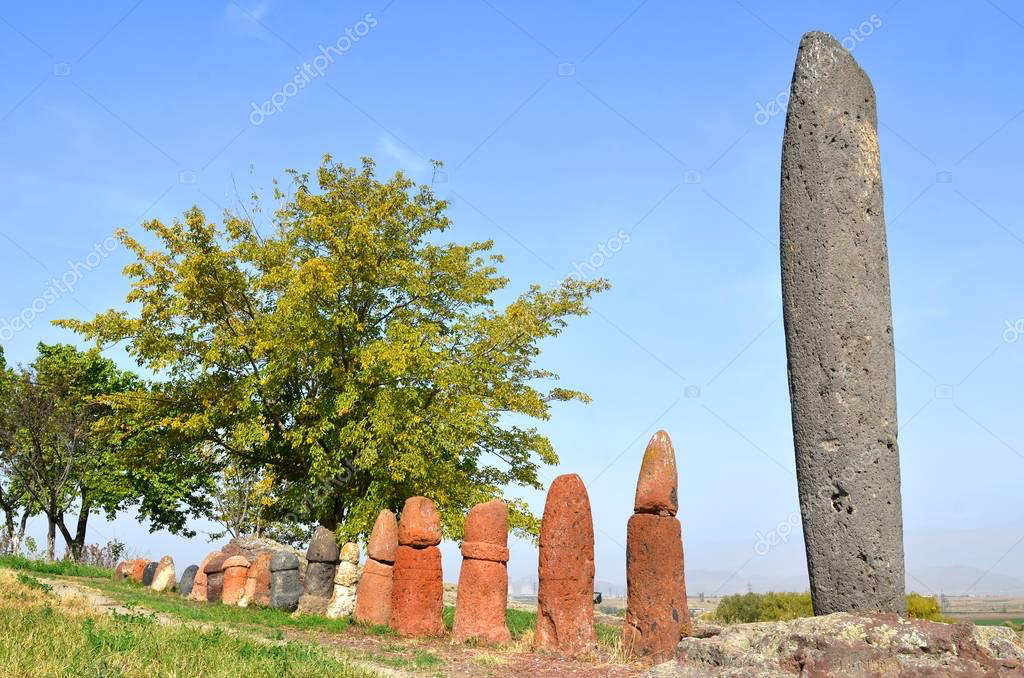








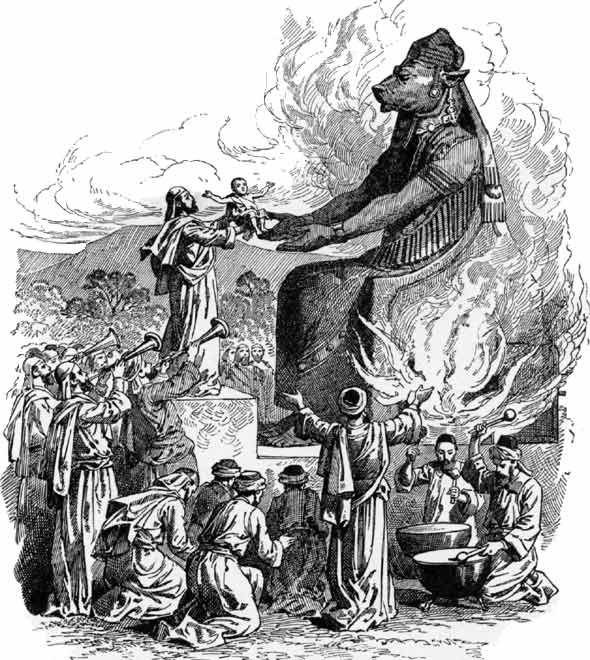


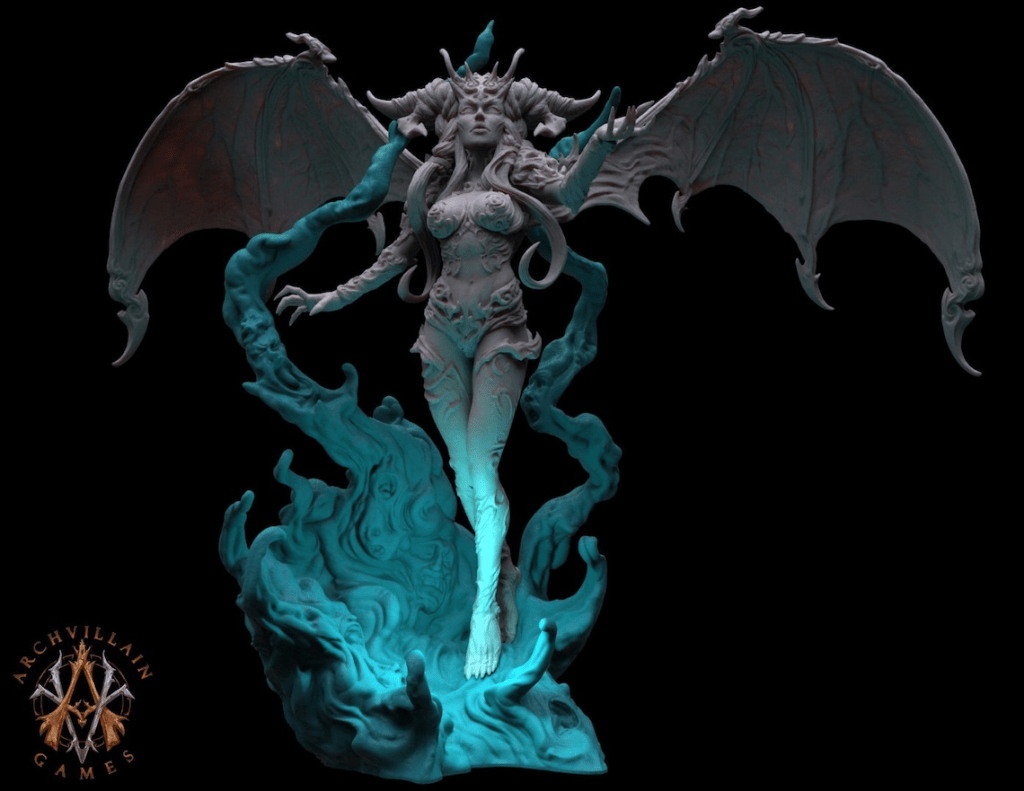
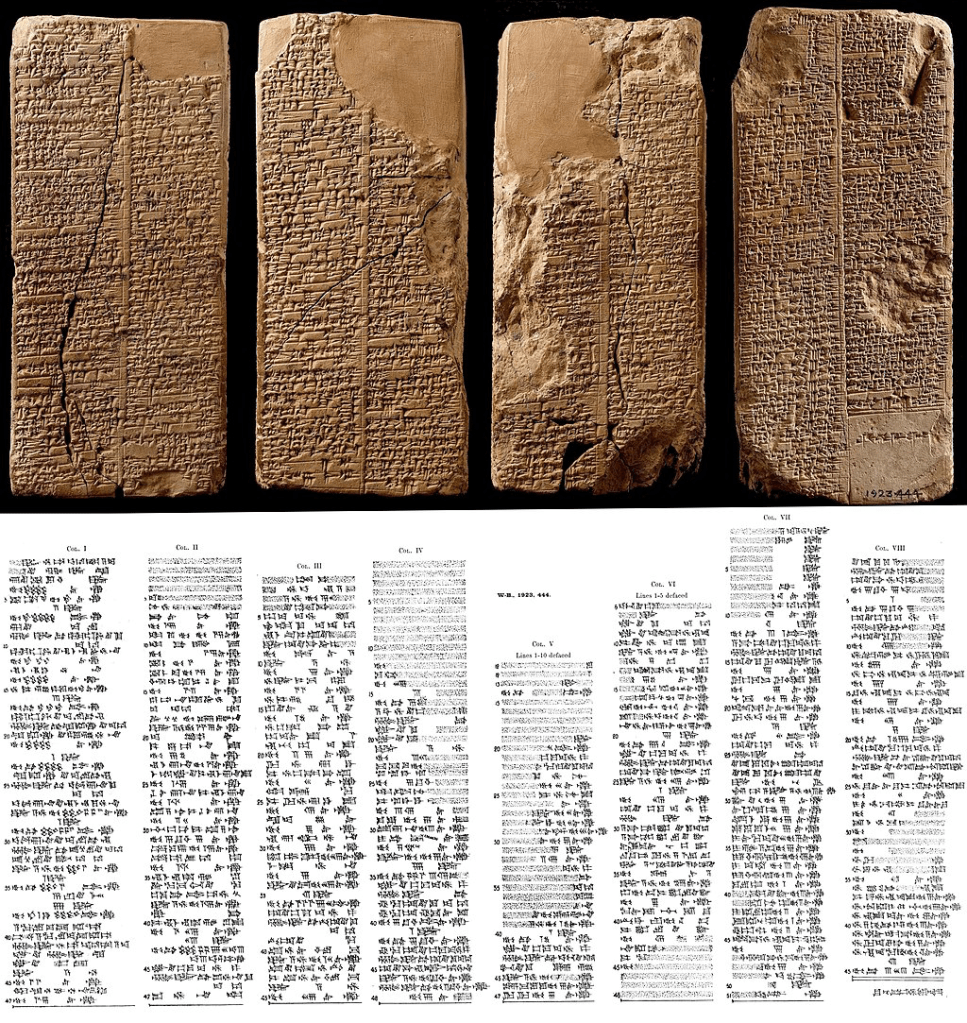


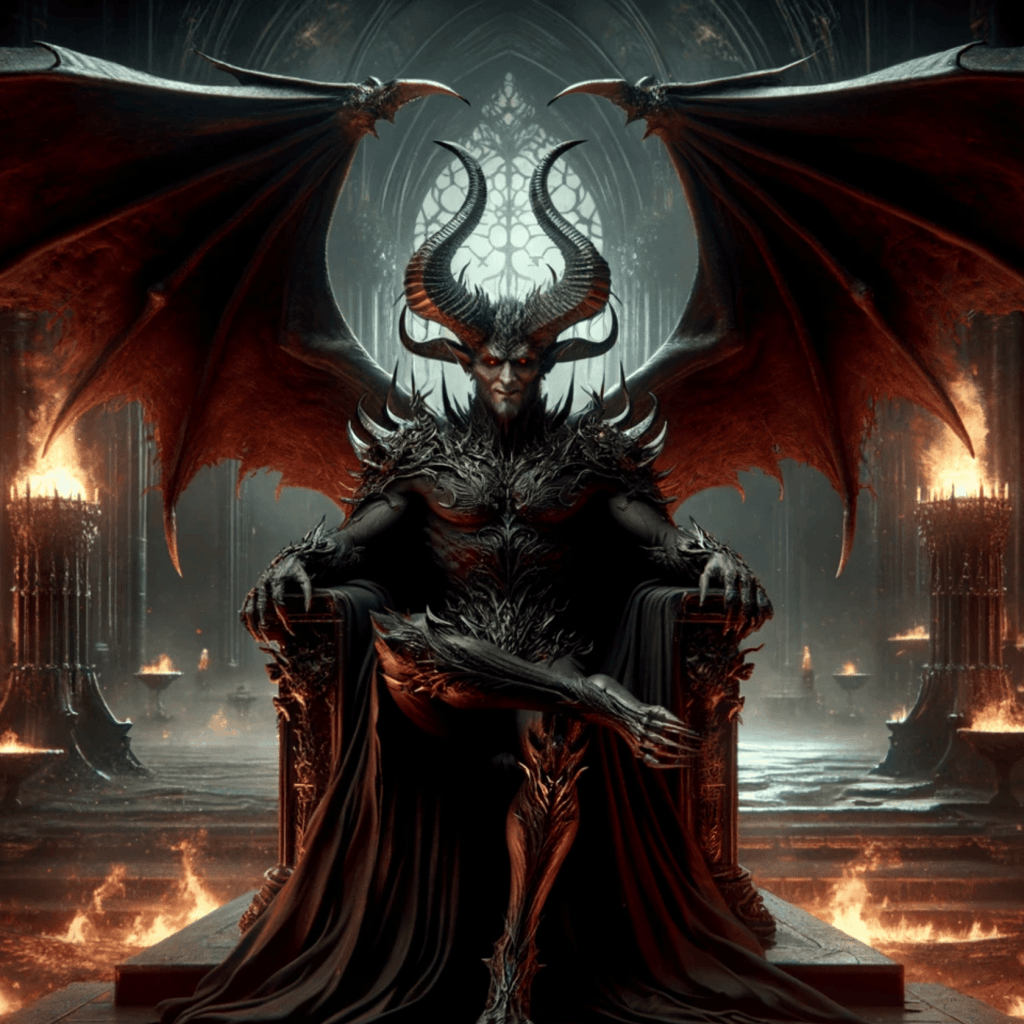










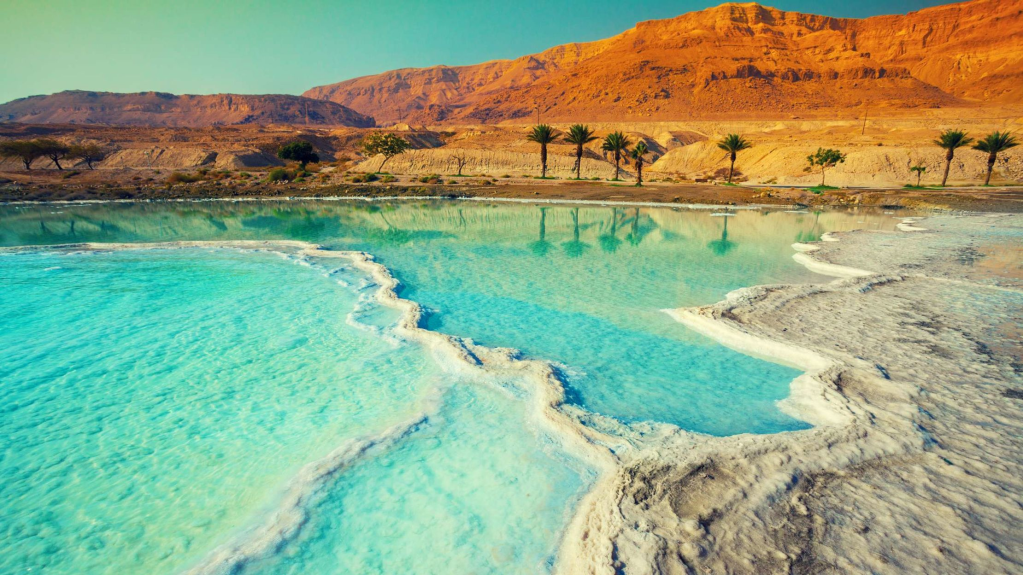
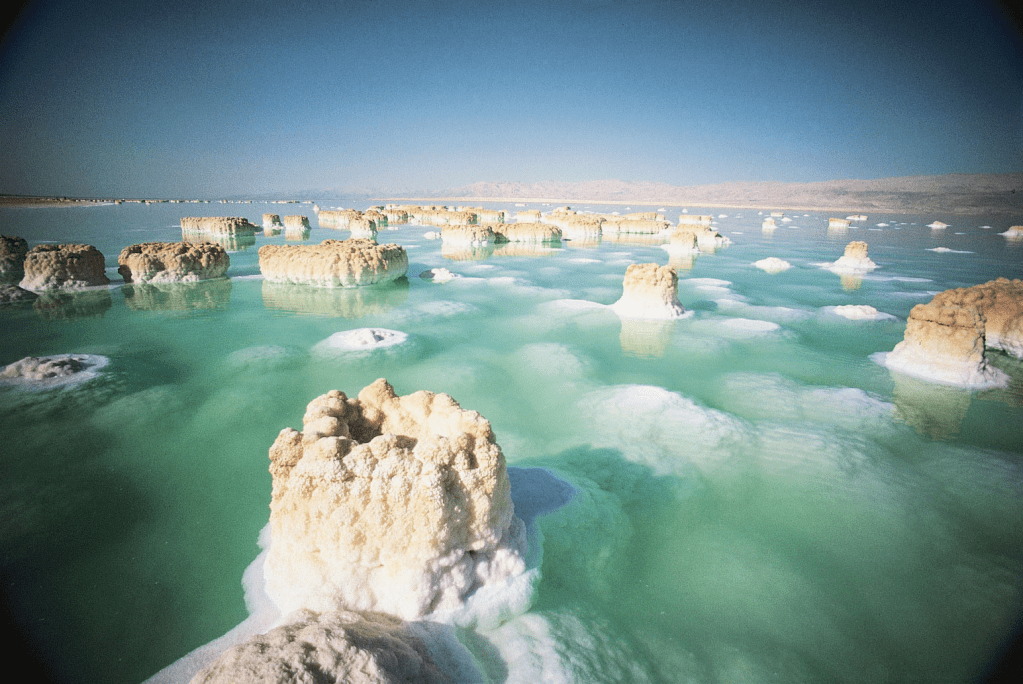





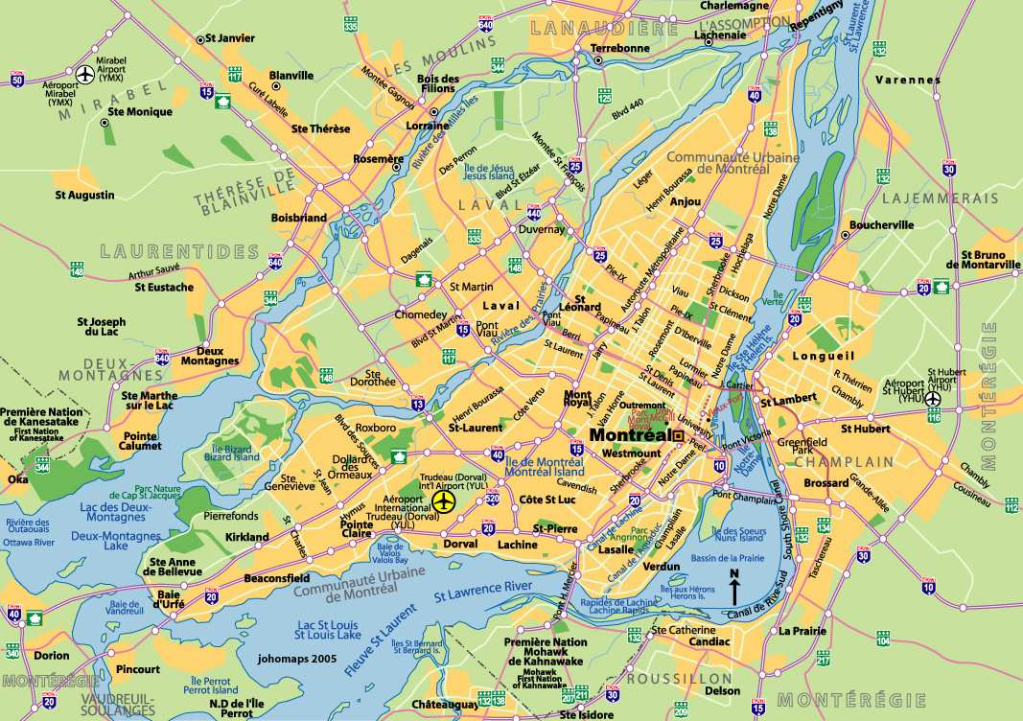




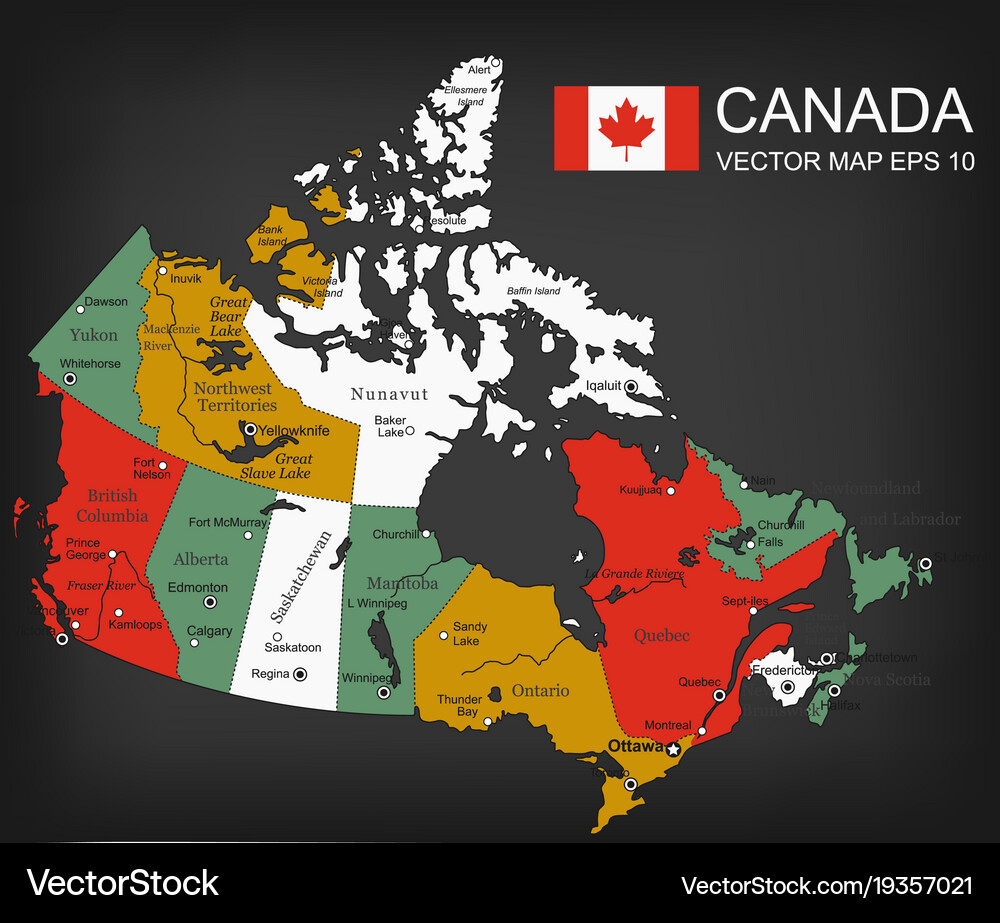

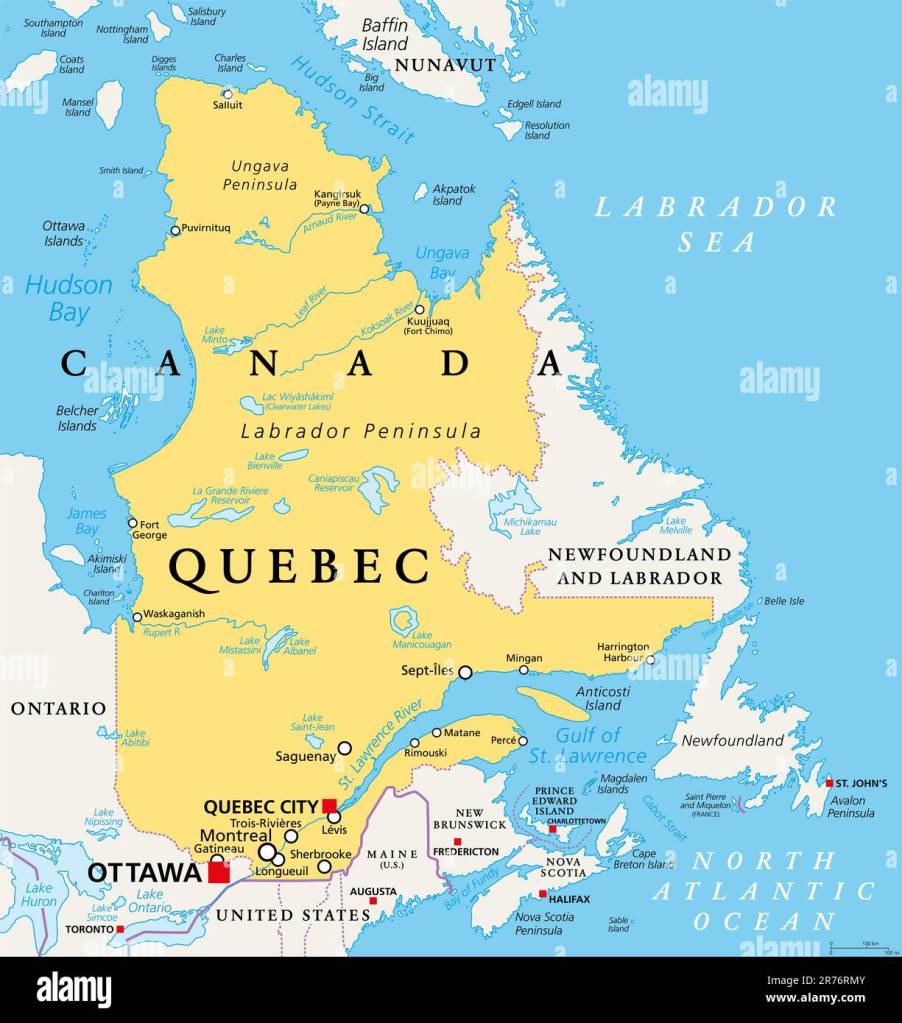
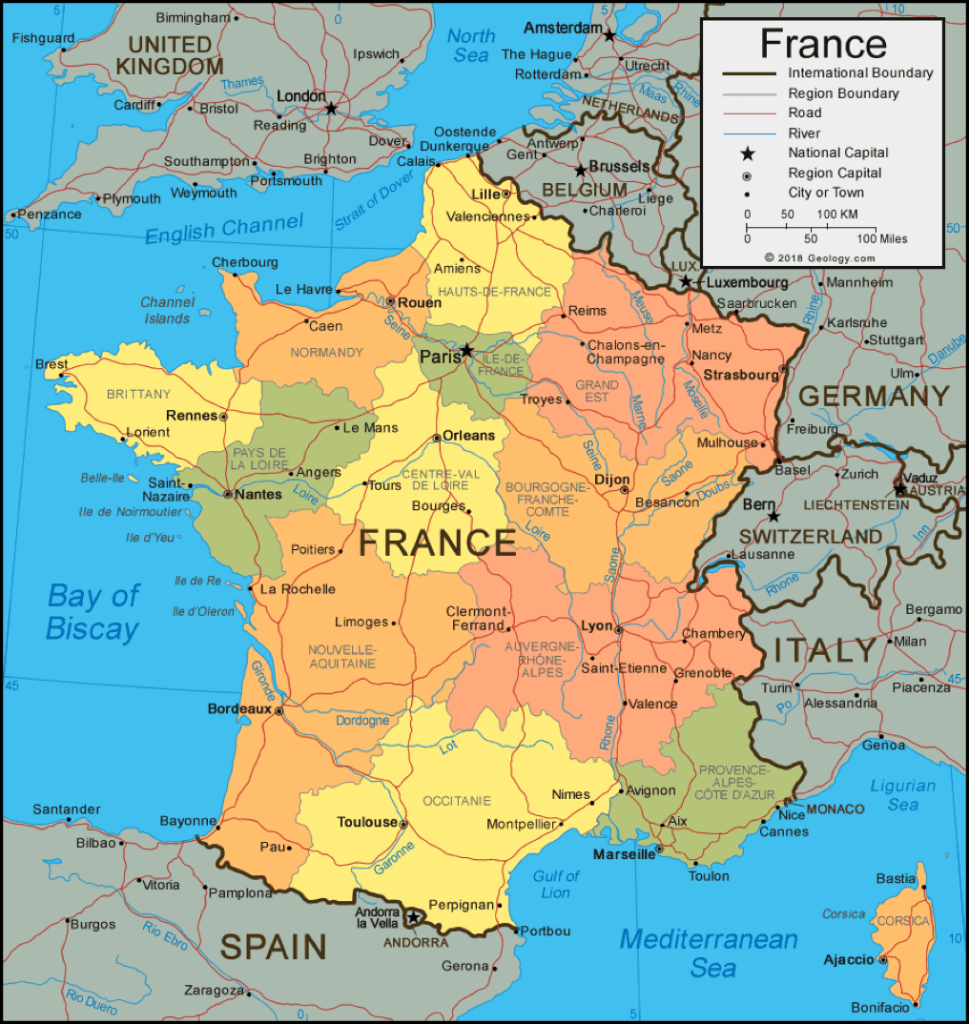













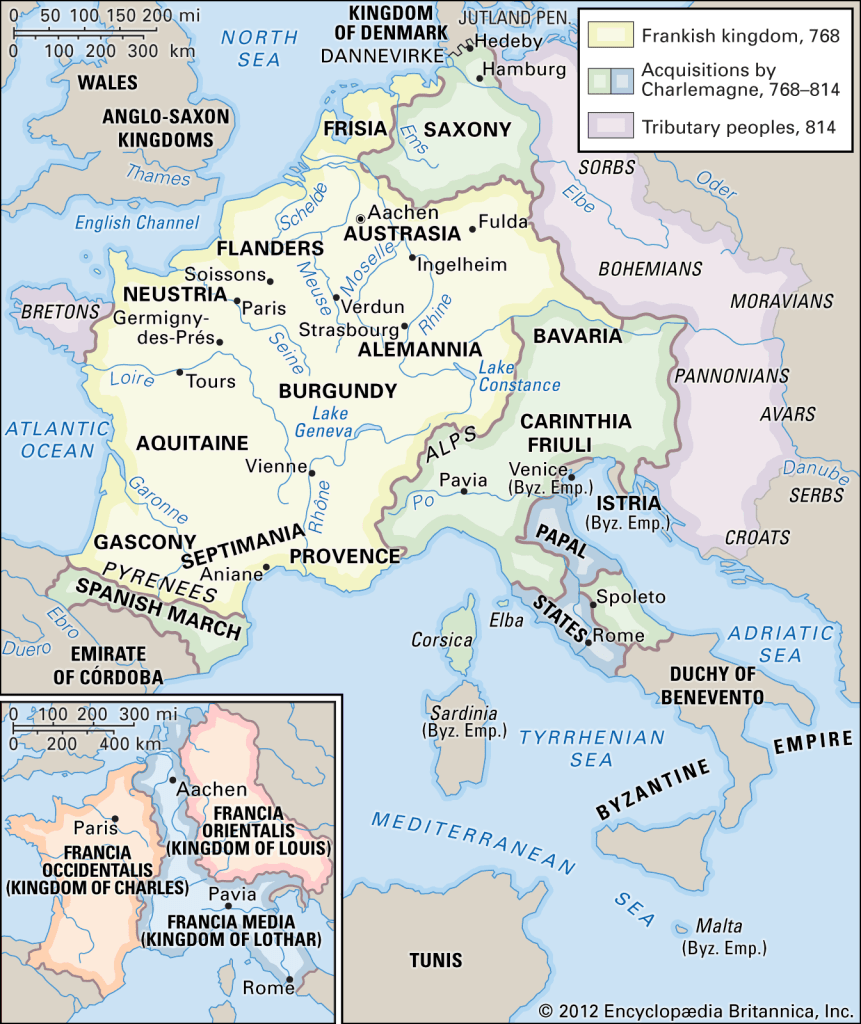



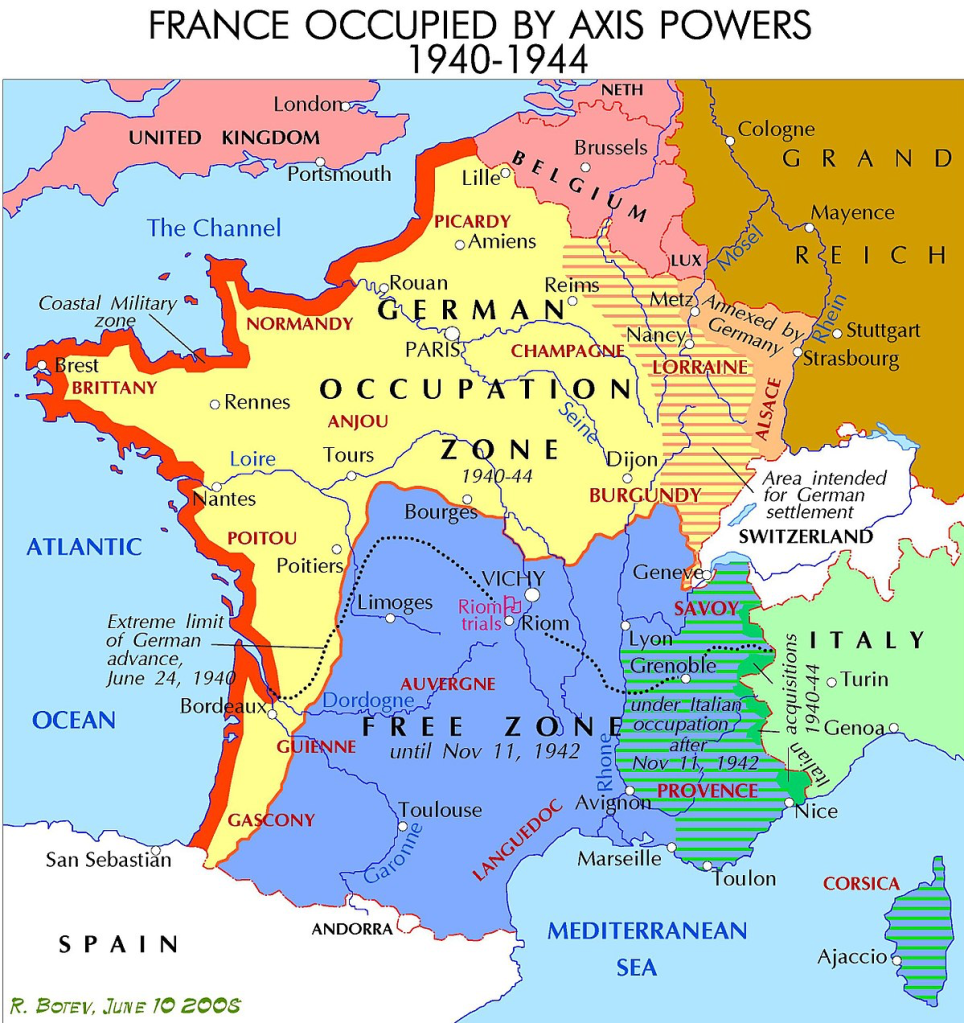






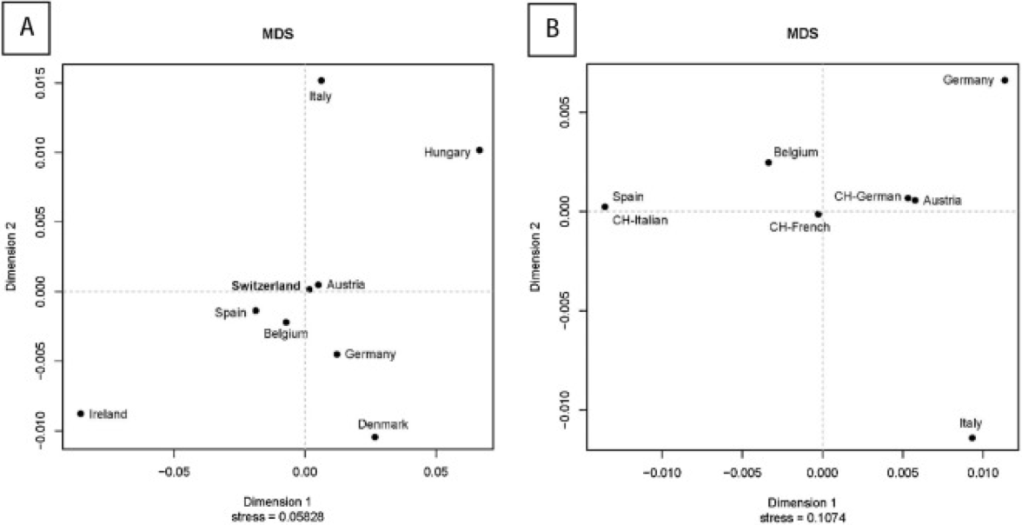


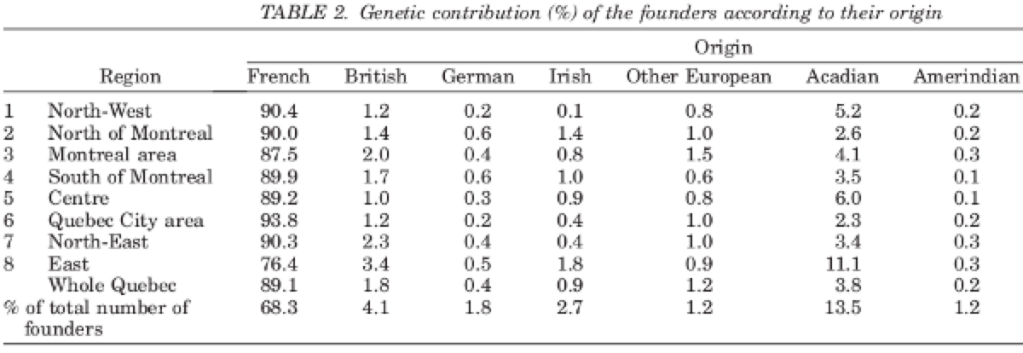


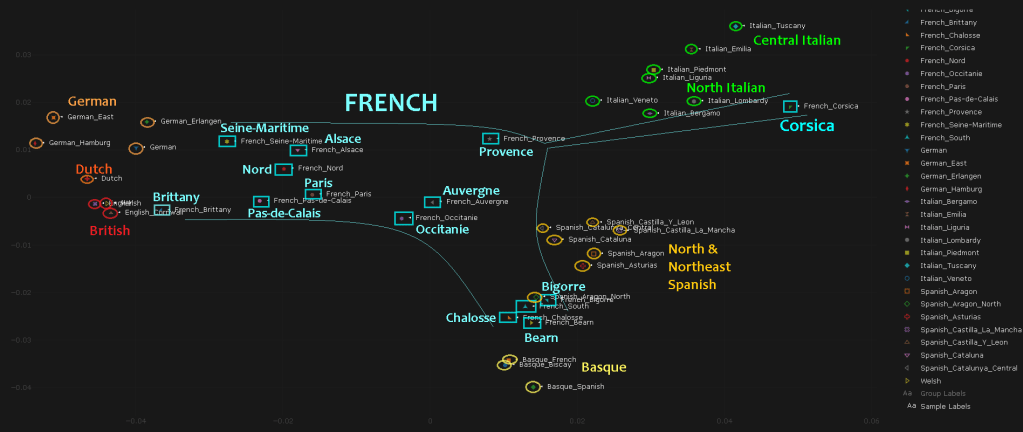


 The Lightkeeper