It is remarkable that the notable Jewish historian of the first century CE, Flavius Josephus, is recognised and valued for his writings to a high degree, for often he is the final or only word on a matter; yet on the question of whether the Messiah was a real person, he is largely ignored. In Antiquities of the Jews, Book 18, Chapter 3:3, Josephus wrote:
“… there was about this time” – during the governorship of Roman procurator of Judea, Pontius Pilate from 26 to 36/37 CE – “Jesus, a wise man, if it be lawful to call him a man, for he was a doer of wonderful works, a teacher of such men as receive the truth with pleasure. He drew over to him both many of the Jews, and many of the Gentiles. He was the Christ; and when Pilate, at the suggestion of the principle men among us, had condemned him to the cross, those who had first come to love him did not cease. He appeared to them alive again the third day, as the divine prophets had foretold these and ten thousand other wonderful things concerning him; and the tribe of Christians, so named from him, are not extinct at this day” – refer article: The ChristChronology.
One can see why, for it is very convenient with its information, including all the salient facts in a nutshell from a ‘Christian’ perspective and rather syrupy, with its glowing ‘wonderful’ descriptions, that again appear to be for the benefit of any Christian readers. If legitimately written by Josephus at the time, then it makes one wonder if he was a Christian himself? Using the commentary of Josephus as the final or only word would not be persuasive of itself. Unless of course, he were to make mention per chance of Christ again… and so he does.
The Real Jesus, Garner Ted Armstrong, 1977:
‘Josephus also mentions Jesus briefly in another passage which scholars feel is quite genuine: “He [Annas the High Priest] convened a judicial session of the Sanhedrin and brought before it the brother of Jesus the so-called Christ – James by name – and some others, who he charged with breaking the law and handed over to be stoned to death” – Josephus, Antiquities, XX, 200.’
Further evidence is again provided by noted Roman historian Tacitus, who had access to official court records, diplomatic correspondence and Roman archives. Writing – between 115 CE to 117 CE – about the Christians blamed by Emperor Nero for the disastrous fire in Rome in 64 CE, Tacitus unequivocally states:
“They got their name from Christ, who was executed by sentence of the Procurator Pontius Pilate in the reign of Tiberius. That checked the pernicious superstition for a short time, but it broke out afresh – not only in Judea, where the plague first arose, but in Rome itself, where all the horrible and shameful things in the world collect and find a home” – Annals, XV, 44.
What is not always understood, is that Christ and the apostles were commissioned to seek the lost sheep of the scattered tribes of Israel – Matthew 10:6, John 1:11, James 1:1, 1 Peter 1:1. Matthew 15:24 ESV: ‘[Jesus] answered, “I was sent only to the lost sheep of the house of Israel.” Christ, like the apostles knew the Israelites were ‘scattered abroad’ and not just living in portions of Judea – John 10:16. Whereas it was Paul who took upon himself the unique calling of preaching to Gentile nations (Galatians 2:7-8) – refer article: The Pauline Paradox.
From the age of twelve, Jesus of Nazareth, the son of Joseph and Mary suddenly disappears from the gospel accounts of his life. Mysteriously, he resurfaces in Galilee eighteen years later to begin his three and a half year ministry – Article: The Christ Chronology. Where was he? One thing is certain, Jesus had ample time to visit, live with and learn from, the descendants of the sons of Jacob.
And so it appears that Christ did in fact, travel the world with his Great Uncle, Joseph of Arimathea. Joseph, who was the equivalent of a business tycoon and global metal magnate of his day. Much of the life of Christ outside of the biblical account can be readily pieced together from tradition and what isn’t, is yet still ignored or denied by those who choose not to believe.
For the bible clearly states, with words inspired by the very Being who created us (Colossians 1:15-16) in John 1:10, The Voice: “[Jesus] entered our world, a world He made; yet the world did not recognize Him.”
Prior to concentrating fully on Jesus and his Great Uncle Joseph, (or even Paul), it may be beneficial to include a synopsis of the apostles (formerly disciples) responsible for spreading the Gospel of the good news of the Kingdom of God, in the early decades following Christ’s death – Matthew 24:14, Mark 1:14-15.
The original eleven apostles are “… Peter (1) and John (2) and James (3) and Andrew (4), Philip (5) and Thomas (6), Bartholomew (7) and Matthew (8), James (9) the son of Alphaeus (Mark 15:40) and Simon (10) the Zealot and Judas (11) the son of James” – Acts 1:13, ESV. The replacement for Judas was Matthias (12) – Acts 1:26.
Josephus recognised the dispersal of the Israelite tribes when he stated: “… [Wherefore] there are but two tribes in Asia and Europe subject to the Romans, while the ten tribes are beyond Euphrates till now, and are an immense multitude, and not to be estimated by numbers” – Flavius Josephus, Antiquities of the Jews, 11:5:2.
Theses tribes were scattered from as far west as the British Isles and as far eastwards as India. The main centres of Israelite occupation as we have thoroughly investigated and specifically located during Christ’s lifetime were Parthia, stretching from modern day Iran to India (1); the embryonic Saxon peoples who were part of the Scythian hordes of Central Asia, known as the Sakae or Saka (2); and the Celtic peoples (Cimmerians) of Britain, Ireland, Gaul, Iberia and Asia Minor (3).
Recall, the Messiah’s commission was to be sent to the House of Israel. As this precludes the peoples in northern Judea who were mainly from the tribe of Judah as well as encompassing remnants form other tribes; it then follows that Jesus would have travelled to those same regions in the world where these ‘lost sheep of the House of Israel’ were living – thus fulfilling scripture.
The Epistula Apostolorum, from the 3rd Century, verse 30 states: “But he said unto us: Go ye and preach unto the twelve tribes, and preach also unto the heathen, and to all the land of Israel from the east to the west and from the south unto the north…” This admonition ties in with Christ’s original instruction, when he told the disciples in Matthew 28:19 ESV: “Go therefore and make disciples of all nations…”
Hippolytus in the third century discusses the Apostles and the possible destinations they travelled in fulfilling the great commission. The reader is cautioned that not all of the information may be accurate. Peter is said to have preached the Gospel in Pontus, Galatia, Cappadocia, Betania and Asia. His brother Andrew (Matthew 4:18) is noted for preaching to the Scythians and Thracians and was later crucified – suspended on an olive tree, at Patrae a town of Achaia and then buried there. Tradition even says that Andrew preached the gospel in Scotland, where he is the patron saint.
John preached in Asia, was banished by Roman Emperor Domitian (81 to 96 CE) to the isle of Patmos, in which he wrote his Gospel and saw the apocalyptic visions in the Book of Revelation – Revelation 1:9. He was likely released by Nero’s successor, Nerva (96-98 CE). During Emperor Trajan’s reign (98 to 117 BCE), John at 101 years of age, passed away at Ephesus, where his remains were sought for, but could not be found (supposedly) – refer article: The Seven Churches – A Message for the Church of God in the Latter Days. Tradition says he preached in Gaul. His brother James (Matthew 4:21), when preaching in Judea, was cut down with the sword by Herod (41-44 CE) the tetrarch circa 44 CE and was buried there – Acts 12:1-2.
Philip preached in Phrygia and Scythia and was crucified – after enduring a stoning in Hierapolis near Laodicea and Colossae in Asia Minor – with his head ignomously downward, in the time of Domitian (81-96 CE) and was degradingly buried with his corpse upright. Bartholomew also known as Nathanael (John 1:45), preached to ‘Indians’ which is probably a reference to the Israelite Parthians and to whom he gave the Gospel of Matthew (actually written by John Mark on behalf of Peter) – refer* article: The Pauline Paradox. He was crucified with his head pointing downward and buried in Allanum, a town of greater Armenia where Bartholomew had preached – as well as in Upper Phyrigia and Cilicia.
The Apostle Matthew also known as Levi, wrote his Gospel (the Book of Mark*) in the Hebrew tongue and it was published at Jerusalem. He died at Hierees, a town of Parthia, after he had also preached to the Ethiopians – Chapter XIII India & Pakistan: Cush & Phut. Thomas is said to have preached to the Parthians, Medes, Persians, Hyrcanians, Bactrians and Margians. He was thrust through in the four members of his body with pine spears at Calamene, a city of India and buried there.
James the son of Alphaeus – the brother of Matthew (Matthew 9:9; 10:3, Mark 2:14) – went to Britain and Ireland. While preaching in Jerusalem, he was stoned to death by the Jews and was buried beside the temple. Prior to this he preached the gospel in Spain: “The Spanish writers… contend, after the death of Stephen [Acts 7:58-60] he [James] came… into Spain where he planted Christianity” – Cave, Antiquitates Apostolicae, page 148. Jude or Judas (John 14:22), who was also called Lebbaeus Thaddeus, preached to the people of Edess and to all Mesopotamia, including Assyria. He passed away at Berytus and was buried there.
Simon the Zealot (or Canaanite) – the son of Clopas who was also called Jude – became bishop of Jerusalem after James the Just – the half-brother of Jesus – and was buried there at the age of one hundred and twenty years. Contrary to this (or perhaps in tandem in part) and confusingly from Hippolytus, is the alternative explanation: “[Simon] directed his journey toward Egypt, then to Cyrene, and Africa… and throughout Mauritania and all Libya, preaching the gospel… and [then] over to the western islands… to Britain… He went at last into Britain, and… was crucified… and buried there” – Cave, Antiquitates Apostolicae, page 203.
We will return to the Apostle Simon. Matthias, originally one of the seventy was later numbered along with the eleven apostles, after Judas Iscariot’s suicide. Matthias preached in Macedonia, Dacia and Jerusalem, where he was buried – Acts 1:23-26.
Paul likely entered into his ‘apostleship’ around 35 CE; five years after the resurrection of Christ, though it could have been later – preaching his Gospel for about thirty years. In the time of Nero (54-68 BCE) he was beheaded at Rome and buried there – Hippolytus, On the Twelve Apostles, in Ante-Nicene Fathers, Volume V by Robert & Donaldson, 1885 Hendrickson Publishers, Peabody (MA), printing 1999, pages 254-255.
Nota Bene
At this point it is only fair to mention the status of the man originally called Saul and later, Paul. While mainstream Christians recognise Paul as a prominent figure in the New Testament church, the truth of the matter is that Paul was actually the founder of Christianity – refer article: The Pauline Paradox. His teachings are contrary to the apostles and in variance with that of Christ and followers of the Way.
Critically, anything written by Paul (seven New Testament books) and any credited to him (six New Testament books) are of no value in any theological debate. This wields huge irony for literally all the ‘difficult’ scriptures in the New Testament are ascribed to Paul – Article: The Sabbath Secrecy. That said, his life, particularly while in Rome and his relationship with the British Royal family are of intrinsic interest in this investigation.
Hippolytus mentions Aristobulus who is included in the scriptures written in 56 CE – Romans 16:10. He was one of the seventy disciples who were appointed to preach the Gospel of the Kingdom of God – Luke 10:1-24. Hippolytus correctly claims Aristobulus was the Bishop of Britain. As one of the seventy, he would certainly have known the early disciples who became apostles, for he is none other than the brother-in-law of the Apostle Peter.
The Martyrologia of Adonis says under March 17th: “Natal day of Aristobulus, Bishop of Britain, [elder] brother of… Barnabas the Apostle, by whom he was ordained bishop. He was sent to Britain where, after preaching the truth of Christ and forming a Church, he received martyrdom.”
This is of special note as Barnabas and Aristobulus had a sister called Mary (Acts 12:12). She was the wife of Peter and they were the parents of John Mark – the nephew of Barnabas and Aristobulus (1 Peter 5:13, Colossians 4:10).
Eusebius confirms that Jesus’s disciples preached to the three main bodies of Israelites at the time: “His disciples… to preach to all the Name of Jesus, to teach about His marvelous deeds in… [the] Roman Empire, and the Queen of Cities itself, and… that others should go to the Parthian race, and yet others to the Scythian, that some already should have reached the very ends of the world…” And “The Apostles passed beyond the ocean to the isles called the Britannic Isles” – De Demonstratione Evangelii, Library III. The Apostles were commissioned to go to not just Jerusalem, Judea and Samaria but to the farthest part of the earth – Acts 1:8. Heading in a north-westerly direction leads one to the far away isles waiting for the truth – Isaiah 42:4.
Tradition says the Apostle Peter went to Italy, became the first Apostolic See of Rome, was crucified by Emperor Nero and buried on Vatican Hill. Though there is no biblical evidence that Peter ever set foot in Rome. He is not included in Paul’s salutations to those at Rome; a serious omission if such was the case – Romans 16:1-15. If Peter had been at Rome, then Paul would not have been teaching brethren in Rome for the first time – Acts 28:21-23. The Bible reveals Peter definitely spent time in Jerusalem and also in Babylon – Acts 15:4, 7, 1 Peter 5:13. Yet even so, we will discover that the Apostle Peter did actually visit Italy, including Rome and that he was executed by Nero’s orders and buried there. What is not true is that Peter was not the first Bishop of Rome, let alone its first apostle for he did not establish his residence there.
The Greek historian, Metaphrastes informs that: “Peter was not only in these western [Mediterranean] parts but particularly… he was a long time in Britain, where he converted many nations to the faith” – Cave, Antiquitates Apostolicae, page 45. The Venerable Bede [670-735] in his Ecclesiatical History of the English Nation writes that in 665, Pope Vitalian sent the mortal remains of several Saints to Oswy, King of Britain: “… we have ordered the… relics of the blessed apostles, Peter and Paul, and… John… to be delivered to the bearers of these our letters, to be by them delivered to you.”
As Bede is held in high regard, it would be very doubtful he would put nib to scroll in his name to knowledge that was untrue. If such is the truth, then these two stalwarts of the faith (Peter and John) – excepting Paul – would undoubtedly have been buried in Avalon. So who then, is buried under the altar in St Peter’s Basilica in Rome? It was not Simon Peter, but another ‘Peter’ masquerading as a true Apostle of Christ. None other than Simon Magus who established a counterfeit church based in Rome and it is he that was the first Apostle of Rome – Acts 8:5-24, Revelation 17:5. Refer article: The Seven Churches – A Message for the Church of God in the Latter Days.
William Steuart McBirnie, in his book, The Search for the Twelve Apostles, states: “There certainly is no other tradition known concerning the history of St. Joseph of Arimathea and since the British tradition is vigorous we see no reason to challenge it… If in any country there is a strong tradition concerning some Apostolic figures, and no counter tradition elsewhere, then we at least stand on the ground of possibility and even probability. So it is with… St. Joseph.”
The true Way (Acts 9:2; 19:23; 24:14, 22) – rather than what today is called Christianity – as taught by the apostles, was established in Britain from as early as 35 CE and as we shall discover, spearheaded initially by Joseph of Arimathea; then the Apostle Peter; Aristobulus the Bishop of Britain, his brother Barnabas; and the Apostle Simon the Zealot. Later, Paul in between his imprisonment years in Rome during 58 to 64 CE also visited Britain.
‘Gildas [Badonicus] the earliest British writer of history, 520’ CE, states: “Meanwhile these islands… in a distant region of the world… received the beams of light, that is, the holy precepts of Christ… at the latter part, as we know, of the reign of Tiberius Caesar [14-37 CE], by whom his religion was propagated without impediment.” ‘… the events mentioned appear to be [prior]… to the defeat of Boadicea, [in] A.D. [62]… [at the latest and more likely before]… the defeat of Caractacus, [in] A.D. [52]. Therefore the testimony of Gildas is to the effect that the gospel was preached in Britain [well] before the year 61’ CE – The Sabbath in the British Isles; Reprinted from “Seventh Day Baptists in Europe and America” Volume 1, 1910, pages 21-39.
The Way in Britain from the beginning, varied considerably with the teachings which arrived later from the Universal Church centred in Rome. From an outsiders perspective it had more of a Judaic form. It is worth noting that the Celtic or Keltic churches claimed to have descended from the true church congregation based in Ephesus, where the Apostle John had lived and preached – refer article: The Seven Churches – A Message for the Church of God in the Latter Days. The Keltic Churches of Ireland, Galloway and of Iona in Scotland were one with the British Church and they claimed like Southern Gaul and Iberia, to have drawn their faith from the Apostolic Church of Ephesus.
These early churches embodied a simpler, yet a more missionary type of religion compared with the Church of Rome. Doctrinally, even from the early centuries there were a number of significant differences. Though the key teachings of disagreement, where the Church of Rome had changed to incorporate palatable pagan and gnostic ideas, were the Trinity (the Councils of Nicaea in 325 CE and Constantinople in 381 CE); the Lord’s Day (Council of Laodicea 364 CE); and Easter (Council of Nicaea 325 CE).
The truth regarding one eternal God and the Son of Man’s origin were substituted with the Trinity, refer article: Arius, Alexander & Athanasius; the Saturday Sabbath was made illegal and substituted with the observance of the Lord’s Day, the day of the Sun on the first day of the week – yet both as physical observances are either obsolete or unscriptural, refer articles: The Sabbath Secrecy; and Chronology of Christ – and the observance of Passover on the 14th day after the new Moon of the first sacred calendar month, was substituted with the commemoration of Easter on the first Sunday following the full Moon after the Spring Equinox (today March 21) – yet again, both are either obsolete or unscriptural, respectively.
The eighth century Catholic monk and historian Bede, highlighted the difference with church leaders in Britain: “They do not keep Easter Sunday at the proper time, but from the fourteenth… They did other things too which were not in keeping with the unity of the Church. After a long dispute they were unwilling, in spite of the prayers, exhortations, and rebukes of Augustine and his companions to give their assent, preferring their own traditions to those which all the churches throughout the world agree…”
Vatican librarian Cardinal Baronius (1538–1607) who spent 30 years compiling his history from Vatican records and Anglican archbishop Ussher (1581–1656) mentioned several of the Apostles and their companions traveled to the ‘Isles of the West.’ Cardinal Cesar Baronious provided the following details in Latin. “Annus 35… Lazarum, Mariam Magdalenam, Martham, & Marcellam peditfequam… cum Maximino difcipulo… comitemque… Ioiephum ab Arimathaea nobilum Decurionem, quem tradunt ex Gallia in Brittanniam naugafie, illeque pofit predicatum diem claufifle extremum” – Annales Ecclesiastici, Sumptibus Uoannis Gymnici & Antonji Hierati, 1609, pages 280-281.
An approximate translation: “Year 35 CE… Lazarus [John 12:9-11], Mary Magdalene [Mark 16:9], Martha, [and] Marcella [her] servant… with the disciple of Maximim… and with… Joseph of Arimathea the noble Decurion, fled in a boat without oars [or sails?] to Marseilles, then from Gaul to Britain, where after preaching the gospel [Joseph] ended his days [in Glastonbury].” A prominent companion on the same journey included Christ’s mother, Mary.
The poet Mistral states a handful of others who arrived in Gaul: Trophimus (Acts 20:4); Cleon; Eutropius; Restitutus (Sidonius) whom we know from the Bible as ‘the man born blind’ (John 9:1-38); Martial; Saturninus; Mary the wife of Cleophas (John 19:25); and Salome. The names of these saints have been perpetuated in the Gallic Church and Lazarus is persistently recognised as the first Bishop of Marseilles. Joseph of Arimathea was subsequently a frequent visitor to Gaul, to confer with the disciples resident there and particularly with the Apostle Philip, who had arrived at Marseilles ahead of Joseph and awaited him and the Bethany family. It was Philip who consecrated Joseph, appointing him as ‘the Apostle to Britain’.
The fact that Philip was the Apostle of Gaul is noteworthy, for Paul’s letter to the Galatians is a misinterpretation and his letter is in fact the Letter to the Gauls, where descendants of Jacob were living in considerable numbers. Galatia meanwhile was an offshoot of Gauls. Likewise, his mention of Crescens being in Galatia, should read Gaul – 2 Timothy 4:10. Cardinal Baronius stated: ‘… that “to the Galatians” must be corrected in the place of “to the Gauls.” St. Epiphanius (315-407 CE) wrote: ‘… so that St. Paul assures [Luke] in his epistles about some of his disciples – “Crescens”, said he, “is in Gaul.” In it must not be read in Galatia as some have falsely thought, but in Gaul.’
Britain was the obvious choice for a safe haven as it was the only free state in Europe – safe from Roman persecution – and which afforded a secure asylum to these early Christians who had left the instability of Judea and the indelibly raw memories of Jesus’s shocking death which remained too vivid and fresh while they remained living in Palestine. With this band of illustrious people who had intimately known Christ and shared in the drama and horror of his execution, it is little wonder that the small isle of Britain became known as ‘the most hallowed ground on earth,’ ‘the Sacred Isle’ and ‘the Motherland.’
It was to this land that Jesus’ mother Mary arrived with her Uncle, Joseph of Arimathea. Though Christ had entrusted the care of his mother to ‘the disciple he loved’, universally considered to be John (John 13:23; 20:21), we do not ever hear the Apostle John make mention of her. We have addressed who else might be the disciple that Jesus loved previously. The verse says John ‘took her to his own home.’ Though in the Greek, it does not include the word home – John 19:26-27. It should more accurately be rendered: ‘took her as his own [mother].’
John was a marked man and he had his apostolic commission that would necessitate considerable travel not suitable for Mary to endure and so it makes sense that ultimately, Mary should find refuge with her ‘own’ as in Joseph and the Bethany family of Lazarus and his sisters. William of Malmsbury in the Magna Tabula Glastoniensis says: “St. John while evangelizing Ephesus, made Joseph Paranymphos” – the Guardian of Mary. The fact that where Joseph went so did Mary, supports her being in his care and not in John’s.
The role John played with Christ’s mother Mary is all the more poignant when it is remembered John was a first cousin of Jesus.
James and his brother John were the sons of Zebedee the fisherman – Matthew 4:21. Their mother was Salome the wife of Zebedee and she is recorded being at the crucifixion of Christ – Matthew 27:56, Mark 15:40. From these accounts it is universally accepted that Salome and Christ’s mother Mary were sisters – John 19:25.
The four gospels added with historical records reveal that Joseph of Arimathea had very high standing in the community; was a person of great wealth; the most influential businessman in Judea; and possessor of an honourable social distinction as evidenced by his ‘not consenting to the council and deed of them’, for he was a member of the Sanhedrin, as well as a ‘Provincial Roman Senator’ – George F Jowett, The Drama of the Lost Disciples, 1996, page 134. He was a good and righteous man and because of his visibility, a secret follower of Jesus, who ‘himself waited for the kingdom of God’. It was prophesied that Christ would be buried in the tomb of a rich man and Joseph was that individual – refer article: Chronology of Christ.
It took real courage on one hand to approach Pontius Pilate over the dead body of his great nephew, yet his position meant an audience with the Roman Governor of Judea at such short notice was not difficult to request or fulfil. It is hard to credit that Pilate who had signed Christ’s death warrant when he ‘washed his hands’ from the false charges against Jesus; then would release his body for private burial, allowing his tomb to become the shrine of a martyr. This would indicate not only Joseph’s rank and influence but also his rightful claim to Jesus’ body. A claim made possible by being a blood relative. The Jewish Talmud corroborates in stating that Joseph was the younger brother of the father of Mary.
It is clear from the biblical account that Mary’s husband – also Joseph – died while Jesus was young. The Judaic law in such circumstances appointed the next male kin as guardian of the family. We can begin to understand why Jesus was frequently seen in the company of his great Uncle, particularly at religious festivals and on voyages to Britain by ship, which Cornish traditions confirm and where ancient landmarks bear Hebrew names recording these visits. Joseph’s actions at the time of Jesus’ death affirm their close relationship. Rather than being a mere guardian of Jesus, Joseph was a father figure to Christ and treated him as his son. It becomes only more moving and harrowing to realise that it was this man, with the help of Nicodemus, who took Jesus’ broken body down from the cross, cradling the corpse of the very Son of God in his arms – John 19:38-40.
The Bible says that Joseph hurried to Pilate in requesting Jesus’ body because the day was ending, darkness was approaching and with it, the Passover that evening and the Sabbath which was also the Holy Day of the first day of Unleavened Bread, the following morning. Though there is a far more pressing urgency in Joseph’s need to meet with Pilate than it would appear. It begins with the word, tree and the true manner in which the Messiah was crucified.
In the nineteenth chapter of the Book of John, we learn a number of fascinating details that many have possibly overlooked. The first is that Jesus died in a garden called Golgotha, meaning ‘place of the skull’ – John 19:17, 41. Golgotha was a monticulus, which means ‘a small hill on top of a mount.’ The mount in question, being the Mount of Olives. The Greek word for garden means an orchard or plantation – a grove of trees. It was to this garden, set on a hill that Jesus carried not an assembled Latin or Greek cross, weighing some two hundred pounds but rather the crossbeam that would be fixed to a living tree. It was this crosspiece which Simon of Cyrene carried the final distance to Golgotha because Jesus was exhausted after enduring repeated brutal beatings at the hands of Pontius Pilate’s Roman soldiers throughout the night until dawn while imprisoned – Matthew 27:32.
Biblical scholar Ernest Martin explains that this crosspiece associated with crucifixions had a technical Latin name, with the upper part of the cross known as a patibulum. Jesus would have had his hands and wrists bound and nailed to the patibulum. Both he and the patibulum would have then been hoisted upwards with the crossbeam nailed in place against a sizeable tree. Christ’s legs would have been bound at the ankles, his legs bent upwards together and his feet nailed to the tree trunk. It is important to understand that not only was the ‘cross’ a tree, but that the two robbers crucified with Jesus had their own patibulum, also nailed to the same tree. “… so that the bodie-s would not remain on the cross…” as referenced in John 19:31-32.
The trial, verdict, imprisonment and crucifixion of the Son of Man was not only illegal but rushed because of the timing right before the Passover and Feast of Unleavened Bread. As time was of the essence, a tree was used instead of a Roman cross. Added to this, was the biblical law that no one could hang on an instrument of death beyond sunset because the tree and the soil it was in were accounted as defiled by the accursed person – Deuteronomy 21:22-23, Galatians 3:13. This was part of the reason why Joseph was in a great hurry to rescue Christ’s corpse.
It was not uncommon in times of haste for criminals to be nailed to trees – Joshua 8:29; 10:26-27. In this instance, it meant the Roman soldiers did not have to dig three separate holes some five to six feet deep to secure three large standing poles.
The Apostle Peter (and Paul) confirm that Jesus was hung on and died on, a tree – Acts 10:39; 13:29, 1 Peter 2:24. Acts 5:30 ESV: “The God of our fathers raised Jesus, whom you killed by hanging him on a tree [G3586 – xulon: tree, wood, log, beam].” In John chapter nineteen a different word is used G4716 – stauros. This word is generic and means a ‘pole, stake, cross.’ It applies to any instrument used for execution and therefore can also apply to a tree.
The word stauros can be used for the patibulum which supported Christ’s arms (Luke 23:26); it can be used for the actual pole or tree trunk itself (John 19:19); and it can be used for the combined patibulum and pole or tree trunk used as a single device for execution – John 19:25. There is a colossal irony in Jesus dying on a tree, for Christ is a living tree, the source of Eternal life and our Maker – Genesis 2:9, Psalm 1:3, Colossians 1:15-20, Revelation 2:7; 22:2, 14. “Early Christian art indicates a close relationship between the tree of life and the cross. The Cross of Christ, the wood of suffering and death, is for Christians a tree of life. The idea that the living trunk of the cross bears twigs and leaves is a common motif in Christian antiquity” – Kittel, Theological Dictionary, Volume V, Pages 40-41.
Returning to Joseph’s urgency in claiming Christ’s body; his remains were accursed, which meant so was the tree upon which he was hung. The author of Hebrews reckoned the cross as a ‘shame’ and a ‘reproach’ – Hebrews 12:2; 13:13. To cleanse the area, required purging and this was accomplished through burning with fire – Deuteronomy 21:21, Joshua 7:24-26, Isaiah 4:4, Ezekiel 22:17-19. Joshua 7:15 NKJV: “Then it shall be that he who is taken with the accursed thing shall be burned with fire, he and all that he has, because he has transgressed the covenant of the Lord, and because he has done a disgraceful thing in Israel.” According to the law and usual protocol, the Jews fully expected to burn and destroy the tree of execution and the three men hanging dead from it. So it was of necessary daring that Joseph requested an immediate audience with Pontuis Pilate – Mark 15:43. If Joseph had not succeeded, Christ would have surely been consumed in the flames.
A prophecy makes clear that the tree of execution was destroyed and Jesus along with it, should Joseph have not dramatically intervened: “I was like an unsuspecting lamb led to its slaughter. I had no idea they were plotting against me. They were saying, “Let’s cut down that lush olive tree and destroy all its beautiful fruit. Let’s cut him off from the land of the living. Let’s make sure no one even remembers his name.” Jeremiah 11:19 – Jerome in the fourth century says of this verse: “The tree is his cross, and the bread [fruit] his body: for he says himself, I am the bread that came down from heaven” – John 6:51 – Anglican Commentary, London, 1875, Volume V, page 395.
There is one further aspect of the Messiah’s death prior to investigating his life before his ministry began in the Autumn of 26 CE. It is linked to Deuteronomy 21:21 ESV, which says: “Then all the men of the city shall stone him to death with stones. So you shall purge the evil from your midst, and all Israel shall hear, and fear.” As it was law to purge by fire an accursed one; it was also standard practice to throw stones at them while they hung upon a tree.
As the one mediator between God and men (1 Timothy 2:5) suffered brutal beatings through the night before his crucifixion and while he suffered the immense pressure and pain of slow asphyxiation; the Son of Man endured the horrifying experience of stoning that led up to his last breath and finally, death. The result of a relentless tide of pellet like stones meant: “Many people were shocked when they saw him. His appearance was so damaged he did not look like a man; his form was so changed they could barely tell he was human” – Isaiah 52:14 NCV.
Christ’s ancestor King David, was inspired to write about Jesus one thousand years before he was born: “The enemy, this gang of evil men, circles me like a pack of dogs; they have pierced my hands and feet. I can count every bone in my body” – Matthew 26:26. “See these men of evil gloat and stare…” – Psalm 22:16-17. These verses can only be understood in one context. Though Jesus was scourged, Pilate fully intended for Jesus to recover and be set free – Luke 23:22. The severe disfigurement of the Son of God was not by beating alone but through the pelting of sharp flint stones which are common on the Mount of Olives.
Even so, Chan Thomas states: ‘It is known that Jesus suffered “scourging” for some time before his walk to crucifixion with Simon of Cyrene, who was compelled by soldiers to carry his cross. “Scourging” meant torture with whips with barbs in the ends of the lashes of each whip; those barbs ate deeply through Jesus’ skin and into his flesh. It had to be excruciatingly painful. While on his walk to Golgotha, Jesus was still sufficiently conscious to have made the walk successfully; he had not yet entered a state of deep shock.’
And so, the One who had supreme glory sitting on a throne at the right hand side of the Ancient of Days, gave up his majesty upon high (Revelation 22:3); humbled himself as no other has ever done; laying down his eternal life for a creation that despises him and only seeks evil continually. This spectacular Being offered himself as the ultimate sacrifice in the determination to defeat Satan and sin once and for all. Naked, he endured a barrage of stones thrown at him – for possibly nearly six hours, from nine in the morning until he died at three in the afternoon – that would break his skin and eventually dislodge flesh away from the bone. They lacked the force to break any bones (John 19:36) and so the verses are accurately describing the complete and utter disfigurement to his body, his genitals and his face. The abhorrent result of being able to see all his protruding bones is atrociously heartrending in its vivid fulfilment.
Stoning was reserved for capital crimes under the Mosaic law – Leviticus 20:2, Deuteronomy 13:10. Though the pelting of stones by a mob at a person who merited ill-will also occurred – Exodus 8:26; 17:4, 2 Chronicles 24:20, Hebrews 11:37, Acts 5:26. The reader must understand that this was on top of the ignominy of being nailed to the tree in the first place. Chan Thomas explains the procedure:
‘Contrary to one of the popular myths, Jesus was not nailed to the cross through his hands and spaces through his bones in his lower feet leading to his toes. It was a common form of execution in that time, and always, the nails were driven through a space in the wrist bones as, if driven through the hands, the crucified could pull his hands off of the nails easily while on the cross.’
The Most Painful ways to Die, according to Science, Jeff Somers: ‘The nails don’t go through the palms, but through the wrists, which would feel like “lightning going through your middle and ring fingers” while hitting the median nerve, making your hands contract in agony.’
Thomas: ‘Plus, the same conditions existed in the feet of the crucified: in order to keep him from pulling his feet off of the nails, the nail or nails had to be driven through a space between the upper foot bones. Therefore, the crucified became literally a prisoner of the cross. The only way to get him off of the cross was to pull the nails.’ Somers: “And while this torture is going on, insects may be gnawing away at the wounds, causing even more pain. It’s so painful, in fact, that, as noted by Azusa Pacific University, the word “excruciating” actually derives from “crucifixion.” Excruciating: “extremely painful; causing intense suffering; unbearably distressing; torturing: excruciating pain.”
Thomas: ‘The crucified was nailed to the cross in such a way that, with his knees bent somewhat, he could hang by his arms and rest his legs. After a while his diaphragm would enter the early stages of paralysis, and he would feel suffocation oncoming. Then he would straighten his legs, standing on his nailed feet, providing relief for his arms from bearing the stress of holding up his body, thereby relieving the stress on his diaphragm leading to paralysis and suffocation. Consequently, he endured a running continuum of up and down, up and down, up and down for hours and hours. Those responsible for performing the crucifixion had a way of stopping this endurance test. They simply broke the legs of the crucified so that he couldn’t stand on them anymore. He was forced to hang by his arms without surcease; he soon fell into full paralysis of his diaphragm and died of suffocation.’
Thus Christ was sentenced to death by the Romans as the people of Judea were forbidden to apply the death penalty; but in so doing, Pilate allowed the Jerusalem authorities to kill Christ according to biblical law – John 18:31. Therefore, extraordinarily and uniquely, Christ suffered the two death penalties simultaneously and though the Roman crucifixion certainly contributed to his death, it was the Edomite Jews stoning him which killed Jesus.
The truth surrounding the manner of the Messiah’s death is profound, yet not widely known and Isaiah who penned the words, himself acknowledges that those who learn the truth would be amazed; including the educated and stately of the world: “Now many nations will be astonished… world rulers will be speechless… For they will see what they’ve never been told; they will understand what they’ve never heard” – Isaiah 52:15 The Voice. But Isaiah knowing human nature also knew that few would believe or be moved: “But, oh, how few believe it! Who will listen? To whom will God reveal his saving power?” – Isaiah 53:1.
The risen Christ looked very different from how he had looked formerly. The most accurate description of Christ is in the Bible: “There was nothing attractive about him, nothing to cause us to take a second look. He was looked down on and passed over, a man who suffered, who knew pain firsthand. One look at him and people turned away. We looked down on him, thought he was scum” – Isaiah 53:2–3, The Message. Later, after Christ’s resurrection and being restored to his previous glory, Jesus looked very different – John 17:5, Revelation 1:14.
Mary Magdalene, the two disciples on the road to Emmaus and Thomas did not recognise him – Luke 24:13-16, John 20:14, 24-27. Though Jesus was not yet returned to spirit and still physical flesh and bone – Luke 24:39-40. His new looks are described: “You are the most handsome of the sons of men; grace is poured upon your lips; therefore God has blessed you forever” – Psalm 45:2. He was now his restored true self and would have been what we would call attractive and handsome – Revelation 1:14, 18.
For anyone to claim that the Saviour did not exist or deny his sonship from the Father reveals a deeply deceived mind indeed, for: “Such teachings are spread by deceitful liars, whose consciences are dead, as if burnt with a hot iron” – 1 Timothy 4:2, GNT. Paul says: “Stop fooling yourselves. If you count yourself above average in intelligence, as judged by this world’s standards, you had better put this all aside… For the wisdom of this world is foolishness to God… God uses man’s own brilliance to trap him; he stumbles over his own “wisdom” and falls… the Lord knows full well how the human mind reasons and how foolish and futile it is” – I corinthians 3:18-20, TLB.
Joseph of Arimathea returned to Britain in 35 CE, for it was not his first visit. The Latin Vulgate translated by Jerome, renders ‘honourable counsellor’ (Mark 15:43, Luke 23:50) as nobilis decurio. Decurio was the name given to a town counsellor as well as an officer in the Roman Army. Dr C R Davey Biggs in Ictis and Avalon, explains that a Decurio was also a common term employed by the Romans used of an ‘officer’ or an official in charge of a metal mine. The addition of the word noble, indicates that Joseph held a prominent position in the Roman administration as a Minister of Mines and as a provincial Roman Senator. For an Israelite from Judah to hold such high rank in the Roman Empire is unusual to say the least. A number of writers have put forward a case that Joseph was an international merchant involved in mining; including E Raymond Capt in The Traditions of Glastonbury. It would explain the source of his immense commercial wealth and measure of political standing.
Even more interesting is that the south-western coast of England was renowned for tin mining. Cornwall was the source for a major portion of the world’s tin at the time; where it was smelted into ingots and exported throughout the civilised world – chiefly in one of the largest private merchant fleets afloat owned by Joseph – traversing the many sea lanes in transporting the precious metal. The main customer being the warring Roman Empire. Joseph of Arimathea had a controlling interest in the world tin and lead industry much like the importance of steel today. The existence of the tin trade between Cornwall and Phoenicia is frequently referred to by classical writers, including Diodorus Siculus and Julius Caesar.
Therefore, Joseph would have been a frequent visitor to Britain for it was the main source of tin in the ancient world. As a number of Israelite tribes were already resident in Britain including those from Simeon, Dan and Benjamin, it is plausible that Joseph from the tribe of Judah would be trading with people descended from these tribes – Chapter XXX Judah & Benjamin – the Regal Tribes; and Chapter XXXI Reuben, Simeon, Levi & Gad – the Celtic Tribes. Britain was referred to as the Cassiterides, or the tin bearing islands. The Sunday Telegraph of September 21st, 1969 announced that “There is still probably as much tin under the Cornish ground as ever came out of it.”
When Joseph and his party arrived in Britain, they sailed inland to the Isle of Avalon, today known as Glastonbury and named from either aval, Celtic for apple, the sacred fruit of the Druids; and or, avilion, which in Celtic has a similar meaning as the Biblical name Jehoshaphet, ‘the Isle of departed spirits’. The sea came fourteen miles further inland in those days and lapped at the foot of Glastonbury Tor, a 521 foot high hill.
Joseph is said to have planted his staff in the ground at Wearyall Hill, where it took root, growing into a thorn tree. It is not unknown for a staff cut from a tree to take root, as Aaron’s rod budded – Numbers 17:8. A scion of the original tree still exists to this day in the hallowed churchyard of St John at Glastonbury. What makes it unique is that it is the only thorn tree in the entire world that blooms both in winter and in May.
This group was met by King Guiderius and his brother, Prince Arviragus; for it was he who had extended the invitation to Joseph and his party, being well acquainted with Joseph and granting them twelve hides of land, tax free – a symbol of promised protection. A hide was larger prior to the Norman invasion in 1066. A hide since represents 120 acres (50 hectares) of land; though in Joseph’s day it was 160 acres. This Royal Charter is recorded in the Domesday Book, published in 1087: “The Domus Dei, in the great monastery of Glastonbury, called the Secret of the Lord. This Glastonbury Church possesses, in its own ville XII hides of land which have never paid tax.” The twelve hides of land can still be traced today -at time of writing – Phelps, The History and Antiquities of Somersetshire, 1836.
Arviragus was Prince of the Silures in Britain, resident in the Dukedom of Cornwall. He was the son of King Cunobelinus – Cymbeline of Shakespeare fame – and a cousin of the warlike patriot Prince Caradoc. These two men represented the Royal Silurian Dynasty; the most powerful warrior kingdom in Britain and from whom the later Tudor kings and queens of England had their descent and from Arviragus no less, the illustrious Emperor Constantine of Byzantium descended (306-337 CE) – refer articles: TheSeven Churches – A Message for the Church of God in the Latter Days; and The Calendar Conspiracy.
Arviragus was later a convert of Joseph: “Joseph converted this King Arviragus, By his prechying to know ye laws divine. And baptized him… And to Christian laws made hym inclyne…’ – Hardynge’s Chronicle. Raymond Capt cites evidence that Glastonbury bore two titles from ancient times Secretum Domini and Domus Dei, Latin for ‘The Secret of the Lord’ and ‘The House of God.’
Joseph of Arimathea constructed the first Church above ground and it was in Britain, on the same site where Jesus had originally constructed a wattle temple and altar to commune with the Father and affectionately dedicated to his mother, Mary – as confirmed by St Augustine in a letter to the Pope, stating the altar had existed. For up to that time the followers of the Way had met in peoples homes.
For the Greek word for Church is ekklesia, meaning ‘called out ones.’ The Church constituted the people, not a building – Romans 16:3-5, 1 Corinthians 16:19, Colossians 4:15, Philemon 2. During the persecution, the Church had met in underground catacombs in Jerusalem. This first British church building was made from wattles daubed with mud, thatched with reeds and was sixty feet long and twenty-six feet wide. Very close to the dimensions of the Tabernacle during the wilderness years and the time of the Judges (Exodus 26:1-37) – refer article: The Ark of God.
The original sacred temple and altar was preserved for hundreds of years until St David erected the first stone church in 546 CE over the hallowed wattle temple of Christ. He also encased the temple in lead to preserve it, which was reputed to also be the resting place of Mary. In 1184, a fire destroyed the Wattle Church. Fortuitously in its place, a Norman Chapel was erected, which though ruined remains till this day.
John Leland quoting from Maelgwyn of Avalon’s Historia de Rebus Britannicis in 540 CE states: “The isle of Avalon… received thousands of sleepers, among whom Joseph de Marmore from Arimathea by name, entered his perpetual sleep. And he lies in a bifurcated line next the southern angle of the oratory made of circular wattles by thirteen inhabitants of the place over the powerful adorable Virgin.” The tomb of Joseph was inscribed with the epitaph: AD BRITANNOS VENI POST CHRITUM SEPELIVI. DOCUI. QUIEVI. Meaning, “I came to Britain after burying Christ. I taught. I rest.” Nothing remains of his grave, though there is an empty stone sarcophagus in St John’s Parish Church, where allegedly his remains were transferred.
Joseph of Arimathea looms large on the canvas that is the life of Christ and the early New Testament church. His contribution to the work of the Gospel based in Avalon and his service to the saints and disciples of Christ’s little flock is both immeasurable and influential, with that of the preeminent apostles, Peter and John. Perhaps, no one grew as close to the Saviour after his mother Mary and the disciple he loved, John, as his Great Uncle. Joseph was truly a father figure to Jesus, for the biblical account and historical records reveal a deeply touching and moving story of a man who probably reluctantly stepped into the role, that was so early vacated by Jesus’ father Joseph. He is the unsung hero of the New Testament and a more pivotal role at that time in the history of mankind could not have gone to more sincere and humble man.
Joseph’s death in July, 82 CE (according to Cressy) of very old age, must have cast a dark cloud on those of the early church who yet remained and had begun the final period or phase of the apostolic era (30-98 CE) until its justifiable end with the death of the last original Apostle, John. Church tradition says John died during the reign of Emperor Trajan from 98 to 117 CE; Irenaeus speaks of John as still living in 98 CE and passing away at the grand old age of 101; and Jerome dates John’s death as sixty-eight years after the Crucifixion in 30 CE. Thus if John died in 98 CE at 101, this means he was born the exact same year as his beloved Lord in 3 BCE – refer article: The Christ Chronology.
The connection between Joseph and Mary the mother of Jesus, would indicate that she is also buried in Glastonbury. Support for this is that St Joseph’s Chapel was also known as St Mary’s and a stone set in the south wall of the Chapel bears the inscription: Jesus Maria. There are no records that Mary lived or died in Judea, nor has Jerome recorded that her remains were ever taken back to her original homeland. Capgrave in Novo Legende Anglia informs readers that the Apostle John was present at Mary’s death as were all the original living Apostles and disciples; who had come at Mary’s ‘bidding to be by her side as Mary breathed her last’ as described by historians on ‘the most hallowed ground on earth.’
The temple lovingly built by Jesus’ own hands, sanctified by his prayers and bequeathed to his mother was where Mary spent her last peaceful years from 35 to 48 CE, when she died, according to a number of old records. The support that Joseph buried her here is in the fact that: ‘No one better than they (the Roman Catholic Church) know the facts of her (Mary’s) life, and no one better than they espouse them. And over the ages the holy ground at Glastonbury has been constantly referred to by them as “Our Lady’s Dowry”. As such it has always been recognized by the Roman Catholic Sisterhood, who never ceased to pray daily for this hallowed spot at Glastonbury’ – St. Joseph of Arimathea at Glastonbury, James Clarke.
Melchinus known as Maelgywn, was a bard and philosopher of Avalonia who about 450 CE said: “Ye ealde chyrche was built over the grave of the Blessed Mary.” According to George F Jowett, when printing was invented, ‘the first book to come off the press was the Bible, and then Wynkyn De Worde printed the life story of St. Joseph.’ It was at the same time that Pynson printed from old documents in his work the Life of St. Joseph the following: “Now here how Joseph came into England; But at that time it was called Brytayne. Then XV yere with our lady, as I understande. Joseph wanted still to serve her he was fayne.” Here we learn that Joseph was in fact Mary’s guardian and carer from 33 CE. This would have been three years after the crucifixion and so we can deduce that the Apostle John lingered in either Jerusalem or Judea for those years until he departed on his evangelising, thus transferring care of Mary to her Uncle, Joseph of Arimathea.
Pynson adds regarding Joseph: “So after Her Assumpcyn, the boke telleth playne; With Saynt Phylyp he went into France. Phylyp bad then go to Great Brytayn fortunate.” We learn that Joseph sought consolation by being with his good friend Philip the Apostle. William of Malmesbury quoting from an old record of the Abbey at Glastonbury dated 183 CE: “Their leader, it is said, was Phillip’s dearest friend, Joseph of Arimathea, who buried our Lord.”
Philip recognising Joseph’s value in Britain and particularly accompanying and hosting the new missionaries who Philip sent periodically from Gaul each time with Joseph, had him return to Britain rather than linger on the continent. In fact, Philip sent a total of one hundred and sixty disciples over the years to assist Joseph and his companions in Britain – Capgrave, De Sancto Joseph ab Aramathea. On this particular trip, Joseph’s own son Josephe travelled with him for he had been recently baptised by Philip. Philip had requested Josephe to return to Gaul after arriving in Britain in 35 CE.
In 60 CE Joseph had a special passenger with his new recruits in the form of the Apostle Simon the Zealot. Simon had been to Britain once before in 44 CE according to Cardinal Baronius and Hippolytus, though only staying a short while during the Claudian war. Simon was known as the Canaanite because he had been born in Cana of Galilee, not necessarily because he was a descendant of Canaan; though this cannot be entirely ruled out.
He later was known as Zelotes, or the zealot on the strength of his enthusiasm and fearlessness for his missionary work which took him to Mauritania, Libya, Egypt and Africa. So fiery were his sermons in the east of England, where there were less Britons and many Roman soldiers stationed, his evangelising was short-lived. He quickly caught the attention of the Roman Catis Decianus, who was set to destroy anything and everyone Christian. Not before Simon had converted Britons and Romans alike, though the latter had to keep it secret. He was condemned to death at Caistor, Lincolnshire, crucified and buried May 10, 61 CE. The second Christian martyr in Britain after the Bishop Aristobulus.
Lazarus and his sisters, Mary and Martha did not stay long upon their arrival in Avalon; whether Joseph encouraged them, or Philip requested it, or they just preferred Gaul, the three of them returned. Lazarus left an imprint of his time in Britain in The Triads of Lazarus. Jowett states: “Nowhere else are his laws recorded and nowhere else but in Britain was the word ‘Triad’ employed, not even in Gaul. The word is Celtic for Law. The Triads of Lazarus are still preserved in the ancient Celtic records of Britain.’
It was back to Marseilles where Lazarus returned. Roger Hovedon comments: “Marseilles is an episcopal city… Here are the relics of St. Lazarus [still venerated greatly to this day], the brother of St. Mary Magdalene and Martha, who held the Bishopric for seven years.” Similarly, the Church records of Lyons state: “Lazarus returned to Gaul from Britain to Marseilles, taking with him Mary… and Martha. He was the first appointed bishop. He died there seven years later” – circa 42 to 45 CE. Before the escape from Judea in 35 CE, Lazarus had served as the Bishop of Cyprus. Lazarus built the first church building in Marseilles, the same site where the present Cathedral stands. Lazarus is remembered fondly – perhaps more so than Philip who served longer in Gaul – for his zealous preaching and kindness. Many consider him as the Apostle of Gaul and in Marseilles, Lyons, Aix, St Maximin and La Sainte Baume, numerous monuments, liturgies, relics and traditions remind of his esteemed memory.
The Apostle Philip at first, sent Martha and her faithful handmaid Marcella to Arles. She was not there long, with Trophimus replacing her and he was soon consecrated the first Bishop of Arles. He was industrious and his area grew to become the Metropolitan of the Narbonne, with Arles as his Bishopric. Eutropius the first Bishop of Aquitaine and Parmena – who is not listed in the original party and was a disciple of Joseph, becoming the first Bishop of Avignon – also departed Britain to serve in Gaul. Meanwhile Martha and Marcella settled in Tarascon, spending the rest of their lives teaching and ministering. They both died naturally and ‘Marcella was with Martha at her death.’
Maximin joined the other Bethany sister, Mary at Aix. It is controversial to equate Mary Magdalene with Mary of Bethany, though the French Church regards them as one. Maximin was the first Bishop of Aix and he and Mary lived the rest of their lives there. There are many relics and memorials for Maximin in the area and especially for Mary Magdalene. George Jowett, writes: “Mary’s classic beauty and her rich voice, extolled in reverence and pleasure by all who knew her, endeared her so deeply to the hearts of the people among whom she laboured that she was adored as a Saint before she died. The most hardened soul melted to her preaching, and she converted, as we are told, ‘multitudes to the faith’.
Martial of the second party stayed in Avalon and tirelessly served as the right hand of Joseph, teaching and converting neophtyes. Of the physician Luke it is said he taught in Gaul, Dalmatia, Italy and Macedonia as well as making trips to Britain to visit the saints in Avalon. Churches were also founded outside Gaul in Helvetia (Switzerland) and Lotharingia (North-eastern France). A son of a prominent British noble founded the Helvetian church: Beatus, who was educated at Avalon and baptised by Aristobulus’ brother, Barnabas. The same Barnabas who co-founded the church at Antioch with Paul in 43 CE – Acts 11:22. Barnabas frequently visited Britain and with his brother and Joseph, was instrumental in the growth of the early church in what is now Wales.
It was after his brother’s martyrdom that Barnabas on a later visit baptised Beatus, formerly Suetonius. After finishing his novitiate, Beatus was ordained a Bishop and chose Helvetia as his Bishopric. Upon leaving he gave up his wealth and used it to ransom prisoners of war on the continent. Beatus made his headquarters at Underseven (Unterseen) in lake Thun. He successfully introduced the Way of the true faith into Switzerland, erecting churches and hospitals. He died in 96 CE in the humble abode he had built on arrival. It is still preserved and can be seen today on the shore of the Lake.
As for Barnabas, he sadly met his death in Cyprus, where Lazarus had once been Bishop. Barnabas was stoned to death and buried by Mark, his nephew outside the city. The record says that as he laid Barnabas to rest in his grave, he placed on his breast a copy of the Gospel of Matthew – which had been written by Mark. For any who may wonder who the child was that Jesus took on his knee in reference to becoming like little children (Matthew 18:3), it is thought to be Ignatius a disciple of the Apostle John; whom he ordained as the third Bishop of Antioch. Ignatius was martyred in 107 CE by the Emperor Trajan, who had him cast to the wild beasts in the Colosseum and had him devoured – refer articles: The Sabbath Secrecy; and The Seven Churches – A Message for the Church of God in the Latter Days.
Paul is both famous and synonymous with being the Apostle to the Gentiles, so it is easy to forget that his alleged commission included not just kings but also the children of Israel – Acts 9:15. So when did Paul preach to the tribes of Israel? The book of Acts ends abruptly at the close of Chapter twenty-eight, with Paul living two years in the city of Rome, teaching ‘the kingdom of God and about the Lord Jesus Christ.’ It is as if Acts is unfinished and interestingly, like the epistles of James and III John, does not have an amen at the close.
It is widely held that Paul was set free from house arrest (Acts 28:16, 20), for six years – between 58 to 64 CE – to then return to Italy and suffer martyrdom at the hands of Emperor Nero Claudius Caesar Augustus Germanicus (54-68 CE). Jerome places Paul’s arrival in ‘Rome in the second year of Nero’ in 56 CE and who had succeeded Emperor Claudius.
The Book of Acts may have a link with the Book of James, in that where James addresses the ‘twelve tribes scattered abroad’ (James 1:1) without saying where they are; yet acknowledging the clue that they were in regions of unrest (James 4:1), so too the Book of Acts goes quiet regarding the original apostles after the early chapters. Is this so to not divulge who or where the lost tribes of Israel are? The only regions of war in the world at the time of James writing were Parthia and Britain; both fighting against the Roman Empire and both locations being of Israelite occupation. Where was Paul for approximately six years?
The Bible says that Paul intended to visit Spain (Romans 15:24), but there is reason to believe that Spain was a port of call on a journey going even further. There is a document in existence called the 29th Chapter of the Acts of the Apostles. This writer doubts that it was compiled by Luke or that it is a missing chapter to the Book of Acts and withheld from the biblical Canon. Even so, there is valuable information contained in its early verses. The document is known as the Sonnini Manuscript and was found in the archives of Constantinople.
1: “And Paul, full of the blessings of Christ, and abounding in the Spirit, departed out of Rome, determining to go into Spain, for he had a long time purposed to journey thitherward, and was minded also to go from thence into Britain.”
2: “For he had heard in Phoenicia that certain of the children of Israel, about the time of the captivity, had escaped by sea to the isles afar off, as spoken by the prophet, and called by the Romans Britain.”
3: “And the Lord commanded the gospel to be preached far hence to the Gentiles, and to the lost sheep of the house of Israel.”
4: “And no man hindered Paul; for he testified boldly of Jesus before the tribunes and among the people; and he took with him certain of the brethren which abode with him at Rome, and they took shipping at Ostrium and having the winds fair, were brought safely into a haven of Spain.”
5: “And much people were gathered together from the towns and villages, and the hill country; for they had heard of the conversion to the Apostles, and the many miracles which he had wrought.”
6: “And Paul preached mightily in Spain, and great multitudes believed and were converted, for they perceived he was an apostle sent from God.”
7: “And they departed out of Spain, and Paul and his company finding a ship in Armorica sailing unto Britain, they were therein, and passing along the south Coast, they reached a port called Raphinus.”
8: “Now when it was voiced abroad that the Apostle had landed on their coast, great multitudes of the inhabitants met him, and they treated Paul courteously and he entered in at the east gate of their city, and lodged in the house of an Hebrew and one of his own nation.”
9: “And on the morrow he came and stood upon Mount Lud and the people thronged at the gate, and assembled in the Broadway, and he preached Christ unto them, and they believed the Word and the testimony of Jesus.”
Ludgate Hill is the site of St Paul’s Cathedral, which has been a place where people from many nations have worshipped the Lord. The ancient St Paul’s Cross is said to mark the spot where Paul stood to preach the gospel. Paul is the patron saint and today his emblem, the sword of martyrdom, is incorporated in the City of London, Coat of Arms.
10: “And at even the Holy [Spirit] fell upon Paul, and he prophesied, saying, Behold in the last days the God of Peace shall dwell in the cities, and the inhabitants thereof shall be numbered: and in the seventh numbering of the people, their eyes shall be opened, and the glory of their inheritance shine forth before them…”
The 7th numbering of the people may refer to the seventh National Census in 1861. It is from this time that the scriptural identity of the British people began to be understood, in part – Chapter XXX Judah & Benjamin – the Regal Tribes; and Chapter XXXIII Manasseh & Ephraim – the Birthright Tribes.
11: “And in the latter days new tidings of the Gospel shall issue forth out of Jerusalem, and the hearts of the people shall rejoice…”
14: “And Paul abode in his lodgings three months confirming in the faith and preaching Christ continually.”
15: “And after these things Paul and his brethren departed from Raphinus and sailed unto Atium in Gaul.”
16: “And Paul preached in the Roman garrison and among the people, exhorting all men to repent and confess their sins.”
17: “And there came to him certain of the Belgae [tribe of Gauls, or Celts] to inquire of him of the new doctrine, and of the man Jesus; And Paul opened his heart unto them and told them all things that had befallen him, howbeit, that Christ Jesus came into the world to save sinners; and they departed pondering among themselves upon the things which they had heard.”
18: “And after much preaching and toil, Paul and his fellow laborers passed into Helvetia [Switzerland]…”
26: “And they went forth and came unto Illtricum, intending to go by Macedonia [Greece] into Asia, and grace was found in all the churches, and they prospered and had peace. Amen.”
Aside from this intriguing concluding chapter to the Book of Acts, a number of historians record the visit of Paul to the British Isles: Clement the third Bishop of Rome (Philippians 4:3), Irenaeus (125-189 CE), Tertullian (155-222), Origen (185-254), Eusibius in 315 and Athanasius in 353 CE. Theodoret the Bishop of Cyprus, circa 435 states: “Paul, liberated from his first captivity [in 56 to 58 CE] at Rome, preached the gospel to Britons and… the Cymry… to the islands surrounded by the sea [during 58 to 64 CE].” Capellus confirms in his History of the Apostles: “I scarcely know of one author… who does not maintain that… Paul, after his liberation, preached in every country in Western Europe, Britain included.”
The Morning Post of the 27th March, 1937 reported an amazing admission: “The mayors of Bath, Colchester and Dorchester… were received today in special audience by the Pope, Pius XI. His Holiness, in a specially prepared address, advanced the theory that it was St. Paul himself and not Pope Gregory [and specifically Augustine in 597 CE] who first introduced Christianity into Britain.”
There is yet more to add to the story of the ‘Apostle to the Gentiles’ and that involves his relationship with the British Royal family. A little known but captivating piece of history nonetheless against the backdrop of the might of the Roman Empire. Thirteen years after the death of the Messiah and just eight years after the arrival of Joseph of Arimathea, the Roman Emperor Claudius (41 to 54 CE) launched a full-scale invasion of Britain in 43 CE, under the edict: “Exterminate Christian Britain” – O’Reiley, The Martyrs of the Colosseum.
Claudius sent four legions, about 25,000 soldiers under the command of Aulus Plautius; the largest and most efficient army ever prepared by Rome to conquer a foe, where the goal was to kill man, woman and child and destroy its great institutions and burn its libraries; for his venomous hatred of Christians lasted until his dying breath as ‘he spat on the Christian in malevolent scorn.’ Nevertheless, a protracted war ensued where Rome could not subdue the warlike and stubborn British people.
After early success by Arviragus against Aulus Plautius, but with the loss of his brother King Guiderius, the British chose a commander-in-chief (a Pendragon), in Caradoc – Caradog ap Bran – or Caractacus as the Romans knew him; the son of Bran the Blessed, grandson of king Llyr – the King Lear of Shakespeare. The royal boundaries of the Silures were divided in two, so that Caradoc ruled over Cambria, now called Wales; while his cousin Arviragus ruled the southern part of England from Cornwall.
The Roman writers, Tacitus, Martial, Juvenal and others documented a war like no other. The preservation of the British people, of their island, their freedom and their new-found faith were at stake. George Jowett writes: “With ungrudging admiration they tell how the Silurian warriors, led by Caractacus, Arviragus and the Arch Priests (of the Druids) swept onward in irresistible waves over the bodies of their dead and dying comrades with a battling savagery that appalled the hardened, war-scarred veterans of the Roman Legions. Their fierce outcries of defiance rang over the din and clash of sword and shield… [and their] Christian battle cry: ‘Y gwir erbyn y Byd’, meaning ‘The Truth Against the World’.”
After two years of bloody war – and merciless beyond measure – with horrendous loss of life on both sides; Emperor Claudius sought peace through an armistice in 45 CE. Many battles were drawn, some where the Romans suffered terrible slaughter and then when the British suffered severe reverses, Tacitus said: “The fierce ardour of the British increased.” The truce only lasted six months, though during that time both Caractacus and Arviragus were invited to Rome. Claudius offered his daughter Venus Julia to Arviragus, who sensationally married her while in Rome. And so, the bizarre event transpired where a Christian British king became the son-in-law to the pagan Roman Emperor; who had only sworn to exterminate Christianity and the British.
No less strange was Aulus Plautius the Roman commander-in-chief who had stayed in Britain to maintain the truce, had only gone and married the sister of Caractacus, Gladys, Celtic for Princess. Now Gladys had been personally converted by Joseph of Arimathea, together with her niece Eurgen, King Guiderius and his son Arviragus. An incredible relationship through marriage, of where her new husband and brother were wartime opponents. Aulus Plautius due to the conflict of interest in conducting a war against his in-laws, was honourably relieved of duties and after remaining in Britain with his new wife was recalled to Rome in 47 CE, taking Gladys with him and later he too became a Christian.
Gladys’ new Roman name was Pomponia Graecina Plautius. Pomponia from the Plautius clan and Graecina, as an honorific name conferred on her because of her extraordinary scholarship in Greek; for she had been religious before conversion, completing training in Avalon; while her father Bran once king, was then the Arch Druid. Pomponia was gifted and talented as a scholar in classical literature and wrote a number of books of prose and poetry in Greek and Latin, as well as her native tongue Cymric. She and her husband were to become intimately acquainted with the Apostle Peter and Paul as she had been with Joseph, Lazarus, Mary Magdalene and the others at Avalon.
The armistice failed as the two cousins considered the terms unsatisfactory. They returned home with Arviragus bringing his new wife, Venus Julia. The stalemate situation now compounded with Caractacus against his sister and new brother-in-law – until Aulus was relieved of command – and Arviragus in conflict with his father-in-law, the Emperor Claudius. Claudius and the Roman Senate had underestimated the will and fortitude of the British in regard to protecting and practicing their faith. George Jowett aptly comments: “[The Briton’s] religion had taught him that his earthly life was but a stepping-stone to the eventual goal of immortality… that death transcended the grave. It made him both faithful and fearless.”
The war dragged on for another seven years, with Ostorius Scapula now commanding the Roman Army. Caradoc held out until 52 CE when he was devastatingly defeated in Clune, Shropshire. In that time, the enemy had nicknamed him ‘the scourge of the Romans.’ Though to ensure victory, Caradoc faced the military genius of four great Roman generals, which included Vespasian, future Emperor of Rome (69-79 CE); his brother and his son Titus (79-81 CE) who was to later put Jerusalem to the torch and the Temple to destruction in 70 CE; and Geta, the conqueror of Mauritania; as well as Emperor Claudius himself who brought two extra Legions and a squadron of Elephants while he personally directed the Battle.
Arviragus successfully fled the battle scene and evading capture, carried on the war against Rome for many more years. The fact he was married to the Emperor’s daughter may have played a part in his remaining free. Caradoc meanwhile fled northwards to the Brigantes seeking sanctuary, but was betrayed by Aricia his cousin – known as Queen Cartismandua – while he was asleep and was handed over to Ostorius Scapula, with his wife, daughters Gladys and Eurgen, his father Bran and members from two other British Royal families. Taken to Rome, death awaited, though because of his stature for military genius and reputation for bravery, his fame preceded him and he was received in awe by the three million citizens who lined the streets of Rome to watch.
During the arduous nine years of one of the most violent and bitter wars ever fought, the Romans recorded a staggering thirty-two pitched battles, while the British Annals accounted for an incredible thirty-nine. Victories and defeats endlessly alternating between each side in one of the most evenly contested wars in history. Here was the leader of a resistance who had repeatedly outmanoeuvred the greatest Roman military strategists and relentlessly decimated the most experienced Roman Legions in combat.
People came from afar, pouring into Rome to witness this valiant warrior. Caractacus was heavily chained, yet proudly walked with his family as they were led by Emperor Claudius’ chariot through the streets of Rome.
Against this backdrop, Caradoc was brought to trial to deliver his own defence before Emperor Claudius and the Roman Senate. Women were not ever allowed inside, though his young daughter Gladys refused to be parted and defiantly walked up the marble steps with her father. The Pendragon stood before the Emperor ‘unconquered in spirit.’ Another breach of Roman law was evident with the attendance of Queen Agrippira, sitting on her throne in the far corner, not desiring to miss the most famous trial in history. Never before or after has one delivered such a challenging defence towards a Roman Tribunal in the Senate. It is completely unique in history, for the Eternal was with this man of courage, born from the conviction that only comes from a man made free in Christ.
Tacitus in his Annals, records the masterful oration: “Had my government in Britain been directed solely with a view to the preservation of my hereditary domains, or the aggrandisement of my own family, I might long since have entered this city an ally, not a prisoner… Does it follow, that because the Romans aspire to universal dominion” – refer Chapter XXVIII The True Identity & Origin of Germany & Austria –Ishmael & Hagar – “every nation is to accept the vassalage they would impose? I am now in your power – betrayed, not conquered. Had I like others, yielded without resistance, where would have been the name of Caradoc? Where your glory? Oblivion would have buried both in the same tomb. Bid me live, I shall survive for ever in history one example at least of Roman clemency.”
The Roman conquerors were not known for their mercy towards heads of state, just the opposite and took evil pleasure in extreme acts of tortuous barbarity; yet possibly through his family connections and certainly by the Eternal’s grace, Caradoc, the man of faith and his family, were spared on condition that he would a. live in Rome for seven years; whereas his family were all free to return to Britain and b. would never ever bear arms against Rome. True to his word, when Caradoc returned to Britain in 59 CE, and while Arviragus was still waging war, Caradoc and his family ‘remained aloof, honour bound.’
Why Emperor Claudius set Caradoc free, a man who was never going to give up his Christian faith which Claudius so vehemently disdained in so doing defying all traditions and laws, remains a mystery to all, except those who have been given the ‘peace of God’ – Philippians 4:6-7. At the announcement, Queen Agrippira is said to have risen from her dais and first shaken hands with Caradoc and Gladys in the British fashion and then hug them both as in the Roman. This public display of affection was another unusual ‘deviation from custom.’
Meanwhile, the war in Britain continued for the next seven years and a defining moment was when the Druid stronghold on Mona in Anglesey was destroyed and the Druids were massacred. It was while the Roman Legions remained assembled in North Wales, the British tribes revolted in a frenzy of defiance in 60 CE under the leadership of Queen Boadicca of the Iceni, otherwise incorrectly known as Boudicea.
She led an army of united British tribes comprising allegedly as many as 120,000 men, in likeness of the Judge Deborah – Judges 4:4-24. Her immortal words of defiance to her troops were: “Never let a foreigner bear rule over me or these my countrymen; never let slavery reign in this island.” The ensuing battles saw victories at Camulodunum; Londinium, (London); and Verulamium, (St Albans); all being razed to the ground by fire and quenched in blood. Anyone or anything associated with the despised Roman authority was not spared. The carnage was shocking and appalling, particularly the destruction in London.
All told, 80,000 Roman soldiers were mercilessly butchered over the following two years. Forty thousand Romans fell in London alone. So savage was the fury of the normally measured British towards a Roman army of occupation, for their seventeen years of persecution and brutality. In her last battle in the midlands in 62 CE, Boudicca fearing capture, chose suicide in a last act of defiance, rather than the rapine that would follow. So shocked were both sides when the news filtered through, that each side immediately ceased combat and retreated to their respective encampments. The Romans were quick to seize the opportunity for peace and a pact with the Iceni was agreed.
When Caradoc was taken to Rome in 52 CE, his daughter Gladys, named after her Aunt was sixteen years old. Emperor Claudius adopted Gladys in whom he had grown paternally fond into his home – she the fervent Christian of which he remained aware, yet did not make her recant in the terms of the adoption – where she was renamed Claudia.
Only a year later at the age of seventeen, she married a wealthy Roman Noble and Senator with vast estates in Umbria, called Rufus Pudens – who had been the aide-de-camp to Aulus Plautius. Pudens must have first laid eyes on Gladys in 45 CE during the truce. She would have been nine years old, yet it was said that her remarkable beauty was already evident. Rufus was a friend of the poet Martial who in his Epigrams, writes: “Claudia, the fair [or flaxen] one from a foreign shore, is with my Pudens joined in wedlock’s band… Our Claudia, named Rufina, sprung we know from blue-eyed Britons” – iv 32, xi 40. Martial describing Claudia said “for wit and humour she had no equal, and her beauty and scholarship exceeded that of her august aunt, Pomponia.” For Claudia was a ‘fluent linguist and, like her aunt, wrote many volumes of odes and poetry in Greek, Latin and her native Cymric.’
The startling irony must not have been lost on Caradoc regarding his sister and daughter of same name. George Jowett remarks: “What could be a stranger circumstance than that of the British Pendragon Caractacus permitting his favourite daughter to become adopted by the remorseless enemy who had brought about his defeat at Clune and see his sister and daughter married to the leaders he had opposed in battle for… years, Plautius and Pudens.”
This means that Paul when under house arrest in Rome, was living concurrently with the British Royalty in residence, while Caradoc was on parole. Caradoc and his family lived in the Palatium Britannicum, or the British Palace. While residing in Rome, Caradoc was allowed to receive monies from his British estates in maintenance of the Palace. It was here in the British Palace – where Caradoc and his family and then his daughter Claudia and her husband Pudens and their children after him, dwelt – that generous and welcoming hospitably was shown to many of the early converts to the Way. Thus becoming ‘the first true Christian Church above ground in Rome.’
The Palace is long gone, though a partial church building in disrepair remains within the palatial grounds, respectively known after the Palatium Britannicum as Titulus, then Hospitium Apostolorum and finally its name today in honour of Claudia’s eldest daughter, St Pudentiana. It is bypassed without a thought by tourists for the true Christians that lived there or the many in Rome who died for their faith, as they eagerly head to view Saint Peter’s Basilica basking in wealth and luxury, yet which had no part in the bravery of those first in the Way.
Cardinal Baronius in Annales Ecclesias records: “… the house Pudens was the first… [where] Christians [assembled] form[ing] the Church, and that of all our churches the oldest is that which is called after the name Pudens.” The Jesuit Robert Parsons adds: “Claudia was the first hostess or harbourer… of… Paul at the time of [his] coming to Rome” – Three Conversions of England, Volume I, Page 16.
Tragically, it would be the destiny of Pudens in 96 CE and then his children years afterwards – Timotheus the eldest, Novatus the youngest, Pudentiana and Prassedis his daughters – to suffer martyrdom. Mercifully Claudia died in 97 CE before the violent death of her children, yet of a broken heart within a year of her beloved husband passing, of whom Martial says she described as “Rufus her Holy husband” – Volume 4, page 18.
Brian Williams writes: ‘Now it is surely without question that Caradoc, coming from Britain which had received the gospel only a few years earlier under Joseph of Arimathea, would be anxious to hear the gospel from the lips of the great apostle himself. Would not the renowned British King and the famed apostle have become intimately acquainted? And did not the Lord say of Paul, “He is chosen vessel unto Me, to bear My name before the Gentiles, and Kings, and the Children of Israel”? Was not Caratacus a King and were not his people of Israel stock?’
Upon Caractacus’ release, he returned to Britain and resided at Aber Gweryd, now St Donat’s Major, Llan Ddunwyd, in Glamorganshire, where he had built a palace, more Romano. Therefore, Caractacus was living in Britain, during the time frame when Paul was also granted temporary release to travel and likely this would have added incentive for him to visit Britain.
A telling and moving verse – for reasons that will become apparent – is in the second Epistle to Timothy, where the author in the guise of Paul passes on his final greetings from ‘prison’ prior to his imminent death, to Timothy: “Do your utmost to come before winter. Eubulus greets you, as well as Pudens, Linus, Claudia, and all the brethren” – 2 Timothy 4:21, NKJV.
It surely is far more than a coincidence, that the son-in-law, son and daughter of the British king are mentioned, who just happen to be living in Rome with Paul. This is not a random statement, but a personal message from people Paul obviously has either in the least met, or ostensibly knows well. Other believers who are brethren are included in the salutation. One could reasonably infer just from this insertion that Pudens, Claudia and Linus the first Bishop of Rome, are brethren also. The eventual martyrdom of Pudens, strongly indicates that this is more than conjecture. We have scriptural support that Pudens, Claudia and Linus were baptised and converted Christians – with the other members of the Royal family: Eurgen, Pomponia, Claudia’s Aunt and Bran, with Cyllinus and Cynon, the sons of Caractacus also likely converts.
George Jowett confirms that Eurgen, Bran, Linus and Eurgen’s husband Salog, the Lord of Salisbury were all baptised by Joseph of Arimathea – The Drama of the Lost Disciples, 1996, page 184. He further states that Caractacus and his sons Cyllin, in Celtic – who became regent in Britain while his father was captive in Rome – and Cynon his youngest son, were in fact all baptised in Rome by Paul. All of Cyllin’s children were also baptised in the faith. In later years, Cyllin abdicated in favour of his brother Cynon and like his grandfather Bran took up the cross of Christ, ministering in the faith. Llyr, the King Lear of Shakespeare and the grandfather of Caradoc founded the first Christian church in Wales at Llandaff, after his conversion and baptism by Joseph. Llyr died in Rome in 52 CE. His son Bran, the former king turned Arch Druid for the Silures, voluntarily offered himself as hostage in place of his father. And so Bran remained in the British Palace with Pudens and Claudia for a time after Caradoc was released in 59 CE.
Of Pudens, it is written: “May 17. Natal day of the blessed Pudens, father of Praxedes and Pudentiana. He was clothed with baptism by the apostles, and watched and kept his robe pure and without wrinkle to the crown of a blameless life” – Martyr. Romana, ad diem Maii 17.
Irenaeus was a disciple of Polycarp, the Bishop of Smyrna, who himself was a disciple of the Apostle John. Irenaeus became the presbyter of Lyon and said of Linus: “The apostles having founded and built the Church of Rome, committed the ministry of its supervision to Linus. This is the Linus [son of Caractacus] mentioned by Paul in his Epistle to Timothy” – Irenaei Opera, Library III, Chapter I.
In the Apostolic Constitutions, a statement allegedly by the Apostle Peter in Book 1, chapter 46 says: “Linus [the] brother of Claudia, was first ordained by Paul [58 CE], and after Linus’s death, Clemens, the second ordained by me, Peter.” The second Bishop of Rome, Clemenus Romanus confirms in the Epistola ad Corinthos: “Sanctissimus Linus, Frater Claudiae (St. Linus, brother of Claudia).”
This Clement who was a disciple of Joseph of Arimathea and intimate guest of Pudens and Claudia at the Palace, says according to Jowett, that ‘Paul was in constant residence at the Palatium Britannicum and personally instructed Linus for his consecrated office… and… preached in Britain’ – Epistola, Chapter 5.
Now Paul, also greets Rufus in his letter to the Romans, written just prior to Paul’s arrival in Rome: “Greet Rufus, chosen in the Lord; also his mother, who has been a mother to me as well” – Romans 16:13. This is an intriguing verse. Most have connected an apparent link between this Rufus and the one mentioned by Mark, whom was a son of Simon of Cyrene who had assisted Christ with his crosspiece on the day of execution – Mark 15:21. As Cyrene is located near the coast of present day Libya, this writer is not convinced by this conclusion.
The other equally unanimous assumption is that the mother of Rufus was a church mother, who had a spiritual impact on Paul. As Paul was allegedly taught directly by ‘Christ’, this remains a weak premise – Romans 1:1, Galatians 1:11-12. The verse at face value seems to have escaped most peoples attention, in that Rufus and Paul were half-brothers having the same mother. The verse reveals that both Rufus and his mother Priscilla, are converts of the Way. As if this is not remarkable enough, it means that the adopted daughter of Emperor Claudius, Claudia Britannica Rufina Pudens Pudentius, was the sister-in-law of Paul.
It can be appreciated why numerous references have Paul as either resident or a frequent visitor to the Palace to visit his nephews and nieces, at the Palatium Britannicum and why in the Roman Martyrologies it states: “The children of Claudia were brought up at the knee of St. Paul.”
A visit to Britain by Paul, in light of this information and put together with what we have discovered thus far, should leave no doubt that Paul would not have missed Britain out of his missionary work, when Joseph of Arimathea and the Apostle Peter (even with their rivalry – refer article: The Pauline Paradox) had also visited the prophesied home of the regathered tribe of Judah, including its re-building of a new Jerusalem on England’s ‘pleasant pastures and mountains green’ – Chapter XXX Judah & Benjamin – the Regal Tribes. “Proclaim it in the faraway lands along the sea. Say, ‘The one who scattered Israel will regather them. He will watch over his people like a shepherd watches over his flock.’ For the Lord will rescue the descendants of Jacob. He will secure their release from those who had overpowered them” – Jeremiah 31:10-11, NET.
Another connection to Britain for Paul was Aristobulus the elder brother of Barnabas mentioned earlier and also the brother-in-law of the Apostle Peter and who was ordained the first and only Bishop of Britain. Alford in his Regia Fides says: “It is perfectly certain that before St. Paul had come to Rome Aristobulus was absent in Britain, and it is confessed by all that Claudia was a British lady” – Volume I, page 83. Paul also makes mention of him: “Greet Apelles, who is approved in Christ. Greet those who belong to the family of Aristobulus” – Romans 16:10, ESV. And so Paul likely resided in Siluria or Cambria beyond the bounds of the Roman Empire and in peace while he visited Britain.
When Paul departed Rome and conducted his mission in Britain, it was the House of Caradoc which officially sponsored his work; though in reality the chief sponsor was the ‘first’ female saint of Britain, Caradoc’s daughter Eurgen who endowed Paul’s mission ‘with munificent gifts and lands.’
There is scholarly debate on when Paul dictated to his amanuensis Tertius, the message to the Church in Rome, otherwise known as the Book of Romans – Romans 16:22. Most date it confidently to between 56 and 58 CE, but without certainty to which precise year. Paul was eager to visit Rome, but the opportunity had not easily arisen – Romans 1:13, 15; 15:22. It is worth noting that Paul enquires about the family of Aristobulus, but not of him directly. It is recorded that Aristobulus, was the first Christian martyr in Britain, ‘in the second year of Nero. This would be the year 56 CE.
Now, Paul arrived in Rome in 56 CE and had already written his letter to the congregation in Rome from Corinth (Romans 16:23, 1 Corinthians 1:14, 2 Timothy 4.20), where he had tarried three months – Acts 20:1-3. Paul then travelled from Greece through Macedonia whence he had come, Asia Minor, Syria and finally to Jerusalem to deliver aid, even though he knew it was dangerous to do so – Acts 19:21; 21:13; 24:17, Romans 15:25. Paul was subsequently arrested and by sailing ship was transported to Rome – Acts 21:32-33; 26:32; 27:1-2. Therefore, with a strong degree of certainty, Paul wrote the Book of Romans in 56 CE.
Reverand W Morgan states: “The constant current of European tradition affirmed Britain to have been the first country in Europe which received the Gospel, and the British Church to be the most ancient of the Churches of Christ therein. The universality of this opinion is readily demonstrated. Polydore Vergil… and… Cardinal Pole, both rigid Roman Catholics, affirmed in Parliament… that ‘Britain was the first of all countries to receive the Christian faith.’
‘The glory of Britain,’ remarks Genebrard, ‘consists not only in this, that she was the first country which in a national capacity publicly professed herself Christian, but that she made this confession when the Roman Empire itself was Pagan and a cruel persecutor of Christianity’.” – St Paul in Britain, 1860, Page 63. Sabelluis adds: “Christianity was privately confessed elsewhere, but the first nation that proclaimed it as their religion, and called itself Christian after the name of Christ, was Britain.” – Sabell, Enno., Library VII, Chapter 5.
In 66 CE, Claudia, her husband and their pre-teen children using their influence as an adopted daughter of an Emperor and as a Senator respectively – at a dangerous time of persecution much akin to to the daring rescue by Joseph of Arimathea thirty-six years previously – rescued the murdered and mutilated body of Paul; interring it in the private burial grounds on the Pudens estate at Aquae Salviae, the family sepulchre in the Ostian Road, near Rome.
It was where Pudens in 96 CE and Claudia in 97 CE were also laid to rest. Their children sacrificing their lives for Christ later joining them. Pudentiana was executed on the anniversary of her father’s death in 107 CE; her brother Novatus was martyred in 137 CE while Timotheus was in Britain, ‘baptising his nephew, [great] grandson of Arviragus [by intermarriage, and great grandson of Caradoc and the son of Coel, the son of Cyllinus], King Lucius, at Winchester [or more likely Glastonbury according to other sources and Winchester maybe referenced because it was where Lucius was based]. Shortly after his return… in his 90th year, [he] suffered martyrdom… Later the same year… Praxedes, the youngest daughter of Claudia and Pudens and last surviving member of the family, was also executed. Thus by the year A.D. 140, all of this glorious family were interred by the side of St. Paul in the Via Ostiensis, their earthly mission in Christ finished.’
That Paul visited Britain and Gaul, spreading his gospel about Christ is beyond question. The following authors all confirm his presence in Britain: St Clement, Capellus, Theodoret, Ventanius, Irenaeus (125-189), Tertullian, Origen (185-254), Mello, Eusebius (315 CE) and Athanasius (353 CE) to name but a few.
Returning to the Apostle Peter, who is mentioned by Cardinal Baronius, who wrote: “Rufus the Senator received St. Peter into his house on Viminalis Hill, in the year A.D. 44.” This is none other than the home of Rufus Pudens, though as he was with Aulus Plautius in Britain from 43 CE, this account is speaking of his father named Rufus and also a Senator. Now one wonders why Peter would be visiting his estate in Umbria which was considerably north of Rome.
In 44 CE, the British Royal family, not yet taken into captivity were not in Rome. Peter on the other hand would be aware that Priscilla was the mother of Paul and would perhaps welcome his visit. Though Peter’s stay in Italy was short-lived, for in 44 CE Emperor Claudius had issued the banishment decree, whereby all Jews and Christians in Rome and its environs fled. Thus true believers in the Way, departed for Gaul or Britain and Peter left Italy for Avalon. This is documented by Cornelius a Lapide in Argumentum Epistolae St. Paul ad Romanos.
Peter acted as a free-lance missionary, preaching in Britain during the Caradoc-Claudian war. It was during this time that the Apostle Peter became well acquainted with the Royal Silurian Houses of Arviragus and Caradoc, knowing the families and children of Caradoc before their exiles to Rome eight years later. Plenty of evidence reveals that Peter was a frequent visitor to Gaul and Britain during his lifetime. His final visit occurring shortly before his arrest and crucifixion in Nero’s circus at Rome.
It appears Peter may have been a visitor to the Palatium Britinnica and the family of Pudens and Claudia, for Simon Metaphastes quotes Eusibius: “St. Peter to have been in Britain as well as in Rome.” Memory of Peter in Britain is inscribed on a rough hewn stone excavated at Whithorn (Candida Casa, Celtic Christian settlement). It is four feet high and just over a foot wide. Written on the face of the tablet is: ‘Locvs Sancti Petri Apvstoli, The Place of St Peter the Apostle. A descendant of Arviragus, King Lucius of Britain was the first by royal decree to proclaim Christianity the national faith of Britain in 156 CE. Lucius also dedicated the first church to the Apostle Peter, for his evangelising efforts in Britain, built in 179 CE. It is still known as ‘St. Peter’s of Cornhill.’
Peter met his end in the same city that many of the true and faithful servants of Christ did, including of course his most illustrious adversary, Paul. With our spoiled, self-satisfied lives and with everything we need so readily at hand; not knowing the pain of persecution and torture for one’s beliefs, it is difficult to quite imagine the suffering that many thousands of Christians endured. Peter was one such example who experienced the full wrath and cruelty of Rome. As Queen Boudicca claimed, the Romans scorned their enemies as barbarian, yet it was they who were the most barbarous and inhumane of all.
There is an infamous prison and dungeon in Rome, today called the Mamertine; located on Capitoline Hill. It has had a variety of names in the past: Gemonium, Tullianum and the Tullian Keep. It may well be the oldest torture chamber extant, built in the 7th Century BCE. So brutal and fearsome was an experience there, that most prisoners died in the dungeon before their day of execution. It was not a place to be sent, for there would only ever be one outcome. The dungeon can be seen to this day, with the alleged pillar to which Peter was bound in chains. Evil resonates from its claustrophobic stone enclosure.
It was here then, that the remarkable Apostle Peter who had exhibited more enthusiasm and faith than his fellow disciples (Matthew 14:28-29), and yet less faith when denying his Lord three times (Matthew 26:72-75, John 13:37); who as the rock on whom Jesus began his work (Matthew 16:15-19, Acts 10:9-48; 15:7), then found himself for nine unrelenting, gruelling months at the hands of his bestial Roman torturers. His suffering was unimaginable.
The Mamertine is a deep pit cut out of solid rock. It comprises a cell, consisting of two chambers, one on top of the other. Access to the lower chamber is through an aperture in the ceiling. The lower chamber was the death cell. Light did not penetrate it, nor was it ever cleaned. The vile filth generated over time produced a horrific stench of poisonous fumes that could be fatal of itself. It was a sickening place in 50 BCE when historian Sallust described it as such. Over one hundred years later, Peter was imprisoned in its dark, stinking, cold clutches. It is said that thousands died in this room. How Peter survived and endured as long as he did defies reason; for he was manacled to the column for the whole nine months in an upright position, unable to lie down or sleep properly.
Yet, Peter never doubted the saving power of his Lord and in those nine months his indomitable and indefatigable spirit of faith, love and forgiveness led to his gloriously converting both his gaolers, Processus and Martinianus, as well as forty-seven other precious souls. Finally, the order was given by Nero to kill Peter by crucifixion. He refused to die in the same position as his friend and teacher; declaring he was unworthy. Peter setting the precedent, demanded a reverse position, which was only too willingly granted by the taunting Romans at Nero’s circus in 67 CE, a year after Paul’s own death. Thus, the Apostle Peter died with his head hanging down; defiant, proud and at peace till the end.
The Roman arenas were ‘carnivals of blood and death’ a sport where wagers were made on the staying power of the Christian prisoners. Through it all, the Britons showed what made their people special by their courage and bravery. Men would with their last breath of strength hurl themselves on their gladiatorial opponent in a superhuman effort to avenge. Often times being successful in ensuring that both Briton and Roman died together, impaled on one another’s weapon. Women, would push their children forward to die first, to ensure their deaths and spare them suffering the agony of being dragged across the arena floor by the wild mauling animals of prey. It is said the sadistic Romans could never understand the detached, remorseless courage of the Christian Briton with their ‘silent, savage ferocity’ in the face of death. Of course, not understanding the hope of the resurrection and immortality, they could not as Julius Caesar wrote: grasp a faith that made its believers “fearlessly indifferent to death.”
Peter and all the faithful saints with him, who suffered such momentous hardships in life and then in tortuous death during this dramatic and dangerous yet exhilarating time, have all proven their love and loyalty for the one who had shown them the same – in willingly giving his life for them – by honouring him with their own lives. What a glorious and happy day it will be for all these saints of the little flock to be reunited with one another and with their friend and shepherd, Jesus.
We last read of Jesus as a twelve year old, who had grown up in Nazareth – Matthew 2:23, Luke 2:42-52. We then learn about Christ again when he is thirty years old (Luke 3:23) and of his return to Nazareth ‘where he had been brought up.’ Where it is obvious he had been away for some time, for ‘they said, “is this not Joseph’s son?” (Luke 4:16, 22).’ In fact, Jesus was so unfamiliar to them that those in the Synagogue described him as: “Is not this the carpenter, the son of Mary and brother of James [the Just] and Joses and Judas [the author of Jude] and Simon? And are not his sisters here with us?” They could not refer to him by name, so long had Jesus been absent – Matthew 13:55, Mark 6:3.
Christ’s sisters are not named in the scriptures. Epiphanus records them as Maria or Anna and Salome – depending on which version – while the Gospel of Philip names one as, Maria. The History of Joseph the Carpenter provides different names: Assia and Lydia.
A further indicator that Christ had been missing for many years is referred to when he and Peter were entering Capernaum and they were challenged by tax collectors. They deduced Christ was a stranger subject to the two drachma tax. Christ was actually exempt because he was a resident of Capernaum after moving from Nazareth – Matthew 4:13. Yet he put up no argument and had Peter pay tax for them both, proving his absence had been protracted – Matthew 17:24-27.
It is not a stretch of the imagination to consider that as Joseph of Arimathea would be required to make frequent trips from the Holy land to the ‘new Jerusalem’, that he would at a certain point bring his (great) nephew with him. Traditions in Cornwall, Devon, Somerset, Wiltshire and Wales attest to at least two visits by Christ; once when a boy with Joseph and later as a young man.
As Jesus is described as a carpenter (and carpenter’s son) in scripture, he would have served an apprenticeship. In Britain and Europe within the past one hundred and fifty years apprenticeships have often began at fourteen years of age. It is likely Christ spent his teen years learning the trade and working perhaps, all the while in Britain from 8 to 14 CE.
It is worth noting that Christ would not have worked primarily with wood necessarily as when one considers a carpenter today, but rather with stone. Jesus being a stonemason has considerable symbolic relevance in light of himself being the chief corner stone of the spiritual temple – Isaiah 28:16, Psalm 118:22, Acts 4:11, 1 Peter 2:4-7.
The Greek word for carpenter is G5045, tekton meaning: joiner, builder, craftsman. One commentator includes: ‘artisan’ and ‘contractor’. At some point, he would have ceased this occupation full time and began preparing mentally and emotionally for his destined mission.
Later, Jesus visited the Parthians in India, prior to his ministry in Galilee beginning in 26 CE – Article: Chronology of Christ. Christ would have been desirous of seeking the lost sheep of Israel, so it is plausible he travelled to their known locations, west to east – beginning in Gaul, Iberia, Asia Minor, Scythia and finally Parthia during 18 to 22 CE. Particularly Parthia, for it was an Empire which rivalled Rome, a stubborn enemy and enclave consisting principally of the tribe of Judah – Chapter XXX Judah & Benjamin – the Regal Tribes. It is interesting to note that Christ did not wish to study at the feet of the Rabbis of the Sanhedrin in Judea which was under Edomite control, for he had scathingly accused them of ‘knowing not the Law’ – refer Chapter XXIX Esau: The Thirteenth Tribe.
Russian, Nicolas Notovitch visited a Buddhist monastery in the Himalayas and claimed he saw proof Jesus had traveled to India, Nepal, and Tibet to study with yogis. Notovitch wrote a book about his experiences in 1894. People who read his book were incredulous, but others have since verified his findings.
Ancient wise men of India assert that Christ had dwelt among them. The Vishnu Purana mentions Christ journeying to the Himalayan Kingdom in Nepal; living there for a time, perhaps between 22 to 26 CE. Curious support about Christ visiting India is found in The Adam and Eve Story: The History of Cataclysms, Chan Thomas, 1965 & 1993:
‘In the mid-1800’s, the British Army was stationed in northern India, near the town of Ahoydia, prehistorically known as Adjudia. They discovered that there was a temple there, of which there were only three of that kind in India. In pre-Brahman India, all temples were of this kind, and were called Nacaal Temples. The official language of these temples, the British found out, was Naga, or Prehistoric Mayan. Curiously enough, there was a tribe in the extreme north of India, called the Naga tribe. This tribe, even today, speaks pure Naga as their everyday language. They told the British of Jesus having been there as a… young-adult who attended the Nacaal Temple as a student and graduate of the Temple.
He was especially remembered through tradition because he was a genius. Students were taught rigorous courses, from mathematics to medicine, languages… metaphysics as a science, and natural healing. The course was so rigorous that it usually took the lifetime of a normal person to graduate from the temple. Students had to learn Naga’ the unknown language Jesus uttered while dying on the cross (Matthew 27:46) – Article: The Calendar Conspiracy.
Chan: ‘Graduates were called Son of God. It’s interesting that Jesus never referred to himself as Son of God, but always Son of man. The Nagas’ tale of Jesus includes Jesus becoming a student as a young man, and through his genius he went through the courses in record time as a student. Master and Graduate at 25 to 30 years old.’
The books of old India and religious teachers referred to Britain as ‘the Sacred Isles of the West.’ One book refers to ‘Britashtan, the seat of religious learning.’ They employed similar language to the prophet Isaiah in calling Britain, the only islands lying to the far west of Palestine, as ‘Isles of the West’ and ‘Isles of the Sea.’
It is no surprise that Christ while in Britain would study after learning his trade for it was world renowned for the prestige and eminence of the Druidic religious wisdom – based on the ancient Levitical precepts – between 14 to 18 CE for example. The Druid’s universities were the largest in the world in size and attendance; with sixty listed and having as many as 60,000 students – Morgan, History of Britain, pages 62-65. Greek and Roman testimony states that the noble and wealthy sent their children to Britain to study law, science and religion.
Jesus may have actually lived close to ten years, nearly a third of his life in what would become the new inheritance for Judah and be called England after the Saxon tribe the Angles. In no less than twenty places in the south west of England, there are firm traditions of Jesus having visited the British Isles during his missing years. Particularly in Glastonbury, Priddy and Pilton in the Mendips, as well as parts of Cornwall and Somerset. These traditions find expression in the uncanny words of the poet and mystic, William Blake and his extraordinary poem, Jerusalem.
And did those feet in ancient time Walk upon England’s mountains green?
And was the holy Lamb of God On England’s pleasant pastures seen?
And did the Countenance Divine Shine forth upon our clouded hills?
And was Jerusalem builded here Among these dark Satanic mills?
Bring me my bow of burning gold: Bring me my arrows of desire:
Bring me my spear: O clouds unfold! Bring me my chariot of fire.
I will not cease from mental fight, Nor shall my sword sleep in my hand
Till we have built Jerusalem In England’s green and pleasant land.
These words are not a chance happenstance, but – wittingly or unwittingly – divulge the real identity of the English people as well as the truth of the Lion of Judah visiting the very land that his people would one day fully inherit and possess – refer Chapter XXX Judah & Benjamin – the Regal Tribes.
A 2009 BBC report stated an academic had written a book saying Christ visiting Britain ‘was “plausible” and Jesus had “plenty of time” to make the journey.’
George Jowett comments that this poem turned hymn was a favourite of George V (1910-1936), who would request it be played and sung on ‘special occasions of national significance.’ These powerful and profound words penned by Blake (1757-1827) who was well versed in the traditions of Glastonbury, could not be lost on the present British Royal family who claim descent (in part) from the ancient kings of Judah as allegedly attested by the extraordinary genealogical chart in the Royal Library at the Round Tower of Windsor Castle – Article: The Life & Death of Charles III.
Author Baring-Gould in Book of Cornwall, page 57, writes: “Another Cornish story is to the effect that Joseph of Arimathea came in a boat to Cornwall and brought the child Jesus with him, and the latter taught him how to extract the tin and purge it of its wolfram. When the tin is flashed then the tinner shouts ‘Joseph was in the tin trade’.” Another tradition in Somerset, is that Joseph and Jesus arrived ‘in a ship of Tarshish to the Summerland and sojourned in a place called Paradise.’ The name Paradise is to be found around Burnham-on-Sea and especially in the environs of Glastonbury.
According to one author, Somerest and Cornwall have the following place names: ‘Christon, Marazion, Jesus Well, Port Isaac and Jacobstown.’ They continue: ‘… on the top of the Mendip Hills, right in the centre of the ancient lead and copper mining industry, is little hamlet of pride, where people were wont to say, “As sure as our Lord was at Priddy.” What a very strange saying this is, [if in fact], Jesus was never there.’
But it is Glastonbury where tradition is strongest and its early history points to the sanctity it held was influenced by more than Joseph of Arimathea’s presence. As mentioned, Glastonbury is associated with two very unusual names: Secret of the Lord and the Home of God. Both of which are ascribed to the belief that Christ not only lived there, but also built his own home.
William of Malmesbury (1080-1143) makes reference to a letter purportedly written by Augustine to Pope Gregory, Epistolae ad Gregorium Papam: “In the western confines of Britain there is a certain royal island of large extent, surrounded by water, abounding in all the beauties of nature and necessaries of life. In it the first neophytes of the catholic law, God beforehand acquainting them, found a Church constructed by no human art, but by the Hands of Christ Himself, for the salvation of His people. The Almighty has made it manifest by many miracles and mysterious vitiations that He continues to watch over it as sacred to Himself, and to Mary, the Mother of God.”
One would assume that this is highly doubtful, though the fact remains of the Wattle Church’s real existence. Excavations in the area, reveal a life way beyond painted savages as espoused by some historians. Villages at Godney and Meare have been perfectly preserved with approximately one hundred dwellings at each. People at this time tilled the land, grew cereals and bred livestock. They were weavers, potters and worked with iron, bronze, tin, lead and wood. If Christ lived in the vicinity, the local inhabitants were probably unaware of his true identity until his later years or even after his departure. Christ did not perform any miracles until his ministry began in Galilee and after he had received the Holy Spirit – Matthew 3:16, John 2:11, Acts 1:1.
It is remarkable to consider that Christ may have spent his preparatory years on English soil before his ministry which changed everything, forever. The fact that there is little documentation of Christ’s missing years only underscores his living in obscurity. He would not have stood out or drawn attention to himself prior to returning to Galilee; then openly teaching the Kingdom of God and performing miracles.
Surely after his crucifixion, resurrection and ascension and the arrival of Joseph of Arimathea, would there be a dawning recognition of who Jesus had really been. Paul writes: “I will make my dwelling among them and walk among them, and I will be their God, and they shall be my people” – 2 Corinthians 6:16. And just as Christ dwelt with people while on the Earth, he now dwells with those who seek him, spiritually – Galatians 2:20.
It can now be understood why the future home for Judah should be where Jesus spent many years. Just as to why he was born in and then returned to Judea to perform his ministry amongst the residue of the tribes of Judah (and Israel). It should not be a surprise then, that it was Britain, outside of Judea and Galilee which accepted the gospel message of the Kingdom of God first, or that it was England which promulgated that message and its written affirmation, the Holy Bible more than any other nation in the world – refer Chapter XXX Judah & Benjamin – the Regal Tribes; and article: The Seven Churches – A Message for the Church of God in the Latter Days. Similarly, it would seem odd if Christ in keeping with being ‘sent to the lost sheep of Israel’, had not visited all the enclaves of Israelites, throughout Spain, Gaul, Asia Minor, Scythia and Parthia – where the wise men had journeyed from (Matthew 2:1).
It was these self same peoples that the author of First Peter addresses: “But you are a chosen race, a royal priesthood, a holy nation, a people for his own possession, that you may proclaim the excellencies of him who called you out of darkness into his marvelous light. Once you were not a people, but now you are God’s people; once you had not received mercy, but now you have received mercy” – 1 Peter 2:9-10.
The Eternal chose the people Israel, to become Christian nations who would spread the Lord Jesus Christ to the rest of the world, so that all nations could be blessed – Genesis 12:2-3. It does not mean that the Creator is not interested in other nations, for he desires that all would seek repentance and salvation (Romans 1:16, 1 Timothy 2:4, 2 Peter 3:9); just that the nations of England and America were principally purposed to fulfil this destined role.
Author Brian Williams concludes: “Thus it has fallen to the British and American people to give Christianity to the world. [They]… are the world’s centre and nucleus of Christianity, the custodians of the Word of God, and the propagators of the gospel to the nations of the world. It is [they] who have translated the Bible into almost a thousand tongues… [and] who have been responsible for more than 90 per cent of all missionary activity. The only reason why the world and even Britain herself does not know that she is Israel is that God planned it that way. Despite the fact that the British people worship in their National Church as though they were Israel, and despite the fact that our people have fulfilled exactly what was promised through Israel, the nation is still blind to its identity and shall be until that day when God takes the blindness away” – Isaiah 6:9-10, Revelation 3:18.
The light shines in the darkness, and the darkness has not overcome it.
John 1:5 English Standard Version
“Christ did not come here to found a suffocating religion. Religion is what men create to control the masses. Jesus came to teach the way to true freedom.”
Michael Logan
Post Scriptum
For readers interested in further detailed historical information regarding the early Christian church in Britain, as well as the sojourn of Christ on English soil, the following articles by John Keyser are recommended.
1st Century Britain and the Gospel of Christ
Joseph of Arimathea and David’s Throne in Britain!
*** If you deem yourself a Christian, this will be one of the most important articles you will ever read. It will also be one of the most unsettling and upsetting. It is not designed to shake your faith in Christ, but to remind the reader of the profound and wise words of the author of the Book of Jude and ‘earnestly contend for the faith that was once delivered.’ For the truth of the Way taught by Christ was sabotaged and forged into a religion called Christianity; where today it does not embody the true teachings of the original apostles in the early church ***
This is the shocking truth of how Christianity was subverted by a Saul of Tarsus.
The Teachings of Christ or the Theology of Paul? A line divides them and every Christian must choose their side.
Christianity is far removed from how it looked in the few short years following the death of the Messiah in 30 CE – Article: The Christ Chronology.
Yes, this transformation did not take centuries, but only a matter of years – Article: The Seven Churches – A Message for the Church of God in the Latter Days.
Unbelievable? Well, the historical record and the New Testament scriptures ominously reveal otherwise.
Christian Commentators have acknowledged how Christianity is dominated by the letters of Paul; has been shaped more by Paul than anyone else; and that it is as if Paul began an entirely new religion – one which was unrecognisable with the teachings of Christ and the apostles. But with that said, few ever proceed to question why that is or what it means for us today?
Why was it only Paul, who called himself an apostle?
Why did Paul distance himself from the true apostles who were commissioned directly by Christ?
Why was Paul’s ministry extensively catalogued in the New Testament Cannon instead of that of Peter, John or James who have only token entries?
The Apostle Peter while not the head apostle was the first among equals and had been given by Christ, the keys to bind and loosen doctrine. How was it then, that Paul rebuked him and set doctrine of his own accord in the early church?
God is forgiving upon genuine repentance, yet even King David a man after God’s own heart – being a lover of His Law – was deemed unfit to build a Holy Temple for God, due to the blood which stained his hands – Psalm 119:97, 1 Chronicles 22:7-8.
How was Paul – who had not avenged enemies of Israel in battle like David, yet had taken pleasure in hunting God’s elect, was then – with blood of the saints on his hands, granted dispensation to build the Eternal’s spiritual temple? It begs the question: How could a man who willingly sent believers to their death, be chosen to lead God’s work?
There are countless anomalies surrounding Paul – nearly all of them revealed by the writing of his own hand.
It is a given that a number of scriptures – and particularly in the New Testament – have been tampered with in the endeavour to support anti-christian teachings adopted by the Universal Church over the past two thousand years – refer article: The Seven Churches – A Message for the Church of God in the Latter Days.
The discerning within the body of Christ recognise that the teachings of Paul have been used to mould Christianity and in the process any ‘difficult scriptures’ are curiously always to be found in the writings of Paul.
What these same people have not always realised is that thirteen books of the twenty-seven in the New Testament are accredited to a man who is not who he says he is. What we will perhaps never know is whether Paul was a well meaning convert who veered off the path of the Way. Or, if he was a sinister ploy by the authorities to infiltrate the early movement of the Church of God and supplant its central truth of Christ’s good news with another gospel.
The Great Pyramid Decoded, Peter Lemesurier, 1977 & 1996 – emphasis his:
‘Whether present-day Christian teaching bears any real comparison with those original teachings by Joshua the Nazarene is a moot point. For [the Great Pyramid’s] prophecy is quite insistent that Paul’s ‘Christianity’ was destined to be an offshoot, or deviation, from the teachings of Jesus of Nazareth… it was to represent a spiritually static, inferior path based on some kind of diminution of the Nazarene teachings.
That ‘gentile’ Christianity had its origin in the apostle Paul is neither new nor a particularly controversial suggestion: but that it may represent a deviation or ‘falling away’ from the teachings of Jesus of Nazareth… is a notion which is still relatively in its infancy at the time of writing [in 1977]. Indeed, it seems likely that it will be many years yet before acceptance by Christians of the idea becomes at all general and before the original message of Jesus himself – whatever it was – is rediscovered and re-accepted by mankind at large.
… the Pyramid’s chronograph appears to portray the future Paul as a drastic ‘revisionist’, and indicates that the movement he was to found would take the form of a serious departure from the original Messianic teachings’ – Article: The Pyramid Perplexity.
This gives grave pause for thought…
The purpose of this article is to
a. highlight specific verses in Paul’s writings which one could call red flags;
b. compare doctrinal inconsistencies with the teachings of Christ, as well as;
c. contrast with the General Epistles of Peter, John, James and Jude.
We will in turn investigate nearly all the books of the New Testament regarding the authenticity of their origin and authorship.
The English Standard Version of the Bible will be used throughout unless otherwise stated.
To be fairer on Paul, we will proceed through his letters and epistles as they are ordered in the Bible. Though this is not the chronological order with which they were written. For those readers interested in the background to Paul’s writings and when they were written, please refer to the article: The Sabbath Secrecy.
But before beginning with the Book of Romans, we will investigate the Book of Acts. This work is a record of the early church and its authorship is credited to the Luke who allegedly compiled the Gospel of the same name.
Acts
The first time we read about Paul is when he was still using his Hebrew name, Saul. Paul being a Latinised version for ease of travel and protection within the Roman Empire. It is at the stoning and execution of the zealous convert, Stephen. Acts 7:58: ‘Then they cast him out of the city and stoned him. And the witnesses laid down their garments at the feet of a young man named Saul.’ Notice Paul is a young man. This was soon after Christ’s death in the year 30 or following in 31 CE.
Acts 8:1-3: ‘And Saul approved of his execution. And there arose on that day a great persecution against the church in Jerusalem, and they were all scattered throughout the regions of Judea and Samaria, except the apostles. Devout men buried Stephen and made great lamentation over him. But Saul was ravaging the church, and entering house after house, he dragged off men and women and committed them to prison.’
The first eight chapters of Acts focus on the apostles Peter and John, where Peter takes the lead in preaching powerfully and healing the sick; as well as the exploits of Stephen and Philip of the seven men chosen to serve as deacons. Yet it is here that a mysterious curtain is partially drawn on Peter and fully upon him from chapter sixteen until the last chapter of Acts in chapter twenty-eight, where it is Paul who is the sole centre of attention – as if Peter and the apostles had ceased to exist or be relevant… in the mind of Luke at least.
In Colossians 4:14, the author says: “Luke the beloved physician greets you…” Seemingly, Paul and Luke are close friends. We will observe on our journey how Paul surrounds himself with loyal and often, younger men. Does this have anything to do with Luke changing his focus half way through in Acts from Peter to Paul instead? It is a strange re-direction by Luke and lasts for all the remaining thirteen chapters.
Chapter Nine of Acts, begins with the conversion of Paul. His conversion experience is recounted again by Luke in both chapter twenty-two and chapter twenty-six.
‘But Saul, still breathing threats and murder against the disciples of the Lord, went to the high priest and asked him for letters to the synagogues at Damascus, so that if he found any belonging to the Way, men or women, he might bring them bound to Jerusalem.’
While still filled with aggression and hatred, Paul is struck blind for three days and told to meet a disciple, Ananias in Damascus. Ananias like Paul in a vision was told to lay hands on Paul and heal him.
‘But Ananias answered, “Lord, I have heard from many about this man, how much evil he has done to your saints at Jerusalem. And here he has authority from the chief priests to bind all who call on your name.” But the Lord said to him, “Go, for he is a chosen instrument of mine to carry my name before the Gentiles and kings and the children of Israel. For I will show him how much he must suffer for the sake of my name.”
The being who identified himself earlier as ‘Jesus’, says Paul must ‘suffer’. Why would Jesus wish to injure someone in this way? Why would Jesus call a cruel person like Paul in the first place? This is entirely without precedent in the scriptures. Search them from beginning to end and find God calling an evil intentioned person? While all have sinned and fallen short of the glory of God, the Eternal always works with those who seek a righteous heart to begin with.
‘So Ananias departed and entered the house. And laying his hands on him he said, “Brother Saul, the Lord Jesus who appeared to you on the road by which you came has sent me so that you may regain your sight and be filled with the Holy Spirit.” And immediately something like scales fell from his eyes, and he regained his sight. Then he rose and was baptized; and taking food, he was strengthened.’
The fact scales fell from Paul’s eyes may or may not have relevance, though it is perhaps pertinent when later the idea of a lying spirit is addressed with regard to Paul’s conversion and commission – 1 Kings 22:22. The connection would be between the spirit in question being of a reptilian nature and the use of scales to blind Paul – Article: Principalities & Potentates: What they want… Who they are.
A further anomaly is the fact that Ananias in Damascus was directed specifically to: “Rise and go to the street called Straight, and at the house of Judas look for a man of Tarsus named Saul…”
According to Ellicott’s Commentary for English Readers:
‘A street answering to this description still runs from the Eastern Gate to the palace of the Pacha, [about half a mile in length, running from east to west] and is known locally as the “Street of Bazaars.”
‘Whether or no this was one of the streets which Benhadad allowed Ahab to make in Damascus… cannot be said…’ – Gill’s Exposition of the Entire Bible.
1 Kings 20:30-34
English Standard Version
30 ‘… [King] Ben-hadad also fled and entered an inner chamber in the city… 33 Now the men were watching for a sign… Then Ben-hadad came out… 34 And Ben-hadad said… “The cities that my father took from your father I will restore, and you may establish bazaars for yourself in Damascus, as my father did in Samaria.” And [King] Ahab [of Israel from 874 to 853 BCE] said, “I will let you go on these terms.”
The street called Straight may have been nearly nine hundred years old at the time of Paul. The house of Judas was located in this street. We do not know whether Judas was a believer or not, though he was acting as Saul’s host. It might have been the home of Judas Barsabbas. He is introduced in Acts chapter fifteen, where we learn he is a prophet like Silas and was chosen with him to accompany Paul and Barnabas on their journey to Antioch. Barsabbas being a patronymic, Judas was probably the brother of Joseph Barsabbas.
Interestingly, Joseph was one of the two men selected to replace Judas Iscariot; though it was Matthias who was chosen by lot. According to Lavern Gooding, the reference to the ‘house of Judas’ is a clue or red flag regarding Paul’s false conversion and his evil destiny – much like fellow saboteur, Judas Iscariot.
Acts: ‘For some days he was with the disciples at Damascus. And immediately he proclaimed Jesus in the synagogues, saying, “He is the Son of God.” And all who heard him were amazed and said, “Is not this the man who made havoc in Jerusalem of those who called upon this name? And has he not come here for this purpose, to bring them bound before the chief priests?” But Saul increased all the more in strength, and confounded the Jews who lived in Damascus by proving that Jesus was the Christ.’
The Jews tried to kill him, but Paul was able to escape from Damascus.
An incredible turn around in such a short space of time. Though keep in mind this version in Acts is not written by Paul, but recorded by Luke and so we are relying on his word.
‘And when he had come to Jerusalem, he attempted to join the disciples. And they were all afraid of him, for they did not believe that he was a disciple. But Barnabas [Acts 4:36] took him and brought him to the apostles and declared to them how on the road he had seen the Lord, who spoke to him, and how at Damascus he had preached boldly in the name of Jesus. So he went in and out among them at Jerusalem, preaching boldly in the name of the Lord. And he spoke and disputed against the Hellenists. But they were seeking to kill him. And when the brothers learned this, they brought him down to Caesarea and sent him off to Tarsus.’
Barnabas was to later travel with Paul on missionary journeys – Acts 12:25. He was the only disciple in Jerusalem who accepted Paul’s sensational and dramatic change of heart and took him to meet the apostles. In Chapter ten of Acts, Peter has a vision seemingly showing him ‘Gentiles’ (rather Israelites beyond the borders of Judea) are to be included in salvation through Christ. This is significant for the reason that God chose to reveal this to Peter and not the future ‘Apostle to the Gentiles’… Paul.
Barnabas is called a good man in Acts 11:24. He searches for Paul in Tarsus and ‘for a whole year they met with the church [in Antioch] and taught a great many people.’
Acts 13:1-3
‘Now there were in the church at Antioch prophets and teachers, Barnabas, Simeon who was called Niger, Lucius of Cyrene, Manaen a lifelong friend of Herod the tetrarch, and Saul. While they were worshiping the Lord and fasting, the Holy Spirit said, “Set apart for me Barnabas and Saul for the work to which I have called them.” Then after fasting and praying they laid their hands on them and sent them off.’
Notice, the men are called teachers and prophets. One would assume Barnabas and Paul are teachers. Neither are addressed as apostles, though Barnabas is named first and clearly the senior of the two. Remember these two points. If the Holy Spirit was truly at work as Luke states, then this would indicate that Paul may have been genuine in his intentions to begin with and a change in his heart grew later.
Chapter thirteen continues with Barnabas and Paul – where Saul is now known as Paul – traveling to Cyprus and in between to eventually Antioch. Early in their journey the Apostle John joins them for a time before departing elsewhere. Paul confronts a magician who seeks to lead a proconsul away from the faith. In so doing Paul curses him – of all things and not for the last time – to temporary blindness. It is after this event that Luke decides to name Paul first every time he and Barnabas are mentioned together. The two of them preach powerfully, with Jews becoming angry and Gentiles eager to hear the gospel.
It is in Acts 14:4, that Luke decides to call Barnabas and Paul apostles. But by what authority? At Lystra, Paul heals a cripple and the crowds hail them as gods, calling Barnabas, Zeus and Paul as ‘chief speaker’: Hermes – Articles: Thoth; and The Pyramid Perplexity. Luke says Elders were appointed in each church.
Acts chapter fifteen is a landmark occasion for the Jerusalem conference took place in 49 CE. This is some nineteen years after the death of Christ. It was called because many Jews and Pharisees were teaching new converts that it was still ‘necessary to be circumcised and keep the law of Moses.’ The apostles and elders gathered, with Peter reminding – after much debate – of how it was revealed to him how ‘Gentiles’ were to be saved too.
Though it is questionable who these Gentiles were exactly and did it actually mean the tribes of Israel who were not the true ‘Jews’ of the tribe of Judah – Chapter XXX Judah & Benjamin – the Regal Tribes; and Chapter XXIX Esau: The Thirteenth Tribe.
Weighed against the commission given by Christ to the apostles to search out the ‘lost sheep of the tribes of Israel’ it appears that it really does – Matthew 10:5-6.
They then listened to Barnabas and Paul – where Luke places Barnabas first for the first time they are both mentioned at the conference.
Apostle Peter
James the brother of Christ – as James the brother of John had been martyred (Acts 12:2) – who was presiding over the council as an Elder of the Jerusalem church and conference host, summarised their decision (note, he is not called an apostle).
‘Gentiles’ were not to be put under the terms of the Old Covenant established for ancient Israel and thus were not obligated to be circumcised or keep the ritualistic aspects of the Law. James added they should “abstain from the things polluted by idols [1], and from sexual immorality [2], and from what has been strangled [3], and from blood [4].”
Remember these four points for Paul discusses them later. The sexual immorality mentioned refers to acts with temple prostitutes – of either sex – associated with the rituals in sacrificing meat to idols.
Barnabas is placed first for a second time, when the council sends a letter to the Gentile converts, saying:
“… it has seemed good to us, having come to one accord, to choose men and send them to you with our beloved Barnabas and Paul…”
It is readily apparent that Luke favours Paul by naming him first and only names Barnabas first when the council – which clearly views the older in the faith Barnabas as senior – acknowledges Barnabas first in their letter, as they had done previously when receiving their joint testimony.
At the end of chapter fifteen, ‘Paul said to Barnabas, “Let us return and visit the brothers in every city where we proclaimed the word of the Lord, and see how they are.” Now Barnabas wanted to take with them John [Hebrew name] called Mark [Latin name] – Acts 12:25. But Paul thought best not to take with them one who had withdrawn from them in Pamphylia and had not gone with them to the work – Acts 13;13. And there arose a sharp disagreement, so that they separated from each other. Barnabas took Mark with him and sailed away to Cyprus, but Paul chose Silas and departed, having been commended by the brothers to the grace of the Lord. And he went through Syria and Cilicia, strengthening the churches.’
Luke matter of fact says Barnabas took Mark and departed, whereas he says Paul was commended and strengthened the churches. No compliments for Barnabas and favouring Paul instead. One reason why Paul had it in for Mark, is that he possibly recognised a young man who was not in his corner. Having the balance of power in favour of Barnabas was not in Paul’s interest. Whereas Silas was a loyal supporter of Paul at this point, though we will learn he did not remain so.
Paul was unforgiving (1) of the perceived misdemeanour committed by Mark. In contrast to the exhortation by the author to the Colossians: “… bearing with one another and, if one has a complaint against another, forgiving each other; as the Lord has forgiven you, so you also must forgive.” Echoing the words of Christ: “For if you forgive others their trespasses, your heavenly Father will also forgive you, but if you do not forgive others their trespasses, neither will your Father forgive your trespasses” – Matthew 6:14-15.
This incident involves seemingly two converted men – a ‘good’ man and another ‘filled’ with the Holy Spirit – who somehow were not able to resolve a non life or death matter. A peaceful way of resolving the issue would have been if Paul had suggested that while Mark could be an under study to Barnabas, he could take Silas in a similar role. Paul appears to forget that Barnabas was the only person to befriend him after his conversion or to introduce him to the apostles. Paul on the physical level exhibits emotional immaturity and spiritually, a callow attitude. We will discover that there is more to this disagreement than meets the eye and explains Paul’s inexplicable stubbornness.
The Jerusalem Council was the most significant event in early church history since the death of the beloved Messiah. The dust from its far reaching decision had still not settled, yet in the very next chapter of Acts, Paul meets a disciple called Timothy, ‘the son of a Jewish woman who was a believer, but his father was a Greek. He was well spoken of by the brothers at Lystra and Iconium. Paul wanted Timothy to accompany him, and he took him and circumcised him because of the Jews who were in those places, for they all knew that his father was a Greek. As they went on their way through the cities, they delivered to them for observance the decisions that had been reached by the apostles and elders who were in Jerusalem.’
The irony here, is Paul delivering the verdict from the council – regarding circumcision not being a requirement under the New Covenant – yet circumcising Timothy himself no less. In performing it personally on Timothy – his soon to be constant travelling companion – a level of inappropriateness was incorporated into the act by Paul.
Paul advocated being all things to all men, 1 Corinthians 9:22: “To the weak I became weak, that I might win the weak. I have become all things to all people, that by all means I might save some.” It wasn’t Paul who was saving but Christ and being weak for the weak is not helping them to become strong – Acts 2:38, 1 Peter 3:15.
Being one way for some and another way for others is duplicitous. The Lord’s half brother, James wrote of just such a man:
“… for the one who doubts is like a wave of the sea that is driven and tossed by the wind… he is a double-minded man, unstable in all his ways” – James 1:6, 8.
James also said: “So whoever knows the right thing to do and fails to do it, for him it is sin” – James 4:17. Peter set the right example: ‘… Peter and the apostles answered, “We must obey God rather than men” – Acts 5:29.
Paul’s actions make no sense whatsoever as he wrote: ‘Look out for the dogs, look out for the evildoers, look out for those who mutilate the flesh’ – Philippians 3:2. And, “Look: I, Paul, say to you that if you accept circumcision, Christ will be of no advantage to you” – Galatians 5:2.
This is no less than hypocrisy (2) on Paul’s part. In the next book we will study, Paul says: ‘But a Jew is one inwardly, and circumcision is a matter of the heart, by the Spirit, not by the letter. His praise is not from man but from God’ – Romans 2:29. Unfortunately, there is no excuse for Paul’s actions and so one can only think Paul had an ulterior motive.
Further, we will learn that Paul called Peter out publicly for alleged hypocrisy relating to circumcised and non-circumcised company he was keeping – Galatians 2:11-14. Rather ironic are Paul’s actions then, regarding Timothy and his circumcision in light of this – “pot calling kettle black” springs to mind. While Paul makes an issue of a rift with Peter after this confrontation; Luke makes no mention of it in the Book of Acts. Luke seems desirous of portraying complete unity between the apostles, elders and Paul.
So successful is he in this that defenders of Paul’s ‘apostolic’ authority – purportedly received directly from Christ – use the conference in Acts fifteen as evidence that Paul was not the author of a new religion… which evolved into false christianity. While the apostles and Paul were certainly of one accord on circumcision at this time, Paul clearly drifts later on matters of the law, grace, faith and works as revealed in his letters. The Gospel of the Kingdom of God as taught by Christ became through Paul, a gospel about or of Christ.
The Acts fifteen conference cannot be used as proof that Paul taught the same doctrine as the apostles. It can only be used as evidence of their mutual agreement on physical circumcision no longer being binding on new converts as a sign of conversion or a requirement for salvation – Article: The Sabbath Secrecy.
Continuing in chapter sixteen, we learn in verse eleven that the author of Acts, Luke, was travelling with Paul and Silas. Also, the Holy Spirit forbade Paul and his party from travelling through Mysia. This was the area covering western Asia Minor. What is interesting, is the fact this region contained the seven churches of Revelation. The significance of which is the prophetic importance of these churches – refer article: The Seven Churches – A Message for the Church of God in the Latter Days.
Yet Paul was denied visiting them.
Even so, we learn that while Paul and his company were in Philippi, ‘one who heard us was a woman named Lydia, from the city of Thyatira, a seller of purple goods, who was a worshiper of God. The Lord opened her heart to pay attention to what was said by Paul. And after she was baptized [presumably by Paul], and her household as well, she urged us, saying, “If you have judged me to be faithful to the Lord, come to my house and stay.” And she prevailed upon us’ – Acts 16:14-15, ESV.
Thyatira was one of the seven churches and prophetically, the fourth era of the true church. A dual pronouncement meant that during Paul’s day as well as about a thousand years hence, the church fell to condemnation. Christ declared through the Apostle John:
“But I have this against you, that you tolerate that woman Jezebel, who calls herself a prophetess and is teaching and seducing my servants to practice sexual immorality and to eat food sacrificed to idols. I gave her time to repent, but she refuses to repent of her sexual immorality.”
“Behold, I will throw her onto a sickbed, and those who commit adultery with her I will throw into great tribulation, unless they repent of her works, and I will strike her children dead. And all the churches will know that I am he who searches mind and heart, and I will give to each of you according to your works. But to the rest of you in Thyatira, who do not hold this teaching, who have not learned what some call the deep things of Satan…” – Revelation 2:20-24, ESV.
The Jerusalem conference was clear when it admonished: “abstain from the things polluted by idols and from sexual immorality.”
Lavern Gooding postulates that Lydia, Paul’s convert, was Jezebel and led many astray – Article: The Seven Churches – A Message for the Church of God in the Latter Days.
It is worth noting that Jezebel was the wife of King Ahab, who in turn may have built the Straight Street, where the house of Judas was located and perhaps a lineage of evil. The original Jezebel was a prophetess; a whore; a sorcerer; and a murderer. The second Jezebel was and is synonymous with the false universal church and the legacy of Paul.
In Acts chapter eighteen, Paul became exasperated with the Jews who he reasoned with on the Sabbath in the Synagogues. ‘And when they opposed and reviled him, he shook out his garments and said to them, “Your blood be on your own heads! I am innocent. From now on I will go to the Gentiles.” Up to this point, Paul seemed to be focusing on the Jews, which was contrary to his apparent commission given him in chapter nine – ‘Gentiles, kings and the children of Israel.’
In fact, the Jews ‘made a united attack on Paul and brought him before the tribunal, saying, “This man is persuading people to worship God contrary to the law.” This seems an odd thing to accuse Paul of. While he may have preached against circumcision and sacrifices, what was he saying about the law?
Well, Paul has much to say about the law in his letters and epistles. We will discover that the law is the central fulcrum on which the true faith and false christianity pivot. Christ made clear in the plainest language that even a child can understand, that the law had not been abrogated as modern christianity – based on Pauline theology – teaches.
“Do not think that I have come to abolish the Law or the Prophets; I have not come to abolish them but to fulfill them. For truly, I say to you, until heaven and earth pass away, not an iota, not a dot, will pass from the Law until all is accomplished. Therefore whoever relaxes one of the least of these commandments and teaches others to do the same will be called least in the kingdom of heaven, but whoever does them and teaches them will be called great in the kingdom of heaven” – Matthew 5:17-19.
True believers are distinguished by the fact they observe the Law. “Then the dragon became furious… and went off to make war… on those who keep the commandments of God and hold to the testimony of Jesus” – Revelation 12:17. While the commandments are contained within the Law; what is the testimony of Jesus? Revelation 19:10, provides the answer:
“For the testimony of Jesus is the spirit of prophecy.”
Where did Christianity acquire the doctrine of the law having been done away? At the worst, from the teachings of Paul, or in the least from a misinterpretation of Paul’s writings? Paul was certainly an expert in the law; having grown up as a Pharisee and being taught by the preeminent Gamaliel who as a Pharisee, was a Rabbi and leader in the Sanhedrin as well as a respected teacher of the law – Acts 5:34.
In Acts chapter nineteen, Luke claims: ‘And God was doing extraordinary miracles by the hands of Paul, so that even handkerchiefs or aprons that had touched his skin were carried away to the sick, and their diseases left them and the evil spirits came out of them.’
The church this writer attended when young issued anointed cloths based on this example; whereby a minister would anoint a small piece of cloth with oil, pray over it and this would be sent to a member who was unwell and not able to attend church or readily see a minster. It is open to question whether this example in Acts was a one off event; unique to Paul; or a ritual precedent for Christian healing?
It was an odd occurrence, though not too dissimilar to the account about Christ. ‘And behold, a woman who had suffered from a discharge of blood for twelve years came up behind him and touched the fringe of his garment, for she said to herself, “If I only touch his garment, I will be made well.” Jesus turned, and seeing her he said, “Take heart, daughter; your faith has made you well.” And instantly the woman was made well’ – Matthew 9:20-22.
Paul raises a young man called Eutychus from the dead in chapter twenty. While this is an impressive act, it could be argued Paul had inadvertently killed him while being both long winded and unmindful of his audience. Paul was speaking to brethren ‘and he prolonged his speech until midnight. And a young man named Eutychus, sitting at the window, sank into a deep sleep as Paul talked still longer. And being overcome by sleep, he fell down from the third story and was taken up dead. But Paul went down and bent over him, and taking him in his arms, said, “Do not be alarmed, for his life is in him.” And when Paul had gone up and had broken bread and eaten, he conversed with them a long while, until daybreak, and so departed.’
A problem with long sermons is that they are tiring on the mind and exacting on the concentration of the recipients. A speaker may like the sound of their own voice and they may even think what they are saying is important; but the most effective talks are brief and to the point. Added to this, encouraging questions and open dialogue is of more benefit to the audience than being subjected to a protracted monologue. One person notes this passage as an example of Paul being ‘boring’, or one could say he was self absorbed (3).
Further in chapter twenty, Paul says farewell to the elders in Ephesus, knowing he will never see them again. He says:
“Pay careful attention to yourselves and to all the flock, in which the Holy Spirit has made you overseers, to care for the church of God, which he obtained with his own blood. I know that after my departure fierce wolves will come in among you, not sparing the flock; and from among your own selves will arise men speaking twisted things, to draw away the disciples after them.”
It is ironic that Paul should use this analogy of a vicious, hungry wolf for three reasons.
First, the author of Matthew records Christ’s warning: “Beware of false prophets, who come to you in sheep’s clothing but inwardly are ravenous wolves. You will recognize them by their fruits” – Matthew 7:15-16.
Second, Paul was descended from the tribe of Benjamin, who is described by Jacob: “Benjamin – (as) a wolf will he tear to pieces; In the morning he will devour the prey, And in the evening he will divide the booty” – Genesis 49:27, Darby.
Third, while Paul is concerned others will tear down and destroy his work; he is the wolf in sheep’s clothing who had torn down the Law; removed works of faith and added grace; and changed the gospel message from the kingdom of God to one about Christ.
In Acts chapter twenty-one an important event occurs with far reaching consequence. Paul while in Jerusalem, meets with James the Lord’s half-brother and with the elders. ‘After greeting them, [Paul] related one by one the things that God had done among the Gentiles through his ministry. And when they heard it, they glorified God.
And they said to him, “You see, brother, how many thousands there are among the Jews of those who have believed. They are all zealous for the law, and they have been told about you that you teach all the Jews who are among the Gentiles to forsake Moses, telling them not to circumcise their children or walk according to our customs. What then is to be done? They will certainly hear that you have come.
Do therefore what we tell you. We have four men who are under a vow; take these men and purify yourself along with them and pay their expenses, so that they may shave their heads. Thus all will know that there is nothing in what they have been told about you, but that you yourself also live in observance of the law.
But as for the Gentiles who have believed, we have sent a letter with our judgment that they should abstain from what has been sacrificed to idols, and from blood, and from what has been strangled, and from sexual immorality.” Then Paul took the men, and the next day he purified himself along with them and went into the temple, giving notice when the days of purification would be fulfilled and the offering presented for each one of them.’
Notice James and the elders held authority over Paul and he acquiesced to their instructions. An example of damage limitation by James and the other elders. What is not clear, is what Paul had done wrong by exhorting Gentile and Jew alike to forsake the physical rites and rituals of the Mosaic Law. The Old Covenant and the ceremonial law had passed away; while the terms for the New Covenant incorporated a transference and amplification of the moral law – Article: The Sabbath Secrecy.
Was James saying this only applied to Gentiles and that Jews were still obligated by the terms of the Old Covenant. Surely not? Then the only explanation is that Paul was advocating a dissolution of the whole Law. It appears James misunderstood at this point what Paul was saying. Either that, or he was exactly aware and was deliberately trying to set Paul straight.
Over the next few chapters the Jews in Jerusalem were outraged with Paul’s teachings about the law and he was arrested, bound and set to be beaten. With Roman involvement, the matter became complicated, for Paul was a Roman citizen. Though he still remained in custody. When questioned in chapter twenty-five:
‘Paul argued in his defense, “Neither against the law of the Jews, nor against the temple, nor against Caesar have I committed any offense.” By Paul appealing to Caesar in Rome, it negated his early release. Twice, Paul recounts his unusual conversion experience as recorded by Luke in Acts chapter nine. En route to Rome, the vessel carrying Paul is shipwrecked on Malta. Once in Rome he is placed under house arrest – Appendix VIII: When the Creator came to dwell with His Creation.
Paul
So ends the Acts of the Apostles, yet predominantly about one man in particular, with it remaining questionable that he was actually an apostle. He is called an ‘Apostle of Satan’ by Lavern Gooding. A strong indictment, though one we will prove one way or the other by the end of this investigation.
The next book following Acts is the Epistle to the Romans. It is attributed to Paul; is the longest of his thirteen books and it is considered one of the most theologically significant books of the Bible, providing a comprehensive exposition on the salvation offered through the ‘gospel of Jesus Christ’. Romans is addressed to the Church in Rome, a group Paul had not yet visited at time of writing; but whom he would become very close during his periods of house arrest in Rome at the hands of Caesar – refer Appendix VIII: When the Creator came to dwell with His Creation.
Romans
Paul is eager to emphasise his credentials as an apostle, Romans 1: 1, 5: ‘Paul, a servant of Christ Jesus, called to be an apostle, set apart for the gospel of God… through whom we have received grace and apostleship to bring about the obedience of faith for the sake of his name among all the nations…’
It is of note that the ‘apostle to the Gentiles’ acknowledges that the gospel priority was to the Israelites. Remember this point as we will return to it later in Romans… 16 ‘For I am not ashamed of the gospel, for it is the power of God for salvation to everyone who believes, to the Jew first and also to the Greek.’
Romans 2:6-7, 13, 20, 26, 28
6 ‘He will render to each one according to his works: 7 to those who by patience in well-doing seek for glory and honor and immortality, he will give eternal life…
13 For it is not the hearers of the law who are righteous before God, but the doers of the law who will be justified.’
It is concerning that in verse sixteen, Paul describes the gospel he is teaching as not Christ’s but his: ‘… on that day when, according to my gospel, God judges the secrets of men by Christ Jesus.’
20 ‘… having in the law the embodiment of knowledge and truth…
26 So, if a man who is uncircumcised keeps the precepts of the law, will not his uncircumcision be regarded as circumcision?
28 For no one is a Jew who is merely one outwardly, nor is circumcision outward and physical.’
In Romans chapter two, Paul clearly states that a believer is
1. rewarded according to their works;
2. that it is doers of the law who are made right with God;
3. the law is truth;
4. obeying the law replaces physical circumcision;
5. and so as a result, circumcision is inward and of the spirit.
These are all biblically supported statements.
When it becomes interesting is in chapter three, where Paul reveals he is the master of rambling double speak. What is he really saying readers?
Paul: 7 ‘But if through my lie God’s truth abounds to his glory, why am I still being condemned as a sinner? 8 And why not do evil that good may come? – as some people slanderously charge us with saying. Their condemnation is just.’
Perhaps Paul is being sarcastic, but if so, he has opened himself up to a misinterpretation where it appears Paul admits to being a liar (4) in furthering the ‘truth’ – in speaking evil if it leads to ‘good’. But when does lying ever lead to truth or evil to goodness? Paul says peoples judgement of him is slanderous, yet in contradiction acknowledges their condemnation is with foundation.
Paul: 20 ‘For by works of the law no human being will be justified in his sight, since through the law comes knowledge of sin.’
We have learned that Paul was subservient to James the Lord’s half-brother and senior Elder in Jerusalem. Which is an interesting anomaly if Paul was an apostle and James was not. Paul saying a person’s works do not make him right with God is contrary to what James expounded.
‘But be doers of the word, and not hearers only, deceiving yourselves. For if anyone is a hearer of the word and not a doer, he is like a man who looks intently at his natural face in a mirror. For he looks at himself and goes away and at once forgets what he was like. But the one who looks into the perfect law, the law of liberty, and perseveres, being no hearer who forgets but a doer who acts, he will be blessed in his doing’ – James 1:22-25.
Paul: 21 ‘But now the righteousness of God has been manifested apart from the law, although the Law and the Prophets bear witness to it.’
Well, which one is it?
Paul: 23 ‘for all have sinned and fall short of the glory of God, 24 and are justified by his grace as a gift, through the redemption that is in Christ Jesus, 25 whom God put forward as a propitiation by his blood, to be received by faith.’
Whereas James says: “What good is it, my brothers, if someone says he has faith but does not have works? Can that faith save him?” – James 2:14.
Paul: 27 ‘Then what becomes of our boasting? It is excluded. By what kind of law? By a law of works? No, but by the law of faith.’
James 2:18, 24 – ‘But someone will say, “You have faith and I have works.” Show me your faith apart from your works, and I will show you my faith by my works… You see that a person is justified by works and not by faith alone.’
Observe Paul uses the word, ‘boasting’. Paul’s use of this word is so numerous in his letters, it becomes truly wearisome as the careful and constant reader will acknowledge.
Paul: 28 ‘For we hold that one is justified by faith apart from works of the law.’
James 2:17: “So also faith by itself, if it does not have works, is dead.”
Paul: 31 ‘Do we then overthrow the law by this faith? By no means! On the contrary, we uphold the law.’ Paul’s statement in verse 31 contradicts – not just James but – his own words in verse 28.
It is both fascinating and alarming to witness the clear discrepancy between the words of James compiled perhaps not long after Paul’s very own. James cryptically writes the following in verse twenty of chapter two:
“Will you understand, O vainman, that faith without deeds is dead?” – New Matthew Bible.
James is clearly exasperated with someone and writes a stinging rebuke to a ‘vain’ man. Was it Paul he is referring to? Who else in the biblical record was teaching a way contrary to the truth about the Law as propounded by James?
Think on this…
The Damascus Document, curiously describes a shift from Christ’s message to a different one:
“When the Man of Mockery appeared, who spread on Israel waters… For they had sought flattery, choosing travesties of true religion; they looked for gaps in the law… They overstepped [the] covenant, violated [the] law… for one who deals in mere wind, a spewer of lies, had spewed them. So it is with all men who entered the new covenant in the land of Damascus, but then turned back and traitorously turned away from the living water.”
This person sought a loop hole in the law, in the desire to lessen it and ultimately do away with it. Living water is symbolic of the Holy Spirit. John 7:38, ESV: ‘Whoever believes in me… Out of his heart will flow rivers of living water.’ Whereas, spewed out water represents a different spirit.
‘The serpent spewed water like a river out of its mouth after the woman [the true Church], in order to sweep her away in the flood; but the land came to her rescue – it opened its mouth and swallowed up the river which the dragon had spewed out of its mouth’ – Revelation 12:15-16, Complete Jewish Bible.
In Romans chapter four, Paul expounds in overly long detail about the righteousness of Abraham and how the promises of his descendant’s national greatness was through his faith – sealed by circumcision – and not by works: Romans 4:11, 13. Yet after some twenty-five verses, nearly everything Paul says about Abraham is negated by two simple verses in Genesis 26:4-5:
“I will multiply your offspring as the stars of heaven and will give to your offspring all these lands. And in your offspring all the nations of the earth shall be blessed, because Abraham obeyed my voice and kept my charge, my commandments, my statutes, and my laws.”
Notice what Pauls says to the Roman brethren: “But the fact of the matter is this: when we try to gain God’s blessing and salvation by keeping his laws we always end up under his anger, for we always fail to keep them. The only way we can keep from breaking laws is not to have any to break! – Romans 4:15, Living Bible.
But Christ said: “Don’t misunderstand why I have come – it isn’t to cancel the laws of Moses and the warnings of the prophets. No, I came to fulfill them and to make them all come true” – Matthew 5:17, Living Bible.
In chapter three, Paul introduces his recurring theme of the blood sacrifice of Christ and in chapter four salvation through grace. In chapter five, Paul continues with each theme, marrying them together. Chapter six addresses being slaves to righteousness rather than to sin. Chapter seven is about being released from the penalty of death caused by sin, the transgression of the law. The chapter summed up by Paul’s comment: “… So then, I myself serve the law of God with my mind, but with my flesh I serve the law of sin” – Romans 7:25.
One commentator uses Romans 7:19, “For I do not do the good I want, but the evil I do not want is what I keep on doing”, as evidence Paul ‘practiced evil’ (5). A bit harsh as Paul did not have to be so honest and was only sharing a state natural for all people – Christian or not – who strive to overcome faults stemming from their human nature.
In chapter eight of the Book of Romans, Paul continues in segregating the law into two parts.
Verse two: ‘For the law of the Spirit of life has set you free in Christ Jesus from the law of sin and death.’
Chapter 9:1-4 – ‘I am speaking the truth in Christ – I am not lying; my conscience bears me witness in the Holy Spirit – that I have great sorrow and unceasing anguish in my heart. For I could wish that I myself were accursed [not the first or last time Paul mentions cursing] and cut off from Christ for the sake of my brothers, my kinsmen according to the flesh. They are Israelites, and to them belong the adoption, the glory, the covenants, the giving of the law, the worship, and the promises.’
Paul grandiloquently proclaims he would sacrifice his own salvation for his people. No one who understood the stakes involved would exchange their eternal life in this way. Paul in exaggerating his sentiments, is being insincere (6).
Again in contrast with the words of James, Paul states: 31 ‘… Israel who pursued a law that would lead to righteousness did not succeed in reaching that law. 32 Why? Because they did not pursue it by faith, but as if it were based on works.’
Paul, 10:5 – ‘For Moses writes about the righteousness that is based on the law, that the person who does the commandments shall live by them’ just like Abraham did.
9 ‘… if you confess with your mouth that Jesus is Lord and believe in your heart that God raised him from the dead, you will be saved. 10 For with the heart one believes and is justified, and with the mouth one confesses and is saved’, though not without good works and obeying the commandments – James 2:14, Revelation 12:17.
Speaking of the ‘little flock’ (Luke 12:32), Paul says the following in chapter eleven, verses five and six. “So too at the present time there is a remnant, chosen by grace. But if it is by grace, it is no longer on the basis of works; otherwise grace would no longer be grace.” This is a telling statement, for the author of 2 Peter – ironically as it turns out – exhorts believers to grow in grace and knowledge – 2 Peter 3:18. This is in glaring contradistinction with Paul’s explanation.
As Paul says, true Christians are given grace or shown favour. This is because God works with sinners before conversion and looking on their heart, grants grace accordingly. They continue under the Eternal’s grace while remaining righteous; performing good works; and keeping His commandments. Paul’s words not withstanding, grace is still grace whether based on works or not. Yes, the Eternal chooses to give a person grace, though it is only continued to be offered if one continually grows in their Christian walk and develops character as 2 Peter makes plain.
Paul: 13 ‘Now I am speaking to you Gentiles. In as much then as I am an apostle to the Gentiles, I magnify my ministry 14 in order somehow to make my fellow Jews jealous, and thus save some of them.’
Paul yet again stresses his apostleship of which only he seems to be aware. One wonders if his obsession with the Gentile cause, was in response to their being ‘no room at the inn’ and his being a ‘Johnny come lately’ – in that the apostles had already been commissioned to go to the House of Israel.
Paul is haughty (7) in regard to his ministry due to its separateness from the apostles as well as it potentially reaching a wider audience. It is an impure and arrogant attitude to think good could come from evil. Who exactly did Paul want to make jealous? Did it include the apostles? And was he having a dig at them by saying, ‘Jews’ could be converted by the strength of his own work with the gentiles? Whose ministry did he suppose he represented? That of Christ or his own?
Paul continues in chapter eleven to explain how Gentiles could be grafted onto an Olive Tree representing Israel, in place of branches broken off through their unbelief. This analogy is peculiar to Paul and not repeated by Christ or the apostles. The reference to the 144,000 from the tribes of Israel in the Book of Revelation as well as Christ’s commission to the apostles, cast doubt on the inspiration of this teaching from Paul.
‘These twelve Jesus sent out, instructing them, “Go nowhere among the Gentiles and enter no town of the Samaritans, but go rather to the lost sheep of the house of Israel” – Matthew 10:5-6.
In chapter thirteen, Paul instructs that we should be respectful of the governments and councils that bear rule over us. It is certainly prudent to follow laws and pay taxes which do not conflict with God’s law, yet Paul overstates the case when he claims they are ‘instituted by God’. While Paul is correct in ‘there is no authority except from God’; civil governments are all based on their lust and greed for money and power. They are not God’s ‘servants’ or ‘ministers’. They are rather tools in the hands of the Adversary – Matthew 4:8-9.
Chapter fourteen – and especially verse 5 – is counted with certain other passages of Paul as a ‘difficult scripture’. Yet if Paul’s writings had not been canonised, then there would not be any difficult scriptures in the New Testament.
Pause and think on that.
Those readers interested in a discussion on Romans fourteen and other difficult verses pertaining to the Law, Holy Days and the Sabbath either written by or ascribed to Paul, can be found in the article: The Sabbath Secrecy.
In brief, Paul waffles about days of religious observance without delineating which days he refers – “Some people think that certain days are special and more important than other days. Other people think that all days are the same. Each person should decide what seems right to him” EEB – and then unlike the apostles or Christ, does not speak with apostolic authority, but rather in a double-minded manner unbecoming of one ‘commissioned’ by Christ – James 1:8.
It is James who describes a double-minded man in chapter one of his epistle; then calls him a vain man in chapter two. Are both in reference to Paul?
A further curious statement by Paul is in verse 12: “So then each of us will give an account of himself to God.” Why would this be needed if a Christian is saved by grace and faith alone? Unless of course, a person’s works are of importance as decreed by James and not by Paul.
In chapter fifteen, Paul quotes the prophet Isaiah as a prelude to what he will say next. The verses in Isaiah refer to Christ and the Gentiles, though Paul appropriates them for himself.
Paul continues: 15 ‘But on some points I have written to you very boldly by way of reminder, because of the grace given me by God 16 to be a minister of Christ Jesus to the Gentiles in the priestly service of the gospel of God… 17 In Christ Jesus, then, I have reason to be proud of my work for God. 18 For I will not venture to speak of anything except what Christ has accomplished through me to bring the Gentiles to obedience – by word and deed, 19 by the power of signs and wonders, by the power of the Spirit of God – so that from Jerusalem and all the way around to Illyricum I have fulfilled the ministry of the gospel of Christ; 20 and thus I make it my ambition to preach the gospel, not where Christ has already been named, lest I build on someone else’s foundation…’
Paul works on the proven principle that if you mention something enough times – his commission to the Gentiles – it not only breathes life into it but also becomes deeply embedded in peoples minds as the ‘truth’. Verse twenty is revealing about Paul’s motives. What servant of Christ would think this way. Paul is undoubtedly thirsty (8). The Phillips version says: ‘My constant ambition has been to preach the Gospel where the name of Christ was previously unknown, and to avoid as far as possible building on another man’s [the apostles] foundations…’
Paul does not fear the spot light and seeks centre stage at every opportunity. Here he shows ambition but also, knows he is not fully accepted by the apostles, nor is his gospel in step with them. Are these thoughts to share? As Christ said: “… How can you speak good, when you are evil? For out of the abundance of the heart the mouth speaks” – Matthew 12:34. Give any person long enough and they reveal themselves by what they say.
An online comment:
‘Paul[…] knew that overlapping with other “apostles” would lead to all kinds of problems, so he started [a] long [way off]… [in] Antioch but still in the Greek speaking part of the empire. But it was useless, other apostles began to preach in Paul’s churches, he learned the lesson so well that his next target would be Hispania, so far [away] there would certainly not be [any] overlapping.’
Paul: 22 ‘This is the reason why I have so often been hindered from coming to you. 23 But now, since I no longer have any room for work in these regions, and since I have longed for many years to come to you, 24 I hope to see you in passing as I go to Spain, and to be helped on my journey there by you, once I have enjoyed your company for a while.
25 At present, however, I am going to Jerusalem bringing aid to the saints. 26 For Macedonia and Achaia have been pleased to make some contribution for the poor among the saints at Jerusalem. 27 For they were pleased to do it, and indeed they owe it to them. For if the Gentiles have come to share in their spiritual blessings, they ought also to be of service to them in material blessings. 28 When therefore I have completed this and have delivered to them what has been collected, I will leave for Spain by way of you. 29 I know that when I come to you I will come in the fullness of the blessing of Christ.’
Paul artfully discloses – while bragging about his own role – that other Gentile congregations have donated for the poor. Inspiring the Roman church to match this generosity as well as mentioning twice to be hospitable to him when he arrives from his long journey.
An additional online comment pointedly describes how the apostles viewed the maverick Paul.
James: “Paul our friend. This no circumcision thing for gentiles isn’t playing real well here in Jerusalem.”
Paul: “Well, we just need more gentiles. I’m thinking on taking this message to them. You know, all around the [Mediterranean]. Maybe as far as Spain.”
Peter: “Oh my, how long will you be gone?”
Paul: “Certainly years and years.”
James: “We will miss you (ahem), but [it’s] for the greater good. How soon can, I mean, will you have to leave?”
Paul; 30 ‘I appeal to you, brothers, by our Lord Jesus Christ and by the love of the Spirit, to strive together with me in your prayers to God on my behalf, 31 that I may be delivered from the unbelievers in Judea, and that my service for Jerusalem may be acceptable to the saints, 32 so that by God’s will I may come to you with joy and be refreshed in your company.’
Paul is in some small part at least, smarting that he is not lauded by the Jerusalem elders and certainly by James. He hopes instead that the saints – the brethren – appreciate all his charity work for them in Jerusalem. Ignoring that the donations are from Gentile brethren and not from Paul personally.
The final chapter in Romans reads like a who’s who of those whom Paul has naturally formed attachments, yet seem to have preeminence in some way or another. But one cannot help feeling that it is not the mark of a considerate or converted mind to formulate such a long list of recommendation; thereby leaving those who are left out on the outside and feeling lesser. This encouraging of the creation of us and them, is what is fundamentally wrong not just in society but in the churches of religion – refer article: The Seven Churches – A Message for the Church of God in the Latter Days.
Even Paul himself declares: “There is neither Jew nor Greek, there is neither slave nor free, there is no male and female, for you are all one in Christ Jesus” – Galatians 3:28. ‘Peter also said: “Now I am certain that God treats all people alike” – Acts 10:34, CEV.
Paul: 5 ‘… Greet my beloved Epaenetus, who was the first convert to Christ in Asia. 7 Greet Andronicus and Junia, my kinsmen and my fellow prisoners. They are well known to the apostles, and they were in Christ before me. 13 Greet Rufus, chosen in the Lord; also his mother, who has been a mother to me as well’ – refer Appendix VIII: When the Creator came to dwell with His Creation.
17 ‘I appeal to you, brothers, to watch out for those who cause divisions and create obstacles contrary to the doctrine that you have been taught; avoid them. 18 For such persons do not serve our Lord Christ, but their own appetites, and by smooth talk and flattery they deceive the hearts of the naive. 19 For your obedience is known to all, so that I rejoice over you… 20 The God of peace will soon crush Satan under your feet. The grace of our Lord Jesus Christ be with you.’
Paul is concerned with division which challenges his doctrine and the allegiance of Gentile converts to him. Far from Satan being crushed, the Adversary relentlessly persecuted christians in Rome for many years to come. This is one of the failed predictions of Paul about Christ’s eminent return. It is regrettable to acknowledge this of Paul, as it has been a debilitating flaw of many a worker for Christ through the centuries. Yet in so doing they have all run the risk of being false prophets when it has inevitably not come to pass – Deuteronomy 18:20-22, Jeremiah 28:9.
Paul: 21 ‘Timothy, my fellow worker, greets you… 22 I Tertius, who wrote this letter, greet you in the Lord. 23 Gaius, who is host to me and to the whole church, greets you’ – 3 John 1. ‘Erastus, the city treasurer, and our brother Quartus, greet you. 25 Now to him who is able to strengthen you according to my gospel and the preaching of Jesus Christ, according to the revelation of the mystery that was kept secret for long ages 26 but has now been disclosed and through the prophetic writings has been made known to all nations, according to the command of the eternal God, to bring about the obedience of faith – 27 to the only wise God be glory forevermore through Jesus Christ! Amen.’
Why mention Erastus is the city treasurer. Is that important when all converts are one in the body of Christ? A true christian leaves their status of being rich or poor, master or slave, male or female or Jew and Gentile at the door when they enter a place of worship. They do not wish to be reminded of temporal things in a letter from Paul when seeking to share in spiritual relationships within a congregation.
It is disconcerting not so much Paul calls it his gospel, but that the ‘him’ he refers to as the ‘wise’ God is then attached to a ‘mystery’. It is the Adversary who is deemed a wise god. They are the architect and guardian of a mystery. The plan of God is not mysterious, whereas Satan’s strategy has remained cloaked in secrecy for eons – refer Brotherhood of the Snake, article: Thoth.
So ends Paul’s letter to a church he did not found, nor had he yet visited. Though still keen to stamp his authority on a Gentile congregation in Rome far from Jerusalem’s influence. It provides much food for thought regarding Paul, his character and motive. Yet this remains the tip of an iceberg. As we progress, not only his personality but Paul’s theology crystallises into sharper focus.
1 Corinthians
The next book in the Bible is called First Corinthians. There are two letters to the church at Corinth in the New Testament, though there are other letters from Paul to the church not included in the Bible – Article: The Sabbath Secrecy.
Of interest, is the fact that Paul founded the church congregation in Corinth during his second missionary journey. This aspect helps the reader appreciate the sentiments expressed by Paul in his letters to them.
Paul: 1 ‘Paul, called by the will of God to be an apostle of Christ Jesus… 4 I give thanks to my God always… 5 that in every way you were enriched in him in all speech and all knowledge – 6 even as the testimony about Christ was confirmed among you – 7 so that you are not lacking in any gift, as you wait for the revealing of our Lord Jesus Christ, 8 who will sustain you to the end…’
Paul alludes again to the return of Jesus in their lifetimes. Paul doesn’t miss an opportunity to overstate his important influence on the fledgling congregation; especially with what follows.
Paul: 10 ‘I appeal to you, brothers, by the name of our Lord Jesus Christ, that all of you agree, and that there be no divisions among you, but that you be united in the same mind and the same judgment. 11 For it has been reported to me by Chloe’s people that there is quarreling among you, my brothers. 12 What I mean is that each one of you says,
“I follow Paul,” or “I follow Apollos,” or “I follow Cephas,” or “I follow Christ.”
13 Is Christ divided? Was Paul crucified for you? Or were you baptized in the name of Paul?
14 I thank God that I baptized none of you except Crispus and Gaius [Romans 16:23, 3 John 1], 15 so that no one may say that you were baptized in my name. 16 (I did baptize also the household of Stephanas. Beyond that, I do not know whether I baptized anyone else.) 17 For Christ did not send me to baptize but to preach the gospel, and not with words of eloquent wisdom, lest the cross of Christ be emptied of its power.’
Paul makes some jarring comments here. For information about Apollos, the probable author of the Book of Hebrews (and definitely not Paul) – refer article: The Sabbath Secrecy.
Cephas is a reference to Peter. Paul does not even deign to use his Hebrew name but rather an Aramaic version of it. The divisions in Corinth must have been alarming to Paul, in light of his old nemesis Peter, as well as a newer rival in the popular and charismatic, Apollos.
Some were even striving to gain the upper hand and take the spiritual high ground by saying, “I don’t follow a man, ‘I follow Christ’, so there.”
Why was there dissension, if Paul’s teachings were the same as Peter’s and Apollos. Yet we are beginning to see that they were not the same. Nor was Paul a team player. This was an inevitable recipe for contention amongst converts.
Paul representing himself in baptism and likening his choice of words with the crucifixion is bad taste and disrespectful to Christ. It serves no positive purpose and should not have been written down. Paul is obviously perturbed and while trying to keep a lid on his anger, some spills out onto the page of the manuscript. Blurred by emotion, Paul is then unsure about who he has or has not baptised and in the same breath relegates baptism beneath the far more glorious preaching of his gospel.
A sincere servant of Christ would surely greatly rejoice at the opportunity to baptise a new believer into the body of Christ, over mere preaching. Paul then has the effrontery and irony to claim he does not preach with fancy speech, yet his letters are chocked full with verbose circumlocution. Paul’s tried technique in beguiling his audience to readily accept his own doctrines, is in fact to present ‘eloquent wisdom’ through convoluted and confusing language. One cannot help but feel that Paul likes the sound of his own voice, not just verbally, but certainly in the written word.
Paul is so angry with his converts, that he has a serious and personal dig at them.
Paul: 26 ‘For consider your calling, brothers: not many of you were wise according to worldly standards, not many were powerful, not many were of noble birth. 27 But God chose what is foolish in the world to shame the wise; God chose what is weak in the world to shame the strong; 28 God chose what is low and despised in the world, even things that are not, to bring to nothing things that are, 29 so that no human being might boast in the presence of God. 30 And because of him you are in Christ Jesus, who became to us wisdom from God, righteousness and sanctification and redemption, 31 so that, as it is written, “Let the one who boasts, boast in the Lord.”
And that was them told.
Paul’s choice in using the word wisdom in reference to Christ is interesting, for the original Wisdom of God was the consort of the Eternal, who became His Adversary – refer article: Asherah.
Paul digresses in chapter two to then return to the subject of division in the Corinth congregation in chapter three.
1 ‘But I, brothers, could not address you as spiritual people, but as people of the flesh, as infants in Christ. 2 I fed you with milk, not solid food, for you were not ready for it… 3 For while there is jealousy and strife among you, are you not of the flesh and behaving only in a human way? 5 What then is Apollos? What is Paul? Servants through whom you believed, as the Lord assigned to each. 6 I planted, Apollos watered, but God gave the growth. 7 So neither he who plants nor he who waters is anything, but only God who gives the growth.
10 According to the grace of God given to me, like a skilled master builder I laid a foundation, and someone else is building upon it… 11 For no one can lay a foundation other than that which is laid, which is Jesus Christ. 12 Now if anyone builds on the foundation with gold, silver, precious stones, wood, hay, straw – 13 each one’s work will become manifest, for the Day will disclose it, because it will be revealed by fire, and the fire will test what sort of work each one has done.’
Paul accuses the brethren of being spiritually immature. But are some of them actually the opposite if they are seeing through Paul’s theology. Paul neatly draws an analogy and in the process places Apollos second to himself, but of course, it is God who gives the growth. In light of the wise god and its mystery, it is notable that Paul describes himself a master builder, as in a master [free]mason perhaps? And in mentioning the Day [of the Lord], Paul is hearkening to the judgement of his work in their lifetime because Christ will soon return.
Chapter four is rather oddly written, with strange ramblings. It’s as if Paul is speaking casually and it has been recorded as such. It does not bear the hallmark of a well thought out letter.
1 ‘This is how one should regard us, as servants of Christ and stewards of the mysteries of God. 3 … with me it is a very small thing that I should be judged by you or by any human court. In fact, I do not even judge myself. 4 For I am not aware of anything against myself, but I am not thereby acquitted. It is the Lord who judges me.
8 Already you have all you want! Already you have become rich! Without us you have become kings! And would that you did reign, so that we might share the rule with you! 9 For I think that God has exhibited us apostles [this reference includes Apollos] as last of all, like men sentenced to death, because we have become a spectacle to the world, to angels, and to men. 10 We are fools for Christ’s sake, but you are wise in Christ. We are weak, but you are strong. You are held in honor, but we in disrepute. 13 … We have become, and are still, like the scum of the world, the refuse of all things.
15 For though you have countless guides in Christ, you do not have many fathers. For I became your father in Christ Jesus through the gospel.’
Matthew 23:9 – “And call no man your father on earth, for you have one Father, who is in heaven.”
16 ‘I urge you, then, be imitators of me. 17 That is why I sent you Timothy, my beloved and faithful child in the Lord, to remind you of my ways in Christ, as I teach them everywhere in every church.’
1 Peter 2:21 – “For to this you have been called, because Christ also suffered for you, leaving you an example, so that you might follow in his steps.”
Chapter five continues with sentiments and conclusions contrary to scripture, regarding a case of incestuous sexual immorality.
Paul claims:
3 ‘For though absent in body, I am present in spirit; and as if present, I have already pronounced judgment on the one who did such a thing. 4 When you are assembled in the name of the Lord Jesus and my spirit is present, with the power of our Lord Jesus, 5 you are to deliver this man to Satan for the destruction of the flesh, so that his spirit may be saved in the day of the Lord.’
How can Paul be present? It is not his spirit then. What spirit is representing him if such is the case? It is a weird thing to say and as one commentator states, Paul is exhibiting a vengeful (9) spirit towards the sinner.
Matthew 7:1-2 – “Judge not, that you be not judged. For with the judgment you pronounce you will be judged, and with the measure you use it will be measured to you.”
Paul: 12 ‘For what have I to do with judging outsiders? Is it not those inside the church whom you are to judge? 13 God judges those outside. “Purge the evil person from among you.”
James 4:11-12 – ‘Do not speak evil against one another, brothers. The one who speaks against a brother or judges his brother, speaks evil against the law and judges the law… But who are you to judge your neighbor?’
Chapter six: 2 ‘Or do you not know that the saints will judge the world? … 3 Do you not know that we are to judge angels? …’
Only Paul claims this. Yet the Apostle John says Christ is the only judge – John 5:22: ‘For the Father judges no one, but has given all judgment to the Son…’
Paul: 5 ‘I say this to your shame. Can it be that there is no one among you wise enough to settle a dispute between the brothers…’
Yet Paul could not resolve a dispute with Barnabas or with Peter as we shall learn.
In chapter seven, Paul continues his habit of imposing his own opinions on the brethren, which invariably challenge scripture. Paul gives his view on marriage, with a bias towards remaining single. So much so, Paul is the veritable champion of singleness as an ideal. Going forward, one can clearly understand how the Catholic Church was to fully embrace a celibate priesthood. In addition, a haziness descends on Paul’s sexual orientation, leaving a question mark on whether an abstinence from marriage actually covered latent homosexuality.
It is important to note that Paul may have once been married. A social expectation in being a member of the party of the Pharisees – let alone an over zealous one like Paul (Acts 9:1-2, Galatians 1:13-15, Philippians 3:4-6) – was to be married. Though a requirement to marry has not been shown in any reliable sources and while it is possible that a member of the Sanhedrin needed to be married, no primary sources stipulate this. Even though Paul was advanced in Judaism, he gives no evidence that he was ever a member of the Sanhedrin.
Paul: 1… “It is good for a man not to have sexual relations with a woman.”
Why?
Paul: 2 ‘But because of the temptation to sexual immorality, each man should have his own wife and each woman her own husband. 6 Now as a concession, not a command, I say this. 7 I wish that all were as I myself am. But each has his own gift from God, one of one kind and one of another. 8 To the unmarried and the widows I say that it is good for them to remain single, as I am. 9 But if they cannot exercise self-control, they should marry. For it is better to marry than to burn with passion.’
Paul advocates being a bachelor, a spinster and with it celibacy. Physically, this runs contrary to a man and woman becoming one flesh and having children – Genesis 1:28; 2:24. Yet spiritually, it does find some support from Christ in Matthew 19:11-12. Paul with his sentiments, created an opening for the Universal Church to advocate celibacy for priests as well as portraying sex as sinful with the expression, ‘burn with passion.’
Crucially, Paul reveals his own status as unmarried and single at time of writing; while hinting he may be a widower.
Paul: 10 ‘To the married I give this charge (not I, but the Lord): the wife should not separate from her husband 11 (but if she does, she should remain unmarried or else be reconciled to her husband), and the husband should not divorce his wife. 12 To the rest I say (I, not the Lord) that if any brother has a wife who is an unbeliever, and she consents to live with him, he should not divorce her. 13 If any woman has a husband who is an unbeliever, and he consents to live with her, she should not divorce him. 14 For the unbelieving husband is made holy because of his wife, and the unbelieving wife is made holy because of her husband. Otherwise your children would be unclean, but as it is, they are holy.’
One is holy when they possess the Holy Spirit – just as Paul himself admitted in 1 Corinthians 6:19. An unconverted person is not holy – 1 Corinthians 2:14. Nor can they be made holy by extension from a converted Christian – Acts 2:4.
15 ‘But if the unbelieving partner separates, let it be so. In such cases the brother or sister is not enslaved.’
Paul is disallowing divorce for believers, but says it is acceptable to divorce if one is married to an unbeliever and they wish to separate. Christ taught that marriage between a (converted) couple was a union which should not be dissolved; though with the exception being on grounds of sexual immorality – Matthew 19:6, 9.
It suits Paul perhaps to make this distinction if he had a wife and they were estranged. We know Paul after his extraordinary conversion experience travelling to Damascus, proceeded to Arabia for three years (Galatians 1:17) before returning briefly to Jerusalem (Galatians 1:18) and then it was another fourteen years before he visited Jerusalem again (Galatians 2:1).
On each occasion he did not bring a wife with him. What we know from this – and Paul’s sentiments in chapter seven – is that for whatever reason (if Paul did have a wife), she did not accompany him on his missionary travels. What we do not know if such is the case, is whether she may have left him or he abandoned her; and if so presumably it would have been over a difference now in beliefs. It likely would have been mutual. Paul would then have had little choice but to outwardly follow Christ’s teachings and while remaining married, lived as a eunuch forced into being single and unable to remarry due to still having a living spouse (Matthew 19:3-11).
While this is all conjecture it would fit the possibility of this scenario and Paul defending his own actions in this passage. Ironically, his words have become justification (for many) in divorcing for abandonment. Even though in verse seventeen Paul clearly dictates he has not received any command from the Lord.
Paul: 17 ‘… This is my rule in all the churches. 25 … I have no command from the Lord, but I give my judgment as one who by the Lord’s mercy is trustworthy.‘
If Paul and his wife separated over the irreconcilable difference of their beliefs, it is not confirmed by any traditions recorded by a number of the early Church fathers; though Paul having a partner is apparently substantiated.
Ignatius of Antioch, Epistle to the Philippians: Shorter version, Chapter IV:
“For I pray that, being found worthy of God, I may be found at their feet in the kingdom, as at the feet of Abraham, and Isaac, and Jacob; as of Joseph, and Isaiah, and the rest of the prophets; as of Peter, and Paul, and the rest of the apostles, that were married men. For they entered into these marriages not for the sake of appetite, but out of regard for the propagation of mankind.”
Clement of Alexandria (circa 150 CE to 215 CE), On Marriage Miscellanies, Book III, Chapter VI:
“53. Even Paul did not hesitate in one letter to address his consort [Philippians 4:3]. The only reason why he did not take her about with him was that it would have been an inconvenience for his ministry. Accordingly he says in a letter: “Have we not a right to take about with us a wife that is a sister like the other apostles?” [1 Corinthians 9:5] But the latter, in accordance with their particular ministry, devoted themselves to preaching without any distraction, and took their wives with them not as women with whom they had marriage relations, but as sisters, that they might be their fellow-ministers in dealing with housewives. It was through them that the Lord’s teaching penetrated also the women’s quarters without any scandal being aroused.”
Origen of Alexandria (circa 185 CE to 253/254 CE) Commentary on the Epistles to the Romans, Book I, Chapter I, No. 3:
“Paul, then, if certain traditions are true, was called while in possession of a wife, concerning whom he speaks when writing to the Philippians, ‘I ask you also, my loyal mate, help these women.’ Since he had become free by mutual consent with her, he calls himself a slave of Christ. But if, as other think, he had no wife, nonetheless he who was free when he was called is yet a slave of Christ.”
Eusebius of Caesarea / Pamphilus (circa 264 CE to 339 CE), Church History, Book III, Chapter XXX:
“And Paul does not hesitate, in one of his epistles [Philippians 4:3], to greet his wife, whom he did not take about with him, that he might not be inconvenienced in his ministry.”
Refer 1 Corinthians chapter nine, verse five below.
26 ‘I think that in view of the present distress it is good for a person to remain as he is. 27 … Are you free from a wife? Do not seek a wife. 28 But if you do marry, you have not sinned… Yet those who marry will have worldly troubles, and I would spare you that. 29 This is what I mean, brothers: the appointed time has grown very short. From now on, let those who have wives live as though they had none, 30 and those who mourn as though they were not mourning, and those who rejoice as though they were not rejoicing, and those who buy as though they had no goods, 31 and those who deal with the world as though they had no dealings with it. For the present form of this world is passing away.’
Paul is endeavouring to put people off from marrying. Not only that, Paul is giving his own opinion and clearly not confessing any divine inspiration from the word of God. How does marrying involve sinning? What is Paul trying to spare a married couple from? Perhaps the heartache of being attached to someone in a world of increasing persecution for Christians? Paul obviously thinks or believes Christ’s return is near at hand. He falls into the trap of many a false apostle who would follow in his footsteps down through the centuries.
Paul: 32 ‘I want you to be free from anxieties. The unmarried man is anxious about the things of the Lord, how to please the Lord. 33 But the married man is anxious about worldly things, how to please his wife, 34 and his interests are divided. And the unmarried or betrothed woman is anxious about the things of the Lord, how to be holy in body and spirit. But the married woman is anxious about worldly things, how to please her husband. 35 I say this for your own benefit, not to lay any restraint upon you, but to promote good order and to secure your undivided devotion to the Lord. 38 So then he who marries his betrothed does well, and he who refrains from marriage will do even better. 39 A wife is bound to her husband as long as he lives. But if her husband dies, she is free to be married to whom she wishes, only in the Lord. 40 Yet in my judgment she is happier if she remains as she is. And I think that I too have the Spirit of God.’
The converse is more true, in that a single person often obsesses over the fact they do not have a partner. A happily married couple is just that, happier, settled, convicted. How can being single be better? Ask most singles and they would vehemently disagree. Paul stamps authority on his own personal convictions by saying, well, “I have the Holy Spirit and know what I am speaking about.” But this from a man who favours friendships and seemingly relationships, with younger men…
In chapter eight, incredibly, Paul who was part of the Jerusalem conference and agreed its terms; endorses a liberal stance with the Corinthian brethren on meat offered to Idols.
“…. that you abstain from what has been sacrificed to idols, and from blood, and from what has been strangled… If you keep yourselves from these, you will do well…” – Acts 15:29.
Then after ruling meat offered to idols is acceptable, Paul adds that as some people may have a weak conscience and could be offended, he doesn’t eat meat offered to an idol in front of them. For he did not wish to make his ‘brother stumble’ or ‘sin against Christ’. If he really thought it was okay, then why sugarcoat it and just eat anyway, setting an example so that they can grow and strengthen in their faith.
Paul had the audacity to accuse Peter of a similar hypocrisy, yet cannot see his own duplicity in this matter. Regardless, Paul was contravening an apostolic decree, sanctioned first by Peter’s authority – in Matthew 16:19 – and ratified by host elder, James.
Paul: “… some Christians… have been used to thinking of idols as alive, and have believed that food offered to the idols is really being offered to actual gods… God doesn’t care whether we eat it or not” – The Living Bible.
Paul truly does not comprehend the seriousness of eating meat offered to an idol – refer article: Belphegor.
Contrary to what Paul was teaching the Corinthians, the gods of the idols were very real.
Clementines Homilies 9:9-10
‘For the demons having power by means of the food given to them, are admitted into your bodies by your own hands… the reason why demons delight in entering into [people’s] bodies is this. Being spirits, and having desires after meats and drinks, and sexual pleasures, but not being able to partake of these by reason of their being spirits, and wanting organs fitted for their enjoyment, they enter into the bodies of [people], in order that, getting organs to minister to them, they may obtain the thing that they wish, whether it be meat, by means of [a person’s] teeth [and tongue], or sexual pleasure, by means of [their] members’ – refer articles: Nephilim & Elioud Giants I & II.
Hegisuppus the Nazarene (circa 108 to 180 CE) recorded:
“James, the brother of the Lord, succeeded to the government of the Church in conjunction with the apostles. He has been called the Just by all from the time of the Saviour to the present day; for there were many that bore the name of James. He was holy from his mother’s womb; and he drank no wine nor strong drink, nor did he eat flesh. No razor came upon his head…”
James was a vegetarian or perhaps a vegan, so he had no issues with accidentally eating unclean meat or any food offered to idols. So too was the Apostle Peter, for he reveals:
“However, such a choice has occurred to you, perhaps, without you understanding or knowing my manner of life, that I use only bread and olives, and rarely pot-herbs; and that this is my only coat and cloak which I wear; and I have no need of any of them, nor of anything else: for even in these I abound. For my mind, seeing all the eternal good things that are there, regards none of the things that are here” – Clementine Homily 12:6.
In chapter nine, Paul uses his own human reasoning – ‘based’ on scripture – in justifying the manner he wins converts; as well as his right to be supported materially by the Corinthian brethren.
Paul: 1 ‘Am I not free? Am I not an apostle? Have I not seen Jesus our Lord? Are not you my workmanship in the Lord? 2 If to others I am not an apostle, at least I am to you, for you are the seal of my apostleship in the Lord.’
Paul using the negative adverb, not – five times – is appropriate as
a. he wasn’t an apostle;
b. he never met Christ; and
c. he was not recognised as an apostle outside of those church congregations he personally raised up.
Paul: 3 ‘This is my defense to those who would examine me.’
Paul has apparently been questioned about his conduct and is defensive in response. If he considers himself in the right, then why is he even entertaining the criticism levelled at him? Or has he been abusing people’s hospitality? On the other hand, perhaps some brethren – ‘those of Cephas and Apollos’ for instance – have been withholding charity due to doctrinal differences or a dislike of Paul.
Paul: 4 ‘Do we not have the right to eat and drink? 5 Do we not have the right to take along a believing wife, as do the other apostles and the brothers of the Lord and Cephas? 6 Or is it only Barnabas and I who have no right to refrain from working for a living? 7 Who serves as a soldier at his own expense? Who plants a vineyard without eating any of its fruit? Or who tends a flock without getting some of the milk?’
Wyatt Houtz considers:
‘The best explanation of this passage is that when Paul chose to confront promiscuous and sensuous marital relations in the Corinthian Church, he was concerned that he would be accused of hypocrisy due to his own separation from his wife. Additionally, Paul is aware that Peter’s wife did believe him and chose to follow him in his apostolic ministry, and so he was concerned that Peter’s example would be used against him as well e.g. Paul, why didn’t you bring your wife with you like Peter?
Therefore the “believing wife” is identified as Peter’s wife and the “unbelieving wife” is Paul’s own wife. This is not speculation because it appears in the very text of 1 Cor 9:3-5 (NRSV): “This is my defense to those who sit in judgment on me. Don’t we have the right to food and drink? Don’t we have the right to take a believing wife along with us, as do the other apostles and the Lord’s brothers and Cephas (Peter)?”
Paul is obviously annoyed. We receive confirmation that certain apostles, the Lord’s brother’s (James and Jude) and specifically Peter are married. Paul as his habitual manner writes duplicitously, so that is he admitting he has a believing wife who does not travel with him or is he merely irked that his illustrious colleague has a believing wife and lessens his own standing in some way?
The surprise here if the first reason was correct, is the consideration that Paul’s wife was in fact a believer. Surprisingly again, support for this is perhaps intimated in the Letter to the Philippians.
2 ‘I urge Euodia and Syntyche to agree with each other in the Lord. 3 Yes, and I ask you, my true yokefellow [G4805 – suzugos: yoked together, companion], to help these women who have contended at my side for the gospel…’ – Philippians 4:2-3, Berean Standard Bible.
Biblical scholars debate without agreement to what Paul means in verse three. The Greek word suzugos means: ‘of those united by the bond of marriage, relationship, office, labour, study, business, or the like.’ The word can reference a close bond with a ‘fellow, consort, comrade, colleague or partner.’ Some scholars consider the reference by Paul to be a fellow unnamed co-worker and others that it is actually a personal name.
Online comment:
The adjective σύζυγος is related to the verb συζεύγνυμι, which means “to be yoked together.” This verb occurs twice in the Greek New Testament, and in both instances, it refers to being married. For example, in Matt. 19:6, it is written… ‘so that they are no longer two, but one flesh. Therefore, what God has yoked together, let no man separate!’
‘… Jesus Christ is referring back to the marriage of Adam and Eve. Accordingly, one who is σύζυγος, “yoked together,” would be one’s spouse. On the other hand, as the lexicons clearly state, the word does not only possess the meaning of “spouse.”
As for the claim that… Paul is referring to someone’s name, I hesitate to accept this claim since he modifies σύζυγε by the adjective γνήσιε, which he does nowhere else before a name. On the other hand, he does modify names by other adjectives elsewhere, which therefore leaves the possibility.
By itself, it cannot be determined whether σύζυγε is referring to a male or female, since it could be declined in the masculine or feminine gender. However, because it is modified by the adjective γνήσιε, which is certainly declined in the masculine gender alone, then σύζυγε must also be declined in the masculine gender in agreement with the adjective γνήσιε.
If… Paul would have modified σύζυγε by γνησία, which is declined in the feminine gender (whether vocative or nominative), then there would have been a basis for the assertion that σύζυγε is referring to a wife.
In summary, σύζυγε by itself can mean “wife,” or even “husband.” Only an associated adjective or the definite article when the word is not declined in the vocative case could clue the reader in on whether it’s referring to a male or female! However, because… Paul modifies σύζυγε by the masculine-gender adjective γνήσιε, the word σύζυγε in [Philippians 4:13] is understood to be declined in the masculine gender and could not therefore be interpreted as referring to the apostle Paul’s wife. It could however be a proper name, but ultimately, the matter remains unsettled.’
Whether knowingly or unknowingly, Paul is contradictory and confusing on the issue of a wife; her status (and or her beliefs) and this we will discover is par for the course for Paul in his epistles and letters. Based on chapter seven of 1 Corinthians, the answer appears to be Paul was unmarried and favoured a single life. The question of whether Paul was a widower or rather had never been married – with the exception of the Church fathers – remains for now unclear.
Paul: 8 ‘Do I say these things on human authority? Does not the Law say the same? 9 For it is written in the Law of Moses, “You shall not muzzle an ox when it treads out the grain.” Is it for oxen that God is concerned? 10 Does he not certainly speak for our sake? It was written for our sake, because the plowman should plow in hope and the thresher thresh in hope of sharing in the crop. 11 If we have sown spiritual things among you, is it too much if we reap material things from you? 12 If others share this rightful claim on you, do not we even more?’
In this instance, Paul is content to quote from the Law when it suits his position. It is not his right to claim assistance from the brethren if they choose to withhold it from him. Paul does not seem to consider he may be at fault. Christ made clear to the disciples who became apostles that they were not to rely on physical needs and that hospitality would be shown them from those receptive to the truth.
‘And he called the twelve together… 2 and he sent them out to proclaim the kingdom of God and to heal. 3 And he said to them, “Take nothing for your journey, no staff, nor bag, nor bread, nor money; and do not have two tunics. 4 And whatever house you enter, stay there, and from there depart” – Luke 9:1-4. And on the chance it was not: 5 “And wherever they do not receive you, when you leave that town shake off the dust from your feet as a testimony against them” – Luke 9:5.
Paul: ‘Nevertheless, we have not made use of this right, but we endure anything rather than put an obstacle in the way of the gospel of Christ. 13 Do you not know that those who are employed in the temple service get their food from the temple, and those who serve at the altar share in the sacrificial offerings? 14 In the same way, the Lord commanded that those who proclaim the gospel should get their living by the gospel.’
Then after correcting the Corinthian brethren, Pauls admits that he hasn’t made use of his right to seek charity from them. Notice, he calls it the gospel of Christ, rather than the Kingdom of God – Matthew 6:33; 9:35.
Paul: 15 ‘But I have made no use of any of these rights, nor am I writing these things to secure any such provision. For I would rather die than have anyone deprive me of my ground for boasting. 16 For if I preach the gospel, that gives me no ground for boasting. For necessity is laid upon me. Woe to me if I do not preach the gospel! 17 For if I do this of my own will, I have a reward, but if not of my own will, I am still entrusted with a stewardship. 18 What then is my reward? That in my preaching I may present the gospel free of charge, so as not to make full use of my right in the gospel.’
Why then is Paul even raising the topic? Why is he putting the brethren on a guilt trip? Paul exaggerates, saying he would rather ‘die’ before not being able to boast about not receiving help in the first place. This is both an arrogant attitude on Paul’s behalf as well as in the way he words his thoughts. Not befitting of a converted spirit acting with love and kindness; his me, me attitude is but rather a reflection of a carnal mind which has been offended and strikes with retaliatory venom. The gospel message was to be freely shared, so why would Paul make an issue out of him freely preaching it? – Matthew 10:8.
Paul: 19 ‘For though I am free from all, I have made myself a servant to all, that I might win more of them. 20 To the Jews I became as a Jew, in order to win Jews. To those under the law I became as one under the law (though not being myself under the law) that I might win those under the law. 21 To those outside the law I became as one outside the law (not being outside the law of God but under the law of Christ) that I might win those outside the law. 22 To the weak I became weak, that I might win the weak. I have become all things to all people, that by all means I might save some. 23 I do it all for the sake of the gospel, that I may share with them in its blessings. 27 But I discipline my body and keep it under control, lest after preaching to others I myself should be disqualified.’
The very thing Paul publicly corrected Peter on is what Paul is doing in being a deceptive Chameleon (10), with regard to the Law. Paul makes a distinction between the Law of Moses and the Law of Christ. While the Old Covenant included the Law of Moses and was replaced by the New Covenant with the Law of Christ, these are not two different sets of laws but rather one. Christ did not abolish the Law of Moses but rather built upon it and amplified its physical requirements with spiritual applications.
Matthew 5:17-19, 21-22, 27-28
English Standard Version
17 “Do not think that I have come to abolish the Law or the Prophets; I have not come to abolish them but to fulfill them. 18 For truly, I say to you, until heaven and earth pass away, not an iota, not a dot, will pass from the Law until all is accomplished. 19 … whoever does them and teaches them will be called great in the kingdom of heaven.
21 “You have heard that it was said to those of old, ‘You shall not murder; and whoever murders will be liable to judgment.’ 22 But I say to you that everyone who is angry with his brother will be liable to judgment…
27 “You have heard that it was said, ‘You shall not commit adultery.’ 28 But I say to you that everyone who looks at a woman with lustful intent has already committed adultery with her in his heart.’
In chapter ten, Paul discusses their ancestors during the time of Moses and says in verse eleven: ‘Now these things happened to them as an example, but they were written down for our instruction, on whom the end of the ages has come.’ Paul mentions again that they are living in the end; though as it turns out, Christ’s words in Matthew twenty-four heralded the beginning of the ‘latter days’ in which we still find ourselves – Articles: The Seven Churches – A Message for the Church of God in the Latter Days; and Is America Babylon?
Paul: 14 ‘Therefore, my beloved, flee from idolatry. 15 I speak as to sensible people; judge for yourselves what I say. 16 The cup of blessing that we bless, is it not a participation in the blood of Christ? The bread that we break, is it not a participation in the body of Christ? 17 Because there is one bread, we who are many are one body, for we all partake of the one bread. 18 Consider the people of Israel: are not those who eat the sacrifices participants in the altar? 19 What do I imply then? That food offered to idols is anything, or that an idol is anything? 20 No, I imply that what pagans sacrifice they offer to demons and not to God. I do not want you to be participants with demons. 21 You cannot drink the cup of the Lord and the cup of demons. You cannot partake of the table of the Lord and the table of demons. 22 Shall we provoke the Lord to jealousy…’
Earlier, Paul speaks to them as immature, now they are sensible and they are too ‘judge for themselves’. While the Universal Church teaches a literal partaking of the blood and flesh of Christ, this is not what Paul meant, surely? Paul clearly says not to eat meat offered to idols and demons. Yet in the following verses Paul is unclear, using double speak to say it is okay so as not to offend other people.
Paul: 23 “All things are lawful,” but not all things are helpful. “All things are lawful,” but not all things build up. 24 Let no one seek his own good, but the good of his neighbor. 25 Eat whatever is sold in the meat market without raising any question on the ground of conscience. 26 For “the earth is the Lord’s, and the fullness thereof.” 27 If one of the unbelievers invites you to dinner and you are disposed to go, eat whatever is set before you without raising any question on the ground of conscience. 28 But if someone says to you, “This has been offered in sacrifice,” then do not eat it, for the sake of the one who informed you, and for the sake of conscience – 29 I do not mean your conscience, but his. For why should my liberty be determined by someone else’s conscience? 30 If I partake with thankfulness, why am I denounced because of that for which I give thanks? 31 So, whether you eat or drink, or whatever you do, do all to the glory of God. 32 Give no offense to Jews or to Greeks or to the church of God, 33 just as I try to please everyone in everything I do, not seeking my own advantage, but that of many, that they may be saved.’
So, what you don’t know won’t hurt you, yet if challenged then compromise for the sake of unity and not causing offence – refer article: Red or Green?
Yet, the author of First Peter said: “… always being prepared to make a defense to anyone who asks you for a reason for the hope that is in you; yet do it with gentleness and respect’ – 1 Peter 3:15. Christ taught to do good, by setting the right example – Matthew 5:16. There is an understanding which states: “One cannot please all the people all the time.” Paul reveals in verse thirty-three that he is a people pleaser (11).
In Chapter eleven, Paul addresses two issues. The first is the relationship between a husband and wife and how a wife shows subservience to her husband by having a. long hair and b. covering it, particularly when praying (verse 13).
Paul: 2 ‘Now I commend you because you remember me in everything and maintain the traditions even as I delivered them to you. 3 But I want you to understand that the head of every man is Christ, the head of a wife is her husband, and the head of Christ is God. 4 Every man who prays or prophesies with his head covered dishonors his head, 5 but every wife who prays or prophesies with her head uncovered dishonors her head, since it is the same as if her head were shaven. 6 For if a wife will not cover her head, then she should cut her hair short. But since it is disgraceful for a wife to cut off her hair or shave her head, let her cover her head. 7 For a man ought not to cover his head, since he is the image and glory of God, but woman is the glory of man.’
Paul is relying on tradition, the custom of the day and his own opinions, which flow easily for a man who is not married or separated himself. In Islam, one will find women being covered – not just the head but from head to toe – surviving to the present day. Paul is slanting his opinion in the last verse, as Genesis states: ‘So God created man in his own image, in the image of God he created him; male and female he created them’ – Genesis 1:27.
Paul: 8 ‘For man was not made from woman, but woman from man. 9 Neither was man created for woman, but woman for man. 10 That is why a wife ought to have a symbol of authority on her head, because of the angels.’
Paul is likely referring to the Watcher angels, who were tempted by the allure of women and their long hair.
Paul: 11 ‘Nevertheless, in the Lord woman is not independent of man nor man of woman; 12 for as woman was made from man, so man is now born of woman. And all things are from God. 13 Judge for yourselves: is it proper for a wife to pray to God with her head uncovered? 14 Does not nature itself teach you that if a man wears long hair it is a disgrace for him, 15 but if a woman has long hair, it is her glory? For her hair is given to her for a covering. 16 If anyone is inclined to be contentious, we have no such practice, nor do the churches of God.’
Paul stamps his authority on the matter by dissuading any challenge against him. No, nature does not teach that long hair is wrong for a man – Judges 16:17. The custom in Paul’s time amongst Israelite men was to wear their hair long and evidenced later by the Celts, Saxons and Vikings. It was the Romans who instigated short hair as worn by the Caesars, Senators and soldiers. The legacy of which persists today, though some cultures have retained or embraced longer hair such as the Amerindians and Latins.
The second issue covered by Paul is the Bread and Wine ceremony, usually described as the Last Supper or the Lord’s Supper which occurred the evening prior (13th) to the Passover on the 14th of Nisan (or Abib).
Paul: 17 ‘But in the following instructions I do not commend you, because when you come together it is not for the better but for the worse. 18 For, in the first place, when you come together as a church, I hear that there are divisions among you. And I believe it in part, 19 for there must be factions among you in order that those who are genuine among you may be recognized. 20 When you come together, it is not the Lord’s supper that you eat. 21 For in eating, each one goes ahead with his own meal. One goes hungry, another gets drunk. 22 What! Do you not have houses to eat and drink in? Or do you despise the church of God and humiliate those who have nothing? What shall I say to you? Shall I commend you in this? No, I will not.’
This is a difficult situation, because when Christ and the disciples took the bread and wine, it had been preceded by a meal. So it was not wrong the Corinthian brethren were having a meal. The problem was that some had more food than others and perhaps were not sharing – or others felt a meal was not applicable – and certain people were drinking too much before hand.
Paul: 23 ‘For I received from the Lord what I also delivered to you, that the Lord Jesus… said… “This cup is the new covenant in my blood. Do this, as often as you drink it, in remembrance of me.” 26 For as often as you eat this bread and drink the cup, you proclaim the Lord’s death until he comes.’
This is a problematic verse because does Paul mean as often as you take it yearly, or is he advocating taking the bread and wine regularly? Christianity has assumed it is regularly, as daily for example in the Universal Church. One Church of God viewed the ceremony incorrectly as a ‘New Testament’ Passover, preceding the annual Old Testament Passover the following evening. There is confusion on what the ceremony is and when to take it and even what type of bread to use, without Paul being unclear on how often – Article: The Seven Churches – A Message for the Church of God in the Latter Days.
The former consideration of this writer based on Paul’s discussion and the early church – as recorded in Acts by Luke – is that it could be taken as often as one felt convicted – Acts 2:46, Jude 12. Yet from an historic perspective – the Quartodeciman versus Easter Controversy – and the solemn nature of the ceremony, it appears partaking annually as a memorial of Christ’s final night with the disciples and subsequent death is biblically supported.
Paul: 33 ‘So then, my brothers, when you come together to eat, wait for one another – 34 if anyone is hungry, let him eat at home – so that when you come together it will not be for judgment. About the other things I will give directions when I come.’
Paul speaks of spiritual gifts in chapter twelve and how the body of Christ is one with many equal members. Yet enigmatically says: ‘But earnestly desire the higher gifts. And I will show you a still more excellent way.’ Why would a converted person desire ‘higher’ gifts? Only a carnal mind would be concerned about that and think this way.
In chapter thirteen, Paul defines love which is interesting coming from an unmarried or separated man. Even so, he hits upon pertinent aspects which are repeated at many a wedding ceremony.
In chapter fourteen, Paul revisits spiritual gifts; encouraging the desire for the gift of prophecy over speaking in tongues. The issue of tongues is unclear in that today it is an occurrence principally amongst Pentecostals and quite frankly sounds like gibberish, so that one wonders the true source of said gift. Paul acknowledges that tongues are of no benefit other than to the one speaking if no one understands or is able to interpret. It remains a mysterious gift to this writer for a. not ever witnessing the speaking in tongues and b. what was it really like in Pauls’s time as he describes it as: “… if with your tongue you utter speech that is not intelligible…”
Paul then stresses the value of prophesying and makes an important well known statement in verse thirty-three: “For God is not a God of confusion but of peace.” This is a profoundly ironic verse for difficulty encountered in certain scriptures pertaining to the Law stem from the very words of Paul or ones attributed to him.
Paul: 33 ‘As in all the churches of the saints, 34 the women should keep silent in the churches. For they are not permitted to speak, but should be in submission, as the Law also says. 35 If there is anything they desire to learn, let them ask their husbands at home. For it is shameful for a woman to speak in church. 36 Or was it from you that the word of God came? Or are you the only ones it has reached? 37 If anyone thinks that he is a prophet, or spiritual, he should acknowledge that the things I am writing to you are a command of the Lord. 38 If anyone does not recognize this, he is not recognized. 39 So, my brothers, earnestly desire to prophesy, and do not forbid speaking in tongues. 40 But all things should be done decently and in order.’
Paul reveals his unhidden chauvinistic thinking. He has already said that all members of the body are equal. Though apparently not. In chapter eleven verse five, Paul acknowledges: “… every wife who prays or prophesies.” In Acts 21:8-9, we learn of Philip’s four daughters who prophesied. Were these women to remain silent instead? Paul in his own interest, mentions the Law. Yet which law? For where in the Old Testament does Paul refer? Perhaps he alludes to Genesis 3:16 or Numbers 30:3-12, yet neither passage support Paul’s blanket statement.
It would seem Paul is rather misleadingly referring to either a law of the Pharisees or of the Romans, of which he was both. So how could this be a ‘command’ from the Lord? Then he has the temerity to use this line of reasoning in halting any challenge to his authority from a legitimate prophet or spiritually converted person. ‘Done decently and in order’ according to Paul and not necessarily God’s word.
Paul explains the end goal and hope of a Christian is the resurrection from mortality to immortality, with a new body in chapter fifteen.
Paul: 1 ‘Now I would remind you, brothers, of the gospel I preached to you, which you received, in which you stand, 2 and by which you are being saved, if you hold fast to the word I preached to you – unless you believed in vain. 3 For I delivered to you as of first importance what I also received: that Christ died for our sins in accordance with the Scriptures, 4 that he was buried, that he was raised on the third day in accordance with the Scriptures…’
While this is unarguably good news and part of the Gospel, it is not the Gospel – or good news – of the Kingdom of God.
Paul: 5 ‘and that he appeared to Cephas [Peter], then to the twelve. 6 Then he appeared to more than five hundred brothers at one time, most of whom are still alive, though some have fallen asleep. 7 Then he appeared to James [the brother of Christ], then to all the apostles [?].’
One imagines, Paul is referring to those historically believed to be apostles; though not officially referred to as such by Christ, the original apostles or in the Bible. Only from conjecture or intimation from Paul. They include James and Jude – the Lord’s half brothers – Barnabas and Apollos.
Paul: 8 ‘Last of all, as to one untimely born, he appeared also to me. 9 For I am the least of the apostles, unworthy to be called an apostle, because I persecuted the church of God. 10 But by the grace of God I am what I am, and his grace toward me was not in vain. On the contrary, I worked harder than any of them, though it was not I, but the grace of God that is with me. 11 Whether then it was I or they, so we preach and so you believed.’
Paul is exhibiting false humility and at the same time elevating himself above the true apostles and evangelising ministers. It is extremely alarming that Paul should use the auspicious expression, ‘I am what I am.’ For Christ used this to describe himself and this in turn has echoes from the being who spoke with Moses in the burning bush, when Moses stood on holy ground – John 8:58, Exodus 3:14. Who in their right mind would dare to utter such a thing. It is immensely disrespectful and borders, no falls, into blasphemy (12) – 1 Timothy 1:13. Which spirit of Paul spoke these words? – 2 Corinthians 12:7.
Paul rightly expresses a powerful truth when he states in verse nineteen: “If in Christ we have hope in this life only, we are of all people most to be pitied.” Paul denounces the wrongful practice of baptism on behalf of the dead and relates how he ‘fought with beasts at Ephesus’ in his old life.
Paul: 50 ‘I tell you this, brothers: flesh and blood cannot inherit the kingdom of God… 51 Behold! I tell you a mystery. We shall not all sleep, but we shall all be changed…’ – Job 14:14, Daniel 12:2. 54 ‘then shall come to pass the saying that is written:
“Death is swallowed up in victory.” 55 “O death, where is your victory? O death, where is your sting?” 56 The sting of death is sin, and the power of sin is the law.’
Paul refers yet again to his mystery – Revelation 17:5, 2 Thessalonians 2:7, Colossians 1:26.
Paul misquotes Hosea 14:13 for his own use, where it actually says: ‘… I shall redeem them from Death. O Death, where are your plagues? O Sheol, where is your sting?’ The power of sin is not the law, but rather the transgression of the Law.
Chapter sixteen sees Paul close his letter much like to the Romans. A who’s who of those people deemed by Paul as important in his furtherance of creating a culture of us and them.
Paul 1 ‘Now concerning the collection for the saints: as I directed the churches of Galatia, so you also are to do. 2 On the first day of every week, each of you is to put something aside and store it up, as he may prosper, so that there will be no collecting when I come. 3 And when I arrive, I will send those whom you accredit by letter to carry your gift to Jerusalem. 4 If it seems advisable that I should go also, they will accompany me.’
Being seen involved in collecting for the ‘poor’ is always at the forefront of Paul’s efforts as well as going to Jerusalem regularly. Where he was very much on the outside, yet couldn’t help himself in still visiting – in the endeavour to know what was happening at headquarters. It is imagined the Elders groaned inwardly each time.
Paul: 5 ‘I will visit you after passing through Macedonia, for I intend to pass through Macedonia, 6 and perhaps I will stay with you or even spend the winter, so that you may help me on my journey, wherever I go. 7 For I do not want to see you now just in passing. I hope to spend some time with you, if the Lord permits. 8 But I will stay in Ephesus until Pentecost, 9 for a wide door for effective work has opened to me, and there are many adversaries.’
As there were factions in Corinth, those people not pro Paul may have felt the same way as those in Jerusalem, knowing Paul planned to stay months instead of days or weeks. One wonders what the wide door in Ephesus involved. Saying there are many adversaries is of note for two reasons.
First, there is a letter written to the Ephesian congregation, though – as we will address – biblical scholars are not in agreement as to its authorship. Six of Paul’s accredited thirteen books in the biblical canon are disputed. Three are strongly doubted and a further three less so; with Ephesians being one of the latter suspects. This is strange since Paul had an affinity with the city.
Second, the Apostle John in his vision recorded in the Book of Revelation, includes seven prophetic letters to seven literal churches in Asia Minor – refer article: The SevenChurches – A Message for the Church of God in the Latter Days.
One of those congregations was located in Ephesus and happens to be the first church in a prophetic sequence. This era of the true church began with the death of Christ in 30 CE and was superseded by the second era circa 300 CE – Article: Chronology of Christ; and Appendix IV: An Unconventional Chronology.
John records the words of Christ to this first church, which include:
“I know your works, your toil and your patient endurance, and how you cannot bear with those who are evil, but have
tested those who call themselves apostles and are not, and found them to be false…
Yet this you have: you hate the works of the Nicolaitans, which I also hate” – Revelation 2:2, 6.
These sentiments are truly shocking and though Christ is obviously speaking of Nicholas in part, one of the seven ordained Deacons, he has used the word apostle in the plural – Acts 6:5. A stated false teacher of prominence in the New Testament was Simon Magus – Acts 8:9-24.
As James speaks of a ‘double minded and vain man’ of mysterious identity in his epistle, is Christ speaking of a false apostle in particular. One who lived during the first era of the church, one who had more than a passing affiliation with the city of Ephesus; one who has incorrectly become known as an apostle; and one who invented a new religion – knowingly or not – called Christianity. But it was not the true faith and Way taught by Christ and the apostles – Article: The Seven Churches – A Message for the Church of God in the Latter Days.
This is an astounding thought and of itself does not condemn Paul; yet as we progress through the entirety of Paul’s writings and the case against him grows stronger, this passage cannot be taken lightly or routinely dismissed.
Paul: 10 ‘When Timothy comes, see that you put him at ease among you, for he is doing the work of the Lord, as I am. 11 So let no one despise him. Help him on his way in peace, that he may return to me, for I am expecting him with the brothers. 12 Now concerning our brother Apollos, I strongly urged him to visit you with the other brothers, but it was not at all his will to come now. He will come when he has opportunity.’
Timothy is considered by many an Evangelist, though Paul equating Timothy with himself may mean he was viewed as an apostle, by Paul at least. Regardless, Paul clearly has a soft spot for the young man he personally circumcised. It is very interesting that Apollos who some brethren preferred, is clearly his own man and not submitting to Paul’s authority in this instance. Even more so when understood that Apollos is very probably the author of the invaluable book to the Hebrews – Article: The Sabbath Secrecy.
Paul: 15 ‘Now I urge you, brothers – you know that the household of Stephanas were the first converts in Achaia, and that they have devoted themselves to the service of the saints – 16 be subject to such as these, and to every fellow worker and laborer. 17 I rejoice at the coming of Stephanas and Fortunatus and Achaicus, because they have made up for your absence, 18 for they refreshed my spirit as well as yours. Give recognition to such people. 21 I, Paul, write this greeting with my own hand. 22 If anyone has no love for the Lord, let him be accursed. Our Lord, come!’
Paul plays the name game and is keen for the brethren to give homage to those longest in the faith, just like he doesn’t to the apostles converted before him. Unlike the letter to the Romans it is unclear who the scribe of 1 Corinthians was and whether Paul wrote physically more than just the greeting at the end. Paul makes mention of the imminent return of Christ and nonsensically curses (13) anyone who does not love the Lord. That would include a great number of people.
2 Corinthians
Paul leads off his second letter to Corinth, repeating and asserting his ‘apostleship’, while elevating Timothy at his side. ‘Paul, an apostle of Christ Jesus by the will of God, and Timothy our brother, To the church of God that is at Corinth, with all the saints who are in the whole of Achaia…’
Chapter three: ‘Are we beginning to commend ourselves again? Or do we need, as some do, letters of recommendation to you, or from you? 2 You yourselves are our letter of recommendation, written on our hearts, to be known and read by all. 3 And you show that you are a letter from Christ delivered by us, written not with ink but with the Spirit of the living God, not on tablets of stone but on tablets of human hearts.’
One commentator states:
‘… Acts sugarcoated the relationship between Paul and the Jerusalem church.’ If such is the case, then recall the reason for this is because the author Luke, favoured Paul. ‘Notice how Paul did not possess a letter of recommendation from James… “Wherefore observe the greatest caution, that you believe no teacher, unless he brings from Jerusalem the testimonial of James the Lord’s brother… For no one, unless he has gone up thither, and there has been approved as a fit and faithful teacher for preaching the word of Christ, – unless, I say, he brings a testimonial thence, is by any means to be received. But let neither prophet nor apostle be looked for by you at this time, besides us” – Clementine Recognitions XXXV.
While this quote is taken from a work* believed to have been written in the second or third centuries, it likely finds its inspiration from an actual decree issued by the headquarters church in Jerusalem. It gives plausible cause why Paul would tackle the issue in his letter to the brethren at Corinth – particularly in light of the various factions supporting either, Paul, Apollos or Peter. Clementine states congregations were to exhibit the greatest caution in not believing anyone without a testimonial approving them as a fit and faithful teacher. They were not to receive or look for any apostle who had not been endorsed by the Elders in Jerusalem. Even if the reader chooses to ignore this paragraph, the entire body of evidence presented from scripture cuts right through any argument against there being a doctrinal divide between the true apostles consecrated by Christ and the maverick false apostle, Paul.
The Clementine literature* including the Homilies and Recognitions (above) is an account of the conversion of Clement of Rome with his subsequent life and travels with the Apostle Peter and how they became traveling companions. They also contain discourses by Peter, such as the following:
“Our Lord and Prophet, who has sent us, declared to us that the wicked one, having disputed with Him forty days, and having prevailed nothing against Him, promised that he would send apostles from amongst his subjects, to deceive. Wherefore, above all, remember to shun apostle or teacher or prophet who does not first accurately compare his preaching with that of James, who was called the brother of the Lord, and to whom was entrusted to administer the church of the Hebrews in Jerusalem…” – Clementine Homily 11:35.
Paul manipulates the brethren in chapter seven: 2 ‘Make room in your hearts for us. We have wronged no one, we have corrupted no one, we have taken advantage of no one. 3 I do not say this to condemn you, for I said before that you are in our hearts, to die together and to live together. 4 I am acting with great boldness toward you; I have great pride in you; I am filled with comfort…’
Paul then rambles for the remainder of the chapter, making little sense and fixating on Titus. 6 ‘But God, who comforts the downcast, comforted us by the coming of Titus, 7 and not only by his coming but also by the comfort with which he was comforted by you, as he told us of your longing, your mourning, your zeal for me, so that I rejoiced still more. 8 For even if I made you grieve with my letter, I do not regret it – though I did regret it, for I see that that letter grieved you, though only for a while. 9 As it is, I rejoice, not because you were grieved, but because you were grieved into repenting. For you felt a godly grief, so that you suffered no loss through us.
11 For see what earnestness this godly grief has produced in you, but also what eagerness to clear yourselves, what indignation, what fear, what longing, what zeal, what punishment! At every point you have proved yourselves innocent in the matter. 12 So although I wrote to you, it was not for the sake of the one who did the wrong, nor for the sake of the one who suffered the wrong, but in order that your earnestness for us might be revealed to you in the sight of God.
13 Therefore we are comforted. And besides our own comfort, we rejoiced still more at the joy of Titus, because his spirit has been refreshed by you all. 14 For whatever boasts I made to him about you, I was not put to shame. But just as everything we said to you was true, so also our boasting before Titus has proved true. 15 And his affection for you is even greater, as he remembers the obedience of you all, how you received him with fear and trembling [?].’
This chapter sadly reveals a muddled and confused Paul exhibiting a bipolar personality (14).
In chapter nine, Paul masterfully squeezes the brethren to make good on their promise to give aid.
Paul: 1 ‘Now it is superfluous for me to write to you about the ministry for the saints, 2 for I know your readiness, of which I boast about you to the people of Macedonia, saying that Achaia has been ready since last year. And your zeal has stirred up most of them. 3 But I am sending the brothers so that our boasting about you may not prove empty in this matter, so that you may be ready, as I said you would be. 4 Otherwise, if some Macedonians come with me and find that you are not ready, we would be humiliated – to say nothing of you – for being so confident. 5 So I thought it necessary to urge the brothers to go on ahead to you and arrange in advance for the gift you have promised, so that it may be ready as a willing gift, not as an exaction. 7 Each one must give as he has decided in his heart, not reluctantly or under compulsion, for God loves a cheerful giver.’
Chapter ten: 1 ‘I, Paul, myself entreat you, by the meekness and gentleness of Christ – I who am humble when face to face with you, but bold toward you when I am away! – 2 I beg of you that when I am present I may not have to show boldness with such confidence as I count on showing against some…’
Paul uses the personal pronoun I, seven times in just two verses.
Paul: 7 ‘… If anyone is confident that he is Christ’s, let him remind himself that just as he is Christ’s, so also are we. 8 For even if I boast a little too much of our authority, which the Lord gave for building you up and not for destroying you, I will not be ashamed. 9 I do not want to appear to be frightening you with my letters. 10 For they say, “His letters are weighty and strong, but his bodily presence is weak, and his speech of no account.” 11 Let such a person understand that what we say by letter when absent, we do when present.
13 But we will not boast beyond limits, but will boast only with regard to the area of influence God assigned to us, to reach even to you. 14 For we are not overextending ourselves, as though we did not reach you. For we were the first to come all the way to you with the gospel of Christ. 15 We do not boast beyond limit in the labors of others. But our hope is that as your faith increases, our area of influence among you may be greatly enlarged, 16 so that we may preach the gospel in lands beyond you, without boasting of work already done in another’s area of influence. 17 “Let the one who boasts, boast in the Lord.” 18 For it is not the one who commends himself who is approved, but the one whom the Lord commends.’
Paul has broached the subject again of an area of operations and treading on toes. Paul is desirous of travelling further afield to escape this situation; which is annoying him more so, due to the fact that he preached in the region first. Paul uses his favourite word, boast, an inordinate number of times in chapter ten (7 times) and in chapter eleven, ten times.
Paul: 1 ‘I wish you would bear with me in a little foolishness. Do bear with me! 2 For I feel a divine [G2316 –theos: a deity, especially the supreme Divinity] jealousy for you, since I betrothed you to one husband, to present you as a pure virgin to Christ.’
How could a mortal human possess a divine jealousy. This makes no sense; is another exaggeration used by Paul as is his habit; and borders on the blasphemous.
3 ‘But I am afraid that as the serpent deceived Eve by his cunning, your thoughts will be led astray from a sincere and pure devotion to Christ. 4 For if someone comes and proclaims another Jesus than the one we proclaimed, or if you receive a different spirit from the one you received, or if you accept a different gospel from the one you accepted, you put up with it readily enough.’
Another Jesus, as in the true Christ? A different gospel, as in the Kingdom of God and not Paul’s gospel of Christ?
5 ‘Indeed, I consider that I am not in the least inferior to these super-apostles [G3029 – lian: chiefest, greatly, exceedingly, exceedingly beyond measure]. 6 Even if I am unskilled in speaking, I am not so in knowledge; indeed, in every way we have made this plain to you in all things.’
Paul compares himself to the apostles and exalts himself above these simple fishermen and tax collectors. He is a well educated Pharisee and like the serpent he mentions, is puffed up with knowledge and wisdom.
7 ‘Or did I commit a sin in humbling myself so that you might be exalted, because I preached God’s gospel to you free of charge? 8 I robbed other churches by accepting support from them in order to serve you.’ According to one commentator, Paul admits to being a thief [15].
9 ‘And when I was with you and was in need, I did not burden anyone, for the brothers who came from Macedonia supplied my need. So I refrained and will refrain from burdening you in any way. 10 As the truth of Christ is in me, this boasting of mine will not be silenced in the regions of Achaia.’
While Paul readily admits to being a boaster (16) – 1 Corinthians 9:15.
12 ‘And what I am doing I will continue to do, in order to undermine the claim of those who would like to claim that in their boasted mission they work on the same terms as we do. 13 For such men are false apostles, deceitful workmen, disguising themselves as apostles of Christ. 14 And no wonder, for even Satan disguises himself as an angel of light. 15 So it is no surprise if his servants, also, disguise themselves as servants of righteousness. Their end will correspond to their deeds. 16 I repeat, let no one think me foolish. But even if you do, accept me as a fool, so that I too may boast a little.’
Paul claims not to be foolish, yet plays at being foolish (17) and as a result reveals foolishness – 2 Corinthians 11:1, 17; 12:11.
The thing Paul is accusing others, is the very thing he is guilty of being himself: a false apostle.
The remainder of the chapter is the raving of a ‘madman’ who continues to uncontrollably boast.
Paul: 17 ‘What I am saying with this boastful confidence, I say not as the Lord would but as a fool. 18 Since many boast according to the flesh, I too will boast. 19 For you gladly bear with fools, being wise yourselves! 20 For you bear it if someone makes slaves of you, or devours you, or takes advantage of you, or puts on airs, or strikes you in the face. 21 To my shame, I must say, we were too weak for that! But whatever anyone else dares to boast of – I am speaking as a fool – I also dare to boast of that.
22 Are they Hebrews? So am I. Are they Israelites? So am I. Are they offspring of Abraham? So am I.
23 Are they servants of Christ? I am a better one – I am talking like a madman – with far greater labors, far more imprisonments, with countless beatings, and often near death.
24 Five times I received at the hands of the Jews the forty lashes less one. 25 Three times I was beaten with rods. Once I was stoned. Three times I was shipwrecked; a night and a day I was adrift at sea; 26 on frequent journeys, in danger from rivers, danger from robbers, danger from my own people, danger from Gentiles, danger in the city, danger in the wilderness, danger at sea, danger from false brothers; 27 in toil and hardship, through many a sleepless night, in hunger and thirst, often without food, in cold and exposure.’
Paul
28 ‘And, apart from other things, there is the daily pressure on me of my anxiety for all the churches. 29 Who is weak, and I am not weak? Who is made to fall, and I am not indignant? 30 If I must boast, I will boast of the things that show my weakness. 31 The God and Father of the Lord Jesus, he who is blessed forever, knows that I am not lying.’
In chapter twelve, it is regrettable though transparently palpable that Paul continues his diatribe of boastful madness. There is clearly a deterioration in Paul’s mental wellbeing between the writing of 1 Corinthians in the Spring of 55 CE and his ‘second’ letter in the Autumn of the same year – refer article: The Sabbath Secrecy.
Paul: 1 ‘I must go on boasting. Though there is nothing to be gained by it, I will go on to visions and revelations of the Lord.’
Yet, were these visions really from the Lord or a deceiving spirit?*
2 ‘I know a man in Christ who fourteen years ago [circa 41 CE] was caught up to the third heaven – whether in the body or out of the body I do not know, God knows. 3 And I know that this man was caught up into paradise – whether in the body or out of the body I do not know, God knows’ –
Why is Paul speaking about himself in the third person and then repeats himself.
4 ‘and he heard things that cannot be told, which man may not utter. 5 On behalf of this man I will boast, but on my own behalf I will not boast, except of my weaknesses – 6 though if I should wish to boast, I would not be a fool, for I would be speaking the truth; but I refrain from it, so that no one may think more of me than he sees in me or hears from me.
7 So to keep me from becoming conceited because of the surpassing greatness of the revelations, a thorn [G4647 – skolops: ‘a pointed piece of wood, a pale, a stake; a sharp stake, splinter] was given me in the flesh, a messenger* of Satan to harass [G2852 – kolaphizo: buffet; ‘to strike with the fist, give one a blow with the fist; to maltreat, treat with violence and contumely] me, to keep me from becoming conceited.’
One commentator offers that Paul was possessed (18) – 1 Corinthians 15:10. This might be an overly heavy accusation, though the point stands that Paul may have been manipulated to believe his calling had been legitimate when in reality it was a dastardly ploy to sabotage the Way of Christ for a message instead about Christ.
While we have an example in the Bible of someone who was not converted being afflicted by an evil spirit (King Saul), we do not have any precedent of a godly person enduring the same persecution – 1 Samuel 16:14.
Even Mary Magdalene who became one of Christ’s most ardent followers had been possessed prior to her discipleship and conversion – Luke 8:1-2.
Paul: 8 ‘Three times I pleaded with the Lord about this, that it should leave me’ – Article: 33.
9 ‘But he said to me, “My grace is sufficient for you, for my power is made perfect in weakness.” Therefore I will boast all the more gladly of my weaknesses, so that the power of Christ may rest upon me. 10 For the sake of Christ, then, I am content with weaknesses, insults, hardships, persecutions, and calamities. For when I am weak, then I am strong.’
The Eternal protects and favours the righteous and does not seek to make life difficult for those who obey Him – Psalm 5:2; 84:11, Jeremiah 29:11.
11 ‘I have been a fool! You forced me to it, for I ought to have been commended by you. For I was not at all inferior to these super-apostles, even though I am nothing.’
Paul is an expert at saying one thing and then immediately saying the opposite. It is double-speak at its finest, or rather worst. Paul cannot be ‘nothing’ in comparison to the true apostles and yet neither inferior to them at the same time. Paul bemoans the fact that the Corinthian brethren have not endorsed his efforts or recognised his accomplishments sufficiently.
12 ‘The signs of a true apostle were performed among you with utmost patience, with signs and wonders and mighty works.’ This is no wonder, for Paul himself says: “… for even Satan disguises [it]self as an angel of light’ – 2 Corinthians 11:14.
The author of 2 Thessalonians – disputed by scholars and not written by Paul – worryingly adds: ‘The coming of the lawless one is by the activity of Satan with all power and false ‘signs and wonders.’
Paul: 13 ‘For in what were you less favored than the rest of the churches, except that I myself did not burden you? Forgive me this wrong! 14 Here for the third time I am ready to come to you. And I will not be a burden, for I seek not what is yours but you… 15 … If I love you more, am I to be loved less? 16 But granting that I myself did not burden you, I was crafty, you say, and got the better of you by deceit’ (19).
In chapter thirteen Paul does not write a long list of people to greet, acknowledge or submit too. Presumably, because only a few months separates each letter.
Paul: 2 ‘I warned those who sinned before and all the others, and I warn them now while absent, as I did when present on my second visit, that if I come again I will not spare them – 3 since you seek proof that Christ is speaking in me… 5 Examine yourselves, to see whether you are in the faith [of Paul]. Test yourselves. Or do you not realize this about yourselves, that Jesus Christ is in you? – unless indeed you fail to meet the test!’
Recall, Paul says this to the church in Rome a year later – Romans 8:10. Paul alludes to the same idea earlier in this letter – 2 Corinthians 4:6-7. The Bible clearly teaches that the Holy Spirit is given to a true believer upon conversion – Acts 2:4. The Holy Spirit – which is His power and essence – is from the Father. Christ does not live in a human being – John chapter six notwithstanding. This is tantamount to a form of possession.
Bibles for America: ‘In writing Jesus Christ is in you, Paul wasn’t speaking poetically or metaphorically. He meant that Jesus Christ was literally dwelling within them.’
Paul mentions Christ living in someone three times to the Galatians and in epistles attributed to Paul – though disputed by scholars – once each in Ephesians, Colossians and 2 Thessalonians. As Paul is teaching a concept contrary to scripture and he is the only one to espouse this teaching it is by definition, a false doctrine.
Paul: 6 ‘I hope you will find out that we have not failed the test. 7 But we pray to God that you may not do wrong – not that we may appear to have met the test, but that you may do what is right, though we may seem to have failed. 8 For we cannot do anything against the truth, but only for the truth. 9 For we are glad when we are weak and you are strong. Your restoration is what we pray for. 10 For this reason I write these things while I am away from you, that when I come I may not have to be severe in my use of the authority that the Lord has given me for building up and not for tearing down.’
Paul is confusing in what he says, while at the same time throwing his weight around in a condescending manner. So ends the three longest of the undisputed books by Paul, written during 55 and 56 CE.
Galatians
The next book in the New Testament accredited to Paul is his letter to the Galatians.
The Sabbath Secrecy:
‘Now in these days prophets came down from Jerusalem to Antioch. And one of them named Agabus stood up and foretold by the Spirit that there would be a great famine [between 44 to 48 CE] over all the world (this took place in the days of Claudius) [Roman emperor from 41 to 54 CE] – Acts 11:27-28.
The fact Paul visits Jerusalem with relief for the brethren in 48 CE, at the tail end of the famine, while mentioning the circumcision issue, but not the Jerusalem Council or its decision, dates the writing of the Book of Galatians in the minds of most scholars, to between 48 and 49 CE.’
The Book of Galatians has been surveyed in the article, The Sabbath Secrecy and so an in-depth discussion on the ramifications of the Law is not required here. Rather, Galatians portrayal of doctrine taught by Paul within the focus of the present article will be examined.
Paul: 1 ‘Paul, an apostle – not from men nor through man, but through Jesus Christ… 6 I am astonished that you are so quickly deserting him who called you in the grace of Christ and are turning to a different gospel – 7 not that there is another one, but there are some who trouble you and want to distort the gospel of Christ. 8 But even if we or an angel from heaven should preach to you a gospel contrary to the one we preached to you, let him be accursed. 9 As we have said before, so now I say again: If anyone is preaching to you a gospel contrary to the one you received, let him be accursed.’
Paul emphasises his apostleship, which is now standard fare. The ‘different gospel’ could be referring to the good news of the Kingdom of God, or a reference to those who advocate circumcision and strict obedience to the Mosaic Law. Either way, it is in fact Paul who has introduced a different gospel. As in 2 Corinthians, Paul is adept at uttering curses. And this time, a double curse.
He is like the man described in Psalms: “His mouth is filled with cursing and deceit and oppression; under his tongue are mischief and iniquity” – Psalm 10:7. Christ said not to take an oath; of which a curse is a form of and James exhorts us not to curse – Matthew 5:34-35, James 3:10. It is an unchangeable course of action when declaring a vow or curse on God’s behalf and not to be a flippant proclamation – Genesis 4:11; 9:25, 2 Kings 2:23-25.
Paul: 11 ‘For I would have you know, brothers, that the gospel that was preached by me is not man’s gospel. 12 For I did not receive it from any man, nor was I taught it, but I received it through a revelation of Jesus Christ. 13 For you have heard of my former life in Judaism, how I persecuted the church of God violently and tried to destroy it. 14 And I was advancing in Judaism beyond many of my own age among my people, so extremely zealous was I for the traditions of my fathers. 15 But when he who had set me apart before I was born, and who called me by his grace, 16 was pleased to reveal his Son to me, in order that I might preach him among the Gentiles, I did not immediately consult with anyone; 17 nor did I go up to Jerusalem to those who were apostles before me, but I went away into Arabia, and returned again to Damascus.’
Paul conveniently catapults himself into an elite group of people indeed – when he alone claims God appointed him before birth – which include (James the Just notwithstanding) Christ, John (the Baptist) and Jeremiah – Matthew 1:18, Luke 1:15. “Before I formed you in the womb I knew you, and before you were born I consecrated you; I appointed you a prophet to the nations” – Jeremiah 1:5. Yet none of these men made the claim themselves like Paul does.
Paul: 18 ‘Then after three years I went up to Jerusalem to visit Cephas [Peter] and remained with him fifteen days. 19 But I saw none of the other apostles except James the Lord’s brother. 20 (In what I am writing to you, before God, I do not lie!) 21 Then I went into the regions of Syria and Cilicia. 22 And I was still unknown in person to the churches of Judea that are in Christ. 23 They only were hearing it said, “He who used to persecute us is now preaching the faith he once tried to destroy.” 24 And they glorified God because of me.’
Paul identifies James, the half brother of Jesus as an apostle. As he is the only one to do so, his testimony cannot be trusted. It would be in Paul’s interest to include James so as to strengthen his own claims. But neither man was directly taught or commissioned by Christ and therefore not an original apostle. Whereas the replacement for Judas Iscariot, Matthias, had followed Christ and was a witness to his resurrection – Acts 1:21-22.
Paul has a serious case of the me, me’s, which we experienced in the letters to the Corinthians. None of the apostles in the gospel accounts or general epistles wrote in that manner. Nor did Christ for that matter. Paul recounts his conversion experience differently from that recorded in the Book of Acts by Luke. We only have his word for his version of events. What does not make sense is why God would require a thirteenth apostle to go to the Gentiles. Why were the eleven apostles and – the actual thirteenth apostle – Matthias, inadequate and unfit for the task, pray tell? Three years was a long time to be away… training? It may not have been a ‘man’s gospel’, but a gospel about Christ did not originate with Christ either.
An online comment highlights the discrepancy and confusion in the accounts of Paul’s alleged conversion experience.
‘In reading… blog articles on Acts I came upon this interesting observation: “In chapters 9 and 22 Paul is told to go to Damascus [and] be instructed by a man named Ananias about what to do next. In chapter 26 Paul is not told to go be instructed by Ananias, instead Jesus himself instructs him.”
In another post I used Luke’s version of [Paul’s] “conversion” as told in chapter 9 as an indication that he contradicts Paul’s own version in Galatians… my interpretation is that Luke does not want to show Jesus giving direct instructions to anybody…
But, why does Luke make Paul repeat the idea in chapter 22 and then contradict himself in 26? Because Luke knew Galatians! He had the difficult task of dealing with tradition (Galatians) and his own agenda so he suggests to the reader that what really happened in Paul’s conversion is what is told in chapter 9… Paul himself initially remembered it that way (chapter 22) but [later] changed his mind and then remembered differently (chapter 26)… the way he told it in [Galatians].’
This is an example highlighting the untrustworthiness of Paul’s version of events or either the unreliableness of the biblical historian, Luke?
Paul takes great stock in his time in Arabia and his being taught by ‘Christ’ through a revelation – it is a point of vanity for him. It is not clear how long Paul was in the wilderness of the desert. It was presumably the majority of the three years he was away. So it is of note that In Matthew chapter twenty-four, Jesus warns of false teachers who claim they have found Christ in diverse manners or places: “See, I have told you beforehand. So, if they say to you, ‘Look, [Christ is to be found] in the wilderness,’ do not go out. If they say, ‘Look, he is in the inner rooms,’ do not believe it…”
Continuing in chapter two: 1 ‘Then after fourteen years [in 48 CE] I went up again to Jerusalem with Barnabas, taking Titus along with me. 2 I went up because of a revelation and set before them (though privately before those who seemed [1] influential) the gospel that I proclaim among the Gentiles, in order to make sure I was not running or had not run in vain.’
Paul never misses an opportunity to have a dig at the apostles and yet again relies on revelations. Revelations, visions and dreams are not always from the Eternal and are invariably a form of divination, deriving from an unholy source.
Relying on revelation as superior or viewing it as greater than direct teaching was a tack employed by the early aspiring false leader, Simon Magus. His exploits are discussed in the article: The Seven Churches: A Message for the Church of God in the Latter Days.
In a debate with the Apostle Peter, Simon arrogantly and condescendingly states his case – as undoubtedly would Paul:
“You professed that you had well understood the doctrines and deeds of your teacher because you saw them before you with your own eyes, and heard them with your own ears, and that it is not possible for any other to have anything similar by vision or apparition.
But I shall show that this is false. He who hears one with his own ears, is not altogether fully assured of the truth of what is said; for his mind has to consider whether he is wrong or not, inasmuch as he is a man as far as appearance goes. But apparition not merely presents an object to view, but inspires him who sees it with confidence, for it comes from God” – Clementine Homily 17:13.
Simon by his words reveals he is not converted and does not truly understand the spiritual workings of God. Like the Serpent in the Garden of Eden, he tries to cast doubt on the veracity of Christ and what he has said. Simon also begins his counter argument with, ‘But I shall…’ showing his carnal, selfish, envious and rebellious attitude towards God’s chosen and elect spiritual leader in the blessed Peter.
Simon fails to recognise that the Son of God walked the Earth and even while a human man, his teaching far supersedes any from an angel or demon, whether sent from God or not. Nor is Simon cognisant of the fact that Peter as the bearer of the Keys to the Kingdom, is the rock on which the Rock that is Christ has bestowed the responsibility to lead the body of Christ in the truth.
Peter offers his logical and winning rebuttal in the debate:
“But can any one be rendered fit for instruction through apparitions? And if you will say, ‘It is possible,’ then I ask, ‘Why did our teacher abide and discourse a whole year to those who were awake?’ And how are we to believe your word, when you tell us that He appeared to you? And how did He appear to you, when you entertain opinions contrary to His teaching?
But if you were seen and taught by Him, and became His apostle for a single hour, proclaim His utterances, interpret His sayings, love His apostles, contend not with me who companied with Him. For in direct opposition to me, who am a firm rock, the foundation of the Church, you now stand.
But if, indeed, you really wish to work in the cause of truth, learn first of all from us what we have learned from Him, and becoming a disciple of the truth, become a fellow-worker with us” – Clementine Homily 17:19.
That was Simon told. And it would be the same for Nicholas, Paul and all those who did not speak the same truth as the apostles. If false teachers are not talking the talk, they are certainly not walking the walk.
“I am also against those prophets who speak their own words and claim they came from me. Listen to what I, the Lord, say! I am against the prophets who tell their dreams that are full of lies. They tell these dreams and lead my people astray with their lies and their boasting. I did not send them or order them to go, and they are of no help at all to the people. I, the Lord, have spoken” – Jeremiah 23:31-32, GNT.
Paul: 3 ‘But even Titus, who was with me, was not forced to be circumcised, though he was a Greek.’ Yet Timothy was circumcised by Paul… go figure – Acts 16:3.
Paul: 6 ‘And from those who seemed [2] to be influential (what they were makes no difference to me; God shows no partiality) – those, I say, who seemed [3] influential added nothing to me.
7 On the contrary, when they saw that I had been entrusted with the gospel to the uncircumcised, just as Peter had been entrusted with the gospel to the circumcised 8 (for he who worked through Peter for his apostolic ministry to the circumcised worked also through me for mine to the Gentiles),
9 and when James and Cephas and John, who seemed [4] to be pillars [Revelation 3:12], perceived the grace that was given to me, they gave the right hand of fellowship to Barnabas and me, that we should go to the Gentiles and they to the circumcised. 10 Only, they asked us to remember the poor, the very thing I was eager to do.’
Paul maintains his obsession with collecting aid for the poor and in the process looking good. Paul continues to grind his axe against the true apostles. Rather, this is Paul’s first written letter contained in the Bible, yet he cannot help himself and include his negative attitude towards the spiritual leaders of the church. As noted, the gospel message was for the Israelites – which ironically, many of the Galatians were – and so a mission to the Gentiles may have been a convenient answer for the Elders in Jerusalem, regarding the pesky Paul.
It suits Paul to say God shows no partiality, because of his jealously towards James, Peter and John. But God is partial:
“But this is the one to whom I will look: he who is humble andcontrite in spirit and trembles at my word” – Isaiah 66:2.
Saul means a worker, yet the name he favoured was Paul, which means small. Pity Paul did not remain small in his own eyes like his namesake King Saul once did. ‘And Samuel said, “Though you are little in your own eyes, are you not the head of the tribes of Israel? The Lord anointed you king over Israel” – 1 Samuel 15:17.
Paul: 11 ‘But when Cephas came to Antioch, I opposed him to his face, because he stood condemned. 12 For before certain men came from James, he was eating with the Gentiles; but when they came he drew back and separated himself, fearing the circumcision party. 13 And the rest of the Jews acted hypocritically along with him, so that even Barnabas was led astray by their hypocrisy. 14 But when I saw that their conduct was not in step with the truth of the gospel, I said to Cephas before them all, “If you, though a Jew, live like a Gentile and not like a Jew, how can you force the Gentiles to live like Jews?”
But with which gospel were they not in step? What about being all things to all people as Paul himself ironically taught? Peter may have felt a measure of guilty duplicity when the ascetic followers of James visited. Though it was a grey area not yet finalised at the Jerusalem conference. Added to this, it was through Peter that an inspired decision was reached. Paul exaggerates as is his custom saying the senior apostle was ‘condemned’. By whom? Paul?
Online comment:
“This topic makes me wonder about the vision given to Peter regarding the clean/unclean diet in Acts 10 (as a setup for Gentiles being accepted as clean). Peter struggled to find the connection at first (a hint of the conflict at the mixed dinner with Paul and the gentiles) and pieced this vision together a little later (Acts 11). There needed to be some bridge from Peter or James to accept non-jewish members at the table and this vision seems to be a very convenient event to formally create that bridge after the fact (if we assume Acts 10-11 flows in chronological order). If Peter had the vision before any dinners with Paul and some gentiles, then I would have expected Peter to have restated his vision at the table and not acted as he did in Paul’s letter. If Peter had his vision AFTER the dinner with Paul and the gentiles, then Peter’s actions before and afterwards make much more sense.”
Peter, the true source of apostolic authority.
Bart Erhman presents a sensible analysis of the confrontation between Paul and Peter:
‘Paul and Peter were both in the city, with its Christian community, which included Gentiles. They were both enjoying “table fellowship” with the Gentile Christians – meaning they were eating their meals together. This could be a problem for strict Jews, because it could involve breaking rules for kosher. And then something significant happened: some “men from James” (i.e., the leader of the church in Jerusalem – a church that was, of course, Jewish in its composition) arrived, and for some unspecified reason, Peter stopped eating with the Gentile Christians.
Scholars have had long and heated debates over what the actual situation was. In my view, it was probably that these Jewish Christians (from James) thought that it was important for Jews to continue behaving like Jews, even if they believed in Jesus; and Peter, so as not to cause them any offense, agreed to do so while they were in town.
Paul did not see this as a sensible compromise. On the contrary, he went ballistic. He publicly attacked Peter and went off in a huff. In Paul’s view, not eating with Gentiles meant assuming that the Law continued to have abiding force after the messiah had come, and that view compromised the very nature of the Gospel, which was for all people, Jew and Gentile.’
Online comment:
“… Rabbi Adam Bernay explained the table fellowship incident the best: Jews in the first century avoided mixing with Gentiles because it was thought that they were unclean because they ate unclean foods. As Peter stated in Acts 10:28, “You know how unLawful it is for a Jewish man to keep company with or go to one of another nation.” Long after Jesus’ crucifixion, Peter is reporting that “I have never eaten anything defiled or unclean.” (Acts 10:14). However, because of Peter’s vision of the 4 footed animals in Acts 10:10-16, Peter concluded that “God has shown me that I should not call any man defiled or unclean” (Acts 10:28) and that may have made him more amenable to eating with Paul’s Gentile converts. James’ men, however, still appear to follow the traditional ways and pressured Peter and Barnabas to stop eating with the Gentiles…”
Erhman:
‘Paul is clear: there was a rift between Peter and himself. And Paul never indicates that it was ever healed. James appears to be on one side of this dispute (by implication); Paul on the other; Peter somewhere in the middle (which for Paul meant he was on the “other side”).’
Online comment:
“I don’t think anyone found it easy to get on with Paul. Brilliant theologian that he was, he was also a fanatic fiery extremist!”
Are these the actions of a converted mind? Doe not Paul himself say that ‘love is patient and kind… is not arrogant or rude. It does not insist on its own way; it is not irritable… bears all things…’ – 1 Corinthians 13:4-7.
Erhman:
‘The other thing Paul never reports is who won the argument in Antioch, in the eyes of most of those who were present. Since Paul does not indicate that the church in Antioch agreed with him, a lot of critical scholars (most of them?) have concluded that Peter probably was seen as having the stronger position. Paul in any event was angry and saw this view of Peter’s as a major assault on his understanding of the salvation brought about by Christ – not as a minor issue.
Acts does not mention this episode and gives no reason to think there ever was a split in the apostolic ranks. On the contrary, in Acts Paul and the others are simpatico from the very beginning and there is never any rift. If you read Acts as a historical narrative that describes things “as they really happened” in the early church, you get a very, very different view from the one given by Paul himself.’
Online comment – emphasis mine:
“Paul repeatedly in his letters gives indication as to how aggrieved he is about his low social and spiritual status, not being treated like the other apostles “but I have better stuff from Gods son directly!”, implying he was destined to be greater than Moses the highest figure in Judaism (prophet who comes with the law vs one who comes with salvation!) and so on. Imagine challenging the top right hand man during Jesus’ mission in public? Just the thought of that boggles the mind.
Now with a relatively captive audience of his own he is trying to smear Peters reputation, if this incident even happened as Paul claims it did or happened at all. Paul is known to fake things like the prophecy the end times would happen soon which didn’t pan out at all or taking advantage of his audiences illiteracy when misquoting Hebrew scriptures in his own favor. He also seems to have fielded challenges by his own converts which likely was a massive bruise.”
Paul: 15 ‘We ourselves are Jews by birth and not Gentile sinners;’
16 ‘yet we know that a person is not justified by works of the law but through faith in Jesus Christ, so we also have believed in Christ Jesus, in order to be justified by faith in Christ and not by works of the law, because by works of the law no one will be justified.’
True, good works do not set us apart, but neither does just believing in Christ. It is Christ’s sacrifice and his shed blood which cleanses and justifies a believer.
17 ‘But if, in our endeavor to be justified in Christ, we too were found to be sinners, is Christ then a servant of sin? Certainly not! 18 For if I rebuild what I tore down, I prove myself to be a transgressor.’
In the Living Bible, verse eighteen reads: “Rather, we are sinners if we start rebuilding the old systems I have been destroying…” Yet Christ said: “With all the earnestness I have I say: Every law in the Book will continue until its purpose is achieved” – Matthew 5:18, Living Bible.
19 ‘For through the law I died to the law, so that I might live to God. 20 I have been crucified with Christ. It is no longer I who live, but Christ who lives in me.’
Not true. Christ does not literally live inside us.
Paul: ‘And the life I now live in the flesh I live by faith in the Son of God, who loved me and gave himself for me.’
True.
21 ‘I do not nullify the grace of God, for if righteousness were through the law, then Christ died for no purpose.’
Not true.
Christ died so we can receive forgiveness for sin. For the breaking of the Law, once held a death penalty over our heads. Which Christ’s sacrifice has removed. A person is deemed righteous by God because they faithfully obey the Law.
In chapter three, Paul doesn’t pull any punches.
Paul: 1 ‘O foolish Galatians! Who has bewitched you? It was before your eyes that Jesus Christ was publicly portrayed as crucified. 2 Let me ask you only this: Did you receive the Spirit by works of the law or by hearing with faith? 3 Are you so foolish? Having begun by the Spirit, are you now being perfected by the flesh? 4 Did you suffer so many things in vain – if indeed it was in vain? 5 Does he who supplies the Spirit to you and works miracles among you do so by works of the law, or by hearing with faith…’
Paul berates the Galatians for returning to the teaching of Judaism, where the Old Covenant Law is deemed sufficient rather than faith in Christ. In essence rejecting the Messiah’s sacrifice.
Paul: 10 ‘For all who rely on works of the law are under a curse; for it is written,“Cursed be everyone who does not abide by all things written in the Book of the Law, and do them.”
11 Now it is evident that no one is justified before God by the law, for “The righteous shall live by faith.” 12 But the law is not of faith, rather “The one who does them shall live by them.” 13 Christ redeemed us from the curse of the law by becoming a curse for us – for it is written, “Cursed is everyone who is hanged on a tree” – refer Appendix VIII: When the Creator came to dwell with His Creation.
The ‘curse’ of the law, is sin – Daniel 9:11.
Paul: 14 ‘so that in Christ Jesus the blessing of Abraham might come to the Gentiles, so that we might receive the promised Spirit through faith.’
Paul uses the idea that all nations would be blessed through the faith of Abraham. This furthers the commission he has carved out for himself to go to the Gentiles. Yet we have learned in a number of articles that it is the tribes of Israel who are being targeted for conversion in this age, the latter days – with Gentiles presently receiving a witness – and it will be during the Kingdom of God that all people will be called to the truth; conversion; and a relationship with God. Paul paraphrases the Old Testament and does not directly quote when he says “it is written” – refer Deuteronomy 11:1-32; 28:1-68; 30: 1-20.
In verse twenty, Paul acknowledges “God is one” and not a Trinity – refer article: Arius, Alexander & Athanasius.
Paul states: “Let me put it another way. The Jewish laws were our teacher and guide until Christ came to give us right standing with God through our faith. But now that Christ has come, we don’t need those laws any longer to guard us and lead us to him” – Galatians 3:24-25, Living Bible.
But Christ said: “And so if anyone breaks the least commandment and teaches others to, he shall be the least in the Kingdom of Heaven. But those who teach God’s laws and obey them shall be great in the Kingdom of Heaven” – Matthew 5:19, Living Bible.
In chapter four, verse eleven, Paul discusses the brethren fanatically observing religious days, saying: “I am afraid I may have labored over you in vain” – refer article: The Sabbath Secrecy.
Paul: 12 ‘Brothers, I entreat you, become as I am, for I also have become as you are. You did me no wrong. 13 You know it was because of a bodily ailment that I preached the gospel to you at first, 14 and though my condition was a trial to you, you did not scorn or despise me, but received me as an angel of God, as Christ Jesus. 15 What then has become of your blessedness? For I testify to you that, if possible, you would have gouged out your eyes and given them to me 19 … my little children, for whom I am again in the anguish of childbirth until Christ is formed in you! 20 I wish I could be present with you now and change my tone, for I am perplexed about you.’
Paul had a serious disfigurement of some kind which affected his eye sight. This was probably a result of the stoning which left him nearly dead and partially blind – Acts 14:19. Paul equates himself with both an angel and with Jesus. Would a righteous man dare draw such a comparison? – Psalms 8:4. Also, why would a man use an analogy of a woman in travail to explain his own emotional pain?
In chapter five, Paul tackles the main problem of the Judaizers and their tactic of pressurising new christians into being circumcised.
Paul: 1 ‘For freedom Christ has set us free; stand firm therefore, and do not submit again to a yoke of slavery. 2 Look: I, Paul, say to you that if you accept circumcision, Christ will be of no advantage to you. 3 I testify again to every man who accepts circumcision that he is obligated to keep the whole law. 4 You are severed from Christ, you who would be justified by the law; you have fallen away from grace. 6 For in Christ Jesus neither circumcision nor uncircumcision counts for anything, but only faith working through love.
7 You were running well. Who hindered you from obeying the truth? 8 This persuasion is not from him who calls you. 10 I have confidence in the Lord that you will take no other view, and the one who is troubling you will bear the penalty, whoever he is. 11 But if I, brothers, still preach circumcision, why am I still being persecuted? In that case the offense of the cross has been removed. 12 I wish those who unsettle you would emasculate themselves!’
Paul displays the vengeful (20) side of his nature, which had been clearly evident when he persecuted the early christians and in his ad hoc use of curses.
Paul: 18 ‘But if you are led by the Spirit, you are not under the law.’
Rather, not under the curse of the Law, which is sin and ultimately, death.
The final chapter of Galatians includes wise words from Paul. For even those who do not bear a true witness can offer profitable wisdom in their teachings and philosophy. It is of note that the tone and direction of Paul’s letter to the Galatians is lucid and considerably less languid or rambling than his letters to the Corinthians eight years later. Does this indicate a deterioration in Paul’s cognitive ability and emotional wellbeing? It appears such could be the case.
Paul: 3 ‘For if anyone thinks he is something, when he is nothing, he deceives himself. 4 But let each one test his own work, and then his reason to boast will be in himself alone and not in his neighbor.
11 See with what large letters I am writing to you with my own hand.
12 It is those who want to make a good showing in the flesh who would force you to be circumcised, and only in order that they may not be persecuted for the cross of Christ. 13 For even those who are circumcised do not themselves keep the law, but they desire to have you circumcised that they may boast in your flesh. 14 But far be it from me to boast except in the cross of our Lord Jesus Christ, by which the world has been crucified to me, and I to the world. 17 From now on let no one cause me trouble, for I bear on my body the marks of Jesus.’
Paul does not close with his usual who’s who of salutations, as this is his first known letter to a congregation relatively early in church history. Paul is correct about those who seek to circumcise for wrong reasons; while using his favourite word, boast. Paul concludes by drawing an inappropriate parallel with his suffering and Christ.
Ephesians
The next book in the New Testament canon is the Letter to the Ephesians. The Ephesian congregation were an early and prominent church in western Asia Minor. So much so, that they were chosen by Christ to represent the first era of the true church in the revelation given to the apostle John – Article: The Seven Churches – A Message for the Church of God in the Latter Days.
It is of great interest then, that scholars dispute the authenticity of the book being authored by Paul. Though open to contention, it ‘may be authentic’ as opposed to ‘probably not authentic’. In the view of this writer it is not authentic and so not applicable in this discussion – about Paul the man and his teachings. The main points against Ephesians being a book written by Paul and in fact someone who later – probably from the Ephesian congregation and familiar with Pauline theology – wrote the book in mimicry of Paul is summarised by Bart Erhman.
Erhman:
‘The reasons for thinking Paul did not write this letter are numerous and compelling. For one thing, the writing style is not Paul’s. Paul usually writes in short pointed sentences; the sentences in Ephesians are long and complex. The book also has an inordinate number of words that otherwise don’t occur in Paul’s writings, 116 altogether, well higher than average… But the main reason for thinking that Paul didn’t write Ephesians is that what the author says in places does not gel with what Paul himself says in his own letters. In point after point, when you look carefully at Ephesians, it stands at odds with Paul himself. This book was apparently written by a later Christian in one of Paul’s churches who wanted to deal with a big issue of his own day: the relation of Jews and Gentiles in the church. He did so by claiming to be Paul, knowing full well that he wasn’t Paul. He accomplished his goal, that is, by producing a forgery.’
Perhaps this person was even called Paul. Let’s call him Paul II. This author was familiar with the ‘mystery’ so oft mentioned by Paul and says in verse nine of chapter one: “… making known to us the mystery of his will, according to his purpose, which he set forth in Christ…” Paul II knew Paul well, for they use his favourite word in verse nine of chapter two: “For by grace you have been saved through faith. And this is not your own doing; it is the gift of God, not a result of works, so that no one may boast.”
In chapter three, Paul II – oh no, yes he does – returns to the suspicious mystery introduced by Paul and adds intriguing details.
‘For this reason I, Paul, a prisoner of Christ Jesus on behalf of you Gentiles – 2 assuming that you have heard of the stewardship of God’s grace that was given to me for you, 3 how the mystery was made known to me by revelation, as I have written briefly. 4 When you read this, you can perceive my insight into the mystery of Christ, 5 which was not made known to the sons of men in other generations as it has now been revealed to his holy apostles and prophets by the Spirit. 6 This mystery is that the Gentiles are fellow heirs, members of the same body, and partakers of the promise in Christ Jesus through the gospel.’
Here we have from Paul II an explanation of the ‘mystery’. That Gentiles are fellow heirs. They may be in the future but saying they are now is reminisce of Paul, who was the only one to teach this and not supported by the apostles. The fact Paul II builds on Paul’s doctrine, adds weight to the likelihood he knew Paul and was familiar with his ideology.
So much so he writes: 8 ‘To me, though I am the very least of all the saints, this grace was given, to preach to the Gentiles the unsearchable riches of Christ, 9 and to bring to light for everyone what is the planof the mystery hidden for ages in God, who created all things, 10 so that through the church the manifold wisdom of God might now be made known to the rulers and authorities in the heavenly places. 14 For this reason I bow my knees before the Father, 15 from whom every family [?] in heaven and on earth is named [?] …’
This is a bold statement surely, for are not the angelic realm beyond and above the confining dimensions of our world and of linear time. What could they learn that they do not already know? What does Paul II mean in verse fourteen?
In chapter four, Paul II understands that God is one and that Christ is a separate being and that they are not, a trinity – which was introduced or rather confirmed at the Council of Nicaea in 325 CE.
4 ‘There is one body and one Spirit – just as you were called to the one hope that belongs to your call – 5 one Lord, one faith, one baptism, 6 one God and Father of all, who is over all and through all and in all.’
It is Paul II and not Paul who describes responsibilities and functions in the church, which have been changed to ranks by the Universal Church.
11 ‘And he gave the apostles [1], the prophets [2], the evangelists [3], the [shepherds and teachers 4], 12 to equip the saints for the work of ministry, for building up the body of Christ…’
In chapter five, Paul II gaining confidence in his masterly mimesis embellishes the mystery theme – after telling wives to submit to their husbands in ‘everything’ – where he says: 31 “Therefore a man shall leave his father and mother and hold fast to his wife, and the two shall become one flesh.” 32 This mystery is profound, and I am saying that it refers to Christ and the church.’
The final chapter does not contain any personal salutations what-so-ever. This is unusual since the letter was allegedly written after 1 and 2 Corinthians and Romans when Paul was under house arrest. Paul II presents an analogy – expanded upon from a comment by Paul to the Thessalonians – between the armour and weaponry of a soldier and the tools a believer has in their christian walk – Ephesians 6:10-17.
Paul II: 18 ‘… To that end, keep alert with all perseverance, making supplication for all the saints, 19 and also for me, that words may be given to me in opening my mouth boldly to proclaim the mystery of the gospel, 20 for which I am an ambassador in chains, that I may declare it boldly, as I ought to speak.’
Another spin on the ‘mystery’ is spun by Paul II.
Paul II: 21 ‘So that you also may know how I am and what I am doing, Tychicus the beloved brother and faithful minister in the Lord will tell you everything. 22 I have sent him to you for this very purpose, that you may know how we are, and that he may encourage your hearts. 23 Peace be to the brothers…’
If this letter is a forgery, then Paul II is extremely audacious in proclaiming he is in chains and that Tychicus will bring word about him. The use of the word, ‘brothers’, is a Pauline expression. The mention of being in captivity is peculiar as is including Tychicus. Why would Paul II do this while the real Paul is under house arrest and run the risk of being exposed by Tychicus? This is a tremendously risky ploy. It means the letter may not have been written very long after Paul’s death at all.
There is one other explanation, which would explain the different grammar and vocabulary at least – if not the doctrinal subtlety’s – and that is Paul II understood what Paul wanted to say and wrote it for him, like a ghost writer. The fact many scholars still maintain Ephesians is a Pauline letter may be answered if this was the case. Thus, Paul II may be Tychicus and it would explain the lack of salutations; why the letter is clearly not written by or a dictation from Paul; yet contains enough doctrinal similarity for it to be considered the most Pauline of the six disputed books.
It means importantly, that Tychicus may not have been writing from any ill intent but primarily as a kindness to the prominent Ephesus church congregation in light of Paul’s impending or recent death and his never seeing them again. Perhaps Paul and or Tychicus were hoping to encourage the brethren and not to deliberately mislead. If such is the case, begrudging kudos to Tychicus for relaying Paul’s final thoughts to the church so effectively that doubt on its literal authorship has only come to light in recent decades.
Philippians
The next book is the letter to the church at Philippi.
Paul: 1. ‘Paul and Timothy, servants of Christ Jesus, To all the saints in Christ Jesus who are at Philippi, with the overseers and deacons…’
Paul has to mention the overseers and deacons in furthering division and is not content with just including everyone as the saints. Fan favourite Timothy is included by Paul’s side and uncharacteristically, Paul does not mention himself as an apostle.
Paul: 6 ‘And I am sure of this, that he who began a good work in you will bring it to completion at the day of Jesus Christ. 7 It is right for me to feel this way about you all, because I hold you in my heart, for you are all partakers with me of grace, both in my imprisonment and in the defense and confirmation of the gospel. 8 For God is my witness, how I yearn for you all with the affection of Christ Jesus. 12 I want you to know, brothers, that what has happened to me has really served to advance the gospel, 13 so that it has become known throughout the whole imperial guard and to all the rest that my imprisonment is for Christ. 14 And most of the brothers, having become confident in the Lord by my imprisonment, are much more bold to speak the word without fear.’
This is clearly the Paul we have come to know in the letters to the Romans, Corinthians and Galatians. Notice its saccharine enthusiasm indicative of Paul and in contrast to the more measured letter to the Ephesians. Paul is also relishing in his new found infamy in Rome.
Paul: 15 ‘Some indeed preach Christ from envy and rivalry, but others from good will. 16 The latter do it out of love, knowing that I am put here for the defense of the gospel. 17 The former proclaim Christ out of selfish ambition, not sincerely but thinking to afflict me in my imprisonment. 18 What then? Only that in every way, whether in pretense or in truth, Christ is proclaimed, and in that I rejoice.’
Even while under arrest, Paul is still facing and aware of opposition to his version of the gospel. In chapter two Paul singles out two men who are fiercely loyal to Paul. If we were to wonder at how close Timothy and Paul were it is revealed here.
Paul: 19 ‘I hope in the Lord Jesus to send Timothy to you soon, so that I too may be cheered by news of you. 20 For I have no one like him, who will be genuinely concerned for your welfare. 21 For they all seek their own interests, not those of Jesus Christ. 22 But you know Timothy’s proven worth, how as a son with a father he has served with me in the gospel. 23 I hope therefore to send him just as soon as I see how it will go with me, 24 and I trust in the Lord that shortly I myself will come also.
25 I have thought it necessary to send to you Epaphroditus my brother and fellow worker and fellow soldier, and your messenger and minister to my need, 26 for he has been longing for you all and has been distressed because you heard that he was ill. 27 Indeed he was ill, near to death. But God had mercy on him, and not only on him but on me also, lest I should have sorrow upon sorrow. 28 I am the more eager to send him, therefore, that you may rejoice at seeing him again, and that I may be less anxious. 29 So receive him in the Lord with all joy, and honor such men, 30 for he nearly died for the work of Christ, risking his life to complete what was lacking in your service to me.’
Chapter three: 2 ‘Look out for the dogs, look out for the evildoers, look out for those who mutilate the flesh. 3 For we are the circumcision, who worship by the Spirit of God and glory in Christ Jesus and put no confidence in the flesh – 4 though I myself have reason for confidence in the flesh also. If anyone else thinks he has reason for confidence in the flesh, I have more: 5 circumcised on the eighth day, of the people of Israel, of the tribe of Benjamin [refer Chapter XXX Judah & Benjamin – the Regal Tribes], a Hebrew of Hebrews; as to the law, a Pharisee; 6 as to zeal, a persecutor of the church; as to righteousness under the law, blameless.’
Paul returns to the subject of circumcision and the Judaizers performing the rite; so that it must have still been an issue some ten years later. Paul is quick to remind the brethren of his exalted status. For sure everyone wanted to be reminded Paul had been a vengeful persecutor of the church. How was Paul blameless under the law? Did he keep it perfectly? A law now superseded by grace?
Chapter four: 1 ‘Therefore, my brothers, whom I love and long for, my joy and crown, stand firm thus in the Lord, my beloved.’
Paul refers to the brothers frequently but never ever includes the sisters in Christ. Paul does not refer to many people in the final chapter. Possibly it was a smaller church, or perhaps Paul had less allies to salute.
Paul writes some of his most profoundly moving words in any letter, to the Philippian brethren.
6 ‘do not be anxious about anything, but in everything by prayer and supplication with thanksgiving let your requests be made known to God. 7 And the peace of God, which surpasses all understanding, will guard your hearts and your minds in Christ Jesus.
8 Finally, brothers, whatever is true, whatever is honorable, whatever is just, whatever is pure, whatever is lovely, whatever is commendable, if there is any excellence, if there is anything worthy of praise, think about these things. 9 What you have learned and received and heard and seen in me – practice these things, and the God of peace will be with you.’
Yet it wouldn’t be Paul, if he didn’t artfully bring it back to himself.
Paul: 14 ‘Yet it was kind of you to share my trouble. 15 And you Philippians yourselves know that in the beginning of the gospel, when I left Macedonia, no church entered into partnership with me in giving and receiving, except you only. 16 Even in Thessalonica you sent me help for my needs once and again. 17 Not that I seek the gift, but I seek the fruit that increases to your credit. 18 I have received full payment, and more. I am well supplied, having received from Epaphroditus the gifts you sent, a fragrant offering, a sacrifice acceptable and pleasing to God. 19 And my God will supply every need of yours according to his riches in glory in Christ Jesus. 21 … The brothers who are with me greet you. 22 All the saints greet you, especially those of Caesar’s household.’
Paul fawns over the brethren regarding their gifts, flattering them to excess and daring to equate them as sacrifices, that would please God in how generous they have been to Paul.
Colossians
The letter to the Colossians is disputed, though ‘may be authentic’. This particular book is of special interest as it may double in subject matter with the missing authentic letter to the Laodiceans – the church chosen by Christ to represent the final era of the true Church before his return – Article: The Seven Churches – A Message for the Church if God in the Latter Days.
If Paul did not write Colossians, then the plot deepens because it contrasts with the Book of Ephesians. Where Ephesians is distinctly Pauline on one hand, yet clearly a watered down version of his own work – almost a light weight in comparison – Colossians is the opposite in that it is a heavyweight of doctrinal expression. Penned by someone of considerable knowledge and intellect; who at the same time has both an economical and complex writing style.
Let’s call him Paul III.
Bart Erhman – emphasis mine:
‘As with every instance of forgery, the case of Colossians is cumulative, involving multiple factors. None has proved more decisive over the past thirty years than the question of writing style. The case was made most effectively in 1973 by Walter Bujard, in a study both exhaustive and exhausting, widely thought to be unanswerable.
Bujard compares the writing style of Colossians to the other Pauline letters, focusing especially on those of comparable length (Galatians, Philippians, and 1 Thessalonians), and looking at an inordinately wide range of stylistic features. The use of conjunctions (of all kinds); infinitives; participles, relative clauses; repetitions of words and word groups; use of antithetical statements; parallel constructions; the use of preposition ἐν; the piling up of genitives; and on and on. In case after case, Colossians stands apart from Paul’s letters.
Bujard goes on… for a very long time, page after page, statistic after statistic. What is striking is that all these features point the same way. When one adds to these the other commonly noted (though related) features of the style of Colossians – the long complex sentences, the piling up of genitives, the sequences of similar sounding words, and so on – the conclusion can scarcely be denied.
This book is not written in Paul’s style. Arguments based on style are strongly supported by considerations of content. In several striking and significant ways the teaching of Colossians differs from the undisputed letters. Most commonly noted is the eschatological view…’
Paul III: 1 ‘Paul, an apostle of Christ Jesus by the will of God, and Timothy our brother, 2 To the saints and faithful brothers in Christ at Colossae:
3 We always thank God, the Father of our Lord Jesus Christ, when we pray for you, 4 since we heard of your faith in Christ Jesus and of the love that you have for all the saints, 5 because of the hope laid up for you in heaven. Of this you have heard before in the word of the truth, the gospel, 6 which has come to you, as indeed in the whole world it is bearing fruit and increasing – as it also does among you, since the day you heard it and understood the grace of God in truth, 7 just as you learned it from Epaphras our beloved fellow servant. He is a faithful minister of Christ on your behalf 8 and has made known to us your love in the Spirit.’
Paul III must know not only Paul but also his fellow minister, for him to mention Epaphras by name. At this point the letter appears remarkably similar to the writing of Paul – the use of ‘brothers’ and mentioning Timothy. Paul III is certainly familiar with Paul’s manner of writing and the themes he addresses, just as Paul II (or Tychicus) displayed.
Paul III: 12 ‘giving thanks to the Father, who has qualified you to share in the inheritance of the saints in light. 13 He has delivered us from the domain of darkness and transferred us to the kingdom of his beloved Son…’
Erhman:
‘In 1:13 the author insists that God (already) “has delivered us from the authority of darkness and transferred us into the kingdom of his beloved son.” Already? An aorist [a verb tense, as in Classical Greek, expressing action or, in the indicative mood, past action, without further limitation or implication] tense? Is this Paul?’
Paul III: 14 ‘in whom we have redemption, the forgiveness of sins.’
Erhman:
‘There are other theological differences from Paul, frequently noted, all of them pointing in the same direction. A later author has taken up Pauline themes and shifted them in decidedly non-Pauline ways. Unlike Paul, this author understands redemption as the “forgiveness of sins” (1:14; as does Ephesians 1:7). The phrase occurs nowhere else in the Pauline corpus; indeed, the term ἀφίημι itself, in the sense of “forgive sins,” is absent from Paul, except in the quotation of Psalm 32:1 in Romans 4:7 (“Blessed are those whose lawless deeds are forgiven”). So too, analogously, with a different term, 2:13 speaks of trespasses being forgiven: χαρισάμενος ἡμῖν πάντα τὰ παραπτώματα. Χαρίζομαι is never used this way in the undisputed Paulines. So too 3:13 speaks of “forgiving one another just as the Lord has forgiven you,” using χαρίζομαι again.’
Here we have a major shift from what Paul would advocate. The following enlightening verses in chapter one discuss the nature of Christ and his relationship with God the Father.
Paul III: 15 ‘He is the image of the invisible God, the firstborn of all creation. 16 For by him all things were created, in heaven and on earth, visible and invisible, whether thrones or dominions or rulers or authorities – all things were created through him and for him. 17 And he is before all things, and in him all things hold together. 18 And he is the head of the body, the church. He is the beginning, the firstborn from the dead, that in everything he might be preeminent. 19 For in him all the fullness of God was pleased to dwell, 20 and through him to reconcile to himself all things, whether on earth or in heaven, making peace by the blood of his cross.’
This is an immensely important passage, for it paradoxically reveals the truth of Unitarianism and by extension Arianism, while blending in the falsehood of Trinitarianism – Article: The Seven Churches – A Message for the Church of God in the Latter Days.
Christ is the image of the one true God, who had remained hidden to the masses until Christ came to Earth – Article: Arius, Alexander & Athanasius.
Christ was created – Revelation 3:14. Though was he the first of God’s spiritual creation? – refer article: Asherah.
Consequently, verse sixteen is false; with verses seventeen and eighteen, true. Verse nineteen is false; yet verse twenty is true.
Paul III: 24 ‘Now I rejoice in my sufferings for your sake, and in my flesh I am filling up what is lacking in Christ’s afflictions for the sake of his body, that is, the church, 25 of which I became a minister according to the stewardship from God that was given to me for you, to make the word of God fully known, 26 the mystery hidden for ages and generations but now revealed to his saints. 27 To them God chose to make known… the riches of the glory of this mystery, which is Christ in you, the hope of glory. 29 For this I toil, struggling with all his energy that he powerfully works within me.’
Paul III may have deviated from Paul earlier in the chapter, though he appears onboard here with Paul and Tychicus (Paul II) with regard to propounding the ongoing mystery doctrine. The same Tychicus who would afterwards – though shortly – write to the Ephesians. The mystery now being the false doctrine of Christ living inside someone instead of the Holy Spirit. Paul III on behalf of Paul – which certainly seems like a Pauline thing to say – equates his sufferings with those of Christ, all on behalf of the brethren no less. As one commentator points out, ‘Paul’ is inferring he is better than Christ (21).
Chapter two of Colossians is a power packed, problematic passage of scripture. It contains a verse which is unarguably the most debated over and least understood ever – Colossians 2:16. Of course, if one discounted the books written by Paul and those accredited to him, the most difficult scripture in the New Testament – in fact the whole Bible – conveniently disappears from any theological debate on the Sabbath and Holy Days – refer article: The Sabbath Secrecy.
Paul III: ‘For I want you to know how great a struggle I have for you and for those at Laodicea and for all who have not seen me face to face, 2 that their hearts may be encouraged, being knit together in love, to reach all the riches of full assurance of understanding and the knowledge of God’s mystery, which is Christ, 3 in whom are hidden all the treasures of wisdom and knowledge.’
Paul III is safe in the knowledge that Paul has not visited Colossae or Laodicea and met the brethren.
Paul III: 4 ‘I say this in order that no one may delude you with plausible arguments. 5 For though I am absent in body, yet I am with you in spirit… 6 Therefore, as you received Christ Jesus the Lord, so walk in him, 7 rooted and built up in him and established in the faith, just as you were taught, abounding in thanksgiving. 8 See to it that no one takes you captive by philosophy and empty deceit, according to human tradition, according to the elemental [air, earth, water, fire] spirits of the world, and not according to Christ.’
Paul III is warning against turning aside from the Christ they had been taught. But was this the false gospel of/about Christ; where the Law is relaxed; where believing in him through faith and receiving his grace is enough?
Paul III: 9 ‘For in him the whole fullness of deity dwells bodily, 10 and you have been filled in him, who is the head of all rule and authority. 11 In him also you were circumcised with a circumcision made without hands, by putting off the body of the flesh, by the circumcision of Christ, 12 having been buried with him in baptism, in which you were also raised with him through faith in the powerful working of God, who raised him from the dead. 13 And you, who were dead in your trespasses and the uncircumcision of your flesh, God made alive together with him, having forgiven us all our trespasses…’
This is a powerful and inspiring passage of scripture. To be honest, all four chapters of Colossians – doctrinal digressions included – are far more rewarding reading than anything written by Paul. Though – as in chapter one, verse nineteen – verse nine in chapter two is false. For Christ is the Son of God, but he is not God. God is one, not two or three – Matthew 12:3. Paul himself taught that God is one and not a Trinity – 1 Corinthians 8:4-6.
Bart Erhman:
‘More striking still is [Colossians] 2:12-13, and 3:1, which insist that believers have already experienced a kind of spiritual resurrection after having died with Christ… statements in clear tension with Paul’s emphatic statements elsewhere, such as Romans 6:1-6, where it is quite clear that, whereas those who have been baptized “have died” with Christ, they decidedly have not been “raised up” with him yet. This is an important point in Paul’s theology, not a subsidiary matter. The resurrection is something future, something that is yet to happen. So too Philippians 3:11… And yet more emphatically in 1 Corinthians 15…
One can easily argue that this is one of the – if not the single – key to understanding Paul’s opposition to the Corinthian enthusiasts. They believed they were leading some kind of spiritual, resurrected existence, and Paul insisted that it had not yet happened. They may have died with Christ, but they had not yet been raised with him. That will come only at the end. This is the view Paul argues against in Corinth. Maybe he changed his mind. But given the stylistic differences – and the other matters of content to be discussed – it seems unlikely. Colossians is written by someone who has taken a twist on a Pauline theme, moving it precisely in the direction Paul refused to go.’
Paul III: 14 ‘by canceling the record of debt that stood against us with its legal demands. This he set aside, nailing it to the cross. 15 He disarmed the rulers and authorities and put them to open shame, by triumphing over them in him. 16 Therefore let no one pass judgment on you in questions of food and drink, or with regard to a festival or a new moon or a Sabbath. 17 These are a shadow of the things to come, but the substance belongs to Christ.’
One wonders if Paul III understood the confusion and consternation he would cause in the minds of some when not being entirely clear in these verses. It is of note that Paul II (Tychicus) left well alone this subject when he wrote his copy cat letter to the Ephesian church. We shall discuss this aspect further at the end of Colossians. The context of three of the verses leans towards one interpretation and verse sixteen can be used to argue the opposite – refer article: The Sabbath Secrecy.
The fact Paul did not even write these verses just adds to the increasing intrigue surrounding him and his gospel message.
Paul III: 18 ‘Let no one disqualify you, insisting on asceticism and worship of angels, going on in detail about visions, puffed up without reason by his sensuous mind, 19 and not holding fast to the Head… 20 If with Christ you died to the elemental spirits of the world, why, as if you were still alive in the world, do you submit to regulations – 21 “Do not handle, Do not taste, Do not touch” 22 (referring to things that all perish as they are used) – according to human precepts and teachings? 23 These have indeed an appearance of wisdom in promoting self-made religion and asceticism and severity to the body, but they are of no value in stopping the indulgence of the flesh.’
There must have been serious issues in the church at Colossae that went beyond false Christian doctrines to be discussing angels, spirits, visions, asceticism and self-made religion.
Chapter three: 1 ‘If then you have been raised with Christ, seek the things that are above, where Christ is, seated at the right hand of God. 2 Set your minds on things that are above, not on things that are on earth. 3 For you have died, and your life is hidden with Christ in God.’
Erhman raises an important point in that one is not ‘born again’ until the resurrection. But is Paul III wrong to say in essence we have by being baptised in a watery grave died and then been raised a new man or creation. Just as Christ was raised from the dead, though he was still yet to ascend to Heaven – John 20:17. Just as a true believer is deemed a ‘citizen of Heaven’ by Paul even though they await their resurrection to immortality – Philippians 3:20-21.
The rest of chapter three bears remarkable similarity with the Book of Ephesians – written afterwards – and even in part with Philippians written earlier by Paul. A sage bit of advice for a christian is, verse 23 ‘Whatever you do, work heartily, as for the Lord and not for men…’
Chapter four follows the same similar path, in that Paul III sets the precedent for Tychicus (Paul II) to easily follow and copy. Unlike Ephesians, Paul III mentions locations and a number of people in greeting.
Paul III: 3 ‘At the same time, pray also for us, that God may open to us a door for the word, to declare the mystery of Christ, on account of which I am in prison – 4 that I may make it clear, which is how I ought to speak.
7 Tychicus will tell you all about my activities. He is a beloved brother and faithful minister and fellow servant in the Lord. 8 I have sent him to you for this very purpose, that you may know how we are and that he may encourage your hearts, 9 and with him Onesimus, our faithful and beloved brother, who is one of you. They will tell you of everything that has taken place here.’
Could Tychicus be Paul III? Probably not, as the writing styles of Colossians and Ephesians are markedly different even though the content is remarkably similar.
Paul III: 10 ‘Aristarchus my fellow prisoner greets you, and Mark [author of the Gospel of Matthew] the cousin [G431 – anepsios: cousin, sister’s son] of Barnabas [Acts 12:12; 15:37], (concerning whom you have received instructions – if he comes to you, welcome him) 11 and Jesus who is called Justus. These are the only men of the circumcision among my fellow workers for the kingdom of God, and they have been a comfort to me.’
It is not clear if John Mark was the cousin of Barnabas or his nephew. We will uncover that Mark is the son of Peter and thus Peter and Barnabas are either brothers or uncle and nephew respectively.
Paul III: 12 ‘Epaphras, who is one of you, a servant of Christ Jesus, greets you, always struggling on your behalf in his prayers, that you may stand mature and fully assured in all the will of God. 13 For I bear him witness that he has worked hard for you and for those in Laodicea and in Hierapolis.
14 Luke [author of the Gospel of Luke and the Book of Acts] the beloved physician greets you, as does Demas. 15 Give my greetings to the brothers at Laodicea, and to Nympha and the church in her house. 16 And when this letter has been read among you, have it also read in the church of the Laodiceans; and see that you also read the letter from Laodicea. 17 And say to Archippus, “See that you fulfill the ministry that you have received in the Lord.”
Seems as if Archippus was slacking a little, in ‘Paul’s’ eyes at least.
18 ‘I, Paul, write this greeting with my own hand. Remember my chains. Grace be with you.’
This is some claim to be the hand of Paul, if a forgery. Paul III possesses considerable knowledge about Paul’s fellow workers and even exhorts that the letter be read to the congregation in Laodicea and vice versa. Though we do not have the original Laodicean letter. Which means it did not have anything extra to add to the Colossae letter and thus the letter to the Colossians is sufficient. All this makes little sense if Paul had nothing to do with the letter in the first place.
If Tychicus wrote Ephesians and seemingly with Paul’s knowledge, then the case for Paul III having Paul’s sanction is just as feasible and strengthened if Paul wrote his own greeting. This means Onesimus and Epaphras are likely candidates, as Paul says for each that they are associated or from the area of Colossae, Laodicea and Hieraplois.
That said, information in the Book of Philemon favours Epaphras as the strongest candidate for being Paul III. Whether he took a dictation from Paul or not, he clearly wrote the letter in his own style. Doctrinal deviations aside, the content and tone of the letter still matches to a degree that of Paul. It is perhaps easier to understand how critical scholars are divided and yet why many still insist Colossians was written by Paul.
What is interesting is that Epaphras bears a striking resemblance to Epaphroditus, who we read about in Philippians 4:18 and who had passed on gifts to Paul. Epaphroditus would have been cognisant of Paul’s letter to the Philippians and therefore well versed to transcribe Paul’s thoughts in the Colossian letter. Recall, Epaphras was first mentioned in chapter one of Colossians.
Most commentators view them as two different men; one from Philippi and one from Colossae. Yet, the possibility exists that Epaphras was a shortened pet name for Epaphroditus. In Philippians 2:25, Paul describes Epaphroditus in glowing terms: “I have thought it necessary to send to you Epaphroditus my brother and fellow worker and fellow soldier, and your messenger and minister to my need…”
Only a select number of people are described like this by Paul. We learn Epaphroditus is part of Paul’s inner circle and that he is not from Philippi but had been sent to them – Philippians 2:29. Epaphras is similarly given prominence in Philemon 23.
Richard Fellows – emphasis mine:
‘Both [men] were with Paul for at least part of his time in prison. Furthermore, Epaphras was Paul’s “fellow prisoner”, and Epaphroditus is described in similar terms as “fellow soldier”. Many commentators infer that Epaphras had voluntarily chosen to share Paul’s confinement to be able to minister to his needs. This would fit Epaphroditus very well. It would explain how Epaphroditus had been a “minister to my need”… Both Epaphras and Epaphroditus therefore seem to have ministered to Paul’s needs in prison.
… the probability of an associate of Paul in the Aegean region being called Epaphroditus is about 0.2%. For “Epaphras” the probability is about 0.05%. Now, Epaphras and Epaphroditus were both among Paul’s close associates during his imprisonment(s).
How many such people were there? 10? 20? 50? Let’s be generous and assume that there were 100! The probability that Epaphras and Epaphroditus were different people would then be just 100*(0.2%+0.05%)/(1+100*(0.2%+0.05%) = 20%, and that’s being generous.
So, Epaphras was almost certainly Epaphroditus.
And even if, by some fluke, Epaphras was not the Epaphroditus of Philippians, we would still conclude that his full name was probably Epaphroditus.’
This writer concurs with Fellows and the synchronicity of Epaphroditus being none other than Epaphras. Further, in looking for an author for the Book of Colossians, Epaphras is a logical choice as Paul III. Perhaps Epaphras chose his shortened name for Colossians and Philemon so that a connection with Philippians was not as easily made, nor his true identity as the one who wrote the Book of Colossians.
Mentioned earlier was the similarity between Colossians and the later book, Ephesians.
One commentator states: ‘The striking resemblance of the two Epistles, and the apparent repetitiousness and dependence of Ephesians on Colossians… seem to be unworthy of such an original thinker as Paul.’
Mark Allan Powell:
‘Ephesians is remarkably similar to the letter of Paul to the Colossians:
• Somewhere between one-half and one-third of the 155 verses in Ephesians have close parallels to the material found in Colossians.
• In many cases, these parallels occur in the same order of presentation.
• A few passages are very close in wording (cf. Ephesians 1:4 with Colossians 1:22; Ephesians 1:15 with Colossians 1:4; Ephesians 6:21–22 with Colossians 4:7–8).
Most scholars believe that Colossians was written first and that whoever wrote Ephesians was familiar with the contents of that letter. This seems to make sense, because Ephesians has the more generic tone, presenting general reflection on points that, in Colossians, are made with reference to a specific situation.
This allows for a number of possibilities:
Paul wrote Colossians as a specific letter to a particular church, and then he wrote Ephesians as a more general letter dealing with the same subject matter.
Paul wrote Colossians, and later someone else used Colossians as a template to create Ephesians as a pseudepigraphical letter written in Paul’s name.
Paul wrote neither Colossians nor Ephesians; some pseudonymous author wrote both letters.
One pseudonymous author wrote Colossians, and later a different pseudonymous author used Colossians as a template to create Ephesians.’
It seems the fourth possibility is the correct one after weighing the evidence.
The following two tables were complied by Felix Just S.J., Ph.D. The first shows the striking similarity between Colossians and Ephesians, chapter by chapter.
Ephesians
Colossians
Topic
1:1-2
1:1-2
Introduction
1:7
1:14, 20
Redemption, forgiveness
1:10
1:20
All-inclusive Christ
1:15-17
1:3-4, 9-10
Intercession for the readers
1:18
1:27
Riches of glorious inheritance
1:21-22
1:16-18
Christ’s domain
2:5
2:13
You he made alive
2:12-13
1:21-22
Aliens brought near
2:15
2:14
Abolishing the commandments
3:1
1:24
Paul, the prisoner
3:2-3
1:25-26
Divine mystery made known to Paul
3:7
1:23, 25
Paul, minister of the universal gospel
3:8-9
1:27
Paul to make known the mystery to all
4:1
1:10
Lead a life worthy of your calling
4:2
3:12-13
With all lowliness, meekness, patience forebearing one another
4:15-16
2:19
Christ unites members of the Church
4:22-32
3:5-10, 12
Put off old nature and put on new nature
5:3-6
3:5-9
No immorality among you
5:15
4:5
Walk wisely and make the most of time
5:19-20
3:16-17
Sing songs, hymns, and spiritual songs, giving thanks to God
Tychicus sent to inform church about Paul and to encourage them
The second table highlights the key doctrinal – not so much differences – but personal perspectives between Paul and the possible compilers of Colossians and Ephesians, Epaphras and Tychicus, respectively.
Category of Theology:
Paul’s Early Letters
Colossians / Ephesians
Christology: (about Jesus)
earthly, human, suffering [like Matthew] (1Cor 2:2; Gal 3:1; 6:14; cf. Phil 2:5-11)
many local churches, each forms the “body of Christ” (Rom 12:4-5; 1 Cor 12:12-27)
one world-wide body, with Christ as head of the body (Col 1:18, 24; Eph 1:22-23; 3:8-10; 5:23-32)
Moral Theology: (on Sin & Forgiveness)
freedom from sin (sing.) (Rom 5:1-21; 6:1-23; 8:1-4; Gal 5:1, 13)
forgiveness of sins (pl.) through Christ (Col 1:14; 2:13; 3:13; Eph 1:7; 2:1-3)
Eschatology: (on the End Times) & Soteriology: (on Salvation)
temporal focus, “imminent” expectation: Christ will return soon, we will be raised on the day of the Lord (1 Cor 4:5; 15:20-24; 1 Thess 4:13-18; 5:1-6)
spatial focus, “realized” interpretation: Christ now reigns above, we share resurrection life already now (Col 1:11-14; 2:12-13; 3:1-3; Eph 1:20; 2:4-6)
1 Thessalonians
The next book by Paul is his first letter to the Thessalonians. While some attribute the writing of this letter before Galatians in 48 to 49 CE, others argue it was an early letter written after Galatians. Paul’s greeting includes Silvanus – also called Silas, Acts 15:22 – and unsurprisingly, Timothy. The inclusion of Silas confirms an earlier date for the first epistle to the Thessalonians.
In chapter one, Paul praises the Thessalonians for their faith which has become known to others further afield.
Paul: 4 ‘but just as we have been approved by God to be entrusted with the gospel, so we speak, not to please man, but to please God who tests our hearts. 5 For we never came with words of flattery, as you know, nor with a pretext for greed – God is witness. 6 Nor did we seek glory from people, whether from you or from others, though we could have made demands as apostles of Christ. 7 But we were gentle among you, like a nursing mother taking care of her own children. 8 So, being affectionately desirous of you, we were ready to share with you not only the gospel of God but also our own selves, because you had become very dear to us.’
The things Paul says he hasn’t done, he does and vice versa. Paul sugar coats his sentiments repeatedly with syrupy sweet compliments while being at the same time demanding. Does an apostle have more right to make demands than anyone else? Is not the body one, made up of many equal members? Paul uses another odd analogy for a man, of a nursing mother* no less. Even if Paul’s sexuality remains unclear, his written mannerisms bely a certain effeminacy. Paul continues in the same vein.
Paul: 9 ‘For you remember, brothers, our labor and toil: we worked night and day, that we might not be a burden to any of you, while we proclaimed to you the gospel of God. 10 You are witnesses, and God also, how holy and righteous and blameless was our conduct toward you believers. 11 For you know how, like a father with his children, 12 we exhorted each one of you and encouraged you and charged you to walk in a manner worthy of God, who calls you into his own kingdom and glory.
14 For you, brothers, became imitators of the churches of God in Christ Jesus that are in Judea. For you suffered the same things from your own countrymen as they did from the Jews, 15 who killed both the Lord Jesus and the prophets, and drove us out, and displease God and oppose all mankind 16 by hindering us from speaking to the Gentiles that they might be saved – so as always to fill up the measure of their sins. But wrath has come upon them at last!’
It is not clear to what Paul refers. The sacking of Jerusalem did not occur until 70 CE. Regardless, Paul is rejoicing at the suffering of his own people. In chapter three, Paul repeats his pleasure about the brethren’s faith and how Timothy was sent to them.
Chapter four: 15 ‘For this we declare to you by a word from the Lord, that we who are alive, who are left until the coming of the Lord, will not precede those who have fallen asleep. 16 For the Lord himself will descend from heaven with a cry of command, with the voice of an archangel, and with the sound of the trumpet of God. And the dead in Christ will rise first. 17 Then we who are alive, who are left, will be caught up together with them in the clouds to meet the Lord in the air, and so we will always be with the Lord. 18 Therefore encourage one another with these words.’
Paul believes and teaches that Christ will return in their life times. Verse seventeen reveals Paul expected to be one of those alive when it happened. This has been a common proclamation from those of questionable conversion; preaching as phoney prophets and fake apostles. Some believe Paul is saying Christ is an archangel, with the Jehovah’s Witnesses teaching Christ and Michael are one and the same. This is incorrect – refer Chapter XXII Alpha & Omega.
In the final chapter, Paul continues on the subject of Christ’s return.
Bart Erhman:
‘Paul wrote the Christians in Thessalonica because some of them had become disturbed over the death of a number of their fellow believers. When he converted these people, Paul had taught them that the end of the age was imminent, that they were soon to enter the Kingdom when Jesus returned. But members of the congregation had died before it happened. Had they lost out on their heavenly reward? Paul writes to assure the survivors that no, even those who have died will be brought into the kingdom.’
Paul: 1 ‘Now concerning the times and the seasons, brothers, you have no need to have anything written to you. 2 For you yourselves are fully aware that the day of the Lord will come like a thief in the night. 3 While people are saying, “There is peace and security,” then sudden destruction will come upon them as labor pains* come upon a pregnant* woman, and they will not escape.
8 But since we belong to the day, let us be sober, having put on the breastplate of faith and love, and for a helmet the hope of salvation.’
Recall, the author of Ephesians embellishes what Paul says in verse eight.
“Stand therefore, having fastened on the belt of truth, and having put on the breastplate of righteousness, and, as shoes for your feet, having put on the readiness given by the gospel of peace. In all circumstances take up the shield of faith, with which you can extinguish all the flaming darts of the evil one; and take the helmet of salvation, and the sword of the Spirit, which is the word of God” – Ephesians 6:14-17.
Tychicus remembers the helmet analogy of salvation, forgetting hope and changes the breastplate from faith and love to righteousness. This shows, if anything else, that Paul did not write Ephesians.
Paul: 12 ‘We ask you, brothers, to respect those who labor among you and are over you in the Lord and admonish you, 13 and to esteem them very highly in love because of their work.’
Paul reinforcing his unbiblical hierarchal control.
Paul: 26 ‘Greet all the brothers with a holy kiss. 27 I put you under oath before the Lord to have this letter read to all the brothers.’
Jesus was clear in never swearing an oath – Matthew 5:33-37. Likewise, a kiss of greeting from Judas Iscariot didn’t work out so well for Christ – Matthew 26:48-49.
2 Thessalonians
The second letter to the Church at Thessalonica is disputed, though deemed that it ‘may be authentic.’
Let’s call the author, Paul IV.
The letter begins the same way as the first, with greetings from Paul, Silvanus and Timothy.
Paul IV: 4 ‘Therefore we ourselves boast about you in the churches of God for your steadfastness and faith in all your persecutions and in the afflictions that you are enduring. 5 This is evidence of the righteous judgment of God, that you may be considered worthy of the kingdom of God… 7 and to grant relief to you who are afflicted as well as to us, when the Lord Jesus is revealed from heaven with his mighty angels 8 in flaming fire, inflicting vengeance on those who do not know God and on those who do not obey the gospel of our Lord Jesus. 9 They will suffer the punishment of eternal destruction, away from the presence of the Lord and from the glory of his might, 10 when he comes on that day to be glorified in his saints, and to be marveled at among all who have believed, because our testimony to you was believed.’
Paul IV cleverly mimics Paul’s content from the first letter in a close comparison; though portrays Christ’s return in violent imagery and decidedly in contrast to the more gentle Jesus of Paul. Paul IV does not include any believers being alive at Christ’s return like Paul does. He speaks of our testimony instead of mine, though does use Paul’s favourite word, boast. Paul IV mentions the Kingdom of God, a phrase Paul is reticent to use as it it reminds of the true gospel being spread abroad by the apostles.
Chapter two contains a powerful prophecy. While Paul introduces the theme of Christ’s return in the first letter, Paul IV runs with it in detail. This passage has been discussed at length in a number of articles – refer Chapter XXI The Incredible Identity, Origin & Destiny of Nimrod; Chapter XXII Alpha & Omega; and article: The Pyramid Perplexity.
Paul IV: 1 ‘Now concerning the coming of our Lord Jesus Christ and our being gathered together to him, we ask you, brothers, 2 not to be quickly shaken in mind or alarmed, either by a spirit or a spoken word, or a letter seeming to be from us, to the effect that the day of the Lord has come.’
Notice Paul IV is definitely not the original Paul for he does not use the personal pronouns I and me, but rather our and us.
It would seem Christ’s return was a hot topic, no thanks to Paul. Was Paul IV combatting the letters of Paul II (or Tychicus) and Paul III (or Epaphras), when he mentions a letter seeming to be from ‘Paul’. It is an ironic statement for Paul IV to say, when he is doing just such a thing himself.
Paul IV: 3 ‘Let no one deceive you in any way. For that day will not come, unless the rebellion comes first, and the man of lawlessness* is revealed, the son of destruction, 4 who opposes and exalts himself against every so-called god or object of worship, so that he takes his seat in the temple of God, proclaiming himself to be God. 5 Do you not remember that when I was still with you I told you these things? 6 And you know what is restraining him now so that he may be revealed in his time.
7 For the mystery of lawlessness is already at work.
Only he who now restrains it will do so until he** is out of the way. 8 And then the lawless one will be revealed, whom the Lord Jesus will kill with the breath of his mouth and bring to nothing by the appearance of his coming. 9 The coming of the lawless one is by the activity of Satan with all power and false signs and wonders,
10 and with all wicked deception for those who are perishing, because they refused to love the truth and so be saved. 11 Therefore God sends them a strong delusion, so that they may believe what is false, 12 in order that all may be condemned who did not believe the truth but had pleasure in unrighteousness.’
Ostensibly this is about the second beast* – Revelation 13:11-18. Even so, the prophecy may be dual or in two parts. The dreaded ‘mystery’ raises its head yet again – Revelation 17:5. Shockingly, could Paul IV be cryptically referring to Paul** who was teaching his mystery, a veritable form of lawlessness – which favoured grace over the Law. Paul also claimed to reinforce his credentials through ‘signs and wonders’ – Acts 15:12, Romans 15:19, 2 Corinthians 12:12.
In connection with this passage Jesus warned in Matthew chapter twenty-four: “Then if anyone says to you, ‘Look, here is the Christ!’ or ‘There he is!’ do not believe it. For false christs and false prophets will arise and perform great signs and wonders, so as to lead astray, if possible, even the elect.”
Recall Paul incongruously said in 2 Corinthians chapter eleven: “And what I am doing I will continue to do, in order to undermine the claim of those who would like to claim that in their boasted mission they work on the same terms as we do. For such men are false apostles, deceitful workmen, disguising themselves as apostles of Christ… Their end will correspond to their deeds.”
Verse five is a curious statement from a forger: “Do you not remember that when I was still with you I told you these things?”… unless, he personally knew Paul and heard him preach regularly – just like Paul II and Paul III.
Erhman:
‘The author of 2 Thessalonians, claiming to be Paul, argues that the end is not, in fact, coming right away. Certain things have to happen first. There will be some kind of political or religious uprising and rebellion, and an Antichrist-like figure will appear who will take his seat in the Temple of Jerusalem and declare himself to be God. Only then will the “Lord Jesus” come to “destroy him with the breath of his mouth” (2:3-8)… But can this be by the same author who wrote the other letter, 1 Thessalonians? Compare the scenario of Jesus’s appearance in 2 Thessalonians, according to which it will be a while yet and preceded by recognizable events, with that of 1 Thessalonians, when the end will come like a “thief in the night,” who appears when people least expect it. There seems to be a fundamental disparity between the teachings of 1 and 2 Thessalonians, which is why so many scholars think that 2 Thessalonians is not by Paul.’
Paul IV: 14 ‘To this he called you through our gospel, so that you may obtain the glory of our Lord Jesus Christ. 15 So then, brothers, stand firm and hold to the traditions that you were taught by us, either by our spoken word or by our letter.’
The final chapter is devoid of locations and personal salutations.
Paul IV: 14 ‘If anyone does not obey what we say in this letter, take note of that person, and have nothing to do with him, that he may be ashamed. 15 Do not regard him as an enemy, but warn him as a brother. 17 I, Paul, write this greeting with my own hand. This is the sign of genuineness in every letter of mine; it is the way I write.’
What an odd closing to the letter from a potential forger. How to draw attention to yourself and arouse suspicion. Or was it intentional? A form of whistle blowing. Yet for what reason? Is this the same scenario as with the later letters to Colossae and Ephesus? Did Paul IV have sanction from Paul? Does this explain why Paul IV uses us instead of me. The difference in this case is that Paul was not imprisoned. So why have a ghost writer? Is it related to the return of Christ being explained as a future event rather than an imminent one. This is a radical shift in thinking if instigated from Paul.
It seems too much to accept this line of reasoning, so that the alternative is that unlike Paul II and Paul III, Paul IV was not
a. writing on behalf of Paul at all;
b. wanted to publicise to a wide audience the mystery of lawlessness in using the name of Paul and his authority; and
c. may have written the letter some time after Paul’s death. So that the letter has gained kudos as Paul’s because it is a second letter to the Thessalonians after Paul’s original; as well as the fact it seemingly follows on from his content in the first letter.
As the two letters to the Thessalonians are deemed earlier letters of Paul, it seems Paul IV saying: “This is the sign of genuineness in every letter of mine; it is the way I write”, was something he got away with because the letter was forged sometime after Paul and without his sanction. After I Corinthians in 55 CE as Paul uses similar terminology. If it had been written closer to 1 Thessalonians as universally agreed, it would have raised a huge red flag and exposed itself quickly as a forgery.
The identity of Paul IV is a genuine mystery – no irony intended – and very unlikely to be the same as Paul II and Paul III. Timothy, who is included in the greeting of both letters was perhaps the most loyal supporter of Paul and had the closest personal relationship with him. While a contender, there is another person who should be considered as the prime suspect.
A person within Paul’s inner circle, though in decreasing profile and of lesser importance to Paul as time elapsed. Just such a candidate is found in the person of Silvanus, otherwise known as Silas. He is included in the beginning of both letters. Silas was well acquainted with Paul, for recall in Acts fifteen when Paul and Barnabas disagreed about including John Mark in their party; Paul chose Silas instead to accompany him. What is of special note is that Silas was a prophet – Acts 15:32. The second chapter of 2 Thessalonians is a remarkable prophecy yet to be fully fulfilled. One given to a prophet no less. It certainly did not originate with Paul who was fixated on Christ’s return in his own lifetime.
Thus, there is good reason to consider Silas was Paul IV.
1 Timothy
The next three books attributed to Paul – known as the Pastoral Epistles – are not only disputed, they are deemed ‘probably not authentic.’ Therefore, there is serious doubt as to their authenticity and little reason to abide their teaching. The first of these is 1 Timothy.
Online Encyclopaedia:
Most scholars now affirm the view that I Timothy was not written by Paul. ‘As evidence for this perspective, they put forward that the pastoral epistles contain 306 words that Paul does not use in his unquestioned letters, that their style of writing is different from that of his unquestioned letters, that they reflect conditions and a church organization not current in Paul’s day, and that they do not appear in early lists of his canonical works. Marcion, an orthodox bishop later excommunicated for heresy, formed an early canon of scripture c. 140 around the Gospel of Luke and ten of the canonical Pauline epistles excluding 1-2 Timothy and Titus. The reasons for these exclusions are unknown, and so speculation abounds, including the hypotheses that they were not written until after Marcion’s time, or that he knew of them, but regarded them as inauthentic.’
It is incongruous that the person closest to Paul should have two letters apparently written to him which are not from Paul at all. It does raise the question why Paul would have even written to Timothy and not spoken to his constant travel companion directly. Or, if Paul felt the need to write, one imagines it would have been personal and not for public consumption. Even the dating for these three letters is uncertain, supporting doubt in their Pauline veracity. If the letters to Timothy and Titus are spurious, then caution is required in assessing their content in light of true doctrine.
Let’s call the author of 1 Timothy, Paul V.
Paul V: 1 ‘Paul, an apostle of Christ Jesus by command of God our Savior and of Christ Jesus our hope, 2 To Timothy, my true child in the faith…’
Paul V wastes no time in stamping apostolic authority, saying Paul is an apostle according to the command no less of not just Christ but also of God. Paul would have said, by the will of God – I Corinthians 1:1. A less used expression is used of God as a saviour; which He is, see Isaiah 43:11, yet it detracts from the fact that Christ is our immediate saviour – Luke 2:11. At the same time, Paul V confirms Paul’s favourite convert.
Paul V: 3 ‘As I urged you when I was going to Macedonia, remain at Ephesus so that you may charge certain persons not to teach any different doctrine, 4 nor to devote themselves to myths and endless genealogies, which promote speculations rather than the stewardship from God that is by faith. 5 The aim of our charge is love that issues from a pure heart and a good conscience and a sincere faith. 6 Certain persons, by swerving from these, have wandered away into vain discussion, 7 desiring to be teachers of the law, without understanding either what they are saying or the things about which they make confident assertions.’
Paul V gives a personal charge to (a) Timothy to defend doctrine, including remaining in Ephesus. Recall, the Ephesian letter in Revelation warns of false apostles. One wonders if those ‘swerving’ from the law were countering Paul’s teaching that it was not required for salvation. We do not know what the speculation was concerning genealogies. Though what is interesting is the Church of Latter Day Saints has constructed the biggest database detailing ancestral history in the world.
Amercian Experience:
‘Mormons trace their family trees to find the names of ancestors who died without learning about the restored Mormon Gospel so that these relatives from past generations can be baptized by proxy in the temple. For Latter-day Saints, genealogy is a way to save more souls and strengthen the eternal family unit.
Original records – about 2.4 million rolls of microfilm containing 2 billion names that have been traced – are locked away behind 14-ton doors in the Granite Mountain Records Vault, a climate-controlled repository designed to survive a nuclear impact that is built into the Wasatch mountain range, about 20 miles southeast of Salt Lake City.
One of the core tenets of Mormon faith is that the dead can be baptized into the faith after their passing. Baptism of the dead evolved from the beliefs that baptism is necessary for salvation and that the family unit can continue to exist together beyond mortal life if all members are baptized.’
Baptism is viewed by the Mormons as an essential requirement to enter the Kingdom of God and thus baptism for the dead has been practiced since 1840. Recall, Paul rightly condemned baptising for the dead – 1 Corinthians 15:29. It is a false doctrine and perverts true baptism by water immersion of the willing, sound mind of an adult – Article: The Seven Churches – A Message for the Church of God in the Latter Days.
Encyclopaedia:
‘Latter-day Saint scholar John A. Tvedtnes says: “Baptism for the dead was performed by the dominant [Universal] church until forbidden by the sixth canon of the Council of Carthage (397). Some of the smaller sects, however, continued the practice.”
Epiphanius of Salamis (between 310 and 320-403) reported that he had heard it said… among followers of Cerinthus…’ “For their school reached its height in this country, I mean Asia, and in Galatia as well. And in these countries I also heard of a tradition which said that when some of their people died too soon, without baptism, others would be baptized for them in their names, so that they would not be punished for rising unbaptized at the resurrection and become the subjects of the authority that made the world.”
‘John Chrysostom (c. 347-407) mockingly attributes to the Marcionites of the late 4th century a similar practice: if one of their followers who was being prepared for baptism died before receiving baptism, the dead person’s corpse was addressed with the question whether he wished to be baptized, whereupon another answered affirmatively and was baptized for the dead person.’
Paul V: 8 ‘Now we know that the law is good, if one uses it lawfully, 9 understanding this, that the law is not laid down for the just but for the lawless and disobedient, for the ungodly and sinners, for the unholy and profane, for those who strike their fathers and mothers, for murderers, 10 the sexually immoral, men who practice homosexuality, enslavers, liars, perjurers, and whatever else is contrary to sound doctrine, 11 in accordance with the gospel of the glory of the blessed God with which I have been entrusted. 12 I thank him who has given me strength, Christ Jesus our Lord, because he judged me faithful, appointing me to his service, 13 though formerly I was a blasphemer, persecutor, and insolent opponent. But I received mercy because I had acted ignorantly in unbelief…’
Critical scholars are convinced Paul did not write 1 Timothy. While the wording and some of the expressions do not remind of Paul, the sentiments do. Again, the forger or ghost writer either knew Paul or had access to his writings in cleverly mimicking him. Paul V makes use of the personal pronoun I just like Paul. Though forgets himself when he says, “The aim of our charge…”
One commentator uses the confession of blasphemy (22) as an additional fault of Paul, though this is unfair as it was prior to his confession of faith – and written by Paul V. That said, perhaps it stands – recall 1 Corinthians 15:10.
Paul V: 14 ‘and the grace of our Lord overflowed for me with the faith and love that are in Christ Jesus. 15 The saying is trustworthy and deserving of full acceptance, that Christ Jesus came into the world to save sinners, of whom I am the foremost. 16 But I received mercy for this reason, that in me, as the foremost, Jesus Christ might display his perfect patience as an example to those who were to believe in him for eternal life.’
Overall, this chapter feels like Paul, with the self absorbed fixation on himself and grandiose styled descriptions, such as being the chief of sinners (23); yet the wording and phrasing distinctly does not sound like him.
Paul V: 18 ‘This charge I entrust to you, Timothy, my child, in accordance with the prophecies previously made about you, that by them you may wage the good warfare, 19 holding faith and a good conscience. By rejecting this, some have made shipwreck of their faith, 20 among whom are Hymenaeus and Alexander, whom I have handed over to Satan that they may learn not to blaspheme.’
We are not told what these two men did. A righteous person would not hand anyone over to the Adversary. Nor are we any wiser about prophecies pertaining to Timothy. Paul V causes quite a stir in chapter two.
Paul V: 1 ‘First of all, then, I urge that supplications, prayers, intercessions, and thanksgivings be made for all people, 2 for kings and all who are in high positions, that we may lead a peaceful and quiet life, godly and dignified in every way. 3 This is good, and it is pleasing in the sight of God our Savior, 4 who desires all people to be saved and to come to the knowledge of the truth. 5 For there is one God, and there is one mediator between God and men, the man Christ Jesus, 6 who gave himself as a ransom for all, which is the testimony given at the proper time. 7 For this I was appointed a preacher and an apostle (I am telling the truth, I am not lying), a teacher of the Gentiles in faith and truth.’
While praying for a peaceful life is understandable and prudent, giving thanks for those in high positions who seek to control and oppress the masses is not. This more than hints at propaganda and perhaps reveals a writing of the epistle well after Paul’s death. While God may desire all people to be saved, such is not the case in this age or ultimately where some will maintain their choice to rebel. Paul V speaks a biblical truth in that Christ is not God and was fully human while on Earth. Paul V maintains the authoritative legacy of Paul’s ‘apostleship’ and combatting – it would seem – continued opposition by those who do not recognise Paul as an apostle.
Paul V: 8 ‘I desire then that in every place the men should pray, lifting holy hands without anger or quarreling’
Notice the directives from Paul V are stemming from himself and are not originating from God’s word. There are a large number of personal pronouns in the vein of Paul. Public prayer is a vainglorious task and is in contradiction to what Christ admonished – Matthew 6:6. Lifting joined hands in the shape of a steeple is a pagan gesture, for steeples on churches are representative of obelisks and menhirs which are of themselves phallic symbols. Added to this, a steeple is a tower structure pointed skyward, indicative of the rebellious Tower of Babel – refer Chapter XXI The Incredible Identity, Origin & Destiny of Nimrod; and article: The Pyramid Perplexity.
Paul V: 9 ‘likewise also that women should adorn themselves in respectable apparel, with modesty and self-control, not with braided hair and gold or pearls or costly attire, 10 but with what is proper for women who profess godliness – with good works.’
A woman can still have styled hair, jewellery and fine clothes and remain modest and godly. These sentiments and ones to follow have a parallel with the corresponding passages in Ephesians and Colossians written ironically by Paul II (Tychicus) and Paul III (Epaphras) respectively. Though these are likely an echo of Paul’s ideas – 1 Corinthians 11:1-16.
The book of 1 Peter expresses similar thoughts found in chapter three of 1 Timothy.
1 ‘Likewise, wives, be subject to your own husbands, so that even if some do not obey the word, they may be won without a word by the conduct of their wives, 2 when they see your respectful and pure conduct. 3 Do not let your adorning be external – the braiding of hair and the putting on of gold jewelry, or the clothing you wear – 4 but let your adorning be the hidden person of the heart with the imperishable beauty of a gentle and quiet spirit, which in God’s sight is very precious. 5 For this is how the holy women who hoped in God used to adorn themselves, by submitting to their own husbands, 6 as Sarah obeyed Abraham, calling him lord [?]. And you are her children, if you do good and do not fear anything that is frightening. 7 Likewise, husbands, live with your wives in an understanding way, showing honor to the woman as the weaker vessel, since they are heirs with you of the grace of life, so that your prayers may not be hindered.’
The author takes liberties in presuming to know how godly women adorned themselves or acted. A gentle and quiet spirit is noble, though not more so than a zealous and outgoing spirit; whom can still be humble and god fearing.
This opens a question on the authenticity of 1 Peter. While some hold it was written between 60 to 65 CE, other scholars present reasons for a later date between 70 to 80 CE and so these ‘scholars doubt Petrine authorship because they are convinced that 1 Peter is dependent on the Pauline epistles and therefore was written after [Paul’s]… ministry because it shares many of the same motifs espoused in Ephesians, Colossians, and the Pastorial Epistles’ of 1 and 2 Timothy and Titus – of which all five are disputed as even being Paul’s letters in the first place.
Encyclopaedia:
‘… some scholars argue that there is enough evidence to conclude that Peter did, in fact, write 1 Peter. For instance, there are similarities between 1 Peter and Peter’s speeches in the Biblical book of Acts, allusions to several historical sayings of Jesus indicative of eyewitness testimony (e.g., compare Luke 12:35 with 1 Peter 1:13, Matthew 5:16 with 1 Peter 2:12, and Matthew 5:10 with 1 Peter 3:14), and early attestation of Peter’s authorship found in 2 Peter (AD 60-160) and the letters of Clement (AD 70-140), all supporting genuine Petrine origin.’
It would be easy for the author of 1 Peter to copy the style of Peter from Acts and the gospels, while 2 Peter does not lend veracity as it is also disputed.
Other scholars ‘such as Bart D. Erhman are convinced that the language, dating, literary style, and structure of this text makes it implausible to conclude that 1 Peter was written by Peter. According to these scholars, it is more likely that 1 Peter is a pseudonymous letter, written later by an unknown Christian in his name.’
Unfortunately, this appears to perhaps be the truth. It’s strong similarity with the forged Pauline epistles is undeniable and begs a later date which would be after the death of Peter – Appendix VIII: When the Creator came to dwell with His Creation.
Paul V: 11 ‘Let a woman learn quietly with all submissiveness. 12 I do not permit a woman to teach or to exercise authority over a man; rather, she is to remain quiet. 13 For Adam was formed first, then Eve; 14 and Adam was not deceived, but the woman was deceived and became a transgressor. 15 Yet she will be saved through childbearing – if they continue in faith and love and holiness, with self-control.’
Paul V presents a misogynistic (24) attitude, which honestly finds its foothold in Pauline texts whether originally written by Paul or not. These directives are humanly devised and not inspired by God and have conveniently kept women subservient and powerless for centuries. It was in the Universal Church’s interest to keep women quiet in church and obedient to their husbands at home.
Verse twelve ‘has been the source of considerable controversy concerning gender equality. Some denominations use it as a justification to deny the ordination of women.’ There could be grounds for this, as the Book of Acts does not provide examples of female elders/pastors/shepherds/teachers. In chapter eighteen there is the story of Aquila and his wife Priscilla instructing Apollos. Though this appears to have been conducted in private with the husband and wife working as a team. Romans sixteen shows a woman can be a deaconess. Even so they are not associated with speaking and teaching, but rather serving.
The only example of this occurring is in Acts twenty-one for example, where Philip’s four daughters were prophetesses – who prophesied. Though an important point is that they were not married. Meaning, they were not exercising authority over a husband. They probably were not prophesying in the formal setting of the male dominated Synagogue but in private.
‘Some theologians have interpreted it too mean that all women should be subordinate to all men, and others too mean women should not teach, pray, or speak in public.’
The context leans to a marriage relationship and not with women being subordinate to ‘all’ men, but rather her husband. It would seem to this writer that women, particularly wives and mothers would be teaching their children and praying with them as an example. It is a moot point whether the calling of an elder is extended to women or that any would wish to seek or desire such a position which places one under increased responsibility and potential condemnation – Proverbs 31:20, 23, 26, 30.
Rightly or wrongly, Paul V addresses the issue further making clear men are to be elders in a church congregation.
Paul V: 1 ‘The saying is trustworthy: If anyone aspires to the office of overseer, he desires a noble task. 2 Therefore an overseer must be above reproach, the husband of one wife, sober-minded, self-controlled, respectable, hospitable, able to teach, 3 not a drunkard, not violent but gentle, not quarrelsome, not a lover of money. 4 He must manage his own household well, with all dignity keeping his children submissive, 5 for if someone does not know how to manage his own household, how will he care for God’s church? 6 He must not be a recent convert, or he may become puffed up with conceit and fall into the condemnation of the devil. 7 Moreover, he must be well thought of by outsiders, so that he may not fall into disgrace, into a snare of the devil.’
Paul V contradicts himself, for it is only a puffed up individual who seeks an office of any kind, for in this desire they do not comprehend the magnitude of commitment and sacrifice required in being a true servant. The person who shuns this responsibility is likely the preferred person for the role. Just because someone is new in the faith, is not always a reason to hold them back either.
Plus, there are no offices in the spiritual organism of the church. Only functions and responsibilities within the body of Christ composed of true believers. Paul V is revealing his agenda of control within the church. It is not proof that the epistle was written in the second century. It may well have been written in the first century, shortly after Paul’s passing. Being well thought of by carnal, worldly people who are motivated by their greed for money and a lust for power, is not a valid marker of one’s reputation.
Paul V: 8 ‘Deacons likewise must be dignified, not double-tongued, not addicted to much wine, not greedy for dishonest gain. 9 They must hold the mystery [1] of the faith with a clear conscience. 10 And let them also be tested first; then let them serve as deacons if they prove themselves blameless. 11 Their wives likewise must be dignified, not slanderers, but sober-minded, faithful in all things. 12 Let deacons each be the husband of one wife, managing their children and their own households well. 13 For those who serve well as deacons gain a good standing for themselves and also great confidence in the faith that is in Christ Jesus.’
This is where Paul V reveals a time lapse between the original letters of Paul and that of 1 Timothy. For in the apostolic era, there were (1) apostles, (2) prophets/prophetesses and (3) deacons/deaconesses. Deacon literally meaning a servant or minister. This is why Philip the Deacon was also an evangelist, for he was preaching powerfully – Acts 6:5; 21:8. Thus men who were deacons became elders; otherwise known in the New Testament as bishops, shepherds, pastors and teachers. An elder was an ordained deacon. A deacon was simply a servant and minster.
A deacon who travelled and preached was performing the work of an evangelist. Though these are functions and not ranks. Thus for Paul V to mark a distinction between an elder and deacon as two separate offices highlights two things.
First, it is unscriptural and therefore a false doctrine and two, it reveals the supposed first letter from Paul to Timothy, is in fact not only a forgery, but perhaps a document written well after the first century as many scholars attest.
Finally, notice the mystery rears its head yet again.
Paul V 14 ‘I hope to come to you soon, but I am writing these things to you so that, 15 if I delay, you may know how one ought to behave in the household of God, which is the church of the living God, a pillar and buttress of the truth. 16 Great indeed, we confess, is the mystery [2] of godliness: He was manifested in the flesh, vindicated by the Spirit, seen by angels, proclaimed among the nations, believed on in the world, taken up in glory.’
Encyclopaedia:
‘In An Historical Account of Two Notable Corruptions of Scripture, published posthumously in 1754, Isaac Newton argues that a small change to early Greek versions of verse 3:16 increased textual support for trinitarianism, a doctrine to which Newton [rightly] did not subscribe.’
Newton concluded Arianism was scripturally sound – Article: Arius, Alexander & Athanasius.
The fact Paul V acknowledges Christ was flesh, would normally reveal the letter was written prior to the Council of Nicaea in 325 CE and the advent of the doctrine of the Trinity. Which in denying Christ was fully human, is the spirit of the antichrist – 1 John 4:2-3, 2 John 1:7. Yet beginning with the word godliness – and particularly in tandem with the word mystery – does hint at the trinity doctrine. Whether this was written this way exactly or originally by Paul V, or edited later is by the bye, for it is contained in a book of questionable origin and dubious canonical inclusion.
Paul V: 1 ‘Now the Spirit expressly says that in later times some will depart from the faith by devoting themselves to deceitful spirits and teachings of demons, 2 through the insincerity of liars whose consciences are seared, 3 who forbid marriage and require abstinence from foods that God created to be received with thanksgiving by those who believe and know the truth. 4 For everything created by God is good, and nothing is to be rejected if it is received with thanksgiving, 5 for it is made holy by the word of God and prayer.’
Which faith are people departing from? The Pauline heresy, furthered by Paul II, Paul III and Paul V?
The forbidding of marriage being an exception in that it is unscriptural and largely based on misinterpretations of the Bible, as well as of Paul – 1 Corinthians 7:25. The idea may have gained credence as many christians believed in the ‘imminent end of the age’ – 1 Corinthians 7:29-31.
Encyclopaedia:
‘The earliest textual evidence of the forbidding of marriage to clerics and the duty of those already married to abstain from sexual contact with their wives is in the fourth-century decrees of the Synod of Elvira [circa 305 CE] and the later Council of Carthage (390). According to some writers, this presumed a previous norm, which was being flouted in practice.’
Synod of Elvira, Canon 33:
“It is decided that marriage be altogether prohibited to bishops, priests, and deacons, or to all clerics placed in the ministry, and that they keep away from their wives and not beget children; whoever does this shall be deprived of the honor of the clerical office.”
‘Among the early Church statements on the topic of sexual continence and celibacy are the Directa and Cum in unum decretals of Pope Siricius (c. 385), which asserted that clerical sexual abstinence was an apostolic practice that must be followed by ministers of the church.’
Paul V errs from scripture when he says all food is good if prayed over. While Christ acknowledged food did not defile a man spiritually (Matthew 15:11) – for the Old Covenant was being replaced – unclean meat has been proven to be detrimental to health – Article: Red or Green?
The food laws while not binding under the New Covenant are still applicable rules of healthful living – Leviticus 11:1-47. No manner of prayer or thanksgiving will change good common sense in eliminating the harmful properties of consuming unclean meat. Surely the desire of every true believer, is to protect the temple which houses the Holy Spirit. Thus anything damaging such as smoking, drugs and drinking alcohol excessively while not a sin, still include consequences.
Paul V includes further propaganda control:
6 ‘If you put these things before the brothers, you will be a good servant of Christ Jesus, being trained in the words of the faith and of the good doctrine that you have followed. 7 Have nothing to do with irreverent, silly myths… 11 Command and teach these things. 14 Do not neglect the gift you have, which was given you by prophecy when the council of elders laid their hands on you. 15 Practice these things, immerse yourself in them, so that all may see your progress. 16 Keep a close watch on yourself and on the teaching. Persist in this, for by so doing you will save both yourself and your hearers.’
Paul V does not elaborate on the prophecy and circumstances of Timothy’s selection as a deacon (or servant). Paul treated Timothy as special and it may be explained in part by his unique calling. This confidence in expressing personal knowledge if not a fabrication, possibly points to a letter written by a person who was a. close to Paul and or Timothy and thus b. Paul V may well have written this letter in the first or very early second century.
In chapter five, Paul V discusses relationships and how young widows should remarry and not dedicate themselves to the church as an older widow. Also, ‘If any believing woman has relatives who are widows, let her care for them. Let the church not be burdened, so that it may care for those who are truly widows.’ Yet in the same breath Paul V says: ‘Let the elders who rule well be considered worthy of double honor, especially those who labor in preaching and teaching.’
Paul V advocates saving money on the widows and spending it on ambitious elders. How to widen the ‘us and them’ gap; reward those with power and keep the poor down trodden.
Paul V: 23 ‘(No longer drink only water, but use a little wine for the sake of your stomach and your frequent ailments.)’
Again, Paul V appears privy to personal information. One would even wonder if Timothy himself wrote 1 Timothy?
Paul V: 1 ‘Let all who are under a yoke as bondservants regard their own masters as worthy of all honor, so that the name of God and the teaching may not be reviled. Teach and urge these things. 3 If anyone teaches a different doctrine and does not agree with the sound words of our Lord Jesus Christ and the teaching that accords with godliness, 4 he is puffed up with conceit and understands nothing. He has an unhealthy craving for controversy and for quarrels about words, which produce envy, dissension, slander, evil suspicions, 5 and constant friction among people who are depraved in mind and deprived of the truth, imagining that godliness is a means of gain.’
It is important to note that the disputes about words today are nearly always contained in those books written by Paul or accredited to him. Paul V seems to be aware of this fact and we wonder whether the disputes were over the words, faith, works,law and grace?
Paul V: 10 ‘For the love of money is a root of all kinds of evils.
11 But as for you, O man of God, flee these things… Take hold of the eternal life to which you were called and about which you made the good confession in the presence of many witnesses. 13 I charge you in the presence of God, who gives life to all things, and of Christ Jesus, who in his testimony before Pontius Pilate made the good confession, 14 to keep the commandment unstained and free from reproach until the appearing of our Lord Jesus Christ, 15 which he will display at the proper time – he who is the blessed and only Sovereign, the King of kings and Lord of lords, 16 who alone has immortality, who dwells in unapproachable light, whom no one has ever seen or can see. To him be honor and eternal dominion. Amen.’
The author refers to Christ’s return taking place at the ‘proper time’. Paul V has refined Paul’s teaching. Paul V – increasingly becoming a clear companion of Paul – understands that Paul is going to die or has died before Christ’s return. To have mentioned the unique circumstances of Timothy’s ordination more than once is overkill. Why would Paul V stress this point if the letter was written decades or centuries after the death of Paul? To what purpose? To merely stamp pseudo Pauline authority on the letter? If though, the letter was written just prior to or just after Paul’s death, then the only and obvious candidate for the authorship of 1 Timothy, is… Timothy.
Paul V: 17 ‘As for the rich in this present age, charge them not to be haughty, nor to set their hopes on the uncertainty of riches, but on God, who richly provides us with everything to enjoy. 18 They are to do good, to be rich in good works, to be generous and ready to share, 19 thus storing up treasure for themselves as a good foundation for the future, so that they may take hold of that which is truly life.
20 O Timothy, guard the deposit entrusted to you. Avoid the irreverent babble and contradictions of what is falsely called “knowledge,” 21 for by professing it some have swerved from the faith. Grace be with you.’
Paul V closes with God being one, thus well before the errant Trinity doctrine in 325 CE; exhorts that the rich are to conveniently share their wealth; and for Timothy to ignore all the ideas and teachings which contradict Pauline theology.
The impression from 1 Timothy is of a letter perhaps stemming from Paul and written by Paul V. Or more likely, Paul V knew Paul so well, he has been able to write a masterful forgery. Who could pull this off so expertly and what would be their motive? Without any viable suspects, the obvious candidate is Timothy himself. Perhaps in light of much of the content – to consolidate power – the endeavour was to strengthen both the continuity of authority and teaching from Paul to his closest confidant and companion Timothy. Thereby cementing Timothy’s position as a worthy successor of Paul. Adding the phrase ‘O man of God’ about himself, assisted in the recognition of Timothy as the spiritual protege of the ‘apostle to the Gentiles.’
2 Timothy
In chapter one – let’s call him Paul VI, though remembering he could be the same person as Paul V – Paul VI begins in like manner to 1 Timothy.
Paul VI: 1 ‘Paul, an apostle of Christ Jesus by the will of God according to the promise of the life that is in Christ Jesus, 2 To Timothy, my beloved child: Grace, mercy, and peace from God the Father and Christ Jesus our Lord. 3 I thank God whom I serve, as did my ancestors, with a clear conscience, as I remember you constantly in my prayers night and day. 4 As I remember your tears, I long to see you, that I may be filled with joy. 5 I am reminded of your sincere faith, a faith that dwelt first in your grandmother Lois and your mother Eunice and now, I am sure, dwells in you as well. 6 For this reason I remind you to fan into flame the gift of God, which is in you through the laying on of my hands, 7 for God gave us a spirit not of fear but of power and love and self-control.’
We have learned that the elders consecrated Timothy as a Deacon and Paul circumcised Timothy. Paul also baptised him, laying hands on him to receive the Holy Spirit. Their close relationship affirmed through remembrance and tears. If not fabricated, who would know these personal details, other than Paul or Timothy? As Paul did not write 2 Timothy either, then one would assume logically only Timothy would know these details and consider them important enough to strengthen his cause.
Paul VI: 8 ‘Therefore do not be ashamed of the testimony about our Lord, nor of me his prisoner, but share in suffering for the gospel by the power of God, 9 who saved us and called us to a holy calling, not because of our works but because of his own purpose and grace, which he gave us in Christ Jesus before [predestination*] the ages began, 10 and which now has been manifested through the appearing of our Savior Christ Jesus, who abolished death and brought life and immortality to light through the gospel, 11 for which I was appointed a preacher and apostle and teacher, 12 which is why I suffer as I do. But I am not ashamed, for I know whom I have believed, and I am convinced that he is able to guard until that day what has been entrusted to me. 13 Follow the pattern of the sound words that you have heard from me, in the faith and love that are in Christ Jesus.
15 You are aware that all who are in Asia turned away from me, among whom are Phygelus and Hermogenes. 16 May the Lord grant mercy to the household of Onesiphorus, for he often refreshed me and was not ashamed of my chains, 17 but when he arrived in Rome he searched for me earnestly and found me – 18 may the Lord grant him to find mercy from the Lord on that day! – and you well know all the service he rendered at Ephesus.’
If this is not Paul, then again it is clever mimicry of his style, words and sentiments right down to talking himself up and advocating to ‘follow’ me. Even slipping in his apostleship between preaching and teaching. Paul VI praises Onesiphorus, for he requires supporters just as Paul had for himself with Timothy. Many may have turned aside from his gospel. One ponders why this happened?
Chapter Two: 8 ‘Remember Jesus Christ, risen from the dead… as preached in my gospel, 9 for which I am suffering, bound with chains as a criminal… 10 Therefore I endure everything for the sake of the elect, that they also may obtain the salvation that is in Christ Jesus with eternal glory. 14 Remind them of these things, and charge them before God not to quarrel about words, which does no good, but only ruins the hearers. 17 … Among them are Hymenaeus and Philetus, 18 who have swerved from the truth, saying that the resurrection has already happened. They are upsetting the faith of some.’
This sounds like the issues addressed in the letters to the Ephesians and Colossians. Why are some debating the meaning of words? Again, is it to do with faith, works, law and grace? Is Paul VI having an increasingly difficult time defending Paul’s doctrines. The names Hymenaeus and Philetus, bear a coincidental similarity with Phygelus and Hermogenes in verse fifteen.
Paul VI: 20 ‘Now in a great house there are not only vessels of gold and silver but also of wood and clay, some for honorable use*, some for dishonorable. 21 Therefore, if anyone cleanses himself from what is dishonorable, he will be a vessel for honorable use, set apart as holy, useful to the master of the house, ready for every good work. 22 So flee youthful passions… 23 Have nothing to do with foolish, ignorant controversies; you know that they breed quarrels. 24 And the Lord’s servant must not be quarrelsome but kind to everyone, able to teach, patiently enduring evil, 25 correcting his opponents with gentleness. God may perhaps grant them repentance leading to a knowledge of the truth, 26 and they may come to their senses and escape from the snare of the devil, after being captured by him to do his will.’
The dissension amongst Paul’s congregations seems to be rife. Why would a forger go to the trouble to record this, if they were not an ardent follower or ally of Paul?
Chapter Three: ‘But understand this, that in the last days there will come times of difficulty.’
The wording here is a similar expression to that found in 1 Timothy 4:1, “Now the Spirit expressly says that in later times.” The last days signifying literally, the here and now in the minds of Paul and Paul VI.
Paul VI: 2 ‘For people will be lovers of self, lovers of money [1 Timothy 6:10], proud, arrogant, abusive, disobedient to their parents, ungrateful, unholy, 3 heartless, unappeasable, slanderous, without self-control, brutal, not loving good, 4 treacherous, reckless, swollen with conceit, lovers of pleasure rather than lovers of God, 5 having the appearance of godliness, but denying its power’ – refer Jude 18.
This passage resounds with humanity’s failings today; yet the truth is, it has always been indicative of mankind, for people are continually beset with the same human nature whatever age they live in.
Paul VI: ‘Avoid such people. 6 For among them are those who creep into households and capture weak women, burdened with sins and led astray by various passions, 7 always learning and never able to arrive at a knowledge of the truth’– refer Jude 4, 12.
8 ‘Just as Jannes and Jambres opposed Moses, so these men also oppose the truth, men corrupted in mind and disqualified regarding the faith. 9 But they will not get very far, for their folly will be plain to all, as was that of those two men.’
These verses stick out as a little strange for a personal letter. Did Paul VI forget himself for a moment and include esoteric knowledge not for the masses? ‘Then Pharaoh summoned the wise men and the sorcerers, and they, the magicians of Egypt, also did the same by their secret arts’ – Exodus 7:11. Paul VI a member of the same mystery elite espoused by his mentor, Paul?
Paul VI: 10 ‘You, however, have followed my [1] teaching, my [2] conduct, my [3] aim in life, my [4] faith, my [5] patience, my [6] love, my [7] steadfastness, 11 my [8] persecutions and sufferings that happened to me [9] at Antioch, at Iconium, and at Lystra – which persecutions I [10] endured; yet from them all the Lord rescued me [11]. 14 But as for you, continue in what you have learned and have firmly believed, knowing fromwhom you learned it 15 and how from childhood you have been acquainted with the sacred writings…’ and one might add, the mystery writings.
Paul VI: 16 ‘All Scripture is breathed out by God and profitable for teaching, for reproof, for correction, and for training in righteousness, 17 that the man of God may be complete, equipped for every good work.’
The last statement by Paul VI is debatable, as we have discovered regarding a number of the books included in the New Testament Canon.
Chapter Four: ‘I charge you in the presence of God and of Christ Jesus, who is to judge the living and the dead, and by his appearing and his kingdom: 2 preach the word; be ready in season and out of season; reprove, rebuke, and exhort, with complete patience and teaching. 3 For the time is coming when people will not endure sound teaching, but having itching ears they will accumulate for themselves teachers to suit their own passions, 4 and will turn away from listening to the truth and wander off into myths. 5 As for you, always be sober-minded, endure suffering, do the work of an evangelist, fulfill your ministry [of a deacon and servant].’
Timothy was ordained a Deacon, to be a servant and minister. Paul VI rightly encourages Timothy to perform the work of an evangelist [bringer of good news], not that it was a specific role, rank, office outside of being a minister. How true it is today, in that people find teachers who teach what resonates with a person’s preconceived ideas on what is truth. Most people do not actually seek the truth. And should these people accidentally bump into the truth, they invariably recoil from it because it does not align with their own truth.
Paul VI: 6 ‘For I am already being poured out as a drink offering, and the time of my departure has come. 7 I have fought the good fight, I have finished the race, I have kept the faith. 8 Henceforth there is laid up for me the crown of righteousness [Revelation 3:11], which the Lord, the righteous judge, will award to me on that day, and not only to me but also to all who have loved his appearing.’
Did Paul utter these words? Did he finally realise that Christ was not returning in his lifetime. Or had it become painfully apparent to Paul VI that this was the reality Christians were facing?
Paul VI: 9 ‘Do your best to come to me soon. 10 For Demas, in love with this present world, has deserted me and gone to Thessalonica.’
This might be an effort to smear the name of Demas and wrongfully accuse him of forsaking not the truth, but the way of Paul. Demas may have woken up to the travelling road show that was Paul and his magical mystery tour beguiling teachers and saints alike. Therefore no longer an ally of Timothy. If so, Demas would be a second candidate for the writing of 2 Thessalonians which combats Paul’s teachings recorded in 1 Thessalonians.
Paul VI: ‘Crescens has gone to Galatia, Titus to Dalmatia. 11 Luke alone is with me. Get Mark and bring him with you, for he is very useful to me for ministry. 12 Tychicus I have sent to Ephesus. 13 When you come, bring the cloak that I left with Carpus at Troas, also the books, and above all the parchments.’
“Come to me soon”, says Paul VI. This must be the best forgery in the history of forged writings. If Paul did not write this letter with his own hand, then someone close to Paul could have taken a dictation from him. As Paul VI reveals Luke – the complier of the Book of Acts and alleged author of the Gospel of Luke – is with Paul; he is a second candidate for authorship, with Timothy. It would be interesting to learn from a Greek scholar, whether Acts of the Apostles and 2 Timothy share any etymological similarity.
Some teach Titus deserted Paul, though only Demas forsook Paul. Others unconvincingly hold that Timothy and Titus were the same person. Mark is ironically, the same John Mark whom Paul did not wish to take with him and who partnered with his Uncle Barnabas instead. Obviously his accompanying Barnabas did not last as Paul mentions him favourably more than once. We will learn that Mark also spent time with Peter. And recall Tychicus (Paul II) the strongest candidate as the author of the Book of Ephesians – a pale imitation of Colossians.
Paul VI: 14 ‘Alexander the coppersmith did me great harm; the Lord will repay him according to his deeds. 15 Beware of him yourself, for he strongly opposed our [Paul and Timothy] message. 16 At my first defense no one came to stand by me, but all deserted me. May it not be charged against them! 17 But the Lord stood by me and strengthened me, so that through me the message might be fully proclaimed and all the Gentiles might hear it. So I was rescued from the lion’s mouth [1 Peter 5:8]. 18 The Lord will rescue me from every evil deed and bring me safely into his heavenly kingdom. To him be the glory forever and ever. Amen.
19 Greet Prisca and Aquila [Romans 16:3], and the household of Onesiphorus. 20 Erastus remained at Corinth, and I left Trophimus, who was ill, at Miletus. 21 Do your best to come before winter. Eubulus sends greetings to you, as do Pudens [Romans 16:13] and Linus and Claudia and all the brothers [in Rome]. 22 The Lord be with your spirit. Grace be with you.’
An additional prospect for writing 2 Timothy is Onesiphorus, who apparently visited Paul in Rome – 2 Timothy 1:16. If he is Paul VI, then Onesiphorus is not Paul V, equating to Timothy and the probable author of 1 Timothy. This results in an interesting anomaly as some researchers maintain – due to content – that 1 Timothy is in fact a copy of 2 Timothy which it seems preceded 1 Timothy chronologically. This bears discussing before studying the letter to Paul’s second favourite child in Christ, Titus – mentioned at the end of 2 Timothy; Galatians 2:3; and 2 Corinthians 2:13; 7:6-7, 13-15; 8:6, 16-17.
Online comment:
‘… I increasingly think 2 Timothy is actually authentic. It would, based on the content, have been Paul’s last letter. The case for 1 Timothy being a forgery is… compelling, but it shows in a number of places that the corpus of Paul’s authentic letters was likely available to the author for close replication (see 1 Timothy 2:7 vs Galatians 1:20, Romans 9:1, 2 Corinthians 11:31, 1 Timothy 1:20 vs 1 Corinthians 5:5).
If 2 Timothy was… authentic, it would stand to reason the author of 1 Timothy should have had a copy of it to build their letter… [from]. Bart Ehrman in Forged… says… the two weren’t written by the same author. And indeed, there’s an indication that might be the case in how 1 Timothy:
Refers to the heretics introduced in 2 Timothy by name as if already known
Combined the two separate individuals of Hymenaeus (claimed resurrection already took place) and Alexander (metalworker opposing Paul’s message) into a single grouping
Is ideologically at odds with 2 Timothy in claiming to have sent to Satan the heretics vs 2 Timothy’s “treat with kindness/gentleness” (3:23-26)
As well, one of the chief arguments against 2 Timothy is the heresy of Hymenaeus of an over-realized eschatology, which was thought to have been Gnostic and thus necessitated authorship in the second century – but I’ve found a compelling case for proto-Thomas predating Paul’s Corinthian letters, and the Gospel of Thomas certainly has sayings along the lines of over-realized eschatology:
51. His disciples said to him, “When will the rest for the dead take place, and when will the new world come?”
He said to them, “What you are looking forward to has come, but you don’t know it.”
TL;DR: “I think 2 Timothy is the only disputed Pauline epistle that is actually authentic (excluding possibly 2 Thessalonians), that it was his last one written, that 1 Timothy is a forgery from the [early] 2nd [or late first] century*, and that the similarity between 1 & 2 Timothy was a result of the author of the former using the corpus of authentic Pauline epistles to forge it which included 2 Timothy.”
‘On that last point, consider this analysis of the Pauline Epistles using machine learning. In particular look at the table of highest pairwise similarity (Table 3 [not shown]).
Yes, 2 Timothy ranks high in similarity to both 1 Timothy and Titus – but as mentioned before that could have been the result of a forger writing 1 Timothy and Titus with a copy of 2 Timothy in front of them.
What’s striking is that 1 Timothy and Titus don’t have high pairwise similarity to any other letter besides each other and 2 Timothy.
But 2 Timothy has high pairwise similarity to:
1 [Thessalonians – Paul] & 2 Thessalonians [Paul IV – Silas], Ephesians [Paul II – Tychicus], Philippians [Paul], Philemon [Paul], Colossians [Paul III –Epaphras], 2 Corinthians [Paul], Galatians [Paul], and Romans [Paul].
But ad hominem arguments are fallacious because even a broken clock can be right [twice in any given twenty-four hours], and there are people like Raymond E. Brown who looked at 2 Timothy as not being authored by the same author as 1 Timothy and Titus.
If the ultimate conclusion were to be a claim of 2 Timothy’s authenticity but 1 Timothy and Titus’s inauthenticity (a key component of the argument for the former), such a position would hardly fit within the parameters of a statement of faith or apologetic approach.’
A different commentator adds:
‘There is solid evidence of Ignatius of Antioch quoting 1 & 2 Timothy (Epistles to Polycarp, Ephesians, & Philadelphians) in likely the late 1st century [to] 2nd century CE (no later than 117 CE)* [martyred in 116 CE – refer Article: The Sabbath Secrecy]. Also Polycarp [69 to 155 CE] does as well (Letter to the Philippians) in likely the early to mid 2nd Century CE (120 CE is a good estimate).’
These arguments show that 2 Timothy is a better forgery than 1 Timothy, in that the author of 1 Timothy perhaps departed from his own style for one mimicking Paul even more closely in 2 Timothy. Whether it was written first or not has little bearing if the author for each was Timothy or more importantly, not Paul. For let’s be honest, while Luke supported Paul, it is a long shot he would write 2 Timothy or have the motive to do so. Onesiphorus is a tenuous suspect and so remains secondary to Timothy. Consider if Timothy did write one letter – in whatever order – then it is plausible he wrote the other letter on the heels of the first. Only if it could be proven that there was a lengthy gap between the two, could it be concluded that Timothy wrote one and not the other.
Regarding 1 Timothy and Titus having pairwise similarity and 2 Timothy having pairwise similarity with both these letters as well as Paul’s original (and accredited) epistles, lends support to Paul being if not the author of 2 Timothy perhaps its inspiration. So that Timothy as its true author was able to maintain a level of Pauline similitude in the second letter. Due to the different thrust of 1 Timothy, which discusses government (both within and without the Church), false teachers, doctrinal dissension and relationships; there is logic to the argument that it was written after 2 Timothy. The perceived different style between the two letters would be answered by the fact that Timothy was not using the thoughts of Paul as a template – as he had practised previously – but was presenting his own ideas in seeking to cement his own position of authority in the newly created power vacuum following Paul’s death.
In this instance, the premise Paul V and Paul VI are the same person, may well be justified in the person of his closest disciple and confidant: Timothy.
Titus
The penultimate book credited to Paul and the final book of the six disputed, is the letter to Titus. Which is deemed ‘probably not authentic.’
Let’s call the author, Paul VII.
Paul VII: 1 ‘Paul, a servant of God and an apostle of Jesus Christ, for the sake of the faith of God’s elect and their knowledge of the truth, which accords with godliness, 2 in hope of eternal life, which God, who never lies, promised before the ages began 3 and at the proper time manifested in his word through the preaching with which I have been entrusted by the command of God our Savior; 4 To Titus, my true child in a common faith: Grace and peace from God the Father and Christ Jesus our Savior.’
In this writer’s opinion, this is a poor copy of Paul’s writing and phraseology. On the surface it does seem similar, though a closer inspection reveals a paraphrasing of Paul’s sentiments contained in other letters. Nor does it bear immediate resemblance with either of the letters to (and from) Timothy.
Paul VII: 5 ‘This is why I left you in Crete, so that you might put what remained into order, and appoint elders in every town as I directed you – 6 if anyone is above reproach, the husband of one wife, and his children are believers and not open to the charge of debauchery or insubordination. 7 For an overseer, as God’s steward, must be above reproach. He must not be arrogant or quick-tempered or a drunkard or violent or greedy for gain, 8 but hospitable, a lover of good, self-controlled, upright, holy, and disciplined. 9 He must hold firm to the trustworthy word as taught, so that he may be able to give instruction in sound doctrine and also to rebuke those who contradict it.’
Paul VII continues in the vein of Paul – and in a number of other epistles written by other ‘Pauls’ – while tightening the stricture of a church government not found in the earliest of the church congregations. The aspect of having one wife is used as an example of judgement and prejudice. What about the righteous, Abraham, Jacob and David? What man has perfectly obedient children or is truly above reproach? All men sin and have weaknesses whether readily apparent or deeply hidden. A man who is humble, kind and is not a hypocrite is a good man and worthy of being a servant.
Paul VII: 10 ‘For there are many who are insubordinate, empty talkers and deceivers, especially those of the circumcision party. 11 They must be silenced, since they are upsetting whole families by teaching for shameful gain what they ought not to teach.
12 One of the Cretans, a prophet of their own, said, “Cretans are always liars, evil beasts, lazy gluttons.” 13 This testimony is true. Therefore rebuke them sharply, that they may be sound in the faith, 14 not devoting themselves to Jewish myths and the commands of people who turn away from the truth. 15 To the pure, all things are pure, but to the defiled and unbelieving, nothing is pure; but both their minds and their consciences are defiled. 16 They profess to know God, but they deny him by their works. They are detestable, disobedient, unfit for any good work.’
Paul VII condemning the circumcision party seems to be a political anachronism. An event well past at the supposed writing of Titus. While Paul VII is pulling no punches like Paul and likely accurate in his stereo typing, his inflammatory language against the Jews and racial slur against the Cretans is out of character even for him. Nor does it exhibit the careful diplomacy of the author of the letters to Timothy, but rather a brazen arrogancy not like any other Pauline letter.
Paul VII continues with controlling propaganda and inconsistencies: 1 ‘But as for you, teach what accords with sound doctrine. 3 Older women… are to be reverent in behavior, not slanderers or slaves to much wine. They are to… 4 train the young women… 5 to be… pure, working at home… and submissive to their own husbands, that the word of God may not be reviled. 7 Show yourself in all respects to be a model of good works… 9 Bondservants are to be submissive to their own masters in everything… 11 For the grace of God has appeared, bringing salvation for all people, 12 … in the present age, 13 waiting for our blessed hope, the appearing of the glory of our great God and Savior Jesus Christ… 15 Declare these things; exhort and rebuke with all authority. Let no one disregard you.’
Paul VII, acknowledges the requirement for good works as per the teaching of James. In the final chapter, Paul VII reminds of those issues addressed in 1 Timothy. Part of the reason why some subscribe to the same author for both. 1 Timothy is broader in scope with more inconsistencies than Titus. Perhaps Titus was based on 1 Timothy.
Paul VII: 1 ‘Remind them to be submissive to rulers and authorities, to be obedient, to be ready for every good work, 2 … to avoid quarreling, to be gentle, and to show perfect courtesy toward all people. 3 For we ourselves were once foolish, disobedient, led astray, slaves to various passions and pleasures, passing our days in malice and envy, hated by others and hating one another. 4 But when the goodness and loving kindness of God our Savior appeared, 5 he saved us, not because of works done by us in righteousness, but according to his own mercy, by the washing of regeneration and renewal of the Holy Spirit, 6 whom he poured out on us richly through Jesus Christ our Savior, 7 so that being justified by his grace we might become heirs according to the hope of eternal life.’
Paul VII is correct in that we are not saved by our own righteousness before conversion or if one falls away – Isaiah 64:6. Though good works are required by a true believer and have a bearing on our reward – Revelation 2:19, 26. Christ is our Saviour, yet he was never God; is not God now; and was not God when on the Earth as the Messiah. The fact Christ is called God is a red flag indicating a considerably later date for the construction of the letter to Titus.
Paul VII: 8 ‘The saying is trustworthy, and I want you to insist on these things, so that those who have believed in God may be careful to devote themselves to good works. These things are excellent and profitable for people. 9 But avoid foolish controversies, genealogies, dissensions, and quarrels about the law, for they are unprofitable and worthless.’
And there we have it. Arguments about the Law can only mean one thing. Those who followed Pauline theology were being challenged by those who believed in the Way, originally espoused by Christ. ‘Quarrels about the law’ would also indicate a later date for the authorship of Titus.
Paul VII: 10 ‘As for a person who stirs up division, after warning him once and then twice, have nothing more to do with him, 11 knowing that such a person is warped and sinful; he is self-condemned. 12 When I send Artemas or Tychicus to you, do your best to come to me at Nicopolis, for I have decided to spend the winter there.’
Paul VII is deliberately trying to convince that ‘Paul’ wrote this letter a. prior to his prison epistles; b. before 2 Timothy; and c. about the same time as 1 Timothy – of which it appears to have been based on or copied from.
Paul VII: 13 ‘Do your best to speed Zenas the lawyer and Apollos [the most plausible author of Hebrews] on their way; see that they lack nothing. 14 And let our people learn to devote themselves to good works, so as to help cases of urgent need, and not be unfruitful. 15 All who are with me send greetings to you. Greet those who love us in the faith.’
Good works is finally defined by Paul VII, as taking care of the [financial] needs of the poor. Not necessarily living a righteous life. Apollos is mentioned – the very probable author of the Book of Hebrews – which is so unPauline there is no doubt whatsoever that a. Paul did not write Hebrews; b. because many believed and followed Apollos, that Hebrews is worthy of acceptance; and c. the content of the book reveals it is in fact inspired scripture and part of the true New Testament canon. Adding the name of Apollos gives a pseudo credence to the Book of Titus.
The mention of Tychicus (Paul II) – the possible writer of the Book of Ephesians – may have had a hand in the compiling of Titus. Against this is that Titus more than any other ‘Pauline’ book appears perplexingly to be a far later addition to Paul’s library of letters. So that considering Titus as the writer of the book with his name – to maintain continuity of authority and dogma – is a stretch.
Clarke Morledge in an article written to combat the arguments of Bart Erhman and other scholars, raises interesting points concerning the pastoral epistles – italics his.
Forgery and Counterforgery: What About the Pastoral Letters?
‘Bart Ehrman holds to the view that all three of these letters were written decades after Paul’s death by someone claiming to be Paul, making certain alterations to Paul’s message in the process… there are also progressive Christian scholars who make the same type of arguments…
First, very few, if any, of the details of Paul’s various journeys with respect to Ephesus, in the case of Timothy, and Crete, in the case of Titus, can be synced with anything written in the Book of Acts.
Secondly, the style and vocabulary of these three letters are substantially different from the established Pauline writings, more so than even 2 Thessalonians, Ephesians and Colossians.
Thirdly, more questions were raised about the authenticity of the pastoral letters in the early church than any of the other Pauline letters found in our New Testament.
Fourthly, the claim is made that the theology and message of the pastoral letters differ so much from the rest of Paul’s letters that they could not have been written by Paul himself.
We cannot simply rule out these details found in the pastoral letters in Paul’s life simply because the Book of Acts omits them. Acts was never meant to give us an exhaustive history of Paul’s life after his conversion to Christ.’
The second sentence is a non-argument and redundant. The first sentence is true enough. That said, Luke was an ardent supporter of Paul and while his expertise as an accurate historian for others may be in question, it seems regarding Paul, he was conscientious. Luke mentions Paul’s conversion more than once and chronicles his missionary journeys quite extensively. So that coupled with the second, third and fourth points, it does not help in the least in supporting the pastoral epistles as being authentic Pauline authorship, when they appear unrelated to Luke’s history.
Morledge: ‘As to the unique style and vocabulary of the pastoral letters, it is curious to note that these letters use more unique Greek words for important ideas that are not found elsewhere in Paul’s writings. The phrase to “pursue righteousness” as found in 1 Timothy 6:11 and 2 Timothy 2:22 is never found elsewhere in Paul, a phrase that at first glance might seem at odds with Paul’s teaching on justification. The word for “babble” in 1 Timothy 6:20 and 2 Timothy 2:16 is never used anywhere else in the New Testament. The hugely controversial word commonly translated to “have authority” or “assume authority” in 1 Timothy 2:12 (authenteo) is only found here once in the entire New Testament, whereas a different word for “authority” is found elsewhere in Paul.
Yet as suggested before, such uniqueness in vocabulary can be explained by Paul’s use of a specific secretary who accompanied him, who chose to express Paul’s teaching with a different vocabulary thought to be synonymous with Paul’s earlier teaching, acting in good faith. Or it could have simply been the exact words Paul wanted to use in these letters, which gives us a greater richness to the entire corpus of Paul’s thought.
In other words, if the pastoral letters represent the final expression of Paul’s thought before his death, it should not surprise us to think Paul’s thought had developed over time, resulting in certain style and vocabulary differences from earlier writings, particularly if a secretary was involved.’
The first paragraph above is damming information and establishes a link between 1 and 2 Timothy, where they were either written by the same person or one copied from the other. The second paragraph is truly clutching at straws and denying what is clearly evident.
Morledge:
‘Athird objection raised is that these letters were late in being accepted as truly Pauline, by the early church. The 2nd century heretic Marcion was a vigorous supporter of Paul, but Marcion neglected to include 1 Timothy, 2 Timothy and Titus in his canon of acceptable, New Testament books. Nevertheless, the 2nd century apologist Tertullian argued that Marcion knew of these letters, but instead desired not to include them within the Marcion canon. The famous early fourth century copy of the Bible, Codex Vaticanus, lacks the pastoral letters, but it also lacks Philemon, which is well regarded as being authentic, suggesting that Codex Vaticanus simply left out Paul’s personal correspondence with individuals while retaining those letters addressed to church communities (e.g. Romans, Galatian, etc.).
The 2nd century Assyrian Christian Tatian was skeptical about the authentic status of these letters as well, and in particular Origen observes that some Christians were skeptical about 2 Timothy, due to the mention of the magicians Jannes and Jambres in 2 Timothy 3:8, names of persons not found in the Old Testament.
But by the end of the 2nd century all three letters were universally accepted as Pauline and remained that way for centuries. Serious doubts about the authenticity of the pastoral letters only re-emerged in the beginning of the 19th century.
By far the strongest component of Ehrman’s argument against the Pauline authenticity of the pastoral letters has to do with the theological content of the letter. The claim is that the theological teaching in these letters is so different that it makes it difficult to accept the idea that Paul really wrote these letters. For example, in the undisputed letters of Paul, the term “faith” means the kind of trust a person must have in Christ in order to bring about salvation through his death, as we find in passages like Romans 1:12; Galatians 2:16.
However, in the pastoral letters, “faith” means something different; that is, the body of teaching which defines historically orthodox Christianity. This notion of “faith” developed later in the church, according to Ehrman, in response to various heretical movements, like Gnosticism. The term “righteous” in the undisputed letters refers to having a right standing before God, as in Romans 2:13, whereas in the pastoral letters, “righteous” now refers to the morality of an individual, as in someone who is “upright” (see Titus 1:8).’
This lends to not just a different authorship on Paul’s behalf but an entirely different and separate agenda by Paul V and Paul VI. This means a mere follower of Paul is ruled out. It could still entail someone close to Paul or who knew him, but had their own ideas and used his name to express them, such as Timothy. Perhaps some time had elapsed after Paul’s death as Erhman suggests; potentially ruling out Timothy, Luke and Onesiphorus as the writers of Titus. Though this writer remains unconvinced on this line of reasoning for 1 and 2 Timothy.
Morledge:
‘Contra Ehrman, the problem with this argument is that “faith” does at times refer to the substance of Christian doctrine (1 Corinthians 16:13; 2 Corinthians 13;5; Galatians 1:23; Philemon 1:27) in Paul’s undisputed letters. Plus, the word “righteous” sometimes has an association with morality in the undisputed letters. True, it would be fair to say that the emphasis changes in the pastoral letters, but the concepts are not mutually exclusive from one another. This does not sufficiently demonstrate that the content of the pastoral letters contradicts or undermines the teaching in the undisputed letters.’
The four scriptural examples cited above could be used for either interpretation for ‘faith’. In fact, they appeared better examples of the first definition than the second as Morledge vainly proposes.
Morledge:
‘Ehrman also suggests that the pastoral letters focus on the qualifications of elder/overseer in the church, and other features of church structure, as found in the pastoral letters, is completely missing in the rest of the Pauline correspondence. This would indicate that the organized structure of church offices arose later in the history of the church, and did not overlap with the time of Paul. For Ehrman, this is in contrast with a more organic concept of Christian leadership marked by a sense of urgency concerning the expected apocalyptic end-time event coming within Paul’s lifetime, that did not materialize, along with a freer sense of the gifting of the Holy Spirit which empowers a person for Christian ministry.
Yet again, we see that Erhman’s argument ignores, or at least sidelines, the presence of overseers and deacons in Philippians 1:1, one of Paul’s undisputed letters.
Erhman’s case also sidelines the contribution of the Book of Acts, whereby in Acts 20:17-38, Paul summons the elders of the church in Ephesus to come and meet him in Miletus. How could any of these references to “elders” during Paul’s lifetime make any sense if no such office of “elder” had yet existed? However, if we are to understand that the pastoral letters were some of Paul’s last writings before his death, it would certainly be a concern of Paul’s to write specifically about the need to have proper oversight within the church, to carry on Paul’s mission after his death, particularly when the undisputed Pauline material is concerned about false teaching creeping into the church during his lifetime, as Paul extensively writes about in letters such as Galatians.’
There are two ways of answering this point. What Morledge and Erhman are unaware is the issue with Paul’s theology; his being a false apostle; and his role in creating a new religion called christianity, which was not a continuation of the original faith known as the Way. Paul is part of the problem if he is referring to two different offices in Philippians chapter one. The alternative and probably the correct answer, is that he is highlighting the simple fact that while all elders are ministers, servants or ‘deacons’, not all deacons were elders as we witness with Stephen and Philip who did not pastor congregations but rather evangelised – preaching the good news of the Kingdom of God.
Morledge:
‘Even more scandalizing to modern sensibilities, Bart Ehrman argues that 1 Timothy in particular takes a somewhat disparaging view of women.
In contrast with the undisputed letters of Paul, which affirms women as leaders in the early church, 1 Timothy takes a different view according to Ehrman, now that Paul had been long dead and the next generations of the church had to grapple with the delay of the Second Coming, and prepare for the existence of the church over the long-haul:
“The women who once exercised authority in the church through their teaching and prophesying needed to be brought to bay now that the church needed to be seen as a respectable institution. The leaders needed to be upright men admired even by those on the outside” (Ehrman, page 204).
‘Essentially, Bart Ehrman is saying that the pseudonymous author of 1 Timothy has sufficiently altered the teaching of the genuine Apostle Paul so as to domesticate his earlier message. Gone is the more egalitarian approach to men and women in the ministry of the church, and now it would appear that Paul has either changed his mind, or the pseudonymous “Paul” has manipulated Paul’s message to fit more within patriarchal social patterns of late first century or even second century Greco-Roman culture.’
This is well possible in that Timothy himself was the one to shape the evolving church, which was beginning to restrict the role of women, while emphasising that of the men.
Morledge:
‘Another version of Ehrman’s argument regarding 1 Timothy is best summarized by John Barton, a progressive Christian scholar in the U.K., in a book which receives Ehrman’s enthusiastic endorsement, A History of the Bible:
“… the structures of the church that are implied in the Pastorals resemble much more those of the second century than those of Paul’s day. In Paul’s letters, as we have seen, church order is still inchoate; in the Pastorals there is a Christian polity, with bishops who have some standing in society in general and who are supposed to be heads of a family; and there is an order of widows in which elderly women can be enrolled (1 Timothy 5:3-16). The position of women is clear: they are to be subordinate to men…” (see Barton, A History of the Bible, page 182).
‘There is no hint from either Ehrman or Barton that the teaching regarding women was with respect to some particular situation in the church of Ephesus, or some temporary injunction. Rather, the pseudonymous author of 1 Timothy has radically altered the authentic Paul’s teaching on the relationship between men and women in the church. But have Ehrman and Barton overstated their argument?
Neither Ehrman nor Barton consider the possibility that the application for 1 Timothy 2:11-12 is expounded in Paul’s teaching in 1 Timothy 3:1-7, which specifically teaches that the office of elder/overseer in the church is restricted to only qualified men, for the sake modeling fatherhood for Christian families, while permitting both men and women to serve in other capacities in the church, specifically as deacon (1 Timothy 3:8-13, Romans 16:1).
If Ehrman (or Barton’s) position is correct, it is exceedingly difficult to avoid the charge of forgery with respect to 1 Timothy, and by implication 2 Timothy and Titus as well.
However, as I have argued elsewhere, the charges of misogyny against the Paul of 1 Timothy have been greatly overblown and distorted. Paul is not prohibiting women from any and all kinds of leadership within the church. Rather, women are only being asked not to serve specifically as “elders/overseers.” The community of the church, which is supposed to be a priesthood of all believers, where all Christians are called to minister for the sake of the Gospel, male and female, does not need an army of elders/overseers to effectively spread the Gospel. Rather, the office of “elder/overseer” represents but one function within the body of Christ where ministry and leadership can exist in a myriad of ways.’
On this point, this writer concurs with Morledge. Elders were and are men, while women as deaconesses or prophetesses are able to serve and teach.
Morledge:
“Dr. Bashaw is not alone in her views. I know of yet another progressive Christian scholar, who shall not be named, who believes that Paul did not write the letter to Titus, while still insisting that the pseudonymous character of the letter need not be labeled pejoratively as a “forgery.” In Titus 1:12, the author quotes Epimenides, most likely, when he says “Cretans are always liars, evil beasts, lazy gluttons.” However, this scholar states that for Paul to have referenced this quote is actually something the genuine Paul would never do. Presumably, this scholar believes that this negative reference as to the Cretans being “liars” is a kind of ethnic slur that would have been unbecoming of the Apostle Paul. Others who accept this interpretation would either be forced to conclude that Paul completely erred in making such a racist comment, or that indeed, the “real” Paul never had anything to do with writing this letter to Titus. It was the work of an imposter!”
‘However, this scholar whom I shall not name misunderstands the context for this quotation. Just prior to the Epimenides quotation, Paul acknowledges that there are members of the “circumcision party,” otherwise affiliated with the Judaizers of Galatians, who were deceiving Gentile Christians to think that they must become circumcised in order to become fully Jewish and fully follow Christ. Paul urges Titus that such false teachers should be silenced (Titus 1:10-11). Paul’s use of the Epimenides quote was not being used as an ethnic slur, so as to slander all Cretans. Rather, Paul is referencing the supposed immoral reputation of the Cretans in order to describe in particular these false teachers who were, in fact, lying to the Gentile Christians.’
While this might be the case, the wider issue is that the whole tone of Titus does not seem to emanate from Paul, but someone else.
Morledge continues:
‘Nevertheless, it is important to state that the argument in defense of Paul in Titus is even stronger than that! Paul was giving an illustration of a well-known logical paradox to show that the false teachers in the church were misusing language in order to deceive believers: the so-called “liar’s paradox.”
The key to understanding the “liar’s paradox” is grounded in the fact that Epimenides himself was from Crete, a Cretan making a supposedly true claim that all Cretans are liars. If “Cretans are always liars,” would you really believe a Cretan, like Epimenides? Paul’s sarcastic expression in the next verse, verse 13, “This testimony is true,” is tongue in cheek, underscoring how logically deceitful the false teachers of Crete really were. Paul is using a famous quote familiar to the Cretans, to illustrate the logical inconsistency of the false teachers in Crete.
Therefore, to classify Paul’s use of the Epimenides quote as a kind of broadly ethnic slur is to distort the rather sophisticated context in which Paul was using it. It is an unconvincing argument to make if one wishes to attribute Titus to have been written by someone other than Paul.’
Granted, Morledge may have a valid point, though it does not distract from the fact that it just doesn’t sound like Paul… at all.
Morledge:
‘To claim, as this scholar appears to suggest, such a pseudonymous writing is somehow still not a forgery, after making such a stinging critique about the use of the “Cretans are always liars” quote is quite baffling. For if the author of Titus would misrepresent the authentic Paul so badly, then this only reinforces the argument that Titus is indeed a forgery. Such a line of thinking appears to be more like a form of “wishful thinking,” a vain attempt to somehow retain the use of Titus as genuine Scripture for the Christian by somehow pretending that the letter is not a forgery, while at the same time making an argument which actually suggests that Titus is indeed a forgery! How astonishing and perplexing can such scholarship be?
Frankly, Bart Ehrman’s rejection of this kind of fallacious thinking is far more convincing than the case made by this progressive Christian scholar to somehow “save” Titus from the jaws of “forgery” status. It is far more convincing to either reject Titus as being forgery altogether, or else accept Titus as being fully and authentically Pauline. Such alternatives are more plausible than this kind of convoluted, progressive Christian logic. Better yet, it makes better sense to say that indeed the early church got it right in judging Titus to be an actual letter authorized by the Apostle Paul.’
Morledge is right, either Titus is a forgery or it isn’t for it purports to be from Paul. If not written by Paul, it is a forgery. Of course this all pales into insignificance as the six forgeries are as redundant as the seven books of Paul are, in as far as being legitimate New Testament scripture.
Morledge:
‘This same progressive Christian scholar, who still is not to be named, holds to the belief that the Bible allows for women to serve as “elders/overseers” in a Christian church. However, this scholar is not an evangelical egalitarian; that is, one who believes that the teaching regarding women in 1 Timothy is only addressing a particular historical, culturally-limited situation in Timothy’s church in Ephesus, and therefore, is not applicable to churches today. Instead, this scholar quite frankly acknowledges that the author, whom this scholar claims is pseudonymously writing under Paul’s name, in 1 Timothy 2-3 is restricting the office of “elder/overseer” to that of being a qualified male, in very much a universalizing sense. As a result, this scholar contends that this message in 1 Timothy goes against Paul’s established teaching elsewhere in his truly authentic letters.
If this scholar is correct, does this not indicate a blatant contradiction in the New Testament? How could it be fully asserted that a supposedly pseudonymous work like 1 Timothy be still accepted within the New Testament canon, and not call it a deceptive forgery?’
Exactly.
The authorship of Titus remains a mystery for now and so we must be content with his temporary name of Paul VII. What is evident is that it is neither a letter from Paul or it would seem of Timothy. It’s style and content hint at a work based on the other two pastoral epistles and therefore penned later than they were presumably by Paul V or Paul VI.
Philemon
The final and undisputed letter of Paul, is his message to Philemon.
1 ‘Paul, a prisoner for Christ Jesus, and Timothy our brother, To Philemon our beloved fellow worker 2 and Apphia our sister and Archippus our fellow soldier, and the church in your house: 3 Grace to you and peace from God our Father and the Lord Jesus Christ.
4 I thank my God always when I remember you in my prayers, 5 because I hear of your love and of the faith that you have toward the Lord Jesus and for all the saints, 6 and I pray that the sharing of your faith may become effective for the full knowledge of every good thing that is in us for the sake of Christ. 7 For I have derived much joy and comfort from your love, my brother, because the hearts of the saints have been refreshed through you.’
This is unmistakably Paul, being his usual diplomatic self, tempered with flattery and sweet talk.
Paul: 8 ‘Accordingly, though I am bold enough in Christ to command you to do what is required, 9 yet for love’s sake I prefer to appeal to you – I, Paul, an old man and now a prisoner also for Christ Jesus – 10 I appeal to you for my child, Onesimus, whose father I became in my imprisonment. 11 (Formerly he was useless to you, but now he is indeed useful to you and to me.) 12 I am sending him back to you, sending my very heart. 13 I would have been glad to keep him with me, in order that he might serve me on your behalf during my imprisonment for the gospel, 14 but I preferred to do nothing without your consent in order that your goodness might not be by compulsion but of your own accord.
15 For this perhaps is why he was parted from you for a while, that you might have him back forever, 16 no longer as a bondservant but more than a bondservant, as a beloved brother – especially to me, but how much more to you, both in the flesh and in the Lord. 17 So if you consider me your partner, receive him as you would receive me. 18 If he has wronged you at all, or owes you anything, charge that to my account. 19 I, Paul, write this with my own hand: I will repay it – to say nothing of your owing me even your own self. 20 Yes, brother, I want some benefit from you in the Lord. Refresh my heart in Christ.’
Paul has used the tried and tested technique of being a leaning, smiling, elephant to get his own way. Notice no matter how much Paul may have esteemed Onesimus, he is not the one keeping Onesimus with himself, but sending him back to Philemon. Perhaps Philemon had good cause in removing Onesimus from his household? What could he owe Philemon for Paul to possibly be required to make restitution on his behalf? One should feel sorry for Philemon in being coerced to take back an unsavoury individual perhaps.
What is ghastly is Paul’s claim in verse nineteen that Philemon owes his very salvation to Paul. The Living Bible translates the verse to its full awfulness: “… but I won’t mention how much you owe me! The fact is, you even owe me your very soul!”
Paul: 21 ‘Confident of your obedience, I write to you, knowing that you will do even more than I say. 22 At the same time, prepare a guest room for me, for I am hoping that through your prayers I will be graciously given to you.
23 Epaphras, my fellow prisoner in Christ Jesus, sends greetings to you, 24 and so do Mark, Aristarchus, Demas, and Luke, my fellow workers. 25 The grace of the Lord Jesus Christ be with your spirit.’
As Demas is mentioned with Paul, this letter was clearly written before 2 Timothy 4:10. Timothy has pride of place at the beginning as expected and longtime supporter Luke is included. Mark clearly found favour with Paul and one wonders what eventuated between John Mark and Barnabas for this to transpire. Loyal comrade Epaphras (Paul III) is included – the possible author of Colossians.
One who flies under the radar is Aristarchus, an obvious follower of Paul and within his inner circle. He is mentioned four other times in the New Testament. He was a Macedonian from Thessalonica – Acts 27:2. Perhaps he too is a candidate for the authorship of 2 Thessalonians with Silas and Demas (note Silas has fallen out of favour and is no longer included in Paul’s inner entourage). Aristarchus is linked with a fellow Macedonian called Gaius – Acts 19:29; 20:24. Remember his name for he figures later. Aristarchus is also linked by association with Epaphras, Mark and Demas in the letter to the Colossians – Colossians 4:10, 12, 14.
Some might think Paul’s letter to Philemon is a masterful display of diplomacy, while for others a sinister form of black mail. Either way, one commentator views the letter as an example of Paul being a bully (25).
Clarke Morledge:
‘Among British New Testament scholars in 2011, a poll was taken asking if a particular letter attributed to the Apostle Paul was really written by the Apostle Paul. The Letter to the Hebrews lacks any formal attribution to Paul, but what is remarkable is that at least half of the scholars surveyed seriously doubt that Paul really wrote any of the pastoral letters: 1 Timothy, 2 Timothy, or Titus. Bart Ehrman would say that these three letters were all forgeries.’
And so ends the testimony of one Saul of Tarsus and of those who wrote in his name either with or without his permission or knowledge. The ramifications are enormous and while it should not shatter a true believer’s faith in the Word of God, it should warn a believer of the fact that scripture has to be tested. For a whole religion called Christianity has resulted from one man.
“Every time that I have been in a deep discussion with a Christian, I noted that when they liked what God said, they quote him. When they do not like what God said, they quote Jesus. When they do not like what Jesus said, they quote Paul. When I point this out, the discussion is often over” – Anonymous
The true faith is nestled in the words of Christ contained in the gospels; of the apostles in the early chapters of the Book of Acts; by Apollos in the Book of Hebrews: John in Revelation; and in certain of the General Epistles. But which ones? We will turn our attention to them now and then conclude with an investigation into who wrote each of the four gospels.
James
The first book is that written by a James. Circumstantial evidence points to the Lord’s half brother and senior Elder of Jerusalem as the author and not the brother of John who was an early martyr – Galatians 1:19, Acts 12:2 – nor James, the son of Alphaeus, one of the twelve apostles and brother of Matthew.
Acts tells us that James is the only one whom Peter wanted informed about his divinely orchestrated release from prison – Acts 12:17.
While some dispute James wrote the Book of James, the prevalent view amongst scholars is that it is authentic. Even so, it is worth looking at certain questions about its origin after we have briefly surveyed its five chapters.
The main themes of the Book of James revolve around practical and ethical Christian living.
Biblegateway.com lists ten themes in the book.
God is the source of all wisdom
Testing and trials
Wealth and oppression
Material things will not last
The unjust rich
Everything belongs to God
Favoritism
Godly Speech
Faith and Good Deeds
The Law
The key points in chapter one are that God does not tempt anyone. This is true. The Bible is replete with examples of God testing or trying those He loves. Whereas temptation is the domain of the Adversary.
James: 25 ‘But the one who looks into the perfect law, the law of liberty, and perseveres, being no hearer who forgets but a doer who acts, he will be blessed in his doing. 26 If anyone thinks he is religious and does not bridle his tongue but deceives his heart, this person’s religion is worthless. 27 Religion that is pure and undefiled before God the Father is this: to visit orphans and widows in their affliction, and to keep oneself unstained from the world.’
In chapter two, James discusses faith with out works being dead:
26 ‘For as the body apart from the spirit is dead, so also faith apart from works is dead.’
In chapter three, James goes into detail regarding the tongue and controlling it.
7 ‘For every kind of beast and bird, of reptile and sea creature, can be tamed and has been tamed by mankind, 8 but no human being can tame the tongue. It is a restless evil, full of deadly poison.’
Chapter four is about humility.
7 ‘Submit yourselves therefore to God. Resist the devil, and he will flee from you. 8 Draw near to God, and he will draw near to you.’
James warns to remain steadfast in the final chapter, with his closing words being:
19 ‘My brothers, if anyone among you wanders from the truth and someone brings him back, 20 let him know that whoever brings back a sinner from his wandering will save his soul from death and will cover a multitude of sins.’
James does not refer to anyone, for his opening remarks in chapter one are not to a person or congregation:
1 ‘James, a servant of God and of the Lord Jesus Christ, To the twelve tribes in the Dispersion: Greetings.’
The word for servant is not deacon, but rather the Greek word for a slave.
Regarding the authorship of the book, Zondervan ask the following questions. ‘… was it really James who wrote the book? Or was it simply attributed to him? This issue involves several questions.
1. Would a person with James’s background be capable of the quality of Greek and the rhetorical sophistication that is found in this letter?
Their answer is that James probably wasn’t highly educated in Greek as ‘the second brother in an artisan family’ too ‘have composed some of the better Greek in the New Testament’ and relied on an amanuensis – in essence, a coauthor. While this may have happened, so too, James might have originally written his letter in Aramaic – being translated into Greek later.
This may more accurately explain how articulate James appears and why his letter is so eloquent. Recall, he was the presiding Elder at the Jerusalem conference and would have likely possessed speaking ability to be selected as the host of such a momentous event including all the apostles. Just because Paul used ghostwriters – as Zondervan admit – does not mean James did.
2. Does James show a knowledge of Paul’s letters and, if so, would James have been alive long enough to have written such a letter?
Zondervan: ‘This question is more significant.
The key passage here is James 2:14-26, in which James argues that faith without works [is] dead (James 2:17, 26) – that is, that it cannot save anyone (James 2:14).
Three aspects of this passage remind one of Paul:
the expression “faith without works” and its various permutations;
the citation of Abraham and specifically the citation of Genesis 15:6 in James 2:23 (also cited in Romans 4:3 and Galatians 3:6); and
the linking of “justification” to “works” as opposed to “faith alone” (James 2:24).
If these three aspects are in fact borrowed from Pauline letters, then James must be later than Romans (in 56 CE) and Galatians (in 48-49 CE), for Romans 3:28 and Galatians 2:16 are the key passages in which Paul asserts that one is justified by faith and apart from “works of the law,” which would be the statements James is opposing.’
These aspects as well as James referring to 1. a double-minded man; as well as 2. a vain man; indicate that James was well aware of what Paul was teaching and perhaps what he had written and why he includes a rebuttal – James 1:8; 2:20; 4:8. As James was martyred circa 62 CE, then it is entirely plausible that his letter was written or compiled between 56 and 62 CE.
3. Was James prominent enough after his martyrdom and the fall of Jerusalem in 70 CE that a later writer or community might have used his name to give authority to a letter that they composed?
This question has a deliberate agenda in seeking to refuse to accept James as the author and trying to find reasons or excuses to support this premise.
Zondervan:
‘It depends on knowing whom Christians would have pointed to as influential figures in the period before 230 CE (i.e. the time of Origen). James certainly did have some continuing importance in that Josephus mentions his death (Ant. 20.200–201), as does Hegesippus (according to Eusebius, Hist. eccl. 2.23). [This] letter is definitely not Gnostic (it has nothing to say about knowledge, mysteries [unlike a number accredited to Paul], or secret revelation, for instance, although it does refer to knowing this or that), nor is it interested in the martyrdom of James or of anyone else (other than the obscure reference in James 5:6), for that matter. In other words, it does not fit the pattern of interest found in the references to and use of James in post-first-century works. In fact, its interests (including its lack of interest in Christology) are those of the first century, not of the second.’
As Zondervan acknowledge, James was well known by contemporary historians and its content dates it to the first century. James 5:6: “You have condemned and murdered the righteous person. He does not resist you.” Did James write his letter while under arrest, prior to his martyrdom? It is a strange thing to say otherwise.
4. Finally, if James, the Lord’s brother, did write the letter, why is the letter so poorly attested until the period of Origen?
Zondervan satisfactorily answer their own question:
‘First, James originated in a part of the world that was thrown into turmoil five or so years after his death. He was reportedly the leader of the Jerusalem community of the followers of Jesus, who, tradition claims, fled to Pella before the Romans reached Jerusalem and whose city was, therefore, destroyed after they left. In other words, both his community and his natural constituency, ethnic Jewish followers of Jesus, were in disarray after 66-70 CE, a tragedy that was compounded by later Jewish uprisings elsewhere in the Roman world and the second Jewish war of 133-135 CE.
Second, it is not surprising that as James became used by Gnostic and other groups, there would be some, such as Origen, who would want to capture him for what became known as the orthodox stream of Christianity. Origen, living in Palestine, was well placed to make use of a document valued (at least in some circles) there.
Third, James was not useful in the doctrinal controversies of the second and following centuries. The letter has little to say about Jesus – at least not with respect to what was being debated about him during those centuries – or about ecclesiology, so it is not surprising that this letter was neglected. This, of course, also makes it unlikely to have been composed in the second century, unless the writer was skillfully and purposely able to avoid current issues in the attempt to create a verisimilitude of an earlier period.’
Zondervan conclude that James was written immediately after his death, before the Roman persecution and composed of his sermons and sayings; due to the eclectic nature of the topics discussed. Claiming it ‘shows signs of being an edited work with catchword transitions and shifts in vocabulary for the same time’, is plausible. Though so is James doing the same thing with his own notes. Or perhaps it was edited in such a manner after his death when his version was translated into Greek. For Zondervan allow that ‘it would be presumptuous to argue that the work could not have been produced during the lifetime of James or that James would never have put his own sermons and sayings together.’
The Most Controversial Books That Were Included In The Bible, Benito Cereno, 2020:
‘In the earliest days of the Christian church, there were two general flavors of Christianity: the Gentile-centric approach of the missionary Paul, which said faith in Christ superseded the Jewish law, and the more Jewish style of the Jerusalem church and its leader, James the Just, which said you had to actually, like, do good things to be a good person. You may be able to piece together which side “won” by the fact half the New Testament is made up of the writings of Paul, and James only has one brief letter, which had to fight to be included.’
‘… James is the most Jewish book in the New Testament, focusing on fulfilling Christ’s message with the fruits of one’s actions rather than the more Pauline message of seeking redemption and eternal life. This Jewish approach to Christianity soon withered on the vine in favor of Paul’s more universal style, which combined with the fact the letter was not attributed to one of the Twelve Apostles led to the Epistle of James to be neglected for centuries until authors like St. Augustine stumped for its canonicity. Martin Luther, of course, considered it of secondary canonical rank for suggesting faith alone isn’t enough. This despite the small fact James the Just was Jesus’s brother.’
Most importantly, the Book of James unlike a number of Pauline epistles, is a completely unique corpus in the New Testament and clearly original material. So much so, that Martin Luther detested the book and would have exorcised it from the Bible, should he have been able to do so – Article: The Seven Churches – A Message for the Church of God in the Latter Days.
For it did not support the Pauline theology he favoured and taught.
Martin Luther venomously displayed his displeasure towards the Book of James:
‘In the first place it is flatly against St.Paul and all the rest of scripture in ascribing justification to works… This fault proves that this epistle is not the work of any apostle… But this James does nothing more than drive to the law and its works. He calls the law a “law of liberty”, though Paul calls it a law of slavery, of wrath, of death, and of sin’ – Luthers Works, Volume 35, pages 395-398.
Comparing the deceitful fallaciousness of brother Paul versus the elementary honesty of James the Just:
Paul: “So this is what we are saying. A person becomes right with God if they trust in Christ. It is not because they do the good things which God’s Law teaches” – Romans 3:28, Easy English Bible.
James: “So you see how God accepts someone as right with himself. That person must not only believe in God. He must also do good things to show that he has faith” – James 2:24, Easy English Bible.
1 Peter
Unfortunately, bearing the above in mind about James, the same cannot be necessarily said about the two epistles allegedly belonging to the Apostle Peter.
Peter: 1 ‘Peter, an apostle of Jesus Christ,
To those who are elect exiles of the Dispersion in Pontus, Galatia, Cappadocia, Asia, and Bithynia, 2 according to the foreknowledge of God the Father, in the sanctification of the Spirit, for obedience to Jesus Christ and for sprinkling with his blood: May grace and peace be multiplied to you.’
The author is direct and to the point in his opening salutation. Just, that he is an apostle of Jesus Christ. From what we learn of him in the gospels and acts, this sounds like Peter and his manner of speaking. It is interesting that he addresses a vast area – like James – and that much of it is the same region that encompasses Paul’s ministry. Peter also acknowledges the scriptural doctrine of predestination in the lives of true believers.
Peter: 3 ‘Blessed be the God and Father of our Lord Jesus Christ! According to his great mercy, he has caused us to be born again to a living hope through the resurrection of Jesus Christ from the dead, 4 to an inheritance that is imperishable, undefiled, and unfading, kept in heaven for you, 5 who by God’s power are being guarded through faith for a salvation ready to be revealed in the last time.’
Some think Peter is referring to the false doctrine of being ‘born again’ though he is referring to being begotten as in conception and being ‘born’ again as the Greek word implies. Peter then makes clear that the resurrection is yet future and the culmination of the being ‘begotten again’ process – refer article: Arius, Alexander & Athanasius.
A little like a caterpillar which forms a chrysalis and is subsequently reborn a butterfly.
This Peter speaks of trials, being tested and being holy. There are a number of red flags.
The first is where he says, 10 ‘Concerning this salvation, the prophets who prophesied about the grace that was to be yours searched and inquired carefully, 11 inquiring what person or time the Spirit of Christ in them was indicating when he predicted the sufferings of Christ and the subsequent glories.’
Oh no, there is that Pauline word, grace. Is 1 Peter a later book, written after Paul’s letters?
The second, it is not Christ’’s spirit but the Holy Spirit from the Father which dwells in a true believer.
The third warning bell on the authenticity of 1 Peter is:
12 ‘It was revealed to them that they were serving not themselves but you, in the things that have now been announced to you through those who preached the good news to you by the Holy Spirit sent from heaven, things into which angels long to look.’
The last statement is remarkably similar to the misleading verse in the spurious, Book of Ephesians:
“… and to bring to light for everyone what is the plan of the mystery hidden for ages in God, who created all things, so that through the church the manifold wisdom of God might now be made known to the rulers and authorities in the heavenly places’ – Ephesians 3:9-10.
The fourth red flag in chapter one is where Peter says: 17 ‘And if you call on him as Father who judges impartially according to each one’s deeds…’ Yet it is the Father, who has given all judgement to Christ and judges no one Himself – John 5:22, 27.
In chapter two, Peter – increasingly looking like an imposter – writes his fifth red flag in writing with worrying similarity to the words written in the third chapter of the spurious letter to Titus.
Peter: 13 ‘Be subject for the Lord’s sake to every human institution, whether it be to the emperor as supreme, 14 or to governors as sent by him to punish those who do evil and to praise those who do good. 15 For this is the will of God, that by doing good you should put to silence the ignorance of foolish people. 17 Honor everyone. Love the brotherhood. Fear God. Honor the emperor. 18 Servants, be subject to your masters with all respect, not only to the good and gentle but also to the unjust. 25 For you were straying like sheep, but have now returned to the Shepherd and Overseer of your souls.’
Peter the Imposter’s instructions are remarkably like Paul VII and the use of the word overseer or bishop in relation to Christ may hint at a later, specious letter not written by the Apostle Peter at all. We have already noted the striking similarity of chapter three with various Pauline and pseudo-Pauline epistles, regarding the subjugation of women.
Peter the Imposter continues: 18 ‘For Christ… 19 … went and proclaimed to the spirits in prison, 20 because they formerly did not obey, when God’s patience waited in the days of Noah, while the ark was being prepared, in which a few, that is, eight persons, were brought safely through water. 21 Baptism, which corresponds to this, now saves you, not as a removal of dirt from the body but as an appeal to God for a good conscience, through the resurrection of Jesus Christ…’
This Peter raises a further red flag regarding baptism, as baptism washes away sin and makes us clean; it is Christ’s shed blood which purifies our conscience – Psalm 51:2, Acts 22:16, Hebrews 9:14; 10:22.
Jude also writes of the Watcher angels: 6 ‘And the angels who did not stay within their own position of authority, but left their proper dwelling, he has kept in eternal chains under gloomy darkness until the judgment of the great day…’ There are further similarities between Jude and the so called Peter’s epistles; arousing suspicion of one copying from the other.
In chapter four this Peter like Paul, mentions Christ’s return being sooner rather than later: 7 ‘The end of all things is at hand… 10 As each has received a gift, use it to serve one another, as good stewards of God’s varied grace…12 Beloved, do not be surprised at the fiery trial [the tribulation] when it comes upon you to test you, as though something strange were happening to you. 17 For it is time for judgment to begin at the household of God; and if it begins with us, what will be the outcome for those who do not obey the gospel of God?’
Chapter five: 1 ‘So I exhort the elders among you, as a fellow elder and a witness of the sufferings of Christ, as well as a partaker in the glory that is going to be revealed: 4 And when the chief Shepherd appears, you will receive the unfading crown of glory. 8 Be sober-minded; be watchful. Your adversary the devil prowls around like a roaring lion, seeking someone to devour. 9 Resist him, firm in your faith, knowing that the same kinds of suffering are being experienced by your brotherhood throughout the world.’
Peter referring to himself as an elder is puzzling, as he travelled the known world preaching the gospel as one sent forth – the meaning of the word apostle. He did not reside permanently in Jerusalem – like James – or in Galilee, to be viewed as an elder or deacon. The references to a brotherhood, hearkens to Paul continually addressing the ‘brothers’ and reminds of some secret or sinister monastic order like the Jesuits or even just simply the priesthood.
Peter the Imposter: 12 ‘By Silvanus, a faithful brother as I regard him, I have written briefly to you, exhorting and declaring that this is the true grace of God. Stand firm in it. 13 She who is at Babylon, who is likewise chosen, sends you greetings, and so does Mark, my son. 14 Greet one another with the kiss of love. Peace to all of you who are in Christ.’
This is an interesting closing for it includes Silas (Paul IV), the possible author of 2 Thessalonians and it’s remarkable prophecy about the man of lawlessness (Paul). Silas as conjectured, not only lost fervour for Paul but perhaps leant towards Peter as time passed. The author intimates that Silas was involved in the epistle.
Catholic Answers: ‘Pope Benedict [XVI]… identifies different possible roles that Sylvanis may have played regarding the epistle:
He may have been the messenger who carried it to its recipients.
He may have served as the secretary or editor of the letter who polished Peter’s Greek for him.
He may have served as Peter’s agent in writing the letter on his behalf.’
As Silas is the chief suspect for the authorship of 2 Thessalonians and an eventual opponent of Paul, it then carries a measure of plausibility that he would a. side with Peter and b. entertain involvement in a letter credited to the senior apostle.
Commentators suggest Peter is referencing spiritual Babylon – rather than ancient Babylon – and thus the congregation in Rome. If Peter is speaking of an individual, why keep her identity secret? Or, is it a coded reference of some sort for the brotherhood?
The ever present John Mark (1 Peter 5:13) appears – Appendix VIII: When the Creator came to dwell with His Creation.
As Mark is Peter’s son and either the nephew or cousin of Barnabas; we now have an understanding of why Paul did not wish to travel with Mark the son of Peter; with whom he did not see eye to eye, respect, or get along with.
While there is much in Peter (the Imposter’s) first letter to commend it as perhaps authentic, there are enough doctrinal red flags to create serious doubt or at least question whether it has been edited. We will return to 1 Peter after investigating 2 Peter.
2 Peter
The Most Controversial Books That Were Included In The Bible, Benito Cereno, 2020:
You’d think the most controversial book in the entire biblical canon is Revelation thanks to its… hard to interpret apocalyptic visions, but there was another book that was even more contentious: the Second Epistle of Peter.
Bible.org… “The history of the acceptance of 2 Peter into the New Testament canon has all the grace of a college hazing event. This epistle was examined, prayed over, considered, and debated more than any other New Testament book- including Revelation.”
‘First, the language of 2 Peter didn’t match that of 1 Peter… as closely as the church fathers would have liked.
Next, 2 Peter has significant textual overlap with the Epistle of Jude, itself hotly debated.
Finally, the name Peter… had already been applied to numerous heretical texts, such as the Gnostic Apocalypse of Peter, and so the fathers were hesitant to accept 2 Peter without certainty. Nevertheless, while most modern scholarship says 2 Peter is definitely not by the St. Peter, the church accepted its apostolic authority, though early Protestant Reformers were still skeptical.’
Anonymous Peter: 1 ‘Simeon Peter, a servant and apostle of Jesus Christ,
To those who have obtained a faith of equal standing with ours by the righteousness of our God and Savior Jesus Christ: 2 May grace and peace be multiplied to you in the knowledge of God and of Jesus our Lord.’
This opening is in contrast to 1 Peter. Why would Peter identify himself differently? Plus his claim of ‘equal standing with ours’ is haughty and condescending. The salutation while direct, lacks any humility, kindness or warmth.
The remainder of chapter one has a different tone from that of 1 Peter. More akin to Paul strangely enough. The author of 2 Peter is clearly not the same person as 1 Peter. Chapter two contains ideas and expressions directly lifted it would appear from the Book of Jude – written by the brother of James and half brother of Jesus.
Anonymous Peter: 1 ‘But false prophets also arose among the people, just as there will be false teachers among you, who will secretly bring in destructive heresies, even denying the Master who bought them, bringing upon themselves swift destruction. 2 And many will follow their sensuality, and because of them the way of truth will be blasphemed. 3 And in their greed they will exploit you with false words. Their condemnation from long ago is not idle, and their destruction is not asleep.’
Jude: 4 ‘For certain people have crept in unnoticed who long ago were designated for this condemnation, ungodly people, who pervert the grace of our God into sensuality and deny our only Master and Lord, Jesus Christ.’
Anonymous Peter: 4 ‘For if God did not spare angels when they sinned, but cast them into hell and committed them to chains of gloomy darkness to be kept until the judgment;
5 if he did not spare the ancient world, but preserved Noah, a herald of righteousness, with seven others, when he brought a flood upon the world of the ungodly;’
Verse five is a redundant repetition of verse twenty in chapter two of 1 Peter.
6 ‘if by turning the cities of Sodom and Gomorrah to ashes he condemned them to extinction, making them an example of what is going to happen to the ungodly; 7 and if he rescued righteous Lot, greatly distressed by the sensual conduct of the wicked 8 (for as that righteous man lived among them day after day, he was tormenting his righteous soul over their lawless deeds that he saw and heard); 9 then the Lord knows how to rescue the godly from trials, and to keep the unrighteous under punishment until the day of judgment, 10 and especially those who indulge in the lust of defiling passion and despise authority.’
Jude: 6 ‘And the angels who did not stay within their own position of authority, but left their proper dwelling, he has kept in eternal chains under gloomy darkness until the judgment of the great day – 7 just as Sodom and Gomorrah and the surrounding cities, which likewise indulged in sexual immorality and pursued unnatural desire, serve as an example by undergoing a punishment of eternal fire.’
Anonymous Peter: ‘Bold and willful, they do not tremble as they blaspheme the glorious ones, 11 whereas angels, though greater in might and power, do not pronounce a blasphemous judgment against them before the Lord. 12 But these, like irrational animals, creatures of instinct, born to be caught and destroyed, blaspheming about matters of which they are ignorant, will also be destroyed in their destruction, 13 suffering wrong as the wage for their wrongdoing. They count it pleasure to revel in the daytime. They are blots and blemishes, reveling in their deceptions, while they feast with you. 14 They have eyes full of adultery, insatiable for sin. They entice unsteady souls. They have hearts trained in greed. Accursed children!’
The author of 2 Peter is uttering a curse – contrary to scripture – like Paul.
Jude: 8 ‘Yet in like manner these people also, relying on their dreams, defile the flesh, reject authority, and blaspheme the glorious ones. 9 But when the archangel Michael, contending with the devil, was disputing about the body of Moses, he did not presume to pronounce a blasphemous judgment, but said, “The Lord rebuke you.” 10 But these people blaspheme all that they do not understand, and they are destroyed by all that they, like unreasoning animals, understand instinctively. 12 These are hidden reefs at your love feasts, as they feast with you without fear…’
Anonymous Peter: 15 ‘Forsaking the right way, they have gone astray. They have followed the way of Balaam, the son of Beor, who loved gain from wrongdoing, 16 but was rebuked for his own transgression; a speechless donkey spoke with human voice and restrained the prophet’s madness.’
Jude: 11 ‘Woe to them! For they walked in the way of Cain and abandoned themselves for the sake of gain to Balaam’s error and perished in Korah’s rebellion.’
Anonymous Peter: 17 ‘These are waterless springs and mists driven by a storm. For them the gloom of utter darknesshas been reserved. 18 For, speaking loud boasts of folly, they entice by sensual passions of the flesh those who are barely escaping from those who live in error.’
Jude: 12 ‘… shepherds feeding themselves; waterless clouds, swept along by winds; fruitless trees in late autumn, twice dead, uprooted; 13 wild waves of the sea, casting up the foam of their own shame; wandering stars, for whom thegloom of utter darkness has been reserved forever.’
The final chapter of 2 Peter has its own peculiarities in addition to plagiarism.
Anonymous Peter: 1 ‘This is now the second letter that I am writing to you, beloved. In both of them I am stirring up your sincere mind by way of reminder, 2 that you should remember the predictions of the holy prophets and the commandment of the Lord and Savior through your apostles, 3 knowing this first of all, that scoffers will come in the last days with scoffing, following their own sinful desires.’
Jude: 17 ‘But you must remember, beloved, the predictions of the apostles of our Lord Jesus Christ. 18 They said to you, “In the last time there will be scoffers,following their own ungodly passions.”
Anonymous Peter: 15 ‘And count the patience of our Lord as salvation, just as our beloved brother Paul also wrote to you according to the wisdom given him, 16 as he does in all his letters when he speaks in them of these matters. There are some things in them that are hard to understand, which the ignorant and unstable twist to their own destruction, as they do the other Scriptures.’
The truth is simple and plain so that a child can understand. If scripture is difficult to comprehend then its source is not from God but rather the Adversary. The following quote sums up this living law.
Anonymous Peter: 17 ‘You therefore, beloved, knowing this beforehand, take care that you are not carried away with the error of lawless people and lose your own stability. 18 But grow in the grace and knowledge of our Lord and Savior Jesus Christ. To him be the glory both now and to the day of eternity. Amen.’
This Peter in accentuating his second letter, focusses needless attention on an already highly suspicious epistle in the first place. The nail in the coffin in giving the letter any credibility at all is saying Paul is a ‘beloved brother.’ The use of the word brother, for a fellow ‘apostle’ of inspired scripture would have been a slight of the highest magnitude.
The real Peter would not have viewed the heretical Paul in this way or condoned him publicly in a letter. The wording and apologetic excuse offered for Paul’s teachings just doesn’t sound like the Peter we know in the gospels or early Acts. This is clearly an author with an agenda to defend Pauline doctrine. The irony, is that Paul’s theology regarding the law is the ‘error of lawless people.’
In the non-canonical Epistle of Peter to James, we gain vital and profound insight into Peter’s feelings regarding Paul; the interpretation of the Law; and the ‘commission’ to the Gentiles.
“Knowing, my brother, your eager desire after that which is for the advantage of us all, I beg and beseech you not to communicate to any one of the Gentiles the books of my preachings which I sent to you, nor to any one of our own tribe before trial; but if any one has been proved and found worthy, then to commit them to him… for if it be not so done, our word of truth will be rent into many opinions. And this I know, not as being a prophet, but as already seeing the beginning of this very evil.
For some among the Gentiles have rejected my legal preaching, attaching themselves to certain lawless and trifling preaching of the man who is my enemy.
And these things some have attempted… to transform my words by certain various interpretations, in order to the dissolution of the law; as though I also myself were of such a mind… But if, while I am still alive, they dare thus to misrepresent me, how much more will those who shall come after me dare to do so!
For such a thing [would be] to act in opposition to the law of God which was spoken by Moses, and was borne witness to by our Lord in respect of its eternal continuance; for thus he spoke: ‘The heavens and the earth shall pass away, but one jot or one tittle shall in no wise pass from the law.’
Anonymous Peter’s exhortation to grow in grace and knowledge is a sound one, though if one is saved by grace, how does one grow in more grace? If there is serious doubt on the authenticity of 1 Peter, there is sadly virtually none on the bogus letter of 2 Peter. Added to this is that 2 Peter could be a much later work in the vein of the letter to Titus and perhaps also written by someone like Paul VII.
Following on from the connection made between Silas (Paul IV) as being the possible author of 2 Thessalonians. A commentator online believes there is a connection between 1 Peter and 1 Thessalonians – unanimously attributed to Paul – and that both books could be the work of Silas, no less.
‘A comparative analysis of 1 Peter 4 and 1 Thessalonians 4 reveals striking similarities:
1. Call to avoid hedonistic passions: (1 Peter 4:2-3, 1 Thessalonians 4:3-5). 2. Association with gentile behavior: Both accounts link this type of behavior to the practices of gentiles (1 Peter 4:3, 1 Thessalonians 4:5). 3. Warning of judgment: Both passages warn of God’s judgment for those who persist in sinful behavior (1 Thessalonians 4;6, 1 Peter 4:5). 4. End times themes: Both accounts touch on eschatological topics (1 Thessalonians 4:16, 1 Peter 4:7). 5. Reference to deceased believers: Both passages mention those who have already died and how the gospel was preached to them (1 Thessalonians 4:13-14, 1 Peter 4:6). 6. Call to love one another: (1 Thessalonians 4:9, 1 Peter 4:8).
Silvanus is named in both letters. It’s reasonable to assume that Silvanus played a role in authoring/influencing both texts. The convergence of these themes and motifs within a relatively short section of both letters suggests that Silvanus, as a potential co-author or influencer, may have contributed to the composition of these passages. This would explain the similarities in style, structure, and content between 1 Peter 4 and 1 Thessalonians 4.’
Conversely, if Paul wrote 1 Thessalonians, it means a sympathiser of Pauline doctrine wrote 1 Peter and certainly not Peter the Apostle.
If Silas wrote the contrasting 2 Thessalonians, it is unlikely he (co-)authored or had a hand in a book bearing similarity to the one he was opposing, so-to-speak. Yet it is difficult to ignore the similarities between the fourth chapters of I Thessalonians and I Peter. Did Silas (or someone else) have a hand in both? If so, why just one chapter from each book?
Encyclopaedia:
‘The vast majority of biblical scholars think the two epistles do not share the same author, due to wide differences in Greek style and views between the two letters. Most scholars today conclude that Peter the Apostle was the author of neither of the two epistles that are attributed to him.’
This writer concurs, though not because of Acts 4:13. ‘Now when they saw the boldness of Peter and John, and perceived that they were uneducated [G62 – agrammatos: unlearned, unlettered, illiterate], common [G2399 – idiotes: unskilled in the arts, ignorant] men, they were astonished. And they recognized that they had been with Jesus.’
Peter was not of low intelligence or a simpleton; but rather, an uneducated man in that he did not have a formal education like Paul for example. Remember, Luke favoured Paul, so his less than complimentary choice of words means little if he merely meant illiterate and ignorant. The truth is that Peter was unschooled in academia and an ordinary man, yet he and John spoke powerfully and effectively as learned citizens.
What scholars fail to realise or mention is that the apostles had time to learn Hebrew and Greek over the couple of decades they travelled, so that when they composed their respective gospels and epistles; their command of written Greek would probably be of the level required to justify their claim as original authors of the work assigned to them. Alternatively, an original composition in Aramaic has later been successfully translated to Greek.
Important points which undermine the veracity of 1 and 2 Peter, as listed by Bible Authenticity:
A. ‘Nero’s persecution of Christians in Rome (Tacitus, Annals, 15.44) set a precedent for Roman officials in all the provinces to consider Christians as criminals. First Peter includes several references to the persecution of Christians outside Rome (1 Peter 1:6; 2:15; 3:15-16; 4:12-13; 5:8-9). Since all scholars agree that Peter died during Nero’s reign (A.D. 64-68; cf Eusebius, History, 2.25), and since persecution outside of Rome began after Nero’s reign, many New Testament commentators hold that both 1 and 2 Peter (but, especially so 2 Peter) are pseudonymous works (falsely attributed to the apostle Peter).’
Agreed.
B. ‘The enormous geographical area represented by the audience addressed in 1 Peter 1:1 (for example, believers in Pontus, Galatia, Cappadocia, Asia and Bithynia) suggests to many scholars that these epistles were not composed until well after the 60s… enough time would have had to elapse after Paul’s missionary journeys to allow for the growth of Christianity in these areas (especially since we have no record that Paul even visited Pontus, Cappadocia or Bithynia).’
Perhaps, though if authentic, they still could have been written during the 60s CE.
C. ‘First and Second Peter both demonstrate a refined vocabulary and rich literary style. Since Peter and John are called “unschooled, ordinary men” in Acts 4:13… it [is] unlikely that Peter would have possessed the skill to write these epistles.’
Non-argument.
D. ‘The Greek of 1 Peter is much more polished than that of 2 Peter, and there are striking vocabulary differences between 1 and 2 Peter. Therefore, critics claim that each letter must have a different writer.’
Agreed.
E. ‘Some scholars claim that the false teaching referred to in 2 Peter is a form of Gnosticism that emerged decades after the apostle Peter’s lifetime, which, if true, would mean that Peter could not have written the letter.’
Added to this is the fact that Titus appears to be of later authorship as well and possessing a similar jarring tone that links it to – 2 Peter and its author – the unknown Paul VII.
Similarities in vocabulary and expressions, showing the author of 2 Peter didn’t just copy the Book of Jude but also 1 Peter – NAB unless otherwise stated.
Identical opening salutation: “May grace and peace be yours in abundance” – 1 Peter 1:2; 2 Peter 1:2.
Precious: “With precious blood of Christ” – 1 Peter 1:19. “The precious and very great promises” – 2 Peter 1:4.
Witness/Eyewitness: “As a fellow… witness to the sufferings of Christ” – 1 Peter 5:1. “We were eyewitness of his majesty” – 2 Peter 1:16, NIV.
Grace in conclusion of letter: “… testifying that this is the true grace of God” – 1 Peter 5:12. “… grow in grace… of our Lord Jesus Christ” – 2 Peter 3:18.
Reference to the same Old Testament event: Noah and the ark – 1 Peter 3:18-21 – and the flood – 2 Peter 2:5.
Specific words used in 2 Peter and Peter’s speeches in the Book of Acts:
Obtained: 2 Peter 1:1, NKJV and Acts 1:17, NKJV.
Godliness: 2 Peter 1:3, 6, 7; 3:11, NASB and Acts 3:12, HCSB.
Reward of unrighteousness: 2 Peter 2:13, 15, LSV and Acts 1:18, LSV
Thus, both books ascribed to the Apostle Peter appear to be false attestations.
Added to this is the fact that each book is written by a different author; with 2 Peter being either based upon or copied from 1 Peter and Jude.
The similarity between a chapter of 1 Thessalonians and 1 Peter, mean Paul IV (Silas) could be a contender for being Peter the imposter, though remains unlikely.
Yet the partial similarity between Titus and 2 Peter lends serious consideration that Paul VII and anonymous Peter are potentially one and the same person.
Now focussing on the three epistles of John and either their joint or separate authorship.
1 John
John: 1 ‘That which was from the beginning, which we have heard, which we have seen with our eyes, which we looked upon and have touched with our hands, concerning the word of life – 2 the life was made manifest, and we have seen it, and testify to it and proclaim to you the eternal life, which was with the Father and was made manifest to us…’
The subject matter reminds of the opening in the Gospel of John. Where James ignores speaking about Christ, John keeps Christ central in his letter. In chapter two, John addresses believers as his little children, perhaps indicating John is advanced in years and thus a later date for the letter. John packs a punch with the serious nature of the content beginning in chapter two.
John: 1 ‘My little children, I am writing these things to you so that you may not sin. But if anyone does sin, we have an advocate with the Father, Jesus Christ the righteous. 3 And by this we know that we have come to know him, if we keep his commandments.
4 Whoever says “I know him”but does not keep his commandments is a liar, and the truth is not in him…’
This is a pointed accusation. Is it in reference to Paul’s theology taking hold in numerous congregations?
John: 7 ‘Beloved, I am writing you no new commandment, but an old commandment that you had from the beginning. The old commandment is the word that you have heard.’
“You shall not take vengeance or bear a grudge against the sons of your own people, but you shall love your neighbor as yourself…” – Leviticus 19:18.
John : 8 ‘At the same time, it is a new commandment that I am writing to you, which is true in him and in you, because the darkness is passing away and the true light is already shining. 9 Whoever says he is in the light and hates his brother is still in darkness. 10 Whoever loves his brother abides in the light, and in him there is no cause for stumbling.’
John is reiterating what Christ spoke and what John recorded in his gospel account: “A new commandment I give to you, that you love one another: just as I have loved you, you also are to love one another. By this all people will know that you are my disciples, if you have love for one another” – John 13:34-35.
Christ revealed the two commandments which incorporate the whole Law of God:
“…when the Pharisees heard that [Jesus] had silenced the Sadducees, they gathered together. And one of them, a lawyer, asked him a question to test him. “Teacher, which is the great commandment in the Law?” And he said to him,
“You shall love the Lord your God with all your heart and with all your soul and with all your mind.
This is the great and first commandment. And a second is like it:
You shall love your neighbor as yourself.
On these two commandments depend all the Law and the Prophets” – Matthew 22:34-40.
John: 15 ‘Do not love the world or the things in the world. If anyone loves the world, the love of the Father is not in him. 16 For all that is in the world – the desires of the flesh and the desires of the eyes and pride of life – is not from the Father but is from the world. 17 And the world is passing away along with its desires, but whoever does the will of God abides forever.
18 Children, it is the last hour, and as you have heard that antichrist is coming, so now many antichrists have come. Therefore we know that it is the last hour’ – 2 Thessalonians 2:3-12.
John : 19 ‘They went out from us, but they were not of us; for if they had been of us, they would have continued with us. But they went out, that it might become plain that they all are not of us.’
Was Paul’s legacy and his entourage of minster-deacons included in this declaration by John? Who else could John be referring? – I John 4:1.*
John: 20 ‘But you have been anointed by the Holy One, and you all have knowledge. 21 I write to you, not because you do not know the truth, but because you know it, and because no lie is of the truth.’
John 18:38: Pilate said to [Christ], “What is truth?”
John: 22 ‘Who is the liar but he who denies that Jesus is the Christ? This is the antichrist, he who denies the Father and the Son [two separate identities, not a Trinity]. 23 No one who denies the Son has the Father. Whoever confesses the Son has the Father also. 24 Let what you heard from the beginning abide in you. If what you heard from the beginning abides in you, then you too will abide in the Son and in the Father. 25 And this is the promise that he made to us – eternal life.’
Thus any religion, whether it be Judaism, Islam or Satanism for example, which denies not just Christ as a prophet and a fully human man; but as the Son of God and mediator between the Father and humankind as the Messiah, is… the spirit of antichrist.
John: 26 ‘I write these things to you about those who are trying to deceive you.
27 But the anointing that you received from him abides in you, and you have no need that anyone should teach you.But as hisanointingteaches you about everything, and is true, and is no lie – just as it has taught you, abide in him.’
This is a most profound statement, of which only a small handful of humans have understood over the past two thousand years.
For it is the Holy Spirit which reveals truth to a true believer within the body of Christ. While a believer has to study, meditate and pray on an issue of belief, it is the Holy Spirit which guides towards understanding spiritual truth and the true doctrine of the scriptures of which Jude commends.
John : 28 ‘And now, little children, abide in him, so that when he appears we may have confidence and not shrink from him in shame at his coming. 29 If you know that he is righteous, you may be sure that everyone who practices righteousness has been born [G1080 – gennao: begotten, conceived] of him.’
John is showing his advanced age again in hoping Christ’s return is near. While the Greek word can mean to ‘bring forth’ or be ‘born’, we know from other passages (1 John 3:2) and contexts that John does not intend to be born but rather begotten – refer article: Arius, Alexander &Athanasius.
For it was John who recorded the revealing discussion between Christ and Nicodemus on what being born again really means – John 3:1-8.
After two chapters it is clear that
a. the author of 1 John is in all probability the same John who wrote the gospel – unless it is a forgery of the highest calibre; and
b. John is the apostle of the same name and the brother of James, for doctrinally, his words are true.
In chapter three, John speaks of sin, love and keeping the commandments of Jesus.
John: 18 ‘Little children, let us not love in word or talk but in deed and in truth. 19 By this we shall know that we are of the truth and reassure our heart before him… 22 and whatever we ask we receive from him, because we keep his commandments and do what pleases him. 23 And this is his commandment, that we believe in the name of his Son Jesus Christ and love one another, just as he has commanded us. 24 Whoever keeps his commandments abides in God, and God in him. And by this we know that he abides in us, by the Spirit whom he has given us.’
John continues speaking about Christ’s love for us and how we show love to others in chapter four.
John: 1 ‘Beloved, do not believe every spirit, but test the spirits to see whether they are from God, for many false* prophets have gone out into the world.
2 By this you know the Spirit of God: every spirit that confesses that Jesus Christ has come in the flesh is from God, 3 and every spirit that does not confess Jesus is not from God. This is the spirit of the antichrist, which you heard was coming and now is in the world already. 4 Little children, you are from God and have overcome them, for he who is in you is greater than he who is in the world. 5 They are from the world; therefore they speak from the world, and the world listens to them.
6 We are from God. Whoever knows God listens to us; whoever is not from God does not listen to us. By this we know the Spirit of truth and the spirit of error.’
John warns about deceiving spirits and those people who teach error in Christ’s name. Remember, John was writing anywhere between 90 to 98 CE, when he died. Enough decades had passed after Christ’s death and particularly the passing of Paul, for a false gospel about Christ to spread. A gospel not about the Kingdom of God, but about Christ himself. A gospel not about bringing humanity to the Father, but a gospel proclaiming Christ was God and had been correctly, human and incorrectly, also divine while on Earth.
In the final chapter, John continues in his endeavour to combat antinomianism: a salvation by faith and divine grace alone, without the need to perform good works based on the amplification of the moral code of the ten commandments – Article: The SabbathSecrecy.
John: 1 ‘Everyone who believes that Jesus is the Christ has been [begotten] of God, and everyone who loves the Father loves whoever has been [begotten] of him. 2 By this we know that we love the children of God, when we love God and obey his commandments. 3 For this is the love of God, that we keep his commandments. And his commandments are not burdensome.
6 This is he who came by water and blood – Jesus Christ; not by the water only but by the water and the blood. And the Spirit is the one who testifies, because the Spirit is the truth. 7 For there are three that testify: 8 the Spirit and the water and the blood; and these three agree.’
The above verses in some translations say the following instead:
“For there are three that bear record in heaven, the Father, the Word, and the Holy Ghost: and these three are one. And there are three that bear witness in earth, the Spirit, and the water, and the blood: and these three agree in one.”
Johnny Lyndall – emphasis mine:
‘The part in [italics] is not in most translations (most put it in a footnote) because it is not in a single Greek manuscript that has ever been found. It is only found written in Latin in the margins in copies of some more recent manuscripts. Erasmus, who in 1517 compiled the first official Greek New Testament based on the best manuscripts they had at the time did not include it in the first and second editions. But because of pressure from the church and the Emperor (and who knows what other threats), he finally added it to his third edition. Actually its addition strays from John’s point of trying to show that Jesus is fully human, that He came in the flesh and had a human body.’
John: 13 ‘I write these things to you who believe in the name of the Son of God, that you may know that you have eternal life. 14 And this is the confidence that we have toward him, that if we ask anything according to his will he hears us. 15 And if we know that he hears us in whatever we ask, we know that we have the requests that we have asked of him. 20 And we know that the Son of God has come and has given us understanding, so that we may know him who is true; and we are in him who is true, in his Son Jesus Christ. He is the true God and eternal life.
21 Little children, keep yourselves from idols.’
John confirms he is writing the letter and that true believers understand the truth about Christ and about the one true God.
Do you the reader truly understand?
While christians profess to understand Jesus was a fleshly human while on Earth as the appointed Messiah, they in the same breath believe in the error of the Trinity. Which holds that Christ was God prior to being born a human and that once resurrected, he became God again, all the while somehow being a ‘divine’ human as the Christ.
Christ was not divine; is not divine; was not a divine being who became human; and was not a divine human being.
Christ represents the one true God and has become through adoption and the resurrection, his Son.
The same process is being offered to humans, albeit in relative stages.
On Earth, Jesus was fully human as probably Apollos in the Book of Hebrews states, for he had to be just like us, otherwise he couldn’t be our Saviour. Granted, Christ was given the Holy Spirit without measure to help him achieve perfection and holy angels to protect him. That said, his burden and struggle for our salvation is beyond comprehension and his incredible sacrifice of love offered to humanity, plummets the depths of understanding – Appendix VIII: When the Creator came to dwell with His Creation.
Verse twenty-one seems strangely out of place after the natural ending of verse twenty. Perhaps it was tacked on later or the beginning of a new idea, where the rest has been removed for some reason?
Oddly, the verse has a correlation with a verse by Paul. “Therefore, my beloved, flee from idolatry” – 1 Corinthians 10:14.
It is the opinion of this writer that 1 John is a letter written by the same John as the gospel of the same name and the Book of Revelation – refer article: The Seven Churches – A Message for the Church of God in the Latter Days.
Not another John, but the apostle of Jesus Christ – the one he loved (John 13:23; 21:20). 1 John stands out as a true testimony in stark contrast to the palpably bogus 2 Peter and the almost equally dubious 1 Peter. While the Book of James stands as a legitimate work, the question of its piecemeal content and it being an amalgamation of James’ genuine sentiments hold a valid argument.
The central theme of this letter is the Apostle John insisting ‘that [his] apostolic testimony trumps any reinterpretation of Jesus by those who were not commissioned by him and who were far removed from personal knowledge of him.’
After reading the five chapters of 1 John in their entirety, this writer was reminded of the power and strength in this short book and how John through his writing reveals his deep conversion, conviction, goodness, kindness and above all, his love.
The spiritual character exemplified by John is appreciated and understood fully when remembered he was a first cousin of Jesus.
James and his brother John were the sons of Zebedee the fisherman – Matthew 4:21. Their mother was Salome the wife of Zebedee and she is recorded being at the crucifixion of Christ – Matthew 27:56, Mark 15:40. From these accounts it is universally accepted that Salome and Christ’s mother Mary were sisters – John 19:25.
2 John
The Most Controversial Books That Were Included In The Bible, Benito Cereno, 2020:
‘There is what could be charitably called an overabundance of… [Johns] in the New Testament.
There’s John the Baptist, John the Apostle, John the Evangelist (i.e., the [supposed] writer of the Gospel of John), John the Elder (possibly the author of the Epistles of John), and John of Patmos [same person as the apostle] (the author of Revelation).
With the exception of John the Baptist… any combination of the other Johns might or might not be the same person. In fact, the traditional view held by much of mainstream Christianity is all the non-Baptist Johns are the same… But arriving at that consensus was not without controversy, and it made the canonicity of the second and third epistles of John questionable…’
‘According to the Encyclopedia of the Bible, the books of 2 and 3 John reference being written by an Elder; likewise, the church father Papias claimed to be a disciple of a certain John the Elder. The historian Eusebius argued John the Elder was not the same person as John the Apostle, thereby calling the apostolic authority of 2 and 3 John into question. The fact these letters were extremely short and generally unrelated to universal issues of the church was also a cause for concern. After the fourth century, however, general consensus agreed on their apostolic origin.’
The second letter attributed to John is not hard to fathom as being inauthentic.
Unknown John: 1 ‘The elder to the elect lady and her children, whom I love in truth, and not only I, but also all who know the truth, 2 because of the truth that abides in us and will be with us forever: 3 Grace, mercy, and peace will be with us, from God the Father and from Jesus Christ the Father’s Son, in truth and love.’
The opening salutation is out of place, because we know from the Gospel of John and 1 John, that John just launches right in, without all the circuitous greetings as is the habit of someone like Paul. Or in this case, a forger. Even in the Book of Revelation, John refuses to speak of himself in the first person. In complete antithesis to Paul say, who must have set records in the use of I, me and my.
Unknown John: 4 ‘I rejoiced greatly to find some of your children walking in the truth, just as we were commanded by the Father. 5 And now I ask you, dear lady – not as though I were writing you a new commandment, but the one we have had from the beginning – that we love one another. 6 And this is love, that we walk according to his commandments; this is the commandment, just as you have heard from the beginning, so that you should walk in it. 7 For many deceivers have gone out into the world, those who do not confess the coming of Jesus Christ in the flesh. Such a one is the deceiver and the antichrist. 8 Watch yourselves, so that you may not lose what we have worked for, but may win a full reward. 9 Everyone who goes on ahead and does not abide in the teaching of Christ, does not have God. Whoever abides in the teaching has both the Father and the Son. 10 If anyone comes to you and does not bring this teaching, do not receive him into your house or give him any greeting, 11 for whoever greets him takes part in his wicked works.
12 Though I have much to write to you, I would rather not use paper and ink. Instead I hope to come to you and talk face to face, so that our joy may be complete. 13 The children of your elect sister greet you.’
This letter is obviously not written by the Apostle John, for
a. it contains opening and closing salutations;
b. it redundantly repeats almost verbatim what was said more eloquently in 1 John;
c. John was too old and likely incarcerated to be able to visit personally; and
d. the use of dear lady and sister are not John’s vernacular and appear a later reference to the growing Universal Church and not to the true church of God in his day.
3 John
The third letter attributed to John is so clearly not from John that it is a very poor joke indeed by whomever decreed it should be included in the holy canon of the New Testament. The reader can read for themselves the almost laughable clues it was written by someone mainly mimicking Paul and John a little. Let’s call him John Paul.
John Paul: 1 ‘The elder to the beloved Gaius, whom I love in truth.
2 Beloved, I pray that all may go well with you and that you may be in good health, as it goes well with your soul. 3 For I rejoiced greatly when the brothers came and testified to your truth, as indeed you are walking in the truth. 4 I have no greater joy than to hear that my children are walking in the truth.
5 Beloved, it is a faithful thing you do in all your efforts for these brothers, strangers as they are, 6 who testified to your love before the church. You will do well to send them on their journey in a manner worthy of God. 7 For they have gone out for the sake of the name, accepting nothing from the Gentiles. 8 Therefore we ought to support people like these, that we may be fellow workers for the truth.
9 I have written something to the church, but Diotrephes, who likes to put himself first, does not acknowledge our authority. 10 So if I come, I will bring up what he is doing, talking wicked nonsense against us. And not content with that, he refuses to welcome the brothers, and also stops those who want to and puts them out of the church.’
Encyclopaedia:
‘If 3 John was written by John the Apostle… it is strange that Diotrephes would oppose him since the apostles were highly respected in the early church.’ Due to the Pauline nature of the letter, one could probably think correctly that Diotrephes was challenging the false gospel of the brotherhood.
John Paul: 11 ‘Beloved, do not imitate evil but imitate good. Whoever does good is from God; whoever does evil has not seen God. 12 Demetrius has received a good testimony from everyone, and from the truth itself. We also add our testimony, and you know that our testimony is true.’
According to the Apostolic Constitutions VII.46.9, Demetrius was ordained by John as bishop of Philadelphia – Article: The Seven Churches – A Message for the Church of God in the Latter Days.
John Paul: 13 ‘I had much to write to you, but I would rather not write with pen and ink. 14 I hope to see you soon, and we will talk face to face. 15 Peace be to you. The friends greet you. Greet the friends, each by name.’
This letter is so Pauline, one can almost hear Paul’s written voice as one reads. This is a masterful forgery of Paul say, though a woeful attempt of John. Who in their right mind thought this could be palmed off as the third letter of John? Rather as a letter of a ‘Paul’ to Gaius, it should have been simply called, Gaius. Perhaps Gaius – or Demetrius – is a candidate as an author, though as a follower of Paul, why say it is a letter from John. Unless it was to confuse the Gentile followers of John in Asia Minor.
Even with the differences, the similarity of the two letters may indicate Unknown John and John Paul are the same person. The focus on Gaius at the beginning of the third letter places him in the spotlight as the possible author. Paul did not baptise many people, though Gaius was one – 1 Corinthians 1:14.
Sonny Emerson:
‘Early church tradition suggests something significant about Gaius. Some believe John might have chosen him as the bishop of the Pergamum church.’ This is unlikely for Gaius was a close friend of Paul – Acts 19:29; 20:4, Romans 16:23.
The first Book of John ‘is written in a simple style, without syntactical flourishes, and makes frequent use of asyndeton, where related thoughts are placed next to one another without conjunctions. In contrast to the linear style used in the Pauline epistles, biblical scholar Ernest DeWitt Burton suggests that John’s thought “moves in circles”, forming a slowly advancing sequence of thought’ – Online Encyclopaedia.
Certain critical scholars maintain that the Gospel of John and 1 John were written by two different people. ‘For instance, 1 John often uses a demonstrative pronoun at the beginning of a sentence, then a particle or conjunction, followed by an explanation or definition of the demonstrative at the end of the sentence – a stylistic technique which is not used in the gospel. The author of the epistle also “uses the conditional sentence in a variety of rhetorical figures which are unknown to the gospel”. This indicates, at the very least, the linguistic characteristics changed over time.’
This writer would concur with the last sentence. For the gospel was
a. written well before the first epistle, possibly a couple of decades;
b. John was an older man and as older people realise, one changes in a variety of ways with age; and
c. the letter has a personal, entreating tone, whereas the gospel is a report of historical events.
Thus the points raised support a different approach not necessarily a different person.
That said, most critical scholars conclude that John the Apostle wrote none of the works accredited to him. Instead, they favour a certain John the Evangelist. Ironiocally, they may well be the same person.
Accomplished biblical scholar Bart Erhman – who provides logical insight on the Pauline epistles – presents a fair assessment of 1 John, though at the end overthinks the matter with an incorrect time frame to arrive at an erroneous conclusion in this writer’s view.
Forgery and Counterforgery, Bart Erhman:
‘In this case the author is not claiming simply to be a member of the entire Christian community who has “heard… seen… and handled” the incarnate word of life. He is a part of a smaller community that has had these tangible experiences involving Christ, and he is relating them to his readers.
To begin with, that is evident from the graphic nature of the language the community may have “seen… and heard” Christ in a metaphorical sense; but they certainly did not “handle” him. As Brown has observed: “clearly the author is claiming participation in a physical contact with Jesus.” Moreover, and yet more compelling, the author makes a clear differentiation here between himself and his readers, between “we” and “you”: whereas “we have heard… have seen… have looked upon … and handled with our hands” (v. 1), it is to “you” that the author has proclaimed these things (v. 2).
Thus only some believers have been in real, physical contact with Christ, and can attest to his physical existence as one who could be observed, heard, and handled. And the author includes himself among this select group. In other words, the author is claiming to have been among the inner group of Jesus’ followers who can bear witness to his real, physical nature. Except that he cannot be. He is an author living and writing long after the fact. In asserting that he was an eyewitness to the life of Jesus, he is advancing a false authorial claim. This then is a forgery, a book whose author claims to be someone other than who he is’ – page 422.
Raymond E Brown in The Community of the Beloved Disciple, presents a case for a tradition of elders who passed along testimony so that 1 John while accurate was actually written after John. Thus as one online comment suggests, ‘the epistles were written by someone who considered them[selves] a “presbyteros” (which means “elder”) because they were of the generation directly after the beloved disciple would’ve lived.
From this perspective, it’s hard to agree with Ehrman’s analysis.’
Agreed.
‘The author never falsely attached a name to their work (like the Pastoral Epistles or 2 Peter) and perhaps, seeing themselves as a “presbyteros”, wrote with a certain level of extra “authority” behind their polemic in a completely earnest way.’
Yes, anything but admit the book could be an authentic work by an eye witness who was within the inner circle of the greatest human to have ever lived.
The language of the second epistle is remarkably similar to 3 John, so that some scholars consider they were composed by the same person. Though the letter’s ‘acknowledgment and rejection of gnostic theology may reveal a later date of authorship than orthodox Christianity claims. The Adherents of gnosticism were most numerous during the second and third centuries.’ Further evidence in support of its fictitious origin is that early ‘church literature contains no mention of the epistle, with the first reference to it appearing in the middle of the third century AD.
This lack of documentation, though likely due to the extreme brevity of the epistle, caused early church writers to doubt its authenticity until the early 5th century, when it was accepted into the canon along with the other two epistles of John. Third John is the shortest book of the Bible by word count, though 2 John has fewer verses. It is the only New Testament book which does not contain the names “Jesus” or “Christ”.’
There are numerous similarities between 2 John and 3 John; as each follow the format of personal letters indicative of the era. The ‘author self-identifies as “the Presbyter”… and both deal with themes of hospitality and conflict within the church. They are also extremely similar in length, probably because they were both written to fit on one papyrus sheet.
3 John is also linguistically similar to… 2 John… Of 99 different words used, 21 are unimportant words like “and” or “the”, leaving 78 significant words. 23 of these do not appear in 1 John or the Gospel of John, of which four are unique to 3 John, one is common to 2 and 3 John, and two are found in both 2 and 3 John… Approximately 30% of the significant words in 3 John do not appear in 1 John or the Gospel, compared to 20% for 2 John.
These considerations indicate a close affinity between 2 and 3 John… A minority of scholars, however, argue against common authorship of 2 and 3 John, and Rudolf Bultmann held that 2 John was a forgery based on 3 John.
The first reference to 3 John is in the middle of the third century; Eusebius says that Origen knew of both 2 and 3 John, however Origen is reported as saying “all do not consider them genuine”. By the end of the fourth century the Presbyter (author of 2 and 3 John) was thought to be a different person than the Apostle John.’
Jude
The Book of Jude is the last and final general epistle. It is a remarkable work and while the 2 Peter author (Paul VII) borrowed heavily from it; is it an authentic letter and was it written by Jude?
Jude is an intriguing book and whether it is what it purports to be or not, it contains gems of information. Consensus is that Jude was the Lord’s half-brother as documented by Clement of Alexandria (150-215 CE) and Eusebius of Caesarea.
We have quoted substantially from Jude when discussing 2 Peter, so here are the remaining notable verses from the short letter.
Jude: 1 ‘Jude, a servant of Jesus Christ and brother of James, To those who are called, beloved in God the Father and kept for Jesus Christ: 2 May mercy, peace, and love be multiplied to you.
3 Beloved, although I was very eager to write to you about our common salvation,
I found it necessary to write appealing to you to contend for the faith that was once for all delivered to the saints.’
The opening greeting reveals Jude is the brother of James, the author of the Book of James – Galatians 1:19. The Bible records Christ had four half brothers and at least two sisters, perhaps more.
His brothers were James, Joseph, Simon and Jude – Matthew 13:55.
James was the second oldest brother after Jesus and Jude the youngest of the five brothers.
Zondervan:
‘It’s worth mentioning that neither James nor Jude call themselves the “brother of the Lord,” the title others would give to them later. There is also no evidence that Jesus’ family made use of their relationship to Jesus. Instead, by calling themselves slaves, they use a title of personal self-deprecation. Free people would have avoided this. But combining “slave” with “of Jesus the Anointed One” turns this title of self-deprecation into a title of authority – because they are sharing in Jesus authority. In doing so, Jude makes it clear that he is not operating under the authority of the emperor or another high official – Roman or Jewish. He is serving an alternative kingdom.’
Verse three is one of the most profound and powerful verses in the scriptures. It discloses that the Way, was being thwarted – by Pauline Christianity – and alerts the reader that the truth has to be searched for. Just like the brethren in Berea who studied the Bible meticulously – Acts 17:11.
Jude: 5 ‘Now I want to remind you, although you once fully knew it, that Jesus, who saved a people out of the land of Egypt, afterward destroyed those who did not believe.’
Jude confirms that the Lord who spoke with Moses and set the ten plagues on Egypt was none other than the Word, who represented the Father – Exodus 11:1.
Jude: 9 ‘But when the archangel Michael, contending with the devil, was disputing about the body of Moses, he did not presume to pronounce a blasphemous judgment, but said, “The Lord rebuke you.”
Allegedly, Jude quotes from the apocryphal Testament of Moses (aka Assumption of Moses). Yet the Assumption of Moses is incomplete, missing up to half its text and does not reference the statement in Jude 9.
There are seven verses in the books of Daniel and Revelation which mention the angelic prince, Michael by name. It is Jude who calls him an archangel. The only place to use the word, aside from Paul – 1 Thessalonians 4:16.
Jude: 14 ‘It was also about these that Enoch, the seventh from Adam, prophesied, saying, “Behold, the Lord comes with ten thousands of his holy ones, 15 to execute judgment on all and to convict all the ungodly of all their deeds of ungodliness that they have committed in such an ungodly way, and of all the harsh things that ungodly sinners have spoken against him.”
Jude quotes from the intriguing Book of Enoch. While the holy ones could be referencing angels it could just as well be referring to the Saints – of the first resurrection – who accompany Christ when he returns.
Recall, the commission to the apostles was to go the the tribes of Israel and it is the same tribes who are sealed and saved at the time of the end, numbering 144,000 – Article: The Pyramid Perplexity; and Chapter XXXIV Dan: The Invisible Tribe.
Jude: 16 ‘These are grumblers, malcontents, following their own sinful desires;
they are loud-mouthed boasters, showing favoritism to gain advantage.’
While it is an assumption to presume Jude is thinking about Paul in this instance, who else could he be referring to? Paul undeniably fell into the trap of boasting in self praise and playing favourites to manipulate those serving him.
Jude: 17 ‘But you must remember, beloved, the predictions of the apostles of our Lord Jesus Christ. 18 They said to you, “In the last time there will be scoffers, following their own ungodly passions.” 19 It is these who cause divisions, worldly people, devoid of the Spirit. 20 But you, beloved, building yourselves up in your most holy faith and praying in the Holy Spirit, 21 keep yourselves in the love of God, waiting for the mercy of our Lord Jesus Christ that leads to eternal life. 22 And have mercy on those who doubt; 23 save others by snatching them out of the fire; to others show mercy with fear, hating even the garment stained by the flesh.’
Jude closes with a powerful pronouncement. Recall verse eighteen was copied by the author of 2 Peter 3:3. Jude like James, does not equate himself as an apostle. He undoubtedly was a servant [deacon] and an elder in Jerusalem. Jude exhorts to have mercy on those who doubt, like the double minded man written about in James, perhaps?
All the New Testament books aside from the authentic books (in this writer’s opinion) including Hebrews and Revelation written by (probably) Apollos and John respectively, have been addressed – refer respective articles: The Sabbath Secrecy; and The Seven Churches – A Message for the Church of God in the Latter Days.
Though briefly regarding the Book of Revelation…
The Most Controversial Books That Were Included In The Bible, Benito Cereno, 2020:
‘… the Book of Revelation… has one of the most contentious paths to canonicity of any book of the Bible… however… the controversy was not about the fact the book is a cryptic enigma… and no one can agree on whether [it’s] a metaphor or not. Instead… Revelation’s road to the canon had a trajectory somewhat opposite of most contentious New Testament books. Some… were met with a lukewarm response that required the Church Fathers to warm up to them.
Revelation, on the other hand, was initially met with an enthusiastic reception, largely thanks to the idea the author of the book was John the Apostle. This… was accepted… until a third century author claimed it to be a forgery by the heretic Cerinthus, and others disagreed with its message of a literal thousand-year reign by Christ on Earth.
Revelation was eventually affirmed as a book given authority by Church Fathers, but many early Protestant leaders like Martin Luther and John Calvin rejected its apostolic and prophetic authenticity, and even today it is the only New Testament book not read in the Divine Liturgy of the Eastern Orthodox Church.’
Let’s conclude with the four gospels. As scholars such as Bart Erhman seem to have an invested interest in tearing down almost the entire New Testament, their arguments are not completely convincing. Thus the focus of the following information is on the aspects which indicate who the authors of the four gospels are, rather than who they are not.
Gospel of John
Zondervan: ‘The earliest ascription of authorship to John comes from Polycarp, bishop of Smyrna (d. AD 156), and from Papias, a contemporary of Polycarp, whose writings survive only as quotations in the later writings of Irenaeus and Eusebius.’
Who Wrote the Four Gospels? James M Rochford:
‘Eusebius (4th century AD, Israel): The gospel was written by “John, the companion of Peter, James, and the other apostles” (Church History 3.34.5).’
Zondervan:
‘Both Polycarp and Papias lived in the greater vicinity of Ephesus in western Asia Minor, the location to which the apostle John is said to have fled at about the time when the Romans destroyed the temple in Jerusalem (AD 70)… There he presumably lived for the rest of his long life, on into the reign of Trajan, the Roman emperor who ruled the empire from AD 98 to 117.
Irenaeus (AD 175–195), bishop of Lyon, was born in Asia Minor and as a child personally knew Polycarp, who is said to have been appointed bishop of Smyrna by eyewitnesses of the Lord Jesus. Irenaeus says that John, the disciple of the Lord who was with Jesus in the upper room, wrote the gospel of John while living in Ephesus (Haer. 3.1.2).’
James M Rochford:
‘Irenaeus: “John, the disciple of the Lord, who also had leaned upon his breast, had himself published a Gospel during his residence in Ephesus in Asia” (Against Heresies 3.1.2; Church History 5.8).’
Zondervan:
‘Even though such sources are subject to the same historical scrutiny as other ancient documents, this is a remarkable chain of historical witnesses – from Irenaeus, to Polycarp, to John himself – enjoyed by no other New Testament book.’
Rochford: ‘Ignatius (AD 110, Turkey) quotes John 3:8 (Ignatius Philadelphia 7:1).
Theophilus of Antioch (AD 165, Turkey) referenced John’s gospel (To Autolyous 2.22).
Muratorian Fragment (AD 170, Rome): “The fourth gospel is that of John, one of the disciples.” This text states that John’s fellow-disciples exhorted him to write a gospel, and after fasting and prayer, Andrew (Peter’s brother) claimed to receive a revelation that John should write a gospel.
Tatian’s Diatessaron (AD 170, Syria) included John among the four gospels.
Tertullian (AD 210, Tunisia, North Africa): “We lay it down as our first position, that the evangelical Testament has apostles for its authors… Of the apostles, therefore, John and Matthew first instill faith into us; whilst of apostolic men, Luke and Mark renew it afterwards” (Against Marcion 4.2). Tertullian quoted John’s gospel “freely in his works.”
Clement of Alexandria (AD 215, Egypt):
“John, it is said, used all the time a message which was not written down, and at last took to writing for the following cause. The three gospels which had been written down before were distributed to all including himself; it is said he welcomed them and testified to their truth but said that there was only lacking to the narrative the account of what was done by Christ at first and at the beginning of the preaching… They say accordingly that John was asked to relate in his own gospel the period passed over in silence by the former evangelists” (Church History 3.24.1-13).
Clement quoted “at considerable length from almost every chapter of John.”
… notice the wide testimony given above. These authors stretched from Israel to Turkey to Rome to Syria to France to North Africa to Egypt! How could these authors have all conspired to get the correct name for this gospel? D.A. Carson states that the external evidence for Johannine authorship is “virtually unanimous.” Even critics of John’s authorship still consider the external evidence to be “formidable.” In fact, one critic writes, “Of any external evidence to the contrary that could be called cogent I am not aware.”
The Book of John itself provides a plethora of evidence that it was John who wrote the gospel bearing his name.
Rochford:
‘At the very least, the author was “the disciple whom Jesus loved” (John 21:24). And he was “an identifiable figure” and “someone about whom a rumor could circulate.” Otherwise, there would be no use in adding this rumor in John 21:23 about him living until Jesus’ return. Thus, the gospel’s “first readers must have known his name.” He is the same person who wrote the gospel, because he wrote, “This is the disciple who is testifying to these things and wrote these things” (John 21:24), and earlier he wrote, “Therefore many other signs Jesus also performed in the presence of the disciples, which are not written in this book; but these have been written so that you may believe that Jesus is the Christ, the Son of God” (John 20:30-31). In both cases, the term “written” or “wrote” applies to the entire book…
Furthermore, he claims to be an eyewitness. At the beginning of the gospel, he writes, “the Word became flesh, and dwelt among us, and we saw His glory, glory as of the only begotten from the Father, full of grace and truth” (John 1:14). Later, at the end of the gospel, he writes, “He who has seen has testified, and his testimony is true; and he knows that he is telling the truth, so that you also may believe” (John 19:35).
Places where the Beloved Disciple is mentioned increase in vivid details (John 1:35-40; 13:23-26; 20:1-10; 21:7; also 18:15-16).
The author was an apostle, because he is found at the Last Supper (John 13:23) and only the “twelve” apostles were at the Last Supper (Mark 14:17).
The fact that the author was fishing with the disciples (John 21) points to John of Zebedee, who was a fisherman (Luke 5:3; Mark 1:20).
Peter, Thomas, Nathaniel, Philip, and Judas are mentioned (which rules them out as the author).
James of Zebedee cannot be the author because he died too early (Acts 12:2; ~AD 41-44; compare with John 21:23).
John is the only gospel to call “John the Baptist” simply “John” (John 1:6). Carson comments, “The simplest explanation is that John the son of Zebedee is the one person who would not feel it necessary to distinguish the other John from himself.”
John of Zebedee was one of Jesus’ “inner three” disciples who followed him most closely. So it would be likely to see him identified as “the disciple whom Jesus loved.”
Sovereign Jesus:
‘Having demonstrated that John wrote the fourth gospel, and was an eyewitness of the events about which he wrote, we now see that he becomes a witness for the authorship of the Synoptic Gospels, a connecting link in the chain between his time and that of the Synoptics. As Chapman points out, John assumes that his readers are familiar with the earlier Gospels… In each of the Synoptic Gospels he refers to incidents they relate and adds more details; so that,
“In some passages St John’s wording seems to show that he had all the three Synoptic Gospels before him” – Chapman 1944, pages 36-37 (emphasis mine).
But while there are similarities between the Synoptics and John, there are also differences. One way to account for them (not that they should all be alike as they were never meant to be) is that the Synoptics concentrate on the Galilean ministry whereas John focuses on the Jerusalem ministry, with the Synoptics’ emphasis on the parables as opposed to John’s focus on the dialogues and discourses.
Guthrie (2002, page 1022) suggests that one way to account for the most difficult of the differences, the chronology of the passion events, is the possible use of different calendars by John and the Synoptics,
“but we do not know enough to arrive at a completely satisfying answer”.
And this can be applied to many of the other alleged discrepancies between the gospels.’
The answer to the riddle of the chronology for the final supper, the crucifixion, Passover and the resurrection; can be explained by the simple fact that a biblical day begins at dawn prior to sunrise and not at sunset as kept by the Jews today – refer articles: The Calendar Conspiracy; and The Sabbath Secrecy.
Sovereign Jesus:
‘It must be admitted, though, that while the evidence points to John (and Matthew, Mark and Luke for each of their gospels) as the author, it is not as conclusive as if John had written his name at the beginning… and this was not uncommon. For example, the Roman historian Livy doesn’t identify himself as the author of his History, neither does Polybius identify himself as the writer of “The Rise of the Roman Empire”; nor does Julius Caesar identify himself as the author of “The Gallic Wars”, but he does speak of himself in the third person. Yet we have no hesitation in accepting that each of these authors wrote the histories attributed to them; so why is there a problem with accepting the authorship of the gospels as being written by Matthew, Mark, Luke and John?
If you were to cast doubt on the authorship of the aforementioned secular histories, people would think you must have come down in the last shower; yet there is a long history of so-called theologians who question every jot and tittle of the gospels – indeed, the whole Bible – and deny their authenticity because they don’t have a positive identification attached to them.
I suggest that the real reason unbelievers, liberals, ex-Christians, atheists, and skeptics reject the gospels is that the authors were committed to Jesus; they recorded what they saw, in the cases of Matthew and John; Mark wrote what Peter saw; and Luke wrote what disciples and other eye-witnesses saw. Unbelievers reject the gospels because the gospels are religious. They think that this discounts them from being legitimate. They call the bible a religious text and therefore dismiss it as being a second-rate writing not to be taken seriously, somewhere in between the realms of fantasy and poetry…
But just because the gospel writers had religious and spiritual aims or were committed to Jesus doesn’t mean they invented or misrepresented what they saw and heard. And a Christian worldview doesn’t disqualify a person from being a competent or honest writer. There is no reason to doubt the integrity of the gospel writers.
Luke, for example, states his aim in the same way that a secular historian of the time did, and this aim was to present a carefully researched account of the divine Son of God. And when we read his Acts of the Apostles, it has the same feel as if we’re reading a classical history style-wise, and is filled with obvious touches of authenticity. The shipwreck, for example, is full of details that only an eyewitness would think of writing, and is so vividly related, with so many details unselfconsciously described, that it could only have been written by Luke, the one who was there.
With all this in mind, it is important that we know when John wrote his Gospel. The consensus among conservative scholars is that it was written around 90 AD, shortly before he died. However, Dr. Ann Nyland has good reason for a much earlier date for John’s Gospel, and this would consequently push the Synoptic Gospels even further back and much closer to Jesus himself.
She writes:
“John’s Good News is clearly pre-war and written before 66 AD. John states that the pool [of Bethesda] has (not had) 5 porticoes, and describes the temple as still standing. Both were not standing after the catastrophic war of 66-70 AD between the Jews and the Romans in Palestine. In the war the temple was destroyed as were many parts of Jerusalem. The reference to Peter’s prophesied manner of death in John 21:19 possibly suggests that John’s Good News was written after 64 AD, the date of Peter’s death in the Neronian persecution”.
There is reason to believe Peter died the year following Paul in 67 CE. This would still fit as the temple was not fully destroyed until 70 CE – Appendix VIII: When the Creator came to dwell with His Creation.
Conventional scholarship considers the Gospel of Mark to have been written circa 70 CE and Matthew, Luke and Acts sometime around and after 80 CE. Nyland is probably correct about John’s gospel and thus the three synoptic gospels would have been written far earlier. Let’s face it, it makes more sense that Matthew the Apostle and Mark – the assistant and son of Peter, writing from his father’s perspective – would write sooner rather than later about the circumstances pertaining to the life changing events surrounding Jesus’ sojourn on Earth and his dramatic death. Thus, these two books may have been written anywhere between 50 to 60 CE, as was the Gospel of Luke. Luke likely began Acts of the Apostles after writing his gospel, completing it (if not before) around the time of Paul’s death in 66 CE.
Gospel of Luke
External evidence for Luke’s authorship includes the following records.
Muratorian Fragment – Rome, 170 CE: “The third book of the Gospel is that according to Luke. Luke, the well-known physician, after the ascension of Christ, when Paul had taken him with him as one zealous for the law, composed it in his own name, according to… belief. Yet he himself had not seen the Lord in the flesh; and therefore, as he was able to ascertain events, so indeed he begins to tell the story from the birth of John [the Baptist].”
Irenaeus – Lyons, France, 180 CE: “Luke also, the companion of Paul, recorded in a book the Gospel preached by him” – Against Heresies 3.1.1.
Tertullian – Tunisia, North Africa, 210 CE: “Luke, however, was not an apostle, but only an apostolic man; not a master, but a disciple, and so inferior to a master – at least as far subsequent to him as the apostle whom he followed… was subsequent to the others… Inasmuch, therefore, as the enlightener of Luke himself desired the authority of his predecessors for both his own faith and preaching, how much more may not I require for Luke’s Gospel that which was necessary for the Gospel of his master” – Against Marcion 4.2.5.
Origen – Alexandria, Egypt, 250 CE: “According to Luke, who wrote, for those who from the Gentiles (came to believe) the Gospel that was praised by Paul” – Church History 6.25.4.
Who Wrote the Four Gospels? James M Rochford:
‘… it is highly unlikely that the early Christians would invent Luke as the author of this gospel. After all, Luke himself wasn’t an eyewitness (Luke 1:2), he was an obscure figure, and far more popular and authoritative figures could have been selected. And yet, the historical evidence for Luke’s authorship is so strong that it “was unquestioned until 18th century skepticism.”
There are several lines of evidence within this gospel that would support Luke’s authorship.
First, it is odd that the receiver of the gospel would be named, but not the author. Luke and Acts are written to the “most excellent Theophilus” (Luke 1:3; cf. Acts 1:1). Richard Bauckham notes how utterly bizarre it would be to write a book to a named person, while keeping the author’s name anonymous. He writes, “It is inconceivable that a work with a named dedicatee should have been anonymous. The author’s name may have featured in an original title, but in any case would have been known to the dedicatee and other first readers because the author would have presented the book to the dedicatee.”
In other words, it makes far more sense that this book was written to a known person (Theophilus) by a known person (Luke). Bauckham notes that this doesn’t prove that Luke was the author, but it does demonstrate that some author would need to be named. Since all of the external evidence points to Luke, this would raise our confidence in Luke’s authorship.’
Who wrote the Book of Luke: Seeking authorship clues, Marko Marina: ‘Among all the Gospels in the New Testament, Luke exhibits the most extensive vocabulary. Additionally, he displays a deep understanding of political terminology and expertise in historical writing techniques.’
Rochford:
‘Second, in all three references to Luke in the NT, we discover Mark mentioned alongside him. This not only implies that these two authors knew each other (Philemon 23-24; Colossians 4:10-11, 14; 2 Timothy 4:11), but also that Luke used Mark’s gospel as one of his sources (see Luke 1:1-3).
Third, the “we” passages help us to identify authorship (Acts 16:8-10; 20:5-15; 21:1-18; 27:1-28:16). Three sections in Acts change from the third person (e.g. “Paul did this” or “Peter did that”) to the first person plural (e.g. “We did this…” or “We did that…”). This means that the author personally accompanied Paul on his trip in these three sections. He saw the initial evangelization of Philippi (16:10-17), and he travelled with Paul on his journey from Miletus to Jerusalem (20:5-15; 21:1-18). Finally, he accompanied Paul on his trip to Rome (27:1-28:16). The author could not have been one of the travelling companions mentioned with Paul during this trip, because then the author wouldn’t have said “we.” This eliminates a lot of potential authors, and leaves Luke as the best possibility.’
Detractors point out significant differences between what Paul says about himself in his undisputed letters and what Luke says in the Book of Acts.
Marko Marina – emphasis mine:
‘One example that illustrates this discrepancy is the account in Acts claiming that Paul immediately went to speak with the apostles in Jerusalem after his conversion (Acts 9:23-27). However, in Galatians (Galatians 1:18-20), Paul swears that he visited Jerusalem only three years later. It is doubtful that someone who was both Paul’s associate and traveling companion would make such a serious mistake.
This type of situation presents a major challenge to the theory that attributes the authorship of Luke’s Gospel and Acts to Luke, a companion of Paul.’
Possibly, if one sides with a rather megalomaniacal Paul, who shows himself to ramble at times and elevate himself at every opportunity. His whole conversion story could have easily been embellished with his spiritual sojourn in Arabia. As Luke shows himself to be a ‘highly educated author proficient in Greek’ and an able historian; it would be his version of events which perhaps hold more authenticity than the itinerant Paul.
Orthodox biblical scholarship to the contrary with its agenda to disbelieve what is plainly before them; the logic in Luke being the author of the gospel bearing his name, while not as conclusive as with the Gospel of John, is convincing. Particularly as those who object cannot provide a tenable alternative.
Answering the question of who wrote the books of Matthew and Mark is more complicated. It is worth going into detail as readers may be interested in the incredible story of their origins.
Gospel of Matthew
Ostensibly, the Apostle Matthew is credited as the author of the gospel and we will use his name for now. External evidence includes the following quotes.
Papias – Hierapolis, Asia Minor, 130 CE: “Matthew composed the sayings in the Hebrew dialect and each person interpreted them as best he could” – Church History 3.39.16.
Justin Martyr – Israel, 150 CE: Martyr does not refer to Matthew by name, but attributes Matthew 16:17 as, “recorded in the memoirs of His apostles” – Dialogue with Trypho 103.8.
Irenaeus – Lyons, France, 180 CE: “Matthew also issued a written Gospel among the Hebrew in their own dialect, while Peter and Paul were preaching at Rome” – Against Heresies 3.1.1; cf. Church History 5.8.2.
Clement of Alexandria – Egypt, 215 CE: “Of all those who had been with the Lord only Matthew and John left us their recollections, and tradition says they took to writing perforce. Matthew had first preached to the Hebrews, and when he was on the point of going to others he transmitted in writing in his native language the Gospel according to himself, and thus supplied by writing the lack of his own presence to those from whom he was sent” – Church History 3.24.5-6.
Rochford:
‘Matthew was the most quoted gospel during the first 300 years of the church, and “the universal testimony of the early church is that the apostle Matthew wrote it, and our earliest textual witnesses attribute it to him (Kata Matthaion).” The gospel names Matthew as a tax collector (Matthew 9:9; 10:3), so it’s likely that he was literate and would’ve taken notes. Furthermore, the author writes about Matthew in a self-deprecating way, being the only author to refer to Matthew as “the tax collector” (Matthew 10:3). The title (“The gospel according to Matthew”) fits the name in the gospel, rather than the name “Levi” used by Mark (2:14) and Luke (5:27-29).’
Who wrote the Gospel of Matthew: Exploring the Mystery, Joshua Schachterle:
‘Matthew is rightly called the most Jewish of the Gospels for several reasons… the genealogy of Jesus at the beginning of the Gospel links him directly not only to Abraham, Isaac, and Jacob but also to David, Israel’s greatest king. Wilson also notes that the author clearly has knowledge of Hebrew. He makes numerous references to the Hebrew Bible in the text and insists on the importance of Torah observance. All of this points to a Jewish author for Matthew.
The Gospel of Matthew was written in Greek, not the Aramaic language spoken in Israel at the time. Most scholars concur that Antioch, Syria is the most probable location for the writing of Matthew, given that Greek was the primary language spoken there. According to Aaron Gale, in the Jewish Annotated New Testament, only the Gospel of Matthew mentions that Jesus was recognized in Syria during his lifetime. It is also mentioned in later New Testament texts that a community led by Jesus existed there (Acts 11:19-27, 13:1, Galatians 2:11). Moreover, Peter, who was one of the leaders of the disciples, seems to have links to the city (Matthew 16-17-19, Galatians 2:11).
Most scholars assume it was written between 80 and 90 CE, at least 60 years after Jesus’s death. Why? First, it refers in several verses to the destruction of the Temple in Jerusalem by the Roman imperial army (22:7, 21:41, 22:4, 23:38). Since we know this happened in 70 CE, Matthew must have been written after that date.
Furthermore, scholars have known for a long time that Matthew’s author used the Gospel of Mark, our oldest Gospel, as one of the main sources for his narrative. Therefore, Matthew had to be written after Mark, which was written around the time of the Temple’s destruction in 70 CE. Finally, the earliest written reference to the text of Matthew after the New Testament is found in letters written by a bishop from Antioch named Ignatius. In these letters, written around 110 CE, he quotes phrases from the Gospel.’
The last point is redundant as seen with the gospels of John and Luke. The second point regarding the Book of Mark preceding Matthew is a valid one – of which we will return – though has no bearing on overall chronology. The first point has the most import. Schachterle like those who choose to disbelieve has
a. misquoted the above references found in the parables; and
b. cannot credit that Jesus spoke a prophecy (Matthew 24:1-2) or that the author of Matthew actually wrote it down before it happened.
The parables were not given for all to comprehend or allow the teaching of Jesus to be plainer to understand – Matthew 13:10-17. Those who live by faith, are given the knowledge to understand spiritual matters – John 4:24; 5:44, Jude 19. Luke 8:10: ‘[Jesus] said, “To you it has been given to know the secrets of the kingdom of God, but for others they are in parables, so that seeing they may not see, and hearing they may not understand.”
Only a true follower of the Way, who lives by faith would accept the miracle of fulfilled prophecy. As noted previously, if the synoptic gospels were written prior to John’s in circa 67 CE, then they were written between Christ’s death in 30 CE and John’s gospel. As Paul’s writings appear to begin in 48 or 49 CE, the gospels were likely written between 40 and 60 CE; with Mark and Matthew in the first decade of this period and Luke’s following later between 50 and 60 CE. This would then provide time for Luke to write Acts until the death of Paul in 66 CE, yet still prior to the Temple’s destruction in 70 CE.
The books of James, Jude, Hebrews and Revelation (refer article: The Seven Churches – A Message for the Church of God in the Latter Days) also written in the 60s CE, with perhaps only 1 John being a much later work, sometime during the 90s CE even.
Gospel of Mark
There is external evidence for the authenticity of the Book of Mark. The authors’s identity is in question, though we will call him Mark for the time being.
Papias – Hierapolis, Asia Minor, 130 CE: “When Mark became Peter’s interpreter, he wrote down accurately, although not in order, all that he remembered of what was said or done by the Lord. For he had not heard the Lord nor followed Him, but later, as I have said, he did Peter, who made his teaching fit his needs without, as it were, making any arrangement of the Lord’s oracles, so that Mark made no mistake in thus writing some things down as he remembered them” – Church History 3.39.15.
Anti-Marcionite Prologue – Italy, 160-180 CE: “Mark declared, who is called ‘stump-fingered’, because he had rather small fingers in comparison with the stature of the rest of his body. He was the interpreter of Peter. After the death of Peter himself he wrote down this same gospel in the regions of Italy.”
Irenaeus – Lyons, France, 180 CE: “After (Peter and Paul’s) death, Mark, the disciple and interpreter of Peter, himself also handed down to us in writing the things preached by Peter” – Against Heresies 3.1.2; cf. Church History 5.8.3.
Clement of Alexandria – Egypt, 215 CE: “They besought Mark, who was a follower of Peter and whose Gospel is extant, to leave behind with them in writing a record of the teaching passed on to them orally; and they did not cease until they had prevailed upon the man and so became responsible for the Scripture which is called the Gospel according to Mark” – Church History 2.15.
We have come across John Mark a number of times. It is presumed he did not know Christ, though he may well have known of him better than scholars realise due to his familial ties with Peter and Barnabas; even if only a child at the time – Mark 14:51-52. Regardless of this, he is reputed to have recorded his father Peter’s recollection of events. There is a ring of truth to this, as we do not possess a book or letter from Peter – as 1 and 2 Peter are spurious – and so his memories unbeknown to the majority could be ostensibly in a book written by Mark. Yet there is a twist, which we will unravel shortly.
James Rochford:
‘The church fathers openly admit that Mark was not an eyewitness, but this didn’t seem to bother them, because he wrote under the authority of Peter. If they were inclined to lie, they surely would’ve invented the idea that the author was an eyewitness, and they clearly could’ve conceived of a better figure than Mark! Not only is Mark obscure, but he is also portrayed as cowardly, having defected on his very first missionary journey with Paul and Barnabas (Acts 13:13; 15:37-39). Why would the early church intentionally make up Mark as the author, when he was not a popular NT figure?’
Rochford is being unintentionally hard on Mark. The two verses referenced show Mark did not continue travelling with them because he returned to Jerusalem. He may have had a pressing reason to go back. To assist Peter in writing a gospel message perhaps?
Rochford:
‘Within the book itself, we discover several clues that point toward Peter supervising Mark as the author. To be clear, this evidence isn’t conclusive, but it does support a cumulative case:
First, by percentage, Mark refers to Peter more than any other gospel author (26x versus Matthew’s 29x). This could show that Peter’s point of view is more represented, because he oversaw the authorship of the book.’
Rochford hits on an important point here. Though remember that Peter is mentioned more often in Matthew – albeit a longer book – than in Mark.
Rochford:
‘Second, the author never refers to Peter as “Simon Peter.” This is quite odd because the name Peter was a very common name in Israel at this time. And yet, the author never feels the need to identify Peter as Simon Peter – only as “Simon” or as “Peter.” This implies a familiarity with Peter.’
Again, Rochford raises an interesting point. The author of Mark did know Peter on intimate terms. While it could mean John Mark, his son; it could also mean a fellow apostle as we shall investigate.
Rochford:
‘Third, the author mentions Peter as the first disciple (Mark 1:16) and the last (Mark 16:7). This forms an inclusio (i.e. “bookends” for the work) that demonstrates the author’s focus on Peter.’
This does not necessarily mean Mark wrote the Gospel of Mark. It does show that whoever wrote the book, recognised Peter as the senior apostle, not just in age but also at the behest of Christ.
Rochford:
‘Fourth, the author refers to Capernaum as “home” (Mark 2:1). Of course, Jesus didn’t grow up in Capernaum, so why call it home? Whose home? The text tells us that Capernaum was Peter’s home (Mark 1:21, 29-31), which again betrays that the author wrote from Peter’s perspective.’
This is not quite right. Mark 2:1 says: ‘And when he returned to Capernaum after some days, it was reported that he was at home.’ The remainder of the chapter clearly shows it was the home of Christ. What most Christians do not realise is that Jesus was not a pauper and related to the wealthy Uncle of his mother Mary, Joseph of Arimathea – refer Appendix VIII: When the Creator came to dwell with His Creation.
Christ with Peter, paid the Capernaum Temple Tax – Matthew 17:24-17. This would have been because they were local and recognised as such.
Rochford:
‘Fifth, Mark was with Peter and Paul in Rome, according to the NT. Paul was with Mark in Rome (Colossians 4:10; Philemon 24; 2 Timothy 4:11), as was Peter (1 Peter 5:13). Peter also refers to Mark as “his son” (1 Peter 5:13), which implies a close relationship.’
This identifies Mark and Peter being close as a father and son (whether physically or spiritually), though does not substantiate that either wrote a gospel necessarily.
Rochford:
‘Sixth, Peter’s preaching summaries in Acts (see Acts 10:36-41) follow the same pattern as Mark. Lane writes, “While Peter’s preaching has been epitomized for inclusion in the Acts, it is clear that its structural development and emphases are accurately reflected in the Marcan outline.”
Again, the author of Mark, knew Peter very well and had probably heard him speak on a number of occasions.
Rochford:
‘Seventh, the Greek style of Mark seems to fit with a Judean Christian. Mark grew up in Jerusalem (Acts 12:12), and he was likely financially well off because his mother owned a house. Consequently, Carson and Moo write that the Greek “is simple and straightforward and full of the kind of Semitisms that one would expect of a Jerusalem-bred Christian.” It also contains many Aramaisms – early Aramaic expressions – which fits with a Judean author (see Mark 3:17; 5:41; 7:11, 34; 15:22).’
This point is important, for it closely fits the profile of the true author as we shall learn. Acts 12:12-14 is enlightening for a number of reasons: ‘When he realized this, he went to the house of Mary, the mother of John whose other name was Mark, where many were gathered together and were praying. And when he knocked at the door of the gateway, a servant girl named Rhoda came to answer. Recognizing Peter’s voice, in her joy she did not open the gate but ran in and reported that Peter was standing at the gate.’
Here we learn that John Mark’s mother is called Mary and thus Peter is her husband. Plus, Peter had his own business – perhaps in partnership with his brother Andrew, sharing a fleet of fishing boats – and therefore he was well off. Having a servant(s) substantiates Peter’s financial independence. The picture portrayed by scholars of disciples who were illiterate or poor is a damaging one, for it is plainly not true in this case.
The following article is reprinted in almost its entirety for it presents an original and convincing case in explaining the actual authorship of the Gospels of Matthew and Mark.
Marcus-Matthew a.k.a. Levi, as author of Mark’s Gospel, Richard Fellows, 2024 – italics & bold his:
‘Whenever The Gospel of Matthew refers to a person using “called” (λεγόμενον) it is introducing a name that is not a mere birth name (Matthew 1:16; 4:18; 10:2; 26:3, 14; 27:16, 17, 22). Matthew 9:9 is therefore presenting “Matthew” as a new name that was given to Levi son of Alphaeus. This is confirmed by Matthew 10:3, which identifies Matthew as the tax collector and reverses the order of Matthew and Thomas so that Matthew is next to his likely brother, James son of Alphaeus. Note that Matthew 10:2 similarly moves Andrew so that he is next to his brother, Peter. The compiler of The Gospel of Matthew had a tendency to clarify identities. Matthew 4:18 derives from Mark 1:16 but adds “who is called Peter” after Simon’s name, for clarity. Also, Matthew 27:56 calls Salome (Mark 15:40), “the mother of the sons of Zebedee” to clarify that she is the same person as mentioned in Matthew 20:20.
The renaming of Levi should not be surprising. Jesus gave new names to Simon (Cephas/Peter) and to the sons of Zebedee (Boanerges) (Mark 3;17), and probably to Mary (the Magdalene (tower)). The renaming habit continued with the apostles calling Joseph “Barnabas”. Among Paul’s associates we have Titus being called “Timothy” [?] (honouring God), Crispus, who was named “Sosthenes” (saving strength). Ignatius calls himself “Theophorus” (bearer of God). The name “Matthew” means “gift of God” and was an appropriate name for Levites, for the name is over-represented among priests, High Priests, and also among immediate relatives of men called Levi.
But why did The Gospel of Mark not make it clear that Matthew was Levi renamed? This has long puzzled commentators. And why did the author feel the need to give the name of Levi’s father? The gospels give the names of fathers only when there was a need to distinguish between multiple people of the same name… Jesus is called son of Joseph and son of Mary, but only in speech to people who were not Jesus followers.
The text in The Gospel of Mark makes most sense if the author was Levi-Matthew. The author would not have needed to identify Levi as Matthew if the intended audience already knew. The author probably expects them to know Alexander and Rufus (Mark 15:13; Romans 16:21), as commentators correctly point out, so he may have expected them to know himself as well. In much the same way, we can assume, for example, that the audience of Galatians knew that Cephas was Peter. The addition of “son of Alphaeus” could have helped with the identification. Not only might it have been unnecessary for Levi-Matthew to explicitly make the identification, it would have been egotistical for him to draw attention to the fact that Jesus had given him the name “Matthew”, since new names were given to the most prominent believers.
Ancient historians often avoided use of the first-person and referred to themselves by name, as if the author was writing about someone else. The gospel writers, in particular, show humility by avoiding excessive reference to themselves. Luke avoided first person self-reference except in his preface, and in the “we-passages” of Acts where only the modest plural form of the first-person is used. Elsewhere he avoids first-person self-reference completely, even for events in which he must have participated. The Gospel of John limits self-reference to the third-person, and even manages to avoid naming himself by substituting the phrase “the beloved disciple” and similar. Presumably the gospel writers were influenced by Jesus’s teaching on humility, and/or they wanted to model humility and/or they wanted the readers’ attention to be on the subject matter, rather than on the person of the author. Their preference to remain in the background seems to have been respected by the early church because there seems to have been little interest in the identities of the authors until well into the second century. We should not be surprised that a gospel writer should mention themselves only by name, while avoiding first-person language.
On any hypothesis Peter was the leading apostle during the ministry of Jesus and in the early church. With James and John, he had privileged access to Jesus. It is therefore to be expected that his reports would feature in The Gospel of Mark, whoever wrote it. However, The Gospel of Mark names Peter fewer times than any of the other gospels. It is the twelve who are mentioned more often in The Gospel of Mark than in any other.
The Gospel of Mark is written from the point of view of a member of the twelve. For example, Mark 10:32 reads:
“They were on the road, going up to Jerusalem, and Jesus was walking ahead of them; they were amazed, and those who followed were afraid. He took the twelve aside again and began to tell them what was to happen to him…”
‘The verse is difficult to follow because we are not told who “they” are. Neither The Gospel of Matthew, nor Luke’s include this event. If, however, the author of The Gospel of Mark was one of the twelve it becomes clear. Here, as elsewhere, he distinguished between the twelve and the larger body of followers. The author, if he was one of the twelve, would think “we” but decide to put “they” instead to avoid first person self-reference. The text would read more smoothly if we replaced “they” with ‘we”. The author’s ambiguous or awkward wording can often be explained by his desire to avoid first-person self-reference. See C.H. Turner “Marcan Usage: Notes Critical and Exegetical, on the Second Gospel V. The Movement of Jesus and His Disciples and the Crowd” JTS (1925).
Mark 6:6-13 reports instructions given only to the twelve. The twelve are sent out, and return at Mark 6:30. The author reports no information about Jesus during the mission of the twelve, perhaps because he was one of the twelve, so had no first-hand information.
Note that Mark 14:22-24 includes the twelve five times:
“While they were eating, he took a loaf of bread, and after blessing it he broke it, gave it to them, and said, “Take; this is my body.” Then he took a cup, and after giving thanks he gave it to them, and all of them drank from it. He said to them, “This is my blood of the covenant, which is poured out for many.”
The equivalent passage in 1 Corinthians 11:23-25 does not feature the twelve at all. This suggests that The Gospel of Mark was closer to eyewitness testimony even than Paul, who wrote these lines in 54 AD [55 CE], and knew Peter. The perspective of the twelve in The Gospel of Mark means that the author was one of the twelve and not just a hearer of Peter, for Paul was a hearer of Peter and lacked the perspective of the twelve in 1 Corinthians 11:23-25.’
Alternatively, we know Paul was not a fan of the apostles, period. Therefore not mentioning them at all isn’t a big surprise. Added to the fact he invariably made himself the centre of any point he was making.
Fellows:
‘Even though Jesus travelled throughout Galilee (Mark 1:39), Capernaum is the focus in The Gospel of Mark.
Mark 2:1 reads, “When he returned to Capernaum after some days, it was reported that he was at home”. This verse seems to be written from the perspective of someone who was at Capernaum, who was waiting for Jesus to return, and who knew of only one home where Jesus had stayed.
The calling of the twelve (Mark 3:13-20) happens on a mountain and it seems that only Jesus and the twelve are present. The manuscripts are evenly divided about whether we should read, “Then he went home” or “Then they went home”. The plural is more likely because Mark 1:29 demonstrates the tendency to change manuscripts from the plural to the singular. In any case, these words seem to come from someone whose home was in Capernaum.
Mark 1:14-15 records the calling of Simon, Andrew, James, and John, which happens close to Capernaum and/or Levi’s tax booth, which was likely at Capernaum’s harbour for taxing goods imported by boat from outside of Antipas’s territory.
While the author likely writes from the point of view of one of the twelve, in most cases it is impossible to determine whether he is writing as Matthew, or reporting Peter’s perspective (or both). However, the following texts favour Matthew’s authorship.
Mark 1:19 says “he went”, even though Peter and Andrew were with him (Mark 1:16-18). The author’s tendency to include the disciples by using third person plural verbs has not yet begun, presumably because the author was not a travelling companion of Jesus until after his calling (Mark 2:14).
Mark 1:21-28 takes place in the synagogue in Capernaum and Levi may have been present. Indeed, if we replace “they” with “we” in Mark 1:22, 27, it reads as Levi’s explanation of why he was so impressed by Jesus.
Mark 1:29 reads, “As soon as they left the synagogue, they entered the house of Simon and Andrew, with James and John.” (The ESV changes “they” to “he”). The third person verb here seems unnatural, and the text is explained if the author accompanied Jesus from the synagogue to the house of Simon and Andrew: “As soon as we left the synagogue, we entered the house of Simon and Andrew, with James and John.” The author, wanting to avoid first-person verbs, censored himself, and used the third-person plural.
Mark 1:39 says that he (Jesus) went throughout Galilee. After the calling of Levi, The Gospel of Mark usually includes the twelve by using the plural, they. The use of the singular here, and the fact that the tour of Galilee is summarized in just this one verse, suggests that the author did not accompany Jesus here. The only recorded incident during this tour is the story about the leper, which the author tells us became common knowledge (Mark 1:40-45). The passage (Mark 1:36-39) implies that Peter, James, and John, did accompany Jesus. The passage is therefore more likely to be written from the perspective of Levi, who had not yet been called, than that of Peter.
Mark 2:3 reads, “Then they came, bringing to him a paralyzed man”. The third-person plural verb has no explicit subject and the NRSV has to supply one, as does Luke 5:18. All is explained if the author was Levi, who brought the paralyzed man to Jesus, with three others. Jesus recognized his audacious faith (Mark 2:5), and this would explain why Jesus called him from his tax booth in the very next pericope (Mark 2:13-14).
Mark 2:15 refers to Levi’s house as “his house”, but the NRSV writes “Levi’s house” to clarify. The other synoptic gospels avoid the awkwardness. The audience of The Gospel of Mark, knowing that Levi was the author, will realize that he has replaced “my house” with “his house”.
The author records insider information only after the calling of Matthew. There is a meal (Mark 2:13-17), and insider teachings with no mention of a crowd (Mark 2:18-22). In Mark 2:23-28 Jesus was with his disciples in the grainfields and again crowds are not mentioned, so the author may have been one of the disciples by that time.
At Mark 14:31 Peter says that he will not deny Jesus, and we are then told, “And all of them said the same”. An audience who knew that the author was Matthew would know to translate, “And all of us said the same”, which would be natural. Luke has no parallel, but Matthew 26:35 clarifies the subject by writing, “And so said all the disciples”. This example suggests that Peter was not the only member of the 12 who was a source for The Gospel of Mark.
Mark 3:6 “The Pharisees went out and immediately conspired with the Herodians against him, how to destroy him”. How did the author know about this conspiracy? Levi/Matthew worked for Herod Antipas, so his contacts could have informed him.
… The Gospel of Mark mentions Herod Antipas and the Herodians more frequently than any other. The account of the killing of John the Baptist (Mark 6:14-29) could have been learned by Matthew from his Herodian contacts. The Gospel of Mark is less critical of tax collectors and of Herod Antipas than The Gospel of Matthew. Luke seems to be intermediate.
Richard Bauckham has shown that those associated with the administration of the Herods often had Latin names and connections to Rome. Matthew, the former collaborator, who had worked for Herod, might well have fled to Rome to escape from the sicarii. Herodion (Romans 16:11) might have moved to Rome for a similar reason. The Gospel of Mark seems to have been written from Rome.
As a tax collector and a probable Levite, Matthew was probably literate and therefore better able to write a gospel than Jesus’s uneducated companions (Acts 4:13). In short, the internal evidence in The Gospel of Mark points tentatively to Matthew, the tax collector, as the author.
The compiler of The Gospel of Matthew used most of The Gospel of Mark, generally in sequence. He placed additional material where it seemed to belong chronologically (the birth narrative must come first, for example) or where it fit the theme (the parable of the weeds follows the parable of the sower, for example). However, the compiler does make some changes to the sequence that he inherited from The Gospel of Mark, and it will now be argued that he did so to minimize the extent of Matthew’s presence with Jesus, relative to Peter. This is explicable if the compiler was known to have been a hearer of Peter, and if The Gospel of Mark, which he intended to replace, was known to have been written by Matthew.
He placed a lot of miscellaneous teaching (the sermon on the mount: Matthew 5:1-7:29) immediately after the calling of Peter, Andrew, James, and John. Whereas The Gospel of Mark puts the calling of Levi/Matthew just 43 verses after the calling of Peter, The Gospel of Matthew puts 161 verses between them. Indeed, the compiler’s desire to exclude Matthew from being a witness to the Sermon on the Mount may explain why he reverses the sequence of events to make Jesus leave Capernaum immediately after the calling of the four, rather than after the healing of Simon’s mother-in-law. His source for the Sermon on the Mount material is perhaps implied by his mention of the disciples (Matthew 5:1). He further delays the calling of Matthew by rearranging his written source to put the calming of the storm and the demoniac narratives before Matthew’s calling. We can also note that The Gospel of Matthew eliminates the pronoun at Matthew 9:10 (compare Mark 2:14), so that Matthew is no longer obviously Jesus’s host. Also, at Matthew 10:3 the compiler demoted Matthew by one place.’
‘Having finally called Matthew (Matthew 9:9), the compiler soon sends him away, along with the other eleven. He does this by reversing the sequence of The Gospel of Mark so that the sending of the twelve (Matthew 10:1-11:1) is before, rather than after, the events of Mark 2:22-6:5. In The Gospel of Mark the twelve are sent at Mark 6:13, and following only the account of the death of John the Baptist, they return to Jesus at Mark 6:30. The compiler of The Gospel of Matthew, however, does not mention the twelve again until Matthew 20:17. The twelve are not mentioned at Matthew 13:10 or Matthew 18:1, even though the Marcan parallel passages mention them. Peter, however, appears at Matthew 14:28-32; 15:15; 16:17-19; 17:24-27, 18:15-22.
The parallels to these verses, where they exist, in The Gospel of Mark and in Luke, do not mention Peter. The only two mentions of “church” (ἐκκλησία) in the gospels occur in two of these passages (Matthew 16:18, 18:17), so they may be anachronistic in wording. Matthew 16:17-19 records Jesus as saying that Peter is the rock on which the church is to be built. This would have been particularly interesting to the audience if their congregations had been established by Peter. In summary, the compiler of The Gospel of Matthew, went out of his way to diminish the duration of Matthew’s presence with Jesus, relative to Peter’s presence. We can now turn to Papias.
Eusebius reports what Papias had written in the early second century:
And the Elder said this also: ‘Mark, having become the interpreter of Peter, wrote down accurately everything that he remembered, without however recording in order what was either said or done by Christ. For neither did he hear the Lord, nor did he follow Him; but afterwards, as I said, (attended) Peter, who adapted his instructions to the needs (of his hearers) but had no design of giving a connected account of the Lord’s oracles (λογίων). So then Mark made no mistake, while he thus wrote down some things as he remembered them; for he made it his one care not to omit anything that he heard, or to set down any false statement therein.’
Such then is the account given by Papias concerning Mark. But concerning Matthew, the following statement is made (by him): ‘So (οὖν) then Matthew composed the oracles (τὰ λόγια) in the Hebrew language (Ἑβραΐδι διαλέκτῳ), and each one interpreted them as he could.’ The same writer used quotations from the first Epistle of John, and likewise also from that of Peter…
Which gospel did the Elder’s “Mark” write? Peter became an apostle exclusively to the circumcised, after Paul agreed to take responsibility for the uncircumcised (Galatians 2:7-8). Peter then went to Antioch (Galatians 2:11). As is generally agreed, The Gospel of Matthew was written for churches of Christian Jews in Syria (where Antioch was the largest city). So The Gospel of Matthew was written for churches that could well have been established by Peter. The Gospel of Matthew therefore was likely the gospel compiled by the interpreter of Peter for Peter’s Jewish Greek speaking converts in Syria. It is unlikely that the more gentile audience of The Gospel of Mark would have been the domain of Peter’s interpreter, since Peter was the apostle to the circumcised.
The “Mark” referred to by the elder put events in a wrong order. It is unlikely that his gospel was The Gospel of Mark, since its sequence is largely trusted by both the later synoptic gospels. The gospel with the bad order was The Gospel of Matthew, and Luke knew it, as we will see. Luke-Acts was written to churches of the Aegean. Also, Luke mentions Philip’s daughters (Acts 21:8-9), who later lived in Hierapolis (Eusebius, EH 3.31.9; 5.17.3), which is close to Ephesus.
Luke also mentioned Joseph Justus Barsabbas (Acts 1:23), as did Papias of Hierapolis (Eusebius, EH 3.39.9). The Latin name, Justus, suggests that he left Palestine, because Christians did not use Latin names in Palestine. Luke might have mentioned this Justus and Philip’s daughters because they were known to at least some of his intended audience. Note also, that Papias’s story of the death of Judas seems to be an embellished version of the account in Acts 1:18, rather than the account in Matthew 27:5.
Luke’s connection with Ephesus is further shown by the fact that he mentions Tyrannus (Acts 19:9) in a way that suggests that Tyrannus was a Christian known to at least some of his audience. Also, Luke’s gospel often agrees with the gospel of John, against The Gospel of Mark and The Gospel of Matthew, in episodes that the beloved disciple had witnessed (see Luuk van de Weghe, Living Footnotes). This suggests that Luke preferred eyewitness testimony, and that he had met the beloved disciple, who may well have been John the [elder Apostle], who lived in Ephesus. The relevance of all this is that Luke respected the order of The Gospel of Mark, but thoroughly disrespected the sequence of The Gospel of Matthew.’
Aside from Luke being a thorough historian and seeking an accurate chronological order; he would have also preferred a text written by Matthew over one written from the perspective of Peter by John Mark.
Fellows:
‘This is demonstrated by the following charts from Douglas Harder. The chart on the left shows how Luke took material from The Gospel of Mark to make his “orderly account” (Luke 1:3). Most of the erratic lines here represent Lukan pericopes that parallel their Marcan equivalents only weakly. Indeed, it has been said that Luke made only two true transpositions of material in The Gospel of Mark. The chart on the right shows how Luke took pericopes from The Gospel of Matthew that are not found in The Gospel of Mark.’
‘Therefore, in the region where the elder lived, the order of The Gospel of Mark was trusted while the order of The Gospel of Matthew was rejected. Papias’s “Mark” was therefore the compiler of The Gospel of Matthew, not the author of The Gospel of Mark. Luke’s distain for the order of Matthew’s pericopes is explained if he, like Papias’s “Elder”, who lived nearby, knew that the compiler of The Gospel of Matthew had not written in order. This explains, for the first time, why the non-Marcan material in Luke and The Gospel of Matthew has such good agreement in wording (it is too good to be Q), but so little agreement in order. Synoptic problem specialists have found it puzzling why Luke does not make good use of the birth narrative found in The Gospel of Matthew. This can now be explained by his preference for eyewitness testimony. Unlike most of The Gospel of Matthew, the birth narrative episodes were not witnessed by Peter.
The additional material about Peter in The Gospel of Matthew also supports the view that Papias’s Mark compiled it. Also, Peter’s interpreter would likely write for churches that he had helped Peter to found (churches built on the rock of Peter), and these are more likely to be the Syrian Jewish congregations of The Gospel of Matthew, than the mixed Roman congregations of The Gospel of Mark.
I am also tempted to wonder whether the varying views of the role of the Jewish Law in The Gospel of Matthew can be explained by the fact that Peter’s opinion changed with time (see Acts 10), and by his tendency to adapt to his audience (Galatians 2:11-14).
The elder’s Mark “made it his one care not to omit anything that he heard”. This does not fit The Gospel of Mark, which is the shortest gospel. On any hypothesis Papias knew of at least two gospels that were longer than The Gospel of Mark.
So, since Papias’s Mark likely compiled The Gospel of Matthew, which gospel did Papias’s Matthew write? The Gospel of Mark is now the only sensible candidate. It is not clear whether Ἑβραΐδι διαλέκτῳ means Aramaic, or just a semitic style of Greek. Either way, those who “interpreted them” may be the aforementioned Mark, and also Luke. Thus Papias may be observing that both The Gospel of Matthew and Luke improve the Greek of The Gospel of Mark.
If, on the other hand, Papias’s Mark was supposed by him to be the author of The Gospel of Mark, the text in [bold] font would be a strange digression that has little to do with Mark. The last sentence confirms that Papias was still talking about Mark, since he brings up 1 Peter where Mark is mentioned as an associate[…] of Peter (1 Peter 5:13) (the reference to 1 John was probably to show that John, unlike Mark was an eyewitness (1 John 1:1-3)).
But do we need to conclude that the church fathers misunderstood Papias and misattributed The Gospel of Mark to Mark and The Gospel of Matthew to Matthew, instead of the other way round? Such misattributions are possible, but unlikely (see an article by Gathercole).
It seems more likely, to me, that the compiler of The Gospel of Matthew, and his patron, attributed his gospel to his major source, Matthew, who had contributed about half of his material. That is to say, Matthew’s authorship of The Gospel of Mark explains how The Gospel of Matthew was attributed to Matthew. Some compare the gospel writers to students who copy each other’s homework, while taking the credit for it. This analogy, while appealing to professors, needs to be abandoned, as we have no evidence of any such plagiarism. Matthew wrote from his own memory, Mark credited Matthew, and Luke acknowledged that he used sources. Most of the early evangelists had Latin names (presumably Roman citizenship gave them needed legal protection) and it was not uncommon for them to use Latin praenomina (Luke/Lucius, John Mark, Titus Timothy). About 25% of men with a Latin praenomen were called “Mark”, and in Palestine the ratio is even higher. It was about twice as common as Lucius.
The attribution of The Gospel of Mark to Mark may simply indicate[…] that Matthew used the name “Mark” when in Rome. Followers of Jesus did not use Roman names in Palestine. Richard Bauckham explains, “Few Palestinian Jews would have wanted a name that proclaimed allegiance to Rome” (Bauckham, “Paul and Other Jews with Latin names in the New Testament”). However, when they left Palestine they generally adopted (or already had) Latin names (the possible exceptions are Andronicus and Peter, which are Greek names; and Barnabas and Manaen, which are Semitic).
Consider Saul/Paul, Silas/Silvanus, Joseph/Justus, Jesus/Justus, Luke/Lucius, John/Mark, Simeon/Niger, Timothy/Titus, Simeon/Niger, and perhaps Joanna/Junia. In all these cases, except John/Mark and Simeon/Niger, the Latin and non-Latin names have a phonetic similarity. The name pair Matthew/Mark fits this pattern. The hypothesis that Matthew was Mark the evangelist explains the head-rhyme. Matthew would need a non-semitic name when in Rome at about the time of the war, and Mark, which was a common name, would be a likely name for Matthew to use.
Some may object that there is no document that explicitly says that Matthew was Mark, but this is weak. We have no document that explicitly equates Silas with Silvanus or Titus with Timothy. Those who had two names were often split into two people by later tradition. This happened to Cephas/Peter, Silas/Silvanus, Titus/Timothy, and Levi/Matthew himself. Similarly, two people with the same name were often conflated. This happened to Marys, Philips, Johns, Jameses, and Clements, among others.
It is likely, then, that we are looking at two Marks.
1. One may have been a close associate of Peter (compare 1 Peter 5:13) and may have compiled The Gospel of Matthew. It is possible that he was John/Mark, but John/Mark is perhaps more likely to have been the author of The Gospel of John. See Pierson Parker “John and John Mark” JBL (1960), and Dean Furlong, The Identity of John the Evangelist.
2. The other may have been Matthew, the tax collector.’
While it is easy to fully concur with Fellows compelling arguments throughout his comprehensive article; his suggestion that the author of John was not the Apostle John contradicts the internal evidence in the Gospel of John and the similarity between his book and 1 John. As John was an elder statesman within the Church of God, there would not be any conflict in John the Elder and the Apostle John being one and the same person. Both living in Ephesus is surely a striking coincidence otherwise.
Fellows concludes:
‘The Gospel of Mark was written by Matthew, the tax collector, probably for the churches in Rome. He may have been known as “Mark” there.
Peter’s interpreter, who was also called “Mark”, compiled The Gospel of Matthew for congregations of Jewish Christians in Syria that had been founded by Peter. He used The Gospel of Mark, that had been written by Matthew, and probably credited Matthew (he was not a plagiarist). He also used material that he had learned from Peter, which he arranged thematically.
Luke wrote for the Aegean churches. He, and the elder mentioned by nearby Papias, knew that The Gospel of Matthew was not arranged chronologically, but he trusted the sequence in The Gospel of Mark and compiled his gospel accordingly.’
Of the twenty-seven books comprising the New Testament, ten are trustworthy: possessing either
1. an authentic authorship;
2. doctrinal purity; or
3. palpable Godly inspiration.
The one possible exception is Jude – considering it’s unusual content and brevity.
Possible or probable authors in italics.
Matthew – Peter with John Mark
Mark – Matthew
Luke – Luke
Acts – Luke
John – John
1 John – John
Revelation – John
Hebrews – Apollos
James – James (?)
Jude – Jude (?)
Seventeen are to be either ignored or treated with caution and read selectively.
The plausible exceptions being: primarily 2 Thessalonians which hinges on the prophecy it contains; and partially Colossians for its historic association with Laodicea and subsequent prophetic significance – refer article: The Seven Churches – A Message for the Church of God in the Latter Days.
The seven books believed to be written by Paul:
Romans – Paul
1 Corinthians – Paul
2 Corinthians – Paul
Galatians – Paul
Philippians – Paul
1 Thessalonians – Paul
Philemon – Paul
The remaining six books credited to Paul, though doubted by biblical scholars in varying degree.
Ephesians – Paul II: Tychicus
Colossians – Paul III: Epaphras
2 Thessalonians – Paul IV: Silas / (Demas / Aristarchus)
1 Timothy – Paul V: Timothy
2 Timothy – Paul VI: Timothy / (Onesiphorus)
Titus – Paul VII
Four of the seven General Epistles with suspicious authorship:
1 Peter – Peter the Imposter: Silas
2 Peter – Anonymous Peter: Paul VII
2 John – Unknown John: Gaius
3 John – John Paul: Gaius / (Demetrius)
Paul V and Paul VI are very likely the same person, in the form of Timothy. So could be the unknown John and John Paul as Gaius. The same could be said about Paul VII and anonymous Peter who remains a mystery because both letters appear to have been written decades later. While Paul IV and Peter the imposter demonstrate a weaker connection, it cannot be ruled out that both are Silas – and that 1 Peter is a genuine work not written by Peter but complied by Silas from Peter’s sentiments. A similar scenario to what may have taken place with the Book of James.
The charges levelled against Paul – apart from
a. his exhibiting self absorbed and erratic personality traits;
b. a controlling style of church government where he played favourites;
c. an erroneous belief in Christ’s imminent return;
d. delivering a gospel message designed for the tribes of Israel to Gentiles instead; and
e. an overt interest in young men – include the following three false doctrines.
1. The concept that Christ would live inside anyone is unbiblical. Whether a righteous angel or God, neither would live inside a human being. This is a form of possession and what a demonic entity desires. The fact Paul repeated this concept, while at the same time admitting he had a spirit tormenting him, is of grave concern and explains how or why he would think Christ was inside him – Galatians 2:20. The Father plain and simple, gives his Holy Spirit to those who are anointed as first fruits in his plan of redemption.
2. A gospel message that deviates from the Kingdom of God which Christ preached, is a false gospel and is the tragic legacy of Paul’s evangelising. While the saving nature of Christ’s sacrifice is a vital aspect in achieving citizenship in the Kingdom, it is not the true gospel and so thanks to Paul; Christianity believes a flawed message where the good news of God’s coming kingdom is not promulgated widely. Christians are born, live and die without knowing the truth of God’s Kingdom, believing the lie instead about going to Heaven or Hell.
3. Believing on Christ and accepting his grace is only the first part of a Christian’s journey. One then must walk the walk and not just talk the talk. Good works prove that a Christian has accepted the grace given to them and desires to walk with God in every moment. Our reward is predicated on our character, exemplified by our thoughts, words and deeds. Christ set an example; he did not absolve a Christian in any shape or form by doing it for them.
Thus, while a change in the Law took place from the Old to New Covenant, it was not done away. Physical concepts of the moral law were amplified into spiritual aspects. Ceremonial and sacrificial elements of the Law were abolished as a spiritual requirement, for Christ fulfilled the short comings of these through his own sacrifice. That said, the benefits of the Old Covenant statutes, judgements and laws which were given to Israel – in functioning as an effective society – are still sound principles in wholesome living: such as a healthy diet, cleanliness, adequate rest and productive measures in dealing with crime.
Can any leeway be given to Paul at all? Not really. Have his words been misconstrued? Yes and no. Has a religion formed out of alignment with Paul. Some might think so and not understand the impact Paul had on the first era of the church. If orthodox Judaism – a bastardised residue of the ancient Israelite belief system encompassing the Old Covenant and the Law – veers in one direction, say to the right and false Christianity – the legacy of Pauline theology, centred on grace – swings to the left; then the path of the true faith and the Way – taught by Christ and the apostles – has been travelling between them in the middle… lost to the outside world.
The tragic irony in all this is that considerable contention has arisen, with debate waged over what Paul did or did not say on the matter of the Law, Sabbath keeping and Holy Day and festival observance. All for nothing it would seem, for if his books are excluded from formalising official dogma, then any and all difficult scriptures melt away and it is to the Old Testament; the words of Christ in the gospels; and the pillars of the early church in the general epistles, Hebrews and Acts, we should turn. It is these books which show the way to the truth.
Paul and the books written in his name are tares in amongst the truth. A poison which has spread its toxic tentacles and strangled the truth, leaving a false likeness which Christians misguidedly believe is the doctrine of Christ but is not. Apostolic teaching is contrary to Pauline theology and can be understood by those who wish to accept the enormity of what is at stake – Article: Heaven & Hell.
These beliefs are discussed in the article: The Seven Churches – A Message for the Church of God in the Latter Days.
For no one would want to hear these words from the Lord Jesus:
“And then will I declare to them, I never knew you; depart from me, you workers of lawlessness” – Matthew 7:23.
We do not see any signs of God’s presence; there are no longer any prophets, and we have no one to tell us how long this will last.
Psalm 74:9 New English Translation
“Remember, when you’re reading your Bible, your Bible is also reading you. It is a two-way transaction.”







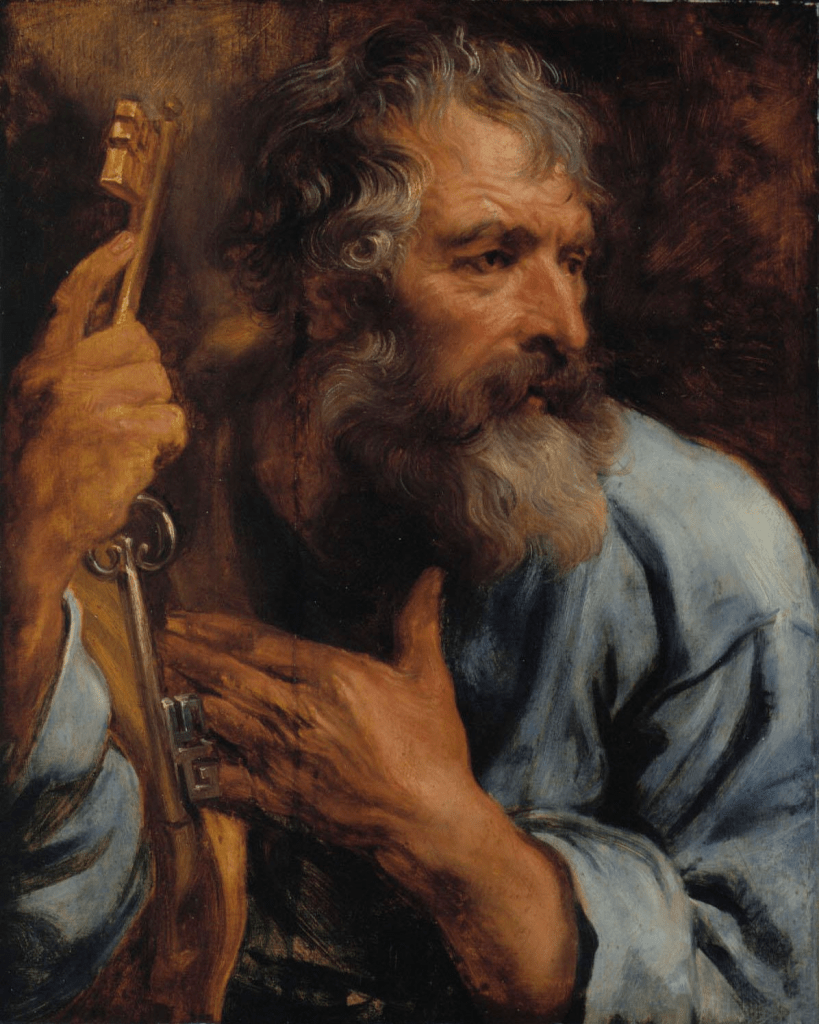
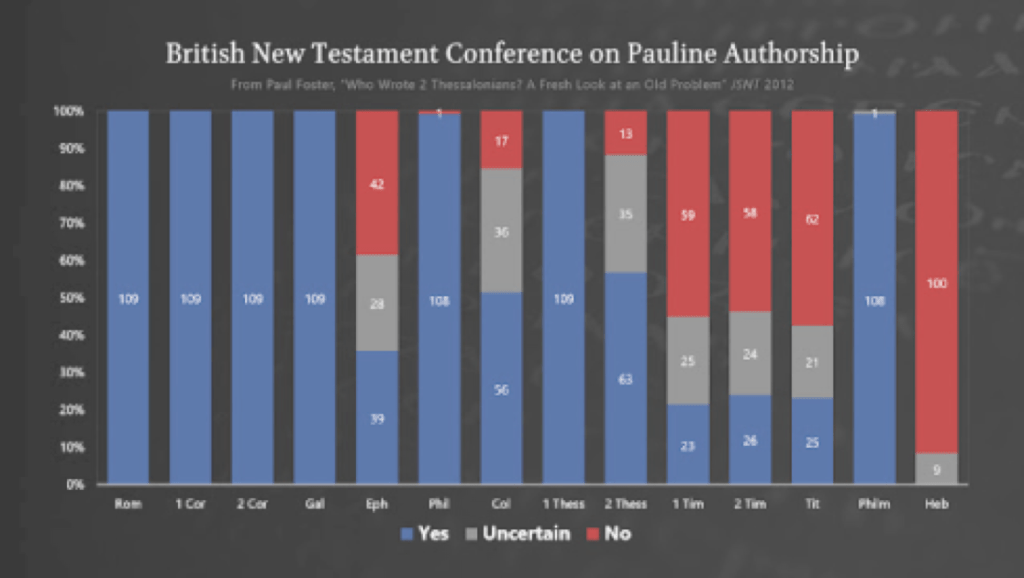






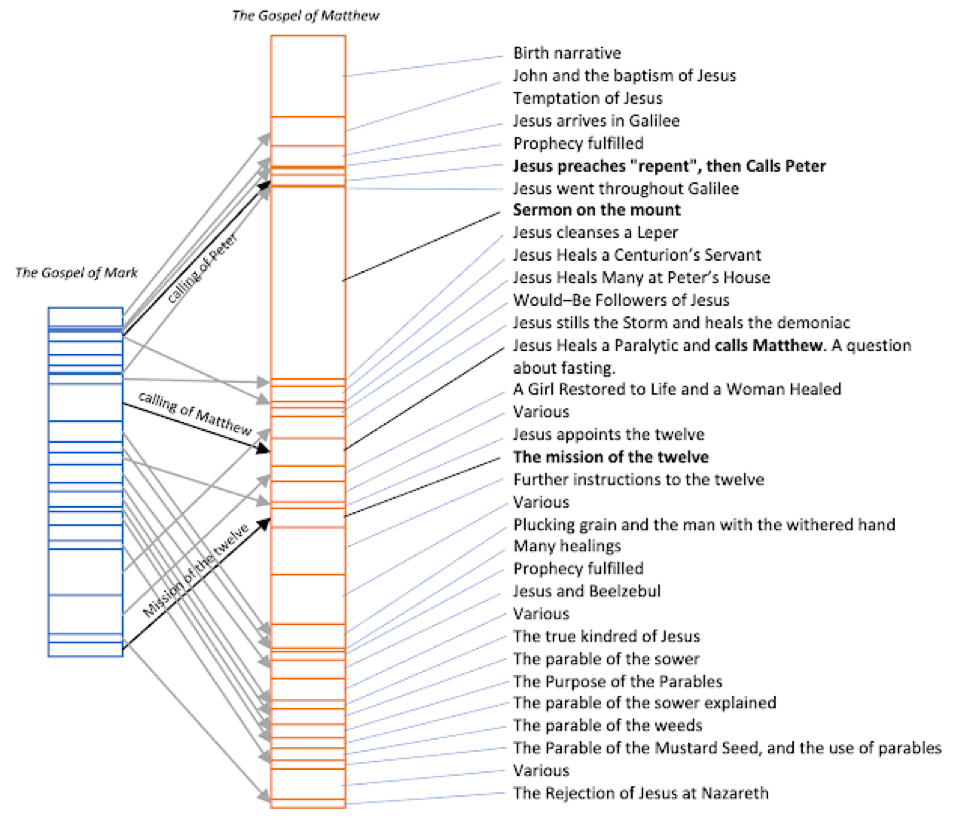


 The Lightkeeper