In the Book of Judges we are introduced to the man who became a Judge of Israel. Unlike most of the Kings of Judah and all of the Kings of Israel who were evil in the sight of the Eternal, the Judges were known for their spirituality and relationship with the Creator. Samson is a great example like David or Jacob, of a powerful man of God who was also a flawed individual. This does not diminish his spirituality or his relationship with the Eternal. God does not judge the flaws in a person if they have a heart which seeks righteousness. This type of person has the Holy Spirit and doesn’t just do nice things for others. A converted person grows in thinking like God and becoming motivated like God. An inexplicable transformation that is difficult to quantify unless one undergoes the experience in their own life.
Judges 13:1-25
English Standard Version
1 ‘And the people of Israel again did what was evil in the sight of the Lord, so the Lord gave them into the hand of the Philistines for forty years [1086 – 1046 BCE].
These forty years began with the birth of Samson and ended at his death. The last twenty years coincided with the judgeship of Samson from age twenty to forty. The Philistines principally descend from Aram and are a mixed people, who include the Hispanic and Latino peoples of Central and South America; with the foremost nation being Mexico – refer Chapter XV The Philistines: Latino-Hispano America.
2 There was a certain man of Zorah, of the tribe of the Danites, whose name was Manoah [meaning, ‘rest’]. And his wife was barren and had no children. 3 And the angel of the Lord appeared to the woman and said to her, “Behold, you are barren and have not borne children, but you shall conceive and bear a son. 4 Therefore be careful and drink no wine or strong drink, and eat nothing unclean, 5 for behold, you shall conceive and bear a son. No razor shall come upon his head, for the child shall be a Nazirite to God from the womb,**and he shall begin to save Israel from the hand of the Philistines.”
These verses reveal that Manoah was from the tribe of Dan and by inference that his wife was too, though this is not stated, nor is her name given. Many postulate that Manoah’s wife was actually from the tribe of Judah. This is to subscribe a dual lineage to Samson and equate his supposed future descendant, the Antichrist as an apostate version of Christ, also with a Lion of Judah credential. Yair Davidy of Brit-Am Israel makes the claim that Samson’s lineage also includes the Messianic tribe of Judah.
Brit-Am Israel Newsletter, 1999 – emphasis mine:
‘Samson the superman hero came from the Tribe of Dan but his mother was from Judah. Samson, in some respects, was considered a forerunner of the [still future] Messiah who will come from Judah but his mother, according to the Midrash will be of the Tribe of Dan.’
Samson may well have had a dual lineage, though not the one that most people might think. The Bible makes clear that the true Messiah has already been (Matthew 16:16) and Christ’s biological mother Mary, was descended from Judah; not from the tribe of Dan – Matthew 1:1-2.
Judges: 6 ‘Then the woman came and told her husband, “A man of God came to me, and hisappearance was like the appearance of the angel of God^ [H430 – elohiym], very awesome. I did not ask him where he was from, and he did not tell me his name, 7 but he said to me, ‘Behold, you shall conceive and bear a son. So then drink no wine or strong drink, and eat nothing unclean, for the child shall be a Nazirite to God from the womb to the day of his death.’
8 Then Manoah prayed [H6279 – athar: entreat] to the Lord* and said, “O Lord^^[H136 – adonay: lord], please let the man of God whom you sent come again to us and teach us what we are to do with the child who will be born.”
9 And God listened to the voice of Manoah, and the angel of God came again to the woman as she sat in the field. But Manoah her husband was not with her. 10 So the woman ran quickly and told her husband, “Behold, the man who came to me the other day has appeared to me.”
11 And Manoah arose and went after his wife and came to the man and said to him, “Are you the man who spoke to this woman?” And he said, “I am.”^^^
12 And Manoah said, “Now when your words come true, what is to be the child’s manner of life, and what is his mission?” 13 And the angel of the Lord [H3068 – Yhovah, LORD*] said to Manoah, “Of all that I said to the woman let her be careful. 14 She may not eat of anything that comes from the vine, neither let her drink wine or strong drink, or eat any unclean thing. All that I commanded her let her observe.”
It is curious that the angel had met with Manoah’s wife twice privately, albeit after Manoah’s request. It is also interesting that the angel (messenger) in question is described of the Eternal (the Father) in some instances and of the elohim^ (lesser gods) in others. It remains highly unusual that Manoah’s wife is not stated by name. Does this mean she was not a converted believer? Manoah apparently had a relationship with God in that he prayed to the one^^ who would be the saviour. Even so, the account does not confirm his spiritual status.
Reading between the lines, had a messenger from the Eternal played a role in healing her womb for a miraculous conception? The Son of Man, John the Baptist and Jeremiah all had the blessing of the Creator’s Holy Spirit working with them prior to birth, yet while still inside their mother’s wombs** – Jeremiah 1:5, Luke 1:15, 41, Matthew 1:20.
Was a wondrous working performed for Samson’s mother? If so, it casts doubt on Manoah being Samson’s biological father. A similar scenario as that of Christ and his adoptive father, Joseph – Luke 3:23.
Judges: 15 ‘Manoah said to the angel of the Lord, “Please let us detain you and prepare a young goat for you.” 16 And the angel of the Lord said to Manoah, “If you detain me, I will not eat of your food. But if you prepare a burnt offering, then offer it to the Lord.” (For Manoah did not know that he was the angel of the Lord.)
17 And Manoah said to the angel of the Lord, “What is your name, so that, when your words come true, we may honor you?” 18 And the angel of the Lord said to him, “Why do you ask my name,^^^ seeing it is wonderful? [H6383 – paliy: secret, incomprehensible]”
19 So Manoah took the young goat with the grain offering, and offered it on the rock to the Lord, to theone who works wonders, and Manoah and his wife were watching. 20 And when the flame went up toward heaven from the altar, the angel of the Lord went up in the flame of the altar. Now Manoah and his wife were watching, and they fell on their faces to the ground.’
Angels do not allow anyone to worship them – Revelation 22:8-9.
Judges: 21 ‘The angel of the Lord appeared no more to Manoah and to his wife. Then Manoah knew that he was the angel of the Lord. 22 And Manoah said to his wife, “We shall surely die, for we have seen^^^ God.”
Judges: 23 ‘But his wife said to him, “If the Lord had meant to kill us, he would not have accepted a burnt offering and a grain offering at our hands, or shown us all these things, or now announced to us such things as these.”
This is reminiscent of when Jacob wrestled a ‘man’ all night: Then Jacob asked him, “Please tell me your name.” But he said, “Why is it that you ask my name?”^^^ And there he blessed him. So Jacob called the name of the place Peniel, saying, “For I have seen^^^ God face to face, and yet my life has been delivered” – Genesis 32:29-30, ESV.
There are fascinating parallels between the encounter between this angel of the Lord who visited Manoah and his wife and the being who both wrestled with Jacob and spoke with Moses. For as we have discovered on our journey there is more than one angel of the lord. The man who wrestled with Jacob was the pre-incarnate Word – refer Chapter XXIX Esau: The Thirteenth Tribe. So it is very interesting that Manaoh should reference seeing ‘God’, just as Jacob had done. For Jacob really had seen the Lord (Adonay).
Ironically, it was Manoah who thought their lives were in danger – when he should have known better – and it was his wife who understood the angel of the Lord had visited them. Further, their visitor disappeared in the flames of the altar. This reminds of Moses’ encounter with the angel of the Lord in the burning bush – Exodus 3:2-6. Moses in like fashion was afraid and hid his face after seeing ‘God’.
When Moses asked for his name, like Manaoh, he was not told – Exodus 3:13-14. Instead, he replied I am, just as the angel of the Lord had responded to Manoah in verse eleven. If it was the Word speaking with Manoah and his wife it perhaps explains why he answered that his name was wonderful, for in Isaiah it states regarding the unborn Christ: ‘For to us a child is born, to us a son is given… and his name shall be called Wonderful Counselor, Mighty God [or Immanuel, Isaiah 7:14; 8:8]…’ – Isaiah 9:6.
The visitation by the Word to Manoah’s wife was not without precedent as Abraham’s wife had a similar experience: ‘The Lord visited Sarah as he had said, and the Lord did to Sarah as he had promised. And Sarah conceived…’ Genesis 21:1-2, ESV.
Judges: 24 ‘And the woman bore a son and called his name Samson [H8123 – Shimshown: ‘like the Sun’]. And theyoung man grew, andthe Lord blessed him. 25 And the Spirit of the Lord began to stir [H6470 – pa’am: move, impel] him in Mahaneh-dan, between Zorah and Eshtaol [cities of Dan].’
It is clear that Samson grew up in Manoah’s household as a son and that Manoah’s wife physically gave birth to Samson. What is not categorically stated is whether Manoah is Samson’s father or what family line Samson’s mother actually was. She may not have even been from a tribe of Israel. Regardless, Samson’s mother not descending from the tribe of Dan is supported by the prophecy in Revelation 7:4-8 with no-one in the time of the end being saved from Dan.
Though it is not complete proof, for there may well have been converted Danites between the eponymous Dan and sealing of the future 144,000 saints. That said, it seem possible perhaps probable that the 144,000 saints are not reflective of past peoples but all are yet future. Placing all the scriptures regarding Dan and his tribe together, it paints the possibly remarkable picture of a. no Danite, has ever been called and b. Samson with only one biological parent (as the Messiah), was not from the tribe of Dan.
Judges 14:1-20
English Standard Version
1 ‘Samson went down to Timnah, and at Timnah he saw one of the daughters of the Philistines. 2 Then he came up and told his father and mother, “I saw one of the daughters of the Philistines at Timnah. Now get her for me as my wife.”
3 ‘But his father and mother said to him, “Is there not a woman among the daughters of your relatives, or among all our people, that you must go to take a wife from the uncircumcised Philistines?” But Samson said to his father, “Get her for me, for she is right in my eyes.”
Manoah makes a revealing comment, in that his wife is possibly not an Israelite (“our people”) – or a Philistine – and so Samson’s relatives are not either. Manoah cannot say the same about any Israelite tribe such as his own, the Danites as he is not Samson’s biological father. The reference to ‘our people’ either clearly delineates the tribes of Israel who Samson, his mother and Israelite father are living amongst; or specifically the tribe of Dan. If such, then his mother’s relatives could be a tribe of Israel. In that scenario, Samson’s mother may well have been from the tribe of Judah, with the lion and bees symbolically representing Samson’s maternal lineage on one side and his adoptive father’s on the other.
Rabbinical sources (Talmud) maintain Samson’s mother was from Judah and give her name as Zelelponith. This name is based on a woman mentioned just once in the Bible. Her genealogy is found in 1 Chronicles chapter two and four; where it begins with Judah’s son Pharez and his son Hezron – 1 Chronicles 2:4-5. Hezron had two sons: Jerahmeel and Chelubai (or Caleb) – 1 Chronicles 2:9. Jerahmeel had a son called Ram and it was from his line that David was later born – Chapter XXX Judah & Benjamin – the Regal Tribes.
Hezron later married a daughter of Machir, called Ephrathah (or Ephrath) – 1 Chronicles 2:21. Now Machir was the son of Manasseh – Chapter XXXIII Manasseh & Ephraim – the Birthright Tribes. When Hezron died, his son Caleb, whose wife Azubah had died (1 Chronicles 2:19) took Ephrathah as his wife – 1 Chronicles 2:24. Caleb’s first son with Ephrathah was Hur – 1 Chronicles 2:19.
This is where it becomes interesting for Hur fathered Uri, who fathered none other than Bezalel, who was given the Holy Spirit and the task of heading the work on the construction of the Tabernacle in Exodus chapter thirty-five – working with Oholiab of the tribe of Dan.
Hur had another son called Shobal, who in turn had a son called Kiriath-jearim – 1 Chronicles 2:50. Clans of Kiriath-jearim included the Zorathites. A name not far removed from where Manoah was from: Zorah. Shobal had a son called Reaiah and his son, Jahath fathered Ahumai and Lahad, both clans of the Zorathites – 1 Chronicles 4:2.
Verse three: ‘These were the sons of Etam: Jezreel, Ishma, and Idbash; and the name of their sister was Hazzelelponi…’
Abarim Publications: ‘This Etam is a bit mysterious because there doesn’t seem to be a person named Etam. There are only cities of that name, and it’s possible that the three mentioned men are chiefs of some sort, but it seems a bit strange to mention that they have a sister.’
Hazzelelponi is none other than Zelelponith, the mother of Samson. Thus Samson on his mother’s side, was a descendant of Hezron, like David and Jesus, though from his son Caleb and not his grandson Ram.
In the Vulgate version of the Bible her name translates to Asalelphuni and in the Septuagint version her name translates to Heselebbon.
Hazzelelponi’s name means the shadow falls on me and Manoah’s wife was undoubtedly one who dwelt under the shadow of the Almighty and became the mother of the strongest most muscular man who ever lived. Her experience was sensationally replicated ten centuries later.
Luke 1:34-35
English Standard Version
And Mary said to the angel, “How will this be, since I am a virgin?”
And the angel answered her, “The Holy Spirit will come upon you, and the power of the Most High will overshadow [G1982 – episkiazo] you; therefore the child to be born will be called holy – the Son of God.”
The Greek word for overshadow according to Strong’s means to ‘throw a shadow upon, to envelop in a shadow, to overshadow… to envelop in a haze of brilliancy; [figuratively] to invest with preternatural influence…
From a vaporous cloud that casts a shadow the word is transferred to a shining cloud surrounding and enveloping persons with brightness. Used of the Holy Spirit exerting creative energy upon the womb of the virgin Mary and impregnating it (a use of the word which seems to have been drawn from the familiar OT idea of a cloud as symbolising the immediate presence and power of God).’
Hazzelelponi’s name can also be interpreted as ‘the shadow turns to me’ or ‘the shade faces me.’
Abarim: The Shadow Facing Me, The Ringing To Which I Turn. From (1) the verb (salal), to ring or be dark, and (2) the verb (pana), to turn or face.’
A related name is Peniel, the very name used by Jacob to describe his face to face encounter with the Lord. Rabbinic tradition holds that Manoah and Hazzelelponi had a daughter called Nishyan (or Nashyan).
Judges: 4 ‘His father and mother did not know that it was from the Lord, for he was seeking an opportunity against the Philistines.At that time the Philistines ruled over Israel. 5 Then Samson went down with his father and mother to Timnah, and they came to the vineyards of Timnah. And behold, a young lion [a symbol for Dan and Judah] came toward him roaring.
6 Then the Spirit of the Lord rushed upon him, and although he had nothing in his hand, he tore the lion in pieces as one tears a young goat.But he did not tell his father or his mother what he had done. 7 Then he went down and talked with the woman, and she was right in Samson’s eyes.
8 After some days he returned to take her. And he turned aside to see the carcass of the lion, and behold, there was a swarm of bees in the body of the lion, and honey.
9 He scraped it out into his hands and went on, eating as he went. And he came to his father and mother and gave some to them, and they ate. But he did not tell them that he had scraped the honey from the carcass of the lion.
10 His father went down to the woman, and Samson prepared a feast there, for so the young men used to do. 11 As soon as the people saw him, they brought thirty companions to be with him. 12 And Samson said to them, “Let me now put a riddle to you. If you can tell me what it is, within the seven days of the feast, and find it out, then I will give you thirty linen garments and thirty changes of clothes, 13 but if you cannot tell me what it is, then you shall give me thirty linen garments and thirty changes of clothes.” And they said to him, “Put your riddle, that we may hear it.” 14 And he said to them,
“Out of the eater [meat] came something to eat [honey]. Out of the strong [lion] came something sweet.”
And in three days they could not solve the riddle.
One commentator says regarding Samson’s riddle – emphasis mine:
‘Samson’s riddle tells us how to interpret Jacob’s blessing upon Judah. Judah was to bring forth the King-Messiah, the Lion of the Tribe of Judah, who would die and be raised from the dead. That was Judah’s calling, and Jesus was indeed born of the tribe of Judah… Samson’s riddle may also be a prophecy that the descendants of the tribe of Dan will one day try to destroy the tribe of Judah in jealous revenge for God’s judgment on their idolatry.
From the carcass of the young lion [Judah]the tribe of Dan (typified by the bees)will attempt to produce their owngolden age(symbolized by honey) and confer immortality on mankind through occult enlightenment. The conspiracy of the tribe of Dan, aka the Synagogue of Satan, [is] to steal the messianic birthright from the tribe of Judah and establish a false messianic kingdom in Israel… [Revelation 2:9; 3:9].
It is through the agency of Jewish Kabbalists such as the Sephardimand the Lubavitch Movementthat the Gentiles will be judged by a restored Sanhedrinthat enforcesthegenocidal Noahide Laws worldwide.’
We will return to the symbolism of the Bee and its link with Dan. We touched upon the Noahide Laws previously – refer Chapter XXIX Esau: The Thirteenth tribe. The alarming aspect is that most people do not know what these laws are, nor do they realise that they will become law for everyone in the European and Western world in the future and when that happens, Christians whether of the Body of Christ and the true church of God (refer article: The Seven Churches – A Message for the Church of God in the Latter days) or of the myriad false branches which constitute the many denominations of Christianity, are all in very big trouble.
Zionism Exposed, The Noahide Laws – emphasis & bold mine:
‘Few Christians have heard of the Noahide Laws or know that they were signed into US law on March 20, 1991 by George H W Bush.
The Noahide Laws are from the Babylonian Talmud and according to the 1906 Jewish Encyclopedia, “They declared that the following six commandments were enjoined upon Adam:
(1) not to worship idols;
(2) not to blaspheme the name of God;
(3) to establish courts of justice;
(4) not to kill;
(5) not to commit adultery; and
(6) not to rob…
A seventh commandment was added after the Flood-not to eat flesh that had been cut from a living animal.”
‘These Noahide Laws are universal and binding upon Gentiles only[as opposed to the obligatory 613 old covenant commandments required of Jews]. According to the 1906 Jewish Encyclopedia, “The Talmud frequently speaks of ‘the seven laws of the sons of Noah,’ which were regarded as obligatory upon all mankind, in contradistinction to those that were binding upon Israelites only.(Tosef., ‘Ab. Zarah, ix. 4; Sanh. 56a). Note: The original Jewish Encyclopedia link has been removed since the publication of this website.
The Penalty for Transgression of any Noahide Law is Decapitation – Christians will all be Decapitated. [A Handmaid’s Tale… anyone? For hanging is not far removed from decapitation – refer chapter XXXIII Manasseh & Ephraim – the Birthright Tribes] “With but a few exceptions, the punishment meted out to a Noachid for the transgression of any of the seven laws is decapitation.” (1906 Encyclopedia)
What few Christians know and what isn’t explicitly stated within the US legislation, is that the first and second Noahide laws, which prohibit idolatry and blasphemy, would be transgressed by [ALL] Christians. This is because the worship of Jesus Christ is considered idolatry and the name of Jesus is blasphemy according to the Talmud.’
“And I saw thrones, and they sat upon them, and judgment was given unto them: and I saw the souls of them that were beheaded for the witness of Jesus, and for the word of God, and which had not worshipped the beast, neither his image, neither had received his mark upon their foreheads, or in their hands; and they lived and reigned with Christ a thousand years.” (Revelation 20:4)
‘Courts will be established everywhere to issue warnings and to exact justice [the Judgement of Dan] for violations of the Noahide Laws. Some of these courts and even prisons will exist within churches. Few Christians are aware of the inordinate number of church elders today who have police/military backgrounds with some churches even having their own police force.
“The Noachidæ (those who the Noahide Laws are binding upon) are required to establish courts of justice in every city and province; and these courts are to judge the people with regard to the six laws and to warn them against the transgression of any of them.” (1906 Jewish Encyclopedia)’
Judges: 15 ‘On the fourth day they said to Samson’s wife, “Entice your husband to tell us what the riddle is, lest we burn you and your father’s house with fire. Have you invited us here to impoverish us?” 16 And Samson’s wife wept over him and said, “You only hate me; you do not love me. You have put a riddle to my people, and you have not told me what it is.” And he said to her, “Behold, I have not told my father nor my mother, and shall I tell you?” 17 She wept before him the seven days that their feast lasted, and on the seventh day he told her, because she pressed him hard. Then she told the riddle to her people. 18 And the men of the city said to him on the seventh day before the sun went down,
“What is sweeter than honey? What is stronger than a lion?”
And he said to them, “If you had not plowed with my heifer, you would not have found out my riddle.”
Samson assumes these men have slept with his wife.
19 And the Spirit of the Lord rushed upon him, and he went down to Ashkelon and struck down [H5221 – nakah: ‘slew, slayed’]thirty men of the town and took their spoil and gave the garments to those who had told the riddle. In hot angerhe went back to his father’s house. 20 And Samson’s wife was given to his companion, who had been his best man.’
A very short marriage. Rightly or wrongly, we obtain an impression of a man spoiled by his parents. Knowing your son is set apart by the Eternal for a special calling appears to have been inflated in Samson’s parent’s as well as in Samson’s own eyes. It was probably drilled into him from a young age. He displays a level of immaturity, impetuousness, and vanity in his, ‘get me that woman now’ attitude. Samson had brothers, though maybe he was the eldest and all hopes were pinned on him.
Samson’s riddle to the Philistines was smug and condescending, knowing they would never work it out. The threat of burning by fire was a typical Philistine response. His wife deserves an award for her acting and perseverance and yet, Samson either displays weakness of character or a perverseness to reveal the answer, when he had held out nearly seven days. Why reveal the answer then? It is at odds that Samson would murder thirty men in cold blood, when the Spirit from the Lord had come upon him.
Judges 15:1-20
English Standard Version
1 ‘After some days, at the time of wheat harvest [Feast of Tabernacles], Samson went to visit his wife with a young goat. And he said, “I will go in to my wife in the chamber.” But her father would not allow him to go in. 2 And her father said, “I really thought that you utterly hated her, so I gave her to your companion. Is not her younger sister more beautiful than she? Please take her instead.”
3 ‘And Samson said to them, “This time I shall be innocent in regard to the Philistines, when I do them harm.” 4 So Samson went and caught 300 foxes and took torches. And he turned them tail to tail and put a torch between each pair of tails. 5 And when he had set fire to the torches, he let the foxes go into the standing grain of the Philistines and set fire to the stacked grain and the standing grain, as well as the olive orchards. 6 Then the Philistines said, “Who has done this?” And they said, “Samson, the son-in-law of the Timnite, because he has taken his wife and given her to his companion.” Andthe Philistines came up and burned her and her father with fire.
7 And Samson said to them, “If this is what you do, I swear I will be avenged on you, and after that I will quit.” 8 And he struck them hip and thigh with a great blow, and he went down and stayed in the cleft of the rock of Etam.
9 Then the Philistines came up andencamped in Judah and made a raid on Lehi. 10 And the men of Judah said, “Why have you come up against us?”
Yes, why would the Philistines head to the territory of Judah to apprehend Samson? This a valid question and makes sense if Samson’s mother was descended from the tribe of Judah.
‘They said, “We have come up to bind Samson, to do to him as he did to us.” 11 Then 3,000 men of Judahwent down to the cleft of the rock of Etam, and said to Samson, “Do you not know that the Philistines are rulers over us? What then is this that you have done to us?”
And he said to them, “As they did to me, so have I done to them.” 12 And they said to him, “We have come down to bind you, that we may give you into the hands of the Philistines.” And Samson said to them, “Swear to me that you will not attack me yourselves.” 13 They said to him, “No; we will only bind you and give you into their hands. We will surely not kill you.” So they bound him with two new ropes and brought him up from the rock.
14 When he came to Lehi, the Philistines came shouting to meet him. Then the Spirit of the Lord rushed upon him, and the ropes that were on his arms became as flax that has caught fire, and his bonds melted off his hands. 15 And he found a fresh jawbone of a donkey, and put out his hand and took it, and with it he struck 1,000 men. 16 And Samson said,
“With the jawbone of a donkey, heaps upon heaps, with the jawbone of a donkey have I struck down a thousand men.”
17 ‘As soon as he had finished speaking, he threw away the jawbone out of his hand. And that place was called Ramath-lehi. 18 And he was very thirsty, and he called upon the Lord and said, “You have granted thisgreat salvation by the hand of your servant, and shall I now die of thirst and fall into the hands of the uncircumcised?” 19 And God split open the hollow place [a well] that is at Lehi, and water came out from it. And when he drank, his spirit returned, andherevived. Therefore the name of it was called En-hakkore; it is at Lehi to this day. 20 And he judged Israel in the days of the Philistines twenty years.’
Three thousand men is an astonishing number of men to apprehend just one strong man. This shows that Samson’s strength was not natural but supernatural. Some will say that Samson killing a thousand men must be an exaggeration. But this kind of awesome strength would be difficult to counter in hand to hand combat.
A terminator in hyper drive so-to-speak. Again though, the Spirit descends upon Samson in acts of violence and death. It is a sure bet Samson was thirsty after fighting a thousand men. Again, his manner is haughty with the Eternal. So far, there is not much to like about Samson. Though the stand out point in this chapter, is the fact the Philistines went straight to the territory of Judah, deliberately bypassing the tribe of Dan. Why would they do that, if Samson was a Danite? Unless Samson’s mother (now confirmed) was descended from the tribe of Judah after all.
Judges 16:1-31
English Standard Version
1 ‘Samson went to Gaza, and there he saw a prostitute, andhe went in to her. 2 The Gazites were told, “Samson has come here.” And they surrounded the place and set an ambush for him all night at the gate of the city. They kept quiet all night, saying, “Let us wait till the light of the morning; then we will kill him.” 3 But Samson lay till midnight, and at midnight he arose and took hold of the doors of the gate of the city and the two posts,and pulled them up, bar and all, and put them on his shoulders and carried them to the top of the hill that is in front of Hebron.’
The immense weight of the doors, posts and crossbar was carried by Samson for an incredible forty miles. It does not say that the Spirit descended on Samson, though it is assumed that this must have been a supernatural feat? The visit to a prostitute is casually understated, as it was centuries earlier when Jacob’s son Judah inadvertently lay with his daughter-in-law – Genesis 38:15-16. One wonders if the seventh commandment was applied in these instances, or only if one was married.
Judges: 4 ‘After this he loved a woman[a prostitute?]in the Valley of Sorek, whose namewas Delilah [H1807 – Dliylah: feeble, languishing].’
5 ‘And the lords of the Philistines came up to her and said to her, “Seduce him, and see where his great strength lies, and by what means we may overpower him, that we may bind him to humble him. And we will each give you1,100 pieces of silver.” 6 So Delilah said to Samson, “Please tell me where your great strength lies, and how you might be bound, that one could subdue you.”
There were five principal cities of the Philistines and so maybe five Lords, meant possibly 5,500 pieces of silver – or more likely, each Lord contributed 220 pieces each. This would have been winning the lottery. We learn that Delilah’s love – if any of Samson – was dwarfed by a huge prize fund and she was willingly corrupted.
Abarim Publications – emphasis & bold mine:
‘The name Delilah looks like it comes from the verb (dalal), meaning to be low or hang down… Noun (dalla) denotes a drooping bundle of hair or threads of warp hanging in loom. Whoever made up the name Delilah must have tinkered quite a bit with the root. The question is: why? The author could have called her a Low Life and named her Dalah, Dallah or Dalalah, and be done with it.
Whatever the reason (or intended meaning), the name Delilah as it is written looks like it contains the word (layela), meaningnight, and that evokes an association with the name of the fabulous night creature Lilith’ – refer article: Lilith.
Abarim Publications drawing attention to Delilah’s association with Lilith, is a detail we will look into further.
Judges: 7 ‘Samson said to her, “If they bind me with seven fresh bowstrings that have not been dried, then I shall become weak and be like any other man.” 8 Then the lords of the Philistines brought up to her seven fresh bowstrings that had not been dried, and she bound him with them. 9 Now she had men lying in ambush in an inner chamber. And she said to him, “The Philistines are upon you, Samson!” But he snapped the bowstrings, as a thread of flax snaps when it touches the fire. So the secret of his strength was not known.’
Samson uses his inventive sense of humour, to test Delilah and she happily fails his test – with all eyes on her massive payload. Saying that, Samson’s relationship with Delilah, was a complex, toxic love story. Central to it, is a sexual theme of a Dominatrix who grew frustrated at playing a pretend role of dominance to Samson’s fake submissive role and so wear him down to reveal his secret and truly bind his supernatural strength.
Judges: 10 ‘Then Delilah said to Samson, “Behold, you have mocked me and told me lies. Please tell me how you might be bound.” 11 And he said to her, “If they bind me with new ropes that have not been used, then I shall become weak and be like any other man.” 12 So Delilah took new ropes and bound him with them and said to him, “The Philistines are upon you, Samson!” And the men lying in ambush were in an inner chamber. But he snapped the ropes off his arms like a thread.
13 Then Delilah said to Samson, “Until now you have mocked me and told me lies. Tell me how you might be bound.” And he said to her, “If you weave the seven locks of my head with the web and fasten it tight with the pin, then I shall become weak and be like any other man.” 14 So while he slept, Delilah took the seven locks of his head and wove them into the web. And she made them tight with the pin and said to him, “The Philistines are upon you, Samson!” But he awoke from his sleep and pulled away the pin, the loom, and the web.
15 And she said to him,“How can you say, ‘I love you,’ when your heart is not with me? You have mocked me these three times, and you have not told me where your great strength lies.” 16 Andwhen she pressed him hard with her words day after day, andurged him, his soul was vexed [grieved, annoyed] to death.’
Recall, Samson’s first wife to be also ‘pressed him hard’ – Judges 14:17.
Judges: 17 ‘And he told her all his heart, and said to her, “A razor has never come upon my head, for I have been a Nazirite to God from my mother’s womb. If my head is shaved, then my strength will leave me, and I shall become weak and be like any other man.”
18 When Delilah saw that he had told her all his heart, she sent and called the lords of the Philistines, saying, “Come up again, for he has told me all his heart.” Then the lords of the Philistines came up to her and brought the money in their hands.
19 She made him sleep on her knees. And she called a manandhad him shave off the seven locks [braid, plait] of his head [for his hair had not been cut from birth].’
Many have pondered what the length of Samson’s hair and his strength may have in common. Related to this is the connection between electricity and hair. Most people have felt or seen static electricity in hair. For instance when walking past analogue television sets in the past. A series of articles discuss the relevance of long hair and also its conductivity not just of physical electricity but the ramifications of being a spiritual conduit.
The Spiritual Nature of Hair, Deva Kaur Khalsa – emphasis mine:
‘Consider the possibility that the hair on your head is there to do more than just look good… Left uncut, your hair will grow to a particular length and then stop all by itself at the correct length for you… hair is an amazing gift of nature… which increases vitality, intuition, and tranquility.
… Often, when people were conquered or enslaved, their hair was cut as a recognized sign of slavery. It was also understood that this would serve as punishment and decrease the power of those enslaved. The bones in the forehead are porous and function to transmit light to the pineal gland, which affects brain activity, as well as thyroid and sexual hormones. Cutting bangs which cover the forehead impedes this process…’
Yogi Bhajan:
“When the hair on your head is allowed to attain its full, mature length, then phosphorous, calcium, and vitamin D are all produced, and enter the lymphatic fluid, and eventually the spinal fluid through the two ducts on the top of the brain. This ionic change creates more efficient memory and leads to greater physical energy, improved stamina, and patience.”
‘Yogi Bhajan explained that if you choose to cut your hair, you not only lose this extra energy and nourishment, but your body must then provide a great amount of vital energy and nutrients to continually re-grow the missing hair.
In addition, hairs are the antennas that gather and channel the sun energy or prana to the frontal lobes, the part of the brain you use for meditation and visualization. These antennas act as conduits to bring you greater quantities of subtle, cosmic energy. It takes approximately three years from the last time your hair was cut for new antennas to form at the tips of the hair.
In India, a Rishi is known as a wise one who coils his or her hair up on the crown of the head during the day to energize the brain cells, and then combs it down at night. A ‘rishi knot’ energizes your magnetic field (aura) and stimulates the pineal gland in the center of your brain.’
“This activation of your pineal results in a secretion that is central to the development of higher intellectual functioning, as well as higher spiritual perception.” – Yogi Bhajan
‘… If you are finding some silver strands in your hair, be aware that the silver or white color increases the vitamins and energy flow to compensate for aging… you will find grace and calmness in a person with uncut hair from birth, if it is kept well. The Creator has a definite reason for giving you hair.’
The Truth About Hairand Why Indians Would Keep Their Hair Long, C Young – emphasis mine:
‘This information about hair has been hidden from the public since the Viet Nam War… In the early nineties, Sally… was married to a licensed psychologist who worked at a VA Medical hospital. Sally said, “I remember clearly an evening when my husband came back to our apartment on Doctor’s Circle carrying a thick official looking folder in his hands. Inside were hundreds of pages of… studies commissioned by the government. He was in shock from the contents. What he read in those documents completely changed his life. From that moment on my conservative middle of the road husband grew his hair and beard and never cut them again…”
As I read the documents, I learned why. It seems that during the Vietnam War special forces in the war department had sent undercover experts to comb American Indian Reservations looking for talented scouts, for tough young men trained to move stealthily through rough terrain. They were especially looking for men with outstanding, almost supernatural, tracking abilities. Before being approached, these carefully selected men were extensively documented as experts in tracking and survival… Once enlisted, an amazing thing happened. Whatever talents and skills they had possessed on the reservation seemed to mysteriously disappear, as recruit after recruit failed to perform as expected in the field.
Serious causalities and failures of performance led the government to contract expensive testing of these recruits, and this is what was found. When questioned about their failure to perform as expected, the older recruits replied consistently that when they received their required military haircuts, they could no longer ‘sense’ the enemy, they could no longer access a ‘sixth sense’, their ‘intuition’ no longer was reliable, they couldn’t ‘read’ subtle signs as well or access subtle extrasensory information.
So the testing institute recruited more Indian trackers, let them keep their long hair, and tested them in multiple areas. Then they would pair two men together who had received the same scores on all the tests. They would let one man in the pair keep his hair long, and gave the other man a military haircut. Then the two men retook the tests. Time after time the man with long hair kept making high scores. Time after time, the man with the short hair failed the tests in which he had previously scored high scores. So the document recommended that all Indian trackers be exempt from military haircuts. In fact, it required that trackers keep their hair long.
Hair is an extension of the nervous system, it can be correctly seen as exteriorized nerves, a type of highly evolved ‘feelers’ or ‘antennae’ that transmit vast amounts of important information to the brain stem, the limbic system, and the neocortex. Not only does hair in people, including facial hair in men, provide an information highway reaching the brain, hair also emits energy, the electromagnetic energy emitted by the brain into the outer environment.
This has been seen in Kirlian photography [a collection of photographic techniques used to capture the phenomenon of electrical coronal discharges] when a person is photographed with long hair and then rephotographed after the hair is cut. When hair is cut, receiving and sending transmissions to and from the environment are greatly hampered. This results in numbing-out. Cutting of hair is a contributing factor to unawareness of environmental distress in local ecosystems. It is also a contributing factor to insensitivity in relationships of all kinds. It contributes to sexual frustration.
In searching for solutions for the distress in our world, it may be time for us to consider that many of our most basic assumptions about reality are in error. It may be that a major part of the solution is looking at us in the face each morning when we see ourselves in the mirror. The story of Samson and Delilah in the Bible has a lot of encoded truth to tell us. When Delilah cut Samson’s hair, the once undefeatable Samson was defeated.’
Human Hair – A Biological Necessity, Dr Birendra Kaur – emphasis mine:
‘Nature put every hair on your body for a reason. The hair of the legs regulates the glandular system and stabilizes a person’s electromagnetic field. The hair under the armpits protects the very sensitive area where the parasympathetic and sympathetic nervous systems come together; this affects the brain and your energy level. Eyebrows protect the eyes from sun and sweat… The hair on top of the head is very long, while the hair on the body is short. If it were only for warmth, the hair on the body would be long also. We only have long hair right over the brain… Hair is your antenna to receive a picture of the subtle world around you, to tell when people are lying, to feel things before they happen…
It has been proven scientifically that people who have long hair tend to be less tired,more energetic and less likely to become depressed. People who have long hair also conserve energy and don’t feel the cold of winter the same as people with short hair. A person who has short hair wastes his body’s energy. A person who cuts his hair over his lifetime forces the body to grow 22 meters of replacement hair. A person who keeps his hair only produces 1.5 meters of hair over his lifetime.
Think of the story of Samson and Delilah in the Bible! He lost his strength when she cut his hair! … Hair is a conductor of the body’s electromagnetic energy. Ever see how the antenna wire in an AM radio is coiled in a circle? That’s because of something called induction. Induction causes any conductor of electromagnetic energy to induce a current in adjacent conductors. This means that when you coil a conductor, the signal becomes much stronger. Hairs on top of the head act as antennae. They conduct energy into the body. Also, wearing the hair on top of the head protects the top of the head from sun and exposure, as well as channeling solar energy and improving vitamin D absorption.’
Hair, Our Antenna to the Subtle Realms, Paolo Da Floresta, 2015 – emphasis mine:
‘Your bones, your blood, your skin and your hair are all made of “mini-magnets”… your entire brain is made of magnets that interact with each other. You can even think of your hair as being magnetic flux lines exiting your body. Your hair plays many important roles for your body. The least known role is that of antenna. Your hair is capable of sending/receiving information to and from your body exactly like a radio antenna, and exactly like the antenna described in biology.
Just look at cats whiskers for an obvious example of how sensitive hairs are. Human hair can be found mainly around the most important parts of the body… This gives our body abilities we wouldn’t normally have… eye lashes… are designed to sense objects in close proximity, and to warn the eye of incoming threats. Ear and nose hairs are designed to detect objects as well, to help keep those places safe, and probably assist in hearing and smelling.
…women with long hair are sometimes more sensitive emotionally then women with short hair… men with long hair are more feminine then men with short hair. This is not always true, but I found it is more true than false…I found that when I let my facial hair grow, and I let the hair on the top of my brain grow, I can more easily put myself in other peoples perspective and get a good idea of what they are thinking at the time. I can sense their emotions and feelings as well. I also find it more easy to spot bad actors, or liars. I find that I am more in tune with the people in my surroundings.
I also believe that hair type, and color, have a great effect on the abilities of the hair. For instance, there is a difference between dark haired people, and light haired people, and even people with fake hair colors. When changing the color of your hair, you change the available frequency range that your hair can send/receive. I also think that thick hair compared to thin hair have noticeable differences too. Also, curly hair, and straight hair effect the ability of the hair. When going bald, or getting gray hairs, this could be a sign of losing sensitivity, or gaining sensitivity (wisdom) of some sort, and no longer needing hair and relying on the mind alone. There is also other theories I can develop from this.
… many ancient [beliefs were] regarded as myth, mambo jumbo or hocus pocus by the west if it cannot be scientifically proven. Fortunately now, quantum physics in the last decade has [given] support [to] some of these myths.Crystals have the power to receive and transmit energy waves. The earliest radios used quartz crystals and were called “crystal sets.” The main composition of quartz crystal is silicon.
Silicon is also a key mineral found in the hair, and undoubtedly contributes to its antenna ability. It is no accident that silicon is also the most essential component of computers; silicon enables computers to have mind-like properties including “memory.” Silicon is also an important mineral found in the brain, which is the seat of the mind. Silicon is what gives an iridescent sheen to some fruit such as strawberries and cucumbers. It is also found in whole barley and oats.’
The reader can consider this information, though it would strongly appear that there is truth in these summations. It is quite obvious to this writer that women are far more intuitive than men. If long hair produces deeper intuition among male soldiers who have grown their hair, then it could be an important component rather than women being just intuitive or seemingly psychic per se, due to their hormone levels or other feminine factors unique to their sex.
In the case of Samson, who appeared to be almost washed in Spirit, his possessing very long hair may be a significant aspect of a heightened transmission and receiving ability of spiritual energy.
Judges: ‘Then she beganto torment [H6031 – anah: ‘be humiliated, looking down or browbeating’] him, and his strength [H3581 – koach: ‘power, force, might, of angels, chameleon, a large lizard’],left him.
20 And she said, “The Philistines are upon you, Samson!” And he awoke from his sleep and said, “I will go out as at other times and shake myself free.” But he did not know that the Lord had left him.
21 And the Philistines seized him and gouged out his eyes and brought him down to Gaza and bound him with bronze shackles.And he ground at the mill in the prison. 22 But the hair of his head began to grow again after it had been shaved.’
If Samson’s first wife deserved an honorary award, then Delilah deserved the whole acting academy. She wore Samson down to exhaustion. Samson, for a man with such incredible physical strength, could he really in turn be a man of such limited mental resolve? He had a fondness for the wrong women, yet neither the strength to stand up to them. It is curious that Samson’s strength can be described as the ‘power, force’ or ‘might of angels.’ It could be argued that he was merely supernaturally strong, like an angel. The possibilities broaden when this word also means ‘chameleon’ and of all things, ‘a large lizard.’ There is a school of thought that Samson was actually like the Nephilim. In fact, some even propose that Delilah was from a Nephilim lineage.
Judges: 23 ‘Now the lords of the Philistines gathered to offer a great sacrifice to Dagon their god and to rejoice… 24 And when the people saw [Samson], they praised their god. For they said, “Our god has given our enemy into our hand, theravager of our country, who has killed many of us.” 25 And when their hearts were merry, they said, “Call Samson, that he may entertain us.” So they called Samson out of the prison, and he entertained them. They made him stand between the pillars.’
The Philistines return the favour and cruelly mock Samson.
Judges: 26 ‘And Samson said to the young man who held him by the hand, “Let me feel the pillars on which the house rests, that I may lean against them.” 27 Now the house was full of men and women.All the lords of the Philistines were there, and on the roof there were about 3,000 men and women, who looked on while Samson entertained.’
28 ‘Then Samson called to the Lord and said, “O Lord God, please remember me, please strengthen me only this once, O God, that I may be avenged on the Philistines for my two eyes.”
29 And Samson grasped the two middle pillars on which the house rested, and he leaned his weight against them, his right hand on the one and his left hand on the other.’
30 ‘And Samson said, “Let me die with the Philistines.” Then he bowed with all his strength, and the house fell upon the lords and upon all the people who were in it.
So the dead whom he killed at his death were more than those whom he had killed during his life.
31 Then his brothers andall his familycame down and took him and brought him up and buried him between Zorah and Eshtaol in the tomb of Manoah his father. He had judged Israel twenty years.’
Samson sought revenge for his eyes and not for any altruistic reasons. He may have been given a special mission by the Eternal and he may have been a Judge of Israel. Though in irony to his being supposedly from the tribe of Judgement, the tribe of Dan, he appears the least likely of all Israel’s judges to have been deemed a wholesome or beneficial leader. Though Samson ironically seemed to be blind spiritually, yet while he was given liberal doses of Holy Spirit during his life, and then losing his literal eyesight; he did see his mission through to its desired end result, albeit in a roundabout way.
His crusade of liberating Israel from the Philistine’s dominion was achieved through his killing of the five lords and the three thousand influential people, constituting royalty, aristocracy, wealthy merchants and commercial leaders.
Flying Serpents and Dragons, R A Boulay, 1997 & 1999, Page 146 – emphasis mine:
‘The famous Samson was probably also a Rephaim. While the Old Testament [elucidates] on his fabulous accomplishments, his size is not given. In the Haggadah, however, he is called a Rephaim. Born near Beth-Shemesh in Lebanon [?], he is named after theSun God Shamash. His mother was reportedlyimpregnated by “Yahweh’s envoy,” presumably one of the demi-gods. Samson refused to marry one of the Hebrew women and instead chose a Philistine woman, presumably because she was one of the Rephaim.
Judges 14 describes one of his exploits which sounds very much like the parties of the Rephaim at Ugarit. When he was at Timnah, a town near Beth-Shamash, it is said that “Samson staged there a party for seven days because that is what the elite fighters used to do.”Samson’s home was just a few miles from Baalbek… the sacred place where the Mespotamian gods met and feasted…’ – refer article: Monoliths of the Nephilim.
Boulay raises pertinent points. Some addressed by the Bible, others are not. It does not say what Samson looked like. Was he tall, or stocky, or just a regular man and not remarkable in any way. The Spirit of the Lord began working with Samson when he was in the womb and while he was young, saying the Lord ‘blessed’ Samson. This sounds like a converted person and not the offspring of a fallen angel as the Haggadah may suggest. For at the end of the day, Samson is recounted by the author of the Book of Hebrews as a man of faith – refer Hebrews, article: The Sabbath Secrecy; and The Pauline Paradox.
Hebrews 11:32-34
English Standard Version
‘And what more shall I say? For time would fail me to tell of… Samson… who through faith conquered kingdoms, enforced justice, obtained promises… escaped the edge of the sword, [was] made strong out of weakness, became mighty in war, put foreign armies to flight.’
We know that Samson made the endeavour to marry a Philistine on purpose so that he could infiltrate their territory. Are there more question marks over Delilah? Abarim linked her to Lilith, of whom we have studied in the article Lilith and touched upon in Chapter XXI The Incredible Identity, Origin & Destiny of Nimrod.
Though Delilah would not be Lilith, could it be a hint that Delilah was more than human and or used black magic, casting a spell on Samson. Is this how she wore Samson down so that he wanted to die, rather than keep his secret. For surely he realised that telling Delilah would be the end of him. It does raise the possibility that he had been enchanted or as the Bible hints at, enfeebled… which means ‘to weaken.’ Did Delilah use sorcery to weaken Samson’s mental resolve?
Delilah the dark destroyer of Samson
Delilah was an Israelite not a Philistine, Jared Mithrandir, 2014 – emphasis mine:
‘Traditionally it is assumed that Delilah was another Pagan Philistine woman… In fact The Bible never says that.Samson had two earlier relationships with Philistine women, the one he married early on, and the harlot in Gaza… Neither of them are named… I don’t think any male Philistine characters are named at any-point in the Samson narrative… But Delilah has a name. Critics of The Bible starting with the assumption that [we are] supposed to think of Delilah as a Philistine like to point out that her name isn’t a Philistine name.
It seems… to be [derived] from the Hebrew word for night Layil ([Strongs] number 3915, the same root as Lilith interestingly) and/or Dalah ([Strongs] number 1809) meaning tofail,tobring loworto empty, from which… Strongs interprets the name Delilah to mean “languishing”. It’s similar to [Strongs] number 1808 Daliah which means branch.
She’s from a valley (not a city) called Sorek. This location is never mentioned (not by the same name at least) again in Scripture. In the movies Delilah is always sent to seduce Samson from the start. In The Bible it’s not like that, the Philistines come to her after they’ve been involved for awhile. The amount of Silver paid is debated. Is it really 1100 pieces from each lord as the KJV translation leads us to assume? Or is that the total they all [pooled] together?
It’s interesting that again we see betrayal linked with being paid in Silver, just like Judas with Jesus and Judah with Joseph.
I mentioned in an earlier post how there is disagreement… if Judges 17-18 actually follows 16. Now I believe they do follow 16. Judges 17 begins with a story involving Micah’s mother having 1100 shekels of Silver, the exact same amount Delilah was paid (either once or multiple times). I don’t think that’s a coincidence, I think this is Delilah.
Others who’ve noticed that possible connection then assume Samson is Micah’s father… Judges tends to note when a key character it’s following is conceived out of wedlock, and Samson and Delilah were never married. Also, if Samson was his fatherMicah would be a Danite, and in chapter 18 Micah doesn’t think of the Danites as his kin… [though] maybe… he is the son of Samson.
[Or Delilah] married someone afterwards, or perhaps she was a widow when she and Samson began their relationship. Which leads back to… [the] common [assumption], that Samson’s relationship with Delilah was bad to begin with. The text of Judges doesn’t… seem to say that, Evil enters the relationship when The Philistines bribed Delilah.’
There is merit in the argument that Delilah was not a Philistine. Though the inference is that she is, but as we have learnt with Samson, if it doesn’t categorically state the fact, then credible doubt is cast. The dark shadow Deliah’s personality casts, lends weight to her possible Nephilim ancestry. The familial link between Deliah and Micah is highly plausible.
The author picks up on the discrepancy between Micah not being a Danite and Samson being his father. Yet, if Samson was not a Danite, this fades away and Samson may well be Micah’s father…
Samson, Marc Zvi Brettler – emphasis mine:
“Judges” is a poor translation of the Hebrew word shoftim, which in this context refers to local military leaders. They are presented in order of best to worst, culminating with Samson. Biblical leaders do not always present positive examples to emulate, and Samson certainly falls in this category. Born with supernatural strength and an obligation to God and his people, Samson spends most of his short life carousing and inciting violence.
The first woman associated with him, not surprisingly, was his mother, who like many biblical female figures is unnamed. After much difficulty having children, an angel comes to give her the good news that she will bear a son. Reading between the lines, the text suggests that this angel is in fact his real father; a colloquial translation of Judges 13:6 is: “The man of God came on to me, and he looked like an angel of God, super-awesome!” His father’s divinity is one of the story’s explanations of Samson’s great strength, a theme that runs throughout the chapter. In fact, the name Samson, in Hebrew Shimson, derives from shemesh, “sun,” suggesting an original connection between Samson and the sun god.
The theme that God works in most unexpected ways is carried throughout the Samson stories – as is the theme of his appetite for sex and violence. For two chapters (14 and 15), Samson gets into various misadventures that ultimately involve killing Philistines – the more the merrier, and the more absurd the method, the more amusing. He is strong in these stories only when “the spirit of the Lord alight(s) upon him.” And God even performs miracles for him, splitting open a rock and creating a fountain when he is about to die of thirst after smiting one thousand Philistines with the jawbone of a donkey. That latter episode ends with the notice, “He led Israel in the days of the Philistines for twenty years,” suggesting that the story once ended there.
But more legends circulated about Samson, and some of these found their way into Judges. The next, very brief one tells how Samson was ambushed while visiting another woman – an unnamed prostitute in Gaza – and escaped by carrying off the city gates (16:1–3). Here he does not need to wait until “the spirit of the Lord alight[s] upon him,” but is naturally super-strong. This brings us to the last story – about Samson’s fourth woman, who is finally named, Delilah, a word that may be etymologically related to the word for “hair.”
What are we to make of Samson? Some readers may see similarities to the Greek Heracles/Hercules… The Philistines, like the Greeks, came from the Aegean… instead of celebrating a Greek demi-god, they mock the Greek-related Philistines. It is hard to put together the different images of Samson, especially concerning the source of his strength: from his divine father, from his hair, or from the spirit of the Lord?
The rabbis, who emphasized learning and religious observance over might, were quite ambivalent about Samson. While they praise his unselfish nature and exaggerate even more his heroic killing of Philistines, they also condemn his wandering eyes, which got him entangled with the women who led to his downfall. Invoking one of their favorite principles, measure for measure, they note:
“Samson followed his eyes, and that is why the Philistines blinded him.”
In those days there was no king in Israel. Everyone did what was right in his own eyes.
Judges 17:6; 21:25 English Standard Version
Where there is no vision, the people perish…
Proverbs 29:18 King James Version
“Here’s what I want you to do… buy medicine for your eyes from me so you can see, really see.”
Revelation 3:18 The Message
“God does not look for success as the world understands it. He looks for faithfulness. Who is that faithful servant? Success is accomplishing faithfully the task allotted to you by the Lord.”
Derek Prince
An original excerpt transferred from Chapter XXXIV Dan: The Invisible Tribe
The closing chapter, for the final identity and the concluding piece of the puzzle – the darkly enigmatic, tribe of Dan. Of all identity research on the tribes of Israel, none has drawn more interest, discussion and articles than Dan the fifth son of Jacob. With Ephraim and Manasseh, it has proven to be a very popular tribe for investigation – Chapter XXXIII Manasseh & Ephraim – the Birthright Tribes. In part, because its identity has been incorrectly perceived as easy. The perplexing irony is that its appeal lays in Dan’s proclivity to leave his name wherever he travelled as a marker that neatly leaves a path for the identity buff to follow. What is then baffling is the fact that the serpentine trail of the people of Dan which can be traced to Ireland and Britain suddenly going cold.
We follow the snakelike twists and turns of its tail, to then find that its head is hidden and for the serpent symbolism of Dan to be concealed and laying undisclosed. Aside from Judah, Ephraim, Manasseh and Benjamin, Dan receives a fair amount of air time in the Bible. His role in end time events increasing as the fulfilment of the latter days encroach. So who is Dan, where is Dan and why is Dan hidden?
The Tribe of Dan is like some of the other identities of Israel in that it is rather unanimous amongst identity adherents regarding his modern identification. The major blind is the nation of Denmark and the popular teaching that they constitute one half of Dan, as in Dan’s mark. We have discussed the nation of Denmark in Chapter XXVII Abraham & Keturah – Benelux & Scandinavia, as well as the Danes – as in the true Vikings – in Chapter XXXII Issachar, Zebulun, Asher & Naphtali – the Antipodean Tribes. The modern Danes are in fact the tribe of Medan, descended from Abraham and his second wife, Keturah.
The other half of Dan, though warmer is still cold when ascribing them to the modern nation of Ireland. As discussed in Chapter XXXI Reuben, Simeon, Levi & Gad – the Celtic Tribes, the Irish are in fact the tribe of Gad. Some enterprising researchers have attributed Dan to Northern Ireland and this to their credit is much warmer again, though still not wholly correct, for Northern Ireland is predominantly the tribe of Reuben.
The tribe of Dan, or Tuathe de Danann entered Ireland and fully explored Albion Britain from top to bottom, leaving their name as Dun in Scotland, Don in England and Din in Wales. Scotland represents the tribe of Benjamin; Wales is Simeon; and England descends from the tribe of Judah (Chapter XXX Judah & Benjamin – the Regal Tribes); but who is Dan?
It is recommended that Chapter XXIX Esau: The Thirteenth Tribe be read prior to this chapter. It would also be useful to read Chapters thirty through to thirty-three.
We initially meet Dan in Genesis chapter thirty, though the word Dan first appears (anachronistically) in Genesis chapter fourteen as a name of a city – Chapter XIX Chedorlaomer & the War of Nine Kings. His birth occurs following a domestic family upheaval in Jacob’s household; which had been simmering for a good length of time, while Leah was providing son after son and her younger sister Rachel remained barren. There was anger and frustration on both sides, between Jacob and Rachel. Jacob desired a son from his favourite wife and Rachel wanted to remain important in his eyes by giving him a son. Rachel also felt under pressure to her fertile sister. It must have been quite an unhappy house until Bilhah conceived with Dan and then finally Rachel did with Joseph, many years later. Dan was born in 1746 BCE, some twenty years before Jospeh in 1726 BCE.
Genesis 30:1-8
English Standard Version
1 ‘When Rachel saw that she bore Jacob no children, she envied her sister. She said to Jacob, “Give me children, or I shall die!” 2 Jacob’s anger was kindled against Rachel,and he said, “Am I in the place of God, who has withheld from you the fruit of the womb?” [Hosea 9:11-14]
3 Then she said, “Here is my servant Bilhah; go in to her, so that she may give birth on my behalf, that even I may have children through her.”4 So she gave him her servant Bilhah as a wife [that is, for the purpose of procreation and not literally], and Jacob went in to her. 5 And Bilhah conceived and bore Jacob a son.
6 Then Rachel said, “God has judged me, andhas also heard my voice and given me a son.” Therefore she called his name Dan [Judged].
7 Rachel’s servant Bilhah conceived again and bore Jacob a second son. 8 Then Rachel said, “With mighty wrestlings I have wrestled with my sister and have prevailed.” So she called his name Naphtali.’
Abarim Publications – emphasis & bold mine:
‘The name Dan, meaning Judge from the verb (din), to judge, govern, contend or plead
Dan is the name of a tribe of Israel, which descended from Dan, the son of Jacob and Bilhah, the maid of Rachel (Genesis 30:6). Dan’s only full brother is Naphtali. But prior to the existence of Dan the tribe, there was a town (or region) named Dan, mentioned in the War of Four against Five Kings (Genesis 14:14). In Judges 18:7 we learn about a town called Laish, near Beth-rehob, which is razed to the ground by a gang of (Danites). They rebuild the town and call it Dan, after their tribal founder. The Oxford Companion to the Bible, however, claims that this city Dan is the same as the one mentioned in Genesis 14:14, and called so in retrospect.
The verb (din) means to judge or govern. It’s an old verb that mostly describes the authority of a naturally superior (because that person is wiser, stronger, older) in contrast to the governing done by a formal government (by politically favored and appointed officials). The noun (dayyan) describes one such a leader, and noun (din) describes anything pertaining to primitive governing: a judgment, plea, complaint, contention.
Noun (madon) literally describes a “place or judging” and is synonymous with the contending that goes on in such a place. Noun (medina) described the jurisdiction of one judge, and became the word for province. For a meaning of the name Dan, BDB Theological Dictionary and the NOBSE Study Bible Name List agree on Judge. Jones’ Dictionary of Old Testament Proper Names reads Judge, Judging.’
As we have studied Genesis chapter fourteen in length in Chapter XIX Chedorlaomer & the War of Nine Kings and in Chapter XXVII Abraham & Keturah – Benelux & Scandinavia, we will briefly mention the association between the city of Dan and the other cities in the plain of the Elioud giants. The city may well have had a retrospective naming to it. Either way, the coincidence remains that as the land of Canaan was infested with Nephilim offspring in Abraham’s day; it was the same area some of Dan’s descendants chose to migrate to in the North – from their original southerly location – that was an historic hotbed of Nephilim activity after the flood.
It was in this area of Bashan that Mount Hermon was located where the Watchers had originally descended in the antediluvian epoch – refer Chapter XXII Alpha &Omega. The other tie in is the fact that the tribe of Dan had a connection with the Amalekites and Horites of whom Esau married into their families. The very same Amalekites and Horites who were descendants of Nephilim and were alive in Abraham’s time as stated in Genesis chapter fourteen – refer Chapter XXIX Esau: The Thirteenth Tribe.
Genesis 14:14
English Standard Version
‘When Abram heard that his kinsman [Lot] had been taken captive, he led forth his trained men, born in his house, 318 of them, andwent in pursuit [northwards] as far as Dan.’
We next meet Dan in Genesis chapter thirty-seven, which we discussed in the preceding section, Chapter XXXIII Manasseh & Ephraim – the Birthright Tribes. Joseph gave a ‘bad report’ about his bothers Dan, Naphtali, Asher and Gad, the sons of Bilhah and Zilpah. The word bad can be read as evil. As we will progress, we learn that Dan was the ‘black sheep’ of the family and as a ‘bad boy’ it is very possible he was leading his three brothers astray as the eldest of the four. This incident reveals a dark streak in Dan and the inference is that he is the ring leader of a plan that will have far ranging implications for the entirety of his family right until the return of the Son of Man.
Dan
It appears that Dan and his three brothers, Naphtali, Gad, and Asher, did not have a good relationship with Joseph; with this incident prefacing the subsequent plot against Joseph’s life which changed the course of history. Reuben and Judah, the most prominent individuals in the story of the brothers’ betrayal of Joseph are always cast as the villains in the piece, yet a close inspection of Genesis chapter thirty-seven reveals that these two brothers endeavoured to spare the life of Joseph. The real villains are the group of four headed by Dan, who were concocting their plan to murder Joseph.
Hence Joseph’s concern and his report to Jacob. This has repercussions for Joseph and Dan’s relationship later.
The Apostate Tribe of Dan, Cornerstone Publications – emphasis mine:
‘… such a betrayal of Joseph by Dan cannot help but be seen as an ancient type of another far greater betrayal, that instigated by Judas Iscariot toward the Messiah Himself. Indeed, the parallels are fascinating and compelling, for as there were twelve apostles, so there were twelve tribes of Israel, one of which would betray… Jesus. And it can be stated without hesitation that of all the sons of Jacob, none even come remotely close to typifying the coming Messiah [excepting, Isaac and Moses], other than Joseph who, in fact, is arguably the most complete type of Christ in all the Scriptures! In fact, it is impossible not to associate the betrayal of Joseph with the later infamous betrayal of the Savior.’
There are three very small verses about Dan – as recorded in Jacob’s oracle – which are monumental in their ramifications. We will address them scripturally one at a time; including the research of other commentators and how it may all meld together. For to be honest, there is considerable conjecture involved with Dan and the full answer may remain allusive until all things are one day, revealed and resolved.
Many commentators and Bible translations refer to Genesis forty-nine as the blessings of Jacob, yet in verse one, Jacob says: “… which shall befall you in the last days.” Rather than a blessing it is invariably an unpleasant synopsis of what is to happen to the various tribes: one great, Joseph; some good, Judah, Asher, Naphtali; some okay, Simeon, Levi, Zebulun, Gad, Benjamin; others not so good, Reuben, Issachar; and then… Dan’s. Some tribes have their challenges highlighted or are given dire predictions. It is only Dan who is singled out as embracing an inner heart of conflict evolving towards evil.
Genesis 49:16-18
English Standard Version
16 “Dan [H1835 – Dan: a judge] shall judge [H1777 – diyn] his people [H5971 – am] as one [H259 – ‘echad: each, every, any, alike] of the tribes [H7626 – shebet] of Israel.
Other translations for verse sixteen include:
CEV: Dan, you are the tribe that will bring justice to Israel.
GNT: “Dan will be a ruler for his people. They will be like theother tribes of Israel.”
MSG: Dan will handle matters of justice for his people; he will hold his own just fine among the tribes of Israel.
NABRE: “Dan shall achieve justice for his people as one of the tribes of Israel.”
WYC: ‘Dan shall deem his people, as also another lineage in Israel.’
We are alerted in the first few words, that Dan is like all the other tribes, yet he isn’t like them at all. It is certainly a riddle and a word play is used, as it says Dan shall judge, which could be written as Dan shall Dan, or Judge shall judge. The second Hebrew word for Dan is subtly different from the name Dan. It can be translated as ‘plead the cause, contend, execute, strife.’ It can mean ‘to act as judge, minister, requite, vindicate, strive, to be at strife, quarrel.’ By extension it can also mean to ‘sail direct’ or ‘a straight course.’ This is ironic as the tribe of Dan were formidable sailors but didn’t exactly travel in straight lines whether by sea or land.
It is the same word used in Genesis 6:3 KJV, where the Creator says: ‘My spirit shall not always strive with man, for that he also is flesh: yet his days shall be an hundred and twenty years.’ This is an interesting coincidence as this was the final one hundred and twenty years prior to the flood, designed to wipe out the Nephilim related peoples; the period that Noah had to preach a warning and the age which humankind was ultimately going to live as a maximum after Abraham’s generation – Chapter I Noah Antecessor Nulla; and Chapter XXII Alpha & Omega. Here, Dan is linked to the Nephilim, a re-occurring theme which we will discover is confirmed throughout the Bible and history.
The Hebrew word used for people can be translated as nations, 17 times; folk twice; and men once. It refers to ‘members of one’s people, compatriots, country-men, kinsman’ and ‘kindred.’ One would assume it means fellow Danites, though other verses hint at a broader application which may mean all the sons of Jacob. The word of real interest is for tribe, shebet. This word can be translated as rod, 34 time, sceptre 10; and staff twice. It means ‘branch, offshoot, club, spear, dart, truncheon’ and ‘clan.’ A ‘mark of authority’ and rulership.
All the tribes rule themselves (except Levi), though by varying degree. The United States (Ephraim and the half tribe of West Manasseh), Ireland (Gad) and South Africa have become Republics and detached from the Monarchy of England and Judah. The descendants of Zebulun and Issachar in South Africa are small in number and have been subservient to the earlier preeminence of the Afrikaner and now the majority Black rule; yet they are still visible and possessing tangible territory. Canada (half tribe of East Manasseh), Australia (Asher) and New Zealand (Naphtali) are independent nations, while still pledging allegiance to formerly Queen Elizabeth II and now King Charles III. The Kingdom of Scotland (Benjamin) and the countries of Wales and Northern Ireland remain attached to the House of Judah and form a United Kingdom, a Kingdom of Judah with England (and Wales). Reuben of Northern Ireland and Simeon of Wales though small in number, again have a tangible and visible presence.
This is where the difference lays with Dan. If he is judging or governing like the other tribes with a staff of rulership, what is he ruling, who is he ruling? Verse sixteen leaves more questions than it answers. What may be extracted from the verse is that Dan may not be ostensibly identifiable like his brothers, though he none-the-less exerts influence of some kind. Which means he judges whether from a legal, or political criterion; and a business, or financial standpoint – much like the tribe of Levi.
17 ‘Dan shall be a serpent [H5175 – nachash: a snake, serpent] in the way [H1870 – derek], a viper [H8207 – shphiyphon: (horned) adder] by the path [H734 – ‘orach], that bites [H5391 = nashak] the horse‘s [H5483 – cuwc] heels [H6119 – aqeb] so that his rider [H7392 – rakab] falls [H5307 – naphal] backward.’
Other translations for verse seventeen include:
ERV: Dan will be like a snake at the side of the road. He will be like a dangerous snake lying near the path. That snake bites a horse’s foot, and the rider falls to the ground.
MSG: Dan is only a small snake in the grass, a lethal serpent in ambush by the road When he strikes a horse in the heel, and brings its huge ridercrashing down.
WYC: ‘Dan be made a serpent in the way, and (a) cerastes, that is, an horned adder, in the path, and bite he the feet of an horse, that the rider of him fall backward.’
The Hebrew word for serpent signifies a ‘fleeing serpent’, that is, one that is moving and the second word describing this serpent is equally as revealing. We learn that Dan may be small, but packs a big punch, typical of a snake which can terrify and bring down a much larger creature as in a horse with a human rider. Though Dan was given a small inheritance, they would become a leading tribe – shrewd, clever, predatory. The snake is associated with wisdom as we have discussed – Chapter XXII Alpha & Omega; and article: Asherah. Wisdom can mean evil, cunning and immersed in the dark arts of the occult; or, it can relate to godly wisdom in handing situations diplomatically and effectively. Such as the instruction given by the Son of Man to the disciples when they would later as apostles, travel and preach.
Matthew 10:16
English Standard Version
“Behold, I am sending you out as sheep in the midst of wolves, so be wise as serpents and innocent as doves.”
Equating the serpent with Dan associates him with both Samael, the Serpent of the Garden of Eden who lured Adam and Eve into sin; as well as the Adversary, who is Satan described as the Ancient Serpent in the Book of Revelation. Each are entities of wickedness and evil – refer Chapter XXII Alpha & Omega; and article: Asherah. From the opening scriptures (of Genesis) in the Garden of Eden, the second Serpent with the first Serpent – the Dragon in the concluding chapters (in Revelation) regarding this age – loom large over the vast plot that is the Bible. This prophecy regarding Dan is shocking, for it pertains to his attitude and actions toward his own family.
The Apostate Tribe of Dan, Cornerstone Publications – emphasis mine:
‘Is Jacob stating or implying here that Dan will be as the Adversary in the affairs of Israel in the end-time?Was Dan’s father given a revelation of future betrayal within his own clan?If so, this is disturbing news for latter-day Israel, and could well provide enquiring minds today with an invaluable key as to what part the tribe of Dan is destined to play in world affairs.
The Hebrew word for adder is shphiyphon, and is derived from the root term shuwph, which means to gape, to snap at, to overwhelm, and is rendered to break, bruise, and cover. Thus it is quite apparent that Jacob’s perception of his son in this instance is far from positive. Thus Dan is prophesied to be an impediment, an opponent, and negative force in the latter days.’
Some translations use the word adder to identify the serpent in this context, which is not as accurate as viper. For instance, the United Kingdom has a small adder, though it is too small – not nearly aggressive enough and its venom is non-lethal – to be a satisfactory explanation, of say the horse representing England, or the United Kingdom.
Superficially, the horned adder could be a reference to the venomous snake from southwestern Africa. The WYC translation makes reference to the cerastes species. In the United States there is the sidewinder (rattlesnake), Crotalus cerastes, also known as the horned rattlesnake. It is a venomous pit viper species belonging to the rattlesnake genus Crotalus and is found in the desert regions of the southwestern United States and northwestern Mexico; with three subspecies currently recognised.
Crotalus cerastes in Mesquite Springs, California
What is the Don’t Tread on Me Flag, 2021 – capitalisation theirs, emphasis mine:
‘You have probably seen this flag before: A bright yellow banner with the image of a hissing coiled rattlesnake standing over a patch of grass and the words “DON’T TREAD ON ME,” sometimes without an apostrophe. Variants of this flag’s iconic snake design and motto are a common sight among American gun owners. What does this flag represent, and why is it so popular?’
‘Although often referred to as the “Don’t Tread on Me” flag, the correct name is theGadsden flag, named after its designer, Christopher Gadsden, an American Revolution-era politician. The Gadsden flag’s history begins in 1775, when Christopher Gadsden, a Continental Colonel from South Carolina, designed the flag and presented it to the Colonial Marines, the American Colonies’ amphibious infantry force. The Colonial Marines adopted Gadsden’s flag alongside another design (the Moultrie Flag, a blue flag with a white crescent overlaid with the word “LIBERTY”). Both flags served as symbols of the Continental Marines until 1798, at which point the unit transitioned into the modern-day United States Marine Corps.’
Christopher Gadsden – notice Gad and Dan are in his name – was known as ‘the Sam Adams of the South.’ A soldier and a statesman, Gadsden was a founding member of South Carolina’s Sons of Liberty chapter. He served as a delegate to both the First and Second Continental Congresses, as well as commander of the 1st South Carolina Regiment of the Continental Army. Gadsden was elected to the position of governor for South Carolina, but declined the position due to his health. He died in 1805 and was buried in Charlestown. The Gadsden Purchase in Arizona was named for his grandson, who was a diplomat.
‘After the Revolutionary War ended and the United States declared independence, the Gadsden flag fell into disuse, only occasionally flown in Charleston, South Carolina, as a historical symbol, until the flag’s modern resurgence in the 1970s. The Gadsden flag originally featured a plain yellow field, a coiled timber rattlesnake facing to the left, and the words “DONT TREAD ON ME.” Although modern incarnations later included the apostrophe, the original flag featured none.
The timber rattlesnake (scientific name: Crotalus horridus) is a highly venomous species of pit viper native to the eastern regions of North America. This snake was well-known and feared in all 13 of the original American colonies and was one of the first recurring American animal symbols.The words “Don’t Tread on Me” are amottoand abattle cry intended to warn the British crown that the colonies will defend themselves if attacked.’
Crotalus horridus
‘Before the bald eagle became associated with the country’s most prominent symbols, such as the Great Seal, the Coat of Arms, and the Seal of the President, [refer Chapter XXXIII Manasseh & Ephraim – the Birthright Tribes] the timber rattlesnake was once one of the most frequently used animals to represent the United States.
In a well-known article, Benjamin Franklin suggested with sarcasm that the American colonists send rattlesnakes to England in exchange for the prisoners routinely transported from England to the Americas to protest against the British crown’s practices of penal transportation and forming penal colonies.
The Gadsden flag’s use of a snake to represent united colonies and their shared American identity is a call-back to the snake featured on the famous “Join or Die”illustration, said to have been drawn by Benjamin Franklin in 1754. Franklin’s version of the snake was depicted as dead and cut into segments, each named after a colony or a region.’
By 1775, the rattlesnake was a very popular symbol of America. It could be found throughout the thirteen colonies on everything from buttons, badges, paper money and flags. No longer was the snake cut into pieces. It was now recognisably the American timber rattlesnake, coiled into an attack position with thirteen rattles on its tail.
The flag took on a special historical significance at the Battle of Bunker Hill. This battle is still celebrated in Boston, where Colonel William Prescott famously gave the order not to fire “until you see the whites of their eyes.”
Ships that carried marines had drummers and their drums featured the yellow of the Gadsden Flag with the now well known snake emblazoned on top. It included the words “Don’t Tread On Me” – now a famous motto which adorned the clothing and accessories of freedom fighters from coast to coast.
‘After the Gadsden flag’s adoption by the Colonial Marines, Franklin later noted in a 1775 issue of the Pennsylvania Journal that the snake “strongly resembles America,” favorably comparing the snake’s many traits with America, reasserting the snake’s significance as an American symbol.’
In December of 1775, ‘an Anonymous Guesser’ wrote a letter to the Pennsylvania Journal. Most scholars now agree that it was written by Benjamin Franklin. The letter suggested: “As I know it is the custom to have some device on the arms of every country, I supposed this may have been intended for the arms of America.”
Franklin’s reasons included: a. The rattlesnake is only found in North America. b. The snake has ‘sharp eyes’ and ‘may therefore be esteemed an emblem of vigilance.’ c. The snake isn’t known for unprovoked attacks; though once it does attack, it doesn’t stop until it wins. d. Even before attacking, the rattlesnake gives ample warning in the form of its rattle. e. Franklin claimed in the letter that the snake’s tail had 13 rattles, none of which would work independently of one another.
‘The snake became a recurring element of many other Amercian historical flags, most often used to represent the American identity and the union between the colonies (and later, the states)and as a symbol of defiance against British rule.’
‘The First Navy Jack, a United States Navy flag… features 13 horizontal stripes alternating between red and white, similar to the 13 stripes of the American flag, overlaid with a yellow-and-red timber rattlesnake and the words “DONT TREAD ON ME;” with no apostrophe. Although similar in layout, the background colors (red and white instead of yellow) and the snake’s position (slithering instead of coiled) make it easy to differentiate the naval jack from the Gadsden flag. The alternating red-and-white stripes are believed to be the first US Navy naval jack’s original design. The rattlesnake and motto were later added to the jack during the 19th century, calling back to the Gadsden flag.’
The snake is readily perceived as a symbol for the tribe of Dan. The real thirteenth tribe – rather than Manasseh as popularly expounded or Ephraim the literal fulfilment through birth – may actually be the tribe of Dan. The horse and its rider well might represent Ephraim, and Dan may have a role to play, in America’s downfall. A link between Dan and Ephraim is found in the Book of Jeremiah. It is a signifiant passage of scripture for in the past it describes Judah’s fall at the hands of the Chaldean Nebuchadnezzar II and his Empire with its capital in Babylon – Chapter XXV Italy: Nahor & the Chaldeans.
Jeremiah 4:5-15
English Standard Version
5 ‘Declare in Judah, and proclaim in Jerusalem, and say, “Blow the trumpet through the land; cry aloud and say, ‘Assemble,andlet us go into the fortified cities!’ 6 Raise a standard toward Zion, flee for safety, stay not, for I bring disaster from the north, andgreat destruction. 7A lion has gone up from his thicket, a destroyer of nations[King of Babylon]has set out; he has gone out from his place to make your land a waste; your cities will be ruins without inhabitant… 9 “In that day, declares the Lord, courage shall fail both king and officials. The priests shall be appalled and the prophets astounded.” 10 Then I said, “Ah, Lord God, surely you have utterly deceived this people and Jerusalem, saying, ‘It shall be well with you,’ whereas the sword has reached their very life.”
11 At that time it will be said to this people and to Jerusalem… 13 Behold, he comes up like clouds; his chariots like the whirlwind; his horses are swifter than eagles – woe to us, for we are ruined! 14 O Jerusalem, wash your heart from evil, that you may be saved. How long shall your wicked thoughts lodge within you?
15 For a voice [H6963 – qowl] declares [H5046 – nagad] from Dan [H1835 – middan] and proclaims [H8085 – shama] trouble [H205 – ‘aven] from Mount [H2022 – har: hill country, mountain, promote] Ephraim.’
It is not clear if there is a voice from the city of Dan in the north and another in Ephraim in the south; or whether the voice is one from the tribe of Dan on Mount Ephraim. In fact, it may be a word play and so the verse could be read as ‘a voice declares judgement and proclaims affliction from Mount Ephraim.’ The expression Mount Ephraim, represents the political rulership and seat of power of Israel’s leading tribe. The word for voice is also translated as ‘proclamation’ and ‘thunderings.’ This is no normal voice, it obviously gains attention. The word declare is also translated as ‘expound, report’ or ‘messenger.’ It means ‘to be conspicuous, make known, announce, to inform of, to publish, confess, to front (stand boldly out), to expose, predict’ and ‘profess.’
A very public expression which possibly gains far reaching attention. If this prophecy were dual in nature, then it could be worldwide attention. The word ‘proclaims’ is similar and can also be translated as ‘publish.’ Perhaps via the internet. It also means, ‘declare, to hear with attention or interest, give heed, to obey, to cause to hear, proclaim’ and ‘summon.’ There is no doubt that it is a major announcement.
The Book of Hosea speaks of a prophet, a watchman of Ephraim who may be linked to this verse.
Hosea 9:8
English Standard Version
‘The prophet is the watchman of Ephraim with my God; yet a fowler’s snare is on all his ways, and hatred in the house of his God.’
The word trouble, can mean ‘affliction, wickedness, iniquity, vanity, unrighteous, evil, idol, idolatry, mourning, sorrow’ and ‘unjust.’ The word unjust is interesting in light of Dan meaning judge or justice. As the word mount in the Bible signifies a high place, hills or a mountain; it is also figurative for the government of a land. Hence today, Mount Ephraim is representative of the federal government Capitol Hill in Washington DC.
Other translations for Jeremiah 4:15
AMP: For a voice declares from Dan (far in the north), And proclaims evil from Mount Ephraim.
AMPC: For a voice declares from Dan (in the north) and proclaims evil from Mount Ephraim (the range dividing Israel from Judah).
CEV: before a message of disaster arrives from the hills of Ephraim and the town of Dan.
ERV: Listen! The voice of a messenger from the land of Dan is speaking. Someone is bringing bad news from the hill country of Ephraim:
MSG: What’s this? A messenger from Dan? Bad news from Ephraim’s hills! Make the report public…
NET: For messengers are coming, heralding disaster, from the city of Dan and from the hills of Ephraim.
VOICE: ‘From the tribe of Dan in the north comes the first cry; news of disaster arrives from the hill country of Ephraim.’
The voice from Dan and the proclamation from Mount Ephraim appear to be linked in purpose, regardless of the geographic relationship. Though ‘the north’ is not in the Hebrew, there must be a reason why three translations have chosen this expression. As both Asshur as Russia and Magog as China are described as being in the north, with Togarmah-Korea as the peripheral ‘far north’, it is feasible that Dan could well be associated with modern Mount Ephraim which is on a similar latitude with Beijing in China as well as the Korean nations – Zephaniah 2:13, Ezekiel 38:6; 39:1.
Returning to Genesis forty-nine, verse seventeen.
The word for in the way can be translated as ‘toward, journey’ and ‘manner.’ It means ‘road, path, direction, habit, custom’ and ‘passenger.’ It includes the connotation of a ‘course of life, of moral character’ a ‘mode of action.’ Path is similar and is translated as ‘highway, manner, race, traveller’ and ‘troops.’ It can mean passing of life, way of living, wayfarer.’ It includes, ‘a well trodden road, a caravan.’
The word bite is enlightening for it is translated as bite 14 times and as lend upon usury twice. It means ‘to pay, give interest, lend for interest or usury.’ It includes ‘to strike with a sting (as a serpent’ strikes and bites with venom), ‘to press with interest on a loan.’
The mention of troops is significant as this hints at a military application in the course of the horse and rider. The addition of banking is not a surprise as war costs money and requires financing. Also, part of bringing down any nation – in our modern world – would involve successfully attacking its economy. Loans and debt being a primary method.
The word for horse signifies a moving horse as ‘to skip (properly, for joy), a horse (as leaping), also a swallow (from its rapid flight).’ The word for heel is also revealing for it is translated as footsteps 3 times; horse hoofs once; at the last once; and liers in wait once. It means ‘footprint, hinder part, rear of a troop’ as well as ‘the rear (of an army).’ The Hebrew word for rider means: ‘to mount and ride (on an animal or in a vehicle), to place upon, to despatch’ and ‘ride (in a chariot).’
The word fall is translated as ‘cast down’ 18 times; fall away, 5; divide, 5; and overthrow 5 times. It means: ‘to fall (of violent death), to fall prostrate, to fall upon, attack, desert, fall into the hand of, to fall short, fail, waste away, be inferior to, apportion by lot, overwhelm, perish, rot, slay, throw down’ and ‘smite out.’
If the United States is the horse and or rider, then its fall is spectacular. It’s fall, being its collapsed military strength. How would military power be undermined? Through economic, trade and monetary pressure. Banking, loans, debt and lack of confidence in the American currency, all spring to mind. Ephraim as we discussed in the previous chapter, will one day seek assistance from Assyria. At a certain point, the tables turn economically and Russia with a German led United States of Europe, gains the upper hand over the United States and by then, a possibly solitary England. Many might find that difficult to believe in 2025. But even a number of decades from now and certainly a few centuries, the world could (and will) be, a very different place – refer articles: 2050; and Four Kings & One Queen.
Jeremiah has more to say regarding the downfall of Judah, Dan and the link with Ephraim.
Jeremiah 8:1-3, 6, 15-17, 19-22
English Standard Version
1 “At that time, declares the Lord, the bones of the kings of Judah, the bones of its officials, the bones of the priests, the bones of the prophets, and the bones of the inhabitants of Jerusalem shall be brought out of their tombs. 2 And they shall be spread before the sun and the moon and all the host of heaven, which they have loved and served, which they have gone after, and which they have sought and worshiped. And they shall not be gathered or buried.They shall be as dung on the surface of the ground. 3 Death shall be preferred to life by all the remnant that remains of this evil family… 6… Everyone turns to his own course, like a horse plunging headlong into battle.
15 We looked for peace, but no good came; for a time of healing, but behold, terror. 16 “The snorting of their horses is heard from Dan; at the sound of the neighing of their stallions [H47 – ‘abbiyr] the whole land quakes [shakes, trembles]. They come and devour the land and all that fills it, the city and those who dwell in it.’
The word of most interest is translated in the ESV as stallions and the King James version as ‘strong ones.’ It can also be translated as ‘bulls – which is interesting from an Ephraim perspective – mighty, stouthearted, valiant’ and significantly as ‘angels.’ It means ‘mighty’ and ‘valiant of men’ and ‘of angels.’ The link with the supernatural may not be coincidental. Does Dan form an alliance with the opponents of Ephraim? An inside job, perhaps.
17 “For behold, I am sending among you serpents,adders [H6848 – tsepha] that cannot be charmed [H3908 – lachash], andthey shall bite you,” declares the Lord.
This verse is remarkably similar to the verse we read in Genesis 49:17. The word for adder is different though and can be translated as cockatrice – a legendary monster which is a cross between a rooster and a snake – though still venomous. The word for charmed can be translated as ‘enchantment, orator’ and ‘prayer.’ It means ‘whispering, charming, amulets (worn by women), an incantation.’ These are serpents that cannot be reasoned with or changed and could be linked with the angelic ‘strong ones’ of the preceding verse.
Jeremiah: 19 … “Is the Lord not in Zion? Is her King not in her?” “Why have they provoked me to anger with their carved images and with their foreign idols?” [a proclivity of the tribe of Dan] 20 “The harvest is past, the summer is ended, andwe are not saved.” [like Dan waiting on his salvation – Genesis 49:18] 21 For the wound of the daughter of my people is my heart wounded; I mourn, and dismay has taken hold on me. 22 Is there no balm* in Gilead? [Canada] Is there no physician there? Why then has the health of the daughter of my people not been restored?”
Before we look at verse eighteen in Genesis chapter forty-nine, it is worth noting that the snake or serpent could have more than a physical application and may include a spiritual function. The tie in would be the Seraphim who are literally, ‘fire-breathing flying serpents.’ Snakes with wings are dragons. The word serpent and dragon are often one and the same and therefore interchangeable. Satan is described as a serpent and dragon in the Book of Revelation (Revelation 12:9). It was fallen Seraphim who fathered Nephilim and the tribe of Dan is heavily associated with the Nephilim, as well as their offspring, the Elioud giants.
J R Church – emphasis mine:
‘Those fallen angels who descended to Mount Hermon introduced the “seed of the serpent” into the human race [actually the Serpent with Eve was first – Genesis 3:15]. Evidently, after the Flood, they consorted with members of the tribe of Dan, mixing the “seed of the serpent” into the human genome once again. The first time it happened, God judged the world with water. The next time, it will be by fire.’
In the Book of Isaiah there are prophecies regarding Babylon, Assyria and the Philistines. Three powers at the end of our age; all with an invested interest in the downfall of England, Canada and especially America.
Isaiah 14:29-31
English Standard Version
‘Rejoice not, O Philistia [Mexico and Central, South America excepting Brazil], all of you, that the rod [Assyria] that struck you is broken,for from the serpent’s root will come forth an adder[cockatrice], and its fruit [progeny, offspring] will be a flying [H5774 – owph: to cover, be dark, gloom] fiery serpent [H8314 – seraph: poisonous, burning, copper colour]… I will kill your root with famine, and your remnant it will slay. Wail, O gate; cry out, O city; melt in fear, O Philistia, all of you! For smoke comes out of the north [Russia, the United States or both], and there is no straggler in his ranks.’
Here, the Philistines, principally the nation of Mexico have been attacked by the King of the North, Russia. Then when Asshur has fallen, the Philistines are told not to rejoice as they too will be consumed by the Day of the Lord. The smoke from the north could be a reference to their neighbour the United States, or a reference to Russia. The rest of the verse is eerily similar to what we have read in Genesis forty-nine and Jeremiah chapter eight.
We will shortly see that as there is a root of Amalek in Ephraim; Ephraim is also described as a root that will ‘dry up’ and produce no more ‘fruit’ – refer Chapter XXXIII Manasseh & Ephraim – the Birthright Tribes. And then, we have the Seraphim stated yet again. There can be little doubt now that the Seraphim are the angelic beings being discussed and not the animal reptile that is called a snake.
The inclusion of the King of the North (Chapter XX Will the Real Assyria Stand Up: Asshur & Russia), added to what we will discover about the tribe of Dan and their connection with the United States, is building a case for the involvement of supernatural beings (fallen dark angels) at the time of the end and alarmingly, Dan’s alliance with them – Chapter XXI The Incredible Identity, Origin & Destiny of Nimrod.
The Apostate Tribe of Dan, Cornerstone Publications – capitalisation theirs, emphasis & bold mine:
‘… the serpent is representative of evil, of conniving, of worldly wisdom. It is first associated with the great deceiver, Satan the devil [not the same serpent as the tempter in the garden of Eden], who appeared in the Garden… in the form of a serpent [his name, Samael**], and with subtlety beguiled Eve. Whether this creature was originally the precise description of what we know as a snake today is perhaps debatable, for the derivation of the Hebrew word nachash means to hiss, i.e. whisper a (magic) spell; to prognosticate; an enchantment or enchanter, and, as such, may be subject to more than one interpretation.
… the serpent… is the sign of the Adversary, Satan the devil, and thus the spirit of the anti-Christ that will arise in the end-time. This is… stated… emphatically [in] the book of Revelation… “And there appeared another wonder in heaven; and behold a GREAT RED DRAGON… And the great dragon was cast out, that old SERPENT [the original Serpent, not to be confused with Samael [refer Chapter XXII Alpha & Omega; and article: Asherah] called the Devil, and Satan…”
The Greek word for dragon in verse 3 actually is defined as a fabulous kind of SERPENT, so called because of its keen power of sight (from the root ‘derke,’ signifying ‘to see’).
It is used precisely 13 times in the Apocalypse to designate Satan the devil. [Satan’s]… chief servants**… are also identified with the image of aserpent. Indeed we read in Revelation 9:15-19, that the power of the dreaded latter-day army that devastates one-third of the earth’s population is likened unto that of a serpent.
How interesting then that the first human being ever to be Scripturally identified with the serpent is none other than the fifth son of Israel… Dan himself, and this serpent connection to the tribe of Dan cannot be summarily dismissed as a casual use of this symbol. In fact, no other individual human beings are compared to the serpent in all the Scriptures save Dan and his descendants…
It is also noteworthy that the biting of the horse’s heels is language eerily similar to what we read in the first great Messianic prophecy in Genesis 3:15, where Yahweh says to, of all creatures, the serpent: “And I will put enmity between you and the woman, and between your seed and her seed; it (Messiah – the ultimate seed of the woman) shall bruise your head, and you (the serpent) shall bruise his HEEL.”
Genesis: ’18 I wait [H6960 – qavah] for your salvation* [H3444 – yshuw’ah] , O Lord.’
CEB: I long for your victory, Lord.
CEV: Our Lord, I am waiting for you to save us.
NET: I wait for your deliverance, O Lord.
NLV: I wait for Your saving power, O Lord.
The word wait can mean ‘look, wait for, gathered, look for, hope, expect, look eagerly for, lie in wait for, linger for, to collect, to be collected’ and ‘bind together.’ There is earnest expectation by Dan in the deliverance of the Eternal. The word salvation means ‘deliverance, health, saving, welfare, prosperity, victory’ and ‘aid.’ The tribe of Dan for whatever reason has to wait for salvation or redemption through Christ.
The big question, is why?
We discussed Revelation chapter seven in the preceding chapter and the fact why Joseph and Manasseh are stated as separate tribes both with 12,000 anointed and sealed saints at the time of the end. Yet, this is secondary to the glaring observation that Dan is not listed at all, even though verse four of revelation chapter seven says: ‘all the tribes.’ In fact, he is the only tribe omitted. The seriousness of not being counted as a tribe of Israel is elevated as this is a prophecy, yet to be fulfilled.
This is not punishment for past actions of idolatry alone but sins committed at the time of the end which are still yet future. Herein lie the first two possible explanations for Dan’s omission – first, disqualification by idolatry. By idolatry, we are speaking of demonolatry of the most severe kind. Complete rebellion against and blasphemy towards, the Creator – articles: Belphegor; and Seventh Son of a Seventh Son.
Second, these repeated actions then lent themselves tothe tribe of Dan’s decision to allow themselves to fade away from God’s presence and in turn, from the world’s attention. One could say the tribe of Dan has been erased from sight as part of the Eternal’s judgement on them. An irony in itself when the meaning of Dan’s name is considered. The tribe which has judged, will receive judgement.
A third reason offered for the tribe of Dan’s non-inclusion in Revelation is its lost identity as a result of being assimilated into other peoples.
An enduring belief is that the Antichrist – or the Beast and false Prophet as the Bible describes them, for there is not one antichrist but many, according to the Apostle John (1 John 2:18) – descends from the tribe of Dan. Though this would not explain why everyone from Dan is excluded.
The antichrist connection is a fourth reason and a fifth reason for Dan’s exclusion relates to the tribe of Dan having to wait for the Judge Samson. But, this also does not answer the question. We will study Samson shortly.
These five explanations while components in understanding Dan’s omission are somewhat superficial, lacking in a definitive answer.
In the mind of this writer, Dan is not included due to the following three factors which are intertwined.
First, the tribe of Dan is the one exception apart from Levi, in not being an identifiable nation or territory. If this is the case, then Dan is a scattered tribe.
The second factor is that the tribe of Dan is no longer considered Israelite. Meaning, no one from the tribe of Dan will be called, perfected, sealed or saved in the time of the end. The Danites will have to wait until the Gentiles are offered salvation – Genesis 49:18, Revelation 7:9.
Third, there is a sinister aspect which involves the bloodline of Dan having become contaminated and being therefore unacceptable before the Eternal – Genesis 3:14-15; 49:17, Jeremiah 8:17.
An intriguing aspect of the Israelites march through the wilderness, was their camp layout and individual tribe insignias.
Numbers 2:25, 31
English Standard Version
25 “On the north sideshall be the standard of the camp of Dan by their companies… 31… They shall set out last, standard by standard.”
EXB: ‘… They will be the last to march out of camp, and they will travel under theirown flag.’
TLB: ‘… They brought up the rear whenever Israel traveled.’
In the Camp of Israel, Dan was given two humbling positions which show he had been relegated to last position of the sons of Jacob, even though he was born fifth. When the Israelites broke camp and travelled, the tribe of Dan was last to leave (1) and ‘brought up the rear.’ The literal tail for the winding mass of people. When the Israelites stopped marching and set up Camp, the Tribe of Dan was in the North (2) with Asher and Naphtali. This was the least favourable portion of the compass, as the North was the most exposed to the likely hood of potential attacks while trekking through the wilderness, as well as journeying in Canaan where they eventually settled. In the Bible from an Israelite perspective, evil and judgement descended from the North – Jeremiah 1:13-14; 10:22; Daniel 11:40, Ezekiel 38:15-16.
Regarding the Camp layout, Dan conversely was one of the four principle tribes with Judah, Ephraim and Reuben. It is noteworthy that Dan is linked with these tribes, particularly Reuben and Ephraim. Bullinger refers to the Cherubim of the Eternal and their relationship with the camp formation of ancient Israel. The four square arrangement designed according to a pattern that is based on these celestial beings – refer article: The Ark of God.
The cherubim had four faces, a lion; an ox, or bull (and or a Unicorn); one like a man; and an eagle. These four personalities became the signs of the four standard bearing tribes of Israel. The Lion for Judah, the Bull for Ephraim, a Man for Reuben and the Eagle for Dan.
Similarly, the twelve constellations of the Zodiac are divided into four groups of three signs each with the signs representing the four principal tribes spearheading them. Thus the pairings are Leo for Judah, Taurus for Ephraim, Aquarius for Reuben and Scorpio for Dan. We will investigate the dual nature of Dan’s symbols, the Eagle and the Snake and the third animal, the Scorpion which is the primary symbol for Scorpio.
Our Father’s Kingdom of America: ‘In the heavens Dan’s symbol is the Scorpio constellation. The scorpion pinches just like the eagle bites the snake.’
One commentator adds: ‘… just as each of the four Israelite standard-bearing tribes had a designated leader, so each of the four major constellations of the Zodiac has a star of the first magnitude associated with that sector of the heavens’ – Regulus from Leo, Aldebaran from Taurus, Antares from Scorpio and Fomalhaut from Aquarius (Refer Scorpio, article: The Pyramid Perplexity).
Another symbol for the tribe of Reuben is a mandrake and for Issachar, the sun and moon. The only change to the chart above would be the omission of the fleur-de-lis; a symbol of France (Moab and Ammon) and not for Reuben (Northern Ireland) – Chapter XXVI The French & Swiss: Moab, Ammon & Haran; Chapter XXXI Reuben, Simeon, Levi & Gad – the Celtic Tribes.
The tribe of Dan forfeited Israelite status because they chose to side with the sons of Jacob’s enemies: the Philistines, Asshur, Edom and yes, the Adversary itself. In so doing they have been on the wrong side of the Genesis 3:15 prophecy and have contributed heavily to the enmity between the woman’s seed and the Serpent’s seed. In an ironic dual manner, the very rebellion of Dan will be used as a disciplinary hand that punishes his brothers for their evil ways and rebellion towards the Creator during the tribulation. The Eternal sees fit to allow Satan to use the tribe of Dan with Edom and Asshur, to afflict the Celtic-Saxon-Viking descendants living in the British, Irish and New World nations.
Support for this line of reasoning is found in the Apocryphal work, The Testament of Dan.
Chapter 1:1-2; 2:27
‘The copy of the words of Dan, which he spake to his sons in his last days, in the hundred and twenty-fifth year of his life [Book of Jasher gives Dan’s age as 120 when he died]. For he called together his family, and said: “Hearken to my words, ye sons of Dan; and give heed to the words of your father.”
‘Nevertheless, Dan prophesied unto them that they should forget their God, and should be alienated from the land of their inheritance and from the race of Israel, and from the family of their seed.’
Dan’s link with the United States is interesting in view of the root of Amalek also found in Ephraim as revealed in the Book of Judges. In fact, Ephraim itself is described as a root in Hosea 9:16, NIV: ‘Ephraim is blighted, their root is withered, they yield no fruit…’ The fact that Amalekites have Nephilim ancestry and that Dan is associated with the Nephilim blood line may be the powerful, yet simple reason why no one from that tribe is called or set apart at the time of the end. Hence, all from that tribe wait on their salvation, as in they are last to receive it or in the worst case scenario, the contamination is so severe, none receive salvation.
Deuteronomy 33:22
English Standard Version
And of Dan he said, “Danis alion’scub [H1482 – guwr: whelp, young one] that leaps [H2187 – zanaq] from Bashan.”
In Moses’ prophecy every single one of the eleven sons receives positive comments and blessings from the Eternal even though most of the Israelites were never really faithful. The standout exception is the tribe of Dan. A short, single sentence – no blessing, nothing positive.
The Apostate Tribe of Dan, Cornerstone Publications – emphasis & bold mine:
‘The reference to Dan being alion’s whelp should have a familiar ring to it, for in the previously referenced passage in Genesis 49, Jacob used the identical expression to describe the tribe of Judah (Genesis 49:9). The root word for whelp in the Hebrew means to turn aside, to gather for hostile purposes. If the promised Messiah was predicted to come through the line of Judah, and He is the true Lion (Revelation 5:5), then what are we to make of Dan in this regard? If the true lion does not descend through Dan, then what lion does? The answer may be found in the simple, well-known passage that reads:
“Be sober, be vigilant; because your adversary the DEVIL, as a roaring LION, walks about, seeking whom [they] may devour” (I Peter 5:8).
‘It appears that the tribe of Dan was particularly despised and highly criticized by the tribe of Judah, and that enmity between these two people began early on in their history… Indeed, Moses’ words concerning Dan may contain in them a veiled hint that somethingdreadful would be associated with this tribe in the future.’
The word leap means ‘to spring forward’ as in ‘to draw together the feet (as an animal about to dart upon its prey).’ In the same chapter, Gad is described as a lion that ‘crouches.’ In Genesis it speaks of a troop in Gad which Gad nips at the heels of the retreating invader. Both the lion and troop references are similar to Dan’s references we have just studied. For Gad, they refer to English troops and occupation in Ireland (refer Chapter XXXI Reuben, Simeon, Levi & Gad – the Celtic Tribes), lending support that the horse and rider are a military-political regime that is toppled. In Genesis 49:9, Judah is also described as a ‘lion’s cub’ who also ;crouches’ down.
Researchers have focused on the ‘serpent by the way’ as the physical travels of the tribe of Dan and the leaving of their name as a sign post or marker on their route through Europe; rather than its application as a threat to Ephraim or its even wider implication that the tribe of Dan has been infiltrated by Nephilim. Similarly with their leap from Bashan, the focus has been on fleeing the land of Canaan when the warring Assyrians encroached.
The Apostate Tribe of Dan, Cornerstone Publications – capitalisation theirs, emphasis mine:
‘Bashan is a fairly well-known word to most Bible students. It is a place name that is somewhat indirectly referred to in the 14th chapter of Genesis. This is where the famous account of Abram’s sensational rescue of Lot is recorded, but the key point with regard to our study is found in the earlier portion of the passage. As you will recall, there was war waged between the armies of the Siddim Vale, led by Bera king of Sodom, and a huge invading force of Babylonians under the leadership of Amraphel king of Shinar… The eastern hordes proved too strong for the southern Canaanites, and they were subjugated for some 12 years. In the 13th year they rebelled, and in the 14th year, a second, even more massive invasion from the east occurred, precipitating a great slaughter’ – refer Chapter XIX Chedorlaomer & the War of Nine Kings.
‘We read in Genesis 14:5-7:
“And in the fourteenth year came Chedorlaomer, and the kings that were with him, and smote the Rephaims in ASHTEROTH KARNAIM, and the Zuzims in Ham, and the Emims in Shaveh Kiriathaim, and the Horites in their Mount Seir, unto El-paran, which is by the wilderness. And they returned, and came to Enmishpat, which is Kadesh, and smote all the country of the Amalekites, and also the Amorites, that dwelled in Hazezon-tamar.”
‘While these ancient geographical names may have little relevance for most people today, they do provide us with some pertinent information concerning the area known as Bashan. The reference to Ashteroth Kernaim in verse 5 pinpoints the residence of the feared Rephaim class of giants. Even though they were defeated by the massive eastern forces (reportedly almost 1,000,000 strong) in this particular battle, they were by no means destroyed, and indeed they continued to populate this same locale for hundreds of years to come, for we read in the book of Joshua with respect to the Israelite victories:
“Now these are the kings of the land, which the children of Israel smote… Sihon,king of the Amorites… and thecoast of Og king of Bashan, which was of the remnant of the giants, that dwelled at Ashtaroth and at Edrei, and reigned in Mount Hermon, and in Salcah, and in all Bashan” (Joshua 12:1-2, 4-5).
‘Bashan comprised the territory from Gilead in the south to Mount Hermon in the north, with the Jordan River as its western boundary and Salchah on its eastern extremity. This was not a part of the inheritance originally granted to the tribe of Dan. In order for the prophecy of Moses to be fulfilled, it was necessary that the Danites at some point extend their influence north into Bashan, and that event is recorded for us in a most intriguing passage in Judges 17-18.’
We have already touched upon the fact that the Tribe of Dan (Tauthe de Danann) migrated to Ulster in Northern Ireland. As Northern Ireland is predominantly Reuben today and Ireland is Gad, the original land of Bashan on the East side of the River Jordan where Reuben and Gad dwelt, has its modern equivalent today as Ireland, particularly the northeast of the Isle.
We have discussed the Elioud giants, the Fomorian who lived in Northern Ireland (Chapter XXXI Reuben, Simeon, Levi & Gad – the Celtic Tribes) and their vanquishing by the Tuatha de Danann. This means the tribe of Dan have leapt from Bashan. If so, where did they leap? As Bashan was the original home of the Watchers on Mount Hermon and later, the home of the giants, such as King Og, and then again, the home of the tribe of Dan, a spiritual component should be entertained.
Other translations for Deuteronomy 33:22
CEV: Tribe of Dan, you are like a lion cub, startled by a snake.
DRA: To Dan also he said: Dan is a young lion, he shall flow plentifully from Basan.
WYC: Also he said to Dan, Dan, a whelp of a lion, shall flowlargelyfrom Bashan.
These translations are insightful as they reveal an outpouring of people from Northern Ireland. Again, to where? We will look at the physical migrations of people linked with Ulster in depth as well as the Nephilim tie in and what this means.
Judges 5:17
English Standard Version
‘… and Dan, why did he stay [remain, dwell, linger] with the ships?’
When the Judge Deborah fought the Canaanites, certain tribes were keen to be involved, others were not. Half were not, as the war did not affect their lands directly. Other tribes were more keenly impacted and they gave their support. Dan did not, in fact he was unique in that a large proportion of their people were not even on land. Dan has a tradition of ocean going sailing. He is linked with the Grecian Isles in their early settlement by Shem’s descendants and as one of the first peoples of the son’s of Jacob to migrate to Ireland and then Britain.
Unger Bible Handbook, page 273: ‘Dan was the last of the tribes to receive his portion, which was the smallest of the twelve. It had… a line of seacoast…’
Ezekiel 27:19
King James Version
‘Dan [H2051 – Vdan] also and Javan going to and fro occupied in thy fairs [wares, trade]: bright iron, cassia, and calamus, were in thy market.’
The word for Dan is different compared with any other meaning and translates as ‘and Dan’ or ‘even Dan.’ Strong’s says that it is an uncertain place or site. The Dan in question is associated in trade and economically with Javan, the island nations from East Asia and Southeast Asia. Some researchers postulate that it could be a reference to the Dedanites of Dedan (Shem) – or the Dodanim of Dodan descended from Japheth. Though these are different Hebrew words from Dan and should not be confused.
The Hebrew Danites as the Greek Danaans, John R. Salverda – emphasis mine:
‘The Greeks say that the Danaans came to the city of Argos and demanded their portion of royalty there. They claimed to be descendants of Io and therefore members of the royal family… To accomplish this emigration, they are said to have invented the keeled ship, which enabled them to sail over the deep seas, and make their escape to Argos.The Greek claim that the Danaans invented the keeled ship, fits nicely with the Biblical claim that the Danites lived in ships, they were after all in possession of the seaport Joppa, where by all indications shipbuilding was a major industry.
… in accordance with Greek mythology, the sons of [Jacob] also went to Argolis, following after the delinquent Danaans, to bring them back and punish them for their treachery. But it took them a bit longer to get there, leapfrogging from port to port along the coasts, in their less seaworthy unkeeled barges.
By the time the sons of [Jacob] arrived at Argos, the Danaans were already established, with a degree of royal power, and the Argolian army was ready to defend them. Now, the sons of [Jacob], a mere posse in the face of an army, could not enforce a return upon the Danaans, and because they were told not to return empty [handed], they decided to quit their homeland back in Israel, and resolved to remain in Argos. The sons of [Jacob] sued for their portion of the royalty at Argolis on the same basis that the Danaans did, and they were recognized as well.
Those Jacobites who made up the coalition of the willing in the struggle against Canaan (Sisera), were able to win the war through the efforts of a very brave woman named Jael. Jael was not a Jacobite instead she belonged to a race, known as the Kenites, who were, at that time, also at peace with the Canaanites.
However, the Kenites were on friendly terms with the sons of Jacob as well, in fact, Zipporah, the wife of Moses was a Kenite (also called Midianite…), and the apostate Danite priesthood were her descendants[?] Jael herself was a relative who could not have been too far removed from the Danite priesthood, for it is noted right in the Scriptural account of the war, thather family was descended from the house of Hobab, who is therein called [Jethro] the father in law of Moses’ – refer Chapter XXVII Abraham & Keturah – Benelux & Scandinavia.
‘It may have been this Kenite relationship to the Danite priesthood, combined with Danite treaty obligations mentioned earlier as necessitated by the close proximity of the Danite stronghold at Laish to Hazor the chief city of the northern Canaanites, that gave the Canaanite General Sisera the false sense of security that he must have had in order for him to take a nap in the tent of Jael.
Jael deluded the weary Sisera completely and when he had fallen asleep, she took a pin and ran him through so that he died. Now, how many stories are there in which a man is beguiled into falling asleep by, and in the presence of, the woman who intends to murder him, and then while the man is sleeping the treacherous woman runs him through with a pin and kills him?
I can think of only two, one is the Scriptural account of Jael and Sisera, and the other is the Greek myth that is known as “The Danaids.” Furthermore, it is not only this very particular story that coincides between the Scriptures and the myth, but also the placement sequentially of each tale. Just as the story of Jael and Sisera comes at the end of the war that saw a falling out between the Jacobites and their brothers the Danites, who “dwelt in ships,” so to, the Greek myth of the Danaids is the story of the subsequent reconciliation between the progeny of Danaus, who fled in ships from their brothers the sons of Aegyptus at the time of their quarrel.
… the original waves of immigration to Argolis in Greece, the forefathers of the Mycenaean civilization, were the sons of Anak [the Anakim: a Nephilim descended race of Elioud giants], closely followed by the Danites and the Jacobites, but of these, predominantly the Danites, so much so, that throughout the writings of Homer, he usually refers to the Peloponnesian Greeks, by the general term “Danaans.”
Key to Northwest European Origins, Raymond F McNair, 1963 – capitalisation his, emphasis & bold mine:
‘… The Annals of Ireland, we read:
The Dan’ans were a highly civilised people, well skilled in architecture and other arts from their long residence in GREECE, and their intercourse with the Phoenicians.’
Remember this important point regarding the tribe of Dan. They were a skilled people at the forefront of advancement, invention and exploration.
McNair: ‘Their first [second?] appearance in Ireland [refer Chapter XXXI Reuben, Simeon, Levi & Gad – the Celtic Tribes] was 1200 [1230 BCE] B.C., or 85 years after[?] the great victory of DEBORAH [in 1184 BCE].
Dr. Robert Gordon Latham, well-known nineteenth century ethnologist, definitely believed the Greek Danaans were the descendents of Dan. He says:
“Neither do I think that the eponymus (ancestral name) of the Argive Danai was other than that of the Israelite tribe of Dan; only we are so used to confine ourselves to the soil of Palestine in our consideration of the history of the Israelites (Ethnology of Europe, p. 137).”
‘Dr. Latham then goes on to show that the people of Dan must have had close connections with the peoples of Southern Greece, and he concludes by saying:
“Yet with Danai and the tribe of Dan this is the case, and no one connects them” (ibid.).
‘There can be no doubt that the people who were called by such names as Dan, Danai, and Danaans were all the same people. The histories of Ireland are replete with references to people of the tribe of Dan (Tuatha-de-Danaan) who had early come to Ireland from Greece.
Muller, commenting on some of the fragments of the Greek manuscripts of Hecateus of Abdera says:
“Hecateus therefore, tells us that the Egyptians, formerly being troubled by calamities, (referring to the Ten Plagues at the time of the Israelitish Exodus) in order that the divine wrath might be averted, expelled all the aliens gathered together in Egypt. Of these, some, under their leaders DANUS and CADMUS, migrated into GREECE; others into other regions, THE GREATER PART INTO SYRIA (meaning Palestine). THEIR LEADER IS SAID TO HAVE BEEN MOSES, a man renowned for wisdom and courage, founder and legislator of the state. Afterwards many Mosaic institutes followed. (Fragmenta Historicorum Graecorum, Volume II, page 385).”
‘Both Hecateus of Abdera (3rd century B.C.) and Diodorus of Sicily mention that the people of DANAI, under their leader Danus, came from EGYPT, but Hecateus says that the greater part of the DANITES went into Syria or Palestine under the leadership of MOSES.’
Book of Jubilees 34:20
‘… and the name of Dan’s wife, ‘Egla…’
Book of Jasher 45:7-8
‘… and Dan went to the land of Moab and took for a wife Aphlaleth, the daughter of Chamudan the Moabite, and he brought her to the land of Canaan. And Aphlaleth was barren, she had no offspring, and Yahweh afterward remembered Aphlaleth the wife of Dan, and she conceived and bare a son, and she called his name Chushim.
In Genesis forty-six, the grandsons of Jacob are listed. All his sons have at least three sons or more. It is curious therefore that Dan is not only listed next to last, but is the only son to have less than three sons. In fact only one son is recorded – Numbers 26:42.
Genesis 46:23
English Standard Version
The son of Dan: Hushim.
The Apostate Tribe of Dan, Cornerstone Publications – capitalisation his, emphasis mine:
‘Additionally, only a single line is devoted to this tribe in the account. Indeed, rather than enumerate the actual children of Dan by their individual names, as is done with each of the other sons, he is given short shrift with only the general tribal name of Hushim given. In fact, in the Genesis 46 passage, you will note that the very last two sons listed are Dan and his brother Naphtali, even though they were much higher in the literal birth order.
To put an even finer point on things, we read in verse 25 the following editorial notation: “These are the SONS OF BILHAH, which Laban gave unto Rachel his daughter, and she bare unto Jacob.” Notice carefully that the two sons of Bilhah, the 5th and 6th born of Jacob’s children, are listed dead last, even after the sons of Zilpah, Leah’s handmaiden. Whether this was a comment originally made by Moses himself or a later insertion by Ezra, there absolutely has to be a strong reason for this kind of arrangement. It is not haphazard, accidental, or even coincidental whatsoever. Virtually the same thing can be seen in the second census recorded in Numbers 26. So it is abundantly clear that the children of Bilhah were the least favored in the family of Israel, and of those two tribes, Dan was at the bottom of the pile!
Abarim Publications – emphasis & bold mine:
‘The name Hushim meaning: ‘Hasters, Easily Moved Ones’ from the verb (hush), to hurry or hasten.
The name Hushim is assigned to two men and one woman in the Bible: The first male Hushim we read about is a son of Dan who apparently is also called Shuham (Numbers 26:42). The other male Hushim is mentioned as a son of Aher of Benjamin (1 Chronicles 7:12).’
Note and remember the same name link with the tribe of Benjamin.
Abarim: ‘The only female Hushim is one of three wives of Shaharaim; the other two being Baara and Hodesh. This Hushim’s sons are called Abitub and Elpaal (1 Chronicles 8:8).
The verb (hashash) means to hurry, or rather to be light-footed and hence quickly moved. Noun (hashash) describes chaff, which proverbially is so light that a breath of wind carries it off swiftly. Likewise, verb (hush) means to hurry or hasten. Adverb (hish) means quickly. This verb (hush) may also be used to mean to be agitated, worried or enjoyed.
The name Hushim is a plural form of a noun that has to do with hurrying, or being easily moved. That a name for a singular person would express a plurality is curious but not beyond understandable. The related name Thahash has probably to do with some water-dwelling creature, and perhaps the hushim were also some kind of creature or phenomenon that could be experienced as a single entity. Think of our words herd and swarm, or even the name Elohim, which also is a plural used singular.
For a meaning of the name Hushim, NOBSE Study Bible Name List reads Hasters. Jones’ Dictionary of Old Testament Proper Names… reads Those Who Hasten The Birth, i.e. children prematurely born.’
The name of Hushim equated with ‘light-footed’ and ‘moving quickly’ is interesting, in light of Dan’s proclivity to continually press forward, migrating westwards. As is the trekking and sailing movement by the tribe like a snake. Snakes for short distances, like a cat can travel exceptionally fast when threatened or provoked. It may also be a reference to Dan displaying a temper and being impulsive.
Abarim Publications highlight the fact that Hushim is called Shuham in the Book of Numbers. Disturbingly, no descendants of Dan are listed in 1 Chronicles as there are for all the other tribes. In fact, very few people are listed in the Bible as actually descending from Dan, apart from his son Hushim (and or Shuham)… and some 628 years after Dan’s birth, the most famous alleged Danite Samson, who was born circa 1086 BCE.
In the Book of Numbers there is a listing of fearsome warriors from each tribe, including Dan.
Numbers 1:12
English Standard Version
‘… from Dan, Ahiezer the son of Ammishaddai [Numbers 10:25]…’
Numbers 34:22
English Standard Version
‘Of the tribe of the people of Dan a chief, Bukki the son of Jogli.’
Exodus 35:30-35
English Standard Version
‘Then Moses said to the people of Israel, “See, the Lord has called by name Bezalel the son of Uri, son of Hur, of the tribe of Judah; and he has filled him with the Spirit of God, with skill, with intelligence, with knowledge, and with all craftsmanship, to devise artistic designs, to work in gold and silver and bronze, in cutting stones for setting, and in carving wood, for work in every skilled craft.
And he has inspired him to teach, both him and Oholiab the son of Ahisamach of the tribe of Dan. He has filled them with skill [wisdom of heart] to do every sort of work done by an engraver [gem cutter] or by a designer or by an embroiderer inblue and purple and scarlet yarns and fine twined linen, or by a weaver – by any sort of workman or skilled designer’ – Exodus 31:6; 38:23.
2 Chronicles 2:13-14
English Standard Version
“Now I have sent a skilled [cunning]man, who has understanding [expertise, master metalworker],Huram-abi, the son of a woman of the daughters[a curious expression, emphasising a maternal* (rather like a Jewish) lineage] ofDan, and his father was a man of Tyre’ – Phoenician: refer Chapter XXIII Aram & Tyre: Spain, Portugal & Brazil.
‘He is trained to work in gold, silver, bronze, iron, stone, and wood, and in purple, blue, and crimson fabrics and fine linen, and to do all sorts of engraving and execute any design that may be assigned him [an inventor], with your craftsmen [skilled artisans], the craftsmen of my lord, David your father.”
The tribe of Dan produced at least two skilled artisans. Oholiab who assisted Bezalel from the tribe of Judah in the construction of the Tabernacle, the forerunner of the Temple, while the Israelites were sojourning for forty years. Huram-abi is reminiscent of the Kenites and their metallurgist skills as goldsmiths, including silver, bronze as well as cutting gems. Unusually, neither his father or mother* are named. Notice Oholiab from Dan was filled with skill, but not with the Holy Spirit as Bezalel from Judah was.
Leviticus 24:10-16
English Standard Version
10 ‘Now an Israelite woman’s son, whose father was an Egyptian, went out among the people of Israel. And the Israelite woman’s son and a man of Israel fought in the camp, 11 and the Israelite woman’s son blasphemed the Name, and cursed. Then they brought him to Moses. His mother’s name was Shelomith, the daughter of Dibri, of the tribe of Dan. 12 And they put him in custody, till the will of the Lord should be clear to them.
13 Then the Lord spoke to Moses, saying, 14 “Bring out of the camp the one who cursed, and let all who heard him lay their hands on his head, and let all the congregation stone him. 15 And speak to the people of Israel, saying, Whoever curses his God shall bear his sin.
16 Whoever blasphemes the name of the Lord shall surely be put to death.’
“You shall not take the name of the Lord your God in vain, for the Lord will not hold him guiltless who takes his name in vain” – Exodus 20:7, ESV.
Leviticus: ‘All the congregation shall stone him. The sojourner as well as the native, when he blasphemes the Name, shall be put to death.’
The son of Shelomith is uncharacteristically not named. Nor is his father, with an emphasis repeated on his maternal lineage and again this echoes the Jewish practice, whereby a true Jew is through his mother’s line, rather than his father – Chapter XXIX Esau: The Thirteenth Tribe. Shelomith’s son as Danites who would come after him, exhibited a spirit of rebellion and heresy** in brazenly breaking the third commandment.
Abarim Publications – emphasis & bold mine:
‘The name Shuham meaning: ‘Depression’ From the verb (shuah), to be low or humbled.
The name Shuman occurs only once in the Bible. In Numbers 26:42 he is mentioned as the patriarch of the extensive Danite sub-clan of the Shuhamites. This Shuham may be the same as Hushim, the son of Dan… The name Shuman appears to be an intensive form derived from the verb (shuah), meaning to sink low… The verb (shahah) means tobow down or be bowed down, crouched or humbled. Adjective (shah) means low or lowly. Verb (shuah) means to sink, or to be bowed down or humbled. Nouns (shuha) and (shiha) mean pit.
For a meaning of the name Shuham, NOBSE Study Bible Name List reads Depression. Jones’ Dictionary of Old Testament Proper Names appears to go with the derived noun (shuha), meaning pit, and reads Pit-digger. BDB Theological Dictionary does not offer an interpretation of this name but does list it under the verb (shuah), meaning tosink down.’
With the difference in meaning for the names Hushim and Shuham, it is hard to credit they are the same person. Though no indication is given that they are two different sons or lineages. If Hushim is Shuham, then it shows a degradation and deterioration within Hushim and the line of Dan early in their history. We already have reason to believe that Dan had gone astray, when Joseph reported him and his half-brothers to his father.
The tribe of Dan were renowned for their idolatrous worship** and demonic practice; displaying out right rebellion in turning contrary to the Eternal. This situation mirrors Esau’s decision to rebelliously and flagrantly flout the Eternal’s ethical, moral and legal code; in stark contrast to Abraham, Isaac, Jacob and Joseph.
1 Kings 12:28-30
English Standard Version
‘So the king [Jeroboam] took counsel and made two calves of gold. And he said to the people, “You have gone up to Jerusalem long enough [refer Chapter XXXIII Manasseh & Ephraim – the Birthright Tribes]. Behold your^ gods, O Israel, who brought you up out of the land of Egypt.” And heset one inBethel [meaning: ‘House of God’ – a city located in Ephraim on the border with Benjamin], and the other he put in Dan. Then this thing became a sin, for the people went as far as Dan to be before one.
Even the coming Day of the Lord mentions the false religion promulgated by the descendants of Dan.
Amos 8:4-5, 7, 11-12, 14
English Standard Version
4 ‘Hear this, you who trample on the needy and bring the poor of the land to an end, 5 saying, “When will the new moon be over, that we may sell grain? And the Sabbath, that we may offer wheat for sale, that we may make the ephah small and the shekel great and deal deceitfully with false balances… The Lord has sworn by the pride of Jacob…
11 “Behold, the days are coming,” declares the Lord God, “when I will send a famine on the land – not a famine of bread, nor a thirst for water, but of hearing the words of the Lord. 12 They shall wander from sea to sea, and from north to east; they shall run to and fro, to seek the word of the Lord, but they shall not find it.
14 Those who swear by the Guilt of Samaria [Ephraim], and say, ‘As your^ god lives, O Dan,’ and, ‘As the Way of Beersheba lives,’ they shall fall, and never rise again.”
The people of Dan became well known for their proclivity to name or rename every habitation after their progenitor. They also lost their original territory in the land of Canaan. It is another coincidence then, that the Tuathe de Danann eventually vacated in large part, their territory in Northern Ireland.
Joshua 19:40-48
English Standard Version
‘The seventh lot came out for the tribe of the people of Dan, according to their clans. And the territory of its inheritance included Zorah, Eshtaol, Ir-shemesh, 42 Shaalabbin, Aijalon, Ithlah, Elon, Timnah, Ekron [Philistine city], Eltekeh, Gibbethon, Baalath, Jehud, Bene-berak, Gath-rimmon [Philistine city], and Me-jarkon and Rakkon with the territory over against Joppa.
When the territory of the people of Dan was lost to them[or too little or small for them], the people of Dan went up and fought against Leshem, and after capturing it and striking it with the sword they tookpossession of it and settled in it, calling Leshem, Dan, after the name of Dan their ancestor. This is the inheritance of the tribe of the people of Dan, according to their clans – these cities with their villages.’
Dan’s position in the family had worsened by this time. Their portion was too little or narrow for them and would later become Philistine territory. They were one of the larger tribes in population according to the census, yet received the smallest territory. A theme is established with Dan being listed last; near last; last in priority; or omitted from the record completely.
For example, in the book of I Chronicles, the first nine chapters list family trees from Adam to Abraham, then the descendants of Ishmael, Keturah – Abraham’s second wife – and Esau. From chapter two and going all the way through to chapter nine, the lineages of the sons of Jacob are recorded. Name after name of the Israelite descendants from all the sons, beginning with Judah and finally concluding with the family of Benjamin.
Not one single word concerning the tribe of Dan is written. They are completely missing from the genealogical lists. This is a telling omission.
In chapter six all of the Levitical cities throughout the land are named. Dan again, is left out. As though a deliberate effort to expunge Dan from the biblical account.
Nota Bene
The original section which followed concerning Samson has been removed. The material is reproduced in its entirety in the article ‘Samson’ and is now available there for the interested reader.
Judges 17:1-13
English Standard Version
1 ‘There was a man of the hill country of Ephraim [Mount Ephraim], whose name was Micah. 2 And he said to his mother, “The 1,100 pieces of silver that were taken from you, about which you uttered a curse, and also spoke it in my ears, behold, the silver is with me; I took it.” And his mother said, “Blessed be my son by the Lord.” 3 And he restored the 1,100 pieces of silver to his mother. And his mother said, “I dedicate the silver to the Lord from my hand for my son, to make a carved image and a metal image. Now therefore I will restore it to you.”
Micah is described as coming from the ‘hill country of Ephraim’ or Mount Ephraim. Recall we have discussed the link between this area and the tribe of Dan.
Judges 1:34-35
English Standard Version
‘The Amorites pressed thepeople of Dan back into the hill country, for they did not allow them to come down to the plain. The Amorites persisted in dwelling in Mount Heres, in Aijalon, and in Shaalbim, but thehand of the house of Joseph rested heavily on them, and they became subject to forced labor.’
It cannot be ruled out that Micah was either a Danite from Mount Ephraim; or from the tribe of Ephraim. His mother possessing a similar amount of silver, may be Delilah and so Micah’s father well might be Samson (who himself was descended from the tribe of Judah) – refer article: Samson. Credence to Micah being a Danite is the silversmith (or metallurgist) involved in the story, yet the creation of idols was an unfortunate proclivity of the tribe of Ephraim as well. Micah and his mother have strayed grievously into the demonic worship of false gods rather than obeying the true Lord.
The Apostate Tribe of Dan, Cornerstone Publications – emphasis mine:
‘Not only do we encounter the issue of idolatry in this chapter, we also should take note that it is connected in this case with Mount Ephraim and the area in the northern part of the land of Canaan.
Of course, this early period was long before the division of the United Monarchy, but Mount Ephraim would eventually be the ruling center of the northern kingdom of Samaria, and even at such an ancient date it is already associated with the sin of idolatry, something for which it would become notorious, leading ultimately to its destruction.’
Judges: 4 ‘So when he restored the money to his mother, his mother took 200 pieces of silver and gave it to the silversmith, who made it into a carved image and a metal image. And it was in the house of Micah. 5 And the man Micah had a shrine [house of gods], and he made an ephod [refer article: The Ark of God] and household gods[Teraphim], and ordained one of his sons, who became his priest. 6 In those days there was no king in Israel. Everyone did what was right in his own eyes.
7 Now there was a young man of Bethlehem in Judah, of the family of Judah, who was a Levite, and he sojourned there. 8 And the man departed from the town of Bethlehem in Judah to sojourn where he could find a place. And as he journeyed, he came to the hill country of Ephraim to the house of Micah. 9 And Micah said to him, “Where do you come from?” And he said to him, “I am a Levite of Bethlehem in Judah, and I am going to sojourn where I may find a place.”
10 And Micah said to him, “Stay with me, and be to me a father and a priest, and I will give you ten pieces of silver a year and a suit of clothes and your living.” And the Levite went in. 11 And the Levite was content to dwell with the man, and the young man became to him like one of his sons. 12 And Micah ordained the Levite, and the young man became his priest, and was in the house of Micah. 13 Then Micah said, “Now I know that the Lord will prosper me, because I have a Levite as priest[Micah’s motive is selfish].”
The Apostate Tribe of Dan, Cornerstone Publications – emphasis mine:
‘… a certain young man, a Levite from Bethlehem-Judah… is on a journey… for a place where he can settle down and serve in his Levitical capacity. Immediately we sense something is rotten, because it was not the customary procedure in Israel for Levites to just wander around the countryside looking for work. In addition, Bethlehem-Judah was not one of the designated Levitical cities according to the [Levitical] commands. There were 48 of them throughout the land, giving the entire population relatively easy access to their services.
It is even questionable as to whether or not this man, whose name was Jonathan, was a legitimate Levite at all, since his lineage, given in Judges 18:30, appears to come through the tribe of Manasseh, rather than Levi: “And the children of Dan set up the graven image: and Jonathan, the son of Gershom, the son of Manasseh, he and his sons were priests to the tribe of Dan.”
Since Manasseh was not of the priestly line, this could be a mistranslation, as some have suggested, and perhaps was originally intended to state that Jonathan was descended from Moses, a Levite, since only a slight addition to the Hebrew is required to alter the name to Manasseh.’
Though he may have been a Levite, as the article highlights he was from a non-Levitical city which hints at the fact that he was not of the priestly line at all and if he descended from Gershom the son of Moses, then he definitely had no legitimacy in becoming a priest. Moses’ family was not included with the Levite Priests descending from his brother Aaron. The passage shows that though Micah was older than Jonathan, he had asked him to be a ‘father’ to him. This is in a spiritual sense and parallels the use and meaning of the word father as used by the Roman Catholic Church. The Bible is emphatically clear that a true believer is not to call a priest or minster: father – 1 Peter 1:17.
Matthew 23:9
English Standard Version
“And call no man your father on earth, for you have one Father, who is in heaven.”
Judges 18:1-31
English Standard Version
1 ‘In those days there was no king in Israel. And in those days thetribe of the people of Dan was seeking for itself an inheritance to dwell in, for until then no inheritance among the tribes of Israel had fallen to them.
2 So the people of Dan sent five able men from the whole number of their tribe, from Zorah and from Eshtaol, to spy out the land and to explore it. And they said to them, “Go and explore the land.” And they came to the hill country of Ephraim, to the house of Micah, and lodged there. 3 When they were by the house of Micah, they recognized the voice of the young Levite. And they turned aside and said to him, “Who brought you here? What are you doing in this place? What is your business here?”
4 And he said to them, “This is how Micah dealt with me: he has hired me, and I have become his priest.” 5 And they said to him, “Inquire of God, please, that we may know whether the journey on which we are setting out will succeed.” 6 And the priest said to them, “Go in peace. The journey on which you go is under the eye of the Lord”
Rather, the All-Seeing Eye as on the Great Seal – refer Chapter XXXIII Manasseh & Ephraim – the Birthright Tribes.
Judges: 7 ‘Then the five men departed and came to Laish and saw the people who were there, how they lived in security, after the manner of the Sidonians, quiet and unsuspecting, lacking nothing that is in the earth and possessing wealth, and how they were far from the Sidonians and had no dealings with anyone. 8 And when they came to their brothers at Zorah and Eshtaol, their brothers said to them, “What do you report?”
9 They said, “Arise, and let us go up against them, for we have seen the land, and behold, it is very good. And will you do nothing? Do not be slow to go, to enter in and possess the land. 10 As soon as you go, you will come to an unsuspecting people. The land is spacious, for God has given it into your hands, a place where there is no lack of anything that is in the earth [like the United States].”
11 So 600 men of the tribe of Dan, armed with weapons of war, set out from Zorah and Eshtaol, 12 and went up and encamped at Kiriath-jearim in Judah. On this account that place is called Mahaneh-dan to this day; behold, it is west of Kiriath-jearim . 13 And they passed on from there to the hill country of Ephraim, and came to the house of Micah.
14 Then the five men who had gone to scout out the country of Laish said to their brothers, “Do you know that in these houses there are an ephod, household gods, a carved image [idol], and a metal image [idol]? Now therefore consider what you will do.” 15 And they turned aside there and came to the house of the young Levite, at the home of Micah, and asked him about his welfare.
16 Now the 600 men of the Danites, armed with their weapons of war, stood by the entrance of the gate. 17 And the five men who had gone to scout out the land went up and entered and took the carved image, the ephod, the household gods, and the metal image, while the priest stood by the entrance of the gate with the 600 men armed with weapons of war. 18 And when these went into Micah’s house and took the carved image, the ephod, the household gods, and the metal image, the priest said to them, “What are you doing?”
19 And they said to him, “Keep quiet; put your hand on your mouth and come with us and be to us a father and a priest. Is it better for you to be priest to the house of one man, or to be priest to a tribe and clan in Israel?” [1 Kings 12:28-32] 20 And thepriest’s heart was glad. He took the ephod and the household gods and the carved image and went along with the people.
21 So they turned and departed, putting the little ones and the livestock and the goods in front of them. 22 When they had gone a distance from the home of Micah, the men who were in the houses near Micah’s house were called out, and they overtook the people of Dan. 23 And they shouted to the people of Dan, who turned around and said to Micah, “What is the matter with you, that you come with such a company?” 24 And he said, “You take my gods that I made and the priest, and go away, and what have I left? How then do you ask me, ‘What is the matter with you?'”
25 And the people of Dan said to him, “Do not let your voice be heard among us, lest angry fellows fall upon you, and you lose your life with the lives of your household.” 26 Then the people of Dan went their way. And when Micah saw that they were too strong for him, he turned and went back to his home.
Yair Davidiy:
‘The migrating warriors of Dan described themselves as “angry fellows” … implying that they werehighly dangerous. The expression translated as“angry fellows” inHebrew is “mari-nefesh” meaning literally “bitter of soul”. The “berserker” or crazed inspired warrior of Scandinavian tradition reflects an aspect of Dan. Samson also exhibited qualities of the berserker. The personality of Dan includes an element of manic depression, resentment, and hidden anger.’
Judges 27 ‘But the people of Dan took what Micah had made, and the priest who belonged to him, and they came to Laish, to a people quiet and unsuspecting, and struck them with the edge of the sword and burned the city with fire. 28 And there was no deliverer because it was far from Sidon, and they had no dealings with anyone. It was in the valley that belongs to Beth-rehob.
Then they rebuilt the city and lived in it. 29 Andthey named the city Dan, after the name of Dan their ancestor, who was born to Israel; but the name of the city was Laish at the first. 30 And the people of Dan set up the carved image for themselves, and Jonathan the son of Gershom, son of Moses, and his sons were priests to the tribe of the Danites until the day of the captivity of the land. 31 So they set up Micah’s carved image that he made, as long as the house of God was at Shiloh.’
The Hebrew Danites as the Greek Danaans, John R. Salverda – emphasis mine:
‘The Danites were a band of rovers, they were not satisfied with the size of the allotment which the official coalition of the Jacobites had afforded them, around Zorah and Eshtaol, so they defied the priesthood of Phinehas, appointed a Levitical priesthood of their own, (directly descended from Moses, not Aaron) and set out to found new lands. First they went up north, and, with the apparent approval, or at least the acquiescence of the Sidonians and the Upper Manassehites [half tribe of East Manasseh], they took the city of Laish, (This city, while the Scriptures, at Judges 18:7, say that it was “far from Sidon” itself, was very close to the Sidonian capitol at the time, a place called Hazor) killed all the Laishites, moved in, and called the place Dan, after their own tribal patriarch. They also held the seaport of Joppa, and it must have been their friendly relations with the seafaring Sidonians that allowed them to build a fleet of ships there.’
In summary, a Levite descended from Moses and therefore not of the priestly line, living in Judah came upon the house of Micah who may have been either an Ephraimite, a Danite or possibly a descendant of Judah dwelling in Mount Ephraim. Micah’s mother may have been Delilah and by extension, his father might have been the dead Samson. Micah has an impressive shrine with important religious artefacts and items of worship. He is wealthy and offers the Levite a position in his household as a Priest.
Later, a party of Danite warrior-explorers looking for a new home – as they were wedged in a narrow strip of land – with the burdens of a large population, Philistine neighbours and Canaanites pressing in on them, happen upon Micah’s home. It must have been an impressive house, near the main thoroughfare of Ephraim.
The Bible says they recognised the voice of the Levite, but we are not told of the past relationship. With the same selfish motives as Micah, but a higher wage and benefits on offer they make the greedy Jonathan an offer he can’t refuse.
So the Levite Jonathan joins the renegade Danites. The Danites have taken every last vestige of items from Micah’s impressive and no doubt expensive shrine. Micah learns of the theft and chases the Danite party down and confronts them. The larger number of Danites threaten Micah with death if he persists in his foolish notion of wanting his valuable possessions of veneration returned.
The Danites continue on their trek, exhibiting their penchant for violence in ambushing and destroying the defenceless and peaceful city of Laish and then rebuilding it and renaming the city Dan. And so ends any substantial dialogue on Dan forever. It is interesting that this episode follows Samson and that 1,100 pieces of silver is mentioned. Strongly inferring that Micah, is Delilah’s son. And whether the plot relating to idolatry hints at Micah being either a Danite or from Ephraim; it is with Danites visiting his home, that the association between Dan and Mount Ephraim remains integral and thus appearing to be much more, than a coincidence of happenstance.
The Apostate Tribe of Dan, Cornerstone Publications – capitalisation their, emphasis mine:
‘The city of Laish… was located in the extreme upper Jordan Valley, north of the Sea of Galilee. The residue of the tribe of Dan settled along the various tributaries that fed into the Jordan River at the base of Mt. Hermon. This area marked the northernmost point in all of Israel, and the expression “from Dan to Beersheba” (Judges 20:1…) became a common saying among the Israelites… indicating the boundaries of the land from north to south.
… the tribe of Dan embraced idolatry and false worshipmore readily than any of the other children of Israel… Dan, in essence, became the facilitator of paganism for the children of Israel, and as such, the main polluter of God’s way among the people.
The choice of territory in which the Danites ultimately settled is, in itself, quite strategic… it put them as far away as possible from the rest of the nation, and especially from Shiloh, where the center of [true] worship in Israel was situated at this time in their history. In positioning themselves in this fashion, they were subjected to great temptation by the heathen societies to the north and west. Inevitably, given their location, they came under the influence of… the [Edomites].
Esau vowed to kill his brother to whom he had sold the birthright, and to regain what he had lost through the treachery of Jacob. From this early conflict stems the great struggle between the descendants of these two individuals’ – Chapter XXIX Esau: The Thirteenth Tribe.
‘Not only did the false worship center established in northern Israel by the Danites for hundreds of years vie directly with Shiloh for the spiritual allegiance of the people, there is evidence that this evil system may have had a direct connection with the crucifixion of [Jesus], for we read in [the] famous Messianic passage of Psalms 22 [1, 11-13]:
“My God, my God, why have you forsaken me?… Be not far from me; for trouble is near; for there is none to help. Many bulls have compassed me: strong BULLS OF BASHAN have beset me round. They gaped upon me with their mouths, as a ravening and a roaring lion”.
… the 22nd Psalm is unquestionably about the dying Messiah. Note it is said that “strong bulls of Bashan” were present at the crucifixion, and that they uttered slurs at Christ as He hung suffering and dying on the cross. Bashan, the area to which Dan migrated, was famous for its strong bulls, and in this instance,they are used as a symbol for the enemies of Messiah, indeed, the very ones perhaps most responsible for His death.This statement may have far greater implications and repercussions than are normally attached to it’ – Appendix VIII: When the Creator came Tidwell with His Creation.
We shall now consider research and ancient history on the migrations of Dan, comments on his identity and the role of Dan in the latter days. Attention will be given to a number of options on who Dan is today and where his people might be located. Be aware constant reader, a definitive answer on the tribe of Dan is not necessarily the outcome, as Dan continually generates more questions than answers.
Location of the Tribes of Israel, Herman Hoeh, circa 1950:
‘Dan was originally divided into two parts, one about Joppa, a seaport, and the other in the north of Palestine. Dan refused to fight along side the other tribes against the Gentiles (Judges 5:17). Dan would judge, or stand up to rule, his own people as one of the separate tribes of Israel indicating he would gain self-government in the following manner: “Dan shall be a serpent in the way, a horned snake in the part, that biteth the horse’s heels, so that his rider falleth, backward.” Ireland has done just that to England. In fact, the symbol of the illegal Irish Republican Army was the coiled snake! Dan would also be like a young lion leaping forth, an apt description of Denmark, which acquired the Virgin Islands, Greenland, Iceland and other islands in her heyday. Especially unique is the fact that of all the tribes Northern Dan still preserves their father’s name the Danes!’
As of time of writing, this writer has yet to locate a snake in any of the symbols of the Irish Republican Army. We have studied the Irish and the Danes. Similar as cousins, they do not share near identical autosomal DNA – reminiscent of brothers – and are identifiable as Gad and Medan respectively – Chapter XXVII Abraham & Keturah – Benelux & Scandinavia. Although Dan was identifiable in two geographic locations in the past, there are no direct clues in the Bible that this would be a present day or repeated scenario. Well, that is not entirely true as though it was not stated as such, the precedent can be seen to have been replicated in our modern age, as we shall discover.
The Apostate Tribe of Dan, Cornerstone Publications – capitalisation theirs, emphasis mine:
‘… a segment of the tribe of Dan may have been the first of the Israelites to migrate beyond the confines of the early boundaries. So early, in fact, that their initial departure can be traced all the way back to the time of the Exodus itself, and perhaps even before that’ – refer Chapter XXXI Reuben, Simeon, Levi & Gad – the Celtic Tribes.
‘Looking back into the annals of ancient history, we come upon the testimony of the Egyptian chronicler Hecataeus of Abdera. Writing during the reign of Ptolemy I, Hecataeus records a remarkable story that is nothing less than that of the Israelite Exodus from Egypt. The following is a most significant excerpt from his account:
“Once, when a PESTILENCE had broken out in Egypt, the cause of the visitation was generally ascribed to the ANGER OF THE GODS. As MANY STRANGERS dwelled in Egypt, and observed DIFFERENT CUSTOMS in religion and sacrifice, it came to pass that the hereditary worship of the gods was being given up in Egypt. The Egyptians, therefore, were of opinion that they would obtain no alleviation of the evil unless they REMOVED THE PEOPLE OF FOREIGN EXTRACTION. When they were driven out, the noblest and bravest part of them, as some say, under noble and renowned leaders, DANAUS and Cadmus, came to HELLES (GREECE) [by sea]; but the great bulk of them migrated into the land, not far removed from Egypt, which is now called JUDEA. These emigrants were led by Moses, who was most distinguished among them for wisdom and bravery” (Dr. Max Duncker, The History of Antiquity, I:456-466).
‘Another well-respected early historian is Diodorus of Sicily. He composed a 40-volume history of [the] world, and includes the following very similar information regarding the tribe of Dan:
“They say also that those who set forth with DANAUS, likewise from Egypt, settled what is practically the oldest city of Greece, Argos, and that the nations of the Colchi in Pontus and that of the Jews, which lies between Arabia and Syria, were founded as colonies by certain emigrants from their country (Egypt); and this is the reason why it is a long-established institution among these peoples to circumcise their male children… the custom having been brought over from Egypt. Even the Athenians, they say, are colonists from Sais in Egypt” (History of the World, Book. I, section 28, pages 1-5).
‘… an element of the tribe of Dan migrated by sea to Greece, during the general time-frame of the Israelite exodus from Egypt, perhaps even somewhat earlier, as certain ancient testimony, especially that of Petavius in his History of the World, actually puts theirdeparture as occurring within only a few years after the death of Joseph [in 1616 BCE]. This presumably would have been at a juncture when the Israelites were not yet slaves in Egypt, and might well have had the freedom to leave on their own volition.’
Judah’s Sceptre & Joseph’s Birthright, Dan – The Serpents Trail, J H Allen, 1902 – capitalisation his, emphasis mine:
‘The territory into and through which the ten tribes made their escape was just north of the Caucasus, which in ancient geography, as may be seen by consulting ancient maps, was known as the territory of the Sarmatians, while the pass, or gate, was sometimes called “The Sarmatian Gate.”
Not a few have shown, and upon good grounds, that the name of Sarmatia was derived from Samaria, the earlier home of these wandering people, whose general name among themselves was Scoloti, but whom the Greeks called Scythians, or Nomades. From that word Scoloti we have the more modern name Scoti, and the still more modern Scots, which, of course, mean the same as the Greek, Scythia and Nomades, i.e., wanderers.
But this is only one of the many names by which these wanderers, or Scots, may be traced, for in their western march across the European continent, which was necessarily slow, Ephraim did obey the prophetic injunction, “Set thee up waymarks,” (Jeremiah 31:21). And just here we must keep in mind the fact that in the ancient Hebrew there are no written vowels, and that in the word Dan there are only two letters used which are equivalent to the English D and N. Hence it makes no difference if the word is Dan, Don, Dun, Din or Den, it is equal to the Hebrew D-n, in which the speaker sounds the vowel according to characteristics of his own dialect.
On the west side of the Black Sea, there is, according to ancient geography, a region which was called “Moesia,” signifying the land of the Moses-ites, and the people of which were called Moesi, or Mosesites. These people had such great reverence for a person whom they called Zal-moxis… T. R. Howlett says, “Zalmoxis, whom Herodotus supposed them to worship as a god, is without doubt Moses; Zal signifying “chief,” or “leader,” while Moxis and Aloses are but the Greek for the Hebrew Mosie, which is also rendered Moses in our tongue.”
Moesia was bounded on the south by Mace-Don-ia and the Dar-DAN-ells, and on the north by the river DAN-ube. In the territory of Sarmatia, which in some maps is Scythia, in others Gomer, there are the rivers D-n-iper, D-n-ister, and the DON. The fact that the Dnieper and the Dniester are written without a vowel between the D and the N is quite as significant as the fact that the Don has one.
Professor Totten says: “There is no grander theme upon the scrolls of history than the story of this struggle of the Anglo-Saxons westward. The very streams of Europe mark their resting-places, and in the root of nearly all their ancient names (Dan, or Don) recall the sacred stream, Jor-dan – river of rest – from whose banks, so far away, as exiles, they set out.It was either the little colony of Dan, obeying its tribal proclivity for naming everything it captured (Judges 18:1-12-29) after their father, or else the mere survival of a word and custom; but, none the less, it serves to trace these wanderers like a trail.”
… Jacob does not say, as many seem to think, that Dan in the last days shall become the ruler of the other tribes of Israel; for the Eternal One has said, “Judah is my law giver.” But what Jacob does say is, that Dan as one of the tribes of Israel shall render a verdict, or judge his people Israel. It may be that the word Israel, as used in the prophecy above, is used in its broadest sense, and includes both the house of Israel and the house of Judah.
It is now more than two hundred and fifty years since a Danish peasant, who, with his daughter, was following their plow in their native country, when the daughter’s plow turned up a bright and glittering something, which upon examination proved to be a golden trumpet. It was taken to the authorities, and, beyond all doubt, identified as one of the SEVEN Golden Trumpets used in the altar service of the temple at Jerusalem.
This trumpet, which is now in the National Museum at Copenhagen, is ornamented with a lily and pomegranate the lily being the national flower of Egypt, and the pomegranate that of Palestine…
Just before Moses died… of Dan he said: “Dan is a lion’s whelp; he shall leap from Bashan.” Bashan was on Palestinean territory, hence Dan is to leap from that country, but it is left for history to tell where that leap landed him. That Dan’s leap landed him in Ireland is evident, for in that island we find to this day Dans-Lough, Dan-Sower, Dan-Monism, Dun-dalke, Dun-drum, Don-egal Bay and Don-e-gal City, with Dun-glow and Lon-don-derry just north of them. But there is also Din-gle, Dun-garven and Duns-more, which means “More Dan’s.” And, really, there are so many more that we have no space for them, except to mention Dangan Castle [Meath], where the Duke of Wellington was born, and to say that Dunn in the Irish language means just what Dan means in the Hebrew, i.e., a judge.
It is remarkable that there is not only a river Don in Scotland, but also a river Doon, and that there is also a river Don in England. Also that these countries are as full of Dans, Dons and Duns as Ireland, for in them are not only such names as Dundee, Dunkirk, Danbar, Dunraven, and many others, but the name of DAN, the son of Jacob, son of Isaac, son of Abraham, lies buried in the name of their capital cities…E-DAN-burgh and Lon-don. Surely Dan hath Dan-ed, or judged among his people, and thus fulfilled the sure word of prophecy.’
The Lost Ten Tribes of Israel… Found! Steven M Collins, 1992 – emphasis mine:
‘One additional piece of evidence of the substantial role of the Israelite tribes in the ancient world will be examined. Ezekiel 27 lists many ancient nations which traded in Tyre’s marketplace… [including] the tribe of Dan as having an identity separate and distinct from Israel and Judah.
This fact was hinted at earlier in the reference to Judges 5:17 that “Dan remain(ed) in ships.” This passage indicates that the tribe of Dan… had a nautical identity. If a portion of the Danites had an identity separate from Israel and Judah, secular records should bear witness to that fact… and they do!
The Encyclopaedia Britannica records that the Greeks listed the “Danaans,” or “Danuana” as a distinct, seafaring people who were present in the eastern Mediterranean Sea as early as 1230 – 1190 B.C. This is the same time frame that Judges 5:17 ascribes a nautical identity to the Danites [1184-1144 BCE]. Bibles which affix dates to chapter headings typically show a date around 1200 B.C. for Judges 5:17. Therefore, the biblical and secular accounts agree on the dating of the tribe of Dan’s separate, maritime identity.
These “Danaans” were part of a seafaring alliance of peoples known as the Sea Peoples who raided and settled Mediterranean coastlands at that time. The connection between the tribe of Dan and the Sea Peoples has also been noted in Biblical Archaeology Review, in an article which cites the work of Israeli archaeologist, Yigael Yadin, in the following comment:
“…The Danites were originally not members of the Israelite confederation… They seem, rather, to have been connected with a group of the Sea Peoples called Danuna or Denyen in Egyptian sources, and known to the Greeks as the Danoi.”
‘Dan’s apparent independence from the other tribes occurred at a time when the Israelite tribes were loosely ruled by a series of Judges who predated the Israelite monarchical period. During that time, the Israelite tribes had no strong central government, and the tribes were free to pursue more independent paths. The fact that the “Danaans” were located in the eastern Mediterranean region also supports their being the tribe of Dan as that is precisely where one would expect the tribe of Dan to be present. It is also recorded that the “Danaans” furnished some of the earliest settlers of ancient Ireland. This account not only further supports a strong nautical tradition for the ancient tribe of Dan, but their presence in ancient Ireland also indicates that several of the Israelite tribes had roles in the early colonization of the British Isles’ – refer Chapter XXXI Reuben, Simeon, Levi & Gad – the Celtic Tribes.
‘If Dan, one of the lesser tribes of Israel, was itself sufficiently numerous that the Greeks preserved its prominent, independent identity approximately two centuries prior to the reigns of Kings David and Solomon, it is easier to understand how great the entire Israelite nation could become when all twelve tribes were finally united under a strong ruler.
As a maritime tribe, it would be especially easy for many Danites to sail away from Israel in their ships. Much of the tribe of Dan apparently sailed as far as Hibernia (modern Ireland) in their effort to quit the area. Their arrival in considerable force in Hibernia as the Tuatha De Danaans is recorded in the early histories of Ireland. The battles of the Danaans to establish a new homeland in Ireland have even been recorded in the annals of ancient Irish history. In her book, Ireland, Emily Lawless cited these ancient historical records that the Danaans fought a three day battle against the Firboigs which centered around a hill called Benlevi, after which they built many stone forts.
“Benlevi” is of obvious Hebrew origin as it includes the name of the Israelite tribe of Levi. J.H. Allen’s, Judah’s Sceptre and Joseph’s Birthright, records that “the greatest influx of the Tuatha de Danaan to Ireland” occurred around 720 B.C., just after the fall of Samaria .
The Irish islands called the Arans still have remains of old forts bearing the name of the tribe of Dan. Two forts on the Arans are called Dun Aonghasa and Dun Chonchuir. Ancient Hebrew did not write vowels so the vowels “u” in these words was added later. It is the consonants DN which preserve the name of “Dan.” These forts have an antiquity “certainly predating Christ,” and “had been crumbling for long centuries before the Arans entered recorded history.” They have been attributed to the Firboigs at the time of “the legendary early invasions of Ireland,” although the name DN attached to the castles indicates they may have been constructed (or conquered) by the Danaans, the tribe of Dan.
Since the tribe of Dan had a habit of renaming existing geographic features after their tribal name when they came into an area (Judges 19:47), it is possible these forts were, indeed, built by the Firboigs [the tribe of Reuben – refer Chapter XXXI Reuben, Simeon, Levi & Gad – the Celtic Tribes], and renamed after the Danites conquered them. History has no record that the Danaans ever moved again after their arrival in Ireland [or does it?].’
Recall, the Fir Bolgs were the tribe of Reuben. We will pick up on Collin’s comment on the tribe of Dan not moving from Ireland. If this were true, then the Dananns would be in Northern Ireland and not in the southern portion of Ireland as commonly taught by nearly all Israelite identity adherents. The Tuatha de Danann, lived in and ruled from Ulster and not anywhere near the southern or central provinces of Ireland.
Collins: ‘As an interesting digression, it is clear that the Irish have not forgotten their Danaan roots as a 1980s Irish band in Minneapolis named itself “De Danaan.” There was also an intriguing account in U.S. News and World Report Magazine which, noting the presence of then New York Mayor Ed Koch (a prominent American Jew) in the 1987 St. Patrick’s Day parade, added that Mayor Koch:
“… explained his presence at the head of the grand parade thusly: It’s part of my roots. The 10 lost tribes of Israel we believe ended up in Ireland.”
Website 1Ephraimite provides an amplification on the derivation of ‘Tuatha Dedannan’ and includes the Encyclopaedia Britannica’s definition – capitalisation theirs, emphasis mine:
“Firstly Tuatha Dedannan’s MODERN translation is “People of the Goddess Danu”, but which under the Old Irish spelling of Tuath Dedanaan translates as “Tribes of the God whose Mother is Anu”. The “D” is a 10th Century prosthetic addition because Christian scribes believed Anu was related to the continental Goddess Danu. But who are often referred to as the Tuatha De and referred to as the “Children of Don” within Britain. Reflecting in the fact that Tuatha, (meaning “Tribes”) is the plural of Tuath (meaning “tribe”).’
In Old Irish, tuatha means: ‘family’ or ‘clan’ and de Danaan means: ‘of Danu.’
‘Notice what’s said in the online Encyclopædia Britannica –
Tuatha Dé Danann, (Gaelic: “People of the Goddess Danu”), in Celtic mythology, a race inhabiting Ireland before the arrival of the Milesians (the ancestors of the modern Irish) [Hiberi, Goidels or Gaels]. They were said to have been skilled in magic, and the earliest reference to them relates that, after they were banished from heaven because of their knowledge, they descended on Ireland in a cloud of mist [in 1230* BCE]. They were thought to have disappeared into the hills when overcome by the Milesians [Hiberi Scotti or Gaels in 1046 BCE]. The Leabhar Gabhála (Book of Invasions), a fictitious history of Ireland from the earliest times, treats them as actual people, and they were so regarded by native historians up to the 17th century. In popular legend they have become associated with the numerous fairies still supposed to inhabit the Irish landscape.’
Fictitious because it contains, myth, legend and the fantastical. This doesn’t mean the contents are all fairy tales. Embellished maybe and allegorical. Anything that links the tribe of Dan with Nephilim, giants, angels (which would include fairies) and magic, cannot be dismissed out of hand without investigation.
Fairies are just another form of ‘little people.’ In the same category as leprechauns, Gnomes, Gremlins, Grey aliens and every other form of mythical or supernatural diminutive entity.
According to Parker’s Astrology, the Eighth Astrological House is from October 24 to November 22 and Scorpio happens to be the eighth astrological sign. Now according to J R Church: ‘To Dan was given the symbol of Scorpio, which, in the ancient Egyptian zodiac was a snake‘ – Guardians of the Grail, page 117. ‘And perhaps there is significance in the fact that the Eighth House of astrology rules the mysteries of sex, death and rebirth – and the occult’ – Picknett and Prince, page 204.
Legend records that the Tuathe de Danann came to Ireland under the leadership of Nuada, a son of Danu. Among the Dananns were the leaders Dagda, Oghma, Goibhniu and Bres.* It is said they won the First Battle of Moytura in 1230 BCE, Magh Tuiredh against the Fir Bolg – the tribe of Reuben – because of their ‘technologically superior weapons and magic.’ The Fomorian giants had been the Danaan’s ally before their arrival in Ireland, but after some time, they became their deadly enemy. Under the leadership of Lugh, the Dananns defeated the Formorians in the Second Battle of Moytura in 1220 BCE.
While the Tuatha De Danann were initially at peace with the Fomorians, an alliance was agreed with no objections to the Danites settling in Ireland. The fact that the Fomorian giants were willing to share territory with humans is suspicious. It isn’t though, if the Danites already had a history of intermingling with the Elioud. In sealing the alliance, Balor gave his daughter Ethlinn (or Eithne), in marriage to the Danaan Cian, the son of Dian Cecht or Connacht.
The Genesis 6 Conspiracy, Gary Wayne, 2014, page 151 – emphasis mine:
‘… ancient Irish and Welsh legends articulate a remarkable history of giants… which included Fingall and his son Ossian… The Tuatha Denaan were fairy folk that settled Ireland sometime after 3000 BCE. Tuatha Denaan were the divine children of the matriarchal goddess [Dana and the god Dagda], thus making them also a Nephilim race. They were a magical race of gods with human personalities; they argued, killed, got drunk, committed adultery, and acted jealous. Tuatha Denaan reigned until they were driven to the otherworld by the Millesians… the Tuatha Denaan descendants [drove] out the Formorians, who were… giants… a race of monsters… hairy (a Nephilim trait)… [and] had one eye… similar to the Greek Cyclops.’
The tribe of Dan in part have had their pedigree blended with that of the Nephilim in like manner as some from the descendants of Esau – refer Chapter XXIX Esau: The Thirteenth Tribe. ‘The Tuatha De Danaan arrived in a cloud of mist’ – though the 12th century Book of Invasions states that they wafted in through the air as a host of spirits – with the Fir Bolg discovering they were in Connacht; having arrived from the west and the Atlantic Ocean about May 1*.
According to the Cath Maige Tuired, this mist was actually smoke from their burning ships. The Tuatha de Danaan had made the decision not to flee to their ships if they were defeated. Eochaid Mac Eirc^ was king of Ireland and of the Fir Bolg. The Danites were more advanced than the Fir Bolg. The respective emissaries looked each other over, with markedly different clothes and the superior Danite weapons. For instance, their spears were razor sharp and well crafted compared to the Fir Bolg spears with blunt points. Recall, the Danite ability with metal working. They exchanged weapons and departed in peace. The Fir Bolg decided to renege on dividing their portion of Ireland with the Tuathe de Danann and declared war. As a result, the Fir Bolg supposedly lost one hundred thousand warriors; including their King^.
Though the Danite King Nuada did not die, he lost his right hand (or arm) in the battle when he fought the Fir Bolg champion, Sreng. For the Danann, losing any body part, resulted in losing the right to remain king. The Tuatha de Danann chose a new king in Bres.* A peace treaty was drawn up, with the Reubenite Fir Bolg receiving Connacht province as their land; while the Danann won the right to rule Ireland, living in the northern province of Ulster.
The Tuathe de Danann of the ‘northern isles’ were reputed to have originated from four magical, otherworldly cities, each one ruled by a Druid, a form of Wizard (or Bard). The cities were called Falias, Gorias, Findias and Murias. The Druids names were, in respective order: Morfesa, Esras, Uiscias and Semias. In each city there was a treasure or a talisman. The Danann were adept in a variety of skills including arts and crafts, philosophy, medicine, music, warfare, science, and tellingly, the occult and magic. They were talented scholars, bards, druids, craftsmen and warriors and their descendants are described as having otherworldly powers.**
From Manannan, much like Mahaneh-dan, a subsequent king, Lugh, possessed gifts of the Tuatha de Danann. These magical gifts had come from the four great otherworldly cities. From Falias, the Danann received the ‘talking stone of truth’ – for it would reveal the rightful king of Ireland – called Lia Fail. It was also known as the ‘Stone of Destiny’ – refer Chapter XXX Judah & Benjamin – the Regal Tribes.
The second treasure was from the city Findias and it was a great magical sword, called Freagarthach, the ‘Answerer,’ which Lugh and Nuada before him had wielded.
Lugh also gave the ‘invincible spear’ which he had obtained from Gorias.
The final treasure was from Murias and was the Cauldron of Dagda which could miraculously feed everyone without emptying. These gifts were from the goddess Danu and were to aid the Tuathe de Danaan in defeating the Fomorian giants.
When the Gaels in turn, defeated the Dananns – who had sent the goddess Eriu against them – they either retreated to Tir na n-Og, the Land of Youth, led by The Dagda or continued to live on the land with the Gaels, but their underground homes, ‘subterranean palaces’, were hidden by magic from the eyes of mortals.
As the Hiberi Scotti (Gaels) had defeated Eriu, they purportedly named the Island Erin, the native form of her name. Notice the suffix Og and the link with the Nephil-Elioud giant of Bashan, King Og. The Tuatha de Danann became known as the Daoine Sidhe.
Their homes were known as the Sidhe mounds, or the Otherworld. The Tuatha de Danann were also called the Aes Sidhe or the ‘People of the Sidhe.’ The term sidhe now means faery in the Irish language. In the Theosophy the Tuatha de Danann are known as Davana.
In the Otherworld, the Danaan remained young and seemingly immortal; as in, they could live a very long life and appear to remain young, but they could be killed and destroyed just like any mortal human. When they intervened in human wars, they were armed with invisibility, flaming lances and magical white shields. In the Ulster Cycle, the Tuatha de Danann were believed to be Celtic deities. Contrastingly, in the Fenian Cycle, the Dananns ‘had degenerated into nothing more than fey people’, literally the faery folk. The Tuathe de Danaan became frequently associated with faeries – or little people.**
The Genesis 6 Conspiracy, Gary Wayne, 2014, page 667 – emphasis mine:
‘The Tuatha Denaan were regarded… as the world’s most noble race… [their] mythologies are memories of opalescent fallen angelsand the Shining Nephilim offspringthey produced…pronounced shee (shay). The Irish called them the Sidhe Race; the Scots called the Fair(y) Folk the Sith Race; the Welsh called them the Tyleth Teg; the Cornish… the Fees; and the English… as the Still Folk, Fair Folk and the Fair Family… theTuatha Denaan excelled over all other peoples of the earth in the proficiency of every art. Postdiluvian Tuatha hailed from Scythia and were also known as Royal Scyths [Zarah from Judah]… The Tuatha… traversed the Danube River, settling in Germany before migration onwards to Norway and Ireland.’
Yair Davidiy – capitalisation his, emphasis mine:
“Dana” is another way of pronouncing the Hebrew word [Dan]. It has been claimed that in Ancient Ireland, Dana was a goddess… It was not unknown for ancient peoples to personify themselves with the figure of a goddess. Even now Britain is sometimes represented by a feminine form in the name “Britannia”. Dan… once had widely spread posts throughout the Middle East… Dan had conquered Cyprus and Crete… [with] bases in Cilicia (northwest Syria and southeast Turkey), the north Galilee, and… the port of Jaffa in the land of Israel. An offshoot from the tribe of Dan at an early stage participated in a conquest of Greece that gave rise to Mycenean civilization.
In Irish accounts the Tribe of Dana came from Greece and arrived via islands in the north which assumedly meant Scandinavia. One of these islands was given the name ASSAL which is also the appellation of a Middle Eastern principality in the region of Gozan on the Khabur River whereto part of the Northern Israelites had been exiled.
An alternative Irish version says that the Dana came from the city of Dan at the foot of mount Libanus (Lebanon) in what was once the area of northern Israel. Even the account which says that the Dana came from or via Greece says that they had fought repeatedly (in Greece) against the Philistines.
The Tribe of Dan in Israel, as seen in the story of their hero Samson (Judges chapters 13-16), was constantly at altercations with the Philistine people. In the Land of Israel the original portion of Dan(in the south)had adjoined the Philistines and partly been taken over by them. Samson was a prototype for the Greek idol Hercules.’
We have established the association between a. Ephraim and the Philistines, b. between Ephraim and Dan and by extension – recall the roots of Ephraim and the Philistines; with serpent-cockatrices for both Dan and the Philistines – and c. between Dan and Philistia. We will discuss what this may all mean later.
Davidiy: ‘An Irish Historian, Thomas Moore, stated that the Tuatha de Danaan (i.e. Tribe of Dana), “after sojourning for some time in Greece… proceeded from thence to Denmark and Norway”. Geoffrey Keating (circa 1570 1646) understood from traditional Irish sources that, theDanaans were a people of great learning and wealth; they left Greece after a battle with the Assyrians, and went to Ireland; and also to Denmark, and called it “DAN-mares”, “Dan’s country” – 1866 Edition, Volume 1, pages 195-199.
In Irish tradition THE TRIBE OF DANA were describedasfair in complexion, wise, culturally advanced, and scientifically proficient. This description and the activities ascribed to the Dana fits the Civilization of Scandinavia during the so-called “Bronze Age”. This civilization was advanced and had contacts with Egypt, Cyprus, Greece, and the Middle East in general.
Raymond F. McNair makes the following observation… “It is certainly no coincidence that the Irish Gaelic word Dun or Dunn means “Judge,” just as Dan does in Hebrew!” It is also worth mentioning that many of the policemen, lawyers, and judges in the U.S.A. today are of Irish descent.
In Welsh sources the Tribe of Dana is paralleled by the People of DON. The Welsh spoke of the goddess Don and her consort Bile the god of the dead. Britain was nicknamed “the Honey Isle of Bile”. The name “Wales” derives from a permutation of the name “Bile”! BILE is the equivalent of Belmeaning the Canaanite Baal whom the Romans in Syria identified with Saturn’ – refer article: Monoliths of theNephilim; and Chapter XXII Alpha & Omega. ‘The Romans considered Britain to be the domain of Saturn. They also equated the god Saturn with Israel. Another form of the name “Bile” is “Beli”.
The Welsh collection of legends (called Mabinogion) speaks of Beli son of Manogan king of Britain. Beli is thought to be a derivation of Belinus or Bile. Beli is named as the ancestor of Welsh royal houses and is apparently considered (in Welsh tradition) a member of the House of David’ – Article: The Life & Death of Charles III. ‘The Tudor monarchs of England had Royal Welsh origins: “…there is reason to believe that the Tudors* were descended from the old British kings who ruled at the time of the Anglo-Saxon invasions.”
The Genesis 6 Conspiracy, Gary Wayne, 2014, pages 564-566 – emphasis mine:
‘The first British Pendragon was Cymbeline from the House of Camelot, dating from 10 CE. The last British Pendragon was Cadwaldr of Gwynedd. He died 664 CE when Britain fell to the… Anglo Saxons. This was the Arthurian* Welsh dynasty, whereby Arthur, the great Celtic chief, led his people against the Saxons and the Romans. Before their downfall, the Royal House of Celtic Britain was known as the famous Red Dragon dynasty of Wales…’ – refer Chapter XXXI Reuben, Simeon, Levi & Gad – the Celtic Tribes.
‘The Dragon has been incorporated into the ensign of the Prince of Wales and appears on the Welsh flag [first sported by the Welsh king Vortigen* in 410 CE following the Roman withdrawal].’
Though the symbol of the dragon is synonymous with the early Britons, the Welsh and the Tudor monarchs, it is also found in the heraldry of the ‘oldest’ clan in Scotland. Not a surprise as the tribe of Dan has long historical association with the tribe of Benjamin (Scotland).
Clan Carruthers has an etymological link with Cruthers, derived from Cruthin and originating from Cruithni. The name Cruithni applied to the tribe of Benjamin in Northern Ireland, while in Scotland they became known as Picts – Chapter XXX Judah & Benjamin – the Regal Tribes; and Chapter XXXI Reuben,Simeon, Levi & Gad – the Celtic Tribes.
Clan Carruthers – emphasis mine: ‘The earliest known reference to the British Isles, made between 330 and 300 BC by the Greek geographer and voyager Pytheas in his Concerning the Ocean, describes them as the Isles of the Pretani, the ‘Pretani’ thus becoming the most ancient inhabitants of Britain and Ireland to whom a definite name can be given.
In Ireland these ancestors British Pretani (or Britanni) were later to become known as the Cruthins, while in Scotland they became known as Picts… forensic DNA samples already shows… [the Carruthers] are directly descendants to King Alpin and many other Kings of the Picts. The Carruthers genealogy shows a direct link to King Naill or later referred to as O’Neils.
The name Cruthin also appears in ancient books as Cruithnig or Cruithni… the name Cruthin is still used by Carruthers, who mainly have a very long history in Antrim, Donegal, and Londonderry. It is suggested that Cruthin was not what the people called themselves, but was what their neighbours called them. The word meaning, large, shape, form, as in a physical description of people.
The O’Neills are on the Carruthers Family Tree. In the era of the 4th century, the Cruthins occupied the county just to the east of them. Almost all the counties of Northern Ireland was the land of the Cruthins. O’Neills were a [part] of Londonderry and to the west. The area of the Cruthins was overseen by the Kings of Strathclyde. In this era, one name was pronounced many ways. Coroters, Cluder, Clut, Cloither, Cluathe, Cluader, Cluaide, Cluither and Chluaither. Around 773 AD, the annals stopped using the term Cruithne in favour of the term Dál nAraidi, who had secured their over-kingship of the Cruthin.’
Clan Carruthers: ‘Ready and Faithful’
Note the unicorn of Joseph, left behind and borrowed by Benjamin; the dragon of Dan (left behind and borrowed by Simeon), much like the dragons of the City of London; the three French fleur-de-lis; the colour red; and the six wings of a seraphim (fire breathing flying dragon).
‘The Prophet Joel condemned the major Phoenician cities of Tyre and Sidon for having sold Judaeans to the Greeks: “Yea, and what have you to do with me, Tyre, and Sidon, and all the coasts of Palestine?… “Because you have taken my silver and gold… The children also of Judah and the children of Jerusalem have you sold unto the Greeks, that you might remove them far from your border” (Joel 3:4-6).
Even so, revenge was destined to be taken: “When I have bent Judah for me, filled the bow with Ephraim, and raised up your sons, O Zion, against your sons, O Greece, and made you as the sword of a mighty man” (Zechariah 9:13). What exact events the above verses are referring to is unclear. Nevertheless, the Irish sources do state that a portion of their ancestors had been captives in Greece and had freed themselves. They also refer to possible Judean origins, in part.
Judah through Tamar begat Pharez and Zerah. One of the sons of Zerah was Calcol (1 Chronicles 2:6). Calcol had been one of those whose name was remembered for their great wisdom (1 Kings 5:11). Calcol was also counted amongst the ancestors of the Irish. Camden (1551-1623) stated that Calcol of Judah sailed from Egypt to Spain (where the city of Zaragossa was named after Zerah), and then on to Ireland where he founded Ulladh’ – refer Chapter XXXI Reuben, Simeon, Levi & Gad – the Celtic Tribes.
‘(“Ulladh” i.e. Ulster has actually a name similar in some types of Hebrew pronunciation to that of ELADAH of Ephraim (1 Chronicles 7:20). Zerah and Pharez were brothers born to Judah (son of Israel) from Tamar. In Southwest Britain Ptolemy recorded the Tamarus River. There was also a Tamarus River in northwest Spain where the Gaels had sojourned before moving to Ireland…
The red hand has been interpreted to represent Zarah of Judah father of Calcol… Bennett states that, “the ancient and traditional emblem of Ulster was and still is a Red Hand circled by a Scarlet Cord”. “Three of Ulster’s six counties, as well as the towns of Bangor and Dungannon, havethe Red Hand as part of their official emblems.”
‘From Ireland, the Scots migrated to Scotland, and the Red Hand, says Bennett: “appears in the Arms of several of the old families and in those of at least fourteen of the Clan Chiefs: Davidson, MacBain, MacNeil*, MacNaughton, MacPherson, MacGillivray, MacDonald of Sleat, Clanranald, and Shaw of Rothiemurchus”.
The Red Hand of Ulster … is a symbol used in heraldry to denote the Irish province of Ulster. It is less commonly known as the Red Hand of O’Neill and the Red Hand of Ireland. Its origins are said to be attributed to the mythical Irish figure… Labraid of the Red Hand… The symbol is strongly rooted in Irish Gaelic culture and is particularly associated with the Ui Neill* clan of Ulster.
The Red Hand symbol is believed to have been used by the Ui Neill clan during its Nine Years’ War (1594-1603) against the spread of English control. The war cry… “Red Hand to victory!” … was also associated with the Ui Neill. After Walter de Burgh became Earl of Ulster in 1243 thede Burgh cross was combined with the Red Hand to create the modern Flag of Ulster.The Red Hand was later included in the Northern Ireland flag and on the shields of counties Cavan, Tyrone, Londonderry, Antrim and Monaghan.’
Ulster Independence Flag
The Red Hand has been interpreted by Identity experts as belonging to the descendants of Zarah, the son of Judah and in the main rightly so, as red is associated with Judah and the hand with Zarah. We learned in Chapter XXIX Esau: The Thirteenth Tribe, that red is also strongly associated with Esau. It is interesting that the colour red stands out in Ulster symbolism, where the tribe of Dan dwelt for many centuries.
We addressed that where Esau is and in particular the Amalekite branch of the Jews – dwelling primarily in the United States – there is also the trace of a Nephilim bloodline. We are discovering that the same applies with Dan. Dan as the black sheep and bad boy of Jacob’s sons has an identical mission as Esau. What his motive is and why exactly, is a mystery yet to be unravelled. Thus a trail of red may not just be a sign of Judah or Esau, but Dan too; as the colour red is associated with the secret mysteries that certain bloodlines are all tied.
The tribe of Dan have left place name evidence of their sojourn through Asia Minor, Greece and the isles of the Aegean Sea, not to mention extensively throughout continental Europe and the British Isles. The records of the Tuathe de Danaan living underground are pervasive and should not be overlooked. There are thousands of miles of tunnel networks all over the world which are dated to ancient civilisations. Even today, under every big city there are masses of tunnel networks. Underground facilities are common and not just a modern invention.
For instance, in the area formally known as Cappadocia in northeastern Turkey, thirty-six underground cities have been discovered so far, ‘with some going down eight levels. Some of these cities can hold a population of thousands. The ventilation [systems] are so efficient that even eight floors down the air is still fresh. Thirty vast underground cities and tunnel complexes have also been found near Derinkuya in Turkey’ – Article: Monoliths of the Nephilim.
The tribe of Dan are not described just as serpentine themselves, they also worshipped fallen Seraphs and allied themselves with their Nephilim brood.
A researcher on the subject states – emphasis mine:
‘The name Danaans derived from their serpent Moon goddess, Dana or Diana. The Danaans made the headquarters of their serpent worshipping culture on the island of Rhodes, a name that originates from a Syrian word for serpent. Rhodes was the home of the Danaan brotherhood of initiates and magicians known as the Telchines’ – Article: Antartica: Secrets of the Lost Continent of Atlantis. ‘The Greek historian, Diodorus, said these initiates hadthe ability to heal, change the weather, and ‘shape-shift’ into any form… The Danaans also settled on Cyprus and in ancient times it was known as Ia-Dan or the “Isle of Dan”… [the Danaan] traveled… to Britain where they became known as Tuatha de Danaan or the “People of the Sea.”
The Telchines were regarded as Wizards and Magi, even though for many they were merely Merchants and Warriors. They have been given mythical non-human status as spirits or demons, similar to the Tuathe De Danaan. They were excellent metallurgists, being skilled metal workers in brass and iron and a reminder of the Kenites – refer Chapter XXVII Abraham & Keturah – Benelux & Scandinavia.
The Return of the Serpents of Wisdom, Mark Amaru Pinkham:
“The essence of Danaan science stems from music – the controlled manipulation of sound waves – and this becomes recorded in legend as the “music of the spheres” – Article: The Pyramid Perplexity.
‘The name Rhodes, which is [connected] to theGerman “Rot”, meaning red, as with Rothschild (Red-Shield) became a code name for the bloodlines. Malta, too, was an important center in 3500 B.C. and thehome of a major Mystery School. Under Malta is a vast network of tunnels and megalithic temples where secret rituals took place and still do today.Malta’s original name was Lato, named after Mother Lato,the serpent goddess’ – the original Leviathan (refer article: Asherah).
The Knights Templar [precursor to the Freemasons] secret society was formed in the late 11th century to protect the… ‘Le Serpent rouge’ the red^ serpent or serpent [bloodlines], together with their associated order, the highly secretive Priory of Sion. The goals of the Knights Templar and the Illuminati were then and are today to place these serpent bloodlines in all positions of power worldwide and thus form a… centrally controlled one world government’ – Article: The Establishment: Who are they… What do they want?
The Genesis 6 Conspiracy, Gary Wayne, 2014, pages 664-665 – emphasis mine:
‘… bloodlines of the Tuatha [de Danaan] were (and are to this day) considered sacred and divine; the bloodlines of Nephilim…Celts believed deities were their ancestors and not their creators, tracing their genealogies back through Celtes, Scythes, Albion, and Gog giants. These were the blond or red-haired, blue or green-eyed, fair-skinned descendants of the noble elven Celts. Celtic kings were always ceremoniously wed with mother goddesses. The Druids then kept these genealogies of Irish kings stretching back into the mists of time. This, then, accounts for the originating bloodline of the Irish as being fairy blood from Tuatha Denaan.
Irish descendants of Tuatha later interbred with the migrated… Celts, who interbred with the descendants from the lost tribes of Israel… as well as the Scythians, who then interbred with the alleged descendants of Jesus in England [the true tribe of Judah (refer Chapter XXX Judah & Benjamin – the Regal Tribes; and Appendix VIII: When the Creator came to dwell with HisCreation)]…
They, in turn, interbred with… Benjamin royal blood [Wayne is referring to the French Merovingian Kings, and not the true tribe of Benjamin in Scotland]… united into the Arthurian bloodline[of the Welsh and the tribe of Simeon]… [culminating] in theUnicorn House of Stuart… These genealogies [all contain] Fairy blood [Nephilim] and Dragon blood [line of Cain originating with Samael the Serpent in the Garden of Eden (refer Chapter XXII Alpha & Omega)].’
The tribe of Dan’s emblems include the Lion, Scorpion, Eagle and Serpent, but overriding these four and in a real sense an amalgamation of them all is its true symbol, the Dragon. The people of Dan turned to the idolatrous worship of demons – Nephilim in discarnate form – and Baal worship (the Serpent of the Garden of Eden), for they bred with Nephilim and their Elioud offspring.
Dan threw his lot in with Esau and together they will instigate the events which lead into the great tribulation, the time of Jacob’s Trouble and the great Day of the Lord – refer Chapter XXIX Esau: The Thirteenth Tribe. Together they will rule the world to its terrifying crescendo. Thus preparing the way for the Beast – the One awaited for eons – and the False Prophet through a centralised world governance with a policy feasting on war, bloodshed and sacrifice – Chapter XXI The Incredible Identity, Origin & Destiny of Nimrod.
Dan’s astrological sign of scorpio, symbolises the two distinct paths of the Eagle and the Serpent, with the first representing a spiritual journey transcending upwards; the second creature, a carnal path spiralling downwards. Like the claws of a scorpion, the Danites and Edomites are two pincers working together. The Edomite Jews through the occult ideology of the Kabbalah; the tribe of Dan through the agenda of descendant Freemasonry networks and the overseeing, all seeing eye of the Illuminati.
‘Dan’s position in the journey was on the North of the Tabernacle, with Asher and Naphtali. The standard of the tribe was of white and red^ and the crest upon it an eagle… Jacob had compared Dan to a serpent. Ahiezer substituted the eagle, the destroyer of serpents, as he shrank from carrying an adder upon his flag.’
Note the colours of red and white… colours typically associated with England, Northern Ireland and Wales, the full-blood brothers of the United Kingdom: Judah, Reuben and Simeon.
“… (priests) after the Order of Melchizedek… were the immortals to whom the term ‘phoenix’ was applied and their symbol was the mysterious two-headed bird now called an eagle, a familiar and little understood Masonic emblem.” (Hall, page 108)
“... the two-headed eagle… is usually depicted in two colors of great mystical significance: red^ and white.” (Cirlot, page 93)’
Esau was an inheritor of the line and Way of Cain, through his spiritual rebellion against the Eternal and vengeful plans of destruction for his twin brother Jacob’s descendants; primarily the United States, England and Canada, as well as physically with his intermarriages with the Horites and the Amalekites.
The Genesis 6 Conspiracy, Gary Wayne, 2014, pages 670-672 – emphasis mine:
‘It would seem, then, that Amalek and his descendants ruled over Seir, while the descendants of Esau reigned over Edom/Idumea… Edomites, unlike the descendants of Amalek in Sier, ran off the Horites and all other Nephilim from the land of Edom, warring with them with the help of God… Theosophists believe the descendants of Esau, and in particular the grandsons of Bashemath… were granted the right to reign as Owl queensand Dragon kings for eternity, in the same spurious spiritand legacy of Lilith… [pointing] to Isaiah 34:10-17, which links screech owls [Barn Owl] and Edom… screech owls were… an unclean birdassociated with desolation, a night creature that hops much like a goat… a nocturnal spectre… a night demon… night monster…’– Article: Lilith. ‘All is reminiscent of Lilith, the female Oupres, night witch… night vampire… the Hebrew word lilit… the original spelling for the screech owl. It was from the Edomite marriage(Eliphaz and Timna) into the lords of Edom that the Tuatha D’Anu Fairy kings (in part)emerged.’
So too was Dan an inheritor of the antediluvian worship of the fallen dark Angels and their progeny the Nephilim. J R Church states: ‘… The Danites relocated to the northern reaches of the Promised Land. They settled at the foot of Mount Hermon in the territory of Bashan, and adopted the idolatrous Canaanite religion of Baal and Ashtaroth.’* An older name for Mount Hermon is Mount Ba’al-Hermon.
Song of Solomon 4:8
English Standard Version
‘Come with me from Lebanon, my bride; come with me from Lebanon.Depart from the peak of Amana, from the peak of Senir and Hermon, from the dens oflions [of Dan], from the mountains of leopards.’
Psalm 29:5-6
King James Version
‘The voice of the Lord breaketh the cedars; yea, the Lord breaketh the cedars of Lebanon. He maketh them also to skip like a calf; Lebanon and Sirion [Hermon – Deuteronomy 3:8-9] like a young unicorn.‘
Psalm 22:12-13, 21
English Standard Version
“Many bulls encompass me; strong bulls of Bashan surround me; they open wide their mouths at me, like a ravening and roaring lion… [the Devil – 1 Peter 5:8] Save me from the mouth of the lion! You have rescued me from the horns of the wild oxen [unicorns]!”
These verses may draw attention superficially to the heraldry symbols of the Lion of England and the Unicorn of Scotland, but the symbolism is that of the Lion of Dan and the Bull and calf worship of Baal. It is no coincidence that the lions of Bashan and hence Dan are linked to the Bull (or Unicorn), symbols of Joseph.
We have discussed in length in the article, Asherah, her role as not only the Adversary, but as consort and mother to Baal, as well as Lilith, their daughter. Baal means lord and the preeminent Baal of the Old Testament is Beelzebub in the New Testament. Beelzebub in turn is none other than the being translated misleadingly in the Book of Isaiah as Lucifer, with his true identity the Serpent in Eden and personal name, Samael.
An intriguing quote by an unknown author – emphasis mine:
‘Fortunately, a stone image of Asherah has survived… found in [the] ruins of Dan, where the golden calf was worshipped in what is now northern Israel, (which) dates from the eighth century B.C.E. The Goddess strongly resembles her neighboring deities Anet, Astarte, Ashtaroth.’*
The rebellious Angels descended upon Mount Hermon and it was their headquarters. Located at the 33rd degree parallel latitude and longitude from the Paris meridian – Article: 33.
Quote from an unknown source: ‘”Prior to the adoption in 1884 of Greenwich as the international Zero Meridian, each country made use of its own. The French Zero Meridian… is still used on the official maps produced by the Institut Geographique National… (Giovanni Domenico) Cassini’s meridian arc is still marked upon French maps as the Paris Zero.” Note: Using the Greenwich Zero Meridian, the northern territory of Dan lies at 35.5 degrees longitude. However, if the Paris Zero Meridian is used, having a 2.5 difference from Greenwich, Dan is found to lie at the 33rd degree longitude and latitude.
A comment online – emphasis mine:
‘… the sons of Lamech [Tubal-Cain (Tu-Baal Cain)] and descendants of Cain [Article: Na’amah], as well as Hiram Abiff the architect (a different person than King Hiram of Tyre), are all greatly honored and celebrated in the Masonic rituals. King Solomon, a follower of El (Jehovah), cooperated with King Hiram, the Phoenician king of Tyre, in building the Temple at Jerusalem. King Hiram’s father wasAbi-baal, and Hiram was succeeded as king of Tyre by his son Baal-Eser I.
Here, in the cooperation between the Baal king of Tyre and the El king Solomon may be the beginning of “strange gods” insinuating themselves into the court of King Solomon’ – Article: Seventh Son of a Seventh Son]. “For when Solomon was old his wives turned away his heart after other gods…” (1 Kings 11:4) Solomon by then “built a high place (mound)” for Chemosh and for Baal-Molech.) 1 Kings 11:7)’ – Article: Belphegor.
It is not a coincidence that Freemasonry has 33 levels of initiation into their secrets. The biggest secret once you have scaled all 33 degrees and beyond… is that the Lord of Light they worship is not the Eternal One, but an arch nemesis, Samael – the light bringer – who in turn is subordinate to Asherah. Freemasons are deceptively oblivious to the true god their highest echelons worship. Ancient texts reveal that the spiritual hierarchy under Samael is comprised of thirty-three gods and it is this arrangement which forms the ultimate basis for the esoteric significance of this specific number – refer article: 33.
The number thirty-three may have a connection with the world prior to the great flood. The area of Babylon is situated on the 33rd degree north parallel. There is reason to believe that it was here that Cain travelled when he went to the Land of Nod – Chapter I Noah Antecessor Nulla; and article: Monoliths of the Nephilim. If this area had pre-flood significance, as it certainly did after the flood during the reign of Nimrod, then the ancient occult significance of the number thirty-three, is firmly established.
The tribe of Dan has influenced the course of Freemasonry from its Merovingian dynasty and Knight Templar roots. The symbols of the tribe of Dan are common to the Merovingians and the Royal House of Stewart.
The Genesis 6 Conspiracy, Gary Wayne, 2014, pages 542-543, 545, 567 – emphasis mine:
‘The standard superficial symbol for Rosicrucianism is the rose cross, similar to that of the Templars, who wore it as their emblem, and of the Fisher Kings, who bore it as a birthmark – the Mark of Cain… rosi and crux… Latin words… Ros signifies dew, which to alchemists is the solvent of gold or an elixir – Article: The Ark of God. Crux… equivalent to light… from which Lux is derived… the root for… “light” and “Lucifer” [aka: Baphomet, Ba’al, Beelzebub]… crux is the chemical hieroglyph for light… the authentic elixir of immortality… the five petal rose… is a symbol for reincarnation because it can fruit without being pollinated… it can die but be born again identical to itself… the oldest of the rose genera… the Rosa Rugosa, had five petals that modelled pentagonal/pentagram symmetry, like the guiding star of Venus… the orbit of Venus, when placed against a backdrop of the zodiac, forms a five-pointed star…
… the Rosi Crucis,is more accurately described as a dragon incurved to circle a red^ cross, known as the Mark of Cain.The Rosi Crucis was a lucid sign known to the ancient Egyptians as Ourobous… The formal Dragon Court remained…active in the English kingship through William the Conqueror and the Stuart kingship via Robert the Bruce. The Dragon Court was toppled in England after the fall of the Stuart dynasty, which was replaced by the Hanoverian dynasty of Germany that reigns to this day’ – Article: The Life & Death of Charles III ‘… in Britain, the Draconian order known as the Rosicrucian Anglicae has maintained the [Ordo Draconis] tradition to this day in secrecy… as well as in other mystic organisations of Great Britain.’
The number three in the Bible means ‘finality’ or a ‘decision.’ This is quite appropriate considering the momentous decision ‘two hundred’ (actually many more, refer Chapter XXI The Incredible Identity,Origin & Destiny of Nimrod) angels made with their leader Samyaza. The number thirty-three in numerology signifies a master number. Eleven through to ninety-nine are all powerful numbers. In numerology, the number thirty-three signifies ‘service.’ Again this is applicable to the dark angels and their mission accompanying Samyaza, who was either serving the aims of Samael, or was actually the Serpent of Eden himself – Genesis 3:15.
In the occult, thirty-three is connected with opening the Third Eye and ‘attaining the highest spiritual consciousness attainable’ by a human being, with mastery over the self. The number 333 represents the transformation from the physical dimensions to the spiritual plane ‘through death, resurrection and ascension.’
The number 333 doubled, is also a veiled and hidden symbol of the more sinister 666. Numbers are extremely important to occultists; they are highly significant in the Bible; and they are the foundation of every scientific endeavour; for all DNA and encoding of life is but a mathematical formula. All computer programs are binary numbers. Numbers are the base of everything that is alive, exists or is created. Much could be said on many significant numbers, not just the number thirty-three. For now, the two most famous 33’s in the Bible are the age of the Messiah when he was sacrificed in his 33rd year (Article: The Christ Chronology) and the number of Angels who followed Satan the Adversary into rebellion, a third or 33.3% recurring.
Cutting Edge – emphasis mine:
‘Since the reign of Sir Francis Bacon and Queen Elizabeth I (1590 – 1603), Rosicrucianism and Freemasonry have ruled England and Europe with an increasingly iron hand’ – Article: The Shakespeare Shadow. ‘Once Adam Weishaupt established the Masters of the Illuminati on May 1, 1776, Freemasonry has been gradually moving the entire world into the Kingdom of Antichrist– [the] New World Order’ – Article: The Establishment: Who are they… What do they want?
This is the society where the ultimate goal is that from “The Christ” on downward, all the peoples of the world still living after the “Cleansing Cycle” will so spiritually evolve… that they will attain immortality on earth. The numeric symbol of this high degree of spiritual attainment will be ’33’, and the physical symbol will be the Third Eye that will open up physically between the eyes’ – refer article: 33.
‘This is the ultimate goal; unfortunately, to achieve it, a lot of people are going to have to die… [a] tremendous amount of Witchcraft… will be required to achieve this utopian state, for only a select few aretruly“worthy” to pass through the cleansing cycle to live in this “New Heaven and New Earth” over which The Masonic Christ will rule.
Throughout history, Freemasons, Rosicrucians, and occultists of the day have [pre-meditated] events that they planned, in order to move the world ever closer to the final ideal, keeping in mind the occult premise stated at the beginning of this article by Day Williams. Let us review it again:
“If a life is taken close to the northern 33rd Parallel, this fits with the Masons’ demonic mythology in which they demonstrate their worldly power by spilling human blood at a predetermined locale.”
‘This terrible concept is completely fulfilled by the bloody “I Witch”symbol, wherehuman blood^ has been planned to be shed in huge torrents so that, at the right moment, The Christ may appear. Remember the Guiding Spirit vision of Albert Pike, January, 1870, in which the demon revealed that three world wars would have to be fought to establish the New World Order and its reigning monarch, Antichrist. Both world wars in the 20th Century have been fought to establish the One World Government, Economy, and Religion of Antichrist. This Third World War seems to be right ahead of us, and out of the smoke, debris, and blood of this war Antichrist will come striding.’
The French Merovingian dynasty of kings are interesting as they are not descended from the tribe of Benjamin as proposed by a number of authors. Nor are they are descended from Lot – Chapter XXVI The French & Swiss: Moab, Ammon & Haran. Superficially, the Merovingians could have been from Dan by their use of Danite and Samson symbols; yet they were in fact descended from the Zarah line of Judah.
It may just be a coincidence but all the Merovingian kings wore their hair long as opposed to the Franks who cut their hair short. In fact, the Merovingians forbade anyone who was not Merovingian from having long hair. The Merovingian kings ‘were called… long-haired kings as they never used to cut their hair, believing that there was power in long hair. For them, the cutting of the hair of the king was considered a symbolic loss of power [and authority]. A King who had his hair cut would be forced to step down’ – refer article: Samson.
Fritz Springmeier: ‘Be Wise As Serpents revealed. . . how all the heads (presidents) of the LDS… [Mormons] have been descendants of the Merovingian dynasty, and they and the Masons have both used the Merovingian symbol the bee.’
Recall the bees of Samson’s riddle and the probability of the bees symbolising Dan. There is a belief that the modern descendants of the Merovingian line plan to rule the world from their future throne in Jerusalem and that their claim to be of the tribe of Judah descended from the children born to Jesus Christ and Mary Magdalene is legitimate. However, the weight of evidence indicates that they are more likely to be descended from Zarah of Judah than Pharez of Judah – Chapter XXIX Esau: The Thirteenth Tribe; and article: The Life & Death of Charles III.
We will learn later that there is strangely support for the first leader and founder of Mormonism, John Smith, descending from the tribe of Dan.
There are people on earth today who are related to Christ, since they descend from Christ’s half brothers and sisters. The scriptures state that Christ had sisters who are not named (Matthew 13:56) and at least four younger brothers who were called: James, Joseph, Simon and Judas (or Jude) – Matthew 13:55. Christ was a descendant literally and physically on his Mother Mary’s side of the tribe of Judah, through King Solomon. His adoptive father Joseph was also a descendant of the tribe of Judah, through David’s son Nathan (Matthew 1:1–17, Luke 3:23–38).
There is no evidence that this writer is aware, that the Messiah would or could sire children. His mission was to be an intercessor for humankind and a mediator between God and man. Getting married and having children was not part of the plan and would have been an unnecessary distraction, nor would it have been fair on a wife or children to lose their father so early and in such grisly fashion – Romans 8:34; 1 Timothy 2:5.
As mentioned, a number of theologians and biblical scholars support the idea that the Antichrist – though it is not explained whether they intend the Beast or False Prophet to fulfil the role – as being from the tribe of Dan.
Mount Hermon: Gate of the Fallen Angels, J R Church, 2011 – emphasis mine:
‘Jacob prophesied that Dan would be “a serpent by the way, an adder in the path” (Genesis 49:17), and Moses prophesied, “Dan is a lion’s whelp: he shall leap from Bashan” (Deuteronomy 33:22). These two prophecies are remarkable, in that they connect Dan with the “seed of the serpent,” from which the Antichrist will emerge to claim the title “lion of Judah.”
We have discussed at length in Chapter XXI The Incredible Identity & Destiny of Nimrod and Chapter XXII Alpha & Omega regarding the connection between Asshur, Nimrod, Azazel and Lilith. Hence this writer does not subscribe to the Antichrist being from the tribe of Dan, though Dan is without a doubt part of the global conspiracy to enslave humankind and thus transform humanity into something they should not be via the mark of the Beast. Thereby ushering in the Antichrist rule of the Beast and False Prophet.
Hippolytus influenced thought on the origin of the Antichrist. The verses used clearly reveal Dan’s involvement and treachery; though they are not obscure prophecies on the Beast or False prophet deriving from the tribe:
‘For it is certain that he is destined to spring from the tribe of Dan, and to range himself in opposition like a princely tyrant, a terrible judge and accuser, as the prophet testifies when he says, “Dan shall judge his people, as one tribe in Israel”. But someone may say that this was meant of Samson, who sprang from the tribe of Dan, and judged his people for twenty years. That, however, was only partially made good in the case of Samson; but this shall be fulfilled completely in the case of Antichrist. For Jeremiah, too, speaks in this manner: “From Dan we shall hear the sound of the sharpness of his horses; at the sound of the neighing of his horses the whole land trembled.”
And again, Moses says: “Dan is a lion’s cub, and he shall leap from Bashan.” And that no one may fall into the mistake of thinking that this is spoken of the Saviour, let him attend to this. “Dan”, says he, “is a lion’s cub” (A Discourse on the End of the World, and on the Antichrist, and on the Second Coming of our Lord Jesus Christ, XVIII, XIX, XX); ‘and by thus naming the tribe of Dan as the one whence the accuser is destined to spring, he made the matter in hand quite clear. For as Christ is born of the tribe of Judah, so Antichrist shall be born of the tribe of Dan. And as our Lord and Saviour Jesus Christ, the Son of God, was spoken of in prophecy as a lion on account or His royalty and glory, in the same manner also has the Scripture prophetically described the accuser as a lion, on account of his tyranny and violence (Kilde).’
His mentor Irenaeus, Bishop of Lyon, unsurprisingly held the same view, as did other early church writers. Similar to the cherished yet erroneous beliefs that Germany is Assyria; the United States is Manasseh; or that the Jews are Judah; so too is the promulgated belief that the Antichrist is from the tribe of Dan, thus its continuance in error precluding any other thought on the subject.
Against Heresies Volume 30, 1-2 – emphasis mine:
‘Moreover, another danger, by no means trifling, shall overtake those who falsely presume that they know the name of Antichrist. For if these men assume one [number], when this [Antichrist] shall come having another, they will be easily led away by him, as supposing him not to be the expected one, who must be guarded against… This, too, the apostle affirms: ‘When they shall say, Peace* and safety, then sudden destruction shall come upon them.’ And Jeremiah does not merely point out his sudden coming, but he even indicates the tribe from which he shall come, where he says, ‘We shall hear the voice of his swift horses from Dan; the whole earth shall be moved by the voice of the neighing of his galloping horses: he shall also come and devour the earth, and the fulness thereof, the city also, and they that dwell therein.’ This, too, is the reason that this tribe is not reckoned in the Apocalypse along with those which are saved.’
On the Last Times, the Antichrist, and the End of the World, Ephraem the Syrian, 373 CE:
“At the end of the world at the final consummation… suddenly the gates of the north shall be opened… They will destroy the earth, and there will be none able to stand before them. After one week of that sore affliction (tribulation), they will all be destroyed in the plain of Joppa… Then will the son of perdition appear, of the seed and of the tribe of Dan… He will go into Jerusalem and will sit upon a throne in the Temple saying, ‘I am the Christ,’ and he will be borne aloft by legions of devils like a king and a lawgiver, naming himself God”
Dan: A Type of the Antichrist, St. Methodius of Olympus, 250-311 CE – emphasis mine:
“When the son of perdition appears, he will be of the tribe of Dan, according to the prophecy of Jacob. This enemy of religion will use a diabolic art to produce many false miracles, such as causing the blind to see, the lame to walk, and the deaf to hear. Those possessed with demons will be exorcised. He will deceive many and, if he could, as our Lord has said, even the faithful elect. Even the Antichrist will enter Jerusalem, where he will enthrone himself in the temple as a god (even though he will be an ordinary man of the tribe of Dan to which Judas Iscariot** also belonged)”.
The Apostate Tribe of Dan, Cornerstone Publications – emphasis mine:
‘… [there is a] very interesting pattern of similarity between Dan within the 12 tribes of Israel and Judas among [the] 12 apostles… The most likelyetymology for Judas’ surname, Iscariot,is man of Karioth. We read in Joshua 15:60 of a place in Judah named Kirjath-Jearim, also rendered Kiriath-Jearim. Due to the false worship associated with this area, it became known as Kiriath-Baal.
“And there went from thence of the family of the Danites, out of Zorah and out of Eshtaol, six hundred men appointed with weapons of war. And they went up, and pitched in Kiriath-Jearim, in Judah. Wherefore they called that place Mananeh-Dan unto this day: behold, it is behind Kiriath-Jearim” (Judges 18:11-12).
The city of Kiriath-Jearim was apparently a border town, in close proximity to, if not on the very boundary itself, between the territory allotted to Judah and Dan. The Danites pitched their camp just to the west of Kiriath-Jearim, and, as they were wont to do, named the place after their father, calling it Mahaneh-Dan. So what we have here is the city of Kiriath-Jearim in Judah situated directly across the border from Mahaneh-Dan. Although named after the patriarch Dan by the Danites themselves, the area of Mahaneh-Dan actually came to be considered as the Dan sector of Kiriath-Jearim.
In other words, by the time of the first century A.D., there were really two Kiriaths, one in Dan, and the other just across the line in Judah. Interestingly, the plural for Kiriath is Kirioth. In effect, therefore, the name Judas Iscariot actually can be translated Judas of the two Kirioths. The usage of the plural in the case of Judas** indicates that he was most likely from the Danite Kiriath, otherwise the singular would have been employed, as was normally done, since the Jewish Kiriath was the more prominent of the two settlements.
In many respects, just as the end-time descendants of Dan, or a portion thereof, can be seen with reference to the predicted Anti-Christ, so can Judas Iscariot. Remember that there are only two individuals in all of Scripture that are called the son of perdition, an especially denigrating term, and they are Judas himself and the Anti-Christ[False Prophet] (John 17:12 & II Thessalonians 2:3).’
There are a number of chilling Catholic predictions which warn of an apostate leader who will focus their attention on the English speaking peoples of Britain, North America, Australia and New Zealand contributing to their demise on the world stage.
Zachary the Armenian uttered a prophecy which was published in 1854 and later summarised in 2010, where he states: ‘And then there would be the war that the prophecy refers to as “the struggle of the strong, against the strong”. This empire of the north… will go to war against North America and North America will fall and be conquered and brought into bondage’ – refer Chapter XX Will the Real Assyria Stand Up: Asshur & Russia; and Chapter XXI The Incredible Identity, Origin & Destiny of Nimrod.
Terrifyingly, Zachary adds: ‘and then the whole world fell under the dominion of the first born of hell. (Originally by Priest Fattecelli, Day of Anger: The Hand of God Upon an Empire, 1854, as paraphrased by Priest P. Kramer, What are the missing contents of the third secret? Fatima Crusader, 95, Summer 2010, pages 45-46)’
‘Private Catholic prophecies foretell a time when a Great Monarch will rise up and that he will destroy the English peoples.’ For instance, Saint Cataldus of Tarentino [circa 500 CE] said: ‘The Great Monarch will be in war till he is forty years of age… he will assemble great armies and expel tyrants from his empire. He will conquer England and other island empires. (Connor, Edward. Prophecy for Today. Imprimatur + A.J. Willinger, Bishop of Monterey-Fresno; Reprint: Tan Books and Publishers, Rockford (IL), 1984, page 30).’
St. Francis of Paola [Born in fifteenth century Italy]: ‘By the grace of the Almighty, the Great Monarch will annihilate heretics and unbelievers. He will have a great army, and angels will fight at his side. He will be like the sun [god] among the stars [angels]. His influence will spread over the whole earth. All in all, there will be on earth twelve Kings, one Emperor [the Beast], one Pope [the False Prophet] and a few Princes. They will all lead [unholy] lives. (Dupont, page 38)’
Werdin d’ Otrante [thirteenth century]: ‘The Great Monarch and the Great Pope will precede Antichrist… All the sects will vanish. The capital of the world will fall. The Pope will go over the sea carrying the sign of redemption on his forehead [Revelation 13:16]… The Great Monarch will come and restore peace* [1 Thessalonians 5:3] and the Pope will share in the victory (Connor, page 33).’
Mother Shipton [d. 1551]: ‘The time will come when England shall tremble and quake… London shall be destroyed forever after… and then York shall be London and the Kingdom governed by three Lords appointed by a Royal Great monarch… who will set England right and drive out heresy. (Culleton, page 163).’
Father Laurence Ricci, S.J. [d. 1775]: ‘… a valiant duke will arise from the ancient German house which was humiliated by the French monarch. This great ruler will restore stolen Church property. Protestantism will cease… This duke will be the most powerful monarch on earth. At a gathering of men noted for piety and wisdom he will, with the aid of the Pope, introduce new rules, and ban the spirit of confusion. Everywhere there will be one fold and one shepherd (Connor page 37).’
St. Senanus [d. 560]: ‘[The English] themselves will betray each other: in consequence their sovereignty will be broken… One monarch will rule in Ireland over the English. (Culleton, R. Gerald. The Prophets and Our Times. Nihil Obstat: L. Arvin. Imprimatur: Philip G. Scher, Bishop of Monterey-Fresno, November 15, 1941. Reprint 1974, TAN Books, Rockford (IL), page 128).’
Merlin [during the seventh century]: ‘After [the] destruction of England… shall come a dreadful man… he shall set England on the right way and put out all heresies. (Culleton, page 132).’
St. Malachy [in the twelfth century]: ‘… the English in turn must suffer severe chastisement. Ireland, however, will be instrumental in bringing back the English to the unity of Faith. (Dupont, Yves. Catholic Prophecy: The Coming Chastisement. Tan Books, Rockford (IL), 1973, page 15).’
It was foretold in 597 CE, by St Columbkille: ‘…English nobility shall sink into horrible life – wars shall be proclaimed against them, by means of which the frantically proud race shall be subdued, and will be harassed from every quarter. The English shall dwindle into disreputable people and shall forever be derived of power’ (Culligan E. The Last World War and the End of Time. The book was blessed by Pope Paul VI, 1966. Tan Books, Rockford (IL), pages 118-119).’
St. Columbine [d. 597]: ‘The enemies of the English [United States, Canada and the United Kingdom] shall be aroused in battle – they who reside in the eastern [Russia and a German led United States ofEurope] and western [Central and South American confederation led by Mexico and Brazil] parts of the world… the English shall be defeated… After the English shall be defeated in this battle, they shall be harassed by every quarter; like a fawn surrounded by a pack of voracious hounds, shall be the position of the English amidst their enemies. The English afterwards shall dwindle down to a disreputable people (Culleton, R. Gerald. The Prophets and Our Times. Nihil Obstat: L. Arvin. Imprimatur: Philip G. Scher, Bishop of Monterey-Fresno, November 15, 1941. Reprint 1974, Tan Books, Rockford (IL), pages 131,132).’
Ancient Irish source: ‘England will again injure the Irish… This will be a sign for the frightful punishment of England… England suffers the same degradation as she meted out to her [neighbour], and for the same length of time. Not the smallest fraction of time in this long period shall be remitted… Never shall world power be hers again… France restores order in England (Culleton, pages 234,235).’
Saint Edward [d. 1066]: ‘The extreme corruption and wickedness of the English nation has provoked the just anger of God. When malice shall have reached the fullness of its measure, God will, in His wrath, send to the English people wicked spirits, who will punish and afflict them with great severity… (Culleton, page 137).’
In reference to these prophecies one commentator remarks: ‘The one they often refer to as the Great Monarch appears to be the same one that the Bible warns about as the final King of the North. Only by eliminating the vast bastions of Protestantism (which as various [Catholic] prophecies show is a goal), such as the [United States of America] and its Anglo-allies, can this ecumenical [Catholic] domination be attained. It would… be logical that the United States might be considered as “the capital of the world.”
The English speaking peoples have been afforded many blessings, yet ‘the three “most sinful nations” according to a 2010 BBC report based on the classic ‘seven deadly sins – [consisting of] lust, gluttony, greed, sloth, wrath, envy and pride’ – were Australia, the United States, and Canada (‘The Most Sinful Nation on Earth,’ February 2010, page 30).’
It is worth noting that ‘the five major causes for the decline and fall of the Roman Empire deduced from the writings of Edward Gibbon and noted historians of the Roman world were…
(1) The BREAKDOWN OF THE FAMILY and the rapid increase of DIVORCE.
(2) The spiraling rise of TAXES and EXTRAVAGANT SPENDING.
(3) The MOUNTING CRAZE FOR PLEASURE and the brutalization of sports.
(4) The mounting production of ARMAMENTS to fight ever-increasing threats of enemy attacks.
(5) The DECAY OF RELIGION into myriad and confusing forms, leaving the people without a uniform guide.’
These same ailments are afflicting the Celtic-Saxon-Viking peoples in the British and Irish descended nations of the world today.
The following article begins with Dan and then spends time on Edom and the Jews. Though lengthy, as Edom and Dan go hand-in-hand, it is of value and an excellent expose of the ruling elite’s agenda.
Merovingian Bloodline and the Black Nobility, Fritz Springmeier, 2000 – emphasis & bold mine:
‘… Gerald Massey’s A Book of the Beginning (1974)… goes in and shows in detail how the inhabitants of the British Isles came originally from Egypt. This is Important because the Druidism of the British Isles was simply a derivative [in part] from the Egyptian Satanic witchcraft/magic of Ancient Egypt. The Egyptian word Makhaut (clan or family) became the Irish Maccu and the Maccu of the Donalds (clan of Donalds)now reflected in the name [Mac-Don-ald].
The tribe of Dan was prophesied to be the black sheep of the nation of Israel which would bite the other tribes of Israel. The tribe of Dan had the snake and the eagle as its two logos. The tribe of Dan left its calling card all over Europe as it migrated west in the names of many places.
Great Britain is the mother country of Satanism. Scotland has long been an occult center. The national symbol of Scotland is the dragon (the snake)[?], and for years the chief[?] of Scotland was called the dragon. The Gaelic language is an important language for Satanism, although English and French are also [used] extensively by the Illuminati. The planning sessions for world takeover that some ex-Satanists experienced were held in French. The British Royal Family have long been involved with the occult’ – Article: The Life & Death of Charles III.
‘For more information on this there is a detailed examination of the Royal family and the occult in the book The Prince and the Paranormal – The Psychic Bloodline of the Royal Family by John Dale (1987). They have also been actively involved with Freemasonry. British MI6 has been a major vehicle for the Satanic hierarchy working behind the secret veil of Freemasonry to control world events. British MI6 is the most secret intelligence organization in the world. (It is properly known as British Secret Service not to be confused with the U.S. agency by that name but performing a different function entirely.) The British Royalty have served as important figureheads to British Freemasonry lending credibility and respectability. British Freemasonry has managed to keep itself free of much of the criticism that the other national Masonic groups have brought on themselves. However, much of the credibility of British Freemasonry is undeserved.
True, British Freemasonry is what it portrays itself to the public for the lower levels. But, the lower level Masons by their dues and activities are unwittingly supporting an organization that is led by Satanists at the top.
An example of the subterfuge constantly exercised on the public by Freemasonry is a book purportedly written by a non-Mason entitled The Unlocked Secret Freemasonry Examined. The book portrays itself as an unbiased and complete expose of Freemasonry. The book states unequivocally that the Masonic order called Societas Rosicrucian in Anglia is only open to Christians and is a “Christian Order”.
However, Edith Star Miller reprints copies of a number of letters from the chief of the Societas Rosicruciana in Anglia which show that the English Grand Masonic Lodge, the SRIA, the OTO, and the German Illuminati are all working together.
It identifies the true authors of Nazi philosophy whom British Prime Minister Benjamin Disraeli described as, “the hidden hand behind government”.
And looking at the natural, over ninety percent of those “who say they are Jews”, are not. They lie because they have no kinship to Abraham, Isaac, and/or Jacob by blood. (Check Encyclopedias Judaica and Britannica, Jewish and Universal Jewish Encyclopedias.)’ – refer Chapter XXIX Esau: The Thirteenth Tribe. ‘And certainly not by faith. True Israelites who are Hebrews call them Ashkenazim or Khazars. These people earned the title of “Black” Nobility from their ruthless lack of scruple. They employed murder, rape, kidnapping, assassination, robbery, and all manner of deceit on a grand scale, brooking no opposition to attaining their objectives. These all have immense wealth. And money is power.
The most powerful of the Black Nobility families are located in Italy, Germany, Switzerland, Britain, Holland and Greece in that order. Their roots may be traced back to the Venetian oligarchs who are of Khazar extraction. They married into these royal houses in the early part of the twelfth century. Many of these royal families no longer have kingdoms, and not all Black Nobility are royal houses. According to author John Coleman, a “Committee of 300” from this untouchable ruling class includes Queen Elizabeth II[now King Charles, crowned 2023], the Queen of Holland [now King Willem Alexander, crowned 2013], the Queen of Denmark[Margrethe II] and the royal families of Europe.
Socialist politician and financial adviser to the Rothschilds, Walter Rathenau, writing in the Wiener Press (24 December, 1921) said, “Only 300 men, each of whom knows all others govern the fate of Europe. They select their successors from their own entourage. These men have the means in their hands of putting an end to the form of State which they find unreasonable.” Exactly six months after publication, Rathenau was assassinated.
The Masonic-controlled Swiss banks owe their existence to these families. In 1815 the Jesuits and their Freemason allies among the crowned heads of Europe held the Congress of Vienna, whereby Swiss neutrality (already sanctioned by the Peace of Westphalia in 1648) was forever guaranteed; and no matter how many wars are provoked in which the common man has to do the fighting, the money of the Nobility in Switzerland should always be free from plunder.
Nathan Rothschild’s financing of Britain resulted in the defeat of Rome’s enemy Napoleon, (as well as being the source of his wealth and influence). Since Gregory XVI conferred a Papal decoration on Kalman Rothschild for loaning the Vatican five million pounds in a period of difficulty, the Rothschilds have been the fiscal agents of the Vatican.
According to William Cooper’s book “Behold A Pale Horse”, which I am coming more and more to appreciate, all nations have agreed to relinquish sovereignty to the Pope and submit future problems to the Vatican for solution once the NWO is established. This I have been unable to confirm but in general, this is what will happen.
“All nations” can only refer to the Black Nobility who have agreed to relinquish sovereignty to Rome in return for the restoration of royal power under a NWO. This was foretold in Daniel 7:20 and Revelation 17:12-13, “The ten horns which you saw are ten kings, which have received no kingdom as yet; but receive power as kings one hour with the beast.” These ten horns were ten kings, represented in Daniel 2 by the ten toes of the image King Nebuchadnezzar saw in his dream. They are the royal houses into which the old Roman Empire was divided after the fall of the last emperor Romulus Augustus, in AD 476. They were Alemani (Germany) [Ishmael], Franks (France) [Lot], the Burgundians (Switzerland) [Haran], the Suevi (Portugal) [Aram], the Anglo-Saxons (Britain) [Jacob], the Visigoths (Spain) [Aram], the Lombards (Italy) [Nahor]…
It is imperative that we realize that privately, the Black Nobility refuse to ever recognize any government other than their own inherited and divine right to rule. They believe the United States still belongs to England. And work diligently behind the scenes to cause conditions whereby they might regain their crowns. Every royal and so-called noble dynasty past and present of Europe have seats on the “Committee of 300”, most often by nominees. There are just too many of these “royal” families for them each to have representatives on the “Committee of 300”. Precedence is determined by rank: first royal family members, then dukes, earls, marquises and lords, then finally “commoners”, who usually get the title of “Sir”. (Conspirator’s Hierarchy: The “Committee of 300”, Dr. John Coleman.)
On September 30, 1931, British Prime Minister and Fabian Socialist Ramsay MacDonald, took Britain off the gold standard in obedience to the “Committee of 300”. In 1933, as one of his first presidential acts, FDR declared a banking holiday and ordered all US citizens to turn in all gold in their possession to the Treasury. Roosevelt handed over the gold supply of the USA to the privately-owned tax-exempt Federal Reserve, as the Seal of Solomon [six pointed star] was attached to the Shield of Britannia, and the Judaistic symbol of the Serpent was placed around her Trident.
In 1933 the U.S. owned 40% of the gold in the world. The debt of the US in 1963, was $1.25 trillion, and gold, subject to call by foreign nations, exceeded by $16 billions, the amount on hand at Fort Knox. By 1963, it was said thatthe Rothschilds had withdrawn all the gold fromEngland [Judah] and the United States[Joseph] to their coffers in France[Moab and Ammon],Belgium [Sheba and Dedan],Switzerland [Haran] and Holland[Midian]. Remember that name.
Michael S. Heiser, examines many of the intriguing details and nuances coincident to Mount Hermon: charam, khaw-ram’; a primitive root; to seclude; specifically (by a ban) to devote to religious uses (especially destruction)… to be blunt as to the nose: – make accursed, consecrate, (utterly) destroy, devote, forfeit, have a flat nose, utterly (slay, make away). The consonants that make up ‘hermon” are (in Hebrew) ch-r-m (the final “n” is a noun ending typically suffixed to geographic locations). The noun cherem means “devoted to destruction” (the imagery is of a holocaust offering)… a doomed object… extermination: (ac-) curse (-d, -d thing), dedicated thing, things which should have been utterly destroyed, (appointed to) utter destruction, devoted (thing), net.
Mount Hermon was, according to 1 Enoch 6:1-6, the mountain to which the Watchers, the sons of God, descended when they came to earth and cohabited with human women.
This connection with the incident described in Genesis 6:1-4 is consistent in view of the connections between the terms Rephaim, Anakim, and Nephilim… the broader area of which Mount Hermon was part was Bashan, a place of special cosmic-geographical significance… Mount Hermon was also associated with Baal worship and evil serpentine cults. The cult center Baal-Hermon is mentioned several times in the Old Testament (e.g., Judges 3:3; 1 Chronicles 5:23).
That the Israelites and the biblical writers considered the spirits of the dead giant warrior-kings to be demonic is evident from the fearful aura attached to the geographical location of Bashan. As noted above, Bashan is the region of the cities Ashtaroth and Edrei, which both the Bible and the Ugaritic texts mention as abodes of the Rephaim. What’s even more fascinating is that in the Ugaritic language, this region was known not as Bashan, but Bathan – the Semitic people of Ugarit pronounced the Hebrew “sh” as “th” in their dialect. Why is that of interest? Because “Bathan” is a common word across all the Semitic languages, biblical Hebrew included, for “serpent.” The region of Bashan was known as “the place of the serpent” – Article: The Pyramid Perplexity. ‘It was ground zero for the Rephaim giant clan and, spiritually speaking, the gateway to the abode of the infernal deified Rephaim spirits…’
The Apostate Tribe of Dan, Cornerstone Publications – capitalisation theirs, emphasis mine:
‘… Dan’s relocation to the extreme north of Israel… placed it in close proximity to snow-capped Mount Hermon, the highest point in the land. This area has a long and mysterious history. Ancient records, stories, legends, and myths abound with regard to the unusual and even sacred nature of this region… this area, which became the extreme northern boundary of Israel, attained almost mythical proportions in ancient times. Hittite, as well as Biblical, records confirm that Mount Hermon was considered anciently as adwelling place of the gods. Names such as Baal-hermon, Baal-gad, and even Hermes (Mercury of Roman mythology. Hermes is derived from the name Hermon), emanate from this area’ – refer Article: Thoth. ‘The mountain became a major center of pagan religious activity, including the worship of Pan. The region was even known as Paneas. Indeed, the Cave of Pan, which still today dominates the foot of Mount Hermon, was known as the passageway to Hades.
Later, in the days of Jeroboam, the northern ten tribes rebelled against the House of David and separated themselves from the southern tribes of Judah and Benjamin. The almost immediate result of this division is succinctly recorded for us in I Kings 12, where we read: ‘… And Jeroboam… took counsel, and made two calves of gold… And he set one in Bethel, and the other he put in DAN. And this thing became a sin, for the people went to worship before the one, even unto DAN.’
‘Note carefully the strategic part the area of Dan plays in this rebellion against God. The golden calf placed in Dan was situated at Mount Hermon, the historic site of pagan Canaanite worship, and the even more ancient locale of unspeakably evil pre-Flood activity that resulted in the destruction of the human race! Dan, in fact, became the center of… Baal-worship among the nations of the Northern Kingdom of Israel.
I strongly suspect that Mount Hermon… is the original model of the fabled mountain of the gods. Virtually all ancient pagan civilizations had a sacred mountain, almost always located in the north, that was deemed to be the home of the gods. By far the most famous of these is Mount Olympus in Greece, but there are numerous others in different locales and historical eras [for instance, Central and South America and South East Asia]. Mount Hermon is undoubtedly the oldest of these very hallowed places, and perhaps the most significant as well [located on the 33rd parallel]. The concept of the sacred mountain is that it constitutes the center of the world, the gateway to revelation, and the stairway to heaven’ – Article: The Pyramid Perplexity.
Where there was no mountain, the people constructed one. The Babylonian ziggurat, such as the infamous Tower of Babel, or the Egyptian pyramids on the Giza Plateau are prime examples of such human efforts. In fact, after the Tower of Babel debacle, the area of Mount Hermon once again assumed its sacred pre-Flood significance. Indeed, theAmorite word for this mountainwasSenir(Deuteronomy 3:8-9), a variant of the name Shinar, thus evoking the location of Nimrod and the notorious incident at Babel – Article: The Pyramid Perplexity.
‘This was then and had for centuries been a center for the worship of the god Pan. There was an impressive temple built in his honor at the base of Mount Hermon. Pan was the god of nature, noted for his voracious sexual appetite. He was the lusty god, known also as Pallas. He was characterized as half-goat, and thus was a satyr, indeed the chief satyr, of which there were many in the ancient mythologies’ – articles: Lilith; and Asherah. ‘The constellation Capricorn the goat-man was associated with him…The unicorn also became connected with Pan and his cult at Mount Hermon.
Sirion, we are told in Deuteronomy 3:9, was the Sidonian name for Mount Hermon. With respect to the alternative name Pallas… the root words comprising the term Palestine are Pallas and Heth. Pallas we already know was another name for the god Pan, whereas Heth was the son of Canaan, and the father of the Hittites. The original word was Palesheth. According to the Encyclopedia of Religion, the worship of Hermes and his son Pan at Mt. Cyllene in Arcadia was done under the name of Phales, which is derived from the word phallos, which gives us the term phallus or phallic.
The name Hermon itself has a reference to a heap of stones, a landmark, a pyramid. Mount Hermon became popularly known as The Forbidden Place. It marked the northern limit of Israelite conquest in the days of Moses and Joshua. In other words, it was the sign designating the place where Moses was to stop and go no farther. Hermon and beyond were considered outside the influence and protection of the true God. The stone heaps so often utilized in the worship system of the mystery religions were actually phallic symbols [which include obelisks, menhirs and church steeples].
In reality, the renaming of the Promised Land by the term Palestine constitutes a brash, outright statement that this was the land of phallic-worship, part of the very ancient pre-Flood system instigated by the Nephilim, and reinstated through the descendants of Ham and Canaan after the Flood.
Pan is also closely associated with music, and the pipe and flute most especially. Although a rather obscure reference, we find in II Samuel 24:6[-7] a possible reference to Pan-worship being connected to the tribe of Dan. Note the following: “Then they came to Gilead, and to the land of Tahtim-hodshi; and they came to DAN-JAAN, and about to Sidon, and come to the stronghold of Tyre”. The place-name Dan-jaan… is intriguing.
Most sources render it in one of two ways, either Dan of the woodland or forest, or Dan played a pipe (Merrill C. Tenney, Zondervan Pictorial Dictionary of the Bible, page 199). Both of these definitions can be viewed as having a relationship to Pan, since he was the god of nature, and thus of the forest and woodlands, and he has always been very closely associated with the musical instrument called a pipe or flute. In fact, the pan-flute is quite well known. Pan-worship was transported from Mount Hermon by a segment of Danites to Arcadia in Greece.
The mythological origin of the Merovingian race is traced back to a water-beast known as the Quinotaur, which took the form of a sea-goat. This ancient story is derived from lore associated with the god Pan, who was, in fact, a sea-goat. The source of this mystical beginning to the Merovingians can be traced directly to the influence of the Danites who took Pan-worship to Arcadia and throughout Greece. Capricorn, the astrological sign connected to Pan, eventually became Baphomet and the Goat of Mendes, both of which are symbols of Satan, and were worshiped by the Knights Templar, the military wing of the Priory of Sion, established at the time of the First Crusade for the express purpose of aiding the re-establishment of the deposed Merovingian royal line over Europe.
With respect to the subject of Freemasonry, the term Sion is strongly associated with the symbolism attached to this ancient evil craft. Note that this word is Sion, not Zion. There is a difference, for in Deuteronomy 4, we read: “And this is the law which Moses set before the children of Israel… in the land of Sihon (one of the giants) king of the Amorites, who dwelled at Heshbon… and the land of Og (another giant) king of Bashan… From Aroer, which is by the banks of the river Arnon, even unto MOUNT ZION, which is HERMON” (Deuteronomy 4:44-48).
Notice that the King James Version of the Scriptures renders the name of Mount Hermon as Mount Zion. A check of the Hebrew used in this instance, however, reveals a mistranslation. Zion in Hebrew is Tsiyown, and is the name of the famous mountain of Jerusalem. It is used often throughout the Old Testament, both in a heavenly, as well as an earthly, sense. The key word in Deuteronomy 4:48, however, is not Tsiyown at all, but an entirely different term, Siyon, and indeed is the correct alternate name of Mount Hermon.
The term Sion is connected directly to the pagan idolatry centered around Mount Hermon, andits inclusion inFreemasonry is not coincidental, since this assumed fraternal organization has been for centuries the promulgator of the ancient mystery religion, and at its upper echelons is integrally involved in the age-old, on-going attempt to control the world. In this regard, Mount Hermon, Sion, Esau [the Jews – false Judah], Dan, Baal, Freemasonry… in the north, stand in total opposition to Jerusalem, Zion, Judah, Yahweh, Messiah, and [the Law] in the south.
As an aside to this aspect of our study, it is instructive to know that in Celtic the word Sion means Mount of Stones or a Fortress. The Druids would build huge fires in the midst of their great stone circles or Sions, and the high priest would conduct worship services standing in the midst of the fiery stones. The central stone was called the Stone of the Covenant, and in Ireland, where there was much Danite migration and influence, it was known as Bethel – The House of God!
… the Priory of Sion, a highly secret society connected with the Knights Templar… has been, since at least the time of the first Crusade (1099 A.D.), totally dedicated to the restoration of a particular royal house, the Merovingians… Even in our own day, the current European Council of Princes, ostensibly the advisory body to the European Union, consists of exactly 33 participating members, divided into the Council of Nine, and the Council of Twenty-Four.
Every distinguished member of this assembly is of Merovingian lineage. The Merovingian dynasty is the royal bloodline that preceded Charlemagne and the Carolingian usurpers to the throne of the Holy Roman Empire, a bloodline that claims divine descent, but as we shall soon come to see derives instead from the apostate Israelite tribe of Dan! This conclave is destined to become the occult hierarchy of Europe. The present head of the European Council of Princes is HRM Prince Michael James Alexander Stewart, 7th Count of Albany(Scotland), succeeding the Hapsburgs of Austria who had held the seat since 1946.’
Perhaps infiltration by Dan (and certainly Esau) into the royal line has occurred, though still, the original Merovingian blood line is that of Judah – Chapter XXVI The French & Swiss: Moab, Ammon & Haran; and Chapter XXIX Esau: The Thirteenth Tribe.
‘It should also be of interest that the headwaters of the Jordan River emanate from Mount Hermon [and the Cave of Pan]. The name Jordan, as you can easily see, contains the word dan. It is derived from the Hebrew root word meaning to descend, and can be defined as the descent or the going down of Dan, and has always been associated with death. The Jordan River… winds its way like the serpent of Dan… Down, down, down, the river of Dan descends until it reaches the lowest land region on the face of the earth, the appropriately named Dead Sea, where forward motion finally ceases… Remember that Naaman the Syrian at first refused to bathe seven times in the Jordan, exclaiming that there were far better rivers in his own land. Perhaps this is why the Messiah agreed for John to baptize Him in the Jordan River, since it has such a connotation as the place of death!’
Samael and the Tribe of Dan, Sons of Samael, Glorian – emphasis mine:
‘The angel Samael is related with the sign of Aries, the sign that rules the head. Samael also rules the sign of Scorpio, which is in Yesod, the sexual organs (root of the Tree of Knowledge*…)’ [refer Chapter XXII Alpha & Omega]. Since we are talking about the advent of Samael, we have to understand that we are talking about the advent of the power of God, about how the creative energy… above (the head, Aries) comes down to the sexual organs (Scorpio) in order for creation to exist… [refer article: 33]. Samael relates to the Ox…[and] the Ox or the winged Bull[or winged Unicorn, a Pegasus] relates to the vision of Ezekiel.
Ezekiel says that the feet of the creature that he sees in his vision has legs and feet of a calf and [it] has six wings; these relate to the creatures [Seraphim] that are around the Ancient of Days… the winged bull relates to the… Holy Spirit,thus this bull is the creative force…’
It is worth noting Baal is represented by a Bull. This has meaning when we understand that Baal is actually Samael, the one described as a light bearer; who as the Serpent in the Garden, enticed Eve to partake of the Tree of Knowledge* of Good and Evil, a euphemism for transforming into a physical sexual creature.** Baal meaning lord or master is the chief of all the other lords who are in fact fallen angels. The Lord of the Fliers (not flies as incorrectly translated) is another name for Baal, commonly rendered as, Beelzebub.
Glorian: ‘In the book of Genesis, when Jacob is blessing his children (the twelve tribes) he addresses Dan… Dan shall judge his people, as one of the tribes of Israel. Dan shall be a serpent(Nachash) by the way, a viper (a Sephaphim, which another way to say fiery serpent in Hebrew) in the path [a Seraph in the path], that biteth the horse heels, so that his rider shall fall backward… the blessing to the tribe of Dan, the child of Jacob,is pointing directly to the serpent…The tribe of Dan is an archetype related with the serpent… Dan is the force of the serpent…
This is an alchemical transformation of the animal forces related with the Ox [or Unicorn] from that vision of the creatures of Ezekiel: And their feet were straight feet; and the sole of their feet was like the sole of a calf’s foot: and they sparkled like the color of burnished brass. – Ezekiel 1: 7. The calf’s foot is Kabbalistically pointing at… the physical body**. This is why the devil is always symbolized with hooves, because the devil with calf’s feetsymbolizes thesexual potency, the sexual energy** in us. Sexual force is represented by the symbol of the cloven foot of the devil.
The Ox [or Unicorn]… is transformed when it descends… and thus becomes the devil’s foot, it becomes the serpent[from a cherub to a seraph]. How does the force of the Ox… of Samael… and the tribe of Dan, become a serpent? It is transformed into a serpent because it is energy, it is not a person.
It is an energy that descends… and that we gather… from the atmosphere… through… the liver and through… [the] spleen… the blood is created thanks to the liver and to the spleen; this is the blood that relates to the kingdom of Edom… which is the kingdom of the blood. Dom is blood in Hebrew which circulates in the body, the whole body. The creative force of God that descends… and as blood circulates in the body, and in the end expresses itself through the sexual organ which in this case is the devil’s foot that we have to tame, the devil that we have to conquer. It is the devil that tempts us. This is the mystery of Baphomet, the sexual transmutation that is cryptically written in different parts of the Bible and that we have to understand.
The heel of our horse (physical body) is the sexual force. Remember that when Jacob was born he was holding the heel of Esau. This is the meaning, the wisdom of Esau’s heel. The heel represents the sexual force, “so that his rider shall fall backward…”
And they had a king over them, which is the angel of the bottomless pit, whose name in the Hebrew tongue is Abaddon, but in the Greek tongue hath his name Apollyon. – Revelation 9: 1-3, 5, 6, 11. The angel of the bottomless pit is Abaddon, in Hebrew, and in Greek Apollyon. Since we are talking in Hebrew mythology, let us just take Abaddon. What does Abba mean? Abba means “father” in Hebrew. And what does Dan mean in Hebrew? It means“judge.” Abaddon is “the judge, the father.” Others say it is called “destruction.” Yes, it is also called destruction… Abaddon is Abba-Dan, the judgment of the father, which is symbolized as the Elder of Days in the vision of Ezekiel’ – Chapter XXI The Incredible Identity, Origin & Destiny of Nimrod.
The article shows the connection between the Bull and its veneration which has been a recurring theme in a number of chapters. We understand that Samael is a Seraph, yet the question remains, did he begin as a Cherub. Did Samael transform from a Bull to a Serpent? – Chapter XXII Alpha & Omega. If the heel is a symbol for sexual force then we also have another tie in between Dan and the Seraph created Nephilim. If as in the Days of Noah, there is another irruption of the Nephilim, then the tainting of humanities bloodlines and in particular the affectation of Ephraim will be to a much larger extent than imagined.
The association between Edom and Dan is relevant, in remembering Jacob grasped Esau’s heel; while Dan as a serpent, will bite the horse heel of Ephraim – Genesis 25:26; 49:17.
We have fully investigated Azazel, the fallen dark Angel who is now in a place of restraint. He will be released and the name Abaddon in Hebrew, is a title or description of him – as a ‘destroyer’ – just as Satan – as an ‘adversary’ and nemesis – is for Asherah; and the appointed Christ, as the ‘anointed’ or chosen one is of Immanuel. The added interpretation of the word Abaddon as ‘the Father’s judge’, is fascinating in light of his role as the Beast – refer Chapter XXI The Incredible Identity, Origin & Destiny of Nimrod; and Chapter XXII Alpha & Omega.
Dan seems so out of character with his brothers that during this writer’s research it was considered that he was not Jacob’s son from Bilhah but rather an adopted son. His mother still being Bilhah, but rather Dan’s father was actually Reuben. Recall in Chapter XXXI Reuben, Simeon, Levi & Gad – the Celtic Tribes, the incest account between Reuben and his stepmother Bilhah. It is possible that Jacob took Dan as his own to save face for himself, Bilhah and Reuben.
Against this argument is the age of Reuben when Dan was born; whom according to an unconventionalchronology was six years older. In support of this scenario there are three points to consider.
Remember a similar scenario was enacted hypothetically (refer Chapter XI Ham Aequator, when Ham committed incest with Arphaxad’s wife, Rasuaya. The resulting child was Canaan and he was raised in Arphaxad’s house. The truth is this did not happen, though for example’s sake, it is not entirely implausible for Jacob to have been similarly magnanimous and adopted Dan. Note again, the chronology for Reuben and Dan’s births would need to be reconsidered to follow this line of reasoning.
Secondly, is that reading between the lines, Reuben had a high sex drive to put it politely. His giving the aphrodisiac mandrakes to his own mother Leah is a curious story and hints at something more, which is left unspoken. Especially when the forced act of incest by Reuben occurs years later.
Thirdly, the country of Northern Ireland, incorporates both the descendants of Reuben and the modern day fulfilment of the land of Bashan.
It is an interesting coincidence then, that Reuben though removed from the original Bashan to the south, beneath Gad and East Manasseh was still connected by being on the eastern side of the River Jor-dan.
We have considered the connection with Elioud giants in Ulster as there were anciently in Bashan. Dan and Reuben are linked geographically in Ulster more than once as we shall discover when studying Dan’s ‘leap from Bashan.’ Though Reuben dwells as the Protestant Northern Irish population today, the tribe of Dan chose to nestle, coiled as a snake, primarily in Ulster over any other area in ancient Erin or in the neighbouring Isle of Albion. Though Dan fully travelled the length of Britain from Cale-don-ia in the far north of Scotland, to Lon-don and Dum-nonia (or Devon) in the Southeast and southwest of England respectively; and Dun-oding in the west of Wales, it is Northern Ireland which has been Dan’s principal home. Has it been an invisible connection with his real father Reuben, that has kept him close?
As Dan appears to lose his status as a son of Jacob as hinted at in the Old Testament ancestry records (and confirmed in the Book of Revelation), it would be reasonable to explain why Joseph’s inheritance was perhaps split between his two sons. Meaning, eleven tribes were restored to twelve, for twelve is a powerful number in a foundational, advisory and ruling capacity. For instance, the twelve Apostles and the two times twelve Council of twenty-four Elders – Revelation 4:4.
Though the use of ‘the thirteenth tribe’ by author Koestler was attention grabbing, in describing Jacob’s brother; Esau is still not a son, or a tribe of Israel. Though the describing of Manasseh by identity researchers as the thirteenth tribe to support the use of the number thirteen in America’s founding documents and symbols is imaginative, the literal thirteenth tribe by birth is Ephraim, to whom the number thirteen more accurately applies, as Ephraim numerically dominates the United States – refer Chapter XXXIII Manasseh & Ephraim – the Birthright Tribes.
These three aside, the real thirteenth tribe by virtue of his excommunication from the family because of a. his betrayal towards Joseph, b. his straying into idolatry, and c. rushing headlong into wilful disobedience and rebellion against the Creator, as Esau had done before him… is Dan.
It is ironic that the very person Dan hated, is the one who replaced him, receiving a double portion of blessings in response. The irony extends even further to the fact that the majority of Dan’s descendants now live in Joseph’s territory. Yet, there is no better mechanism to bring down your enemy than from within. We have yet to identify a reason for Dan’s negative character traits, even though a motive for his hatred towards his brothers with the exception of Reuben, appears to trace back to Joseph and the ‘bad report.’
The Apostate Tribe of Dan, Cornerstone Publications – emphasis mine:
‘The predictable merging of the descendants of two patriarchs shouldn’t really be all that surprising, especially if we consider some of the numerous similarities between the two houses. The most obvious is that they shared a close family relationship, since Esau was Dan’s uncle. From the beginning, they both were considered lower in God’s eyes, as well as those of the rest of the peoples. They were, in effect, both rejects!
They were also very much alike in character, as both exhibited the traits of craftiness, secrecy, deception, and violence, not to mention, of course, a strong penchant for the most despicable sort of religious practices imaginable!’
Even if Dan is Jacob’s son, the circumstances of his birth occurred following the serious domestic upset regarding Rachel’s barrenness and contrastingly, Leah’s bountiful fertility. Thus, Dan was either possibly born out of wedlock via Reuben or was probably the first son born out of the wedlock of Jacob’s first wives Leah and Rachel. While this may not appear at first to be of any real significance it did set Dan apart in particular from the first four of Jacob’s sons, Reuben, Simeon, Levi and Judah, and so with Naphtali, Gad and Asher, was of lesser status in Jacob’s family. When Dan was born, what Rachel uttered about judgement, could be taken as the result of a bastard child who was not really her own through Jacob… Then Rachel said, “God has judged me, and has also heard my voice and given me a son…” – Genesis 30:6, ESV.
Our next segment is a concerted effort of this writer to discover the truth. In following the tribe of Dan’s path, conjecture is required before conclusions can be gleaned; therefore, no offence or slight is intended to any peoples or groups discussed. As with the Jewish people, though there may be an evil element within the hierarchies who manipulate the nations of the world via ownership of big banks and major corporations, this is certainly not a reflection on everyone that is Jewish. And so similarly, with anyone of Danite descent.
Following the winding serpentine trail of Dan from Egypt, Canaan and Greece through Europe leads to the British Isles. After many years of researching and going round in investigative circles; following a tail with seemingly no head, I realised that though there is clear evidence for Dan once being in both Ireland and England; there is yet stronger evidence of Dan in Scotland and Wales. But with that said, the strongest evidence of all for his location… is in Northern Ireland.
We have already begun a case for Dan’s relationship with his possible progenitor Reuben – or perhaps simply a fraternal similarity and friendship – and this points to Northern Ireland. The Bible does not say Dan is scattered, though it does not reveal a permanent home of their own either. Likewise in the scriptures, the relationship between Dan and Judah is admittedly strong… yet Dan’s relationship with Ephraim is stronger. Recall the precedent of the tribe of Dan splitting into two during the time of the Judges, with one located in the South, adjacent to the Philistines and the tribe of Ephraim and one settling in the North of Canaan.
An important clue is the ‘leaping from Bashan.’ As each time somewhere is recorded in the ancient past in the Bible, there is a modern day equivalent. The leaping from Bashan is not from the Middle East to Britain, for other tribes have done that, but rather from where Bashan is today; that is, Ulster to Britain and back again.
There are only one people who could realistically fulfil this prophecy and they are the Scots Irish. Let it be clear, this is not a blanket indictment on the Scots Irish as an ethnic group. The constant reader will know that suspicion is raised only towards the hierarchy within the tribe of Dan; of which, there is good cause to believe they are heavily involved in secret or not so secret societies and cabals of the global elite who are working againstthe ‘greater good’ – Article: The Establishment: Who are they… What do they want?
Discover Ulster-Scots, Who are the Ulster-Scots – emphasis mine:
‘Despite the assertion that Scotch applies only to whisky and not to the people of Scotland, many Scotch-Irish in America are fiercely proud of this title and defend its use unfailingly, citing evidence from the period to substantiate their claim.’
In a letter dated April 14, 1573, the term is first used in reference to descendants of ‘gallowglass’ [Galloway], mercenaries from Scotland who had settled in northeastern Ireland, by Elizabeth I of England, who wrote: “We are given to understand that a nobleman named Sorley Boy Mac-Don-nell and others, who be of the Scotch-Irish race…’
For the purpose of this chapter, the term Ulster-Scots will be used for those peoples who live in Northern Ireland descending from Lowland Scots and the Northern English. The term Scots-Irish will refer to those peoples who have emigrated from Northern Ireland to the nations of South Africa, Australia, New Zealand and beyond.
The term Scotch-Irish from Scotch-Airisch, is the recognised term to describe all those who have similarly emigrated, though in this instance, singularly to North America and principally the United States. ‘The earliest known American reference appeared in a Maryland affidavit in 1689-90’ though did not gain common usage until after 1850.
The Scotch-Irish were one of the principal groups of settlers to the Southern United States whose influence is still widely felt in the South. Very interestingly, the Scots-Irish have ‘been called a people without a name’ and as a culture in America, ‘the invisible people.’ The Scotch-Irish are those people whose ancestors had lived in Northern Ireland, some for several generations before emigrating to the United States. Historian David Hackett Fischer in Albion’s Seed: Four British Folkways in America, called them Borderers. This term encompasses the original Scots who first settled in Ulster from the borderlands of southern Scotland and northern England. He also says:
‘Many scholars call these people Scotch-Irish. That expression is an Americanism, rarely used in Britain and much resented by the people to whom it was attached. “We’re no Eerish bot Scoatch,” one of them was heard to say in Pennsylvania.’
Principally from Galloway, Dumfries, Renfrewshire, Lanarkshire, Ayrshire, Argyllshire, the Lothians, the Scottish Borders, Berwickshire, Northumberland, Cumbria and Yorkshire; there were also minorities who originated from Wales, the Isle of Man, the southeast of England, Flanders, the German Palatinate and France; including the Huguenot ancestors of Davy Crockett.
The Borderers were different from the Highlanders in that they didn’t wear kilts, belong to clans or speak Gaelic and they were robust, adventurous and rebellious. ‘Once in America, they formed a more-or-less cohesive unit, if that can be said of a people who nurtured a proud and sometimes argumentative spirit, and a disdain for authority’, according to Katharine Garstka, The Scots-Irish in the Southern United States, 2009.
The Scots-Irish: The Thirteenth Tribe, Raymond Campbell Paterson – emphasis mine:
‘Many of the descendants of the original Scots-Irish settlers would happily wear kilts and tartan on commemorative days, though this would have been a shock to their ancestors, who took particular trouble to distance themselves from all things Celtic and Gaelic.’
These early immigrants tended to settle in large kinship groups often due to lack of money, sharing the same last name – recall Dan had only one son recorded in the Bible – this made record keeping difficult at the time and for genealogists today. This was so widespread that marrying someone of the same last name did not mean they were closely related as cousins, just that they originated in the same kinship group.
Not only that, but it was customary to give a child the first name of the paternal grandfather or grandmother. Popular last names included: Campbell, McDonald and Galloway (remember this one) and first names: Robert, Richard, Andrew, Patrick, David, Archibald, Ronald, Wallace, Bruce, Percy and Howard for boys; and Mary, Elizabeth, Anne, Catherine, Margaret, Janet and Marion for girls.
The first trickle of Scots to migrate to Northern Ireland in the sixteenth century prior to 1600 came from a Scottish culture of poverty, working small farms and living at subsistence level on over-farmed land. As the population of Scotland grew, they migrated the handful of miles across the water to the northern part of Ireland which was sparsely populated with large, bountiful tenant farms. The Nine Years War ended in March 1603, the same month James came to the throne and when the earls of Tyrone and Tyrconnell – chiefs Hugh O’Neill and Hugh O’Donnell – the leading families and founding clans of the ancient province of Ulster, surrendered to the English.
In 1606 there was an independent Scottish settlement in east Down and in Antrim; led by adventurers James Hamilton, a university don and spy and Sir Hugh Montgomery, an Ayrshire laird. Montgomery was granted half of Conn O’Neil’s land – the King of Tír Eógain, anglicised as Tyrone – the largest and most powerful Gaelic lordship in Ireland, as a reward for helping Conn O’Neill to escape from English captivity. Hamilton forced himself in on the deal when he learned of it and the final settlement after a three year haggle, gave Hamilton and Montgomery a third of the land each.
Paterson states – emphasis mine:
‘In granting Hamilton the territory of Upper Clandeboy and Great Ardes, James emphasised the intention “… of inhabiting the same, being now depopulated and wasted, with English and Scottish men; and the carrying of men, cattle, corn and all other commodities from England and Scotland into the said territories. Also, to have liberty to alien (grant) to any English or Scottish men, or of English and Scottish name and blood, and not to have the mere Irish.”
Ireland was formally an English possession, so it was important to emphasise English as well as Scottish settlement,though for reasons of geography and temperament, the new plantation was almost exclusively Scottish, as James himself clearly recognised it would be:
‘The Scots are a middle temper, between the English tender breeding and the Irish rude breeding and are a great deal more likely to adventure to plant Ulster than the English.’
An organised colonisation of the land began after the confiscation of huge tracts of land in the south and west of Ulster, from Gaelic Irish nobility, known as the Flight of the Earls in 1607. King James I of England and Ireland (James VI, Scotland) initiated the process of pacification with the Plantation of Ulster Act in 1609. The motive was to solve at best or ease at least, Catholic Irish restlessness, by encouraging Protestant, English speaking Scots and English.
From the Irish Rebellion in 1641 until the end of the Catholic Jacobite War in 1691, Ulster was unstable with governance shifting between Irish Gentry and the English, including the Irish Confederate wars with Scotland and the wars of the Three Kingdoms with Cromwell – Genesis 49:4. Due to famine in Scotland, some fifty-thousand people arrived in Ulster between 1690 and 1700.
Paterson – emphasis mine:
‘Ireland remained a dangerous frontier. Native Irish chieftains, deeply resentful of their changing circumstances, took to the wilds as outlaws, and as ‘woodkernes’ represented a real threat to the more isolated settlers, many of whom were wiped out in midnight raids. The descendants of the Scots migrants were later to face a similar threat on the American frontier.
While the Irish raiders were tough, the Scots were even tougher.
Many of the early migrants came from the Scottish borders, men with names like Armstrong, Bell and Elliot, where they had been hardened in an age-old struggle with the English.’
The irony is that as the English government encouraged immigration to Northern Ireland, they then in turn created an untenable environment that eventually caused the Scots-Irish to migrate again. Queen Anne’s 1703 Test Act required all crown officials – which broadened to include the military, civil service, educational institutions and municipal corporations – to be members of the Anglian Church of England. Those who did not vow allegiance to the Anglican faith were known as dissenters and could not vote or bear arms. The Ulster-Scots were staunchly Presbyterian (church government by elders). They were subsequently excluded from any power with even the Presbyterian clergy unable to perform marriages, baptisms or burials.
Paterson – emphasis mine:
‘As well as new modes of farming the Scots brought a strict Calvinist doctrine, which by the late 1630s was taking a firmly Presbyterian shape, as opposed to the episcopacy [church government by Bishops] favoured by the king. Later in the century an Anglican opponent of the puritans detailed the impact of Scottish Presbyterianism on Ulster:
“Hereupon followed the plantation of Ulster, first undertaken by the city of London, who fortified Coleraine and built Londonderry, and purchased many thousand acres of land in the parts adjoining. But it was carried on more vigorously, as most unfortunately withal, by some adventurers of the Scottish nation who poured themselves into this country as the richer soil; and, though they were sufficiently industrious in improving their own fortunes there, and setting up preaching in all churches whosesoever they fixed, yet whether it happened for the better or the worse, the event hath showed. For they brought with them hither such a stock of Puritanism,such ascontempt of bishops, such a neglect of the public liturgy, and other divine offices of this church, that there was nothing less to be found amongst them than the government and forms of worship established in the church of England.”
‘By 1707, the year that the Scottish parliament merged with its English cousin, the Protestant colony of Ulster was a hundred years old. The differences that had existed between the original settlers, whither Scots or English, had largely ceased to exist. It is now possible to discover a distinct Protestant Ulster identity, recognisably unique and distinct from the sources of origin. With the absence of outmoded feudalism, still present in Scotland, looser kinship ties, and a freer labour market the Ulster Protestants began to develop in an unanticipated direction.
If anything religion provided the common bond, rather than race, uniting dissenters of differing faiths, though it is also true to say that the Scots settlers had acquired a cultural domination over their English counterparts. Though loyal to the crown, they were a people who, through decades of adversity, had become self reliant, and never quite lost the feeling that they were surrounded by a hostile world:
‘They learned from hard experience’, one commentator noted ‘that one must fight for what he has; that turning the other cheek does not guarantee property rights; in short, that might is right, at least in the matter of life and land ownership.’
Trade laws favoured English exporters over Irish and exorbitant rent increases when a lease expired – with the terms often broken early – bankrupted many famers. Coupled with drought, sheep diseases and small pox which took its toll on the citizens of Northern Ireland, one thousand people in April 1717, made the eventful decision to make the arduous journey to Boston on the ship The Friends’ Goodwill; setting sail from Larne, County Antrim. Between 1717 and 1775 it was known as the ‘Great Migration’ and included five waves of an estimated two hundred and fifty-thousand Scots-Irish sailing to America; particularly from Counties Antrim, Down and Derry or Londonderry. About this time, the British took control of New France which allowed many Scots-Irish to migrate to Canada, who were known as the Scotch-Irish Canadians.
The distinction between the tribe of Dan who largely departed Northern Ireland and the tribe of Reuben who remained is unwittingly highlighted by Paterson:
‘The contemporary image of the Ulster Protestant [Reuben] is most commonly that of the Orangeman, with all of his exaggerated loyalty to Britain and the Crown [tribe of Judah]. For the dispossessed of the 1770s [Dan] the opposite was true: they had lost everything, and came to America with an intense hostility towards all things British [rather, English].’
The earliest immigrants to America arrived in New England, later heading to Pennsylvania. They were valued for their fighting prowess, protestant dogma, honesty, independence of spirit, and work ethic which helped settle and secure the frontier. Many of the first permanent Scotch-Irish settlements were in Maine and New Hampshire.
For example, the author Stephen King is from Maine and possesses Scotch-Irish ancestry.
Select Surnames: ‘Stephen’s paternal forebears were… Scots Irish, although their name was Pollock not King. James Pollock, born in 1762, had emigrated from Ireland to Pennsylvania around 1788. He was a Methodist minister in Juniata county, Pennsylvania for forty-two years. His tombstone read:
“Sacred to the memory of Rev. James Pollock who died on January 22nd 1848 aged about 86 years. He was a native of Ireland who lived 60 years in this country – 42 of which he professed Christianity, the doctrine and the practice of which he exemplified in his walk through life.”
It is interesting that Stephen King’s eldest child, Naomi is a church minister.
In 1918 William Pollock – the great, great grandson of James Pollock – and his wife Helen were living in Peru, Indiana. ‘However, in that year the Spanish flu was circulating and William died from it at the tender age of thirty. Afterwards his widow Helen moved into lodgings in Peru with her young children. She remarried in 1923 and moved to Chicago.
Don-ald, William’s son and Stephen’s father, was just four at the time of his father’s death. When he grew up, he joined the Navy. Sometime in the 1930’s he changed his name from Pollock to King. Why did he do this? Did he feel no connection to his dead father or to his mother who had since remarried? There are no clues.
[Stephen] was a surprise addition to the family as his mother [Nellie Ruth Pillsbury] had been told that she would never have children (Stephen’s elder brother Dave had been adopted).’
As further settlers arrived they followed the Great Wagon Road thus avoiding areas settled by the English, Germans and Quakers, that traversed six hundred miles to Georgia, with many settling along the path. The numbers were such that Charleston, South Carolina became the second biggest arrival point after New York for ships from Ireland.
The Scotch-Irish by 1730, had moved south to the lush Shenandoah Valley of Virginia and ‘always on the move’ the Scotch-Irish travelled ‘to the Carolinas, Georgia, Tennessee, and Kentucky’ including Alabama and Texas; as ‘the restless’ Scotch-Irish with their ‘intrinsic wanderlust’ led the way westwards behind such ‘trailblazers as Dan-iel Boone.’ The Scotch-Irish were nomadic and they adopted the Scandinavian housing of log cabins, though still based on a standard Ulster house floor plan. They didn’t have many culinary skills and ate mostly mutton, lamb, and oats. Their music, unlike the Highlanders with their bagpipes, was played on fiddles and dulcimers. They also brought to America their traditions of storytelling, dancing and making ‘moonshine’ or illicit whiskey.
Paterson – emphasis & mine:
‘For the original Quaker and Puritan settlers of the thirteen colonies, largely English in origin, the emigrants of Ulster, an increasingly common sight, were usually described as ‘Irish.’ To counter this misconception the newcomers adopted the older description of ‘Scots’. It was in this semantic exchange that a new breed took shape: they were the ‘Scots-Irish.’
For many years these people had lived on a frontier in Ireland, and it seemed natural for them to push on to a new frontier, where land was both plentiful and cheap, introducing a new urgency and dynamism into a rather complacent colonial society. Before long these ‘backwoodsmen’, distrustful of all authority and government, had established a hold on the western wilderness, fighting Indians and wolves in much the same way that they had once fought wolves and woodkern. In Pennsylvania the Scots-Irish established an almost complete domination of the outer reaches of the old Quaker colony. It was a dangerous life, but one which has established a lasting image in American history and folklore…’
The Scotch-Irish gravitated to the American frontier of settlement as Danites before them had been at the forefront of exploration across Europe and they were adept as middlemen between the Native American tribes and the colonial government in handling trade negotiations.
After carving out a new life in Northern Ireland with short-lived rewards, the untenable government oppression and living conditions; it was different in the United States, for they were unwilling to endure more tyranny in their new home and ‘they weren’t about to start over a third time.’
Recall the Danites who were hard-pressed with too little land and encroaching Philistine and Canaanite neighbours in their original allotment of land, striking out for the north. Also, the Tuathe de Danaan who burnt their ships off the coast of Connaught rather than admit defeat and turning tail when beginning a new life.
Garstka states – emphasis & bold mine:
‘The Scots-Irish played a large role in the settlement of America, particularly in the southern United States. Their experiences in settling new lands in Ireland, and then again in the American colonies, helped to develop a hard-working, fearless, and sometimes brash, spirit. Occasionally lawless and violent, the Scots–Irish nevertheless had a big influence on the history of the United States; their descendants populated many frontier areas, and aspects of their culture, customs, and speech are still visible in parts of the south today.’
One of America’s biggest root problems: Scots-Irish culture, 2014 – emphasis mine:
Article excerpt: The Scots-Irish Vote
‘Richard Nisbett and Dov Cohen, psychology professors at the University of Michigan and University of Illinois, conducted an in-depth study in the 1990s examining what they dubbed the “Culture of Honor” prevalent in the South.
Nisbett argues that many of the cultural traits of the modern South can be traced back to the heritage of the population’s descendants. “The Scots-Irish were a herding people, while people from the north (of the U.S.) were English, German and Dutch farmers. Herding people are tough guys all over the world, and they are that because they have to establish that you can’t trifle with them, and if you don’t do that then you feel like you’re at risk for losing your entire wealth, which is your herd. This creates a culture of honor, and theScots-Irish are very much a culture of honor, and they carried that with them from the Deep South to the Mountain South, and then out through the western plains.”
According to Nisbett, the Scots-Irish were a warlike people distrustful of a powerful central government, a result of the herder mentality as well as centuries of fighting, first against the English and Irish, then against Native Americans, then against the Yankees. As he points out, “The Scots-Irish are very much over represented in the military… and you find them there because they’re a fighting people.”
‘It is said that no Scotch-Irish family felt comfortable until it had moved at least twice.’ As the Scotch-Irish moved inland and away from the Presbyterian influence, many became methodists or Baptists and some abandoned their faith altogether’ – Article: The Seven Churches – A Message for the Church of God in the Latter Days. ‘Even so, the Scotch-Irish did not go to America to escape the strict rules of their Presbyterian faith. In fact, the customs of that religion formed the basis of the American government, with early officials influenced by the religion’s system of courts when building the American system.
Thus the main legacy Scotch-Irish left behind for future generations was their religion. In each settlement they built a church in which to practice their Presbyterian faith. Economically, the Scotch-Irish had an impact because they practiced self-reliance: ‘God helps those who help themselves.’ Vann (2007) shows the Scotch-Irish played a major role in defining the Bible Belt in the upper south during the eighteenth century.’ The lower south being indicative of the half tribe of West Manasseh – refer Chapter XXXIII Manasseh & Ephraim – the Birthright Tribes.
The image of a gun in one hand and a Bible in the other reminds of the Danites who plundered Laish with the sword in one hand and Micah’s stolen idols in the other. The other notable legacy was the origin of Country and Western music which derived extensively from Ulster-Scots folk music. In 1746, the Scotch-Irish Presbyterians created the College of New Jersey, later renamed Princeton University, one of the most prestigious Universities in the world, let alone America.
Author and United States Senator Jim Webb puts forward in his book Born Fighting, 2004: ‘… that the character traits he ascribes to the Scotch-Irish such as loyalty to kin, extreme mistrust of governmental authority and legal strictures, and a propensity to bear arms and to use them, helped shape the American identity.’
It is interesting to note that as the Danites were skilled metallurgists, the Scotch-Irish were responsible for the iron and steel industry developing rapidly after 1830 which became one of the dominant industries in America by the 1860s. Its most important centre Pittsburgh, as well as other cities. The leadership of the iron and steel industry nationwide was predominantly Scotch-Irish. New immigrants after 1800 made Pittsburgh a major Scotch-Irish stronghold.
Thomas Mellon left Ulster in 1823 and became the founder of the famous Mellon clan, playing a central role in banking and the aluminum and oil industries. Their large numbers – at least one out of every fifteen (6.66%) Americans was Scotch-Irish and almost without exception supported America’s freedom fight, in contrast to the Scottish Highlanders – helping to ingrain their convictions into those of America’s. Many Scotch-Irish were to be found on the rolls of Revolutionary War patriots for valour.
Online Encyclopaedia:
‘A British major general testified to the House of Commons that “half the rebel Continental Army were from [Northern] Ireland”. Mecklenburg County, North Carolina, with its large Scotch-Irish population, was to make the first declaration for independence from Britain in the Mecklenburg Declaration of 1775.
The Scotch-Irish “Overmountain Men” of Virginia and North Carolina formed a militia which won the Battle of King’s Mountain in 1780, resulting in the British abandonment of a southern campaign, and for some historians “marked the turning point of the American Revolution.”
Paterson – emphasis mine:
‘With the outbreak of the Revolution in 1775 the Scots-Irish, in interesting contrast to many of their Scottish cousins,were among the most determined adherents of the rebel cause. Their frontier skillswere particularly useful in destroying Burgoyne’s army in the Saratoga campaign; and George Washington was even moved to say that if the cause was lost everywhere else he would take a last stand among the Scots-Irish of his native Virginia.’ Many of Washington’s generals were of Scotch-Irish stock including General Harry Know, General Dan Morgan and at least seven more.
‘Serving in the British Army, Captain Johann Henricks, one of the much despised ‘Hessians’, wrote in frustration ‘Call it not an American rebellion, it is nothing more than an Irish-Scotch Presbyterian Rebellion.’ It was their toughness, virility and sense of divine mission that was to help give shape to a new nation, supplying it with such diverse heroes as Davy Crocket [scout, soldier, politician] and Andrew Jackson [seventh President]. They were indeed God’s frontiersmen, the real historical embodiment of the lost tribe of Israel.’
General Robert E Lee was once asked this question: ‘What race of people do you believe make the best soldiers?’ His reply: ‘The Scots who came to this country by way of Ireland.’
The Ulster-Scots and the Southern Confederacy, Alex Greer – emphasis mine:
‘When the first southern states… pulled out of the union early in 1861, the Ulster-Scots were apparently divided over secession. South Carolina was the first to secede, but it was the Low Country gentry which had initiated that state’s secession. The Up Country Ulster-Scots had had reservations… In Virginia, the Ulster-Scots in some of the western counties refused to acknowledge secession, which had been pushed for by the tidewater gentlemen.
Thus a new state, West Virginia, was formed. The factor, which caused many Ulster-Scots to eventually support, and fight, for the Confederacy, was the coercive policy of President Abe Lincoln. When Arkansas, a state with a large Scots-Irish population, was asked by Lincoln to contribute troops to force the seceding states back into line, Arkansas joined the Confederacy. Tennessee, the largely Ulster-Scots ‘Volunteer state’, also rejected Lincoln’s call to arms in the spring of 1861, and thus became the last state to join the Confederate States of America.
Whatever their differences with the tidewater English the back country Ulster-Scots closed ranks as fellow Southerners to defend their new independence, even if it meant fighting their kinfolk from the northern states. Also, it would appear that the Ulster-Scots gave the Confederacy one of its enduring symbols, the star-charged-blue saltire on white and red background.’
‘This flag is based on St. Andrew’s Cross.’
‘Having joined the Confederacy the Ulster-Scots were more than ready to fight. The most notable southern Ulster-Scots personality was Lieut.-General Thomas J. “Stonewall” Jackson. Jackson was very conscious of his roots as his biographer and chaplain R.L. Dabney pointed out in an 1867 biography. Sadly, Jackson was shot to death by one of his own men who mistook his patrol for a Union patrol at the Battle of Chancellorsville, Virginia, on 10 May 1863. Jackson, along with the English-descended General Robert E. Lee (who had paid tribute to the Ulster-Scots), was a respected example of a Christian gentleman for future generations of Southerners.
There were many units of the Confederate States Army which had a distinctly Ulster-Scots reputation, such as the 33rd and42nd Virginia Infantry Regiments [Articles: 33; and 42]… Colonel Hamilton Jones, the Commanding Officer of the 57th North Carolina Infantry Regiment, wrote years after the war that “the high-spirited Scotch-Irish of North Carolina were unsurpassed in the qualities that go to make good soldiers. They do their duty well and valorously, and in fighting, in common with their comrades, they have fixed a standard for the American soldier below which it is hoped he will never fail.”
Texas is a good example of the influence the tribe of Dan has had in shaping America. Its location adjacent to Mexico and its struggle for independence is reminiscent of the original allotment for the tribe of Dan adjacent to the Philistines – Chapter XV The Philistines: Latino-Hispano America.
Texas also possesses a coast, though unlike the original small piece of land, Texas is the second biggest state after Alaska and thus the biggest continental State, with the second highest population of 31,853,800 people, behind California. Though it does not have the highest percentage of Scotch-Irish (1.1%), the state does contain the highest number with 287,393 people – 2000 Census. Scotch-Irish staked their claims in Texas and made their stand at the Alamo in 1838. Sam Houston, the man responsible for wresting Texas from Mexican control, was the grandson of an Ulster Presbyterian, as was the frontiersman and later Congressman, Davy Crockett.
Dallas, Texas
Other American regions today with significant Scotch-Irish descended populations, according to the 2000 Census: California 247,530, (0.7%); North Carolina 274,149, (2.9%); Florida 170,880, (0.9%); Pennsylvania 163,836, (1.3%); South Carolina, (2.4%) and Maine (1.7%). Historically, Appalachia, the Ozarks and northern New England were heavily settled by the Scotch-Irish.
The name Texas comes from the word Tejas, which means ‘hello friends’ in the Caddo (Hasnai) Indian language. Also, there is an apt motto for the state, which is ‘friendship.’ ‘The friendly spirit runs through every Texan soul. There are many fascinating aspects about the history of Texas, which has made it what it is today. One among them is the reason behind its nickname and the state flag’s history.’
Flag of the Republic of Texas 1836-1839
Texas was once a province of Mexico and was called Coahuila y Tejas. Texas fought for independence during 1835 and 1836. The nickname originated because of only one star present on the 1836 flag of the Republic of Texas. The Republic of Texas was an independent country before becoming a part of the Union on December 29, 1845. The lone star also signifies Texans wish to be a distinct and unique state; as well as a reminder of how Texas was the brave solitary state to demand its own rights from Mexico.
The current flag of Texas was approved in 1839. On the Texas flag, the blue stripe on the left stands for loyalty, the white star is the ‘Lone Star’ and the colour red represents courage. The star has five points, one point for each letter of the state name, Texas.
The Bonnie Blue flag (above) was a banner associated at various times with the Republic of Texas, the short lived Republic of West Florida, and the Confederate States of America at the start of the American Civil War in 1861. It consists of a single, five-pointed white star on a blue field. Its first known use was in 1810, when it was used to represent the Republic of West Florida. Later referred to as the Burnet flag (below), it was adopted by the Congress of the Republic of Texas in December, 1836. This version consisted of an azure background with a large golden star, inspired by the 1810 West Florida flag. The Bonnie Blue flag was used as an unofficial flag during the early months of 1861. It was flying above the Confederate batteries that first opened fire on Fort Sumter, beginning the Civil War.
West Florida Flag 1810
Note (above) the heraldry in the southwestern United States embracing an eagle clutching and or biting a snake.
Our Father’s Kingdom of America:
‘Reflected below is a map showing where the eagle biting the snake heraldry is being used in North America. Within Dan’s land inheritance he received Sammaus which means city of the sun. The city of Phoenix is located in the valley of the sun and in the same valley is Sun City. Arizona and the surrounding areas are also a great place to find Dan’s breast plate stone the Garnet.’
Joshua 19:40-41
Douay-Rheims 1899 American Edition
‘The seventh lot came out to the tribe of the children of Dan by their families: And the border of their possession was Saraa and Esthaol, and Hirsemes, that is, the city of the sun.’
‘While the Israelites were camped in the desert, after the Exodus, Yehovah instructed them to make a breast plate of Judgement. This breast plate was to be worn by Aaron each time he entered the tabernacle. The Israelites did make this breast plate during the forty years they were camped in the desert. According to Josephus the stones were in birth order; therefore, Dan’s stone was ligure since it is the seventh stone mentioned.
“And thou shalt interweave with it a texture of four rows of stone; there shall be a row of stones, a sardius, a topaz, and emerald, the first row. And the second row, a carbuncle, a sapphire, and a jasper. And the third row, a ligure, an agate, an amethyst: and the fourth row, a chrysolite, and a beryl, and an onyx stone, set round with gold, bound together with gold: let them be according to their row” – Septuagint Exodus 28:17-20.
‘The ligure stone [is] probably [a] garnet stone; however it could be jacinth or amber.’
As a serious aside, the state of California – and short-lived California Republic – epitomises symbolically (if not literally) the values and traits of the tribe of Dan: pioneering, audacious, innovative.
“California’s economy is diverse, but its greatest asset is technology, with much of the world viewing the state – and the Bay Area in particular – as the global center of innovation” – Sean Randolph, 2022.
California gave rise to Hollywood, Disney, Silicon Valley, Jet Propulsion, NASA, the early development of the atomic bomb, the Porn industry, the internet (Arpanet), Apple (computers and smart phones), Google, ChatGPT and is currently a significant hub for AI research and its development.
As Dan travelled relentlessly westwards throughout Europe and then on to America, it would seem plausible that his descendants would keep trail blazing westwards until they could go no further. That land could be ‘the land of the leader’ (or ‘land of the caliph’) derived from the Arabic word “khalifa” and the meaning of the name California.
California viewed as an independent nation – possessing a population of 39.6 million people – boasts the world’s 5th largest economy. Could California as Dan potentially bring Ephraim down like the serpent causes the horse and its rider to stumble and fall…?
Many of the founding fathers, including John Hancock and Charles Thomson, were of Scotch-Irish heritage. Twenty of the forty-six United States presidents, or forty-three percent boast Scotch-Irish bloodlines.
Most notable or recent Presidents include: Ulysses S Grant, 18th, 1869-1877; Theodore Roosevelt, 26th, 1901-1909; Woodrow Wilson, 28th, 1913-1921; Harry S Truman, 33rd, 1945-1953; Lyndon B Johnson, 36th, 1963-1969; Richard Nixon, 37th, 1969-1974; Jimmy Carter, 39th, 1977-1981; George H W Bush, 41st, 1989-1993; Bill Clinton, 42nd, 1993-2001; George W Bush, 43rd, 2001-2009; Barack Obama, 44th, 2009-2017 and Vice President Al Gore, 45th, 1993-2001.
Notable Scotch-Irish Americans include:
Kim Basinger Actress
Brad Pitt Actor
Mel Gibson Actor
Burt Lancaster Actor
Steve Martin Actor
John Wayne Actor
David Lynch Director
Johnny Cash Musician
Hank Williams Musician
Elvis Presley Musician & Actor
Stephen King Author
John Steinbeck Author
Edgar Allen Poe Author
Mark Twain Author
Jack Dempsey Boxer
Arnold Palmer Golfer
Neil Armstrong Astronaut
Wyatt Earp Gunslinger
Billy the Kid Gunslinger
Bill Gates Microsoft Founder
J Paul Getty Industrialist
John D Rockefeller Oil Magnate (Article: The Secret Covenant)
Recall, that throughout we have noted the association of the tribe of Dan not just with warfare and exploration, but also as pioneers. The constant reader will remember – in Chapter XXX Judah & Benjamin – the Regal Tribes – it was highlighted how the English as Judah, created (built) an empire, while often Scots (Benjamin), governed and administered the impressive size and scope of the British Commonwealth.
It may well be that as the tribe of Dan has not only settled predominantly in America and Northern Ireland but also in Scotland, that some of these ‘Scots’ were in fact Danites doing what they do best, judging. In like manner as pioneers, some or many of the myriad inventions (below) – all out of proportion to the size of Scotland’s population – could be attributable to the tribe of Dan.
Colour Photography Television Breach-loading rifle
Hypodermic Syringe
Lawnmower
Steam Engine
Oil Refinery
Refrigerator
Electric Clock Penicillin
Insulin Discovery Chloroform Anaesthetic
Radiation Therapy
Genetic Cloning
Finger Printing Grand piano First British War Memorial
SAS
Radar Logarithms and decimal point
Encyclopaedia Britannica Modern Capitalism
Bank of England First Savings Bank
Cash Machine Co-op principle of distributing dividends
A recommended book on the Scotch-Irish is God’s Frontiersmen by Rory Fitzpatrick. Fitzpatrick says of the American Old West – emphasis mine:
‘… the Scots-Irish people provided most of its pioneers… On each succeeding frontier to the Rocky Mountains, the Scots-Irish were prominent either as groups or as individuals. They spearheaded the thrusts through the Appalachians into Western Pennsylvania, Kentucky and Tennessee… In both Australia and New Zealand educated Ulster Scots were providing a remarkable proportion of the professional people – doctors, lawyers, engineers – on which the new colonial societies were built… (they were) a distinct racial group...A people who in many ways were the epitome of mobility and change.’
This is a remarkable description paralleling the Danite qualities of exploration and a pioneering spirit. Further quotes supporting this aspect of their nature.
“…they were the most successful settlers… they could cope better… with frontier conditions… The English settlers who had come earlier had, after their initial thrust, been unenterprising, clinging for over a century to the Atlantic coastlines and river estuaries. The Ulster people, on the other hand, penetrated far and fast into the wilderness, having little fear of the unknown.”
‘Their style was fearless, quick and effective – more rapid than any other immigrant group.’
‘Another characteristic was their “abiding hatred for totalitarian power”, as well as unfairness, inequity, bullying and abuse.’
The Ulster-Scots Agency contains the following articles that show the characteristics of Dan reflected in the Scotch-Irish:
‘Ulster-Scots and Washington’s Generals – How men with Ulster connections helped shape America through battle’
‘Ulster-Scots and United States Presidents – Presidents with Ulster connections who helped shape America’
‘Ulster-Scots and the Presbyterian Church – How Ulster-Scots defined church life in America’
‘From Folk to Country – How the Ulster-Scots influenced music in America’
‘The Ulster-Scots Legacy – Famous Americans with Ulster-Scots backgrounds’
‘The Declaration of Independence – The Ulster-Scots and America’s proudest moment – the signing of the Declaration of Independence…’
The Scotch-Irish have had a lasting influence on American society.
Lord Rosebery:
“I love Highlanders, and I love Lowlanders, but when I come to that branch of our race that has been grafted on to the Ulster stem I take off my hat in veneration and awe.”
The Scotch-Irish intermarried extensively and is the reason why so many Americans can trace their roots to this group. Yet there are no Scots-Irish parades or ethnic neighbourhoods as these people became fully American.
Scotch-Irish ancestry by County 2013
In the 2000 United States Census, 4.3 million Americans (1.5% of the population) claimed Scotch-Irish ancestry. In 2019 the figure was 3,011,165 people (0.9%). Author and former United States Senator Jim Webb suggests that the true number of people with some Scots-Irish heritage in the United States is more likely to be over twenty-seven million people, some 9.2% in 2004. This is because contemporary Americans with any Scotch-Irish heritage may regard themselves as either Irish, Scottish, or simply American instead. We encountered this in the previous chapter with those Americans of a long line of English descent, now simply identifying as American – Chapter XXXIII Manasseh & Ephraim – the Birthright Tribes.
Irish ancestry by contrast is predominantly in the northern States showing that they are not Gad, but rather descended from Ephraim.
The number of people identifying as Scots-Irish, that is the tribe of Dan in Ireland (the Republic) are approximately 24,500 people and in Ulster 345,101* people. In 1790, the population of America was 3,929,326 people of which some 400,000 were of Irish extraction and half of these were from the Province of Ulster.
The Ulster Diaspora between 1607 and 1680, accounted for 2,000 people from Northern Ireland going to the Americas, including the Caribbean and South America; with 2,000 people also going to Britain and 16,500 to Europe. Estimates for the period 1680 to 1750 range from 70,000 to 250,000 for Ulster-American emigration; with 4,000 people heading to Britain and 16,500 more to Europe. The Ulster Diaspora between 1750 and 1820 was approximately 150,000 people to North America; 20,000 to Britain; 5,000 to the British colonies; and 2,000 people to Europe.
The Ulster Diaspora from 1820 to 1890 included a scale of emigration between Ulster and North America little short of astounding (map below). In the three phases 1820 to 1845, 1845 to 1851 and 1851 to 1890, the total estimate for Ulster migration to North America was 1,317,000 people.
Meanwhile, the Ulster Diaspora between 1890 and 1960 saw a shift in where the Northern Irish migrated. The estimated total for Ulster emigration to North America in the period of 1890 to 1960 was 363,000 people; to Britain 240,000 people and the British colonies, 30,000 people. Between 1890 and 1930 about eighty-five per cent of Ulster emigrants went to North America. After 1930 this distribution altered dramatically and swiftly. Between 1930 and 1960, close to seventy-five per cent of those leaving from Ulster counties went to Britain, whilst only twenty per cent crossed the Atlantic.
As discussed in previous chapters, the Paternal Y-DNA Haplogroup indicative of Abraham’s male descendants is R1b and in particular the Proto-Germanic U106 (S21). The most recently significant R1b mutations originated with Abraham and his descendants beginning in 1977 BCE.
The sub-Haplogroup R1b-U106 is more frequent in central to western Europe; U198 in England; L165 in northern England; L11 in central England and L1 in southern and eastern England. While the Atlantic Celtic M529 (L21) is found in England, it is particularly widespread in the Celtic nations comprising the United Kingdom and the Republic of Ireland – refer L21 phylogenetic tree below. Overall, England has a higher percentage of R-U106, compared to its related near neighbours, aside from the Dutch.
How Scots-Irish (or Irish-Scot) are You? Scottish Origenes – emphasis & bold mine:
‘Up to 30%* of Protestants in Northern Ireland (descendants of Lowlander Scots who settled in Ulster in Ireland from 1610 AD onwards)carry the R-M222 genetic marker. In addition about 12% of Catholic males on the island of Ireland and about 5% of all Scottish males also carry the R-M222 genetic marker.’
Note M222 on the phylogenetic tree above, downstream from Z39589 and DF13, which in turn is from L21 (M529). The leader and founder of Mormonism Joseph Smith, may have been the tribe of Dan, as he carried the R1b Y-DNA Haplogroup M222.
The population of Northern Ireland is 1,933,114 people. The Protestant component is forty-eight percent of the total which equals 927,895 people; whereas forty-five percent are Catholic, or number 869,901 people; leaving 135,318 inhabitants. The Catholic portion have an affinity with those of the Republic to the South and are in large part an extension of the tribe of Gad – refer Chapter XXXI Reuben, Simeon, Levi & Gad – the Celtic Tribes.
Recall, Gad shall ‘enlarge’ his territory.
Deuteronomy 33:20-21
English Standard Version
‘And of Gad he said, “Blessed be he whoenlargesGad… He chose the best of the land for himself, for there a commander’s [lawgiver’s or ruler’s] portion was reserved…’
Those who claim Scots-Irish ancestry in Northern Ireland include approximately 352,600 people – about 18% of the total population – and represent the tribe of Dan. This leaves 710,613 people or about thirty-seven percent of the total population and these individuals equate to the mainly Protestant tribe of Reuben. Recall that Reuben’s numbers would ‘be few.’
Deuteronomy 33:6
English Standard Version
“Let Reuben live, and not die, but let his men be few.”
‘The R-M222 Y-DNA genetic marker first appeared in a single male who lived on, or near, the Inishowen peninsula in the far northwest of Ireland approximately 1,500 years ago (+/-300 years). Clues as to why these R-M222 carriers began colonising throughout Ireland and Scotland can be found in their origin; Donegal (Dún nan Gall meaning ‘base or fort of the Foreigner’) and their descriptive surnames which they took with them like Gallagher (Ó Gallchobhair meaning ‘Foreign helper’) who upon settling along the west coast of Ireland acquired new surnames like Higgins (O’hUigin meaning ‘Viking’) and Halloran (O’hAllmhurain meaning ‘Pirate or Stranger from overseas’).’
‘Some of the R-M222 males who settled in Southeast Ulster took part in the subsequent Norse-Gael Conquest andcolonisation of Southwest Scotland which was led by the King of Norway ‘Magnus Barelegs’ in about 1100 AD.’
‘The land they conquered became ‘Galloway’ meaning ‘land of the foreign Gael’ a term used by the surrounding ‘Scots’ to describe the Gaels from Ireland who settled there. The Inishowen Gaels took with them to Galloway their genetic markers (like R-M222), their Gaelic language…
What’s particularly interesting is that Conquering Gaels and Vikings appear to have split Southwest Scotland between them, with the Gaelic-Irish (denoted by their ‘Mac’ surnames) colonising the area west of Dumfries town, while the Vikings (with surnames typically ending in ‘-son’) colonising the area to the east.
While in Galloway in Southwest Scotland, the descendants of the Irish Gaels gradually adopted the English language(Gaelic was extinct as a language in Galloway by 1760 AD.) They adopted the Protestant faith, and approximately 500 years after their ancestors had first arrived in Galloway, many would return as English speaking Protestant Lowland Scots during the Plantation of Ulster that began in the early 17th Century.’
In northwest Ireland, particularly Sligo and northernmost Donegal, 21.5% of the male population carry the R1b1a2a1a2c1a1a1a1 genetic fingerprint of R-M222, which is from the R1b-M529/L21/S145 (R1b1a2a1a2c) sub-clade. The predominant R1b in Ireland is R-M269, with R-M222 being scarce in the Republic of Ireland.
How Scots-Irish (or Irish-Scot) are You? Scottish Origenes – capitalisation theirs, emphasis mine:
‘The I-M223 [I2a2a from 2011-2017] genetic marker appears to be much older than R-M222. While R-M222+ve males are descended from the Celtic tribes that began arriving in Britain and Ireland from Central Europe from about 800 BC onwards, I-M223+ve males appear to be the descendants of the pre-historic inhabitants of Southwest Scotland and Northeast Ireland.
The close relationship between I-M223+ve Irish and Scots is reflected in the fact that it has proven impossible to determine whether the mutation that gave rise to I-M223 first appeared in a male who lived in Southeast Ulster in Ireland or within Southwest Scotland (21 miles separates both locations).
All we know is that today, the I-M223 [I2a1b1 from 2018] marker is prevalent among both the Pre-Plantation Gaelic Irish inhabitants of Southeast Ulster (County Down) and the Scottish male population of the far Southwest of Scotland (Wigtownshire and Southern Ayrshire). Notable Gaelic Clans that carry the I-M223 paternal genetic marker include the famous McGuinness Clan of Southeast Ulster (the Clan that gave you Arthur Guinness and Guinness Stout), and the Scottish Fergusons, MacWhirthers and MacCrackenswho dominated Southwest Scotland.’
‘Interestingly, the I-M223 marker occurs in individuals named Hannah or Hanna; surnames which are associated exclusively with either Southeast Ulster in Ireland and Southwest Scotland. Given the inability to distinguish its Irish or Scottish origin, one must conclude that the ‘I-M223’ mutation is the ‘quintessential Scots-Irish’ paternal DNA marker.’
Davy Crockett belonged to Y-DNA Haplogroup I-M223.
The genetic closeness of certain inhabitants of southwest Scotland and Northern Ireland reveals the mysterious third element in these countries. For Scots are descendants of Benjamin and the majority of Protestant Northern Irish are from Reuben.
Who would be this other common denominator but none other than the people descended from Dan. The Y sex chromosome R1b is the defining marker Haplogroup for a variety of peoples in western Europe and so the sub-clades associated with the United Kingdom and Ireland are mutations stemming originally from Jacob. Hence the men in Britain and Ireland carrying the far older Haplogroup I, while related to those men possessing the relatively recent R1b in genetic terms, are only so distantly, for they carry an intermediate Haplogroup from a much earlier ancestor than Jacob or Abraham.
This then is a fascinating correlation between I-M223 (or I2a1b1) and R1b-M222 if each is a ‘quintessential Scots-Irish paternal DNA marker.’ As R-M222 would equate to mutations reflecting the tribe of Dan and their paternal ancestors Dan and his son Hushim, it effectively means that the carriers of I-M223 are men of a related earlier paternal line of descent from Shem via Arphaxad, who have intermixed and intermarried with the tribe of Dan – refer article: Y-DNA Adam & mtDNA Eve: The Genesis & Evolution of Homo sapiens.
The tribe of Dan has truly leapt from Bashan, not once or twice but thrice. From Ulster to Scotland, from Scotland to Northern Ireland and from Northern Ireland to the United States and beyond.
Deuteronomy 33:22
Expanded Bible
“Dan is like a lion’s cub, who jumps out of [and] leaps forth from Bashan.”
‘One of the puzzles of modern DNA studies has been a lack of DNA evidence for the Irish colonization of the Western Isles of Scotland, which historically gave rise to the Kingdom of Dalriada. It may simply be that there has been so much human movement back and forth between the Western Isles of Scotland and Northeast Ireland that the two populations are (at present) indistinguishable from one another!
Given its proximity to Scotland, the descendants of Medieval Antrim in Northeast Ireland (which lies closest to Scotland) are ‘genetically’ more Scots than Irish (12 miles separate Antrim from Scotland). The descendants of even the Gaelic Irish in Northern Ireland (who are today overwhelmingly Catholic) tend to have earlier detectable links in their commercial DNA test results with Scotland (that includes the most notable O’Neill Clan).
In fact, the Medieval surnames and prominent Clans of North Antrim are dominated by notable Scottish surnames that originated from the Western Isles… BUT! over time, and as more and more people participate in commercial ancestral Y-DNA testing, it may become possible to dissect out each wave of migration between Scotland and Ireland and identify some new Dalriadan DNA markers.’
Recall the Rh- factor discussed in the article, Rhesus Negative Blood Factor: “Of interest, is the high percentage of Rh- people in both Ireland and Scotland. Particularly, the peoples of northwest Ireland, the Highland Scots and the western Islanders of Norway, who all have between 16 and 25% Rh negative people. The Norwegians are accounted by those female Scots who were transported to Norway as slaves.
Scotland is a country where there is a strong variation of blood type frequencies based on location. Between 20 percent and a little bit over 30 percent of Rh- people can be expected in most of the extreme northern and western regions. In the West coast region of Inverness, where the Rh negative percentage has been measured at 30.44%, the percentage of blood type O has also been noted as substantially high. Ireland is purported to have around 25% Rh negatives in several reports while others demonstrate a percentage nearer 15% to 16%. However studies have indicated that Northern Ireland has a higher percentage of approximately 27%.”
This combined information is significant as it points towards the Scots-Irish as the tribe of Dan nestled primarily in Northern Ireland and to a lesser degree in Scotland. Dan’s strong association with Reuben in Northern Ireland is not unexpected; nor its mass migration onto its full inheritance within Joseph in the United States. All this after the Tuatha de Danann had early travelled in waves to Ulster between circa 1500 and 1200 BCE, while the sons of Jacob were dwelling in Egypt, later sojourning across the Sinai Peninsula and during the time of the Judges – refer Chapter XXXI Reuben, Simeon, Levi & Gad – the Celtic Tribes.
Haplogroup R1b-M529 and a lesser extent I2 (with I1) through intermixing, are the main Y-DNA Haplogroups for the sons of Jacob and are indicative of the Scots, Irish and the peoples of Northern Ireland. As a residue of the tribe of Dan is nestled within these half brother nations, then they will exhibit unique clades of each. Certainly, it appears that R-M222 (and I-M223) are those markers.
The descendants of Dan, the true thirteenth tribe of Israel, like an elusive serpent… have been found.
But the Spirit explicitly and unmistakably declares that in later times some will turn away from the faith, paying attention instead to deceitful and seductive spirits and doctrines of demons, misled by the hypocrisy of liars whose consciences are seared as with a branding iron…
1 Timothy 4:1-2 Amplified Bible
“Become lost. Only then, will you be found.”
Worm Shepherd
“I tell you naught for your comfort, yea, naught for your desire,
Save that the sky grows darker yetand the sea rises higher.”
G K Chesterton, The Ballad of the White Horse, 1911


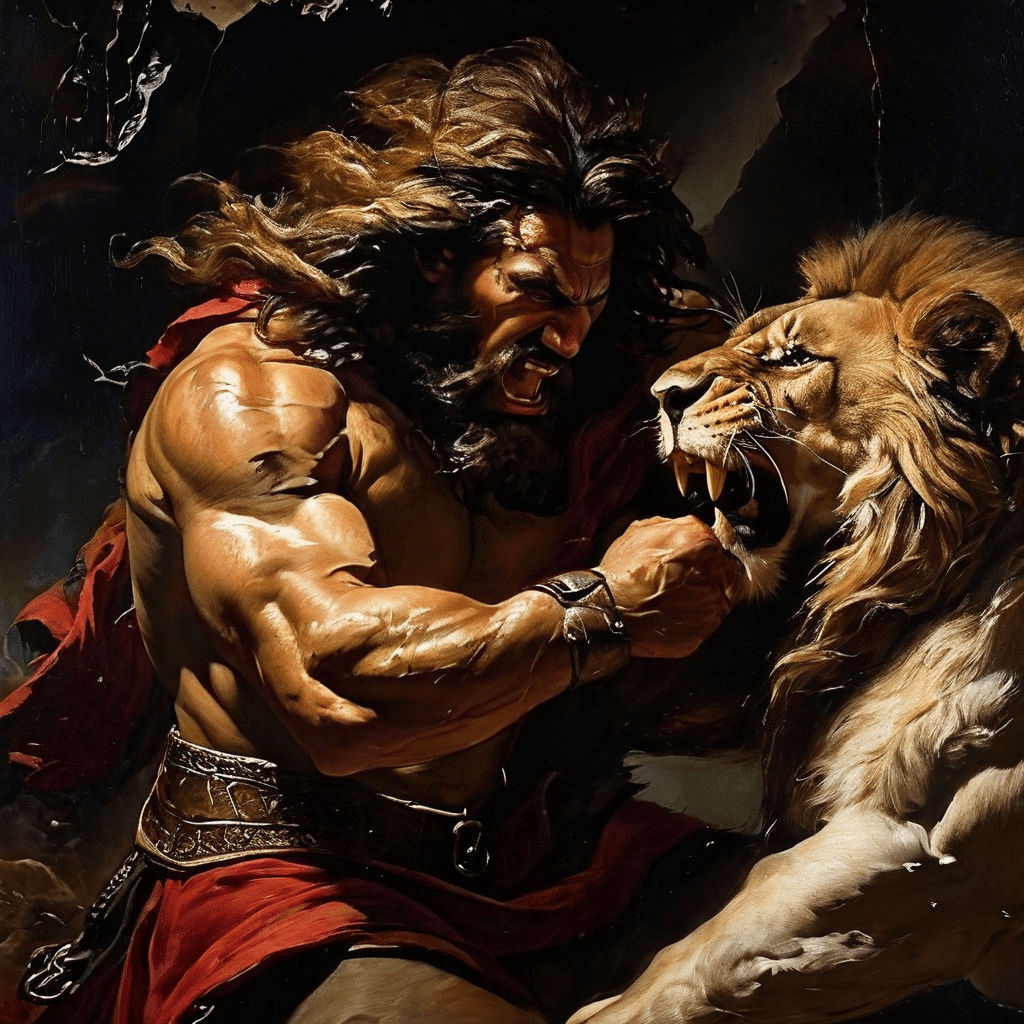






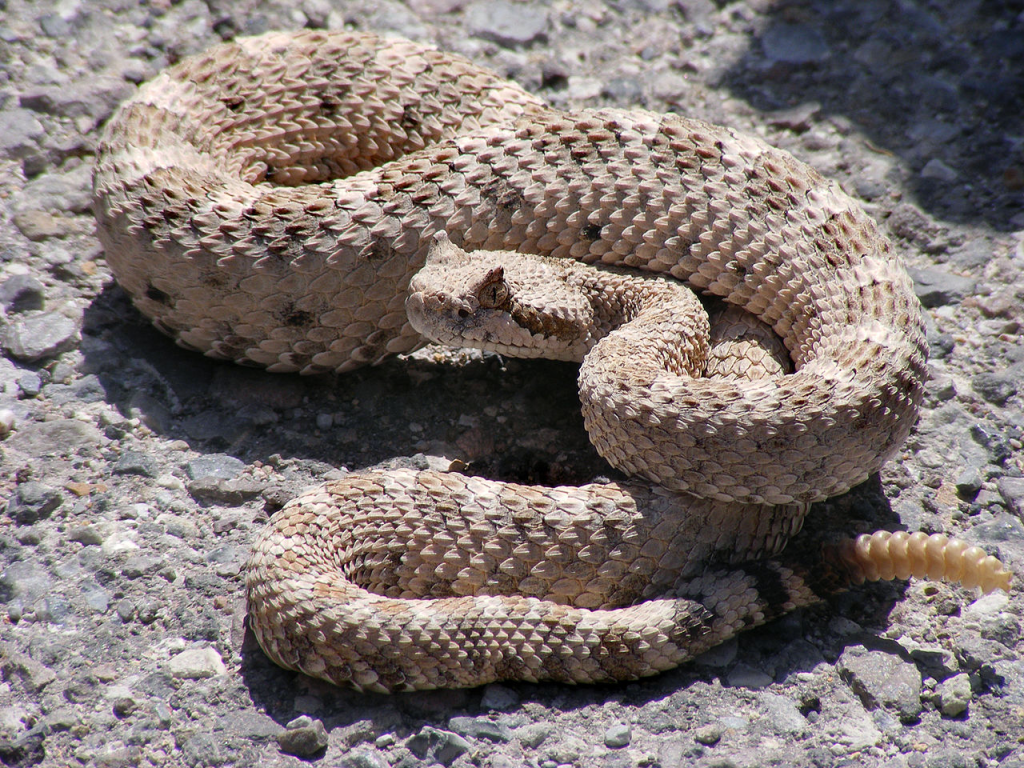


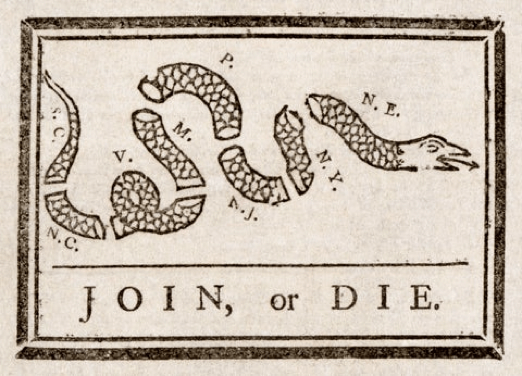

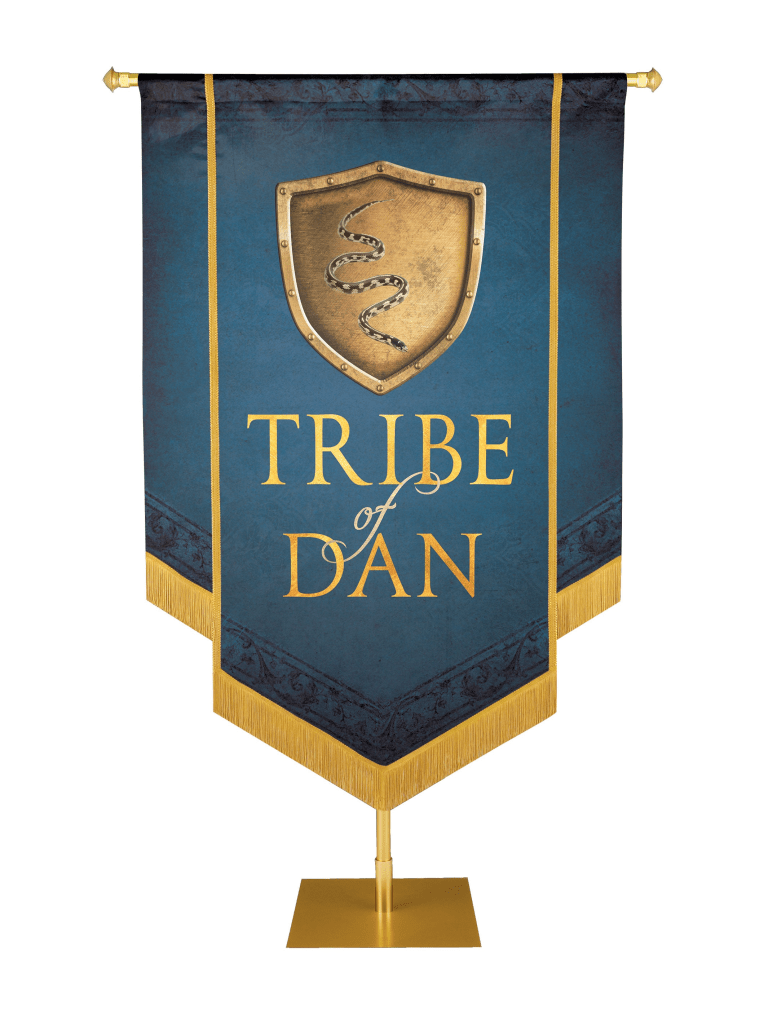

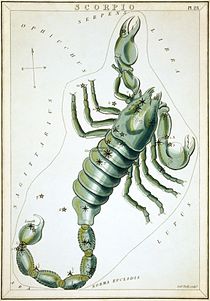





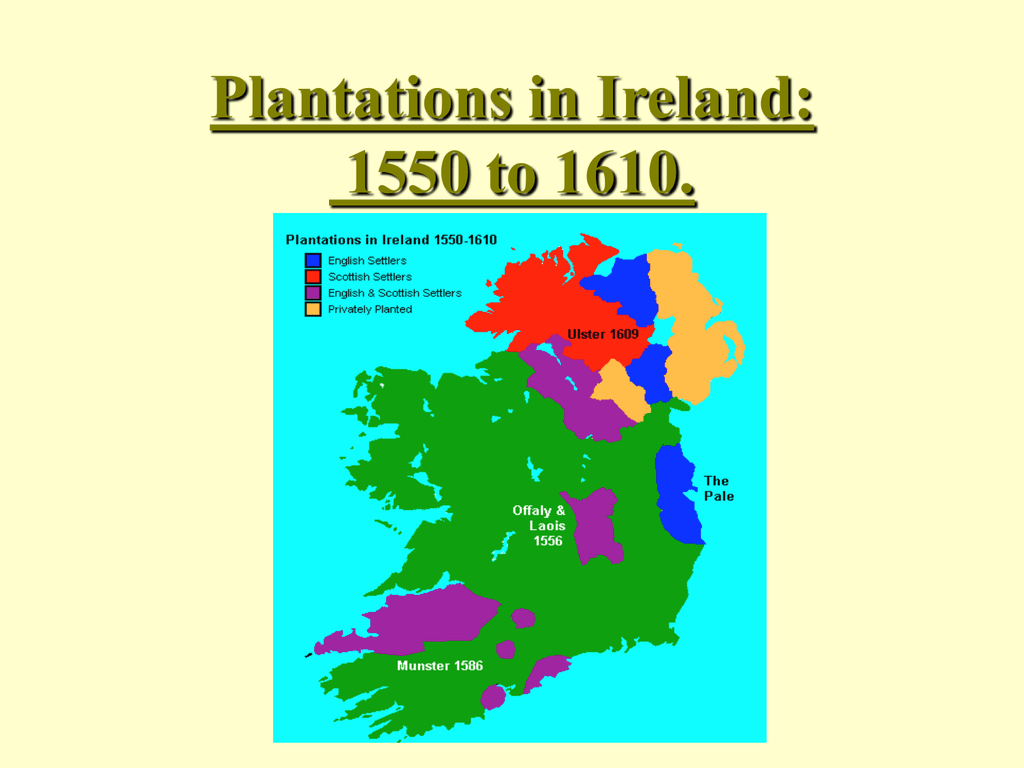

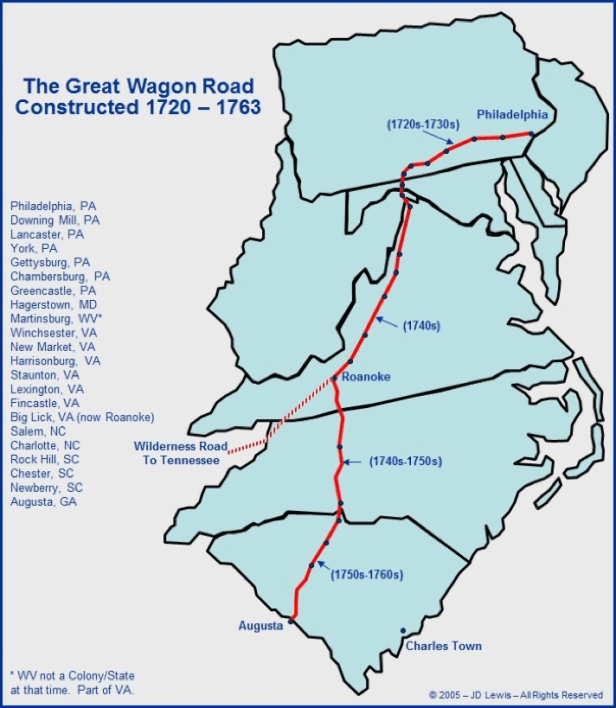





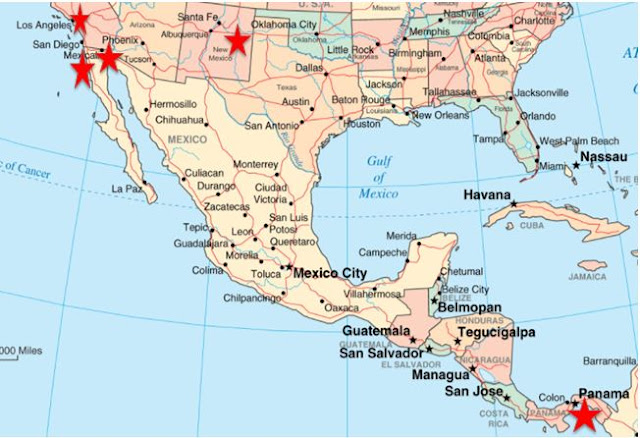

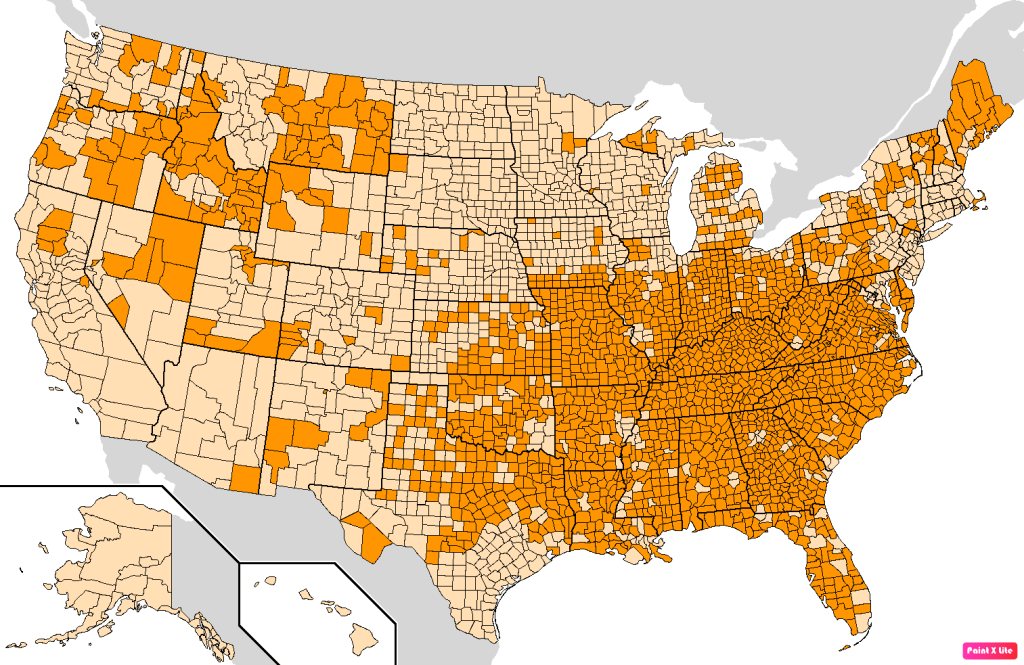

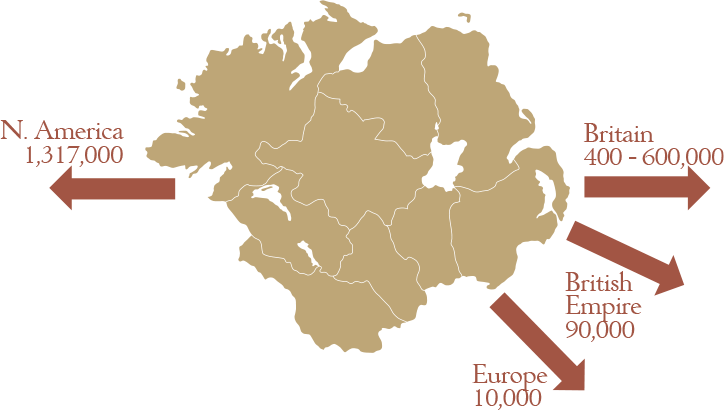
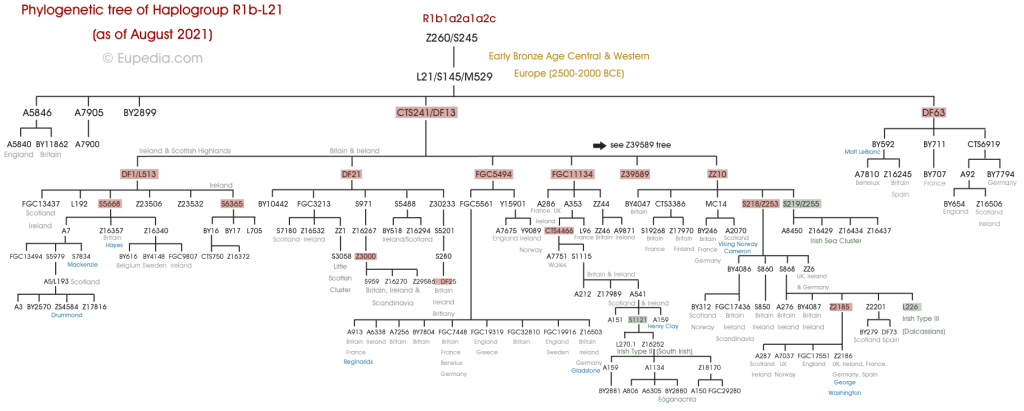
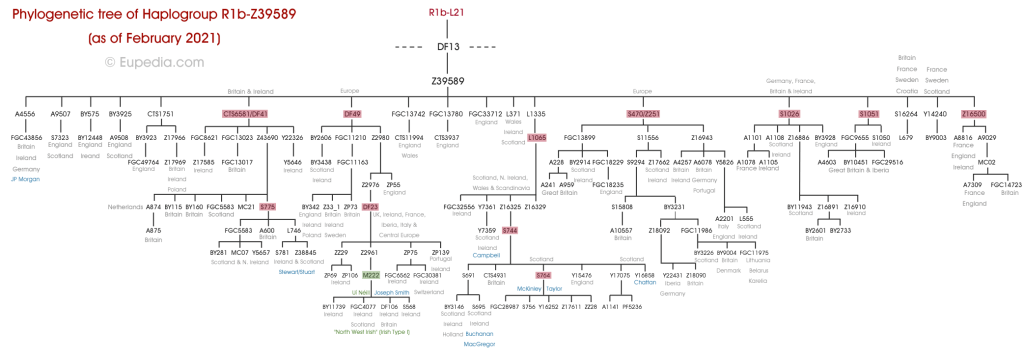


 The Lightkeeper