Interest in the Kings of the North and of the South is well founded as the culmination of their prophetic roles signals the onset of the time of Jacob’s trouble and may well unravel a third of a millennia from now, near and a little beyond the horizon line of where the third century ends and the next begins.
Jeremiah 30:7
English Standard Version
‘Alas! That day is so great there is none like it; it is a time of distress for Jacob; yet he shall be saved out of it.’
The Book of Daniel chapter eleven contains the single longest prophecy in the Bible; whom biblical scholars believe chronicles principally the break up of the Greco-Macedonian Empire, before projecting into the future. The early part of the chapter references Greece or Javan – somewhat confusingly – as it is not the son of Japheth being described, but actually the Greco-Macedonian Empire and its confrontation with the existing, ruling Medo-Persian Empire ending in 331 BCE.
This writer is not convinced that it is towards the end of the chapter when a change in the players of north and south is revealed, but that it occurs earlier. Regardless, the King of the North and King of the South shift from a Mediterranean and Middle Eastern theatre of orientation, to an imminent global power struggle.
While not stated as such in the Bible, there is of sorts, a King of the West. This nation is presently a behemoth on the world stage; yet has begun a gradual decline, as we enter the beginning of the end – refer Chapter XXXIII Manasseh & Ephraim – the Birthright Tribes. Within a sixty-five year period, the pride of its power will speedily decline, suddenly fail and with that, it cataclysmically falls.
Isaiah 7:8
English Standard Version
‘… And within sixty-five years Ephraim will be shattered from being a people.’
Its final demise will be spectacular, sudden, devastating and completed at the hands of the King of Assyria – Isaiah 7:17, Hosea 11:5.
The United States does not play a role as the King of the North or the King of the South, though according to Bible prophecy, it will experience tragedy at the hands of the future King of the North (Article: Is America Babylon?)
The prevalent view amongst identity adherents and fundamentalist Christians has been that Asshur as ‘the instrument of God’s wrath’ in bringing true Israel to its knees in repentance past and future, is the nation of Germany and the Teuton peoples. Yet geography, history, migration, autosomal DNA, mtDNA and Y-DNA Haplogroups, reveal that the Germans are actually descended from Ishmael – refer Chapter XXVIII The True Identity & Origin of Germans & Austrians – Ishmael & Hagar.
As the dominant nation from the descendants of Peleg – the son of Eber from Arphaxad a son of Shem – in Western Europe, centrally placed Germany is also the leading nation of all of Joktan’s descendants from Eber, who reside in Eastern Europe. In the future, a German led United States of Europe will ally itself with the real Assyrians – refer article: Is America Babylon?
The prophet Balaam provides a future prophecy on these specific nations, including Kittim, a son of Javan descended from Japheth.
Numbers 24:24
English Standard Version
“But ships shall come from Kittim and shall afflict [H6031 – anah] Asshur and Eber; and he too shall come to utter destruction.”
It is in fact the Russians who descend from Asshur and are modern day Assyria – refer Chapter XX Will the Real Assyria Stand Up: Asshur & Russia. Russia is both the King of the North and the instrument of God’s wrath against true Israel and Judah. The Hebrew word for afflict, means: ‘to afflict, abase’ or ‘humble (one self).’
While Iran and France are not the future King of the North, it is insightful by the source of this montage to correctly include Russia, Moscow and its current president under the banner of the King of the North.
Zephaniah 2:13
English Standard Version
‘And he will stretch out his hand against the north and destroy Assyria, and he will make Nineveh [their capital] a desolation, a dry waste like the desert.’
Isaiah 10:5, 24-25
English Standard Version
5 ‘Woe to Assyria, the rod of my anger; the staff in their hands is my fury…
24 Therefore thus says the Lord God of hosts: “O my people, who dwell in Zion, be not afraid of the Assyrians when they strike with the rod and lift up their staff against you as the Egyptians did. 25 For in a very little while my fury will come to an end, and my anger will be directed to their destruction.’
There are only two nations in the northern hemisphere which could at a certain point in the future, possess the military and economic wherewithal to inflict a captivity of this magnitude on the modern nations of Israel and Judah – not the modern state called Israel – Chapter XXX Judah & Benjamin – the Regal Tribes; and Chapter XXIX Esau: The Thirteenth Tribe. The nation of Germany is not in the north.
Amos 6:8-9, 11, 14
English Standard Version
‘… declares the Lord, the God of hosts: “I abhor the pride of Jacob and hate his strongholds, and I will deliver up the city and all that is in it.” … And if ten men remain in one house, they shall die… and the great house shall be struck down into fragments, and the little house into bits. “For behold, I will raise up against you a nation, O house of Israel,” declares the Lord, the God of hosts; “and they shall oppress you…”
The other contender nation China, already has its own predetermination as we will learn. The Assyrians are given their mission as Israel’s punisher from the Creator, though as they relish the role, their demise is also foretold.
We then read further, about the King of the North in the book of Daniel. The whole of chapter eleven is worth reading, though for brevity the key verses include the following.
Daniel 11: 15, 18, 25, 29-31, 40, 42-44
English Standard Version
‘Then the king of the north shall come… Afterward he shall turn his face to the coastlands and shall capture many of them… And he shall stir up his power and his heart against the king of the south with a great army. And the king of the south shall wage war with an exceedingly great and mighty army, but he shall not stand, for plots shall be devised against him…’
The King of the North finds reason to attack the coastlands or isles which in the Bible are always associated with the far East. In this case, southeast Asia – Chapter VII Javan: Archipelago South East Asia & Polynesia; and Chapter IX Tarshish & Japan.
Isaiah 66:19, ESV: ‘… to Tarshish , Pul, and Lud, who draw the bow, to Tubal and Javan, to thecoastlands far away, that have not heard my fame or seen my glory…’ Pul, is not a mis-translation of Put or Phut. It is a name of a king; a King of Asshur and a reference to Assyria. Russia then turns its attention to the King of the South and defeats them in their first encounter.
Daniel: ‘At thetime appointed he shall returnand come into the south, but it shall not be this time as it was before. For ships of Kittim shall come against him, and he shall be afraid and withdraw, and shall turn back and be enraged and take action against the holy covenant… and profane the temple and fortress, and shall take away the regular burnt offering. And they shall set up the abomination that makes desolate’ – Matthew 24:15.
The interlinear says: ‘For ships Chittim shall come…’ It does not include ‘of’ or ‘from’ in the Hebrew, though it is considered the inference is from more than of, Kittim. Sometimes translated unhelpfully, as ships from the west. Some have then mistakenly translated Kittim as being Cyprus or Italy; where they once dwelled. The people today descended from Kittim live in the Indonesian archipelago – refer Chapter VIII Kittim & Indonesia.
We learned earlier in Numbers 24:24, that ships from Kittim inflict a loss on Asshur and Eber – an alliance of Russia and a German led European Union respectively.
At some point, Kittim is either part of those nations amalgamated as the King of the South, and Indonesia’s military and naval power is formidable enough to fight Russia and Europe, or more likely, the verse is a veiled reference to a naval cavalcade, of various confederate nations travelling from a base in Kittim. It is plausible that Indonesia could accommodate a military and naval presence within its strategically positioned islands in southeast Asian waters. This enlargement of the King of the South alliance creates a powerful navy, which wins a confrontation against the King of the North, scaring them into retreat.
Modern navies since the last century have considerably more impact in any escalation than in the past, as they not only provide an effective means of transporting soldiers and military hardware, they include the critical strike potency afforded through the combined use of aircraft carriers and their jet fighter aircraft – Article: 2050.
In wrathful response, the abomination of desolation is committed and marks the beginning of the great tribulation some thirty days later and a final three and one half year period; a prophetic 1260 days before the Son of Man returns – Daniel 9:27, 12:11, Matthew 24:21-22.
Daniel: ‘At the time of the end, the king of the south shall attack him, but the king of the north shall rush upon him like a whirlwind, with chariots and horsemen, and with many ships… He shall stretch out his hand against the countries, and the land of Egypt [Mizra] shall not escape. He shall become ruler of the treasures of gold and of silver, and all the precious things of Egypt,and the Libyans [Phut] and the Cushites shall follow in his train. But news from the east and the north shall alarm him, and he shall go out with great fury to destroy and devote many to destruction.’
The King of the North clashes for a third time with the King of the South, who this time is the aggressor – bolstered by winning the second exchange – attacking Russia with its allies. Notice the King of theNorth is prepared with ‘many ships’ and wins the third and final conflagration. Mizra includes the Arab nations, led by Egypt, Phut is Pakistan and Cush is India – refer Chapter XIII India & Pakistan: Cush & Phut; and Chapter XIV Mizra: North Africa & Arabia. India though, is not aligned with the King of the South. Russia gains control of Arab assets, for instance oil reserves. The threat from the Northeast, is an East Asian alliance, led by China.
The dominance of Russian interest expands to include the Middle East, West Asia and South Asia. This has been the long term goal of Russia – not withstanding the failed attempt at securing a warm water port during the war in Afghanistan from 1979 to 1989 – and echoes the words of ‘Peter the Great… [who] advised his descendants to “approach as near as possible to Constantinople [Istanbul] and India [Cush]. Whoever governs there will be the true sovereign of the world. Consequently, excite continual wars, not only in Turkey [Elam], but in Persia [Iran, Lud]… Penetrate as far as the Persian Gulf [Iraq], advance as far as India” – Prisoners of Geography, Tim Marshall, 2016 & 2019, page 13.
Ezekiel 27:10
New English Translation
‘Men of Persia [Elam], Lud, and Put [Pakistan] were in your army, men of war. They hung shield and helmet on you; they gave you your splendor.’
Lud a son of Shem, is associated with Elam and Phut geographically and militarily a number of times in the Bible. All the verses which mention them are connected with warfare. It is not a surprise therefore to discover that Lud is the modern militaristic state of Iran – refer Chapter XVII Lud & Iran. Their relationship with Pakistan and Elam falls into place in the jig-saw of who comprises the King of the South; as Elam is the nation of Turkey – refer Chapter XVIII Elam & Turkey.
What is worth noting, from Ezekiel 27:10, is that Turkey, Iran and Pakistan are the heart and core of the future Islamic Alliance which is referred to in the Book of Daniel, as the King of the South. Peripheral players in this powerful confederacy, may well include other major Islamic nations of Egypt, Pathros from Mizra; Bangladesh, Havilah from Cush; and Indonesia, Kittim from Javan.
There are a handful of contender nations for leader of the Muslim world: population wise, Bangladesh and Indonesia; diplomatically wise as in gaining pan-Arab support, Egypt; militarily, Pakistan and critically, ideologically wise, Iran. The last two would appear favourites and Iran has the edge maybe, in religious zealotry and militancy compared with Pakistan.
On the fringes because of its ostensibly more western footing is Turkey. How it would fit into an Islamic alliance is not as clear cut, unless economic clout is considered foremost. Potential leader cannot be ruled out particularly as its economy – 19th biggest GDP in the world – though marginally behind Indonesia at 16th and Saudi Arabia at 18th, is growing to soon make it the dominant nation of the South.
Turkey is included in the Next Eleven countries that are projected to dominate the global economy in the middle of the twenty-first century. Other N-11 nations coincidentally, include Bangladesh, Egypt, Indonesia, Iran and Pakistan. Most of the group’s total gross domestic product derives from Mexico, Indonesia, South Korea and yes, Turkey. These Islamic nations are the fastest growing major economies of the next generation along with the burgeoning economies of the BRIC nations, comprising Brazil, India, China and forebodingly, Russia.
India is discussed in the Bible and has a vital role to play as the Queen of the South; a powerful counterpoint to the King of the South.
Matthew 12:42
Amplified Bible
‘The Queen of the South (Sheba) [Sheba and Dedan descended from Cush] will stand up [as a witness] at the judgment against this [last] generation, and will condemn it because she came from the ends of the earth to listen to the wisdom of Solomon; and now, something greater than Solomon is here [the Messiah].’
The term Queen of the South is a tantalising clue as it confirms the status of India on the world stage, while at the same time excluding it from the future union of Islamic nations incorporating the King of the South: Turkey, Iran, Pakistan, Egypt and their allies Indonesia and Bangladesh.
An alliance led by China, is predicted in the Book of Revelation.
Revelation 16:12
English Standard Version
‘The sixth angel poured out his bowl on the great river Euphrates, and its water was dried up, to prepare the way for the kings from the east.’
The Kings from the East comprise China, North Korea or sensationally, a united Korea and much of continental southeast Asia, including Vietnam, Myanmar and Thailand. At this juncture, after the King of the North has conclusively and systematically defeated the King of the South; the Queen of the South; and having previously dispatching the King of the West; China decides to impede Russia’s rush towards total global dominion.
Revelation 16:16
English Standard Version
‘And they assembled them at the place that in Hebrew is called Armageddon [G7171 meaning: ‘the hill or city of Megiddo’ derived from G4023: ‘to surround, encompass, take possession, sieze’ and G2022: ‘to pour upon’].’
The forces of the Russian King of the North square up against the combined Chinese led Asian Kings of the East on the plains below (adjacent to) Megiddo.
China comprises three of Japheth’s sons – refer Chapter X China: Magog, Tubal & Meshech. Magog, Tubal and Meshech dwell in the North and in the East – Daniel 11:44, Revelation 16:12. Magog is described in Ezekiel chapters thirty-eight, thirty-nine and in Revelation 20:1–10. Only one nation in the world could be the correct match.
Gog is a future ruler of Magog – quite literally, a de-magog-ue.
Definition of a demagogue: ‘a person, especially an orator or political leader, who gains power and popularity by arousing the emotions, passions, and prejudices of the people.’
This leader is suspiciously reminiscent of the Nephilim – Articles: Nephilim & Elioud Giants I & II.
There are in fact two wars predicted, involving Magog:
1. Towards the end of the Great tribulation at the battle of Armageddon, Magog with the Kings of the East, faces off against the King of the North.
2. At the end of a millennial period of peace, Magog and its allies attack, not the present day state of Israel (or the Jews), but rather true Israel descended from the sons of Jacob – Chapter XXIX Esau: TheThirteenth Tribe; and Chapter XXX Judah & Benjamin – the Regal Tribes.
‘The phrase, “The Yellow Peril,” was first introduced into public print by Emperor William of Germany in 1895. In making a cartoon, representing the dangers likely to arise from the nations of the East against the West, the Emperor named the picture, ‘The Yellow Peril’ – The Yellow Peril, or the Orient vs. the Occident as viewed by modern statesmen and ancient prophets, 1911, Greenberry George Rupert (1847-1922).
The Statue in Nebuchadnezzar’s dream has been discussed previously, with the Medes of Madai, represented by the Turko-Mongols of Central Asia and the Persians of Elam, represented by Turkey, being the chest and arms of silver.
The head of gold is synonymous with the Babylonian Chaldean Empire from the descendants of Abraham’s brother Nahor, represented by Italy.
The torso and thighs of bronze equate to the Greco-Macedonian Empire, the descendants of Abraham’s nephew Lot (Moab and Ammon), represented by France – Chapter XXV Italy: Nahor & the Chaldeans; and Chapter XXVI The French & Swiss: Moab, Ammon & Haran.
Each descending metal is less valuable, though more robust than the one previous to it.
In Daniel 2:33, 40 NET, it says:
‘Its legs were of iron… Then there will be a fourth kingdom, one strong like iron. Just like iron breaks in pieces and shatters everything, and as iron breaks in pieces all these metals, so it will break in pieces and crush the others.’
The legs of iron, are much stronger than the bronze of the Greco-Macedonians, yet not as culturally sophisticated or resplendent. It would be unusually conspicuous if the Assyrians were missing from the statue, as other major European powers are included as we have investigated.
The two legs represent the division of the Roman Empire. One leg of iron is the Western Roman Empire centred in Rome and represents the descendants of Ishmael: Germany – Chapter XXVIII The True Identity & Origin of Germans & Austrians – Ishmael & Hagar.
The other leg is the Eastern Roman Empire of Byzantium and this leg represents the descendants of Asshur: Russia – Chapter XX Will the Real Assyria Stand Up: Asshur & Russia.
Edited excerpt from an answer to questions asked on Quora: What is the meaning of Daniel chapter 11? and What does the Bible mean about “Queen of the South”?
Ham’s second son is Mizra, translated correctly, though a little misleadingly as Egypt.
There is always it seems, an exception to the rule and in this case regarding point number two in the Introduction (primus verba), this is it. To a degree, that is. A number of the descendants of Mizra have paradoxically, migrated very far afield; yet they also live in their original historic homeland.
In Genesis 10:13-14 NET, we are introduced to Mizra’s seven sons. Taking our cue from especially Canaan and partially Cush, we would expect to find a number of descended nations, rather than just one or seven. We are also met with a slight conundrum, though easily resolved.
Mizra identifies with the people known as Arabs; as well as those related peoples principally located in North Africa, the Middle East, West Asia and (partially) in Latin America.
‘Mizraim [Mizra] was the father of the Ludites, Anamites, Lehabites, Naphtuhites, Pathrusites Casluhites (from whom the Philistines came), and Caphtorites.’
Some versions list instead as:
Ludim, Anamim, Lehabim (or Lubim), Naphtuhim, Pathrusim, Casluhim and Caphtorim.
Footnotes:
‘The Casluhites lived in Crete and eventually settled east of the Egyptian Delta, between Egypt and Canaan [on the coast]. Several commentators prefer to reverse the order of the words to put this clause after the next word, since the Philistines came from Crete (where the Caphtorites lived).
But the table may suggest migration rather than lineage…’ – refer Chapter XV The Philistines: Latino-HispanoAmerica.
We will focus on the Casluhim and Caphtorim in the following chapter, while addressing the migration versus linage interpretation of the verse.
A reasonably accurate map (excepting Spain) of Mizra’s second, fourth and fifth eldest sons partially in North Africa and principally the Middle East (green) and his two youngest sons partially in North Africa and in the New World (red).
Whereas it will be shown that Mizra’s eldest and third born sons are located in West Asia, merged with other peoples descending from both Ham and Shem.
The plural Mizraim is principally translated as Egypt in the Bible. Outside of the genealogy listings in Genesis Ten and 1 Chronicles One, the word Mizraim is used once in Genesis 50:11 ESV, on the occasion of Jacob’s death, the father of Joseph.
‘When the inhabitants of the land, the Canaanites, saw the mourning on the threshing floor of Atad, they said, “This is a grievous mourning by the Egyptians.” Therefore the place was named Abel-mizraim [mourning (or meadow) of Egypt]; it is beyond the Jordan.’
Egypt is mentioned some seven hundred times in the Bible. The context usually implies all the sons of Mizra, or occasionally the principal son, Pathros. A couple of chapters address Mizra specifically, such as in Ezekiel 29:9-10 ESV:
‘… and the land of Egypt shall be a desolation and a waste. Then they will know that I am the Lord. “Because you said, ‘The Nile is mine, and I made it,’ therefore, behold, I am against you and against your streams, and I will make the land of Egypt an utter waste and desolation, from Migdol to Syene, as far as the border of Cush’ – refer Chapter XIII India & Pakistan: Cush & Phut.
We will learn that their descendants do live ‘as far as the border of Cush’ in India today.
In Isaiah 19:22-25 ESV we read of a future time, when three great peoples are at peace:
22 ‘And the Lord will strike Egypt, striking and healing, and they will return to the Lord, and he will listen to their pleas for mercy and heal them. 23 In that day there will be a highway from Egypt to Assyria, and Assyria will come into Egypt, and Egypt into Assyria, and the Egyptians [Arabs] will worship with the Assyrians’ – refer Chapter XX Will the Real Assyria Stand Up: Asshur & Russia.
This is an extraordinary passage, for the simple reason that the two future protagonists predicted as the King of the South and the King of the North are being described as no longer enemies but as friends – Articles: Four Kings & One Queen; and Is America Babylon?
24 ‘In that day Israel will be the third with Egypt and Assyria, a blessing in the midst of the earth, 25 whom the Lord of hosts has blessed, saying, “Blessed be Egypt my people, and Assyria the work of my hands, and Israel my inheritance.“
The unfounded yet widespread assumption or belief – held by many people within and without Islam – is that the Arab people descend from Ishmael, the eldest son of Abraham.
This has been supported largely because the Prophet Mohammad in the Quran was seen as being a spiritual successor to Abraham… thus in time, a physical descent was gradually assimilated and assumed to be true.
In the Bible, Ishmael – with the other sons of Abraham, from his second wife Keturah – are described as living in Arabia or the ‘wilderness.’ This was in the Arabian Peninsula – mainly incorporating Saudi Arabia today. It is not calling Ishmael an Arab, but stating where he originally lived.
The sons of Mizra though, have in turn become known as Arabs, due to their dwelling in Arabia, before fanning out, migrating northwards on the peninsula and westwards into north Africa – Genesis 10:13.
An article by Mark Durie, 2019, entitled, Ishamel is not the Father of the Arabs addresses this important question – emphasis mine:
‘The commonly held view that Ishmael was the father of the Arab nations is not supported by the Bible, nor by other historical evidence.
For centuries, many Muslims, Christians and Jews have taken it for granted that the Arabs descended from Abraham through Ishmael. As Gerald Hawting put it:
“The idea that the Arabs are the physical descendants of Abraham through Ishmael is indeed taken by many, non-Muslims as well as Muslims, as a genealogical and historical fact.”
‘Authors and teachers often treat the word Ishmael as a kind of code for Islam or Muslims. According to Sir Fergus Millar, Professor Emeritus of Ancient History at Oxford University, it was Josephus, a Jewish historian writing in the first century CE, who first advanced the idea that Ishmael was the ancestor of the Arabs. In The Antiquities of the Jews Josephus stated that Ishmael was “the founder” of the Arabian nation, and Abraham was “their father”. From Josephus, this assumed connection between the Arabs and Abraham, through Ishmael, passed into the historical consciousness of Christians, and then made its way into early Islam.
The Qur’an does not speak of Ishmael or Abraham as ancestors of the Arabs – although it does have Abraham and Ishmael praying for Allah to make their descendants a Muslim people – but the link is established in the hadith literature, in traditions about Muhammad’s own genealogy. In this way Abraham and Ishmael came to be considered, in Islamic tradition, not only a spiritual antecedent of Muhammad as an Islamic prophet, but also the physical ancestor of (at least some of) the Arabs.’
An example of Muhammad’s false genealogy can be found at:
‘What does the Bible say? It speaks both of Ishmaelites, the descendants of Ishmael, and of Arabs, but does not join them together. I. Ephʿal has pointed out that the references to Ishmaelites are earlier in the Bible, and the references to Arabs later. Both refer to non-sedentary, nomadic peoples, but they are separated by centuries. Ephʿal concludes that references to “Ishmaelites” cease by the mid 10th century BCE, and the references to “Arabs” only commence in the mid-8th century BCE, so “there is no historical basis to the tradition of associating Ishmaelites with the Arabs”.
The Bible does link the Ishmaelites with the Midianites, using these names as synonyms in two places. Genesis describes Joseph as being sold to a caravan of camel-riding Ishmaelites who are also called Midianites (Genesis 37:25–28, 36; 39:1; see also Judges 8:22-24).
The evidence indicates that Ishmael was not the father of the Arabs, and neither was Abraham. The Ishmaelites were probably Canaanites, speaking, not an early form of Arabic, but a dialect similar to Hebrew. In time they disappeared or were absorbed into other groups, like so many other ancient peoples. Much later Josephus invoked Ishmael’s name to conjure up a genealogy for the Arabs. He has a lot to answer for. The rest, as they say, is history.’
We will look into this further when we study Ishmael. The author states they were probably Canaanites. Not to be confused with the sons of Ham; but rather, they were part of the later ‘Canaanites’ – refer Chapter XII Canaan & Africa.
Far from being assimilated into other peoples or disappearing, the Ishmaelites due to their numbers, have always been an influential people to the degree of Empire status more than once on the world stage – refer Chapter XXVIII The True Identity & Origin of Germany & Austria – Ishmael & Hagar.
The Origin of the Nations, Herman Hoeh, 1957 – emphasis mine:
‘Mizraim is commonly applied to Egypt. In fact, “Mizr” is the name which the natives still apply to Egypt today.’
Now what are the chances that the most prominent son of Mizr-a-im’s descendants (Pathros) should be known by the name of their father, Mizr(a)?
Would this not be a peculiar anomaly if the Arabs were truly descended from Ishmael… and would it not be an extraordinary non-coincidence indeed, if the Arab related peoples were not the descendants of Mizra?
Herman Hoeh:
‘The Greeks called the land Aegyptus – hence our Egypt.’
Rather, the English name ‘Egypt’ is derived from the Ancient Greek, Aigyptos; via Middle French, Egypte; and Latin, Aegyptus.
Hoeh:
‘First, notice that… Mizraim first settled on the northeast corner of the Mediterranean Sea. From there they spread through the Eastern Mediterranean isles and into Africa. The Philistines, who came from Mizraim [in part], inhabited Southern Palestine even in the days of Abraham (Genesis 21:34). They are still there today – in the Gaza strip in Palestine – causing no end of trouble (Zechariah 9:6-7).
The Philistines (a branch of the family of Casluhim) settled originally on the Island of Crete in the Mediterranean. Crete is called, in the Bible, Caphtor (Jeremiah 47:4 and Amos 9:7). The Island of Caphtor was originally settled by the Caphtorim, a tribe of Mizraim (Genesis 10:14). Both the Philistines and the Caphtorim destroyed the Canaanites in South Palestine and lived in their place (Deuteronomy 2:23). No wonder there are so few Canaanites left! The main body of non-Jewish inhabitants of Palestine today are not Canaanites, but Philistines! [they are neither].
The Pathrusim of Genesis 10:14 migrated from Asia Minor to central Egypt. Every prophecy shows Pathros to be a part of Egypt along the Nile (Jeremiah 44:1,5 and Ezekiel 29:14). The Naphtuhim probably settled in the extreme south of Egypt, founding the capital city of Napata among the black people of Africa.
The Lehabim – the word “Lehabim” means a people of reddish color – settled Libya originally. Libya is in North Africa. Today they are found scattered throughout the savanahs of the Western Sudan in Africa. In this region today we find a people “of reddish brown or light chestnut color… with smooth hair, never woolly, straight and even aquiline noses… differentiating them from the [Black] type”. The original word “Lehabim” was shortened in Bible times to “Lubim” (II Chronicles 12:3; 16:8). The [Africans] call these people “fulbe”, meaning, probably, Lubim dwelling in the ancient land of Phut. In the central reaches of the Sahara (the great desert in North Africa) live the Ludim (Gen.10:14) – the lightest of the Egyptians.
For example the Arabs acknowledge that they are descendants of Ishmael, the son of Abraham. In Bible prophecy they are often [never] mentioned by the name “Ishmael.”
We will confirm that the Philistines are not the non-Jewish peoples, the Palestinians of the Gaza Strip and the West Bank, for they have travelled considerably farther afield. The final sentence is a good (or rather bad) example of how the first opinion heard, is the one that lingers the longest in peoples’ minds whether correct or incorrect. How easy it is to be indoctrinated without even realising. Just because a people claim to be someone does not make it necessarily so… we will find this scenario repeated later, to devastating effect -Chapter XXIX Esau: The Thirteenth Tribe.
Sons of Ham: Part III Mizraim, Christian Churches of God – emphasis mine:
‘Mizraim is derived from a Hebrew term, and is a plural word with the meaning double straits (SHD 4714, mitsrayim – dual of matsor (4693). This duality may refer to the distinction between the original kingdoms of Upper and Lower Egypt. The Egyptians referred to their land as Kmt in the hieroglyphs. In [Neo-]Assyrian and Babylonian inscriptions Egypt was known as Musur and Musri, probably from the word Misr meaning simply, land. The Ugaritic inscriptions refer to Egypt as Msrm, while in the Amarna tablets it is called Misri.’
The oldest attestation of the name Mizra (Misr) for Egypt is the Akkadian mi-is-ru (misru) related to misru, misirru, misaru, meaning ‘border’ or ‘frontier.’
‘The term Misr is still seen in the modern [official] Arabic name for the nation, Jumhuriyah [Misr]al-‘Arabiyah (the Arabic Republic of Egypt).’
While Misr is the Classical Quranic Arabic name for Egypt, Masr is the local pronunciation in Egyptian Arabic.
Online Encylopaedia – emphasis & bold mine:
‘Mizraim is the dual form of matzor, meaning a “mound” or “fortress”… Some Ancient Egyptian inscriptions at the time of Pharoah Amenhotep IV refer to Egypt as Masara and to Egyptians as Masrawi.
According to Eusebius’ Chronicon,Manetho had suggested that the great age of antiquity of which the later Egyptians boasted had actually preceded the Flood and that theywere really descended from Mizraim, who settled there anew.
A similar story is related by medieval Islamic historians… and the Persians… stating that the pyramids etc. had been built by the wicked races before [rather, after] the Deluge, but that Noah’s descendant Mizraim (Masar or Mesr) was entrusted with reoccupying the region afterwards’ – refer article: The Pyramid Perplexity.
‘The Islamic accounts also make Masar the son of a Bansar or Beisar and grandson of Ham, rather than a direct son of Ham… Some scholars think it likely that Mizraim is a dual form of the word Misr meaning “land”, and was translated literally into Ancient Egyptian as Ta-Wy (the Two Lands) by early pharaohs at Thebes who later founded the Middle Kingdom.
… according to George Syncellus the Book of Sothis, attributed to Manetho, (incorrectly) identified Mizraim with the legendary first Pharaoh Menes, said to have unified the Old Kingdom and built Memphis’ – Chapter XIX Chedorlaomer & the War of Nine Kings.
‘Mizraim also seems to correspond to Misor, said in Phoenician mythology to have been the father of Taautus who was given Egypt, and later scholars noticed that this also recalls Menes, whose son or successor was said to be Athothis’ – Article: Thoth.
‘… the author David Rohl has suggested a different interpretation: Amongst the followers of Meshkiag–kash-er (Sumerian ruler) was his younger ‘brother’ – in his own right a strong and charismatic leader of men. He is the head of the falcon tribe – the descendants of Horus the ‘Far Distant’. The Bible calls this new Horus-king ‘Mizraim’ but this name is, in reality, no more than an epithet. It means ‘follower of Asr’ or ‘Asar’ (Egyptian Arabic m-asr with the Egyptian preposition m ‘from’). Mizraim is merely m-Izra with the majestic plural ending ‘im’. Likewise, that other great Semitic-speaking people -the Assyrians – called the country of the pharaohs ‘Musri’ (m-Usri).’
Abarim state that Mizra denotes duality.
In Hebrew it means:
‘double siege’ or ‘double distress’ from masor, ‘siege’ or ‘entrenchment’ and the verb sur, ‘to bind, besige’. Also mesar, ‘distress’ and the verb sarar, ‘to bind.’
Abarim Publications – emphasis mine:
‘Egypt was known by the names Musuru, Musru, Misir or Masri in other languages, and Mizraim is probably simply a phonetic transliteration into Hebrew of any of them. The verb from which the noun derives, is part of a group of five different roots:
Sur I: to lean or incline
Sur II: to confine, secure or besiege
Sur III: to be an adversary
Sur IV: to form or fashion
Sur V: to be sharp
The word (mesar), meaning straights or distress, written in a dual form would yield the name Mizraim… the name Mizraim means also Double Stronghold…‘
An identifying clue to who and where the sons of Mizra are is the fact that the Arabic nations are invariably in a condition of strife and war – either against the state of Israel, Black Africans, minorities in their own countries, or most noticeably, their own people. This is a defining characteristic of the Arab nations, foretold centuries ago.
Isaiah 19:2-3
Young’s Literal Translation
‘And I armed Egyptians against Egyptians, And they fought, each against his brother, And each against his neighbour, City against city, kingdom against kingdom. And emptied out hath been in its midst the spirit of Egypt. And its counsel I swallow up, And they have sought unto the idols, And unto the charmers, And unto those having familiar spirits, And unto the wizards.’
The NET translates verse two as:
“I will provoke civil strife in Egypt: brothers will fight with one another, as will neighbors, cities, and kingdoms.”
In Hebrew, Pathros means: ‘South Land’ from the Egyptian pe-te-res or ‘place of interpretation’ from the verb patar, ‘to interpret dreams.’
Abarim Publications – emphasis mine:
‘Pathros is the name [for] Mizraim’s South Region. Mizraim is the Hebrew name for Egypt, and southern Egypt was known as Upper Egypt. The name Pathros occurs half a dozen times in the Bible, always in clear association with Mizraim (Ezekiel 29:14, Isaiah 11:11). The writers of the Septuagint transliterated the name Pathros with Pa-athyris, meaning Belonging to Athor, but who Athor is remains a mystery’ – refer articles: Thoth; and The Pyramid Perplexity.
‘Some words of interest: (pata), meaning to entice, deceive, persuade. Derivation (peti) means simple, foolish… (pat) means fragment, bit. The verb (rasas) means moisten. Derivation (rasis) means drop of dew. The identical but unused and not translatable root (rss) yields identical derivation (rasis), meaning fragment. Hence to the Hebrews the name Pathros may have sounded like Bits And Pieces, or even Wet Lands [the Nile], and Entreaty For A Drop, or any combination of the above.’
Sons of Ham: Part III Mizraim continues regarding Mizra’s fifth son Pathros – emphasis mine:
‘The Pathrusim (SHD 6625, meaning southerners) were a tribe located at Pathros near Thebes in Upper Egypt. The name Pathros means region of the south (6624), possibly from the Egyptian Pa-To-Ris. The LXX refers to the people as the Patrosoniim.
In the apocryphal Book of Jasher, both the Pathrusim and Casluhim were recorded as the progenitors of the Pelishtim, Azathim, Gerarim, Githim, and Ekronim, who were associated with several prominent Philistine cities, such as Gerar, Gath and Ekron’ – refer Chapter XVThe Philistines: Latino-Hispano America.
‘The conclusions must be that if they did conjoin it was by branches. The main branch went south to Thebes while the cadet branch joined the Cashluhim and formed the five Philistine cities and hence also the five names in Jasher.
The Hebrew Pathros and the gentilic Pathrusim are derived from the Egyptian p’-t’-rsy, which is a term used to designate the whole of Egypt above Memphis. In the Assyrian material Esarhaddon refers to himself as the king of Musur [Mizra], Paturisi [Pathros], and Kusi [Cush], meaning, from Isaiah 11:11, that Musur and the Hebrew Misrayim was restricted to Middle and Lower Egypt, thus leaving Pathros for the Thebaid. Jeremiah 44:1, 15, Ezekiel 29:14 and 30:14 refer to Pathros as the original home of the Egyptians. The gentilic Pathrusim occurs only in Genesis 10:14 and 1 Chronicles 1:12.’
The prominence of Pathros in the Bible and its central position in Egypt and the Nile points to its identity actually being, the modern nation of Egypt.
Egyptian men
Isaiah 11:11
English Standard Version
‘In that day the Lord will extend his hand yet a second time to recover the remnant that remains of his people, from Assyria [Russia], from Egypt [Mizra – Arabs of the Middle East and North Africa], from Pathros [country of Egypt], from Cush [India], from Elam [Turkey], from Shinar [Western Europe], from Hamath [Nigeria], and from the coastlands of the sea [East Asia and South East Asia].’
Jeremiah 44:1, 15
English Standard Version
‘The word that came to Jeremiah concerning all the Judeans who lived in the land of Egypt, at Migdol, at Tahpanhes, at Memphis, and in the land of Pathros… Then all the men who knew that their wives had made offerings to other gods, and all the women who stood by, a great assembly, all the people who lived in Pathros in the land of Egypt…’
Cairo (above and below), the capital of Egypt and the River Nile (above)
The sprawling modern city of Cairo (below) encroaches on the most enduring monolithic enigma in the world – a collision of two civilisations – the Great Pyramid of Giza and its two companions, the second and third Pyramids – refer article: The Pyramid Perplexity.
Ezekiel 29:14
English Standard Version
‘…and I will restore the fortunes of Egypt and bring them back to the land of Pathros, the land of their origin, and there they shall be a lowly kingdom.’
Ezekiel 30:14
English Standard Version
‘I will make Pathros a desolation and will set fire to Zoan and will execute judgments on Thebes.’
These verses reveal Pathros is very much the heart of Mizra, though a separate, prominent people (or nation), who uniquely dwell in their original ancient homeland.
The flag of Egypt – with the pan Arab colours comprising Red, White and Black.
Flags of the Arab nations use these core colours and or incorporate green, representing Islam.
Egypt has one of the longest histories of any country on the Earth and is an early cradle of civilisation.
Modern Egypt dates back to 1922, when it gained independence from the British Empire. Egypt declared itself a republic after a revolution deposing the monarchy in 1952. Egypt has endured decades of social and religious strife, with political instability. It has fought armed conflicts with Israel in 1948, 1956, 1967 and 1973; occupying the Gaza Strip intermittently until 1967. In 1978, Egypt signed the Camp David Accords officially withdrawing from the Gaza Strip and recognising the state of Israel.
Egyptian women
Islam is the official religion of Egypt and Arabic the official language.
With a population of 119,392,781 people, Egypt is the most populous country in North Africa, the Middle East and the Arab world and third in Africa after Nigeria and Ethiopia. By the year 2100, Egypt’s projected population will be 201,895,000 people – the 11th biggest in the world.
The great majority of its people live near the banks of the Nile River where the only arable land is found. The large regions of the Sahara desert which constitute most of Egypt’s territory, are sparsely populated – refer map below.
The Arab world inherited vast tracts of land constituting mainly desert. The current inhabitants live primarily, as shown above, near water. This area of the world has been actively dwelt in without rest by countless civilisations comprising millions of people so that the soil has understandably become barren.
The ancient Egyptian name of the country km.t, meaning ‘black land’, refers to the fertile black soils of the Nile flood plains, as distinct from the deshret or ‘red land’ of the desert.
With a large and diversified economy, Egypt is projected to become one of the largest in the world in the 21st century. Egypt presently has the second largest economy in Africa after South Africa which.
Egypt had nominal GDP of $347.3 billion in 2025, making it the 44th biggest economy in the world.
‘The following export product groups represent the highest dollar value in Egyptian global shipments during 2024.
Mineral fuels including oil: US$10.6 billion
Electrical machinery, equipment: $2.5 billion
Fertilizers: $2.4 billion
Fruits, nuts: $2 billion
Iron, steel: $1.9 billion
Plastics, plastic articles: $1.84 billion
Knit or crochet clothing, accessories: $1.53 billion
Vegetables: $1.46 billion
Gems, precious metals: $1.34 billion
Salt, sulphur, stone, cement: $1.33 billion
Knitted or crocheted clothing and accessories represent the fastest grower among the top 10 export categories, up by 86.6% year over year since 2023. The other gainer was mineral fuels including oil, which rose 44.2% led by processed petroleum oils. The leading decliner among the top 10 Egyptian export categories was gems and precious metals which fell -27.7% year over year, pulled down by lower revenues for exported gold.’
In Ezekiel 27:7 NKJV, it states:
‘Fine embroidered [H7553 – riqmah: from H7551 ‘to be skilfully wrought or woven’] linen [H8336 – shesh: ‘bleached white’] from Egypt was what you spread for your sail…’
King of Cotton, describes Egyptian cotton:
‘Egyptian cotton has not gained such a reputation without reason. Egyptian cotton “is” the world’s finest cotton and the following characteristics are what sets Egyptian cotton apart from other natural fibres:
The length of the fibre makes it possible to make the finest of yarns without sacrificing the strength of the yarn… [The thread count is the number of threads in each square inch and generally speaking, the higher the thread count, the more luxurious, dense and soft the material will feel]. The strength of the fibre makes fabrics more solid and more resistant to stress. Its ability to absorb liquids gives fabrics made of Egyptian cotton deeper, brighter and more resistant colours. Its softness feels like nothing else in the world. Egyptian cotton is hand picked which guarantees the highest levels of purity. In addition, hand picking puts no stress on the fibres – as opposed to mechanical picking – leaving the fibres straight and intact.
All these factors have resulted in Egyptian cotton being by far the best cotton in the world. Fabrics made of Egyptian Cotton are softer, finer and last longer than any other cotton in the world.’
Encyclopaedia:
‘The coat of arms of Egypt is known as the Republican Eagle, National Emblem of Egypt or Egyptian Golden Eagle, is a heraldic golden eagle, facing the viewer’s left. The eagle’s breast is charged with an escutcheon bearing the red-white-black bands of the flag of Egypt rotated vertically, whilst the eagle’s talons hold a scroll bearing the official name of the state written in Kufic script. The earliest version of the Eagle of Saladin was that used as the flag of Saladin, the first Sultan of Egypt, whilst the modern version of the eagle was adopted during the Egyptian Revolution of 1952.’
Egypt is a regional power in North Africa, the Middle East and the Muslim World – a middle power worldwide.
Egypt is ranked 19th out of 145 countries in military strength for 2026, with approximately 438,500 active personnel and 479,000 reserve personnel.
Egypt has the strongest military in Africa; while Nigeria is 3rd and South Africa is 4th – Chapter XII Canaan & Africa.
Other Arab nations included in the top ten behind Egypt are Algeria, Morocco, Sudan and Tunisia.
Egypt’s developing economy; fast increasing population (growing at the same rate as Pakistan in 2025: 1.57%); and expanding military capability are all indicators of Egypt (unbeknown to itself) being prepared for its future role – Article: Four Kings & One Queen.
So it is interesting that Egypt should be strengthening its relationship with Turkey – Chapter XVIII Turkey & Elam.
In February 2024, Turkish President Recep Tayyip Erdoğan visited Egypt for the first time since 2012, ending more than a decade of political and diplomatic rupture between Egypt and Turkey.
Photograph taken and released by the Turkish Presidency Press Office on February 14, 2024, shows Turkish President Recep Tayyip Erdogan (R) being welcomed by his Egyptian counterpart Abdel Fattah al-Sisi (L) as he arrives at Cairo International Airport during his official visit to Egypt.
Middle East Eye:
It was ‘the biggest step yet towards cementing a rapprochement between the two regional powers.
Egyptian President Abdel Fattah el-Sisi welcomed Erdogan on the Tarmac and the two exchanged a handshake.
After years in which they regarded each other as persona non grata – due primarily to Sisi’s 2013 coup against his predecessor Mohamed Morsi, an Erdogan ally – relations between the two leaders have improved since 2021, following behind-the-scenes diplomatic efforts.
The first fruits of these efforts emerged during the World Cup in Qatar in 2022, when Erdogan and Sisi briefly met for the first time.
The two leaders signed several agreements… both advocating for “a new era in relations,'” an increase in trade to “15 billion dollars per year in a few years,” and diplomatic cooperation in the Middle East and Africa.
“Egypt is currently Turkey’s top trading partner in Africa,” Sisi said in a press conference with Erdogan in Cairo.
Turkey-Egypt relations are of critical importance not only for the two countries but also for the region, and must be evaluated as part of changing circumstances, analysts say.
Countries from Sudan to Ethiopia and Libya are also directly affected by the nature of relations between Cairo and Ankara, as both countries have backed opposing sides in regional conflicts.
“It is a shift from strategic stubbornness to strategic relations,” [said Mehmet] Ozkan… a professor at the National Defence University in Turkey.’
In line with Egypt’s increasing stature is the effort and expenditure being expended on a new impressive capital city.
Egypt’s New Capital-City Megaproject, The Atlantic, August 30, 2023, Alan Taylor:
‘First announced in 2015, Egypt’s new, as-yet-unnamed capital city has been under construction for years, at an estimated cost of more than $50 billion. Temporarily referred to as the New Administrative Capital, the massive development is just one of several megaprojects being built by the government of President Abdel Fattah el-Sisi.
The new city, about 28 miles southeast of Cairo, is planned for more than six million residents, and is designed in part to relieve traffic and other stresses on the crumbling infrastructure in Cairo. The project, largely operated by Egypt’s Ministry of Defense, will consolidate and move government headquarters into a more controlled setting, monitored by more than 6,000 surveillance cameras.’
Skyscraper buildings, including the Iconic Tower, centre, in the central business district (CBD) of Egypt’s New Administrative Capital, on Monday, July 31, 2023.
‘It is already home to the tallest building in Africa, a huge presidential palace, dozens of ministry buildings, schools, hospitals, mosques, and churches – with many more to come. Completion remains years away, and the Egyptian government has gone deeply into debt, but some people have begun moving in, even though many Cairo residents, according to Reuters, say they “cannot afford to live in the new city.”
The first born son of Mizra is Lud, translated in the plural as Ludim in the Bible.
There is another Lud in the Bible, who is the fourth son of Shem. Sometimes translated as Lydia or the Lydians, after the people who dwelt in Western Asia Minor. They have intermingled and become synonymous – refer Chapter XVII Lud & Iran.
We will give more attention to both the descendants of Lud later; though to highlight the confusion researchers have experienced in trying to keep them separate we will refer to Sons of Ham: Part III Mizraim, Christian Churches of God – Emphasis mine:
‘Although there is a Semite of the same name, we find that Lud, grandson of Ham, was father of the Ludim. He was also the first-born of Mizraim.
The entry in the International Standard Bible Encyclopaedia (ISBE) is as follows:
“In Genesis 10:13 Ludim appears as the firstborn of Mizraim (Egypt), and in 10:22 Lud is the fourth son of Shem. We have therefore to do with two different nationalities bearing the same name, and not always easy to distinguish…”
‘Everything points, therefore, to the Semitic Lud and Ludim being Lydia, and the identification may be regarded as satisfactory. It is altogether otherwise with the Egyptian Lud and Ludim, however, about which little can be said at present.Mellink (ibid.) considers the Lydians of Asia Minor to be neither Hamitic nor Semitic. We dealt with the probable movement of the Semite Ludim to the Hindu Kush at the border of India and beyond into the Punjab in the papers Sons of Shem…’
Trying to split these two identities creates difficulty; once their mergence is understood, it becomes clear. We have an identical situation with Mizra’s third son Lehab.
The Lubim have merged with Phut’s descendants and both can be identified as ‘Libya’ in the Bible. Together, they comprise the modern nation of Pakistan – refer Chapter XIII India & Pakistan: Cush & Phut.
Recall the verses we recently read in the preceding chapter: 2 Chronicles 12:3, 16:8, Nahum 3.9 and Ezekiel 30.5. All four verses translate Lubim or Lehab as Libya, the same as Phut. Libya refers to Phut, as does Lehab or Lubim; two identities, yet together they form a single nation.
In Daniel 11.43 YLT, we see a fifth and final example of this:
‘… and he hath ruled over treasures of gold and of silver, and over all the desirable things of Egypt [Mizra – the Arabs], and Lubim [Pakistan] and Cushim [India] [are] at his steps.’
In Ezekiel 29:10 we read that Mizra’s people or ‘border’ would reach to Cush and so it does as Pakistan’s eastern border adjoins India.
Sons of Ham: Part III Mizraim, Christian Churches of God – Emphasis mine:
‘The term Lehabim (SHD 3853; sing. 3851) means flames or blades. It has been suggested that these people ought to be identified with the Lubim, arising from the proposal that “the one word may be a corruption of the other” (ISBE). The name Lubim is possibly the same as that of the country, Libya, to the northwest of Egypt. It is probably that the term Lybios as a son of Mizraim refers to the Ludim and the Lehabim who were conjoined, as were two other sons of Mizraim in North Africa, thereby forming the Philistines and also the Thebans.’
An astute point, particularly regarding the Philistines, which we will address in the next chapter; though this writer would suggest that the correct conjoining has been between Mizra’s son Lud-im and Shem’s son Lud and between Mizra’s son Lehab or Lub-im and Ham’s son Phut or Libya.
Mizra’s second and fourth sons respectively are Anam and Naphtuh.
They are placed together as they account for the Arab peoples laying towards the east of Pathros. They are only mentioned in the Genesis Ten and 1 Chronicles One genealogies and are therefore included in the general scriptures and prophecies pertaining to Mizra-im.
Sons of Ham: Part III Mizraim, Christian Churches of God – emphasis mine:
‘The second son of Mizraim has a name meaning affliction of the waters (anamiym, SHD 6047), and apparently derives from an Egyptian word. The Septuagint uses the term Enemetiim. An Assyrian text from the time of Sargon II refers to certain people as Anami, although they were apparently located in Cyrene, Libya as Albright suggests and… equates them with the cuneiform A-na-mi found in a geographical text from the time of Sargon II and parallel to Kapara, who were the Caphtorim. Little else is known of this tribe.
As the fourth of the tribes descended from Mizraim, the Naphtuhim have a name which means openings (SHD 5320, naphtuchiym), and is considered a word of foreign origin. The Septuagint gives their name as Nephthalim. The ISBE entry for this group reads:
“A son of Mizraim… but, according to most modern authorities, a district or a dependency of Egypt. Brown-Driver-Briggs… suggests that the Naphtuhim were located in Lower Egypt, and a connection has been made with Na-Ptah, the Egyptian word for Memphis.”
Lambdin in his article… places the Naphtuhim between the Lehabim [Pakistan] (which are identified with the Libyans) and the Pathrusim [Egypt ] as inhabitants of Upper Egypt, and hence they are inhabitants of the Delta.’
The nations to the east of Egypt in the Near East, lean towards an identification with Naphtuh and the nations further south in the Arabian Peninsula identify with Anam. Anam in Hebrew also means: ‘responding waters’ from the verb ana, ‘to answer’ and the noun mayim, ‘waters.’
Abarim Publications – emphasis mine:
‘There are four verbs of the form (‘nh), or perhaps one verb with four distinct usages: Verb (‘ana I) means to answer, respond or correspond, and… means time… (‘ana III) means to afflict, oppressor humble, Noun (‘anaw) refers to the poor, afflicted or needy.
It’s not immediately obvious where the name Naphtuhim comes from, or that it is Hebrew to start with. But as it is, the name Naphtuhim may have reminded a Hebrew audience of the root-group (patah), conveying meaning of to open or to engrave… and since the opening of the lips precedes speaking, and the opening of ears precedes hearing, our verb may also mean to speak and to hear… to the opening of constricting things… to loosen or release. Noun (petiha) denotes a drawn sword (the edge of a sword was known as the “mouth” of it).’
The most prominent nation in the Arab world aside from Egypt is Saudi Arabia, with a population of 34,907,603 people – and by the year 2100, its projected population will be 71,006,700 people.
A more startling increase in population will potentially be displayed by a nation continually in the news since the first Gulf war in 1990 and 1991 and that is, Iraq.
Iraq’s population is 47,603,131 people, yet by 2100 it could be in the vicinity of 100,649,000 people, for it is increasing at 2.13% annually – becoming the 24th highest in the world.
While Iraq’s military strength is ranked (only) 45th in the world out of 145 countries, Iraq may become stronger with a potentially significant increase in population if this is paralleled by equivalent economic growth.
Of the top ten nations with the most natural resources Saudi Arabia is a formidable number two, behind China. Saudi Arabia by Arabic standards is a small country in the Middle East, slightly larger than Mexico. Saudi Arabia has some $34.4 trillion worth of natural resources – notably oil. Saudi Arabia has been the world’s leading exporter of oil since its discovery in 1938. Possessing 22.4% of the world’s reserves, the country’s economy relies heavily on its oil exports. It has the fourth largest natural gas reserves and other major natural resources include ‘copper, feldspar, phosphate, silver, sulfur, tungsten, and zinc.’
Saudi Arabia had a nominal GDP of $1.08 Trillion in 2025, being the 18th largest economy in the world.
The Saudi government owns and operates much of the country’s major industry through its oil company Aramco. Global environmental concerns drive an increased interest in developing non-fossil fuel energy sources, thus the Saudis look to diversify their economy, including encouraging private investment in healthcare and other service industries.
The script on the Saudi Arabian flag is the shahada, the Islamic creed:
‘There is no god but Allah; Muhammad is the Messenger of Allah.’
The combined population of the twenty-four Arabic nations and territories is some four hundred and fifty million people. A united confederacy of Arab nations led by Egypt would certainly be a formidable force and could well participate with the leadership and primary allies of the King of the South – Turkey, Iran and Pakistan.
Man from Dubai and Saudi Arabian woman
Mitochondrial DNA structure in the Arabian Peninsula, multiple authors, 2008 – emphasis & bold mine:
‘The results showed that the Arabian Peninsula has received substantial gene flow from Africa* (20%), detected by the presence of L, M1 and U6* lineages; that an 18% of the Arabian Peninsula lineages have a clear eastern provenance, mainly represented by U lineages; but also by Indian M lineages and rare M links with Central Asia, Indonesia and even Australia.
However, the bulk (62%) of the Arabian lineages has a Northern source. However, when attending to the relative contribution of the different L haplogroups, Qatar, Saudi Arabia andYemen are highly similar for their L3 (34%), L2 (36%) and L0 (21%) frequencies whereas in Oman and UAE the bulk of L lineages belongs to L3 (72%).’
The maternal Haplogroups L2 and L3 in the peninsula Arabs are shared with sub-Saharan Africans – Chapter XII Canaan & Africa.
This is noteworthy in that while Canaan and Mizra had different fathers, they clearly shared a maternal ancestor – Chapter XI Ham Aequator.
Nearly all the main western Asia Haplogroups are detected in the Saudi Arabian Peninsula, including the rare U9 clade. Saudi Arabs have only a minority sub-Saharan Africa* component of 7%, similar to the specific Haplogroup contribution of North Africa of 5% and a small Indian influence at 3%. The majority of the Saudi Arab mitochondrial DNA lineages have a western Asia provenance of up to 85%.
‘The majority (12) of the 19 M lineages found in the Arabian Peninsula that do not belong to M1 have matches or are related to Indian clades, which confirm previous results. Five undefined M lineages were genome sequenced. It is confirmed that 5 of the 6 Saudi lineages analyzed have also Indian roots. All these Indian M sequences have been found in Arabia as isolated lineages that belong to clusters with deep roots and high diversity in India. Therefore, its presence in Arabia is better explained by recent backflow from India than by supposing that these lineages are footsteps of an M ancestral migration across Arabia.’
A third option available which explains the link between the Indian peoples of Cush and the Arabs of Mizra, is simply that they are brothers. The theories on who migrated from where to where are based on an evolutionary view of history and therefore the issue remains perplexing for geneticists and ethnologists alike.
‘The high diversity of N1a in the Arabian Peninsula, Ethiopia and Egypt raises the possibility that this area was a secondary center of expansion for this haplogroup. However, the highest diversity for N1b and N1c are in Turkey, and Kurds and Iranians, respectively.
Macrohaplogroup R is the main branch of N and their major subclades (H, J-T, K-U) embraced the majority of the West Eurasian mtDNA lineages. The Western Asia haplogroup H is the most abundant haplogroup in Europe and the Near East. However in the Arabian Peninsula its mean frequency is moderate…’
Haplogroups N, R and H are associated primarily with the descendants of Shem and Europeans. There is some crossover into Ham’s descendants through intermarriage and mixing. The mtDNA N Haplogroup which is higher in the Turks and Persians, reflects their lineal descent from Shem and not from Ham – refer Chapter XVII Lud & Iran; and XVIII Elam & Turkey.
‘Haplogroup T shows regional heterogeneity in Saudi Arabia and has significantly lower frequencies in Southern Yemen and Oman countries.
Haplogroup U comprises numerous branches (U1 to U9 and K) that have different geographic distributions. In Saudi Arabia all of them have representatives albeit in minor frequencies, K (4%) and U3* (2.3%) being the most abundant clades.’
Recall that mtDNA Haplogroup U2 is mainly found in India; U7 in Pakistan; and U5 in Europe. It is important to remember that mtDNA Haplogroup U is indicative of Shem’s European descendants and has entered Ham’s descendants (Mizra-Arabia, Cush-India, Phut-Pakistan) lineages through intermixture – as with Haplogroup H and similarly for Haplogroup J.
‘There is no geographical heterogeneity for the total U distribution in Saudi Arabia. Nevertheless, it is significantly different among the Arabian Peninsula countries, with Southern countries showing higher frequencies than the others.
As a whole, haplogroup J reaches its highest frequency in Saudi Arabia, where its regional distribution is also significantly heterogeneous but opposite to that found for (preHV)1. For the J, the West (37.5%) and Southeast (25.7%) regions have higher frequencies than the Central (17.6%) and North (16.3%) regions. Heterogeneity in the whole Peninsula is also significant being Saudi Arabia (21%) and Qatar (17.8%) the two countries with the highest J frequencies. However, the subclade distribution is different in each country. Subclade J1b is the main contributor (9.4%) in Saudi Arabia while other J subclades account for 14.5% in Qatar. With the Qatar exception, J1b is the most frequent subclade in the Arabian Peninsula.
Nevertheless, whereas the J1b branch TMRCA (11,099 ± 8,381 years ago) was contemporary to that of the northern J1b1a1, the recalculated age of the (preHV)1b branch (by adding all the new HVSI sequences found in the present survey to the ones previously used, was of only 4,036 ± 2,211 years ago which situates this expansion in the Bronze Age. These results could be satisfactorily explained if we admit an older Paleolithic implantation in Saudi Arabia of the J1b clade that, perhaps, with some other N and L clades would form the primitive population.’
‘Graphical relationships among the studied populations. MDS plot based on FST haplogroup distances.
Codes are: Ce = Central Saudi Arab, Dz = Druze, Et = Ethiopian, Ke = Kenyan, No = Northern Saudi Arab, Nu = Nubian, SE = Southeastern Saudi Arab, Su = Sudan, We = Western Saudi Arab. Bd = Bedouin Arab, Eg = Egyptian, In = Iranian, Iq = Iraqi, Jo = Jordanian, Ku = Kurd, Om = Omani, Pa = Palestinian, Qa = Qatar, Sy = Syrian, Tu = Turk, UA = United Arab Emirates, Ye = Yemeni.’
Carriers of Mitochondrial DNA Macrohaplogroup N Lineages Reached Australia around 50,000 Years Ago following a Northern Asian Route, multiple authors, 2015 – emphasis mine:
‘Although the bulk of the Arabian sequences (70%) belong to different clades of macrohaplogroup R, 13% percent of Arabian samples belong to haplogroup L, with a clear sub-Saharan African origin.
One of the two L Arabian completely sequenced samples was a typical L2a1 lineage with a reversion at the 16309 position. The second is a derived L3i1a sequence, with its closest counterpart observed in Ethiopia pointing to a recent importation from northeastern Africa.
Seven per cent of the Arabian samples were assigned to macro-haplogroup M, of which 4% are members of the North African haplogroup M1, and the remaining 3% conform a miscellaneous group of sequences from South, Southeast and Eastern Asian origins and sole representatives of Melanesia (Q1), Madagascar (M32c) or Australia (M42). In particular, the rare Arabian M sample completely sequenced in this study belongs to the Indian M42b1 clade, sharing only transversion 95C with a Munda sequence (MUN22) at the same clade. A sister branch of the Indian M42b, with a coalescence time estimation around 55 kya [estimated date more accurate if quartered at the very least], has spread in Australia.’
Confirming the maternal genetic link – of Ham’s wife Na’eltama’uk – between the Melanesians and Indians of Cush; and the Black peoples of Africa and Canaan with the Arabs from Mizra.
Mitochondrial DNA Haplogroups Observed in Iraqi Population, multiple authors, 2015:
‘Mitochondrial DNA hypervariable regions I and II of [the] control region were sequenced from 100 random healthy unrelated individuals of three sequential generations [belonging] to the Arab [ethnicity of the] Iraqi population.
The aim of this study was to [detect] the mtDNA haplotypes and [classify them] into mtDNA haplogroups [thereby] useful in forensic genetics applications and determining the Iraqi population history. The sequence variation within [the] D-loop control region were analyzed [and] the composition of haplogroups… showed [a] high frequency of haplogroups U, H, J, M, D[?], T and N[?] (18%, 14%, 10%, 9%, 7%, 7% and 7%, respectively), [a] moderate frequency of haplogroups L and I was (4%) [found] and B[?], A[?], R and K (2%), and [a] low frequency of haplogroup pre-HV (1%). This study [also indicated a] lack of V, P, Y, X[?], O, Z, Q, G, E and C haplogroups.’
A comparison of mtDNA Haplogroups from the aforementioned paper, consisting of Arab populations and others from West Asia and Europe. It throws light on the simplicity, yet subtle complexity of the Haplogroup sequencing which dictates the similarities, yet differences between ethnicities and races.
Pre-HV HV H U J M T I K L1 L3 W X V
Iraq 6 17 15 8 8 3 2 12 4 9
Syria 4 4 25 16 10 1 10 4 3 3 3
Palestinian 2 2 31 8 9 2 13 7 0.9 3 3
Arabia 4 4 13 11 21 5 0.8 4 11 2 2
Iran 6 6 17 22 14 8 2 8 2 2 3
Turkey 4 4 25 19 11 4 12 2 6 0.3 4 4
Slav 41 19 11 0.9 12 3 4 0.9 0.6 3
Italy 2 2 33 22 7 9 4 8 2 3 5
German 50 14 8 9 3 7 1 0.5 3
American 7 7 31 23 9 12 2 8 1 2
Notice the lack of Haplogroups M and L in the Europeans and West Asians – apart from admixture – which are indicative of Indians and sub-Saharan Africans respectively.
The mtDNA Haplogroups H, V, J, T, U and K are typically associated with Europeans, the descendants of Shem. Though they are also exhibited by the descendants of Mizra. This reveals intermixing between maternal descendants of Shem and lineages from Mizra, just as we discovered between Cush and Shem with mtDNA Haplogroup U – refer Chapter XIII India & Pakistan: Cush & Phut.
Another set of figures from a different study though not identical, still highlights the relative percentage shift from an eastern Arab population in Saudi Arabia, towards the far westerly location in Morocco of the near related Berbers.
The Arabs have sprung principally from five different sons of Mizra – and who knows how many wives from Ham and Shem – and thus exhibit a broad range within the maternal mtDNA Haplogroups. The Haplogroup N percentage is comprised of the totals for Haplogroups I, W and X. The Haplogroup U total is comprised of sub-Haplogroups of U, with U2, U3, U4 and U5. Haplogroup T includes the sum of T1 and T2 and Haplogroup HV includes the percentage for HV0+V.
L H H1+H3 HV J T U K N
Lebanon 2 34 7 6 8 10 15 8 6
Syria 6 26 5 9 12 20 6 4
Iraq 8 17 2 11 13 9 17 5 4
Saudi Arabia 10 9 1 19 7 10 4 5
Palestine 11 27 3 10 8 9 7 3
Jordan 14 25 2 6 6 7 23 4 4
Morocco 21 28 16 9 5 5 16 5 3
Egypt 22 16 4 9 11 9 5 4
Algeria 25 31 12 9 4 5 10 3 2
Libya 28 17 9 10 6 12 5 3
Tunisia 28 28 12 7 5 8 14 10 3
Using the ancient mtDNA Haplogroup L – the defining marker Haplogroup for the related sub-Saharan Africans – Lebanon is one bookend, with the least and Tunisia is the other bookend with the highest level of L.
Lebanon, like its neighbouring nations, possess far less Haplogroup L than their cousins in North Africa who carry higher percentages. In contrast, the Arab nations of the Near East tend to have higher levels of Haplogroups J, T and U. Aside from Haplogroup L, Haplogroup H is also dominant amongst the Arabs, yet does not follow any geographical dispersion pattern as Haplogroup L portrays.
The Lebanese while possessing the least of Haplogroup L, have the most overall of Haplogroup H at 33.8%. Jordan has the highest level of Haplogroup U overall, with close to 23% and Saudi Arabia has the highest percentage of Haplogroup J at 19.4%. Tunisia with 28.2%, edges Libya’s 27.5% for Haplogroup L.
Saudi Arabia: J [19.4%] – L [10.3%] – H [9%] – T2 [4.2%] –
K [4.2%] – T1 [2.3%] – HV [0.8%]
Lebanon: H [33.8%] – K [8.3%] – J [7.9%] – T1 [5.7%] –
T2 [4.6%] – HV [3.1%] – L [1.8%]
Egypt: L [21.8%] – H [15.7%] – J [8.8%] – T2 [6.1%] –
T1 [5.3%] – K [4.5%] – HV [4%]
Morocco: L [28.2%] – H [28.2% – K [4.8%] – J [4.7%] –
T2 [4.2%] – HV [2%] – T1 [0.7%]
Note that the dominant maternal Haplogroup for combined Berbers and Arabs in North Africa is primarily L, followed by H and then J. Whereas in Arabia and the Near East, the dominant Haplogroups are H or J, as in the case for Saudi Arabia. Overall, the dominant and defining marker mtDNA Haplogroups for the Arabic peoples is primarily H through admixture, followed by the naturally indicative L.
A considerable number of genetic disorders which are specific to Arabs, are located on a HLA segment on their chromosome 6. These segment mutations are then also markers for Arabs in genealogical and forensic profiling tests and studies, indicating they are a separate or rather distinct ethnic or racially defined family. Not solely a mixture of European and South Asian (or African) peoples and certainly not a hybrid people in the pure sense; though in part yes due to the obvious intermixing which has occurred in the distant past and is evidenced by the prevalence of mtDNA Haplogroups originating from Shem’s line.
Four principal autosomal DNA components characterise the populations in the Arab world:
Arabian, Levantine, Coptic and Maghrebi.
The Arabian component is the prime autosomal element in the Gulf region, though it is also found at significant frequencies in parts of the Levant and Northeast Africa. Its presence is also found in Lebanese Christians, Sephardic and Ashkenazi Jews, Cypriots and Armenians which shows historical admixture.
The Levantine component is the principal autosomal element in the Near East and the Caucasus area.
The Coptic component is the main autosomal element throughout Northeast Africa. It peaks amongst the Egyptian Copts in the Sudan and is found at high frequencies in the both the Nile Valley and the Horn of Africa.
The Maghrebi component is the main autosomal element in Northwest Africa and includes the Berber populations – who are related to Canaan as evidenced by their paternal and maternal Haplogroups.
These four divisions broadly equate to Mizra’s sons as:
Pathros, Coptic;
Casluh and Caphtor, Maghrebi (and beyond in Latin America – Chapter XV The Philistines: Latino-Hispano America);
Naphtuh, Levantine; and
Anam, Arabian.
While the remaining two sons, Ludim and Lehab (Chapter XIII India & Pakistan: Cush and Phut), are geographically located further east in West Asia.
Clarification on the Ludim will be covered in a separate chapter discussing Shem’s son Lud – Chapter XVII Lud & Iran.
A genetic study published in the European Journal of Human Genetics in 2019, stated that West Asians, that is Arabs, are closely related to Europeans, Northern Africans and to Southwest Asians. This writer would concur with the latter two; though the first group is a little misleading.
Arabs share certain Haplogroups at a higher frequency with Europeans from Southeastern Europe, though this does not hold to be true with the majority of Europeans. Northeastern and especially Northwestern Europeans, are genetically far removed from an Arab.
Arab Haplogroups link them more closely with Indian and Pakistani peoples; less so with Black Africans; and to a far lesser degree with peoples of the Caucasus and Southeast Europe. The same cannot be said for the remainder of Europe. This scenario is reminiscent of the Indian-Aryan misnomer addressed in Chapter XIII India & Pakistan: Cush and Phut.
Mitochondrial DNA and Y-chromosomal stratification in Iran: relationship between Iran and the Arabian Peninsula, multiple authors, 2011 – emphasis & bold mine:
‘The Somalis and Ethiopians are sequestered to the right extreme of the plot, whereas the other North African group from Egypt is adjacent to a closely intertwined Levant/Peninsular Arab grouping. The Yemenis are the only population from the Arabian Peninsula that deviates from this spatial pattern, likely due to their… geographical isolation from the rest of the Peninsular Arabs.
When all branches of haplogroup U are considered together, there are no well-defined frequency clines observed except for the obvious lack of the haplogroup within the African continent. Upon sub-dividing the branches of the aforementioned haplogroup (only the most highly represented branches within the Iranian domain were further explored [Persians being descendants of Shem and not Ham]), clear region-specific gradients are detected.
For example, sub-haplogroups U2 [India] and U7 [Pakistan] are widely distributed throughout [South] Asia and the Arabian Peninsula, exhibiting their highest frequencies in the southwest Asian collections and displaying east-to-west frequency clines.
It is noteworthy that both haplogroups are found in the Arabian Peninsula.
Y-chromosomal haplogroup J is present in high frequencies throughout the Arabian Peninsula and the Levant, dissipating considerably in all directions. Haplogroup R[1a], on the other hand, presents very high frequencies in the central Asian/southwest Asian regions, with levels decreasing immediately beyond the Indus Valley area. A slight increase in frequencies is observed in the Balkan Peninsula.’
MDS plot based on observed frequency of mtDNA haplogroup distributions (stress=0.28852). (b) MDS plot based on observed frequency of Y-chromosome haplogroup distributions (stress=0.12492).
Analysing the Haplogroup family trees of the world discussed so far, it is evident that mtDNA (mitochondrial DNA) which is passed from mothers to all their children, includes the main (Japheth) East Asian and American Indian Haplogroups, alphabetically of:
A, B, F and M.
The key non-admixture Haplogroups for Ham are:
L and M;
for Canaan: L;
and we will confirm that the main Haplogroups for Shem are:
H, J, T and U (K).
Whereas, the Y-DNA Haplogroups passed from fathers only to their sons, include the main Haplogroups for Japheth, alphabetically of:
C, D, K, N, O1, O2 and Q.
The key Shem Y-DNA Haplogroups we will learn, are:
G, I1, I2, R1a and R1b;
the prime Haplogroups for Ham are:
H, J1 and J2; and for
Canaan:
A, B, E1b1a and E1b1b.
The primary Black African Y-DNA Haplogroups are in order of frequency, E, A and B. The E Haplogroup splits into the clades of E1a, E1b1a, E1b1b and E2. The primary mtDNA Haplogroups for the Africans include Haplogroups L0 through to L6.
The main Indian and Pakistani Y-DNA Haplogroups – excepting R1a from admixture* – are for India: H, L, R2 and for Pakistan: J, L, R2.
The principal mtDNA Haplogroups for Cush and Phut are M, R and U.*
An intersting split occurs in the Arab world. Those nations to the West in North Africa, with a Berber majority have a Y-DNA descending sequence of E1b1b, J1, J2, T/G, (R1b/R1a).
Those Arab nations eastwards in the Arabian Peninsula, Levantine and the Gulf, include countries who possess the same paternal Haplogroups, though the majority in a markedly reversed and different order of J1, J2, E1b1b, G/T, (R1a/R1b).
The overview table above supports three suppositions.
Firstly, there is a clear difference between specific Arab Y-DNA Haplogroups and those of Europe – as we shall discover – with very high levels of E and J and far lower levels of R1a and R1b.
Secondly, there is a marked visible difference between the Arabic peoples from North Africa and those of the Middle East because they are from different sons of Mizra – whether Casluh and Caphtor or from Anam, Naphtuh and Ludim – and or mixed with a Canaanite lineage and therefore varying in frequency levels of either the defining paternal Arab marker Haplogroup J1 and or lesser related Haplogroup J2 and the Canaanite E1b1b.
Thirdly and related to the previous point, is the fact that Egypt though superficially looking as if it could belong to either group, is unique, aside from the Sudan because it descends from another son of Mizra: Pathros.
Berber men possess a Y-DNA paternal Haplogroup related to Black africans, of E1b1b.
Arabs similarly share in small quantities with India and Southwest Asia, paternal Haplogroups H and L; while with men from Pakistan, they share proportionate levels of Haplogroup J2.
To the south of Egypt, there are nations which include Arabs though they are not necessarily the majority. Black Africans are a substantial part of these populations – countries such as Eritrea, Djibouti, Somalia, Chad and the Sudan.
The spread of Haplogroup E1b1b, M215, is shown below.
Egyptian men possess a variety of Haplogroups, though fundamentally their core marker Haplogroup is J1, with E1b1b and J2 a result of intermixing. Haplogroup E1b1b links them to their sub-Saharan African cousins and the Berbers in North Africa; J1 to their brothers in the Mid-East and J2 with their cousins in West Asia. Paternal Haplogroups E1b1a, A and B represent Black African admixture.
The approximate six percent of Haplogroup R1b in Egyptians is comprised of R1b-V88 at 2.97% and R1b-M269 also at 2.97%. R1b-V88 is a mutation of R1b found specifically in Arab peoples within Africa and the result of historical contact amongst migrating peoples. Whereas, R-M269 is the main R1b Haplogroup spread across Europe. It is found in lesser percentages in the Middle East as evidence of more recent intermixing and intermarriage.
Nations descended from Casluhim and Caphtorim lay to the west of Pathros Egypt.
Libya: E1b1b – J1 – J2 – R1b – T1 – F – I – R1a – L – G – K – A/B
T [5%] – F [4.6%] – I [2%] – R1a [1.7%] – L [1.5%] –
G [1.1%] – K [0.6%] – A/B [0.6%]
The breakdown of Libya’s R1b is R-V88 at 5.02%, with no R-M269. Thus recent admixture is virtually non-existent compared with historical contact. Libya’s maternal Haplogroups differ from Egypt, though the paternal Haplogroups align. Perhaps the Libyans are composed of a female lineage from Casluhim/Caphtorim and a male line from Pathros.
Tunisia: E1b1b – J1 – J2 – F – R1b – E1b1a – T1 – G – R1a – K – A/B – I
The breakdown of Algeria’s R1b is R-V88 at 2.56% and R-M269 at 7.04%. Algeria is the opposite to Libya in that it shows more recent admixture. This could be a throwback to the Vandals and Alans who migrated from the Iberian Peninsula to North Africa – Chapter XV The Philistines: Latino-Hispano America.
The breakdown of Morocco’s R1b is R-V88 at 0.92% and R-M269 at 3.55%, similar to Algeria. The Berbers also live in Tunisia, the Western Sahara and Mauritania.
According to Reguig in a 2014 study, the Berbers in southern Morocco possess 98.5% E1b1b. An earlier study by Fadhlaoui-Zid in 2011 reported results for Berbers in northern and southern Tunisia of an incredible 100% for Haplogroup E1b1b.
On our journey so far, we have only come across two other peoples untouched by admixture, with a 100% Y-DNA Haplogroup:
the Amerindian Mixe males of Mexico with 100% of Haplogroup Q;
and in part, the Taiwanese Aborigines with men carrying 7% O1b, 9% O2a1 and 84% O1a (or 91% O1), adding up to 100% overall for Haplogroup O.
A comparison of the North African nations shows that Tunisia, Algeria and Morocco carry a Y-DNA Haplogroup sequence which differs from that of Egypt; notably in Haplogroups E1b1b, T1… and G – which is a paternal line from admixture with Shem.
Libya appears to align with Egypt, apart from Haplogroup G. The Libyan population is considerably smaller than the other four nations comprising North Africa and they live primarily in the west of their nation, close to the Tunisian and Algerian populations. They are included as Casluh, though a likely paternal link with Egypt means they are a mixed people with Pathros. As one heads west, E1b1b increases and Haplogroups J1, J2, T and G in turn, decrease.
E1b1b J1 J2 T G
Libya 45 27 7 5 1
Egypt 46 21 7 6 6
Algeria 59 22 5 0.5
Tunisia 72 17 3 1 0.5
Morocco 83 7 1.5 0.5
Now comparing the nations to the northeast of Egypt descended from Anam.
Syria: J1 – J2 – R1b – E1b1b – R1a – T – G – L – I
This grouping is clearly different from those nations lying to the west of Egypt. A number of the nations have a higher percentage of paternal Haplogroup G from Shem, similar to Egypt, though unlike the rest of North Africa. Levels of E1b1b are far lower, with Haplogroup J1 being far more prominent than in North Africa. Lebanon stands out as the only nation with more J2 than J1. Haplogroup J2 being associated with West Asia (particularly Pakistan) and via admixture, related southern European men.
J1 J2 E1b1b G T
Lebanon 20 26 18 7 5
Syria 30 17 12 3 5
Jordan 31 13 26 4 0.5
Palestine 39 17 20 3 7
Iraq 43 20 10 3 4
Egypt 21 7 44 6 6
Egypt is even more distinct from this northeast group of Arabic nations. It is similar to some only in the lesser G and T Haplogroups. Aside from Lebanon, the other four peoples are linked with a discernible family alignment.
Comparing the nations to the east of Egypt in the Arabian Peninsula descended from Naphtuh.
Saudi Arabia: J1 -J2 – E1b1a – E1b1b – T – R1a – G – Q – R1b – L
Qatar like Kuwait, exhibits a high percentage of Haplogroup J.
Oman: J – E1b1b – R1a – T – G – R1b – L – H
Oman: J [47.9%] – E1b1b [15.7%] – R1a [ 9.1%] –
T [8.3%] – G [1.7%] – R1b [1.7%] – L [0.8%]
Yemen: J1 – E1b1b – J2 – E1b1a – G – R1a – T
Yemen: J1 [72.5%] – E1b1b [13%] – J2 [8.5%] –
E1b1a [3%] – G [1.5%]
This grouping is more closely related to the nations northeast of Egypt, though with the subtle difference of the third Haplogroup percentage shifting from R1b to R1a. The nations of North Africa are clearly more closely related as are the nations of the Middle East, as well as the Arabian Peninsula to each other; while Egypt straddles the three regions.
J1 J2 E1b1b G T
UAE 35 10 12 4 5
Saudi Arabia 40 17 8 3 5
Yemen 73 9 13 1.5
Egypt 21 7 44 6 6
Yemen like Morocco is on the fringes of the Arab sphere and as Morocco has the highest levels of E1b1b, Yemen has the highest percentage of J1. Egypt clearly, is not like the others; yet is still palpably related. The lesser defining paternal marker Haplogroups for Arabs are T and J2. The prime defining marker Haplogroup for Berbers is E1b1b and for Arabs J1; specifically Haplogroup J-M267 – see map below .
E1b1b J1 J2 T G J
Kuwait 6 3 84
Qatar 6 3 67
Saudi Arabia 8 40 17 5 3 57
Iraq 10 43 20 4 3 63
Syria 12 30 17 5 3 47
UAE 12 35 10 5 4 45
Yemen 13 73 9 1.5 82
Oman 16 8 2 48
Lebanon 18 20 26 5 7 46
Palestine 20 39 17 7 3 56
Jordan 26 31 13 0.5 4 44
Libya 45 27 7 5 1 34
Egypt 46 21 7 6 6 28
Algeria 59 22 5 0.5 27
Tunisia 72 17 3 1 0.5 20
Morocco 83 7 2 0.5 9
The comparison table shows that as Morocco and Yemen would each bookend the table for Haplogroup J1; it is Kuwait and Morocco who would bookend Haplogroup E1b1b. A combination of J1 and J2 though, highlights Kuwait as one bookend with Morocco for both Haplogroups of J and E. Again, Kuwait is at a geographic extremity of the Arab region like Morocco and Yemen.
Morocco possesses the highest percentage of Haplogroup E1b1b at 83% and Kuwait the lowest with 6%. Yemen has the highest level of J1, at 73% and Morocco the least with 7%. Lebanon has the highest percentage of J2 at 26% and Morocco the least with 2%. For Haplogroup J overall, Kuwait has 84% compared to Morocco with the lowest level, at 9%.
The dividing line between North Africa and the Mid-East is clear when observing mtDNA and Y-DNA Haplogroups, with Egypt exactly in the centre. Libya as discussed, sits with North Africa regarding its mtDNA inheritance and with Egypt when comparing its Y-DNA sequence.
Comparing two sets of peoples each: from Canaan’s descendants, Nigeria and Ethiopia; Cush, India and Pakistan; and Mizra, Egypt and Saudi Arabia; is revealing, for it displays their uniqueness and relatedness in equal measure.
A/B E1b1a E1b1b J1 J2 H L
Nigeria 13 68 4
Ethiopia 11 63
Egypt 1.3 3 46 21 7 1
Saudi Arabia 8 8 40 17 2
Pakistan 20 6 12
India 9 23 18
The resulting comparison is unlike the seven sons of Japheth studied in chapters two to ten, who have very little variation in their Y-DNA paternal Haplogroup spread. For nearly all his son’s male descendants carry Haplogroup O as a common denominator, and if not O; then Haplogroup C unifies the majority, with Haplogroups K, D, Q and N playing a lesser role.
In contrast, this isn’t so for the three sons of Ham and their half brother Canaan. The variation amongst Ham’s sons is ostensibly the broadest of Noah’s four sons; more so than for Shem’s five sons, as we will discover.
Even so, the table above highlights the family link between Cush, Phut and Mizra, with half-brother Canaan who shares the same mother as the outlier – refer Chapter XI Ham Aequator; and Chapter XII Canaan & Africa.
Taking the core African Haplogroups A, B and E, these are the defining Canaanite Haplogroups – particularly E1b1a.
The core paternal Arab Haplogroup is J1 and to a lesser extent through admixture, J2 and E1b1b.
The Berbers are obviously related to the sub-Saharan Africans as they share E1b1b, which is a bridge Haplogroup for the two peoples.
The core Haplogroups for the South Asians are H, L and J2. These are the defining Haplogroups for Cush, the Sukki and Phut. Their bridge Haplogroup – which Canaan and Mizra do not exhibit in quantity – is Haplogroup L. India and Pakistan also share the bridge Haplogroup J2 with Arab related peoples and therefore, all these equatorial peoples are linked or bonded through the key Haplogroups of either primarily J2 or L.
It is the Arabs, who non-coincidentally lie between the other three and who possess genetic material in common with Africans as well as with South Asians. Nigeria and India are polar opposites, yet Egypt bridges the gap. This bears out the second point in the introduction (primus verba) regarding nations living adjacent to peoples who they are more closely related to – a concentric geography.
All are clearly brother nations:
Mizra, Phut and Cush, while not forgetting their half-brother, Canaan.
In chapter fifteen, the focus of attention will shift to the two youngest sons of Mizra and their unique relationship with not only a son of Shem but a son of Japheth.
Fools are rewarded with nothing but more foolishness, but the wise are rewarded with knowledge.
Proverbs 14:18 New Century Version
“I don’t imagine you will dispute the fact that at present the stupid people are in an absolutely overwhelming majority all the world over.”
The third son born to Javan is Kitti (or Kitt) translated solely in the plural: Kittim.
There are a number of Bible verses attributed to his descendants and their role in our civilisation is evolving as these words are written. A key player, growing in world affairs. A nation similar to China so-to-speak, in that it is awakening and beginning to flex its economic and ultimately, its military muscle.
Israel a History of:
‘Kittim has been understood to refer to Cyprus. It is plausible that the Hebrew term “Ma-Kittim”, meaning “the land of Kittim”, perhaps developed into the term “Macedonia.”
The Origin of the Nations, Herman Hoeh, 1957:
‘The descendants of Kittim first settled on the island of Cyprus and then migrated into Southern Italy. This is simply proved by checking the historical fulfillment of Daniel 11:30. The “ships of Kittim” were Roman fleets* sailing from Cyprus. In modern times many Spanish and Portugese people (as well as Italians and a few Greeks) have migrated to the New World. These are the lands of Javan today.’
We have learned that Javan descends from Japheth and is an East Asian branch of the family tree, not European – refer Chapter VII Javan: Archipelago South East Asia & Polynesia.
The Latin peoples of southern Europe do not descend from Japheth. Kittim travelled throughout the Mediterranean before their huge eastward arc towards Asia. Which was likely a trajectory similar to the one taken by the closely related Malays – who themselves may well have travelled via India rather than through Central Asia and China as the descendants of Gomer and Javan’s other sons did – Chapter VII Javan: Archipelago South East Asia & Polynesia.
It is not accurate to think that the Chinese were solely the Khitai, or called themselves by that name outside of the Khitan dynasty which ruled northern China from 907 CE to 1125 CE. The region to the north of China proper was known as Khitai – becoming Cathay. The ‘real’ China was further south beyond Khitan lands – refer Chapter X China: Magog, Tubal & Meshech.
The peoples who dwelt around the Yellow River delta region referred to themselves by the specific Dynasty in which time they lived. Whether the name Khitai is linked or derived from Kittim is not clear.
Early after the Flood, Kittim settled in present day Larnaca on the east coast of Cyprus, known in ancient times as Kition and in Latin, Citium. The whole Island became known as Kittim in Hebrew. The name was employed loosely in Hebrew literature, so it was often applied to all the Aegean islands and even to the West in general – especially the seafaring West.*
Flavius Josephus circa 100 CE records in Antiquities of the Jews that Cethimus a son of Javan possessed the island Cethima: ‘it is now called Cyprus; and from that it is that all islands, and the greatest part of the sea coasts, are named Cethim by the Hebrews…’
The expression ‘isles of Kittim’, found in the Books of Jeremiah and Ezekiel indicates that some centuries prior to Josephus, this designation had become a broad description for the Mediterranean Islands. As Dr Hoeh says, this designation was further extended to apply to the Romans, Macedonians and Seleucid Greeks. The Septuagint translates the use of Kittim in the Book of Daniel 11:30 as Romans.
1 Maccabees 1:1 states that: Alexander the Great the Macedonian, had originated from the ‘land of Kittim’ – in reality, the ancient and at one time home of Kittim. By this later time, Hoeh describes the real Kittim who had long left the Mediterranean. As they were a prominent people, their legacy of territory and influence lingered in southern Europe through use of their name.
In the War of the Sons of Light Against the Sons of Darkness from the Dead Sea Scrolls, Kittim is (incorrectly) referred to as being Asshur. Eleazar Sukenik argued that this reference to Asshur, refers to the Seleucid Empire which controlled the territory of the former Assyrian Empire; though his son Yigael Yadin, interpreted this phrase as a veiled reference to the Romans. Some authors have speculated that Kittim comes from an Akkadian word meaning invaders. Others have identified Kittim with the land of Hatti and the word Khatti for the Hittite Empire. We will learn that neither the Romans or the Hittites are descended from Japheth.
The mediaeval rabbinic compilation Yosippon, says Kittim camped in Campania, Italy and built a city called Posomanga, while descendants of Tubal camped in neighbouring Tuscany and built Sabino, with the Tiber river as their frontier. They soon went to war following the rape of certain sabines by Kittim, who are equated with the Romans. The war ended when Kittim showed the descendants of Tubal their mutual progeny. They then built cities called Porto, Albano, and Aresah. Later, their territory is occupied by Agnias, King of Carthage.
This may be an accurate account if it relates to between 9500 – 6000 BCE. If later than this, then these would be peoples descended from Shem living where Kittim and Tubal once dwelt and their names have been appropriated – Chapter XVI Shem Occidentalis. Possibly, the people being described with former names, are the early Romans and Etruscans.
The name Kittim in Hebrew signifies:
‘Beaters, Pulverizers’ from the verb katat, ‘to beat or hammer.’
Recall two of the sons of Gomer: Riphath of Cambodia and Togarmah of North Korea and South Korea. Their names broadly mean, ‘Crusher’ and ‘Bone Breaker’ respectively.
Abarim Publications:
‘The name Kittim is a plural form of Kitty, although this singular doesn’t occur in Scriptures.
The alternative plural form Kittiyyiym, occurs in Isaiah 23:12 and Jeremiah 2:10.
The verb… means to beat or hammer, either to forge swords and ploughs and such, or to fragment and disperse of whatever is beaten. Adjective (katit) literally means beaten, but occurs only to denote a costly oil from beaten fruits. Noun (mekitta) refers to anything crushed or pulverised… Jones’ Dictionary of Old Testament Proper Names… reads Subduers.’
The peoples of Indonesia are the modern day descendants of Kittim.
The Republic of Indonesia consists of an astounding 18,108 islands; which include the prominent islands: Sumatra; Java; Borneo (Kalimantan in Indonesian); Bali; Sulawesi (formerly Celebes); Flores; (West) Timor; and Irian Jaya** (Papua).
Indonesia is the world’s largest island country and the fourteenth largest country by land area at 735,358 square miles.
With 285,721,236 people, it is the world’s fourth most populated country as well as the most populous Muslim majority nation. Java is the world’s most populous island and home to over half of the country’s population.
Notice the striking similarity between the name of the island with the most inhabitants of Indonesia, Java… and Kitti’s father, Java-n.**
This would be an extremely odd coincidence indeed if Japheth were truly the ancestor of Europeans as promulgated by the majority of teachers – refer Chapter II Japheth Orientalium.
If on the other hand, Japheth is actually the paternal ancestor of the peoples in East Asia, South East Asia, Central Asia, Polynesia and the indigenous Native Americans, then perhaps it is not such a coincidence after all?
The country’s capital Jakarta, is the second highest urban populated area in the world.
The country shares land borders with Papua New Guinea, East Timor and the eastern part of Malaysia and despite its large population and densely populated regions, Indonesia has enormous areas of wilderness that support one of the world’s highest levels of biodiversity. Indonesia is consistently voted as one of the most beautiful countries in the world.
The Indonesian isles have been a valuable region for trade since the seventh century when the SrivijayaEmpire (circa 700-1377 CE), a major naval and commercial power influenced trade and culture across the archipelago and later the Majapahit, which traded with people from mainland China and the Indian subcontinent. Local rulers absorbed foreign influences and Hindu and Buddhist kingdoms flourished. Sunni traders and Sufi scholars introduced Islam, while Europeans brought Christianity through colonisation.
The first Europeans arrived in 1512, when Portuguese traders sought to monopolise sources of nutmeg and cloves. Dutch and British traders followed and in 1602, the Dutch established the Dutch East India Company. The politically dominant Javanese, are the largest ethnic group, constituting 40.2% of the population. They are predominantly located in the central to eastern parts of Java. The country’s official language is Indonesian, a variant of Malay. Most Indonesians speak at least one of more than seven hundred local languages, often as their first language; still, Javanese is the most widely spoken.
Intermittently interrupted by the Portuguese, French and British, the Dutch were the foremost colonial power for much of their three hundred and fifty year presence in the archipelago. The country proclaimed its independence in 1945, though it was not until 1949 when the Dutch recognised Indonesia’s sovereignty following an armed and diplomatic conflict between the two nations.
Chapter VII Javan: Archipelago South East Asia:
“The significance of the Portuguese and Dutch invariably being the first Europeans to navigate the world’s oceans, while establishing trading posts (or colonies) will become remarkably clear as we progress – for they are each the embodiment of the original Phoenicians from Tyre and Sidon respectively (Chapter XXIII Aram & Tyre: Spain, Portugal & Brazil; and Chapter XXVII Abraham & Keturah – Benelux & Scandinavia).”
Prambanan Temples at Yogyakarta, Java
In 1850, George Earl an English ethnologist, proposed the term Indunesians, though preferring Malayunesians, for the inhabitants of the Indian Archipelago. One of his students James Logan, used Indonesia as a synonym for the Indian Archipelago. Dutch writers in East Indies publications, preferred the Malay Archipelago. The name Indonesia derives from Greek Indos and the word nesos, meaning ‘Indian islands’.
Flag of Indonesia
The economy of Indonesia is the largest in Southeast Asia; one of the emerging market economies of the world; and a member of the G20.
Indonesia is the 17th largest economy in the world by nominal GDP – totalling $1.43 trillion in 2025.
In 2012, Indonesia replaced India as the second fastest-growing G20 economy, behind China.
‘The following export product groups represent the highest dollar value in Indonesian global shipments during 2021.
Mineral fuels including oil: US$45.1 billion (19.8% of total exports)
Machinery including computers: $6.3 billion (2.8%)
Footwear: $6.2 billion (2.7%)
Ores, slag and ash represents the fastest grower among the top 10 export categories, up by 96.3% from 2020 to 2021. That product category was galvanized by Indonesia’s higher international sales of exported copper ores and concentrates. In second place for improving export sales were the materials iron and steel via a 93.1% gain.’
Indonesia is a paradox as it has played a modest back-seat role in the world economy since its independence. Its importance has been considerably less than its size; abundant natural resources; and geographic location would seem to warrant. Kittim has not yet gotten into full-swing and we will likely witness over ensuing decades, a transformation of its influence on the world stage.
Indonesia is one of the top four with South Korea, in the Next Eleven nations and as the world’s biggest Islamic Nation, a contender as the potential leader, or influencing nation in the Muslim world – refer article: Four Kings & One Queen.
Will Kenton:
‘The next eleven, also known as N-11, are the eleven countries that are poised to become the biggest economies in the world in the 21st century, after the BRIC [Brazil, Russia, India, China] countries. The next eleven are
South Korea, Mexico, Bangladesh, Egypt, Indonesia, Iran, Nigeria, Pakistan, the Philippines, Turkey, and Vietnam.
The next eleven were named in a paper… by… Goldman Sachs, published… 2005. The purpose of the paper was to review the performance of the BRIC countries, which are Brazil, Russia, [India], and China. The paper reviewed the progress of the BRICs, but then… introduced the idea of a larger set of countries that were likely to develop on a slower trajectory than the BRICs would, but could still become [economic] world powers. The authors of the paper used mathematical modeling to create charts of which countries could have the strongest economies… 45 years [Article: 2050] after the paper was published…’
Since time of first writing, the intergovernmental organisation has expanded into the BRICS, now including some of the N-11 nations – and noticeably, Indonesia – as well as three additional countries (in italics):
Egypt, Ethiopia, Indonesia, Iran, South Africa and the United Arab Emirates.
The prophet Balaam provides a future prophecy on specific nations in the near future, including Kittim.
Numbers 24:24
English Standard Version
‘But ships shall come from Kittim and shall afflict [H6031 – anah: to afflict, abase or humble (one self)] Asshur and Eber; and he too shall come to utter destruction.’
Some have misleadingly translated Kittim as Cyprus or Italy.
Borobudur monument, Java – Article: The Pyramid Perplexity.
At some point, Indonesia’s military and naval power will either be formidable enough to combat combined Russian and European forces, or the verse is a veiled reference to a naval cavalcade of various nations travelling from a base in Kittim – Chapter XX Will the Real Assyria Stand Up: Asshur & Russia; and article: Four Kings & One Queen.
A confederation of states linked to the King of the South, as written in the Book of Daniel^ is described. It also appears from the Hebrew word anah, that it could be the ships from Kittim which are humbled.
The Indonesian military, known as the Indonesian National Armed Forces has approximately 404,500 active personnel and a significant reserve force of approximately 401,000 personnel.
Indonesia’s armed forces are ranked 13th globally in military capability.
Provinces in Indonesia
Isaiah records a prophecy about Tyre and its demise in chapter 23:1, 12 NCV:
This is a message about Tyre:
You trading ships [of Tarshish-Japan], cry! The houses and harbor of Tyre [Brazil] are destroyed. This news came to the ships from the land of [Kittim-Indonesia].
He said, “Sidon [South Africa], you will not rejoice any longer, because you are destroyed. Even if you cross the sea to [Kittim], you will not find a place to rest.”
Jeremiah 2:10
King James Version
‘For pass over the isles of Chittim…’
Ezekiel 27:6
Young’s Literal Translation
‘Of oaks of Bashan they made thine oars [ship building], Thy bench they have made of ivory, A branch [H1323 – bath: daughter, town, company, first] of Ashurim from isles of Chittim.’
Ship building is a growing industry in Indonesia, presently in the shadow of Japan and Malaysia.
Later, we will learn the significance of Bashan and ships – Chapter XXXI Reuben, Simeon, Levi & Gad – the Celtic Tribes.
The second part of the verse links Kittim and seemingly a great grandson of Abraham. Most translations inaccurately translate as Asshur the second son of Shem, possibly influenced by the relationship shown in Numbers 24:24. See Genesis 25:3 and the individual Ashurim and the Ashurites – Chapter XXVII Abraham & Keturah – Benelux & Scandinavia.
We will discover that the descendants of Ashurim – also listed in the plural – have had an historical link with the Kittim of Indonesia. The Hebrew word used in Ezekiel is not the same as the one used for Abraham’s grandson in Genesis, though it is a closer match than the Hebrew word used for Jacob’s son Asher in Genesis chapter forty-nine – Chapter XXXII Issachar, Zebulun, Asher & Naphtali – the Antipodean Tribes.
Yet Asher the son of Jacob cannot be ruled out of contention, as we will discover their close geographic location with Kittim is an uncanny irony.
Gunung Padang Pyramid, Java – the oldest pyramid in the world?
Refer article: The Pyramid Perplexity.
Daniel chapter Eleven^ contains the single longest prophecy in the Bible, which chronicles thousands of years and on into the future. The early part of the chapter references – somewhat confusingly – Greece (or Javan); actually the Greco-Macedonian Empire and its confrontation with the existing, ruling Medo-Persian Empire. The players of north and south, subtly change over the centuries. Towards the end of the chapter the Kings of the North and the South have shifted from a Mediterranean – Middle Eastern – orientation to a global power struggle – Article: Four Kings & One Queen.
We read in Daniel 11: 15, 18, 29-30:
English Standard Version
‘Then the king of the north shall come… Afterward he shall turn his face to the coastlands [of Javan]^ and shall capture many of them… At the time appointed he shall return and come into the south, but it shall not be this time as it was before. For ships of Kittim shall come against him, and he shall be afraid and withdraw, and shall turn back and be enraged and take action against the holy covenant.’
Sometimes translated unhelpfully, as ships from the west. The interlinear says: ‘For ships Chittim shall come…’ It does not include ‘of’ or ‘from’ in the Hebrew, though this writer considers the inference is more accurately from rather than of Kittim.
We learned in Numbers 24:24 that Kittim fights against Asshur and Eber – an alliance constituting Russia and a German led Europe. Asshur (or Assyria) is revealed as the future King of the North. The King of the North attacks the coastlands of Southeast Asia. Kittim is either part of those nations amalgamated with the King of the South – a united Islamic bloc comprising the principal nations of Turkey, Iran, Pakistan and Egypt – or accommodates a military and naval presence within its strategically positioned borders in southeast Asian waters.
These verses in Daniel chapter Eleven highlight a beginning point of a specific time period, that includes actions of great magnitude performed by important and specific individuals in the future. The significance of this is considerable and we shall return to it in detail when we study Shem’s son, Asshur and also the demagogue Nimrod – refer Chapter XX Will the Real Assyria Stand Up: Asshur & Russia; Chapter XXI The Incredible Identity, Origin & Destiny of Nimrod; and articles: The Pyramid Perplexity; and Is America Babylon?
Geneticist Luigi Luca Cavalli-Sforza, claims there is a genetic division between Eastern Orientals and Southeast Asians and Zhou Jixu agrees, that there is a physical difference between these two populations. That said, the complexity of the genetic data has led scientists to seriously doubt the usefulness of the concept of an Asian race; as distinctive Asian features clearly represent separate lines of descent for the sons of Japheth.
After studying all four of Javan’s sons, it will be understood that those sons of Japheth located in Asia, such as Madai, Gomer and Javan are all divergent and distinctive lines of lineal descent. As there are a number of lineages from Japheth’s sons, this does not discount an overall East Asian identity. There is variety within the Asian genome, for Japheth had seven sons. We have witnessed already the seven core Y-DNA Haplogroups being exhibited of C, K and O (O1, O2) and in lesser degree, D, N and Q.
Indonesian men
Austronesian Indonesians are genetically close to southeast Asians; while the further east one travels the more inhabitants of the Indonesian Islands who exhibit a Melanesian affinity. Prominent mt-DNA Haplogroups of which we are now quite familiar, include the prevalent southeastern Asian maternal Haplogroups M, F and B – with the addition of Y2 – in the western regions of Indonesia; amongst the speakers of Austronesian languages in Southeast Asia; the Pacific Islands; and on Madagascar. In the eastern island chains comprising Indonesia it is Haplogroups Q and P which are primarily found amongst non-Austronesian speakers.
Indonesian women
Recall from earlier chapters the predominant unifying mtDNA Haplogroup link amongst the descendants of Japheth has been Haplogroup B. While a variety of Haplogroups are evident, it is B which has been found in all of his descendants studied thus far: Tiras the Amerindian; Madai the Central Asian; Gomer on the mainland of South East Asia; Togarmah the Korean; and Javan in the islands of South East Asia.
Haplogroup B is a relatively recent mutation which derives from the super Haplogroups R, N and L3 respectively – refer Chapter VII Javan: Archipelago South East Asia & Polynesia.
The Indonesian archipelago: an ancient genetic highway linking Asia and the Pacific, multiple authors, 2013 – emphasis & bold mine:
‘Indonesia, an island nation linking mainland Asia with the Pacific world, hosts a wide range of linguistic, ethnic and genetic diversity. Despite the complexity of this cultural environment, genetic studies in Indonesia remain surprisingly sparse. The haplotype diversity of communities ranged from 0.862 – 0.996, which indicates that most individuals within these groups carry unique mtDNA lineages. The most diverse communities are found in eastern parts of the archipelago (Sumba, Flores, Pantar and Alor), where both Asian and Papuan lineages occur side by side.
Haplogroup frequencies differ between western and eastern Indonesia… In the west, haplogroups B5a (12%), B4c1b3 (9%) and Y2 (10.5%) are carried by a third of individuals. These haplogroups, frequent in western Indonesia, are notable by their near absence in eastern Indonesia. In the east, haplogroups F1a4 (8.7%), Q including Q1 and Q2 (7.7%), P (2.8%) and B4a1a1a (2.3%) represent nearly a quarter of individuals.
Correspondingly, these haplogroups are rare or absent in western Indonesia, which is expected for lineages with strong Papuan connections (P and Q), but more surprising for lineages like the Polynesian motif (B4a1a1a). The Polynesian motif is found as far west as Bali, albeit in just two individuals (0.4%). However, it was not detected in samples from the western Indonesian islands of Java, Sumatra, Nias and Mentawai, even though this region is thought to have contributed to the settlement of Madagascar where the Polynesian motif is carried by nearly a third of individuals – refer Chapter VII Javan: Archipelago South East Asia & Polynesia.
The prevalence of the Polynesian motif in Madagascar, and its absence from the island region where the inhabitants of Madagascar originated, has yet to be satisfactorily explained.’
A subsequent article in 2015 answers the question.**
‘We compared the distribution of Indonesian mtDNA haplogroups with those of surrounding populations… Most haplogroups are shared. The deep maternal lineages M17a, M73, M47, N21, N22, R21, R22 and R23 have patchy distributions across mainland and island southeast Asia, likely reflecting ancient maternal lineages tracing back to the first settlers in this region.
Four of these lineages (M17a, N21, R22 and R23) reach higher frequencies in western compared with eastern Indonesia… Owing to proposed population origins of Austronesian language speakers in Taiwan, Indonesian links to the Philippines andindigenous Taiwanese are of especial interest.
These three locations share four haplogroups (E1a1a, M7b3, M7c3c and Y2), which have previously been suggested as candidates for a mid-Holocene dispersal out of Taiwan… lineages shared with Filipinos and indigenous Taiwanese are generally more common in the east than in the west of Indonesia. The exceptions are Y2 and M7c3c…
Alternative hypotheses, such as Austronesian groups originating in and dispersing from Indonesia, remain possible, with many genetic lineages in Indonesia showing old and local connections. Models combining these two extremes may ultimately be the best predictors. We envisage some genetic contributions from Taiwan, possibly including speakers of early Austronesian languages, with a substantial biological heritage from waves of ancestral populations arriving in island southeast Asia… ancestral-derived haplotype orders are consistent with a rapid expansion from Taiwan to the Philippines and Indonesia, but population dispersals in the opposite direction are equally likely.
Although we provide haplogroup dates with some reluctance, we note that relative ages are inconsistent with a simple dispersal from Taiwan to the Philippines, and thence to Indonesia. Instead, they seem a better fit to widespread population movements within island southeast Asia during the Holocene.
The Polynesian motif is also generally associated with a Taiwanese dispersal, but actually possesses an unusual geographical distribution. The ancestral form occurs widely throughout mainland and island southeast Asia. However, the Polynesian motif itself is found only at low frequency in the Philippines (0.5%) and eastern Indonesia (2.3%). Although frequencies reach as high as 7.4% on Timor, the lineage is found no further west than Bali (0.4%, or just 2 of 457 individuals).
This is consistent with a proposed origin in island Melanesia, but notably conflicts with the high frequency of the Polynesian motif in Madagascar… We suggest that an inclusive framework that describes the full distribution of this unusual mtDNA lineage is still lacking. Nevertheless, an unambiguous connection with population dispersals from Taiwan during the Neolithic seems increasingly unlikely – refer Chapter VII Javan: Archipelago South East Asia & Polynesia.
In comparisons with neighboring populations, Indonesia’s closest geneticconnections lie toward mainland [Elishah – Malaysia] and island southeast Asia [Dodanim – Philippines] rather than Oceania [Rodanim]… the only mtDNA lineage found across all Indonesian island groups is M7c3c, but this haplogroup, while also present in Taiwan and the Philippines, appears to be absent from other Austronesian-speaking populations in Oceania.
Therefore, no single shared mtDNA lineage links all speakers of Austronesian languages, even if only at low frequency. Instead, Austronesian populations are characterized more by their diversity than by any shared genetic inheritance.’
This is not quite true, for mtDNA Haplogroup B4a1a is prevalent throughout ‘Taiwan, Island Southeast Asia and the Pacific. The lineage B4a1a1 is prevalent in Near Oceania and has become almost fixed in Polynesia, making up more than 90% of all Polynesian mtDNA haplotypes’ – Edana Lord, Genetic History of Polynesians and New Zealand Maori.
Genetic Admixture History of Eastern Indonesia as Revealed by Y-Chromosome and Mitochondrial DNA Analysis, multiple authors, 2009 – emphasis mine:
‘Eastern Indonesia possesses more linguistic diversity than any other region in Southeast Asia, with both Austronesian (AN) languages that are of East Asian origin, as well as non-Austronesian (NAN) languages of likely Melanesian origin. Here, we investigated the genetic history of human populations from seven eastern Indonesian [EI] islands, including AN and NAN speakers, as well as the relationship between languages and genes, by means of nonrecombining Y-chromosomal (NRY) and mitochondrial DNA (mtDNA) analysis.
We found that the eastern Indonesian gene pool consists of East Asian as well as Melanesian components, as might be expected based on linguistic evidence… In addition, we noted a small fraction of the NRY and mtDNA data shared between eastern Indonesians and Australian Aborigines likely reflecting an ancient link between Asia and Australia.^^
All AN languages trace back to a common ancestral language (Proto-AN) and are thought to have spread by an expansion that started about 5,500 – 6,000 years ago in Taiwan with an assumed ultimate origin in East Asia… Furthermore, we identified at least two haplogroups (Q1 and Q2) that were previously suggested to be of Melanesian origin… whereas our new data suggest they might be of EI origin instead. Moreover, the mtDNA sequence diversity within haplogroup Q1 was very high in EI (0.967 ± 0.01) making it somewhat unlikely that this haplogroup exists in EI as a result of a recent migration from Melanesia…
We found NRY haplogroup C-RPS4Y in surprisingly high frequency in EI, accounting for 14.2% of all EI Y-chromosomes… which is the highest frequency of any region in our current and previous data set… The RPS4YT mutation characterizing the major haplogroup C represents one of the two oldest branches of the NRY tree in Asia/Oceania (in addition to M9)… It most likely represents the oldest NRY haplogroup of Asian origin in EI.
Haplogroup C-RPS4Y has not been reported in East Asia or Polynesia, is almost completely absent from Melanesia (reported so far from one male from coastal PNG and one Fijian), and is very rare in Southeast Asia (outside EI)… However, this NRY lineage was previously found at an appreciable frequency (∼10%) in northern Australian Aborigines… and also, albeit less frequently (∼1.3%), in central Australian Aborigines…^^ Extremely high frequencies of C-RPS4Y (xM38) (92%) were also previously found in males from Cibol on Flores…
C-RPS4Y^ was also previously found in India, albeit in low frequency, and was used to support an ancient genetic link between India and Australia.’
Supporting an historical and genetic link between the Indian Dravidian and the Australian Aborigine – refer Chapter VII Javan: Archipelago South East Asia & Polynesia; and Chapter XIII India & Pakistan: Cush & Phut.
Mitochondrial DNA and the Y chromosome suggest the settlement of Madagascar by Indonesian sea nomad populations, multiple authors, 2015 – emphasis & bold mine:
‘Linguistic, cultural and genetic characteristics of the Malagasy suggest that both Africans and Island Southeast Asians were involved in the colonization of Madagascar.
Populations from the Indonesian archipelago played an especially important role because linguistic evidence suggests that the Malagasy language branches from the Southeast Barito language family of southern Borneo, Indonesia, with the closest language spoken today by the Ma’anyan. A combination of phylogeographic analysis of genetic distances, haplotype comparisons and inference of parental populations by linear optimization, using both maternal and paternal DNA lineages, suggests that Malagasy derive from multiple regional sources in Indonesia, with a focus on eastern Borneo, southern Sulawesi and the Lesser Sunda islands.**
Prior to the European colonial period, Austronesian-speaking populations were the most widespread of any language family. While most groups speaking Austronesian languages moved eastward, settling the Pacific Ocean, others moved westward through the Indian Ocean, reaching eastern Africa and Madagascar. Dispersing halfway around the world within the past two millennia, the Austronesian expansion is often considered the last substantial wave of migration in human prehistory.
A recent study of genome-wide SNP data suggests that the western and central regions of Indonesia (Java/Borneo/Sulawesi) have the closest genetic connections with Malagasy.
This is in agreement with previous studies of uniparental markers (mtDNA and the Y chromosome), which found genetic affinity between Malagasy and western Indonesian populations. A key lineage linking Indonesia and Madagascar is the Polynesian motif (a mitochondrial DNA haplogroup, B4a1a1, characterized by the polymorphisms A14022G, T16217C, A16247G and C16261T).
More recently, it has been recognized that Malagasy carry specific point mutation variants (mtDNA nucleotides 1473 and 3423), which together have been termed the Malagasy motif. This Malagasy version of the Polynesian motif is distributed throughout Madagascar with frequencies in specific ethnic groups ranging from 11-50%. While still debated, this relatively homogenous distribution has been interpreted as supporting the first arrival of the Polynesian motif during an early phase of Madagascar’s settlement. To date, the Malagasy motif has not been found in Indonesia, or anywhere else outside Madagascar.
Based on analysis of 96 Y chromosome binary markers… the majority of men in the Ma’anyan, Lebbo’ and Bajo carry haplogroups previously found in Southeast Asia, particularly C, K, and O… Among the haplogroups shared between Malagasy and Indonesians… four originated in Island Southeast Asia (C, O1a, O1a2, O2a1), while six have western Eurasian origins (J1, J2, J2b, T, L and R1a).
The Ma’anyan and five other Indonesian groups, all located around the Sulawesi sea (east Kalimantan Dayak, Java, Bali, Mandar and Sumba), share four of these Island Southeast Asian haplogroups. Importantly, Malagasy uniquely share just one subhaplogroup (O2a1a1 [F2159 or] – M88 [O1b, downstream from M111 – O1b1a1a1a1a?]) with Ma’anyan, and this lineage has not been discovered in other regions of Indonesia.
O2a1a1 may therefore be a marker of male genetic contributions from southern Borneo to Madagascar.
Malagasy and Indonesians share mitochondrial haplogroups B4a1a, B4a1a1 (Polynesian motif), E1a1a, F3b, M7c1a4a, M32c and Q1… Of these, B4a1a1, E1a1a and Q1 are found exclusively in eastern Indonesia. Conversely, F3b, B4a1a and M7c1a4aoccur ubiquitously across both eastern and western Indonesia, and M32c has been observed in only one Javanese individual.
The Polynesian motif (B4a1a1) is considered strong evidence of Indonesian gene flow into Madagascar, where a variant is found at moderate frequency (11-50%). With the exception of Bali… B4a1a1 only occurs in eastern Indonesia. Considering the restricted geographic distribution of the Polynesian motif, it is most likely that this lineage from Madagascar traces back to eastern rather than western Indonesia.
Malagasy and Indonesians share ten haplotypes in seven haplogroups… two haplotypes each in B4a1a and B4a1a1; three haplotypes in M7c1a4a; and one haplotype in each of the other shared haplogroups…eastern Indonesian populations tend to share more haplotypes with Malagasy than western Indonesian groups. We propose that the settlement of Madagascar had an Indonesian source location around southern Sulawesi, the Lesser Sunda islands and eastern Borneo.’
What we have learned thus far, from particularly Gomer and Javan; is the high percentage levels and predominant occurrence of the key Y-DNA Haplogroups O, C, K and a lesser degree, D, Q and N.
The peoples of Indonesia are no different and expectedly reveal a similar Haplogroup pattern. With that in mind – as we have just seen from the origin of the Polynesian element in the Madagascans – Indonesia has an extremely diverse set of peoples inhabiting its myriad island chain. Whether they be Malay, Polynesian or Melanesian.
Travelling from west to east, a selection of the prominent Islands, exhibit the following major Austronesian Y-DNA Haplogroups.
Sumatra: O2 – O1a – O1b – [F] – C – K – D
Java: O1b – O1a – O2 – C – K
Bali: O1b – O1a – O2 – C – K – Q
Borneo: O2 – C – O1b – O1a -[F]
Sulawesi: C – O1a – O2 – O1b – K – [F]
Sumatra has a population of nearly sixty million people and its male Haplogroup frequencies contribute heavily to the Indonesian total. Sumatra is distinct from other Indonesian Islands – aside from Borneo (O2) – and has a passing resemblance with the Filipinos.
Sumatra: O2 [39.8%] – O1a [17.5%] – O1b [14%] – F [14%] – C [5.3%]
– K [3.5%] – D [1.8%]
Java has the highest number of people in Indonesia with nearly one hundred and fifty million people, over half the Indonesian total and dominates the Indonesian paternal Y-DNA Haplogroup pool.
Java: O1b [41.5%] – O1a [22.6%] – O2 [22.6%] – C [1.9%] – K [1.9%]
Java sits in stark contrast with Sumatra and though not aligned closely, Java has a closer match with the 0.7 million people of Bali, over any other island or nation in south east Asia.
Borneo with approximately twenty-five million people has similarity in part with Sumatra as well as with Sulawesi.
Borneo: O2 [36%] – C [22.1%] – O1b [20.9%] – O1a [9.3%] – F [2.3%]
Sulawesi: C [22.2%] – O1a [21.4%] – O2 [16.7%] – O1b [13%] – K [7.4%]
– F [5.6%]
The additional Melanesian Y-DNA Haplogroups of M and S, again travelling west to east, reveal the following.
Bali: O – C – K – M – S
Sulawesi: O – C – K – S – M
Flores: C1 – C – S – K – O – M
East Timor: C1 – K – O – S – C – M
West Papua: C1 – M – K – O
The Bali percentages for O, C and K are the same as above, with the addition of M at 0.7% and S at 0.4%. Sulawesi is again similar, with the addition of S at 5.1% and M at 1.1%. The remaining three islands in Indonesia have the following Y-DNA Haplogroups.
Flores: C1 [39.4%] – C [23.9%] – S [12.7%] – K [11.3%] -O 8.5%] – M [2.8%]
East Timor: C1 [35.9%] – K [17.9%] – O [17.9%] – S [12.8%]
– C [7.7%] – M [7.7%]
West Papua: C1 [44.4%] – M [29.3%] – K [23.3%] – O [3%]
The islands of Flores with two million people, East Timor – a separate sovereign state, outside Indonesia – with 1.5 million people and West Papua, with one million people show the Haplogroup evidence of the Melanesian component in their demographics. West Timor is part of Indonesia, with a population of two million people and shares the Island of Timor with East Timor.
West Papua is part of Indonesian New Guinea with Papua, which has five million people and they both share the western half of New Guinea with Papua New Guinea located in the eastern half, which has a population of nearly nine million people and is a separate, distinct nation.
While the western half of New Guinea was a Dutch colony, the north-eastern region was once a German colony and the south-eastern territory a British colony. Papua New Guinea is a mineral power and the fifth biggest country in terms of natural mineral reserves; holding about $222 billion worth of reserves of bauxite, the commercial ore of Aluminum. The country is estimated to hold up to 24% of the total bauxite reserves in the world.
Bali: O [84%] C [1.8%] K [1.1%] M [0.7%] S [0.4%]
Sulawesi: O [64%] C [11%] C1 [11%] K [6%] M [1.1%] S [5%]
Flores: O [9%] C [24%] C1 [39%] K [11%] M [3%] S [13%]
East Timor: O [18%] C [8%] C1 [36%] K [18%] M [8%] S [13%]
West Papua: O [3%] C [44%] K [23%] M [39%]
A survey of the Melanesian Y-DNA Haplogroups shows the sharp lessening of the prime East Asian and Southeast Asian Haplogroup O and the steep increasing percentages of the typical Melanesian Haplogroups for M, S and in part, K. Haplogroup S is mainly confined to the Melanesian peoples of Indonesia – refer Chapter VII Javan: Archipelago South East Asia & Polynesia.
The specific Haplogroups for East Timor include the following, which are in bold for typically Melanesian; italicised for typically South East Asian’ and both for those which reflect an indigenous Eastern Indonesian origin.
Korea: O1a [3%] O1b [33%] O2a1 [42%] C [13%] K [0.5%]
Vietnam: O1a [6%] O1b [33%] O2a1 [40%] C [4%]
Philippines: O1a [28%] O1b [3%] O2a1 [39%] C [5%] K [20%]
Sumatra: O1a [18%] O1b [14%] O2a1 [40%] C [5%] K [4%]
Malaysia: O1a [8%] O1b [32%] O2a1 [30%] C [6%] K [8%]
Java: O1a [23%] O1b [42%] O2a1 [23%] C [2%] K [2%]
Bali: O1a [18%] O1b [59%] O2a1 [7%] C [2%] K [1%]
Borneo: O1a [9%] O1b [21%] O2a1 [36%] C [22%]
Sulawesi: O1a [21%] O1b [13%] O2a1 [17%] C [22%] K [7%]
Comparing the selected five nations descended from Gomer and Javan with the five regions of Kittim shows that Sumatra appears to have the closest alignment overall with the Philippines (Dodan).
Borneo and Sulawesi have more in common with each other, than they they do with either Malaysia or the Philippines.
Similarly, Java and Bali are more closely aligned to each other.
Though, as Indonesian Haplogroups are influenced by the majority of their population dwelling on Java; the closest affinity of the overall Indonesian-Kittim Haplogroup sequence is with brother nation Malaysia-Elishah.
O O2a1 O1a O1b C D K Q
Sumatra 72 40 18 14 5 2 4
Java 88 23 23 42 2 2
Bali 84 7 18 59 2 1 0.4
Borneo 66 36 9 21 22
Sulawesi 51 17 21 13 22 7
Indonesia 69 29 18 23 13 0.5 3
Indonesia possesses a high percentage of Y-DNA Haplogroup O overall and low percentages of the other East Asian marker Y-DNA Haplogroups comprising C, K and D.
Java as representative of Indonesia due to its population size, is high in O1a and O1b, with an average level for O2. Overall for the O Haplogroup, Java has the highest percentage.
The Indonesian average at the base of the table is derived from the Haplogroup percentages of the four biggest regions and does not include Bali.
The comparison table begun in Chapter IV, with samples from Tiras, Madai, Gomer and Javan’s two sons studied thus far, now with the addition of Kittim.
O O2a1 O1a O1b C D K Q N
NA Amerindian 6 77
Cook Islands 5 83 8
Kazakhstan 8 40 10 2 7
Micronesia 9 19 65
Sulawesi 51 17 21 13 22 7
Tonga 60 23 1
Borneo 66 36 9 21 22
Indonesia 69 29 18 23 13 0.5 3
Malaysia 70 30 8 32 6 8
Philippines 70 39 28 3 5 20
Sumatra 72 40 18 14 5 2 4
Vietnam 79 40 6 33 4 3 7 3
South Korea 79 42 3 33 13 2.5 0.5 2 4
Bali 84 7 18 59 2 1 0.4
Java 88 23 23 42 2 2
Taiwan: 88 11 66 11 0.4
The Island of Java mirrors Taiwan for the highest percentage of combined O Haplogroups. Though for an even distribution of O1a, O1b and O2, Java stands out and is comparable only with Sulawesi by comparison.
Indonesian men as a whole carry little Haplogroup K and lower levels of Haplogroup C, aside from Borneo and Sulawesi. Bali has the highest O1b in Indonesia as well as for East Asia. For Sumatra it is O2, being joint second in East Asia and for Java males it is O1a, the third highest in East Asia.
Thus far over all, Haplogroup D is rare in East Asia. In Indonesia, Haplogroup D is carried by males in Sumatra; while Haplogroup Q also rare in East Asia, is possessed by men in Bali.
As a recap: Haplogroup Q is the defining marker Haplogroup for the Amerindian; for Micronesia, it is Haplogroup K, which has also been influential in the Philippines.
Haplogroup C is the defining marker Haplogroup for the Cook Islands and Kazakhstan (Central Asia and Mongolia).
Haplogroup O1b is not just the prime Haplogroup in Bali, but also in Java and Malaysia.
Haplogroup O1a is the defining Haplogroup for the Taiwanese aborigine, as well as the Island of Sulawesi.
Meanwhile, Haplogroup O2 is the defining marker Haplogroup for South Korea, Vietnam, the Philippines, Sumatra, Borneo and the combined average for Indonesia.
Looking at Indonesia as a whole, it is the nation on the table which sits half way between the other nations from South East Asia on one side and the peoples of Polynesia, Central Asia and the Americas on the other.
One can’t help but consider the geography of the myriad island chain comprising Indonesia was as influential in the dispersal of Javan’s descendants in the past as it will be of strategic importance in the future.
Chapter nine visits Japheth’s enigmatic and maverick grandson, Tarshish.
There is gold, and an abundance of rubies, but words of knowledge are like a precious jewel.
Proverbs 20:15 New English Translation
“Whenever you find yourself on the side of the majority, it is time to reform.” (or pause and reflect)


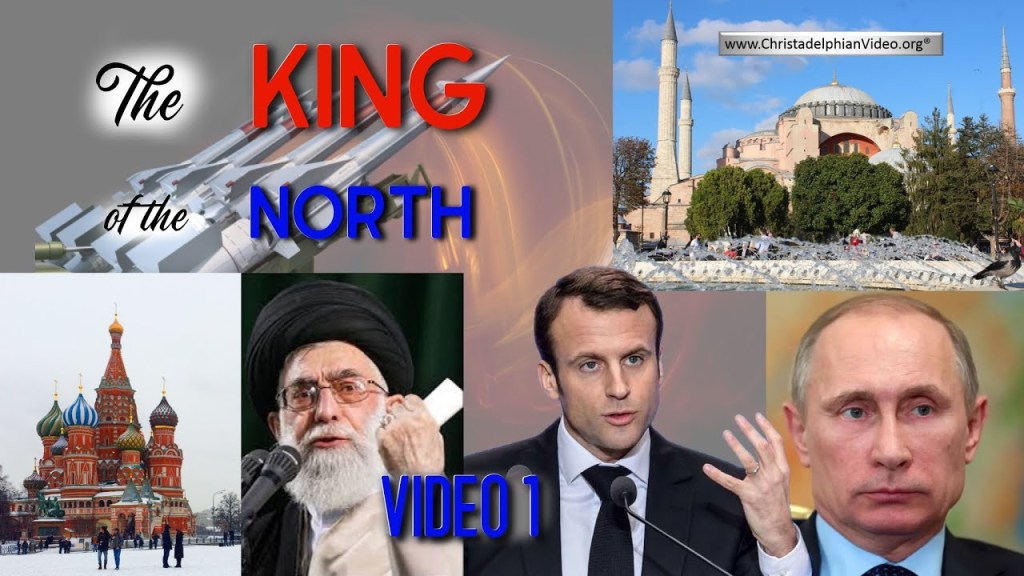


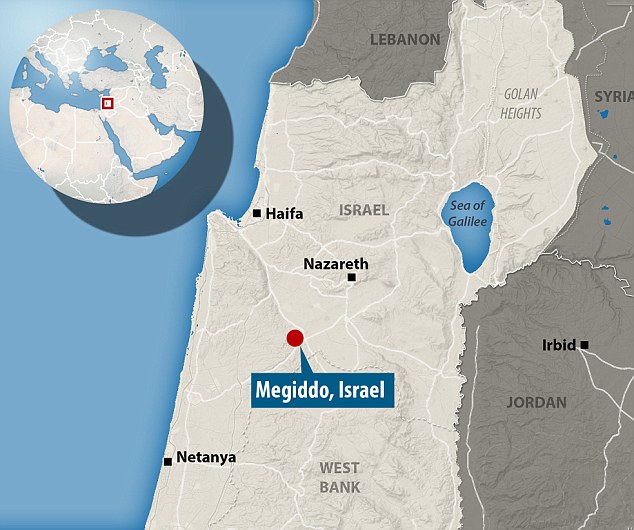


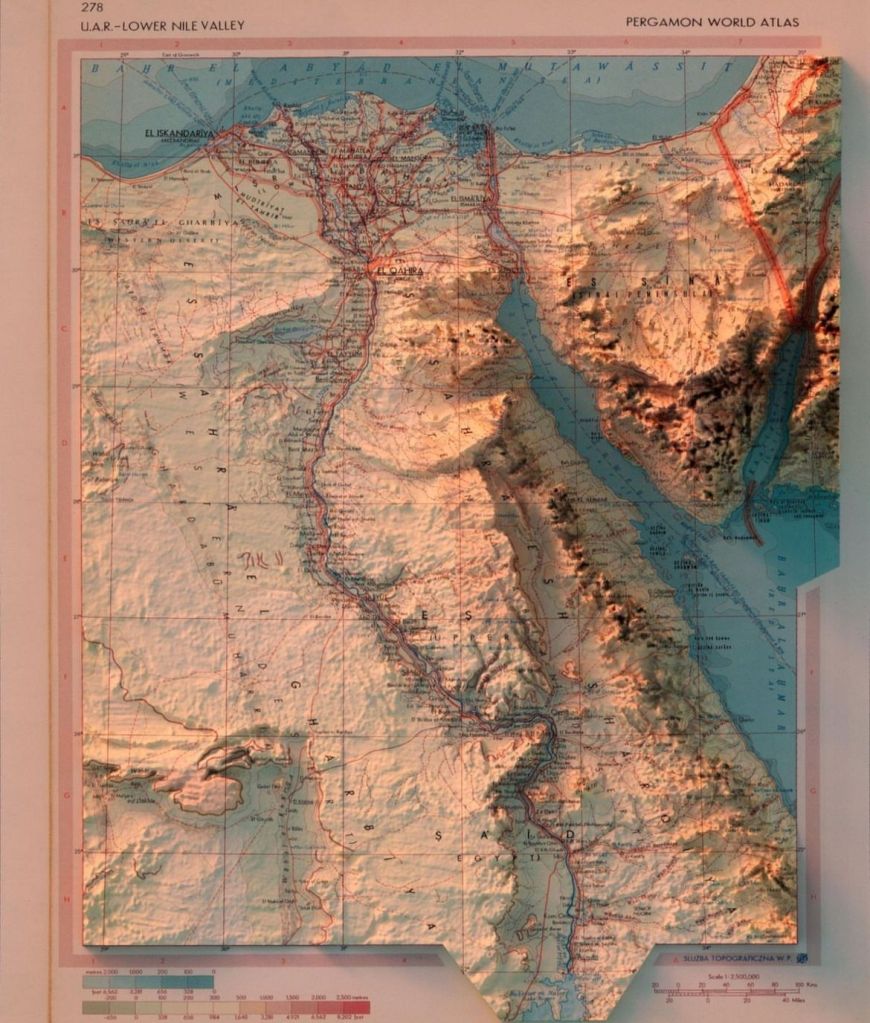
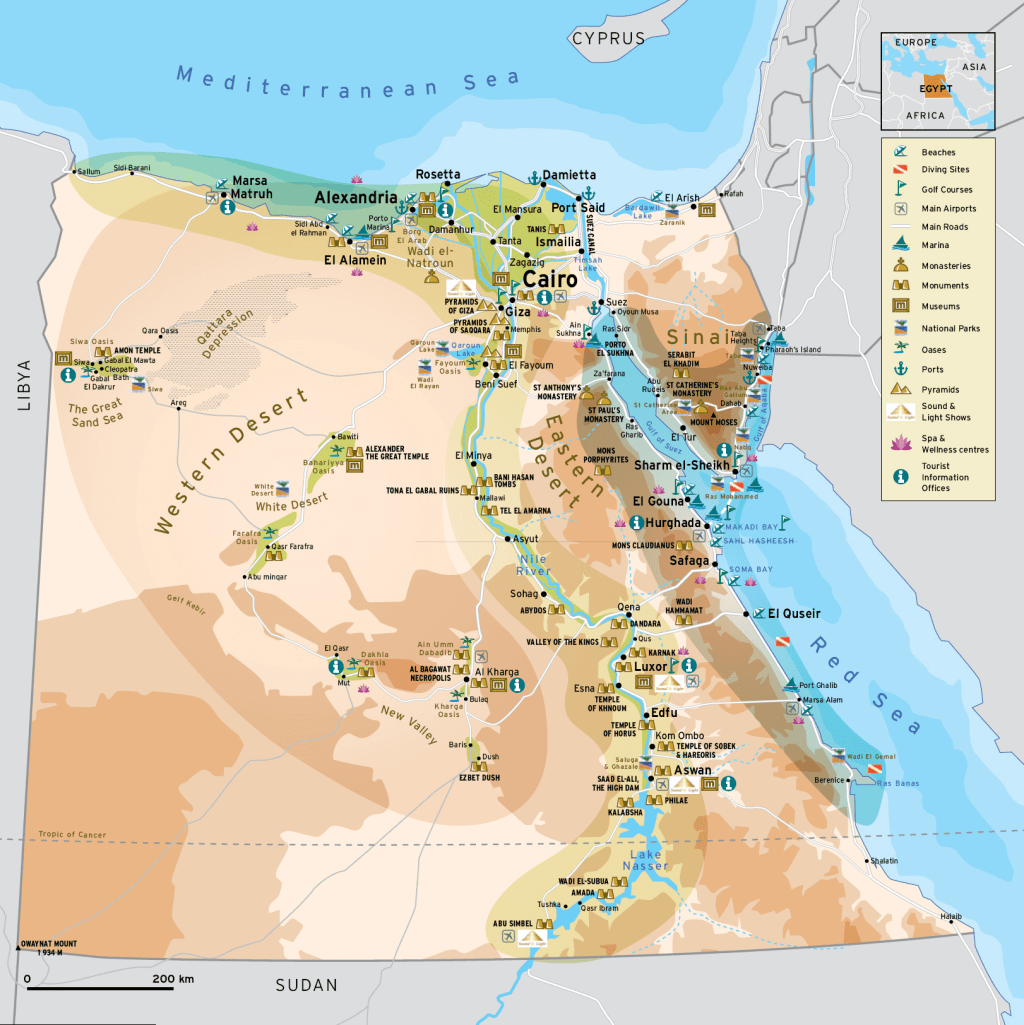


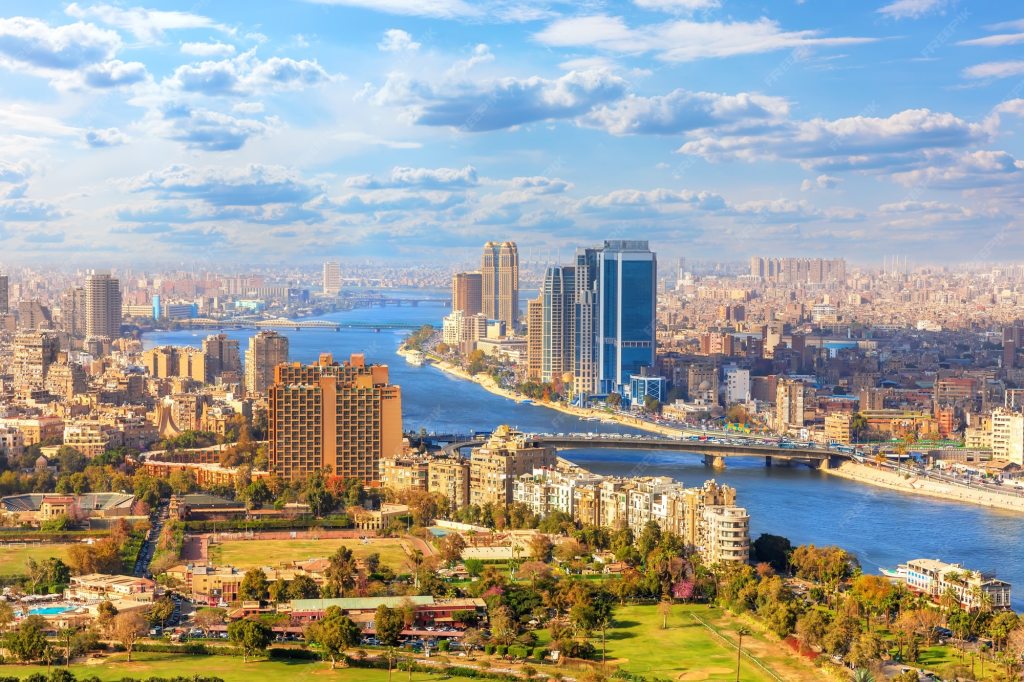
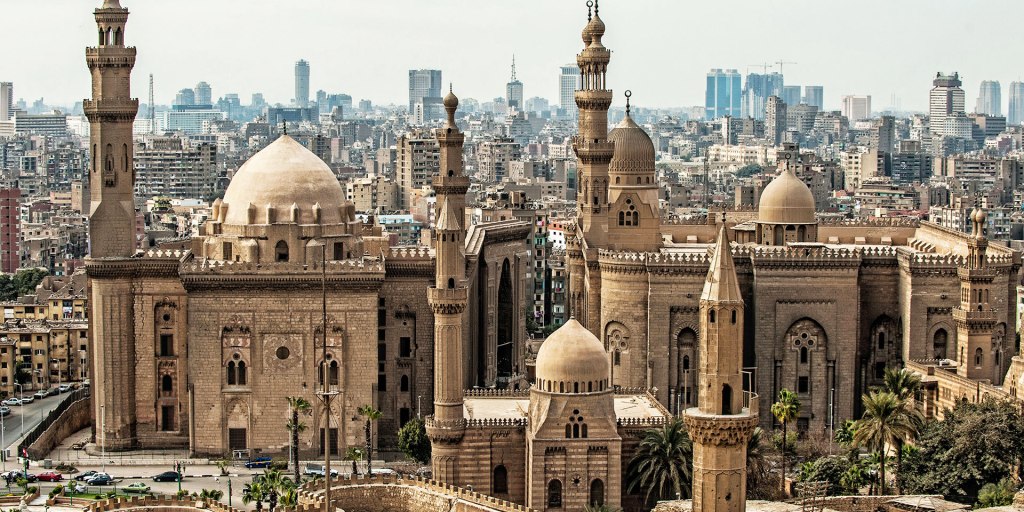
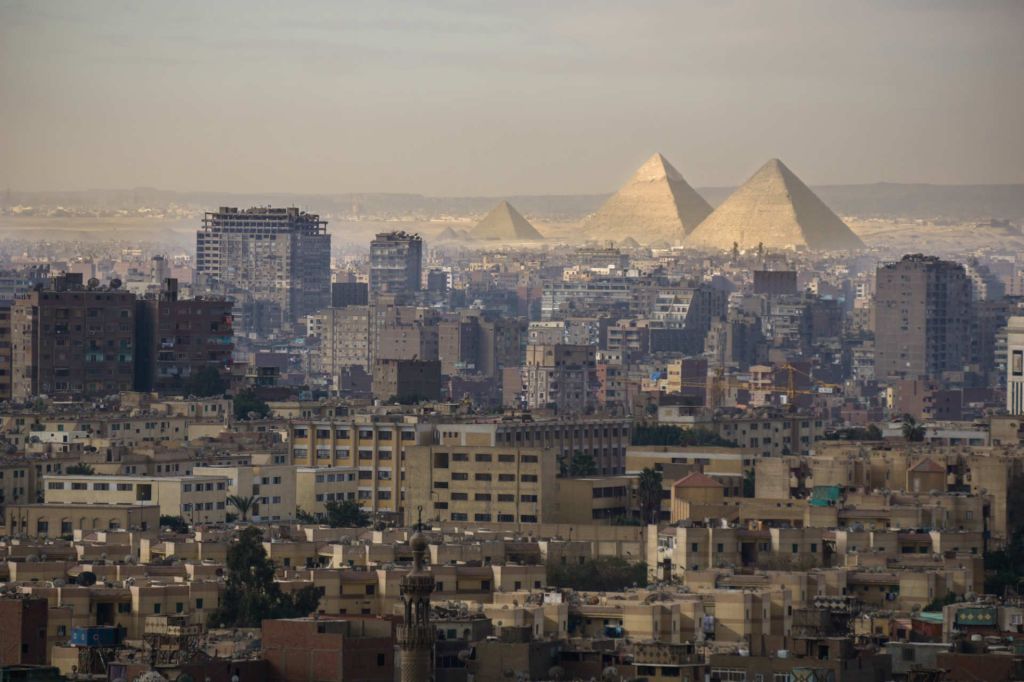

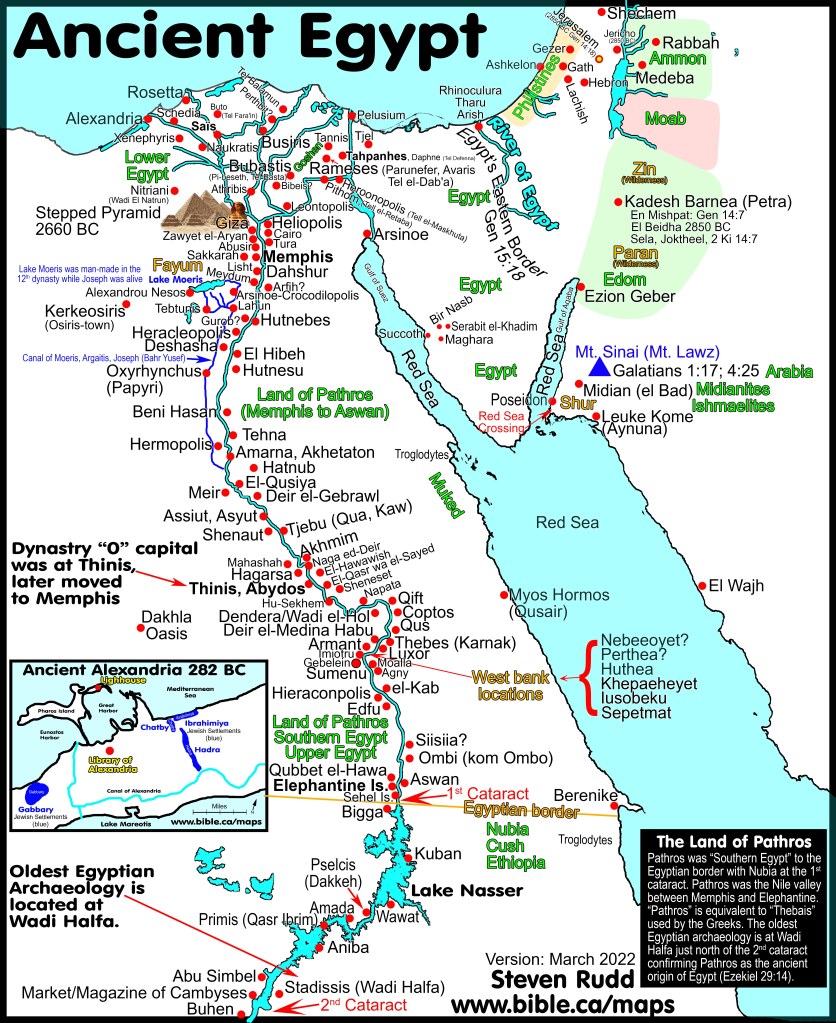

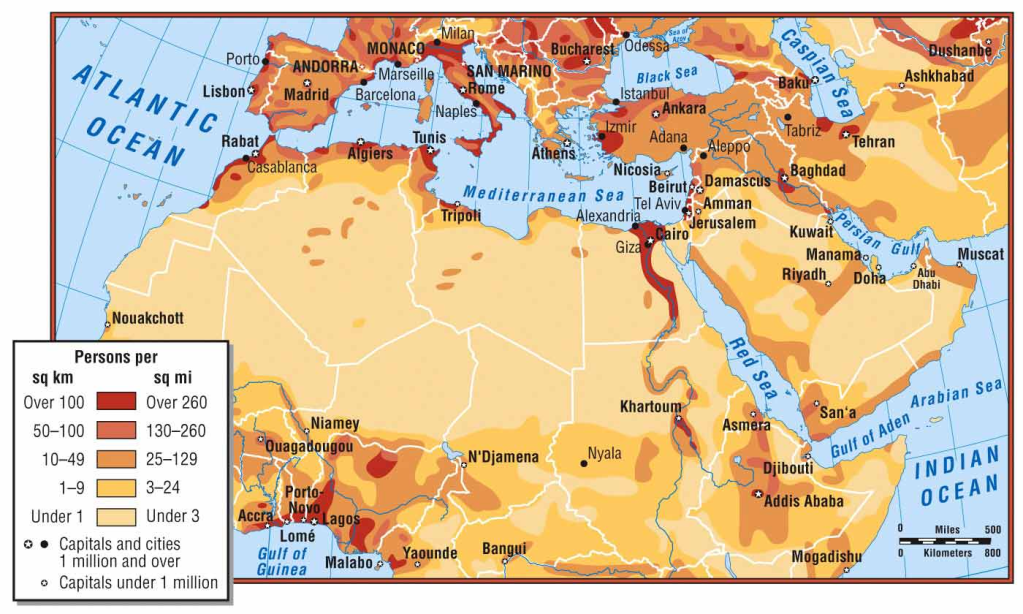
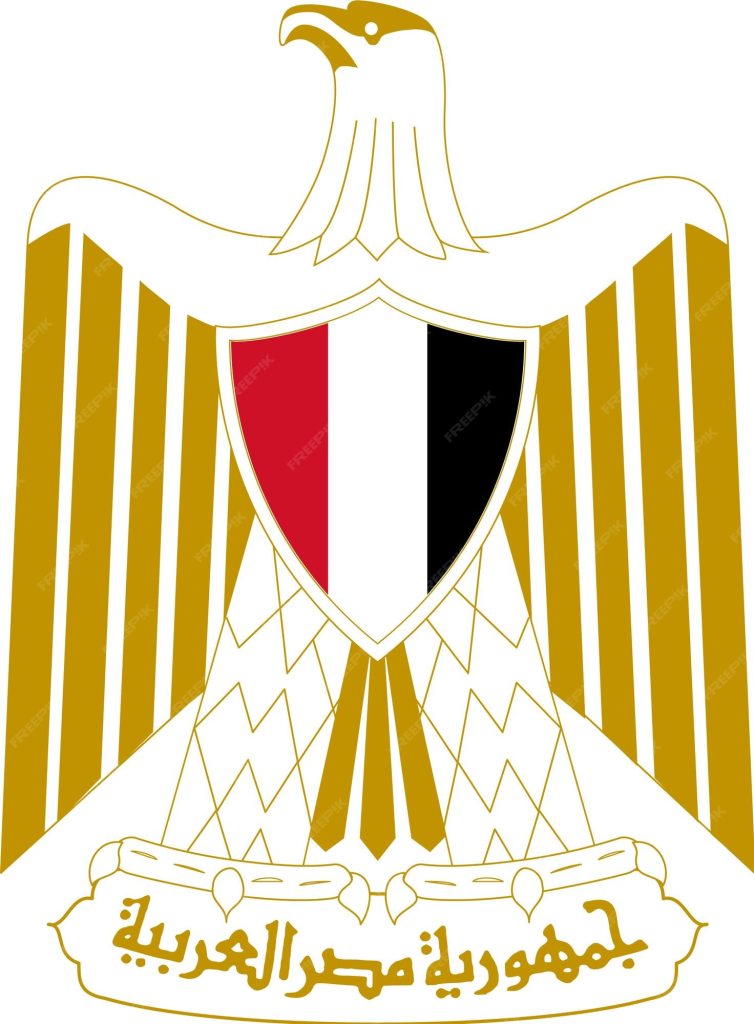
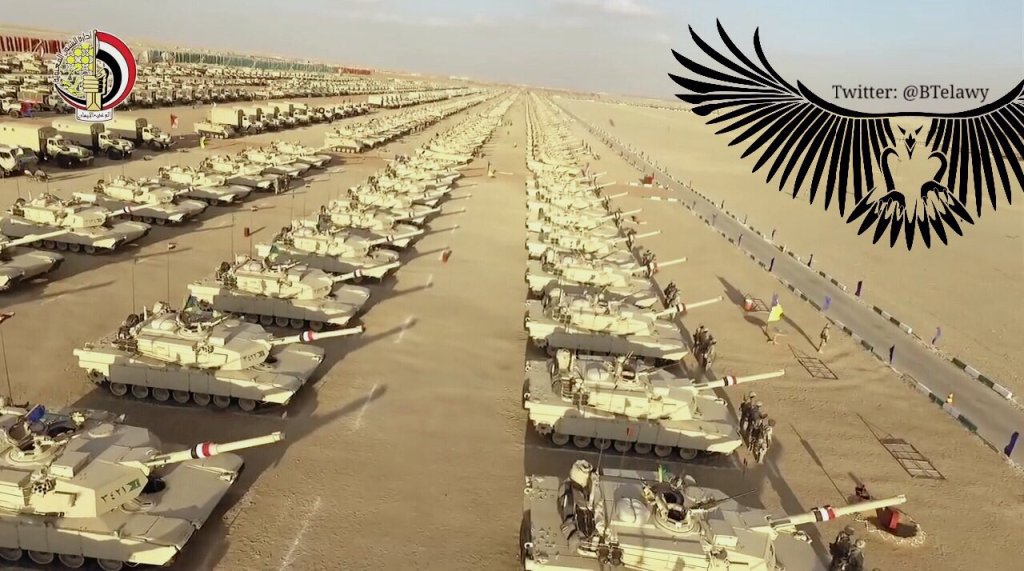
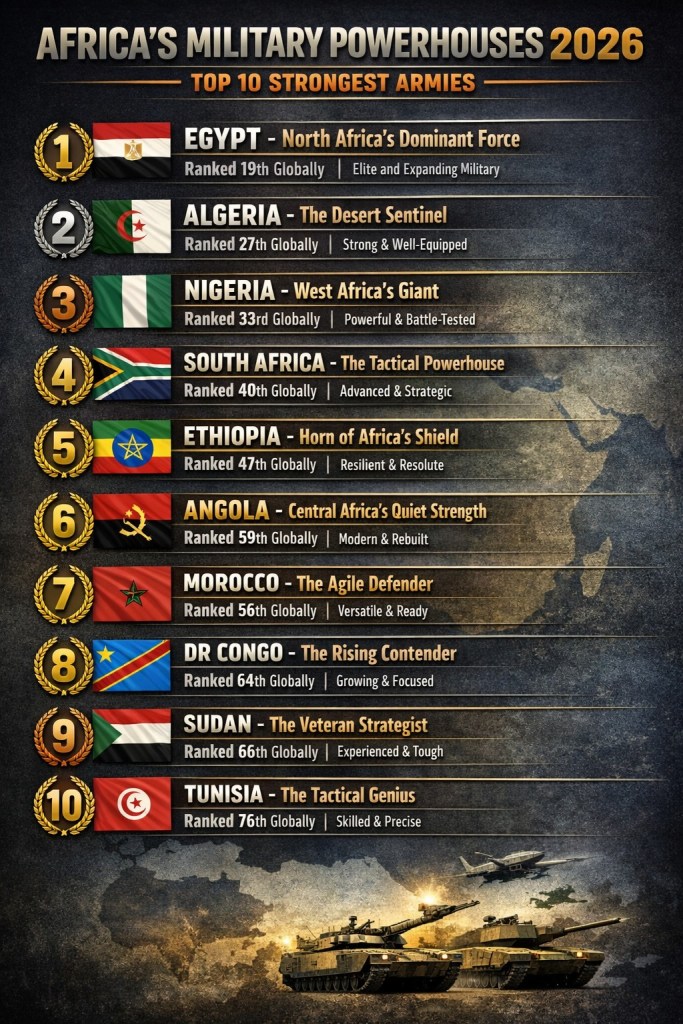
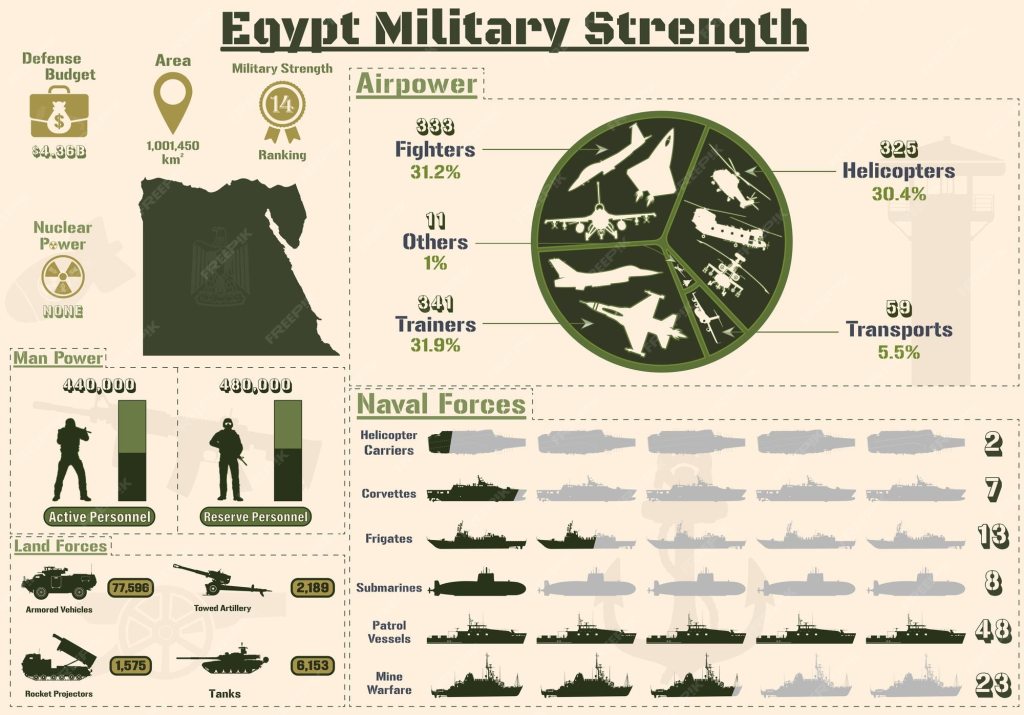
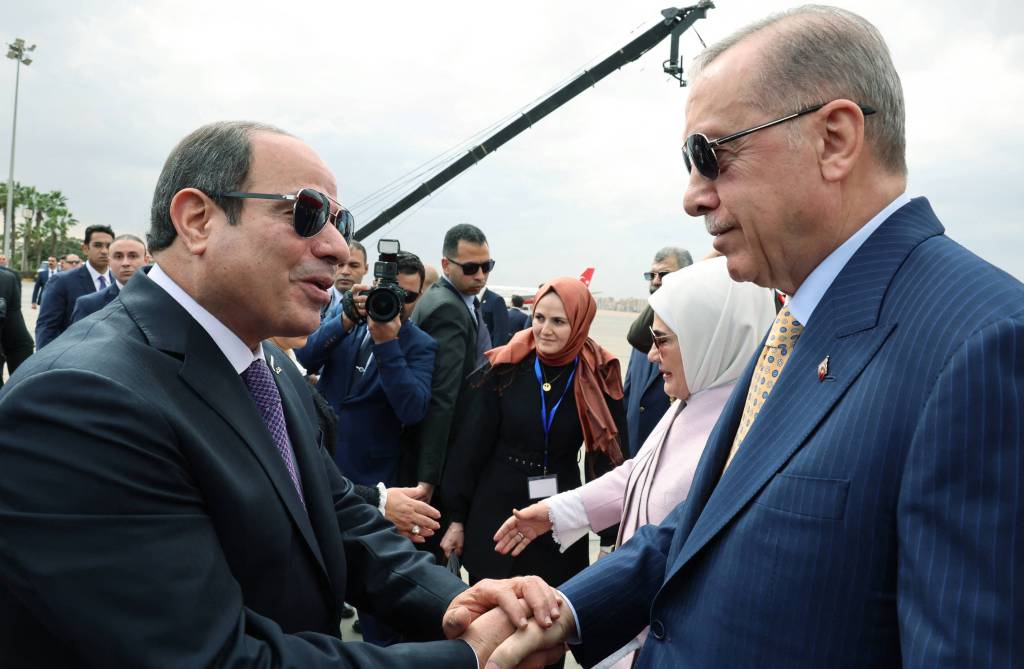
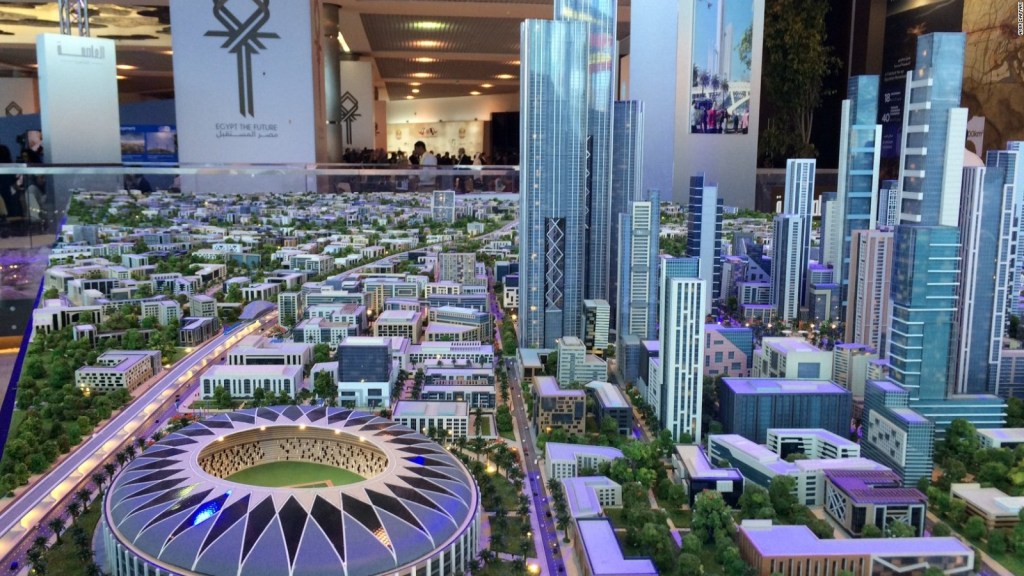
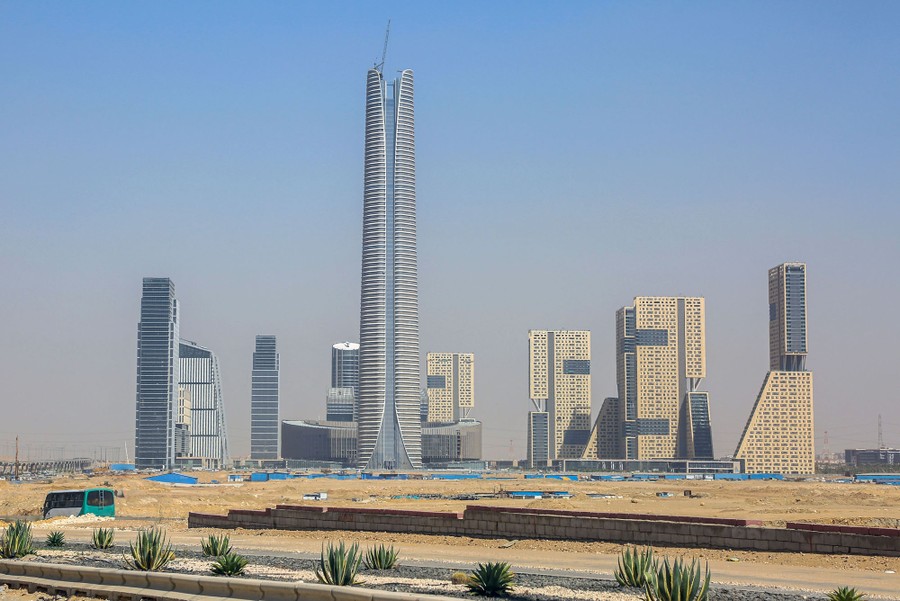
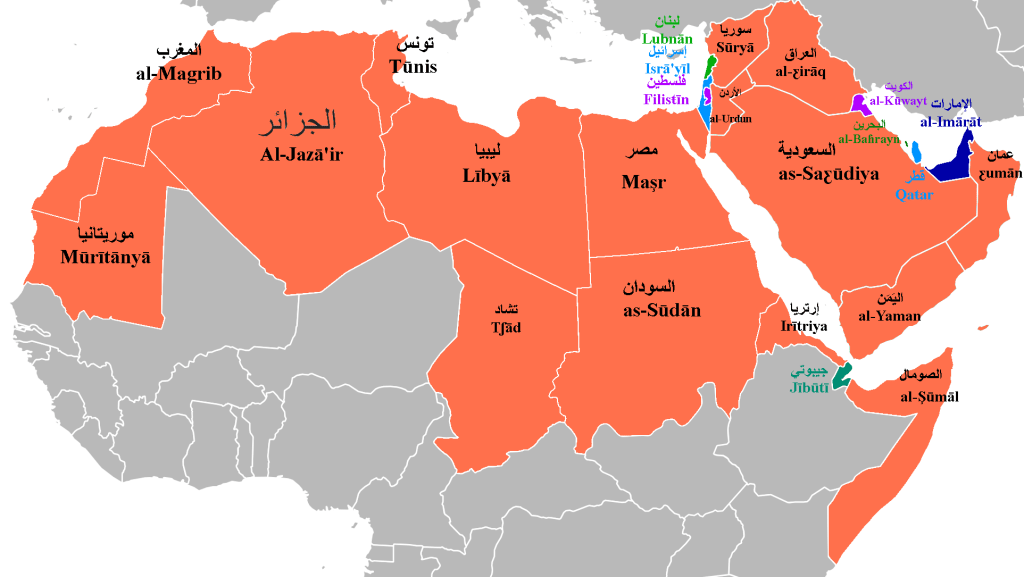
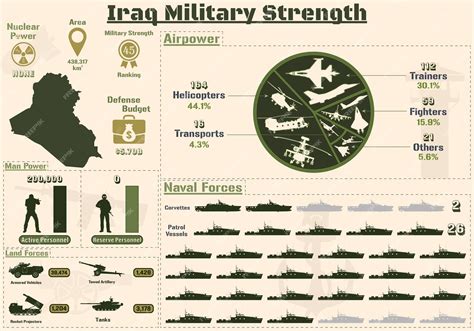


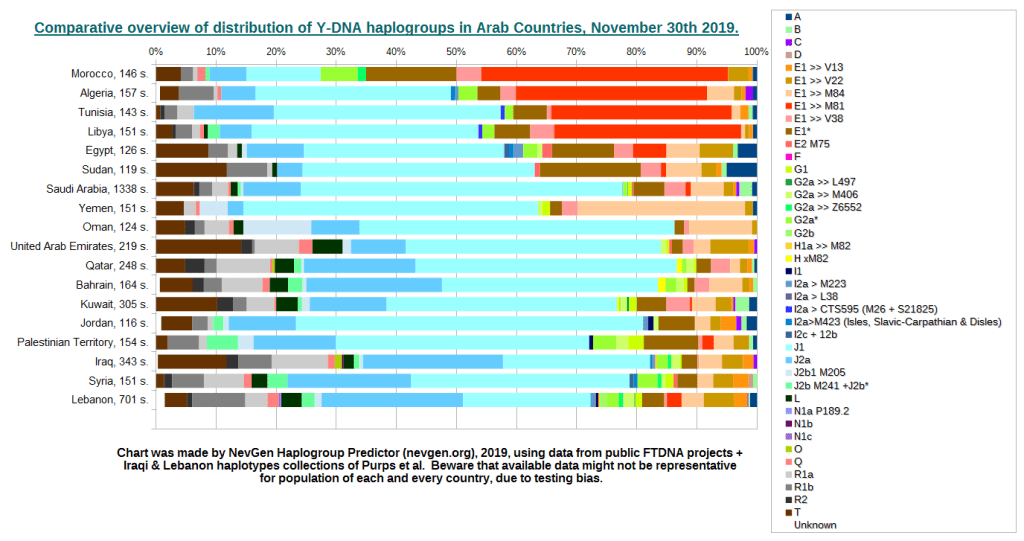
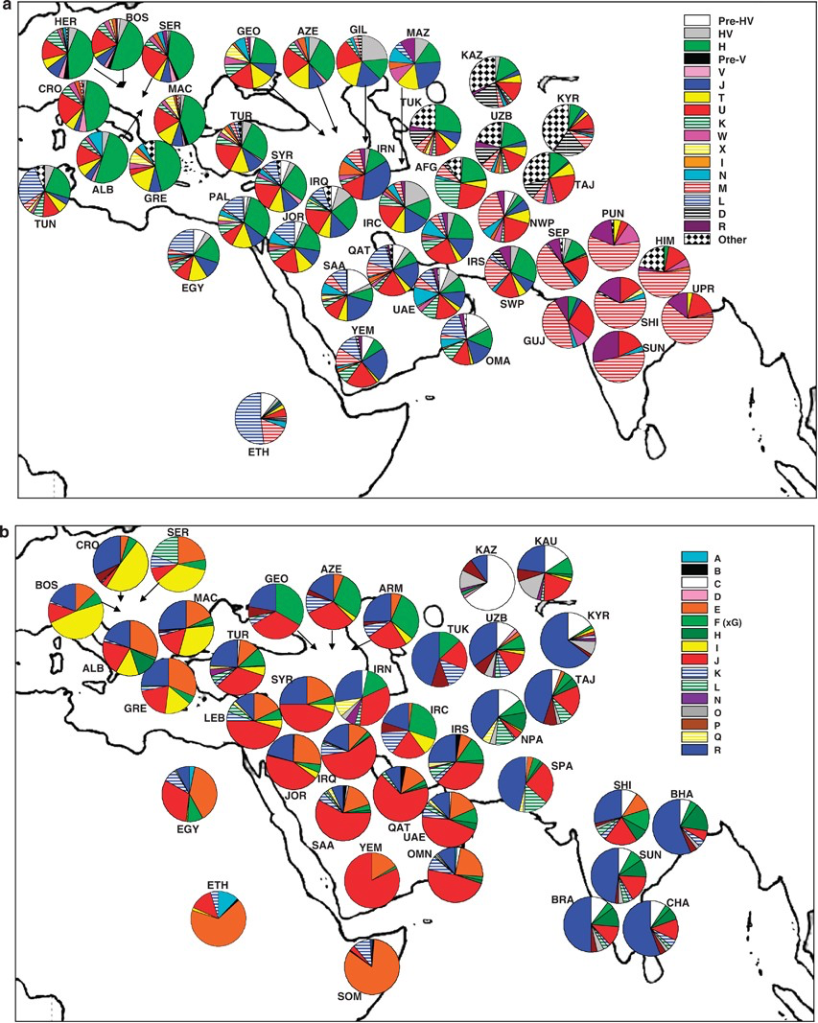


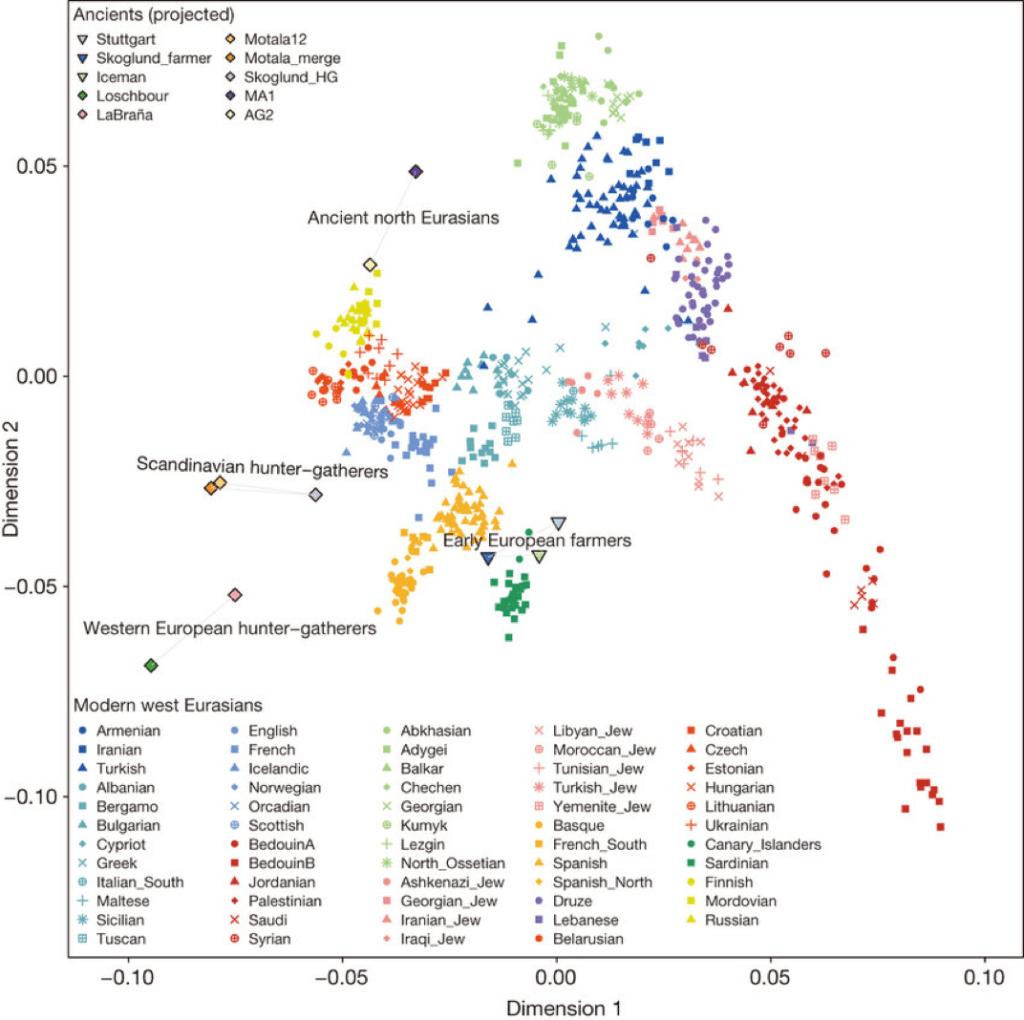
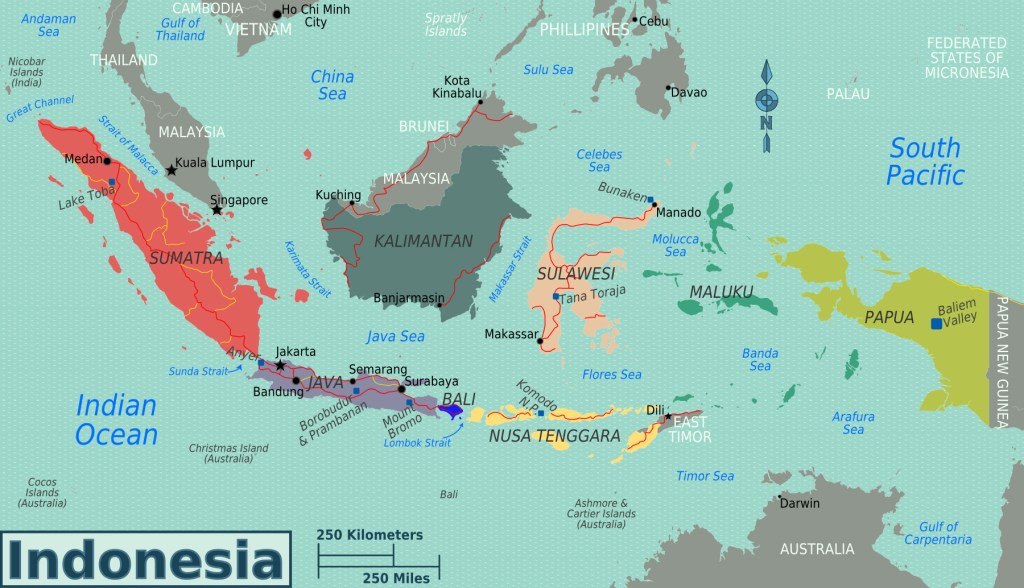



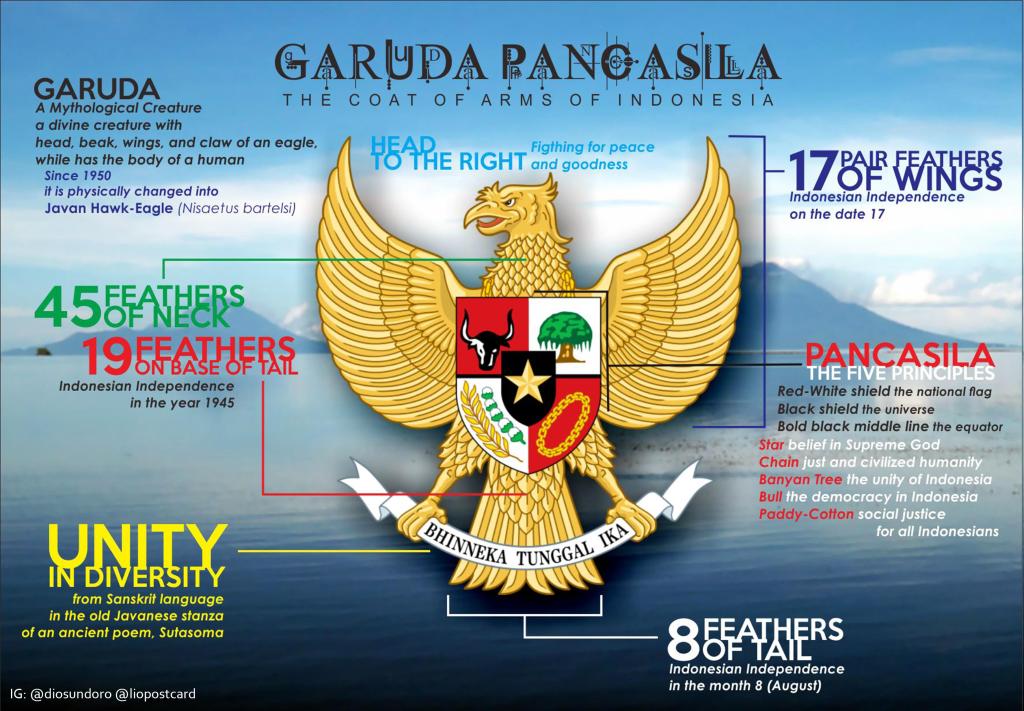

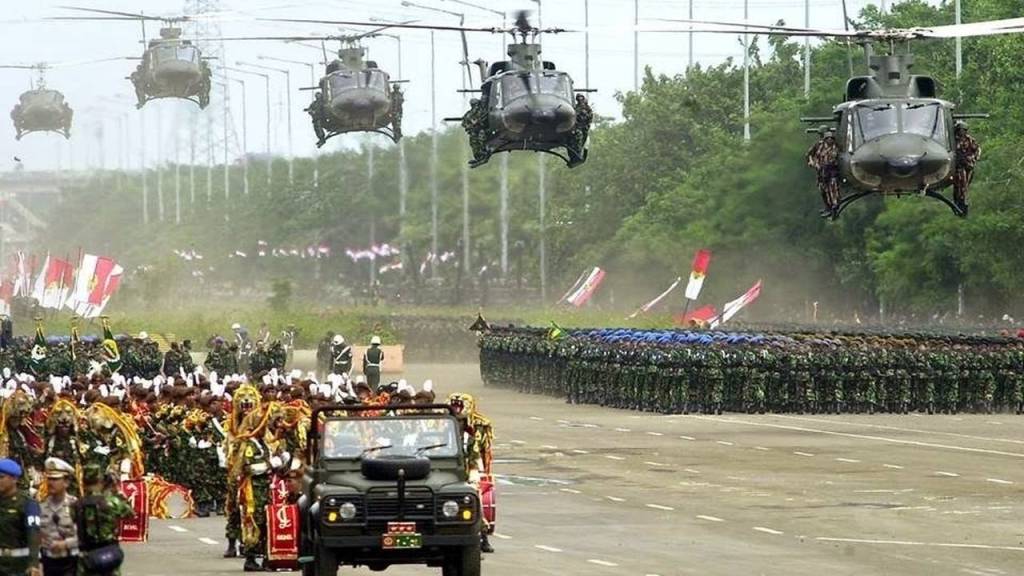
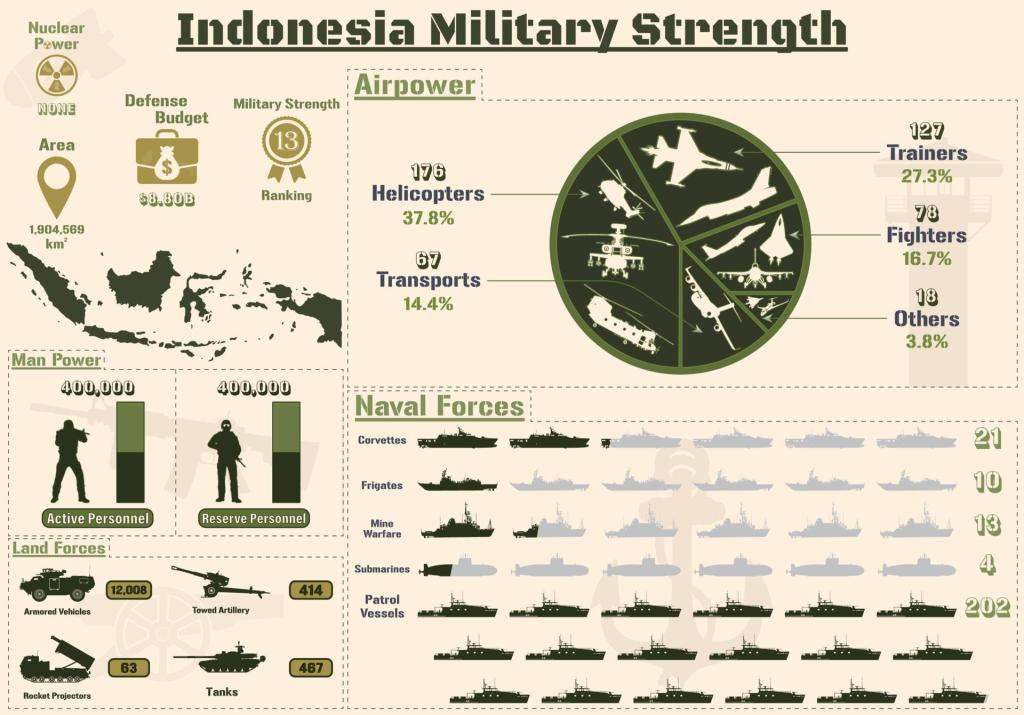
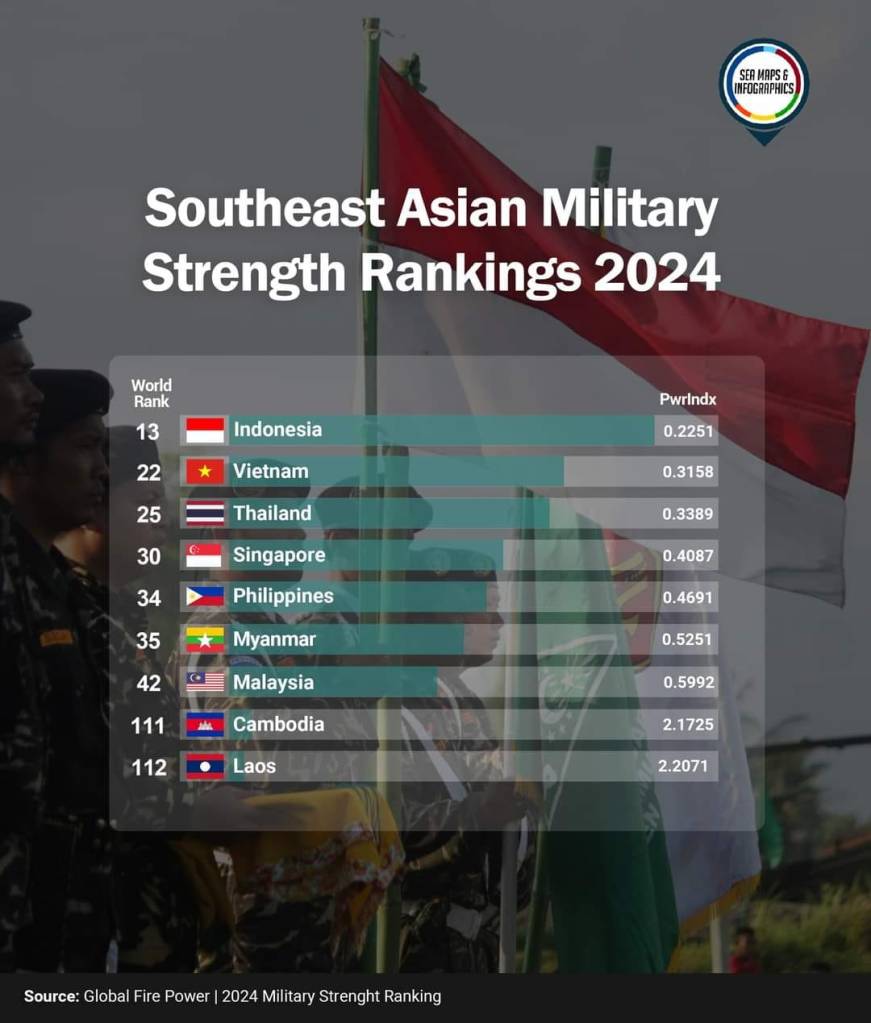
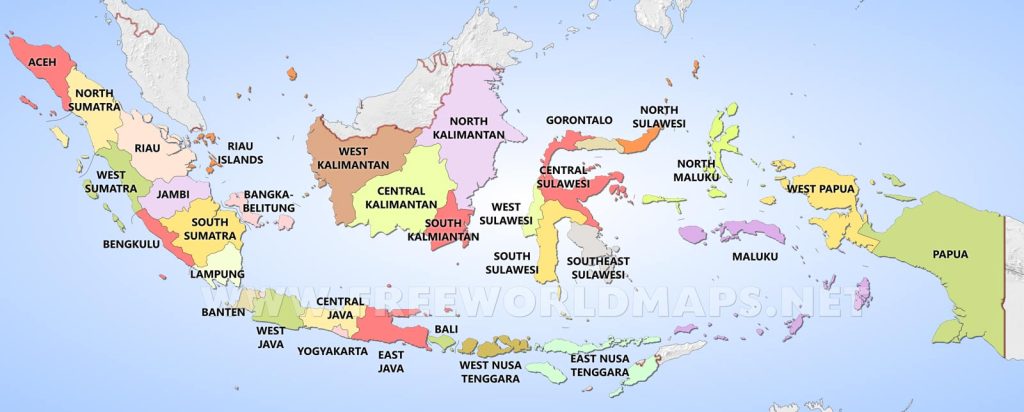

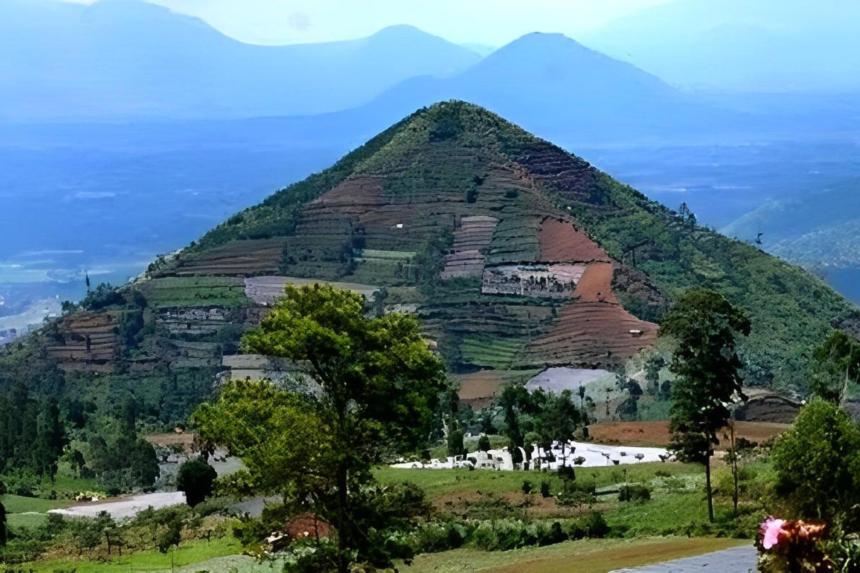




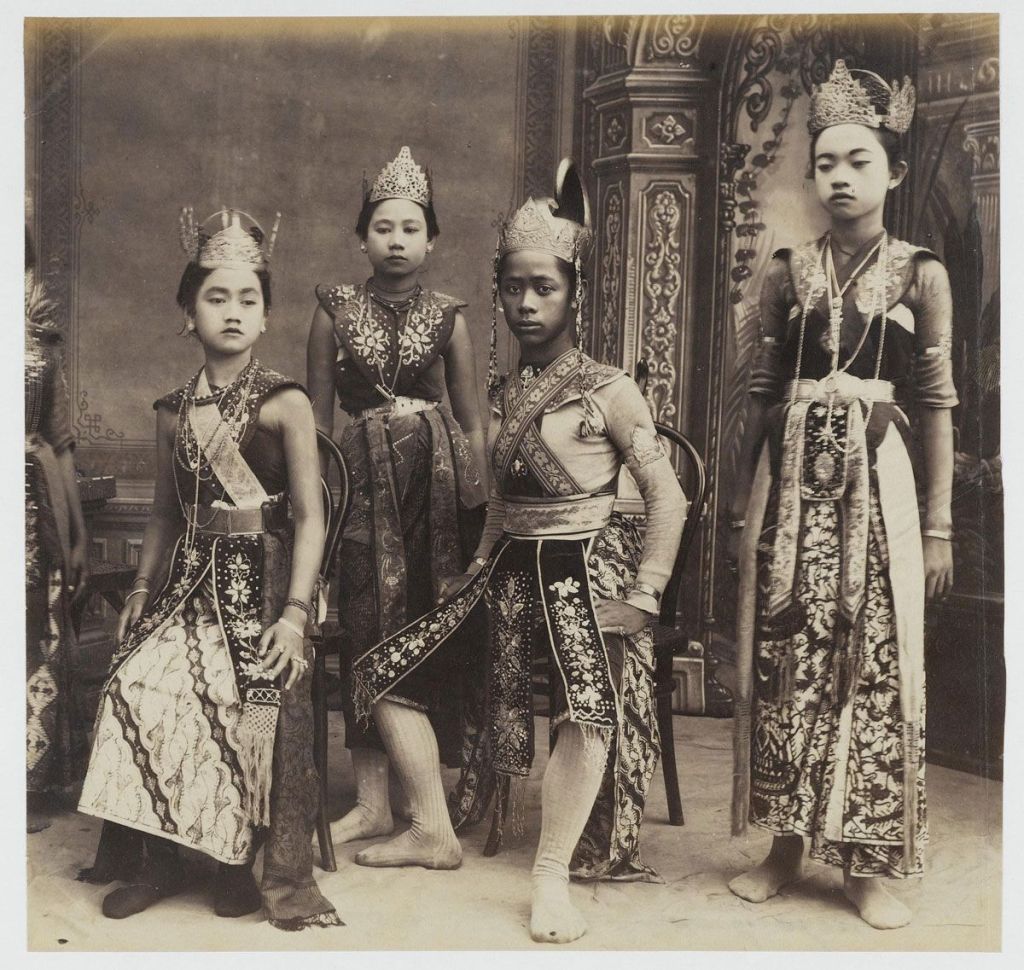
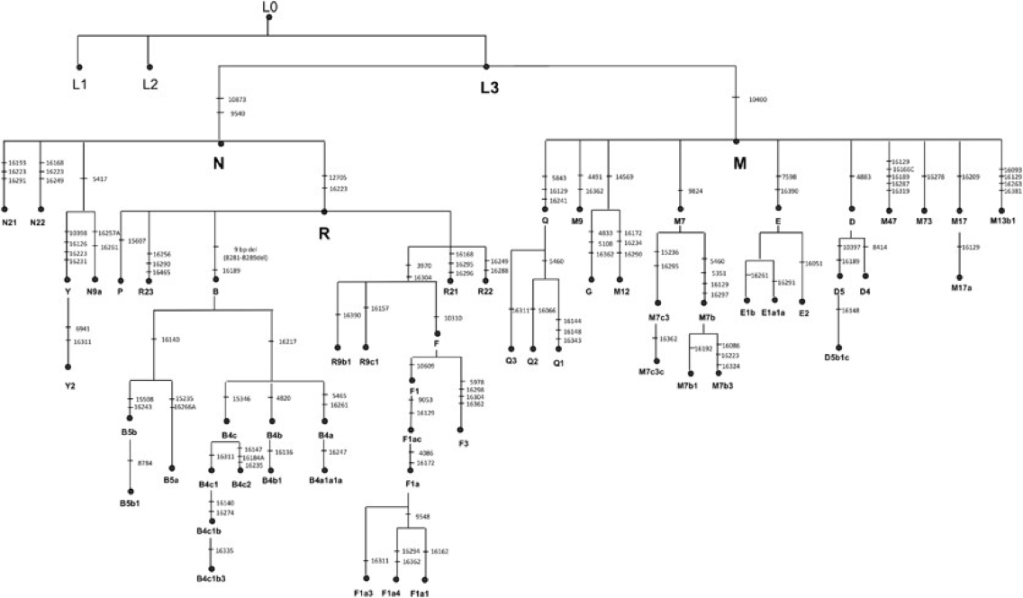
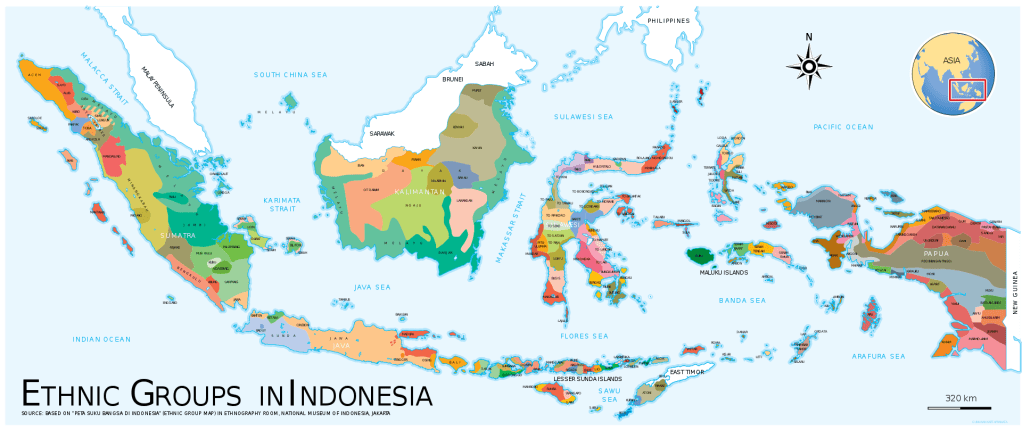


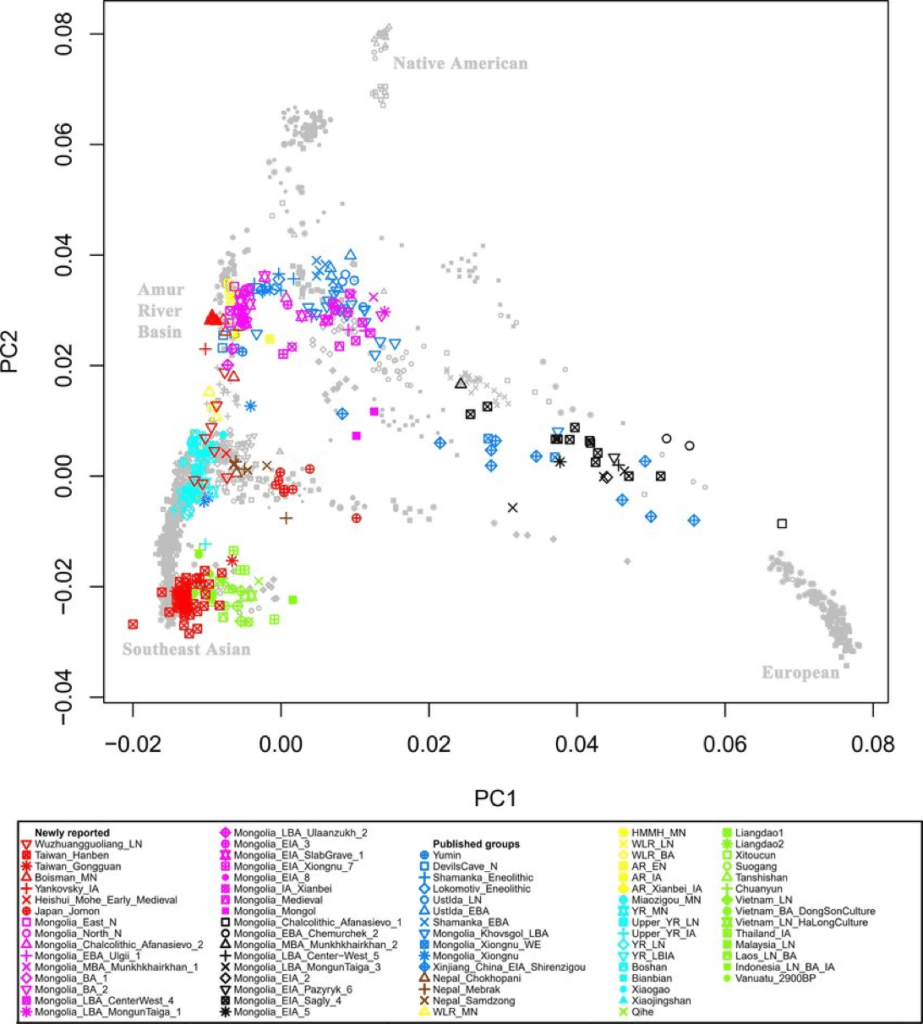
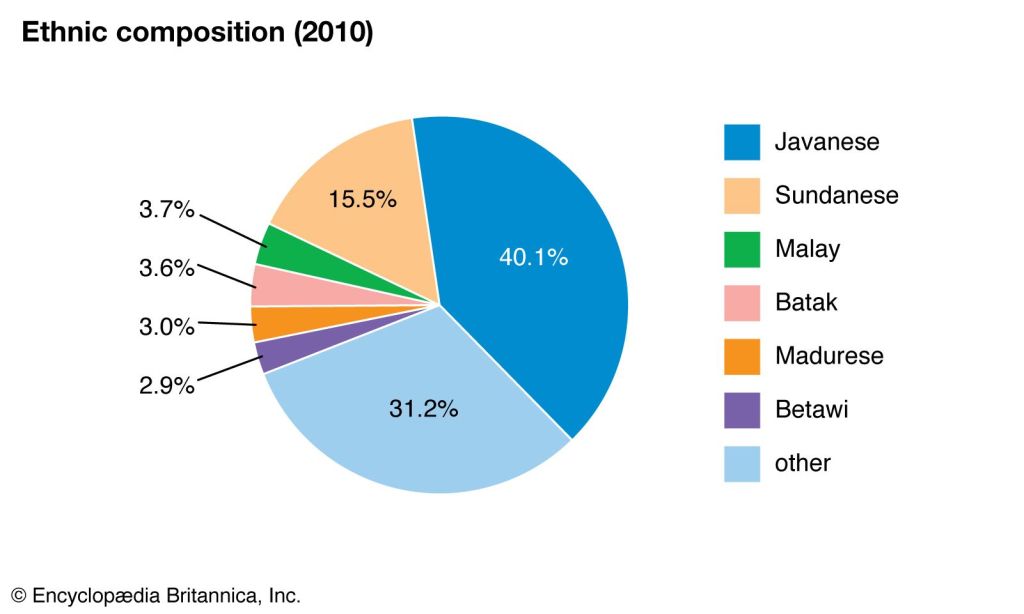
 The Lightkeeper