There are two predominant views regarding the genesis and development of humankind which differ markedly. What if a bridge could be built which joined them together not as two opposing views running distantly parallel, but rather along the exact same line? Evolution confidently states there is no Creator; with humans the random result of millions of years of rather coincidental mutations occurring with seemingly impossible odds. Scientists like atheists, eliminate a spiritual component from the equation of biogenesis, relying on a purely physical explanation. Creationists in the main, teach that a divine God created everything by His Spirit; yet accounting for an impossible human history condensed within a chronology of a mere six millennia.
What if the two could be married together? What if the time frames involved for mankind’s evolution is not millions or only thousands of years, but instead tens of thousands of years? With the Solar System and the Universe beyond, hundreds of thousands of years old? What if the beginning of life is explained through supernatural means, yet the physical dimensions constructing our world are a creation within a creation? What if a supreme Creator is the first source, but other beings have been responsible for preternatural interference and genetic manipulation in the incredible project here on planet Earth? It would mean that evolution is a viable theory, yet just not in the way scientists might think – refer article: Chance Chaos or Designated Design? Likewise, creation is a credible answer, though not quite in the manner Christians may imagine – refer Chapter XXII Alpha & Omega.
We will focus on the scientific field of genetics, principally Haplogroups and the evidence they provide for ancient lineal lines of descent through to our present day, resulting in the vast family tree that is the world’s two hundred countries, containing thousands of ethnicities. In turn, we will consider humanities ancestors who are named in the Bible and any credence to the three (actually four) broad ancestry groups and the sixteen (in reality twenty-one) major races descending from them. For those readers who may take umbrage with the word race, please refer to the concluding Chapter finalis verbum.
A Haplogroup is a series of mutations found in a chromosome. Specifically, they are a combination of alleles or Haplotypes and though located at different chromosomal regions, they are closely linked and tend to be inherited together. An allele (or allelomorph) may occur in pairs, or in multiple alleles which influences the expression or phenotype of any given human trait. The combination of alleles that in this instance a human carries, constitutes their genotype – the chemical composition of their personal DNA. Therefore, Haplogroups are detectable in the DNA of an individual and reveal with who, they share a common paternal or maternal ancestor.
Haplogroups are normally identified by a code comprising an initial letter of the alphabet, and ‘refinements consist of additional number and letter combinations, such as’ for example R → R1 → R1a and R1b, or R2 and so forth. This simplifies genealogical tracing of the genetic mutations.
In human genetics, the Haplogroups studied are: the patrilineal line consisting of a Y-DNA Haplogroup from a Y sex chromosome passed only from fathers to sons and the matrilineal line comprising a mtDNA Haplogroup consisting of mitochondria passed from mothers to offspring of both sexes. Females inherit an X chromosome from both their mother and father and have two X chromosomes. Therefore, females are XX. Conversely, males inherit one X chromosome from their mothers and a Y chromosome from their fathers. Thus, males are XY.
Haplogroups define every ethnicity or racial strand of descent. Haplogroups are split between the genetic information received from ones mother, mtDNA and from ones father, Y-DNA. The proviso is that a daughter does not receive the Y chromosome Haplogroup from her father. Whereas a son receives both the mitochondrial DNA from his mother and the Y chromosome from his father. Thus, there are two sets of Haplogroups for males.
Y-DNA is how paternal Haplotypes are inherited through a direct ancestral male line for countless generations. Because females do not inherit Y-DNA, they do not possess a paternal Haplogroup. Whereas maternal Haplogroup information, including for males is found within the mitochondria of our cells; hence the term mitochondrial DNA or mtDNA. ‘Mitochondria are small organelles that lie in the cytoplasm of eukaryotic cells… Their primary function is to provide energy to the cell.’ Scientists are not exactly sure why mitochondrial DNA is not passed down from fathers. Neither recombines and both Y-DNA and mtDNA change only by chance mutation at each generation with no intermixture between parents’ genetic material.
The remainder of about 98% of an individual’s genetic material – other than the two sex chromosomes X and Y, inherited from both parents – are autosomal chromosomes. These contain segments of DNA that a person shares with everyone they are related to. In essence, the fundamental difference between autosomal DNA and Haplogroup DNA is that the latter provides a genetic snapshot. One that follows a single line of your father’s fathers and mother’s mothers, revealing Haplogroup sub-clades which formed hundreds or thousands of years ago.
Though Haplogroups only provide surface ancestral information for an individual and are not as comprehensive as autosomal results; they do reveal ancient origins of ethnicities and shared common ancestry. Autosomal DNA concentrates on traces from perhaps five to ten generations back in time, over a few centuries but in so doing includes all of ones ancestral branches in its scope, including not just their father’s father, but ones mother, her mother and father and so forth; providing more detail about a person’s personal and immediate ancestry.
An enumeration of the chemical process in analysing Y-DNA and mtDNA Haplogroups is provided in the following article:
The Genetic Origin of the Nations, Christian Churches of God, 2006 & 2020 – emphasis mine:
‘The YDNA and mtDNA are measured in two different ways. YDNA is measured in what are termed polymorphs. These polymorphs are allocated a numeric value and, according to the value when tested, the sub-groupings that are formed are called clades and subclades of the overall grouping which is called a Haplogroup. These values record the change in YDNA mutations and lines. The YDNA system that has been allocated to the male human species is grouped into a series of Haplogroups from A to R. The usual extensive measurement (using the Arizona system) is usually of 37 sites as markers. Basic testing is done for the first twelve, then to 25, and then on to 37 of these polymorphic sites, or locations to determine relatedness and Haplogroup association. There could be some 100 or more markers tested for changes (a.k.a. polymorphisms).’
‘The mitochondria, first sequenced in 1981, became known as the Cambridge Reference Sequence (CRS). The CRS has been used as a basis for comparison with individual mtDNA. In other words, any place in an individual mtDNA that has a difference from the CRS is characterized as a mutation. If a result shows no mutations at all it means that the mtDNA matches the CRS. A mutation happens when: a) a base replaces another base – for example a C (Cytosine) replaces an A (Adenine); b) a base is no longer in that position, or a deletion; and c) a new base is inserted between the other bases without replacing any other (an insertion).
The mtDNA is determined by reporting the polymorphic site such as for example 311C, meaning a mutation has occurred at base pair 16,311 and the base that changed here was actually changed to cytosine. The number 16,000 is the commencement point for DNA numbering and thus the 16,000 is dropped and the numbers used are the numbers in excess. So 16,311 becomes 311 and the letter indicates the chemical at that point in the polymorph. It is this change of the polymorphic site that determines the genetic ancestry, as the parent passes on to the offspring the DNA polymorphisms that they have with the same or similar numerical values. When tested, these values that are not exactly the same as the parent are termed mutations. The values thus vary and have determined the tribal groupings of the world’s nations.’
The scientific confirmation of an original female Homo sapiens progenitor is discussed in the following quote. Mitochondrial Eve was the name chosen by researchers for the woman who is understood to be the most recent common female lineal ancestor of all living humans.
Gods of the New Millennium, Alan Alford, 1997 – emphasis & bold mine:
‘In 1987, Allan Wilson, Mark Stoneking and Rebecca Cann, from the University of California at Berkeley, declared that all women alive today must have had a common genetic ancestor… How did they arrive at this conclusion? This… has been made possible by the discovery of mitochondria the tiny bodies within a cell that are responsible for production of energy through breakdown of sugars. Unlike our other DNA, which is scrambled by sexual recombination, mitochondrial DNA (mtDNA) is inherited virtually unchanged through the female lineandis thus a perfect marker to trace ancestral relations. Moreover, it mutates at a predictable rate. The number of differences between the mtDNA in a worldwide sample of 135 different women allowed Wilson, Stoneking and Cann to compare how far back the ancestors of these women had diverged.
In order to calibrate the divergences, the researchers used a comparison of mtDNA between man and chimpanzees, based on a separation 5 million years ago. And that led to the conclusion that a common ancestor named “Mitochondrial Eve” must have lived 250-150,000 years ago. This genetic evidence has been challenged, due to its calibration with the chimpanzees, whose separation date from man is not known with certainty. As Richard Dawkins has pointed out, this does not mean that Eve was the only woman on Earth at that time, just that she is the only one who has an unbroken line of female descendants. The chances are that many earlier Eves have descendants alive today, but their ancestry has passed, at some point, through the male line only. Despite the new mtDNA dates, most studies still tend to support and cite the 200,000 BP common ancestor.’
Constant readers and those who have read Appendix IV: An Unconventional Chronology will be aware the time frame for Adam and Eve may be as recent as thirty-thousand years ago. The supposed separation between chimps and man is not a given let alone the dating proposed. The purpose is not to discuss or digress on topics discussed in preceding chapters and articles. These include Homo erectus, Neanderthal man, the creation of Homo sapiens and the origin of Adam and Eve. Please refer to Chapter I Noah Antecessor Nulla; Chapter XVI Shem Occidentalis; Chapter XXII Alpha & Omega; and articles: Homo neanderthalensisI, II, III & IV.
The above trees for patrilineal Y-DNA and matrilineal mtDNA are reasonably accurate.
First, an introduction to each of the Haplogroups and a synopsis for each, while presenting where applicable Noah’s sons and grandsons; matching where we can the Y-DNA Haplogroups and mtDNA with Noah’s sons wives.
Maternal mtDNA Haplogroups are lettered as such:
A, B, C, D, E, F, G, H, HV, I, J, K, L0, L1, L2, L3, L4, L5, L6, M, N, P, Q, R, S, T, U, V, W, X, Y, and Z.
Haplogroups are used to define genetic populations invariably explained from either a chronological origin or a geographic orientation. The following are recognised divisions for mtDNA Haplogroups:
African:
L0, L1, L2, L3, L4, L5, L6
West Eurasian – including North Africa, the Middle East and South Asia:
H, T, U, V, X, K, I, J, N, R, W
East Eurasian:
A, B, C, D, E, F, G, M, Y, Z
Native American:
A, B, C, D, X
Austronesian-Melanesian:
P, Q, S
Mitochondrial Haplogroups are divided into three main groups, designated by the sequential letters L, M and N. Early Homo sapiens first split within the L group between L0 and L1 to L6. Haplogroups L1 to L6 ‘gave rise to other L groups, one of which, L3, split into the M and N [groups].’ The M group comprises the first lineages of Haplogroup M found throughout Asia, the Americas, Melanesia, parts of the Horn of Africa and North Africa.
The N Haplogroup is thought to represent another later macro-lineage. This maternal line split into another group called R. ‘Haplogroup R consists of two subgroups defined on the basis of their geographical distributions, one found in southeastern Asia and Oceania and the other containing almost all of the modern European populations. Haplogroup N(xR), [that is] mtDNA that belongs to the N group but not to its R subgroup, is typical of Australian aboriginal populations, while also being present at low frequencies among many populations of Eurasia and the Americas.’
Haplogroup L comprises nearly all sub-Saharan Africans. L0 is the most ancient mtDNA Haplogroup. L1 is the next oldest branch of the maternal family tree, being a daughter of the mitochondrial Eve Haplogroup L and a sister to L0. It is most frequently found in western and central sub-Saharan Africa; seldom appearing in eastern or southern Africa. It is L1 which is the ancestor to branches L2 to L6.
Fascinatingly, it was the group L3 mutations which gave rise to all the non-African Haplogroups found today in both West Eurasians and East Eurasians. Haplogroup L3 comprises some 40% of the sub-Saharan maternal variation. L2 is found in a third of sub-Saharan Africans. Its subgroup L2a, is not only the most common mtDNA Haplogroup among African Americans, but is the most frequent and widespread mtDNA cluster in Africa. For further in-depth discussion on the L0-L6 Haplogroups, refer Chapter XII Canaan & Africa.
The Genetic Origin of the Nations, 2006 & 2020:
“Noah was understood to be pure in his generations. The Bible also maintains that the people in the Ark were all the family of Noah. Thus, to properly account for the genetic diversity, Noah must have maintained the capacity to throw genetically distinct offspring, and this offspring had the characteristics of the line from which it came, but not the entire sequence that Noah had originally. For Noah to be the father of the human structure he is held to have had the capacity for the… YDNA substructure, as all humans are descended from him. Any male on the planet will have only the mutations that signify his branch and path. Noah held the base YDNA that was able to mutate into… other subgroups.
… when we examine the tree of mtDNA we find some interesting group derivatives. The so-called “supergroups” are really only in three basic groups. In other words, they came from three main female lines. That is what we would expect to find if we assume there were only three females that bred on from the Ark, namely the wives of Shem, Ham and Japheth. These Haplogroups are all descended from a single female supergroup, namely Haplogroup L. So in reality, all females are descended from one female line, Hg L. That is super L. This line then split into L1, and then L2 and L3. The line L3 diverged and from L3 came the other mtDNA mutations. Thus, all females came from one Eve whose mtDNA line was L.
The supergroups M and N were next to diverge or mutate. From a biblical point of view we can argue easily that L was formed with Eve and the other groups were pre-Flood divisions that came on to the Ark. Thus, we could correctly argue that L, M, and N came on to the Ark within the accepted biblical account. All mtDNA Haplogroups are subdivisions of L, then M and N and subsequently R, which itself is a mutation of Hg N.
Thus, we can assume that Eve produced the line L and the three wives of Shem, Ham and Japheth are at least the three groups L, M and N. There may have been further divisions given the fact that Noah may have had daughters not mentioned and their mtDNA line may have been L, or M or N. It may have even been R, if we assume that the entire L line came in through the wife of Ham, as the L line is almost confined to the sub-Saharan tribes.
We also have to address the fact that Eve was dark skinned… Thus the capacity for the development of skin colour was an original trait [even if recessive] of the human creation.
M produced three subdivisions… including C [and Z, which split from each other], and D and G… [with subdivisions] E and Q… [all associated with East Asian peoples].
We might thus also deduce that the wives of the sons of Noah were taken from the one family lineage, maintaining purity in the generations in the female line also. The L2 and L3 split may have come from the family structure before the Flood. [Any] daughters of Noah and the wives of the sons could have carried all three of the L subdivisions and the basic core sub-groups of M, N and perhaps R. It is therefore possible that the women of the Ark… could easily have contained the basis for the modern mtDNA diversity.
The supergroup N… split… [including] Haplogroups I and W… The R supergroup split into the following: B; F; HV, which split into H and V; P; The J and T subdivision; and U, from which came K… [all associated with European peoples].”
According to the author, the mtDNA super Haplogroup L originated with Eve… and split into (L0) L1, L2 and L3. All mtDNA L Haplogroups from L0 to L6 are primarily associated with Black African people and to a lesser extent, Arabs. The remainder of the mtDNA Haplogroups then derived or mutated from L3. L3 gave rise to the super subgroups M and N. Broadly speaking, L3 relating to African peoples; M with East Asian; and N with Europeans. The author states that Japheth, Ham and Shem’s wives would have carried these new mutations. For the three wives of Noah’s sons to each represent these three core racial strands, the connecting dots not suggested by the author are that these wives could have also been daughters of Noah by his wife Emzara. Though there is reason to believe this is not the case.
Noah would have passed on to each son the paternal genetic sequencing (Y chromosome DNA) for Japheth and his subsequent seven sons; Ham and his three sons; Shem and his five sons; and finally Canaan and his six sons – refer Chapter XI Ham Aequator; and Chapter XII Canaan & Africa. Noah’s wife would have received the maternal recessive genes (Mitochondria DNA) originating in the L3 line from Eve, which included Haplogroups M and N. Thus, L3, M and N were new mutations that had not existed during the antediluvian epoch. The new Haplogroups had lain dormant until being activated or awakened by congress with Noah.
The new racial characteristics could have been carried by Noah’s daughters (in law), ‘Adataneses, Na’eltama’uk and Sedeqetelebab who then married respectively, Japheth, Ham and Shem whose descendants would exhibit the new mutations, revealing two new racial strands – bluntly and broadly: yellow from Japheth (C, D) and ‘Adataneses (M); and white from Shem (G) and Sedeqetelebab (N, R); to add to an original brown skin tone. The latter now carried a new mutation too; creating extra diversity in Ham (H, J) and Na’eltama’uk (L0, L1-L6). Canaan (A, B, E) is a separate line again and is discussed in depth in Chapter XI Ham Aequator; and Chapter XII Canaan & Africa.
What is of fascinating interest is that while the white line when it mutated long after the Flood was new; the yellow line of descent was a throwback to the people of Day Six – refer articles: Homo neanderthalensis I, II, III & IV; and Chapter II Japheth Orientalium.
‘Adataneses
It is understandable why these eight people were saved and that not just Noah was genealogically pure, but so was his wife. They then had (probably) three to (possibly) six children prior to the flood who received the genetic sequencing for the three (actually four) new core racial lines, which then mutated into the sixteen (in reality twenty-one) new sub-racial strands through their children after the flood – Noah’s and Emzara’s grandchildren.
This leaves the L and specifically the L0 pre-flood line from Eve. The simple answer is that L was passed to Cain and his family line and L0 was passed to Seth and his line of descent which later included Noah and his wife. L3 with M and N, being the later mutations from Seth’s line L0 after the flood. The L and L0 lines were mid-toned skinned lines, with the darker and lighter shades of skin and racial diversity included in the L3 line we presently have now, deriving from Noah’s descendants. The undeniable scientific support for this argument, is that a black couple can have white children, but a white couple cannot have a black child.
Science confirms white skin is a mutation – the SLC24A5 gene on Chromosome 15 – of an originally darker human. For instance, East Asians have acquired mutations in other genes which result in lighter skin, while retaining black hair. The gene mutation SLC24A5 changes just one building block in the protein, contributing about a third of the pigment loss that makes black skin white; accounting for the differences in skin tone between peoples of African and European ancestry for example – refer Chapter XVI Shem Occidenatlis.
Sedeqetelebab
The fact of the matter is that everyone descends from mutated DNA genetic code which originally began with ancestors of the distant past. So which peoples today are they most closely aligned with? The oldest Haplogroup from the mtDNA tree passed from mothers to sons and daughters, originating from mitochondrial Eve, is L0. This Haplogroup is indicative of the peoples of Southern Africa. The Khoisan are a good example and they possess a light brown skin. Thus ‘Eve’ would have been in all probability… light brown – refer Chapter XII Canaan & Africa.
It is important to understand that recessive genetic information is shared amongst family members, sometimes in surprising ways. Just as cousins can be more alike and develop a closer bond than with their own siblings. What is significant is that the mtDNA Haplogroup L, though shared in common origin by Europeans and East Asians through Shem, Japheth and their wives ‘Adataneses and Sedeqetelebab in the form of the L3 mutation, it was the L0 to L6 mutations which have been overwhelmingly carried by Noah’s^ fourth and youngest son, Canaan.
Coupled with this, is that as the macro-Haplogroup M is almost exclusively associated with East Asians, macro-Haplogroup N is not just the domain of Europeans descended from Shem but also for Arabs, Indians and Pakistanis descended from Ham. The most logical answer for this occurrence is that Ham’s sons – Cush, Mizra and Phut – must have taken wives from Shem’s line and hence why they share mtDNA in common with them.
Following L, the next major maternal Haplogroup branch is M. M1 intrigues scientists with its presence in Ethiopian, Somali and Indian populations, where M3 is located. These are descendants of Canaan’s sons and from Ham’s son Cush. What may have a bearing is that Ham’s wife Na’eltama’uk is the mother of both Canaan and Cush who share different fathers.^
Na’eltama’uk
Yet the Haplogroup mutations stemming from M as follows, are all defining maternal markers for sons from Japheth. Haplogroups derived from super group M include: CZ found in Siberians; with branch C found amongst Amerindians; while branch Z is carried by the Saami; and minimally in Korean, North Chinese and Central Asian populations. Haplogroup C is a founding lineage of the indigenous Amerindian, the seventh and youngest son of Japheth, Tiras.
Haplogroup mtDNA D is the principal East Asian lineage, with D1 found amongst Amerindians and D4 prevalent in Central Asians and much of Siberia, the descendants of Japheth’s third son, Madai.
Haplogroup E is found in Southeast Asia: in Malaysia, Borneo in Indonesia, the Philippines, Taiwanese aborigines and in Papua New Guinea – who are all descendants of Japheth’s fourth son, Javan.
Widespread Haplogroup G includes northeast Siberians, northern East Asians and Central Asians.
Haplogroup Q is found in Melanesian, Polynesian and New Guinean populations in southeast Asia and the Pacific, primarily descended from Noah’s grandson Javan.
The next major split is found in super Haplogroup N and its mutations are more widely spread globally than Haplogroup M.
Haplogroup A is found predominantly in many Amerindians and some East Asians and Siberians.
Haplogroup mtDNA I is the first mutation associated with Europeans, who are descended from Noah’s youngest son Shem (though may well originate with Ham’s line and his wife Na’eltama’uk). Haplogroup I is quite rare and ‘found in average in 2% of Europeans and under 1% of Near Easterners… Elevated concentrations are found in Daghestan’, for example Chechens (6%) and in isolated areas of Europe, such as Latvia (4.5%), Brittany (3%), Great Britain (4%), Ireland (3%) and Croatia (3%) to name a few. Haplogroup I is absent from the Basque country, which alternatively has high levels of mtDNA U5 and HV0+V. Haplogroup I sub-clades include I1 to I7 found in Armenia and Kuwait. It is thought to have been brought to Europe across the Caucasus.
Haplogroup S is specific to some Australian aborigines.
Haplogroup W is a crossover mtDNA Haplogroup in that it is commonly found in Eastern Europeans, as well as Central Asia, East Asia and southwest Asia. This means it is found in all three of Noah’s sons and daughters descendants. Maximum frequencies of W are observed in countries such as Finland (9.5%) and Hungary (5%). This is interesting as Finnish men (from Shem) exhibit high levels of Y-DNA Haplogroup N1c1 from admixture with Japheth. Finland shares with Hungary the unique and minority Finno-Ugric language group.
‘In Asia, haplogroup W is most common among the northern Pakistani… but is also found around 1.5% among the… Kazakhs, and at trace frequencies (< 0.5%) among many North Asian ethnic groups… Haplogroup W is descended from haplogroup N2.’
Geographic distribution of Haplogroup W matches the historical population movements of Y-DNA R1a for the Balto-Slavic speaking peoples. Haplogroup W is ‘considerably more common among the upper castes’ of India. Blond hair is believed to have originated within the R1a branch of the Indo-Europeans and therefore ‘propagated by women belonging’ to Haplogroup W. The Haplogroup like I is split into seven sub-clades. And like Haplogroup I, may well have a Hamitic origin or be the result of repeated admixture between the lines of Shem and Ham.
Haplogroup X is another crossover Haplogroup found in southern Siberians, Southwest Asians, North Africans and in Southern Europeans. ‘Haplogroup X is one of [the] rarest matrilinear haplogroups in Europe, being found only in about 1% of the overall population. The highest incidence of haplogroup X is observed in Greece [4%]… In Western Europe, X peaks in Orkney [7%], Scotland [2.5%], Catalonia 2.5%) and the Basque country [2.5%]. The only Eurasian ethnic group possessing a relatively high percentage of haplogroup X are the Druzes of Lebanon, Syria and Israel, among whom X makes up 15% of maternal lineages. The Druzes also have the greatest diversity of X lineages of any population…’ Its subgroup X2a is one of the founding lineages of indigenous North Americans; notably among the Sioux (15%).
Haplogroup X with I and W is one of the few ‘West Eurasian’ groups that does not descend directly from R but from the older macro-Haplogroup N, which is upstream of R. These are called ‘Basal Eurasian’ as they are closer to the N Haplogroup in the phylogenetic tree. The sixteenth President of the United States, Abraham Lincoln (1809-1865) ‘belonged to the very rare Haplogroup X1c’ which has been found in the Levant amongst the Druzes and in Tunisia. ‘Isolated samples have been reported in Italy, Ireland and Norway.’
This again with Haplogroups I and W, points to either a Hamitic origin (specifically Na’eltama’uk) or repeated intermixing. The fact it is a founding lineage for the Sioux Indian, hints at a Hamitic infusion in the Japhetic Line of the Sioux. In the mind of this writer, it raises a question as to the accuracy of the phylogenetic mtDNA tree. The apparent blurring between M, N and R and the Haplogroups downstream of each of them paints a confusing picture of the mutational evolution for the four main divergent races and the twenty-one principal ethnicities in the world.
Haplogroup Y is exclusively associated with Japheth like mtDNA Haplogroup A. Found in Siberian populations and at low frequencies in Central Asian, Japanese, Korean and Austronesian peoples.
The most recent significant maternal Haplogroup mutation is R. It is deemed ‘ancient and complex’ and is a large group literally found all over the world. Haplogroup R derives not from M but N and has the most Haplogroup mutations. Populations contained in Haplogroup R are divided ‘geographically into West Eurasia and East Eurasia. Almost all European populations and a large number of Middle-Eastern population today are contained within this branch.’
The first is Haplogroup B which is a principal East Asian lineage found in varying percentages amongst the Chinese, Tibetans, Mongolians, Central Asians, Koreans, South Siberians, the Japanese and Austronesians. With Haplogroups A, C and D, B is also found in the Amerindian.
Haplogroup F is one of the primary mitochondrial lineages in East and Southeast Asia. Its greatest frequency and sequence diversity can be found among coastal Asian populations, especially Vietnam. Enigmatically, F is found at 8.3% on Hvar Island in Croatia.
R0 is not East Asian and is found in Arabia, Ethiopia and Somalia. Following R0 is HV, the parent of Haplogroups H and V and found in Europe, Western Asia and North Africa. It is the most successful maternal lineage and dominates western European lineages, with over ‘half of the European population and between 25% and 40% of the Near Eastern population’ descending ‘from a single common female progenitor.’ This aspect more than hints at an origin which Shem’s wife and admixture with Ham’s descendants.
Most Europeans belonging to the HV lineage descend from a branch that was renamed H. A secondary though sizeable European branch was called V. There are seventeen sub-clades which are neither classified as H or V, ranging from HV0+V to HV13.
Haplogroup HV is found between 4% to 9% in the Middle East, for instance in Iraq (9%). In Europe, HV is very rare in Finland, Scandinavia, the British Isles, the Netherlands, Germany, Switzerland and Austria – all descendants of Abraham or his brother Haran (apart from Finland). The highest percentages for Haplogroup HV in Europe are observed in Italy, such as Calabria (10%) and Tuscany (5%) as well as in Ukraine (3.5%) and Greece (3%). The distribution of mtDNA HV is particularly reminiscent of Y-DNA Haplogroup T. ‘Haplogroup HV is found as far south as Ethiopia and Somalia, which are also hotspots of Y-haplogroup T.’ This is an interesting link between HV and the paternal Haplogroup T of Hamitic origin.
While Haplogroup HV is frequent in the Middle East, Haplogroups HV0 and V are rare. HV0+V are found in less than 1% of the Middle Eastern population and is almost absent from the Arabian Peninsula. Haplogroup V has 21 sub-clades ranging from V1a1a in Scandinavia, Finland and the Baltic to V20 in Norway. Both Benjamin Franklin the American founding father and Bono from rock band U2 are mtDNA Haplogroup V.
Haplogroup H [2] is the most common mtDNA Haplogroup of all, as well as the most diverse maternal lineage throughout the northern Hemisphere. There are many basal sub-clades of Haplogroup H, including up to H95a. H1 for instance, is found from Europe and North Africa to ‘the Levant, Anatolia, the Caucasus, and as far as Central Asia and Siberia.’ The frequency of Haplogroup H in Europe ranges between 40% and 50%. The lowest frequencies are observed in for instance, Finland (36%) and Ukraine (39%). Regions where it exceeds 50% include Galicia (58%) in northern Spain and Wales (60%).
‘The Cambridge Reference Sequence (CRS), the human mitochondrial sequence to which all other sequences are compared, belongs to haplogroup H2a2a.’ Certain H sub-clades are ‘rare in Europe and geographically confined mostly to the Middle East. This includes H14 and H18.’ Though the precise sub-Haplogroup is unclear, the lineage of Queen Victoria belongs to mtDNA Haplogroup H. Napoleon Bonaparte possessed the rare 16184T mutation within Haplogroup H15a1b. In Europe, H15 is found in Scotland, Germany, Poland, Austria and northern Italy; while H15a is found mostly in northwestern Europe including Scotland.
The remaining mtDNA Haplogroups includes Pre-JT which splits into J and T. Haplogroup J [3] is one of four major European-specific Haplogroups and is evenly distributed across Europe. The highest frequencies of Haplogroup J include: Cornwall (20%), Wales (15%), Iceland (14%), Denmark (13.5%), Scotland (12.5%), England (11.5%), Switzerland (11.5%) and the Netherlands (11%). As Haplogroup HV is rare amongst the descendants of Abraham, Haplogroup J is relatively frequent (following Haplogroup H).
In the Middle East, it is most frequently found in countries such as Saudi Arabia (21%) and Iraq (13%). Haplogroup J is split into J1 and J2 with many sub-Haplogroups within each.
Haplogroup T [4] is one of the youngest Haplogroup mutations and is composed of two main branches T1 and T2. ‘The two of them have very different distributions, which are diametrically opposed in most regions.’ The highest percentages of T1 include the Udmurts (15%) of the Volga-Ural region of Russia, Romania (6%) and Iraq (5.5%). While Haplogroup T2 also peaks among the Udmurts (24%) and is frequently encountered in the Netherlands (12%). Haplogroup T2b is of interest to this writer and is found in higher percentages in Europe, especially around the Alps and is commonly found in Britain (T2b4b, T2b4d, T2b4f), particularly in England (T2b2b, T2b19, T2b24) – as well as in Scotland, (T2b9) and Ireland, (T2b13).
Haplogroup U [1] is one of Europe’s oldest and most diverse Haplogroups, with numerous sub-clades. About 10 to 11% of Europeans and European Americans belong to U.
Haplogroup U5 is prevalent in Europe, between 5% to 12% and in particular shows high frequency in Scandinavia and the Baltic countries with the highest percentage in the Sami people. Outside of Europe, U exhibits a high frequency in the Indian sub-continent (U2, U7) and in North Africa, where U6 is common.
Finally, there is Haplogroup K, where certain lineages are found in Central Asia and Northern Africa. In Europe, mtDNA K is common in northwest Europe, peaking in Belgium (14%), then Ireland (12%), the Netherlands (10%), Iceland (10%), Denmark (9%) and France (8.5%). As with Haplogroup J, mtDNA K is prevalent amongst Abraham’s descendants.
‘In the Eastern Mediterranean and the Middle East, haplogroup K reaches high frequencies in Cyprus (20%), among the Druzes of Lebanon (13%), [and] in Georgia (12%)…’ K1a1a for instance is found in Central Asia, as well as central and western Europe and could be linked to the diffusion of R1b. K1c is common in Central Asia; while K1c1 is common in Slavic countries. K1c2 is more common in Germanic countries. Both could be associated with R1a.
Haplogroup K ‘is known for its presence in distinct population groups, such as the prehistoric Basques and the Ashkenazi Jews. Ashkenazi Jews are the ethnic group with the highest percentage of mtDNA K lineages today: 32% in average, and up to 50% among Ashkenazi Jews from Germany. There are only three typically Jewish subclades of K: K1a1b1a, K1a9, and K2a2a. There are other subclades, like K1a7, K1a8 and K2c, which are also found among people of Jewish descent, but they are very rare.’
Analysing the Haplogroup family trees of the world, it is evident, that mtDNA passed from mothers to all their children, includes (alphabetically) the principal Haplogroups for ‘Adataneses (Japheth) of A, B and D; the key Haplogroups for Na’eltama’uk (Ham) of H, M and U; and (for the Canaanites) Haplogroup L; while the main Haplogroups for Sedeqetelebab (Shem) are H, U, J, T and K. Notice the crossover Haplogroups H and U, which each logically contain more diverse mutations and are further widespread, than any other maternal mtDNA Haplogroup.
DNA from the Y chromosome passed from fathers to their sons is perhaps a more reliable and stable tracker for lines of lineal descent and lettered as follows.
A, B, C, D, E, F, G, H, I, J, K, L, M, N, O, P, Q, R, S and T.
African:
A, B, E1b1a
West Eurasian – including North Africa, the Middle East and South Asia:
E1b1b, G, H, I1, I2, J1, J2, L, T, R1a, R1b, R2
East Eurasian and Native American:
C, D, K, N, O1, O2, Q
Austronesian-Melanesian:
M, S
The male Y sex chromosome Haplogroups are divided broadly into four major groups on the phylogenetic tree which in turn produce a sequence of different Haplogroup mutations.
The first is Haplogroup BT = C, D, E & (F); then F = G, H, I, J & (K); K = L, T, N, O, M, S & (P); and Haplogroup P = Q, R.
The most ancient Y-DNA Haplogroup originating from Y-DNA Adam, is A. Like Haplogroup B, it only appears in Africa. Haplogroup A is indicative of sub-Saharan Africans and the oldest clade of A00a, L1149, known as ‘Perry’s Y’ was discovered in 2012 in an African American. Haplogroup A00 was first discovered in Mbo Bantu men from West Cameroon. Bantu can vary in skin tone from light brown to medium brown. The highest concentration of Haplogroup A00 found in 2015, belonged to the Bangwa Grassfields Mbo Bantu.
‘Haplogroup A is the NRY (non-recombining Y) macrohaplogroup from which all modern paternal haplogroups descend. It is sparsely distributed in Africa, being concentrated among Khoisan, M91 populations in the southwest…’ Recall the Khoisan also possess the ancient mtDNA Haplogroup L0. Haplogroup B, M60 is prevalent amongst the Pygmies in Africa. Both A and B are without the M168 (and M294) mutation that defines all other Haplogroups, beginning with C, D and E. ‘Haplogroup BT is a sub-clade of Haplogroup A, more precisely of the A1b clade…’
Haplogroup A
Haplogroup A00 (F6)
Haplogroup A0 (formerly also A1b) (V148)
Haplogroup A1 (also A1a-T)
Haplogroup A1a (M31)
Haplogroup A1b (also A2-T; P108, V221)
Haplogroup A1b1a1 (also A2; M14)
Haplogroup A1b1b (also A3; M32)
Haplogroup BT (M91, M42, M94, M139, M299)
Haplogroup B (M60)
Haplogroup CT (P143)
It is fair to say that Adam as Y-DNA Adam, possessed Haplogroup A and specifically A00. For this to transfer to the post-diluvian age, Noah must have carried the same Haplogroup, passing either A00 or early mutations of A0 and A1 to his three sons. Subsequent mutations likely began with Noah’s twenty-one grandsons.
What is of note, is that it is Noah’s illegitimate fourth son Canaan’s male descendants, who carry Haplogroups A and B – refer Chapter XI Ham Aequator.
Haplogroup C (M130, M216) is the first clade which is not indicative of sub-Saharan African men. Though C1 is found in low frequencies in India, C1b1a1 (M356); Europe, C1a2 (V20); and the Australian Aborigine, C1b3b (M347); it is almost exclusively a defining marker Haplogroup for the descendants of Japheth. For instance, C1a1 (M8) in Japan; C1b1a2b (F725) in China; C1b3a (M38), indicative of males in Indonesia, New Guinea, Melanesia, Micronesia and Polynesia; C2, (M217) common amongst Mongols and the predominant Haplogroup for the Kazakhs of Central Asia at 40%; and P39 in the Amerindian.
Haplogroup D with E derives from its parent clade DE (M1, M145, M203). D1 (M17) is found exclusively amongst Japheth’s descendants. D1a1 (M15, P99) is found in Tibetan men (52%) and D1a2 (M55) is found in Japanese men at 40%. Whereas D2 is peculiar to Nigeria, Saudi Arabia, Syria and African American men and thus perhaps misnamed as Haplogroup D
Haplogroup E (M40, M96) on the other hand could not be more different from its supposed mutational relative Haplogroup D. Thus far, Haplogroup A and Haplogroup B are exclusively sub-Saharan (with the exception of M13 [A1b1b2b]) and C with D are almost entirely East Asian. Whereas Haplogroup E is very much split between its origin in sub-Saharan Africa with those men somewhat related in North Africa and the Middle East on one hand; and those peoples with Haplogroup E predominantly located in the Balkans, yet also scattered throughout the majority of European nations.
Countries with high percentages in their male populations include Montenegro, 27%; Macedonia, 21.5% and Greece, 21%. The former two have more men with Haplogroup I2a1 and in Greece there are more with J2. The Island of Sicily has 20% and ‘Ashkenazi [Jewish men] also exhibit approximately 20% of E1b1b, which falls mostly under specific clades of E-M123 [E1b1b1b2a1].’
European nations with E1b1b as the majority male Haplogroup include, Kosovo, 47.5%; Albania, 27.5% and Bulgaria, 23.5%. Most universally assume that the strain V13 is evidence of a bona-fide European lineage of E1b1b. Yet, the contention exists that it more accurately proves a mutated lineal descent from either African males who originally possessed E1b1b (M215); or Arab related peoples who carry E1b1b from admixture themselves.
Haplogroup E is one of the most branched groups – in parallel with the descendants of Canaan, represented by sub-Saharan Africans (Chapter XII Canaan & Africa) – with many sub-Haplogroups. Haplogroup E mutated into E1 and E2 (M75) which is found in sub-Saharan Africans, for instance the Zulu with 20.69%. E1 split into E1a (M33, M132]) formerly E1 and E1b (P177) formerly E2.
From E1b derives E1b1 formerly E3 and then again into E1b1a (V38) an ancient brother to E1b1b, but which has left a completely different fingerprint on the world today. Haplogroup E1b1a is as indicative of Black Africans from Canaan as the mutated E1b1b is for the Berbers who are a mixture with Ham’s son Mizra. In fact, E1b1a formerly E3a, is the defining marker Haplogroup for African males. Far more predominant than either Haplogroup A and B. E1b1a diversified into E1b1a1 (M2) – the Niger-Congo speaking peoples, the most common and diversified Haplogroup in West Africa between 70 to 97% – and E1b1a2 (M329) found in Ethiopia and Omotic speaking populations. Haplogroup E1b1b mutated into E1b1b1 (M35), found in the Horn of Africa, North Africa, the Middle East, the Mediterranean and the Balkans.
All these peoples share mutual paternal ancestors and so the Mediterranean and Balkan males, for instance the Greeks with E1b1b (formerly E3b), are in one sense more related to the Berbers of North Africa who they share E1b1b than they are to other Greek men say, who carry J2, R1b, or R1a Haplogroups. Therefore if accurate, the parent clade DE highlights a partial blurring between Black African and East Asian genes and thus reveals Black people and East Asians could have more in common paternally than they do with Europeans.
Support for this may lay in the fact that both Ham’s wife Na’eltama’uk and Japheth’s wife ‘Adataneses were of different descent from Adam and Eve’s son Seth of whom Noah (and probably his wife) descended. For Na’eltama’uk was of the line of Cain; who’s mother was Eve, but Cain’s father was not Adam – refer Chapter XXII Alpha & Omega. ‘Adataneses was from the Neanderthal line of Day Six of creation and so she was not related to Noah in part, as Na’eltama’uk or fully, as Shem’s wife Sedeqetelebab – Chapter XXII Alpha & Omega.
From an early humankind perspective the shared Japheth-Ham DE clade is in contrast to the F mutation from which Europeans descended from Shem appear to wholly derive.
Aside from Kosovo with 47.5% E1b1b, other nations with high percentages include: ‘Morocco (over 80%), Somalia (80%), Ethiopia (40% to 80%), Tunisia (70%), Algeria (60%), Egypt (40%), Jordan (25%), Palestine (20%), and Lebanon (17.5%).’
All this data reveals beyond question a Canaanite origin and infusion of Haplogroup E(1b1b) primarily into Hamitic lines and to a lesser degree into Shem’s male descendants.
Famous persons of note perhaps considered fully European, yet their Y-DNA Haplogroup E1b1b descent saying otherwise, includes:
Skanderbeg (Albanian feudal lord); Giuseppe Garibaldi; Lyndon B Johnson (36th President); Napoleon; Albert Einstein; Nicolas Cage; Franz Kafka; Caravaggio (baroque painter); Adolf Hitler; Zinedine Zidane; the Wright brothers; Clan Colquhoun (Calhoun); Larry Page (Google co-founder); William Harvey (blood circulation); Steven Pinker (psychologist/scientist); David Attenborough (broadcaster); Richard Attenborough (film director); Tom Conti (actor).
Perhaps surprise inclusions include Nelson Mandela, Desmond Tutu and Ramesses III, because the first two men at least, one would have thought they were Y-DNA Haplogroup E1b1a (or E1a, E2, A, B) instead.
For example the men above all look ostensibly white (European), yet a closer inspection of their physiognomy indicates the plausibility for a black paternal ancestor, resulting in not just distinctive faces – such as born by Adolf Hitler, Nicholas Cage and Larry Page – but exhibiting mixed facial features akin to someone from North Africa (Berber) or the Middle East (Arab).
The next Haplogroup after the intriguing E mutation, is group F. The Haplogroups descending from macro-Haplogroup F are found in some 90% of the world’s male population and almost exclusively outside of sub-Saharan Africa. F is the immediate parent of Haplogroups G, H, I, J and K, a further macro-Haplogroup. However, excluding these common Haplogroups the sub-clade F* (M89) – and F1 (Sri Lanka), F3 (M48), India and Nepal] – appears in the Indian sub-Continent countries of India and Pakistan, peaking in Sri Lankan males with 10%.
F2 (M427) on the other hand is found in minorities located in Southern China and Continental South East Asia. Rather like D, Haplogroup F is split between mainly Cush and Phut from Ham and partially East Asians from Japheth. F1 (P91), F2 and F3 (formerly F5), are all quite rare and exclusive to the regions where they are located. ‘In such cases, however, the possibility of misidentification is considered to be relatively high and some may belong to misidentified subclades of Haplogroup GHIJK.’ Haplogroup FT (P14, M213) also has the M89 mutation and is found in China, Vietnam and Singapore.
The first Haplogroup mutation from the major ancestor intersection group of F is Haplogroup G. It is an ancient lineage, though unlike Haplogroups A through to E which preceded it, its paternal origin and lineage is not as clearly delineated. Though undoubtedly it is the first identifiable Haplogroup for Shem’s descendants. It is probably an early precursor lineage to Haplogroup I which is similarly spread throughout many nations, but even when a majority frequency, it isn’t a defining marker Haplogroup for the peoples of that country – with the exception of Georgia.
An online encyclopaedia states: ‘In 2012, a paper by Siiri Rootsi et al. suggested that: “We estimate that the geographic origin of haplogroup G plausibly locates somewhere nearby eastern Anatolia, Armenia or western Iran. Previously the NGS placed its origins in the Middle East 30,000 years ago and presumes that people carrying the haplogroup took part in the spread of the Neolithic.
Two scholarly papers have also suggested an origin in the Middle East, while differing on the date. Semino et al. (2000) suggested 17,000 years ago. Cinnioglu et al. (2004) suggested the mutation took place only 9,500 years ago. A more eastern origin has also been mentioned, believed by some to originate in an area close to the Himalayan foothills.’ Two important points are highlighted here. First, the time scale suggesting 9,500 years ago is supported by an unconventional chronology. Second, an origin at the Himalayan foothills concurs with this writer’s research – refer Chapter I Noah Antecessor Nulla.
Haplogroup G (M201) splits into two main divisions, G1 (M285, M342) and G2 (P287). Haplogroup G2 is more prolific and divides into G2a (P15) and G2b (M377). Haplogroup G is found in Western Europe, Northwest Africa, East Africa, Central Asia and India. Even so, it is a minority male Haplogroup with frequencies of between 1 and 10% of the population. The exceptions are the Caucasus region and parts of central, southern Italy and Sardinia, where frequencies range from 10% to 30% of male lineages. The highest percentages are found in Georgians (30%), Karachay-Cherkessians (40.5%), Abkhazians (47.5%), the Adygei (53.5%) and Ossetians (56%). ‘The highest genetic diversity within haplogroup G is found in the northern part of the Fertile Crescent, between the Levant and the Caucasus…’
European men in the main who exhibit Haplogroup G belong to the G2a sub-clade; with most northern Europeans where it is relatively rare and Mediterranean Europeans primarily within either L140 (G2a2b2a1) or M406 (G2a3a). Almost all carriers of G2b (L72+, formerly G2c [G5]) found in Europe are Ashkenazi Jews, G2b is found in the Middle East and Pakistan. Similarly, Haplogroup G1 is found predominantly in Iran and also in the Levant among Ashkenazi Jews, as well as in Central Asia, primarily in Kazakhstan.
G2a is generally located in the mountainous regions of Europe, whereas ‘some sub-clades of L140 are found uniformly throughout Europe, like Scandinavia and Russia…’ as well as ‘the Caucasus, Central Asia and throughout India, especially among the upper castes, who represent the descendants of the Bronze Age Indo-European invaders. The combined presence of G2a-L140 across Europe and India is a very strong argument in favour of an Indo-European dispersal… [where] G2a-L140 came from Anatolia to eastern and Central Europe… (a fact proven by ancient DNA test). Once in Southeast Europe men belonging to the U1 [G2a3b1a1] branch founded the Cucuteni-Trypillian culture (with men of other haplogroups, notably I2a1b-L621 around modern Moldova). The oldest known G-L293 [G2a1] sample is a Neolithic man from western Iran. Nowadays, G-L293 is the most common G2a clade in the central and northern Caucasus, peaking at 64% of the population in North Ossetia.’
This concentration Of G2a in West Asia, comprising the Caucasus (Azerbaijan, 18%; Armenia, 11%), Turkey (11%) and Iran (10%+) lends support to two conclusions.
First, the origin of Haplogroup G like I1 and I2 is associated with Shem and not Ham. Support for this is that in sub-Saharan Africa, G is rarely found among native populations. In the Middle East, it accounts for only about 3% of the population in almost all areas, including North African Berbers. About 10% of Jewish males are Haplogroup G.
Second, as with Haplogroup I or E1b1b from Canaan, it is an ancient mutation found in a minority of Shem’s descendants, scattered within countries where other Haplogroups are the defining marker, such as R1a and R1b. Higher than average percentages for G exist in various parts of Eastern Europe, like I2a1. For instance: ‘In the Tirol (Tyrol) of western Austria, the percentage of G-M201 can reach 40% or more… In north-eastern Croatia, in the town of Osijek, G was found in 14% of the males. Farther north, 8% of ethnic Hungarian males and 5.1% of ethnic Bohemian (Czech) males have been found to belong to Haplogroup G’ and ‘In Wales, a distinctive G2a3b1 type (DYS388=13 and DYS594=11) dominates there and pushes the G percentage of the population higher than in England.’
Encyclopaedia: ‘Three of the main maternal lineages thought to have evolved conjointly with Y-haplogroup G2 are mt-haplogroups N1a1a, W1 and X, all minor lineages… Interestingly, N1a, W (aka N2b) and X are directly descended from the very old haplogroup N*, rather than from the more recent macro-haplogroup R (the ancestor of HV, JT and UK, representing 90% of European mtDNA lineages). The long bottleneck evolution of N1a and X mirror that of Y-haplogroup G2. These haplogroups are called Basal Eurasian.’
Famous men included in carrying Haplogroup G: Joseph Stalin, G2a1a (originally from Georgia); Al Capone, G2a-P303 (G2a2b2a); Larry Bird G-Z6748 (American Basketball player); and Jewish actor Jake Gyllenhaal.
Haplogroup H as with G, shares the same M89 mutation stemming from Haplogroup F. Haplogroup H is a lineage from Noah’s son Ham and descends primarily through his son, Cush. It is prevalent in the Indian sub-Continent in the form of H1 and the rarer H3. ‘Its sub-clades are also found in lower frequencies in Iran, Central Asia, across the middle-east, and the Arabian peninsula.’ H2 (P96) formerly F3, is present in Europe and western Asia.
The principal sub-Haplogroups for Y-DNA Haplogroup H.
H-L901/M2939 is a direct descendant of Haplogroup GHIJK. There are three direct descendants and their defining SNPs are as follows:
H1 (L902/M3061)
H1a (M69, M370)
H1bB108, Z34961, Z34962, Z34963, Z34964
H2 (P96, L279, L281, L284, L285, L286, M282)
H2a FGC29299/Z19067
H2b Z41290
H2c Y21618, Z19080
H3(Z5857)
H3a (Z5866)
H3b (Z13871)
The primary branch of H1 is the most predominantHaplogroup (H1a) amongst populations in South Asia particularly its descendant H1a1* (M52). A branch of M52, H1a1a (M82), is commonly found among the Romani in the Balkans (60%) who originated in South Asia, migrating into the Middle East and Europe, from the beginning of the second millennium CE and the Medieval period. H1a (M69) is common amongst populations living in Bangladesh, India, Sri Lanka and Nepal; while in the Pashtuns of Afghanistan (6.1%) and Pakistan (4.2%) it is not as common.
The highest percentages of H1a are found in Dravidian men of southern India with 32.9%; Bangladesh at 35.71%; and Sri Lanka with 25.3%. In northern India, Haplogroup H is most commonly found amongst Rajput men at 44.4%. Haplogroup H1a is found in Europe, Central Asia and South East Asia, though in very small percentages as evidence of admixture and intermarrying.
Haplogroup H1b was only discovered in 2015. It was ‘detected in a single sample from an individual in Myanmar. Due to only being classified recently, there are currently no studies recording H1b in modern populations.’ Haplogroup H2 is the only primary branch of H located mainly outside South Asia. Known as F3, H2 was reclassified as Haplogroup H as it shared the marker M3035 with H1. H2 has been found in a number of ancient samples, yet only rarely in ‘modern populations across West Eurasia.’
H2 is commonly found with G2a samples, with two main clades of H2m and H2d. ‘H2d was found along the inland/Danubian route into central Europe, but most H2m individuals are found along the Mediterranean route into Western Europe, the Iberian Peninsula and ultimately, [in] Ireland. There were also two occurrences of H2a found in the Neolithic Linkardstown burials in the southeast [of] Ireland. More Neolithic H2 samples have been found in Germany and France. H3 like H2 is newly classified and is not readily found in modern population studies. Samples belonging to H3 have been labeled under F*. In consumer testing, it has been found principally among South Indians and Sri Lankans, and other areas of Asia such as’ in Bahrain and Qatar.
Haplogroup I (M170) is a clear European paternal Haplogroup and considered the oldest major Haplogroup in Europe. Yet its roots likely lay in the earlier G Haplogroup. Haplogroup I ranges from frequent to infrequent in European males and though spread across Europe it is principally found in two distinct locations resulting from a mutational split. I-M170 is not part of the M89 mutation which bonds Haplogroups F, G and H. It derives originally from Haplogroup IJK, L15/L16 mutations and then IJ (M429). Haplogroup I is found sporadically in the Middle East due to admixture and is virtually absent elsewhere in the world.
Encyclopaedia: ‘Haplogroup I appears to have arisen in Europe, so far being found in Palaeolithic sites throughout Europe (Fu 2016), but not outside it. It diverged from common ancestor IJ*… (Karafet 2008).’ This writer is not convinced* this is necessarily the case; as Haplogroups I1 and I2 are paternal marker Haplogroups for Shem’s descendants, while J1 and J2 are related to Ham.
‘Early evidence for haplogroup J has been found in the Caucasus and Iran (Jones 2015, Fu 2016). In addition, living examples of the precursor Haplogroup IJ* have been found only in Iran, among the Mazandarani and ethnic Persians from Fars. This may indicate that IJ originated in South West Asia. Haplogroup I has been found in multiple individuals belonging to the Gravettian culture… [which] expanded westwards from the far corner of Eastern Europe, likely Russia, to Central Europe. They are associated with a genetic cluster that is normally called the Věstonice cluster.
The earliest documentation of I1 is from Neolithic Hungary, although it must have separated from I2 at an earlier point in time. In one instance, haplogroup I was found far from Europe, among 2,000-year-old remains from Mongolia. The role of the Balkans as a long-standing corridor to Europe from Anatolia and/or the Caucasus is shown by the common phylogenetic origins of both haplogroups I and J in the parent haplogroup IJ (M429). I and J were subsequently distributed in Asia and Europe in a disjunctive phylogeographic pattern typical of “sibling”* haplogroups. The existence of Haplogroup IJK – the ancestor of both haplogroups IJ and K (M9) – and its evolutionary distance from other subclades of Haplogroup F (M89), supports the inference that haplogroups IJ and K both arose in Southwestern Asia. Living carriers of F* and IJ* have been reported from the Iranian Plateau.’
Haplogroup I split into the key Haplogroup divisions of I1 (M253) and I2 (M438). Haplogroup I1 is dominant in Nordid and Nordic Europids of Scandinavia and north western Europe; whereas I2 is located primarily in Dinarid and Dinaric Europids of Central and southeast Europe, Sardinia and the Balkans. There is one mutation of I2 which enigmatically occurs more frequently in northwest Europe – M223. Though since 2018 I2a2 is now known as I2a1b1. The main mutations shown on the map above include: I1 (M253); I2a1 (P37.2); I2a1a (M26); I2a1b (M423); and I2a2a [I2a1b1] (M223).
The main I Haplogroups consist of the following classifications:
I M170
I1 M253
I1a DF29
I1a1 CTS6364 / Z2336
I1a2 Z58
I1a3 Z63
I1b Z131
I1c Z17925
I1d Y19086
I2 M438
I2a L460
I2a1 P37.2
I2a1a M26
I2a1b M423
I2a2 M436
I2a2a[I2a1b1] M223
I2b L415
I2c L596
Haplogroup I1 is found mostly in Scandinavia and Finland, where it typically represents Y chromosomes of 35% of men. I1 is associated with the Norse ethnicity and is found in regions invaded by the Vikings and ancient Germanic tribes. ‘After the core of ancient Germanic civilisation in Scandinavia, the highest frequencies of I1 are observed in other Germanic-speaking regions, such as Germany, Austria, the Low Countries, England and the Scottish Lowlands’ which all have I1 lineages averaging between 10% to 20%.’
Thus, as we saw with mtDNA Haplogroups J and K, Y-DNA Haplogroup I1 is the most frequently present in nations containing the offspring of Abraham. Yet what is vital to appreciate is that Haplogroup I1 is indicative of a lineage from Peleg and older than the R1b-U106 predominantly carried by Abraham’s male descendants – Chapter XXVII Abraham & Keturah – Benelux & Scandinavia.
Encyclopaedia: ‘Outside Fennoscandia, distribution of Haplogroup I1-M253 is closely correlated with that of Haplogroup I2a2-M436; but among Scandinavians (including both Germanic and Uralic peoples of the region) nearly all the Haplogroup I-M170 Y-chromosomes are I1-M253.’
‘Another characteristic of the Scandinavian I1-M253 Y-chromosomes is their rather low haplotype diversity (STR diversity): a greater variety of Haplogroup I1-M253 Y-chromosomes has been found among the French and Italians, despite the much lower overall frequency of Haplogroup I1-M253 among the modern French and Italian populations. This, along with the structure of the phylogenetic tree of I1-M253 strongly suggests that most living I1 males are the descendants of an initially small group of reproductively successful men who lived in Scandinavia during the Nordic Bronze Age.’
‘L22+ (aka S142+) is a… big Nordic branch. It is… very common in Britain, especially on the east coast where the Vikings settled most heavily, in the Low Countries and Normandy… [the heritage of the Danish Viking], as well as in Poland and Russia (Swedish Vikings). Z58+ is chiefly West Germanic, with a… strong presence in Germany, the Low Countries and Britain. It is… found to a lower extent in Nordic countries and throughout Continental Europe. Its age has been estimated around 4,600 years before present. Z138+ (aka Z139+) is a… disparate subclade. It is found at very low frequency throughout the Germanic world, with a peak in England and Wales… it has also been found in Ireland, Portugal, southern Italy, Hungary and Romania. Z60+ is found throughout the Germanic world. Z63+ is a strongly Continental Germanic subclade, virtually absent from Nordic countries. It is most common in Central Germany, the Benelux, England, Lowland Scotland, as well as Poland.’
Haplogroup I2, M438 is the most common paternal lineage in former Yugoslavia, Romania, Bulgaria as well as in Sardinia. It is a lineage (I2a1b, M423) in many Slavic countries. ‘Its maximum frequencies are observed in Bosnia (55%, including 71% in Bosnian Croats), Sardinia (39.5%), Croatia (38%), Serbia (33%), Montenegro (31%), Romania (28%), Moldova (24%), Macedonia (24%), Slovenia (22%), Bulgaria (22%), Belarus (18.5%), Hungary (18%), Slovakia (17.5%), Ukraine (13.5%), and Albania (13.5%).’
Today, ‘I2a1, P37.2 is five to ten times more common than G2a in Southeast Europe, while during the Neolithic period G2a was approximately four times more common. What can explain this complete reversal?’ A possible answer is due to the fact that as the defining marker Haplogroups R1a and R1b for Europeans are voluminous in their dispersion compared with Haplogroup I, from which they descend; so to is Haplogroup I compared with the older Haplogroup G from which it in turn descends.
An interesting I2 sub-clade is I2a1a-M26. It is notable for its strong presence in Sardinia, where it dominates comprising 40% of Haplogroup I patrilineal lineages. Haplogroup M26 is virtually absent east of France and Italy. It is found in low frequencies in the Balearic Islands, Castile-Leon, the Pyrenees, southern and western France, parts of the Maghreb in North Africa, Great Britain, Ireland and the Basque Country. It is the only sub-clade of I-M170 found among the Basques. Fascinatingly, the M26 mutation is found in indigenous males inhabiting every ‘geographic region where megaliths may be found, including such far-flung and culturally disconnected regions as the Canary Islands… Corsica… and Sweden.’
The distribution of Haplogroup I2a2, M436 and I2a2a (I2a1b1), M223 closely correlates with that of Haplogroup I1 except in Scandinavia and Finland. It is thought that the lack of correlation between the distributions of I1 and I2a2 in Fennoscandia is a result of Haplogroup I2a2 being affected in the ‘earliest settlement of this region by founder effects and genetic drift due to its rarity.’ A sub-clade of Haplogroup I2a2, namely I2a2a1, M284 is found almost exclusively among the population of Great Britain. This indicates that the clade may have a long historical presence on the island. It is more than a coincidence that distribution of M253 and M436 correlate with the Germanic peoples historical migrations.
Both Haplogroups have been detected in Bithynia and Galatia in Turkey, areas linked with the ancient Gauls of Thrace, invited by Nicomedes I of Bithynia. ‘This suggestion is supported by recent genetic studies regarding Y-DNA Haplogroup I2b2-L38 [which] have concluded that there was some Late Iron Age migration of Celtic La Tène people, through Belgium, to the British Isles including north-east Ireland.’
There is an interesting link between height and Haplogroup I in Europe. Nations with taller than average men, such as the Netherlands, Scandinavia and in the Balkans all have higher than average Haplogroup I percentages in their male populations. The averages in the Dinaric Alps are reputed to be the tallest in the world, with an average male height between 180 cm (5 ft 11 in) to 182 cm (6 ft 0 in) in the cantons of Bosnia; 184 cm in Sarajevo; and 182 cm to 186 cm (6 ft 1 in) in the cantons of Herzegovina.
‘A 2014 study examining the correlation between Y-DNA haplogroups and height found a correlation between the haplogroups I1, R1b-U106, I2a1b and tall males. The study featured the measured average heights of young German, Swedish, Dutch, Danish, Serbian and Bosnian men. The German male average height was 180.2 cm, the Swedish men were on average 181.4 cm, the Dutch men were 183.8 cm, the Danish men were 180.6 cm, the Serbians were 180.9 cm, and men from Herzegovina were 185.2 centimeters on average.’
Famous male members of Haplogroup I1 include: Clan Hamilton, Z63; Clan Lyon, L22; Richard Henry Lee, founding father, L22 and his descendant Robert E Lee, Commander of the Confederate States Army during the Civil War; James Wilson, founding father; Alexander Hamilton, founding father, Z58; Andrew Jackson, 7th President; Ludwig van Beethoven, I1a Z138 from Z58; Samuel Morse, inventor and painter, L22; Leo Tolstoy; Chester A Arthur, 21st president, Z63; John Harvey Kellog Z58; Calvin Coolidge, 30th President; William Faulkner, Z60; Chris Pine, actor, I1-A13819; Robert I of Scotland, Clan Bruce, I1-Y17395; Jimmy Carter, 39th President; Warren Bufffet, business magnate and multi billionaire; Bill Clinton, 42nd President; Sting – Gordon Matthew Thomas Sumner.
Famous members from Haplogroup I2a1 include: Martin Luther, I2a, L147.2; Novak Djokovic, I2, PH908 downstream of L147.2; Clan Monroe, I2a1a, L161.1; Clan Lindsay I2a1a, L233; Clan Barclay, I2a1a, M26.
Famous members of Haplogroup I2a2 include: House of Clinton, I2a2a [I2a1b1], M223; George Clinton founding father and 4th Vice President; Bill Gates, I2a2a1a1a2a, Y3684; Vince Vaughn, actor, I2a2a1, M284; Eddie Izzard, I2a2a, L1229; Davy Crockett, I2, L801; John Tyler, 10th President, I2, L801; Ralph Waldo Emerson, Philosopher, I2, L801; Andrew Johnson, 17th president, I2a2a, L801; George Armstrong Custer, I2, L801; Chuck Norris, I2, L801.
Stephen King, I2a2a3a – L801 > Z170 > CTS6433 > S2364 > S2361 > Z78 > CTS8584 > Z185 > Z180 > L1198 > FT73935 > Y6060 > Y5748 > Y46018 > Y7272. Born September 21, 1947, renowned American author of horror, science fiction and fantasy. King has been awarded numerous prize awards and in 2003, the National Book Foundation awarded him the Medal for Distinguished Contribution to American Letters – refer Chapter XXXIV Dan: The Invisible Tribe.
House of Hohenzollern, I2a2a2a, P78 > Y7219. ‘The Hohenzollern originated from Swabia in the 11th century, became Counts of Hohenzollern in 1204, then Margraves of Brandenburg in 1411, Dukes of Prussia from 1525, Kings of Prussia from 1701, and eventually German Emperors from 1871 to 1918 under Wilhelm I and Wilhelm II.’
Ted Danson, I2a2b, L38.
Elvis Presley, b. 1935, d. 1977; I2c1a2a1a1a, F2044 – ‘Elvis’s paternal grandfather was born out of wedlock’ and received his mother’s surname. ‘His Y-DNA test showed numerous exact matches’ with the last name of Wallace in Scotland, who belong ‘overwhelmingly to the rare’ Haplogroup derived from I2c1.
An important point to understand is that labelling a paternal Y-DNA Haplogroup as purely one ethnic group can be limiting. Even so, Haplogroups can certainly be largely indicative of a specific ancestor group. Though Haplogroup I1 (M253) is characteristic of Scandinavians and Germanic peoples, in reality its origin may lay with neither. The Haplogroup tree reveals Haplogroup I as a rather old Haplogroup for European descended peoples.
Yet Haplogroup I is a bit mysterious, for which Europeans is it the paternal ancestor? Like G2a, it is a diminished Haplogroup which has been superseded by its descendant Haplogroup lines, in this case R1a and R1b. Haplogroup I1 with the U106 sub-clade of R1b and Z284 of R1a are all strongly associated with migrations of Germanic tribes from Scandinavia and northern Germany. Haplogroup I1 was close to non-existent outside of these regions. Like R1a, I1 (and I2) is a result of admixture, as it is R1b which is the defining marker Haplogroup for northwestern European men descended from Abraham.
Like R1a and R1b, Haplogroup I has split so that I2a1 is very much associated with the Balkans and southeastern Europe. Whereas (formerly) I2a2 (I2a1b1) with I1 are each reflective of western and northwestern Europe respectively. Therefore, just as an ancient ancestor carried R1 which split into R1a and R1b; the same has occurred for I1 and I2. But (as mentioned), the difference with I1 compared to say R1b in western Europeans is that the definitive defining marker Haplogroup for Scandinavians and Germans is for example R1b and not I1. A similar comparison is in eastern Europe where the defining marker Haplogroup for Slavic speaking peoples is R1a. Yet within these nations there can be quite high percentages of I2a1 carrying males.
R1b and R1a as the dominant Haplogroups in Europe overall, reveal a common paternal ancestor for R1b males, another one for R1a males and an older common ancestor for both in R1. Within these nations there are other males who possess an even older ancestor who carried Haplogroup I. So that in Sweden for instance where 21.5% of men are R1b, these are the true Swede for the want of a better word, descended from Abraham and his second wife, Keturah – Chapter XXVII Abraham & Keturah – Benelux & Scandinavia. It links them with all the other related R1b peoples in Scandinavia, the Benelux nations, Germany, Austria, Britain and Ireland.
Unlike Finland, where the predominant N1c1 is from admixture; it is I1 that is the original Haplogroup for Finns. Haplogroup I1 males in Sweden even though comprising a majority of some 37% of the population, are in reality while still ‘Swedish’, separate and distinct – even if only minutely because of centuries of intermixing – because of their decidedly different and older paternal lineage.
The question of whether I1 is Scandinavian or Germanic is similar to whether I2a1 is wholly Slavic like R1a or is it indicative of a different, older male lineage. Very like Sweden, Croatia has 24% of its males who possess R1a, yet the majority carry I2a1 with 37%. The true Croat male may carry the more recent Slavic R1a and those Croats with I2a1 – as with the Swedes who carry I1 – are from an earlier paternal ancestor and clearly not the same – by varying degrees, according to admixture. That said, it may be the other way around for the men of the Balkan nations descended from the former Yugoslavia, in that the R1a males are a spillover from the Slavic peoples of central eastern Europe and it is in fact the I2a1 males who are the true Croats and Bosnians for example.
So in a seeming contradiction, the Swedish (probably) and Croat (possibly) males who carry the older Haplogroup mutations I1 and I2a1 are not as ‘Scandinavian or Slavic’ as those exhibiting R1b and R1a respectively. It is not intended for this premise to offend anyone and it is hoped that the concept is received in its context and not misunderstood as any slight on any specific peoples within the nations used as examples. And so, a curious conundrum is that the I1 Swedish men and I2a1 Croatian men while geographically distant share a closer paternal (Y-DNA) ancestry than they do with kindred R1b and R1a Swedes and Croats living in Sweden and Croatia…
A brief summary of the Y-DNA Haplogroups surveyed thus far. Haplogroups A and B are associated with peoples of Black African heritage as are the later mutations of Haplogroup E, including E1a, E1b1a and E2. Haplogroup E1b1b is associated mainly with Berbers and related ‘non-Arab’ peoples in East Africa and those in southern Europe from admixture.
Haplogroup H is indicative of peoples in the southern portion of the Indian sub-Continent and Bangladesh. All these peoples descend from Noah’s son Ham.
Haplogroups C and D are associated primarily with Central Asians and East Asians, who descend from Noah’s eldest son Japheth.
Haplogroup F is an intersection Haplogroup for A, B, C , D and E which preceded it and those which derive from F: G, H, I and J. Haplogroup G is the first ostensibly European Haplogroup followed by the later mutations from Haplogroup I of I1 and I2. These are indicative of Shem’s descendants, the youngest son of Noah.
Put another way, Haplogroups A, B, E1b1a and E1b1b are indicative of the offspring of Canaan; while Haplogroup H of the sons of Cush. Haplogroup C is located the most frequently amongst Madai today and Haplogroup D in Tarshish, the second son of Javan. Haplogroup G is more difficult to isolate beyond Shem, whereas Haplogroup I is indicative amongst descendants of Shem’s third born son, Arphaxad.
Most of these Haplogroups, whether ancient or old have a lower frequency in the world with less mutations, which include A, B, C, D, F and G. Haplogroup H though old, is found in high concentrations, while contrastingly intermediate Haplogroup I is less concentrated with numerous sub-clades. It is Haplogroup E which stands out, as a widespread Haplogroup; one with high concentrations; and numerous mutations and sub-clades.
The final Haplogroup derived indirectly from Group F is the intermediate Haplogroup J (M304). It is not part of the M89 mutation which bonds Haplogroups F, G and H. It derives originally from the Haplogroup IJK, L15 and L16 mutations and then (arguably) IJ (M429). Thus J split from IJ and IJ and K derive from IJK. It is only at this point that IJK joins with Haplogroup G (M201) and H (L901) as immediate descendants of Haplogroup F (M89).
Haplogroup J has two main sub-groups, J1–M267 and J2–M172, believed to have arisen 10,000 years ago in Armenia and the Zagros mountains respectively. Yet chromosomes F-M89* and IJ-M429* ‘were reported to have been observed in the Iranian plateau (Grugni et al. 2012).’
Haplogroup J has also been detected in two ancient Egyptian mummies ‘excavated at the Abusir el-Meleq archaeological site in Middle Egypt, which date from a period between the late New Kingdom and the Roman Era.’ This is significant, as the sons of Mizra though not the only Egyptian dynasties or Pharaohs through history, have been the predominant rulers in later dynasties. And, we will find that Haplogroup J mirrors the demographic of E1b1b dispersal amongst Berbers and related peoples in southern Europe.
Haplogroup J-M304 is found in its greatest concentration in the Arabian Peninsula in contrast with E1b1b in North Africa. ‘Outside of this region, haplogroup J-M304 has a significant presence in other parts of the Middle East as well as in North Africa, the Horn of Africa, and Caucasus. It also has a moderate occurrence in Southern Europe, especially in central and southern Italy, Malta, Greece and Albania’ as well as in Turkey. A sub-clade of J, M140 is found in Anatolia, Greece and southern Italy, while M172 is also found in Central Asia and South Asia. Haplogroup J* (J-M304*) is rare outside the island of Socotra in Yemen.
Haplogroup J1 (M267) is found in ‘Semitid/Bedouinid Arabids’ and is associated with Semitic languages speaking people in the Middle East, Ethiopia and North Africa, as well as in Mediterranean Europe though in smaller frequencies like Haplogroup T. J1 is also found in Dagestan, Iran, Pakistan and India. Haplogroup J1 highest concentrations include: the Marsh Arabs of southern Iraq, 81%; Yemen, up to 76%; Saudi Arabia, 64%; Qatar 58%; Arab Bedouins, 62%; Ashkenazi Jews, 20%; Iraq, 28%; and Egypt, 20%.
‘To some extent, the frequency of Haplogroup J-M267 collapses at the borders of Arabic/Semitic-speaking territories with mainly non-Arabic/Semitic speaking territories, such as Turkey [Elam] (9%), [and] Iran [Lud] (5%)…’ J1 ‘is also highly frequent among the… [Jewish] Kohanim [Cohen] line (46%) (Hammer 2009).’ This lands a huge blow for the contention that the Cohen line is descended from Jacob’s son, Levi – refer Chapter XXIX Esau: The Thirteenth Tribe; and Chapter XXXI Reuben, Simeon, Levi & Gad – the Celtic Tribes.
Wherever J1 and T1 are present in high frequency, mtDNA haplogroups HV, N1 and U3 are also found. To a lesser extent, Haplogroups J, K and T are also exhibited. Understandably, J-M267 as a non-European lineage is uncommon in Northern and Central Europe. Through integration and intermarriage J1 has pocket level frequencies of 5% to 10% among various populations in southern Europe.
The original or true lineage of the historic Arab people – purportedly from Jordan or Saudi Arabia – is deemed as J1-FGC12, aka S21237. The view is that this sub-clade began to spread in the Arabian Peninsula about 3,000 years ago and appeared to experience a tremendous expansion during the past 1,300 years. These ‘Arabic’ J1-FGC12 lineages ‘are found throughout the Arabic-speaking world, but they only represent a small minority of lineages in any region but the Arabian peninsula.’
Other sub-clades of J1 ‘cannot be considered to be the paternal descendants of [the] first speakers of Arabic. These other J1 lineages were Arabicized alongside other haplogroups [such as E1b1b and] J2… during the Islamic expansion from the 7th century onward. More importantly, J1-FGC12 is not the only haplogroup that spread with the Arabic expansion linked to the diffusion of Islam. Nowadays only 40% of Saudis and 30% of Jordanians belong to J1 (most but not all to FGC12). E1b1b-M34** [through admixture] is another important Arabic lineage… found in 25% of Jordanians and 10% of Saudis.’
J1 (L255, L321, M267)
J1*clusters are found in Eastern Anatolia and parts of the Caucasus.
J1a(M62) Found at very low frequency in Britain.
J1b (M365.1) Found at low frequency in Eastern Anatolia, Iran and parts of Europe.
J1c (L136)
J1c* Found at low frequency in Europe.
J1c1(M390)
J1c2(P56) Found sporadically in Anatolia, East Africa, the Arabian Peninsula and Europe.
J1c3
J1c3* Found at low frequency in the Levant and the Arabian Peninsula.
J1c3a (M367.1, M368.1) Previously known as J1e1.
J1c3b (M369) Previously known as J1e2.
J1c3c(L92, L93) Found at low frequency in South Arabia.
J1c3d (L147.1) Accounts for the majority of J1, the predominant Haplogroup in the Arabian peninsula.
J1c3d* Accounts for the majority of J1 in Yemen, Cohen Jews (both Rabbinical and Karaitic) but missing from Quraysh including Sharif of Makkah of Banu Hashem clan.
J1c3d1(L174.1)
J1c3d2 (L222.2) Accounts for the majority of J1c3d in Saudi Arabia. An important element of J1c3d in North Africa.
J1c3d2*
J1c3d2a (L65.2/S159.2)
Online Encyclopaedia – emphasis & bold mine:
‘Like J1-P58, E-M34**… is… shared with their Semitic cousins, the Jews. Haplogroup E1b1b is considered the prime candidate for the origin and dispersal of Afro-Asiatic languages across northern and eastern Africa and south-west Asia. The Semitic languages appear to have originated within a subclade of the M34 branch of E1b1b.One specific deeper subclade is surely associated with the development of Arabic language and with J1-FGC12, but it hasn’t been identified yet. Note that E-M34 itself is many thousands of years old and is also found in non-Semitic countries, including Turkey, Greece, Italy, France and Spain.’
‘The two most common Jewish subclades of J1 downstream of P58 are Z18297 and ZS227. The latter includes the Cohanim haplotype. Most of the other branches under P58 could be described as Semitic, although only FGC12 seems to be genuinely linked to the medieval Arabic expansion from Saudi Arabia. J1-P58 (J1a2b on the ISOGG tree, formerly known as J1e, then as J1c3) is by far the most widespread subclade of J1. It is a typically Semitic haplogroup, making up most of the population of the Arabian peninsula, where it accounts for approximately 40% to 75% of male lineages.’
Famous male J1 individuals include: Clan Graham, J1a-P58; Dustin Hoffman, J1-Z18271 downstream of ZS227; Noah Webster Jr, American Lexicographer, J1-BY161126 downstream of L858; Alan Dershowitz, American lawyer and author.
Haplogroup J2 (M172) follows a seemingly slightly different ethnic and geographic pattern from J1 (M267). Though that said, the closeness of the two lineages supports the contention that the ‘non-Arabic’ J2 is related to the defining marker Arab Haplogroup, J1.
Haplogroup J2 is found primarily in ‘Syrid/Nahrainid Arabids’ located in North Africa, West Asia, Central Asia, Italy, Greece, the Balkans as well as Turkey, Iran, the Caucasus and South Asia.
Encyclopaedia: ‘The world’s highest frequency of J2 is found among the Ingush ([87.4%] of the male lineages) and Chechen [55.2%] people in the Northeast Caucasus. Both belong to the Nakh ethnic group, who have inhabited that territory since at least 3000 BCE. Their language is distantly related to Dagestanian languages, but not to any other linguistic group. However, Dagestani peoples (Dargins, Lezgins, Avars) belong predominantly to haplogroup J1 (84% among the Dargins) and almost completely lack J2 lineages.
Other high incidence of haplogroup J2 are found in many other Caucasian populations, including the Azeri (30%), the Georgians (27%), the Kumyks (25%), and the Armenians (22%). Outside the Caucasus, the highest frequencies of J2 are observed in Cyprus (37%), Crete (34%), northern Iraq (28%), Lebanon (26%), Turkey (24%…), Greece (23%), Central Italy (23%), Sicily (23%), South Italy (21.5%), and Albania (19.5%), as well as among [Sephardic Jews from 15% to 29% and Ashkenazi Jewish men with 15% to 23%].
Ancient J-M410 [J2a], specifically subclade J-Y12379*, has been found, in a mesolithic context, in a tooth from the Kotias Klde Cave in western Georgia dating 9.529-9.895 cal. BP. In Italy, J-M172 is found with regional frequencies ranging between 9% and 36%… In Greece, it is found with regional frequencies ranging between 10% and 48%. Approximately 24% of Turkish men are J-M172 according to a recent study… with regional frequencies ranging between 13% and 40%… Combined with J-M267, up to half of the Turkish [male] population belongs to Haplogroup J-P209.’
It is important to remember that it is Haplogroup R1a which is the defining marker Haplogroup for Greeks and R1b for Turks and Italians. The J1 and J2 lineages are older lines of lineal descent from originally Ham and not to be equated with the R1a and R1b lineages inherited through Shem’s five sons.
‘It was reported in an early study which tested only four STR markers… that a small sample of Italian Cohens belonged to Network 1.2, an early designation for the overall clade now known as J-L26, defined by the deletion at DYS413. However, a large number of all Jewish Cohens in the world belong to haplogroup J-M267…’
‘Haplogroup J2 has been present in South Asia mostly as J2a-M410 and J2b-M102… J2-M172 was found to be significantly higher among Dravidian castes at 19% than among [northern Indian] castes at 11%. J2-M172 and J-M410 [J2a] is found [at] 21% among Dravidian middle castes, followed by upper castes, 18.6%, and lower castes 14%.
Within the Indian subcontinent, J2a peaks at frequencies of 15-25% around the Indo-Pakistani border, from Punjab to Gujarat and Sindh.In Pakistan, the highest frequencies of J2-M172 were observed among the Parsis at 38.89%… J2-M172 is found at an overall frequency of 16.1% in the people of Sri Lanka…’
Famous J2a individuals include: Clan Montgomery, J2a1-L26; Vincent van Gogh, J2a1-L26; the Rothschild Family, J2a1-Y23457 under M67, Z467 and Y15238; John Curtin, 14th Prime Minister of Australia, J2a1-F3133; Burt Bacharach, J2a1-L556/L560; Bernie Sanders, J2a; Adam Sandler, J2a1-Z30390 downstream of M67 and L210; Ben Affleck, J2a1d; Stephen Langton, Archbishop of Canterbury and author of the Magna Carta, J2a1-M319.
The Younger brothers sub-clade is J2a1h2a1-FGC24630: ‘Cole, Jim, John, and Bob Younger were notable members of the 19th-century James-Younger gang of American outlaws, which also included Jesse James. Their deep clade is downstream of L25 > L70 > Z2177 > PH185.’
Famous J2b individuals include: John Stamos, actor and singer, J2b2a-Z631; John Field, Astronomer in the Court of Elizabeth I, J2b2a-Z8429.
Haplogroup K [M9, (P128, P131, P132)] is the third intersection Y-DNA Haplogroup following CT and F. Haplogroup K derives from the Haplogroup IJK L15 and L16 mutations. Haplogroup K in turn is the parent of the groups with mutation M9. They include Haplogroup LT or K1 (L298/P326), from which L and T derive; K2 (M526) ancestor of Haplogroup NO or K2a2 (M214), from which N and O descend; Haplogroup S (B254) and Haplogroup M (M256) from K2b1; with finally, Haplogroup P or K2b2, from which Haplogroups Q (M242) and R (M207) descend.
While Haplogroup K is the ancestral parent Haplogroup of groups L to R, K also includes minor sub-Haplogroups, which are present at low frequencies in dispersed geographic regions all around the world. Haplogroup K is complex with mutational splits which include primarily descendants from Japheth (K, N, O, Q) as well as Ham (L, M, R2, S, T) and Shem (R1). Haplogroup K-M9 is spread all throughout ‘Eurasia, Oceania and Native Americans’, and found on every continent except Antartica.
The main clades of K* [LT (K1), K2a, K2b], K2c, K2d and K2e are mainly found in ‘Melanesia, Aboriginal Australians, India’ – all descended from Cush – ‘Polynesia and Island South East Asia’ – each descended from Javan. Basal K* is exceptionally rare with confirmed examples of K-M9* most common amongst a few populations in Archipelago South East Asia and Melanesia. ‘The only living males reported to carry the basal Haplogroup K2* [M256] are indigenous Australians. Major studies published in 2014 and 2015 suggest that up to 27% of Aboriginal Australian males carry K2*, while others carry a subclade of K2.’
Preceding K2 was K1, also known as LT (L298); yet it ‘has never been found in basal form (LT*).’ Sub-clades ‘are widely distributed at low concentrations.’ Haplogroup L-M20 (K1a) [M22 (L1), M317 (L1b), M349 (L1b1), M27 (L1a1), M357 (L1a2), L595 (L2)] ‘is found at its highest frequency in [southern] India, [19%], Pakistan [13%] and among the Baloch of Afghanistan [28%].’
Whereas Haplogroup T-M184 (K1b) [T1-L260, T1a-M70, T1a1-L162, T1a2-L131, T1a3 (T2)] ‘is most common among: Fulanis, Toubou, Taureg, Somalis, [the Horn of Africa amongst Cushitic-speaking peoples] Egyptians, Omanis, some [inhabitants in the] Middle East, Sephardi Jews, the Aegean Islands and among Kurru, Bauris and Lodha in India.’ Haplogroup T, while geographically widespread, is relatively rare. Maternal lineages associated with T include: HV, N1a and U3 (all Arab). The third United States President, Thomas Jefferson belonged to Haplogroup T1a1a-L208.
Haplogroup K2a (M2308) derives from K2. ‘K2a* – found only in the remains of Ust’-Ishim man… found in Omsk Oblast, Russia… [and] were initially classified, erroneously, as K2*…’ K-M2313* has only been found in one Telugu male and in one ethnic Malay. From K-M2313, Haplogroup NO (M214) or K2a2 mutated.
Branching off from K2a is K2b (P331) and then K2b1 which is the parent of Haplogroups S (B254) and M (P256). Also descending from K2b is K2b2 or Haplogroup P, which is the fourth and final intersection Haplogroup. Other sub-clades branching off from K2 include: K2c (P261), a minor lineage found in Bali, Indonesia; K2d (P402), also a minor lineage, found in Java, Indonesia; and K2e (M147), a rare lineage located in South Asia.
Haplogroup N (M231) and N1c (L729) [including N1c2 (L666)] has a wide geographic distribution amongst populations throughout northern Eurasia, including China, North and South Korea, Japan, Mongolia and particularly Uralic speakers of northern Siberia, as well as Central Asia.
‘Haplogroup N1c[1] is found chiefly in north-eastern Europe, particularly in Finland (61%), Lapland (53%), Estonia (34%), Latvia (38%), Lithuania (42%) and northern Russia (30%), and to a lower extent also in central Russia (15%), Belarus (10%), eastern Ukraine (9%), Sweden (7%), Poland (4%) and Turkey (4%). N1c is also prominent among the Uralic speaking ethnicities of the Volga-Ural region, including the Udmurts (67%), Komi (51%), Mari (50%) and Mordvins (20%), but also among their Turkic neighbours like the Chuvashs (28%), Volga Tatars (21%) and Bashkirs (17%), as well as the Nogais (9%) of southern Russia.’
Haplogroup N1c1 is strongly associated with Uralic peoples through admixture, which is divided in the following families.
Samoyedic (Nganasans, Enets, Nenets and Selkups)
Finno-Ugric
Finno-Permic
Baltic Finnic (Finnish, Karelian, Estonia, etc.)
Permic (Komi, Udmurt)
Saamic (Saami)
Volgaic (Mari, Mordvin)
Ugric
Hungarian
Ob-Ugric (Khanty, Mansi)
The most frequent sub-clade of L729 is N1c1 (M46). ‘It probably arose in a Northeast Asian population, because the oldest ancient samples comply with this genetic profile. [Haplogroup] N has experienced serial bottlenecks in Siberia and secondary expansions in eastern Europe…’ Though certain sub-clades are very common in Finland and the Baltic nations comprising Estonia, Latvia and Lithuania, the origin of Haplogroup N sits squarely as a lineage from Japheth. For instance, ‘in Siberia, haplogroup N-M46 reaches a maximum frequency of approximately 90% among the Yakuts, a [Turko-Mongol] people who live mainly in the Sakha… [a] Republic [in Russia].’
Unlike Haplogroups I and J which are associated with Shem and Ham respectively; Haplogroups N and O are both lines of descent deriving from Japheth. In Finland the two main patrilineal Haplogroups are N1c at 61.5% and I1 with 28%. The contention is that the Finnish men with N1c1a (M178) are an intertwined Japheth line, whereas those with I1 represent if not the true Finnish male, a more ancient unmixed Finn descending from Shem. Similarly, the 32% of men in Estonia with R1a perhaps represent an original Estonian line of descent compared with the 34% of men with Haplogroup N.
PaternalHaplogroup O (M175) is a major defining marker Haplogroup for the descendants of Japheth. Lineage O represents nearly 60% of chromosomes for males in East Asia and it is numerically dominant throughout East Asia, Southeast Asia and by degree in the South Pacific and Central Asia. There are some 1.4 billion Chinese, with the peoples of East Asia and South East Asia numbering approximately another 870 million. Adding the populations for these two regions together and then dividing them in half, provides an approximate figure for the male populations. It is a staggering amount of people, yet there is one other group which outnumbers O and that is Haplogroup R.
Haplogroup O descends from NO-M214 and has two main branches identified as O1 (F265), also known as F75 and O2 (M122). Haplogroup O1 divides again into the primary lineages O1a (M119) and O1b (M268, P31). One source puts forward that ‘O1-F265 should have existed as a single haplogroup parallel to O2-M122 for a duration of approximately 762 years (or anywhere from 0 to 13,170 years considering the 95% CIs and assuming that the phylogeny is correct) before breaking up into its two extant descendant haplogroups, O1-MSY2.2 and O1b-M268.’
Haplogroup O-M175 appears in 80% to 90% of most populations in both East Asia and Southeast Asia. Plus it is almost exclusive to this region of the world as a massive marker for Japheth’s sons, Magog, Tubal, Meshech, Gomer and Javan. Haplogroup O is virtually non-existent in the rest of the world except through migration and inter-marriage. ‘However, certain subclades of Haplogroup O-M175 do achieve significant frequencies among some populations of Central Asia, South Asia, and Oceania. For example, one study found it at a rate of 65.81% among the Naimans, a tribe in Kazakhstan, even though the rate among Kazakhs in general is believed to be only about 9%…’
Haplogroup O is associated with the spread of Austronesian languages. For example, Haplogroup O-M50 has even been found with O-M95(xM88) among the Malagasy people of Madagascar with a combined frequency of 34% – Chapter VII Javan: Archipelago South East Asia & Polynesia. Haplogroup O-M175 is found in 88.7% of Asian Americans; 1.6% in Hispanic Americans; 0.5% in White Americans; and 0.3% to 0.5% in African Americans.
The first of the three major sub-Haplogroups for group O is O1a (M119). It is found principally in the populations of southeastern China [Tubal], Taiwan [(Tubal), Javan-Rodan], Malaysia [Javan-Elishah], Indonesia [Javan- Kittim], the Philippines [Javan-Dodan], the Pacific Islands [Javan-Rodan] and Madagascar.
Haplogroup O1a is associated with the spread of the Austronesian languages, including Formosan and Malayo-Polynesian as well as Kra-Dai and Tai. The majority of these peoples are associated with Japheth’s fourth son, Javan and three out of four of his sons.
High frequencies of O1a have been found in populations ‘spread in an arc through southeastern China, Taiwan, the Philippines, and Indonesia. It has been found with generally lower frequency in samples from Oceania, mainland Southeast Asia, Southwest China, Northwest China, North China, Northeast China, Korea, Japan, North Asia, and Central Asia.’ Haplogroup O1a occurs in a low average frequency of about 4% among the Han populations of northern China. Whereas the peoples of southwestern China and Southeast Asia who speak Tibeto-Burman languages and in the Han population, show a higher frequency of carrying between 15% to 23% O1a.
One source ‘suggests that modern Southern Han populations may possess a non-trivial number of male ancestors who were originally affiliated with some Austronesian-related culture, or who at least shared some genetic affinity with many of the ancestors of modern Austronesian peoples’ – Chapter X China: Magog, Tubal & Meshech.
A link between Tubal, the southeastern Chinese and Javan, Archipelago South East Asia is supported by Karafet’s 2005 findings – Ezekiel 27:13. ‘This lineage is found frequently in Austronesians, southern Han Chinese, and Kra-Dai peoples… [and] is presumed to be a marker of the prehistoric Austronesian expansion, with possible origins encompassing the regions along the southeastern coast of China and neighboring Taiwan, and is found among modern populations of Maritime Southeast Asia and Oceania.’
The second of the three major sub-Haplogroups of group O is O1b (M268, P31). O1b exhibits a less uniform dispersal than O1a and is somewhat peculiar in its geographic distribution. It is associated with the spread of the Austroasiatic languages (O1b1a1a-M95), Munda and Mon-Khmer. Found amongst Tai peoples [Gomer-Minni], Hlai, Balinese, Javanese [Javan-Kittim], Malagasy, Manchus, Ryukyuans, Japanese [Javan-Tarshish] and Koreans [Gomer-Togarmah]. O1b concentration aligns with the descendants of Gomer’s sons and two of Javan’s four sons – and not so much with Magog, Tubal and Meshech of China.
Encyclopaedia:
‘… Haplogroup O-P31 is generally found with high frequency only among certain populations, such as the Austroasiatic peoples of India, Bangladesh and Southeast Asia, the Nicobarese of the Nicobar Islands in the Indian Ocean, Koreans, and Japanese. Besides its widespread and patchy distribution, Haplogroup O1b-P31 is also notable for the fact that it can be divided into three major subclades that show almost completely disjunct distribution. One of these subclades, O1B1-K18 can be mainly divided into two subclades O1b1a1-PK4 (formerly O2a) and O1b1a2… (formerly O2*(xM95,M176)).
O1b1a1-PK4 is found among some (mostly tribal) populations of South and Southeast Asia, as well as among the Japanese… Javanese, Sundanese, and Balinese of Indonesia and some Zhurong related Chinese.’ The link between the Japanese and peoples of Malaysia and Indonesia is addressed in Chapter VII Javan: Archipelago South East Asia& Polynesia; and Chapter IX Tarshish & Japan.
‘O1b1a2… is relatively rare and mainly distributed in East Asia, especially in some Yue, Baiyue related Chinese. Another subclade, Haplogroup O1b2-M176 (formerly O2b), is found almost exclusively among the Japanese, some Buyeo Koreans and Jin Manchurians. A broad survey of Y-chromosome variation among populations of central Eurasia found haplogroup O-M175(xM119, M95, M122) in 31% (14/45) of a sample of Koreans… However, nearly all of the purported Korean O-M175(xM119, M95, M122) Y-chromosomes may belong to Haplogroup O-M176 and later studies do not support the finding of O-M175* among similar population samples… The reported examples of O-M175(xM119, M95, M122) Y-chromosomes that have been found among these populations might therefore belong to Haplogroup O-M268*(xM95, M176) or Haplogroup O-M176 (O1b2).’
The third of the three major sub-Haplogroups for group O is O2 (M122). Haplogroup M122 is primarily associated with Chinese people (Magog, Meshech, [Tubal]), yet it forms a substantial component of the Y-chromosome diversity in many modern populations of the East Asian region. Haplogroup O2 is associated with the spread of Sinitic and Tibetan-Burman languages (O2a2b1-M134), as well as Hmong and Mien languages – O2a2a1a2 (M7). ‘Haplogroup O-M122 comprises about 50% or more of the total Y-chromosome variation among the populations of each of these language families.
The Sinitic and Tibeto-Burman language families are generally believed to be derived from a common Sino-Tibetan protolanguage, and most linguists place the homeland of the Sino-Tibetan language family somewhere in northern China. The Hmong–Mien languages and cultures, for various archaeological and ethnohistorical reasons, are also generally believed to have derived from a source somewhere north of their current distribution, perhaps in northern or central China.’
Haplogroup O2 formerly O3, ranges across East Asia and South East Asia where it dominates the paternal lineages with extremely high frequencies.
Online Encyclopaedia: ‘Researchers believe that O-M122 first appeared in Southeast Asia… In a systematic sampling and genetic screening of an East Asian–specific Y-chromosome haplogroup (O-M122) in 2,332 individuals from diverse East Asian populations, results indicate that the O-M122 lineage is dominant in East Asian populations, with an average frequency of 44.3%. Microsatellite data show that the O-M122 haplotypes are more diverse in Southeast Asia than those in northern East Asia. This suggests a southern origin of the O-M122 mutation to be likely [rather northern]. However, the prehistoric peopling of East Asia by modern humans remains controversial with respect to early population migrations and the place of the O-M122 lineage in these migrations is ambivalent.
Haplogroup O-M122 is found in approximately 53.31% of all modern Chinese males… about 40% of Manchu, Chinese Mongolian, Korean, and Vietnamese males, about 33.3% to 62%… of Filipino males, about 10.5% to 55.6% of Malaysian males… about 25%… of Indonesian males, and about 16% to 20% of Japanese males’, 25% to 32.5% of Polynesian males, 18% to 27.4% of Micronesian males and 5% of Melanesians [Cush].
‘Haplogroup O-M122* Y-chromosomes, which are not defined by any identified downstream markers, are actually more common among certain non-Han Chinese populations than among Han Chinese ones, and the presence of these O-M122* Y-chromosomes among various populations of Central Asia, East Asia, and Oceania is more likely to reflect a very ancient shared ancestry of these populations rather than the result of any historical events. It remains to be seen whether Haplogroup O-M122* Y-chromosomes can be parsed into distinct subclades that display significant geographical or ethnic correlations.’
The third paragraph supports the premise that China is principally composed of three primary paternal lines from Magog, Tubal and Meshech, identified by perhaps the variant O2 Haplogroups for non-Han Chinese, northern Han Chinese and southern Han Chinese.
A comparison of select countries who possess Haplogroups K, O1a, O1b and O2 with percentage levels.
Japan: K [2%] – O1a [2%] – O1b [33%] – O2a [19%]
N & S Korea: K [4%] – O1a [3%] – O1b [33%] – O2a [42%]
Most nations do not always exhibit a preceding intersection Haplogroup, yet in East Asia the Haplogroup O males invariably possess percentage levels of their parent Haplogroup K. In Taiwan and Vietnam it is absent and for Japan, the Koreas and China it is low. In Malaysia the levels are higher, while the Filipinos stand out with 20% of males carrying Haplogroup K. These two nations, both descend from Javan and have a larger number of men with an older Haplogroup than O.
The Philippines is dominant in Haplogroup O2a (M324) yet with a high proportion of O1a too. Apart from Japan and Malaysia, the other nations surveyed are all dominant in O2; particularly China and Taiwan. Malaysia like Japan has a higher frequency of O1b, yet in Malaysia it marginally beats O2. Though in Japan unlike the others and only mirrored in Tibet, it has a higher level still of the ancient Haplogroup D1a2 with 39%. All the nations selected have a similar high level of O1b, except China, Taiwan and the Philippines. In contrast, all have lower levels of O1a, except China and especially the Philippines.
In Japan, there appears to be two distinct peoples, as evidenced by the two paternal Haplogroups D1 and O1b. One which has fairer skin and more aquiline facial features and one with tawny skin and broader body attributes. The Koreans like the Vietnamese both descend from Gomer and are split between O2 and then O1b. Which is the defining marker Haplogroup is not clearly ascertained. Malaysia is similar, yet with O1b edging O2.
The Philippines are a bit of an anomaly with such a high ratio for Haplogroup K and a far higher percentage of O1a than all the other nations. China and Taiwan are clearly O2 driven. Haplogroup O2 is prevalent in all the nations whether it is dominant or not, ranging from 19% in Japan to 56% in China. It would seem possible that other Eastern Asian nations like Japan, have more than one distinct lineage as a common denominator. So that in the Koreas and Vietnam it is O2, then O1b. In Malaysia, O1b then O2; and in the Philippines, O2 and then O1a.
What does all this tell us? Observing the overall pattern for Haplogroup O in these eight selected nations, O1a is more prevalent in Archipelago South East Asia (Javan); O1b is more prevalent outside China (Magog, Tubal, Meshech) and then mainland Asia, diminishing in the island nations and especially heading towards the Southeast; and O2 is more prevalent on the Asian mainland (Gomer) and particularly in China.
Next on the K-M9 Haplogroup tree is Haplogroup S (B254). Unlike Haplogroups NO, N and O which derive from K-M2313, which in turn mutated from K2a (M2308), Haplogroup S derives from K2b1, which descends from K2b, P331.
Haplogroup S is only found in a specified geographic area where it is ‘numerically dominant in the highlands of Papua New Guinea: subclades of S1, such as S1a3 (P315) and S1a1a1 (P308), have also been reported at levels of up to 27% among indigenous Australians, while S1a (P405; previously K2b1a) has also been found at significant levels in other parts of Oceania. S2 (P336; previously K2b1b) has been found on Alor, Timor and Borneo… S3 (P378; previously K2b1c) [is] found among Aeta people of the Philippines.’
Encyclopaedia: ‘Prior to 2002, there were in academic literature at least seven naming systems for the Y-Chromosome Phylogenetic tree. This led to considerable confusion. In 2002, the major research groups came together and formed the Y-Chromosome Consortium (YCC). They published a joint paper that created a single new tree that all agreed to use. Later, a group of citizen scientists with an interest in population genetics and genetic genealogy formed a working group to create an amateur tree aiming at being above all timely.’
Haplogroup S1a1b (M230, P202, P204) was ‘demoted’ in 2016 from its previous position as the basal Haplogroup S* (K2b1a4). From 2002 to 2008, Haplogroup S* was known as Haplogroup K5. S-M230 is found principally in New Guinea and at lower frequencies in Melanesia and eastern Indonesia. It is the most numerically significant sub-clade of Haplogroup S1a. A study reported Haplogroup S1a1b in ‘52% (16/31) of a sample from the Papua New Guinea Highlands; 21% (7/34) of a sample from the Moluccas; 16% (5/31) of a sample from the Papua New Guinea coast; 12.5% (2/16) of a sample of Tolai from New Britain… [and] 2% (2/89) of a sample from the West New Guinea lowlands’ and its coast.
Haplogroup S is associated with Melanesian peoples in South East Asia and the Pacific. The Melanesians are related to the peoples of India, Sri Lanka and Bangladesh – refer Chapter XIII India & Pakistan: Cush & Phut. The Melanesians have also intermarried with the Polynesian peoples which is discussed in Chapter VII Javan: Archipelago South East Asia & Polynesia.
Closely related to Haplogroup S and a second branch from K2b1 is Y-DNA Haplogroup M* [P256]. Haplogroup M is also known as K2b1b and previously as K2b1d. It is the most common paternal Haplogroup in West Papua and Papua New Guinea. Is is also found among indigenous Australians and parts of Melanesia and Polynesia. Haplogroup M With Haplogroup S (B254) is the only primary sub-clades of K2b1, also known as MS.
Haplogroup P256 is found at low frequencies in New Guinea and Flores. Haplogroup M is divided into three main sub-clades. M1 (M4) which is found frequently in New Guinea and Melanesia and less frequently in Indonesia, Micronesia and Polynesia. A study by Kayser in 2003 found frequencies of 77.5% in West Papua lowlands and coasts, 74.5% in the highlands; 29% in Papua New Guinea coasts and 35.5% in the highlands. An M1 sub-clade M1b1 (M104) is found in New Guinea, Fiji, Tonga and Samoa and M2 (M353) is found in Fiji, as is M3 (P117).
Though Haplogroup P (P295) also known as K2b2 is a second branch from K2b (MPS; P331), it is also an intersection Haplogroup and the fourth and final one of the three which preceded it: CT, F and K. Haplogroup P has two primary branches: P1 (M45) and P2 (B253). There is considerable speculation regarding the geographic genesis of Haplogroup P.
Encyclopaedia: ‘Karafet et al. 2015 suggests an origin and dispersal of haplogroup P from either South Asia or Southeast Asia as part of the early human dispersal, based on the distribution of subclades now classified as P2, and more ancient clades such as K1 and K2. Hallast, Agdzhoyan, et al. concluded that the ancestral Eurasian haplogroups C, D, and F, either expanded from the Middle East or from Southeast Asia. Based on the modern distribution of basal lineages, the authors propose Southeast Asia as [the] place of dispersal for all Eurasian lineages, before the split between West-Eurasian and East-Eurasian (including Oceanian) populations. According to a study by geneticist Spencer Wells, haplogroup K, from which haplogroup P [descends], originated in the Middle East or Central Asia. It is likely that haplogroup P diverged somewhere in South Asia into P1, which expanded into Siberia and Northern Eurasia, and into P2, which expanded into Oceania and Southeast Asia.’
As discussed in Chapter I Noah Antecessor Nulla, the landing of the Ark – during the post-flood descent of sea water – was in the Himalayan Mountain range towards modern day Kashmir. Significant re-settlement after the flood began in the Indus Valley, with movement of Noah’s sons and grandson’s descendants heading west to Mesopotamia, Anatolia and Egypt. Therefore hypotheses of Haplogroup origination in southeast Asia are incorrect. A chronological order of South Asia to the Middle East and then Central Asia and beyond is accurate.
Haplogroup P has been detected at low frequencies in the Caucasus and India; with P* also found in 28% of the Aeta men of the Philippines and 10% in Timor. Haplogroup P1 (M45, PF5962) with basal P1*, known as K2b2a is located in Central Asia and Siberia. P1 is found between 22.2% and 35.4% in Tuvan men as well in the Andamanese peoples of India. The only primary sub-clades of P1 are Haplogroup Q (M242) and Haplogroup R (M207). These Haplogroups comprise most of the male lineages among Native Americans, Latino-Hispano America, Europeans and parts of Central Asia and South Asia. ‘It is possible that many cases of haplogroup P1 reported in Central Asia, South Asia and/or West Asia are members of rare or less-researched subclades of haplogroups R2 and Q, rather than P1* per se.’ Haplogroup P2 (B253) is extremely rare and has only been found in the Aeta of Luzon in the Philippines.
Haplogroup Q (M242) is found in varying levels throughout Asia – particularly in Central Asia and Siberia – Europe and the Middle East. While in the Americas Q1a3a (M3) is the dominant Y-DNA Haplogroup amongst the Amerindian – Chapter II Tiras the Amerindian. M242 has one primary sub-clade, Haplogroup Q1 (L232/S432).
2008 ISOGG tree
Q (M242)
Q* India, Pakistan, Afghanistan
Q1 (P36.2) Iran
Q1*
Q1a (MEH2)
Q1a*
Q1a1 (M120, M265/N14) Found with low frequency among Bhutanese, Dungans, Han Chinese, Japanese, Koreans, Vietnamese, Mongolians, Naxi and Tibetans
Q1a2 (M25, M143) Found at low to moderate frequency among some populations of Southwest Asia, Central Asia and Siberia
Q1a3 (M346)
Q1a3* Found at low frequency in Pakistan, India and Tibet
Q1a3a (M3) Typical of indigenous peoples of the Americas
Q1a3a*
Q1a3a1 (M19) Found among some indigenous peoples of South America, such as the Ticuna and the Wayuu
Q1a3a2 (M194) South America
Q1a3a3 (M199, P106, P292) South America
Q1a4 (P48)
Q1a5 (P89)
Q1a6 (M323) Found in a significant minority of Yemeni Jews
Q1b (M378) Found at low frequency among samples of Hazara and Sindhis. Widely distributed in Europe, South Asia and East Asia. Includes Mongols, Japanese and Uyghurs of north western China. Sub-branches of sub-clade L245, Y2200 and YP1035 belong to Ashkenazi Jews. While Sephardic Jews belong to other sub-clades of L245, BZ3900, YP745 and YP1237. Q1b has also been found in Panama, Central America and the Andean region in South America.
Encyclopaedia: ‘In Y chromosome phylogenetics, subclades are the branches of a haplogroup. These subclades are also defined by single-nucleotide polymorphisms (SNPs) or unique-event polymorphisms (UEPs). Haplogroup Q-M242, according to the most recent available phylogenetics has between 15 and 21 subclades. The scientific understanding of these subclades has changed rapidly. Many key SNPs and corresponding subclades were unknown to researchers at the time of publication [and] are excluded from even recent research. This makes understanding the meaning of individual migration paths challenging.’
While Haplogroup P is an intersection Haplogroup, those men who carry P1 and P2 visibly descend from Japheth and so it applies with Haplogroup Q, like Haplogroup N before it, that Haplogroup Q is found in populations other than from Japheth, yet remains a defining marker Haplogroup for Japheth’s descendants from his seventh son, Tiras – Article: Seventh Son of a Seventh Son.
‘It is unclear whether the current frequency of Q-M242 lineages represents their frequency at the time of immigration [by the major founding groups to the Americas] or is the result of the shifts in a small founder population over [a long period of] time. These… groups of founders must have included men from the Q-M346 [Q1a3], Q-L54 (Q-Z780), and Q-M3 lineages. In North America, two other Q-lineages also have been found. These are Q-P89.1 (under Q-MEH2) [Q1a5] and Q-NWT0. They… instead [came] from later immigrants…’
Amongst the native Americans of North America, Q-M242 is found in Na-Dene speakers with an average rate of 68%. The highest frequencies include the Navajo with 92.3%; the Apache with 78.1%; and the North American Eskimo populations with about 80%. Q-M3 accounts for 46% of the men with Haplogroup Q in North America. ‘Q-M242 is estimated to occupy 3.1% of the whole US population in 2010.’ Whereas Haplogroup Q-M242 has been found in approximately 94% of Indigenous peoples of Mesoamerica and South America.
The frequencies of Q among the male population of Central and South American countries:
61% in Bolivia
51% in Guatemala
40.1% to 50% in Peru
37.6% in Ecuador
37.3% in Mexico
31.2% in El Salvador
15.3% to 21.8% in Panama
16.1% in Colombia
15.2% in Nicaragua
9.7% in Chile
5.3% to 23.4% in Argentina
5% in Costa Rica
3.95% in Brazil
In Siberian Tatars, the Ishtyako-Tokuz sub-group of the Tobol-Irtysh peoples have a frequency of Q-M242 at 38%. The highest frequencies of Q-M242 in Eurasia are observed in Kets in central Siberia with 93.8%. Various subgroups of Q-M242 are observed in Mongolia such as Q1a1, Q1a2 and Q1b, for an average frequency in male Mongols of about 4% to 5%. Most of the peoples in East Asia belong to sub-clade Q1a1 (M120) and across northern China it is found in 4.5% of the men. In southern China it decreases to about 2%. Amongst the Uyghurs it is 15.38%; in South Korea it is 1.9% of the male population; in Japan 0.3%; and between 0.3 to 1.2% for Taiwanese men.
Haplogroup Q shows lower frequencies overall in Southeast Asia: 5.4% in Indonesia; approximately 4% in Vietnam; 3.1% in the Philippines; 2.8% in Myanmar; and 2.5% in Thailand. In Central Asia, Haplogroup Q is found between 2% to 6% in Kazakh men; 5% to 6% of Tajiks; 5.5% of Uzbeks; and 6.9% of Afghans.
In Iran, Haplogroup Q averages 5.5%; in Saudi Arabia, 2.5%; in Syria, 1.1%; 2% in the Lebanese; and 2% in Turkey. In Pakistan, Haplogroup Q is found at 2.2%, while in India it is 2.38%; in Sri Lanka it is 3.3%; and in Tibet, 3.2%.
In central to eastern Europe, Haplogroup Q averages 1.7%. In northern Europe it can be higher such as in Sweden at 2.5% and in southern Europe, lower at around 0.5% to 1%. Amongst Ashkenazi Jewish men, Haplogroup Q (M378/L245) averages 5.2%; and in Sephardic Jews, it ranges between 2.3% to 5.6%. Combining the data, Q-M242 is ‘estimated to be in about 3.1% of males of the world.’
Famous Haplogroup Q individuals host a variety of people including a number of Jews, such as J Robert Oppenheimer a theoretical physicist, who played a major role as the Director of the Manhattan Project and the Atomic bomb – Article: Nuclear Nefariousness.
Dr Julius Robert Oppenheimer, physicist and “father of the atomic bomb”
As well as the Oppenheim Family, ‘a German-Jewish… family [of Barons] which has been a prominent family in banking and finance… since at least the 18th century. According to Forbes magazine’s Family Dynasties, the Oppenheim Family divides control of their multibillion-dollar fortune among 46 family members.’
Apart from Haplogroup Q deriving from Haplogroup P1 (M45), Haplogroup R (M207) also mutated from P1. Haplogroup R mutated into R2 (M479) and R1 (M173) with R1 diverging into R1a (M420) and R1b (M343). Haplogroup R is both numerous and widespread, like Haplogroup O.
Encyclopaedia: ‘Only one confirmed example of basal R* has been found, in… old remains, known as MA1, found… near Lake Baikal in Siberia… While a living example of R-M207(xM17, M124) was reported in 2012, it was not tested for the SNP M478; the male concerned – among a sample of 158 ethnic Tajik males from Badakshan, Afghanistan – may therefore belong to R2. It is possible that neither of the primary branches of R-M207, namely R1 (R-M173) and R2 (R-M479) still exist in their basal, original forms, i.e. R1* and R2*.
No confirmed case, either living or dead, has been reported in scientific literature… Although in the case of R2*, relatively little research has been completed. Despite the rarity of R* and R1*, the relatively rapid expansion – geographically and numerically – of subclades from R1 in particular, has often been noted: “both R1a and R1b comprise young, star-like expansions” The wide geographical distribution of R1b, in particular, has also been noted.’
Haplogroup R2a (M124) is geographically concentrated in India, Sri Lanka and Pakistan. Its highest levels have been found in the Burusho people in northern Pakistan. Low levels of R2 are found in Iran, Anatolia, the Caucasus, Central Asia and Europe. A rare sub-clade of R-M124 is found amongst Ashkenazi Jews. Tests on R2a and R2b are still in their infancy, with further studies required. ‘The paragroup for the R-M479 lineage is found predominantly in South Asia, although deep-rooted examples have also been found among Portuguese, Spanish, Tatar (Bashkortostan, Russia), and Ossetian (Caucasus) populations…’
The colour pink represents Haplogroup R1a dispersion and red, Haplogroup R1b.
Haplogroup R1 is the most common Haplogroup in Amerindians following Haplogroup Q. Though the reasons for high levels of R-M173 among Native Americans remains a matter of controversy, as some scholars claim it is the result of ‘colonial-era migration’ from Europe; while other authorities point to the similarity of R-M173 sub-clades found in North America to those found in Siberia, supporting ‘prehistoric immigration’ from Asia. R1 is found throughout western Eurasia, yet its origins ‘cannot currently be proved.’
Haplogroup R1a (M420) is found in descendants of Shem in Eastern Europe and Scandinavia (Balto-Slavic), yet it is puzzling for it is also found in South Asia (proto-Indo-Iranian) and Central Asia, where descendants of Ham and Japheth dwell respectively. Haplogroup R1b (M343) is principally found in Western Europe and their descendants in the Americas; while sparsely represented in Asia and Africa. The marker sub-clade R1b1a1b (M269) is associated with the Italo-Celtic and Germanic peoples.
The combined R1a and R1b peoples include: India, 1.4 billion; South Asia, 370 million; Europe, 750 million; North America, 370 million; and Latino-Hispano America of 670 million, with a total of approximately 3.5 billion. Divided in half for the respective male percentage, results in Haplogroup R being far more prevalent, than the second most common Haplogroup O.
While R1a is thought to have originated during the Last Glacial Maximum, its sub-clade M417 (R1a1a1) may have diversified into Z282 (Eastern Europe) in Slavic speakers as well as Z93 (South Asia) and speakers of an Indo-Iranian language as recently as circa 5,800 years ago – Underhill, 2014. The place of origin for the sub-clade ‘plays a role in the debate about the origins of Proto-Indo-Europeans… and may also be relevant to the origins of the Indus valley civilisation.’
It is assumed to have occurred in eastern Turkey and northern Iran. Of course the location is not key, but rather with whom. In this instance the R1a mutations have been carried by at least two of the five sons of Shem, in Asshur and Arphaxad by Joktan. Similarly, R1b has been carried by descendant’s of Aram and Arphaxad through Peleg. Elam (Turkey) and Lud (Iran) each exhibit lower R1a and R1b frequencies and are not so easy to delineate.
Encyclopaedia: ‘The SNP mutation R-M420 [R1a] was discovered after R-M17 (R1a1a), which resulted in a reorganization of the lineage in particular establishing a new paragroup (designated R-M420*) for the relatively rare lineages which are not in the R-SRY10831.2 (R1a1) branch leading to R-M17.’ According to Pamjav (2012), ‘Inner and Central Asia is an overlap zone for the R1a1-Z280 [Central and Eastern Europe] and R1a1-Z93 [South Asia] lineages [which] implies that an early differentiation zone of [R1a1a]-M198 conceivably occurred somewhere within the Eurasian Steppes or the Middle East and Caucasus region as they lie between South Asia and Central and Eastern Europe. A study proposes that R1a in South Asia originally expanded from a single Central Asian source as there are at least three ‘R1a founder clades within the Subcontinent, consistent with multiple waves of arrival’ – Silva, 2017.
‘South Asian populations have the highest STR [Short Tandem repeats] diversity within R1a1a, and subsequent older TMRCA [time to most recent common ancestor] datings… From these findings some researchers have concluded that R1a1a originated in South Asia, excluding a more recent, yet minor, genetic influx from Indo-European migrants in northwestern regions such as Afghanistan, Balochistan, Punjab, and Kashmir… Sengupta also described […]:
“We found that the influence of Central Asia on the pre-existing gene pool was minor. The ages of accumulated microsatellite variation in the majority of Indian haplogroups exceed 10,000-15,000 years, which attests to the antiquity of regional differentiation. Therefore, our data do not support models that invoke a pronounced recent genetic input from Central Asia to explain the observed genetic variation in South Asia.”
‘This suggests that the origins of paternal haplogroup R1a point to the Indian subcontinent and not Central Asia. Part of the South Asian genetic ancestry derives from west Eurasian populations, and some researchers have implied that Z93 may have come to India via Iran and expanded there during the Indus Valley civilisation… [so that] the roots of Z93 lie in West Asia… [with] “Z93 and L342.2 [expanding] in a southeasterly direction from transcaucasia into South Asia”, noting that such an expansion is compatible with “the archeological records of eastward expansion of West Asian [peoples].”
The investigation into the descendants of Cush and Phut residing in the Indian sub-continent, revealed that they had migrated from eastern Africa, present day Ethiopia and Somalia, into the Arabian Peninsula and then eastwards into South Asia – refer Chapter XIII India & Pakistan: Cush & Phut. The arrival of non-Indian, Aryan – derived from Iranian – peoples into northern India was either from West Asia, Central Asia or both.
Scientists are correct in stating a. that Haplogroup R1a is a West Eurasian Haplogroup and also in stating that genetic input from ‘Aryan’ migrations has been minimal. Therefore the high diversity and older TMRCA datings of R1a may actually support ancient paternal ancestors outside South Asia, yet who did intermix with Indian and related women and b. in that the majority of Indian Haplogroups by their accumulated micro-satellite variation do attest to an original Haplogroup heritage which clearly preceded the introduction of a lineal R1a descent.
First, what are the original Haplogroups of the Indian males? They are primarily Haplogroup H and secondarily Haplogroup L. Second, when did a DNA infusion from Shem’s line mix with Cush? It is very possible it was during the epoch between the Great Flood and the Tower of Babel, extending from circa 10,837 to 6755 BCE. It was this period which saw the first phase of the great Sumerian (Chapter XXIV Arphaxad & Joktan: Balts, Slavs & the Balkans; and Chapter XVIII Elam & Turkey) civilisation (for it had three) and preceding that, the first Indus Valley civilisation immediately following the flood – Chapter I Noah Antecessor Nulla.
Before continuing with the two specific strains of R1a (Z283 and Z93) in more detail, we will investigate the main sub-Haplogroups of R1a. Forming after R-M207; R2-M479; R1-M173; and beginning from R1a-M420, the next major sub-clades are:
R1a1 M459
R1a1a M17/M198
R1a1a1
M417: a widely found sub-clade, though not in western Europe.
M417 is the major R1a sub-clade from which all the following derive. To assist in reading the Haplogroup letter sequencing after R1a1a1, hyphens are inserted so that mutational descent and progression is more easily followed.
R1a1a1-a
L664/M56: found in Northwest Europe. It is extremely rare with only 1% traced in Sweden, Denmark, Belgium and England. Haplogroup L644 is also located in Western Germany.
R1a1a1-b S224*/M157
R1a1a1-b1 Z283: found within Central and Eastern Europeanmen.
R1a1a1-b1a Z282: encompasses most of Eastern Europe.
Especially in Russia at 20% out of 46% of R1a males, as well as in Ukraine and Belarus.
R1a1a1-b1a1 M458: northeastern Europe
R1a1a1-b1a1a L260: West Slavic or Polish (8%) R1a.
Found principally, apart from Poland, in the Czech Republic and Slovakia; as well as in East Germany, Eastern Austria, Slovenia and Hungary. ‘The founding ancestor of R-L260 is estimated to have lived between 2000 and 3000 years ago, i.e. during the Iron Age, with significant population expansion less than 1,500 years ago.’
R1a1a1-b1a2 Z280: includes Finno-Ugric and Balto-Slavicspeakers.
Found all over central and eastern Europe, with very low frequencies in the Czech Republic and rarely found in the Balkans.
R1a1a1-b1a3 Z284:Germanic, Scandinavia, Ireland, Scotland and Northern England.
Peaks in Norway with 20% out of 25.5% R1a males.
R1a1a1-b2 Z93: Central Asia, Southwest Asia, South Asiaand India.
Ashkenazi Jews carry R1a-CTS6 ‘formed 3,500 years ago’ and Z93 ‘pervaded the genetic pool of the Arabs [R1a-F1345].’ It is also found in the Romani people.
R1a1a1-b2a Z94
R1a1a1-b2a2 M780, L657: India
R1a1a1-c M87, M204, M64.2: very rare found in 1 out of 117 males in southern Iran.
R1a1a1-d P98
R1a1a1-e PK5
R1a1a1-f M434
R1a1a1-g1 (M334 R1a1a1-g1a): only found in one Estonian man.
The highest frequencies of Haplogroup R1a in Europe: ‘Poland (57.5% of the [male] population), Ukraine (40 to 65%), European Russia (45 to 65%), Belarus (51%), Slovakia (42%), Latvia (40%), Lithuania (38%), the Czech Republic (34%), Hungary (32%), Norway (27%), Austria (26%), Croatia (24%), north-east Germany (24%) Sweden (19%), and Romania (18%).’
The origin of R1a lays with Shem and his sons, tracing back through the European Haplogroup lineages: the intermediate Haplogroup I and the older Haplogroup G. The first prime R1a mutation Z283 or R1a1a1-b1 includes the majority of eastern European men and the second prime R1a mutation of Z93 or R1a1a1-b2 includes males outside of Europe, located mainly in Central Asia, Southwest Asia and South Asia. Z93 is a later mutation and its sub-clades show admixture of R1a males into the female line of Cush, the first son of Ham. Though related to Indo-European migrations of Scythians and Indo-Iranians, the initial infusion of R1a as evidenced previously goes back much further in time.
R-Z93 for instance is common in the South Siberian Altai region of Russia (30%+); and in Kyrgyzstan at 6%; while in Iranian populations, it averages 1% to 8%. The most common R1a Haplogroups in Pakistan are M17 and M434. R-M434 (R1a1a1-f) is a sub-clade of Z2125 and was detected in 14 people out of 3,667 people tested. They lived in a restricted geographical range from Pakistan to Oman. ‘This likely reflects a recent mutation event in Pakistan.’ Biblically, Pakistan is Phut the third son of Ham; yet also comprises Ham’s grandson from Mizra, Lehab – refer Chapter XIII India & Pakistan: Cush & Phut. Ethnically, they are a mixed and diverse people.
The main paternal Y-DNA Haplogroups found in Pakistan include:
R1a [37.1%] – J [20.2%] – L [11.6%] – R2 [7.8%] – H [6.2%] – G [6.2%] –
Q [3.4%] – C [3%].
Haplogroups Q and C are men descended in part at least, from Japheth. Haplogroup G is indicative of the Caucasus and a line from Shem. The frequency of R1a is high, in nearly two out of five men and is a conundrum. Particularly when weighed against Haplogroup J1 which is distinctly Arab and equates with the line from Lehab. This leaves Haplogroups H and L. Both these are found in higher frequencies in India; with H highest in Bangladesh (35.7%); and Haplogroup L highest in Sri Lanka (19%).
Which paternal Haplogroup defines the men of Pakistan and consequently Phut? If it is Haplogroup R1a, then how and why did this occur? It should be considered that Shem and Ham both carried the future mutations for Haplogroup R-207 and that R2-479 is Hamitic as it is found principally in Phut and Cush. Nor can Haplogroups H and L be entirely ruled out as secondary Pakistani Haplogroups. The relatively high frequency of Haplogroup J2 stands out as probably the integral marker Haplogroup for Pakistani males.
Eupedia: ‘The Indo-Iranian migrations have resulted in high R1a frequencies in southern Central Asia, Iran and the Indian subcontinent. The highest frequency of R1a (about 65%) is reached in a cluster around Kyrgyzstan, Tajikistan and northern Afghanistan. In India and Pakistan, R1a ranges from 15 to 50% of the population, depending on the region, ethnic group and caste. R1a is generally stronger [in] the North-West of the subcontinent, and weakest in the Dravidian-speaking South (Tamil Nadu, Kerala, Karnataka, Andhra Pradesh) and from Bengal eastward. Over 70% of the Brahmins (highest caste in Hindusim) belong to R1a1, due to a founder effect.’
The Y-DNA Haplogroup frequencies for India overall:
India: R1a [28.3%] – H [23%] – L [17.5%] – R2 [ 9.3%] – J2 [9.1%] –
T [3.1%] – F [3%] – P [2.7%] – C [1.4%] – R1b [0.5%] – Q [0.4%] – G [0.1%]
Indian men possess a fascinating array of paternal Haplogroups. The key Haplogroups identifying Indian men are Haplogroups H, L and possibly R2, which add up to 49.8%. Almost exactly half of all Indian men. The ancient or rare Haplogroups which likely still identify descendants from Cush include, F P and T, totalling 8.9%. Combined they amount to almost 58.7% of Indian men.
Thus the remaining Haplogroups represent admixture from Shem’s line in G, R1a and R1b (total 28.9%) and intermixing from Japheth’s line in C and Q (total 1.8%).
The highest frequencies of Haplogroup H are found in southern India amongst the Dravidians with 32.9% and in Bangladesh higher still with 35.7%. The highest frequency of Haplogroup L is found in Sri Lanka with 19%. In India it is highest in southern India overall, with the Dravidian possessing 11.6%; though the Lambadis carry 17.1% and the Punjabi Indian, 12.1%. Haplogroup R2 is highest in southern India with 21.5% and then eastern India with a frequency of 15.5%.
Haplogroup R1a is found highest in northern India, with the Punjabi carrying 47%, next is Sri Lanka with 27%. This equates to considerable admixture, as India’s position means it has been a thoroughfare for human migration. In other parts of the world, such as Central Asia and southwest Asia the evidence of voluminous migration also reveals an eclectic list of Y-DNA Haplogroups. Thus men from Pakistan who are less mixed from admixture, descending from Phut may only account for the 39.6% represented by Haplogroups J, L and R2. This is intimated in Ezekiel 30:5.
Eupedia: ‘Maternal lineages in South Asia are, however, overwhelmingly pre-Indo-European. For instance, India has over 75% of “native” mtDNA M and R lineages and 10% of East Asian lineages. In the residual 15% of haplogroups, approximately half are of Middle Eastern origin. Only about 7 or 8% could be of “Russian” (Pontic-Caspian steppe) origin, mostly in the form of haplogroup U2 and W (although the origin of U2 is still debated). European mtDNA lineages are much more common in Central Asia though, and even in Afghanistan and northern Pakistan. This suggests that the Indo-European invasion of India was conducted mostly by men through war. The first major settlement of Indo-Aryan women was in northern Pakistan, western India (Punjab to Gujarat) and northern India (Uttar Pradesh), where haplogroups U2 and W are the most common today.’
This paints a very different picture compared with the Y-DNA Haplogroup frequencies and reveals the extent of foreign male admixture into the South Asian gene pool.
Eupedia: ‘Comparing the regions where haplogroup R1a is found today with the modern mtDNA frequencies, it transpires that the maternal lineages that correlate the most with Y-haplogroup R1a are mt-haplogroups C4a, H1b, H1c, H2a1, H6, H7, H11, T1a1a1, U2e, U4, U5a1a and W, as well as some subclades of I, J, K, T2 and V.’
Both Haplogroups R1a and R1b are associated with the ‘diffusion of the A111T mutation of the SLC24A5 gene, which explains approximately 35% of skin tone difference between Europeans and Africans, and most variations within South Asia. The distribution pattern of the A111T allele (rs1426654) matches almost perfectly the spread of Indo-European R1a and R1b lineages around Europe, the Middle East, Central Asia and South Asia. R1a populations have an equally high incidence of this allele as R1b populations. On the other hand, the A111T mutation was absent from the [ancient] R* sample (Mal’ta boy) from Siberia, and is absent from most modern R2 populations in Southeast India… Consequently, it can be safely assumed that the mutation arose among the R1* lineage…’ and that R2 is a distinct Hamitic line separate from R1.
Famous male R1a individuals include: Francis Drake, L664; Somerled of Argyll, founder of Clan Somhairle, father of the founder of Clan MacDougall and the paternal grandfather of the founder of Clan Donald [which includes certain MacDonalds and MacAlisters], L448/L176.1 from Z284* (Germanic, Scandinavian, British), though not all MacDonalds, MacAlisters and MacDougalls descend from Somerled as the 70% majority are members of the Celtic R1b Haplogroup; Clan Cochrane and Earl of Dundonald, L448; Clan Home or Hume, L448; David Hume, L448; Tom Hanks*, R1a-Z284; Nikola Tesla, R1a-M458 (L1029).
Tom Hanks ancestry is of interest as while his mother was Portuguese, his father had English ancestry and through his line, Hanks is a distant cousin of both Nancy Hanks and her son President Abraham Lincoln.
Even so, his Y-DNA Haplogroup R1a-Z284 belies a paternal ancestor with an Eastern European Haplogroup and a Scandinavian mutation through intermixing. Remember, an unmixed English ancestry would carry R1b-U106 or downstream mutations.
Rudolph Hess: “The DNA analysis of the only known extant DNA sample from prisoner ‘Spandau #7’ proved to be a match to the Hess male line, thereby refuting the Doppelgänger Theory”, M458 (Proto-Slavic). Max von Sydow, Z280, (P269); King Willem-Alexander of the Netherlands, Z280 (S18681); Alexander Pushkin, Russian Poet, Z92; the Ottoman Dynasty: ‘All sultans of the Ottoman Empire (1299-1922) descend in patrilineal line from Osman I, making it one of the longest reigning Y-chromosomal lineage in history’, Z93; Benjamin Netanyahu, Z93 (Y2630 Jewish sub-clade); Jesse James*, ‘R1a-Y2395 > Z284> L448 > CTS4179> YP386, a Scandinavian branch of R1a also found in Britain.’
The final Y-DNA Haplogroup is R1b (M343, M415). It is a ‘younger’ sibling to R1a (M420). Both descend from R1 (M173) and R-M207 (K2b2a2). The Haplogroup R branch with the older Q -M242 (K2b2a1), derives from P1-M45 (K2b2a). P1 is the primary branch from P-295 (K2b2) and P descends from K2b (P331).
Encyclopaedia: ‘Haplogroup R1b (R-M343), [was ] previously known as Hg1 and Eu18… It is the most frequently occurring paternal lineage in Western Europe, as well as [in] some parts of Russia (e.g. the Bashkirs) [Bashkir men have also been found to belong to R1b-U152, while some from southeastern Bashkortostan, are Haplogroup Q-M25 (Q1a1b) as opposed to R1b-M73 which is found in 23.4% of males] and pockets of Central Africa (e.g. parts of Chad and among the Chadic-speaking minority ethnic groups of Cameroon).
The clade is also present at lower frequencies throughout Eastern Europe, Western Asia, as well as parts of North Africa, South Asia and Central Asia. The age of R1 was estimated by Tatiana Karafet et al. (2008) at between 12,500 and 25,700 BP, and most probably occurred about 18,500 years ago. Since the earliest known example has been dated at circa 14,000 BP, and belongs to R1b1 (R-L754)… R1b must have arisen relatively soon after the emergence of R1.’
The emergence of Haplogroup R would have been post-flood – which occurred in 10,837 BCE according to an unconventional chronology – and within 12,000 years ago amongst the descendants of Shem. All Haplogroup mutations have arisen in a concertinaed fashion, without tens of thousands of years between them but rather thousands to hundreds of years.
R1b has two primary branches: R1b1 (L278) and R1b2 (M335, PH155). R1b2 is very rare and has been found in Bahrain, India, Nepal, Bhutan, Tajikistan, Turkey and even western China. This clade R1b2 is a residue of ancient R1b inhabitants in these regions and not an evolved R1b mutation. From L278 is L754 (R1b1-a) and from L745 are two major divisions with L388 (R1b1-a1) and V88, or R1b1-a2 (M18, V35, V69). Haplogroup R1b1a2 is found rarely, either in the Levant or more commonly in North Central Africa; though M18 and V35 are found almost exclusively on the Italian Island of Sardinia. The maternal lineages associated with the spread of V88 in Africa, include mtDNA Haplogroups: J1b, U5 and V.
From L388 is P297 (R1b1-a1a). Here it divides into R1b1-a1a1 (M73, M478) a rare clade found in Central Asia, the Caucasus, Siberia and Mongolia, and the major sub-clade R1b1-a1a2 or M269, widespread throughout western Europe – re-classified as R1b1a1b since 2018. Both V88 and M73 are residue Haplogroup clades from ancient R1b male inhabitants and integration with local women.
Encyclopaedia:
‘Early human remains found to carry R1b include:
Several males of the Iron Gates Mesolithic in the Balkans buried between 11200 and 8200 BP carried R1b1a1a [P297].
Several males of the Mesolithic Kunda culture and Neolithic Narva culture buried in the Zvejnieki burial ground in modern-day Latvia c. 9500–6000 BP carried R1b1b.
Several Mesolithic and Neolithic males buried at Deriivka and Vasil’evka in modern-day Ukraine c. 9500-7000 BP carried R1b1a [L745].
A male of the Botai culture in Central Asia buried c. 5500 BP carried R1b1a1[a1] (R1b-M478).
No confirmed cases of R1b* (R-M343*)… have been reported in peer-reviewed literature. In early research, because R-M269, R-M73 and R-V88 are by far the most common forms of R1b, examples of R1b (xM73, xM269) were sometimes assumed to signify basal examples of “R1b*”. However, while the paragroup R-M343 (xM73, M269, V88) is rare, it does not preclude membership of rare and/or subsequently-discovered, relatively basal subclades of R1b such as R-L278*… R-P297*… or R-PH155… The population believed to have the highest proportion of R-M343 (xM73, M269, V88) are the Kurds of southeastern Kazakhstan with 13%.
R-L278 among modern men falls into the R-L754 and R-PH155 subclades, though it is possible some very rare R-L278* may exist as not all examples have been tested for both branches. Examples may also exist in ancient DNA, though due to poor quality it is often impossible to tell whether or not the ancients carried the mutations that define subclades. R-L754 contains the vast majority of R1b. The only known example of R-L754* (xL389, V88) is also the earliest known individual to carry R1b: “Villabruna 1”, who lived circa 14,000 years BP (north east Italy).
R-L389, also known as R1b1a[1] (L388/PF6468, L389/PF6531), contains the very common subclade R-P297 and the rare subclade R-V1636. It is unknown whether all previously reported R-L389* (xP297) belong to R-V1636 or not. The SNP marker P297 was recognised in 2008 as ancestral to the significant subclades M73 and M269, combining them into one cluster. A majority of Eurasian R1b falls within this subclade, representing a very large modern population. Although P297… has not yet been much tested for [itself], the same population has been relatively well studied in terms of other markers.’
R1b-M269 is the most common R1b Haplogroup – carried by some ‘110 million males in Europe’ – and the defining marker for Shem’s descendants aside from R1a and not withstanding those men who carry Haplogroups G2a, I1 and I2a1. R1b-M269 ‘is closely associated with the diffusion of Indo-European languages…’
Encyclopaedia: ‘Distribution of R-M269 in Europe increases in frequency from east to west. It peaks at the national level in Wales at a rate of 92%, at 82% in Ireland, 70% in Scotland, 68% in Spain, 60% in France… about 60% in Portugal, 50% in Germany… 47% in Italy, 45% in Eastern England and 42% in Iceland. R-M269 reaches levels as high as 95% in parts of Ireland.’
M269 (R1b1a-1a2) diverges into a number of significant sub-clades. Joint oldest being PF7562 (R1b1a-1a2b), re-classified as R1b1a1b2 and located in the Balkans, Turkey and Armenia; and L23 (R1b1a1a-2a), re-classified as R1b1a1b1. Related to PF7562 is one of two branches from L23; Z2103 (R1b1a-2a2) found in Eastern Europe and West Asia. Sub-clades within L23 ‘appear to be found at their highest frequency in the Central Balkans, especially Kosovo with 7.9%, North Macedonia 5.1% and Serbia 4.4%.’
The other is L51 or R1b1a-1a2a1 (M412), indicative of Central Europe and also found in southern France and northern Italy R-L51*/R-M412*. Though, deriving from L51 is L151 ([P310, P311] R1b1a-1a2a1a) and its sub-clades which ‘include most males with R1b in Western Europe. The oldest samples classified as belonging to R-M269, have been found in Eastern Europe and [the] Pontic-Caspian steppe, not Western Asia. Western European populations are divided between the R-P312/S116 and R-U106/S21 subclades of R-M412 (R-L51).’
R1b-Z2103
Eupedia: ‘Haak et al. (2015) tested six Y-DNA samples from… the Volga-Ural region, and all of them turned out to belong to haplogroup R1b. Four of them were positive for the Z2103 mutation. In all likelihood, R1b-Z2103 was a major lineage of the Poltavka culture, which succeeded to the Yamna culture between the Volga River and the Ural mountains. It eventually merged with the Abashevo culture (presumably belonging chiefly to R1a-Z93) to form the Sintashta culture. Through a founder effect or through political domination, R1a-Z93 lineages would have outnumbered R1b-Z2103 after the expansion to Central and South Asia… R1b-Z2103 would have become an Indo-Iranian lineage like R1a-Z93. This is true of two Z2103 subclades in particular: L277.1 and L584. The former is found in Russia to Central Asia then to India and the Middle East, just like the R1a-L657 subclade of Z93.’
Z2103 is an ancient R1b clade which perhaps hasn’t mutationally evolved as far and so is not found in modern western European populations. Showing it is likely a R1b residue from ancient admixture, as is the case with M335, V88, M73 and PF7562. The alternative explanation is that Z2103 is primarily indicative of Elam’s descendants, the Turks – Chapter XVIII Elam & Turkey.
Distribution (below) for Haplogroup R1b-ht35 (Z2103) in Europe
Descending from L151 are three R1b lineages via L11 ([P310] R1b1a-2a1a):
U106 ([S21] R1b1a–1a2a1a1), P312 ([S116] R1b1a-1a2a1a2); and CT4528 (R1b1a-1a2a1a3a).
R1b-U106
L11 is found in Central England, though the first major R1b lineage from L151 is U106 (S21, M404) which encompasses all the Germanic speaking nations of northwestern Europe; including: Germany (Ishmael),Austria (Hagar), Switzerland (Haran), Scandinavia (Keturah) the Benelux nations (Keturah), the United Kingdom (Judah, Benjamin, Simeon, Reuben) and Ireland (Gad) – bold = Abraham.
‘It appears to represent over 25% of R1b in Europe. In terms of percentage of total population, its epicenter is Friesland, where it makes up 44% of the population. In terms of total population numbers, its epicenter is Central Europe, where it comprises 60% of R1 combined.’
One cannot but equate U106 with the Patriarch Abraham. With the exception of Austrians who derive from Hagar and her mystery husband and the Swiss who descend from Abraham’s brother Haran, these nations embody the progeny of Abraham; either through Ishmael, Isaac or the sons of Keturah – refer Chapter XXVI The French & Swiss: Moab, Ammon & Haran; Chapter XXVII Abraham & Keturah – Benelux & Scandinavia; and Chapter XXVIII The True Identity & Origin of Germans & Austrians -Ishmael & Hagar. Granted, the beginning of the U106 mutation may not have originated with Abraham, though the compelling evidence is that this sub-Haplogroup identifies predominantly with his lineage.
Significant branches deriving from U106 include: FGC3861 (R1b1a1a-2a1a1a); Z18 (R1b1a1a-2a1a1b); Z381 (S263); FGC396 (R1b1a1a-2a1a1d); and S12025 (R1b1a1a-2a1a1e).
Sub-clade Z381 has three main offshoots: S264 ([Z156] R1b1a1a–2a1a1c1); S499 ([Z301] R1b1a1–2a1a1c2); and M1994 (R1b1a1a-2a1a1c3).
Also stemming from Z381 is M323 found uniquely in Britain. Significant branches of Z301 include L48 and S1688 from which U198 derives. Sub-clade U198 is common throughout Southern and Eastern England.
Eupedia: ‘The principal Proto-Germanic branch of the Indo-European family tree is R1b-S21 [U106, M405]… This haplogroup is found at high concentrations in the Netherlands and north-west Germany. It is likely that R1b-S21 lineages expanded in this region through a founder effect during the Unetice period, then penetrated into Scandinavia around 1700 BCE (probably alongside R1a-L664), thus creating a new culture, that of the Nordic Bronze Age (1700-500 BCE). R1b-S21 would then have blended for more than a millennium with preexisting Scandinavian populations, represented by haplogroups I1, I2-L801, R1a-Z284. When the Germanic Iron Age started c. 500 BCE, the Scandinavian population had developed a truly Germanic culture and language, but was divided in many tribes with varying levels of each haplogroup. R1b-S21 became the dominant haplogroup among the West Germanic tribes, but remained in the minority against I1 and R1a in East Germanic and Nordic tribes…
The presence of R1b-S21 in other parts of Europe can be attributed almost exclusively to the Germanic migrations that took place between the 3rd and the 10th century. The Frisians and Anglo-Saxons [and the Jutes] disseminated this haplogroup to England and the Scottish Lowlands, the Franks to Belgium and France, the Burgundians to eastern France, the Suebi to Galicia and northern Portugal, and the Lombards to Austria and Italy. The Goths help propagate S21 around Eastern Europe, but apparently their Germanic lineages were progressively diluted by blending with Slavic and Balkanic populations… Later the Danish and Norwegian Vikings have also contributed to the diffusion of R1b-S21 (alongside I1, and R1a)… mainly in Iceland, in the British Isles, [and] in Normandy…
From the Late Middle Ages until the early 20th century, the Germans expanded across much of modern Poland, pushing as far as Latvia to the north-east and Romania to the south-east. During the same period the Austrians built an empire comprising what is now the Czech Republic, Slovakia, Hungary, Slovenia, Croatia, Serbia, and parts of Romania, western Ukraine and southern Poland. Many centuries of German and Austrian influence in central and Eastern Europe resulted in a small percentage of Germanic lineages being found among modern populations.
O’Sullivan et al. (2018) tested the genomes of Merovingian nobles from an early Medieval Alemannic graveyard in Baden-Württemberg’ – refer Chapter XXXIV Dan: The Invisible Tribe. ‘Apart from one individual belonging to haplogroup G2a2b1, all men were members of R1b, and all samples that yielded deep clade results fell under the R1b-U106 > Z381 > Z301 > L48 > Z9 > Z325 clade’ – see Phylogenetic tree above.
The lineage of the Kings of France was inferred from the Y-DNA of several descendant branches… and also belongs to R1b-U106 > Z381′ – refer Chapter XXVI The French & Swiss: Moab, Ammon & Haran. Their earliest-known male-line ancestor was from Robert II, Count of Hesbaye, a Frankish nobleman from present-day Belgium.
The House of Wettin… one of the oldest dynasties in Europe, which ruled over many states at various times in history, was yet another well-known noble Germanic lineage part of R1b-U106 > Z381′ – refer Chapter XXIX Esau: The Thirteenth Tribe; and Chapter XXX Judah & Benjamin – the Regal Tribes.
Distribution (below) for Haplogroup R1b-S21 (U106) in Europe
The second dominant lineage from L11, apart from the Germanic U106, is R1b-S116 (P312). It has three prominent downstream groups: DF27 (S250); U152 (S28); and L21 (M529). Haplogroup L21 is classified as Atlantic-Celtic; U152 as Italian-Gallic; and DF27 as Iberian-Atlantic. ‘Myres et al. described [R-P312] as originating in and spreading from the west of the Rhine basin. R-P312 has been the subject of significant, ongoing study concerning its complex internal structure.’
This raises an important point, for this writer remains unconvinced in the exact thread of the R1b genetic tree at its tail end – that is, it’s most recent mutations. Input from geneticists would be welcome concerning this idea. Briefly, the Atlantic Celtic M529 would seem logically to be either next to the Proto-Germanic U106 (beneath L11) or deriving from U106. Similarly, the Italo-Gaulish U152 would also seem better placed deriving from L11 and located between the Proto-Germanic U106 and (the Ibero-Atlantic DF27 stemming from) P312.
R1b-DF27
Two distinct lines from DF27 include the ZZ12 phylogenetic tree and Z195.
Haplogroups of note from the Z195 tree include M153 which is found mostly in Basques and Gascons, though also amongst Iberians in general. R1b-M167 is relatively common among Basques (11%) and Catalans (22%). It is also found in the Spanish, French, Germans and British, principally in Cornwall and Wales. The sub-clade L165 ‘is defined by the presence of the marker S68… It is found in England, Scandinavia, and Scotland… [and] mostly found in the Northern Isles and Outer Hebrides…’
Eupedia: ‘Martiniano et al. (2017) sequenced the genomes of various skeletons from West Iberia dating from the Middle and Late Neolithic, Chalcolithic and Middle Bronze Age (since the Early Bronze Age did not reach that region). They found that Neolithic and Chalcolithic individuals belonged to Y-haplogroups I*, I2a1 and G2a. In contrast, all three Bronze Age Portuguese men tested belonged to R1b (one M269 and two P312)… they carried Neolithic Iberian maternal lineages (H1, U5b3, X2b)…’
Though DF27 is found in western Europe it is primarily indicative of the SpanishVisigoths and Portuguese Suebi, the descendants of Shem’s fifth son Aram – refer Chapter XXIII Aram & Tyre: Spain,Portugal & Brazil; and Chapter XV The Philistines: Latino-Hispano America.
Distribution (below) for Haplogroup R1b-DF27 (S250) in Europe
R1b-U152
Encyclopaedia: ‘R-U152 is defined by the presence of the marker U152, also called S28. Its discovery was announced in 2005 by EthnoAncestry and subsequently identified independently by Sims et al. (2007). Myres et al. report this clade “is most frequent (20–44%) in Switzerland [Haran], Italy [Nahor], France [Lot] and Western Poland, with additional instances exceeding 15% in some regions of England and Germany.” Similarly Cruciani et al. (2010) reported frequency peaks in Northern and Central Italy and France. Out of a sample of 135 men in Tyrol, Austria, 9 tested positive for U152/S28. King et al. (2014) reported four living descendants of Henry Somerset, 5th Duke of Beaufort^ in the male line tested positive for U-152.’
R1b-U152 while found in Central Europe, is indicative of the Northern and Central Italians, the Swiss and the French: equaling the descendants of Abraham’s two older brothers Nahor, Haran and his nephew Lot respectively.
Eupedia: ‘Furtwangler et al. (2020) analysed 96 ancient genomes from Switzerland, Southern Germany, and the Alsace region in France, covering the Middle/Late Neolithic to Early Bronze Age. They confirmed that R1b arrived in the region during the transitory Bell Beaker period (2800-1800 BCE). The vast majority of Bell Beaker R1b samples belonged to the U152 > L2 clade (11 out of 14; the other being P312 or L51).’
‘Antonio et al. (2019) analysed the genomes of Iron Age Latins dating between 900 and 200 BCE, and the samples tested belonged primarily to haplogroup R1b-U152 (including the clades L2, Z56 and Z193), as well as one R1b-Z2103 and one R1b-Z2118.’
Distribution (below) for Haplogroup R1b-S28 (U152) in Europe
R1b-L21
Haplogroup R1b-L21 is also known as M529 and S145. It is a quintessentially Celtic group, though it is also found in England. ‘Myres et al. report it is most common in Ireland [Gad, Reuben], Scotland [Benjamin] and Wales [Simeon]’ accounting for between 25% to 50% of the whole male population. Haplogroup M529 (R1b-L21) with U198 and M323 from R1b-U106 are prime groups reflecting the descendants of Jacob’s sons and the Celtic-Saxon-Viking peoples.
Eupedia: ‘The Proto-Italo-Celto-Germanic R1b people… [as the] first wave of R1b presumably carried R1b-L21 lineages in great number (perhaps because of a founder effect), as these are found everywhere in western, northern and Central Europe. Cassidy et.al (2015) confirmed the presence of R1b-L21 (DF13 and DF21 subclades) in Ireland around 2000 BCE. Those genomes… differed greatly from the earlier Neolithic Irish samples. This confirms that a direct migration of R1b-L21… was responsible for the introduction of the Bronze Age to Ireland.
The early split of L21 from the main Proto-Celtic branch around Germany would explain why the Q-Celtic languages (Goidelic and Hispano-Celtic) diverged so much from the P-Celtic branch (La Tène, Gaulish, Brythonic)… Some L21 lineages from the Netherlands and northern Germany later entered Scandinavia with the dominant subclade of the region, R1b-S21/U106. The stronger presence of L21 in Norway and Iceland can be attributed to the Norwegian Vikings, who had colonised parts of Scotland and Ireland and taken slaves among the native Celtic populations, whom they brought to their new colony of Iceland and back to Norway… about 20% of all Icelandic male lineages are R1b-L21 of Scottish or Irish origin.
In France, R1b-L21 is mainly present in historical Brittany and in Lower Normandy. This region was repopulated by massive immigration of insular Britons in the 5th century due to pressure from the invading Anglo-Saxons. However, it is possible that L21 was present in Armorica [earlier]… given that the tribes of the Armorican Confederation of ancient Gaul already had a distinct identity from the other Gauls and had maintained close ties with the British Isles…’
R1b-L21 sub-clades of interest include: R-M222; L159.2; L193; L226; and L371.
Distribution (below) for Haplogroup R1b-L21 (M529) in Europe
Encyclopaedia: ‘… [M222] within R-L21 is… estimated to have arisen between 1400 and 2000 BCE. It is particularly associated with male lines which are Gaelic (Irish or Scottish), but especially north-western Irish… it is suggested to have been the Y-chromosome haplogroup of the Ui Neill dynastic kindred of ancient Ireland, often referred to as that of the prominent Dark Age monarch Niall of the Nine Hostages… [also] associated with the closely related Connachta dynasties, the Ui Bruin and Ui Fiachrach. M222 is also found as a substantial proportion of the population of Scotland which may indicate substantial settlement from northern Ireland or at least links to it. Those areas settled by large numbers of Irish and Scottish emigrants such as North America have a substantial percentage of M222’ – refer Chapter XXXIV Dan: The Invisible Tribe.
The L159.2 sub-clade within R-L21 is known ‘as… a parallel mutation that exists inside haplogroup I2a1 (L159.1). L159.2 appears to be associated with the Kings of Leinster and Diarmait Mac Muurchada; Irish Gaels belonging to the Laigan. It can be found in the coastal areas of the Irish Sea including the Isle of Man and the Hebrides, as well as Norway, western and southern Scotland, northern and southern England, northwest France, and northern Denmark. Many surnames with [the L193]… marker are associated geographically with the western “Border Region” of Scotland. A few other surnames have a Highland association. R-L193 is a relatively young subclade likely born within the last 2000 years… marker L226, also known as S168. Commonly referred to as Irish Type III, it is concentrated in central western Ireland and associated with the Dal gCais kindred… marker L371, [is] referred to as the Welsh modal and associated with ancient Welsh Kings and Princes.’
Prominent members of R1b include: Charles Darwin; Kevin Bacon; Robert Downey Jr; Harry Connick Jr. ‘Yehia Z Gad… at the Ancient DNA lab of the National Museum of Egyptian Civilization in Cairo retrieved the DNA of several members of the 18th Dynasty of Egypt… which included Amenhotep I to III, Thutmose I to IV… Akhenaten and Tutankhamun. The Y-DNA analysis established that the royal male lineage belonged to Y-haplogroup R1b.’
Rogaev [2009] ‘tested the DNA of the presumed grave of Tsar Nicolas II of Russia and all his five children, and compared them against archival blood specimens from Nicholas II as well as against samples from descendants of both paternal and maternal lineages. The results unequivocally confirmed that the grave was the one of the last Russian Royal family’ – Chapter XX Will the Real Assyria Stand Up: Asshur & Russia. ‘Nicholas II belonged to Y-haplogroup R1b and mt-haplogroup T2‘ – Chapter XXIX Esau: The Thirteenth Tribe.
‘Consequently, all Russian emperors of the Romanov dynasty since Peter III (1728-1762) also belonged to haplogroup R1b [particularly the later Tzars of the House of Romanov who descended from the ‘House of Holstein-Gottorp in Schleswig-Holstein’]. This paternal lineage ultimately descends from the House of Oldenburg, which includes all the Kings of Denmark since Christian I (reigned from 1448) as well as several Kings of Norway, Sweden and Greece, and the current heirs to the British throne’ Prince William and his son Prince George – Article: The Life & Death of Charles III.
John Adams, second President and his son John Quincy Adams, sixth president, R1b-S2100; Thomas Edison, R1b-S2100; Clan Grant, R1b-P312 (DF19); Clan Armstrong, astronaut Neil Armstrong, P312; Woodrow Wilson, 28th President, P312; Nicolaus Copernicus, Renaissance astronomer, R1b-P310 (and mtDNA H).
Clan Bruce, Robert the Bruce and David II of Scotland and High King of Ireland, Edward Bruce, Earls of Elgin and Earls of Kincardine, R1b-DF27 > ZZ12 > Z46512 > FGC78762 > ZZ41 > S7432; Clan Boyle, Earls of Glasgow, DF27 (Z196); House of Bernadotte, Royal House of Sweden since 1818, DF27 (Z195).
Matthew Calbraith Perry, ‘the man who forced Japan to open its ports to western ships’, DF27 (Z196); George W Bush, 41st President, descended from Reynold Bush (1600-1686) who emigrated from Fering Parish in Essex England, to the Massachusetts colony about 1640, R1b-DF27 > Z196 > Z209 > CTS4065 > S16864; Pierre Trudeau and his son Justin Trudeau, DF27 (Z196).
Clan Murray and Clan Sutherland “both descend from a Flemish nobleman by the name of Freskin, who settled in Scotland during the reign of King David I and was granted lands in West Lothian and the ancient Pictish kingdom of Moray (which would become known as Sutherland). Freskin’s descendants were designated by the surname de Moravia (“of Moray” in the Norman language), which later became ‘Murray’. Freskin’s great-grand-son was William de Moravia (c. 1210–1248).. [and] became 1st Earl of Sutherland, a title that the clan chief [kept] until 1535, when it passed to Clan Gordon. Clan Murray descends from William’s cousin… the ancestral Sutherland line belongs to R1b-DF27 > ZZ12 > FGC23071 > FGC23066 > BY48361 > BY130907 > BY67446 and has Y-chromosomal matches in modern Flanders, confirming Freskin’s origins. It is believed that Clan Douglas also descends from Freskin and… indeed matches the Sutherland and Murray haplotype.”
Before moving on to the next R1b sub-Haplogroup, it is important to highlight that even though these illustrious men are principally British through and through, they all without exception had at one time a paternal ancestor who descended from an R1b line which was not of Abraham (U106), but from Aram (DF27) and his four sons; equating today to the peoples of Spain and Portugal and their Spanish and Portuguese descendants in the Americas.
House of Hapsburg, R1b-U152 > L2 > Z41150 > DF90 > FGC59564; Richard III of England ‘… three modern relatives with the surname Somerset and descended from House of Lancaster all belonged to haplogroup R1b-U152 (x L2, Z36, Z56, M160, M126 and Z192). Although this points to a non-paternity at some time in the Plantagenet lineage, it is likely that most if not all Dukes of Beaufort, and possibly most Plantagenets monarchs outside the House of York belonged to R1b-U152.’ Clan Erskine, U152 (Z36); Grover Cleveland, 22nd and 24th President, L2 (L20); Kevin Costner, L2; Matthew Perry, L2 (Z142).
The same situation exists for U152 as it does with DF27. In this case the above men have had a paternal ancestor descended not from Abraham, but one of his brothers; either Nahor, northern and central Italians; or Haran, Switzerland and by his son Lot, the French and French Canadians.
So it is of great interest that Abraham Lincoln who possessed a rare mtDNA Haplogroup from his mother (X1c) should have inherited R1b-U152 from his father.
Abraham Lincoln’s Mother, Nancy Hanks
Recall, Haplogroup X is found in only 1% of the world’s population; with X1c being rarer still. It has been found in Norway, Ireland and interestingly, Italy.
Abraham Lincoln^, 16th President, likely belonged to ‘R1b-U152 > L2 > Z142 > Z150 > S20376… as several descendants from Samuel “the weaver” Lincoln, who was Abraham Lincoln’s great-great-great-great-grandfather… all [shared] the same haplotype.’
Perhaps this explains Lincoln’s features and colouring as not being an archetypal Celtic-Saxon-Viking lineage. That said, the sub-clade of U152 which Abraham Lincoln perhaps possessed is a mutation specifically carried by British men (Z150) and in found in England (S20376).
Though a further explanation is found in the article, The Establishment: Who are they… What do the want? Where it is offered that a. Nancy Hanks was of Scottish extraction and b. Abraham Lincoln’s biological father was not actually Thomas Lincoln (whom in all honesty he does not resemble) and was in fact his adoptive father.
Abraham Lincoln’s real Father was allegedly A A Springs, who originally came from a line of the Rothschilds which had changed their name. Thus Lincoln’s Y-DNA Haplogroup could have been a different R1b and even R1a, J2, J1 or E1b1b.
A A Springs and Abraham Lincoln
Recall that Tom Hanks (R1a) is related to Abraham Lincoln on Hank’s father’s side.
O’Neil Dynasty, Gaelic Irish lineage, Northern Ireland, descended from Niall of the Nine Hostages, R1b-L21 (DF13, DF49); Clan Maclean, L21 (DF13, DF1); Clan Gregor (McGregor), folk hero Rob Roy MacGregor, L21 (DF13); Clan Campbell, L21 (DF13); House of Stuart, ‘who ruled Scotland from 1371, then also England and Ireland from 1603 until 1707, belongs to R1b-L21 > DF13 > Z39589 > DF41/S524 > Z43690 > S775 > L746 > S781. The most prominent members were King Robert II of Scotland, Kings James I, Charles I, Charles II and James II of England & Ireland.’
Clan MacKenzie, R1b-L21 (DF13); George Washington, 1st President, R1b-L21 > DF13 > ZZ10 > Z253 > Z2186 > BY2744; Zachary Taylor; L21 (DF13); William Gladstone, L21 (DF13); Rutherford B Hayes, 19th president, L21 (DF13); J P Morgan, financier and banker, L21 (DF13); William McKinley, 25th President, L21 (DF13); Warren G harding, 29th President, L21 (DF13); Che Guevara, Argentine Marxist revolutionary, R1b-L21; Matt LeBlanc, L21 (DF63).
Notice the royal lineage of the Stuart kings and numerousAmerican presidents all falling under the Celtic R1b Haplogroup M529. This sub-clade with the Germanic U106, are the defining markers for men descended from Isaac, the son of Abraham.
John Smith, ‘the founder of Mormonism and the Latter Day Saint movement, belonged to haplogroup R1b-M222 (R1b-L21 > DF13 > DF49 > Z2980 > Z2976 > DF23 > Z2961 > S645 > Z2965 > M222)’ – refer Chapter XXXIV Dan: The Invisible Tribe. The following personalities are all members of M222: Henry Louis Gates, American writer; Bill O’Reilly, American television host; Bill Maher, American comedian; Rory Bremner, Scottish comedian; Adrian Grenier, American actor.
Clan Boyd, Earl of Kilmarnock, R1b-U106 > Z381 > S1684 > U198 > S15627 > DF89 > FGC12770 > FT69836 > JFS0024 (the sub-clade U198 is typically an English haplotype); Franklin Pierce, 14th President, R1b-U106 > Z381 > Z156 > S497 > DF96; Alec Baldwin, Z381; Woody Harrelson, Z18; Clan Gordon, R1b-U106; Benjamin Franklin, R1b-U106 (Z18, DF95); James K Polk, 11th President U106 (S263, L48 [Z301]); Ulysses S Grant, 18th president, L48 (Z301); Ernest Hemingway, L48 (Z301).
House of Bourbon, R1b-U106 (Z381). ‘All kings of France being descended in patrilineal line from Robert the Strong (820-866), unless a non-paternity event happened some time before Louis XIII… belonged to the same R1b-Z381 lineage. The House of Bourbon also includes all the kings of Spain from Philip V (1683-1746) to this day with King Juan Carlos, all the kings of the Two Sicilies, the grand dukes of Luxembourg since 1964, and of course all the dukes of Orléans and the dukes of Bourbon.’
‘The lineage of the House of Wettin was identified as R1b-U106 > Z2265 > Z381 > Z156 > Z305 > Z307 > Z304 > DF98 > S18823 > S22069 > Y17440 > A6535… Members of the House of Wettin include the Kings Edward VII, George V, Edward VIII and George VI of the United Kingdom, all the Kings of the Belgians, the Kings of Portugal from 1853 to 1910, the Kings of Bulgaria from 1887 to 1946, several Kings of Poland and Grand Dukes of Lithuania, the Margraves of Meissen from 1075 to 1423, the Electors of Saxony from 1423 to 1806, the Kings of Saxony from 1806 to 1918, and the rulers of the numerous smaller Saxon duchies.’
The House of Wettin haplotype S8350 while loosely British, is more accurately ‘Germanic’ as in Germany rather than England – refer Chapter XXX Judah & Benjamin – the Regal Tribes; and Chapter XXIX Esau: The Thirteenth Tribe.
Of interest to this writer is the Z30 sub-clade downstream from Z301, which includes: Clan Sinclair, Earl of Orkney and Earl of Caithness, R1b-U106 > Z381 > L48 > Z9 > Z30 > Z7 > Z346 > S5246 > S5629 > FGC15254 > FGC35613 > ZS5151; William Howard Taft (Skull & Bones), 27th President, R1b-U106 > Z381 > Z301 > Z30 > Z338 > FGC1954; and James D Watson, one of the first two ‘human beings to have their whole genome sequenced… and [co-discoverer] of the structure of DNA… [member] of Y-DNA haplogroup R1b-S21 (U106)… subclades… L48 > Z9 > Z30′ a descendent of Scottish ancestors.
Nathan Bedford Forrest (1821-1877) ‘was a prominent Confederate Army general during the American Civil War, renowned as a cavalry leader and military strategist.’
‘He was the only general on either side who began as a private. After the war he became the first Grand Wizard of the Ku Klux Klan, which has made him a controversial figure in American history, R1b-U106 > S263 > S499 > L48 > Z9 > Z30 > Z349 > Z2 > Z7 > S5945 > FGC17344 > Y28576 > FGC51332.’
From our previous summary of Y-DNA Haplogroups A to I, we have in addition, J through to T. Recall Haplogroups A, B, E1a, E1b1a and E2 are associated with peoples of Black African heritage. Haplogroup E1b1b is primarily associated with Berbers in North Africa and related ‘non-Arab’ peoples in southern Europe.
Added now to these peoples are the intermediate mutations of J1 and J2, found in – related peoples through admixture in southern Europe and – origination with men now in West Asia and the Arabian Peninsula.
Haplogroup H is indicative of peoples in the southern portion of the Indian sub-Continent and Bangladesh. Added now to these same peoples are Haplogroups L and T. Related to the peoples of South Asia are the Melanesian peoples of Southeast Asia and the Pacific who carry the additional Haplogroups M and S. All these peoples descend from Noah’s son Ham (with one exception) and their Haplogroups include:
[F], H, J, L, M, [P], S and T.
The exception being Canaan and his male descendants Haplogroups:
A, B and E.
Haplogroups C and D are associated primarily with Central Asians and East Asians, who descend from Noah’s eldest son Japheth. Added now to these are Haplogroups N, O and Q. Haplogroup Q being the defining marker Haplogroup for the Amerindian. Thus Japheth’s male descendants Haplogroups include:
C, D, [K], N, O and Q.
The intersection Haplogroups F and P are both found on the Indian sub-continent, while K is found in South East Asia.
Haplogroup G is the first ostensibly European Haplogroup followed by the later mutations from Haplogroup I and are indicative of Shem’s descendants, the second son of Noah. The Key addition to these are the relatively recent mutations of R1a and R1b. Thus the Haplogroups of the male descendants of Shem include:
G, I and R.
Therefore Haplogroups A, B, E1a, E1b1a, E1b1b and E2 are indicative of the offspring of Canaan; J1, the sons of Mizra and J2 of Phut; while Haplogroup H (and L) of the sons of Cush. Haplogroup C is located the most frequently amongst Madai in central Asia today and Haplogroup D in Tarshish, the second son of Javan. Haplogroup O is found in Gomer, Javan, Magog, Tubal and Meshech in East Asia and Q in Tiras, the native American Indian.
Haplogroup G is more difficult to isolate beyond Shem, whereas Haplogroup I is indicative amongst descendants of Shem’s third born son, Arphaxad. Haplogroup R, split into R1a is the marker in Arphaxad’s great grandson Joktan of Eastern Europe and in Asshur of Russia, and by degree, Lud in Iran; while R1b is the marker in Arphaxad’s great grandson Peleg of Western Europe, Aram in Latin Europe and Latino America, and by degree, Elam of Turkey.
While Haplogroups may indicate admixture through intermixing, integration and intermarriage and mutate accordingly, such as Haplogroup N of East Asian origin yet also found in high concentrations in the European Baltic nations and Finland; N remains an Oriental, Asian, Eastern line of descent from Japheth originally.
Likewise with major divisions in Haplogroups such as E1b1a and E1b1b, J1 and J2 and R1a and R1b, these are indicative of related peoples respectively from Canaan and in part Mizra for Haplogroup E; Mizra and Phut for Haplogroup J; and Joktan and Peleg for Haplogroup R.
As discussed regarding Haplogroups A to I, most of these Haplogroups, whether ancient or old have a lower frequency in the world with less mutations and include A, B, C, D, F and G. Haplogroup H though deemed old, is found in high concentrations, while contrastingly Haplogroup I is less concentrated with numerous sub-clades. It is Haplogroup E which stands out, as a widespread Haplogroup; one with high concentrations; and numerous mutations and sub-clades.
Considering the intermediate to younger Y-DNA Haplogroups which have a lower frequency in the world with less mutations they include K, M, P, S and T. They can be added to Haplogroups A, B, C, D, F and G. Haplogroups found in either relatively ‘high concentrations’ or with ‘numerous sub-clades’ include L, N and Q. They in turn can be added to Haplogroups H and I. This leaves Haplogroups J, O and R. Like Haplogroup E, they are indicative of being widespread; highly concentrated; with many mutations; and found in large population clusters. While E is old, Haplogroup J is intermediate and O and R are far more recent.
Haplogroup J mirrors E in two ways in that a. it splits into two, J1 and J2; and b. they broadly represent two different yet closely related peoples from Ham – Mizra and Phut. Haplogroup O finds community with E and J in that it has split into two main sub-Haplogroups O1 and O2, yet is a marker Haplogroup for nearly all of Japheth’s descendants. Finally, Haplogroup R has also split into two primary groups of R1a and R1b. Though perhaps more than Haplogroups E, J and O even, R1 represents 95% to 99% of Shem’s descendants.
Listing all the Y-DNA Haplogroups, results in a total of twenty:
A, B, C, D, E, F, G, H, I, J, K, L, M, N, O, P, Q, R, S and T.
If we were to minus the Haplogroups one could term connecting Haplogroups, that is the ones which spawned each major set of mutations, then they would broadly include B(T), F, K and P. Thus lowering the total to sixteen. If we again subtract those Haplogroups which even though they may be dispersed over a wide geographic area, they remain smaller in regard to population numbers. These would include Haplogroups L, M, N, S and T. The total is now eleven. Of those remaining there are five which have split into two major sub-clades and they comprise Haplogroups E, I, J, O and R.
Thus, a configuration for major paternal lines as evidenced by Haplogroup groupings would be:
A, C, D, E1b1a, E1b1b, G, H, I1, I2, J1, J2, O1, O2, Q, R1a and R1b.
A total of sixteen, representing Noah’s grandsons and equating to the sixteen major ethnicities on the Earth. The expansion of the core Haplogroups into the myriad sub-clades today, is the scientific record of the story unfolding of a very small family grown incredibly large.
While this works for a conventional explanation of chapters nine and ten of Genesis, it is not accurate. As Canaan was not Ham’s son but his step son after an encounter between his wife Na’eltama’uk and Noah – refer Chapter XI Ham Aequator. Therefore we are seeking twenty-one grandsons from four sons of Noah. For Ham only had three sons and Canaan had six – refer Chapter XII Canaan & Africa.
If we were to categorise the paternal Haplogroups according to the number of Noah’s grandsons it would result if manipulated one way in five major Haplogroups representing Japheth’s sons. Though Japheth had seven sons in total, the grouping of Magog, Tubal and Meshech as one represents China (Chapter X China: Magog,Tubal & Meshech), with Tiras, Madai, Gomer and Javan – the Haplogroups being C, D, O1, O2 and Q, with Haplogroup C2 indicative of Central Asia; D1a in Japan; O in East Asia and South East Asia; and Q in the Americas.
If reshuffled another way, there are seven paternal Haplogroups which define East Asian (oriental) men, coincidently equaling the seven sons of Japheth. This configuration resulting in the Y-DNA Haplogroups C, D, K, N, O1, O2 and Q; though if one wished to add O1a and O1b, then possibly the interconnecting Haplogroup K could be omitted: C, D, N, O1a, O1b, O2 and Q. Perhaps this alignment is feasible and most accurate and conveniently squares with seven Haplogroups for seven grandsons.
Interestingly, the three sons of Ham are represented by the three major paternal Haplogroups consisting of H, J1 and J2, with H1a in South Asia, J1 in the Middle East and J2 in West Asia.
The major Y-DNA Haplogroups for Canaan include A, B and E. Haplogroup E can be split into E1b1a and E1b1b, making four. If manipulated further, Haplogroups E1a and E2 are bonafide enough to result in six Haplogroup lines, fascinatingly matching the six sons of Canaan – Sidon, Heth, Amor, Hiv, Arvad and Hamath. All Black African males fall into one of these six lineages, even though granted the majority possess E1b1a or E1b1b.
While Shem’s Haplogroups do not need any shuffling as his five sons correspond with the major Haplogroups G, I1, I2, R1a and R1b. Haplogroup G2a is indicative of the Caucasus; I1 in north western Europe; I2a1 in southeastern Europe; R1a in Eastern Europe; and R1b in Western Europe.
Thus the final configuration for paternal Y-DNA Haplogroups numbering twenty-one instead of sixteen would be:
A, B, C, D, E1a, E1b1a, E1b1b, E2, G, H, I1, I2, J1, J2, N, O1a, O1b, O2, Q, R1a and R1b.
Japheth: C, D, N, O1a, O1b, O2 and Q
Canaan: A, B, E1a, E1b1a, E1b1b and E2
Shem: G, I1, I2, R1a and R1b
Ham: H, J1 and J2
The Haplogroups in bold are dominant not just in geographic frequency but in geographic concentration as well. Three each for eldest son Japheth and third son Ham and two each for second born son Shem and the illegitimate youngest son of Noah, Canaan.
The field of genetics is fascinating and the facts being uncovered are of great interest. It would be enough for geneticists to stay with what is known, but as is scientist’s proclivity, it is the explanation of them where theoretical inaccuracies can be exposed. A case in point are scientists explanations of where a specific Haplogroup mutated or when. It includes considerable guesswork, yet often the terminology used, conveys the impression that the theories presented are factual.
Geneticists have elongated the chronological timeline for each mutation in support of the evolutionary theory. The reality, is that they should be concertinaed down to a considerably shorter time window as per an unconventional chronology – refer Appendix IV: An Unconventional Chronology.
Thus, a misdirection in studying Haplogroups is focusing on where and when a Haplogroup mutation originated. The key to understanding Haplogroups more clearly, is rather with whom did the mutation derive? Yet what record would provide this information?
To really grasp the meaning of the data, the answer amazingly, is in a book with a rather dusty cover, as not many people open it, or if they do, they perhaps do not know where to look or how to decipher it. As the constant reader will know, the identity of all the peoples and nations in the world are in the scriptures. In the book of Genesis in chapter ten there is what biblical scholars call the Table of Nations. A family tree if you will, of all the peoples in the world today. A 2021 genetic study highlighted that the many ethnicities on Earth can be placed into at least three broad categories, from which everyone descends – refer Chapter I Noah Antecessor Nulla.
On Earth today there are twenty-one major racial lines of descent; which have sprung from four original founding ancestor groups. These progenitors were Noah’s four sons, Japheth, Shem, Ham and Canaan, in the order with which they were born (Genesis 10:21), his twenty-one grandsons and their wives. The period for paternal and maternal Haplogroup evolution falling between the creation of Adam and Eve circa 27,000 BCE, the births of Noah’s three sons circa 12,000 BCE and the birth of Abraham circa 2000 BCE.
A universal misnomer is that Japheth is the progenitor of the European, Western, White peoples of the Earth; when in fact it is Noah’s son Shem. Broadly, the peoples descended from Noah’s four sons are the following.
A. Japheth: Central Asia, East Asia, Southeast Asia, Polynesia and the Amerindian – Genesis 10:2–5
B. Ham: North Africa, the Middle East, Arabia, South Asia and Melanesia – Genesis 10:6-7, 13-14
C. Canaan: Sub-Saharan Africa (and North Africa) – Genesis 10:15-19
D. Shem: Europe, West Asia, North America, Brazil, Latino-Hispano America, Australia, New Zealand and South Africa – Genesis 10:8-12, 21–31
The following are the major ethnic lines of descent, which have sprung from the four original founding ancestor groups:
A
1 Chinese
2 Japanese
3 Koreans
4 Continental South East Asians: for example, Vietnamese
5 Archipelago South East Asians: for example, Indonesians/Malays
6 Central Asians: for example, Kazakhstan/Turkic-Mongols
7 The Amerindian of North, Central and South America
B
1 Indians and related peoples: for example Sri Lanka
2 Pakistan
3 Arabs
C
1 Southern Africa
2 Central Africa
3 Western Africa
4 Eastern Africa
5 Horn of Africa
6 North Africa (Berbers)
D
1 Iranians/Persians
2 Turks
3 Latins: Portugal, Spain, Brazil and Latino-Hispano Americans: for example Mexico and Argentina
4 Russians
5a Eastern Europeans: Finns, Balts, Slavs, Balkans and Greeks
5b Western Europeans: British, Irish, Scandinavian, Benelux, Germans, French, Swiss and Italians
Ostensibly, twenty-two major ethnicities exist. Though for reasons the constant reader will be aware, the correct answer is twenty-one as Eastern Europeans and Western Europeans both descend from Shem’s third born son, Arphaxad.
It is worth mentioning that Italy contains a complex population demographic in that four major biblical lines of descent are included: from Abrahams’s brother Nahor and his wife Milcah (1) and Nahor with his concubine Reumah (2); descendants from one of Aram’s four sons, Uz (3); as well as peoples descended from one of Joktan’s thirteen sons, Uzal (4).
The principal Y-DNA Haplogroups for these twenty-one lines of descent; beginning with Japheth. The main group for Chinese men (Magog, Tubal and Meshech) is O at 82% and it is O2a in 56% of them which is dominant. For Japanese men (Tarshish) Haplogroup O represents 51% of the population, with O1b the highest at 30%. Though, the single biggest Haplogroup is D1a with 40%. In South Korean men (Togarmah) it is Haplogroup O with 79% and O2a the most dominant at 42%.
Another son of Gomer in South East Asia (Ashkenaz) are Vietnamese men who have Haplogroup O at 79%; with the dominant clade being O2a with 40%. Amongst other sons of Javan in South East Asia are Filipino men (Dodan) with 70% of Haplogroup O and O2a at 39%. In Malaysia (Elishah) it is Haplogroup O also at 70% and O1b edging O2a with 32% to 30% respectively. In Indonesia (Kittim), Haplogroup O stands at 69% and in Java O1b dominates with 42%; whereas in Sumatra, O2a is the biggest Haplogroup with 40%.
In the Central Asian nation of Kazakhstan (Madai) the dominant Haplogroup is C at 40%, while O is only 8%. Similarly in Mongolia, Haplogroup C is 51% and O, 16%. The North American Indian (Tiras) is defined by Q, with 77% of men carrying the Haplogroup and O virtually non-existent. In Javan’s descendants in Micronesia, Haplogroup K dominates in 65% of men and O at only 9%. Contrastingly in Polynesia, the Cook Islanders carry C as the highest Haplogroup, with 83% and O at only 5%.
Haplogroup O is by far the most dominant Haplogroup marker for Japheth’s male descendants. Of the three main sub-clades, it is O2a which is clearly the most frequent. Other Haplogroups in order, such as Q, C, D, K and N are far less numerous in frequency or in concentration compared with Haplogroup O. What is interesting about this is how relatively young or recent the O mutation is in comparison to other older Haplogroups. Haplogroups N and Q can be added as relatively recent too.
Haplogroup K is an intermediate intersection Haplogroup and though old, it is Haplogroups C and D which are legitimately called ancient. Those peoples who exhibit these Haplogroups more frequently, such as Kazakhs, Mongolians, Tibetans and the Japanese are reflecting an ancient lineage with incredibly less mutations. Reflecting endogamy and isolation perhaps. All the East Asians with Haplogroup O are showing a recent mutation stemming from C originally, yet having undergone a gigantic expansion relatively recently in humankind’s evolutionary history.
Ham would have originally carried similar genetic DNA with Japheth, yet the potential for different sets of mutations would have existed alongside his older brother. As each were the sons of Noah, who as ancestor zero was unique in history. Either, Noah’s genetic inheritance was manipulated in some fashion prior to his birth or, he simply carried what was common to the line of Seth in the first place – Chapter I Noah Antecessor Nulla. In any case the original Y-DNA Haplogroup A with its close descendant Haplogroup B, have remained lesser markers for Noah’s youngest son Canaan. Even so, in Namibia Haplogroup A found in 64% of males, compares with Haplogroup B found in 20% of the Zulu men in South Africa.
Haplogroup E1b1b is carried by 63% of Ethiopian men. The dominant Haplogroup in sub-Saharan Africans is Haplogroup E, with E1b1a having the highest frequency. For men in Ghana it is as high as 92%. The link between Canaan’s descendants throughout Africa is revealed in the shared Haplogroup E1b1b. It is a defining marker Haplogroup for the Berbers in the Arab world. In Morocco, it is found in 83% of the male population.
As one heads east, E1b1b decreases and Haplogroups J1 and J2 from Ham increase. Haplogroup J1 dominates the Arabian Peninsula and Middle Eastern Arabs, with Yemen men carrying 73% Haplogroup J1. Haplogroup J2 is the link between the Arab world descended from Mizra and the peoples of Pakistan from Phut. Haplogroup J2 has spilled over into the Levant and the Middle East, where 26% of Lebanese men exhibit J2 for instance.
In Pakistan, Haplogroup J2 is logically the true ancestral paternal Haplogroup and found in 20% of Pakistani men; rather than the Eurasian R1a Haplogroup from admixture. The descendants of Phut’s brother Cush, carry J2 from intermixing, though it is Haplogroup H and to a lesser degree L which are the true ancestral lineages for Cush’s sons. The highest concentration of Haplogroup H is found in Bangladeshi men with 36%; then India with 23%; Sri Lanka with 15%; and Pakistan with 6%. The highest percentage of Haplogroup L is found in Sri Lankan men at 19%; then India at 18%; Pakistan with 12%; and Bangladesh with 5%.
Haplogroups M, T and S as discussed, are found in small quantities or isolated geographic regions. Thus the core paternal Haplogroups for Ham’s descendants include the old to intermediary Haplogroups comprising H, J1, J2 and L. Melanesians also exhibit old to intermediary mutations in Haplogroups M and S (aka K2b1).
The obvious question, is why would a younger brother carry older Haplogroup mutations? One answer is that it is through Noah’s illegitimate youngest son Canaan, that the pre-flood genetics as typified by the paternal Haplogroup A0 were retained by Canaan’s descendants, even though once the ancestral Haplogroup for all twenty-one grandsons. This genetic inheritance has remained strong in Canaan’s line. Perhaps and likely, Canaan physically took after his mother Na’eltama’uk more than her other sons, Cush, Phut and Mizra – refer Chapter XI Ham Aequator.
Whatever the reason, it is undoubtedly Canaan who has retained the original A Haplogroup and its sub-clades, which began with Adam, passed to his third son Seth, to righteous Enoch and finally to Noah. Black Hebrew Israelites claim African Americans descend from ancient Israelites. This is inaccurate, having incorrectly appropriated a white line of Shem as their own; while at the same time disdaining any link with the line of Canaan. The irony, is that sub-Saharan Africans not only descend from Canaan, but as Canaanites, they embody the original line of lineal descent from Adam to Noah. To be a physical descendant of Abraham (b. 1977, d. 1802 BCE), one would be required to possess a ‘recent’ Haplogroup mutation some 4,000 years old. Whereas Haplogroup R1b-U106 fits the bill, Haplogroups A, B and E certainly do not.
While Canaan’s male descendants retain the ancient groups A, B and E, and Japheth’s retain the ancient groups C and D, the oldest significant Haplogroup for Shem’s descendants is G. Not quite ancient but the oldest of the groups before the intermediary Haplogroups, comprising I, J, K, and LT. Haplogroup G is found predominantly in the Caucasus region and does not equate specifically to the six sub-groups of Shem’s descendants as outlined earlier in Group C.
The same applies to Haplogroup I and its major mutations, I1 in the Nordic countries and I2 in the Balkans. It is only when we arrive at the recent Haplogroup mutation labelled R1 that we can appoint specifically the European peoples. The other recent Haplogroups comprise N, O and Q. Of Shem’s five sons, the split between R1a and R1b is it seems, exactly half way with two and a half sons each.
Iran has a very complex ethnic demographic – refer Chapter XVII Lud & Iran. This was foretold in the scriptures, for not just Lud but also Phut and Cush, where it says in Ezekiel 30:5 KJV: “[India] and [Pakistan], and [Iran], and all the mingled people…” The original Hebrew words are: Cush, Phut and Lud. In other words, India, Pakistan and Iran. As we have discovered in India and Pakistan, both have an array of paternal Haplogroups and admixture with peoples of Arabic and Eastern European stock. Iran is different in that the Persians are not descended from Ham but Shem. Though Iranians are similar in that they have a widespread number of Haplogroups, with none being overly dominant. Revealing heavy admixture as a result of their geography.
There are a percentage of Iranian men with Japheth’s Haplogroups Q (5.5%) and N (1%). Haplogroups indicating mixture with Mizra’s sons Ludim, Lubim and others are revealed in part with J2 (23%) and principality with J1 (8.5%) and E (6.5%). Similar descent from Ham is included in Haplogroups L (6.5%) and T (3%). Haplogroups indicating a common descent with the rest of Europe include the ancestral lines of G (10%) and I (0.5%). Haplogroup R1b is held by 9.5% of men and R1a in 15.5%. Comparing Iran with other sons of Shem it appears that R1a is the marker Haplogroup for Iranian men.
The Turks who descend from Elam, also possess a complicated demographic with an equal array of diverse paternal Haplogroups – refer Chapter XVIII Elam & Turkey. And again indicative of heavy admixture influenced by their geographic location. Haplogroups Q and N account for 6% of men, while J1 (9%), J2 (24%), E1b1b and T account for 46.5%. The lineages of Shem, G and I add up to 16.5%. Turkish men who carry R1a account for 7.5% of the population and those who possess R1b, 16%. Turkey is a mirror opposite to Iran regarding R1a and R1b. Thus the defining Haplogroup for Turkish men appear to be R1b.
The Latin peoples of southern and western Europe and their descendants in the Americas are all dominant in R1b and descend from Aram – Chapter XV The Philistines: Latino-Hispano America; and Chapter XXIII Aram & Tyre: Spain, Portugal & Brazil. In Mexico, the R1b percentage is 50%; Brazil, 54%, Portugal, 56%; and Spain, 69%.
The Eastern Europeans descend from Arphaxad’s great grandson Joktan and their primary Haplogroup is R1a as it is for the Russians from Asshur – Chapter XX Will the Real Assyria Stand Up: Asshur & Russia;and Chapter XXIV Arphaxad & Joktan: Balts, Slavs & the Balkans. Russian men have 46% R1a and in Poland it is 58%, the highest in Europe. Which leaves the Western Europeans, the family of Abraham and his brothers who all descend from Arphaxad’s great grandson Peleg and where the defining Y-DNA Haplogroup is R1b. The highest incidence of R1b in males is in Ireland with 81%, though some figures give Welsh men, 92%.
Similarly with Japheth’s descendants who have less defining Haplogroups (O) than Ham’s descendants (H, J1, J2); Shem’s descendants also are almost entirely defined by relatively recent, younger Haplogroups. In this case, R1a and R1b. If we were to ascribe a different alphabetic code for paternal Haplogroups as pertinent to N for Noah, J for Japheth, H for Ham, C for Canaan and S for Shem, then the mutational sequence would look something like this.
A – N
B – C
C – J
D – J1
E – C1a, C1b
G – S
H – H
I – S1a, S1b
J -H1a, H1b
L – H2a
T – H2b
M – H3a
S – H3b
N – J2
O – J3a, J3b
Q – J4
R – S2a, S2b
This sequence highlights the fact that the quantity of Haplogroups are staggered with the most numerous for firstly Japheth, closely followed by Ham; thirdly for Shem and fourthly Canaan. Linked with this, are the number of increased mutations associated with Ham and Canaan compared with either Japheth or Shem.
Canaan’s descendants paternal Haplogroups have been impacted by primarily inheriting the genetic similarity of antediluvian humankind; while Japheth’s descendants have likewise been affected by a genetic inheritance, this time influenced by Neanderthal and Denisovan DNA – refer articles: Homo neanderthalensis I, II, III& IV; and Chapter XXII Alpha & Omega.
These are both ancient lines and so it shouldn’t be a surprise that Shem’s DNA received from Noah who happened to look different from everyone else, is recessive and mutated after the other two pre-existing lineages which crossed over into the post-flood world – refer Chapter I Noah Antecessor Nulla; and Chapter XVI Shem Occidentalis.
Considering mtDNA maternal Haplogroups and Y-DNA paternal Haplogroups, sub-Saharan Africans for example have inherited an older sequence of genetic material than Indians and Arabs; Indians and SArabs an older set than East Asians and East Asians an older set than Europeans. Black people also possess the widest variation in their genome than any other people on the planet. In fact, there is more variation amongst the peoples of Africa than the rest of the world combined.
Europeans are the bridge between Black Africans and East Asians. Between Europeans and the sub-Saharan Africans are the remaining peoples descended from Ham, the Arabs and Indians.
A principal component analysis (or PCA) graph, confirms the association of these four ancestral groups. Millenniums of mutations have resulted in the East Asians being the most distantly separated from Africans.
The fact that East Asians possess the highest percentages of Neanderthal DNA and Black people possess virtually none is symptomatic of their contrasting genetic relationship.
This study poses more questions than answers. Why have paternal Haplogroup mutations followed the patterns they have for Noah’s four sons and twenty-one grandsons? Why for instance, does the fifth grandson son of Japheth, the second son of Javan, Tarshish and the Japanese have a high percentage of Haplogroup D1a compared to all other descendants from Japheth? Why does Tiras the Amerindian, the youngest son of Japheth have a markedly different Haplogroup (Q) from his brothers who all share principally O?
Why are Canaan’s descendants the Black Africans so obviously different in physiognomy and Haplogroups (MtDNA L0-L6 and Y-DNA, A, B and E) from their brothers, the Arabs, Pakistanis and Indians?
This question was certainly a puzzle until it became clear that Canaan is their half brother, sharing the same mother with Mizra, Phut and Cush but not the same father.
Even so, the pressing question remains in how and why Noah’s youngest son has retained the oldest paternal Y-DNA Haplogroups. Not to mention his descendants possessing the oldest mtDNA Haplogroups as well.
This article is not a definitive study by any stretch and is very much a work in progress. Particularly as this writer’s knowledge and understanding of Haplogroup lineages grows with additional research.
God began by making one person, and from him came all the different people who live everywhere in the world. God decided exactly when and where they must live.
Originally this addition was to correct an error, now rectified in the main body of the article. Though it is worth retaining as per below for the important point it presents.
An error which requires correction is that of Y-DNA Haplogroup E.
As the map above shows, E1b1b is indicative of North African and East African men and not of Arab related males in the same regions who carry J1 or J2.
In other words, Berber and Ethiopian men who carry E1b1b are more closely related in paternal lineage with men of sub-Saharan Africa who possess E1b1a, E1a or E2.
AddendumI
The information following, lends support against the Out of Africa hypothesis as discussed here and in other articles. It also highlights the difference between Black Africans and White Europeans, in that the latter may not have descended from the former as paternal Haplogroups have indicated through their alphabetisation sequence. Lastly, it corroborates our ancestor being Cro-Magnon man and tellingly, approximately 30,000 years ago – refer Chapter I Noah Antecessor Nulla; Chapter XXII Alpha & Omega; and Appendix IV: An Unconventional Chronology.
“Out of Africa” Theory Officially Debunked, Robert Sepehr, May 3, 2014 – emphasis mine:
‘Scientific evidence refuting the theory of modern humanity’s African genesis is common knowledge among those familiar with the most recent scientific papers on the human Genome, Mitochondrial DNA and Y-chromosomes. Regrettably, within mainstream press and academia circles, there seems to be a conspicuous – and dare we say it – deliberate vacuum when it comes to reporting news of these recent studies and their obvious implications.
Australian historian Greg Jefferys explains that, “The whole ‘Out of Africa’ myth has its roots in the mainstream academic campaign in the 1990′s to remove the concept of Race. When I did my degree they all spent a lot of time on the ‘Out of Africa’ thing but it’s been completely disproved by genetics. Mainstream still hold on to it.”
It did begin the early 90’s. And the academics most responsible for cementing both the Out-of Africa theory and the complementary common ancestral African mother – given the name of “Eve” – in the public arena and nearly every curriculum, were Professors Alan C. Wilson and Rebecca L. Cann. In their defense, the authors of this paper were fully aware that genealogy is not in any way linked to geography, and that their placement of Eve in Africa was an assumption, never an assertion.
A… paper on Y-chromosomes published in 2012, (Re-Examining the “Out of Africa” Theory and the Origin of Europeoids (Caucasians) in the Light of DNA Genealogy written by Anatole A. Klyosov and Igor L. Rozhanski) only confirms the denial of any African ancestry in non-Africans, and strongly supports the existence of a “common ancestor” who “would not necessarily be in Africa. In fact, it was never proven that he lived in Africa.”
Central to results of this extensive examination of haplogroups (7,556) was the absence of any African genes. So lacking was the sampling of African genetic involvement, the researchers stated in their introduction that, “the finding that the Europeoid haplogroups did not descend from “African” haplogroups A or B is supported by the fact that bearers of the Europeoid, as well as all non-African groups do not carry either SNI’s M91, P97, M31, P82, M23, M114, P262.”
‘With the haplogroups not present in any African genes and an absence of dozens of African genetic markers, it is very difficult nigh on impossible to sustain any link to Africa. The researchers are adamant that their extensive study “offers evidence to re-examine the validity of the Out-of-Africa concept”. They see no genetic proof substantiating an African precedence in the Homo sapien tree, and maintain that “a more plausible interpretation might have been that both current Africans and non-Africans descended separately from a more ancient common ancestor, thus forming a proverbial fork”.
We regard the claim of “a more plausible explanation” as a gross understatement, since there is absolutely nothing plausibly African turning up in any test tubes. In fact, the researchers made note of their repeated absence stating “not one non-African participant out of more than 400 individuals in the Project tested positive to any of thirteen ‘African’ sub-clades of haplogroup A”. The only remaining uncertainty relates to the identity of this “more ancient common ancestor”. All that can be stated with confidence is that humanity’s ancestor did not reside in Africa.
Unfounded accusations of racism have become common as the prevailing Afrocentric hypothesis is constantly being challenged by the growing mountain of conflicting scientific evidence, especially in the evolving field of genetics. It is now scientifically irrefutable fact that the “human species” has been found to contain a substantial quantity of DNA (at least 20%) from other hominid populations not classified as Homo sapien; such as Neanderthal, Denisovan, African archaic, Homo erectus, and now possibly even “Hobbit” (Homo floresiensis).
If not given drugs to prevent infant death, the pregnant body of a rhesus negative mother will attack, try to reject, and even kill her own offspring if it is by a rhesus positive man. The Domestic dog (Canis lupusfamiliaris) is a sub-species of the gray wolf (Canis lupus), and they produce hybrids. There are numerous other examples of where two separate species (for example with different numbers of chromosomes) can also produce viable offspring, yet are considered separate species.
That said, humanity has been shown to be, genetically speaking, a hybrid species that did not all share the same hunter-gatherer ancestry in Africa. Recent sequencing of ancient genomes suggests that interbreeding went on between the members of several ancient human-like groups more than 30,000 years ago, including an as-yet unknown human ancestor. “there were many hominid populations,” says Mark Thomas, evolutionary geneticist at University College London.’
Addendum II
The idea that the sequential, chronological age of paternal Y-DNA Haplogroups may correlate with the births of Noah’s grandsons is an intriguing one.
Comparing the sons of Ham, results in a perfect match with the order of birth and the age of their prime Y-DNA Haplogroup:
Cush – H
Mizra – J1
Phut – J2
Regarding Canaan’s sons there doesn’t seem to be any correlation apart from perhaps with Sidon and Hiv. Though as E1b1a, E1b1b and A are the predominant African Haplogroups, it would need to be investigated further and thus an alignment may yet be found.
Sidon – A
Heth – B
Amor – E1a
Hiv – E1b1a
Arvad – E1b1b
Hamath – E2
Shem’s sons all carry R1a or R1b as their prime Haplogroup. Their order of birth in Genesis is as follows below, but if Elam and Lud were swapped and Peleg and Joktan as well, it would be 100% accurate. One wonders if the biblical order for Shem’s sons is correct?
Elam – R1b
Asshur – R1a
Arphaxad
Peleg – R1b
Joktan – R1a
Lud -R1a
Aram – R1b
The new order would be: Lud, Asshur, Joktan, Peleg, Elam and Aram.
The sons of Japheth are perhaps the most complex, but if we stay with the prime Y-DNA Haplogroup (regardless of percentages for other Haplogroups from integration) then the results are the following.
Gomer
Ashkenaz – O1b
Riphath – O1b
Togarmah – O1b
Magog – O2
Madai – C
Javan
Elishah – O1b
Tarshish – O1b
Kittim – O1b
Dodan – O1a
Tubal – O1a
Meshech – O1b
Tiras – Q
Tiras as the youngest son correctly possesses the most recent Haplogroup mutation for Japheth: Haplogroup Q.
Magog (O2), Tubal (O1a) and Meshech (O1b) who are all males in China each carry a different mutation for Haplogroup O. Apart from the order – though scientists admit the O1 and O2 mutations could have been simultaneous – actually confirms the tripartite component in China’s population as discussed in Chapter X China: Magog, Tubal & Meshech.
The sons of Gomer all carry O1b, as do the sons of Javan. With the exception of the Philippines (Rodan) which exhibits a low percentage of O1b and is a bit of an anomaly anyway.
Madai caught in the middle (as his name means) with Haplogroup C runs against the pattern, though with the exception of Madai (and Rodan), the descendants of Japheth follow an almost perfect pattern like his brother Ham.
We have learned the identities of half the sons of Jacob. So far, all have been located in the British Isles. The other half have migrated to the New World and beyond. It is recommended that Chapter XXX Judah & Benjamin – the Regal Tribes; and Chapter XXXI Reuben, Simeon, Levi & Gad – the Celtic Tribes are read prior to this chapter.
We have addressed the over extension by biblical identity researchers, when defining the sons of Jacob and concluding that Joseph represents all the English speaking peoples; while then attributing the other tribes to nations in northwest Europe. Yet these nations are invariably the descendants of Abraham and Keturah, Lot or even Ishmael.
Certain tribes were prophesied to not just live in the North and west from Canaan as the British and Irish do today – Isaiah 49:12, Jeremiah 31:10. Two were predicted to live in ‘the midst’ of the earth, one was to live in ‘the Southwest’ and another was described as a ‘great southern land.’
Historically, biblical identity adherents have been consistent in identifying Zebulun, Issachar’s younger brother and twin of Dinah as the Dutch of the Netherlands. The description of ports, ships and trade has led to this conclusion. We have addressed the Netherlands previously (refer Chapter XXVII Abraham & Keturah – Benelux & Scandinavia), for the Dutch descend from Abraham’s son Midian.
Issachar has been linked to Switzerland due its landlocked position and watch making expertise, though the predominant identification favoured for Issachar has been with Finland. As we learned in Chapter XXIV Arphaxad & Joktan: Balts, Slavs & the Balkans, Finland is not descended from Abraham or his two brothers, let alone Jacob; but rather possibly from Joktan, the brother of Peleg or more likely judging by Haplogroup and autosomal DNA, from Arphaxad’s other sons Anar or Ashcol.
The Swiss descend from Haran, Abraham’s brother – refer Chapter XXVI The French & Swiss: Moab, Ammon & Haran. A key point we will find in identifying Issachar is that they are geographically adjacent with Zebulun and therefore to be found together. A further pairing to add to those we have highlighted already with Judah and Benjamin; Simeon and Levi; Reuben and Gad. Thus, wherever one is located the other will be next to them. The Netherlands and Finland – and likewise the Netherlands and Switzerland – being separated, are very far apart and could not fulfil this requirement, geographically, genetically or linguistically. Leading biblical identity teacher Yair Davidy comments on the prevailing, yet inaccurate view:
‘Finland was settled by peoples from the Israelite tribes of Gad [Ireland], Simeon [Wales], and especially Issachar. The earliest written histories of Finland repeat the tradition that they were descended from the Lost Ten Tribes of Israel. Descendants of several Israelite tribes are to be found in Switzerland [Haran]. Issachar judging from tribal names and national characteristics prevails.’
Historically, Asher has been attributed principally with Belgium because of the blessing of fine cuisine or misleadingly pastries and more recently as Scotland and Ireland. Naphtali has been attributed to Sweden because of a love of freedom, as well as with Norway. Yair Davidy adds: ‘Norway was colonized by Naphtalite Huns and other groups of Naphtali.’ We will discover that Yair Davidy is correct initially and that these Naphtalites continued their migration into Britain and Ireland and then travelled further afield.
Location of the Tribes of Israel, Herman Hoeh, circa 1950 – capitalisation his, emphasis mine:
‘Issachar is compared to a “large-boned ass,” Jacob continues: “For he saw a resting-place that it was good, and the land that it was pleasant; and he BOWED HIS SHOULDER TO BEAR, and became a SERVANT UNDER “ASSWORK.” (Genesis 49:14-15.) An ass is not the most intelligent of animals, but it is a willing worker. Such is Finland. Finland is the ONLY nation that has voluntarily taken the full responsibility of her debts. She is today paying off a huge indemnity to Russia. Her land is pleasant and good, not extraordinarily rich.
According to Deuteronomy 33:19 she deriveswealth from fishing and from hidden treasures of the sand… gigantic peat bogs… the finest sand for glass-making. Issachar is not a colonizing people they dwell pastorally “in tents,” said Moses.’
Not the most gracious of comments, though the intent is correct. But, we are searching for a British and Irish descended, or Celtic-Saxon-Viking people who have shouldered a burden of some kind. They will also be dwelling with Zebulun.
Hoeh: ‘Zebulun settled in Holland (The Netherlands). Zebulun dwell at the “shore of the sea, and he shall be a shore for ships, and his flank shall be upon Zidon” a Gentile country. Moses said: “rejoice, Zebulun, in thy going out.” She takes also treasures from the seaand the sand, Zebulun, then, is a colonizing people. She is not a pillaging people as Benjamin.’
Hoeh is accurate on the colonising aspect of Zebulun as well as drawing attention to their dwelling by Zidon. In the Bible, the territory which included Canaanites and Midianites was called Sidon – refer Chapter XII Canaan & Africa; and Chapter XXIII Aram & Tyre: Spain,Portugal & Brazil – and is fulfilled in modern day South Africa.
Recall, we spent considerable time looking at the connection between the Kenites, the Hivites, the Midianite Dutch and their ancient Phoenician association with the city of Sidon. As a consequence, we have now located Zebulun and Issachar.
By a strange twist of irony, the very identity ascribed to Zebulun by identity researchers is Holland and it is predominantly Dutch descendants who are entwined with the tribes of Zebulun and Issachar today. Thus Zebulun comprises the British element – and Issachar – within South Africa. Issachar has also dwelt in Zimbabwe, formerly Rhodesia.
Herman Hoeh: ‘Asher “hisbread shall be fatand he shall yield royal dainties” (Genesis 49:20). This peculiar expression could have reference alone to Belgium and the kindred state Luxembourg. From Belgium have come the finest Flemish paintings, the royal tapestries which graced the halls of kings, fine cut diamonds, porcelain and Belgian lace. Belgium and Luxembourg are blessed above many [other sons] of Jacob “Blessed be Asher above sons; let him be the favoured of his brethren, and let him dip his foot in oil” prosperity. Iron and brass shall [be] thy bars; andas thy days, so shall they riches increase. Because of uranium, Belgium’s prosperity will continue to grow.’
Hoeh is correct to highlight Asher’s blessing being disproportionate to his brothers; though still tertiary to those of Joseph and Judah the birthright and sceptre recipients. The blessings are far more extensive, than the nation of Belgium possesses. The people of Belgium being descended from Abraham’s grandsons Sheba and Dedan – refer Chapter XVII Abraham & Keturah – Benelux & Scandinavia.
Hoeh: ‘Nepthali represents Sweden “satisfied with favor, full with the blessings of the Lord.” She is compared to a prancing hind or deer and “giveth goodly words” (Genesis 49:21). From Sweden, with a well-balanced economy, come the Nobel prizes in token to great world accomplishments. Sweden, during two world wars and the recent trouble in Palestine, sent her emissaries to speak words of conciliation and peace.
The promise by Moses to possess “the sea and the south” is applicable both to ancient Nepthali and modern Sweden: notice the position of the Sea of Galilee and Baltic relative to the position of this tribe. (It may be of interest to note that the word translated as ‘west’ regarding Napthali is also defined as roaring sea, which is how Herman Hoeh explained it. Sweden is basically on the west border of the Baltic Sea).’
Both Hoeh and Nickels who comments in the parentheses, have missed the reference to the South and West is from Canaan’s perspective. Therefore, the Baltic is a far cry from fulfilling this clue. As will become clear, Naphtali is the nation of New Zealand and Asher is Australia.
Genesis 49:13-15
English Standard Version
13 “Zebulun shall dwell [H7931 – shakan: lodge] at the shore of the sea; he shall become a haven for ships, andhis border [H3411 – yrekah: flank, quarters, recesses]shall be at [unto] Sidon.”
Regarding Jacob’s oracle, the New English Translation says that the verb ‘shakhan means “to settle,” but not necessarily as a permanent dwelling place. The tribal settlements by the sea would have been temporary and not the tribe’s territory.’
This is significant as since 1994 and the handing over of white control of South Africa’s political process to all South African’s, the British descended peoples from Zebulun in particular, have begun to migrate en mass to North America, Britain, Australia, New Zealand and other countries.* We will shortly learn that this was predicted.
Stats SA, July 2012:
‘… provided a breakdown of demographics, including the estimated shifts among different racial population groups. Black South African estimates increased… the country’s coloured population grew… [and] The Asian/Indian population group… South Africa’s white population, however, declined by 17,311 people between 2020 and 2021… Notably, while South Africa’s white population still maintains its proportionate make-up of the overall population, at 7.8%, this has steadily declined over the years, from 7.9% in 2019, 8.1% in 2016, and 9.0% in 2011. Stats SA pointed to emigration as a key factor in this declining trend.’
South Africa has a population of 60,799,352 people, thus the White population equates to 4,742,349 people. Of which an approximate sixty/forty split divides the Afrikaan speakers from the English as a first language. The British descended people account for approximately 1,896,939 people, less those who have left South Africa and Zimbabwe. In the past, the total White population was nearer eight million people and closer to fifteen to twenty percent of the population.
British Red Ensign used in South Africa until 1928
The Cape of Good Hope was a welcome stop in any journey sailing past Africa, east or west. The cape originally was called the Cape of Storms by the Portuguese explorer Bartolomeu Dias in the 1480s.
Cape Town
Encyclopaedia: ‘Cape Town is the legislative capital of South Africa. It is the country’s oldest city [founded in 1652] and the seat of the Parliament of South Africa. Cape Town is the country’s second-largest city by population, after Johannesburg… The city is known for its harbour… and for landmarks such as Table Mountain and Cape Point.
Cape Town has been named the best city in the world, and world’s best city for [travellers], numerous times, including by The New York Times in 2014, Time Out in 2025, and The Telegraph for the past 8 years.
Genesis: 14 “Issachar is a strong donkey, crouching between the sheepfolds [saddle bags or two burdens].
15 He saw [H7200 – ra’ah: perceive, vision] that a resting place was good, and that the land was pleasant, so he bowed his shoulder to bear, and became a [tributary]servantat forced [slave] labor.”
The New English Translation comments – emphasis mine:
‘The verb forms in this verse {“sees,” “will bend,” and “(will) become”} are preterite; they is used in a rhetorical manner, describing the future as if it had already transpired. The oracle shows that the tribe of Issachar will be willing to trade liberty for the material things of life. Issachar would work (become a slave laborer) for the Canaanites, a reversal of the oracle on Canaan’ – refer Chapter XI Ham Aequator.
The descendants of Issachar have in the main, chosen to stay in the Republic of South Africa; with many having fled from Zimbabwe. The two burdens are the original Black (Canaanite) population and the (Hivite) Afrikaners, descended from Midian and the Kenites – refer Chapter XXVII Abraham & Keturah – Benelux & Scandinavia.
The connotation is that as Zebulun chose to live by the Sea, such as Cape Town, Port Elizabeth, East London and in Durban; Issachar has chosen to dwell inland and is thereby landlocked, like most of the Dutch Afrikaners in Bloemfontein, Pretoria, Johannesburg and by extension Zimbabwe.
Johannesburg
Encyclopaedia: ‘Johannesburg [founded in 1886] is the most populous city in South Africa. With 5,538,596 people in the City of Johannesburg alone and over 14.8 million in the urban agglomeration, it is classified as a megacity and is one of the 100 largest urban areas in the world.
Johannesburg is the provincial capital of Gauteng, the wealthiest province in South Africa, and seat of the country’s highest court, the Constitutional Court. The city is located within the mineral-rich Witwatersrand hills, the epicentre of the international mineral and gold trade. The richest city in Africa by GDP and private wealth, Johannesburg functions as the economic capital of South Africa and is home to the continent’s largest stock exchange…’
Ezra 3:7
English Standard Version
‘So they gave moneyto the masonsand the carpenters, and food, drink, and oil to the Sidonians [South Africa today] and the Tyrians [Brazil today] to bring cedar treesfrom Lebanon to the sea, to Joppa, according to the grant that they had from Cyrus king of Persia [Elam].’
South African flag from 1928 to 1994.
The flags in the centre are the Union Jack; The Orange Free State; and the South African Republic flag. The main flag is based on the flag of the Netherlands, before the orange (of William of Orange) was changed to red.
Deuteronomy 33:18-19
English Standard Version
18 And of Zebulun he said, “Rejoice, Zebulun, in your going out* [H3318 – yatsa’: depart, pull out, spread], and Issachar, in your tents [at home].
19 They shall call peoples to theirmountain[H2022 – har: hill country]; there they offer right [H6664 – tsedeq] sacrifices; for they draw [H3243 – yanaq: to suck] from the abundance [H8228 – shepha: resources] of the seas and the hidden [H2934 – taman: conceal, bury, secretly] treasures [H8226 – saphan: valuable, covered] of the sand.”
Notice Issachar and Zebulun are included together in both verses and are not receiving separate prophetic blessings; just different futures within the same prophecy by Moses. Much of South Africa is at high altitude. Johannesburg is some 5,600 feet above sea level on a plateau, where the air is thinner than the coast and it apparently takes an egg one minute longer to boil. The Hebrew word for right, tsedeq means ‘righteousness’ but also ‘just, justice’ and a ‘righteous cause.’
Particularly linked with ‘government’ and a ‘vindication’ against ‘controversy’ and ‘victory’ or ‘deliverance’ to bring about an ‘ethically right’ result. This remarkably parallels the monumental political changes in South Africa since 1994. The reference could also be pointing to a Messianic fulfilment.
Current Flag of South Africa
Matthew 4:13-16 – Isaiah 9:1-2, 4
English Standard Version
13 ‘And leaving Nazareth [Christ] went and lived in Capernaum by the sea, in the territory of Zebulun and Naphtali, 14 so that what was spoken by the prophet Isaiah might be fulfilled:
‘But there will be no gloom for her who was in anguish. In the former time he brought into contempt the land of Zebulun and the land of Naphtali, but in the latter time he has made gloriousthe way of the sea, the land beyond the Jordan, Galilee of the nations.‘
15 “The land of Zebulun and the land of Naphtali, 16 the people dwelling in [deep] darkness have seenagreat light, and for those dwelling [and walking] in the region and shadow of death, on them a light has dawned [shone].”
‘For the yoke of his burden, and the staff for his shoulder, the rod of his oppressor, you have broken as on the day of Midian.’
The Messiah is speaking of Himself as a light in revealing the gospel of the Kingdom of God and He is also speaking of His return. Thus, we learn that at the time of the Son of Man’s second coming, either the earth has spun on its axis and the magnetic north and south poles have reversed; or the Lamb approaches Earth from the South. For this is where Zebulun (33.9249 S) and Naphtali (36 50’54.4596 S) reside today at a similar latitude in the southern hemisphere of the globe.
It is another coincidence that Midian is mentioned in verse four of chapter nine of Isaiah. Not only does Zebulun dwell with a branch of the Midianites in South Africa; New Zealand was discovered by the Dutch explorer Abel Tasman and named after the Dutch province of Zeeland derived from Sea-land, in 1642.
Southern Rhodesia flag 1924 to 1964
The prediction of mineral wealth from the soil is incredible in its fulfilment and not something that could be attributed to the Netherlands or Finland. Of the world’s top mineral producing countries, South Africa is an incredible number one and the mining powerhouse of the world. South Africa’s geographic location is in a continent that is considered the richest in biodiversity and natural resources and it abounds with mineral reserves which are estimated to be worth over $2.5 trillion dollars, according to World Mining Statistics.
Flag of Rhodesia 1968 to 1979
This dominant African nation is the largest producer and exporter of important and high in demand minerals and gems in the world, such as platinum (accounting for nearly 50% of world production), diamonds of gem quality – as opposed to industrial quality of which only Australia, Russia, Zaire and Botswana produce more – chrome, manganese, vanadium and vermiculite. South Africa is the second largest producer of ilmenite, palladium, rutile and zirconium. South Africa is the world’s third largest coal exporter; fifth in the world for gold; and a huge producer of iron ore. In 2012, it overtook India to become the world’s third-biggest iron ore supplier to China – the world’s largest consumer of iron ore.
South Africa has the 40th largest economy in the world with a GDP of $410.3 billion in 2025.
‘The following export product groups represent the highest dollar value in South African global shipments during 2021.
Gems, precious metals: US$35 billion
Ores, slag, ash: $18.6 billion
Vehicles: $10.7 billion
Mineral fuels including oil: $10.3 billion
Machinery including computers: $6.6 billion
Iron, steel: $6.3 billion
Fruits, nuts: $4.5 billion
Other chemical goods: $2.1 billion
Aluminum: $1.9 billion
Electrical machinery, equipment: $1.7 billion
Gems and precious metals was the fastest grower among the top 10 export categories, up by 75.3% from 2020 to 2021. In second place for improving export sales was iron and steel which rose 58.9%. South Africa’s shipments of mineral fuels including oil posted the third-fastest gain in value up by 49.51% year over year.’
Current Flag of Zimbabwe
Judges 5:14-15
English Standard Version
14 ‘… from Machir marched down the commanders, and fromZebulunthose who bear [H4900 – mashak] the lieutenant’s staff [H7626 – shebet]; 15 the princes [chiefs, rulers] of Issachar came with Deborah, and Issachar faithful to Barak[from the tribe of Naphtali, Judges 4:6]; into the valley they rushed at his heels…’
When the majority of Israelite tribes – though not all as we have discovered earlier – aided the fourth Judge of Israel Deborah (1184-1144 BCE) in her war against Jabin the King of the Canaanites, both Zebulun and Issachar were enthusiastic in their support on the battlefield. The Hebrew word mashek means, ‘to draw’ as in a bow, ‘to march’, ‘to be tall.’ The Hebrew word shebet means, a ‘rod, staff, club, sceptre’ as in a ‘mark of authority’ and a ‘shaft of’ a ‘spear’ or ‘dart.’ Its wider application includes ‘literally a stick for punishing, writing, fighting, ruling’ and ‘walking.’ The verse could be paraphrased as: ‘… from Zebulun, those with military authority and competency.’
Rhodesian Coat of Arms 1924 to 1981
Notice two symbols on the Rhodesian Coat of Arms. Firstly, the prominent English Lion passant and secondly, Thistles of Scotland, showing the common familial tie with Judah and Benjamin. Even more significant is the pick axe, a tool used for digging and representative of mining; while also indicative of Issachar’s servitude.
March of the Titans, Arthur Kemp, 1999 & 2016 – emphasis mine:
‘As a loyal British colony, Southern Rhodesia called up 5,500 young white men – a significant proportion of that age group in the country at the time – and sent them to fight for Britain on the Western front in France. During World war II, double that number served in the British forces, with eleven Rhodesian Air Force pilots given “ace” status… Rhodesia’s superb fighting force was never defeated militarily [raids against Mozambique and Zambia guerrilla forces], but this helped little when the demographic war had been lost.’
We have discussed the significant pairings of Jacob’s sons… some between blood brothers as with Simeon and Levi and now Issachar and Zebulun and other pairings between half-brothers, including Judah and Benjamin, Reuben and Gad and next, Asher and Naphtali. The final pairing are the sons of Joseph, Manasseh and Ephraim – Chapter XXXIII Manasseh & Ephraim – the Birthright Tribes. The odd one out is Dan – Chapter XXXIV Dan: The Invisible Tribe.
That said, the sagacious reader will have deduced that a case could be made for Judah and Simeon; Benjamin and Dan; with Levi the odd tribe.
2 Chronicles 30:18
English Standard Version
‘For a majority of the people, many of them from Ephraim, Manasseh, Issachar, and Zebulun, had not cleansed themselves, yet they ate the Passover otherwise than as prescribed. For Hezekiah had prayed for them, saying, “May the good Lord pardon everyone…”
2 Samuel 24:6-7
English Standard Version
‘Then they came to Gilead, and to Kadesh in the land of the Hittites; and they came to Dan, and from Danthey went around to Sidon and came to the fortress of Tyre and to all the cities of the Hivites and Canaanites…
1 Chronicles 12:38-40
English Standard Version
38 ‘All these, men of war, arrayed in battle order, came to Hebron with a whole heart to make David king over all Israel. Likewise, all the rest of Israel were of a single mind to make David king. 39 And they were there with David for three days, eating and drinking, for their brothers had made preparation for them. 40 And also their relatives, from as far as Issachar and Zebulun [2 Chronicles 30:10] and Naphtali, came bringing food on donkeys and on camels and on mules and on oxen, abundant provisions of flour, cakes of figs, clusters of raisins, and wine and oil, oxen and sheep, for there was joy in Israel.’
Coat of Arms of Zimbabwe
These verses confirm the closeness between Zebulun and Issachar as one people; albeit spread in part, over two countries. The third passage highlights that in the past as it is today, Zebulun and Issachar with Naphtali, once lived the greatest distance northwards in Canaan, while today, South Africa and New Zealand are the furthest southwards below the equator.
Former South African Coat of Arms
Notice the more Dutch-Midianite looking Lion passant guardant, as opposed to an English one; though there is homage to seafaring and trade represented by the figure of Britannia and the anchor.
An interesting verse regarding Issachar.
1 Chronicles 12:32
English Standard Version
32 ‘Of Issachar, men who had understanding [H998 – biynah: ‘wisdom, knowledge’] of the times [H6256 – eth: ‘season, occasion’], to know [H3045 – yada: ‘percieve, understand’] what Israel ought to do [H6213 – asah: ‘offer, prepare’]…’
The Hebrew word for understanding means, ‘discernment, perfectly.’ The word for know means, ‘to discriminate, distinguish’ ‘to make known, declare.’ The Hebrew word for ought means, ‘to attend to, put in order, to observe, celebrate, appoint, ordain’ and ‘institute.’ The Tribe of Issachar were given the responsibility and skills to perform the function of regulating the calendar, so that the dates for the Holy Days, Sabbaths and New Moons were observed correctly. This was a function that in time (no pun intended), the Levitical priesthood took responsibility – refer articles: The Calendar Conspiracy; and The Sabbath Secrecy.
Remarkably, in Cape Town, there is the southern suburb of Observatory where the world renowned South African Astronomical Observatory (SAAO) is situated, as well as the location of the McClean Dome. Another dome onsite houses the Victoria telescope, built in 1897. The Southern African Large Telescope (SALT) has the largest single optical telescope in the southern hemisphere based in Sunderland some two hundred and fifty miles to the North, though they conduct research in astronomy and astrophysics at SAAO. In the library are two clocks. The first shows normal South African time and the second shows sidereal time – ‘based on the Earth’s rate of rotation measured relative to the fixed stars – something like the time kept by a sundial, so roughly four minutes slower than an average day.’
South Africa’s Coat of Arms, including observations on its symbols
Genesis 30:17-20
English Standard Version
17 ‘And God listened to Leah, and she conceived and bore Jacob a fifth son [in 1742 BCE]. 18 Leah said, “God has given me my wages because I gave my servant [Zilpah] to my husband.”
So she called his name Issachar [there is reward, there is recompense].
19 And Leah conceived again, and she bore Jacob a sixth son [1740 BCE]. 20 Then Leah said, “God has endowed me with a good endowment; now my husband will honor me, because I have borne him six sons.”
So she called his name Zebulun [honour, dwelling].’
Genesis 46:13-15
English Standard Version
13 ‘The sons of Issachar: Tola, Puvah, Yob [Job], and Shimron.’
14 ‘The sons of Zebulun: Sered, Elon, and Jahleel.’
15 ‘These are the sons of Leah, whom she bore to Jacob in Paddan-aram, together with his daughter Dinah [Zebulun’s twin]…’
Recall in the article: Job, how Job’s second wife was possibly a descendant of Dinah. And here we see that Job is a family name in Dinah’s brother’s line. The name is also listed in Genesis 10:29 as a son of Joktan. The Book of Jasher refers to this Jobab of Genesis 10:29 and to the Job [Iob] listed here.
Issachar
Book of Jasher 45:5-7:
5 ‘… Issachar went to the land of the east, and… took [for himself a wife from]… the daughters of Jobab the son of [Joktan], the son of Eber; and Jobab the son of Yoktan had two daughters… and the name of the younger was Aridah.
6 … Issachar took Aridah, and… came to the land of Canaan, to their father’s house… 7 And Aridah bare unto Issachar Tola, Puvah, Job [Iob or Jashub, Numbers 26:24, 1 Chronicles 7:1] and Shomron, four sons…’
Issachar married an equivalent of an eastern European. The identity of Jobab is not clear, though an example of a Czech may not be far amiss* – refer Chapter XXIV Arphaxad & Joktan: Balts, Slavs & the Balkans. Recall, Levi married Aridah’s elder sister – Chapter XXXI Reuben, Simeon, Levi & Gad – theCeltic Tribes. The Book of Jubilees records Issachar’s wife’s name as Hezaqa.
Book of Jubilees 34:20-21
‘And after Joseph perished, the sons of Jacob took unto themselves wives… the name of Issachar’s wife, Hezaqa: and the name of Zabulon’s wife, Ni’iman… and the name of Naphtali’s wife, Rasu’u, of Mesopotamia… and the name of Asher’s wife, ‘Ijona…’
The Book of Jasher continues regarding the wives of Naphtali, Asher and Zebulun.
Book of Jasher 45:9-10, 12-20
9 ‘… Naphtali went to Haran and took from thence [a daughter] of Amuram the son ofUz, the son ofNahor… 10… the name of the elder was Merimah… and Naphtali took Merimah… and brought [her] to the land of Canaan, to their father’s house. 11 And Merimah bare unto Naphtali Yachzeel, Guni, Jazer and Shalem, four sons…’
12 And Asher went forth and tookAdon the daughter of Aphlal, the son of Hadad, the son of Ishmael, for a wife, and he brought her to the land of Canaan.
13 And Adon the wife of Asher died in those days: she had no offspring; and it was after the death of Adon that Asher went to the other side of the river and took for a wife Hadurah the daughter of Abimael, the son ofEber, the son of Shem.
14 And the young woman was of a comely appearance, anda womanof sense, andshe had been the wife of Malkiel the son [descendant] of Elam, the son of Shem. 15 And Hadurah bare a daughter unto Malkiel, and he called her name Serach, and Malkiel died after this, and Hadurah went and remained in her father’s house.
16 And after the death of the wife [of] Asher he went and took Hadurah for a wife, and brought her to the land of Canaan, and Serach her daughter he also brought with them, and she was three years old, and the damsel was brought up in Jacob’s house. 17 And the damsel was of acomely appearance, and [Serach] went in the sanctified ways of the children of Jacob; she lacked nothing, and Yahweh gave her wisdom and understanding. 18 And Hadurah the wife of Asher conceived and bare unto him Yimnah, Yishvah, Yishvi and Beriah; four sons.
19 And Zebulun went to Midian, and took for a wife Merishah the daughter of Molad, the son of Abida, the son of Midian [the son of Abraham and Keturah], and brought her to the land of Canaan. 20 And Merushah bare unto Zebulun Sered, Elon and Yachleel; three sons.’
Naphtali like his half brother Gad, married from the line of Nahor (North Italian) as his father Jacob and his grandfather Isaac had done before him – refer Chapter XXV Italy: Nahor & the Chaldeans.
Asher took a first wife from Ishmael (German) who died childless and Asher’s second wife Hadurah was descended from Eber, which could mean probably Peleg or possibly Joktan* – Chapter XXIV Arphaxad & Joktan: Balts, Slavs & the Balkans.
Fascinatingly, the strong link between Zebulun and part of Midian – the British and Dutch South Africans – continues, withZebulun taking his wife Merishah from the line of Abraham’s sonMidian’ – Chapter XXVII Abraham & Keturah –Benelux & Scandinavia.
Zebulun
Numbers 1:28-31, 41, 43
English Standard Version
28 ‘Of the people of Issachar, their generations, by their clans, by their fathers’ houses, according to the number of names, from twenty years old and upward, every man able to go to war: 29 those listed of the tribe of Issachar were 54,400. 31 those listed of the tribe of Zebulun were 57,400… 41 those listed of the tribe of Asher were 41,500… 43 those listed of the tribe of Naphtali were 53,400.’
1 Chronicles 7:1-5
English Standard Version
1 ‘The sons of Issachar: Tola, Puah, Jashub, and Shimron, four. 2 The sons of Tola: Uzzi, Rephaiah, Jeriel, Jahmai, Ibsam, and Shemuel, heads of their fathers’ houses, namely of Tola, mighty warriors of their generations, their number in the days of David being 22,600.
3 The son of Uzzi: Izrahiah. And the sons of Izrahiah: Michael, Obadiah, Joel, and Isshiah, all five of them were chief men. 4 And along with them, by their generations, according to their fathers’ houses, were units of the army for war, 36,000, for they had many wives and sons. 5 Their kinsmen belonging to all the clans of Issachar were in all 87,000 mighty warriors, enrolled by genealogy.
Strangely, further sons or grandsons for Zebulun are missing from the 1 Chronicles genealogical lists.
Genesis 30:7-13
English Standard Version
7 ‘Rachel’s servant Bilhah [refer Chapter XXXI Reuben, Simeon, Levi & Gad – the Celtic Tribes] conceived again and bore Jacob a second son [in 1742 BCE]. 8 Then Rachel said, “With mighty wrestlings I have wrestled with my sister and have prevailed.”
So she called his name Naphtali [wrestlings of God, my struggle, cunning].
9 When Leah saw that she had ceased bearing children, she took her servant Zilpah and gave her to Jacob as a wife…
Zilpah the mother of Gad and Asher
Genesis: 12 ‘Leah’s servant Zilpah bore Jacob a second son [in 1744 BCE]. 13 And Leah said, “Happy am I! For women have called me happy.”
So she called his name Asher [happy, happy one].’
Genesis 46:17, 24
English Standard Version
17 ‘The sons of Asher:
Imnah, Ishvah, Ishvi, Beriah, with Serah
And the sons of Beriah: Heber and Malchiel… [1 Chronicles 1:31-32: ‘who fathered Birzaith. Heber fathered Japhlet, Shomer, Hotham, and their sister Shua…]’
Asher
Genesis: 24 ‘The sons of Naphtali: Jahzeel, Guni, Jezer, and Shillem.’
In Asher’s family there is the family name of Heber (Eber, Hebrew, Iberia, Hiberi, Hibernia, Hebrides) – Chapter XXXI Reuben, Simeon, Levi & Gad – the Celtic Tribes – and Naphtali has a son, Jahzeel similar to Zebulun’s son Jahleel.
Australian Flag
Genesis 49:20-21
English Standard Version
20 “Asher’s food shall be rich [H8082 – shaman: plenteous, lusty, robust], and he shall yield [be granted or permitted] royal [H4428 – melek: (fit for a) king] delicacies.”
The Good News Translation for Asher says: ‘Asher’s land will produce rich food. He will provide food fit for a king.’ Australia is one of the bread basket nations of the world, with an infinite market opening up to its neighbours in East Asia.
Australian Coat of Arms
Notice the strong link with the tribe of Judah, incorporating the symbols of: Crowns, Lions and the St George’s Cross.
Genesis: 21 “Naphtali is a doe [deer] let loose [H7961 – shalach: let free], that bears [granted, given] beautiful [beauty, goodness] fawns [(offspring) or confusingly, ‘he gives beautiful words’].
A more helpful paraphrase of verse 21: ‘Naphtali is a female deer running free, that has been bestowed beauty and goodness.’ This verse explains itself for anyone who has had the opportunity in visiting New Zealand.
Naphtali
Deuteronomy 33:23-29
English Standard Version
23 ‘And of Naphtali he said, “O Naphtali, sated with favor [H7522 – ratsown: pleasure, delight], and full of theblessing[prosperity]of the Lord, possess [inherit] thelakeand the south [H3220 – yam: west (47 times KJV), south (1)].”
24 And of Asher he said, “Most blessed of sons [or blessed with children] be Asher; let him be thefavorite[acceptable, a pleasure, delight] of his brothers, and let him dip [plunge]his foot in oil.25 Your bars shall be iron and bronze, and as your days, so shall your strength be.’
It is clear from these verses that Asher especially and Naphtali in large part, have been granted special favour above their brothers, aside from Joseph and Judah. Both Australia and New Zealand regularly make the top ten lists for best or safest countries to live in.
The CEV says: ‘The Lord is pleased with you, people of Naphtali. He will bless you and give you the land to the west and the south.’ The nation furthest from the original land of Canaan as well as from the British and Irish Isles, in a southwest direction is, New Zealand. It is also separated by vast oceans and sea. Even taking its name from the word Sea-land inherited from the Netherlands and Denmark prior to that.
Australian men
The original Hebrew says that Asher would be blessed with children, a favourite amongst his brothers, while in possession of immeasurable wealth beneath his feet. After North America and England, Australia has the highest population of the sons of Jacob with 26,996,595 people. It is a very popular destination to visit or emigrate and has a high level of wealth relative to its population. Though Belgium is a blessed nation, it does not match the oracle as given by Moses, like Australia does. Australia has the highest average wealth in the world, passing Switzerland in 2018.
Australia is the 14th largest economy in the world with a GDP of $1.77 trillion in 2025. Australia combines an open domestic economy, with an extensive network of free trade arrangements with trading partners principally around the Asia-Pacific Rim.
Sydney
Australia ranks at number ten in the nations with the most natural resources. Australia, which is similar in size to the continental United States, is known for its large reserves of coal, timber, copper, iron ore, nickel, oil shale and rare earth metals. Australia is one of the world leaders in uranium and gold mining. The country has the largest gold reserves in the world, supplying over fourteen percent of the world’s gold demand and forty-six percent of the world’s uranium demand. Australia is also the top producer of opal and aluminum.
If that wasn’t enough, it is number three in the world for mineral producing nations. It is interesting that Australia is called the ‘lucky country’ especially as this is the meaning of his blood brother’s name, Gad. The link with Ireland doesn’t stop there. Some thirty percent of Australians claim Irish descent and they share a love of the unique yet similar sports of Gaelic football and Australian or Aussie Rules football.
Australian women
The continent-nation of Australia has approximately $737 billion worth of seaborne ore reserves alone. It houses massive reserves of important minerals, such as bauxite – twenty-three percent of the world’s reserves – and nickel, with some thirty-five percent of the world’s total reserves. It may not exceed the scale of South Africa and Russia in terms of mineral reserves, but Australia is more popular among international mining investors due to the government’s credibility and track record of performance in protecting its mining industry. As Russia (2) and Ukraine (4) are top five mineral powers, the counter balance to the mighty Assyrians and Orphir (from Joktan) respectively, are Sidon-Midian-Zebulun of South Africa and Asher of Australia.
A coincidence pertains to the fact that Asher from Jacob and Asshur of Shem have similar names and both possess enormous countries containing vast mineral wealth, with allies who also possess huge reserves.
‘The following export product groups categorize the highest dollar value in Australian global shipments during 2021.
Ores, slag, ash: US$132.1 billion
Mineral fuels including oil: $91 billion
Gems, precious metals: $20.7 billion
Meat: $11.6 billion
Cereals: $10.1 billion
Inorganic chemicals: $6.4 billion
Machinery including computers: $4.8 billion
Aluminum: $4.7 billion
Copper: $3.9 billion
Electrical machinery, equipment: $3.7 billion
Cereals was the fastest groweramong the top 10 export categories, up by 164.1% since 2020. In second place for improving export sales was aluminum which was up by 52.6%. Australia’s shipments of ores, slag and ash posted the third-fastest gain in value up by 45.6% year over year. The most modest advance among Australia’s top 10 export categories was for gems and precious metals thanks to its 5.6% gain.’
Judges 5:17-18
English Standard Version
‘… Ashersat still at the coast of the sea, staying by his landings.Zebulun is a people who risked their lives to the death; Naphtali, too, on the heights of the field.’
Judges 4:10
English Standard Version
‘And Barak called out Zebulun and Naphtali to Kedesh. And 10,000 men went up at his heels, and Deborah went up with him.’
We learn that Asher like Reuben, Dan, Gad, Simeon, Levi and Judah was reticent to get involved in a war that didn’t directly impinge on their territory. Meanwhile, Ephraim, Manasseh, Benjamin, Zebulun, Issachar and Naphtali took part. With Naphtali, Zebulun was the most courageous.
March of the Titans, Arthur Kemp, 1999 & 2016 – emphasis mine:
‘ANZAC [Australia and New Zealand Army Corps] Day is still celebrated on April 25th each year to honour New Zealand’s military dead. An astonishing 103,000 New Zealander’s served in the armed forces during the First World War – out of a total population of one million. Of this number, 16,697 were killed. This meant that 1.6 percent of all New Zealanders died in the conflict… the highest death [rate] per capita of any country in the war. An even greater number of New Zealanders served in World war II. Some 140,000 soldiers fought overseas in Europe, North Africa, and in the Pacific… 11,928 were killed, or just under 1 percent of the total population…’
It can be no small coincidence that the two greatest men’s Rugby Union teams in the world – consistently for over one hundred years with seven Rugby world cups between them out of a possible ten – are the New Zealand All Blacks and the South African Springboks.
For what is rugby, but a battle without weapons or resulting in death. Blood and injury though are par for the course in the most brutal sport in the world outside of cage fighting, boxing and American Football.
Field Marshall Erwin Rommel, Hitler’s commander in North Africa during World War II insightfully said about the Australians and New Zealanders after facing their infantry divisions (ANZACs):
“If I had to take hell, I would use the Australians to take it and the New Zealanders to hold it.”
Judges 7:23
English Standard Version
‘And the men of Israel were called out fromNaphtaliand from Asher and from all Manasseh, and they pursued after Midian.’
When the Judge Gideon fought the Midianites, his main allies apart from his own tribe of Manasseh, were Naphtali, with their neighbour Asher, in the far north of Canaan.
Joshua 19:24-29
English Standard Version
24 ‘The fifth lot came out for the tribe of the people of Asher according to their clans.
25 Their territory included Helkath, Hali, Beten, Achshaph, 26 Allammelech, Amad, and Mishal. On the west it touches Carmel and Shihor-libnath, 27 then it turns eastward, it goes to Beth-dagon, and touches Zebulunand the Valley of Iphtahel northward to Beth-emek and Neiel. Then it continues in the north to Cabul, 28 Ebron, Rehob, Hammon, Kanah, asfar as Sidon the Great. 29 Then the boundary turns to Ramah, reaching to the fortified city of Tyre…’
The inheritance of Asher in Canaan is described in the Book of Joshua. It is interesting, as it a condensed description of their current neighbours today. Zebulun and Sidon equating to South Africa on the African continent to their west, separated by a vast expanse of sea; and similarly to the east, Tyre equating to Brazil on the South American continent – Chapter XXIII Aram & Tyre: Spain, Portugal & Brazil.
A curious prophetic verse is in the Book of Isaiah, which describes where certain tribes of Israel were dispersed.
Isaiah 49:12
Christian Standard Bible
‘See, these will come from far away, from the northand from thewest, and from the land [H776 – ‘erets: land without return (under) [the] world] ofSinim [H5515: ‘distant, a people living at the extremity of the known world’, by connotation the South].‘
We know the North and west relates to the British Isles. The counterpoint to that is Sinim, which is inferred as the opposite direction of, or southwards (and far away). Just as the tribe of Naphtali was to eventually settle in the South and west… exactly where New Zealand is located – Deuteronomy 33:29.
Some researchers propose that Sin-im relates to China (as the Arabs called the Chineses Sin[a]); or to Canaan’s son Sin; but both these options are an incorrect interpretation. The Jerome translation of the Latin Vulgate Bible for Isaiah 49:12 says: ‘ecce isti de longe venient et ecce illi ab aquilone et mari et isti de terra australi.’ The key phrase being: isti de terra australi.
By a strange turn, the word Australia is derived from the Latin word australis, meaning ‘southern.’ Australia has been colloquially referred to as Oz, slang for Aus’ since the early twentieth century. It is the ‘land down under’ and literally the great ‘southern land.’ Australia has been called ‘the Oldest Continent’, ‘the Last of Lands’ and ‘the Last Frontier.’ Australia is the last of lands, in the sense that it was the last continent, apart from Antarctica to be explored by Europeans.
The term Terra Australis Incognita, oran ‘unknown land of the South’ dates back to Roman times. After European discovery, its name included Terra Australis.
An anonymous quote:
‘The earliest recorded use of the word Australia in English was in 1625 in “A note of Australia del Espíritu Santo, written by Sir Richard Hakluyt”, published by Samuel Purchas in Hakluytus Posthumus, a corruption of the original Spanish name “Tierra Austral del Espíritu Santo” (Southern Land of the Holy Spirit) for an island in Vanuatu.
The Dutch adjectival form Australische was used in a Dutch book in Batavia (Jakarta) in 1638, to refer to the newly discovered lands to the south. Australia was later used in a 1693 translation of Les Aventures de Jacques Sadeur dans la Découverte et le Voyage de la Terre Australe, a 1676 French novel by Gabriel de Foigny, under the pen-name Jacques Sadeur. Referring to the entire South Pacific region, Alexander Dalrymple used it in An Historical Collection of Voyages and Discoveries in the South Pacific Ocean in 1771.’
The name Sinim (סינים siyniym) occurs nowhere else in the Bible and it is evident that it is a remote country; remarkable in that it is the only such land specified by name in the Bible. The Chaldee also interprets it as Jerome has done: of the south. Whereas the Syriac has not translated it but retained the name Sinim.
Origin, Yair Davidiy, 2002:
‘The Egyptians referred to the southernmost known area of land as “sin-wur”. This corresponds to the Land of “Sinim” meaning Australia. There are reports of Egyptian and Phoenician remains being found in Australia.’
New Zealand men
The Lost Ten Tribes of Israel… Found! Steven M Collins, 1992 – emphasis mine:
‘Another large mass of people, the Yuechi, was being pushed out of inner Asia toward Scythia and Parthia. Early Chinese chronicles record that the “Ephthalites” were one of the tribes of the Yuechi. The Ephthalites were also called “White Huns” because they were “fairskinned” (indicating a Semitic origin). Other names for the Ephthalites include the “Hephthalites” or “Nephthalites,” although the Encyclopaedia Britannica adds that “the initial N… is believed to be a clerical error.” It should be easy for anyone with a knowledge of biblical history to identify this tribe as the Israelite tribe of Naphtali! The consonants of Ephthali (or Nephthali) precisely match Naphtali, one of the ten tribes of Israel.
It is interesting that the Encyclopaedia Britannica observed that the ancient historians who recorded that this tribe’s name began with an “N” are “believed… (to have made) a clerical error.” No evidence is offered to support a claim that it was a clerical error, but it is “believed” to be one. Why?
The reader must realize that “establishment” histories have a strong bias against “finding” any of the “lost” ten tribes of Israel (doing so would draw interest toward the Bible). While many Israelite tribal names can be found in Asia, this similarity between the “Nephthalites” and an Israelite tribe (the Naphtalites) is glaringly obvious.
The presence of a tribe in Asia bearing a Hebrew name unchanged from biblical times is an academic “hot potato”! A “belief” that the “N” is an ancient “clerical error” helps to obscure the Israelite nature of this tribe. Indeed, if establishment histories were to examine Scythian or Parthian history in much depth at all, their identity as the ten tribes of Israel would be impossible to miss. Perhaps that is why their history (prominently cited by Greek and Roman historians) is mostly ignored in the modern world.
The fact that the Ephthalites were “fairskinned” further verifies their identification as Israelites (since the Israelites were of the Semitic, or “white” race). The fact that the Ephthalites were called “White Huns” indicates that while they came out of Asia, they were differentiated from the rest of the Huns, who were not fairskinned or white. Indeed, the Encyclopaedia Britannica itself refers to the Sakas (or Sacae Scythians), the YueChi and the Ephthalites as being related “Indo-Scythian” tribes.
In chapter eight, it wasdocumented that the Nephthalites were undoubtedly the Israelite tribe of Naphtali which went into Asia in 741 B.C. as captives of the Assyrians.Since the tribe of Naphtali did not go into captivity in a piecemeal fashion, but rather in one complete mass (II Kings 15:29), they retained their original Israelite tribal name longer than the other tribes.
The Ephthalites waged war on the Sassanian Persians (which was natural since the Ephthalites were kinsmen of the Parthians and Scythians). As late as 484 A.D., the Ephthalites defeated the Persians and extended their control into India, establishing a capital as Sakala (which bore the name of Isaac).
The Encyclopaedia Britannica cites the Greek writer, Procopius, as stating the Ephthalite Hunswere “far more civilized than the Huns of Attila.” Ephthalite power in Asia was not broken until 557 A.D. when they were beaten by the Persians and Turks… the Ephthalites, as a whole, simply disappeared from Asia. Where did they go? They were likely pushed toward Europe, arriving in a later migration. This would make the tribe of Naphtali one of the first to go into Asia and the last to leave it.’
Origin, Yair Davidiy, 2002 – emphasis mine:
‘In the very far east of Scythia in what is now eastern Siberia and western China a good portion of the Naphtalite horde had remained. In the 450-500 CE period the Naphtalites began to move west eventually entering Scandinavia in the 500’s and 600’s CE. The Naphtalites themselves settled mainly in Norway.’
‘Sons of Naphtali were… Jahzeel, Guni, Jezer, and Shillem.
Jahzeel are recalled in Zealand of Denmark. Culturally, the region of Zealand in Denmark had contacts with Zeeland in Holland up to the first century b.c.e… In Danish Zealand itself are places known as Sjaelland, Silund, and Selund which names… possibly derive from Shillem (Silem) son of Naphtali.
Guni, son of Naphtali, may be recalled in the Gugerni of Batavian-Holland and in the Egan of Denmark. Jezer, son of Naphtali, is connected to the Vraesan of Denmark and from the Danish isle of Fyne, the Vraesi are believed to have migrated en-masse to Britain.
The symbol of Naphtali was “A hind let loose” (Genesis 49;21) and a deer or stag was used as a royal symbol by the Kings of Scandinavia. The stag also seems to have been a favourite motif amongst Phoenecian and Israelite craftsmen.
Norway was known as Thule. P. Senstius (1931) once suggested that Thule is a shortened form of Nafthali… not only Norway but also the people of Norway were called Thuls and… this word means Speaker [in Old English]. The Greek traveler Pytheas from Massilia (Marseille) traveled along the coast of what is now known as Norway… around 330 BC, and he called that land Thule, which a Norse [scholar]… Ottar Groenvik understands as “the land of the Thuls” or “the Thul land”.
As we have discussed in the previous two chapters, the waves of invaders into Britain and Ireland match the sons of Jacob and their tribal groupings. Though ultimately the twelve sons became fourteen tribal splits, they were to form ten nations in the modern world.
The tribal divisions being Reuben, Gad, Benjamin, Simeon, Levi, Judah, Issachar, Zebulun, Asher, Naphtali, Dan, Ephraim, the half tribe of West Manasseh and the half tribe of East Manasseh.
New Zealand women
These fourteen tribes became the ten English speaking nations comprising: England, Wales, Scotland, Northern Ireland, Ireland, South Africa, New Zealand, Australia, Canada and the United States of America. Levi was scattered which leaves thirteen. Issachar and Zebulun are together as one, which leaves twelve. Ephraim and the half tribe of West Manasseh are together as one and are called either Ephraim, Joseph or Samaria in the Bible, which leaves eleven… and Dan the enigma, remains unidentified until later, which leaves ten.
The waves of invaders also follows the pattern of ten, rather than fourteen arrivals. They are the Cymry; the Cruithni; the Fir Bolg; the Tuatha de Dannan; the Hiberi or Goidels; the Jutes; the Frisians; the Angles; the Norsemen; and the Danes. Sandwiched in between these are the Royal Milesians who were a branch of Judah from Zarah and the Normans who were predominantly the tribe of Judah – Chapter XXX Judah & Benjamin – the Regal Tribes.
The ancient Britons were spear headed by the Cymry and are the Welsh today principally from the tribe of Simeon; the Cruithni from Benjamin were known as Picts and became Scottish; the Fir Bolg from Reuben became synonymous with the Ulaid and today Northern Ireland; the Danann are simply the tribe of Dan; the Goidels (or Gaedhals) of Gad became Gaels the ancestors of the Irish; the Jutes from the true tribe of Judah are the founding peoples of todays English; the Frisians descended from both Zebulun and Issachar became the British South Africans and Rhodesians; the Angles to be yet revealed, became known as Americans and Canadians; the Norsemen (or Norwegians) from Naphtali, became New Zealanders [notice all the Ns]; while the Danish Vikings became Australians from their ancestor Asher.
New Zealand Coat of Arms
Just as the Norwegians, Danes and Normans were known as Vikings and the earliest tribes to arrive were called Celts, so too were the tribes of Jutes, Angles and Frisians collectively known as Saxons. The term ‘Anglo-Saxon’ is made up and is somewhat misleading as it implies two separate peoples, when in fact the Angles were Saxons. It is interesting to note that the first letter of many of Jacob’s sons names have survived either to the present day or at least until their arrival in Ireland or Britain. Especially noticeable, with the tribe of Naphtali.
Both Collins and Davidy’s comments are informative regarding Naphtali who had remarkably, kept their identity for some fifteen hundred years. An important point to understand is that as peoples migrated they pushed against those in front of them and in turn were pressed from behind. The Naphtalite Huns made their way to Scandinavia as had many of the tribes before them. They with the Danes and the Normans were the last to vacate Scandinavia. The Normans had dwelt in Brittany and Normandy for two centuries before they invaded Kent and Sussex. Meanwhile, the Danish Vikings had the numbers to establish a capital at York and to inject their royal line into the British Saxon kings. The Norwegian Vikings raided and then settled the north of England, Scotland and Ireland. Though there is some overlap between the two Viking peoples.
A number of interesting similarities are that the Vikings were expert sailors and navigators who had designed practical yet fast open going vessels, known as longboats.
Viking Dragon Ship
This interest and ability is mirrored today by the Australians and New Zealanders in the love of sailing and yachting. Notice the three ships on the New Zealand Coat of Arms. The biggest city in New Zealand, Auckland, is known as the City of Sails as there are more yachts per head of population than anywhere else in the world.
City of Auckland
Both Australia and New Zealand have shook up the most famous Yachting regatta in the world, the America’s Cup in recent decades, with New Zealand leading the innovation within the competition, for perhaps the most prestigious sporting trophy in the world.
The Vikings were known for dwelling near water outlets and on the coast. Today Australians and New Zealanders live principally within striking distance of a beach and have built their largest cities all on the coasts. An interesting correlation is just as the Vikings either established or cultivated the five principle coastal cities in Ireland… Dublin, Wexford, Waterford, Limerick and Cork – they then went on to Australia and built the thriving five major cities: Sydney, Brisbane, Melbourne, Adelaide and Perth.
Though Norwegians and Danes today claim to be Vikings, they are in reality descendants of Abraham and his second wife Keturah and have instead inherited the name. The true Vikings have either been assimilated within Britain and Ireland as the Norman aristocracy, or the previous Danes and Norsemen ventured on to Australia and New Zealand, creating their new identity’s as Aussies and Kiwis.
The United Tribes of New Zealand flag from 1834 to 1840
The Lost Ten Tribes of Israel… Found! Steven M Collins, 1992 – emphasis mine:
‘The Phoenicians also mined tin and other ores in Britain, and exported them to other nations in the Mideast. George Rawlinson states:
“The Phoenicians had one more colony towards the west… Phoenician ships from Gadeira… crossed the mouth of the English Channel… to the Scilly Isles and conveyed thither a body of colonists who established an emporium. The attraction which drew them was the mineral wealth of the islands and of the neighboring Cornish coast… It is reasonable to suppose that the Phoenicians both worked the mines and smelted the ores.”
‘Historical evidence points to the Israelite tribe of Asher as being directly involved with the mining of tin in early Briton. William Camden, a British historian who lived from 1551 to 1623, states in his historical work, Britannia, that:
“The merchants of Asher worked the tin mines of Cornwall, not as slaves, but as masters and exporters.” A British historian of the nineteenth century, Sir Edmund Creasy, also noted that: “The British mines mainly supplied the glorious adornment of Solomon’s Temple” – Article: The Ark of God.
Notice the tribe of Asher were involved in mining, just as Australians are heavily involved today. The tribe of Asher took on the Danish name which may or may not have derived from the name of Jacob’s son, Dan as investigated previously. By coincidence the peoples today now called Danes in Denmark are the descendants of Me-dan – Chapter XXVII Abraham & Keturah – Benelux & Scandinavia.
New Zealand Flag
The Denes (or Danes) are thought to have either had a female leader called Dana (or Danu); that they worshipped the Goddess Dana; or simply that someone called Dan mentioned in medieval Scandinavian texts was the legendary founder of the ancient Danish kingdom.
Unrest in Scania led to war and a new order, represented by the Scyldings and the Healfdena. They led the migration of Danes from Sweden into the Cimbric Peninsula, thus putting pressure on the Jutes in the north. This may have resulted in feuds and local power struggles, which would have in turn impacted the sizeable tribe of the Angles. In 420 CE a man named Hoc seemed to be allied to the Scyldings by blood or marriage. The Danish side of his parentage is covered by the epic poem, Beowulf, which describes him as the son of Beowulf the elder, while the other side was probably Jutish or Anglian.
In 448 CE Hnaef a prince of a group of Danes called the Hocingas, and as a Sæ-Dene (Sea Dane), is involved in a power struggle in the North Sea. His family likely settled in modern Jutland. Hnaef winters with his elder sister, Hildeburh, who is married to Finn, king of the Frisians. Fighting appears to be sparked by a feud between the Jutish allies of either side, as those with the Frisians are angry that some of their people have sworn loyalty to the Danes who are ‘stealing’ Jutish territory.
Hnaef is killed during the Freswæl, the ‘Fight at Finnesburg’. Finn is then killed in revenge by Hengist, Hnaef’s Jutish comrade in arms. As his duty is done to his deceased lord Hnaef, Hengist with his brother Horsa leads his people to Britain to take up temporary service under another lord, the high king of Britain Vortigern, but this soon turns into a conquest of the southeastern territory of England in 455 CE – Chapter XXX Judah & Benjamin – the Regal Tribes. Large numbers of Jutes and Angles follow Hengist and this has the effect of leaving Jutland almost deserted for the incoming Dene.
The Danish migration was complete by about the sixth century, but a single, fully unified kingdom took approximately three more centuries to emerge. During the ninth and tenth centuries the Danes, along with the Norwegians, became the scourge of Britain and Ireland. The Danes staged a major invasion of the English kingdoms during 879 to 880 CE, conquering a swathe of eastern and northern territory in Britain. The Danish army under Guthrum formalised its rule under the Peace of Wedmore in 879. Guthrum secured the Danish kingdom of East Anglia, which was founded to exist alongside the Scandinavian kingdom of York.
By 918 CE the failure to apply a concentrated force meant that the Danes were defeated. They lost a large number of men, particularly at Bedford, where the besieged English garrison inflicted a severe defeat upon them, putting their army to flight. The Danish kingdom in England fell to Edward the Elder of Wessex, as he began to unify the country under one king. At the very end of the tenth century a Danish dynasty took the English throne, heralding a new Anglo-Scandinavian period which was ended with the Battle of Hastings in 1066 and the arrival of more Scandinavians, the Normans. The Danes also settled in Greenland, the Faroe Islands and Iceland.
The Frisians descended from Issachar and Zebulun, being a smaller tribal unit are invariably lost as part of the larger Saxon tribe the Angles, from an historical perspective. This is not surprising as in the Bible, Issachar and Zebulun are often quoted with Ephraim and Manasseh. Zebulun and Issachar are also the younger brothers of Judah and so their close association with the Jutes explains the Jutish, Angle and Frisian triangular nucleus of the Saxon peoples.
The word viking became associated with someone who goes on a ‘pirate raid’, a predatory ‘sea robber’ but this is a later interpretation of the word based on their reputation for attacking the medieval kingdoms of England and France. The word was originally used to denote a trader. Indo-European languages contain cognates of the root word for trader, such as the Latin vic (vicus: village, habitation), along with the Saxon wic and the Germanic wich. All of these relate to the Scandinavian vik, from the Old Norse, vikingr. A Vikingr or Viking was someone who went on expeditions, often abroad, usually be sea and in a group with other Vikingar (plural) to wics (or wichs) to trade.
Norway is called the North Way as it was the North way or sea path. Without roads the only reliable travel was by water, so trading centres would be sited in protected inlets. The use of vik became transferable from the trade location or village to its location on inlets. In England, this double usage did not apply, but many Saxon villages still retain their trading names, such as Harwich, Ipswich, and Norwich, while Hamptonwic was modified to Southampton.
The Norse feminine vik, means an inlet, small bay or creek. As the Vikings dwelt beside creeks that fed to the sea, the name also incorporates the fact that viking means a ‘creek dweller.’ The origin of this interpretation though may go back to earlier etymology which derives Viking from the same root as Old Norse vika, meaning ‘sea mile’. This was originally ‘the distance between two shifts of rowers’, from the root weik (or wik), as in the Proto-Germanic verb wikan, meaning ‘to recede’ and the Proto-Nordic verb, meaning ‘to turn’. The Old Icelandic equivalent is vikja, meaning ‘to move, to turn’, with a nautical usage.
Linguistically, this explanation is probable as the term predates the use of the sail by the Germanic peoples of Northwestern Europe, as the Old Frisian spelling Witsing (or Wising) shows that ‘the word was pronounced with a palatal k and thus in all probability existed in North-Western Germanic before that palatalisation happened, that is, in the 5th century or before…’ If such is the case – that the tired rower moved aside for the rested rower on long sea journeys – a vikingr would originally have been a rower; so that the ‘word Viking was not originally connected to Scandinavian seafarers but assumed this meaning when the Scandinavians begun to dominate the seas.’
When the Norsemen were invaded by the Roman Catholic soldiers, they asked the people who their king was, and they replied “Viking,” which means; “We’re King.” A very antipodean response. Coincidently, the Vikings were known as Ascomanni, or ‘ash-men’ by the Germans for the Ash wood of their boats. The Gaels called them Lochlannaich, ‘people from the land of lakes’; while the Saxons called them Dene and the Frisians called them Northmonn.
As mentioned previously, most Australians and particularly New Zealanders do not live very far from water. In Australia, Vickers and Vickermans are popular surnames. The Vikings imprint on history is less piratical raider propaganda and more the reality of sea-faring traders, fishermen, farmers and craftsmen; with their own laws, art and architecture.
Dutch explorer Captain Willem Janszoon landed in Australia in 1606, though it was in 1770 when Captain James Cook mapped the eastern coast and claimed the continent for Great Britain. The first British settlement was founded in 1788. In 1824 the vast Island is called Australia, changed from New Holland – coined by Dutch explorer Abel Tasman in 1644 – at the request of Governor Lachlan Macquarie.
In 1841, New Zealand became its own colony separate from Australia. The year 1868 saw the end of convicts being sent to Australia. Some one hundred and sixty thousand convicts were shipped to Australia between 1788 and 1868.
Six colonies were formed in Australia: New South Wales, 1788; Tasmania, 1825; Western Australia, 1829; South Australia, 1836; Victoria, 1851; and Queensland, 1859. These same colonies later became the states of the Australian Commonwealth. In 1911, the Northern Territory became part of the Commonwealth and the city of Canberra was founded. It was named as the Australian Capital Territory or ACT.
The Commonwealth of Australia was formed in 1901 and a national flag was adopted. Even though it was adopted one year before New Zealand, the New Zealand flag of 1902 had originally been designed earlier in 1869.
In 1986, Australia became fully independent from the United Kingdom. Australia is the sixth largest country in the world and the biggest island, though as it is officially a continent, Greenland is deemed the biggest island in the world. In 2021, Australia signed a significant security treaty with the United Kingdom and the United States (AUKUS) aimed at countering the growing threat of China in the region.
March of the Titans, Arthur Kemp, 1999 & 2016 – emphasis mine:
‘Australian and New Zealand participation in the disaster of the Gallipoli Campaign – which was an attempted invasion of the Turkish mainland during World war I [1914-1918] – forged the antipodean nations into a heightened sense of national consciousness [and camaraderie]. The brutality of the battle… ended in an Allied defeat…’
New Zealand is called by the indigenous Maori: Aotearoa, translated as ‘land of the long white cloud.’ Maori had several traditional names for the two main islands, including Te Ika-a-Maui, ‘the fish of Maui’ for the North Island; and Te Waipounamu, ‘the waters of greenstone’; or Te Waka o Aoraki, ‘the canoe of Aoraki’ for the South Island.
New Zealand also has some seven hundred smaller islands, covering an area of 103,500 square miles and a population of 5,255,216 people. In comparison, Japan has an area of 145,937 square miles and a population of one hundred and twenty-five million people. The area of the United Kingdom and Northern Ireland is 93,628 miles with a population of sixty-nine million people.
Naphtali was prophesied to be free as a deer let loose and so it is for the small population of New Zealand compared to its area. Saying that, there are still two nations in the world who could increase their population sizes dramatically as they have enough land to be able to sustain them satisfactorily. Unlike Australia say, which has a vast interior of desert and only coastal regions suitable for the bulk of their population. Those nations are New Zealand and Canada; both of which are under-populated and have potential for massive growth. We will look further into this when we study Canada in the next chapter.
Due to their remoteness, ‘the islands of New Zealand were the last large habitable landmass to be settled by humans.’ Approximately 1000 CE, Maori had become the dominant Polynesian culture and society. In 1642, the Dutch explorer Abel Tasman sighted and officially recorded New Zealand. In 1840, representatives of the United Kingdom and Maori chiefs signed the Treaty of Waitangi, declaring British sovereignty. A year later, New Zealand became a colony of the British Empire and by 1907 it had become a self-governing dominion. New Zealand gained full independence in 1947, with the British Monarch remaining the head of state.
In 1951, the United Kingdom increasingly focusing on its European interests led to New Zealand joining Australia and the United States in the ANZUS security treaty. A variety of ethical conflicts, particularly New Zealand’s nuclear free policy led to the United States’s suspension of ANZUS obligations. The treaty remained in effect between New Zealand and Australia, whose foreign policy has followed a similar historical trend of close political cooperation, free trade agreements and mutual citizenship rights between the two nations, so that citizens can visit, live and work in both countries without restrictions.
New Zealander’s, consistent with their identity as Naphtali have been involved and contributed man power in many conflicts, including: Vietnam, the two World Wars, the second Boer War, the Korean War, the Malayan Emergency, the Gulf War and the Afghanistan War. It has also contributed forces to numerous several regional and global peacekeeping missions since World War II.
New Zealand has an advanced market economy, ranked 14th in the Human Development Index and 3rd in the Index of Economic Freedom. New Zealand is identified as one of the world’s most stable and well governed nations. As of 2017, the country was ranked fourth in the strength of its democratic institutions and first in government transparency and lack of corruption.
‘The following export product groups categorise the highest dollar value in global shipments from New Zealand during 2024.
Dairy, eggs, honey: US$12.4 billion
Meat: $5.2 billion
Fruits, nuts: $2.9 billion
Wood: $2.9 billion
Cereal/milk preparations: $1.6 billion
Beverages, spirits, vinegar: $1.5 billion
Machinery including computers: $1.5 billion
Fish: $1.22 billion
Modified starches, glues, enzymes: $1.18 billion
Electrical machinery, equipment: $960.7 million
Electrical machinery and equipment was the fastest grower among the top 10 export categories, up by 38.2% from 2023 to 2024. In second place for improving export sales was fruits and nuts which rose by 34.1%.
It was the ascent of Mount Everest by New Zealander Sir Edmund Hillary with Sherpa Tenzing Norgay in 1953 that was one of the defining moments of the twentieth century. Hillary stated: “In some ways, I believe I epitomise the average New Zealander: I have modest abilities, I combine these with a good deal of determination, and I rather like to succeed.”
The British diaspora in Sub-Saharan Africa includes British and Irish descended people not just in South Africa and Zimbabwe but also in lesser numbers in countries such as Namibia (formerly South West Africa, a German colony and then administered by South Africa from 1946 to 1966), Kenya, Botswana and Zambia.
Though Great Britain had settlements and ports along the West African coast to facilitate the Atlantic slave trade, British settlement in Africa began in earnest at the end of the eighteenth century, at the Cape of Good Hope and following the second British occupation of the Dutch Cape Colony in 1806.
British settlers were encouraged to Albany (Settler Country), in 1820 to bolster the Cape’s eastern frontier against the Xhosa. Natal was added as a colony in 1843. After defeating the Boers in 1902, Britain also annexed the Boer Republics, the Orange Free State and the Transvaal.
Map showing population density of the Black Africans in South Africa
The discovery of gold in the Witwatersrand in 1886 after diamonds in Kimberly in 1866, encouraged additional settlement not just by the British but also Australians, Americans and Canadians. Mining magnate and empire builder, Cecil Rhodes (1853-1902) envisioned a British Africa linked from Cape Town to Cairo in Egypt. Cecil Rhodes was the founding chairman of the board of directors of De Beers Mining Company, funded by Nathaniel, the first Lord Rothschild – Article: The Establishment: Who are they… What do they want?
Rhodes foundered the British South Africa Company in 1889 which controlled the territory named after him from 1895 to 1911 and then as Southern – first used in 1898 – Rhodesia from 1911 to 1964. The region had originally been known as Zambesia. Later called Rhodesia from 1964 to 1979 and then finally Zimbabwe. Northern Rhodesia is now known as Zambia. Meanwhile, British East Africa became Kenya. In 1923, the company’s charter was revoked and Southern Rhodesia attained self-government and established a legislature.
With the exception of South Africa, the British populations of Zimbabwe, Zambia and Kenya are relatively small, with approximately 30,000, 40,000 and 32,000 people respectively. These peoples may or may not be descended in part from Issachar. Zimbabwe is adjacent to South Africa and large numbers of Zimbabwean British white people have left, especially to live in South Africa. The Republic of Zimbabwe shares a one hundred and twenty-five mile border on the south with South Africa.
Map showing population density of White Africans in South Africa
The rapid decolonisation of Africa in the 1950s and 1960s alarmed a proportion of Southern Rhodesia’s white population. In an effort to delay the transition to black majority rule, the white Southern Rhodesian government issued its own declaration of Independence from the United Kingdom in 1965. At first seeking recognition as an autonomous realm within the Commonwealth, it instead reconstituted itself into a republic in 1970. Hostility between black political factions and the white government, led to war weariness, diplomatic pressure and an extensive trade embargo imposed by the United Nations. These pressures prompted Rhodesian prime minister Ian Smith to concede to majority rule in 1978.
Rhodesia was once known as the Jewel of Africa for its great prosperity. The name Zimbabwe derives ‘from a Shona term for Great Zimbabwe, a medieval city (Masvingo) in the country’s south-east whose remains are now a protected site.’ Zimbabwe may stem from ‘dzimba-dza-mabwe, translated from the Karanga dialect of Shona as “houses of stones”. Archaeologist Peter Garlake says that Zimbabwe represents a contracted form of dzimba-hwe, which means venerated houses in the Zezuru dialect of Shona and usually references chiefs’ houses or graves.’
The modern equivalent of the Aramean Phoenicians discovered Southern Africa in 1488, when Portuguese explorer Bartolomeu Dias sailed around the southern tip of Africa – refer Chapter XXIII Aram & Tyre: Spain, Portugal & Brazil. It was many years later in 1652, when the modern equivalent of the Midianite Phoenicians via the Dutch East India Company established a small settlement at the Dutch Cape Colony; with the intent to be a small port town for ships traveling to India, which eventually became a full settlement of German, French, Dutch and British settlers – refer Chapter XXVII Abraham & Keturah – Benelux & Scandinavia.
The Dutch Colony in 1795 was occupied by British forces after the Battle of Muizenberg. In 1802, the Dutch regained control of the Cape Colony with the Peace of Amiens agreement. Then in 1806, the British regained control after the Battle of Blaauwberg. By 1814, the Dutch formally agreed that the colony was to be part of the British Empire.
The British outlawed slavery in 1833 and so began the Great Trek inland by the Dutch Boers, who founded two republics. The republic of Transvaal formed in 1856 and was annexed by the British in 1877, sparking the first Boer War in 1880. The Boers won and gained independence for Transvaal and the Orange Free State. In 1889, the Second Boer War began, with the British winning and taking over Transvaal and the Orange Free State. In 1910 the Union of South Africa was formed – within the British Empire as a self-governing dominion – from the four colonies, comprising the Cape Colony; Natal Colony; Transvaal Colony; and the Orange Colony. In 1912, the African National Congress (ANC) party was formed.
In 1931, the Union gained legislative independence from the United Kingdom, becoming fully sovereign. Three years later, the South African Party and National Party merged to form the United party. They sought reconciliation between Afrikaners and English speaking White people. Then in 1939, the party split over the entry of the Union into WWII as an ally of the United Kingdom; as the National Party followers strongly opposed the decision.
In 1948 the ethnic Afrikaners of the National Party were voted into power and they initiated the apartheid policy of separating white people and black people based on their race and entrenching a system of segregation in the land.
Many of the British diaspora had voted ‘No’ in a 1960 referendum on South African independence, but it was approved by a narrow margin. The Natal majority voted against the republic and some residents called for secession from the Union after the referendum. In 1961, South Africa was declared a republic and became a fully independent nation, ending the British Monarch as the head of State with Queen Elizabeth II losing the title Queen of South Africa. Pressured by other Commonwealth nations, South Africa withdrew from the organisation in 1961, to later rejoin in 1994.
It was at this time that ANC leader Nelson Mandela formed an armed branch of the ANC to fight against apartheid. He was arrested in 1962 and jailed. Mandela was incarcerated for twenty-seven years while fighting for equal rights; becoming a worldwide symbol against apartheid.
Frederik Willem de Klerk was elected president in 1989. He immediately began to work to end apartheid, with Public facilities desegregated. In 1990, Nelson Mandela was released from prison. Subsequently, Nelson Mandela and Frederik Willem de Klerk were awarded the Nobel Peace Prize and by 1994 Apartheid had been fully repealed. Equal rights were attained and black people voted; electing Nelson Mandela as South African president.
Constant readers will appreciate this is the point where we study Y-DNA and mtDNA Haplogroups, with autosomal DNA. As mentioned in the previous chapter (Chapter XXXI Reuben, Simeon, Levi & Gad – the Celtic Tribes), the assumption by geneticists is that the white Celtic-Saxon-Viking peoples of the United States, Canada, South Africa, Australia and New Zealand, are composite peoples of the English, Welsh, Scottish, Irish and Northern Irish.
In other words, their Haplogroups will be the same as these five antecedent lines from Britain and Ireland. Though they will be similar, the contention proposed here is that the continued mutations for the defining paternal marker paternal R1b Haplogroups – including U106 (Proto-Germanic), U198 (West Germanic), M529 (Atlantic Celtic) – will be changing. Consequently other applicable north western European Y-DNA lineages such as I1 and I2a2 will also include differences, as these five nations are individual, separate and distinct tribes primarily descending from different sons of Jacob.
The biblical identity community arrived at the same erroneous conclusion as scientists, in that these nations are all the descendants of Joseph and hence the exact same peoples. The difference in facial features, national characteristics, social mores, administrative processes, spoken accents, cultural and sporting interests, seems to have completely bypassed everyones attention and perception to see and acknowledge the differences which clearly point to different members, of the same family group. As there are no studies known to this writer to enlist as support, we will look at some of the individual demographics and statistics for each tribe. As it is plausible that Issachar and perhaps even Zebulun have spilled over into Rhodesia we will include the British white people from Zimbabwe.
Of significance amongst the white community in Rhodesia was its transience. Settlers were as likely to leave Rhodesia after a few years as permanently settle – Genesis 49:13. For example, of the seven hundred British immigrants who were the first white settlers in 1890, only fifteen were still living in Rhodesia in 1924. As the white population of Rhodesia had a low birth rate of 18 per 1,000 people, it was dependent upon immigration, which accounted for sixty percent of the growth of the white Rhodesian population between 1955 and 1972.
American historian Josiah Brownell noted: ‘the turnover rate for white residents in Rhodesia was very high, as Rhodesia took in a total of 255,692 white immigrants between 1955 and 1979 while the same period a total of 246,583 whites emigrated.’ During the boom of the late 1950s Rhodesia took in an average of ‘13,666 white immigrants per year, mostly from the United Kingdom and South Africa’ but conversely, an average of 7,666 whites emigrated annually.Between 1961 and 1965, Rhodesia took in an average of 8,225 white immigrants per year, yet lost more people each year with an average white emigration of 12,912 people.
Most people arriving were uninterested in settling in Rhodesia permanently and did not apply for Rhodesian citizenship, despite a 1967 campaign urging them to do so. Brownell explains that ‘patriotism in the white community was “shallow” due to its essentially expatriate character.
Brownell also claimed that the majority of white immigrants in the late 1960s and early 1970s were unskilled laborers who competed with the country’s black African workforce and did not contribute badly needed technical or professional skills to the country. He argued that this was due to a government policy aimed at making white immigration as “unselective as possible” and guaranteeing every white immigrant a job.’
White Zimbabweans make up about 0.22% of the total population today and are mostly of British origin, though there are also Afrikaner, Greek, Portuguese, French and Dutch enclaves. The white population peaked at around 278,000 people, or 4.3% of the population in 1975, though it was 7.3% of the population in 1960 with some 223,000 people. What is interesting is that in 1890 the Black population was only about 150,000 people, yet in fifty years it had exploded into the millions. This was due to what the white settlers brought: food, medicine and employment.
In 1921, Rhodesia had a total population of 899,187 people; of which, 33,620 were European; 1,998 were mixed race; 1,250 were Asiatic; 761,790 were Bantu natives; and 100,529 people were Bantu aliens (not native to the territory). Most emigration has been to the United Kingdom, then South Africa, Botswana, Zambia, Mozambique, Canada, Australia and New Zealand.
White South Africans are split in two from a descent, linguistic, cultural and historical perspective – the Afrikaans speaking descendants of the Dutch East India Company’s original settlers the Afrikaners, and the Anglophone descendants of the colonial Britons. White Afrikaners trace their ancestry to the mid-seventeenth century, developing a separate cultural identity and distinct language; whereas the English speaking South Africans trace their ancestry to the settlers of 1820. The remainder of the White South African population consists of immigrants who arrived later from Europe, including Germans, Italians, Greeks and Jews, of which many left when apartheid was abolished. Portuguese immigrants arrived after the collapse of the Portuguese colonial administrations in Mozambique and Angola.
In 1911, white people comprised 22.7% of the population. By 2020, they numbered just 7.8% of the total population. Just under a million white South Africans live as expatriate workers abroad, constituting the majority of South Africa’s brain drain.
March of the Titans, Arthur Kemp, 1999 & 2016 – emphasis mine:
‘Australia and New Zealand were unique among the European colonies because they were the only areas of the New World where nonwhite slaves were never imported as part of the colonization process. The result of this significant difference was that the new colonies in Australia and New Zealand were homogenous in their early years and for this reason, established a record for stability and progress virtually unmatched in history.
[Their] racial history… is therefore focused on the interaction between the white immigrants and the native populations of the Aborigines… [Chapter XIII India & Pakistan: Cush & Phut] and the Maori… [Chapter VII Javan: Archipelago South East Asia & Polynesia] It was only in the last part of the twentieth century that significant numbers of nonwhites… entered… [and] that development, even more… [is altering] the racial dynamics of Australia and New Zealand – and not in favour of the Europeans.’
Australians of European, including Celtic-Saxon-Viking descent are the majority, estimated at seventy-six percent of the population. The majority proportion of early settlers arrived from their own free will and were of British and Irish descent, with the convict and prison guard element very much in the minority at twenty percent. Many of the first Australian settlers came from London, the Midlands, the North of England and Ireland; then afterwards from the southeast and the southwest of England, as well as Scotland.
In 1888, sixty percent of the Australian population had been born in Australia, and almost all had British ancestral origins. From the remaining forty percent, thirty-four percent had been born in the British isles and six percent were of European origin, mainly from Germany and Scandinavia. In the 1840s, Scottish born immigrants constituted twelve percent of the Australian population. The European population on the continent grew from 0.3% of the population in 1800 to 58.6% in 1850. Germans constituted the largest non-British community for most of the nineteenth century. ‘The census of 1901 showed that [98%] of Australians had Anglo-Celtic ancestral origins, and [were] considered as “more British than Britain itself.’
During the 1950s, Australia was the destination of thirty percent of Dutch emigrants and the Netherlands born became numerically Australia’s second largest non-British group. ‘Abolition of the White Australia Policy in 1957 led to a significant increase in non-European immigration, primarily from Asia and the Middle East. This is ironic as the White Australia policy was enacted after gold was discovered in the 1850’s bringing an influx of peoples, including Chinese. With them came Triad gangs, smuggling and other crimes that led to public agitation and eventually the State of Victoria in 1856 passed a law forbidding Chinese to enter. The exclusion law was then adopted by every other colony.
Chinese, Indian, Filipino, Vietnamese, Korean and Sri Lankan are the most commonly nominated Asian ancestries in Australia. Chinese Australians constituted 5.6% of the Australian population and Indian Australians constituted 2.8% on the 2016 census. In 2019, 30% of the Australian resident population, were born overseas.
New Zealand is one of the last major landmasses settled by humans. Most European New Zealanders have British or Irish ancestry, with smaller percentages being other European ancestries such as Germans, Poles (historically noted as ‘Germans’ due to the partitioning of Poland), French, Dutch and Scandinavians. Lesser minorities include: Greek, Turkish, Italian, Lebanese, Arab and Balkan Slavs.
The ethnic makeup of the New Zealand population is undergoing a process of radical change because of waves of immigration, higher birth rates and increasing interracial marriages; resulting in the New Zealand population of Māori, Asians and Pacific Islanders growing at a higher rate than those of solely European descent. Over one million New Zealanders recorded in the 2013 Census were born overseas.
Most New Zealanders are resident in New Zealand, though there is also a significant diaspora, estimated at around 750,000 people. Of these, around 640,800 live in Australia and others are heavily concentrated in the United Kingdom, the United States or Canada. In 1961 the European element in New Zealand comprised 92% of the population and the Maori 7%. By 2018 the whites comprised 72% of the total, the Maori 17% and others accounted for 11%. The United Kingdom remains the largest source of New Zealand’s immigrant population, with around a quarter of all overseas born New Zealanders born in the United Kingdom. Other major sources for New Zealand’s overseas born population include: China, India, Australia, South Africa, Fiji and Samoa.
Despite their reputation for raping the Vikings left little trace of their DNA, Mail Online, November 1, 2020 – emphasis mine:
‘Analysis of thousands of DNA samples from the UK, continental Europe and Scandinavia revealed a surprising lack of Viking genes in England, despite the Norsemen once occupying much of the country. The international team led by scientists from Oxford University and the Wellcome Trust… [and their] research, published in the journal Nature, did not find any obvious genetic footprint from the Romans or Danish Vikings. However, this is not down to a lack of virility – merely that they were not here in large enough numbers to have had enough children for their genes to live on today. Study co-leader Sir Walter Bodmer said:
“You get a relatively small group of people who can dominate a country that they come into and there are not enough of them, however much they intermarry, to have enough of an influence that we can detect them in the genetics… At that time, the population of Britain could have been as much as one million, so an awful lot of people would need to arrive in order for there to be an impact.”
‘His colleague Professor Peter Donnelly added:
“Genetics tells us the story of what happens to the masses. ‘There were already large numbers of people in those areas of Britain by the time the Danish Vikings came so to have a substantial impact on the genetics there would need to be very large numbers of them leaving DNA for subsequent generations. The fact we don’t get a signal is probably about numbers rather than the relative allure or lack thereof of Scandinavians to English women.”
‘Others said that the Danes may actually have been more attractive to local women because their habit of washing weekly meant they were seen as cleaner. Even in Orkney, which was a part of Norway from 875 to 1472, the Vikings contributed only about 25 per cent of the current gene pool. It suggests that the Vikings mixed very little with the indigenous population they initially terrorised and then conquered.’
On the surface, it would seem this is a valid point, but the reality is that the vast bulk of ‘Danish Vikings’, the tribe of Asher – and probably some of Naphtali too, as many ‘Australians’ originally from Britain later moved to settle in New Zealand – had left the United Kingdom. Even though they are related to the English, Welsh and Scots, they remain a distinct tribe, having left en masse. Therefore, one would not expect to find genetic ‘evidence’ of them in the United Kingdom.
It is not about the size of a people or their impact. The Angles were the biggest tribe of the Saxons, far outnumbering the Picts, Cymry, Frisians, Jutes, Norsemen, Danes and Normans. Their genetic footprint is also negligible. This only makes sense if the vast bulk left British shores. The Romans, mainly soldiers would have intermarried with some British women and so their DNA is likely still in Britain. The key piece of information in this genetic puzzle is that as the Romans are the ancestors of the Germans (refer Chapter XXVIII The True Identity & Origin of Germans & Austrians – Ishmael & Hagar), sharing similar DNA and paternal Haplogroups, particularly R1b-U106. Spotting their DNA is like looking for a needle in a haystack. It is there, but not going to be necessarily visible.
‘The Vikings, from Norway, Sweden and Denmark, carried out extensive raids and occupations across wide areas of northern and central Europe between the eighth and late 11th centuries. Danish Vikings in particular took over large parts of England, eventually settling in an a region stretching from Essex to County Durham which was ruled by ‘Danelaw’.
The findings support previous research from the University of Oslo suggesting that Viking men were family-orientated andnot particularly bothered about the British women they conquered. Rather than Viking raiding parties consisting wholly of testosterone-charged men, researchers found that significant numbers of women, and possibly whole families, travelled on the longboats. DNA extracted from 45 Viking skeletons showed that women played an integral part in establishing settlements in the UK.’
The other salient point is that comparing DNA from the UK with ‘continental Europe and Scandinavia’ will not add anything useful as the original Vikings left Scandinavia and now live primarily in Australia and New Zealand. Not only are the Antipodeans unlike the English, the Scots and Welsh they are also not the same as the Swedes, Norwegians and Danes who are children from Abraham and his second wife Keturah – Chapter XXVII Abraham & Keturah – Benelux & Scandinavia. Added to this, is the fact that the ‘Vikings’ who swarmed out of Sweden and colonised the vast tracts of Russia were not the same peoples as now living in Britain or Scandinavia – Chapter XX Will the Real Assyria Stand Up: Asshur & Russia.
Recall in Chapter II Japheth Orientalium, we looked at the prophecy in Genesis chapter nine, verse twenty-seven regarding Japheth ‘dwelling in the tents of Shem.’ We also detailed the global agenda to ‘water-down’ the European nations in the drive towards eliminating particularly, the pure white stock of the nations of Israel – refer Chapter XXIX Esau: The Thirteenth Tribe; and Chapter XXXIV Dan: The Invisible Tribe.
In Australia, between the years 1984 to 1995, forty percent of all migrants were of Asian origin. In 2003, a report revealed that fourteen percent of the residents of Perth were born in Southeast Asia – principally Vietnam. Demographic trends indicate that Australia’s residents will be twenty-seven percent Asian by 2025. Considering Third world reproduction rates and the natural shrinkage of the First World population, Australia will be close to a Third World majority population well before 2050.
An example of an irony of the savage kind is that the largest mosque in Australia, located in Sydney, New South Wales is called the Auburn Gallipoli. This is in reference to the World War I battle where thousands of Australian troops were killed and defeated in an attempt to invade the Islamic Ottoman Empire – Chapter XVIII Elam & Turkey.
The First World element of New Zealand’s population is projected to drop to less than sixty percent by 2026; with the Asian population set to increase by 145% between 2001 and 2021. Predictions from the 2001 census include European children constituting 63% of all children in New Zealand in 2021 compared with 74% in 2001. The 2006 census showed that the Asian ethnicity had overtaken the Pacific Polynesian peoples into third palace and that by 2026, they will overtake the second place Maori. These stats show that it is highly likely that New Zealand will lose its majority First World population status before the year 2050.
March of the Titans, Arthur Kemp, 1999 & 2016 – emphasis mine:
‘The lesson of Rhodesia proves that no matter how technologically proficient, no matter how militarily-capable, no matter how determined, no minority can indefinitely resist the power of demographics… The White Rhodesians failed to understand the relationship between demographics and political power… Rhodesian whites were imbued with the nineteenth century white supremacist belief that they had a paternalistic right to rule over nonwhites “for their own good”… white rule caused an explosion in black numbers as Western medicine, education, and technology boosted black numbers way beyond their natural reproduction levels. As a result, white supremacism created a racial demographic time bomb which swept away all vestiges of Western rule.
This reality underlines the truth that demographic replacement is the sole driver of cultural change and that themajority of the population determines the nature of the society. It is a lesson that the Western world, which has imported vast numbers of nonwhites through mass immigration policies which started in the last part of the twentieth century, must learn. Failure to do so will result in them sharing the same fate of the white Rhodesians.’
Israelites in Southern Africa, Mikkel Stjernholm Kragh, 2010:
‘South Africa… has become very bad for whites since 1994. The crime rates per inhabitant for violent crimes such as murder and rape in South Africa are among the highest in the world. More than 3,600 white farmers and their family members have been murdered in farm attacks since 1987. The ANC government has made racial employment laws, Black Economic Empowerment, which bar whites from large parts of the job market. Many white South Africans had become so poor that in 2008 more than 600,000 Afrikaners lived in squatter camps. Many fear that South Africa will follow Zimbabwe’s example and completely drive out the whites. Many even call it a genocide.’
The following chapter concentrates on the birthright tribes descending from Jacob’s eleventh son, Joseph. The constant reader has now shared in the increasingly shocking revelations surrounding the true identities for Ishmael, Esau and Judah. The biblical identity of Joseph’s sons, Manasseh and Ephraim are no less profound and strikingly reshape prophetic understanding.
There is a time to look for something and a time to stop looking for it. There is a time to keep things and a time to throw things away… There is a time… to speak…
Ecclesiastes 3:6-7 New Century Version
The Teacher was very wise and taught the people what he knew. He very carefully thought about, studied, and… looked for just the right words to write what is dependable and true. Words from wise people are like… nails that have been driven in firmly… that come from one Shepherd. So be careful, my son, about other teachings.
Ecclesiastes 12:9-12 New Century Version
“The overwhelming majority of people never think and those who think never become the overwhelming majority. Choose your side.”
A handful of the biblical identity of nations attract the most interest in the subject, enthralling the attention of enthusiasts whether they be students or authorities on the matter.
The most popular include the mighty Assyrians descended from Asshur; the mysterious Israelite tribe of Dan; the violent and vicious Amalekites; the especially blessed birthright sons of Joseph, Ephraim and Manasseh;
and last but certainly not least, the mercurial twin brother of Jacob: Esau.
There is not a more contentious identity. For Esau or Edom, has been overly identified with a variety of peoples.
Principally with either Turkey, to go hand-in-hand with the Arabs being (incorrectly) labelled Ishmael – which has a measure of legitimacy, as the Ashkenazi branch of Jewry may have a genetic link with the Turks – or with Italy and Germany, which again has a degree of accuracy, as the ruling element of these nations has included infiltration by Esau, refer article: The Establishment: Who are they… What do they want?
The Jewish people – similarly like the Arabs, who make their own inaccurate assertion (refer Chapter XIV Mizra: North Africa & Arabia; and Chapter XXVIII The True Identity & Origin of Germans & Austrian –Ishmael & Hagar) – overtly claim descent from Judah, a son of Jacob.
Numerous researchers and commentators have arrived at the conclusion and offer convincing evidence to support, that modern Jewry is in fact descended, or in principle, from Esau. We will cover a large and significant body of material in seeking to verify if this is so. Incredibly, some Jews themselves not so secretly, admit to descending from Esau.
Yet, we will thoroughly and carefully examine the facts and clues to see if this is true. The magnitude of this revelation is enormous, for it would reveal a conspiracy of deliberate fraud and purposeful mistaken identity. The ramifications of which are immeasurable in themselves, yet would lead astonishingly, to the most pressing and urgent question one could formulate within all identity material:
If the Jews are the biblical Edomites, descended from Esau, and not from the tribe of Judah as claimed… then who pray tell, is the tribe of Judah, the fourth son of the Patriarch Jacob and the first of his two wives, Leah?
Esau’s father, Isaac – born in 1877 BCE – is sandwiched between two enormous presences in the biblical account: Abraham and Jacob. So it is easy to lessen or neglect Isaac’s role. Isaac though, rather like his father Abraham is a laid back, phlegmatic character with normal human failings, yet displaying an unflinching faith in the Almighty and His promises.
Evidenced in his willingness to be sacrificed at age thirty, if it meant the promises to his father Abraham were to be fulfilled by another person or in some other, unforeseen way such as through the miracle of his resurrection – refer Chapter XXVII Abraham & Keturah – Benelux & Scandinavia.
One can’t help think Isaac had a laconic nature and sense of humour which was epitomised by his name which means: laughter or he will laugh from the sahaq verb, ‘to laugh’ and ‘make fun.’
Isaac
We read about Isaac meeting and marrying Rebekah when he was age forty, some three years after his mother Sarah’s death, in 1840 BCE – according to an unconventional chronology. It is a true love story and provides encouragement for all hopeless romantics.
Rebekah’s name means: ‘Tied up, secured’ from the verb rbq, ‘to tie firmly.’ It also means, ‘bind, trap’ and ‘snare.’
Rebekah is one of the most prominent women in the Bible, in terms of her active role in steering events of far-reaching consequence.
Genesis 24:1-67
English Standard Version
1 ‘Now Abraham was old… 2 [and] said to his servant [Eliezer], the oldest of his household, who had charge of all that he had… 3 swear by the Lord… that you will not take a wife for my son from the daughters of the Canaanites, among whom I dwell, 4 but will go to my country and to my kindred, and take a wife for my son Isaac.” 5 The servant said to him, “Perhaps the woman may not be willing to follow me to this land. Must I then take your son back to the land from which you came?”
6 Abraham said to him, “See to it that you do not take my son back there.”
10 Then the servant took ten of his master’s camels and departed, taking all sorts of choice gifts from his master; and he arose and went to Mesopotamia to the city of Nahor’ – 11 ‘And he made the camels kneel down outside the city by the well of water at the time of evening, the time when women go out to draw water. 12 And he said,
“O Lord, God of my master Abraham, please grant me success today and show steadfast love to my master Abraham.”
15 Before he had finished speaking, behold, Rebekah… came out with her water jar on her shoulder.
16 The young woman was very [H3966, greatly, exceedingly] attractive [H2896, good, goodly] in appearance [H4758, to look upon, favoured], a maiden whom no man had known.’
Rebekah
17 ‘Then the servant ran to meet her and said, “Please give me a little water to drink from your jar.” 18 She said, “Drink, my lord.” And she quickly let down her jar upon her hand and gave him a drink.
19 When she had finished giving him a drink, she said,“I will draw water for your camels also, until they have finished drinking.”
20 So she quickly emptied her jar into the trough and ran again to the well to draw water, and she drew for all his camels. 21 The man gazed at her in silence to learn whether the Lord had prospered his journey or not.
22 When the camels had finished drinking, the man took a gold ring weighing a half shekel, and two bracelets for her arms weighing ten gold shekels, [0.25 pounds] 23 and said, “Please tell me whosedaughter you are. Is there room in your father’s house for us to spend the night?”
24 She said to him, “I am the daughter of Bethuel the son of Milcah, whom she bore to Nahor” – refer Chapter XXV Italy: Nahor & the Chaldeans.
25 ‘She added, “We have plenty of both straw and fodder, and room to spend the night.”
28 Then the young woman ran and told her mother’s household about these things. 29 Rebekah had a brother whose name was Laban.Laban ran out toward the man, to the spring. 30 As soon as he saw the ring and the bracelets on his sister’s arms, and heard the words of Rebekah his sister, “Thus the man spoke to me,” he went to the man…
31 He said, “Come in, O blessed of the Lord. Why do you stand outside? For I have prepared the house and a place for the camels.”
34 So he said, “I am Abraham’s servant.
50 Then Laban and Bethuel answered and said, “The thing has come from the Lord; we cannot speak to you bad or good. 51 Behold, Rebekah is before you; take her and go, and let her be the wife of your master’s son, as the Lord has spoken.”
52 When Abraham’s servant heard their words, he bowed himself to the earth before the Lord. 53 And the servant brought out jewelry of silver and of gold, and garments, and gave them to Rebekah. He also gave to her brother and to her mother costly ornaments…
59 So they sent away Rebekah their sister and her nurse [Genesis 35:8, ESV: ‘And Deborah, Rebekah’s nurse, died, and she was buried (by Jacob) under an oak below Bethel. So he called its name Allon-bacuth (‘oak of weeping’)], and Abraham’s servant and his men. 60 And they blessed Rebekah and said to her,
“Our sister, may you become thousands of ten thousands, and may your offspring possess the gate of those who hate him!”
63 And Isaac went out to meditate in the field toward evening. And he lifted up his eyes and saw, and behold, there were camels coming. 64 And Rebekah lifted up her eyes, and when she saw Isaac, she dismounted from the camel 65 and said to the servant,“Who is that man, walking in the field to meet us?” The servant said, “It is my master.” So she took her veil and covered herself. 66 And the servant told Isaac all the things that he had done.
67 Then Isaac brought her into the tent of Sarah his mother and took Rebekah, and she became his wife, and he loved her. So Isaac was comforted after his mother’s death.’
Rebekah’s brother Laban, displays the traits which we observe later, when Jacob goes to live with him. He is bedazzled by the jewels and gifts just as much as being convinced of the demand of kinship or the will of the Almighty. Even so, it is Rebekah’s choice whether to leave with Abraham’s servant and marry Isaac. Eliezer must have been convincing.
Rebekah by her actions, reveals her outgoing personality and that she is a woman of action. In contrast to the laid-backness of Isaac. Rebekah is also shown in the account to be kind, generous and competent.
Her family’s blessing, meant simply that her descendants would have the upper hand and mastery over their enemies and the numbers to achieve that. History shows that sometimes this was dependant on their obedience and how much or how little they pleased the Creator.
Other times it had no bearing and they were blessed regardless and yet again, it sometimes meant battles would be lost, even for decades, but ultimately, not the war. What is especially curious, is that Esau’s descendants appear to be included in this prophetic blessing.
Recall, Abraham had married his niece Sarah on – his eldest brother – Haran’s, side of the family. Ethnically, she was similar to a Swiss (or French) woman – Chapter XXVI The French & Swiss: Moab, Ammon & Haran.
Yet Abraham’s servant had travelled to Abraham’s other (older) brother, Nahor, the father of the Chaldeans. Today – along with Aram’s son Uz – the Chaldeans equate to the Northern and by extension Central Italians. Nahor’s eighth and youngest son with his wife Milcah, was Bethuel, one of the original Italian paternal ancestors. Therefore, Rebekah was descended from this same lineage.
Genesis 25:20-34
English Standard Version
20 ‘and Isaac was forty years old [in 1837 BCE] when he took Rebekah [who was 20 years old], the daughter of Bethuel the Aramean of Paddan-aram, the sister of Laban the Aramean, to be his wife.
21 And Isaac prayed to the Lord for his wife, because she was barren [like his mother, Sarah]. And the Lord granted his prayer, and Rebekah his wife conceived. 22 The children struggled together within her, and she said, “If it is thus, why is this happening to me?” [or ‘why do I live’] So she went to inquire of the Lord. 23 And the Lord said to her…’
This was not the usual moving of arms and legs inside the womb which a mother feels when a foetus changes position or stretches. These two souls were at each other from the beginning. An inherent mistrust and misunderstanding of the other which would only deepen and worsen. These were very painful kicks and thrusts inside Rebekah.
It is said that Rebekah, while suffering from her pregnancy, went from neighbour to neighbour asking the women whether they had ever experienced the same. The answer she received is said to have come directly from the Almighty, speaking through an angel. It is also said that she should have borne twelve sons, the fathers of the future twelve tribes; but after the birth of Esau, she became barren once more.
“Two nations [H1471 – gowy] are in your womb, and twopeoples [H3816 – l’owm] fromwithinyou[or ‘from birth’] shall bedivided[CJB: they will be two rival peoples]; the one shall be stronger than the other, the older shall serve the younger.”
What is deeply significant in this verse and overlooked by nearly all is that two separate and distinct sons were fashioned in the womb.
They were not only to be non-identical twinswho just were not going to get along; they were to be different peoples in nature, mind set, objectives, procedures and ideals. So that on one hand, one would wonder if they were really related at all. This makes their identification both clear and complex at one and the same time.
24 ‘When her days to give birth were completed [in 1817 BCE], behold, there were twins in her womb.
25 The first came out red, all his body like a hairy cloak[or garment], so they called his nameEsau.’
The Midrash states that during Rebekah’s pregnancy, whenever ‘she would pass a house of Torah study, Jacob would struggle to come out; whenever she would pass a house of idolatry, Esau would agitate to come out.’
26 ‘Afterward his brother came out with his hand holding Esau’s heel,so his name was called Jacob [‘he takes by the heel’ or ‘he cheats’].’
Isaac was sixty years old when she bore them.
The exact meaning of the word Esau is disputed and is connected to a variety of definitions. It could be related to the Arabic* root gsw, meaning ‘to cover.’
Others have noted the similarity to the Arabic ‘athaa meaning hirsute. The ‘sau’ of Esau’s name in Hebrew means hairy. In Hebrew, the word ‘hairy’ [Hebrew: se’ir] is a wordplay on Seir, the region in which he later settled.
Esau became known as Edom, meaning ‘red’ [Hebrew: admoni]; the same colour used to describe Esau’s skin tone. Other traditional sources connect the word with the Hebrew sav’ meaning ‘worthless.’
Abarim Publications define Esau – reflective of Rebekah’s nature – as ‘Doer, Maker, Worker.’ From the verb ‘asa, ‘to do’ or ‘make’.
‘The two nicknames of Esau, Edom and Seir, are both obvious in meaning and have to do with Esau’s looks (red and hairy).
His proper name however is not as easily derived. Jones’ Dictionary of Old Testament Proper Names reports that there once was a root (‘asa) that meant to be hairy, and refers to an existing Arabic* verb that means just that. Hence Jones translates with Covered With Hair…’
One commentator states the root of the name in Hebrew is derived from the word asuy denoting ‘completion’, thus made and complete, ‘since Esau was born hairy and very strong, being “completed” and not infantile.’
It is possible that Esau was brown and hairy as some researchers do not think red, means red.
Though a red headed person with red body hair to match, is always associated with pale, fair or freckly skin. Granted, redheads vary from flaming red tresses to strawberry blond with brownish auburn inbetween, as it is a quantitative trait. Regardless if Esau did have red hair, Jacob was Esau’s twin brother, so it shouldn’t be surprising if both their descendants carry common genetic traits and thus exhibit red hair.
We have learned that red hair is indicative of the R1b Y-DNA Haplogroup which largely distinguishes Western Europeans from the rest of the world – refer Chapter I Noah Antecessor Nulla.
Red hair, like blue eyes is a recessive gene. Jacob would have carried the red hair gene which Esau inherited, even if he didn’t have red hair himself. Due to the recessive nature of this gene, both Isaac and Rebekah would have needed to be carriers for Esau to be born red.
What is significant is that Esau is the first person to be described emphatically as red – unlike Adam, who’s redness was the lifeblood within him, which was a combination of celestial spirit andearthly flesh – Chapter XXII Alpha & Omega.
‘The reference to Esau having been hairy all over… can be related to the hair on his head as well, for he and many of his descendants became well-known for wearing long hair, long red hair…’
We are now searching for peoples on the Earth with a higher proportion of red hair as this is a sign for Esau’s and Jacob’s descendants. Interestingly, the same word used to describe Esau as red is also used of David in 1 Samuel 16:12 and 17:42. David is a descendant of Jacob, rather tantalisingly through his son, Judah – Chapter XXX Judah & Benjamin – the Regal Tribes.
Hair colour is the result of the balance between eumelanin and phaeomelanin – types of melanin.
Red hair derives from a genetic variant which causes the cell to produce phaeomelanin. It causes the melanocortin 1 receptor (MC1R), on chromosomes four and sixteen, to function differently on melanocytes, which leads to less eumelanin – the pigment that results in brown skin, hair and tanning of the skin – and more of the red pigment pheomelanin, present in our lips and nipples.
Red Head Day in Tilburg, Netherlands during the last weekend of August each year
Approximately two percent of the world’s population naturally has red hair, with the vast majority of red haired individuals having northwestern European ancestry. Western Europe, mainly comprising Abraham’s descendants has more red haired people than any other part of the world.
Approximately six to ten percent nationally and up to thirty percent regionally, of the Scottish population has red hair, with an additional forty percent of the population with other hair colourings carrying the gene responsible for red hair; while about ten to thirty percent of the Irish population, specifically in Northern Ireland, have red hair, making it the most red haired country in the world with Scotland. Red hair prevalence in England is around four percent.
Ashkenazi Jews also have red hair. About 3.6% of Jewish women have red hair, while 10% of Jewish men have red beards.
In the Americas, the emigration of Europeans has influenced the red haired population. Approximately two to six percent of the American population is redheaded; meaning the United States has the largest redhead population in the world somehwere between seven to twenty million people.
There are some who equate red hair with descending from the Neanderthal, such as the American anthropologist, Carleton Coon in the 1930s and there are some people who link red hair, freckles and pale skin with the Nephilim, which is probably more believable of the two hypotheses – Chapter XXII Alpha & Omega; and articles: Homo neanderthalensis I, II, III & IV.
Red hair, with blond hair, (fair skin) and blue eyes have all been genes carried by Noah and or, his son Shem and possibly their wives Emzara and Sedeqetelebab, respectively. The blue eyes and fair (blond) hair genes – as exhibited predominantly in men with Y-DNA Haplogroups I1 and R1a respectively – were evident in Asshur and Arphaxad’s descendnats and are features of people throughout Russia and Eastern Europe. Red hair associated with R1b on the other hand, appears specific to Arphaxad’s descendant, Abraham (R1b-U106) through Peleg rather than Aram and his male descendants (R1b-DF27).
There is one location with a high incidence of red hair outside northwestern Europe and they are the Udmurts of the Urmurtia Republic within Russia. Is this a residue of the Khazar nation?
The Romanov royal family of Russia – Nicolas II, Alexandra and their four daughters and one son – have been described as having red or red-gold (strawberry blond) hair and colour photos show this to be the case – Article: The Life & Death of Charles III.
Udmurts say ‘a person with red hair is the sun’s child’ and ‘a redheaded person is closest to the gods. The gods love them.’
Approximately seventeen percent of people on the earth have blues eyes – though by 2100 this figure will reduce to just 3% – and when combined with the one to two percent of people with red hair, the odds of having both traits diminish to 0.17%. For instance, of a world population of 8.2 billion, that would be only fourteen million people.
There are numerous mentions of red haired as well as fair skinned individuals in the Bible in reference to both lines descending from Isaac and Rebekah. We will look at them as we encounter each personality, though it may be of interest to look also at three people whom we have already previously discussed.
Sarah and Rebekah are both described as being fair:
“And it came to pass, when he was come near to enter into Egypt, that [Abram] said unto Sarai his wife, Behold now, I know that thou art afair [H3303 – yapheh: fair, fair one, beautiful] woman to look upon [H4758 – mareh]…” – Genesis 12:11. “And it came to pass, that, when Abram was come into Egypt, the Egyptians beheld the woman [Sarah] that she was very fair [yapheh]” – Genesis 12:14, KJV.
“And the damsel [Rebekah] was veryfair [H2896 – towb: good, fine, pleasant, beautiful] to look upon [H4758 – mareh]…” – Genesis 24:16.
“And the men of the place asked [Isaac] of his wife; and he said, She is my wife; lest, said he, the men of the place should kill me for Rebekah; because she was fair [towb] to look upon” – Genesis 26:7, KJV.
As we have touched upon previously, Esther who became Queen of the Persian Empire, was a fair skinned person. She was from the tribe of Benjamin – Esther 2:5.
“The young woman had a beautiful figure [H3303 – yapheh] and was lovely [H8389 – toar] to look at [H4758 – mareh: appearance, behold]…” – Esther 2:7, ESV.
The word ‘beautiful’ is the same word which was used when speaking about Sarah, though interestingly not for Rebekah. It stems from H3302 meaning ‘to be bright’ and is the only place in all of the book of Esther where this word is used. Esther had abright or light skin.
The Hebrew word translated as ‘lovely’ in verse seven is in regard to a person’s ‘form’ or ‘shape’, meaning to delineate an ‘outline’, referring to their ‘appearance’. Thus Esther was not only fair and beautiful, she was a woman with an attractive figure. We read that Vashti, the former haughty queen, was also fair as in beautiful (towb) rather than light skinned (yapheh) – Esther 1:11.
Genesis: 27 ‘When the boys grew up, Esau was a skillful hunter [like Ishmael – Genesis 21:20], a man of the field [the outdoors], while Jacob was a quiet man,dwelling in tents.
28 Isaac loved Esau because he ate of his game, but Rebekah loved Jacob.’
And herein lay a key issue in the events which transpired. Each parent had a favourite and so this affected transparent lines of communication between Isaac and Rebekah when it really mattered.
Esau had rougher qualities which distinguished him from his twin brother. Jacob was a plainer or simpler man, depending on the translation of the Hebrew word tam which can also mean a ‘relatively perfect’ man. Esau was a strong, savvy hunter and like a beast he was physically fit and restlessly on the move. Esau bore some resemblance to Cain, another man of the field (Genesis 4:3) and with Nimrod, the mighty hunter (Genesis 10:9); who stood in front of (or against) the Eternal – Chapter XXI The Incredible Identity, Origin & Destiny of Nimrod; and article: The Pyramid Perplexity.
Jonathan ben Uzziel – Targums of Onkelos – states:
‘Esau was a man of idleness to catch birds and beasts, a man going forth into the field to kill lives, as Nimrod had killed, and Hanok his son.’
Esau is also described as being cunning. The Book of Jasher 28:19-20 reveals that Esau was a ‘designing and deceitful man, one who hunted after the hearts of men and inveigled them.’ A footnote says Esau stole the minds of people, an insightful interpretation when measured against the deceptive qualities being employed by the leading Edomites today.
Additional information is provided in the Book of Jubilees 19:12-19:
12 ‘… Rebecca bare to Isaac two sons, Jacob and Esau, and 13 Jacob was a smooth and upright man, and Esau was fierce, a man of the field, and hairy, and Jacob dwelt in tents.
14 And the youths grew, andJacob learned to write; but Esau did not learn, for he was a man of the field and a hunter, and he learnt war, and all his deeds were fierce.
15 And Abraham loved Jacob, but Isaac loved Esau.
16 And Abraham saw the deeds of Esau, and he knew that in Jacob should his name and seed be called [Israelites]; and he called Rebecca and gave commandment regarding Jacob, for he knew that she (too) loved Jacob muchmore than Esau.
17 And he said to her: My daughter, watch over my [grand]son Jacob, For he shall be in my stead on the earth, And for a blessing in the midst of the children of men [through Abraham’s great grandson Joseph], And for the splendor of the whole seed of Shem. 18 For I know that Yahweh will choose him to be a people for possession unto Himself, above all peoples that are upon the face of the earth.
19 And behold, Isaac my son loves Esau more than Jacob, but I see that you truly love Jacob.’
Families… complicated.
Genesis: 29 ‘Once when Jacob was cooking stew, Esau came in from the field, and he was exhausted.
30 And Esau said to Jacob, “Let me eat some of that red stew, for I am exhausted!” (Therefore his name was called Edom [red]).
31 Jacob said, “Sell me your birthright now.”
32 Esau said, “I am about to die; of what use is a birthright to me?”
33 Jacob said, “Swear to me now.”
So he swore to him and sold his birthright to Jacob.
34 Then Jacob gave Esau bread and lentil [red pottage] stew, and he ate and drank and rose and went his way.
Thus Esau despised his birthright.’
Esau
Esau was not just tired or hungry, he was absolutely shattered and that way when you are so famished, you just need to eat immediately. It does not appear to be a typical situation of Esau returning from a normal hunt. Possibly, Esau had narrowly escaped with his life from a more serious situation. It is in this moment that Jacob chanced his arm and went for Esau while he was at his most vulnerable. Jacob would have been well aware of Esau’s personality and character weaknesses and vice-versa. The opportunity presented itself and he struck quickly and devastatingly.
In fact, the whole conversation and scenario only really makes sense if we appreciate the age of Esau and Jacob, as being much younger than usually assumed. Their abrupt language and petulant manner, is reflected by their level of maturity and is recognisable as teenage behaviour. The Talmud teaches that the sale of the birthright occurred straight after Abraham died in 1802 BCE, when Esau and Jacob were fifteen years of age. Jewish sources say Esau was considered a rebellious son; living a double life until he sold his birthright.
Apparently, the lentil stew Jacob was cooking was intended for his father Isaac, as lentils became the traditional mourner’s meal for Jews. Tradition teaches that on the day before returning home, in a wrathful rage over the death of Abraham, Esau committed five transgressions – (1) he raped a betrothed young woman; (2) he committed murder (Nimrod, according to Jewish sources); (3) he denied God; (4) he denied the resurrection of the dead – Job 14:14; and (5) he spurned his birthright.
Whether Esau committed the first two is not definitively known. The last three are plausible if he was angry and grief stricken.
Nimrod would have been somewhere near seven thousand years old according to an unconventionalchronology. His age not so much the issue as a direct, first generation Nephilim, but rather if he were still alive, would he not have still been ruling Babylon and this does not seem to be the case, as we learned when studying Abraham – refer Chapter XIX Chedorlaomer & the War of Nine Kings; and Chapter XXVII Abraham & Keturah – Benelux & Scandinavia.
Rob Skiba remains convinced that Esau is linked with Nimrod:
‘In the context of the Jasher account, that story makes a whole lot more… sense… doesn’t it? I mean think about it. Without Jasher, the story in Genesis 25 makes no sense at all… After reading Jasher, you now completely understand what is going on and why.
Esau had just killed the king of the world! By the way, the “valuable garments” that Nimrod had, “with which he prevailed over the whole land” were the original garments God made for Adam and Eve back in the garden… so here Esau has chopped off Nimrod’s head and stolen his “magic garments.” The rest of Nimrod’s “mighty men” were after him now.
Esau came home famished from a very busy day! So, when Jacob says he wants his birthright, Esau basically said, “Look. What do I care about my birthright? I just killed King Nimrod! I’m a dead man. His warriors are probably coming for me as we speak. Just give me something to eat!” Esau was extremely vulnerable here and Jacob totally took advantage of the situation for his own selfish gain…’
Did Esau commit rape and murder? If so, he would have been on edge to say the least and very much of the rationale that his life was over, so why not sell a birthright he was not going to live to receive. The last three acts somewhat bundle together and committing the fifth, could well have meant him being guilty of the other two. A profound irony would be in place if Esau denied the resurrection, as it would be a prominent sect descended from Edom at the time of Christ, who would also deny the resurrection – Article: The Christ Chronology.
The meal Jacob gave Esau was pottage, a thick soup made of vegetables. This can contain meat, though as emphasis is given to it being red from lentils, this is unlikely, particularly with no mention of animal flesh. Some claim red or ruddy can mean a brownish colour, but again the colour red is emphasised, indicating vegetables and not meat that could begin red and turn brown.
Calling a spade a spade is required here and the sad fact of the matter, is that Esau – though undeniably charismatic – was an unsavoury character. As with Canaan and his descendants, because Ham and specifically his wife Na’eltama’uk sinned with Noah, it doesn’t mean every black person is an evil person – refer Chapter XI Ham Aequator; and Chapter XII Canaan & Africa.
Similarly, it would be unfair to tar every descendant of Esau with the same brush. Esau and Jacob were opposites in every way. Vitally, Esau was physically oriented and lacked true spiritual depth. He was a rugged, masculine rather, macho man of the moment, filled with passion. He did not perceive the end game or past the present today.
We will find in bitter irony, that the influential echelons of Esau’s descendants are visionary masters of the end game and have also perfected the guise of spirituality. Esau displayed his violent nature in impulsively and impetuously bargaining away his birthright for a pot of red lentil stew. His actions are hard to fathom in that he grossly under valued the birthright; deeming it as almost worthless; beneath him; and as if he did not need it. It really only leaves immense pride on Esau’s behalf, so much so that his pride either blinded him in really seeing the birthright’s worth; or worse, he really felt above it and didn’t need the birthright.
The Origin of the Nations, 1957, Herman Hoeh comments on Esau – capitalisation his, emphasis mine:
‘Abraham had another son, Isaac. Isaac had two sons, twins, named Esau and Jacob. Jacob was the younger and the stronger. These two brothers gave rise to two different nationalities.
“… And the first came forth ruddy, all over like a hairy mantle” (Genesis 25:23-25). Esau, the elder, was not properly developed. The lanugo or hair that covers a foetus through the sixth, seventh and eighth months failed to drop off Esau as it does with all normal children. Esau was weaker, not fully developed. His children, of course, did NOT inherit this peculiar characteristic.
Esau did not give rise to a different race, but to a different nationality.Esau’s children are white, as history proves. Esau’s descendants play a vital part in world affairs today! Where are his descendants?
Notice some of the sons of Esau: Teman, Omar, Amalek (Genesis 25:11). These are not Jewish names! Yet some claim that the Jews are the children of Esau. Nothing could be further from the truth – as we shall presently see.
Esau, or Edom, as he is also called, lived southeast of Palestine near Petra. Arab Bedouins live there now. Then where have Esau’s children gone? From the days of Nebuchadnezzar, who carried them captive, they disappear for 1000 years from history. Then suddenly we find Amalek the name of a city in Turkestan in Central Asia (from Paul Herrmann’s SIEBEN VORBEI UND ACHT VERWEHT, page 451). The Egyptians used to call the Amalekites Amu. In Turkestan is the River Amu today! In Bible times the Edomites inhabited Mt. Seir (Genesis 32:4). In Turkestan is the Syr Darya – the River of Syr or Seir. The leading Turkish tribe is the Ottoman.
The prophecies referring to Edom or Esau mention Teman as the leading tribe in these latter days (Obadiah 9).
The conclusion is inescapable.
The Otto-man Turks are the sons of Te-man. Merely the vowels in spelling have been changed over these past millenniums.From Central Asia the Turks or Edomites moved into Asia Minor. That is where Esau’s children live today! Turkey controls the “crossway” of the nations – the Dardanelles (Obadiah 14). How clear, ESAU OR EDOM IS TURKEY today!’
Dr Hoeh confidently claims a Turkish identity for Esau, though we have already addressed the convincing evidence of an Elamite identity for Turkey – refer Chapter XVIII Elam & Turkey; and Chapter XIX Chedorlaomer & the War of Nine Kings.
Additionally, the Turks are not renowned for their red hair and fair skin. Nor does their history, autosomal DNA or Haplogroups share a closeness with the northwestern European peoples. Paradoxically, it seems likewise, with the people who call themselves Jewish – particularly the Ashkenazi Jew. With regard to the ‘crossroads’, there is a modern nation which dramatically stands to fulfil this prophecy. It is not turkey.
Genesis 26:1-35
English Standard Version
1 ‘Now there was a famine in the land, besides the former famine that was in the days of Abraham. And Isaac went to Gerar to Abimelech king of the Philistines. 2 And the Lord appeared to him and said, “Do not go down to Egypt; dwell in the land of which I shall tell you.
3 Sojourn in this land, and I will be with you and will bless you, for to you and to your offspring I will give all these lands, and I will establish the oath that I swore to Abraham your father. 4 I will multiply your offspring as the stars of heaven and will give to your offspring all these lands. And in your offspring all the nations of the earth shall be blessed,
5 because Abraham obeyed my voice and kept my charge, my commandments, my statutes, and my laws.”
6 So Isaac settled in Gerar. 7 When the men of the place asked him about his wife, he said, “She is my sister,” for he feared to say, “My wife,” thinking, “lest the men of the place should kill me because of Rebekah,” because she was attractive in appearance.
8 When he had been there a long time, Abimelech king of the Philistines looked out of a window and saw Isaac laughing with Rebekah his wife [suggesting an intimate relationship]. 9 So Abimelech called Isaac and said, “Behold, she is your wife. How then could you say, ‘She is my sister?'” Isaac said to him, “Because I thought, ‘Lest I die because of her.'” 10 Abimelech said, “What is this you have done to us? One of the people might easily have lain with your wife, and you would have brought guilt upon us.” 11 So Abimelech warned all the people, saying, “Whoever touches this man or his wife shall surely be put to death.”
The King of the Philistines, Abimelech is not the Pharaoh of Egypt and nor is he likely the same Abimelech who Abraham and Sarah met in 1878 BCE. For Isaac and Rebekah meet Abimelech circa 1790 BCE. He was either very young with Sarah and very old with Rebekah; or the alternative explanation is that the word Abimelech is a title and not a personal, first name.
We learn that Isaac and Rebekah are close and happy, with Isaac living up to his name of laughter. Isaac though, passes Rebekah off as his sister, just as his father Abraham did with his mother Sarah. The narratives appear similar yet highlight an important difference, in differentiating Rebekah from Sarah.
In at least one of the two wife/sister episodes in which she figures, Sarah seems to have had a sexual relationship with Pharaoh (Genesis 12:13-14, 19) thus ensuring the safety of her husband and their household. Rebekah’s marital fidelity in contrast, is not compromised – Genesis 26:10. Her relationship with Isaac is ‘consistently monogamous, unlike that of Sarah, who not only has extramarital sex, but also provides her husband with [her servant or handmaiden] Hagar[;] and [that] of Rachel and Leah, who are co-wives and [whom] also provide [servant] wives to Jacob.’
Genesis: 12 ‘And Isaac sowed in that land and reaped in the same year a hundredfold. The Lord blessed him, 13 and the man became rich, and gained more and more until he became very wealthy.
14 He had possessions of flocks and herds and many servants, so that the Philistines envied him. 15 (Now the Philistines had stopped and filled with earth all the wells that his father’s servants had dug in the days of Abraham his father.) 16 And Abimelech said to Isaac, “Go away from us, for you are much mightier than we.”
We have learned how the Almighty blessed Abraham with great wealth, which was partly passed to his six sons with Keturah and also a substantial portion to his son, Ishmael – Chapter XXVII Abraham& Keturah – Benelux & Scandinavia; and Chapter XXVIII The True Identity & Origin of Germans & Austrians – Ishmael & Hagar.
The primary birthright blessing had been received by Isaac. Isaac now in his own right was being blessed immensely and adding substantial wealth to his inheritance. All this was destined for Esau as the birthright holder. Jacob would have benefited from gifts similar to that which Midian and his five brothers received.
Only Esau could ever answer the question as to how he could flippantly give this away. We will learn though as we continue, that Esau regretted his decision and reneged on the deal struck with his younger twin.
Genesis: 17 ‘So Isaac departed from there and encamped in the Valley of Gerar and settled there. 18 And Isaac dug again the wells of water that had been dug in the days of Abraham his father, which the Philistines had stopped after the death of Abraham. And he gave them the names that his father had given them. 19 But when Isaac’s servants dug in the valley and found there a well of spring water, 20 the herdsmen of Gerar quarreled with Isaac’s herdsmen, saying, “The water is ours.” So he called the name of the well Esek [contention], because they contended with him. 21 Then they dug another well, and they quarreled over that also, so he called its name Sitnah [enmity].
22 And he moved from there and dug another well, and they did not quarrel over it. So he called its name Rehoboth [broad places or room], saying, “For now the Lord has made room for us, and we shall be fruitful in the land.” 23 From there he went up to Beersheba. 24 And the Lord appeared to him the same night and said, “I am the God of Abraham your father.
Fear not, for I am with you and will bless you and multiply your offspring for my servant Abraham’s sake.”
25 So he built an altar there and called upon the name of the Lord and pitched his tent there. And there Isaac’s servants dug a well.’
Isaac in his usual casual manner, chose to avoid conflict with the Philistines over the original wells Abraham had dug. The Eternal told him not to be afraid. Isaac had made a habit of accepting what befell him in his life… ‘being used as the potential object of sacrifice; waiting for the selection of a bride; walking away from the strife over the first two wells; being heartsick over Esau’s foreign wives’ and allowing himself to be deceived by Rebekah and Jacob over Esau’s inheritance.
Genesis: 26 ‘When Abimelech went to him from Gerar with Ahuzzath his adviser and Phicol the commander of his army, 27 Isaac said to them, “Why have you come to me, seeing that you hate me and have sent me away from you?”
28 They said, “We see plainly that the Lord has been with you. So we said, let there be a sworn pact between us, between you and us, and let us make a covenant with you, 29 that you will do us no harm, just as we have not touched you and have done to you nothing but good and have sent you away in peace.You are now the blessed of the Lord.”
30 So he made them a feast, and they ate and drank. 31 In the morning they rose early andexchanged oaths. And Isaac sent them on their way, and they departed from him in peace. 32 That same day Isaac’s servants came and told him about the well that they had dug and said to him, “We have found water.” 33 He called it Shibah [oath]; therefore the name of the city is Beersheba to this day.’
Peace between the family of Isaac and the Philistines was relatively short-lived and had become full on aggression a few centuries later when the family of Jacob, then grown large returned – Chapter XV ThePhilistines: Latino-Hispano America.
Genesis: 34 ‘When Esau was forty years old, he tookJudiththe daughter of Beeri the Hittite to be his wife, andBasemaththe daughter of Elon the Hittite, 35 and they made life bitter [they were bitterness of spirit, a grief of mind] for Isaac and Rebekah.’
Esau was forty years old in 1777 BCE – as was Jacob. There are two matters which arise from Esau’s marriages.
The first is that they are recorded in separate accounts with the wives possessing alternative names, therefore a reconciling of scripture and the number of wives is required.
The second matter is the ethnic identity of the wives and their fathers and the ramifications that entails.
Genesis 27:1-46
English Standard Version
1 ‘When Isaac was old [117 years of age in 1760 BCE] and his eyes were dim so that he could not see, he called Esau [who was 57 years of age] his older son and said to him, “My son”; and he answered, “Here I am.” 2 He said, “Behold, I am old; I do not know the day of my death. 3 Now then, take your weapons, your quiver and your bow, and go out to the field and hunt game for me, 4 and prepare for me delicious food, such as I love, and bring it to me so that I may eat, that my soul may bless you before I die.”
Rightly or wrongly as intimated, Isaac and Rebekah had their favourites. It is interesting that the phlegmatic yet light hearted Isaac did not favour the quieter and more serious son Jacob, but rather the robust, athletic and outgoing Esau, who was much like his uncle – Isaac’s older half-brother – Ishmael.
Genesis: 5 ‘Now Rebekah was listening when Isaac spoke to his son Esau. So when Esau went to the field to hunt for game and bring it, 6 Rebekah said to her son Jacob, “I heard your father speak to your brother Esau… 8 Now therefore, my son, obey my voice as I command you [1].
9 Go to the flock and bring me two good young goats, so that I may prepare… them… 10 And you shall bring it to your father to eat, so that he may bless you before he dies.” 11 But Jacob said to Rebekah his mother, “Behold, my brother Esau is a hairy man, and I am a smooth man. 12 Perhaps my father will feel me, and I shall seem to be mocking him and bring a curse upon myself and not a blessing.” 13 His mother said to him, “Let your curse be on me, my son; only obey my voice [2],and go, bring them to me”
Rebekah is again a woman of action in contrast with Isaac and as it was Jacob’s idea to take Esau’s birthright, it was actually his mother’s plan to fait accompli the blessing too. Esau was obviously not willing to relinquish this to Jacob, even though he had promised the birthright to him, some forty-two years previously. A possible factor in both Jacob’s and Rebekah’s actions, were the sentiments of Abraham before he died, in choosing Jacob to be the beneficiary of the Creator’s promises to Abraham.
Even so, Rebekah was taking matters into her own hands rather than relying on the Eternal. Perhaps this is why she is not listed (commended) in Hebrews eleven, the faith chapter.
Genesis: 14 ‘So he went and took them and brought them to his mother, and his mother prepared delicious food, such as his father loved. 15 Then Rebekah took the best garments of Esauher older son, which were with her in the house, and put them on Jacob her younger son. 16 And the skins of the young goats she put on his hands and on the smooth part of his neck. 17 And she put the delicious food and the bread, which she had prepared, into the hand of her son Jacob.’
This clearly shows that not only was Esau hairy at birth, he had grown into a hairy man. Regarding Nimrod and the account of Adam and Eve’s original skins of clothing being in Noah’s possession and subsequently stolen by Ham, then given to Cush and finally to Nimrod.
There are some inconsistencies in that a. Cush was not Nimrod’s forefather; b. a chronology which includes Nimrod still being alive; and c. yet not ruling Babylon for Esau to then steal from him, all seems strongly untenable.
Though it makes for a good story in explaining why Esau was exhausted; flippantly selling his birthright – refer Chapter XXI The Incredible Identity, Origin & Destiny of Nimrod; and Chapter XXV Italy: Nahor & the Chaldeans.
It also raises the question as previously discussed, were the ‘magic garments’ really clothes?
If Adam and Eve as spiritual creatures, now turned physical as punishment for their taking the path offered by the Serpent Samael – the Tree of Knowledge of Good and Evil, symbolism for the mother goddess Asherah – then could these skins really be their physicalness (or literal skin) and something that could be passed on? – Chapter XXII Alpha & Omega.
Alternatively, would any garments survive twenty-five thousand years?
Various Jewish sources state the garments were animal skins passed down from Adam, finally to Esau and it was these which Rebekah took and had Jacob dress in before going to his father Isaac.
The Targum Pseudo-Jonathan:
‘Rebekah took the pleasant vestments of Esau her elder son which had formerly been Adam’s; but which that day Esau had not worn, but they remained with her in the house, and (with them) she dressed Jacob her younger son. And the skins of the kids she laid upon his hands and the smooth parts of his neck.’
Louis Ginzberg in Legends of the Jews, states:
‘[Rebekah] dressed [Jacob] in them, for those garments were the garb of the priesthood, and the Holy One… and prior to the construction of the Tabernacle, sacrificial worship was performed by firstborns. Since Esau had sold his birthright to Jacob, Rebekah considered that henceforth it was proper for Jacob to wear these garments, because he now had the status of firstborn.’
Though this version of events is more credible than the Nimrod legend, the clothes of Esau seem to be just his clothes and no more than that. It was the goat skin and hair – very much like human hair – on Jacob’s hands and neck that clinched the deception.
The Book of Jubilees 26:11
‘Rebecca took the goodly raiment of Esau, her elder son, which was with her in the house, and she clothed Jacob, her younger son, (with them)…’
The Ellicott Commentary on Genesis 27:15:
‘Evidently the clothing was something special, and such as was peculiar to Esau. For ordinary raiment, however handsome, would not have been kept in the mother’s tent.’
The Cambridge Bible:
“Goodly, literally ‘choice, desirable.’ [H2532 – chemdaw: precious, valuable, beloved. The root term is H2530 chamad, ‘desire or covet’]. By this is meant the clothes worn by Esau on festivals and solemn occasions.”
The Poole Commentary:
‘Either the sacerdotal garments which the eldest son wore in the administration of that office [of Priest] which belonged to him; or rather some other suit better than ordinary.’
Esau’s clothes at the least were ceremonial and more than just his best suit so-to-speak. Whether they were Adam’s garments is conjecture and not reliable.
In Genesis we read the following regarding Adam and Eve.
Genesis 3:21
English Standard Version
‘And theLord God made [H6213 – asah]for Adam and for his wife garments [H3801 – kthoneth] of skins [H5785 – owr] and clothed them.’
Commentators authoritatively state, that these skins were made from animal hides, yet the original Hebrew does not state this at all.
Similar to the gopher wood of Noah’s Ark, which was not wood from a tree – refer Chapter I Noah Antecessor Nulla.
The word for skin is translated as skin 96 times in the KJV Bible, far more than any other word. Hide twice and leather once. The word for garment is translated as coat 23 times; garment 5 times; and robe once. It has the connotation of a long undergarment of linen. The words used for make are do (1333), make (653) and wrought (52), having the connotation of, to ‘fashion, appoint, ordain’ or ‘institute.’ It can also mean, ‘to press’ or ‘to squeeze.’
The garment as a coat or robe was long, covering the whole body – like a full body suit or integument. The fact that the word skin is used over hide, shows that it is not an animal skin being used. Thus, either literal new skin for a new physical body which covered all the body and that was fashioned by the Eternal and required squeezing into is an option; or it is about a one piece suit of clothing and an unknown material which fully clothed Adam and Eve. Either are plausible as it was designed to cover Adam and Eve’s ‘nakedness.’
It is universally assumed that their modesty was being covered, though it could just as much be referring to covering their exposure as new physical beings.
Genesis: 18 ‘So he went in to his father and said, “My father.” And he said, “Here I am. Who are you, my son?” 19 Jacob said to his father, “I am Esau your firstborn [1]. I have done as you told me [2]; now sit up and eat of my game, that your soul may bless me.”
20 But Isaac said to his son, “How is it that you have found it so quickly, my son?” He answered, “Because the Lord your God granted me success [3].”
21 Then Isaac said to Jacob, “Please come near, that I may feel you, my son, to know whether you are really my son Esau or not.” 22 So Jacob went near to Isaac his father, who felt him and said, “The voice is Jacob’s voice, but the hands are the hands of Esau [4].” 23 And hedid not recognize him, because his hands were hairy like his brother Esau’s hands. So he blessed him.
24 He said, “Are you really my son Esau?” He answered, “I am[5].” 25 Then he said, “Bring it near to me, that I may eat of my son’s game and bless you.” So he brought it near to him, and he ate; and he brought him wine, and he drank. 26 Then his father Isaac said to him, “Come near and kiss me, my son.” 27 So he came near and kissed him. And Isaac smelled the smell of his garments [6] and blessed him and said…’
It is easy to focus on the six lying deceptions against Isaac and the cheating and stealing by Jacob against Esau. The fact that Esau later plans to kill his brother is wholly understandable. The deception perpetrated by Jacob and Rebekah, towards Isaac was also a severe wound in family loyalty. We know from the biblical account that Jacob and his father had little interaction between this event and Isaac’s death.
Similarly, how did this affect an apparently great marriage and what was the true impact on Isaac’s and Rebekah’s relationship from then on. Did Isaac laugh as much as his name entails and his personality hints? Rebekah lived up (or down) to her name of binding, snaring and trapping and Jacob certainly fulfilled his own name by supplanting and cheating.
Abarim publications: ‘The name Jacob [means] ‘he who closely follows, supplanter’ From the verb ‘abaq, ‘to follow at the heel’ or ‘supplant.’
‘BDB Theological Dictionary and NOBSE Study Bible Name List both read Supplanter. BDB adds Heel, Overreach, One Closely Following. Jones’ Dictionary of Old Testament Proper Names reads He Will Supplant, A Heeler, One Who Trips Up or Takes Hold By The Heel. Besides in Genesis 27:36, the word occurs twice as [a] regular word in the text: in Job 37:4 [it is] used in the sense of ‘he holds back [thunderings]’ and in Jeremiah 9:4 as meaning ‘deal craftily’ (NAS) or ‘will supplant’ (KJV).’
“See, the smell of my son is as the smell of a field that the Lord has blessed!”
The Rabbi Rashi, states that when blessing Jacob, Isaac smelled the ‘heavenly scent of Gan Eden (Paradise) when Jacob entered his room and, in contrast, perceived Gehenna opening beneath Esau when the latter entered the room, showing him that he had been deceived all along by Esau’s show of piety.’
Genesis: 28 ‘May God give you of the dew of heaven and of the fatness of the earth and plenty of grain and wine. 29 Let peoples serve you, and nations bow down to you. Be lord over your brothers, and may your mother’s sonsbow down to you.
Cursed be everyone who curses you, and blessed be everyone who blesses you!’
It is not clear why the plural use of brothers and sons is used, when Jacob only had the one brother, Esau… that we know about?
30 ‘As soon as Isaac had finished blessing Jacob, when Jacob had scarcely gone out from the presence of Isaac his father, Esau his brother came in from his hunting. 31 He also prepared delicious food and brought it to his father. And he said to his father, “Let my father arise and eat of his son’s game, that you may bless me.”
32 His father Isaac said to him, “Who are you?”
He answered, “I am your son, your firstborn, Esau.”
33 Then Isaactrembled very violently and said, “Who was it then that hunted game and brought it to me, and I ate it all before you came, and I have blessed him? Yes, and he shall be blessed.”
34 As soon as Esau heard the words of his father,he cried out with an exceedingly great and bitter cry and said to his father,
“Bless me, even me also, O my father!”
35 But he said, “Your brother came deceitfully, and he has taken away your blessing.”
36 Esau said, “Is he not rightly named Jacob? For he has cheated me these two times.
He took away my birthright, and behold, now he has taken away my blessing.”
Then he said,“Have you not reserved a blessing for me?”
37 Isaac answered and said to Esau, “Behold, I have made him lord over you, and all his brothers I have given to him for servants, and with grain and wine I have sustained him. What then can I do for you, my son?”
38 Esau said to his father, “Have you but one blessing, my father? Bless me, even me also, O my father.” And Esau lifted up his voiceand wept. 39 Then Isaac his father answered and said to him…’
Hebrews 12:14-17
English Standard Version
‘Strive for peace with everyone, and for the holiness without which no one will see the Lord. See to it that no one fails to obtain the grace of God; that no “root of bitterness” springs up and causes trouble, and by it many become defiled; that no one is sexually immoral or unholy like Esau, who sold his birthright for a single meal. For you know that afterward, when he desired to inherit the blessing, he was rejected, for he found no chance to repent, though he sought it with tears.’
Hebrews 12:16-17
Amplified Bible
‘… and [see to it]that no one is immoral [‘wicked’ – The Voice] or godless [‘vile’ – The Voice] like Esau, who sold his own birthright for a single meal. For you know that later on, when he wanted (to regain title to) his inheritance of the blessing, he was rejected, for he found no opportunity for repentance (there was no way to repair what he had done, no chance to recall the choice he had made), even though he sought for it with (bitter) tears.’
Hebrews 12:16-17
New Century Version
‘Be careful that no one takes part in sexual sin or is like Esau and never thinks about God. As the oldest son, Esau would have received everything from his father, but he sold all that for a single meal. You remember that after Esau did this, he wanted to get his father’s blessing, but his father refused. Esau could find no way to change what he had done, even though he wanted the blessing so much that he cried.’
Hebrews 12:16-17
The Message
‘Watch out for the Esau syndrome: trading away God’s lifelong gift [Eternal life] in order to satisfy a short-term appetite [pleasures of this world]. You well know how Esau later regretted that impulsive act and wanted God’s blessing – but by then it was too late, tears or no tears.’
Genesis: “Behold, away from the fatness of the earth shall your dwelling be, and away from the dew of heaven on high.
40By your sword you shall live[violence, danger], and you shall serve your brother; but when you grow restless [when thou shalt have the ‘dominion’ – KJV] you shall break his yoke from your neck.”
Many translations of verse thirty-nine state, as the ESV does, that Esau would live away from the fatness of the Earth which Jacob’s sons would inherit. This gives the impression that Esau either doesn’t receive a blessing and or, that he would be geographically removed from Jacob. The NCV a case in point. Yet other translations, including the KJV, choose to accurately say the opposite.
New Century Version
Isaac said to him, “You will live far away from the best land, far from the rain.”
Young’s Literal Translation
And Isaac his father answereth and saith unto him, ‘Lo, of the fatness of the earth is thy dwelling, and of the dew of the heavens from above…
King James Version
And Isaac his father answered and said unto him, Behold, thy dwelling shall be the fatness of the earth, and of the dew of heaven from above…
The Interlinear translates word for word verse thirty-nine and forty as follows – punctuation added:
‘And Isaac his father answered, said unto him behold thy dwelling shall (bethe) fatness earth – dew heaven – and thy sword live; shalt serve thy brother, shall come pass when shalt have dominion that shalt break his yoke.’
The New English Translation helpfully translates the verse to give a more accurate geographic context.
Genesis 27:39
New English Translation
So his father Isaac said to him, “See here, your home will be by the richness of the earth, and by thedew of the sky above.
‘Footnotes: The particle (hinneh) calls for someone’s attention. Or “next to.” The preposition (min) generally indicates the source of something or separation from something, and so is often rendered “from.” Older translations (KJV, ASV, Douay-Rheims, Young’s, JPS) took the preposition as indicating source: “of the fatness of the earth.” More recent translations (NASB, NIV, ESV, NLV) take it as separative: “away from the fatness.” In Jacob’s blessing the preposition works with the verb “give” and indicates source.
In Esau’s blessing the preposition functions in a nominal clause and modifies “your dwelling.” HALOT says that [the preposition] can point “to the place… where something can be found” and thus means “in” in [Genesis 2:8, Leviticus 14:41, 2 Samuel 5:13, Ezra 1:4, Job 30:30, Isaiah 5:26, 23:7] (HALOT 597, s.v.).
In combination with the verb “to dwell,” the preposition means “by,” “next to,” or “across from” [Ruth 2:14, 1 Samuel 20:25, Ezekiel 16:46, Jonah 4:5]. The closest parallel for the noun “dwelling” is [Genesis 10:30] where [the preposition] as “away from” is not possible (rather “at” or “beginning at.”)
In contrast to Jacob, to whom God will give some of earth’s fatness and heaven’s dew, Esau will dwell next to these.
Esau himself continues to dwell with Isaac in Canaan, so perhaps he dwells “at” or “in” the richness of the land. But the land of his descendants, Edom, is more arid and might be considered “next to” or “across from” Canaan. The main contrast seems to be that God will give Jacob something, while Esau will have access to two of the same things. “Grain” and “wine” are not repeated for Esau, which may also reflect different conditions in Edom and Canaan.’
Most translations, lean towards Esau not receiving the fertility of the earth and dew of heaven; a minority that he would. Whereas the answer lies between the two, in that Esau would receive less than Jacob even though their people were originally adjacent to each other for many centuries and this makes sense, given that Esau’s blessing is meant to be inferior to Jacob’s birthright promises.
As we will discover, history has borne out that Esau’s descendants have not relied on living off the land as farmers (grain and wine) and have rather shared in the blessings aforded by dwelling amongst Jacob’s and Ishmael’s descendants. Esau was a twin and we would have reason to find him connected to his brother, Jacob.
Remember, Esau was like Ishmael who was also an outdoors man, a huntsman, militaristic, a proficient soldier, ‘setting his hand against others [of his family]’. Unsurprisingly, a militaristic state and a history of waging war is an identifying sign for a significant proportion of Esau’s descendants today.
The word dominion in the interlinear is a crux word in verse forty. It comes from the Hebrew word ruwd [H7300], which is translated as ‘dominion, lords, mourn and ruleth’. It means literally ‘to wander restlessly’ and ‘to roam, to be restless’ and ‘show restlessness.’ It derives from a primitive root, ‘to tramp about, ramble (free or disconsolate), have the dominion, be lord’ and ‘rule’.
In English, it derives from the latin, dominium or ‘ownership’ and dominus, ‘master.’
Interestingly, the word dominion was used as a name formerly applied to self-governing divisions of the British Empire. For example, the former Dominions of Canada and New Zealand.
Therefore, we are seeking a people which has a unique identity and yet struggles with Jacob – possessing a mix of emotions towards their sibling’s descendants. We would expect to find a ‘nation’ (or people) somewhere matching Esau, who is both connected to the sons of Jacob yet decidedly a distinct national (if not ethnic, from admixture) group.
As one Bible researcher astutely commented albiet from a different perspective: “[Edom] have not broken loose from Israel and are in fact part of Israel. Their lands… form part of Israel…”
A people by virtue of their assimilation, are recipients of the same fatness of the earth and blessings which were given to Jacob and specifically to his son Joseph. Wherever Jacob is today, that is where we will find Esau (in part). Wherever Joseph is today, that is where we will locate the greatest number of Esau’s descendants. We are also looking to identify a people who have come out from underneath Jacob’s shadow and are identifiable as a nation obtaining statehood relatively recently in history, finally achieving ‘dominion’ and appeasing migratory ‘restlessness.’
Genesis: 41 ‘Now Esau hated [H7852 – satam: ‘oppose, bear a grudge, retain (cherish) animosity against’ from root ‘to lurk for, persecute’] Jacobbecause of the blessing with which his father had blessed him, and Esau said to himself,
“The days of mourning for my father are approaching; then I will kill my brother Jacob.”
42 But the words of Esau her older son were told to Rebekah. So she sent and called Jacob her younger son and said to him, “Behold, your brother Esau comforts himself about you by planning to kill you.
43 Now therefore, my son, obey my voice [3].Arise, flee to Laban my brother in Haran 44 and stay with him a while, until your brother’s fury turns away – 45 until your brother’s anger turns away from you, and he forgets what you have done to him. Then I will send and bring you from there. Why should I be bereft [deprived] of you both in one day?” 46 Then Rebekah said to Isaac, “I loathe my life because of the Hittite women. If Jacob marries one of the Hittite women like these, one of the women of the land, what good will my life be to me?”
It may be that Rebekah had to be firm in saying obey my voice – more than once (three times – Article: 33) – in that Jacob, like Esau is headstrong and stubborn, or it may be that Rebekah felt moved and inspired to advise Jacob. It is recorded elsewhere that Rebekah was a prophetess and therefore, she knew that Esau intended to slay Jacob after Isaac’s death and the words “Why should I be bereft of you both in one day” are ‘interpreted as being her prophecy to this effect.’
Jacob is displaying some of the laid back, casual approach to life that Isaac and Abraham exhibited. On the surface, it would seem that Rebekah’s issue with the Hittite women is that they are a different race, descendants of Heth, the son of Canaan. Though we will learn that it may be more serious and involve the old nemeses… the Nephilim – Articles: Nephilim & Elioud Giants I & II.
Genesis 28:1-22
English Standard Version
1 ‘Then Isaac called Jacob and blessed him and directed him, “You must not take a wife from the Canaanite women. 2 Arise, go to Paddan-aram to the house of Bethuel your mother’s father, and take as your wife from there one of the daughters of Laban your mother’s brother.
3 God Almighty [El Shaddai] bless you and make you fruitful and multiply you, that you may become a company of peoples [a plurality of nations, not singular]. 4 May he give the blessing of Abraham to you and to your offspring with you, that you may take possession of the land of your sojournings that God gave to Abraham!”
5 Thus Isaac sent Jacob away. And he went to Paddan-aram, to Laban, the son of Bethuel the Aramean, the brother of Rebekah, Jacob’s and Esau’s mother.’
Isaac must have spoken with Jacob relatively quickly after his deception, as it follows on the heels of Rebekah’s urgent advice to flee. The Book of Jubilees records just how concerned Rebekah was for Jacob’s life later in the story.
Book of Jubilees chapter thirty-five:
35:9 ‘And [Rebekah] went in to Isaac and said to him:
‘One petition I make unto you: make Esau swear that he will not injure Jacob, nor pursue him with enmity; for you know Esau’s thoughts that they are
perverse from his youth, and there is no goodness in him;
for he desires after your death to kill him. 10 And you know all that he has done since the day Jacob his brother went to Haran until this day: how
he has forsaken us with his whole heart, and has done evil to us; your flocks he has taken to himself, and carried off all your possessions from before your face.’
It appears Esau may have helped himself to more than his inheritance early. He obviously felt betrayed by his champion of the past, his father Isaac and released his anger by taking what he wanted from his parents. This may explain why Jacob after he returns from Haran, is described as ‘taking care of his parents’.
11 ‘And when we implored and besought him for what was our own, he did as a man who was taking pity on us. 12 And he is bitter against you because you did bless Jacob your perfect and upright son; for there is no evil but only goodness in him, and since he came from Haran unto this day he has not robbed us of aught, for he brings us everything in its season always, and rejoices with all his heart when we take at his hands and he blesses us, and has not departed from us since he came from Haran until this day, and he remains with us continually at home honoring us.’
13 And Isaac said to her:
‘I, too, know and see the deeds of Jacob who is with us, how that with all his heart he honors us; but I loved Esau formerly more than Jacob, because he was the firstborn; but now I love Jacob more than Esau,
for [Esau] has done manifold evil deeds, and there is no righteousness in him, for all his ways are unrighteousness and violence, and there is no righteousness around him.
14 And now my heart is troubled because of all his deeds,
and neither he nor his seed is to be saved, for they are those who will be destroyed from the earth and who will be rooted out from under heaven,
for he has forsaken Yahweh the Almighty of Abraham and gone after his wives and after their uncleanness [genetically] and after their error [spiritually], he and his children.’
These are heavy and grim words indeed from Isaac… revealing the level of Esau’s disobedient actions and rebellious attitude.
King Solomon would later, also exasperate and disappoint the Eternal in similar fashion – refer Chapter XIII India & Pakistan: Cush & Phut; and articles: Na’amah; and Seventh Son of a Seventh Son.
15 ‘And you do bid me make him swear that he will not slay Jacob his brother; even if he swear he will not abide by his oath, and he will not do good but evil only.
Yes, the chances of Esau honouring an oath were not good, considering he had placed little value on his birthright.
18 ‘And Rebecca sent and called Esau and he came to her, and she said to him:
‘I have a petition, my son, to make to you, and do you promise to do it, my son.’
19 And he said: ‘I will do everything that you say to me, and I will not refuse your petition.’
20 And she said to him: [1] ‘I ask you that the day I die, you will take me in and bury me near Sarah, your father’s mother, and [2] that you and Jacob will love each other and that neither will desire evil against the other, but mutual love only, and (so) you will prosper, my sons, and be honored in the midst of the land, and no enemy will rejoice over you, and you will be a blessing and a mercy in the eyes of all those that love you.’
21 And he said: ‘I will do all that you have told me, and I shall bury you on the day you die near Sarah, my father’s mother, as you have desired that her bones may be near your bones.
22 And Jacob, my brother, also, I shall love above all flesh; for I have not a brother in all the earth but him only: and this is no great merit for me if I love him; for he is my brother, and we were sown together in your body, and together came we forth from your womb, and if I do not love my brother, whom shall I love?
23 And I, myself, beg you to exhort Jacob concerning me and concerning my sons, for I know that he will assuredly be king over me and my sons, for on the day my father blessed him he made him the higher andme the lower. 24 And I swear unto you that I shall love him, and not desire evil against him all the days of my life but good only.’
25 And he swore unto her regarding all this matter.
And she called Jacob before the eyes of Esau, and gave him commandment [4] according to the words which she had spoken to Esau.
26 And he said: ‘I shall do your pleasure; believe me that no evil will proceed from me or from my sons against Esau, and I shall be first in naught save in love only.’
27 And they eat and drank, she and her sons that night, and she died, three jubilees [147] and one week [7] and one year [1] old [155 years old], on that night, and her two sons, Esau and Jacob, buried her in the double cave near Sarah, their father’s mother.’
Esau was as good as his word, in that he did not kill Jacob while he lived. Jacob had fled to Laban in 1760 BCE when he was fifty-seven. It would be forty years before Esau and Jacob would set eyes on each other again.
Genesis: 6 ‘Now Esau saw that Isaac had blessed Jacob and sent him away to Paddan-aram to take a wife from there, and that as he blessed him he directed him, “You must not take a wife from the Canaanite women,” 7 and that Jacob had obeyed his father and his mother and gone to Paddan-aram.
8 So when Esau saw that the Canaanite women did not please Isaac his father, 9 Esau went to Ishmael and took as his wife, besides the wives he had, Mahalath the daughter of Ishmael, Abraham’s son, thesister of Nebaioth.’
Esau married his ‘third’ wife seventeen years after his first two wives. Nebaioth was the eldest son of Ishmael, hence why his name is mentioned as the brother of Mahalath, even though she had twelve brothers.
Nebaioth equates with the Prussian and Low German speaking peoples of the state of Brandenburg and Berlin, the capital of Germany – refer Chapter XXVIII The True Identity & Origin of Germans & Austrians – Ishmael & Hagar.
Mahalath is also called Basemath in the Book of Genesis. One commentator has discussed that Ishmael’s wife was also called Mahalath; hand picked by his mother Hagar from Egyptian royalty. Hagar and Ishmael were banished by Abraham circa 1874 BCE, when Ishmael was about seventeen years old.
The Pharaoh ruling at the time was the third Pharaoh of the First Dynasty, Djer who ruled from 1922 to 1875 BCE – Appendix IV: An Unconventional Chronology.
Mahalath could have been a daughter of Djer, the same Pharaoh whom Abraham and Sarah met in 1902 BCE. Hagar was a gift from Djer to Sarah and it is believed she was a daughter, of the Pharaoh. If so, then Mahalath would conceivably be the younger sister of Hagar. The daughter of Ishmael may have had the same name as her mother, Mahalath.
When she married Esau, her name could have changed to Basemath as it was traditional for wives to accept new names upon marriage. This would account for the two different names for Ishmael’s daughter, who became Esau’s wife.
In the previous chapter, we learned of Ishmael’s identity today as the modern nation of Germany. The association between Esau and Germany in modern times will prove to be profoundly disturbing. Esau hoped this marriage would appease his parents, though they were not swayed by Esau’s late and half-hearted attempt to procure their favour. It was by this stage that even Isaac had seen through Esau, and their relationship was inevitably not the same as before that fateful day of the debacle surrounding the birthright blessing.
Genesis: 10 ‘Jacob left Beersheba and went toward Haran. 11 And he came to a certain place and stayed there that night, because the sun had set. Taking one of the stones of the place, he put it under his head and lay down in that place to sleep. 12 And he dreamed, and behold, there was a ladder [flight of steps] set up on the earth, and the top of it reached to heaven. And behold, the angels of God were ascending and descending on it!
13 And behold, the Lord stood above it [or beside him] and said, “I am the Lord, the God of Abraham your father and the God of Isaac. The land on which you lie I will give to you and to your offspring. 14 Your offspring shall be like the dust of the earth, and you shall spread abroad to the west and to the east and to the north and to the south, and in you and your offspring shall all the families of the earth be blessed.
15 Behold, I am with you and will keep you wherever you go, and will bring you back to this land.
For I will not leave you until I have done what I have promised you.”
16 Then Jacob awoke from his sleep and said, “Surely the Lord is in this place, and I did not know it.” 17 And he was afraid and said, “How awesome is this place! This is none other than the house of God, and this is the gate of heaven.”
Jacob had a lucid dream (or vision) of a portal between Earth and Heaven – the spirit realm – and the dimensions in between. We will discover that Jacob’s descendants have indeed ‘spread abroad’ to the west, east, north and south – the furthest reaches of the Earth.
18 ‘So early in the morning Jacob took the stone that he had put under his head and set it up for a pillar and poured oil on the top of it. 19 He called the name of that place Bethel [the house of God], but the name of the city was Luz at the first.
20 Then Jacob made a vow, saying, “If God will be with me and will keep me in this way that I go, and will give me bread to eat and clothing to wear, 21 so that I come again to my father’s [Isaac] house in peace, then the Lord shall be my God, 22 and this stone, which I have set up for a pillar, shall be God’s house. And of all that you give me I will give a full tenth to you.”
Jacob is a bit of a wheeler-dealer: ‘a person who makes deals in business or politics, in a skilful and sometimes less than honest way.’
First Esau, now the Eternal. Jacob was seeking a peaceful resolution with his brother and his father and so can be excused to a degree, for bargaining with the Creator.
We will study Jacob in detail in the following chapter and so for now we will skip a portion of his life – forty years to be precise – and rejoin him on his flight from his father-in-law Laban and his decision to reconcile with his brother Esau in the year 1720 BCE – Chapter XXX Judah & Benjamin – the Regal Tribes.
Genesis 32:1-32
English Standard Version
1 ‘Jacob went on his way, and the angels of God met him. 2 And when Jacob saw them he said, “This is God’s camp!” So he called the name of that place Mahanaim [two camps]. 3 And Jacob sent [had sent] messengers before him to Esau his brother in the land of Seir, the country of Edom, 4 instructing them,
“Thus you shall say to my lord Esau: Thus says your servant Jacob, ‘I have sojourned with Laban and stayed until now. 5 I have oxen, donkeys, flocks, male servants, and female servants. I have sent to tell my lord, in order that I may find favor in your sight.’
The angels of God may have been the same three – including the Son of Man (Genesis 18:1, 31) who visited Abraham with two companion, possibly Michael and Gabriel – whom rescued Lot and his family (Genesis 18:2; 19:1-2) from Sodom (refer Chapter XXVI The French & Swiss: Moab, Ammon & Haran).
It was both a brave and high risk decision to reach out to Esau, even after forty years had passed. Jacob had just fled from his father-in-law, Laban; putting himself between a rock and a hard place, so-to-speak. Esau had left home circa 1737 BCE and dwelt in an area known as Mount Seir. We will address the permutations of this move in detail shortly, as well as the forty years of Jacob’s sojourn in the next chapter.
The inhabitants of Seir were known as Horites. The head of the Horites had been an individual called Seir. We have encountered the Horites previously in Genesis chapter fourteen and the Battle of the Valley of Siddim – refer Chapter XIX Chedorlaomer & the War of Nine Kings; and Chapter XXVI The French & Swiss: Moab, Ammon & Haran.
They were one of the Nephilim descended, Elioud giants axis states in league against Chedorlaomer and his allies from southern Mesopotamia. It appears that Esau’s descendants may have eventually driven out the Horites or even killed them. Though at the time of Esau, he chose to dwell in Seir with the Horites. This amalgamation of Esau and the Horites produced a new nation called hence forth in the Bible: Edom.
Edom means ‘red’ from the verb adom, ‘to produce or be red.’ We will learn that the colour red is also heavily associated with Jacob’s son, Judah. The potential for mistaken identity and identity misplacement, magnifies exponentially as we proceed.
Genesis: 6 ‘And the messengers returned to Jacob, saying, “We came to your brother Esau, and he is coming to meet you, and there are four hundred men with him.” 7 Then Jacob was greatly afraid and distressed.He divided the people who were with him, and the flocks and herds and camels, into two camps, 8 thinking, “If Esau comes to the one camp and attacks it, then the camp that is left will escape.”
Jacob had just cause in being afraid. Esau had promised to kill Jacob. The possible annihilation of every single one of Jacob’s family was a frightening reality. Jacob was right to prepare and pray.
Recall, that Abraham was able to muster an able fighting force comprising three hundred and eighteen men from his household. Here, Esau had four hundred men. Later, Jacob had sixty-six family members who travelled to Egypt – not including servants.
Jacob was certainly ill-equipped to do battle with Esau, who overwhelmingly had the upper hand numerically. Esau had also married in 1777 BCE, twenty-four years before Jacob in 1753 BCE and two wives at that. Esau would have had grown up sons and grandsons who could have even already had teenagers aged fifteen to seventeen years of age as great grandsons by 1720 BCE. Additionally, Esau would have men possibly from the Horites at his disposal if required.
Genesis: 9 ‘And Jacob said, “O God of my father Abraham and God of my father Isaac, O Lord who said to me, ‘Return to your country and to your kindred, that I may do you good,’ 10 I am not worthy of the least of all the deeds of steadfast love and all the faithfulness that you have shown to your servant, for with only my staff I crossed this Jordan, and now I have become two camps.
11 Please deliver me from the hand of my brother, from the hand of Esau, for I fear him, that he may come and attack me, the mothers with the children. 12 But you said, ‘I will surely do you good, and make your offspring as the sand of the sea, which cannot be numbered for multitude.”
Jacob had fled, with the clothes on his back and his staff. The almighty had blessed Jacob, yet he had not received his inheritance from Isaac, while his father lived. It was certainly going to require a miracle from the Eternal, as Esau’s mind needed to be veered from possible vengeance to reconciliation.
Genesis: 13 ‘So he stayed there that night, and from what he had with him he took a present for his brother Esau, 14 two hundred female goats and twenty male goats, two hundred ewes and twenty rams, 15 thirty milking camels and their calves, forty cows and ten bulls, twenty female donkeys and ten male donkeys. 16 These he handed over to his servants, every drove by itself, and said to his servants, “Pass on ahead of me and put a space between drove and drove.”
17 He instructed the first, “When Esau my brother meets you and asks you, ‘To whom do you belong? Where are you going? And whose are these ahead of you?’ 18 then you shall say,
‘They belong to your servant Jacob. They are a present sent to my lord Esau.
And moreover, he is behind us.’ 19 He likewise instructed the second and the third and all who followed the droves, “You shall say the same thing to Esau when you find him, 20 and you shall say, ‘Moreover, your servant Jacob is behind us.”
For he thought, “I may appease him [appease his face] with the present that goes ahead of me, and afterward I shall see his face. Perhaps he will accept me.” [he will lift my face] 21 So the present passed on ahead of him, and he himself stayed that night in the camp.’
Not only was Jacob splitting up his entourage into many small groupings for safety, he was also softening any potential confrontation as well as playing up to his brother’s ego and going above and beyond on the honour being bestowed.
Genesis: 22 ‘The same night he arose and took his two wives, his two female servants, and his eleven children [or sons, as Dinah had been born, but not Benjamin], and crossed the ford of the Jabbok. 23 He took them and sent them across the stream, and everything else that he had.
24 And Jacob was left alone. And a man [in the form of a man] wrestled with him until the breaking of the day. 25 When the man saw that he did not prevail against Jacob, he touched his hip socket, and Jacob’s hip was put out of joint as he wrestled with him. 26 Then he said, “Let me go, for the day has broken.” But Jacob said, “I will not let you go unless you bless me.”
27 And he said to him, “What is your name?” And he said, “Jacob.”
28 Then he said, “Your name shall no longer be called Jacob, butIsrael [‘He strives with God’ or God strives], for you have striven [to struggle vigorously] with God and with men, and have prevailed.”
29 Then Jacob asked him, “Please tell me your name.” But he said, “Why is it that you ask my name?” And there he blessed him.
30 So Jacob called the name of the place Peniel [H6439: the face of God*], saying, “For I have seen God [one like God] face to face, and yet my life has been delivered.”
31 The sun rose upon him as he passed Penuel [H6439 – Pnuw’el: ‘facing God’], limping because of his hip.
32 Therefore to this day the people of Israel do not eat the sinew of the thigh that is on the hip socket, because he touched the socket of Jacob’s hip on the sinew of the thigh.’
Jacob’s name is changed at age ninety-seven and the focus of his life shifts from his supplanting his brother Esau and a physical direction, to his wrestling with one representing the Creator and a spiritual orientation.
The passage is deliberately vague as to the identity of the mysterious man who wrestles with Jacob, yet has the authority to grant a blessing.
Who Was the Angel Who Wrestled With Jacob? Whitney Hopler, 2019 – emphasis mine:
‘… in the Book of Hosea, the Bible… [mentions] Jacob’s wrestling again. However, the way Hosea 12:3-4 refers to the event is just as unclear, because in verse 3 it says that Jacob “struggled with God” and in verse 4 it says that Jacob “struggled with the angel.”
Some people identify Archangel Phanuel as the man who wrestles with Jacob because of the connection between Phanuel’s name and the name “Peniel” – refer Phanuel, Chapter XXII Alpha & Omega.
‘In his book “Of Scribes And Sages: Early Jewish Interpretation And Transmission Of Scripture, Volume 2,” Craig A. Evans writes:
“In Gen. 32:31, Jacob names the place of his wrestling with God as ‘Peniel’ – the Face of God. Scholars believe that the angelic name ‘Phanuel’ and the place ‘Peniel’ are etymologically connected.”
Morton Smith writes in his book “Christianity, Judaism, and Other Greco-Roman Cults” that the earliest existing manuscripts indicate that Jacob was wrestling with God in angelic form. Later versions say that Jacob wrestled with an archangel. “According to this Biblical text… Jacob’s wrestle with a mysterious opponent… [Pointed] initially to his divine adversary, the name was in time attached to an angelic substitute.”
Some people say that the man who wrestles with Jacob is the Angel of the Lord. “So who is the ‘man’ who wrestles with Jacob on the riverbank and finally blesses him with a new name? God… the Angel of the Lord Himself,” writes Larry L. Lichtenwalter in his book “Wrestling with Angels: In the Grip of Jacob’s God.”
In her book “The Messenger of the Lord in Early Jewish Interpretations of Genesis,” Camilla Hélena von Heijne writes:
“Jacob’s naming of the place and the word ‘face’ in verse 30 is a key word. It denotes personal presence, in this case, divine presence. To seek God’s face is to seek His presence.”
The case for the Angel of the Lord is tentative, as the Angel of the Lord is always delineated as such in scripture, never hinted at.
In the Book of Enoch, Phanuel is listed with Michael, Gabriel and Raphael as one of the four chief messengers for the Eternal of Hosts. Yet, the case for Phanuel is based solely on word association and definition. As Phanuel is not mentioned directly in the Bible, his identity here is tentative and perhaps doubtful.
The clues to this being’s identity are possibly found earlier in the same chapter of Genesis thirty-two. Recall in verse one that the ‘angels of God met’ with Jacob and the consideration that these angels were the same three who met with Abraham and Lot – Genesis 18:1-2, 31; 19:1-2.
What is very interesting is that all three beings in Genesis eighteen are called men, including the one who was the Lord [H136 – ‘Adonay] and in Genesis nineteen, the two angels are also called lords [H113 – ‘adon]. In Genesis eighteen, Abraham ‘stood before the Lord’ and ‘spoke to the Lord’ – Genesis 18:22, 31. In a real sense, Abraham sparred verbally (or wrestled) with the one who was the Word in his presenting a case for sparing the city of Sodom. Was it this same man, who now met with Jacob?
A further clue is the fact that the being with Jacob when his identity was questioned, rather acerbically answered, ‘why are you asking my name’ for Jacob already knew it was the Word.
Matthew 16:13-17
Living Bible
‘… Jesus… asked his disciples, “Who are the people saying I am?”
“Well,” they replied, “some say John the Baptist; some, Elijah; some, Jeremiah or one of the other prophets.”
Then he asked them, “Who do you think I am?”
Simon Peter answered, “The Christ, the Messiah, theSon of the living God.”
“God has blessed you, Simon, son of Jonah,” Jesus said, “for my Father in heaven has personally revealed this to you – this is not from any human source.’
Only the Word could have represented God so that Jacob could say, ‘I have seen God face to face’. As Moses would do some three hundred years later, when facing the Word’s directness in response to being asked a similar question:
‘I am [who] I am’ (Exodus 3:14; 33:11).
Who else but the Word could say that Jacob had ‘striven with God and prevailed’ changing his name to Israel.
Lastly, only the Word representing the Eternal would divinely ‘bless him.’ Angels perform numerous functions in the scriptures, though this writer remains unaware of any instances where they directly confer a blessing.
The word or name Israel, has become synonymous with the state of Israel and the word Israelites with the people known as Jews and the Jewish people; yet, it does not convey the original identities.
For the purpose of this work, the name Jacob is more reflective of the patriarch himself, as well as that of the sons and tribes which descend from him.
In 1720 BCE, Jacob had twelve children, including Dinah, for Benjamin was not yet born. Thus it should be translated sons and not children in verse twenty-two. At the time of their encounter with Uncle Esau, Jacob’s eldest child Reuben, was thirty-two and his youngest Joseph was merely five years old.
Genesis 33:1-20
English Standard Version
1 ‘And Jacob lifted up his eyes and looked, and behold, Esau was coming, and four hundred men with him. So he divided the children among Leah and Rachel and the two female servants. 2 And he put the servants [Bilhah and Zilpah] with their children [Dan, Naphtali, Gad and Asher] in front, then Leah with her children [Reuben, Simeon, Levi, Judah, Issachar and Zebulon (with Dinah)], and Rachel and Joseph last of all. 3 He himself went on before them, bowing himself to the ground seven times, until he came near to his brother.
4 But Esau ran to meet him and embraced him and fell on his neck and kissed him, and they wept.’
5 ‘And when Esau lifted up his eyes and saw the women and children, he said, “Who are these with you?” Jacob said, “The children whom God has graciously given your servant.” 6 Then the servants drew near, they and their children, and bowed down. 7 Leah likewise and her children drew near and bowed down. And last Joseph and Rachel drew near, and they bowed down.
8 Esau said, “What do you mean by all this company that I met?” Jacob answered, “To find favor in the sight of my lord.”
9 But Esau said, “I have enough, my brother; keep what you have for yourself.” 10 Jacob said, “No, please, if I have found favor in your sight, then accept my present from my hand. For I have seen your face, which is like seeing the face of God, and you have accepted me. 11 Please accept my blessing that is brought to you, because God has dealt graciously with me, and because I have enough.” Thus he urged him, and he took it.’
Esau could not have been more accepting, or put Jacob more at ease. A heart warming encounter, with Esau running to his younger brother – though Jacob’s heart may have skipped a beat in assessing whether Esau’s urgency was benign or not. At this moment of time, it is difficult to see any harbouring of revenge or hatred on Esau’s part towards his estranged twin.
And that is the key factor. Esau and Jacob were not just brothers, they were twins. The separation for forty years may have weighed heavily on Esau, as the protectively eldest twin.
Genesis: 12 ‘Then Esau said, “Let us journey on our way, and I will go ahead of you.” 13 But Jacob said to him, “My lord knows that the children are frail [tender], and that the nursing flocks and herds are a care to me. If they are driven hard for one day, all the flocks will die. 14 Let my lord pass on ahead of his servant, and I will lead on slowly, at the pace of the livestock that are ahead of me and at the pace of the children, until I come to my lord in Seir.”
Esau shows he is genuine, by wanting to travel together. Jacob being reticent as he wished to travel separately to be able to give thanks to the Creator for the miracle in Esau’s attitude and actions. It is worth remembering that both men were ninety-seven years old – Jacob lived to one hundred and forty-seven. It would appear that Esau possibly died not long after Jacob, at a similar age.
Genesis: 15 So Esau said, “Let me leave with you some of the people who are with me.” But he said, “What need is there? Let me find favor in the sight of my lord.” 16 So Esau returned that day on his way to Seir. 17 But Jacob journeyed to Succoth, and built himself a house and made booths for his livestock. Therefore the name of the place is called Succoth [booths].
18 And Jacob came safely [peacefully] to the city of Shechem, which is in the land of Canaan, on his way from Paddan-aram, and he camped before the city. 19 And from the sons of Hamor, Shechem’s father, he bought for a hundred pieces of money the piece of land on which he had pitched his tent. 20 There he erected an altar and called it El-Elohe-Israel [God, the God of Israel].’
Genesis 35:27-29
English Standard Version
27 ‘And Jacob came to his father Isaac at Mamre, or Kiriath-arba (that is, Hebron), where Abraham and Isaac had sojourned. 28 Now the days of Isaac were 180 years. 29 And Isaac breathed his last, and he died [in 1697 BCE] and was gathered to his people, old and full of days. And his sons Esau and Jacob [both 120 years old] buried him.’
Rabbis generally concur that Rebekah died at the age of one hundred and thirty-three years and ‘that her death occurred while Jacob was on his way back to his parents’ home; and it was coincident with that of Deborah’ – Genesis 35:8. Rebekah’s death is not mentioned and as Jacob does not arrive from Paddan-Aram, for another four years; it falls to Esau as the only son present to attend to her burial. The ceremony was supposedly ‘performed at night out of shame that her coffin should be followed by a son like Esau.’
Alternatively and accurately in my opinion – tying in with the Book of Jubilees 31:8-11, 48; 35:27 – Jacob found his mother alive when he returned home in 1720 BCE and she afterward accompanied him to Beth-el to accomplish his vow as per Genesis 28:19-20.
She would have died at the age of one hundred and fifty-five in 1702 BCE – coincidentally the same year that Joseph was propositioned by Potiphar’s wife in Egypt and – five years before Isaac’s death in 1697 BCE – Jubilees 35:1, 41. Thus determining her age when she married Isaac, who was forty, at twenty years of age.
Ishmael and Isaac had little contact, though together buried their father Abraham in 1802 BCE; so too, did Esau and Jacob bury their father Isaac, a little over one hundred years later. Just prior to Isaac’s death, he speaks to his sons.
Book of Jubilees chapter thirty-six:
1 ‘… Isaac called his two sons Esau and Jacob, and they came to him, and he said to them:
‘My sons, I am going the way of my fathers, to the eternal house where my fathers are. 2 Wherefore bury me near Abraham my father, in the double cave in the field of Ephron the Hittite, where Abraham purchased a sepulcher to bury in; in the sepulcher which I [dug] for myself… bury me [there].
3 And this I command you, my sons, that you practice righteousness and uprightness on the earth, so that Yahweh may bring upon you all that Yahweh said that he would do to Abraham and to his seed.
4 And love one another, my sons, your brothers as a man who loves his own soul, and let each seek in what he may benefit his brother, and act together on the earth; and let them love each other as their own souls’ – Matthew 7:12; Ephesians 4:31-32.
These are powerful last words from Isaac to his sons Esau and Jacob. If only their respective descendants had lived according to this entente cordiale, though alas it was not to be.
Notice Isaac included both sons together in jointly obeying the Eternal and being able to claim the blessings promised. His son Jacob and then his grandson Joseph did obey; serving the Eternal and thus the promise of blessings were made manifest. Whereas Esau, nor any of his sons, obeyed the Eternal and so the blessing given to Esau and his sons, though lesser than Jacob’s, was shrunken further due to their disobedience.
6 ‘Remember you, my sons, Yahweh Almighty of Abraham your father, and how I too worshipped Him and served Him in righteousness and in joy, that He might multiply you and increase your seed as the stars of heaven in multitude, and establish you on the earth…
7 And now I shall make you swear a great oath… by [He] which created the heavens and the earth… that you will fear… and worship Him. 8 And that each will love his brother… and that neither will desire evil against his brother… so that you may prosper in all your deeds and not be destroyed.
12 And he divided all his possessions between the two on that day… 13 And he said:
‘This larger portion I will give to the firstborn.’ 14 And Esau said, ‘I have sold to Jacob and given my birthright to Jacob; to him let it be given, and I have not a single word to say regarding it, for it is his.’ 15 And Isaac said, May a blessing rest upon you, my sons, and upon your seed this day, for you have given me rest, and my heart is not pained concerning the birthright, lest you should work wickedness on account of it…
17 And he ended commanding them and blessing them, and they [ate] and drank together before him, and he rejoiced because there was one mind between them, and they went forth from him and rested that day and slept. 18 And Isaac slept on his bed that day rejoicing; and he slept the eternal sleep, and died one hundred and eighty years old… and his two sons Esau and Jacob buried him.
19 And Esau went to the land of Edom, to the mountains of Seir, and dwelt there. 20 And Jacob dwelt in the mountains of Hebron [where Isaac had lived], in the tower of the land of the sojournings of his father Abraham, and he worshipped Yahweh with all his heart and according to the visible commands according as He had divided the days of his generations.’
It was now a time to be concerned, for if Esau had stayed his hand in harming Jacob while his father lived, then Jacob was now fair game. Amazingly, there appears to have been peace between Esau and Jacob for the next twenty-seven years until Jacob’s death in 1670 BCE. Before we look at the events surrounding the conflict that eventually arose between Esau’s and Jacob’s families, we will look more closely at Esau’s family and his descendants. In so doing, we will attempt to explain the apparent contradiction in the records of Esau’s wives and more importantly, unravel the difficulty in identifying Esau’s posterity today; which is made more challenging, due to his complicated family structure.
Genesis 36:1-43
English Standard Version
1 ‘These are the generations of Esau (that is, Edom). 2 Esau took his wives from the Canaanites:
Adah the daughter of ElontheHittite,
Oholibamah** the daughter of Anah^^ the [grand?]daughter of Zibeon< the Hivite,
3 and Basemath, Ishmael’s daughter, the sister of Nebaioth.’
Esau’s family genealogy is also listed in an abridged form in 1 Chronicles 1:35-54. Recall earlier in the Book of Genesis, we were introduced to Esau’s wives and their fathers. In Genesis twenty-six, a few of the names differ.
Genesis 26:34: ‘When Esau was forty years old, he took Judith the daughter of Beeri theHittiteto be his wife, and Basemath the daughter ofElontheHittite, 35 and they made life bitter [they were bitterness of spirit] for Isaac and Rebekah.’
Genesis 28:9: ‘Esau went to Ishmael and took as his wife, besides the wives he had, Mahalath the daughter of Ishmael,Abraham’s son, the sister of Nebaioth.’
Basemath or Adah – daughter of Elon the Hittite
Judith or Oholibamah – daughter of Beeri the Hittite or Anah/Zibeon the Hivite
Mahalath or Basemath – daughter of Ishmael
As Genesis thirty-six follows the first two listings it is presumed by scholars that the latter is the more accurate.
Basemath means: ‘sweet fragrance, pleasant smelling, precious’ and ‘pure’ while Adah means ‘ornamant.’
Judith means: ‘praised’ and ‘let him be praised’ and Oholibamah means ‘tent of the high plac’ (Mount Seir was located on elevated terrain).
Mahalath means: ‘dancing, sad song’ or ‘sickness.’
Some theologians have claimed that Esau actually had four, maybe five or even six wives. If such is the case, only three wives are listed as bearing children. This may have relevance, though nor does the Bible say the other one, two or three wives were barren. Beeri and Anah are possibly the same person as Be’er means ‘wellspring’, while Ayyin, phonetically similar to Anah means ‘spring.’ Likewise, the term Hittite is a hyponym (an inclusive term) for Hivite.
Some records reveal that Anah was a bastard and so, Esau sought to conceal the illegitimacy of Oholibamah’s family by changing her father’s name to Beeri from Anah and hers to Judith. It has been proposed that ‘Beeri alludes to Beer-lahai-roi, the place where Hagar encountered an angel (Genesis 16:13-14).’ Thus, Esau wished to convey that Judith was from a ‘righteous’ family. The identity change from Hivite to Hittite may reflect the attempt to hide the Hivite’s proclivity to idolatry and their Talmudic link with the Serpent in the Garden of Eden.
Anah is listed in verse twenty-four as a son, yet in verse two, the interlinear in Hebrew leaves it nebulous as to whether Anah is the daughter of Zibeon, not that Oholibamah is the grand daughter of Zibeon. If such is the case, then Anah is female. Rabbenu Tam states, this ‘disposes of the contradiction regarding Oholibamah/Judith’s parentage. Beeri the Hittite was her father and Anah the Hivite [or Horite*] daughter of Zibeon was her mother.’
As discussed previously, the reference to Hittites and Hivites could mean that the women Esau married first were original inhabitants of Canaan and therefore from the sons of Canaan, Heth and Hiv and therefore black women – Chapter XXII Canaan & Africa. Or worryingly, they could well be ‘Canaanites’ of an Elioud descent – Article: Nephilim & Elioud Giants II.
Remember, the Nephilim related giants preferred the higher ground to the plains – refer Chapter XXII Alpha & Omega.
In verse twenty, we see that Zibeon the ‘Hivite’ is in fact, a son of Seir the Horite.*
It is likely that Esau was hiding the Horite origin of at least one wife and probably both.
Even though Ishmael’s descendants were later known as Hittites, they were not so-called when Ishmael was alive and so the term Hittites is not referring to Ishmael’s descendants. In other words, the Bible isn’t saying Esau married two or three daughters of Ishmael, just the one daughter, Basemath formerly known as Mahalath.
A case for a fourth wife is made by the Sefer ha-Yashur which notes that ‘during Jacob’s fifth year [1755 BCE] in Haran [Paddan-Aram], Esau’s wife Judith daughter of Beeri died; she had borne daughters (named Marzith and Puith) to Esau, but no sons. In the sixth year [1754 BCE] of Jacob’s stay… Esau married Oholibamah… Esau married off his eldest daughter, Marzith, to Anah [of verse twenty-four] son of Zibeon, who was his wife’s brother.’ This would be why Judith is not mentioned again as she had died, without giving Esau any sons. Thus Oholibamah is not mentioned in Genesis chapter twenty-six, because Esau had not yet married her. A number of commentators subscribe to Esau having four wives.
The case for fives wives is presented by Nahmanides Ramban, in that Basemath of Elon the Hittite also died like Judith, yet childless. Both Judith and Basemath may have died prematurely in punishment for vexing Isaac and Rebekah and making them suffer with their idolatrous sacrifices and incense as their names suggest. This would account for why neither are mentioned in Genesis chapter thirty-six. Esau then married another two wives, Oholibamah and Adah, also the daughter of Elon the Hittite and therefore the sister of Basemath. This might explain why Ishmael’s daughter Mahalath had her name changed by Esau, if he was especially fond of either Basemath or Mahalath, his cousin and the one acceptable wife to his parents. The Targum Pseudo-Jonathan also supports the five wives hypothesis.
Rabbi Abraham Maimuni (1186 to 1237 CE) adopts a six wife model, in which there are two daughters of Ishmael as well, hence the two different names. It would seem to this writer that six wives is one wife at least too many and that the answer is somewhere in the middle of three and six; either four or five wives. Not withstanding Nahmanides conjecture, regarding Basemath and her supposed sister Adah, the Sefer ha-Yashur recording the death of Judith after bearing two daughters; would explain why there are two daughters names and especially, two fathers names for Esau’s second wife – because there are two separate women involved. The details on his first and third wives are less complicated – because there was only one woman each, with one father.
It would appear plausible that Esau may have changed Basemath’s name to Adah, so he could rename Mahalath, Basemath. There may be truth behind Esau liking that name and its sweet meaning. It would mean that Oholibamah is not only the grand daughter of Zibeon by inference, as she is the daughter of Anah, who is the son of Zibeon as per verse twenty-four; she is also a fourth wife married to Esau after his third wife Mahalath (or Basemath) and his second wife Judith’s death. A similarity occurs with his brother Jacob who had two wives and then the addition of their handmaids as wives, also numbering four in total.
In Genesis chapter fourteen we learned that the Horites were a Nephilim tribe who fought Chedorlaomer, the King of Elam – refer Chapter XIX Chedorlaomer & the War of Nine Kings; and Chapter XXVI The French & Swiss: Moab, Ammon & Haran.
This could mean that Oholibamah was a Nephilim descended woman and that her genes were passed to her three sons. Basemath, the daughter of Ishmael was for the want of a better word, Teuton and so her son would have been half Ishmaelite (or Germanic) and half Edomite. The ancestry of Adah is not explained, so she was either a black Canaanite woman or just as likely, similar to Oholibamah (whether Hittite or Horite), a Nephilim descended Elioud too. Perhaps more likely as mtDNA Haplogroups do not seem to support the first option.
Either way, Isaac and Rebekah were vexed with both choices by Esau; due to either their Nephilim bloodlines or their idolatrous practices. The issue was not because Adah was Black, if she had been an original Canaanite.
Genesis: 4 ‘And Adah bore to Esau, Eliphaz;
Basemath bore Reuel;
5 and Oholibamah bore Jeush, Jalam, and Korah.
These are the sons of Esau who were born to him in the land of Canaan. 6 Then Esau took his wives, his sons, his daughters, and all the members of his household, his livestock, all his beasts, and all his property that he had acquired in the land of Canaan.
He went into a land away from his brother Jacob.
7 For their possessions were too great for them to dwell together.The land of their sojournings could not support them because of their livestock [the same situation as had previously occurred between Abraham and Lot in Genesis 13:5-6].
8 So Esau settled in the hill country of Seir. (Esau is Edom.)’
Jasher 10:28: ‘And Seir the son of Hur, son of Hivi, son of Canaan, went and found a valley opposite to Mount Paran, and he built a city there, and he and his seven sons and his household dwelt there, and he called the city which he built Seir, according to his name; that is the land of Seir unto this day.’
It is dubious that there would be only four generations from Noah to Seir after the flood, if merely human offspring. Not so, if Seir was an Elioud, and his father Hur had been Nephilim. Tradition substantiates that Sier lived at the time of Abraham’s father Terah, who lived between 4077 BCE and 1842 BCE and that his father Hur (or Hor), was a contemporary of Reu – who had lived from 6827 BCE to 4222 BCE, according to an unconventional chronology – the son of Peleg.
Esau was already living in Seir by 1720 BCE when he reconciles with Jacob. Esau married Basemath in 1760 BCE and had a son with her called Reuel, who was born in Canaan. Esau’s move to Canaan would have been between 1760 BCE to 1720 BCE – in approximately 1737 BCE. Yet Jacob had fled in 1760 BCE; thus their living together was not an issue.
Yet their flocks and herds by 1720 BCE would have been innumerable and therefore the statement in verse seven must therefore apply to this time frame and onwards as their respective wealth grew.
Notice that Basemath, the daughter of Ishmael names her son Reu-el, similar to Reu in the family genealogy of Peleg, the descendant of Arphaxad.
Recall in Chapter XXVII Abraham & Keturah – Benelux & Scandinavia, where Reuel was also the family (sur)name of Jethro, Moses’s father-in-law.
Jacob’s first son is named Reu-ben – Genesis 29:31.
Oholibamah’s son Jeu-sh, bears an uncanny resemblance to the word Jew-i-sh and the name Korah is also a (infamous) family name in the tribe of Levi, one of Jacob’s sons – Numbers 16:1-50, Genesis 29:34.
Deuteronomy 2:12
English Standard Version
‘The Horites also lived in Seir formerly, but thepeople of Esau dispossessed them and destroyed them from before them and settled in their place…’
At first, this appears contradictory as Esau intermarries heavily with the Horites before settling in the region of Seir. Mount Seir is mentioned prophetically in the Bible in connection with Esau, so it appears they are still a racial entity associated within Edom, due to the intermarriage and mixing. Or at the very least, a territory ascribed to them.
Esau’s children though, did wage war with the remaining Horites at a later date, due to a falling out. It is thought that the marriage with Ishmael’s daughter may have been fortuitous in gaining the Ishmaelite’s assistance in driving out those Horites who were not related to Esau by blood or marriage.
Genesis: 9 ‘These are the generations of Esau the father of the Edomites in the hill country of Seir.
10 These are the names of Esau’s sons: Eliphaz the son of Adah the wife of Esau, Reuel the son of Basemath the wife of Esau.
11 The sons of Eliphaz were Teman, Omar, Zepho, Gatam, and Kenaz>.
12 (Timna* was a concubine of Eliphaz, Esau’s son; she bore Amalek to Eliphaz.)’
Timna was the daughter of Seir the Horite. Again, in Genesis chapter fourteen, we read about the Amalekites who were a leading Nephilim tribe similar with the Horites and importantly, already in existence before Amalek the grandson of Esau is born.
Genesis 14:5-7
English Standard Version
‘In the fourteenth year Chedorlaomer and the kings who were with him came and defeated the Rephaim… and the Horites in their hill country of Seir as far as El-paran on the border of the wilderness. Then they turned back and came to En-mishpat (that is, Kadesh) and defeated all the country of the Amalekites…’
Notice that Eliphaz has a son called Kenaz>. Recall, that we have already met a Kenizzite in a previous chapter called Caleb, the second-in-command to Joshua of the Israelites.
In Numbers 32:12, ESV: “… none except Caleb the son of Jephunneh the Kenizzite and Joshua… have wholly followed the Lord.’
Interestingly, his genealogy is listed with the tribe of Judah. From this, we learn that Caleb was either part Kenizzite or his family had a historical association with the people or region – refer Chapter XXVII Abraham & Keturah – Benelux & Scandinavia>.
Caleb being a possible Edomite (and/or from Judah), in contrast with Joshua being an Ephraimite, is highly illuminating.
There is an interesting similarity between the name Kenaz and the branch of Judaism known as the Ash-kenaz-im.
The Kenizzites, like the Amalekites were already in existence as established peoples before Esau’s son Eliphaz, appropriated both as family names. Esau’s son Eliphaz is paying homage to the Kenizzites by calling Esau’s grandson Kenaz and it is very probably indicative, of intermarriage.
Esau and Eliphaz are not the progenitor of the Amalekites or Kenizzites. Esau’s son Eliphaz – as a son of Adah of probable Nephilim extraction – by interbreeding into the Horite-Nephilim line with Timna is merely cementing this relationship with one son having a Nephilim name.
We will discover the ancient origin of the Amalekites and their Nephilim beginnings. It is not so clear cut with the Kenizzites – or the Kenites for that matter – whether they have a Nephilim association.>
Recall the promise to Abraham regarding the land of Canaan as an inheritance.
Genesis 15:18-21, ESV: ‘On that day the Lord made a covenant with Abram, saying, “To your offspring I give this land, from the river of Egypt to the great river, the river Euphrates, the land of the Kenites, the Kenizzites, the Kadmonites, the Hittites, the Perizzites, the Rephaim, the Amorites, the Canaanites, the Girgashites and the Jebusites.”
It is worth noting that the Kenites and Kenizzites are nearly always linked together; that the Kenites are invariably associated with the Amalekites and Edom (Numbers 24:18, 20-21); and that both Caleb the Kenizzite and Jethro the Kenite are linked with the tribe of Judah. Judges 1:16, ESV: “And the descendants of the Kenite, Moses’ father-in-law, went up with the people of Judah… into the wilderness…”
We have discussed the link between the Kenites and Midian and the Kenites being metal craftsman, workers and smiths (H7117 – Qeyniy), and that some researchers believe that they trace their ancestry to Tubal-Cain before the flood.> Recall, Cain’s line was corrupted by the Serpent in the Garden of Eden with Eve. As Cain was Nephilim himself, so were his line of Elioud descendants, including Tubal-Cain – refer Chapter XXII Alpha & Omega; and article: Na’amah.
Cain’s line also married into and corrupted the people of Day Six of Creation, the Neanderthal. There is reason to believe certain Nephilim survived the Flood. If so, there is high probability that some of Cain’s Nephilim related descendants did also – Articles: Nephilim & Elioud Giants I & II.
Esau married at least one wife, probably two who were suspiciously Nephilim descended and his grandson Amalek it would seem, was keen to further amalgamate with corrupted lines – grafting into the Cainite-Nephilim bloodline.
A curious coincidence is that Esau’s wife Adah – who bore his first and most prominent son Eliphaz, from whom came Amalek – shares her name with an Adah in the antediluvian world. She was one of the two wives of evil Lamech, the great, great, great grandson of Cain – the lineage of ‘Cainites’.
This then is a notable synchronism, for Esau and Adah’s grandson Kenaz’s name is linked to the Cainite Kenites, who in turn are associated with Amalek and Edom. We will study Amalek in detail because in the past, though his line was related, it was distinct and separate from the main body of Edom; due to its amalgamation with the ancient Amalekite lineage. Today though, there is an association which unites Amalek and Edom as one people.
As we have previously discussed Cain at length; just a very brief reminder regarding his evil Nephilim lineage, given to him by his true father who was not Adam – refer Chapter XXII Alpha & Omega.
The original corruption of Cain himself, is made clear in 1 John 3:12, in various translations.
“Not as Cain, who was [G2258 – en: were, had been] of [G1537 – ek: from, out of, by, with] that wicked one [G4190 – poneros: ‘evil, bad nature, diseased’ as in ‘the devil’], and slew his brother…” (KJV)
“We are none of us to have the spirit of Cain, who was a son of the Devil…” (NTME)
“We must not be like Cain who was a child of the evil one…” (Smith and Goodspeed)
“…not as Cain who was from the evil one…” (NJB)
“Do not be like Cain, who belonged to the evil one and murdered his brother.” (NIV)
Genesis: 13 ‘These are the sons of Reuel: Nahath, Zerah^, Shammah, and Mizzah. These are the sons of Basemath, Esau’s wife.
14 These are the sons of Oholibamah the daughter of Anah the [grand]daughter of Zibeon, Esau’s wife: she bore to Esau Jeush, Jalam, and Korah.
15 These are the chiefs of the sons of Esau. The sons of Eliphaz the firstborn of Esau: the chiefs Teman, Omar, Zepho, Kenaz, 16 Korah, Gatam, and Amalek; these are the chiefs of Eliphaz in the land of Edom; these are the sons of Adah.
17 These are the sons of Reuel, Esau’s son: the chiefs Nahath, Zerah, Shammah, and Mizzah; these are the chiefs of Reuel in the land of Edom; these are the sons of Basemath, Esau’s wife.
18 These are the sons of Oholibamah, Esau’s wife: the chiefs Jeush, Jalam, and Korah; these are the chiefs born of Oholibamah the daughter of Anah, Esau’s wife. 19 These are the sons of Esau (that is, Edom), and these are their chiefs.’
Esau and Adah had Eliphaz [H464: god of gold]; and their grandsons from Eliphaz were
Teman [H8487/8486**: from the south] and ‘on the right’;
Omar [H201: talkative] and ‘eloquent’;
Zepho [H6825: observant] and ‘gaze’;
Gatam [H1609: a burnt valley];
Kenaz [H7073: to hunt, hunter]; and notably Amalek.
Naming a child Amalek, was paying palpable homage to the Nephilim clan of the same name and also a precursor of future intermixing. If the line from Adah was a black line of people, it would in time become diluted; while in contrast with grafting on to Amalek, it would have at the same time either gained or increased a Nephilim component.
Esau and Oholibamah, the definitely genuine and undisputed Nephilim line produced the sons:
Jeush [H3266: hasty] and ‘he will come to help’;
Jalam [H3281: occult] and ‘to conceal’; and
Korah [H7141: ice, bald, smooth].
The one wholly human and ‘European’ bloodline for certain, was Esau and Basemath the Ishmaelite.
Their son was Reuel [H7467: friend of God] and their grandsons from him;
Nahath [H5184: quiet(ness)] and ‘descent, rest’;
Zerah [H2226: a rising of light] and ‘sunrise’;
Shammah [H8040: ruin, astonishment dislocate(ion), waste] and ‘frightful’; and
Mizzah [H4199: to faint with fear].
Esau’s grandson Zerah – the father of Jobab – has the same name as Jacob’s grandson, the twin Zarah, who was the fifth son of Judah – Article: The Life & Death of Charles III.
It is of considerable interest reflecting on the definitions for Esau’s sons and grandsons names.
For the ones derived from Adah and Oholibamah are distinctly indicative of one side of Esau’s descendants who are wholly atheist or vehemently irreligious: ‘god of gold, talkative, eloquent, hunter[s], hasty and occult.’
The sons from Basemath on the other hand are indicative of the other side of Esau who are either traditionally religious or maintain a strict orthodoxy: ‘friend of God, quiet, rest, a rising of light and sunrise.’
Genesis: 20 ‘These are the sons of Seir the Horite, the inhabitants* of the land:
Abarim Publications – emphasis & bold mine:
‘Seir From the root (s’r), which expresses intense negative emotion and the experience of violence.
For a meaning of the name Seir, NOBSE Study Bible Name List reads Hairy, Shaggy. Jones’ Dictionary of Old Testament Proper Names reads Rough, Bristly.
Noun (sa’r), means horror. Adjective (sa’ir) means hairy. Noun (sa’ir) denotes a he-goat [as in Baphomet – the Goat of Mendes] (a bristly guy…) and its feminine counterpart (sa’ira) means she-goat.
Verb (sha’ar) exists in other languages with the meaning of to break, tear through or split, which obviously repeats the general theme of the experience of violence. The adjective (sho’ar) means horrid or disgusting, and nouns (sha’arura), (sha’aruriya) and (sha’arurit) denote horror or horrible things.’
Genesis: ‘Lot-an [similar to Lot, (refer Chapter XXVI The French & Swiss: Moab, Ammon & Haran)],
Shobal, Zibeon<, Anah, 21 Dishon, Ezer, and Dishan; these are the chiefs of the Horites, the sons of Seir in the land of Edom.
22 The sons of Lotan were Hor-i[Horite] and Hemam [confusion]; and Lotan’s sister was Timna.*
23 These are the sons of Shobal [lion]:
Alvan [high, tall], Manahath, Ebal [also a name for a son of Joktan], Shepho, and Onam [vigorous].
24 These are the sons ofZibeon<:
Aiah [hawk] and Anah;he is theAnah who found the hot springs in the wilderness, as he pastured the donkeys of Zibeon his father.
25These are the children of Anah^^:
Dishon and Oholibamah** the daughter of Anah.
26 These are the sons of Dishon:
Hemdan [beauty], Eshban [intelligent], Ithran [excellent], and Cheran.
27 These are the sons of Ezer:
Bilhan, Zaavan, and Akan.
28These are the sons ofDishan:
Uz [family name for Nahor (brother of Abraham) and Aram (son of Shem)] and Aran.
29 These are the chiefs of the Horites: the chiefs Lotan, Shobal, Zibeon, Anah, 30 Dishon, Ezer, and Dishan; these are the chiefs of the Horites, chief by chief in the land of Seir.’
The land of Sier (or Mount Sier) was located in the northwestern region of Edom. A son of Seir was called Lotan similar to Lot, the father of Moab and Ammon. Lotan is another name for the seven headed dragon Leviathan, discussed in Job chapter forty-one – refer Chapter XXII Alpha & Omega; and article: Asherah.
A son of Lotan, Hori, appears to be named after the Horites. We have discussed the sons of Aram and Nahor, both of which include an Uz – Chapter XXIII Aram & Tyre: Spain, Portugal & Brazil; and Chapter XXV Italy: Nahor & the Chaldeans.
Uz’s brother Aran, has a name similar with the name Aram.
Abarim Publications – emphasis & bold mine:
‘Horite means ‘Caveman, Central Authority’ From the root (harar), to be a central hub of heat.
Genesis 36:4-6 lists the sons of Esau, who were born to him in Canaan. Then we are told that Esau took his family and his enormous herds and moved to another land, away from his brother Jacob (verse 6). And that’s how he ended up in the hill country of Seir, which was located to the south-east of the Salt [Dead] Sea, and about as far south as the Salt Sea is long. Whether patriarch Seir was happy with this mass immigration we’re not told.
The descendants of Esau (the Edomites) would eventually displace the Horites, but before they did, Seir appears to have wanted to honor and appease his mighty (and no-doubt customarily murderous) new neighbor by naming his own children after the family of the wives of Esau.
The Horites produced chiefs until the generation of Oholibamah the Horite. After that, the chiefs of that region are all Edomites(note, by the way, the Edomite chiefs Timna and Oholibamah; Genesis 36:40-41). The Horites were extinguished…
Traditionally, the names Hori and Horite have been explained… meaning cave or cavern.
Hence, for a meaning of the name Hori(te), both BDB Theological Dictionary and NOBSE Study Bible Name List read Cave Dweller. Jones’ Dictionary of Old Testament Proper Names proposes the slightly more fancy but similar Troglodytes (which means “A member of a people, esp. in prehistoric times, inhabiting caves or dens; a cave-dweller,” says the Oxford Dictionary).’
Rabbinical tradition explains the name Horite as meaning the free people, stemming from the Semetic root H-R-R meaning ‘free.’
One commentator offers, ‘bleached.’ The singular Horites do begin to fade away from this point in the Biblical narrative; whereas the remainder, fade into an amalgamation with Esau’s descendants; collectively known as Edom – apart from a selection of prophecies.
The Kenizzites are part of the wider Edom nation also, though the Kenites appear to remain distinct, yet closely allied with the Amalekites, who are a separate line joined by Eliphaz’s son Amalek. A people spoken of considerably in the scriptures as palpably different from Esau. Researchers and commentators alike either group Amalek with Edom today – correctly, by fluke – or leave them out entirely from any discussion on Edom (or Esau).
Understanding Esau has two sets of descendants is vital in unlocking the premise by some, that the Jews are offspring from Esau and not from Jacob’s son Judah.
Genesis: 31 ‘These are the kings who reigned in the land of Edom, before any king reigned over the Israelites.
32 Bela [1] the son of Beor [not from Edom, but from the people of Angeas, the king of Dinhabah] reigned in Edom [circa 1670 BCE to 1656 BCE], the name of his city being Dinhabah.
33 Bela died, and Jobab [2] the son of Zerah^ of Bozrah [capital of Edom] reigned [10 years] in his place.
34 Jobab died, and Husham [H2367* – haste] of the land of the Temanites [H8489** – temani: southward (possibly from Tema {H8485** – desert, Genesis 25:15}, son of Ishmael)] reigned [20 years] in his place.
35 Husham [3] died [the same year as Dan in 1626 BCE], and Hadad [4] the son of Bedad, who defeated Midian in the country of Moab,reigned [35 years from 1626 BCE to 1591 BCE] in his place, the name of his city being Avith.’
It is worth noting that Dan, one of the sons in Jacob’s family is uniquely recorded as having only one son in Genesis 46:23: Hushim (H2366* – who makes haste).
This definition is near identical to Husham the ‘Temanite.’ It is almost exactly the same as a son of Esau already mentioned, Jeush, which also means ‘hasty.’ These correlations between Hushim of Dan and Husham of Teman from Edom – or even Tema from Ishmael – coupled with the mutual definition of hastiness with the name Jeush, are more than incidental as we shall discover – Chapter XXXIV Dan: The Invisible Tribe.
Genesis: 36 ‘Hadad died, and Samlah [5] of Masrekah reigned [22 years] in his place.
37 Samlah died, and Shaul [6] of Rehoboth on the Euphrates reigned [circa 50 years] in his place.
38 Shaul died, and Baal-hanan [7] the son of Achbor reigned [circa 26 years] in his place.
39 Baal-hanan the son of Achbor died, and Hadar [8] reigned [47 years from 1493 BCE to 1446 BCE] in his place, the name of his city being Pau; his wife’sname was Mehetabel, the daughter of Matred, daughterof Mezahab.’
The genealogical listing of the kings of Edom abruptly ends and stands out for a couple of reasons.
First, it gives extra details on the last known king Hadar. Adding his wife’s ancestry but emphasising her ancestry for more than one generation and rather than stating her paternal line, it is her maternal descent which is preserved. This is unusual and possibly unique in the Bible. It parallels the Jewish practice of emphasising maternal descent in proving one is Jewish.
Second, Moses sent messengers to the King of Edom – shortly after his sister Miriam’s death in 1406 BCE – who was an unnamed king ruling after Hadar, as Hadar had died in 1446 BCE, the year of the Exodus – Numbers 20:14-21. A name of a king which would have been of interest in learning, is unaccountably not recorded.
Numbers 20:14-21
English Standard Version
14 ‘Moses sent messengers from Kadesh to the king of Edom:
“Thus says your brother Israel: You know all the hardship that we have met: 15 how our fathers went down to Egypt, and we lived in Egypt a long time. And the Egyptians dealt harshly with us and our fathers. 16 And when we cried to the Lord, he heard our voice and sent an angel and brought us out of Egypt. And here we are in Kadesh, a city on the edge of your territory. 17 Please let us pass through your land. We will not pass through field or vineyard, or drink water from a well. We will go along the King’s Highway. We will not turn aside to the right hand or to the left until we have passed through your territory.”
18 But Edom said to him, “You shall not pass through, lest I come out with the sword [Genesis 27:40] against you.”
19 And the people of Israel said to him, “We will go up by the highway, and if we drink of your water, I and my livestock, then I will pay for it. Let me only pass through on foot, nothing more.”
20 But he said, “You shall not pass through.”
And Edom came out against them with a large army and with a strong force.
21 Thus Edom refused to give Israel passage through his territory, so Israel turned away from him.’
Edom’s response to Moses’ reasonable and fair request certainly didn’t bury any hatchets and set the tone for future tension. Edom lived by its past prophecy; resorting to its sword and an open display of hostility and potential violence. Long forgotten was any peace that once existed between Esau and Jacob.
Genesis: 40 ‘These are the names of the chiefs of Esau, according to their clans and their dwelling places, by their names:
the chiefs Timna, Alvah, Jetheth,
41 Oholibamah, Elah, Pinon,
42Kenaz, Teman, Mibzar, 43 Magdiel, and Iram;
these are thechiefs[or clans]of Edom (that is, Esau, the father of Edom),according to their dwelling places in the land of their possession.’
It appears that Eliphaz’s concubine and Esau’s fourth wife were clan chiefs. The Book of Jasher says [C]husham not to be confused with Dan’s son Hushim, died the same year as Dan in 1626 BCE and that Hadad the son of Bedad reigned for thirty-five years until 1591 BCE.
Jobab is the great grandson of Esau – though he is not the Job of the Book of Job fame as some commentators assert and first thought by this writer – who was born circa 1656 BCE. Job was a contemporary of Jacob’s birthright son for forty years until Joseph’s death – Article: Job.
Joseph dwelt in Egypt between 1709 BCE and 1616 BCE and became Vizier at age thirty in 1696 BCE, during the reign of Pharaoh Djoser (or Netjerikhet), the first king of the third Dynasty; who reigned circa 1700 BCE to 1672/71 BCE – Appendix VI: Joseph & Imhotep – One man, differentname?
There is one other Jobab mentioned in Genesis chapter ten and he is the youngest son of Joktan’s thirteen sons – Chapter XXIV Arphaxad & Joktan: Balts, Slavs and the Balkans.
Jobab’s father Zerah was from Bozrah. Bozrah eventually became the capital of Edom and its principal city. The name Bozrah means: ‘Fortification, fortress’ or ‘fortified enclosure’ and from the verb basar, ‘to separate and protect for extraction’ as in placing a wall.
Abarim Publications – emphasis mine:
‘Noun (bissaron) means stronghold and noun… (basir) means vintage and noun (beser) probably denotes precious ore (a vineyard operation is not unlike a mining operation). Nouns (bassara) and (bassoret) denote destitution or scarcity and probably refer to residue that remains after the extraction of commodities.’
To fully appreciate the supportive material and evidence of scripture to follow, it is requisite to divulge in part, who Jacob and therefore Esau are today. The sons of Jacob are the British and Irish descended peoples, who originated from the migrations and invasions of the Celts, Saxons (Angles, Frisians and Jutes), Vikings (Norse and Danes) and Normans from Europe. From the Isles of Great Britain and Ireland they spread abroad and include the English speaking daughter nations in the New World of America, Australasia and the Old World of Africa. We will study each of Jacob’s twelve sons in turn. This is crucial understanding, in unlocking vast portions of the scriptures and the prophetic intent of the Bible.
Preceding even before this writer first began researching biblical identities, there has been a growing belief in two different theories on the ‘lost’ Tribes of Israel, which are completely in error yet have large appeal primarily for those who have only researched the topic superficially.
The first is that the Black peoples of Africa and the Americas are the descended sons of Jacob and particularly those in the United States are from the tribe of Judah. The sections on Canaan, hopefully dissuades any fair-minded reader from giving this theory any validity – refer Chapter XI Ham Aequator; and Chapter XII Canaan & Africa.
The alternative theory, is that the sons of Jacob were so comprehensively sifted throughout the nations – by their respective captors, the Assyrians and the Babylonian, Medo-Persian alliance – they have literally been lost ‘forever.’
As we have a handful of nations and peoples left to identify after addressing basically the entirety of the world in the twenty-eight chapters thus far, it would be difficult to insist that the Israelites are still lost. Regardless, we will give this theory due recognition when we study Jacob.
Those identity believers who already understand that the Jews are not the tribe of Judah are right, yet they do not provide a tangible or cognitive answer to who Judah actually is; thus falling short in fully cementing their argument about Esau. We will strive to uncover the truth regarding Judah in the following chapter, so that everything we investigate in this chapter is endorsed beyond any reasonable doubt.
Those who profess the Jews are Edom are correct, for the Jewish people are represented by the broad umbrella of peoples called Edom; which in itself, is an amalgamation of Esau and the Horites, with the addition of the Amalekites. The role of the Kenites and Kenizzites remains ambiguous and a subject that requires further research and perhaps enlightenment beyond that presented in Chapter XXVII Abraham & Keturah – Benelux & Scandinavia.
Just as we have seen in the Bible how complex Esau’s family lineage became straight from the outset, due to his marrying at least three different women and his sons continuing to marry in like fashion; it can be no surprise to learn that the genetic analysis and interpretation of the Jewish people is the most complex in the world. It is the subject of considerable discussion and debate. Evidenced as such in their varied Y-DNA and mtDNA Haplogroup structure and sequencing.
Even so, Edom today comprises a. the nation state of Israel;
b. the Jews who reside in numerous other nations; and
c. those people who identify on any level as Jewish ethnically – even though many experts would argue there is no such thing as a Jewish ‘race.’
There are many identity believers who cling to Edom being modern day Turkey – as they and many out side of identity circles, believe the Arab nations descend from Ishmael. Haplogroups and autosomal DNA support the inner family relationship of Jacob, Esau and Ishmael in being consistent; with the Bible revealing the identifying markers as accurate.
The Turks and the Arabs are not closely aligned with the British peoples on either score.
The truth is that the Israelite British and Irish peoples are palpably and profoundly related to the Ishmaelite Germans and the Edomite Jews – refer Chapter XIV Mizra: North Africa & Arabia; Chapter XVII Lud & Iran; Chapter XVIII Elam & Turkey; and Chapter XXVIII The True Identity & Origin of Germans & Austrians – Ishmael & Hagar.
Sea of Galilee – an area once very familar for Jesus and the disciples
Edom were not always small and once had a measure of power like the Midianites; the leading Ammonites; or of Moab. We will study scriptures that shows their prominence was diminished and their power smashed. Their recourse was to assimilate within other nations and particularly those of their brother Jacob and specifically his sons Joseph and Judah. In so doing, Edom has served and shared in the blessings afforded to Jacob. From the seventeenth century, Edom grew restless and a concerted effort was made to swap servitude for sovereignty; culminating in the creation of their own state in 1948.
It is appreciated for dyed-in-the-wool identity adherents believing the Jews are Judah… this will be news which stretches their understanding and patience like no other, up-and-till this point at least. There are many scriptures regarding Esau (or Edom); in fact only Judah has more verses ascribed to them. Thus, Edom is a major component, second only to Judah in understanding biblical prophecy and the ongoing family drama which continues to unfold, ultimately ushering in the tribulation and the time of Jacob’s trouble. A future prophecy in Obadiah shows that Edom does not help Jacob in his time of need and thus is not helped when Edom’s allies turn against them or when Jacob exacts revenge later still.
Obadiah
English Standard Version
1 ‘The vision of Obadiah. Thus says the Lord God concerning Edom:
We have heard a report from the Lord, and a messenger has been sent among the nations: “Rise up! Let us rise against her for battle!” 2 Behold, I will make you small[lesser or insignificant] among the nations; you shall be utterlydespised [H959 – bazah: disdain, hold in contempt, despicable, vile, scorned].
3 The pride of your heart has deceived you, you who live in the clefts of the rock, in your lofty dwelling, who say in your heart, “Who will bring me down to the ground?” 4 Though you soar aloft like the eagle, though your nest* is set among the stars, from there I will bring you down, declares the Lord…
6 How Esau has been pillaged, his treasures sought out! 7 All your allies have driven you to your border; those at peace with you have deceived you; they have prevailed against you; those who eat your bread have set a trap beneath you – you have no understanding.’
The reference to nesting among the stars is alluding to their aligning with angelic entities and receiving the power of rulership as a benefit. The eagle builds its nest in places nearly inaccessible to man. Nest in the Hebrew means a cell or a nest that is a safe haven for producing offspring or specifically hatching eggs; as the Ark had individual nests for some of the animals and birds – Chapter I Noah Antecessor Nulla.
Among the stars in Hebrew is in connection with angelic progeny and their princely status. Esau married into at least one Nephilim bloodline with his first two wives and at least one of his sons followed suit. Their allegiance to a line likely linked to Cain and certainly fallen angels, is the result of their desire to share in ‘reaching unto Heaven’, to depose the Ancient of Days and rule over His creation.
An objective we are symbolically witnessing and being subjected to in our very lifetimes, as we will soon discover – refer Chapter XXI The Incredible Identity, Origin & Destiny of Nimrod; Chapter XXII Alpha & Omega; articles: The Establishment: Who are they… What do they want?; and Principalities & Potentates: What they want… Who they are.
Gill’s Exposition of the Entire Bible says: ‘… and though thou set thy nest among the stars; even higher than the eagle’s; an hyperbolical expression, supposing that which never was or can be done; yet, if it was possible, would not secure from danger: or should their castles and fortresses be built upon the top of the highest mountains, which seem to reach the heavens, and be among the stars…’
Obadiah and Jeremiah describe how Edom is like the eagle. Many Jews have made the United States their home. America is symbolised by an eagle, as a leading recipient of Jacob’s blessings – Chapter XXXIII Manasseh & Ephraim – the Birthright Tribes.
Deuteronomy 32:9-13
English Standard Version
‘… But the Lord’s portion is his people, Jacob his allotted heritage. “He found him in a desert land, and in the howling waste of the wilderness; he encircled him, he cared for him, he kept him as the apple of his eye. Like an eagle that stirs up its nest, that flutters over its young, spreading out its wings, catching them, bearing them on its pinions, the Lord alone guided him, no foreign god was with him. He made him ride on the high places of the land, and he ate the produce of the field, and he suckled him with honey out of the rock, and oil out of the flinty rock.’
The apple of the Creator’s eye has been changed by the designers of the United States Great Seal and turned into the all-seeing eye of the Architect of the Universe, the Adversary – Article: Asherah.
Edom though made small, exalts himself like an eagle. Eagles fly high in the air and Edom is high minded, prideful. The eagle swoops down from a great height and ambushes its prey. The Eternal is condemning of the abuse of that power, particularly when it is He that gives it – Article: The Establishment: Who are they… What do they want?
Habakkuk 2:9
English Standard Version
“Woe to him who gets evil gain for his house, to set his nest on high, to be safe from the reach of harm!”
Job 39:26-30
English Standard Version
“Is it by your understanding that the hawk soars and spreads his wings toward the south? 27 Is it at your command that the eagle mounts up and makes his nest on high. On the rock he dwells and makes his home, on the rocky crag and stronghold. From there he spies out the prey; his eyes behold it from far away. His young ones suck up blood, and where the slain are, there is he.”
Obadiah: 8 ‘Will I not on that day, declares the Lord, destroy the wise men out of Edom, and understanding out of Mount Esau? 9 And your mighty men shall be dismayed, O Teman, so that every man from Mount Esau will be cut off by slaughter.
10 Because of the violence done to your brother Jacob, shame shall cover you, and you shall be cut off forever.
11 On the day that you stood aloof, on the day that strangers carried off his wealth and foreigners entered his gates and cast lots for Jerusalem, you were like one of them. 12 But do not gloat over the day of your brother in the day of his misfortune; do not rejoice over the people of Judah in the day of their ruin; do not boast in the day of distress. 13 Do not enter the gate of my people in the day of their calamity; do not gloat over his disaster in the day of his calamity; do not loot his wealth in the day of his calamity. 14 Do not stand at the crossroads* to cut off his fugitives; do not hand over his survivors in the day of distress.”
Jerusalem is the capital of Judah. The modern day capital of Judah is not the capital of the state of Israel by the same name.
This Jerusalem is the equivalent of Edom’s capital, Bozrah.
Bozrah (aka Jerusalem)
The modern day fulfilment of Jerusalem in true Judah and the prophetic significance will be discussed in the next chapter.
Tel Aviv (above and below) was the former capital of Israel, until the United States and the Israeli Prime Minister both recognised Jerusalem in 2018.
One could say that Israel is at the crossroads* of three continents; bisecting Africa, Asia and Europe.
Obadiah: 15 ‘For the day of the Lord is near upon all the nations. As you have done, it shall be done to you; your deeds shall return on your own head… 17 But in Mount Zion there shall be those who escape, and it shall be holy, and the house of Jacob shall possess their own possessions.
18 The house of Jacob shall be a fire, and the house of Joseph a flame, and the house of Esau stubble; they shall burn them and consume them, and there shall be no survivor for the house of Esau, for the Lord has spoken.
19 Those of the Negeb [south] shall possess Mount Esau, and those of the Shephelah [plain] shall possess the land of the Philistines; they shall possess the land of Ephraim and the land of Samaria, and Benjamin shall possess Gilead. 20 The exiles of this host of the people of Israel shall possess the land of the Canaanites as far as Zarephath [a city in Sidon-South Africa? Or possibly Moab-France], and the exiles of Jerusalem who are in Sepharad [possibly Assyria-Russia or more likely Aram-Spain*] shall possess the cities of the Negeb. 21 Saviors shall go up to Mount Zion to rule Mount Esau, and the kingdom shall be the Lord’s.’
An interesting similarity between the word Sephar-ad and the branch of Judaism known as Sephar-dic, originating in Spain.*
Psalm 60:8-9
English Standard Version
‘Moab [France] is my washbasin;
upon Edom [state of Israel] I cast my shoe;
over Philistia [Mexico and Latino-Hispano America] I shout in triumph.” 9 Who will bring me to the fortified city [Jerusalem (Bozrah)]? Who will lead me to Edom?’
Jeremiah 49:7-22
English Standard Version
7 Concerning Edom. Thus says the Lord of hosts:
“Is wisdom no more in Teman?
Has counsel perished from the prudent? Has their wisdom vanished?
8 Flee, turn back, dwell in the depths, O inhabitants of Dedan [Wallonia, Brussells and Luxembourg in the West]! For I will bring the calamity of Esau [state of Israel in the East] upon him, the time when I punish him…
10 But I have stripped Esau bare; I have uncovered his hiding places, and he is not able to conceal himself. His children are destroyed, and his brothers, and his neighbors; and he is no more…13 For I have sworn by myself, declares the Lord, that Bozrah [Jerusalem, Israel] shall become a horror, a taunt, a waste, and a curse, and all her cities shall be perpetual wastes”…
16 The horror you inspire has deceived you, and the pride of your heart, you who live in the clefts of the rock, who hold the height of the hill. Though you make your nest* as high as the eagle’s, I will bring you down from there, declares the Lord.
17 “Edom shall become a horror. Everyone who passes by it will be horrified and will hiss because of all its disasters. 18 As when Sodom and Gomorrah and their neighboring cities were overthrown, says the Lord, no man shall dwell there, no man shall sojourn in her.
20 Therefore hear the plan that the Lord has made against Edom and the purposes that he has formed against the inhabitants of Teman:
Even the little ones of the flock shall be dragged away. Surely their fold shall be appalled at their fate. 21 At the sound of their fall the earth shall tremble; the sound of their cry shall be heard at the Red Sea. 22 Behold, one shall mount up and fly swiftly like an eagle and spread his wings against Bozrah, and the heart of the warriors [soldiers of the state of Israel] of Edom shall be in that day like the heart of a woman in her birth pains.”
Haifa the third largest city in Israel
Daniel 11:40-41
English Standard Version
“At the time of the end, the king of the south [Islamic alliance] shall attack him, but the king of the north [Assyria-Russia] shall rush upon him like a whirlwind, with chariots and horsemen, and with many ships. And he shall come into countries and shall overflow and pass through.
He shall come into the glorious land. And tens of thousands shall fall, but these shall be delivered out of his hand: Edom [state of Israel] and Moab [France] and the main part of the Ammonites [Paris].
Ezekiel 32:29
English Standard Version
“Edom is there, her kings and all her princes, who for all their might are laid with those who are killed by the sword; they lie with the uncircumcised, with those who go down to the pit.”
Jeremiah 9:26
English Standard Version
‘Egypt [literally, Egypt], Judah, Edom [state of Israel], the sons of Ammon, Moab [France], and all who dwell in the desert [Eastern Europe] who cut the corners of their hair [Western Europe], for all these nations are uncircumcised, and all the house of Israel are uncircumcised in heart.’
Ezekiel 25:13
English Standard Version
‘…therefore thus says the Lord God, I will stretch out my hand against Edom and cut off from it man and beast. And I will make it desolate; from Teman [state of Israel in the East] even to Dedan [Wallonia, Brussels and Luxembourg in the West] they shall fall by the sword.’
Isaiah 21:11-12
English Standard Version
The oracle concerning Dumah [H1746 – ‘silence of death’ the sixth son of Ishmael].
One is calling to me from Seir, “Watchman, what time of the night? Watchman, what time of the night?” [Luke 12:38-40]
The watchman says: “Morning comes, and also the night. If you will inquire, inquire; come back again.”
The link with Dumah from Ishmael is pertinent as the history of the Jewish people (Esau) is intrinsically entwined with Germany (Ishmael). As discussed, Dumah possibly equates with Hesse (Hessia or Hessen), which is not only linked with the British royal family, but contains the wealthiest city in Germany and its financial hub, Frankfurt am Main – Article: The Life & Death of Charles III; and Chapter XXVIII The True Identity & Origin of Germans & Austrians – Ishmael & Hagar.
Isaiah 11:12-14
English Standard Version
‘He will raise a signal for the nations and will assemble the banished of Israel, and gather the dispersed of Judah from the four corners of the earth. The jealousy of Ephraim shall depart, and those who harass Judah shall be cut off; Ephraim shall not be jealous of Judah, and Judah shall not harass Ephraim.
But they shall swoop down on the shoulder of the Philistines [Mexico and Latino-Hispano America] in the west, and together they shall plunder the people of the east. They shall put out their hand against Edom [state of Israel] and Moab [France], and the Ammonites [Paris] shall obey them.’
Numbers 24:17-19
English Standard Version
‘I see him, but not now; I behold him, but not near: a star [Joseph] shall come out of Jacob, and a scepter [Judah] shall rise out of Israel; it shall crush the forehead of Moab and break down all the sons of Sheth.
Edom shall be dispossessed; Seir also,his enemies, shall be dispossessed.
Israel is doing valiantly. And one from Jacob shall exercise dominion and destroy the survivors of cities!’
Malachi 1:1-5
English Standard Version
“I have loved you,” says the Lord. But you say, “How have you loved us?” “Is not Esau Jacob’s brother?” declares the Lord.
“Yet I have loved Jacob but Esau I have hated [H8130 – sane’: to hate, be hateful an enemy or foe].
I have laid waste [desolate, devastate] his hill country and left his heritage to jackals dragons [H8568 – tannah: dragon, sea monster from H8565 – tan: sea-serpent] of the desert^.”
If Edom says, “We are shattered but we will rebuild** the ruins,” the Lord of hosts says,
“They may build, but I will tear down, and they will be called ‘the wicked country,’ and ‘the people with whom the Lord is angry [H2194 – za’am: indignant, abhor, denounce]forever.’
Your own eyes shall see this, and you shall say, “Great is the Lord beyond the border of Israel!”
The utterly unique attribute of Esau is his adverse relationship with the Creator. No love has been lost between the two and the verse is not a mis-translation, for it is repeated in the New Testament. It is difficult to answer the strength of the Eternal’s feeling against Esau, even calling them, ‘the people of my curse’. Yet the Creator has good cause in all that He does and so we must accept these verses, as unsettling as they are. Some will say, but ‘God loves everyone.’ No He doesn’t. The Creator loves those who obey Him – John 14:21, 23; Jeremiah 7:23.
Isaiah 34:5*
King James Version
‘For my sword shall be bathed in heaven: behold, it shall come down upon Idumea, and upon the people of my curse, to judgment.’
New English Translation
He says, “Indeed, my sword has slaughtered heavenly powers. Look, it now descends on Edom, on the people I will annihilate in judgment.”
The state of Israel is principally composed of desert^ and has been rebuilt** by the Jewish people since 1881. Esau’s heritage was destroyed and yet Edom has inherited the ancient land of Esau and in a remarkable twist, the land of the former kingdoms of Israel and Judah.
In 2 Esdras 6:9, KJV it enigmatically says:
‘For Esau is the end of the world, and Jacob is the beginning of it that followeth.’
In the Book of Genesis, Esau was prophesied to be under the yoke of Jacob. It was foretold that Esau would come out from that bondage and from the 1680s onwards, Esau has. Esau’s destiny it would appear, is to be ruling at the culmination of this age and the climax of the history of our world.
In contrast, Jacob’s destiny, is to be at the forefront of the beginning of the new age and the future history of the world following the return of the Son of Man.
Jewish men
Amos 1:11-12
English Standard Version
‘Thus says the Lord: “For three transgressions of Edom, and for four, I will not revoke the punishment, because he pursued his brother with the sword and cast off all pity, and his anger tore perpetually, and he kept his wrath forever.
12 So I will send a fire upon Teman, and it shall devour the strongholds of Bozrah [Jerusalem in Israel].”
Isaiah 34:6-15
English Standard Version
‘The Lord has a sword; it is sated with blood…For the Lord has a sacrifice in Bozrah, a great slaughter in the land of Edom. Wild oxen [H7214 – r’em: unicorn, great aurochs (wild bulls) now extinct] shall fall with them, and young steers with the mighty bulls [H47 – ‘abbiyr: valiant, strong, angels]. Their land shall drink its fill of blood, and their soil shall be gorged with fat.
For the Lord has a day of vengeance, a year of recompense for the cause of Zion [Judah]. And the streams of Edom shall be turned into pitch, and her soil into sulfur [like Sodom]; her land shall become burning pitch. Night and day it shall not be quenched; its smoke shall go up forever.
From generation to generation it shall lie waste; none shall pass through it forever and ever. But the hawk and the porcupine shall possess it, the owl (Article: Lilith) and the raven shall dwell in it. He shall stretch the line of confusion over it, and the plumb line of emptiness. Its nobles – there is no one there to call it a kingdom, and all its princes shall be nothing.
Thorns shall grow over its strongholds, nettles and thistles in its fortresses. It shall be the haunt of jackals [dragons], an abode for ostriches. And wild animals shall meet with hyenas; the wildgoat [satyr] shall cry to his fellow [H3917 – Liyliyth: the screech or barn owl – refer article: Lilith]; indeed, there the night bird [great owl] settles and finds for herself a resting place. There the owl nests and lays and hatches and gathers her young in her shadow; indeed, there the hawks are gathered, each one with her mate.’
Jewish women
Who is Esau-Edom? Charles A Weisman, 1991 – emphasis mine:
‘We can identity Edom today and in history as the Jews because they are the ones that are cursed and rejected by God, and are the ones who despise every godly thing as did Esau…
The curse of a desolate nation God put upon Edom is clearly evident in the Jewish people.’
Ezekiel 35:1-15
English Standard Version
1 ‘The word of the Lord came to me: 2 “Son of man,set your face against Mount Seir, and prophesy against it, 3 and say to it, Thus says the Lord God: Behold, I am against you, Mount Seir, and I will stretch out my hand against you… 4 I will lay your cities waste, and you shall become a desolation, and you shall know that I am the Lord.
5 Because you cherished perpetual enmity andgave over the people of Israel to the power of the sword at the time of their calamity, at the time of their final punishment, 6 therefore, as I live, declares the Lord God,
I will prepare you for blood, and blood shall pursue you; because you did not hate bloodshed, therefore blood shall pursue you’
This is a significant prophecy against the Jewish people, which has continued into modern times.
7 ‘I will make Mount Seir a waste and a desolation, and I will cut off from it all who come and go. 8 And I will fill its mountains with the slain. On your hills and in your valleys and in all your ravines those slain with the sword shall fall. 9 … your cities shall not be inhabited. Then you will know that I am the Lord.
10 “Because you said, ‘These two nations[Joseph and Judah] andthese two countries [Joseph and Judah]shall be mine, and we will take possession of them’
– although the Lord was there – 11 therefore, as I live, declares the Lord God, I will deal with you according to the anger and envy that you showed because of your hatred against them. And I will make myself known among them, when I judge you.
12 And you shall know that I am the Lord. “I have heard all the revilings that you uttered against the mountains of Israel, saying, ‘They are laid desolate; they are given us to devour.’ 13 And you magnified yourselves against me with your mouth, and multiplied your words against me; I heard it. 14 Thus says the Lord God: While the whole earth rejoices, I will make you desolate. 15 As you rejoiced over the inheritance of the house of Israel, because it was desolate, so I will deal with you; you shall be desolate, Mount Seir, and all Edom, all of it. Then they will know that I am the Lord.’
Indication that at time of writing, Mount Seir and Edom are together as a land and people, yet still distinct. The Horites and the sons of Esau as Edom are one people. There is a lot of blood to be shed and spilled in the future as there has been in the past. It is very difficult not to associate the redness of blood with the red of Edom. All this, because of their penchant for the sword and the violence it brings; using it against their own brother, as prophesied by their father Isaac – Genesis 27:40.
Joel 3:19
English Standard Version
“Egypt shall become a desolation and Edom a desolate wilderness, for the violence done to the people of Judah, because they have shed innocent blood in their land.”
Psalm 137:7
English Standard Version
‘Remember, O Lord, against the Edomites the day of Jerusalem, how they said, “Lay it bare, lay it bare, down to its foundations!”
O daughter of Babylon, doomed to be destroyed, blessed shall he be who repays you with what you have done to us!’
We have read previously in Obadiah, how it reveals that Edom participated in the fall of Jerusalem when the Chaldeans invaded. The Edomites were directly involved in the destruction and burning of the First Temple built by King Solomon, when Nebuchadnezzar II laid waste to Judah in 587 BCE.
Edom is likened to a daughter of Babylon. In league with the ancient Chaldeans of the past; and in the future, involved in the final Babylonian system of rule which holds the whole world captive – Chapter XV Italy: Nahor & the Chaldeans; and article: Is America Babylon?
Jewish man and woman
Ezekiel 36:1-11
English Standard Version
1 “And you, son of man, prophesy to the mountains of Israel, and say, O mountains of Israel, hear the word of the Lord. 2 Thus says the Lord God: Because the enemy said of you, ‘Aha!’ and, ‘The ancient heights have become our possession,’ [control of the United States and the United Kingdom in furtherance of a one world government] 3 therefore prophesy, and say, Thus says the Lord God: Precisely because they made you desolate and crushed you from all sides, so that you became the possession of the rest of the nations [financial debt and ruin], and you became the talk and evil gossip of the people…
5 therefore thus says the Lord God: Surely I have spoken in my hot jealousy against the rest of the nations and against all Edom, who gave my land to themselves as a possession* with wholehearted joy and utter contempt, that they might make its pasturelands a prey. 7 Therefore thus says the Lord God: I swear that the nations that are all around you shall themselves suffer reproach.
8 “But you, O mountains of Israel, shall shoot forth your branches and yield your fruit to my people Israel, for they will soon come home. 10 And I will multiply people on you, the whole house of Israel, all of it. The cities shall be inhabited and the waste places rebuilt. 11 And I will multiply on you man and beast, and they shall multiply and be fruitful. And I will cause you to be inhabited as in your former times, and will do more good to you than ever before. Then you will know that I am the Lord.”
This prophesy in the Book of Ezekiel is dual – including the captivities of the past, yet – speaking about our present time and Edom’s possession of Israel’s former lands. It will be returned to the sons of Jacob during the Messiah’s millennial rule, when the Kingdom of God is established on the Earth.
Those who teach that it is the Israelites or the tribe of Judah now dwelling in the state of Israel are mis-interpreting scripture. We will look into this in more detail now, regarding Edom and also when we study Jacob’s sons and their locations in the world today. It will then be clear that Jacob’s sons have not converged on or returned to Palestine. Nor is it the promised land of this current age. We will also learn that the tribes of Israel and Judah did reconvene as the Bible predicted – before Christ’s return – just not in the Middle East as most have erroneously assumed.
Jewish man and woman
Amos 9:11-12
English Standard Version
“In that day I will raise up the booth of David that is fallen and repair its breaches, and raise up its ruins and rebuild it as in the days of old, that they may possess the remnant of Edom and all the nations who are called by my name,” declares the Lord who does this.
The Book of Job – Chronological, Historical and Archaeological Evidence, 2015, Gerard Gertoux – emphasis mine:
‘… most Jews no longer expect a human messiah, they hope rather in the coming of a collective Messiah (the State of Israel). Some Christian Zionists believe that the “ingathering” of Jews in Israel is a prerequisite for the Second Coming of Jesus. The idea that Christians should actively support a Jewish return to the Land of Israel, along with the parallel idea that the Jews ought to be encouraged to become Christian, as a means of fulfilling a Biblical prophecy has been common in Protestant circles since the Reformation. Christian Zionism is a belief among some Christians that the return of the Jews to the Holy Land, and the establishment of the State of Israel in 1948, is in accordance with Biblical prophecy.’
Who is Esau-Edom? Charles A Weisman, 1991 – emphasimine:
‘The common or popular doctrine among [people] is that the Jews are Israelites, and as such they must return to Palestine to fulfil Bible prophecy. This erroneous concept has become known as “Zionism,” which has developed into a political movement for the benefit of the Jew.
Zion, or mount Zion, was the highest of several hills on which Jerusalem was built, and thus represents the greatness and majesty of Jerusalem. Zion was… [where] David brought the Ark of God [2 Samuel 6:12-18]… the seat of David’s rule… where his… palace was erected and where the Tabernacle [before the Temple] was first set up’ – Article: The Ark of God.
‘Zion became a sacred site [Psalm 2:6]… loved by God [Psalm 87:2]… and… the place where God dwells’ – Psalm 9:11, 68:16, 132:13.
‘It is in the land of… prophetic Zion or Jerusalem [Isaiah 51:1, Revelation 21:2, 27] which God has promised to gather together his people Israel [Jeremiah 3:14].
God cast out His people [Israel] from the old land for their apostasy, never to return.’
Isaiah 52:2 and Micah 4:9-10 show that Zion is on Earth in the physical realm, now. Other scriptures reveal that Israel were to be transplanted to a new Zion, as Weisman states.
2 Samuel 7:10
English Standard Version
‘And I will appoint a place for my people Israel and will plant them, so that they may dwell in their own place and be disturbed no more. And violent men shall afflict them no more, as formerly…’
This is not a description of the state of Israel.
Lamentations 1:6
English Standard Version
‘From the daughter of Zion all her majesty has departed. Her princes have become like deer that find no pasture; they fled without strength before the pursuer.’
Micah 4:8
English Standard Version
‘And you, O tower of the flock, hill of the daughter of Zion, to you shall it come, the former dominion shall come, kingship for the daughter of Jerusalem.’
This new place of gathering – after the Kingdom of Israel and the Kingdom of Judah had respectively been taken captive and dispersed… the new Zion predicted, not the old Zion in ancient Canaan or present day Palestine – is the British Isles. This is a pivotal point to digest. To understand exactly who Esau and his twin Jacob are today, one must grasp that the sons of Jacob were promised a new home… not a return to their old home.
Weisman:
‘The following are some… proofs… [Zion is not Palestine]:
– The land Israel was to be gathered into is described as a “wilderness” or undeveloped land, but with their arrival “it shall blossom abundantly”… (Isaiah 35:1-2; Hosea 2:14-15).
Palestine [has]… never blossomed abundantly. God was to make Zion’s “wilderness like Eden” (Isaiah 51:3).
– Zion was to be a land from sea to sea (Zechariah 9:10; Psalm 72:8).
Palestine is not [bordered by seas].
– In the land where God “shall assemble the outcast of Israel, and gather the dispersed of Judah from the four corners of the earth,” Jesus Christ was to be “set up as an ensign” for God’s people (Isaiah 11:1-12).
In the state of Israel, even the mention of Jesus Christ is prohibited. America is the only nation that was ever legally established as a Christian nation’ – Chapter XXXIII Manasseh & Ephraim – the Birthright Tribes.
– ‘Israel’s restoration was to take place in a land “afar,” or “very far off,” where they would “Look upon Zion” (Isaiah 33:13-20; Jeremiah 30:10).
Since this was spoken in Palestine it could not include Palestine.
– Zion was to be bountiful in produce and resources, as indicated by its [“wheat, oil, flocks, herds, corn”] and a land “as a watered garden” (Jeremiah 31:12; Joel 2:15-19, 23-26)…
Palestine is rather barren in such resources.
– The New Jerusalem was to “be inhabited as towns without walls [to be at peace] for the multitude of men and cattle therein” (Zechariah 2:4).
Old Palestine is full of walled cities[and military zones].
– The New Jerusalem was to be a very large land, as indicated by the need for an angel to measure it, with its length and width being 12,000 furlongs (Zechariah 2:1-2, Revelation 21:15-16).
This could hardly be referring [of] little Palestine.’
The New Jerusalem Charles Weisman is referring to as his last point, is the one that is part of a future new Earth and where the Ancient of Days and the Son of Man will dwell.
Saying that, it does highlight the small size of the state of Israel at approximately 290 miles from north to south. A furlong is an eighth of a mile or 220 yards. Thus 12,000 furlongs is 1,500 miles.
The destruction and the end of their original homeland was prophesied to both Israel and later to Judah in the book of Ezekiel. We have read in Ezekiel chapter thirty-six that other nations would take possession of the original promised land and ultimately Edom would take repossession.*
The Jews are included with the ‘worst of the heathen’ and those who have ‘profaned’ the ancient holy places, polluting the land according to the Eternal. And as much as it is a massive shock for many, the Jews are not the sons of Jacob, true Israel or descended from the tribe of Judah.
Ezekiel 7:2-3, 5, 21,24
English Standard Version
2 “And you, O son of man, thus says the Lord God to the land of Israel… The end has come upon the four corners of the land. 3 Now the end is upon you, and I will send my anger upon you; I will judge you according to your ways, and I will punish you for all your abominations. 5 “Thus says the Lord God: Disaster after disaster! Behold… 21 And I will give it into the hands of foreigners for prey, and to the wicked of the earth for spoil, and they shall profane [KJV: pollute] it.
24 I will bring the worst of the nations [KJV: heathen] to take possession* of their houses. I will put an end to the pride of the strong, and their holy places shall be profaned [KJV: defiled].”
Weisman:
‘While Edom occupied parts of Judea at one time, they never had possession of this land at any time of biblical history… If Palestine was destined to be possessed by Edom, then the Jews must be Edom, and through their Zionist plans are fulfilling prophecy about Edom, not about Israel.The Zionist Jews have hidden their Edomite identity and true role in Palestine by claiming they are Israel returning to Zion.
The Jews are indeed fulfilling prophecy in Palestine, but it is the role of Esau-Edom they are acting out, not that of Jacob-Israel.’
Lamentations 4:21-22
English Standard Version
‘Rejoice and be glad, O daughter of Edom,you who dwell in the land of Uz; but to you also the cup shall pass; you shall become drunk and strip yourself bare. The punishment of your iniquity, O daughter of Zion, is accomplished; he will keep you in exile no longer; butyour iniquity, O daughter of Edom, he will punish; he will uncover your sins.’
There is a genetic association between Edom, Aram, Nahor and Joktan for they all have sons and territories named after Uz (or derivatives thereof). They are represented by the Jews; Italians of Aramaean descent in central Italy; and Italians of Joktan descent in southern Italy – refer Chapter XXIII Aram & Tyre: Spain, Portugal & Brazil; Chapter XXV Italy: Nahor & the Chaldeans; and Chapter XXIV Arphaxad & Joktan: Balts, Slavs & the Balkans.
It cannot be a coincidence that Jews have an entwined history with Spain and Italy, either through the Sephardic Jew from Spain or the ancient Jewish presence in Italy during the early diaspora from Judea (Idumea).
Some identity adherents, accurately teach Edom’s link with governing hierarchies in Italy and Germany. The Bible indicates the relationship between Edom and Chaldea; while recent history has between Edom and Ishmael. Edom’s controlling tentacles run through the Vatican, the original banking families of Italy and the founding of the Illuminati in Germany – Article: The Establishment: Who are they… What do they want?
We will in turn investigate the possible relationship connection exhibited in ‘Job of the land of Uz’ – Article: Job.
Jeremiah 40:11-12
English Standard Version
‘Likewise, when all theJudeans [exiles from the true tribe of Judah] who were in Moabandamong theAmmonites and inEdom and in other lands heard that the king of Babylon had left aremnant in Judah and had appointed Gedaliah the son of Ahikam, son of Shaphan, as governor over them, then all the Judeans returned from all the places to which they had been driven and came to the land of Judah, to Gedaliah at Mizpah. And they gathered wine and summer fruits in great abundance.’
Isaiah 63:1-6
English Standard Version
1 ‘Who is this who comes from Edom, in crimsoned garments from Bozrah, he who is splendid in his apparel, marching in the greatness of his strength? “It is I, speaking in righteousness, mighty to save.” 2 Why is your apparel red, and your garments like his who treads in the winepress? [burgundy, crimson] 3 “I have trodden the winepress alone, and from the peoples no one was with me; I trod them in my anger and trampled them in my wrath; their lifeblood spattered on my garments, and stained all my apparel. 4 For the day of vengeance was in my heart, and my year of redemption had come. 5 I looked, but there was no one to help; I was appalled, but there was no one to uphold; so my own arm brought me salvation, and my wrath upheld me. 6 I trampled down the peoples in my anger; I made them drunk in my wrath, and I poured out their lifeblood on the earth.”
This passage is describing the return of the Son of Man as a devouring Lion, not a gentle Lamb and inflicting vengeance on all those who oppose Him – sadly, pronouncedly typified by Edom. The city of Jerusalem in Israel – called Bozrah in the Bible or ‘the great city’ in Revelation 11:8 – figures prominently as the headquarters for the Beast and the second beast, the False Prophet and not Rome (or the Vatican) as nearly all think. It makes sense then, that this is where the Messiah returns and begins his retribution against all the enemies of the saints – Chapter XXI The Incredible Identity, Origin & Destiny of Nimrod; and article: Is America Babylon?
The Dead Sea
Exodus 15:15
English Standard Version
‘Now are the chiefs of Edom dismayed; trembling seizes the leaders of Moab; all the inhabitants of Canaan have melted away.’
This was after word reached the peoples of Canaan that the exiting sons of Jacob from Egypt, the Israelites, had somehow vanquished a superior, militarily savvy and vicious army of the Amalekites – the descendants of Esau’s son, Eliphaz amalgamated with the Elioud giants of the same name.
Deuteronomy 2:1-8
English Standard Version
1 “Then we turned and journeyed into the wilderness in the direction of the Red Sea, as the Lord told me. And for many days we traveled around Mount Seir. 2 Then the Lord said to me, 3 ‘You have been traveling around this mountain country long enough. Turn northward 4 and command the people, “You are about to pass through the territory of your brothers, the people of Esau,who live in Seir; and they will be afraid of you. So be very careful.
5 Do not contend with them, for I will not give you any of their land, no, not so much as for the sole of the foot to tread on, because I have given Mount Seir to Esau as a possession.
6 You shall purchase food from them with money, that you may eat, and you shall also buy water from them with money, that you may drink. 7 For the Lord your God has blessed you in all the work of your hands. He knows your going through this great wilderness. These forty years the Lord your God has been with you. You have lacked nothing.” 8 So we went on, away from our brothers, the people of Esau, who live in Seir, away from the Arabah road from Elath and Ezion-geber. “And we turned and went in the direction of the wilderness of Moab.”
1 Samuel 14:46-48
English Standard Version
‘Then Saul went up from pursuing the Philistines, and the Philistines went to their own place. When Saul had taken the kingship over Israel, he fought against all his enemies on every side, against Moab, against the Ammonites,againstEdom, against the kings of Zobah, and against the Philistines. Wherever he turned he routed them.
And he did valiantly and struck the Amalekites and delivered Israel out of the hands of those who plundered them.’
2 Samuel 8:11-15
English Standard Version
‘These also King David dedicated to the Lord, together with the silver and gold that he dedicated from all the nations hesubdued, from Edom, [state of Israel] Moab [southern French], the Ammonites [north western French], the Philistines [Latino-Hispano America], Amalek [scattered], and from the spoil of Hadadezer the son of Rehob, king of Zobah.
AndDavid made a name for himself when he returned from striking down 18,000 Edomites in the Valley of Salt’ – Chapter XIX Chedorlaomer & theWar of Nine Kings.
‘Then he put garrisons in Edom; throughout all Edom he put garrisons, and all the Edomites became David’s servants.
And the Lord gave victory to David wherever he went. So David reigned over all Israel. And David administered justice and equity to all his people.’
Notice Edom and Amalek are separate entities and both contain family lines from Esau. Edom was subjugated by King Saul and again by King David.
1 Kings 11:1-22
English Standard Version
1 ‘Now King Solomon loved many foreign women, along with the daughter of Pharaoh* [4]: Moabite, Ammonite, Edomite, Sidonian, and Hittite women, 2 from the nations concerning which the Lord had said to the people of Israel, “You shall not enter into marriage with them, neither shall they with you, for surely they will turn away your heart after their gods”…
9 And the Lord was angry with Solomon… 14 And theLord raised up an adversary against Solomon, Hadad [family name] theEdomite. He was of the royal house in Edom.
15 For when David was in Edom, and Joab the commander of the army went up to bury the slain, he struck down every male in Edom 16 (for Joab and all Israel remained there six months, until he had cut off every male in Edom). 17 But Hadad fled to Egypt, together with certain Edomites of his father’s servants, Hadad still being a little child. 18 They set out from Midian and came to Paran [where Ishmael first dwelt – Genesis 21:21] and took men with them from Paran and came to Egypt, to Pharaoh king of Egypt [1], who gave him a house and assigned him an allowance of food and gave him land.
19 And Hadad found great favor in the sight of Pharaoh [2], so that he gave him in marriage the sister of his own wife, the sister of Tahpenes the queen. 20 And the sister of Tahpenes bore him Genubath his son, whom Tahpenes weaned in Pharaoh’s house. And Genubath was in Pharaoh’s house among the sons of Pharaoh. 21
But when Hadad heard in Egypt that David slept with his fathers and that Joab the commander of the army was dead, Hadad said to Pharaoh, “Let me depart, that I may go to my own country.” 22 But Pharaoh said to him, “What have you lacked with me that you are now seeking to go to your own country?” And he said to him, “Only let me depart.”
The first Pharaoh who gave land, a home and food would have been Ahmose I (1), the first king of the 18th Dynasty, who ruled circa 1022 BCE to 998 BCE and was contemporary with King Saul of Israel (1025 BCE -1010 BCE]).
Ahmose was the brother of Kamose who had ruled for five years as the last king of the 17th Dynasty. They had been instrumental in defeating and driving out the Hyksos from Egypt. When Hadad was older and received a wife, another Pharaoh was ruling, Amenhotep I (2), second king of the 18th Dynasty. He reigned from 998 BCE to 978 BCE and was a contemporary of King David (1010 BCE – 970 BCE).
Following this Pharaoh was Thutmose I, the third king from 978 BCE to 972 BCE. When Hadad learned of David’s death this was in 970 BCE or shortly thereafter. The Pharaoh ruling now and who remonstrated with Hadad would have been Thutmose II* (4), who reigned from 972 BCE till 960 BCE – the first part of Solomon’s rule (970 BCE – 930 BCE) and quite likely the Pharaoh who had given him a daughter for marriage.
2 Kings 8:16-24
English Standard Version
16 ‘In the fifth year [848 BCE] of Joram [who ruled from 852 BCE to 841 BCE] the son of Ahab [874 BCE – 853 BCE], king of Israel, when Jehoshaphat was king of Judah [870 BCE – 848 BCE], Jehoram the son of Jehoshaphat, king of Judah, began [848 BCE] to reign [solely]. 17 He was thirty-two years old when he became king, and he reigned eight years [12 years total: 853 BCE – 841 BCE] in Jerusalem.
18 And he walked in the way of the kings of Israel, as the house of Ahab had done, for the daughter of Ahab was his wife. And he did what was evil in the sight of the Lord. 19 Yet the Lord was not willing to destroy Judah, for the sake of David his servant, since he promised to give a lamp to him and to his sons forever.
20In his days Edom revolted from the rule of Judah and set up a king of their own [848 BCE – 841 BCE].
21 Then Joram passed over to Zair with all his chariots and rose by night, and he and his chariot commanders struck the Edomites who had surrounded him, but his army fled home. 22 So Edom revolted from the rule of Judah to this day. Then Libnah revolted at the same time.’
2 Chronicles 25:1-28
English Standard Version
Amaziah was twenty-five years old when he began to reign, and he reigned twenty-nine years [from 796 BCE to 767 BCE]* in Jerusalem. His mother’s name was Jehoaddan of Jerusalem.
2 And he did what was right in the eyes of the Lord, yet not with a whole heart. 3 And as soon as the royal power was firmly his, he killed his servants who had struck down the king his father. 4 But he did not put their children to death, according to what is written in the Law, in the Book of Moses, where the Lord commanded, “Fathers shall not die because of their children, nor children die because of their fathers, but each one shall die for his own sin.”
5 Then Amaziah assembled the men of Judah and set them by fathers’ houses under commanders of thousands and of hundreds for all Judah and Benjamin. He mustered those twenty years old and upward, and found that they were 300,000 choice men, fit for war, able to handle spear and shield. 6 He hired also 100,000 mighty men of valor from Israel for 100 talents of silver.
7 But a man of God came to him and said, “O king, do not let the army of Israel go with you, for the Lord is not with Israel, with all these Ephraimites[tribe of Ephraim].
8 But go, act, be strong for the battle. Why should you suppose that God will cast you down before the enemy? For God has power to help or to cast down.” 9 And Amaziah said to the man of God, “But what shall we do about the hundred talents that I have given to the army of Israel?” The man of God answered, “The Lord is able to give you much more than this.” 10 Then Amaziah discharged the army that had come to him from Ephraim to go home again. And they became very angry with Judah and returned home in fierce anger.
11 But Amaziah took courage and led out his people and went to the Valley of Salt and struck down 10,000 men of Seir.
12 The men of Judah captured another 10,000 alive and took them to the top of a rock and threw them down from the top of the rock, and they were all dashed to pieces.
13 But the men of the army whom Amaziah sent back [Ephraim], not letting them go with him to battle, raided the cities of Judah, from Samaria to Beth-horon, and struck down 3,000 people in them and took much spoil.
14 After Amaziah came from striking down the Edomites, he brought the gods of the men of Seir and set them up as his gods and worshiped them, making offerings to them. 15 Therefore the Lord was angry with Amaziah and sent to him a prophet, who said to him,
“Why have you sought the gods of a people who did not deliver their own people from your hand?”
16 But as he was speaking, the king said to him, “Have we made you a royal counselor? Stop! Why should you be struck down?” So the prophet stopped, but said,
“I know that God has determined to destroy you, because you have done this and have not listened to my counsel.”
17 Then Amaziah king of Judah took counsel and sent to Joash [Jehoash] the son of Jehoahaz, son of Jehu, king of Israel, saying, “Come, let us look one another in the face.” 18 And Joash [798 BCE – 782 BCE]* the king of Israel sent word to Amaziah king of Judah, “A thistle on Lebanon sent to a cedar on Lebanon, saying, ‘Give your daughter to my son for a wife,’ and a wild beast of Lebanon passed by and trampled down the thistle.
19 You say, ‘See, I have struck down Edom,’ and your heart has lifted you up in boastfulness.
But now stay at home. Why should you provoke trouble so that you fall, you and Judah with you?”
20 But Amaziah would not listen, for it was of God, in order that he might give them into the hand of their enemies, because they had soughtthe gods of Edom. 21 So Joash king of Israel went up, and he and Amaziah king of Judah faced one another in battle at Beth-shemesh, which belongs to Judah.
22 And Judah was defeated by Israel, andevery man fled to his home.23 And Joash king of Israel captured Amaziah king of Judah, the son of Joash, son of Ahaziah, at Beth-shemesh, and brought him to Jerusalem and broke down the wall of Jerusalem for 400 cubits, from the Ephraim Gate to the Corner Gate.
24 And he seized all the gold and silver, and all the vessels that were found in the house of God, in the care of Obed-edom. He seized also the treasuries of the king’s house, also hostages, and he returned to Samaria.’
In modern times a similar transference of all the gold of Judah to Ephraim has occurred.
25 ‘Amaziah the son of Joash, king of Judah, lived fifteen years after the death of Joash the son of Jehoahaz, king of Israel… 27 From the time when he turned away from the Lord they made a conspiracy against him in Jerusalem, and he fled to Lachish. But they sent after him to Lachish and put him to death there. 28 And they brought him upon horses, and he was buried with his fathers in the city of David [Jerusalem].’
Deuteronomy 23:7-8
English Standard Version
“You shall not abhor an Edomite, for he is your brother.
You shall not abhor an Egyptian, because you were a sojourner in his land. 8 Children born to them in the third generation may enter the assembly of the Lord.”
Esau had three sets of children from three wives – Article: 33. One wonders if all of Esau’s children are included in this verse; as some of the offspring from his two Canaanite wives are later condemned by the Messiah and called vipers and ‘of their’ original ancestral ‘father, the Devil.’
Esau began his life prosperous with more possessions than Jacob and they could not live side by side. Over the course of history, Edom has been reduced in number and influence so that their numbers are few and scattered, becoming a small nation, which had once rivalled Jacob’s son’s.
The Book of Jasher provides a version of events about Esau and Jacob’s early posterity which is not included in the Book of Genesis and so perhaps cannot be relied upon.
Book of Jasher 56:1-68
‘And Jacob lived in the land of Egypt seventeen years [from 1687 BCE to 1670 BCE], and the days of Jacob, and the years of his life were a hundred and forty seven years. At that time Jacob was attacked with that illness of which he died and he sent and called for his son Joseph… And Jacob said, Call all your children unto me, and all the children of Jacob’s sons came and sat before him, and Jacob blessed them…
And Jacob said untoJudah, I know my son that thou art a mighty man for thy brethren; reign over them, and thy sons shall reign over their sons forever. Only teach thy sons the bow and all the weapons of war, in order that they may fight the battles of their brother [Joseph] who will rule over his enemies.’
We will learn that modern day Judah has and does take up arms for Joseph. In fact the military expertise of Judah – particularly its Air Force and Navy – has been relied on in recent conflicts where there have been coalition responses to situations located predominantly in the Middle East – Chapter XXX Judah & Benjamin – the Regal Tribes.
Jasher:
‘Howbeit take heed I pray you that none of your sons carry me, only yourselves, and this is the manner you shall do unto me, when you carry my body to go with it to the land of Canaan to bury me, Judah, Issachar and Zebulun shall carry my bier at the eastern side; Reuben, Simeon and Gad at the south, Ephraim, Manasseh and Benjamin at the west, Dan, Asher and Naphtali at the north.
Let not Levi carry with you, for he and his sons will carry the ark of the covenant [Article: Ark of God] of the Lord with the Israelites in the camp, neither let Joseph my son carry, for as a king so let his glory be; howbeit, Ephraim and Manasseh shall be in their stead.
And all the people of Egypt and the elders and all the inhabitants of the land of Goshen wept and mourned over Jacob, and all his sons and the children of his household lamented and mourned over their father Jacob many days. And after the days of his weeping had passed away, at the end of seventy days, Joseph said unto Pharaoh [Djoserty second king of the 3rd Dynasty, from 1671 BCE to 1665 BCE], I will go up and bury my father in the land of Canaan as he made me swear, and then I will return.
And the bier was of pure gold, and it was inlaid round about with onyx stones and bdellium; and the covering of the bier was gold woven work, joined with threads, and over them were hooks of onyx stones and bdellium.
And Joseph placed upon the head of his father Jacob a large golden crown, and he put a golden scepter in his hand, and they surrounded the bier as was the custom of kings during their lives. And all the kings of Canaan heard of this thing and they all went forth, each man from his house, thirty-one kings of Canaan, and they all came with their men to mourn and weep over Jacob. And all these kings beheld Jacob’s bier, and behold Joseph’s crown was upon it, and they also put their crowns upon the bier, and encircled it with crowns.
And the report reached Esau, saying, Jacob died in Egypt, and his sons and all Egypt are conveying him to the land of Canaan to bury him. And Esau heard this thing, and he was dwelling in mount Seir, and he rose up with his sons and all his people and all his household, a people exceedingly great, and they came to mourn and weep over Jacob.
And Joseph and his brethren brought their father Jacob from that place, and they went to Hebron to bury Jacob in the cave by his fathers. And they came unto Kireath-arba, to the cave, and as they came Esau stood with his sons against Joseph and his brethren as a hindrance in the cave, saying, Jacob shall not be buried therein, for it belongeth to us and to our father.
And Joseph and his brethren heard the words of Esau’s sons, and they were exceedingly wroth, and Joseph approached unto Esau, saying, What is this thing which they have spoken? surely my father Jacob bought it from thee for great riches after the death of Isaac [in 1697 BCE], now [approximately] five and twenty years ago, and also all the land of Canaan he bought from thee and from thy sons, and thy seed after thee. And Jacob bought it for his sons and his seed after him for an inheritance for ever, and why speakest thou these things this day?
And Esau answered, saying, Thou speakest falsely and utterest lies, for I sold not anything belonging to me in all this land, as thou sayest, neither did my brother Jacob buy aught belonging to me in this land. And Esau spoke these things in order to deceive Joseph with his words, for Esau knew that Joseph was not present in those days when Esau sold all belonging to him in the land of Canaan to Jacob. And Joseph said unto Esau, Surely my father inserted these things with thee in the record of purchase, and testified the record with witnesses, and behold it is with us in Egypt. And Esau answered, saying unto him, Bring the record, all that thou wilt find in the record, so will we do.
And Joseph called unto Naphtali his brother, and he said, Hasten quickly, stay not, and run I pray thee to Egypt and bring all the records; the record of the purchase, the sealed record and the open record, and also all the first records in which all the transactions of the birth-right are written,fetch thou. And Naphtali hearkened to the voice of Joseph and he hastened and ran to go down to Egypt, and Naphtali was lighter on foot than any of the stags that were upon the wilderness, for he would go upon ears of corn without crushing them [Genesis 49:21].
And when Esau saw that Naphtali had gone to fetch the records, he and his sons increased their resistance against the cave, and Esau and all his people rose up against Joseph and his brethren to battle. And all the sons of Jacob and the people of Egypt fought with Esau and his men, and the sons of Esau and his people were smitten before the sons of Jacob, and the sons of Jacob slew of Esau’s people forty men.
And [Hushim] the son of Dan, the son of Jacob, was at that time with Jacob’s sons, but he was about a hundred cubits distant from the place of battle, for he remained with the children of Jacob’s sons by Jacob’s bier to guard it. And [Hushim]was dumb and deaf, still he understood the voice of consternation amongst men.
And he asked, saying, Why do you not bury the dead, and what is this great consternation? and they answered him the words of Esau and his sons; and he ran to Esau in the midst of the battle, and he slew Esau with a sword, and he cut off his head, and it sprang to a distance, and Esau fell amongst the people of the battle. And when [Hushim] did this thing the sons of Jacob prevailed over the sons of Esau, and the sons of Jacob buried their father Jacob by force in the cave, and the sons of Esau beheld it.
And Jacob was buried in Hebron, in the cave of Machpelah which Abraham had bought from the sons of Heth for the possession of a burial place, and he was buried in very costly garments. And no king had such honor paid him as Joseph paid unto his father at his death, for he buried him with great honor like unto the burial of kings.’
The Babylonian Talmud corroborates the account in the Book of Jasher, in that Esau was killed by Hushim because he obstructed the burial of Jacob; claiming he had no right to be buried in the cave of Machpelah. Hushim was hard of hearing and once he understood why Jacob was not being buried he said:
“Is my grandfather to lie [here] in contempt until Naphtali returns from the land of Egypt?”
He then took a club (instead of a sword) and killed Esau, and Esau’s head apparently rolled into the cave. Jewish sources support that Esau sold his right to be buried in the cave. In the Shemot Rabbah, Jacob gave all his possessions to Esau in acquiring a tomb. Placing a large pile of gold and silver before Esau and asking:
“My brother, do you prefer your portion of this cave, or all this gold and silver?”
Esau selling his right to be buried in the Cave of the Patriarchs is recorded in the Sefer HaYashar.
The Book of Jubilees has an alternative account, with Isaac compelling Esau to swear not to attack or kill Jacob after Isaac has died. However, the sons of Esau convince their father to lead them in hiring mercenaries to fight against Jacob, in order to kill him and exterminate his family; seizing their wealth, including the portion of Isaac’s inheritance he had bequeathed to Jacob upon his death.
Jacob then in a turn-around scenario, murders Esau. If this battle took place prior to the showdown at Jacob’s funeral, it would explain why Esau’s sons are obstinate about Jacob’s burial if they had lost their father at the hands of Jacob. There does seem to be some poetic licence in the Hushim killed Esau version, with his head rolling into the cave. Somewhat like an Agatha Christie novel, there is the question of who actually killed Esau, if he was murdered?
Esau may have been the first of his line to ‘live by the sword and to die by the sword.’
Book of Jubilees chapter 37 and 38:
1 ‘And on the day that Isaac the father of Jacob and Esau died [in 1697 BCE]… the sons of Esau heard that Isaac had given the portion of the elder to his younger son Jacob and they were very angry. 2 And they strove with their father, saying ‘Why has your father given Jacob the portion of the elder and passed over you, although you are the elder and Jacob the younger?’
3 And he said to them ‘Because I sold my birthright to Jacob for a small mess of lentils, and on the day my father sent me to hunt and catch and bring him something that he should eat and bless me, he came with guile and brought my father food and drink, and my father blessed him and put me under his hand. 4 And now our father has caused us to swear, me and him, that we shall not mutually devise evil, either against his brother, and that we shall continue in love and in shalom [peace] each with his brother and not make our ways corrupt.’
This would have been quite a bombshell for Esau’s sons if this was when they first learned about the birthright blessing debacle.
Jubilees:
5 ‘And they said to him, ‘We shall not hearken unto you to make shalom with him; for our strength is greater than his strength,and we are more powerful than he; we shall go against him and slay him, and destroy him and his sons. And if you will not go with us, we shall do hurt to you also[like father, like sons].
6 And now hearken unto us: Let us send to Aramand Philistiaand Moaband Ammon, and let us choose for ourselves chosen men who are ardent for battle, and let us go against him and do battle with him, and let us exterminate him from the earth before he grows strong.’
7 And their father said to them, ‘Do not go and do not make war with him lest you fall before him.’
8 And they said to him, ‘This too, is exactly your mode of action from your youth until this day, and you areputting your neck under his yoke.
We shall not hearken to these words.’
9 And they sent to Aram, and to ‘Aduram to the friend of their father, and they hired along with them one thousand fighting men, chosen men of war. 10 And there came to them from Moab and from the children of Ammon, those who were hired, one thousand chosen men, and from Philistia, one thousand chosen men of war, and from Edom and from the Horites one thousand chosen fighting men… mighty men of war.
11 And they said to their father: Go forth with them and lead them, else we shall slay you.’
12 And he was filled with wrath and indignation on seeing that his sons were forcing him to go before them to lead them against Jacob his brother. But afterward he remembered all the evil which lay hidden in his heart against Jacob his brother; 13 And he remembered not the oath which he had sworn to his father and to his mother that he would devise no evil all his days against Jacob his brother.
14 And notwithstanding all this, Jacob knew not that they were coming against him to battle, and he was mourning for Leah, his wife [who died somewhere between 1699 BCE and 1687 BCE], until they approached very near to the tower with four thousand warriors and chosen men of war.
15 And the men of Hebron sent to him saying, ‘Behold your brother has come against you, to fight you, with four thousand girthed with the sword, and they carry shields and weapons’… for they loved Jacob more than Esau. So they told him; for Jacob was a more liberal and merciful man than Esau. 16 But Jacob would not believe until they came very near to the tower.
17 And he closed the gates of the tower; and he stood on the battlements and spoke to his brother Esau and said, ‘
Noble is the comfort wherewith you have come to comfort me for my wife who has died. Is this the oath that you did swear to your father and again to your mother before they died?You have broken the oath, and on the moment that you did swear to your father were you condemned.’
18 And then Esau answered and said to him, ‘Neither the children of men nor the beasts of the earth have any oath of righteousness which in swearing they have sworn (an oath valid) forever; but every day they devise evil one against another, and how each may slay his adversary and foe [spoken like a hunter or predator].
19 And you do hate me and my children forever. And there is no observing the tie of brotherhood with you.
20 Hear these words which I declare unto you, ‘If the boar can change its skin and make its bristles as soft as wool, Or if it can cause horns to sprout forth on its head like the horns of a stag or of a sheep, Then will I observe the tie of brotherhood with you, And if the breasts separated themselves from their mother,
for you have not been a brother to me…
23 And when the ravenbecomes white as the raza, Then know that I have loved you And shall make peace with you,
You shall be rooted out, And your sons shall be rooted out, And there shall be no [peace] for you’
24 And when Jacob saw that he was (so) evilly disposed towards him with his heart… 25 Then he spoke to his own and to his servants that they should attack him and all his companions.’
Jubilees:
1 ‘And after that Judah spoke to Jacob, his father, and said to him: ‘Bend your bow, father, and send forth your arrows and cast down the adversary and slay the enemy; and may you have the power, for we shall not slay your brother, for he is such as you, and he is like you let us give him (this) honor.’
2 Then Jacob bent his bow and sent forth the arrow and struck Esau, his brother (on his right breast) and slew him. 3 And again he sent forth an arrow and struck ‘Adoran the Aramaean, on the left breast, and drove him backward and slew him.
4 And then went forth the sons of Jacob, they and their servants, dividing themselves into companies on the four sides of the tower.
5 And Judah went forth in front, and Naphtali and Gad with him and fifty servants with him on the south side of the tower, and they slew all they found before them, and not one individual of them escaped.
6 And Levi and Dan and Asher went forth on the east side of the tower, and fifty (men) with them, and they slew the fighting men of Moab and Ammon.
7 And Reuben and Issachar and Zebulon went forth on the north side of the tower, and fifty men with them, and they slew the fighting men of the Philistines.
8 And Simeon and Benjamin and Enoch [Hanoch], Reuben’s son, went forth on the west side of the tower, and fifty (men) with them, and they slew of Edom and of the Horites four hundred men, stout warriors; and six hundred fled, and four of the sons of Esau fled with them, and left their father lying slain, as he had fallen on the hill which is in ‘Aduram.
9 And the sons of Jacob pursued after them to the mountains of Seir. And Jacob buried his brother on the hill which is in ‘Aduram, and he returned to his house. 10 And the sons of Jacob pressed hard upon the sons of Esau in the mountains of Seir, and bowed their necks so that they became servants of the sons of Jacob.
11 And they sent to their father (to inquire) whether they should make peace with them or slay them. 12 And Jacob sent word to his sons that they should make peace, and they made peace with them, and placed the yoke of servitude upon them, so that they paid tribute to Jacob and to his sons always. 13 And they continued to pay tribute to Jacob until the day [in 1687 BCE] that he went down into Egypt [for 10 years]. 14 And the sons of Edom have not got quit of the yoke of servitude which the twelve sons of Jacob had imposed on them until this day.’
Book of Jasher 57:1-45
‘And it was after this that the sons of Esau waged war with the sons of Jacob, and the sons of Esau fought with the sons of Jacob in Hebron, and Esau was still lying dead, and not buried. And the battle was heavy between them, and the sons of Esau were smitten before the sons of Jacob, and the sons of Jacob slew of the sons of Esau eighty men, and not one died of the people of the sons of Jacob; and the hand of Joseph prevailed over all the people of the sons of Esau, and he tookZepho, the son of Eliphaz, the son of Esau, and fifty of his men captive, and he bound them with chains of iron, and gave them into the hand of his servants to bring them to Egypt… all those that remained were greatly afraid of their lives from the house of Esau, lest they should also be taken captive, and they all fled with Eliphaz the son of Esau and his people, with Esau’s body, and they went on their road to Mount Seir.
And they came unto Mount Seir and theyburied Esau in Seir, but they had not brought his head with them to Seir, for it was buried in that place where the battle had been in Hebron. And it came to pass… the sons of Jacob pursued them unto the borders of Seir, but they did not slay a single man from amongst them when they pursued them, for Esau’s body which they carried with them excited their confusion, so they fled and the sons of Jacob turned back from them and came up to the place where their brethren were in Hebron, and they remained there on that day, and on the next day until they rested from the battle.
… on the third day they assembled all the sons of Seir the Horite, and they assembled all the children of the east [the sons of Abraham from Keturah and Ishmael], a multitude of people like the sand of the sea, and they went and came down to Egypt to fight with Joseph and his brethren, in order to deliver their brethren.
And Joseph and his brethren and the strong men of Egypt went forth and fought in the city of Rameses, and Joseph and his brethren dealt out a tremendous blow amongst the sons of Esau and the children of the east… and they slew amongst them all the mighty men of the children of Seir the Horite; there were only a few of them left, and they slew also a great many of the children of the east, and of the children of Esau; and Eliphaz the son of Esau, and the children of the east all fled before Joseph and his brethren.And Joseph and his brethren pursued them until they came unto Succoth, and they yet slew of them in Succoth thirty men, and the rest escaped and they fled each to his city.
And Joseph and his brethren and the mighty men of Egypt turned back from them with joy and cheerfulness of heart, for they had smitten all their enemies.
AndZepho the son of Eliphaz and his men were still slaves in Egypt to the sons of Jacob, and their pains increased. And when the sons of Esau and the sons of Seir returned to their land, the sons of Seir saw that they had all fallen into the hands of the sons of Jacob, and the people of Egypt, on account of the battle of the sons of Esau. And the sons of Seir said unto the sons of Esau, You have seen and therefore you know that this camp was on your account, and not one mighty man or an adept in war remaineth.
Now therefore go forth from our land, go from us to the land of Canaan to the land of the dwelling of your fathers; wherefore shall your children inherit the effects of our children in latter days?
And the children of Esau would not listen to the children of Seir, and the children of Seir considered to make war with them.
And the children of Esau sent secretly to Angeas king of Africa, the same is Dinhabah, saying, Send unto us some of thy men and let them come unto us, and we will fight together with the children of Seir the Horite, for they have resolved to fight with us to drive us away from the land. And Angeas king of Dinhabah did so, for he was in those days friendly to the children of Esau, and Angeas sent five hundred valiant infantry to the children of Esau, and eight hundred cavalry.
And the children of Seir sent unto the children of the east andunto the children of Midian [Chapter XXVII Abraham & Keturah – Benelux & Scandinavia],saying, You have seen what the children of Esau have done unto us, upon whose account we are almost all destroyed, in their battle with the sons of Jacob.
Now therefore come unto us and assist us, and we will fight them together, and we will drive them from the land and be avenged… And all the children of the east listened to the children of Seir, and they came unto them about eight hundred men with drawn swords, and the children of Esau fought with the children of Seir at that time in the wilderness of Paran.
And the children of Seir prevailed then over the sons of Esau, and the children of Seir slew on that day of the children of Esau in that battle about two hundred men of the people of Angeas king of Dinhabah.
And on the second day the children of Esau came again to fight a second time with the children of Seir, and the battle was sore upon the children of Esau this second time, and it troubled them greatly on account of the children of Seir.
And when the children of Esau saw that the children of Seir were more powerful than they were, some men of the children of Esau turned and assisted the children of Seir their enemies.
And there fell yet of the people of the children of Esau in the second battle fifty-eight men of the people at Angeas king of Dinhabah. And on the third day the children of Esau heard that some of their brethren had turned from them to fight against them in the second battle; and the children of Esau mourned when they heard this thing.
And they said, What shall we do unto our brethren who turned from us to assist the children of Seir our enemies? And the children of Esau again sent to Angeas king of Dinhabah, saying, Send unto us again other men that with them we may fight with the children of Seir, for they have already twice been heavier than we were.
And Angeas again sent to the children of Esau about six hundred valiant men, and they came to assist the children of Esau. And in ten days time the children of Esau again waged war with the children of Seir in the wilderness of Paran, and the battle was verysevere upon the children of Seir, and the children of Esau prevailedat this time over the children of Seir, and the children of Seir were smitten before the children of Esau, and the children of Esau slew from them about two thousand men.
And all the mighty men of the children of Seir died in this battle, and there only remained their young children that were left in their cities.
And all Midian and the children of the east betook themselves to flight from the battle, and they left the children of Seir and fled when they saw that the battle was severe upon them, and the children of Esau pursued all the children of the east until they reached their land. And the children of Esau slew yet of them about two hundred and fifty men and from the people of the children of Esau there fell in that battle about thirty men, but this evil came upon them through their brethren turning from them to assist the children of Seir the Horite, and the children of Esau again heard of the evil doings of their brethren, and they again mourned on account of this thing.
And it came to pass after the battle, the children of Esau turned back and came home unto Seir, and the children of Esau slew those who had remained in the land of the children of Seir; they slew also their wives and little ones, they left not a soul alive except fifty young lads and damsels whom they suffered to live, and the children of Esau did not put them to death, and the lads became their slaves, and the damsels they took for wives.
And the children of Esau dwelt in Seir in the place of the children of Seir, and they inherited their land and took possession of it.’
In this chapter, the Book of Jasher confirms Seir existed as a geographic location and why it is labelled in Bible verses as the home of Esau. It corroborates the biblical account and supports that the following three scenarios do not contradict each other:
a. the Horites were ‘all’ killed, with a small number excepted
b. driven completely from their land and
c. that Esau and the Horites intermarried, forming the nucleus of peoples known as Edom.
Jasher:
‘And the children of Esau took all belonging in the land to the children of Seir… and the children of Esau divided the land into divisions to the five sons of Esau, according to their families…
the children of Esau resolved to crown a king over them in the land of which they became possessed. And they said to each other, Not so, for he shall reign over us in our land, and we shall be under his counsel and he shall fight our battles, against our enemies, and they did so.
And all the children of Esau swore, saying,
That none of their brethren should ever reign over them, but a strange man who is not of their brethren,
for the souls of all the children of Esau were embittered every man against his son, brother and friend, on account of the evil they sustained from their brethren when they fought with the children of Seir.
And there was a man there from the people of Angeas king of Dinhabah;his name was
Bela the son ofBeor,who was a very valiant man, beautiful and comely and wise in all wisdom, and a man of sense and counsel;
and there was none of the people of Angeas like unto him. And all the children of Esau took him and anointed him and they crowned him for a king, and they bowed down to him, and they said unto him, May the king live, may the king live.
And they spread out the sheet, and they brought him each man earrings of gold and silver or rings or bracelets, and they made himvery rich in silver and in gold, in onyx stones and bdellium, and they made him a royal throne, and they placed a regal crown upon his head, and they built a palace for him and he dwelt therein, and he became king over all the children of Esau.
And the people of Angeas took their hire for their battle from the children of Esau, and they went and returned at that time to their master in Dinhabah. And Bela reigned over the children of Esau [thirty years], and the children of Esau dwelt in the land instead of the children of Seir, and they dwelt securely…’
The math provided by the Book of Jasher does not appear to work for the reigns of Bela and the death of Hushim in 1626 BCE – the year Dan died. It is short sixteen years and thus Bela’s reign has to be adjusted to fourteen years instead of thirty. The reigns of Jobab consisting of ten years and Hushim for twenty years remain the same and thus working backwards brings us to 1670 BCE when Jacob died and the first king of Edom, Bela is crowned.
Book of Jasher 58:1-30
‘… in the thirty-second year of the Israelites going down to Egypt [in 1687 BCE], that is in the seventy-first year of the life of Joseph [born in 1726 BCE], in that year died Pharaoh king of Egypt [in 1655 BCE], and Magron his son reigned in his stead. And Pharaoh commanded Joseph before his death to be a father to his son, Magron, and that Magron should be under the care of Joseph and under his counsel. And all Egypt consented to this thing that Joseph should be king over them, for all the Egyptians loved Joseph…
Magron was forty-one years old when he began to reign, and forty years he reigned in Egypt… And it came to pass when Pharaoh reigned in his father’s stead, he placed the laws of Egypt and all the affairs of government in the hand of Joseph, as his father had commanded him. And Joseph became king over Egypt, for he superintended over all Egypt, and all Egypt was under his care and under his counsel, for all Egypt inclined to Joseph after the death of Pharaoh, and they loved him exceedingly to reign over them.’
The details on the Pharaoh is not clear, or the name of Magron his son reigning forty years. The Pharaoh had been different when Joseph first arrived in Egypt at age seventeen in 1709 BCE. It may have been the last king of the 2nd Dynasty Khasekhemwy, who married Queen Nimaathap and is thought to be Djoser’s father. There is much disagreement amongst academics on how many Pharaohs there were in the second Dynasty. Knowledge about the later parts of the dynasty is murky at best, as is reflected in the various king lists. When Joseph was thirty and made Vizier of Egypt, the Pharoah in question was Djoser, the first king of the 3rd Dynasty who reigned from 1700 BCE to 1672/71 BCE – refer Appendix VI: Joseph & Imhotep – One man, different name?
Jasher:
‘But there were some people amongst them, who did not like him, saying, No stranger shall reign over us; still thewhole government of Egypt devolved in those days upon Joseph, after the death of Pharaoh, he being the regulator, doing as he liked throughout the land without any one interfering. And all Egypt was under the care of Joseph, and Joseph made war with all his surrounding enemies, and he subdued them; also all the land and all the Philistines [ancestors of the Hispanic peoples of the Americas], unto the borders of Canaan, did Joseph subdue, and they were all under his power and they gave a yearly tax unto Joseph.
And Pharaoh king of Egypt [second king of 3rd Dynasty Djoserty, (Sekhemkhet)] sat upon his throne in his father’s stead, but he was under the control and counsel of Joseph [from 1671 BCE to 1665 BCE], as he was at first under the control of his father. Neither did he reign but in the land of Egypt only, under the counsel of Joseph, but Joseph reigned over the whole country at that time, from Egypt unto the great river Perath.
And Joseph was successful in all his ways [refer Chapter XXXIII Manasseh & Ephraim: the Birthright Tribes], andthe Lord was with him, and the Lord gave Joseph additional wisdom, and honor, and glory, and love toward him in the hearts of the Egyptians and throughout the land, and Joseph reigned over the whole country forty years [from 1656 BCE until 1616 BCE].
And all the countries of the Philistines and Canaan and Zidon, and on the other side of Jordan, brought presents unto Joseph all his days… and they brought unto him a yearly tribute as it was regulated, for Joseph had fought against all his surrounding enemies and subdued them… and Joseph sat securely upon his throne in Egypt. And also all his brethren the sons of Jacob dwelt securely in the land, all the days of Joseph, and they were fruitful and multiplied exceedingly in the land, and they served the Lord all their days, as their father Jacob had commanded them.
Andit came to pass at the end of many days and years, when the children of Esau were dwelling quietly in their land with Bela their king, that the children of Esau were fruitful and multiplied in the land, and they resolved to go and fight with the sons of Jacob and all Egypt, and to deliver their brother Zepho, the son of Eliphaz, and his men, for they were yet in those days slaves to Joseph.
And the children of Esau sent unto all the children of the east [Midian, ancestor of the Dutch and his brothers], and they made peace with them, and all the children of the east came unto them to go with the children of Esau to Egypt to battle. And there came also unto them of the people of Angeas, king of Dinhabah, and they also sent unto the children of Ishmael [ancestor of the Germans] and they also came unto them.
And all this people assembled and came unto Seir to assist the children of Esau in their battle, and this camp was very large and heavy with people, numerous as the sand of the sea… infantry and cavalry, and all these troops went down to Egypt to fight with the sons of Jacob, and they encamped by Rameses.
And Joseph went forth with his brethren with the mighty men of Egypt, about six hundred men, and they fought with them in the land of Rameses; and the sons of Jacob at that time again fought with the children of Esau, in the fiftieth year [1637 BCE?] of the sons of Jacob going down to Egypt [in 1687 BCE], that is the thirtieth year [fourteenth year, 1656 BCE] of the reign of Bela over the children of Esau in Seir. And the Lord gave all the mighty men of Esau and the children of the east into the hand of Joseph and his brethren, and the people of the children of Esau and the children of the east were smitten before Joseph. And of the people of Esau and the children of the east that were slain… and their king Bela the son of Beor fell with them in the battle, and when the children of Esau saw that their king had fallen in battle and was dead, their hands became weak in the combat.
And Joseph and his brethren and all Egypt were still smiting the people of the house of Esau, and all Esau’s people were afraid of the sons of Jacob and fled from before them. And Joseph and his brethren and all Egypt pursued them a day’s journey, and they slew yet from them about three hundred men, continuing to smite them in the road; and they afterward turned back from them. And Joseph and all his brethren returned to Egypt, not one man was missing from them, but of the Egyptians there fell twelve men. And when Joseph returned to Egypthe ordered Zepho and his men to be additionally bound, and they bound them in irons and they increased their grief.
And all the people of the children of Esau, and the children of the east, returned in shame each unto his city, for all the mighty men that were with them had fallen in battle. And when the children of Esau saw that their king [Bela] had died in battle they hastened and took a man… his name was Jobab the son of Zarach, from the land of Bozrah, and they caused him to reign over them instead of Bela their [previous] king.
And Jobab sat upon the throne of Bela as king in his stead, and Jobab reigned in Edom over all the children of Esau ten years [from 1656 BCE to 1646 BCE], and the children of Esau went no more to fight with the sons of Jacob from that day forward, for the sons of Esau knew the valor of the sons of Jacob, and they were greatly afraid of them.
But from that day forward the children of Esau hated the sons of Jacob, and the hatred and enmity were very strong between them all the days, unto this day.
And it came to pass after this, at the end of ten years, Jobab, the son of Zarach, from Bozrah, died, and the children of Esau took a man whose name was Chusham, from the land of Teman, and they made him king over them instead of Jobab, and Chusham reigned in Edom over all the children of Esau for twenty years [from 1646 BCE to 1626 BCE].
And Joseph, king of Egypt, and his brethren, and all the children of Israel dwelt securely in Egypt in those days… having no hindrance or evil accident and the land of Egypt was at that time at rest from war in the days of Joseph [during 1656 BCE to 1616 BCE] and his brethren.’
We shall return to Joseph in a later chapter and continue his incredible story. Though it does not carry the dramatic intrigue of Esau; and the revelatory profundity of Judah; or the mysterious malevolence of Dan; it undoubtedly is the greatest and most extraordinary story of all.
Nota Bene
The original section which followed concerning the patriarch Job has been removed. The material is reproduced in its entirety in the article ‘Job’ and is now available there for the interested reader.
Esau’s enigmatic grandson born from his son Eliphaz and his Horite concubine, Timna, is Amalek which means: ‘people that wring, people that lap’ derived from the noun ‘am, ‘people’ or ‘kinsman’ and the verb laqaq, ‘to lap’ and malaq, ‘to wring.’
A Rabbinical interpretation is etymologised as am lak, ‘a people who lick (blood).’
The ten plagues, the children of Israel’s departure from Egypt and the death of the Pharaoh, left the nation’s government and military in turmoil and collapse. The Amalekites, an amalgamation of Esau’s grandson Amalek and the Rephaim – composed of Elioud giants descended from Nephilim – once learning of Egypt’s plight, descended on the nation with alacrity. Inevitably, they encountered the exiting Israelites.
Exodus 17:8-16
English Standard Version
8 ‘Then Amalek came and fought with Israel at Rephidim.
9 So Moses said to Joshua, “Choose for us men, and go out and fight with Amalek.
Tomorrow I will stand on the top of the hill with the staff of God in my hand.” 10 So Joshua did as Moses told him, and fought with Amalek, while Moses, Aaron, and Hur went up to the top of the hill.
11 Whenever Moses held up his hand, Israel prevailed, and whenever he lowered his hand, Amalek prevailed.
12 But Moses’ hands grew weary, so they took a stone and put it under him, and he sat on it, while Aaron and Hur held up his hands, one on one side, and the other on the other side. So his hands were steady until the going down of the sun.’
13 ‘And Joshua overwhelmed Amalek and his people with the sword.
14 Then the Lord said to Moses, “Write this as a memorial in a book and recite it in the ears of Joshua, that I will [at a the future date]utterly blot out the memory of Amalek from under heaven.”
15 And Moses built an altar and called the name of it, The Lord Is My Banner, 16 saying, “A hand upon the throne of the Lord!
The Lord will have war with Amalek from generation to generation.”
Thus began a period of four hundred years of harassment, violence and barbarity by the Amalekites; with the peak of their power as the 15th Dynasty of Egypt, lasting a little over one hundred years in the Delta region of Lower Egypt. A direct approach into Palestine was difficult as related peoples of Amalek were numerous and so began in part – coupled with disobedience – a forty year serpent-like trek and sojourn from 1446 BCE to 1406 BCE for the sons of Jacob, before they could enter the Promised Land.
The tribes of Israel made camp one month – the 15th day of the second month, later to be the Sabbath – after leaving Egypt at Rephidim.
The Amalikites at this time in secular history became known as the Hyksos – as expounded by Immanuel Velikovsky and others.
Notice the Eternal stated two profound prophecies:
a. He would ultimately destroy the Amalekites, so that as a people or ‘nation’, they would cease to exist and
b. until that point, He would cause their existence to be a continual cycle of bloodshed.
The first three Hyksos kings bear a resemblance to the last three kings of Edom listed in Genesis chapter thirty-six. They are Shaul of Rehoboth, Baal-hanan the son of Achor and Hadar.
According to Cornerstone Publications, these three kings may equate to the first three Hyksos kings of Salatis, Beon and Apacnas.
‘The first king of the Hyksos dynasty in Egypt was Salatis. The two names are linguistically similar, but there is another factor to consider as well. Salatis’ capital city was Avaris (Tanis or Zoar in a different era), whereas Saul based his later operations in the region of Avim. Baal-hanan is the next-to-last Edomite ruler… whereas, according to the historian Manetho, quoted by Josephus, the second Hyksos king was Beon, which over time and transliteration could well have originally been a shortened or contracted version of Baal-hanan… the last king of Edom listed is Hadar, whose alternative name is Agena. The third Hyksos ruler is listed by the Egyptian historian Manetho as Apacnas.
… [a] quite significant bit of information comes from the Scriptures, and… the great deliverance wrought by Yahweh on behalf of Israel… when they were in Egypt… Beginning in verse 42, the various plagues thrust upon the Egyptians leading up to the Exodus are listed. “They remembered not His hand…how He had wrought his signs in Egypt…and had turned their rivers into blood… He sent divers sorts of flies among them…and frogs… He gave also their increase unto the caterpillar, and their labor to the locusts. He destroyed their vines with hail… He gave up their cattle also to the hail, and their flocks to hot thunderbolts.
He cast upon them the fierceness of His anger… by sending Evil Angels among them” (Psalm 78:42-49)… no plague remotely resembling evil angels… came upon the Egyptians. How intriguing it is that by the elimination of a single silent letter, the phrase sending of evil angels becomes sending of King-Shepherds!
This is the precise meaning of the term Hyksos, and perfectly describes the Edomite invaders who spoiled and gained control of Egypt in the wake of Israel’s exodus.’
Flying Serpents and Dragons, R A Boulay, 1997 & 1999, pages 151-156 – emphasis mine:
‘… the Amalekites had captured the cities of the delta of Egypt. Here they had obtained the archives where the Hebrews had lived and obtained the table of descent of the Hebrews, their chiefs and the different families. The Amalekites appeared before the Israelite camps and taunted the Hebrews by name to come out, make peace with them and to transact business. Those who took the bait and answered the call were slaughtered and their bodies horribly mutilated.’
Deuteronomy 25:17-19
English Standard Version
“Remember what Amalek did to you on the way as you came out of Egypt, how he attacked you on the way when you were faint and weary, and cut off your tail, those who were lagging behind you, and he did not fear God. Therefore when the Lord your God has given you rest from all your enemies around you, in the land that the Lord your God is giving you for an inheritance to possess, you shall blot out the memory of Amalek from under heaven; you shall not forget.”
Rene Boulay:
‘It was predicted of Israel at one time that “their kings shall rise above Agag”… this statement makes it clear that Agag, the last Amalekite king, was of such high stature that later kings would be measured against him… it follows that he must have led a great nation… “the city of Amalek”… his capital… shows that the Hebrew tribes were up against a very powerful nation.’
Numbers 24:7
English Standard Version
‘Water shall flow from his [Jacob’s sons] buckets and his seed shall be in many waters; his king shall be higher than Agag [the giant king of Amalek], and his kingdom shall be exalted.’
Boulay:
‘Josephus describes the citadel of the Hyksos… built east of the delta [Avaris built between Egypt and Palestine to guard and control both regions]: It was a city… made very strong by the walls… built around it, and by a most numerousgarrison of 240,000 armed men…[The Amalekites maintained control for four hundred years through] their ruthless nature and military ability, and their policy of keeping the people of the lands they occupied impoverished and weaponless.
In the First Book of Samuel… There was no smith to be found in all the land of Israel, for the Philistines had said to themselves, “The Hebrews might make swords or spears.” So all Israel would go down to the Philistines to repair any of their plowshares, mattocks, axes, or sickles… So at the time of the battle of Michmash neither sword nor spear was available to any of the soldiers who were with Saul and Jonathan.
With their chariots, iron weapons, and composite bows, the Amalekites and Philistines were virtually unbeatable against an enemy who… [had] clubs, stone slings, simple bow and arrow, and stone-tipped spears. It was… later, when they could capture and seize sufficient… weapons, that the tide turned and the Israelites began to drive the Amalekites from the land.
The Egyptian puppet king Sekenenure who ruled Thebes started the revolt against the Hyksos kings of the Seventeenth Dynasty. The revolt was carried on by his sons Kamose and Ahmose who recovered most of Egypt. The war of Kamose against the last Hyksos king Apophis (Apop) is preserved on a stele which was first erected at Karnak.
His successor Ahmose… is credited with founding the Eighteenth Dynasty, completed the defeat of the Hyksos with the help of the Israelites. The scriptures describe battles against the Amalekites at the Wadi El-Arish… the city of Amalek… El-Arish… [is the same] as the city of the Hyksos… at Avaris. It is strange that scholars have not noted the close philological association of El-Arish and Av-[Aris].
The last Hyksos king was called Apop or Apophis (Greek)… Early Hebrew shows a striking resemblance between the letter “g” or gimel and the letter “p” or pei. No other Hebrew letters were so much alike. Since the vowels in early Hebrew are interchangable, Agag can easily become Apop. It thus appears that the last Hyksos king and the Amalekite king Agag were one and the same person.’
Numbers 24:20-22
English Standard Version
‘Then he looked on Amalek and took up his discourse and said, “Amalekwas the first [H7225 – re’shiyth: beginning, best, chief, choice part]among the nations, but its end is utter destruction.”
And he looked on the Kenite, and took up his discourse and said, “Enduring is your dwelling place, and your nest is set in the rock. 22 Nevertheless, Kain shall be burned when Asshur takes you away captive.”
The Nephilim descended Amalekites were of high ancient antiquity – descended from antediluvian Evil Lamech (Genesis 4:18) – and the Edomite Amalekites were a regional power; together the pre-imminent nation of southern Canaan and Lower Egypt from the Exodus in 1446 BCE till the reign of King Saul beginning 1025 BCE. They were literally the first of the major nations.
A significant branch of the Amalekites, knowing the sons of Jacob were leaving Egypt and that the ten plagues had brought Egypt to its knees, were heading southwest in haste to
a. seize control of Egypt and
b. to destroy the Israelites before they had barely left the land.
The prophecy against Amalek was to smash them so that as a nation, they were obliterated. A remnant survived, as have the affiliated Kenites.
Both have merged with the Edomites and are part of the broader group of people known as Jewish. We have studied the Kenites and observed their subsidiary relationships with both Midian and Judah* – yet, it is with Amalek that their primary relationship exists – refer Chapter XXVII Abraham & Keturah – Benelux & Scandinavia.
The Kenites invariably jewellers, or with names such as Gold, Goldsmith, Goldstein, Goldhammer,Goldman, Goldfinger and Diamond; were once a line of skilled coppersmiths and metalworkers. Even the Rechabite* Kenites, were prohibited in practicing agriculture – Jeremiah 35:7.
The Amalekites are somewhat more sinister and can often be found in todays Jewish hierarchy, holding key, usually behind the scenes positions in the world; whereby they manipulate and influence governments, big business, industry, religion, sport, music and entertainment – Article: The Establishment: Who are they… What do the want?
1 Samuel 15:1-34
English Standard Version
1 ‘And Samuel said to Saul, “The Lord sent me to anoint you king over his people Israel; now therefore listen to the words of the Lord.
2 Thus says the Lord of hosts, ‘I have noted what Amalek did to Israel in opposing them on the way when they came up out of Egypt. 3 Now go and strike Amalek and devote to destruction all that they have.
Do not spare them, but kill* both man and woman, child and infant, ox and sheep, camel and donkey.”
4 So Saul summoned the people and numbered them in Telaim, two hundred thousand men on foot, and ten thousand men of Judah. 5 And Saul came to the city of Amalek and lay in wait in the valley.
6 Then Saul said to the Kenites,
“Go, depart; go down from among the Amalekites, lest I destroy you with them. For you showed kindness to all the people of Israel when they came up out of Egypt.” So the Kenites departed from among the Amalekites.
7 And Saul defeated the Amalekites from Havilah as far as Shur, which is east of Egypt. 8 And he took Agag the king of the Amalekites alive and devoted to destruction all the people with the edge of the sword. 9 ButSaul and the people spared* Agag and the best of the sheep and of the oxen and of the fattened calves and the lambs, and all that was good, and would not utterly destroy them. All that was despised and worthless they devoted to destruction.’
The Kenites were given a reprieve, though later suffered at the hand of the Assyrians.
1 Samuel: 10 ‘The word of the Lord came to Samuel:
11 “I regret that I have made Saul king, for he has turned back from following me and has not performed my commandments.”
And Samuel was angry, and he cried to the Lord all night. 12 And Samuel rose early to meet Saul in the morning. And it was told Samuel, “Saul came to Carmel, and behold, he set up a monument for himself and turned and passed on and went down to Gilgal.”
13 And Samuel came to Saul, and Saul said to him, “Blessed be you to the Lord.
I have performed the commandment of the Lord.”
14 And Samuel said, “What then is this bleating of the sheep in my ears and the lowing of the oxen that I hear?”
15 Saul said, “They have brought them from the Amalekites, for the peoplespared the best of the sheep and of the oxen tosacrifice to the Lord your God, and the rest we have devoted todestruction.”
16 Then Samuel said to Saul, “Stop! I will tell you what the Lord said to me this night.” And he said to him, “Speak.”
King Saul
Notice Saul blamed the people for sparing the best of the loot, but it was done for ‘altruistic reasons’, so as to sacrifice to the Eternal.
Saul says to Samuel, “your God”, not my God. Herein lay the heart of the weakness of Saul; which we will address in Chapter XXX Judah & Benjamin – the Regal Tribes.
A sparring ensues between Samuel and Saul who have little love for each other. The Midrash says the Amalekites were sorcerers who could transform to resemble animals, thus the command to kill all livestock was necessary to completely destroy Amalek.
In Chilling irony, the Rabbi Elyahu Kin said white Europeans in the guise of the Roman Empire was Amalek and that killing a European baby was ‘fulfilling a Mitzvah [a commandment to fulfil a religious duty].’
1 Samuel: 17 ‘And Samuel said,
“Though you are little in your own eyes, are you not the head of the tribes of Israel? [a note of sarcasm from Samuel, as Saul had played the false humility card when chosen as king]
The Lord anointed you king over Israel. 18 And the Lord sent you on a mission and said,
‘Go, devote to destruction the sinners, the Amalekites, and fight against them until they are consumed.’
19 Why then did you not obey the voice of the Lord? Why did you pounce on the spoil and do what was evil in the sight of the Lord?”
20 And Saul said to Samuel,
“I have obeyed the voice of the Lord.
I have gone on the mission on which the Lord sent me. I have brought Agag the king of Amalek, and I have devoted the Amalekites to destruction. 21 But the people took of the spoil, sheep and oxen, the best of the things devoted to destruction, to sacrifice to the Lord your [Saul retaliating with sarcasm in the verbal exchange] God in Gilgal.”
22 And Samuel said,
‘Has the Lord as great delight in burnt offerings and sacrifices, as in obeying the voice of the Lord?
Behold, to obey is better than sacrifice, and to listen than the fat of rams.
23 For rebellion is as the sin of divination, and presumption is as iniquity and idolatry.
Because you have rejected the word of the Lord, he has also rejected you from being king.’
This was a dramatic moment and a huge turning point in Israel’s history. The fledgling Israelite Kingdom, barely a nation was heading down the wrong path, led by a weak king, who did not put the Eternal first and who did not comprehend spiritual obedience, only physical ritual and sacrifice. A new king who had the same heart as the Creator was required; who would obey the Eternal’s commands and see them through.
1 Samuel: 24 ‘Saul said to Samuel, “I have sinned, for I have transgressed the commandment of the Lord and your words, because I feared the people and obeyed their voice [Saul placing blame on the people and showing the weakness of his character]. 25 Now therefore, please pardon my sin and return with me that I may bow before the Lord” [False humility from Saul, seeking Samuel’s forgiveness rather than from God and overall, ‘too little, too late’].
26 And Samuel said to Saul, “I will not return with you. For you have rejected the word of the Lord, and the Lord has rejected you from being king over Israel.” 27 As Samuel turned to go away, Saul seized the skirt of his robe, and it tore. 28 And Samuel said to him, “The Lord has torn the kingdom of Israel from you this day and has given it to a neighbor [David] of yours, who is better than you.’
Saul acknowledged his sin against the Lord, which was commendable and then spoiled it with an excuse; actually blaming the people for obeying them instead. He also asked Samuel to intercede for him with the Eternal, to pardon his sin on his behalf – a false religious practice much like the Universal Church today. Saul reveals his complete lack of a relationship with the Almighty and any comprehension of what one with the Creator entailed.
Saul seizing Samuel’s robe is reminiscent when later, David tears or cuts Saul’s robe in a cave where he was ironically hiding from Saul in 1 Samuel 24:4-6, ESV: ‘And the men of David said to him, “Here is the day of which the Lord said to you, ‘Behold, I will give your enemy into your hand, and you shall do to him as it shall seem good to you.” Then David arose and stealthily cut off a corner of Saul’s robe. And afterward David’s heart struck him, because he had cut off a corner of Saul’s robe. He said to his men, “The Lord forbid that I should do this thing to my lord, the Lord’s anointed, to put out my hand against him…”
1 Samuel: 29 ‘And also the Glory of Israel will not lie or have regret, for he is not a man, that he should have regret.” 30 Then he said, “I have sinned; yet honor me now before the elders of my people and before Israel, and return with me, that I may bow before the Lord your God.” 31 So Samuel turned back after Saul, and Saul bowed before the Lord.
32 Then Samuel said, “Bring here to me Agag the king of the Amalekites.”
And Agag came to him cheerfully. Agag said, “Surely the bitterness of death is past.”
33 And Samuel said,“As your sword has made women childless, so shall your mother be childless among women.”
And Samuel hacked Agag to pieces before the Lord in Gilgal.
34 Then Samuel went to Ramah, and Saul went up to his house in Gibeah of Saul.’
Saul again asks Samuel to return with him and Samuel relents so as to save face for Saul in front of the elders of Israel. Samuel was clearly very angry with Saul for sparing Agag’s life. Recall, Esau was to live by the sword. His descendants did so, including his grandson Amalek. King Agag had nothing to worry about or so he thought, as Agag (the giant) and (the tall) King Saul had found mutual admiration, with Agag receiving the attention of an honoured guest rather than a dangerous prisoner.
King Agag of the Amalekites
1 Samuel 28:17-20
English Standard Version
‘The Lord has done to you as he spoke by me, for theLord has torn the kingdom out of your hand and given it to your neighbor, David. 18 Because you did not obey the voice of the Lord and did not carry out his fierce wrath against Amalek, therefore the Lord has done this thing to you this day. Moreover, the Lord will give Israel also with you into the hand of the Philistines, and tomorrow you and your sons shall be with me. The Lord will give the army of Israel also into the hand of the Philistines.” Then Saul fell at once full length on the ground, filled with fear because of the words of Samuel. And there was no strength in him, for he had eaten nothing all day and all night.’
The Genesis 6 Conspiracy, Gary Wayne, 2014, pages 174-175, 190-194, 251-256 – emphasis & bold mine:
‘Of the many nations the Nephilim lived among, the Amalekites… stand out in their determined opposition to the Israelites… [containing] the descendants of Anak… What is not clear… is whether or not… the Amalekites were [a] pure Nephilim [nation] or if the Nephilim just lived among them, dominating their [kingship]. The mysterious Amalekites do not possess any archaeological traces whatsoever. It is as though they never existed; many scholars believe that Amalek and his tribe merged with the original, unknown Amalekites to form the Great Amalekite Race, or perhaps Amalek took his name, a new name, from the supposed unknown people he merged with.
What can be said with certainty is that the Amalekites were a murky nation in both their founding and in the way they unaccountably vanished from recorded secular history… Anakites that dwelled in the land of Seir were known as Horites… [Amalekites and Horites] both considered Seir their home… linking Amalekites with Horites is an intriguing insight. Perhaps they actually were one and the same people.’
1 Samuel 27:8
English Standard Version
‘Now David and his men went up and made raids against the Geshurites, the Girzites, and the Amalekites,for these were the inhabitants of the land from of old, as far as Shur, to the land of Egypt.’
Gary Wayne:
‘The terms “ancient times, old, former times, long ago” and “before our time” were always understood as the pre-flood epoch. This, then, suggests the Amalekites were in existence as a race of giants in the epoch of the antediluvian Nephilim… both before and after the flood. If “ancient times” does not refer to antediluvian times, then it most certainly refers to an age before Abraham… to the age immediately following the deluge [in 10,837 BCE].
“We even saw the descendants of Anak there. The Amalekites live in Negev” (Numbers 13:23)… it describes the descendants of Anak in the same breath and narrative as the Amalekites, thereby connecting… them… by application and implication… it seems to imply that the Amalekites were actually descendants of Anak… the Amalekites were some form of Nephilim, and in particular, direct descendants of Anak… Numbers 24:20 describes the Amalekites as the first among nations, suggesting once more that they did survive the flood… to form possibly the first postdiluvian nation of war.
All inferences from scriptural history documenting the Amalekites tend to verify vividly that they were an ancient nation, separate from the genealogy of Noah, dating their existence back to the antediluvian age.
In fact, this campaign could have been called “the War Against Giants” as opposed to the War of Four Kings Against Five [in actuality, Four versus Eight], because the expanded war included a campaign against an alliance of Nephilim-dominated kingdoms including the Rephaites [comprising Zamzummites (1), Avvites (2) and the Anakites (3)… the Zuzites (4) ofHam, the Emites (5)…the Horites (6) from their Hill country of Sier, the Amalekites [7]and the Amorites [8]…]
The Horites were inhabitants of… “Seir” before the Edomites settled there… Seir… did not descend from anyone in the Table of nations… suggesting a distinct and different chronology… Amalek received his name from the Amalekites… and his descendants were from the seed of Noah, which defiled itself with Nephilim… the tribe of Amalek merged with the original inhabitants of Seir, the giant Horites, which [then] formed the Greater Amalekite Nation. Seir… actually translates as “rough skinned and hairy”… suggesting Seir and the Horites were indeed Nephilim… Seir was the grandfather to Hori through his son Lotan… the likely root for… Horite…
… according to Ginsberg, Esau, the patriarch of Amalek, was born evil and lost his birthright… even though Esau was the firstborn of Isaac. Because of this, Esau’s last wish on his deathbed, according to Jewish lore, was for Amalek to cut off the fledgling nation of Israel from their birthright, before they became too formidable too stop Israel from acquiring the Land of the Covenant. The Bible supports Esau’s hatred towards Jacob, with Esau’s own angry words and with his mother’s advice to Jacob… [in] Genesis 27:36-41 [and] Genesis 27:42-43. Hebrews 12:16-17 further underscores Esau’s anger…’
Hebrews 12:16-17
English Standard Version
‘… that no one is sexually immoral or unholy like Esau, who sold his birthright for a single meal. For you know that afterward, when he desired to inherit the blessing, he was rejected, for he found no chance to repent [regret, rather than true sorrow], though he sought it with [crocodile] tears.’
Wayne:
‘One wonders whether… this passage… has… equated Esau’s godlessness… and… sexual transgressions… to the sexual sins of dark angels… Esau married at least two Horite/Nephilim females… and a number of Esau’s posterity married Horites… Esau’s descending family tree is… inexplicably interwoven and located with the Horites of Seir… (Genesis 36:1-40; 1 Chronicles 1:35-51).
Sometime after Isaac’s death, legends articulate that Esau brought forth a great Edomite and Horite army, an army from Seir that likely included Amalekites, to slay his brother, Jacob, and Jacob’s entire family, but Esau and four of his sons – Reuel, Jeush, Lotan, and Korah… were slain in the battle.’
Reuel was born of Basemath the Ishmaelite and was fifty percent Edomite and fifty percent Ishmaeliye – zero percent Horite.
Jeush and Korah were born of Oholibamah and were thus fifty percent Horite or Nephilim descended and Lotan the son of Seir was one hundred percent Horite extraction.
Wayne:
‘… the Amalekites [attacked]… when Israel was weary and worn out… completely vulnerable. The Amalekites slaughtered all those who lagged behind due to exhaustion… [fighting] a despicable war of cowardly terrorism before engaging the helpless Israelites in a formal battle. At first, they remained in the hills outside of the Israelite camp, pretending to be friends and kin to Israel. The Amalekites would call out Israelites by name, inviting them to mingle and dine with their cousins, before ambushing, murdering, and mutilating the corpses of all those who did, all the while openly mocking Abraham’s covenant with Isaac and Jacob.
Ginsberg notes the Amalekites struck like “a swarm of locusts… theirpurpose was tosuck the bloodout of Israel” before they became strong. Deuteronomy goes on to note that the Amalekites showed no fear of God (Deuteronomy 25:18).
They continued to maintain and nourish their faith in the fallen angels that had saved the remnant of Amalekites from the flood. These people of sorcery employed black magic when they attacked Israel, and only with the strength of God did the Israelites prevail over this sorcery, [witnessed] by Moses and his raised hands during the daylong battle.
The second charge [the first being the Amalekite’s ‘despicable warfare tactics’ making ‘them the most despised nation recorded in the Bible’] against the Amalekites derived from their inciting other nations to war against the Israelites. Josephus tells us that the Amalekites informed the other nations that Israel lay in wait, only to ruin them at a later date. This then brings into perspective the odd passage from the Psalms:
Psalm 83:2-8
New English Translation
2 ‘For look, your enemies are making a commotion; those who hate you are hostile. 3 They carefully plot against your people, and make plans to harm the ones you cherish. 4 They say,
“Come on, let’s annihilate them so they are no longer a nation. Then the name of Israel will be remembered no more.”
5 Yes, they devise a unified strategy; they form an alliance against you.
6 It includes the tents of Edom [state of Israel] and the Ishmaelites [Germany], Moab [southern France] and the Hagrites [Austria],
7 Gebal [?], Ammon [northern France], and Amalek [Jews], Philistia [Mexico and Latino-Hispano America] and the inhabitants of Tyre [Brazil led South America].
8 Even Assyria [Russia] has allied with them, lending its strength to the descendants of Lot [France, French Quebec]. (Selah) [think on this]’
A who’s who, of the sons of Jacob’s enemies: the key players of the past and the main adversaries today and in the future. They include the twin brother of Jacob, his uncle, his cousins and major neighbours and trading partners and not least their biggest adversary Asshur, the other dominant son of Shem, who vies with Arphaxad for preeminence amongst the European descended peoples.
Notice, it is Edom which is stated first; while Amalek controls the agenda and pulls the strings of nearly all the nations that are allied; with Russia and Germany, providing the muscle.
Wayne:
‘… an explosive… vitriolic, generational blood vow… continued… appearing in all its nastiness with every available opportunity to wage an allied war against Israel. [For] after the Exodus encounter, we never read of a war waged by the Amalekites independent of their subservient allies.The third charge against the Amalekites pertained to their self-induced, brutal, and evil nature.
Josephus recorded the Amalekites as the most warlike of all nations, drawing a parallel once more with the warlike tendencies of the Nephilim.The Amalekite in the book of Esther was named Haman the Agagite; he was a direct [descendant] of Agag.’
Haman’s lineage is provided in the Targum Sheni as:
“Haman the son of Hammedatha the Agagite, son of Srach, son of Buza, son of Iphlotas, son of Dyosef, son of Dyosim, son of Prome, son of Ma’dei, son of Bla’akan, son of Intimros, son of Haridom, son of Sh’gar, son of Nigar, son of Farmashta, son of Vayezatha, (son of Agag, son of Sumkei,) son of Amalek, son of the concubine [Timna] of Eliphaz, firstborn son of Esau”.
Wayne:
‘The appellation Agagite was interchangeable with Amalekite in its ancient application, reflecting their joint heritage. The first Agag was one of the three sons of Anak, while the second Agag was the king of the Amalekites that Saul defeated. That Agag, too, was a giant.
What is most curious is that almost 700 years after the Amalekites were [‘utterly‘] destroyed by David and Saul, a descendant of the remnant of Amalek was still conspiring to continue the blood war against Israel. This blood oath was no simple pledge of vengeance. It ran much deeper than that. It almost seems to have been encoded into the Amalekite DNA by virtue of its generational ferocity [because Nephilim have inherited from their dark Angel parents the hatred towards the Creator and His chosen people].
What simply cannot be argued is that such an obsessive blood feud could have been sponsored by a simple dislike towards a nation of slaves’ exodus to freedom. There simply had to be something sponsoring this hatred that… kept it simmering within their bloodline. Israel was appointed the executioner for Amalek, which was just reward for the crimes committed against her… to “blot out the memory of Amalek from under heaven.”
What Amalek endeavored… was to “destroy [Israel] as a nation, that the name Israel be remembered no more”…
The judgement pronounced by God was equal to the crime perpetrated by Amalek towards Israel, no more and no less.
Only Nephilim nations originally opposed Israel in war… the indictment and punishment [extended to] all the Nephilim infested nations allied with the Amalekites… All the giants were to be exterminated.’
A blood oath is a serious promise made by two or more people, invariably involving the ceremonial exchange or use of each other’s blood. It signifies a deep life and death commitment that is not to be taken lightly.
Blood oath ritual
A blood feud is a long standing conflict or rivalry between families or clans, often involving a cycle of retaliatory violence and murder. It typically arises when one party feels wronged and seeks revenge (vendetta), leading to ongoing hostilities that can last for generations.
A digression on Haman and Esther provides further insight on the Amalekite and Israelite enmity. Quote included by Cornerstone Publications:
“Once again there is a battle between Saul and Agag. Instead of Saul, son of Kish, it is Mordecai, son of Kish. Haman the Agagite is the enemy instead of his ancestor, Agag. Saul had a partial victory over Agag, but due to his disobedience, the line of the Amalekites and the family of Agag survived to terrorize Israel in the days of the Persian empire.
Mordecai, the son of Kish, succeeded and overcame the entire lineage of Agag, and was elevated to the highest position in the empire, second only to the king. Likewise, the Jewish [rather Judean (tribe of Judah)] people and all who joined with them became the favored sons of the kingdom.
Indeed, in an even greater eschatological sense, Saul is a picture of Adam, the first man and ruler in the Garden of Eden. Yet Adam, and Saul, fell to sin. In this same light, Mordecai is a picture of the Messiah, the second Adam, who will succeed in overcoming all evil.
Agag is a picture of Satan, and his descendant, Haman, is a picture of the False Messiah…
In fact, the Midrash (Shocher Tov 9.10) states that God proclaims that neither His name nor His throne can be complete until the seed of Amalek is wiped from the face of the earth.” –Prophecies in the Book of Esther, pages 19-21.
The conflict evidenced between Esau and Jacob is a type and a reflection of the continuing battle between the Serpent Samael’s seed and the woman, Eve’s seed – represented in the future by Christ the Messiah and the false Messiah, the Beast: Abaddon (or Apollyon).
Cornerstone:
‘The book of Esther continues on with this amazing story of faith, courage, and determination in the face of absolute evil and seemingly overwhelming odds… most of the signal events transpire around the Passover season… very specific dates are mentioned, such as the 13th, 14th [Passover], and 16th [wave sheaf offering] days of Nisan, the first month of the sacred year.
The fast which Esther eventually proclaimed for the endangered Jews actually occurred over Passover [Unleavened Bread] itself, and her appearance before the king transpired on the 16th day of the first month… this is the precise day on which the Israelites offered the wave sheaf, and commenced their count to Pentecost…
… Haman’s conspiracy against Mordecai and the Jews backfired, and the gallows he had built upon which to hang Mordecai became his own means of execution. This evil Edomite died on the 17th day of Nisan…What is significant about the 17th day of the first month… it is the exact date on which the ark came to rest atop the mountains of Ararat… [refer Chapter I Noah Antecessor Nulla] best evidence demonstrates that ancient Israel crossed the Red Sea on this very date…
If so, then the 17th day of the first month would not only mark the conclusion of the great Flood… but also the propitious occasion when the Pharaoh and all the Egyptian host were annihilated in the crashing waves of the Red Sea…’ – refer Appendix VII: Moses, the Exodus & the Red Sea Crossing.
‘Although Mordecai does stand as a type of the Messiah… Esther has a very significant role in this unfolding saga… a mere unknown captive, incredibly she becomes queen of the Persian empire… Esther’s given name is Hadassah, which means myrtle.
The myrtle tree proves to be of significance in the Scriptures…it could be said to represent Jerusalem, and thus all of Israel. The myrtle tree symbolizes joy, hope, and a blessed future. Like Esther, the myrtle tree is not nearly as impressive or showy as other plants…’
‘… it grows in low places, but because of this fact, it receives extra moisture, keeping it very green and strong… it withstands drought and remains green even after being cut, indicative of the resilience of Esther… in the face of being taken captive to an alien land… When the leaves of the myrtle tree are crushed (symbolic of great trial and suffering), they produce afragrant perfume more potent than the rose, even as did the life of Queen Esther…’
Judges 5:14
New King James Version
‘From Ephraim were those whose roots were in Amalek…’
The context here is that Ephraim dwelt in the region of Canaan which had once belonged to Amalek. Disconcertingly, it is also a reference to Amalek in reduced number, being alive and well in modern day Ephraim. This chapter is a song and prophetic description, of the sons of Jacob by the Judge Deborah and Barak.
We will learn that within Ephraim, there is a ‘root of Amalek’ who wield immense power – Chapter XXXIII Manasseh & Ephraim – the Birthright Tribes.
Ezra 4:1-6
English Standard Version
‘Now when the adversaries [Edom and Amalek] of Judah and Benjamin heard that the returned exiles were building a temple to the Lord, the God of Israel, they approached Zerubbabel and the heads of fathers’ houses and said to them,
“Let us build with you, for we worship your God as you do, and we have been sacrificing to him ever since the days of Esarhaddon king of Assyria [681 BCE to 669 BCE] who brought us here.”
But Zerubbabel, Jeshua, and the rest of the heads of fathers’ houses in Israel said to them,
“You have nothing to do with us in building a house to our God;
but we alone will build to the Lord, the God of Israel, as King Cyrus the king of Persia has commanded us” – John 8:39-44.
Then the people of the land discouraged the people of Judah and made them afraid to build and bribed counselors against them to frustrate their purpose, all the days of Cyrus [the Great] king of Persia [from 559 BCE to 530 BCE] even until the reign of Darius [I] king of Persia [in 522 BCE until 486 BCE]. And in the reign of Ahasuerus [Xerxes I, husband of Esther], in the beginning of his reign [from 485 BCE to 465 BCE], they wrote an accusation against the inhabitants of Judah and Jerusalem.’
At an early date, the symbiotic and intwined relationship between Edom and Jacob or principally Judah was evident and so a complex relationship with mistaken identity the result, is not that hard to fathom. A double irony is displayed in the following article from a Jewish rabbi, considering what we have learned regarding Esau’s grandson, Amalek.
Congregation Beth Israel of the Palisades, rabbi emeritus Shammai Engelmayer – emphasis & bold mine:
‘Our prayer services are suffused with memory, as well, including a specific optional reading at the end of every weekday morning service; in the Ashkenazic rite it is known as “The Six Remembrances”; in the Sephardi rite, “The Ten Remembrances.”
Both include remembering Amalek.
“Amalek” actually refers to the tribe of that name, not to its founder (and our cousin, grandson of Esau and grand-nephew of Jacob).
The irony is that while we survived the schemes of all of history’s Amaleks, we have ignored the Amalek closest to us – the Amalek within ourselves.’
The principal adversaries of Jacob were the descendants of Esau. Historically, Edom and Mount Seir lay to the south of the Dead Sea. It stretched to its seaport in the Gulf of Akaba, at Elath and included the famous ravine known as Petra.
In 312 BCE the Edomites were driven from Petra north westwards by the Nabatheans – a people of Arabic ethnicity – Chapter XIV Mizra: North Africa & Arabia.
By the middle of the second century BCE the Edomites occupied southern Judah, Hebron and the land north of it – 1 Maccabees 4:29; 5:65. The same people were in control of Judea – representing Judah, with Idumea derived from Edom, including Jerusalem in the South – at the time of Christ. The leading Scribes, Pharisees, Sadducees and Priests – many of whom had received their positions from the Idumean King Herod, having solidified his power through installing relatives and friends – were Edomites.
Prior to this, the Hasmonean dynasty had ruled Judea from circa 140 to 37 BCE. The word is believed to be linked to the tribe of Simeon from Ha Simeon; the village of Heshbon, Hashmona; and also the great-grandfather Asmoneus, of the patriot Mattathias Maccabees.
The Hasmonean leaders were principally from the tribe of Levi. The former lands of the Kingdoms of Israel and Judah had been occupied in turn by Assyria; the Babylonians (Chaldeans); the Achaemenid (or Medo-Persian) Empire; and by Alexander the Great’s Greco-Macedonian Empire. Two of the four Greek successor states, the Seleucid and Ptolemaic Egypt contested the region over six different wars and between 319 and 302 BCE, Jerusalem changed hands seven times.
There was unrest in Jerusalem over the office of the High Priesthood, while the Seleucid king Antiochus Epiphanes IV was campaigning in Egypt. He was humiliatingly pressured by the Romans to withdraw from Egypt and thus in harsh retaliation, he imposed a universal tax and built a fortress in Jerusalem. Antiochus then endeavoured to suppress public observance of Jewish laws and his government set up an idol of Zeus on the Temple Mount. He forbade circumcision and possession of the scriptures, invoking the death penalty as punishment.
According to Josephus:
‘Now Antiochus was not satisfied either with his unexpected taking the city, or with its pillage, or with the great slaughter he had made there; but being overcome with his violent passions, and remembering what he had suffered during the siege, he compelled the Jews to dissolve the laws of their country, and to keep their infants uncircumcised, and to sacrifice swine’s flesh upon the altar.’
He also outlawed the observance of the Sabbath and the offering of sacrifices at the Jerusalem Temple; requiring the Jewish leaders to sacrifice to idols instead.
Antiochus Epiphanes IV – Altes Museum, Berlin, Germany
This led to the Maccabean revolt in 167 BCE, led by the priestly Levite family of Mattathias, rebel leader from 170 BCE to 167 BCE and his sons; Judas* Maccabeus, rebel leader from 167 BCE to 160 BCE, as well as High priest from 165 BCE to 162 BCE; Jonathan Apphus, rebel leader from 160 BCE to 143 BCE and High Priest from 152 BCE to 142 BCE; and Simon Thassi – Ethnarch (Monarch) and High Priest from 142 BCE to 135 BCE.
In 164 BCE Judah* Maccabeus entered Jerusalem and the formal worship of Yahweh was re-established. After five years of war, Judah sought an alliance with the Roman Republic to remove the Greeks. Later, Simon was assassinated in 135 BCE, along with his eldest sons, Mattathias and Judas. Simon’s third son John Hyrcanus assumed leadership and ruled as Ethnarch and High Priest from 134 BCE to 104 BCE.
Hyrcanus conquered the neighbouring land of Idumea in 125 BCE. Josephus records:
“Hyrcanus … subdued all the Idumeans; and permitted them to stay in that country, if they would circumcise their genitals, and make use of the laws of the Jews [true Judah]; and they were so desirous of living in the country of their forefathers, that they submitted to the use of circumcision, and of the rest of the Jewish ways of living; at which time therefore this befell them, that they were hereafter no other than Jews… That country is also called Judea, and the people Jews; and this name is given also to as many as embrace their religion, though of other nations.”
The Old Testament Law of the Bible was adhered to with mixed results by Israel and Judah, evolving into Orthodox Judaism, ironically (and misleadingly) preserved by Edom from this time period until the present day.
Josephus:
“But then upon what foundation so good a governor as Hyrcanus took upon himself to compel these Idumeans [Edomites] either to become Jews or to leave their country, deserves great consideration. I suppose it was because they had long ago been driven out of the land of Edom, and had seized on and possessed the [vacated land from the] Tribe of Simeon and all the southern part of the Tribe of Judah…”
The Jewish Encyclopedia, 1903 edition, confirms regarding Edom:
‘They were then incorporated with the Jewish nation, and their country was called by the Greeks and Romans “Idumea”… From this time the Idumeans ceased to be a separate nation, though the name “Idumea” still existed (in) the time of Jerome.’
The abominable treatment of the people of Judah at the hands of the evil Seleucid madman Antiochus IV, understandably aroused immense anger, with John Hyrcanus channeling that anger toward the Edomites.
His reasoning in subjugating and humiliating the Edomites, by forcing them to convert to ‘Judaism’ was a monumental decision.
This one act sowed an evil seed that would reap massive far reaching repercussions in Jewish history and that of the whole world. It encouraged the intermingling of Judah and the Idumeans; the tribe of Judah in the North (Judea) and the Edomites in the South (Idumea). This laid the groundwork for the Idumean’s to gain the upper hand and rule the lower provinces of ‘Palestine’, just at the time the promise of the Messiah was to be fulfilled.
The word ‘Jew’ in the Old Testament scripture refers to the tribe of Judah and has nothing to do with Edom.
It should really be rendered Judahite, ‘as in one descended from Judah’, one of the Israelite tribes. The name for the region was called Judea, a Latinised version of the word Judah and a coincidental combination of the names Jud-ah and Idum-ea. Conversely, in the New Testament verses the word Jew should read Judean, as in one who was living in the Roman province of Judea.
Today, the word Jew has nothing to do with the tribe of Judah and everything to do with the people of Edom.
The seeds of the Hasmonean collapse were planted during Hyrcanus II – while High Priest from 76 BCE to 66 BCE and 63 BCE to 40 BCE and as King from 67 BCE to 66 BCE and then 47 BCE to 40 BCE – the grandson of John Hyrcanus. Hyrcanus II ruled twice as did his younger brother Aristobulus II, due to civil war intervening in-between.
During Hyrcanus’ second term, though Ethnarch, he was much like a puppet with power effectively in the hands of his advisor, Antipater the Idumaean – whom Caesar had appointed as Roman Procurator. Antipater appointed his sons to positions of influence, with Phasael as Governor of Jerusalem in Judea and Herod – the future King Herod the Great of Judea at the time of the birth of Christ (3 BCE) – Governor of Galilee, from 47 BCE to 40 BCE.
There is reason to believe that Antipater and his famous son Herod, were related to the ancient King Agag the Amalekite through Haman discussed earlier, who lived at the time of Queen Esther of Persia. Antipater was assassinated in 43 BCE, however, Antipater’s sons managed to maintain their control over Judea and Hyrcanus II.
King Herod (the not so) Great
In 40 BCE, the Parthians – sons of Jacob and one of the main bodies of the lost tribes – invaded the Roman provinces and in Judea, the Hasmonean dynasty was restored under King Antigonus, Hyrcanus’ uncle, a pro-Parthian monarch. Phasael and Hyrcanus II went to meet the Parthians but were captured instead. Antigonus, who was present, cut off Hyrcanus’ ears to make him unsuitable for the High Priesthood, while Phasael was put to death. Antigonus, Hebrew name Mattathias, bore both titles of king and High Priest for only three years, as he had unwisely not disposed of his most dangerous enemy, Herod.
The Parthian Empire during this period was a remnant – albeit the most influential one at the time – of the tribes which had principally comprised the former Kingdom of Judah (Judah, Benjamin, Simeon and Levi) and highly ironically or maybe not, were led by the tribe of Judah – Chapter XXX Judah & Benjamin – the Regal Tribes.
They were more than capable of attacking the Roman Empire more effectively than any other peoples or tribes in 40 BCE. They were outstanding horse back riders and archers and with their repeated hit and retreat attacks, were able to overcome the strength of the Roman Legions. It was always in Rome’s interest to ensure a major conflagration did not break out with the Parthians, so that the Roman Legions could be on hand to defend other parts of their empire, such as containing the Germanic and Gothic peoples of northern Europe; thereby ensuring peace and safety for all peoples residing and engaging in commerce within the Roman sphere of influence.
Meanwhile, Herod had escaped to Rome and after convincing Mark Antony and the Senate of his loyalties to the Rome Republic was declared, ‘king of the Jews.’
Even though king of all Judea (and Idumea), Herod did not subjugate the entire territory until 37 BCE, as the Romans had been distracted fighting the Parthians. Herod the Great ruled as a vassal king for over forty years, crushing all opposition, including all surviving Hasmoneans except Hyrcanus II; while also initiating huge building projects, including the harbour at Caesarea; the plaza surrounded by retaining walls at the Temple Mount; the Masada fortification’ and the Herodium to name a few.
Herod murdered the whole Sanhedrin comprising sixty-eight people – apart from Hillel and Shammai* who subsequently became founders of the two main schools of the Pharisees. Hyrcanus II had been held by the Parthians since 40 BCE and until 36 BCE, he lived amid the Babylonian Jews, who paid him every mark of respect. Herod, who feared that Hyrcanus might induce the Parthians to help him regain the throne, invited him to Jerusalem. The Babylonian Jews warned him in vain, though Herod received him with hospitality and good humour, assigning him the first place at his table and the presidency of the state council; all the while awaiting an opportunity to eliminate him. As the last remaining Hasmonean, Hyrcanus was a dangerous rival for Herod. Finally, in 30 BCE, charged with plotting with the King of Arabia, Herod had Hyrcanus condemned and executed.
Herod’s killing did not stop there, for he tried to kill the Messiah and had all male born babies and infants under two years of age murdered – reminiscent of the Pharaoh killing new born male Israelite babies. By an interesting twist of fate, we will find that the Pharaoh who instigated the mass killing was the very same Pharaoh who subsequently allowed his daughter to adopt the baby Moses – Appendix VII: Moses, the Exodus & the Red Sea Crossing – Fabrication or Fact?
Matthew 2:16-20
English Standard version
‘Then Herod, when he saw that he had been tricked by the wise men, became furious, and he sent and killed all the male children in Bethlehem and in all that region who were two years old or under… But when Herod died, behold, an angel of the Lord appeared in a dream to Joseph in Egypt, saying, “Rise, take the child and his mother and go to the land of Israel, for those who sought the child’s life are dead.”
Regarding the life, ministry and death of the Messiah, those readers interested in a detailed discussion are encouraged to read the article: The Christ Chronology; and Appendix VIII: When the Creator came to dwell with His Creation.
In summary: the Messiah – as can be ascertained from all pertinent material – was born in 3 BCE on September 11, corresponding to the first day of Tishri, the New Moon of the Feast of Trumpets in the seventh month of the Sacred Calendar. He lived twenty-nine years, was then baptised in his 30th year and began His ministry in the autumn of 26 CE. Three and one half years later, Christ died in his 33rd year on the 14th of Abib, corresponding to the Passover on April 3, in 30 CE.
Concerning King Herod, the historian Schurer concluded:
‘Herod died at Jericho… unwept by those of his own house, and hated by all the people.’
Upon Herod’s death his kingdom was divided among his three sons as a tetrarchy. Jewish tradition holds that the claiming of kingship by the Hasmoneans led to their eventual downfall, since that title was only to be held by descendants of the line of King David and the tribe of Judah, whereas the Maccabeans were Levites, from the tribe of Levi.
The Edomites in positions of influence were also known as Herodians in scripture and were politically aligned with Herod. They plotted with the Pharisees to kill the Messiah – Matthew 22:16, Mark 12:13.
Mark 3:6
English Standard Version
‘The Pharisees went out and immediately held counsel with the Herodians against him, how to destroy him.’
Herod Agrippa I (Herod the Great’s grandson) continued the murderous acts of his Great grandfather, as he was implicated in the death of James the brother of John (Acts 12:1-2) between 41 CE and 44 CE. The Herodian kingship continued until 92 CE, when the last monarch, Agrippa II died, with Rome assuming full power over his de jure domain.
One faction of the Edomite ruling elite during the time of Christ, were the Sadducees, a powerful religious-political group who confronted the Messiah, attempting to trip Him up (Matthew 16:1, Mark 12:18), later also opposing the apostles – Acts 4:1-2.
The name Sadducee is related to the Hebrew word, sadaq meaning, ‘to be righteous.’
The Sadducees were a wealthy aristocratic class, which included the high priest of the temple in Jerusalem. The Sadducees held the majority of seats of the total seventy, with the High Priest making seventy-one of the ruling council called the Greater Sanhedrin – Numbers 11:16. They sought peace with the Romans, so as to maintain their political position of power and in so doing, alienated themselves from the masses. The people related to the minority sect, the Pharisees and thus the Sadducees did not always have political matters their own way.
Even though the Sadducees preserved the authority of the books of Moses – Genesis through to Deuteronomy – they denied fundamental teachings, including: the resurrection of the dead, the resurrection of Christ, a soul or afterlife and a spiritual world. As a political party they only became concerned with Christ when they perceived unwanted Roman attention. Thus they sided with the Pharisees and conspired to put the Messiah to death – John 11:48-50.
According to Josephus, the Sadducees were ‘rude, arrogant, power-hungry and quick to dispute with those who disagreed with them.’ The Sadducees ceased to exist as a group in 70 CE, when Jerusalem and the temple were destroyed by the Romans.
The other influential faction were the Pharisees and unlike the Sadducees, were mainly members of the middle class. They were the businessmen, merchants and tradesmen of their day. This would account for the numerous Talmudic references dealing with the minute intricacies of commercialism. The Pharisees were sticklers in adhering to the law and were the fundamentalists of their day, separating themselves, particularly in Jerusalem by their strict adherence to their voluminous and complex legal tradition – becoming hypocritical formalists.
The average Pharisee had no formal education, in the interpretation of the biblical law and so relied on professional scholars – the scribes, of which most were Pharisees – in legal matters. A small number of the Pharisees were Priests, as well as regular attendees at the synagogue** (a Jewish house of worship).
The word Pharisee is from the Greek, pharisaios derived from the Hebrew-Aramaic Perisha, meaning, ‘separated one.’
According to the Encyclopaedia Britannica there were six thousand Pharisees during the time of the Messiah. Of which, a sizeable proportion were not Jewish as in from the tribe of Judah; but rather, Edomites.
Matthew 23:1-36
English Standard Version
1 ‘Then Jesus said to the crowds and to his disciples,
2 “The scribes and the Pharisees sit on Moses’ seat, 3 so do and observe whatever they tell you, but not the works they do.
For they preach, but do not practice.
4 They tie up heavy burdens [Orthodox Judaism and strict observance of the Torah], hard to bear, and lay them on people’s shoulders, but they themselves are not willing to move them with their finger.
5 They do all their deeds to be seen by others.
For they make their phylacteries broad and their fringes long, 6 and they love the place of honor at feasts and the best seats in the synagogues 7 and greetings in the marketplaces and being called rabbi by others. 8 But you are not to be called rabbi, for you have one teacher, and you areall brothers. 9 And call no man your father [Roman Catholic priests] on earth, for you have one Father, who is in heaven.
13 “But woe to you, scribes and Pharisees, hypocrites! For you shut the kingdom of heaven in people’s faces. For you neither enter yourselves nor allow those who would enter to go in 15 Woe to you, scribes and Pharisees, hypocrites! For you travel across sea and land to make a single proselyte, and when he becomes a proselyte, you make him twice as much a child of hell as yourselves.
27 “Woe to you, scribes and Pharisees, hypocrites! For you are like whitewashed tombs, which outwardly appear beautiful, but within are full of dead people’s bones and all uncleanness.
28 So you also outwardly appear righteous to others, but within you are full of hypocrisy and lawlessness.
31 Thus you witness against yourselves that you are sons of those who murdered the prophets[the prophets of Israel and Judah]. 32 Fill up, then, the measure of your fathers.
33 You serpents, you brood of vipers^, how are you to escape being sentenced to hell [death]?
34 Therefore I send you prophets and wise men and scribes, some of whom you [Doeg the Edomite, 1 Samuel 21:7] will kill and crucify, and some you will flog in your synagogues and persecute from town to town, 35 so that on you^^ may come all the righteous blood shed on earth, fromthe blood of righteous Abel to the blood of Zechariah the son of Barachiah, whom you murdered between the sanctuary and the altar. 36 Truly, I say to you, all these things will come upon this generation.’
There is a palpable series of historical dots discovered on our journey which once joined, link the Serpent in the Garden of Eden (Samael), with Cain; Amalek; the Horites; Sier; Edom and Esau.
John 8:31-58
Common English Bible
31 ‘Jesus said to the Jews who believed in him, “You are truly my disciples if you remain faithful to my teaching.
32 Then you will know the truth, and the truth will set you free.”
33 They responded, “We are Abraham’s children [from Abraham’s grandson, Esau]; we’ve never been anyone’s slaves. How can you say that we will be set free?”
The Jewish leaders and the ones opposing Christ were predominantly Edomites. The Pharisees here can legitimately claim to be descendants of Abraham – not ever being in bondage, unlike the tribe of Judah – yet sit and act as if they are Judah. As a twin, they can be easily confused with Jacob and so they have been, and are, and will continue to be.
John: 34 ‘Jesus answered, “I assure you that everyone who sins is a slave to sin. 35 A slave isn’t a permanent member of the household, but a son is. 36 Therefore, if the Son makes you free, you really will be free. 37 I know that you are Abraham’s children, yet you want to kill me because you don’t welcome my teaching. 38 I’m telling you what I’ve seen when I am with the Father, but you are doing what you’ve heard from your father.”
39 They replied, “Our father is Abraham.” Jesus responded, “If you were Abraham’s children, you would do Abraham’s works. 40 Instead, you want to kill me, though I am the one who has spoken the truth I heard from God. Abraham didn’t do this.
41 You are doing your father’s works.” They said, “Our ancestry [from Abraham and Isaac] isn’t in question! The only Father we have is God!”
John 8:41-47
English Standard Version
41 ‘You are doing the works your father did.” They said to him, “We were not born of sexual immorality [or fornication]. We have one Father – even God.”
Living Bible
‘No, you are obeying your real father when you act that way.” They replied, “We were not born out of wedlock – our true Father is God himself.”
Christ is flagrantly speaking of the Edomites complex ancestry and their mixed DNA.
John: 32 ‘Jesus replied, “If God were your Father, you would love me, for I came from God.
Here I am.
I haven’t come on my own. God sent me. 43 Why don’t you understand what I’m saying? It’s because you can’t really hear my words.
44 Your father [figure, generator] is the devil.^
You are his children, and you want to do what your father wants.
He was a murderer from the beginning.He has never stood for the truth, because there’s no truth in him. Whenever that liar speaks, he speaks according to his own nature, because he’s a liar and the father of liars.
45 Because I speak the truth, you don’t believe me. 46 Who among you can show I’m guilty of sin? Since I speak the truth, why don’t you believe me?47 God’s children listen to God’s words.
You don’t listen to me because you aren’t God’s children.”
Matthew 3:7
English Standard Version
‘But when he saw many of the Pharisees and Sadduceescoming to his baptism, he said to them, “You brood of vipers! Who warned you to flee from the wrath to come?’
This is alluding to Genesis 3.15 and the the enmity between the Serpent’s seed and Eve’s descendants – Matthew 12:34, Luke 3:7.
John: 48 ‘The Jewish opposition answered, “We were right to say that you are a Samaritan and have a demon, weren’t we?” 49 “I don’t have a demon,” Jesus replied.
“But I honor my Father and you dishonor me.50 I’m not trying to bring glory to myself. There’s one who is seeking to glorify me, and he’s the judge.
51 I assure you that whoever keeps my word will never die.”
52 The Jewish opposition said to Jesus, “Now we know that you have a demon. Abraham and the prophets died, yet you say, ‘Whoever keeps my word will never die.’
53 Are you greater than our father Abraham? [yes] He died and the prophets died, so who do you make yourself out to be?”
54 Jesus answered, “If I glorify myself, my glory is meaningless. My Father, who you say is your God, is the one who glorifies me.
55 You don’t know him, but I do.
If I said I didn’t know him, I would be like you, a liar. But I do know him, and I keep his word.
56 Your father Abraham was overjoyed that he would see my day. He saw it and was happy.”
57 “You aren’t even 50 years old!” the Jewish opposition replied. “How can you say that you have seen Abraham?”
58“I assure you,” Jesus replied,“before Abraham was,I Am.”
The hurried, illegal trial of Christ to pronounce his death would have been made up of some of the members of the Sanhedrin, either biased Sadducees, or Pharisees of the school of Shammai.* Christ’s friend Nicodemus and his relative – Great Uncle on his mother Mary’s side – Joseph of Arimithea, would have definitely represented the school of Hillel (John 3:1, Acts 22:3, 23:6) as well as being members of the Sanhedrin – John 19:38, Acts 5:34.
Rabbis were grouped into the Houses of either Hillel or Shammai during the Second Temple era. The students of Hillel were lenient, conversely the students of Shammai were stringent.
The law was nearly always decided in accordance with the teachings of the House of Hillel. Following the destruction of the original Temple, two distinct academies developed; one in the Land of Israel and the other in Babylon. The traditions of each were preserved in two separate Talmuds, the Jerusalem Talmud and the Babylonian Talmud.
There were some communities faithful to the teachings of the scholars in Judea and others who were influenced by the sages of Babylon. Similar to the Sephardim and Ashkenazim, these groups had differences in rite and custom, though the fundamentals of Judaism were the same.
The Jews in ‘Palestine’ suffered under Christian rulership and so their communal structure dissolved, while the Babylonian academies flourished. In time, Jewish communities adapted the Babylonian traditions and it is they which are now universally held.
Israeli Orthodox Rabbi
Thus, Judaism was very different from the religion of ancient Israel.
Rabbi Stephen Wise, once the Chief Rabbi of the United States, said:
‘The return from Babylon, and the adoption of the Babylonian Talmud, marks the end of Hebrewism, and the beginning of Judaism.’
It was Christ’s blatant rejection of this ‘Tradition of the Elders’ and his direct confrontation with the influential Pharisees that created the climate which led to His death. Jesus declared that their traditions had blinded the eyes of the people to a true understanding of the Law, as well as the prophecies regarding the Messiah and his coming.
Matthew 27:24-26
Common English Bible
‘Pilate saw that he was getting nowhere and that a riot was starting. So he took waterand washed his hands in front of the crowd.
“I’m innocent of this man’s blood,” he said. “It’s your problem.”
All the people replied, “Let his blood be on us^^ and on our children.”
Then he released Barabbas to them. He had Jesus whipped, then handed him over to be crucified’ – Appendix VIII: When the Creator came to dwell with His Creation.
The Roman Governor of Judea, Pontius Pilate had finally grown weary of King Herod Antipas of Galilee – who reigned from 4 CE to 39 CE, and was eventually exiled by Emperor Caligula to Spain – and the contentious crowd. This is a profound moment in the history of the world; for both the Son of Man and the rabble rousing Jewish Idumeans.
For Christ, it was the fulfilment of his role as the sacrificial Lamb for the sins of the whole world, past and present and the signing of his death warrant – 1 John 2:2.
For the Idumeans and their vitriolic rogue Amalek component, it signed their warrant for persecution and violence aimed towards them from generation to generation, for their role in Christ’s final hours – Exodus 17:16.
The Nazi genocidal extermination of Jews during World War II: a case of paradoxical indirect retribution, coupled with unjustified persecution.
Revelation 2:9
Amplified Bible
‘I know your suffering… how you are blasphemed and slandered by those who say they are Jews and are not, but are a synagogue** of Satan (they are Jews only by blood, and do not believe and truly honor the God whom they claim to worship).’
Revelation 3:9
King James Version
‘Behold, I will make them of thesynagogue of Satan, which say they are Jews, and are not, but do lie; behold, I will make them to come and worship before thy feet, and to know that I have loved thee.’
These verses in the Book of Revelation are part of a personal, coded message to true believers and the elect of Christ, spanning since His death, until His return. Seven letters are written to seven Churches* with different characteristics, representing seven phases or eras – Article: The Seven Churches – A Message for the Church of God in the Latter Days.
These verses have a dual application in that
a. they refer to the universal religious establishment which claims to have divine authority (John 20:23) for so-called Christian beliefs and teachings (Matthew 16:18-19; 18:18); acting as a religious imposter to the real spiritual Jews of the true body of Christ, which is a small flock (Luke 12:32) and
b. cleverly refers to another influential religion which spawned Christianity (Romans 2:28-29) and a people who claim to be Judah (or physical Jews) and really are not.
Judaism and Roman Catholicism are equally Babylonian Mystery religions; imposters and usurpers, both posing as the true Church of God.
Catholicism and Judaism are both spiritually Edom, rejecting the true Messiah, by either denying Him or replacing Him with an Antichrist. Judaism and Catholicism are related, or if you like, brothers – paradoxically working together, yet at enmity with one another, vying for world dominion. They are united in their wrath towards true spiritual Israel and real physical Israel – Article: The Establishment: Who are they… What do they want?; and Chapter XXXIV Dan: The Invisible Tribe.
From 70 CE, with the destruction of the second Temple by the Romans and their subsequent conquest of Jerusalem, Judea (Idumea) crumbled and its people dispersed.
A remant of true Judah from Jacob and shadow Judah – the Edomite Idumeans – from Esau, disappear from the world stage.
Both, later re-appear in Europe – the Idumeans as the Jews.
Before we trace the Jewish people, let’s look at a branch of the Edomite people well before the time of Christ. We have discussed how various nations of ancient Canaan possessed colonies in the Aegean Sea and Grecian Isles. A famous Greek society, who have gained an ardent following and fascination from historians, archaeologists and the public alike; being militaristic, disciplined, self-contained, with an ethos of no surrender and who stood out from their kindred neighbours in Greece, was the nation state of Sparta.
The armies of Sparta are considered as some of the most impressive in the history of warfare. Their accomplishments particularly during the Greco-Persian wars solidified their formidable reputation; particularly the battle at the narrow coastal pass of Thermopylae in 480 BCE.
Xerxes the Great had steam rolled his way through Greek cities for four months; until he reached Thermopylae. There then ensued the mother of last stands, for a small Greek force of about seven thousand men awaited them. A Spartan soldier Dieneces is reputed to have calmly said, when told that the Persian arrows would blot out the sun:
“Good news; we’ll be fighting in the shade.”
The Greeks led by a mere three hundred Spartan soldiers and one of their kings, Leonidas I – Sparta always had two,* the other being Leotychides – miraculously fended off Xerxes I and his massive army of approximately 200,000 men, including the superior Persian Immortals, an elite, heavily armed infantry unit of 10,000 soldiers, for three days, inflicting enormous casualties.
The Greeks retreated at this point, though the three hundred Spartans and seven hundred men from nearby Thespiae stayed.
Leonidas was immortalised as a hero for remaining behind and fighting to the death in a battle that ultimately saw the Spartan’s one and only defeat. Leonidas is reputed to have replied, when the Persians demanded that he and the Spartans hand over their weapons: ‘Come and get them” – words inscribed on his statues in Sparta and at Thermopylae.
Leonidas I
This laconic style and witty, blunt sense of humour of the Spartans is replicated by and particularly indicative of the Jewish people.
The Israelis’ have a reputation for being ‘a rude, abrasive or merely boundary-less people’ coupled with their ‘new incarnation as [a start-up nation].’
In 2015, the tech firm Intel provided its employees with a guide to working with Israelis. It warned to ‘expect to be cut off regularly’ and that ‘visitors are often taken aback by the tone or loudness of [a] discussion.’
English speaking immigrants to Israel [called Anglos in Israel], remark about the marked differences in cultural norms and expectations that complicate relations between themselves and the Israelis. Observations of immigrants include:
“Israelis are notoriously late; super casual in dress code and speaking” and “They tend to be too personal in their opening remarks, sharing things like how many kids they have.” Also, “arguments can easily get loud and verbally violent, yet never physically violent. There is very much a culture of arguing.”
The extreme level of martial sophistication exhibited by the Spartans is mirrored by the Jewish people, whom are likewise renowned for their military excellence and bravery. The Israeli intelligence agency the Mossad, is one of the most effective in the world; their anti-terror unit YAMAM arguably the best in the world; as is their military expertise, for instance the Shayetet 13 and Matkal teams which rival the elite United State’s SEALs and the United Kingdom’s SAS in crack training.
An example of Israeli combative skills is the daring and legendary raid of Entebbe on July 3 and 4 in 1976; with a rescue executed by an Israeli commando squad; liberating one hundred and three hostages from a French jet airliner that had been hijacked en route from Israel to France. At Entebbe airport in Uganda, the hijackers had freed those of the two hundred and fifty-eight passengers who they thought were not Israeli (or Jewish); holding the rest hostage in exchange for the release of fifty-three militants imprisoned principally in Israel, but also in other countries.
In response, Israel dispatched four Hercules C-130H cargo planes, carrying 100 to 200 soldiers and escorted by Phantom jet fighters. After flying 2,500 miles from Israel to Uganda, the Israeli force dramatically rescued the hostages within an hour after landing. All seven of the terrorists were killed, and eleven MiG fighters supplied to Uganda by the Soviet Union were destroyed in the confrontation. Staggeringly, the Israelis lost only three hostages and one soldier during the entire operation.
The Spartan soldier or hoplite, like any other Greek soldier carried a large bronze shield, wore bronze armour and carried a long, bronze-tipped spear. They similarly fought as other Greeks in a phalanx, an array of soldiers designed to create a strong line of defence, with each soldier also protecting the soldier crouching next to him using their shield. The Spartans were the best using this formation due to their exacting military training. To become a Spartan soldier, Spartan boys under went training at the agoge, a specialised military academy, which included academia, with lessons in warfare, stealth, hunting and athletics. Training was gruelling and intense, beginning at age seven.
When Spartan boys were born, they were examined by the Gerousia, a council of leading elder Spartans from the child’s tribe to ascertain whether he was fit and healthy enough to be allowed to live. Spartan boys were often sent out into the wild on their own to survive. What truly set the Spartan soldier apart was his loyalty to his fellow soldier. In the agoge, the Spartan boys were taught to depend on one another intrinsically, for the common defence; plus learning how to move in formation without breaking rank, in attack. At the age of twenty, Spartan men would become warriors of the state and their military life would continue until they turned sixty. Though Spartan men would be ruled by discipline and military during their lives, there were other options available to them. As a member of the state at age twenty, Spartan men could marry, but they would not share a marital home until they were at least thirty. For their lives were completely dedicated to the military for these ten years. Once a Spartan man reached sixty they would be retired, with no more call for military duty or fighting.
The Missing Simeonites, Steven M Collins – emphasis mine:
‘The Spartans were famous as being the most martial of the Greek city-states. They had a rigorous, martial community which was very different from the rest of the Greek city-states… [and Esau] would be expected to “live by the sword” [Genesis 27:40] and be a martial community wherever they settled.
The book, Sparta, by A.H.M. Jones, a Professor of Ancient History at Cambridge University, noted several things about Sparta. He states the Spartans worshipped a “great law-giver” who had given them their laws in the “dim past”… This law-giver may have been [the patriarch Abraham]. Professor Jones also noted the Spartans celebrated “the new moons” and the “seventh day” [Sabbath] of the month… Prof. Jones also notes, as do other authorities, that the Spartans were known for being “ruthless” in war and times of crisis… Prof. Jones writes that the Spartans were themselves divided into several “tribes” which constituted distinct military formations within the Spartan army… The Spartans also founded a colony in Italy called “Tara”… The name“Terah” is aSemitic/Israelite name as Terah was the father of Abraham…
… I make the case in my book, The “Lost” Ten Tribes of Israel…Found!, that Carthage was founded by Semites from Israel [rather Arameans (Phoenicians) from Aram], Tyre and Sidon who continued the Semitic/Hebrew language of the Israelites as well as the Baal worship that Israel, Tyre and Sidon shared. Carthage and the Greeks were historically enemies, but Sparta exhibited a community of interest with Carthage. When Carthage’s army was not fighting well against the Roman legions, it was a Spartan named Xanthippus who traveled to Carthage to reorganize and drill the Carthaginian army to fight Rome. Who better than a Spartan to teach military tactics? I have saved the greatest proof to the last, however. The Spartans themselves declared that they were a fellow tribe of the Jews and corresponded with an ancient Jewish High Priest about their relationship. The book of I Maccabees 14:16-23 records this correspondence, which includes this statement:
“And this is the copy of the letter which the Spartans sent: The Chief magistrates and the city of the Spartans send greeting to Simon, the chief priest, and to the elders and the priests and therest of theJewish people, our kinsmen.”
A relationship between the Spartans and the Jews is again supported earlier in the Apocryphal text, where we read:
1 Maccabees 12:17-23
New Revised Standard Version
17 ‘We have commanded them to go also to you and greet you and deliver to you this letter from us concerning the renewal of our family ties. 18 And now please send us a reply to this.” 19 This is a copy of the letter that they sent to Onias: 20 “King Arius of the Spartans, to the high priest Onias, greetings. 21 It has been found in writing concerning the Spartans and the Jews that they are brothers and are of the family of Abraham. 22 And now that we have learned this, please write us concerning your welfare; 23 we on our part write to you that your livestock and your property belong to us, and ours belong to you. We therefore command that our envoys report to you accordingly.”
Some writers allege that the Spartans are sons of Jacob, such as the tribes of Dan* or Simeon, yet Jacob (or Israel) is curiously not mentioned as their ancestor, but rather Abraham as their point of commonality. As we have read, the same Jews of the Scribes and Pharisees, referred to Abraham when they were discussing the lineage of themselves with the Messiah, not Jacob. They also don’t mention Isaac for good reason, as it was he who gave the birthright blessings to Jacob, omitting Esau, hence the reference to Abraham instead. The Spartans are linking themselves to the Jews, not the tribe of Judah. The Edomites were called Jews by this point in history; not the true tribe of Judah.
The letter was written by Arius (Areus) king of the Lacedemonians to Onias the high priest in Palestine. The Jewish historian Uriel Rappaport attempted to put distance between the Spartans and Jews [yes, wonder why^], noting that the relationship has “intrigued many scholars, and various explanations have been suggested for the problems^ raised… including the historicity^ of the Jewish leader and high priest Jonathan’s letter to the Spartans, the authenticity^ of the letter of Arius to Onias, cited in Jonathan’s letter, and the supposed ‘brotherhood’ of the Jews and the Spartans.” Rappaport claiming, “the authenticity^ of (the reply) letter of Arius is based on even less firm foundations than the letter of Jonathan.”
There are strong similarities with the Spartan attitude, approach and culture with the modern Israeli nation today. Thus, the historical relationship documented in both books of Maccabees are note worthy, rather than to attempt to dismiss it as fiction.
Spartan men wore their hair long, often braided into locks and were well groomed. Long hair symbolised being a free man and taking pride in their strength. Plutarch claimed their long hair: “… made the handsome more comely and the ugly more frightful.” A famous Danite Samson, also wore his hair long, never having cut it. Dan was a son of Jacob and when we study the tribe of Dan,* we will learn about their connection with modern day Esau. Thus, it would not be a surprise to learn of their parallel association (which is more accurate than the tribe of Simeon) with the Spartans – Chapter XXXIV Dan: The Invisible Tribe.
There is a Greek myth written about the son of Belus (or Belaus), a king of the ancient Spartans, named Danaus who arrived in Greece with his daughters by ship. His daughters called themselves Danades and they introduced the cult of the mother goddess – articles: Lilith; and Asherah. This cult worship became an established religion in Arcadia, developing into the worship of Diana. The Spartans in reverence for their king, adopted the name of Danaans long before they were called Spartans. The same legend records the arrival in the Peleponnesus of ‘colonists from Palestine.’ Danaus may well have been of the tribe of Dan.
In the same letter between Arius and Onias, Josephus gives an account of the correspondence referring to the Spartan seal as being an Eagle clutching a Serpent. Most have interpreted this as a symbol of the tribe of Dan and thus summarily the Spartan identity being that of Dan. Whereas the snake, serpent or viper are primary symbols for Dan, the eagle is a tertiary symbol at best behind the Lion – Deuteronomy 33:22. Where we do find the eagle as a primary symbol is in reference to Edom – Obadiah 4, Jeremiah 49:16, 22. As we will learn as we progress, Edom and Dan are inextricably linked. Therefore, the symbol of the Eagle clutching a serpent is revealing and may allude in part to the intermingling of Edom with Dan.
Scholars link the name Belus with the false gods of Baal, Bel and Belial from the Old Testament. The seventh king of Edom, was Baal-hanan. There may also be a link between Belus and Bela the son of Beor, the first king of Edom (Genesis 36:32, 39 and 1 Chronicles 1:43, 49), whom we have already spoken. It is interesting to note that Balaam, who was requested to curse the sons of Jacob by Balak the king of Moab, was also a son of Beor.
Numbers 22:4-5, ESV: ‘… So Balak the son of Zippor, who was king of Moab at that time, sent messengers to Balaam the son of Beor at Pethor, which is near the River in the land of the people of Amaw…’ Though we have learned that Balaam was from Aram-Naharaim and not Edom, as well as living much later; it should be considered that Balaam and Bela could be related. For it is a surprising coincidence, coupled with the fact that efforts in locating the city of Dinhabah where Bela was from, have remained unsuccessful.
Sparta’s two* kings ruled by divine right, with both royal families, the Agiads and the Eurypontids, claiming ancestry with the gods; tracing their ancestry to Heracles a son of Zeus. Myth records that the two dynasties descended from twins no less. Eurysthenes and Procles, who conquered Sparta after the Trojan War, were the first Heraclid kings of Lacedaemon. They were the sons of Aristodemus and Argia and their sons in turn were Agis and Eurypon; with the Agyads considered the senior line.
Most Spartans were farmers but the helots would actually work the land for them. Recall that the Kenite Rechabites would not perform agricultural labour. Nor has the Jew in the past been a farmer or agriculturalist. The Helots were a subjugated peoples and became the first slaves of the Lacedaemonian state. They originally hailed from the city of Helos, though in time it was a term used of the servile population across Laconia and Messenia. Though the helots were serfs of the lowest class, they numbered as the largest majority in Sparta.
Sparta was located in the region of Laconia, referred to as Lacedaemon in antiquity and comprised most of the southwestern Peloponnese peninsula of the Greek mainland. It was bordered by the Taygetos Mountains to the West and the Parnon Mountains on the East and though Sparta was inland it was only about twenty-five miles north of the Mediterranean Sea, via the Eurotas River. The location was ideal in turning Sparta into a defensive stronghold. The terrain surrounding the region was difficult to traverse, making it difficult if not impossible for invaders to not be spotted quickly as they entered the valley. As the city state was built on the banks of the Eurotas River, it had an additional line of defence. As well as serving as a natural boundary, the river also made the region one of the most fertile and agriculturally productive in Greece, contributing to Sparta’s prosperity.
In Peoples of The Sea, 1977, by Immanuel Velikovsky, he mentions Temeh (or Temehu)as a name used for the Spartans (or Lacedaemonians), by the Egyptians. As we have read, Teman was a prominent grandson of Esau and his name means, south. The possibility exists that Edomites who colonised the Peloponnesian peninsula, used a word like Teman for the location of Sparta in the southern region of the Peloponnese.
1 Kings 9:26
English Standard Version
‘King Solomon built a fleet of ships at Ezion-geber, which is near Eloth on the shore of the Red Sea, in the land of Edom.
Cornerstone Publications provide a fascinating link between Edom, the founding of Tyre (the later Phoenician Aramaean stronghold), ancient Greece and Sparta – emphasis mine.
‘According to Sanchaniathon, a people from the area of the Erythraean Sea migrated into the Galilee [North of Judea] and from there to the seacoast. The imminent Greek historian Herodotus confirms this… The wordErythraean means red… According to most of the ancient historians, including Diodorus Siculus, Aristophanes, and Plutarch, theErythraean Sea was, in fact, the Red Sea, receiving its name not due to its color actually being red, but from Esau or Edom… some of whose descendants occupied the eastern Sinai peninsula, ranging over into certain areas of Arabia. Tyre, the greatest of the ancient Phoenician city-states, to which there are numerous Scriptural references, was, according to Sanchaniathon, colonized by one King Erythras, literally meaning King Red!
The Jewish rabbinic scholar Rashi states in his commentary on Genesis 25:23 that Esau himself was the actual founder of Tyre… Even the name Tyre can be traced back to the Hebrew word tsur, which means rock. Indeed, in the time of the Messiah, it was strongly believed, and even recorded in I Maccabees 12 and Josephus’ Antiquities of the Jews, that theSpartans, on the mainland of Greece, were directly related to Abraham… this story should be of keen interest… when we consider the fact that Crete and the Aegean isles are said to have been invaded anciently by Semitic peoples from, of all places, Phoenicia, the very region where Esau and a major branch of his descendants migrated and settled!’
A scaled down version of the Spartan mentality was the ancient defensive fortification near the Dead Sea, of Masada – meaning: ‘strong foundation or support’ – which this writer had the good fortune to visit in 1981. It is a rugged natural fortress of rock that was transformed into an exquisite palace complex and lavish royal retreat – in the classic style of the early Roman Empire – by King Herod. The water system was especially sophisticated, collecting run-off water from a single day’s rain to sustain life for nine hundred and sixty ‘Judean’ (Idumean) rebels, including many women and children over a period of two to three years, up until April 73 CE.
With Jerusalem in ruins, eight thousand Roman troops built camps around Masada’s base; a siege wall; and a ramp of earth and wooden supports. It was many months later when it became clear that the Romans were going to finally break their defences, that all but two women and five children who had hid in cisterns, chose death and took their own lives rather than become Roman slaves. The camps, fortifications and attack ramp which encircle the fortress are the most complete example of Roman siege works to have survived to the present day.
Josephus records: “They had died in the belief that they had left not a soul of them alive to fall into Roman hands; The Romans advanced to the assault … seeing none of the enemy but on all sides the awful solitude… within and silence, they were at a loss to conjecture what had happened here encountering the mass of slain, instead of exulting as over enemies, they admired the nobility of their resolve.”
The Battle of Leuctra in 371 BCE made Thebes the leading military power among the Greek city-states. The unexpected loss, dented the prestige of Sparta, ending its long dominance in Greece. Sparta never fully recovered from its losses at Leuctra, or the subsequent Helot revolts. Even so, it remained a regional power for another two centuries. Neither Philip II or his son Alexander the Great, attempted to conquer Sparta.
During its decline it remained the ‘defender of Hellenism,’ retaining its’ ‘laconic wit’ as evidenced, ‘when Philip II sent a message to Sparta saying, “If I enter Laconia, I will raze Sparta”, the Spartans responded with the single, terse reply… “if.” When Philip created the League of Corinth on the pretext of unifying Greece against Persia, the Spartans chose not to join, since they had no interest in joining a pan-Greek expedition unless it were under Spartan leadership. After defeating the Persians at the Battle of the Granicus, Alexander I, sent three hundred Persian suits of armour to Athens, inscribed: “Alexander, son of Philip, and all the Greeks except the Spartans, give these offerings taken from the foreigners who live in Asia.”
Spartan women were known to be literate and numerate; rare in ancient civilisation. Women were educated and interacted with their fellow male citizens, thus they were notorious for speaking their minds, even in public. Plato praised ‘Spartan women’s ability when it came to philosophical discussion.‘ Spartan women also had economic power, as they controlled their own properties as well as of their husbands. The higher status of females in Spartan society began at birth. Spartan girls were fed the same food as their brothers, allowed to exercise and even competed in sports. Rather than being married at the age of twelve or thirteen, Spartan law forbade the marriage of a girl until she was in at least her late teens. The reason was to ensure the birth of healthy children.
Overall, Spartan women were fitter and lived longer than the women of other Greek cities. Many visitors to Sparta, mentioned the practice of wife-sharing. The Spartans believed that breeding should be between the most physically fit and healthy. Older men allowed younger men, to impregnate their polygamous or polyandrous wives. This practice was encouraged so that women would ‘bear as many strong-bodied children as they could.’ The Spartan population of males was hard to maintain due to the loss of the men in battle and the strict physical inspection of newborns.
Laconophilia is a love or admiration of Sparta and its culture. Sparta was the subject of considerable admiration in its day, even from its rival, Athens. Greek philosophers, especially Platonists would describe Sparta as an ideal state, strong, brave, and free from the corruptions of commerce and money. Laconophilia was even in the writings of Machiavelli. ‘The Elizabethan English constitutionalist John Aylmer compared the mixed government of Tudor England to the Spartan republic, stating that “Lacedemonia (was) the noblest and best city governed that ever was”. He ironically, unbeknown to himself, commended it as a model for England – Chapter XXX Judah & Benjamin – the Regal Tribes.
In the twentieth century, a Facist admiration of Spartan ideals was in incredible irony adopted by Adolf Hitler, himself a quarter Jewish – Chapter XXVIII The True Identity & Origin of Germany & Austria – Ishmael & Hagar.
With further perverse irony, Hitler praised the Spartans in 1928, recommending ‘that Germany should imitate them by limiting “the number allowed to live”. He added that “The Spartans were once capable of such a wise measure… The subjugation of 350,000 Helots by 6,000 Spartans was only possible because of the racial superiority of the Spartans.” The Spartans had created “the first racialist state.”
A further uncanny link between Sparta and the state of Israel are early Zionists and those who foundered the Kibbutz movement. They were influenced by Spartan ideals, especially education. A founding father of the Kibbutz movement and the Palmach strike force (an elite underground Israeli army from 1941 to 1948), Yitzhak Tabenkin, advocated ‘that education for warfare “should begin from the nursery”, that children should from kindergarten be taken to “spend nights in the mountains and valleys.”
Today, the adjective spartan means ‘simple, frugal, avoiding luxury and comfort. The term ‘laconic phrase’ describes the very terse and direct speech characteristic of the Spartans.’ During our stay in Israel and travelling the length and breadth of it, it cannot help but be admitted that the recollection of the nation overall is aptly described as spartan. So too are the Israelis direct and witty. It would have to be expressed how welcome we felt in Israel and how helpful many locals were to my father and myself as strangers there. Of all the nations this writer has been fortunate to visit, Israel stands out, making a favourable and lasting impression.
The first century after 70 CE saw the beginning of the Jewish diaspora or the dispersion of Edom from Judea. We next find the Jews dwelling in three main centres of western Europe: Spain, France and Germany – dispersing there after migrating from the Middle East via Italy. Similarly, Jewish peoples located in the area roughly equating to Ukraine dispersed throughout Eastern Europe and Russia.
In Germany, reference to the Jews as early as 321 CE are made and they were known as the Ashkenazi Jewish community between circa 1000 to 1299 CE. Nothing to do with Ashkenaz the modern nation of Vietnam, the son of Gomer – refer Chapter V Gomer: Continental South East Asia. The community had survived during Charlemagne’s genocides and atrocities, yet suffered later during the Crusades; with Crusaders in 1096, sweeping over Jewish settlements, laying them waste. Accusations of well poisoning during the Black Death between 1346 and 1353 CE, led to the mass slaughter of German Jews and their subsequent flight in large numbers to Poland.
The Jews further east, subsequently known as Khazars ‘had been following a sex-orientated religion [Hebrews 12:16] until they officially embraced Judaism in 740 AD, while rejecting Christianity and Mohammedism’ according to Charles Weisman. The Khazars suffered the loss of the destruction of their government by the Russian Slavs in 1016 and then circa 1200, their land was invaded by Genghis Khan. Large numbers of Khazar Jews migrated to either Poland or western Russia. The eastern Jews began to have contact with their brethren from the Rhineland, either through mercantile association, or by reason of the influx of western Jews into Slavic countries.
The western Jew, possibly because of their superior learning in Judaism, gradually imposed upon the original residents their own culture as well as their speech. The German dialect was thus introduced among Polish Jewry and replaced Slavic. Thus the term ‘Ashkenazi’ in time, did not necessarily mean that all Ashkenazi Jews had come from Germany but that they had adopted the cluster of Ashkenazi culture; including the specific Ashkenazi religious rites and crucially, the German based Yiddish language.
The Joys of Yiddish, Leo Rosten, 1970:
‘Of other Germanic or German-based languages, Yiddish did not take its final shape as a separate language of eastern… Europe until late medieval times. However, its immediate predecessor, Judeo-German (originating, as recent scholarship has shown, in Bavaria and Bohemia, and notably in the cities of Regensburg and Prague, and not, as was earlier thought, in the Rhine valley), spread, at least with the first wave of Jewish settlers, to Silesia, Poland proper, Lithuania, Belarus, and western Ukraine during the high and later Middle Ages. Earlier Jewish ethnic groups had arrived in ECE (or its fringes) from the southeast: the former Khazaria (and beyond) and Kievan Rus, switching in the new setting to some form of East Slavic speech…’
Earlier we read of the interaction between Rome and the Idumean rulership in Judea leading into the time of Christ; the dispersal of the Jews from Judea by the Romans after 70 CE; the settlement of a portion of Jews in German lands; and now the formation of a hybrid language, incorporating Hebrew and German dialects. The constant reader will clearly realise the more than coincidental relationship exhibited between the descendants of Esau and Ishmael – refer Chapter XXVIII The True Identity & Origin of Germany & Austria – Ishmael & Hagar.
A very interesting correlation surfaces regarding the Ashkenazi Jew and the number of wives of Esau. Recall, we looked at the evidence and it strongly appeared that Esau had four wives, though one wife Judith, died prematurely after giving Esau two daughters – but no sons. One still wonders if the persistently held tradition that a person is a Jew through their maternal descent, stems from this very event.
Most Ashkenazi Jews from Four Women, Malcolm Ritter, 2006 – emphasis mine:
‘…about 40% of the total Ashkenazi population are descended from just four women, a genetic study indicates… lead author Dr. Doron Behar of the Rambam Medical Center in Haifa, Israel [commented]… Each woman left a genetic signature that shows up in their descendants today, he and colleagues say in a report published online by the American Journal of Human Genetics. Together, their four signatures appear in about 40% of Ashkenazi Jews, while being virtually absent in non-Jews and found only rarely in Jews of non-Ashkenazi origin, the researchers said. Ashkenazi Jews are a group with mainly central and eastern European ancestry.Ultimately, though, they can be traced back to Jews who migrated from Israel to Italy in the first and second centuries… Eventually this group moved to Eastern Europe in the 12th and 13th centuries and expanded greatly, reaching about 10 million just before World War II…
The study involved mitochondrial DNA, called mtDNA, which is passed only through the mother… Mike Hammer, who does similar research at the University of Arizona, said he found the work tracing back to just four ancestors “quite plausible… I think they’ve done a really good job of tackling this question. They may have existed in the Near East,” Hammer said. “We don’t know exactly where the four women were, but their descendants left a legacy in the population today, whereas… other women’s descendants did not.” Behar said the four women he referred to did inherit their genetic signatures from female ancestors who lived in the Near East. But he said he preferred to focus on these later European descendants because they were at the root of the Ashkenazi population explosion.’
Beginning in the thirteenth century, Jewish people were expelled from England and France as well as from central Europe. Most resettling in Russia, Poland and Eastern Europe. A small percentage however, began immigrating to Palestine. In 1492, when King Ferdinand and Queen Isabella expelled all Jewish people living in Spain, some refugees settled in Palestine.
At the turn of the twentieth century, European Jews were migrating to Palestine in large numbers, fleeing religious persecution. In Russia, Jewish people were segregated into an area along the country’s western border, called the Pale of Settlement. In 1881 (long before Nazi Germany), Russians began mass killings of Jews called pogroms. This prompted many to flee from Russia and re-locate in Palestine.
Prejudice against Jews, became known as anti-Semitism and was felt strongest in Germany, Austria-Hungary and France. A French army officer named Alfred Dreyfus was falsely accused of treason against the French government in 1894. Dreyfus was Jewish and imprisoned for five years and then later tried again, even after new information proved his innocence. The incident called The Dreyfus Affair, exposed widespread anti-Semitism in Western Europe.
In light of this, Theodor Herzl an Austrian Jewish journalist, thought that Jewish people required their own homeland, Erez Israel, and so be free of religious persecution. In 1897 he organised the First Zionist Congress and is credited with starting the Zionist political movement; though the term Zionism had been coined by a Jew, Nathan Birnbaum in 1890. Herzl was instrumental in turning Zionism from a ‘practical and philanthropic aspect to its political, economic and military objectives…’ Zionism held that an independent Jewish state was the only way for Jewish people to escape anti-Semitism. Herzl stated: ‘It was… incumbent upon the states of Europe to assist in establishing a Jewish state and assuring it of international legitimation.’
In response, the British government in 1903, first offered ‘a Jewish self-governing settlement in Uganda, East Africa’ then the British-held Sinai Peninsula was offered and finally ‘a plan to make Madagascar a Jewish nation also generated no Jewish interest.’
Who is Esau-Edom, Charles Weisman, 1991:
‘If half of Europe would have been offered to [the] Zionists they would still rather have the small barren land of Palestine. Why? … in Palestine they could draw Christian support as “God’s chosen people” returning to “Zion.” There would clearly be great political and financial leverage to be had by possessing “the ancient high places” of the true Israel people. The leaders of Edom did have a plan. As the counterfeit Israel people they could use their “cover” to fulfil Edomite goals – not Israelite ones.’
The issue to resolve was the fact that Palestine at this time was in the hands of the Turk and the Ottoman Empire and had been since 1299 CE. Since 1882, Edmond Rothschild had been financing a Jewish society to assist Jews in relocating to Palestine – Article: The Establishment: Who they are… What do they want? Weisman claims that International Zionists, Bankers and Plutocrats instigated the Balkan War of 1912/1913, which led to World War I in 1914 and guided Turkey into siding with the potential loser Germany, so that the Ottoman Empire could be carved up, freeing Palestine.
In the meantime, Zionists were able to convince Britain’s Arthur Balfour of their legitimacy as the Jews to a homeland. A ‘strange “Cabinet crisis” in December 1916’ led to “Lloyd George [becoming] Prime Minister and Arthur Balfour, Foreign Minister. Both these men… were outspoken supporters of Zionist aspirations.”
Thus pro-Zionists controlling British affairs were able to steer Great Britain towards victory over the Ottomans, by including the introduction of the United States in 1917, via President Woodrow Wilson and the insistence of his ‘intimate advisor’, Zionist agent Colonel Edward House.
British forces ultimately seized control of Palestine from the Turks. Lord Lionel Walter Rothschild submitted a draft declaration to Balfour, demanding what the Zionists wanted. Balfour addressed the British war Cabinet and two days later, the ‘Balfour Declaration’ was adopted. The letter was dated November 2nd, 1917, addressed to Lord Rothschild:
‘I have much pleasure in conveying to you, on behalf of His Majesty’s Government, the following declaration of sympathy with Jewish Zionist aspirations which has been submitted to, and approved by, the Cabinet:
“His Majesty’s Government view with favour the establishment in Palestine of a national home for the Jewish people, and will use their best endeavours to facilitate the achievement of this object, it being clearly understood that nothing shall be done which may prejudice the civil and religious rights of existing non-Jewish communities in Palestine, or the rights and political status enjoyed by Jews in any other country.”
I should be grateful if you would bring this declaration to the knowledge of the Zionist Federation.’
To ensure that Palestine would be in Zionist control, British forces occupied Jerusalem in December 1917. Muslim forces had earlier conquered the region in 637 CE. The occupying of an area already occupied ‘was an unprecedented innovation of international law.’ From that moment on, Arab discontent grew. Arab support in Europe with growing Arab nationalism in the Middle East, threatened to derail the Zionist plan.
Both Franklin Roosevelt and Winston Churchill were willing partners of the Zionists and enlisting their assistance required little effort in bringing the United States and the United Kingdom into World War II. The aftermath of the war allowed the Jews to create the United Nations in October 1945 and by 1947, the British gave up their Palestine mandate and handed the ‘Palestine problem’ to the United Nations. The agreement reached was to partition Palestine into separate Arab and Jewish states as according to the Zionist agenda. Thus the Edomite nation of ‘Israel’ was proclaimed on May 14, 1948. The very next day, the Arab countries surrounding Israel declared war on the new nation. Israel has been in an almost permanent state of internal conflict ever since. Conflict between Jews, who identify as Israeli and Arabs, who identify as Palestinian, broke out again in the years 1956, 1967, 1987, 2000, 2008, 2014 and 2022 till present. Esau certainly ‘lives by the sword.’
Who Is Esau-Edom, Charles A Weisman, 1991:
‘The only way the Jews got possession of Palestine was by using other people to steal it form the Turks and Arabs for them. The so-called “Israeli” state is nothing but a parasitic state, since it is occupied by parasites. The Jews get billions of dollars from Germany as “reparations” and “restitution payments” for its alleged “war crimes” against Jews. They get billions more every year from the United States. It has to steal or buy technology from Western nations as the Jews have not the creativity to develop their own. The Jewish state of Israel would collapse in a minute without the continued support, protection and assistance from Jacob-Israel… It is not, never has been, and never will be a self-sustaining nation.’
One of the singularly biggest cover ups in world history has been perpetrated; with the deliberate mistaken identity of the new inhabitants, foisted on the world so indelibly that most, when presented with this revelatory information, cannot shift the cleverly placed paradigm in their minds. The irony too, is that those of a religious persuasion, who are supposed to discern the truth, are those who are the most deceived; simultaneously being the biggest supporters of the erroneous concept, that the Jewish state is the tribe of Judah, finally home. Rather, it is Esau who has deceptively snatched an inheritance that is not his to take. How bizarre, that the role reversal Esau is enacting, is what his brother Jacob who he hates, did to him.
The Jewish Almanac, 1980:
‘Strictly speaking, it is incorrect to call an ancient Israelite a Jew or to call a contemporary Jew an Israelite or Hebrew.’
The Thirteenth Tribe, Arthur Koestler, 1976:
‘The story of the Khazar Empire, as it slowly emerges from the past, begins to look like the most cruel hoax that history has ever perpetrated.’
The Jewish Encylopedia, 1925, Volume 5, Page 41:
‘Edom is modern Jewry. The Jews are of Esau from Idumea, and therefore not of Israel or Judah…’
Harold Rosenthal:
‘Most Jews wont admit it, but our God is Lucifer, and we are his chosen. So when we say we are chosen of God we aren’t lying to the Goy [non-Jews]… We just aren’t telling them who chose us.’
Israel is a land of immigrants, with a population of 9,521,546 people; of which about seventy-four percent (~seven million) are Jewish and twenty-one percent Arab.
Most are Ashkenazi Jews, who migrated from Eastern Europe (a blend of Ashkenazi Jew from Germany and the Khazars); Sephardic Jews who have migrated from the Iberian Peninsula; and Bukharan Jews, migrants from Central Asia.
The nation’s Law of Return grants full Israeli citizenship to all Jewish people. More than one hundred thousand Jews from sub-Saharan Africa for instance, have immigrated to Israel since 1980.
In keeping with living by the sword and the Spartan mindset, most Israelis are drafted into the military at the age of eighteen. Men serve two years and eight months and women two years. Following mandatory service, Israeli men join the reserve forces and usually do several weeks of reserve duty every year until they are in their forties. Most women are exempt from reserve duty.
The nation’s military relies heavily on high-tech weapons systems and is widely believed to possess chemical and biological weapons. Israel has not signed the Treaty on the Non-Proliferation of Nuclear Weapons, maintaining a policy of deliberate ambiguity. The Israeli Navy’s Dolphin submarines are reported to be armed with nuclear Popeye Turbo missiles – Article: Nuclear Nefariousness.
‘Since the Gulf War in 1991, when Israel was attacked by Iraqi Scud missiles, all homes in Israel are required to have a reinforced security room… impermeable to chemical and biological substances.’ In 2016, Israel ranked 6th in the world for defence spending as a percentage of GDP, with 5.7% and 15th in total military expenditure, with $18 billion. Since 1974, the United States has been a particularly notable contributor of military aid to Israel. ‘The United States is expected to provide the country with $3.8 billion per year, or around 20% of Israel’s defence budget, from 2018 to 2028. Israel ranked 5th globally for arms exports in 2017.’
Jerusalem at night – the Dome of the Rock and the Wailing Wall
In 2025, the world’s Jewish population is estimated at 15.8 million.
Approximate Jewish populations outside of Israel include:
United States: 6,000,000
France: 446,000
West Bank: 418,900
Canada: 393,000
United Kingdom: 292,000
Argentina: 175,000
Russia: 150,000
Germany: 118,000
Australia: 118,000
Brazil: 92,600
South Africa: 67,500
Netherlands: 29,800
New Zealand: 7,500
Ireland: 2,600
City of Jerusalem Flag
Israel is the 27th largest economy in the world with a GDP of $583 billion in 2025.
‘The following export product groups represent the highest dollar value in Israeli global shipments during 2020.
Electrical machinery, equipment: US$8.2 billion
Gems, precious metals: $6 billion
Optical, technical, medical apparatus: $5.7 billion
Machinery including computers: $4.4 billion
Organic chemicals: $4.1 billion
Plastics, plastic articles: $2.7 billion
Other chemical goods: $2.5 billion
Aircraft, spacecraft: $2.2 billion
Pharmaceuticals: $1.7 billion
Arms, ammunition: $1.2 billion
Arms including ammunition was the fastest grower among the top 10 export categories, up by 67.9% from 2019 to 2020.’
The discussion on who is a Jew, or what criteria constitutes being Jewish, is complex, multi-issued and thorny. It also highlights Esau’s fundamentally contrasting mental and physical characteristic differences with Jacob.
Identity of True Israel, Willie Martin – emphasis & bold mine:
‘By the time Christ came, there were now at least two different types of people in the land of Israel who were called “Jews.” Some were Israelites of the tribes of Judah, Levi or Benjamin… collectively, “Judahites…” Others called “Jews”… were Edomites who also lived in the land of Judea, and who had adopted the religion of Judaism.
King Herod was of… Edomite blood, and thus it is not surprising that he would kill a large number of baby Israelite boys in attempting to kill the Christ child. Therefore, when Christ came preaching the Gospel of the Kingdom to “the Jews,” it is understandable why some “Jews” believed on him and others believed not and tried to kill Him.
After the death, burial and resurrection of the Saviour, the apostles began preaching the good news first to the Judahite Israelites in Jerusalem and Judea, Samaria and Galilee. Those who were truly Israelites responded to the news by becoming Christians. Those who had become “Jews” by religion(Edomites and others) clung to Judaism (Tradition of the Elders, which later became known as Judaism).
This religion of Judaism… was not the true Mosaic/Hebrew religion, but was a perverted form of it which [Christ] denounced as “the traditions of men.” Paul, who was “a Pharisee of Pharisees,” (an expert in Babylonian Judaism), was a True Israelite (of the tribe of Benjamin), and thus converted to Christianity.’
Or did he? Refer article: The Pauline Paradox.
Martin: ‘But the “false Jews” refused to believe in Christ.
The spurious Noachide Laws are a Jewish fable.They are not found in the Christian Bible.Instead, the Word warns us against such: “… Wherefore rebuke them sharply… Not giving heed to Jewish fables, and commandments of men, that turn from the truth” – Titus 1:13-14. Such are the Noachide laws. Its followers and promoters uniformly reject the deity of Christ…’
We may well hear a lot more about the Noachide Laws in the future. The Noachide Laws are seven laws considered by rabbinic tradition as the minimal moral duties required by the ‘Bible’ – in the antediluvian age – on all men.
Though partially based on biblical precepts, exclusion of some of the ten commandments and the insidious inclusion of law number seven, paves the way for the controlling of humanity and its justification could be a foundational premise for continued worldwide changes – refer Chapter XXXIV Dan: The Invisible Tribe.
The seven Noachide laws, as traditionally enumerated are:
1. Do Not Deny God
2. Do Not Blaspheme God
3. Do Not Murder
4. Do Not Engage in Incestuous, Adulterous or Homosexual Relationships
5. Do Not Steal
6. Do Not Eat of a Live Animal
7. Establish Courts/Legal System to Ensure Law Obedience [of the first six laws]
In comparison and contrast, the Ten Commandments of the Old Testament (Exodus 20:2-17; Deuteronomy 5:6-21):
1. You shall have no other gods before Me
2. You shall not make for yourself any idol as an object to worship
3. You shall not take the name of the Lord your God in vain
4. Remember the Sabbath day to keep it holy
5. Honor your father and your mother
6. You shall not commit murder
7. You shall not commit adultery
8. You shall not steal
9. You shall not testify falsely
10. You shall not covet
The commandments italicised, are ones conveniently not included in the Noachide Laws. Though some would argue that the Noachide Laws came first…
The Races of the Old Testament, A H Sayce, 1891, page 74 – emphasis & bold mine:
‘But here again we must be careful to define what we mean by the modern Jewish type. The Jewish race is by no means a pure one. It has admitted proselytes from various nations, and at different periods in its career has intermarried with other races… and it is only by the aid of intermarriage that we can explain the contrast in type between the two great divisions of European Jewsthe Sephardim of Spain and Italy and the Ashkenazim of Germany, Poland, and Russia. Indeed we know that few of the leading Spanish families have not a certain admixture of Jewish blood in their veins, which implies a corresponding admixture on the other side.’
Blue Blood, True Blood, Conflict and Creation, Stewart A Swerdlow, 2002 – emphasis & bold mine:
‘There are in fact, many different physicaltypes of Jews, covering many racial characteristics. This supports the fact that they are not a homogeneous group, but a religious group that spans many cultures. The vast majority of European/American Jews can trace their genetic lineage to the Khazars… who all converted to Judaism in the 800s to circumvent the Catholic rule of the Holy Roman Empire. In the year 2000, the University of Pavia in Italy did a genetic study of European men. They found that 80% of them had a direct lineage to Central Asia and the other 20% to the Middle East. This supports the statement that the Sumerians entered into Central Asia and then migrated to Europe and the Middle East. This also nullifies the theory of Africa as the birthplace of mankind. There is absolutely no genetic connection from Asia or Europe to Africa.The ancient Hebrews [if exclusively applied to the Israelites] have nothing to do with modern Jews [but they do if the term includes Abraham’s descendants].’
It is not so much that Jews are a religious group encompassing many ethnicities, though this is partially true, but rather the Jews have intermarried with many ethnicities to produce a very mixed gene pool. Esau was the first to marry three out of four wives who were a different lineage from his family; the exception being Basemath from his cousins in Ishmael’s family. The Edomites have continued to mix freely since. In 1900, only two percent of married Jews worldwide were wed to non-Jews or gentiles; whereas by 1975 the figure was twenty-five percent. In 2004 it had climbed to fifty percent of marrying Jews intermarrying with non-Jews, with non-Orthodox Jews in the United States the intermarriage rate was seventy percent in 2013.
Rabbi A H Fink: ‘The Jews do not claim to represent the twelve tribes…’ But they do incorrectly claim to be the tribe of Judah. Dr. J.H. Hertz, Chief Rabbi of the British Empire, said in 1918: ‘The people known as Jews are the descendants of the tribes of Judah and Benjamin, with a certain number of the tribe of Levi. So far as is known, there is not any further admixture of other tribes. The Ten Tribes have been absorbed among the nations of the world. The Jews look forward to the gathering of all the tribes at some future date.’
The rabbi was incorrect on the identity of the Jews; wrong on no admixture; and he was in error regarding the location of the other sons of Jacob. They have not been absorbed amongst other nations but have their own territories today and the biggest misnomer is the so-called future regathering of Judah with the other tribes. The reality is that they re-combined centuries ago and are in fact ironically, now in the process of systematically separating.
Whatever category is used to define a Jew, there is debate on its accuracy. Is a Jew, someone who practices Judaism? The religion or oral tenets of Judaism are not that of Jacob’s son Judah, based on the Old Testament, but rather the Talmud of the Edomites. Judaism isn’t actually Judah-ism.
Is a Jew, someone with a Jewish mother? In scripture, genealogies are patrimonial and not reckoned from the mother, whose name is usually excluded. Genetic studies have produced mixed results due to the volume of intermarriage by the Jews and some results may seem surprising. It would be expected that the Edomite Haplogroups may not appear uniform, though we will look for patterns and clues later.
The term anti-semite is highly misleading, as semite in modern parlance, is a language group not a racial group. Some three hundred and forty million people speak Semitic languages. Which includes an approximate three hundred million people who speak Arabic; twenty-two million, Amharic in Ethiopia; seven million, Tigrinya in the Horn of Africa; and ten million who speak Hebrew; not including Yiddish, which is a Germanic/Slavic language, not Semitic.
By strict definition then, anti-Semitic opposes Arabs; Ethiopians; and those Jews who are Hebrew speakers. Inaccurately, unfairly and persecutory, the term is used with racial implications. Dr Benjamin Freedman in Facts Are Facts, 1954, said the term anti-Semitism doesn’t apply to Jews in the sense it is most commonly used and that it ‘should be eliminated from the English language.’ A further point to be aware of is that the term Semitic does not necessarily apply to those that descend from Shem. The semitic speaking Arabs and Ethiopians are not descended from Shem. Thus the use of Shem and semitic together is not to be trusted in most cases.
The Missing Link of Jewish European Ancestry: Contrasting the Rhineland and the Khazarian Hypotheses, Eran Elhaik, 2012 – emphasis mine:
‘The question of Jewish ancestry has been the subject of controversy for over two centuries and has yet to be resolved. The“Rhineland hypothesis” depicts Eastern European Jews as a “population isolate” that emerged from a small group of German Jews who migrated eastward and expanded rapidly. Alternatively, the “Khazarian hypothesis” suggests that Eastern European Jews descended from the Khazars, an amalgam of Turkic clans that settled the Caucasus in the early centuries CE and converted to Judaism in the 8th century.
The “Rhineland hypothesis” envisions modern European Jews to be the descendents of the Judeans – an assortment of Israelite-Canaanite tribes of Semitic origin. It proposes two mass migratory waves: the first occurred over the 200 years following the Muslim conquest of Palestine (638 CE) and consisted of devoted Judeans who left Muslim Palestine for Europe. Whether these migrants joined the existing Judaized Greco-Roman communities is unclear, as is the extent of their contribution to the Southern European gene pool. The second wave occurred at the beginning of the 15th century by a group of 50,000 German Jews who migrated eastward and ushered an apparent hyper-baby-boom era for half a millennium. The Rhineland hypothesis predicts a Middle Eastern ancestry to European Jews and high genetic similarity among European Jews.
The competing “Khazarian hypothesis” considers Eastern European Jews to be the descendants of Khazars.’
This would only be true in part. Yes, due to admixture a certain proportion of the Ashkenazim would be descendants of the Khazars; but clearly not all. The Khazarian hypothesis doesn’t need to be a rival theory to the Rhineland hypothesis. Each are correct by degree and the reality is that the Rhineland Hypothesis holds more weight as a. being the first chronologically and b. the Khazarian hypothesis frankly by any proportion (or time frame), is a subset of the Rhineland hypothesis.
Elhaik: ‘The Khazars were a confederation of Slavic, Scythian, Hunnic–Bulgar, Iranian, Alans, and Turkish tribes who formed in the central-northern Caucasus one of most powerful empires during the late Iron Age and converted to Judaism in the 8th century CE. Genetic studies attempting to infer the ancestry of European Jews yielded inconsistent results.Some studies pointed to the genetic similarity between European Jews and Caucasus populations like Adygei, whereas some pointed to the similarity to Middle Eastern populations such as Palestinians and others pointed to the similarity toSouthern European populations like Italians [remember this point].’
‘European Jews are expected to cluster with native Middle Eastern [older origin] or Caucasus [later migration] populations according to the Rhineland or Khazarian hypotheses, respectively. The results of all PC analyses show that over 70% of European Jews and almost all Eastern European Jews cluster with Georgian, Armenian, and Azerbaijani Jews within the Caucasus rim [it would be surprising if they did not]. Strong evidence for the Khazarian hypothesis is the clustering of European Jews with the populations that reside on opposite ends of ancient Khazaria: Armenians, Georgians, and Azerbaijani Jews.’
This only proves the validity of the Khazarian hypothesis as a component of the equation and not the whole answer.
Elhaik: ‘Central and Eastern European Jews differ mostly in their Middle Eastern (30% and 25%, respectively) and Eastern European ancestries (3% and 12%, respectively), probably due to late admixture [agree]. We emphasize that these hypotheses are not exclusive and that some European Jews may have other ancestries. We show that the Khazarian hypothesis offers a comprehensive[?] explanation for the results [disagree], including the reported Southern European and Middle Eastern ancestries.
By contrast, the Rhineland hypothesis could not explain the large Caucasus component in European Jews [why does it need to?], which is rare in non-Caucasus populations. A major difficulty with the Rhineland hypothesis, in addition to the lack of historical and anthropological evidence to the multimigration waves from Palestine to Europe is to explain the vast population expansion of Eastern European Jews from fifty thousand (15th century) to eight million (20th century).’
This data does not disprove a lineage from Esau. It does highlight the heavy admixture of Khazar tribes with the Ashkenazi Jews from Germany (and France). It confirms the lesser numbers of the Ashkenazi Jews in comparison to the Khazars (hence the population expansion) and explains why their culture dominated as they were the true Jew so-to-speak. Whereas the Khazar was a religious and cultural convert to Judaism rather than a genetic continuation. Further clarification is provided by Joanna Gillan.
Where are Ashkenazi Jews from? Their Origins May Surprise You, Joanna Gillan, 2020 – emphasis mine:
‘… the origins of the matrilineal line for the Ashkenazi Jews comes from Europe. This goes against the common belief that Jewish people first arrived in central Europe after the Byzantine–Sasanian War of 602-628 and only began settling in Germany in the Medieval period. One of the things they are recognized for is the use of Yiddish – a High German language written in the Hebrew alphabet and influenced by classical Hebrew and Aramaic.
Ashkenazi Jews were declared a clear, homogeneous genetic subgroup following a 2006 study. Ashkenazi Jews come from the same genetic group, no matter if their ancestors were from Poland, Russia, Hungary, Lithuania, or another place with a large historical Jewish population. They are all in the same ethnic group… they didn’t reproduce at a noticeable level with others outside their group (not even with other Jewish people). Researchers have shown Ashkenazi Jews were a reproductively isolated population in Europe for about 1000 years.
Previous studies have found that 50-80% of the Ashkenazim DNA from the paternal lineage originated in the Near East… [and] the 2013 study showed 80% of Ashkenazi Jews’ maternal line comes from Europe… “This suggests that, even though Jewish men may indeed have migrated into Europe from Palestine around 2000 years ago, they seem to have married European women” [much like Esau and his ethnically different wives]. That helps explain why the Ashkenazim can trace their female lineage to southern and western Europe. In conclusion, Richards said, “The origins of the Ashkenazim is one of the big questions that people have pursued again and again and never really come to a conclusive view.”
Khazaria, Kevin Alan Brook – emphasis & bold mine:
‘Advanced genetic testing, including Y-DNA and mtDNA haplotyping, of modern Jewish communities around the world, has helped to determine… the degrees of separation between the groups. Important studies archived here include the University College London study of 2002, Ariella Oppenheim’s study of 2001, Ariella Oppenheim’s study of 2000, Michael Hammer’s study of 2000, Doron Behar’s study of 2008, Steven Bray’s study of 2010, and others.
Key findings: The main ethnic element of Ashkenazim (German and Eastern European Jews), Sephardim (Spanish and Portuguese Jews), Mizrakhim (Middle Eastern Jews), Juhurim (Mountain Jews of the Caucasus), Italqim (Italian Jews), and most other modern Jewish populations of the world is… [the]… Y-DNA haplogroups J and E.’
This writer would contend that the principal paternal Haplogroup is in fact R1b. Meaning Haplogroups J2, J1 and E1b1b are evidence of males added to the Jewish melting pot through admixture. When we investigate Esau’s twin brother Jacob, it will be shown that the principle Y-DNA Haplogroup for his descendants is also R1b.
Brook: ‘Ashkenazim also descend, in a smaller way, from European peoples from the northern Mediterranean region (including Italians and French) and even less from Slavs.
We know most of the European ancestry came from women who married into the community since the Ashkenazic haplogroups of European origin are usually mtDNA rather than Y-DNA.
Unexpectedly, most Askenazim have a tiny fraction of East Asian ancestry.* Their typically East Asian mtDNA haplogroups include M33c2 and N9a3. The characteristically East Asian hair thickness allele 1540C for the EDAR gene is carried by about 1.7% of Ashkenazim. Dutch Jews from the Netherlands also descend from northwestern Europeans.
About half of Ashkenazic Levites possess haplotypes belonging to the R1a1 haplogroup.This is almost never found among Sephardic Levites, and is rare in non-Ashkenazic populations as a whole, but the phylogeny of the branching out of R1a1 shows the Ashkenazic variety of R1a1^ to be distinct [yet still resulting from admixture] from both the Eastern European and Central Asian forms of R1a1… [showing that] Khazars who converted to Judaism introduced this lineage into Ashkenazim. The [original] source of Ashkenazic R1a1 was a population [from] Iran.’*
This last point is significant as while the biggest percentage of Iranian men possess Haplogroup J2 (from admixture), it is in fact R1a which is the defining marker Haplogroup for the male descendants of Lud – Chapter XVII Lud & Iran.
In contrast, the biggest percentage of Turkish men while also possessing J2 (from admixture), it is Y-DNA Haplogroup R1b that is the defining marker Haplogroup for the male descendants of Elam – Chapter XVIII Elam & Turkey.
Brook: ‘Nicolas D Kristoff, Is Race Real? 2003: “Among Jews, there are common genetic markers, including some found in about half the Jewish men named Cohen. But this isn’t exactly a Jewish gene: The same marker is also found in Arabs.”
The true Levites today – and any Levitical priestly line attached to them – lays with Jacob’s descendants. It cannot be denied that any association between Jewish men named Cohen and a priestly line may be legitimate; though its source would be with the Idumean scribes, Pharisees and Sadducees and not with Jacob’s son Levi or his descendant Aaron and his sons – Chapter XXXI Reuben, Simeon, Levi & Gad – the Celtic Tribes.
Brook: ‘Catastrophe: An Investigation Into the Origins of the Modern World, David Keys, 2000, page 99-100. Keys summarises Origins of Old Testament Priests, M. G. Thomas, Karl L. Skorecki, H. Ben-Ami, Tudor Parfitt, Neil Bradman, D. B. Goldstein, 1998, page 138-140:
“DNA tests on Sephardic and Ashkenazi Jews have revealed the possibility that at least one key section of the latter community may have genetic evidence of a potentially large-scale or even mass conversion which must have taken place sometime after around A.D. 700…. the only known mass conversion within that time frame and in that geographical area was that of the Khazars in the eighth century. Significantly, the section of the Ashkenazi community whose DNA may suggest a partially convert origin is that section which up till now had traditionally been said to be wholly descended from the Assistant Priests of ancient Israel [Edom]…
By analyzing Y chromosomes from a sample of both [‘Levite’ and ‘non-Levite’] populations in both Sephardic and Ashkenazi communities, geneticists have discovered that an astounding 30 percent of Ashkenazi non-Cohenic Levites have a particular combination of DNA material on part of their Y-chromosome that is not shared to any extent by either non-Levite Ashkenazi Jews or the Sephardic community as a whole.
This genetic marker does not even show up among the Cohens (descendants of the ancient Israelite Chief Priests) – but only among the descendants of Assistant Priests, and then only within Ashkenazi (northern European) Jewry.What seems to have happened is not only a potentially large-scale conversion of non-Jewish people, almost certainly Khazars, to Judaism, but also the adoption of Levite (Assistant Priest) status by a substantial number of the Khazar converts…
A tenth-century letter of recommendation from the Jewish community of Kiev to Jewish communities outside Khazaria was signed by Jews with traditional Turkic names whose almost certainly Turkic Khazar ancestors had adopted second names… indicating that they saw themselves as descendants or close associates of the ancient tribe of Levi… Adoption of Cohenic or ordinary Levitical status by converts was and is expressly forbidden by rabbinical law, so the Khazars had to develop a mythic national history that gave them the right to Levitical status.**
They claimed that they were the descendants of one of the lost tribes of Israel and were not converts at all but merely returnees to Judaism. Furthermore, the tribe they claimed ancestry from was that of Simeon, the brother of the founder of the tribe of Levi… Probably it was the old pre-Jewish Khazar priests – the qams – who at the conversion had become Levites en masse…” – Chapter XXXI Reuben, Simeon, Levi & Gad – the Celtic Tribes.
‘The God Gene: How faith is Hardwired into our Genes, Dean Hamer, 2004, page 191-192:
“A recent study by Skorecki and colleagues uncovered a subgroup of Ashkenazic Levites who have a Y-chromosome pattern that is notseen in other priests, or indeed any major Jewish group, but is common in people around the mouth of the Volga River. A little sleuthing revealed the historical connection… Sometime in the eighth century, [Khazars] decided to convert from paganism to monotheism. Most of the common people became either Christian or Muslim, but the royal family and many members of the nobility opted for Judaism. They continued to rule the region for nearly five hundred years as a Jewish state. The DNA evidence shows that many of the Khazar converts declared themselves to be not only Jews but of the priestly caste.** Thus the infusion of new genetic lines.”
The terms Cohen, Cohanim, Levite and Levitical are misleading as they only apply to the Ashkenazi or Khazar priesthood; not to the original priesthood descending from Jacob’s son Levi. We will learn that the tribe of Simeon are in no way related to the Khazars who are not just of intermixed Turkic-Iranian origin – but of an older admixture again with west Asian, Middle eastern and North African origins as shown by their principal Y-DNA Haplogroups of J2, J1 and E1b1b respectively. The East Asian ancestry is linked to Madai* and Madai’s association with Elam – refer Chapter IV Central Asia – Madai & the Medes; and Chapter XVIII Elam & Turkey.
‘The Origins of Ashkenazic Levites: Many Ashkenazic Levites Probably Have a Paternal Descent from East Europeans or West Asians, Neil Bradman, Dror Rosengarten, and Karl L. Skorecki, 2002:
“…Levite haplotype distributions were compared with… candidate source populations (north Germans and two groups of Slavonic language speakers). The Ashkenazic Levites were most similar to the Sorbians, the most westerly Slavonic speaking group… Comparisons of the Ashkenazic Levite dataset with the other groups studied suggest that Y chromosome haplotypes, present at high frequency in Ashkenazic Levites, are most likely to have an east European or west Asian origin and not to have originated in the Middle East.”
Subsequently, as I learned in 2011, it was discovered that theAshkenazi Levite version of R1a1a^ is distinguishable from the R1a1a [M17] of European non-Jews. The Ashkenazi version is coded as L342.2+ and R1a1a1g1 and it descends from Z93, whereas the European non-Jewish R1a1a descends from Z283.’
‘(One of our sources for this information is Łukasz Łapiński who is the administrator of the R1a1a and Subclades Y-DNA Project at Family Tree DNA.) The implication is that Levites did not get this haplotype from a Slavic forebear, which was one of the possibilities. Z93 is found among peoples ofCentral Asia*,South Asia, and Southwest Asia including Persians, Arabs,Indians, and Tatars.’
‘Y Chromosomes of Jewish Priests, Michael F. Hammer, Karl L. Skorecki, Sara Selig, Shraga Blazer, Bruce Rappaport, Robert Bradman, Neil Bradman, P. J. Warburton, Monica Ismajlowicz, 1997:
“Based on surveys of Jewish cemetery gravestones, priests represent approximately 5% of the estimated total male world Jewish population of roughly 7 million… We identified six haplotypes, whose frequencies are shown in the table (YAP+ DYS19A-E and YAP+ DYS19, all alleles.) Applying the x2 test to the frequencies of the T-chromosome haplotypes distinguishes priests from the lay population. The most striking difference was in the frequency of YAP+ chromosomes among compares to lay Jews. Only 1.5% of Y-chromosomes among priests were YAP+, in comparison to a frequency of 18.4% in lay Jews. In contrast, we found no significant difference in the distribution of alleles for the non-Y-chromosomes locus polymorphism D1S191.
These Y-chromosome haplotype differences confirm a distinct paternal genealogy for Jewish priests…This result is consistent with an origin for the Jewish priesthood antedating the division of world Jewry into Ashkenazi and Sephardic communities, and is of particular interest in view of thepronounced genetic diversity displayed between the two [Sephardim and Ashkenazim] communities.”
‘Regarding the “Cohen gene”: David Goldstein, an evolutionary geneticist at Oxford University, said: “It was incredibly exciting to find something that could be tracing paternally-inherited traits over 40 to 50 generations,three or four thousand years of history[to the birth of Esau].”
‘Only about half, or less (40-45%), of Ashkenazi Jewish Cohens have the so-called “Kohen gene”. A somewhat greater percentage of Sephardic Cohens have the gene.But it doesn’t approach 100 percent. Tell that to the staff of Karl Skorecki’s institution, Technion University, who claim… “Professor Karl Skorecki discovered genetic proof that all Jews belonging to the Cohen family are descendents of the biblical high priest Aaron Hacohen” (Dr. Skorecki himself does not approve of the university’s use of the word “all” and has asked them to fix their description of his research).’
Brook: ‘Daniel Friedman observes: “Ashkenazi and Sephardic Cohanim (left two columns in the chart [above]) show significant differences in the occurrence frequencies of the haplotypes said to make up the ‘Cohen gene’. [‘Israelite’] populations from both populations (right two columns) do not show the same differences. If the ‘Cohen gene’ comes from a single Biblical ancestor, the Cohanim seem to have had different genetic histories since the split between Sepharad and Ashkenaz.”
The Cohen gene is not from the true tribe of Levi, but a counterfeit priestly line from Esau. The differences in genetic history between the Sephardic and Ashkenazi Jewish lines can be accounted for by the the fact that the Sephardim are closer to the true Edomite genealogy than the Ashkenazim. By closer, it is meant less diluted through admixture. We will discover that the R1b Haplogroup percentage for each group scientifically supports this fact. Maybe not what the Ashkenazi Jew would want to learn, but it is the simple explanation for the difference between themselves and the Sephardic Jew.
The apparent confusion regarding Jewish DNA is an important factor; for under its cloak it has been easy for scientists to say what Dr Robert Pollack, a professor of biological sciences and director of the Center for the Study of Science and Religion at Columbia University writes in his article, The Fallacy of Biological Judaism:
‘… there are no DNA sequences common to all Jews and absent from all non-Jews. There is nothing in the human genome that makes or diagnoses a person as a Jew.’
We will study the Haplogroups and autosomal DNA of the Ashkenazi and Sephardic Jew. The Haplogroups of the Ashkenazi, are all over the place, as would be expected. The Sephardic Jew has more instantly recognisable sequential patterns. The challenge is to see those which are less obvious within the Ashkenazi and then link the two to the peoples they are most related to, such as either Jacob, Ishmael, Haran or Nahor.
Nineteen years ago an enquiring person asked the following insightful questions online – capitalisation theirs, emphasis mine. This writer would be intrigued to learn if they received a (helpful) response.
‘I’ve heard of Sephardi Jews being described as “fiery,” “active,” “angry,” and even “militant” when compared to their “cooler,” more saturnine Ashkenazi counterparts. Does anyone know of any research that could verify my hypothesis that red hair is MUCH more common amongst Sephardic Jews than among the Askenazim (who often have black and/or very dark brown hair). This often applies to men’s beards too, such as the person may not be a FULL redhead but still has some trace elements of red in their hair and/or beard. These same people also often seem [to] have lighter colored eyes than Ashkenazi Jews (whose eyes are often brown or darker in color, like their hair). Has anyone else noticed this red-headed/lighter-eyed “trend” amongst the Sephardic population? Thanks for any info that you can provide! – 07:44, 19 August 2006 (UTC).’
The questions are spot on, for they reflect the purer, for the want of a better word, genetic lineage of the Sephardic Jew back to their red progenitor, Esau. As we have discussed, red is also found in the Ashkenazi Jew though in lesser percentages due to the admixture with the Turkic-Iranian Khazars. The Sephardic Jew historically is associated with the Iberian Peninsula (Spain and Portugal); with Italy; and some spill over into the Netherlands; and England. They and the original Ashkenazi Jews in Germany and France would have had a similar heritage, just a different geography. The fact that the Jews were located in the nations descended from Moab (and Ammon), Midian, Ishmael and Jacob – apart from Aram – who are all closely related family nations, makes sense.
The complicated relationship dynamic between Germany and the Jews of recent times is all the more fascinating considering they are descended from Ishmael and Edom respectively. So too has been the complex relationship between the Jews, the United Kingdom and the United States as we will discover.
An enlightening piece regarding the Sephardic Jew. Discovering and Documenting England’s Lost Jews – emphasis mine:
‘Sephardim, also known as Sephardi Jews, are Jews with a Spanish or Portuguese heritage who were expelled or fled from the Iberian Peninsula from the end of the 15th century. A Sephardic diaspora followed. They found refuge across the Mediterranean basin, including the Ottoman Empire where they lived for centuries in the countries we now know as Morocco, Algeria, Italy, Turkey, Greece, Serbia, Bosnia and Bulgaria. Sephardim also settled, in the Netherlands, England and in the Americas [North America and South America]. We can see now that the dispersed communities arrived in their new countries with a Judeo-Iberian culture. In some cases, this was lost; in others, strong traces remain.
Jews from Normandy arrived in England with William the Conqueror, the Duke of Normandy, in 1066. They were transported to serve the monarch and his nobles as moneylenders. Medieval Christian England never treated Jews as equals. From 1217, King Henry III ordered Jews to wear a badge and, in 1275, King Edward ordered them to wear a yellow patch which the Nazis later emulated. Medieval archives and drawings reveal murders and atrocities against Jews. Geoffrey Chaucer, celebrated as the father of English Literature, propagated a blood libel in The Prioress’s Tale. When the Jews became destitute, and were no longer useful to royalty, King Edward expelled them in 1290. They were forced to leave on pain of death. Many were murdered as they approached the boats that were to take them to the continent. Officially there was no Jewish population in England between 1290 and 1656.
However, a small number of Sephardi Crypto-Jews, outwardly perceived as Christians while secretly continuing their Jewish faith, did settle in London and Bristol from the late 15th century. They were fleeing the horrors of the Catholic Inquisition in Spain and Portugal. After the execution of King Charles I, when Oliver Cromwell was Lord Protectorate of England, Jews were considered more favourably.
Cromwell, and some of his fellow Puritans, were expecting the world to end in 1666. Apocalypse-fever infected many religious sects during his regime. The Book of [Revelation] promised the Second Coming of Jesus under certain conditions. One was the return of the Jews to the four corners of the earth. With this in mind, Cromwell supported the idea of Jews being allowed to enter England and settle. He was petitioned by the Dutch Rabbi Menasseh ben Israel, and as a result, Cromwell approached The Whitehall Conference in 1656. He asked parliamentarians to overturn the monarchy’s expulsion of the Jews. Parliament refused. Despite this interdiction, Jews returned secretly and were allowed to practise their religion discreetly. The first small synagogue was opened, and in 1657, a burial ground was inaugurated. This is known as the Velho cemetery in Mile End. The importance of the burial ground encouraged settlement and Jews trickled back on to English soil. Bevis Marks was built as the first synagogue in 1701.
Ladino, also known as Judeo-Spanish, is a language derived from Castilian Spanish and enriched, over the centuries, by influences from other languages including Hebrew. Although its use sharply declined during the 20th century, Ladino is still spoken by Sephardi communities in more than thirty countries around the world. It is recognized as a minority language in Bosnia and Herzegovina, France, Turkey, and Israel.’
The significance of Jews returning to England is profound in two key points; both of which will become apparent as we progress into the next chapter. Another article explains further regarding the Ashkenazi and Sephardic Jews.
Judaism 101 – emphasis theirs:
‘Ashkenazic and Sephardic Jews represent two distinct subcultures of Judaism… [sharing] the same basic beliefs, but there are some variations in culture and practice. It’s not clear when the split began, but it has existed for more than a thousand years, because around the year 1000 CE Rabbi Gershom ben Judah issued an edict against polygamy that was accepted by Ashkenazim but not by Sephardim.’
There are differences in culture, language, genetics, and nuances of ritual observance, between the Ashkenazi and Sephardic Jews; though the commonalities between the two groups are much stronger than what divides them. A Sephardi from Morocco and an Ashkenazi from Moscow would immediately find common ground in a prayer service that is ninety-five percent identical; in mitzvah observance and the Hebrew language.
‘Ashkenazic Jews are the Jews of [originally] France, Germany, and [later] Eastern Europe and their descendants. The adjective“Ashkenazic” and corresponding nouns, Ashkenazi (singular) and Ashkenazim (plural) are derived from the Hebrew word “Ashkenaz,” which is used to refer to Germany. Most American Jews today are Ashkenazim, descended from Jews who emigrated from Germany and Eastern Europe from the mid 1800s to the early 1900s.’
It is not clear when Jews from Italy – who had originated in Judea and before that, Idumea – began populating the Rhine Valley. Beginning about the tenth Century though, the Jewish communities straddling France and southern Germany rose to prominence as a learned and vital centre of Jewish life.
‘Sephardic Jews are the Jews of Spain, Portugal, North Africa and the Middle East and their descendants. The adjective“Sephardic” and corresponding nouns Sephardi (singular) and Sephardim (plural) arederived from the Hebrew word “Sepharad,” which refers to Spain.Sephardic Jews are often subdivided into Sephardim, from Spain and Portugal, and Mizrachim, from… Northern Africa and the Middle East. The word “Mizrachi” comes from the Hebrew word for Eastern. There is much overlap between the Sephardim and Mizrachim. Until the 1400s, the Iberian Peninsula, North Africa and the Middle East were all controlled by Muslims, who generally allowed Jews to move freely throughout the region. It was under this relatively benevolent rule that Sephardic Judaism developed. When the Jews were expelled from Spain in 1492, many of them were absorbed into existing Mizrachi communities in Northern Africa and the Middle East.’
The earliest recorded Jewish settlements in Spain date to the third century. Having grown in prominence under Muslim rule, they were arguably the most illustrious Jewish community in the world. Sepharad produced Torah scholars, scientists, financiers, and thinkers whose works are still being studied today, including Isaac Abravanel, Nachmanides, Maimonides and others. The Catholic king and queen of Spain, Ferdinand and Isabella expelled all Jews from their lands; nor was this the first time Jews had been expelled from Spain. The Jews who had converted to Catholicism were permitted to stay.
The remaining Spanish Jews poured into Portugal, only to be expelled from there as well; continuing to North Africa and anywhere else they could find a safe haven. ‘In many places – from Amsterdam, Netherlands to Aleppo, Syria – they became the dominant Jewish culture in their new host communities’, explaining why Jews from lands far from Spain are still known as Sepharadim.
Flag of Israel
‘The Magen David gained popularity as a symbol of Judaism when it was adopted as the emblem of the Zionist movement in 1897, but the symbol continued to be controversial for many years afterward. When the modern state of Israel was founded, there was much debate over whether this symbol should be used on the flag. Today, the Magen David is the universally recognized symbol of Jewry. It appears on the flag of the state of Israel, and the Israeli equivalent of the Red Cross is known as the Red Magen David’ – refer Rothschild, article: The Establishment: Who are they… What do they want?
‘Most of the early Jewish settlers of North America were Sephardic. The first Jewish congregation in North America, Shearith Israel, founded in what is now New York in 1684, was Sephardic and is still active. Philadelphia’s first Jewish congregation, Congregation Mikveh Israel, founded in 1740, was also a Sephardic one, and is also still active. Historically, Sephardic Jews have been more integrated into the local non-Jewish culture than Ashkenazic Jews. The Yiddish language, which many people think of as the international language of Judaism, is really the language of Ashkenazic Jews. Sephardic Jews have their own international language: Ladino, which was based on Spanish and Hebrew in the same way that Yiddish was based on German and Hebrew.’
Hasdai ibn Shaprut was the foreign minister to Abd-al-Rahman, the Sultan of Cordova and in a letter to King Joseph of the Chazars, circa 960 CE; he speaks of the tradition according to which the Chazars once dwelt near the SeirMountains. The Seir Mountains of the original land of Edom, south of the Dead Sea. This could be true, though a later aligning of Khazar roots with that of the Jewish Edomites seems far more likely, for we have already discussed the Ashkenazi migration eastwards from Germany and France and their intermixing with the already ‘Jewish’ Khazars.
The Seir mountains were the home of the Edomites for well over a millennium from when Esau conquered the Horites circa 1760 BCE to 312 BCE when the Nabatheans – Arabs from the Arabian Peninsula – drove Edom out of their ancestral home. The Encyclopedia Judaica Volume 6, page 372 says the Edomites arrived in Edom (or Seir) at the end of the fourteenth and beginning of the thirteenth century BCE. This is too late and upholds the ‘Khazars are Edom’ subterfuge. Why would the Jews be content with this?
A 2014 article in the Times of Israel states: ‘It is well known that, sometime in the eighth to ninth centuries, the Khazars, a warlike Turkic people, converted to Judaism and ruled over a vast domain in what became southern Russia and Ukraine. What happened to them after the Russians destroyed that empire around the eleventh century has been a mystery. Many have speculated that the Khazars became the ancestors of Ashkenazi Jews… In 2012, Israeli researcher Eran Elhaik published a study [read earlier] claiming to prove that Khazar ancestry is the single largest element in the Ashkenazi gene pool. Israel seems finally to have thrown in the towel. A blue-ribbon team of scholars from leading research institutions and museums has just issued a secret report to the government, acknowledging that European Jews are in fact Khazars.’
The Jewish historian and anti-Zionist Benjamin Freedman argues that the Jews are Khazars and not Israelites: ‘The origin and history of the Khazars and Khazar Kingdom are certainly incontestable historical facts. These incontestable historic facts also establish beyond any question of doubt the origin and history of the so-called or self-styled “Jews” in eastern Europe. The origin and history of the Khazars and Khazar kingdom and their relationship to the origin and early history of the so-called or self-styled “Jews” in eastern Europe was one of history’s best kept secrets until wide publicity was given in recent years to… research on this subject.’
The Jews know the game is up in declaring they are Israelites to the smaller community of biblical researchers and academic investigators who are gradually uncovering the truth. To the wider audience of the general public, they are still able to fool with the ‘we are sons of Jacob through Judah, Benjamin and Levi’ rouse. But, in ‘admitting’ that ninety percent of Eastern Ashkenazi Jewry is really Khazar, is propaganda that still conveniently blurs their identity. For people then think the Jews in the main are a Turkic people and the fact that Esau is a twin of Jacob, neatly pushes the identity of both to one side.
For the Jews not only wish to cloud the issue of their own identity, they do not want the world to understand the real identity of their twin brother and particularly that of true Judah. For as unpalatable as it may be for a great number of people, once Judah’s identity is understood, even for those descended from the mighty nations of Joseph; it is Judah, the most mentioned people in the scriptures – and from whose perspective the entire Bible is written – that the Creator reveals is His beloved chosen people.
Psalm 78:67-68
Common English Bible
‘God rejected the tent of Joseph and didn’t choose the tribe of Ephraim. Instead, he chose the tribe of Judah, the mountain of Zion, which heloves.’
Genetic testing performed on Jews around the world continues to show not only that Jews really are a unique ethnicity, they also are historically a mingled and mixed people. ‘Researchers in New York and Tel Aviv conducted a genome-wide analysis on 237 individuals from seven well-established Jewish communities around the world… each group of Jews is genetically distinct, but similarities between the groups weave them together with what the researchers describe as “genetic thread.” ‘There has been this back and forth discussion over the course of a century or more – are these a people? Is this in the genome?’ says Harry Ostrer, a geneticist at New York University. The findings he says, show that there ‘does seem to be a genetic basis to Jewishness.’
The Genetics Of The Jews by A E Mourant, 1978, found that of all Jews tested, between five and ten percent possessed admixture of Black African blood. The result of having lived in close proximity to Arabs and Africans in the Middle East and North Africa. As mentioned, genealogies recorded in the Bible show a patrilineal lineage, whereas Jews trace their ancestry through matrilineal descent. ‘By Jewish law, it is necessary for a Jew to have only a Jewish mother to be considered a Jew. The father can be of any race, but just as long as the mother is racially jewish, the child “qualifies” as a Jew. This law tacitly implies that racial mixing can and does occur without losing Jewish identity.’ Obtaining citizenship to Israel, is entirely dependent on proving that one is genetically a Jew and it has nothing to do with religion, but rather DNA.
Additional evidence showing that Jews are a distinct race rather than ‘people of the Jewish religion’, is the large body of data documenting rare genetic diseases peculiar to Jews. Jews have a higher propensity for mental illness in comparison to other white people. Israeli and American scientists discovered a gene among Ashkenazi Jews which increases their chances of developing the mental conditions, schizophrenia, schizoaffective disorder and manic depression. A study published in Nature Communications said the gene in question, raises Ashkenazi Jews chances of experiencing the disorders by roughly 40%, compared to 15% in the general population.
The reason for choosing Ashkenazi Jews as the subject for the study, was influenced by the fact that Ashkenazi Jews are considered to be a particularly homogenous group genetically. The narrow genetic variation among Ashkenazi Jews allowed for easy identification of differences between healthy and affected individuals.
The most well known genetic disorder among Jews, is Tay-Sachs Disease; which causes ‘idiocy and enfeeblement in children, and is carried by millions of Ashkenazi today. The condition was so common among Jewish immigrants in America at the turn of the twentieth century that it was used as a justifiable excuse to ban further Jewish immigration for fear that this disease would spread to the general population through inter-marriage – which it has.’
All About Genetic Diseases That Strike Sephardic Jews, Forward Staff, 2014:
‘The Forward Staff has compiled a guide to the most common heritable “Sephardic Jewish diseases”… These diseases are mostly caused by recessive genetic mutations, meaning that mutations must be present in both copies (alleles) of the gene for the associated condition to be expressed. When both parents carry a given mutation, each child of theirs has a 25% of developing the associated disease. Unlike Ashkenazi Jews, who share ethnic commonalities regardless of country of origin, “Sephardi” is a broad label.’
The two most common conditions that afflict the Sephardic Jew, from a rather lengthy list.
‘Beta Thalassemia which Affects the Mizrahi and Sephardic populations. Estimated Carrier Frequency is 1 in 5 to 1 in 7. Beta thalassemia is a blood disorder that reduces the production of haemoglobin and causes anemia, bone deformities and an enlarged spleen. When serious, it requires blood transfusions to survive, as well as chelation therapy to prevent organ failure from an iron overload.
Cystic Fibrosis which affects all Sephardic and Mizrahi populations. Estimated Carrier Frequency 1 in 26. The body produces abnormally thick, sticky mucus that clogs the lungs, the digestive system and impairs organ function. The average life expectancy today is 37 years. There is no cure, though antibiotics can reduce infection. In serious cases a lung transplant is required.’
There is a ‘revolutionary drug’ called Kaftrio, which can prolong life expectancy. It “is a triple combination treatment combining three drugs which perform different functions – ivacaftor, tezacaftor and elexacaftor – and tackles the underlying causes of the disease, by helping the lungs work effectively.”
Who is Esau-Edom, Charles Weisman, 1991 – emphasis mine:
‘The conflicting differences that exist between Jews and those of the white race are primarily a result of their genetic differences, or their “nature and constitution.”Jews act and think differently… because there is a difference in their brains.
According to Dr. Richard Goodman, in a study he made for John Hopkins University… there are112 hereditary diseases within the Jewish race which originate from causes found within the Jewish brain and central nervous system.’
The central nervous and brain system may have been adversely affected with the introduction of Nephilim descended blood lines right at the beginning of Edom’s history and are not the result necessarily of intermixing with other races, though this cannot be ruled out and an expert medical opinion, would be invaluable.
Weisman: ‘Some of theses diseases include Bloom Syndrome, Familial Dysautonomia, Gaucher’s Disease and Tay-Sachs Disease. These mental and neurological abnormalities have a direct relation on Jewish behavioural patterns which other peoples would find to be obnoxious and alien. These mental diseases no doubt account for some of the common Jewish traits, such as being abrasive, rude, stingy,sexually perverted, aggressive, schizophrenic, and hostile.’
This list is immensely applicable to the very characteristics of the Nephilim. They are self-centered, self-serving and seek evil wholly. It is not a surprise to see these attributes listed for Edom, after Esau chose to marry wives with these genetic abnormalities and traits.
Weisman: ‘Such mental and neurological disorders among Jews has long been known to the science world. Dr. Joseph A Jacobs… The Journal of the Anthropological Institute of Great Britain… 1886… Dr Alexander Pilez… Wiener Klinische Rundschau… “Cases where acute psychoses lend to idiocy and lunacy are of particular frequency with the Jews.” By contrast, there are no hereditary diseases which exist exclusively within the white race, and the [black] race has only one – Sickle Cell Anemia. As a highly mixed and mongrelized people the Jews would be more prone to diseases than pure races. “Idiocy and imbecility are found comparatively more often among Jews than among non-Jews… The Mongolin type of idiocy is also very frequently observed among Jews… Among the Jews the proportion of insane has been observed to be very large…”
A certain royal family, claiming to be from Judah via King David, but who are principally Edomites, have historically exhibited lunacy – Chapter XXX Judah & Benjamin – the Regal Tribes; and article: The Life & Death of Charles III.
Weisman: ‘The Jewish Encyclopedia also states the causes of these mental disorders in Jews is due to “the neurotic taint of the race,” “a racial characteristic,” and “consanguineous [related by blood] marriages.” This high proportion of insanity, idiocy, imbecility and lunacy in Jews helps to explain why the Talmud is a collection of imbecilic ramblings of insane minds.’
The Talmud is the very book the orthodox Jew extols, not the Bible, apart from the first five books known as the Torah. The Talmud is a vitriolic tome in its accusatory recognition of Christ – and by extension Christians – as an imposter and reprobate.
A number of points are significant regarding Jewry, their agenda and cabalist schemes; beginning first with the sector of Banking. There is a wealth of detailed investigation on this subject that is appropriately explained by those who have devoted considerable time in research… therefore a couple of quotes will suffice.
Who Is Esau-Edom, Charles A Weisman, 1991 – emphasis & bold mine:
‘The real key to the Jews’ economic rule over nations, and the making of usury and credit more effective, is their International Banking Dynasty. This scheme began in England [irony of ironies] when the Jews, led by Rabbi Manasseh ben Israel, were allowed to return to that nation in 1657, by conspiring with Oliver Cromwell. With their foot in the door, the international Jews approached William of Orange and promised to help place him on the throne of England, inexchange for helping them secure a charter to establish a Bank of England. A Jew named Jacob Henriques was instrumental in this endeavor. William and Mary accepted the crown in 1689, but to justify the bank charter, wars between France and England were now instigated:
“The constant wars which followed William’s accession had compelled the king to borrow large sums from the London merchants [Jews]. Out of these loans sprang, first the National Debt, which was destined to grow, eventually by leaps and bounds, from less than a million of pounds up to so many hundred millions, that all thought of ever paying it is now given up. The second result was the organization of a company for the management of this colossal debt – the Bank of England.”
‘The Jewish merchants secured the bank charter in 1694. From that moment on Esau-Edom had financial dominion over all of Britain. As directors of the Bank they could regulate the gold standard, consolidate the national debt, and even impose direct taxation on the people as a means to secure loans. With control over this bank, the Jews would create wars, business panics, and political upheavals that would affect the entire world.
The existence of today’s banking system, that is the taking of money on deposit and loaning it out at interest, actually gave rise in modern times through the endeavors of the Jewish Rothschild family. The financial career of the Rothschilds is the key to the history of Jewish Banking in the nineteenth century… The plan adopted by him of establishing branches in the more important European capitals, over which he placed his sons, was followed by other Jewish banking-houses… the influence of Jews on Banking… was due to the preliminary advantage given to them by their international position. Other central banks were established in Europe which would also branch out their operations’ – Article: The Establishment: Who are they… What do they want?
“Warburg founded a bank in Hamburg in 1798… Jewish Bankers played an important part in the development of joint stock banks. Ludwig Bamberger und Herman Murkuse were among the founders of the Deutsche Bank (1870)… Among other important Jewish banks was the Banque de Paris (1872)… Jewish Bankers played a leading part in the foundation of the Banca Commerciale Italiana and the Credito ltaliano… Leading private banks in Hungary were of Jewish origin.”
‘The Jewish objective was to make all money, loans, credit and financial transactions world-wide become subject to their centralized control. Esau’s crowning achievement in gaining financial dominion over Jacob occurred with the establishment of the Federal Reserve Act, which was signed by the Zionist stooge Woodrow Wilson on December 23, 1913. The chief architect of this plan was the Edomite Jew Paul Warburg of Kuhn-Loeb and Co. The legislation created a corporation, The Federal Reserve Bank, whose stock is owned or controlled by Jewish Banking firms.
With the Federal Reserve system the Edomites have the ability to create their own “money” (Federal Reserve Notes and bank book entries), merely by loaning it out into “circulation,” and thus can manipulate loans and interest rates. The white people of America are now subject to their new Edomite masters who created their “money” allowing them to buy and sell with it, but monitors how much they receive (W2 Forms, etc) and taxes them for the privilege of that use. The IRS is but a collection agency for the Edomite Federal Reserve Banking System.
If some alien force wished to covertly take over a nation, no surer method could be devised than by supplanting the nation’s money with their own.As President James Garfield said: “Whoever controls the volume of money in any country is absolute master of all industry and commerce.” This is the situation that exists with the Jewish Federal Reserve Bank. The descendants of Esau have truly brought about the “Mark of the Beast,” so that “no man might buy or sell, save he that had the mark” (Rev. 13:16-17). No one in the nation can buy or sell unless they use the Jewish script (Federal Reserve Notes, credit cards, bank checks, etc.).
After the Edomite Jews had established their private banks in the individual nations, their next step was to solidify their financial control at the international level. At the close of World War II certain Jews spearheaded the Bretton Woods Conference in New Hampshire (July 1-22, 1944). Articles of Agreement were proposed for the establishment of the International Monetary Fund (IMF) and a World Bank. Jews have always controlled the operations of the IMF and World Bank. Through them, interest rates, loans, currency values, and international trade practices are regulated, making the economic activities of every nation subject to the Jew by way of these financial devises. Their objective of a “new international economic order” was fulfilled with these international devices. Thus, Esau now has economic dominion over Jacob like never before.’
Identity of True Israel, Willie Martin – emphasis mine:
‘… the English had expelled the Jews in 1290 A.D. For over 350 years they were kept out. In the mid-1600s, Oliver Cromwell had led a successful revolution against the English monarchy. As did many of his fellow Puritans, Cromwell was already inclined to believe he was a literal Israelite descended from the “lost Ten Tribes.” In fact, during his reign as “Lord Protector of the Commonwealth,” a number of his close advisors pressed Cromwell to appoint 70 elders (after the manner of ancient Israel under Moses) to his Privy Council.
Meanwhile, after the Jews had been expelled from Spain in 1492, many of them had fled to Holland as their next host country. Here lived one, Rabbi Manasseh ben Israel, who saw an opportunity. Two factors made Cromwell susceptible to the scheme of Rabbi ben Israel. First, his Israel identity conviction and secondly, the fact that revolutions cost money.
“[An] unpublished motive for the readmission of the Jews was of an economic and political nature. For not only were so many Jews very successful merchants but others of their number were International Financiers and Bankers. And England needed the money.”
Because King Edward I of England had been the first to expel the Jews, the Jewish Money Barons in France, Holland and Germany decided it would be poetic justice if they tried out their planned revolutionary technique in England first. They used their underground agents, or Cells, to cause trouble between the king and his government; employers and labour; ruling class and workers; Church and State. The plotters injected controversial issues into politics and religion, to divide the people into two opposingcamps. First they divided the people in England into Catholics and Protestants, and then they divided the Protestants into Conformists and Non-Conformists. When King Charles I was brought into disagreement with his Parliament… Manasseh Ben Israel, had his agents contact Oliver Cromwell.
They offered him large sums of money if he would carry out their plan to overthrow the British throne. Manasseh Ben Israel, and other German and French money-lenders financed Cromwell. Fernandez Carvajal of Portugal, often referred to in history as “The Great Jew,” became Cromwell’s Chief Military Contractor. He re-organized the Round Heads into a model army. He provided them with the best arms and equipment money could buy. Once the conspiracy was under way, hundreds of trained revolutionaries were smuggled into England and were absorbed into the Jewish Underground. The same thing is going on in America today.
King Charles was tried. Charles was found guilty of the charges levelled against him by the International Jewish money-lenders, not by the people of England. On January 30, 1649, he was publicly beheaded in front of the Banqueting House at Whitehall, London. The Jewish money-lenders, had had their revenge because Edward I had expelled the Jews from England. Oliver Cromwell received his Blood-Money just as Judas had done. History proves that the International Jewish money-lenders had a purpose other than revenge for getting rid of Charles. They removed him to obtain control of England’s economy and government. They planned to involve many European countries in war with England.
Great sums of money are needed to fight wars. By loaning the Crowned Heads of Europe the money required to fight wars they fomented, the Internationalists were enabled to rapidly increase the National Debts of all European Nations.’
The year 1066 saw the beginning of the English and Jewish entwining in a monetary relationship which sowed the seeds for Edom gaining mastery over Jacob. William the Conqueror brought Jews into England in return for financial support. These wealthy Jews acquired a reputation as extortionate moneylenders leading to unpopularity with the Church and the public. In 1290, King Edward I expelled the Jews from England, with the Jews plotting revenge. The Jews financed Oliver Cromwell’s revolt in 1649, after Charles I had refused the Jews control of England’s finances.
Cromwell readmitted the Jews in 1655. In 1660, the British happily welcomed Charles II as restored King, after the austerity of Cromwell’s regime.
1674: England and Holland make Peace. The men directing international intrigue change their characters. They become match-makers. They elevate Mr. William Stradholder [a soldier] to the rank of Captain-General of the Dutch Forces. He became William Prince of Orange. It was arranged that he meet Mary, the eldest daughter of the Duke of York. The Duke was only one place removed from becoming King of England.
1677: Princess Mary of England married William Prince of Orange. To place William Prince of Orange upon the Throne of England it was necessary to get rid of both Charles II, and the Duke of York, who was slated to become James II.
1683: The Rye House Plot was hatched. The intention was to assassinate both King Charles II and the Duke of York. It failed.
1685: King Charles II died. The Duke of York became King James II of England. Immediately a campaign of L’Infamie was started against James II. The Duke of Monmouth was persuaded, or bribed, into leading an insurrection to overthrow the king.
1688: They ordered William Prince of Orange to land in England at Torbay. This he did on November 5th. King James abdicated and fled to France. He had become unpopular by reason of the campaign of L’Infamie, intrigue and his own foolishness and culpability.
1689: William of Orange and Mary, were proclaimed King and Queen of England. King James did not intend to give up the Throne without a fight. He was a Catholic, so the Secret Powers set up William of Orange as the Champion of the Protestant Faith. On February 15, 1689, King James landed in Ireland. The Battle of The Boyne was fought by men of definite, and opposing, religious convictions. The Battle has been celebrated by Orangemen on the 12th of July ever since. There is probably not one Orangeman in ten thousand who knows that all the wars and rebellions fought from 1640 to 1689 were fomented by the Jewish International money-lenders for the purpose of putting themselves in position to control British politics and economy.
The Jews were permitted back into England and from that time we can trace the cosy relationship between the Jews and the British which developed much of the “British/Israel” doctrine.Their first objective was to obtain permission to institute a Bank of England and consolidate and secure the debts Britain owed them for loans made to her to fight the wars they instigated. History shows how they completed their plans.
By 1694, the Bank of England was established; it was the English equivalent of “our” Federal Reserve System, the Jews controlled the money system which creates paper “money” out of thin air, and fastens every dollar or British pound of it on the people as debt.
In the final analysis, none of the countries and people involved in the wars and revolutions obtained any lasting benefits. No permanent or satisfactory solution was reached regarding the political, economic, and religious issues involved.
The only people to benefit were the small group of Jewish money-lenders who financed the wars and revolutions, and their friends and agents, who supplied the armies, the ships, and the munitions.
It is important to remember that no sooner was the Dutch General sitting upon the throne of England than he persuaded the British Treasury to borrow £1,250,000 from the Jewish Bankers who had put him there [to help keep the Stuarts at bay]. The International Jewish money-lenders agreed to accommodate the British Treasury to the extent of £1,250,000 [the issuing of the first bank notes on interest] providing they could dictate their own terms and conditions. This was agreed to. The terms were in part:
1). That the names of those who made the loan remain secret; and that they be granted a Charter to establish a Bank of England.
2). That the directors of the Bank of England be granted the legal right to establish the Gold Standard for currency by which;
3). They could make loans to the value of £10 for every £1 value of gold they had on deposit in their vaults.
4). That they be permitted to consolidate the national debt; and secure payment of amounts due as principal and interest by direct taxation of the people.
Thus, for the sum of £1,250,000, King William of Orange sold the people of England into economic bondage. The Jewish money-lenders gained their ambitions. They had usurped the power to issue and control the currency of the nation. And, having secured that power they cared not who made the laws. The International Jewish Bankers never intend that England be allowed to pay off the national indebtedness. The plan was to create international conditions which would plunge ALL nations concerned deeper and deeper into their debt.
If such a policy is carried to its logical conclusion it is only a matter of time before the International Jewish money-lenders will control the wealth, natural resources, and man-power of the entire world. History shows how rapidly they have progressed toward their goal since 1694. The identity of the men who control the Bank of England still remains a secret. The MacMillan Committee appointed in 1929 to throw light on the subject failed completely. Mr. Montague Norman, the official Head of the Bank of England was most evasive and non-committal in any answer he made to the committee.’
By 1697, the London Stock Exchange was the world’s largest ‘purse’ with twelve ruling seats governed by Jews only.
1 Timothy 6:7-10
Christian Standard Bible
‘For we brought nothing into the world, and we can take nothing out. If we have food and clothing, we will be content with these. But those who want to be rich fall into temptation, a trap, and many foolish and harmful desires, which plunge people into ruin and destruction. For the love of money is a root of all kinds of evil, and by craving it, some have… pierced themselves with many griefs.’
Who really controls the World? New Dawn, Dr Mujahid Kamran, 2011 – emphasis mine:
‘The wealthiest families on planet earth call the shots in every major upheaval that they cause. Their sphere of activity extends over the entire globe, and even beyond, their ambition and greed for wealth and power knows no bounds, and for them, most of mankind is garbage – “human garbage.” It is also their target to depopulate the globe and maintain a much lower population compared to what we have now.
It was Baron Nathan Mayer de Rothschild (1840-1915) who once said: “I care not what puppet is placed on the throne of England to rule the British Empire on which the sun never sets. The man that controls Britain’s money supply controls the British Empire, and I control the British money supply.” What was true of the British Empire is equally true of the US Empire, controlled remotely by the London based Elite through the Federal Reserve System. Judged by its consequences, the Federal Reserve System is the greatest con job in human history.
Secrecy and anonymity is integral to the operations of the Elite as is absolute ruthlessness, deep deception and the most sordid spying and blackmail. The Elite pitches nations against each other, and aims at the destruction of religion and other traditional values, creates chaos, deliberately spreads poverty and misery, and then usurps power placing its stooges in place. These families “buy while the blood is still flowing in the streets” (Rothschild dictum). Wars, “revolutions” and assassinations are part of their tactics to destroy traditional civilisation and traditional religions (as in Soviet Russia), amass wealth and power, eliminate opponents, and proceed relentlessly towards their avowed goal, generation after generation. They operate through covert and overt societies and organisations.’
“So you see, my dear Coningsby, that the world is governed by very different personages from what is imagined by those who are not behind the scenes.” – Benjamin Disraeli, British Prime Minister (1804-1881)
“Since I entered politics, I have chiefly had men’s views confided to me privately. Some of the biggest men in the United States, in the field of commerce and manufacture, are afraid of something. They know that there is a power somewhere so organised, so subtle, so watchful, so interlocked, so complete, so pervasive, that they better not speak above their breath when they speak in condemnation of it.” – Woodrow Wilson, 28th President of the United States (1856-1924)
President Franklin Delano Roosevelt wrote in November 1933 to Col. Edward House:
“The real truth of the matter is, as you and I know, that a financial element in the larger centres has owned the government since the days of Andrew Jackson.”
It may be recalled that Andrew Jackson, US President from 1829-1837, was so enraged by the tactics of bankers (Rothschilds) that he said:
“You are a den of vipers. I intend to rout you out and by the Eternal God I will rout you out. If the people only understood the rank injustice of our money and banking system, there would be a revolution before morning.”
Winston Churchill… wrote around 1920:
“From the days of Spartacus-Weishaupt to those of Karl Marx, to those of Trotsky, Bela Kun, Rosa Luxembourg, and Emma Goldman, this world wide conspiracy for the overthrow of civilisation and reconstitution of society on the basis of arrested development, of envious malevolence and impossible equality, has been steadily growing. It played a definitely recognisable role in the tragedy of French Revolution. It has been the mainspring of every subversive movement during the nineteenth century, and now at last, this band of extraordinary personalities from the underworld of the great cities of Europe and America have gripped the Russian people by the hair of their heads, and have become practically the undisputed masters of that enormous empire.”
‘It was in the dark days of World War II that Churchill referred to the existence of a “High Cabal” that had brought about unprecedented bloodshed in human history. Churchill is also said to have remarked about the Elite:“They have transported Lenin in a sealed truck like a plague bacillus from Switzerland into Russia…” (quoted by John Coleman in The Tavistock Institute of Human Relations, Global Publications 2006). Who are ‘they’?
Consider the 1961 statement of US President John F. Kennedy (JFK) before media personnel:
“The word secrecy is repugnant in a free and open society, and we are as a people, inherently and historically opposed to secret societies, secret oaths and secret proceedings. For we are opposed around the world by a monolithic and ruthless conspiracy, that relies primarily on covert means for expanding its sphere of influence. It depends on infiltration instead of invasion, on subversion instead of elections, on intimidation instead of free choice. It is a system which has conscripted vast human and material resources into the building of a tightly knit, highly efficient machine that combines military, diplomatic, intelligence, economic, scientific, and political operations. Its preparations are concealed, not published, its mistakes are buried, not headlined, and its dissenters are silenced, not praised, no expenditure is questioned, no secret revealed… I am asking your help in the tremendous task of informing and alerting the American people.”
‘Secret societies, secret oaths, secret proceedings, infiltration, subversion, intimidation – these are the words used by JFK! On June 4, 1963, JFK ordered the printing of Treasury dollar bills instead of Federal Reserve notes (Executive Order 11110). He also ordered that once these had been printed, the Federal Reserve notes would be withdrawn, and the Treasury bills put into circulation. A few months later (November 22, 1963) he was killed in broad daylight in front of the whole world – his brains blown out. Upon assumption of power, his successor, President Lyndon Johnson,immediately reversed the order to switch to Treasury billsshowing very clearly why JFK was murdered. Another order of JFK, to militarily disengage from the Far East by withdrawing US “advisors” from Vietnam, was also immediately reversed after his death. After the Cuban crisis JFK wanted peaceful non-confrontational coexistence with the Soviet Union and that meant no wars in the world.’
In his book Big Oil and Their Bankers in the Persian Gulf: Four Horsemen, Eight Families and Their Global Intelligence, Narcotics and Terror Network, Dean Henderson states:
“My queries to bank regulatory agencies regarding stock ownership in the top 25 US bank holding companies were given Freedom of Information Act status, before being denied on ‘national security’ grounds. This is ironic since many of the bank’s stockholders reside in Europe.”
‘This is, on the face of it, quite astonishing but it goes to show the US government works not for the people but for the Elite. It also shows that secrecy is paramount in Elite affairs. No media outlet will raise this issue because the Elite owns the media. Secrecy is essential for Elite control – if the world finds out the truth about the wealth, thought, ideology and activities of the Elite there would be a worldwide revolt against it. Henderson further states:
“The Four Horsemen of Banking (Bank of America, JP Morgan Chase, Citigroup and Wells Fargo) own the Four Horsemen of Oil (Exxon Mobil, Royal Dutch/Shell, BP Amoco and Chevron Texaco); in tandem with other European and old money behemoths. But their monopoly over the global economy does not end at the edge of the oil patch. According to company 10K filings to the SEC, the Four Horsemen of Banking are among the top ten stockholders of virtually every Fortune 500 corporation.”
It is well known that in 2009, of the top 100 largest economic entities of the world, 44 were corporations. The wealth of these families, which are among the top 10% shareholders in each of these, is far in excess of national economies. In fact, total global GDP is around 70 trillion dollars.
The Rothschild family wealth alone is estimated to be in the trillions of dollars. So is the case with the Rockefellers who were helped and provided money all along by the Rothschilds. The US has an annual GDP in the range of 14-15 trillion dollars. This pales into insignificance before the wealth of these trillionaires. With the US government and most European countries in debt to the Elite, there should be absolutely no doubt as to who owns the world and who controls it.’
To quote Eustace Mullins from his book The World Order:
“The Rothschilds rule the US through their Foundations, the Council on Foreign Relations, and the Federal Reserve System with no serious challenges to their power. Expensive ‘political campaigns’ are routinely conducted, with carefully screened candidates who are pledged to the program of the World Order. Should they deviate from the program, they would have an ‘accident’, be framed on a sex charge, or indicted in some financial irregularity.”
‘The Elite members operate in absolute unison against public benefit, against a better life for mankind in which the individual is free to develop his or her innate creativity, a life free of war and bloodshed. James Forrestal, the first Secretary of Defence of the US, became aware of Elite intrigue and had, according to Jim Marrs, accumulated 3,000 pages of notes to be used for writing a book. He died in mysterious circumstances and was almost certainly murdered. His notes were taken away and a sanitised version made public after one year! Just before he died, almost fifteen months before the outbreak of the Korean War, he had revealed that American soldiers would die in Korea! Marrs quotes Forrestal:
“These men are not incompetent or stupid. Consistency has never been a mark of stupidity. If they were merely stupid, they would occasionally make a mistake in our favour.”
The Bilderberg Group, the Council on Foreign Relations, the Trilateral Commission and the mother of all these, The Royal Institute of International Affairs, are bodies where decisions about the future of mankind are arrived at. Who set these up and control them? The “international bankers” of course.
In a fascinating study of the Yale secret society Skull and Bones, Antony Sutton uncovered numerous aspects of profound importance about this one society. In his book America’s Secret Establishment – An Introduction to the Order of Skull & Bones, Sutton points out there is a set of “Old Line American Families and New Wealth” that dominates The Order (of Skull & Bones) – the Whitney family, the Stimson family, the Bundy family, the Rockefeller family, the Harriman family, the Taft family, the Bush family, and so on. He also points out that there is a British connection:
“The links between the Order and Britain go through Lazard Freres and the private merchant bankers. Notably the British establishment also founded a University – Oxford University, and especially All Souls College at Oxford.
The British element is called ‘The Group’.The Group links to the Jewish equivalent through the Rothschilds in Britain (Lord Rothschild was an original member of Rhodes’ ‘inner circle’). The Order in the US links to the Guggenheim, Schiff and Warburg families… There is an Illuminati connection.”
In his article, ‘Oxford University – The Illuminati Breeding Ground’, David Icke recounts an incident that demonstrates how these secret societies and groups, working for the Elite, select, train and plan to install their men in key positions.
‘In 1940 a young man addressed a “study group” of the Labor Party in a room at University College Oxford. He stressed that he belonged to a secret group without a name which planned a “Marxist takeover” of Britain, Rhodesia and South Africa by infiltrating the British Parliament and Civil Services. The young man stated that he headed the political wing of that secret group and he expected to be made Prime Minister of Britain some day! The young man was Harold Wilson who became Prime Minister of Britain (1964-70, 1974-76)!’
In his book Memoirs, published in 2002, David Rockefeller, Sr. stated that his family had been attacked by “ideological extremists” for “more than a century… Some even believe we are part of a secret cabal working against the best interests of the United States, characterising my family and me as ‘internationalists’ and of conspiring with others around the world to build a more integrated global political and economic structure – one world, if you will. If that’s the charge, I stand guilty, and I am proud of it” – refer article: The Secret Covenant.
The next subterfuge perpetrated by influential Jews is that related to European royalty and particularly the Royal family of Britain. It would be better if they gave an account of themselves, though this will never happen. In an ideal world, the advocacy of total respect to the institution and to the Monarch would be appropriate; though as the institution is corrupt, deceitful, lawless and opposed to truth, freedom and righteousness, with the family guilty of being willing participants in upholding a duplicitous status quo, their position is therefore vulnerable to scrutiny and exposition – refer article: The Life & Death of Charles III.
An example of the close relatedness of European royalty was exhibited at the beginning of the first World War, where Kaiser Wilhelm of Germany and Czar Nicholas II of Imperial Russia were third cousins and both of them were first cousins with King George V of England. The British monarchy had been able to gloss over their German roots, though quickly realised that it did not help their public image to be known as The House of Coburg-Saxe-Gotha, while at the same time their British subjects were dying in trenches fighting their equals from none other than Coburg-Saxe-Gotha Germany. Thus the Hanoverian Monarchy of Britain changed their name to the far more acceptable, The House of Windsor.
It was in 1714 that the Royal family of Hanover were invited by the City of London to be the British Royal Family. The first king was King George I or Georg Ludwig. He died in 1727. He was 52nd in line to the throne, but was preferred to a descendant of the deposed Stuart king, James II of England and the VII of Scotland. It was George III, great Grandson of George I, who was the first German monarch to be born in England, in London, 1738. He ruled from 1760 to 1820 and is known as the ‘mad king who lost America.’
While it appears that The House of Hanover is ostensibly German, it is really predominantly Jewish. Since at least the seventeenth century every European royal house has been infiltrated by the Jews. For instance, the famous and influential Royal House of Hapsburg in Austria. It wasn’t truly a German family who took claim of the British throne. The Hanoverian Royal Family were originally a Jewish family who claimed to have converted to Christianity in the fifteenth Century.
The rumours are persistent in that the British Royal Family are still, secretly Jewish. Interestingly, the Sovereign Bible that all British Kings and Queens use at their Coronation has been written in Hebrew since 1714. All British Monarchs are required to attend secret ceremonies at the Bevis Marks Synagogue – established by the Bank of England in 1701 – in the City of London, the night before their Coronation. The ceremonies are always attended by Britain’s senior Jews and Bankers. The very real, yet shadowy rulers behind the throne – refer article: The Establishment: Who are they… What do they want?
James Stuart the Old Pretender, son of King James II invaded Scotland in 1715 and attempted unsuccessfully to take back the British Crown from the Jews. The Stuarts made their final attempt to re-take British sovereignty from the Jewish usurpation when they invaded England in 1745 with an army of Scottish Highland Clans under Bonnie Prince Charlie, who lived from 1720 to 1788 and was the grandson of King James II. Defeated at the Battle of Culloden in 1746; Bonnie Prince Charlie went in to exile and the British Royal House of Stuart came to an abrupt end.
The beginning of the Rothschild, House of the Red Shield dynasty was established in 1750, becoming the prime money-lenders to the British Crown – refer article: The Establishment: Who are they… Whatdo they want? In 1753, King George II under the influence of the Rothschilds and the Jewish bankers in Amsterdam, passed a Naturalisation Bill which allowed Jews to become British subjects. From 1757 to 1773, the opium trades of India and China were controlled by Jewish owned institutions, the East India Company and the Bank of England; leading to the deaths of some thirty million Indians and Chinese.
Mayer Rothschild was the creative mastermind behind the World Revolutionary Movement and Red Flag Socialism in 1773; used as the banker’s means of overthrowing ruling elites, such as the French and the Russian monarchies. The mass murder of the French aristocracy in 1789 enabled the privatising of the Bank of France, gaining administration of the French economy by 1803; with the National Debt to be fraudulently paid off by income tax.
In 1808, Napoleon seized control of France from the Jewish manipulators, issuing a decree, the Decret Infame; the Infamous Decree, which placed many justifiable restrictions on the Jews. In response in 1815, Rothschilds, James of France and Nathan of England ordered European rulers to assemble at the Congress of Vienna. The Rothschilds had drafted a plan that would make it impossible for another ‘Napoleon to rise to power’ by creating a European balance of power. If any European Nation revolted against Jewish hegemony again, all the Jewish controlled Nations would attack. Thus, the Battle of Waterloo signified the end of Napoleon’s heroic anti-Jewish rule and the short-lived Christian domination of Europe. Both James and Nathan Rothschild financed The Duke of Wellington’s victory over Napoleon. Nathan Rothschild had even used false information about Napoleon winning Waterloo, to fool the London Stock Exchange and fully acquire control of Britain’s economy.
Three land mark dates connected with Jewish intervention and control were first in 1890, when the biggest munitions factory in the world, Vickers of England was established by the Rothschild family, setting the stage for the engineering feats during World War I; and the second was in 1906, with the invention of the radio by Guglielmo Marconi. David Sarnoff bought and marketed it, creating the Marconi Company in England and RCA in America, thus beginning the Jewish influence of world media. Third, in 1910, Jews targeted the key offices of Minister of Finance throughout Europe. Louis Klotz, Minister of Finance for France, Moab and Ammon; Michael Luzzati, Italy, the Chaldeans; Bernhard Dernburg, Germany, Ishmael; Rufus Isaacs, England, Jacob; and Djavid Bey, Turkey, Elam.
The Jewish connection within the British Royal family is evidenced by the rite performed by the Mohel; a Jewish practitioner of circumcision in London on the Royal Family. Odd ‘that the male patron of the world’s largest protestant church is circumcised by a rabbi in a Jewish ceremony.’ Charles, as the Prince of Wales, was circumcised by Rabbi Jacob Snowman a medical doctor and the leading Mohel in London at the time; circumciser to the Royal Family. Snowman has only ever circumcised Jewish patients. All ‘British’ Kings have been circumcised by Jewish Doctors since 1714. Princess Diana apparently didn’t allow William or Harry to be circumcised; though they were allegedly circumcised as adults, after her death.
Queen Victoria claimed to be a direct descendent of King David and several items in the Crown Jewels are engraved with the Star of David. The Star of David is a Jewish (or Edomite) symbol and though it is ironically linked to the tribe of Judah, it has nothing to do with King David – Article: Seventh Son of a Seventh Son. In all Royal Palaces and other premises it is purported that both Sunday and Saturday are treated equally as the Sabbath Day – refer articles: The Sabbath Secrecy; and The Seven Churches – A Message for the Church of God in the Latter Days.
It is reported that King Charles has his own blue velvet kippa, with a royal crest on it in silver to wear at Jewish weddings and that he possesses other Jewish regalia, of which the exact purpose is not known. As the defender of the Church of England and the christian faith, it can be understood why King Charles should wish to uphold all faiths, when in fact he is secretly Jewish. His duplicity of allegiance and being a member of the Magic Circle since 1975 for instance, would only cast hypocrisy if his oath as king had not been amended – Article: The Life & Death of Charles III. At all synagogues in the United Kingdom, two daily prayers are always held, one for the Royal Family and one for the State of Israel. Both are Jewish and neither are the tribe of Judah.
King Charles III according to Jim Wade is ‘ethnically 66% German, [and] 19% English.’ One would need to investigate the ‘German’ to learn how much or all is actually Jewish. Wade in determining his percentages, states regarding the German percentage: ‘The ‘German’ figures I’ve used reflect the fact that, according to ’eminent genealogist William Addams Reitwiesner, the ‘Royal’ ethnic group (created by the historic extensive inter-breeding between European Royals) is essentially German. So he says it’s valid – and I quote – to “simply add the values I refer to as Royal to the values I refer to as German and call the result German.”
Reitwiesner’s extensive research includes the following incredible myriad ethnicities in King Charles ancestry: English, Scottish, Irish, Anglo-Irish [Northern Irish], Royal [predominantly Jewish], German [partly Jewish], French, Dutch, Belgian, Danish, Swedish, Swiss, Bohemian, Lithuanian, Hungarian, and Russian. Yet Jewish is not listed, included or discussed? Its omission resonates resoundingly. Ironically as the former Prince of Wales, Welsh is not included in King Charles ancestry.
Princess Diana’s mother, Frances Shand Kydd is known to be Jewish – born Frances Ruth Burke Roche – a Rothschild. That is sufficient cause, for Princess Diana to be certified as Jewish as well as her son, Prince William, the future King of England. Prince Harry’s appearance in a Nazi uniform with a swastika at a party in 2005, is both irregular and unsettling in light of this. Princess Catherine’s mother, Carole Goldsmith, is the daughter of Ronald Goldsmith and Dorothy Harrison who were both Jewish. Carole Goldsmith is Jewish and by extension, according to Jewish law and custom through the maternal line, her daughter Princess Catherine Middleton is Jewish. Thus, the future monarch Prince George, is also for all intent and purpose, Jewish – not principally German and certainly not entirely English. The monumental significance of this fact will become apparent later.
One commentator states, British mainstream media ignored how a flight attendant married the Queen’s grandson, William. Kate’s selection was carefully crafted and although the pretence maintained in Kate Middleton’s wedding ceremony is that she is Christian, her family roots show that she is considered a Sephardic Jew from her mother’s side. According to the same commentator: ‘This gains more significance once we realize that… Sources close to… Kate Middleton’ said the ‘Church of England decided to baptize and Christianize the new member unofficially and secretly so that her marriage to Prince William could be confirmed.
Nevertheless even being baptized… cannot prevent Prince William’s son [George], the next king and the senior governor of the Church of England, from being a Jew…’ Prince William according to Jim Wade is ‘ethnically 34% German, [and] 35% English.’ For those interested, Queen Elizabeth was ‘42% German, [and] 39% English’; while Prince Philip was ‘ethnically 90% German, [and] 0% English.’ Queen Elizabeth’s father, George VI was ‘83% German, 0% British.’
One considerable side benefit for the Jewish infiltration into the British monarchy is that since William the Conqueror in 1066, all of the property of England, Britain and the United Kingdom belongs to the Crown. When one thinks they own their property outright, having no debts due on say, a house; they in fact just own license to the title, and it’s the monarchy which actually owns the property. The King continues to legally own the lands of Britain, Northern Ireland, Canada, Australia, New Zealand, Antartica and thirty-two or two-thirds, of the member nations of the Commonwealth. The King who is The Crown, owns approximately one sixth of the planet’s surface. As one website reports: ‘Feudalism is not dead. It’s just hiding.’ Eminent Domain – that is Compulsory Purchase – gives the Crown or its Government agents, the power to purchase land from the freeholder in the event of necessity. The freeholder has no power to refuse.
The fact that the royal line in England is a fraudulent usurpation and the identity of the House of Windsor is not what everyone thinks it is, is concern enough, one would think; though an additional controversy is that the marriage of Queen Victoria to Prince Albert tempestuous at times, was possibly more divided than realised. Victoria was smitten when she first met Albert of Coburg-Saxe-Gotha; though Albert revealed a different side after marriage, with his thirst for power. In reality, he was king in all but name. Though public perception was a fairy tale marriage, Albert’s strong hold on Court life and Victoria, reshaped life in the palace in the twenty-one years they were married. Victoria having seven of her nine children in the first ten years of Marriage between 1840 and 1850, was in no condition to resist Albert’s aims and was wholly subjugated.
Queen Victoria was also the first known royal carrier of Haemophilia; which is commonly associated with European royal bloodlines. Persistent rumour is that the father of Queen Victoria’s second child and first son, was Lionel Nathan Rothschild who was Nathan Mayer Rothschild’s son. Thus King Edward VII was the firstborn son officially, yet possibly born in a bigamous relationship and therefore illegitimate. So added to an already fraudulent line, we may have an illegitimate monarch who was quite accepting and willing, to perpetuate the deception.
The royal blood from Queen Victoria’s second child, King Edward VII who was known as ‘The Father of Europe’, was vastly diminished (or was it). Edward’s son, King George V married Mary of Teck, who was ‘German’ on her father’s side and a great granddaughter of King George III on her mother’s side, producing the sons who became King Edward VIII and also King George VI – the father of Queen Elizabeth II. The result is that Prince William and particularly his son George, are not legitimately royal, or principally from the tribe of Judah and are in truth primarily yet superficially German and in reality Jewish (or Edomite).
An unnerving, diabolical goal of the controlling Jewish cabals is that of setting races against each other, while at the same time encouraging their mixing in the endeavour of eliminating their arch rival Jacob from the face of the Earth in at least causing the watering down of the white peoples in the nations descended from the patriarch Israel. This real genetic blending is a core agenda of the Jewish-Edomite peoples in their revenge plan on true Israel: the Celtic-Saxon-Viking descended peoples from Britain and Ireland.
Who Is Esau-Edom, Charles A Weisman, 1991 – emphasis mine:
‘The subversive Jewish goal and strategy to destroy the white race by interracial marriage was revealed in a speech by Rabbi Emanuel Rabinovich, which was delivered before the Emergency Council of European Rabbis in Budapest, Hungary, January 12, 1952:
“Greetings, my children. You have been called here to recapitulate the principal steps of our new program… The goal for which we have striven so concertedly for over a thousand years is at last within our reach, and because its fulfillment is so apparent, it behooves us to increase our efforts and our caution tenfold… this program will achieve its objective, the Third World War, which will surpass in destruction all previous contests… This war will end for all time our struggle against the [white race]. We will openly reveal our identity with the races of Asia and Africa.
Our Control Commissions will, in the interests of peace and wiping out interracial tensions, forbid the whites to mate with whites. The white women must cohabit with members of the dark races, and the white men with black women. Thus the white race will disappear. For mixing the dark with the white will be the end of the white man, and our most dangerous enemy will become only a memory. We [Jews] will embark upon an era of ten thousand years of peace and plenty, the Pax Judaica, and our race will rule undisputed over the earth. Our superior intelligence will easily enable us to retain mastery over a world of dark peoples.”
And Hitler thought the Germans were the master race?
‘… the Jew Israel Cohen [a Zionist] stated [in 1912]:
“We must realize that our party’s most powerful weapon is racial tension. By propounding into the consciousness of the dark races that for centuries they have been oppressed by the whites, we can mould them to the program of the Communist Party. In America we will aim for subtle victory. While inflaming the [black] minority against the whites, we will endeavor to instil in the whites a guilt complex for their exploitation of the [blacks]. We will aid the [blacks] to rise in prominence in every walk of life, in the professions and in the world, of sports and entertainment. With this prestige, the [blacks] will be able to intermarry with the whites and begin a process which will deliver America to our cause.”
‘As Rabbi Abraham L. Feinberg had stated:
“If anything, the law should encourage, not forbid, the intermingling of bloods… But legislation cannot change the human heart. The only way we can accomplish that, the only way we can achieve a Final Solution to racial prejudice, is to create a melange of races so universal that no one can preen himself on his racial purity or practice the barbarism to safeguard it. The deliberate encouragement of interracial marriages is the only way to hasten this process. And it may be that time is growing short. The dominance of our world has begun to shift, like cargo in a listing vessel, from the white races to the colored. The sooner we adjust to this fact, the better it will be for our children. For we might weII acknowledge, even the most enlightened of us, that we wiII never completely eliminate racial prejudice until we eliminate separate races.”
‘It is the white race that has been put under financial bondage to the [Jewish] monetary system. It is the white race that must now live under Jewish laws and governments. It is the white nations (Germany [Ishmael], America [Jacob], England [Jacob]) that the Jews have tricked into giving them money, aid and technology to support their anti-christian and bastardized state in Palestine. In their desire for revenge against Jacob’s descendants, the Edomite Jews have adopted the motto: “Never Forgive-Never Forget.” This hateful slogan has clearly been directed at the white race.’
The long term goal of Edom, under the guise of ‘multiculturalism, is the genocide of white nations to be replaced by a ninety-nine percent coffee-coloured, dumbed-down, debt-slave race [that] serves a one percent Jewish master race.’ Think this is an exaggeration?
Coudenhove-Kalergi, the Godfather and mastermind* behind the creation of the European Union in 1914 said: ‘The European of tomorrow will be a hybrid of Negro and Asians blended with the so called white race. [Jews] are going to make this happen, one race ruled over by the pure blooded Jew.’
What an ironic statement when the Jewish people are anything but pure blooded.
Oskar Schmitz, Der Jude, 1926: “We will continue to promote multiculturalism, until the white Christian people are no more, and because they are weak in their flaws of self righteous benevolence, our task should not be [too] difficult. And only then we will stop identifying as white. And thus, our turn will come where we will rule the world. Who, then, can stand against us?”
Noel Ignatiev, Jewish author and professor at Harvard, 1994: “We will continue to bash all the dead white males, and the live ones. And their women too. We wont stop until the construct known as the white race is destroyed. Not dismantled. Destroyed.”
Mark Potok, Jewish attorney, 2011: “If [you are] trying to say we have been plotting to replace the white population in America with immigrants, [you’re] absolutely right. And it doesn’t matter if you know or not. We have been at this for some time… Nothing can stop us now. Nothing.” Potok, keeps a chart on his office wall which has surfaced in photographs… European global population – 1900 30%, 1990 16%, 2018 8%, 2040 4% [2100 3%].
Joe Biden, United States President, [Catholic, Jewish, Zionist?] 2014: “An unrelenting flow of immigration, [is] not going to stop. Nor should we want it to stop. For the first time ever in America, white Caucasians of European descent like myself will be an absolute minority in America. And this is what we want. This is the source of our strength!”
Emily Goldstein, Jewish Journalist, 2015: “Some have said that diversity is about getting rid of white people. Well, they are right. And that’s a good thing.”
Barbara Specter, Jewish Zionist, 2016: “There has been a rise in anti-Semitism because at this time, Europe has not yet learned how to be multi-cultural. Europe is not going to be the monolithic societies that they once were. They are now going into a multi-cultural role, and Jews will be resented because we are at the center of this and leading it. But without us, Europe will not survive.”
Unknown quotes:
‘It has surprised some people to find out that the president of the National Association for the Advancement of Colored People [NAACP] is not a [Black] but the Jew Arthur Spingarn. It is the Jews who are behind desegregation, while they keep the strictest of segregation laws in Israel which shows, with no doubts, their intent with pushing multiculturalism in every, and ONLY in every white majority nation on Earth.’
‘They like to defend themselves by saying “Whites are just blaming Jews the way blacks blame whites for their problems”. I am not blaming them for any of my problems. I’m accusing them of the genocide of my people. There is a difference!’
‘The thing is though, our people have spent the last 70 or so years “Blessing” the people who murdered Christ. The people who curse his very name, and openly revile him while calling the bible a “hate book of propaganda.”
‘Do you see the absolute hate they have for all the white race yet? When you understand this evil and covetous hatred, you will understand how a people can be so diabolical that they would inject the world with Animal DNA and the tissue of Aborted fetus into your blood while smiling and telling you they are going to “save” you if you choose to follow them and not God – Article: Covid 19 Injection. They will kill your soul, then your body and do so in the name of “Peace” because they think this world is rightfully theirs and theirs alone, and see our race as an enemy in the way of that, just as they see God and Christ as enemies.’
In 1925, Richard Coudenhove-Kalergi in his book Practical Idealism* which laid down the blueprint for a new Europe; suggested the destruction of individual nation states to create a United States of Europe. There is a Coudenhove-Kalergi Prize given every two years to ‘the European Politician who has done most to support this genocide’ – Article: The Great Reset & the Fourth Industrial Revolution.
In 1998, this concept is shockingly revealed by the Jewish funded and controlled leader of the ‘new’ Labour Party Tony Blair, who publicly states: “It is time to implement* Practical Idealism.” British People failed to notice this monumental ‘political oxymoron’ and its veiled reference to White genocide. The Labour Party wasted no time in opening the floodgates to Third World immigration, with the aim of diluting the British population. Between 1997 and 2010, ‘Labour allowed up to [eight] million [immigrants] into Britain.’
Unfortunately, another distressing discussion is the Holocaust and the subject of anti-Semitism; though understanding the accuracy of these issues is more important than the upset it may cause people learning the truth. One should be more concerned with any falsification of data and be more disconcerted with that, surely. Research on this topic is extensive and the following series of quotes illuminates the subject concisely.
Who Is Esau-Edom, Charles A Weisman, 1991 – emphasis mine:
‘If God hated you and your ancestors how would you react and what would you do? By natural reaction you would be against God and His people, and try and prevent them from finding out you are Esau, the one God is against… Who is it that tries to conceal their identity as Edom, the one hated by God, by claiming to be Israel, the one loved by God? Only one group of people reacts as though God has a hatred for them – that is the Jews. If the Jew is to live in Christian society, his true nature and attributes must be concealed and censored from the masses. Thus the Jew states that throughout history he has been the one persecuted. Yet the cause of that persecution – anti-Christian and offensive Jewish traits – is never told. And when these traits are concealed, the cause and nature of much of the problems, conflicts, conspiracies and wars in the world are also concealed.’
Identity of True Israel, Willie Martin – emphasis mine:
‘… concerning the persecution theme and host-alien relationship, Roth wrote:
“Have not Jews been admitted from time immemorial, freely, kindly, almost happily by every nation at whose gate they have knocked for admittance… Have the Jews ever had to petition a country for admission – the first time? Read for yourself the story of the progress of Jewry through Europe and America. Wherever they come they are welcomed, permitted to settle down, and join in the general business of the community. But one by one the industries of the country close to them because of unfair practices (by the Jews towards Christians) until it no longer being possible to hold in check the wrath of a betrayed people, there is violence and, inevitably, an ignominious ejection of the whole race from the land.
Anti-Semitism is so instinctive that it may quite simply be called one of the primal instincts of mankind, one of the important instincts by which the race helps to preserve itself against total destruction. I cannot emphasize the matter too strongly. Anti-Semitism is not, as Jews have tried to make the world believe, an active prejudice. It is a deeply hidden instinct with which every man is born. He remains unconscious of it, as of all other instincts of self preservation, until something happens to awaken it. Just as when something flies in the direction of your eyes, the eyelids close instantly and of their own accord. So swiftly and surely is the instinct of anti-Semitism awakened in a man…
There is not a single instance when the Jews have not fully deserved the bitter fruit of the fury of their persecutors… Jewish history has been tragic to the Jews and no less tragic to the neighbouring nations who have suffered them. Our major vice of old, as of today, is parasitism. We are a people of vultures living on the labour (of the host nation) and the good nature of the rest of the world… We come to the nations pretending to escape persecution, we the most deadly persecutors in all the wretched annals of man.”
‘The Jews as outcasts: Jews have been a wandering people from the time of the beginning. History is filled with preemptory edicts, expelling Jews from where they had made their homes. At times the edicts were the result of trumped up charges against the Jews or Judaism, and later proved to be false. At other times they were the consequence of economic situation, which the authorities believed would be improved if the Jews were removed. Almost always the bans were only temporary as below. The cumulative impact on the psyche of the Jewish people however, has been traumatic. And may very well be indelible. Hardly a major Jewish community has not been expelled by its host country. Only to be let back in again, later to be expelled once more.” (Jewish Almanac 1981, page 127)’
‘… the Germans, not specifically the Nazis, but the Germans, allegedly exterminated more than six million Jews, even though this decades-long propaganda lie is being gradually exposed by honest scholars… Then, in a classic example of the Jewish tactic of accusing your enemy of what you yourself have done, [Roth] asserts on page 11:
“The Germans in the Second World War had attempted to conquer Britain. They had plans, if successful [sic], to deport all of the male population as slave labour to the Continent. They were developing means of mass-sterilization and in effect meant to exterminate the British people as we know it.”
‘No documentation of this outrageous charge is given. However, that precise program was proposed to be applied “against” the Germans by an American Jew, Theodore N. Kaufman, in his book “Germany Must Perish!” Following are pertinent extracts:
“For quite patently, to fight once more in democratic defence against Germany with any goal in view save that country’s extinction constitutes, even though it lost the war, a German victory. To fight, to win, and not this time to end Germanism forever by exterminating completely those people who spread its doctrine is to herald the outbreak of another German war within a generation. And so it is with the people of Germany.
They may respond for a while to civilizing forces; they may seemingly adopt the superficial mannerisms and exterior behaviourism of civilized peoples but all the while there remains ever present within them that war-soul which eventually drives them, as it does the tiger, to kill. And no amount of conditioning, or reasoning, or civilizing – past, present or future – will ever be able to change this basic nature’ – refer Chapter XXVIII The True Identity & Origin of Germany & Austria – Ishmael & Hagar. ‘There is in fine, no other solution except one: That Germany must perish forever from this earth! And, fortunately, as we shall now come to see, that is no longer impossible of accomplishment.
Quite naturally, massacre and wholesale execution must be ruled out… There remains then but one mode of ridding the world forever of Germanism – and that is to stem the source from which issue those war-lusted souls, by preventing the people of Germany from ever again reproducing their kind. This modern method, known to science as Eugenic Sterilization, is at once practical, humane and thorough.”
Who Is Esau-Edom, Charles A Weisman, 1991:
‘To show the world that this new crime of genocide is a potential threat, the Jews found it necessary to fabricate the monstrous lie of their holocaust story where 6 million of their race were allegedly killed by Nazi Germany during World War II. This worked effectively to play on the sympathy of most people especially when it is presented in a dramatic and emotional manner.’
In January 1933, there were approximately 522,000 Jews living in Germany. After the Nazis effectively seized power and implemented their antisemitic ideological policies, the Jewish community suffered increasing persecution.
About sixty percent or 304,000 people, emigrated during the first six years of the Nazi dictatorship, beginning in 1933. Around 214,000 Jews were left in Germany on the eve of WWII. Beginning in late 1941 the remaining Jewish communities were subjected to systematic deportations to ghettos, concentration camps and finally the death camps in Eastern Europe.
In May 1943, Germany was declared Judenrein – ‘clean of Jews’ or Judenfrei, ‘free of Jews.’ By the close of the war, some 160,000 to 180,000 German Jews had been murdered. Censuses and population charts show that the European Jewish population numbers do not support the killing of six million Jews; as the total Jewish population in Nazi-controlled Europe after emigrations and evacuations was at most only ‘around three million’ people.
Did 6 Million Really Die? Richard E Harwood, 1974 – emphasis mine:
‘Himmler’s statistician, Dr. Richard Korherr and the World Centre of Contemporary Jewish Documentation put the number respectively at 5,550,000 and 5,294,000 when German-occupied territory was at its widest, but both these figures include the two million Jews of the Baltic and western Russia without paying any attention to the large number of these who were evacuated. However, it is at least an admission from the latter organisation that there were not even six million Jews in Europe and western Russia combined. Nothing better illustrates the declining plausibility of the Six Million legend than the fact that the prosecution at the Eichmann trial deliberately avoided mentioning the figure.
The question most pertinent to the extermination legend is, of course: how many of the 3 million European Jews under German control survived after 1945? The Jewish Joint Distribution Committee estimated the number of survivors in Europe to be only one and a half million, but such a figure is now totally unacceptable.This is proved by the growing number of Jews claiming compensation from the West German Government for having allegedly suffered between 1939 and 1945. By 1965, the number of these claimants registered with the West German Government had tripled in ten years and reached 3,375,000. Nothing could be a more devastating proof of the brazen fantasy of the Six Million.
Most of these claimants are Jews, so there can be no doubt that the majority of the 3 million Jews who experienced the Nazi occupation of Europe are, in fact, very much alive. It is a resounding confirmation of the fact that Jewish casualties during the Second World War can only be estimated at a figure in thousands. Surely this is enough grief for the Jewish people? Who has the right to compound it with vast imaginary slaughter, marking with eternal shame a great European nation, as well as wringing fraudulent monetary compensation from them?
By 1939, the consistent efforts of the German Government to secure the departure of Jews from the Reich had resulted in the emigration of 400,000 German Jews from a total population of about 600,000, and an additional 480,000 emigrants from Austria and Czechoslovakia, which constituted almost their entire Jewish populations.
This was accomplished through Offices of Jewish Emigration in Berlin, Vienna and Prague established by Adolf Eichmann, the head of the Jewish Investigation Office of the Gestapo. So eager were the Germans to secure this emigration that Eichmann even established a training centre in Austria, where young Jews could learn farming in anticipation of being smuggled illegally to Palestine. Had Hitler cherished any intention of exterminating the Jews, it is inconceivable that he would have allowed more than 800,000 to leave Reich territory with the bulk of their wealth, much less considered plans for their mass emigration to Palestine…
In 1955… neutral Swiss source, Die Tat of Zurich, in a survey of all Second World War casualties based on figures of the International Red Cross, put the “Loss of victims of persecution because of politics, race or religion who died in prisons and concentration camps between 1939 and 1945” at 300,000, not all of whom were Jews, and this figure seems the most accurate assessment.
Is it possible that the story of the Six Million Jews is serving a political purpose, even that it is a form of political blackmail? So far as the Jewish people themselves are concerned, the deception has been an incalculable benefit. Every conceivable race and nationality had its share of suffering in the Second World War, but none has so successfully elaborated it and turned it to such great advantage. Indeed, it is a remarkable fact that the Jewish people emerged from the Second World War as nothing less than a triumphant minority. Dr. Max Nussbaum, the former chief rabbi of the Jewish community in Berlin, stated on April 11, 1953:
“The position the Jewish people occupy today in the world – despite the enormous losses – is ten times stronger than what it was twenty years ago.” It should be added, if one is to be honest, that this strength has been much consolidated financially by the supposed massacre of the Six Million, undoubtedly the most profitable atrocity allegation of all time. To date, the staggering figure of six thousand million pounds has been paid out in compensation by the Federal Government of West Germany, mostly to the State of Israel (which did not even exist during the Second World War), as well as to individual Jewish claimants.
In terms of political blackmail, however, the allegation that Six Million Jews died during the Second World War has much more far-reaching implications for the people of Britain and Europe than simply the advantages it has gained for the Jewish nation. And here one comes to the crux of the question: Why the Big Lie? What is its purpose? In the first place, it has been used quite unscrupulously to discourage any form of nationalism. Should the people of Britain or any other European country attempt to assert their patriotism and preserve their national integrity in an age when the very existence of nation-states is threatened, they are immediately branded as “neo-Nazis”. Because, of course, Nazism was nationalism, and we all know what happened then – Six Million Jews were exterminated! So long as the myth is perpetuated, peoples everywhere will remain in bondage to it; the need for international tolerance and understanding will be hammered home by the United Nations until nationhood itself, the very guarantee of freedom, is abolished.
Thus the accusation of the Six Million is not only used to undermine the principle of nationhood and national pride, but it threatens the survival of the Race itself. It is wielded over the heads of the populace, rather as the threat of hell fire and damnation was in the Middle Ages. Many countries of the Anglo-Saxon world, notably Britain and America, are today facing the gravest danger in their history, the danger posed by the alien races in their midst. Unless something is done in Britain to halt the immigration and assimilation of Africans and Asians into our country, we are faced in the near future, quite apart from the bloodshed of racial conflict, with the biological alteration and destruction of the British people as they have existed here since the coming of the Saxons. In short, we are threatened with the irrecoverable loss of our European culture and racial heritage.
But what happens if a man dares to speak of the race problem, of its biological and political implications? He is branded as that most heinous of creatures, a “racialist”. And what is racialism, of course, but the very hallmark of the Nazi! They (so everyone is told, anyway) murdered Six Million Jews because of racialism, so it must be a very evil thing indeed. When Enoch Powell drew attention to the dangers posed by coloured immigration into Britain in one of his early speeches, a certain prominent Socialist raised the spectre of Dachau and Auschwitz to silence his presumption. Thus any rational discussion of the problems of Race and the effort to preserve racial integrity is effectively discouraged.
No one could have anything but admiration for the way in which the Jews have sought to preserve their race through so many centuries, and continue to do so today. In this effort they have frankly been assisted by the story of the Six Million, which, almost like a religious myth, has stressed the need for greater Jewish racial solidarity. Unfortunately, it has worked in quite the opposite way for all other peoples, rendering them impotent in the struggle for self-preservation. The aim in the following pages is quite simply to tell the Truth. The distinguished American historian Harry Elmer Barnes once wrote that “An attempt to make a competent, objective and truthful investigation of the extermination question… is surely the most precarious venture that an historian or demographer could undertake today.” In attempting this precarious task, it is hoped to make some contribution, not only to historical truth, but towards lifting the burden of a lie from our own shoulders, so that we may freely confront the dangers which threaten us all.
… the story that no less than Six Million Jews were exterminated… [is] the most colossal piece of fiction and the most successful of deceptions…’
The bitter and diabolical irony is that at the hands of Jewish funded political exploitation, it is in fact they who have the blood of multiple millions on their hands. In 1917 the Rothschilds funded Lenin and Trotsky with twenty million dollars – real names, Vladimir Ilyich Ulyanov and Lev Bronshtein, both Jewish – via the Schiff banking family to overthrow the Russian Tsar; murdering him and his family by a Red Flag revolution. The Rothschilds privatised the Russian Central Bank, enslaving the Russian people descended from Asshur, to a Jewish Red Flag socialist elite, the ignominious first Red Flag, Jewish dictatorship. Anywhere between twenty to one hundred million White Christians in subsequent decades, were ‘murdered in an orgy of executions, rape, torture and enslavement.’
In 1919, the Jews insured Germany’s humiliation with the Treaty of Versailles, through Bernard Baruch advising President Wilson at the conference; Phillip Sassoon, the Parliamentary Private Secretary, advising Prime Minister Lloyd George; and Georges Mandel or rather Louis Rothschild, French Minister of the Interior, advising Prime Minister Georges Clemenceau. Nazi retaliation in 1933, in throwing off the shackles of Jewish oppression, led to the Jews declaring an all out war on the German people, with an oath to destroy them. The Jewish controlled allies, eventually defeated Nationalist Socialist Germany, yet after Germany’s surrender over ‘[one] million German soldiers are murdered by the Jewish allies including boys as young as 14. About [one] million more Germans are taken by the [Jewish] Bolshevik Russians as slaves and worked to death. The mass rape of German Women in East Prussia is effectively a genocide.’
An additional serious point to consider is the fact that the Jews hide behind the stolen identity of their nephew Judah and the name Israel, from their twin brother Jacob.
‘Indeed the Edomites later became completely absorbed in Jewry, and under their aggressive intrusion the Jews became racially the medium of expression for the Edomite ideal (this is a reference to Esau, his character, his evil nature, his despising of the birthright, and his insatiable desire to regain what Jacob was given by any and all means possible, including especially deception, lying, camouflage, stealing… In fact, control and rulership of the entire world is really what is at stake!) for which Herod the Great had first given political formation… Even the fact that the Edomites have at length become Jews was soon completely forgotten by the exponents of Jewish tradition.’
What Price Israel, Alfred M Lilienthal – emphasis mine:
‘The Khazar Jews and their descendants today comprise 90% of all Jews in Israel, the Sephardic Jews being the other 10%. The Zionists after WWII conspired to allow for the term “Jews” to be applied to any and all persons claiming a true heritage to Israel regardless of blood line or other qualification, the “right of return” could be based on essentially any claim: spiritual, physical or religious. In other words, a “Jew” is anybody we say a Jew is and the world bought it!’
Judaism and the Christian Predicament, page 159:
‘Judaism is not the religion of the Bible.’
A History of the Jews, Solomon Grayzel:
‘The Talmud is to this day the circulating heart’s blood of the Jewish religion. Whatever laws, customs, or ceremonies we observe – whether we are orthodox, Conservative, Reform, or merely spasmodic sentimentalists – we follow the Talmud. It is our common law.’
Identity of True Israel, Willie Martin – emphasis mine:
‘One of their own, Samuel Roth, a well known author and publisher in New York in the 1930s wrote in his book “Jews Must Live” [1934]:
“America is full of businesses bearing old Christian names, but which are really owned and run by Jews. Most of them have been acquired in the manner I have just described, the way the Jew creates something out of nothing (slow strangling). The Jew, better than anyone else in the world knows how to dispossess the poor and the members of the middle classes. To fit this case, the old P.T. Barnum adage needs only a little changing. A gentile enters business every minute, with two Jews waiting to take him out of it.”
Who Is Esau-Edom, Charles A Weisman, 1991 – emphasis mine:
‘… a hunter’s life is one of uncertainty and hardship always wandering to and fro, never having a settled existence. Like the legendary “Wandering Jew” the Edomites are cursed to be continually roaming the earth without end. The Jew has been a wanderer and a nomad nearly all of his existence. The Jews are perhaps the only race that has never had a land or a nation of their own. The Jews… are a parasitic people… who seek a host nation they can subsist on and prosper at the expense of others while contributing nothing.
Samuel Roth:
“It seems to be part of the Jew’s unwritten code that he should never work. I cannot find anything of value that Jews have created in their… residence on the American continent.”
‘The genius of the Jew is to live off people; not off land, nor off the production of commodities from raw material, but off people. Let other people toil the soil; the Jew, if he can, will live off the tiller. Let other people toil at trades and manufacturers; the Jew will exploit the fruits of their work. That is his peculiar genius’ – The International Jew, 1921.
Why the subterfuge and the red herring regarding the identity of the Jews? There are many facets, though three main reasons or benefits.
The claiming of the identity of true Israelites is pivotal in the Zionists decree that they have the right to the takeover and occupation of Palestine and the state of Israel.
Claiming to be true Israelites provides the Jews with all the kudos, support and sympathy they need from their devout enemy, the Christian; in the very nations they seek to destroy – principally, the United States of America and the United Kingdom. The Jews are accepted and assisted because they are the chosen ‘race’ or people of the Bible [“And I will bless them that bless thee, and curse him that curseth thee” – Genesis 12:3].
The ‘identity theft’ by the Edomite Jews, helps to prevent the Israelite descendants particularly the tribe of Judah, from recognising and claiming their own true identity [Chapter XXX Judah & Benjamin – the Regal Tribes].
For any reader still holding a smidgen of doubt after all that we have covered, or rather uncovered so far, the following Jewish quote is typically brazen and unapologetic.
Manifesto of the World Jewish Federation, Gerald Soman: January 1, 1935 – emphasis mine:
‘No one can deny that the Jews are a most unique and unusual people. That uniqueness exists because of their Edomite heritage. You cannot be English Jews [true indeed]. We are a race, and only as a race can we perpetuate. Our mentality is of Edomitish character, and differs from that of an Englishman. Enough subterfuges! Let us assert openly that we are International Jews.’
We have briefly discussed the Magen Star, or Star of David. An enlightening article is presented by The Creator’s Calendar, entitled The Star of David Deception – emphasis mine:
‘… the “Star of David,” [is] the universally recognized symbol of the state of Israel and the Jews today – Article: The Establishment: Who are they… What do they want?The truth is that King David never used a star as a symbol… This six-pointed star was used by Babylonian astrologers for Sun worship – Article: The Calendar Conspiracy. They divided the starry heavens into 36 constellations (ten days each). These were represented by different amulets called “Sigilla Solis,” or the Sun Seal.
These amulets were worn by the pagan priests and they contained all the numbers from 1 to 36. By these figures, they claimed to be able to foretell future events. Adding the numbers of any column either horizontally or vertically, and also the two diagonals crossing the square, the total is the same – 111. The sum of the six columns, either horizontally or vertically, equals 666.
… the Israelites [worshipped] the Star of Remphan, which represents the god Saturn, also called Chiun. “But you have borne the tabernacle of your Moloch and Chiun your images, the star of your elohiym (god), which you made to yourselves.” Amos 5:26. Just before being stoned to death by the Jews, Stephen accused the Jewish leaders: “And you took up the tent of Moloch, and the star of your elohiym (god) Remphan, the figures which you made in order to worship them.” Acts 7:43.
Solomon gave himself up to witchcraft and idolatry and built altars to Moloch, Ashtoreth, and Remphan, the ancient Egyptian “Star” Elohim (god)’ – refer Chapter XIII India & Pakistan: Cush & Phut; and articles: Belphegor; and Na’amah. ‘This is very significant because Solomon was originally noted as a man of wisdom,* who was allowed to build the temple of Yahuah; yet late in his life Satan enticed him to worship and build altars to false Elohim (gods), and use the hexagram to invoke the powers of Satan.
King Solomon reintroduced the six-pointed Star to the Kingdom of Israel, so this Talisman of Saturn became known as the Seal of Solomon’ – Article: Seventh Son of a Seventh Son. ‘The six-pointed Star is engraved on the Talisman of Saturn which is used in ritual magic – Chapter XXII Alpha &Omega. ‘A bull’s head is enclosed in a six-pointed star, and surrounded by letters composing the name Remphan, the planetary genius of Saturn, according to the alphabet of the Babylonian Magi. The bull represents Moloch worship and ultimately, Satan worship’ – Chapter XV The Philistines: Latino-Hispano America.
Satanists, Occultists, and Freemasons venerate King Solomon, who (according to the sages) owned a magic ring that was engraved with the “Seal of Solomon,” which gave him power over the invisible monarchy of demons (The History and Practice of Magic, Volume 2).’ – Article: Thoth. ‘The six-pointed Star represents Satan, not King David. The hexagram equates to 666, which Yahusha the Messiah said is the sign of the beast. It has six points, forms six equilateral triangles, and its interior forms a six-pointed hexagon – thus it reveals the number of Satan’s antichrist beast. The 6 points, 6 triangles, and the 6 sides of the hexagon = 666! The Scriptures attribute the number 666 to Solomon.’
“Here is wisdom.* Let him that hath understanding count the number of the beast: for it is the number of a man [G444 – anthropos]; and [their] number issix hundred threescore and six” – Revelation 13:18.
“Now the weight of gold that came to Solomon in one year was six hundred threescoreand six talentsof gold…” – 1 Kings 10:14.
The Greek word for man principally refers to ‘a human being, whether male or female.’ But, can also be in reference to ‘animals, plants, God, Christ and angels.’
It is linked with the Greek word G3700, optanomai and ‘the countenance’ of one who is ‘man-faced.’ Now this word is interesting, for it means ‘to look at, behold, to appear’ and ‘to allow one’s self to be seen.’ By extension it includes ‘an apparition, vision.’ It allows that the number of the Beast refers to a being that is actually not human, as inferred by the use of the generic word, man. Using the word angel for instance, would not only completely change the meaning of the verse, but would lend weighty support to the conclusions drawn earlier on the Beast’s identity – refer Chapter XXI The Incredible Identity, Origin & Destiny of Nimrod; and Chapter XXII Alpha & Omega.
Creator’s Calendar: ‘Throughout the middle ages, the Seal of Solomon has been used by Arab Magicians, Cabalist Magicians, Druid witches and Satanists. It’s the most powerful symbol used to invoke witchcraft, demons, and Satan. It’s used in magic, witchcraft, sorcery, occultism, alchemy, and the casting of zodiacal horoscopes by astrologers. In fact, the word ‘hex‘, as in to put a hex on someone, derives from the word hexagram.’
Davidster [Star of David] by Dick Stins is a Holocaust memorial in The Hague, Netherlands.
The text at the side (in Dutch and Hebrew) and with monumental (no pun intended) irony, is from the Book of Deuteronomy: ‘Remember what Amalek has done to you… do not forget.’
‘According to former Satanist Bill Schnoebelen… “a hexagram must be present to call forth a demon” and “it is a very powerful tool to invoke Satan.” It is no mystery that in… the [occult], the hex plays a central role in Satan worship, and upon and within these covens, human sacrifices are offered to Satan.
The hexagram, like the pentagram, is used in practices of the occult and ceremonial magic, and it is attributed to the seven “old” planets outlined in astrology. The hexagram represents sun worship, which is Satan worship. The symbol is linked with sun worship and the sun god, which again links back to the Mystery Religions.
Deuteronomy 4:19 says, “And beware, lest you lift up your eyes to heaven and see the sun, and the moon, and the stars, all the host of heaven, and be drawn away and worship them and serve them.”
Helena Blavatsky wrote that “Lucifer is the true God,” and she incorporated the hexagram in the emblem of the Theosophical Society, which she founded in 1875. The six-pointed Star is prominent in their logo, which includes theSwastika, the Ankh (cross with a circle representing eternal life), the Aum[om, ohm],’ – refer article: 33 – ‘and theOuroboros(an ancient symbol depicting a serpent or dragon eating its own tail)’ – Chapter XXII Alpha & Omega. ‘She believed that “There is no religion higher than (Lucifer’s) [Samael’s] truth.”
“The interlaced triangles, one (lighter) pointing upwards and the other (darker) pointing downwards, symbolize the descent of spirit into matter and its emergence from the confining limits of form. At the same time, they suggest the constant conflict between light and dark forces in nature and man. When, as in the emblem, the double triangle is depicted within the circle of the Serpent, the whole of manifested nature is represented, the universe bounded by the limitations of time and space.
“No one will enter the New World Order unless he or she will make a pledge to worship Lucifer. No one will enter the New Age unless he will take a Luciferian Initiation.” – David Spangler, Director of Planetary Initiative, United Nations.
The Rothschilds funded the Zionist movement to create the state of Israel. In 1895, Edmond James de Rothschild visited Palestine and subsequently supplied the funds to buy a great deal of property from the Turks and Arabs to found the first Jewish colonies in Palestine. In 1897, the Rothschilds founded the Zionist Congress to promote Zionism (a political movement with the sole aim of moving all Jews into a singularly Jewish nation-state). The “Rothschild Hexagram” was placed on the Zionist flag, which 51 years later ended up on the flag of Israel. The Satanic Rothschilds put the hexagram on Israel’s flag instead of a menorah.’
‘When the Flag of Israel was unveiled, it was met with tremendous oppositionfrom Jews who realize this hexagram was used in the ancient mystery religions as the symbol of Moloch. The emblem on the flag is a blue-colored version of the Rothschild, “Red Hexagram or Sign.” The Star is on the flag because the Rothschilds own and control the state of Israel. The six-pointed star on Israel’s flag represents Satan, not the Star of David. So it wasn’t… the Eternal Father who created the modern state of Israel. It was Satan… Today, every major religion uses the hexagram.’
The Star of David turns up again, a little later in our journey, as it is on a flag in Northern Ireland: the Ulster Banner – Chapter XXXI Reuben, Simeon, Levi & Gad – the Celtic Tribes; and Chapter XXXIV Dan: The Invisible Tribe.
The second-to-last area of note concerning the Jews is that of the Jewish calendar, sometimes incorrectly rendered the Hebrew or Sacred calendar. As it is a major topic and possibly more interesting to those of a Sabbatarian background or point of reference; we will discuss in a separate article – refer: The Calendar Conspiracy. The calendar issue is significant, including the beginning and end of a day; when the new moon is calculated; what is the new moon; how is the seven day cycle counted; and other pertinent related matters are investigated.
The final major area involving the Edomite Jews is that of a one world government. A phrase used so often and discussed more frequently than any other ‘conspiracy theory’, that many probably tune out at the mention of it. Regardless, the Bible has quite a bit to say on the matter and its fulfilment is growing increasingly relevant right before the eyes of this generation – Article: The Establishment: Who are they… What do they want? Charles Weisman addresses the impact of this growing threat.
Who Is Esau-Edom, Charles A Weisman, 1991 – emphasis mine:
‘Conspiracies are as “old as the hills.” God’s people have often been the target of conspiracies (Psalm 83:3). It should by now be seen why talk of an “International Jewish Conspiracy” makes no sense to the general public. They don’t see or understand anything of the kind because they do not know the identity of the characters in God’s Script-the Bible-or their roles in that Script. Why would Jews, which the entire church world holds up as the apple of God’s eye, want to harm or destroy white Christians? Through the various organizations, movements, political parties and masonic orders, which Edomite Jews have either established or infiltrated, a definite program has been designed to prevail over or harm the white Christian people.’
Continuing with Charles Weisman – emphasis mine:
‘One-world dominion has long been a plan of the Jews. This is prevalent in their Zionist movement, which is part of the Jewish ideal of ruling the world. This plan was made explicit by the Jew and CFR member James P. Warburg, in testifying before the Senate Foreign Relations Committee on February 17, 1950, stating: “We shall have World Government whether or not you like it. The only question is whether world government will be achieved by conquest or consent.”
The Jew Baruch Levy, back in the mid 1800s, had clearly expressed the ultimate goals of the Jews:
“The Jewish people as a whole will be its own Messiah. It will attain world dominion by the dissolution of other races, by the abolition of frontiers, the annihilation of monarchy, and by the establishment of a world republic in which the Jews will every where exercise the privilege of citizenship. In this new world order the Jews will furnish all the leaders without encountering opposition. The Governments of the different peoples forming the world republic will fall without difficulty into the hands of the Jews. It will then be possible for the Jewish rulers to abolish private property, and everywhere to make use of the resources of the state. Thus will the purpose of the Talmud be fulfilled, in which it is said that when the Messianic time is come, the Jews will have all the property of the whole world in their hands.”
The Jews don’t await a Messiah or believe any ever existed, rather they are their own Messiah and that Messiah, they believe, will one day rule the world.’
Karl Marx, himself a Jew remarked:
‘There can be no solution of the problems of the world without the destruction of the Jews and their religion, Judaism.’
Finally, before we investigate the genetics and autosomal DNA of the Jewish people and their relevant Haplogroups, a survey of the colour Red symbolising Edom, is enlightening.
Who Is Esau-Edom, Charles A Weisman, 1991:
‘The word ‘Edom’ actually means “red,” just as the name Esau signifies red.
Red is representative of blood and bloodshed (2 Kings 3:22; Isaiah 1:15).
Scarlet or red is symbolic of sin in general (Isaiah 1:18).
The red horse of the Book of Revelation signifies war and the ability to cause wars (Revelation 6:4). Esau was to be war-like and live by the sword (Genesis 27:40).
The anti-Christian, satanic system which ruled Rome was identified as a red dragon (Revelation 12:3). Jews are the most anti-christian people on the face of the earth.’
Weisman adds: a ‘consistent distinguishing factor among Jews for the last 2,000 years and throughout the entire world is that they promote an anti-Christian agenda. They hate Christ, Christians, and Christianity as if their very identity is dependent on it.’
Merovingian Bloodline and the Black Nobility, Fritz Springmeier, 2000 – emphasis mine:
‘”The work of… [the] Jews smuggled as ‘Fifth Column’ into the bosom of the Church of Christ was made easier through the hypocritical conversion to Christianity or that of their forefathers. In addition, they laid aside theirJewish surnames and took on very Christian names, which were embellished with the surnames of their godfathers.Thus they were successful in mixing [within]… Christian society and taking possession of the names of the leading familiesof France, Italy, England, Spain, Portugal, Germany, Polandand the other lands of Christian Europe. With this system, they were successful in penetrating into the bosom of Christianity itself, in order to destroy it from within and to destroy the core of the religious, political and economic institutions.” (Pinay, page 237).’
‘The great beast of Mystery Babylon which was to spread abominations and death to the whole earth is scarlet or red in color. And the woman on the beast controlling it is dressed in scarlet (Revelation 17:3-4). Jews are the major promoters of the Babylonian religion called Judaism.’
Revelation 17:3-12, 18
English Standard Version
3 ‘And he carried me away in the Spirit into a wilderness, and I saw a woman sitting on a scarlet beast that was full of blasphemous names… 4 The woman was arrayed in purple and scarlet, and adorned with gold and jewels and pearls, holding in her hand a golden cup full of abominations and the impurities of her sexual immorality.
5 And on her forehead was written a name of mystery: “Babylon the great, mother of prostitutes and of earth’s abominations.”
6 And I saw the woman, drunk with the bloodof the saints, the blood of the martyrs of Jesus. When I saw her, I marveled greatly. 7 But the angel said to me, “Why do you marvel? I will tell you the mystery of the woman, and of the beast with seven heads and ten horns that carries her. 8 The beast that you saw was, and is not, and is about to rise from the bottomless pit and go to destruction. And the dwellers on earth whose names have not been written in the book of life from the foundation of the world will marvel to see the beast… 12 And the ten horns that you saw are ten kings who have not yet received royal power, but they are to receive authority as kings for one hour [Day for a 1000 years: 1000 divide by 24 = 41.66… 42 years?], together with the beast.
18 And the woman* that you saw is the great city [Jerusalem in the state of Israel] that has dominion over the kings of the earth.”
Weisman: ‘The Script of God reveals many interesting parallels between Red Edom and the Red beast system of Babylon. As indicated they both have the color identification of red. There are also similarities between their prophecies and judgments. These need to be examined for the sake of further identifying who and what Esau-Edom is. The following are some of these parallels:
Burned and destroyed by fire: In Obadiah 1:18 Esau is devoured by the flame of Jacob. Babylon will also “be utterly burned with fire” (Revelation 18:8).
Be overthrown Iike Sodom and Gomorrah: Both Edom (Jeremiah. 49:18) and Babylon (Jeremiah 50:40) are to end in destruction “as in the overthrow of Sodom and Gomorrah.”
Habitations made desolate: Edom shall have its habitations made “desolate” by “the least of the flock.” (Jeremiah 49:20). This exact same judgment is given for Babylon (Jeremiah 50:45).
Dominion over, and war against, Israel: As shown, Edom was to gain dominion over, and afflict Israel. The system of Babylon also is to have dominion over God’s people and make war against them (Daniel 7:21-25; Revelation 12:17; 13:7; 17:6).
Has a covert reign over the world: The final stage of rule of Babylon is a “mystery” (Revelation 17:5). Edom is also exalted very “high,” which involves “hidden things” (Obadiah 1:3-6).
– Israel to destroy and be delivered from: Both Edom (Obadiah 1:16-18) and Babylon (Revelation 18:4) are what God’s people need deliverance from. This deliverance comes by God’s people destroying its oppressor (Daniel 7:26-27; Revelation 18:6).
The banking industry, which is a part of red babylon’s economic control over Christendom, is led by the Jewish banking family of Rothschild, which means “red shield.”
The Red Flag symbolizes revolutionary socialism. “The socialist movement, from its inception up to the present day, has been largely dominated by Jewish influence.”
In the Jewish Cabala red signifies bloodshed and also justice for the Jew.
The Jewish author and historian Arthur Koestler shows that the Jewish Khazars (from which many Jews are derived) were commonly known as “Red Jews.”
The color of Jewish-Communism is red as indicated by such terms as red nation, red star, ‘Red Square’, etc. The Russian Revolution that brought about ‘Red Communism’ was planned and financed by Jews, and “the revolutionary leaders nearly all belonged to the Jewish race.”
Red, in the West, has become a universal sign for warning or danger. Red Edom (communism) has proven to be danger to the Christian West.’
An enumeration of the chemical process in analysing Haplogroups is provided in the following article:
The Genetic Origin of the Nations, Christian Churches of God, 2006 & 2020 – capitalisation theirs, emphasis & bold mine:
‘The YDNA and mtDNA are measured in two different ways. YDNA is measured in what are termed polymorphs. These polymorphs are allocated a numeric value and, according to the value when tested, the sub-groupings that are formed are called clades and subclades of the overall grouping which is called a Haplogroup. These values record the change in YDNA mutations and lines. The YDNA system that has been allocated to the male human species is grouped into a series of Haplogroups from A to R. The usual extensive measurement (using the Arizona system) is usually of 37 sites as markers. Basic testing is done for the first twelve, then to 25, and then on to 37 of these polymorphic sites, or locations to determine relatedness and Haplogroup association. There could be some 100 or more markers tested for changes (a.k.a. polymorphisms).
The mitochondria, first sequenced in 1981, became known as the Cambridge Reference Sequence (CRS). The CRS has been used as a basis for comparison with individual mtDNA. In other words, any place in an individual mtDNA that has a difference from the CRS is characterized as a mutation. If a result shows no mutations at all it means that the mtDNA matches the CRS. A mutation happens when: a) a base replaces another base – for example a C (Cytosine) replaces an A (Adenine); b) a base is no longer in that position, or a deletion; and c) a new base is inserted between the other bases without replacing any other (an insertion). The mtDNA is determined by reporting the polymorphic site such as for example 311C, meaning a mutation has occurred at base pair 16,311 and the base that changed here was actually changed to cytosine. The number 16,000 is the commencement point for DNA numbering and thus the 16,000 is dropped and the numbers used are the numbers in excess. So 16,311 becomes 311 and the letter indicates the chemical at that point in the polymorph.
It is this change of the polymorphic site that determines the genetic ancestry, as the parent passes on to the offspring the DNA polymorphisms that they have with the same or similar numerical values. When tested, these values that are not exactly the same as the parent are termed mutations. The values thus vary and have determined the tribal groupings of the world’s nations.’
‘Conventional wisdom identifies the Middle-East Arabs as Haplogroup J[1] and the [Jews… who have] an identified clear lineage to Shem, is at J2 [from admixture only]. The mtDNA of the Ashkenazi Jews is classed as Near Eastern, but we need to look at the structure. As we saw with the mtDNA, all other groups came from Hg L3, which split into two main groups M and N.From N came R and the subsequent divisions of N and R. N split in the Middle East and formed the Nu subgroup of N (N1), I and W. 10% of Ashkenazi Jewish mtDNA is N1b. This type differs only by a single transition from the ancestral N1b (145-176G-223).
This may be among the most ancient of the mtDNA with the exception of L2. That L2 DNA as we have seen is an offshoot of the primal L mtDNA. It is of Hamitic origin [rather, retained by Canaan’s descendants] and mostly now sub-Saharan and Ethiopian. Moses’ first wife was an Ethiopian [Cush, not country of Ethiopia in Africa – Chapter XIII India & Pakistan: Cush & Phut] also and the Canaanites may well have had this DNA [yes]. There is also a Near-Eastern type of M1, which is the primal subdivision of the M group. The remainder are all subdivisions of R, and which constitute 60% of Ashkenazi mtDNA.
Near-Eastern mtDNA types among Ashkenazi Jews are N1b, H, J, K, L2, preHV, U7, M1, U1B (cf. Behar et al., Differential Bottleneck Effects in the mtDNA Gene Pool of Ashkenazi Jewish Populations, pp. 8,9,19; see also MtDNA Evidence for a genetic bottleneck in the early history of the Ashkenazi Jewish population, European Journal of Human Genetics, 2004, pp. 1-10). There are low percentages of mtDNA such as U5a and V, which are considered to have come from European admixture (Behar et al., p. 10).
The latest division is that of U, which split to form K. 32%^^ of all Ashkenazi-Jewish mtDNA is K, consisting of 4 major subtypes*.’
Recall, the four wives of Esau as well as the four original female ancestors of the Ashkenazim.
‘The next highest Ashkenazi-Jewish mtDNA is H at 21% and of which 7% is H ancestral.The British Ashkenazi-Jewish mtDNA is the CRS modal haplotype. Thus we might assume that the original division of HV is likely to have occurred on the early population of these females (early Israel?). J1 is next at 7%.
What is important in this aspect is that H constitutes 21% of Ashkenazi-Jewish mtDNA and that DNA is the major mtDNA sequence of the entire European population at just under 50% of Iceland, to up to 60% of the British Isles, and 65% of Iberia and 50% of France. It slowly decreases as the population goes east. It drops to 25% among the Turks and Palestine/Egyptians and drops further among the Kurds, Persians, South Pakistanis and Hazara, with an increase to over 22% among the Uzbeks and up to 30% in northern Russia among the Komi. It is thus reasonable to assume that the same females that were the basis of the Western Europeans were the basis for many of the Ashkenazi females, and that the mutations occurred within those tribes.
The other people with a high portion of K are the Kurds of which U forms the major portion. U forms significant portions of all European mtDNA. H forms over 50% of all Anglo-Celts, Scandinavians and French and is even greater in Iberia. The significant difference between the Ashkenazi and the Europeans is that the division K is greater among them than it is in Europe…
… Gentiles can become Israelites but not Levites or Cohenim. This rule obviously was not followed in the Khazar conversion. Within Ashkenazi Levite R1a1 haplotypes the microsatellite haplotypes are tightly clustered around a modal haplotype (16-12-25-10-11-13) that comprises 74% of Ashkenazi-Levites within the Haplogroup and 38% of Ashkenazi Levites overall.’
Remember Haplogroup R1b is the true defining marker Haplogroup for Jewish men descended from Esau. Paternal Haplogroup R1a is a result of admixture. Nor are the Jewish Levites or Cohen’s true Levites from the tribe of Levi – Chapter XXXI Reuben, Simeon, Levi & Gad – the Celtic Tribes.
‘Jews attempt to confine origins of the Ashkenazim to the small area of Northwest Europe from Northeast France to Northern Germany. They claimed an origin from as early as the 6th century. This area at that time was the central location of the Parthian Horde as it broke up and moved into Britain, Scandinavia, France and Spain and Italy. It is likely that some Jewish elements of the Horde moved there or followed the Horde later – refer Parthia, Chapter XXX Judah & Benjamin – the Regal Tribes. The term Sephardi, when originally applied to Jews, was related to the [ethnic] Jews of Spain prior to the expulsion of 1492,andwhich Jews also were in Britain. However current usage applies it [somewhat misleadingly] to all Jews of North Africa and the Near East who follow the Sephardi rite of worship.
The implications of these YDNA samples are quite far reaching. There are only 4 lineages that share the same J2 lineages as the Cohen Modal Haplotype.Only 6 share the J Haplogroup. Thus only 10% of tested Ashkenazi Levites are recognised as of known direct Jewish/Israelite [Edomite] YDNA. F and I comprise 25% of the Semitic Levite YDNA tested. Under current understanding, the staggering figures are that two-thirdsof Ashkenazi-Levite YDNA is not Semitic.’ This is not staggering as it shouldn’t be classed as Semitic (or Middle Eastern) in the first place and is a result of intermixing and intermarriage. ‘Almost 10% are Celt and an amazing 52% are Slavic YDNA.’
‘The studies conclude also from the homogeneity of the R1a1 modal haplotype that the ancestor was perhaps only 663 years ago. The growth may have been only from one person. This would have coincided with the establishment of the Jewish communities of Mainz and Worms. The star-like patterns of the R1a1 YDNA indicate rapid population growth in the Ashkenazi Jewish population in the last 1000 years.
The diversity in the Ashkenazi-Levites suggests a genetic intrusion AFTER the Ashkenazi SPLIT from other Jewish [Sephardic] populations.The origin of the R1a1 [Iranian] Ashkenazi Levites is thus probably from Sorbian-speaking Khazars who converted to Judaism and entered into Levi [reather Edom] and who then expanded rapidly in Europe.
Of the tests done on the Jewish populations, we can compare the Sephardic Cohenim and the Ashkenazi Cohenim and we find that even in the Cohenim* there are Hamitic and Japhethite lineages[?]. Whilst the Haplogroup J has a frequency of .8684 for Ashkenazi Cohenim (AC) and .7536 for Sephardi Cohenim (SC), there is still a frequency for non-Semitic priests of between 14.16 and 24.64 per cent. Of the basic Jewish populations only some 37% are actual Semites [Middle Eastern (Arab related)] in the frequency samples. Hg J is for Ashkenazi Israelites (AI) .3700 and for Sephardi Israelites (SI) it is .3651.
What is certain is that the adherents of Rabbinical Judaism are not wholly Jewish[Edomite ] or Israelite, and 63% of all Jews are either Hamitic [Middle Eastern, West Asian] or Japhethite converts to Judaism; that is, unless it can be shown that some aspects of K are Semitic rather than Japhethite, which would throw the YDNA sequencing into complete revision.’
Khazaria, Studies of Cohens and Levites, Kevin Alan Brook – capitalisation theirs, emphasis & bold mine:
Key findings:
‘The Cohen Modal Haplotype is found among many Jewish populations of the world, including Ashkenazim, Sephardim, and the Bene Israel of India. The Cohen Modal Haplotype, which belongs to haplogroup J, was a component of the ancient Israelite population, and especially common among the Cohens [Edomites] (priests of the Temple in Jerusalem). The Cohen Modal Haplotype is NOT exclusively found among Jews, but rather is also found among Kurds, Armenians, Italians, Palestinian Arabs, and a few other peoples.
About half of Ashkenazic Levites possess haplotypes belonging to the R1a1 haplogroup. This is almost NEVER found among Sephardic Levites, and is RARE innon-Ashkenazic populations as a whole, but the phylogeny of the branching out of R1a1 shows the Ashkenazic variety of R1a1 to be DISTINCT from both the Eastern European and Central Asian forms of R1a1, contradicting the theory that Slavs or Khazars who converted to Judaism introduced this lineage into Ashkenazim. The actual source of Ashkenazic R1a1 was a population in Iran.’
The Ashkenazi ‘Levites’ experienced a rapid population expansion after a split from Sephardic Jews as evidenced by a unique R1a Haplogroup barely found in Sephardic Jews, rare in non-Jews and supposedly preceding, the introduction of Khazar R1a Haplogroups into the Ashkenazi Jewish gene pool. The Cohen – ‘Levite priest’ incorrectly claimed to descend from Moses’s brother Aaron – Modal Haplotype of J, is not unique to Jews. But, is common in peoples, who are in no way related to Abraham, as in, his children from Isaac, Jacob or Levi. This seriously questions the validity of the Cohen-Priest-Aaron-Levi-Jacob claim as being true.
In reference to the final paragraph in The Genetic Origin of Nations article preceding the above quote, the use of the word Semitic for race – in this case being applied to Arab related peoples – rather than language as previously touched upon, is problematic. The Jewish mtDNA Haplogroups in the main are those typically derived from Shem. The Khazars were a Turkic-Iranian peoples descended from Shem. The idea amongst many is to incorrectly equate the Turks with Japheth. As we found with Y-DNA Haplogroup Q – which is indicative in varying degrees in the East Asian peoples and particularly in the Native American Indians – similarly with mtDNA K, which though as a Haplogroup may appear elsewhere in Central Asia or North Africa from admixture, is a Haplogroup associated with Shem and especially Edom.
Therefore, we would expect the Jewish people to possess mtDNA haplogroup K. In fact, Haplogroup K represents an exceptionally high thirty-two percent^^ of the Ashkenazi Jewish total, while having a low to moderate frequency amongst non-Jews in both Europe, the Near East and the Sephardic Jew. In Europe, mtDNA K is common in Northwestern Europe: Ireland (12%), Belgium (12%), the Netherlands (10%), Iceland (10%), Denmark (9%), Austria (9%), France (9%), England (8%), Wales (8%), Italy (8%) and Scotland (7%). Not coincidentally, the Sephardic Jew possesses a similar percentage level as these related nations descended from Abraham, Nahor and Haran.
It was a 2004 study by Behar, that found that approximately 32% of Ashkenazi Jews belong to the mitochondrial Haplogroup K, which he said points to a genetic bottleneck of ‘100 generations ago’, with an origination in Western Asia some 12,000 years ago.
It was the 2006 follow up study by Behar, based on high-resolution analysis of mtDNA Haplogroup K, which found that ‘40% of the current Ashkenazi population is descended matrilineally from just four women, or founder lineages*’ – K1a1b1a, K1a9, K2a2a and N1b2. A ‘sister’ maternal line was found among the Jews of Portugal, North Africa, France, and Italy.
Behar wrote:
‘Both the extent and location of the maternal ancestral deme from which the Ashkenazi Jewry arose remain obscure. Here, using complete sequences of the maternally inherited mitochondrial DNA (mtDNA), we show that close to one-half of Ashkenazi Jews, estimated at 8,000,000 people, can be traced back to only four women carrying distinct mtDNAs that are virtually absent in other populations, withthe important exception of low frequencies among non-Ashkenazi Jews [that is, Sephardi Jewry]. We conclude that four founding mtDNAs, likely of Near Eastern ancestry [the four wives of Esau], underwent major expansion(s) in Europe within the past millennium…’
Y-DNA Research Studies of Rabbinical Lineages and Their Importance to Jewish Genealogy, Dr Jeffrey Mark Paull, 2010 – emphasis mine:
‘… most Ashkenazi Jews cannot trace their ancestry back more than a few generations. Among those fortunate enough to be able to go back further, they run into a brick wall in the pre-Jewish surname era, before the mandated adoption of fixed, inherited surnames, during the late 18th to early 19th centuries in Eastern Europe and the Russian Empire.
The notable exceptions are the major rabbinical families, who adopted fixed surnames long before they were mandated by governmental authority. The lineages of these families have been preserved for centuries. Those who can connect to a major rabbinical family can thereby trace their ancestry back many more generations.
The eight Cohen* descendants have an average of 402 genetic matches at 37 STR markers; about 40% of these are genealogically relevant genetic matches (≥35/37 STR markers; the 90% probability prediction for the TMRCA is within 12 generations). Approximately 14% of these 402 genetic matches have the Cohen surname, or one of its variants (Cohn, Kahana, Kahn, Kaplan, Katz, Kohane, Kohen, Kohn).
An interesting observation about these thirteen rabbinical lineagesis that four, or nearly one-third of them (30.8%), belong to the J-M267 haplogroup. This proportion is very close to the range of 35–43% that has been cited as the percentage of all Jewish men who belong to the J haplogroup and its subgroups. Another three lineages, or nearly one-quarter of them (23.1%), belong to the E-M35/E-L117 haplogroup (E-L117 is the previous haplogroup classification for E-M35). This is right in the middle of the range of 15–30% that has been cited as the percentage of all Jewish men who belong to the E1b1b (E-M35) haplogroup.
Of the remaining lineages, two of them (15.4%) belong to the G-M201 haplogroup, two (15.4%) to the R-M173 [R1] haplogroup, one (7.7%) to the J-M172 haplogroup, and one (7.7%) to the R-M124 [R2a] haplogroup. Together, these four haplogroups account for 46.2% of the total.’
Distribution of Haplogroups among Thirteen Rabbinical Lineages
Y-DNA Haplogroup R mutations are found in Asian populations as R2 and R1a from admixture. Typically, the highest percentages for R1a are in eastern Europe and R1b is indicative of western Europe as we have discovered. Ninety-nine percent of R1a people belong to sub-clades of R1a1a1 (M417) and include the R1a-Z93 mutation, which is the main Asian branch of R1a.
It is found in Central Asia, South Asia and Southwest Asia, including amongst Ashkenazi Jews. R1a-Z93 is seen as a marker for historical peoples such as the ancient Persians, the Medes and Tatars – Chapter III Central Asia – Madai & the Medes; and Chapter XVIII Elam & Turkey – as well as filtering through to the genetic pool of the Arabs and Jews, with R1a-F1345 one of the main Middle Eastern clades. Interestingly, R1a-CTS6 is the Jewish sub-clade of R1a, which scientists say formed 3,500 ya and has a TMRCA – time to the most recent common ancestor – of 2,800 years. The first date is not far removed from when Esau was born in 1817 BCE, according to an unconventional chronology.
That said, it is this writer’s conviction that R1a is a defining marker for the males of Iran descended from Lud – Chapter XVII Lud & Iran. The ancient Persian men descended from Elam and today equating to the Turks are R1b driven like the Jews – regardless of the prevalence of Haplogroup J2 through admixture in both populations.
Haplogroup R1a has been found at elevated levels amongst samples of Israelis who claim Ashkenazi heritage. Perhaps reflecting gene flow into Ashkenazi populations from surrounding Eastern European populations, over a course of centuries as well as possibly the Khazar infusion (which appears to have been more Iranian than Turkish in origin). This finding is consistent with the SNP microarray analysis which indicates that up to fifty-five percent of the modern Ashkenazi genome is traceable to Europe. Ashkenazim were found to have a significantly higher frequency of the R1 (M173) Haplogroup; the dominant Haplogroup in Ashkenazi ‘Levites’ at 52%; while rare in Ashkenazi Cohanim at 1.3%.
Two studies by Nebel in 2001 and 2005, based on Y chromosome polymorphic markers, concluded: ‘However, if the R1a1a (R-M17) [M198] chromosomes in Ashkenazi Jews do indeed represent the vestiges of the mysterious Khazars then, according to our data, this contribution was limited to either a single founder or a few closely related men, and does not exceed ~12% of the present-day Ashkenazim.’ In addition, a 2017 study on the Ashkenazi Levites proposed that a Middle Eastern origin of this lineage had been firmly validated through the phylogenetically separate R1a-Y2619 sub-clade.
Y-DNA Haplogroup J is found amongst Europeans from admixture and naturally occurs amongst the peoples of the Middle East and southwest Asia. J1 is principally found in the Arabs of the near east, spilling over into the peoples of southern to eastern Europe. J2 for instance – a more complex mutation than J1 and the defining marker Haplogroup for Pakistani men and – in the Turks and Kurds, follows a similar pattern, though compared with J1, J2 is found in higher percentages in Europe. Even so, J is a paternal Haplogroup from Ham’s line and in Europeans is a result of admixture.
About twenty percent of Jewish men belong to Haplogroup J1-P58. J1-L817 is also a major Jewish cluster; found as far away as China. J1-L823 is a Jewish cluster found mostly in central and eastern Europe, as well as in Spain. Whereas J1-L1253, is specifically limited to Britain and Ireland.
Of course let it be repeated, the J1 and J2 Haplogroups are a bit of a blind, as the key Haplogroup to be homing in on is R1b, as it is for all of Abraham’s descendants – though not just exclusive to them. It is the paternal R1b Haplogroup which is the foundational Haplogroup with other Haplogroups such as I1, I2a2 and in lesser frequency the R1a Haplogroup, which are the main Y-DNA Haplogroups resulting from admixture – with related peoples descending from Arphaxad – and are the most visible in Abraham’s males descendants.
Therefore, Esau will exhibit the same Haplogroups and the Sephardic and Ashkenazi Jews will show varying degrees of further admixture through Haplogroups J and E1b1b (E-M135) from Ham and Canaan respectively and G2c from Shem.
There is also an mtDNA Haplogroup J1 distributed across Europe and the frequencies found in Abraham’s descendants and near relatives from his brothers Haran and Nahor include: Cornwall (20%), Wales (15%), Iceland (14%), Scotland (13%), Denmark (13%), England (12%), Switzerland (12%), Ireland (11%), the Netherlands (11%), Norway (11%), Germany (9%), Austria (9%), Sweden (8%), Italy (8%) and France (8%).
The Ashkenazim have seven percent of mtDNA J1 which places them slightly less than their British and Irish brothers, their Nordic and German cousins; as well as their distant cousins, Italy and France. The Sephardic Jew has even less at approximately five percent. Though this is probably based on the Sephardim of North Africa and a different history of admixture.
A comparison of the Ashkenazi Jew who comprises some 85 to 90% of the worldwide Jewish population is enlightening when compared to the Italians; because of all of Abraham’s descendants and brother’s children, it is in fact Italy, which aligns the closest.
A study in July 2010 by Bray, using SNP microarray techniques and linkage analysis, stated that it: ‘confirms that there is a closer relationship between the Ashkenazim and several European populations (Tuscans, Italians, and French) [see PCA graph below] than between the Ashkenazim and Middle Eastern populations’ of which European ‘admixture is considerably higher than previous estimates by studies that used the Y chromosome.’
It may not be influenced just through intermixing but as we have noted previously; some peoples are closer genetically to a cousin than a sibling. The Jews are a fascinating case in point, with a closer genetic alignment to their Great Uncle Nahor rather than twin brother Jacob. Is the answer hereditary? Or purely the result of admixture which has affected the R1b percentage (and sub-haplogroups) which was originally more like that of Jacob? Or, a combination of the two?
A hereditary component finds valuable support. Recall, Esau’s mother is Rebekah. Rebekah was the granddaughter of Nahor and her father was Bethuel, the son of Nahor and his wife Milcah; who in turn was the daughter of Haran, Nahor’s elder brother. Rebekah’s brother Laban gave his daughters, Leah and Rachel to Jacob. Therefore, we have a tight genetic group; that today would equate to North-Central Italians, Swiss-French, British-Irish and Jewish.
When the Bible describes Jacob and Esau as two different peoples, nations, ethnicities or ‘races’, it is giving a vital clue to their different genetic composition. It is now emerging that Jacob probably took after his father and Esau, his mother. All children are a combination of their parents, though some are more similar to one parent than another or even with a relative in the past.
In this case, it could be inferred that Esau inherited a strikingly closer genetic match from his mother, a maternal Italian ancestor than his father, a paternal British and Irish ancestor. We return to a matrilineal descent and its intrinsic definition of genetically being a Jew.
Yet the Jew has become such a diluted ethnicity, their autosomal DNA now matches other heavily mixed white ethnicities (from input with Arab related peoples) such as the southern Italians and Greeks. A more recognisable similarity of family kinship would have once been evident. A clue to this is in the oldest defining paternal marker Haplogroup for Shem’s descendants, that of Haplogroup G. From which I1, I2, R1a and R1b have ultimately derived.
Notice the relatively high percentage of ancient Y-DNA Haplogroup G (in Shem’s line) which Jews exhibit, similar to their ‘close’ relations, the Italians, Germans, Austrians, French and Swiss. In other words, that which Edom shares with Nahor the father of the Chaldeans; and with Ishmael, Hagar, Lot and Haran respectively.
Consider also, that the English and Welsh have far higher levels of Haplogroup G, particularly G2a-L497 than the Irish and Scots. We will learn that England and Wales are full blood brothers, whereas the Republic of Ireland and Scotland are their half brothers, with different mothers; though all sharing Jacob as their father.
A genome-wide genetic signature of Jewish ancestry perfectly separates individuals with and without full Jewish ancestry in a large random sample of European Americans, multiple authors, 2009 – emphasis mine:
‘It was recently shown that the genetic distinction between self-identified Ashkenazi Jewish and non-Jewish individuals is a prominent component of genome-wide patterns of genetic variation in European Americans.
No study however has yet assessed how accurately self-identified (Ashkenazi) Jewish ancestry can be inferred from genomic information, nor whether the degree of Jewish ancestry can be inferred among individuals with fewer than four Jewish grandparents.
Using a principal components analysis, we found that the individuals with full Jewish ancestry [light blue diamonds] formed a clearly distinct cluster from those individuals with no Jewish ancestry [red circles]. Using the position on the first principal component axis, every single individual with self-reported full Jewish ancestry had a higher score than any individual with no Jewish ancestry.’
‘Here we show that within Americans of European ancestry there is a perfect genetic corollary of Jewish ancestry which, in principle, would permit near perfect genetic inference of Ashkenazi Jewish ancestry. In fact, even subjects with a single Jewish grandparent [green triangle] can be statistically distinguished from those without Jewish ancestry.
We found that the Middle Eastern populations clustered separately from the European and European-American populations, as expected… This is an important finding for a number of reasons. Firstly, the Jewish subjects remain in a separate cluster when mixed with both European and Middle Eastern populations, suggesting that the original principal component axis seen in the European-Americans is indeed a Jewish-specific axis, at least in the context of the populations considered here.
Secondly, the Jewish cluster lies approximately midway between the European and the Middle Eastern clusters, implying that the Ashkenazi Jews may contain mixed ancestry from these two regions.
This is consistent with the Y chromosome and mitochondrial DNA genetic evidence that has been interpreted by some to suggest a stronger paternal genetic heritage of Jewish populations from the Middle East [Arab] and stronger maternal genetic heritage from the host populations [European] of the Diaspora.’
‘Finally,one of the two subjects reporting partial Sephardic* ancestry did not cluster clearly with the other Jewish subjects. Considering also that 90% of American Jews are Ashkenazim, we conclude that this axis is specific to Ashkenazi Jews, and thatwe cannot make any conclusions about other types of American Jews (for example, Sephardic, Mizrahi) from these data.This leaves open the question, however, of why Americans of Jewish ancestry are a distinct group. There are two extreme possibilities: either the Jewish group reflects ancestry from source populations other than those of non-Jewish Americans; or Jewish populations have undergone bottlenecks that change their genetic makeup.’
The last paragraph should not be a surprise. We have considered the possibility of a different line of Jews in the United States in the form of Amalek. Plus, as Esau married three wives out of four, of questionable origin, these bottlenecks occurred right at the beginning and have had a lasting impact. We will learn that the British, Irish and German peoples who immigrated to America are not the same peoples as those living in Britain, Ireland and Germany today. So, it is not beyond question for a different lineal descent of Jew to have immigrated to the United States.
A study led by Harry Ostrerm published in 2010, observed close links between Ashkenazi, Sephardi, and Mizrahi Jews; finding them to be genetically distinct from non-Jews. DNA from the blood of 237 Jews and about 2,800 non-Jews was analysed. It was determined how closely related they were and ‘individuals within the Ashkenazi, Sephardi, and Mizrahi groups shared high levels of IDB’ equivalent to that of fourth or fifth cousins.
All three groups shared many genetic features, evidencing a common origin of over two thousand years go. The study confirmed that all three Jewish groups exhibited signs of admixture with non-Jews. The genetic profiles of the Ashkenazi Jews indicated the highest admixture, of between thirty to sixty percent with Europeans; even so, they still clustered more closely with Sephardi and Mizrahi Jews.
Key to Northwest European Origins, Raymond F McNair, 1963 – capitalisation his, emphasis & bold mine:
‘The CEPHALIC INDEX is the main key, used universally by most, if not all, present day ethnologists, to ascertain racial affinities FROM SKELETAL REMAINS! One can readily determine “race” on the living populations by such tests as: Skin color, stature, nasal indices, general build, color of hair and eyes, head shape, and by mental and personality traits.
But such tools elude the anthropologist who must determine the racial connections of a by-gone people from skeletal remains alone. With these silent men of yesteryear one can only judge their racial type by such measurements as general height, bodily proportions (from bone measurements), and the cephalic index… the C.I. (cephalic index) is of utmost importance in determining the racial affinities of people from their skeletal remains… Professor Ripley, who was considered one of the world’s foremost authorities on “race”, has some interesting remarks on this subject:
“The shape of the human head – by which we mean the general proportions of length, breadth, and height, irrespective of the “bumps of the phrenologist – is ONE of the best available tests of race known” (The Races of Europe, Chapter III, page 37).
‘Ripley then shows that the best way to measure the head form is by using the “cephalic index.” He says:
“This is simply the breadth of the head above the ears expressed in percentage of its length from forehead to back. Assuming that this length is 100, the width is expressed as a fraction of it. As the head becomes proportionately broader – that is, more fully rounded, viewed from the top down – this cephalic index increases. When it rises above 80, the head is called brachycephalic; when it falls below 75, the term dolichocephalic is applied to it. Indexes between 75 and 80 are characterized as mesocephalic. (ibid, page 37).”
‘Ripley shows that the general shape of the head seems to bear no direct relation to the intellectual power or to the intelligence of any particular individual (ibid., p. 40)… Ripley places a great deal of importance upon, not the size, but the general shape of the skull as the chief factor in determining the racial connections of a people from their skeletal remains. He shows the color of the hair, the eyes and the stature are open to modification by local circumstances.’
“On the other hand the general proportions of the head seem to be uninfluenced either by climate, by food supply or economic status, or by habits of life; so that they stand as the clearest exponents which we possess of the permanent hereditary difference within the human species [from skeletal remains]” (ibid., page 52).’
‘From the standpoint of the C.I., Europe is divided into two types – dolichocephals and brachycephals. The broad-headed people are, with few exceptions, found in the inland and mountainous districts. The long-heads are almost invariably located on the coastlands and islands of Europe. The dolichocephals (long-heads) are further divided into two main groups: (1) The Nordics who inhabit North-west Europe, and (2) The Mediterraneans who inhabit the southern regions of Europe, and are mainly found in the countries contiguous to the Mediterranean Sea.
The Scythians (or Sacae), who formerly lived in South Russia, were of the Nordic branch of the dolichocephals. The foremost authorities on the Scythian question are generally agreed on this point. Other characters enable a trained ethnologist to clearly differentiate between the skeletal remains of Nordics and Mediterraneans. The Nordics are longer-limbed, have typically larger skulls, and are generally larger-bodied than are the Mediterraneans. The difference between Nordic and Mediterranean skeletal remains is as easily discernable as is such difference readily noticeable between the living North-west European Nordics and the South or South-east European Mediterraneans.
… many of the present-day Jews have a tendency towards blondism [and red hair], and are of the long-headed type. These dolichocephalic Jews are found primarily among the Sephardic branch of the Jews, even though there are also quite a number of blond, long-headed Jews among the Ashkenazic Jews.
Furthermore, we have noticed that the Sephardic* Jews are more “European” or “Nordic” than they are “Jewish“; and we have observed that there is a considerable degree of blondism among this branch of Jews. Many redheads are found among them. (For further verification of this, see the Jewish Encyclopedia, Volume XII, Article Types, Anthropological, pages 291-95).’
Recall earlier, the unanswered question posted online: ‘Has anyone else noticed this red-headed/lighter-eyed “trend” amongst the Sephardic population?’ The answer is yes and the reason is due to the fact that the Sephardi Jew in Western Europe intermixed far less than the Ashkenazi Jew in Eastern Europe.
The mtDNA Haplogroups for the Ashkenazim and Sephardim contain some variance, according to which study or figures one chooses and thus the endeavour has been to choose those which accurately as possible portray the two respective branches of the Jewish people.
Ashkenazi Jew: K [31.8%] – H [22.8%] – J [6.8%] – HV [5%] –
T2 [4.8%] – HV0 + V [4.1%] – U [2.1%] – U5 [2%] – W [1.6%] –
L [1.4%] – I [1.3%] – U3 [1%] – U4 [1%] – X [0.8%]
Sephardic Jew: H [56%] – HV0+V [9%] – HV [8%] –
K [8%] – I [6%] – J [5%] – U [3%] – X [3%] – L [1%]
It can be immediately observed the difference between the two groups, highlighting different maternal origins. The Ashkenazi Jew possessing an abnormally high percentage of Haplogroup K and the Sephardic Jew a lower percentage of K – in keeping with the European average – yet a considerably higher percentage of mtDNA Haplogroup H, as is common amongst most people of European descent.
H HV0+V HV K J T2 I U
Ashkenazim 23 4 5 32 7 5 1 2
Turkey 31 0.7 5 6 9 4 2 6
Italy 40 3 3 8 8 8 1 3
Sephardim 56 9 8 8 5 6 [3]
Germany 45 4 0.5 7 9 8 2 0.8
A comparison of the main Jewish mtDNA Haplogroups with Turkey, for the Khazars are labelled a Turkic people. A strong similarity is not evident, with autosomal DNA actually highlighting that Jews and Turks are not that genetically similar. In fact the Ashkenazim sit between Iran and Turkey for mtDNA Haplogroup H.
The reduced Haplogroup H percentage for the Ashkenazi Jew compared with the Sephardic Jew, may reflect watering down from the Khazar (Turkic-Iranian) admixture. Overall, the main Haplogroups of the Sephardic Jew remain distinct. While Europeans usually carry either H, J, U, K or T; it is the absence of the relatively recent mtDNA Haplogroup T mutation in the Sephardim which stands out.
Though its level of Haplogroup H, means Germany is not far removed, as Uncle Ishmael – refer Chapter XVIII The True identity & Origin of Germany & Austria – Ishmael & Hagar. The extremely high level of Haplogroup K in the Ashkenazi Jew is another matter and reveals a different maternal line from the Sephardic Jew; which goes far beyond a migratory geographic split after leaving Judea in 70 CE.
It is reminiscent of Finland, with its very high percentage of Y-DNA Haplogroup N and mtDNA U5 – refer Chapter XXIV Arphaxad & Joktan: Balts, Slavs & the Balkans. Iran, Turkey, Armenia, Azerbaijan, Syria, Jordan, Lebanon and Palestine all range between 4.3% to 8.3% in Haplogroup K. Even Greece has only 5.1%. Other peoples with high percentages of Haplogroup K include: Cyprus with 20.5%; the Avars in Russia with 13.1%; the Druze people of Lebanon with 13%; Belgium and Luxembourg with 12.1%; Ireland with 12%; Georgia with 11.9%; the Dargins of Russia with 11.8%; and the Dutch with 10%.
Haplogroup K1 is one of the most recent mutations on the mtDNA Haplogroup timeline, deriving from the older Haplogroup U. As Esau with his twin brother Jacob are the youngest or rather most recent progenitors of lineal descendants, they could have (possibly) received Haplogroup K from their mother Rebekah. The alternative explanation is mtDNA Haplogroup K came (probably) through a maternal line from one of Esau’s wives. A genetic carry over from Esau’s Horite wives and successive intermarrying with Seir’s descendants? Yet this remains a conundrum, as the Horites were an ancient race. This would not explain why the Sephardic Jews do not have as equally high levels; unless they are descendants from Esau’s Ishmaelite wife, Basemath.
H HV0+V J K T2 U4 U5
Ashkenazim 23 4 7 32 5 1 2
Germany 45 4 9 7 8 3 9
Austria 45 2 9 9 8 5 9
Netherlands 45 8 11 10 12 7 8
Norway 46 4 11 5 8 3 11
Sweden 46 5 8 6 4 3 12
Denmark 47 4 13 9 6 2 6
Bel-Lux 47 3 6 12 9 3 3
Sephardim 56 9 5 8
Adding the Ashkenazim and Sephardim to the table from the previous chapter and comparing the key mtDNA Haplogroups, highlights the distinct difference between the two main groups of Jews, as well as with their Germanic and Nordic cousins from Hagar and Ishmael or Abraham and Keturah. Each are clear outliers in their percentages of Haplogroup H and bookend the table.
The table below is a continuation of the table of nations descended from Shem studied to date, with the addition of Esau’s descendants.
H HV HV0+V J T2 U U5 K
Sephardim 56 8 9 5 3 8
Switzerland 48 0.4 5 12 9 0.4 7 5
Bel-Lux 47 0.7 3 6 9 5 3 12
Denmark 47 4 13 6 1 6 9
Norway 46 0.2 4 11 8 2 11 5
Sweden 46 0.5 5 8 4 3 12 6
Netherlands 45 8 11 12 0.5 8 10
Austria 45 0.8 2 9 8 1 .4 9 9
Germany 45 0.5 4 9 8 0.8 9 7
France 44 2 5 8 6 1 8 9
Brazil 44 2 11
Portugal 44 0.1 5 7 6 3 7 6
Spain 44 0.7 8 7 6 2 8 6
Poland 44 1 5 8 7 1.4 10 4
Russia 41 2 4 8 7 2 10 4
Greece 41 3 1.8 10 7 3 5 5
Italy 40 3 3 8 8 3 5 8
Ukraine 39 4 4 8 8 0.6 10 5
Iceland 38 4 2 14 10 0.2 8 10
Romania 37 2 4 11 5 2 7 8
Finland 36 7 6 2 0.8 21 5
Turkey 31 5 0.7 9 4 6 3 6
Ashkenazim 23 5 4 7 5 2 2 32
Iran 17 7 0.6 14 5 12 3 7
Switzerland has been long standing as one bookend of the European descended peoples, with Iran remaining at the other end as per the dominant European maternal mtDNA Haplogroup H. The addition of the two principle Jewish groups does not follow type for the Ashkenazim, for by now, very obvious reasons. The Ashkenazi Jew almost replaces Iran as one bookend. It is abundantly clear how much admixture has altered Edom when we observe the Ashkenazi mtDNA Haplogroups. There is now a similarity with Turkey and even more so with Iran in Haplogroup H levels and so credence can be given to a large-scale admixture with a similar type people, in the form of the Khazars.
As Finland possesses the highest level of U5 (21%), with the Ashkenazi Jew having a very low percentage (2%); the Ashkenazim exhibit the highest level of K (32%) and Finland with only 5%. The riddle of Haplogroup K remains of which, we may never know the full answer. The Sephardim replace the Swiss as the other bookend. Reminding the reader of the pattern which has emerged showing the percentage levels of the main European mtDNA Haplogroup H increasing, as one heads west across Europe. Switzerland though, has not fitted exactly into this genetic type as it sits firmly in central Europe. What we will confirm as we progress, is that the nations comprising northwestern Europe in the main exhibit higher levels of mtDNA Haplogroup H further north and west; with the Swiss being the first to evidence this fact.
Considering the Sephardim, as the more shall we say purer line of descent from Esau, and considering just their mtDNA Haplogroups, they sit squarely – genetically and geographically, should they have resided in Europe – with the other, related offspring of Abraham: the Nordic and Germanic peoples such as the Danes, Dutch and Germans.
The main Y-DNA Haplogroups for the Ashkenazim and Sephardim.
R1a [10%] – G2c [9.5%] – I [4%] – Q1b [3%] – T1a [2%] – L [0.5%] –
E1b1a [0.3%] – N1c [0.2%]
The percentages above are a more recent compilation, than the 2015 pie chart figures. If we hold that R1b was the original paternal Haplogroup inherited by Esau from Issac and then passed to his sons, then it is clear just how much serious admixture has resulted. Not just at the beginning with Esau’s granddaughters marrying non-Edomites, but rigorously maintained throughout the centuries and to the present day. For instance, Haplogroup E1b1a is indicative of sub-Saharan Africa. The high levels of J1 are indicative of exposure with Arabs from the Middle East; J2 in part from southern Europeans via Southwest Asia, yet principally from admixture with Turkic-Iranians; and E1b1b is also common amongst Arabs from admixture with Berber (and African) men.
The E1b1b1b2a1 in question is M123, which derives from Z830, associated with the Middle East, Arabia and particularly North Africa.
The E1b1b Phylogenetic tree clearly shows the close Arab link and infusion; with the highest percentage of M123 in the Dead Sea region in Jordan.
Regarding Haplogroup J1, the Jews belong to the large sub-clade P58 as mentioned, which derives from J1a1b known as L136. Some 40 to 75% of Arab males in the Arabian Peninsula are J1-P58.
The sub-clade ZS227 comprises the Cohen Modal Haplotype discussed earlier and roughly half of all Cohanim belong to it. Major Jewish clusters descending from J1-P58 include L817 and L816.
The remaining Y-DNA Haplogroup of the top three for the Ashkenazim is J2a1. Significant clusters include L70, L254 and L210.
Haplogroup J2 stretches from Portugal in the west to India in the east. Notice the Rothschild clade Y15238 below, stemming from L210.
Haplogroup G is principally G2c, unlike the G2a more commonly found in western Europe. This Haplogroup is far older than R1b and so Jewish men with this Haplogroup have descended from an earlier line from Shem; such as that exhibited by thirty percent of Georgian men – who are genetically more closely related to Iranians than Turks.
Haplogroup R1b with which we have the most interest in, draws a bit of a blank, with the Jews being associated with the rather generic R1b1, known as P25 (or L278); which is widely associated with Eurasia; as well as M269 (R1b1a1a2), which is broadly associated with Western Europe.
More specifically, the Eastern European Jewish male via admixture and associated R1b mutations is likely to carry R1b-Z2103 – see below.
A Jewish man descending from a less adulterated lineage – for example a higher proportion of the Sephardim – would possess R1b-U106 (S21). This is common to men throughout northwestern Europe – the descendants of Abraham, including: Germany, Scandinavia, Benelux, Britain and Ireland.
Turning to the Sephardim, the men show less admixture with a higher percentage of R1b. Saying that, intermixing and intermarriage has still had a profound effect. One can surely conjecture correctly that whether one is an Ashkenazi or Sephardic Jew, it is a minority of males who exhibit the R1b Haplogroup passed from their ancestor Esau. Most possess either E1b1b, J1 or J2, which provides evidence of historical mass intermixing by Edomite women with male lines of descent from Canaan and Ham. Thus it is self evident how imperative it has been to record the lineal transfer of Jewishness via the maternal line as the standard genetic measure, rather than paternally.
The higher percentages for Y-DNA Haplogroups E1b1b, G2c, I1/I2 and R1a for the Ashkenazi Jews with the corresponding loss in R1b, compared with the Sephardic Jews, highlights the greater admixture with both Europeans from southern and eastern Europe, as well as with Arab related peoples. Iran, Turkey, Armenia and the Kurds are added for comparison.
J1/J2 E1b1b G R1a R1b I
Sephardic Jew 43 9 8 4 30 1
Ashkenazi Jew 38 21 10 10 12 4
Kurds 36 13 5 11 11 6
Armenia 33 6 12 5 30 5
Turkey 33 11 11 8 16 6
Iran 32 7 10 16 10 0.5
The table does not tell us a lot on one hand, for the Jewish people are closer with Italians and Greeks on principal component analysis graphs. It does show the impact of long term intermixing – on the R1b and R1a lineages – as Turkey, Armenia, Iran and the Kurds all show similar tell tale Haplogroup percentage sequence results from intermixing as the Ashkenazim and Sephardim.
The Ashkenazi Jew may have integrated with the Turkic-Iranian Khazars, yet still retain a variety of Y-DNA Haplogroups not quite like any other. This shows perhaps that the Khazars have impacted in part the Ashkenazi gene pool and amalgamated with them, but the Khazars are not to be equated solely, as the Ashkenazi Jews of today.
Now comparing the Jews with Italy’s Haplogroups; Italy’s R1b is composed of the sub-clades of U152 (19%), U106 (4%), L21 (2%), M167 (1%) and others (13%). Each of these sub-clades is found in other nations, with the highest levels of U152 in France; U106 in Germany; L21 in the British Isles; and M167 in Catalonia – Chapter XXV Italy: Nahor & the Chaldeans.
R1b J E1b1b G R1a I
Ashkenazi Jew 12 38 21 10 10 4
Sephardic Jew 30 43 9 8 4 1
Italy 39 19 14 9 4 10
Overall, Italy has more in common with the Sephardic Jew from a Y-DNA perspective as would be expected. Broadening the Italian view, as its sequence is dominated by the highly populated north, shows that Southern Italians align with the Sephardic Jew in Y-DNA Haplogroups and the Greeks more with the modern Ashkenazi Jew.
From an autosomal DNA view as shown on the PCA graph, it is again the Sephardim who are marginally closer genetically with Italians and the Ashkenazim leaning towards the Greeks.
R1b J E1b1b G R1a I
Italy South 28 26 19 11 3 7
Sephardic Jew 30 28 19 8 5 12
Ashkenazi Jew 12 36 20 10 10 4
Greece 16 26 21 7 12 15
Up to this point, we have discussed how Haplogroup R-M269 is the sub-clade of human Y-chromosome Haplogroup R1b which is defined by the SNP marker M269. According to ISOGG 2020 it is phylogenetically classified as R1b1a1b (now R1b1a1a2). R-M269 is the most common European Haplogroup in the genetic composition of mainly Western Europe; increasing in frequency from an east to west gradient. For instance in Poland, it is found in 22.7% of the male population, compared to Wales at 92.3%. It is carried by over 110 million European men.
Scientists propose that the age of the M269 mutation is somewhere between 4,000 to 10,000 years ago. This time frame is plausible and neatly fits with the birth of Peleg and hence the beginning of the R1b mutation, circa 7727 BCE, according to an unconventional chronology. The most recently significant R1b mutations originated with Abraham and his descendants beginning in 1977 BCE.
The sub-Haplogroup of R1b, U106 (S21), is frequent in central to western Europe, reaching 66.8% in Germany; while the sub-lineage R-S116 is the most frequent in the Iberian Peninsula. R-U152 is more frequent in France and Italy; R-U198 in England; and R-M529 in the Celtic nations of the United Kingdom and the Republic of Ireland.
Italy – the Iberian Peninsula and Turkey not withstanding – was the first nation (within Abraham’s extended family) with the main paternal Y-DNA Haplogroup being R1b and it showed a marked difference with eastern Europe. It is worth mentioning that the North to south axis is as important as the East to west and so this explains why for instance Poland has slightly higher percentages of both clades of R1b than Russia as it lies further west. Comparably, the Czech Republic displays a higher level of R-U106 than Italy (due to admixture with Germany) which is further south; yet less R-M269 overall as it is the descendants of Peleg and Aram which have the highest levels of R1b – refer Chapter XV The Philistines: Latino-Hispano America; and Chapter XXIII Aram & Tyre: Spain, Portugal & Brazil.
As we progress through the descendants of Shem, the levels of R1b vary and gradually increase. We will keep a record of the levels for the two main R1b sub-Haplogroups – M269 and U106 – for some of the nations we will study.
Turkey R-M269 14% – R-U106 0.4%
Russia R-M269 21% – R-U106 5.4%
Slovenia R-M269 17% – R-U106 4%
Czech R-M269 28% – R-U106 14%
Poland R-M269 23% – R-U106 8%
Ukraine R-M269 25% – R-U106 9%
Italy R-M269 53% – R-U106 6%
France R-M269 52% – R-U106 7%
Swiss R-M269 58% – R-U106 13%
Netherlands R-M269 54% – R-U106 35%
Denmark R-M269 34% – R-U106 17%
Austria R-M269 27% – R-U106 23%
Germany R-M269 43% – R-U106 19%
Comparing the Jewish Y-DNA Haplogroups, with their Nordic, Benelux and German cousins, immediately highlights the remarkable differences. The Jews have increased levels of E1b1b, J2 and J1 from millenniums of admixture and the compensating decreased percentage of the original paternal Haplogroup R1b – so prevalent throughout western Europe.
R1b R1a I1 I2a1 I2a2 E1b1b J2 J1
Ashkenazim 12 10 21 19 19
Sephardim 30 4 9 23 20
Iceland 42 23 29 4
Norway 32 26 32 5 1 0.5
Sweden 22 16 37 2 4 3 3
Denmark 33 15 34 2 6 3 3
Austria 32 19 12 7 3 8 9 1
Germany 45 16 16 2 5 6 5
Frisians 55 7 [34] 2 [1]
Netherlands 49 4 17 1 7 4 4 0.5
Flanders 61 4 12 3 5 5 4 1
Wallonia 60 7 11 2 5 6 2
Luxembourg 61 3 3 3 6 5 8 3
Continuing our Y-DNA comparison table from previous chapters with the addition of Isaac’s son Esau.
J J1 J2 E1b1b G R1a R1b R1
Georgia 43 16 27 2 30 9 10 19
Sephardim 43 20 23 9 [8] 4 30 34
Ashkenazim 38 19 19 21 [10] 10 12 22
Armenia 33 11 22 6 12 5 30 35
Turkey 33 9 24 11 11 8 16 24
Iran 32 9 23 7 10 16 10 26
Greece 26 3 23 21 6 12 16 28
Italy 19 3 16 14 9 4 39 43
Romania 15 1 14 14 3 18 16 34
Portugal 13 3 10 14 7 2 56 58
Luxembourg 11 3 8 5 6 3 61 64
Brazil 10 10 11 5 4 54 58
Spain 10 2 8 7 3 2 69 71
Austria 10 1 9 8 8 19 32 51
France 8 2 6 8 6 3 59 62
Ukraine 5 1 5 7 3 44 8 52
Germany 5 5 6 5 16 45 61
Flanders 5 1 4 5 4 4 61 65
Netherlands 4 1 3 4 5 4 49 53
Switzerland 4 0.5 3 8 8 4 50 54
Poland 3 3 4 2 58 13 71
Russia 3 3 3 1 46 6 52
Denmark 3 3 3 3 15 33 48
Sweden 3 3 3 1 16 22 38
Wallonia 2 2 6 6 7 60 67
Frisians 1.4 2 7 55 62
Norway 0.5 0.5 1 1 26 32 58
Iceland 23 42 65
Finland 0.5 5 4 9
Georgia continues as one bookend with the highest Haplogroup J2, J1 and G2a percentages. With the addition of the Ashkenazi and Sephardic Jew, we see them both eclipsing Georgia’s J1 levels; the Sephardim equaling the total Haplogroup J percentage of Georgia; and the Ashkenazi Jew equaling the percentage of E1b1b with Greece. Finland is the opposite bookend, with no Haplogroup J and the lowest R1 levels. Poland exhibits the highest percentage of R1a and equals Spain’s total R1, though in opposite percentages for R1a and R1b.
It tends to be the countries on the periphery of Europe and its extreme outer edges such as Finland, Spain, Greece or even Georgia which possess the most or least amounts of specific paternal Haplogroups. It is interesting to note that the inclusion of the Jews sees them join the periphery countries as clear outliers. We now have twenty-eight peoples, ranging from Russia and Iran in the East to Portugal and Iceland in the West; Italy and Greece in the South to Norway and Finland in the North.
Focussing on the key Y-DNA Haplogroups associated with the majority of the European nations, Haplogroups R1a, R1b, I1 and I2 segment Europe roughly into quarters. Haplogroup R1b is dominant in the West; R1a in the East; I1 and I2a2 in the North and west; with I2a1 in the South and east. Added to this, is N1c1 from admixture with Japheth, prevalent in northern Europe and in counter balance to Haplogroups J2 and J1 derived from Ham, which are more common in southern Europe.
R1a R1b I1 I2a1 I2a2 N1c
Portugal 1.5 56 2 1.5 5
Spain 2 69 1.5 5 1
Luxembourg 3 61 3 3 6
France 3 59 9 3 4
Switzerland 4 50 14 2 8 1
Netherlands 4 49 17 1 7
Flanders 4 61 12 3 5
Brazil 4 54 [9]
Italy 4 39 5 3 3
Sephardim 4 30 [1]
Finland 5 4 28 0.5 62
Frisians 7 55 [34]
Wallonia 7 60 11 2 5
Turkey 8 16 1 4 0.5 4
Ashkenazim 10 12 [4] 0.2
Greece 12 16 4 10 1.5
Denmark 15 33 34 2 6 1
Sweden 16 22 37 2 4 7
Germany 16 45 16 2 5 1
Iran 16 10 0.5 1
Romania 18 16 4 28 3 2
Austria 19 32 12 7 3 0.5
Iceland 23 42 29 4 1
Norway 26 32 32 5 3
Ukraine 44 8 5 21 0.5 6
Russia 46 6 5 11 23
Poland 58 13 9 6 2 4
The comparison table shifts in emphasis when northern (with the exception of N1c) European Y-DNA Haplogroups from Shem – comprising the intermediate, yet relatively old Haplogroups of I1 and I2a2 – are included. Finland possess the highest levels of N1c1, while the highest percentage of I1 is found in Sweden. Switzerland retains the highest levels of I2a2. Spain remains the bookend for the western most nations in Europe with a high percentage of R1b and Finland at the other end of the nations in Europe with a low R1b level.
The addition of the Ashkenazim and Sephardim to this table of Y-DNA Haplogroups for European nations is enlightening. Both the Ashkenazi and Sephardic Jew are not far removed from each other as expected, with the Sephardic Jew between Italy and Finland. A familial kinship with Italy as already discussed and next to another genetic outlier, the Finns – refer Chapter XXIV Arphaxad & Joktan: Balts, Slavs & the Balkans; and Chapter XXVII Abraham & Keturah – Benelux & Scandinavia.
Meanwhile, the Ashkenazim are sandwiched between the Greeks and the Turks. Neither are surprising considering PCA graphs place the Ashkenazim and Greeks closely together and the Khazar Turkish connection is valid, regardless of detractor’s arguments to the contrary.
Observing our approximate east to west axis according to percentages of R1b, the Ashkenazi Jew is squarely in the eastern half and the Sephardic Jew just makes the line between east and west, on the western side perhaps. The admixture with other peoples over a very long period of time has certainly contributed to or rather influenced, the Jewish Haplogroups.
The western Sephardic Jew has been less impacted, though one must remember that the primitive identity for the Jewish people descended from Esau, was originally further along the table, nearer Switzerland, the Netherlands and Germany (who once would have had nearly only R1b males); comparable to the MtDNA results. There is sound logic in this argument, when one understands that these nations are related family members and so one would expect the Jews to be in their rightful place on the family tree – with Great Uncle Haran, the Swiss; Uncle Midian, the Dutch; and Uncle Ishmael, the Germans.
In fact, the very reason many Idumean Jews fled Judea and the Middle East after Rome’s sacking of Jerusalem and the destruction of the second Temple in 70 CE, travelling to the region of north eastern France of Moab and the Ammonites and south western Germany of Ishmael (via Italy), is not a coincidence; as ethnically, historically and geographically this would be where they could and maybe should be living today rather than the Levant. The fact that the Jews have returned as discussed, is an undeniable and provocative fulfilment of scriptural biblical prophecy – Malachi 1:2-4.
The constant reader has truly been on a roller coaster ride with surprises and shocks throughout the investigation set down in The Noachian Legacy – particularly in the last two chapters about the real identity of Ishmael and Esau. As significant as these discoveries have been, they are dwarfed by the information compiled in the next chapter. The repercussions of which are seismic in their prophetic profundity and permutations in reshaping history as we know it. For some it will be a revelation too far and for others… at last, a recognition of the most vital key there is in finally unlocking the entire biblical record.
… I know the insults of those who call themselves Jews but aren’t – on the contrary, they are a synagogue of the Adversary.
Revelation 2:9 Complete Jewish Bible
“If you want to see the truth, you must be brave enough to look.”
Rune Lazuli
“Truth never penetrates an unwilling mind.”
Jorge Luis Borges
“There are two ways to be fooled. One is to believe what isn’t true; The other is to refuse to accept what is true. The truth is found in what holds the greatest weight of evidence.”
The identity of Ishmael became complicated by the subterfuge of an incorrect ancestral claim addressed previously (refer Chapter XIV Mizra: North Africa & Arabia) where it was explained the Arabs descend from Ham and his son, Mizra – definitely not from Abraham.
When Mohammed captured Arabia in 620 CE, he used passages from the Book of Genesis to falsely claim the Arabs were ‘God’s people’ Ishmael… while establishing the Islamic religion.
Added to this, Ishmael’s position as firstborn son to Abraham, yet to his wife’s handmaiden – for Hagar was not a concubine – meant that he would not be the recipient of the firstborn blessings.
But that is not the end of the story.
We can make a strong assumption that Hagar and Keturah were from similar, albeit different stock, though seemingly not from Nahor’s line; possibly from Haran; probably from a line of Peleg; or most likely, from another son of Arphaxad, such as Anar or Ashcol – refer Chapter XXVII Abraham & Keturah – Benelux & Scandinavia.
The evidence for this, is that Ishmael not only lived to the East in the Arabian wilderness, between Keturah’s sons and Joktan’s sons; but crucially, is more closely related to Keturah’s than Isaac’s children, as supported by Y-DNA (with mtDNA) Haplogroups and autosomal DNA.
Today, the true descendants of Ishmael comprise the modern nation of Germany.
Just as in the ancient past, Germany is sandwiched between the countries in the West descended from Keturah and to the East by the nations descended from Joktan – Chapter XXIV Arphaxad & Joktan: Balts, Slavs & the Balkans.
The close geographic relationship between the Dutch of the Netherlands and the Germans of Deutsch-land was evident anciently when they were known as Hivites and Hittites respectively – Chapter XXVII Abraham & Keturah – Benelux & Scandinavia.
The original people of Hatti were in the main, descendants of Peleg and later Nahor – living principally in Northern and Central Italy today – Chapter XXV Italy: Nahor & the Chaldeans.
The Hatti migrated from Anatolia southeastwards when Ishmael’s people grew larger and pressed into their land. The Ishmaelites appropriated their territory and name and it is they, who are the later Hittites, which people are most familiar. The mighty kingdom and formidable military machine which dwelt to the west of the other historic imperialist state of the time: Assyria – Chapter XX Will the Real Assyria Stand Up: Asshur & Russia.
The geographic, cultural and ethnic closeness shared between the two – Germany and the Netherlands – explains the interplay between the names Midianite and Ishmaelite; sharing the family name of Midian. Today, both peoples can be called Germanic, as can a number of other nations – ranging from Austria in the East to England in the West, all part of the same Teutonic family tree.
The peoples of Ishmael and Keturah dwelt together in the wilderness – or on the Arabian Peninsula – and are the original Arabians in the Bible. They did not become Arabs as we have investigated – refer Chapter XIV Mizra: North Africa & Arabia.
Continuing with Herman Hoeh’s article, he addresses Ishmael and parrots the prevalent view which has so stubbornly and yet erroneously taken hold amongst biblical identity believers.
The Origin of the Nations, 1957 – emphasis mine:
‘Abraham’s firstborn son was Ishmael (Genesis 16:15). His descendants are called Arabs today. They still remember that they are descended from Abram’s son Ishmael. Ask any Arab. He’ll tell you so! Whenever you see the name “Ishmael,” or any name of Ishmael’s sons (Genesis 25:12-18), you will know that the prophecy is referring to the Arabs today. The Arabs have spread from Arabia throughout North Africa and eastward into the Far East. There is trouble in the Near East between Jordan and the Jews. Here is why.’
The Book of Jubilees describes the geographic proximity of the Ishmaelites and the Sons of Keturah in chapter 20:12-13:
“And Ishmael and his sons, and the sons of Keturah and their sons, went together and dwelt from Paran to the entering in of Babylon in all the land which is towards the East facing the desert [wilderness]. And these mingled with each other, and their name was called Arabs [Arabians], and Ishmaelites.”
Later, the mighty entity we call Rome, evolved and slowly enveloped the Etruscan state as it outgrew its boundaries – as it had done with the Hatti in Asia Minor – Chapter XXVII Abraham & Keturah – Benelux & Scandinavia.
In modern times, the German states which formed the modern German nation in 1871 were also a sprawling borderless geographic area. The German concept of greater living space or lebensraum, particularly from 1871 to 1940 meant German boundaries were continually expanding and changing.
Adolf Hitler:
“It is eastwards, only and always eastwards, that the veins of our race must expand. It is the direction which Nature herself has decreed for the expansion of the German peoples.”
Our study of Haran and his descendants, which include the Swiss, means they are not as German as many may assume – refer Chapter XXVI The French & Swiss: Moab, Ammon & Haran.
The Swiss resolutely do not identify with a ‘German’ tag.
The Austrians on the other hand, are a different proposition from the Swiss. A survey revealed that sixty percent of Austrians viewed themselves as German – in other words, the same as Germans living in Germany.
This is revealing, for the Austrians share Hagar as a mother with the Germans. The two peoples are half brothers by their mother; as Germany-Ishmael is a half brother by his father Abraham with Keturah’s descendants, which include Denmark, the Netherlands and the other northwestern European nations comprising Scandinavia and the Low countries – refer Chapter XXVII Abraham & Keturah – Benelux & Scandinavia.
We first read of Hagar and Ishmael in Genesis chapter Sixteen. We will concentrate on Hagar initially. It is alleged by Arab tradition that a Pharaoh – actually Djer, the 3rd King of the 1st Dynasty, ruling from 1922 to 1875 BCE according to an unconventional chronology – had given Hagar to Sarai from his royal household in recompense for his transgression. There is reason to consider that Hagar had not always been a mere servant (a handmaid) but rather, a daughter of the Pharaoh and a royal princess.
Genesis 16:1-15
English Standard Version
1 ‘Now Sarai, Abram’s wife, had borne him no children. She had a female Egyptian servant whose name was Hagar.
2 And Sarai said to Abram, “Behold now, the Lord has prevented me from bearing children. Go in to my servant; it may be that I shall obtain children by her.” And Abram listened to the voice of Sarai. 3 So, after Abram had lived ten years [from 1902 BCE to 1892 BCE] in the land of Canaan, Sarai, Abram’s wife, took Hagar the Egyptian, her servant, and gave her to Abram her husband as a wife[not literally, but sexually as a wife, for Abraham did not marry Hagar].’
Sarah
4 And he went in to Hagar, and she conceived. And when she saw that she had conceived, she looked with contempt on her mistress. 5 And Sarai said to Abram, “May the wrong done to me be on you! I gave my servant to your embrace, and when she saw that she had conceived, she looked on me with contempt. May the Lord judge between you and me!” 6 But Abram said to Sarai, “Behold, your servant is in your power; do to her as you please.” Then Sarai dealt harshly with her, and she fled from her.’
Sarah blames Abraham for Hagar’s attitude and so Abraham absolves himself of responsibility and passes the problem back to Sarah. It seems Sarah is heavy handed with Hagar and so the Eternal becomes involved in the matter.
7‘The angel of the Lord found her by a spring of water in the wilderness, the spring on the way to Shur.
8 And he said, “Hagar, servant of Sarai, where have you come from and where are you going?” She said, “I am fleeing from my mistress Sarai.” 9 The angel of the Lord said to her,“Return to your mistress and submit to her.”
It is clear that there is no love lost between Sarah and Hagar. Animosity certainly grew and intensified after Hagar conceived. The Angel of the Lord did not speak with anyone whom the Creator was not working with or had regard for. Hagar was wrong to be joyful over conceiving by gloating, thinking she had one over Sarah. Though we do not know what she may have gone through to display that reaction?
Hagar
Hagar was younger (and likely fair and beautiful as Sarai had once been) and probably thought it would obtain her favour with Abraham and lead to her and their son achieving a greater status in Abraham’s family. One does not have to read long though, to appreciate that Abraham only had eyes for Sarah. Later, when Hagar and Ishmael are cast out, the Creator again intervenes to spare their lives and ensure that their futures are safe and prosperous. The Book of Jasher contains a parallel account of Hagar’s first banishment:
Jasher 16:25-36
25 ‘For Hagar learned all the ways of Sarai as Sarai taught her, she was not in any way deficient in following her good ways.
26 And Sarai said to Abram, Behold here is my handmaid Hagar, go to her that she may bring forth upon my knees, that I may also obtain children through her… 29 And when Hagar saw that she had conceived she rejoiced greatly, and her mistress was despised in her eyes, and she said within herself, This can only be that I am better before God than Sarai my mistress, for all the days that my mistress has been with my lord, she did not conceive, but me the Lord has caused in so short a time to conceive by him.
30 And when Sarai saw that Hagar had conceived by Abram, Sarai was jealous of her handmaid, and Sarai said within herself, This is surely nothing else but that she must be better than I am.33… and Sarai afflicted her,and Hagar fled from her to the wilderness. 34 And an angel of the Lord found her in the place where she had fled, by a well, and he said to her, Do not fear… now then return to Sarai thy mistress, and submit thyself under her hands. 35 And Hagar called the place of that well Beer-lahai-roi, it is between Kadesh and the wilderness of Bered. 36 And Hagar at that time returned to her master’s house…’
Genesis 21:14
English Standard Version
‘So Abraham rose early in the morning and took bread and a skin of water and gave it to Hagar, putting it on her shoulder, along with the child, and sent her away. And she departed and wandered in the wilderness of Beersheba.’
This incident came under the umbrella of, ‘it seemed a good idea at the time.’ What was Abraham thinking? The ultimate sending of Hagar and Ishmael away, left them in a story state, ‘wandering in the wilderness.’
As mentioned previously in our discourse, if a people are mentioned even once in the Bible, they are more than a territory or region, they have become an identifiable people or nation in their own right. This is what happened to Hagar. Reading between the lines, she obviously continued raising Ishmael who was a young teen. At a certain point she would have met a man who took her as a wife and had at least one child, a son with her. This son’s name is not given, though his descendants are named in the Bible as Hagrites or Hagarenes.
The only nation today that is smaller than Ishmael, yet easily identifiable as being related to Hagar, is the nation of Austria.
Christian Churches of God in their article No. 212C, 2007 state:
‘The question as to whether Hagar remarried and had other children is considered by some to be a matter of conjecture. The question as to whether the Hagarites are the descendants of Ishmael, Hagar’s first-born or only son, or the sons of another tribe altogether is still to be solved. Perhaps the advances in DNA will tell us the definite solution once the tribes are properly identified and tested.’
Well, we can know now, not just from scripture but by studying Austrian and German autosomal DNA and Haplogroups.
Abarim Publications – emphasis & bold mine:
‘The name Hagar meaning: ‘flight, to be dragged off, pressed into service’ from a verb (hagar), to flee… the verb (garar), ‘sojourner, to drag out or away.’
From the Persian/ Greek verb (aggareuo), ‘to press into service…’ meaning mounted messenger (a royal courier who could requisite or press into service whatever he needed to deliver his message faster), which in turn is thought to be the source of the familiar noun (aggelos), meaning ‘messenger’ or ‘angel.’
Hagar travels south, possibly to go home to Egypt, but loses her way. The verb used to describe her “wandering” about in the wilderness of Beersheba is (ta’a), to err, go astray. A derivation of this verb is (to’a), error. Hagar wanders the desert until her supplies run out. Desponded and exhausted, Hagar abandons her son so that she won’t have to watch him die, and sits down a bow shot away from the boy to cry. Curiously, not her cries but the cries of the boy reach heaven, and God shows up. For the second timethe Angel of YHWH speaks to Hagar,and promises her that Ishmael will be a great nation.
God opens her eyes and she sees the well of Beersheba. This is fortunate for two reasons. First of all she and Ishmael now have water, but they also know again where they are. Quickened Hagar and Ishmael resume their journey.
Ishmael becomes anarcherandlives in the wilderness of Paran(in the Sinai desert between the Gulf of Suez and the Gulf of Aqaba) with his Egyptian wife whom Hagar has obtained for him. Hagar becomes the grandmother of twelve princes, who form the great nation that God promised. That nation is not really named in Scriptures… Ishmael’s sons do not become the rivals of Israel as one may expect.’
Ishmael’s descendants took a back seat to Moab, Ammon, the Midianites and Edom because geographically they were once separated from the Israelites. But not so later, when the respective families of Ishmael and Israel were the greatest of rivals and dramatically again in the modern age. In the Bible, the Ishmaelites are revealed cryptically under the guise of Hittites, ‘Midianites’ and Arabians.
Abarim:
‘His son Kedar gets mentioned for their signature black tents, once positive in the Song of Solomon (1:5), and once negative by king David in Psalm 120:5. The prophet Isaiah mentions Ishmael’s first born son Nebaioth and his brother Kedar among the nations that will be gathered up into the Kingdom of God (Isaiah 60:7).
Although Hagar is an Egyptian, her name appears to be Semetic[correct, as descended from Arphaxad (the ruling class of Egypt) not Mizra (the actual Egyptian populace)]. If indeed so… the verb… is not used in the Bible and its meaning is subsequently unknown. NOBSE Study Bible… insist that the verb means to flee. BDB Theological Dictionary refers to the Arabic equivalent, meaning forsake or retire. An Arabic noun derived of this root serves as the name for Mohammed’s famous flight, the Hegira.’
Flag of Austria with Coat of Arms
1 Chronicles 5:18-20
English Standard Version
‘The Reubenites, the Gadites, and the half-tribe of Manasseh had valiant men who carried shield and sword, and drew the bow, expert in war, 44,760, able to go to war.
They waged war against the Hagrites, Jetur, Naphish, and Nodab.
And when they prevailed over them, the Hagrites and all who were with them were given into their hands, for they cried out to God in the battle, and he granted their urgent plea because they trusted in him.
1 Chronicles 5:10
English Standard Version
‘And in the days of Saul they waged war against the Hagrites, who fell into their hand. And they lived in their tents throughout all the region east of Gilead.’
1 Chronicles 27:30-31
English Standard Version
‘Over the camels was Obil the Ishmaelite [Ishmael-German]; and over the donkeys was Jehdeiah the Meronothite[?]. Over the flocks was Jazizthe Hagrite [Hagar-Austrian]. All these were stewards of King David’s property.’
Psalm 83:6-8
English Standard Version
‘… the tents of Edom and the Ishmaelites [Germany], Moab [France] and the Hagrites [Austria], Gebal and Ammon [French Quebec] and Amalek, Philistia [Latino-Hispano America] with the inhabitants of Tyre [Brazil]; Asshur [Russia] also has joined them; they [Russia] are the strong arm of the children of Lot [Moab and Ammon].’
Psalm 83:6
Young’s Literal Translation
‘… Tents of Edom, and Ishmaelites, Moab, and theHagarenes…’
The Hagrites are mentioned as separate people distinct from Ishmael.
Jetur and Naphish are sons of Ishmael.
Jaziz the Hagrite oversaw the flocks – goats, sheep and cattle – of King David. Though Psalm 83:6-8 is non-prophetical and a listing of the chief enemies of Israel at the time of David, they are indicative of the future global alliance against the sons of Jacob; including the Europeans as represented by Eber in Numbers 24:24 – Articles: 2050; and Four Kings & One Queen.
Austria is a landlocked mountainous country and with Switzerland, forms what has been characterised as the neutral core of Europe, gaining permanent neutrality in 1955.
Austria has a population of 9,108,410 people; less than Sweden and more than Switzerland.
Part of Austria’s past empirical prominence can be attributed to its geographic position at the centre of European traffic between east and west along the Danubian trade route, as well as north and south, through the Alpine passes. The capital of Austria is the historic Vienna (or Wien), the former seat of the Holy Roman Empire.
Vienna
Austria was first a prefecture, a margraviate formed from former territory in Bavaria; developing into a duchy and then an archduchy. In the sixteenth century, Austria rose to prominence via the Hapsburg or Habsbur Monarchy – the House of Hapsburg being one of the most influential royal dynasties in history.
‘Not only did the house occupy the throne of the Holy Roman Empire continuously between 1438 and 1740, it also occupied the thrones of the Kingdoms of Bohemia, England and Ireland (as a result of the marriage between King Philippe II of Spain and Mary I of England), Germany, Croatia, Hungary, Portugal, Spain as well as the second Mexican Empire and several Dutch and Italian principalities.’
Early in the nineteenth century, Austria established its own empire, becoming a great power and the driving force of the German Confederation. After its defeat in the Austro-Prussian War of 1866 for hegemony of the German states, it sought its own course. In 1867, Austria formed an Austria-Hungarian Dual Monarchy.
Following WWI, a Republic of German-Austria was proclaimed. A union with Germany, but the victorious allied powers did not recognise the new state. In 1938, the Austrian-born Adolf Hitler as Chancellor of the Third German Reich, annexed Austria by the Anschluss – union.
The German name for Austria, Osterreich, derives from the Old High German Ostarrichi, which means ‘eastern realm.’ The word Austria is a Latinisation of the German name; first recorded in the twelfth century. At the time, Upper and Lower Austria was the easternmost extent of Bavaria.
German is the country’s official language, though many Austrians also speak a variety of Bavarian dialects.
Austria is the 31st largest economy in the world with a nominal GDP of $534.3 billion in 2025.
‘The following export product groups represent the highest dollar value in Austrian global shipments during 2024.
Machinery including computers: US$36.1 billion
Electrical machinery, equipment: $23 billion
Pharmaceuticals: $21 billion
Vehicles: $20.4 billion
Plastics, plastic articles: $9.1 billion
Iron, steel: $8.7 billion
Articles of iron or steel: $7.2 billion
Mineral fuels including oil: $6.1 billion
Optical, technical, medical apparatus: $6 billion
Wood: $5.5 billion
Pharmaceuticals represent the fastest grower among the top 10 export categories, up by 19.3% from 2023 to 2024. In second place for improving export sales was electrical machinery and equipment via a 13.6% advance. Austria’s shipments of plastics, both as materials and articles made from plastic, posted the third-fastest gain in value up by 3.5%. The leading decliner among Austria’s top 10 export categories was mineral fuels including oil, pulled down by a -21.4% year-over-year drop.’
Austrian man and woman
Continuing with the Book of Genesis and the story of Ishmael:
Genesis 16:1-15
English Standard Version
10 ‘The angel of the Lord also said to [Hagar],
“I will surely multiply your offspring so that they cannot be numbered for multitude.”
11 And the angel of the Lord said to her, “Behold, you are pregnant and shall bear a son.You shall call his name Ishmael, because theLord has listened to your affliction.
12 He shall be a wild [H6501* – pere: running wild, wild ass] donkeyof a man,
his hand against everyone and everyone’s hand against him,
and he shalldwell over against [H6440 – paniym: before, amongst, toward, in the presence of] all his kinsmen.”
13 So she called the name of the Lord who spoke to her, “You are a God of seeing,” for she said, “Truly here I have seen him who looks after me.”
14 Therefore the well was called Beer-lahai-roi; it lies between Kadesh and Bered. 15 And Hagar bore Abram a son [in 1891 BCE], and Abram called the name of his son, whom Hagar bore, Ishmael.’
Ishmael
We learn of Ishmael’s key traits in identifying him. His posterity were to become large in number – twelve princes in fact. We are not looking for a small nation in western Europe; yet related principally with the Dutch from Midian; and partially the French from Lot and the North-Central Italians from Nahor.
The interlinear does not include the word ‘donkey’. It is added because the Hebrew word for wild* is used elsewhere in connection with a wild ass or donkey. In this context it is mis-leading as Ishmael is not an individual out-of-control.
He is energetic, forceful, his own man, with a ‘fiercely independent spirit’ in opposition to his family; a hunter and predatory – and yet, he is fiercely stubborn… just like a donkey no less.
With that in mind it is quite remarkable that a misidentification for the tribe of Issachar (a son of Jacob), should have led this writer to the following symbols and heraldry.
Notice the frequency of use of a donkey in Germany, spilling over into parts of Poland and the Czech Republic, where non-coincidently their western borders were once former German territory.
Issachar is invariably interpreted incorrectly as either Finland or Switzerland – Chapter XXXII Issachar,Zebulun, Asher & Naphtali – the Antipodean Tribes.
In like manner, Germany is principally misidentified as Asshur, Gomer or Gad and so in similarity, the researcher and author of the above diagrams has missed the link between the ass and Ishmael (Germany), crediting it instead to Issachar.
Alternative translations assist in the meaning of these verses.
New English Translation
‘… He will be hostile to everyone, and everyone will be hostile to him…’
New Century Version
“Ishmael… will be against everyone, and everyone will be against him. He will attack all his brothers.”
Common English Bible
“… he will fight everyone, and they will fight him. He will live at odds with all his relatives.”
The Message
“He’ll be a… real fighter, fighting and being fought, Always stirring up trouble, always at odds with his family.”
The Germans have fought wars against all the major powers in Europe, past and present: Russia, Austria, France and England, in evidence of their hostility.
Germany has also invaded or attacked: Sweden, Norway, Denmark, the Netherlands, Belgium and Austria – all of them his half-brothers.
The more distant cousins from Poland, Czechoslovakia and so forth have not escaped Ishmael’s aggression.
Germany dwells as prophesied in the presence or amongst his brethren and borders:
Denmark, the Netherlands, Flanders, Wallonia, Luxembourg, Switzerland, Liechtenstein, Austria, the Czech Republic and Poland.
Verse twelve of Genesis chapter sixteen has been used by commentators to describe the Arab nations and on the surface it is a convincing fit. There are two sizeable flaws in this argument.
Firstly, Ishmael was not predicted to be more than one nation in the past or the future – East and West Germany not withstanding.
The twelve sons of Ishmael are similar to Nahor’s twelve sons, in that Germany like Italy was a region, then a confederation of multiple states for centuries before forming one distinct nation in 1871, following Italy in 1861 – Chapter XXV Italy: Nahor & the Chaldeans.
Secondly, the constant reader who has resisted skimming or skipping ahead, will know with a good measure of surety, that we are searching for a nation which is kith and kin to those in western Europe and cannot, repeat cannot, be those people dwelling in northern Africa or the Middle East – refer Chapter XIV Mizra: North Africa & Arabia.
Spot the difference. Compared with France and England, Germany has been at war with just about everyone.
Abarim Publications – emphasis & bold mine:
‘The name Ishmael Meaning: God Hearsfrom (1) the verb (shama’), to hear, and (2) the word (‘el), God.
There are a surprising six men named Ishmael in the Bible:
The most famous Ishmael is the son of Abraham with Hagar.
A descendant of Jonathan (1 Chronicles 8:38).
The father of Zebadiah (2 Chronicles 19:11).
An officer under Joash (2 Chronicles 23:3).
The murderer of Gedaliah the Babylonian governor over the remnant in Judah (2 Kings 25:25).
A priest who divorced his foreign wife (Ezra 10:22).
Note that the proper ethnonym (Ishmaelite) occurs only once (1 Chronicles 2:17), and comes with a shorter version, which occurs just once… (1 Chronicles 27:30). The collective plural occurs six times (Genesis 37:25, 37:27, 37:28, 39:1, Judges 8:24 and Psalm 83:6). The name Ishmael consists of two elements.
The first part comes from the verb (shama’), meaning to hear: The verb (shama’) means to hear and may also mean to understand or obey.
The second part of the name Ishmael is (El)… that is Elohim, or God… The name Ishmael meansHe Will Hear God...’
Genesis 17:15-25
English Standard Version
15 ‘And God said to Abraham, “As for Sarai your wife, you shall not call her name Sarai, but Sarah shall be her name. 16 I will bless her, and moreover, I will give you a son by her. I will bless her, and she shall become nations; kings of peoples shall come from her.” 17 Then Abraham fell on his face and laughed and said to himself, “Shall a child be born to a man who is a hundred years old? Shall Sarah, who is ninety years old, bear a child?”
18 And Abraham said to God, “Oh that Ishmael might live before you!” 19 God said, “No, but Sarah your wife shall bear you a son, and you shall call his name Isaac [named by the Eternal]. I will establish my covenant with him as an everlasting covenant for his offspring after him.
20 As for Ishmael, I have heard you; behold, I have blessed him and will make him fruitful and multiply him greatly.
He shall father twelve princes, and I will make him into a great [H1419 – gadowl: in ‘magnitude, extent’ and ‘importance’] nation.
21 But I will establish my covenant with Isaac, whom Sarah shall bear to you at this time next year.”
22 When he had finished talking with him, God went up from Abraham. 23 Then Abraham took Ishmael his son and all those born in his house or bought with his money, every male among the men of Abraham’s house, and he circumcised the flesh of their foreskins that very day, as God had said to him. 24 Abraham was ninety-nine years old when he was circumcised in the flesh of his foreskin. 25 AndIshmael his son [in 1878 BCE] was thirteen years old when he was circumcised in the flesh of his foreskin.’
Abraham laughed an incredulous laugh. He did not have a disrespectful or disbelieving laugh; otherwise the Creator would have hauled him up for it. We learn that Abraham not only believed Ishmael had been provided as the son of promise, we also learn that his relationship with Ishmael was a special bond, so much so that Abraham was not desperate for another son and would have gladly had the birthright promises given to Ishmael. This is important to understand, as it impacts the events which follow.
Abraham
As Abraham’s intimate relationship with the Creator as his very friend was remarkable, it lent itself to the Creator listening to Abraham and granting his wish as best as could be fulfilled, without impinging on the promises preordained for Isaac.
The Creator says He will make Ishmael fruitful, multiply him greatly and make him a great nation.
The word ‘fruitful’ means materially blessed. True to His word, the Creator has kept his promise to Abraham. The German nation is the third biggest economy in the world.
‘Multiply greatly’ is reflected in that Germany has the second highest population in Europe behind Russia and the third highest European descended population after the United States and Russia.
Germany’s status as a great nation is beyond question. Germany’s scientific, industrial, commercial and cultural impact on western civilisation has been considerable.
There are currently three ‘superpower’ regions in the world: North America; China; and a German driven European Union.
What is interesting in this equation, is that we have read the verse in the Book of Numbers revealing the ships (of an Islamic alliance) from Kittim-Indonesia going against Asshur and Eber – Article: Four Kings & One Queen; and Chapter XX Will the Real Assyria Stand Up: Asshur & Russia.
Eber primarily represents western Europe. A German led United States of Europe in league with Russia, will for a time, be the preeminent superpower of our not so distant future – Article: Is America Babylon?
Ishmael was included as part of Abraham’s household in the requisite to be circumcised. He was included in the covenant blessing to all those who chose to follow ‘the God of Abraham, Isaac and Jacob.’ Should Ishmael have chosen to follow a path closer to the one intended for Isaac – in which Isaac’s descendants have been disastrously unsuccessful in walking – Ishmael’s descendants would have been the recipients of yet even greater blessings.
German men
Indeed, it could be a startling coincidence or perhaps a sign of a deeply embedded psychological scar, that as Ishmael was passed over as the recipient of the firstborn birthright, an extraordinary related tradition existed in parts of Germany. This concept first came to this writer’s attention via a question on Quora and its subsequent answers. The question regarding inheritances being passed ‘to the youngest son… thus forcing the eldest one to be an unmarried servant of his youngest brother…’
Answers included:
a. “Ultimogeniture, also known as postremogeniture or junior right, is the tradition of inheritance by the last-born of a privileged position in a parent’s wealth or office. The tradition has been far rarer historically than primogeniture (sole inheritance by the first-born) or partible inheritance (division of the estate among the children).
In the German Duchy of Saxe-Altenburg, land holdings were traditionally passed to the youngest son, who might then employ his older brothers as farm workers. Patrilineal ultimogeniture was traditionally the predominant custom among German peasants.
Practicality played an important part in this system. People didn’t live as long in the past, largely due to war and the spread of diseases. As a result, a family patriarch often died while he still had one or more minor sons. Bequeathing land to the youngest son encouraged the older minor children to remain on the farm, at least until they became old enough to marry. This kept a captive workforce and provided enough labor to support the patriarch’s widow.
While ultimogentiure kept sons on the farm, merchant families and nobility didn’t have the same need for physical labor. Instead, they tended to use primogeniture, which grants the right of succession to the firstborn son. Primogeniture was also the primary method for establishing royal lineages and naming new kings.”
b. “What you describe existed in [the] 19th century but was given up around 1930.”
c. “In Germany there were areas of Ultimogeniture (inheritance of the youngest), Primogeniture (inheritance of the oldest), equal division (the inheritance is divided by the number of the children) or tiered division (everybody gets some inheritance but one heir gets more).
Under the law today each child is owed a “Pflichtteil”, a mandatory part of the inheritance that is half of the “legal” part (if there is no testament equal division inheritance… mandatory in Germany), i.e. if you are… three children your Pflichtteil is 16.66% of the inheritance. That means that the maximum parents can give to one child is the inheritance minus the Pflichtteile of their siblings.”
Genesis 21:1-21
English Standard Version
1 ‘The Lord visited Sarah as he had said, and theLord did to Sarah as he had promised. 2 And Sarah conceived and bore Abraham a son in his old age at the time of which God had spoken to him. 3 Abraham called the name of his son who was born to him, whom Sarah bore him, Isaac.
4 And Abraham circumcised his son Isaac when he was eight days old [the blood coagulates the most effectively on this day, as it the peak of vitamin K production], as God had commanded him. 5 Abraham was a hundred years old [in 1877 BCE] when his son Isaac was born to him. 6 And Sarah said, “God has made laughter for me; everyone who hears will laugh over me.” 7 And she said, “Who would have said to Abraham that Sarah would nurse children? Yet I have borne him a son in his old age.”
8 And the child grew and was weaned. And Abraham made a great feast on the day that Isaac was weaned. 9 But Sarah saw the son of Hagar the Egyptian, whom she had borne to Abraham, laughing. 10 So she said to Abraham, “Cast out this slave woman with her son, for the son of this slave woman shall not be heir with my son Isaac.”
11 And the thing was very displeasing to Abraham on account of his son. 12 But God said to Abraham, “Be not displeased because of the boy and because of your slave woman. Whatever Sarah says to you, do as she tells you, for through Isaac shall your offspring be named.
13 And I will make a nation of the son of the slave woman also, because he is your offspring.”
The Book of Jubilees also records the account:
17:4 ‘And Sarah saw Ishmael playing and dancing, and Abraham rejoicing with great joy, and she became jealous of Ishmael and said to Abraham, ‘Cast out this bondwoman and her son; for the son of this bondwoman will not be heir with my son, Isaac.’
14 So Abraham rose early in the morning and took bread and a skin of water and gave it to Hagar, putting it on her shoulder, along with the [boy], and sent her away. And she departed and wandered in the wilderness of Beersheba. 15 When the water in the skin was gone, she put the [boy] under one of the bushes. 16 Then she went and sat down opposite him a good way off, about the distance of a bowshot, for she said, “Let me not look on the death of the child.” And as she sat opposite him, she lifted up her voice and wept.
17 And God heard the voice of the boy [just as the name Ishmael means], and the angel of God called to Hagar from heaven and said to her, “What troubles you, Hagar? Fear not, for God has heard the voice of the boy where he is. 18 Up! Lift up the boy, and hold him fast with your hand, for I will make him into a great nation.”
19 Then God opened her eyes, and she saw a well of water. And she went and filled the skin with water and gave the boy a drink.
20 And God was with the boy,and he grew up. He lived in the wilderness and became an expert with the bow. 21He lived in the wilderness ofParan, and his mother took a [royal] wife for him from the land of Egypt.’
We learn much from this chapter but are left scratching our head a little too. The word laughing can be more correctly translated as scoffing (or mocking). Ishmael was about sixteen (or seventeen), if Isaac was about two (or three). For whatever reason, Sarah sensed it as sinister and a perceived threat towards Isaac. Possibly, it went beyond a one time joke and may have shown a reoccurring pattern that had become a concern to her. Either Ishmael was bullying Isaac, unfairly using his age as an advantage; or he was merely playing with Isaac as if on an equal footing and it was mis-understood by Sarah because of her attitude towards Hagar.
Paul mentions the incident, expanding it further in Galatians 4:28-31, ESV:
“Now you, brothers, like Isaac, are children of promise. But just as at that time [Ishmael] who was born according to the flesh persecuted [Isaac] who was born according to the Spirit, so also it is now. But what does the Scripture say? “Cast out the slave woman and her son, for the son of the slave woman shall not inherit with the son of the free woman.” So, brothers, we are not children of the slave but of the free woman.” The Greek word persecuted can mean ‘to put to flight; to chase away; to pursue.’
An ironic definition as this is what exactly happened to Ishmael and his mother Hagar when Abraham cast them out from his presence.
Abraham’s fondness for Ishmael meant he did not take the news well. The Creator explains to Abraham that Sarah is reading the situation correctly and to send Hagar and Ishmael away. Not just Hagar, but Ishmael also had a relationship with the Creator, for his prayers are heard and answered and ‘God was with the boy.’
Ishmael became an expert hunter-soldier, though not in the vein of Nimrod. His wife from Egypt was probably similarly related to Hagar and her pedigree in standing with Abraham’s royal ancestry – refer Chapter XXVI Abraham & Keturah – Benelux & Scandinavia.
Galatians 4:22-26
English Standard Version
‘For it is written that Abraham had two sons, [Ishmael] by a slave woman and [Isaac] by a free woman. But the son of the slave was born according to the flesh, while the son of the free woman was born through promise. Now this may be interpreted allegorically: these women are two covenants. One is from Mount Sinai, bearing children for slavery; she is Hagar. 25Now Hagar is Mount Sinai in Arabia; she corresponds to the present Jerusalem, for she is in slavery with her children. But the Jerusalem above is free, and she is our mother.’
Genesis 28:8-9
English Standard Version
‘So when Esau saw that the Canaanite women did not please Isaac his father, Esau went to Ishmael and took as his wife, besides the wives he had, Mahalath the daughter of Ishmael, Abraham’s son, the sister of Nebaioth.’
Genesis 36:3
English Standard Version
‘ … and Basemath, Ishmael’s daughter, the sister of Nebaioth.
Esau, eldest son of Isaac and older twin brother of Jacob, married Canaanite women and so to appease his father and mother, married a daughter of Ishmael, to keep it in the family so-to-speak.
She has two different names in two separate records in Genesis which we will address when studying Esau – Chapter XXIX Esau: The Thirteenth Tribe.
Ishmael’s twelve sons are listed in Genesis and the prominent ones are mentioned within the Old Testament. Those in italics are mentioned once outside of this listing; those in bold, more than once.
Genesis 25:12-18
English Standard Version
‘These are the generations of Ishmael, Abraham’s son, whom Hagar the Egyptian, Sarah’s servant, bore to Abraham.
These are the names of the sons of Ishmael, named in the order of their birth:
Nebaioth [1], the firstborn of Ishmael;
and Kedar [2],
Adbeel [grief of God], Mibsam [sweet smell], Mishma [rumour], Dumah [6], Massa [7], Hadad [thunder],
Tema [9],
Jetur [10], Naphish [11], and Kedemah [eastward].
These are the sons of Ishmael and these are their names, by their villages and by their encampments, twelve princes according to their tribes. (These are the years of the life of Ishmael: 137 years. He breathed his last and died [in 1754 BCE], and was gathered to his people.)
They settled from Havilah [Poland] to Shur [the area between Mizra and Shem, Mediterranean Sea today], which is opposite Egypt [North Africa] in the direction of Assyria [Russia]. He settled over against all his kinsmen[Keturah: Scandinavia and the Low countries].’
Germany has sixteen states or federated Lander, though three of them are city-states. Berlin the Capital included within Brandenburg; Hamburg and Bremen, which are included within Lower Saxony or Niedersachsen. As Saarland is the smallest state and has a lower population density, it is included with Rhineland-Palatinate or Rheinland-Pfalz.
This leaves an accommodating twelve states. There are three dominant sons and four quite prominent sons who match well with the current German States; plus the remaining five which are more open to conjecture.
1 Chronicles 5:18-20
English Standard Version
‘The Reubenites, the Gadites… waged war against the Hagrites [Austria], Jetur [tenth son], Naphish [eleventh son], and Nodab. And when they prevailed over them, the Hagrites and all who were with them were given into their hands…’
Jetur’s name means, ‘defence, to border, succession’ and ‘mountainous.’*
Naphish means ‘revival, expansion’ from the noun nepesh, ‘breath of life.’ It can also mean ‘numerous, increase’ and ‘refreshment.’
Two states fit the profile for Jetur and Naphish, as they have relative economic wealth, higher populations and are linguistically and culturally similar with Austria-Hagar – with much in common and a high probability of ethnic admixture.
Firstly, the strongest candidate is Bavaria or Bayern and its principal cities of Munich and Nuremberg. Bavaria has the second highest population, with nearly thirteen million people coupled with being the second wealthiest state in Germany. Bavaria is the largest state by area and is also mountainous* in the South.
Secondly, Baden-Wurttemberg and its principal city, Stuttgart is a high population state of nearly eleven million people – the third highest – and is also the third wealthiest state in Germany.
Isaiah 21:11
English Standard Version
The oracle concerning Dumah [sixth son]. One is calling to me from Seir [Edom], “Watchman, what time of the night? Watchman, what time of the night?”
Dumah means ‘[deadly] silence’ derived from the noun duma, ‘silence of death’.
Proverbs 31:1
English Standard Version
‘The words of King Lemuel. An oracle that his mother taught him…’
As with Agur in Proverbs chapter thirty, we do not know who King Lemuel is as he is not recorded in the list of the kings of Judah or Israel. He is a king though who put his trust in the Creator, the Covenant God of Israel and through the fear of the Lord learned wisdom. The name Lemuel means ‘belonging to God.’ With a minor punctuation change, it can be translated (CEB) as: “The words of King Lemuel of Massa, which his mother taught him…”
Massa is the seventh son of Ishmael and his name means ‘to lift up’ from the verb, nasa – refer article: Seventh Son of a Seventh Son.
It can also mean ‘load’ and in this translation ‘burden’ or ‘oracle.’ King Lemuel is believed by some commentators to have been a king of Massa descended from Ishmael.
Two states which may fit Dumah and Massa include Hesse or Hessen – the fifth richest state and containing the wealthiest city in Germany, the financial hub of Frankfurt am Main (the German equivalent of England’s financial capital, London) – and the Rhineland-Palatinate (with Saarland).
Frankfurt
As an aside regarding Dumah, the current monarch of the United Kingdom is Charles III. He is ostensibly a Windsor on his mother’s side, from the House of Saxe-Coburg-Gotha in Thuringia; though in reality from his father’s side, he is the House of Mountbatten from the German name Battenberg in Hesse – refer article: The Life & Death of Charles III.
Thus the Edomite link with Dumah-Hesse is not a coincidence – Chapter XXIX Esau: The Thirteenth Tribe; and article: The Establishment: Who are they… What do they want?
As is the association of Saxe-Coburg-Gotha of Thuringia and the Windsors with Dumah-Hesse-Mountbatten and the Edomite Jews.
Andrew Curry – emphasis & bold mine:
‘Archaeologists have uncovered evidence of Jewish communities in Germanic provinces of the Roman Empire as early as the 300s C.E., particularly in what is today the city of Cologne [in North Rhine-Westphalia]. During the medieval period, a trio of German cities – Worms, Mainz, and Speyer [in Rhineland-Palatinate (Massa)] – was known as thecradleof Ashkenazi culture, with records of Jewish life going back to about 900 C.E. Were the Jews of Erfurt [in Thuringia, a later Ashkenazi heartland] and other medieval cities tenacious holdovers from the Roman era, as some have proposed? Or were they the descendants of more recent pioneers who crossed the Alps around 800 C.E. to found tight-knit communities along the Rhine, near modern-day Frankfurt [in Hesse]…’
Tema, the ninth born son is mentioned three times in the Bible.
Tema means ‘south country’ from the root ymn, meaning; ‘the right hand side, the southern direction’ also ‘admiration, perfection’ and ‘consummation.’
Job 6:19
English Standard Version
The caravans of Tema [ninth son] look, the travellers of Sheba [Flanders] hope.
Jeremiah 25:23-24
English Standard Version
‘Dedan [Wallonia, Brussels, Luxembourg], Tema, Buz [Northern Italy], and all who cut the corners of their hair; all thekings of Arabia [northwestern Europe] and all the kings of the mixed tribes [Joktan] who dwell in the desert [Eastern Europe]…’
These verses link Tema with Belgium and northern Italy in trade and wealth. Coincidently, it was Roman soldiers (and emperors) who had their hair cut short, in contrast to other warring ‘barbaric’ nations, where men all had long hair.
Tema equates with North Rhine-Westphalia or Nordrhein-Westfalen; which is the richest state in Germany and has the highest population with nearly eighteen million people. Bonn was the capital of the old West Germany and four of the biggest cities in Germany are located there: Cologne, Dusseldorf, Dortmund and Essen.
Isaiah 21:13-17
English Standard Version
‘The oracle concerning Arabia. In the thickets in Arabia [northwestern Europe] you will lodge, O caravans of Dedanites [Walloons]. To thethirsty bring water; meet the fugitive with bread, O inhabitants of the land of Tema.’
‘For they have fled from the swords, from the drawn sword, from the bent bow, and from the press of battle. For thus the Lord said to me, “Within a year, according to the years of a hired worker,all the glory of Kedar [second son] will come to an end. And the remainder of the archers of the mighty men of the sonsof Kedar will be few, for the Lord, the God of Israel, has spoken.”
Kedar means ‘dark, turbid’ from the verb qadar, ‘to become dark’ also ‘blackness, sorrow.’ Turbid means, ‘cloudy, murky, opaque.’
Kedar is the second son of Ishmael and is mentioned the most frequently. He was a leader, warlike, militarily proficient, practiced and driven. It is a hint of and a precursor to, the militaristic capabilities of the Prussians – and the colour black favoured on their flags and heraldry. Kedar and Tema are linked in these verses as the two most dominant families and we find that Kedar and Tema are in fact neighbouring states.
Isaiah 60:6-7
English Standard Version
A multitude of camels shall cover you, the young camels of Midian [Netherlands] and Ephah [Holland];all those from Sheba [Flanders] shall come. They shall bring gold and frankincense, and shall bring good news, the praises of the Lord.
All the flocks of Kedar shall be gathered to you; the rams of Nebaioth shall minister to you; they shall come up with acceptance on my altar, and I will beautify my beautiful house.’
The wealth of second born son Kedar and his influence, is expressed with the firstborn son Nebaioth. Nebaioth is linked with Kedar – as Kedar is with Tema – and each are located in northern Germany today – yet Tema’s central position could be classed as northern or southern as its name implies – as speakers of Low German and the descendants of the Prussians.
Nebaioth equates with the Capital Berlin (the modern incarnation of ancient Rome); coupled with the state of Brandenburg.
Berlin
Abarim Publications on the meaning of the name Nabaioth: ‘high places, seen, regarded’ and ‘having prophesied.’ It’s etymology from the ‘verb (nabah), to be high or prominent [appropriately for the capital, Berlin]. From the verb (nabat), to look, regard. From the verb (naba’), to prophesy or to be a spokesman.’
Brandenburg has 2.5 million people, is the tenth most populous state and the fifth largest in size. Berlin is the capital, as well as the biggest city in Germany with 3,576,873 people.
Ishmael has historically maintained a geographic and military closeness with Asshur, and so it is no coincidence that they lived adjacent to each other in the Baltic region, respectively becoming known as Prussians and Russians.
Ezekiel 27:20-21
English Standard Version
‘Dedan [Wallonia] traded with you in saddlecloths for riding. Arabia [north western Europe] and all theprincesof Kedar were your favored dealers in lambs, rams, and goats; in these they did business with you.’
Kedar equates with Lower Saxony and the principal city states of Hamburg, Bremen and the (capital) city of Hanover. Lower Saxony is the second largest state by area and has the fourth highest population, with approximately eight million people.
Hamburg has 1,787,408 people and Bremen has 557,464 people.
Hamburg
Lower Saxony borders the Netherlands – Midian (Isaiah 60:6). The biggest farms are located in this state (Ezekiel 27:21) and Hamburg is the second biggest city in Germany after Berlin. Hamburg is the biggest port in Germany and the third busiest in all of Europe. Bremen is the fourth busiest port behind Hamburg; with Antwerp in Belgium second and Rotterdam in the Netherlands, the busiest. These cities represent the ancestor traders oft mentioned in the Bible; descending from Ishmael, Midian, Sheba and Dedan.
The Hanover family who became the monarchs of Great Britain with George I in 1714 originated from Lower Saxony.
The total population of Germany is 83,735,146 people, the second highest in Europe and nineteenth highest in the world.
Psalm 120:5-6
English Standard Version
‘Woe to me, that I sojourn in Meshech, that I dwell among the tentsof Kedar! Too long have I had my dwelling among those who hate peace.’
Kedar in the past is compared with Meshech, as peoples of war and not for the faint-hearted traveller or immigrant – Chapter X China: Magog, Tubal & Meshech.
Song of Solomon 1:5
English Standard Version
‘I am very dark, but lovely, O daughters of Jerusalem, like the tents of Kedar, like the curtains of Solomon.’
Kedar means dark and the history of modern Germany has been dark.
The state flags of Germany have a theme of the colour black running through six of them, the current national flag contains black, as did the older flags of Imperial Germany and Prussia.
State flags of Germany with coats of arms
Isaiah 42:10-12
English Standard Version
‘Sing to the Lord a new song, his praise from the end of the earth… Let the desert [eastern Europe] and its cities lift up their voice, the villages that Kedar inhabits; let the habitants of Sela sing for joy, let them shout from the top of the mountains. Let them give glory to the Lord…’
A future, peaceful and happier time for the peoples of Kedar is predicted.
Jeremiah 2:10
English Standard Version
‘For cross to the coasts of Cyprus [Kittim-Indonesia] and see, or send to Kedar and examine with care; see if there has been such a thing.’
Kedar is again associated with war, as ships will come from the Kittim in Indonesia against Asshur of Russia and Eber of Western Europe, led by Ishmael-Germany – Numbers 24:24..
Jeremiah 49:28-33
English Standard Version
‘Concerning Kedar and the kingdomsofHazor that Nebuchadnezzar king of Babylon struck down.
Thus says the Lord: “Rise up, advance against Kedar! Destroy the people of the east! Their tents andtheir flocks shall be taken, their curtains and all their goods; their camels shall be led away from them, and men shall cry to them: ‘Terror on every side!’
Flee, wander far away,dwell in the depths, O inhabitants of Hazor! declares the Lord. For Nebuchadnezzar king of Babylon has made a plan against you and formed a purpose against you. “Rise up, advance against a nation at ease, that dwells securely, declares the Lord, that has no gates or bars, that dwells alone [H910 – badad: securely, in safety, in ‘freedom from attack’].
Their camels shall become plunder, their herds of livestock a spoil. I will scatter to every wind those who cut the corners of their hair, and I will bring their calamity from every side of them, declares the Lord. Hazor shall become a haunt of jackals, an everlasting waste; no man shall dwell there; no man shall sojourn in her.”
It is not clear where Hazor is though they are undeniably associated with Kedar. The name Hazor means ‘Village, Trumpet, Enclosure’ from the verb hasar, ‘to begin to cluster’ or ‘gather.’ The word can also mean ‘fence’ or ‘castle.’
The verses indicate that they are adjacent to the sea, with the nearest being the Wadden Sea (or North Sea) which borders none other than the entire coastline of Lower Saxony.
German women
The idea that the modern nation of Germany descends from ancient Assyria can be traced to Edward Hine in 1870, an early proponent of British Israelism. Edward Hine compared ancient Assyria and Israel to nineteenth century Britain and Germany. John Wilson in 1840, ‘the intellectual founder of British Israelism’ considered that all Germanic people – including the Dutch and Scandinavians – descended from the tribes of Israel.
British Israelites did not necessarily welcome Hine’s solution – instead of maintaining that other northwestern European nations were also descended from Israel – for he believed all the tribes of Israel were located in Britain, with Manasseh migrating to America. ‘Hine had identified the Ten Tribes as being together in Britain in that Ephraim were the drunkards and ritualists, Reuben the farmers, Dan the mariners, [Zebulun] the lawyers and writers, Asher the soldiers’ and so forth and ‘that these tribes were regional or local people in Britain.’
The theories have merit in that Wilson recognised the familial similarities between the northwestern European nations as did British Israelites, even though they mis-identified the continental people. Hine as it turns out was the most correct regarding Israel; then he went out on a tangent in identifying Germany as Assyria. Hine rightly believed that the ancient peoples recorded in the Bible must also be identifiable in our modern age – if the Bible is true and prophecy is to be fulfilled. Hine postulated that if a people were ‘lost’ then it meant that they had migrated to new regions, relevant exonyms and autonyms had evolved or changed and their histories long forgotten.
Unfortunately, as with Anglo-Israelism itself, any proposed German-Assyrian connections do not gain any support amongst mainstream historians, anthropologists, ethnologists, archaeologists or linguists. This writer would have to agree with the mainstream experts, as the theories presented are all wrong to some degree and have not done the discipline any favours. The hope is that a gradual sea-change can occur.
The ever increasing fascination developing amongst the public regarding their individual genetic identity and Haplogroup ancestry is hopefully just the tip, of a very big ice-berg of people beginning to understand and appreciate the compelling data now available. A new generation can learn in detail about the incredible diversity and similarity amongst ethnicities; not only specific to them but on a national scale, as addressed in this work.
Apart from Assyria, a growing teaching amongst knowledgeable identity adherents, is that Germany – or at least in part – is descended from either Jacob’s fourth son, Judah or his seventh son Gad – Article: Seventh Son of a Seventh Son.
Though these teachings are still inaccurate, it is encouraging to see that people are beginning to shake off the longstanding, mis-leading German-Asshur paradigm (or that the Germans descend from Japheth’s son Gomer) – Chapter XX Will the Real Assyria Stand Up: Asshur & Russia; and Chapter V Gomer: Continental South East Asia.
On one author’s web site – who adheres to the teaching Germany is Assyria – there is a list provided of postulated ancestors for the Germans of which all apart from Gomer, Judah and Gad, this writer was not aware and of course the one listed at number seven, caught the eye immediately.
Asher: a son of Jacob
Ashkenaz: a son of Gomer
Canaan: a son of Ham
Edom: Esau, a son of Isaac
Gad: a son of Jacob
Gomer: a son of Japheth
Ishmael:a son of Abraham
Judah: a son of Jacob
Simeon: a son of Jacob
We have already addressed Ashkenaz, Canaan and Gomer in previous chapters.
The four sons of Jacob we will study in depth and identify as not being viable ancestors for Germany.
We will also investigate Esau and his grandson Amalek – convincingly ruling them out of contention, which leaves only… Ishmael.
It is intriguing that this author has heard Ishmael offered as an identity for modern Germany. Regrettably, the author has chosen to concentrate on providing evidence only about Assyria for their research. It would have been extremely interesting to learn his views on Ishmael. Particularly as he has devoted over thirty years to the subject, publishing a three hundred page work on the German identity.
An example of the damage caused by a mis-identification of a biblical nation is highlighted by Greg Doudna. This author came to understand a profound truth in his early twenties – during the early 1970s – regarding who the United States of America really was in the Bible.
Identity believers and British-Israelites have unanimously and incorrectly deduced that the United States is descended from Manasseh, the eldest son of Joseph. His precious gift of insight, has since been rejected by said author and he has tragically gone even further, to dis-believe the identity teaching in its entirety.
His insight was a major part of this writer’s research beginning in the 1990s, confirming increasingly evolving conclusions. It is a great sadness to learn that Greg Doudna has rejected so clear a plain truth. It would be invaluable to understand how he now perceives the thirty-nine books of the Old Testament; for it is swept away almost wholesale if one does not believe the past, present and future application of the historical and prophetic texts.
We will return to his comments on the United States in a later chapter, though for now, his deduction regarding Germany clearly shows the pickle which identity adherents find themselves and why credibility with anyone outside of their small bubble-like community is next to zero – Article: British Israelism: As Adjudicated by a ‘Neutral’ Investigator.
Showdown at Big Sandy, Greg Doudna, 1989 & 2006, pages 242-243 – emphasis his, bold mine:
‘… [supposedly] the Anglo-Saxons and most other major peoples in Europe are Israelites – with one gigantic exception.
One people right in the heart of Europe which were not claimed to be Israel were the Germanic tribes of Germany which produced the Anglo-Saxon tribes.
In this… universe Germany today is Assyria, not symbolically or metaphorically but through genetic descent, in the same way that the Germanic tribes who settled elsewhere than Germany are Israelites through genetic descent.
(Is that clear?)… Anglo-Saxons and Germans are of the same origins.
They are the same peoples. The Saxons came from Germany. In the Finnish and Estonian languages the very word for “Germany” is Saksa, “Saxon.” Therefore if Germans came from Assyrians, it follows that the predominant ethnic components of Britain and the United States also are Assyrian. By this reasoning the United States would be Assyrians, not Israel.’
First, the author hits upon the problem with thinking that northwestern Europeans are descended from Jacob, rather than being from Abraham. Regardless of which, observing Germany – so obviously related to these other countries – but saying they are from a different son of Shem is glaringly contradictory as he rightly points out.
Second, ‘Anglo-Saxons’ and Germans are of a similar origin, but not of the same origin. Remember the early points in the introduction (primus verba); people migrate and their name is appropriated but this does not mean the new peoples are the same bloodline as the ones who have departed.
The Saxon tribes, comprising Angles, Jutes and Frisians left their eponym behind and imprinted in Denmark, the Netherlands and Germany, but these three nations are not ‘Anglo-Saxon’ peoples. The British Saxons were not the same as the German Saxons. Albeit they are related… each descending from Abraham.
The author showing Anglo-Saxon equals Assyria, equals America is accidentally showing the inaccuracy of Germany actually being Asshur. Alternatively, we will learn that the peoples who migrated to America from Britain, though similar kindred stock, are not the exact same tribe or extended family.
We will also discover, that the ‘Germans’ who did migrate to the United States (red below) are not the same people as the Germans who remained behind and presently live in Germany – Chapter XXXIII Manasseh & Ephraim –the Birthright Tribes.
Germany in Prophecy, Herman Hoeh, 1963 – capitalisation his, emphasis & bold mine:
‘Now what does the word “Hatti” or “Chatti” mean in the Hebrew language? Its closest derivation is the root “chathath” (Strongs – 2865). It means “to terrorize, or break down, as in war, hence a warrior or MAN OF WAR.”
It is a stretch by Herman Hoeh to say the Hebrew word chathath is connected with only the Hatti. Nearly all the uses of this word in the Old Testament have no connection to a particular people. Granted, it is used in describing the affliction of the Assyrians (Isaiah 30:31) but also for Cush (Isaiah 20:5) and Mizra (Egypt) as well.
Hoeh:
‘The Chatti were therefore Men of War… the ancient Chatti were… migrants who early settled in Asia Minor. Did these Chatti or Hatti later also migrate into Western Europe… Indeed! The Chatti were the chief people who settled in… [ancient] Germany. Their descendants [left] the [HESSIAN name]…
In fact, the Old High German spellingofHesse was Hatti!
THE ANCIENT KINGS OF [western Anatolia] called themselvesKhatti-sars – meaning the “Kaisers of Hatti, “or “Kings of Hatti.”
It is true that there was an ancient tribe of Chatti in this region of ‘Germany’. Though they are long gone, leaving their name behind. Rather, the modern day descendants of the Chatti dwell to the south of the present day location of Hesse, in northern Italy – Chapter XXV Italy: Nahor & the Chaldeans.
Hoeh:
‘The Empire of Hatti and the Empire of Assyria were… not two empires existing five centuries apart as historians assume. Excavated records from Bible times PROVE that the great rulers of the land of Hatti were not only contemporary with the famous kings of Assyria, but were also federated with them. All ancient Greek writers agreed that Assyria and Anatolia (the land of Hatti) were allies. All historians recognize that there were at least two distinct peoples in Asia Minor who came to be known by the same name – Chatti or Hittite.’
In this regard, Hoeh is correct though the two peoples were not concurrent, but chronological in that one followed the other, inheriting the previous name. Yet neither were identical with the Assyrians, who were never known as the Hatti or Hittite.
Hoeh:
‘The… Hatti claimed to be “the Master Race.” So have the modern Germans!
The Hatti lorded it over other peoples who lived in Asia Minor. They were the inventors of the DOUBLE-HEADED EAGLE which has always been A SYMBOL OF THE GERMAN EMPIRE!’
The double headed eagle is in fact an Assyrian symbol, perpetuated by the Byzantines, the Russians and the Holy Roman Empire, as well as admittedly the Austrians during the time of the Habsburg monarchy and the Austro-Hungarian Empire – for it represented the dual monarchy of Austria and Hungary.
The Hittites, Romans and Germans have all used a single headed eagle – refer Chapter XX Will the Real Assyria Stand Up: Asshur & Russia.
Hoeh:
‘Ritual [standards of the Hatti have been] recovered through excavation in ancient Anatolia… [notice] swastikas… [a] Hattic ritual standard in disk form… the Iron Cross… The descendants of the ancient Hatti – the modern Hessians of Germany – perpetuate these same symbols.’
Three striking Hittite artefacts highlighting…
… the iron cross (above)…
… and swastika emblems – used also in Germany’s recent past.
The symbol below, is a third century Roman swastika
It is apparent from Hoeh’s article that he believes the Hatti and Assyrians are one and the same, or that the Hessian Assyrians as he calls them, are a branch of Asshur. We have studied the original Hatti (or Chatti) when discussing Nahor and his descendants who were later called Chaldees after the Chatti – refer Chapter XXV Italy: Nahor & the Chaldeans.
The descendants of Ishmael became known as both Hatti and Hittites. We have discussed the confusing scenario of the original Hittites being from the son of Canaan, Heth (1) – Chapter XII Canaan & Africa.
The addition of the Nephilim (2) as ‘Hittites’ too (Chapter XXII Alpha & Omega) with the original Heth-ites and now, Ishmael (3) as a completely different, separate and second (or rather third) group of Hittites.
Thus, not only were there ostensibly two Hittite peoples – descended from Canaan and Ishmael – as scholars have begrudgingly recognised; there were also two peoples of Hatti – descended from Nahor and Ishmael – as well. Which has not been recognised, and so the Hatti and Hittites have been viewed as either the same civilisation or more recently as two peoples when technically, there are in fact three involved. Only Ishmael has been known by both names.
The close political ties of the later Hatti or Hittites, with Asshur is correct and was repeated again at the end of Rome’s supremacy, when it split in two and Asshur was the eastern arm and Ishmael the western. In recent times, when Germany was split into West Germany and East Germany, Russia based its control of the eastern block of nations and its head quarters operations in East Germany; within its ‘half of Berlin.’
We have touched upon the future alliance between Russia and Germany which will see them take the political and economic lead in the world, shaking up the world order, while depriving the United States in particular as well as China, of the leadership they currently take for granted – Articles: Four Kings & One Queen; 2050 and Is America Babylon?
Hoeh raises a fascinating point on the Hittite kings being known as Khatti-sars. As the Prussians did later have Kai-sers and the Russians had C-zars (or Tzars) as titles for their kings and of course to tie up the compelling correlation, these two words have derived from the original title of Cae-sar, used by both the capitols of Rome and Constantinople.
Following are a selection of verses in the Bible which speak of the Ishmaelite (3) Hittitesand not the Canaanite (1) or Nephilim (2) Hittites.
1 Kings 11:1-2
English Standard Version
‘Now King Solomon loved many foreign women, along with the daughter of Pharaoh:
Moabite [French], Ammonite [French related], Edomite [Jewish], Sidonian [Dutch], andHittite[German] women, from the nations concerning which the Lord had said to the people of Israel, “You shall not enter into marriage with them, neither shall they with you, for surely they will turn away your heart after their gods.” Solomon clung to these in love.’
Judges 1:23-26
English Standard Version
‘And the house of Joseph scouted out Bethel. (Now the name of the city was formerly Luz.) And the spies saw a man coming out of the city, and they said to him, “Please show us the way into the city, and we will deal kindly with you.” And he showed them the way into the city. And they struck the city with the edge of the sword, but they let the man and all his family go.
Andthe manwenttothe ‘land of the Hittites‘ and built a city and called its name Luz. That is its name to this day’ – Joshua 16:1-3.
Ishmael died in 1754 BCE and the period of the Judges began circa 1342 BCE with the first Judge, Othniel until 1015 BCE and the death of Samuel, the fifteenth Judge. During this lengthy period, the Ishmaelites migrated from Arabia via Canaan to Central Anatolia. We have discussed how the descendants of Lot and Jacob had travelled to the Aegean Sea and mainland Greece establishing city states – refer Chapter XXVI The French & Swiss: Moab, Ammon & Haran.
The descendants of Nahor had migrated from northern Mesopotamia to Western Anatolia. The reason for all this movement is usually attributable to the onward pressure of migrating peoples. For instance in northern Africa and southern Arabia, Cush and Phut were on the move as they would eventually dwell in south Asia, with Mizra filling the vacuum and expanding their territory from North Africa to dwelling in Arabia and the Middle East.
2 Chronicles 1:17
English Standard Version
‘They imported a chariot from Egypt for 600 shekels of silver, and a horse for 150. Likewise through them these were exportedto all the kings of the Hittites and the kings ofSyria’ – 1 Kings 10:29, 2 Kings 7:6.
1 Kings 15:5
English Standard Version
‘… because David did what was right in the eyes of the Lord and did not turn aside from anything that he commanded him all the days of his life, except in the matter of Uriah the Hittite.’
The Hittite women who King Solomon loved were the same as the Moabite, Ammonite, Edomite and Sidonian women, that is, they were descended from Shem and not through Ham’s lineage.
Notice the man from the original Canaanite city of Luz, went to the land inhabited by the Hittites in Anatolia and built a new city called Luz. The Hittites dwelt further north than the Aramaean Syrians, who lived just to the south of eastern Asia Minor. In the conquest of Canaan, the Hittites were said to dwell ‘in the mountains’ and ‘towards the north’ of Canaan – a description that matches the general direction and geography of the Anatolian Hittite empire. Uriah the Hittite was the husband of Bathsheba, whom King David conspired to kill so that he could take his wife for himself. Uriah was a high ranking soldier in David’s army; a commanding officer, perhaps a General.
Uriah is of note, as the Ishmaelites were and are, proficient military leaders and soldiers as evidenced by the legacies of the Hittite Kingdom; the Roman Empire; Imperial Prussia; and in our time, Nazi Germany.
Hittite kings as royal princes, were trained from childhood in the art of war and combat; they possessed a wealth of experience from being on the battlefield, where they were expected to lead from the front.
The New World Encyclopaedia addresses the pertinent points we have raised about the Hittities, with additional facts which are interesting in light of their identity as Ishmael, the ancestors of Rome and as modern Germans. Other supporting quotes follow with emphasis and bold mine throughout.
“Hittites” is the conventional English-language term for an ancient people who spoke an Indo-European language and established a kingdom centered in Hattusa… The Hittite kingdom, which at its height controlled central Anatolia, north-western Syria down to Ugarit, and Mesopotamia down to Babylon, lasted from roughly 1680 B.C.E. to about 1180 B.C.E. After 1180 B.C.E., the Hittite polity disintegrated into several independent city-states, some of which survived until as late as around 700 B.C.E.
The Hittite kingdom, or at least its core region, was apparently called Hatti in the reconstructed Hittite language. However, the Hittites should be distinguished from the “Hattians,” an earlier people who inhabited the same region until the beginning of the second millennium B.C.E., and spoke a non-Indo-European language conventionally called Hattic. Hittites or more recently, Hethites is also the common English name of a Biblical people… who are also called Children of Heth… These people are mentioned several times in the Old Testament, from the time of the Patriarchs up to Ezra’s return from Babylonian captivity of Judah. The archaeologists who discovered the Anatolian Hittites in the nineteenth century initially believed the two peoples to be the same, but this identification remains disputed.
The Hittites were famous for their skill in building and using chariots [tanks (cars)]’– as the Romans were and as are the Germans. ‘Some consider the Hittites to be the first civilization to have discovered how to work iron, and thus the first to enter the Iron Age.‘
Germany is known for producing some of the most advanced tanks in the world. The Leopard 2 is highly regarded as one of the best tanks for its sophistication, manoeuvrability,* engine efficiency, protection and firepower.
German Army Leopard 2 on display at Open Day at Kyffhäuser barracks in Bad Frankenhausen 2024
New World Encyclopaedia:
‘The Hittite rulers enjoyed diplomatic relations with Ancient Egypt but also fought them. The Battle of Kadesh (1275 B.C.E.) is said to have been the greatest chariot battle of all time. Rameses II claimed victory but the result was really a draw and 16 years later the two empires signed a peace treaty. The tablet concluding the treaty hangs in the United Nations headquarters.’
The Hittite king, Muwatallis II had at his disposal 3,000 chariots and 40,000 foot soldiers. It was certainly the biggest chariot battle known to history. The Hittites ambushed their enemy; had a greater force of men; and their chariots were made of iron; had lighter wheels; and carried three men instead of the standard two – an extra man as a shield bearer and to weight the chariot during tight turn manoeuvres.*
New World Encyclopaedia:
‘Hittite kings and queens shared power, and gender equality is clearly evident in records of marriage, property and probate transactions and also of criminal law. At one time, a matrilineal system may have been practiced… certain “queens involved themselves in the kingdom’s political and judicial activities, as well as in external political affairs”… The mother goddess was venerated.
After their husband’s death, several Queens ruled in their own rights. Correspondence survives between Rameses II of Egypt and Queen Puduhepa of the Hittites as early as the thirteenth century B.C.E. He addressed her as the “great queen,”as his sister and as “beloved of the God Amon.” She co-signed treaties with her husband, King Hattusilis III, including the famous treaty with Egypt. Some correspondence was signed with her own seal, indicating that she had “full authority” to make decisions on her husband’s behalf…
This ancient civilization appears to have evolved over the centuries from a harsher into a more humane, life-affirming culture, evidenced by tablets of two hundred laws from different periods that have survived. Earlier punishments required mutilation; later ones demanded fines or some form of compensation except for serious crimes, such as rape and murder – which were punishable by death.
The Hittite civilization was one of the cradles of human culture… [their culture was among the first to have codified laws, literature and libraries]. Their development of trade links did much to generate awareness of living in the same world as other peoples, and of inter-dependence between peoples and had “a profound influence on the course of Anatolian history for the next two millennia”… They often used treaties to secure safe trade and to establish its terms. These terms ensured fairness and profit on both sides. The Hittites were aware that they belonged to a common humanity [for example the European Union], something that sometimes seems forgotten in the modern world. They also made efforts to integrate conquered people by adapting some of their religious customs.
During sporadic excavations at Bogazkoy (Hattusa) that began in 1905, the archaeologist Hugo Winckler found a royal archive with ten thousand tablets, inscribed in cuneiform Akkadian… He also proved that the ruins at Bogazkoy were the remains of the capital of a mighty empire that at one point controlled northern Syria. [The Hittite capital city Hattusha was the most advanced and powerful city of the ancient world].
The language of the Hattusa tablets was eventually deciphered by a Czech linguist, Bedrich Hrozny (1879–1952), who on November 24, 1915, announced his results in a lecture at the Near Eastern Society ofBerlin[no less].His book about his discovery was printed in Leipzig in 1917 with the title ‘The Language of the Hittites: Its Structure and Its Membership in the Indo-European Linguistic Family.’
The preface of the book begins with: The present work undertakes to establish the nature and structure of the hitherto mysterious language of the Hittites, and to decipher this language […] It will be shown that Hittite is in the main an Indo-European language.
For this reason, the language came to be known as the Hittite language, even though that was not what its speakers had called it… Under the direction of the GermanArchaeological Institute, excavations at Hattusa have been underway since 1932, with wartime interruptions. Bryce (2006)describes the capital as one of the most impressive of its time, comprising “165 hectares”…
The history of the Hittite civilization is known mostly from cuneiform texts found in the area of their empire, and from diplomatic and commercial correspondence found in various archives in Egypt and the Middle East. Around 2000 B.C.E., the region centered in Hattusa that would later become the core of the Hittite kingdom was inhabited by people with a distinct culture who spoke a non-Indo-European language. The name“Hattic” is used by Anatolianists to distinguish this language from the Indo-European Hittite language, that appeared on the scene at the beginning of the second millennium B.C.E. and became the administrative language of the Hittite kingdom over the next six or seven centuries.
As noted above, “Hittite”is a modern convention for referring to this language. The native term [for their language] was Nesili, i.e. “in the language of Nesa” [and for themselves, Neshites or Nessites]. The early Hittites, whose prior whereabouts are unknown, borrowed heavily from the pre-existing Hattian culture, and also from that of the Assyrian traders – in particular, the cuneiform writing and the use of cylindrical seals. Since Hattic continued to be used in the Hittite kingdom for religious purposes, and there is substantial continuity between the two cultures, it is not known whether the Hattic speakers – the Hattians – were displaced by the speakers of Hittite, were absorbed by them, or just adopted their language.
The kingdom developed into the greatest and richest power at the time in the region. Bryce (2006) argues that early use of tin to make bronze helped to stimulate a stable political system and also to develop trade-links with surrounding peoples. The earliest known Hittite king, Pithana, was based at Kussara. In the eighteenth century B.C.E., Anitta conquered Nesa, where the Hittite kings had their capital for about a century, until [Labarnas II] conquered Hattusa and took the throne name of [Hattusilis I c. 1650-1620 BCE] “man of Hattusa.”
The Old Kingdom, centered at Hattusa, peaked during the sixteenth century and even managed to sack Babylon at one point [ending the Amorite Dynasty], but made no attempt to govern there, choosing instead to turn it over to the domination of their Kassite allies who were to rule it for over four hundred years. Bryce describes the conquest of Babylon under King [Mursilis I Hattusilis’ grandson] (1620-1590) as the “peak of Hittite military achievement” that also marked the “end of the illustrious era of Babylonian history”…’
The Hittite kingdom finally dissolved after defeats and loss of territory to the strengthening Assyrians. The Hittite legacy was influential on both the legendary city-state of Troy descended in the main from Lot, the French today and the Etruscan civilisation of Midian – the Dutch people today – who in turn, ironically, were a foundation for the later Roman Republic… the very reincarnation of the Hittite peoples who had migrated from western Anatolia to central Italy.
New World Encyclopaedia:
‘The success of the Hittite economy was based on fair trade. In return for tin, they sold gold, silver, and copper, as well as wool and woolen clothes. A banking system made credit readily available. This, however, was run humanely, so that if for example a farmer, due to a bad harvest, could not repay the loan, it was sometimes canceled by the king… Macqueen (1975) argues that what made Anatolia much more than a “land-bridge” between Europe and Asia was itsabundant mineral resources. It was no more or no less fertile than other regions, but its resources… “made it a land of rich possibilities (that made it) a primary center rather than a backwater which served only to link more favored areas”…’
The Lion Gate at the entrance of the former city Hattusa
Amazing Bible Timeline – emphasis & bold mine:
‘The Hittite Empire is mentioned… in the Bible as one of the most powerful empires in… ancient times. Scholars used to question the accuracy of the Bible saying that such [an impressive] Hittite Empire was only hearsay since it was nowhere to be found. They considered the Hittites a small group of people living in the hills of Canaan together with Abraham.
This was until the discovery… [of] important proofs… [including] tablets, documents, and successful excavations… [revealing] the truth about the existence of this great empire.
It is a matter of considerable scholarly debate whether the biblical “Hittites” signified any or all of:
1) the original Hattites of Hatti
[no, two different people];
2) their Indo-European conquerors (Nesili), who retained the name “Hatti” for Central Anatolia, and are today referred to as the “Hittites”
[yes, retained the name for a period]… or
3) a Canaanite group who may or may not have been related to either or both of the Anatolian groups, and who also may or may not be identical with the later Neo-Hittite, Luwian polities
[yes, related and yes identical].’
Sarah wife of Abraham. Fairy tale or Real History? Gerard Gertoux – emphasis mine:
‘The Hittites met by Abraham were not quite the same as those of Joshua 37 since they are identified as sons of Heth, not Hittites. In the biblical narrative (Genesis 23:2-10), Ephron (“of a calf”), son of Zohar (“tawny”), was not a Hittite in the usual manner because his birth name and that of his father are not Hittite but Canaanite, implying that they had been settled in this region for a long time. Consequently the history of Hittites is complex…’
We read the majority of the quote by writer D H Lawrence regarding the Etruscan civilisation in Chapter XXVII Abraham & Keturah – Benelux & Scandinavia.
The additional information is of note, now we know the identity of the Roman people who were steadily rising in power next to their Etruscan neighbours:
‘… Etruscan things are put down as a feeble Greco-Roman imitation. And a great scientific historian like Mommsen hardly allows that the Etruscans existed at all. Their existence was antipathetic to him.
The Prussian in him was enthralled by the Prussian in the all-conquering Romans.’
An interesting coincidence of comparison, for who were the original Romans but none other than the Ishmaelite Hittites who had migrated to the Italian Peninsula as had the Midianite Grecians before them becoming known as Etruscans. These ‘western’ Romans when Rome fell, migrated through central eastern Europe to the Scandinavian-Baltic region and after being part of the ‘Swedish Viking’ wave of traders and raiders, came to be known as Prussians. The Prussians eventually led the drive for unification of all the German States and principalities and were synonymous with militarism and authoritarianism.
According to legend, Rome was founded as a city state by Romulus II and his brother Remus on April 21, 753 BCE.
After completing the construction of his city, Romulus divided ‘his warriors into regiments numbering three thousand infantry and three hundred cavalry’ which he called legions. Romulus proceeded to form the city’s system of government in selecting a hundred of the most noble and richest elders, the patricians and these men became the first senators; who ruled the complex republican government when the last king was expelled.
Romulus was the city’s first king, though after his death in 716 BCE, the city was in reality under Etruscan rule even as the Kingdom of Rome. The Etruscans governed great swathes of Italy north of Rome; including Rome which was the southern tip of a chain of semi-independent city states. By 509 BCE the power of the Etruscans had weakened sufficiently for the Romans to eject them and establish the Roman Republic, ending a period of Monarchy comprising seven kings, including Romulus – refer Chapter XXVII Abraham & Keturah – Benelux & Scandinavia.
The grandeur of ancient Rome
The most famous ruler of the Republic was Julius Caesar who became the first dictator of Rome in 45 BCE after defeating Pompey in a civil war and thereby igniting the ending of the Republic. It was Julius Caesar who hired Sosigenes an Egyptian astronomer, to calculate a new twelve monthcalendar – refer article: The Calendar Conspiracy.
In 44 BCE he was assassinated on the Ides of March by Marcus Brutus. Hopes of a return to a Republic were dashed by civil war breaking out again. In 27 BCE, Octavius appointed himself Augustus, the first emperor. The Roman Empire steadily grew in power and influence; becoming the greatest empire the world had ever known up and till that time. In 64 CE, Emperor Nero set fire to Rome, blaming the Christians. Yet, in 306 CE Rome became a ‘Christian’ empire, made official by Theodosius I in 380 CE confirming Christianity the sole religion of the empire.
The Roman Empire contributed major achievements and left many legacies.
The most notable being arches, grid based cities, sewers, sanitation, roads and highways – note Germany’s autobahns of the 1930s and much of the major road systems in Britain, are based on those originally built by the Romans – aqueducts (considered engineering marvels), central heating (hypocaust: circulation of hot air), surgery tools and techniques, medical corps on the battlefield, the Julian calendar, newspapers (Acta Diurna: ‘daily acts’), concrete, construction and architecture (The Colosseum built in 80 CE, the Pantheon and Hadrian’s Wall in 122 CE), Latin from which the Romance languages sprung and Roman numerals. Their numbering system is still used today, as well as Latin in science and academia.
Arguably, the greatest achievement of the Roman Empire, was its system of government.
Though tainted with intrigue and political violence which a modern democratic political system could not survive today, the Romans established a legal code that served as a future model for political systems, including importantly the United States. The emperor Justinian from 492 CE to 565 CE, was integral in the development of the Corpus Juris Civilis, undoubtedly the earliest modern expression of civil law in history and it provided the foundation for the legal systems that define democracy in our era.
The relevance of the Roman Empire to the future of western civilisation, cannot be overstated.
In 117 CE with the death of Trajan, the empire covered territory of up to five million square kilometres; comparable to the Greco-Macedonian empire of Alexander the Great of some 5.2 million square km and the Achaemenid Empire of Darius I comprising 5.5 to 5.8 million square km.
The Roman Empire grew so large that it was an unwieldy task governing from the city of Rome. Emperor Diocletician divided the administrative rule into a western and eastern tetrarchy (‘the rule of two’) in 285 CE. By 330 CE, Emperor Constantine moved the capital to Constantinople, formally known as Byzantium. This decision plus his favouring the East by only building new infrastructure there, yet raising taxes in the West, led to the considerable weakening of the western empire; leaving it vulnerable to invaders.
In 395 CE, the Roman empire dividing was reinforced upon the death of Theodosius I, emperor of Constantinople. The provinces were shared between his two sons Arcadius and Honorius. Fifteen years later the Visigoths sacked Rome; the first time in eight hundred years. Finally, in 476 CE the Western Roman Empire ended and ancient Rome fell with the defeat of the final emperor, Romulus Augustus at the hands of the Goth ruler Odoacer. Heralding the beginning of the Dark Ages in Europe. The eastern Empire of Byzantium endured until 1453 CE when it fell to the Ottoman Turks – Chapter XVIII Elam & Turkey.
This transference of power from west to east was a switch from Ishmael to Asshur. This relationship had occurred previously in Anatolia as the neighbouring Hittites and Assyrians. As Rome faded, Byzantium (Constantinople) rose to prominence.
We have studied Nebuchadnezzar’s statue in the Book of Daniel chapter two, with
a. the head of Gold symbolising the Chaldeans;
b. the chest and arms of silver representing the Medo-Persians;
c. the torso and thighs of bronze, Greco-Macedonia; and
d. the one lower leg of iron representing Byzantium.
The other lower leg… is Rome.
The statue from a past perspective, is now complete.
The major (non-Israelite) European nations (or powers) have all been represented in Nebuchadnezzar’s statue respectively.
Comprising: a. Italy; b. Turkey; c. France; d. Russia and now, finally… Germany.
Quite an amazing coincidence or set by a predetermined purpose?
The Roman Empire powerful like the Byzantine Empire, were both constituted of iron. We have previously discussed the feet and toes of iron and clay and the possible physical-spiritual intent, at the time of the end. We also now know, that this sixth future empire – whether it includes a human-angel admixture or not – does arise from the ashes of the Roman and Byzantine empires.
The uneasy mix of iron and clay might just as easily be a reference to the short and difficult amalgamation of the Russian and German political, economic and military apparatuses. This future relationship between Ishmael and Asshur – Germany and Russia – will one final time, in a cycle of three, be instrumental in ushering in the time of the end, the very period of Jacob’s Trouble, the Great Tribulation, the Day of the Lord and the return of the Son of Man – articles: Four Kings & One Queen; and Is America Babylon?
Daniel 2:33-35
English Standard Version
‘… its legsofiron, itsfeetpartly of iron and partly of clay.
As you looked, a stone was cut out by no human hand, and it struck the image on its feet of iron and clay, and broke them in pieces. Then the iron, the clay, the bronze, the silver, and the gold, all together were broken in pieces, and became like the chaff of the summer threshing floors; and the wind carried them away, so that not a trace of them could be found. But the stone [the returning Messiah] that struck the image became a greatmountain and filled the wholeearth [the millennial rule of the Kingdom of God].’
This seventh kingdom is the Son of Man’s rule on earth; for a thousand years.
Many Bible scholars, Christians and ad infinitum seem to have difficulty accepting a millennial one thousand year period following Christ’s return. Yet the Roman and Byzantine empires were each over a thousand years long.
Rome from its foundation in 753 BCE to either its fall in 476 BCE, or the divisions of 285 and 395 CE are all over a thousand years. The fall of the Byzantine empire in 1453 is again over a thousand years, from the official division in 395 CE. It is a curious coincidence that both ‘lower leg’ empires founded by Ishmael and Asshur should have each lasted for a thousand years or longer.
Added to this curiosity, is the fact that the Holy Roman Empire which began with Charlemagne’s crowning on Christmas Day in 800 (also lasting for a thousand years); would incorporate much of Central Europe (or East Francia) and particularly the lands that would ultimately encompass present day Germany.
By 936, Otto I was crowned King of Germany and the Holy Roman Empire was for the first time fully centred in Germany. By the end of the fifteenth century the Empire was still composed of three major regions comprising Italy, Germany and Burgundy; though really, only the Kingdom of Germany counted as the Burgundian territories were lost to France and the Italian territories splintered into independent territories. The dissolution of the Empire occurred a thousand years later at the conclusion of the Napoleonic Wars in 1815. At this time most of the Holy Roman Empire was included in the German Confederation, with the exception of the Italian states – Article: Is America Babylon?
A decree in 1512, changed the name to the Holy Roman Empire of the German Nation, though this term was hardly ever applied.
The political philosopher Voltaire remarked:
“This body which was called and which still calls itself the Holy Roman Empire was in no way holy, nor Roman, nor an empire.”
The Empire was often called the German Empire, Deutsches Reich or the Roman-German Empire: Romisch-Deutsches Reich. After its dissolution, it was simply called ‘the old Empire’ – das alte Reich.
Beginning in 1923, Nazi propaganda would identify the Holy Roman Empire as the First Reich – Reich meaning realm or hegemony, loosely, ’empire’ – with the German Empire as the Second Reich from 1871 to 1918 and either a future German nationalist state or as it turned out, Nazi Germany as the Third Reich.
It is a further curiosity that Adolf Hitler should wish to impose a thousand year German rule.
It cannot be coincidence and very possibly demonically inspired to remark on in essence, an ante-Christ and anti-Christ millennial rule.
Adolf Hitler in 1931:
“I intend to set up a thousand-year Reich and anyone who supports me in this battle is a fellow-fighter for a unique spiritual – I would say divine – creation… Rudolf Hess, my assistant of many years standing, would tell you: If we have such a leader, God is with us.”
Quoted by Richard Breiting in Secret Conversations with Hitler, 1970.
The similarities between the Roman Empire and Germany are numerous and palpable; replicated by the Nazi regime, whether from design or coincidence.
The Nazi salute and greeting, Sieg Heil meaning Hail to Victory and Heil Hitler, resonates with the original ‘Hail Caesar.’
The Nuremberg rallies with their layout, flags, standards and military precision were deliberately reminiscent of the Roman army legions which prefigured them.
The eastern third of the Frankish empire eventually evolved into modern Germany, after Louis the Pious, the only one remaining of Charlemagne’s three sons died in 840 CE, leaving East Francia to his son, Louis the German as discussed in Chapter XXVI The French & Swiss: Moab, Ammon & Haran.
His territory included Alemannia, Bavaria, Khorushka, Saxony, Franconia and Thuringia.
Interestingly, a province or Gau of East Francia, is first mentioned in the Treaty of Meerssen in 870. Known as the Hattuarian Gau, on the west bank of the Rhine. Some think this was a surviving relic of the Germanic tribe, the Chattuarii. Note the striking resemblance to Hattusa the capital of the Hittite Empire and before them, the Chatti.
Louis the German died in 876 and he in turn left East Francia to his three sons: Carloman, king of Bavaria and lower Pannonia from 876 to 880; Louis III, the younger of Franconia, Hesse, Saxony and Thuringia from 876 to 882; and Charles II, the Fat from 876 to 887, of Rhaetia and Alemannia or Swabia, with the addition of Italy in 879 and France in 884. In 882, East Francia was re-united after its division in 876 with the death of Charles’ brother Louis III.
Between 1648 and 1815 Prussia or Preussen in German, rose remarkably in stature.
The margraves, or marcher lords of Brandenburg became Electors of the Holy Roman Empire. Brandenburg and East Prussia fell under the control of the Hohenzollern family, who mastered the Brandenburg hereditary nobility the Junkers and ignited the centuries long march to power, which ended with the First World War and the abdication of the Kaiser in 1918.
In 1640, Frederick William or Wilhelm of Brandenburg, also called the Great Elector, became ruler of Brandenburg-Prussia; throwing off vassalage under the Kingdom of Poland and re-organising his loosely knit and scattered territories. By the time he died in 1688, Frederick William had made Brandenburg-Prussia the strongest of the northern German states; created an efficient army; and had fortified Berlin.
The Kingdom of Prussia is Founded, Richard Cavendish, History Today, Volume 51, Issue January 1, 2001 – emphasis mine:
‘His son, the Elector Frederick III (1657-1713), was not a chip off the old block. Known in Berlin as ‘crooked Fritz’, because a childhood accident had left him with a twisted spine and a humped back, he was besotted with all things French and looked for a crown as a reward for aiding the Emperor Leopold I. There could not be a king of Brandenburg, which was part of the Empire, and there could not be aking of Prussia, because part of it was in Poland.
By an ingenious formula, however, Frederick was permitted to call himself king in Poland. He put the crown on his head with great ceremony at Königsberg as Frederick I and so created the Prussian kingdom, with its capital at Berlin. Brandenburg from then on, though still theoretically part of Germany owing allegiance to the Emperor, was treated in practice as part of the Prussian kingdom.’
Prussia became a European power from 1763 and in turn, Austria’s greatest rival for hegemony of Germany. Instrumental in this growth was Frederick II the Great, who reigned from 1740 to 1786. In 1857, the Prussian king was Frederick William IV. He suffered a stroke and while incapacitated, his brother served as regent until 1861 when he then officially became King William I.
From an early age he received private tuition and as the second son of the King, was not expected to take the throne. According to Royal traditions, he was initially destined to a military life. He was an officer in the Prussian Army when he was only twelve and later on in his adolescence was commissioned as a Captain; joining the Allied monarchs fight against France and Napoleon I when he was sixteen years of age.
Wilhelm I was devoted to military service and was determined to perfect the capabilities of the Prussian Army. Wilhelm helped quell several uprisings and hence consolidated the power of his brother, King Frederick William IV. He took part in setting up the Vereinigter Landtag, the Prussian Parliament with a seat for himself in the Herrenhaus or upper chamber.
Wilhelm’s most significant accomplishment was naming Otto von Bismarck as Prussian Foreign Minister in 1862; who became known as the ‘blood and iron chancellor.’
Bismarck was born in 1815 in a noble family estate west of Berlin in Prussian Saxony. He was a Prince, Count and Duke all-in-one. He died at the age of eighty-three in 1898. With the formidable assistance of Bismarck, King Wilhelm impressively modernised Germany, accelerating its journey into one of the dominant military and economic powers of Europe. ‘Wilhelm centralised power, built a strong military, and improved Germany’s international status. It was also under his reign that Germany became one of the first modern welfare states.’
There had been growing disputes between Prussia and Denmark over the territory of Schleswig and these escalated in 1863. It was not part of the German Confederation, while Danish nationalists wanted to incorporate Schleswig into the Danish kingdom. By astutely placing Denmark in the aggressors role, Bismarck was able to spark the Second war of Schleswig in 1864. Prussia, cleverly getting Austria involved, easily defeated Denmark and occupied Jutland. The Danes were forced to cede both the Duchy of Schleswig and the Duchy of Holstein to Austria and Prussia.
The subsequent governing of the two duchies, inevitably led to tensions between Austria and Prussia. Austria wanted the duchies to become independent within the German Confederation; Prussia planned to annex them. This disagreement served as the intended and perfect pretext for the Seven Weeks War between Austria (Hagar) and Prussia (Ishmael), breaking out in June 1866.
The two powerful armies clashed at Sadowa-Koniggratz in Bohemia, in an enormous battle in July, involving half a million soldiers. Superior Prussian troop manoeuvres, with the modern breech-loading needle guns over the slow muzzle loading rifles of the Austrians were decisive in giving Prussia victory. The battle importantly, had decided the question of hegemony in Germany. Bismarck was deliberately lenient with the spent force that was Austria; who after their defeat, played a subordinate role in German affairs.
The world-renowned Neuschwanstein castle was built for King Ludwig II of Bavaria, and served as his private refuge. Construction began in 1869 and was finished in 1892, though it was not technically completed.
The Castle became the dream world where the Bavarian king escaped, after he ceded his power to the Prussians in 1866.
Following the War with Austria, the German Confederation was dissolved and the North German Federation or Norddeutscher Bund, was established under the leadership of Prussia. Austria was excluded and its longstanding immense influence over Germany abruptly came to an end.
The North German Federation was a temporary organisation, existing between 1867 and 1871. Due to revolution in Spain, the exile of Queen Isabella II to France began a fortuitous and remarkable chain of events on the surface, yet cleverly contrived behind the scenes. Her abdication in June 1870 lead to the Franco-Prussian war when France refused the possibility of the Prussian Prince Leopold of Hohenzollern-Sigmaringen taking the vacant Spanish throne.
French troops were humiliated by Prussia’s ‘ultra-modern’ army and being driven back to the gates of Paris, quickly swept away the exposed myth of French military prowess, bringing about its downfall. In the process, Prussia had not only displaced Austria as the preeminent German power it was now the dominant state of central Europe. In 1871 Wilhelm was proclaimed Emperor or Kaiser, of a united German State, with Bismarck its first Chancellor.
On 18 January 1871, the German Empire was proclaimed in the Hall of Mirrors of the Palace of Versailles – Bismarck is in the centre, dressed in white with a gold sash
The Prussian led German Empire’s massive military build up, coupled with phenomenal economic growth, meant war with Great Britain was inevitable, as it it sought to be the principal power of all Western Europe.
The Proud Tower: A Portrait of the World before the War, 1890-1914, Barbara Tuchman – emphasis & bold mine:
‘Germans knew themselves to be the strongest military power on earth, the most efficient merchants, the busiest bankers, penetrating every continent, financing the Turks, flinging out a railway from Berlin to Baghdad, gaining the trade of Latin America, challenging the sea power of Great Britain, and in the realm of the intellect systematically organising… every branch of human knowledge.
They were deservingand capable of mastery of the world.
Rule by the best must be fulfilled… What they lacked and hungered for was the world’s acknowledgement of their mastery. So long as it was denied, frustration grew and with it the desire to compel acknowledgement by the sword.’
This mind set is truly indicative of Ishmael and his descendants as delineated in the scriptures. Ishmael as Abraham’s firstborn has always been in contention with the offspring of Isaac in seeking preeminence. Yet in their own right, the Ishmaelites are a talented people, whereby not only have they led the world in its progression with numerous achievements; they have often as the older sibling, been the driving force in furthering the advancement of the sons of Isaac the younger brother.
Flag of the North German Confederation from 1866 to 1871 (above) and of the German Empire from 1871 to 1918 (below).
Alien World Order, Len Kasten, pages 175-177 – emphasis mine:
‘… in 1890… Germany and Prussia were the richest and most powerful nations in the world at that time, even greater than the United States and on a par with England…
Tuchman says that in… [1905, Kaiser Wilhelm II] astounded everyone by “publicly ascribing the genesis of his Navy to his childhood admiration of the British Fleet”…
He was the oldest grandchild of Queen Victoriaand the son of Princess Victoria, the oldest daughter of the queen and Prince Albert’ – Article: The Life & Death of Charles III.
‘His father was Prince Frederick William of Prussia, the heir to the Prussian crown who eventually became King Frederick III. [Wilhelm] wasclosely related to all the royalty of Europe and Russia.
He was a first cousin to King George V of England; Queen Marie of Romania; Queen Maud of Norway; Victoria Eugenie, the queen consort of Spain; and Empress Alexandra of Russia, the wife of Czar [Nicholas II].’
Once Germany was unified, an effective system of alliances designed and managed by Bismarck, had maintained peace and good relations across Europe. This was necessary because the recently unified Germany in its central location in Europe bordering a host of nations was brilliantly situated for trade, yet in the case of war, extremely vulnerable to attack on a variety of fronts. In 1888, the ‘Year of Three German Emperors’ Wilhelm I died at the age of 90 in March, followed shortly by his son – Wilhelm II’s father – Frederick III, who died of cancer in June.
The new Kaiser (or King), Wilhelm II was eager to be seen as the one who could competently manage foreign relations, without the need of someone else and thus Bismarck was unceremoniously and unwisely, fired. Bismarck’s clever diplomatic ‘system of complex alliances, with their give-and-take features, encouraging moderation, were deliberately’ severed. Kaiser Wilhelm II ignored renewing a treaty of friendship with Russia, rather seeking ‘alliances with the traditional opponents of German expansionism, Great Britain and France, with momentous consequences.’
The following quote is not intended to single out Germany, Germans or the Japanese. Tragically, it is indicative of all waring aggressor nations, when under the influence of dark forces. Humankind all too readily falls under the spell of depravity at times like these; thus taking leave of their otherwise moral code of decency, to replace it with evil insanity.
Alien World Order, Len Kasten, pages 182-183 – emphasis mine:
‘Germany attacked Belgium on August 2, 1914, as part of their plan to quickly encircle the French forces. They needed to go through Belgium, using it as a corridor. In doing this, they were violating Belgian neutrality, which had been declared in the Treaty of 1839. The brutality with which the German Army treated the defenceless Belgian citizenry was not equaled again until 1937, by the Japanese in their infamous invasion… of Nanking.
The German soldiers looted, pillaged, raped and murdered civilians with cold, drunken abandon…. crimes… were brutally cruel and sadistic… but were committed with a detached lack of restraint, sometimes while singing! All of the acts were meticulously catalogued in the impartial report of the British Bryce Committee… in May 1915… the German atrocities were in violation of the Hague Convention of 1907, which dealt with the conduct of war on land, to which Germany was a signatory.
The offences enumerated… are divided into the following categories:
The Killing of noncombatants
The treatment of women and children
The use of noncombatants as shields during military operations
Looting, burning, and wanton destruction of property
Killing the wounded and prisoners
Firing on hospitals, Red Cross ambulances, and stretcher bearers
Abuses of the Red Cross and the White [surrender] Flag
About one hundred thousand Belgians were killed, of which sixty thousand were civilians, six thousand by execution. About 1.5 million Belgians were displaced by the invasion… An estimated 120,000 Belgian civilians of both genders were used as forced labor, roughly half of which were deported to Germany. They toiled in prison factories and camps, some just behind the front lines, digging trenches while artillery shells burst all around them.
In this can be seen the same [cold-blooded] indifference to human suffering that became even more pronounced in World War II. It is clear evidence of themassive mind control… and the violent dispositions… programmed into the young German males.’
As if once wasn’t enough, the same dark, controlling influence polluted the leadership of Germany again a short twenty years later in World War II.
The dark shadow of Adolf Hitler still looms large on the German psyche and memory.
Adolf Hitler’s last name is a possible variation of Hiedler, a surname applied to those who reside near a Hiedl or ‘subterranean river.’ Other theories derive the surname from Huttler, also spelled Huettler meaning ‘one who lives in a hut’ from Hutte, or from huten, meaning to ‘guard, look after.’
Adolf derives from Adal, which means noble or majestic and Wulf, meaning wolf. A ‘majestic wolf guarding, looking after’ Germany. Hitler certainly lived up to his name, as the predatory ruler who hijacked control by dictatorship.
Notice the similarity between the name Hit-ler and the word Hit-tite.
The irony, is Hitler’s ancestors were not German; that is, descended from Ishmael, yet it was he who lead the German-Ishmaelite nation down its darkest path; for Hitler was three quarters Austrian and purportedly one quarter Jewish.
Alien World Order, Len Kasten, 2017, Page 196 – emphasis his:
‘In his book, The Biggest Secret, David Icke has made a persuasive case for the theory that Adolf Hitler was the grandson of a Rothschild, and that the Rothschild family was responsible for his rise to power’ – refer article: The Establishment: Who are they… What do they want?
‘Icke informs us that according to the book The Mind of Hitler, psychoanalyst/author Walter Langer says that Hitler’s grandmother, Maria Anna Schicklgruber became pregnant with the child of Salomon Mayer Rothschild while working as a domestic servant at his mansion in Vienna. Her illegitimate son Alois later became Hitler’s father. Icke says, “The Rothschilds and the Illuminati produce many offspring out of wedlock… and these children are brought up under other names with other parents.”
After World War II in 1949, Germany was divided into two countries: East Germany and West Germany.
East Germany was a communist state under control of the Soviet Union. The Berlin Wall was built between the two states and ideologies to prevent people from escaping from East Germany to the West. It became a central point and focus of the Cold War. Inaugurating the collapse of the Soviet Union and communism, the wall fell November 9, 1989.
Nearly a year later on October 3, 1990, East Germany and West Germany were reunited into one country.
Notable dates in German history include: 1455 when Johannes Gutenberg first printed the Gutenberg Bible. His printing press incomparably influenced the future of the written word.
In 1517, Martin Luther published his Thesis which marked the beginning of the Protestant Reformation and the huge schism from the Universal Church – refer article: The Seven Churches – A Message for the Church of God in theLatter Days.
In 1756, famous composer Wolfgang Amadeus Mozart was born in present day Austria.
In 1806, the French Empire under Napoleon I conquered many of the German states.
In 1808, Ludwig van Beethoven’s famous Fifth Symphony was first performed.
In 1812, German writers the Brothers Grimm, published their first collection of tales.
Prussian flag (above) and German flag during World war I (below) – notice the Prussian one headed eagle, the Hittite iron cross, the Nordic cross and the pan-German colours of red, white and especially, black.
After the United States, Germany is the second most popular immigration destination in the world, with the majority of migrants living in the western regions of Germany. Germany’s power and prestige has grown all over the globe. In a May 2013 poll, Germany emerged as ‘the most popular country in the world’ – BBC poll: ‘Germany most popular country in the world’, BBC.com, May 23, 2013.
In the January 2016 U.S. News & World Report, a poll analysed countries according to 75 criteria, with Germany again taking the top spot, being named, ‘the best country in the world’ – Jonathan Chew, ‘This Country Was Named the Best in the World’, Fortune.com, January 20, 2016.
The English word Germany derives from the Latin Germania, used by Julius Caesar ironically, to describe the peoples east of the Rhine River. The German term Deutschland, originally diutisciu land or the ‘German lands’, was derived from the word deutsch and is similar to the word Dutch, descending from the Old High German diutisc, meaning ‘of the people’ from diot (or diota) – ‘people.’
Bob Thiel:
‘While many claim that the term German [came] from the Medieval Latin term Germanus and essentially means “brother,” another explanation is that it is made up of the Latin words Guerra manus, which basically means “war gang” (… [and] “war man” or “war men”)’ – refer Genesis 16:12.
The Nazi flag from 1933 till 1945 (above) and the flag of the Holy Roman Empire (below)
Western Germany received considerable support from the United States – as did Japan – in rebuilding its economy after World War II. For decades, Germany was the third biggest economy in the world. Though with China’s ascent, Germany slipped to the fourth largest world economy behind Japan.
In 2023 Germany passed Japan – as has India – and so with a GDP of $4.744 trillion in 2025 has regained third position.
Germany is Europe’s largest economy and is a top exporter of vehicles, machinery, chemicals and other manufactured goods, with a highly skilled workforce. Germany is well known for its pharmaceuticals and is the home of one of the world’s top drug makers, Bayer.
Germany also has a low fertility rate, with an ageing population and workforce. Coupled with this is its high levels of net immigration, both of which are putting a strain on Germany’s social welfare system.
‘The following export product groups represent the highest dollar value in German global shipments during 2025.
Vehicles: US$287 billion
Machinery including computers: $284.5 billion
Electrical machinery, equipment: $195.1 billion
Pharmaceuticals: $131.3 billion
Optical, technical, medical apparatus: $93.6 billion
Plastics, plastic articles: $70.4 billion
Aircraft, spacecraft: $40.7 billion
Articles of iron or steel: $36.1 billion
Other chemical goods: $35.3 billion
Gems, precious metals: $34.7 billion
Gems and precious metals represent the fastest grower among the top 10 export categories, up by 24.2% from 2024 to 2025. Unwrought gold was a major driver for that increase. In second place for improving export sales was aircraft and spacecraft via a 11.1% upturn. Germany’s shipments of optical, technical and medical apparatus posted the third-fastest gain in value, up by 9.3%.’
The German flag (above) during the Weimar Republic between World War I and Nazi Germany (1918-1933) and since reunification in 1989; as well as the German Coat of Arms (below).
The coat of arms of Germany – the Bundeswappen – is one of the oldest coats of arms in the world and the oldest national symbol used in Europe. It is a re-introduction of the coat of arms of the Weimar Republic, which was adopted by the Federal Republic of Germany in 1950.
Germany’s military, known as the Bundeswehr, has (in early 2026) approximately 186,423 active-duty personnel; 860,000 reserve personnel; and is an integral member of NATO.
Germany is ranked 12th globally in military strength, with a defence budget of €108.2 billion ($127 billion) in 2025.
Germany aims to become the strongest conventional army in Europe by 2031.
While Germany may not eclipse Russia’s military strength, Germany will ultimately leap frog into the top five militaries in the world – possibly over ensuing decades and certainly the next few centuries. A return to the competitive prestige once displayed by Germany as evidenced by its military capability during World War II (example below).
Germany is in the top ten nations in the world for technological innovation, at number five, one ahead of Russia at six. Germany has always found its name in this list and is consistently regarded as one of the most technologically advanced nations in the world. German research scientists contribute to numerous fields of endeavour including space exploration and biotechnology.
The German automotive industry produces some of the most high-tech engines and automobiles, with pioneering brands like Mercedes Benz, BMW, Volkswagen, Audi and Porsche.
On the 2023 Global Innovation Index, Germany was ranked eighth in the world, between the Netherlands at seventh and Denmark at ninth. Recall, Switzerland was ranked number one and Sweden number two in the world.
Germany has the second largest gold reserves in the world, ahead of Italy, France and Russia at 3, 4 and 5 respectively. Germany has 3,362.4 tonnes of gold which represents 74.5% of its foreign reserves. In 2017 Germany completed a four year repatriation operation to move back a total of 674 tonnes of gold from the Banque de France and the Federal Reserve Bank of New York to its own vaults.
Germany is included in the influential G7 group of nations, where apart from Japan, two of the remaining six nations descend from Abraham’s two brothers, Nahor and Haran, corresponding with Italy and France respectively. Abraham’s children within the G7 include Germany, the United Kingdom, Canada and the United States of America.
Some global analysts predict a weakening of China’s economy over the next decade, regardless of this, a strong Germany aligning itself with a mending Russia – after the collapse of the Soviet Union in 1991 – would have enormous repercussions on the future of global foreign policy, world trade, arms development, military expansion and political influence – refer article: Is America Babylon?
Geopolitical strategist Peter Zeihan in an article on Russia (Assyria), comments on Germany’s pivotal role in central Europe – emphasis mine:
‘European history is a chronicle of the rise and fall of its geographic center. As Germany rises, the powers on its periphery buckle under its strength and are forced to pool resources in order to beat back Berlin. As Germany falters, the power vacuum at the middle of the Continent allows the countries on Germany’s borders to rise in strength and become major powers themselves.
Since the formation of the first “Germany” in 800, this cycle has set the tempo and tenor of European affairs. A strong Germany means consolidation followed by a catastrophic war; a weak Germany creates a multilateral concert of powers and [multi-state] competition (often involving war, but not on nearly as large a scale).
For Europe this cycle of German rise and fall has run its course three times – the Holy Roman Empire, Imperial Germany, Nazi Germany – and is only now entering its fourth iteration with the reunified Germany’ and the European Union.
The destinies of Germany and Russia remain entwined.
The warlike and empire driven peoples from Germany and Russia were each thwarted in their aims during the 20th Century. Germany by the might of the United states and its allies and Russia by time, political ideology and economic mis-management.
Germany and Russia remain restless and… patient.
Imperialistic Russia will not rest until its possessions are restored and it has recaptured the preeminence it once enjoyed as the USSR. Ukraine was and is Russia’s most vital economic and geographic buffer state. It is number one on its long list and just the beginning.
An expansionist Germany has seemingly been contained and seemingly (safely) cocooned in the European Union, yet in reality, a ready made empire has been constructed for Germany to lead. And so what Germany failed to win through warfare, it will attain through political and economic stealth within a United States of Europe.
The European Union, might just be one of the worst decisions in the history of humankind.
Former Chancellor Angela Merkel (2005-2021) was called Europe’s most impressive politician and the most powerful woman in the world at the time. She was described as a political mastermind, who used “the European Union as her vehicle… and succeeded where Bismarck, Kaiser Wilhelm II and Hitler failed – turning an entire continent into a greater German Empire” – Dominic Sandbrook, ‘Angela Merkel has made Germany master of Europe in a way Hitler and Kaiser Wilhelm only dreamt of.
The implications are frightening’, DailyMail.co.uk, April 19, 2013.
Focusing on the genetic inheritance of the Germans raises the issue of an Aryan Race.
It was during the nineteenth century that the concept of an ‘Aryan race’ was co-opted by proponents of scientific racial classification or racism depending on ones perspective.
The term Aryan originally referred to a group of people who spoke an archaic Indo-European language. Later used primarily to describe the Proto-Indo-Europeans who settled in ancient Iran and northern India. The etymology of the word Aryan – as is its link with the word Iran – is discussed in various other chapters in The Noachian Legacy.
Though it is commonly held that the word is derived from the Sanskrit word ā́rya, meaning ‘noble.’
Figures including Arthur de Gobineau and Houston Stewart Chamberlain promoted the idea that Aryans – specifically those of Northern European descent – were superior to other races.
This ideology gained traction in Nazi Germany – particularly with Hitler and Heinrich Himmler – where the term was used to define a ‘so-called master race’ characterised by traits such as pale skin, blond hair, and blue eyes.
While these features are found amongst Shem’s descendants, the fact of the matter is they occur naturally and predominantly amongst Shem’s son Arphaxad. These people today include North eastern and North western Europe – Chapter XXIV Arphaxad & Joktan: Balts, Slavs & the Balkans.
Of note then is that the peoples of North western Europe descend from Abraham; while exhibiting a higher degree of blond and red haired people with blue eyes.
So as this aspect of Aryan-ism is accurate, it is the hostile and racist belief these peoples are superior which has led to the theory being unfortunately discredited as a ‘pseudoscientific construct with no basis in biological reality.’
The Nazi regime believed in the superiority of the Aryan race and sought to maintain racial purity. Thereby excluding Non-Aryans and specifically, Jews who were deemed inferior and targeted for isolation and persecution though policy and law.
The constant reader will be cognisant (and the disciplined reader reading in order will become aware shortly) of the ramifications of German obsessive attention towards Jews which is soaking and dripping in evil irony – Chapter XXIX Esau: The Thirteenth Tribe.
Modern anthropology is correct in rejecting the idea of inherent racial superiority, yet has in the process darkened the window of observation of what is clearly a core ethnic reality – restricting the term to a linguistic context.
Any ‘superiority’ is not biological, but rather the fulfilling of blessings promised to Abraham’s descendants (Genesis 17:1-7) – Chapter XXVII Abraham & Keturah – Benelux & Scandinavia.
The top eight main (maternal) mtDNA Haplogroups found in Austria and Germany include:
Austria: H [44.9%] – J [8.8%] – U5 [8.6%] – K [8.6%] –
The almost exact similitude between the two German nations in their mitochondrial DNA percentage sequence is instantly recognisable. The maternal Haplogroups leave little doubt as to the shared lineage and mutual ancestry from their mother Hagar (and her daughters); as evidenced in the key Haplogroups H, J, T2 and U5 – admittedly, indicative of most Europeans.
H HVO+V J K T2 U4 U5
Germany 45 4 9 7 8 3 9
Austria 45 2 9 9 8 5 9
Netherlands 45 8 11 10 12 7 8
Norway 46 4 11 5 8 3 11
Sweden 46 5 8 6 4 3 12
Denmark 47 4 13 9 6 2 6
Bel-Lux 47 3 6 12 9 3 3
Adding Austria and Germany to the table from Chapter XXVII Abraham & Keturah – Benelux & Scandinavia and comparing the key mtDNA Haplogroups, highlights the unquestionable family link between Abraham and Keturah’s children with the two sons born from Hagar; Ishmael with Abraham and the Hagarites with her second, unnamed husband.
H J T2 U5 K HVO+V HV U4
Switzerland 48 12 9 7 5 5 0.5 3
France 44 8 6 8 9 5 3 3
Germany 45 9 8 9 7 4 0.5 3
Austria 45 9 8 9 9 2 0.8 5
Comparing Ishmael and the Hagarites with Abraham’s brother Haran’s children, highlights the re-occurring genetic relationship amongst cousins, which can sometimes be as close as those shared between siblings. The Germans and Austrians are closely aligned in mtDNA with the French from Moab and Ammon.
The table below is a continuation of the table of nations descended from Shem studied to date, with the addition of Hagar’s descendants.
H HV HVO+V J T2 U U5 K
Switzerland 48 0.4 5 12 9 0.4 7 5
Bel-Lux 47 0.7 3 6 9 5 3 12
Denmark 47 4 13 6 1 6 9
Norway 46 0.2 4 11 8 2 11 5
Sweden 46 0.5 5 8 4 3 12 6
Netherlands 45 8 11 12 0.5 8 10
Austria 45 0.8 2 9 8 1 .4 9 9
Germany 45 0.5 4 9 8 0.8 9 7
France 44 2 5 8 6 1 8 9
Brazil 44 2 11
Portugal 44 0.1 5 7 6 3 7 6
Spain 44 0.7 8 7 6 2 8 6
Poland 44 1 5 8 7 1.4 10 4
Russia 41 2 4 8 7 2 10 4
Greece 41 3 1.8 10 7 3 5 5
Italy 40 3 3 8 8 3 5 8
Ukraine 39 4 4 8 8 0.6 10 5
Iceland 38 4 2 14 10 0.2 8 10
Romania 37 2 4 11 5 2 7 8
Finland 36 7 6 2 0.8 21 5
Turkey 31 5 0.7 9 4 6 3 6
Iran 17 7 0.6 14 5 12 3 7
Switzerland remains as one bookend of the European descended peoples, with Iran remaining at the other end as per the dominant mtDNA Haplogroup H. The addition of the Austrians and Germans, sees them unsurprisingly, nestled amongst near relatives and neighbours, the Scandinavian, Benelux and French descended peoples.
Recall from previous chapters that a pattern has emerged showing the percentage levels of the main European mt-DNA Haplogroup H, increasing as one heads west across Europe. Switzerland though, has not fitted into this genetic type as it sits firmly in central Europe. What we will notice as we progress, is that the nations of northwestern Europe in the main exhibit higher levels of mtDNA Haplogroup H further north and west; with the Swiss being the first to evidence this fact.
Regarding Y-DNA Haplogroup R1b: Haplogroup R-M269 is the sub-clade of human Y-chromosome Haplogroup R1b which is defined by the SNP marker M269. According to ISOGG 2020 it is phylogenetically classified as R1b1a1b (now R1b1a1a2). R-M269 is the most common European Haplogroup in the genetic composition of mainly Western Europe; increasing in frequency from an east to west gradient. For instance in Poland, it is found in 22.7% of the male population, compared to Wales at 92.3%. It is carried by over 110 million European men.
Scientists propose that the age of the M269 mutation is somewhere between 4,000 to 10,000 years ago. This time frame is plausible and neatly fits with the birth of Peleg and hence the beginning of the R1b mutation, circa 7727 BCE, according to an unconventional chronology. The most recently significant R1b mutations originated with Abraham and his descendants beginning with his birth in 1977 BCE.
The sub-Haplogroup of R1b, U106 (S21), is frequent in central to western Europe, reaching 66.8% in Germany; while the sub-lineage R-S116 is the most frequent in the Iberian Peninsula.
R-U152 is more frequent in France and Italy; R-U198 in England; and R-M529 in the Celtic nations of the United Kingdom and the Republic of Ireland.
As we progress through the descendants of Shem, the levels of R1b vary and gradually increase. We will keep a record of the levels for the two main R1b sub-Haplogroups – M269 and U106 – for some of the nations we will study.
It is worth mentioning that the North to south axis is as important as the East to west and so this explains why for instance Poland has slightly higher percentages of both clades of R1b than Russia as it is further west.
Comparably, the Czech Republic displays a higher level of R-U106 than Italy (due to admixture with Germany) which is further south; yet less R-M269 overall as it is the descendants of Peleg and Aram which have the highest levels of R1b – refer Chapter XV The Philistines: Latino-Hispano America; and Chapter XXIII Aram & Tyre: Spain, Portugal & Brazil.
Turkey R-M269 14% – R-U106 0.4%
Russia R-M269 21% – R-U106 5.4%
Slovenia R-M269 17% – R-U106 4%
Czech R-M269 28% – R-U106 14%
Poland R-M269 23% – R-U106 8%
Ukraine R-M269 25% – R-U106 9%
Italy R-M269 53% – R-U106 6%
France R-M269 52% – R-U106 7%
Swiss R-M269 58% – R-U106 13%
Netherlands R-M269 54% – R-U106 35%
Denmark R-M269 34% – R-U106 17%
Austria R-M269 27% – R-U106 23%
Germany R-M269 43% – R-U106 19%
With the addition of Austria and Germany, we see that Germany has similar percentages as their neighbouring cousins in Denmark; while Austria possess levels similar to their neighbours the Czechs. Though the mtDNA Haplogroups for Austria and Germany were very similar, we find more variance with the Y-DNA Haplogroups and a marked difference in the percentage of the key R1b group R-M269.
The lower R-M269 level immediately stands out for Austria. A realistic explanation is that though Hagar was the mother of Ishmael and the mother of the Austrian Germans, her husband, who gave her a child (or children), could likely have been from Peleg’s great grandfather Arphaxad, rather than a direct lineal descendant of Peleg. As Austria has a similar percentage of R-M269 as its eastern European neighbours, coupled with its close geographic, cultural, political and historical ties with Hungary, this lends support for the proposition.
Principal component analysis graphs show that some Austrians are genetically related with Slovenians and Hungarians, while most are closer to Germans, particularly from Southern and Eastern Germany.
As heading west highlights an increase in R1b, travelling eastwards shows the dramatic decreasing percentages for both R1b groups.
Pakistan R-M269 3% – R-U106 0%
Palestine R-M269 0% – R-U106 0%
Middle East R-M269 0% – R-U106 0%
The absence of both of the R1b sub-Haplogroups in the Arab peoples shows how they are not European, western, ‘white’ or descended from Shem.
Pakistan also proves that like India, they are not the same as Europeans and are incorrectly classified as Aryan.
The Y-DNA Haplogroups found in Germany and Austria.
Unlike the striking similarity with mtDNA Haplogroups, reflecting shared ancestry from the same mother, the difference in Y-DNA Haplogroups shows an undoubtedly different paternal ancestor for the Germans and Austrians.
The higher level of Haplogroup I and especially I1 in Germany is similar to the Nordic and Germanic nations on or near its northern borders. Haplogroup I1 indicates an older lineage from Shem than the more recent, yet defining marker Haplogroup of R1b for German men descended from Ishmael.
While it could be debated what Abraham’s paternal Haplogroup was, there is no doubting that his male descendants predominantly exhibit the Germanic R1b-U106 mutation.
Whereas the ‘Latin’ men descended from Abraham’s brothers Nahor (northern Italy) and Haran (Switzerland and France) exhibit R1b-U152, with the men of Iberia (Aram) possessing R1b-DF27.
The family connection, yet distinctiveness of the German peoples was discussed by Raymond McNair in a thesis entitled:
Key to Northwest European Origins, Raymond F McNair, 1963 – capitalisation his, emphasis mine:
‘Here are some interesting excerpts from an article entitled Are We Cousin to the German? by Sir Arthur Keith.
In the standard Atlases and school geographies the Germans colour Great Britain, Holland, Denmark, Norway and Sweden with the same tint as their own empire, to indicate that all those lands are inhabited by branches of the great Teutonic family… It is an historical fact that the Anglo-Saxons came into lands lying on the western shores of the present German Empire.
In the same issue of The Graphic, Sir Arthur Keith illustrated prevalent British and German forms of skulls. He pointed out the marked difference between the typical British skulls when contrasted with that of the average German. Speaking of the typical British and German skull form, he says:
“The radical difference in the two forms leaps to the eye. In the majority of BRITON – English, Welsh, Scottish and Irish – the hinder part of the head, the occiput, projects predominately backwards behind the line of the neck; the British head is long in comparison with its width (ibid., page 720).”
Sir Arthur Keith says that “in the vast majority of Germans” the hinder part of the head is “flattened.” He mentions, however, that this “peculiarity of the German skull” is not due to “artificial means.”
We know that the prominent occiput and flattened occiput are characters that breed true over thousands of years, and that they are characters which indicate a profound racial difference. Even in the sixteenth century, Vesalius, who is universally regarded as the ‘father of Anatomy,’ regarded the flat occiput as a German characteristic… He came, rather unwillingly, to the conclusion that thevast majority of modern German people differed from the British, Dutch, Dane and Scandinavian in head form (ibid., p. 720).
Some of the North Germans are closely allied to the Danes, Dutch and other Northwestern Europeans. The exact racial affinity of the northern Germanic type to certain other Nordics of North-west Europe yet remains to be clearly demonstrated. But many North Germans have mixed to some extent with their neighbors, thus producing a people closely related to the racial type of Scandinavia, the British Isles, and the Low Countries.’
We will progress further with this subject when we investigate the German immigrants to the United States of America – Chapter XXXIII Manasseh & Ephraim – the Birthright Tribes.
Germany having a large and varied population, means it is helpful to break down their Y-DNA Haplogroups into four quadrants – not far removed from the four divisions created after World War II, which were administered by the United Kingdom, the Soviet Union, the United States and France.
What is immediately noticeable is the strong similarity between northern and eastern Germany and the similar cohesion between western and southern Germany.
R1b R1a I1 I2a1 I2a2 E1b1b J2 N1C1
East 36 24 17 2 5 8 2 1
North 36 22 19 0.5 8 3 4 2
West 47 9 13 3 7 8 5 2
South 49 10 11 5 3 8 5 0.5
Germany 45 16 16 2 5 6 5 1
Notice the strong east to west divide between R1a and R1b; as we have encountered in previous chapters on our journey across Europe. The higher levels of R1a in East German men is indicative of intermixing with the peoples descended from Joktan such as the Poles and Czechs – Chapter XXIV Arphaxad & Joktan: Balts, Slavs & the Balkans.
Haplogroup I1 is associated with north western Europe and the figures for Germany reflect this gradient. The higher overall percentage for Germany’s R1b at 45% is influenced by the higher population of the southern and western German states with 49% and 47% respectively.
Comparing Germany and Austria’s Y-DNA R1b led Haplogroups, with their Nordic and Benelux cousins, places them interestingly between the two.
R1b R1a I1 I2a1 I2a2 E1b1b J2 J1 G2a
Iceland 42 23 29 4
Norway 32 26 32 5 1 0.5 1
Sweden 22 16 37 2 4 3 3 1
Denmark 33 15 34 2 6 3 3 3
Austria 32 19 12 7 3 8 9 1 8
Germany 45 16 16 2 5 6 5 5
Frisians 55 7 [34] 2 [1]
Netherlands 49 4 17 1 7 4 4 0.5 5
Flanders 61 4 12 3 5 5 4 1 4
Wallonia 60 7 11 2 5 6 2 6
Luxembourg 61 3 3 3 6 5 8 3 6
Continuing our Y-DNA comparison table from previous chapters with the addition of Abraham’s son Ishmael and Hagar’s unnamed ‘son’.
J J1 J2 E1b1b G R1a R1b R1
Georgia 43 16 27 2 30 9 10 19
Armenia 33 11 22 6 12 5 30 35
Turkey 33 9 24 11 11 8 16 24
Iran 32 9 23 7 10 16 10 26
Greece 26 3 23 21 6 12 16 28
Italy 19 3 16 14 9 4 39 43
Romania 15 1 14 14 3 18 16 34
Portugal 13 3 10 14 7 2 56 58
Luxembourg 11 3 8 5 6 3 61 64
Brazil 10 10 11 5 4 54 58
Spain 10 2 8 7 3 2 69 71
Austria 10 1 9 8 8 19 32 51
France 8 2 6 8 6 3 59 62
Ukraine 5 1 5 7 3 44 8 52
Germany 5 5 6 5 16 45 61
Flanders 5 1 4 5 4 4 61 65
Netherlands 4 1 3 4 5 4 49 53
Switzerland 4 0.5 3 8 8 4 50 54
Poland 3 3 4 2 58 13 71
Russia 3 3 3 1 46 6 52
Denmark 3 3 3 3 15 33 48
Sweden 3 3 3 1 16 22 38
Wallonia 2 2 6 6 7 60 67
Frisians 1.4 2 7 55 62
Norway 0.5 0.5 1 1 26 32 58
Iceland 23 42 65
Finland 0.5 5 4 9
Adding Austria and Germany to the continuing table of main Y-DNA Haplogroups for European nations, places them both centrally as indicative of their respective R1b percentages (and Geography).
Georgia continues as one bookend with the highest Haplogroup J2, J1 and G2a percentages. Finland is the opposite bookend, with no Haplogroup J and the lowest R1 levels. Poland exhibits the highest percentage of R1a while Greece has the most E1b1b. Spain’s total R1 is equalled by Poland, though in opposite percentages for R1a and R1b.
Neither Germany or Austria are remarkable or particularly stand out with any of their Haplogroups; confirming their location in central Europe. It tends to be the countries on the periphery of Europe and its extreme outer edges such as Finland, Spain, Greece or even Georgia which possess the most or least amounts of specific paternal Haplogroups.
Focussing on the key Y-DNA Haplogroups associated with the majority of the European nations, Haplogroups R1a, R1b, I1 and I2 segment Europe roughly into quarters.
Haplogroup R1b is dominant in the West; R1a in the East; I1 and I2a2 in the North and west; with I2a1 in the South and east.
Added to this, is N1c1 from admixture with Japheth, prevalent in northern Europe and in counter balance to Haplogroups J2 and J1 derived from Ham, which are more common in southern Europe.
R1a R1b I1 I2a1 I2a2 N1c
Portugal 1.5 56 2 1.5 5
Spain 2 69 1.5 5 1
Luxembourg 3 61 3 3 6
France 3 59 9 3 4
Switzerland 4 50 14 2 8 1
Netherlands 4 49 17 1 7
Flanders 4 61 12 3 5
Brazil 4 54 [9]
Italy 4 39 5 3 3
Finland 5 4 28 0.5 62
Frisians 7 55 [34]
Wallonia 7 60 11 2 5
Turkey 8 16 1 4 0.5 4
Greece 12 16 4 10 1.5
Denmark 15 33 34 2 6 1
Sweden 16 22 37 2 4 7
Germany 16 45 16 2 5 1
Iran 16 10 0.5 1
Romania 18 16 4 28 3 2
Austria 19 32 12 7 3 0.5
Iceland 23 42 29 4 1
Norway 26 32 32 5 3
Ukraine 44 8 5 21 0.5 6
Russia 46 6 5 11 23
Poland 58 13 9 6 2 4
The comparison table shifts in emphasis (with the exception of N1c from admixture with Japheth) when northern European Y-DNA Haplogroups from Shem, comprising the intermediate, yet relatively old Haplogroups of I1 and I2a2 are included.
Finland possess the highest levels of N1c1, while the highest percentage of I1 is found in Sweden. Switzerland retains the highest levels of I2a2. Germany and Austria have R1a percentages similar to Denmark and Sweden, while the I1 percentages for the Germans and Austrians resemble those of the Swiss, Dutch and the Flemish.
The defining Y-DNA Haplogroups for those men dwelling in western Europe principally descended from Arphaxad’s great grandson Peleg:
In Italy it is R1b-U152 and J2; and in
France it is also R1b-U152 and I1; while in
Scandinavia they include I1 and R1b-U106; and similarly for the
Benelux nations it is R1b-U106 and I1; and for
Germans (Austrians) they include R1b-U106, R1a (and I1).
This completes the descendants of Abraham from his six sons with second wife Keturah and his one son Ishmael, by Sarah’s handmaid Hagar – with their combined descendants comprising the peoples of Scandinavia, Benelux and Germany.
We now turn our attention to the two sons from Abraham’s second son of eight and only child with Sarah, Isaac.
The constant reader will need to hold on to more than just their hats, for if the true identity of Ishmael was not astonishing enough, the following chapter’s revelations concerning the real identity of Esau’s offspring are even more shocking and controversial.
From everyone to whom much has been given, much will be required; and to whom they entrusted much, of him they will ask all the more.
Luke 12:48 Amplified Bible
“True scholarship involves the sincere wish to weed out the errors that we are all plagued with and to accept new understandings with humility of thankfulness. In this spirit I am submitting this research to those who are interested. My best critics will be those who show me, and the rest of the world, just where the truth lies.”
Ernest L Martin 1932-2002
“The truth is incontrovertible. Malice may attack it, ignorance may deride it, but in the end, there it is.”
Winston Churchill
“The surest barrier to advancing truth is the conviction one already has it.”
Abraham is a dominant figure on the genetic landscape with Noah and his sons, for his descendants loom large on the pages of history. Abraham is likened to Abel before the Flood, in similarly being the first person after the deluge to stand out as a towering presence in obedience to the true Creator.
As Noah projects a large shadow on the antediluvian world (with Abel and Enoch, who though giant pillars themselves, never-the-less are caught in the shadow cast by Noah and his genetic role in the line of Seth), so Abraham is the pivot in the genetic evolution of the line of Shem – the principal agent in the lineage continuum originating from their forefather Seth.
All those who followed Abraham such as Isaac, Jacob, Joseph, Moses, Joshua, David, Elijah and Daniel, are enveloped not just through his genetic inheritance but also by Abraham’s faith.
For Abraham is the Father of the faithful.
David A Snyder aptly states:
“We will follow the life of this Abram whom God will later name Abraham. We will discover that he may have been as great a secular figure as he was a Biblical one.”
He continues in his book.
Abraham of Ur – A Critical Analysis of the Life and Times of the Patriarch, 2014 – emphasis mine:
‘At first I was not sure that Abraham even existed.
After I investigated the secular history of the day and considered the Ugaritic literature… and the Tell el-Amarna tablets… I came to realize that the geopolitical climate at the time Abraham entered Canaan was perfectly conducive to support the stories of his travels into the Promised Land… Abraham’s family was well-educated, literate and wealthy.
And if we are to believe Josephus, Abraham was possibly an astronomer and military leader.This is contradictory to the image most people have of Abraham as a nomadic shepherd leading a flock of sheep; however, I believe that only a well-educated and worldly man such as Abraham would be able to achieve the goal that God gave to him – to establish the Hebrew nation[s].’
An image of a young Abram and Sarai, whom very few would entertain. For Abram was of noble pedigree and warrior stock. Abraham was once young yet invariably depictions of him picture an unflattering rugged old man sporting a long beard and white hair. Albeit – as their descendants demonstrate – Abraham was likely blonde or fair as was Sarah.
Gerard Gertoux, The Pharaoh of the Exodus Fairy tale or real history – emphasis mine:
‘Very few Bible scholars believe now (2016) in the historicity of the book of Genesis, especially the narrative of Abraham and Sarah’s life, but what is really incomprehensible is that their conclusion is based only on the following prejudice: the lack of archaeological evidence implies an absence of historicity of these biblical narratives!’
Yes, a small matter of a lack of archaeological evidence hinders the likelihood of a biblical figure being genuine; but doesn’t stand in the way at all, of scientists espousing a belief in an untenable theory to explain mankind’s existence – Article: Chance Chaos or Designated Design?
Greater and incontestable evidence of Abraham’s existence… is the fact that he has become a father of many nations as we shall learn.
Gertoux:
‘Today, according to mainstream Egyptologists as well as prominent archaeologists there would never have been:
1) any biblical writing in the time of Moses (Deuteronomy 31:24),
2) neither domesticated camels in the time of Abraham (Genesis 12:6),
3) nor Philistines (Genesis 21:34),
4) nor Hittites (Genesis 23:10),
5) nor Arameans (Deuteronomy 26:5),
6) nor Chaldeans (Genesis 11:28), etc.
All these criticisms are paradoxical because despite the absence of reliable chronologies these academics and Bible experts say in a dogmatic manner having found numerous anachronisms in the narrative of Abraham and Sarah.’
Egyptologists and Archaeologists should be aware that the Bible has been edited after events have transpired. Thus, terms for various peoples who are more recent than Abraham are still valid in referring to a people of an earlier time during his life.
The Philistines already existed as they descend principally from Aram, a son of Shem and in part from Mizra-im, a son of Ham. Whether they were known as Philistines, Caphtorim, Minoans, Mycaeneans even or yet an entirely different name does not invalidate their existence or their kings’ interaction with Sarah and Abraham.
Similarly regarding the Hittites descended from Heth of Canaan – not the later Hittites – and the Aramaeans who were Syrians.
Granted, the Chaldeans are descended principally from Abraham’s brother, Nahor though they existed as proto-Chaldeans via the descendants of Peleg (Aram) and the early Babylonians – refer Hatti and Mitanni: Chapter XXIII Aram & Tyre: Spain, Portugal & Brazil; and Chapter XXV Italy: Nahor & the Chaldeans.
Gertoux:
‘Regarding biblical chronology, the Vatican’s biblical scholars made Abraham enter into Canaan in 2138 BCE (Vigouroux: 1899, 737), while nowadays they say 1850 BCE (De Vaux: 1986, 1805). How can one explain such discrepancies in dates [of 288 years]?’
It is a step in the right direction, as the latter dating is fifty-two years out from 1902 BCE based on an unconventional chronology, compared with two hundred and thirty-six years for the former date – Appendix IV: An Unconventional Chronology.
James 2:22-24
Common English Bible
‘See, his faith was at work along with his actions. In fact, his faith was made complete by his faithful actions. So the scripture was fulfilled that says, Abraham believed God, and God regarded him as righteous [like Daniel, Job, Noah and Abel – Ezekiel 14:14, Hebrews 11:4].
What is more, Abraham was called God‘s friend.
So you see that a person is shown to be righteous through faithful actions and not through faith alone’ – refer article: The Pauline Paradox.
The word friend in Greek is philos.
It signifies a deep friendship, where each knows the other and can fully count on them. A close friend of long-standing and one that has been through everything of consequence with you.
A quite profound reflection of the Creator’s relationship with Abraham, for this was no ordinary friendship – it had transcended to an intimate, special bond between Abraham and the Eternal.
Isaiah 41:8
Darby Translation
‘But thou, Israel, my servant, Jacob, whom I have chosen, the seed of Abraham, my friend…’
There are two other people in scripture who are referred to in the context, of being a friend of God; though not specifically as: ‘God’s friend’ or ‘my friend’ as described of Abraham. The resurrected Lazarus is described by Christ as ‘our friend’ (John 11:11) and Moses spoke face to face with God ‘as one speaks unto his friend’ – Exodus 33:11.
There is a further link between Abraham and Moses not just the family connection, which we will explore when we study Moses.
2 Chronicles 20:5-7
New English Translation
‘Jehoshaphat [the fourth king of Judah] stood before the assembly of Judah and Jerusalem at the Lord’s temple, in front of the new courtyard. He prayed:
“O Lord God of our ancestors, you are the God who lives in heaven and rules over all the kingdoms of the nations. You possess strength and power; no one can stand against you.
Our God, you drove out the inhabitants of this land before your people Israel and gave it as a permanent possession to the descendants of your friend Abraham.’
The Hebrew word for friend in both verses is ahab.
This word implies a deep love and respect for another. There is encouragement in knowing that we too (like Lazarus), can be counted as the Son of Man’s friend.
John 15:14-15
New English Translation
‘You aremy friends if you do what I command you. I no longer call you slaves, because the slave does not understand what his master is doing.
But I have called you friends, because I have revealed to you everything I heard from my Father.’
‘Friend of God’ is the meaning of the name Theophilus.
In 2 Samuel chapter twelve, David comforts Bathsheba after the death of their first baby. The second child and David’s seventh son, is named Solomon – Article: Seventh Son of a Seventh Son.
Verses 24-25 ESV: ‘And the Lord loved him and sent a message by Nathan the prophet. So he called his name Jedidiah [H3041 – beloved of the Lord], because of the Lord.’
Solomon was blessed with a special name, which can also mean friend of God.
Abarim Publications – emphasis & bold mine:
‘The name Abram [means:] Exalted Father, Their Shield, Their Protection From (1) (‘ab), father, and (2) (rum), to be elevated.
From (1) the verb (abar), to be strong or toprotect, and (2) the 3rd person plural pronominal suffix (am), their.
There’s only one man named Abram in the Bible, namely the famous son of Terah who left Ur of the Chaldeans and headed for a land which YHWH would show him (Genesis 11:31). Since Abram is the first complex character in the Bible, a lot of the Bible’s primeurs are his.
However, Abram is typically not the first to call upon the name of YHWH, because that went on as far back as the generation of Enosh, the grandson of Adam and Eve (4:26). He was also not the first to worship the one and only God, because when he arrived in Canaan he found Melchizedek well engaged as priest of El Elyon (14:18). He was also not the first to be called righteous (15:6), because that was Noah (6:9) and in retrospect Abel (Matthew 23:25).
Abram is nevertheless the first on record to be approached by… the Lord (15:1), the first to be called Hebrew (14:13) and the first to engage in international commerce. He’s the first to itinerate and circulate… the first to be rich (in cattle and precious metals; Genesis 13:2), the first to compete and to establish a peaceful economic pact (with Lot; 13:6-12), the first to view the entire world as his oyster (13:14-15) and to whom the sky was the limit (15:5).
Abram was the first to pay property tax, namely 10 percent (to Melchizedek; 14:20), and this was adopted into Israel’s national policy (Genesis 28:22, Numbers 18:26, Hebrews 7:5). The first time the Bible speaks of a commercial purchase is in Genesis 17, where circumcision is instituted as sign of the great covenant… and the Lord renames Abram as Abraham and orders the inclusion into the covenant of all the men Abram had acquired via purchase (miqna, which is related to the name Cain). The first monetary transaction occurs as restitution for Sarah’s disgrace by Abimelech (Genesis 20:16; because Abram was also the first to [loan] his wife… Genesis 20 and 12:11-20).
The first actual purchase with money described in the Bible is Abraham’s flamboyantly negotiated acquisition of the cave of Machpelah from Ephron, son of Zohar of Heth. Abraham wanted that cave and wanted to pay for it in order to properly bury Sarah (Genesis 23). He paid 400 shekels for it (23:16), according to the “passing of trade”…
A somewhat more hairy unit of wealth was the camel, but where the English word “camel” is solely reserved for that humped beast of burden, the Hebrew cognate (gamal), meaning camel, comes from the identical verb (gamal), which means to trade or invest. In other words: the Hebrew noun (gamal) does not denote a specific biological genus, it describes a particular economic function, namely that of investing and long-distance trading… The camel too gets its Biblical introduction in the Abram cycle, namely when the Egyptian Pharaoh reimburses Abram for the Sarai incident with sheep, cattle, donkeys, servants and camels (12:16).
The next time Abraham’s proverbial camels are mentioned is when Abraham sends his chief of staff (probably Eliezer) north to his family’s land with “ten” camels and the whole of Abraham’s wealth in his hand (24:10), in order to obtain a wife for Isaac…’
Abraham
‘There are two ways to go about the name Abram. Traditionally this name is interpreted to consist of two elements, the first of which would be (‘ab), meaning father: The noun (‘ab) means father, but describes primarily a social relationship rather than a biological one. That social fatherhood was the defining quality of the community’s alpha male, the one around whom all economy revolved and from whom emanated all instructions by which the ‘sons’ (ben) operated. It’s unclear where this word (‘ab) comes from but the verb abu means to decide.
The second part of our name is traditionally considered to be part of the great (rum)-cluster of names: The verb (rum) means to be high or high up in either a physical, social or even attitudinal sense, and may also refer to the apex in a natural process: the being ripe and ready-for-harvest of fruits. Derived nouns, such as (rum) and related forms, describe height or pride. Noun (ramut) describes some high thing. The noun (‘armon) refers to a society’s apex: a citadel or palace. The noun (re’em) describes the wild ox, which was named possibly for the same reason why we moderns call a rising market a “bull” market. The similar verb (ra’am) means to rise.
The name Abram relates to Abraham the way Sarai relates to Sarah; the latter two names are basically variations of the same word… The core of both names comes from the root (‘br), meaning to be strong or to protect: The name Abraham is often reported to mean Father Of Many Nations but that’s rather obviously incorrect. In Genesis 17:5, the Lord promises Abram that he would be the father of many nations – in Hebrew: ‘ab hamon goyim – but that does not mean that Abram’s new name, namely Abraham, means Father Of Many Nations.
God changes Abram’s name to Abraham. Likewise, the Lord promises that Abraham’s… wife Sarai would “become nations” or rather: “become international” (heyata le’goyim) and changed her name to Sarah (17:16). As with our name Abraham, the phrase does not relate to the name. The name Abraham follows from the name Abram by inserting the letter (he) in front of the final (mem), and the name Sarah follows from Sarai by replacing the final (yod) with the same letter (he). This letter (he) is one of a few Hebrew letters that may represent both a consonant and a vowel… and it’s probably no coincidence that the name of the Lord, or YHWH consists of only those vowel-consonant symbols, and contains twice this potent letter (he).
The names Sarai and Sarah both stem from the root (sarar), which possibly means to rule or to be strong.
The final (yod) of the original name Sarai suggests a possessive form: my strength or strength(s) of, whereas the new name Sarah reflects the general idea of ruling or being strong. The names Sarai and Sarah reflect the same core idea, buttheform Sarai reflects locality and the form Sarah reflects universality.’
Sarah
‘The same transition between locality and universality is reflected in the names Abram and Abraham, which are both based on the root (‘abar), meaning to be strong (or to be able to protect)… Like Sarai, the name Abram seems to denote a nation’s private strength, whereas the name Abraham, like Sarah, reflects the strength that arises from synchronicity among states.
The core of the name Abraham comes from the exquisite root (‘br): The verb (‘br) means to be strong or firm, particularly in a defensive way (rather than offensive). The derived nouns (‘eber) and (‘ebra) refer to the pinion(s) that make up a bird’s wings, which in turn means that the ancients sawavian wings as means to protect rather than to fly with (the signature trait of angels, hence, is not an ability to fly but a tendency to protect). The verb (‘abar) describes activities done with pinions, which is to fly or to protect.
Another detail worthy of note is that the first and last letters of the name (Abraham) are often used as formatives that do not change the meaning of the core word. These two letters obviously aren’t inconsequential formative letters in our name, but if we remove them anyway, what remains is (bara), the assumed root of the noun (berit), meaningcovenant.
The Lord told Abraham that he would be the father of many nations (‘ab hamon goyim; Genesis 17:4-5) – not simply the father of many people…
The word (hamon), in turn, does not express simply a large number, but the rain-like noise that emerges from a unified but seething throng, and the throng, in this case, consists of autonomous nations. The Bible indicates that a multitude of goyim, or “nations” is the ultimate form of human society, which is remarkable because since time immemorial people have believed that they could somehow form a global empire that would unite all the nations, dissolve all borders and reign the entire world from one throne. But despite the efforts of many an emperor, it appears that humanity is designed to operate by means of nations…
It should be emphasized that despite the claims of Jews, Christians and Muslims alike,neither Jesus nor Abraham has anything to do with any formal religion.
Abraham is not a border-maker; he is a border-breaker… His patriarchy is one of consilience; in him are summed up the peacemakers of which Jesus said they would be called Sons Of God (Matthew 5:9).
The table of nations of Genesis 10 denotes the world’s various states of the first stage, and the members of the family of Abraham denote the states of the second stage.
Most of these very early states have long gone (or went by other names than modern ones; very early states probably changed names much more often than states do today and were doubtlessly known to their contemporaries by multiple names)…’
The constant reader will have noted that we can actually decipher the early states and nations and who they are today, even though their names have continuously altered and evolved, their core, original identities have remained and have only to be unlocked.
Abraham’s family, including his two brothers were a second wave of nations which arrived on the world stage relatively recently – some nine thousand years after those originating from off the Ark.
We have covered part of Abraham’s early life as well as his wife Sarah, whilst studying Nahor and Haran in the preceding two chapters. Further insight can be gleaned into Abram’s early life from the Book of Jubilees. Abram’s mother is named as Edna, though another source says Terah’s wife’s name was Amathlai.
Refreshing our mind regarding Abraham in the Book of Jubilees; Jubilees 11:16-23 explains that Abram as a child “began to understand the errors of the earth that all went astray after graven images and after uncleanness… and he separated himself from his father, that he might not worship idols with him.”
‘And he began to pray to the Creator of all things that He might save him from the errors of the children of men, and that his portion should not fall into error after uncleanness and vileness. And the seed time came for the sowing of seed upon the land, and they all went forth together to protect their seed against the ravens, and Abram went forth with those that went, and thechild was a lad of fourteen years.
And a cloud of ravens came to devour the seed, and Abram ran to meet them before they settled on the ground, and cried to them before they settled on the ground to devour the seed… [saying], ‘Descend not: return to the place whence ye came,’ and they proceeded to turn back… his name became great in all the land of the Chaldees… they sowed their land, and that year they brought enough grain home and eat and were satisfied…
Abram taught those who made implements for oxen, the artificers in wood, and they made a vessel above the ground, facing the frame of the plough, in order to put the seed thereon, and the seed fell down there from upon the share of the plough, and was hidden in the earth, and they no longer feared the ravens.’
Following this, Abram confronts his father in Jubilees 12:1-7, on the always heated topic of religion.
Why are discussions on anything deeper than the weather subject to confrontation and aggression? As with any difference of opinion which turns into an argument, it only becomes hostile, because people uphold an idea that is only just an intangible thought in their own mind, as if it is something of great significance or immense value, because it is part of them; to be defended vigorously at all costs, spurred on by one’s own ego.
If a person sees all beliefs (or thoughts) as opinions, whether they be correct or false and that one can always build on them or if necessary tear them down and start again; then all arguments are pointless and merely based on an individual’s own pride and not truly on a premise of seeking knowledge, understanding, wisdom or… the truth.
Jubilees:
‘… it came to pass… that Abram said to Terah his father, saying, ‘Father!’ And he said, ‘Behold, here am I, my son’… he said,
‘What help and profit have we from those idols which thou dost worship, And before which thou dost bow thyself?
For there is no spirit in them, For they are dumb forms, and a misleading of the heart.
Worship them not: Worship the God of heaven, Who causes the rain and the dew to descend on the earth And does everything upon the earth, And has created everything by His word, And all life is from before His face. For they are the work of (men’s) hands… on your shoulders do ye bear them… ye have no help from them, But they are a great cause of shame to those who make them… a misleading of the heart to those who worship them:
And his father said unto him, I also know it, my son, but what shall I do with a people who have made me to serve before them?
… if I tell them the truth, they will slay me; for their soul cleaves to them to worship them and honour them.
Keep silent, my son, lest they slay thee’ … these words he spake to his two brothers, and they were angry with him and he kept silent.’
Book of Jubilees 12:12-21
‘… Abram arose by night, and burned the house of the idols,and he burned all that was in the house and no man knew it… they arose in the night and sought to save their gods from the midst of the fire… Haran hasted to save them, but the fire flamed over him, and he was burnt in the fire, and he died in Ur of the Chaldees before Terah his father, and they buried him in Ur of the Chaldees.And Terah went forth from Ur of the Chaldees, he and his sons, to go into the land of Lebanon and into the land of Canaan, and he dwelt in the land of Haran, and Abram dwelt with Terah his father in Haran…
Abram sat up throughout the night on the new moon of the seventh month [1st of Tishri, Feast of Trumpets] toobserve the stars from the evening to the morning, inorder to see what would be the character of the year with regard to the rains, and he was alone as he sat and observed.
And a word came into his heart and he said: All the signs of the stars, and the signs of the moon and of the sun are all in the hand of the Lord. Why do I search (them) out? If He desires, He causes it to rain, morning and evening; And if He desires, He withholds it, And all things are in his hand.
And he prayed that night and said, ‘My God, God Most High, Thou alone art my God, And Thee and Thy dominion have I chosen. And Thou hast created all things, And all things that are the work of thy hands.
Deliver me from the hands of evil spirits who have dominion over the thoughts of men’s hearts… let them not lead me astray from Thee, my God… establish Thou me and my seed for ever that we go not astray from henceforth and for evermore.’
And he said, ‘Shall I return unto Ur of the Chaldees who seek my face that I may return to them, am I to remain here in this place?
The right path before Thee prosper it in the hands of Thy servant that he may fulfil (it) and that I may not walk in the deceitfulness of my heart, O my God.’
Jeremiah 17:9
Amplified Bible
“The heart is deceitful above all things And it isextremely sick;Who can understand it fully and know its secret motives?’
As discussed previously, the likelihood of Terah fleeing Ur due to Nimrod’s wrath seems decidedly remote and even more so to accept Nimrod was even still alive… alive, as in a corporeal human body.
Haran dying in a furnace appears less likely than dying tragically in a house fire, set by Abraham or not. Josephus remarks that when Haran died, he was memorialized by the city where ‘… his monument is shown to this day.’ He also conjectured that Terah left Ur on account of the death of his son Haran and says: ‘Now hating Chaldea on account of his mourning for Haran, they all removed to Haran [in] Mesopotamia, where Terah died.’
Apart from these explanations it may simply be, that Terah also recognised the decline of the Ur III civilisation and prudently departed. A relative time of peace during King Shulgi’s reign could have been the time when Terah’s family left one city which had the Moon god Sin as its chief deity, for the only other city which coincidently worshipped the same god, Sin… Haran.
Whichever scenario, it appears Nahor lingered in Ur, possibly to tie up property and family affairs as they were a family of substance. Ironically, it would be many centuries later when descendants of Nahor would return as the ruling Chaldean dynasty – Chapter XXV Italy: Nahor & the Chaldeans.
Whereas, Abraham’s descendants would never return – aside from the captive tribes of Judah and Benjamin some thirteen centuries later.
Joshua 24:2
New Century Version
‘Then Joshua said to all the people, “Here’s what the Lord, the God of Israel, says to you: ‘A long time ago your ancestors lived on the other side of the Euphrates River.
Terah, the father of Abraham and Nahor, worshiped other gods.’
Regarding the Moon god Sin, David A Snyder comments – emphasis & bold mine:
‘In 1994, archaeologists found an ancient civilization at Gobekli Tepe in southwest Turkey, just 40 km north of ancient Haran’ – refer article: Monoliths of the Nephilim.
‘It consisted of several temples with large stone-carved monoliths in a circular pattern much like those found at Stonehenge in England… Archeologists werestunned to discover that the site was twelve thousand years old [circa 10,000 BCE – shortly after the Flood]. The intricacy of the carvings on the monuments indicated a far more advanced civilization than historians thought existed at this early time in history.
James Q. Jacobs, an anthropologist and part time astronomer, was investigating the Gobekli Tepe site on Google Earth.He knew of the moon god Sin’s temple at Haran and the Ziggurat at Ur and wondered if there was a relation to the temples at Gobekli Tepe.
Google Earth revealed that the latitude at Haran equals Three-fourths atan and the Ziggurat at Ur Three-fifths atan (atan = arc tangent) and that the latitude number at the Ur Ziggurat is an accurate value for pi. The only thing I know for sure about Jacob’s statements is that both pi andatan are significant in higher mathematics.It is incredible that these mathematical calculations are from a society four thousand years old. He opines that Ur and Haran were therefore:
“Astronomical observatories and geodetically positioned where the math is easiest. Their local level planes and the rotation axis form triangles with low integer proportions.” Further, the temple at Haran is exactly 40 km from the monolith circles at Gobekli Tepe, which is exactly 1/1000th of the circumference of the earth.
This meant that whoever located these three temples may have known the distance to the equator and poles of the earth from mathematical calculations alone, which he found amazing.
Jacobs continues:
“Gobekli Tepe features the oldest known room aligned north-south which is evidence of astronomy in practice”.
The Ur and Haran moon temples evidence a relationship to astronomy and precise knowledge of geodesy – what we call exact sciences. This knowledge would require an extremely high level of math.”
Josephus comments on this subject… he explains that Abraham claimed that the movement of the sun, moon, and all the heavenly bodies are the result of the actions of the God who created them, not the other way around. He was chastised by the local authorities… If God had already spoken to Abraham while still in Ur, it is likely that Abraham would make such an argument against astrology using astronomy, and in doing so, he would have upset the local priesthood. This then became another reason for Terah to move from Ur.
Josephus concludes this episode when he states:
“… the Chaldeans and the other peoples of Mesopotamia raised a tumult against him, he thought fit to leave that country; and by the assistance of God, he came and lived in the land of Canaan.”
In the 1930s, more than Twenty thousand plus ancient tablets were found in the Palace at Mari, south of Haran. The tablets were dated approximately 1800 BCE – Abraham lived between 1977 to 1802 BCE. The tablets greatly aided Assyriologists understanding of the geography of the region. Names included were linked to Abraham’s family such as Serug and Nahor. As Terah’s family were an aristocratic lineage from Ur, they would have been welcomed and known within the palace at Mari.
Tablets refer to the H-ebre-ws or Hapiru, from Terah’s ancestor Eber, his Great, great, great grandfather. Hebrews did remain in Haran and Padan-Aram for some time, as both Isaac and Jacob took wives from family living there, as did some of Jacob’s sons – Chapter XXVI The French & Swiss: Moab, Ammon & Haran.
If these records refer to Terah’s clan, then he was an important figure in his day, and we are provided an extra-Biblical record of Abraham’s family – Chapter XXV Italy: Nahor & the Chaldeans.
Book of Jubilees 12:28-31
‘… it came to pass… that [Abram] spoke to his father and informed him, that he would leave Haran to go into the land of Canaan to see it and return to him. And Terah his father said unto him; Go in peace: May the eternal God make thy path straight. And the Lord be with thee, and protect thee from all evil, And grant unto thee grace, mercy and favour before those who see thee, And may none of the children of men have power over thee to harm thee; Go in peace. And if thou seest a land pleasant to thy eyes to dwell in, then arise and take me to thee and take*Lotwith thee [Abraham’s nephew], the son of Haran thy brother as thine own son:the Lord be with thee. And Nahor thy brother [will live] with me till thou returnest in peace, and we go with thee all together.’
Abraham departed Ur when he was fifty in 1927 BCE. When he was seventy-five years of age in 1902 BCE, the Creator told him to leave Haran and depart for Canaan. From this time onwards, Abraham left city life and became a sojourning nomad, living in temporary dwellings in the countryside for the remaining one hundred years of his life.
Genesis 12:1-5
Amplified Bible
‘Now (in Haran) the Lord had said to Abram, “Go away from your country, And from your relatives And from your father’s house, To the land which I will show you…
I will make you a great nation, And I will bless you(abundantly),Andmake your name great(exalted, distinguished); And you shall be a blessing (a source of great good to others); And I will bless (do good for, benefit) those who bless you, And I will curse (that is, subject to My wrath and judgment) the one who curses (despises, dishonors, has contempt for) you. And in you all the families (nations)of the earth will be blessed.”
So Abram departed (in faithful obedience) as the Lord had directed him; and Lot (his nephew) left with him. Abram was seventy-five years old when he left Haran [and Lot was sixty-eight]. Abram took Sarai his wife and Lot his nephew, and all their possessions which they had acquired, and the people (servants) which they had acquired in Haran, and they set out to go to the land of Canaan.’
Book of Jubilees 12:22-27
‘… and behold the word of the Lord was sent to him… saying: ‘Get thee up from thy country, and from thy kindred and from the house of thy father unto a land which I will show thee, and I shall make thee a great and numerous nation. And I will bless thee And I will make thy name great, And thou shalt be blessed in the earth, And in Thee shall all families of the earth be blessed, And I will bless them that bless thee, And curse them that curse thee. And I will be a God to thee and thy son [Isaac], and to thy son’s son [Jacob], and to all thy seed: fear not, from henceforth and unto all generations of the earth I am thy God.’
Much is said to Abram in a short passage. Notice the Creator said He would show Canaan to Abram. Abram was constantly on the move throughout Canaan, as if on a guided tour of the land that would one day fall to his descendants, but not to him directly or in its entirety.
Genesis 13:17
English Standard Version
‘Arise, walk through the length and the breadth of the land [of Canaan], forI will give it to you.”
Abram is told he will father a great nation – yet Sarai was barren and he had no son or heir. Even though all the nations on the earth had been in existence for many thousands of years since the Flood, new nations would come from his loins. This also happened for his brother Nahor – the modern peoples of Northern and Central Italy – and Haran, including the peoples of Switzerland, France and Quebec in Canada.
The ‘great good to others’, encompasses the fulfilment of the prophecy of Genesis 3:15 and the promised Messiah, Immanuel – Isaiah 7:14.
Mary, pregnant with the Saviour, ‘in the fullness of time (Galatians 4:4) would undoubtedly recall the divine promise in Luke 1:54-55, CEB: “He has come to the aid of his servant Israel or Jacob, remembering his mercy, just as he promised to our ancestors, to Abraham and to Abraham’s descendants forever.”
The profound association between Abraham’s promises for materially blessed posterity and the inextricably entwined link with the spiritual blessing of the Messiah, who would share the same ancestral heritage, is summarised by John Harden Allen.
Judah’s Sceptre and Joseph’s Birthright, J H Allen, 1902 – emphasis mine:
‘Throughout the world it is most generally known, and throughout Christendom it is universally known, that “the seed to whom the promise was made,” did come; but it is not universally known, nor acknowledged throughout Christendom, that the many peoples are included in that same covenant with this one seed, without whom the entire structure of Christianity must fall, and that every argument for the Christ, from the covenant standpoint, must stand the crucial test of a numerous posterity from the loins of Abraham, or go down.
True, the covenant with the people failed… the people sinned, and violated their obligations… the law was added, because of their transgressions, to bridge over, “till the (one) seed should come to whom the promise was made… in favor of the Messianic covenant against all this is, that “the covenant which was confirmed before of God in Christ, the law… cannot disannul, that it should make the promise of none effect.” How could it? We… believe that it could not.
All Christendom believes that it could not. And if it could not, neither can the promise concerning a multiplicity of children for Abraham be annulled.’
Abram did not obey in all though, as the command to leave his kindred behind was not adhered to when he allowed Lot to accompany him. How much did Terah* influence Abraham. We have discussed the close relationship between Abraham and Lot, due to their similar age; the death of Lot’s father Haran; and the fact Abraham was childless. But by taking Lot with him, it led to repercussions which caused Abraham considerable trouble – Chapter XXVI The French & Swiss: Moab, Ammon & Haran.
David A Snyder:
‘[The Abrahamic Covenant]… was given to Abraham in three separate revelations in exchange for Abraham’s righteousness (faith) and his acceptance of the revealing God as the God of the Hebrews… The covenants in Chapter 12 and 15 seem to have been written by the “J” (Yahweh) and “E” (Elohist) sources respectively. The last covenant in Chapter 17 seems to be from the “P” (Priestly) source.’
This highlights the important matters discussed previously with regard to first, the different sources of material and writer-editors of the Bible and second; the significance of a shadowy god in the scriptural background – Article: Asherah.
Who at the worst does not always seem to have the best interests of the person or people in question and in the least, interacts with humankind in an abrupt and dismissive manner.
We have learned that the Ancient of Days has not and does not interact with mankind directly and does so indirectly via His Son – Habakkuk 1:13; John 6:46, 14:6; 1 Timothy 2:5. We have learnt that there is a personage who is not His son, another angel of the Lord – very possibly an entity named Azrael or unknown. Added to this, there is more than one angel of the Lord – refer article: DEATH: A Dead End or a New Beginning?
Flying Serpents and Dragons, R A Boulay, 1997 & 1999, page 85 – emphasis mine:
‘… there are two traditions which make up the books of the Old Testament, the older or Elohist tradition which refers to the deity in generic terms, and the Priestly tradition where the deity is called Yahweh,often calledJehovah, somewhaterroneously, due to [a] mistranslation from the Greek Septuagint.
The two main streams are intertwined throughout the Old Testament and sometimes exists side-by-side as, for example, in Genesis where there are two versions of the Creation’ – refer Chapter XXII Alpha & Omega.
‘The god of the Old Testament has manyhuman attributes – he is jealous, and vindictive; he does not seem omnipotent for at times he allows evil to exist and often gets into debate with the devil. There are many gaps in the narrative; it is disjointed: jumps abruptly from one subject to another without explanation or resolution.
It leaves more questions unanswered than it resolves.
In the scriptures, the deity is called El (plural Elohim) some of the time and Yahweh the rest of the time. Biblical scholars agree that the usage of Yahweh [the true name of the Creator] appears to be an anachronism and may have been inserted at later times…
Elohim is… a plural form… translated as “God”… [and] “Gods” or “divine beings”… because the text is often ambiguous. Generally, the name for the deity is El… when the serpent is tempting Eve he says: “You are not going to die. No, the gods (Elohim) will know… you will be the same as the gods (Elohim)…’
Another example is during the Tower of Babel incident, we read of the ‘gods’ saying: ‘Let Us go down.’
‘According to Exodus 6:3 the appellation Yahweh did not come into use until the time of Moses, for Moses is told by the deity that “I amYahweh [‘the One who is’ – Exodus 3:14], I appeared to Abraham, Isaac and Jacob as El-Shaddai [God ‘Almighty’], but I did not make myself known to them by my name Yahweh.”
The Hebrew root shaded… means “to overpower,” “to treat with violence,” or “to lay waste”… [giving]thedeity a fearful character, that of devastator or destroyer…the god of the Hebrews is known as an uncompromising and vindictive god… Shaddai [refer Shaddai, article: Asherah] may be connected linguistically with the Hittite shadu, or mountain…the God of Lightening andThunder of the Hittites [the storm god – its symbol a Bull]. He was the Anatolian god of the twin mountain^ often depicted with thunderbolts in his hand.’
The god Enlil, lord of the Air*, is also associated with being a storm god. Researchers have rightly or wrongly linked El with Enlil and Enki with Yahweh. Baal is typically seen as another name for Satan, though the truth is more subtle. For Baal serves Satan and is a tempter and deceiver described as the prince of the power of the air* in Ephesians 2:2 – Chapter XXII Alpha & Omega.
David A Snyder – emphasis mine:
‘Ba’al Hadadwas thestorm god, a god of rain, thunder, fertility, agriculture, and the lord of heaven’ – Chapter XXV Italy: Nahor & the Chaldeans.
‘We see him called the “Rider of the Clouds” in the Ba’al Cycle. The Hurrians… had a storm god named Teshub; and the Hittites, from what is now Turkey, had a storm god named Tarhunt… A Christian who knows his Bible will recognize a God who “Rides the Clouds”. After all, Jesus ascended into heaven on a cloud and will return the same way. There are also the following scriptural passages that refer to a Yahweh who rides the heavens or the clouds:
There is no god like the God of the darling, who rides the heavens in his power, and rides the skies in his majesty. (Deuteronomy 34:26)
See the Lord is riding on swift cloud on his way to Egypt. (Isaiah 19:1)
Who rides the heights of the ancient heavens, whose voice is thunder, mighty thunder (Psalm 68:34)
You raised your palace upon the waters. You make the clouds your chariot. (Psalm 104:3)
Dr. Michael S. Heiser in his excellent article, What’s Ugaritic Got to do with anything analyzes the similarities of the Ugarit Ba’al Cycle with Daniel 7. Here is a paraphrase of his analysis:
1. El, the aged high god, is the obvious leader of the assembly in council, while in Daniel 7, The court was convened, and the books were opened and The Ancient One (Yahweh) is seatedon the fiery, wheeled throne. Both the Ugaritic text and Daniel depict God as white haired and aged and both show an assembly in heaven.
2. El bestows “eternal kingship and dominion” on Ba’al, “Rider on the Clouds” after Ba’al defeats Yam, while in Daniel 7, the Ancient One bestows dominion, glory and kingship upon the son of Man [or the Word, who is not the same being as Ba’al (Lucifer)], who is coming on the clouds of heaven after the beast was slain and its body was thrown into fire to be burnt up (which also occurred in the Ba’al Cycle).
3. El is the father of the pantheon at the same time that Ba’al is “king of the gods”, implying two thrones.Daniel 7 says: Thrones were set up and later the Ancient one took His throne (singular). The Son of Man is given everlasting dominion over the nations. He and God have dominion much like El and Ba’al in the Ugaritic text. This part of Daniel clearly refers to…** the Son as [a] second person… but is an anathema to Jews and Muslims who have a difficult time explaining the use of the plural thrones.’
This does not contradict the central edict of monotheism and a unitarian Godhead. The writer is correct regarding the plural thrones (Colossians 3:1), as the Son of Man is the image of the invisible God (Colossians 1:15) and has received His authority and rulership from the Ancient of Days, his Father. In fact, Christ will share his throne with those who overcome – Ephesians 2:6; Revelation 3:21.
A massive assumption has been made by the writer – because of his Trinitarian bias – to call the Son of God, God** the Son, as this is not biblical or supported by scripture – refer article: Arius, Alexander & Athanasius.
The plural thrones of the Ancient of Days and the separate person of the Son of Man is an anathema not just to the Jewish and Islamic faiths but also to orthodox Catholic and Protestant Christians. Some do not believe the Nicene Creed and they are applauded for not swallowing the Universal Church’s agenda inspired, dogma – Article: The Seven Churches – A Message for the Church of God in the Latter Days.
Those who do, would do well in searching the scriptures, as the commended Bereans did (Acts 17:10-11) as well as taking to heart what Christ’s half-brother, says in Jude 1:3. It is incomprehensible that any faith believing, Christ affirming Christian, would claim to worship a Father and Son, that they do not even know. They run the risk of being ensnared in the words of the Messiah.
Matthew 25:12
Amplified Bible
But [Christ] replied, “I assure you and most solemnly say to you, I do not know you[we have no relationship].”
Snyder continues:
‘Some will have difficulty accepting that Yahweh, the God of the Hebrews, had any relationship to the pagan gods El or Ba’al. There are dozens of books by highly qualified Biblical scholars arguing this point; and by no means, do any of their opinions agree.
Some sayYahweh and El are the same God [incorrect], and [others] say they are not [correct].
Some say that Yahweh, like El, had a consort (the Asherah) [correct]; and others vehemently deny this claim [incorrect]’ – refer article: Asherah.*
‘There is much discussion of the perspective of the authors of the four sources having a lot to do with these divergent theories. In some, El is the God of the Hebrews in early Genesis while Yahweh is the God of the Hebrews by other sources.’
References to God which include El, such as El Shaddai (God Almighty – Genesis 17:1), El Elyon (Most High God – Genesis 14:18-20) and El Olam (Everlasting God – Genesis 21:33) for example relate to the God, Yahweh (Exodus 3:5-6, 14; 6:3), the God as opposed to one of the gods (or Elohim).
While references to purely El (H410 – ‘el: God, mighty, strong, powerful, great) as part of the Elohim, appear to refer to another god, the entity known as Baal in the Old Testament.
From what we have studied thus far: Yahweh (the Eternal) did have a wife* (Asherah) who later became a consort of her son Baal. Therefore both these points are true.
Asherah was the partner (or wife) of the Ancient of days – the one and only Creator and life giver – who is otherwise known by his true and once secret, proper name, YHWH (H3068 – Yahweh: lord, the existing one, eternal). Therefore, the Lord God is Yahweh the ‘eternally powerful’ one.
Ba’al (or El) on the other hand is not to be confused with Yahweh.
Baal is none other than the being in scripture who is called by a number of titles and descriptions, including:
Beelzebub in the Greek of the New Testament;
Lucifer in Latin (Heylel in Hebrew);
and who is the Serpent in the Garden of Eden.
His personal name is not included in the Bible, though other sources reveal it to be Samael – Chapter XXII Alpha & Omega.
In Gnosticism, Samael is none other than Yaldabaoth – the son of Sophia (Wisdom) the Demiurge (Article: Asherah).
There is a verse in the Psalms, which is repeated by the Messiah in Matthew 22:44, which clearly shows the impossibility of the Trinity and that the Son of Man is a distinct entity apart from the one true Yahweh, or Eternal – Article: Arius, Alexander & Athanasius.
Psalm 110:1
English Standard Version
The Lord [H3068 – Yahweh] says to my Lord [H113 – Adonai]: “Sit [on a throne] at my right hand, until I make your enemies your footstool.”
Notice the second Lord is distinct from the first Lord, who is Yahweh.
The Hebrew word adonai means ‘to rule.’ It also infers a ‘master or king’ and runs parallel with Yahweh, revealing the special relationship the Son of Man has with the Ancient of Days.
Though in no circumstance are they one entity, but rather two separate and different beings who are one in mind and purpose; yet also in no manner, is the Son of Man, God as the Eternal One is LORD, but rather he is the Son of God.
King David – ‘a man after God’s own heart’ – understood this relationship and the unique sovereignty of the Ancient of Days as with certainty, so did Abraham the friend of the (Adonai) Lord.
Abraham of Ur, 2014 – emphasis mine:
‘… by the 14th century BC the god El had become a primary god controlling the actions of the other gods in the pantheon. The pantheon of Canaan, found in the Ugaritic texts, is called Elohim, which means the children of El or the children of god.
El is referred in Ugaritic literature as “Bull El” or thebull god, “creator of creatures and mankind”, and “creator eternal” which would indicate that by this time in history, the concept of a creating god, was beginning to enter Canaanite polytheism.There is a single tablet found at Ugarit titled “El’s Drinking Party” which displays he was quite promiscuous in his early days, which will become an issue when he is compared to Yahweh in many scholarly studies.
It is interesting to note that in the Ba’al Cycle, El is sometimes mentioned with the assembly in council which would seem to indicate a bi-cameral [bilateral] ruling authority^ within the pantheon as we see here:
“Do not fall at El’s feet, do not prostrate yourself before the assembly in council; still standing speak your speech, repeat your message; and address the bull, my father El, repeat to the assembly in council.”
Bicameral: ‘having two branches, chambers, or houses, as a legislative body’.
Snyder:
‘An Assembly of gods would be nothing new to Abraham since the epic stories of Sumer and Akkad frequently referred to gods conspiring together. One superior god [El (Baal)] within the pantheon established a new dynamic in polytheism, creating a four-tier hierarchy within the assembly.
The first place was held by the supreme god [Yahweh] and his consort [Asherah] such as Ea in Akkad and El in Canaan.
The second place is held by the royal children [archangels], the third place is held by gods who serve the royal family [Cherubim and Seraphim], and the fourth place is held by minor deities who assist all the gods such as messenger-gods [angels].
This pantheon was anthropomorphic since it was arranged along the same lines as their society. There are signs that the Israelis, who lived among the Canaanites, also placed their God within an assembly of gods.
In Psalm 82:1 and 6-7 we see Elohim within the divine council when he tells the other gods they will all die: God (Elohim) rises in the divine council; gives judgment in the midst of the gods. I declare, “Gods [literally, mighty ones, similar to Nephilim] though you be, offspring of the most high[the Ancient of Days]all of you, yet like any mortal you shall die; like any prince you shall fall.”
‘Note that the gods are offspring of the most high, and are arranged… similar to the pantheon of El. The early reference to a hierarchy of gods in the Hebrew Scripture [makes] me believe that when Abraham entered Canaan (a thousand years prior to the authors of the Psalms and Deuteronomy), a hierarchy of gods [angelic beings] was part of his understanding of deity.
While the epic stories of Canaan identified El as a supreme god,this deity was still not a transcendent, boundless God above human understanding as he was still created in man’s image [rather Adam was created in His image].
El and the other supreme gods of Mesopotamia were usually depicted as old, retired and very wise as we observed in Sumer when Enki assumed this role and Ea became the father of the gods in Akkad. When Abraham entered Canaan, El had assumed this role.
Ba’al seems to become the primary god in later Ugaritic literature, pushing El to the side as a grandfather figure. The gods El and Ba’al were important deities in Canaan not only when Abraham entered in 1900 BC, but also when his descendants returned from Egypt five hundred years later.’
Though the author is promoting El as more than who he is; nevertheless, El remains one and the same as Baal(and Samael) – Chapter XXII Alpha & Omega; and article: Asherah.
Abraham in Greek Mythology, Abraham and the Minyan Athamas, John R Salverda – emphasis mine:
‘The Athamas of Greek Mythology, as the King of Orchomenus a city founded by Minyas, was a well known Minyan. Abraham and his family were said to have been from Ur of the Chaldees. These two statements fit together because the Minyans were the Armenians (Ur-Manneans indicating those from the mountains [Ur] of Minni), and the Armenians of Urartu were famously known as the Chaldians of Urartu… there are fairly convincing connections between the Greek, Minyas, and the Armenians’ – refer Urartu: Chapter XVII Lud & Iran; and Chadeans: Chapter XXV Italy: Nahor & the Chaldeans.
‘Historians know well these People and call them the Manneans, or the kingdom of Van. This group lived in the mountains*, (alternately known as, the Gordyan or Cordyaean mountains by Berosus, and as, the Chaldean mountains by Xenophon)’ – refer Haran*: Chapter XXVI The French & Swiss: Moab, Ammon & Haran.
‘… the Manneans, are known to have been largely composed of Hurrians* it seems reasonable to assume that the Hurrians were so called after Ur, the homeland of Abraham (The pre-Canaan home of Abraham, the city of Haran, named for Abrahams brother, and the surrounding quod-city area, including the cities of Nahor, named for either Abrahams brother or his grandfather, Pethor the home of Balaam, and Carchemish were also settled, according to modern archaeologists, by the Hurrians).’
Genesis 13:2
Amplified Bible
‘Now Abram wasextremely rich in livestock and in silver andingold’ – Article: The Ark of God.
This is the first time we are told in the scriptures of the economic status of an individual. Abraham was not just well off or rich, he was wealthy… the equivalent of a billionaire today. Abraham inherited influence and power. Abraham had at his command a large retinue of people who were either part of his armed forces, his animal husbandry for his flocks, or servants in his household.
We have learnt in the previous chapter, that Abraham was a magnetic personality and a good speaker and how local people in Haran and its environs were drawn to him and sojourned with his family when they travelled to Egypt and then returned later to both Haran and Canaan. A wanderer’s life appeals to some people and a life with Abraham would have been an interesting adventure. The fact that Abraham had the wherewithal to meet with other kings and go to battle against them, lends credibility to the understanding that Abraham was more than merely aristocratic and was in fact royal himself (a prince) and perhaps a king in his own right.
David Snyder:
‘According to Josephus, Abraham stopped in Damascus on his way to Canaan and became a person of great importance there. Josephus quotes a contemporary historian, Nicolaus of Damascus:
“Abram reigned at Damascus, being a foreigner, who came with an army out of the land [of] Babylon, called the land of the Chaldeans. Now the name of Abram is even still famous in the country of Damascus: and there is shown a village named for him, The Habitat of Abram.”
We discussed previously the Battle of Siddim from Lot’s perspective (Chapter XXVI The French & Swiss: Moab, Ammon & Haran) and we shall look at it again when we study Amalek, a grandson of Esau – Chapter XXIX Esau: The Thirteenth Tribe.
Now, the aspects surrounding this event from Abraham’s experience – also refer Chapter XIX Chedorlaomer & the War of Nine Kings.
Nephilim Giants – Enemies of God in the Bible, Beginning and End, 2017:
‘What is amazing about this very brief passage in Genesis 14 is that Cherdolaomers’s 4-king coalition is able to vanquish the Nephilim in combat. They slaughtered the giants on the way to conquering the vassal states and specifically the king of Sodom. In this latter battle, Lot, the nephew of Abraham, was kidnapped. With a late-night raid, Abraham divided his forces and was able to rout Cherdolaomers’s armies. Not only did his small band defeat the 4 kings, they chased them far north to the area of Dan, passing through a fortified gate [see below] that is now named after Abraham (this gate still exists and was uncovered by archaeologists in 1966 – yet another stunning discovery that confirms the Bible’s accounts).’
Genesis 6 Giants – emphasis mine:
‘Following their victory in the field, Chedorlaomer’s warriors plundered Sodom and Gomorrah and the other cities and took some of their principal inhabitants away captive. Among these were Lot and his family. To the king of Elam’s great misfortune, however, one who had managed to escape from Sodom came and reported this news to Abraham. Lot’s uncle at this time still lived in tents pitched near the great trees of Mamre the Amorite. Mamre was a brother of Eshcol and Aner. All three were Abraham’s allies.
When Abraham heard that his relative had been taken captive, he called out the three hundred and eighteen “trained men born in his household,” and, being joined by the forces of Mamre, Eshcol, and Aner, he pursued the enemy as far as Dan.’
The last two men’s names are remarkably similar to the names given in the Book of Jasher 7:16, for two of Arphaxad’s three sons: Shelach (or Shelah), Anar and Ashcol – refer Chapter XXIV Arphaxad & Joktan: Balts, Slavs & the Balkans.
‘When the right opportunity presented itself, Abraham and his men came upon Chedorlaomer’s camp in the dead of night, took the confused, frightened foe by surprise, put them to a rout, rescued Lot and his fellow captives, and recovered all Chedorlaomer’s plundered goods.’
Battle of Siddim, Andy, 2016 – emphasis mine:
‘The fact that this is one of the greatest battle areas to be mentioned in scripture is also notable. Indeed, the path of the invading armies foreshadows the destiny of the promised land (and of Abraham) as they practically circumvent almost the entire borders of modern Israel. Although the practical objective was to free the Cities of the Jordan plain from the Mesopotamian rule, God’s agenda was for Abraham to rescue Lot’s family. So the fact that the kings of the Jordan plain were victorious, this was so because Abraham was fighting on their side(even though he and his 318 men were not under their command).
Abraham made a point that he was not under them when he refused to take plunder from the battle.
This action is salient for two reasons, one worldly and one spiritual.
He refused the plunder so that:
(a) He could keep his reputation of independence and neutrality (as no one would say that one of the kings made him rich) and
(b) he was giving this tithe to God via the priest of God most high Melchizedek King of Salem. The episode was the first instance where Scripture mentions tithing and the elements of communion; long before Jesus and even before the Law of Moses.
God had an unspoken covenant with Adam and Eve and a symbolic one with Noah.
The covenant with Abraham was the first one actively initiated by both parties, as in a contract.
Abraham had to walk between the halves of animals to make the covenant with God. A Hittite text from Anatolia, dated after the mid-2nd millennium BC, also records this ritual. The main differences between the Abrahamic covenant and that of other eastern cultures were:
(a) In the other nations, the focus was on what the vassal state (here a parallel to Abraham) was promising their master.
In Abraham’s covenant, the focus was on what God promised Him.
(b) For the other cultures, the animals cut in half represented what would happen when failing to keep a covenant.
For the Hebrews, with the passing of the torch between the animals, it meant God would rather die before He broke the covenant.’
Genesis 14:17-24
English Standard Version
17 ‘After his return from the defeat of Chedorlaomer and the kings who were with him, the king of Sodom went out to meet him at the Valley of Shaveh (that is, the King’s Valley). 18 And Melchizedek king of Salem brought out bread and wine’– Matthew 26:26-
28. ‘(He was priest of God Most High.) 19 And he blessed him and said, “Blessed be Abram by God Most High, Possessor of heaven and earth;20 and blessed be God Most High, who has delivered your enemies into your hand!” And Abram gave him a tenth of everything.
21 And the king of Sodom said to Abram, “Give me the persons, but take the goods for yourself.” 22 But Abram said to the king of Sodom, “I have lifted my hand to the Lord, God Most High, Possessor of heaven and earth, 23 that I would not take a thread or a sandal strap or anything that is yours, lest you should say, ‘I have made Abram rich.’
24 I will take nothing but what the young men have eaten, and the share of the men who went with me. Let Aner, Eshcol, and Mamre take their share.’
There are differing views regarding the mysterious Melchizedek.
Some teach the name is not a personal name, but rather a title. The word is comprised of two parts: melek, meaning ‘king of’ and sadeq, meaning ‘to be just’ or ‘righteous.’
Melchizedek is also known as the Prince of Peace or of Salem, an early name for Jerusalem.
Others teach that Melchizedek can be none other than the Messiah. There are scriptures referring to Immanuel – the true name of the Son of Man – with similar epithets.
Isaiah 9:6
English Standard Version
For to us a child is born [Immanuel], to us a son is given; and the government shall be upon his shoulder, and his name shall be called Wonderful Counselor, Mighty God, Everlasting Father, Prince of Peace.
Jeremiah 23:5-6
English Standard Version
Behold, the days are coming, declares the Lord, when I will raise up for David a righteous Branch, and he shall reign as king and deal wisely, and shall execute justice and righteousness in the land.
In his days Judah will be saved, and Israel will dwell securely. And this is the name by which he will be called:
‘The Lord is our righteousness.’
Psalm 110:4
English Standard Version
The Lord has sworn and will not change his mind, “You [the Son of Man] are a priest forever after the order of Melchizedek.”
Hebrews 5:5-10
English Standard Version
5 ‘So also Christ did not exalt himself to be made a high priest, but was appointed by [the Eternal] who said to him, “You are my Son, today I have begotten you”;
6 as he says also in another place, “You are a priest forever, after the order of Melchizedek.” 7 In the days of his flesh, Jesus offered up prayers and supplications, with loud cries and tears,to him who was able to save him from death, and he was heard because of his reverence.
8Although he was a son,he learned obedience through what he suffered. 9 And being made perfect, he became the source [the author] of eternal salvation to all who obey him, 10 being designated [called] by God a high priest after the order of Melchizedek.’
As the Son of Man is inadvertently by some though incorrectly, equated with the Archangel Michael, so He is mistakenly equated with Melchizedek.
The similar descriptions are because both are in the same Order, as Priests of the Most High. Theologians call it a Christophany if the pre-incarnate Christ appears in the Old Testament. The giving of bread and wine is a reason why some think it was the Word, yet this ceremony was a precursor to the Passover that was instituted for physical Israel under the Mosaic Law and then reverted to bread and wine for spiritual Israel, as re-instituted by the Messiah at the last supper which preceded the Passover the following day (and night) – refer articles: The Christ Chronology; and TheSabbath Secrecy.
Hebrews 7:1-16
Common English Bible
1 ‘This Melchizedek, who was king of Salem and priest of the Most High God, met Abraham as he returned from the defeat of the kings, and Melchizedek blessed him. 2 Abraham gave a tenth of everything to him. His name means first “king of righteousness,” and then “king of Salem,” that is, “king of peace.”
3 He is without father or mother or any family. He has no beginning or end of life, but he’s like God’s Son and remains a priest for all time.
4 See how great Melchizedek was! Abraham, the father of the people, gave him a tenth of everything he captured. 5 The descendants of Levi who receive the office of priest have a commandment under the Law to collect a tenth of everything from the people who are their brothers and sisters, though they also are descended from Abraham.
6 But Melchizedek, who isn’t related to them, received a tenth of everything from Abraham and blessed the one who had received the promises. 7 Without question, the less important person is blessed by the more important person. 8 In addition, in one case a tenth is received by people who die, and in the other case, the tenth is received by someone who continues to live, according to the record.
9 It could be said that Levi, who received a tenth, paid a tenth through Abraham.
13 The person we are talking about belongs to another tribe, and no one ever served at the altar from that tribe. 14 It’s clear that our Lord came from the tribe of Judah, but Moses never said anything about priests from that tribe. 15 And it’s even clearer if another priest [Christ] appears who is like Melchizedek. 16 He has become a priest by the power of a life that can’t be destroyed, rather than a legal requirement about physical descent [from Levi].’
The author of Hebrews, very likely Apollos – refer articles: The Sabbath Secrecy; and The Pauline Paradox – explains that Melchizedek has apparently just appeared post-flood, with no discernible genealogy and that he is like the Son of God, not that he is the Son of God.
The author then explains the irony of Abraham, who fathers by descent, Jacob’s son Levi who was the progenitor of Israel’s priesthood; is at the same time paying a tithe to a person who is not descended from Levi, or part of the Levitical priesthood, yet prefigures that priesthood. Rather, Melchizedek is a Priest of a different order.
Similarly, the Word was from the tribe of Judah, not Levi, yet is another priest like Melchizedek, forever in the same priestly Order. The true identity of Melchizedek may have to remain a mystery much like the life of Melchizedek himself. There is an account in the Book of Enoch – if reliable – which is an explanation as to why his presence on the Earth was seemingly from nowhere.
Noah had a younger brother, called Nir and Nir had a wife called Sopanim, who was sterile. Even so, Sopanim became pregnant in old age, claiming no one had impregnated her, much like Lamech’s wife who claimed no one but Noah’s father had been near her.
Nir in his fury and jealousy due to the scandal, decided to banish Sopanim, and though he eventually relents, she suddenly dies at his feet. Nir and Noah prepared her burial garments – a black shroud, in a secret grave. Nir and Noah are more than shocked when they later see a fully formed child – a toddler of about three – sitting next to his dead mother. Noah was alarmed and Nir was afraid. The child spoke and blessed the Lord. They recognised his ‘glorious appearance’ and the ‘badge’ of the ‘priesthood on his chest.’ They thus named him Melchizidek and dressed him in priestly clothes.
The brothers hid the child, so that others would not kill him. Like Noah when he was born, Melchizedek had an ethereal appearance. Prior to the flood, Nir was told that his son would not perish. A messenger angel – purportedly Michael – came and took Melchizedek from the Earth after forty days; possibly to the same plane and existence, as Enoch (and later Elijah) – Genesis 5:24, 2 Kings 2:11.
Nir, losing both his child and wife in quick succession, died soon after from a ‘broken heart.’ Mysteriously, Melchizedek was prophesied to reappear in the twelfth generation after the flood – Abraham was the eleventh counting Noah – becoming King of Salem.
Melchizedek and his Uncle Noah, may have had the same similarity, in sharing very fair, white skin, red or blond hair and blue eyes. It was Methusalah who had chosen to skip his son Lamech and his eldest grandson Noah, to pass the priestly line of Seth to his other grandson Nir.
Noah was a prophet – as well as of royal pedigree – but was he a priest? Genesis 8:20 would perhaps indicate otherwise, in addition with the example of King David being a king and priest – 2 Samual 6:17-19. Regardless, it transpired that the priestly line was kept alive and continued from antediluvian to postdiluvian epochs via Melchizedek.
As an aside… not only is there a link with Abraham being an ancestor of Levi and thus the priesthood, as well as Judah – and the sceptre promise of kings – from whence the Son of Man descended; but Abraham himself, is descended from Noah and is thus perhaps related to Melchizedek the possible nephew of Noah. Therefore, Abraham served one greater than he, yet of the same family; while Melchizedek ministered to one of his own family’s descendants.
Zechariah 4:1-14
English Standard Version
‘And the angel… said to me, “What do you see?” I said, “I see, and behold, a lampstand all of gold, with a bowl on the top of it, and seven lamps on it, with seven lips on each of the lamps that are on the top of it. 3 And there are two olive trees by it, one on the right of the bowl and the other on its left”…6 Then he said to me, “This is the word of the Lord to Zerubbabel: Not by might, nor by power, but by my Spirit, says the Lord of hosts. 7 Who are you, O great mountain? Before Zerubbabel you shall become a plain. And he shall bring forward the top stone [the Son of Man] amid shouts of ‘Grace, grace to it!’
9 “The hands of Zerubbabel have laid the foundation of this house; his hands shall also complete it. Then you will know that the Lord of hosts has sent me to you. 10 For whoever has despised the day of small things shall rejoice, and shall see the plumb line in the hand of Zerubbabel.
“These seven are the eyes of the Lord [Messenger angels], which range through the whole earth” – refer article: The Seven Churches: A Message for the Church of God in the Latter Days.
11 ‘Then I said to him, “What are these two olive trees on the right and the left of the lampstand?” 12 And… the two golden pipes from which the golden oil is poured out?” 13 He said to me, “Do you not know what these are?” I said, “No, my lord.” 14 Then he said,
“These are the two anointed ones [the two witnesses] who stand by the Lord of the whole earth” – Revelation 11:1-12.’
It is reasonable and plausible that the two Witnesses at the end of the age and during the final three and one half years of tribulation (and the time of Jacob’s Trouble), would be the two individuals who were translated and did not see the first death: righteous Enoch and the prophet, Elijah.
Yet, in Mark 9:1-5, it is Elijah and Moses who are speaking with Christ in the transfiguration. Both Elijah and Moses were prophets – not priests.
The two witnesses prophesy and appear to fulfil the role of prophets. As they are specially anointed, could they be priests or both? – Exodus 29:6; Leviticus 8:12; Psalm 133:2.
Enoch is not mentioned in scripture as a priest, yet his interaction with the Nephilim hints at a priestly role, particularly as he is mentioned as the seventh from Adam, via the priestly line of Seth by Jude – the half-brother of Christ.
The pairing of Enoch with Melchizedek is worth considering. The fact that both Enoch and Melchizedek were alive to witness and interact with the Watchers and their Nephilim offspring in their respective epochs is especially significant; as the two witnesses go up against Nephilim, in the guise of Nimrod – the False Prophet – and a fallen dark Angel, in the guise of Azazel, the Beast – refer Chapter XXI The Incredible Identity, Origin & Destiny of Nimrod; Chapter XXII Alpha & Omega; and article: Is America Babylon?
Revelation 11:1-13
English Standard Version
1 ‘Then I was given a measuring rod like a staff, and I was told, “Rise and measure the temple [the people] of God and the altar [originally in the Garden of Eden (Article: The Eden Enigma)] and those who worship there [true believers], 2 but do not measure the court outside the temple [originally in Eden]; leave that out, for it is given over to the nations [originally the land of Nod], and they will trample the holy city for forty-two months [beginning with the abomination of desolation]. 3 And I will grant authority to my two witnesses, and they will prophesy for 1,260 days [3 1/2 years], clothed in sackcloth [symbol of mourning].”
4 These are the two olive trees and the two lampstands that stand before the Lord of the earth.
5 And if anyone would harm them, fire pours from their mouth and consumes their foes. If anyone would harm them, this is how he is doomed to be killed. 6 They have the power to shut the sky, that no rain may fall during the days of their prophesying, and they have power over the waters to turn them into blood and to strike the earth with every kind of plague, as often as they desire.’
Recall Moses and Aaron worked together when confronting the Pharaoh and his magicians Jannes [‘he vexed’] and Jambres [‘ebullient healer’ or ‘contentious, rebellious’] – Exodus 7:11; 2 Timothy 3:8.
Moses was a prophet and his brother Aaron was a priest, a High Priest no less. In fact it was Aaron who threw down the staff to turn it into a snake (Exodus 7:10) and again struck the Nile River to turn it into blood – Exodus 7:20.
There is support for one witness then being a prophet and the other a priest, or for them to fulfil both roles. It must also be considered, that as they will be opposing supernatural beings that they may be angelic themselves and not human, as scholars unanimously assume – because they die and are then resurrected. The Bible reveals angels do not die, not that they cannot be killed.
Revelation: 7 And when they have finished their testimony [prophecy, the word of the Lord], the beast [Apollyon] that rises from the bottomless pit will make war on them and conquer them and kill them, 8 and their dead bodies will lie in thestreet of the great city* that symbolically is called Sodom[symbolising evil and an indirect link with Melchizedek] andEgypt [symbol of sin],where their Lord was crucified [in Jerusalem*].
9 For three anda half days some from the peoples and tribes and languages and nations will gaze at their dead bodies and refuse to let them be placed in a tomb, 10 and those who dwell on the earth will rejoice over them and make merry and exchange presents [the month of December and Christmas – the tenth month of the sacred calendar], because these two prophets had been a torment to those who dwell on the earth.
11 But after the three and a half days a breath of life from God entered them [and they are resurrected], and they stood up on their feet, and great fear fell on those who saw them. 12 Then they heard a loud voice from heaven saying to them, “Come up here!” And they went up to heaven in a cloud, and their enemies watched them. 13 And at that hour there was a great earthquake, and a tenth of the city fell. Seven thousand people were killed in the earthquake, and the rest were terrified and gave glory to the God of heaven.’
Genesis 15:1-19
Common English Bible
‘After these events, the Lord’s word came to Abram in a vision,
“Don’t be afraid, Abram. I am your protector. Your reward will be very great.”
2 But Abram said, “Lord God, what can you possibly give me, since I still have no children? The head of my household is Eliezer, a man from Damascus [an Aramaean].” 3 He continued, “Since you haven’t given me any children, the head of my household will be my heir.”
4 The Lord’s word came immediately to him: This man will not be your heir. Your heir will definitely be your very own biological child.” 5 Then he brought Abram outside and said, “Look up at the sky and count the stars if you think you can count them.” He continued, “This is how many children you will have.”
6 Abram trusted the Lord, and the Lord recognized Abram’s high moral character.’
Abraham toys with the Lord in saying that He still hasn’t given him an heir and that he can give his inheritance to Eliezer. Is that a good idea Lord? Pushing the Lord God to promptly re-confirm His promise; which the Eternal emphatically does. The Lord seems content to play along with Abraham, as a friend would and does not rebuke him for his impertinence, as would be the likely outcome for most in testing the Lord’s response this way. Abraham continues the little dance, when the Lord states the land of Canaan is his inheritance.
Genesis: 7 ‘He said to Abram, “I am the Lord, who brought you out of Ur of the Chaldeans to give you this land as your possession.” 8 But Abram said, “Lord God, how do I know that I will actually possess it?”
9 He said, “Bring me a three-year-old female calf [1], a three-year-old female goat [2], a three-year-old ram [3], a dove [4], and a young pigeon [5].” 10 He took all of these animals, split them in half, and laid the halves facing each other, but he didn’t split the birds. 11 When vultures swooped down on the carcasses, Abram waved them off. 12 After the sun set, Abram slept deeply.
A terrifying and deep darkness settled over him.
13 Then the Lord said to Abram, “Have no doubt that your descendants [seed] will live as immigrants [strangers] in a land that isn’t their own, where they will be oppressed slaves [in Egypt] for four hundred years. 14 But after I punish the nation they serve, they will leave it with great wealth.
15 As for you, you will join your ancestors in peace and beburied after a good long life.
16 The fourth generation will return here since the Amorites’ [Nephilim and Elioud giants] wrong doing won’t have reached its peak until then.”
17 After the sun had set and darkness had deepened, a smoking vessel with a fiery flame passed between the split-open animals.
18 That day the Lord cut a covenant with Abram:
“To your descendants I give this land, from Egypt’s river to the great Euphrates, 19 together with the Ken-ites [possibly descended, from the line of Cain], the Kenizzites, the Kadmonites… [Nephilim infiltrators, trying to thwart Abraham and his descendants from their inheritance].’
The reference to four hundred years, includes living as immigrants and being oppressed as slaves (Acts 7:6-7) and can be computed a number of ways. For instance, from the Exodus in 1446 BCE, back to when Abraham plans to offer Isaac as a sacrifice in 1847 BCE is four hundred years. As the verses in question state the peak of the Amorites evil, one needs to count with this in mind. We will look at the fourth generation part of the verse later.
The 400 years is linked to the 430 stated elsewhere in Exodus 12:40-41. If we add 430 years to Abraham’s year 100 when Isaac is born, the total is 530 years from Abraham’s birth to the Exodus: 1977 BCE to 1446 BCE.
Adding 45 years to the time Joshua divided the land of the Amorites (Joshua 14:7-10, Joshua is 20 years younger than Caleb), the number is 575 years from Abraham’s birth.
Abraham did live a good long life as the Lord said, for one hundred and seventy-five years. Subtracting 175 from 575, gives 400 years from Abraham’s death in 1802 BCE, to the year the sins of the Amorite’s reached maturity in 1402 BCE, while the sons of Jacob were conquering and possessing the land between 1406 to 1400 BCE.
Genesis 16:1-16
English Standard Version
‘Now Sarai, Abram’s wife, had borne him no children. She had a female Egyptian servant whose name was Hagar. 2 And Sarai said to Abram, “Behold now, the Lord has prevented me from bearing children. Go in to my servant; it may be that I shall obtain children by her.” And Abram listened to the voice of Sarai.
3 So, after Abram had lived ten years in the land of Canaan [from 1902 BCE to 1892 BCE], Sarai, Abram’s wife, took Hagar the Egyptian, her servant, and gave her to Abram… 4 And he went into Hagar, and she conceived. And when [Hagar] saw that she had conceived, she looked with contempt on her mistress [Sarai]. 5 And Sarai said to Abram, “May the wrong done to me be on you! I gave my servant to your embrace, and when she saw that she had conceived, she looked on me with contempt. May the Lord judge between you and me!” 6 But Abram said to Sarai, “Behold, your servant is in your power; do to her as you please.” Then Sarai dealt harshly with her, and she fled from her.’
We shall continue with this story when we study Ishmael and his mother Hagar in the next chapter. Sarai recognised her age at seventy-five and thought, pregnancy isn’t happening, I need to take matters into my own hands. To be fair, it wasn’t the best idea and revealed impatience as well as possibly a lack of faith in the Lord’s promises. It didn’t go well and Sarai certainly regretted her decision, judging by her inclusion, as only one of two women mentioned in the chapter of faith in the Bible – the other being Rahab the harlot.
Hebrews 11:11
English Standard Version
‘By faith Sarah herself received power to conceive, even when she was past the age, since she considered him faithful who had promised.’
Hagar did not do herself or Ishmael any favours looking down on Abraham’s wife, as we will learn. Possibly, Hagar was a gift from Pharaoh in Egypt when Abram and Sarai visited as reconciliation for their misunderstanding. It is thought that she may have even been the Pharoah’s daughter. The Bible renders Hagar as Egyptian, though this is more likely to be where she was from, rather than her ethnicity as a descendant of Mizra from Ham.
Joseph married a woman from Egypt, provided by the Pharaoh, though she was from a priestly family, much the same way Moses’ second wife was the daughter of Jethro the Priest of Midian. Midian being a son of Abraham. Also, Sarai may have suggested the idea to Abram, but she did not make a habit of riding roughshod over the man she allegedly called lord.
The author of 1 Peter (likely not the Apostle Peter, refer article: The Pauline Paradox), states: ‘For example, Sarah accepted Abraham’s authority when she called him master. You have become her children when you do good and don’t respond to threats with fear’ – 1 Peter 3:6, CEB.
Genesis 17:1-26
English Standard Version
1 ‘When Abram was ninety-nine years old the Lord appeared to Abram and said to him, “I am God Almighty; walk before me, and be blameless, 2 that I may make my covenant between me and you, and may multiply you greatly.”
3 Then Abram fell on his face. And God said to him, 4 “Behold, my covenant is with you, and you shall be the father of a multitude [H1995 – hamown: ‘company, many, great number, abundance’] of nations.
5 No longer shall your name be called Abram, but your name shall be Abraham, for I have made you the father of a multitude of nations.
6 I will make you exceedingly fruitful [especially the tribe of Ephraim], and I will make you into nations [plural], and kings [from the tribe of Judah] shall come from you. 7 And I will establish my covenant between me and you and your offspring after you throughout their generations for an everlasting covenant, to be God to you and to your offspring after you. 8 And I will give to you and to your offspring after you the land of your sojournings, all the land of Canaan, for an everlasting possession, and I will be their God.”
Abraham of Ur, David A Snyder, 2014:
‘Now there was to be a God of the Hebrews, a God that Abraham would hear from again when he was being prepared to be the father of a great nation. It is interesting to note that none of the three covenants demand that Abraham accept God as the creator – only that he will be the God of the Hebrews. As we shall see, because of Abraham’s pagan culture, his concept of God would be something he was familiar with – the practice of worshiping one deity among many (monolatry) rather than the monotheistic faith that we know today.’
Genesis: 9 And God said to Abraham, “As for you, you shall keep my covenant, you and your offspring after you throughout their generations. 10 This is my covenant, which you shall keep, between me and you and your offspring after you: Everymale among you shall be circumcised. 11 You shall be circumcised in the flesh of your foreskins, and it shall be a sign of the covenant between me and you. 12 He who is eight days old among you shall be circumcised.’
Just before the eighth day after a male baby’s birth, the amount of blood clotting material increases rapidly, until on the eighth day itself, it is 110% from the norm. This is due to the levels of vitamin K being at its highest. Vitamin K plays a key role in regulating the coagulation mechanism that controls bleeding.
Genesis: ‘Every male throughout your generations, whether born in your house or bought with your money from any foreigner who is not of your offspring, 13 both he who is born in your house and he who is bought with your money, shall surely be circumcised [every male]. So shall my covenant be in your flesh an everlasting covenant [until the new Covenant, Romans 2:29, Matthew 26:28]. 14 Any uncircumcised male who is not circumcised in the flesh of his foreskin shall be cut off from his people; he has broken my covenant.’
Flying Serpents and Dragons, R A Boulay, 1997 & 1999, pages 127-128:
‘As part of the covenant between the deity and Abraham, and later reinforced by being repeated many more times to his descendants, he is told: You shall circumcise the flesh of your foreskin, and that shall be the mark of the [old] covenant between me and you. Just as the serpent achieves long life through sacrificing and [shedding its skin] leaving off part of himself, so may man also be saved by ritually sacrificing part of himself… a perpetual reminder… [of] his true origins…’
Genesis: 15 ‘And God said to Abraham, “As for Sarai your wife, you shall not call her name Sarai, but Sarah shall be her name.
16 I will bless her, and moreover, I will give you a son by her. I will bless her, and she shall become nations; kings of peoples shall come from her.” 17 Then Abraham fell on his face and laughed and said to himself, “Shall a child be born to a man who is a hundred years old? Shall Sarah, who is ninety years old, bear a child?”… 19 God said, “No, but Sarah [presently 89 years old] your wife shall bear you a son [a miracle, an intervention] by the Creator, and you shall call his name Isaac. I will establish my covenant with him as an everlasting covenant for his offspring after him…’
David A Snyder, 2014:
‘Abram is the Akkadian Abu-ramu which is of west Semitic origin and means exalted father. Sarai, Abraham’s wife… whom God will later call Sarah, is an epithet of the consort of the moon god Sin of Haran. Milcah, Abraham’s sister-in-law, is derived from Malkatu, the consort of the sun god Shamash’ – Article: Monoliths of the Nephilim.
‘The relation of the moon-god of Ur and Haran to Abraham and his family might be troubling to some Bible fundamentalists; however, it might also explain why God changed Abram’s name to Abraham and Sarai’s name to Sarah.’
Genesis: 23 ‘Then Abraham took Ishmael his son and all those born in his house or bought with his money, every male among the men of Abraham’s house, and he circumcised the flesh of their foreskins that very day, as God had said to him. 24 Abraham was ninety-nine years old when he was circumcised in the flesh of his foreskin. 25 And Ishmael his son was thirteen years old [in 1878 BCE] when he was circumcised in the flesh of his foreskin. 26 That very day Abraham and his son Ishmael were circumcised.’
Snyder – emphasis mine:
‘… one will notice that before these covenants are made, man is required to sever one or more animals in two parts. In ancient times this symbolizes what will happen to the party that breaks the covenant. In Hebrew, the verb to seal a covenant literally means:”to cut”… scholars believe that the removal of the foreskin in circumcision is a symbol of the sealing of the covenant with God.’
Genesis 18:1-33
English Standard Version
1 ‘And the Lord appeared to him by the oaks of Mamre, as he sat at the door of his tent in the heat of the day. 2 He lifted up his eyes and looked, and behold, three men [angels] were standing in front of him.
When he saw them, he ran from the tent door to meet them and bowed himself to the earth 3 and said,
“O Lord [H136 – Adonay: lord, as in the Son of Man (Psalm 110:1)], if I have found favor in your sight, do not pass by your servant.
4 Let a little water be brought, and wash your feet [indicative of the foot washing at the last supper, John 13:1-13], and rest yourselves under the tree, 5 while I bring a morsel of bread, that you may refresh yourselves, and after that you may pass on – since you have come to your servant.” So they said, “Do as you have said.”
6 And Abraham went quickly into the tent to Sarah and said, “Quick! Three seahs [measures] of fine flour! Knead it, and make cakes.” 7 And Abraham ran to the herd and took a calf, tender and good, and gave it to a young man, who prepared it quickly. 8 Then he took curds and milk and the calf that he had prepared, and set it before them. And he stood by them under the tree while they [the three angels] ate.
9 They said to him, “Where is Sarah your wife?” And he said, “She is in the tent.” 10 The Lord said, “I will surely return to you about this time next year, and Sarah your wife shall have a son.” And Sarah was listening at the tent door behind him. 11 Now Abraham and Sarah were old, advanced in years. The way of women had ceased to be with Sarah. 12 So Sarah laughed to herself, saying, “After I am worn out, and my lord is old, shall I have pleasure?”
13 The Lord said to Abraham, “Why did Sarah laugh and say, ‘Shall I indeed bear a child, now that I am old?’ 14 Is anything too hard for the Lord? At the appointed time I will return to you, about this time next year, and Sarah shall have a son.” 15 But Sarah denied it, saying, “I did not laugh,” [not outwardly] for she was afraid. He said, “No, but you did laugh” [Sarah did inwardly].
16 Then the men set out from there, and they looked down toward Sodom. And Abraham went with them to set them on their way.
17 The Lord said, “Shall I hide from Abraham what I am about to do, 18 seeing that Abraham shall surely become a great and mighty nation, and all the nations of the earth shall be blessed in him? 19 For I have chosen him, that he may command his children and his household after him to keep the way of the Lord by doing righteousness andjustice, so that the Lord may bring to Abraham what he has promised him.”
20 Then the Lord said, “Because the outcry against Sodom and Gomorrah is great and their sin is very grave, [refer Chapter XXVI The French & Swiss: Moab, Ammon & Haran] 21 I will go down to see whether they have done altogether according to the outcry that has come to me. And if not, I will know.”
22 So the men [two angels] turned from there and went toward Sodom, but Abraham still stood before the Lord [the Son of Man… who was not Melchizedek]. 23 Then Abraham drew near and said, “Will you indeed sweep away the righteous [Lot and his family] with the wicked? 24 Suppose there are fifty righteous within the city. Will you then sweep away the place and not spare it for the fifty righteous who are in it? 25 Far be it from you to do such a thing, to put the righteous to death with the wicked, so that the righteous fare as the wicked!
Far be that from you! Shall not the Judge of all the earth do what is just?” [Acts 10:42]
26 And the Lord said, “If I find at Sodom fifty righteous in the city, I will spare the whole place for their sake.”
27 Abraham answered and said, “Behold, I have undertaken to speak to the Lord, I who am but dust and ashes…
32 … “Oh let not the Lord be angry, and I will speak again but this once. Suppose ten are found there.” He answered, “For the sake of ten I will not destroy it.” 33 And the Lord went his way, when he had finished speaking to Abraham, and Abraham returned to his place.’
The Lord was certainly patient with Abraham, especially as Abraham really drew out the conversation. As the word Adonay is used for Lord, we know it is the Son of Man, the Word and not an angel of the Lord or someone else entirely. As it is the pre-incarnate Christ, it is odd it doesn’t use the name Melchizidek in the text if they are one and the same as many propose. The two messenger angels may have been Michael and Gabriel, who left before the Lord and were the same angels whom Lot welcomed and looked after and who then in turn, protected him and his family – Chapter XXVI The French & Swiss: Moab, Ammon & Haran.
Genesis 21:1-7, 34
English Standard Version
1 ‘The Lord visited Sarah as he had said [a year later], and the Lord did to Sarah as he had promised. 2 And Sarah conceived and bore Abraham a son in his old age at the time of which God had spoken to him. 3 Abraham called the name of his son who was born to him, whom Sarah bore him, Isaac.
4 And Abraham circumcised his son Isaac when he was eight days old, as God had commanded him. 5 Abraham was a hundred years old when his son Isaac was born to him. 6 And Sarah said, “God has made laughter for me; everyone who hears will laugh over me.” 7 And she said, “Who would have said to Abraham that Sarah would nurse children? Yet I have borne him a son in his old age.” 34 And Abraham sojourned many days in the land of the Philistines.’
The promised son and heir-proper to Abraham, Isaac, was finally born to Sarah and Abraham in 1877 BCE, one hundred years after Abraham’s birth. In Genesis chapter twenty, Abraham moves to the Negeb in the southwestern region of Canaan or the northeastern limits of Egypt depending on your interpretation. Abimelech ruled the area and it was located where the Philistines* officially settled from Crete nearly one thousand years later.
The view of Bible detractors is that this anachronism* of term proves the Bible is fantasy, rather than understanding that the passages have been written and edited later, with the term Philistine added for clarity on the location. It is possible that the children of Caphtor (from Casluh and Pathros), as well as from Aram originally dwelt here before their migration to the Aegean Sea and that these were a residue of their people. Alternatively, early migrations of Minoans may have already begun. It would explain why the main body of them migrated from Minoan Crete to this exact same location – refer Chapter XV The Philistines: Latino-Hispano America.
As the location is near to the Delta region of Lower Egypt, could Abimelech be the same person as Pharaoh Narmer, also known as Menes – who united Egypt as the first Pharaoh of the 1st Dynasty and had met with Abraham and Sarah in Genesis chapter twelve. A case for this is made by Damien F Mackey.
From Genesis to Hernán CortésVolume Four: Era of Abraham – emphasis mine:
‘But who was the ruler of Egypt at the time, anachronistically called “Pharaoh” (which was a much later, New Kingdom, designation for Egyptian rulers)? The era of Abram also closely approximated to – as determined by Dr. John Osgood – the time of a great and mysterious potentate named Narmer. Now, whilst some consider this Narmer to have been the father of Egypt’s first pharaoh, Menes, my preference is for Narmer as the invasive Akkadian king, Naram-Sin…
What makes most intriguing a possible collision of Menes of Egypt with a Shinarian potentate is the emphatic view of (then) Dr. W. F. Albright that Naram-Sin had conquered Egypt, and that the“Manium” whom Naram-Sin boasts he had vanquished was in fact Menes himself (“Menes and Naram-Sin”, JEA, Volume 6, No. 2, April 1920, pp. 89-98).
Tradition does seem to favour Abram as a contemporary of the first dynastic ruler of Egypt, Menes. Certainly, Emmet Sweeney has provided a strong argument for a close convergence in time of Abram and Menes: I am also inclined to accept the view that the classical name “Menes” arose from the nomen, Min, of pharaoh Hor-Aha (“Horus the Fighter”). Most importantly, according to Manetho, Hor (“Menes”) ruled for more than 60 years: Sixty years was the approximate span of time from Abram’s famine to the marriage of Isaac and Rebekah. Why is this length of time significant? It is because… [Abimelech is the] “Pharaoh”, with the addition… of this Abimelech figuring again later in the marriage of Isaac and Rebekah.
Critics may not be correct in claiming that the lack of an Egyptian name for the ruler in the case of the Abram and Joseph narratives of Genesis (cf. 12:15 and 39:1) is a further testimony, as they think, to these texts being unhistorical. Since these texts refer to the ruler of Egypt only as “Pharaoh” it is argued that we ought not to take them as being serious histories. From the now well-known theory of toledot (a Hebrew feminine plural), we might be surprised to learn that so great a Patriarch as Abram (later Abraham), did not sign off the record of his own history (as did e.g. Adam, Noah, and Jacob).
No, Abram’s story was recorded instead by his two chief sons, Ishmael and Isaac. “These are the generations of Ishmael …” (Genesis 25:12). “These are the generations of Isaac …” (Genesis 25:19).
So, there were two hands at work in this particular narrative, and this fact explains the otherwise strange repetition of several famous incidents recorded in the narrative. And it is in the second telling of the incident of the abduction of Abram’s wife, Sarai (later Sarah), that we get the name of the ruler who, in the first telling of it is called simply “Pharaoh”. He is “Abimelech” (20:2).
Admittedly, there are such seeming differences between the two accounts, as regards names, geography and chronology, as perhaps to discourage one from considering them to be referring to the very same incident; and that despite such obvious similarities as:
– the Patriarch claiming that his beautiful wife was his “sister”;
– the ruler of the land taking her for his own;
– he then discovering that she was already married (underlined by plagues);
– and asking the Patriarch why he had deceived him by saying that the woman was his sister;
– the return of the woman to her husband, whose possessions are now augmented.
The seeming contradictions between the two accounts are that, whereas the first narrated incident occurs in Egypt, and the covetous ruler is a “Pharaoh”, the second seems to be located in southern Palestine, with the ruler being “King Abimelech of Gerar”, and who (according to a somewhat similar incident again after Isaac had married) was “King Abimelech of the Philistines” (26:1).
Again, in the first narrated account, the Patriarch and his wife have their old names, Abram and Sarai, whereas in the second account they are referred to asAbraham and Sarah,presumably indicating a later time.In the first narrated account, the “Pharaoh” is “afflicted with great plagues because of Sarai”, whereas, in the second, “God healed Abimelech, and also healed his wife and female slaves so that they bore children” (20:17). The differences can be explained fairly easily…
Ishmael understandably wrote his father’s history from an Egyptian perspective, because his mother, Hagar, was “an Egyptian slave-girl” in Abram’s household, and she later “got a wife for [Ishmael] from the land of Egypt” (cf. 16:1 and 21:21). Ishmael names his father “Abram” because that is how he was known to Ishmael. Moreover, the incident with “Pharaoh” had occurred while the Patriarch was still called Abram. Isaac was not even born until some 25 years after this incident. His parents were re-named as Abraham and Sarah just prior to his birth. So, naturally, Isaac refers to them as such in the abduction incident, even though they were then Abram and Sarai.
Again, there is no contradiction geographically between Egypt and Gerar because we are distinctly told in Ishmael’s account that it was just before the family went to Egypt (12:11) that Abram had told his wife that she was to be known as his sister. Gerar is on the way to Egypt, and in a later Volume we shall encounter an Egyptian king who also had control over Gerar (or southern Geshur). Finally, whether the one whom Isaac calls “Abimelech” was still, in Isaac’s day, “Pharaoh” of Egypt – as he had been in former times – he most definitely was, at least, ruler over the Philistines at Gerar. Perhaps he ruled both lands, Egypt and Philistia.
In Hebrew [Abimelech] means “Father is King”, or “Father of the King”. Since Abimelech is not an Egyptian name (though the Egyptian name, Raneb, is of similar meaning), and since the other designation that we have for him is simply “Pharaoh”, that data, in itself, will not take us to the next step of being able to identify this ruler in the Egyptian historical (or dynastic) records. But that our Abimelech may have – according to the progression of Ishmael’s and Isaac’s toledot histories – ruled Egypt and then gone on to rule Philistia, could well enable us to locate this ruler archaeologically.
Dr. John Osgood has already done much of the ‘spade work’ for us here, firstly by nailing the archaeology of En-geddi at the time of Abram (in the context of Genesis 14) to the Late Chalcolithic period, corresponding to Ghassul IV in Palestine’s southern Jordan Valley; Stratum V at Arad; and the Gerzean period in Egypt (“The Times of Abraham”, Ex Nihilo TJ, Volume 2, 1986, pp. 77-87); and secondly by showing that, immediately following this period, there was a migration out of Egypt into Philistia, bringing an entirely new culture (= Early Bronze I, Stratum IV at Arad).
P. 86: “In all likelihood Egypt used northern Sinai as a springboard for forcing her way into Canaan with the result that all of southern Canaan became an Egyptian domain”.
Then there is the all-important structural (chiasmus) guide (thanks to reader, Ken Griffith), admittedly, not well-formatted, but note how B. 1 and B’. 1′ merge beautifully with “Pharaoh” in B. 1 reflecting “Abimelech in B’. 1′: My tentative estimation would be that Abram came to Egypt at the approximate time of Narmer, the Akkadian Naram-Sin {the name Narmer (N-R-M) equates rather well phonetically with Naram- (N-R-M)}, and right near the beginning of the long reign of Hor-Aha (Menes)…’
Naram-Sin reigned for 36 years from 2145 BCE to 2109 BCE in Akkad; while Narmer (Ur-Nammu) reigned from 1988 BCE to 1970 BCE in Egypt and so they are two different people – Appendix IV: An Unconventional Chronology.
Mackey:
‘It can also be thought in favour of Middle Bronze I [MBI]’s being the suitable period for Abraham that kingHammurabiof Babylon,a possible candidate forAbraham’s contemporary,Amraphel king of Shinar [refer Chapter XIX Chedorlaomer & the War of Nine Kings] (Genesis 14:1), has been dated… within range of the Middle Bronze I Age (2000-1750 BC).’
In the preceding quote, John Osgood confirms an extension of Egypt into the southern Canaan region. The chances of these people descending in part from Caphtor (Casluh and Pathros), rather than any other son of Mizra is more than probable. There is a measure of confidence in Mackey’s conclusions, as he has highlighted Hammurabi’s identity with Amraphel, which we have already ascertained when studying Chedorlaomer in Genesis chapter fourteen and the Battle of Siddim.
According to an unconventional chronology, Hammurabi was born in 1912 BCE and ruled as King of Babylon from 1894 to 1852 BCE, well within the Middle Bronze Age period.
It would explain how Egypt was united into one kingdom and the beginning of its ‘First’ Dynasty. Where there is disagreement, is on which Pharaoh met with Sarah and Abraham; since an unconventional chronology points to Hor-Aha’s son and third ruler of the 1st Dynasty, Pharaoh Djer instead.
Additionally, this writer would disagree with the linkage of the names or titles of ‘Manium’ and ‘Min’ with Menes and therefore concluding Menes was the pharaoh prior to Djer. Evidence leans towards Narmer and Menes perhaps being the same person where, Narmer meaning ‘painful, stinging, harsh’ or ‘fierce’ (as well as raging catfish), is a Horus name and Menes a birth name.
Genesis 22:1-19
English Standard Version
1 ‘After these things God [H430 – ‘elohiym: ‘one’ of the gods] tested [H5254 – nacah: did tempt or try] Abraham and said to him, “Abraham!” And he said, “Here I am.“ [1]
2 He said,“Take your son, your only son [of promise] Isaac, whom you love, and go to the land of Moriah[Mount of Olives in Jerusalem], and offer him there as a burnt offering on one of the mountains of which I shall tell you” – refer article: The Eden Enigma.
3 ‘So Abraham rose early in the morning, saddled his donkey, and took two of his young men with him, and his son Isaac. And he cut the wood for the burnt offering and arose and went to the place of which God had told him. 4 On the third day Abraham lifted up his eyes and saw the place from afar. 5 Then Abraham said to his young men, “Stay here with the donkey; I and the boy [H5288 – na’ar: young male] will go over there and worship and come again to you.”
Flying Serpents and Dragons, R A Boulay, 1997 & 1999, page 88:
‘[An] example of the conflict between [El and Yahweh] was the sacrifice of Isaac… a close reading of this verse shows that it was El who requested the sacrifice from Abraham and that he was stopped at the last moment by the intervention of the angel of Yahweh.’
Boulay raises the seeming complex point regarding Yahweh and El, which we have discussed earlier. The real issue is the difference between Yahweh and the Elohim as investigated in Genesis chapters one and two – refer Chapter XXII Alpha & Omega.
The evidence for different Elohim or sons of God, including the god, El is repeated in verse one of Genesis chapter twenty-two.
The Creator (Yahweh) chooses to not look upon sin, rather the Word was appointed to put away sin and intercede on our behalf, making a relationship with the Father possible.
Habakkuk 1:12-13
New King James Version
‘Are You not from everlasting, O Lord my God, my Holy One… You are of purer eyes than to behold evil, And cannot look on wickedness…’
Hebrews 9:24-28
English Standard Version
‘For Christ has entered… into heaven itself, now to appear in the presence of God on our behalf… he has appeared once for all at the end of the ages to put away sin by the sacrifice of himself. And just as it is appointed for man to die once, and after that comes judgment, so Christ, having been offered once to bear the sins of many…‘
We also know that the Creator tests (or tries) mankind, though indirectly, as it is actually the Serpent Samael who tempts mankind with the aim of making us sin.
Psalm 11:5
New King James Version
‘The Lord tests the righteous…’
Job 2:6
English Standard Version
And the Lord said to Satan, “Behold, he isin your hand; only spare his life.”
The Creator allows this to test our hearts to see if we will choose righteousness. The Creator does not desire for us to slip and fall (or sin) and hence He is not the tempter, the Devil and its minions bear that role.
Matthew 4:1, 7
English Standard Version
Then Jesus was led up by the Spirit into the wilderness to be tempted by the devil… Jesus said… Again it is written, ‘You shall not put the Lord your God to the test [or tempt God].’
Thus, verse one could easily read: ‘After these things the god of this world, (2 Corinthians 4:4) did tempt Abraham…’
Further evidence that this was not the Creator speaking is that the Eternal would not ask any of his servants to sacrifice a human being. The sacrificial system of God – until His Son put an end to it – only required animals. The Israelites prior to their captivity had fallen to hideously sacrificing their own children, in imitation of the nations surrounding them – Articles: Belphegor; and Na’amah.
Psalm 106:34-39
English Standard Version
‘They did not destroy the peoples, as the Lord commanded them, but they mixed with the nations and learned to do as they did. They served their idols, which became a snare to them.They sacrificed their sons and their daughters to the demons; they poured out innocent blood, the blood of their sons and daughters, whom they sacrificed to the idols of Canaan, and the land was polluted with blood. Thus they became unclean by their acts, and played the whore in their deeds.’
Isaac is described as a boy or a lad and this has been misleading, as it has inferred that it was sprung upon him by Abraham and that he may not have been a willing participant once he understood that he was in fact the sacrificial lamb – a type of the promised Messiah (Genesis 22:4, Isaiah 53:7).
The Hebrew word na’ar can be translated as ‘child, youth, young’ or even ‘babe.’ In this context with Isaac being male it could be boy or lad. The translators have assumed Issac must have been a child or teenager at most.
The King James version translates this word different ways, though its most common translation is actually young man, seventy-six times; and then servant fifty-four times; with child forty-four times and so forth. Young man is correct, as Isaac was thirty years old at the time in 1847 BCE; the same age the Messiah began his ministry – Article: The Christ Chronology.
As Isaac lived to one hundred and eighty years of age, he was still a young man at thirty and could not be identified as either a child or a middle aged man.
Genesis: 6 ‘And Abraham took the wood of the burnt offering and laid it on Isaac his son. And he took in his hand the fire and the knife.
So they went both of them together.
7 And Isaac said to his father Abraham, “My father!” And he said, “Here I am [2], my son.” He said, “Behold, the fire and the wood, but where is the lamb for a burnt offering?”
8 Abraham said, “God will provide for himself the lamb for a burnt offering, my son.”
So they went both of them together. 9 When they came to the place of which God had told him, Abraham built the altar there and laid the wood in order and bound Isaac his son and laid [H7760 – siym] him on the altar, on top of the wood.’
The Hebrew word for laid has various meanings. The English word laid suggests Abraham cradled a boy in his arms. Yet in different contexts it can mean the following: ‘to put, place, set, appoint, make, direct, determine, plant.’ In reference too Isaac a young man, it can mean to fix, extend and to put upon. While a struggle with Isaac is not inferred at all in the scripture, it can also mean: ‘lay violent hands on.’
Genesis: 10 ‘Then Abraham reached out his hand and took the knife to slaughter his son.’
While this image is inaccurate in its depiction of Isaac, it realistically portrays the dramatic unfolding of events.
11 ‘But the angel [Messenger – Mal’ak] of the Lord [Yahweh] called to him from heavenandsaid, “Abraham, Abraham!” And he said, “Here I am” [3].
12He said,“Do not lay your hand on the boy or do anything to him, for now I know that you fear God, seeing you have not withheld your son, your only son, from me.”
13 ‘And Abraham lifted up his eyes and looked, and behold, behind him was a ram, caught in a thicket by his horns. And Abraham went and took the ram and offered it up as a burnt offering instead of his son. 14 So Abraham called the name of that place, “The Lord will provide”; as it is said to this day, “On the mount of the Lord it shall be provided.”
Notice, it is not El-Shaddai (or Yahweh) who calls out to Abraham. Not even the shadowy figure of the original tempting Elohim, El but rather the Angel of the Lord (the Messenger of Yahweh) who intercedes on the Eternal’s behalf.
Genesis: 15 ‘And the angel of the Lord called to Abraham a second time from heaven 16 and said,
“By myself I [the Lord] have sworn, declares the Lord, because you have done this and have not withheld your son, your only son,
17 I will surely bless you, and I will surely multiply your offspring as the stars of heaven and as the sand that is on the seashore. And your offspring shall possess the gate of his enemies, [NCV: ‘and they will capture the cities of their enemies’] 18 and in your offspring shall all the nations of the earth be blessed, because you have obeyed my voice.”
19 So Abraham returned to his young men, and they arose and went together to Beersheba. And Abraham lived at Beersheba.’
The Angel of the Lord is not speaking of himself or swearing by himself but declaring the testimony of the Lord – of Yahweh Himself. Notice in the promised blessing, that the addition of possessing the gates of their enemies is included. This promise is stated more specifically later and is a key piece of information in identifying certain peoples descending from Abraham. A crucial element which has been missed, even by those within the identity movement who have thought they understood it correctly.
Secrets of Golgotha, Ernest L Martin, 1996, pages 158-159:
‘… when one compares the history of Isaac with that of Jesus, the similarities are very profound.
The birth of Isaac was miraculous (Genesis 18), so was the birth of Jesus (Matthew 1:18)
In Abraham’s attempt to sacrifice Isaac, Isaac even assisted Abraham in carrying the wood to the altar (Genesis 22:6). In like manner Jesus also helped to carry his own crosspiece to his crucifixion.
Isaac did not dispute Abraham’s will in the matter of his own sacrifice, nor did Jesus with God the Father.
Jesus and Isaac were both “offered” on the Mount of Olives
Isaac was willing to lay down his life of his own free will, just as Jesus did.
Abraham also was willing to sacrifice his only son who was his legal son (or legitimate son for inheritance) while God the Father did in fact give up his only begotten Son. As God provided a ram caught in a thicket as a substitute sacrifice for Isaac so that Isaac could live… the Father provided Jesus as a substitute sacrifice for Israel and the world so that they may live forever.
Abraham came down from the mountain sacrifice… with Isaac still alive… tantamount to Isaac having been resurrected from the dead (Hebrews 11:17-19)… Jesus was also resurrected… at the same site and on the same mountain… Isaac had a three day journey to the spot to be “offered”… and resurrected… while… the resurrection of Jesus also took place after a period of three days.’
Abraham is the father of the faithful and he is a type of God the Father, as Isaac prefigures the coming of Christ. In turn, physically and spiritually they are the head of the family, of those who are loved by the Creator, who love the Creator and are obedient to Him.
Hebrews 11:8-18
Common English Bible
8 ‘By faith Abraham obeyed when he was called to go out to a place that he was going to receive as an inheritance. He went out without knowing where he was going. 9 By faith he lived in the land he had been promised as a stranger. He lived in tents along with Isaac and Jacob, who were coheirs of the same promise.
10 He was looking forward to a city that has foundations, whose architect and builder is God… these people died in faith without receiving the promises, but they saw the promises from a distance and welcomed them. They confessed that they were strangers and immigrants on earth.
14 People who say this kind of thing make it clear that they are looking for a homeland. 15 If they had been thinking about the country that they had left, they would have had the opportunity to return to it. 16 But at this point in time, they are longing for a better country, that is, a heavenly one.
Therefore, God isn’t ashamed to be called their God – he has prepared a city for them [Revelation 21:1-3].
17 By faith Abraham offered Isaac when he was tested. The one who received the promises was offering his only son. 18 He had been told concerning him, Your legitimate descendants will come from Isaac.’
It was a monumental request to sacrifice his one and only son born from his wife Sarah, who had been specified as the heir for all the promises and blessings to derive from him. With Sarah well past child bearing age – it would require an additional miracle conception – yet Abraham’s faith, meant he knew the Creator could replace Isaac if that was His intention. For instance, Seth replaced Abel who was also a type of the future Saviour.
Further, Abraham would have also believed in the Eternal’s power to resurrect Isaac, if that had been His purpose.
In Abraham, we have one of the prime examples of what is desired and acceptable to the Creator in all of the history of humankind.
In Genesis 26:5 ESV, the promise is repeated to Isaac, with the Creator saying:
“because Abraham obeyed my voice and kept my charge, my commandments, my statutes, and my laws.”
God doesn’t leave much out and nor does obedience get much better than Abraham’s example. Abraham was the consummate believer in the Eternal. He set the bar immeasurably high. Abraham being a truly difficult act to follow, is a grand understatement. Abraham the true friend of God, well may be the most honourable human follower of the Creator who has ever lived, next to His very own Son and John the Baptist – Matthew 11:11.
Genesis 25:7-11
English Standard Version
‘These are the days of the years of Abraham’s life, 175 years. Abraham breathed his last and died in agoodold age [in 1802 BCE], an old man and full of years, and was gathered to his people.
Isaac[75 years of age] andIshmael [89 years old]his sons buried him in the cave of Machpelah, in the field of Ephron the son of Zohar* the Hittite, east of Mamre, the field that Abraham purchased from the Hittites. There Abraham was buried,with Sarah his wife.
After the death of Abraham, God blessed Isaac his son. And Isaac settled at Beer-lahai-roi.’
The death of Abraham is poignantly described in the Book of Jubilees.
Chapter 23:1-7
1 ‘And he placed two fingers of Jacob on his eyes, and he blessed the Almighty of gods, and he covered his face and stretched out his feet and slept the sleep of eternity [a long sleep until the resurrection, Job 14:14], and was gathered to his fathers. 2 And notwithstanding all this Jacob [15 years of age] was lying in his bosom, and knew not that Abraham, his father’s father, was dead. 3 And Jacob awoke from his sleep, and behold Abraham was cold as ice, and he said ‘Father, father’; but there was none that spoke, and he knew that he was dead.
4 And he arose from his bosom and ran and told Rebecca, his mother; and Rebecca went to Isaac in the night, and told him; and they went together, and Jacob with them, and a lamp was in his hand, and when they had gone in they found Abraham lying dead. 5 And Isaac fell on the face of his father and wept and kissed him. 6 And the voices were heard in the house of Abraham, and Ishmael his son arose, and went to Abraham his father, and wept over Abraham his father, he and all the house of Abraham, and they wept with a great weeping.
7 And his sons Isaac and Ishmael buried him in the double cave, near Sarah his wife, and they wept for him forty days, all the men of his house, and Isaac and Ishmael, and all their sons, and all the sons of Keturah [six sons, aged between approximately twenty-one to thirty-one years of age] in their places; and the days of weeping for Abraham were ended.’
Due to the time frame, Zohar* the Hittite was descended from the son of Canaan, Heth and not from those people living later, called the Hittite empire in Anatolia. This would have been the last of the Black people living in Canaan as nearly all would have already migrated to northwestern Africa, southwest of Phut, who in turn were westwards of Egypt.
The land of Canaan had been steadily swamped with Nephilim as evidenced by the cities of the plain – Sodom and the others – and the Battle of Siddim. Later, some of Abraham’s other children returned into the region.
We have closed this section with the ending of Abraham’s life in Genesis chapter twenty-five with his sons Isaac and Ishmael present – both to be discussed further in subsequent chapters – and now we turn our attention to his subsequent six sons which he sired with his second wife, Keturah.
Keturah
Genesis 25:1-6
English Standard Version
‘Abraham took another wife, whose name wasKeturah.
2 She bore him Zimran, Jokshan, Medan, Midian*, Ishbak, and Shuah.
3 Jokshan fathered Sheba* and Dedan*.
The sons of DedanwereAsshurim,Letushim, and Leummim.
4 The sons ofMidianwereEphah*, Epher, Hanoch, Abida, andEldaah.
All these were the children of Keturah.
5 Abraham gave all he had to Isaac. 6 But to the sons of his ‘concubines’ [Hagar and Keturah] Abraham gave gifts and while he was still living he sent them away from his son Isaac, eastward to the east country.’
We learn a couple of salient points from this passage. The sons who are mentioned directly or indirectly, more than once in the Bible have an asterisk. Abraham took Keturah as his wife unlike Hagar – and after Sarah died – though she may have been a concubine prior to this, as she is listed as a concubine in 1 Chronicles 1:32 ESV:
“The sons of Keturah, Abraham’s concubine: she bore… All these were the descendants of Keturah.”
The other notable matter is the sending away of the six sons of Keturah, though not quite as harshly as the banishment of Ishmael and his mother. Ishmael had been given a separate blessing; different from Isaac as we shall learn. There is no recording of individual blessings in the Bible for Keturah’s sons, though we read that they did not leave without each receiving a portion of Abraham’s wealth. They also like Ishmael, travelled eastward away from Isaac. It infers a more easterly locale, or that they had already left.
Josephus states: “Accordingly Isaac married Rebekah, the inheritance being now come to him; for the children by Keturah were gone to their own remote habitations.” (Antiquities of the Jews, Book. I, 16, iii).
Book of Jubilees 20:1-2, 11-13:
1 ‘… Abraham called Ishmael, 2 and his twelve sons, and Isaac and his two sons [Esau and Jacob], and the six sons of Keturah, and their sons.
2 And he commanded them that theyshould observe the way of Yahweh; that they should work righteousness, and love each his neighbour, and act on this manner amongst all men; that they should each so walk with regard to them as to do just judgment and righteousness on the earth.
11 And he gave to Ishmael and to his sons, and to the sons of Keturah, gifts, and sent them away from Isaac his son, and he gave everything to Isaac his son.
12 And Ishmael and his [twelve] sons, and the [six] sons of Keturah and their sons, went together and dwelt from Paran to the entering in of Babylonin all the land which is towards the East facing the desert. 13. And these mingled with each other, and their name was called Arabs[Arabians], andIshmaelites.‘
As addressed in part already, concerning Mizra and the Arab related peoples: the Arabs have taken their name from the Arabian Peninsula. When the sons of Keturah and Ishmael migrated east to the wilderness – the ‘desert’ which is Arabia – they collectively became known as Arabians, but this does not make them modern day Arabs.
One could say, they were the original Arabs and that the sons of Mizra have appropriated that name. Similar to sons of Shem and the Nephilim each being known as Canaanites, where the original sons of Canaan had first dwelt in ‘Palestine’ and their name had been appropriated. It is hoped the constant reader now cognisant of this repeating pattern, does not require elaboration.
It is not provided when Keturah or her sons were born, thus some conjecture is required.
Ishmael was born in 1891 BCE when Abraham was eighty-six; and Ishmael was fourteen when Isaac was born in 1877 BCE.
Sarah died in 1840 BCE at the age of 126 years. Isaac married Rebekah in 1839 BCE and with a little time to pass before marrying Keturah, it could have been approximately 1835 BCE. Abraham would have been 142 years old.
If the boys were born a couple of years apart and there were six of them, then circa 1833 BCE for the firstborn Zimran, till 1823 BCE for the sixth and youngest son, Shuah.
As Abraham had these additional sons late in life, they were born in the same generation as and just prior to, the birth of the twins Esau and Jacob to Isaac in 1817 BCE. Even so, they were actually half-brothers to Ishmael and Isaac. Thus, Jokshan’s sons and Midian’s sons listed in the Bible, were cousins of Esau and Jacob; while Dedan’s sons were cousins to Esau and Jacob’s children.
We are not told who Keturah was or where she was from.
One source claims she was from Japheth, though this does not fit the paradigm for Abraham’s descendants – refer Chapter II Japheth Orientalium.
Images online invariably render Keturah as a black woman. This is as equally misleading.
The Book of Jubilees hints that they she may have descended from Abraham’s family from either his brother Nahor or likely Haran; but judging by the close, yet distinct Haplogroups (and autosomal; DNA) for Keturah’s descendants it would appear that she may have been from another line of Arphaxad – refer Chapter XXIV Arphaxad & Joktan: Balts, Slavs & the Balkans.
Book of Jubilees 19:11
‘And Abraham took to himself a third [second] wife, and her name was Keturah,from among the daughters of his household servants, for Hagar had died before Sarah. And she bare him six sons, Zimram, and Jokshan, and Medan, and Midian, and Ishbak, and Shuah…’
We are therefore looking for a cluster of smaller nations which have shared the blessings promised to Abraham and his kindred. We would expect them to be dwelling near or next to Nahor in (northern/central) Italy; Haran in Switzerland; and Moab and Ammon in France – as well as Ishmael as we shall discover – Chapter XXVIII The True Identity & Origin of Germany & Austria – Ishmael & Hagar.
Abarim Publications – emphasis & bold mine:
‘The name Keturah, meaning: Incense[or perfumed from SHD 6989].
We know surprisingly little about Keturah.
We don’t know from what nation she came, who her parents were or whether she outlived Abraham or not.
Some Jewish sages have proposed that Keturah and Hagar, the mother of Ishmael, are the same person, but there’s no evidence in the text to support this, and this proposition is ultimately fantastic [agreed].
What we do know is that Keturah became the mother of six Abrahamic sons, one of whom, Midian, became a nation that both rivaled Israel and became one of the most dominant tributaries to its theology and social structure.
After all, Moses met YHWH in Midian… and Moses’ priestly father-in-law Jethro [taught] Moses all about the great benefits of delegated governance…
It’s rarely noticed that Abraham complained that he was too old to have Isaac (Genesis 17:17), but when Isaac was 36 years old (compare 17:17 to 23:1) Sarah died, and some undisclosed time after, Abraham married Keturah and sired another six sons.
The name Keturah comes from the verb(qatar) meaningto producepleasant smoke: The verb (qatar) probably originally meant to rise up but came to denote the rising up of sacrificial smoke, which in turn commonly marked celebrations and surplus, and smelled pleasant after roasts or incense.
What may not be immediately obvious to the modern reader is that the name Keturah demonstrates a very high level of governance and social sophistication… the government endows all elements with enough safety that none needs to be scared, enough food that none needs to be hungry, and enough wealth that none needs to feel stifled, stunted or duped.’
This is a startling accurate depiction of the forward thinking, progressive and liberal societies which typify the modern nations of Keturah’s sons.
The Origin of the Nations, Herman Hoeh, 1957 – emphasis & bold mine:
‘… Abraham had a concubine, Keturah, who was his wife after Sarah died. She bore him a number of children whose wanderings are often lost sight of… Abraham sent them northeast [southeast] toward Mesopotamia [Arabia].
There they formed the powerful Kingdom of Mitanni, named after Midian or Medan. They lived mainly along the Euphrates River. The [Assyrians] destroyed their kingdom, sending some east and others north. In the east, evidence is that they became known as the Persians or Parthians (two names for the same people) and, in India, as the Brahmins – the sons of Abram! In India one branch of Keturah’s children form the highest caste and call themselves Brahmins after their father’s original name, Abram.
Among the sons [of] Keturah who later went north were the “Letushim” (Genesis 25:3). And where are the Letushim today? Along the shores of the Baltic Sea in Russia. We call them the “Lettish” people today. Many Letts have fled to this country from Russian oppression. The Letts are closely related to the other peoples living along the southeastern shores of the Baltic Sea [descended rather from Joktan]… [and] the Asshurim of North Germany…’
Keturah’s children travelled in a south easterly direction into Arabia. We have studied the Mitanni in Mesopotamia and their descent from Abraham’s brother Nahor in part and from Shem’s son Aram; though not from Abraham – refer Chapter XXIII Aram & Tyre: Spain, Portugal & Brazil; and Chapter XXV Italy: Nahor & the Chaldeans.
The Parthians we will learn are linked to Abraham, but an alternative line of his family and not from Keturah – Chapter XXX Judah & Benjamin – the Regal Tribes.
We have also studied the connection between Moses and King Solomon with the castes of India and thus any association with Abraham’s name is both possible and plausible – refer Chapter XIII India & Pakistan: Cush & Phut.
Rather than along the shores of the Baltic Sea and the descendants of Joktan from Arphaxad, the offspring of Keturah are in fact dwelling on the other side of the Baltic Sea; along the shores of the North Sea and Norwegian Sea – comprising the liberal democratic northwestern European nations of Scandinavia and the Low countries.
Historically, by most within the identity movement, these nations have been incorrectly espoused as the descendants of Jacob and therefore identified as part of the so called lost tribes of Israel.
The first born son of Keturah is Zimran.
He is not mentioned outside of Genesis and 1 Chronicles. Four out of the six sons may have some interplay regarding their exact identity and any advanced understanding or definitive information is welcomed.
Putting what pieces there are together, Zimran is the nation of Norway.
Norway has a population of 5,655,802 people.
Norway’s nominal GDP for 2025 was 504.28 billion, making it the 32nd largest economy in the world.
This places Norway ahead of nations such as Vietnam, Colombia, South Africa, Pakistan, Egypt and Iran – showing the measure of the blessings afforded to the Norwegians descended from Abraham.
Abarim Publications defines Zimran as meaning: ‘One Who Makes Music’ (H2175) or ‘One Who Prunes’ based on the the verb zamar, to ‘prune or praise.’ Specifically, to ‘prune trees in an orchard or vineyard’ or ‘to hone a crowd into a choir.’
Norwegian man and Icelandic woman
Norway’s kingdoms were united by Haraldr Harfagri during the wars of the 860s and early 870s, though Norway at this time only comprised the southern third of the modern country. From 1450 the kings of Denmark ruled Norway. Norway insisted on an election process to confirm the king, usually after they were proclaimed in Denmark. From 1536, governors were appointed to manage the country’s interests. Following the Napoleonic Wars, Sweden became the senior partner.
Norway gained full independence from Sweden on June 7, 1905, when Sweden withdrew from the Union to avert war. The Norwegian government asked Prince Carl of Denmark to become the country’s new king. He arrived during a blizzard on 25 November, with his wife Maud – the daughter of King Edward VII of England – and his son Alexander – Article: The Life & Death of Charles III.
Carl changed his name to the more agreeable Haakon VII and was welcomed as the first Norwegian king for six hundred years. The royal anthem is sung to the same melody as that of England’s God Save the Queen, which is also Liechtenstein’s anthem, though understandably with different lyrics.
Recall, the Eternal promised Abraham and Sarah, that kings would descend from them. It is therefore interesting to note that barring one son today, all of Abraham’s children with Keturah retain constitutional monarchies. There are only twenty-nine states out of about two hundred in the world with monarchies. Norway’s monarch is King Harald V, crowned in 1991. He married Sonja Haraldsen in 1968.
Norwegian flag
The fifth son of Abraham and Keturah is Ishbak.
He is not mentioned outside of the genealogical record either, though it appears that Ishbak is the nation of Iceland.
Iceland has a population of 401,716 people.
Abarim Publications gives the following meaning: Leaving, He will forsake from the verb shabaq. Also offered are: ‘He will abandon’ or ‘He will set free.’ An additional meaning includes: ‘He releases’ (H3435).
The Norwegian-Norse chieftain Ingolfr Arnarson built a homestead in the present day capital Reykjavik, in 874 CE. Other emigrant settlers followed from Scandinavia* – primarily male Norwegian seafarers and adventurers (comprising 66% of the settler-era population) – and their female Celtic thralls (serfs and slaves) coming from Irish or Scottish stock (comprising 60% of the settler-era population). It is recorded that monks – the Papar – lived in Iceland before the Scandinavian settlers arrived, again Hiberian in origin.
As part of the Kalmar Union, Iceland had been under the control of the Crown of Denmark from 1380 – though formally a Norwegian possession – until 1814. In 1874 – a thousand years after the first settlement – Denmark granted Iceland home rule and in 1918, agreed its status as an independent, constitutional and hereditary monarchy, through a Union with Denmark. In 1944, a national referendum led to Iceland leaving the Union and becoming a republic.
The term Nordic refers to Iceland, Norway, Denmark, Sweden and Finland principally, though it can also include Scotland, Northern Germany, the Netherlands and with a stretch, Russia.
Whereas Scandinavia* – originating from Scania a small region on the peninsula, the southern tip of modern Sweden from which the three peoples sprang – strictly refers to the three kingdoms of Norway, Sweden and Denmark, as these three are bound intrinsically in their shared ethno-cultural Germanic heritage and related languages.
More broadly, it can include Iceland and the Faeroe Islands on related languages and ancestry – as borne out by DNA and Haplogroup identity – and Finland on geographic, economic and political grounds.
The Finns, unlike Icelanders are descended from a different Arphaxad lineage and are separated from Scandinavia genetically; by their Finno-Ugric language; and proximity to Russia, geographically and historically – refer Chapter XXIV Arphaxad & Joktan: Balts, Slavs & the Balkans.
The third born son, who is only listed in the Biblical family tree in Genesis chapter twenty-five and in 1 Chronicles One, is Medan, the modern nation of Denmark.
The identification includes the Faeroe Islands, with 56,424 people and Greenland, with 55,687 people.
Denmark has a population comparable with – yet higher than – Norway of 6,020,152 people.
Denmark’s nominal GDP for 2025 was 449.94 billion, making it the 36th largest economy in the world and perhaps a little surprisingly, four places behind Norway.
The meaning of Medan according to Abarim Publications is: Strife or Judgment from the noun madon, meaning strife and from the verb din, ‘to judge’ or ‘govern.’ It can also mean: ‘contention’ (H409) or ‘discord’ (H4091).
Danish Coat of Arms (foreground) and Danish Flag (background)
A very important aspect to comprehend, is that the early Danes who were located in what is now southern Sweden were different people from the Danes living in Denmark today. Population pressures in the fourth and fifth centuries CE forced them to begin a migration into Denmark, once the Saxon tribes comprising Angles, Jutes and Frisians departed for Britain en masse.
It wasn’t until after the Battle of Hastings in 1066, that Denmark as we know it was free of the original Danes and their migration into Britain as the Danish Vikings. The latter Danes also settled in Greenland, the Faroe Islands, and Iceland, which they retained after the dissolution of the Dano-Norwegian Union under the terms of the 1814 Treaty of Kiel.
In 1380 Queen Margaret’s husband, Haakon VI of Norway died. Margaret of Denmark, then ensured that their son Olaf, was proclaimed king there, thus adding Norway to his territories and thereby, creating the Union of Denmark and Norway, with Denmark gaining Greenland and Iceland.
Margaret was the de facto ruler, for Olaf was a minor. In 1387, Olaf’s sudden and unexpected death at the age of seventeen, gave Margaret firm control as queen regent of Denmark and Norway; with Norway ruled as an appendage of Denmark.
The nobility of Sweden unhappy with their own King Albert, invited Margaret to invade and take the throne. In 1388 she is accepted, at her own insistence, as SovereignLady and Ruler of Sweden; forming the Kalmar Union.
Danish man and Swedish woman
A later monarch, Christian I (1448-1481 CE) had a daughter named Margaret, who married King James III of Scotland. Her dowry included the islands of Orkney and Shetland, which were passed by the Danish crown to Scotland.
The current Danish monarch is Queen Margrethe II and she was crowned in 1972. Margrethe married Prince Henri de Laborde de Monpezat in 1967, who died in 2018.
On the 2023 Global Innovation Index, where 132 countries are ranked, Denmark is the ninth most innovative country in the world. Recall Finland was placed at number six and Switzerland was ranked number one in the world.
The sixth and youngest son of Keturah is Shuah.
Shuah is the nation of Sweden.
Sweden has a population of 10,691,527 people.
Abarim Publications give the meaning of Shuah as: ‘brought low, to sink, be bowed down’ or ‘humbled, prostration; a cry’ and ‘prosperity’ from the verbs shuah, which ‘denotes a motion towards a low position’ and from shawa, ‘to cry out for salvation.’
Abarim – emphasis mine:
‘There are four different Hebrew names that transliterated into English form the name Shuah, or variations thereof depending on the translation. The name Shoa (or variations thereof) is spelled the same as one of the Shuahs but pronounced slightly different.
The first Shuah (pronounced shuach) is a son of Abraham with Keturah (Genesis 25:2).
A feminine variation of this name occurs in 1 Chronicles 4:11 (Shuhah; pronounced shuachah), which is assigned to a (female?) descendant of Judah.
A completely different name occurs in Genesis 38:2 and 38:12 (pronounced shua’), where it is the name of the father of a wife of Judah (perhaps also known as Bath-shua – Genesis 38:12). \
A variant of this name occurs in 1 Chronicles 7:32 (pronounced shua’a), where it is assigned to a daughter of Heber, a granddaughter of Asher, son of Jacob.
The name Shoa occurs in Ezekiel 23:23, where it is the name of a Chaldean[?] tribe.
The name of this son of Abraham and the name of this… female descendant of Judah mean Brought Low or Put In A Pit. Jones’ Dictionary of Old Testament Proper Names reads Prostration. BDB Theological Dictionary refers both versions of this form of Shuah to the verb (yasha’), meaning to be saved.
The names of the father of Judah’s wife and the Asherite woman may therefore mean Noble… NOBSE Study Bible Name List reads Rich for Shoa and Prosperity for all variations of Shuah. Jones’ Dictionary of Old Testament Proper Names reads Wealth [H7744] for Shua.’
Shuah is not directly mentioned, though one of his descendants is included in the Book of Job, as one of his three friends who attends to him while he is undergoing sore trials – refer Shuah, article: Job.
Shuah’s descendants may have been known to the Assyrians who referred to a people as the Suhu; though describing their land as being on the right bank of the Euphrates River, south of Carchemish is probably not the same Shuah.
Job 2:11
English Standard Version
‘Now when Job’s three friends heard of all this evil that had come upon him, they came each from his own place, Eliphaz the Temanite, Bildadthe Shuhite, and Zophar the Naamathite. They made an appointment together to come to show him sympathy and comfort him.’
Bildad is also mentioned in Job 8:1-22; 18:1-21 and 25:1-6. We will discuss Bildad again in the article: Job.
Job 42:7-9
English Standard Version
‘After the Lord had spoken these words to Job, the Lord said to Eliphaz the Temanite: “My anger burns against you and against your two friends, for you have not spoken of me what is right, as my servant Job has. Now therefore take seven bulls and seven rams and go to my servant Job and offer up a burnt offering for yourselves. And my servant Job shall pray for you, for I will accept his prayer not to deal with you according to your folly. For you have not spoken of me what is right, as my servant Job has.”
So Eliphaz the Temanite and Bildad the Shuhite and Zophar the Naamathite went and did what the Lord had told them, and the Lord accepted Job’s prayer.’
It was from the eighth century that the Scandinavian Vikings expanded outwards, building an extensive trading network across Europe and beyond. The Norwegians and Danes travelled west into Britain and Ireland, while the Swedes ventured eastwards. The eastern bound Vikings (Chapter XXXII Issachar, Zebulun, Asher & Naphtali – the Antipodean Tribes) were different from the western in that they were descendants of Keturah.
They penetrated deeply into the vast lands of modern Russia, following the navigable rivers, creating trading connections as far south as the Byzantine empire. By the ninth century they had trading settlements in the eastern Baltic and in the lands of the Rus – Chapter XX Will the Real Assyria Stand Up: Asshur & Russia.
The Swedish Vikings founded their own states, where a Viking nobility ruled Slavic populations, such as that of Polotsk. In 970 CE, Eric the Victorious became the first King of Sweden. In 1249, Finland was incorporated into Sweden after the Second Swedish Crusade led by Birger Jarl.
The year 1252 saw the city of Stockholm established and in 1319, Sweden and Norway were united under the rule of Magnus IV. Danish forces invaded Sweden and executed rebellious nobility in the Stockholm Bloodbath of 1520. Three years later, Sweden declared independence from the Kalmar Union when Gustav Vasa was hailed as the new King of Sweden.
Flag of Sweden
During the 1550s many Finns migrated westwards across Scandinavia to settle. Thousands of farmers made the journey as far as eastern Norway and into central Sweden; known as the Forest Finns. They turned forests to farmlands using slash-and-burn agriculture and in return they were given land.
In 1563 the Northern Seven Years War with Denmark began, ending in 1570 with the Treaty of Stettin and Sweden giving up claims on Norway. Sweden entered the Thirty Years War on the side of France and England. In 1648, when it came to an end, Sweden gained territory, giving rise to the Swedish Empire.
By 1700 Sweden had reached the peak of its power – controlling areas of Denmark, Russia, Finland and northern Germany – and the Great Northern War began. It was fought against Russia – led by Tsar Peter the Great – Denmark and Poland. The Swedes defeated the Russians at the Battle of Narva. In 1707, Sweden emboldened, invaded Russia, though bad weather weakened the army as they marched further east and the young Swedish King Karl XII fell in battle. By 1709, the Russians defeated the Swedes at the Battle of Poltava and in 1721, the Great Northern War ended with Sweden’s defeat and its Empire significantly reduced.
In 1809, Finland was lost to Russia. In 1813, Sweden fought against the French, who were led by Napoleon at the Battle of Leipzig. From the victory, Sweden gained control of Norway from Denmark. In the late 1800s about one million Swedes immigrated to the United States due to poor economic conditions.
In 1867, scientist Alfred Nobel obtained a patent for the explosive invention of dynamite. In 1875, Sweden, Norway, and Denmark, ahead of their time, established a single currency called the Kroner.
In 1927, the famous car marque Volvo, produced their first vehicle, nicknamed interestingly enough, Jakob. Sweden diplomatically remained neutral in both World Wars.
It was tragically in 1947 that Prince Gustaf Adolf, heir to the throne, was killed in an airplane crash on January 26 at Kastrup Airport in Copenhagen, Denmark. He and two companions were returning from a combined hunting trip and a visit to Princess Juliana of the Netherlands – shortly before she acceded to the Dutch throne. Gustaf’s son, Karl – aka Charles XVI Gustav – then became heir to the Swedish throne and he was crowned in 1973. He married Silvia Sommerlath in 1976.
Sweden joined the European Union in 1995, but did not join the Monetary Union and therefore, still uses the Swedish Krona as currency rather than the Euro; as does Iceland, Norway and Denmark, whereas Finland adopted the Euro in 2002. Just this fact alone, is interesting in interpreting Scandinavian versus Nordic definitions – or sons of Keturah and Abraham compared with other sons from Arphaxad.
Sweden punches above its weight with a GDP of $620.30 billion in 2025, making it the 25th largest economy in the world – ahead of Thailand and one place behind Argentina.
Sweden has a competitive economy and a high standard of living, with a mix of free-enterprise in tandem with a generous social welfare state. ‘Sweden’s manufacturing economy relies heavily on foreign exports, including machinery, motor vehicles, and telecommunications.’
On the 2023 Global Innovation Index, where Denmark ranked ninth, Sweden was ranked an impressive 2nd in the world behind Switzerland in first place.
The three Scandinavian countries comprising Sweden, Denmark and Norway are all constitutional monarchies but Finland has never been a kingdom or had a monarchy.
The histories of Sweden, Denmark, Norway and Iceland are closely intwined and highlight their close family relationship as four of the six siblings.
The two remaining brothers, also share a close relationship and are spread across three kingdoms, with five separate territories and two to four distinct ethnic groups depending on defining criteria.
The second son of Keturah is Jokshan.
Jokshan is the ancestor of the peoples comprising the nations of Belgium and Luxembourg.
The population of Belgium, higher than Sweden is 11,772,530 people; while Luxembourg has 685,694 people.
The Belgium Flag and Coat of Arms – Unity Makes Strength
Abarim Publications gives the meaning of Jokshan as: ‘one who sets a snare’ or ‘fowler’ from the verb yaqosh or qush, ‘to lay a snare’ and figuratively “snaring” a person using ‘alluring enticements.’
Jokshan is not mentioned outside of the genealogies, though his two sons, Sheba and Dedan are. The constant reader will recall, we have already met a Sheba and Dedan, the sons of Raamah of India, the son of Cush – refer Chapter XIII India & Pakistan: Cush & Phut.
We have also encountered Sheba, a son of Joktan in Romania – refer Chapter XXIV Arphaxad & Joktan: Balts, Slavs & the Balkans.
Genesis Twenty-five provides the added detail of Dedan’s sons. Yet they are not mentioned directly, though Letush* is possibly an indirect reference.
It would appear to be a clue in identifying Dedan and highlighting a unique tripartite relationship, which is only replicated one other time with Haran, Canneh and Eden in Switzerland – refer Chapter XXVI The French & Swiss: Moab, Ammon & Haran.
The only other similar occurrence in the world today, is in part reflected in England, Wales and Scotland – Chapter XXX Judah & Benjamin – the Regal Tribes; and Chapter XXXI Reuben, Simeon, Levi & Gad – the Celtic Tribes.
Isaiah 15:5
English Standard Version
‘My heart cries out for Moab [French]; her fugitives flee to Zoar…
For at the ascent [H4608 – ma’aleh: incline, elevation, going up (hill)] of Luhith* [H3872 – luwchiyth: tablets: anciently a town of Moab south of the Arnon River (possible future link with a grandson of Abraham and Keturah – Letush ancestor of the Walloons – and the Ardennes mountains in Wallonia bordering France. See map below)] they go up weeping; on the road to Horonaim they raise a cry of destruction…’ – Jeremiah 48:5.
We have covered the definitions of Sheba and Dedan’s names previously, though a brief recap.
Sheba can mean, ‘man, drunk, captive, splinter, seven’ and ‘oath.’
Dedan means: ‘leading gently’ or ‘to move slowly.’
Abarim states the ‘NOBSE Study Bible Name List readsLow.’
The Benelux nations comprising the Netherlands, Belgium and Luxembourg are also called the Low countries as they are either close to the sea, or below sea level.
Dedan’s three sons names according to Abarim mean the following.
Asshur-im: ‘happy people, upright people, to be level, straight up’ or ‘just.’ The word can means ‘steps’, as in taking steps to go somewhere.
Letush-im: ‘metal workers’ from the verb latash, to hammer or sharpen. ‘[The] NOBSE Study Bible Name List reads Sharpened. Jones’ Dictionary of Old Testament Proper Names reads Artificers, or Hammerers’ [of weaponry].’ Letush can also mean ‘oppressed’ or ‘strong.’
Leumm-im: ‘peoples’ from the noun le’com, nation, people.’ It refers to ‘communities’ from the root word ‘to gather.’
Job 1:15
English Standard Version
“… and the Sabeans fell upon them and took them and struck down the servants with the edge of the sword, and I alone have escaped to tell you.”
Job’s children while celebrating and feasting were attacked by Sabeans. It is not clear which Sabeans; though from a geographic view, they are very likely Sheba from Abraham’s son Jokshan. It could also be referring to Sheba from Joktan; while unlikely to be Sheba from Cush.
Ezekiel 27:23
English Standard Version
‘Haran, Canneh, Eden,traders ofSheba, Asshur, and Chilmad traded with you.’
This verse, as with the one preceding in Job could possibly apply to Sheba from Joktan and be referring to Romania, as they are linked with Asshur (Russia) in eastern Europe.
The first part of the verse mentions Haran, Canneh and Eden of Switzerland and so if this Sheba is meant, it would be Belgium – or more specifically the Flemish people of Flanders in northern Belgium.
Job 6:19
English Standard Version
‘The caravans of Tema look, the travelers of Sheba hope.’
Isaiah 60:6
English Standard Version
‘A multitude of camels shall cover you, the young camels of Midian and Ephah; all those from Sheba shall come. They shall bring gold and frankincense, and shall bring good news, the praises of the Lord.’
Tema is a son of Ishmael and Midian a son of Keturah; as both of these peoples are neighbours with Sheba, this is undoubtedly speaking of Sheba, descended from Abraham and Keturah. These verses confirm the economic prosperity of Sheba.
Isaiah 21:13
English Standard Version
‘The oracle concerning Arabia. In the thickets in Arabia you will lodge, O caravans of Dedanites.’
Jeremiah 25:23-24
Young’s Literal Translation
‘Dedan, and Tema, and Buz, [all that are (in the) utmost (or farthest) corners] And all cutting the corners (of the beard), And all the kings of Arabia [Western Europe], And all the kings of the mixed [mingled] people, Who are dwelling in the wilderness… [Eastern Europe]’
Arabia was the region where Ishmael and the six sons of Keturah migrated to be apart from Isaac’s descendants. Arabia today, equates with northern and western Europe, where the peoples descended from Keturah and Ishmael live. Dedan – southern Belgium – is associated with Tema, a leading clan of Ishmael; and Buz, a leading family of Nahor in northern Italy.
Jeremiah 49:8
Complete Jewish Bible
‘Flee! Turn back! Hide yourselves well, you who live in D’dan [Dedan]; for I am bringing calamity on [Esau], when the time for me to punish him comes.’
Ezekiel 25:13
Amplified Bible
‘… therefore thus says the Lord God, “I will also stretch out My hand against Edom and I will cut off and destroy man and beast. I will make it desolate; fromTeman[leading tribe of Edom]even to Dedan they will fall by the sword.’
The calamity of Esau will be so severe, that they will flee even as far as Dedan to try and escape. Dedan (southern Belgium), is warned to either hide or head in the opposite direction themselves. Definitely not to travel towards Edom – Chapter XXIX Esau: The Thirteenth Tribe.
Ezekiel 27:19-21
Common English Bible
‘Vedan [Dedan (or ‘even Dan’)] and Javan [Archipelago Southeast Asia] from the region of Uzal [Greece] traded with you. They exchanged wrought iron, cinnamon, and spices for your wares. Dedan was your agent for saddle blankets [military products]. Arabia [Western Europe] and all theprincesofKedar [leading tribe of Ishmael] traded for you. They procured lambs, rams, and goats for you.’
Dedan is associated with a leading son (or clan) from Ishmael, Kedar and both are spoken of as trading with the mighty Tyre, which is a near future Brazilian led South American alliance – Chapter XXIII Aram & Tyre: Spain, Portugal & Brazil.
Dedan’s three sons reveal three components in southern Belgium’s composition.
Dedan’s sons include Wallonia; the separate Brussels-Capital region; and the Grand Duchy of Luxembourg.
Leumm represents the people of Brussels;
Letush the Walloons; and the
Asshur–im in Luxembourg (including any overspill in Wallonia’s southeastern province, Luxembourg)
Their names are remarkably clear clues, as Leumm signifies the unique gathering ofpeople in Brussels;
Letush the artificer of weapons; and
Luxembourg is one of the happiest states in the world – being the second wealthiest ‘country’ in the world following Qatar – with regard to individual prosperity per person.
Wallonia produce a number of weapons in quantity, including the M4 assault rifle made by FN Herstal and owned by the Wallonia government. Wallonia is also home to the pharmaceutical giant GlaxoSmithKline.
A 2021 survey listed the top Ten Happiest countries to live in and Luxembourg was placed at number ten. It is interesting to note, that apart from Belgium, all the sons of Keturah make the top ten.
Number 9 is Austria; 8 New Zealand; 7 Sweden; 6 Netherlands; 5 Norway; 4 Iceland; 3 Switzerland; 2 Denmark; and number 1, is Finland. Maybe they have a case to be included as Scandinavian after all.
The Lion, state symbol of Flanders – indicating its Dutch heritage, language and cultural ties – and the Cockerel or Rooster, state symbol of Wallonia – reflecting its French heritage, language and cultural ties.
Over two thousand years ago, the Celtic tribe of the Belgae occupied the region – before they migrated to Britain, leaving only their name behind.
In time, the area was ruled by the Romans, then the Merovingian Franks and incorporated into West Francia, remaining under French influence until the Belgian lands were first dominated by the Spanish Hapsburgs from 1555 – who split the Netherland region in two, known as the Spanish Netherlands – and then by the Austrian Hapsburgs from 1713.
From 1815 to 1830, it was again the southern part of the newly formed United Kingdom of the Netherlands, created as a buffer state against France. Though, being predominantly French speaking, Catholic and industrialised, meant a rift ensued with the Dutch speaking, Protestant and commercialised north – present day Netherlands.
Wallonia pressed for independence with a reluctant Flanders following suit due to military pressure.
Belgian men
The fact that the Bible makes a distinction between Sheba and Dedan and speaks of them separately would indicate that the union of Flanders and Wallonia into one Kingdom in 1830 will ultimately dissolve.
An historian of the Belgian revolution observed:
“In Belgium, there are parties and provinces, but no nation.”
Of the eleven and a half million plus people, 58% live in Flanders, 32% in Wallonia – yet Wallonia accounts for 55% of Belgium’s territory – and 10% in Brussels.
Unlike the Flemish – who are economically more prosperous – the Walloons do not consider themselves a nation or necessarily desire an independent state. Polls reveal that only a minority of Walloons want Belgium to break up and if secession was forced on them by Flanders, about half would want to be attached to France.
A 2020 poll found that 28% of the Flemish were in favour of a partition, compared to 18% of Walloons and 17% of Brussels residents. With that said, 56% of the same respondents ‘said it would be impossible to keep the country together in [the] future [58% in Wallonia, 46% in Flanders and 47% in Brussels].’
A Liege resident foresees a split, saying:
“In Flanders they live differently, see things differently and envisage the future differently.”
Remembering that the Flemish are descended from Sheba and the Walloons coupled with the predominately French speaking Brussels are Dedan, makes the differences understandable and an eventual split likely.
Belgian women
‘The Brussels-Capital Region has the same status as Flanders and Wallonia within the federal structure… though it measures only 161 [square km] (barely 0.5% of the national territory) its population of one million [plus] represents 10% of the national total. An enclave within Flanders, it is primarily French-speaking – around 85% of inhabitants speak French… [though] officially the region is bilingual… Brussels is not only the capital of Belgium and of the European Union, but also of the “French” [speaking communities]… of [both] Brussels and Wallonia, [as well as] the Flemish community and region.’
Many people incorrectly assume that the term Walloon applies to all Belgian French speakers; including those born and living in the Brussels-Capital Region. The mixing of the population over preceding centuries means that most families can trace their ancestors from ‘both sides of the linguistic divide’ in Brussels.
The local dialect – Brussels Vloms – is a Brabantic dialect that reflects ‘the Dutch heritage of the city.’ The status of Brussels in a partitioned Belgium is uncertain and a source of considerable debate, with a variety of options that are all complex. Forming a city-state as a European capital district, similar to Washington DC or the Australian Capital Territory are suggestions; as is an extended Brussels region, so that its borders reach Wallonia.
Brussels
Belgium’s 2025 nominal GDP was $684.86 billion making it the 23rd largest world economy, two places ahead of Sweden.
Belgium, a trade and transport hub, has a diversified economy with a mix of services, manufacturing and high tech industry. Its heavy integration with the rest of the European economy, means Belgium is highly sensitive to swings in the overall economic performance of its neighbours.
The Belgium monarch is King Philippe Leopold Louis Marie, who was crowned in 2013. He married Queen Matilda, born Jonkvrouw Mathilde d’Udekem c’Acoz.
The monarch of Luxembourg is Henri Albert Gabriel Felix Marie Guillaume, who was crowned in 2000. He married Maria Teresa Mestre y Batista in 1981.
Finally, the monarch of the Netherlands is King Willem Alexander, crowned in 2013. He married Princess Maxima in 2002.
The Grand Duchy of Luxembourg began as a stronghold known as Lucilinburhuc, after the break-up of the Frankish empire. A town grew up around the stronghold, which today is Luxembourg Castle. The territory quickly grew in stature becoming a full county in the eleventh century and a duchy in the fourteenth century. In the fifteenth century it was acquired by the Duchy of Burgundy and then by the Austrian Hapsburgs in 1482. Under the terms of the Treaty of Paris in 1815, it was passed to the new king of the Netherlands, William I, but in 1890 it gained full independence.
The fourth and most prominent son of Keturah is Midian.
Midian comprises the Dutch people of the Netherlands.
The country has a population of 18,430,201 people – the 10th highest in Europe.
Abarim give the meaning of Midian, similar to Medan as: ‘strife’ and ‘place Of Judgment’ from the noun madon, strife, which derives from the verb din, ‘to judge’ or ‘govern.’
Midian is mentioned in the Bible numerous times and had five sons of his own, though only one is mentioned once in scripture.
The Midianites are the dominant descendants from Keturah. They have had a close association with Ishmael, with the name ‘Midianite’ being interchangeable and they have also had a close link with Moab and Ammon when seeking to fight their adversaries, the sons of Jacob.
The Midianites were a successful trading people, building economic wealth like their cousins Sheba and Dedan.
Midian’s eldest son is Ephah, his name meaning: ‘gloom[y], covering’ from the noun ‘epa, gloom, from the verb ‘up, to use wings or cover.
It can also mean ‘volant’ [moving lightly, nimble] and ‘darkling.’ The ‘NOBSE Study Bible Name List translates this name with Dark One; Jones’ Dictionary of Old Testament Proper Names readsDarkness.‘ Ephah is also a word used for a dry measurement of grain and is approximately twenty litres.
Another Ephah is mentioned as a second wife of Caleb, as well as part of Jahdai’s family in Judah – 1 Chronicles 2:46-47.
The second son of Midian is Epher: meaning, ‘Dust, Ore, Malleable, Young [Deer or Hart].’ It can also mean a calf [H6081].
There is an Epher, the son of Ezra in the genealogies of Judah and also the half-tribe of East Manasseh – eldest son of Joseph (1 Chronicles 4:17; 5:24).
Hanoch or ‘Enoch’ is the third son of Midian.
His name means: ‘inaugurated, trained’. ‘Jones’ Dictionary of Old Testament Proper Names… proposes initiated… NOBSE Study Bible Name List reads dedicated [or (God’s) follower H2585] for the ‘name Hanoch is also a name of one of Reuben’s sons [Reuben, the eldest son of Jacob].
Midian’s fourth son is Abida[h]: ‘father of knowledge, the [or my] father knows [H28], my father took knowledge’ from the noun ‘ab, father, and the verb yada’, to know.
Midian’s fifth and youngest son is Eldaah: ‘God has called, knowledge of God’ or ‘God is knowledge.’ The name can also mean: ‘God has known’ [H420] or ‘called of God.’
Dutch men
Genesis 37:25-28, 36
English Standard Version
‘Then they sat down to eat. And looking up they saw a caravan of Ishmaelites [H3459 – Yishma’e’liy: God will hear] comingfrom Gilead, with their camels bearing gum, balm, and myrrh, on their way to carry it down to Egypt. Then Judah said to his brothers, “What profit is it if we kill our brother [Joseph] and conceal his blood? Come, let us sell him to the Ishmaelites [H3459], and let not our hand be upon him, for he is our brother, our own flesh.” And his brothers listened to him.
Then Midianite [H4084 – Midyaniy: strife (Midian)] traders passed by. And they drew Joseph up and lifted him out of the pit, and sold him to the Ishmaelites [H3459] for twenty shekels of silver.
They took Joseph to Egypt. Meanwhile the Midianites [H4092 Mdaniy: (Midianite) a variation of H4084] had sold him in Egypt to Potiphar, an officer of Pharaoh, the captain of the guard.’
Some claim that there is a contradiction in this passage or alternatively, that the Ishmaelites and Midianites are one and the same, as some researchers incorrectly try to make their mothers, Hagar and Keturah the same person.
There are two different Hebrew words used for Midianite in the text. The first term used for these merchants is Midyaniy, an adjective signifying a member of the tribe of Midian or an inhabitant of Midian. This word H4084, is used for the Midianites throughout the Bible, for instance when describing Moses’ father-in-law Jethro in Numbers 10:29.
For Midian himself, Strongs H4080 Midyan, is used.
The second term Mdaniy is a variation of H4084 and has the exact same meaning. What is interesting, is that it is only used once in the scriptures, here in this account about Joseph.
This is clue number one, that we are not dealing with literal Midianites, but ‘Midianites’ from the region of Midian.
Clue two, is the fact that Ishmaelites are mentioned three times to the two used for Midian and clue three is in Genesis 39:1 ESV:
“Now Joseph had been brought down to Egypt, and Potiphar, an officer of Pharaoh, the captain of the guard, an Egyptian, had bought him from the Ishmaelites who had brought him down there.”
The traders were Ishmaelites from Midian who purchased Joesph and then sold him.
Once we uncover the identities of Ishmael and Joseph, there is symbolic national significance in this act by Ishmael – as there is also with the true identity of Judah – in the weighty ramifications of selling Joseph in the first place.
Anciently and again in modern times, Ishmael and Midian have been immediate adjacent neighbours. The use of the term Midianite for Ishmael will become readily apparent when we study Ishmael in the succeeding chapter – Chapter XXVIII – The True Identity & Origin of Germans & Austrians – Ishmael & Hagar.
Frisian woman (above) and Dutch woman (below)
Exodus 2:11-25
English Standard Version
11 ‘One day, when Moses had grown up, he went out to his people and looked on their burdens, and he saw an Egyptian beating a Hebrew, one of his people. 12 He looked this way and that, and seeing no one, he struck down the Egyptian and hid him in the sand. 13 When he went out the next day, behold, two Hebrews were struggling together. And he said to the man in the wrong, “Why do you strike your companion?” 14 He answered, “Who made you a prince and a judge over us? Do you mean to kill me as you killed the Egyptian?” Then Moses was afraid, and thought, “Surely the thing is known.”
15 When Pharaoh heard of it,he sought to kill Moses. But Moses fled from Pharaoh and stayed in the landofMidian.’
Moses fled Egypt in 1486 BCE at the age of forty.
The Pharaoh in question and the Pharaoh at the time of the Exodus forty years later, has received an enormous amount of scholarly debate. We will study the chronology of the Exodus and the respective identities of Moses’ adoptive Egyptian mother and father in depth when we study the tribe of Levi and Moses’ life – refer Chapter XXXI Reuben, Simeon, Levi & Gad – the Celtic Tribes; and Appendix VII: Moses, the Exodus & the Red Sea Crossing – Fabrication or Fact?
For now, the Pharaoh at the time of Moses’ personal exodus from Egypt was the sixth king of the Twelfth Dynasty: Amenemhet III.
Exodus: ‘And he sat down by a well. 16 Now the priest of Midian [H4080 – Midyan] had seven [H7651 from H7650 – Sheba] daughters, and they came and drew water and filled the troughs to water their father’s flock’ – refer article: Seventh Son of A Seventh Son.
17 ‘The shepherds came and drove them away, but Moses stood up and saved them, and watered their flock. 18 When they came hometo their father Reuel [*1], he said, “How is it that you have come home so soon today?” 19 They said, “An Egyptian delivered us out of the hand of the shepherds and even drew water for us and watered the flock.” 20 He said to his daughters, “Then where is he? Why have you left the man? Call him, that he may eat bread.”
21 And Moses was content to dwell with the man,andhe gave Moses his daughter Zipporah [H6855 – Tsipporah: ‘bird’ Acts 7:29].
22 She gave birth to a son, and he called his name Gershom [H1647 ‘foreigner’],for he said,“I have been a sojourner in a foreign land” [like Abraham].
23 During those many days the king of Egypt died, andthe people of Israel groaned because of their slavery and cried out for help. Their cry for rescue from slavery came up to God. 24 And God heard their groaning, and God remembered his covenant with Abraham, with Isaac, and with Jacob.
25 God saw the people of Israel – and God knew.’
Exodus 3:1
English Standard Version
‘Now Moses was keeping the flock of his father-in-law, Jethro [*2], the priest ofMidian, and he led his flock to the west side of the wilderness and came to Horeb, the mountain of God’ – Exodus 4.18-19; 18.1.
The Genesis 6 Conspiracy, Gary Wayne, 2014, Pages 196, 198 – emphasis & bold mine:
‘Jewish legends suggest Jethro had seven names, all conveying his transformation from an idolatrous priest to a priest of God… along with, Heber [*3], Putiel [*4], and Keni [*5 – Kenite?]…
legends recorded that a Pharaoh immediately before the Exodus maintained three famous high Priests during the latter part of the Israelite enslavement in Egypt: Job, Balaam, and Jethro.
Jethro was regarded as the High Priest of a Library of Stone Tablets [precursor perhaps of the Ten Commandments, Exodus 32:15-16] in some versions.
Pharaoh did not welcome the pre-Exodus advice provided by Jethro about the growing Israelite problem, banning the priest Jethro-Reuel in disgrace… which was ample motive for Jethro to have helped Moses prepare for his return to Egypt.’
Moses’ father-in-law was also called Hobab (*6), who was the son of Raguel (or Reuel)[*7] – LXX Septuagint, Numbers 10:29.
There is much confusion caused by all these names, especially as Reuel was also known as Jethro, meaning ‘his excellence’ from H3502, Yithrah.
The name Hobab (H2246) means ‘cherished’ or ‘loved fervently.’
According to Josephus, Hobab had ‘Iothor [or Jethro] for a surname.’
Jethro’s descent is given as: son of Nawil, son of Rawail, son of Mour, son of Anka, son of Midian, son of Abraham.
Josephus claims that Raguel (or Reuel), was Moses’ father-in-law and Judges 4:11 clearly states that he was known as Hobab.
ESV: ‘Now Heber the Kenite had separated from the Kenites, the descendants of Hobab the father-in-law of Moses, and had pitched his tent as far away as the oak in Zaanannim, which is near Kedesh.’
Some commentators claim that Jethro was an honorary title, while Reuel was his personal name.
Reuel [H7467, Re’uw’el] means, ‘one who is intimate with God’ or Friend of God – the very title given to Abraham.
Raguel is another version of this name – refer Strong’s Hebrew Dictionary.
Putting it all together, it seems to this writer that Hobab was his personal (or first) name.
As Hobab was the son of Reuel, he could have been known by his father’s (or family) name and thus Reuel would fit as his last name (or surname).
Jethro then it would appear, is a title relating to his official position as a Priest of Midian.
Therefore, all three names would be correct and thus all are used to identify the same man. There is also a Reuel mentioned in the Bible who is a son of Esau by his wife Basemath, herself a daughter of Ishmael – Genesis 36:4, 13, 17.
The Gold-Mines of Midian, Richard Burton, 1878 – emphasis mine:
‘Jethro’s Moslem title is “Khatib el-Anbiya,” or Preacher to the Prophets, on account of the words of wisdom which he bestowed upon his son-in-law [Moses]… El-Kesai states that his original name was Boyun; that he was comely of person, but spare and lean; very thoughtful, and of few words… Other commentators add that he was old and blind… [Jethro] and Rahab are Gentiles, or strangers, affiliated to Israel [Ephesians 2:12-13; Romans 11:13, 17, 22] on account of their good deeds.’
The Desert of the Exodus, E H Palmer, 1871 – emphasis & bold mine:
‘Sho’eib, as the Arabs call Jethro, Moses’ father-in-law, is said to have been blind, notwithstanding which infirmity he was divinely commissioned to preach the true religion lately revealed unto Abraham, and to convert the people of his native city Midian. They rejected his doctrine and mocked the blind prophet, for which sin they were destroyed by fire from heaven, while Midian was laid waste by an earthquake, Jethro alone escaping alive. He fled to Palestine, and is said to be buried near Safed.’
The Quran says: “The chiefs of his people, who were elated with pride, answered, We will surely cast thee, O Shuaib, and those who believe with thee, out of our city: or else thou shalt certainly return unto our religion. He said, What! though we be averse thereto?” Jewish tradition states similarly: “We will surely cast thee . . out of our city.”
Shuaib was a true believer and a priest of the Most High. Shuaib responds: “My support is from God alone: on him do I trust… O my people, let not your opposing of me draw on you a vengeance like unto that which fell on the people of Noah… neither was the people of Lot far distant from you. Ask pardon, therefore, of your Lord; and be turned unto him: for my Lord is merciful and loving.”
“They answered, O Shuaib, we understand not much of what thou sayest, and we see thee to be a man of no power among us: if it had not been for the sake of thy family, we had surely stoned thee, neither couldst thou have prevailed against us. Shuaib said, O my people, is my family more worthy in your opinion than God? and do ye cast him behind you with neglect?”
Regarding a man of no power, one commentator quotes: “The Arabic word dhaif, weak, signifying also, in the Himyaritic dialect, blind, some suppose that Shuaib was so, and that the Midianites objected that to him, as a defect which disqualified him for the prophetic office.”
Muslim writers identify Shuaib with Jethro, the father-in-law of Moses. Baidhawi states Shuaib was the son of Mikail, the son of Yashjar, the son of Midian; whereas, the Tafsir-i-Raufi adds that Jethro was descended from Lot through Midian having married a daughter of Lot. Shuaib is not recorded as performing any miracles in the Quran or Islamic traditions, though they do repeat as the Jews do, that Jethro gave his son-in-law the ‘wonder-working rod’ with which he performed – with Aaron – all his mighty miracles in Egypt and the wilderness – refer article: The Ark of God.
Exodus 18:1-27
English Standard Version
‘Jethro, the priest of Midian, Moses’ father-in-law, heard of all that God had done for Moses and for Israel his people, how the Lord had brought Israel out of Egypt. 2 Now Jethro, Moses’ father-in-law, had taken Zipporah, Moses’ wife, after he had sent her home, 3 along with her two sons.
The name of the one was Gershom(for he said, “I have been a sojourner in a foreign land”), 4 andthe name of the other, Eliezer [H461 ‘God is help’] (for he said, “The God of my father was my help, and delivered me from the sword of Pharaoh”). 5 Jethro, Moses’ father-in-law, came with his sons and his wife to Moses in the wilderness where he was encamped at the mountain of God.
6 And when he sent word to Moses, “I, your father-in-law Jethro, am coming to you with your wife and her two sons with her,” 7 Moses went out to meet his father-in-law and bowed down and kissed him. Andthey asked each other of theirwelfare andwent into the tent.
8 Then Moses told his father-in-law all that the Lord had done to Pharaoh and to the Egyptians for Israel’s sake, all the hardship that had come upon them in the way, and how the Lord had delivered them. 9 And Jethro rejoiced for all the good that the Lord had done to Israel, in that he had delivered them out of the hand of the Egyptians.
10 Jethro said, “Blessed be the Lord, who has delivered you out of the hand of the Egyptians and out of the hand of Pharaoh and has delivered the people from under the hand of the Egyptians. 11 Now I know that the Lord is greater than all gods, because in this affair they dealt arrogantly with the people.” 12 And Jethro, Moses’ father-in-law, brought a burnt offering and sacrifices to God; and Aaron came with all the elders of Israel to eat bread with Moses’ father-in-law before God.
13 The next day Moses sat to judge the people, and the people stood around Moses from morning till evening. 14 When Moses’ father-in-law saw [not blind at this point in time] all that he was doing for the people, he said, “What is this that you are doing for the people? Why do you sit alone, and all the people stand around you from morning till evening?” 15 And Moses said to his father-in-law, “Because the people come to me to inquire of God; 16 when they have a dispute, they come to me and I decide between one person and another, and I make them know the statutes of God and his laws.”
17 Moses’ father-in-law said to him, “What you are doing is not good. 18You and the people with you will certainly wear yourselves out, for the thing is too heavy for you. You are not able to do it alone. 19 Now obey my voice; I will give you advice, and God be with you! You shall represent the people before God and bring their cases to God, 20 and you shall warn them about the statutes and the laws, and make them know the way in which they must walk and what they must do.
21 Moreover, look for able men from all the people, men who fear God, who are trustworthy and hate a bribe, and place such men over the people as chiefs of thousands, of hundreds, of fifties, and of tens. 22 And let them judge the people at all times. Every great matter they shall bring to you, but any small matter they shall decide themselves. So it will be easier for you, and they will bear the burden with you.
23 If you do this, God will direct you, you will be able to endure, and all this people also will go to their place in peace.” 24 So Moses listened to the voice of his father-in-law and did all that he had said. 25 Moses chose able men out of all Israel and made them heads over the people… 26 And they judged the people at all times. Any hard case they brought to Moses, but any small matter they decided themselves. 27 Then Moses let his father-in-law depart, and he went away to his own country [of Midian].’
In Exodus chapter Eighteen there are some interesting similarities in the meeting between Moses and Jethro and the one between Abraham and Melchizedek some four centuries earlier. Abraham had recently rescued Lot, defeating Chedorlaomer, King of Elam in the process. Moses had witnessed the defeat of Pharaoh king of Egypt, while delivering the descendants of Jacob. Both events had a miraculous outcome provided by the Creator.
Melchizedek was the priest of the Most High God and Jethro was the Priest of Midian. Melchizedek and Jethro blessed and praised the Creator for their deliverance using very similar language. Melchizedek brought out ceremonial bread and wine with Abraham. Jethro also prepared bread with a sacrificial meal to be eaten with Moses, Aaron and all the elders of Israel. There is a theme of peace and friendship in the two respective encounters. The king of Salem (Peace H8004, H7999) blessed Abraham, and Jethro and Moses likewise would have exchanged Shaloms (H7965, H7999) as evidenced in Exodus 18:7 and Exodus 4:18.
Numbers 10:1-2, 29-32
English Standard Version
‘The Lord spoke to Moses, saying, “Make two silver trumpets. Of hammered work you shall make them, and you shall use them for summoning the congregation and for breaking camp. And Moses said to Hobab the son of Reuel theMidianite [H4084], Moses’ father-in-law, “We are setting out for the place of which the Lord said, ‘I will give it to you.’
Come with us, and we will do good to you, for the Lord has promised good to Israel.” But he said to him, “I will not go. I will depart to my own land and to my kindred.” And he said, “Please do not leave us, for you know where we should camp in the wilderness, and you will serve as eyes for us [Jethro not blind]. And if you do go with us, whatever good the Lord will do to us, the same will we do to you.”
It is through Jethro that we are introduced to the mysterious Kenites [H7017 – Qeyniy: smiths].
Some commentators link the Kenites with the contrived word Kainite based on the name of Cain, as the Hebrew word Qeyniy derives from H7014 – Qayin and Qain (or Kain), meaning, ‘possession’ or ‘purchase’.
Though linked etymologically, it is ideologically a stretch to arrive at this conclusion and would mean if true, that
a. the line of Cain survived the Flood (excepting that which passed through Ham’s wife, Na’eltama’uk – refer Chapter XI Ham Aequator; though in counterpoint to this refer article: Nephilim & Elioud Giants I) and
b. that Jethro was descended in part from a corrupted line. One that would be hard to imagine was his real ancestry and or acceptable to the Eternal, as a priest and true believer.
Judges 1:16
Common English Bible
‘The descendants of Moses’ father-in-lawtheKenite [H7017] went up with the people of Judah from Palm City into the Judean desert, which was in the southern plain near Arad. They went and lived with the Amalekites.’
We have learned that Jethro may have been descended in part from related ancestor Lot (the French), that he was a priest of ‘Midian’ and that his father Reuel was a ‘Midianite’. Though the Hebrew word used is not the one used for the name of the original Midian. Does this mean he was a Midianite as in ethnology or just in a geographic context? Similarly, if Jethro is a Kenite, are they separate from the Midianite proper – living with them – or a distinct tribe originating from the land of Midian?
Plus, a branch of the Kenites – those descended from Jethro – may have attached themselves to the tribe of Judah and or then, the Amalekites who are affiliated with Edom – refer Chapter XXIX Esau: The Thirteenth Tribe.
Judges 4:11
Common English Bible
‘Now Heber [1] the Kenite [H7017]had moved away from the other Kenites [H7017],the descendants of Hobab [2], Moses’ father-in-law, and had settled as far away [far removed] as Elon-bezaanannim [‘removing, wandering’], which is near Kedesh [northern part of the tribes land in Israel equating to those of Zebulun or Naphtali].
Remember well the association with the names Elon and Zebulun – Chapter XXXII Issachar, Zebulun, Asher & Naphtali – the Antipodean Tribes.
It appears that part of the Kenite people were either associated with the tribe of Judah, or actually were from the tribe of Judah. The most plausible answer is that they had intermarried. The Rechabites were a clan of the Kenites and their progenitor was Hammath [3]; though not Hammath the son of Canaan (Genesis 10:18) – Chapter XII Canaan & Africa.
The following verse is from the end of one genealogical record of the House of Judah.
1 Chronicles 2:55, RSV:
“The families also of the scribes [H5608 – caphar: learned men] that dwelt at Jabez: the Ti’rathites, the Shim’e-athites, and the Su’cathites. These are the Ken’ites [H7017] who came from Hammath, the father of the house of Rechab.”
The Rechabites as scribes would have been given respect for their standing, as we read in in 2 Kings chapter ten, when Jehu – an adversary to wicked King Ahab of Israel, who ruled from 874 to 853 BCE – invites Jehonadab the son of Rechab to assist in slaughtering every last soul in a Temple of Baal worshippers.
Jaelwas the wife of Heber the Kenite (H7017) – Judges 4:17.
Deborah the prophetess and a Judge of Israel blessed Jael in her victory song because of her resolute courage in killing Sisera, the enemy of Israel – beginning a period of forty years of peace, lasting from 1184 BCE to 1144 BCE. When King Saul was commanded to destroy the Amalekites, he honourably advised the Kenites to move away from their neighbours and allies, the Amalekites in order not to be slaughtered along with them.
1 Samuel 15:6
English Standard Version
‘Then Saul said to the Kenites [H7017], “Go, depart; go down from among the Amalekites, lest I destroy you with them.
For you showed kindness to all the people of Israel when they came up out of Egypt.”
So the Kenites [H7017] departed from among the Amalekites.’
The Kenites acted as guides in the wilderness – just as Moses had requested Jethro to act as a guide for the Israelites – even so, the prophesied fate of the Amalekites and the Kenites was apparently tied together. We will study Amalek separately in a later chapter – Chapter XXIX Esau: The Thirteenth Tribe.
Numbers 24:21-22
Common English Bible
‘He looked at the Kenites [H7017] and raised his voice and gave his address:
“Your dwelling is secure [H386 – ‘ethan: strong, hard, rough, permanent]; your nest [H7064 – qen: nest of a bird, high] is set in the rock [H5553 – bassela: crag, cliff, stronghold, protected]. Yet Kain [H7014 Kenite]will burn when Asshur [Assyria] takes you away captive.”
The Kenites were to be taken captive by the Assyrians, at the same time that the Kingdom of Israel was conquered, which occured between 721 and 718 BCE. Though there may be a future application of Balaam’s prophesy as indicated in verses twenty-three and twenty-four.
The mention of nest in the rock is a play on the word for nest: Qen or ken, which is pronounced “kaine” and thus the tribal name Ken-ite. The use of the Hebrew word Qayin in verse twenty-two does on the surface, appear to support a lineage from Cain, but in the context of the preceding verse where the Kenites dwell securely and on elevated ground, the use of this word meaning ‘possession’ is more applicable than Qeyniy, meaning ‘smiths’.
Remember well again, the dwelling on elevated ground as we will discover the specific significance of this description.
Jeremiah 35:2, 6-10, 16-18
English Standard Version
2 “Go to the house [family] of the Rechabites and speak with them and bring them to the house [temple] of the Lord, into one of the chambers; then offer them wine to drink.” 6… “We will drink no wine, for Jonadab the son of Rechab, our father, commanded us, ‘You shall not drink wine, neither you nor your sons forever. 7 You shall not build a house; you shall not sow seed; you shall not plant or have a vineyard; but you shall live in tents all your days, that you may live many days in the land where you sojourn.’
8 We have obeyed the voice of Jonadab the son of Rechab, our father, in all that he commanded us, to drink no wine all our days, ourselves, our wives, our sons, or our daughters, 9 and not to build houses to dwell in. We have no vineyard or field or seed, 10 but we have lived in tents and have obeyed and done all that Jonadab our father commanded us. 16 The sons of Jonadab the son of Rechab have kept the command that their father gave them, but this people [Judah] has not obeyed me.
17 Therefore, thus says the Lord, the God of hosts, the God of Israel: Behold, I am bringing upon Judah and all the inhabitants of Jerusalem all the disaster that I have pronounced against them, because I have spoken to them and they have not listened, I have called to them and they have not answered.”
18 But to the house of the Rechabites Jeremiah said, “Thus says the Lord of hosts, the God of Israel: Because you have obeyed the command of Jonadab your father and kept all his precepts and done all that he commanded you, 19 therefore thus says the Lord of hosts, the God of Israel: Jonadab the son of Rechab shall never lack a man to stand before me.”
The Rechabites fled to Jerusalem when Nebuchadnezzar the Chaldean began subjugating the Kingdom of Judah. The Rechabites were spared – and their line continued – because of their faithful adherence to the commands of their forefather Jonadab. Whereas Judah who had not heeded the Creator’s warnings suffered punishment at the hands of Nebuchadnezzar II – Chapter XXV Italy: Nahor & the Chaldeans.
In verse two, the Lord calls for the Rechabites to be brought into His House, where figuratively there are many chambers or rooms.
John 14:2, ESV: “In my Father’s house are many rooms…”
The obedience of the Rechabites was in contrast with the disobedience of the Kingdom of Judah – principally comprising the tribes of Judah, Benjamin, (Simeon and Levi) – who, for all their outward piety and devotion in performing the required animal sacrifices, were not wholly obedient to the Creator in their worship.
Rather than the Rechabite Kenites being a line of Cain, they are in fact the exact opposite and were an extraordinarily obedient people, who did not own property or farm land. A line of Cain, would not be summoned by the Eternal to His temple.
Isaiah 1:13-14, ESV: “Bring no more vain offerings; incense is an abomination to me. New moon and Sabbath and the calling of convocations – I cannot endure iniquity and solemn assembly. Your new moons and your appointed feasts my soul hates; they have become a burden to me; I am weary of bearing them.”
The Creator prefers obedience rather than sacrifice.
1 Samuel 15:22, ESV: ‘And Samuel said, “Has the Lord as great delight in burnt offerings and sacrifices, as in obeying the voice of the Lord? Behold, to obey is better than sacrifice, and to listen than the fat of rams.”
It was an honour for Jonadab and his descendants to stand before the Lord. The Tribe of Levi were selected to stand before the Lord in Deuteronomy 10:8, in special service. Moses and Samuel (Jeremiah 15:1) and Elijah all stood before the Lord – 1 Kings 18:15. As did King David who even danced before the lord – 2 Samuel 6:14.
We have spent time on Jethro’s Kenite lineage and the offshoot branch of the Rechabites, yet there is another famous and righteous person with a similar yet distinct descent.
The question remains: were the Kenites descended from Midian; Judah; someone else entirely; or a mixture?
Joshua 14:6-14
Common English Bible
‘In Gilgal,the people of Judah approached Joshua.
Calebson of Jephunnehthe Kenizzite [H7074 – Qnizziy: descendant of Kenaz] said to [Joshua], “You know what the Lord said to Moses, man of God,about youand me when we were in Kadesh-barnea. I was 40 years old when Moses the Lord’s servant sent me from Kadesh-barnea to scout out the land [in 1444 BCE]. I brought back a report to him of what I really thought. My companions who had gone up with me made the people’s heart melt.But I remained loyal to the Lord my God.
So Moses pledged on that day,
‘The land on which you have walked will forever be a legacy for you and your children. This is because you remained loyal to the Lord my God.’
Now look. The Lord has kept me alive, exactly as he promised. It is forty-five years since the Lord spoke about this to Moses. It was while Israel was journeying in the desert. Now look. Today I’m 85 years old [in 1400 BCE].
I’m just as strong today as I was the day Moses sent me out. My strength then was as my strength is now, whether for war or for everyday activities.
So now, give me this highland that the Lord promised me that day. True, the Anakim [Elioud giants] are there with large fortified cities, as you yourself heard that day. But if the Lord is with me, I should be able to remove them, exactly as the Lord promised.” So Joshua blessed him. He gave Hebron to Caleb, Jephunneh’s son, as a legacy. So Hebron still belongs to Caleb son of Jephunneh the Kenizzite as a legacy today. This was because he remained loyal to the Lord God of Israel.’
The passage says the people of Judah approached Joshua. This does not prove that the Kenizzites or Kenezites are from Judah, as the Kenites from Jethro travelled with Judah – yet perhaps confusingly appear to be listed in a genealogy of Judah. Similarly, Caleb the Kenizzite was given the city of Hebron which was within Judah’s territory.
As an aside, both the patriarch Issac and King David lived in Hebron.
If the Kenizzites are descendants of Kenaz, then which Kenaz are they descended from? The name Kenaz derives from the verb qanaz, ‘to hunt or snare’ and thus means a ‘hunter’ or ‘hunting.’
In Genesis chapter thirty-six we read of the sons of Esau. Esau had five sons with ostensibly, three women – refer Chapter XXIX Esau: The Thirteenth Tribe.
One son already mentioned was Reuel – the family (surname) name of Jethro. Another son was Eliphaz and Esau had a grandson by Eliphaz called, Kenaz; who was also a chief of Edom – Genesis 36: 11, 15, 42.
It is interesting to note that Caleb had a grandson called Kenaz – 1 Chronicles 4:15. And to underscore the family name further, Caleb also had a younger brother called Kenaz (Joshua 15:17, Judges 1:13; 3:9-11) and it was his son Othniel, who was the first Judge of Israel from 1342 BCE to 1302 BCE and had ‘the Spirit of the Lord… upon him…’ As with the Kenites, it is difficult to equate the Kenizzites with an evil pedigree, when each example constitute men displaying obedience with righteousness.
The Genesis 6 Conspiracy, Gary Wayne, 2014, pages 198-199 – emphasis mine:
‘Kenizzites were skilled in the arts of metal-working, like Cain and Tubal-Cain [Article: Na’amah], and were related somehow to Kenites [also skilled in metallurgy]. Caleb, then though eighty-five years old, fought like he was forty-five, driving the Anakim [giants] from Hebron, and was thus rewarded as the head of the tribe of Judah, receiving the land of Kiriath Arba, Hebron, the homeland of the Anakim.
It is astounding to me that a Kenizzite, a person from a tribe with no genealogy linking back to Noah, and a tribe that mysteriously descended back to Cain and Nephilim, inherited Hebron, the home and capital city of the Anak!
Both the Kenizzite and Kenite tribes are generally believed descended from Kenaz the descendant of Esau, but this cannot be. They like the Amalekites, existed before the birth of Esau and before the time of Abraham.’
Genesis 15:18-21
English Standard Version
On that day the Lord made a covenant with Abram, saying, “To your offspring I give this land, from the river of Egypt to the great river, the river Euphrates, the land of theKenites, theKenizzites, the Kadmonites, the Hittites, the Perizzites, the Rephaim [Nephilim], the Amorites, the Canaanites, the Girgashites and the Jebusites.”
Gary Wayne raises a number of points.
First, he makes the assumption that a similar skill in metallurgy links Tubal-Cain and the Kenizzites biologically?
Second that the Kenizzites descend from Cain(ite) Nephilim without argument?
Third, his only valid point, which Genesis chapter fifteen corroborates is that the Kenizzites and Kenites, like the Amalekites, existed before Esau and even prior to Abraham.
It can be agreed that Kenaz, the son of Eliphaz, Esau’s son inherited his name from the Kenizzites, as did Eliphaz’s other son Amalek, from the Amalekites. This anomaly is discussed in depth in Chapter XXIX Esau: The Thirteenth Tribe.
Whereas the Amalekites are clearly linked with the Nephilim as discussed elsewhere, the same evidence is lacking for the Kenites and Kenizzites.
Putting the pieces together, the Kenites and Kenizzites appear to have an ancient origin which prefigures Abraham and his family.
The link between Jethro being a Kenite and living in Midian favours the Kenite people having become associated with the Midianites. We will explore this further in this chapter.
The Kenizzites are different in that they do not have the Midianite association though like the Kenites, they do have a relationship with the tribe of Judah. Just to make it interesting, there is the overall connection the Kenites and Kenizzites share with the Amalekites, who themselves include a peoples prior to Esau’s grandson Amalek – Genesis 14:7. Later, they are included with an amalgamation of peoples descended from Esau’s grandson Amalek – Genesis 36:12. And remember, Esau is Jacob’s twin brother and thus family links between all four – Esau, Judah, Kenites and Kenizzites – are plausible and likely.
This does raise the important question, regarding whether anyone apart from Noah and his seven other family members survived the Flood – 2 Peter 2:5. A careful reading of Genesis 7:21-23, reveals that all physical birdlife, animal life on the land – not the oceans – and humankind, that is, both Homo neanderthalensis and Homo sapiens which were composed of flesh and breathed, died. It does not state or include hybrid creatures such as Nephilim and Elioud giants.
The Genesis 6 Conspiracy, Gary Wayne, 2014, pages 200-201 – emphasis mine:
‘Even Gnostic gospels record Noah denying that he or his kin created the postdiluvian giants, even though his apostate descendants evidently intermarried with postdiluvian Nephilim… Nephilim are not listed in the Table of Nations that is limited to only Noah’s posterity… the Genesis flood account [is] a general accounting of events kept by saints descended from Noah for only the faithful, not a global, forensic accounting for cynical seculars and revisionist mystics.’
The Genesis 6 Conspiracy, Gary Wayne, 2014, page 169:
‘The Incorruptible* Race of giants is the mysterious race that… Cain [and his posterity] have all allegedly and eagerly connected themselves to in legend. Cain… claimed a more royal and divine legacy, void of Adamite impurity, which the posterity of Cain, in turn, pollinated into the people of day six [the Neanderthal]. The Gnostic gospels record that not only Noah survived the deluge but also many people from the Immoveable* Race did and that they were guided to a certain place within a luminous cloud to ensure they survived the flood. The Nephilim and the Immoveable Race survived because of the intercession of fallen angels saving them and their illicit legacy from utter destruction, all to poison the postdiluvian world…’
The ancient land of Canaan and its many peoples is a complex issue. It has perplexed biblical scholars and secular historians alike.
We have studied the first inhabitants of the land, the literal sons of Canaan who left their imprint in the region before fully migrating to northern and central Africa – Chapter XII Canaan & Africa.
There was a residue of these true Canaanites in the land, as humans and Nephilim were mixing and living in ancient cities such as Sodom, Hebron and Jericho. Ephron the descendant of Heth, son of Canaan, lived in the region and sold his field at Machpelah to Abraham.
The Nephilim and Elioud had been roaming the Earth for thousands of years after the flood – refer articles: Monoliths of the Nephilim; Stonehenge; and The Pyramid Perplexity.
They were instrumental in all the titanic building structures and otherworldly architectural feats around the globe; from Stonehenge in England to the Great Pyramid of Giza in Egypt, Machu Pichu in Peru and the Statues (Moai) on Easter Island.
Pyramids of Giza
At a certain point – at least by the time of Abraham for they were there then and possibly arrived much earlier – most Nephilim and their Elioud descendants converged on the land of Canaan; for these were the second wave of inhabitants in Canaan. Why Canaan? Because they were aware of the promises of the Creator; that His chosen people would descend from Abraham and ultimately dwell in Canaan. The Nephilim and Elioud were ready and waiting. This is why the Creator’s instructions were brief yet uncompromising – kill them all.
Machu Pichu
The Creator did not instruct the sons of Jacob – the fledgling Israelite nation – to murder Black people, or even White people, it was a plain and clear instruction to exterminate the giants who were there to do the exact same thing to Israel, if the sons of Jacob didn’t pre-emptively strike first. The young Israelite nation failed these simple instructions and allowed many to live amongst them. It was only some four hundred years later that King David finally permanently eradicated the problem of the Elioud giants from the land of Canaan.
Easter Island
The land of Canaan had numerous clans of Nephilim as we have already studied – Article: Nephilim & Elioud Giants II.
The principal seven nations the Israelites were instructed to exterminate were the Canaanites – a specific tribe by that name, not the broad definition of the term – Perizzites, Jebusites, Girgashites, Amorites, Hivites and Hittites. Notice the last five are inherited names from sons of the original Canaan. To add to the complex mix of inhabitants, there was a third wave of people.
These were different descendants from Shem and they were a spill over from Mesopotamia, including: Aramaeans (Syrians) and Arphaxad (Akkad and Sumer) to the North; the Arabian Peninsula, including Keturah and Ishmael to the East; and from Egypt, Caphtor (Casluh and Pathros) to the South.
We have investigated the Aramaean and Amorite connection previously – Chapter XXIII Aram & Tyre: Spain, Portugal & Brazil.
There was also the Phoenician migration to the northwestern coast and the Minoan (Philistine) immigrations to the southwestern coast – Chapter XV The Philistines: Latino-Hispano America.
Some of the descendants of Abraham and Keturah as well as Ishmael, had ventured into the land of Canaan, though they also continued northwards to Anatolia and the Aegean Sea.
Finally Moab, Ammon and Esau with Amalek his grandson, also moved into the south western portion of the land of Canaan. In time, at least one son of Keturah was known by sons of Canaan’s names – possibly others – and also Ishmael, just as some of the Nephilim tribes.
Two prominent examples of this name transference, are the Hivites from the name Hiv and the Hittites called after Heth – Genesis 10:15, 17.
To summarise a complicated scenario, using Hiv as an example.
Hiv was a son of Canaan. The original Hivites in the land would have been Black people descended from Hiv. In time, most of these Hivites migrated southward, though not all, because the Nephilim arrived en masse. They integrated with the remaining Hivite people. Those Nephilim living in the Hivite region, became known as… Hivites. Later still, a son of Abraham and Keturah also dwelt, in the northern Palestine region, now known as Lebanon. In this case, some of the children of Midian… and these Midianites became known as: Hivites.
The Canaanites and Perizzites are almost always mentioned together though the Perizzites are the odd one out, in that they are not an original son of Canaan.
Perizzite according to one source means: ‘to drag away violently, hate’, which resounds with a description applicable to the giants.
Joshua 24:11 and Judges 1:4
English Standard Version
‘And you went over the Jordan and came to Jericho, and the leaders of Jericho fought against you, and also the Amorites, the Perizzites, the Canaanites, the Hittites, the Girgashites, the Hivites, and the Jebusites. And I gave them into your hand… Then Judah went up and the Lord gave the Canaanites and the Perizzites into their hand, and they defeated 10,000 of them at Bezek.’
The warlike Jebusites were associated with the environs of the ancient city of Salem which became the capital Jerusalem of the southern Kingdom of Judah.
Jerusalem frequently changed hands and it was captured by Joshua – Joshua 18:28. In Judges 19:9-12, it was occupied by foreigners – Judges 1:8. The tribe of Benjamin inherited the surrounding land of Jerusalem. Judges 1:21, ESV: “But the people of Benjamin did not drive out the Jebusites who lived in Jerusalem, so the Jebusites have lived with the people of Benjamin in Jerusalem to this day [time of writing].”
Four hundred years after Joshua lived, King David retook the city. 1 Chronicles 11:4-8, ESV: “And David and all Israel went to Jerusalem, that is, Jebus, where the Jebusites were, the inhabitants of the land. The inhabitants of Jebus said to David, “You will not come in here.”
Nevertheless, David took the stronghold of Zion, that is, the city of David. David said, “Whoever strikes the Jebusites first shall be chief and commander.” And Joab the son of Zeruiah went up first [reportedly building an underground water shaft or tunnel to enter], so he became chief. And David lived in the stronghold; therefore it was called the city of David. And he built the city all around from the Millo in complete circuit, and Joab repaired the rest of the city.”
David bought the threshing floor of Araunah the Jebusite and later built the Temple on that location – 2 Samuel 24:16-25. Archaeologists have confirmed that the original inhabitants of Jerusalem were Jebusites.
The later Amorite name was applicable to Gether’s descendants from Aram.
Ezekiel 16:45-46
English Standard Version
‘You are the daughter of your mother, who loathed her husband and her children; and you are the sister of your sisters, who loathed their husbands and their children. Your mother was a Hittite and your father an Amorite. And your elder sister is Samaria, who lived with her daughters to the north of you; and your younger sister, who lived to the south of you, is Sodom with her daughters.’
These verses are interpreted by some to prove that the Israelites were a bastard or mixed nation. This chapter is actually addressed to Judah about her sinful ways. The identities here are types or euphemisms and not literal lines of descent. Samaria is a sister as it refers to the Kingdom of Israel.
The Hittites here are a people descended from Shem who had influence on Judah – and were related to them – as did the Aramaean-Amorites. The Amorites included Nephilim in their midst and had two famous Giants as their kings – one being King Og, the other King Sihon.
Deuteronomy 4:47
English Standard Version
‘And they took possession of his land and the land of Og, the king of Bashan, the twokings of the Amorites, who lived to the east beyond the Jordan.’
1 Kings 21:25-26
English Standard Version
‘(There was none who sold himself to do what was evil in the sight of the Lord like Ahab, whom Jezebel his wife incited. He acted very abominably in going after idols, as the Amorites had done, whom the Lord cast out before the people of Israel.)’
2 Kings 21:11-13
English Standard Version
“Because Manasseh king of Judah has committed these abominations and has done things more evil than all that the Amorites did, who were before him, and has made Judah also to sin with his idols, therefore thus says the Lord, the God of Israel: Behold, I am bringing upon Jerusalem and Judah such disaster that the ears of everyone who hears of it will tingle. And I will stretch over Jerusalem the measuring line of Samaria, and the plumb line of the house of Ahab, and I will wipe Jerusalem as one wipes a dish, wiping it and turning it upside down.”
The most evil king in Israelite history was King Ahab and for Judah, it was King Manasseh – Article: The Life & Death of Charles III.
Both are compared to the Amorites in setting a standard of corruption like no other before them or afterward. Baal was the Amorite’s chief god and Baal’s wife (consort) was – in this instance – Ashtoreth, their chief goddess… the same goddess as Ishtar in Chaldea, Astarte in Greece and Venus in Rome (refer article: Lilith).
Their worship involved human sacrifice, temple prostitution and orgies. There have been many temples, high places, stone pillars and altars excavated in the land of Israel. Some of the sites contained large numbers of containers with the remains of young children who had been sacrificed to Baal – refer articles: Na’amah; and Belphegor; including Chapter XXI The Incredible Identity, Origin & Destiny of Nimrod; and Chapter XXII Alpha & Omega.
The Girgashites, named after Girgash son of Canaan were the fifth nation.
Their name means: ‘to draw away; to entice’.
As with the Amorites, they made many of their sons and daughters pass through the fire to Moloch – the Bull cult which permeates and dominates false god worship and is purportedly at the centre of the infamous Bohemian Grove (refer article: Lilith).
The two nations known as Hivites and Hittites are not only linked but – also, while classed as Canaanites, as in the oft-repeated lists of the seven nations, the Hivites and Hittites (with the Amorites) – should also be considered separately from the rest because each had dual origins, histories, ethnic characters and national identities.
Exodus 23:28
English Standard Version
‘And I will send hornets before you, which shall drive out the Hivites, the Canaanites, and the Hittites from before you.’
The Hivites were unique in that by using the subterfuge of claiming they lived afar, fooled Joshua into a treaty of peace and non-interference; in that the Hivites dwelt ‘forever’ in the land of Israel, though they did have to serve as woodcutters and water carriers – Joshua 9:1-27.
Joshua 11:19
English Standard Version
‘There was not a city that made peace with the people of Israel except the Hivites, the inhabitants of Gibeon. They took them all in battle.’
The Genesis 6 Conspiracy, Gary Wayne, 2014, page 238 – emphasis & bold mine:
‘Gibeonites were Hivites/giants conscripted as woodcutters and water carriers for Israel by Joshua, after Israel had been deceived into a treaty with [the] Gibeonites not to destroy them, as the Gibeonites said they did not live in the Covenant Land. Gibeonites survived in the Covenant Land well past the time ofDavid because of this treaty, as a portion separate to Israel, within Israel. Gibeonites were clearly identified as surviving Amorites [2 Samuel 21:2], spared in this treaty from the Exodus, which Saul later violated in his zeal, endeavoring to annihilate the Gibeonites, which cost Saul seven of his [grand]sons as punishment.’
The Hivites as well as the Hittites, at the time they appear in the Scriptures, were each divided into a smaller southern and a larger northern branch, inhabiting widely distant territories. This made them distinct from the other five Canaanite nations. The Hivite’s – Hebrew chivim meaning ‘wicked’ – main cities at the time of Joshua were in the South and included Gibeon, Chephirah, Beeroth, and Kirjath-jearim. The Hivite territory in the north was adjacent to the Sidonians in Mount Lebanon. The very same area which Heber the Kenite had moved to live – away from the other Kenites who had descended from Moses’ father-in-law, Jethro – Judges 4:11.
Judges 3:3, ESV: “These are the nations: the five lords of the Philistines and all the Canaanites and the Sidonians andthe Hivites who lived on Mount Lebanon, from Mount Baal-hermon as far as Lebo-hamath.”
The southern Hivites were the residue of Canaan’s children and Nephilim descended Elioud giants.
It is the northern Hivites which are of more interest, as there is a connecting ethnic link between these Hivites, Midian, the Kenites, the later Phoenicians from Sidon and the Dutch – German and French – Afrikaner settlers in South Africa. There could be a connection between Midian and the Hivites of Nephilim extraction, or likely an unusual coincidence, as the Dutch for example have the tallest male average height in the world and the second tallest women average height in the world according to a 2016 survey.
Previously, we have discussed the early Phoenician link between Tyre, the Portuguese and descended peoples of Brazil – Chapter XXIII Aram & Tyre: Spain, Portugal & Brazil.
Strabo wrote that the Phoenicians originated ‘from the eastern part of the Arabian Peninsula.’ The later Phoenicians of Sidon were different from those at Tyre and today equate to the Dutch of the Netherlands. As part of the children of Keturah, they migrated from Arabia and settled in the Sidon coastal area.
They were master traders, explorers, ship builders and sailors; similar to Tyre in the past. In recent centuries, it has been the Portuguese and Dutch – non-coincidently – who have exhibited the Phoenician legacy with the exact same traits. The African beginnings of Sidon’s heritage have been represented in the nation of South Africa – refer Chapter XXII Canaan & Africa.
The southern Hittites in the time of Abraham made their headquarters at Kiriath-Arba; driving out the Anakim and re-naming the city, Hebron. In this region they controlled another city, Kiriath-Sepher – the city ofBooks – which was another name for Kiriath-Sannah, a city of Instruction. Names suggesting the existence of a repository of ancient knowledge. By Joshua’s time, these southern Hittites had been crowded out of Hebron by the Anakim and had withdrawn to more mountainous country further north.
In Numbers 13:29, ESV: “The Amalekites dwell in the land of the Negeb. The Hittites, the Jebusites, and the Amorites dwell in the hill country. And the Canaanites dwell by the sea, and along the Jordan.”
The northern Hittites on the other hand, constituted a great kingdom of confederated states, occupying the whole of northern Syria between the Mediterranean Sea and the Euphrates; extending also as we shall learn, over much of Asia Minor from Armenia to the Aegean Sea. This is why in the Encyclopaedia Britannica, Reverend T K Cheyne says: “The Hittites seem to have been included among the Canaanites by a mistake.”
One could include the Hivites and the blond Amorites in this context. The southern Hittites with the Hivites and Amorites, were part of the seven Canaanite nations – a blend of the minority Black descended Canaanites and majority Nephilim infiltration. The northern Hivites and Amorites – Aramaeans descended from Gether – like the Hittites, were descended from Shem and it is these Hittites that Cheyne is referring to. Once this is understood, any apparent secular-biblical crossover contradictions, regarding who, when and where for these peoples, dissolve.
Numbers 22:4, 7
English Standard Version
‘And Moab said to the elders of Midian, “This horde [the sons of Jacob] will now lick up all that is around us, as the ox licks up the grass of the field”… Balak the son of Zippor, who was king of Moab at that time… So the elders of Moab and the elders of Midian departed with the fees for divination in their hand. And they came to Balaam and gave him Balak’s message.’
When King Balak of Moab felt threatened by the Israelites arriving en masse into Canaan and planned to employ Balaam to pronounce a curse, he enlisted the Midianites – an unwise agreement – as co-conspirators. This is why Midian brought condemnation upon themselves with the Moabites and so began a perpetual strife between Midian and Israel. In modern times, we have witnessed the same relationship as the nations of France and the Netherlands built impressive navies, mercantile enterprises and colonial empires.
Those who even have a passing knowledge of European history during the decades encompassing 1600 to 1820 will recognise which country France in particular (and Holland) displayed antagonism towards; were in competition with; continually in conflict either militarily, politically or via trade routes; and in colonial territorial disputes – Chapter XXX Judah & Benjamin – the Regal Tribes.
Numbers 25:1-18
English Standard Version
1 ‘While Israel lived in Shittim, the people began to whore with the daughters of Moab. 2 These invited the people to the sacrifices of their gods, and the people ate and bowed down to their gods’ – Revelation 2:14. 3 ‘So Israel yoked himself to Baal of Peor’ – Psalm 106:28, Hosea 9:10. ‘And the anger of the Lord was kindled against Israel.
4 And the Lord said to Moses, “Take all the chiefs of the people and hang them in the sun before the Lord, that the fierce anger of the Lord may turn away from Israel.”
5 And Moses said to the judges of Israel, “Each of you kill those of his men who have yoked themselves to Baal of Peor.”
6 And behold, one of the people of Israel came and brought a Midianite woman to his family, in the sight of Moses and in the sight of the whole congregation of the people of Israel, while they were weeping in the entrance of the tent of meeting. 7 When Phinehas the son of Eleazar, son of Aaron the priest, saw it, he rose and left the congregation and took a spear in his hand 8 and went after the man of Israel into the chamber and pierced both of them, the man of Israel and the woman through her belly. Thus the plague on the people of Israel was stopped.
9 Nevertheless, those who died by the plague were twenty-four thousand’ – Deuteronomy 4:3, 1 Corinthians 10:8. 10 ‘And the Lord said to Moses, 11 “Phinehas the son of Eleazar, son of Aaron the priest, has turned back my wrath from the people of Israel, in that he was jealous with my jealousy among them, so that I did not consume the people of Israel in my jealousy. 12 Therefore say, ‘Behold, I give to him my covenant of peace, 13 and it shall be to him and to his descendants after him the covenant of a perpetual priesthood [until replaced by Christ], because he was jealous for his God and made atonement for the people of Israel.”
14 The name of the slain man of Israel, who was killed with the Midianite woman, was Zimri the son of Salu, chief of a father’s house belonging to the Simeonites.’
Notice the name of the Simeonite, Zimri bears resemblance to the name of Keturah’s first son, Zimran – Geneses 25:2.
15 ‘And the name of the Midianite woman who was killed was Cozbi the daughter of Zur, who was the tribal head of a father’s house in Midian. 16 And the Lord spoke to Moses, saying, 17 “Harass the Midianites and strike them down, 18 for they have harassed you with their wiles, with which they beguiled you in the matter of Peor, and in the matter of Cozbi, the daughter of the chief of Midian, their sister, who was killed on the day of the plague on account of Peor.”
The Israelite who blatantly brought a Midianite woman into the camp was from the tribe of Simeon. We will return to this story when we study Simeon and Levi, the priestly tribe to which Phinehas belonged – Chapter XXXI Reuben, Simeon, Levi & Gad – the Celtic Tribes.
It would appear that the sons of Jacob were very easily influenced by the religions and false gods of their neighbouring nations; who were in reality, extended family. As they followed the gods of Moab and Ammon (French), they also worshipped the same gods of Midian (Dutch). A case in point, is the false god outlined in Numbers chapter twenty-five, prominent amongst the Moabites and Midianites, Baal of Peor – refer article: Belphegor.
Peor was a mountain located on the Abarim range in Moab: Beth-peor – Numbers 23:28, Deuteronomy 3:29. This god was known as Peor (Numbers 31:16, Joshua 22:17), with the title Baal meaning, lord. It is sometimes associated with the national Moabite deity, Chemosh – 2 Kings 23:13, Jeremiah 48:46.
All Baal worship was synonymous with licentious sin, though Baal Peor ‘especially called for sensual indulgence.’ According to Rabbinical literature, ‘the worship of this idol consisted in exposing that part of the body which [people] usually take the utmost care to conceal’ with the idol’s symbol being a giant phallus. Baal Peor was also known as Ba’al Phegor, or more commonly today as the latinised, Belphegor – pronounced as bell-fih-gore.
Its name meaning: ‘Master of the Opening’ or ‘Gap’. The Hebrew word peor derives from the root word pa’ar, meaning: ‘open, gap, wide’ or ‘hole.’
According to Professor Geller on Mythology:
‘He is a shape shifter, delighting in using this ability to deceive mortals. His most common forms are polarized in their appearances. He will take the form of a beautiful woman, naked in all her glory, to seduce those who would fall for his wiles. He also appears as a terrible demon, with leathery flesh, huge horns, long sharp teeth [a beard] and fingernails… a gaping mouth [wings and a tapered tail]. He was a phallic deity, associated with sex, orgies, and all forms of debauchery… Belphegor is one of the many demons [and one of the seven princes of hell] with the attribute “Baal,”… [though] As one of the fallen angels, Belphegor was originally a member of the order of principalities…’
Belphegor allegedly presides over twenty-six legions of demons and is referred to as the Lord of Sloth, one of the seven cardinal sins. Belphegor is invoked by persons today who wish to find fame, fortune or power through invention; often with as little effort as possible. Most demonic invocations fail. Likewise with Belphegor, whose ‘true mission is to draw the lazy into the sin of Sloth.’
Acceptable offerings to Belphegor, though somewhat puzzling, are farting and excrement. Yet, as Belphegor is the lord of openings or holes, Talmudic tradition asserts Belphegor’s association with exposure, defecation and faeces. Thus, Belphegor is linked to the god Pet and wind (or gas); Crepitus, a Roman god of flatulence; as well as Priapus, a fertility god with an oversized and permanent erection.
Notice in Numbers twenty-five, verse one it states Israel lived in Shittim. Though the Hebrew word means ‘acacia wood’, the similarity of Shit-tim with the slang word for faeces is undeniable. It was at Peor, where worship included eating ‘beets, drinking strong drink’ and exposing oneself in front of the idol. Rabbi Shlomo Itzhaki, otherwise known as Rashi, comments that the people would uncover their anus and relieve themselves; incorporating the act into deviant sexual practices.
What is especially of eldritch interest, is the fact that first Belphegor was a deity of the ancient Moabites, whose descendants comprise much of the French nation – Chapter XXVI The French & Swiss: Moab, Ammon & Haran.
To which country is Belphegor an ambassador of Hell? It is France no less and particularly the capital, Paris. As a deity of debauchery, Belphegor apparently became ‘enamoured with the seedier side of the nation… and the [capital] in particular.’
Belphegor is considered an adversary of Mary Magdalene, the patron saint of France – refer Appendix VIII: When the Creator came to dwell with His Creation.
Numbers 31:1-18, 32-34
English Standard Version
1 ‘The Lord spoke to Moses, saying, 2 “Avenge the people of Israel on the Midianites… 3 So Moses spoke to the people, saying, “Arm men from among you for the war, that they may go against Midian to execute the Lord’s vengeance on Midian. 4 You shall send a thousand from each of the tribes of Israel to the war.” 5 So there were provided, out of the thousands of Israel, a thousand from each tribe, twelve thousand armed for war. 6 And Moses sent them to the war, a thousand from each tribe, together with Phinehas the son of Eleazar the priest, with the vessels of the sanctuary and the trumpets for the alarm in his hand. 7 They warred against Midian, as the Lord commanded Moses, and killed every male [adult].’
The Midianites exist today, so we presume it was the soldiers who died and not the whole male population.
8‘They killed the kings of Midian with the rest of their slain, Evi, Rekem, Zur, Hur, and Reba, the five kings [representing the five sons/clans] of Midian. And they also killed Balaam the son of Beor with the sword.
9 And the people of Israel took captive the women of Midian and their little ones, and they took as plunder all their cattle, their flocks, and all their goods. 10 All their cities in the places where they lived, and all their encampments, they burned with fire, 11 and took all the spoil and all the plunder, both of man and of beast…
13 Moses and Eleazar the priest and all the chiefs of the congregation went to meet them outside the camp. 14 And Moses was angry with the officers of the army, the commanders of thousands and the commanders of hundreds, who had come from service in the war. 15 Moses said to them, “Have you let all the women live? 16 Behold, these, on Balaam’s advice, caused the people of Israel to act treacherously against the Lord… 17 Now therefore, kill every male among the little ones, and kill every woman who has known man by lying with him. 18 But all the young girls who have not known man by lying with him keep alive for yourselves… Now the plunder remaining of the spoil that the army took was 675,000 sheep, 72,000 cattle, 61,000 donkeys, and 32,000 persons in all, [virgin] women who had not known man by lying with him.’
Thirty-two thousand Midianite girls is a large amount to be integrated into the tribes of Israel. Some of the tribes barely had a total census of men, women and children of this number. It shows the close family connection, meaning similar autosomal DNA, which did not significantly alter Israel’s identity. Remember, the six sons of Keturah are half-brothers of Isaac, the father of Jacob – sharing Abraham as their paternal ancestor.
While we will learn that the Dutch are closely related to their near neighbours (and brothers) in Scandinavia as well as the related peoples of Germany; they also unsurprisingly, bear a strikingly close genetic kinship with the British and Irish.
Keturah may have been from the family of Nahor (1) – northern/central Italian – and therefore much younger as Isaac’s wife Rebecca and Jacob’s wives Leah and Rachel were and with the gene pool continuing to remain similar on both parent’s sides.
It is also possible that Keturah was from Haran’s family (2) – Swiss – like Sarah.
Or the third option, the one considered the most probable, is that Keturah like Hagar who was Ishmael’s mother, was – from either a different though still inherently similar line from Peleg (3a) – Western Europe – or perhaps more likely still, from another son of Arphaxad (3b), possibly equating today to the peoples of Finland for example – refer Chapter XXIV Arphaxad & Joktan: Balts, Slavs & the Balkans.
Judges 6:1-6, 11-16, 20-23, 25-27, 32- 40
English Standard Version
1 ‘The people of Israel did what was evil in the sight of the Lord, and the Lord gave them into the hand of Midian seven years [from 1191 to 1184 BCE].
2 And the hand of Midian overpowered Israel, and because of Midian the people of Israel made for themselves the dens that are in the mountains and the caves and the strongholds. 3 For whenever the Israelites planted crops, the Midianites and the Amalekites and the people of the East [Joktan] would come up against them. 4 They would encamp against them and devour the produce of the land, as far as Gaza, and leave no sustenance in Israel and no sheep or ox or donkey. 5 For they would come up with their livestock and their tents; they would come like locusts in number – both they and their camels could not be counted – so that they laid waste the land as they came in.
6 And Israel was brought very low because of Midian. And the people of Israel cried out for help to the Lord.
11 Now the angel of the Lord came and sat under the terebinth at Ophrah, which belonged to Joash the Abiezrite, while his son Gideon was beating out wheat in the winepress to hide it from the Midianites. 12 And the angel of the Lord appeared to him and said to him, “The Lord is with you, O mighty man of valor.”
13 And Gideon said to him, “Please, my lord, if the Lord is with us, why then has… the Lord… forsaken us and given us into the hand of Midian.” 14 And the Lord turned to him and said, “Go in this might of yours and save Israel from the hand of Midian; do not I send you?” 15 And he said to him, “Please, Lord, how can I save Israel? Behold, my clan is the weakest in Manasseh, and I am the least in my father’s house.”
16 And the Lord said to him, “But I will be with you, and you shall strike the Midianites as one man” – Isaiah 66:2.
These same words were echoed nearly one hundred and twenty years later by Saul who would be the first king of Israel. 1 Samuel 9:21 NET:
‘Saul replied, “Am I not a Benjaminite, from the smallest of Israel’s tribes, and is not my family clan the smallest of all the clans in the tribe of Benjamin? Why do you speak to me in this way?”
Later Samuel referred to this humility which made Saul and Gideon prime candidates for service, in 1 Samuel 15:17 ESV:
‘And Samuel said, “Though you are little in your own eyes, are you not the head of the tribes of Israel? The Lord anointed you [Saul as] king over Israel.’
Gideon – who was the fifth Judge of Israel from 1184 to 1144 BCE – then asks the Angel of the Lord for a sign. He prepares a goat and unleavened bread (the Passover and Feast of Unleavened Bread – March/April).
20 ‘And the angel of God said to him, “Take the meat and the unleavened cakes, and put them on this rock, and pour the broth over them.” And he did so. 21 Then the angel of the Lord reached out the tip of the staff that was in his hand and touched the meat and the unleavened cakes. And fire sprang up from the rock and consumed the meat and the unleavened cakes. And the angel of the Lord vanished from his sight.
22 Then Gideon perceived that he was the angel of the Lord. And Gideon said, “Alas, O Lord God! For now I have seen the angel of the Lord face to face.” 23 But the Lord said to him, “Peace be to you. Do not fear; you shall not die.”
25 That night the Lord said to him, “Take your father’s bull, and the second bull seven years old, and pull down the altar of Baal that your father has, and cut down the Asherah [tree, pole] that is beside it [refer article: Asherah] 26 and build an altar to the Lord your God on the top of the stronghold here, with stones laid in due order. Then take the second bull and offer it as a burnt offering with the wood of the Asherah that you shall cut down.” 27 So Gideon took ten men of his servants and did as the Lord had told him. But because he was too afraid of his family and the men of the town to do it by day, he did it by night.’
The Lord described Gideon as a ‘mighty man of valour.’ Was He being sarcastic, or was the Eternal seeing the man he would become? Gideon doesn’t quite seem the right man for the job. He appears to be hard to convince and faith and fortitude don’t seem to be his first two attributes; but as the Creator looks on the heart, we know Gideon was special to Him. As Gideon rightly supposed, the men of the town once they saw what had happened in the morning sought Gideon out so they could kill him. Gideon’s father Joash, challenges the townsmen to let their god, Baal contend with Gideon directly or die themselves for their false worship.
32 ‘Therefore on that day Gideon was called Jerubbaal, that is to say, “Let Baal contend against him,” because he broke down his altar.
33 Now all the Midianites and the Amalekites and the people of the East [Joktan] came together, and they crossed the Jordan and encamped in the Valley of Jezreel. 34 But the Spirit of the Lord clothed Gideon, and he sounded the trumpet, and the Abiezrites were called out to follow him. 35 And he sent messengers throughout all Manasseh [his own tribe], and they too were called out to follow him. And he sent messengers to Asher, Zebulun, and Naphtali [all in northern Israel], and they went up to meet them.’
Gideon, not about to alter his path of reticence in being the Creator’s instrument, asks a second and third time, for additional signs. There is an impression of the Old Testament God being one of impatience and wrath. Yet, as we saw with the discussion with Abraham about how many righteous souls in Sodom it would take to save the whole city, we observe a very patient Deity in the face of Gideon’s stubbornness and procrastination.
36 ‘Then Gideon said to God, “If you will save Israel by my hand, as you have said, 37 behold, I am laying a fleece of wool on the threshing floor. If there is dew on the fleece alone, and it is dry on all the ground, then I shall know that you will save Israel by my hand, as you have said.” 38 And it was so. When he rose early next morning and squeezed the fleece, he wrung enough dew from the fleece to fill a bowl with water.
39 Then Gideon said to God, “Let not your anger burn against me; let me speak just once more. Please let me test just once more with the fleece. Please let it be dry on the fleece only, and on all the ground let there be dew.” 40 And God did so that night; and it was dry on the fleece only, and on all the ground there was dew.’
The Book of Judges chapter seven relates how Gideon whittled down thirty-two thousand men [the same number of Midianite girls saved from slaughter] to just three hundred as the Lord decreed, so that Israel’s strength of numbers wasn’t given credit instead. As with the taking of Jericho, trumpets were blared and these led to the Midianites panicking and beginning to mistakenly kill each other before fleeing – refer Jericho/trumpets, article: The Ark of God.
One of the Princes of Midian was named Zeeb and reminds of the Netherland Province called Zee-land. In like manner the name and word elon (Hebrew for oak, strong) appears a number of times in the Old Testament in relation to the tribe of Zebulun. We shall discover a connection between the descendants of Zebulun and Midian in none other than South Africa.
It is a compelling coincidence then that businessman and inventor extraordinaire Elon Musk (the ‘wealthiest’ man in the world) should have – while a varied ethnic background – one which is dominated on his mother’s side by Canadian (English); it is on his father’s side English and Afrikaner (Dutch, French Huguenot, German) which is of even more interest.
A correlation that will bear relevance for the constant reader as we progress.
Judges 7:23-25
English Standard Version
‘And the men of Israel were called out from Naphtali and from Asher and from all Manasseh [but ironically not Zebulun], and they pursued after Midian. Gideon sent messengers throughout all the hill country of Ephraim, saying, “Come down against the Midianites and capture the waters against them, as far as Beth-barah, and also the Jordan.” So all the men of Ephraim were called out, and they captured the waters as far as Beth-barah, and also the Jordan.
And they captured the two princes of Midian, Oreb [meaning: raven] and Zeeb [meaning: wolf]. They killed Oreb at the rock of Oreb, and Zeeb they killed at the winepress of Zeeb. Then they pursued Midian, and they brought the heads of Oreb and Zeeb to Gideon across the Jordan.’
Isaiah 10:26
English Standard Version
‘And the Lord of hosts will wield against them a whip, as when he struck Midian at the rock of Oreb. And his staff will be over the sea, and he will lift it as he did in Egypt.’
Judges 8:1-34 recounts the Ephraimites being upset that they hadn’t been included in the ‘fight against Midian.’ Nor were they willing to help with food and supplies for Gideon’s exhausted three hundred men. Gideon, said that once he had captured the two Midianite kings, he would return to flail their flesh in Succoth and break down their tower in Penuel. Once he captured the Midianite kings Zebah and Zalmunna, Gideon returned and flailed the flesh of the elders of the first city with thorns and broke adown the tower and killed all the men of the second city.
Judges 8:10-12, 22-34
English Standard Version
10 ‘Now Zebah [meaning: sacrificial victim] and Zalmunna [meaning: protection denied] were in Karkor with their army, about 15,000 men, all who were left of all the army of the people of the East, for there had fallen 120,000 men who drew the sword. 11 And Gideon went up by the way of the tent dwellers east of Nobah and Jogbehah and attacked the army, for the army felt secure. 12 And Zebah and Zalmunna fled, and he pursued them and captured the two kings of Midian, Zebah and Zalmunna, and he threw all the army into a panic… And Gideon arose and killed Zebah and Zalmunna, and he took the crescent [moon] ornaments [with demonic astrological significance] that were on the necks of their camels.
22 Then the men of Israel said to Gideon, “Rule over us, you and your son and your grandson also, for you have saved us from the hand of Midian.”
23 Gideon said to them, “I will not rule over you, and my son will not rule over you; the Lord will rule over you.”
24 And Gideon said to them, “Let me make a request of you: every one of you give me the earrings from his spoil.” (For they had golden earrings, because they were Ishmaelites.) 25 And they answered, “We will willingly give them.” And they spread a cloak, and every man threw in it the earrings of his spoil.
26 And the weight of the golden earrings that he requested was 1,700 shekels of gold, besides the crescent ornaments and the pendants and thepurple[a colour of Phoenicia]garments worn by the kings of Midian, and besides the collars that were around the necks of their camels.27 And Gideon made an ephod of it and put it in his city, in Ophrah. And all Israel whored after it there, and it became a snare to Gideon and to his family. 28 So Midian was subdued before the people of Israel, and they raised their heads no more. And the land had rest forty years [from 1184 to 1144 BCE] in the days of Gideon.’
An Ephod in the Old Testament refers to two different things.
One, it can refer to the garment or breastplate worn by the high priest.
Two and incredibly, it can refer to a transportable idol.
29 ‘Jerubbaal the son of Joash went and lived in his own house. 30 Now Gideon had seventy sons, his own offspring, for he had many wives. 31 And his concubine who was in Shechem also bore him a son, and he called his name Abimelech [the sixth Judge of Israel, Judges 9:17]. 32 And Gideon the son of Joash died in a good old age and was buried in the tomb of Joash his father, at Ophrah of the Abiezrites. 33 As soon as Gideon died, the people of Israel turned again and whored after the Baals and made Baal-berith [‘Lord of the Covenant’] their god. 34 And the people of Israel did not remember the Lord their God, who had delivered them from the hand of all their enemies on every side…’
Isaiah 60:6
English Standard Version
‘A multitude of camels shall cover you, the young camels of Midian [Netherlands and the Dutch] and Ephah [Holland or Hollanders]; all those from Sheba [Flanders and the Flemish] shall come. They shall bring gold and frankincense, and shall bring good news, the praises of the Lord.’
This is the one instance where a son of Midian is mentioned outside the genealogical lists. Camels are a bit of a re-occurring theme in the Old Testament, particularly for Abraham’s descendants. A multitude of camels, is a reference to the abundance of wealth and treasure that is able to be carried upon camels. The camel was used for the carriage of gold and spice and other valuables – Judges 6:5. Job 1:3 mentions camels when describing Job’s vast wealth and riches – 1 Chronicles 5:21.
The word Ephah is a unit of measure. One of the trading Midianite business tricks was utilising two different kinds of weights and measures – buying by one and selling by the other according to Baidhawi, Tafsir-i-Raufi.
Leviticus 19:36
New English Translation
‘You must have honest balances, honest weights, an honest ephah, and an honest hin. I am the Lord your God who brought you out from the land of Egypt.’
Proverbs 20:10
New English Translation
‘Diverse weights and diverse measures – the Lord abhors both of them.’
As Ephah is the first born son of Midian and inferred as the most prominent; so too have the people of the two provinces of North Holland and South Holland on the western coast, been the dominant factor during Dutch history – with the Netherlands widely known as, or called: Holland.
This usage of the name Holland, is accepted by other countries and is also employed by the Dutch; though those from regions outside Holland, may find it misrepresentative to use the term for the whole nation.
Netherlands means ‘low-lying country’ and the name Holland is from Houtland, or ‘Wooded Land.’
About 2,700 square miles, equating to 17% of the Netherlands’ current land area has been reclaimed from the sea, lakes and marshes. This extensive land reclamation process, beginning in the fourteenth century has been a significant part of the country’s history and development. Significant modern reclamation efforts began with the Zuiderzee Works in 1919. Twenty-six percent of the country is located below sea level, with twenty-one percent of the population living in these areas.
From the 900s to the 1500s, Holland was a unified political region within the Holy Roman Empire and ruled by the counts of Holland. By the 1600s, the province of Holland had grown to become a maritime and economic power; dominating the other provinces of the Dutch Republic. The area of the former County of Holland broadly covers the modern provinces of North Holland and South Holland.
These provinces include the Netherlands’ three biggest cities: Amsterdam, the capital and Europe’s largest port; Rotterdam, the third busiest port in the world behind 1. Shanghai, China and 2. Singapore; and The Hague, the seat of government. The two provinces of Holland have a population of 6,583,534 people as of 2019.
Amsterdam
Habakkuk 3:6-7
New English Translation
‘He took his battle position and shook the earth; with a mere look he frightened the nations. The ancient mountains disintegrated; the primeval hills were flattened. His are ancient roads. I saw the tents of Cushan overwhelmed by trouble; the tent curtains of the land of Midian were shaking.’
Some have interpreted this verse to prove a link between Cush and Midian, in that Keturah was from Cush like Moses’ third wife. This verse is merely showing the distance of the parameters of the Creator’s wrath; from the Netherlands in the West, right across to India in the East.
Additional notable scriptures pertaining to Midian include: Joshua 13:21, 1 Kings 11:18, Psalm 83:9 and Isaiah 9:4.
The Etruscan civilisation has long held a strong fascination for many people. For instance, the renowned author D H Lawrence, fell in love with the Etruscans in his closing years and explained his infatuation:
“Myself, the first time I consciously saw Etruscan things, in the museum at Perugia, I was instinctively attracted to them. And it seems to be that way. Either there is instant sympathy, or instant contempt and indifference. Most people despise everything B.C. that isn’t Greek, for the good reason that it ought to be Greek if it isn’t. So Etruscan things are put down as a feeble Greco-Roman imitation. And a great scientific historian like Mommsen hardly allows that the Etruscans existed at all. Their existence was antipathetic to him… So being a great scientific historian, he almost denies the very existence of the Etruscan people. He didn’t like the idea of them. That was enough for a great scientific historian.”
If the Etruscans weren’t Greeks – equating in the main, to the modern French – who were they? We have read the quote from Dr Orville Boyd Jenkins from Italians and Race and his comment on the ancient Greeks being blond and blue-eyed. Here is his comment about the Etruscans:
“Some scholars suggest they were thought to have been a blond, blue-eyed people. On a mural in an Etruscan tomb, a banquet scene portrays the women with blond hair.”
It is an enduring and highly controversial mystery as well as a subject of much debate for historians and scholars alike regarding the subject of where the Etruscans originated from; let alone where they went or who they were. Regardless, we will learn that their geographic proximity to the growing Roman civilisation was not a fluke and this relationship has been repeated in our times as well as extending all the way back to ancient Israel.
Mehmet Kurtkaya in his article Etruscan Origins states:
“… finding Near Eastern Anatolian DNA from the period of the migration, from around 1000 BC, in local Tuscans and local cattle proves beyond any doubt that the Etruscans had migrated from Turkey to Italy with their cattle, probably on [ships] out of Troy, and/or [Smyrna] or anywhere in the Aegean coast of Turkey. It is also probable that some Etruscan migration waves took place by land, via the Balkans.”
Etruscan Origins – emphasis mine:
‘Etruscans were famed for their naval prowess! [and possibly as one of the sea peoples of the 14th to 13th centuries BCE].
People with [Iranian – Turkish/Anatolian (geographic)] ancestry arrived in Sicily in around 1900 BC! Ancient genome samples were similar to Mycenaean Greece and Minoan Greece samples. Etruscans arrived in Italy during the Mycenaean period.
In 1894, Paul Kretschmer… suggested an Etruscan substrate in Indo-European languages, and since then Etruscan/Tursenoi/Tyrrhennian was considered by a handful of European scholars as the pre-Greek substrate which [constitutes] a large part of the Greek vocabulary.
Congratulations to all European scholars in the last 140 years, including Italian linguists and scholars, who have offered evidence for the migration of the Etruscans from the Near East [also]… Minoans [Philistines] and Mycenaeans [Greeks] were genetically similar… however, the Mycenaeans differed from Minoans in deriving additional ancestry… another research paper… suggests the arrival of people to Anatolia from the Caucasus and/or Iran around 3800 BC.
Considering this genetic study together with… Etruscan genetic studies, we can decisively conclude that the founders of Minoan and Mycenaean Greek and the Etruscan civilizations migrated from Turkey! [Further], DNA analysis in 2016 and 2017… identified a massive expansion, or a series of expansions, from Mesopotamia and/or [the] surrounding area.’
According to tradition, Tarchun and his brother Tyrrhenus, were the Lydian founders of Etruria, circa 1100 BCE. They were called Etrusci (or Tusci) by the Romans – whom they were closely related to – and Tyrrhenoi (or Tyrseni); that is, Tuscans by the Greeks.
Herodotus wrote that Tyr-senians – note the similarity with the word Tyre – were descended from Lydian colonists who landed in Etruria in the thirteenth century BCE following a great famine in Lydia in Eastern Anatolia. It was decided to split the population in half, with those who drew the short straw being sent off to settle in the west and so ending up in northern Italy.
The Etruscans called themselves Rasenna, which was shortened to Rasna. Hellicanus of Lesbos ascribes their existence to a settlement of Pelasgian refugees, who had fled from the Hellenic domination of Thessaly.
Interestingly, the island of Lemnos appears to bear close links with the Etruscans; as the Lemnos Stele, dated to about 600 BCE is written in a language which is remarkably similar to that of the Etruscans. It was found in a warrior’s tomb on the island along with artefacts that were similar to Etruscan items. The inference is that a community on the island was related to the Etruscans. Possibly the Pelasgians and so this would indicate a shared origin for all Etruscans, including the Lemnian pirates.
Some postulate that Rome was founded before the arrival of the Etruscans. Though dates reveal which was first and who influenced who. In this case the majority, if not all of the cities of Etruria have been found to pre-date Rome. In fact, the name of Rome itself is Etruscan in origin, as are the names of its legendary founders, Romulus and Remus.
Early Rome was heavily influenced by Etruscan culture and so it is more than likely that Rome was founded by the Etruscans. The Etruscan alphabet though inherited from the Greeks, was in turn passed on to the Romans.
This is significant, as we will learn that the relationship shared between Midian and the ‘Midianites’ of Ishmael, comprises not only a geographic proximity and similar culture but also a parallel linguistic origin and language group as shown in blue above, which includes Dutch and German.
The Etruscan religion included human sacrifice, just as ancient Midian had practiced. Prisoners of war could end up on the altars of the Etruscan gods. As a part of these sacrifices, prisoners were sometimes set to fight one another. The Romans later adopted this practice and it grew into the huge gladiatorial entertainment of the Roman amphitheatres. Like the Romans, the Etruscans used bronze bars as a form of money with their value stamped on them. The Etruscans had a more affluent economy than the early Romans, yet it was not a free market economy built on money.
The Lion of the Netherlands
The Etruscans introduced lions onto the Italian peninsula. Both Belgium and particularly the Netherlands, use lions prominently on their state heraldry.
Beginning circa 800 BCE until 400 BCE, Etruscan civilisation and culture flourished in Etruria located in central Italy and the northern Italian Po Valley, eventually achieving regional dominance. Etruscan tribes established a series of independent city states which sometimes acknowledged the authority of a form of high king. The Etruscans of the eighth and seventh centuries were significantly influenced by eastern Greek culture.
The territorial reach of the Etruscan civilisation attained its maximum area circa 750 BCE, during the foundational period of the Roman Kingdom. Its culture flourished in three confederacies of cities; Etruria – comprising Tuscany, Latium and Umbria – the Po Valley and Campania. According to legend, there was a period between 600 BCE to 500 BCE in which an alliance of the Dodecapolis, or the Etruscan League was formed among twelve Etruscan settlements.
The Etruscans dominated northern Italy until their influence over the burgeoning Roman Republic on their southern border, gradually declined and with it their territory.
After 529 BCE, the balance of political power shifted away from the Etruscans in favour of Rome. The Romans grew to perceive the Etruscans as ‘former colonial masters’ thus colouring the relationship between the two peoples. It led to a series of long running wars beginning in 477 BCE. Rome and the powerful Etruscan city of Veii – which Rome saw as a rival and threat – went to war. A year later in 474 BCE, Veii’s navy was destroyed by Hieron of Syracuse at Cumae and the city was forced to agree a treaty with Rome.
The Greek colonies in Sicily who are labelled ‘Greeks’ but were rather kin of the Romans, attained their height at this time and for the Greeks in Sicily, the prime enemy were the Carthaginians, who were also seeking to expand in the Mediterranean. The Carthaginians – who were Phoenicians from Tyre and today include the Portuguese descended peoples (refer Chapter XXIII Aram & Tyre: Spain, Portugal & Brazil) – and the Etruscans of Midianite origin and today are the Dutch, were often allied, but once defeated by the Greeks from Syracuse, the Etruscans ceased to be a major maritime power, militarily and politically.
Etruscan water jar, circa 525 BCE
Meanwhile, the Etruscans who had been migrating northwards to the River Po from central Italy, had been clashing increasingly with the Celts for regional domination. A pivotal showdown took place at the Battle of Ticinum in 474 BCE. The Etruscan force, which was little more than a well-armed militia, was butchered by the Celts in a ferociously fought battle.
The Etruscans flourished for a couple of centuries prior to their collapse; which was not entirely due to Roman aggression. The Etruscans had stablished city states – similar to Greece – but as they didn’t use money, they did not have the essential economic underpinning to endure like the Greek states. Nor did they establish a powerful unified state under one ruling emperor. For there are no signs of any palaces and the burials reflect a very wealthy upper class, but no sign of one individual elevated above the rest.
Thus they were engulfed by Rome’s rising consolidation of power. Many cities became Roman municipia – chartered towns. In Imperial Rome, stemming from envy, ‘the fat Etruscan became a figure of fun’. Eventually the rich land of Etruria flourished again, but as part of the growing Roman Empire.
The Etruscans, predominately descended from Midian may have quite possibly included Sheba and Dedan, as the Flemings and Walloons have been unified within the Low Countries in modern times.
We Are Not Our Ancestors: Evidence for Discontinuity between Prehistoric and Modern Europeans, Journal of Genetic Genealogy, Ellen Levy-Coffman, 2005 – emphasis mine:
‘Like the ancient Basque, theoriginof the Etruscan people remains obscure.
The Etruscans lived in central Italy from the 8th-2nd centuries BCE. Like the Basque, they spoke a non-Indo-European language, but unrelated to the Basque language. After the Romans rose to [dominate] Italy in the 2nd century BCE, the Etruscan language disappeared from the records.It was therefore assumed that the Etruscan population had been culturally and genetically assimilated by the Romans.
But the aDNA evidence tells a different story.
Two separate aDNA studies on the Etruscans reached similarconclusions, finding essentially
no genetic relationship between the ancient Etruscans and the modern-day inhabitants of Tuscany
(ie, “Tuscans”) (Belle 2006; Vernesi 2004).
Specifically, out of twenty-eight mtDNA sequences, only six occur in any modern-day groups. The remaining twenty-one haplotypes, identified as belonging to the JT haplogroup, do not occur in any contemporary European populations, including the common Etruscan haplotypes 16126-16193 and 16126-16193-16278. These sequences, while occurring among modern-day haplogroups J2 and T, are not accompanied by substitutions at 16069 and 16294, respectively, which are inevitably present among the contemporary motifs (Vernesi 2004).
The researchers attributed this lack of genetic relationship between Etruscans and Tuscans to two possible processes – the extinction of Etruscan mtDNA lineages among modern-day Europeans [incorrect], or demographic and evolutionary processes occurring in the last 2,500 years [correct]. These processes, if they occurred, were severe enough to disrupt the genetic continuity between the modern and ancient inhabitants of Tuscany.
Researchers performed a number of simulations to investigate whether certain phenomenon, such as genetic drift, migration or a higher than average mtDNA mutation rates, could have impacted the genetic continuity between Etruscans and Tuscans. (Belle 2006)
None of their simulations were compatible with the DNA results.
The genetic evidence did not support the conclusion that Tuscans were the modern-day descendants of the Etruscans,
although the researchers notedthat the skeletal remainsused for their aDNA samples may not have been representative of the entire Etruscan population, but of a more elite sub-strata. Even so, they seemed to have contributed very little to the mtDNA background of modern Tuscans.
However, the researchers also found that genetic continuity could be generated if the mtDNA mutation rate was set very high (0.5 mutations per million years as opposed to commonly used lower rate of approx. 0.05 mutations per million years per nucleotide) or if gene flow from other areas was so extensive that Etruscan descendants became underrepresented in the modern Tuscan samples.
They concluded, however, that the very high mtDNA mutation rates needed to reproduce genetic continuity were “implausible” and, furthermore, the only way to determine if descendants were underrepresented in the study was to collect more modern samples over time.
Thus, the study concluded that modern-day Tuscans largely descend from non-Etruscan ancestors [correct].
Regarding the fate of the Etruscans, the suspicion voiced by the researchers was that theEtruscan lineages simply went extinct’ [incorrect].
An Etruscan helmet in the British Museum
This article tells us two things.
First, the modern people of Tuscany have inherited the Etruscan name; but as the descendants of Abraham’s brother Nahor, they are not the Etruscans of two thousand to two thousand, five hundred years ago – refer Chapter XXV Italy: Nahor & the Chaldeans; and Chapter XXVIII The True Identity & Origin of Germany & Austria – Ishmael & Hagar.
Second, just because a people have seemingly vanished into the mists of time, it does not mean that they have disappeared without a trace. They had to go somewhere, be somewhere and be someone today.
A portion of the future land of the Netherlands, became a Roman province which was conquered by Julius Caesar in the first century BCE. The Saxon peoples, including the original Frisians, followed by the Angles and Jutes settled in the area before migrating to Britain. Later, the land became part of the empire of the Franks under Charlemagne; the House of Burgundy from 1384 to 1482 (refer Chapter XXVI The French & Swiss: Moab, Ammon & Haran), and then the Habsburg Empire from 1482 to 1567.
From 800 CE to 1000 CE, the Vikings raided towns and cities along the coast, settling in some areas.
In 1083, the name Holland first appears in a legal document. In 1568 the land was under Spanish King Philip II, when the Dutch revolted. Their leader was Willem I, the Prince of Orange and in 1581 the Republic of the Seven United Netherlands was formed.
The Netherlands has one of the oldest standing armies in Europe; established by Maurice of Nassau in the late 1500s.
During the seventeenth century, the Netherlands became an international power known for its strong navy – much like their forebears the Etruscans. The Dutch empire expanded throughout the world through its colonies on nearly every continent. The Dutch were among the earliest empire-builders of Europe, following the Portuguese, the Phoenician descendants of Tyre; and the Spanish, descended from the ancient Aramaeans (Syrians).
During this time, the arts in the Netherlands were at their peak with notable artists such at Rembrandt and Vermeer. Wars with Spain, France and England in 1652 weakened the country, heralding its decline; with the fourth Anglo-Dutch War from 1780 to 1784, resulting in the Dutch Republic losing a number of its colonial possessions and trade monopolies to the rising British Empire.
In 1688, King William of Orange and Queen Mary of England became the rulers of the Netherlands – Article: The Life & Death of Charles III.
In 1795, the French army invaded the Netherlands and took control; declaring the Batavian Republic. Then in 1806, French emperor, Napoleon, appointed his brother Louis, King of the Netherlands. In 1813, Napoleon and the French were defeated and the United Kingdomof theNetherlands was formed. It included Belgium and possessed two capitals: Brussels and Amsterdam. In 1830, Belgium rebelled and broke away, forming its own independent nation.
The Netherlands endeavoured to stay neutral during both World Wars. In World War II they were occupied by Germany. The Dutch Jews were heavily targeted by the Germans. Over seventy-five percent of the one hundred and forty thousand Jewish people who lived in the Netherlands, were killed by the Germans as part of the Holocaust atrocities. A Jewish girl called Anne Frank became famous through her writing about hiding from the Nazis in Amsterdam; before being captured, taken to a concentration camp and her death.
After World War II, most of the Netherland’s remaining colonies were granted independence. In 1948, the International Court of Justice was established at The Hague.
The Netherlands military is ranked 34th out of 145 countries in terms of strength, with approximately 44,245 active personnel and a defence budget of about $23.2 billion for 2024. It consists of four main branches: the Royal Netherlands Army; Navy; Air and Space Force; and the Marechaussee, focusing on NATO readiness and international stability.
The Netherlands military ranking of 34th* in the world is disproportionally lower than its economic standing. While it is enhanced by the country’s advanced technology; modern equipment; and significant integration within NATO; it is also limited by a smaller force size; reliance on collective security mechanisms; budget constraints; and a lack of independent strategic deterrent capabilities.
To assist in remedying this, the Netherlands military is integrated with German forces for enhanced operational capabilities and rapid deployment.
Additionally, the ‘Dutch Ministry of Defence… confirmed it aims to more than double its military personnel, from 70,000 to 200,000 by 2030. Fears about Russia and doubts about the future of US protection are pressuring EU countries to boost their defence spending’ – Euronews, March 25, 2025.
The Netherlands has a highly developed economy; playing a significant role in the European economy for centuries. Since the sixteenth century, shipping, fishing, agriculture, trade and banking have been leading sectors in the Netherlands. The Netherlands was ranked the fifth most competitive economy in the world by the Swiss International Institute for Management Development in 2017.
Additionally, the country was ranked the second most innovative nation in the world in the 2018 Global Innovation Index – slipping to seventh in 2023.
The Netherlands stands as the 18th* largest economy in the world, with a GDP of $1.272 trillion in 2025 – punching way above its size and weight economically.
The Netherlands is a major commercial transportation hub with industrial manufacturing as well as petroleum extraction and processing. It has a highly developed agricultural sector and is the second largest agricultural exporter in the world. The Netherlands has a large financial services sector, with assets four times the size of the Dutch GDP.
Amongst the top ten countries with the largest gold reserves, the Netherlands is number ten in the world; with 612.5 tonnes, comprising 67.4% of its foreign reserves. When the Dutch Central Bank repatriated a large amount of its gold from the United States, it also oddly announced that it would move ‘its gold vaults from Amsterdam to Camp New Amsterdam, about an hour outside the city, citing burdensome security measures.’
The original flag of the Netherlands (above) and the current flag from circa 1650 (below).
The main explanation for the change, is that the orange variant was used by the Prince and a distinction between the Prince’s flag and the National flag was required.
‘The following export product groups represent the highest dollar value in Dutch global shipments during 2024.
Mineral fuels including oil: US$105.7 billion
Machinery including computers: $99 billion
Electrical machinery, equipment: $63.6 billion
Optical, technical, medical apparatus: $48.1 billion
Pharmaceuticals: $39.3 billion
Plastics, plastic articles: $26.4 billion
Vehicles: $24.9 billion
Organic chemicals: $20.9 billion
Other chemical goods: $16.7 billion
Dairy, eggs, honey: $13.5 billion
Pharmaceuticals represent the fastest grower among the top 10 export categories, up by 14.9% from 2023 to 2024. In second place for improving export sales was dairy, eggs and honey via a 4.8% advance. The Netherlands’ shipments of optical, technical and medical apparatus posted the third-fastest gain in value, up by 3.9%. The leading decliner among Netherlands’s top 10 export categories comprise vehicles, pulled down by a -19.2% year-over-year drop.’
Coat of Arms: I will Maintain.
Portuguese explorer Vasco da Gama arrived at Calicut in 1498 and opened a gateway from Western Europe to Asia via the Cape of Good Hope on Africa’s southern tip. By 1510, the Portuguese had started making raids inland and not long after this, the Dutch Republic began sending merchant vessels to India. In 1602 – two years after England – the Dutch founded the Vereenigde Oostindische Compagnie – the Dutch East India Company, or VOC.
Dutch settlement in South Africa began in March 1647, with the Dutch ship Nieuwe Haarlem, wrecked at the Cape. The shipwreck victims built a small fort named Sand Fort. They stayed for nearly one year and were later rescued by a fleet of twelve ships. Jan van Riebeeck was aboard one of these ships. A few years later, persuaded by some of those who had been wrecked in 1647, the VOC established a supplies station at the Cape of Good Hope under the command of Jan van Riebeeck for ten years until 1662. The party was made up of ninety Calvinist settlers and they arrived in the bay of today’s Cape Town, on April 6, 1652, on board five ships.
The objective was not to develop a colony but to establish a port of call to service the Dutch ships travelling between the Netherlands and its trading posts in the east – supplying meat, vegetables, fruit, wine and wheat. The VOC were surprisingly dismayed in the popularity of the port and its growth into a settler colony. As the only permanent settlement option and not solely serving as a trading post, the Cape Colony proved an ideal retirement destination for employees; for after several years of service in the company, an employee could lease a piece of land in the colony as a ‘free citizen’ – a Vryburgher or Vrijburger – on which he had to cultivate crops, which he then was required to sell to the United East India Company for a fixed price. As these farms were labour-intensive, Vryburghers imported slaves from Madagascar, Mozambique and Asia.
After King Louis XIV of France revoked the Edict of Nantes in 1685 – which had protected the right of Huguenots in France to practise Protestant worship without persecution from the state – the colony attracted many Huguenot settlers, who eventually mixed with the general Vryburgher population. The authoritarian rule of the Company – telling farmers what to grow, for what price, controlling immigration and trade – influenced some farmers to escape the company rules, by moving far inland.
There were two distinct subgroups in the Vrijburger population and the first group were the itinerant farmerswho began to settle further inland, seeking better pastures for their livestock as well as freedom from the VOC’s regulations. This settler community identified themselves as Boers in describing their agricultural way of life. Their farms were enormous by European standards for the land was free and underpopulated. A few Boers adopted a semi-nomadic lifestyle; known as trekboers. The Boers were suspicious of the centralised government and the increasing complexities of administration at the Cape. They continually migrated inland from the reaches of the colonial officialdom, every time it attempted to regulate their activities.
By the mid-eighteenth century the Boers had penetrated a thousand kilometres into South Africa’s interior beyond the Cape of Good Hope, at which point they encountered the Xhosa people migrating southwards. Competition between the two communities over resources on the frontier sparked the Xhosa Wars. ‘Harsh Boer attitudes towards black Africans were permanently shaped by their contact with the Xhosa, which bred insecurity and fear on the frontier.’
The second subgroup of the Vrijburger population were known as the Cape Dutchand remained in the southwestern Cape and especially in the growing settlement of Cape Town. They were urban dwellers and more educated, maintaining greater cultural ties with the Netherlands than the Boers did. The Cape Dutch became the backbone of the colony’s economic growth. They purposely did not venture inland so as to maintain close contact with a viable market. This was in sharp contrast with the Boers on the frontier, who lived on the margins of the market economy.
It was not viable for the Cape Dutch to participate in migrations to escape the colonial system like ‘the Boer strategy of social and economic withdrawal… Their response to grievances with the Cape government was to demand political reform and greater representation, a practice that became commonplace under Dutch and subsequently British rule.’ In 1779, hundreds of Cape burghers smuggled a petition to Amsterdam, demanding an end to the VOC corruption and its contradictory laws. Unlike the Boers, the contact most Cape Dutch had with black Africans were mainly peaceful and so ‘their racial attitudes were more paternal than outright hostile.’
In 1752, French astronomer Nicholas-Louis de Lacaille when visiting the Cape, observed that the third-generation descendants of the original Huguenot – French and German – settlers spoke Dutch as their first language. While Afrikaans had developed from the Dutch vernacular of South Holland.
In 1795, after the battle of Muizenberg in present day Cape Town, the British occupied the colony. Then under the terms of the Peace of Amiens in 1802, Britain acceded the colony to the Dutch in March 1803. As the Batavian Republic had nationalised the United East India Company in 1796, the colony now came under the direct rule of The Hague. The outbreak of the Napoleonic wars in May 1803, then invalidated the Peace agreement. In January 1806, the British re-occupied the colony.
The Anglo-Dutch Treaty in 1814 cemented the transfer of sovereignty finally and completely to Great Britain.
Nearly one hundred years later, dissatisfaction with British rule led to bloodshed in the Anglo-Boer Wars during 1880 to 1881 and again from 1889 to 1902, with the loss of many innocent Boer lives in British Concentrations camps. The Union of South Africa occurred in 1910 when the four British colonies combined:
the Cape, Natal, Transvaal and the Orange River (Orange Free State).
In the twentieth century Afrikaner nationalism took the form of political parties and secret societies, like the Broederbond. In 1914, the National Party formed to promote Afrikaner economic interests and finally sever South Africa’s ties to the United Kingdom. It rose to prominence in winning the 1948 general election; thereby enforcing a harsh policy of racial segregation known as apartheid and declared South Africa a republic, withdrawing from the British Commonwealth. The National Party eventually left power in 1994 following negotiations to end apartheid and losing South Africa’s first multiracial elections.
Thousands of Flemish along with the Dutch, migrated to South Africa for many years between the 1600s and the twentieth century. Immigration slowed eventually, but there remains a considerable Flemish population in Southern Africa.
Judging by the 2011 census figures – and South Africa’s population of 65,273,835 people in March 2026 – some 8.2% are of white European extraction. Within that percentage the Afrikaners make up approximately 60% in the nine provinces and 5.2% of the total population: 3,394,239 people. The British descended peoples comprise about 40% and 3% of the total population: 1,958,215 people. A total white population of approximately 5,352,454 people.
Afrikaners are descended mainly from Dutch, German and French immigrants, coupled with small percentages of other Europeans and also indigenous African peoples. By 1691 over a quarter of the white Afrikaner population of South Africa was not ethnically Dutch.
The number of permanent settlers – just prior to the end of the Dutch administration in 1795 – numbered 26,720, of whom 50% were Dutch, 27% German, 17% French and 5.5% Scandinavian, Belgian and others. This demographic breakdown has been used in many studies to represent the ethnic makeup of modern Afrikaners, which has been criticised by academics such as Dr. Johannes Heese.
‘Based on Heese’s genealogical research of the period from 1657 to 1867, his study Die Herkoms van die Afrikaners (“The Origins of the Afrikaners”) estimated an average ethnic admixture for Afrikaners of 35.5% Dutch, 34.4% German, 13.9% French, 7.2% non-European [Chinese, India, Madagascar], 2.6% British, 2.8% other European [Danish, Norwegian, Portuguese] and 3.6% unknown.
Heese argued that previous studies wrongly classified some German progenitors as Dutch, although for the purposes of his own study he also reclassified a number of Scandinavian (especially Danish) progenitors as German… British historian George McCall Theal estimated an admixture of 67% Dutch, with a nearly equal contribution of roughly 17% from the Huguenots and Germans. Theal argued that most studies suggesting a higher percentage of German ancestry among Afrikaners wrongly counted as “German” all those who came from German-speaking Swiss cantons and ignored the VOC’s policy of recruiting settlers among the Dutch diaspora living in the border regions of several German states.’
The degree of intermixing among Afrikaners can be attributed to the unbalanced sex ratio when under Dutch governance. Most VOC employees who sailed from the Netherlands were not allowed to bring their families with them. Between 1657 and 1806 only 454 women arrived at the Cape, compared to the 1,590 male colonists. Thus, white South African women, like their counterparts in colonial North America began to marry much younger and so also bear more children than Western Europeans. Afrikaner families were much larger in size, more interconnected and also became more clannish than those of other colonial settlements in the world.
Some of the more common Afrikaner surnames include Botha (deriving from the East Frisian word bota, meaning ‘to do’ or ‘to perform’), Joubert (originating from central France), Pienaar (derived from the French word Pinard), Pretorius (from the Latin word for leader) and Van der Merwe (meaning someone from the banks of the Merwede River in South Holland).
Similar to other large population groups which have been propagated by a smaller gene pool of progenitors (refer Chapter XXVI The French & Swiss: Moab, Ammon & Haran), Afrikaners have experienced an increase in the frequency of some rare ailments, including skin disorders such as variegate porphyria and higher levels of cholesterol type familial hypercholesterolaemia. Afrikaners have some peculiarities genetically, which has made them of interest to scientists. They seem to exhibit high frequencies of classical Mendelian diseases – an inherited single mutated gene – a hallmark of inbreeding or of population bottlenecks.
Whether the percentage proportions are exactly correct for the Dutch, German and French components of the Afrikaners may not be as important as the fact there are undoubtedly multiple strains which constitute the genetic composition of the Afrikaner. It is proposed that they are not the exact same people as the Dutch – the descendants of Midian – but perhaps the later Kenite lineages; which appear to have a genetic affiliation with Midian.
We have ascertained that the Hivites in the North lived in the northern regions of Israel (modern Lebanon) and constituted the white population who lived with the residue of black peoples descended from Hiv the son of Canaan – each living together in Sidon and known as Phoenicians, yet distinct from the Aramaean Phoenicians of Tyre (Chapter XXII Canaan & Africa; and Chapter XXIII Aram & Tyre: Spain, Portugal & Brazil).
We noted that Heber the Kenite and his family departed from the Kenites descended from Jethro and dwelt in the north of Israel’s territory in Zebulun’s and Naphtali’s allotments. The significance of this will be borne out when we study Jacob’s sons – Chapter XXXII Issachar, Zebulun, Asher & Naphtali – the Antipodean Tribes.
We have also deduced that Jethro was likely a Kenite on one side of his family and either Midianite on the other, or possibly a shared Midian and Lot lineage; the equivalent of Dutch and French ancestry combined.
Finally, we learned of a branch of the Kenites, called the Rechabites, who were a god-fearing people; which runs a striking parallel with the Huguenots. Strictly, the Huguenots were French Protestants from the sixteenth to eighteenth centuries living primarily in southern and western France. They were followers of the teachings of John Calvin, known as Calvinists; who emphasised the sovereignty of God and the authority of the Bible. The Huguenots were invariably ‘skilled artisans, craftsmen… and professional people’ – which included: ‘doctors, schoolmasters, merchants, mariners, shipwrights’ and aristocrats. They were not pastoralists or farmers.
As they gained influence in society and openly displayed their faith, this attracted Catholic hostility; particularly when they declared their intention to create a ‘state within the state.’ A series of religious conflicts ensued known as the French Wars of Religion between 1562 to 1598. Persecution by the French Catholic government headed by King Louis XIV led to some three hundred thousand Huguenots fleeing France for England, Holland, Switzerland, Prussia and the Dutch and English colonies in the Americas. Interestingly, the Huguenot Society of London was formed in 1885 and it decided to not only define a Huguenot as a French Protestant but also, to include religious refugees from Belgium and the Netherlands.
In South Africa’s settlement apart from the British, the three main contributions represented by the Dutch (and Flemish), Germans and the French underline the interconnectedness of the Dutch and German contributions as the white descendants of the ancient Hivites and Hittites respectively.
The Dutch imposed their language upon the French Huguenots and imposed their religion upon the northern Germans who were predominantly Lutheran. The Reformed Calvinist religion and Afrikaans language have both had a unique impact on South Africa’s evolution. The strong connection of the Afrikaners with the Netherlands has been significant. The Prime Minister of South Africa from 1958 to 1966, Hendrik Verwoerd for instance, was born in Amsterdam, Netherlands. Another fact hard to ignore, is that the Huguenot French component seems to have persevered to a greater extent culturally than the German. The last Afrikaner President for example was named F W de Klerk; his surname actually being a form of Le Clerc. Another prominent South African head of state was Daniel Francois Malan.
One Afrikaner author, J M Greeff, 2007, states regarding his own ancestry:
“It is not clear if my higher estimate of French contribution is because of a systematic mistake in Heese’s (1970) estimate, or if it is because of a quirkiness in my own ancestry. It seemed to be the case that when a lineage hit the French Huguenots it stayed in this group. It will be interesting to compare the degree of inbreeding of the early generations of Huguenots to the other early immigrants. In the light of the calculations of Heyer et al. (2005) there is an interesting possibility that the cultural inheritance of fitness may have led to a systematic bias in Afrikaners, since Huguenots tended to be more educated and trained than German emigrants who tended to be soldiers. We are currently investigating this hypothesis.”
This is pertinent when viewed with our study of the French; the French Quebecers; the Basque; and the Catalonians. Both the Dutch and Germans had less pressure to emigrate than the French Huguenots, who having been vigorously persecuted while fleeing for their lives in vacating France, had a far stronger incentive in moving to the Cape to be completely clear of any further maltreatment. Likely, the genetic contribution of the French and those who fled to Holland, has had a greater proportional impact on the whole Afrikaner composition.
The rural male population surplus from northern Germany died abroad, not returning home. These men contributed greatly to the census figures of the Afrikaner population during much of its history, though it seems plausible that their fitness was lower than the Dutch and Huguenot groups, as they lacked the resources to prosper in a world which was much closer to the Malthusian (exponential growth based on a constant rate) edge than today. Not everyone leaves descendants and it is plausible that these Germans were fated not to do so to a greater extent than the Dutch and Huguenots, whom they were employed to protect and serve.
This would explain why the German contribution has been a shadow of the Dutch rather than the other way around. Additionally, the genetic closeness of the north German and Dutch populations may simply be the reason for the blurring of the two. It is thought by many that the Dutch are an example of ‘simply another group of north Germans who transformed their regional identity into a national one for various reasons.’
If this were true, then every small nation next to a larger one, would just be an offshoot. Biblical and secular histories, plus autosomal and Haplogroup DNA prove this line of reasoning incorrect.
Before we delve deeper, a few interesting Haplogroup facts indicative of Abraham’s and Keturah’s sons. According to Eupedia, Iceland has the fewest number of Haplogroups in all of Europe. Y-DNA Haplogroup I1a is far more distributed in Nordic countries, like Norway and Sweden, while only faint traces of it can be found in Southern European countries. A genetic study of Iceland’s population revealed that the majority of their male ancestors are Nordic, while the majority of their female ancestors are Celtic. A similar DNA study of the people of the Faroe Islands showed that 87% of their male ancestors are Scandinavian and 84% of their female ancestors are either Scottish or Irish.
Ninety-nine percent of European R1a people belong to subclades of R1a1a1 (M417, with an origin circa 3400 BCE from a bottleneck lineage purportedly originating in Ukraine), which itself derives from R-M198, R1a1a and it in turn stems from R-M459, R1a1.
A few pertinent sub-clades are: R1a-L664, which is essentially Northwest European and found chiefly in Western Germany, the Low Countries and the British Isles and R1a-Z284, which is a Scandinavian sub-clade with an epicentre in central Norway; found also in parts of Scotland, England and Ireland. There is a central European clade R-M458, which peaks in the Czechs and an eastern clade, R-M558 peaking in Russia.
What is important to note at this point, is that R1a in Scandinavian men is a result of intermixing and intermarriage; whereas I1 is an older, related lineage from a different line of Arphaxad’s male descendants. It is actually Haplogroup R1b which is the defining marker Haplogroup for all of Abraham’s male descendants, including: Scandinavia, Iceland and the Low countries.
Khazaria, Abstracts and Summaries, Kevin Alan Brook: emphasis & bold mine:
‘In “The Norway Project”… I1 is Scandinavia’s most common Y-DNA haplogroup and it probably originated in Denmark.
R1a, common in eastern Europe, is also found in this project in subclades like R1a1a and R1a1a1. R1b, common in western Europe, is also found… and… N1c1 is a subclade found… especially common among Finns, Estonians,and Saami [Madai-Japheth] so it’s believed to have come from intermarriage with Saami men.
Less common haplogroups that members have include, among others, E1b1b, G2a, I2, J1, J2b, Q1a3, and Q1a3a. E and J haplogroups have Middle Eastern origins, while Q may originate in Central Asia or Siberia, and G2a subclades probably originate in either Iran or the Caucasus region… in terms of Y-DNA, “The presence of Eu14 in Norway suggests that some admixture between Norwegians and the Finno-Ugric Uralic speakers of Scandinavia (Saami, Finns) has occurred.” (Eu14 is very common in Finland.)
Haplogroup N3 [N1c1] was found at an elevated 11% of Norwegians from northern Norway (especially Finnmark where 18.6% of the Norwegians have it) whereas none of the Norwegians in southern Norway had it.Scientists believe N3 came to Norwegians through intermarriage with Saami and Finnish men, as based on data from all populations N3 “has been interpreted as a signature of Uralic Finno-Ugric speaking males migrating to northern Scandinavia about 4000-5000 years ago”.
Haplogroup R1b is more prevalent in western and southern Norway, near the seacoast.
The project’s most common mtDNA (maternal) lineages are H, J, K, T2, U5, and V.
Other mtDNA haplogroups include I1a, I4, T1, T1a, U1b, U2, U2e, U4a1, X, and Z1a.
H is the most common mtDNA haplogroup in Norwegians according to published studies, at a frequency of about 40%.
Research by B. Berger, S. Willuweit, et al. confirmed that pre-modern Norwegian men also possessed I1, R1a, R1b, and Q.’
These ‘pre-Norwegian’ men were the true Vikings – and though related, are different peoples – who migrated to the British Isles and Ireland.
Brook:
‘Among 23andMe’s customers, 8-10%** of Norwegians carry the T red hair allele in the R160W gene, 8-10% carry the T red hair allele in the R151C gene, and 0-2% carry the C red hair allele in the D294H gene.
“Different genetic components in the Norwegian population revealed by the analysis of mtDNA and Y chromosome polymorphisisms.” European Journal of Human Genetics 10:9 (September 2002), multiple authors: pages 521-529.
‘The scientists studied Norwegians’ maternal and paternal lineages using DNA technology.
Overall, Norwegians are genetically similar to Germans.
They concluded, for instance, that the mtDNA haplogroup J, found among 10% of Norwegians, was probably “brought by the Germanic migrations to Norway.” They also showed that 75% of Norwegian men have one of the Y-DNA haplotypes Eu7 and Eu18, which are both common in Germany.
They found that the non-Germanic Saami people contributed “mtDNAs with the 16144,16189, 16270 motif” to Norwegians.’
Excerpts from the Abstract:
“… Both mtDNA and Y chromosome polymorphisms showed a noticeable genetic affinity between Norwegians and central Europeans, especially Germans…Although Y chromosome binary and microsatellite data indicate that 80% of the haplotypes are closely related to Central and western Europeans, the remainder share a unique binary marker (M17) common in eastern Europeans with informative microsatellite haplotypes suggesting a different demographic history. Other minor genetic influences on the Norwegian population from Uralic speakers and Mediterranean populations were also highlighted.”
‘The breakdown of the 4 top [Norwegian] haplogroups was:
This breakdown reveals 30.1% of Norwegian men have a Haplogroup indicating admixture from either an eastern European origin (R1a) or an East Eurasian lineage (N1c1). The 31.3% of Norwegian men with Haplogroup R1b are the closest to an unadulterated lineage descending from Abraham; while the 37.3% of men with Haplogroup I1 while related to those with R1b, are an older line of descent through a related ancestor from Arphaxad predating Abraham.
Brook:
‘Haplogroup R1a, which is common in East European populations, is most frequently encountered among Norwegians in eastern-central areas of Norway, reaching its peak (31% frequency) among those living in the Trøndelag region in central Norway. Haplogroup R1b is more prevalent in western and southern Norway, near the seacoast.’
The History and Geography of Human Genes, Princeton, NJ: Princeton University Press, Luigi Luca Cavalli-Sforza, Paolo Menozzi, and Alberto Piazza, 1994.
‘Their research shows that Norwegians are nearest to Germansand Dutch by genetic distance, followed closely behind by Danes, then Swedes, thenEnglish.
These data are reportedly on page 270 in the table “Occidental/European genetic distances for reference purposes”. Icelanders are largely descended from male Norwegian migrants to medieval Iceland. Many people living in northern Scotland and the islands of Orkney and Shetland have partial descent from Norwegian settlers as well.’
While common geographic, cultural and historical aspects strongly link the three Scandinavian nations, it is fascinating to learn Norwegians are not closest to Swedes and Danes ethnically, but actually with their cousin, Germany and their sibling the Dutch.
Brook:
‘Especially common Y-DNA (paternal) haplogroups in the “Danish Demes Regional DNA Project” include I1, I1d and I1d1, I2, R1a, and R1b (and subhaplogroups like R1b1a2a1a1a4 which is also known as R-L48), and less common haplogroups include ones within the broad letter groups E, F, G, J, N, Q.
In the “Denmark DNA Project”, Y-DNA haplogroups in Denmark-origin lineages include E1b1b1a1b, I2b1, I1, I1d1, J2a4b3, Q1a3, R1a1a, R1b1a2, R1b1a2a1a1, R1b1a2a1a1b4, and certain others.Y-DNA I1… is typically found among the Nordic peoples of Scandinavia… and in northern Germany.It is also very common in western Finland.’
‘According to The ALlele FREquency Database, 10.8%* of… [Danish] people studied carry at least one T allele in the R151C (rs1805007) gene where TT usually causes red hair. “
… Associations between SNP alleles and dark versus light hair colour in 378 Danes” reveals that 9 percent of these Danes carry at least one copy of the minor allele T in the SNP rs1805007 (R151C) and 8 percent** of these Danes carry at least one copy of the minor allele T in the SNP rs1805008 (R160W), both on the MC1R gene.
These alleles are frequently associated with red hair in various populations. The correlation of red hair alleles in MC1R with actual red hair was found to be stronger among the Scottish participants than among the Danish participants.
… 23andMe and other population distance and admixture tools… [studied] the autosomal DNA of about 600 Danish high school students who documented their ancestry… “chromosome painting revealed strong genetic influence from neighboringNordic(Sweden and Norway) and Germanic (Germany and Holland) countries and negligible influence from Finland,France and Portugal.”
‘In “The Swedish DNA Project”, Y-DNA haplogroups… show about 35-40% of Swedish males carry I1 or its subclades.
In the project are participants with I1 (L22-) itself as well as I1b, I1d, I1d1, and I1d4. Among 23andMe’s customers, 10-12%** of Swedes carry the T red hair allele in the R160W gene (one of the highest frequencies in the world), 6-8%* carry the T red hair allele in the R151C gene, and 0-2% carry the C red hair allele in the D294H gene.’
Swedish population Substructure Revealed by Genome-Wide Single Nucleotide Polymorphism Data, multiple authors, PLoS ONE 6(2) (February 9, 2011):
‘… 350,000 single nucleotide polymorphisms (SNPs) were genotyped from 1,525 Swedes. The researchers compared the Swedish samples to 3,212 samples from populations worldwide, “includingFinns, northern Germans, British and Russians”. Excerpts from the Abstract: … The Swedes – especially southern Swedes – were genetically close to the Germans and British, while their genetic distance to Finns was substantially longer.
An excerpt from the body of [a] paper:
“Genetically the Swedes have appeared relatively similar to their neighboring populations – for example the Norwegians, Danish, Germans, Dutch and British… In contrast, the Finns… do not appear genetically very close to the Swedes although they are geographically nearby.”
‘3,112 European people (including among others Swedes, Estonians, Finns, Russians, Poles) were genetically tested.
The Swedish samples came from the capital city of Sweden, Stockholm. The study describes a genetic barrier “between the Baltic region [Arphaxad] and Poland [Joktan] on the one hand,and Sweden on the other”.Further down it refers to the “barrier [that] emerged between the Eastern Baltic region and Sweden, but not between the Eastern Baltic region and Poland”. The study’s data comparing Swedes with Finns is consistent with how Swedes are descended mainly from Germanic people but came to mix somewhat with Finns… especially in the case of northern Swedes…’
We have learned that the Baltic people are related to the Poles from Joktan as both descend from Arphaxad a son of Shem. The Finns are more closely related to the Baltic peoples of Estonia, Latvia and Lithuania and hence their difference with the Scandinavians and particularly their neighbours, Sweden.
The percentage of I1a and N1c1 in Norwegian males and specifically the Swedes reflects their intermarrying in part with the Finns and or the Sammi regarding Haplogroup N1c1.
While I1 could be indicative of Keturah’s male relatives likely ancestry and descent from possibly one of Arphaxad’s other sons such as Anar or Ashcol and hence the strong similarity between the Scandinavian nations (and northern Germans) regarding Y-DNA Haplogroup I1.
For I1 is an older yet still related lineage to the more recent Haplogroup R1b mutation. Even though R1b is reflective of the true lineage for Scandinavian and Dutch men from Abraham for example; I1 men amongst the population are merely an older ancestral line of descent from Abraham’s ancestor Arphaxad and possibly also via Peleg.
This scenario would mirror the line of descent from Arphaxad through Peleg’s brother, Joktan; where his male descendants in eastern Europe possess the defining marker Haplogroup R1a, yet related older descendants in southeastern Europe carry I2a1.
Eupedia – emphasis & bold mine:
‘What about modern Belgium, this small country divided by unending linguistic quarrels?
Do Flemings and Walloons really have different origins?
It is easy to claim that the Flemings are of Germanic descent just because they speak a Germanic language. This type of reasoning has already proved false in the case of… South Germany, where the Neolithic, Celtic and even Roman inhabitants remained slightly dominant genetically compared to the later Germanic invaders. Are Flemings and Walloons really genetically divided across linguistic lines, or could there be unexpected unity among them… For the first time in history, these issues are going to have a scientifically provable answer, thanks to DNA.
The dominant haplogroup in the Benelux is R1b, almost equally divided between the Germanic R1b-U106 and Italo-CelticR1b-P312subclades.
Both are present in all the Benelux, but with a very different distribution.
R1b-U106 (S21) reaches its maximum frequencyin Frisia (42%) and the central Netherlands (35%), then decreases progressively in the southern Netherlands (30%), Flanders (25%) andWallonia (22%), to increase again in Luxembourg (32%).
Not all subclades of U106 may be of Germanic origin. Some subclades appear to have expanded from Scandinavia and North Germany…
These include L48 [second tree, downstream from Z381 and Z301], the largest branch of U106, and Z18 [first tree], another major branch.
These also happen to be the two dominant. subclades in the Benelux.
Within L48, Scandinavians belong almost exclusively to the Z9 branch, while the L47 branch appears to be found mostly in the Benelux and Britain.
The other major branch, Z156 is subdivided in DF96 and DF98. DF98 is also found in Scandinavia and could be considered Germanic.
However the vast majority of Z156 in Flanders is DF96, a subclade that is very rare in Scandinavia. DF96 might be more Proto-Celto-Germanic and would have dispersed around Germany and the Benelux without passing by Scandinavia… 100% of the Luxembourg samples were Germanic.
The sample size may to too small to judge, but it appears that Wallonia has a higher percentage of true Germanic/Nordic U106 (67%) than Flanders (56%), despite Flanders having a slightly higher percentage of U106 in total.’
The largest branch of R-U106 is L48 and the split between the Scandinavians with Z9 and the L47 of the Benelux peoples, highlights that four sons from Keturah are similar: the Nordic-Scandinavian nations. While the remaining two brothers are similar to each other: the Benelux-Germanic nations.
Just as we would expect similarity and diversity within a family of six sons. We will also learn that the Nordic sons from Keturah are genetically aligned with their German-Teuton cousin; while the Low Countries are as aligned with their English Saxon-Viking cousin.
Eupedia:
‘Dutch R1b-U106 has a particularly large swath of Z18 (25% of U106) like Scandinavia, but with more diversity of subclades.The dominant branch is L48 (about 40%), which has about three quarters of Z9 for one quarter of L47.
In contrast with Belgium, the Dutch also have a considerable amount of S1688(about 15%, including U198), a subclade that reaches its maximum frequency in England, but is rare in Germany and mostly absent from Scandinavia, central and eastern Europe, Italy or Iberia.
So far, S1688 has not been found in Wallonia or Luxembourg and only makes up 4% of Flemish R1b-U106.
U198 might be native to the Netherlands and would have been brought to England by the Anglo-Saxons from Frisia.***
In contrast with Flanders and England this time, the Dutch have hardly any Z156, and the little there is is DF96, perhaps of Flemish or Saxon origin. Interestingly the high percentage of Z18 and L48>Z9 in the Netherlands resembles more the pattern observed in Wallonia than in Flanders. The main difference is that the Walloons have more Z156 (from Germany) and the Dutch more S1688 (native to the region).
The other main R1b subclade in the Benelux is R1b-P312 (S116), which is found in equal proportions in Flanders [Sheba] and Wallonia [Dedan] (33%), but decreases as one moves north to reach 20% in the southern Netherlands, 15% in the central Netherlands and 10% in Frisia.’
The strong link between the Dutch and English via S1688 may have its origin from primarily, the taking of 32,000 Midianite virgin girls and inserting them into the Israelite gene pool. For while their sons would have been R1b from their Israellite fathers, it could have mutated differently with each subsequent generation of males.
Secondarily, Zipporah’s two sons with Moses, may have chosen to ultimately dwell in Midian and marry Midianite wives. The various R1b sub-clade differences we have just read between the Flemish, and Walloons of Belgium, compared with the Dutch, highlights the fact that Belgium is a different brother, stemming from Jokshan and his sons Sheba and Dedan; while the Netherlands is the separate and distinct^^ brother, Midian.
Eupedia: ‘Here is breakdown of R1b subclades in Belgium from the Brabant Y-DNA Project.
About half of Belgian R1b-P312 belong to the U152 (S28) subclade [associated with France, Switzerland and Italy]… with a slightly higher frequency in Wallonia (16%) and Luxembourg (14%) [Dedan] than in Flanders (10%) [Sheba], and it keeps decreasing as one moves north to the southern Netherlands (6%) [Midian], the central Netherlands (3.5%) [Midian], and is almost absent from Frisia (1%) [Midian].
A bit over half of U152 in Wallonia and over 80% of U152 in Flanders belong to the L2 subclade.
Wallonia seems to have more diversity, with a higher presence of typically Italic/Roman subclades like Z56 and Z192, but also of… Z36. Autosomal ancestry analysis of Belgian individuals who tested with 23andMe shows that Walloons are much more likely than the Flemings to have a small percentage of Italian DNA (typically 2 to 4% + a few more percents of ‘broadly southern European’)…’
‘The Atlantic Celtic R1b-L21(S145) [M529] lineage, most commonly found in the British Isles [Ireland, Scotland, Wales], reaches its maximum in the western half of Belgium (10%), including Flemish and Walloon Brabant, then decreases to 7-8% to the east of the country. Its frequency falls to 3-5% in the Netherlands, with little difference nationwide. Most of these lineages are probably of Gaulish [Celtic] origin, although some could have been brought by the Vikings from the British Isles, especially in coastal areas.
The Vikings are well known to have taken slaves among the British and Irish populations, which they brought with them to their colonies (e.g. Iceland, Normandy) and back to Scandinavia. Nowadays, over one quarter of Icelandic paternal lineages and half of the maternal lineages descend from those slaves [Scottish and Irish] brought by the Vikings. In Norway the proportion is about 15% and 30% respectively. It would not be surprising if the Vikings also brought slaves to places they founded on the continent, like Bruges, explaining how some typically Scottish or Irish subclades of L21 ended up there.
R1a was the other main Indo-European lineage… the (southern)Dutch and theBelgianshave considerablylower levels of haplogroup R1a than all the Germans.Over half of the R1a in the Benelux belongs to the West Germanic L664 subclade. Other lineages include the Scandinavian Z284 subclade [see map below] and the Central/Eastern European lineages M417 and Z280. Only a few R1a samples (from Luxembourg, Utrecht) belonged to the Z2123 subclade of R1a-Z93…One R1a sample from Amsterdam belonged to CTS6, the Jewish subclade of R1a, also under Z93.’^
‘Haplogroup I1, one of the most reliably Germanic lineages, has nearly identical frequencies in Flanders (12%) and Wallonia (10.5%), but is slightly higher in the Netherlands (16.5%), although that is still a far cry from the 35% observed in Scandinavia. Only Luxembourg has [a] surprisingly low frequency of I1 (2.5%)…
The Nordic CTS6364 clade (including L22) was found in 18.5% of Dutch and 33% of Belgian I1 samples. The West Germanic Z58 branch accounted for 20% of Belgian samples (Z60>L573, Z138 and Z382 clades), and 63% of Dutch samples.’
A further divide between the Midianite Dutch and the Belgians descended from Jokshan. Dutch men with I1 having a stronger influence from and similarity with the Germanic Z58; whereas conversely Belgian men with I1 showing a stronger tie with the Nordic L22.
Eupedia:
‘Half of the Dutch Z58 belonged to the Z140 clade, which so far hasn’t been found in Belgium [Jokshan]. Z140 is found chiefly in Denmark [Medan], the Netherlands [Midian] and Britain, and to a lower extent Germany. It seems that it is mostly a Frisian and Anglo-Saxon clade***. The rest of Dutch Z58 belonged mostly to Z138 and Z382. The more East Germanic Z63 branch made up 13% and 12% of Belgian and Dutch samples, respectively.
Overall, Belgians appear to carry a considerably higher percentage of Nordic/Scandinavian subclades of I1, while the Dutch possess mostly West Germanic clades.^^ This could be explained by the higher percentage of Frankish ancestry in Belgium, since the Franks originated in Denmark. The majority of the Dutch I1 might be native to the Netherlands itself or neighbouring Saxony.’
‘Haplogroup J1 is one of the most common Jewish lineages, alongside E-M34 andJ2a1.In the Benelux, J1 was found almost exclusively around Amsterdam and Antwerp, two cities known for welcoming Jewish immigrants in past centuries, while J2 was also higher in both… Holland and in the province of Antwerp. It is therefore likely that the differential of 2% for these lineages in Holland and Antwerp are of Jewish origin.’^
Khazaria, Dutch & Frisian Genetics, Kevin Alan Brook – emphasis & bold mine:
‘The Dutch people live in the northwestern European country called the Netherlands. Traditionally Protestant by religion, they differ from the traditionally Catholic Dutch-speaking Flemings of the Flanders region of Belgium, a neighboring country.
From 1815 until 1830, however, both countries were part of a United Kingdom of the Netherlands, and until 1581 the lands were also united.
The Dutch language, with many similarities to English, is part of a linguistic continuum that stretches into northern Germany, as varieties of Low German are distinct from the High German dialects/languages of southern Germany, Austria, Switzerland, Liechtenstein, and Luxembourg.
The Dutch people are linguistically and culturally distinct from the Frisian people who also inhabit the Netherlands. (Many centuries ago, the Frisians*** had their own independent country.)’
We will return and address the subject of the divide between northern and southern Germany in the following chapter.
The Frisians are interesting in that they are a legacy of the Frisians who with the Angles and Jutes, constituted the wave of (British) Saxons migrating (invading) Britain. Thus some Frisians in the Netherlands though not all, may have a closer genetic affinity with the British (English) than with the Dutch. We will discover that more truth to this idea may be attached than meets the eye, for many of the descendants of the (English) Frisians ended up in… wait for it, South Africa – refer Chapter XXXII Issachar, Zebulun, Asher & Naphtali – the Antipodean Tribes.
Eupedia:
‘The Dutch people themselves are split into multiple autosomal DNA clusters, with a notable difference [? observe PCA plot below] between North Dutch and South Dutch people [Recall, Midian has five* sons].’
Relatively speaking as the North Dutch and South Dutch each cluster closer to the Germans and English than any other European country.
Eupedia:
‘North Dutch people autosomally cluster close to Frisians, English, and Danes, whereas South Dutch and the Flemish autosomally cluster close to Walloons and West Germans.
According to Piotr Kapuscinski, this is caused by the ancient division between North Sea Germanic (Ingvaeonic) peoples and Wesser-Rhine Germanic (Istvaeonic) peoples, and he notes that North Dutch descend from Frisians, Angles, Saxons, and Norse (all Germanic peoples) whereas South Dutch descend from Celts and Germanic Franks.
Therefore, North Dutch and South Dutch don’t cluster close to one another* on autosomal plots of population averages [? refer PCA graph below].’
‘Genetically, R1b haplogroups are very commonly found in the Y chromosomes of Frisian males just as in the males of other ethnic groups in this geographic region (Atlantic-bordering Europe). As one would expect, participants in the Frisian Waddenproject often have R1b. The “Frisian Modal Haplotype” (FMH), called R1b-8, was discovered by Kenneth Nordtvedt and is tested by looking at only 6 markers.
BelowR1b-8 on the genetic tree is R-U106, and a level below R-U106 on the tree are subclades including R-L47, R-L48, R-L48x, and R-L148.
The primary Frisian Y-DNA haplogroup is the R1b subclade called U106/S21, defined by its mutations U106 (and L48) and negative for P312. It’s coded by Family Tree DNA as haplogroup R1b1b2a1a.
U106 is also found among partial descendants of Frisians like English people, as well as in parts of Benelux, Germany, and Denmark.
Some other Frisian men have the Y-DNA haplogroup I1 which is most common in Scandinavia.
“Y Chromosome Evidence for Anglo-Saxon Mass Migration.” Molecular Biology and Evolution 19:7, multiple authors, (2002): pages 1008-1021.
English and Welsh people are among those studied and compared to each other. They also collected samples from Norwegians and Frisians. The Frisian samples came from 94 males who live in Friesland in the northern part of the Netherlands. Excerpt from the Abstract:
“When we compared our data with an additional 177 samples collected in Friesland and Norway, we found that the Central English and Frisian*** samples were statistically indistinguishable.”
Excerpt from the Discussion section: “The best explanation for our findings is that the Anglo-Saxon cultural transition in Central England coincided with a mass immigration from the continent.
Such an event would simultaneously explain both the high Central English-Frisian affinity andthe low Central English-North Welsh affinity.”
We will return in subsequent chapters to address the red hair alleles of the Scots; the J1 and J2 paternal Haplogroups of the Jews; the English-Frisian link; as well as the English-North Welsh relationship – Chapter XXIX Esau: The Thirteenth Tribe; Chapter XXX Judah & Benjamin – the Regal Tribes; and Chapter XXXI Reuben, Simeon, Levi & Gad – the Celtic Tribes.
As at time of writing, any substantial material on the Haplogroups for the Afrikaners in South Africa have not been found, or for the indigenous inhabitants of Brussels, possible descendants of the Leummim. One interpretation for the name Leumm is ‘countries without water.’ Which is ironic in view of Belgium’s low level coastline, yet reflective of the landlocked territory of the capital, Brussels.
Daniel Boffey:
“… the unloved [River] Senne running through Brussels… [viewed] as a constant flood risk and source of cholera… was vaulted in… buried away under concrete, built over and hidden from sight for the last 150 years… condemned by locals as little more than a sewer and cause of disease and unhappiness.”
The graph below represents the regional genetic variation in Belgium and at once reveals both the closeness of Brussels, Flanders and Wallonia and the subtle distinctiveness of all three.
With regard to South Africa we have investigated its black citizens and so can compare with the Y-DNA Haplogroups for its white citizens; which include those of British descent – refer Chapter XII Canaan & Africa.
We will endeavour to obtain a partial picture at least, by isolating the Black and British elements and including what we learn from the Dutch in the Netherlands.
The top seven most common mtDNA Haplogroups for Iceland, Scandinavia, Bel-Lux and the Netherlands.
Iceland: H [37.7%] – J [13.7%] – T2 [10.1%] –
K [9.8%] – U5 [7.7%] – I [3.9%] – HV [3.6%]
Norway: H [45.7%] – U5 [11.4%] – J [10.5%] –
T2 [7.6%] – K [5.4%] – HV0+V [ 3.8%] –
U4 [2.7%]
Sweden: H [45.8%] – U5 [12.1%] – J [7.7%] –
K [6.4%] – HV0+V [5%] – T2 [4%] –
U4 [3%]
Denmark: H [47.3%] – J [13.4%] – K [8.9%] –
T2 [5.8%] – U5 [5.8%] – HV0+V [3.6%] –
U2 [2.7%]
Belgium & Luxembourg: H [46.9%] – K [12.1] –
T2 [9.4%] – J [6%] – U [5.4%] – U5 [3.4%] –
W [3.3%]
Netherlands: H [45%] – T2 [12%] – J [11%] –
K [10%] – HV0+V [8%] – U5 [7.5%] –
U4 [6.5%]
H HV0+V J K T2 U4 U5
Finland 36 7 6 5 2 1 21
Iceland 38 2 14 10 10 3 8
Netherlands 45 8 11 10 12 7 8
Norway 46 4 11 5 8 3 11
Sweden 46 5 8 6 4 3 12
Denmark 47 4 13 9 6 2 6
The six sons of Keturah bear a close resemblance in their maternal Haplogroups.
Iceland-Ishbak, is the only one which deviates slightly, which we have addressed with their ancestry of Scandinavian fathers and markedly high percentage from Celtic mothers. The addition of Keturah’s possible family’s descendants (from either Anar or Ashcol) – akin to modern Finland’s mtDNA Haplogroups – shows both the plausibility of the previously speculated line of reasoning and at the same time, the variable difference which highlights Finland in not being a mutual descendant with the other seven countries but rather, their possible progenitor with their father Abraham.
H J T2 U5 K HVO+V HV U4 T1
Italy 40 8 8 5 8 3 3 2 3
Switzerland 48 12 9 7 5 5 0.5 3 2
France 44 8 6 8 9 5 3 3 2
Benelux 47 6 9 3 12 3 0.7 3 2
Netherlands 45 11 12 8 10 8 7 2
Denmark 47 13 6 6 9 4 2 1
Sweden 46 8 4 12 6 5 0.5 3 3
Norway 46 11 8 11 5 4 0.2 3 1
Iceland 38 14 10 8 10 2 2 3 0.5
The table above compares Abraham and Keturah’s descendants with the main mtDNA Haplogroups of Abraham’s brothers, Nahor and Haran.
The table below a continuation of the table of nations descended from Shem studied to date, with the addition of Keturah’s descendants.
H HV HV0+V J T2 U U5 K
Switzerland 48 0.4 5 12 9 0.4 7 5
Bel-Lux 47 0.7 3 6 9 5 3 12
Denmark 47 4 13 6 1 6 9
Norway 46 0.2 4 11 8 2 11 5
Sweden 46 0.5 5 8 4 3 12 6
Netherlands 45 8 11 12 0.5 8 10
France 44 2 5 8 6 1 8 9
Brazil 44 2 11
Portugal 44 0.1 5 7 6 3 7 6
Spain 44 0.7 8 7 6 2 8 6
Poland 44 1 5 8 7 1.4 10 4
Russia 41 2 4 8 7 2 10 4
Greece 41 3 1.8 10 7 3 5 5
Italy 40 3 3 8 8 3 5 8
Ukraine 39 4 4 8 8 0.6 10 5
Iceland 38 4 2 14 10 0.2 8 10
Romania 37 2 4 11 5 2 7 8
Finland 36 7 6 2 0.8 21 5
Turkey 31 5 0.7 9 4 6 3 6
Iran 17 7 0.6 14 5 12 3 7
Switzerland remains as one bookend of the European descended peoples, with Iran remaining at the other end as per the dominant mtDNA Haplogroup H.
The addition of the Benelux and Scandinavian nations sees them clustered together, as well as with those peoples of western Europe with which they are more closely related – the exception being Icelanders.
A pattern has emerged showing the percentage levels of the main European mt-DNA Haplogroup H, increasing as one heads west across Europe. Switzerland though, has not fitted into this genetic type as it sits firmly in central Europe. What we will notice as we progress, is that the nations of northwestern Europe in the main exhibit higher levels of mtDNA Haplogroup H further north and west; with the Swiss being the first to evidence this fact. The addition of Keturah’s sons supports this correlation, as they now bookend with Switzerland.
Regarding Y-DNA Haplogroup R1b: Haplogroup R-M269 is the sub-clade of human Y-chromosome Haplogroup R1b which is defined by the SNP marker M269. According to ISOGG 2020 it is phylogenetically classified as R1b1a1b (now R1b1a1a2). R-M269 is the most common European Haplogroup in the genetic composition of mainly Western Europe; increasing in frequency from an east to west gradient. For instance in Poland, it is found in 22.7% of the male population, compared to Wales at 92.3%. It is carried by over 110 million European men.
Scientists propose that the age of the M269 mutation is somewhere between 4,000 to 10,000 years ago. This time frame is plausible and neatly fits with the birth of Peleg and hence the beginning of the R1b mutation, circa 7727 BCE, according to an unconventional chronology. The most recently significant R1b mutations originated with Abraham and his descendants beginning with his birth in 1977 BCE.
The sub-Haplogroup of R1b, U106 (S21), is frequent in central to western Europe, reaching 66.8% in Germany; while the sub-lineage R-S116 is the most frequent in the Iberian Peninsula. R-U152 is more frequent in France and Italy; R-U198 in England; and R-M529 in the Celtic nations of the United Kingdom and the Republic of Ireland.
As we progress through the descendants of Shem, the levels of R1b vary and gradually increase. We will keep a record of the levels for the two main R1b sub-Haplogroups – M269 and U106 – for some of the nations we will study.
It is worth mentioning that the North to south axis is as important as the East to west and so this explains why for instance Poland has slightly higher percentages of both clades of R1b than Russia as it is further west.
Comparably, the Czech Republic displays a higher level of R-U106 than Italy (due to admixture with Germany) which is further south; yet less R-M269 overall as it is the descendants of Peleg and Aram which have the highest levels of R1b – refer Chapter XV The Philistines: Latino-Hispano America; and Chapter XXIII Aram & Tyre: Spain, Portugal & Brazil.
Turkey R-M269 14% – R-U106 0.4%
Russia R-M269 21% – R-U106 5.4%
Slovenia R-M269 17% – R-U106 4%
Czech R-M269 28% – R-U106 14%
Poland R-M269 23% – R-U106 8%
Ukraine R-M269 25% – R-U106 9%
Italy R-M269 53% – R-U106 6%
France R-M269 52% – R-U106 7%
Swiss R-M269 58% – R-U106 13%
Netherlands R-M269 54% – R-U106 35%
Denmark R-M269 34% – R-U106 17%
The Dutch possess a similar percentage of R1b-M269 as their near relatives the French, Italians and the Swiss. The Germanic sub-clade of R-U106 is especially high in the Netherlands, partially due to the Frisian element of the population. In fact it is a far higher percentage even than in Germany, which we will find is similar to Denmark.
Denmark exhibits a higher level of R-U106 in keeping with their position in both northern and western Europe. Unexpectedly, the Danish percentage of R-M269 is lower than 50%. The reason is partially due to the fact that Denmark has a higher percentage of R1a at 15%, compared to say the Netherlands with 4%; though mainly due to the high percentage of Y-DNA Haplogroup I1, indicative of northern Europe at 34%; compared to the Netherlands with 16.5% and France at 9%.
The Y-DNA Haplogroups for the six sons of Abraham and his second wife, Keturah. Belgium’s Haplogroups are near identical to the Flemish percentages; therefore figures are included for both Flanders and Wallonia.
A comparison of the main Y-DNA Haplogroups reveals and supports a number of points.
Finland is obviously an outlier; even more apparent than as already shown by its mtDNA Haplogroups. Recall its percentage of Haplogroup N is extraordinarily high and indicative of a very northerly location in Europe such as the Baltic nations and Russia who border Finland. Finland shares a similarly high percentage of Haplogroup I1 shared by all the Nordic nations.
The three Scandinavian countries, with Iceland are all uniquely I1 driven, thus explaining the lesser percentages for R1b. Haplogroup I1 is a far older line of descent from Shem, yet still related to those men who carry the more recent R1b mutation. Even so, Haplogroup R1b is the defining marker Haplogroup for Abraham’s male descendants.
Even the Netherlands has a relatively high percentage of I1.
Sweden shows the impact of mixing and intermarriage with the Finns and Sammi; whereas, the Norwegians less so. In the past, Swedish men probably had a R1b Haplogroup percentage near identical with Norway and Denmark. And prior to that, the Scandinavian males would have possessed primarily R1b as still somewhat reflective in Icelandic men today.
The R1b percentages support the premise that Belgium and Luxembourg comprise the descendants of Jokshan; as their levels are all comparable yet distinct from their other five siblings. Jokshan had two sons; Sheba and Dedan, who in turn had three sons. Thus providing four lines of people and with the other five sons, making a total of nine. Sheba equating to the Flemish, Letush to the Walloons, Leumm to the Brussels Capital region and the Asshurim to Luxembourg.
Continuing our Y-DNA comparison table from previous chapters with the addition of Abraham and Keturah’s sons Midian, Medan, Jokshan, Ishbak, Zimran and Shuah.
J J1 J2 E1b1b G R1a R1b R1
Georgia 43 16 27 2 30 9 10 19
Armenia 33 11 22 6 12 5 30 35
Turkey 33 9 24 11 11 8 16 24
Iran 32 9 23 7 10 16 10 26
Greece 26 3 23 21 6 12 16 28
Italy 19 3 16 14 9 4 39 43
Romania 15 1 14 14 3 18 16 34
Portugal 13 3 10 14 7 2 56 58
Luxembourg 11 3 8 5 6 3 61 64
Brazil 10 10 11 5 4 54 58
Spain 10 2 8 7 3 2 69 71
France 8 2 6 8 6 3 59 62
Ukraine 5 1 5 7 3 44 8 52
Flanders 5 1 4 5 4 4 61 65
Netherlands 4 1 3 4 5 4 49 53
Switzerland 4 0.5 3 8 8 4 50 54
Poland 3 3 4 2 58 13 71
Russia 3 3 3 1 46 6 52
Denmark 3 3 3 3 15 33 48
Sweden 3 3 3 1 16 22 38
Wallonia 2 2 6 6 7 60 67
Frisians 1.4 2 7 55 62
Norway 0.5 0.5 1 1 26 32 58
Iceland 23 42 65
Finland 0.5 5 4 9
Georgia continues as one bookend with the highest Haplogroup J2, J1 and G2a percentages. Finland is the opposite bookend, with no Haplogroup J and the lowest R1 levels. Poland exhibits the highest percentage of R1a while Greece has the most E1b1b. Spain’s total R1 is equalled by Poland, though in opposite percentages for R1a and R1b.
The Walloons move into third place for combined R1 Haplogroups. Both Luxembourgers and the Flemish pass the French for possessing the second highest levels of R1b after Spain.
Focussing on the key Y-DNA Haplogroups associated with the majority of the European nations, Haplogroups R1a, R1b, I1 and I2 segment Europe roughly into quarters.
Haplogroup R1b is dominant in the West; R1a in the East; I1 and I2a2 in the North and west; with I2a1 in the South and east.
Added to this, is N1c1 from admixture with Japheth, prevalent in northern Europe and in counter balance to Haplogroups J2 and J1 derived from Ham, which are more common in southern Europe.
R1a R1b I1 I2a1 I2a2 N1c
Portugal 1.5 56 2 1.5 5
Spain 2 69 1.5 5 1
Luxembourg 3 61 3 3 6
France 3 59 9 3 4
Switzerland 4 50 14 2 8 1
Netherlands 4 49 17 1 7
Flanders 4 61 12 3 5
Brazil 4 54 [9]
Italy 4 39 5 3 3
Finland 5 4 28 0.5 62
Frisians 7 55 [34]
Wallonia 7 60 11 2 5
Turkey 8 16 1 4 0.5 4
Greece 12 16 4 10 1.5
Denmark 15 33 34 2 6 1
Sweden 16 22 37 2 4 7
Iran 16 10 0.5 1
Romania 18 16 4 28 3 2
Iceland 23 42 29 4 1
Norway 26 32 32 5 3
Ukraine 44 8 5 21 0.5 6
Russia 46 6 5 11 23
Poland 58 13 9 6 2 4
The comparison table shifts in emphasis (with the exception of N1c from admixture with Japheth) when northern European Y-DNA Haplogroups from Shem, comprising the intermediate, yet relatively old Haplogroups of I1 and I2a2 are included.
From a Y-DNA Haplogroup perspective it is interesting that the males descended from Abraham and Keturah form into pairs aside from Luxembourg. Rather than the defining marker Haplogroup R1b-U106, it is Haplogroups R1a and I1 which show the pairing similarity.
For instance, Denmark and Sweden; Norway and Iceland; and the Dutch and Flemish stand out. Correspondingly, the four Nordic nations possess less R1b and more I1 and R1a, in contrast with the five Benelux peoples who contrastingly possess more R1b and less I1 and R1a.
Similarly, it is only the four northern nations which possess Haplogroup N1c1 amplified from admixture with near northern neighbours. Sweden possessing the third highest levels after Finland and Russia. Finland had the highest level of I1 previously, though is now surpassed by Sweden, Denmark, Norway and Iceland. Switzerland still retains the highest levels of I2a2, with the Netherlands in second place.
The principal Y-DNA Haplogroups for South Africa include: E1b1a, R1b, E2, A1, B2, E1b1b and J.
The Haplogroups reflective of the Black male population are E, B and A; R1b for White men; with Haplogroups E1b1b and J stemming from admixture. There is diversity just within the Black population of South Africa as it contains the Bantu, Zulu, Xhosa and Khoisan peoples.
Khoisan: E1b1a [36%] – A1 [33%] – E1b1b [15%] –
B2 [12%] – E2 [4%]
Xhosa: E1b1a [54%] – E2 [28%] – A1 [5%] –
B2 [5%] – E1b1b [5%]
Bantu: E1b1a [55%] – E2 [21%] – B2 [11%] –
A1 [5%] – E1b1b [4%]
Zulu: E1b1a [55%] – E2 [21%] – B2 [20%] – A1 [3%]
White South African: R1b [51.6%] – E1b1b [9.6%] –
J [3.8%] – E1b1a [0.6%] – E1a [0.6%]
Netherlands: R1b [49%] – I1 [16.5%] – I2 [7.5%] –
J [4%] – E1b1b [3.5%]
Disregarding the British factor in South Africa for a moment and using the predominant element of the Dutch for White South Africans, we can observe the close percentage similarity between the R1b Haplogroup.
Haplogroup I is missing from the data available though it would be safe to assume it is included amongst the White population as the British descended males also possess I1 and I2. What is of interest, is the higher percentage of E1b1b and is probably attributable to admixture with the indigenous population.
The defining Y-DNA Haplogroups for those men dwelling in western Europe – and aside from Aram^ – principally descended from Arphaxad’s great grandson Peleg:
In Portugal^ and Spain,^ it is R1b-DF27; and in
Italy it is R1b-U152 and J2; and in
France it is also R1b-U152 (and I1); while in
Scandinavia they include I1 and R1b-U106; and similarly for the
Benelux nations it is R1b-U106 and I1.
Inside the ancestry of South Africa’s Afrikaners, The Conversation, May 21, 2021 – emphasis mine:
‘By comparing the Afrikaners in our study to 1,670 individuals from 32 populations across the world we found that 4.7% of Afrikaner DNA has a non-European origin. That may seem like a small percentage, but 98.7% of the Afrikaners were admixed.
The admixture between European and Khoe-San was more common than church records suggest. In our study, though only 1.3% of Afrikaner genes came from the Khoe-San, most Afrikaners contained some Khoe-San genes.
The highest non-European contribution (1.7%) came from South Asia, or India. This reflects colonial men’s stated preference for marrying freed Indian slaves during the founding years. A little less than 1% of Afrikaner genes have an East Asian (Chinese or Japanese) origin.
The contribution of West and East Africa is the lowest, at 0.8%. This is likely to stem from the almost 18,000 slaves imported from Africa’s west and east coasts. The fraction of genes from West Africa is slightly higher than from East Africa, reflecting the fact that while West African slaves were few, they arrived four generations before slaves from East Africa.
A common perception about Afrikaners is that they stem from very few ancestors, which would have resulted in inbreeding. Inbreeding results in long stretches of the paternal and maternal chromosomes being identical to each other. By looking at the lengths of identical stretches, it is clear thatAfrikaners are as variable as the average European.This is in part due to admixture between non-Europeans and Europeans, but also because Europeans came from all over Europe.
The strongest European genetic contribution is from northwestern Europe, with the most similar population being the Swiss German population. This signal could also be interpreted as a mixture between German, Dutch and French populations – as genealogical records indicate.
In conclusion, despite laws prohibiting mixed marriages from as early as 1658, and discrimination that culminated in the apartheid system, these genetic analyses confirm that most Afrikaners have admixed ancestry. Genealogical information has indicated as much, but these genetic findings are irrefutable.’
For now – until an exhaustive study of the Afrikaner in conjunction with the Dutch is available – the true identity of the Dutch Afrikaner remains a tantalising mystery. Are the Afrikaners Midianites, or a slightly different composition compared with the native Dutch? If so, the question remains whether the Kenite factor is hidden there.
It has been said:
‘the people in Europe the most like the English, are the Dutch.’
The close tie between England and the Netherlands is one that will become clearer when we study the United Kingdom – Chapter XXX Judah & Benjamin – the Regal Tribes.
Another saying – and one the Dutch may not be particularly fond, though it is not intended as a slight – is:
‘the Dutch are Germans with clogs.’
As we progress, the historically close geographic and cultural relationship shared between the Dutch and the Deutsch will become increasingly evident – Chapter XXVIII The True Identity & Origin of Germany & Austria –Ishmael & Hagar.
For the ancient link between the Hivites and Hittites will be cemented further;
the interchanging terms, Midianites and Ishmaelites – as well as Arabia and the wilderness – will be reconfirmed;
the neighbouring states comprising the wealthy Etruscans and the militaristic Romans will crystallise in clarity;
while the true identity of Ishmael, will fascinate like no other.
Hold on to your hats constant reader… for there is more than one dramatic surprise ahead as we explore the remaining descendants of Abraham from his wife Sarah (and their son Isaac), as well as Sarah’s remarkable handmaiden, Hagar.
Turn your ear toward wisdom, and stretch your mind toward understanding. Call out for insight, and cry aloud for understanding. Seek it like silver; search for it like hidden treasure. Then you will understand… and discover the knowledge of God.
Proverbs 2:2-5 Common English Bible
“Let me say to you that truth has always lived with the minority; what the majority says at a given moment is usually wrong.”
Haran died prematurely – compared with his two brothers – at eighty-two years of age, either possibly by the hands of his younger brother Abraham in an accident by fire* or highly unlikely, murdered by Nimrod; though more probably at the hands of King Shulgi of Ur – refer Chapter XXV Italy: Nahor & the Chaldeans.
His father Terah, with the families of Lot and Abraham then moved in 1927 BCE, northwest six hundred miles and settled in ‘Haran’, a city-region associated with Nahor’s family in Padan-Aram.
We will learn that Haran had other children apart from those named in the scriptures: Lot, Milcah and Sarah.
We do not know the name of Haran’s wife, though it is likely that Haran married a descendent of Arphaxad through Peleg’s line. It is not clear if descendants of Haran already lived in Haran; or if they arrived later after Abraham.
The term Haran for the region, may have been added to the biblical account retrospectively, if they followed.
The geographic relationship of Haran adjacent to Padan-Aram with Aram-Nahor, which in turn was next to Aram is significant as this alignment is replicated in our modern world – refer Chapter XXIII Aram & Tyre: Spain, Portugal & Brazil; and Chapter XXV Italy: Nahor & the Chaldeans.
Today, Aram (in this context) principally includes Spain and Portugal, while Padan-Aram signifies an association with Italy – refer also Chapter XV The Philistines: Latino-Hispano America.
Regarding identities in the Bible; if there is more than one verse – and even if it is only one – it is specifying a distinct people.
Haran had a son called Lot and he in turn had two sons, Moab and Ammon. Aside from these peoples, we read about a people described as Haran twice in the Bible. We are therefore seeking a people not only related to Nahor and Haran (from Lot), but also dwelling next to Nahor as well as Moab and Ammon in Western Europe.
2 Kings 19:12
English Standard Version
‘Have the gods of the nations delivered them, the nations that my fathers destroyed, Gozan, Haran, Rezeph, and the people of Eden…’
Ezekiel 27:21-24
English Standard Version
‘Arabia and all the princes of Kedar [son of Ishmael] were your favored dealers in lambs, rams, and goats; in these they did business with you…
Haran,Canneh, Eden, traders of Sheba, Asshur [Russia], and Chilmad traded with you.
In your market these traded with [Tyre (Brazil)] in choice garments, in clothes of blue and embroidered work, and in carpets of colored material, bound with cords and made secure.’
Abarim Publications – emphasis & bold mine:
‘There are two completely different Hebrew names that have ended up as the similar name Haran in English. We’ll call them Haran I and Haran II, and note that both versions occur in Genesis 11:31:
The name Haran I:
Summary meaning Mountainous, Mountaineer. From the noun (har), hill or mountain.
The name Haran I is assigned two times in the Bible: A son of Terah and brother of Abraham… This Haran is the father of Lot.
[The other is] a Levite of the family of Gershon (1 Chronicles 23:9).
The noun (har) is the Bible’s common word for mountain or hill. The obviously related verb (hera) means to be or become pregnant. An association with the previous noun is obvious, although not because the stomach of a pregnant woman resembles a mountain. The Bible depicts nations as individual women even more than as mountains; the words, (‘umma) meaning people and (’em), meaning mother are closely related. A pregnant woman is to her husband what a conceiving nation is to its deity.
The name Haran II:
Summary Meaning Freedom, Central Fire.* From the root (harar), to be a central hub of heat.
The name Haran II is assigned two times in the Bible: The city where Abram’s family settled (Genesis 11:31)…
A son of Caleb and Epaha (1 Chronicles 2:46).
The name Haran II probably comes from the verb (hara), to burn*, or (harar), to be hot or even to be free: The root (harar) describes a society’s central and enclosed source of heat. It thus may express a geographical depression, but more so a being hot and ultimately being a ruler (whether by might, political clout or wisdom). The unused verb (harar II) means to be free in cognate languages, which is the opposite of being a slave. Noun (hor) means noble or nobleman.
The nouns (hor) mean hole or cavern, but obviously relate to the previous word in that freemen surround themselves with walls and armies.
Verb (hawar) means to be or grow white (like ash or baked bricks). Nouns (hur) and (huray) refer to any white stuff, including garments and linen, and noun (hori) describes white bread or cake.
For a meaning of the name Haran II… BDB Theological Dictionary sees a connection with an Assyrian word that means Road or Path, and suggests the name stems from Haran’s location on atrade route.’
Canneh means favoured and Eden means pleasure, delight, finery, luxury and paradise – Article: The Eden Enigma.
The descendants of Haran dwell in the nation of Switzerland.
The verse in Ezekiel twenty-seven is revealing Haran’s economic strength as well as its ethnic split as evidenced by its principle languages comprising German, French, and Italian (plus Romany). The Swiss themselves – regardless of language divide – are homogenous, as their Haplogroups and autosomal DNA reveal.
Whereas in Austria, an Austrian majority of sixty percent perceive themselves as German, the Swiss when asked the same question, resoundingly answered No.
The meanings of the name Haran are remarkably specific about the Swiss.
Switzerland is mountainous, free and protected with a wall of strong military tradition.
Switzerland is white with snow and known for its bread, cake, pastry and deserts, including chocolate.
The Swiss are favoured in wealth and luxury via trade and its central location, route through Europe; and scenically, a veritable paradise.
The ancient Hurrians and Mitanni were separate yet synonymous – also known as Hanigalbat – with the Hurrians having a lesser role due to a smaller population, with the height of their kingdom longevity shorter – circa 905 to 886 BCE – compared to the Mitanni; but as the warrior nobility within the Kingdom of Mitanni their impact was extensive and protracted – refer Chapter XXV Italy: Nahor & the Chaldeans.
Recall we mentioned the Mitanni in Chapters XXIII Aram & Tyre: Spain, Portugal & Brazil and XXV Italy: Nahor & the Chaldeans.
The Mitanni of upper Mesopotamia were the descendants of Aram and joined the dispossessed Hatti; who had been migrating in the direction of Babylon due to the Hittite expansion in Anatolia encroaching into the former lands of the Hatti. The apogee of the Mitanni kingdom era circa 1150 to 900 BCE is a connecting link between the peak of the Hatti empire during 1900 to 1500 BCE and the later Chaldean rule of Babylon from 626 to 539 BCE.
The Hurrian army was built around an elite chariot corps, like an honour guard, commanded by the king. The relationship between the Hurrians and Mitanni is replicated between Switzerland and Italy in the form of the Papal (or Pontifical) Swiss Guard. It is a combined armed forces and honour guard maintained by the Holy See. It protects the Pope and the Apostolic Palace, serving as the military of the Vatican City.
Established in 1506 by Pope Julius II, it is one of the oldest military units used in ‘continuous operation.’ The dress uniform is blue, red and yellow – the family colours of the House of Medici of Florence.
The Swiss Guard are equipped with traditional weapons, like the halberd, as well as with modern firearms. ‘Recruits to the guards must be unmarried Swiss Catholic males between 19 and 30 years of age who have completed basic training with the Swiss Armed Forces.’ The corp also receive enhanced training, in unarmed combat and small arms.
Burgundy is a region in France, made famous by its red wine. It is a little smaller than Switzerland and lies to the west, with only one hundred miles separating them. Though the name lives on in France, the original Burgundians are the ancestors of the Swiss.
The Burgundians are considered a ‘Scandinavian’ people whose original homeland lay on the southern shores of the Baltic Sea; where the island of Bornholm – Burgundarholm in the Middle Ages – still bears their name. In the first century CE they migrated into the lower valley of the Vistula River, but, unable to defend themselves against the Gepidae, they traveled westward. Serving as foederati – meaning auxiliaries – in the Roman army, they formed a powerful kingdom, around Sapaudia – modern day Savoy – near Lake Geneva, from 450 CE.
Christian king Gundobad ruling from 474 to 516 CE, allowed Burgundy to remain independent. Though in 534 the Franks occupied the kingdom, extinguishing the royal dynasty. The area was controlled initially by Neustrian Franks, then Middle Franks and finally German Franks until the year 888. It was then under Frankish Burgundian control until 1032. It was in 888 that Rudolf I – who died in 912 – of the German Welf family was recognised as king of Jurane, Burgundy, including much of what is now Switzerland. His son and successor Rudolf II, was able to conclude a treaty circa 931 with Hugh of Provence, extending ‘his rule over the entire regnum Burgundiae.’
The union of Upper and Lower Burgundy was bequeathed in 1032 – lasting until 1648 – to the German king and Holy Roman emperor Conrad II, which became known from the thirteenth century as the Kingdom of Arles. The name Burgundy was being increasingly applied to the county of Burgundy, as well as for the Duchy of Burgundy – both located in modern France.
There were four Burgundies in total: the duchy, the county, and the kingdoms of Upper Burgundy and Lower Burgundy. Upper Burgundy larger than lower Burgundy was located in present day western Italy. Lower Burgundy was located in current French speaking western Switzerland.
The Historicity of the Bible, Iurii Mosenkis – emphasis mine:
‘German Nibelungen,Old Norse Niflungar denote the Burgundian royal family which take its name from the people which initially owned the gold hoard.Siegfried slew Nibelung and twelve giants before he took the hoard. In the Norse mythology, Niflheimr (‘mist home’) is the world of frost. The similar world is Niflhel, the lowest level of Norse underworld Hel. The Indo-European root ne-bh means ‘not light (sky)’ (ne – ‘not’ and bh – ‘light’ like in Greek phos) initially and gave several related meanings: ‘sky’ (Russian nebo), ‘cloud, mist’ (Latin nebula), ‘dark’ (Anglo-Saxon nifol) etc.’
Britannica – emphasis & bold mine:
‘In 1291, when Rudolf I of Habsburg died, the elites of the Waldstatte (“forest cantons”) Uri, Schwyz, and Unterwalden renewed anolder treaty confirming that they would maintain public peace and efficient jurisdiction without interference from outside [namely the Austrian Hapsburgs], thus securing their privileged position [Confoederatio Helvetica]. Such pacts were common at that time, but this one was to be considered much later as the foundation of the Swiss Confederation (only since 1891 has August 1, 1291, been celebrated as the birth of the nation).’
The prime Swiss communities of Uri, Schwyz, and Unterwalden, mirror Haran, Canneh and Eden in the Bible. The word Schwyz is where the name Switzerland has derived. The Swiss are famously known for their neutrality from 1815 following the Napoleonic wars against France. The Congress of Vienna guaranteed the perpetual neutrality of Switzerland. The present nation of Switzerland was formed in 1848 with the adoption of a new constitution, as there had been internal conflict prior to this date.
Switzerland is a federated country of 26 Cantons and its administrative capital is Bern; with Lausanne serving as its judicial centre. Switzerland’s small size – its total area is about half that of Scotland and its population of 8,998,461 people, the 20th largest in Europe – gives little indication of its international significance and economic clout. Geneva is home to numerous international organisations and the Swiss economy is the 21st largest in the world according to nominal GDP – just behind Poland (20) and ahead of Taiwan (22).
The Heraldry for the three original Cantons – the Key similar to the Vatican Keys of Heaven or Saint Peter (below)
The Bull, stems from veneration lasting millennia – refer Chapter XV The Philistines: Latino-Hispano America; and article: The Calendar Conspiracy.
Apart from the capital Bern, Zurich is the country’s largest and most cosmopolitan city; its famed Bahnhofstrasse rivalling shopping districts found in other leading cities in the world. Basel and Lucerne are major German speaking cities, with Geneva and Lausanne the centres of the country’s French speaking cantons.
Geneva
In 1992 Swiss voters narrowly turned down membership in a European Economic Area comprising the EU and EFTA. Switzerland is politically isolated within Europe, though maintains strong economic ties with the EU – its largest trading partner. In the 1990s there were growing doubts about Switzerland’s past. ‘Many Swiss questioned the country’s traditional “bunker mentality” in Europe at peace and with open borders.’
Troubling for Switzerland was an international debate concerning dormant accounts of assets left by Jews in Swiss banks during the Nazi era, but never returned. ‘A controversy that challenged Switzerland’s image of itself and resulted in a settlement between two large commercial banks and Jewish plaintiffs in which the banks agreed to pay international Jewish organizations two billion Swiss francs (about $1.25 billion). Financial officials estimated that hundreds of millions of dollars in dormant assets remained unclaimed in Swiss banks in the early 21st century.’
‘The following export product groups categorize the highest dollar value in Swiss global shipments during 2025.
Gems, precious metals: US$221 billion
Pharmaceuticals: $120.4 billion
Organic chemicals: $50.2 billion
Clocks, watches including parts: $30.8 billion
Machinery including computers: $25.9 billion
Optical, technical, medical apparatus: $21.3 billion
Electrical machinery, equipment: $16.5 billion
Plastics, plastic articles: $6.2 billion
Mineral fuels including oil: $5.5 billion
Coffee, tea, spices: $4.3 billion
Gems and precious metals represent the fastest grower among the top 10 export categories, up by 61.3% from 2024 to 2025. In second place for improving export sales was electrical machinery and equipment which rose 9.4%. Switzerland’s shipments of pharmaceuticals posted the third-fastest gain in value, up by 9% year over year.’
The Alpine nation of Switzerland had a GDP of $947 billion in 2025.
Switzerland possesses a large service sector, including financial services and a high-tech manufacturing sector served by a highly skilled labor force. Excellent quality legal, political and economic institutions with a solid physical infrastructure have set the stage for a productive economy with one of the highest per capita GDPs in the world.
Switzerland is in the top ten countries with the largest gold reserves at number seven, ahead of Japan and India and one place behind China. Its total tonnage of gold is 1,040.0 tonnes and represents 5.4% of its foreign reserves. Switzerland maintains the world’s largest reserves of gold per capita. ‘During World War II, the neutral country became the center of the gold trade in Europe, making transactions with both the Allies and Axis powers. Today, much of its gold trading is done with Hong Kong and China.’
In 2023, Switzerland was number one in the world on the Global Innovation Index; ahead of Singapore (5), Finland (6) and South Korea (10).
Haran had a specific son named in the Bible, called Lot. Though he was Abraham’s nephew, Lot was born only seven years after Abraham in 1970 BCE – when Haran was thirty-nine. They had a close relationship and instead of being like an uncle and nephew that they were, acted more as brothers, due to the closeness of their ages. With the premature death of Haran, Abraham was protective of his nephew in more than one instance. The fact that Abraham did not have his own son for many years, meant Lot was logically in line to be Abraham’s heir. This is telling and may have significant bearing in how circumstances eventuated between the descendants of Lot and those born from Abraham.
Abarim Publications – emphasis & bold mine:
‘The name Lot [means] Covering. From the verb (lut), to wrap closely, to envelop
Noun (lat) or (la’t) means secrecy. The verb (malat) means to deliver from confinement or dangerouspredicament.
For a meaning of the name Lot, both NOBSE Study Bible Name List and Jones’ Dictionary of Old Testament Proper Names read Covering. Jones adds Veil.’
Lot
In Genesis chapter eleven we read of Terah’s departure from Ur to Haran, with Abraham and Lot’s families in 1927 BCE. Twenty-five years later when Abraham was seventy-five, the Creator told him to leave Haran to dwell in Canaan further south.
Genesis 12:4-9
English Standard Version
‘So Abram went, as the Lord had told him, and Lot went with him.
Abram was seventy-five years old when he departed from Haran. And Abram took Sarai his wife, and Lot his brother’s son, and all their possessions that they had gathered, andthe people that they had acquired in Haran, and they set out to go to the land of Canaan. When they came to the land of Canaan, Abram passed through the land to the place at Shechem [future location of Simeon and Levi’s revenge for their sister Dinah], to the oak of Moreh.
At that time the Canaanites [dark skinned sons of Canaan] were in the land. Then the Lord appeared to Abram and said,
“To your offspring I will give this land.”
So he built there an altar to the Lord, who had appeared to him. From there he moved to the hill country on the east of Bethel and pitched his tent, with Bethel on the west and Ai on the east. And there he built an altar to the Lord and called upon the name of the Lord. And Abram journeyed on, still going toward the Negeb.’
Genesis 13:1-18
English Standard Version
1 ‘So Abram went up from Egypt, he and his wife and all that he had, and Lot with him, into the Negeb. 2 Now Abram was very rich in livestock, in silver, and in gold.
3 And he journeyed on from the Negeb as far as Bethel to the place where his tent had been at the beginning, between Bethel and Ai, 4 to the place where he had made an altar at the first. And there Abram called upon the name of the Lord. 5 And Lot, who went with Abram, also had flocks and herds and tents, 6 so that the land could not support both of them dwelling together; for their possessions were so great that they could not dwell together, 7 and there was strife between the herdsmen of Abram’s livestock and the herdsmen of Lot’s livestock. At that time the Canaanites and the Perizzites were dwelling in the land.
8 Then Abram said to Lot, “Let there be no strife between you and me, and between your herdsmen and my herdsmen, for we are kinsmen.
9 Is not the whole land before you? Separate yourself from me. If you take the left hand, then I will go to the right, or if you take the right hand, then I will go to the left.” 10 And Lot lifted up his eyes and saw that the Jordan Valley was well watered everywhere like the garden of the Lord [Eden], like the land of Egypt, in the direction of Zoar. (This was before the Lord destroyed Sodom and Gomorrah.)
11 So Lot chose for himself all the Jordan Valley, and Lot journeyed east. Thus they separated from each other. 12 Abram settled in the land of Canaan, while Lot settled among the cities of the valley and moved his tent as far as Sodom.’
Recall in Chapter XXII Alpha & Omega, the location of physical Eden was investigated. We learned that the area of Eden encompassed the region of southern Lebanon and the Sea of Galilee, stretching southwards to Jerusalem and the garden’s location – refer article: The Eden Enigma.
We will soon discover that Zoar was situated north of the Dead or Salt Sea and so the fertile Jordan River Valley was a corridor running from Galilee through the Dead Sea – which wasn’t ‘dead’ yet – and all the way south to where the river exits into the Red Sea. Lot saw that this land between Galilee and Zoar was ‘like the garden of the Lord’ or Eden and understandably chose it for his family. Thus he lived to the east of Abraham who dwelt westwards towards the Mediterranean Sea in the land of Canaan. It also explains how Lot ended up living in Sodom – where he became prominent in the City’s governance – as it was one of the five main cities with Zoar, on the plains north of the Salt Sea.
Genesis: 13 ‘Now the men of Sodom were wicked, great sinners against the Lord [like Nimrod]. 14 The Lord said to Abram, after Lot had separated from him, “Lift up your eyes and look from the place where you are, northward and southward and eastward and westward, 15 for all the land that you see I will give to you and to your offspring forever [for a long time]. 16 I will make your offspring as the dust of the earth, so that if one can count the dust of the earth, your offspring also can be counted. 17 Arise, walk through the length and the breadth of the land, for I will give it to you.” 18 So Abram moved his tent and came and settled by the oaks of Mamre, which are at Hebron, and there he built an altar to the Lord.’
It is worth noting that Abraham’s son Issac, chose Hebron to live the last years of his life in peace. The city was later taken by Joshua and given to Caleb and his descendants, becoming a Levitical City and a place of refuge. When David became king, his royal residence was in Hebron, he was anointed king there and he ruled from Hebron for seven and a half years.
Lot chose the fertile lower ground, the plains in the valley bordered between the hills towards the west and the River Jordan to the east.
We read a parallel account in the Book of Jasher 15:35-47:
35 ‘And Lot the son of Haran, Abram’s brother, had a heavy stock of cattle, flocks and herds and tents, for the Lord was bountiful to them on account of Abram. 36 And when Abram was dwelling in the land the herdsmen of Lot quarrelled with the herdsmen of Abram, for their property was too great for them to remain together in the land, and the land could not bear them on account of their cattle. 37 And when Abram’s herdsmen went to feed their flock they would not go into the fields of the people of the land, but the cattle of Lot’s herdsmen did otherwise, for they were suffered to feed in the fields of the people of the land.
38 And the people of the land saw this occurrence daily, and they came to Abram and quarrelled with him on account of Lot’s herdsmen. 39 And Abram said to Lot, What is this thou art doing to me, to make me despicable to the inhabitants of the land, that thou orderest thy herdsman to feed thy cattle in the fields ofother people? Dost thou not know that I am a stranger in this land amongst the children of Canaan, and why wilt thou do this unto me? 40 And Abram quarrelled daily with Lot on account of this, but Lot would not listen to Abram, and he continued to do the same and the inhabitants of the land came and told Abram.’
This display of mercurial stubbornness is indicative of Lot’s descendants.
Jasher: 41 ‘And Abram said unto Lot, How long wilt thou be to me for a stumbling block with the inhabitants of the land?
Now I beseech thee let there be no more quarrelling between us, for we are kinsmen. 42 But I pray thee separate from me, go and choose a place where thou mayest dwell with thy cattle and all belonging to thee, but Keep thyself at a distance from me, thou and thy household. 43 And be not afraid in going from me, for if any one do an injury to thee, let me know and I will avenge thy cause from him, only remove from me. 44 And when Abram had spoken all these words to Lot, then Lot arose and lifted up his eyes toward the plain of Jordan. 45 And he saw that the whole of this place was well watered, and good for man as well as affording pasture for the cattle. 46 And Lot went from Abram to that place, and he there pitched his tent and he dwelt in Sodom, and they were separated from each other. 47 And Abram dwelt in the plain of Mamre, which is in Hebron, and he pitched his tent there, and Abram remained in that place many years.’
The selfishness of Lot in using other peoples property and not caring how that made Abraham look was the beginning of a rift circa 1902 to 1900 BCE between both families, which ultimately led to mistrust, hatred and a perpetual rivalry, based on jealousy between their peoples enduring to the present day.
The seeds of the fissure between them, even after Lot had been continually at Abraham’s side were undoubtedly the same that causes nearly all parting of the ways between people – the same reason Asherah left the Ancient of Day’s side – pride or envy, turning to disdain – Article: Asherah.
In the section on Chedorlaomer of Elam, we touched on Lot being taken hostage in 1894 BCE after the Battle of the Nine Kings at Siddim. We will return to this battle again when we study Abraham – Chapter XIX Chedorlaomer & the War of Nine Kings; and Chapter XXVII Abraham & Keturah – Benelux & Scandinavia.
Genesis 14:11-16
English Standard Version
‘So the enemy took all the possessions of Sodom and Gomorrah, and all their provisions, and went their way. They also took Lot, the son of Abram’s brother, who was dwelling in Sodom, and his possessions, and went their way. Then one who had escaped came and told Abram the Hebrew, who was living by the oaks of Mamre the Amorite, brother of Eshcol and of Aner. These were allies of Abram. When Abram heard that his kinsman had been taken captive, he led forth his trained men [soldiers], born in his house, 318 of them, and went in pursuit as far as Dan. And he divided his forces against them by night, he and his servants, and defeated them and pursued them to Hobah, north of Damascus [capital of Gether-Aram]. Then he brought back all the possessions, and also brought back his kinsman Lot with his possessions, and the women and the people.’
Jasher 16:6-8
‘And they plundered all the cities of Sodom and Gomorrah, and they also took Lot, Abram’s brother’s son, and his property, and they seized all the goods of the cities of Sodom, and they went away; and Unic, Abram’s servant, who was in the battle, saw this, and told Abram all that the kings had done to the cities of Sodom, and that Lot was taken captive by them. And Abram heard this, and he rose up with about three hundred and eighteen men that were with him, and he that night pursued these kings and smote them, and they all fell before Abram and his men, and there was none remaining but the four kings who fled, and they went each his own road.
And Abram recovered all the property of Sodom, and he also recovered Lot and his property, his wives and little ones and all belonging to him, so that Lot lacked nothing.’
Abraham risked his life to rescue Lot, who had somewhat deserved what had befallen him, after treating Abraham with disrespect; ensuring he had all his family – including more than one wife – and belongings returned to him safely.
Proverbs 25:21-22 CJB: “If someone who hates you is hungry, give him food to eat; and if he is thirsty, give him water to drink. For you will heap fiery coals (of shame) on his head, and Adonai [the Lord] will reward you.”
Abraham was offered a reward by the King of Sodom, but refused to take anything for what he had done.
We next read about Lot in Genesis chapter Nineteen.
Genesis 19:1-38
English Standard Version
‘The two angels came to Sodom in the evening, and Lot was sitting in the gate of Sodom. When Lot saw them, he rose to meet them and bowed himself with his face to the earth 2 and said, “My lords, please turn aside to your servant’s house and spend the night and wash* your feet. Then you may rise up early and go on your way.” They said, “No; we will spend the night in the town square.” 3 But he pressed them strongly; so they turned aside to him and entered his house. And he made them a feast and baked unleavened** bread [March-April, the time of the (future) Passover* and Feast** of unleavened Bread], and they ate.’
Hebrews 13:2
Complete Jewish Bible
‘… but don’t forget to be friendly to outsiders; for in so doing, some people, without knowing it, have entertained angels.’
Lot had gained a position of responsibility in Sodom when he had moved to the city circa 1900 BCE. Lot was rescued by Abraham in 1894 BCE in the aftermath of the Battle of Siddim. The destruction of Sodom took place in Abraham’s 99th year, in 1878 BCE. For twenty-two years, Lot and his family had resided in Sodom. Sitting in the gate, means Lot was a member of Sodom’s ruling council and involved in the discussion and prosecution of legal matters. Lot may have been an actual Judge^.
Genesis: 4 ‘But before they lay down, the men of the city, the men of Sodom, both young and old, all the people to the last man, surrounded the house.
5 And they called to Lot, “Where are the men who came to you tonight? Bring them out to us, that we may know [H3045 – yada: ‘to know a person carnally’] them.” 6 Lot went out to the men at the entrance, shut the door after him, 7 and said, “I beg you, my brothers, do not act so wickedly. 8 Behold, I have two daughters who have not known any man. Let me bring them out to you, and do to them as you please. Only do nothing to these men, for they have come under the shelter of my roof.”
9 But they said, “Stand back!” And they said, “This fellow came to sojourn, and he has become the judge!^ Now we will deal worse with you than with them.” Then they pressed hard against the man Lot, and drew near to break the door down. 10 But the men reached out their hands and brought Lot into the house with them and shut the door. 11 And they [the angels created a blinding light] struck with blindness the men who were at the entrance of the house, both small and great, so that they wore themselves out groping for the door.’
Judging by the name of the city of Sodom and the fact the crowd of men were wanting the two men who were angels; homosexuality is clearly what was intended. In a broader sense, the city was involved in adult activity with Nephilim and Elioud, who lived or visited there. For as stated earlier in the Book of Genesis, a second irruption of angelic infiltration with humans had occurred – Articles: Nephilim & Elioud Giants I & II.
Hence the requirement for the judgement of utter destruction to be decreed. It may have involved more than sexual relations.
A continuation of the ante-diluvian and post-flood (Tower of Babel) scientific and technological endeavour to completely tamper with mankind’s genetic code and seek profane immortality, would certainly attract punishment – Article: The Pyramid Perplexity.
For it has been reserved for the time of the end for these events to reoccur; thus requiring the Creator to re-intervene at that time through the return of the Son of Man. Christ’s half-brother Jude, connects the activities before the Flood with those taking place in the five cities of the Plain.
The Greek word heteros translated as ‘strange’ flesh, is referring to sexual congress with either Nephilim or perverted sex with fallen angels not strictly just homosexuality.
Jude 6-7 ESV: ‘And the angels who did not stay within their own position of authority, but left their proper dwelling… just as Sodomand Gomorrah and the surrounding cities, whichlikewise indulged in sexual immorality and pursued unnatural [G2087 – heteros: another, one not of the same nature, form, kind]desire[G4561 – sarx: carnal cravings that incite sin], serve as an example by undergoing a punishment of eternal fire.’
Lot offered his two youngest daughters who were around 15 to 20 years old, to the mob, rather than the angels. What the rationale behind this is conjecture. Maybe Lot was buying time, for he knew the angels could and would resolve the issue without his daughters having to go out – a bluff. Or possibly, he weighed their lives versus those of the messengers sent by the Creator and rightly or wrongly made a judgement call.
Genesis: 12 ‘Then the men said to Lot, “Have you anyone else here? Sons-in-law, sons, daughters, or anyone [friends] you have in the city, bring them out of the place.13 For we are about to destroy this place, because the outcry against its people has become great before the Lord, and the Lord has sent us to destroy it.”
14 So Lot went out and said to his sons-in-law, who were to marry his daughters, “Up! Get out of this place, for the Lord is about to destroy the city.” But he seemed to his sons-in-law to be jesting. 15 As morning dawned, the angels urged Lot, saying, “Up! Take your wife and your two daughters who are here, lest you be swept away in the punishment of the city.”
Verse fourteen is misleading, as it appears the two younger daughters were bequeathed but not yet married.
The interlinear reads: And Lot went out, spake unto his sons law, which married his daughters. From the account, we learn that Lot has at least two other daughters, aside from the two virgins already mentioned. The Book of Jasher introduces a fifth daughter.
Book of Jasher 19:11, 23-35
‘And in the course of time Sarah sent Eliezer to Sodom, to see Lot and inquire after his welfare. 23 … and when it was told to Abraham he went and made war with the kings of Elam, and he recovered from their hands all the property of Lot as well as the property of Sodom.
24 At that time the wife of Lot barehim a daughter [circa 1894 BCE], and he called her namePaltith, saying, Because God had delivered him and his whole household from the kings of Elam; and Paltith daughter of Lot grew up, and one of the men of Sodom took her for a wife [circa 1882-1879 BCE].
25 And a poor man came into the city to seek a maintenance, and he remained in the city some days, and all the people of Sodom caused a proclamation of their custom** not to give this man a morsel of bread to eat, until he dropped dead upon the earth, and they did so. 26 And Paltith the daughter of Lot saw this man lying in the streets starved with hunger, and no one would give him any thing to keep him alive, and he was just upon the point of death. 27 And her soul was filled with pity on account of the man, and she fed him secretly with bread for many days… and three men concealed themselves in a place where the poor man was stationed, to know who it was that brought him bread to eat… 32 And the three men saw what Paltith did to the poor man… 34 And they took Paltith and brought her before their judges… now therefore declare to us the punishment due to this woman for having transgressed our law. 35 Andthe people of Sodom and Gomorrah assembled and kindled a fire in the street of the city, and they took the woman and cast her into the fire and she was burned to ashes.’
Paltith would have been about fifteen or sixteen, when she was put to death, which was not long before Sodom was destroyed – ironically by fire. Anciently, daughters were given in marriage as soon as they were deemed a woman and able to serve a husband and bear his children.
Genesis: 16 ‘But he lingered. So the men seized him and his wife and his two daughters by the hand, the Lord being merciful to him, and theybrought him out and set him outside the city.’
Lot’s angelic visitors and protectors had already taken an aerial reconnoissance. According to the Haggadah, they were then able to fly him and his family inside their craft out of Sodom’s City wall boundaries. It was then that they instructed Lot to flee to further safety.
Genesis: 17 ‘And as they brought them out, one said, “Escape for your life. Do not look back or stop anywhere in the valley. Escape to the hills, lest you be swept away.” 18 And Lot said to them, “Oh, no, my lords. 19 Behold, your servant has found favor in your sight, and you have shown me great kindness in saving my life. But I cannot escape to the hills, lest the disaster overtake me and I die.
20 Behold, this city is near enough to flee to, and it is a little one. Let me escape there – is it not a little one? – and my life will be saved!”21 He said to him, “Behold, I grant you this favor also, that I will not overthrow the city of which you have spoken.
22 Escape there quickly, for I can do nothing till you arrive there.” Therefore the name of the city was called Zoar.’
Contrary Lot, might be a fitting moniker and at a moment when time was of the essence. We will find that his descendants are in fact an impulsive and unpredictable people. Granted, Lot was ninety-two years old – just ten years older than when his father, Haran died. It is ironic, for Lot did not linger in Zoar, but rather fled from Zoar and retreated to a cave.
Lot’s entreating was in fact a far bigger favour even granted by the angels than sparing his life. When asking to be able to go to Zoar, he was actually asking for one of the five cities marked for destruction to be spared. The five cities in question were Sodom, Gomorrah, Admah, Zebo[im] and Bela – afterwards known as Zoar. According to Lot, it would seem it was the smallest of the five cites on the plain.
In contrast to what is commonly taught, the condemnation of Sodom and the other cities was not just because of sexual transgressions. Another reason is given in Ezekiel 16:49-50 ESV:
“Behold, this was the guilt of your sister Sodom: she and her daughters had pride, excess of food, and prosperous ease, but did not aid** the poor and needy.
They were haughty and did an abomination before me. So I removed them, when I saw it.”
Genesis: 23 ‘The sun had risen on the earth when Lot came to Zoar. 24 Then the Lord rained on Sodom and Gomorrah sulfur and fire from the Lord out of heaven. 25 And he overthrew those cities, and all the valley, and all the inhabitants of the cities, and what grew on the ground. 26 But Lot’s wife, behind him, looked back, and she became a pillar of salt.’
Book of Jasher 19:52-54
‘And he overthrew these cities, all the plain and all the inhabitants of the cities, and that which grew upon the ground; and Ado the wife of Lot looked back to see the destruction of the cities, for her compassion was moved on account of her daughters who remained in Sodom, for they did not go with her.
53 And when she looked back she became a pillar of salt, and it is yet in that place unto this day. 54 And the oxen which stood in that place daily licked up the salt to the extremities of their feet, and in the morning it would spring forth afresh, and they again licked it up unto this day.’
The Book of Jasher gives Lot’s wife’s name as Ado. Certain Rabbis refer to her as Idit. One vowel lacking from Idiot, it would unfortunately seem. The Midrash calls her Edith, which may have derived from Idit.
The Book of Jasher supports other married daughters remaining in Sodom, when Lot, his wife and two unmarried daughters fled for their lives. It helps to explain, why Ado disobeyed the Angel’s instruction. It may have been more than the intensity of the detonation and Ado doing more than just looking back. She must have lingered too close to the blast zone. The interlinear infers this:
‘But his wife looked back from behind him…’
Luke 17:28-32
English Standard Version
‘Likewise, just as it was in the days of Lot – they were eating and drinking, buying and selling, planting and building, but on the day when Lot went out from Sodom, fire and sulfur rained from heaven and destroyed them all – so will it be on the day when the Son of Man is revealed. On that day, let the one who is on the housetop, with his goods in the house, not come down to take them away, and likewise let the one who is in the field not turn back.
Remember Lot’s wife.’
Genesis: 27 ‘And Abraham went early in the morning to the place where he had stood before the Lord. 28 And he looked down toward Sodom and Gomorrah and toward [the east] all the land of the valley, and he looked and, behold, the smoke of the land went up like the smoke of a furnace. 29 So it was that, when God destroyed the cities of the valley, God remembered Abraham and sent Lot out of the midst of the overthrow when he overthrew the cities in which Lot had lived.’
Wisdom of Solomon 10.7 GNT:
‘You can still see the evidence of their wickedness. The land there is barren and smoking. The plants bear fruit that never ripens, and a pillar of salt stands as a monument to one who did not believe.’
Evidence found supporting the Biblical description of Sodom and Gomorrah’s destruction? Dean Smith, 2018 – emphasis mine:
‘In an article published in Science News, archaeologists working at Tall el-Hammam located in Jordan… have found evidence corroborating its massive destruction recorded in the Biblethat spoke of brimstone and fire falling from the sky… Archaeologists have found evidence of the area being hit with a massive explosion that turned glaze on potsherds into glass. They also found stone fragments stuck in the glaze that supports the idea that something poured down upon cities from the sky. According to lead archaeologist Philip J. Silvia, the heat was “perhaps as hot as the surface of the sun.” They also discovered that the bricks used in the buildings were totally obliterated leaving only the stone foundations.
The Bible records that not only were the cities of Sodom and Gomorrah [destroyed] but much of the valley as well and Silva confirmed this adding they found evidence the blast covered an area of 15.5 miles and killing upwards of 65,000 people.
The site on the north end of the Dead Sea was so devastated that it took 600 years for the soil to recover sufficiently to allow crops…
Writing on behalf of the Tall el-Hamman Excavation Project, co-director Dr. Steven Collins said:
“The violent conflagration that ended occupation at Tall el-Hammam produced melted potters, scorched foundation stones and several feet of ash and destruction debris churned into a dark gray matrix ‘as if in a Cuisinart’ [food processor].”
Archaeological evidence confirms that Sodom and Gomorrah were destroyed by intense fire, Dean Smith, 2020- emphasis mine:
‘According to archaeologists working on the site believed to include the ancient cities of Sodom and Gomorrah, they found evidence confirming the Biblical record that the two cities were destroyed by sulphur and fire… The archaeologists, who have been working on the site for 13 years, reported discovering evidence of intense heat. This included clay and rock that had been turned into glass.
This would require a brief burst of heat of between 8,000 to 12,000 degree Celsius. The archaeologists also noted that the destruction took place “in an instant,” and resulted in the stripping of the topsoil. The archaeologists added that “a super-heated brine of Dead Sea anhydride salts pushed over the [landscape] by the Event’s frontal shock wave.”
It is interesting that even the Biblical account noted the appearance of salt as it described Lot’s wife being turned into a pillar of salt and as well, noted the destruction of vegetation. They wrote, “the physical evidence from Tall el-Hamman and neighboring sites exhibit signs of a highly destructive concussive and thermal event that one might expect from what is described in Genesis 19.”
Secular history is silent concerning Lot, ‘save for the fact that the Dead Sea has always been called by the Arabs, the Sea of Lot.’
The Battle of Siddim, including the Plain with the five cities – four of them destroyed – is located in the area of the Dead Sea or Sea of Death. The Dead Sea and its composition is an anomaly that can be explained only by the biblical destruction of the region as recorded in Genesis chapter nineteen. Archaeological digs have confirmed the northern end, southeast of Jericho, of the Dead Sea – rather than the traditional southern end – as the original site of the Valley of Siddim.
Flying Serpents and Dragons, R A Boulay, 1997 & 1999, Pages 195, 197-198, 206-207 – emphasis mine:
‘There is no scriptural or other evidence to support… Sodom and Gormorrah [being]… located… in the shallow or southern part of the Dead Sea, the body of water the Jews call… the Salt Sea…To the contrary, all indications are that the [five] cities were located in the northern part of the Dead Sea… [nor] the age of the Dead Sea [being] hundreds of thousands of years old… this sea dates… [according to Velikovsky to] less than 5000 years [ago]… [or] no further back than the days of Abraham [1878 BCE]. In the Biblical story… it specifically states that the area now occupied by the Dead Sea used to be called the Valley or vale of Siddim [Genesis 14:3]…’
‘Some catastrophic event must have caused the [rupture of the] geological fault (which runs through and underlies the area) to displace, the ground sinking in the process, and forming a seal to allow the accumulation of water [creating a large inland sea] from the inflow of the Jordan River.
Josephus adds… that the Lord “cast a thunderbolt upon the city and set it on fire with its inhabitants.” In the Haggadah, this thunderbolt comes from the Shekinah, the aerial chariot of the Lord: “When the angels had brought forth Lot and his family and set them outside the city, he bade them run for their lives, and not look behind, lest they behold the Shekinah, which had descended to work the destruction of the cities…”
The Dead Sea contains twenty-one minerals including Sodium, Magnesium, Calcium, Bromine, Bitumen and Potassium.
Twelve of these are found in no other sea or ocean.
The Dead Sea contains ten times more salts and minerals than the Mediterranean Sea and the Dead Sea has a 33% concentration of salt compared to only 3% in the world’s oceans. There are other bodies of water in the world with similar salt content ratios – one wonders if they are victims of a similar fate as the Dead Sea?
Genesis: 30 ‘Now Lot went up out of Zoar and lived in thehills with his two daughters, for he was afraid to live in Zoar. So he lived in a cave with his two daughters.
31 And the firstborn said to the younger, “Our father is old, and there is not a man on earth to come in to us after the manner of all the earth. 32 Come, let us make our father drink wine, and we will lie with him, that we may preserve offspring [seed] from our father.” 33 So they made their father drink wine that night. And the firstborn went in and lay with her father. He did [not?] know when she lay down or when she arose.’
The incident with an intoxicated Noah and his daughter-in-law Na’eltama’uk, did not end well – refer Chapter XI Ham Aequator.
This is another situation in being taken advantage of while inebriated. The cave location was very remote and the eldest daughter – the only sister recorded speaking – was concerned that their father Lot is old and may die (without a son and heir) and that any chance of a man visiting for them wasn’t presenting itself anytime soon. Their sisters and brothers-in-law in Sodom were dead and would not be leaving any children. This is more likely perhaps, than their thinking the world had ended and there were no men left to continue humankind. The three of them had left Zoar and knew there were other survivors. Either way, the daughters do not take their father into their confidence.
The biblical account presents the daughters as the ‘initiators and perpetrators of the incestuous rape’ of Lot over two separate nights, according to Esther Fuchs. The verb used by the older daughter about eighteen to twenty years old for giving Lot wine also means to irrigate the ground.
Thus, the daughters intentions are not to just give their father a glass or two, but to fully saturate him and get Lot very drunk; before having sexual intercourse with him. The next night, the younger sister about fifteen to seventeen years old, repeats the course of action. The fact that the sisters get their father very drunk, suggests their actions were more altruistic than driven by desire.
One feels for Lot after the second night of binge drinking and not only the hangover he must have endured but coming to the realisation of what he had been party too.
The Hebrew word used for offspring is zera, meaning seed or offspring in a general sense, rather than for a specific ‘son.’ The intent is ultimately related to the eventual Messiah and fulfilment of Genesis 3:15.
From a historical perspective, these acts were connected with the future birth of the Son of Man. The Creator would judge the daughters by their thoughts and not necessarily their deeds; as this is a recurrent theme in the Bible regarding those the Creator is working with or through. Ideally, the daughters true intent was not to lay with their father for sexual gratification, but rather to ensure their family line continued.
Support that Lot’s daughters were vindicated rather than Lot himself is the fact that the prohibition in Deuteronomy 23:2-4, 6 ESV, applies to males not females: “No one born of a forbidden union may enter the assembly of the Lord. Even to the tenth generation, none of his descendants may enter the assembly of the Lord.
No Ammonite or Moabite may enter the assembly of the Lord. Even to the tenth generation, none of them may enter the assembly of the Lord forever, because they did not meet you – the sons of Jacob – with bread and with water on the way, when you came out of Egypt, and because they hired against you Balaam the son of Beor from Pethor of Mesopotamia, to curse you [Article: Belphegor]. You shall not seek their peace or their prosperity all your days forever.”
The angels who rescued Lot would have been cognisant of the fact that Ruth the Moabite would trace her lineage to the eldest sister, and her marriage to Boaz from the tribe of Judah would result in descendants, including King David and the Messianic Saviour. They would also have known that Naamah the Ammonite, would trace her lineage to the youngest sister and her marriage to King Solomon – the only wife of Solomon stated by name in the Bible – would result in the birth of Rehoboam, King of Judah following Solomon – Article: Seventh Son of a Seventh Son.
Perhaps the goodness of the daughters’ intentions were displayed by their laying with their father only once – acting for an ideal like Ruth when she lay at the foot of Boaz’s bed in the threshing floor.
Genesis: 34 ‘The next day, the firstborn said to the younger, “Behold, I lay last night with my father. Let us make him drink wine tonight also. Then you go in and lie with him, that we may preserve offspring from our father.” 35 So they made their father drink wine that night also. And the younger arose and lay with him, and he did [not?] know when she lay down or when she arose.’
Scholars, such as Robert Alter have postulated that Lot’s daughters in sleeping with their father “suggests measure-for-measure justice meted out for his rash offer” to the mob outside their home. ‘Rabbis have observed that a man usually allows himself to be killed in order to save his wife and children… Lot was willing to allow the townspeople to abuse his daughters.’ In Sodom, Lot was ready to offer his daughters – possibly against their will – to engage in sexual relations with the people outside. Later, Lot’s daughters have relations with their unwitting father. These acts of incest are Lot’s punishment for his indecorous behaviour, according to some scholars.
There are two Rabbinic views issued against the patriarch Lot.
Firstly, that Lot ‘from the outset, decided to dwell in Sodom because he wanted to engage in the licentious [behaviour] of its inhabitants.’ Lot thought he could engage secretly in depravity. He is then later, humiliated through his daughters seducing him. R Nahman bar Hanan said to the effect: “Whoever is driven by his lust for fornication, will eventually be fed from his own flesh.” Lot was so eager to engage in promiscuity, that in the end, his daughters played the harlot with him.
Secondly, Lot insidiously desired his daughters; for he was inebriated when the elder sister lay with him, though he was sober enough to know when she rose.
This is indicated in the Old Testament ‘by the supralinear dot over the word u-ve-komah (“when she rose”).’ Though Lot was not aware of what was going to happen when he drunk the wine, he was aware of having sex with his eldest daughter by the time she left his bed. Therefore, his willingness to drink wine the next night – means to some – that he was complicit in repeating incest with his younger daughter. On the basis of what is said in Proverbs 18:1 CJB: “He who separates himself indulges his desires and shows contempt for sound advice of any kind”, some Rabbis conclude that Lot did lust after his daughters. Particularly, as Lot sought out a remote cave which allowed the facilitation of the incestuous events to occur.
Even so, other Rabbis have reinterpreted the incest accounts of Lot and his daughters in the Bible in a more positive light due to the royal and messianic lineages it produced. Ironically, the other half of David’s lineage is similarly problematic for the Rabbis; as Tamar secures a son, by surreptitiously seducing her father-in-law Judah. The son Pharez, in turn becomes an ancestor to Boaz and thus also, to King David.
Genesis: 36 ‘Thus both the daughters of Lot became pregnant by their father.
37The firstborn bore a son andcalled his name Moab. He is the father of the Moabites to this day.
38 The younger also bore a son and called his name Ben-ammi. He is the father of the Ammonites to this day.
Book of Jasher 19:55, 57-60
‘And Lot and two of his daughters that remained with him fled and escaped to the cave of Adullam, and they remained there for some time… And they both lay with their father, and they conceived and bare sons… And after this Lot and his two daughters went away from there, and he dwelt on the other side of the Jordan with his two daughters and their sons, and the sons of Lot grew up, and they went and took themselves wives from the land of Canaan, and they begat children and they were fruitful and multiplied.’
The eldest daughter names her son Moab, which means ‘from my father.’ She has been rather brazen and immodest in openly naming her son being born of her father. This now leaves no doubt as to the union being an incestuous one.
The younger daughter names her son Ben-Ammi, which means ‘son of my clan,’ a more veiled euphemistic reference to her son’s origin.
While the names of the sons are descriptive of their conception, they serve a negative etiological (cause or origin of something, invariably a disease) function for Israel’s neighbours – and frequent enemies – as the Moabites and the Ammonites. The definitions, puzzlingly humiliate Lot – as if revengeful retribution was a motive – while at the same time demeaning also his daughters who named the babies.
Chapter XI, The Moabites and the Ammonites, Emanuel Swedenborg – emphasis mine:
‘It is a remarkable fact that the children of Lot should have commemorated their infamous origin in their very names.Moab means literally “water of a father,” while Ammon or Ben-ammi means “son of my mother.” These names, so horribly suggestive, were proudly retained by two whole nations throughout their history. The Old Testament is silent as to the personal story of the two sons of Lot, but they evidently repeated the story of the founders of the other Hebrew nations, becoming chieftains… and founding royal dynasties…
The descendants of Moab within a few generations took possession of the country formerly inhabited by the Emim, (“terrible ones”), a branch of the aboriginal Nephilim, even as their cousins, the descendants of Ammon, took possession of the country formerly occupied by the Zuzim and Zamzummim.
The [partial] slaughter of these ancient giant races by Chedorlaomer and his allies no doubt cleared the way for the children of Lot.
The Moabites found homes in the rich and well protected plateau to the east of the Dead Sea, extending from the land of Edom in the south to the land of Gilead in the north, while the Ammonites established themselves in the land of Gilead… and they dwelt here until they were driven into the eastern desert by the tribes of Gad and Reuben… their descendants recovered the land of Gilead after the Assyrians had carried away the tribe of Gad.’
The significance of the Ammonites dwelling in Gilead will become apparent as we progress – Chapter XXXIII Manasseh & Ephraim – the Birthright Tribes.
2 Peter 2:6-8 ESV: ‘… if by turning the cities of Sodom and Gomorrah to ashes he condemned them to extinction, making them an example of what is going to happen to the ungodly; and if herescued righteous [1] Lot,greatly distressed by the sensual conduct of the wicked (for as that righteous [2] man lived among them day after day, he was tormenting his righteous [3] soul over their lawless deeds that he saw and heard)…’
The author of 2 Peter really wishes to convey the righteousness of Lot, yet was he really righteous?
His actions do not convey the deeds of a converted mind. For Lot
a. knowingly insulted the local land owners;
b. fell out with ‘righteous’ Abraham (Romans 4:22);
c. ignored the specific instructions of the angels when fleeing Sodom and argued for his own way – and then preceded to change his mind about living in Zoar and fled to a cave in the hills as the angels and stipulated in the first place;
d. was willing to sacrifice his youngest daughters’ virginity to rape; and
e. then slept with both of them himself.
As the Book of 2 Peter was not authored by the Apostle Peter, one wonders as to the inspiration and veracity of its claims regarding Lot – refer article: The Pauline Paradox.
In fact, Lot is not included in Hebrews chapter eleven as one of the faithful, with Abraham and Sarah. His omission is more glaring than King Solomon for example, who deliberately turned away from the Lord – 1 Kings 11:9. The author of 2 Peter calls Lot a righteous soul in the Greek Interlinear. And so by extension, he has perhaps unduly included Lot with the righteous giants, Noah, Daniel and Job – Ezekiel 14:14.
Even so, Lot has a lot in common with Job in the dramatic and sudden loss of most of his family. Lot lost his wife, and at least two daughters and two (prospective) sons-in-law.
Job 1:1-2, 18-19 ESV: ‘There was a man in the land of Uz whose name was Job, and that man was blameless and upright, one who feared God and turned away from evil. There were born to him seven sons and three daughters… “Your sons and daughters were eating and drinking wine in their oldest brother’s house, and behold, a great wind came across the wilderness and struck the four corners of the house, and it fell upon the young people, and they are dead, and I alone have escaped to tell you” – refer article: Job.
Perhaps the Eternal was working with Lot in humbling him.
Ammon, the younger brother of Moab, is invariably described as the ‘children or sons of Ammon’ in the Bible, a clue to their status not being quite the same as Moab or other identities investigated thus far. The Hebrew definition of H5983 from H5971, for Ammon is tribal or inbred as one born from incest.
Abarim Publications – emphasis & bold mine:
‘The name Ben-ammi meaning: Son Of My Kinsman, Son Of My People from (1) the noun (ben), son, and (2) the noun (‘am), people or kinsman [kindred].
The only Ben-ammi in the Bible is the incestuous son of Lot and his younger daughter, who becomes the patriarch of the “sons” of Ammon, also known as the Ammonites (Genesis 19:38)… it’s curious that both the daughters… of this prominent figure remain nameless, also since Lot’s daughters are matriarchs of enormous nations.
The noun (ben) means son, or more general: a member of one particular social or economic node – called a “house”, which is built upon the instructions of one (‘ab), or “father”… within… a larger economy… This noun obviously resembles the verb (bana), to build, and the noun (‘eben), stone. Our noun’s feminine version, namely (bat), means daughter, which resembles the noun (bayit), meaning house. The word for mother, (’em), is highly similar to that of tribe or people, (‘umma). The verb (‘mm) probably expressed to be inclusive or comprehensive. Its rare uses in the Bible relate to making secrets or making info available to an in-crowd.
For a meaning of the name Ammon, NOBSE Study Bible Name List reads A People.Jones’ Dictionary of Old Testament Proper Names proposes Great People, taking the extension as an intensitive.’
The children of Ammon today are in part, the French Canadians of Quebec.
They also comprise the northwesterly section of the nation of France (and the capital, Paris); with the main body of French being descended from the eldest son Moab.
French Canadian men
The Origin of the Nations, Herman Hoeh, 1957 – emphasis mine:
‘Abraham also had a nephew named Lot. Lot had two sons, Moab and Ammon. They were born to him after the calamity that hit Sodom (Genesis 19:37-38). They lived by the Arabs east of the Dead Sea next to Palestine. They are still in the same region today! Their nation today is called Jordan, after the Jordan River. Jordan has been much in the news lately, Amman is the capital of Jordan now. Isaiah 11:14 points out that these two sons of Lot live near Palestine today.’
The Arabs once lived in north Africa and then migrated to the Arabian Peninsula. They never lived north of this area or next to Moab and Ammon. The peoples of present day Jordan as discussed, are descendants of Mizra, son of Ham – Chapter XIV Mizra: North Africa & Arabia.
Moab and Ammon migrated from present day Palestine a very long time ago; with some two thousand years elapsing between there and their current location.
Hoeh:
‘Since the days of Isaiah, the children of Moab have been “very small and without strength” (Isaiah 16:13-14). They have not been taken “into captivity” to another nation (Jeremiah 48:11), In these latter days boastful Moab lives “together with the children of Ammon” (Ezekiel 25:9-10). The Kingdom of Jordan occupies part of present-day Palestine and keeps the Jews from dwelling in Old Jerusalem. Jeremiah 49:1-2 prophesied this over 2500 years ago! But Arabs and Jordanians are not the only Hebrews!’
Isaiah chapter sixteen is a future reference to Moab. Moab and Ammon are anything but a ‘very few and feeble’ people (English Standard version). The Arabic peoples descended from Ham are not Hebrews. This appellation refers broadly to the descendants of Peleg through his grandson, Eber. It would include Moab and Ammon. In time it was applied primarily to the sons of Jacob. The chief city or capital of the Ammonites was Rabbah and has a modern day equivalent – to be discussed. Hoeh’s comment regarding Moab and Ammon today living together is an insightful one and biblically and historically supported.
French Canadian women
Abarim Publications – emphasis & bold mine:
‘The name Rabbah meaning: Great from the verb (rabab), to be great or many.
There are two cities named Rabbah in the Bible, the lesser known one is a city in the territory allotted to the tribe of Judah (Joshua 15:60). The most famous Rabbah was also known as Rabbath-bene-ammon or “Rabbath of the sons of Ammon” (Rabbath is really the same as Rabbah, just of an older spelling), which was the major city of Ammon (modern Amman, the capital of Jordan).
It’s first mentioned in the Bible as the final resting place of the huge iron bed of king Og of Bashan (Deuteronomy 3:11). What Og’s bunk was doing in an Ammonite metropolis is a bit of a mystery. Bashan was a kingdom located to the east of the Sea of Galilee, and Ammon country was to the east of the Salt Sea. But Og was the last of the Rephaim… and they were expelled by the Ammonites (Deuteronomy 2:20). It appears that the Ammonites had hoisted Og’s huge bedstead to their capital as a trophy.
Even though YHWH had ordered not to meddle with Ammon (Deuteronomy 2:19), the tribes of Gad and Reuben [plus the half tribe of East Manasseh] settled in their land anyway. Rabbah is listed as just over the border of Gad, which puts it in or near Reuben, although that’s not explicitly mentioned (Joshua 15:25). The reason for this is probably that the Ammonites held out in Rabbah until the time of king David.
While the author of 2 Samuel focuses mainly on David’s seduction of Bathsheba, her husband Uriah was engaged with the siege of Rabbah. The author casually reports that the Ammonites were destroyed and Rabbah captured by general Joab (2 Samuel 11:1, 12:26). The gold crown of the Ammonite king weighed a talent and was placed on David’s head, and the Ammonites were massacred in the most creative ways (2 Samuel 12:31)… Nahash is also the name of the cruel Ammonite king whom Saul defeated (1 Samuel 11:1). The son of this Nahash, Hanun, provoked David into the siege that ended in Rabbah’s ultimate defeat (2 Samuel 10:1).
… the identical noun (rab) means chief or captain. Noun (rob) means multitude or abundance. Possibly a second yet identical verb (rabab) means to shoot, particularly of arrows. This may very well be a specified usage of our verb since arrows are customarily shot en masse by many archers. Noun (rab) means archer, and is identical to the adjective meaning many. Fittingly, noun (arbeh) denotes a kind of locust.
For a meaning of the name Rabbah, NOBSE Study Bible Name List reads Great, Jones’ Dictionary of Old Testament Proper Names has Great City, and BDB Theological Dictionary proposes Great or Populous.’
There are a substantial amount of references to Ammon and Moab in the Bible as they were an arch nemesis of the sons of Jacob. The reason for this was heightened by the fact they were combined a great nation with large populations living next to each other. The fact that the sons of Jacob had returned to the land centuries after leaving had only exacerbated their natural enmity as two closely related family members who just don’t get along.
Chapter XI, The Moabites and the Ammonites, Emanuel Swedenborg – emphasis mine:
‘Both became great and powerful clans or nations, but theAmmonites always preferred the roving life of… marauders, while Moab… [developed] into a settled, well organized and prosperous nation, the chief characteristics of which were wealth and moral corruption.
The prosperity and riches of Moab are vividly portrayed in the Word. In the cities of this land there was “a great multitude of people,” living on the “glory” and “fat of the land,” possessing “great treasure,” and crowding the temples of Chemosh and Baal Peor, where infants were sacrificed, and virgins prostituted in the name of religion’ – refer article: Belphegor.
‘Outside of the towns were the “plentiful fields,” the vineyards and gardens of “summer fruit,” the meadows where hundreds of thousands of sheep and cattle were browsing.
Peace and prosperity reign everywhere; the people are fat and self-satisfied, but of the worship of the true God there is not a trace.
Small wonder that such a nation should view with alarm the approach of a great horde of desert wanderers, asking permission to pass through the land on their way to Canaan. They came as Hebrew kinsmen, worshipping an ancient but generally forsaken deity named Jehovah. Balak, the king of the Moabites, now bethought himself of a Syrian wizard, Balaam, who was [known]: to prophecy in the name of Jehovah and who was wont to dispense his blessings or cursings for filthy lucre. If a prophet of Jehovah were to curse the children of Israel, the latter would surely be put to confusion.
He, therefore, sent for the complaisant prophet, but great was his disgust when the magician was forced by his God to turn the intended curse into a blessing, the power and beauty of which are almost without equal in Hebrew literature. Dismayed, Balak now allied himself with the Midianites in an effort to destroy Israel by the seductions of harlots in the lascivious rites of Baal Peor, but again his scheme was frustrated, and he was glad to escape the frightful punishment meted out to the Midianites, who had been the most active in the plot.
The subsequent relations of Moab with Israel were of a somewhat mixed character, sometimes friendly, as is evident from the story of Ruth, the Moabitish ancestress of David, but more generally hostile.
Not long after the Israelitish conquest, Eglon, king of Moab, by the assistance of Ammon and Amalek, “smote Israel and possessed himself of the city of palm trees,” (Jericho), The children of Israel now “served Eglon for eighteen years” (Judges 3:13), until they were delivered by Ehud [2nd Judge of Israel, from the tribe of Benjamin – during 1284 to 1204 BCE].
The Moabites, however, continued to harass the chosen people on various occasions, and were not subdued until David put to the sword two-thirds of the population, the remainder becoming bondsmen and subjected to a regular tribute, (2 Samuel 8:2; 23:20), thus literally fulfilling Balaam’s prophecy:
“Out of Jacob shall come he that shall have dominion and shall destroy him that remaineth of Ar,” (i.e., Moab). After the division of Solomon’s kingdom, Moab seems to have remained tributary to the kingdom of Israel, and in the time of Ahab paid an annual tribute of [100,000 rams] – an indication of the almost fabulous wealth of so small a nation.
After the death of Ahab the Moabites revolted and joined the Ammonites in an attack upon the kingdom of Judah. The allies, however, fell to fighting one another; and Judah, Israel and Edom now joined in a war against Moab; the latter fell into an ambush and were slaughtered; the land of Moab was swept clean by the besom of destruction; the cities were beaten down and their stones scattered over the fields…thewells of water were filled up, and all the trees of the land were cut down.
The king of Moab, with his family and a small remnant of the army, took refuge in Kir-haraseth where, in the extremity of despair, and in full sight of the besiegers,
“he took his eldest son, that should have reigned in his stead, and offered him for a burnt offering upon the wall.” (2 Kings 3:27.)
The besieging army, struck with horror at this sight, now withdrew to their own lands. After this awful event, nothing further is known of the history of Moab for a long period, but it appears that Moab gradually recovered all of its former prosperity, and in addition took possession of the territory of Reuben, after this tribe had been carried away by the Assyrians. At the time of the Babylonian invasion, Moab submitted to Nebuchadnezzar, and after the return of the Jews from the captivity the Moabites took the lead in annoying those who were rebuilding Jerusalem. Even at the time of the last Jewish war the Moabites, according to Josephus, was still “a very great nation,” but two hundred years afterwards they were exterminated or absorbed by a great invasion of “the children of the East.”
The Moabites were neither ‘exterminated or absorbed’ but rather, they were forced to migrate westwards. The Ammonites were to become a more diverse or fragmented people compared to their elder brother Moab. In Canaan the Ammonites had their own territory north of Moab, with their own capital – Rabbah. Ultimately they joined with Moab and migrated with them. Though these were not all the descendants of Ammon and Moab as we shall discover.
In modern times, most Ammonites have remained unified with Moab in France, while the remainder migrated to New France in North America, eventually forming the modern province of Quebec in Canada.
Today, the term Rabbah – as in those Ammonites not dwelling with Moab – broadly means the province of Quebec.
While Rabbah (meaning: great, many, populous*) could be fulfilled in one of two ways; as in specifically the capital, Quebec City, or the most prominent, influential (biggest*) city in Quebec, Montreal.
When the Israelites entered Canaan, they were instructed to leave Ammon alone.
Deuteronomy 2:16-22, 37
English Standard Version
16 “So as soon as all the men of war had perished and were dead from among the people, 17 the Lord said to me, 18 ‘Today you are to cross the border of Moab at Ar.
19 And when you approach the territory of the people of Ammon, do not harass them or contend with them, for I will not give you any of the land of the people of Ammon as a possession, because I have given it to the sons of Lot for a possession.’
20 (It is also counted as a land of Rephaim. Rephaim formerly lived there – but the Ammonites call them Zamzummim – 21 a people great and many, and tall as the Anakim; but the Lord destroyed them before the Ammonites, and they dispossessed them and settled in their place, 22 as he did for the people of Esau, who live in Seir, when he destroyed the Horites before them and they dispossessed them and settled in their place even to this day.
37 Only to the land of the sons of Ammon you did not draw near, that is, to all the banks of the river Jabbok and the cities of the hill country, whatever the Lord our God had forbidden us.”
The Israelites and Ammonites repeatedly disputed territory and borders. The rift between Lot and Abraham didn’t heal or improve with time and aggravation continually worsened the relationship. The instruction was clear: do not engage negatively with Ammon in any way or take their land.
Joshua 13:8-13
English Standard Version
‘With the other half of the tribe of Manasseh [half tribe of East Manasseh (or Gilead**)] the Reubenites and the Gadites received their inheritance, which Moses gave them, beyond the Jordan eastward, as Moses the servant of the Lord gave them: from Aroer, which is on the edge of the Valley of the Arnon, and the city that is in the middle of the valley, and all the tableland of Medeba as far as Dibon; and all the cities of Sihon king of the Amorites, who reigned in Heshbon, asfar as the boundary of the Ammonites; and Gilead, and the region of the Geshurites and Maacathites, and all Mount Hermon, and all Bashan to Salecah; all the kingdom of Og in Bashan, who reigned in Ashtaroth and in Edrei (he alone was left of the remnant of the Rephaim); these Moses had struck and driven out. Yet the people of Israel did not drive out the Geshurites or the Maacathites, but Geshur and Maacath dwell in the midst of Israel to this day.’
After the sons of Jacob fought the existing Canaanite inhabitants and had either killed or subjugated them, the land was divided amongst the tribes on the eastern side of the River Jordan. The tribe of Manasseh had split in two. The half tribe of West Manasseh lingered with their younger brother Ephraim, while the half tribe of East Manasseh struck out on their own.
With the tribes of Reuben and Gad, they requested to live on the east side of the River Jordan. These two and a half tribes believed the land was spacious and suitable to live. It did not come without difficulties; namely, Ammonites, Amorites, various tribes of Elioud giants – such as king Og of the Rephaim – and Mount Herman, the once headquarters so-to-speak, of the Watcher fallen angels – Chapter XXII Alpha & Omega.
Judges 10:17-18
English Standard Version
‘Then the Ammonites were called to arms, and they encamped in Gilead. And the people of Israel came together, and they encamped at Mizpah. And the people, the leaders of Gilead, said one to another, “Who is the man who will begin to fight against the Ammonites? He shall be head over all the inhabitants of Gilead.”
Gilead – a name brought to the wider public’s attention by the Canadian author Margaret Atwood and her insightful novel, The Handmaid’s Tale in 1985 (and 1990 film) – was the broad area east of the River Jordan and bordering north of Ammon which had been settled by the two and a half tribes of Israel. In time, the word Gilead became more synonymous with the half tribe of East Manasseh than with Reuben or Gad.
The immensely ironic coincidence of a Canadian authoress using a biblical term which actually denotes the geographical location of the modern descendants of Gilead** will be revisited in a subsequent chapter – Chapter XXXIII Manasseh & Ephraim – the Birthright Tribes.
Judges 11:11-33
English Standard Version
11 ‘So Jephthah [ninth Judge of Israel for 6 years beginning in 1106 BCE from the half tribe of East Manasseh (or Gilead)] went with the elders of Gilead, andthe people made him head and leader over them. And Jephthah spoke all his words before the Lord at Mizpah.
12 Then Jephthah sent messengers to the king of the Ammonites and said,
“What do you have against me, that you have come to me to fight against my land?”
13 And the king of the Ammonites answered the messengers of Jephthah,
“Because Israel on coming up from Egypt took away my land,from the Arnon to the Jabbok and to the Jordan; now therefore restore it peaceably.”
14 Jephthah again sent messengers to the king of the Ammonites 15 and said to him, “Thus says Jephthah: Israel did not take away the land of Moab or the land of the Ammonites, 16 but when they came up from Egypt, Israel went through the wilderness to the Red Sea and came to Kadesh. 17 Israel then sent messengers to the king of Edom, saying, ‘Please let us pass through your land,’ but the king of Edom would not listen. And they sent also to the king of Moab, but he would not consent. So Israel remained at Kadesh.
18 “Then they journeyed through the wilderness and went around the land of Edom and the land of Moab and arrived on the east side of the land of Moab and camped on the other side of the Arnon. But they did not enter the territory of Moab, for the Arnon was the boundary of Moab. 19 Israel then sent messengers to Sihon king of the Amorites, king of Heshbon, and Israel said to him, ‘Please let us pass through your land to our country,’ 20 but Sihon did not trust Israel to pass through his territory, so Sihon gathered all his people together and encamped at Jahaz and fought with Israel. 21 And the Lord, the God of Israel, gave Sihon and all his people into the hand of Israel, and they defeated them. So Israel took possession of all the land of the Amorites, who inhabited that country…
23 So then the Lord, the God of Israel, dispossessed the Amorites from before his people Israel; and are you to take possession of them? 24 Will you not possess what Chemosh your god gives you to possess? [Article: Belphegor] And all that the Lord our God has dispossessed before us, we will possess. 25 Now are you any better than Balak the son of Zippor, king of Moab? Did he ever contend against Israel, or did he ever go to war with them? 26 While Israel lived in Heshbon and its villages, and in Aroer and its villages, and in all the cities that are on the banks of the Arnon, 300 years [1406 – 1106 BCE], why did you not deliver them within that time?
27 I therefore have not sinned against you, and you do me wrong by making war on me. The Lord, the Judge, decide this day between the people of Israel and the people of Ammon.”
28 But the king of the Ammonites did not listen to the words of Jephthah that he sent to him.
29 Then the Spirit of the Lord was upon Jephthah, and he passed through Gilead and Manasseh and passed on to Mizpah of Gilead, and from Mizpah of Gilead he passed on to the Ammonites. 30 And Jephthah made a vow to the Lord and said, “If you will give the Ammonites into my hand, 31 then whatever comes out from the doors of my house to meet me when I return in peace from the Ammonites shall be the Lord’s, and I will offer it up for a burnt offering.” 32 So Jephthah crossed over to the Ammonites to fight against them, and the Lord gave them into his hand. 33 And he struck them from Aroer to the neighborhood of Minnith, twenty cities, and as far as Abel-keramim, with a great blow. So the Ammonites were subdued before the people of Israel.’
The king of the Ammonites raised an issue three hundred years old. The Moabites hadn’t made an issue of it, so why Ammon and why now was Jephthah’s reasoning. The Israelites had defeated the Amorites – after being refused passage through Edom and Moab – and probably some of their land, had once been Ammonite land. It was too late to dispute it now. The king of Ammon remained stubborn and proud, but did not win it back.
2 Samuel 12:26-31
English Standard Version
26 ‘Now Joab fought against Rabbah of the Ammonites and took the royal city.
27 And Joab sent messengers to David and said, “I have fought against Rabbah; moreover, I have taken the city of waters.^
28 Now then gather the rest of the people together and encamp against the city and take it, lest I take the city and it be called by my name.” 29 So David gathered all the people together and went to Rabbah and fought against it and took it. 30 And he took the crown of their king from his head. The weight of it was a talent of gold, and in it was a precious stone, and it was placed on David’s head. And he brought out the spoil of the city, a very great amount. 31 And he brought out the people who were in it and set them to labor with saws and iron picks and iron axes and made them toil at the brick kilns. And thus he did to all the cities of the Ammonites. Then David and all the people returned to Jerusalem.’
David exacted harsh measures on the Ammonites, which didn’t improve relations, but showed the strength of negative feeling between the two peoples. His actions did contravene the instruction of not to contend, to struggle in opposition or strive in rivalry with Ammon.
Quebec City
Quebec is Kebec in Algonquin, meaning ‘where the river narrows.’ The Province of Quebec has a vast coastline. The motto of Quebec City is the rather religious, Don de Dieu feray valoir:
‘I shall put God’s gift to good use.’
The Don de Dieu was one of three ships which set sail from France under captain Henry Couillard and on July 3, 1608 explorer Samuel de Champlain – established a fort at Cape Diamond and – founded Quebec City, the oldest city in Canada. The Montmorency Falls are located on the Montmorency River and are about 270 feet tall – one hundred feet taller than Niagara Falls. One of Quebec’s most important resources is water,^ harnessed for hydroelectric power.
Notice the two interlocked keys, reminiscent of the keys of Unterwalden, Switzerland (and the Papal Keys); as well as beneath the keys the nautical aspect in relation to water; and the castle positioned at the top of the shield shaped into a royal crown and fortresswall.**
Montreal is the second largest city in Canada after Toronto and the eighth-largest city in North America. Founded in 1642 as Ville-Marie, or ‘City of Mary’, it now takes its name from Mount Royal, the triple-peaked mountain around which the early settlement was built.
In keeping with a water theme for ancient Rabbah, the ‘city of waters’ – the city of Montreal is centred on the Island of Montreal (above and below) and a few smaller, peripheral islands, the largest of which is Ile Bizard.
Evidence shows the Saint Lawrence Iroquoians established the village Hochelaga in the Montreal area two hundred years before the arrival of the French. The French explorer Jaques Cartier visited the village in 1535, estimating a population of more than one thousand people.
Seventy years later, another French explorer reported the St Lawrence Iroquoians and settlement had disappeared, likely due to either an epidemic of disease introduced by Europeans or because of wars between tribes.
A fur trading post was established in 1611 at the site of present day Pointe-a-Calliere. A Roman Catholic mission was established to evangelise the Native Americans in 1642. The region became a base for fur trading and French exploration.
Montreal was incorporated in 1832, becoming the largest municipality in British North America in less than thirty years. It was the capital of the Province of Canada from 1844 until 1849. By 1951, Montreal was home to more than one million people, and it was during this decade that the city hosted the World’s Fair; constructed the tallest skyscrapers in the country; and created the subway system (Montreal Metro).
The city was merged with twenty-seven nearby municipalities on the Island of Montreal in 2002 to create a unified city. Though a number of mergers were rescinded later as the move was unpopular in several suburbs. Thirteen percent of the population on the island voted to leave the unified city in 2004, leaving fifteen municipalities on the Island of Montreal.
The city area population of Montreal is 1,762,949 people, while its urban area population is 4,267,513 people.
Montreal Coat of Arms where again, the rather religious sounding motto is Concordia Salus, meaning:
‘salvation through harmony.’
Notice the symbols denoting the principle original homelands of immigrants (and in keeping with water, the beaver):
French, Fleur-de-lis ([water] lily); the English, Rose; the Irish, Shamrock; and the Scottish Thistle.
1 Chronicles 19:19
English Standard Version
‘And when the servants of Hadadezer saw that they had been defeated by Israel, they made peace with David and became subject to him. So the Syrians [Gether-Aram-Spain] were not willing to save the Ammonites anymore.’
1 Kings 11:7
English Standard Version
‘Then Solomon built a high place for Chemosh theabomination of Moab, and for Molech theabomination of theAmmonites, on the mountain east of Jerusalem.’
Nehemiah 4:1-9
English Standard Version
1 ‘Now when Sanballat heard that we were building the wall, he was angry and greatly enraged, and he jeered at the [Judeans]. 2 And he said in the presence of his brothers and of the army of Samaria, “What are these feeble Jews doing? Will they restore it for themselves? Will they sacrifice? Will they finish up in a day? Will they revive the stones out of the heaps of rubbish, and burned ones at that?”
3 Tobiah theAmmonite was beside him, and he said, “Yes, what they are building – if a fox goes up on it he will break down their stone wall!”
4 Hear, O our God, for we are despised. Turn back their taunt on their own heads and give them up to be plundered in a land where they are captives. 5 Do not cover their guilt, and let not their sin be blotted out from your sight, for they have provoked you to anger in the presence of the builders. 6 So we built the wall. And all the wall was joined together to half its height, for the people had a mind to work.
7 But when Sanballat and Tobiah and the Arabs [not Arabs from Mizra. Arabians meaning, in the eastern peninsula of Arabia – probably Joktan] and the Ammonites and the Ashdodites [Philistines] heard that the repairing of the walls of Jerusalem was going forward and that the breaches were beginning to be closed, they were very angry. 8 And they all plotted together to come and fight against Jerusalem and to cause confusion in it. 9 And we prayed to our God and set a guard as a protection against them day and night.’
The Medes and Persians had allowed captives from Judah and Benjamin to return to Jerusalem and rebuild its walls and Temple compound. Tobiah the Ammonite was one who mocked their efforts.
Jeremiah 40:11-16
English Standard Version
11 ‘Likewise, when all the Judeans who were in Moaband among the Ammonites and in Edom and in other lands heard that the king of Babylon had left a remnant in Judah and had appointed Gedaliah the son of Ahikam, son of Shaphan, as governor over them, 12 then all the Judeans returned from all the places to which they had been driven and came to the land of Judah, to Gedaliah at Mizpah. And they gathered wine and summer fruits in great abundance. 13 Now Johanan the son of Kareah and all the leaders of the forces in the open country came to Gedaliah at Mizpah
14 and said to him,
“Do you know that Baalis the king of the Ammonites has sent Ishmael the son of Nethaniah to take your life?”
But Gedaliah the son of Ahikam would not believe them. 15 Then Johanan the son of Kareah spoke secretly to Gedaliah at Mizpah, “Please let me go and strike down Ishmael the son of Nethaniah, and no one will know it.
Why should he take your life, so that all the Judeans who are gathered about you would be scattered, and the remnant of Judah would perish?”
16 But Gedaliah the son of Ahikam said to Johanan the son of Kareah, “You shall not do this thing, for you are speaking falsely of Ishmael.” [Ishmael (not Abraham’s son) did assassinate Gedaliah]’
Jeremiah 49:1-6
English Standard Version
‘Concerning the Ammonites. Thus says the Lord: “Has Israel no sons? Has he no heir? Why then has Milcom [a prominent god of Ammon, with Molech] dispossessed Gad and his people settled in its cities?
2 Therefore, behold, the days are coming, declares the Lord, when I will cause the battle cry to be heard against Rabbah of the Ammonites; it shall become a desolate mound, and its villages shall be burned with fire; then Israel shall dispossess those who dispossessed him, says the Lord.
3 “Wail, O Heshbon, for Ai is laid waste! Cry out, O daughters of Rabbah! [the descendants of Lot’s youngest daughter] Put on sackcloth, lament, and run to and fro among the hedges!
For Milcom shall go into exile, with his priests and his officials. 4 Why do you boast of your valleys, O faithless daughter, who trusted in her treasures, saying, ‘Who will come against me?’
5 Behold, I will bring terror upon you, declares the Lord God of hosts, from all who are around you, and you shall be driven out, every man straight before him, with none to gather the fugitives.
6 “But afterward I will restore the fortunes of the Ammonites, declares the Lord.”
In modern times, France and Quebec have been blessed with wealth and abundance.
Ezekiel 21:28-32
English Standard Version
“And you, son of man, prophesy, and say, Thus says the Lord God concerning theAmmonitesandconcerning theirreproach; say,
A sword, a sword is drawn for the slaughter. It is polished to consume and to flash like lightning – while they see for you false visions, while they divine lies for you – to place you on the necks of the profane wicked, whose day has come, the time of their final punishment.
Return it to its sheath. In the place where you were created, in the land of your origin, I will judge you. And I will pour out my indignation upon you; I will blow upon you with the fire of my wrath, [similar to the fire inflicted on Sodom] and I will deliver you into the hands of brutish men, skillful to destroy. You shall be fuel for the fire.
Your blood shall be in the midst of the land. You shall be no more remembered, for I the Lord have spoken.”
The punishment decreed at the end of the latter days when the Son of Man returns. Many nations will suffer similar fates and some because of their attitude and treatment towards the sons of Jacob.
Ezekiel 25:1-11
English Standard Version
1 ‘The word of the Lord came to me: 2 “Son of man, set your face toward the Ammonites and prophesy against them.
3 Say to the Ammonites, Hear the word of the Lord God: Thus says the Lord God, Because you said, ‘Aha!’ over my sanctuary when it was profaned, and over the land of Israel when it was made desolate, and over the house of Judah when they went into exile,
4 therefore behold, I am handing you over to the people of the East for a possession, and they shall set their encampments among you and make their dwellings in your midst. They shall eat your fruit, and they shall drink your milk.
5 I will make Rabbah a pasture for camels and Ammon a fold for flocks.
Then you will know that I am the Lord. 6 For thus says the Lord God: Because you have clapped your hands and stamped your feet and rejoiced with all the malice within your soul against the land of Israel, 7 therefore, behold, I have stretched out my hand against you, and will hand you over as plunder to the nations. And I will cut you off from the peoples and will make you perish out of the countries; I will destroy you. Then you will know that I am the Lord.
8 “Thus says the Lord God: Because Moab and Seir said, ‘Behold, the house of Judah is like all the other nations,’
9 therefore I will lay open the flank of Moab [France] from the cities, from its cities on its frontier, the glory of the country, Beth-jeshimoth, Baal-meon, and Kiriathaim. 10 I will give it along with the Ammonites to the people of the East as a possession, that the Ammonites may be remembered no more among the nations, 11 and I will execute judgments upon Moab. Then they will know that I am the Lord.’
Whether this prophecy is dual, with a future fulfilment involving France and or French Quebec, time will tell. The people of the east in the past as well as today include a number of alternatives.
Firstly, it could mean a dominant near neighbour and relative as in Ishmael, who originally dwelt in the East, known as Arabia or alternatively the wilderness – Chapter XXVIII The True Identity & Origin of Germans & Austrians – Ishmael & Hagar.
Secondly and unlikely, Assyria (or Russia) – the King of the North – as they spared Moab and the Ammonites in the past as well as prophesied for the future (Daniel 11.41) – Chapter XX Will the Real Assyria Stand Up: Asshur & Russia.
Thirdly, as it appears to be in the distant future, possibly way after the King of the North timeframe, it could mean the far East and descendants of Japheth – such as Magog, Tubal and Meshech (Revelation 16:12) – in partial ironic fulfilment of the sons of Japheth dwelling in the tents of Shem (Genesis 9:27) – Chapter II Japheth Orientalium.
Daniel 11:40-41
English Standard Version
“At the time of the end, the king of the south shall attack him, but the king of the north shall rush upon him like a whirlwind, with chariots and horsemen, and with many ships. And he shall come into countries and shall overflow and pass through. He shall come into the glorious land. And tens of thousands shall fall, but these shall be delivered out of his [Assyria’s] hand:
Edom and Moab [France] and the main part of the Ammonites [northwestern France and the capital].”
The French Canadians heralded from principally the north and western regions of France (over 90%), particularly Normandy and Poitou.
Every region with direct access to the Ocean (water) and with a tradition of long-term fishing expeditions, attracted migrants to New France. Apparently, French Canadian soldiers were surprised when they landed in Normandy, discovering how much Norman French was like their own dialect.
The Tribe of Benjamin are the Normans, Peter Salemi – emphasis & bold mine:
‘A review of census records for the year 1700 reveals that of New France’s French-speaking colonists,
29% came from the provinces of Poitou, Aunis, Saintonge, and Angoumois in the mother country;
22%from Normandyand Perche;
15%from Paris and Ile-de-France;
13% from Anjou, Touraine, Beauce, and Maine;
9%from Brittany, Picardy, and Champagne;
5% from Limousin, Périgord, and Guyenne;
7% from other regions.
Thus over 50% of immigrants to Quebec, and possibly much more, came from north of the Loire river in France, i.e.,areas ofNorman, Breton, andFrankishsettlement. In addition, many of the Seigneurs (Lords) of Quebec, e.g., the families of de Lotbinière, Panet, Montizambert, etc., were Norman, who left Normandy in 1686.’
Amos 1:13-15
English Standard Version
‘Thus says the Lord:
“For three transgressions of the Ammonites, and for four, I will not revoke the punishment, because they have ripped open pregnant women in Gilead, that they might enlarge their border.
So I will kindle a fire in the wall of Rabbah, and it shall devour her strongholds, with shouting on the day of battle, with a tempest in the day of the whirlwind; and their king shall go into exile, he and his princes together,” says the Lord.’
This passage is of note because the Ammonites dwelt both within and adjacent to the territory of Giliead, which in time was synonymous with the half tribe of East Manasseh. Therefore, the fact that a proportion of the descendants of Ammon (in Quebec) dwell amongst the descendants of East Manasseh (Gilead) in Canada is of no small coincidence.
The map above is a fair representation of the geographic divide (or split) between the brothers Ammon (northwest) and Moab (northeast and south). Not so much the dotted line, but the twelve regions (provinces) highlighted.
Zephaniah 2:8-10
Amplified Bible
“I have heard the taunting of Moab [and] the revilings of the sons of Ammon, With which they have taunted My people And become arrogant against their territory [by violently and cruelly violating Israel’s boundary and trying to seize its land].
“Therefore, as I live,” declares the Lord of hosts, The God of Israel,
“Moab will in fact become like Sodom [and] the sons of Ammon like Gomorrah,
[a] land possessed by nettles and salt pits, And a perpetual desolation.
The remnant of My people will plunder them And what is left of My nation will inherit them [as their own].” This they shall have in return for their pride, because they have taunted and become arrogant against the people of the Lord of hosts.’
Ammon had no authority to try to possess Gilead or take it from Israel. The sitting on the sidelines and relishing Judah’s downfall and subsequent captivity at the hands of the Chaldeans, has also been a cause of Ammon and particularly Moab, receiving retribution – Chapter XXV Italy: Nahor & the Chaldeans; and Chapter XXX Judah & Benjamin – the Regal Tribes.
We will discover that Ammon and particularly Moab are described frequently in the Bible as being proud, with it rather being a national trait (fault). It is ironic that in the way Sodom was criticised (and Punished) for withholding acts of kindness towards those in need, the descendants of Lot similarly – Lot who had dwelt in Sodom – were (and will be again) punished in the same way by fire, for their withholding passage and supplies to the Israelites when they returned from captivity in Egypt.
An important person mentioned earlier from the line of Ammon was Naamah, a royal princess of Ammon – not to be confused with the daughter of evil Lamech prior to the Flood (refer article: Na’amah). An additional reason for the sons of Jacob not to wage war and destroy Ammon and Moab.
Her name means ‘sweet, lovely’ or ‘pleasant’ from the verb naem.
Naamah married Solomon before he became king in 970 BCE. Their son, Rehoboam was born in 971 BCE. Naamah provided the heir to the throne of Judah and she is the only wife of Solomon, stated by name in the Bible. Naamah is also only one of two foreign Queen Mothers of Israel or Judah, with Jezebel – a Princess of Tyre and the daughter of the Phoenician King Ethbaal. Naamah, may well have been an influence on Solomon who later turned away from the Eternal, to worship Ammonite and Moabite gods in particular – Article: Seventh Son of a Seventh Son.
1 Kings 14:21-23
English Standard Version
‘Now Rehoboam the son of Solomon reigned in Judah. Rehoboam was forty-one years old when he began to reign, and he reigned seventeen years in Jerusalem, the city that the Lord had chosen out of all the tribes of Israel, to put his name there.
His mother’s name was Naamah the Ammonite.
And [the House of] Judah did what was evil in the sight of the Lord, and they provoked him to jealousy with their sins that they committed, more than all that their fathers had done. For they also built for themselves high places and pillars and Asherim on every high hill and under every green tree…’– refer article: Asherah.
15 Fun Quebec City Facts, Nadeen White, 2018 – capitalisation hers, emphasis mine:
‘Quebec City is also known simply as Quebec [similar to Rabbah of the Ammonites]. It is located in the Canadian province of Quebec… [and] is the capital city… [as well as] the second largest city… Montreal is the largest city in the province of Quebec.
Quebec is a French speaking province [and] is the official language… Approximately 80% of the residents speak French as their native language… It is the oldest French speaking [region] in North America. However, English is [also widely] spoken by most residents… Old Quebec is surrounded by fortified city walls [it is the only remaining walled city in North America north of Mexico] that were designated as a UNESCO World Heritage site in 1985…
Quebec produces a LOT of maple syrup… I had no idea thatCanada produces about 70% of the world’s pure maple syrup. Out of that 70% about 90% is from the province of Quebec. Most of the maple syrup produced in the U.S. comes from Vermont.
In 2010 the Province of Quebec produced roughly 7,989,000 gallons of maple syrup while Vermont produced roughly 890,000 gallons. Quebec isn’t just French… there are many Irish people here too! There is actually a large Irish community in Quebec. During the 17th century, Irish inhabitants of France were sent to Quebec to help populate the area. Historians estimate that about 40% of the population in Quebec is of Irish descent.’
This is a startling fact and the Irish component in Quebec is more than interesting, it is of great significance.
When we study the Irish (Gad) and the British – Northern Irish (Reuben) – descended peoples of Canada (half tribe of East Manasseh), their relationship with the French Ammonites of Quebec (within the land of Gilead) will be fascinatingly evident – Chapter XXXI Reuben, Simeon, Levi & Gad – the Celtic Tribes.
Quebec is overwhelmingly Roman Catholic and during the Irish Potato Famine of the 1840s and 1850s a large number of Irish Catholics, migrated to Canada and Quebec.
The Province of Quebec comprises nearly one-sixth of Canada’s total land area; is the largest of Canada’s ten provinces; and possesses an abundance of mineral wealth. The site of Quebec City, originally occupied by an Indian village named Stadacona, was discovered by Jacques Cartier in 1535. Quebec Province and city were formally French until ceded to Great Britain in 1763 by the Treaty of Paris. This was the result of the famous Battle of Quebec on the Plains of Abraham – interesting name coincidence – adjacent to the city in 1759, where the French were defeated. Later, Great Britain reinforced its military defences of the city in time to repel an attack during the American Revolution in the second Battle of Quebec in 1775.
The arrival of displaced Loyalists following American independence, increased Quebec’s population and so did trade with Britain, much of it through the port of Quebec. Up until the mid-nineteenth century, Quebec’s economy was centred on French and then British mercantilism. The British Parliament passed the Constitutional Act of 1791, which split the large colony of Quebec into two provinces: Upper Canada – now the province of Ontario – and Lower Canada, now the province of Quebec. Quebec city, formerly the capital of the colony, remained the capital of Lower Canada.
After the British takeover of New France, Montreal gained the dominant economic position in the province, whereas Quebec remained an important port. Quebec is the second most populous province of Canada after Ontario with 8,604,500 people.
‘On November 27, 2006, the House of Commons passed a symbolic motion moved by Prime Minister Stephen Harper declaring “that this House recognize that the Quebecois [Francophones] form a nation within a united Canada.”
However, there is considerable debate and uncertainty over what this means. The debate over the status of Quebec is a highly animated one to this day.’
Quebec Flag
Nearly half of the total population of Quebec are descendants of the ten thousand original French settlers.
When the Dominion of Canada was established in 1867, French Canadians accounted for one-third of the newly formed country’s population. In 1974, French was made the official language in Quebec province. Between 1897 and 1936, Quebec competed with Ontario for domestic and foreign investment. Montreal was the headquarters of the national banks, the insurance corporations and the railway companies. Even so, Ontario, because of its proximity to the United States, its shared language and the vast amounts of hydroelectric power at Niagara Falls, was more attractive for United States investment. An ensuing struggle developed between Montreal and Toronto, with Toronto eventually gaining the upper hand.
The colony of New France included Acadia, with its first capital in Port-Royal in 1605. ‘The term Acadia today refers to regions of North America that are historically associated with the lands, descendants, or culture of the former region [in north eastern Canada]. It particularly refers to regions of The Maritimes with Acadian roots, language, and culture, primarily in New Brunswick, Nova Scotia, the Magdalen Islands, and Prince Edward Island, as well as in Maine. It can also refer to the Acadian diaspora in southern Louisiana, a region also referred to as Acadiana. In the abstract, Acadia refers to the existence of an Acadian culture in any of these regions. People living in Acadia are called Acadians which changed to Cajuns in Louisiana, the American pronunciation of Acadians.’
The word Acadia is similar to Akkad(ia) of Babylon and Acadian parallels the name, Akkadian. The original peoples of Akkad were descendants of Arphaxad and his great grandson Peleg. They were related to and ancestors of the peoples from Haran and Nahor. As Haran’s children include the modern French it is a notable association. Explorer Giovanni de Verrazzano is credited in originating the designation Acadia on his 16th century map, where he applied the ancient Greek name Arcadia to the entire Atlantic coast north of Virginia.
‘Arcadia’ is derived from the district in ancient Greece, ‘which had the extended meanings of ‘refuge’ or ‘idyllic place.’ By the time of de Champlain, it was La Cadie without the r. In the Mi’ kmaq language, Cadie means ‘fertile land.’
We will revisit the link between the French and the ancient Greeks.
A fascinating side note of history and all the more interesting once it is understood that the French Canadians are descended from Ammon; as well as the indirect parallel with Lot’s daughters, are the eight hundred women that most French Canadians are literally descended from.
CBC, Filles du Roi, 2017 – emphasis mine:
‘It’s 1663. New France has a population problem. To dominate the fur trade along the St. Lawrence River, New France needs people. Britain’s colonies to the south have 18 times as many settlers as New France. Britain has a wide-open policy on who can come to the colonies, meaning Brits from all walks of life are risking the perilous ocean voyage. France, on the other hand, has banned Protestants from going to New France. The British colonies have a farming-based economy, meaning men bring their wives over and have families, whereas the French settlers are mostly fur trappers and missionaries. That population gap is only getting wider.
Britain’s colonies are growing, but in New France, which has only one woman for every six men, the population is stuck.
To help fix New France’s gender imbalance, two men come up with an innovative idea: Jean Talon (Intendant of the colony) and King Louis XIV decide to import young women to the colony to marry male settlers. The women would be known as theFilles du Roi or “Daughters of the King.” Almost all the women are poor. Many are orphans.
[Between the years 1663 to 1673, these women of marriageable age came from Rouen in the province of Normandy, La Rochelle in Aunis and included beggars and orphans from the streets of Paris]. One in 10 doesn’t survive the voyage from France. For the 800 women who make it, France pays for the women’s passage and provides a dowry… from the royal treasury.
The women are also given a hope chest containing, among other things, a pair of hose, a pair of shoes, a bonnet, gloves, a comb, a belt and various sewing supplies. The Filles du Roi step off their boats into a foreign landscape. It is a sparsely populated, heavily wooded wilderness. Many of them are from France’s cities and are about to get a harsh introduction to the backbreaking world of 17th century farm labour. Canadian winter will be unlike anything they’ve ever experienced. And in the coming years, many of them are going to be pregnant more often than not.
As daunting as that sounds, all of the Filles du Roi come to New France voluntarily. Even with the cold climate and hard toil, life in New France has advantages over the lives they left behind. Unlike many women at the time, the Filles du Roi are allowed to choose their husbands. Admittedly, they’re choosing from a very small pool – the population of New France is just over 3,000 and includes a disproportionately high number of priests. The women meet potential suitors in a series of chaperoned, interview-like “dates.”
The meetings are presided over by Jean Talon himself, along with Ursuline nun Marie Guyart… The women sail down the St. Lawrence [River], stopping first at Quebec City, then Trois-Rivieres, and eventually making their way to Montreal.
At every stop, they have to make a choice; go with one of the men there, or see if there’s a better husband waiting down river.
The women are given 50 livres – the equivalent of roughly $1,000 today – as a dowry. As poor women without dowries, finding a husband (let alone one they liked), would have been nearly impossible in France. There are other advantages, too. Abundant food means that women in New France live longer than their peers in Europe. Families with more than 10 children get an additional annual pension of 300 livres ($6,000) from the crown.
The program leads to a population explosion unlike anything Canada has seen since.
The average family has five children – almost twice as many as the “Baby Boom” that follows WWII. The population of New France more than doubles in a decade.
Two-thirds of today’s French-Canadians can trace their ancestry back to one of these 800 women.
Their influence was felt outside Quebec, as well. Some famous Americans also claim a Fille du Roi as an ancestor, including Hiliary Clinton, Madonna and Angelina Jolie.
There are very few first-hand accounts of the lives of the Filles du Roi. Few of them could read or write. Their histories have largely been told by subsequent generations. That said, one thing we know with absolute certainty: the Quebec we know today owes a lot to the fortitude of these incredibly tough women.’
Moab is Ammon’s elder brother and comprises the bulk of the French people. In the past, his peoples were also more numerous and they interacted with the sons of Jacob constantly through conventional warfare – unlike the guerrilla tactics of the Ammonites. The name Abarim – which has been an invaluable biblical word definition and concordance website – was actually a mountain range in the land of Moab.
Abarim Publications – emphasis & bold mine:
‘The name Moab meaning: Who Is Your Father? Water Of A Fatherfrom (1) (mi), who, or (may), “water of …”, and (2) the noun (‘ab), father
The etymology and original meaning of the name Moab is unknown. The word moab is foreign to Hebrew… However, to a creative Hebrew audience, the name may have sounded like a compilation of two elements: the interrogative particle (me), what or (mi), who… The noun (‘ab) means father… It’s unclear where this word (‘ab) comes from but the verb abu meansto decide.
Thus the name Moab would carry the meaning of Who’s… or What’s Your Father? a rhetorical question to which the story may easily give rise.
Jones’ Dictionary of Old Testament Proper Names takes a different approach and goes with the word (may), meaning water… Water represents the great unknown from which the dry land of the known emerges. Thus Jones reads Water Of A Father, and explains this to meanseed or progeny. The problem here is that semen is never referred to as a father’s waters.
The name Ar meaning: City from the noun (‘ir), city
The name Ar (or more complete: Ar of Moab – see Numbers 21:28) was a city on the southern shore of the river Arnon (Numbers 21:15). When YHWH delivers his famous “do not harass Moab” sermon, he declares that he gave Ar to the sons of Lot (which would be the Ammonites and the Moabites – Deuteronomy 2:9). Much later, the prophet Isaiah declares his blood curdling prophecies against Moab, and foretells its utter destruction, along withKir of Moab (Isaiah 15:1).
Adjectives (‘ariri) and (‘ar’ar) mean stripped, childless or destitute. Noun (me’ara) literally means “place of being stripped” and is the Bible’s common word for cave.
Verb (‘ur I) means to rouse oneself – literally to collect and bundle one’s feelings. Noun (‘ir) means excitement. Identical verb (‘ur II) means to be exposed or laid bare.
Noun (ma’or) means nakedness and noun (ma’arom) means naked one.
Adjectives (‘erom), (‘erom), (‘arom) and (‘arom) mean naked. Noun (‘or) means skin or hide. Verb (‘ara) also means to be naked or bare. Nouns (‘ara), (ma’ara) and (ma’ar) refer to bare or exposed places. Nouns (‘erwa) and (‘erya) mean nakedness or exposure. Noun (ta’ar) denotes a thing that makes bare: a razor or sheath of a sword.
The name Kir meaning: Wall from the noun (qir), wall**
The noun (qarqa’) means floor; earth trampled into a compact state. The verb (qarqar) means to forcibly compact, to pound down. Verb (qara), and its by-form (qara’), mean to near, to meet or to happen upon. Noun (qora) describes a rafter or beam; the things that come together to form a roof, and which obviously relate to bricks pieced into a wall. Nouns (qareh) and (miqreh) mean chance or accident, fortune or fate. Noun (qeri) meansopposition, contrariness.
For this same reason, the nouns (qiryah) and (qeret) are the words for city and federation of cities. Adjective (qari’) means called or summoned… And noun (miqra’) means convocation or called assembly. Jones’ Dictionary of Old Testament Proper Names has A Wall, AFortress,** but this word for wall typically doesn’t refer to amilitary wall.’
Numbers 21:28-29
English Standard Version
28 ‘For fire came out from Heshbon, flame from the city of Sihon. It devouredAr of Moab, and swallowed the heights of the [River] Arnon. 29 Woe to you, O Moab! You are undone, O people of Chemosh! He has made his sons fugitives, and his daughters captives, to an Amorite king, Sihon.’
Ar and Kir of Moab appear to be the most prominent settlements in ancient Moab. Today, they could equate to the capital Paris and possibly the principal port – and the second biggest city – Marseille.
Marseille the oldest city in France
The numbers of the Israelites and their series of military victories became a serious concern to Moab; though Moab was unaware of the Eternal’s edict to the sons of Jacob: to not attack Moab and Ammon. In a preemptive strike, King Balak of Moab, summoned a Seer and Prophet to pronounce a curse on the sons of Jacob. Though the best laid plan did not eventuate as the Moabites would have hoped.
Numbers 22:1-41
English Standard Version
1 ‘Then the people of Israel set out and camped in the plains of Moab beyond the Jordan at Jericho.
2 And Balak the son of Zippor saw all that Israel had done to the Amorites.
3 And Moab was in great dread of the people, because they were many.Moab was overcome with fear of the people of Israel.4 And Moab said to the elders of Midian [descendants from Abraham and his second wife, Keturah],
“This horde will now lick up all that is around us, as the ox licks up the grass of the field.”
So Balak the son of Zippor, who was king of Moab at that time, 5 sent messengers to Balaam the son of Beor at Pethor, which is near the River in the land of the people of Amaw, to call him, saying,
“Behold, a people has come out of Egypt. They cover the face of the earth [estimates account for three million plus people, including 600,000 fighting men able to take up arms], and they are dwelling opposite me. 6 Come now, curse this people for me, since they are too mighty for me.
Perhaps I shall be able to defeat them and drive them from the land, for I know that he whom you bless is blessed, and he whom you curse is cursed.”
7 So the elders of Moab and the elders of Midian departed with the fees for divination in their hand. And they came to Balaam and gave him Balak’s message… 9 And God came to Balaam and said, “Who are these men with you?” 10 And Balaam said to God, “Balak the son of Zippor, king of Moab, has sent to me…
12 God said to Balaam, “You shall not go with them. You shall not curse the people, for they are blessed.”
13 So Balaam rose in the morning and said to the princes of Balak, “Go to your own land, for the Lord has refused to let me go with you.” 14 So the princes of Moab rose and went to Balak and said, “Balaam refuses to come with us.” 15 Once again Balak sent princes, more in number and more honorable than these.
16 And they came to Balaam and said to him, “Thus says Balak the son of Zippor: ‘Let nothing hinder you from coming to me, 17 for I will surely do you great honor, and whatever you say to me I will do. Come, curse this people for me’.”
18 But Balaam answered and said to the servants of Balak,
“Though Balak were to give me his house full of silver and gold, I could not go beyond the command of the Lord my God to do less or more.
19 So you, too, please stay here tonight, that I may know what more the Lord will say to me.” 20 AndGod came to Balaam at night and said to him, “If the men have come to call you, rise, go with them;but only do what I tell you.” 21 So Balaam rose in the morning and saddled his donkey and went with the princes of Moab.
22 But God’s anger was kindled because he went, and the angel of the Lord took his standin the way as his adversary. Now he was riding on the donkey, and his two servants were with him. 23 And the donkey saw the angel of the Lord standing in the road, with a drawn sword in his hand [like a Cherub – Genesis 3:24]. And the donkey turned aside out of the road and went into the field. And Balaam struck the donkey, to turn her into the road…
28 Then the Lord opened the mouth of the donkey, and she said to Balaam, “What have I done to you, that you have struck me these three times?” 29 And Balaam said to the donkey, “Because you have made a fool of me. I wish I had a sword in my hand, for then I would kill you.” … 31 Then the Lord opened the eyes of Balaam, and he saw the angel of the Lord standing in the way, with his drawn sword in his hand. And he bowed down and fell on his face.
32 And the angel of the Lord said to him, “Why have you struck your donkey these three times? Behold, I have come out to oppose you because your way is perverse before me. 33 The donkey saw me and turned aside before me these three times. If she had not turned aside from me, surely just now I would have killed you and let her live.”
34 Then Balaam said to the angel of the Lord, “I have sinned, for I did not know that you stood in the road against me. Now therefore, if it is evil in your sight, I will turn back.” 35 And the angel of the Lord said to Balaam, “Go with the men, but speak only the word that I tell you.” So Balaam went on with the princes of Balak.
36 When Balak heard that Balaam had come, he went out to meet him at the city of Moab [Ar], on the border formed by the [River] Arnon, at the extremity of the border… 38 Balaam said to Balak, “Behold, I have come to you! Have I now any power of my own to speak anything? The word that God puts in my mouth, that must I speak.” 39 Then Balaam went with Balak, and they came to Kiriath-huzoth. 40 And Balak sacrificed oxen and sheep, and sent for Balaam and for the princes who were with him. 41 And in the morning Balak took Balaam and brought him up to Bamoth-baal…’
In Numbers Twenty-three, Balaam does not curse Israel but speaks of the blessings given them by the Creator. In Numbers Twenty-four, Balaam then precedes to curse the enemies of the sons of Jacob after adding a blessing to the Israelites.
Numbers 24:10-14, 17
English Standard Version
10 ‘And Balak’s anger was kindled against Balaam, and he struck his hands together. And Balak said to Balaam, “I called you to curse my enemies, and behold, you have blessed them these three times. 11 Therefore now flee to your own place. I said, ‘I will certainly honor you,’ but the Lord has held you back from honor.” 12 And Balaam said to Balak, “Did I not tell your messengers whom you sent to me, 13 ‘If Balak should give me his house full of silver and gold, I would not be able to go beyond the word of the Lord, to do either good or bad of my own will. What the Lord speaks, that will I speak?’
14 And now, behold, I am going to my people. Come, I will let you know what this people will do to your people in the latter days.”
17 I see him, but not now; I behold him, but not near [the promised Messiah]: a star [blessing of Ephraim] shall come out of Jacob, and ascepter [blessing of Judah] shall rise out of Israel; it shall crush the forehead of Moaband break down all the sons of Sheth.’
Balaam is an intriguing character, for was he a prophet of God or a sorcerer for the devil?
Readers interested in a more detailed discussion regarding Balaam’s relationship with the Eternal and the way of Balaam (Revelation 2:14, Jude 11), may refer to the following articles: Belphegor; and The Seven Churches – A Message for the Church of God in the Latter Days.
As with the descendants of Ammon, the Israelites were not to provoke the Moabites or engage them in battle.
Deuteronomy 2:9-11
English Standard Version
‘And the Lord said to me, ‘Do not harass Moab or contend with them in battle, for I will not give you any of their land for a possession, because I have given Ar [the capital] to the people of Lot for a possession.’ The Emim formerly lived there, a people great and many, and tall as the Anakim. Like the Anakim they are also counted as Rephaim, but the Moabites call them Emim.’
Deuteronomy 34:1-8
English Standard Version
1 ‘Then Moses went up from the plains of Moab to Mount Nebo [Article: The Ark of God], to the top of Pisgah, which is opposite Jericho. And the Lord showed him all the land, Gilead as far as Dan [the far north east], 2 all Naphtali [the north], the land of Ephraim and Manasseh [central Canaan], all the land of Judah as far as the western sea [the far south west], 3 the Negeb, and the Plain, that is, the Valley of Jericho the city of palm trees, as far as Zoar.
4 And the Lord said to him, “This is the land of which I swore to Abraham, to Isaac, and to Jacob, ‘I will give it to your offspring.’ I have let you see it with your eyes, but you shall not go over there.”
5 So Moses the servant of the Lord died there in the land of Moab, according to the word of the Lord,
6 and he [the Eternal] buried him in the valley in the land of Moab opposite Beth-peor; but no one knows the place of his burial to this day [Jude 9]. 7 Moses was 120 years old when he died. His eye was undimmed, and his vigor unabated. 8 And the people of Israel wept for Moses in the plains of Moab thirty days…’
Judges 3:12-14, 26-30
English Standard Version
12 ‘And the people of Israel again did what was evil in the sight of the Lord, and the Lord strengthened Eglon the king of Moab against Israel, because they had done what was evil in the sight of the Lord.
13 He gathered to himself the Ammonites and the Amalekites [grandson of Esau], and went and defeated Israel. And they took possession of the city of palms. 14 And the people of Israel served Eglon the king of Moab eighteen years’ – 1302 to 1284 BCE.
26 ‘Ehud escaped while they delayed, and he passed beyond the idols and escaped to Seirah. 27 When he arrived, he sounded the trumpet in the hill country of Ephraim. Then the people of Israel went down with him from the hill country, and he was their leader. 28 And he said to them,
“Follow after me, for the Lord has given your enemies the Moabites into your hand.”
So they went down after him and seized the fords of the Jordan against the Moabites and did not allow anyone to pass over. 29 And they killed at that time about 10,000 of the Moabites, all strong, able-bodied men; not a man escaped. 30 So Moab was subdued that day under the hand of Israel. And the land had rest for eighty years.’
Ehud was the second Judge of Israel for the same period of rest from 1284 to 1204 BCE.
A famous descendant of Moab and ancestor of King David, as mentioned previously, is Ruth.
Abarim Publications – emphasis & bold mine:
‘The name Ruth means: Friend, Associate, Vision, View from the noun (rea’), friend or companion and from the noun (re’ut), a looking or understanding.
Ruth was the Moabite wife of Mahlon, son of Elimelech and Naomi of Bethlehem.
Their other son, Chilion, married Orphah also of Moab. When the men die [in battle with Israel], Ruth and Naomi move back to Bethlehem, where Ruth marries Boaz. In order to do so, Boaz appeals to the Leviratic Law, which dictates that when a man dies childless, his brother is to marry his widow and sire children in the name of the deceased man (Ruth 4:10, Deuteronomy 25:5). Ruth and Boaz become the parents of Obed, the grandparents of Jesse and the great-grandparents of David, the great king of Israel, and finally the ancestors of Jesus…
Verb (ra’a I) means to pasture or feed and the participle (ra’a) means shepherd… Verb (ra’a II) means to associate with. Nouns (rea’), (re’eh) and (merea’) mean friend, associate or “neighbor”. Nouns (ra’ya), (re’a) and (re’ut) describe a female attendant, mate or friend. Scholars who follow this root group see the name Ruth as a feminine derivation of the root (ra’a II), meaning to associate with, or be a friend of. And thus, they say, the name Ruth means (Lady-) Friend or (Lady-) Companion.
The… NOBSE Study Bible Name List agrees and reads Female Companion for a meaning of the name Ruth. The… Alfred Jones (Dictionary of Old Testament Proper Names) proposes a different etymology and goes after the root (ra’a), meaning to see… The verb (ra’a) means to see, and by extension to understand. It may mean to become visible (of, say, an angel) or to become understandable (of, say, a theory). Noun (ro’eh) means either seer, or prophetic vision, and noun (mar’a) means either vision as means of revelation, or mirror.
Specifically, Jones sees the name Ruth as a contraction of the noun (re’ut), meaning look. Hence, for a meaning of the name Ruth, Jones reads Beauty but perhaps better would be Vision. There’s no telling whether to an ancient Hebrew audience the name Ruth sounded like Female Friend or Beauty, but all-in-all Ruth is quite a name.’
Ruth 1:15-18, 22
English Standard Version
‘And she said, “See, your sister-in-law [Orphah] has gone back to her people and to her gods [Chemosh]; return after your sister-in-law.” But Ruth said, “Do not urge me to leave you or to return from following you.
For where you go I will go, and where you lodge I will lodge.Your people shall be my people, andyour God my God.Where you die I will die, and there will I be buried.
May the Lord do so to me and more also if anything but death parts me from you.” And when Naomi saw that she was determined to go with her, she said no more. So Naomi returned, and Ruth the Moabite her daughter-in-law with her, who returned from the country of Moab. And they came to Bethlehem [in Judah] at the beginning of barley harvest.’
Ruth 2:1-20
English Standard Version
‘Now Naomi had a relative of her husband’s, a worthy* man of the clan of Elimelech, whose name was Boaz.
And Ruth the Moabite said to Naomi, “Let me go to the field and glean among the ears of grain after him in whose sight I shall find favor.” And she said to her, “Go, my daughter.” … Then Boaz said to Ruth… “All that you have done for your mother-in-law since the death of your husband has been fully told to me, and how you left your father and mother and your native land and came to a people that you did not know before. The Lord repay you for what you have done…
Then she said, “I have found favor in your eyes, my lord, for you have comforted me and spoken kindly to your servant, though I am not one of your servants.” “The man’s name with whom I worked today is Boaz.” And Naomi said… “The man is a close relative of ours…’
Ruth 3:1-14
English Standard Version
‘Then Naomi her mother-in-law said to her, “My daughter, should I not seek rest for you, that it may be well with you? Is not Boaz our relative, with whose young women you were? See, he is winnowing barley tonight at the threshing floor. 3 Wash therefore and anoint yourself, and put on your cloak and go down to the threshing floor… when he lies down, observe the place where he lies. Then go and uncover his feet and lie down, and he will tell you what to do.”
At midnight the man was startled and turned over, and behold, a woman lay at his feet!
‘He said, “Who are you?” And she answered,
“I am Ruth, your servant. Spread your wings over your servant, for you are a redeemer.”
And he said, “May you be blessed by the Lord… in that you have not gone after young men, whether poor or rich. And now, my daughter, do not fear. I will do for you all that you ask, for all my fellow townsmen know that you are a worthy* woman [described the same way as Boaz]. So she lay at his feet until the morning, but arose before one could recognize another.’
Comparable with, yet in contrast with the scenario involving Lot and his daughters.
Certain scholars maintain that Ruth and Boaz had an intimate relationship before they married. In contradistinction to her ancestor – the elder daughter of Lot – Ruth did not entice Boaz into temptation. The terms used in verse four do have sexual connotations, as Ruth was showing that she wanted to be married. The word uncover, means to make visible, to be naked. In this case, Boaz’s feet were exposed. They then became cold and hence Boaz naturally woke up. Some commentators state that feet here, are a euphemism for sexual organs. This is very tenuous at best.
‘And lie down…’ This can also have sexual connotations, though only when paired with the Hebrew terms eṯ and ‘im [with] as in passages such as Genesis 19:32-35; Exodus 22:15; Leviticus 18:22; Deuteronomy 22:22; 1 Samuel 2:22 and 2 Samuel 11:4.
The text says that she ‘lay at his feet until morning.’ Ruth slept there until morning, not that she slept with Boaz until morning. Though it could be interpreted as morally questionable to have a woman spend the night with a single man; Boaz kept Ruth with him until morning, because of the dangers of her going home alone in the middle of the night. It was more honourable to protect her until just before dawn, so that she could slip away before first light.
‘Spread your wings over your servant…’ means Ruth asked Boaz to spread his covering over her – a Hebrew idiom for marriage – Ezekiel 16:8; Deuteronomy 22:30; 27:20 and Malachi 2:16.
Ruth probably visited at night to maintain privacy, so that Boaz wouldn’t feel pressured into making a public decision to marry her. Boaz was asleep and when he awoke, the text says he was ‘startled.’ If Boaz had just engaged in sex with Ruth, he obviously wouldn’t have been startled. Boaz also refers to Ruth as a ‘worthy woman.’ This is the same phrase used for a godly wife in Proverbs 31:10. He would hardly say these words after just engaging in fornication. Boaz was careful to keep and follow the kinsman-redeemer laws, even though he clearly loved Ruth and wanted to marry her; this highlights his integrity towards Ruth, not sexual permissiveness.
Ruth 4:9-17
English Standard Version
‘Then Boaz said to the elders and all the people, “You are witnesses this day that I have bought from the hand of Naomi all that belonged to Elimelech and all that belonged to Chilion and to Mahlon. 10 Also Ruth the Moabite, the widow of Mahlon, I have bought to be my wife…”
Then all the people who were at the gate [Boaz had local prestige and held civic responsibility like Lot] and the elders said, “We are witnesses.
May the Lord make the woman, who is coming into your house, like Rachel and Leah, who together built up the house of Israel. May you act worthily in Ephrathah and be renowned in Bethlehem, and may your house be like the house of Perez[Pharez, a royal line of Judah and ancestor of David], whom Tamar bore to Judah, because of the offspring that the Lord will give you by this young woman.”
So Boaz took Ruth, and she became his wife. And he went in to her [the first time], and the Lord gave her conception, and she bore a son… Then Naomi took the child and laid him on her lap and became his nurse. And the women of the neighborhood gave him a name, saying, “A son has been born to Naomi.” They named him Obed. He was the father of Jesse, the father of David.’
Boaz and Ruth
2 Samuel 8:2
English Standard Version
‘And he [King David] defeated Moab and he measured them with a line, making them lie down on the ground. Two lines he measured to be put to death, [!] and one full line to be spared [1/3]. And the Moabites became servants to David and brought tribute.’
2 Kings 3:4-27
English Standard Version
4 ‘Now Mesha king of Moab was a sheep breeder, and he had to deliver to the king of Israel 100,000 lambsandthe wool of 100,000 rams.
5 But when Ahab died, the king of Moab rebelled against the king of Israel. 6 So King Jehoram marched out of Samaria at that time and mustered all Israel. 7 And he went and sent word to Jehoshaphat king of Judah: “The king of Moab has rebelled against me. Will you go with me to battle against Moab?” And he said, “I will go. I am as you are, my people [Houses of Judah and Benjamin, (Simeon and Levi)] as your people [Kingdom of remaining Ten Tribes of Israel], my horses as your horses.” 8 Then he said, “By which way shall we march?” Jehoram answered, “By the way of the wilderness of Edom.”
9 So the king of Israel went with the king of Judah and the king of Edom. And when they had made a circuitous march of seven days, there was no water for the army or for the animals that followed them. 10 Then the king of Israel said, “Alas! The Lord has called these three kings to give them into the hand of Moab.” 11 And Jehoshaphat said, “Is there no prophet of the Lord here, through whom we may inquire of the Lord?”
Then one of the king of Israel’s servants answered, “Elisha the son of Shaphat is here, who poured water on the hands of Elijah.” 12 And Jehoshaphat said, “The word of the Lord is with him.” So the king of Israel and Jehoshaphat and the king of Edom went down to him.
13 And Elisha said to the king of Israel, “What have I to do with you? Go to the prophets of your father and to the prophets of your mother.” But the king of Israel said to him, “No; it is the Lord who has called these three kings to give them into the hand of Moab.”
14 And Elisha said, “As the Lord of hosts lives, before whom I stand, were it not that I have regard for Jehoshaphat the king of Judah, I would neither look at you nor see you. 15 But now bring me a musician.” And when the musician played, the hand of the Lord came upon him. 16 And he said, “Thus says the Lord, ‘I will make this dry streambed full of pools.’ 17 For thus says the Lord, ‘You shall not see wind or rain, but that streambed shall be filled with water, so that you shall drink, you, your livestock, and your animals.’
18 This is a light thing in the sight of the Lord. He will also give the Moabites into your hand,
19 and you shall attack every fortified cityand every choice city, and shall fell every good tree and stop up all springs of water and ruin every good piece of land with stones.”[!] 20 The next morning, about the time of offering the sacrifice, behold, water came from the direction of Edom, till the country was filled with water.’
Recall, the definition of Moab as ‘water of a father’, as well as the connection of water with Rabbah of the Ammonites.
21 ‘When all the Moabites heard that the kings had come up to fight against them, all who were able to put on armor, from the youngest to the oldest, were called out and were drawn up at the border.
22 And when they rose early in the morning and the sun shone on the water, the Moabites saw the water opposite them as red as blood. 23 And they said, “This is blood; the kings have surely fought together and struck one another down. Now then, Moab, to the spoil!”
24 But when they came to the camp of Israel, the Israelites rose and struck the Moabites, till they fled before them. And they went forward, striking the Moabites as they went. 25 And they overthrew the cities, and on every good piece of land every man threw a stone until it was covered. They stopped every spring of water and felled all the good trees, till only its stones were left in Kir-hareseth [not the Kir of Moab], and the slingers surrounded and attacked it. 26 When the king of Moab saw that the battle was going against him, he took with him 700 swordsmen to break through, opposite the king of Edom, but they could not.
27 Then he took his oldest son who was to reign in his place and offered him for a burnt offering on the wall.
And there came great wrath against Israel. And they withdrew from him and returned to their own land.’
These were severely harsh measures and vicious war atrocities perpetrated by the Israelites against the Moabites. Not a big surprise when hatred brewed and raged within Moab everafter. The sons of Jacob were disobeying the command in not harassing or contending with Moab and going to war with them. Then compounded the issue by adding undue cruelty to make it immensely worse.
These resentful sentiments have reverberated down through the centuries so that they have been echoed in the love-hate relationship historically exhibited between the French (Lot) and the British (Jacob) – Chapter XXX Judah & Benjamin – the Regal Tribes.
2 Kings 16:9
English Standard Version
‘… The king of Assyria marched up against Damascus [Gether-Aram] and took it, carrying its people captive to Kir [of Moab], and he killed Rezin [the king of Damascus].’
Psalm 60:7-8
English Standard Version
“Gilead is mine; Manasseh is mine;
Ephraim is my helmet; Judah is myscepter.
Moabis my washbasin [a further association with water];
upon Edom I cast my shoe; over Philistia I shout in triumph.”
Isaiah 15:1-9
English Standard Version
‘… Because Ar ofMoab [the capital]is laid waste in a night, Moab is undone; because Kir ofMoab [the second city] islaid waste in a night, Moab is undone.
2 He has gone up to the temple, and to Dibon, to the high places to weep; over Nebo and over Medeba Moab wails. On every head is baldness; every beard is shorn; 3 in the streets they wear sackcloth; on the housetops and in the squares everyone wails and melts in tears. 4… the armed men of Moab cry aloud; his soul trembles.
5 My heart cries out for Moab; her fugitives flee to Zoar [as Lot had done]…
For at the ascent ofLuhith [possibly neighbouring great grandson of Abraham and Keturah – Genesis 25:3]
they go up weeping; on the road to Horonaim they raise a cry of destruction… 8 For a cry has gone around the land of Moab; her wailing reaches to Eglaim; her wailing reaches to Beer-elim.
9 For the waters of Dibon are full of blood; for I will bring upon Dibon even more, a lion for those of Moab who escape, for the remnant of the land.’
Isaiah 16:1-13
English Standard Version
‘Send the lamb to the ruler of the land, from Sela, by way of the desert, to the mount of the daughter of Zion. 2 Like fleeing birds, like a scattered nest, so are the daughters of Moab at the fords of the Arnon… 4 let the outcasts of Moab sojourn among you; be a shelter to them from the destroyer. When the oppressor is no more, and destruction has ceased, and he who tramples underfoot has vanished from the land, 5 then a throne will be established in steadfast love, and on it will sit in faithfulness in the tent of David one who judges and seeks justice and is swift to do righteousness.”
6 We have heard of the pride of Moab – how proud he is! – of his arrogance, his pride, and his insolence; in his idle boasting he is not right.’
Moab’s pride is their biggest stumbling block and perhaps no other nation on the Earth is as patriotic, nationalistic and proud as the French nation.
Job 41:34 RSV:
“[They behold]everything that is high; [they (the Adversary) are a ruler]over all the[children] ofpride.”
Isaiah:
7 ‘Therefore let Moab wail for Moab, let everyone wail.
Mourn, utterly stricken, for the raisin cakes of Kir-hareseth. 8 For the fields of Heshbon languish, and the vine of Sibmah; the lords of the nations have struck down its branches… And joy and gladness are taken away from the fruitful field, and in the vineyards no songs are sung, no cheers are raised; no treader treads out wine in the presses; I have put an end to the shouting.
11 Therefore my inner parts moan like a lyre for Moab, and my inmost self for Kir-hareseth.
12 And when Moab presents himself, when he wearies himself on the high place, when he comes to his sanctuary to pray, he will not prevail. 13 This is the word that the Lord spoke concerning Moab in the past. 14 But now the Lord has spoken, saying, “In three years, like the years of a hired worker, the glory of Moab will be brought into contempt, in spite of all his great multitude, and those who remain will be very few and feeble.”
This proclamation is yet future, for the Moabites have never been ‘few and feeble.’
Germany has an eagle; the United Kingdom has a lion; Spain (and Italy) often sport a bull; while France have a rooster as a mascot symbol.
The origin of this emblem dates back to the Gallic origins of the French nation when the Romans laughed at Gauls because of a linguistic pun. In Latin, the word gallus means Gaul, but also cockerel.
The supposed stubbornness and brazen pride of the people was to be turned on its head as the French took the bird to their hearts as an icon of their nation.
The French kings adopted the rooster as a symbol of courage and bravery.
During the French Revolution, the cockerel became a symbol of the people and the State and was engraved on coins. Napoleon preferred the eagle – the symbol of imperial Rome (see below) – but the rooster won out over the raptor, as an apt symbol for French pride.
The rooster is visible throughout France: on French stamps, at the entrance of the Élysée Palace, on jerseys of French football, rugby and handball teams and on the shirts of Olympic athletes. Mercury was often portrayed with the cockerel (Article: Thoth); and a sacred animal among the Continental Celts.
The penchant for adopting Roman symbols extends to France’s unofficial Coat of Arms; for the current Constitution of France does not specify a national coat of arms.
‘The unofficial coat of arms of France [above] depicts a lictor’s fasces upon branches of laurel and oak, as well as a ribbon bearing the national motto of Liberté, égalité, fraternité.
This composition was created in 1905 by heraldic painter-engraver Maurice de Meyère and was first used by the French Third Republic.’
‘Fasces are a bundle of wooden rods, often including an axe, that symbolized authority and power in ancient Rome [above and below]. They were carried by attendants called lictors before magistrates to represent their civil and military authority.
Roman Fasces
Jeremiah 48:2-30, 38-47
English Standard Version
2… the renown of Moab is no more.
In Heshbon they planned disaster against her:
‘Come, let us cut her off from being a nation!’ You also, O Madmen, shall be brought to silence; the sword shall pursue you. 3 … ‘Desolation and great destruction!’ 4 Moab is destroyed; her little ones have made a cry… 6 Flee! Save yourselves! You will be like a juniper in the desert! 7 For, because you trusted in your works and your treasures, you also shall be taken; and Chemosh shall go into exile with his priests and his officials… 9 “Give wings to Moab, for she would fly away; her cities shall become a desolation, with no inhabitant in them.
11 “Moab has been at ease from his youth and has settled on his [wine] dregs; he has not been emptied from vessel to vessel, nor has he gone into exile; so his taste remains in him, and his scent is not changed.
12 “Therefore, behold, the days are coming, declares the Lord, when I shall send to him pourers who will pour him, and empty his vessels and break his jars in pieces. 13 Then Moab shall be ashamed of Chemosh, as the house of Israel was ashamed of Bethel, their confidence [Article: Belphegor].
14 “How do you say, ‘We are heroes and mighty men of war’? 15 The destroyer of Moab and his cities has come up, and the choicest of his young men have gone down to slaughter, declares the King, whose name is the Lord of hosts. 16 The calamity of Moab is near at hand, and his affliction hastens swiftly.
17 Grieve for him, all you who are around him, and all who know his name; say, ‘How the mighty scepter is broken, the glorious staff.’
18 “Come down from your glory, and sit on the parched ground, O inhabitant of Dibon [H1769 – diybon: ‘wasting’]!For the destroyer of Moab has come up against you; he has destroyed your strongholds… 20 Moab is put to shame, for it is broken; wail and cry! Tell it beside the Arnon, that Moab is laid waste. 21 “Judgment has come upon the tableland… and all the cities of the land of Moab, far and near.
25 The horn [symbol of power] of Moab is cut off, and his arm is broken, declares the Lord. 26“Make him drunk, because he magnified himself against the Lord, so that Moab shall wallow in his vomit, and he too shall be held in derision. 27 Was not Israel a derision to you? Was he found among thieves, that whenever you spoke of him you wagged your head? 28 “Leave the cities, and dwell in the rock, O inhabitants of Moab!
29 … We have heard of the pride of Moab – he is very proud – of his loftiness, his pride, and his arrogance, and the haughtiness of his heart.
30 I know his insolence, declares the Lord;his boasts are false, his deeds are false.
… 38 On all the housetops of Moab and in the squares there is nothing but lamentation, for I have broken Moab like a vessel for which no one cares, declares the Lord. 39 How it is broken! How they wail! How Moab has turned his back in shame! So Moab has become a derision and a horror to all that are around him.”
40 For thus says the Lord: “Behold, one shall fly swiftly like an eagle and spread his wings against Moab; 41 the cities shall be taken and the strongholds seized. The heart of the warriors of Moab shall be in that day like the heart of a woman in her birth pains;
42 Moab shall be destroyed and be no longer a people, because he magnified himself against the Lord…
For I will bring these things upon Moab, the year of their punishment, declares the Lord. 45 “In the shadow of Heshbon fugitives stop without strength, for fire came out from Heshbon, flame from the house of Sihon; it has destroyed the forehead of Moab, the crown of the sons of tumult. 46 Woe to you, O Moab! The people of Chemosh are undone, for your sons have been taken captive, and your daughters into captivity.
47 Yet I will restore the fortunes of Moab in the latter days, declares the Lord.” Thus far is the judgment on Moab.
Ezekiel 25:8-11
English Standard Version
8 “Thus says the Lord God: Because Moab and Seir said, ‘Behold, the house of Judah is like all the other nations,’ 9 therefore I will lay open the flank of Moab from the cities, from its cities on its frontier, the glory of the country, Beth-jeshimoth, Baal-meon, and Kiriathaim. 10 I will give it along with the Ammonites to the people of the East as a possession, that the Ammonites may be remembered no more among the nations [a scattered people within Moab and Gilead], 11 and I will execute judgments upon Moab. Then they will know that I am the Lord.”
Amos 2:1-3
English Standard Version
‘Thus says the Lord: “For three transgressions of Moab, and for four, I will not revoke the punishment, because he burned to lime the bones of the king of Edom.
2 So I will send a fire upon Moab[reminiscent of Sodom’s fate], and it shall devour the strongholds of Kerioth, and Moab shall die amid uproar, amid shouting and the sound of the trumpet; 3 I will cut off the ruler from its midst, and will kill all its princes with him,” says the Lord.
Daniel 2:32-39
English Standard Version
‘The head of this image was of fine gold, its chest and arms of silver, its middle and thighs of bronze, its legs of iron, its feet partly of iron and partly of clay.
As you looked, a stone was cut out by no human hand, and it struck the image on its feet of iron and clay, and broke them in pieces. Then the iron, the clay, thebronze, the silver, and the gold, all together were broken in pieces, and became like the chaff of the summer threshing floors; and the wind carried them away, so that not a trace of them could be found. But the stone that struck the image became a great mountain and filled the whole earth.
Another kingdom inferior to you shall arise after you, and yet a third kingdom of bronze, which shall rule over all the earth.’
Daniel 7:6
English Standard Version
‘After this I looked, and behold, another, like a leopard, with four wings of a bird on its back. And the beast had four* heads, and dominion was given to it.’
Daniel 8:20-22
English Standard Version
‘As for the ram that you saw with the two horns, these are the kings of Media and Persia. And the goat is the king of Greece.
And the great horn between his eyes is the firstking [Alexander the Great]. As for the horn that was broken, in place of which four others arose, four* kingdoms shall arise from his nation, but not with his power.’
In the previous chapter we learned that the head of gold was the Chaldean Empire – the ancestors of the Northern and in part the Central Italians (refer Chapter XXV Italy: Nahor & the Chaldeans) – of Babylon, represented by a lion with wings. A symbol still used and found in Italy even today.
Also, the one leg of iron was the Byzantine, Eastern Roman Empire – comprising the ancestors of the Russians (Chapter XX Will the Real Assyria Stand Up: Asshur & Russia) – represented as one half of a monstrous beast.
Additionally, the chest and arms of silverwas the Medo-Persian empire – the ancestors of the Turko-Mongol and Turkish peoples (Chapter IV Central Asia – Madai & the Medes; and Chapter XVIII Elam & Turkey) – represented by a bear, as well as a ram.
The torso and thighs are representative of the Greco-Macedonian empire – the ancestors of the French – who toppled the Medes and Persians.
Alexander III of Macedon or the Great, defeated Persia in 331 BCE and the power of Greece lasted until 146 BCE, when it became a protectorate of the burgeoning Roman empire. After Alexander, who reigned briefly yet emphatically from 336 to 323 BCE and the subsequent seven short-lived emperor reigns from 323 to 288 BCE, four divisions* of the Greek empire arose, each led by one of Alexander’s generals.
Ptolemy from 281 to 279 BCE, administered Egypt and North Africa; Seleucus in 281 BCE governed Syria, Asia Minor and the East. Lysimachus during 288 to 285 BCE, took control of Thrace – until it united with Greece and Macedonia – and Cassander from 315 to 297 BCE, ruled over Macedonia and Greece.
The two thighs of Nebuchadnezzar’s statute represent the distinct Macedonian and Greek components of the Empire – in other words, Ammon and Moab. The Greco-Macedonian empire was more robust and stronger than the two preceding empires, as evidenced by being likened to bronze as opposed to gold or silver. Militarily, it defeated its enemies with raw power and speed unlike any before it, as evidenced by the agile goat compared to the ram of Persia and the lighter leopard in contrast to the heavier and slower bear of Persia and the former lion of Chaldea.
Alexander, with the agility of a goat crossed the Hellespont after conquering neighbouring, yet related Grecia and began his march to revenge the humiliation inflicted upon Greece by Xerxes a century before. Alexander Conquered Troy, then met Persian opposition at Granicus. After subjugating all of Asia Minor, he battled a host of supposedly half a million Persians, whom Darius III – king from 336 to 330 BCE – had assembled. They met in the plain of Issus on November 5, 333 BCE and Alexander slaughtered the greatly superior Persian force – outnumbered two to one – breaking the back of Persian opposition. Proceeding southward, city after city fell without a real fight except for Tyre in 332 BCE (Ezekiel 26:3-4) and Gaza, which were both subdued after sieges – refer Chapter XXV Italy: Nahor & the Chaldeans.
Marching southwards to Egypt, Alexander conquered the entire country with little effort and founded the world renowned capital city of Alexandria. It became the largest city of the Hellenic world. Continuing east, he fought a third momentous battle with Persia on October 1, 331 BCE, against Darius at Gaugamela and again defeated a greatly superior force. Alexander’s armies reached right to India, but his troops, weary with battle, refused to go further. Returning to Babylon, Alexander intended to make this the capital of his entire empire. Yet he died a victim of his profligate eating, drinking and whoring, coupled with an attack of malaria at the age of thirty-three on June 11, 323 BCE.
As brief as his rule was, his indelible mark on the world was permanent. The description of the leopard – one of the swiftest of animals and greatest of predatory carnivores – portrays the lightning speed of attack of Alexander’s armies which was unprecedented. Alexander never lost a siege or battle – despite typically being outnumbered – during the years 336 BCE to 325 BCE.
His record is an incredibly impressive, fought twenty, won twenty.
The four wings on the back of the leopard not only represent agility and speed, but with the four heads, symbolise the fulfilled historic fact, that Alexander’s empire was carved up and controlled by four principal generals.
As John F Walvoord remarks:
“The accuracy of this prophecy is so evident that liberal scholars who consider detailed prophecy an impossibility are forced to postulate that the entire book of Daniel is in fact a forgery written by a pseudo-Daniel who lived after these events of Alexander’s conquest had already taken place. This unwilling confession of the accuracy of Biblical prophecy is in itself most significant and a testimony to the accuracy of prophecy as a whole.”
Alexander the Great, thought, acted and fought on his gut instinct. The gut located in the lower torso as evidenced on Nebuchadnezzar’s statue. He was also influenced by his lower groin, in his private life. Some may say, ‘how very French.’
Cyrus the Great, as pictured by the chest, let his heart influence him when he fell for Esther from the tribe of Benjamin; allowing the tribe of Judah to return to Jerusalem and rebuild the city and Temple.
Nebuchadnezzar certainly depicted a more cerebral approach in his reign with his methodical deconstruction of his enemies and impressive building projects, as represented by the head.
Alexander was born in Pella, the capital of Macedon and from age thirteen, was tutored by Aristotle until he was sixteen. His mother was Olympias, the fourth of eight wives and principal wife of Philip II of Macedon. Alexander was raised to read, play the lyre, ride, fight and hunt. His mother had huge ambitions and encouraged Alexander to believe it was his destiny to conquer the Persian Empire.
He had a great desire for knowledge, a love for philosophy and was an avid reader. Though Alexander was impulsive, with a violent temper his intelligent and rational side was also demonstrated by his ability and success as a general and military strategist. It would seem he had an equal appreciation of men as he had for women, though both were lesser than his dependance on alcohol.
There have been a succession of Greek ages.
The ones dominated by Moab and Ammon were the later Classical age of Greece from 500 BCE to 323 BCE and the Hellenistic era of 323 BCE to 146 BCE.
The sons of Lot were the ancestors of peoples living in Greece before these epochs, as were the sons of Jacob; stretching back to Archaic Greece during the centuries from 800 to 500 BCE and beyond to Ancient Greece, including the Mycenaean period of 1600 to 1200 BCE and the Dark age of Greece lasting from 1200 to 800 BCE.
University of Oxford, Professor of Classics and Ancient History, Simon Hornblower – emphasis mine:
‘… about 1200 BCE, to the death of Alexander… in 323 BCE. It was a period of political, philosophical,artistic, and scientific achievements that formed a legacy with unparalleled influence on Western civilization.’
By the time frame comprising Classical Greece, the peoples of the region had begun to change in composition from those who had constituted Greece from 1600 BCE. The city-states up to approximately 1000 to 800 BCE had been reflective of different peoples. The rise of Macedon and its control of greater Greece saw the transition to the descendants of Ammon and Moab. The people of Troy and the greater Troad, were colonial descendants of Ammon and Moab and both the Trojans and the Macedonians were ancestors of the Frankish peoples who form modern day France.
We will investigate the original founding of Troy, which is credited not to the sons of Lot but rather descendants of the tribe of Judah. The original peoples who had grouped primarily around Athens, Thebes, Corinth, Arcadia and Olympia were primarily colonies of the descendants of the sons of Jacob. In time, they were transplanted by the encroaching peoples of Moab and Ammon.
The Spartans are similarly related, though they are not descendants of either Lot or Jacob – refer Chapter XXIX Esau: The Thirteenth Tribe.
Italians and Race, Dr Orville Boyd Jenkins – emphasis & bold mine:
‘From pre-Roman times, it appears there was already a clear distinction of short, darker-skinned, dark-haired peoples from pre-history being [overlaid] and mixed with taller, sometimes larger built, blond and blue-eyed groups. It is now generally believed that the Greeks also were larger, blond and blue–eyed people, which was the case when Alexander the Great spread his forces and opened up colonies all over the Middle East and Egypt.
This is also attested in frescos from the era, as well as in various references to their looks.’
Both the earlier Greeks, the sons of Jacob and later Greeks from Ammon and Moab would today be broadly classed as Germanic (or Teutonic). The French are a Germanic-Celtic, rather pseudo Latin mix. This inclusion of fairer skin, blond hair and blue eyes was attributable to both ‘sets’ of Greeks. Alexander the Great himself, no different, as various reports reveal.
The Greek biographer Plutarch lived circa 45 to 120 CE, describes Alexander’s appearance as:
‘… for those peculiarities which many of his successors and friends afterwards tried to imitate, namely, the poise of the neck, which was bent slightly to the left, and the melting glance of his eyes, this artist has accurately observed… he was of a fair colour, as they say, and his fairness passed into ruddiness on his breast particularly, and in his face. Moreover, that a very pleasant odour exhaled from his skin and that there was a fragrance about his mouth and all his flesh, so that his garments were filled with it, this we have read in the Memoirs of Aristoxenus.’
Alexander Romance suggested that Alexander III possessed heterochromia iridium: that one eye was dark and the other light.
British historian Peter Green compiled a description of Alexander’s appearance, based on his review of statues and ancient documents:
‘Physically, Alexander was not prepossessing. Even by Macedonian standards he was very short, though stocky and tough. His beard was scanty, and he stood out against his hirsute Macedonian barons by going clean-shaven. His neck was in some way twisted, so that he appeared to be gazing upward at an angle. His eyes (one blue, one brown) revealed a dewy, feminine quality. He had a high complexion and a harsh voice.’
Egyptian Historian Joann Fletcher has also said that Alexander exhibited blond hair.
French men
Many people are intrigued by the amazing story of Troy. Three Hollywood feature films have been produced about the fantastic events, yet much of the scholarly community view it entirely as myth. Yet with all legends truth is within the tale, though admittedly it is difficult in this case to separate fact from fiction.
Regardless, the Trojan war continues to stand out during the Dark age of Ancient Greece. The siege of Troy is said to have lasted some nine to ten years and its eventual fall, through the ruse of the Trojan Horse, occurred approximately, according to an unconventional chronology, between 1186 and 1184 BCE.
Those historians who believe the story of the Trojan War is derived from a real historical conflict, often use the dates given by Eratosthenes of 1194 to 1184 BCE; which roughly corresponds to the archaeological evidence of the catastrophic burning of Troy VII and a late Bronze Age collapse. Other researchers more recently, have dated the events somewhere between 1260 to 1180 BCE.
French women
The Trojan War Chronological, Historical and Archaeological Evidence, Gérard Gertoux – emphasis mine:
‘The Trojan War is the foundation of Greek history. If Greek historians had little doubt of its existence they remained extremely sceptical regarding its mythological origin. Archaeology has confirmed one essential point:
there was indeed a general conflagration in the Greek world around 1200 BCE, the assumed period of that war, which caused the disappearance of two powerful empires:
Mycenaean [circa 1100 BCE] on one hand and [the] Hittite [circa 1180 BCE] with its vassals on the other hand. The inscriptions of Ramses III’s [who reigned from 1184 to 1153 BCE during his] year 8 [in 1177 BCE] describe a general invasion of the Mediterranean by the “Sea Peoples”, but without giving any reason.
A precise chronological reconstruction, based on a few absolute dates, shows that the annexation of the kingdom of Cyprus (Alasia), closely linked to the Mycenaean world, by Hittite King Tudhaliya IV played a role of detonator in the confrontation between a Greek heterogeneous confederation, consisting of pirates and privateers on one side and a set of vassal kingdoms of the Hittite empire, such as Troy and Ugarit, on the other.
This struggle to control a vital sea path, from Crete to Egypt, via Cyprus, which ended with a complete mutual destruction in 1185 BCE, the climax of the famous Trojan War, had begun 10 years earlier. Surprisingly, this conclusion was already that of Eratosthenes (276-193). Historical and epigraphic context shows that Homer wrote his epic shortly after Queen Elissa founded Carthage (c. 870 BCE).’
The supposed mythic events surrounding the collapse of Troy begin when Paris – same name as future capital of France – a Prince of Troy and son of Priam who reigned from circa 1200 BCE to 1185 BCE and the King of Troy, is visiting King Melenaus of Sparta and staying in the Spartan Palace. Paris knew of Melenaus’s wife Helen and had fallen in love with her – refer article: Thoth.
Paris hid Helen on his ship for the return voyage to Troy. Paris’ older brother Prince Hector did not agree with Paris, yet sailed home regardless. King Priam welcomed Helen and took her into the family as one of his own. Priam was reputed to have had fifty sons and twelve daughters. The city of Troy was splendidly wealthy and impregnable. Recall the prominent city of Kir of Moab, meaning wall.
Raging with revenge, King Melenaus of Sparta calls for the assistance and a favour from his brother King Agamemnon II who ruled Argos, circa 1202 BCE to 1185 BCE. Though all closely related, the Trojans, Spartans (or Dorians) and the Achaean Greeks were different peoples. Agamemnon called in the services of Achilles, a killing machine and a fabled warrior of demi-god stature. King Agamemnon had at his disposal a realistic number of approximately one hundred ships and ten thousand men, including allies from Athens.
According to Thucydides, Agamemnon raised an enormous fleet utilising other Greek cities of close to twelve hundred Boeotian [100+ men] and Philoctetes [50 men] ships – with a force of some 60,000 to 130,000 troops. To end the decade long stalemate, Odysseus – an ally of Menelaus – devised the ruse of a giant hollow wooden horse, an animal that was sacred to the Trojans.
Once inside Troy’s walls and the Trojans defeated, the Greeks burned the city and divided the spoils.
Cassandra – Priam’s daughter who had warned not to accept the horse inside the city – was apparently awarded to Agamemnon. Neoptolemus, a son of Achilles obtained Andromache, the wife of Hector – the son of Priam, who had been killed by Achilles – and Odysseus was given Hecuba, Priam’s wife.
That most Achaean heroes did not return to their homes and instead founded colonies elsewhere was ‘interpreted by Thucydides as being due to their long absence. Nowadays the interpretation followed by most scholars is that the Achaean leaders driven out of their lands by the turmoil at the end of the Mycenaean era preferred to claim descent from exiles of the Trojan War.’
Simply, these Greeks migrated as all ancient peoples continually moved in searching for better opportunities, usually spurred on by peoples pressing against their territory due to either: population expansion; food shortages; famine; or war. There was a continuous domino effect throughout the Middle East, Central Asia and Europe maintaining the movement of Shem’s descendants until peoples finally settled in their current geographical and political positions beginning from approximately 800 to 1000 CE.
The Greeks and Romans took for a fact the historicity of the Trojan War and the identity of Homeric Troy with a site in Anatolia on a peninsula called the Troad or now known as the Biga Peninsula, which forms the basis of Homer’s Iliad. Ironically, Alexander the Great later conquered the Troad and Troy, when it was part of the Persian Empire. He visited the site in 334 BCE and offered sacrifices at tombs associated with the Homeric heroes of Achilles and Patroclus hiscousin, killed by Hector. Alexander was reputed to be related to Achilles via his mother who was apparently descended from a royal house.
Troy is known in Greek as Troia; also by association with the region to the East, as Ilios (or Ilion) and in Latin, Troja (or Ilium), as it was known during the reign of the Roman Emperor Augustus.
A large mound known locally as Hisarlik, had long been understood to hold the ruins of a city named Ilion (or Ilium) which had flourished in Hellenistic and Roman times. In 1822 Charles Maclaren, a Scottish journalist, posited that this was the site of Homeric Troy; though for the next fifty years, his idea received little attention from Classical scholars, most of whom regarded the Trojan legend as a fictional creation based on myth and not history.
‘Those who did believe in the existence of a real Troy thought it to be at Bunarbashi (Pinarbasi), a short distance south of Hisarlik. It took Frank Calvert an English Levantine emigrant and scholarly amateur archaeologist, until 1860 to begin exploratory work on Hisarlik. It was he who persuaded the German archaeologist Heinrich Schliemann to work at Hisarlik, though Schliemann soon took full credit for adopting Maclaren’s identification and demonstrating to the world that it was correct.’
There are nine major periods of ancient Troy designated by archaeologists, which are labeled I to IX, starting from the bottom with the oldest settlement, Troy I.
‘In periods I to VII Troy was a fortified stronghold that served as the capital of the Troad and the residence of a king, his family, officials, advisers, retinue, and slaves. Troy VI and VII [are] assigned to the Middle and Late Bronze Ages, circa 1900 to 1100 BCE. Based on the evidence of imported Mycenaean pottery, the end of Troy VIIa is dated to between 1260 and 1240 BCE. The Cincinnati expedition under Blengen concluded that Troy VIIa was very likely the capital of King Priam described in Homer’s Iliad, which was destroyed by the Greek armies of Agamemnon.
The partly rebuilt Troy VIIb shows evidence of new settlers with a lower level of material culture, who vanished altogether by 1100 BCE. For about the next four centuries the site was virtually abandoned. The glorious and rich city Homer describes was believed to be Troy VI by many twentieth century authors, and destroyed about 1275 BC, probably by an earthquake. Its successor, Troy VIIa, was destroyed around 1180 BC; it was long considered a poorer city, and dismissed as a candidate for Homeric Troy, but since the excavation campaign of 1988, it has come to be regarded as the most likely candidate.’
This writer is not convinced with the VIIa and VIIb archaeological split. It is proposed that VI is the same Troy as described by Homer and the same Troy which Priam was king of when it was destroyed. Troy VI included the height of its splendour from circa 1400 to 1180 BCE. What has been labeled VIIb, should perhaps be renamed Troy VII. It is agreed that Troy VIIb was an attempt to rebuild, maintain and sustain a Troy that was now a shadow of its former grandeur and ultimately given up as a viable project by 1100 BCE.
Is there an agenda to lessen Troy’s prestige during 1194 and 1184 BCE and thus discredit the whole saga’s validity? Parallel propaganda include accounts which assert there were very few survivors from Troy.
Homeric Troy is described as a wealthy and populous city, yet the idea of a lesser Troy: ‘a relatively minor settlement, perhaps [just] a princely seat’ is advanced by scholars. In 1988, Korfmann’s team searched the terrain surrounding the citadel site at Hisarlik, investigating the wider settlement. Korfmann’s findings from ‘geomagnetic surveying and isolated excavations, led him to conclude in favour of a greater Troy – that is, a settlement of some size and prosperity.’
The question of what language was spoken by the Trojans has been a burning question. No evidence of a Trojan language seems to have survived. It was thought that the Trojans were Greek, though they were not in the Achaean domain and actually opposed to the Achaeans. Both remain a mystery, until we understand the Trojans were descended from Moab and Ammon and the Greeks at this time were principally sons of Jacob. It would be like comparing French with English and wondering why they are not the same. The animosity between the two peoples still alive and strong. Their differences due not just to culture but family lineage.
Passages from the Iliad also allude that the Trojans were not Greek.
Who were the Trojans and where did they come from? Luciana Cavallaro, 2014 – emphasis mine:
‘Many scholars, including Carl Blengen American archaeologist who worked at the site in the 1930s, believed the Trojans were of Greek origin. This conjecture was attributed to the Greek names given to the characters in the Iliad but that isn’t the case.
Homer mentioned a close relationship between the Trojan allies and in particular with the Dardanians.
Excavations at the site of Troy/Ilios/Troya/Troia have found artefacts that showed the Trojans were in fact indigenous to the region and related to the Indo-European people who migrated to the area.
Archaeological investigations have surmised the people from Dardania and Troy shared a kinship, their ancestry a mixture of Anatolian and Luwians.’
The Luwians proper were the original Hatti.^ If these Dardanians are Luwians, then they could be related, just as the French (from Haran) are related to the Italians^ (from Nahor) – refer Chapter XXV Italy: Nahor & the Chaldeans.
Cavallaro:
‘The latter came from south eastern Anatolia [Asia-minor], a province the Romans later called Cilicia.The Greeks and RomansthoughtDardania was a subset [satellite] of Troy however it was theother way around.Troy was a state of [the region of] Dardania [though Dardania was also the name of a city].
There are also the names of the Trojans, given in Greek as the audience was Hellenistic and more recognisable.
Alexander/Alaksandu, better known asPariswas first noted in Hittite text and [a] ruler who established trading links with the Hittites.
Wilusa, [a] Hittite word for the Greek interpretation Ilios.
Priam/Piyama-Radu and Hektorare considered indigenous names though the spelling of the former changed.
The Greeks did migrate to the west coast of Asia Minor and there is evidence they settled in the famous city.This was identified as Troy VIII.’
As stated in the preceding article, one proposal is that the Indo-European Luwians who arrived in the western coastal region of Anatolia are the West-Luwian speakers of Arzawa, who migrated westward.
Another theory is that the Dardanians were Thracians who crossed the Dardanelles, named after the Dardans. The remains of their material culture reveal close ties with Thracians and Anatolian groups, as well as some Greek contact. Added to this is that later, a Thraco-Illyrian tribal state, the Dar-dan-i, dwelt to the north of Mace-don.
There are historical clues sustaining the fact Trojans and Greeks, were offshoot colonies descended from Lot and Jacob respectively. Like all colonial origins, they begin with migrants on board ships; in this case, from Canaan. The descendants of Lot and Jacob would have been well aware of the Aegean-Grecian world via the Phoenician’s trade routes and the Mycenaean and Minoan (later Philistine) civilisation already established there.
Dardania, the city purportedly founded by Dardanus, as well as the name also given to the region, was located in the northwestern corner of Anatolia and to the immediate north of Troy – facing modern Gallipoli across the Dardanelles. It is included as part of the Troad, the peninsula region at the far north-western corner of Asia-minor, now modern Turkey. Dardania historically has been defined as ‘a district of the Troad, lying along the Hellespont, southwest of Abydos, and adjacent to the territory of Ilium. Its people (Dardani) appear in the Trojan War under Aeneas, in close alliance with the Trojans, with whose name their own is often interchanged…’ Aeneas is referred to in Virgil’s Aeneid interchangeably as a Dardan or as a Trojan, but strictly speaking Aeneas was of the Dardanian branch.
Thus some consider the Dardanians (or Dardans) as being the same stock as the Trojans – Dardanian and Trojan being synonymous – while others like Homer distinguish the two as clearly identifiable people – not two branches of a single group.
The answer includes both propositions, in that
a. Moab and Ammon are the same stock, both having Lot as their father; yet
b. they are also two separate lines from two different brothers.
Therefore, two different though related peoples, combined through marriage. The twist is that the original Dardanus was not descended from Lot but rather from Jacob. The Dardanians and the Teucri (or Teukroi) are credited as collaborating in building Troy as a state. As information is scant and legend and history are fused, it is a challenge in constructing a reliable chronology regarding the original founders.
Teucer’s father is recorded as the mythical Scamandrus born circa 1627 BCE; ruling his people from 1603 BCE to 1581 BCE. It was at that time his territory was allegedly absorbed by the Dardanians. In Greek mythology the daughter of Teucer was Bataea. Bataea married Dardanus who subsequently inherits rulership from Teucer of the Teucri in 1581, lasting until 1550 BCE, under the name of the Dardanians.
Probably, the Teucri represent the relatively indigenous northwestern Anatolians of the second millennium BCE; while the Indo-European Dardanians the migratory arrivals, integrated into Teucri society but who very quickly dominated it. Dardanus was born circa 1675 BCE in the land of Goshen, while the sons of Jacob were living in Egypt; for Dardanus was from a royal line of Judah, the son of Jacob.
Dardanus had a son Ilus (or Ilos), who ruled from 1550 to 1514 BCE; a king who died young and childless. Ilus’ younger brother, Erecthonius (or Erictanus) was born circa 1540 BCE and became king after Ilus. Erichthonius married Astyoche, daughter of the ‘river-god’ Simoeis, and she bore him a son, who was named Tros and he lived between approximately 1474 BCE to 1415 BCE. Erichthonius was said to be the richest ruler in the world at that time, because he owned three thousand mares.
According to Dionysius of Halicarnassus, Dardanus had another son named Zacynthus by Bataea and Zacynthus was the first settler on the island afterwards called Zacynthus. Dionysius also said that Dardanus’ son Idaeus, gave his name to the Idaean Mountains, that is Mount Ida, where Idaeus built a temple to the Mother of the Gods, Cybele and instituted mysteries and ceremonies still observed in Phrygia in Dionysius’ time.
There are operas on the subject of Dardanus by Jean-Philippe Rameau (1739). Interesting coincidence that the operas are composed by a Frenchman.
Tros is the family member credited as the ruler of the Trojans, whereby the origin of the name Troad, as well as its inhabitants, the Trojans derive. Tros married Callirrhoe and had three sons with her, including the youngest son, Ganymede. Tros bequeathed the rulership of the Trojans to Ilos his eldest son – (not Ilos the son of Dardanus), who chose to be near the sea and strengthened Troy on the plain – and the rulership of Dardania, near Mount Ida, to his second son, Assaracus in 1415 BCE. Ilos founded the royal line of Ilium (or Ilios) which may equate to the Hittite (Hatti) Wilusa from (W)ilios. Assaracus and his Dardanian descendants maintained close links with their Trojan cousins.
To give a context for the period circa 1600 BCE with the approximate founding of Troy and the birth of Dardanus circa 1675 BCE, through to 1415 BCE and the death of his grandson Tros… Moab and Ammon were born circa 1878 or 1877 BCE after the destruction of Sodom, when Abraham was ninety-nine years old. Similarly, Abraham’s son Isaac was born in 1877 BCE, when Abraham was one hundred years old.
Jacob’s son Joseph died in 1616 BCE at the age of one hundred and ten in Egypt, but by the time of the birth of Moses some ninety years later in 1527 BCE, the sons of Jacob were in bondage to a ruling Dynasty who did not remember Joseph (Exodus 1:8) – refer Appendix VII: Moses, the Exodus & the Red Sea Crossing – Fabrication or Fact?
The exodus of the sons of Jacob from Egypt occurred in 1446 BCE, 430 years after Abraham’s 99th year – Exodus 12:40-41, Galatians 3:17.
The three hundred and seventy-five years during 1400 BCE to 1025 BCE was the period of the Judges in Israel until Saul became king. The early period and then height of Troy encompassed the approximate period of four hundred and twenty years from 1600 BCE to 1180 BCE. From 1400 BCE onwards, the Moabites and children of Ammon were at continual loggerheads with Israel. Moving to Dardania and Troy was an attractive proposition for those who had the financial means. It may explain the wealth of Troy, if numerous inhabitants were rich immigrants.
The two families remained intertwined. Ilos married Eurydice, and became the father of Laomedon. Ilos’ daughter Themiste, married his nephew, Capys of the Dardanian line. Ilos’ son Laomedon succeeded him as king of Troy. Assaracus’ son, Capys and his wife Themiste had a son called Anchises. Of the two royal lines, those of Troy (or Ilium) became more powerful than the older Dardanian line, particularly under the rule of Laomedon; even though there was only three generations of kings in Troy, compared to the line of eight successive kings in Dardania. King Laomedon was known for his arrogance, his impiety and his refusal to honour his promises.
Then enters Priam (or Priamos), the only son to survive in a war against Heracles. Priam had been ransomed by his sister Hesione and became the new king in 1200 BCE. He had formally been known as Podacres. Priam’s first wife was Arisbe, daughter of Merops king of Percote. They had a son Aesacus, who was a gifted seer. Priam soon married Hecuba, daughter of Dymas and gave Arisbe to Hyrtacos. With Hecuba, Priam became the father of Hector, Paris, Cassandra, Helenus, Deiphobus and countless others as mentioned. Apollodorus recorded that Hecuba was the mother of ten sons and four daughters.
Before Paris was born, Hecuba had a vision and a seer interpreted her vision, saying that Paris would one day cause the destruction of Troy. So Paris was sent to live in the wilderness. Years later, Paris returned to Troy and was recognised. Their parents had apparently forgotten the warning by the seer and welcomed him home – refer article: Thoth.
Priam would have returned Helen when the Greek embassy demanded the return of Helen to her husband King Menelaus the Spartan; but Paris prevailed upon his father to refuse. As a result, the war lasted for ten years and all but one son Helenus, would die in the war. Neoptolemus, son of Achilles allegedly killed King Priam on the last day of the war.
Who is Dardanus, the founder of Dardania, the city and subsequent region?
A persistent secular legend from Greece and Rome, identifies a man called Dara as Dardanus, founder of ancient Troy, or rather Dardan. One translation of the Antiquities of the Jews by Flavius Josephus, mentions King Solomon as being wiser than two men named as Calcol and Dara (or Darda) and gives Dara’s name as Dardanos.
In 1 Chronicles 2:6 we read of Zarah, who had five sons and his fourth and fifth sons were Calcol and Dara (or Darda). Zarah was a son of Judah, one of the twelve sons of Jacob. We will return to Calcol when we study Judah, as he is credited with founding the city of Athens – Chapter XXX Judah & Benjamin – the Regal Tribes.
The Greek poet Homer recorded that Dardanus was a son of Zeus, the chief of the Greek gods. The Roman and Greek legends support that Zeus called Jupiter in Latin, was a son of Saturn who was also called Kronus – Article: The Calendar Conspiracy; and Chapter XXII Alpha & Omega.
Writing about the Greek gods, Sanchuniathon a Phoenician historian said that ‘Kronus’ was whom the Phoenicians called Israel, that is Jacob and he had a son called Jehud – who is, Judah. What is important is not the Greek mythology but rather the family relationship between Jacob, Judah and Zarah’s son Darda, the great grandson of Jacob as real historic figures.
Critics focus on the Greek mythology and say every Greek city cited Zeus as their founder god and thus dismiss Darda as a founder of Troy. Critics also say the Bible does not give ‘direct evidence’ that any Israelites ‘abandoned the forty-year march… and travelled to the Aegean Sea or Black Sea… to found their own kingdoms.’ This is ironic as the rest of the time, the Bible is just a collection of fanciful fables, yet in this instance it is valued for not giving evidence, as if this evidence would be believed.
We will look in detail into the sons of Jacob and the historical data showing family members actually departed the congregation of Israel not just during the exodus sojourn for forty years from 1446 BCE to 1406 BCE, but also prior to their departure from Egypt.
The early migration of Darda is mentioned in How Israel Came to Britain, Canadian British Israel Association – emphasis & bold mine:
‘Actually, groups of Israelites began to migrate away from the main body before the Israel nation was formed – while, as a people, they were still in bondage in Egypt. One of these groups under the leadership of Calcol, a prince of the tribe of Judah, went westward across the Mediterranean eventually settling in Ulster (Ireland). Another, under the leadershipof Dardanus, a brother of Calcol, crossed to Asia Minor to found the Kingdom later known as Troy.
E Raymond Capt in his work, Jacob’s Pillar, 1977, writes that Darda was ‘Egyptian’ in that he lived there during the bondage and was the son of Zarah.
This Darda according to Capt, was one and the same with ‘Dardanus’, the ‘Egyptian founder of Troy.’
Hecataeus of Abdera, a fourth century BCE Greek historian, stated that “Now the Egyptians say that also after these events [the plagues of the Exodus] a great number of colonies were spread from Egypt all over the inhabited world… They say also that those who set forth with Danaus, likewise from Egypt, settled what is practically the oldest city of Greece, Argos, and that the nations of the Colchi in Pontus and that of the Jews (remnant of Judah), which lies between Arabia and Syria, were founded as colonies by certain emigrants from their country [Egypt]; and this is the reason why it is a long-established institution among these peoples to circumcise their male children, the custom having been brought over from Egypt.
Even the Athenians, they say, are colonists from Sais in Egypt.”
Quoted from Diodorus of Sicily. G H Oldfather, 1933. Volume I, books I-II, 1-34, page 91.
We will return to both Calcol and his brother Darda in subsequent chapters.
Depending on which interpretation of history one receives, the fallout from Troy’s defeat is as follows. If the ten year war was one against the Mycenae, then the lone royal survivor was Aeneas a member of the Dardanian branch of the Trojan royal family. His father was Anchises. Aeneas fought on behalf of Troy against the Mycenae. Datings for the ten year war – or siege for the Helenus version – range from as early as 1196 to as late 1183 BCE. Thus, 1194 to 1184 BCE is a good median.
Aeneas is said to have lead the two sons of Antenor, Archelochus and Acamas as well as the Dardanians, allies of Troy during the Trojan War. After the sack of Troy, Aeneas and his followers were allowed to leave with their lives. His descendants according to Virgil in the Aenid, continued to rule the Trojans. They travelled for seven years, settling in Latium – central Italy, corresponding with Lazio. Opposed by Latinus, ruler of the Latins, Aeneas bests him in battle and is then accepted, marrying his daughter, Lavinia.
Many subsequent rulers of Rome claimed descent from Aeneas and the Houses of Troy and Dardania. This raises an integral point. The rulers or the royal line of Troy – splitting into two houses, the Trojan and Dardanian – were originally from Dara, the son of Zarah. Zarah was a twin of Pharez. We will study each in detail. Both twins were to be ancestors of royal lines.
We will learn that nearly every royal line in Europe has descended from or included the descendants of Zarah – article: The Life & Death of Charles III.
The Romans, may well have some legitimacy to the claim of Trojan blood, as many royal houses probably could.
The pivotal issue though is not this, but that the sons of Dara ruled the peoples from Anatolia, the western Luwians. These people became known as Trojans and Dardanians after their rulers – Darda and Tros. The western Luwians were Moabite and Ammonite colonists, descended from Abraham’s brother Haran. Similarly, the eastern Luwians were related to Abraham’s other brother Nahor – refer Chapter XXV Italy: Nahor & the Chaldeans.
These peoples were known as the Hatti, who later incorporated the Chaldeans and then many centuries following were the Lombardi and intermingled with the Ostrogoths, settling in northern and central Italy. The original royal houses of Troy and Darda were from the tribe of Judah. A portion of Ammon and Moab comprised the main body of Trojans and Dardanians, who in time migrated to the area of Macedonia and ultimately comprised the (later) Greeks from the Classical and Hellenistic periods.
The alternative Trojan history is where Helenus is the lone royal survivor from the Trojan line. Trojan king lists follow Helenus with Genger and then a Francus (or poetic licence perhaps, a Franco).
Many centuries later there is another Francus, a king of the West Frank-s. Historians say Franc-us is a fabrication of history and inserted into the Trojan line by the Merovingian kings of Franc-e.
What is fascinating, is not whether this is true or not, but rather that the Merovingians in part, with the Franks and the Trojans are actually all one and the same, regardless of whether a Francus was the great grandson of King Priam or not.
Other kings included in the Trojan king list are Pepin of France, Louis I of France and sandwiched between the two, one of the most influential and important kings in history, Charles I or the Great, better known as Charlemagne.
The following works on Troy are all written by French men. This writer wonders if any understood that they themselves were the living descendants of the very people they were writing about; or whether their attachment is a strong subconscious ardour and inclination they have not rationalised or quite put their finger on.
Britannica:
‘The key work in the medieval exploitation of the Trojan theme was a French romance, the Roman de Troie (1154–60), by Benoit de Sainte-Maure. Later medieval writers used the Roman de Troie until it was superseded by a Latin prose account, the Historia destructionis Troiae (c. 1287; “History of the Destruction of Troy”), by Guido delle Colonne. The French author Raoul Le Fèvre’s Recueil des histoires de Troye (1464), an account based on Guido, was translated into English by William Caxton and became the first book to be printed in English as The Recuyell of the Histories of Troye (c. 1474).’
Regarding the rise of city-states or Poleis in Greece, Britannica states – emphasis theirs:
‘A related factor is Phoenician influence (related, because the early Phoenicians were great colonizers, who must often have met trading Greeks). The Phoenician coast was settled by communities similar in many respects to the early Greek poleis. It is arguable that Phoenician influence, and Semitic influence generally, on early Greece has been seriously underrated’ – refer Chapter XII Canaan & Africa; Chapter XXIII Aram & Tyre: Spain, Portugal & Brazil; and Chapter XXVII Abraham & Keturah – Benelux & Scandinavia.
The first significant date in Greek history, in the Archaic age was 776 BCE, the year of the first Olympic Games in Olympia, which was located west of Arcadia – recall Acadia, Canada – and northwest of Sparta in the west of Greece. This was the highlight of the Archaic age which culminated with the Persian wars. This era included Homer and his epics The Iliad and The Odyssey.
In the period from Dark to Archaic Greece there were two powerful interrelationships which influenced Greek society, the colonizing mother city and its daughter city and the shared membership of an amphictyony. The most common link was that between two cities with the emphasis of shared ancestry. This diplomatic kinship was taken seriously right until the Hellenistic period and was the basis of key alliances; developing into the proxenia. Proxenoi were citizens of one state who looked after the interests of citizens of their related, neighbour state. This was evident in type between Sparta and Athens against Troy and was really exploited by Athens in the fifth century.
In Archaic Greece an amphictyony – literally, ‘dwellers around’ – comprised a ‘league of neighbors’ called an Amphictyonic League, which was an ancient religious association of Greek tribes and states formed in the dim past, between the Trojan war and the rise of the various Greek poleis. The most important was the Delphic Amphictyony.
Originally composed of twelve tribes dwelling around Thermopylae, this league was centred first on the shrine of Demeter and later became associated with the Temple of Apollo at Delphi. The founder is said to be Amphictyon, brother of Hellen – the purported male ancestor of all Hellenes. The twelve founders were the Oetaeans, Boeotians of Thebes, Dolopes, Dorians of Sparta, the Ionians of Athens, Phthian Achaeans, Locrians, Magnesians, Malians, Perrhaebians, Phocians, Pythians of Delphi and the Thessalians.
The League doctrine required that no member would be entirely wiped out in war and no water supply of any member would be cut even in wartime. It did not prevent members from the numerous clashes with each other, about dominance over temples.
Oxford University Press states:
‘[Amphictyony] a word borrowed from institutions in classical Greece and applied by some historians of Israel to its supposed organization before the monarchy [time of the Judges] as a confederation of twelve clans. It was suggested that there was a central shrine at which a cultic object was a shared responsibility among the twelve. But the amphictyony theory has now been generally abandoned.’
The number of twelve tribes is too coincidental to ignore.
The premise of not destroying a family clan, is reminiscent of the war of the eleven tribes against the tribe of Benjamin, which would have wiped them out if six hundred men had not fled and hidden, so that the remaining tribes relented (Judges 20:1-48) – Chapter XXX Judah & Benjamin – the Regal Tribes.
The early Greeks as mentioned, included the related sons of Jacob. The idea of the amphictyony sounds completely plausible from an Israelite, as well as a Moabite, Ammonite perspective. As a lot of blood had been spilt between the two families.
The region of Canaan, now Palestine or the Levantine, as discussed previously, was a prized parcel of real estate and so became a very crowded part of the world – refer Chapter XII Canaan & Africa.
The draw to move away to lands partially established, yet with space and opportunities beckoned to the sons of Jacob and Lot. Just as the New World was attractive a few hundred years ago, ancient Greece and the Aegean was the destination of choice. This explains the flowering of cities, rather than countries or empires in the region as they were colonies of a number of differing tribes and peoples. The influx of migrating peoples also explains why the Myceaneans – formerly Minoans and latterly Philistines – left mainland Greece, for the myriad islands and particularly Crete – Chapter XV The Philistines: Latino-Hispano America.
Another way of reinforcing this relationship between citizens from different city-states was through epigamia. This was enacted through an arrangement by which the husband’s family by marriage were treated as citizens of the wife’s poleis if the husband settled there. In contrast, Plutarch mentions that there was no intermarriage between members of two of the villages of Attica – Pallene and Hagnous. Not because they were dissimilar, rather they were too closely related and thus there was a ban on endogamy.
This situation remarkably parallels the peoples of French Ammonite stock in Canada and Louisiana.
The Endogamy Files: What Is Endogamy? The DNA Geek, 2020 – emphasis mine:
‘Endogamy is a word that gets bandied around a lot in genetic genealogy circles, but what it means and how it affects our work is less clear. This post is the first in a series about what endogamy is, why it matters, how to detect it, and how to work with it.
Endogamy is the practice of mating within a specific group.
All human populations have practiced endogamy to one extent or another. Some still do.
Endogamy can occur because the group is geographically isolated from other people, like Native Hawaiians were; because they prefer to marry within their religion, ethnicity, language, and/or social caste, as most cultures do; or for other reasons, likeconsolidating power among royalty. Key to endogamy is that the group is small enough that, over time, marriages occur between cousins.Not necessarily first or even second cousins (although that can occur), but between third, fourth, and more distant cousins.
Over and over. And over.
It’s important to remember that endogamy is not incest, which is sexual relations between close relatives, like a father and daughter or uncle and niece. Incest is associated with a substantial risk of early death or genetic disorders in the child, while marriages between even first cousins are much safer.
Endogamy causes something called pedigree collapse, but not all pedigree collapse rises to the level of endogamy. The home person… is the child of parents who were third cousins to one another. That is, the parents shared a pair of great-great grandparents. As a result, their child… has 30 unique great-great-great grandparents instead of the expected 32. One set of 3-great grandparents shows up twice in the child’s tree. We say the pedigree is “collapsing” rather than doubling in number with each generation back, as we’d expect.
But pedigree collapse is not endogamy.
Pedigree collapse is one or a few isolated incidents of cousin marriage, while endogamy occurs repeatedly over many, many generations.
This is my mother’s tree. She’s Cajun [a Louisianian descended of French Canadian immigrants from Acadia, speaking an archaic form of French], a culture that was geographically and culturally isolated in southern Louisiana and, before that, in what is now Nova Scotia.
Cajuns have been marrying mainly within their own population since the 1600s… [like the expression “All Cajuns are cousins”!] My mother’s parents were fourth cousins. I don’t think they knew, because my grandmother’s father was born out of wedlock. My grandfather’s parents were third cousins; they definitely knew. There’s no known incest in this tree, but the cousin marriages go on and on, back to the earliest settlers in Port-Royal, Acadia (now Annapolis Royal, Nova Scotia) in the early 1600s, because there simply weren’t a lot of options for marriage partners.
The closest cousin marriages I’ve identified in this tree are between first cousins. Consider Isaure Marie Guidry (1863–1933), my mother’s great grandmother… Her parents, Alexis Onésime Guidry and Palmire Dupré, were first cousins through their shared grandparents Louis–David Guidry and Marie Modeste Borda.
To complicate matters even more, Onésime had been widowed before marrying Palmire. His previous wife, Celestine, was Palmire’s older sister, and Celestine had a daughter named Marie. So Marie and Isaure were half sisters their father Onésime, and first cousins through their mothers Celestine and Palmire. (This combination is often termed three-quarter siblings.) But they were also second cousins through Onésime and their mothers. Technically, Marie and Isaure were second cousins twice over, once through Onésime and Celestine and once through Onésime and Palmire, but you get the picture.
It’s enough to make your head spin!
Isaure and Marie died more than 75 years before the advent of genetic genealogy using autosomal DNA, but what would their match to one another look like if we could analyze their genomes today?
As half sisters, we’d expect them to share about 1750 cM, as first cousins another 850 cM or so, and as double second cousins roughly 200 cM twice over. In many parts of their genomes, they’d match on both copies of their two chromosomes, much like full siblings do.In fact, they might well be indistinguishable from full sisters using the methods we use for genealogy.
While Isaure and Marie are an extreme case, DNA matching is affected to some degree in all endogamous populations. People who are no closer than fourth cousins might share enough DNA to be predicted as third cousins, because they’re picking up “extra” shared DNA through their other relationships.’
‘For example, my mother shares 184 cM with D.M. If you were to plug that number into the DNA Painter SCP tool, you’d see a combined probability of 89.1% that they were either in the second cousin group (38.8% chance) or the second cousin once removed group (50.3%). In fact, their closest relationship is third cousins, who average only about 50 cM.
On the other hand, Mom and D.M. are also third cousins once removed twice over, fourth cousins once removed, and fifth cousins… that we know of. All those distant relationships add to the shared centimorgan tally. Thus, the overall effect of endogamy is to make many of our DNA matches appear to be more closely related than they really are. This complicates everything, from basic relationship prediction to more advanced and powerful techniques, like the… What are the Odds? tool.
Is the entire human population endogamous?
After all,we only mate (well, mate successfully) with other humans and have been doing so for ten thousand years or more, since the last archaic humans, like Denisovans and Neanderthals, died out. Technically, we’re all (very distant) cousins, and all of our pedigrees collapse eventually. What do you think?’
By the sixth century BCE, the dominant cities in Grecia were Athens, Sparta, Corinth and Thebes. They had all increased their influence to include surrounding smaller towns and rural areas. Athens and Corinth had become major maritime and mercantile powers. Herodotus described one such trader from the later Archaic period, Sostratus of Aegina, a man of fabulous wealth.
Then in the early 1970s a remarkable inscription was found in Etruria, Italy – a dedication to Apollo, in the name of Sostratus of Aegina. This discovery revealed that the source of his wealth was trade with Etruria and other parts of Italy. A rapidly increasing population in the preceding centuries had resulted in emigration of many Greeks to form colonies in Southern Italy and Sicily. The Greek colonies of Sicily, especially Syracuse were drawn into conflicts with the Carthaginians – ancestors of the Portuguese and Brazilian descended peoples (refer Chapter XXIII Aram & Tyre: Spain, Portugal & Brazil).
The conflict lasted from 600 to 265 BCE until the Romans intervened. A year later, the Punic wars began.
Beginning about 500 BCE, the Athenians and Spartans tussled for hegemony over Greece, though the Athenians were no longer the Israelites of six hundred years before but Moab with Ammon located in Macedonia to the North. For these were the children of Lot, whose migrations southward had pushed the other (earlier) Greeks to leave.
The Spartans who were distinct and not descended from Moab, Ammon or Jacob, were never defeated by Philip II (or Alexander III) and remained outside of the Greek Empire – refer Chapter XXIX Esau: The Thirteenth Tribe.
Around the same time, in 499 BCE, the Ionian city states under Persian rule rebelled against their Persian-backed, tyrannical rulers. Supported by troops predominantly from Athens, they advanced as far as Sardis burning the city before being driven back by a Persian counterattack. The revolt continued for five years until finally the rebel Ionians were defeated.
Darius I, king from 522 to 486 BCE, did not forget that Athens had assisted the Ionian revolt and he assembled an armada to exact retribution. Though heavily outnumbered, the plucky Athenians and allies, defeated the Persians at the Battle of Marathon in 490.
The Athenians and Persians continued to wage war until about 450, with the Athenians driving the Persians out of the Aegean. They then turned on the Spartans during the Peloponnesian War beginning in 431 BCE and lasting to 404 BCE. Eventually, Sparta brought an end to Athens’ empire though was ultimately left severely weakened itself.
By 360 BCE, the Greek states had worn themselves out and ‘the exhaustion of the Greek heartland coincided with the rise of Macedon, led by Philip II.’ In 359, two strong leaders came to the thrones of both Persia and Macedon, ruling for nearly the exact same periods:
Artaxerses III, from 359 BCE to 338 BCE; and Philip II from 359 BCE to 336 BCE.
The Parthenon situated on the Acropolis of Athens was built between 447 BCE and 438 BCE.
A temple dedicated to the goddess Athena. Parthenos meant a ‘maiden, girl, virgin’ or an ‘unmarried woman.’ Construction began at the height of the Athenian Empire. The Parthenon replaced an older temple of Athena which was destroyed in the Persian invasion of 480 BCE. It also served a practical purpose as the city treasury.
Philip took twenty years in not just unifying his kingdom, but also expanding north and westwards, conquering Thrace as well as Thessaly to the south. His reforms to the Macedonian army were pivotal in his success. In 338 BCE he invaded the southern city-states of Thebes and Athens, defeating them at the Battle of Chaeronea. Now king of all but Sparta; Philip then entered into war against the Achaemenid Empire but was assassinated by one of his bodyguards Pausanias of Orestis, early in the conflict … and so entered, Alexander the Great onto the world stage, aged just twenty, born July 20, 356 BCE.
‘Modern belief in the Greek-ness of the Macedonian language was strengthened by the publication in 1994 of an important curse tablet from Pella that appears provisionally to indicate that the Macedonian language was a form of northwest Greek. Macedonian religion looks Greek; there are local variations, but that is equally true of incontestably Greek places in, for instance, the Peloponnese. Many Macedonian personal names resemble Greek ones… The Classical Age was resplendent with most of the cultural wonders associated with Ancient Greece. It corresponds with the period of the height of democracy, the flowering of Greek tragedy in the hands of Aeschylus, Sophocles, and Euripides, and the architectural marvels, like the Parthenon, at Athens.’
The Greek word for philosophy, philosophia, translates as the ‘love for wisdom.’ The discipline dates back to ancient times with some of the greatest philosophers, including Pythagoras circa 570 to 495 BCE; Parmenides circa 540-? BCE; Socrates circa 469 to 399 BCE; Plato circa 428 to 348 BCE; Aristotle 384 to 322 BCE; and Epicurus 341 to 270 BCE.
There are famous modern day philosophical thinkers who have had their contributions recognised as well. The same people descended from Lot, known as the Greeks, are now known as the French and are still producing the majority of the finest thinkers in the world.
Examples include: John Calvin, 1509 to 1564; Rene Descartes, 1596 to 1650; Blaise Pascal, 1623 to 1662; Voltaire, 1694 to 1778, Auguste Comte, 1798 to 1857, Jean Paul Sartre, 1905 to 1980; Simone de Beauvoir, 1908 to 1986; Albert Camus, 1913 to 1960; and Michael Foucault, 1926 to 1984.
Some of the major Greek contributors to science, lived during the Hellenistic era, including Euclid and Archimedes.
In 600 BCE, a portion of the Greek Empire – an early enclave of Moabites – settled in Southern France and founded the colony of Massalia; now the city that is called Marseille and the oldest city in France – Kir ofMoab.
The primary link between the Classical Greeks and the French are not the Gauls, but the Franks. The original Gauls are not the ancestors of Moab and Ammon. We will study these Gauls in detail in a later chapter – Chapter XXXI Reuben, Simeon, Levi & Gad – the Celtic Tribes.
As the Swedes, Norwegians and Danes believe they are Vikings and identify with that culture and past history; the truth, is that the original Vikings departed Scandinavia and settled in Britain and Ireland – Chapter XXXII Issachar, Zebulun, Asher & Naphtali – the Antipodean Tribes.
Likewise the French identify with a Gallic past, yet they are not Gauls, for the true Gauls vacated France for the shores of Britain and Ireland. The Gauls were a Celtic race who left their name in northwestern Italy as Gallia; in Belgium as Belgica; and in France as Celtica.
The nation of France emerged from this Gallic region of the Celtic culture and peoples. Gallia remains a name for France in Latin, with Francogallia.
The Merovingian dynasty of the Franks attracts considerable interest from researchers and the public alike, in a similar vein to the Trojan kings. We will discuss them further in a subsequent chapter as they are perhaps not all that they seem – Chapter XXXIV Dan: The Invisible Tribe; and Chapter XXX Judah & Benjamin – the Regal Tribes.
The Merovingian kings were ostensibly a Frankish, Salian dynasty lasting some three hundred years – 476 CE to 750 CE – and are traditionally reckoned as the first race of the ‘kings of France.’ They importantly for the French identity, ended the hegemony of the Visigoths in Gaul. Merovingian derives from the name Merovech meaning Sea-Bull – the father of Childeric I, who ruled a tribe of Salian Franks from his capital at Tournai. Childeric was succeeded by his son Clovis I in 481/482 CE.
Many regard Clovis as the beginning point for the history of France.
Clovis I extended his rule over all the Salian Franks by conquering or annexing the territories of the Ripuarian Franks and the Alemanni; uniting nearly all of Gaul except for Burgundy – the seeds of modern Switzerland – and what is now Provence.
Important choices by Clovis included making Paris his new capital and converting to Christianity sometime during 496 to 506 CE.
At Clovis’ death in 511 – and in a situation similar to Alexander at the time of his death – his realm was divided among his four sons, Theuderic I, Chlodomir, Childebert I and Chlotar I.
Despite the frequently bloody competition between them, the brothers managed to extend Frankish rule over Thuringia in 531 and Burgundy in 534; as well as gaining control over Septimania on the Mediterranean coast; Bavaria; and the lands of the Saxons to the North. By 558 CE, Chlotar I was the only surviving son of Clovis.
The Merovingians grew their hair long (refer Chapter XXIX Esau: The Thirteenth Tribe; and Chapter XXXIV Dan: The Invisible Tribe) which distinguished them among the Franks who cut their hair short. Contemporaries referred to them as the ‘long-haired kings’, in Latin reges criniti. A Merovingian whose hair was cut could not rule.
The Merovingians used a distinct stock of names. Clovis, evolved into Louis and remained common among French royalty to the 19th century – with claimant for the throne Louis XIX in 1830, allegedly king for twenty minutes.
The Trojan Origins of European Royalty! John D Keyser – capitals and emphasis his, bold mine:
‘The old Trojan Royal House – of the line of DARDANUS – was restored to power after the Greek defeat at Troy in 1149. As noted by Herman L. Hoeh:
“A complete list of TROJAN RULERS after the fall of Troy in 1181 may be found in the original Spanish work by Bartholome Gutierrez entitled: Historia del estado presente y antiguo, de la mui noble y mui leal ciudad de Xerez de la Frontera. It was published in Xerez, Spain in 1886″ (Compendium of World History, Volume II).
‘… HELENUS, the son of Priam and Hecuba, fled Troy after the first Trojan War and settled in Illyria or Epirus. There Helenus and his followers founded the cities of Buthrotum and Chaonia. During the Second Trojan War in 1149, the descendants of Helenus REGAINED CONTROL of Troy from the Greeks and restored the Royal House of DARDANUS to the city.
The Spanish history by Gutierrez records the names of Helenus’ descendants who controlled Troy and the surrounding region until the Third Trojan War in 677… At the fall of Troy in 677, members of the Trojan Royal Family, and most of the population of the city, fled to the NORTHERN SHORES OF THE BLACK SEA in eastern Europe.
For the next 234 years, in this region, the… TROJAN HOUSE provided eleven rulers over the people who fled Troy…
In 442 B.C. MARCOMIR, Antenor’s son, ascended the throne; and in 441 he migrated out of Scythia and settled the people on the DANUBE. In 431 the Goths forced him, along with over 175,000 men, out of the area and into the country now called West Friesland, Gelders and Holland. Then, nine years later, Marcomir crossed the Rhine and conquered part of Gaul – MODERN FRANCE! He made his brother governor, and continued the gradual conquest of the entirety of Gaul.
Eventually this people became known as FRANKS or Franconians after a king called FRANCUS who reigned from 39 – 11 B.C.
The last King of the Franks – Marcomir V – won a great victory over the Romans at Cologne in 382 A. D. and recovered all the lands in the possession of the Romans, except Armoria or Little Brittany, in 390. However, he was slain in battle three years later and the Romans conquered the FRANKS – commanding them to refrain from electing kings over themselves. Instead, the Franks elected Dukes to reign over them, starting with Genebald I in 328 A.D.
The fifth duke of the East Franks, Pharamund (404-419) is recognized by early historians as being the FIRST TRUE KING OF FRANCE. In 427 the succession passed to Clodion who founded the MEROVINGIAN DYNASTY. There is something VERY INTERESTING about this dynasty that bears explanation:
“Its kings all wore LONG HAIR. They kept their kingly office until the Pope suggested to the East Franks (Germans) that they could gain the power over the Merovingians by cutting the king’s hair. The last Merovingian was accordingly tonsured.
The government thereafter passed to Pippin, father of the German king Charlemagne, who RESTORED the Roman Empire to the west in 800.
The history of the Merovingians, WHO DESCENDED [perhaps] FROM THE [early] TROJAN LINE AND THE HOUSE OF JUDAH [Zarah], is made especially interesting in a book entitled The Long-haired Kings, by J. M. Wallace-Hadrill. (See especially chapter 7.)
The Merovingians recognized that… THEY WERE NOT OF THE THRONE OF DAVID [Pharez] andwould hold their power only so long as they kept a NAZARITE TRADITION – long hair – symbolizing their subjection to a Higher Power – God – who rules supreme among men. (See Numbers 6)” (Compendium of World History, Volume II, page 183).’
The first consideration by this writer was that the Merovingian kings were descended from Moab (or Ammon) via the later ruling Trojans. Subsequent research lent credence to considering the explanation that the Merovingians were from a tribe of Israel which differed from that of Judah, the tribe of Dan – Chapter XXXIV Dan: The Invisible Tribe.
Further consideration yet and evidence of a DNA lineage via the specific paternal Haplogroup R1b (Z381 > Z331) for the Merovingian kings, led to acknowledging a descent from the tribe of Judah.
As Darda (Dara) the fifth and youngest son of Zarah founded Troy, the link between this branch of Zarah and the Merovingians is not beyond realistic foundation – Article: The Life & Death of Charles III.
It is then of note that by their own admission, the Merovingians were not descendants of David’s line from Pharaz.
Thus as a branch of Zarah initially ruled Troy prior to Moab and Ammon in the Troad, so too a branch of Zarah (Merovingians) ruled the fledgling Frankish (Salian) kingdom lands prior to the Carolingian rulers of non-Judah (Israelite) descent, with a high degree of probability they were actually of Moabite lineage.
The Genesis 6 Conspiracy, Gary Wayne, 2014, page 445 – emphasis his, bold mine:
‘Even the name Lancelot, according to Ried, derived from L’Alan de Lot, Alan from theLot Valley of southwest France.
The Lot Valley is the same region that the Essenes, Templars, Rex Deus, Cathars, and Merovingians settled in.
Lot derives from Lot, the nephew of Abraham, recorded in the Nephilim-infested Sodom and Gomorrrah narrative. Lot also inexplicably shows up in the original Camu-lot. One wonders, were Camulot and the Lot region of France thus considered by Gnostics as the new Sodom and Gomorrah cities of light?’
Interestingly, Paris (below) is known as the “City of Light”.
The Franks like other Germanic peoples had resided in Scandinavia before their migration southwards and prior to that, they are linked to the Black Sea area. The Franks from the beginning, were divided into two distinct geopolitical yet related groups.
The Salian Franks of very probable Moabite descent, dwelt in the west of France. This Frankish kingdom became known as Neustria and encompassed northern France, Burgundy, Orleans – upper central France – and Provence.
The Ripuarian Franks, most likely descended from Ammon, dwelt in the Rhineland region of northwestern Germany; which in turn became known as Austrasia and later encompassed Austria, the Netherlands and northern Germany.
The name Ripuarian is thought to mean river people or river dwellers.
One is reminded of Ammon’s capital Rabbah, the city of water and Quebec with its strong association with the sea.
The name Franci, from Frank is linked with the english word frank, to be ‘free.’ Other accepted meanings include the Germanic words for ‘javelin, fierce, bold’ and ‘insolent.’
The author of the Chronicle of Fredegar in the seventh century, claimed the Franks came originally from Troy, citing the works of Virgil and Hieronymous:
‘Blessed Jerome has written about the ancient kings of the Franks, whose story was first told by the poet Virgil: their first king was Priam and, after Troy was captured by trickery, they departed. Afterwards they had as king Friga, then they split into two parts, the first going into Macedonia, the second group, which left Asia with Friga were called the Frigii, settled on the banks of the Danube and the Ocean Sea – Black Sea. Again splitting into two groups, half of them entered Europe with their king Francio. After crossing Europe with their wives and children they occupied the banks of the Rhine and not far from the Rhine began to build the city of “Troy.”
The Liber Historiae Francorum (or Gesta regum Francoru) describes how 12,000 Trojans, alledgely led by Priam and Antenor (or rather descendants) sailed from Troy to the River Don and on to Pannonia which is on the River Danube settling near the Sea of Azov. There they founded a city called Sicambria. The Sicambri circa 55 BCE are linked to the area occupied by the Salian Franks in northwestern France. The Trojans joined the Roman army in accomplishing the task of driving enemies into the marshes of Mæotis, for which it is claimed they received the name of Franks, meaning ‘savage.’
There are numerous kings labelled as great and within that group, there are a select few who cast a long shadow over the other rulers called great. The great of the great, if you will.
For instance, Alexander the Great of Macedon. Another is Charles I or Charlemagne, who lived from 742 to 814 CE. He was the son of Pepin III, king from 751 to 768 and Bertrada of Laon.
Charlemagne co-ruled with his brother Carloman I from 768 until his death in 771. Pepin had peacefully wrenched the monarchy away from Chileric III, by beseeching Pope Zachary (741-752 CE) for the need of a strong ruler such as himself: the Mayor of the Palace, effectively wielding the true power over the Frankish kingdom.
Charlemagne is considered a founder of both the French and German monarchies. The French monarchy would continue to be a great power in Europe for the following thousand years.
It is thought that Charlemagne was born in either Liege in Belgium, or Aachen in Germany, where he died. He displayed a talent for languages and could speak Latin and understood Greek, amongst others. Charlemagne expanded the Frankish kingdom; establishing the Carolingian Empire. As a zealous defender of ‘Christianity’, Charlemagne gave money and land to the Catholic church and protected successive popes.
To acknowledge Charlemagne’s power and reinforce his support of the church, Pope Leo III crowned Charlemagne emperor of the Romans on December 25, 800, at St Peter’s Basilica in Rome – thus uniting Western Europe and the Holy Roman Empire for the first time since the fall of Rome. ‘Charlemagne ruled from the start by force of his personality which embodied the warrior-king ethos combined with Christian vision.’
Charlemagne maintained a violent and protracted thirty year series of battles from 772 to 804 CE – called the Saxon Wars – against the German Saxons, a ‘pagan’ worshipping Germanic tribe who had earned a reputation for ruthlessness.
Bust of Charlemagne – note the symbols of the German Eagle and the French Fleur-de-lis
In 782 at the Massacre of Verden, Charlemagne ordered the slaughter of some four and a half thousand Saxons and tried to force them to convert to Christianity; declaring that anyone who did not get baptised or follow the Catholic faith, would be put to death. The aim was to break the Saxon’s will to fight, but they still would not surrender their autonomy or repudiate their religion. In 804, Charlemagne deported over ten thousand Saxons to his kingdom in Neustria and replaced them in Saxony with his own people. This effectively won the conflict, while earning the enmity of the Scandinavian kings; who bid their time until Charlemagne’s death and then unleashed successive Viking raids on Francia from 820 to 840.
Charlemagne’s son Louis was born in 778 to his second wife, Hildegard of the Vinzgau, who had nine children by the time she died at the age of 26 in 783. When King Louis I, the Pious died in 840, the empire was divided among his three sons who fought each other for supremacy. Their conflict was concluded by the Treaty of Verdun in 843 which divided the empire between Louis’ sons.
Louis II, the German (843-876) received East Francia;
Lothair I (843-855), Middle Francia; and
Charles II, the Bald (843-877) gained West Francia.
None of the kings were interested in working with their brothers and the empire’s infrastructure, as well as most of the reforms advanced by Charlemagne, deteriorated. His notable reforms included the first public schoolsand a monetary standard.
Hollister describes the king:
‘Charlemagne towered over his contemporaries both figuratively and literally. He was 6 feet 3 ½ inches tall [ironic as his father was very short], thick-necked, and pot bellied yet imposing in appearance for all that. He could be warm and talkative, but he could also be hard, cruel, and violent, and his subjects came to regard him with both admiration and fear… Above all else, Charlemagne was a warrior-king. He led his armies on yearly campaigns as a matter of course. Only gradually did he develop a notion of Christian mission and a program of unifying and systematically expanding the Christian West.’
Notable events in French history include, the Hundred Years War with the English, beginning in 1337. Then in 1348, the plague of Black Death spread through France killing a large percentage of the population. In 1415, the English defeated the French at the Battle of Agincourt. In 1453, the Hundred Years’ War finally drew to a close when the French defeated the English at the Battle of Castillon.
The year 1643 saw Louis XIV become King of France. He ruled for seventy-two years and was known as Louis the Great and the Sun King. In 1778, France became involved in the American War of Independence, siding with the colonies in their drive for independent governance from Great Britain.
The most popular French king names have been Louis with nineteen kings; Charles with ten; and Philip with five – the name of Alexander the Great’s father.
In 1789, the French Revolution began with the storming of the Bastille. In 1792, the French Republic was proclaimed and the following year, King Louis XVI and Marie Antoinette were executed by guillotine.
In 1799, Napoleon seized power, overthrowing the French Directory; making himself Emperor. Conquering most of Europe by 1811, he had been officially crowned Emperor of France in 1804. By 1815, Napoleon was defeated by a coalition, led by England’s the Duke of Wellington.
Much could be said regarding Napoleon I, who like a reincarnated Alexander, embodied more than a passing similarity. The following, is a brief synopsis from Britannia – emphasis mine:
‘Napoleon I, French in full Napoléon Bonaparte… byname the Corsican or the Little Corporal, French byname Le Corse or Le Petit Caporal, (born August 15, 1769, Ajaccio, Corsica – died May 5, 1821, St. Helena Island), French general, first consul (1799-1804), and emperor of the French (1804-1814/15), one of the most celebrated personages in the history of the West.
He revolutionized military organization and training; sponsored the Naploeonic Code, the prototype of later civil-law codes; reorganized education; and established the long-lived Concordat with the papacy. Napoleon’smany reforms left a lasting mark on the institutions of Franceand of much ofwestern Europe.But his driving passion was the military expansion of French dominion, and, though at his fall he left France little larger than it had been at the outbreak of the revolution in 1789, he was almost unanimously revered during his lifetime and until the end of the Second Empire under his nephew Napoleon III as one of history’s great heroes.’
There is an air of the Germanic or perhaps Flemish-Dutch about Charlemagne, not so with Napoleon Bonaparte who is wholly French like his spiritual antecedent, Alexander the Great. Both of which shared one major attribute and that was superior military innovation. It gave them the edge over their opponents. Sandwiched between Charlemagne and Napoleon was another formidable French leader and warrior, Joan of Arc.
It was vital that England did not gain a stranglehold on France and Joan was the difference.
Britannia – emphasis mine:
‘St. Joan of Arc, byname the Maid of Orléans… (born circa 1412, Domrémy, Bar, France – died May 30, 1431, Rouen; canonized May 16, 1920… national heroine of France, a peasant girl who, believing that she was acting under divine guidance, led the French army in a momentous victory at Orleans [in 1429] that repulsed an English attempt to conquer France during the Hundred Years’ War.
Captured a year afterward,Joan was burned to death by the English and their French collaborators as a heretic.
She became the greatest national heroine of her compatriots, and her achievement was a decisive factor in the later awakening of French national consciousness.
Joan was the daughter of a tenant farmer… In her mission of expelling the English and their Burgundian allies… she felt herself to be guided by the voices of St. Michael [and others]… Joan was endowed with remarkable mental and physical courage, as well as a robust common sense, and she possessed many attributes characteristic of the female visionaries who were a noted feature of her time. These qualities included extreme personal piety, a claim to direct communication with the saints, and a consequent reliance upon individual experience of God’s presence beyond the ministrations of the priesthood and the confines of the institutional church.’
The 1789 Declaration of the Rights of Man and of the Citizen.
Notice the similarity with the customary tablets used for the Ten commandments; with the United States Declaration of Independence; and with the Eye of Providence – the all-seeing eye of a god (Article: Thoth). This Eye is a symbol that has an eye enclosed in a pyramid, surrounded by rays of light from the Sun to represent superficially, the divine providence of God watching over humanity – Article: The Pyramid Perplexity.
In reality, the god who watches, is the one who holds this world captive – Articles: 33; and Asherah.
The Eye of Providence appears on the reverse of the Great Seal of the United States, depicted on the one dollar bill. The Eye of Providence was adopted in 1782, but was first proposed as an element of the Great Seal in 1776.
Coincidentally, it is thought to be the suggestion of the artistic consultant, Pierre Eugene du Simitiere – of French ancestry born in Geneva, Switzerland.
In 1889, the iconic Eiffel Tower was built in Paris for the World’s Fair
France suffered greatly in both World War I and World War II, with considerable loss of life and spilt blood on its soil.
In 1940 During World War II, France was occupied by the Germans and under their direct control. German officials oversaw all aspects of government, supported by the military. Any infraction of the rules could be dealt with by the Nazis bureaucrats or by the military.
Vichy France was a puppet government. It was governed by French officials, with the Germans maintaining only a small oversight group to ensure that Vichy France did not contravene the interests of the Germans. The Vichy government generally cooperated with the Germans; rounding up and deporting Jews and anyone else the Nazis declared as their enemies.
Most Resistance activity was fought in the occupied territories (yellow), as there was little incentive to take action against the Germans in Vichy France (blue). It would have impacted the measure of self-governance the French already had and run the risk of inciting severe penalties against the civilian population. Relatively few French actually took an active part in the Resistance. Many offered passive support by not reporting Resistance movements, but the vast majority of French citizens in both occupied and Vichy France simply avoided doing anything to attract the attention of the gestapo or of collaborating Frenchmen. Allied forces liberated the country in 1944.
An additional interesting coincidence is France’s close association with the Modern Olympic Games. It was the Greeks who staged the first Olympic Games in Olympia during 776 BCE and it was a modern ‘Greek’, a French aristocrat, Baron Pierre de Coubertin who spoke of the Games’ revival. Athens was understandably, awarded the first re-instituted Games in 1896 in homage to the Olympics’ Greek origins. Though Paris hosting the second games in 1900, was truer to its returning to its spiritual and physical origin.
Paris was the first home of the International Olympic Committee, before it moved to Lausanne, Switzerland. France also hosted the Summer Olympics in 1924 and has hosted the Winter Games three times. Paris hosted the Olympic Games exactly one hundred years later, in 2024. It will join Athens and London in hosting the games a record three times; while Los Angeles is set to host for a third time in 2028.
Britannica:
‘France has long provided a geographic, economic, and linguistic bridge joining northern and southern Europe. It is Europe’s most important agricultural producer and one of the world’s leading industrial powers.’
A long standing and well known theme of the French nation, is the insistence on the supremacy of the individual. Historian Jules Michelet remarked…
“England is an empire, Germany is a nation, a race, France is a person.”
‘This is surely reflective of the French national character; one that was born from a familial origin more intimate than the beginning of other nations. Writer Gustave Flaubert philosophically deduced:
‘I am no more modern than I am ancient, no more French than Chinese; and the idea of la patrie, the fatherland – that is, the obligation to live on a bit of earth coloured red or blue on a map, and to detest the other bits coloured green or black – has always seemed to me narrow, restricted, and ferociously stupid.’
France is a major world power as evidenced in being one of the five permanent members of the United Nations Security Council with the United States, Russia, the United Kingdom and China.
The French military known as the French Armed Forces, consists of four branches: the Army, Navy, Air and Space Force and National Gendarmerie, with a total active personnel of 264,000 and a defence budget of €61.8 billion for 2025.
France has a robust military, recognised as one of the most powerful in the world. It is ranked 6th out of 145 countries in the Global Firepower index for 2026.
A dystopian future awaits the French nation? – Article: Is America Babylon?
France is an integral member of the intergovernmental organisation comprising the seven most powerful economies – not including China and India – in the world, the G7.
In 2015 France was listed as being ‘the best networked state in the world’ as a country which ‘is [a] member of more multi-lateral organisations than any other country.’ Reminds of Lot and his participation and position in Sodom’s governance.
France is a leading member of the International Francophone Organisation (OIF) of eighty-four fully or partly French speaking nations. In 2017 France was the fourth largest donor of development aid in the world, after the United States, Germany, and the United Kingdom.
France’s second biggest export is automobiles. French automobile brands include renowned Renault, Peugeot, Citroen, Alpine and Bugatti. France is famous for the most prestigious wines in the world; as well as for champagne – from the region of the same name – andcognac exports.
Many cosmetic brands originate from France, including Vichy, Nuxe, Yves-Rocher and Bioderma.
France had a GDP of $3.21 trillion in 2025, ranking as the seventh largest economy in the world.
Tourism is a very important industry and France receives the most visitors of any country each year with Paris the most visited capital in the world and voted the most romantic city destination.
France is a mixed economy, with many private and semi-private businesses across a diverse range of industries. There is heavy government involvement in certain key sectors such as defence and electrical power generation. The French government’s commitment to economic intervention in favour of social equality, creates challenges for the economy such as a rigid labor market with high unemployment and a large public debt relative to other advanced economies.
The following export product groups represent the highest dollar value in French global shipments during 2025.
Machinery including computers: US$82.8 billion
Vehicles: $57.4 billion
Electrical machinery, equipment: $51.1 billion
Aircraft, spacecraft: $47.3 billion
Pharmaceuticals: $44.2 billion
Perfumes, cosmetics: $28.8 billion
Mineral fuels including oil: $23.5 billion
Plastics, plastic articles: $23.2 billion
Beverages, spirits, vinegar: $20.6 billion
Optical, technical, medical apparatus: $19.5 billion
Aircraft and spacecraft represent the fastest grower among the top 10 export categories, up by 17.3% since 2024. In second place for improving export sales was pharmaceuticals which was up by 14%. France’s shipments of machinery including computers posted the third-fastest gain in value, up by 12.6% year over year. The leading decliner among France’s top 10 export categories was mineral fuels including oil via an -8.7% reduction.’
The French Tricolore
France ranks highly in the top ten countries with the largest gold reserves, one behind Italy at number three. France in fourth position is ahead of those nations we have investigated so far, such as Russia (5), China (6), Switzerland (7), Japan (8) and India (9). France has 2,436.0 tonnes of gold which represents 64.5 percent of its foreign reserves. The French central bank has sold little of its gold reserves in recent years. ‘The Banque de France vaults in Paris are one of the four designated depositories of the International Monetary Fund (IMF).’
France was the most populous nation in Europe in 1801, containing about one sixth of the continent’s inhabitants. By 1936, the French population had increased by fifty percent; though in the same period the number of people in Italy and Germany had nearly trebled and in the United Kingdom and the Netherlands the population had nearly quadrupled.
Today the population of France is 66,721,080 people, the fourth highest in Europe between the United Kingdom and Italy.
France has never been a major source of international migrants like the other prominent nations surrounding it.
In the seventeenth century due to religious persecution, France lost more than four hundred thousand Huguenot refugees – usually highly skilled – mainly to Prussia in northeast Germany, to England, the Netherlands and the United States. In the same century, relatively small numbers of emigrants first settled in North America, particularly eastern Canada and Quebec and in the southern state of Louisiana. Small numbers of French, especially from Brittany and Normandy continue to relocate to Canada.
An online encyclopaedia states, that ‘most French people are of Celtic (Gauls) origin, with an admixture of Italic (Roman) and Germanic (Franks) groups.’
As touched upon, the Gauls were in fact early British and Irish peoples and it is the Salian and Ripuarian Franks who are the nucleus of the French nation. The Latin and Celtic component reveals their familial resemblance to the Italians and Swiss respectively; whom represent their cousins from both Nahor and Haran.
We will discover when we investigate Haran’s youngest brother Abraham and his descendants the why and where of the Germanic component in the French people. The fact that France is composed of two brothers is the key piece of the French puzzle and explains their approximate north western to south eastern population demographic divide.
The major differences between the North and South of France, Santa Fe Relocation, 2017 – emphasis & bold mine:
‘The two regions of France are heavily influenced by the surrounding countries and the weather.
While many aspects of Northern France are reminiscent of Germany and Belgium, such as the architecture [industry and commerce],
Southern France feelsmore Mediterranean, sharing many features [such as cuisine and pace of life] with Spainand Italy.
The lifestyle and culture varies between the two regions… In Northern France most people tend to be quite honest and blunt, but they also tend to form much deeper relationships with people… The easiest way to make friends in Southern France is to speak the language.’
Encyclopaedia:
‘Large-scale immigration over the last century and a half has led to a more multicultural society. In 2004, the Institute Montaigne estimated that within Metropolitan France, 51 million people were White (85% of the population), 6 million were Northwest African (10%), 2 million were Black (3.3%), and 1 million were Asian (1.7%).
In 2005, it was Western Europe’s leading recipient of asylum seekers… In 2010, France… [was] among the top five asylum recipients in the world… [even though] France established controls to curb Eastern European migration. Immigration remains a contentious political issue.’
Recall Ezekiel 25:10 ESV: ‘I will give [Moab] along with the Ammonites to the people of the East as a possession…’
The region of Catalonia though within Spain, also includes Catalan speakers in the historical French region of Roussillon. For some four hundred years this Catalan territory has been united with France, called Catalunya nord and today known as Pyrenees Orientales with the city of Perpignan.
The autonomous community of Catalonia is the richest and most highly industrialised region of Spain; reflecting its distinction from the rest of the Spanish. For instance, the Catalan textile industry achieved prominence between 1283 and 1313; long remaining the premier industry of Spain until the 1950s.
Britannia – emphasis & bold mine:
‘Catalonia was formerly a principality of the crown of Aragon, and it has played an important role in the history of the Iberian Peninsula. From the 17th century it was the centre of a separatist movement that sometimes dominated Spanish affairs.
In 2006 Catalonia was granted “nation” status and given the same level of taxation responsibility as the Spanish central government.
Spain’s Constitutional Court struck down portions of this autonomy statute in 2010, ruling that Catalans constituted a “nationality” but that Catalonia was not, itself, a “nation.”
This is strikingly similar to the ruling accorded to Quebec in Canada.
‘Scotland’s referendum on independence from the United Kingdom in… 2014, although ultimately unsuccessful, [galvanised] the independence movement in Catalonia. Convergence and Union leader Artur Mas called for the long-promised, albeit nonbinding, independence referendum to be held… The move was immediately challenged by Spanish Prime Minister Mariano Rajoy, and the independence campaign was suspended while the Constitutional Court considered the legality of the vote. Ultimately, Mas proceeded with the referendum but framed it as an informal poll of Catalan opinion.
With more than one-third of registered voters participating in the balloting, over 80 percent expressed a desire for independence.’
This sentiment survives till this day, though there has been a power struggle between the central government in Madrid and that of the Catalonian capital, Barcelona; which is currently stalled and in Madrid’s favour. The Catalan government surveys regularly its people regarding its “sentiment of belonging.”
In July 2019, the results indicated that 46.7% of Catalans would favour independence from Spain. This has dropped markedly after the heavy handed response from Madrid in 2018. With the stronger centralist tendencies in France however, French Catalans display a much less open sense of uniqueness, having been integrated more seamlessly ‘into the unitary French national identity.’
There are 7,596,131 people in Catalonia and in France 423,112 Catalonians. It is not surprising that the French Catalonians feel more at home in France than their Spanish counter parts if they are from similar stock. We only learn of Spanish Catalonian and Basque discontent not French Catalonian and Basque grievances.
The etymology of Basque according to some scholars is based on bhar-s-, meaning ‘summit, point’ or ‘leaves.’
Barscunes may have meant ‘the mountain [Haran] people, the tall ones’ orthe proud [‘pride of Moab’] ones.
Euskal Herria is the oldest documented Basque name for the area they inhabit, dating from the sixteenth century. The Spanish Basque Country, is the largest and most populated part of the Basque territories. It includes two main regions, the Basque Autonomous Community – capital city, Vitoria-Gasteiz – and the Chartered Community of Navarre – capital city, Pamplona.
The Spanish Constitution of 1978 states ‘that Navarre may become a part of the Autonomous Community of the Basque Country if it is so decided by its people and institutions… To date, there has been no implementation of this law.’
For many French Basques, their identity is mixed with a sense of being Basque and French. Whereas in the Spanish Basque Country, there are many Basques who don’t have a sense of Spanish identity at all.
Former Basque rugby union player and French international, Imanol Harinordoquy, said about his national identity:
‘I am French and Basque. There is no conflict, I am proud of both… I have friends who are involved in the political side of things but that is not for me. My only interest is the culture, the Euskera language, the people, our history and ways.’
Rugby union is an important sport in parts of France, particularly in Paris and Marseille. It is also a popular sport among French Basques, with major clubs Biarritz Olympique and Aviron Bayonnais traditional heavy weights in the premier division of French Rugby. Biarritz regularly play Champion Cup matches, especially knockout matches in San Sebastian, Spain. Games between the Basque clubs and Catalan club USA Perpignan are always hard fought. The fact that the French Basque and Catalans are so keen on rugby may allude to their Moab (and Ammon) heritage. Though Rugby is played in Spain, it is amongst the French that it is a passion. These French consider France the spiritual home of rugby, even in lieu of its origins in England.
An online encyclopaedia mentions:
‘Strabo’s account of the north of Spain in his Geographica (written between approximately 20 BC and 20 AD) makes a mention of “a sort of woman-rule…” a first mention of the – for the period – unusual position of women. Women could inherit and control property as well as officiate in churches… matrilineal inheritance laws, and agricultural work performed by women continued in Basque country until the early twentieth century. Could this be a hearkening back to the unique circumstances and reverence surrounding Moab and Ammon’s respective mothers?
For more than a century, scholars have widely discussed the high status of Basque women in law codes, as well as their positions as judges, inheritors, and arbitrators through ante-Roman, medieval, and modern times. The system of laws governing succession in the French Basque region reflected total equality between the sexes. Up until the eve of the French Revolution, the Basque woman was truly ‘the mistress of the house, hereditary guardian, and head of the lineage.’ This may have a link to the Amazons who lived in the Aegean Sea – south of the Troad and the isle of Lesbos – either a clan of warrior women or a female dominated society.
Basque Country Flag above (notice its similarity to the Union Jack of the United Kingdom) and the Catalonia Flag below.
Interestingly, the French capital Paris, apart from being known as the City of Love and the number one visited city in the world, is (as mentioned) also known as the City of Lights. Paris played a leading role during the Age of Enlightenment as well as literally being one of the first European cities to install gas city street lights in 1820; with the first electric streetlight appearing in 1878.
A somber and stygian matter is the aspect of Moab and Ammon’s origin. Surveys have labelled the French as the most depressed nation. In 2011, the World Health Organisation in a report, said the French are the most likely to suffer from ‘a major depressive episode’ in their lifetimes. This followed a report in 2008, where the French learned ‘they consume more anti-depressants than any other country’ in the world.
What could be an underlying cause?
The coincidence of a Frenchman is repeated here in the undertaking of the following study and the nature of its subject matter. Claude Lévi-Strauss, a French and Jewish anthropologist and ethnologist ‘was key in the development of the theory of structuralism and structural anthropology.’ The chair of Social Anthropology at the Collège de France from 1959 to 1982; he was elected a member of the Académie française in 1973 and was also a member of the School for Advanced Studies in the Social Sciences in Paris. Levi-Strauss received a number of honours from universities and institutions throughout the world and with James George Frazer and Franz Boas, is considered a ‘father of modern anthropology.’
His significant work was aimed – through a structural method – ‘at discovering universal invariants in human society, chief among which he believed to be the incest taboo.’
A poll by Ipsos in late 2020, estimated one in ten French people have been the victim of sexual abuse within the family as children or adolescents: 78% were female and 22% male. The poll suggested the number of incest cases has risen from 3% of the population in 2009 – equating to 2 million victims – to 10% in 2020; an alarming 6.7 million victims.
This is shocking, though it is worth noting that the countries with the highest rate of incest are… France and Spain. Also, not all people polled are forthcoming, thus the ten percent figure may actually be higher as evidenced by the anti-depressant consumption.
At time of writing, under French law there is no legal age of consent, though the Senate voted for the threshold to be set at 13. At present a victim of rape or abuse is considered consenting by default and has to prove non-consent. New legislation proposes criminalising sexual acts between an adult and a child under 13 – currently an “offence” and not a “crime” – and extending the statute of limitations to give victims more time to bring legal proceedings.
Not to single France out entirely, there are other nations with either a lax view or lenient laws regarding consenting adult incest. France is not being confined as unique by this measure; yet the percentage of its occurrence is of significance, in the shadow of the French descending originally from Moab and Ammon of whom both were conceived from incest.
The continuous perpetuation of a certain percentage of incestuous births within the population (and original endogamy), could have a bearing on the blood, hormone and DNA composition of said people in society.
Nota Bene
The original section which followed concerning Rhesus negative blood has been removed. The material is reproduced in its entirety in the article ‘Rhesus Negative Blood Factor’ and is now available there for the interested reader.
Forensic Science International: Genetics, Martin Zieger & Silvia Utz, Volume 48 September 2020 – emphasis & bold mine:
‘The Y-chromosomal Haplotype and Haplogroup distribution of modern Switzerland still reflects the alpine divide as a geographical barrier for human migration.’
‘A sample of 606 Swiss individuals has been characterized for 27 Y-STR and 34 Y-SNPs, defining major European haplogroups. For the first time, a subsample from the southernmost part of Switzerland, the Italian speaking canton Ticino, has been included.
The data reveals significant intra-national differences in the distribution of haplogroups R1b-U106, R1b-U152, I1 and J2a north and south of the alpine divide, with R1b-U152being the most frequent haplogroup among all Swiss subpopulations [also the dominant R1b Haplogroup in France and Italy], reaching 26% in average and 53 % in the Ticino sample.
In addition, a high percentage of haplogroup E1b1b-M35 in Eastern Switzerland corresponds well with data reported from Western Austria. In general, we detected a low level of differentiation between the subgroups north of the alpine divide. This is the first comprehensive Y chromosomal dataset for Switzerland, demonstrating significant population substructure due to an intra-national geographical barrier.’
Swiss men
‘Pairwise FST calculations based on the maximal STR marker set (YFilerPlus® + PowerPlex Y23®) show little intra-national differentiation among the 6 regional subpopulations (Table 2). In line with our previous observations, all subpopulations show the largest FST values in pairwise comparison with the southernmost Swiss canton Ticino subpopulation, with the largest difference being the one between Northwestern Switzerland and Ticino. We also compared our dataset to datasets from other countries, using the AMOVA tool from YHRD. The multiple dimensional scaling plot in Fig. 2a localizes the Swiss data between the datasets from neighboring countries.
For one of the direct neighboring countries, no data was included,since there wasno French datasetfor PowerPlex® Y23 available on the YHRD.
If we divide the sample into language subgroups, the German speaking subpopulation locates even closer to the Austriansample, whereas the French speaking subpopulationis somewhat closer to the samples from Belgium and Spain.
Surprisingly, the Italian speaking sample co-localizes with the sample from Spain and is significantly different from the Italian sample, registered on YHRD [due to the Swiss being a people distinct from the Italians, French and Germans, regardless of the different/similar languages spoken].
As a control, we also checked the genetic distance of our regional subsamples to the four other Swiss YFiler datasets registered on YHRD. They show all a high degree of similarity, except for the sample from Basel that exhibits extremely large RST values towards all the other subpopulations, ranging from 0.084 to 0.173, even towards the sample from the same region of Northwestern Switzerland (0.101). All RST values and corresponding p-values generated with the YHRD AMOVA tool are available in Supplementary Table 2.
Pairwise FST values among the different regional subgroups.
NW = Northwestern Switzerland; CS = Central Switzerland; BE = Bern area; TI = Ticino; WS = Western Switzerland; SG = St. Gallen.’
NW
CS
BE
TI
WS
SG
SG
0.0068
0.0063
0.0064
0.0109
0.0049
–
WS
0.0043
0.0032
0.0036
0.0077
–
TI
0.0141
0.0102
0.0085
–
BE
0.0050
0.0044
–
CS
0.0063
–
NW
–
Swiss women
‘Fig. 2. Multiple dimensional scaling blot based on RST values, generated for PowerPlex® Y23 datasets with the AMOVA tool from YHRD.
A) Comparison of the whole sample (“Switzerland”) to other national European datasets, registered on YHRD.
B) Comparison of Swiss (“CH”) subpopulations based on mother tongue to national datasets from neighboring countries.Spain was included as the next western country in mainland Europe,since no French samplefor PowerPlex® Y23was available on the YHRD.
The data points for Spain and the Italian speaking Swiss subsample collapse into one.’
On PCA graphs, the Swiss-French are marginally closer to the French than Swiss-Germans, though all three form an equilateral triangle. The Swiss-Germans have an affinity with Western Germans and also with the Dutch in the southern provinces of the Netherlands.
We will see this confirmed between the Swiss and Dutch later when observing their respective Haplogroups. The fact that Swiss-Italians* are genetically closer to the Spanish rather than Italians as a whole, will not be a surprise to the constant reader who has read the preceding chapters – refer Chapter XXIII Aram & Tyre: Spain, Portugal & Brazil; and Chapter XXV Italy: Nahor & the Chaldeans.
Zieger & Utz:
‘For the comparison of the haplogroup distributions among different regional subgroups, the regions defined in our previous work were maintained. All haplogroup proportions are listed in Table 5. We detected five significant regional differences in haplogroup spread.
Whereas the [Y-DNA] haplogroups I1-M253 and R1b-U106 are more or less evenly distributed north of the Alps, they are almost absent from the Ticino sample.In return, haplogroups J2a-M410 and R1b-U152are far more abundant in the Ticino samplethan in the rest of the country.
Furthermore, we detected a significant enrichment of haplogroup E1b1b-M35 in the easternmost sample from St. Gallen. We could also detect a slightly larger proportion of E1b1b-M35 in the sample from Western Switzerland. However, this observation [proved] not to be significant.
As expected, we observe a good correspondence of the dataset with the metapopulation “Western European”, what can be concluded from the distribution of the estimated haplotype frequencies. The fact that 90% of the haplotypes are predicted to be more frequent in the Western European than in the global panel, can be seen as a successful quality control of the sampling scheme. The population sample also fits well in the context of the neighboring countries and shows no noteworthy differences compared to the Swiss datasets previously registered on the YHRD.
The only exception concerns the sample from Basel. However, since the Basel sample on YHRD shows large genetic differences with all other Swiss samples, including our sample collected from the same region, we assume some kind of sampling error for this regional subsample and we would like to suggest that it should be used with caution for any interpretation and comparison.
The fact that the Italian* speaking subsample co-locates rather with the sample from Spain than with the sample from Italy, might be attributed to the higher overall percentage of haplogroup R1b in Spain than in Italy. The fraction of R1b in the Spanish population corresponds better to the 70 % R1b in the Ticino sample. Given the dubious reputation of the prediction tools, we were surprised how well the haplogroup predictions corresponded to the haplogroups determined by SNaPshot assay.’
NW
CS
WS
SG
BE
TI
Hg (tot)
E1b1b (M35)
4
4
9
13**
4
6
7
G (M201)
12
9
6
6
12
4
9
I1 (M253)
13
9
10
12
11
2*
10
I2 (M223)
7
5
3
4
4
–
4
I2 (P215)
4
4
2
1
2
2
2
J1 (M267)
1
1
–
–
1
–
0
J2a (M410)
1
1
4
6
–
10*
3
J2b (M102)
4
3
3
1
3
4
3
N (M46)
–
–
–
1
–
–
0
O (M175)
–
–
1
–
–
–
0
QR (M45)
–
–
–
–
2
–
0
R1a (M198)
7
4
5
4
4
2
4
R1b (U106)
12
15
12
13
17
2*
13
R1b (U152)
19
29
24
28
20
53***
26
R1b (U198)
1
–
–
–
1
–
0
R1b (M269)
14
14
19
13
18
16
16
R1b (M343)
–
–
1
–
–
–
0
R2 (M124)
–
–
–
–
1
–
0
KLT (M9)
2
1
1
–
2
–
1
F (M213)
–
1
–
–
–
–
0
‘So, even though we would agree that for reliable results, every SNP should be finally determined in the wet lab, we cannot deny that for samples of Western European ancestry, predictors seem to deliver good preliminary results. The HAPEST predictor we used here has already been shown to deliver accurate predictions for typical European haplogroups. We assume that such a high accuracy of haplogroup prediction of 95% could be achieved only because we have very good data coverage for Western Europe. For most reliable predictions, we recommend combining an YHRD search with the haplogroup prediction tool. All haplogroups that were concordant between YHRD ancestry information and HAPEST haplogroup prediction turned out to be correct.
SNP typing for common European haplogroups revealed some expected patterns, demonstrating that the modern Swiss population still reflects the Alps as geographical barrier for human migration. We detected significantly less haplogroupI1-M253 south of the alpine divide than in the German and French speaking parts of Switzerland.This was expected, since I1 is most common in Northern Europe and can only be found in small proportions south of the Alps.
We detected significant differences in the distribution of two sublineages of R1b-M269 north and south of the Alps: notably lineages R1b-U106 [Germanic: Germany and England] and R1b-U152 [Latin: Italy and France].
R1b-U106 is mainly spread along the river Rhine, reaching the largest proportions at the southern coast of the North Sea.
R1b-U106 evolved approximately at the same time [as] haplogroup R1b-P312/S116. R1b-U152 is a sublineage of R1b-P312/S116 of younger origin.‘
This writer remains unconvinced in the exact thread of the R1b genetic tree at its tail end – that is, it’s most recent mutations (see below). Briefly, the Atlantic Celtic M529 would seem logically to be either next to the Proto-Germanic U106 (beneath L11) or deriving from U106. Similarly, the Italo-Gaulish U152 would also seem better placed deriving from L11 and located between the Proto-Germanic U106 and (the Ibero-Atlantic DF27 stemming from) P312.
Martin Zieger & Silvia Utz:
‘It has been suggested that [U152] originates from a Franco-Cantabrian region and has been brought to the Alps and northern Italy by migration along the Mediterranean coast. Today [U152] reaches its highest percentages in northern Italy.Northwestern Italy has a very high percentage of haplogroup R1b (around 70 %) with the highest proportions in the area of Bergamo. In this pre-alpine region, located about 50 km from Ticino, the percentage of individuals with haplogroup R1b-U152 is around 50 %, just as for our Ticino sample. Haplogroup R1b-U152 is significantly less frequent north of the Alps, but remains the most frequent haplogroup throughout the entire country [as it is in both Italy and France].’
These findings concerning Y-DNA Haplogroup R1b as evidenced by the preceding table confirm that the Swiss are less like the northern Germans or southern English in that they do not possess R1b-U198 beyond a trace element. The Alpine split of the north and south, confirms that though many Swiss men are related to the Germans through R1b-U106; the fact remains that R1b-U152 is the main paternal Haplogroup throughout all Switzerland.
Confirming that they are more closely related to the French and Italians. This should not be a surprise when we understand that the Swiss descend from Haran, who is the grandfather of Lot’s descendants in France; and the elder brother of Nahor, the father of many Northern and to a lesser degree, Central Italians.
The Genomic Heritage of French Canadians, Razib Khan, 2011 – emphasis & bold mine:
‘One of the great things about the mass personal genomic revolution is that it allows people to have direct access to their own information. This is important for the more than 90% of the human population which has sketchy genealogical records.’
‘But even with genealogical records there are often omissions and biases in transmission of information. This is one reason that HAP, Dodecad and Eurogenes BGA are so interesting: they combine what people already know with scientific genealogy. This intersection can often be very inferentially fruitful.
But what about if you had a whole population with rich robust conventional genealogical records? Combined with the power of the new genomics you could really crank up the level of insight. Where to find these records? A reason that Jewish genetics is so useful and interesting is that there is often a relative dearth of records when it comes to the lineages of American Ashkenazi Jews. Many American Jews even today are often sketchy about the region of the “Old Country” from which their forebears arrived. Jews have been interesting from a genetic perspective because of the relative excess of ethnically distinctive Mendelian disorders within their population.
There happens to be another group in North America with the same characteristic: the French Canadians.
And importantly, in the French Canadian population you do have copious genealogical records. The origins of this group lay in the 17th and 18th century, and the Roman Catholic Church has often been a punctilious institution when it comes to preserving events under its purview such as baptisms and marriages. The genealogical archives are so robust that last fall a research group input centuries of ancestry for [2,221] French Canadians, and used it to infer patterns of genetic relationships as a function of geography, as well as long term contribution by provenance.
That paper found that nearly 70% of the immigrant founding stock in this data set came directly from France.
For the period before 1700 that fraction exceeds 95%. Of the remainder, about 15% of the founding stock were Acadians, who themselves were presumably mostly of French origin.
Because of the earlier migration of the French founding stock, they left a stronger impact on future generations: But this research did not look directly at genetics. Rather, these inferences were generated from genealogical records which go back to the founding of Quebec and maintained coherency and integrity from generation to generation. Some of the members of the same research group now have a paper out which looks at the genomics of French Canadians, and directly compares their results to that of the earlier paper.’
Genomic and genealogical investigation of the French Canadian founder population structure – emphasis & bold mine:
‘Characterizing the genetic structure of worldwide populations is important for understanding human history and is essential to the design and analysis of genetic epidemiological [health and disease conditions] studies. In this study, we examined genetic structure and distant relatedness and their effect on the extent of linkage disequilibrium (LD) and homozygosity in the founder population of Quebec (Canada).
In the French Canadian founder population, such analysis can be performed using both genomic and genealogical data. We investigated genetic differences, extent of LD, and homozygosity in 140 individuals from seven sub-populations of Quebec characterized by different demographic histories reflecting complex founder events.
Genetic findings from genome-wide single nucleotide polymorphism data were correlated with genealogical information on each of these sub-populations. Our genomic data showed significant population structure and relatedness present in the contemporary Quebec population, also reflected in LD and homozygosity levels.
Our extended genealogical data corroborated these findings and indicated that this structure is consistent with the settlement patterns involving several founder events. This provides an independent and complementary validation of genomic-based studies of population structure. Combined genomic and genealogical data in the Quebec founder population provide insights into the effects of the interplay of two important sources of bias in genetic epidemiological studies, unrecognized genetic structure and cryptic relatedness.’
‘In 1760 there were 70,000 residents in the areas of Canada which were under French rule.
A substantial fraction of these derived from the much smaller 17th century founding population.Today the number of North Americans with some known French Canadian ancestry numbers around [10 million people]. I happen to know an individual whose great-great-grandmother was French Canadian. Using the internet it turned out that I could trace this woman’s ancestry along one line back to the countryside outside of Poitiers in the mid 16th century! Being conservative it seems that at least 5 million North Americans have overwhelming descent from the 1760 founding stock.These are the core French Canadians.
An immediate inference one might make from these background facts, therapid expansion of the French Canadian ethnic group from a small core founding stock, is that they would have gone through a “population bottleneck.” The data here are mixed. On the one hand, there are particular Mendelian diseases associated with French Canadians.
This is evidence of some level of inbreeding which would randomly increase the frequencies of deleterious recessively expressed alleles.
And yet as noted in the paper French Canadians do not seem to have lower genetic diversity than the parental stock of French in the HGDP data set. Why? Because to go through a population bottleneck which is genetically significant you need a very small window of census size indeed.
Tens of thousands is sufficiently large enough to preserve most of the genetic variation in the founder population which is not private to families.
The sort of genetic polymorphisms which might have been typed for in widely distributed SNP chips. But that’s not the end of the story.’
‘Though French Canadians don’t seem [to] exhibit the hallmarks of having gone through an extreme population bottleneck as an aggregate, it turns out that in the populations surveyed there was evidence of substructure.
The map… shows you the regions where the samples were drawn. Unlike the earlier study the sample size is smaller; this is a nod to the difference between a purely genealogical study and a genomic one. There needs to be money and time invested in typing individuals. Relatively public genealogical records are a different matter. Apparently the Gaspesia sample population were from a relatively later settlement. The urban samples naturally include descendants of local French Canadians, as well as rural to urban transplants.’
‘As one would expect the French Canadian sample clustered with the CEU (Utah whites from the HapMap) and French (from the HGDP) in the world wide PCA. And not surprisingly they exhibited smaller genetic distance to the French than to the Utah whites (who were of mostly British extraction).
Using Fst, which measures the extent of genetic variance partitioning between populations, the values from the aggregate French Canadian sample to the CEU sample was 0.0014 and to the French HGDP sample was 0.00078. The Montreal French Canadian group exhibited values of 0.0020 and 0.0012. But, it is important to observe that there was statistically significant differences between the various French Canadian populationsas well (excluding the Montreal-Quebec City pairing).
This may explain the existence of particular Mendelian diseases in the French Canadian population despite their lack of reduced genetic variation: there’s localized pockets of inbreeding which are not smoked out by looking at total variation statistics.
Additionally, the authors conclude that not taking this substructure into account in medical genetics could lead to false positives. Inter-population differences in disease susceptibilities correlated with genome-wide differences in allele frequencies could produce spurious associations.
In the final section the paper notes that there are some peculiarities in the genetics of the French Canadians which do indicate some level of genetic homogeneity, at least by locality.
To explore this issue they focus on two genomic phenomena which measure correlations of alleles, genetic variations, over spans of the genome within populations. The two phenomena are linkage disequilibrium, which measures association across loci of particular variants, and runs-of-homozygosity, which highlights genomic regions where homozygosity seems enriched beyond expectation (the former is inter-locus, while the latter is intra-locus). Both of these values could be indicators of some level of population bottleneck or substructure, where stochastic evolutionary forces shift a population away from equilibrium as measured by the balance of parameters such as drift, selection, and mutation.’
‘To the right is a mashup of figures 5 and 6. On the left you have a figure which shows the extent of linkage disequilibrium as a function of distance between SNP. As you would expect the greater the distance between two SNPs, the more likely they’re to be in equilibrium as recombination has broken apart associations. The closer and closer two markers, the more likely they’re to be linked, physically and statistically.
But there’s a difference between the two LD plots. There’s no difference between the CEU and French Canadian samples in the top panel, but there is in the bottom one. Why? The bottom panel shows LD between markers much further apart.
Acadians in particular seem to exhibit more long distance LD than the other populations. This may be a sign of a population bottleneck and inbreeding.
Also, please note that the Utah white CEU sample is probably relatively similar to the French Canadians in its demographic history as North American groups go. It is homogeneous and expanded rapidly from a small founder group. To the right you have in the top panel total length of ROH per individual, and the bottom length of ROH greater than 1 MB.
Again, the Acadians seem to be standouts in terms of their difference from the CEU reference. Interestingly, there’s no difference between CEU, French, and the two French Canadian urban samples. I suspect this is due to the fact that in Montreal and Quebec City the distinctive inbreeding found in the other samples has been eliminated through intermarriage. ROH disappear when you introduce heterozygosity through outbreeding.
What has all this told us?
From a medical genetic perspective it is implying that population structure matters when evaluating French Canadians, an Acadian is not interchangeable with a native of Montreal.
In terms of ethnically clustered diseases of French Canadians, in the USA the Cajuns, it may not be that there are patterns across the whole ethnic group, but trends within subgroups characterized by long-term endogamy. I wonder if the same might be true of Ashkenazi.
Is there is a difference between Galicians and Litvaks? Such regional differences among European Jews are new, but the French Canadians themselves are the result of the past three centuries.
These results also seem to reinforce the Frenchness of the French Canadians.
A group which one could analyze in a similar vein would be the Boers, who are an amalgam of French Protestants, Dutch, and Germans, but seem to exhibit a dominance of the Dutch element culturally’ – refer Chapter XXVII Abraham & Keturah Benelux & Scandinavia.
‘Finally, the French Canadians may give us a small window in the long term demographic patterns and genetic dynamics which might be operative on a nearby ethnic group: the Puritans of New England.
Because of their fecundity [fruitfulness] it seems likely that tens of millions of Americans today descend from the 30,000 or so English settlers who arrived in New England in the two decades between 1620 and 1640 [this very likely to be accurate].
This is the subject of the Greta Migration Project. With numbers in the few tens of thousands it seems unlikely that much of a thorough population bottleneck occurred with this group in a genetic sense in the aggregate. But the results from the French Canadians indicate that isolated groups can be subject to stochastic dynamics, and develop in their own peculiar directions.’
In later chapters, the Jews, Boers and Puritans will be investigated. What this article is confirming is that these peoples, regardless of religious, cultural and historical factors or influences, all remain homogenous peoples genetically. This evidence validates the proposal that these three peoples, with French Canadians are distinct peoples in their own right and not an amalgam of different unrelated ethnic groups.
Catalonians and Gascons of France, Khazaria – emphasis & bold mine:
‘Being Western Europeans, it is no surprise that the most common Y-DNA haplogroup among Catalans is a branch of the R1b [M269] haplogroup. R1b1b2a1 [now R1b1a1a2] is nearly exclusive to western Europe, and the sub-haplogroup [M153] R1b1b2a1a2c [now R1b1b2a2c] is common among Catalans and Gascons.
The place of the Basques in the European Y-chromosome diversity landscape. European Journal of Human Genetics 13:12, multiple authors, (2005): pages 1293-1302.’
“The Y chromosomes of 68 male Basques were analyzed. About 86 percent of them carried varieties of haplogroup R1*(xR1a,R1b3f)-M173 [R1b-M173], of which most carried R1b3*-M269 [R1b-M269]. This is a commonality between Basques and other western Europeans. 7.1 percent of the Basques in this study (a lower frequency than other scientists had found) carried the Iberian-specific subclades R1b3d-M153 [R1b-M153 – Basque and Gascon] and R1b3f-SRY2627 [R1b-M167 Catalonian]…”
An mtDNA perspective of French genetic variation. Annals of Human Biology 34:1 multiple authors, (January-February 2007): pages 68-79.
‘This mitochondrial DNA study of 868 people from 12 areas of France includes Basques from the Basque province of Lapurdi in France.
These French Basques were found to have noteworthy differences in mtDNA distribution compared to Spanish Basques.
Excerpts from the body of the paper:
“… It is somewhat surprising to find Hg U4 at a relatively high frequency (6.2%) and diversity among the French Basques (absent in Spanish Basques), because this sub-clade of U is largely East European and West Siberian (Tambets et al. 2003) in its distribution.
In contrast to U4, Hg U5b2is rare among French Basques (2.5%), and more frequent in the Spanish Basques [as is HV0].
One other particularity of the French Basque is found within Hg J,more frequent than in the Spanish Basques, and also the presence of the Hg J1c haplotype with HVS-I motif 16069-16126-16300. The derivatives of this branch of Hg J have been so far found mostly in Near Eastern populations (Richards et al. 2002; Metspalu et al. 2004; and authors’ unpublished data).
Likewise to U4, Hg T1is found only in French Basques.
The pattern observed in the mtDNA pool of the French Basques from the Lapurdi region may be explained by genetic drift and cultural isolation in a relatively small long-term effective population size. In addition, it is also likely that both French and Spanish Basques, although sharing a common linguistic and probably also genetic ancestry, have been affected by admixture from different sources.
Meanwhile, the overall high frequency of autosomal recessive coagulation factors deficiencies in French Basques population (Bauduer et al. 2004) argues in favour of genetic drift acting on this population…
Taken together, our findings support the notion that‘Basques’ are a strongly sub-divided population and support a conclusion that French and Spanish Basques have been effectively isolated from each other for a long enough period to allow random genetic drift to differentiate them.”
In other words, the Basque – who are related to the French – have retained their ‘Frenchness’, whereas those Basque who have dwelt with the Aramaean Spanish for many centuries or longer, show the resulting admixture.
PCA graphs place the French Basque equally distant from southwest French and northwest Spanish. Ethnologists and geneticists have stressed the differences; saying the Basque especially and Catalonians, are entirely distinct from the Spanish, which is correct and the French, which is less true.
The mixing with the Spanish on their side of the border has had an impact on the Basque and Catalonian Haplogroups and autosomal DNA. The Basque and Catalonians on the French side of the border have remained truer to their French origin culturally and ethnically, as descendants of probably Moab (possibly Ammon), rather than Aram – Chapter XXIII Aram & Tyre: Spain, Portugal & Brazil.
We Are Not Our Ancestors: Evidence for Discontinuity between Prehistoric and Modern Europeans – Journal of Genetic Genealogy, Ellen Levy-Coffman, 2005 – emphasis & bold mine:
‘Other genetic studies on the Basque have focused on examining blood groups, STR loci, and autosomal markers, often in an attempt to support the Paleolithic paradigm. However, in light of the aDNA studies,
Basque distinctiveness can be accounted for by the processes of genetic drift, inbreeding over long periods of time and natural selective processes.
Moreover, the researchers noted that the Basque are unique among European populations due to their extremely high rate of consanguinity [‘close relationship or connection by descent from a common ancestor’]. Basque social and cultural traditions continue to promote consanguinity.
The genetic impact of such inbreeding has yet to fully explored by geneticists, but the high frequency of inherited disorders among the Basque, including Coagulation Deficiences (Factor XI) and Mutation F508 (Cystic Fibrosis Gene), support the suggestion that drift, inbreeding, and a small population size maintained over many generations, as opposed to significant retention of Paleolithic genetic ancestry, best explains the present genetic makeup of the Basque (Alonso 2005; Bauduer 2005).
Finally, even researchers that have found limited genetic evidence of probable Paleolithic ancestry among the Basque also acknowledge that such findings do not support the contention that contemporary Basque retain significant genetic links with indigenous Paleolithic Europeans. (Gonzalez 2006) For instance, although the Basque mtDNA lineage U8a may date to the late Paleolithic, it is rarely found today among modern-day Europeans and, furthermore, constitutes only [one percent]of contemporary Basque mtDNA results. Thus, U8a has diminished in frequency among populations today in a manner similar to the N1a lineage.’
French Genetics: Abstracts and Summaries, Kevin Alan Brook – Emphasis & bold mine:
‘French people mostly live in France but also live in neighboring Belgium and Switzerland and theirdescendantsnotably moved in large numbers to Quebec and Acadia. They are called Walloons in Belgium.
The French are a complex mixture of ancient Celtic [Abraham], Iberian [Aram], Italic [Moab], Germanic [Ammon], and [ancient] Greek peoples [Moab and Ammon].
The standard French, Norman, and Occitan languages are members of the Romance linguistic family and all are written in the Latin alphabet.
Participants in the French Heritage DNA project belong to such Y-DNA (paternal-line) haplogroups asI-M253, I-P109, I-P37, J-P58, J-Z387, R-L21 [northwest France – Celtic] (a branch of R1b), R-M269 (R1b1a2, [now R1b1a1a2] the most common branch of R1b in western Europe), R-L552, and R-U198 [English].
Participants in the French Swiss DNA Project whose most distantly known ancestors were French people from Switzerland carry the Y-DNA haplogroups E-L542, E-V13, E-V36, E-M78, G-P15, G-M201, I-M253, I-Z138, N-M178,R-M269, R-U106 [Germanic], and R-U152 [Italian and French].
Y-chromosomal DNA analysis in French male lineages. Forensic Science International: Genetics 9, multiple authors, (March 2014): pages 162-168. First published online on December 29, 2013.
The authors analyze Y-DNA haplogroups’ variation across France using a pool of 558 samples taken from men from 7 French regions:
Alsace, Auvergne, Bretagne, Île-de-France, Midi-Pyrénées, Nord-Pas-de-Calais, and Provence-Alpes-Côte d’Azur.
Figure 2 lists all the Y-chromosomal haplogroups they found and their frequencies on a per-region basis.
“Even though we find that most of the individual populations in France were not differentiated from each other, Bretagne population shows population substructure…”
Excerpt from the body of the article:
“From a total of 27 binary markers typed in the seven regions of France, 22 different haplogroups were found. The most frequent haplogroup inallthe regions was R1b1b2* [M269] (xR1b1b2a1, 2d, 2e, 2g), with the exception of Alsace, where the most common one was R1b1b2a2g [U152].”
The coming of the Greeks to Provence and Corsica: Y-chromosome models of archaic Greek colonisation of the western Mediterranean. BMC Evolutionary Biology 11:69, multiple authors, (March 14, 2011).
‘This paper’s goal was to study the genetic traces of Greek colonization in Provence in southern mainland France. 51 samples from Provençal Frenchmen were compared with 58 samples from people from Smyrna and 31 from Asia Minor Phokaia. The Y-DNA haplogroup E-V13 is known to be “characteristic of the Greek and Balkan mainland”. It was found among 19% of the Phokaian samples and 12% of the Smyrnian samples as well as among 4% of the Provençal Frenchmen, 4.6% of East Corsicans, and 1.6% of West Corsicans.
Altogether, according to the Results section, taking into account all haplogroups, “An admixture analysis estimated that 17% of the Y-chromosomes of Provence may be attributed to Greek colonization.”
An mtDNA perspective of French genetic variation. Annals of Human Biology 34:1, multiple authors, (January-February 2007): pages 68-79.
‘Mitochondrial DNA was evaluated for 868 samples these researchers and previous researchers gathered from inhabitants of France, predominantly from 12 specific locations, including but not limited to regions like Normandy, Seine-Maritime, and North-East in the north and Languedoc and Provence in the south.
Ethnic French people proper as well as Bretons, Corsicans, and Basques living in France were tested…
H is by far themost common mtDNA haplogroup in France with the frequency of45.56%.
Others include (but are not limited to) K at 8.74%, U5 at 8.3%, J at 7.65%, HV0 at 4.77%, U4 at 2.31%, I at 2.02%, and T1 at 1.66%.
The authors conclude:
“The mtDNA haplogroup composition of the French does not differ significantly from the surrounding European genetic landscape.” However, they did find some level of distinctiveness among the Bretons and Basques…‘
Eupedia, Genetic history of the Benelux and France, Maciamo Hay, 2017 – emphasis & bold mine:
‘Note that the total [Haplogroups] for France is biased towards North Americans of French descent (mostly from Québec),
asgenealogical DNA tests have not yet become popular among French people.
R1b is the most common haplogroup in France. It includes four main subclades:
theAtlantic Celtic R1b-L21 in the north-west,
the Gascon-Iberian R1b-DF27 (including the Basque R1b-M153) in the south-west,
the GermanicR1b-U106in the north,
and the Gaulish Celtic and Italic R1b-U152 in the east.’
R1b-L21 (M529/S145) is concentrated inBrittanyand shared with the Celtic nations of Ireland, Scotland and Wales.
R1b–DF27 not only includes M153 associated with the Basque and the Gascon, but also M167 (SRY2627) which is concentrated in Catalonia, shared with the Basque, as well as being found in lesser frequency in Cornwall, England; Wales; Bavaria, Germany; Belgium; and the Netherlands.
R1b–U106 (M405/S21) is concentrated in Frisia, northern Netherlands and shared with Benelux, Germany, Austria, Norway and England.
R1b–U152 (S28) is predominately found in northern and central Italy and shared with Switzerland and France.
Notice that these various R1b Haplogroup strains are principally aligned (apart from DF27) with northern and central Europe rather than with southern Europe.
People often think of France as a Latin country. It is actually more Teutonic. For even its supposed ‘Latin’ influence as shown by its genetic links with Switzerland and Italy, are actually non-Latin, for both these nations though containing a Latin^ element, are still predominantly Teutonic, ‘Germanic’ nations – having R1b-U152 as the dominating paternal Haplogroup rather than DF27^ – refer Chapter XXV Italy: Nahor & the Chaldeans.
Hay:
‘The ancient Burgundians, a Germanic tribe from eastern Denmark, appear to have carried considerable percentages of haplogroups R1a* and Q*, two haplogroups [both from admixture] that are now found at unusually high frequencies around the former Kingdom of the Burgundians, in what is now the Rhône-Alpes region and the north of Provence [refer Switzerland].
HaplogroupR1b has numerous branches, each with their own origins.
The ancient Gauls** during the Bronze Age and Iron Age belonged primarily to R1b-P312[S116 Iberia: Spain and Portugal], which is divided in three main subclades:
DF27 [Latin-Iberian], L21** [Celtic] and U152 [Latin-French/Italian].
All of them are found throughout France, but DF27 is more common in the southern half of France, while L21** is especially common [in] the Northwest.
Britons** fleeing the Anglo-Saxon invasions in the 5th and 6th centuries crossed the Channel and settled in great number in Brittany, which increased the percentage of R1b-L21 in that region. Nowadays half of all R1b in Brittany is L21 (35% of all Y-DNA).
Later in the Middle Ages Normandy, Anjou, Brittany and other parts of western France came under English rule, and some L21 may have come from England during that period.
But it is most likely that Northwest Gaul** already had a substantial percentage of L21** during the Iron Age.
The U152 clade of R1b is the most homogeneously distributed, with between 15% and 20% in most French regions.
It is associated with Hallstatt and La Tène Celts that migrated from the North of the Alps to Gaul during the Iron Age, but also with the Cisalpine Gauls and Italic people from Italy. The ancient Romans and other Italic peoples would have belonged to the U152>Z56, U152>Z193 and some U152>L2 subclades [an incorrect assumption about the Romans]. Other L2 subclades [NW Europe] and the Z36 clade were found among the Etruscans (confirmed) [correct as we will discover] and probably also among the Alpine Celts [incorrect].
Data about deep clades is still sparse in France, but Italic Z56 and Z193 appear to be most common in Provence (~9%), followed by Champagne-Lorraine (5%), Alsace and Poitou-Charentes (both ~4.5%), Bourgogne-France Comté (4%) and Rhône-Alpes (3%). The ancient Romans also carried Greek/Balkanic R1b-Z2103 lineages [incorrect]. This haplogroup is found in the same regions, with a peak in the Rhône-Alpes region (~9%).
Germanic tribes brought R1b-U106 to France.
It was particularly common among the Franks and was the lineage of the Kings of France.’
As we shall discover, Y-DNA Haplogroup R1b-U106 is a marker for all the male royal lines in Europe – Articles: Y-DNA Adam & mtDNA Eve: The Genesis & Evolution of Homo sapiens; and The Life & Death of Charles III.
Hay:
‘Nowadays it is most common in Ile-de-France [including the capital, Paris] and Picardy (both ~16%), followed by Alsace (14.5%), Normandy (13.5%) and Flanders-Artois (11%).
Other Germanic lineages areI1, I2a2a-L801, R1a-L664 and R1a-Z284.
Almost all the I2a2a and R1a in northern and eastern France is of Germanic origin [via admixture].’
‘Around 80% of G2a in France [ancient lineage from Shem] falls under the Celtic Z1816 clade. Another 15% is made up of the U1 branch, typically the L13 clade, which is usually of Italic/Roman origin. The remaining 5% of G2a descends from local Neolithic farmers. Most J2a in France belongs to the M67 and the M319 subclades, which were found among ancient Etruscans and Greeks.’
This is highly telling, as we will discover that the Etruscans were ‘Greek’ before leaving the Aegean and settling in central Italy. The Etruscans are related to the Classical and Hellenistic Greeks who formed the Greco-Macedonian Empire. In other words, the Etruscans and Moab and Ammon are closely related. The dominant connecting Y-DNA Haplogroup is R1b (U106) and not the ancient Haplogroup G2a from Shem and most definitely not the Hamitic J2a, derived from admixture.
Hay:
‘These lineages probably came from Italy in Roman times, apart from some Greek lineages in the Côte d’Azur. J1 was also found among the Etruscans and is the likely source of the non-Jewish J1 in France. J2b was found in Bronze Age Illyria, among Iron Age Etruscans and Daunians, but was probably also found in other parts of central and southern Italy as well as in Greece. In France it would be mostly of Graeco-Roman (including Etruscan) origin [not so, J1 and J2 Haplogroups are the result of admixture with Arab men and related peoples]. Nowadays J2b makes up roughly half of all J2 in Provence and Languedoc, one third in Midi-Pyrénées and Lorraine, but under 20% in Aquitaine and Poitou-Charentes. It’s rare elsewhere.’
‘This map shows an estimation of the dominant ancestry in each region of France based on anthropological studies. Will DNA confirm this general pattern? Here is a summary of Y-DNA haplogroups found in France, and the ancient ethnicities associated with them:
Germanic/Nordic: R1b-U106, I1, I2-L801
Gaulish Celtic: R1b-U152 [Alpine]
Atlantic Celts: R1b-L21 [principally British and Irish Celts]
Regardless of descriptive labels for regions and ancestry, or where one draws an approximate line to split France into approximate halves, the above map confirms the dual nature of the French. The areas encompassing the Germanic (turquoise), Celto-Germanic (blue) and Celto-Italic (purple) lineages roughly highlight one half and the Celtic (green), Greco-Roman (red) and Celtiberian (orange) the remaining half.
The defining paternal marker group for French men is Haplogroup R1b.
Principally it is U152 (Gaulish-Celtic-Italic); whereas all the others, R1b-U106, R1b-L21, R1b-DF27, R1b-L23 and especially E1b1b, J1, J2 and T1a are from intermixing and intermarriage.
Lastly, Haplogroups G2a, I1 and I2 are older lineages which are indicative of men related though distinct from the later defining R1b-U152 line.
The mtDNA Haplogroups for the Swiss and French are as follows:
France: H [44.3%] – K [8.7%] – U5 [8.2%] – J [7.7%] –
T2 [6.2%] – HV0+V [5%] – U4 [2.5%] – HV [2%] –
I [2%] – T1 [1.9%] – W [1.9%] – U2 [1.6%] –
U [1.4%] – U3 [1%] – L [0.9%] – X [0.9%]
The mtDNA table showing the family resemblance between the Swiss and the French, yet the subtle difference between Haran and Lot’s children Moab and Ammon.
H J T2 U5 K HV0+V HV U4 T1
Switzerland 48 12 9 7 5 5 0.5 3 2
France 44 8 6 8 9 5 3 3 2
Comparing the Swiss and French with their immediate neighbours, cements the family ties between cousins. Something we will see repeated frequently as we progress with the peoples of northwestern Europe. The French and Spanish are alike in frequency levels of H, T2 and U5, though in the other main mt-DNA Haplogroups comprising J, K, HV0+V, HV, U4 and T1, the French align more closely with the Italians.
H J T2 U5 K HV0+V HV U4 T1
Switzerland 48 12 9 7 5 5 0.5 3 2
Spain 44 7 6 8 6 8 0.7 2 2
France 44 8 6 8 9 5 3 3 2
Italy 40 8 8 5 8 3 3 2 3
Adding Switzerland and France to our table of nations descended from Shem thus far, has Switzerland now as one bookend of the European descended peoples replacing Brazil, with Iran remaining at the other end. A pattern has emerged showing the percentage levels for the main European mt-DNA Haplogroup H, increasing as one heads west across Europe, with France following this pattern. Switzerland though, has not fitted into this genetic type as it sits firmly in central Europe. What we will notice as we progress, is that the nations of northwestern Europe – in the main – exhibit higher levels of mtDNA Haplogroup H further north; with the Swiss being the first to evidence this fact.
H HV HV0+V J T2 U U5 K
Switzerland 48 0.4 5 12 9 0.4 7 5
France 44 2 5 8 6 1 8 9
Brazil 44 2 11
Portugal 44 0.1 5 7 6 3 7 6
Spain 44 0.7 8 7 6 2 8 6
Poland 44 1 5 8 7 1.4 10 4
Russia 41 2 4 8 7 2 10 4
Greece 41 3 1.8 10 7 3 5 5
Italy 40 3 3 8 8 3 5 8
Ukraine 39 4 4 8 8 0.6 10 5
Romania 37 2 4 11 5 2 7 8
Finland 36 7 6 2 0.8 21 5
Turkey 31 5 0.7 9 4 6 3 6
Iran 17 7 0.6 14 5 12 3 7
It is worth reminding ourselves that Haplogroup R-M269 is the sub-clade of human Y-chromosome Haplogroup R1b which is defined by the SNP marker M269. According to ISOGG 2020 it is phylogenetically classified as R1b1a1b (now R1b1a1a2). R-M269 is the most common European Haplogroup in the genetic composition of mainly Western Europe; increasing in frequency from an east to west gradient. For instance in Poland, it is found in 22.7% of the male population, compared to Wales at 92.3%. It is carried by over 110 million European men.
Scientists propose that the age of the M269 mutation is somewhere between 4,000 to 10,000 years ago. This time frame is plausible and neatly fits with the birth of Peleg and hence the beginning of the R1b mutation, circa 7727 BCE, according to an unconventional chronology. The most recently significant R1b mutations originated with Abraham and his descendants beginning with his birth in 1977 BCE.
The sub-Haplogroup of R1b, U106 (S21), is frequent in central to western Europe, reaching 66.8% in Germany; while the sub-lineage R-S116 is the most frequent in the Iberian Peninsula. R-U152 is more frequent in France and Italy; R-U198 in England; and R-M529 in the Celtic nations of the United Kingdom and the Republic of Ireland.
As we progress through the descendants of Shem, the levels of R1b vary and gradually increase. We will keep a record of the levels for the two main R1b sub-Haplogroups – M269 and U106 – for some of the nations we will study.
Italy’s dominant Haplogroup is R1b and we can see the marked difference comparing with nations from Eastern Europe and beyond. It is worth mentioning that the North to south axis is as important as the East to west gradient and so this explains why for instance Poland has slightly higher percentages of both clades of R1b than Russia as it is further west.
Comparably, the Czech Republic displays a higher level of R-U106 than Italy (due to admixture with Germany) which is further south; yet less R-M269 overall as it is the descendants of Peleg and Aram which have the highest levels of R1b – refer Chapter XV The Philistines: Latino-Hispano America; and Chapter XXIII Aram & Tyre: Spain, Portugal & Brazil.
Turkey: R-M269 14% – R-U106 0.4%
Russia: R-M269 21% – R-U106 5.4%
Slovenia R-M269 17% – R-U106 4%
Czech R-M269 28% – R-U106 14%
Poland R-M269 23% – R-U106 8%
Ukraine R-M269 25% – R-U106 9%
Italy R-M269 53% – R-U106 6%
France R-M269 52% – R-U106 7%
Swiss R-M269 58% – R-U106 13%
The addition of Switzerland and France highlights the north to south and east to west pattern we have noted. The Swiss exhibit higher levels of the Germanic R-U106 as reflected by their geographic position in central Europe.
Switzerland’s position northwards of both France and Italy is reflected by their higher level of R-M269. The French (Haran-Lot) and Italian (Nahor/Aram-Uz) men unsurprisingly, share an almost exact measure of R1b-M269 and R1b-U106.
In keeping with cousins exhibiting similar traits and sharing more in common – more than they have with their own siblings – we will find that the Swiss Y-DNA Haplogroup sequencing is reminisce of the Dutch. Closer bonds shared with a cousin rather than a sibling can be explained, due to a more exact sharing of common Haplogroups and genetic DNA code.
R1b R1a I1 I2a1 I2a2 E1b1b J2 J1 G2a
Switzerland 50 4 14 2 8 8 3 0.5 8
France 59 3 9 3 4 8 6 2 6
Comparing the main Y-DNA Haplogroups, we see a greater divergence between Switzerland and France than with the mtDNA Haplogroups; though still close enough to express a family relationship.
The main Y-DNA Haplogroup R1b is highest in Brittany with 77.3% and then Centre-Val de Loire with 70.6%. The lowest level of R1b is in Alsace with 43.7% and then Aquitaine with 48%.
The highest percentage for I1 is found in Flanders-Artois with 16% and then Alsace with 15%.
The highest level of R1a is in Languedoc-Roussillon with 10%.
The highest level of J2 is found in Corsica with 14%; and the highest percentage of E1b1b is in Ile-de-France with 19% – due to the higher percentage of Africans from former French colonies.
R1b R1a I1 I2a1 I2a2 E1b1b J2 J1 G2a
N Italy 50 5 7 1 4 11 10 2 8
Switzerland 50 4 14 2 8 8 3 1 8
Tuscany 53 4 4 2 3 9 12 2 9
Lombardy 59 4 3 1 5 10 6 10
France 59 3 9 3 4 8 6 2 6
A comparison with the Northern Italian region of Lombardy shows a similarity with France. Switzerland has commonalty with the Central region Tuscany. Both France and Switzerland have common ground with northern Italy as a whole from a Y-DNA perspective. From a PCA standpoint, The French and Swiss have more in common than they do with Italy.
Continuing our Y-DNA comparison table from the previous chapters, with the addition of Switzerland and France – the second major descendants (after Nahor-Italy) from Peleg’s line, of Haran and his son Lot .
J J1 J2 E1b1b G R1a R1b R1
Georgia 43 16 27 2 30 9 10 19
Armenia 33 11 22 6 12 5 30 35
Turkey 33 9 24 11 11 8 16 24
Iran 32 9 23 7 10 16 10 26
Greece 26 3 23 21 6 12 16 28
Italy 19 3 16 14 9 4 39 43
Romania 15 1 14 14 3 18 16 34
Portugal 13 3 10 14 7 1.5 56 58
Brazil 10 10 11 5 4 54 58
Spain 10 1.5 8 7 3 2 69 71
France 8 2 6 8 6 3 59 62
Ukraine 5 0.5 4.5 7 3 44 8 52
Switzerland 4 0.5 3 8 8 4 50 54
Poland 3 3 4 2 58 13 71
Russia 3 3 3 1 46 6 52
Finland 0.5 5 4 9
Georgia continues as one bookend with the highest Haplogroup J2, J1 and G2a percentages. Finland is the opposite bookend, with no Haplogroup J and the lowest R1 levels. Poland exhibits the highest percentage of R1a while Greece has the most E1b1b. Spain’s total R1 is equalled by Poland, though in opposite percentages for R1a and R1b.
France has the second highest percentage of R1b after Spain, indicative of its westerly location.
Focussing on the key Y-DNA Haplogroups associated with the majority of the European nations, Haplogroups R1a, R1b, I1 and I2 segment Europe roughly into quarters.
Haplogroup R1b is dominant in the West; R1a in the East; I1 and I2a2 in the North and west; with I2a1 in the South and east.
Added to this, is N1c1 from admixture with Japheth, prevalent in northern Europe and in counter balance to Haplogroups J2 and J1 derived from Ham, which are more common in southern Europe.
R1a R1b I1 I2a1 I2a2 N1c
Portugal 1.5 56 2 1.5 5
Spain 2 69 1.5 5 1
France 3 59 9 3 4
Switzerland 4 50 14 2 8 1
Brazil 4 54 [9]
Italy 4 39 5 3 3
Finland 5 4 28 0.5 62
Turkey 8 16 1 4 0.5 4
Greece 12 16 4 10 1.5
Iran 16 10 0.5 1
Romania 18 16 4 28 3 2
Ukraine 44 8 5 21 0.5 6
Russia 46 6 5 11 23
Poland 58 13 9 6 2 4
The comparison table shifts in emphasis (with the exception of N1c from admixture with Japheth) when northern European Y-DNA Haplogroups from Shem, comprising the intermediate, yet relatively old Haplogroups of I1 and I2a2 are included.
Switzerland and France are sandwiched between Portugal, Spain and Italy, Brazil. They are both at the low end of Haplogroup R1a and the higher end with R1b.
Two Haplogroups are of note for the Swiss.
First they have a trace of the very northern Haplogroup N1c1 (from admixture) – unlike France – in common with nations in the far northeast of Europe or its periphery, such as Finland and Russia.
Second, Switzerland has the highest levels of Haplogroup I2a2 so far; and the second highest in Haplogroup I1 – after Finland – prevalent especially in northwestern Europe.
Y-DNA Haplogroups I1 and I2a2 reveal an older lineage of males amongst the Swiss, whom while related and also stemming from Shem’s son Arphaxad and subsequently Peleg; they are not the same as the later line of descent from Haran (or his brother Nahor) as evidenced by Haplogroup R1b-U152.
We are increasingly able to observe more clearly the palpable east and west European divide as revealed by those nations with either R1a or R1b as their predominant paternal Haplogroup.
Recapping from earlier chapters the defining Y-DNA Haplogroups:
In Russia they include R1a–Z282 and N1c1; for
Brazil, Portugal and Spain, it is R1b-DF27; the
Baltic, Slavic, Balkan nations are R1a-Z283, I2a1 and I1; additionally
Italy is R1b-U152 and J2; and
France is R1b-U152 and I1.
We have concluded the descendants of Abraham’s older brothers Haran (Swiss and French) and Nahor (Northern and Central Italians). The constant reader will be aware of the European peoples now remaining to be studied. These are all the descendants of Abraham. They reside in Northwestern Europe as well as their former colonies in the New World.
The next chapter will concentrate on Abraham’s children by his forgotten and mysterious second wife, Keturah.
One’s pride will bring him low, but he who is lowly in spirit will obtain honour.
Proverbs 29:23 English Standard Version
“All truths are easy to understand once they are discovered; the point is to discover them. I do not feel obliged to believe that the same God who has endowed us with sense, reason and intellect has intended us to forgo their use.”
Galileo Galilei 1564-1642
“Even if you are a minority of one, the truth is the truth.”
Peleg, the brother of Joktan, is not only synonymous with a split in Arphaxad’s line, but most famously with the division of all the peoples and ethnicities descending from Japheth, Ham, Canaan and Shem who had congregated in the Mesopotamian region – refer Chapter I Noah Antecessor Nulla; Chapter XVI Shem Occidentalis; and Chapter XXIV Arphaxad & Joktan: Balts, Slavs & the Balkans.
The failed Tower of Babel venture circa 6755 BCE, had ended with the Son of Man – by some means unexplained – confounding the universal language spoken – refer Chapter XXI The Incredible Identity, origin & Destiny of Nimrod; and article: The Pyramid Perplexity.
Now, eleven of the main lines of people began to spread abroad; the seven from Japheth and the three from Ham. Cush, Phut and Mizra travelled to northeast Africa and Egypt; Canaan eventually to northwest Africa, via the land now known as Palestine. Gomer and Javan headed towards the Mediterranean and Magog, Tubal, Meschech and Madai northward to Anatolia – Asia Minor. The majority of Tiras’ descendants heading west into south eastern Europe as Gomer and Javan; but unlike them, continuing westwards via Scotland, Iceland, Greenland and onto North America – refer Chapter III Tiras the Amerindian.
Abarim Publications – emphasis mine:
‘The name Peleg meaning Division, Dividing Canal from the verb (palag), to split or divide.
Noun (peleg) means channel or canal and noun (pelagga) means stream or division. Nouns (pelugga) and noun (miplagga) mean division.
NOBSE Study Bible Name List and Jones’ Dictionary of Old Testament Proper Names agree: the name Peleg means Division or Divider, although the word is commonly used to denote a channel or canal. Note that this “division of the earth” follows the pattern of the second creation day, in which Joktan represents the waters under the dividing firmament, which eventually produced dry land and all its creatures, while Peleg represents the dividing firmament, which eventually came to house the celestial lights that would lead the living on earth (Genesis 15:5, Daniel 12:3).’
The genealogy of Arphaxad to Abraham is listed in Genesis chapter eleven. Peleg had a son called Reu, born 6827 BCE, according to an unconventional chronology – refer Chapter XXII Alpha & Omega.
Reu’s name in Hebrew means, a ‘friend, associate.’
In the Book of Jubilees we read further in chapter 10:18-27.
‘… Peleg took to himself a wife, whose name was Lomna the daughter of Sina’ar, and she bare him a son… and he called his name Reu; for he said: ‘Behold the children of men have become evil through the wicked purpose of building for themselves a city and a tower in the land of Shinar
… for in his days they built the city and the tower, saying, ‘Go to, let us ascend thereby into heaven…’ And the Lord sent a mighty wind against the tower* and overthrew it upon the earth, and behold it was between Asshur and Babylon in the land of Shinar, and they called its name ‘Overthrow’ – Article: The Pyramid Perplexity.
Two points of interest are the dating of the tower of Babel during the time of Peleg and the meaning of Peleg’s name to include a division associated with water. In an unconventional chronology, Peleg was born in 7727 BCE and died in 4737 BCE; during the precessional Age of Cancer, which lasted from 8810 to 6650 BCE.
Human life spans were considerably reduced post-flood – in part due to the changes in Earth’s atmosphere – though still enormously long compared with the dramatic decrease, which eventuated in Abraham’s lifetime some five generations later – refer article: The Younger Dryas Stadial:Ending of the Earth… Beginning of the World.
Peleg lived for 2,990 years.
During this time frame, Nimrod challenged the Eternal and gathered the nations in support of his rebellion; with the Tower of Babel being a literal and symbolic statement of their united defiance. Nimrod had been alive for about a thousand years or longer when Peleg was born. An earlier date for the confusion of the languages and the dividing of the earth is circa 7275 BCE and a later date is 6232 BCE. Dividing in two gives 6755 BCE. This appears plausible as Nimrod would still be ‘young’ and Peleg about a third of the way through his life.
This approximate dating supports a gap in history between this event and the sudden ‘(re)appearance’ of the early – but more accurately intermediate – Sumerian Civilisation circa 4000 BCE (or earlier). It also ties in with the three hundred year transitional period – from 6976 to 6676 BCE – between the Treta Yuga Silver Age and the Dwapara Yuga Bronze Age; the epoch before our current Kali Yuga Iron Age, running from 3676 BCE to 2025 CE. Four short years from the time of writing until we enter another three hundred year transitional period, which also coincides with the Age of Aquarius beginning in 1990. Though Aquarius is an air sign, it has a strong connection with water. Thus a starling coincidence is that Cancer – the Age at the time of the Earth’s division – is a water sign.
The end of the Kali Yuga in 2015: Unravelling the mysteries of the Yuga Cycle, Bibhu Dev Misra, 2012 – emphasis & bold mine:
‘The 300 year transitional period between the Treta Yuga (Silver Age) and the Dwapara Yuga (Bronze Age) from 6976 BC – 6676 BC also coincides with a significant environmental event – the
Black Sea Catastrophe which has recently been dated to 6700 BC.
The Black Sea once used to be a freshwater lake. That is, until the Mediterranean Sea, swollen with melted glacial waters, breached a natural dam, and cut through the narrow Bosphorous Strait, catastrophically flooding the Black Sea. This raised the water levels of the Black Sea by several hundred feet, flooded more than 60,000 square miles of land, and significantly expanded the Black Sea shoreline (by around 30%). This event fundamentally changed the course of civilization in Southeastern Europe and western Anatolia. Geologists Bill Ryan and Walter Pitman of Lamont-Doherty Earth Observatory in New York, who had first proposed the Black Sea Catastrophe hypothesis, have gone to the extent of comparing it to Noah’s Flood.
Similar major flooding events were taking place in many parts of the world, as massive glacial lakes, swelled by the waters of the melting ice, breached their ice barriers, and rushed into the surrounding areas.
In the book Underworld, Graham Hancock has described some of the terrible events that ravaged the planet during that time’ – refer article: The Younger Dryas Stadial: Ending of the Earth… Beginning of the World.
‘Sometime between 6900 BC – 6200 BC the Laurentide ice-sheet disintegrated in the Hudson Bay and an enormous quantity of glacial waters from the inland Lake Agassiz/Ojibway discharged into the Labrador Sea. This was possibly the “single largest flood of the Quarternary Period”, which may have single-handedly raised global sea-level by half a metre. The period between 7000 BC – 6000 BC was also characterized by the occurrences of gigantic earthquakes in Europe. In northern Sweden, some of these earthquakes caused “waves on the ground”, 10 metres high, referred to as “rock tsunamis”. It is possible that the global chain of cataclysmic events during this transitional period may have been triggered by a single underlying cause, which we are yet to find out.’
The ‘mighty wind’ which the Lord sent against the tower* could have been a detonation of some kind. We will run into a similar scenario in the next chapter when we investigate the life of Lot and the destruction of Sodom with its neighbouring cities some five thousand years after the tower of Babel’s apparent obliteration – refer article: The Pyramid Perplexity; and Chapter XXVI The French & Swiss: Moab, Ammon & Haran.
A blast of this magnitude may have set off considerable seismic activity, leading to earthquakes and localised flooding throughout the Middle East and well beyond.
Reu also had a son, called Serug, born in 5867 BCE. Serug’s name in Hebrew means, ‘branch’ from the verb sarag to be ‘intertwined.’ Between Serug’s birth and his son Nahor (I), Shem died in 5717 BCE, age 6,120 years and Arphaxad died in 5617 BCE, age 5,100 years – refer Chapter XXII Alpha & Omega.
Book of Jubilees 11:1-6
‘… Reu took to himself a wife, and her name was ‘Ora, the daughter of Ur, the son of Kesed, and she bare him a son, and he called his name Seroh… And the sons of Noah began to war on each other, to take captive and to slay each other, and to shed the blood of men on the earth, and to eat blood, and to build strong cities, and walls, and towers, and individuals (began) to exalt themselves above the nation, and to found the beginnings of kingdoms, and to go to war people against people, and nation against nation, and city against city, and all (began) to do evil, and to acquire arms, and to teach their sons war, and they began to capture cities, and to sell male and female slaves.
And Ur, the son of Kesed, built the city of ‘Ara of the Chaldees^, and called its name after his own name and the name^ of his father.
And they made for themselves molten images, and they worshipped each the idol… and they began to make graven images and unclean simulacra, and malignant spirits assisted and seduced (them) into committing transgression and uncleanness. And the prince Mastema [chief of spirits – Beelzebub]… sent forth other spirits, those which were put under his hand, to do all manner of wrong and sin… to corrupt and destroy, and to shed blood upon the earth.
For this reason he called the name of Seroh, Serug, for every one turned to do all manner of sin and transgression. And he grew up, and dwelt in Ur of the Chaldees, near to the father of his wife’s mother, and he worshipped idols, and he took to himself a wife… and her name was Melka, the daughter of Kaber, the daughter of his father’s brother.’
Kesed is a family name, as Nahor (II) had a grandson called Chesed.
We will return to the people called the Chaldees (Chaldeans). Nahor I, Abraham’s grandfather was born in 4967 BCE, while Peleg later died in 4737 BCE. Nahor I died in 2887 BCE, though his son Terah of purported Nimrod fame (refer previous chapter), was born in 4077 BCE.
Terah in Hebrew derives from the verb tarah, meaning: ‘wanderer’ or ‘turn’ and the noun ruah, means, ‘wind, breath’ or ‘spirit.’
Book of Jubilees 11:7-14
‘And she [Melka] bare him Nahor [I]…and he grew and dwelt in Ur of the Chaldees, and his father taught him the researches of the Chaldees to divine and augur, according to the signs of heaven [astrology].
And… he took to himself a wife, and her name was ‘Ijaska, the daughter of Nestag of the Chaldees. And she bare him Terah… And the prince Mastema sent ravens and birds to devour the seed which was sown in the land, in order to destroy the land, and rob the children of men of their labours. And the years began to be barren… it was only with great effort that they could save a little of all the fruit of the earth in their days… Terah took to himself a wife, and her name was ‘Edna, the daughter of ‘Abram, the daughter of his father’s sister. And… she bare him a son, and he called his name Abram, by the name of the father of his mother; for he had died before his daughter had conceived a son.’
Abram is a family name along with Kesed and Nahor.
There are two Nahors: Nahor I, the grandfather of Abraham and Nahor II, the brother of Abraham.
It is Abraham’s brother we are studying and will refer to him simply, as Nahor. In Genesis 11:26, we learn of Terah’s three sons, Abram, later known as Abraham, Nahor and Haran.
It is a similar situation to Genesis 10:1, where Shem, Ham and Japheth are listed, but in fact Japheth is the eldest and while Shem appears the youngest in certain contexts, it is Ham who was the youngest of the three (Canaan not withstanding) – Genesis 9:24.
Abram is stated first as his descendants would fulfil the Genesis 3:15 prophecy. Though Haran is the eldest and Nahor is in the middle as the second born son of Terah. We will discover that Haran died prematurely and it was territory named after him, where Abraham later dwelt. More importantly, in support for Haran being the eldest is that Nahor married a niece from Haran’s family. Haran had children first and they were marriageable age, for Nahor. Similarly, Abraham also married family. What is not clear superficially, is whose exactly.
Haran was born in 2009 BCE and Abraham was born in 1977 BCE. Nahor was born perhaps circa 1993 BCE.
Nahor in Hebrew means: ‘snort’ or ‘scorched’ from the verb nhr, ‘to snort vigorously’ and the root harar, ‘to be a central hub of heat.’
Abarim Publications – emphasis mine:
‘The root (harar) describes a society’s central and enclosed source of heat. It thus may express a geographical depression, but more so… being hot and ultimately… being a ruler (whether by might, political clout or wisdom).
Verb (harar I) means to be hot, burned or charred.
Noun (harer) denotes a parched place and noun (harhur) describes a violent heat or fever. The unused verb (harar II) means to be free… which is the opposite of being a slave. Noun (hor) means noble or nobleman. The unused verb (harar III) appears to refer to the enclosure of kilns and ovens, as the first ones were most likely built in natural hollows. The noun… (hor)… [means] hole or cavern, but obviously relate to the previous word in that freemen surround themselves with walls and armies.
Verb (hara) means to burn or ignite (in the Bible solely in an emotional way: to get angry). Noun (haron) describes the burning of anger. Verb (hawar) means to be or grow white (like ash or baked bricks). Verb (nahar) looks very much like a passive or reflexive version of (harar) or its participle. This verb isn’t used in the Bible but nouns (nahar) and (naharah) describe the vigorous snorting of a horse, and noun (nahir) means nostril (which in turn reminds of a cavern).
Whatever the true etymology and original meaning, to any Hebrew audience the name Nahor would mean both A Snort or A Snorting, and Charred or Scorched, or even Noble or Freeman. For a meaning of the name Nahor… Jones’ Dictionary of Old Testament Proper Names reads… Breathing Hard.’
Joshua 24:2
English Standard Version
And Joshua said to all the people, “Thus says the Lord, the God of Israel, ‘Long ago, your fathers lived beyond the Euphrates [Ur of the Chaldees], Terah, the father of Abraham and o fNahor; and they served other gods’ – Genesis 31:53
Book of Jasher 9:7-8
‘And the king [of Ur] and all his servants, and Terah with all his household were then the first of those that served gods of wood and stone. And Terah had twelve gods of large size, made of wood and stone, after the twelve months of the year, and he served each one monthly, and every month Terah would bring his meat offering and drink offering to his gods; thus did Terah all the days.’
Jubilees 12:1-15
‘And it came to pass… that Abram said to Terah his father, saying, ‘Father!’ And he said, ‘Behold, here am I, my son.’
And he said, “What help and profit have we from those idols which thou dost worship, And before which thou dost bow thyself? For there is no spirit in them, For they are dumb forms, and a misleading of the heart. Worship them not:
Worship the God of heaven, Who causes the rain and the dew to descend on the earth And does everything upon the earth, And has created everything by His word, And all life is from before His face. Why do ye worship things that have no spirit in them? For they are the work of (men’s) hands, And on your shoulders do ye bear them, And ye have no help from them, But they are a great cause of shame to those who make them, And a misleading of the heart to those who worship them: Worship them not.”
And his father said unto him, ‘I also know it, my son, but what shall I do with a people who have made me to serve before them? And if I tell them the truth, they will slay me; for their soul cleaves to them to worship them and honour them. Keep silent, my son, lest they slay thee.’ And these words he spake to his two brothers, and they were angry with him and he kept silent.’
Recall, Terah is recorded as originally serving Nimrod directly at his command, administering the Babylonian religious system resurrected by Nimrod after the Flood with his mother-wife Semiramis… the evil angel Lilith – refer Chapter XXI The Incredible identity, Origin & Destiny of Nimrod; and article: Lilith.
Though historically, the king in question was perhaps Shulgi, the son of Ur-Nammu and 2nd king of the 3rd Dynasty of Ur. Shulgi ruled 46 years, from 1970 to 1924 BCE – Chapter XIX Chedorlaomer & the War ofNine Kings.
Though in reality it was likely a far earlier, unknown king whom maintained the traditions of Nimrod.
Regardless, the entanglement of that situation clung to Terah as if he were shrink-wrapped in plastic. This alignment to the mystery religion is beyond coincidental, as Terah’s descendants through Nahor, have continued their unrivalled involvement and allegiance, to the present day – Articles: The Pauline Paradox: and Is America Babylon?
After the unknown king’s death, Terah maintained an exalted position in Ur with huge strings attached. To give this up was a monumental request from Abraham. To defy the people who viewed Terah as synonymous with Nimrod’s legacy, was tantamount to death.
Book of Jasher 7:41, 49-51
‘And he [the king] placed Terah the son of Nahor the prince of his host, and he dignified him and elevated him above all his princes… And Terah the son of Nahor, prince of [the king’s] host, was in those days very great in the sight of the king and his subjects, and the king and princes loved him, and they elevated him very high. And Terah took a wife and her name was Amthelo [Edna in the Book of Jubilees] the daughter of Cornebo; and the wife of Terah [later] conceived and bare him a son… and Terah called the name of his son that was born to him Abram, because the king had raised him in those days, and dignified him above all his princes that were with him.’
Different sources include Shem, Abraham or Esau as the eventual slayer of Nimrod. If Nimrod was born circa 8700 BCE, it is dubious whether he would still be alive some 7,000 years later when Abram was born in 1977 BCE. Shem died in 5717 BCE and is the only candidate of the three who makes chronological sense. Nimrod’s days after the failed tower were numbered and his demise in this era would appear logical – Article: The Pyramid Perplexity.
We will look at two different versions of the events that transpired surrounding the death of Abram’s eldest brother Haran and his family’s rather hasty departure from Ur in Sumer. Both accounts may be inaccurate or contain elements of what happened. Either way, Abram’s family fled; most likely driven by their dissatisfaction with a religious-political system they could no longer support.
The Book of Jasher in chapter 8:1-36, enumerates an apparent history between Nimrod and Abraham, which began at his birth. It is proposed that it was actually the second king of the Third Dynasty of Ur. Shulgi is to Ur as Hammurabi was to Babylon and Chedorlaomer to Elam – refer Chapter XIX Chedorlaomer & the War of Nine Kings.
King Shulgi preceded them both by a few years and was a prominent ruler of his time and the most famous monarch to have reigned from Ur – after his father the renowned Ur-Nammu.
It was in 1927 BCE when Abram’s family departed Ur for Haran; with Abram being fifty years old. Therefore, the name of Nimrod has been substituted with either Ur-Nammu – who reigned from 1988 to 1970 BCE – or Shulgi as applicable, to give the account an element of veracity that it lacks with Nimrod as the king of Ur. Besides, Nimrod had been the king of ancient Babylon, yet the king of Babylon at the time of Abram’s birth in 1977 BCE was the second king of the Amorite Dynasty I of Babylon, Sumu-la-El who began his thirty-five year reign three years earlier in 1980 BCE.
1 ‘And it was in the night that Abram was born, that all the servants of Terah, and all the wise men of [Ur-Nammu], and his conjurors came and ate and drank in the house of Terah, and they rejoiced with him on that night.
2 And when all the wise men and conjurors went out from the house of Terah, they lifted up their eyes toward heaven that night to look at the stars, and they saw, and behold one very large star came from the east and ran in the heavens, and he swallowed up the four stars from the four sides of the heavens.
4 And they said to each other, This only betokens the child that has been born to Terah this night, who will grow up and be fruitful, and multiply, and possess all the earth, he and his children for ever, and he and his seed will slay great kings, and inherit their lands.
6 And they spoke and said to each other, Behold the sight that we saw last night is hidden from the king, it has not been made known to him. 7 And should this thing get known to the king in the latter days, he will say to us, Why have you concealed this matter from me, and then we shall all suffer death; therefore, now let us go and tell the king the sight which we saw, and the interpretation thereof, and we shall then remain clear.
8 And they did so… and we saw a great star coming from the east, and the same star ran with great speed, and swallowed up four great stars, from the four sides of the heavens. 11 … this thing applies to the child that is born to Terah,who will grow up and multiply greatly, and become powerful, and kill all the kings of the earth, and inherit all their lands, he and his seed forever. 14 And the king heard their words and they seemed good in his sight, and he sent and called for Terah… 15 And the king said to Terah…
16 And now thereforegive me the child, that we may slay him before his evil springs up against us, and I will give you for his value, your house full of silver and gold. 28 And Terah saw that the anger of the king was kindled against him, and he answered the king, saying, All that I have is in the king’s power; whatever the king desires to do to his servant, that let him do, yea, even my son, he is in the king’s power, without value in exchange, he and his two brothers that are older than he [Haran and Nahor]. 29 And the king said to Terah, No, but I will purchase your younger son for a price…’
‘Terah said, Let my king give me three days’ time [three is the biblical number of decision and finality] till I consider this matter within myself, and consult with my family concerning the words of my king; and he pressed the king greatly to agree to this. 31 And the king hearkened to Terah, and he did so and he gave him three days’ time, and Terah went out from the king’s presence, and he came home to his family and spoke to them all the words of the king; and the people were greatly afraid. 32 And it was in the third day that the king sent to Terah, saying, Send me your son for a price as I spoke to you; and shouldst you not do this, I will send and slay all you hast in your house, so that you shall not even have a dog remaining.
33 And Terah hastened, (as the thing was urgent from the king), and he took a child from one of his servants, which his handmaid had born to him that day, and Terah brought the child to the king and received value for him.
34 And Yahweh was with Terah in this matter, that [Ur-Nammu] might not cause Abram’s death, and the king took the child from Terah and with all his might dashed his head to the ground, for he thought it had been Abram; and this was concealed from him from that day, and it was forgotten by the king, as it was the will of Providence not to suffer Abram’s death. 35 And Terah took Abram his son secretly, together with his mother and nurse, and he concealed them in a cave, and he brought them their provisions monthly.
36 And Yahweh was with Abram in the cave and he grew up, and Abram was in the cave ten years, and the [new] king [Shulgi] and his princes, soothsayers and sages, thought that the [previous] king [Ur-Nammu] had killed Abram.’
Book of Jubilees 12:1-15:
‘And in the [fiftieth] year [1927 BCE] of the life of Abram… Abram arose by night, and burned the house of the idols, and he burned all that was in the house and no man knew it. And they arose in the night and sought to save their gods from the midst of the fire.
And Haran hasted to save them, but the fire flamed over him, and he was burnt in the fire, and he died [at 82 years of age] in Ur of the Chaldees before Terah his father [who died in 1842 BCE], and they buried [Haran] in Ur of the Chaldees [in Sumer].’
Stalled by the palpable reticence from Terah, Abraham took matters into his own hands. Abraham would later when rescuing Lot, attack and ambush King Chedorlaomer the Elamite and his coalition army by cover of night. This Ur of Chaldea was located south of Babylon, in the area known as Sumer – the southern portion of the Land of Shinar. The descendants of Joktan had primarily dwelt in Sumer and the descendants of Peleg, mainly to the North in Akkadia where the city of Babylon was located – Chapter XXIV Arphaxad & Joktan: Balts, Slavs & the Balkans.
Jubilees:
‘And Terah went forth from Ur of the Chaldees, he and his sons, to go into the land of [northern] Lebanon… and he dwelt in the land of Haran, and Abram dwelt with Terah his father in Haran [for 25 years, from 1927 to 1902 BCE].’
At this point, after the devastating loss of his eldest son Haran, Terah – his name meaning, wanderer – decides to leave Ur and his privileged life behind. They leave to begin a new life, to soften the blow of the loss of Haran as well as possibly concern about retribution from Shulgi the king. Terah may have acted differently if he had known Haran had died at the hands of Abraham. Saying that, the Book of Jasher claims a very different version of events surrounding Haran’s death.
Book of Jasher 11:33-61, 12:1-70
33 ‘And when Abram saw all these things his anger was kindled against his father, and he hastened and took a hatchet in his hand, and came unto the chamber of the gods, and he broke all his father’s gods. 34 And when he had done breaking the images, he placed the hatchet in the hand of the great god which was there before them, and he went out; and Terah his father came home, for he had heard at the door the sound of the striking of the hatchet; so Terah came into the house to know what this was about.
35 And Terah, having heard the noise of the hatchet in the room of images, ran to the room to the images, and he met Abram going out. 36 And Terah entered the room and found all the idols fallen down and broken… 37 And when Terah saw this his anger was greatly kindled… 38 And he found Abram his son still sitting in the house; and he said to him, What is this work you hast done to my gods?
… 42 Is there in these gods spirit, soul or power to do all you hast told me? Are they not wood and stone, and have I not myself made them, and canst you speak such lies, saying that the large god that was with them smote them? It is you that didst place the hatchet in his hands, and then say he smote them all. 43 And Abram answered his father and said to him, And how canst you then serve these idols in whom there is no power to do any thing? Can those idols in which you trust deliver you? Can they hear your prayers when you call upon them? Can they deliver you from the hands of your enemies, or will they fight your battles for you against your enemies, that you shouldst serve wood and stone which can neither speak nor hear?
46 Did not our fathers in days of old sin in this matter, and Yahweh the Almighty of the universe brought the waters of the flood upon them and destroyed the whole earth?
52 … and they went and brought Abram before the king. And [Shulgi] and all his princes and servants were that day sitting before him, and Terah sat also before them. 53 And the king said to Abram, What is this that you hast done to your father and to his gods? And Abram answered the king in the words that he spoke to his father…
The large god that was with them in the house did to them what you hast heard.’
Abram exhibits a black sense of humour and a level of audaciousness before the king.
Jasher: 54 ‘And the king said to Abram, Had they power to speak and eat and do as you hast said? And Abram answered the king, saying, And if there be no power in them why dost you serve them and cause the sons of men to err through your follies? 56 O foolish, simple, and ignorant king, woe unto you forever.
60 And if your wicked heart will not hearken to my words to cause you to forsake your evil ways, and to serve the eternal Yahweh, then wilt you die in shame in the latter days, you, your people and all who are connected with you, hearing your words or walking in your evil ways.’
It is worth noting that a later Chaldean king, Nebuchadnezzar II, faced a similar challenge and after being humbled, became a believer in the Eternal.
Jasher:
1 ‘And when the king heard the words of Abram he ordered him to be put into prison; and Abram was ten days in prison.3 And the king said to the princes and sages, Have you heard what Abram, the son of Terah, has done to his father? 5 And they all answered the king saying, The man who reviles the king should be hanged upon a tree [a reference to crucifixion]; but having done all the things that he said, and having despised our gods, he must therefore be burned to death, for this is the law in this matter.
6 … And the king did so, and he commanded his servants that they should prepare a fire for three days and three nights in the king’s furnace… and the king ordered them to take Abram from prison and bring him out to be burned [a pre-shadowing of Shadrach, Meshach and Abednego: Daniel 3:12-30].
7 And all the king’s servants, princes, lords, governors, and judges, and all the inhabitants of the land, about nine hundred thousand men, stood opposite the furnace to see Abram. 8 And all the women and little ones crowded upon the roofs and towers to see what was doing with Abram, and they all stood together at a distance; and there was not a man left that did not come on that day to behold the scene. 9 And when Abram was come, the conjurors of the king and the sages saw Abram, and they cried out to the king, saying, Our sovereign lord, surely this is the man whom we know to have been the child at whose birth the great star swallowed the four stars, which we declared to the king…
10 And behold now his father has also transgressed your commands, and mocked you by bringing you another child, which you didst kill. 11 And when the king heard their words, he was exceedingly wroth, and he ordered Terah to be brought before him. 15 And the king said Who advised you to this? Tell me, do not hide aught from me, and then you shall not die. 16 And Terah was greatly terrified in the king’s presence, and he said to the king, It was Haran my eldest son who advised me to this; and Haran was in those days that Abram was born, two and thirty years old. 17 But Haran did not advise his father to anything, for Terah said this to the king in order to deliver his soul from the king, for he feared greatly; and the king said to Terah, Haran your son who advised you to this shall die through fire with Abram; for the sentence of death is upon him for having rebelled against the king’s desire in doing this thing.
18 And Haran at that time felt inclined to follow the ways of Abram, but he kept it within himself.
19 And Haran said in his heart, Behold now the king has seized Abram on account of these things which Abram did, and it shall come to pass, that if Abram prevail over the king I will follow him, but if the king prevail I will go after the king. 20 And when Terah had spoken this to the king concerning Haran his son, the king ordered Haran to be seized with Abram. 22 And the king’s servants took Abram and his brother, and they stripped them of all their clothes excepting their lower garments which were upon them. 23 And they bound their hands and feet with linen cords, and the servants of the king lifted them up and cast them both into the furnace.
24 And Yahweh loved Abram and he had compassion over him, and Yahweh [the Son of Man] came down and delivered Abram from the fire and he was not burned [just as the Son of God had saved Shadrach and his friends: Daniel 3:25]. 25 But all the cords with which they bound him were burned, while Abram remained and walked about in the fire. 26 And Haran died when they had cast him into the fire, and he was burned to ashes, for his heart was not perfect with Yahweh; and those men who cast him into the fire, the flame of the fire spread over them, and they were burned, and twelve men of them died.
27 And Abram walked in the midst of the fire three days and three nights, and all the servants of the king saw him walking in the fire, and they came and told the king, saying, Behold we have seen Abram walking about in the midst of the fire, and even the lower garments which are upon him are not burned, but the cord with which he was bound is burned. 28 And when the king heard their words his heart fainted and he would not believe them; so he sent other faithful princes to see this matter, and they went and saw it and told it to the king; and the king rose to go and see it, and he saw Abram walking to and fro in the midst of the fire, and he saw Haran’s body burned, and the king wondered greatly.
29 And the king ordered Abram to be taken out from the fire; and his servants approached to take him out and they could not, for the fire was round about and the flame ascending toward them from the furnace. 30 And the king’s servants fled from it, and the king rebuked them, saying, Make haste and bring Abram out of the fire that you shall not die. 31 And the servants of the king again approached to bring Abram out, and the flames came upon them and burned their faces so that eight of them died.
32 And when the king saw that his servants could not approach the fire lest they should be burned, the king called to Abram, O servant of Yahweh who is in heaven, go forth from amidst the fire and come hither before me; and Abram hearkened to the voice of the king, and he went forth from the fire and came and stood before the king. 34 And the king said to Abram, How is it that you wast not burned in the fire?
35 And Abram said to the king, Yahweh of heaven and earth in whom I trust and who has all in his power, He delivered me from the fire into which you didst cast me.
36 … And the king, princes, and inhabitants of the land, seeing that Abram was delivered from the fire, they came and bowed down to Abram. 38 And Abram said to them, Do not bow down to me, but bow down to Yahweh of the world who made you, and serve him, and go in his ways for it is he who delivered me from out of this fire, and it is he who created the souls and spirits of all men, and formed man in his mother’s womb, and brought him forth into the world, and it is he who will deliver those who trust in him from all pain. 39 And this thing seemed very wonderful in the eyes of the king and princes, that Abram was saved from the fire and that Haran was burned; and the king gave Abram many presents and he gave him his two head servants from the king’s house; the name of one was Oni and the name of the other was Eliezer.
40 And all the kings, princes and servants gave Abram many gifts of silver and gold and pearl, and the king and his princes sent him away, and he went in peace. 41 And Abram went forth from the king in peace, and many of the king’s servants followed him, and about three hundred men joined him.
42 And Abram returned on that day and went to his father’s house, he and the men that followed him, and
Abram served Yahweh his Almighty all the days of his life, and he walked in his ways and followed his law’ – Article: The Sabbath Secrecy.
43 ‘And from that day forward Abram inclined the hearts of the sons of men to serve Yahweh.
57 Now therefore my king, surely you know… since your sages saw this at the birth of Abram, and if my king will suffer Abram to live in the earth it will be to the injury of my lord and king, for all the days that Abram lives neither you nor your kingdom will be established, for this was known formerly at his birth; and why will not my king slay him, that his evil may be kept from you in latter days?
58 And [Shulgi] hearkened to the voice of Anuki [Anunnaki?], and he sent some of his servants in secret to go and seize Abram, and bring him before the king to suffer death. 59 And Eliezer, Abram’s servant whom the king had given him, was at that time in the presence of the king, and he heard what Anuki had advised the king, and what the king had said to cause Abram’s death.
60 And Eliezer said to Abram, Hasten, rise up and save your soul, that you may not die through the hands of the king, for thus did he see in a dream concerning you, and thus did Anuki interpret it, and thus also did Anuki advise the king concerning you. 61 And Abram hearkened to the voice of Eliezer, and Abram hastened and ran for safety… and the king’s servants… searched through out the country and he was not to be found, and… the king’s anger against Abram was stilled, as they did not find him, and the king drove from his mind this matter concerning Abram. 63 And Abram… was still afraid of the king; and Terah came to see Abram his son secretly… 64 And Abram said to his father, Dost you not know that the king thinks to slay me, and to annihilate my name from the earth by the advice of his wicked counsellors?
65 Now whom hast you here and what hast you in this land? Arise, let us go together to the land of Canaan, that we may be delivered from his hand, lest you perish also…
66 Dost you not know or hast you not heard, that it is not through love that [the king] gives you all this honor, but it is only for his benefit that he bestows all this good upon you? 67 And if he do unto you greater good than this, surely these are only vanities of the world, for wealth and riches cannot avail in the day of wrath and anger. 68 Now therefore hearken to my voice, and let us arise and go to the land of Canaan, out of the reach of injury from [the king]; and serve you Yahweh who created you in the earth and it will be well with you; and cast away all the vain things which you pursuest.
70 And Terah hearkened to the voice of his son Abram, and Terah did all that Abram said, for this was from Yahweh, that the king should not cause Abram’s death.’
In this version, it wasn’t Abraham who accidentally killed his brother. Terah had his own firstborn son murdered. It was Terah with the grisly secret to hide. Nor did Terah altogether need Abraham to convince him to leave Ur, for how long before Shulgi’s mind returned to Terah’s betrayal, by hiding Abram after his birth.
In each account, the common denominators are
a. the death of Haran (by fire) because he did not have the same relationship with the Eternal as Abram;
b. Abram’s dissatisfaction with his fathers’ religious beliefs and allegiance to Ur’s king and his persuading Terah to repent; and
c. motives for Terah and or Abram to leave Ur behind.
This was no mean decision, as Terah’s family were counted as aristocracy; royalty even, for Terah was a prince and as we shall discover as well about Abraham. It was a complete uprooting and sacrifice to abandon the privileged yet complicated life, titles, standing and influence they enjoyed in Ur.
The land of Haran, named after Terah’s eldest son Haran, was in a direct line northwest from Ur. Ur was fifty miles south of Babylon. From Ur of the Chaldees to the region of Haran is approximately 600 miles. Haran was located on the edge of southeastern Asia Minor, halfway along the Fertile Crescent between Mesopotamia and the Mediterranean and just beyond the northern reaches of the land which became known as Lebanon – the ‘land of Laban’ a grandson of Nahor. Terah and his family did not make it to the final destination of Canaan, deciding to linger in Haran.
Genesis 11:31
English Standard Version
‘Terah took Abram his son and Lot the son of Haran, his grandson, and Sarai his daughter-in-law, his son Abram’s wife, and they went forth together from Ur of the Chaldeans to go into the land of Canaan, but when they came to Haran, they settled there.‘
Book of Jasher 13:1-2
‘… And when they came as far as the land of Haran they remained there, for it was exceedingly good land for pasture, and of sufficient extent for those who accompanied them. And the people of the land of Haran saw that Abram was good and upright with Yahweh and men, and that Yahweh his Almighty was with him, and some of the people of the land of Haran came and joined Abram, and he taught them the instruction of Yahweh and his ways; and these men remained with Abram in his house and they adhered to him.’
Terah died in Haran in 1842 BCE – Genesis 11:32.
Apart from Haran, there was another city called Ur – though not to be confused with Ur located six hundred miles southeast.
Genesis 11:27-29
English Standard Version
‘Now these are the generations of Terah. Terah fathered Abram, Nahor, and Haran; and Haran fathered Lot. Haran died in the presence of his father Terah in the land of his kindred, in Ur of the Chaldeans. And Abram and Nahor took wives. The name of Abram’s wife was Sarai, and the name of Nahor’s wife, Milcah, the daughter of Haran the father of Milcah and Iscah.
30 Now Sarai was barren; she had no child.’
Nahor married his niece – the daughter of his deceased brother Haran. Haran has three children mentioned in the Bible, Lot, Milcah and the mysterious Iscah. They were all born and raised in the city of Ur in Sumer. Before we turn to Milcah and Nahor, let’s investigate Iscah and Sarai.
Genesis 20:9-13
English Standard Version
‘Then Abimelech [the Philistine king] called Abraham [c. 1878 BCE] and said to him, “What have you done to us? And how have I sinned against you, that you have brought on me and my kingdom a great sin? You have done to me things that ought not to be done.” And Abimelech said to Abraham, “What did you see, that you did this thing?” Abraham said, “I did it because I thought, ‘There is no fear of God at all in this place, and they will kill me because of my wife.’
Besides, she is indeed my [half] sister, the daughter of my father though not the daughter of my mother, and she became my wife. And when God caused me to wander from my father’s house, I said to her, ‘This is the kindness you must do me: at every place to which we come, say of me, “He is my brother.”
Abraham feared he would be murdered for his beautiful wife Sarai – her name was later changed to Sarah. Sarai in Hebrew means, my princess and Sarah similarly means, princess.
He says to Abimelech that she is his half-sister. Yet, we read above in Genesis 11:31, that Sarai was Terah’s daughter-in-law. It does not say that Sarah is Terah’s daughter. Abraham also claims that she has a different mother. We learned in the Book of Jasher that Terah had a wife named Amthelo. The Bible delineates if a man has more than one wife. It doesn’t say this for Terah. The Book of Jasher states that Terah married again, though later in his old age. Two clear falsifications from Abraham, to add to the original one, of Sarah not being his wife. This situation had apparently already occurred when Abraham and Sarah had previously travelled to Egypt.’
Genesis 12:10-20
English Standard Version
10 ‘Now there was a famine in the land. So Abram went down to Egypt to sojourn there, for the famine was severe in the land. 11 When he was about to enter Egypt, he said to Sarai his wife, “I know that you are a woman beautiful in appearance, 12 and when the Egyptians see you, they will say, ‘This is his wife.’ Then they will kill me, but they will let you live.
13Say you are my sister, that it may go well with me because of you, and that my life may be spared for your sake.”
14 When Abram entered Egypt, the Egyptians saw that the woman was very beautiful. 15 And when the princes of Pharaoh saw her, they praised her to Pharaoh. And the woman was taken into Pharaoh’s house. 16 And for her sake he dealt well with Abram; and he had sheep, oxen, male donkeys, male servants, female servants, female donkeys, and camels.17 But the Lord afflicted Pharaoh and his house with great plagues because of Sarai, Abram’s wife.
18 So Pharaoh called Abram and said, “What is this you have done to me? Why did you not tell me that she was your wife? 19 Why did you say, ‘She is my sister,’ so that I took her for my wife? Now then, here is your wife; take her, and go.” 20 And Pharaoh gave men orders concerning him, and they sent him away with his wife and all that he had.’
These two accounts are often highlighted by commentators to show that the highly obedient patriarch to the Creator, lied – twice. Technically, the lie to Abimelech was a half-truth if the story were true. It would be more constructive, if the time spent on critiquing Abraham’s behaviour had been used to question the discrepancy in Abraham and Sarah’s cover story. For Sarah was accomplice in saying that Abraham was her brother.
The Pharaoh in question – according to an unconventional chronology and a synchronisation of the Egyptian dynasties – was the third Pharaoh of Dynasty I: Djer.
The meeting took place in 1902 BCE, when Sarah was sixty-five years old and just after Abraham had moved from Haran to Canaan. Djer ruled a united Egypt from 1922 to 1875 BCE.
The only plausible answer, if Sarah was not Terah’s daughter and therefore not Abraham’s sister, is that she is Iscah; the sister of Milcah and the daughter of Haran.
In the Talmud, Rabbi Isaac states that Iscah is synonymous with Sarai. Thus, the two sisters, Milcah and Sarai, married the two younger brothers of their father, Haran: Nahor and Abraham. The uncles, married their nieces. In the Book of Leviticus, marriages between aunt and nephew would be later outlawed, though it did not forbid marriage between an uncle and niece, nor deem it incestuous – Leviticus 18:14; 20:19.
The name Iscah in Hebrew means, one who looks forth.
This is interesting, as Sarah was barren, and so ‘one who looks forth’ for a baby, is an apt name.
The Book of Jasher 12:44 & 9:1-6
‘And at that time Nahor and Abram took unto themselves wives, the daughters of their brother Haran; the wife of Nahor was Milca and the name of Abram’s wife was Sarai. And Sarai, wife of Abram, was barren; she had no offspring in those days. And Haran, the son of Terah, Abram’s oldest brother, took a wife in those days. Haran was thirty-nine years old when he took her; and the wife of Haran conceived and bare a son, and he called his name Lot [who was born in 1970 BCE, seven years after Abraham]. And she conceived again and bare a daughter, and she called her name Milca; and she again conceived and bare a daughter, and she called her name Sarai.
Haran was forty-two years old when he begat Sarai [in 1967 BCE], which was in the tenth year of the life of Abram; and in those days Abram and his mother and nurse went out from the cave, as the king and his subjects had forgotten the affair of Abram… and Abram knew Yahweh from three years old, and he went in the ways of Yahweh until the day of his death…’
It is interesting to note that Abraham’s nephew was of a similar age. An easy interpretation of their relationship – their closeness as evidenced with Abraham following Lot when he had been captured, securing his life in a dare devil night time raid – can incorrectly be perceived that they (as Uncle and Nephew) were like a father and son. Rather, their ages show that they must have had a relationship akin to brothers. This presumably would have been strengthened with the loss of Lot’s father – when he was forty-three – and Abraham’s eldest brother, Haran.
Also if accurate, Abraham’s tender age highlights that the Eternal was working with Abraham from very young, showing that Abraham was precocious, open minded and humble. Quite often, though not always, it is a reoccurring theme that the Creator works with His true servants either very rarely from before birth; sometimes rarely, from birth; or less rarely (yet still infrequently), from a young child.
Genesis 22:20-24
English Standard Version
‘Now after these things it was told to Abraham, “Behold, Milcah also has borne children to your brother Nahor:
Uz [family name of Aram, Joktan and Esau] his firstborn,
Buz his brother,
Kemuel the father of Aram [family name of Shem’s son Aram],
Chesed [family name],
Hazo, Pildash, Jidlaph [7th son]’ – Article: Seventh Son of a Seventh Son – ‘and
‘These eight Milcah bore to Nahor, Abraham’s brother.
Moreover, his concubine, whose name was Reumah, bore
Tebah, Gaham, Tahash, and Maacah.’
Nahor and Milcah had eight sons – Uz the firstborn (or Huz) in some translations and the interlinear version.
Buz means ‘to despise’ or ‘hold as insignificant’ and ‘my contempt.’ Huz is similar with Uz and means ‘wood, counsel’ and ‘fastened.’ We briefly covered Uz, the son of Aram and their fastened location in Italy previously – refer Chapter XXIII Aram & Tyre: Spain, Portugal & Brazil.
The peoples of (northern and central) Italy, are the principal descendants of Nahor – by his wife and concubine.
Early in their northern Mesopotamian history, they settled in the same region as sons of Aram – specifically Uz – and that relationship is evident in modern Italy. To reinforce this, Kemuel, the third son is the only one stated with a son, or grandson of Nahor and his name is… Aram.
Nahor had a concubine called Reumah and she bare four sons to Nahor and so we have a third gene pool to add to Milcah’s sons and the descendants of Uz from Aram. DNA and Haplogroup evidence point to Reumah’s ancestry being possibly from Arphaxad’s great grandson Joktan – Chapter XXIV Arphaxad & Joktan: Balts, Slavs & the Balkans.
Whereas Milcah as her husband Nahor, were descended from Joktan’s brother Peleg – Genesis 10:25.
What is significant, is that the southern Italians and Sicilians are more closely related to Greeks than they are to other Italians. The Greeks themselves are descended from Joktan’s sixth son, Uzal – refer Chapter XXIV Arphaxad & Joktan: Balts, Slavs & the Balkans.
It is more than a passing coincidence that variations of Uz, H-uz, B-uz and Aram from Nahor; Uz from Aram; and Uz-al from Joktan, should all be found either in the modern Italian nation or nearby neighbours, Greece.
Therefore two of the three sections of Italy: Northern and Central are represented by Milcah, Aram (Uz) and Reumah. That said, the descendants of Nahor and Uz from Aram have in part blended, so that northern and central Italy are a mix of the two. Still, PCA graphs reveal that northern Italians are genetically closer to the related peoples from Aram in Spain and Portugal. And while the central Italians sit between the northern and southern Italians; it is the Italians in the north of Italy with which they share more in common.
Apart from Aram, many additional grandson’s of Nahor are listed in the Book of Jasher 22:15-39:
15 ‘And Abraham’s brother Nahor and his father and all belonging to them dwelt in Haran, for they did not come with Abraham to the land of Canaan. 16 And children were born to Nahor which Milca the daughter of Haran, and sister to Sarah, Abraham’s wife, bare to him.
17 And these are the names of those that were born to him, Uz, Buz, Kemuel, Kesed, Chazo, Pildash, Tidlaf, and Bethuel, being eight sons, these are the children of Milca which she bare to Nahor, Abraham’s brother… 19 And the children that were born to Nahor were twelve sons besides his daughters, and they also had children born to them in Haran.
20 And the children of Uz the first born of Nahor were Abi, Cheref, Gadin, Melus, and Deborah their sister.
21 And the sons of Buz were Berachel, Naamath, Sheva, and Madonu.
22 And the sons of Kemuel were Aram and Rechob.
23 And the sons of Kesed were Anamlech, Meshai, Benon and Yifi;
and the sons of Chazo were Pildash, Mechi and Opher.
24 And the sons of Pildash were Arud, Chamum, Mered and Moloch‘ – refer Moloch, article: Belphegor.
Note that Nahor’s fifth son Chazo named his firstborn son the same name as his younger and sixth brother, Pildash.
25 ‘And the sons of Tidlaf [Jidlaph] were Mushan, Cushan and Mutzi.
26 And the children of Bethuel were Sechar, Laban and their sister Rebecca.
27 These are the families of the children of Nahor, that were born to them in Haran; and Aramthe son of Kemuel and Rechobhis brother went away from Haran, and they found a valley in the land by the river Euphrates.
28 And they built a city there, and they called the name of the city after the name of Pethor the son of Aram, that is Aram Naher-ayim [near Padan-Aram] unto this day.
29 And the children of Kesed also went to dwell where they could find a place, and they went and they found a valley opposite to the land of Shinar, and they dwelt there. 30 And they there built themselves a city, and they called the name at the city Kesed after the name of their father, that is the land Kasdim* unto this day, and the Kasdim [Chaldeans] dwelt in that land and they were fruitful and multiplied** exceedingly.’
A simplified map of the three main waves of people who entered the Italian Peninsula after the departure of the Romans. They constituted the Heruli, Ostrogoths or eastern Goths and the Lombards; who broadly represent descendants of Joktan, Aram and the branches of Nahor’s family respectively.
Anciently, Nahor’s tribes were known as the Chaldees who overthrew Babylon and made it their capital; just as in Italy today and the appropriating of Rome – the modern ‘city’ of Babylon (refer article: Is America Babylon?) – as the capital of the Italian people.
As an aside, the Suevi were the descendants of Shem’s son Aram and the ancestors of the Portuguese. The Visigoths are also descendants from Aram and are the ancestors of the Spaniards. The Spanish – like the Italian nation – are a complex amalgamation of peoples. That said, the majority of Spanish who departed for the Americas are either descended from a different branch of Aram’s four sons (Vandals and Alans), or are of Moorish and Berber stock – refer Chapter XV The Philistines: Latino-Hispano America; and Chapter XXIII Aram & Tyre: Spain, Portugal & Brazil.
Jasher:
31 ‘And Terah, father of Nahor and Abraham, went and took another wife in his old age, and her name was Pelilah, and she conceived and bare him a son [in 1867 BCE] and he called his name Zoba.
32 And Terah lived twenty-five years after he begat Zoba. 33 And Terah died in that year, that is in the thirty-fifth year [1842 BCE] of the birth of Isaac [in 1877 BCE the] son of Abraham…
35 And Zoba the son of Terah lived thirty years [1837 BCE] and he begat Aram, Achlis and Merik.
Potentially, a fourth lineage could be included with the two descending from Nahor – his wife Milcah and concubine Reumah – with the one from Uz of Aram.
36 And Aram son of Zoba son of Terah, had three wives and he begat twelve sons and three daughters; and the Lord gave to Aram the son of Zoba, riches and possessions, and abundance of cattle, and flocks and herds, and the man increased** greatly.’
And so today, the descendants of Terah and Nahor have been richly blessed as figures show for the economy, standard of living and quality of life in the Italian nation.
The Dolomites (or Pale Mountains) mountain range is located in northeastern Italy
Jasher:
37 ‘And Aram the son of Zoba and his [brothers] and all his household journeyed from Haran, and they went to dwell where they should find a place, for their property was too great to remain in Haran; for they could not stop in Haran together with their brethren the children of Nahor. 38 And Aram the son of Zoba went with his brethren [Achlis and Merik], and they found a valley at a distance toward the eastern country and they dwelt there. 39 And they also built a city there, and they called the name thereof Aram, after the name of their eldest brother; that is Aram Zoba to this day.’
Aram, Achlis and Merik – sons of Zoba, son of Terah – went to dwell where the sons of Kesed the son of Nahor – Anamlech, Meshai, Benon and Yifi – had gone to dwell. Also, where Aram and Rechob – sons of Kemuel, son of Nahor – had travelled (Kemuel means, ‘congregation of God, God’s rising’ and ‘God’s grain’).
All three groups dwelt south of Haran and in a vicinity west of Shinar. This region was adjacent to Uz, son of Aram the son of Shem, and is the Padan-Aram where Bethuel’s family also migrated. In essence, this means that the ‘Aramaean’ elements from Nahor and Terah merged with Uz from Aram and form the dual regions of northern and central Italy today.
The ancient peoples of Nahor were instrumental in perpetuating the Babylonian Mystery religion inherited from Nimrod and today the legacy is perpetuated through the Universal Roman Catholic Church in the smallest state in the world, the Vatican City – Chapter XXI The Incredible Identity, Origin & Destiny of Nimrod;^ and article: Is America Babylon?
An aerial view of St Peter’s Basilica and of St Peter’s Square in the Vatican City, Rome.
Nahor’s descendants made the city of Babylon as their own and today that great capital is represented by the city of Rome.
In like manner the ancient capital of Assyria, Nineveh, is replicated today in Moscow – refer Chapter XX Will the Real Assyria Stand Up: Asshur & Russia.^
Another parallel, is that as the sons of Joktan lived in ancient Sumer, the Southeastern portion of the Land of Shinar, the descendants of Peleg – including Nahor’s children – lived adjacently to the Northwest in Akkad. Today, the sons of Joktan live to the East in juxtaposition with the Italian Peninsula – Chapter XXIV Arphaxad & Joktan: Balts, Slavs & the Balkans.
Chesed means, as if it were a: ‘field, mountain, breast, protecting spirit.’
The Alfred Jones’ Dictionary of Old Testament Proper Names reads for Chesed: Increase. Though for the word Chaldean: ‘as it were demons.’ The Hebrew word for Chaldeans is Kashedim* the plural of Chesed.
Researchers state that Nahor named his son after the people he came from. That is, an earlier Kesed as mentioned in the Book of Jubilees. Similarly, others claim the word Chaldean (or Chaldee) does not derive from Chesed, because Chesed is stated in chapter twenty-two of Genesis, whereas the word Chaldean is used in Genesis chapter eleven to describe Abraham’s origination in ‘Ur of the Chaldeans.’ The second view is explained by either post-dated editing, or by the fact it is substantiating the first view raised.
The line from Arphaxad to Peleg and then on to Nahor is just one line of descent. It is recorded in the Bible, that other peoples came from that line. It goes without saying that other sons and daughters were born to all the different families, even from Terah as discussed. Family trees grow large very quickly and could not all be recorded in scripture.
In the book of Jubilees we read of Peleg’s son Reu.
Reu married Ora, the daughter of Ur, who was the son of the earlier Kesed. Both Ur and Kesed were family names. The name Ur first being used in southern Mesopotamia for a city and then used again in Haran. The A-kkad-ians and Kashed-im were Arphaxad’s children and so Nahor using the name Kesed was not inexplicable, nor a deliberate attempt to name his son after the Kashedim. It would be like being an English person from England and having either word as your last name as people do today, for instance: John England or Johnny English.
Another point is that the word or prefix Kish (Kash, Kush) which was common in the Babylonian region, is reflective of the original Babylonians and Assyrians than that of Cush, descended from Ham; as discussed previously.^
Speaking of family names, the prime repeating name in Arphaxad’s family has the prefix Reu.
Reu the son of Peleg, just mentioned; Reu-mah the concubine of Nahor; and later we will see there is a Reu-el, in the family of Esau – also Jethro the father-in-law of Moses, the priest of Midian who’s name was Reu-el – and; a Reu-ben, the first born son in the family of Jacob.
Amalfi Coast
Nahor’s fifth son’s name Hazo means, ‘seer, vision’ or ‘to see or have a vision.’
Jidlaph means, ‘he will weep, he weeps, he drips.’
Bethuel, the father of Rebekah means, ‘man of God, house of God’ and ‘virgin of God.’
There is a religious or pious theme reflected in the definitions for these names. Today, the Italian people are not just staunchly Catholic, they are the heart, soul and headquarters for the Catholic faith.
The mother of these eight sons, Milcah’s name means, ‘queen’ or ‘counsel.’
Milcah was an ancestor of the patriarch Jacob. Milcah’s son Bethuel moved to Padan-Aram and fathered Rebekah – Genesis 24:15.
Milcah’s granddaughter Rebekah, then married Milcah’s nephew Isaac (Genesis 24:67) and gave birth to Jacob (Genesis 25:21), who became Israel. Milcah and her sister Sarah are contrasted in that she conceived a bounty of sons and Sarah was barren. Eventually though, Sarah shared being an ancestor in that she bore Isaac, Jacob’s father – Genesis 21:1-4.
The mother of Nahor’s remaining four sons was Reumah and her name means, ‘exalted’ or ‘wild ox.’
Reumah’s sons names are
Tebah, which means, ‘confidence, slaughter’ or ‘butcher’;
Gaham, which means, ‘flame, burning’;
Tahash, meaning, ‘to hurry’ or ‘hasten’; and
Maacah meaning, ‘oppression, to press’ or ‘squeeze.’
It could be ventured that these names reflect the Latin temperament.
Nahor moved from Ur of the Chaldees with his father Terah and younger brother Abraham. While they settled in Haran, Nahor dwelt adjacent to Aramean territory and the land of Aram’s son Uz, which became known as Aram Nahar-aim, founding the city of Nahor.
Genesis 24:10
Young’s Literal Translation
‘And the servant taketh ten camels of the camels of his lord and goeth, also of all the goods of his lord in his hand, and he riseth, and goeth unto Aram-Naharaim, unto the city of Nahor…‘
The word Nahar-aim means ‘two rivers,’ that is, the Euphrates and the Tigris. From Hebrew, it has been translated into Greek as the midst of [two] rivers.
Genesis 25:20
English Standard Version
‘…and Isaac was forty years old when he took Rebekah, the daughter of Bethuel the Aramean of Paddan-aram, the sister of Laban the Aramean, to be his wife.’
The word paddan means ‘area’ in Aramaean, thus the name Paddan-aram could be translated as the region, area – or even field – of the Aramaeans.
The descendants of Nahor had become interchangeably known as Aramaeans (or Syrians). Bethuel had moved away from but still adjacent to the region of Aram-Naharaim.
Genesis 27:43
English Standard Version
‘Now therefore, my son, obey my voice. Arise, flee to Laban my brother in Haran.’
Rebekah is speaking to Jacob after he had deceived his own father regarding the birthright blessing. Laban was her brother, the son of Bethuel, son of Nahor and was living in Haran.
Haran was synonymous with the territory of Padan-Aram, near Aram-Naharaim.
Genesis 29:4-5
English Standard Version
4 ‘Jacob said to them, “My brothers [or cousins], where do you come from?” They said, “We are from Haran.”
5 He said to them,“Do you know Laban the son of Nahor?” They said, “We know him.”
Laban is called the son of Nahor, though the Hebrew word for son can mean a descendant, as in a grandson. Abraham, Lot the son of Haran and Nahor each dwelt near each other either in Haran which included the northern Ur, Aram-Naharaim or Padan-Aram.
Nahor’s descendants in the Bible are collectively called Chaldeans from the word Chaldees, derived from Kashedim, linked to the Hebrew names Kesed and Chesed. They are not called Aramaeans (or Syrians) from an historical or prophetic viewpoint after the book of Genesis.
The Origin of the Nations, Herman Hoeh, 1957 – capitalisation his, emphasis mine:
‘Abraham lived among the Chaldeans. One whole book of the Bible – Habakkuk – is entirely devoted to a prophecy concerning the Chaldeans in these latter days! But where are the Chaldeans today? Certainly they are not at ancient Babylon. No one lives there! Notice first where the Chaldeans were. Abraham came from “Ur of the Chaldees”. Ancient Ur was in Mesopotamia. Ur is a shortened name for Urfa. There were once two cities by that name.
Stephen, in his inspired sermon, makes plain that it was the northern Ur in Mesopotamia from which Abram came (Acts 7:2-3). That is where the Chaldeans first dwelt – over 400 miles northwest of ancient Babylon. Who are these Chaldeans so frequently mentioned in Bible prophecy? Here is the plain, simple explanation recognized by most Hebrew scholars. The word “Chaldean” comes from the Greek. The original Hebrew word is Chasdim, meaning “the people of Chesed”. Notice that Chesed was a common name in the family of Abraham (Genesis 22:22).
Next, consider the original Hebrew word translated in our Bibles as “Arphaxad”. Most biblical encyclopaedias will clearly show that the Hebrew form is Arfachesed – MEANING ARFA OR URFA THE CHALDEAN! The Chaldeans come from Arphaxad. They are his children. Abraham was a branch of this stock! The city of Ur was named after Arfa or Urfa, the Chaldean. Chaldean probably means “capturer”, just as Jacob means “supplanter”. The reason that some Chaldeans were later associated with Babylon in Daniel’s time is that a small part of them was later settled by the Assyrians near Babylon. The original inspired Hebrew of Isaiah 23:13 explains this: “Behold, the land of the Chaldeans – this is the people that was not, when Asshur founded it for shipmen”. How clear.
The Chaldeans were divided, not an organized nation.
A part of them was transplanted to Babylon. At Babylon they became the ruling class. But the remainder settled farther north around Lake Van, about halfway between the Caspian Sea and the Mediterranean. Here they were called [Chaldeans]… Sometimes they were referred to as HURRI or Hurrians, after Haran (Genesis 11:29; 22:20-24). Sometimes they bore the name GUTI, probably meaning“people of God.”
The Amorites and Kassites; the Guti and Gutium; the Goths and Visigoths; were all descended from Aram as studied in Chapter XXIII Aram & Tyre: Spain, Portugal & Brazil.
The Ostrogoths or eastern Goths who swept into the Italian Peninsula and partially into the Balkans were related and possibly composed of a mix of the descendants of Nahor, Aram and Zoba. Dr Hoeh raises the point for two locations for the ancient Chaldeans. The fragmented nature of their structure mirrors modern day Italy, which did not form a single unified nation until between 1861 to 1871.
The Chaldeans from Nahor are not the same as the Guti from Gether a son of Aram; nor with the Hurrians who descend from Nahor’s elder brother Haran. Similarly, the ancient Mitanni kingdom may have comprised a mixture of Nahor and Uz from Aram. We will revisit this when we study Haran in the following chapter.
The Races of the Old Testament, A H Sayce, 1891 – emphasis mine:
‘At a later date the tribe of Kassi obtained a permanent footing in Babylonia and established a dynasty there which lasted for several centuries [circa 1200-800 BCE]. Kassites and Babylonians intermingled together, and the long continuance of Kassite rule has been thought to explain the name of Kasdim given to the inhabitants of Babylonia in the Old Testament.
Chesed, of which Kasdim is the Hebrew plural, has been explained as Kas-da the country of the Kassites… it is quite as easy to derive Kasdim from the Assyrian verb Kasddu to conquer so that the Kasidi or Kasdim would be the Kassite conquerors of the Chaldaean plain.
In the Septuagint the Hebrew word Kasdim is translated… Chaldaeans… Chaldaean and Babylonian had become synonymous terms, and Babyloniahad come to be known as Chaldaea…’
This writer is not convinced the Kassites were one and the same with the Chaldeans; rather, they are considered a division of Aram. The Kassites migrated from the east, from a similar location as the Guti. The Kassites, in direction of travel and time-frame, do not sit squarely enough to identify as the Chaldeans. The Kassites rose to prominence in the south of Mesopotamia at the same time as the Mitanni were rising in the North. The Mitanni are linked with the descendants of Nahor (and or Uz from Aram) – refer Chapter XXIII Aram &Tyre: Spain, Portugal & Brazil.
The major accomplishment of the Kassites was to unify Mesopotamian culture, centred around Babylon, instead of continuing the separate independence of the surrounding city-states. This paved the way for the Chaldeans to rule a strong capital in Babylon (below) and a unified region of neighbouring cities.
Dynasty X from 626 to 539 BCE was the most famous ruling dynasty of the Chaldeans and included Nebuchadnezzar II (below), who features prominently in the Old Testament.
The first king, Nabopolassar – who reigned from 626 to 605 BCE – was a native of Babylon, who drove out the Assyrians and re-established an independent Babylonian kingdom.
His son Nebuchadnezzar II, ruled from 605 to 562 BCE and it was he, who took the Kingdom of Judah into captivity.
He was succeeded by his son, Amel-Marduk (565-560 BCE). His reign was short-lived as the throne was usurped by Nebuchadnezzar’s son-in-law Neriglissar from 560 to 556 BCE. Then his son Labashi-Marduk, briefly reigned in 556 BCE, who in turn had the throne usurped by another possible son (Daniel 5:2, 11, 13, 18) of Nebuchadnezzar, Nabonidus (556-539 BCE). Nabonidus ruled until the fall of Babylon, at the hands of Cyrus the Great and the Medo-Persian empire – refer Chapter IV Central Asia – Madai & the Medes; and Chapter XVIII Elam & Turkey.
This tumultuous sequence of rapidly toppled regimes is reminiscent of modern day Italian government and its frequent changes of ruling political parties and prime minsters. In 2019, Italy had endured sixty-nine governments since the ending of World War II, with an average of nearly one every year, each lasting on average for merely thirteen months.
It ‘is a revolving door like no other in Europe.’
The Chaldeans are mentioned in a number of passages in the Bible.
Isaiah 23:13
New English Translation
‘Look at the land of the Chaldeans, these people who have lost their identity! The Assyrians have made it a home for wild animals. They erected their siege towers, demolished its fortresses, and turned it into a heap of ruins.’
The Chaldeans had originally transformed Babylon and Babylonia into a wealthy, prosperous region. Assyrian rule left it impoverished and powerless.
Habakkuk 1:6
English Standard Version
‘For behold, I am raising up the Chaldeans, that bitter and hasty nation [Latin temperament], who march through the breadth of the earth to seize dwellings not their own.’
Job 1:17
Amplified Bible
‘While he was still speaking, another [messenger] also came and said,”The Chaldeans formed three bands and made a raid on the camels and have taken them away and have killed the servants with the edge of the sword, and I alone have escaped to tell you.”
Ezra 5:11-13
English Standard Version
‘And this was their reply to us: ‘We are the servants [tribes of Judah and Benjamin] of the God of heaven and earth, and we are rebuilding the house that was built many years ago, which a great king of Israel [Solomon] built and finished. But because our fathers had angered the God of heaven, he gave them into the hand of Nebuchadnezzar king of Babylon, the Chaldean, who destroyed this house and carried away the people to Babylonia. However, in the first year of Cyrus… Cyrus the king made a decree that this house of God should be rebuilt.’
Ezekiel 23:14-17, 23
English Standard Version
‘… She [Kingdom of Judah] saw men portrayed on the wall, the images of the Chaldeans portrayed in vermilion, wearing belts on their waists, with flowing turbans on their heads, all of them having the appearance of officers, a likeness of Babylonians whose native land was Chaldea.
When she saw them, she lusted after them and sent messengers to them in Chaldea. And the Babylonians came to her into the bed of love, and they defiled her with their whoring lust. And after she was defiled by them, she turned from them in disgust… the Babylonians and all the Chaldeans, Pekod [visitation] and Shoa [rich] and Koa [cutting off]…’
The vermillion is reminiscent of the crimson (purple [magenta] and red) worn by Bishops and Cardinals respectively – Revelation 17:4.
The next passage laments the fall of Babylon to the Medes. The Chaldeans were zealous, religious and deeply steeped in astrology, the occult and the mystery religion. Plus, the Chaldeans were renowned for their cultural influence and artistic talent. Just as modern Italy led the renaissance and is a global influencer in cuisine, fashion, art and film.
This may explain the focus on the feminine aspect describing their empire in the Book of Isaiah (Ezekiel 16:1-58).
Isaiah chapter forty-seven, is similar to the verses we read regarding the Prince and the ‘King’ (or Queen) of Tyre in Ezekiel twenty-eight – refer article: Asherah.
The description of the fall of ancient Babylon, runs in tandem with the descriptions in the Book of Revelation regarding the future Babylon – Article: Is America Babylon?
The “Queen forevermore, I am “and” there is no one besides me”, is a veiled reference to none other than the original Queen of Heaven, Asherah.
Her wisdom – pride and knowledge – from which the Tree of Knowledge of Good and Evil derives, led her astray.
This path was chosen in her desire to remain in the blended spirit and physical realm, where she was a god, pseudo-creator and is mystically and meta-physically known as the Architect or Demiurge – Article: Asherah.
This is what the Serpent in the Garden of Eden, Samael, offered by trickery to Eve – a descent wholly from spirit to the physical with no way (seemingly) back – Chapter XXII Alpha & Omega; and article: The Eden Enigma.
Isaiah 47:1-15
Amplified Bible
1 ‘Come down and sit in the dust, O virgin daughter of Babylon; Sit on the ground [in abject humiliation]; there is no throne for you, O daughter of the Chaldeans, For you will no longer be called tender and delicate.
2 “Take millstones [as a female slave does] and grind meal; Remove your veil, strip off the skirt, Uncover the leg, cross the rivers [at the command of your captors]. 3 “Your nakedness will be uncovered, Your shame will also be exposed; I will take vengeance and will spare no man.” 4 Our Redeemer [will do all this], the Lord of hosts is His name, The Holy One of Israel. 5 “Sit in silence, and go into darkness, O daughter of the Chaldeans; For you will no longer be called The queen of kingdoms.”
6 “I was angry with My people, I profaned [Judah] My inheritance And gave them into your hand [Babylon]. You showed them no mercy; You made your yoke very heavy on the aged.
7 “And you said, ‘I shall be a queen [H1404 – gbereth: ‘lady, mistress’ from root H1376 – gbiyr: lord, ruler] forevermore [H5769 – olam: perpetual, continuous existence, unending].’
You did not consider these things, Nor did you [seriously] remember the [ultimate] outcome of such conduct. 8 “Now, then, hear this, you who live a luxuriant life, You who dwell safely and securely,
Who say in your heart (mind), ‘I am [the queen], and there is no one besides me. I shall not sit as a widow, Nor know the loss of children.’
9 “But these two things shall come to you abruptly, in one day: Loss of children and widowhood. They will come on you in full measure In spite of your many [claims of power through your] sorceries, In spite of the great power of your enchantments.
10 “For you [Babylon] have trusted and felt confident in your wickedness; you have said, ‘No one sees me.’ [like Samael, the ‘blinded of God’] Your wisdom [Matthew 10:16 ESV “… so be wise as serpents…] and your knowledge [Genesis 3:6 Amplified Bible “And when the woman saw that the tree was… to be desired in order to make one wise and insightful (knowledgable)…” ] have led you astray,
And you have said in your heart (mind), ‘I am, and there is no one besides me [H657 ‘ephec & H656 ‘aphec, meaning: ‘to cease, come to an end, be clean gone, fail, finality, end, at an end].’
Exodus 3:14 ESV “God [elohiym, a God, not the God] said to Moses,
“I am [H1961 hayah & H1933 hava, meaning: ‘to fall, to become, to happen, to come about, to come to pass. to appear, to arise, to come into being, to be instituted, to be established, to be brought about, to be, to exist’]
who I am. (or I will be what I will be)”
And he said, “Say this to the people of Israel: ‘I am has sent me to you.’
Either an evasive, cryptic and somewhat derisive reply or just honest, blunt and to the point?
The Name of God as revealed in Exodus 3:14, An explanation of its meaning, K J Cronin – emphasis & bold mine:
‘Moses was quite understandably anticipating what the Israelites would say to him when he told them that their God had sent him to them. The first thing he anticipated them asking for was the name of their God, YHWH, which if Moses had not known would have proved that he was not sent by Him.
It would, therefore, have been a perfectly reasonable and practical question for the Israelites to ask. As for Moses’ question of Exodus 3:13, “What should I say to them?”, we need only keep in mind one certainty to understand what Moses was asking for in these words. That certainty is that Moses already knew of the existence of a Divine name in Israelite tradition when he asked this question of God. We know this for certain because Moses refers to a Divine name in Israelite tradition immediately before he asks the question of God. It is very unlikely that he could have been aware of the existence of a Divine name without being aware of what it was and so I believe that we can say with certainty that Moses knew the name YHWH before he asked his question of Exodus 3:13.
Moreover, we are informed that as a young man Moses regarded the Hebrews in his midst as his kinsfolk (Exodus 2:11). It is very unlikely that he would not have known the most important feature of his kinsfolk’s religion – the proper name of their God – and so our certainty is confirmed that Moses knew the name YHWH before asking the question of Exodus 3:13. Furthermore, his father-in-law in Midian was a priest (Exodus 2:16) and as such would surely have known the names of the most prominent regional deities amongst whom YHWH would have been counted, which also confirms our certainty that Moses would have known the name YHWH before he asked the question of Exodus 3:13.
Bearing in mind these three points the question of Exodus 3:13 can perhaps best be understood as Moses saying to God “I know that You have a proper name, and I even know what that name is, but I still want direction from You as to how I should respond to the Israelites if they ask me for Your name.”
In response to his question Moses received what was no doubt more than he had expected when he asked the question of God, just as the Israelites received more than they could have expected when they asked Moses for the name of their God. Neither Moses nor the Israelites could have expected to receive two names in response to their respective questions but that is what they did receive.
For his part Moses received two answers to his question of Exodus 3:13, or two parts of the one answer, one of them in Exodus 3:14 and one in Exodus 3:15. He was told that when the Israelites ask him for the name of the God who sent him to them, he was first to say that ehyeh had sent him to them (3:14b) and he was then to say that YHWH had sent him to them (3:15). Both words are clearly intended to be understood as answers to the same question because the sentence structure in the two verses is identical, they have a shared vocabulary and there is only one question being answered.
Irrespective of the widespread opinion that these verses are attributable to the Elhoistic source, the entire passage is written with great care and deliberation and is clearly intended to be read and understood precisely as we find it.
Considered in this way, and as the bold-type text makes clear, the most important difference between the two answers Moses receives to his question is that in the position where Exodus 3:14b has the word ehyeh, Exodus 3:15 has the name YHWH. Both are identified as sending Moses to the Israelites and because there is only one God doing the sending both must be names of the God of Israel.
Moreover the word ehyeh is a first person singular of the verb, which means that as a name it can only be one by which God knows Himself; a Personal name.
Therefore Ehyeh must be the Personal name of God and YHWH His proper name.
It will be recalled that this conclusion is supported by the interpretations of Recanati, Rashbam, Ibn Ezra, Sarna and Buber among others.’
Isaiah: 11 “Therefore disaster will come on you; You will not know how to make it disappear [with your magic]. And disaster will fall on you For which you cannot atone [with all your offerings to your gods]; And destruction about which you do not know Will come on you suddenly. 12 “Persist, then, [Babylon] in your enchantments and your many sorceries with which you have labored from your youth; Perhaps you will be able to profit [from them], Perhaps you may prevail and cause trembling.
13 “You are wearied by your many counsels.
Just let the astrologers, The stargazers, Those who predict by the new moons [each month] Stand up and save you from the things that will come upon you [Babylon].
14 “In fact, they are like stubble; Fire burns them. They cannot save themselves from the power of the flame [much less save the nation], There is no blazing coal for warming Nor fire before which to sit! 15 “This is how they have become to you, those [astrologers and sorcerers] with whom you have labored, Those who have done business with you from your youth; Each has wandered in his own way. There is no one to save you.’
This passage in Isaiah chapter forty-seven is dual in intention and loaded with meaning.
We have read previously regarding Nebuchadnezzar’s dream and the statue of gold, silver, brass, iron and clay in preceding chapters – Article: Is America Babylon?
The first five chapters of the Book of Daniel are dedicated to the Chaldean empire; with the first four relating to the ruler King Nebuchadnezzar himself. The king’s astrologers were not able to recount the dream, let alone explain it. Daniel had it revealed to him by the Creator through Gabriel (Daniel 9:21) and explains:
Daniel 2:1-2, 31-38
English Standard Version
‘In the second year of the reign of Nebuchadnezzar, Nebuchadnezzar had dreams; his spirit was troubled, and his sleep left him. 2 Then the king commanded that the magicians, the enchanters, the sorcerers, and the Chaldeans be summoned to tell the king his dreams. 31 You saw, O king, and behold, a great image. This image, mighty and of exceeding brightness, stood before you, and its appearance was frightening.
32 The head of this image was of fine gold…
37 You, O king, the king of kings, to whom the God of heaven has given the kingdom, the power, and the might, and the glory, 38 and into whose hand he has given, wherever they dwell, the children of man, the beasts of the field, and the birds of the heavens, making you rule over them all – you are the head of gold.’
Recall, the Medo-Persian Empire (Chapter IV Central Asia – Madai & the Medes; and Chapter XVIII Elam & Turkey) was the chest and arms comprising silver and one of the legs of iron was the Byzantine Empire, the eastern leg of the Roman Empire – refer Chapter XX Will the Real Assyria Stand Up: Asshur & Russia.
The feet and toes of iron and clay are a spirit-human mixture.
Daniel 2:43 states: ‘As you saw the iron mixed with soft clay, so they will mix with one another in marriage – by the seed of men – but they will not hold together, just as iron does not mix with clay.
The Chaldean empire was the most cultured, refined and resplendent of the six kingdoms described or predicted. It remained shorter – less widespread – than the ones that followed and was not as militarily dominant as evidenced by the softer, though more valuable element of gold – Article: The Ark of God.
Another description of Nebuchadnezzar’s empire is in the Book of Daniel in chapter seven. We have previously covered the Medo-Persian empire, the second kingdom being described as a bear and also in chapter eight as a ram; the fourth kingdom, of which the Byzantium empire constitutes half of, being described in chapter seven as a ‘terrible beast with ten horns.’
Daniel 7:1-4, 17
English Standard Version
‘In the first year of Belshazzar [556 BCE, son of Nabonidus] king of Babylon, Daniel saw a dream and visions of his head as he lay in his bed. Then he wrote down the dream and told the sum of the matter. Daniel declared, “I saw in my vision by night, and behold, the four winds of heaven were stirring up the great sea. And four great beasts came up out of the sea, different from one another.
The first was like a lion and had eagles wings [like the Cherubim].
Then as I looked its wings were plucked off, and it was lifted up from the ground and made to stand on two feet like a man, and the mind of a man was given to it…” ‘These four great beasts are four kings who shall arise out of the earth.’
The lion – or a bull with a human head, known as a Lamassu – with eagles wings is a prevalent animal hybrid symbol in Chaldean history.
It is also seen sometimes in Asshur’s monuments as well in Lud’s – refer Chapter XVII Lud & Iran.
Today, it is frequently seen in none other than… Italy.
The symbol of Saint Mark of Venice is a prime example below.
In Daniel chapter four we read of Nebuchadnezzar’s greatness; his pride; his being humbled through madness; and then his subsequent acknowledgment of the Creator for all that he had been given.
The tree described, is a parallel analogy of the restraint of Asherah – refer article: Asherah.
Daniel:
‘… I know that the spirit of the holy gods is in you [Daniel] and that no mystery is too difficult for you, tell me the visions of my dream that I saw and their interpretation. 10 The visions of my head as I lay in bed were these… [Daniel] answered and said…
The tree you saw, which grew and became strong, so that its top reached to heaven, and it was visible to the end of the whole earth, 21 whose leaves were beautiful and its fruit abundant, and in which was food for all, under which beasts of the field found shade, and in whose branches the birds of the heavens lived – 22 it is you, O king, who have grown and become strong. Your greatness has grown and reaches to heaven [the attention of the spirit realm], and your dominion to the ends of the earth.
23 And because the king saw a watcher, a holy one, coming down from heaven and saying, ‘Chop down the tree and destroy it, but leave the stump of its roots in the earth, bound with a band of iron and bronze, in the tender grass of the field, and let him be wet with the dew of heaven, and let his portion be with the beasts of the field, till seven periods of time pass over him…’
27 Therefore, O king, let my counsel be acceptable to you: break off your sins by practicing righteousness, and your iniquities by showing mercy to the oppressed, that there may perhaps be a lengthening of your prosperity.”
29 At the end of twelve months he was walking on the roof of the royal palace of Babylon, 30 and the king answered and said,
“Is not this great Babylon, which I have built by my mighty power as a royal residence and for the glory of my majesty?”
Pride before a fall.
31 ‘While the words were still in the king’s mouth, there fell a voice from heaven, “O King Nebuchadnezzar, to you it is spoken:
The kingdom has departed from you… until you know that the Most High rules the kingdom of men and gives it to whom he will.”
33 Immediately the word was fulfilled against Nebuchadnezzar. He was driven from among men and ate grass like an ox, and his body was wet with the dew of heaven till his hair grew as long as eagles’ feathers, and his nails were like birds’ claws.’
34 ‘At the end of the days [seven years] I, Nebuchadnezzar, lifted my eyes to heaven, and my reason returned to me, and I blessed the Most High, and praised and honored him who lives forever…
35 all the inhabitants of the earth are accounted as nothing, and he does according to his will among the host of heaven and among the inhabitants of the earth; and none can stay his hand or say to him, “What have you done?” 36 At the same time my reason returned to me, and for the glory of my kingdom, my majesty and splendor returned to me. My counselors and my lords sought me, and I was established in my kingdom, and still more greatness was added to me [like Job].
37 Now I, Nebuchadnezzar, praise and extol and honor the King of heaven, for all his works are right and his ways are just; and those who walk in pride he is able to humble.’
This was a remarkable experience, lesson and process of conversion for the arrogant and self-righteous Nebuchadnezzar who had been brought low, humbled and in an about turn admitted gratitude and became thankful to the supreme source of all his blessings.
Prior to looking at the golden age of the Chaldeans, we will look at their ancient ancestors and clarify an important scholarly debate. We have noted the sons of Canaan; as the original inhabitants of the land of Canaan – with the Nephilim and Elioud giants.
In time, other peoples came to be known by the names of some of the sons of Canaan. We have seen this with the Amorites and how that name became more well known for the blond Aramaeans, than it did for the darker-skinned Amor-ites descended from Canaan.
A case in point is Heth. We have studied the original Heth, living in Hamath and now equating to modern Nigeria – refer Chapter XII Canaan & Africa.
In time there were a light-skinned people called Hittites. Where it becomes complex, is that these Hittites inherited the name of Hatti, not from the original Heth of Canaan, but rather from the proto-Chaldeans, who were known as Chatti. To further complicate the issue, historians have associated Khatti and Kheta (or Khetae) a reference to the Kittim, to then conclude that the Hatti and Hittites were tawny-skinned Asiatics descended from the Kittim of Javan.
The Kittim – present day Indonesians – do not constitute the true identity of the Hatti or the Hittites.
We will study the Hittites in detail, for their imprint and impact on the world has been monumental in successive re-incarnations throughout ancient and modern history.
Regarding the Hatti (and the Hittites), the New World Encyclopaedia states, emphasis and bold mine:
‘”Hittites” is the conventional English-language term for an ancient people who spoke an Indo-European language and established a kingdom centered in Hattusa (the modern village of Bogazkoy in north-central Turkey), through most of the second millennium B.C.E.
The Hittite kingdom, or at least its core region, was apparently called Hatti in the reconstructed Hittite language.
However, the Hittites should be distinguished from the “Hattians,” an earlier people who inhabited the same region until the beginning of the second millennium B.C.E., and spoke a non–Indo–European language conventionally called Hattic.
Hittites or more recently, Hethites is also the common English name of a Biblical people, who are also called Children of Heth. These people are mentioned several times in the Old Testament, from the time of the Patriarchs up to Ezra’s return from Babylonian captivity of Judah.
The archaeologists who discovered the Anatolian Hittites in the nineteenth century initially believed the two peoples to be the same, but this identification remains disputed.
Around 2000 B.C.E., the region centered in Hattusa that would later become the core of the Hittite kingdom was inhabited by people with a distinct culture who spoke a non-Indo-European language. The name “Hattic” is used by Anatolianists to distinguish this language from the Indo-European Hittite language, that appeared on the scene at the beginning of the second millennium B.C.E. and became the administrative language of the Hittite kingdom over the next six or seven centuries.
As noted above, “Hittite” is a modern convention for referring to this language. The native term was Nesili, i.e. “in the language of Nesa.”
The early Hittites, whose prior whereabouts are unknown, borrowed heavily from the pre-existing Hattian culture, and also from that of the Assyrian traders – in particular, the cuneiform writing and the use of cylindrical seals.
Since Hattic continued to be used in the Hittite kingdom for religious purposes [a trait of the Chaldeans], and there is substantial continuity between the two cultures, it is not known whether the Hattic speakers – the Hattians – were displaced by the speakers of Hittite [yes], were absorbed by them [no], or just adopted their language [no].’
To summarise the aforementioned quote:
Two different, successive peoples dwelt in ancient Anatolia, with different languages, the Hatti and Hattic, a non-Indo-European language and then the Hittites, speaking Hittite an Indo-European language. The Hittites are definitely not the same as the sons of Heth, or Hethites from Canaan. Identifying them as one and the same is a false premise, which is correct to remain disputed amongst scholars.
We will learn definitively when we study the Hittites, that the Hatti – the future Chaldeans – did not adopt the Hittite language nor did they become absorbed into the Hittite civilisation.
Rather, the Hatti were displaced by the encroaching Hittites.
Amazing Bible Time Line – emphasis mine:
‘It is a matter of considerable scholarly debate whether the biblical “Hittites” signified any or all of:
1) the original Hattites of Hatti; [no, they do not]
2) their Indo-European conquerors (Nesili), who retained the name ‘Hatti” for Central Anatolia, and are today referred to as the “Hittites” (the subject of this article); [yes, they are the same] or
3) a Canaanite group who may or may not have been related to either or both of the Anatolian groups, and who also may or may not be identical with the later Neo-Hittite, Luwian polities [redundant].
Other biblical scholars have argued that rather than being connected with Heth, son of Canaan, [Heth and the Hittites are different] instead the Anatolian land of Hatti was mentioned in Old Testament literature and apocrypha as “Kittim” (Chittim), a people said to be named for a son of Javan [incorrect].’
The leaning Tower of Pisa
Sarah wife of Abraham. Fairy tale or Real History? Gerard Gertoux – emphasis mine:
‘The Hittites who lived in Syria, and sometimes in Canaan, wanted to define themselves by their genealogical link “people from the land of Heth” as does the Bible (Genesis 26:34; 36:2), the original land being likely the region around Hat(ti)-tusa (Hattusa). According to the Bible, when Joshua entered the Promised Land (in 1493 BCE) [1407 BC] he expelled a number of nations, including the Hittites. These Hittites were located north of Syria. The few scattered references that we have to Hantili’s reign (1500-1495) indicate that he intended on maintaining Hittite influence on Syria. The Hittites, south of Euphrates, mentioned in the time of Joshua and Hantili I, are therefore the same.
The Hittites met by Abraham were not quite the same as those of Joshua 37 since they are identified as sons of Heth, not Hittites. In the biblical narrative (Genesis 23:2-10), Ephron (“of a calf”), son of Zohar (“tawny”), was not a Hittite in the usual manner because his birth name and that of his father are not Hittite but Canaanite, implying that they had been settled in this region for a long time.’
Yes… Ephron was an original son of Heth, a son of Canaan, an African with dark skin – Chapter XII Canaan & Africa.
Gertoux:
‘Consequently the history of Hittites is complex, its official beginning is the period called Early Empire (c. 1530 BCE) but previously there was a period called Hattian period, with 3 ancestors kingdoms, those of Hattusa, Kanesh and Carchemish. Those ancient Hittites, called Hattians by scholars or sons of Heth, son of Canaan in Genesis 10:15, were [incorrectly called] the ancestors of the Hittites.’
The sons of Heth – Black people – were not the ancestors of the Hittites; nor were the Hattians. The Hittites are related to the Hattians, but the Hattians are not the ancestors of the Hittites. Heth, Hatti and the Hittites are three separate, distinct peoples. Egyptian depictions of the Battle of Kadesh, show long-nosed Hattian soldiers, while the Hittite leaders look different; highlighting two different peoples.
Ancient history can be hazy for all cultures and empires with information largely based on king lists and inscriptions on tablets, steles and so forth. The Akkadian kingdom in central Mesopotamia, the northern half of the land of Shinar with Sumer, the older civilisation in the south, fascinates; yet their rise and fall are cloaked in shadows. After the Tower of Babel, all peoples dispersed eventually – refer article: The Pyramid Perplexity.
The sons of Shem stayed closer to the main theatre of events, for longer. The Akkadians were the main body – or rather became the most influential – from Peleg’s branch of Arphaxad’s family tree and later Sumer were the branch from Joktan (refer Chapter XXIV Arphaxad & Joktan: Balts, Slavs & the Balkans).
Venice (above and below)
The Amurru or Amorites from the Northwest, circa 1994 BCE and the Gutians – both Aramaean peoples – from the East, circa 2067 BCE had invaded the region, with Terah and his family living further south, in northern Sumer at this time. Accad is listed in Genesis chapter ten with Babel, Erech and Calneh as the beginning of Nimrod’s kingdom. The Akkadian Empire reached its political peak between 2224 and 2064 BCE, following the conquests by its founder the great Sargon during 2224 to 2169 BCE. Under Sargon and his successors, the Akkadian language was imposed on the neighbouring conquered states of Elam, the Guti and the Martu – or Amurru. Sargon had also defeated Sumer, Canaan and the Assyrians.
Akkad is regarded as the first empire in recent ancient history.
Sargon claimed he did not know his father and that his mother was a changeling. A changeling is believed to be a fairy which has been left in place of a human, who has been stolen by fairies. Other sources say his mother was La’ibum (or Itti-Bel), either
a. a humble gardener;
b. a hierodule – ‘a slave-prostitute living in a temple and dedicated to the service of a god’ – or
c. a priestess to the Babylonian goddess Ishtar – Inanna in Sumer.
Sargon was originally a Rabshakeh, or cupbearer to a king of Kish, Ur-Zababa – Kish as in the Khatti and not from Cush – Chapter XXI The Incredible Identity, Origin & Destiny of Nimrod.
After the fall of the Akkadian Empire, the people of Mesopotamia eventually split into two major Akkadian speaking nations; Assyria in the upper north, and a few centuries later, Babylonia to its south.
Firenze (Florence)
The third Dynasty of Ur from 1988 to 1882 BCE was founded by Ur-Nammu (or Ur-Namma).
Ur-Nammu became king after serving as governor to his father and Ur-Nammu – notice family name of Ur – was the first king to use the title, King of Sumer and Akkad. Ur-Nammu is credited with building the ziggurats at Ur and Uruk. The Code of Ur-Nammu, parallels the later Code of Hammurabi – refer Chapter XIX Chedorlaomer & the War of Nine Kings.
The phrase: There will come a king of the four quarters of the earth, originated from Akkadian soothsaying.
During the same time period of the preeminence of Akkad – from 2224 to 2039 BCE – the kingdom of the Hatti existed in western Asia Minor – as evidenced by Hittite and Assyrian records. The structure of archeological finds in sites like Hattush, reveal a highly developed culture, with distinct social classes. The Hattians were organised ‘in monarchial city-states. These states were ruled as theocratic kingdoms or principalities.’
A theocracy is ‘a system of government by priests claiming a divine commission’ and ‘a form of government in which a deity is recognised as the supreme civil ruler, the deity’s laws being interpreted by the ecclesiastical authorities.’ The Pope and Cardinals of the Vatican, bearing a more than coincidental parallel in similarity.
The pantheon of gods in Hatti, included the storm god Taru, represented by a bull and the sun goddess Furusemu, represented by a leopard, amongst other symbols. Certain reliefs show a female figure giving birth to a bull; as the the mother goddess Kattahha was mother to the storm god Taru – refer Chapter XV The Philistines: Latino-Hispano America; and article: The Calendar Conspiracy.
Ancient symbols are often replicated in modern insignias by businesses and sports teams. For instance, the famous Italian sports car marque, Lamborghini.
The Hittites incorporated much of the Hattian pantheon into their own religious beliefs. James Mellaart proposed that the Hattian ‘religion revolved around a water-from-the-earth concept. Pictorial and written sources show that the deity of paramount importance to the inhabitants of Anatolia was the terrestrial water-god. The Hittite legends of Telipinu and the serpentine dragon Illuyanka found their origin in the Hattian civilization’ – Article: Asherah.
Note the water incorporated on the Basilicata and Venerto coats of arms; and the lion on the Valle d’Aosta and Veneto coats of arms.
World History Encyclopaedia, Hatti, Joshua J Mark, 2012 – emphasis & bold mine:
‘The Hatti… migrated to the area sometime prior to 2400 BCE. The region was known as ‘Land of the Hatti’ from c. 2350 BCE until 630 BCE, attesting to the influence of the Hattian culture there. Controlling a significant number of city states and small kingdoms, they had established lucrative trade with the region of Sumer (southern Mesopotamia) by the year 2700 BCE.
The historian Erdal Yavuz writes: ‘Besides the timber and stone essential for construction, but deficient in Mesopotamia, Anatolia had rich mines which provided copper, silver, iron, and gold.’ Their trade with the cities of Mesopotamia enriched the region and helped to develop their kingdom. The historian Marc Van De Mieroop includes the Hatti among the nations… in the diplomatic and trade consortium he refers to as The Club of the Great Powers…it, included Mitanni, Babylonia, Assyria, Hatti and Egypt…
In 2500 BCE the Hatti established their capital high on a hill at the city of Hattusa [seven Hills of Rome] and held lands securely in the surrounding areas, administering laws and regulating trade in a number of neighboring states. Between c. 2334-2279 BCE the great Sargon of Akkad invaded the region after sacking the city of Ur in 2330 BCE. He then turned his attention to Hattusabut failed to gain an advantage over the city’s defences which were especially strong in that it was located high on a well-defended and fortified plateau.
Following Sargon’s campaigns in the region, his grandson Naram-Sin (2261-2224 BCE) continued his policies, fighting against the Hattic King Pamba late in the 23rd century BCE with as little success as his grandfather had. In spite of the constant harassment from the Akkadians, Hattic art flourished around 2200 BCE and, by 2000 BCE, their civilization was at its height with prosperous trading colonies established between Hattusa and their other city of Kanesh and, of course, continuing trade relations with Mesopotamia.
In 1700 BCE, the Kingdom of the Hatti was again invaded, this time by the Hittites, and the great city of Hattusa was stormed and destroyed by a king named Anitta from the neighboring Kingdom of Kussara. Excavations at the site show that the city was burned to the ground. King Anitta had such contempt for the city he had vanquished that he cursed the ground and further cursed whoever should re-build Hattusa and try to rule there. Even so, not long after, the city was re-built and re-populated by a later king of Kussara who called himself Hattusili [I].
Whoever the Hatti originally were, or where they came from, remains a mystery in the modern day owing to the… lack of ancient records. The actual nature of the relationship between the Hatti and the Hittites remains a mystery in the modern day and waits on the discovery of ancient documentation to be resolved.’
Joshua Mark confirms the distinction between the Hatti and Hittites; admitting the lack of historical information regarding their relationship. When we study the Hittites, the relationship will become clearly apparent – Chapter XXVIII The True Identity & Origin of Germany & Austria – Ishmael & Hagar.
The dates he provides are all earlier than Nahor’s life, for he was not born until circa 1993 BCE. These Hatti were ante-descendants of Nahor, descending from Peleg and perhaps Terah. It was from the Hatti in Anatolia that the Mitanni of upper Mesopotamia descended – refer Chapter XXIII Aram & Tyre: Spain, Portugal & Brazil.
Later, the Chaldeans dwelt near the coastal area of the Persian Gulf and had not been entirely subjugated by the Assyrians. In 630 BCE Nabopolassar became king of the Chaldeans and by 626 BCE he had forced the Assyrians out of Uruk and crowned himself king of Babylonia. He endeavoured to destroy Assyria, while at the same time, to restore the dilapidated network of canals in the neighbouring cities of and including, Babylon.
As the Babylonians had grown tired of Assyrian rule and weary of internal struggles, they were easily persuaded to submit to the new Chaldean king. The result was a rapid social and economic consolidation, assisted by the fact that after the fall of Assyria, no external enemy threatened Babylonia for decades. In the cities, the temples were an important part of the economy and the business class regained its strength in the trades, commerce, livestock breeding as well as in agriculture. The collapse of the Assyrian empire, had meant many trade arteries were rerouted through Babylonia with the city of Babylon emerging as a world centre.
Naboploassar had fought the Assyrian King Ashur-uballiṭ II and then turned his attention against Egypt; his successes alternating with defeats. In 605 BCE Nabopolassar died in Babylon.
Nabopolassar had named his oldest son Nabu-kudurri-usur*, after the famous king of the second dynasty of Isin. He was trained carefully for his future kingship and shared responsibilities with his father. When Nabopolassar died, Nebuchadnezzar* II was with his army in Syria. He had just crushingly defeated the Egyptians near Carchemish in a bloody battle and was pursuing them toward the South. He returned immediately to Babylon on hearing the news of his father’s death. Nebuchadnezzar’s numerous building inscriptions enumerate his many wars, most of them interestingly, ending with prayers.
Nebuchadnezzar continued to frequently campaign in Syria in the bid to drive out the Egyptians. In 604 BCE he took the Philistine city of Ashkelon and attacked Canaan at the end of 598 BCE. King Jehoiakim of Judah had rebelled and was relying on aid from Egypt. Even so, Jerusalem was won on March 16, 597 BCE. Jehoiakim died during the siege, and his son, King Johoiachin, together with at least 3,000 people from Judah, were led into exile in Babylonia. The captives were treated well, according to document records.
Judah rebelled again in 589 BCE and Jerusalem was placed under siege. The city finally fell between 587 and 586 BCE and was completely destroyed, along with the Temple. Many thousands from Judah and Benjamin were forced into Babylonian exile. The former Kingdom of Judah, was reduced to a province of the Babylonian empire. The revolt had been caused by an Egyptian invasion which pushed as far north as Sidon. Nebuchadnezzar laid siege to Tyre for thirteen years without taking the [Rock] city [fortress], as he had no decisive winning fleet at his disposal. In 568 and 567 BCE he attacked Egypt, again without much success, but from that time on the Egyptians refrained from further attacks on Canaan.
Nebuchadnezzar was at peace with Media throughout his reign and he was a mediator after the Median-Lydian war which lasted five years from 590 to 585 BCE. The Babylonian empire under Nebuchadnezzar grew, becoming one of the richest lands in western Asia – a remarkable transformation as it had been rather poor when it was ruled by the Assyrians.
Babylon was the largest city of the civilised world.
Nebuchadnezzar maintained the revitalised canal systems of his father and built many supplementary canals, making the land even more fertile; with trade and commerce booming during his reign.
Nebuchadnezzar’s building efforts easily surpassed those of most of the Assyrian kings before him. He fortified the old double walls of Babylon, adding a triple wall outside the old wall and erected a further wall, the Median Wall, north of the city between the Euphrates and the Tigris rivers. According to Greek estimates, the Median Wall was about one hundred feet high.
Nebuchadnezzar enlarged the original palace, ‘adding many wings, so that hundreds of rooms with large inner courts were now at the disposal of the central offices of the empire. Colourful glazed-tile bas-reliefs decorated the walls. Terrace gardens, called the Hanging Gardens in later accounts, were [built]. Hundreds of thousands of workers are thought to have been required for all his ambitious building projects.’
Note the bull on the Turin coat of arms; and the water symbols comprising the dolphin, the trident and the fleur-de-lis ([water] lilly) on the Taranto, Trieste, Florence and Prato coats of arms respectively.
Britannica- emphasis mine:
‘The temples were objects of special concern. He devoted himself first and foremost to the completion of Etemenanki, the “Tower of babel.’ Construction of this building began in the time of Nebuchadrezzar I about 1110 [BCE]. It stood as a “building ruin” until the reign of Esarhaddon of Assyria, who resumed building about 680 but did not finish.
[Nebuchadnezzar] II was able to complete the whole building. The mean dimensions of Etemenanki are to be found in the Esagila Tablet, which has been known since the late 19th century. Its base measured about 300 feet on each side, and it was 300 feet in height.’
‘There were five terrace like gradations surmounted by a temple, the whole tower being about twice the height of those of other temples. The wide street used for processions led along the eastern side by the inner city walls and crossed at the enormous Ishtar gate with its world-renowned bas-relief tiles. [Nebuchadnezzar] also built many smaller temples throughout the country.
The [last] king [of Dynasty X] was the Aramaean Nabonidus… [556–539 BCE] from Harran, one of the most interesting and enigmatic figures of ancient times. His mother, Addagoppe, was a priestess of the god Sin* in Harran; she came to Babylon and managed to secure responsible offices for her son at court. The god of the moon* rewarded her piety with a long life – she lived to be 103 – and she was buried in Harran with all the honours of a queen in 547 [BCE].
His viceroy in Babylonia was his son Bel-shar-usur, the Belshazzar of the Book of Daniel in the Bible.
Cyrus… [annexed] Media in 550. Nabonidus, in turn, allied himself with Croesus of Lydia in order to fight Cyrus. Yet, when Cyrus attacked Lydia and annexed it in 546, Nabonidus was not able to help Croesus. Cyrus bode his time. In 542 Nabonidus returned to Babylonia, where his son had been able to maintain good order in external matters but had not overcome a growing internal opposition to his father. He appointed his daughter to be high priestess of the god Sin in Ur, thus returning to the Sumerian-Old Babylonian religious tradition.
The priests of Marduk looked to Cyrus, hoping to have better relations with him than with Nabonidus; they promised Cyrus the surrender of Babylon without a fight if he would grant them their privileges in return. In 539 [BCE] Cyrus [I] attacked northern Babylonia with a large army, defeating Nabonidus, and entered the city of Babylon without a battle. The other cities did not offer any resistance either. Nabonidus surrendered, receiving a small territory in eastern Iran. Babylonia’s peaceful submission to Cyrus saved it from the fate of Assyria. It became a territory under the Persian crown but kept its cultural autonomy. Even the racially mixed western part of the Babylonian empire submitted without resistance.’
The city of Milan – like Frankfurt, Germany; Paris, France; and London, England – is the banking and financial capital of Italy. Milan houses the Italian stock exchange, the Borsa Italiana and numerous national banks and financial institutions; while playing a significant role in the country’s economy and as a major centre for commerce and industry.
King Nebuchadnezzar was reportedly a very short man, though he overshadowed his height with his personality and achievements.
Nebuchadnezzar II king of Babylonia, Henry W F Saggs – emphasis mine:
‘Nebuchadnezzar II… is known from cuneiform inscriptions, the Bible and later Jewish sources, and classical authors. His name, from the Akkadian Nabu-kudurri-usur, means “O Nabu, watch over my heir.” While his father disclaimed royal descent, Nebuchadnezzar claimed the third-millennium Akkadian ruler Naram-Sin as ancestor. The year of his birth is uncertain, but it is not likely to have been before 630 BCE, for according to tradition Nebuchadnezzar began his military career as a young man, appearing as a military administrator by 610. He is first mentioned by his father as working as a labourer in the restoration of the temple of Marduk, the chief god of the city of Babylon and the national god of Babylonia.
After his father’s death on August 16, 605, Nebuchadnezzar returned to Babylon and ascended the throne within three weeks. This rapid consolidation of his accession and the fact that he could return to Syria shortly afterward reflected his strong grip on the empire. Much influenced by the Assyrian imperial tradition, Nebuchadnezzar consciously pursued a policy of expansion, claiming the grant of universal kingship by Marduk and praying to have “no opponent from horizon to sky.”
Nebuchadnezzar’s main activity, other than as military commander, was the rebuilding of Babylon. He completed and extended fortifications begun by his father, built a great moat and a new outer defense wall, paved the ceremonial Processional Way with limestone, rebuilt and embellished the principal temples, and cut canals. This he did not only for his own glorification but also in honour of the gods. He claimed to be “the one who set in the mouth of the people reverence for the great gods” and disparaged predecessors who had built palaces elsewhere than at Babylon and had only journeyed there for the New Year Feast. Little is known of his family life beyond the tradition that he married a Median princess, whose yearning for her native terrain he sought to ease by creating gardens simulating hills.
Despite the fateful part he played in Judah’s history, Nebuchadnezzar is seen in Jewish tradition in a predominantly favourable light. It was claimed that he gave orders for the protection of Jeremiah, who regarded him as God’s appointed instrument whom it was impiety to disobey, and the prophet Ezekiel expressed a similar view at the attack on Tyre’ – Article: The Ark of God.
‘A corresponding attitude to Nebuchadnezzar, as God’s instrument against wrongdoers, occurs in the Apocrypha in 1 Esdras and, as protector to be prayed for, in Baruch. In Daniel (Old Testament) and in Bel and the Dragon (Apocrypha), Nebuchadnezzar appears as a man, initially deceived by bad advisers, who welcomes the situation in which truth is triumphant and God is vindicated.
In modern times Nebuchadnezzar has been treated as the type of godless conqueror; Napoleon was compared to him. The story of Nebuchadnezzar is the basis of Giuseppe Verdi’s opera Nabucco [the coincidental irony of a modern Italian (Chaldean) writing about an ancient Chaldean (Italian)], while his supposed madness is the theme of William Blake’s picture “Nebuchadnezzar.”
Coat of Arms of Italy, which bears a clear similarity with the Brazilian Coat of Arms
Did King Nebuchadnezzar Really Go Mad and Eat Grass for 7 Years? David Roos, 2020 – emphasis mine:
‘The Babylonian King Nebuchadnezzar II is one of the greatest villains of the Hebrew Bible… In… 2 Kings, Nebuchadnezzar and his army lay siege to Jerusalem, loot gold and other treasures from the temple, abduct the Judean king and his court, and carry off 10,000 officers, artisans and skilled workers into exile in Babylon. Ten years later, Nebuchadnezzar returns and razes Solomon’s temple to the ground. And in another unforgettable story in Daniel, Nebuchadnezzar is punished for his hubris and wanders the wilderness like a beast eating grass for seven years.
The question is: Did any of this really happen? For centuries, historians and biblical scholars have searched for clues about the real-life Nebuchadnezzar II… We know from the archaeological record that Nebuchadnezzar was a master builder, raising Babylon to a grandeur unmatched in the ancient Near East. But was Nebuchadnezzar really the tyrant who sacked Jerusalem and sent the Judeans into exile, and is there any truth to the Bible’s account of his “bestial” bout with madness?’
“Nebuchadnezzar is one of those characters in the Bible for whom we have an enormous amount of data from non-biblical sources,” says Eckart Frahm, a professor of Near Eastern languages and civilizations at Yale University. “There’s just a tremendous amount of material.”
‘Archaeologists have recovered tens of thousands of clay tablets and other inscribed objects from sites across the ancient Babylonian Empire, which stretched from the Mediterranean Sea (modern-day Egypt and Israel) to the Persian Gulf (Iraq, Iran and Kuwait). They were written in cuneiform and include everything from royal proclamations to accounting documents. “Among [these texts] are many, many inscriptions written in Nebuchadnezzar’s own name,” says Frahm, “and obviously in these texts he presents himself not as a villain, but as the ‘great builder.’ He’s very eager to indicate that he built these massive temples and palaces, and that he’s also very pious. He confesses that he’s constantly thinking of the gods when building temples to them.”
Nebuchadnezzar doesn’t write anything about his political or military exploits, but some important details were captured in a remarkable set of clay tablets known as the Babylonian Chronicles.’
Or, it may have been the measure of the man, why Nebuchadnezzar chose to leave these aspects of pride in his life in the background and reflect on those of higher altruistic value. Nebuchadnezzar as recoded in the Book of Daniel had a change of heart after his affliction with madness – Daniel 4:34-37. His self image was humbled to include a relationship with a Creator who had opened his mind to understand and appreciate the matters that carry important consequence.
Roos:
‘In 2 Kings, we learn that the Judean King Jehoiakim refused to pay tribute to Babylon, so Nebuchanezzar invaded Judah to quash the rebellion. The Babylonian Chronicles confirm this, and provide an exact date for the conquest of Jerusalem (597 B.C.E.)’
“There’s no reason to doubt that this really happened,” says Frahm of both the first Babylonian siege in 597 B.C.E. and the second in 587 B.C.E. “On both occasions, many people in Jerusalem were in fact taken into exile, including the royal family.”
‘King Jehoiakim died either before or during the siege, leaving his 18-year-old son Jehoiachin to taste Nebuchadnezzar’s wrath. Along with the young king and his extended royal family, thousands of Jerusalem’s elites – officials, priests, warriors, artisans – were all marched to Babylon. In the early 20th century, archaeologists excavating beneath the ruins of an ancient Babylonian palace found 14 vaulted rooms they first believed to be part of the legendary Hanging Gardens of Babylon, but later figured out were part of a royal storehouse. In that storehouse were more clay tablets, mostly records of the day-to-day affairs of the palace.
And among those tablets was a 3-inch tall fragment containing the name “Jehoiakhin, king of Judah.” The fragment turned out to be part of a “ration list” indicating how much oil and foodstuffs were given to King Jehoiachin and his exiled Judean court in Babylon. “That was a remarkable find,” says Frahm. The ration list specifically mentions Jehoiachin, other Judean dignitaries and Jehoiachin’s five sons. The quantities of the rations were sizable…
So where does this leave the famous story of Nebuchadnezzar losing his marbles and eating grass for seven years? [author allows his prejudice to spill over into derogatory sarcasm] Are there also hints in the historical record?… Nebuchadnezzar has a disturbing dream that none of his court magicians could interpret, so he asks Daniel, a young exiled Judean known as a visionary.
To Daniel, the dream is clear: If Nebuchadnezzar doesn’t repent and praise the one true God, he will be stricken with a madness that will cause him to wander the wilderness like a beast.’
‘Incredibly, there is an independent record of a Babylonian king going mad and wandering in the wilderness for years. But it wasn’t Nebuchadnezzar, says Frahm. In Babylonian texts, the “mad king” was Nabonidus, a king who ruled two decades after Nebuchadnezzar and ended up losing the Babylonian Empire to the Persians.’
The author places too much confidence in the suppositions of Frahm; as well as reading the Babylonian text at face value. Why would an otherwise impressive record of Nebuchadnezzar’s achievements be tarnished with the sensitive episode of a sustained mental breakdown, or the fact he converted to worship the one true God of the tribe of Judah? Easy to pin the story on a later, lesser king, if such is the case?
Roos:
‘According to the records, King Nabonidus replaced the Babylonian gods with a new moon god and then led his troops on a strange campaign into the Arabian Desert to attack some towns, including Yathrib, the later Medina. He then dwelled the next 10 years in the Arabian city of Tayma. “This sojourn of Nabonidus in Arabia for 10 years is clearly the background of the story of Nebuchadnezzar in the wilderness,” says Frahm. There’s even physical proof of the Nabonidus story also being tied to a Hebrew sage.
Four fragments discovered among the Dead Sea Scrolls contained what’s now known as the Prayer of Nabonidus: I was afflicted [with an evil ulcer] for seven years… and an exorcist pardoned my sins. He was a Jew from among the [children of the exile of Judah, and said,] “Recount this in writing to [glorify and exalt] the Name of the [Most High God].”
Frahm says that the “exorcist”in the Nabonidus account is clearly Daniel, and it’s easy to understand why the authors of Daniel would have substituted the “tyrant” Nebuchadnezzar in their retelling. “In this theology, where you have to be punished for the sins you committed, it makes sense that it’s Nebuchadnezzar and not Nabonidus who is said to have had this strange episode,” says Frahm.”
It would seem that this parallel, yet different account is about Nabonidus. An exorcist and ulcer are not part of Nebuchadnezzar’s story. Frahm has made sizeable jumps in assumption which are not necessarily true. Likewise, his very reasons why Nebuchadnezzar is in the biblical account and not Nabonidus, can be swapped as to why Nabinidus is recorded in the Dead Sea Scroll fragments and not Nebuchadnezzar.
Roos:
‘The Hebrew Bible is an incredible document, not only for the faithful, but for historians like Frahm. In books like 2 Kings and Jeremiah, there are accounts of Nebuchadnezzar and later Babylonian kings that have been independently confirmed by ancient cuneiform tablets recovered from Babylonian sites. But then you have the [story] in Daniel about… Nebuchadnezzar’s dreams and being cursed with a seven-year madness, all of which Frahm describes not as history, but literature [can’t have it both ways; either both are fiction or both are historical accounts].
What does the example of Nebuchadnezzar teach us about the historicity of the Bible? That it’s neither entirely factual nor entirely made up, Frahm says. “You have to look at the details,” says Frahm. “When we have these independent sources, as we do for the sixth century B.C.E., you do have a good chance of figuring out what is historically correct and what is later theological interpretation [this line of reasoning is circular, flimsy and biased].”
Roos is keen to discredit the biblical account and promote Frahm’s agenda driven interpretation of the Babylonian texts. A blurring of Nebuchadnezzar’s bout with madness with a similar event concerning Nabonidus or by the lack of it in secular sources would not be hard to understand and has support for at least two reasons.
Firstly, Nebuchadnezzar II was the most prominent and successful ruler of the Chaldean Dynasty X of Babylon. Why besmirch his legacy and renown with an account of madness? It would have been easy perhaps to transfer this episode to a weak king who was the last king of the dynasty and whom allowed the kingdom to slide away irrevocably into the hands of the Medes and Persians.
Secondly, the Bible is clear that Daniel and Nebuchadnezzar had an involved and complex relationship. They have the starring roles in the first four chapters of the Book of Daniel. There is just one chapter devoted to Daniel and Nabonidus and it does not portray as close a relationship. Nor does Nabonidus appear to have any affinity with the Eternal as Nebuchadnezzar before him.
Therefore, as the Babylonian text accounts appear suspiciously inaccurate and do not align with the Bible, they are to be either mistrusted before the Book of Daniel on one hand; or viewed as a separate and distinct story in its own right, unrelated to Nebuchadnezzar.
Italian men
Forwarding some five hundred years or more, Germanic tribes are credited with originating from a homeland in southern Scandinavia – modern day Sweden and Norway – including the Jutland area in northern Denmark and a narrow strip of Baltic coastline. The East Germanic Goths were one of the first of the Germanic tribes to form a recognised kingdom and Jordanes states, according to Dio: ‘the Goths were ever wiser than other barbarians and were nearly like the Greeks.’ This is more than coincidental, in that the eastern Goths are closely related to the people we will study as the Greeks in the next chapter – Chapter XXVI The French & Swiss: Moab, Ammon & Haran.
Those of noble birth amongst the Goths – from whom their kings and priests were appointed – were first known as Tarabostesei. The word ‘tarabostesei’ with its suffixe removed leaves tarabost. The first part, tara can have several meanings, including ‘bull’ or ‘fast.’
Recall the storm god of the Hatti, Taru the bull. The second half, ‘bost’ means ‘hand’ or ‘fist’.
The Goths were constantly attended by a subject tribe, the Heruli who later emerged in Italy as part of the Gothic kingdom of Rome, and to an extent by the Scirii as well. Edward Dawson proposes that there is a distinct possibility that the Goth name emerged as a result of Gaulish (Celtic) influence on a tribal name which derived from Woden (or Wodan). ‘The use of Godan instead of Wodan by the Langobard tribe is [key], given the known tendency of Gaulish to convert a ‘w’ into a ‘gw’ or ‘gu’ sound. It then appears that Wodan [from Odin], Goth, and God are cognates.’
The people of Guti, Goth, or God.
The Ostrogoths (Eastern Goths), dominated a vast swathe of what is now southern Russia and Ukraine by the mid-third century. In the Old English epic poem Widsith, the Ostrogoths are known as the Hreo-Gotum or Victory Goths. They migrated through eastern Europe and southwards through modern day Poland. In 487 CE the Scirian commander of Rome, Odoacer, defeated the Rugli tribe, long time allies of the Ostrogoths. This presented a future threat for Italy, with the Langobards migrating into the Rugli homelands in Lower Austria. Theodoric the Great, led the Ostrogothic invasion of Italy, supported by elements of the Rugli – over throwing Rome and ruling from 493 to 526 CE.
Italian women
The Langobards or Langobardi were the other significant body of people to invade and settle in Italy; who had originated in northwestern Germany from the 1st century CE and later migrated above northern Silesia – now western Poland as part of the Suevi or Suebi confederation of tribes. Recall, the Suevi continued on into the Iberian Peninsula and settled in Portugal – refer Chapter XXIII Aram & Tyre: Spain,Portugal & Brazil.
The Suebi were comprised of principally Hul a son of Aram. It is probable that they, like the Goths had earlier origins in southern Scandinavia and were forced to migrate due to population expansion. They were also known by their original ethnic name, the Winnili – ‘Winn’ Germanic for ‘striving’ or ‘being victorious’, reminiscent of the Victory Goths.
In 415, continuing to wander – recall Terah’s name means, wanderer – from Poland, the Langobards had entered Vurgundaib. This is thought to be the original lands of the Burgundians – who eventually settled in present day Switzerland – located in the northern Carpathians. Their westwards journey by the tail end of the fifth century lead to the area equating with modern Austria. They began to attack the established order in Italy from 568 CE; invading northern Italy and surrounding the ‘island’ dominion in Venice. The Langobards, were now known as Lombards and they filled a void left by the demise of the Ostrogoth kingdom at the hands of Byzantium.
The Lombards occupied territory which had been home to various Celtic tribes since the sixth century BCE, almost unopposed. Their attacks badly affected Rome, cutting it off from the Byzantine empire. Unlike the Ostrogoths, the Lombards did not seek to preserve the ancient Roman methods of governance. Their kingdom in the North and the independent Lombard duchies to the South in central Italy, added a Germanic essence to the peninsula which had begun with the Goth’s arrival.
This highlights the distinction between the northern and north central Italians with the South central and southern Italians; with the Lombards in the North descending from Nahor’s wife Milcah and the Goths from Aram’s son Uz. Whereas, the southern Italians and Sicilians contain a mixture from Nahor’s concubine Reumah and Joktan’s children, such as Uzal, the progenitor of the modern Greeks.
Somewhere in this mix is Terah’s other son, Zoba and his son Aram. Zoba’s descendants, like those from Uz of Aram may be represented by the ancient Mitanni of Mesopotamia – refer Chapter XXIII Aram & Tyre: Spain, Portugal & Brazil.
The biggest city in southern Italy is Naples, with some three million people. The biggest city in central Italy is the capital Rome, with approximately four million people. The biggest city in northern Italy and the fashion capital of the world, Milan – though the French would beg to differ – has three million people. It is the capital of the Lombardy region and has the third largest economy in Europe according to GDP after the cities of London and Paris.
The Three Capitals of Italy, Scuola Leonardo da Vinci, 2021 – emphasis mine:
‘Although Rome has always been at the center of Italian events, it was not the only capital of the country. Italy has had three!
The first Italian capital was Turin [top]: when the Unification of Italy was proclaimed in 1861, Rome did not fall within the national borders. After the Expedition of the Thousand led by Garibaldi, the Veneto, still in the hands of the Austrians, remained outside the Kingdom of Italy and the Papal State, where the intransigent Pope Pius IX had no intention of giving the “eternal city” to the newborn Italian kingdom. Thus Turin, the former capital of the kingdom of Sardinia, was provisionally elected as the administrative center of the new state.
Under pressure from the French Emperor Napoleon III, nephew of Napoleon Bonaparte and a powerful ally of the Pope, on 15 September 1864, an agreement was signed with the Italians which established that the capital was moved from Turin to Florence [centre] and that the expansionist aims on Rome were abandoned.
Since Florence should have remained the capital of the very young Italian kingdom, huge public works began immediately to adapt the then small Tuscan city to its new role: most of the old fourteenth-century walls were demolished to make room for avenues and administrative buildings, while the majestic Renaissance palaces became the headquarters of ministries and state offices.
But contrary to what was promised to Napoleon III, Italy organized a military attack against the Papal State and, in 1870, with the famous episode of the Porta Pia breach, conquered Rome [bottom], which from 1871 became the third capital of Italy.
It is curious to note that the city of Rome obtained constitutional recognition of the status of capital only in 2001 with the reform of Title V of the Italian Constitution.’
During 584 to 585, the Lombards invaded the Merovingian Frankish region of Provence. Returning in kind, the Frankish king of Austrasia, Childebert II and Guntramn, king of Burgundy, invaded Lombard Italy, or Lombardy as it came to be known.
They captured Trent and opened negotiations with the eastern Roman emperor with the probable view, of carving up Italy between them. The Lombards, fearing Frankish domination, elected a new king called Authari, to end their disunity after ten years of rule by various Dukes. In 590, Authari was succeeded by Agilulf, the Duke of Turin, who was able to recover most of the portions of land that had been lost to the Frankish-Byzantine alliance. The Lombards, like the Visigioths of Spain were Arians, though they later converted to orthodox christianity in the latter part of the seventh century – refer Chapter XV The Philistines: Latino-Hispano America.
The invasion of papal territories by the Lombard kings Aistulf (749–756) and Desiderius (756–774) compelled Pope Adrian I to seek aid from the Frankish king Charlemagne. The Franks entered Italy in 773 and after a year’s siege Pavia fell to their armies. Desiderius was captured and Charlemagne became king of the Lombards as well as of the Franks. Lombard rule in Italy came to an end in 774. In a momentous and astute act, Pope Leo III crowned Charlemagne head of the Holy Roman Empire on December 25, 800 CE.
The Frankish king Charlemagne conquering Lombardy would be echoed centuries later, when the French Emperor Napoleon also subjugated Italy.
In the 1200s, powerful city-states – indicative of the ancient Chaldeans – began to develop throughout Italy including Florence, Milan, Venice, and Naples. The Renaissance began in Florence, Italy in the 1300s. The Lombards of Florence (or Firenze), are credited with initialising banks and the system of banking. From these Princedoms, famous merchant families arose such as the Medici in Florence, who then formed political dynasties.
Italy is responsible for driving the arts, sciences and exploration forward with massive worldwide impact; a precursor to the age of discovery, later joined by Portugal (1400-1500) and Spain (1500-1600).
Famous influencers, included: Galileo, Michelangelo, Da Vinci, Volta, Dante, Ariosto, Verdi and Vivaldi. Today, Italian artists, writers, designers, musicians, chefs, actors and filmmakers have added immeasurably to global art and culture.
In 1796, Northern Italy was conquered by Napoleon and incorporated into the French Empire. Later in 1805, Napoleon declared Italy a kingdom. Subsequently in 1814, Napoleon was defeated and Italy was divided up into small states. In 1815, the process of reunification began and in 1861, the Kingdom of Italy was established for the second time. Rome and Venice had been separate states, but by 1866, Venice became part of Italy and by 1870, Rome was included in one united kingdom.
The key personalities in achieving unification were General Garibaldi, spear heading the campaign in Naples and Sicily, the Count of Cavour who led the government of the House of Savoy in the Kingdom of Sardinia for the Northern Italian monarchy and Victor Emmanuel II – who became the first king of the united Italy.
Italy remained a monarchy until 1946.
‘From the late 19th century to the early 20th century, Italy rapidly industrialised, mainly in the north, and acquired a colonial empire, while the south remained largely impoverished and excluded from industrialisation, fuelling a large and influential diaspora.’
Many Italians migrated to Brazil – as well as Argentina, Uruguay and the United States.
Italy’s geographic shape resembles a boot. The other boot that completes the pair exists elsewhere – Chapter XXXII Issachar, Zebulun, Asher & Naphtali – the Antipodean Tribes.
During World War I, Italy fought on the side of the Allies, though under the rule of the fascist leader Benito Mussolini (1922-1943), it waged war against the Allied powers in World War II.
From 1945, Italy has had a multiparty system dominated by two large parties: the Christian Democratic Party and the Italian Communist Party.
In the early 1990s the Italian party system underwent a radical transformation and the political centre collapsed, leaving a right and left polarisation of the party options which threw the north and south divide of Italy into sharper contrast and gave rise to political leaders like media magnate Silvio Berlusconi.
Italy is considered to be one of the world’s most culturally and economically advanced countries, with 59,015,707 people.
It is the third largest economy in the European Union, in the top ten in the world according to national wealth and the third largest with a central bank gold reserve, behind the United States and Germany. Italy has 2,451.8 tonnes of gold which equates to 69.3 percent of its foreign reserves. Italy has maintained the size of its reserves over a long period.
Mario Draghi, a former Bank of Italy and European Central Bank governor, ‘when asked by a reporter in 2013 what role gold plays in a central bank’s portfolio, answered that the metal was “a reserve of safety,” adding, “it gives you a fairly good protection against fluctuations against the dollar.”
Recall that the Chaldeans were represented by the head of gold in Nebuchadnezzar’s dream.
Italy ‘ranks very highly in life expectancy [due to its mediterranean diet], quality of life, healthcare and education. The country plays a prominent role in regional and global economic, military, cultural and diplomatic affairs; it is both a regional power and a great power’ and is ranked the world’s tenth most-powerful military out of 145 countries for 2026.
Italy’s Armed Forces are characterised by modern technology and high readiness, being well-equipped and maintaining a strong naval presence, advanced air capabilities and a professional military structure. Italy plays a crucial role in NATO operations through a strong defence industry, contributing to both national and European security.
Italy has shared repeated ideological cooperation with Germany (and previously German states) over the past one and a half millennia, which has been evidenced through political, religious and military alliances – Chapter XXVIII The True Identity & Origin of Germans & Austrians – Ishmael & Hagar.
This will continue into the future and is set for a great climax at the end of the present age – Article: Is America Babylon?
Another relationship not so obvious, yet delineated in the scriptures is between Italy and Brazil. For as part of future Babylon the Great (with Germany) Italy will cement closer ties with Brazil who is modern Tyre – Chapter XXIII Aram & Tyre: Spain, Portugal & Brazil.
Italian and Brazilian Armies: an Alliance of Strength and Innovation, Alessandro Generotti, 2025:
‘The year 2025 marks… a significant meeting… between Lieutenant General Carmine Masiello [right], Chief of Staff of the Italian Army, and the Commander of the Brazilian Army, Lieutenant General Tomás Miguel Miné Ribeiro Paiva [left], on an official visit to Italy.’
‘This meeting… between two armed forces that, despite belonging to distant countries, share common values and objectives in guaranteeing peace and global security. The cooperation between Italy and Brazil… is not limited to exchanges of information and resources, but also embraces a strategic development concept that aims to ensure that both armies are ready to face the challenges of the future.
The ties between the two armies are based on a long tradition of alliance, rooted in the sacrifice and contribution of Brazilian soldiers during World War II. Joint peacekeeping operations have strengthened the bond between the two nations, and operations under the auspices of the United Nations have witnessed a common commitment to international stability.
‘The sharing of experience, knowledge and technology between the two armies contributes not only to the growth of each army, but also to global security and peace [from] common threats such as terrorism, natural disasters and international crime.’
Encyclopaedia;
‘Italy is a founding and leading member of the European Union… the country has long been a global centre of art, music, literature, philosophy, science, [technology and fashion; greatly influencing and contributing] to diverse fields including cinema, cuisine, sports, jurisprudence, banking and business. As a reflection of its cultural wealth, Italy is home to the world’s largest number of World Heritage sites (55), and is the fifth-most visited country’ in the world.
The Chaldeans were one of, if not the foremost cultured civilisation in the ancient world, just as Italy is today.
Italy is a member of the elite group of G7 nations; comprising the most advanced, developed and biggest economies in the world – excepting the burgeoning economies of the BRICs nations – which encompass a number of nations, though primarily – comprising Brazil, Russia, India and China.
These four as we have learned, represent the most prominent descendants from Japheth, Ham and Shem in the scriptures, in that they represent respectively: Tyre from Aram; Asshur and the Assyrians; Cush (biblically translated Ethiopia); and Magog, Tubal and Meschech.
Japan is the one non-European nation in the seven, though by irony is the most westernised nation of those from the East just as Tarshish was historically – Chapter IX Tarshish & Japan.
Italy is one of the four influential nations from Europe and as we shall discover, is closely related to them all – France, Germany and the United Kingdom – for they are all descended from either Nahor or one of his brothers, Haran and Abraham.
There are numerous theories on the etymology of the name Italia. One is that it was borrowed via Greek from the Oscan Viteliu, ‘land of calves’ which in Latin is vitulus. Nahor’s concubine Reumah’s name, included wild ox as a meaning. The daughters of Laban, a grandson of Nahor, both married Jacob, Abraham’s grandson.
Leah’s name includes the definition of wild cow and her younger sister Rachel, includes ewe, a female sheep in hers.
Flag of the Italian Navy, displaying the coat of arms of Venice, Genoa, Pisa and Amalfi the most prominent maritime republics. The strong shipping tradition is indicative of all the sons of Aram – Spanish and Portuguese.
‘The following export product groups represent the highest dollar value in Italian global shipments during 2024.
Machinery including computers: US$116 billion
Pharmaceuticals: $55.5 billion
Vehicles: $47 billion
Electrical machinery, equipment: $45.8 billion
Gems, precious metals: $25.7 billion
Plastics, plastic articles: $24.3 billion
Articles of iron or steel: $21.4 billion
Mineral fuels including oil: $19.4 billion
Optical, technical, medical apparatus: $17.4 billion
Clothing, accessories (not knit or crochet): $16.4 billion
Gems and precious metals represent the fastest grower among the top 10 export categories, up by 27.1% from 2023 to 2024. In second place for improving export sales was pharmaceuticals via a 10.4% advance. Italy’s shipments of electrical machinery and equipment posted the third-fastest gain in value, up by 3.4%. The leading decliner among Italy’s top 10 export categories was mineral fuels including oil, pulled down by an -18.4% year-over-year drop.’
Flag of Italy
Allegedly, Napoleon chose the Italian flag in 1796 during the annexation of Piedmont, based on the French Tricolore and substituting blue for green. Though it may have been inspired by the colour of the uniforms of the Milanese City militia; whose members since 1782, had worn a green uniform with red and white gorget patches. Also, red and white were peculiar to the ancient municipal coat of arms of Milan and were common on Lombard military uniforms.
The world’s eighth largest economy according to GDP belongs to Italy, with $2.422 trillion in 2025.
Italy’s economy and level of development vary notably by region, with a more developed, industrial economy in the North contrasted by underdeveloped southern regions. Italy’s third biggest export is automobiles, including several famous marques such as Alfa Romeo, Fiat, Ferrari, Lamborghini and Maserati.
One of Italy’s most famous exports is clothing, which includes world-famous brands such as Versace, Gucci, Giorgio Armani and Prada.
The flag of Venice above and of the Vatican City below
Did you know that Italians have the most diverse DNA in Europe? L’Italo Americano, Giulia Franceschini, 2020 – emphasis & bold mine:
‘We usually say that America is a melting pot of cultures and races, but did you know that, according to genetic research, Italy may be just as varied? The study was carried out by a team of researchers from Rome’s Universita La Sapienza, in collaboration with the universities of Bologna, Cagliari and Pisa, and led by anthropologist Giovanni Destro Bisol in 2014.
Its main findings show that Italian DNA has from 7 to 30 times more differences than those registered between the Portuguese and the Hungarians.
This variety is present everywhere, from North to South and includes also Italy’s islands, Sardinia and Sicily. In other words, Bisol et al.’s research shows that Italians have a higher level of diversity among themselves than populations living at opposite corners of the continent.’
The diagram below is a good example of the difference between those peoples predominantly descended from Ham’s son Mizra in the Middle East (gold) and a certain extent from North Africa (brown) – refer Chapter XIV Mizra: North Africa & Arabia – who fall below the 0.0 x axis; whereas the peoples of Europe descending in the main from Shem’s son Arphaxad are represented above the 0.0 x axis. It also shows the East to west gradient divide studied in the preceding chapter – Chapter XXIV Arphaxad & Joktan: Balts, Slavs & the Balkans.
The red markers show the similarity between Eastern Europeans such as Poles and Ukrainians with southeastern Europeans including Romanians and Greeks, who all descend from Joktan and are positioned less than the 0.0 y axis. The Blue of southern (central) Italy is the interconnection between Eastern and Western Europe (green) showing both the similarity with each half of the continent, yet also its uniqueness. Their markers lie predominantly above the 0.0y axis, as befits the majority of Italian descent from either Peleg (or Aram) rather than from Joktan.
Genetic History of Ethnic Italians, unknown author, 2017:
‘In… recent decades there has been a huge increase in the study of human genetics. Practically it has substituted the banned (after WW2) studies on human races. Now we don’t divide world populations because of their eyes and/or hair color, but because of their so called genetic “haplogroup.”
Ratio of blond or fairer haired people in Italy: with yellow shading, over 20% of the population; and black below 2.4% of the population. Highlighting the difference between the Teutonic (Chaldean) north; the Gothic (Aramaean/Zoba) Centre; and the Grecian (Joktan) south.
Eupedia explains the Y-DNA Haplogroup correlation for blond hair, red hair and blue eyes.
‘Fair hair was another physical trait associated with the Indo-Europeans.
In contrast, the genes for blue eyes were already present among Mesolithic Europeans belonging to Y-haplogroup I [I1, I2a1 and I2a2].
The genes for blond hair are more strongly correlated with the distribution ofhaplogroup R1a,
but those for red hair have not been found in Europe before the Bronze Age [beginning circa 2500 to 2000 BCE], and appear to have been spread primarily by R1b people.’
United States National Library of Medicine, Is eye color determined by genetics? – emphasis mine:
‘A person’s eye color results from pigmentation of a structure called the iris, which surrounds the small black hole in the center of the eye (the pupil) and helps control how much light can enter the eye. The color of the iris ranges on a continuum from very light blue to dark brown.
Most of the time eye color is categorized as blue, green/hazel, or brown. Brown is the most frequent eye color worldwide.
Lighter eye colors, such as blue and green, are found almost exclusively among people of European ancestry.
Eye color is determined by variations in a person’s genes. Most of the genes associated with eye color are involved in the production, transport, or storage of a pigment called melanin. Eye color is directly related to the amount and quality of melanin in the front layers of the iris. People with brown eyes have a large amount of melanin in the iris, while people with blue eyes have much less of this pigment.
A particular region on chromosome 15 plays a major role in eye color. Within this region, there are two genes located very close together: OCA2 and HERC2. The protein produced from the OCA2 gene, known as the P protein, is involved in the maturation of melanosomes, which are cellular structures that produce and store melanin. The P protein therefore plays a crucial role in the amount and quality of melanin that is present in the iris.
Several common variations (polymorphisms) in the OCA2 gene reduce the amount of functional P protein that is produced. Less P protein means that less melanin is present in the iris, leading to blue eyes instead of brown in people with a polymorphism in this gene.
A region of the nearby HERC2 gene known as intron 86 contains a segment of DNA that controls the activity (expression) of the OCA2 gene, turning it on or off as needed. At least one polymorphism in this area of the HERC2 gene has been shown to reduce the expression of OCA2, which leads to less melanin in the iris and lighter-colored eyes.
Several other genes play smaller roles in determining eye color. Some of these genes are also involved in skin and hair coloring.
Genes with reported roles in eye color include ASIP, IRF4, SLC24A4, SLC24A5, SLC45A2, TPCN2, TYR, and TYRP1. The effects of these genes likely combine with those of OCA2 and HERC2 to produce a continuum of eye colors in different people.’
As with fairer coloured hair, lighter eyes predominate in the northern regions of Italy. In previous chapters, particularly with the descendants of Shem, there have been sometimes irregular patterns in which nations are more closely related with other countries when comparing mitochondrial DNA inherited from mothers, or Y chromosome DNA inherited from fathers.
As Franceschini states, there is wide diversification in Italy from north to south. We will compare the maternal mtDNA from several regions now we recognise the three component parts of Italy: northern, central and southern Italy, including Sicily. Specific regions chosen to reflect these three sections are the highest population areas of Lombardy in the North; Tuscany and Latium (or Lazio) in Central Italy; and Campania and Sicily in the South.
Lombardy: H [38.4%] – K [11.3%] – T2 [9%] – X [6.8%] –
J [5.1%] – U5 [5.1%] – U4 [4%] – HV0+V [3.9%] –
HV [3.4%] – T1 [2.8%] – U1 [1.7%] – U2 [1.1%]
Lombardy has the highest percentages of lesser Haplogroups K and X in Italy; though with regard to the most common mtDNA Haplogroup in Europeans, Lombardy has less than the Italian average for H.
Whereas neighbouring Piedmont has the highest percentage of Haplogroup H with 56.5% and yet the lowest level of HV at 1.2%.
The region of Veneto stands out with the highest percentage of Haplogroup T2 – a relatively young Haplogroup – of 18.8%. In contrast, Liguria has the lowest level of T2 with 4% but has the highest percentage of HV0+V, with 10%.
Friuli-Venezia-Guilia in the far northeast has the second highest levels of Haplogroup H with 54%, yet interestingly, has the lowest levels of a number of Haplogroups, including: HV0+V, 0%; J, 4%; T1, 0%; K, 2%; I, 0% and X, 0%.
Tuscany: H [41.4%] – T2 [8.6%] – K [7.8%] – J [6.4%] –
HV0+V [5.1%] – HV [4.8%] – U5 [4%] – U3 [3.5%] –
T1 [2.7%] – U3 [2.4%] – U4 [2.1%] – X [2.1%] –
U2 [1.9%] – U1 [0.5%]
Latium: H [39.3%] – J [8.4%] – K [7.6%] – U3 [5.3%] –
Both Tuscany and Latium are not far removed from each other or from Lombardy; with mainly average levels of most Haplogroups. In fact on PCA graphs, Northern Italians and Central Italians are similar. Even Corsicans though part of France; have a genetic composition in keeping with Central Italians.
It is as we move southwards that we find observable differences. For Southern Italians are more alike with Greeks… and Sardinians are not comparable with anyone, being as far removed from Southern and Central Italians as say an Iranian.
Campania: H [43.8%] – J [8%] – K [7.4%] – T2 [6.3%] –
U3 [5.2%] – U5 [4.1%] – T1 [4.1%] – HV [2.8%] –
HV0+V [2.8%] – U [2.2%] – U4 [1.9%] –
X [1.7%] – U1 [1.1%] – U2 [0.6%]
Sicily: H [45.2%] – J [6.7%] – K [6.3%] – HV [5%] –
Both Campania and Sicily, as well as Sardinia exhibit above average percentages of prime Haplogroup H. Campania has the highest levels of T1 and Sardinia lacks a number of the U sub-Haplogroups.
Calabria located in the southern most tip of Italy has the highest level of HV with 10% and also the lowest percentage of Haplogroup H with 28%. Calabria also has the highest percentage of Haplogroup J and Sardinia second with 14% and 13% respectively.
The average percentages as shown across Italy as a whole.
Italy: H [40.2%] – T2 [8.2%] – J [8.1%] – K [7.7%] – U5 [4.6%] –
HV0+V [3.3%] – HV [2.9%] – T1 [3.3%] – U [2.7%] –
U3 [2.1%] – X [2%] – U4 [1.9%] – U2 [1.6%] –
U1 [1.5%] – L [0.8%]
H HV HV0+V J T2 U5 K X
Piedmont 57 1.2 7 7 6 1.2 7 3
Lombardy 38 3 4 5 9 5 11 7
Tuscany 41 5 5 6 9 4 8 2
Latium 39 3 5 8 5 4 8 3
Campania 44 3 3 8 6 4 7 1.7
Calabria 28 10 4 14 10 12 8 2
Sicily 45 5 2 7 4 3 6 4
Sardinia 44 4 4 13 10 10 6 1.3
Italy 40 3 3 8 8 5 8 2
The demarkation between regions is blurred and not overly obvious. There are few clear patterns.
For example, Haplogroup H percentages fluctuate rather than steadily increase or decrease when heading southwards; though T2 levels do decrease overall. Lombardy’s higher levels of Haplogroup K, is invariably associated with Ashkenazi Jews and the Basque in Spain and France.
H J T2 K HV U5 HV0+V
Lombardy 38 5 9 11 3 5 4
Campania 44 8 6 7 3 4 3
Portugal 44 7 6 6 0.1 7 5
Spain 44 7 6 6 0.7 8 8
According to PCA graphs, Portugal and Spain are closer to Lombardy.
Contrastingly, the stronger link in maternal mtDNA is between Campania in the south of Italy and Iberia. The addition of Brazil confirms a maternal similarity amongst these four regions.
H U T J HV0+V HV X
Spain 44 14 9 7 8 0.7 1.7
Portugal 44 13 10 7 5 0.1 2
Brazil 44 16 14 11 2 3
Campania 44 15 10 8 3 3 2
It is now enlightening to add Italy to the mtDNA comparison table of the principle descendants of Shem studied thus far.
H HV HV0+V J T2 U U5 K
Brazil 44 2 11
Portugal 44 0.1 5 7 6 3 7 6
Spain 44 0.7 8 7 6 2 8 6
Poland 44 1 5 8 7 1.4 10 4
Russia 41 2 4 8 7 2 10 4
Greece 41 3 1.8 10 7 3 5 5
Italy 40 3 3 8 8 3 5 8
Ukraine 39 4 4 8 8 0.6 10 5
Romania 37 2 4 11 5 2 7 8
Finland 36 7 6 2 0.8 21 5
Turkey 31 5 0.7 9 4 6 3 6
Iran 17 7 0.6 14 5 12 3 7
A frequency comparison of the principal mtDNA Haplogroups for Italy with the other prominent descendants of Shem studied to this point, shows that Italy with its diverse blood lines, is unlike Turkey or Iran and with its combined genetic input from Nahor, Terah, Aram and Joktan sits quite closely with Greece. Italy in fact sits squarely in the middle of the table and bisects the descendants of Arphaxad in half. From an mtDNA perspective, it is not as close to its Latin cousins.
We have Aram at one end of the spectrum and Lud at the other, with the sons of Joktan interspersed between them and Asshur and now Nahor, relatively in the centre of those nations dominated by Haplogroup H. This highlights how closely related the sons of Shem are and particularly those from Arphaxad. Note the similarity between Portugal and Spain; Russia and Ukraine; and Greece and Italy.
The Haplogroup map above emphatically shows on the maternal mtDNA side how closely related north and central Italy are; yet their paternal Y-DNA (classifications now out of date) rightly reveals a considerable difference. In other words, their original fathers were from different families, yet their mothers are near identical.
This would mean that Aram’s son Uz must have married a relative of Milcah and Sarah, the daughters of Haran. On the other hand, southern Italy has a markedly different maternal lineage, as well as a unique paternal line of descent. Therefore, their original progenitors were not related to Uz, Nahor or either of their wives.
The Fifty-Three Known Forefathers of the Italian People: Latest Discoveries from Genetics, Michael Curtotti, 2018 – emphasis & bold mine:
‘If we go back far enough (thousands of years) we find (along the patrilineal line) that virtually all Italians are descended from only fifty-three men.
A third kind of DNA “autosomal DNA” [First two: Y-DNA (paternal) and mt-DNA (maternal)] (found on all the chromosomes except the sex chromosome) is also used to find relatives and estimate ethnicity (although the latter process is controversial).
R1b, the highest proportion across Italy and one of the 53 forefathers we can now identify is “R1b-U152” [(S28) is most frequent in northern and central Italy, France and Switzerland]… and is the patrilineal ancestor of over 22% of Italians.
The highest representation of R1b-U152 occurs in Bergamo plains (53%) and Bergamo Valleys (46%) and Tortona (35%).
The next of our fifty-three forefathers is R1b-S116 [P312] who is the patrilineal ancestor of 8% of Italians. R1b-S116 is found most frequently in Spain [and Portugal].
R1b-U106 [S21, M405], who comes in at 3.8% is a forefather of proto-Germanic speakers [Germany, Low Countries, Scandinavia and the United Kingdom].
He lived 4700 years ago and his branch expanded from northern Europe around 1700-500 BCE. Some of his descendants will have arrived in Italy during the Gothic and Lombard periods.
R1b-L23 dates to 6100 years before the present and represents 3.5%of Italian paternal ancestry [Southern Italy, Greece, the Caucasus]. The branch is most strongly represented in Anatolia [Asia Minor, modern Turkey] and may be associated with the ancient Hittites [the Hatti]…’
In connection with sub-Haplogroup R1b-U106, this – in the form of its prototype mutations – would have been passed along Arphaxad’s line via Peleg and though present in Italy’s male descendants, is actually the dominant R1b in the Germanic related peoples of western Europe. R-U106 perhaps appearing nearly 4,000 years ago when Nahor and his two brothers (particularly Abraham) were born. The approximate date given of 4,700 years ago by scientists is then seemingly quite accurate.
The R1b-L23 date of 6100 BCE is also interesting in that this goes back to Peleg, the ancestor, of Nahor and his descendants, the Chaldeans; when the divisional Haplogroup split, between R1b and R1a in Arphaxad’s line likely occurred, at the very latest. Thus the dates for U106 and L23 may need to be called into question and a more recent (revised) mutation for each is probable.
It is actually R1b-U152 which is the defining marker Haplogroup for men descended from Nahor.
R1b-S116 (DF27) is the marker paternal Haplogroup for those men descended from Aram’s son Uz.
Haplogroup R1b-L23 (Z2103) is the Haplogroup through admixture associated with males descended from Joktan’s son Uzal.
Terah’s son Zoba is a guess and could be either of the R1b sub-clades U152, L23 or even U106.
The author, inadvertently says ancient Hittites, this doesn’t mean the later Hittites, but the earlier Hatti (or Chatti), who are none other than the Chaldeans, descended primarily from Nahor – the modern day Italians.
‘According to the founding myth of Rome, Romulus and Remus descended from the Latin kings of Alba Longa, themselves descended from Trojan prince Aeneas, who fled to the Latium after the destruction of Troy by the Greeks. Troy may well have been founded by the early M269 and/or L23 branches of R1b… If there is any truth in the myth (as there usually is), the Trojans might have brought M269 or L23 (probably with other haplogroups, notably J2) to central Italy circa 1200 BCE, around the same time as U152 invaded from the north.
The Etruscans, who are thought to have originated in western Anatolia, not far from Troy, might also have brought R1b-L23 to Italy, also blended with other haplogroups. Nowadays R1b-L23 [in the south] is the second most common subclade of R1b in Italy, although well behind R1b-U152 [in northern and central Italy]. By comparing Sardinian… DNA, it can be estimated that the Sardinians have inherited between 16% and 24% of their Y-DNA from the Phoenicians.’
Investigation will show that with regard to the Trojans, M269 is an accurate assessment and L23 is not. The same can be said of the Etruscans. The more specific R1b sub-Haplogroups for both are actually M269 and U106. With regard to the Phoenicians, Hay is more accurate if he meant R1b-S116.
Eupedia:
‘In 475, various East Germanic tribes (Herulians, Rugians, and Scirians) were refused federated status by [the] Roman emperor. Under the leadership of Odoacer, a former secretary of Attila, they deposed the last emperor and created the first Kingdom of Italy (476-493), bringing to an end the Western Roman Empire.
The kingdom was taken over by the Ostrogoths, who ruled the whole of Italy except Sardinia until 553. The Ostrogoths’s capital was Ravenna. They were succeeded by the Lombards (568-774), who had to contend for the political control of Italy with the Byzantines. Like the Ostrogoths, the Lombards had invaded Italy from Pannonia and settled more densely in north-east Italy and in Lombardy, which was named after them. The Lombard capital was in Pavia, Lombardy. They set up many duchies, notably those of Friuli (based in Cividale), Trento, Tuscany (based in Lucca), Spoleto, Benevento, as well as in the major cities of Lombardy and Venetia.
In the 5th century the Goths would have become such a melting pot that their original Germanic Y-DNA might have only represented a small percentage of their lineages. This explains why there is apparently so little Germanic Y-DNA in south-western France and Spain (location of the former Visigothic kingdom) compared to other regions conquered by Germanic tribes in Western Europe, including Italy.
In contrast with the Goths and the Vandals, the Lombards left Scandinavia and descended due south through Germany, Austria and Slovenia, only leaving Germanic territory a few decades before reaching Italy.
The Lombards would have consequently remained a predominantly Germanic tribe by the time they invaded Italy.’
Hay has drawn correct conclusions though possibly via incorrect summations. The reason there is ‘little’ Germanic DNA in Spain is because they are different peoples from the Germanic Germans.
Northern Italians are labelled ‘Germanic’ yet they are in part kindred peoples with the Spanish and Portuguese – refer Chapter XXIII Aram & Tyre: Spain, Portugal & Brazil.
The migratory route of the Lombards had little to do with their Germanic-ness.
The Vandals and Alans were not Germanic and the Visigoths and Suevi – the Spanish and Portuguese today – were not purely Germanic. The Visigoths and Suevi were relatively Germanic, when compared with the Vandals, Alans and Moors, who were a blend of Aram and descendants from Ham, via Mizra’s sons Casluh and Caphtor – refer Chapter XV The Philistines: Latino-Hispano America.
Note the decrease of R1b heading southwards and the increase through admixture of the Hamitic J, either from inhabitants from southeastern Europe or the Middle East. Like wise the Canaanite E1b1b Haplogroup also increases as a result of intermixing from the same regions as well as North Africa. The old Shem Haplogroup G and the intermediate Haplogroup I generally increase towards the South. As does R1a from intermarriage with principally eastern Europeans descended from Joktan.
The Y-DNA percentages below for the higher population regions of Italy, plus Sardinia; followed by a comparison with the nations of Shem studied to date, reveal the following.
With the exception of Sardinia, the four predominant Italian Y-DNA Haplogroups overall, include R1b, J2, E1b1b and G2a. This grouping is similar with Spain, Portugal and Brazil. Haplogroup R1b is indicative of western Europe, J2 of West and South West Asia, E1b1b of North Africa and G2a of the Caucasus region. It is important to remember that E1b1b and J2 are paternal lines of descent from Canaan and Ham respectively and are the result of admixture from intermixing and intermarriage.
Haplogroup G on the other hand is an ancient lineage descending from Shem and it is very interesting that it has a consistently strong presence in Italian males from the South running all the way up the peninsula to the North.
Again, it is Haplogroup R1b which is the defining marker Haplogroup for Italian men descended from either Nahor or Aram.
What is also worth noting is the almost lack of Haplogroups I2 and I1 in Italy overall, with Sardinia being the exception and showing its parallel ties with the Balkans – Chapter XXIV Arphaxad & Joktan: Balts, Slavs & the Balkans.
Lombardy has the highest average for R1b, though the highest level has been recorded in Tuscany with 76.2%. Sardinia has the lowest level of R1b, followed by Sicily.
Lombardy has the lowest percentage for J2, while Calabria in the very south possesses an average of 29%.
The highest percentage for E1b1b is found in Sicily; while Piedmont and Trentino-South Tyrol have the lowest with 6%.
The highest level by far of I2a1 is Sardinia and is similar to certain countries in the Balkans. The highest percentages for I1 are found in Friuli-Venezia-Giuliai with 21% and also R1a with 13%; while Sardinia has the lowest I1 and Umbria and Molise each share the lowest R1a with 0%.
R1b J2 E1b1b G2a I1 I2a1 I2a2 R1a J1
Lombardy 59 6 10 10 3 1 5 4
Tuscany 53 12 9 9 4 2 3 4 2
Latium 29 19 17 11 9 1 3 2 2
Campania 29 18 16 11 3 4 2 3 6
Sicily 26 23 21 9 4 3 5 4
Sardinia 19 9 10 12 38 2 1 4
There are a number of salient points highlighted in the Table. It is strikingly clear as confirmed by PCA data that the paternal ancestry for Sardinia is unlike the rest of Italy. Tuscany is counted with Central Italy, though from a paternal Haplogroup perspective, it has much in common with Lombardy in the North.
Haplogroup R1b indicative of western Europe, decreases from north to central Italy markedly, with Latium – which includes Rome – being closer with southern Italy. It also supports the evidence that R1b generally decreases as one heads in a south eastern direction in Europe.
In contrast, Haplogroups J2 and E1b1b increase. The J2 increase is understandable as it is rarer in northern Europe. Though even the Spanish and Portuguese do not have as high a percentage of J2. One has to look to Greece, Turkey and Iran for similarly high levels. Haplogroup J2 is reflective of admixture in southern European and southeastern European males, as in the near east and West Asia with a source likely in South West Asian males – Chapter XIII India & Pakistan: Cush & Phut.
Haplogroup J2 is related to the Hamitic J1 carried by the majority of Arab men.
Haplogroup E1b1b percentages – a Canaanite paternal Haplogroup – are different, in that even Turkey and Iran do not compare with Sicily. It is only Greece which matches southern Italy. This should not be a surprise as remember, all these nations descend from Shem and as with cousins, some similarities are shared with certain cousins and other likenesses with different relatives.
It bears out that those nations with these higher levels have
a. been drawn to dwell further south in warmer climes and latitudes; and
b. due to their location, they therefore show higher levels of admixture with men principally descended from Canaan and Mizra in North Africa and the Middle East.
The approximate breakdown for E1b1b in Italy is E1b1b1a, 10%; E1b1b1c, 3%; and E1b1b1b, 1 %.
Combining the regions into the three main areas as well as a total average for Italy produces the following results.
Aside from the R1b sub-Haplogroups mentioned of U152, U106, L23 and S116, others include: L21 (M529) found in the Celtic arc of Europe and M167 found in northern Spain.
R1b J2 E1b1b G2a I1 I2a1 I2a2 R1a J1
Italy North 50 10 11 8 7 1 4 5 2
Italy Central 36 23 12 11 3 2 2 3 5
Italy South 28 22 19 11 3 4 1 3 4
Italy 39 16 14 9 5 3 3 4 3
Italy subdivided into its three key parts, highlights a little clearer the Haplogroup level changes. Italy as a whole and averaged out reflects central Italy in both R1b and E1b1b levels. There is a clear three way split, which can be explained by three separate paternal lineages that have intertwined, yet remain distinct.
The fathers being Uz from Aram and a wife probably related to Terah’s family;
Nahor from Arphaxad and Peleg and his wife Milcah from Haran;
as well as his concubine Reumah, possibly descended from Joktan.
Added to this mix and not to be discounted is a mysterious father, such as Aram from Zoba (via Terah) and again a wife possibly from Joktan’s family. Perhaps revealed in the undefined grey areas above.
In total, three original progenitors with Nahor providing two of the eventual four lines. Central Italians show evidence of similar admixture in that J2 Haplogroup levels are akin to southern Italy, yet their E1b1b levels are different, being closer to northern Italy. Plus, the R1b percentage is marginally closer to southern Italians which also highlights increased intermixing as opposed to northern Italian men.
Haplogroup R-M269 is the sub-clade of human Y-chromosome Haplogroup R1b that is defined by the SNP marker M269. According to ISOGG 2020 it is phylogenetically classified as R1b1a1b (now R1b1a1a2). R-M269 is the most common paternal European Haplogroup in the genetic composition of mainly Western Europe; increasing in frequency from an east to west gradient. For instance in Poland, it is found in 22.7% of the male population, compared with Wales at 92.3%. It is carried by over 110 million European men.
Scientists propose that the age of the M269 mutation is somewhere between 4,000 to 10,000 years ago. This time frame is plausible and neatly fits with the birth of Peleg and hence the beginning of the R1b mutation, circa 7727 BCE, according to an unconventional chronology. The most recently significant R1b mutations originated with Abraham and his descendants beginning in 1977 BCE.
The sub-Haplogroup of R1b, U106 (or S21), is frequent in central to western Europe, reaching 66.8% in Germany;
while the sub-lineage R-S116 is the most frequent in the Iberian Peninsula.
R-U152 is more frequent in France and Italy;
R-U198 (and U106) in England; and
R-M529 in the Celtic nations of the United Kingdom and the Republic of Ireland.
As we progress through the descendants of Shem, we will find the levels of R1b vary, though gradually increase. We will keep a record of the levels for the two main R1b sub-Haplogroups for some of the nations we will study. R-M269 stretches across Europe, with levels increasing as one heads westwards. R-U106 covers western Europe eastwards with its epicentre in Central Europe.
Turkey: R-M269 14% – R-U106 0.4%
Russia: R-M269 21% – R-U106 5.4%
Slovenia R-M269 17% – R-U106 4%
Czech R-M269 28% – R-U106 14%
Poland R-M269 23% – R-U106 8%
Ukraine R-M269 25% – R-U106 9%
Italy R-M269 53% – R-U106 6%
Italy’s dominant male Haplogroup is R1b and we can see the marked difference comparing with nations from Eastern Europe and beyond. It is worth mentioning that the north to south axis is as important as the east to west and so this explains why for instance Poland has slightly higher percentages of both clades of R1b than Russia as it is further west.
Comparably, the Czech Republic displays a higher level of R-U106 than Italy which is further south; yet less R-M269 overall as it is the descendants of Peleg and Aram which have the highest levels of R1b – Chapters XV The Philistines: Latino-Hispano America; and Chapter XXIII Aram & Tyre: Spain, Portugal & Brazil.
Our Y-DNA comparison table from the previous chapters, now sees the addition of Italy – the first major descendant from Peleg’s line, Nahor.
J J1 J2 E1b1b G R1a R1b R1
Georgia 43 16 27 2 30 9 10 19
Armenia 33 11 22 6 12 5 30 35
Turkey 33 9 24 11 11 8 16 24
Iran 32 9 23 7 10 16 10 26
Greece 26 3 23 21 6 12 16 28
Italy 19 3 16 14 9 4 39 43
Romania 15 1 14 14 3 18 16 34
Portugal 13 3 10 14 7 1.5 56 58
Brazil 10 10 11 5 4 54 58
Spain 10 1.5 8 7 3 2 69 71
Ukraine 5 0.5 4.5 7 3 44 8 52
Poland 3 3 4 2 58 13 71
Russia 3 3 3 1 46 6 52
Finland 0.5 5 4 9
Georgia continues as one bookend with the highest Haplogroup J2, J1 and G2a percentages. Finland is the opposite bookend, with no Haplogroup J and the lowest R1 levels. Poland exhibits the highest percentage of R1a while Greece has the most E1b1b.
Spain’s total R1 is equalled by Poland, though in opposite percentages for R1a and R1b. Italy slots in towards the middle of the table with relatively average figures for all their main Haplogroups. This mirrors Italy’s geographic position in bisecting western and eastern Europe represented by the descendants of Peleg and Joktan.
Focussing on the key Y-DNA Haplogroups associated with the majority of the European nations, Haplogroups R1a, R1b, I1 and I2 segment Europe roughly into quarters.
Haplogroup R1b is dominant in the West; R1a in the East; I1 and I2a2 in the North and west; with I2a1 in the South and east.
Added to this, is N1c1 from admixture with Japheth, prevalent in northern Europe and in counter balance to Haplogroups J2 and J1 derived from Ham, which are more common in southern Europe.
R1a R1b I1 I2a1 I2a2 N1c
Portugal 1.5 56 2 1.5 5
Spain 2 69 1.5 5 1
Brazil 4 54 [9]
Italy 4 39 5 3 3
Finland 5 4 28 0.5 62
Turkey 8 16 1 4 0.5 4
Greece 12 16 4 10 1.5
Iran 16 10 0.5 1
Romania 18 16 4 28 3 2
Ukraine 44 8 5 21 0.5 6
Russia 46 6 5 11 23
Poland 58 13 9 6 2 4
The comparison table shifts in emphasis (with the exception of N1c from admixture with Japheth) when northern European Y-DNA Haplogroups from Shem, comprising the intermediate, yet relatively old Haplogroups of I1 and I2a2 are included.
Italy has more in common with the other Aramaean nations of south western Europe, which is not a surprise. It sits towards the top of the table due to its low levels of R1a and higher percentage of R1b. Being a southern and western European nation, Italy does not exhibit more than low percentages for Haplogroups I1 and I2. Italy has little in common with those nations further north and east such as Poland, Ukraine and Russia. Though as mentioned, Southern Italy has marked autosomal DNA commonality with Greece.
The defining Y-DNA Haplogroups:
In Iran the dominant paternal Haplogroups are J2 and R1a-Z93; for
Turkey they comprise J2 and R1b-Z2103; whereas in
Russia they include R1a–Z282 and N1c1; for
Brazil, Portugal and Spain, it is R1b-DF27; the
Baltic, Slavic, Balkan nations are R1a-Z283, I2a1 and I1; additionally
Italy is R1b-U152 and J2.
Italy is a Latin country and like Spain, it has a Gothic core. While Gothic may be considered broadly Germanic it is not an accurate label. Spain has experienced multiple influences, yet a Visigoth demographic dominance, means it is a Latin nation. Unlike Spain, Italy includes a Germanic – in a more Teuton sense – ethnic element in its north and a Balkan, Grecian composition in its south.
While Spain is wholly Latin, Italy becomes more latinised as one heads southwards.
Italy during its multi-layered past received Greek, Roman and Celtic influences amongst others, yet even so, it is today a Latin nation dominated by its Ostrogoth centre. For Latin nations encompass a similar culture, a related romance language, the same religion and to some degree, shared ethnicity.
In fact, Italy’s composition is closer to France – the nation forming the centre of our focus in the following chapter.
Italy is a complex yet subtle blend from Germanic to Latin and sits between Spain and the French. For France has a more pronounced Latinised south and Germanic north. Still, both France and Italy, straddle the two world’s; while linguistically, it is Italy and Spain which are more closely related.
Incline your ear, and hear the words of the wise, and apply your heart to… knowledge…
Proverbs 22:17 English Standard Version
“Majorities are generally wrong, if only in their reasons for being right.”
Aram is the only son of Shem in the Bible, to list Shem’s grandsons. This signifies that they must be identifiable nations and peoples over a large area as we learned with the sons of Gomer, Javan and Cush – though not as disparate or numerous as the Canaanites with over fifty nations of descent or Mizraim with over thirty nations.
It is recommended to read in tandem with this section: Chapter XV The Philistines: Latino-Hispano America.
Genesis 10:23
English Standard Version
The sons of Aram:
Uz, Hul, Gether, and Mash.
The Origin of the Nations, Herman Hoeh, 1957 – capitals his, emphasis mine:
‘Trouble is boiling up in the Middle East. Syria is now the focal point of intrigue [written in 1957]. Where is Syria mentioned in the Bible? Who are the Syrians? The Syrians are the descendants of Aram, a son of Shem. Everywhere in the Old Testament where the word “Syria” or “Syrian” appears in English, the word in Hebrew is Aram or Aramean. The Arameans were called Syrians by the Greeks because they once formed part of the Assyrian Empire dominated by Asshur, the Germanic [rather, Russian] people’ – refer Chapter XX Will the Real Assyria Stand Up: Asshur & Russia.
As previously discussed, the nation of Syria is an Arab nation and they descend from Ham’s son Mizra – Chapter XIV Mizra: North Africa & Arabia.
The words Aram and Aramaean are translated as Syria and Syrian in the Bible. The sons of Aram, dwelt to the northwest of Asshur in northern Mesopotamia and hence the similar sounding names of As-syria and Syria. Further descendants from Aram dwelt to the southwest – near and on the coast of northern Canaan, in juxtaposition to the later Philistines on the southern coast. The sons of Jacob inherited the central coastal region.
Hoeh:
‘Now we are about to find an unusual characteristic of the children of Aram. Aram had four sons listed in Genesis 10:23: Uz, Hul, Gether and Mash. Compare this with I Chronicles 1:17. Here the sons of Shem include “Aram, AND Uz, and Hul, and Gether, and Meshech.” First, notice that the sons of Aram are raised to the level of brothers in I Chronicles 1- they are on an equal footing with their uncles!* Further, the name Mash is changed into Meshech, because Mash became associated with Meshech, the son of Japheth!’
We will confirm that Mash from Aram, is not associated with Meshech descended from Japheth – Chapter X China: Magog, Tubal & Meshech.
Hoeh:
‘Why should these sons be elevated to the position of fathers of distinct peoples?
Because the sons of Aram must have possessed extremely divergent characteristics. Here is the proof! Where are the sons of Meshech or Mash today? We ought to find them in Russia, since that is where Meshech the son of Japheth is! And indeed we do find them there! In the far north of European Russia dwell the little-known Zyrians or Sirians or Syryenians – the name is spelled in half a dozen different ways.
They are related to numerous small tribes scattered throughout European Russia. And where are the sons of Hul? According to the Jewish historian Josephus, Hul, the brother of Mash, founded Armenia, a land in the Caucasus between the Black and Caspian Sea (Book I, chapter vi, section 4). The Armenians are a very business-like people. Many have migrated to America. The name “Armenian”, like the word “Syryenian” (applied to Mash or Meshech) means a son of Aram, or son of Syria. The ending “-ian” means “son of” in the Armenian tongue!’
We have heard repeatedly as the constant reader will testify that Gomer and a number of other identities are ascribed to either Armenia or Turkey. So many identities cannot all be Armenian or Turkish. What this shows, is how many diverse peoples at different times, lived at this strategic east-west crossroads in Asia Minor before continuing to migrate. The Armenians and Turks are just the last to arrive and dwell in a region of high migratory activity. Yet they are not descendants of Aram – Chapter XVII Lud & Iran; and Chapter XVIII Elam & Turkey.
Hoeh:
‘Present-day Syria, on the Mediterranean, was founded by Uz, according to Josephus. As the descendants of Gether are nowhere mentioned in prophecy, their movements do not need to be included here. See Josephus’ ANTIQUITIES and the article on “Afghanistan” in the BRITANNICA for their present location. No wonder the sons of Aram were raised to the rank of distinct people. They are extremely divergent in national characteristics.
Who would ever guess today that all these people had the same father, Aram?’
As it turns out, these divergent people are not all the sons of Aram. The people previously identified as Canaanites and Javan by Dr Hoeh are in fact Aram. Aram’s four sons are distinct yet separated peoples today, though their Haplogroups and autosomal DNA reveal they are closely related and not as diverse genetically as Hoeh proclaims.
Finally, relying on Josephus at best, has limited value as he addressed what he understood at the time of writing and at worst, he has been found to be less than reliable in numerous instances. Peoples and nations had a long way to travel in their respective migrations before a settled picture could come into somewhat clearer focus from circa 1600 when the American colonies were forming, more specifically by the 1870s when the German (1871) and Italian (1861) states had united to form nations and particularly from between 1918 to 1945 with the redrawing of European boundaries.
We have seen how the sons of Shem thus far, are located on the periphery of Europe proper:
Lud in Iran, Elam in Turkey and Asshur in Russia.
The four sons of Aram are similarly located on the outer edges of Europe, in principally Spain and Portugal on the Iberian Peninsula and stretching across the Atlantic Ocean in Brazil, South America.
Descendants of Aram are also located throughout the heavily mixed Hispanic nations of the Americas and particularly concentrated in Uruguay, Argentina and Chile – refer Chapter XV The Philistines: Latino-Hispano America.
Similarly, descendants of Aram are also located in Italy, though the Italian Peninsula contains more than one lineage of people as we will discover – Chapter XXV Italy: Nahor & the Chaldeans.
In Genesis 25:20, a wife was found for Isaac from Abraham’s brother’s family. This brother had a close association with Aram. Dwelling in the same territory as one of Aram’s sons Uz, so that a shared name of Paddan-Aram describes them both. We find in Genesis chapter twenty-two a list of sons, where Uz and Aram are both shared family names.
Genesis 25:20
English Standard Version
‘…and Isaac was forty years old when he took Rebekah, the daughter of Bethuel the Arameanof Paddan-aram, the sister of Laban [the father of Leah and Rachel] the Aramean, to be his wife.’
The word Paddan in Hebrew means ‘a field’ or ‘a plain’ – therefore, the field or plain of Aram.
Both of the sons named Uz descending from Aram as well as from Nahor, are the firstborn of their brothers.
Jeremiah 25:19-22
English Standard Version
19 ‘Pharaoh king of Egypt, his servants, his officials, all his people, 20 and all the mixed tribes among them; all the kings of the land of Uz [Chapter XXV Italy: Nahor & the Chaldeans] and all the kings of the land of the Philistines (Ashkelon, Gaza, Ekron, and the remnant of Ashdod) [Spanish speaking Central and South America];
21 Edom, Moab, and the sons of Ammon; 22 all the kings of Tyre [Aram], all the kings of Sidon [South Africa], and the kings of the coastland across the sea [East Asia and South East Asia]…’
Abarim Publications – emphasis mine:
‘Uz in Hebrew means, ‘Contemplation, Inner Strength’, from the verb (‘us), to create inner strength by contemplation.
The name Uz is assigned four times in the Bible:
A [firstborn] son of Aram, a son of Shem… (Genesis 10:23).
The first-born son of Nahor and Milcah (Genesis 22:21).
A descendant of Seir the Horite (Genesis 36:28)…
A location… where Job lived (Job 1:1).
The name Uz probably arose in a language other than Hebrew… but spelled as is, it is identical to the verb (‘us) meaning to counsel, regard:
Noun (‘osma) means strength…Adjective (‘asum) means mighty or numerous. Noun (ta’asuma) is a plural and intensive form meaning might but a whole lot of it.
The very common noun (‘es) means tree (whose fruits proverbially show its “heart”). Collectively, trees are known as (‘esa)… [such as] the cedars of Tyre…
Probably a by-form of the previous, the verb (‘us) means to counsel or regard with deep inner contemplation. To a Hebrew audience the name Uz would have meant Counsel or Contemplation, an interpretation that is confirmed by Jones’ Dictionary of Old Testament Proper Names, which reads Counsellor. NOBSE Study Bible Name List takes a different approach and goes possibly through the root (‘sh) that yields the noun (es) meaning tree, wood or timber. Hence NOBSE reads Firmness.’
We will study Italy (and Uz) separately and so for now, concentrating on the remaining three sons of Aram; Hul, Gether and Mash who none of which are specifically mentioned again in the Bible, even though they are distinct peoples as advocated by Dr Hoeh. Two of the three are prominent and are stated, though with different nomenclature.
One is called Tyre throughout the Bible and the other sometimes as Aram or Syria, though invariably by its capital city, Damascus.
Damascus as the capital of Aram included primarily the descendants of Gether and today they equate to the Spaniards of Spain – and by extension, their descendants who migrated to the Americas.
Hul and Mash (or Meshech) are not so clear. It appears that one is associated with the Portuguese and Brazil and the other mixed throughout Latin America.
Abarim Publications – emphasis mine:
‘Aram meaning:
‘Elevated, Citadel’ from the verb (rum), to be high.
Altogether, the name Aram or Syria occurs 12 times in the New Testament. [Other] Biblical Arams are:
A son of Shemer, son of Heber, son of Beriah, son of Asher, the eighth son of Jacob and the second of Zilpah (1 Chronicles 7:34).
A district in Gilead (1 Chronicles 2:23).
… the King James and the Darby translations list an Aram in the genealogy of Christ, but this Greek Aram is due to an odd transliteration of the Hebrew name Ram. Modern English versions of the Bible speak of Ram (Matthew 1:3, Luke 3:33).
The name Aram comes probably from the common Hebrew verb (rum) meaning to be high, rise up: The verb (rum) means to be high or high up in either a physical, social or even altitudinal sense, and may also refer to the apex in a natural process: the being ripe and ready-for-harvest of fruits. Subsequently, our verb may imply a state beyond ripe (higher than ripe, overripe), which thus refers to rotting and being maggot riddled. This means that to the ancients higher did not simply mean better, and an arrogant political status that was higher than it should be equaled rot and worms (Acts 12:23).
Derived nouns, such as (rum) and related forms, describe height or pride. Noun (ramut) describes some high thing. The noun (‘armon) refers to a society’s apex: a citadel or palace. The noun (re’em) describes the wild ox, which was named possibly for the same reason why we moderns call arising market a “bull” market. The similar verb (ra’am) means to rise.
The noun (‘armon), meaning citadel, is thought to derive from a root (‘rm), which, according to BDB Theological Dictionary, is probably a by-form of the Hebrew verb (rum) and which is identical to our name Aram. The name Aram, in fact, may derive from the idea of a global capital…‘
The aspect of being at high altitude is reflected in Spain’s capital Madrid perhaps, which averages 646 metres above sea level. This is not necessarily high for a number of towns or cities, though it is the highest capital in the world.
Madrid
‘The name Madrid is believed to originate from the Arabic word “Majrit,” meaning “water channel” or “stream,” which refers to the area’s abundant water sources.’
Parts of Madrid can be 750 meters above sea level. Some have made note of 666 metres for parts of Madrid and the correlation with the number of the Beast. A film incorporating Madrid as the birthplace of the Antichrist was made by Spanish film director Alex de la Iglesia called, The Day of the beast.
Notice the reference to the bull, recalling its strong link with the Philistines and still within Spain’s traditions today – refer Chapter XV The Philistines: Latino-Hispano America.
Additionally, the idea of a global capital is insightful (Article: Is America Babylon?); remember this point when we study Italy in Chapter XXV and when we identify Tyre shortly.
One source says Aram can mean a flaming fire. Aram’s capital – mirrored by Spain’s capital Madrid today – is represented by Damascus in the Bible and means, a sack of blood.
The son of Aram who principally populates Spain is Gether
– refer Goth: Chapter XV The Philistines: Latino-Hispano America.
Abarim Publications – emphasis mine:
‘Gether meaning:
‘Winepress of Vision, Circle of the Winepress’ or ‘Fear.’
From (1) the noun (gat), winepress [Spain is a wine producer and exporter], and (2) the verb (ra’a), to see or understand… and… the verb (tur), to explore or survey… From the verb (gur), to fear.
Jerome suggests that [Gether] consists of two elements. The verb (yagan) probably meant to beat or press… The second part of the name Gether, according to Jerome, may come from the verb (ra’a), meaning to see: The verb (ra’a) means to see, and by extension to understand. It may mean to become visible (of, say, an angel) or to become understandable (of, say, a theory). Noun (ro’eh) means either seer, or prophetic vision, and noun (mar’a) means either vision as means of revelation, or mirror.
The verb (garar) means to drag or drag away, mostly in a circular or repetitive* motion. The verb (gara) means to strive or agitate strife, obviously not by means of one singular assault but rather by repeated provocations and withdrawals. Noun (tigra) means contention or opposition.
Nouns (gor) and (gur) both denote lion cubs. Perhaps young male lions were named after the verb (gur) because they are expelled from the pride and are forced to roam adjacent territories. Perhaps a third identical verb (gur) means to dread, but perhaps it describes dread that is built up over time and from many little threats and suspicions. Nouns (magor) and (megora) mean fear or terror…’
Judges 10:6
New Century Version
‘Again the Israelites did what the Lord said was wrong. They worshiped Baal and Ashtoreth, the gods of Aram, Sidon, Moab, and Ammon, and the gods of the Philistines. The Israelites left the Lord and stopped serving him.’
Judges 18:7
Bible in Basic English
‘Then the five men [from Dan] went on their way and came to Laish and saw the people who were there, living without thought of danger, like the Zidonians, quiet and safe; for they had everything on earth for their needs, and they were far from the Zidonians and had no businesswith Aram.’
2 Samuel 8:6
English Standard Version
‘Then David put garrisons in Aram of Damascus, and the Syrians became servants to David and brought tribute. And the Lord gave victory to David wherever he went.’
Isaiah 7:8
New King James Version
‘For the head of Syria [Aram] is Damascus, And the head of Damascus is [King] Rezin…’
Isaiah 9:12
English Standard Version
‘The Syrians [Spanish] on the east and the Philistines [Central America and South America (excepting Brazil)] on the west devour Israel with open mouth. For all this his anger has not turned away, and his hand is stretched out still.’
A future prophecy (above) which will impact the United States of America.
Isaiah 22:6
Bible in Basic English
‘And Elam [Turkey] was armed with arrows, and Aramcame on horseback; and the breastplate of Kir [wall or boundary with Moab] was uncovered.’
2 Kings 16:10
English Standard Version
‘When King Ahaz [of Judah] went to Damascus to meet Tiglath-pileser king of Assyria, he saw the altar that was at Damascus. And King Ahaz sent to Uriah the priest a model of the altar, and its pattern, exact in all its details.’
Jeremiah 49:23
English Standard Version
‘Concerning Damascus:
“Hamath [Nigeria*] and Arpad [Angola*] are confounded, for they have heard bad news; they melt in fear, they are troubled like the sea that cannot be quiet.’
Formerly cities peopled with descendants from Canaan which became cities in Aram’s territory. As a dual prophecy, it refers to Canaanites* in the future and not Aram.
Ezekiel 27:18-19
New Century Version
‘People of Damascus became traders for you because you have many good things and great wealth. They traded your goods for wine from Helbon, wool from Zahar, and barrels of wine from Izal. They received wrought iron, cassia, and sugar cane in payment for your good things.’
Amos 1:5
Amplified Bible
“I also will break the bar [of the gate] of Damascus, And cut off and destroy the inhabitant from the Valley of Aven (Wickedness), And the ruler who holds the scepter, from Beth-eden (Damascus); And the people of Aram [conquered by the Assyrians] will go into exile to Kir,” [Moab] Says the Lord.’
It is of note that the sceptre of royalty is attached with Damascus (of Aram); for Spain with its current king, Felipe VI – since 2014 – is one of the few nations in the world which possesses a (parliamentary) monarchy.
‘Beth-Eden’ means: The House of Eden. We will learn that Eden (not the Garden) are part of the lineage of Haran’s descendants; the brother of Abraham – refer Chapter XXVI The French & Swiss: Moab, Ammon & Haran.
The reference to ‘the gods of Aram, Baal and Ashteroth’ – their idols and altars – is the same religion of their neighbours or affiliated peoples. Today, the descendant religion of this ancient false system of worship is the Universal Church (or Catholicism) and its Protestant daughters – Article: Is America Babylon?
The Syrians and Philistines in the Bible are linked frequently, just as Spain and Spanish Central America and South America are closely linked by history, culture, religion, migration and ethnicity.
The Aramaeans have had an influential role in the affairs of Ephraim and Judah – refer Chapter XXX Judah & Benjamin – the Regal Tribes; and Chapter XXXIII Manasseh & Ephraim – the Birthright Tribes.
Biblically in the past, Damascus was representative of an economic power, just as the Spanish Empire historically was a dominant economic (and military) power principally during the sixteenth century.
Spain is located on the eastern Iberian Peninsula in south west Europe. The peninsula has witnessed considerable activity over the centuries with the influx of numerous peoples and consecutive empires. The Phoenicians arrived in the ninth century BCE or earlier, followed by the related Carthaginians, the Greeks and then the Romans With the Romans having a lasting impact on Spain’s culture, naming it Hispania.
The invading Visigoths drove out the Romans circa 500 CE. In 711 the Moors, including returning Alans and Vandals came across the Mediterranean Sea from North Africa and re-conquered most of Spain, naming it al-Andalus: al_An_s (Alans) and [V]Andal_s (Vandals). They would remain there for hundreds of years until the Europeans retook Spain as part of the Reconquista – refer Chapter XV The Philistines; Latino-Hispano America.
In 1137, the Kingdom of Aragon was formed and in 1139, the Kingdom of Portugal was established. In 1469, Isabella I of Castile and Ferdinand II of Aragon married. The infamous Spanish Inquisition began in 1478 and a year later, the Kingdom of Spain was formed when Isabella and Ferdinand were pronounced King and Queen uniting Aragon and Castile. In 1492, the Reconquista ended with the conquest of Grenada and Columbus (re)discovering the New World, while searching for India – hence the naming as the West Indies.
During the 1500s and the Age of Exploration, Spain became the most powerful country in Europe and realistically the world. Fuelled by their North and South American colonies and the great wealth of gold they acquired. A turning point occurred in the year 1588 during the battle between the world’s two greatest navies, with the British – led by Sir Francis Drake – (and the weather) defeating the Spanish Armada.
Spanish men
In 1761 Spain joined the Seven Years’ War against their old nemesis Great Britain. In 1808 the Peninsular War was fought against Napoleon’s French Empire and the Spanish American wars of independence began. By 1833 the majority of the Spanish territories in America had gained their independence. The Allies won the Peninsular War in 1814, with Spain being freed from French rule. Spain later lost the Spanish-American war of 1898 and ceded huge territory in the continental United States as well as Cuba, the Philippines, Puerto Rico, and Guam.
Spanish women
Spain became a republic in 1931 and in 1936, Spain endured a civil war. The nationalist forces won – beating the Republicans – with a General, Francisco Franco becoming leader and commencing a dictatorship lasting until 1975. From 1959 the Spanish miracle began; with a period of sustained economic growth and prosperity.
Spain had a GDP of $1.799 trillion in 2025, making it the 12th largest economy in the world.
‘The following export product groups represent the highest dollar value in Spanish global shipments during 2024.
Vehicles: US$63.8 billion
Mineral fuels including oil: $31.6 billion
Machinery including computers: $30.9 billion
Electrical machinery, equipment: $23.5 billion
Pharmaceuticals: $19.2 billion
Plastics, plastic articles: $14.9 billion
Fruits, nuts: $12.1 billion
Meat: $11.3 billion
Vegetables: $10.2 billion
Articles of iron or steel: $10.1 billion
Fruits and nuts represent the fastest grower among the top 10 export categories, up by 14.2% since 2023. In second place for improving export sales was mineral fuels including oil via a 12.9% advance. Spain’s shipments of vegetables posted the third-fastest gain in value up by 9.5%. The leading decliner among Spain’s top 10 export categories was pharmaceuticals which fell -12% year over year.’
Spain has approximately 121,802 active military personnel and ranks among the smaller European armies, with a global military strength of seventeenth in the world. Spain is a member of NATO and had a defence budget of €33.123 billion for 2025 (2% of its GDP).
The population of Spain is 47,876,972 people.
Abarim Publications – emphasis mine:
‘Hul meaning:
‘Circle,Writhing.’ From the verb (hul), to writhe.
The name Hul comes from the root group (hul I & II): Verb (hul I) denotes a whirling in circular motions.* It comes with quite a cluster of derivatives, most notably the noun (hol), meaning sand; the noun (hil), meaning pain so bad that it makes one writhe (specifically childbirth*)… Verb (hul II) means to be strong, and the important derived noun (hayil) means might. A by-form of the previous: the verb (halam I) means to be strong.’
Hul’s meaning of strong is similar with that of Uz – the first born son – of strength and Hul’s circular motion is similar to Gether and its meaning, circle. Both Gether and Hul writhed in motion and gave ‘birth’* to nations.
Second born son Hul likely identifies with Portugal for it gave birth to the nation Brazil.
Brazil is specifically addressed (prophetically) as Tyre in the Bible, while Damascus refers to Spain – not to the city of Damascus in modern day Syria (Chapter XIV Mizra: North Africa & Arabia).
The youngest of Aram’s four sons Mash (or Meshech), may in like manner with the third born son Gether, be scattered far afield, ranging from Argentina to Mexico.
If so, Aram shares with Meshech from Japheth the trait of being part of or compressed with, a larger body of people. As Meshech of China is mixed with Tubal and Magog, Mash is merged with Gether; as well as with the descendants from Tiras (Japheth), Mizra (Ham) and Canaan throughout the Americas – Chapter X China: Magog, Tubal & Meshech; and Chapter XV The Philistines; Latino-Hispano America.
While Brazil has significant African and American Indian minorities added with the majority of Portuguese inhabitants; a large number of Italians also emigrated to Brazil, corresponding with the eldest brother Uz.
Thus as the two youngest sons, Gether and Mash are linked in possibly Spain and particularly in Spanish speaking America; the two eldest sons, Uz and Hul are linked in being
a. non-Spanish;
b. deriving from Italy and Portugal respectively; and
c. dwelling principally in Brazil.
Brazil
Abarim Publications – emphasis mine:
‘Mash meaning:
‘Departed, Drawn Out’ From the verb (mush), to depart, or (masha), to draw out, or (mashak), to draw or drag.’
The definition of mash is relevant when viewed in the context of the formation of Latin America.
Abarim:
‘In Genesis 10:23, Mash is listed as a son of Aram, who is a son of Shem… In 1 Chronicles 1:17 the same genealogy occurs, although the various generations are now all listed as sons of Shem. And Mash is called (Meshech). Another man named Meshech is mentioned as a son of Japheth, who is another son of Noah (Genesis 10:2). He is mentioned about half a dozen times in the Bible… and it’s clear that these are the names of nations rather than individuals…
The name (Mash) does not occur as regular word in Hebrew, but it may be viewed as a contraction of the word (mush), meaning depart or remove (or rather: could be viewed as an expansion of an original): The verb (mashash) means to feel; to sense or search for tactilely. This verb has no derivatives but does show up in two alternate forms, namely (mush) and (mish).
An assumed whole other verb (mush) or (mish) means to depart or remove… Perhaps these two verbs relate in the sweeping or scanning motion* that usually accompanies tactile reconnaissance. This same motion could be applied to describe [as] being footloose or untethered. Verb (nasa’) describes an upward motion, generally of something that is being pulled up and out so as to remove it.
Noun (nasi’) describes a lifted-up one, i.e. (1) a captain or chief, or (2) a mist or vapor. Noun (si’) means loftiness or pride [note meaning of Aram]. Noun (se’et) means dignity, swelling or outburst, a rising-up. This noun is spelled the same as (she’t), ruin or devastation, from the verb (sha’a), to be noisy or ruinous.’
Brazil
Abarim Publications – emphasis mine:
‘Tyre meaning:
‘Rock’ From the noun (sur), rock.
Tyre is the Greek/Latin name for the famous Phoenician city often mentioned together with Sidon (Joshua 10:29). It still exists today, being situated south on the coast of Lebanon, just north of Israel. Famous Biblical Tyrians are Hiram, the builder of the temple of Solomon, and Jezebel the wife of king Ahab. Another famous Phoenician was Hannibal of Carthage, which was a Tyrian colony.
The name Tyre could be considered a Hebrew equivalent of the Greek name Peter, and when Jesus said that upon this “rock” he would build his church (Matthew 16:18), his original audience doubtlessly remembered how Solomon built the temple of YHWH on the rock of Phoenician knowledge and resources (1 Kings 5:1-12).
In New Testament times the city of Tyre was still a booming town (spelled in Greek as, Turos). Jesus referred to it (Matthew 11:21), preached to visitors from it (Luke 6:17) and retreated to its region (Matthew 15:21)… Paul spent seven days there while the ship he was travelling with was unloading…
The Semetic, and thus original, name for Tyre is pronounced Zor or Zur… scholars assume that the Hebrew name for Tyre, equals the regular word (sur) meaning rock (Jeremiah 21:13, Job 14:18). In Deuteronomy 32:31 the author compares the gods of the nations to the living God and says, “Indeed, their rock is not like our Rock”:
Verb (sur II) means to confine, secure or besiege. Noun (masor) means siege and (mesura) means stronghold. Verb (sur III) means to be an adversary. Verb (sur IV) means to form or fashion. Noun (sura) means form and noun (sir) means image. Verb (sur V)… probably means to be sharp.
The important noun (sur) means rock, and is equivalent to the Greek noun (petra), from which comes the name Peter. Verb (sarar I) means to bind… Adjective (sar) means narrow. Nouns (sar) and (sara) mean distress and yield denominative verb (sara), meaning to suffer^ distress. Verb (sarar II) means to show hostility and relates to verb (sur III). Noun (sara) means vexer or rival-wife. Verb (srh) probably describes the bleeding of an odoriferous tree. Noun (sari) denotes a kind of costly balsam.’
Iguazu Falls, one of the world’s great natural wonders, on the border of Brazil and Argentina.
Keep in mind these definitions for Tyre: rock, narrow, sharp, confine, bind and secure.
In the future, Tyre will be become a powerful and problematic political entity. Especially, when allied with the Philistines – the Spanish speaking descended nations in Central America and South America, particularly Mexico – against the United States of America – Chapter XV The Philistines: Latino-Hispano America; and Chapter XXXIII Manasseh & Ephraim – the Birthright Tribes.
Joshua 19:29
English Standard Version
‘Then the boundary turns to Ramah, reaching to the fortified city of Tyre. Then the boundary turns to Hosah, and it ends at the sea…‘
1 Kings 7:14
English Standard Version
‘He was the son of a widow of the tribe of Naphtali, and his father was a man of Tyre, a worker in bronze. And he was full of wisdom, understanding, and skill for making any work in bronze. He came to King Solomon and did all his work.’
2 Chronicles 2:14
English Standard Version
‘… the son of a woman of the daughters of Dan [elder brother of Naphtali], and his father was a man of Tyre.
He is trained to work in gold, silver, bronze, iron, stone, and wood, and in purple, blue, and crimson fabrics and fine linen, and to do all sorts of engraving and execute any design that may be assigned him, with your craftsmen, the craftsmen of my lord, David your father’ – refer article: The Ark of God.
Psalm 87:4
New English Translation
I mention Rahab [Egypt] and Babylon to my followers. Here are Philistia [Central America and South America] and Tyre [Brazil], along with Ethiopia [Cush (India)]. It is said of them, “This one was born there.”
Isaiah 23:1, 8
New King James Version
‘The burden against Tyre. Wail, you ships of Tarshish! [Japan] For [Tyre] is laid waste, So that there is no house, no harbor; From the land of [Kittim (Indonesia)] it is revealed to them. Who has taken this counsel against Tyre, the crowning city, Whose merchants are princes, Whose traders are the honorable of the earth?’
Isaiah 23:15-17
Revised Standard Version
15 ‘In that day Tyre will be forgotten for seventy years, like the days of one king. At the end of seventy years, it will happen to Tyre as in the song of the harlot: 16 “Take a harp, go about the city, O forgotten harlot! Make sweet melody, sing many songs, that you may be remembered.”
17 At the end of seventy years, the Lord will visit Tyre, and she will return to her hire, and will play the harlot with all the kingdoms of the world upon the face of the earth’ – Chapter XXV Italy: Nahor & the Chaldeans; and articles: Asherah; and Is America Babylon?
Verse seventeen coincidentally yet importantly, links the descendants of Hul – (from Aram) in Brazil – with those of Uz – (from Aram) in Italy. Both Tyre and Babylon are referred to as harlots and this is in reference to their shared allegiance to the Universal Church and a united power of influence.
The prophecy regarding Tyre’s demise in Ezekiel chapter twenty-six is not a failed prophecy – as believed and taught by some – if one accepts what verses four and fourteen are actually saying. Tyre was to be destroyed and not to be rebuilt to its former glory. Not that it would cease to exist completely.
Originally, Tyre comprised an island fortress and the mainland. The prophecy was that the mainland city would be destroyed and it was by Nebuchadnezzar II – verses six to eight.
What most fail to recognise is that verses three and five state more than one nation would besiege Tyre. It was Alexander the Great who built a causeway between the mainland and the rock fortress and subsequently conquered the island – and it became ‘bare rock’ (verses four and fourteen). Thus fulfilling the prophecy as outlined in the first half of the chapter – verses one to fourteen.
Verses five and fourteen say it would be reduced to a fishing village of which it was for centuries. For example, in ‘1894 the population of Tyre was reported to be about [only] 200 people living in an obscure fishing village.’
Yes, in ‘more recent times, the country of Lebanon has been rebuilding Tyre and rebranding it as a tourist attraction.’ Even so, it is not a mighty city-state on the world stage replete with economic power, large navy and formidable walled defence.
The Phoenician descendants of Tyre now live predominantly in Brazil and so it is pivotal to understand that verses fifteen to twenty-one are a future prophecy regarding the complete and utter destruction of modern day Tyre.
Jeremiah 47:4
BBE
‘Because of the day which is coming with destruction on all the Philistines [Central and South America], cutting off from Tyre [Brazil] and Zidon [South Africa] the last of their helpers: for the Lord will send destruction on the Philistines, the rest of the sea-land of Caphtor.
Joel 3:4
English Standard Version
“What are you to me, O Tyre and Sidon, and all the regions of Philistia? Are you paying me back for something? If you are paying me back, I will return your payment on your own head swiftly and speedily.”
Zechariah 9:3
BBE
‘And Tyre made for herself a strong place, and got together silver like dust and the best gold like the earth of the streets.’
Acts 21:3
English Standard Version
‘When we had come in sight of Cyprus [Kittim (now Indonesia)], leaving it on the left [east] we sailed to Syria [Aram] and landed at Tyre [now Brazil]…’
Brazil was born in the modern age in the year 1500, when Portuguese explorer Pedro Alvarez Cabral, with thirteen ships and twelve hundred men discovered Brazil; thinking it was a large island, while on route to India – subsequently claiming the land for Portugal.
In 1532, Sao Vicente was established as the first permanent settlement in Brazil by Portuguese explorer Martim Afonso de Sousa. The primary export was sugar.
In 1565 the city of Rio de Janeiro was founded (below).
The Dutch established a colony called New Holland on the northwest coast of Brazil in 1640; while Portugal declared its independence from Spain. The following year, Portugal officially took over the territory of New Holland from the Dutch.
For the significance of this interaction between the Portuguese and the Dutch, refer Chapter XXVII Abraham & Keturah – Benelux & Scandinavia.
In 1727, the first coffee bush was planted in Brazil by Francisco de Melo Palheta. Brazil ultimately became the world’s largest producer of coffee.
Slaves were imported from the Sub-Sahara Western Africa slave trade – as well as the Portuguese colonies of Angola and Mozambique in East Africa – to work the fields (Chapter XII Canaan & Africa).
Nearly three million slaves were brought from Africa during the three centuries lasting from 1500 to 1800. The Portuguese during this time had defeated the French to re-take Rio de Janeiro; as well as taking control of several Dutch and British outposts. In 1763, the capital city was moved from Salvador to Rio de Janeiro.
Rio de Janeiro (December 15, 2014): Christ, the symbol of Rio de Janeiro standing on top of Corcovado Hill, overlooking Guanabara Bay.
Rio de Janeiro ceased being the capital when it was replaced by Brasilia in 1960.
Recall some of the definitions for Tyre: rock, narrow, sharp, confine, bind and secure.
While Brazil equates to Tyre, it is no coincidence that Rio should have the rocky landscape that it does or that it is the third largest port in Brazil. The (rather ugly), yet unique and imposing statue of (a false) Christ the Redeemer, stands atop the city. A quiet and patient witness to the destiny of political and spiritual harlotry that awaits the city and the country – Isaiah 23:1-17.
Encyclopaedia:
‘São Paulo [above and below] is the capital city of the state of São Paulo, as well as the most populous city in Brazil [with 11,895,578 residents and 23,169,000 people in the metropolitan area], South America, the Americas, and in the Western and Southern Hemispheres.
The city exerts international influence in commerce, finance, culture, gastronomy, arts, fashion, technology, entertainment and media, having been listed by… the Globalization and World Cities Research Network as an alpha global city. It is the largest urban area by population outside Asia and the most populous Portuguese-speaking city in the world.’
In 1807, the Portuguese royal family escaped from Napoleon and fled to Brazil. In 1815, the former colony was elevated to a kingdom. Although the king, Dom Joao VI, returned to Portugal in 1821, his son Pedro remained in Brazil; declaring Brazil’s independence in 1822, after annexing Uruguay as a province in 1821. Pedro I became emperor of the newly created Empire of Brazil.
In 1824, the first constitution of Brazil was adopted and the fledgling country was recognised by the United States. In 1888, slavery was abolished by the Golden Law, with four million slaves being set free. In 1889, the short-lived monarchy was overthrown by a military coup led by Deodoro da Fonseca and replaced with a federal republic. Since then, the country has been ruled by elected presidents as well as enduring^ military coups and martial rule.
Brazilian men
‘The following export product groups categorize the highest dollar value in Brazilian global shipments during 2024.
Mineral fuels including oil: US$57.2 billion
Oil seeds: $43.8 billion
Ores, slag, ash: $35 billion
Meat: $24.5 billion
Sugar, sugar confectionery: $18.8 billion
Machinery including computers: $13 billion
Iron, steel: $11.92 billion
Vehicles : $11.89 billion
Coffee, tea, spices: $11.85 billion
Food industry waste, animal fodder: $10.7 billion
Coffee, tea and spices was the fastest grower among the top 10 export categories, up by 52.3% from 2022 to 2023. In second place for improving export sales was sugar including sugar confectionery which was up by 17.9%. Brazil’s shipments of meat posted the third-fastest gain in value, rising 11.6% year over year. The leading decliner among Brazil’s top 10 export categories was oil seeds, pulled down by a -18.9% setback.’
Brazil has the tenth largest economy in the world and is the dominant economic power in South America, with a GDP of $2.125 trillion in 2025.
Brazil’s very ‘diversified economy runs the gamut from heavy industries, such as aircraft and automotive production, to mineral and energy resource extraction. It also has a large agricultural sector that makes it a major exporter of coffee and soy beans.’
Brazil has steadily grown in importance as a prime breadbasket of the world; exporting five of the world’s major crops.
The country has two key agricultural regions; one in the Southern region which is fertile from higher rainfall and also a drier North Eastern region. The former is responsible for a big percentage of the nation’s grains, oil seeds and export crops while the latter produces its cocoa and tropical fruits.
Important agricultural products in the country include wheat, rice, sugarcane, corn, citrus and beef. Cattle farming in Brazil is massive with millions of tonnes produced yearly, so much so that deforestation of the Amazon Rain forest has become a critical issue. Nether-the-less, Brazil remains the world’s leading meat exporter.
Brazil is also the leading sugarcane producer in the world with a total yield of about six hundred million tonnes every year. Amongst the world’s top soybean producers, Brazil is ranked second. The country also produces vast amounts of corn and is the world’s third largest exporter.
Brazil ranks highly at number six of the top ten countries with the most natural resources, one place behind Russia.
‘Brazil possesses commodities worth $21.8 trillion, including gold, iron, oil and uranium. The mining industry focuses on bauxite, copper, gold, iron, and tin.’ Brazil impressively, contains the ‘largest gold and uranium deposits in the world and is the second-largest oil producer.’
Timber remains the country’s most valuable natural resource, which accounts for over 12.3% of the world’s total timber supplies. This has echoes of the Cedars of Lebanon, so important to the Phoenicians of Tyre and the Kingdom of Israel for ship building and subsequent mercantile and commercial trade routes throughout the Mediterranean and well beyond the Pillars of Hercules – the Straits of Gibraltar.
‘The Carnival of Brazil [above and below] is an annual festival held the Friday afternoon before Ash Wednesday at noon, which marks the beginning of Lent, the forty-day period before Easter. During Lent, Roman Catholics and some other Christians traditionally abstain from the consumption of meat and poultry, hence the term “carnival”, from carnelevare, “to remove meat.” Carnival is the most popular holiday in Brazil and has become an event of huge proportions. Except for industrial production, retail establishments such as malls, and carnival-related businesses, the country unifies completely for almost a week and festivities are intense, day and night, mainly in coastal cities.’
Rio Samba School Mocidade Independente de Padre Miguel perform in Carnival 2014 at Marques de Sapucai on March 3, 2014 in Rio de Janeiro
There are two distinct identities for Aram – apart from Uz which is incorporated within Italy – the Aram-Damascus component comprising Gether (Mash) in Spain and Hispanic America; and the descendants of Hul constituting Portugal and Brazil.
Aram-Damascus-Gether historically, were arch rivals of the sons of Jacob and up until the modern age remained so.
Tyre (Hul) had an economic-trading relationship with the Israelite Kingdom, which has been mirrored in recent history.
We will study Aram initially and then concentrate on Tyre.
The further we go back into pre-history these two identities are blurred, then as we enter the time of Abraham after 2000 BCE, the two begin to become clearer as separate entities.
One of the most distinctive identifying points of interest is language. Aramaean was one of the most prominent languages amongst the descendants of Shem (particularly during the time of Christ) and today, the descendant romance languages are equally influential and widespread.
Brazilian women
2 Kings 18:26
English Standard Version
‘Then Eliakim the son of Hilkiah, and Shebnah, and Joah, said to the Rabshakeh, “Please speak to your servants in Aramaic, for we understand it. Do not speak to us in the language of Judah [Hebrew] within the hearing of the people who are on the wall.”
The top ten spoken languages in the world today include three romance languages of which Spanish and Portuguese are included.
A numberof the top ten such as China, India, the Arab nations, Russia and Indonesia all have sizeable populations, or influence on near neighbours.
Whereas, England, France and especially Spain and Portugal exhibit smaller populations. Extensive colonies contributed to the volume of people who speak their languages. The ancient world was no different. The ancestors of the Spaniards and Portuguese travelled the breadth of the world via mercantile trade and in so doing, spread the Aramaic and Phoenician languages.
World Atlas:
1. English – 1.13 Billion Speakers
2. Mandarin – 1.12 Billion Speakers (China)
3. Hindi – 615 Million Speakers (India)
4. Spanish – 534 Million Speakers
5. French – 280 Million Speakers
6. Standard Arabic – 274 Million Speakers
7. Bengali – 265 Million Speakers (Bangladesh)
8. Russian – 258 Million Speakers
9. Portuguese – 234 Million Speakers
10. Indonesian – 199 Million Speakers
Aramaeans were distinctively defined by their use of either the West Semitic Old Aramaic Language between 1100 BCE and 200 CE, written using the Phoenician alphabet and also a modified Aramaic alphabet. As early as 900 BCE, Aramaic competed with the East Semitic Akkadian language and script of Assyria and Babylonia; spreading throughout the Middle East. By 800 BCE, Aramaic had become the lingua franca of the Neo Assyrian Empire and also ‘during the Achaemenid period as Imperial Aramaic. Although marginalised by Greek in the Hellenistic period, Aramaic in its varying dialects remained unchallenged as the common language of all Semitic peoples of the region until the Arab Islamic conquest of Mesopotamia in the [seventh century CE], when it [was] gradually superseded by Arabic.’
The Phoenician language was a member of the Canaanite branch of the Semitic languages. Its descendant language spoken in the Carthaginian Empire was Punic. Their evolved language descendant re-surfaced as Latin, from which we derive the Italian and French languages.
While it is Spanish, which is the predominant heir to ancient Aramaic; it is Portuguese which derives from a direct line of descent from the original Phoenician – notice the letter P in Phoenician, Punic and Portuguese.
Romance Languages of Europe
Who were the Arameans? Is There a Connection Between the Amorites and the Arameans? Daniel Bodi – emphasis mine:
‘In Sumero-Akkadian texts from the period from 2400 to 1600 BCE, Sumerian MAR.TU, Akkadian amurru occur as a geographical term… In OB times, the Amurru region embraced the great Syrian desert, the Orontes River valley, and the Amanus Mountains. In later Assyrian texts, Amurru was an established name for Syria-Palestine.
While in the 24th century BCE, Eblaite sources refer to a “king (LUGAL) of Mar-tu,”… the specific reason why the Amorites began migrating to the south-east of Mesopotamia in the course of the 21st century BCE still eludes us. The period stretching from 2000 to 1595 BCE is sometimes called “The Amorite era,” with reference to the political influence assumed by the Amorites and their epigones. During the 17th century BCE the Amorite power began to decline with the final demise experienced under the attacks of the Hittite king Mursili I, around 1595.
There is no surviving Babylonian account of the conquest of Babylon by the Hittites. After this date the Amorite kingdoms are replaced by the establishment of new entities directed by new ethnic groups like the Hittites, the Kassites and the Hurrites. In Late Bronze Age, the kingdom of Mittani… also known as Ḫanigalbat and as Nahrin “Rivers” occupied northern Syria, between the Tigris and the Euphrates. Geographically, the Amorites and the Aramean clans originally occupied the same region.
Another valuable corpus of texts useful in the reconstruction of the geographic and linguistic continuity between the Amorites and the Arameans is provided by the so-called Suhu texts, from the MB period. Just as with the term Amorite, the term Aram can stand for a toponym [a name derived from the name of a place], a geographic region in Syria, a conglomerate of tribes, and a language.
The earliest attestation of the term Aramu appears as a toponym. The Ebla texts dating from the end of the 3rd millennium BCE mention a toponym a-ra-mu. The Aramean invasions of Mesopotamia from the west began at the latest during the late 2nd millennium BCE and are attested from the time of Tiglath-pileser I (1114-1076 BCE) of Assyria and Marduk-nadin-ahhe (1099-1082 BCE) of Babylonia.
Ahlamu, forerunners of the Arameans, had been present in Mesopotamia in the Kassite period… The Amorites spoke a language belonging to the Northwest Semitic ones to which Phoenician, Aramaic… represent some chronologically more recent offshoots.
There seems to exist a linguistic continuity between the Amorite and the Aramaic languages.
R. Zadok has suggested that certain eastern members of the Amorite dialect cluster, which were spoken in the Djezireh and on the fringe of the Syrian desert, were the ancestors of the Aramaic language.
In the Hebrew Bible there are two examples where two daughters are offered to the same man. First among the patriarchal stories, Laban offered Jacob two daughters for wives, Leah and Rachel, and later Saul offered David likewise his two daughters, first Merab then Michal. The coarse Jacob-Laban story in Genesis 29:26-28, narrates how the former obtained the two sisters Leah and Rachel for wives seems to serve the purpose of showing how the nemesis or divine retribution is at work.
Jacob cheated his older brother Esau, now he gets cheated in turn by waking up in the morning finding himself in bed with the older daughter Leah while he desired Rachel, the younger one. This patriarchal tradition of incestuous marriages chronologically precedes the strict prohibition of a marriage to two sisters at the same time found in Leviticus 18:18.
The ancestors of the Hebrew tribes issued from Laban’s sister Rebekah (with Isaac) and his two daughters Leah and Rachel (with Jacob, Rebekah’s son) lived in paddan-‘aram, an expression to be connected with Akkadian paddanu, padanu “the way, the path,” meaning in this case “the way of the Arameans” (Genesis 25:20 “Rebekah [Isaac’s wife], was the daughter of Bethuel the Aramean of Paddan-aram, the sister of Laban the Aramean”; After marrying Rachel and Leah the daughters of Laban the Aramean, Jacob returned to Canaan: Genesis 48:7 [Jacob says] “for when I came from Paddan, Rachel to my sorrow died in the land of Canaan”).
The incestuous practice of giving two daughters to the same man is attested among the Amorites as the Mari documents show. As R. Zadok suggests, the nucleus of some of the chronologically later Aramean tribes seems to have evolved from the previous conglomerate of the Amorite ones. They both occupied Northern Mesopotamia and thrived in the same geographical area.
Moreover, scholars are becoming increasingly aware of the similarities in the marriage transactions between the Amorite semi-nomads and the ancient Hebrews. J. Sasson compares the way Isaac obtained Rebekah, Laban’s sister from the “city of Nahor” in Haran, as a spouse as described in Genesis 24:1-27, with the way the Sim’alite Amorite warlord Zimri-Lim negotiated his marriage with Sibtum, the daughter of Yarim-Lim from Ḫalab (Aleppo), by a proxy as described in several cuneiform letters from Mari ARMT XXVI 10; 11; 13. Both marriage transactions share numerous specific details which are best explained as being due to the conservatism of marriage customs in Northern Syria.
They tend to confirm the continuity between the Amorite tribes and the Aramean ones…
Rebekah’s and Sibtu’s betrothals share the following elements:
long-distance negotiations by wise servants or ambassadors, rich gifts to the bride and the family of the bride, the veiling of the bride, her own acceptance of her new status, the attachment of maids to her person, the merging of two families, the anxiety of the bride’s family, the long trek back, and the preparation of a chamber for the new mistress of the house. In the case of Jacob being offered two sisters Leah and Rachel as wives, it reflects Laban the Aramean’s indelicate attempt to manipulate and control him.
As a result of intensive scholarly research on ancient Amorite traditions, history and customs, it has become increasingly evident that there exists a connection and a geographical, historical and linguistic continuity between the OB Amorite nomadic tribes and the MB Aramean ones.
The geographic area where the ancient Amorites settled corresponds to the area occupied by the Aramean tribes at the end of the second millennium BCE.’
The author’s expose of Jacob and his wives is included as we will study the family he married into, in Chapter XXV Italy: Nahor & the Chaldeans.
It is well to remember that the Paddan-Aram of Nahor’s family while linked, are distinct from the Aramaeans from Aram. Abraham’s brother Nahor is represented by the peoples known as the Mitanni, as we will uncover. The association between the Amorites of this period and the later Aramaeans is supported in the fact that these Amorites are described in historical sources as including people with blond hair. Therefore, they cannot be the original black peoples descended from Canaan; nor is it likely that they were all Nephilim of similar name – refer Chapter XII Canaan & Africa; and article: Nephilim & Elioud Giants II.
The Mitanni empire was composed of a variety of smaller kingdoms spread throughout the region between Anatolia and Babylon – modern Turkey and Iraq. The Mitanni took control of the Tigris and Euphrates basin after the fall of Amorite (Aramaean) Babylon to the Hittite King Mursili I, circa 1595 BCE and the Kassites in turn ruled the fallen Babylon. The Mitanni had good relations with the Kassites and Hurrians.
The Hurrians as we will learn, were descendants of Abraham’s other brother, Haran. Notice the word Hur-[ri]-an contains Haran – their original forefather – within its spelling. We will explore this relationship further when we study Abraham’s brothers, Nahor and Haran. After the Battle of Megiddo circa 1482 to 1457 BCE, Egypt and the Mitanni fought each other relentlessly. This was mirrored, when the Visi-goths of Geth-er clashed with the Alans, Vandals and Moors – of Mash, Casluh (and Caphtor) – the Philistines centuries later.
Prior to this, the Hurrians had been based in the region surrounding Urkesh and Arrapha in northern Ur; not Ur in southern Mesopotamia some six hundred miles away near Babylon. They appear to have formed a successful relationship with the Mitanni circa 1600 BCE. The Hurrian warrior nobility enabled the combined peoples to coalesce into a feudal state, that by 1500 BCE were dominating their neighbours. By 1420 BCE the domain of the Mitanni king Saustatar stretched from the Mediterranean all the way to the northern Zagros Mountains, in western Iran. Saustatar ‘sacked the Assyrian capital of Assur, and humiliated its inhabitants by sending the doors from the city’s famous temple to Wassukanni, the capital of Mitanni.’ This led to a cease fire between Egypt and the Mitanni kingdom and an alliance was forged between the next king of Mitanni, Artatama I – who succeeded Saustatar – and the Egyptians.
Wassukanni is thought to be Tell al-Fakhariyeh in present day Syria. The pharaohs of Egypt called the Mitanni region, Naharina – also Nahrin and Maryannu – after the Assyro-Akkadian word for river.
Notice the word Nahar-ina has Nahor, their original progenitor within its spelling. The Me-ta-ni region was also known as Aram-Naharaim, the Rivers of Syria.
‘Assyrians always referred to the Mitanni as Hanigalbat or Hani-Rabbat and the Hittites – a related people – used the appellation Hurri. ‘The earliest attestation of the term Hanigalbat can be read in Akkadian within the “Annals of Hattusili I” (circa 1650-1620 BCE) along with the Hittite version mentioning “the Hurrian enemy.”
The combined Hurrite-Mitanni kingdom was a regional power from circa 1500 to 1300 BCE. The Hurrians were gradually overshadowed by the Hittites on the west and the Assyrians to the east and weakened by internal strife; while the Mitanni kingdom was relegated to province status and a pawn within the Middle Assyrian Empire. The people of Mitanni have been incorrectly linked by some scholars with the Gutians, of Gether from the previous millennia.
We have spoken of the Guti previously, regarding the four northern king alliance led by Chedorlaomer of Elam – refer Chapter XIX Chedorlaomer & the War of Nine Kings.
The fourth King, Tidal king of Nations was a ruler of the Gutium and not from Assyria, as a number of biblical researchers propose. The Gutian’s early history is as mysterious as is the subsequent Mitanni’s. The Guti had lived in the Zagros Mountain range and had gradually settled in increasing numbers in Akkad and Sumer. Then circa 2200 BCE, had swept down in force; defeating the Akkadian Empire and subjugating most of Sumer, ruling for about a century before being driven westwards.
Going forward two thousand years, the ‘Germanic’ Visigoths were the Western Got-h-s, the descendants of the Gut-i from Get–h-er, separated from their Ostrogoth brethren in the Italian Peninsula by the divisions of their peoples circa 270 CE.
The Visigoth kingdom had been based north of the Danube, in the region of modern Bulgaria and Romania and was created with the consent of Rome. Later, falling out with Rome, the Goths after a sojourn via Scandinavia established their own kingdom with a capital in Tolosa, modern day Toulouse and the province of Gallia Aquitania in south western Gaul. The Goths then forced out the related Alani and Vandali (Alan and Vandal) tribes from the Iberian Peninsula, when they migrated southwards into Hispania.
The Visigoth Kingdom lasted for three centuries from 418 to 711 CE. In 507, they were defeated – and their king, Alaric II was killed in battle – by the Franks, led by Clovis I. The Visigoths were then hedged in and limited to Hispania south of the Pyrenees, with the Kingdom of the Suebi in northeastern Iberia. The word Got-h is a derivative name, for the Gut-ones, the people who migrated from Scandinavia and whom anciently in Mesopotamia were known as the Gut-i, descended from Get-her.
The origins of the Roman name Hispania and the modern Espana are presumed to have derived from the Phoenician and Carthaginian reference to the region as Spania, or from the Iberian word Hispalis meaning ‘city of the western world.’
The root of the Phoenician term span means to forge metals, thus i-spn-ya would mean, ‘the land where metals are forged.’ Another plausible explanation is the claim that Hispania derives from the Basque word Ezpanna meaning ‘edge, border,’ a reference to the Iberian Peninsula constituting the southwestern corner of continental Europe.
In 1492, ‘the combined forces of Castile and Aragon captured the Emirate of Granada from its last ruler Muhammad XII, ending the last remnant of a 781 year presence of Islamic [Moorish] rule in Iberia.’ The Austrian Hapsburg monarchy who ruled Spain, ‘was one of the leading world powers throughout the [1500s] and most of the 17th century, a position reinforced by trade and wealth from colonial possessions and became the world’s leading maritime power.’
Spain achieved the first circumnavigation of the world during 1519 to 1521. It was the first empire on which it was said that the sun never set. ‘It reached its apogee during the reigns of the first two Spanish Habsburgs – Charles I (1516-1556) and Philip II (1556-1598).’
Flag of Spain
The PLVS VLTRA on the Spanish flag means ‘further beyond’ in Latin. In the context of the coat of arms of Spain, it means beyond the Straits of Gibraltar, referring to the Americas and the former Spanish territories and to go beyond. In the modern era, ‘Spain ruled one of the largest empires in history which was also one of the first global empires, spawning a large cultural and linguistic legacy.’
The word Canaan, with regard to the land of (and pronounced ‘keinan’ since circa 1500, due to the Great Vowel Shift, beginning in southern England) comes from the Hebrew knʿn and the Greek Χανααν, Khanaan. It appears as ki-na-ah-na in the Amarna Letters (dated 14th century BCE), and knʿn is found on coins from Phoenicia in the last half of the 1st millennium. The etymology is uncertain, though the term derives from the Semitic root knʿ ‘to be low, humble, subjugated’ as studied in Chapter Twelve.
Some scholars have suggested that this implies an original meaning of lowlands, in contrast with Aram, which was located further east inland at higher altitude, in the highlands. Ephraim Avigdor Speiser in 1936 alternatively suggests, the term derives from the Hurrian, Kinahhu, purportedly referring to the colour purple; thus Canaan and Phoenicia would be synonyms for the Land of Purple, as previously discussed in Chapter XII Canaan & Africa.
‘Tablets found in the Hurrian city of Nuzi in the early 20th century appear to use the term Kinahnu as a synonym for red or purple dye, laboriously produced by the Kassite rulers of Babylon from murex molluscs as early as 1600 BC and on the Mediterranean coast by the Phoenicians from a byproduct of glassmaking.’ The Purple cloth of Tyre was a renowned Canaanite export mentioned in the Book of Exodus and the Romans attached nobility and royalty to it.
‘In 2003, Christine Marie Thompson identified the Cisjordan Corpus, a concentration of hacksilber hoards in Israel and Palestine.’ The hoards are all silver dominant; with the largest hoard found at Eshtemo’a, present-day as-Samu and contained 26 kg of silver – Zechariah 9:3. In this geographical region that was part of Phoenicia, the hoards date to circa 1200 to 800 BCE. There is no other known concentration of silver hoards in the Mediterranean and its date range overlaps with the reigns of King Solomon from 970 to 930 BCE and that of Hiram of Tyre between 980 and 947 BCE.
The Hacksilber objects in these Phoenician hoards, have lead isotope ratios that match ores in the silver producing regions of Sardinia and Spain. Anciently, the island of Sardinia was associated with metal trading and was also called by the ancient Greeks, ‘Argyrophleps nesos’ – Island of the silver veins. The Hacksilber evidence confirms what Homer and the Greek historians Herodotus and Diodorus Siculus all stated; that the Phoenicians were exploiting the metals in the western Mediterranean and Atlantic, prior to making them permanent colonies – 2 Chronicles 2:14. Well prior to the Phoenicians, Tarshish had dwelt in the same Mediterranean locations and similarly traded – refer Chapter IX Tarshish & Japan.
For the Phoenicians to successfully travel and trade, they needed the best ships.* From 1200 BCE the Phoenicians built large merchant ships and developed the Keel on the underside of the hull for ocean going stability. Pegged mortise and tenon joints proved an innovative forefront adaption for hundreds of years. The Phoenicians were possibly the first to introduce the bireme – two decks of oars, around 700 BCE – also used by the Greeks and Assyrians. An Assyrian account describes Phoenicians evading capture with these ships. The Phoenicians are also credited with inventing the trireme; regarded as the most advanced and powerful vessel in the ancient Mediterranean world, again adopted by the Greeks and Romans.
The Phoenicians developed several maritime inventions. The amphora, a type of container used for both dry and liquid goods, which became a standardised measurement of volume for nearly two thousand years. The remnants of self-cleaning artificial harbours have been discovered in Sidon, Tyre, Atlit and Acre.
Carthage
The first example of admiralty law appears in the Levant at this time and the Phoenicians also contributed greatly to cartography in succeeding centuries. In modern times, the Portuguese and Spanish – ancient ‘Phoenicians’ from Hul and ‘Arameans’ from Gether respectively – were many decades ahead of the Dutch, French and British who all later, developed successful mercantile and military navies.
Thought Co, N S Gill, 2018 – emphasis & bold mine:
‘Phoenicians from Tyre (Lebanon) founded Carthage, an ancient city-state in the area that is modern Tunisia. Carthage became a major economic and political power in the Mediterranean fighting over territory in Sicily with the Greeks and Romans. Eventually, Carthage fell to the Romans, but it took three wars. The Romans destroyed Carthage at the end of the Third Punic War, but then rebuilt it as a new Carthage. Although Alpha and Beta are Greek letters that give us our word alphabet, the alphabet itself comes from the Phoenicians, at least conventionally. Greek myth and legend credit the dragon-teeth-sowing Phoenician Cadmus as not only founding the Boeotian Greek city of Thebes but bringing the letters with him.
The 22-letter abecedary of the Phoenicians contained only consonants, some of which had no equivalent in Greek. So the Greeks substituted their vowels for the unused letters. Some say that without the vowels, it was not an alphabet. If vowels aren’t required, Egypt can also make a claim for the earliest alphabet. Were this the only contribution of the Phoenicians, their place in history would be assured, but they did more. So much, it seems as though jealousy prompted the Romans to set out to annihilate them in 146 B.C. when they razed Carthage and were [rumoured] to have salted its earth.’
The Phoenicians are… credited with:
Inventing glass.
The bireme (two tiers of oars) galley.
The luxurious purple dye… known as Tyrian.
Circumnavigating Africa.
Navigating by the stars.
Notice the similarity between Tyre – subsequent to its being an island and later an outcrop – and Rio de Janeiro.
Gill:
‘The Phoenicians were merchants who developed an extensive empire almost as a by-product of their quality merchandise and trading routes.
They are believed to have gone as far as England to buy Cornish tin, but they started in Tyre, in an area now part of Lebanon, and expanded. By the time the Greeks were colonizing Syracuse and the rest of Sicily, the Phoenicians were already (9th century B.C.) a major power in the middle of the Mediterranean. The principal city of the Phoenicians, Carthage, was located near modern Tunis, on a promontory on the Northern Coast of Africa. It was a prime spot for access to all areas of the “known world.”
The people of Carthage seem more primitive compared to modern sensibilities than the Romans or Greeks for one main reason: They are said to have sacrificed humans, babies, and toddlers (possibly their first born to “ensure” fertility). Unlike the Romans of their time, the leaders of Carthage hired mercenary soldiers and had a capable navy.
They were extremely adept at trade, a fact that allowed them to rebuild a profitable economy even after the setbacks of military defeat during the Punic Wars, which included a yearly tribute to Rome of almost 10 tons of silver. Such wealth allowed them to have paved streets and multi-story homes, compared with which proud Rome looked shabby. According to Polybius (born circa 204 B.C.), the Greek historian Timaeus of Tauromenion (circa 357-260 B.C.), dated the founding of Carthage to 814 or 813 B.C.’
The author raises two salient points which show the link between the Phoenicians and their descendants, the Portuguese of Portugal and Brazil. The correlation of Greek stemming from Portuguese has been replicated with Latin deriving from Phoenician-Punic and then giving rise to the Romance languages. We will discover that the Greeks modern day descendants also speak a Romance language and are bound in language to the Portuguese as they were anciently – Chapter XXVI The French & Swiss: Moab, Ammon & Haran.
The Phoenicians like the Portuguese after them, were adept traders and capable ship builders, even possessing a Navy, though they were not imperialistic militarily and did not maintain an army in expressly seeking to fight wars.
The story of the Phoenicians is one of two halves, east and west. In the east with the rise of the merchant traders of Tyre and the other Phoenician coastal cities; then west, in Cyprus, Sicily, Sardinia, Spain and particularly Carthage. Carthage was an excellent location for commanding Mediterranean mercantile trade routes. It was halfway along the North African coast, perfectly situated for facilitating the commercial and mining transactions in copper and silver between the rich mines of Spain or Britain and the empires of the Eastern Mediterranean.
It is an obvious replication when twenty-three centuries later, we witness the East to west transference again; from Portugal of the Iberian Peninsula to Brazil in South America.
The Phoenicians: Mysterious Merchant Mariners Whose Inventions Impacted the World Forever, Dhwty, 2019 – emphasis mine:
‘The Phoenicians were an ancient people who once ruled the Mediterranean. Despite little being known about them as very few of their inscriptions have survived, their legacy has had an enormous impact on the world, which is still felt today.
Scholars have speculated that the Phoenicians referred to themselves as ‘Kena’ani’ (‘Kinahna’ in Akkadian, or ‘Canaanite’ in English). Interestingly, in Hebrew, this word also meant ‘merchant’, which is an apt description of the Phoenicians. The term ‘Phoenicians’, however, is commonly used today, as it was the Greeks who called these people by this name.
The ancient Greeks referred to the land of the Phoenicians as ‘Phoiniki’, which is derived from the Egyptian ‘Fnkhw’, meaning ‘Syrian’.
The Greek ‘Phoiniki’ is phonetically similar to their word for the color purple or crimson (‘phoinix’). This is due to the fact that one of the most valuable objects produced and exported by the Phoenicians was a dye known as Tyrian purple. Thus, the Phoenicians were known also as the ‘Purple People’ – refer Chapter XII Canaan^ & Africa.
‘According to the Greek historian Herodotus, the Phoenicians were originally from the Red Sea* area, but later emigrated to and settled along the eastern coast of the Mediterranean. Archaeologists today, however, regard Herodotus’ account of the Phoenicians’ origins as a myth.
In addition, there is a lack of evidence to support the claims that the Phoenicians emigrated to the eastern Mediterranean from other areas of the ancient world. Instead, it is accepted that the Phoenicians were originally from the eastern Mediterranean and may have developed from the Ghassulian culture, which is an archaeological stage in southern Palestine dating to the Middle Chalcolithic period, i.e. the 4th millennium BC.’
While this is certainly true (and a myth) in regard to the Phoenicians descending from Aram, settling in Tyre; it is true (and not a myth) in connection to those Phoenicians who settled in Sidon and were descended from Abraham’s son, Midian – refer Chapter XXVII Abraham & Keturah – Benelux & Scandinavia.
Dhwty:
‘The Phoenicians flourished during the 1st millennium BC. During that time, there were other Canaanite cultures inhabiting the region as well, and archaeologists are unable to differentiate between the Phoenicians and these other cultures* in terms of material culture, language and religious beliefs. This is due to the fact that the Phoenicians were themselves Canaanites’… as in inhabitants of the region not blood relatives of the original Canaan^.
There were other peoples and cultures in the densely populated and very popular land of Canaan. Other sons of Aram, the sons of Isaac, the sons of Lot and further sons of Abraham as well as Elioud giants. None of these peoples – just like the Phoenicians – were Canaanites by race, only by their residency in the land of Canaan. This is an extremely important point to comprehend and remember. The belief that all these peoples were ‘Canaanites’, has blurred and blinded the endeavour to actually identify all these disparate peoples.
Dhwty:
‘Glass was already being produced by other civilizations including the Mesopotamians and Egyptians. The glass produced by these civilizations was colored and it is speculated that the Phoenicians were the first ones to produce transparent glass. Yet another produce of Phoenicia was cedar wood, which the region is famous for, as far back as the Mesopotamian period. One of the main consumers of cedar wood during the 1st millennium BC was Egypt, as the demand for wood by the Egyptians was greater than the local supply. Therefore, cedar wood was imported into Egypt from Phoenicia. During the 14th century BC, for instance, the Phoenicians paid tribute to Egypt by offering cedar wood, as attested in the Amarna Letters.
We do not know to whether the Phoenicians had a shared identity* and if they considered themselves as a single nation [they did not].
Nevertheless, we do know that they established city states which were politically independent [correct].
It seems that each city state was ruled by a monarch, whose power was limited by a powerful oligarchy. In addition, there is no evidence that the cities banded together into a federation. Instead, they operated independently. Among the most notable Phoenician city states were Tyre,Sidon and Byblos.
Byblos (known today in Arabic as Jbail) is located about 30 kilometers (20 miles) to the north of modern day Beirut. Byblos is considered to be one of the oldest continuously inhabited cities in the world…
Like Byblos, Sidon (known today in Arabic as Saida) was already an ancient city by the time it became an independent city state. Sidon was established during the 3rd millennium BC and prospered in the following millennium as a result of trade.
On the other hand, Tyre (known today in Arabic as Sur) was probably originally founded as a colony of Sidon. In time, Tyre surpassed Sidon as the most important Phoenician city state as it traded and established its own colonies in other parts of the Mediterranean.
According to tradition, the famous city of Carthage was established as a colony of Tyre in 814 BC. Both Sidon and Tyre are also mentioned frequently in the Old Testament. For instance, the king of Tyre, Hiram, is recorded as providing Solomon the materials required for building the temple in Jerusalem [Articles: The Ark of God; and Seventh Son of a Seventh Son]. One of the major battles of Alexander’s campaign against the Persian Empire was the Siege of Tyre, which occurred in 332 BC.’
The early history of Sidon is difficult to ascertain. It may well have founded Tyre. The important point is that in time, Sidon though ‘Phoenician’ was peopled by different people to the Aramaeans of Tyre. We have studied Sidon briefly in Chapter XII Canaan & Africa, regarding Canaan’s descendants. We will also investigate the British descended peoples as well as the Dutch Afrikaners – Chapter XXVII Abraham & Keturah – Benelux & Scandinavia; and Chapter XXXII Issachar, Zebulun, Asher & Naphtali – the Antipodean Tribes.
It is these Dutch ancestors* who became the prominent peoples of Sidon and were also called Phoenicians. Again, their primary endeavour as was Tyre’s, was to create wealth through trade and not acting as a conventional empire based on an imperialist model. This was replicated by the Dutch millennia later, just like the Portuguese.
Spain tellingly on the other hand, was intent on building an empire and derived its wealth accordingly. To be clear, the Phoenicians were the Hul line of Aram; today featured as the Portuguese and Brazilians; whereas the Syrians of Damascus were from the Gether line of Aram corresponding to the Spaniards of Spain. The Uz line of Aram blended with Nahor’s children and we will investigate them separately – Chapter XXV Italy: Nahor & the Chaldeans.
The southwest of Iberia was already a very old Roman province founded in 27 BCE, when it was invaded in the fifth century. Named Lusitania after the Lusitani people, it comprised much of the southern half of modern Portugal and the westernmost parts of modern Spain.
The peninsula was successively invaded by first,
the Vandals (and Alans) descended from Mash; second,
the Suevi from Hul; third,
the Visigoths from Gether; and fourth,
the Moors descended from Caphtor and Casluh of Mizra
– Chapter XIV Mizra: North Africa & Arabia; and Chapter XV The Philistines:Latino-Hispano America.
Flag of Portugal
Portugal first emerged as a march, border county of the kingdom of Asturias in 868 CE. It was one of the few areas not fully conquered by the Umayyad Moors; though Portugal became a vassal of the Kingdom of Leon. It slowly grew in strength and in 1071 Garcia II of Galicia was declared King of Portugal. Portugal subsequently broke away from the Kingdom of Galicia in 1095.
Afonso Henriques proclaimed himself King of Portugal in 1139. Eventually in 1179 a papal bull officially recognised Afonso I as king. The Algarve was fully reconquered from the Moors in 1249 and in 1255 Lisbon became the capital. In 1373 Portugal formed an alliance with England:
‘… which is the longest-standing alliance in the world.
Over time, this went far beyond geo-political and military cooperation (protecting both nations’ interests in Africa, the Americas and Asia against French, Spanish and Dutch rivals) and maintained strong trade and cultural ties between the two old European allies.’
This alliance was ratified by the Treaty of Windsor in 1386 and has continued until the present day. When we study the identity of the four peoples of the United Kingdom, we will appreciate the significance of this alliance between the modern Phoenicians and England, which is more than a passing coincidence – Chapter XXX Judah & Benjamin – the Regal Tribes.
The early genesis of the Portuguese Empire began when the Portuguese Armada sailed to the rich Islamic region of Ceuta in North Africa in 1415. The decisive event though was when Portuguese explorer, Bartolomeu Dias discovered the southernmost part of Africa in 1487; the Cape of Good Hope in South Africa – modern day Sidon.
The Age of Discovery for European nations venturing outside the Mediterranean, began with Portugal, the principal descendants of the Phoenicians. During the 1400s and 1500s, Portugal ascended to the status of a world power, building a vast global maritime and commercial empire – economically, politically and culturally to rival England, France and Spain prior to their individual ascendancies. While Portugal was not a power within European affairs, its worldwide colonies and trade were supreme, founded on a strong thalassocracy.
A thalassocracy (or thalattocracy) is defined as a sea power:
‘… a state with primarily maritime realms, an empire at sea, or a seaborne empire. Traditional thalassocracies seldom dominate interiors, even in their home territories. Examples of this were the Phoenician states of Tyre, Sidon and Carthage and the Italian maritime republics of Venice and Genoa.
The Ancient Greeks first used the word thalassocracy to describe the government of the Minoan civilisation [the Philistines], whose power depended on its navy. Under the direction of Henry the Navigator, the Portuguese developed a new, much lighter* ship [as the Phoenicians before them], the caravel, which could sail farther and faster, and, above all, was highly maneuverable and could sail much nearer the wind, or into the wind.’
The Portuguese discovered the valuable Spice Islands in Indonesia and Malaysia in 1512, landing in China a year later. In 1513, Spaniard Vasco Nunez de Balboa crossed the Isthmus of Panama, reaching the ‘other sea’ from the New World. Europe first received news of the eastern and western Pacific within a one year span. ‘East and west exploration overlapped in 1522, when a Castilian expedition, led by Portuguese navigator Ferdinand Magellan and later by Spanish Basque navigator Juan Sebastian Elcano, sailing westward, completed the first circumnavigation of the world’ for Spain.
Joao Rodrigues Cabrilho, was a Portuguese navigator who sailed for the Spanish Crown and was the first European to set foot in California, landing on the shore of San Diego Bay on September 28, 1542; subsequently claiming California for Spain.
In 1543, the arrival of the Portuguese in Japan initiated the Nanban trade period, where the Japanese adopted several technologies and cultural practices, such as European styled ships. When the Chinese banned direct trade by Chinese merchants with Japan, the Portuguese filled this commercial vacuum as intermediaries between China and Japan.
The twist of the Phoenician descendants impacting the trading mercantile descendants of Tarshish during the modern age is not lost – refer Chapter IX Tarshish & Japan.
The Portuguese bought Chinese silk, selling it to the Japanese in return for Japanese mined silver. Silver was highly valued in China, so that the Portuguese could use Japanese silver to buy even larger stocks of Chinese silk. In 1573, when the Spanish established a trading base in Manila, the Portuguese intermediary trade was ended because of China’s new source of incoming silver originating from the Spanish Americas.
By the 1600s and early 1700s, Portugal retained most of its colonies, but had gradually lost its competitive edge in wealth as the Dutch, French and English beginning in 1495, entered and dominated the respective spice and slave trades. Portugal was progressively weakened by a series of events, including Spain’s abortive attempt to conquer England in 1588 by means of the Spanish Armada. Portugal found itself in an uncomfortable dynamic, having contributed many ships to the Spanish invasion fleet due to its union with Spain.
The country then suffered another setback when the destruction of much of its capital city occurred during an earthquake in 1755. The occupation by the French during the Napoleonic Wars and the subsequent loss of its largest and prized colony Brazil, in 1822 were decisive. Lastly, from the middle of the 1800s to the late 1950s, nearly two million Portuguese departed Portugal to live in Brazil (or the United States).
Today, Portugal has a stagnant (declining) population that currently stands at 10,403,301 people.
It is popularly proposed that Portugal derived its name from the Callaeci people of Calle. The Romans built a port at the mouth of the Douro, which they called Portus Calle in 200 BCE, after defeating the Carthaginians. Portus became Porto from which Oporto derives and Calle became Galle. Cale or Caileach was the name of a Celtic deity. Port of Cale became Portucale and by the seventh century, Portugale and finally by the eleventh century Portugal. The Celtic word cale or cala meant ‘port, an inlet’ or ‘harbour.’ It is likely that Galacia in Spain has derived from Callaeci and Gallaeci[a].
Portuguese men
Some scholars ‘propose that the Celtic branches [P-Celtic and Q-Celtic] all share the same origin, and place names such as Cale, Gal, Gaia, Calais, Galatia, Galicia, Gaul… all stem from one linguistic root.’
Certain French scholars support the belief that the name may have come from Portus Gallus, the Port of the Gauls.
In this there may be the truth, in not just a linguistic capacity but also an ethnic one. As Gael and Gaul are linked through the alternative ‘Port of the Gael.’ It is plausible that the Callaeci or Gallae-ci were originally Gaels. The Gaels eventually departed Portugal and migrated to Ireland. We will return to this journey in detail – Chapter XXXI Reuben, Simeon, Levi & Gad –the Celtic Tribes.
Portuguese women
The word Brazil is associated with the Portuguese word for brazilwood, a tree that once was plentiful along the Brazilian coast. In Portuguese, brazilwood is pau-brasil, with the word brasil commonly defined etymologically as ‘red like an ember’, formed from brasa (ember) and the suffix -il (from -iculum or -ilium). Brazilwood produces a deep reddye and was highly valued by the European textile industry. It was the ‘earliest commercially exploited product from Brazil.’
Not the coincidence, in that the Phoenicians were famous for their purple dye over 2,500 years earlier. Similarly, throughout the sixteenth century, huge amounts of brazilwood was harvested along the Brazilian coast. This has echoes of the vast quantity of Cedar trees planted and felled along the North Canaan coast by the Phoenicians.
The official Portuguese name in original Portuguese records was the Land of the Holy Cross – Terra da Santa Cruz. Sailors and merchants called it simply the Land of Brazil – Terra do Brasil – due to the brazilwood trade.
The Federative Republic of Brazil is the largest country in South America as well as in Latin America, with 213,330,260 people.
Brazil is the world’s fifth largest country by area and the seventh most populous. The federation is composed of the union of twenty-six states.
Brazil is one of the most multicultural and ethnically diverse nations in the world.
Brazil is a regional and middle power in international affairs. ‘On account of its international recognition and influence, the country is subsequently classified as an emerging, potential superpower. A potential superpower is a state or a political and economic entity that is speculated to be – or to have the potential to soon become – a superpower.’
The United States once a superpower became a hyper power – one that dominates all other states in military, culture, economy, technology and diplomacy – after the collapse of the former rival superpower, the Soviet Union in 1991. Several nation states are potential superpowers, though all have aspects that may hinder them attaining true superpower status.
They include the European Union and the prominent BRIC economies of Brazil, (Tyre-Hul-Aram); Russia, (Asshur); India, (Raamah-Cush); and China, (Magog, Tubal and Meshech).
Japan, (Tarshish); is labeled a cultural superpower due to the large scale influence of Japanese popular culture. Its status as a potential superpower has eroded due to an ageing, declining population since the 1990s and lack of substantial economic growth since the 1980s.
Brazil as the modern day fulfilment of Tyre in the scriptures, will ultimately become a world economic powerhouse; if not necessarily a political or military superpower. An article in The Diplomatic Courier, by former British Ambassador to Brazil, Peter Collecott, ‘identifies that Brazil’s recognition as a potential superpower largely stems from its own national identity and ambition. Collecott points out that for the past two hundred years Brazil has sought to emerge as a serious global economic and political power, a position “that [Brazil] instinctively feels is her due.”
Prisoners of Geography, Tim Marshall, 2016 & 2019, pages 262, 264:
‘When one in four of a state’s population is in abject poverty it is difficult for that state to become rich. This does not mean Brazil is not a rising power, just that its rise will be limited [perhaps resembling India’s similar status]. A shortcut to growth could be soft power… Every few years, often led by Brazil, the South Americans attempt to launch their version of the EU – the latest incarnation being UNASUR… Its headquarters is in Ecuador but Brazil has the loudest voice. In this it resembles the EU, which has an HQ in Belgium and a leading power in Germany.
And there the comparison stops… the Latin Americans differ in politics, economics, currencies, education levels and labour laws. But Brazil will keep working to help create a South American powerhouse using its diplomatic and increasing economic strength. The country is by nature non-confrontational [as their Phoenician ancestors before them], its foreign policy is against intervention in other countries, and war with any of its neighbours seems highly unlikely. It has managed to maintain good relations with all the other eleven South American nations despite having a border with nine of them… the primary regional power in Latin America… looks to be Brazil’s destiny…’
Brazilian Coat of Arms
Encyclopaedia – emphasis mine:
‘In his 2014 publication, The BRICs Superpower Challenge: Foreign and Security Policy Analysis, professor Kwang Ho Chun carefully assesses the likelihood of the [major] BRICs countries [Brazil, Russia, India, China] attaining the status of superpowers.
Regarding Brazil, Kwang Ho Chun highlights that the country possesses enormous and almost untouched “strategic” natural resources, including valuable minerals, a tenth of the world’s fresh water and Earth’s largest remaining rainforest. Because of this, Kwang Ho Chun feels it is likely that Brazil could gain a dominant role in international relations, especially when it comes to environmental issues.This soft power influence is further enhanced by Brazil’s policy makers seeking to engage in as many international organizations as possible and forming alliances, most notably on social, diplomatic and economic issues.’
These traits and aspirations mirror ancient Tyre closely, as a state with considerable global economic influence. Brazil in the twenty-first century could realistically challenge Japan, 5th; India, 4th; and Germany, 3rd for number three ranking of largest world economy.
‘Despite its economic potential and Brazil’s “self-image as a country with a great destiny,” Kwang Ho Chun believes that the country “falls far short of the levels required for a superpower.” Supporting his belief, he emphasises Brazil’s apparent lack of “traditional hard power” (i.e. military power and global security influence) as a major obstacle. Kwang Ho Chun writes that Brazil has “little incentive to invest in its military” as “the country developed in an environment with hardly any inter-state security threats”, therefore Brazil “may never be in a position to accumulate enough influence on global security matters to meet the criteria of being a superpower.” Instead, Ho Chun feels that Brazil will emerge as a great power with an important position in some spheres of influence but limited in others such as international security.’
This is insightful, as again it describes ancient Tyre. Its military was simply to defend its isolationist ‘Rock-island’ position. Tyre was not interested in becoming an imperialistic military empire, as Brazil similarly seeks global economic and diplomatic influence ahead of military power… for now.
That said, a shift has taken place in the intervening twelve years, so that Brazil is ranked 11th out of 145 countries in terms of military strength according to the Global Firepower index for 2026, making it the largest military in Latin America.
Brazil’s 2023 Budget was approximately $24.8 billion, which was about 1.1% of Brazil’s GDP.
‘The Brazilian Armed Forces consist of approximately 334,500 active personnel and 1,340,000 reserves, emphasizing regional stability [and dominance] and territorial integrity.’
Brazil’s military is characterised by its industrial self-reliance and ongoing modernisation efforts, making it a formidable force in South America.
The motto of the flag of Brazil: Order and Progress
According to the Brazilian National Research by Household Sample (PNAD) in 2008:
48.43% of the population, approximately 103 million people, described themselves as White;
43.80% or 93 million as Pardo or Brown;
6.84% or 15 million as Black;
0.58% or 1.2 million as Asian;
0.28% or approximately 599,000 people as Amerindian (officially called Indigena or Indigenous); and
0.07% or approximately 150,000 people did not state their race.
It is probable that some people have self identified as white, when in fact they are mixed, even slightly and then a certain proportion of those who claim to be brown may be mixed in varying degree and are more white^^ than brown.
Thus the figure for White people may be higher than forty-eight percent and for Brown people lower than forty-three percent. As we have studied the Amerindian Haplogroups in Chapter II Tiras the Amerindian and the African Haplogroups in Chapter XII Canaan & Africa, we will concentrate on the people descended principally from Aram (and Shem).
It is challenging – at time of initial writing – finding comprehensive research on the White population of Brazil, though what is available shows they are unsurprisingly, most similar to the Portuguese (Hul) and then Italians (Uz), the two dominant lines of Brazilian descent.
The Ancestry of Brazilian mtDNA Lineages, multiple authors, 2000 – emphasis & bold mine:
‘Brazilians form one of the most heterogeneous populations in the world, the result of 5 centuries of interethnic crosses between peoples from three continents: the European colonizers, represented mainly by the Portuguese; African slaves; and the autochthonous Amerindians.
When the Portuguese arrived, exactly 500 years ago, there were ~ 2.5 million indigenous people living in the area of what is now Brazil. The Portuguese-Amerindian admixture started soon after the arrival of the first colonizers. Mating between European men and indigenous women became commonplace and later (after 1755) was even encouraged as a strategy for population growth and colonial occupation of the country.’
‘The Amerindian tribes underwent a drastic demographic decline due to conflicts with the European colonizers and diseases to which they were not adapted. Today [2000] there are ~ 326,000 Amerindians in Brazil, living on land set aside for them by the federal government.
Africans were introduced beginning in the middle of the 16th century, brought to Brazil as slaves to work on sugarcane farms and, later, in the gold and diamond mines and on coffee plantations. Historical records suggest that between 1551 and 1850 (when the slave trade was abolished), ~ 3.5 million Africans arrived in Brazil.
As to the European immigration, it is estimated that ~ 500,000 Portuguese arrived in the country between 1500 and 1808. From then on, after the Brazilian ports were legally opened to all friendly nations, Brazil received increasing numbers of immigrants from several parts of the world.’
‘Portugal [1: Hul-Aram] remained by far the most important source of migrants, followed by Italy [2: Uz-Aram], Spain [3: Gether-Aram], and Germany.
In the 20th century, Asian immigration took place, mainly from Japan [Tarshish], as well as from Lebanon and Syria [Mizra].
According to Callegari-Jacques and Salzano (1999),
58%of the immigrants who arrived in Brazil between 1500 and 1972 were Europeans,
40%were Africans, and
2%were Asians.
The question that arises is, How much did these different groups actually contribute to the gene pool of present-day Brazilians?’
Haplogroup Frequencies within the Three Continental Fractions of Brazilian mtDNA Pool
Frequency in brazil
Haplogroup
Overall
Northern
Northeastern
Southeastern
Southern
NativeAmerican:
A
0.30
0.15
0.37
0.39
0.27
B
0.29
0.31
0.27
0.30
0.27
C
0.24
0.38
0.09
0.18
0.27
D
0.16
0.15
0.27
0.12
0.18
Total
1.00
1.00
1.00
1.00
1.00
African:
L1a
0.10
…
0.18
0.06
0.17
L1b
0.04
…
0.05
0.03
0.17
L1c
0.19
0.29
0.09
0.23
0.17
L2
0.20
0.14
0.23
0.23
…
L3d
0.06
…
0.09
…
0.33
L3e
0.30
0.43
0.32
0.32
…
L3*
0.04
…
0.05
0.06
…
U6
0.06
0.14
…
0.06
0.17
Total
1.00
1.00
1.00
1.00
1.00
European:
H
0.44
0.27
0.65
0.45
0.39
pre*V
0.03
0.07
…
0.03
0.03
V
0.06
…
0.06
0.13
0.03
HV*
0.01
…
…
…
0.03
U
0.16
0.13
0.18
0.16
0.15
pre*HV
0.01
…
…
…
0.03
J
0.11
0.20
0.06
0.03
0.18
T
0.14
0.27
0.06
0.13
0.12
I
0.01
0.07
…
…
…
X
0.03
…
…
0.06
0.03
Total
1.00
1.00
1.00
1.00
1.00
‘The Brazilian sample includes mtDNA lineages from almost all the familiar European haplogroups, except for some marginal ones, such as W and other quite-rare haplogroups related to haplogroup I.
The frequency of the dominant haplogroup H (44%); in the European fraction is somewhat higher, on average, than that observed in Europe but is well within the range of western-European H frequencies… [and] suggests predominantly western-European ancestry.
Considering that 30% of the European immigrants (including the Portuguese colonizers) to Brazil came from Italy, one can expect that a considerable number of mtDNA lineages in the Brazilian sample have Italian ancestry.’
The mtDNA Haplogroups for Brazil, Portugal, Spain, Catalonia and the Basque.
Brazil: H [44%] – U [16%] – T [14%] – J [11%] – V [9%] –
HV [2%] – X [3%] – I [1%]
Portugal: H [43.9%] – J [6.8%] – U5 [6.5%] – L [6.4%] –
T2 [6.3%] – K [6.1%] – HV0+V [4.8%] – T1 [3.3%] –
U [3%] – I [2.2%] – X [2%] – W [1.8%] – U4 [1.7%] –
T2 [6%] – K [5.3%] – X [2.3%] – U [1.9%] – T1 [1.5%] –
W [1.1%] – U2 [1%] – HV [0.8%] – U4 [0.8%] –
I [0.6%] – L [0.3%] – U3 [0.3%]
When comparing the main mtDNA Haplogroups, the similarity between Portugal and Spain is surprisingly striking. The two distinct enclaves of settlement within Spain, Catalonia and the Basque country are quite different from each other in Haplogroup H and Catalonia appears the odd one out in the group; though only in comparison with Haplogroup H. The higher percentage of Haplogroup L in Portugal is a result of African slaves.
H HV0+V J T2 K U5 L
Portugal 44 5 7 6 6 7 6
Spain 44 8 7 6 6 8 2
Basque 49 8 8 6 5 12 0.3
Catalonia 30 8 7 8 10 10 3
Brazil’s maternal mtDNA Haplogroup percentage sequence is aligned unsurprisingly with Portugal, where its white population has predominantly originated.
H U T J HV X I
Brazil 44 16 14 11 2 3 1
Portugal 44 13 10 7 0.1 2 2
Spain 44 14 9 7 0.7 2 1
Basque 49 16 8 8 0.8 2 1
Catalonia 30 22 9 7 0.5 3 1
The ethnic relatedness of these peoples is highlighted by their common ancestry, cultures and languages. Identity experts have persistently taught that these Latin nations are Canaanites from Ham or sons of Japheth’s son, Javan.
The constant reader will hopefully discern that these explanations are lacking solid support – refer Chapter VII Javan: Archipelago South East Asia & Polynesia; and Chapter XII Canaan & Africa.
Spain: H [44.1%] – J [6.6%] – T2 [6.4%] – K [6.3%] – U [1.8%] – HV [0.7%]
Russia: H [41.2%] – J [7.8%] – T2 [6.5%] – K [3.7%] – U [2.2%] – HV [1.8%]
Turkey: H [30.8%] – J [8.9%] – U [6.3%] – K [5.6%] – HV [4.8%] – T2 [4.3%]
Iran: H [16.9%] – J [13.8%] – U [11.8%] – HV [7.4%] – K [7.3%] –
T2 [4.9%]
It is worth noting that as one heads west, principal Western Eurasian mtDNA Haplogroup H increases in the above prominent nations descended from Shem studied so far. Haplogroup T2 also increases; whereas Haplogroups J, U and HV decrease. In contrast with Haplogroup T, Haplogroup U is one of the oldest and most diverse of the European Haplogroups.
Of all the peoples investigated thus far – either descended from Japheth and his seven sons; Ham and his three sons; Canaan and his six sons; or Shem’s two out of five sons – who have exhibited black or brown hair and brown eyes regardless of skin tones and eye tints; it is the Russians descended from Asshur, who are the first peoples on our identity journey possessing a marked increase in fair hair and blue eyes.
The descendants of Aram are halfway between in that they possess higher levels of fair hair and blue eyes than the Turks of Elam and the Persians of Lud; yet markedly lower than the Russians of Asshur.
H HV HV0+V J T2 U U5 K
Brazil 44 2 11
Portugal 44 0.1 5 7 6 3 7 6
Spain 44 0.7 8 7 6 2 8 6
Russia 41 2 4 8 7 2 10 4
Turkey 31 5 0.7 9 4 6 3 6
Iran 17 7 0.6 14 5 12 3 7
Comparing Portugal, Spain and Brazil with Russia, Turkey and Iran reveals that Aram, Asshur, Elam and Lud respectively, are clearly distinct from one another; though still also visibly related as cousins. If we compared their Haplogroups with India or China it is palpable that these nations are descended from the separate and unique line of Shem rather than from either Ham or Japheth.
It also clearly delineates the similarity of Portugal and Brazil with Spain as brothers. As well as the fact that Russians though distantly – as evidenced by principal component analysis – as Asshur, are still closer genetically to the peoples of Iberia and therefore Aram, than those of Turkey or Iran.
‘The oldest city in Iberia is Cadiz, which was founded by the Phoenicians as Gadir or Agadir in 1104 BCE. The Phoenicians also founded Almunecar, Malaga, Cartaya and Huelva, and settled in other existing cities such as Tartessos and Carmona.
Based on the haplogroups found in modern Lebanon and in their former colonies, the Phoenicians seem to have carried a mixture of haplogroup J2a, J1, E1b1b, G, R1b-M269/L23, T, L, R1b-V88, R2 and Q1b, roughly in that order of frequency. It is not easy to assess the percentage of modern Iberian lineages of Phoenician origin because many other peoples brought similar haplogroups. The most uniquely Phoenician lineages, which were normally not found among the ancient Greeks and Romans, are Q1b, R1b-V88 and R2. And indeed all of them have been found, mostly in Portugal and south-west Andalusia, but only at trace frequencies (under 0.5%).’
It is the view of this writer that these Haplogroups are all examples of admixture and are doubtful as being typically ‘Phoenician.’
Whereas Haplogroup R1b-DF27 would intrinsically be the defining paternal Haplogroup.
The article has the preconceived view that Phoenician equals Levant or Arab related – as reflected by the first three listed Haplogroups – which is incorrect. Thus relying on the Lebanese sequence of Y-DNA Haplogroups which are J2 dominant with far less R1b.
Eupedia:
‘The island of Ibiza was another major Phoenician colony, which has the particularity of having been left in isolation for most of its subsequent history. It is therefore likely to have more Phoenician lineages than average. That is probably the case as Adams et al. (2008) found 17% of haplogroup T on Ibiza, by far the highest percentage in Europe for the Middle Eastern lineage, but also 13% of haplogroup G (more than anywhere else in Iberia) and 4% of E-M123 the Levantine variety of E1b1b.
Not surprisingly, the second highest percentage of haplogroup T identified in Iberia is in Cadiz (10%). Like haplogroup T, E-M123 is mostly found in Murcia, Andalusia, Extremadura and Portugal, suggesting that this is where the Phoenicians had the largest genetic impact. Not surprisingly haplogroups J1 and J2a also peak in these regions.’
Haplogroups J1 (and J2) are actually reflective of the Moors genetic legacy, rather than the Phoenicians. Whereas Haplogroup G is interesting, because it is an ancient lineage deriving from Shem – from which the R1b mutation eventually evolved.
Eupedia:
‘In 406, the Alans (who were not Germanic but of Iranic origin, the Suebi [modern day Portuguese (Hul)] and the Vandals [included in modern day Central and South America (Mash)] crossed the Rhine together, invading Gaul, then three years later, they crossed the Pyrenees into Roman Hispania.
The Suebi migrated to the western half of Iberia, where they established the Kingdom of Gallaecia (409–585).
The Vandals and the Alans went south to Andalusia, then crossed over [to] North Africa in 429, where they founded a kingdom that also comprised Sicily, Sardinia and Corsica.
The Suebi…As a Germanic tribe, they would have brought haplogroups I1, I2a2a, (M223, formerly known as I2b1), R1b-U106 [specifically, R1b-S116*] and R1a (L664, Z282 and Z283 subclades) to the Iberian peninsula, and indeed all of them except R1a are found essentially in the western half of the Iberian [Peninsula], especially in Portugal and Galicia. R1a is found in northern Castile, Asturias and Cantabria, and could… have been brought there by the Visigoths… [more likely, the Alans]
The Basques are indeed somewhat different genetically from other Spaniards. They have a bit more Northwest European ancestry [similar to southwest France]… The absence of Red Sea and Southwest Asian admixture indicates that the Basques do not have any Phoenician [Aramaean], Jewish, Greek, Roman or Arabic ancestry. Looking at maternal lineages, the Basques also stand out from the rest of the peninsula, lacking many haplogroups… This is in perfect agreement with the fact that Basque language is non-Indo-European. What generally comes as a surprise is that 85%of Basque paternal lineages belong to the Proto-Celtic R1b-P312 [S116, from which DF27 derives].
Interestingly the Catalans also lack the Southwest Asian ancestry, but do have some Red Sea and Caucasian genes. The Southwest Asian admixture is slightly more common in southern Portugal and Andalusia, which is consistent with the higher historical presence of Phoenician, Roman and Arabic people in that region. The Basques and the Catalans are the only Western European completely lacking genetic contribution from Southwest Asia.
This is also translated in an extreme scarcity of Y-haplogroups J1, E-M34 and T, which are all typically Southwest Asian linages.’
‘Varieties of R1b, a common Y-DNA haplogroup in western Europe, are found in abundance among Portuguese men. About 60 percent of Southern Portuguese and about 83 percent of Northern Portuguese belong to the subclade of R1b known as the Atlantic Modal Haplotype (AMH). There are even some areas in [North-west] Portugal where the AMH is found in about 90% of men.’
The AMH corresponds most closely with subclade R1b1a1a2a1a (formerly R1b1a2a1a) or L11 – from which derives S116 and subsequently DF27.
‘The mtDNA haplogroups H, U, and L were found in substantial numbers in the population of Portugal in ancient times (including the Epipaleolithic, Neolithic, and Chalcolithic eras) just as they are today.
Millions of mixed-race (white/black/Amerindian) descendants of Portuguese live in Brazil today.
Some Portuguese of Portugal themselves have a small portion of black ancestry as well.
This is true of the mainland, in part since African slaves were brought to southwestern Portugal’s Alcacer do Sal region in the 1400s-1800s…
Portuguese people occasionally match European Jews in the autosomal DNA databases as a result of having shared Sephardic Jewish ancestors.’
Peter Ralph and Graham Coop. “The Geography of Recent Genetic Ancestry across Europe.” PLOS Biology (May 7, 2013). Excerpts:
“… Patterns for the Iberian peninsula are similar, with both Spain and Portugal showing very few common ancestors with other populations over the last 2,500 years. However, the rate of IBD [identical-by-descent] sharing within the peninsula is much higher than within Italy – during the last 1,500 years the Iberian peninsula shares fewer than two genetic common ancestors with other populations, compared to roughly 30 per pair within the peninsula – Italians share on average only about eight with each other during this period…”
“Genetic characterization of uni parental lineages in populations from Southwest Iberia with past malaria endemicity.” American Journal of Human Biology 22:5 (September-October 2010): multiple authors, pages 588-595. Excerpts from the Abstract:
‘…in Pias, the Mediterranean influence might be traced to ancient contacts with Greeks, Phoenicians, and Carthaginians, who established important trading networks in southern Iberia.’
“Relatedness among Basques, Portuguese, Spaniards, and Algerians studied by HLA allelic frequencies and haplotypes.” Immunogenetics 47:1 (1997): multiple authors, pages 37-43. Excerpts from the Abstract:
‘The results of the present HLA study in Portuguese populations show that they have features in common with Basques and Spaniards from Madrid…’
“Meta-Analysis of Mitochondrial DNA Variation in the Iberian Peninsula”, 2016, multiple authors: Excerpts from the Results section:
“… Within the Iberian Peninsula, Spain has overall higher values of haplotype diversity than Portugal… Nucleotide diversity has its highest value in the Mediterranean area, but it is also high in Portugal… The high frequency of haplogroup H in the North of Iberia spans all along the Portuguese territories, where frequencies range from 49% in the North to 45% in the South.
Haplogroup U constitutes the second most frequent haplogroup in Iberia; its frequency is similar in the main Iberian regions; it reaches the highest frequency in North of Portugal (26%)…”
“Portuguese mitochondrial DNA genetic diversity – An update and a phylogenetic revision”, multiple authors, 2015. Excerpts from the Abstract:
“In general, a typical Western European haplogroup composition was found in mainland Portugal, associated to high level of mitochondrial genetic diversity. Within the country, no signs of substructure were detected.”
“Diversity of mtDNA lineages in Portugal: Not a genetic edge of European variation”, Annals of Human Genetics 64:6, multiple authors, (November 2000): pages 491-506.
‘A study consisting of mitochondrial DNA samples from 100 Northern Portuguese, 82 Central Portuguese, and 59 Southern Portuguese. Portuguese people have more genetic diversity than some of their neighbors. They carry “all the most important European haplogroups…”
They also carry the mtDNA haplogroups U6 and L, both of African origin. U6 is “restricted to North Portugal whereas L was widespread all over the country.’
Catalonians and Gascons of France
Being Western Europeans, it is no surprise that the most common Y-DNA haplogroup among Catalans is a branch of the R1b haplogroup. R1b1b2a1 is nearly exclusive to western Europe, and the sub-haplogroup R1b1b2a1a2c is common among Catalans and Gascons.’
The Basques, Catalonians and Gascons have as much or more in common genetically with the southern French than Spaniards. We will delve into this further when France is studied – Chapter XXVI The French & Swiss; Moab, Ammon & Haran.
The Phylogeography of Brazilian Y-Chromosome Lineages, multiple authors, 2001 – emphasis & bold mine:
‘The Amerindians [from Tiras] originally peopled South America… Centuries later (on April 22, 1500), the Portuguese “discovered” Brazil, by then inhabited by 2.4 million Amerindians… Colonization of the new country initially involved men only; the immigration of European women during the first centuries was insignificant…
Thus, the first Brazilians arose by mating between European males and Amerindian females.
During the period 1500–1808, 500,000 Portuguese, mostly men, arrived in Brazil.
The most frequent Y chromosomes in white Brazilian males belonged to haplogroup 1 [R1b] (54%), which has been observed in high frequencies (40% – 80%) in Europe and seems to be absent from Africa and Japan. Accordingly, this haplogroup was seen in 60% of the Portuguese tested. In Brazil, haplogroup 1 showed discrete regional variation, with the lowest frequency in the south.
Second in frequency (18%) was haplogroup 2 [E1b1b], which has a rather wide geographical range that includes Europe, Africa, and Asia. This haplogroup was also the second most common among the Portuguese (13%) and is known to be especially frequent in Italy, from where 30% of the European immigrants to Brazil originated.
Haplogroup 2 showed regional variation, having the highest frequencies in the south (29%) and in the northeast (18%). Its relatively high frequency in the south of Brazil is probably related to the large Italian immigration to this area.
The same applies to haplogroup 3 [I1 and I2], geographically distributed in northeastern Europe and Asia, which was observed in 3.5% of the Brazilian males. The fact that it was seen almost exclusively in the south of Brazil suggests a European origin.
Haplogroup PN2 [J2] was the third in frequency, having been seen in 10% of Brazilians, with even regional distribution. This haplogroup is observed in 50% of the North Africans and in frequencies >29% in Egyptians, Greeks, Italians, and Lebanese.
Haplogroup 21 [J] has been shown to have a north-south cline in Portugal, climbing from a frequency of 10.6% in the north to 24.5% in southern Portugal.
Haplogroup M34 [J1], defined by the M34 mutation, is a subtype of haplogroup 21 and, apparently, has a low frequency but a quite broad geographical distribution in Europe, Asia, and the Middle East. It was seen in 3% of the Brazilians and 2% of the Portuguese samples.
The 12f2 deletion at DYS11 defines haplogroup 9 [G], the next most common Y-chromosome lineage observed in Brazil (8%).
This haplogroup shows maximum frequency in Jews and other Middle Eastern populations, but it is also found in North Africans and Europeans. Portugal, where haplogroup 9 was seen in 6% of the individuals studied, seems to be the major source of these Y chromosomes in Brazil.
There was a large Jewish population in Portugal until 1509, when Jews were deported during the Inquisition. To avoid expulsion, many Jews converted to Catholicism and became “New Christians,” many of whom immigrated to Brazil, carrying haplogroup 9 Y chromosomes. However, there were contributions from other populations. For example… haplogroup 9 shows the highest frequency (16%) in the north of Brazil. Intrigued by this observation, we searched the historical records and discovered that in the early 19th century there was a significant immigration wave of Moroccan Jews to the Amazon area, with eventual settlement in Manaus and Belem.
With the exception of an unknown number of colonizers who arrived during the Dutch 30-year domination of the northeast of Brazil in the 17th century, Portugal was the only significant source of European immigrants to Brazil until 1808.
Starting in the mid-16th century and continuing until 1855, 4 million African slaves were sent to Brazil…
In 1808 the Portuguese court, fleeing Napoleon’s army, moved to Brazil and opened its seaports to trade with all nations. This was soon followed by the arrival of settlers from other countries. During the period 1820-1975, 5,686,133 immigrants, mostly Europeans, arrived officially in Brazil… Portuguese [Hul] and Italian [Uz] immigrants arrived in almost equal numbers (comprising almost 70% of the total), followed by immigrants from Spain [Mash (Gether)], Germany, Syria [Mizra], Lebanon [Mizra], and Japan [Tarshish]’ – refer Chapter IX Tarshish & Japan.
The European element in Brazil’s demography has been populated by contributions principally from Hul (Portuguese) and from Uz (Italians). The descendants from Gether, the Spanish (Visigoth) of Spain are a minority; with the other lineage of Spaniards from Mash (Vandal), mainly migrating outside of Brazil throughout the Americas.
‘Now, after 500 years, it is worthwhile to ask about the genetic composition of the Brazilian population. We decided to try to partially answer this question by using lineage markers to ascertain the ancestry from different continents. In the first part of this project we analyzed 247 Brazilian mtDNAs and were surprised to find the high Amerindian (33%) and African (28%) contributions to the total mtDNA pool of white Brazilians… [total: 61%]
In the present study, we analyzed Y-chromosome UEPs in 200 Brazilian males from four different regions in Brazil (a subset of the 247 individuals typed for mtDNA). Our data demonstrate that the vast majority^^ of Y chromosomes in white Brazilian males, regardless of their regional source, is of European origin, with a very low frequency of sub-Saharan African chromosomes and a complete absence of Amerindian contributions. Together, our results configure a picture of strong directional mating in Brazil involving European males and Amerindian and African females. This is in consonance with the known history of the peopling of Brazil since 1500.’
Male Lineages in Brazil: Intercontinental Admixture and Stratification of the European Background, multiple authors, 2016 – emphasis & bold mine:
‘Brazil is a country of continental extension, and it is currently divided into five main geopolitical regions (North, Northeast, Central-West, Southeast and South) with diverse histories of colonization and settlement, a fact that is reflected in the genetic structure of the current Brazilian population.
The sample from the Northern region presented the highest Native American ancestry (8.4%), whereas the more pronounced African contribution could be observed in the Northeastern population (15.1%). The Central-Western and Southern samples showed the higher European contributions (95.7% and 93.6%, respectively). The Southeastern region presented significant European (86.1%) and African (12.0%) contributions.
The subtyping of the most frequent European lineage in Brazil (R1b1a-M269) allowed differences in the genetic European background of the five Brazilian regions to be investigated for the first time. Further studies using SNPs to increase the discrimination between lineages inside haplogroup R-M207 were performed in large samples from West Asian and European populations, revealing different gradients for R1b1a-M269 sub-clades inside Europe.
The L11-derived allele (also known as S127) separates Western European from the Eurasian lineages. Inside R-M207, the frequencies of these sub-haplogroups were all investigated in each geopolitical region [of Brazil].
The haplogroup Q1a2-M346 and its sub-lineages, mainly Q1a2-M3, are almost completely restricted to Native American populations… haplogroups E1b1b-M123 and J-P209 present higher frequencies in Central-Western Brazil (4.1% and 16.0%, respectively) than in Portugal (1.2% and 10.4%, respectively). More than 50% of the Y chromosomes belong to the R1 branch, namely to the sub-lineage R1b1a-M269…’
Haplogroups E1b1b and J are indicative of male lineages associated either indirectly or directly with Canaan or Ham’s son Mizra and his descendants through sons Casluh and Caphtor (Moors) – refer Chapter XV The Philistines: Latino-Hispano America.
‘Haplogroup R1b1a-S116*, which has its greatest frequency in Iberia was, by far, the most frequent haplogroup observed in our sample, representing 32.5% of the Y chromosomes investigated… the haplogroup R1b1a-S116* was the most frequent in the five geopolitical regions of the country emphasizing the strong influence of the early Portuguese colonization…
Portugal was estimated to be the main source of the male European lineages to Central-West, Southeast and South Brazil. The North and the Northeast showed the highest contribution from France and Italy^, respectively… [and] the Northeast appears to have a higher Eastern European^ contribution than do other Brazilian regions. The highest migration rate from Lebanon was to the Central-West, whereas a significant migration from Germany** was observed to the Central East, Southeast and South.
The sub-haplogroup R1b1a-U106** (S21) is more frequent in Central and Eastern Europe, reaching 66.8% in Germany, while R1b1a-S116, more frequent in the Western portion of the continent, is further subdivided into several haplogroups.
The sub-lineageR1b1a-S116 is the most frequent in the Iberian Peninsula,
R1b1a-U152 is more frequent in France and Italy,
and R1b1a-M529 has higher frequencies in England and Ireland.’
‘The sub-lineages R1b1a-M153 and R1b1a-M167 [both downstream from DF27] were described at high frequencies in Basque Country.
R1b1a-M167 was also found at high frequencies in the Pyrenees [Catalonia].’
The principal R1b sub-Haplogroups in Brazil are shown in the table below. Sub-clade L23 is ostensibly of Eastern European origin. The predominant R1b is S116 which originates in the Iberian Peninsula, stemming from both Portugal and Spain. The extent of Italian and German immigration is shown by the levels of (R1b) U152 and U106, respectively. Notice that the five geopolitical regions of Brazil are as expected, genetically closer to first Portugal and then Spain than any other nation of Europe.
We will discover the English and Irish are from the same familial line – that is, they share the same paternal ancestor – and the French and northern Italians are related, in that their paternal ancestors were brothers. The peoples of the Iberian Peninsula share the same R1b-S116 with Brazil, confirming their shared status as brothers descending from the same father, Aram.
As a side note, this writer remains unconvinced in the exact thread of the R1b genetic tree at its tail end – that is, it’s most recent mutations. This is not the chapter to elaborate on this contention, though at some point it is hoped it can be addressed more fully, with input from geneticists welcome.
Briefly: the Atlantic Celtic M529 would seem logically to be either parallel with the Proto-Germanic U106 – immediately downstream from L11 – or deriving from U106 directly.
Similarly, the Italo-Gaulish U152 would seem more accurately placed deriving from L11 and in turn located between the Proto-Germanic U106 and P312 – from which the Ibero-Atlantic DF27 stems.
As we progress through the descendants of Shem, we will find the levels of R1b vary, though gradually increase. We will keep a record of the levels for the two main R1b sub-Haplogroups for a number of the nations we will study. R-M269 stretches across Europe, with levels increasing as one heads westwards. R-U106 covers western Europe eastwards with its epicentre in Central Europe.
Turkey and Russia are the first two nations and both have lower levels of R1b, possessing higher levels of other Haplogroups, for instance for Turkey, it is Haplogroups J1 and J2 at 33% and for Russia, Haplogroups R1a at 46% and N1c1 at 23%.
Turkey: R-M269 14% – R-U106 0.4%
Russia: R-M269 21% – R-U106 5.4%
Portugal: R-M269 60%
Adding Portugal’s R1b national percentage clearly highlights the marked difference between the eastern regions inhabited by Shem’s descendants from those of western Europe. We will continue to see evidence of this pronounced genetic demographic as we progress.
Y-DNA distribution across Brazilian regions and an intriguingly high % of Y-DNA I, 2017 – emphasis & bold mine:
‘I’ve just read this study (Male Lineages in Brazil: Intercontinental Admixture and Stratification of the European Background) on the distribution of male lineages of Brazilians and there is something that struck me as very intriguing and, I think, difficult to explain… what do you think can explain this:
There is a surprisingly high percentage of haplogroup I, 8.9% as a whole and reaching a (for me) astounding 11.5% in the Northeast^ of Brazil, the region that least received the post-1830 non-Iberian immigration, and until the 1880s the most populous region (now the 2nd one). I thought I1 and I2 lineages would correlate a more Eastern/Northeastern European influx, but that definitely is NOT the origin of most Northeastern colonial immigrants from Europe as far as I know.
Could the Dutch have left such a noticeable impact on Y-DNA when their Dutch Brazil in the northeast lasted less than 30 years, and also – according to their Portuguese defeaters, at least – they were expelled en masse from Brazil? There was also some short settlement and longer trading voyages by Frenchmen in the Northeastern coast. These hypotheses, though, wouldn’t solve the issue that I is also strong in the North (10%), never occupied by the Dutch or French.
I thought of a clear mistake in the analysis or a very skewed and misleading sample, but looking at the other Y-DNA percentage they look totally reasonable and explainable: highest E1b1a (8.2%) in the Northeast, the largest center for slaves in roughly ~1530-1780; highest R1(xR1b), i.e. mostly R1a, in the South (5.5%), by far the main destination of the Germans and Slavs; highest Q1a2 (8.1%) in the North, the last region to be effectively colonized outside the coastal region and still today with the largest Amerindian population. So, everything fits just right, except for that high I1+I2 percentage in the Northeast/North!
As an aside, I found it interesting that, even with the relatively minor contribution of non-Western European Y-DNA (Amerindians, Africans, other Europeans), the haplogroups E1b1b (10.9%), J (10.1%) and G (5.1%) are very present, adding to a full 26.1%, more than 1/4 of the male lineages. That really indicates how strongly the (traditionally/originally) non-IE lineages resisted in Portugal.’
Haplogroups E1b1b, J1 and J2 are a result of admixture and are not correctly labeled as either western or eastern European in origin.
‘Another interesting finding, though maybe coincidental due to patterns of the demographic formation, is that theY-DNA distribution of the Brazilian Northeast appears as the most Central European-shifted among the 4 regions (i.e. a bit closer to France and, [less of] Italy), while the Southeast has the Y-DNA makeup closest to Portugal’s, even though it’s received the largest and most diversified number of immigrants from 1860 to our days. I really don’t know what to make of those results, how to explain them fitting into Brazilian history. What would you suggest/hypothesize?’
Judging from the preceding article, it would appear that the answer includes the presence of people from north-eastern Europe. High percentages of Y-DNA Haplogroup I2a1 (and lesser degree I1) are present in certain Slavic speaking nations from northern Europe and not just concentrated in south-eastern Europe – for instance, Russia, Ukraine and Belarus. Keeping in mind as well that certain areas of Spain have similar frequencies of Haplogroup I, such as Aragon, Andalusia, Valencia, Catalonia and not forgetting Portugal.
Just as Haplogroup G is an ancient male lineage from Shem, Haplogroups I1 and I2 are intermediary Haplogroups, which are relatively old and later mutations deriving from Haplogroup G. In turn, Haplogroups R1a and R1b are descendant mutations from Haplogroup I. The presence of I1 and I2 in Brazil is no more or less puzzling than Haplogroup G is. It just means that higher levels of older paternal lines have migrated to Brazil.
The Y-DNA Haplogroups for Brazil, Portugal, Spain, Catalonia and the Basque.
From a Y-DNA Haplogroup sequence perspective, particularly the first key three Haplogroups for two of Aram’s sons, the strong regional identities of the Basque resemble the Spanish and Catalonia surprisingly, parallels Portugal. From a percentage perspective, the Catalonians sit with Spain as a whole and the Basque remain distinctly unique.
It would be interesting to have more insight in how the Casluh* and Caphtor element has shaped Spain’s genetic history. Comments from a geneticist regarding Spain’s national ethnic genealogy would be welcome with regard to the impact on the Spanish Visigoths (Gether) who today principally reside on the Iberian Peninsula and those Spaniards who left for the New World – the Alans, Vandals (Mash) and Moors.*
It is interesting to note that Spain without Portugal resembles the head of a Bull, with its horns of Galicia and Catalonia either side – refer Chapter XV The Philistines: Latino-Hispano America; and article: The Calendar Conspiracy.
After the Basque country and Catalonia, it is the men of Castille-La-Mancha with the highest frequency of R1b at 66%; yet neighbouring Extremadura has the lowest percentage of R1b at 50%. Extremadura in turn has the highest E1b1b at 18.5% and aside from the Basque, it is Aragon and Castille-La-Mancha with the lowest at 5%. It is again Extremadura which possesses the highest levels of J2 at 11.5% and aside from the Basque it is Cantabria with the lowest level of 3%.
Cantabria on the other hand has the highest percentage of G2a at 10.5%, with Aragon and Valencia the lowest with 1%. All Spanish regions are low in J1, I1 and I2a2. Regarding I2a1, Aragon has the highest levels at 14.5% and Asturias and Castile & Leon with the lowest at 2%. Haplogroup R1a is low throughout Spain with only Cantabria having a relatively higher percentage of 8.5%.
This disjointed regional Haplogroup cocktail is at first sight confusing and perhaps appears difficult in extrapolating meaningful data. Yet, it would seem that Extremadura shows the greatest evidence of a higher rate of admixture with the Moorish occupation. Confirmed by its lower levels of R1b and higher percentages of E1b1b and J2.
R1b E1b1b J2 I G R1a T
Mexico 50 10 [10] 4 4 4
Brazil 54 11 10 9 5 4
Portugal 56 14 10 7 7 1.5 3
Catalonia 67 9 8 7 5 1.5 1
Spain 69 7 8 7 3 2 3
Basque 85 3 3 6 1.5
What does this all mean?
Well, the paternal Y-DNA Haplogroup table explains why the Basques may not feel comfortable living as part of Spain and their desire to achieve independence as a separate state. It certainly confirms their isolation and non-mixing with neighbours over the centuries.
In marked contrast are the 7,710,126 people in Catalonia who are in fact very similar with the rest of Spain in their Y-DNA Haplogroups – confirmed by autosomal DNA as shown on the PCA plot below. Spain would not be supportive of any independence claims by Catalonia as was witnessed in 2017. The impact on Spain’s economy would be enormous should Catalonia gain independence, as it is the 2nd largest economy in Spain by nominal GDP.
This is in stark contrast to the mtDNA Haplogroups we saw earlier, which showed the opposite, in that the Basque though slightly removed were considerably more aligned with Brazil, Portugal and Spain. It was in fact the Catalonians, which stood out differently.
We will investigate the Basque and Catalonians more fully when we investigate the French, as the surprises do not end there.
The addition of Mexico appears to highlight a difference between Mexican’s of ‘Spanish’ descent and the Spanish within Spain; though in actuality it doesn’t when the Amerindian component (and Haplogroup Q for approximately twenty percent of Mexican men) is remembered – refer Chapter XV The Philistines: Latino-Hispano America.
Comparing the Y-DNA Haplogroups found more frequently in Southern Europe, where they have origins in peoples presently living in North Africa, the Middle East, Levant and Caucasus.
E1b1b J1 J2 G2a
Brazil 11 [10] 5
Portugal 14 1.5 10 7
Spain 7 1.5 8 3
Basque 3 0.5 3 1.5
Confirmation if required, how a Moorish (Berber) and Arabic genetic footprint in Iberian men is more than negligible. It is increasingly pronounced in Portugal and less so in Spain, with the Basque proving their isolation and lack of serious admixture.
Adding Spain’s Y-DNA Haplogroup sequence with those selected larger nations previously studied, highlights Aram’s paternal dominant R1b Haplogroup compared with the defining marker Haplogroups R1a (and N1c1) for Asshur-Russia; R1a (and J2) for Lud-Iran; and R1b (and J2) for Elam-Turkey.
Though recall, J2 is not the core lineal descent for Elamite and Luddite males. It is a result of frequent admixture with males from Southwest Asia – Chapter XIII India & Pakistan: Cush & Phut.
Likewise, Haplogroup N1c1 in Russian males is a result of admixture with descendants from Japheth.
Recapping from earlier chapters the defining Y-DNA Haplogroups:
In Iran the dominant paternal Haplogroups are J2 and R1a-Z93;
for Turkey they comprise J2 and R1b-Z2103; whereas in
Russia they include R1a–Z282 and N1c1; and now additionally for
Brazil, Portugal and Spain, it is R1b-DF27.
Latino-Hispano America including Mexico (and Brazil) shares with Spain and Portugal just one dominant Haplogroup and that is R1b (and principally DF27), with other lesser Haplogroups such as J2, J1 and E1b1b – in Latin America – revealing the Hamitic (and Canaanite) component of the Philistine peoples descended from Casluh and Caphtor via Mizra.
It will be shown that Shem’s remaining and middle son, Arphaxad and his male descendants are predominantly split between R1a and R1b, with a few exceptions; where I1, I2a1 and I2a2 are remaining earlier lines of descent from Shem, predominantly found amongst Arphaxad.
Continuing the Y-DNA comparison table begun with the Persians of Iran in chapter seventeen.
J J1 J2 E1b1b G R1a R1b R1
Georgia 43 16 27 2 30 9 10 19
Armenia 33 11 22 6 12 5 30 35
Turkey 33 9 24 11 11 8 16 24
Iran 32 9 23 7 10 16 10 26
Portugal 13 3 10 14 7 1.5 56 58
Brazil 10 10 11 5 4 54 58
Spain 10 1.5 8 7 3 2 69 71
Russia 3 3 3 1 46 6 52
Georgia still bookends one end with the highest Haplogroup J percentages and lowest R1 and Russia retains the other bookend, with the lowest Haplogroup J levels and contrastingly the highest R1a. Georgia possesses the highest level of J2 as well as Haplogroup G2a – which is its defining marker Haplogroup. While Russia has the highest percentages of R1a.
Portugal has the highest levels of E1b1b and Spain the highest percentage of R1b. Comparing Aram’s descendants with those of Shem’s studied so far, portrays the difference in their inherited levels of Y-DNA Haplogroup R1b as well as admixture in J and E1b1b.
Iran and Turkey though J2 and J1 driven – showing greater recent intermixing with Arab related men – are still defined by the Haplogroups from Shem of R1a, R1b and G.
As discussed previously, four of the five sons of Shem live on the periphery of Europe, surrounding where Arphaxad’s descendants dwell. Asshur, Elam and Lud – Russia, Turkey and Iran – live in the East and to the Southeast of Europe. The sons of Aram also dwell in peripheral locations within and outside Europe; in Italy, Iberia, Brazil and throughout the America’s, particularly the southern region of South America.
Focussing on the key Y-DNA Haplogroups associated with the majority of the European nations, Haplogroups R1a, R1b, I1 and I2 segment Europe roughly into quarters.
Haplogroup R1b is dominant in the West; R1a in the East; I1 and I2a2 in the North and west; with I2a1 in the South and east.
Added to this, is N1c1 from admixture with Japheth, prevalent in northern Europe and in counter balance to Haplogroups J2 and J1 from Ham, which are more frequent in southern Europe.
R1a R1b I1 I2a1 I2a2 N1c
Portugal 1.5 56 2 1.5 5
Spain 2 69 1.5 5 1
Brazil 4 54 [9]
Turkey 8 16 1 4 0.5 4
Iran 16 10 0.5 1
Russia 46 6 5 11 23
The comparison table shifts in emphasis (with the exception of N1c from admixture with Japheth) when northern European Y-DNA Haplogroups from Shem, comprising the intermediate, yet relatively old Haplogroups of I1 and I2a2 are included.
With the inclusion of Spain and Portugal for instance, the pattern shows an increase in R1b correlating with a decrease in R1a heading westwards. Nor are the northern Haplogroups of I1, I2a2 and N1c1 displayed more than minimally in the southern Latin nations comprising Iberia.
Brazil, Portugal and Spain are all similar, exhibiting low levels of R1a due to virtually no interaction with eastern Europe directly and principally received through the immigration of men to Brazil; plus, high levels of R1b, as is common with males throughout western Europe and their descendants in the Americas. As Russia has much in common with Slavic speaking eastern Europe genetically, we will learn that the Spanish and Portuguese share a closer genetic template with the Italians and French.
The next chapter focuses on the final son of five descended from Noah’s son Shem. The constant reader will be aware this means the majority of male Europeans are in fact descended from one paternal ancestor – numbering forty-one countries and three dependancies.
People with good sense know what I say is true; and those with knowledge know my words are right.
Proverbs 8:9 New Century Version
“Most people believe most of the things they believe only because they believe that most people believe them.”
The second son born to Shem was called Asshur. The land where Asshur dwelt, became known as Assyria and it is this word which is used in the Bible. Historians also use the word Assyria to refer to the ancient peoples of Asshur and their ruling dynasties.
There are today a Middle Eastern people known as Assyrians. Yet they are not the descendants of Asshur in the Bible and decidedly not a residue of the once mighty Assyrian Empire as we shall discover. Rather, they are a people who have historically appropriated the name Assyrian by virtue of their geographic location. Ethnically, they sit between Turks, Iranians and Syrians and seemingly are more closely related with Armenians – Chapter XVIII – Elam & Turkey.
Asshur is mentioned repeatedly throughout the Old Testament. Its relationship with the sons of Jacob was tempestuous at best and catastrophic at worst. The vying for centre stage and influence has been waged between the two most prominent sons of Shem, Asshur and Arphaxad from the beginning and continues to the present day.
As disclosed when discussing Madai* – (refer Chapter IV Central Asia – Madai & the Medes) and his relationship with Elam, the modern nation of Turkey (Chapter XVIII Elam & Turkey) –
Asshur is the ancestor of the West Eurasian peoples of Russia.
We have read previously in Zephaniah 9:13, which reveals Asshur was to ultimately live in the North, where other nations of the North are located, such as Magog and Togarmah – Northeastern China and the two Koreas – refer Chapter VI Togarmah & the Koreas; and Chapter X China: Magog, Tubal & Meshech.
Most biblical identity aficionados are familiar with Asshur and his prominence in the Bible. They with secular Assyriologists, share a fascination for all things Assyrian, yet do not truly understand which modern people they actually have a passion for. Nor are they aware of the considerably greater threat posed by Asshur as Russia, compared to the commonly held yet erroneous belief within a certain sizeable minority of the biblical identity community that Germany is Assyria. One wonders if the fascination is more with Germany than it is for Asshur.
It would be flippant to say Russia backwards spells Aissur.
Though in essence this highlights exactly how many identities are deduced from nonsensical assumptions and misguided interpretations in etymology (as well as from heraldic symbolism for example); often lacking a thorough line of reasoning and convincing evidence.
Russia is a land of superlatives; a country stretching over a vast expanse nearly twice the size of the territory of Canada, the world’s second largest nation. Extending across the whole of northern Asia and the eastern third of Europe; spanning eleven time zones; incorporating deserts and semiarid steppes; to deep forests and Artic tundra. Russia contains Europe’s longest river the Volga, its largest lake, Ladoga and the world’s deepest lake, Baikal.
Elenka Island (above and below), Lake Baikal, Siberia
The first modern state in Russia was founded in 862 CE by King Rurik of the Rus, who was made the ruler of Novgorod. The Rus King Oleg, later conquered the city of Kiev and started the kingdom of the Kievan Rus in 882.
During the tenth and eleventh centuries the Kievan Rus grew to become a powerful empire, reaching peaks under Vladimir the Great in 980 and Yaroslav I the Wise in 1015.
In 1237, the Mongols led by Batu Khan, overran the region and scattered the Kievan Rus.
In its wake, the Grand Duchy of Moscow under Ivan III in 1462 rose to power and became the head of the Eastern Roman Empire, driving out the Mongols in 1480. Ivan IV (or the Terrible), crowned himself the first Tsar of Russia in 1547 and began the exponential expansion of Russian lands.
The title Tsar etymologically denotes a name derived from Cae-sar and the Russians called their empire the Third Rome. We will discover this is more than a coincidence.
In 1613, Mikhail Romanov established the Roman-ov dynasty – enduring until 1917.
Under the rule of Tsar Peter the Great from 1689 to 1725, the Russian empire continued its incredible expansion – Article: Four Kings & One Queen.
Russia became a major power and the capital was moved again, by Peter the Great from Moscow to St. Petersburg in 1713.
As the Russians have repeatedly moved their capitals from Novgorod, Kiev, St Petersburg – also called Leningrad – and Moscow; the Assyrians exhibited the same proclivity transferring their capitals from Ashur, Calah and Nineveh respectively.
Moscow – the modern incarnation of the ancient Assyrian capital, Nineveh
In 1762, Tsar Peter III was assassinated and his wife Catherine II – of German descent – assumed the crown. She ruled for thirty-four years in what would be called the Golden Age of the Russian Empire. In 1812, Napoleon unsuccessfully invaded Russia. During the nineteenth century, the influence of Russian culture was at its height. Musicians and writers such as Dostoyevsky, Tchaikovsky and Tolstoy became famous throughout the world.
In 1853 the Crimean War began, which Russia eventually lost, against an alliance comprising France, the Ottoman Empire (Turkey), Britain and Sardinia. In 1867, Russia sensationally sold Alaska to the United States of America for $7.2 million dollars. In 1897, the Social Democratic Party was established. It would later split into the Bolshevik and Menshevik parties. In 1904, Russia went to war against Japan in Manchuria and decisively lost.
In 1917 Vladimir Lenin – who was half Tatar* – led the Bolshevik Party in revolution overthrowing the Tsar. Civil war broke out in 1918 and eventually the communist Soviet Union was born in 1922. After Lenin died in 1924, Joseph Stalin – who was half Georgian (Chapter XVII Lud & Iran) – seized power. Under Stalin, approximately 20 to 40 million people ultimately died, in famines; concentration camps; and executions in the great purge beginning in 1934.
During World War II, Russia initially allied with the Germans; however the Germans invaded Russia in 1941. In 1942, the Russian army defeated the German army at the Battle of Stalingrad. This was the major turning point in World War II. From 1949, an arms race developed between Russia and the United States of America and the Cold War ensued for decades. Though in reality, has never ended.
In 1985, Mikhail Gorbachev was elected General Secretary. He instituted freedom of speech and openness of the government (Glasnost) as well as a restructuring of the economy (Perestroika). After the historic fall of the Berlin Wall in 1989, the dissolution of the Soviet Union shortly there after occurred in December 1991. The preeminent empire constituting a union of the Soviet Socialist Republics, (U.S.S.R) – or the Soviet Union – became a single independent country, now called the Russian Federation.
The Cathedral of the Resurrection of Christ – commonly known as the Church of the Saviour on Spilled Blood – is illuminated at night in St. Petersburg, Russia.
Smolny Convent – or Smolny Convent of the Resurrection (below) – located on the left bank of the River Neva in Saint Petersburg, Russia. The cathedral is surrounded by a complex of buildings originally planned as a convent. It is a stunning example of Baroque architecture designed by Francesco Bartolomeo Rastrelli and completed in 1835. It is now an active Orthodox church
The dominant religion in Russia is Eastern Orthodox, with over 70% of the population identifying as Orthodox Christians; making Russia home to the largest Eastern Orthodox Christian community in the world. Islam is the second largest religion with between 15% to 20% of the population.
Online Encyclopaedia:
‘The Eastern Orthodox Church, officially the Orthodox Catholic Church, and also called the Greek Orthodox Church or simply the Orthodox Church, is one of the three major doctrinal and jurisdictional groups of Christianity. As of 2012, it had approximately 300 million adherents and is the third largest religious community in the world after Catholics and Sunni Muslims.’
The Origin of the Nations, Herman Hoeh, 1957 – capitalisation his, emphasis mine:
‘The children of Abraham called Asshurim received that name as a result of migrating to the land of Assyria or Asshur. We shall know where the Asshurim are if we first locate the modern day descendants of Assyria or Asshur.’
This would appear to be a reasonable line of reasoning, yet Abraham and Keturah’s children did not live anywhere near Asshur originally. We have seen replication of names already with children from Japaheth, Ham, Canaan and Shem. The duplication shows a different people with the same name and may mean an amalgamation or it may not. In this instance we will learn it is the latter. Yet from a strict geographical sense, Hoeh is not far off.
Herman Hoeh:
‘Asshur means “strong” or “powerful”. Asshur was a brother of Arphaxad (Genesis 10:22). The Assyrians – who came from Asshur – settled along the Tigris River around the city of Nineveh (Genesis 10:11). None of the sons of Asshur are mentioned in the Bible [though they are in the Book of Jasher], but history gives us several of their names. Some of the sons of Asshur are these: Kharmen, or Germanni – meaning men of war; Khatti; Akkadians; Almani, or Halmani; and Kassites, or Cossaei. (For these names see any article on “Assyria”, or these separate names, in Biblical encyclopaedias).’
The Germani, Khatti, Akkadians and Kassites are not Assyrian names at all, but rather neighbours from different ancestors in different eras – Chapter XXV Italy: Nahor & the Chaldeans; Chapter XXIII Aram & Tyre: Spain, Portugal & Brazil; and Chapter XXIV Arphaxad & Joktan: Balts, Slavs & the Balkans.
Hoeh:
‘Where are these tribes today? They are no longer in ancient Assyria! Where did they go? The entire tenth chapter of Isaiah pictures the power that Asshur – the Assyrians – shall wield in these latter days. But where shall we look for them? First of all the Assyrians were driven from their land shortly after their fall in 610 B.C. Pliny, the Roman historian of the time of Christ, says the “Assyrians were north of the Crimea in Russia” (NATURAL HISTORY, book IV, section xii). About 300 years later Jerome writes that “Asshur is also joined with the tribes invading Western Europe ALONG THE RHINE” (Letter CXXIII, section 16, from NICENE AND POST-NICENE FATHERS).
So the Assyrians migrated to Central Europe! Notice the tribes coming into Central Europe – into Germany and Austria: the Khatti (the ancient name for Hessians – see ENCYCLOPAEDIA BRITANICA article “Germany”): the Quadians (Latin for the Akkadians); the Germanni from which the word German” comes today; the Chauci (the Cossaei of ancient Assyria); and the Allemani (the Latin name for the ancient Alman tribe of Assyria ). CERTAINLY HERE ARE THE TRIBES OF ASSYRIA! Germany is Assyria in prophecy!
The North Germans, basically, are therefore the sons of Asshurim of Keturah. The remainder of the Germans and Austrians are the descendants of the ancient Assyrians or Asshur.’
Peoples migrated and their names did not always travel with them. The original Khatti are linked with Italy, whether there is an association with the name Hessian or not – Chapter XXV Italy: Nahor & the Chaldeans.
The Germanni dwelt throughout much of Western Europe and beyond, with most of their numbers represented by the Saxon tribes which invaded Britain – Chapter XXX Judah & Benjamin – the Regal Tribes; and Chapter XXXIII Manasseh & Ephraim – the Birthright Tribes.
The Asshurim though settling adjacent to Germany, are not in Germany today – Chapter XXVII Abraham & Keturah – Benelux & Scandinavia.
Asshur did not travel into western Europe as a Germanic tribe – Chapter XXVIII The True Identity & Origin of Germany & Austria – Ishmael & Hagar.
They are an eastern European people; genetically, culturally and geographically linked to the Slavic speaking peoples.
Hoeh:
‘The ancient Assyrians deified their ancestor Asshur. In the Indo-Germanic language the name Asshur was spelled Athur (ENCYCLOPAEDIA BRITANICA article “Mesopotamia”, section Persians). And when the Assyrians are next found in Central Europe they are still worshipping Athur as Thur or Thor! And we still commemorate Asshur by the name Thursday – Asshur’s day! The name Asshur or Athur is still preserved among the Thuringian Germans’ – Article: The Life & Death of Charles III.
The word Thursday for the fifth day of the week actually derives from the planet Jupiter, also known as Jove and the god Zeus. As reflected in the Sicilian, Jovi; the French, Jeudi; Spainsh, Jueves; Uropi, Zusdia; Scots, Fuirsday; Finnish, Torstai; and the Scandinavian, Torsdag meaning ‘Thor’s day’ – Article: The Calendar Conspiracy.
Saint Basil’s Cathedral (right), Red Square, Moscow and the Kremlin (left)
The Races of the Old Testament, A H Sayce, 1891, pages 59-60, 136-137 – emphasis mine:
‘Asshur, or Assyria… belonged both in race and language to the Semitic stock [incorrect]. The features of the Assyrian, as portrayed upon his monuments, are of a typical Semitic cast, and his mental and moral characteristics were those of the Semitic race. The country of Assyria took its name from the old capital Assur, or Asshur, now represented by the mounds of Kalah Sherghat, a little to the north of the junction of the Tigris with the Lower Zab. The founders of the city of Asshur and the kingdom of Assyria had moved northward from Babylonia. The Semitic language of Babylonia differed from that of Assyria only as the dialect of Middlesex differs from that of Oxfordshire.
It was from Babylonia that the Assyrians had brought their religion, their customs, their art of writing, their science, and their traditions. Their gods were the gods of Babylonia, with the sole exception of the supreme Assur. They built their houses of brick in a land of stone and raised their temples and palaces on lofty platforms, because this had been necessary in the alluvial plain of Babylonia, where stone did not exist and protection had to be sought from the floods of winter. It was the ambition of those Assyrian kings who aimed at empire to be crowned in Babylon. Only so could their right to dominion out side the boundaries of Assyria itself be recognised and made legitimate. To become king of Babylon and the adopted child of the Babylonian Bel [Baal] was to the Assyrian monarch what coronation in Rome [in the Vatican] was to the mediaeval [Germanic] prince.
…the [Assyrian’s]… favourite occupations were commerce and war.
But the Assyrian remained to the last merely a conquering caste. His superiority, physical and mental, to the older population of the country had made his first invasion of it irresistible, and the iron discipline and political organisation which he subsequently maintained enabled him to preserve his power.
He has been called the Roman of the East, and in many respects the comparison is just.
Like the Roman he had a genius for organising and administering, for making and obeying laws, and for submitting to the restraints of an inexorable discipline. The armies of Assyria swept all before them, and the conception of a centralised empire was first formed and realised by the Assyrian kings.’
The Assyrians had the advantage of a larger population and considerable intellect, with the ability to control their people as a organised militaristic unit. Some would offer the same could be said about the Germans. The difference being that Germany possesses these tendencies sporadically, whereas Russia exhibits them continually.
We will learn that the Russians actually do have a connection with the Romans; specifically the later empire of the East and that it can be no surprise that Asshur was foremost in having a centralised, totalitarian and militaristic society purposed to build empires.
The history of Asshur and Russia is replete with examples of their parallel empirical behavioural endeavours.
Before continuing with an article about Assyria, it would be beneficial to list the main Assyrian Kings during the period we give the most attention. There are multiple king lists which differ prior to Ashur-dan I. He began his reign in 1178 BCE and the king lists are identical in their contents from this date. Ashur-dan I was a king of the Middle Assyrian Empire.
The epoch we will be most interested, is the Neo-Assyrian era from 912 to 609 BCE. This line of Assyrian kings ended with the defeat of Assyria’s final king Ashur-uballit II by the combined efforts, of the Neo-Babylonian Empire with the Median Empire in 609 BCE.
The Adaside dynasty:
Shalmaneser IV: 783 – 773 BCE – son of Adad-nirari III
Ashur-dan III: 773 – 755 BCE – son of Adad-nirari III
Ashur-nirari V: 755 – 745 BCE – son of Adad-nirari III
The Pre-Sargonid kings:
Tiglath-Pileser III: 745 – 727 BCE – claimed to be the son of Adad-nirari III,
though actually a General who usurped the throne from Ashur-nirari V
Shalmaneser V: 727 – 722 BCE – son of Tiglath-Pileser III
Sargonid dynasty kings:
Sargon II: 722 – 705 BCE – claimed to be the son of Tiglath-Pileser III
and usurped the throne from his (brother?) Shalmaneser V
Sennacherib: 705 – 681 BCE – son of Sargon II
Esarhaddon: 681 – 669 BCE – son of Sennacherib
Ashurbanipal: 669 – 631 BCE – son of Esarhaddon
Ashur-etil-ilani: 631 – 627 BCE – son of Ashurbanipal
Sinsharishkun: 627 – 612 BCE – son of Ashurbanipal
Sin-shumu-lishir: 626 BCE – General of Ashur-etil-ilani who rebelled against
Sinsharishkun, attempting to claim the throne for himself
Ashur-uballit II: 612 – 609 BCE – unclear relationship, possibly the son of Sinsharishkun
The following article primarily about Germany – linking it erroneously with Assyria – contains valuable material regarding the identity of Germany – refer Chapter XXVIII The True Identity & Origin of Germany & Austria – Ishmael & Hagar.
Conversely, there are sections of interest worth highlighting with regard to the identity of Assyria.
The History of Germany, Stephen Flurry, 1997 – capitalisation his, emphasis mine:
‘For several years now… we have taught that modern-day Germany descended from the people the Bible refers to as the Assyrians. In this article, we will prove this fact from the Bible and other historical sources.
As Noah’s family multiplied exceedingly, many migrated… to a plain in the land of Shinar… (modern-day Iraq). Genesis 10 gives only the briefest account of this occurrence, mainly by just listing the lineages of Noah’s sons, Shem, Ham and Japheth. But God does draw special attention to Nimrod… Nimrod’s name means “he rebelled” – against God, that is. Nimrod established the kingdom of Babylon. Babylon means confusion, which is what happened when God confounded their language at the tower of Babel. Aside from Nimrod, Genesis 10 also draws special attention to Asshur. “Out of that land went forth Asshur, and builded Nineveh, and the city Rehoboth, and Calah.” (Genesis 10:11).
As the margin suggests, a better translation of this verse would reveal that Asshur and Nimrod went out of the land of Shinar to build Nineveh and other cities. There is strong evidence to indicate that Asshur worked with Nimrod, probably in the military field, and helped to build Babel and Nineveh, as well as other cities.’
We will investigate Nimrod in depth in the next chapter – Chapter XXI The Incredible Identity, Origin & Destiny of Nimrod.
According to an unconventional chronology (note firstly, lifetimes were extended prior to the flood and secondly after the flood up until Abraham), Arphaxad was born circa 10,717 BCE; thus Asshur as the second son of Shem would have been born before Arphaxad, in circa 10,750 BCE. Nimrod was apparently the second generation after the flood, though we will consider that he was actually the third generation and born sometime later, in approximately 8700 BCE.
The Tower of Babel instigated by Nimrod, ended about 6755 BCE – refer article: The Pyramid Perplexity.
The descent from the Ark’s original resting place – by the first families – to the Indus Valley; building a civilisation there; and then migrating to Egypt, Anatolia and Mesopotamia would likely mean that the cities built in Shinar and later Assyria would have taken place circa 8000 BCE at the earliest (refer Chapter I Noah Antecessor Nulla).
Flurry:
‘Now notice verse 22: “The children of Shem; Elam, and Asshur, and Arphaxad, and Lud, and Aram.” Notice that Arphaxad is listed in this verse as the third son of Shem. Now read Genesis 11:10: “These are the generations of Shem: Shem was an hundred years old, and begat Arphaxad two years after the flood.” Neither of Shem’s first two sons, Elam or Asshur, are mentioned!
That’s because they were rejected as the heirs of Shem’s inheritance. If they were working alongside Nimrod, you can see why Shem (and God) rejected them! Asshur parted with his father and raised up the Assyrian Empire.’
There is debate over whether Arphaxad was born or conceived two years after the flood. According to the following four verses, Shem’s son Arphaxad would have been born on the Ark: Genesis 5:32, Genesis 7:11, Genesis 11:10 and Genesis 8:13. However, according to Genesis 8:15-19 and Genesis 9:18-19, no children left the Ark. A way to resolve this mathematical conundrum is to say the wording applies to conception rather than birth. This would be the only scenario to accommodate the birth of the three sons Elam, Asshur and Arphaxad in a very busy two year period for Shem’s wife, Sedequedelabab.
If on the other hand, the sexagesimal Sumerian counting system is correctly applied as per an unconventional chronology – and not the mis-leading edited interpretation in Genesis – then Arphaxad was actually born 120 years after the flood.
Flurry:
‘Notice what the historian Josephus recorded concerning Asshur: “Shem, the third son of Noah, had five sons… Ashur lived at the city of Nineveh; and named his subjects Assyrians, WHO BECAME THE MOST FORTUNATE NATION; BEYOND OTHERS.” (Antiquities, I, vi, 4). Assyria quickly became the most prosperous, powerful nation of the day.
… in Genesis 14:1-2: “And it came to pass in the days of Amraphel king of Shinar, Arioch king of Ellasar, Chedorlaomer king of Elam, and Tidal KING OF NATIONS; That these made war…” These four kings in verse 1 were allied as a gigantic Assyrian empire, as Josephus points out:
“At this time, when the Assyrians had the dominion over Asia, the people of Sodom were in a flourishing condition… the Assyrians made war upon them; and, dividing their army into four parts, fought against them. Now every part of the army had its own commander; and when the battle was joined, the Assyrians were conquerors; and imposed tribute on the kings of the Sodomites, who submitted to this slavery twelve years… but on the thirteenth year they rebelled, and then the army of the Assyrians came upon them, under their commanders, Amraphel, Arioch, Chedorlaomer, and Tidal. These kings had laid waste all Syria, and overthrown the offspring of the giants.” (Antiquities, I, ix, 1).
… Lange’s Commentary says, “According to Ktesias and others, the Assyrians were the first to establish a world-dominion.” (volume 1, page 403).
The last king listed in Genesis 14:1 is Tidal, the “king of nations”. He ruled in the region of Asia Minor. The word Tidal comes from a Hebrew word which means “to fear, make afraid, dreadful and terrible.” For centuries, Assyria caused many nations GREAT FEAR! These four Assyrian generals [kings] came to make war with the kings in Canaan because of their rebellion (GENESIS 14:4).
The Assyrians routed the people of Canaan, including the cities of Sodom and Gomorrah. Genesis 14:17 says that Abram also killed the four [one] top leaders of the Assyrian Empire, mentioned in verse 1. It was a complete rout! The power of Assyria was smashed in one night! Think about how the course of history was changed at this point.’
We have learned in the preceding chapter regarding Chedorlaomer, how this was a period of Elamite ascendancy and how these were four Kings of separate city-states, not four Generals of one state – refer Chapter XIX Chedorlaomer & the War of Nine Kings.
Flurry has made some very big assumptions – the first based on the dubious historian, Josephus – not supported by the biblical account. Though he may be forgiven for ascribing Assyria to Tidal and Arioch, the Bible clearly states the king of Elam, Asshur’s elder brother and the king of Shinar which included Akkad and Sumer and their main capital cities Babylon and Uruk respectively. These peoples were descended from Asshur’s younger brother Arphaxad – Chapter XXIV Arphaxad & Joktan: Balts, Slavs & the Balkans; Chapter XXV Italy: Nahor & the Chaldeans.
Assyria was a region at this time in northern Mesopotamia; it had no jurisdiction over southern Mesopotamia which incorporated the Land of Shinar – Akkadia and Sumer – or over Elam to the far southeast. Josephus states the kings had ‘laid waste all Syria’. The Gutim, Hurrian, Mitanni and Chatti states were predominantly Syrian or Aramaean regions – allied with peoples from Haran and Nahor – to the North and west of Shinar and Assyria.
We also discovered that only Arioch of Ellasar (or Larsa) a giant, possibly died in the raid. Genesis 14:17 reveals Abraham defeated Chedorlaomer’s forces during his night time ambush attack; not who died in the confrontation. The Assyrians were neither involved or decimated; nor was the course of history changed for Assyria at this time.
Flurry:
‘James McCabe, author of History of the World, says the Assyrians were a “fierce, treacherous race, delighting in the dangers of the chase and in war. The Assyrian troops were notably among the most formidable of ancient warriors… They never kept faith when it was to their interest to break treaties, and were regarded with suspicion by their neighbors in consequence of this characteristic… In organization and equipment of their troops, and in their system of attack and defence and their method of reducing fortified places, the Assyrians manifested a superiority to the nations by which they were surrounded.” (volume 1, pages 155, 160).
Dr. Herman Hoeh wrote, “Ancient Assyria was the greatest war-making power in all history” (January 1963, Plain Truth, “Germany in Prophecy!”).
‘James Hastings wrote, “The Assyrians of historic times were more robust, warlike, ‘fierce’, than the mild industrial Babylonians. This may have been due to the influence of climate and incessant warfare; but it may indicate a different race… The whole organization of the State was essentially military.” (Dictionary of the Bible, article “Assyria and Babylonia”).’
This is a correct observation as the cultured Babylonians were as different from the warlike Assyrians as the modern day Italians are compared to the Russians – Chapter XXV Italy: Nahor & the Chaldeans.
Flurry:
‘Leonard Catrell in Anvil of Civilization, wrote:
“In all the annals of human conquest, it is difficult to find any people more dedicated to bloodshed and slaughter than the Assyrians. Their ferocity and cruelty have few parallels save in modern times.” (It’s interesting that Catrell can only compare their ferocity with those “in modern times.” By far, the Germans have been more dedicated to bloodshed than any other nation in this century.)’
The unfortunate reality as borne out by the figures of the dead, is that Russian rule has been more fierce than the Germans; responsible for the deaths of many, many millions more. Comparisons have been made between Hitler’s and Stalin’s regimes by historians, with Stalin clearly the more diabolical, terrorising and blood-thirsty – with tens of millions dead in comparison with Hitler’s millions.
Flurry:
‘C. Leonard Woolley described what these people looked like in his book, The Sumerians:
“In the Zagros hills and across the plain to the Tigris, there lived a… fair-haired… people akin to the Guti (Goths) who… remained in what was afterwards Assyria.” (page 5).
Here is what Dr. Herman Hoeh wrote in “Germany in Prophecy!”:
“When the ancient Greek writers wanted to distinguish the Assyrians from the Arameans or Syrians, the Greeks called the Assyrians, ‘Leucosyri’ – meaning ‘whites’ or ‘blonds’ as distinct from the very brunette Syrians…” (Plain Truth, January 1963, page17).
By the time of Christ, the Roman naturalist Pliny the Elder recorded that the Assyrians were now dwelling north of the Black sea (Natural History, IV, 12, page 183). By this time, they had moved north. Much was written about the early German tribes which poured into Europe during the first and second centuries A.D., thanks in large part to the writings of the Roman historian Tacitus, who lived at that time. Among the most significant of these early German tribes are the Chatti… Chatti means “to break down by violence; to make afraid or terrify.” The ancestors of this German tribe, before migrating, lived mostly in Asia Minor, and were called the Assyrian Chatti.
Many of these early German tribes were in constant conflict with the Roman Empire which is why the Romans collectively labeled them Germani, meaning “war men”. These early tribes migrated into Central Europe, as historians verify. The Romans labeled all of them “war men”. But from where did they come? Smith’s Classical Dictionary answers: “There can be NO DOUBT that they (the Assyrians)… migrated into Europe from the Caucasus and the countries around the Black and Caspian seas.” (article “Germania”, page 361).’
Modern Germany has inherited the name ‘Germany’. The Germans do not call themselves by that name. They are known by different names in different languages. They call themselves Deutsch, far removed from the word German. The quote from Smith’s Classical Dictionary does not include the ‘Assyrians’, this has been added as an assumption. We will study the Chatti (or Hatti) in detail, as there are two different nations – a former and a later peoples – who were known by that name.
Flurry:
‘Some have argued that the Assyrian people spoke a Semitic language, not Indo-Germanic, and therefore the Germans could not be the descendants of the ancient Assyrians.Yet there is a passage in the Bible which clearly reveals how and why most of the ancient Assyrians acquired a new and different language. In the days of Nimrod, a tower was constructed at Babel which was to be the capital city of a world-ruling dictatorship, under which, God’s truth would have been completely stamped out. Concerning the rebellious people of Nimrod’s day, God said, “Behold, the people is one, and they have all one language; and this they begin to do: and now nothing will be restrained from them, which they have imagined to do.”(GENESIS 11:6).
To keep civilization from progressing to a point of self-destruction so soon, God had to “confound their language” (v.7). This miraculous intervention by God was the origin of differing languages. This was when most of the Assyrians acquired the Indo-Germanic tongue and other related languages.
Dr. Herman Hoeh wrote in his article, “Germany in Prophecy!”:
“European scholars have thoroughly studied the language of the land of Hatti – the ancestors of the Hessians. They found it to be an Indo-Germanic tongue – numerous words of which were akin to Old High German!… The language of the Hatti was the language of the West Assyrians… Scholars admit that for centuries the language of the people who inhabited Assyria was not merely Semitic.” (Plain Truth, January 1963, page 27).’
The later Hatti are associated with the Germans and the link with High German we will explore. These Hatti became known as Hittites and were linked with Assyria, living to their west in ancient Anatolia. These Hatti (or Hittites) were a distinct, separate people allied with Assyria. A similar relationship has existed in more recent history, which we will address.
The language of the Hatti, was not ‘the language of the West Assyrian,’ in that the Hatti were not Assyrian. This is a stretch, as is saying the Assyrians went from a Semitic language to an Indo-Germanic one at the time of Peleg. We do not know this. While those scholars who profess ‘Semitic’ speaking Asshur could not be the ancestor of the Indo-Germanic speaking Germans are entirely correct.
Flurry:
‘On the banks of the Mosel River in western Germany, just six miles from the Luxembourg border, sits the ancient German city of Trier. The Romans claim to be the founders of this ancient city. But German tradition, and even the name of the city, suggests otherwise.
“On the Rotes Haus (Red House) beside the Steipe, there is a text in Latin boasting that Trier, or Treves, is older than Rome, thirteen hundred years older in fact. That is when Trebeta, son of Semiramis, is said to have founded the town.” That’s what it says in the opening paragraph of the Trier Colorphoto Guide to the Town. Josef K.L. Bihl writes in his German textbook, In deutschen Landen, “Trier was founded by Trebeta, a son of the famous Assyrian King Ninus” (page 69). The biblical name for Ninus is Nimrod.
Semiramis was married to Nimrod, the founder of Babylon (Genesis 10:8-10)… Genesis 10:11 says that Asshur and his descendants went out of Babylon and constructed the Assyrian capital – Nineveh. But as the margin correctly indicates, it was Nimrod who led Asshur out of Babylon and who actually supervised the construction project in Nineveh. Early on, the Bible indicates a close alliance between Nimrod and Asshur.’
Two important questions are raised from Stephen Flurry’s comments. If Ninus is Nimrod and Ninus is an Assyrian king, how does this square with Nimrod supposedly being a descendant of Cush? Secondly, if Nimrod led Asshur himself or Asshur’s people out of Babylon in the land of Shinar to build Nineveh, the future main city and capital of Assyria, how does this equate with Nimrod being a son of Cush?
Was a descendant of Cush really ruling Shinar; comprising the descendants of Arphaxad, as well as the region of Asshur? Was Nimrod actually even descended from Ham’s son Cush? We shall return to these very important questions in the following chapter. For the shocking truth is that Nimrod was a descendant of Asshur through his father Kish (and mother Semiramis) – Article: Lilith.
According to Abarim Publications, Asshur in Hebrew means:
‘level plain, step, happy, just.’ Derived from the verb asher, ‘to go (straight) on’, or yasher, ‘to be level, straight up, just.’
Abarim – emphasis mine:
‘There are two men and one empire called Asshur (=Assyria) in the Bible, and the names of all of these probably derive from the similarly named primary deity of Assyria. Asshur, Assyria and the Assyrians are not to be confused with:
The name Aram, the country directly north of Israel, which in Greek times became known by its present name of Syria. Its capital has been Damascus since ancient times. Even though Syria and Assyria are different countries, the Greeks called them both [the same], which isn’t all that strange since several cities and regions in Assyria are known by names that contain Aram; see for instance the names Aram-naharaim and Paddan-aram.
The quite different name Ashhur, belonging to the head [leader] of Tekoa (1 Chronicles 2:24)
The quite similar name Asher, which belonged to the eighth son of Jacob and second of Zilpah (Genesis 30:13)’ – Chapter XXXII Issachar, Zebulun, Asher & Naphtali – the Antipodean Tribes.
‘The Asshurim, who were a people descending from Abraham and Keturah (Genesis 25:3)’ – Chapter XXVII Abraham & Keturah – Benelux & Scandinavia.
‘The lesser known man named Asshur is mentioned in the genealogy of Judah (1 Chronicles 2:24), and has no further role in the Bible. The other man named Asshur was a son of Shem… (Genesis 10:22), and, on the Biblical stage, from him sprang the people called the Assyrians, who lived in Assyria, which in the Bible is known simply as Asshur. Its capital city Nineveh was built by Nimrod, according to the Bible (Genesis 10:11).
In the demographical record, the country Assyria started out as a small settlement named Assur, “built on a sandstone cliff on the west of the Tigris about 35 kilometers north of its confluence with the lower Zab River” (says The Oxford Companion to the Bible). It became an empire in the 19th century BC, but soon dwindled, reemerged in the 14th century during which it even took control over Babylon to its south, but quickly faded again.
Under Tiglath-pileser I (1115-1076 BC) the empire experienced brief and extensive success, but succumbed to the invasion of the Arameans. In 935 BC Assyria began to reconquer its territories lost to Aram, which brought them in range of Canaan, and also created the formidable Neo-Assyrian empire that we hear so much about in the Bible.
The foundations of the Neo-Assyrian empire were laid by king Ashurnasirpal II (884-859 BC), who [re]built the city of Calah, which is also known as Nimrud (in the Bible personified as Nimrod), and expanded the (up to then marginal) town of Nineveh. Ashurnasirpal’s son Shalmaneser III (859-824 BC) fought at the battle of Qarqar (853 BC), which entailed a clash between the Assyrian imperial army and a coalition of eleven states headed by king Hadadezer of Damascus, and which included the Arameans… and Israel under king Ahab.
The Bible omits this battle and we know about it from the Kurkh monoliths, which were found in 1861 in Iraq. These monoliths contain the only (possible) reference to Israel in Assyrian and Babylonian records. At Qarqar the progression of the Assyrian empire was checked and in the years that followed its power diminished.’
The KurkhMonoliths (above) are two Assyrian stelae that contain a description of the reigns of Ashurnasirpal II (883 BCE to 859 BCE) and his son Shalmaneser III (859 BCE to 824 BCE).
Encyclopaedia:
‘The Monoliths were discovered in 1861 by a British archaeologist John George Taylor, who was the British Consul-General stationed in the Ottoman Eyalet of Kurdistan, at a site called Kurkh, which is now… in the province of Diyarbakir of Turkey. Both stelae were donated by Taylor to the British Museum in 1863.
The Shalmaneser III monolith (above right) contains a description of the Battle of Qarqar… This description contains the name “A-ha-ab-bu Sir-ila-a-a”, providing the first extrabiblical reference to Ahab, king of Israel… this is the only reference to the term “Israel” in Assyrian and Babylonian records, which usually refer to the Northern Kingdom as the “House of Omri” in reference to its ruling dynasty…
It is also one of four known contemporary inscriptions containing the name of Israel, the others being the Merneptah Stele, the Tel Dan Stele and the Mesha Stele. According to the inscription Ahab committed a force of 2,000 chariots and 10,000 foot soldiers to the coalition against Assyria.’
Abarim:
‘In 745 BC, a revolt in Calah led to the assumption of the Assyrian throne by the vigorous Tiglath-pileser III… who spent his career in conflict intervention all over the broader region. Even king Ahaz of Judah called upon the intervention of this imperial sheriff, when he found his kingdom besieged by kings Rezin of Aram and Pekah of Israel (2 Kings 16:7). He embellished his request with a gift made of silver and gold from the temple of YHWH, and Tiglath-pileser responded by capturing Damascus, exiling its people to Kir and executing Rezin (2 Kings 16:9).
Still, the Chronicler wryly asserts that Tiglath-pileser’s assistance didn’t help Ahaz all that much (2 Chronicles 28:21). As part of the same campaign, Tiglath-pileser also invaded the land of Naphtali in the north of Israel and apparently also the territories of Reuben, Gad and Manasseh on the east (1 Chronicles 5:6, 5:26), and deported* the people in what became known as the First Deportation (1 Kings 15:29). King Pekah of Israel was murdered and succeeded by Hoshea, son of Elah, who was made to pay an annual tribute to the king of Assyria.
After six years of paying taxes to Assyria, king Hoshea figured he could get away from it by allying Israel with Egypt. Tiglath-pileser’s son Shalmaneser V (727-722) didn’t think so, marched on Samaria, besieged it for three years and finally captured it. He imprisoned Hoshea and deported the city’s population (2 Kings 17:4-6). His successor was the usurper Sargon II (722-705 BC), who is mentioned only once in the Bible, in Isaiah 20:1 in reference to the battle of Ashdod. But it was he who deported the rest of Israel in what is known as the Second Deportation. This action effectively ended the northern kingdom of Israel and virtually wiped out the tribes other than Judah [with Benjamin] and the two nationally absorbed tribes of Levi and Simeon.
Sargon’s son Sennacherib (705-681 BC) sacked Babylon, deported its population and besieged Jerusalem in the fourteenth year of the reign of king Hezekiah (2 Kings 18:13). King Hezekiah initially bought him off with a tribute of 300 talents of silver and 30 talents of gold (2 Kings 18:14) but Sennacherib wanted Jerusalem’s submission. He sent Rabshakeh and a division of his army to negotiate Jerusalem’s peaceful surrender but king Hezekiah wouldn’t budge (18:36). Hezekiah sent his chief of staff Eliakim to the prophet Isaiah, who told him that the Lord had said that Jerusalem would not fall to the Assyrians (19:7, 19:20). When Rabshakeh went to report Hezekiah’s refusal to surrender to Sennacherib, he found his king engaged in battle with the army of Libnah and realized that the heat was off Jerusalem (19:8).
Then one night the Lord decimated the Assyrian army by undisclosed means, and Sennacherib went home. He was killed by his sons Adrammelech and Sharezer in the temple of the god Nisroch, and his son Esarhaddon became king in his place (681-669 BC).
King Esarhaddon died of an illness and was succeeded by the great Ashurbanipal (669-627 BC), who expanded the Assyrian empire to its record size.’
‘In the Bible he’s mentioned only as the king who brought people from outside to Samaria (Ezra 4:10). After his death his empire succumbed to civil war and was left without central reign. Finally, a man named Sin-shar-ishkun (approximately 623-612) took the throne, but within a decade the empire was invaded by a coalition of Medes and Babylonians, who captured the central provinces.
The last king of Assyria was Ashur-uballit II (612-609), who ruled in Haran, in the empire’s remaining western territories. He had support from Egypt but lost his lands to the Babylonians. The Assyrian empire and its vibrant culture remained forgotten until archeologists of the modern age revived it. The name Asshur is highly similar to the Hebrew name Asher but is spelled with a waw before the resh… [the] verb (‘ashar) covers a decisive progression or a setting right, and is often applied to describe happiness and prosperity…‘
We learn of two sons born to Asshur in the Book of Jasher 7:16
And the sons of Ashar were
Mirus and Mokil…
In Isaiah 66:19 ESV, we read the verse in connection with Tarshish, Lud, Tubal and Javan. Pul is mentioned and commentators sometimes define Pul as Phut (or Put).
‘… and I will set a sign among them. And from them I will send survivors to the nations, to Tarshish [Japan], Pul [H6322 – Puwl: distinguishing], and Lud [Iran], who draw the bow, to Tubal [Southeastern Coastland China] and Javan [Archipelago South East Asia], to the coastlands [Gomer and Continental SE Asia] far away, that have not heard my fame or seen my glory. And they shall declare my glory among the nations.’
In 2 Kings 15:19 ESV, we learn:
‘Pul the king of Assyria came against the land, and Menahem gave Pul a thousand talents of silver, that he might help him to confirm his hold on the royal power.’
1 Chronicles 5:26
English Standard Version
‘So the God of Israel stirred up the spirit of Pul king of Assyria, the spirit of Tiglath-pileser [745-727 BCE] king of Assyria, and he took them into exile*, namely, the Reubenites, the Gadites, and the half-tribe of Manasseh, and brought them to Halah, Habor, Hara, and the river Gozan, to this day [at time of writing].’
Pul is not Phut, but rather a king of Assyria; either Tiglath-pileser III himself, or a successor. Isaiah could well be referring to a future ruler. The most obvious explanation is the spirit or mind of Tiglath-pileser III was moved to take Israel captive.
In Hebrew, Pul means:
‘distinctive, discerner’ or ‘darkling.’ From the verb palal, ‘to distinguish’ or ‘discern.’
Related names via the verb are amazingly, Amraphel the alternate name we discovered for Hammurabi – former ally and turned enemy of Chedorlaomer of Elam – and also the Nephilim, which we will discuss in the chapter following Nimrod – refer Chapter XIX Chedorlaomer & the War of Nine Kings; Chapter XXII Alpha & Omega; and articles: Nephilim & Elioud Giants I & II.
Abarim Publications – emphasis mine:
‘The name Pul is assigned to one human male and one country:
Pul the man is the same as Tiglath-pileser III, king of Assyria.
Pul the country is mentioned by the prophet Isaiah… Since the other lands that Isaiah lists are all well known, commentators nowadays believe that this otherwise unmentioned Pul is the same as the better known Put. This obviously remains conjecture.
It’s been a long surviving mystery where the name Pul might have come from. In Context of Scripture (2002), William W. Hallo submits:
“Today we know that Tiglath-pileser III was Pul, though there is still some discussion among Assyriologists concerning the etymology and use of the name Pul”. Barry J. Beitzel writes in Biblica – The Bible Atlas (2007):
“For centuries it was assumed that Pul and Tiglath-pileser III of Assyria were separate kings, as implied by the account in 2 Kings. It is now known that “Pul”is a diminutive form of Tiglath-pil…eser, presumably from the middle portion of the name from where it may have been associated in folk etymology. Pul or Pulu is a well-known Assyrian name, meaning “limestone” (or block of limestone)”.
‘There aren’t many ways to write Pul in Hebrew, but it appears that his name was really Pulu… also associated to the words for Wonderful, Judge and Gloom. NOBSE Study Bible Name List appears to go with the old tradition and reads Strong.’
In Ezekiel 27:23 ESV, we see Assyria linked in trade with Tyre (Aram), other Western European nations and the Medes (Madai-Central Asia):
‘Haran, Canneh, Eden, traders of Sheba, Asshur [Russia], and Chilmad traded with you.’
Abarim Publications:
‘The name Chilmad occurs only once in the Bible, namely in Ezekiel 27:23, where it is listed among the many nations that traded with Tyre. Unlike most of the other names of this list, it’s not clear where Chilmad might have been located. Some scholars… have proposed that Chilmad isn’t really a name but simply means “all Media”… Since it’s not clear where Chilmad might have been it’s also not clear from which language this name comes, let alone what it might have meant. It’s not even certain that Chilmad is really a name, or was ever intended as one. Ancient Hebrew scribes often transliterated foreign names into barely recognizable forms, often to make a point or pun.
… we surmise that our “name” may have originated as a compressed version of, “all measure” or “all sorts”, in the vein of the similar phrase, “all wealth”, (Ezekiel 27:12 and 27:18), and the phrases, “all spices”, and, “all stones” (both 27:22). The first part of our “name” looks like the noun (kol), meaning all or the whole…
And the second part of our name looks like it has to do with the name for Media, namely from the verb (madad), to measure… It’s unclear what the name Chilmad means, but among a Hebrew audience there might have been a creative few who heard Of All Sorts or In Every Measure or even All Disease.’
In Psalm 83:4-8 ESV, we read of a past alliance or at least a list of the principle adversaries against Jacob’s sons, including Asshur’s powerful military involvement or presence. We will return to this passage when we have studied all the identities listed. All the identities apart from Assyria, are usually identified as being in the Middle East or the Islamic world, which is not correct.
4 ‘They say, “Come, let us wipe them out as a nation; let the name of Israel be remembered no more!” 5 For they conspire with one accord; against you they make a covenant – 6 the tents of Edom and the Ishmaelites, Moab* and the Hagrites, 7 Gebal and Ammon* and Amalek, Philistia with the inhabitants of Tyre; 8 Asshur also has joined them; they are the strong arm [for] the children of Lot*…’
Isaiah 31:5-9
English Standard Version
5 ‘Like birds hovering, so the Lord of hosts will protect Jerusalem; he will protect and deliver it; he will spare and rescue it.” 6 Turn to him from whom people have deeply revolted, O children of Israel. 7 For in that day everyone shall cast away his idols of silver and his idols of gold, which your hands have sinfully made for you. 8 “And the Assyrian shall fall by a sword, not of man; and a sword, not of man, shall devour him; and he shall flee from the sword, and his young men shall be put to forced labor. 9 His rock shall pass away in terror, and his officers desert the standard in panic,” declares the Lord, whose fire is in Zion, and whose furnace is in Jerusalem.’
This event occurred in part, when Sennacherib’s army was decimated prior to their planned attack circa 701 BCE on Jerusalem, the capital of the Kingdom of Judah – comprising the tribes of Judah and Benjamin, with Simeon and Levi. It is principally revealing a future event, as the young men of Asshur were not taken as slaves in Sennacherib’s defeat.
Isaiah 30:31
English Standard Version
‘The Assyrians will be terror-stricken at the voice of the Lord, when he strikes with his rod.’
The Assyrians are comfortable in being the Rod of the Creator’s anger, not at the end of it.
Isaiah 10:4-8, 11-16, 24-27
New Century Version
4 ‘… God Will Punish Assyria. 5 God says, “How terrible it will be for the king of Assyria. I use him like a rod to show my anger; in anger I use Assyria like a club [rod]. 6 I send [Assyria] to fight against a nation that is separated from God. I am angry with those people, so I command Assyria to fight against them, to take their wealth from them, to trample them down like dirt in the streets.
7 But Assyria’s king doesn’t understand that I am using him; he doesn’t know he is a tool for me. He only wants to destroy other people and to defeat many nations.
8 The king of Assyria says to himself, ‘All of my commanders are like kings… 11 As I defeated Samaria and her idols, I will also defeat Jerusalem and her idols’.”
12 When the Lord finishes doing what he planned to Mount Zion and Jerusalem, he will punish Assyria. The king of Assyria is very proud, and his pride has made him do these evil things, so God will punish him. 13 The king of Assyria says this:
“By my own power I have done these things; by my wisdom I have defeated many nations. I have taken their wealth, and, like a mighty one’ – refer Chapter XXI TheIncredible Identity, Origin & Destiny of Nimrod – ‘I have taken their people… Not one raised a hand or opened its mouth to stop me.”
15 An ax is not better than the person who swings it. A saw is not better than the one who uses it. A stick cannot control the person who picks it up. A club cannot pick up the person! 16 So the Lord God All-Powerful will send a terrible disease upon Assyria’s soldiers. The strength of Assyria will be burned up like a fire burning until everything is gone.
24 This is what the Lord God All-Powerful says:
“My people living in Jerusalem, don’t be afraid of the Assyrians, who beat you with a rod and raise a stick against you, as Egypt did. 25 After a short time my anger against you will stop, and then I will turn my anger to destroying them.” 26 Then the Lord All-Powerful will beat the Assyrians with a whip as he defeated Midian at the rock of Oreb. He will raise his stick over the waters as he did in Egypt. 27 Then the troubles that Assyria puts on you will be removed, and the load they make you carry will be taken away…’
Matthew 12:41
English Standard Version
‘The men of Nineveh [capital of Assyria, equating to Moscow today] will rise up at the judgment with this generation and condemn it, for they repented at the preaching of Jonah…’
The residue of Nineveh with its imposing walls and palaces
The Church of Jesus Christ of latter-day Saints – emphasis mine:
‘In 721 B.C. Assyria swept out of the north, captured the Northern Kingdom of Israel, and took the ten tribes into captivity. From there they became lost to history. Assyria, named from the god Ashur (highest in the pantheon of Assyrian gods), was located in the Mesopotamian plain.’
Assyrian god, Ashur
‘It was bordered on the west by the Syrian desert [of the Aramaeans], on the south by Babylonia [capital of the Chaldeans], and on the north and east by the Persian [Elam] and Urarthian hills [of Lud]. This area today is primarily the nation of Iraq.
“[The Assyrians (modern Russia)] took their common language and their arts from Sumeria [Joktan (modern Eastern Europe)], but modified them later into an almost undistinguishable similarity to the language and arts of Babylonia [Peleg (modern Western Europe)].
Their circumstances, however, forbade them to indulge in the effeminate ease of Babylon; from beginning to end they were a race of warriors, mighty in muscle and courage, abounding in proud hair and beard, standing straight, stern and solid on their monuments, and bestriding with tremendous feet the east-Mediterranean world. Their history is one of kings and slaves, wars and conquests, bloody victories and sudden defeat.”
(Will Durant, Our Oriental Heritage, The Story of Civilization, 1:266.)
“Assyria’s ascent as a formidable power in the Near East was due in large measure to strong kings who increased her borders and subjected other nations as tributaries. Assyria first became an independent nation between 1813 and 1781 B.C. under Shamshi-Adad. Under [their] kings Assyria reached its greatest apex of power, controlling the area that included not only Assyria but also Babylonia, Armenia, Media, Judea, Syria, Phoenicia, Sumeria, Elam, and Egypt.
This empire “was without doubt the most extensive administrative organization yet seen in the Mediterranean or Near Eastern world; only Hammurabi and Thutmose III had approached it, and Persia alone would equal it before the coming of Alexander”
(Durant, Our Oriental Heritage, 1:270).
‘The most vital part of the Assyrian government was its army. Warfare was a science to the leaders of Assyria… cavalry [was] introduced by Ashurnasirpal to aid the infantry and chariots, [as were] sappers, armor made from iron, siege machines, and battering rams [which] were all developed or perfected by the Assyrians. Strategy and tactics were also well understood by the Assyrian officers. But it was not just Assyrian effectiveness in warfare that struck terror to the hearts of the Near Eastern world. They were savage and brutal as well.
“A captured city was usually plundered and burnt to the ground, and its site was deliberately denuded by killing its trees. The loyalty of the troops was secured by dividing a large part of the spoils among them; their bravery was ensured by the general rule of the Near East that all captives in war might be enslaved or slain. Soldiers were rewarded for every severed head they brought in from the field, so that the aftermath of a victory generally witnessed the wholesale decapitation of fallen foes.
Most often the prisoners, who would have consumed much food in a long campaign, and would have constituted a danger and nuisance in the rear, were dispatched after the battle; they knelt with their backs to their captors, who beat their heads in with clubs, or cut them off with cutlasses. Scribes stood by to count the number of prisoners taken and killed by each soldier, and apportioned the booty accordingly; the king, if time permitted, presided at the slaughter. The nobles among the defeated were given more special treatment: their ears, noses, hands and feet were sliced off, or they were thrown from high towers, or they and their children were beheaded, or flayed alive, or roasted over a slow fire…
In all departments of Assyrian life we meet with a patriarchal sternness natural to a people that lived by conquest, and in every sense on the border of barbarism.
Just as the Romans took thousands of prisoners into lifelong slavery after their victories, and dragged others to the Circus Maximus to be torn to pieces by starving animals, so the Assyrians seemed to find satisfaction – or a necessary tutelage for their sons – in torturing captives, blinding children before the eyes of their parents, flaying men alive, roasting them in kilns, chaining them in cages for the amusement of the populace, and then sending the survivors off to execution. Ashurnasirpal [II] tells how “all the chiefs who had revolted I flayed, with their skins I covered the pillar, some in the midst I walled up, others on stakes I impaled, still others I arranged around the pillar on stakes… As for the chieftains and royal officers who had rebelled, I cut off their members.’
Ashurbanipal boasts that “I burned three thousand captives with fire, I left not a single one among them alive to serve as a hostage.” Another of his inscriptions reads:
“These warriors who had sinned against Ashur and had plotted evil against me… from their hostile mouths have I torn their tongues, and I have compassed their destruction. As for the others who remained alive, I offered them as a funerary sacrifice… their lacerated members have I given unto the dogs, the swine, the wolves… By accomplishing these deeds I have rejoiced the heart of the great gods.”
Statue of Ashurbanipal in San Francisco
‘Another monarch instructs his artisans to engrave upon the bricks these claims on the admiration of posterity:
“My war chariots crush men and beasts…”
Ashurnasirpal II (883-859 BCE) hunting* lions
“The monuments which I erect are made of human corpses from which I have cut the head and limbs. I cut off the hands of all those whom I capture alive.”
“Reliefs at Nineveh show men being impaled or flayed, or having their tongues torn out; one shows a king gouging out the eyes of prisoners with a lance while he holds their heads conveniently in place with a cord passed through their lips.” (Durant, Our Oriental Heritage, 1:271, 275–76.)’
This is brutal behaviour in the extreme – even in warfare – and is indicative of one stand out peoples of West Eurasian origin… none other than the Russians. The analogy with the Romans (east) is uncanny for its exactitude, as we shall discover. Only the Germans can bear any reasonable European comparison with the Russians for violence and as we shall learn, the comparison with Rome (west) is also applicable.
‘Under the reign of Tiglath-pileser II[I], Assyria began consolidating its power in the western part of the empire. Around 738 B.C. he demanded and received tribute from Damascus, the capital of Syria, and Samaria, the capital of Israel (2 Kings 15:19-20). But four years later, the two… states rebelled, and once again Tiglath-pileser moved in. Damascus was conquered, as was part of the territory of the Northern Kingdom, and the people were carried off into captivity (2 Kings 15:29).
It seems to have been Tiglath-pileser who originated large-scale deportations of conquered peoples. By deporting a conquered people en masse to a foreign land, Tiglath-pileser hoped to break their unity and destroy their national identity. The practice of large deportations continued under Shalmaneser [V] and later Sargon II, successors to Tiglath-pileser [III] who also played an important role in the history of the Northern Kingdom of Israel.’
Reproduced almost in its entirety below, is the entry for Assyria in Britannica. The casual reader may skim or skip ahead; though readers with a special interest in Asshur and Assyria, may find much value if they have not read the information previously – emphasis mine:
‘Strictly speaking, the use of the name “Assyria” for the period before the latter half of the 2nd millennium BCE is anachronistic; Assyria – as against the city-state of Ashur – did not become an independent state until about 1400 BCE. In contrast to southern Mesopotamia… written sources in Assyria do not begin until very late, shortly before Ur III [Neo-Sumerian Empire 2100 BCE]. In the early 2nd millennium the main cities of this region were Ashur (160 miles north-northwest of modern Baghdad), the capital (synonymous with the city god and national divinity)… [and] Nineveh, lying opposite modern Mosul…’
Nineveh
‘In Assyria, inscriptions were composed in Akkadian from the beginning. Under Ur III, Ashur was a provincial capital. The inhabitants of southern Mesopotamia called Assyria Shubir in Sumerian and Subartu in Akkadian; these names may point to a Subarean population that was related to the Hurrians.
The Assyrian dialect of Akkadian found in the beginning of the 2nd millennium differs strongly from the dialect of Babylonia. These two versions of the Akkadian language continue into the 1st millennium. In contrast to the kings of southern Mesopotamia, the rulers of Ashur styled themselves not king but partly issiakum, the Akkadian equivalent of the Sumerian word ensi, partly ruba’um, or “great one.” Unfortunately, the rulers cannot be synchronized precisely with the kings of southern Mesopotamia before Shamshi-Adad I.
Aside from the generally scarce reports on projected construction, there is at present no information about the city of Ashur and its surroundings. There exists, however, unexpectedly rewarding source material from the trading colonies of Ashur in Anatolia. The texts come mainly from Kanesh (modern Kultepe, near Kayseri, in Turkey) and from Hattusa (modern Bogazkoy, Turkey), the later Hittite capital.
In the 19th century BCE three generations of Assyrian merchants engaged in a lively commodity trade (especially in textiles and metal) between the homeland and Anatolia, also taking part profitably in internal Anatolian trade. Clearly these forays by Assyrian merchants led to some transplanting of Mesopotamian culture into Anatolia. Thus the Anatolians adopted cuneiform writing and used the Assyrian language.
From about 1813 to about 1781 [rather 1910-1878 BCE] Assyria was ruled by Shamshi-Adad I…’
Shamshi-Adad I
‘Shamshi-Adad’s father – an Amorite [Aramaean], to judge by the name – had ruled near Mari. The son, not being of Assyrian origin, ascended the throne of Assyria as a foreigner and on a detour, as it were, after having spent some time as an exile in Babylonia. He had his two sons rule as viceroys, in Ekallatum on the Tigris and in Mari, respectively, until the older of the two, Ishme-Dagan [I], succeeded his father on the throne.
Through the archive of correspondence in the palace at Mari, scholars are particularly well informed about Shamshi-Adad’s reign and many aspects of his personality. Shamshi-Adad’s state had a common border for some time with… Babylonia… Soon after Shamshi-Adad’s death, Mari broke away, regaining its independence under an Amorite dynasty that had been living there for generations; in the end, Hammurabi [1894-1852 BCE] conquered and destroyed Mari.
After Ishme-Dagan’s death [1857-1837 BCE], Assyrian history is lost sight of for more than 100 years.
Very little can be said about northern Assyria during the 2nd millennium BCE. Information on the old capital, Ashur, located in the south of the country, is somewhat more plentiful. The old lists of kings suggest that the same dynasty ruled continuously over Ashur from about 1600. All the names of the kings are given, but little else is known about Ashur before 1420.
Almost all the princes had Akkadian names, and it can be assumed that their sphere of influence was rather small. Although Assyria belonged to the kingdom of the Mitanni [Hurrians] for a long time, it seems that Ashur retained a certain autonomy. Located close to the boundary with Babylonia, it played that empire off against Mitanni whenever possible. Puzur-Ashur III concluded a border treaty with Babylonia about 1480, as did Ashur-bel-nisheshu about 1405. Ashur-nadin-ahhe II (c. 1392 – c. 1383) was even able to obtain support from Egypt, which sent him a consignment of gold.
Ashur-uballit I (c. 1354 – c. 1318) was at first subject to King Tushratta of Mitanni. After 1340, however, he attacked Tushratta, presumably together with Suppiluliumas I of the Hittites. Taking away from Mitanni parts of northeastern Mesopotamia, Ashur-uballiṭ now called himself “Great King” and socialized with the king of Egypt on equal terms, arousing the indignation of the king of Babylonia.
Ashur-uballiṭ was the first to name Assyria the Land of Ashur, because the old name, Subartu, was often used in a derogatory sense in Babylonia. He ordered his short inscriptions to be partly written in the Babylonian dialect rather than the Assyrian, since this was considered refined.‘
Ashur-uballit I
‘Marrying his daughter to a Babylonian, he intervened there energetically when Kassite nobles murdered his grandson. Future generations came to consider [Ashur-uballit I] rightfully as the real founder of the Assyrian empire. His son Enlil-nirari (c. 1326 – c. 1318) also fought against Babylonia. Arik-den-ili (c. 1308 – c. 1297) turned westward, where he encountered Semitic tribes of the so-called Akhlamu group.
Still greater successes were achieved by Adad-nirari I (c. 1295 – c. 1264). Defeating the Kassite king Nazimaruttash, he forced him to retreat. After that he defeated the kings of Mitanni, first Shattuara I, then Wasashatta. This enabled him for a time to incorporate all Mesopotamia into his empire as a province, although in later struggles he lost large parts to the Hittites. Adad-nirari’s inscriptions were more elaborate than those of his predecessors and were written in the Babylonian dialect. In them he declares that he feels called to these wars by the gods, a statement that was to be repeated by other kings after him. Assuming the old title of great king, he called himself “King of All.” He enlarged the temple and the palace in Ashur and also developed the fortifications there, particularly at the banks of the Tigris River. He worked on large building projects in the provinces.
His son Shalmaneser I (Shulmanu-asharidu; c. 1263 – c. 1234) attacked Uruatru (later called Urartu)’ – refer Chapter XVII Lud & Iran – ‘in southern Armenia, which had allegedly broken away. Shattuara II of Hanigalbat, however, put him into a difficult situation, cutting his forces off from their water supplies. With courage born of despair, the Assyrians fought themselves free. They then set about reducing what was left of the Mitanni kingdom into an Assyrian province. The king claimed to have blinded 14,400 enemies in one eye – psychological warfare of a similar kind was used more and more as time went by. The Hittites tried in vain to save Hanigalbat. Together with the Babylonians they fought a commercial war against Ashur for many years. Like his father, Shalmaneser was a great builder. At the juncture of the Tigris and Great Zab rivers, he founded a strategically situated second capital, Kalakh (biblical Calah; modern Nimrud).
His son was Tukulti-Ninurta (c. 1233 – c. 1197), the Ninus of Greek legends. Gifted but extravagant, he made his nation a great power. He carried off thousands of Hittites from eastern Anatolia. He fought particularly hard against Babylonia, deporting Kashtiliash IV to Assyria. When the Babylonians rebelled again, he plundered the temples in Babylon, an act regarded as a sacrilege, even in Assyria. The relationship between the king and his capital deteriorated steadily. For this reason the king began to build a new city, Kar-Tukulti-Ninurta, on the other side of the Tigris River.
Ultimately, even his sons rebelled against him and laid siege to him in his city; in the end he was murdered. His victorious wars against Babylonia were glorified in an epic poem, but his empire broke up soon after his death. Assyrian power declined for a time, while that of Babylonia rose. Assyria had suffered under the oppression of both the Hurrians and the Mitanni kingdom. Its struggle for liberation and the bitter wars that followed had much to do with its development into a military power.
In his capital of Ashur, the king depended on the citizen class and the priesthood, as well as on the landed nobility that furnished him with the war-chariot troops. The breeding of horses was carried on intensively; remnants of elaborate directions for their training are extant’ – refer Chapter XVIII Elam & Turkey.
‘After a period of decline following Tukulti-Ninurta I, Assyria was consolidated and stabilized under Ashur-dan I [1178-1133 BCE] and Ashur-resh-ishi I (c. 1133 – c. 1116). Several times forced to fight against Babylonia, the latter was even able to defend himself against an attack by Nebuchadrezzar I. According to the inscriptions, most of his building efforts were in Nineveh, rather than in the old capital of Ashur. His son Tiglath-pileser I (Tukulti-apil-Esharra; (c. 1115 – c. 1077) raised the power of Assyria to new heights.
First he turned against a large army of the Mushki that had entered into southern Armenia from Anatolia, defeating them decisively. After this, he forced the small Hurrian states of southern Armenia to pay him tribute. Trained in mountain warfare themselves and helped by capable pioneers, the Assyrians were now able to advance far into the mountain regions’ – refer Chapter XXVI The French & Swiss: Moab, Ammon & Haran.
‘Their main enemies were the Aramaeans… whose many small states often combined against the Assyrians’ – refer Chapter XXIII Aram & Tyre: Spain, Portugal & Brazil.
‘Tiglath-pileser I also went to Syria and even reached the Mediterranean, where he took a sea voyage. After 1100 these campaigns led to conflicts with Babylonia. Tiglath-pileser conquered northern Babylonia and plundered Babylon, without decisively defeating Marduk-nadin-ahhe. In his own country the king paid particular attention to agriculture and fruit growing, improved the administrative system, and developed more thorough methods of training scribes.
Three of his sons reigned after Tiglath-pileser, including Ashur-bel-kala (c. 1074 – c. 1057). Like his father, he fought in southern Armenia and against the Aramaeans with Babylonia as his ally. Disintegration of the empire could not be delayed, however. The grandson of Tiglath-pileser, Ashurnasirpal I (c. 1050 – c. 1032), was sickly and unable to do more than defend Assyria proper against his enemies. Fragments of three of his prayers to Ishtar are preserved; among them is a penitential prayer in which he wonders about the cause of so much adversity. Referring to his many good deeds but admitting his guilt at the same time, he asks for forgiveness and health. According to the king, part of his guilt lay in neglecting to teach his subjects the fear of god. After him, little is known for 100 years.
State and society during the time of Tiglath-pileser were not essentially different from those of the 13th century. Collections of laws, drafts, and edicts of the court exist that go back as far as the 14th century BCE. Presumably, most of these remained in effect. One tablet defining the marriage laws shows that the social position of women in Assyria was lower than in Babylonia or Israel or among the Hittites. A man was allowed to send away his wife at his own pleasure with or without divorce money. In the case of adultery, he was permitted to kill or maim her. Outside her house the woman was forced to observe many restrictions, such as the wearing of a veil. It is not clear whether these regulations carried the weight of law, but they seem to have represented a reaction against practices that were more favourable to women.
Two somewhat older marriage contracts, for example, granted equal rights to both partners, even in divorce. The women of the king’s harem were subject to severe punishment, including beating, maiming, and death, along with those who guarded and looked after them. The penal laws of the time were generally more severe in Assyria than in other countries… The death penalty was not uncommon. In less serious cases the penalty was forced labour after flogging. In certain cases there was trial by ordeal. One tablet treats the subject of landed property rights. Offences against the established boundary lines called for extremely severe punishment. A creditor was allowed to force his debtor to work for him, but he could not sell him.
The greater part of Assyrian literature was either taken over from Babylonia or written by the Assyrians in the Babylonian dialect, who modeled their works on Babylonian originals. The Assyrian dialect was used in legal documents, court and temple rituals, and collections of recipes – as, for example, in directions for making perfumes.
A new art form was the picture tale: a continuing series of pictures carved on square stelae of stone. The pictures, showing war or hunting scenes, begin at the top of the stela and run down around it, with inscriptions under the pictures explaining them. These and the finely cut seals show that the fine arts of Assyria were beginning to surpass those of Babylonia.
Architecture and other forms of the monumental arts also began a further development, such as the double temple with its two towers (ziggurat). Colourful enameled tiles were used to decorate the facades.
The most important factor in the history of Mesopotamia in the 10th century was the continuing threat from the Aramaean[s]. Again and again, the kings of both Babylonia and Assyria were forced to repel their invasions. Even though the Aramaeans were not able to gain a foothold in the main cities, there are evidences of them in many rural areas. Ashur-dan II (934-912) succeeded in suppressing the Aramaeans and the mountain people, in this way stabilizing the Assyrian boundaries. He reintroduced the use of the Assyrian dialect in his written records.
Adad-nirari II (c. 911-891) left detailed accounts of his wars and his efforts to improve agriculture. He led six campaigns against Aramaean intruders from northern Arabia. In two campaigns against Babylonia he forced Shamash-mudammiq (c. 930–904) to surrender extensive territories. Shamash-mudammiq was murdered, and a treaty with his successor, Nabu-shum-ukin (c. 904–888), secured peace for many years.
Tukulti-Ninurta II (c. 890–884), the son of Adad-nirari II, preferred Nineveh to Ashur.
He fought campaigns in southern Armenia. He was portrayed on stelae in blue and yellow enamel in the late Hittite style, showing him under a winged sun – a theme adopted from Egyptian art.
His son Ashurnasirpal II (883-859) continued the policy of conquest and expansion. He left a detailed account of his campaigns, which wereimpressive in their cruelty. Defeated enemies were impaled, flayed, or beheaded in great numbers. Mass deportations, however, were found to serve the interests of the growing empire better than terror. Through the systematic exchange of native populations, conquered regions were denationalized. The result was a submissive, mixed population in which the Aramaean element became the majority. This provided the labour force for the various public works in the metropolitan centres of the Assyrian empire.
Ashurnasirpal II rebuilt Kalakh, founded by Shalmaneser I, and made it his capital.
Ashur remained the centre of the worship of the god Ashur – in whose name all the wars of conquest were fought.
A third capital was Nineveh.’
Recall the Russians in like manner have moved their capitals from Novgorod, Kiev, St Petersburg (Leningrad) and Moscow.
Britannica:
‘Ashurnasirpal II was the first to use cavalry units to any large extent in addition to infantry and war-chariot troops. He also was the first to employ heavy, mobile batteringrams and wall breakers in his sieges. The campaigns of Ashurnasirpal II led him mainly to southern Armenia and Mesopotamia.
After a series of heavy wars, he incorporated Mesopotamia as far as the Euphrates River. A campaign to Syria encountered little resistance. There was no great war against Babylonia. Ashurnasirpal, like other Assyrian kings, may have been moved by religion not to destroy Babylonia, which had almost the same gods as Assyria. Both empires must have profited from mutual trade and cultural exchange. The Babylonians, under the energetic Nabu-apla-iddina (c. 887-855) attacked the Aramaeans in southern Mesopotamia… Ashurnasirpal, so brutal in his wars, was able to inspire architects, structural engineers, and artists and sculptors to heights never before achieved. He built and enlarged temples and palaces in several cities. His most impressive monument was his own palace in Kalakh, covering a space of 269,000 square feet (25,000 square metres). Hundreds of large limestone slabs were used in murals in the staterooms and living quarters.’
Remember Pul (or Pulu), is a well-known Assyrian name, which includes the meaning ‘limestone’ or ‘block of limestone.’ Note the last syllable in the name Ashurnasir-pal is similar to pul.
Ashurnasirpal II
Britannica:
‘Most of the scenes were done in relief, but painted murals also have been found. Most of them depict mythological themes and symbolic fertility rites, with the king participating. Brutal war pictures were aimed to discourage enemies. The chief god of Kalakh was Ninurta, a god of war and the hunt.* The tower of the temple dedicated to Ninurta also served as an astronomical observaotory. Kalakh soon became the cultural centre of the empire. Ashurnasirpal claimed to have entertained 69,574 guests at the opening ceremonies of his palace.
The son and successor of Ashurnasirpal was Shalmaneser III (858-824). His father’s equal in both brutality and energy, he was less realistic in his undertakings. His inscriptions, in a peculiar blend of Assyrian and Babylonian, record his considerable achievements but are not always able to conceal his failures. His campaigns were directed mostly against Syria. While he was able to conquer northern Syria and make it a province, in the south he could only weaken the strong state of Damascus [of the Aramaeans] and was unable, even after several wars, to eliminate it. In 841 he laid unsuccessful siege to Damascus.
Also in 841 King Jehu of Israel was forced to pay tribute. In his invasion of Cilicia, Shalmaneser had only partial success. The same was true of the kingdom of Urartu in Armenia, from which, however, the troops returned with immense quantities of lumber and building stone. The king and, in later years, the general Dayyan-Ashur went several times to western Iran, where they found such states as Mannai in northwestern Iran and, farther away in the southeast, the Persians. They also encountered the Medes during these wars. Horse tribute was collected’ – refer Chapter IV Central Asia – Madai & the Medes; Chapter XVIII Elam & Turkey; and Chapter XVII Lud** & Iran.
‘In Babylonia, Marduk-zakir-shumi I ascended the throne about the year 855. His brother Marduk-bel-usati rebelled against him, and in 851 the king was forced to ask Shalmaneser for help. Shalmaneser was only too happy to oblige; when the usurper had been finally eliminated (850), Shalmaneser went to southern Babylonia, which at that time was almost completely dominated by Aramaeans. There he encountered, among others, the Chaldeans, mentioned for the first time in 878 BCE, who were to play a leading role in the history of later times; Shalmaneser made them tributaries.
During his long reign he built temples, palaces, and fortifications in Assyria as well as in the other capitals of his provinces. His artists created many statues and stelae.
Among the best known is the Black Obelisk, which includes a picture of Jehu of Israel paying tribute.
In the last four years of the reign of Shalmaneser, the crown prince Ashur-da’in-apla led a rebellion. The old king appointed his younger son Shamshi-Adad as the new crown prince. Forced to flee to Babylonia, Shamshi-Adad V (823-811) finally managed to regain the kingship with the help of Marduk-zakir-shumi I under humiliating conditions. As king he campaigned with varying success in southern Armenia and Azerbaijan, later turning against Babylonia. He won several battles against the Babylonian kings Marduk-balassu-iqbi and Baba-aha-iddina (about 818-12) and pushed through to Chaldea. Babylonia remained independent, however.
Shamshi-Adad V died while Adad-nirari III (810-783) was still a minor. His Babylonian mother, Sammu-ramat, took over the regency, governing with great energy until 806. The Greeks, who called her Semiramis, credited her with legendary accomplishments, but historically little is known about her. Adad-nirari later led several campaigns against the Medes and also against Syria and Palestine. In 804 he reached Gaza, but Damascus [later the capital of the Aramaeans] proved invincible. He also fought in Babylonia, helping to restore order in the north. Shalmaneser IV (c. 783-773) fought against Urartu [of Lud**], then at the height of its power under King Argishti (c. 780-755). He successfully defended eastern Mesopotamia against attacks from Armenia. On the other hand, he lost most of Syria after a campaign against Damascus in 773. The reign of Ashur-dan III (772-755) was shadowed by rebellions and by epidemics of plague. Of Ashur-nirari V (754-746) little is known.
In Assyria the feudal structure of society remained largely unchanged. Many of the conquered lands were combined to form large provinces. The governors of these provinces sometimes acquired considerable independence, particularly under the weaker monarchs after Adad-nirari III. Some of them even composed their own inscriptions. The influx of displaced peoples into the cities of Assyria created large metropolitan centres. The spoils of war, together with an expanding trade, favoured the development of a well-to-do commercial class. The dense population of the cities gave rise to social tensions that only the strong kings were able to contain.
A number of the former capitals of the conquered lands remained important as capitals of provinces. There was much new building. A standing occupational force was needed in the provinces, and these troops grew steadily in proportion to the total military forces. There are no records on the training of officers or on military logistics. The civil service also expanded, the largest administrative body being the royal court, with thousands of functionaries and craftsmen in the several residential cities.
The cultural decline about the year 1000 was overcome during the reigns of Ashurnasirpal II and Shalmaneser III. The arts in particular experienced a tremendous resurgence. Literary works continued to be written in Assyrian and were seldom of great importance. The literature that had been taken over from Babylonia was further developed with new writings, although one can rarely distinguish between works written in Assyria and works written in Babylonia. In religion, the official cults of Ashur and Ninurta continued, while the religion of the common people went its separate way.
For no other period of Assyrian history is there an abundance of sources comparable to those available for the interval from roughly 745 to 640. Aside from the large number of royal inscriptions, about 2,400 letters, most of them more or less fragmentary, have been published. Usually the senders and recipients of these letters are the king and high government officials. Among them are reports from royal agents about foreign affairs and letters about cultic matters. Treaties, oracles, queries to the sun god about political matters, and prayers of or for kings contain a great deal of additional information. Last but certainly not least are paintings and wall reliefs, which are often very informative.
The decline of Assyrian power after 780 was notable; Syria and considerable lands in the north were lost. A military coup deposed King Ashur-nirari V and raised a general to the throne. Under the name of Tiglath-pileser III (745-727), he brought the empire to its greatest expanse. He reduced the size of the provinces in order to break the partial independence of the governors. He also invalidated the tax privileges of cities such as Ashur and Harran in order to distribute the tax load more evenly over the entire realm. Military equipment was improved substantially. In 746 he went to Babylonia to aid Nabu-nasir (747-734) in his fight against Aramaean tribes. Tiglath-pileser defeated the Aramaeans and then made visits to the large cities of Babylonia. There he tried to secure the support of the priesthood by patronizing their building projects. Babylonia retained its independence.’
Tiglath-Pileser III
‘His next undertaking was to check Urartu [modern day Persians]. His campaigns in Azerbaijan were designed to drive a wedge between Urartu [Lud] and the Medes [Madai]. In 743 he went to Syria, defeating there an army of Urartu. The Syrian city of Arpad, which had formed an alliance with Urartu, did not surrender so easily. It took Tiglath-pileser three years of siege to conquer Arpad, whereupon he massacred the inhabitants and destroyed the city. In 738 a new coalition formed against Assyria under the leadership of Sam’al (modern Zincirli) in northern Syria. It was defeated, and all the princes from Damascus to eastern Anatolia were forced to pay tribute. Another campaign in 735, this time directed against Urartu itself, was only partly successful.
In 734 Tiglath-pileser invaded southern Syria and the Philistine territories in Palestine, going as far as the Egyptian border.
Damascus and Israel tried to organize resistance against him, seeking to bring Judah into their alliance. Ahaz of Judah, however, asked Tiglath-pileser for help. In 733 Tiglath-pileser devastated Israel and forced it to surrender large territories.
In 732 he advanced upon Damascus, first devastating the gardens outside the city and then conquering the capital and killing the king, whom he replaced with a governor. The queen of southern Arabia, Samsil, was now obliged to pay tribute, being permitted in return to use the harbour of the city of Gaza, which was in Assyrian hands.
The death of King Nabonassar of Babylonia caused a chaotic situation to develop there, and the Aramaean Ukin-zer crowned himself king. In 731 Tiglath-pileser fought and beat him and his allies, but he did not capture Ukin-zer until 729. This time he did not appoint a new king for Babylonia but assumed the crown himself under the name Pulu (Pul in the Hebrew Bible).
In his old age he abstained from further campaigning, devoting himself to the improvement of his capital, Kalakh. He rebuilt the palace of Shalmaneser III, filled it with treasures from his wars, and decorated the walls with bas-reliefs. The latter were almost all of warlike character, as if designed to intimidate the onlooker with their presentation of gruesome executions. These pictorial narratives on slabs, sometimes painted, have also been found in Syria, at the sites of several provincial capitals of ancient Assyria.
Tiglath-pileser was succeeded by his son Shalmaneser V (726-722), who continued the policy of his father. As king of Babylonia, he called himself Ululai. Almost nothing is known about his enterprises, since his successor destroyed all his inscriptions. The Hebrew Bible relates that he marched against Hoshea of Israel in 724 after Hoshea had rebelled. He was probably assassinated during the long siege of Samaria. His successor maintained that the god Ashur had withdrawn his support of Shalmaneser V for acts of disrespect.
It was probably a younger brother of Shalmaneser who ascended the throne of Assyria in 721. Assuming the old name of Sharru-kin (Sargon in the Bible), meaning “Legitimate King,” he assured himself of the support of the priesthood and the merchant class by restoring privileges they had lost, particularly the tax exemptions of the great temples. The change of sovereign in Assyria triggered another crisis in Babylonia.
Sargon II
An Aramaean prince from the south, Marduk-apal-iddina II (the biblical Merodach-Baladan), seized power in Babylon in 721 and was able to retain it until 710 with the help of Humbanigash I of Elam. A first attempt by Sargon to recover Babylonia miscarried when Elam defeated him in 721. During the same year the protracted siege of Samaria was brought to a close. The Samarian upper class was deported, and Israel became an Assyrian province. Samaria was repopulated with Syrians [Aramaeans] and Babylonians [Chaldeans]. Judah remained independent by paying tribute.
In 720 Sargon squelched a rebellion in Syria that had been supported by Egypt. Then he defeated both Hanunu of Gaza and an Egyptian army near the Egyptian border. In 717 and 716 he campaigned in northern Syria, making the hitherto independent state of Carchemish one of his provinces. He also went to Cilicia in an effort to prevent further encroachments of the Phrygians under King Midas (Assyrian: Mita).
In order to protect his ally, the state of Mannai, in Azerbaijan, Sargon embarked on a campaign in Iran in 719 and incorporated parts of Media as provinces of his empire; however, in 716 another war became necessary. At the same time, he was busy preparing a major attack against Urartu. Under the leadership of the crown prince Sennacherib, armies of agents infiltrated Urartu, which was also threatened from the north by the Cimmerians.
Many of their messages and reports have been preserved. The longest inscription ever composed by the Assyrians about a year’s enterprise (430 very long lines) is dedicated to this Urartu campaign of 714. Phrased in the style of a first report to the god Ashur, it is interspersed with stirring descriptions of natural scenery. The strong points of Urartu must have been well fortified. Sargon tried to avoid them by going through the province of Mannai and attacking the Median principalities on the eastern side of Lake Urmia. In the meantime, hoping to surprise the Assyrian troops, Rusa of Urartu had closed the narrow pass lying between Lake Urmia and Sahand Mount. Sargon, anticipating this, led a small band of cavalry in a surprise charge that developed into a great victory for the Assyrians’ – refer Urartu: Chapter XVII Lud & Iran.
‘Rusa fled and died. The Assyrians pushed forward, destroying all the cities, fortifications, and even irrigation works of Urartu. They did not conquer Tushpa (the capital) but took possession of the mountain city of Musasir. The spoils were immense. The following years saw only small campaigns in Media and eastern Anatolia and against Ashdod, in Palestine. King Midas of Phrygia and some cities on Cyprus were quite ready to pay tribute.
Sargon was now free to settle accounts with Marduk-apal-iddina of Babylonia. Abandoned by his ally Shutruk-Nahhunte II of Elam, Marduk-apal-iddina found it best to flee, first to his native land on the Persian Gulf and later to Elam. Because the Aramaean prince had made himself very unpopular with his subjects, Sargon was hailed as the liberator of Babylonia. He complied with the wishes of the priesthood and at the same time put down the Aramaean nobility. He was satisfied with the modest title of governor of Babylonia.
At first Sargon resided in Kalakh, but he then decided to found an entirely new capital north of Nineveh. He called the city Dur-Sharrukin – “Sargons-burg” (modern Khorsabad, Iraq).
Reminiscent of a certain Peter the Great, who moved his capital from Moscow to St Petersburg in 1713!
He erected his palace on a high terrace in the northeastern part of the city. The temples of the main gods, smaller in size, were built within the palatial rectangle, which was surrounded by a special wall. This arrangement enabled Sargon to supervise the priests better than had been possible in the old, large temple complexes. One consequence of this design was that the figure of the king pushed the gods somewhat into the background, thereby gaining in importance. Desiring that his palace match the vastness of his empire, Sargon planned it in monumental dimensions. Stone reliefs of two winged bulls with human heads flanked the entrance; they were much larger than anything comparable built before.
The walls were decorated with long rows of bas-reliefs showing scenes of war and festive processions. A comparison with a well-executed stela of the Babylonian king Marduk-apal-iddina shows that the fine arts of Assyria had far surpassed those of Babylonia. Sargon never completed his capital, though from 713 to 705 BCE tens of thousands of labourers and hundreds of artisans worked on the great city. Yet, with the exception of some magnificent buildings for public officials, only a few durable edifices were completed in the residential section. In 705, in a campaign in northwestern Iran, Sargon was ambushed and killed. His corpse remained unburied, to be devoured by birds of prey.
Sargon’s son Sennacherib, who had quarreled with his father, was inclined to believe with the priests that his death was a punishment from the neglected gods of the ancient capitals. Sennacherib (Assyrian: Sin-ahhe-eriba; 704-681) was well prepared for his position as sovereign. With him Assyria acquired an exceptionally clever and gifted, though often extravagant, ruler. His father, interestingly enough, is not mentioned in any of his many inscriptions. He left the new city of Dur-Sharrukin at once and resided in Ashur for a few years, until in 701 he made Nineveh his capital.
Sennacherib
Sennacherib had considerable difficulties with Babylonia. In 703 Marduk-apal-iddina again crowned himself king with the aid of Elam, proceeding at once to ally himself with other enemies of Assyria. After nine months he was forced to withdraw when Sennacherib defeated a coalition army consisting of Babylonians, Aramaeans, and Elamites. The new puppet king of Babylonia was Bel-ibni (702–700), who had been raised in Assyria.
In 702 Sennacherib launched a raid into western Iran. In 701 there followed his most famous campaign, against Syria and Palestine, with the purpose of gaining control over the main road from Syria to Egypt in preparation for later campaigns against Egypt itself. When Sennacherib’s army approached, Sidon immediately expelled its ruler, Luli, who was hostile to Assyria. The other allies either surrendered or were defeated. An Egyptian army was defeated at Eltekeh in Judah.
Sennacherib laid siege to Jersualem, and the king of Judah, Hezekiah, was called upon to surrender, but he did not comply.
An Assyrian officer tried to incite the people of Jerusalem against Hezekiah, but his efforts failed. In view of the difficulty of surrounding a mountain stronghold such as Jerusalem, and of the minor importance of this town for the main purpose of the campaign, Sennacherib cut short the attack and left Palestine with his army, which according to the Hebrew Bible (2 Kings 19:35) had been decimated by an epidemic.
The number of Assyrian dead is reported to have risen to 185,000. Nevertheless, Hezekiah is reported to have paid tribute to Sennacherib on at least one occasion.
Bel-ibni of Babylonia seceded from the union with Assyria in 700. Sennacherib moved quickly, defeating Bel-ibni and replacing him with Sennacherib’s oldest son, Ashur-nadin-shumi. The next few years were relatively peaceful. Sennacherib used this time to prepare a decisive attack against Elam, which time and again had supported Babylonian rebellions.
The overland route to Elam had been cut off and fortified by the Elamites. Sennacherib had ships built in Syria and at Nineveh. The ships from Syria were moved on rollers from the Euphrates to the Tigris. The fleet sailed downstream and was quite successful in the lagoons of the Persian Gulf and along the southern coastline of Elam. The Elamites launched a counter offensive by land, occupying Babylonia and putting a man of their choice on the throne.
Not until 693 were the Assyrians again able to fight their way through to the north. Finally, in 689, Sennacherib had his revenge. Babylon was conquered and completely destroyed, the temples plundered and leveled. The waters of the Arakhtu Canal were diverted over the ruins, and the inner city remained almost totally uninhabited for eight years.
Even many Assyrians were indignant at this, believing that the Babylonian god Marduk must be grievously offended at the destruction of his temple and the carrying off of his image. Marduk was also an Assyrian deity, to whom many Assyrians turned in time [of] need. A political-theological propaganda campaign was launched to explain to the people that what had taken place was in accord with the wish of most of the gods.
A story was written in which Marduk, because of a transgression, was captured and brought before a tribunal. Only a part of the commentary to this botched piece of literature is extant. Even the great poem of the creation of the world, the Enuma Elish, was altered: the god Marduk was replaced by the god Ashur.
Sennacherib’s boundless energies brought no gain to his empire, however, and probably weakened it. The tenacity of this king can be seen in his building projects; for example, when Nineveh needed water for irrigation, Sennacherib had his engineers divert the waters of a tributary of the Great Zab River. The canal had to cross a valley at Jerwan. An aqueduct was constructed, consisting of about two million blocks of limestone, with five huge, pointed archways over the brook in the valley. The bed of the canal on the aqueduct was sealed with cement containing magnesium. Parts of this aqueduct are still standing today. Sennacherib wrote of these and other technological accomplishments in minute detail, with illustrations.
Sennacherib built a huge palace in Nineveh, adorned with reliefs, some of them depicting the transport of colossal bull statues by water and by land. Many of the rooms were decorated with pictorial narratives in bas-relief telling of war and of building activities. Considerable advances can be noted in artistic execution, particularly in the portrayal of landscapes and animals. Outstanding are the depictions of the battles in the lagoons, the life in the military camps, and the deportations. In 681 BCE there was a rebellion. Sennacherib was assassinated by one or two of his sons in the temple of the god Ninurta at Kalakh. This god, along with the god Marduk, had been badly treated by Sennacherib, and the event was widely regarded as punishment of divine origin.
Ignoring the claims of his older brothers, an imperial council appointed Esarhaddon (Ashur-aha-iddina; 680-669) as Sennacherib’s successor. The choice is all the more difficult to explain in that Esarhaddon, unlike his father, was friendly toward the Babylonians. It can be assumed that his energetic and designing mother, Zakutu (Naqia), who came from Syria or Judah, used all her influence on his behalf to override the national party of Assyria. The theory that he was a partner in plotting the murder of his father is rather improbable; at any rate, he was able to procure the loyalty of his father’s army. His brothers had to flee to Urartu. In his inscriptions, Esarhaddon always mentions both his father and grandfather.’
Esarhaddon
‘Defining the destruction of Babylon explicitly as punishment by the god Marduk, the new king soon ordered the reconstruction of the city. He referred to himself only as governor of Babylonia and through his policies obtained the support of the cities of Babylonia. At the beginning of his reign the Aramaean tribes were still allied with Elam against him, but Urtaku of Elam (675-664) signed a peace treaty and freed him for campaigning elsewhere. In 679 he stationed a garrison at the Egyptian border, because Egypt, under the Ethiopian king Taharqa, was planning to intervene in Syria.
He put down with great severity a rebellion of the combined forces of Sidon, Tyre, and other Syrian cities. The time was ripe to attack Egypt, which was suffering under the rule of the Ethiopians [descended from Cush] and was by no means a united country. Esarhaddon’s first attempt in 674-673 miscarried. In 671 BCE, however, his forces took Memphis, the Egyptian capital. Assyrian consultants were assigned to assist the princes of the 22 provinces, their main duty being the collection of tribute.
Occasional threats came from the mountainous border regions of eastern Anatolia and Iran. Pushed forward by the Scythians, the Cimmerians in northern Iran and Transcaucasia tried to gain a foothold in Syria and western Iran. Esarhaddon allied himself with the Scythian king Partatua by giving him one of his daughters in marriage. In so doing he checked the movement of the Cimmerians.
Nevertheless, the apprehensions of Esarhaddon can be seen in his many offerings, supplications, and requests to the sun god’ – Article: Monoliths of the Nephilim.
‘These were concerned less with his own enterprises than with the plans of enemies and vassals and the reliability of civil servants. The priestesses of Ishtar had to reassure Esarhaddon constantly by calling out to him, “Do not be afraid.” Previous kings, as far as is known, had never needed this kind of encouragement.
At home Esarhaddon was faced with serious difficulties from factions in the court. His oldest son had died early. The national party suspected his second son, Shamash-shum-ukin, of being too friendly with the Babylonians; he may also have been considered unequal to the task of kingship. His third son, Ashurbanipal, was given the succession in 672, Shamash-shum-ukin remaining crown prince of Babylonia. This arrangement caused much dissension, and some farsighted civil servants warned of disastrous effects. Nevertheless, the Assyrian nobles, priests, and city leaders were sworn to just such an adjustment of the royal line; even the vassal princes had to take very detailed oaths of allegiance to Ashurbanipal, with many curses against perjurers.
Another matter of deep concern for Esarhaddon was his failing health. He regarded eclipses of the moon as particularly alarming omens, and, in order to prevent a fatal illness from striking him at these times, he had substitute kings chosen who ruled during the three eclipses that occurred during his 12-year reign. The replacement kings died or were put to death after their brief term of office. During his off-terms Esarhaddon called himself “Mister Peasant.”
This practice implied that the gods could not distinguish between the real king and a false one – quite contrary to the usual assumptions of the religion. Esarhaddon enlarged and improved the temples in both Assyria and Babylonia. He also constructed a palace in Kalakh, using many of the picture slabs of Tiglath-pileser III. The works that remain are not on the level of those of either his predecessors or of Ashurbanipal. He died while on an expedition to put down a revolt in Egypt.
Although the death of his father occurred far from home, Ashurbanipal assumed the kingship as planned. He may have owed his fortunes to the intercession of his grandmother Zakutu, who had recognized his superior capacities. He tells of his diversified education by the priests and his training in armour-making as well as in other military arts. He may have been the only king in Assyria with a scholarly background. As crown prince he also had studied the administration of the vast empire. The record notes that the gods granted him a record harvest during the first year of his reign. There were also good crops in subsequent years. During these first years he also was successful in foreign policy, and his relationship with his brother in Babylonia was good.’
Ashurbanipal
‘In 668 he put down a rebellion in Egypt and drove out King Taharqa, but in 664 the nephew of Taharqa, Tanutamon, gathered forces for a new rebellion. Ashurbanipal went to Egypt, pursuing the Ethiopian prince far into the south. His decisive victory moved Tyre and other parts of the empire to resume regular payments of tribute.
Ashurbanipal installed Psamtik (Greek: Psammetichos) as prince over the Egyptian region of Sais. In 656 Psamtik dislodged the Assyrian garrisons with the aid of Carian and Ionian mercenaries, making Egypt again independent. Ashurbanipal did not attempt to reconquer it. A former ally of Assyria, Gyges of Lydia, had aided Psamtik in his rebellion. In return, Assyria did not help Gyges when he was attacked by the Cimmerians. Gyges lost his throne and his life. His son Ardys decided that the payment of tribute to Assyria was a lesser evil than conquest by the Cimmerians.
Graver difficulties loomed in southern Babylonia, which was attacked by Elam in 664. Another attack came in 653, whereupon Ashurbanipal sent a large army that decisively defeated the Elamites. Their king was killed, and some of the Elamite states were encouraged to secede. Elam was no longer strong enough to assume an active part on the international scene. This victory had serious consequences for Babylonia. Shamash-shum-ukin had grown weary of being patronized by his domineering brother. He formed a secret alliance in 656 with the Iranians, Elamites, Aramaeans, Arabs, and Egyptians, directed against Ashurbanipal. The withdrawal of defeated Elam from this alliance was probably the reason for a premature attack by Shamash-shum-ukin at the end of the year 652, without waiting for the promised assistance from Egypt.
Ashurbanipal, taken by surprise, soon pulled his troops together. The Babylonian army was defeated, and Shamash-shum-ukin was surrounded in his fortified city of Babylon. His allies were not able to hold their own against the Assyrians. Reinforcements of Arabian camel troops also were defeated. The city of Babylon was under siege for three years. It fell in 648 amid scenes of horrible carnage, Shamash-shum-ukin dying in his burning palace. After 648 the Assyrians made a few punitive attacks on the Arabs, breaking the forward thrust of the Arab tribes for a long time to come.
The main objective of the Assyrians, however, was a final settlement of their relations with Elam. The refusal of Elam in 647 to extradite an Aramaean prince was used as pretext for a new attack that drove deep into its territory. The assault on the solidly fortified capital of Susa followed, probably in 646. The Assyrians destroyed the city, including its temples and palaces. Vast spoils were taken. As usual, the upper classes of the land were exiled to Assyria and other parts of the empire, and Elam became an Assyrian province. Assyria had now extended its domain to southwestern Iran.
Cyrus I of Persia sent tribute and hostages to Nineveh, hoping perhaps to secure protection for his borders with Media.
Little is known about the last years of Ashurbanipal’s reign.
Ashurbanipal left more inscriptions than any of his predecessors. His campaigns were not always recorded in chronological order but clustered in groups according to their purpose. The accounts were highly subjective.
One of his most remarkable accomplishments was the founding of the great palace library in Nineveh (modern Kuyunjik), which is today one of the most important sources for the study of ancient Mesopotamia.
The king himself supervised its construction. Important works were kept in more than one copy, some intended for the king’s personal use. The work of arranging and cataloging drew upon the experience of centuries in the management of collections in huge temple archives such as the one in Ashur. In his inscriptions Ashurbanipal tells of becoming an enthusiastic hunter of big game, acquiring a taste for it during a fight with marauding lions. In his palace at Nineveh the long rows of hunting scenes show what a masterful artist can accomplish in bas-relief; with these reliefs Assyrian art reached its peak. In the series depicting his wars, particularly the wars fought in Elam [Chapter XVIII Elam & Turkey], the scenes are overloaded with human figures. Those portraying the battles with the Arabian camel troops are magnificent in execution.
One reason for the durability of the Assyrian empire was the practice of deporting large numbers of people from conquered areas and resettling others in their place.
This kept many of the conquered nationalities from regaining their power. Equally important was the installation in conquered areas of a highly developed civil service under the leadership of trained officers. The highest ranking civil servant carried the title of tartan, a Hurrian word. The tartans also represented the king during his absence. In descending rank were the palace overseer, the main cupbearer, the palace administrator, and the governor of Assyria. The generals often held high official positions, particularly in the provinces. The civil service numbered about 100,000, many of them former inhabitants of subjugated provinces. Prisoners became slaves but were later often freed.
No laws are known for the empire, although documents point to the existence of rules and standards for justice. Those who broke contracts were subject to severe penalties, even in cases of minor importance: the sacrifice of a son or the eating of a pound of wool and drinking of a great deal of water afterward, which led to a painful death. The position of women was inferior, except for the queen and some priestesses.
As yet there are no detailed studies of the economic situation during this period. The landed nobility still played an important role, in conjunction with the merchants in the cities. The large increase in the supply of precious metals – received as tribute or taken as spoils – did not disrupt economic stability in many regions. Stimulated by the patronage of the kings and the great temples, the arts and crafts flourished during this period. The policy of resettling Aramaeans and other conquered peoples in Assyria brought many talented artists and artisans into Assyrian cities, where they introduced new styles and techniques. High-ranking provincial civil servants, who were often very powerful, saw to it that the provincial capitals also benefited from this economic and cultural growth.
Harran became the most important city in the western part of the empire; in the neighbouring settlement of Huzirina (modern Sultantepe, in northern Syria), the remains of an important library have been discovered. Very few Aramaic texts from this period have been found; the climate of Mesopotamia is not conducive to the preservation of the papyrus and parchment on which these texts were written. There is no evidence that a literary tradition existed in any of the other languages spoken within the borders of the Assyrian empire at this time, except in peripheral areas of Syria and Palestine.
Culturally and economically, Babylonia lagged behind Assyria in this period. The wars with Assyria – particularly the catastrophic defeats of 689 and 648 – together with many smaller tribal wars disrupted trade and agricultural production. The great Babylonian temples fared best during this period, since they continued to enjoy the patronage of the Assyrian monarchs. Only a few documents from the temples have been preserved, however. There is evidence that the scribal schools continued to operate, and “Sumerian” inscriptions were even composed for Shamash-shum-ukin. In comparison with the Assyrian developments, the pictorial arts were neglected, and Babylonian artists may have found work in Assyria.
During this period people began to use the names of ancestors as a kind of family name; this increase in family consciousness is probably an indication that the number of old families was growing smaller. By this time the process of “Aramaicization” had reached even the oldest cities of Babylonia and Assyria. Apparently this era was not very fruitful for literature either in Babylonia or in Assyria. In Assyria numerous royal inscriptions, some as long as 1,300 lines, were among the most important texts; some of them were diverse in content and well composed. Most of the hymns and prayers were written in the traditional style. Many oracles, often of unusual content, were proclaimed in the Assyrian dialect, most often by the priestesses of the goddess Ishtar of Arbela. In Assyria as in Babylonia, the beginnings of a real historical literature are observed; most of the authors have remained anonymous up to the present.
The many gods of the tradition were worshiped in Babylonia and Assyria in large and small temples, as in earlier times. Very detailed rituals regulated the sacrifices, and the interpretations of the ritual performances in the cultic commentaries were rather different and sometimes very strange. On some of the temple towers (ziggurats), astronomical observatories were installed. The earliest of these may have been the observatory of the Ninurta temple at Kalakh in Assyria, which dates back to the 9th century BCE; it was destroyed with the city in 612. The most important observatory in Babylonia from about 580 was situated on the ziggurat Etemenanki, a temple of Marduk in Babylon.
In Assyria the observation of the Sun, Moon, and stars had already reached a rather high level; the periodic recurrence of eclipses was established. After 600, astronomical observation and calculations developed steadily, and they reached their high point after 500, when Babylonian and Greek astronomers began their fruitful collaboration. Incomplete astronomical diaries, beginning in 652 and covering some 600 years, have been preserved.
Few historical sources remain for the last 30 years of the Assyrian empire. There are no extant inscriptions of Ashurbanipal after 640 BCE, and the few surviving inscriptions of his successors contain only vague allusions to political matters. In Babylonia the silence is almost total until 625 BCE, when the chronicles resume.
The rapid downfall of the Assyrian empire was formerly attributed to military defeat, although it was never clear how the Medes and the Babylonians alone could have accomplished this.’
Part of the answer is that the Scythians were an ally of the Medes and Chaldeans and involved in the overthrow of Assyria.
Britannica:
‘More recent work has established that after 635 a civil war occurred, weakening the empire so that it could no longer stand up against a foreign enemy. Ashurbanipal had twin sons. Ashur-etel-ilani was appointed successor to the throne, but his twin brother Sin-shar-ishkun did not recognize him. The fight between them and their supporters forced the old king to withdraw to Harran, in 632 at the latest, perhaps ruling from there over the western part of the empire until his death in 627. Ashur-etel-ilani governed in Assyria from about 633, but a general, Sin-shum-lisher, soon rebelled against him and proclaimed himself counter-king. Some years later (629?) Sin-shar-ishkun finally succeeded in obtaining the kingship. In Babylonian documents dates can be found for all three kings. To add to the confusion, until 626 there are also dates of Ashurbanipal and a king named Kandalanu.
In 626 the Chaldean Nabopolassar (Nabu-apal-uṣur) revolted from Urek and occupied Babylon. There were several changes in government. King Ashur-etel-ilani was forced to withdraw to the west, where he died sometime after 625. About the year 626 the Scythians laid waste to Syria and Palestine. In 625 the Medes became united under Cyaxares and began to conquer the Iranian provinces of Assyria. One chronicle relates of wars between Sin-shar-ishkun and Nabopolassar in Babylonia in 625-623.
It was not long until the Assyrians were driven out of Babylonia. In 616 the Medes struck against Nineveh, but, according to the Greek historian Herodotus, were driven back by the Scythians. In 615, however, the Medes conquered Arrapkha (Kirkuk), and in 614 they took the old capital of Ashur, looting and destroying the city. Now Cyaxares and Nabopolassar made an alliance for the purpose of dividing Assyria. In 612 Kalakh and Nineveh succumbed to the superior strength of the allies. The revenge taken on the Assyrians was terrible: 200 years later Xenophon found the country still sparsely populated.
Sin-shar-ishkun, king of Assyria, found death in his burning palace. The commander of the Assyrian army in the west crowned himself king in the city of Harran, assuming the name of the founder of the empire, Ashur-uballiṭ II (611–609 BCE). Ashur-uballiṭ had to face both the Babylonians and the Medes. They conquered Harran in 610, without, however, destroying the city completely. In 609 the remaining Assyrian troops had to capitulate.
With this event Assyria disappeared from history.
The great empires that succeeded it learned a great deal from the hated Assyrians, both in the arts and in the organization of their states.’
The double headed eagle (above), an ancient symbol of Assyria and their allies and rivals the Hittites.
Most famously associated with the Byzantine Empire (below).
Czar Ivan III ruled from 1462 to 1505 and instituted the black double-headed** eagle as an official emblem of the Russian State; for he was eager to create a link between Byzantium and Russia (which is more than a random coincidence). It featured as a design motif in the regalia of the Russian Imperial Court until the fall of the monarchy in 1917.
In 1992 the Russian Federation restored it to the state coat of arms. In Russia, the double-headed eagle was accompanied by another national symbol: a horseman slaying a serpent with a spear, portrayed on a shield. The horseman is a symbol of Russia’s capital, Moscow and usually represents St George the Victorious.
Notice the small saltire in the tail feathers, reminiscent of Scotland’s State flag.
It is worth noting that the horseman slaying a dragon (serpent) represents the tradition of not just Saint George and the Dragon…
… but an eerie similitude of the tribe of Dan who are described as a serpent which bites a horse’s heels, bringing down its rider – Genesis 49:17.
There is considerably more to learn about the tribe of Dan – Chapter XXXIV Dan: The Invisible Tribe.
The coat of arms has changed throughout history, with the eagle changing from gold to black and then back to its current gold; as well as losing and gaining the crowns over the heads. Currently, each head is topped with another crown floating between them, which once more symbolizes unity. In its talons, the eagle holds an orb and a sceptre – symbols of power and authority.
The current interpretation of the coat of arms is quite similar to those used in the Russian Empire. After the monarchy was overthrown in 1917, the eagle became white; then the Bolsheviks gave the bird a rest for about 70 years, replacing it with the communist hammer and sickle.
Prior to Asshur’s re-appearance from the embryonic Rus and long after their demise as the Assyrian Empire, the descendants of Asshur held another lengthy period of preeminence on the world stage as the rulers of the early period of the Eastern Roman Empire. A fascinating connection between the Byzantine Empire and Russia, is the use of the term Tzar and Czar (or Csar) for their kings and the etymological link with C-ae-sar, the rulers of the Roman empire.
The family name of Romanov in Russia derived from the word Roman. The Russian alphabet remarkably resembles the Greek alphabet and its letters used by Byzantium. Russia’s state religion is Eastern Orthodox Christianity, the most similar to – yet still distinct from – Roman Catholicism. Assyria also had a parallel system of worship to ancient Babylon, substituting their god Assur for the Babylonian Marduk – refer Chapter XXV Italy: Nahor & the Chaldeans.
Marduk is thought to be derived from amar-Utu, the ‘immortal son of Utu’ or ‘the bull calf of the sun god Utu’ – refer article: The Calendar Conspiracy, Addendum II.
The double-headed** Sumerian sun god had the epithet Bel from Baal, meaning Lord. Marduk was also known as the storm god – Chapter XV The Philistines: Latino & Hispano America.
More than coincidently, Nimrod also, was revered as the god, Marduk.
Salient points include Marduk being associated with the planet Jupiter – important in the Roman pantheon of gods. Marduk is often depicted as a man and his predominant symbol is a serpentine dragon. Marduk ascended to great power after being chosen to lead the Annunaki gods during a cosmic civil war… the primeval angelic rebellion – refer Samael: Chapter XXII Alpa & Omega.
As an aside, Marduk was the god revered by the great Nebuchadnezzar II of Chaldea-Babylon.
Shamash was the Sumerian sun god, though Assur was also represented as the solar disc that appears frequently in Assyrian iconography. Typically, the symbol of Assur was a winged disc with horns (symbol for the crescent Moon) and rippling rays either side a circle or wheel, suspended from wings, enclosing a warrior drawing a bow to discharge an arrow.
A comment online states:
‘An Assyrian standard… has the disc mounted on a bull’s head with horns. The upper part of the disc is occupied by a warrior, whose head, part of his bow, and the point of his arrow protrude from the circle. The rippling water rays are V-shaped, and two bulls, treading river-like rays, occupy the divisions thus formed. There are also two heads^ – a lion’s and a man’s – with gaping mouths [refer article: Belphegor], which may symbolize tempests, the destroying power of the sun, or the sources of the Tigris and Euphrates.’
Jastrow regards the winged disc as “the purer and more genuine symbol of Ashur as a solar deity”. He calls it “a sun disc with protruding rays”, and says: “To this symbol the warrior with the bow and arrow was added – a despiritualization that reflects the martial spirit of the Assyrian empire.” Notice the depiction of Assur with an eagles^ head – refer Cherubim, article: The Ark of God; and article: Thoth.
In the past, Assyria kindled a sometimes uneasy allied relationship with the Hittites to their west in Anatolia, later eclipsing them. Millennia onwards, Asshur replicated the relationship, as the Eastern Roman Empire which evolved from and later shaded the western leg of the Roman Empire – the original founding Romans – refer Chapter XXVIII The True Identity & Origin of Germany & Austria – Ishmael & Hagar.
Russia in modern times has maintained a covert relationship with these present day Hittites. Who financed in part, the 1917 Revolution and lent support after the collapse of the Soviet Union in 1991. In return, Russia has provided military technology to the similarly warlike modern day Hittites.
The Byzantine Empire was the continuation of the Roman Empire in its eastern provinces, when its capital was Constantinople – formerly Byzantium, now Istanbul. It survived the fragmentation and fall of the Western Roman Empire in the fifth century CE and continued to exist for an additional thousand years until it fell to the Ottoman Empire in 1453. During most of its existence, the empire was the most powerful economic, cultural and military presence in Europe.
We learned with ancient Elam how its power faded, with its people migrating and re-appearing as the Persians. Their original home and the people who remained dwelling there are called Elam by historians, even though they were not originally Elamites – Chapter XVIII Elam & Turkey.
Similarly, portions of Asshur migrated northwards during the middle of the first millennium CE. Gradually leaving their name Byzantium behind as evidence and re-surfacing as the early Rus. The Russian peoples progressively grew more powerful as the subsequent waves of migrants arrived, leaving Byzantium successively weaker.
The name Byzantine Empire, is a term created after the end of the realm, as its citizens continued to refer to their empire simply as the Roman Empire and to themselves as Romans. Though the Roman state continued and its traditions were maintained, historians confirm the difference in distinguishing Byzantium from its predecessor the empire of Rome. For it was centred in Constantinople not Rome and oriented towards Greek rather than Latin culture; characterised by Eastern Orthodox Christianity as opposed to Roman Catholicism.
Several events occurring from the fourth to sixth centuries mark the period of transition during which the Roman Empire’s Greek East and Latin West diverged. Constantine I – whom in more than passing, we have mentioned regarding the Council of Nicaea and the Arian controversy – ruling from 306 to 337 CE sought to unify the empire (Articles: Arius, Alexander & Athanasius; and The Seven Churches – A Message for the Church of God in the Latter Days).
He established Constantinople as the new capital in 330 CE – again, an Asshurite proclivity – while legalising Christianity, giving it imperial preference. Under Theodosius I from 379 to 395, Christianity officially became the formal state religion. In the reign of Heraclius during 610 to 641, the Empire’s military and administration were restructured; as was the adoption of Greek for official use – replacing Latin.
The West had suffered heavily from the instability of the third century CE and the distinction between the Hellenised East and the Latinised West persisted; becoming increasingly important in later centuries, leading to a gradual estrangement of the two Roman worlds. An early instance of the partition of the Empire occurred in 293 when Emperor Diocletian created a new administrative system, the tetrarchy, to guarantee security in all endangered regions of the Empire. He associated himself with a co-emperor, Augustus and each co-emperor then adopted a young colleague given the title of Caesar to share in their rule and eventually to succeed the senior emperor. The tetrarchy was short-lived, collapsing in 313 with Constantine I reuniting the two administrative divisions of the Empire as the sole Augustus.
Theodosius I was the last Emperor to rule both the Eastern and Western halves of the Empire. In 391 and 392 he issued a series of edicts banning pagan religion. Pagan festivals and sacrifices were banned, as was access to all pagan temples and places of worship. The last Olympic Games are believed to have been held in 393 CE. In 395, Theodosius I bequeathed the imperial office jointly to his sons: Arcadius in the East and Honorius in the West, effectively dividing Imperial administration. During the fifth century the Eastern empire was spared the difficulties faced by the West. It had a more established urban culture and greater financial resources, allowing it to placate invaders with tribute or pay foreign mercenaries.
For instance, to fend off the Huns, Theodosius had to pay an enormous annual tribute to Attila. After the fall of Attila, the Eastern Empire enjoyed a period of peace, while the Western Empire continued to deteriorate due to the expanding migration and invasions of the Germanic barbarians. The West’s demise is dated at 476 CE, when the Germanic Eastern Roman Foederati General Odoacer, deposed the Western Emperor Romulus Augustulus.
Previously, we investigated the statue in Nebuchadnezzar’s dream and the correlation of the Medes with the Turko-Mongol peoples (refer Chapter IV Central Asia – Madai & the Medes), as well as the Persians with Turkey (refer Chapter XVIII Elam & Turkey), as both representing the chest and two arms of Silver.
Daniel 2:33, 40-43 NET:
33 ‘Its legs were of iron; its feet were partly of iron and partly of clay.
Then there will be a fourth kingdom, one strong like iron. Just like iron breaks in pieces and shatters everything, and as iron breaks in pieces all these metals, so it will break in pieces and crush the others. 41 In that you were seeing feet and toes partly of wet clay and partly of iron, so this will be a divided kingdom. Some of the strength of iron will be in it, for you saw iron mixed with wet clay. 42 In that the toes of the feet were partly of iron and partly of clay, the latter stages of this kingdom will be partly strong and partly fragile. 43 And in that you saw iron mixed with wet clay, so people will be mixed with one another without adhering to one another, just as iron does not mix with clay’ – refer articles: Four Kings & One Queen; and 2050.
It would be highly unusual to miss out the Assyrians, from the statue, as other major European powers are included as we shall discover. The two legs represent the division of the Roman Empire – as the two arms reflect the dual nature of the Medo-Persian Empire. One leg was the Eastern Roman Empire, Byzantium and this leg incorporated the descendants of Asshur – the modern Russians. We will study the identity of the other leg in a subsequent chapter.
Certain commentators believe the ten toes, represent a grouping of nations yet to occur, or ten rulers administering regions of the Earth; even proposing a divisional split of nations from Western and Eastern Europe – Article: Is America Babylon?
The legs of iron were much stronger than the silver of the Medes and Persians, yet not as culturally sophisticated or resplendent.
Only the feet and toes are stated as iron and clay, a mix that cannot fully meld or last. Judging from Daniel chapter seven, the possibility exists that the mixing could be between flesh and spirit; humans and Nephilim; or between humankind and angelic kind.
This would be a formidable mix, though ultimately flawed in any capacity to endure. The days of Noah are to be repeated in the latter days and so this scenario, is worthy of consideration – refer Chapter XXI The Incredible Identity, Origin and Destiny of Nimrod; and articles: Nephilim & Elioud Giants I & II.
The genesis of Rome and its end are split into different periods, dependant on which stage of its civilisation is being referred to. Rome was officially founded circa 753 BCE, though it earliest incarnation was much earlier. Two demigod brothers – Romulus and Remus – are credited with founding Rome and it was allegedly ruled by seven kings during the Roman Kingdom until 509 BCE. It was then that the monarchy was replaced with elected magistrates and then known as the Roman Republic, lasting until 27 BCE with the establishment of the Roman Empire by Octavius, appointing himself Augustus – the first emperor. The empire divided in 395 CE, with the Western branch ending when it fell in 476 CE and the Eastern branch’s demise not until 1453.
Arithmetically, it would seem that one leg is longer than the other in that the Roman Empire lasted from 27 BCE to 476 CE. Whereas the Byzantine Empire lasted from 395 to 1453 CE. If we compare the period of the Roman Republic and Empire from 509 BCE to 476 CE, it is 985 years. Similarly, if we consider the Byzantine Empire beginning when the Western fell from 476 to 1453 CE, it results in 977 years. The legs would appear to actually match. Rome began its conquest of Greece at the Battle of Corinth in 146 BCE – the same year Rome defeated Carthage.
Daniel 7:7, 17-28
New English Translation
7 ‘After these things, as I was watching in the night visions a fourth beast appeared– one dreadful, terrible, and very strong. It had two large rows of iron teeth. It devoured and crushed, and anything that was left it trampled with its feet. It was different from all the beasts [kingdoms and empires] that came before it, and it had ten horns.17 These large beasts, which are four in number, represent four kings who will arise from the earth. 18 The holy ones of the Most High will receive the kingdom and will take possession of the kingdom forever and ever.
19 Then I wanted to know the meaning of the fourth beast… 20 I also wanted to know the meaning of the ten horns on its head, and of that other horn that came up and before which three others fell.
This was the horn that had eyes and a mouth speaking arrogant things, whose appearance was more formidable than the others.
21 While I was watching, that horn began to wage war against the holy ones and was defeating them, 22 until the Ancient of Days arrived and judgment was rendered in favor of the holy ones of the Most High. Then the time came for the holy ones to take possession of the kingdom.
23 This is what he told me:
“The fourth beast means that there will be a fourth kingdom on earth that will differ from all the other kingdoms. It will devour all the earth and will trample and crush it. 24 The ten horns mean that ten kings will arise from that kingdom. Another king will arise after them, but he will be different from the earlier ones. He will humiliate three kings. 25 He will speak words against the Most High. He will harass the holy ones of the Most High continually.
His intention will be to change times established by law.
The holy ones will be delivered into his hand for a time, times, and half a time.
26 But the court will convene, and his ruling authority will be removed – destroyed and abolished forever! 27 Then the kingdom, authority, and greatness of the kingdoms under the whole heaven will be delivered to the people of the holy ones of the Most High. His kingdom is an eternal kingdom; all authorities will serve him and obey him.” 28 This is the conclusion of the matter. As for me, Daniel, my thoughts troubled me greatly, and the color drained from my face. But I kept the matter to myself.’
Note the impact this prophecy had on Daniel, the righteous man who recorded it – Ezekiel 14:14. It is truly astounding and terrifying in its implications and in its eventual future reality.
The ‘changing times by law’ has been interpreted by some biblical scholars as already occurring with manipulations of the calendar, so as to make it difficult for worshipers in observing the true sabbath and holy days. We will study what the possible ramifications mean, in an additional article: The Calendar Conspiracy.
Each empire lasted a longer period of time than its predecessor. The fourth empire endured considerably longer than the first three, in fact longer than all of them combined. Each empire included territory greater in size than its predecessor. It is thought by most biblical prophecy scholars that the fourth empire is a system that still exists today, or is a continuance of the Holy Roman empire as exhibited through the last millennia and a half by the supremacy of the Church at Rome; a type of modern Babylon – for this Church has had influential control over the governments of Europe and the crowning of its kings.
The ten horns are viewed as successive rulers of the ‘Roman system’ with the little horn a future ruler. We will study this subject further in the following chapter – refer article: Is America Babylon?
The fourth beast is certainly not like the ones preceding it, such as the bear (or ram) of Medo-Persia. The fourth beast is likened more to a dragon, a dinosaur such as the Tyrannosaurusrex (or a Xenomorph), something Daniel was not familiar with, yet inspired genuine horror and dread.
If we are dealing with a supernatural intruder, the ‘little horn’ may try to actually alter or revise time scales in the latter day events, so as to thwart the Son of Man’s return. More ominously, they may seek to bridge the gap between our three dimensions and the fourth and fifth dimensions where evil entities seeking humankind’s destruction reside.
The little horn is seemingly referring to the Antichrist (the first beast); yet may well equate to the Son of Perdition and the Man of Lawlessness – 2 Thessalonians 2:3. This entity fulfils the role of the false prophet, the second beast who worships the first beast – Revelation 13:11-18. We will discuss this relationship in more depth in the next chapter as well as the all important link with Asshur and modern day Assyria.
2 Thessalonians 2:3-13
New Century Version
3‘Do not let anyone fool you in any way. That day of the Lord will not come until the turning away from God happens and the Man of Evil, who is on his way to hell, appears. 4 He will be against and put himself above any so-called god or anything that people worship. And that Man of Evil will even go into God’s Temple and sit there and say that he is God.
5 I told you when I was with you that all this would happen. Do you not remember? 6 And now you know what is stopping that Man of Evil so he will appear at the right time. 7 The secret power of evil is already working in the world, but there is one who is stopping that power. And he will continue to stop it until he is taken out of the way.
8 Then that Man of Evil will appear, and the Lord Jesus will kill him with the breath that comes from his mouth and will destroy him with the glory of his coming. 9 The Man of Evil will come by the power of Satan. He will have great power, and he will do many different false miracles, signs, and wonders. 10 He will use every kind of evil to trick those who are lost. They will die, because they refused to love the truth. (If they loved the truth, they would be saved.) 11 For this reason God sends them something powerful that leads them away from the truth so they will believe a lie. 12 So all those will be judged guilty who did not believe the truth, but enjoyed doing evil.
13 Brothers and sisters, whom the Lord loves, God chose you from the beginning to be saved. So we must always thank God for you. You are saved by the Spirit that makes you holy and by your faith in the truth.’
The term ‘holy one’ can refer to righteous angels as in Daniel 4:13, 17 and 23; the Creator as in Isaiah 6:3; as well as including true believers in the latter days.
1 Thessalonians 3:13
New International Version
‘May he strengthen your hearts so that you will be blameless and holy in the presence of our God and Father when our Lord Jesus comes with all his holy ones.’
English Standard Version
‘… so that he may establish your hearts blameless in holiness before our God and Father, at the coming of our Lord Jesus with all his saints [G40 – hagios: saint, holy one].’
2 Thessalonians 1:10
New American Bible
‘…when he comes to be glorified among his holy ones [G40 – hagios] and to be marveled at on that day among all who have believed, for our testimony to you was believed.’
1 Peter 1:15-16
New English Translation
… but, like the Holy One who called you, become holy yourselves in all of your conduct, for it is written, “You shall be holy, because I am holy.”
The migration of people – the descendants of Asshur travelling in a long arc from Asia Minor to Scandinavia – as the Eastern Roman Empire weakened and disintegrated, saw them re-surface as the Kievan Rus’ in 862; heralding the beginning of ‘Russian’ history.
The Rus were led by Varangian Prince Rurik.
Rurik
Encyclopaedia:
‘Traditionally, Rurik has been considered the founder of the Rurik dynasty, which was the ruling dynasty of Kievan Rus’ and its principalities, and ultimately the Tsardom of Russia… As a result, he is considered to be the traditional founder of the Russian monarchy.’
The Rus Vikings ruled the northern Slavs from Novgorod – a region between present day St Petersburg and Moscow.
The Kiev settlement was on the main north-south trade route which was used by the Rus Vikings to reach the rich markets of Constantinople no less; therefore conquering Kiev meant controlling trade.
Kiev was captured – according to legend – by Askold and Dir, two Rus boyars of high nobility.
A Rus prince, Oleg of Novgorod, a kinsman of Rurik moved the capital to Kiev from Novgorod in 882; establishing the Grand Principality of Kiev and uniting northern and southern Slavic lands.
In 988, Prince Vladimir I adopted Orthodox Christianity, which unified the state and significantly influenced Russian culture. The adoption of Orthodox Christianity, ironically brought Byzantine culture, shaping Russian art, architecture, and governance.
By the eleventh century the word Rus was associated with the Principality of Kiev, while the term Varangian was common as a term for Scandinavians traveling the river routes.
The Mongols invaded the territory of the Kievan Rus’ between 1237 and 1240, leading to the decline of Kiev and the rise of Moscow as a power centre. By the late fifteenth century, Moscow emerged as a significant political force, consolidating power under Ivan III (Ivan the Great), who ended Mongol rule.
The Rus are considered to have originated on the Roslagen or Rus-law seashore of Uppland. This is not universally accepted, though Ros-lagen adapted into Slavic easily becomes Rus.
An alternative option for naming the Rus, is that it may originate in the Proto-Finnic word for Swedish Scandinavians Ruotsi – a possible Finnic origin for Rurik’s name. This name may have been used by the Rus for themselves, or alternatively by the eastern Slavs who would soon be subjects of the Rus.
Ruotsi is derived from ruskea, meaning light brown which is related to the old Russian rusi, for brown. Hence the name Rus and a Slavic word rusy – referring to hair colour ranging from dark ash-blond to light-brown – cognate with ryzhy, used for red-haired.
The two main theories for the Russian’s origins are the Normanist, which places the Rus ancestrally as Northern Vikings trading and raiding on the river routes between the Baltic and the Black Seas from the eighth to eleventh centuries and the anti-Normanist explanation, which places their origins as being autochthonous (meaning: ‘indigenous rather than descended from migrants or colonists’) with the region of the Carpathian Mountains.
There is merit to both theories which can be reconciled by the Assyrian descended peoples travelling from western Asia Minor to the Carpathian Mountains and then onwards to Scandinavia. The Russian Y-DNA (paternal) Haplogroups are similar to northern Slavic speaking peoples as well as the Finno-Ugric peoples of the Baltic. There is some minor influence evidenced from Scandinavia and vice-versa.
In the words of F Donald Logan:
‘… in 839, the Rus were Swedes; in 1043 the Rus were Slavs.’
The Primary Chronicle is a Slavonic language narrative account of Rus history, compiled from a wide range of sources in Kiev at the start of the thirteenth century. Coincidently, the chronicle includes the texts of a series of Rus-Byzantine Treaties from 911, 945 and 971. The Rus-Byzantine Treaties give a valuable insight into the names of the Rus. Of the fourteen Rus signatories to the Treaty in 907, all had Norse names, though by the Rus-Byzantine Treaty in 945, some signatories of the Rus had Slavic names while the vast majority still retained Norse names.
Other possible origins for the name Rus include the three early emperors of the Urartian Empire in the Caucasus – enemies and neighbours north of Assyria – from the eighth to sixth centuries BCE. Their names being Rusa I (735-714 BCE), Rusa II and Rusa III, documented in cuneiform monuments – refer Chapter XVII Lud & Iran.
The ancient Sarmatian tribe of the Roxolani, from the Ossetic, ruhs meaning ‘light’; the Russian rusyje volosy, meaning ‘light-brown hair’ or Dahl’s dictionary definition of rus, meaning: ‘world, universe’, or literally ‘white world, white light.’
From the Old Slavic name that meant ‘river-people’, tribes of fishermen and ploughmen settled near and navigated the rivers Dnieper, Don, Dniester and Western Dvina. The rus root is preserved in the modern Slavic and Russian words ruslo for ‘river-bed’ and rusalka, for‘water sprite’. From one of two rivers in the Ukraine near Kiev and Pereyaslav, Ros and Rusna, whose names are derived from a postulated Slavic term for water, akin to rosa for dew.
Lastly, a postulated proto-Slavic word for bear, cognate with Greek arctos and Latin ursus – refer Ursa Minor and the North Pole Star, article: The Pyramid Perplexity.
This is interesting as we hear of Russia described, as the Russian Bear.
A look at an atlas shows the outline of Russia – and particularly the old Soviet union – and its likeness to a bear. Its head and mouth pointing westwards and its tail and hind paw eastwards.
The Russias were all the lands of the Rus, incorporating the principalities and states which had existed from the ninth century onwards.
A Japanese map from 1900.
Ivan Vasilyevich (or the Terrible), ruled Russia as the first Tzar from 1547 to 1584 – while previously as the Grand Prince of Moscow from 1533 to 1547 – spending a great deal of his reign fighting the Livonian Wars in an effort to conquer Old Livonia and North Estonia. With the expectation of expanding his new empire westwards; the forces of Sweden, Lithuania and Poland were able to check Ivan. Ivan IV, known as Grozny the Terrible, was a descendant of Theodora, a daughter of Sartaq Khan of the Golden Horde – refer Chapter XVIII Elam & Turkey.
Ivan IV – forensic facial reconstruction by M Gerasimov, 1963
The descendants of Rurik of Novgorod who had ruled the Rus from the late ninth century, had their rule ended in the early seventeenth century; by an interregnum period of civil war following the murder of Czar Dimitri I and then his successor being deposed by the Seven Boyars, or nobles. These same nobles invited Sigismund III of Poland-Lithuania to Moscow in 1610; electing his son, Wladyislaw as Czar. But, Wladyislaw was unable to take up the position due to his father’s opposition and so the Czarate continued to fight within itself for three years without a Czar to rule Russia at all. This was known by later generations as the Times of Troubles.
A prominent family called the Romanovs, formed Russia’s second dynasty. The most famous being Mikhail Romanov who was descended from a mysterious Boyar – privileged landowner from high ranking feudal nobility – Andrei Ivanovich Kobyla. During the reign of Ivan IV, Koblya’s descendants via his son Feodor, became known as the Yakovlev family. A grandchild from one of them, Roman Yurievich Zakharyin-Yuriev, assumed the formation of a clan name, by adapting his first name into Romanov or Romanoff – essentially meaning the clan or descendants of Roman. Roman’s daughter, Anastasia Zakharyina, became the wife of Ivan IV in 1547; bringing the family great wealth and influence.
Following the expulsion of the Poles in 1612, the crown was offered to several Rurik and Gedimin princes whilst a number of pretenders also sought to claim the throne. In the end, the son of the highly respected Filaret Romanov was asked – the sixteen year old Mikhail Romanov I, who ruled from 1613 to 1645 – and the nephew of Czar Feodor I (1584-1598). Once he had been persuaded to accept by his mother Kseniya Ivanovna Shestova, he pursued a policy of emphasising family ties with the Ruriks.
Mikhail made sure that he sought the advice of the Assembly of the Land on important issues, thereby ensuring that the populace loved him and the nobility respected him. Mikhail (or Michael) Romanov ended the wars against Sweden and Poland-Lithunia, allowing the return of his father from exile. Filaret Romanov then assumed the administrative duties of Czar, without the trappings of power. Michael’s role was ceremonial until his father’s death in 1633.
The direct line of Romanov rulers died out with Elizabeth Petrovna, the daughter of Peter the Great. She had ruled from 1741 to 1762; although the direct male line had already ended with the death of Peter II in 1730. A period of crisis followed her death until a suitable candidate was sought amongst various distant relatives. In the end, a grandson of Peter I was found in the German House of Holstein-Gottorp, a branch of the House of Oldenburg.
Peter III (or Karl Peter Ulrich), was the son from a marriage between Grand Duchess Anne, daughter of Peter I and Duke Charles-Frederick of Holstein-Gottorp. Acclaimed as a Romanov, the fact remains he began the line of Holstein-Gottorp-Romanov which ruled Russia until 1917. As the Duke of Holstein-Gottorp he had an extra degree of interest in the affairs of Germany – too much for some elements of the Russian nobility. Peter III planned an attack on Denmark in order to restore areas of Schleswig to his duchy, and thereby withdrawing Russian troops from the Seven Years War.
In Europe, the Seven Years War was fought between an alliance constituting France, Russia, Sweden, Austria and Saxony, against Prussia, Hanover and Great Britain between 1756 and 1763. The war had international interest, particularly as Britain and France were fighting one another for domination of North America and India. As such, it had been originally referred to as the first world war.
The plot to depose Peter III was led by his own wife. He was transported to captivity at Ropsha, where he died after only six months on the throne in mysterious circumstances. Catherine Yekaterina became Czarina and is known in history, as Catherine II and the Great, ruling from 1762 until 1796.
The eighth and greatest emperor of Russia – Empress Catherine the Great
Catherine – born in 1729 – cast a long shadow over neighbouring lands during her reign. Beginning in 1762, she tightened Russian control of Livonia and Estonia. In 1764, she created the imperial province of Novorossiya (or New Russia) along the central northern area of the Black Sea coast – which is now part of Ukraine. The province was a merging of several military districts and the Cossack Hetmanate in order to improve and increase Russian control of the region as part of the ongoing process of impinging on the Ottoman Empire.
In 1767, all of Alania fell under the Russian Empire’s rule as part of Catherine’s thrust southwards through the Caucasus Mountains to remove territories from Turkey’s influence. During 1768 till 1774, the First Russo-Turkish War was part of Catherine’s desire to secure the conquest of territory on Russia’s southern borders. The most serious revolt during Catherines’s reign was the Ural Cossack rebellion of 1773 to 1775. Two battles fought back to back over four days at Kazan, eventually defeated the rebels. The Second Russo-Turkish War occurred between 1787 and 1792, with Russia gaining from Turkish losses.
From 1791, Russia operated an area known as the Pale of Settlement. Initially it was small, but increased greatly from 1793 and the Second Partition of the former Polish-Lithuanian Commonwealth. By the mid-nineteenth century it incorporated a substantial territory comprising modern Belarus – eastern Poland at the time – eastern Latvia, Lithuania, the province of Bessarabia – modern Moldova – and western Ukraine. Having formerly been citizens of the defunct commonwealth, the Jewish population of the Pale were restricted from moving eastwards into Russia.
Catherine II died in 1796 after an eventful reign that greatly solidified and strengthened the Russian Empire. Her son Paul I reigned briefly from 1796 to 1801; cut short when he was killed in a palace coup.
The threads of Russia’s ties with Germany remained entwined when the Bolshevik government seized control in 1917 – refer Chapter XXIX Esau: The Thirteenth Tribe; and article: Is America Babylon?
The new government, far from stable, badly handled what remained of Russia’s First World War effort, holding out for a beneficial peace agreement with Germany. Instead, Russia was forced to accept the harsh terms of the Brest-Litovsk treaty. As a result of that as well as too many reforms in too short a period, Russia lost control over many of its outlying states and provinces. Principally those which had been handed over to Germany under the terms of the treaty, Bessarabia, Byelorussia, Estonia, Finland, Latvia, Lithuania, Moldavia, Russina Poland, Western Ukraine, the Crimea, the industrial Donetz basin and the Don. It took the collapse of Imperial Germany and three long years of civil war before the Russian empire could be reborn under Soviet control.
The former Soviet Union at the height of its power and territory, which in reality was a modern day Empire and reflective of the dictatorial and militaristic martial based civilisation of the mighty Assyrian Empires of the past.
Modern claims of sovereignty over the Russias included Grand Duke Vladimir Cyrillovich Romanov to be the rightful heir to Czar Nicholas II, which was not disputed.
Czar Nicholas II
However, since his death in 1992 the divided branches of the House of Holstein-Gottorp-Romanov each put forward their own claimant as heir to the throne of the Russias. Prince Nicholas Romanovich is recognised by most of the family, bearing direct descent from the uncrowned successor to Nicholas II, Grand Duke Michael Alexandrovich. Meanwhile, Grand Duchess Maria Vladimirovna, the daughter of Grand Duke Vladimir, upholds her claim because her father issued a controversial decree recognising her as his successor.
Left: Kaiser Wilhelm II of Germany (left) with Nicholas II (right) in 1905.
Nicholas is wearing a German Army uniform, while Wilhelm wears that of a Russian hussar regiment.
Right: Tsar Nicholas II (left) and King George V of Britain (right) in Berlin, 1913
Nicholas married Princess Alexandra of Hesse-Darmstadt less than a month after he became Tsar at the age of twenty-six in 1894. Alexandra was a grand daughter of Queen Victoria. Meanwhile Nicholas was first cousin to King George V of England – of which he bore an uncanny resemblance – and second cousin to Kaiser Wilhelm II of Germany.
The most infamous claim in succession for the Russian throne was by Anna Anderson the supposed daughter Anastasia (later disproved genetically), of Czar Nicholas who had been able to escape, when her father, mother, brother and sisters had all been shot and their bodies amateurishly cremated. Even so, her claim as a pretender to any throne was redundant while a valid male heir lived.
Modern Russia is a federal, semi-presidential republic founded in 1991 in the wake of the dissolution of the Soviet Union. ‘Despite bearing the resemblance of a democratic state in terms of its offices and elections, it always manages to convey the impression that old habits die hard in terms of its tendencies towards strong centralist control.’
The map above shows the extent of the Soviet Union’s geo-political power and reach after World War II until 1991.
The apt term Iron Curtain was coined by Winston Churchill. The map is also significant as it shows the split between Western Europe and Eastern Europe – with the exceptions of Finland and Greece which should be orange and East Germany, blue – which we will discover is the family division of one of Shem’s sons – not including Iran, Turkey, Russia, Spain and Portugal.
Russia lays at the heart of the CIS – the Commonwealth of Independent States – a voluntary organisation of republics that had once formed part of the original Soviet empire. Its creation had been principally masterminded by Boris Yeltsin the president of the Russian republic. The clever ploy had been carried out behind the back of Mikhail Gorbachev; leaving him with no other choice than to announce the dissolution of the Soviet state.
Most of the Russian population is concentrated in the western European portion of the country, especially in the fertile region surrounding Moscow. Moscow and St Petersburg – formerly Leningrad – are the two most important cultural and financial centres in Russia and are among the most picturesque cities in the world.
Russians are also populous in Asia; beginning in the seventeenth century and particularly pronounced throughout much of the twentieth century, a steady flow of ethnic Russians and Russian speaking peoples migrated eastward into Siberia, where cities such as Vladivostok and Irkutsk flourish today.
Russia is a multinational state with over one hundred and ninety ethnic groups within its twenty-two republics; all with unique languages and cultures. The population is 143,488,905 people of which eighty-one percent are ethnic or Slavic Russian.
It is the most populous country in Europe and the ninth most populous country in the world. Russia’s population density stands at only nine inhabitants per square kilometre, or twenty-three per square mile. Russia has one of the oldest populations in the world, with an average age of 40.3 years and a projected population by 2100 of 126,387,000 people.
Russia is the world’s ninth largest economy, with a GDP of $2.541 trillion in 2025.
The Russian economy can be fragile at times, though still ranks as one of the world’s biggest economies by nominal GDP. Russia has moved toward a more market-based economy over the three decades since the collapse of the Soviet Union, though government ownership of and intervention in business, is still common. As a leading exporter of oil and gas, as well as other minerals and metals, Russia’s economy is highly sensitive to swings in world commodity prices.
Despite facing significant challenges due to extensive sanctions from Western nations and the ongoing war in Ukraine since 2022, Russia has shown resilience with growth driven by military spending, domestic consumption and low unemployment – Article: Ophir & Ukraine.
However, Russia is experiencing a labour crisis, needing an estimated eleven million additional workers by 2030. The country is increasingly turning to foreign labor, particularly from India and other South Asian nations, to fill workforce gaps. This shift is part of a broader strategy to address demographic challenges and sustain economic growth.
‘The Russian economy is at a crossroads, facing pressures from both internal demographic shifts and external sanctions. Analysts suggest that while short-term growth may continue, long-term sustainability will depend on diversifying the economy and reducing reliance on foreign technology and imports.’
Austrian statesman Klemens Furst von Metternich aptly noted:
“Russia is never as strong as she appears, and never as weak as she appears.”
As one of the world’s largest producers of gas and oil derived from its considerable mineral and oil reserves, Russia does not refrain from using its power in this area as an economic weapon. Russia is an energy superpower. The country has the world’s largest natural gas reserves, the second largest coal reserves and the eighth largest oil reserves. Russia is the world’s leading natural gas exporter – which gives it immense control over much of Europe – and the second largest oil exporter.
Added to these impressive statistics, Russia is the fourth largest electricity producer and the ninth largest renewable energy producer in the world. Russia was the first country to develop civilian nuclear power and to construct the world’s first nuclear power plant. In 2019, nuclear energy generated twenty percent of the country’s electricity.
It is prophesied in the scriptures how Russia will be catapulted to the top of world hegemony – refer articles: 2050;Four Kings & One Queen; and Is America Babylon?
A part of that process will be investing in the infrastructure required to tap into the immense wealth of resources in the Arctic Ocean – something the United States appears reticent.
America’s lack of desire in availing itself of the resource potential of the Artic is underlined by the amount of icebreakers they possess in comparison with Russia.
In 2014, President Putin ‘for the first time added the Arctic region as a sphere of Russian influence in its official foreign policy doctrine’ – Prisoners of Geography, Tim Marshall, 2016 & 2019, page 282.
And for good reason:
‘In 2008 the United States Geological Survey estimated that 1,670 trillion cubic feet of natural gas, 44 billion barrels of natural gas liquids and 90 billion barrels of oil are in the Arctic, with the vast majority of it offshore. As more territory becomes accessible, extra reserves of the gold, zinc, nickel and iron already found in part of the Arctic may be discovered’ – Tim Marshall, pages 277-278.
Russian icebreaker ships are specialised vessels designed to navigate through ice-covered waters, primarily used in the Arctic region. Russia operates the world’s only fleet of nuclear-powered icebreakers, which are essential for maintaining shipping routes along the Northern Sea Route and supporting Arctic exploration and trade.
While more expensive to operate, nuclear-powered icebreakers provide a number of advantages over their diesel-powered counterparts along the Northern Sea Route where diesel-powered icebreaker operations are challenging due to the heavy power demand associated with icebreaking; limited refuelling infrastructure along the Siberian coast; and the endurance required.
Marshall, page 19:
‘Energy as political power will be deployed time and again in the coming years, and the concept of “ethnic Russians” will be used to justify whatever moves Russia makes.’
Russia’s land offers a massive source of crops and its Chernozemie region in Central Russia makes it one of the major bread basket nations of the world with China, Brazil, Canada and the United States. This region is renowned for its rich soil known as Black Earth. The soil contains a high humus percentage and other soil enriching nutrients such as ammonia and phosphorous. It is also deep and its clay like qualities give it water retaining properties. This makes the area an agricultural powerhouse for Russia. Main crops include grains, particularly wheat and sunflowers, corn, soy beans, peas, rapeseed and barley.
Of the top ten Countries with the most natural resources, Russia is ranked number five in the world; behind India at four and ahead of Brazil at six. Also, Russia is positioned at number two behind South Africa for the world’s top five mineral producing powers. Russia’s total estimated natural resources are worth $75 trillion.
The country boasts the biggest mining industry in the world, which is a driving force in its national economy; producing substantial volumes of mineral fuels, industrial minerals, and metals. Russia is a leading producer of aluminum, arsenic, cement, copper, magnesium metal, as well as compounds like nitrogen, palladium, silicon, and vanadium. The nation is the second-largest exporter of rare earth minerals and accounts for up to 20% of nickel and cobalt production in the world and 7% of global iron ore and coal exports.
Of the top ten technological nations in the world, Russia is at number six, ahead of the United Kingdom at seven and behind Germany at five. Russia led the space race with space exploration and unmanned moon landings. It is a leading producer and inventor of weapons technology and defence systems; being a major exporter of its equipment worldwide.
The richness of resources has not translated into an easy life for most of the country’s people; much of Russia’s history has been a grim tale of the very wealthy and powerful few, ruling over the great mass of their poor and powerless compatriots. An uncompromising parallel with the ancient Assyrians and their martial driven society and warlike persona. Despite such weighty problems, Russia shows potential promise of re-gaining its superpower* status.
‘The following export product groups represent the highest dollar value in Russian global shipments during 2024.
Mineral fuels including oil: US$250.4 billion
Gems, precious metals: $18.7 billion
Fertilizers: $13.9 billion
Iron, steel: $12.4 billion
Aluminum: $7.6 billion
Cereals: $6.4 billion
Animal/vegetable fats, oils, waxes: $5.9 billion
Ores, slag, ash: $5.9 billion
Wood: $5.7 billion
Fish: $5.6 billion
Ores, slag and ash was the lone grower among the top 10 export categories, up by 11.3% from 2023 to 2024. The severest decliner among Russia’s top 10 export categories was cereals thanks to a -55.5% year-over-year drop noticeably for exports of wheat.’
Russia is listed at number five in the world for countries with the largest gold reserves. Russia possesses 2,295.4 tonnes which equates to 22.0% of foreign reserves. ‘The Russian Central Bank has been one of the largest buyers of gold for the past seven years and overtook China in 2018’ who is now sixth. ‘In 2017, Russia bought 224 tonnes of bullion in an effort to diversify away from the U.S. dollar, as its relationship with the West has grown chilly since the annexation of the Crimean Peninsula in mid-2014. To raise the cash for these purchases, Russia sold a huge percentage of its U.S. Treasuries.’
Russian military spending equated to 7.1% of GDP in 2024.
Russia Military Strength 2026: Global Ranking, Capabilities & Strategic Power, Alexander, December 21, 2025:
‘Russia continues to be recognized as one of the world’s most powerful military nations, reflecting decades of strategic planning, modernization, and investment in defense. In 2026, Russia ranks 2nd among 145 countries globally, showcasing its unmatched combination of manpower, advanced weaponry, and strategic reach. Its military efficiency and readiness make it a dominant force in both defensive and offensive operations worldwide.
The Russian Armed Forces are built on highly trained personnel, cutting-edge technology, and robust logistical support. From modern tanks and fighter jets to advanced missile systems and naval assets, Russia maintains a versatile military capable of operating across multiple theaters.
Strategic investments in modernization and technological advancement ensure that Russia can respond effectively to regional conflicts, secure national defense, and project power on a global scale. Russia’s military strength is also reinforced by its focus on cyber capabilities, missile defense, and rapid deployment forces, making it a comprehensive global military power that is constantly evolving to meet modern security challenges.’
As of 2017, the Russian military comprised over one million active duty personnel, the fifth largest in the world.It is mandatory for all male citizens aged between 18 and 27 to be drafted for a year of service in Armed Forces – a distant residue of the militaristic mindset of Assyria.
Russia’s tank force is the biggest in the world, while its surface navy and air force are among the largest.
The country has a huge and fully indigenous arms industry producing most of its own military equipment with only a few types of weapons imported. It has been one of the world’s top supplier of arms since 2001, accounting for about thirty percent of worldwide weapons sales; while exporting weapons to about eighty countries.
Russia is the third biggest exporter of arms behind the United States and China.
Since the invasion of Ukraine in February 2022, the Russian military has undergone significant changes. It has adapted its strategies to focus on positional warfare, although it has faced challenges such as high casualty rates and equipment losses.
Despite its size and capabilities, the Russian military has struggled to achieve decisive victories in recent conflicts.
Issues include: high casualty rates; rigid command structures; and reliance on outdated tactics.
The state flag of the Union of Soviet Socialist Republics – USSR – from 1922 to 1991
Above: The Russian Naval ensign adopted in 1712 and designed by Czar Peter I, between 1692 and 1712, after proposing eight different designs. Inspiration taken from the Scottish Saltire of the same colours in reverse.
Below: The current flag of the Russian Federation
Encyclopaedia – emphasis mine:
‘The Russian Federation has been suggested as a potential candidate for resuming superpower* status in the 21st century… while others have made the assertion that it is already a superpower.
In his 2005 publication entitled Russia in the 21st Century: The Prodigal Superpower, Steven Rosefielde, a professor of economics at University of North Carolina… predicted that Russia would… augur another arms race… Rosefielde noted that such an end would come with tremendous sacrifice to global security and the Russian people’s freedom.
Matthew Fleischer of the Los Angeles Times contends that Russia will not become a superpower unless climate change eats away at the permafrost that covers, as of March 2014, two-thirds of the country’s landmass. The absence of this permafrost would reveal immense stores of oil, natural gas, and precious minerals, as well as potential farmland, which would allow Russia to “become the world’s bread basket – and control the planet’s food supply.”
… in December 2013, Russian president Vladimir Putin denied any Russian aspiration to be a superpower. He was quoted saying:
“We do not aspire to be called some kind of superpower, understanding that as a claim to world or regional hegemony. We do not infringe on anyone’s interests, we do not force our patronage on anyone, or try to teach anyone how to live [a dig aimed at the United States].”
Vladimir Vladimirovich Putin is a Russian politician and former intelligence officer – born October 7, 1952, he is 73 years of age.
Putin is both the second and fourth President of Russia (2000-2008, 2012 – present); seventh and eleventh Prime Minister of Russia (1999-2000 and 2008-2012); Director of the Federal Security Service (1998-1999); and Deputy Mayor of Saint Petersburg (1994-1996).
Forbes writer Jonathan Adelman… summarized the arguments against Russia’s superpower potential… “Russia has a trade profile of a Third World country [for now], a GNP the size of Canada which is less than 15 percent of the United States GDP, no soft power, Silicon Valley, Hollywood, Wall Street or highly rated universities.”
Former political journalist Peter Brown wrote that Russia “would like to reclaim the superpower status it held for nearly 40 years after World War II,” but in the 21st century “may lack the combination of economic and military power” to do so. He said that “Russia won’t be a superpower anytime soon,” [agreed] citing Russia’s shrinking population, high levels of poverty and poor public health. In 2011, British historian and professor Niall Ferguson… suggested that Russia is on its way to “global irrelevance”.
The world’s economic pundits and other experts may have written Russia off, predicting its near future decline; though the scriptures paint a different picture for the destiny of the King of the North. A century or two, can change the fortunes of a nation considerably, particularly after a major conflagration such as a Third World War – refer articles: 2050; and Four Kings & One Queen.
Prisoners of Geography, Tim Marshall, 2016 & 2019, page 7:
‘Russia, like all great powers, is thinking in terms of the next 100 years and understands that in that time anything can happen.’
Encyclopaedia:
‘Russia has, however, shown a slight population growth since 2012, partly due to immigration. The number of Chinese in… Russia’s Far East has been growing.’
Marshall, page 11:
‘China may well eventually control parts of Siberia in the long-term future [in fulfilment of the Genesis 9:27 prophecy] but this would be through Russia’s declining birth rate and Chinese immigration moving north. The empty depopulating spaces of Russia’s Far East are… likely to come under Chinese cultural, and eventually political, control.’
An important aspect of the Russian mentally and a palpable trait of the ancient Assyrians was insightfully and eloquently opined by Winston Churchill in 1939 and embellished seven years later:
“It is a riddle wrapped in a mystery inside an enigma, but perhaps there is a key. That key is Russian national interest… I am convinced that there is nothing they admire so much as strength, and there is nothing for which they have less respect than for weakness, especially military weakness.”
In Chapter XVII Lud & Iran and Chapter XVIII Elam & Turkey, we studied the two sons of Shem who have the most in common with regard to their mtDNA maternal and Y-DNA paternal Haplogroups. The Persian Iranians with the Turks, exhibit varying admixture with the neighbouring Arab related peoples and or, a shared past history with the Turko-Mongol peoples. Underlying these factors though, is the fact their autosomal DNA bears a closer resemblance. In contrast, comparing them with the Russians, it soon becomes obvious there is a marked difference between the latter and the former two peoples.
What we will discover as we progress through each of Shem’s five sons, is that some are more closely related to certain brothers than others. We will also find, especially towards the end, how similar cousins can be to each other compared to their own siblings. It is quite common for cousins to be drawn to each other and due to similarities, form closer bonds with one another than with their own brothers and sisters. Haplogroup mutations can reflect these relationship dynamics.
Russian men
Asshur shares Haplogroups and autosomal DNA predominantly with Eastern Europe, partially with Northern Europe and negligibly with Southern Europe or Western Europe.
Contrastingly, Aram shares Haplogroups split between Western Europe and Southern Europe, with little commonalty with either Northern or Eastern Europe – Chapter XXIII Aram & Tyre: Spain, Portugal & Brazil.
The remaining son of Shem, Arphaxad sits in the middle geographically of these two and bridges the gap between them genetically.
Russian women
Of all the peoples investigated thus far, either descended from Japheth and his seven sons; Ham and his three sons (Canaan and his six sons); or Shem’s two out of five sons, who have exhibited black or brown hair and brown eyes regardless of skin tones and eye tints; it is the Russians from Asshur, who are the first peoples on our identity journey, who possess a marked increase in fair hair and blue eyes.
The mtDNA Haplogroups for Russians in descending order.
H [41.2%] – U5 [ 10.4%] – J [7.8%] – T2 [6.5%] –
HVO+V [4.2%] – U4 [3.9%] – K [3.7%] – T1 [2.7%] –
U [2.2%] – I [2%] – HV [1.8%] – W [1.8%] –
U2 [ 1.4%] – X [1.3%] – U3 [1.1%] – L [0.2%]
The main maternal Haplogroups shared with Turkey and Iran include H, U, J and T2. Haplogroup H is the most frequent Haplogroup throughout West Eurasia; J is a major European Haplogroup and T, a more recent European Haplogroup.
It is Haplogroup U5, where there is a more pronounced difference between Russia and the West Asian nations descended from Elam and Lud. As Turkey exhibits a significantly higher percentage of Haplogroup H than Iran, so does Russia compared with Turkey.
Turkey: H [30.8%] – J [8.9%] – U [6.3%] – K [5.6%] –
HV [4.8%] – T2 [4.3%]
Iran: H [16.9%] – J [13.8%] – U [11.8%] – HV [7.4%] –
K [7.3%] – T2 [4.9%]
The three Haplogroups which Iran and Turkey share higher levels, which Russia also possesses but in lower percentages include K, U and HV. Haplogroup K is higher in distinctive groups such as the Basque and the Ashkenazi Jew and found in Central Asia and North Africa.
In contrast with Haplogroup T, Haplogroup U is one of the oldest and most diverse of the European Haplogroups. Haplogroup HV is the ancestral group to both H and V, with H dominating European lineages.
H HV J T2 U U5 K
Russia 41 2 8 7 2 10 4
Turkey 31 5 9 4 6 3 6
Iran 17 7 14 5 12 3 7
Iran and Turkey – who are similar genetically – share dominancy in Haplogroup H, followed by J, U and K, with T2 and U5 rarer. So it is interesting that for Russians the main Haplogroups following H, are U5, J and T2, with K and U rarer. Thus all three nations share H and J in overall predominance, yet after that the frequency is opposite in that Russians exhibit more of maternal Haplogroups U5 and T2.
Russia ostensibly, has more in common albeit distantly, with Turkey than Iran. We will learn that Russia in fact, has more commonality with the Northern Slavic and Baltic nations. Recall the first and fourth points in the introduction (primus verba).
Peoples today invariably live next to those peoples they are most related to – with a few notable exceptions and Haplogroups provide the evidence that this hypothesis is a valid one.
Khazaria, Russian Genetics: Abstracts and Summaries, Kevin Alan Brook – emphasis & bold mine:
‘Russians are the dominant ethnicity in Russia today. The Russian language belongs to the East Slavic family and is related to Ukrainian and Belarusian. The Russian people, too, are closely related to their Belarusian and Ukrainian neighbors, and also fairly close to Poles and Slovenians… We can genetically divide the Russian people into two* main types: Northern Russians and Southern Russians.’
Mitochondrial DNA variability in Poles and Russians, Annals of Human Genetics 66, multiple authors, 2002, pages 261-283. Excerpts from the summary:
“The main mitochondrial haplogroup of the Polish and Russian sequences is group H, which is the most frequent haplogroup in Europe and also common in the Near East.
Haplogroup H comprises the majority of the Russian (42.3%) and Polish (45.2%) samples… The node designated as HV* is highly important in mtDNA phylogeny because two of the most frequent haplogroups in Europe, H and pre-V, descend from it. The haplogroup HV*, rare in European populations, was identified in Polish and Russian samples with low frequency (1% and 2%, respectively)…
“Haplogroup J sequences in Poles and Russians are characterized by similar frequencies of 7.8% and 8%, respectively…
HaplogroupU and K sequences, which are defined by a variant-12308HinfI, were found in 19.5% of the Polish mtDNAs and in 20.0% of the Russian mtDNAs.”
“The distribution of the subgroup U5a and U5b frequencies in Poles and Russians is approximately equal, with the U5a subgroup prevailing over U5b – 5.3% and 3.4% in Poles, and 7.5% and 3% in Russians. U4 (with CR motif 16356-195) is the next relatively frequent subgroup in the populations studied, being found at a frequency of 5% in Poles and 3.5% in Russians.”
Mitochondrial DNA variation in Russian populations… Genetika 38:11, multiple authors, 2002, pages 1532-1538. Excerpts from the abstract, translated into English:
“Mitochondrial DNA (mtDNA) polymorphism was examined in three Russian populations from the European part of Russia (Stavropol krai, Orel oblast, and Saratov oblast). This analysis showed that mitochondrial gene pool of Russians was represented by the mtDNA types belonging to haplogroups H, V, HV*, J, T, U, K, I, W, and X.
A mongoloid admixture (1.5%) was revealed in the form of mtDNA types of macrohaplogroup M. Comparative analysis of the mtDNA haplogroup frequency distribution patterns in six Russian populations from the European part of Russia indicated the absence of substantial genetic differences between them. However, in Russian populations from the southern and central regions the frequency of haplogroup V (average frequency 8%) was higher than in the populations from more northern regions…”
The macrohaplogroup U structure in Russians, Human Genetics 53:4, multiple authors, 2017, pages 498-503. Abstract:
“The structure and diversity of mitochondrial DNA (mtDNA) macrohaplogroup U lineages in Russians from Eastern Europe are studied on the basis of analysis of variation of nucleotide sequences of complete mitochondrial genomes. In total, 132 mitochondrial genomes belonging to haplogroups U1, U2e, U3, U4, U5, U7, U8a, and K are characterized.
Results of phylogeographic analysis show that the mitochondrial gene pool of Russians contains mtDNA haplotypes belonging to subhaplogroups that are characteristic only of Russians and other Eastern Slavs (13.7%), Slavs in general (11.4%), Slavs and Germans* (17.4%), and Slavs, Germans, and Baltic Finns (9.8%).
Results of molecular dating show that ages of mtDNA subhaplogroups to which Russian mtDNA haplotypes belong vary in a wide range, from 600 to 17000 years.”
This dating parameter is remarkably near to when Noah (16,837 BCE) and his wife Emzara were born – Appendix IV: An Unconventional Chronology.
“However, molecular dating results for Slavic and Slavic-Germanic* mtDNA subhaplogroups demonstrate that their formation mainly occurred in the Bronze and Iron Ages (1000 to 5000 years ago). Only some instances (for subhaplogroups U5b1a1 and U5b1e1a) are characterized by a good agreement between molecular dating results and the chronology of Slavic ethnic history based on historical and archaeological data.”
Genetic studies show that modern Russians are closest to Belarussians, Poles, Slovaks, Czechs, Balts and Ukrainians. In an interesting twist, the Ethnographer Zelenin, affirms ‘that Russians overall are more similar to Belarusians and to Ukrainians than southern Russians* are to northern Russians.’
A study found ‘the genetic distances from the Russians to the European language groups indicate that the gene pool of present-day Russians bears the influence of Slavic, Baltic, Finno-Ugric and, to a lesser extent, Germanic groups, as well as Iranian and Turkic groups.’
These findings ‘uphold the traditionally held genetic differentiation between Northern and Southern Russians, with the decisive ethnic element being the Finno-Ugric one, more important in the north, the southern population having substantial – generally unacknowledged in historical debates about Russian ethnogenesis – Germanic influence.’
The Russians as Asshur are a bridge genetically amongst the sons of Shem and this will be affirmed; becoming more apparent when we study his brothers, Aram and Arphaxad. Aram and the western half of Arphaxad are both similar, as Lud and Elam are to each other.
Asshur stands between the two pairings, leaning towards the eastern half of Arphaxad’s descendants. The reason and evidence for these relationships will be supported once Arphaxad’s descendants through Joktan’s descendants mtDNA and Y-DNA Haplogroups are studied – Chapter XXIV Arphaxad & Joktan: Balts, Slavs & the Balkans.
In reiteration of point one in the introduction (primus verba), peoples today are living adjacent to those people they are most related to. Even though Russians have had interaction and inter-marriage with Germanic and Finno-ugric peoples – as well as Turks and Iranians – their dominant association in shared migration, history, culture and language has been with fellow Slavic speaking peoples.
What historians and geneticists have not understood is that the Russians (or the Rus), did not originate in the Carpathian Mountains nor from Uppland in Scandinavia. These were merely settlements along their northwestern route from the lands of Byzantium and anciently before that, in upper Mesopotamia.
The northward dwelling Russian men, have similarity with the Finno-Ugric peoples in that they have similarly high levels of Y-DNA Haplogroup N1c1 admixture from the line of Japheth. The southward male Russian inhabitants display higher levels of I2a1 in common with southeastern Slavic speaking Europeans. Russians possess these two male lineages, as does Arphaxad, with geneticists and ethnologists seeking to explain these paternal Haplogroups as deriving from mixing alone.
This may be accurate for Haplogroup N1c1, but not so for I2a1. The reason being that I2a1 is an older ancestral Haplogroup from which descendants possessing R1a are related. The two Y-DNA Haplogroup maps of Europe show that the R1a Haplogroup is indigenous to not only Russians but also much of Eastern Europe, particularly northeastern Europe. Each may have had an influence on the other, for Ukraine, Belarus and Poland have high levels of R1a like Russia. Lithuania, Latvia, Estonia and Finland have high levels of N1c1, like a sizeable minority of Russian men.
The paternal Haplogroups for Russians match the northern Slavic and Baltic peoples they reside next too. Likewise, the nation of Germany’s regional Haplogroup spread match their neighbours. That is, the people with which they are related to in West Central Europe.
When we study the Slavs of Eastern Europe and then the Germanic, Scandinavian, Celtic and Latin peoples of Western Europe, it will be self-evident why Russia identifies with Asshur and how Germany cannot be Assyria.
Similarly, the peoples of the Middle East called Assyrians – who are either of Arab or Kurdish extraction – are descended from principally Ham and Mizra (or partially from Shem via Lud) and cannot be from Asshur.
Four of the five sons of Shem all live on the periphery of Europe, surrounding where Arphaxad’s descendants dwell. Asshur, Elam and Lud – Russia, Turkey and Iran – live in Eastern Europe and West Asia. We will find that the sons of Aram dwell in peripheral locations within and without Europe – Chapter XV The Philistines: Latino & Hispano America; and Chapter XXIII Aram & Tyre: Spain, Portugal & Brazil.
As a guide it is worth mentioning as we delve into the European peoples more fully that broadly speaking, their principle Y-DNA Haplogroups of R1a, R1b, I1 and I2a1 signify approximately the four quarters of Europe.
Haplogroup R1b is dominant in the West; R1a in the East; I1 in the North; with I2a1 in the South (and east).
Added to this, is paternal Haplogroup N1c1 originating from Japheth and prevalent in northern Europe, while in counter balance, Haplogroup J2 (with J1) from admixture with Ham – as well as Haplogroup E1b1b, a mutation originating with Canaan – found more commonly in southern Europe.
Khazaria, Russian Genetics: Abstracts and Summaries, Kevin Alan Brook – emphasis & bold mine:
‘The Y-DNA (paternal) haplogroup R1a and its offshoots are very common among Russian men.
Some specific subgroups of R1a [M420] found among ethnic Russians in the “Russia-Slavic DNA Project” include R1a1 [M459], R1a1a [M17], R1a1a1g, and R1a1a1g2.
The “Russia-Slavic DNA Project” includes men who have the sub-types R1b1a2 and R1b1a2a1a1b… [and] the sub-types I2a and I2a2.
The Y-DNA haplogroup N is also common among Russian men… N haplogroups are often signals of Finnic ancestry… N1c1 is a sub-type that’s found in Russia.
E1b1b Y-DNA haplogroups (ultimately originating in northeastern Africa) are not very common among Russian men, but some do have them.’
Two Sources of the Russian Patrilineal Heritage in Their Eurasian Context, American Journal of Human Genetics 82:1, multiple authors, 2008, pages 236-250. Excerpts from the abstract:
“… In the present study of the variation of the Y chromosome pool of ethnic Russians, we show that the patrilineages within the pre-Ivan the Terrible historic borders of Russia have two main distinct sources. One of these antedates the linguistic split between West and East Slavonic-speaking people and is common for the two groups; the other is genetically highlighted by the pre-eminence of haplogroup (hg) [N] and is most parsimoniously explained by extensive assimilation of (or language change in) northeastern indigenous Finno-Ugric tribes.
The distribution of all frequent Y chromosome haplogroups (which account for 95% of the Y chromosomal spectrum in Russians) follows a similar north-south clinal pattern among autosomal markers, apparent from synthetic maps.”
‘Excerpts from middle of the study:
“We collected 1228 DNA samples from 14 regional Russian populations. All sampled individuals identified their four grandparents as ethnic Russians, with their mother tongue being Russian. The rural areas and small towns were chosen for sampling so that the influence of more recent migrations could be minimized. Only individuals with all four grandparents born in the local area were sampled… The 1228 Russian Y chromosomes analyzed, all except 20 (1.6%) fall into seven major haplogroups (E, G, I, J, K2, N, and R1) characteristic to West Eurasian populations.
Eleven samples could be classified up to the root level of haplogroups F and K, and nine samples (0.7%) fell into haplogroups C, Q, and R2 that are specific to East and South Asian populations.
At a higher level of molecular resolution, only eight subclades of these major West Eurasian Y chromosome haplogroups are presented with their average frequency greater than 1%, including R1a, [N1c1], [I1], R1b, [I2], J2, [N1b1], and [E1b1b]. Taken together, they account for 95% of the total Russian Y chromosomal pool.
… Every second Russian Y chromosome belongs to haplogroup R1a… within the boundaries of Europe, R1a is characteristic for Balto-Slavonic populations, with two exceptions: southern Slavs [I2a1] and northern Russians [N1c1]. R1a frequency decreases in northeastern Russian populations down to 20% – 30%, in contrast to central-southern Russia, where its frequency is twice as high…
The second frequent among Russians is haplogroup [N1C1, formerly N3], which is a typical haplogroup for Altaic and Finno-Ugric populations of Siberia and northeastern Europe… within the Russian area, the frequency of [N1c1] decreases significantly from north (>35%) to south (<10%)…
The third most frequent haplogroup in Russians is [I2a1], and its variation is also clinal…
The remaining two haplogroups, J2 and [E1b1b, formerly E3b], exhibit spotty frequencies in Russians, expected for low-frequency haplogroups.”
Map above of R1a-Z282 (R1a1a1b1a) specific to Russian males
A 2008 paper, sampling 1,228 people in Russia who self-identified as ethnic Russians, found the following top four Y-DNA Haplogroups among the sample:
R1a: 19.8% to 62.7%, with an average of 46.7%
N1: 5.4% to 53.7%, with averages of 21.6% for all regions
(10% Central and South Russia)
I: 0% to 26.8%, with an average of 17.6% for all regions
(23.5% Central and South Russia)
R1b: 0% to 14%, with an average of 5.8%
Y-DNA Haplogroups listed for Russia, Turkey and Iran. The constant reader will recall the similarities between Turkey (Elam) and Iran (Lud).
From this comparison, we learn Russia’s Y-DNA Haplogroups – though similar when comparing lineages descending from Shem: R1a, I2a1, R1b, I1 and G2a – stand out differently from those of Turkey and Iran in sequencing and percentages. Caused in part through admixture, though not wholly. We will learn how Asshur has a closer genetic relationship with his younger brother, Arphaxad.
Viewing the table from the preceding chapters and adding Russia, highlights the disparity between Russia and the other two peoples in those paternal Haplogroups more usually associated with North Africa, the Middle East and West Asia (as well as southern Europe from admixture), consisting of E1b1b from Canaan; J1 and J2 from Ham; and in the Caucasus, G2a from Shem.
Whereas, Russia’s high frequency of R1a firmly places it in the Eastern European genetic sphere. The one small surprise is the low level of R1b in Russians (from admixture); though six percent is an average and levels can be comparable with Turkey and Iran in certain areas.
What is more significant and shows Russia’s closer genetic ties with north and eastern Europeans is adding the percentages for R1b and R1a. Russia has 52% compared with 24% and 26% for Turkey and Iran respectively.
J1 J2 E1b1b G R1a R1b
Iran 9 23 7 10 16 10
Turkey 9 24 11 11 8 16
Russia 3 3 1 46 6
Selecting key Haplogroups more closely associated with the majority of the European nations and particularly in the northern regions of Europe, reveals how Russia’s highest percentages position it with similarly related peoples in north eastern Europe – as will be discussed in later chapters – whilst highlighting how similar, yet distinct Turkey and Iran are compared with Europe as a whole.
Both Turkey and Iran in their male populations reveal heavy intermixing over many centuries – in part generated by their geographic positions – where half their Haplogroups have originated from Shem (R1a, R1b, G, I) and the other half have derived from admixture with Ham and Canaan (J2, J1, E1b1b).
R1a R1b I1 I2a1 I2a2 N1c
Russia 46 6 5 11 23
Turkey 8 16 1 4 0.5 4
Iran 16 10 0.5 1
The comparison table shifts in emphasis (with the exception of N1c from admixture with Japheth) when northern European Y-DNA Haplogroups from Shem, comprising the intermediate, yet relatively old Haplogroups of I1 and I2a2 are included.
In Iran the dominant paternal Haplogroups are J2 and R1a-Z93; for
Turkey they comprise J2 and R1b-Z2103; whereas in
Russia they include R1a–Z282 and N1c1.
While Haplogroup J2 is numerically greater in Persian and Turkish males – as a result from admixture with Ham’s descendants – the defining marker Y-DNA Haplogroups for each are in bold.
It is not surprising that Haplogroup I2a2 is negligible in Russia as this is found primarily in northwestern Europe, or that the R1b percentage is low, as this is predominantly a western European Haplogroup.
As Haplogroup J2, followed by E1b1b and J1 seemingly distinguishes Turkey as a southern European nation at best and in reality a nation of the near east; Haplogroup R1a with N1c1, I2a1 and I1, identifies Russia as both an eastern and a northern European nation. That said, the original core paternal line for Turkish men descended from Elam is R1b, followed by G2a. The other paternal Haplogroup lineages are evidence of intermixing and intermarriage.
Continuing the Y-DNA comparison table comprising Iran, Turkey and their related neighbours, with the addition of the Russians.
J J1 J2 E1b1b G R1a R1b R1
Georgia 43 16 27 2 30 9 10 19
Iran 32 9 23 7 10 16 10 26
Armenia 33 11 22 6 12 5 30 35
Turkey 33 9 24 11 11 8 16 24
Russia 3 3 3 1 46 6 52
As Georgia bookends one end with the highest Haplogroup J percentages and lowest R1; Russia bookends the other with the lowest Haplogroup J levels and contrastingly the highest R1 groups. Georgia possesses the highest level of J2 as well as its core male Haplogroup G2a; while Russia has the highest percentage of its core male Haplogroup R1a and secondly N1c1 from intermixing with males from Japheth.
The next two chapters concentrate on firstly:
Nimrod from the Book of Genesis and his link with Asshur… in more ways than one.
And Secondly, the Earth’s physical and spiritual history preceding Nimrod and how it arrived at the circumstances which allowed Nimrod to take centre stage in the post global flood cataclysm world – Article: The Younger Dryas Stadial: Ending of the Earth…Beginning of the World.
Chapter twenty-three will resume with Shem’s fifth and youngest son, Aram; whom we have discussed in part in Chapter XV The Philistines: Latino & Hispano America.
For those readers interested in all things Assyrian (or Russian), there is an excellent two volume historical novel that brings the ancient world of Assyria colourfully alive, called The Assyrian by Nicholas Guild (1987) and its sequel, The Blood Star (1989).
If a wise man has a controversy with a foolish and arrogant man, The foolish man ignores logic and fairness and only rages or laughs… there is no peace… or agreement.
Proverbs 29:9 Amplified Bible
“… we must bear in mind that the cause of learning has often been promoted by scholars who are prepared to take a risk and expose their brain-waves to the pitiless criticisms of others.”
F F Bruce 1910-1990
“All truth passes through three stages. First, it is ridiculed. Second, it is violently opposed. Third, it is accepted as being self-evident.”
We have discussed his relationship with Japheth’s son Madai and the identity of Elam as the people of Turkey, in Chapter IV Central Asia – Madai & the Medes.
The influence of the Turk’s genetic impact and culture on the peoples who live adjacent is palpable in names and language for example; particularly the Central Asian Republics descended from Madai.
The Elamites were historically known as Persians and in the Bible, it is Elam which is being referred to and not the Persians from the nation of Iran who dwell in the region today.
We have learned in the preceding chapter how Iran is descended from Lud (with Ludim) and how Lud is associated closely with Phut, Cush and Persia in the Bible – the nations respectively comprising Pakistan, India and Turkey.
The regional powers of Lud-Iran and Elam-Turkey have crossed swords more than once. They are both descended from Noah’s son Shem and due to their location, have similarly intermingled with other people from primarily the Middle East for Iran and likewise for Turkey (plus Central Asia), to each produce a complex ethnicity as shown by their paternal Haplogroups for example.
Iran has intermixed with a son of Mizra from Ham and Turkey has with the sons of Madai from Japheth. Of the five sons of Shem, Elam and Lud are the closest genetically. So it is not a surprise that they should dwell in close proximity or share the same Islamic faith; both having one foot in two different worlds, geographically and ideologically.
The Origin of the Nations, Herman Hoeh, 1957 – capitalisation his, emphasis mine:
‘Elam was a son of Shem (Genesis 10:22). Elam settled east of the ancient city of Babylon. Daniel the prophet spent some time in Elam (Daniel 8:2). The Elamites named the most famous mountain in their land Elwend (Rawlinson’s SEVEN GREAT MONARCHIES, chapter 1. Media). No wonder the Elamites were called the “Wends” in Europe.
Elam early invaded the Palestinian Coast of the Mediterranian (Genesis 14:1). There they named a river Elwend – the Greeks called it the Orontes. Some of them migrated into Asia Minor where they were named the people of Pul (Isaiah 66:19). From the word “Pul” comes P-o-land – the land of Pol or Pul! From Asia Minor they migrated into South Russia, then into Eastern Europe. Another tribe in ancient Elam was called KASHU (ENCYCLOPAEDIA BIBLICA…) In Poland we find the Kashub living today! (ENCYCLOPAEDIA BRITTANICA “Kashubes.”) The Greeks in ancient times said that the Elimaei dwelled northwest of them – in what is Southern Yugoslavia today (SMITH’s CLASSICAL DICTIONARY “Elimea”).
The word Elimaei was also used by the Greeks to refer to the ancient land of “Elam” near Babylon. The Latins called the Elamites or Wends “Eneti”. Strabo, the Roman geographer wrote about the migration “of Enetians from Paphlagonia in Asia Minor TO THE ADRIATIC” – modern Yugoslavia! (GEOGRAPHY OF STRABO, page 227). Surely there is no mistaking where Elam is today.
… “Siberia!” The same word was used to refer to a part of ancient Elam, and today we have the Serbians in Yugoslavia – part of the land of Elam today!
In Bible times Elam was divided between East and West, that is, between Media and Babylon.
The same is true today! The Elamites are divided between East and West – between Western Europe and the Russian Iron Curtain’ – refer Chapter XXIV Arphaxad & Joktan: Balts, Slavs & the Balkans.
The former Yugoslavia and Poland rightly descend from Shem, though not from Elam. Pul is not a mistranslation for Phut, nor does it refer to Poland, but rather a King of Assyria as already touched upon previously – refer article: Four Kings & One Queen; and Chapter XXI Will the Real Assyria Stand Up: Asshur & Russia.
Israel a History of – emphasis mine:
‘The first of Shem’s sons listed is Elam. The Elamites are recurrent throughout Scripture, and many monuments attest to their prominence in the region. Genesis 14 describes a confederation of Kings that waged war in Canaan during the times of Abram. One of the leaders of this alliance was Chedorlaomer, King of Elam’ – Chapter XIX Chedorlaomer & the War of Nine Kings.
‘The Elamites capital city was Susa, or Shushan. This archaic city was located east of Mesopotamia.’
‘The Noahic Prophecy of Japheth dwelling in the tents of Shem is [partially] fulfilled through the Elamites’ – Chapter II Japheth Orientalium.
‘They later merged with other peoples, namely the Medes. The Medes were descended from Madai, a son of Japheth. These two peoples joined forces to form the Persian Empire. Thus, the descendants from two of the sons of Noah, Shem and Japheth, joined together to form one of antiquity’s most powerful empires.’
According to Abarim, the meaning of Elam in Hebrew is ‘hidden’, from the verb ‘alam ‘to be hidden.’
Abarim Publications – emphasis mine:
A region named Elam is first mentioned in the War of Four Against Five Kings, when Chedorlaomer, king of Elam, enters into an alliance with kings Amraphel, [Arioch] and Tidal to battle an alliance of five Canaanite kings (Genesis 14:1).
The Persian province named Elam, or Elymais, mentioned by the prophets Jeremiah 49:36… and Isaiah (21:2). The author of Acts seems to distinguish between Elamites and residents of Mesopotamia [Sumer] (Acts 2:9), and Ezra equates the Elamites with the men of Susa (a Persian city – Ezra 4:9).
The first mentioned person named Elam is a son of Shem… It’s assumed that the Biblical narrative identifies this Elam as the ancestor of the Persians.
A gatekeeping Korahite (1 Chronicles 26:3).
A Benjaminite (1 Chronicles 8:24).
An Elam among the signers of the covenant (Nehemiah 10:14).
Two heads of families that came back from exile, both named Elam (Ezra 2:7 and 2:31). One of these is possibly the same as the next:
The father of Shecaniah, son of Jehiel, who confessed to Ezra that Israel’s marriage to local women was contrary to the stipulations of YHWH (Ezra 10:2).
A priest present at the dedication of the Jerusalem wall (Nehemiah 12:42).
‘The verb (‘alam)… can be derived of any of the following: to be hidden or concealed and noun (ta’alumma) describes a hidden thing, but all this with an emphasis on a potential coming out rather than a hiding for, say, safety or mysteriousness. Noun (‘elem) describes a young man, (‘alma) a young woman, and (‘alumim) youth(s) in general, which appears to appeal to the still “hidden” potential of youth. Likewise the noun (olam), which means forever or everlasting, appears to refer to the potential of any present situation, which may realise when time is unlimited.
For the meaning of the name Elam, NOBSE Study Bible Name List reads Hidden, and Jones’ Dictionary of Old Testament Proper Names reads Hidden Time, Eternity, but the name Elam means just as much Young Man or Always.’ Strong’s Concordance adds ‘distant’.
‘The strange formations in Cappadocia are known as “fairy chimneys,” which are tall, thin spires of rock created by volcanic eruptions and shaped by erosion over millions of years. These unique geological structures often have a harder rock cap on top, resembling chimneys from fairy tales.’
Abarim:
‘Persia: from the verb (paras), to split or divide.
The name Persia once belonged to a huge empire, and is today mostly used to refer to the geographical area in which the much smaller derivative state of Iran (… which was named after king Aryaman, who lived around the time of David in 1000 BC) is situated, as well as its culture, history and language (Farsi, from the same root as Persia, which is spoken in Iran, Afghanistan, Tajkistan and some other formerly Persian regions)’ – refer Chapter XVII Lud & Iran.
‘Cyrus descended from Achaemenes (born around 700 BC… ) who had founded the Achaemenid dynasty of rulers of Persis (now Fars province of Iran; its ancient capital was called Parsa or Persepolis by the Greeks), and was named after his paternal grandfather Cyrus the First. Cyrus the Second’s maternal grandfather Astyages was a Median king and Cyrus may actually have spent his early childhood at the Median court.
For some obscure reason, the mean Median king Astyages went to war with his noble grandson Cyrus, who by that time had just ascended the modest and feudal throne of Persis. The ensuing victory was Cyrus’, but was also strikingly reported due to a mutiny on the Median side. Cyrus marched onto to the Median capital, and kept going until he had conquered Lydia and Babylon… Cyrus the Great, had liberated and united their countless tribes and peoples into the largest empire the world has ever seen, stretching from the Balkans to India.
Persia’s signature quality was its promotion of religious and cultural diversity via a centralized administration, and for many centuries, Cyrus’ Persia was remembered with great nostalgia as a time of worldwide peace. It was that international nostalgic memory of Persian global freedom that paved the way for the copy-cat empire of Alexander of Macedon.
The origin of the name Persia appears to be not wholly agreed upon, but an excellent candidate is the ancient root far-, from whence come the Farsi word fars, meaning horseman, and the Arabic word farash, meaning stable [for horses]. The original Persians were either part of or developed close to the Eurasian nomads of the steppes, who are credited with the domestication of the horse. Tamed horses did wonders for the advancement of civilization, as well as for warfare and the centralization of large territories. For better or worse, the horse culture was exceedingly dominant in Eurasia, and it stands to reason that the Persians proudly dubbed themselves The Horse People.
This far- root may even be related to the Greek word (peri) and Avestan pairi-, meaning “around”, from which comes the modern Persian and Arabic word firdaus, meaning garden, and ultimately our word “paradise”. This very common Greek word (peri) is also the root of words such as the adjective (perissos), meaning exceeding, and the noun (perisseuma), meaning abundance. The Greek name for Persia was (Persis), which to a Greek ear probably sounded like Land of Plenty. This is not so strange since even in our time the word Persia brings to mind surplus and luxury (think of Persian rugs, Persian cats and even the peach, or “persic”).
The roots (paras)… most basically speak of a sudden bursting forth in a wide spray of elements of something that was previously well concealed [see meaning for Elam]. Verb (paras) means to breakanddividein equal shares. The name Persia probably literally means Land Of The Horses*, but because the horse became known as “one hoofed” and then simply as “a hoof” and the hoof in turn began to be known mostly for its cloven variety of domesticated cattle, the name Persia in Hebrew adopted the additional meaning of Land Of Divisions.’
‘Pamukkale, meaning “cotton castle” in Turkish, is a natural site in Denizli Province in southwestern Turkey. The area is famous for a carbonate mineral left by the flowing of thermal spring water. It is located in Turkey’s Inner Aegean region, in the River Menderes valley, which has a temperate climate for most of the year.’
The ancient Greek city of Hierapolis (refer article: The Seven Churches – A Message for the Church of God in the Latter Days) was built on top of the stunning travertine pools formation with its beautiful white terraces, ‘which is in total about 2,700 metres long, 600 m wide and 160 m high. It can be seen from the hills on the opposite side of the valley in the town of Denizli, 20 km away… The area has 17 hot springs with temperatures ranging from 35 °C (95 °F) to 100 °C (212 °F). As the hot water reaches the surface, it releases carbon dioxide, causing calcium carbonate to precipitate and form travertine.’
An important element in Persia’s rise to immense power was their terrifyingly effective use of cavalry. Cyrus the Great’s marriage allowed Persia access to the renowned Median horses, as well as allowing the Persians to adopt a variety of military tactics borrowed from the Medes – as used by the Scythians. Many breeds were used and colours ranged from black to light chestnut.
No mixed colours, light colours or white markings were allowed as these horses were prone to bad hoofs and becoming lame. The situation could not be solved prior to the advent of horseshoes. The Median horses were noted as being exceptionally powerful, with larger heads and proud necks. Stunning white Nisean horses – carefully trained – were used for kings and generals to stand out; denoting wealth and authority.
Persian cavalry soldiers used large bright, heavily embroidered saddle cloths. Stirrups and saddles were not yet in use, so they were essentially riding bareback. In time, horses acquired armour of barding, a leather and metal apron to protect their chest; a bronze plate to protect their head; and a parmeridia which was a curvature of the saddle to protect the rider’s thighs.
The Assyrians and the Sakaehad used horse armour from the seventh century BCE, though the Persians first mentioned employing it in 401 BCE with Cyrus the Younger’s Guard Cavalry. Cyrus the Younger was the son of Darius II of Persia and a prince and general Satrap of Lydia and Ionia from 408 to 401 BCE, when he died during a failed attempt to oust his older brother Artaxerxes II from the Persian throne.
The Nisean* or Nisaean horse is mentioned by Herodotus circa 430 BCE:
“In front of the king went first a thousand horsemen, picked men of the Persian nation – then spearmen a thousand, likewise chosen troops, with their spearheads pointing towards the ground – next ten of the sacred horses called Nisaean, all daintily caparisoned. (Now these horses are called Nisaean, because they come from the Nisaean plain, a vast flat in Media, producing horses of unusual size.)”
They were the most valuable horse breed, with a more robust head and neck compared to Arabian breeds and the royal Nisean was the preferred mount of the Persian nobility.
The royal Nisean horse of Persia
The Nisean horse was so sought after, that the Greeks – particularly, the Spartans; Chapter XXIX Esau: The Thirteenth Tribe – imported Nisean horses and bred them with their native stock and many nomadic tribes, such as the Scythians also imported, captured, or stole Nisean horses.
Nisean horses had several traits, which they passed on to their descendants. One of them were bony knobs on their forehead often referred to as horns. This could have been due to prominent temple bones or cartilage on their forehead and is reminiscent of a unicorn.
Pure white Niseans were the horses of kings and in myth, the gods. The Assyrians started their spring campaigns, by attacking the Medes so as to take their horses. The Medes were the breeders of the first Nisean horses; though the Nisean eventually became extinct by 1200 CE.
Turkish Flag
Encyclopaedia:
‘Turkey has no official national emblem, [yet] the crescent and star design from the national flag is in use [for example] on Turkish passports… [and] Turkish identity cards… The crescent and star are from the 19th-century Ottoman flag which… forms the basis of the present-day Turkish flag.’
‘Following the abolition of the Sultanate on 1 November 1922, the Ottoman coat of arms was no longer used and the crescent and star became Turkey’s de facto national emblem.’
Earlier, a number of scriptures regarding Elam were read, when verses on Madai were studied – refer Chapter IV Central Asia – Madai & the Medes.
The Turk and Turko-Mongol relationship now established, we will concentrate on Elam; though we shall return to Madai towards the end of this chapter.
Ezekiel 32:24
English Standard Version
‘Elam is there, and all her multitude around her grave; all of them slain, fallen by the sword, who went down uncircumcised into the world below, who spread their terror in the land of the living; and they bear their shame with those who go down to the pit.’
Daniel 8:2
Expanded Bible
‘In this vision I saw myself in the capital city [or fortress city] of Susa, in the area [or province] of Elam. I was standing by the Ulai Canal [or Gate].’
The capital of Elam was Susa (or Shushan), where the christian name Susan derives.
Today, the capital of Turkey since 1923 is Ankara.
Historically, it was Constantinople until it was captured by the Ottomans in 1453; whereby the name Istanbul began to be used colloquially over the centuries. The official renaming to Istanbul occurred on March 28, 1930, when the Turkish postal service adopted the name for clarity in communications.
Ankara
The Kocatepe Mosque (above) pictured in the left foreground is the largest mosque in Ankara. Building began in 1967 and was completed in 1987. The mosque can accommodate up to 24,000 worshippers.
Istanbul
The Blue Mosque (below) is one of three major mosques located in Istanbul and was completed in 1616 after being commissioned by Sultan Ahmed I to rival the Hagia Sophia Mosque. The Blue Mosque features six minarets and is famous for its blue İznik tiles which adorn the interior.
Constantinople was originally founded as Byzantium circa 657 BCE. It was renamed Nova Roma (New Rome) by Emperor Constantine the Great in 324 CE and officially became Constantinople on May 11, 330 CE when it was dedicated as the capital of the Roman Empire – Articles: Arius, Alexander & Athanasius; and The Seven Churches – A Message for the Church of God in the Latter Days.
Constantinople symbolically and prophetically equates with ancient Susa.
In the Book of Jasher 7:15, we learn of the sons of Elam: … and the sons of Elam were
Shushan, Machul and Harmon.
Turkey – in Asia Minor (or Anatolia) – is located at the crossroads between Europe and Asia and thus has had a pivotal geographic role. The city of Troy, famous in Greek literature, was located on the present western Turkish coastline – Chapter XXVI The French & Swiss: Moab, Ammon & Haran; and Chapter XXX Judah & Benjamin – the Regal Tribes.
There were numerous city states in the Aegean-Asia Minor region, with the first major empires in Anatolia including the Hittite Empire in the West and the Assyrians to the East. The Persian Empire followed, then the Greco-Macedonian and of course the Roman Empire.
In the eleventh century, the Turks began to invade the area. The Seljuk Sultanate defeated the Byzantium army at the Battle of Manzikert in 1071. The Ottoman Empire was founded by Osman I in 1299. It would become a powerful empire and ruled for just over six hundred years. In 1453 the Ottomans, under Sultan Mehmet II (the Conqueror) defeated Constantinople after besieging it for fifty-five days bringing an end to the Byzantium Empire. From 1520 until 1566, Suleiman the Magnificent ruled and he expanded the empire to include much of the Middle East, Greece, and Hungary.
In 1568, the first conflict between Russia and Turkey initiated a series of Russo-Turkish wars which endured until 1878.
After World War I, the Ottoman Empire collapsed and Turkish war hero Mustafa Kemal founded the Republic of Turkey in 1923. He became known as Ataturk, which means ‘father of the Turks’.
Turkey’s military is ranked 9th out of 145 countries in the 2026 Global Firepower index, indicating it is a top global military power.
The Turkish Armed Forces consist of approximately 481,000 active personnel and 380,000 reserve personnel, with significant capabilities in land, naval, and air forces.
Seal of the Turkish Armed Forces
Turkey has the second largest standing military force in NATO, after the United States Armed Forces.
The population of Turkey is 87,812,949 people, now less than neighbouring Iran.
Turkey is the 16th largest economy in the world, with a GDP of $1.437 Trillion in 2025.
‘The following export product groups represent the highest dollar value in Turkish global shipments during 2024.
Vehicles: US$32.4 billion
Machinery including computers: $25.6 billion
Mineral fuels including oil: $16.5 billion
Electrical machinery, equipment: $16.4 billion
Gems, precious metals: $13 billion
Plastics, plastic articles: $10.9 billion
Iron, steel: $10.2 billion
Knit or crochet clothing, accessories: $10.1 billion
Articles of iron or steel: $9.8 billion
Clothing, accessories (not knit or crochet): $7.4 billion
Iron and steel was the fastest grower among the top 10 export categories, up by 15% since 2023. In second place for improving export sales was electrical machinery and equipment via a 7.3% advance. Türkiye’s shipments of vehicles posted the third-fastest gain in value, up by 5.2%.’
Turkey has a mainly open economy, containing large industrial and service sectors. Major industries include: electronics, petrochemicals and automotive production. Ever present political turmoil, with involvement in regional armed conflicts result in financial and currency market instability for Turkey; raising questions on its economic future on the one hand.
Conversely, Turkey is considered one of the largest economies among the Next Eleven (N-11) countries – which are considered to have significant potential for economic growth and to become some of the largest economies in the world in the twenty-first century – with significant growth potential due to its youthful population and strategic reforms. Turkey has shown robust economic growth rates, particularly between 2006 and 2017 and continues as a promising market to attract investment and development, making it a key player in the N-11 group.
N-11 members include:
Bangladesh (Havilah-Cush),
Egypt (Pathros),
Indonesia (Kittim),
Iran (Lud/Ludim),
Mexico (Philistines),
Nigeria (Hamath-Canaan),
Pakistan (Phut-Lehab),
Philippines (Dodan-Javan),
South Korea (Togarmah),
Turkey and
Vietnam (Askenaz-Gomer).
Countries in italics represent potential members (or allies) of the Islamic alliance which will constitute the prophesied King of the South – Article: Four Kings & One Queen.
Three of the N-11 nations are now included with the BRICS nations which represent major emerging economies.
BRICS:
Brazil (Tyre),
Russia (Asshur),
India (Raamah-Cush]),
China (Magog-Tubal-Meshech),
South Africa (Sidon),
Egypt, Ethiopia, Iran, Saudi Arabia, the United Arab Emirates, and Indonesia.
‘The nation’s geography is a mirror of its political and military position… [and] it is being pulled both ways. Turkey covets recognition by the West – even to the point of desiring inclusion in the European Union. Turkey as part of NATO regularly cooperates with the United States in military operations in the region. But Turkey is still a Muslim nation. The Turkish government pays the salaries of 60,000 imams and dictates the contents of their sermons, often down to the last word.
In the years following World War I, Kemal Ataturk aggressively transformed Turkey from a theocratic autocracy into a Western-oriented democracy. In 1922 he abolished the Sultanate. In 1924 he abolished the Caliphate and religious courts. In 1925 he made it illegal to wear the fez (a symbol of backwardness).
Having rid Turkey of the trappings of Islam, he adopted Western ways. In 1925 Turkey adopted the Western calendar; in 1926 the Swiss civil code and Italian penal code; in 1928 [Turkey] switched to the Latin alphabet; in 1931 the metric system; in 1934 all Turks were obliged to take a surname, and women were given the vote.
After World War II Turkey joined all the main Western institutions: the UN, IMF, OECD, Council of Europe and NATO. Turkey received associate membership in the EU in 1963. A crisis began to loom as Turkey applied for full membership in 1987. Although full membership was held out as an eventual goal, it began to become clear that Turkey was not being welcomed by the EU.
Turkey’s rejection has understandably clouded its course and strategy. Turkey is still viewed by many as a Middle Eastern nation with no place in Europe. This is an affront to the Turkish people who have, for many years, rejected much of their own past in favour of becoming members of the West. While full membership negotiations continue (since 2005) their future as part of the EU is still very much in doubt.
… up to quite recently, Turkey has been an ally of Israel, trading the use of air bases while the generals signed military assistance pacts with Israel. The generals have also made sure that Turkey remains a strictly secular state according to its constitution. But their power in Turkey is now waning. Islam has again become a rising influence in Turkey, particularly through the Directorate of Religious Affairs, which is attached to the Prime Ministry and has substantial resources (including 90,000 civil service personnel) under its control.’
Turkey has a 99.8% Muslim majority, making it one of the most predominantly Muslim countries in the entire world.
Walker:
‘The Directorate supplies imam (mosque prayer leaders) to every village or town; it writes the sermons the imam must preach; it organises the pilgrimages to Mecca; it provides commentaries on religious themes and publishes the Koran and other works; it pronounces judgements on religious questions and monitors mosque building; and it provides teachers and advisors to Turkish citizens living abroad and helps oversee official religious ties with other countries. The secondary education system, the Ankara University faculty, the police force, and the media are all becoming increasingly Muslim controlled.In each succeeding election, conservative Islamic elements seem to be gaining more power.
Turkey has been integrated with the West through membership of organizations such as the Council of Europe, NATO, OECD, OSCE and G-20.
But [Turkey] has also fostered close cultural, political, economic and industrial relations with the Eastern world, particularly with the Middle East and the Turkic states of Central Asia, through membership in organizations such as the Organisation of the Islamic Conference and Economic Cooperation Organization.
Since Turkey is linked to Central Asia both ethnically [see below] and linguistically, it has a natural relationship to these nations, and since the breakup of the former Soviet Union she has been able to strengthen her relationship with them greatly. [Four of the five] former Soviet Central Asian republics are Turkic speaking (Tajikistan is the exception, with a Persian dialect).’
Turko-Mongol and Turkic women from Central Asia and West Asia
Walker:
‘There has been a recent rise of political Islam… Since gaining power they have gradually been moving Turkey away from the west and towards the east, partly because of the Party’s Islamic roots and partly because of the EU’s rejection of Turkey. If this continues, Turkey will pursue its destiny more towards Eurasia and the Islamic Middle East.
If [Turkey] moves away from the West [it] will come under Russian* influence, who covets Turkey as it is strategic, giving Russia control of the vital ports on the Mediterranean and the ability to outflank much of Europe‘ – refer article: Four Kings & One Queen.
Turkey is becoming more like Iran and is increasingly adrift from any real connection with Europe. The Bible supports this role for Elam and its eventual alliance with both the nations of Iran and Pakistan – Article: Is America Babylon?
Further, a prominent role in a future Islamic confederacy (also including Egypt, Bangladesh, Indonesia and Nigeria) may beckon for Turkey as a potential leader of the prophesied King of the South – in counter measure to the King of the North.*
We will focus on the Old Elamite period from 2700 to 1500 BCE, when we study a prominent Biblical Elamite king, Chedorlaomer in the following chapter.
Turkish women
The Middle Elamite period began with the rise of the Anshanite dynasties circa 1500 BCE. Their rule was characterised by an ‘Elamisation’ of language and culture in Susa, and their kings took the title ‘king of Anshan and Susa.’ Anshan was located in the mountainous north of Elam’s territory and Susa in the lowland south. The relationship between the two akin to the one today between Ankara the capital and Istanbul.
The city of Susa, is one of the oldest in the world – as a past forerunner to the future Constantinople – dating back in records to at least 4200 BCE. Since its founding, Susa was known as a central power location for Elam and then later, for the related Persian dynasties. Susa’s power peaked during the Middle Elamite period between 1500 BCE to 1100 BCE as the region’s capital.
Some of the kings married Kassite princesses. The Kassites were also a Language Isolate speaking people – arriving from the Zagros Mountains – who had taken Babylonia shortly after its sacking by the Hittite Empire in 1595 BCE. The Kassite king of Babylon Kurigalzu II – who had been installed on the throne by Ashur-uballit I of the Middle Assyrian Empire – temporarily occupied Elam circa 1320 BCE.
We will look further into the relationship between the Hittites and Assyria, as well as the association of the Kassities with the Arameans. Kassite-Babylonian power waned and was defeated in 1158 BCE, by a combined force of Elam and the Middle Assyrian Empire, led by their king, Ashur-Dan I.
A couple of decades later, the Elamites were defeated by Nebuchadnezzar I of Babylon who reigned from 1125 to 1104 BCE – not to be confused with Nebuchadnezzar II written at length in the scriptures and king from 605 to 562 BCE – who sacked Susa; thus ending the greatest period of Elamite power during the Middle dynasties, but who was then himself defeated by the Assyrian king Ashur-resh-ishi I. The Elamite king – Khutelutush-In-Shushinak circa 1120 BCE to 1110 BCE – fled to Anshan, but later returned to Susa and his brother, Shilhana-Hamru-Lagamar may have succeeded him as the last king of the Middle Elamite dynasty.
The last part of Shilhana’s name, ‘Lagamar’ is also the end suffix of Chedor-laomer. We will study this in significantly more detail – Chapter XIX Chedorlaomer & the War of Nine Kings.
Following Khutelutush-In-Shushinak, the power of the Elamite empire began to wane quickly and Elam disappears into obscurity for over three centuries.
The darkening shroud enveloping Elam’s history from 1100 to 770 BCE included their migration northwards to Lake Urmia after their defeat. They resurfaced in the region as the Parsu. Assyrian sources circa 800 BCE distinguish the ‘powerful Medes.’ Medes was a broad term and included a number of peoples such as the Parsu Persians, who would cause the Elamite’s original home in the Iranian Plateau, to be renamed Persia.
In the 653 BCE, the Assyrian vassal state of Media fell to the Scythians and Cimmerians, causing the displacement of the migrating Parsu peoples to Anshan which their king Teispes had captured that same year; turning it into a kingdom under Asshurbanipal’s rule, which would a century later become the nucleus of the Achaemenid dynasty. King Asshurbanipal drove the Scythians and Cimmerians from their lands, while the Medes and Persians remained vassals of Assyria.
In our study, we have discussed Madai and how the Persian Cyrus the Great (576-530 BCE), defeated Media at the Battle of Pasargadae in 551 BCE and became king of both kingdoms. The Median-Persian Empire endured from 550 to 330 BCE, when it was eventually conquered by Alexander the Great.
After the fall of Persia, Elam migrated north again and now we will find them some seven hundred years later in that melting pot region of Central Asia. Madai migrated to the region known as Mongolia, east of central Asia. We would expect to find both Elam as Persia and Madai as Media in Asia and then track them both to their present locations in primarily:
Turkey, Kazakhstan, Uzbekistan, Kyrgyzstan and Turkmenistan.
Now, we will investigate the proposition, that the Persians of Elam were included in the Hunnic peoples of Asia and were therefore the principal body of people known as the Huns; who in turn ultimately, settled in Asia Minor evolving into the mighty Ottoman Empire, the precursor to the modern nation of Turkey.
As with many discussions on peoples of the past and their link with modern nations, there is much debate and polarisation in viewpoint on the Hunnic-Turkic association. Ultimately, there is an accurate explanation and this is what we are endeavouring to discover with each and every identity.
The Huns invaded southeastern Europe circa 370 CE and for seven decades built an enormous empire in central Europe. The Huns appeared from behind the Volga and the Don Rivers. They had overrun the Alani (Chapter XV The Philistines: Latino-Hispano America), overthrew the Ostrogoths (Chapter XXV Italy: Nahor & the Chaldeans) and defeated the Visigoths (Chapter XXIII Aram & Tyre: Spain, Portugal & Brazil), in present day Romania by 376.
‘As warriors, the Huns inspired unparalleled fear. They were amazingly accurate mounted archers and their complete command of horsemanship, their ferocious charges… unpredictable retreats and the speed of their strategical movements brought them overwhelming victories.’
The Huns extended their power over many of the Germanic peoples of Europe and fought for the Romans. By 432 CE the leadership of the Huns had been centralised under a single king, Rua (or Rugila), who ruled for two years. Rua died in 434 and he was succeeded by his two nephews, Bleda and Atilla. About 445, Attila murdered his brother Bleda and in 447 continued his assault on the Eastern Roman Empire. He decimated the Balkans and forged southwards into neighbouring Greece.
The Huns acquired gold from
a. their treaties with Rome;
b. plunder and
c. by selling prisoners back to the Romans.
This wealth altered the nature of their society. The military leadership became hereditary in Attila’s family and Attila assumed autocratic powers both in peace time and war. Atilla administered his impressive empire by means of loyal men, logades, whose function was the governing of and the collection of, the food and tribute from subject peoples.
In 451 Attila invaded Gaul but was defeated by Roman and Visigoth forces at the Battle of the Catalaunian Plains or according to some authorities, of Maurica. This was Attila’s first and only defeat. In 452 the Huns invaded Italy but famine and pestilence forced them to abandon the campaign. In 453 Attila died and his many sons began quarrelling among themselves, whilst embarking on a series of costly struggles with their subjects who had revolted. The Huns were finally routed in 455 by a combination of Gepidae, Ostrogoths, Heruli and others in a great battle on the unidentified river Nedao in Pannonia. From there, they receded into the historical background.
The Huns, reminiscent of the Turks over a thousand years later, were able to push deep within civilised Europe, but weren’t able to subjugate all of southern Europe. As the Turks pressed deep into eastern Europe and encroached on the Austro-Hungarian Empire, they were not able to penetrate any further west. The influence of the Huns is shown by their name left in the country of the Magyars, Hun-gary.
The Origins of the Huns – A new view on the eastern heritage of the Hun tribes. Text edited from conversations with Kemal Cemal, Turkey, 1 November 2002 – apart from Editor’s note, emphasis mine:
Editor’s Note:
“When it was published in 2002 the subject of this article was somewhat controversial, and is even more so with hindsight. The views expressed here are the author’s own. They are presented here as the ‘opposition’ view of Hunnic origins, a view which did not fully tie in with prevailing thought on the Huns, and does so even less today.”
‘Although in the past the Huns are thought to have been Mongolian emigrants [descended from Madai (and Japheth) for instance], it is far more likely that they were of Turkic origin [descended from Elam (and Shem)].This point has been repeated by thousands of historians, sinologists, turcologists, altaistics, and other researchers. Let me try to state how this idea began with Sinology researchers.
While the Mongol Empire was in the ascendancy, the power of the Catholic Church seemed to be fading, and the power of the Pope was somewhat shaky. At the same time, the Mongols opened the eastern roads for travel, and the Pope decided that there were now so many evident non-Christians that his power in the West was under severe threat. If he could convert these non-Christians he could regain power. As a result, Jesuit missionaries started to head east. Before spreading Christianity, they researched Chinese beliefs. They examined Chinese history and philosophy’ – Chapter X China: Magog, Tubal & Meshech.
‘There were some missioners who stayed twenty or thirty years in China, and built up healthy relations with Chinese scholars. They also started to translate Chinese books about both history and philosophy into Western languages.
The first translations were made in Portuguese. Then this was translated to the other languages; Spanish, Italian and French’ – refer Phoenicians: Chapter XXIII Aram & Tyre: Spain, Portugal & Brazil.
‘So the West started to learn about China from these Jesuit missionaries.
Sin means China in Latin and Sinology means “sciences of China.” Sinology mainly started with these translations in the sixteenth century, and Turk history became part of this study. Later, the number of Sinology studies increased with many travellers from the West heading to China. The book written by de Guinness in the eighteenth century is accepted as one of the important collected studies about Turkish history. De Guinness did not know Chinese but he wrote the history of the Turks [Elam-Turkey], Mongols [Madai/Turko-Mongols] and Tartars [Madai/Turko-Mongols] by using Jesuit missionaries’ translations. It was printed under the name of “General History of Turks, Tatars andMongols.”
All the information obtained to this point by the researchers showed that the Huns were of Turkic origin.
We learn nearly all our current knowledge on the Huns from the information left to us by their contemporary neighbours. For example. It is pretty definite that their language was Turkic. Chinese annals reveals that the Hunnic language was very close to that of the Toles, a Turkic tribe. The Byzantine Empire said that the language of the Huns was the same as the languages of the Bulgars, Avars, Szeklers and other tribes which were flooding into Eastern Europe from Central Asia. The historians of that period accepted that these Turkic-speaking tribes were no different from the Huns because their languages were the same.
There are many words written in Chinese chronicles which were used by Huns in daily life. These are Turkic words. K Shiratoriy, reading a Hunnic sentence which has survived to the present day, has proven that it is Turkic. Hunnic-runic writings belonging to European Huns in Cafcasia has been read and has been proven to be of Turkic origin.
One area for backing up this claim is that of Hunnic names. It is difficult to explain the names belonging to Asian Huns because of [the] fact that they were translated into Chinese in the form of Chinese names. The meanings of the names of European Huns can be comfortably explained in Turkish.
One of the most striking features related to European Hunnic names is that they can’t be explained by any language but Turkish.
Some of the names belonged to the German language due to cultural interaction, but the majority of them were Turkish. The author W Bang has proven the name of Attila’s wife was Arikan in Turkish in the result on his researches.
There are many names and captions belonging to Hunnish leaders which were written down in a document at Duro-Eropas, a border castle in Doma which was captured by the Persians in 260 BC. These names and captions are Turkish names and captions. Aramaic writing in present-day Georgia appeared in the period following the Huns’ penetration into the Caucuses. This writing was also used by the Bulgars. It is estimated that this writing was proto-Turkic and appeared before the Orkhun inscriptions in Mongolia.
The word “Hun”comes from the word “kun” in Turkish… It means people, or nation.
Tengri also means ‘God’ or ‘Heaven’ in Mongolian’
English
GOD POLITICAL POWER GIRL WOMAN HORSETAIL MAGIC ARMY IRANIAN GO WOLF STRONG/THICK SWORD COUNTRY
Hunnish
TENGRI KUT KIZ KATUN TUG BÜYÜ ORDA TAT BAR BÖRI TOK KILIÇ EL
Turkish
TENGRI KUT KIZ KATUN/KADIN/HATUN TUG BÜYÜ ORDA/ORDU TAT BAR BÖRI/KURT TOK KILIÇ EL
Nota Bene
Commit to being ‘lost in translation’ or an older version of Turkish, for there are a number of adjustments in the definitions above in modern Turkish.
The Turkish word for country for example is ülke. Whereas, the Turkish word el, means hand.
The phrase for political power in Turkish is Siyasi güç. The Turkish word for God is Tanri.
For horsetail it is at kuyruğu; for magic, sihir; and for go, git.
The Turkish word for an Iranian is İranlı, whereas tat means taste or flavour.
The Turkish words for strong and thick are güçlü and kalın respectively.
Cemal:
‘A book written by Gyula Nemeth, the world famous Hungarian historian is recommended for further reading on this subject, and will greatly expand on this short feature. There are many Turkology institutes which study… the origins of the Turks in many European countries from Denmark and Germany to Russia and Japan. All of these contain a great number of resources regarding the origin of the Huns.
As stated, many sources claim the Huns were of Mongol origin, since European Huns were somewhat mongoloid in appearance. Some historians also accept Turks as Mongols. All of these views are somewhat back-to-front.
The Chinese annals say the Mongols [from Madai] always lived to the east of the lands in which the Huns [from Elam] dwelt.The Mongols originate from what is now known as Manchuria [and Mongolia]. The Mongol Empire was based on Turkic elements rather than Mongol elements.
The governing structure of the empire was based on Turkic ideas of governing. The official language of the Mongol Empire was Uigrian, which is a Turkic language. Eighteen Turkish tribes played an important role in the founding of the Mongol Empire. There are many more examples that show the effects of Turkic elements on the Mongol Empire. For example, the Indian Moghal Empire was established by Turks. But many scholars still hold the belief that the Moghals were of Mongol origin.
The truth is that the language of the Moghals* was Turkic, and that the founders of this empire were proud of being Turk.’
The Moghuls* may have actually been a Turko-Mongol mix of people as scholars profess, with their offspring deriving from inter-tribal wars and the intermixing of the various Central Asian tribes. For they possessed not only a Turkic physiognomy but also included distinct mongol features. More indicative of the line of Madai than Elam, who were already a mixture of the two peoples.
Generally aggressive towards their enemies and competitors they were known as excellent horse riders. Their descent seems to be via the Turko-Mongol Timur-i Lang (or Tamerlane) – founder of the eastern Iranian Timurid dynasty (1370 to 1405) – and Chagatai Khan of the Chaghatayids.
Timur’s injuries and subsequent disability gave rise to his nickname: ‘Timur the Lame’ or Temūr (-i) Lang in Persian – the origin of Tamerlane. The Timurid Empire ruled over modern-day Afghanistan, Iran, and Central Asia. Temur was undefeated in battle and is regarded by many historians as one of the greatest military leaders and tacticians, as well as one of the most brutal and deadly.
From 1519, as the ruler of Kabul in Afghanistan, leader Babar led a great many raids on Delhi, in India. In 1526, he was invited by the nobility to invade the sub-continent. Babar created a Moghal dynasty which eventually sacked and controlled Delhi, making it the heart of his empire.
Kemal Cemal:
‘You can come across many researchers who say the Huns are a nation whose origin is still [a] mystery. When you look at bibliographies on internet sites you will see that those sites have referenced the work of historians such as McGovern and Haelfen-Manchen, but these sites don’t say these authors already accept the Huns as Turkic. Haelfen-Manchen accepts that Asiatic Huns were in fact of Turkic origin and says that their language was also Turkic, but he raises an objection by adding that, in his view, European Huns are not descended from Asiatic Huns.
I don’t know the reason for it but many European researchers still seem not to accept that Attila’s Huns were of Turkic stock.’
A selection of insightful comments from forums on the general question: Who are the Huns Today? Emphasis mine.
1 ‘… less educated people, and advocates of the “non-Türkic origin theory of the Huns” also often claim that “the Turks did not exist before the 6th century AD”. But these arguments have been refuted by the known fact that names evolve and change, and the same [people] during different eras are mentioned under different names’ refer points two and three in introduction (primus verba).
‘If in today’s terminology, the linguistic family and ethnos are called ‘Turkic’, they were called “Hun, Scythian, Tatar” etc. during other periods. The main body of the Turkic people consisted of ‘Tele/Tiele’ tribes, a confederation of nine Turkic [peoples]. The main body of the Huns consisted of Uigur tribes, and the modern descendants of the Tiele people are called the Turks. The first known records of the Turks are milleniums older than the modern notions of the linguistic family and the ethnos termed ‘Turkic’.
For instance, Ptolemy used “Huns, Ases/Alans” instead of “North Pontic Turks”. Therefore, the Great Hunnic Empire was founded, and governed by the Turks. The first ‘tanhu/khan’ of the empire was Teoman/Tu-Man. He was succeeded by his son Mete/Mo-Tun. According to some theories, Mete and Oghuz Khan, the semi-mythological ancestor of the Turks, are the same persona.
The Gokturks considered themselves as the continuation of the Huns as well. The European Huns also emerged as a result of the migration movements following the collapse of the Hunnic Empire. Which means that Attila [the Hun], Teoman and Mete were the leaders of the same nation.
The list of scholars who acknowledge that the Huns were Turkic covers the whole alphabet:
“Altheim.. Bazin.. Bernshtam.. Chavannes.. Clauson.. de Guignes.. Eberhard.. Franke.. Grousset.. Gumilev.. Haussig.. Hirth.. Howorth.. Klaproth.. Krouse.. Lin Gan.. Loufer.. Marquart.. Ma Zhanshan.. McGovern.. Nemeth.. Parker.. Pelliot.. Pricak (Pritsak).. Radloff.. Remusat.. Roux.. Samolin.. Szasz.. and Wang Guowei.”
‘Chinese chronicles carry numerous statements on the linguistic and ethnological closeness or identity of the many Hunnic tribes. Among them are direct statements :
“Weishi and Beishi say that the customs and language of Yueban Xiongnu were the same with the Gaoche… Beishi gives the ancestry legend of the Gaoche and links it with the Xiongnu [Huns]. Zhoushu and Beishi state that the “Tujue [Turks-Gokturks]” were a branch of the Xiongnou. Suishu states that the ancestors of Tiele were descendants of Xiongnu. Xin Tangshu says that the ancestors of Huihe [Uigur] are the Xiongnu.”
‘The Eastern and Western Huns belonged to the Ogur linguistic family, the kin of Oghuz branch. Ogur is modestly called as the Karluk group today. In the antiquity, the Ogur family was much more visible than the Oghuz, due to their proximity to the literate southern populations. In addition, the Ogur group included Tochars, Kangars, Uigurs, Karluks, Bulgars, Khazars, Sabirs, Agathyrs and Avars.
Huns are the ancestors of both Turks [from Elam] and Mongols [from Madai]…Turks and Mongols were once the same [united] people and have separated into two different ethnic groups after the Huns. In the past Mongolians looked more European than they do today. The Huns were genetically Eurasiatic. Chinese historians make this very clear.
The confusion… arises from the fact that, defeated by the Chinese (3rd century?), half the Huns stayed in their ancestral homeland (Mongolia and Manchuria) and were gradually assimilated by the Chinese, and [the] other half moved Westward. Part of those that moved West became the ancestors of the modern Turks and Mongols [Turko-Mongol, Tatar], whereas the bulk, still under the ethnonym Hun, ended up in Europe and ruled most of Europe for close to a century. These (European) Huns [the Turks] had Uralic, Iranic, Slavic and Germanic people as their loyal subjects.
The Xiongnu from Mongolia/Manchuria predates the Huns in Europe (as they showed up 200 years later from the northern borders of China). Many scholars have debated for years and many now are in… agreement that they’re the same confederacy who… reached Europe. There were many Turkic tribes in Central and Western Asia. Many of the Mongol or Manchu origin of Xiongnu have integrated with the Turks, Alans, and other nomadic people as they [traveled] further to the west.
[A] Russian anthropologist (1960s) provided the ethnological details of the skulls and remains when [visiting] the Hunnish and Avar cemetary sites in Hungary and Romania. Most of [the] Hunnish elite leaders had a striking resemblance to modern Manchurians and the elite Avar remains with central Mongolians. He… also noted that… most of calvary remains were either intermixed or homogenous.
Overall, it had a higher Turkic related remains (70% Turkic vs 30% Mongoloid). What’s interesting about his report is that the elite skulls were purely Mongoloid [Madai] without any mixture of Turks [Elam].
Hun, Avar and conquering Hungarian nomadic groups arrived into the Carpathian Basin from the Eurasian Steppes and significantly influenced its political and ethnical landscape. In order to shed light on the genetic affinity of above groups we have determined Y chromosomal haplogroups and autosomal loci, from 49 individuals, supposed to represent military leaders. Haplogroups from the Hun… are consistent with Xiongnu ancestry of European Huns [from Elam]. Most of the Avar… individuals carry east Asian Y haplogroups [C2, K and O2]… and their autosomal loci indicate mostly unmixed Asian characteristics [of Madai].
Let’s not speculate and have too much dependency on the languages and cultures alone as much can be borrowed. At the end of the day, the genetic proof wins in understanding the origin.’
2. ‘A great way of viewing the legacy of the Turkic migration is by looking at the spread of Altai-Uralic speaking minorities and nations. Speaking about the Uralic tribes, they are believed to share some basic fundamental similarities in language with the Altaic family.
Uralic languages would include Hungarian, Finnish and Estonian.
The Turkic tribes and Huns introduced the Uralic tribes to the Altaic language. All the Ural-Altaic languages share certain characteristics of syntax, morphology, and phonology. The languages use constructions of the type the-by-me-hunted bear rather than “the bear that I hunted,” and a-singing I went rather than “I sang as I went.” There are few if any conjunctions. Suffixation is the typical grammatical process – that is, meaningful elements are appended to stems, as in house-my, “my house,” go-(past)-I, “I went,” house-from, “from the house,” go-in-while, “while (in the act of) going,” and house-(plural)-my-from, “from my houses.”
A great many Ural-Altaic languages require vowel harmony; the vowels that occur together in a given word must be of the same type. Thus poly, “dust,” is a possible word in Finnish because o and y are both mid vowels and hence belong to the same phonetic class; likewise polku, “path,” is possible because o and u are both vowels. Words such as polu or poly are not possible, because o and u, or o and y, are too dissimilar. Stress generally falls on the first or last syllable; it does not move about, as in the English series family, familiar, familiarity.
Typically, the Ural-Altaic languages have no verb for “to have.” Possession is expressed by constructions such as the Hungarian nekem van, “to-me there-is.” Most of the languages do not express gender, do not have agreement between parts of speech (as in French les bonnes filles, “the good girls”), and do not permit consonant clusters, such as pr-, spr-, -st, or -rst, at the beginning or end of words.
Before the Hunnic empire the Scythians had migrated west from central Asia and had adopted Iranian influence. Just like the Oghuz Turkic tribes centuries later. However, The Scythians spoke a ‘Turkisized Iranian dialect’.
The Scythians are very hard to uncover but are believed to have included groups of Huns with major Iranian influence’ – refer Chapter XXX Judah & Benjamin – the Regal Tribes.
‘Turkic tribes were believed to have lived on the fringes of Scythia. All these Proto Turkic-Mongol groups were nomadic horse-riding pastoralists in north-east Asia, and would attack ruthlessly with bow and arrow when migrating west. The Yuezhi, Huns and Turkic-Mongol groups lived in exclusive historical periods to one another.
Their descendants and precursors lived close to each other, occasionally intermarried and influenced each other culturally.
Interestingly Yuezhi were Chinese with Indian influence, in modern-day Afghanistan, Pakistan. The Huns consisted of many smaller Turkic tribes in their advancements into Europe as well as Scythian tribes. Scythian and the Uralic tribes are also believed to form the Huns, Many Germanic tribes also formed infantry in the Hunnic empire against the Eastern and Western Roman empire. Still, the father of the Turkic peoples is considered – Bumin Qaghan the founder of the first Turkic empire called the Celestial Turks : Gokturks.
Bumin Qhagan was born [in 490 CE] just 37 years after the death of Atilla [in 453 CE]. Bumin Qhagan was the first to refer to himself as a Turk which stems origins to the word ‘Combat helmet’ in Chinese. These early Turkic people spoke old Turkic dialect and believed in Tengri – the one god represented by the Sun. Modern day Turks call God Tanri, and believe in the one god. Common Turkish and Turkic names include Atilla, Cengiz (Genghiz), Kaan (Qhagan).
It is a question whether the early Proto Turkic-Mongol groups such as the Avars, Khazars, Huns influenced the languages of the indigenous people. The Orkhon Inscriptions is the oldest preserved Old Turkic script. The inscriptions provided much of the foundation for translating other Turkic writings.The Hunnic language has been compared mainly with Turkic, Mongolic and Yeniseian languages, but bears most resemblance to this Old Turkic script.
The Huns are considered inter-related to these Turkic tribes just as much as Mongolians are. When calling Huns ‘Turk’ and ‘Turkic’ it is very misleading. The Turks mentioned are the descendants of the Gokturks of the Altai mountains hence ‘Altaic’ or the members of the Ashina [ancient Elamite city of Anshan] tribe. Also known as Asen, Asena, or Açina. It was the ruling dynasty of the old/ancient Turkic Peoples. It rose to prominence in the mid 6th century when Bumin Qaghan, revolted against the Rouran Khaganate and established the first Turkic empire.
Modern day Turks were so proud of their ancestry, they carried on the name Turk instead of Oghuz or Seljuk, the name of the Turkic Tribes in Persia and Anatolia, unlike many Central Asian nations such as the Kazakh’s, Azeri’s, Uzbeks, Turkmens, Kygrz… In fact, the Oghuz and Seljuks predecessor, the Ottomans, named their empire after their leader Osman and still referred to themselves as the ‘Turkish Empire’ for centuries.
Modern day Turkey is more the Oghuz Turkic tribe or Oghuzstan/Seljukstan bearing heavy Persian and Byzantine influence than ‘Land of the Turks’. Therefore the term ‘Turk’ and ‘Turkic’ are very distinct.
Information on the Hunnic language is contained in personal names and tribal ethnonyms. On the basis of these names, scholars have proposed that Hunnic may have been a Turkic language, a languagebetween Mongolic and Turkic. Since the Huns consisted of many Turkic tribes, Turkic language [shaded in blue below] had a huge influence in the Hunnic language.’
‘The Hunnic language is part of the broader Altaic languages, which is the family of Turkic and Mongolian languages. The Huns can be considered Altaic if we were to reference language and therefore Mongolian-Turkic.’
3. ‘Of course [the]… Xiongnu was [a] confederation of both Turks and Mongols. When we look at the DNA results, it’s shown clearly. Xiongnu samples divided into two [groups] as Xiong-Nu and Xiong-Nu_WE. Xiong-Nu results are closer to Mongolics and Xiong-Nu_WE results are closer to Central Asian Turkics (mostly to Uzbeks and Uighurs). And if we look [at] their descendants [the] Tian_Shan_Hun, they’re mostly closer to Turkics than any other [nation]. Short answer: Yes. Some [ignorant people] will deny this fact but facts are always painful.’
These comments added with the article, support what we have learned about Elam and Madai and their close cultural, linguistic and migratory ties. They also support the assertion that the Huns were the precursors to the Turks and hence descendants from Elam in the Bible. For there is a connecting link between the Turkic Huns and the Seljuks and Ottoman Turks.
The House of Seljuk originated from the Kinik branch of the Oghuz Turks who dwelt on the outskirts of the Muslim world, in the Yabgu Khagnate of the Oguz confederacy; located to the north of the Caspian and Aral Seas in the ninth century. In the tenth century, the Seljuks began migrating from their ancestral homeland into Persia, which became the base of the Great Seljuk Empire, after its foundation by Tughril.*
In 1071, the Seljuks defeated the Byzantines at the Battle of Manzikert, beginning the Turkification of the region. The Turkish language with Islam, was introduced to Armenia and Anatolia. The culturally Persianised Seljuks laid the foundation for a Turkic-Persian culture in Anatolia; continued by their successors the Ottomans. In 1243, the Seljuk armies were defeated by the Mongols at the Battle of Kose Dag, causing the Seljuk Empire’s power to slowly wane. One of the Turkish principalities governed by Osman I would evolve over the next two hundred years into the formidable Ottoman Empire.
In 1514, Sultan Selim I – ruler from 1512 to 1520 – vigorously expanded the empire’s southern and eastern borders, by defeating Shah Ismail I of the Safavid dynasty of Iran (Lud) in the Battle of Chaldiran. In 1517, Selim I also expanded Ottoman rule into Algeria (Mizra) and Egypt (Pathros) and created a naval presence in the Red Sea.
A contest arose between the Ottoman and Portuguese empires to become the dominant sea power in the Indian Ocean, with a number of naval battle exchanges between the two in the Red Sea, the Arabian Sea and the Persian Gulf. The Portuguese presence in the Indian Ocean had been perceived as a threat to the Ottoman monopoly over the ancient trade routes between East Asia and Western Europe – refer Chapter XXIII Aram & Tyre: Spain, Portugal & Brazil.
The Ottoman Empire’s power and prestige peaked in the sixteenth and seventeenth centuries, particularly during the reign of Suleiman the Magnificent, from 1520 to 1566; who instituted major legislative changes relating to society, education, taxation and criminal law. The empire was often in conflict with the Holy Roman Empire in its stubborn advance towards Central Europe through the Balkans and the southern part of the Polish-Lithuanian Commonwealth. In the east during the sixteenth to eighteenth centuries, the Ottomans were invariably at war with Safavid Persia over conflicts stemming from territorial disputes or religious differences. The Ottoman wars with Persia continued until the first half of the nineteenth century.
An Ottoman Turk Cavalryman
From the sixteenth to the early twentieth century, the Ottoman Empire fought twelve wars with the Russian Tsardom and its sprawling Empire. Primarily about Ottoman territorial expansion and consolidation in southeastern and eastern Europe – beginning with the Russo-Turkish War of 1768 to 1774 – they became more about the survival of the Ottoman Empire; which had begun to lose its strategic territories on the northern Black Sea to the advancing Russians. From the second half of the eighteenth century onwards, the Ottoman Empire began to decline and ultimately culminated in its defeat in World war I after allying with the Central Powers.
The Mongols of Madai meanwhile – on the far side of Asia – had been steadily growing in power at the same time the Seljuk Turks of Elam were migrating to Persia. The father of infamous Chingiz Khan, his real name Temujin was a powerful clan leader named Yesukhei (or Yesugei). He led the Borjigin clan but died when Temujin was still a child – poisoned by Tartars the constant enemies of the Mongols.
Temujin attempted to seize leadership of the Borjigin, but the tribesmen refused to be led by someone so young; so he and his family were cast adrift. Temujin and his brothers grew up in the wilderness, hunting for their own food. A dispute in which he and another brother killed a half-brother called Begter over hunting spoils, cemented his position for being ruthless and a worthy contender for commander. Thus by the time he was a young man, Temujin commanded a group of Mongol warriors.
He won favour with Toghril* Khan of the Kerait tribe and was able to build up his forces into a powerful army; including the Onggirat (or Qongrat tribe), the same tribe his mother and his first wife were from. Soon, he was strong enough to attack the hated Tartars, defeating them in battle, beheading all their men, taking their women and children as concubines and slaves and at the same time, avenging his father’s death.
Later, Jamuka a childhood friend, initiated a power struggle, betraying a close bond of trust that had been established between them as children at the age of twelve. For Jamuka and Temujin had become andas, or blood brothers; cemented by drinking each others blood. Jamuka persuaded Toghril that Temujin was a threat to them all and so the two of them allied against him. In the resulting close run campaign which was protracted for a year, Temujin emerged victorious against all the odds. Jamuka fled for his life with Toghril left for dead.
Temujin was elevated as the most powerful warrior chief and at the age of forty-four in 1206, he was declared supreme khan. He then took a completely unique title, Chingiz Khan, meaning ‘the fierce king.’ Genghis Khan – descended from Madai – is as infamous and notorious as his Elamite counterpart before him: Attila the Hun. Gengis Khan died ironically, from a fall from his horse in 1227.
A Mongol cavalryman
Another famous Mongol, was the leader Kublai Khan born in 1215. The Mongols had taken control of China through a series of conquests, ending with total domination between the reigns of Genghis Khan and Kublai Khan. Kublai Khan retained China as his base during a civil war against his brother for control of the Mongol Empire from 1260 to 1264.
From 1279, he was emperor of the Chinese as well as great khan of the Mongols. The centre of the Mongol empire shifted with him to China, fragmenting its authority farther west. Kublai Khan’s death in 1294 heralded the eventual end of the empire’s power, so that the eastern Mongols ruled only in China, Mongolia, southern Siberia, and Tibet.
The Medo-Persian Empire in the Bible is represented by the chest and arms of silver in the prophetic vision of a male statue experienced by Nebuchadnezzar – Daniel 2:32, 39. The silver reflects a lesser refinement and status compared with the previous Chaldean-Babylonian Empire which was represented by a head of gold. The silver alternatively, is a stronger metal portraying a more robust kingdom, lasting longer. The two arms represent the two political-ethnic components of the Persian Empire – Media and Persia.
This great ‘world’ empire, which followed Babylon’s rise to power, defeated the Chaldeans in 539 BCE. It was symbolised by a bear (Daniel 7:5) and also as a ram in Daniel 8:2-7, 20-21, NET:
2 ‘In this vision I saw myself in Susa the citadel, which is located in the province of Elam. In the vision I saw myself at the Ulai Canal. 3 I looked up and saw a ram with two horns standing at the canal. Its two horns were both long, but one was longer than the other. The longer one [Persia] was coming up after the shorter one [Media]. 4 I saw that the ram was butting westward, northward, and southward.’
The last verse is a clue to Elam’s historic central geographic location, which is replicated today in Turkey’s position in Asia minor; at the strategic crossroads between Europe, the Near east, the Middle East and West Asia – refer Chapter IV Central Asia – Madai & the Medes.
Daniel:
‘No animal was able to stand before it, and there was none who could deliver from its power. It did as it pleased and acted arrogantly.
5 While I was contemplating all this, a male goat was coming from the west over the surface of all the land without touching the ground [with great speed]. This goat had a conspicuous horn between its eyes. 6 It came to the two-horned ram that I had seen standing beside the canal and rushed against it with raging strength.
7 I saw it approaching the ram. It went into a fit of rage against the ram and struck it and broke off its two horns. The ram had no ability to resist it. The goat hurled the ram to the ground and trampled it. No one could deliver the ram from its power [in 330 BCE]. 20 The ram that you saw with the two horns stands for the kings of Media and Persia. 21 The male goat is the king of Greece, and the large horn between its eyes is the first king [Alexander the Great].’
We read of a severe judgement on Elam in Jeremiah 49:34-38 ESV, yet a curiously enigmatic and hopeful statement about Elam’s future is written in verse thirty-nine.
“But in the latter days I will restore the fortunes of Elam, declares the Lord.”
The NET says:
“Yet in future days I will reverse Elam’s ill fortune,” says the Lord.
The BBE says:
“But it will come about that, in the last days, I will let the fate of Elam be changed, says the Lord.”
Studies have revealed that Turkish people cluster most closely with population groups such as Armenians, Chechens, Georgians, Kurds, as well as with Iran and have the lowest Fst distance with these peoples – refer Chapter XVII Lud & Iran.
Benedetto in 2001, revealed that Central Asian genetic contribution to the current Anatolian mtDNA gene pool was estimated as roughly thirty percent by comparing the populations of Mediterranean Europe and the Turkic-speaking people of Central Asia.
Recall, a comparison of the Y-DNA Haplogroups for these nations in the preceding Chapter; verified Iran’s link with Turkey, though particularly Azerbaijan. Whereas Turkey, is closer to Armenia and Georgia sits between these two pairings.
Turks comprise 72.5% of Turkey’s population, while Kurds constitute the largest minority in Turkey with 12.7%.
A 2012 study of ethnic Turks by Hodoglugil stated – emphasis mine:
‘[The] Turkish population has a close genetic similarity to Middle Eastern and European populations and some degree of similarity to South Asian and Central Asian populations.
Results also indicated previous population movements [such as migration, admixture] or genetic drift and that the Turkish genetic structure is unique.’
This completely supports Elam’s identity as distinct from either Persian, Arab or southeastern European.
‘A study in 2015 confirmed that previous genetic studies have generally used Turks as representatives of ancient Anatolians… results show that Turks are genetically shifted towards Central Asians, a pattern consistent with a history of mixture with populations from this region.’
With the rather recent development of genetic research in relation to human history and population genetics; inevitable criticism has arisen from researchers and scholars traditionally considered expert on the subject – including anthropologists, archaeologists and historians – because the formation of a ‘biological construct of historical communities’, in part, repudiates their twentieth century ‘scholarly’, error-ridden discourses.
Or more bluntly: has put a lot of egg on their faces.
Thus, the relatively new proposition of the Central Asiatic ethnic origin of the Turkish people is viewed as problematic, rather than a resolution. The status quo is perceived to be under threat and rightly so, as ensuing collisions between scholastic history which is often theory or opinion-led and fact-based scientific genetic evidence will continue to challenge incorrect orthodoxy.
As one academic states: ‘… [the] clash with modern human [genetic research] raises in a new light the questions:
What was a “Turk [or Turkic person]” and who are the modern Turks?’
An alarmed academia are rightly concerned about their control over unscientific hypothesising versions of history being exposed for the agenda-filled falsehoods it invariably represents. A similar stance will be held by some in that microcosm of historical research, which is influential in the biblical identity of nations movement. A new perception, contrary to the orthodox position is usually received as heretical, no matter how well documented – even with the solid unmoving evidence of science, underpinning it. Yet, as with all truth, it will eventually win out and have the last word.
The mtDNA Haplogroups for Turkey are similar to Iran in that the sequence for their first six groups are in common, though in marked varying percentages; for Turkey is more closely matched with Armenia.
Turkey: H [30.8%] – J [8.9%] – U [6.3%] – K [5.6%] –
HV [4.8%] – T2 [4.3%] – U3 [3.7%] – U5 [3%] –
T1 [2.8%] – H5 [2.4%] – U4 [1.9%] – W [1.9%] –
X [1.9%] – I [1.5%] – U2 [1.3%] – L [1.3%] –
HVO + V [0.7%]
Iran: H [16.9%] – J [13.8%] – U [11.8%] – HV [7.4%] –
K [7.3%] – T2 [4.9%]
As we did not consider the Tatar mtDNA Haplogroups earlier in Chapter IV Central Asia – Madai & the Medes and only cursorily looked at the Kazakh mtDNA Haplogroups; we will include them in the comparison table.
The Tatars possess an interesting resemblance to the Turks; though after everything we have investigated in chapter four and in this chapter, it is not a surprise. Coupled with the fact that the Tatars are interspersed within the Russian people. The Russian Communist leader Lenin from 1917 to 1924, is repudiated to have had Tatar blood, as well as Jewish. It is difficult to substantiate either, though Lenin was born in Ulyanovsk – known as Kazan/Simbirsk – a city where Russians and Tatars lived together.
The Kazakhs and Tatars aside, Iran and Turkey guided by the dominant H levels, bookend the mtDNA maternal Haplogroups in the wider Caucasus region.
As previously noted when investigating Lud in the preceding chapter:
‘While autosomal DNA and paternal Haplogroups show a different line of descent for Arab related peoples compared with Europeans, there must be a common denominator (ancestor) in the maternal lineage for Indians and Arabs from Ham with Europeans from Shem. Haplogroup H is the most common group amongst Europeans and generally Arabs from admixture, then U and J…’
According to a 2004 study by Cinnioglu, there are many Y-DNA Haplogroups present in Turkey. The majority of Haplogroups in Turkey are shared with West Asian and Caucasian neighbours, similar with Iran.
‘The most common haplogroup in Turkey is J2 (24%), which is widespread among the Mediterranean, Caucasian and West Asian populations. Haplogroups that are common in Europe (R1b and I – 20%), South Asia (L, R2, H – 5.7%) and Africa (A, E3*, E3a – 1%) are also present.
By contrast, Central Asian haplogroups are rarer (C, Q and O). However, the figure may rise to 36% if K, R1a, R1b and L (which infrequently occur in Central Asia but are notable in many other Western Turkic groups) are also included. J2 is also frequently found in Central Asia, a notably high frequency (30.4%) being observed particularly among Uzbeks.’
Turkey’s Y-DNA Haplogroups in comparison with its near neighbour, Iran.
A Comparison of the main Haplogroups shared between these two nations, highlights that they have the first six in common. The key difference – aside from J2 and G2a – is that it is R1b which Turkey predominates in above R1a; whereas Iran has the opposite correlation.
R1a in Europeans is concentrated in eastern Europe and R1b in western Europe.
Both J2 and G2a are found in the Caucasus region, southern Europe and the Middle East. Yet J2 is an intermediate paternal line of descent from Ham – particularly defining men from Phut in Pakistan – and G2a an early lineage from Shem.
Haplogroups J1 and E1b1b are associated heavily with the Middle East and North Africa and by degree with southern Europe from admixture.
When we investigated Madai, we compared only those Y-DNA Haplogroups which clearly derived from Japheth – such as C, K, O and Q – and not any suspected admixture Haplogroups from Elam or others.
C O K P Q
Kazakhstan 40 8 10 3 2
Kyrgyzstan 14 8 2 2
Uzbekistan 12 4 7 6
Turkmenistan 13 10
Tajikistan 3
Thus, a comparison table of the principle Y-DNA Haplogroups for Turkey and Iran, as well as the Central Asian Republics as per the Haplogroups more closely associated with Shem of R1a, R1b and G2a or from Ham of J1, J2 and Canaan of E1b1b – are now appropriate. Tajikistan is included even though it is the least representative of Madai and bears a closer similarity with Pakistan and Afghanistan – Chapter XIII India & Pakistan: Cush & Phut.
J1 J2 R1a R1b G E1b1b
Georgia 16 27 9 10 30 2
Iran 9 23 16 10 10 7
Turkey 9 24 8 16 11 11
Armenia 11 22 5 30 12 6
Azerbaijan (31) 7 11 18 6
Tajik 18 44
Turkmen 17 7 37
Uzbek 13 25 10
Kazakh 8 7 6
Kyrgyz 2 64 2
Turkey and Iran apart from R1a and R1b percentages, are remarkably similar in their paternal descent – closer than their mtDNA maternal lineages. The Central Asians are a highly mixed peoples and as viewed on the PCA plot below, act as a genetic bridge between South Asia and Anatolia with the Caucasus.
Recall from the previous chapter, where Iran-Lud-Ludim has interacted considerably with the Arab world, as has Turkey-Elam. Both nations have not strayed as far from their original homeland positions in ancient Mesopotamia – as Asshur, Aram and Arphaxad have – so that they have been in the pathway of peoples migrating east-west and vice-versa. Located at the crossroads of the world in Asia Minor – much like Madai in Central Asia – has meant a variety of additional paternal Haplogroups, albeit some at fractional percentages, being added to their core DNA.
The pie charts reflect the difference between the not so distantly related Greek and Turkish men. The former possessing more E1b1b (from admixture) and I2a, whereas the Turks have more G2a.
Turkey and Iran share a number of similar Haplogroup percentages and genetic similarity as brothers and sons of Shem.
We will learn in time, that Asshur and Aram are distinct from one another, yet both are more closely related to their brother Arphaxad than to either Elam or Lud.
Supporting the hypothesis that nations today are more times than not, located next to those peoples they are more genetically related too. There are exceptions to the rule as we have seen already with Togarmah-Korea and continental South East Asia and Tarshish-Japan with archipelago South East Asia… and there will be a handful more.
Continuing the Y-DNA comparison table begun with Lud and now with the addition of Turkey.
J J1 J2 E1b1b G R1a R1b L
Uzbekistan 13 13 25 10
Turkmenistan 17 17 7 37
Azerbaijan 31 6 18 7 11 2
Iran 32 9 23 7 10 16 10 7
Armenia 33 11 22 6 12 5 30 3
Turkey 33 9 24 11 11 8 16 4
Georgia 43 16 27 2 30 9 10 2
Turkey and Iran as Elam and Lud, are both Y-DNA Haplogroup J driven and specifically J2. This reveals the impact of intermixing and intermarriage with the dominant Middle Eastern J1 Haplogroup and the enigmatic J2 Haplogroup of West Asia – refer article: Y-DNA Adam & mtDNA Eve: The Genesis & Evolution of Homo sapiens.
We will confirm that the remaining three sons of Shem have more in common with each other and they are R1a or R1b dominant, with Haplogroups J1, J2 and E1b1b all varying in lesser percentages as a result of admixture.
The focus will shift from J2 and G2a of South West Asia and the Caucasus to R1a and R1b, with the addition of I1 and I2; just as the nations of the Caucasus region shifted from the J1 and E1b1b emphasis of the Arab nations of the Middle East and North Africa.
Haplogroup G is an ancient line of descent from Shem and therefore Haplogroup G2a is an important component in the Turkish paternal heredity as is R1b and a lesser degree R1a – a reverse mirror image of Iran.
For while Iran’s non Hamitic sequence is R1a, G2a and R1b; it is R1b, G2a and R1a for Turkish men.
It was concluded in the previous chapter that Persian men descending originally from Lud, are most accurately represented by the defining marker Haplogroup R1a-Z93.
(Even so, this writer remains open to considering an alternative explanation if presented).
Whereas for Turkish males representing the original lineage from Elam, the defining marker Haplogroup – albeit perhaps also originally stemming via Haplogroup G – is R1b-Z2103.
The second son born to Shem after Elam is Asshur. He was an influential ancestor of a mighty people and yet their true identity today is completely mis-understood by those experts and non-experts alike in the field.
For the Assyrians in the Middle East are not the descendants of Asshur in the Bible (or from the Assyrian Empire); but rather a people who have historically appropriated the name Assyrian by virtue of their geographic location. Ethnically, they sit between Turks, Iranians and Syrians and seemingly are more closely related with Armenians.
Additionally, so eager are some in convincing the Bible student of their role as Germany which superficially fits, the fact that it is easily exposed as entirely deficient when investigated fully against genetics and hereditary autosomal DNA, entirely eludes them.
Though first, the next chapter will focus on the most famous yet enigmatic king in ancient Elam’s history – where the spotlight shines on him brightly in the early chapters of the Book of Genesis.
The ear that hears and the eye that sees – the Lord has made them both.
Proverbs 20:12 New English Translation
“A lie doesn’t become truth, wrong doesn’t become right, and evil doesn’t become good, just because it’s accepted by a majority.”
The fourth son of Shem is Lud. His descendants are an elusive people to track historically and next to impossible to locate for identity researchers and biblical scholars alike. We have discussed the descendants of Phut and of Mizra’s son Lehab intermingling, so that the Bible translation ‘Libya’ applies to both – refer Chapter XIII India & Pakistan: Cush & Phut; and Chapter XIV Mizra: North Africa & Arabia.
Commentators have resolutely taught that Lud from Shem and the Lud-im from Mizra are separate peoples. Any references to Lud or ‘Lydia’ have been even more perplexing to the identity investigator in trying to establish which Lud in question is being addressed – the one from Ham, or the one descended from Shem? The answer is that the descendants of Lud primarily descended from Shem, are living nestled within the region of Ham.
The Origin of the Nations, Herman Hoeh, 1957 – emphasis mine:
‘Shem had a son named Lud (Genesis 10:22). Lud early migrated from the Mesopotamian Valley. We read of Lud only as a trading people in the Old Testament.
They play no important part in prophecy, but we ought to know where Lud’s descendants are today.
From the region of Western Mesopotamia, the sons of Lud spread into Western Asia Minor and founded the ancientKingdom of Lydia. “The Assyrians called Lydia Ludu”, says the International Standard Bible Encylopaedia. From Lydia they spread into Europe. Enroute they gave the name Ludias to a river in Macedonia, north of Greece. Nearby, in Thrace, we find the town of Cabyle. A people of the white race called Cabyle or Kabyle are found in North Africa today!
The Romans found the Lydians spread over much of Italy and along the shores of the Adriatic in early times. They called the Lydians Etruscans and Tuscans. In the little country of Albania (next to Greece) the Tosks live today. The BRITANNICA states that these Albanians are probably “identical with Tuscus [and the] Etruscans” of Roman times, who were of Lud (article “Albania”). The Greeks call Albania Arberia, a word akin to Berber or Barbar. Associated with them are the Berbers, or Barbars. The Greeks probably derived the word Barbarian, meaning non-Greek, from the Berbers of Lud whom they met.
Ezekiel 30:5 gives the definite implication that part of Lud is to be found today in North Africa. Various forms of the name “Albania” are common even today in Italy. From Italy we can trace many Lydians to the East, around the Black Sea, where they founded another Kingdom of Albania in the Caucasus.
According to many historians, “the name [Albania] arose from the alleged fact that the people were the descendants of emigrants from Alba in Italy”, the BRITANNICA states. In the region of the Causasus today dwell many small tribes, related to one another racially, but distinct linguistically. They are not related to any other people in Russia. They are known by a dozen different names. Among these are the Georgians from whom Joseph Stalin came.
The sons of Lud have not become a great people in the world [in part] due to the… geographic areas in which they settled. Isaiah 66:19 describes them today as dwelling among the Latin and Slavic peoples of Europe.’
The descendants of Lud actually play an important role in the future.
Understanding their identity reveals they are located in West Asia and therefore not associated with North African, Latin or Slavic speaking peoples.
The Albanians have inherited names from previous peoples who have migrated through Southern Europe. Their name Alba-nia does have a close association with the peoples of Alba who passed through Albania and Italy en route to ultimately, Alba in Britain. The Albanians were not a people living in the same location for over 2,500 years; thus their name today is inherited and not original to them – refer Chapter XXIV Arphaxad & Joktan: Balts, Slavs & the Balkans.
The Lydian civilisation dwelt in Western Asia Minor and then seemingly disappears from view. We will discover that it was a different people descended from Shem who were the ancient Etruscans. The Etruscans ethnically and culturally, have much more in common with the Romans and Greeks as well as with the Phoenicians of Carthage – with whom they had an alliance – to indicate any link with Lydia from Lud, to be unlikely. The Georgians though, are a part of Lud’s descendants.
Christian Churches of God – emphasis mine:
‘Although there is a Semite of the same name, we find that Lud, grandson of Ham, was father of the Ludim. He was also the first-born of Mizraim. The Hebrew word is ludiyiy (SHD 3866), meaning to the firebrands:travailings (BDB). (The descendants of Lud, the fourth son of Shem, were supposedly the Lydians.)’
Recall, the definition for Lehab (or Lubim), the son of Mizra living with Phut in Pakistan, is: ‘flames, to burn.’
CCG:
‘The entry in the International Standard Bible Encyclopaedia is as follows:
“In Genesis 10:13 Ludim appears as the firstborn of Mizraim (Egypt), and in 10:22 Lud is the fourth son of Shem. We have therefore to do with two different nationalities bearing the same name, and not always easy to distinguish…”
‘In Isaiah 66.19 Lud is mentioned with Tarshish and Pul (generally regarded as a mistake for Phut), Tubal, Javan, and the isles. Accepting this emendation, the passage agrees with Jeremiah 46:9, where the Ludim are spoken of with Kush and Phut as the allies of Egypt; and also with Ezekiel 27:10, where Lud is referred to with Persia and Put… Lud, again, is mentioned with Ethiopia (Cush), Put, all the mingled people, Cab, and the children of the land which is in league (or, margin “the land of the covenant”), which were all to fall by the sword (Eze 30:5)…
The existence of Lud in the neighborhood of Egypt as well as in Asia Minor finds parallels in… Assyrian inscriptions… and… certain Assyrian letters relating to horses, by the side of the Cush (Kusu likewise) which stands for Ethiopia. Everything points, therefore, to the Semitic Lud and Ludim being Lydia, and the identification may be regarded as satisfactory. It is altogether otherwise with the Egyptian Lud and Ludim, however, about which little can be said at present.
The reference in Isaiah 66:19 seems to locate the land of Lud in the Mediterranean, whilst Jeremiah (46:9) and Ezekiel (27:10; 30:5) place it squarely in Africa. The likelihood is that it is in North Africa on the Mediterranean shores. The Lydians in Asia Minor came into contact with the Assyrians and with Egypt in the early Seventh century BCE when their king Gyges sent an embassy to Ashurbanipal in 668 or 660 (Interpretative Dictionary Volume 3, page 179).Their language was not known and they were not really understood until the Persians conquered them in 546 BCE. Mellink (ibid.) considers the Lydians of Asia Minor to be neither Hamitic nor Semitic. However, if they were either it would be Semitic.’
We can understand the confusion caused in trying to separate both Luds. This then creates difficulties in who is who; with one commentator even saying they are neither. The Bible reveals the answer and it has been available all along, waiting to be read and plainly understood.
Ezekiel 30:5
Young’s Literal Translation
‘Cush [India], and Phut [Pakistan], and Lud, andall the mixture, and Chub[Lehab], And the sons of the land of the covenant with them by sword do fall…’
Lud is associated with India and Pakistan. Pakistan is Phut and Lehab combined. Similarly, Lud is a mixture of peoples and thus all mention of Lud, Ludim or Lydia in the Bible relate to the two lines of Lud, together.
Lud is the nation of Iran.
Iran is also known as Persia and the main body of people are called Persian and speak Persian (or Farsi). The original Persians once lived in this region and are now identifiable with Elam – refer Chapter XVIII Elam & Turkey.
Modern Iranians have inherited the name and again, it is not original to them. For the name ‘Iran’ etymologically, is derived from the word Aryan – Chapter XIII India & Cush: Cush & Phut.
The name Ludim is used once in the Bible – aside from the family listings for Mizra in Genesis chapter ten and 1 Chronicles chapter one – and is translated as Lydia (as opposed to Lud) in other passages.
The Oxford Bible Church article (below) by Derek Walker, provides a summary synopsis of Iran, though understandably links Iran with ancient ‘Persia’, which is actually Elam in the Bible rather than Lud – emphasis mine:
‘Ezekiel 38:5 lists Persia as the principal (first mentioned) ally of Magog in the end-time war against Israel [not the state of Israel]. Persia is easy to identify as modern Iran. Iran was called Persia until 1935… then in the 1979 Revolution, the Islamic Republic of Iran. Once [Iran] was pro-western and pro-Israel but after Khomeini’s Islamic Revolution, [it] became anti-western, anti-Israel and more within the Russian sphere of influence.’
Online Encyclopaedia:
‘Ruhollah Musavi Khomeini was an Iranian cleric, politician, political theorist and revolutionary who founded the Islamic Republic of Iran and served as its first supreme leader from 1979 until his death in 1989. He was the main leader of the Iranian Revolution, which overthrew Mohammad Reza Pahlavi and transformed Iran into a theocratic Islamic republic [based on Islamic law].’
Ayatollah Khomeini 1902 – 1989
Walker:
‘Iran is a predominantly Muslim nation, with a radical fundamentalist leadership. Israel considers Iran as its most dangerous enemy. [Iran] desires to lead* the Muslim world, taking centre stage to bring Muslim and Arab nations together against Israel and the USA. [Iran] wants all Muslim nations to devise a common strategy against Israel in the Middle East. Iran is the most extreme of the extremists. Hezbullah is essentially an arm of Iran. Hamas is becoming increasingly dependent on [Iran]. On many occasions [its] leaders have expressed the desire to wipe Israel from the map, which is why there is so much concern that [Iran] is determined to have… nuclear capability.
[Iran] supports many terrorist groups and could easily pass nuclear weapons to them to use against Israel and the West. That is why sanctions have been applied but Russia has protected Iran from the worst of them, because [it] has many lucrative contracts with [Iran], including helping Iran build its nuclear reactor and selling weapons…
Russia continues to align [itself] with Israel’s enemies, and the top of this list is Iran, who would not hesitate to join in [an] invasion. In order to mount this large-scale invasion, Russia needs Iran as an ally. It would be much more difficult to move a large land army across the Caucasus Mountains bordering Turkey, than the Elburz Mountains bordering Iran. [Iran’s] general terrain is also easier to cross than Turkey’s.’
Mount Damavand is a dormant stratovolcano and the highest peak in Iran and Western Asia; the highest volcano in Asia; and the 3rd highest volcano in the Eastern Hemisphere at an elevation of 5,609 m (18,402 ft). Damāvand has a special place in Persian mythology and folklore. The mountain is in the middle of the Alborz range near the southern coast of the Caspian Sea and forty-one miles (66 km) northeast of the city of Tehran.
Jeremiah 46.9
Bible in Basic English
‘Go up, you horses; go rushing on, you carriages of war; go out, you men of war:
Cush and Put, gripping the body-cover, and the Ludim, with bent bows.’
New English Translation
‘Go ahead and charge into battle, you horsemen! Drive furiously, you charioteers! Let the soldiers march out into battle, those from Ethiopia and Libya who carry shields, and those from Lydia who are armed with the bow.’
Statue of Arash the Archer at the Sa’dabad Complex in the capital, Tehran
The proficiency with bow and arrow extends to modern warfare. And what tends to be thrown or fired now… is missiles.
In which Iran has a fond proclivity in using against Israel. Beginning in 1979 there has been a timeline of shared mistrust, tension and hostility.
Iranian missile strike against Israel in 2025
Times Now, Ajay Kumar, 2025:
“The 1979 Islamic Revolution marked a significant turning point in Iran’s foreign policy, leading to the severance of diplomatic ties with Israel. Ayatollah Khomeini’s regime branded the U.S. as the ‘Great Satan’ and Israel as the ‘Little Satan.’ This ideological shift, combined with the emergence of anti-Israel sentiment and support for militant groups like Hezbollah, transformed Iran into a staunch adversary of Israel, ending decades of cooperation.”
Meanwhile, Israel has had growing concern over Iran’s determination in developing nuclear weapons. The perceived threat (refer article: Nuclear Nefariousness) heightened by the fact that Iran has proven its desire to obliterate Israel by its relentless pursuit of an ever increasing number of missiles.
Iran Watch, January 26, 2026 – emphasis mine:
‘Despite recent losses, Iran’s missile arsenal remains one of the largest and most diverse in the Middle East. In 2022, U.S. Central Command’s General Kenneth McKenzie stated that Iran possessed “over 3,000” ballistic missiles. That did not include the country’s burgeoning land-attack cruise missile force. Iran expended hundreds of missiles in its short war with Israel in June 2025 and two exchanges of fire in 2024, while Israel targeted Iranian missile stockpiles, launcher, and production capabilities in return.
Iran’s sense of urgency in rebuilding its missile arsenal reflects the heavy investment its rulers have made in the country’s missile capabilities over the past two decades, which focused on improving the combat-readiness, precision, and accuracy of its missiles to make them a potent conventional deterrent. The focus on precision and accuracy took precedence over extending the missiles’ range, a policy which was formalized in 2015 with a self-imposed missile-range limit of 2,000 km. Iran could, however, abandon the limit at any time, and indeed has deployed a system, the Khorramshahr, that could almost certainly reach longer ranges if equipped with a lighter warhead.
The emphasis on combat readiness led Iran to focus on developing solid-propellant missiles, a departure from its earlier reliance on liquid-fueled designs. Following the poor performance of some of its missiles against U.S. and Israeli air defenses in 2024-2025, Iran has also sought to improve the maneuverability of its reentry vehicles and warheads.
Although conventional capability has been Iran’s recent focus, many Iranian missiles are capable of carrying nuclear payloads, which has long been an international concern. U.N. Security Council resolution 1919, which returned to effect in September 2025, says that “Iran shall not undertake any activity related to ballistic missiles capable of delivering nuclear weapons, including launches using ballistic missile technology.” That international legal prohibition is accompanied with U.N. restrictions on Iranian procurement of missile technology and targeted sanctions on entities involved in missile development.
Despite these restrictions, and others which preceded them, Iran has persisted in developing a wide array of missiles that are inherently capable of carrying a nuclear warhead, as well as space launch vehicles (SLVs) that use many of the same technologies as long-range ballistic missiles.
Iran has also transferred missiles to proxies such as Yemen’s Houthi rebels, who have used them to strike civilian targets in Saudi Arabia and the United Arab Emirates and, more recently, to harass commercial ships transiting the Red Sea. It has also sold hundreds of close-range ballistic missiles and air defense missiles to Russia for use against Ukraine.’
Isaiah 66.19
New English Translation
‘I will perform a mighty act among them and then send some of those who remain to the nations – to Tarshish [Japan], Pul [Asshur], Lud (known for its archers), Tubal [economic power located in southeastern coastal China], Javan [Archipelago South East Asia], and to the distant coastlands that have not heard about me or seen my splendor.’
Ezekiel 27:10
New English Translation
‘Men of Persia [Turkey (Elam)], Lud [Iran], and Put [Pakistan] were in your army, men of war. They hung shield and helmet on you; they gave you your splendor.’
We learn that Lud is associated with Cush, Phut and Elam geographically and militarily.
All the verses are connected with warfare. It is not a surprise therefore to connect Lud with the modern militaristic state of Iran. Their complex geopolitical relationship with Turkey, Pakistan and India, also now falls into place.
The Middle Eastern and Southwest Asian jig-saw is looking a little more complete and hopefully of sense to the constant reader. Pul, is not a mis-translation of Put (or Phut). Rather, we will learn later it is a name of a king – a King of Asshur. The reference is about Assyria and again, Iran has close historic ties with Russia – refer Chapter XX Will the Real Assyria Stand Up: Asshur & Russia.
What is worth noting from Ezekiel 27:10, is that Elam-Turkey, Lud-Iran and Phut-Pakistan are the heart and core of a future Islamic alliance, which is referred to in the Book of Daniel, as the King of the South.*
Peripheral players in this powerful confederacy may well include other major Islamic nations, including:
Egypt-Pathros from Mizra; Bangladesh-Havilah from Cush; Indonesia-Kittim from Javan; and Nigeria-Hamath from Canaan – refer article: Four Kings & One Queen.*
The map below identifies the highest population regions and density. Most of Iran’s bigger cities are located in the west of the nation. Iran’s affinity lays more with Turkey and the Arab world, than its eastern neighbours comprising Pakistan and Afghanistan.
There are a handful of contender nations for leader* of the Muslim world: population wise, Indonesia, Bangladesh and Nigeria; diplomatically wise – as in gaining pan-Arab support – Egypt; militarily wise, Pakistan; and critically ideologically wise, Iran.
The last two would appear favourites and Iran has the edge maybe, in religious zealotry and militancy compared with Pakistan.
On the fringes because of its ostensibly more western footing is Turkey. How it would fit into an Islamic alliance is not as clear cut. Potential leader cannot be ruled out particularly as its economy (19th in the world) and marginally behind Indonesia (at 16th) and Saudi Arabia (at 18th), is growing to soon make it the dominant nation of the South.
In the Book of Jasher 7:17, we learn that Lud had two sons:
Pethor and Bizayon.
The Muslim historian Muhammad ibn Jarir al-Tabari, circa 915 CE recounts a tradition that the wife of Lud was named Shakbah, a daughter of Japheth and their two sons were Faros and Jurjan. He further states that Lud was also the progenitor of the Amalekites – both a grandson of Esau and a separate people by the same name – refer Chapter XXIX Esau: The Thirteenth Tribe.
The first son, Far-os is reminiscent of Fars province in Iran. Fars, Pars or Faristan is the state that was once the southern part of the original homeland of Elam. The native name of the Persian language is Farsi or Parsi. Persia and Persian both derive from the Hellenized form of Persis, from the root word pars. The Old Persian word was Parsaa – while Fars is the Arabicised version of Pars.
The Book of Jubilees 9:6, says that Lud received:
“the mountains of Asshur and all appertaining to them till it reaches the Great Sea, and till it reaches the east of Asshur his brother”.
The Ethiopian version specifically reads:
“… until it reaches, toward the east, toward his brother Asshur’s portion.”
Scholars have associated Lud with the Lubdu of Assyrian sources, who inhabited certain parts of western Media.
This past relationship is paralleled in recent centuries through the close geographic proximity and historic interaction between Iran (Lud) and Russia (Asshur) – Chapter XXI Will the Real Assyria Stand Up: Asshur & Russia.
Abarim Publications – emphasis mine:
‘The people called Ludim descend from Mizraim… spelled Ludiyim in 1 Chronicles 1:11. But the only person named Lud is a son of Shem. It appears that the only Lud in the Bible and the only Ludim in the Bible have nothing to do with each other; i.e. the Ludim stem from some other, otherwise unmentioned Lud. It may be that there once were two patriarchs named Lud and thus two peoples named Ludim, but that one people and the other patriarch vanished from the story.’
It is incredible that a commentary would head off on such a completely incorrect tangent and therefore, in a mis-leading direction, instead of seeing the simplicity of the obvious answer – that two merged to become one. Some forbearance needs to be given, as in nearly all other instances, Abarim have been far and away the best Bible concordance for this project’s requirements and of which this writer is grateful.
Abarim:
‘It’s a mystery what the names Lud and Ludim might mean, although scholars have proposed several possibilities. The name Lydia means From Lud and the name Ahilud may mean Brother Of Lud. It can also be that – as is attested by Jones’ Dictionary of Old Testament Proper Names – in the language where this name came from (Phoenician, says Jones) the ‘d’ and the ‘z’ were pretty much indistinguishable and the name is actually Luz, meaning Turn of Twist, and thus the word by which the crooked almond tree was known.
The word (lwd) simply does not occur in Hebrew. BDB Theological Dictionary and NOBSE Study Bible Name List do not translate. Jones’ Dictionary of Old Testament Proper Names, slightly more daring, indeed derives (Lud) from (luz), a verb meaning to turn aside, depart: The verb (luz) means to turn aside, [to bend] or away. Noun (lazut) means deviation or crookedness. Noun (luz) describes almond wood. To a Hebrew audience, perhaps the name Lud rang like it has something to do with the verb (yalad), meaning to beget, bring forth: perhaps Lud… means something like [twisted] Productivity or Emergence.‘
This writer cannot attest to the national character or approach of an Iranian, so does not know if the following is indicative or not – though its current leadership would indicate a correlation. It is not too dissimilar to the definition for a Philistine – refer Chapter XV The Philistines: Latino-Hispano America.
Luddite:
‘a member of any of various bands of workers in England (1811–16) organised to destroy manufacturing machinery, under the belief that its use diminished employment.’
Also: ‘someone who is opposed or resistant to new technologies or technological change.’
The historical and chronological link between the original Lud and modern Iran can be found in the former state of Urartu.
Which raises an important point of distinction, in that the original territory of Lud after the post-flood dispersion from the Indus Valley was in the western region of Asia Minor circa 9500 BCE – Chapter I Noah Antecessor Nulla.
The map above is a reasonably accurate depiction of the territory of Lud in Asia Minor and the Ludim located in North Africa.
A vast expanse of time passed – counted in millennia’s – until the Kingdom of Lyd-ia which was prominent from circa 1200 BCE until 546 BCE, when the kingdom was defeated by the Persian king Cyrus. Subsequently, the region fell under the domination of the Persians, Macedonians and Romans.
Lud’s name became a. associated with the western area of Asia Minor and b. was inherited by those civilisations who dwelt there. Thus the Lydian Kingdom did not comprise the people descended from Lud. In fact, the Etruscans once dwelt in Lydia before migrating to the Aegean and then on to the Italian Peninsula – Chapter XXVII Abraham & Keturah – Benelux & Scandinavia.
Urartu received its name from the Assyrians who bordered their land to the South.
Urartu’s origins stretch back to an Assyrian inscription dating to just after 1100 BCE – some time following the conquering of the Nairi states by Assyrian king Shalmaneser I in 1274 BCE. The name Uruatru originally referred to one of the states of Nairi. This was a confederation of small kingdoms and tribes located in the Armenian Highlands between the 14th and 11th centuries BCE.
These states were repeatedly attacked by the Middle and Neo-Assyrian Empires. Eventually the kingdoms tired of the constant invasions and merged in the ninth century BCE to form the Kingdom of Urartu. Their first king was Arame of Urartu who founded his first capital at Sugunia and then a second at Arashkun.
The Hebrews called Urartu, Ararat and like present day Iran – with formerly Shahs and currently Ayatollahs – were synonymous with a prominent ruler who was the focal point of their civilisation. Herodotus called them Alarodians.**
Urartu was known for its indomitable fighting spirit and development of a high culture. H A B Lynch, remarked that Urartu was “no obscure dynasty which slept secure behind the mountains, but a splendid monarchy which for more than two centuries rivalled the claims of Assyria to the dominion of the ancient world.”
Between 860 and 585 BCE, Urartu contested with Assyria for the dominance of western Asia. Its beginnings are supposedly lost in the mists of pre-history, though their identification with Lud and the people of Lydia in western Asia Minor fits their profile and location.
Lehmann-Haupt proposes they migrated from that direction, citing as proof their ‘metallurgy, architecture and folkways.’ The people were first known as Nairi. They were also known as haldians** or children of the god (K)haldis. Haldi was portrayed as a man standing on a bull or lion, symbolic of his power – refer Bull, Chapter XV The Philistines: Latino-Hispano America.*
The main gods of Urartu were represented as bronze figurines while the lesser deities were carved out of bone. These deities are quite disturbing and are a throwback to the antediluvian age – taking the form of human-animal hybrids such as a scorpion-man or a fish-man.
Column base: the god Khaldi stands on a lion, holding in his left hand a bowl and in his right hand a spearhead (or a plant) – Reign of King Rusa II (685-645 BCE); Museum of Anatolian Civilizations, Ankara.
Temples were built in Haldi’s honour, which had distinctive square towers and reinforced corners. The king was known as the ‘servant of Haldi’ and all wars were carried out in his name.
Urartu sphinx statue above top and Haldi god relief above; compared to modern Persian symbols of a winged bull below and the Golden Lion below bottom – found on the Iranian flag prior to 1979.
An important deity was Shivani, the Sun god,* who given his representation with a winged solar disk, was similar to Assyrian depictions and the Egyptian god, Ra. The consort of Haldi was Arubani, the most important female goddess. Sielardi was the moon goddess and Sardi a star goddess.
Urartu artwork includes the Tree of Life symbol common to Mesopotamian cultures and is depicted with a figure stood either side making offerings – refer Chapter XXII Alpha & Omega.
The Urartians referred to themselves as Shurele – transliterated as Shurili or Surili. A name mentioned within the royal titles of the kings of Urartu; the king of Suri-lands. The word Suri has been theorised as originally referring to chariots or swords. The Shur-ili were able warriors typical of Lud, so this is possible; or it might be related to the word, king or ruler as in Shah.
All Urartu kings took pride in leading their armies into battle. Weapons as shown in temples, included iron and bronze swords, spears, javelins and bows. Lud likewise, is associated with weaponry in the scriptures.
Urartian bronze quiver with chariots motif that once belonged to Sarduri II, 764 to 735 BCE, at The Hermitage Museum.
The modern Iranians combine religion and military as the Shurili Urartians did. The Uratians employed heavy shields which had large central bosses decorated with images of mythical creatures such as bulls and lions. They wore helmets and metal scale armour.
Even though the main adversary of the Urartu kingdom was the Neo-Assyrian Empire, there is evidence of trade between the two during times of peace. As the Assyrians used chariots, the Shurili may have as well, particularly as they were adept at horse breeding. Urartu did secure some victories in the mid-eighth century BCE, though Tiglath-Pileser III (745-727 BCE) laid siege to Tushpa (the capital) and Sargon II (722-705) in 714 BCE mounted successful campaigns against the Urartu.
Other enemies who bordered the Shurili, included the Cimmerians, Scythians and later the Medes – Chapter IV Central Asia – Madai & the Medes.
A Urartian cauldron from the Museum of Anatolian civilizations, Ankara
Forty-two inscriptions found at Van in 1842, reveal a unique people and culture. Professor A H Sayce wrote:
‘a new language and a new people to the museum of the ancient Oriental world’ has been added.
The Vannic texts were described as ‘a vanished civilization from the grave.’ War, vandalism and the passing of time has obscured the chance to learn more than fragments of their history. The seat of the Shurili theocratic monarchy – like the Shah and Ayatollah combined – was Tushpa; capital of the territory called Biaina, later called Van.
Tiglath-Pileser I, king of Assyria, asserted that he had conquered twenty-three kings of Nairi in 1114 BCE. Confirming these kingdoms were comparatively small regions within the greater Shurili empire of Urartu. An inscription of the Assyrian king Assurbelkala (1073‑1056 BCE), first includes the name Uruatru. Assyrian Shalmanaser II (1030-1019 BCE), claimed the conquest of ‘the entire country of Uruatru’ in three days.
It was Sarduri I (844-828) who united the different segments of Urartu into a confederation. Sarduri was the son of Lutipris, who had succeeded Arame. He left an inscription in the Assyrian language, calling himself King of Sura, which, according to Professor Albrecht Goetze, ‘is the same as Subaru.’
According to Babylonian and Assyrian inscriptions, Sarduri’s other titles included:Great King and Ruler of Four Regions or Shar-Kishatti.
Sarduri built a fortress of huge stones west of the Rock of Van, and his son and successor Ispuinis, chose that rock as his residence and the holy seat of the god Khaldis.
Ancient Urartu fortress near the Ishak Pasha Palace, Dogubayazit, Turkey
The period of rule by Ispuinis and then his son Menuas is recognised as the highpoint in Urartean history. Under their successive reigns, it extended from the Zagros Mountains in the East to Palu in the North and Malatia in the West. During their combined reigns great works were constructed around Van, including the aqueduct of Shamiram‑Su, which was forty-five miles in length and brought the pure water of the Khoshab River to the eastern shores of Lake Van whose water is undrinkable, enabling King Menuas to found a city there in his name. This canal irrigates the plain of Van even to the present day.
Menuas strengthened the existing, great fortification of Melazkert. It was an ideal location for a fortress, for a power operating from the southern lowlands and building an empire on the Armenian plains. Made more secure by a fleet of ships on the lake and by the fortification of the passes of Mount Varag; the region became of first rate military importance against the hostile forces that lay in Mesopotamia. These factors explain the comparative immunity and rapid development of the empire under the successors of Sarduri I – at a time when Assyria was ruled by warlike monarchs.
The Forgotten Kingdom of Urartu: From Prosperity to Fall, Robbie Mitchell, 2024:
‘The kingdom’s longest-lasting capital, Tushpa, was a fortress city located on the eastern shores of Lake Van, modern-day Türkiye’s largest lake. At its peak, Tushpa’s name was changed to Van, and was home to around 50,000 people. The city’s crown jewel was a stunning royal necropolis carved out of the mountain on which the city rested (below).’
In 758 BCE, after crushing the revolt of the Hatti king of Milidu (Malatia), Sarduri III successor of Argistis I, moved southward, putting the Great King of Carchemish, Jarablus under tribute and captured the whole territory as far as Halpa (Aleppo). ‘The empire of Assyria was then encircled’ says the Turkish scholar, Professor Shemseddin, ‘as if [in an iron hoop].’
Later, Surili rulers possessed the name of Rusa I and Rusa II. An intriguing coincidence, as the Shurili were neighbours of the Assyrians, who themselves were later to be known as Rus and eventually as Russians – Chapter XXI Will the Real Assyria Stand Up: Asshur & Russia.
In the beginning, the Urartians wrote using simple pictograms but over time adopted cuneiform from seemingly the Mesopotamians. The Urartean language has been deemed as neither^ Semitic nor Indo-European, as efforts to decipher the cuneiform inscriptions through the present day Armenian language have failed.
One investigator, P Jensen, found a certain similarity between the Urartean language and that in which the letter of King Tushratta of Mitanni – found at Tel-el‑Amarna, Egypt – was written. The name of the god Tesub of the Mitanni closely resembles that of the god Teisbas of Urartu.
Another scholar thinks that ancient Urartu had a cultural connection with Asia Minor and Syria; citing the Hurri-Mitanni or Subarean remains in upper Mesopotamia and Syria as having points of resemblance with the characters of the Khaldian inscriptions. It is likely the two languages share a common ancestor.
Scholars suggest:
‘there appears to have been a pre-Indo-European substratum of speech which strongly influenced the Indo-European-Armenian’ and that ‘the Aryo-European must have exerted great influence upon the Urartean, even long before the times of the Vannic Empire.’
This coincides with modern day Persian, as even though classed as Indo-European and supposedly related to the Slavic, Germanic, Romance, Greek and Armenian languages, it is not mutually intelligible with them, for Persian is entirely unique.^
Shurili artwork has been found outside Urartu – when finding bronze items belonging to the royal household and identifying inscriptions on them – such as in Etruscan tombs in central Italy – Chapter XXVII Abraham & Keturah – Benelux & Scandinavia.
Robbie Mitchell:
‘Despite all its prosperity, the Kingdom of Urartu was relatively short-lived. At some point between the late 7th and early 6th centuries BC the kingdom came to an incredibly bloody but also mysterious end.
It’s believed… Urartu’s decline began thanks to its near-constant warfare with the Assyrians, which gradually wore the kingdom down and emptied its coffers. This probably forced the kingdom to keep expanding until it began to overstretch itself. At some point, a new force came along and delivered the killing blow.
… towards its end both the Scythians and Cimmerians were attacking the kingdom – Chapter XXX Judah & Benjamin – the Regal Tribes.
Between 640 and 590 BC, most of Urartu’s cities were destroyed. From 585 BC the Medes, allies of the Scythians, were in control of most of Urartu’s old territories’ – Chapter IV Central Asia – Madai & the Medes.
The pre-revolution Iranian flag above and the post-revolution flag below.
The symbol in the centre of the flag ‘is a stylized tulip that encodes the word “Allah,” which means God in Arabic.’
It is also the official national emblem of the Islamic Republic of Iran.
It is known as the Nishan Rasmi and apparently in this context ‘consists of four crescents and a sword, surmounted by a shadda’ (“A shadda is a diacritical mark in Arabic that indicates the doubling of a consonant, meaning the consonant is pronounced twice in quick succession. It is represented by a small symbol that looks like a “w” placed above the letter).
The emblem was designed by Hamid Nadimi and was officially approved by Ayatollah Khomeini, the first supreme leader of Iran, on 9 May 1980.
Additionally, the flag features the phrase “Allāhu akbar” – meaning: God is great – written in Kufic script along the edges of the green and red stripes, further emphasising the religious significance of the flag.
Encyclopaedia – emphasis & bold mine:
‘Iran… is a country in Western Asia with [92,921,985] inhabitants.
Its central location in Eurasia and proximity to the Strait of Hormuz give it significant geostrategic importance. Iran is the world’s 17th most populous country. Spanning 1,648,195 km2 (636,372 square miles), it is the second largest country in the Middle East and the 17th largest in the world.
The term Iran derives directly from Middle Persian Eran, first attested in a third-century inscription at Rustam Relief, with the accompanying Parthian inscription using the term Aryan, in reference to the Iranians… recognized as a derivative of Proto-Indo-European *ar-yo-, meaning “one who assembles (skilfully)”. According to the Iranian mythology, the country’s name comes from the name of Iraj, a legendary prince and shah who was killed by his brothers.
Historically, Iran has been referred to as Persia by the West, due mainly to the writings of Greek historians who referred to all of Iran as Persis… meaning “land of the Persians”, while Persis itself was one of the provinces of ancient Iran that is today defined as Fars. In 1935, Reza Shah requested the international community to refer to the country by its native name, Iran, effective 22 March that year. Today, both Iran and Persia are used in cultural contexts, while Iran remains irreplaceable in official state contexts.
“Greater Ira” (Iranzamin or Iran e Bozorg) refers to territories of the Iranian cultural and linguistic zones. In addition to modern Iran, it includes portions of the Caucasus, Anatolia, Mesopotamia, Afghanistan and Central Asia.
By the 1500s, Ismail I of Ardabil established the Safavid Empire with his capital at Tabriz. Beginning with Azerbaijan he subsequently extended his authority over all of the Iranian territories, and established an intermittent Iranian hegemony over the vast relative regions, reasserting the Iranian identity within large parts of Greater Iran.’
‘Iran was predominantly Sunni, but Ismail instigated a forced conversion to the Shia branch of Islam, spreading throughout the Safavid territories in the Caucasus, Iran, Anatolia, and Mesopotamia.
As a result, modern-day Iran is the only official Shia nation of the world,
with it holding an absolute majority in Iran and the Republic of Azerbaijan, having there the first and the second highest number of Shia inhabitants by population percentage in the world.
Meanwhile, the centuries-long geopolitical and ideological rivalry between Safavid Iran and the neighboring Ottoman Empire [Turkey] led to numerous Ottoman-Iranian wars.
The Safavid era peaked in the reign of Abbas I (1587–1629) [who reinforced Iran’s military, political and economic power], surpassing their Turkish arch-rivals in strength, and making Iran a leading science and art hub in western Eurasia.
The Safavid era saw the start of mass integration from Caucasian populations into new layers of the society of Iran, as well as mass resettlement of them within the heartlands of Iran, playing a pivotal role in the history of Iran for centuries onwards.’
This migration of people from the north is indicative of those descendants of Lud from Shem, amalgamating with the established peoples related to Arabs; in turn representing a lineage from the Ludim of Mizra and Ham.
‘The Russo-Iranian wars of 1804-1813 and 1826-1828 resulted in large irrevocable territorial losses for Iran in the Caucasus, (comprising modern-day Dagestan, Georgia [population: 3,806,893], Armenia [population: 2,957,151] and [the] Republic of Azerbaijan [population: 10,384,029]), which made part of the very concept of Iran for centuries, and thus substantial gains for the neighboring Russian Empire… which got confirmed per the treaties of Gulistan and Turkmenchay.
Despite Iran’s neutrality during WW I, the Ottoman, Russian and British empires occupied the territory of western Iran and fought the [Persian] Campaign before fully withdrawing their forces in 1921. [Britain] directed [the] 1921 Persian coup d’etat and Reza Shah’s establishment of the Pahlavi dynasty. Reza Shah, became the new Prime Minister of Iran and was declared the new monarch in 1925.’
Imperial Coat of Arms of Iran from 1932 until 1979
‘In June 1925, Reza Shah introduced conscription law… At that time every male person who had reached 21 years old must serve [in the] military for two years… [and the] Iranian constitution obliges all men of 18 years old and higher to serve in [the] military or police… They cannot leave the country or be employed without completion of the service period.
The 1979 Revolution, later known as the Islamic Revolution, began in January 1978 with the first major demonstrations against the [last] Shah [of Iran]. After a year of strikes and demonstrations paralyzing the country and its economy, Mohammad Reza Pahlavi [Reza Shah’s son] fled to the United States, and [Ayatollah, meaning a high ranking Shiite religious authority] Ruhollah Khomeini returned from exile to Tehran in February 1979, forming a new government. After holding a referendum, Iran officially became an Islamic republic in April 1979. A second referendum in December 1979 approved a theocratic constitution.’
Now exiled former Shah (King) of Iran (1941-1979) Mohammad Reza Pahlav
‘The Leader of the Revolution (“Supreme Leader”) is responsible for delineation and supervision of the policies of the Islamic Republic of Iran. The Iranian president has limited power compared to the Supreme Leader Khamenei. The current longtime Supreme Leader, Ali Khamenei, has been issuing decrees and making the final decisions on the economy, environment, foreign policy, education, national planning, and everything else in the country [since 1989].
The officially stated goal of the government of Iran is to establish a new world order based on world peace, global collective security, and justice. Iran’s syncretic political system combines elements of an Islamic theocracy with vetted democracy.’
Current long-serving leader of Iran, Ayatollah Ali Hosseini Khamenei (1989 – present)
‘On 22 September 1980, the Iraqi army invaded the western Iranian province of Khuzestan, launching the Iran-Iraq War. Although the forces of Saddam Hussein made several early advances, by mid 1982, the Iranian forces successfully managed to drive the Iraqi army back into Iraq. In July 1982, with Iraq thrown on the defensive, the regime of Iran took the decision to invade Iraq and conducted countless offensives in a bid to conquer Iraqi territory and capture cities, such as Basra. The war continued until 1988 when the Iraqi army defeated the Iranian forces inside Iraq and pushed the remaining Iranian troops back across the border. Subsequently, Khomeini accepted a truce mediated by the United Nations.’
Iran’s conflicts with Iraq, Turkey, Russia and of late, Israel parallels the war-like stature of Lud and reflects its militaristic leanings.
‘As of 2009, the government of Iran maintains diplomatic relations with 99 members of the United Nations, but not with the United States, and not with Israel – a state which Iran’s government has derecognized since the 1979 Revolution. Among Muslim nations, Iran has an adversarial relationship with Saudi Arabia due to different political and Islamic ideologies. While Iran is a Shia Islamic Republic, Saudi Arabia is a conservative Sunni monarchy.
Regarding the Israeli-Palestinian conflict, the government of Iran has recognized Jerusalem as the capital of the State of Palestine, after [President] Trump recognized Jerusalem as the capital of Israel.
Judaism has a long history in Iran, dating back to the Achaemenid conquest of Babylonia. Although many left in the wake of the establishment of the State of Israel and the 1979 Revolution, about 8,756 to 25,000 Jewish people live in Iran.
Iran has the largest Jewish population in the Middle East outside of Israel.’
This is immensely ironic and will be apparent; when we study the state of Israel and the modern Jewish people – Chapter XXIX Esau: The Thirteenth Tribe.
Tehran is the capital and largest city of Iran.
With a population of approximately nine million in the city and seventeen million in the metropolitan area, Tehran is the most populous city in West Asia; the second largest metropolitan area in the Middle East after Cairo, Egypt; and the 24th most populous metropolitan area in the world.
‘Iran has the world’s second largest proved gas reserves after Russia, with 33.6 trillion cubic meters and the third largest natural gas production after Indonesia and Russia. It also ranks fourth in oil reserves with an estimated 153,600,000,000 barrels. It is OPEC’S second largest oil exporter, and is an energy superpower.’
Imamzadeh Saleh mosque located at Tajrish Square in Tehran’s northern Shemiran district
‘The following export product groups represent the highest dollar value in Iranian global shipments during 2020.
Mineral fuels including oil: US$16.7 billion
Plastics, plastic articles: $4.7 billion
Iron, steel: $4.2 billion
Fruits, nuts: $2.9 billion
Organic chemicals: $2.4 billion
Vegetables: $941.2 million
Copper: $876.2 million
Fertilizers: $722.9 million
Salt, sulphur, stone, cement: $512.3 million
Machinery including computers: $489.8 million
Fruits and nuts was the fastest grower among the top 10 export categories, up by 22% from 2019 to 2020. The leading decliner among Iran’s top 10 export categories was mineral fuels including oil thanks to a -27.2% drop year over year.’
Severe economic sanctions by the international community and particularly from the United States – over concerns of Iran’s ‘nuclear’ program – has led to a dramatic shift in Iran’s export revenue.
‘The following export product groups represent the highest dollar value in Iranian global shipments during 2024.
Plastics, plastic articles: US$2.3 billion
Fruits, nuts: $1.3 billion
Ores, slag, ash: $1.3 billion
Mineral fuels including oil: $1.2 billion
Iron, steel: $1.1 billion
Organic chemicals: $822 million
Aluminum: $668.1 million
Copper: $616.1 million
Salt, sulphur, stone, cement: $420.6 million
Zinc: $340.7 million
Ores, slag and ash was the lone grower among the top 10 export categories, up by 39% from 2023 to 2024. The leading decliner among Iran’s top 10 export categories was mineral fuels including oil, pulled down by a -97.9% year-over-year plummet. The severest drops were recorded by Iranian exports for crude oil, petroleum gases and petroleum coke.’
Iran’s GDP was $399.1 billion in 2025, making it the 46th largest economy in the world – far below where it could be.
Still, it does not hinder Iran in having one of the largest military forces in the Middle East, with approximately 610,000 active-duty personnel and 350,000 reserve personnel, making a total of about 960,000.
Iran ranks 16th among global military powers, with a defence budget of around $15.5 billion.
Encyclopaedia:
‘… two-thirds of the population [are] under the age of 25. Iran’s population grew rapidly during the latter half of the 20th century, increasing from about 19 million in 1956 to more than 84 million by July 2020. Due to its young population, studies project that the growth will continue to [grow] until it stabilizes around 105 million by 2050.’
‘The Library of Congress issued… estimates [of the Iranian population]:
65% Persians (including Mazenderanis, Gilaks, and the Talysh),
16% Azerbaijanis,
7% Kurds, 6% Lurs, 2% Baloch, 1% Turkic tribal groups (including Qashqai and Turkmens), and non-Iranian, non-Turkic groups (including Armenians, Georgians, Assyrians, Circassians, and Arabs) less than 3%.
It determined that Persian is the first language of at least 65% of the country’s population, and is the second language for most of the remaining 35%. Other nongovernmental estimates regarding the groups other than Persians and Azerbaijanis are roughly congruent with the World Factbook and the Library of Congress.
However, many estimates regarding the number of these two groups differ significantly from the mentioned census; some place the number of ethnic Azerbaijanis in Iran between 21.6 and 30% of the total population, with the majority holding it on 25%. In any case, the largest population of Azerbaijanis* in the world live in Iran [higher than in Azerbaijan].’
Mitochondrial DNA and Y-chromosomal stratification in Iran: relationship between Iran and the Arabian Peninsula, multiple authors, 2011 – emphasis & bold mine:
‘Similarly, Quintana-Murci et al. found greater proportions of mtDNA haplogroups N1b, R2 [India], HV2, U7 [Pakistan], J2 and T* in northern Iran, whereas M* [India], N*, R5, B, pre-HV1, U2* [India], U2e and U3 lineages were higher in the south.
A recent study, based on both Y-chromosome and mtDNA analyses, found little to no differences in ethnic groups (Indo–European speakers versus Semitic speakers) residing in close geographical proximity within Iran. Furthermore, another mtDNA investigation led to the conclusion that two Indo-Iranian-speaking Talysh groups from Iran and Azerbaijan, that claim a common ancestry, were genetically similar. In the same study, however, Y-chromosomal marker composition was shown to differ considerably between the Iranian and Azerbaijani Talysh, with the Azerbaijan Talysh more closely resembling the Azerbaijan neighbors than its Iranian counterpart.
Results reported by Regueiro et al. also indicate differential gene flow between northern and southern Iranian groups (divided by the Dasht-e Kavir and Dash-e Lut deserts) not only with respect to the R-M198 [R1a1a] mutation, as illustrated by Wells et al., but also with R-M269 [R1b1a1a2] as well.
The same study also reveals significant divergence in the overall Y-haplogroup distributions between northern and southern Iranians as well as between both groups and other spatially separated Iranian populations (the Esfahan of Central Iran reported by Nasidze et al. and Uzbekistan discussed in the study by Wells et al.
In spite of these efforts, a consensus has not yet been reached as to the source populations, overall genetic relationships and degree of stratification between different Iranian regions.’
The mtDNA Haplogroups in Iran reveal a divergent north-south divide and in the overall Y-DNA Haplogroup picture it is replicated, so that combined there is a haziness in what are the original Iranian or Persian Haplogroups. This is due to the simple fact that there is autosomal DNA via Lud from Shem and also, via the Ludim from Mizra and Ham, which has intermingled over a very long period of time.
‘In the MDS plot based on mtDNA [below], the southwest Asian populations are restricted to the left portion of the chart, the majority of which sequester in the lower left quadrant. The Afghanis group with the central Asians in the lower center of the graph is an expected association given that Afghanistan is frequently considered as a part of central Asia’ – refer Chapter XIII India & Pakistan: Cush & Phut.
‘The Balkan Peninsula populations form a tight cluster at the right-most extreme of the lower right quadrant, whereas the populations from the Caucasus, Levant/Anatolia and North Africa conform to a ladder-like pattern that extends from the extreme right center of the chart into the upper right quadrant.
The central and southern Iranians are close to each other and to the North Africa and Levant/Anatolia assemblages [those Arab, Berber and related peoples stemming from Casluh/Caphtor and Pathros, as well as Turkish from Elam, whereas] The Peninsular Arabs partition to the left of above mentioned groups of populations [those Arabs descending from Naphtuh and Anam]; interestingly, IN (present study) is located within this cluster, specifically close to the Qatar collection. Two other North Iranian populations from the South Caspian region, the Gilaki and Mazandarian, are positioned between Arabian and Levant groups, closest to Saudi Arabia, Oman and Egypt.
Clear differences are observed in the maternal versus paternal gene pools of each specific Iranian region, as well as when these are compared with each other.
The IN collection exhibits a 92.1% influence from the Peninsular Arabs when mtDNA is examined while this impact [diminishes] to 11.2% when Y-chromosomal data are examined.’
Either way, the maternal ancestry in Iran is heavily weighted towards an affinity with the Arab sphere – Qatar, Egypt and Iraq – as clearly delineated on the first PCA plot below. This aligns with an ancestral line from Ludim or rather, his wife.
‘Similarly, the north Iranian Caspian populations of Gilaki and Mazandarian as well as central Iran and IS exhibit considerable proportions of mtDNA from the Arabian Peninsula (43.5 and 64.3%, 53.3% and 52.1%, respectively), whereas no apparent effect is seen in the Y-chromosomal component for central Iran and only 7.3% is observed for IS.
Unfortunately, the Y-chromosome haplogroup counterparts were not reported at the resolution required for these analyses in the north Iran/Caspian populations. Balkan inputs are observed in the mtDNA pool of both IN (7.9%) and IS (23.1%), but are absent in Central Iran and in the other two north Iran collections.
Whereas the Balkan region impacts the central Iran group at 28.7% via Y-chromosomal inputs, no Y-influence is detected in either the IN or IS populations.
Imprints from the Levant and southwest Asia are mostly of Y-chromosomal origin, but are seen in the mtDNA of the central Iranian population and in the Gilaki. Central Asian impacts are only detected at the Y-chromosomal level and are absent from IS, whereas influences from Caucasia are observed in all instances except via mtDNA in IN despite its close geographical proximity to the region. No north African effects were detected for any of the Iranian populations using either mtDNA or Y-markers.’
(a) MDS plot based on observed frequency of mtDNA haplogroup distributions (stress=0.28852) (b) MDS plot based on observed frequency of Y-chromosome haplogroup distributions (stress=0.12492)
The graphs highlight the fact that in northern Iran the mtDNA maternal Haplogroups share an affinity with the Arabs of the Arabian Peninsula descended from Ham. Both central and southern Iran are more related to each other and are distinct; being relatively equally distant from say Egypt from Mizra and Ham and Turkey from Elam and Shem.
Regarding Y-DNA paternal Haplogroups; northern Iran is closest to Georgia, central Iran with the countries of the Balkans, such as Macedonia and Greece, while southern Iran with Azerbaijan and Turkey. These nations are all descended from Shem and not from Ham. Thus confirming a related European lineage from Lud in contrast with the Hamitic maternal line from Ludim.
‘A comparison of the mtDNA pools of IN and IS populations reveals contrasting frequencies of haplogroups H, J and U [the primary mtDNA Haplogroups for peoples of European and West Asian extraction descended from Shem].
Although haplogroup J constitutes the majority (35.5%) of the maternal component in the north, it is considerably lower (14.5%) in IS.
Haplogroup U accounts for the majority (22.2%) of the mtDNA lineages in the south… The IN and IS also differ with respect to haplogroups T*, T1 and T3 (middle eastern – and lower Arabian Peninsula-specific), and L0 and L1 (characteristic of sub-Saharan Africans). In IS, haplogroups T and L are detected at frequencies of 3.4 and 2.56%, respectively, whereas both lineages are completely absent from the northern sample set.
These findings, however, contradict the data published by Quintana-Murci et al., where L lineages are reported for the northern but not southern groups, and haplogroups T* and T1 are observed in both regions of the Plateau but are higher in the north than in the south. These differences could be due to the small sample size of the North Iranian collection.
The presence of both haplogroups in the Iranian populations may be indicative of gene flow from the Middle East and Africa’ [yes, agreed].
Or simply, that the Haplogroups from Ludim, which would account for the Middle East and North Africa input, are included* with Lud and his similar ancestry with the European peoples of the Balkans, Caucasia and Anatolia.
‘The admixture analysis results indicate that the majority of Iran’s mitochondrial pool is derived from Arabia [and subsequently from Ludim of Ham]. The Persian groups obtained from previous studies also display high degrees of similarity with the Peninsular Arabs; however, they all exhibit greater contribution from adjacent populations especially with groups from Caucasia.
These genetic affinities are also evident in the MDS projection in which all the Iranian populations plot between the Arab collections, and the Levant-Anatolia and the northeast Africa assemblages. The three north Iranian populations partition nearest to the Arab cluster, whereas the central and south Iranian populations segregate closest to the Levant–Anatolia and the north African groups.
The genetic affinities* between the Arabian Peninsula and Iranian groups may stem from gene flow at various points during the time continuum since the initial out–of–Africa dispersal… and/or during the Arab expansions of the third to the seventh centuries AD [unlikely]. Another plausible explanation for the closeness between Persia and Arabia may be the result of dispersals emanating out of central Asia into the Arabian Peninsula via Persia [unlikely].
However, the effect of these migrations is not well understood, and the degree of similarities between the Peninsular Arabs and the Iranians suggests widespread (involving the movement of large numbers of individuals) rather than discreet (a few scattered communities) migratory waves.
It should be noted that the degree of genetic flow from Arabia, as seen in the admixture analysis results, is much lower for the Y-chromosome than it is for the mtDNA. It is possible that this is the result of a larger male dissemination from other territories into Persia. This is apparent in the high frequencies of Y-haplogroup R1a1 (M198) of central Asian descent, which is believed to be a tell-tale marker for the expansion of the Kurgan horse culture and Indo-European languages. It is widely accepted that Iranians are Aryans [European or western as opposed to Hamitic or equatorial in origin] who migrated from the central Asian steppes around 4000 years before present.
The [mtDNA] J1b sub-haplogroup is abundant in the Mediterranean and southern Atlantic regions. Interestingly, the frequency of this marker in IN is significantly (with the Bonferroni adjustment for 11 comparisons) higher than that of any of the surrounding regions surveyed (panel J in portrays mtDNA haplogroup J as a whole), including those from the Levant (Palestine, Syria, Egypt and Jordan), west central Asia (Armenia), the Near East (Iraq and Iran Kurdish) and the Arabian Peninsula (Oman, UAE, Qatar and Yemen)… it is tempting to conclude that this distribution pattern suggests a North Iranian origin for this lineage…
Although IN and IS individuals form part of the ancestral core in the global J1b network, most of the remaining Iranian J1b haplotypes are located individually along the branch harboring the 16 222 transition. If the J1b source lies within northern Iran, it seems logical to expect more haplotype sharing or, at least, more integration of the IN and reference collections J1b sequences.
The significance of the Iranian J1b frequency distribution and lineage pattern is not clear* at this point.
Denser sampling within and around Iran may provide added insight with respect to the phylogeographic history of J1b within this region.’
Phylogeography, is the study of the “historical processes that may be responsible for the past to present geographic distributions of genealogical lineages. This is accomplished by considering the geographic distribution of individuals in light of genetics, particularly population genetics.”
A Persian man and woman
‘The asymmetrical partitioning of mtDNA haplogroups J (IN 35.5% and IS 14.5%) and J1b (IN 22.7% and IS 6%) between the two study populations parallels that of the Y-lineage R1b1a-M269, also found at a substantially higher frequency in the northern portion of the Plateau (15 versus 6% for IN and IS, respectively).
Furthermore, as was observed with the J and J1b mtDNA haplogroups, this Y-specific marker is substantially more abundant in IN than in most of the surrounding Middle East, Near East and Levantine groups examined, with the exception of Turkey (14.5%)’ – refer Chapter XVIII Elam & Turkey.
‘The M269 mutation is observed at elevated levels throughout Europe and declines in frequency along a southeast trajectory from Europe toward Pakistan (14.5–2.8%).
The significance with respect to the enrichment of this European Y-chromosome marker in IN remains unclear.
It is not known whether the presence of M269 in north Persia is associated with the northwest Neolithic agricultural movement from the Near East to Europe or if it signals a subsequent back migration eastward from Europe.’
The middle of this paragraph is highly signifiant, repeat: highly significant. For here is where we find men who have a higher concentration of R1b than all the other peoples of the Middle East or West Asia and South Asia – with the exception of Turkey. As explained, Iran as Lud, is a unique blend of Lud from Shem a western lineage and Ludim from Ham, an equatorial line of descent. The fact that Turkey is the only other major nation with a similar percentage of R1b is not a coincidence. For Turkey and Iran are brother nations, as Elam and Lud – both descending from Shem.
Even so, Haplogroup R1b may not be the defining paternal marker Haplogroup for Iranian (Persian) men – as R1a has a significant presence, though from perhaps predominantly admixture.
As we learned earlier: Pakistan is also a blend of two distinct peoples albeit, both from Ham. Iran is a blend of two separate unrelated peoples. Notice scientists use the term ‘back migration’ when they don’t realise they are dealing with an anomaly that is pointing towards an event not explicable by the hypothetical theories of evolution and the out of Africa paradigm.
‘The distribution of haplogroup I also differs between the northern (9.7%) and southern (1.7%) regions of Iran. This incongruence is significant at α=0.05 (P<0.03) but not following the application of the Bonferroni adjustment. It is noteworthy that, with the exception of its northern neighbor Azerbaijan, IN is the only population in which haplogroup I exhibits polymorphic levels. Also, a contour plot based on the regional phylogeographic distribution of the I haplogroup exhibits frequency clines consistent with an Iranian cradle. Moreover, when compared with other populations in the region, those from the Levant (Iraq, Syria and Palestine) and the Arabian Peninsula (Oman and UAE) exhibit significantly lower proportions of I individuals (1–2%). It should be noted that this haplogroup has been detected in European groups (… a tiny island off the coast of Croatia (11.3%), and Lemko, an isolate from the Carpathian Highlands (11.3%) at comparable frequencies to those observed in the North Iranian population.
In addition, several studies report the Middle East as the origin of this haplogroup, but for unknown reasons, the prevalence of this lineage in the region has been lost. Thus, it is plausible that the high levels of haplogroup I present in IN may be the result of a localized enrichment through the action of genetic drift or may signal geographical proximity to the location of origin.’
Or, it might just simply be that Iranians paternally are fundamentally a white, western (‘European’) people enriched with maternal Hamitic, equatorial (Arab) DNA comparable to that exhibited in their near neighbours, geographically and ethnically .
‘Although [mtDNA] haplogroup H and its subclades are found in highest frequencies in Europe and Caucasia, the presence of these haplogroups in Iran may reflect gene flow from neighboring southwest Asia where they are present at moderate frequencies.
Furthermore, considering the substantial frequency of H2a1 (12.5%) in central and inner Asia, its low frequency in eastern Europe and its absence in western Europe, it is likely that its presence in Iran may be due to gene flow from Asia. The fact that sub-haplogroups H2, H2a1, H4 and H7 are seen only in IS (absent in IN), and at relatively low frequencies, may stem from the low number of individuals collected in IN (n=31).
… mtDNA haplogroup T is common in eastern and northern Europe, and is found as far as the Indus Valley and the Arabian Peninsula. Thus, the presence of sub-haplogroups T*, T1 and T3 in IS, and their absence in IN, may be associated with gene flow from the Arabian Peninsula to southern Iran.’
Huge study on Y-chromosome variation in Iran – Viola Grugni (et al. 2012), posted online – emphasis & bold mine:
UPDATE I:
‘One of the most interesting finds is the presence of a few IJ-M429* chromosomes in the sample. Haplogroup IJ encompasses the major European I subclade, and the major West Asian J subclade. The discovery of IJ* chromosomes is consistent with the origin of this haplogroup in West Asia; it is widely believed that haplogroup I represents a pre-Neolithic lineage in Europe, although at present there are no Y chromosome-tested pre-Neolithic remains.’
‘There is also a wide assortment of Q and R in Iran. While some of these may be intrusive (e.g., the 42.6% of Q1a2 in Turkmen, likely a legacy of their Central Asian origins), the overall picture appears consistent with a deep presence of these lineages in Iran. This is especially true for haplogroup R where pretty much every paragroup and derived group is present, excepting those likely to have originated recently elsewhere.’
UPDATE II:
From the paper
“Although accounting only for 25% of the total variance, the first two components (Figure above) separate populations according to their geographic and ethnic origin and define five main clusters:
East-African (1),
North-African and Near Eastern Arab (2) [Ludim],
European (3) [Lud],
Near Eastern (4) [Ludim and Lud] and
South Asian (5).
The 1st PC clearly distinguishes the East African groups(showing a high frequency of haplogroup E) from all the others which distribute longitudinally along the axis with a wide overlapping between European and Arab peoples and between Near Eastern and South Asian groups.
The 2nd PC separates the North-African and Near Eastern Arabs (characterized by the highest frequency of haplogroup J1) from Europeans (characterized by haplogroups I, R1a and R1b) and the Near Easterners from the South Asians (due to the distribution of haplogroups G, R2 and L).
Iranian groups do not cluster all together, occupying intermediate positions among Arab, Near Eastern and Asian clusters. In this scenario, it is worth… noticing the position of three Iranian groups:
(i) Khuzestan Arabs (KHU-Ar) who, despite their Arabic origin, are close to the Iranian samples;
(ii) Armenians from Tehran (TEH-Ar), whose position, in the upper part of the Iranian distribution, indicates a close affinity with the Near Eastern cluster, while their position near Turkey and Caucasus groups, due to the high frequency R1b-M269 and other European markers (eg: I-M170), is in agreement with their Armenia origin…”
UPDATE V:
‘This confirms my observation from the recent studies in Afghanistan, that there is an inverse relationship of J2a [influence from Turkey or evidence of Ludim] and R1a [influence from Pakistan or evidence of Lud] in Iranian-speaking groups, with an excess of the latter among the eastern Iranians, and of the former among the Persians.’
From the paper:
“Among the different J2a haplogroups, J2a-M530 is the most informative as for ancient dispersal events from the Iranian region. This lineage probably originated in Iran…The high variance observed in the Italian Peninsula is probably the result of stratifications of subsequent migrations and/or of the presence of sub-lineages not yet identified.”
‘Of course, the idea that the diffusion of J2a related lineages ties in with early agricultural expansions has been with us for a long time, but it is time to abandon it.
First of all, as we have seen, J2a diminishes greatly as we head towards South Asia; it certainly doesn’t look like the lineage of the multitude of agricultural settlements that sprang up along the southeastern vector soon after the invention of agriculture.
Second, it is lacking so far in all ancient Y chromosome data from Europe down to 5,000 years ago. It seems much more [probable] that J2 related lineages spread from the highlands of West Asia much later.
It is unfortunate that there is no progress in the phylogeographic assessment of R1a in this paper. There have been substantial discoveries of SNPs within this haplogroup as a result of commercial testing; however there is clearly an ascertainment bias in the newer discoveries, as almost all these SNPs have been detected in Europeans [Eastern Europeans or Slavic speakers]. The new paper confirms the high levels of Y-STR variance in India [Cush], Pakistan [Phut], and Iran [Lud].
The Indo-Iranians were then initially the mixed descendants of the Indo-Europeans and the R1a old agricultural population, and were formed in the territory of the Bactria-Margiana Archaeological Complex. This also explains the contrast between Iranian and Armenian groups: the latter mostly lack the R1a lineage, contrasting with all Iranian groups (even their Kurdish neighbors) who possess it. Conversely, Iranian groups, and especially easternIranians and Indo-Ayrans lack the R1b lineage.
UPDATE VI:
‘I have created… [a] dendrogram using the Y-haplogroup frequencies and the hclust package of R (default parameters):
From top to bottom, one can identify some clusters:
Eastern Europe, further broken down into Balkans and Slavic+Hungary
West Asian/Caucasus
Iranian Proper
Arab
These correspond largely to the clusters identified by the authors, with India and the Turkmen sample emerging as the clear outliers.’
The constant reader is urged to take time to study the dendrogram, as it aptly shows the evidence of Iran having one foot in the Arab world as Lud-im and one foot in the Caucasian world as Lud.
UPDATE VII:
‘At present, the Iranian population is characterized by an extraordinary mix of different ethnic groups speaking a variety of Indo-Iranian, Semitic and Turkic languages.
Despite these features, only [a] few studies have investigated the multiethnic components of the Iranian gene pool.
In this survey 938 Iranian male DNAs belonging to 15 ethnic groups from 14 Iranian provinces were analyzed for 84 Y-chromosome biallelic markers and 10 STRs. The results show an autochthonous but non-homogeneous ancient background mainly composed by J2a sub-clades with different external contributions.
The phylogeography of the main haplogroups allowed identifying post-glacial [post-flood] and Neolithic expansions toward western Eurasia but also recent movements towards the Iranian region from western Eurasia (R1b-L23 [R1b1a1a2 – downstream from M269]), Central Asia (Q-M25), Asia Minor (J2a-M92) and southern Mesopotamia (J1).
In spite of the presence of important geographic barriers (Zagros and Alborz mountain ranges, and the Dasht-e Kavir and Dash-e Lut [Lud] deserts) which may have limited gene flow, AMOVA analysis revealed that language, in addition to geography, has played an important role in shaping the nowadays Iranian gene pool. Overall, this study provides a portrait of the Y-chromosomal variation in Iran…’
Complete Mitochondrial DNA Diversity in Iranians, multiple authors, 2013 – emphasis & bold mine:
‘By reconstructing the complete mtDNA phylogeny of haplogroups R2, N3, U1, U3, U5a1g, U7, H13, HV2, HV12, M5a and C5c we have found a previously unexplored genetic connection between the studied Iranian populations and the Arabian Peninsula, India, Near East and Europe…
It is worth pointing out the position of Azeris from the Caucasus region, who despite their supposed common origin with Iranian Azeris, cluster quite separately and occupy an intermediate position between the Azeris/Georgians and Turks/Iranians grouping.
Interestingly, the results of our MDS analysis do not combine the populations studied according to their geographic and/or linguistic affinity.’
‘Therefore, Turkic-speaking Qashqais, Azeris, and Turks are located quite distantly from each other on the plot, even though association between the latter two groups has been recently revealed based on complete mtDNA sequences. All populations from the Caucasus region (Armenians, Azeris, and Georgians) are scattered on the plot though their genetic proximity has been demonstrated by Schönberg et al. Similarly, Iranians from Tehran province and Persians studied here are clearly separated from each other.
Overall, the complete mtDNA sequence analysis revealed an extremely high level of genetic diversity in the Iranian populations studied which is comparable to the other groups from the South Caucasus, Anatolia and Europe.
The Iranian populations studied here and previously exhibit similar mtDNA lineage composition and mainly consist of a western Eurasian [European] component, accounting for about 90% of all samples, with a very limited contribution from eastern Eurasia, South Asia and Africa.
The South Asian and African influence is more pronounced in Iranians from the southern provinces of the country.
Our results confirms that populations from Iran, Anatolia, the Caucasus and the Arabian Peninsula display a common set of maternal lineages although considerable regional differences in haplogroup frequencies exist.
Meanwhile, some haplogroups previously defined as South Asian (such as [Y-DNA] R2 and [mtDNA] HV2) could be considered as having Southwest Asian origin, taking into account the relatively high frequency and diversity of those haplogroups in Iran.’
The ‘origin’ of these Haplogroups is South Asian – not South West Asian – entering Iran via admixture.
Persian men
It would be expected to view a rather complicated Haplogroup structure for Lud – comparing Iran with the three related peoples from the Caucasus region of Azerbaijan, Georgia and Armenia.
There is the admixture of Ludim from Mizra to consider and also Iran’s proximity to the descendants from Ham, with Iraq on its western border, Pakistan on its eastern border, Uzbekistan descended predominately from (Madai) Japheth to the North and finally Lud’s brother Elam-Turkey on its northwestern frontier – Chapter XVIII Elam & Turkey.
The mtDNA maternal Haplogroups found in Iran include:
H [16.9%] – J [13.8%] – U [11.8%] – HV [7.4%] – K [7.3%] – T2 [4.9%] –
U5 [3.3%] – T1 [3.1%] – U3 [2.8%] – X [2.8%] – I [2.4%] W [2.4%] –
U2 [1.6%] – U4 [1%] – HV0+V [0.6%] – L [0.2%]
HV H J T2 U K
Iran 7 17 14 5 12 7
Iraq 9 17 13 4 7 5
Georgia 4 20 3 9 5 12
Azerbaijan 6 23 6 10 9 4
Armenia 6 30 10 5 8 7
In essence, Iran’s combined regions provide an mtDNA top three Haplogroup picture the most reminiscent of Iraq. The admixture with Ludim is evident; yet the fact remains that the Arab and Persian peoples are still distinct ethnicities – refer Chapter XIV Mizra: North Africa & Arabia.
It is of note that this maternal Haplogroup spread is closely associated with the descendants of Shem. While autosomal DNA and paternal Haplogroups show a different line of descent for Arab related peoples compared with Europeans, there must be a common denominator (ancestor) in the maternal lineage for Indians and Arabs from Ham with Europeans from Shem.
Haplogroup H is the most common group amongst Europeans and generally Arabs from admixture, then U and J; so it is interesting that in Iran there is a higher frequency of mtDNA Haplogroup J in proportion similar with Iraq and Saudi Arabia.
It is apparent that overall Iran has more in common with Azerbaijan and Georgia than Armenia; which we will confirm, has a closer genetic ink with Turkey.
Iranian men have a higher percentage of J2 than J1; meaning less J1 which is associated with Middle Eastern males and more of Haplogroup J2 which is primarily associated with Pakistani men descended from Phut (and Lehab, J1). Haplogroup J2 mutations are also found in the Levant, Anatolia and Southeastern Europe from admixture.
Haplogroup E1b1b shows Iran’s admixture with ostensibly Mizra and Ludim whom have inherited Haplogroup E1b1b from resulting intermixing with Canaan – Chapter XII Canaan & Africa.
Haplogroup G is indicative of peoples in the Caucasus region and beyond – an older lineage descending from Shem.
The more recent R1a and R1b Haplogroups are typically European Haplogroups and show Iran’s link with other male sibling descendants of Shem. There are exceptions, such as Pakistan, India and Central Asia, whom possess different sub-clades (or mutations) of R1a derived from intermixing and intermarriage – refer Chapter XIII India & Pakistan: Cush & Phut; and Chapter IV Central Asia – Madai & the Medes.
The total percentage for the European paternal Haplogroups composing G, I, R1a and R1b is 35.5% and reflects the European status of Iranian men descended from Lud.
The total percentage for those Haplogroups associated with Mizra constituting J1, (J2), E1b1b and T1a, totals 41% and reflects the Arab related status of Iranian men descended from Ludim.
The remaining Haplogroup percentages further reveal the extent intermixing has occurred with neighbouring peoples over the centuries.
The Y-DNA Haplogroups of Iran’s near neighbours to the north.
Azerbaijan: J – G2a – R1b – R1a – E1b1b – I – L
Georgia: G2a – J2 – J1 – R1b – R1a – E1b1b – I – L – T1a – Q
Iran is closest to Azerbaijan genetically and the fact more Azerbaijanis live in Iran – approximately twenty million people plus, as opposed to inside Azerbaijan with approximately ten million – is a fact that supports common ancestry from Lud. Iran also shares some common ground with Georgia, but not so much with Armenia.
E1b1b [6%] – I [4.5%] – T [4%] – L [3%] – Q [1%] – N [0.5%]
The Haplogroups associated with descent from Ham are J1, J2, L and T and from Canaan, E1b1b. Haplogroups common with descent from Shem, are G, I, R1a and R1b.
Y-DNA Haplogroups for Iran’s immediate neighbours to the Northeast, East and West.
Turkmenistan: R1b – J2 – K – P – R1a – R2
Pakistan: R1a – J – L – R2 – H – G – Q – C
Iraq: J1 – J2 – E1b1b – R1b – R1a – I – T1a –
G2a – E1b1a – L – Q – N
Iran shares similar Hamitic Haplogroups with its western neighbour and nemesis, Iraq. As Iraq is adjacent to Iran and descended from Mizra and possibly from Ludim in part (with Naphtuh), we would expect them to be related to the Ludim within Iran – refer Chapter XIV Mizra: North Africa & Arabia.
Not surprisingly, Iran shares Y-DNA commonality with Pakistan (Phut) and Turkmenistan (Madai), the closest of the Central Asian Republics.
Turkmenistan: R1b [37%] – J2 [17%] – K [13%] – P [10%] –
Yet, we will discover that it is Turkey apart from Azerbaijan, which Iran has the most Y-DNA Haplogroup synchronicity with of its seven neighbours. This may be a surprise to many readers, who while they may be aware that Iran is not the same as Iraq and Pakistan, would have assumed a similar paternal linage with them rather than Turkey. Whereas Iran’s predominant lineage as Lud, is linked more closely instead with Turkey as Elam.
The table shows the key Y-DNA Haplogroups for the nations neighbouring Iran.
J J1 J2 E1b1b G R1a R1b L
Turkmenistan 17 17 7 37
Pakistan 20 10 6 37 12
Azerbaijan 31 6 18 7 11 2
Iran 32 9 23 7 10 16 10 7
Armenia 33 11 22 6 12 5 30 3
Georgia 43 16 27 2 30 9 10 2
Iraq 63 43 20 10 3 6 10 0.5
There is an obvious relationship between Azerbaijan and Iran and the PCA plot clusters for Iran and Near Eastern peoples indicate that Azerbaijan has a closer link with Iran than Georgia or Armenia.
The Bible states Lud (Iran) and Ludim (Iran), with Phut (Pakistan) and Lehab (Pakistan), are a mingled and mixed people and this region of the world certainly fits this description.
We will leave Turkmenistan out of the equation as they have a closer relationship with Turkey; which will be explored in the next chapter. Pakistan is clearly not related to the Caucasus nations and nor is Iraq with its higher levels of the Hamitic Haplogroups, J1 and E1b1b.
Using Haplogroups J1 and J2 as geographic marker Haplogroups for the remaining four nations, it is Azerbaijan and Georgia who bookend the table. Georgia possesses the highest percentages of Haplogroups G and J2; Armenia for R1b; and Iran in R1a. All four nations possess Haplogroup L, normally associated with India and Pakistan; with the small amounts hinting at admixture.
The four nations reveal their commonality – as well as a different lineage from the descendants of Ham dwelling in Pakistan and Iraq – exhibiting considerably higher levels of Haplogroup G, which is indicative of Shem’s early descendants (refer article: Y-DNA Adam & mtDNA Eve:The Genesis and Evolution of Homo sapiens).
Worthy of mention is that both Iran-Lud and Turkey-Elam, have interacted considerably with the Arab world. Both nations have not strayed as far from their original homeland positions in ancient Mesopotamia – unlike Asshur, Aram and Arphaxad – so that Iran has been in the pathway of peoples migrating east-west and vice-versa.
Located in the southern crossroads of the world, which incorporates Anatolia and stretches to West Asia much like Madai in Central Asia, has meant a variety of additional paternal Haplogroups for Iranian males, such as the related
G, R1b and I from Shem;
E1b1b from Canaan:
J2, L and T from Ham; and
Q and N from Japheth.
These have been added to their core paternal defining marker Haplogroup signatures: of
R1a-Z93 as Lud, descended from Shem; and
J1 as Ludim, descended from Mizra and Ham.
Iran and Turkey are both at once a nemesis and compatriot. To understand one is to comprehend the other and so it is Iran’s near neighbour Turkey we will investigate in the following chapter.
Wisdom rests in the heart of the discerning; it is not known in the inner parts of fools.
Proverbs 14:33 New English Translation
“Being on the side of the majority is often a sign that you are wrong, or the most unlikely to be right.”
Noah’s third son is Shem. His descendants are prominent in the Bible and influential in the history of civilisation. His descendants – from all his five sons – are the European, western peoples of the Earth located in Europe, West Asia and the New World of the Americas as well as in Australia, New Zealand and South Africa. They include a diverse range of peoples from fair skin, blue eyes and blond hair, to olive skin, brown eyes and black hair.
Shem in Hebrew, means: ‘name’ or ‘renown’ from the noun shem.
Abarim Publications – emphasis mine:
‘Shem became the ancestor of Abraham and thus Jesus (Luke 3.36)… Shem… lent his name to the language group that Hebrew is part of: Semitic. The name Shem is equal to the word (shem), which itself means “name”:
The name Shem means Name, Fame or Reputation, or even Identity or Personality…
we’re pretty sure that Shem wasn’t named after his own fame or prowess but rather after the Name of the Creator, which in turn reflected all of his deeds…
For a meaning of the name Shem, NOBSE Study Bible Name List reads… Renown. Jones’ Dictionary of Old Testament Proper Names… adds Celebrated, Distinguished.’
We will consider additional definitions and ramifications for Shem’s name when we study Nimrod in Chapter XXI The Incredible Identity, Origin & Destiny of Nimrod.
Shem is mentioned in the genealogical lists in Genesis Ten and 1 Chronicles One with his brothers. We have investigated the incident involving Noah, Ham and his wife, Na’eltama’uk – refer Chapter XI Ham Aequator.
Shem with Japheth, acted honourably in dealing with the aftermath and his reward is recounted in Genesis 9:26, Expanded Bible:
Noah also said, “May the Lord, the God of Shem, be praised [or blessed]! May Canaan be Shem’s slave.”
Notice, Shem wasn’t being praised or his name, but rather the Creator. There is a clue here that Shem may have been similar to Noah, Enoch and Abel before them, in being a member of a priestly line and a servant of the Creator.
Some teach that Shem is the same person as the priest of the most High God, Melchizedek, whom Abraham paid tithes to and partook of bread and wine. In the Book of Jasher it says in chapter sixteen, verses 11-12:
11 ‘And Adonizedek king of Jerusalem, the same was Shem [of renown], went out with his men to meet Abram and his people, with bread and wine, and they remained together in the valley of Melech‘ – refer articles: Na’amah; and Belphegor. 12 ‘And Adonizedek blessed Abram, and Abram gave him a tenth from all that he had brought from the spoil of his enemies, for Adonizedek was a priest before God.’
Using Usher’s widely accepted biblical chronology, this would be possible. Combining science (worldwide geological flood evidence is missing for circa 4000 BCE to 2500 BCE) and an accurate chronology (an unconventional chronology based on the Sumerian sexagesimal base 60 system) for the Old Testament epoch following the Flood – and prior to Genesis chapter twelve – it would be impossible for Shem and Abraham to meet, as Shem died in 5717 BCE and Abraham was born in 1977 BCE.
That aside, Melchizedek is a unique personality and not to be mistaken for Shem or even Christ as some propose. We will look at Nimrod’s kingdom later, though for now it is interesting to note that his territory was the ‘land of Shinar’ – Chapter XXI The Incredible Identity, Origin & Destiny of Nimrod.
Shinar is mentioned outside of the Nimrod account recorded in Genesis Ten and Eleven.
Joshua 7:20-21
English Standard Version
20 ‘And Achan answered Joshua, “Truly I have sinned against the Lord God of Israel, and this is what I did: 21 when I saw among the spoil a beautiful cloak from Shinar, and 200 shekels of silver, and a bar of gold weighing 50 shekels, then I coveted them and took them. And see, they are hidden in the earth inside my tent, with the silver underneath.”
Isaiah 11:11
English Standard Version
11 ‘In that day the Lord will extend his hand yet a second time to recover the remnant that remains of his people, from Assyria [Asshur (Russia)], from Egypt [Mizra – Arabs (of the Middle East and North Africa)], from Pathros [nation of Egypt],from Cush [India], from Elam [Turkey], from Shinar [Europe], from Hamath [Nigeria], and from the coastlands of the sea [East Asia and South East Asia].’
Zechariah 5:10-11
English Standard Version
10 ‘Then I said to the angel who talked with me, “Where are they taking the basket?” 11 He said to me, “To the land of Shinar, to build a house for it. And when this is prepared, they will set the basket down there on its base.”
What is the Land of Shinar and Where is it Located? Petros Koutoupis, 2007 – emphasis & bold mine:
‘Genesis 10:10 And the beginning of his kingdom was Babel [Babylon], and Erech, and Accad, and Calneh, in the land of Shinar. Genesis 10:11 Out of that land went forth Asshur [Nimrod], and builtNineveh [capital], and Rehoboth-ir, and Kalaḥ, Genesis 10:12 and Resen between Nineveh and Kalaḥ – the same is the great city.
In the past, many have argued… about the true location of the land of Shinar… among a majority of scholars in the same field, [I] have identified this to mean the land of Sumer. While the Sumerians themselves called their land ki-en-gir (“place of the civilized lords”), the name Sumer is derived from the Akkadian Shumer [Shem].’
The land of Shinar in Mesopotamia is a later re-naming for a region which had existed in the remote past elsewhere – refer article: The Pyramid Perplexity.
Just as the Ararat Mountain range located in Turkey, is a re-naming of the earlier mountains now known as the Himalayas – refer Chapter I Noah Antecessor Nulla; and Chapter XIII India & Pakistan: Cush & Phut.
Koutoupis:
‘Shinar is simply a Hebrew corruption of the Akkadian word. It literally translates to”country of two rivers” which could only mean the Tigris and Euphrates when taking into account the cities mentioned above.
Erech/Uruk, Akkad/Agade, and Babylon existed nowhere else but the land of Shinar. In times past, early rulers used to differentiate the lands between Sumer and Akkad when boasting of their achievements, making the one the southern kingdom (Sumer) and the other the northern kingdom (Akkad).
Collectively this had evolved to one piece of land between the two rivers. Further evidence of its location, outside of Genesis 10:10-11 comes to us from the Book of Daniel:
1:1 In the third year of the reign of Jehoiakim king of Judah came Nebuchadnezzar king of Babylon unto Jerusalem, and besieged it. 1:2 And the Lord gave Jehoiakim king of Judah into his hand, with part of the vessels of the house of God; and he carried them into the land ofShinar to the house of his god, and the vessels he brought into the treasure-house of his god.
Nebuchadnezzar [II], a Neo-Babylonian king to whom Jerusalem fell [during 607 BCE to 587 BCE] and which also resulted in the Jewish Exile, was said to have come from the land of Shinar or Chaldea.
Erech has been identified with the Mesopotamian city of Uruk (Sumerian Unug); the home and kingdom of Gilgamesh. Akkad has been identified with Agade, the capital of the Akkadian Empire. Babel was the native name of the city the Greeks called Babylon, which literatally translates [as] “gate of god”, corresponding to the Akkadian Bab-ili. As for the location of Calneh, modern day scholars have located this to be Nippur (modern day Niffer), which is situated in the marshes of [the] east bank of the Euphrates; roughly 60 miles southeast of Babylon.’
Assyria deriving its name from Asshur, was situated to the north of Akkad and not counted as the land of Shinar. The land of Shinar incorporated Akkad and Sumer, with Babylon (formerly Babel), to the south of Akkad; located approximately in the middle of the two regions. Thus the cities of Accad and Babylon were northwards in Akkad and Calneh (or Nippur) and Erech further south in Sumer.
‘Sumer’ and the Sumerians derive from the name Shem, while the Akkad[ian] origin is unclear. The term Chaldea[n] is believed to have derived from Shem’s son Arphaxad – Chapter XXV Italy: Nahor & the Chaldeans.
Akkad is possibly linked to Arphaxad as well – Chapter XXIV Arphaxad & Joktan: Balts, Slavs & the Balkans.
The early geography involved descendants from three of the sons of Shem in close proximity after the Tower of Babel, so that in the north of the fertile crescent there was located Asshur, below them, Arphaxad and beneath them, Elam. Aram (or Syria) and Lud (or Lydia), were not so clearly defined. Lud has been identified more with Ham’s children, particularly Mizra and may have been located originally south of Shinar. Lud is invisible until he appears in Anatolia in Western Asia Minor – refer Chapter XIV Mizra: North Africa & Arabia; and Chapter XVII Lud & Iran.
The same applies to Aram until he appears north of Assyria and to the East of Lud. This layout will come into clearer focus, once we uncover the five identities for the sons of Shem.
The Races of the Old Testament, A H Sayce, 1891, pages 60-61 – emphasis mine:
‘… But Babylonia had not always been in Semitic hands. Its earliest population belonged to another race, and the language which they spoke was agglutinative… it was the pre-Semitic population, and not the Semitic intruders, to whom the origin of Chaldaean culture and civilisation were due. It was this population who were the inventors of the pictorial characters which developed into the cuneiform syllabary, they were the first to write on tablets of clay, they founded the great cities and temples of the country, and initiated the art and science, the literature and law, the systems of government and religion which the Semitic Babylonians afterwards inherited. Babylonia was divided into the two provinces of Accad in the north and Sumer… in the south; Accad was the first to fall under Semitic influence and domination, and it was here that the first Semitic empire that of Sargon of Accad took its rise.’
Turkey (or Elam) is not considered by all biblical historians as a line of Shem but invariably from Japheth. The interaction of Elam with Madai – descended from Japheth – accounts for some of the confusion. The pictorial characters are the cursive script of Elam and evidenced today by modern Turkish. Recall in the previous chapter we touched upon the link between Turkish and Sumerian.
Agglutinative is defined as:
‘pertaining to or noting a language, as Turkish, characterized by agglutination.’ It includes ‘the act or process of uniting by glue or other tenacious substance, the state of being thus united; adhesion of parts, that which is united; a mass or group cemented together.’
In linguistics:
‘a process of word formation in which morphemes, each having one relatively constant shape, are combined without fusion or morphophonemic change, and in which each grammatical category is typically represented by a single morpheme in the resulting word, especially such a process involving the addition of one or more affixes to a base, as in Turkish, in which ev means “house,” ev-den means “from a house,” and ev-ler-den means “from houses.”
Though descended from Shem, Elam as Turkey, has its feet planted firmly in the two worlds of Japheth and Ham, as evidenced by its link with the Central Asians; a Turko-Mongol language; and the non-European religion of Islam – refer Chapter IVCentral Asia – Madai & the Medes; and Chapter XVIII Elam & Turkey.
In time, Elam moved eastwards from Sumer – adjacent to the Persian Gulf, into modern day Iran – and hence the gradual lessening of their influence on the descendants of Arphaxad who moved southwards from Akkadia into Sumer – refer Chapter XXIV Arphaxad & Joktan: Balts, Slavs & the Balkans.
Two other nations which have agglutinating languages, causing dispute regarding their language families are the Korean and Japonic languages. An understandable coincidence, as we have learned in chapters six and nine, that both Korea descending from Gomer and Japan from Javan, migrated in a different pattern to their brothers in South East Asia. Thus, their languages are not readily linked to not-so-related close neighbours China, or more closely related, yet geographically distant relatives in the southeast of Asia – Chapter VI Togarmah & the Koreas; and Chapter IX Tarshish & Japan.
Book of Jubilees 7:13-18
‘And Ham knew that his father had cursed his younger son, and he was displeased that he had cursed his son and he parted from his father, he and his sons with him, Cush [Indian] and Mizraim [Arab] and Put [Pakistani] and Canaan [African]. And he built for himself a city and called its name after the name of his wife Na’elatama’uk. And Japheth saw it, and became envious of his brother, and he too built for himself a city, and he called its name after the name of his wife ‘Adataneses.
And Shem dwelt with his father Noah, and he built a city close to his father on the mountain, and he too called its name after the name of his wife Sedeqetelebab. And behold these three cities are near Mount Lubar; Sedeqetelebab fronting the mountain on its east; and Na’eltama’uk on the south; ‘Adatan’eses towards the west. And these are the sons of Shem: Elam, and Asshur, and Arpachshad…’
This account relates to the period following the Flood, or shortly after the incident with Noah – Chapter XI Ham Aequator.
As Noah stayed close to the Kashmir area, then the locations for Ham’s and Japheth’s children equate with their travelling along the Indus River and populating this region in southwest Asia. Japheth and Ham continued to the far west; Shem migrating behind them both. Japheth’s descendants eventually dwelling in the Aegean and Anatolia; Ham’s descendants living in Canaan, Egypt and North Africa; while Shem’s descendants settled in Mesopotamia.
Shem’s descendants migrating westward and displacing the children of Japheth and Ham would answer two questions.
Why the sons of Ham migrated into North Africa, though the children of Canaan lingered in the coastal strip of the East Mediterranean – because the land was rich in natural resources and beautiful, being the best real estate in the area – rather than continuing southward with Cush, Phut and Mizra.
And, Why the sons of Japheth moved northward into Asia Minor and west into Greece and its islands. Javan or ‘Greece’ – the island peoples – left their family names throughout the area until the present day – refer Chapter II Japheth Orientalium; Chapter VII Javan: Archipelago South East Asia & Polynesia; and Chapter VIII Kittim & Indonesia.
It would explain why the area is now known as Sumer, as Shem’s descendants have left a more recent and indelible imprint. Remember, the time frame is considerably longer ago than typically credited by historians or biblical scholars. Some time well after 10,837 BCE, though still prior to Nimrod circa 6755 BCE.
Then we are introduced to Nimrod and the emphasis of the names for the areas of Assyria named after Asshur, Akkad named after Arphaxad and Sumer after Shem; even though his first born Elam, may have been originally first, his memory has been erased or blurred due to his migration further southeast – possibly directly after the Tower of Babel – as well as the important fact of lower Mesopotamia being inhabited by additional children of Arphaxad – for Arphaxad had numerous descendants – refer Chapter XXIV Arphaxad & Joktan: Balts, Slavs & the Balkans.
The Book of Jubilees provides additional details regarding Shem’s territory – the central middle eastern region – which was sandwiched between Japheth to the north and Ham to the south. It is referenced against the Garden of Eden, which we will return to when we study Eden – Article: The Eden Enigma.
Book of Jubilees 8:10-18, 21
8:10 ‘And it came to pass… that they divided the earth into three parts, for Shem and Ham and Japheth, according to the inheritance of each… 11 And he called his sons, and they drew nigh to him, they and their children, and he divided the earth into the lots, which his three sons were to take in possession, and they reached forth their hands, and took the writing out of the bosom of Noah, their father.
12 And there came forth on the writing as Shem’s lot the middle of the earth which he should take as an inheritance for himself and for his sons… from the middle of the mountain range of Rafa, from the mouth of the water from the river Tina, and his portion goes towards the west through the midst of this river, and it extends till it reaches the water of the abysses, out of which this river goes forth and pours its waters into the sea Me’at, and this river flows into the great sea. And all that is towards the north is Japheth’s, and all that is towards the south belongs to Shem. 13 And it extends till it reaches Karaso… which looks towards the south. 14 And his portion extends along the great sea, and it extends in a straight line till it reaches… the Egyptian Sea… and it extends to the west to ‘Afra, and it extends till it reaches the waters of the river Gihon, and to the south of the waters of Gihon, to the banks of this river.
21 And he knew that a blessed portion and a blessing had come to Shem and his sons unto the generations… the whole land of Eden and the whole land of the Red Sea… the land of Bashan, and all the land of Lebanon and the islands of Kaftur, and all the mountains of Sanir and ‘Amana, and the mountains of Asshur in the north, and all the land of Elam, Asshur, and Babel, and Susan [the eventual capital of Elam] and Ma’edai [Madai], and all the mountains of Ararat [Turkey], and all the region beyond the sea, which is beyond the mountains of Asshur towards the north, a blessed and spacious land, and all that is in it is very good [the whole of Mesopotamia and Anatolia].’
Abarim Publications – emphasis mine:
‘Shinar Meaning:
From the root (s’r), which expresses intense negative emotion and the experience of violence. From the root (na’ar), to growl, shake or be young. From (1) the verb (shanan), to be sharp, and (2) the noun (‘ir), city.
Scholars generally assume that Shinar is the Hebrew interpretation of what is commonly referred to as Sumer.
Jones’ Dictionary of Old Testament Proper Names derives [shinar] from (sh’r): (se’ar) means hair… the… verb (sa’ar)… literally mean[s] to be hairy… but in fact is solely used to mean to be afraid… Noun (sa’r) means horror. Verb (sa’ar) means to sweep or whirl away… in relation to a storm wind.
Verb (she’ar)… to break, tear through or split… nouns (sha’ar), gate, and (sho’er), gatekeeper… The core idea of root (sh’r) is to split open, to break through. Thus, for a meaning of the name Shinar, Jones reads Casting Out, or Scattering In All Manner Of Ways…’
Online Encyclopaedia – emphasis mine:
‘The name Sin’ar occurs eight times in the Hebrew Bible… This location of Shinar is evident from its description as encompassing both Babel/Babylon (in northern Babylonia) and Erech/Uruk (in southern Babylonia). In the Book of Genesis… Verse 11:2 states that Shinar enclosed the plain that became the site of the Tower of Babel after the Great Flood. [The Book of] Jubilees 9:3 allots Shinar (or, in the Ethiopic text, Sadna Sena`or) to Ashur… Jubilees 10:20 states that the Tower of Babel was built with bitumen from the sea of Shinar. David Rohl theorized that the Tower was actually located in Eridu*, which was once located on the Persian Gulf, where there are ruins of a massive, ancient ziggurat worked from bitumen.’
Alan Alford comments on Sumer – emphasis mine:
‘The discovery of ancient Sumer is an exciting story, which begins in the nineteenth century… Spurred on by Biblical clues, the accounts of earlier travellers and by local folklore, archaeologists such as the Paris-born Englishman Sir Austen Henry Layard indeed found their fame and fortune. It was a Frenchman who made the first important discovery. In 1843, Paul Emile Botta uncovered fantastic temples, palaces and a ziggurat (step-pyramid) at a site identified as Dur-Sharru-Kin, the eighth century BC capital of Sargon II, king of Assyria. Botta will always be remembered as the discoverer of the Assyrian civilization.
Whilst archaeologists such as Botta and Layard continued to seek and explore new sites such as Nimrud and Nineveh, scholars such as Sir Henry Rawlinson and Jules Oppert began to shed light on the numerous clay tablets which the digs had uncovered. It soon became apparent that the ancient Mesopotamians were diligent record keepers, preserving information in a cuneiform script, inscribed on clay tablets. In 1835, Rawlinson had carefully copied a vital trilingual inscription on a stone slab found at Behistun in Persia; in 1846, he deciphered the script and its languages, one of which was Akkadian, common to the Assyrians and the Babylonians, who had inherited the Near East after the collapse of Sumer c. 2000 BC.
Sir Henry Rawlinson’s timing was fortuitous. A few years later, Sir Austen Henry Layard began to excavate the mounds of the ancient Assyrian capital Nineveh, 250 miles north of modern-day Baghdad. As well as fantastic temples and palaces, he discovered in 1850 the library of Ashurbanipal [Assyrian King, from 669 to 631 BCE], containing a collection of 30,000 clay tablets. As more and more tablets were translated, the archaeologists became increasingly excited by the independent confirmation of Biblical rulers and cities.
One inscription, listing the achievements of an earlier ruler, Sargon I, claimed that he was the “King of Akkad, King of Kish”, and that he had defeated in battle the cities of “Uruk, Ur and Lagash”. Scholars were amazed to find that this Sargon had preceded his later namesake by nearly two thousand years, taking the Mesopotamian civilization back to at least 2400 BC. This was just the beginning of a series of tremendous finds which turned back the clock on the beginning of civilization and enriched the museums of Europe and America with some of their prize exhibits. At this time, Sumer did not exist in the history books – it is only with hindsight that we now recognize it as the Biblical “Shinar”.
Further south, the hot and dusty wasteland of Uruk yielded the world’s first ever ziggurat, dedicated to the Goddess Inanna, as well as examples of some of the earliest inscribed writing. The best preserved ziggurat in the whole of Mesopotamia was found at Ur, the birthplace of the Old Testament patriarch Abraham. The partly restored ruins of that ziggurat still dominate the landscape today at the modern town of Muqayyar, 186 miles south-east of Baghdad. It was at Eridu, however, almost 200 miles south-east of Baghdad that the earliest Sumerian city was found. The city of Eridu is [today] an abandoned, windswept wilderness, dominated by the ruins of Ur-Nammu’s* ziggurat’ – Chapter XIX Chedorlaomer & the War of Nine Kings.
With all that said, it is important to understand – as it will be confirmed later on in our journey – that the original and first Shinar was located in a different geographical position to the one it became synonymous with in lower Mesopotamia (refer article: The Pyramid Perplexity).
The subjects of albinism, Noah, his son Shem and the introduction of white skin were addressed in Chapter I Noah Antecessor Nulla; as well as a discussion on melanin variation which causes the darkness and lightness of skin, hair and eyes in Chapter XII Canaan & Africa.
Blond hair is linked to the carriers of paternal Y-DNA Haplogroup R1a; blue eyes with Haplogroup I1; and Red hair with Haplogroup R1b. The argument for antediluvian humans possessing a light shade of brown skin is incontrovertible and the introduction of all other shades which are evident in South Asians, East Asians, Arabs, Latinos and Europeans through Noah, his sons and their wives is the only scenario that fits the 11,000 to 19,000 years ago timeline, for these genetic mutations described by scientists – and supported by an unconventional chronology.
Due to lengthened ages in the antediluvian age, Noah was born nearly 19,000 years ago and his sons about 14,000 years ago; with Noah’s grandsons beginning to be born approximately 13,000 years ago – Article: The Younger Dryas Stadial: Ending of the Earth… Beginning of the World.
The exact time frame when the explosion of Haplogroup mutations is thought to have occurred.
Real History explains the scientific process of where and how white skin originates – capitalisation theirs, emphasis & bold mine:
‘Gene copies, however, are not always healthy. When the copies of a gene differ from each other, as through deleterious mutation or failure: Then in this heterozygous condition, we call the two parts “Alleles” and the undamaged or un-mutated allele is dominant, and the organism’s appearance and function is normal. The damaged “other” allele has no noticeable effect on the organism’s appearance, and is called the “Recessive” allele.
When BOTH alleles of a gene become recessive, then the gene cannot complete its assignment. As an example: many Black people have alleles of their “P” gene which are heterozygous and they look normal in every way: (The “P” gene controls the production of Melanin in the skin for protection from the Sun).’
‘But if TWO of these people with heterozygous alleles in their “P” gene [reproduce], then one or more, of their children will be an Albino. If two Albinos mate, there is only damaged or recessive “P” genes to inherit; therefore ALL of their children will be White.’
‘The trait for curly hair (which is the [norm] for humans) follows the same rules, two damaged or recessive allele’s of the “TCHH” gene [results in] straight hair.
Same for the genes which control eye color and hair color: (Blonde and Red hair is recessive, as is Blue, Green, and Gray eyes).’
‘Washington Post: Friday, May 1, 2009, Study Finds Africans More Genetically Diverse Than Other Populations:
“Africans are more genetically diverse than the inhabitants of the rest of the world combined, according to a sweeping study that carried researchers into remote regions to sample the bloodlines of more than 100 distinct populations.
So says Sarah Tishkoff, a University of Pennsylvania geneticist who led the international research team. The report was published in the journal Science Express.”
‘Spencer Wells, [Genetic Anthropologist, on the first Great Migrations] page 39 The Journey of Man: A genetic Odyssey
“… Genetic data corroborates the mitochondrial results, placing the root of the human family tree – our most recent common ancestor – [from Africans]… Consistent with this result, all of the genetic data shows the greatest number of polymorphisms in [Africans] – there is simply far more variation in that continent than anywhere else. You are more likely to sample extremely divergent genetic lineages within a single African village than you are in whole of the rest of the world.
The majority of the genetic polymorphisms found in our species are found uniquely in Africans – Europeans, Asians and Native Americans carry only a small sample of the extraordinary diversity that can be found in any African village.”
‘The question was asked:
If Europeans are Albinos, then how is it that they still make [white children]? [The] confusion is due to believing [the] definition of [an] Albino. In order to confuse pigmented people, [Europeans]… try to say that ONLY type 1 (OCA1) [Chromosome 11] Albinos exist.’
‘They say:
“Though we have White Skin, we DON’T have White Hair and Red eyes. We also have good vision and can TAN, so that proves that we are NOT Albinos… Type “1” Albinos are [those] with White hair, White Skin, Red Eyes, and poor eyesight. There are “8” (so far discovered) types of Albinism, with type 2 (OCA2) [Chromosome 15] being by far the MOST COMMON!’
‘The phenotype typical of type 2 Albinism (OCA2) is “TANNABLE WHITE SKIN, BLONDE to BROWN HAIR, and BLUE, GREEN, GRAY, or BROWN EYES” – sound familiar? And how is it that type 2 (OCA2) Albinos can still make type 1 (OCA1) Albinos?
Simple, normal everyday European Albinism is caused by mutation of the “P” (OCA2) gene. Whereas type 1 (OCA1) Albinism is caused by a mutation of the tyrosinase gene. These genes are at different locations of the cell Chromosome, therefore one mutation does not exclude the other. Consequently type 2 Albinos producing type 1 Albinos is not unusual in the least. And just like in Blacks with Albinism, future generations are dependent only on the… partner’s mutations or lack of mutations.’
“It is my conviction that a white skin is not natural to man, and that by nature he has either a black or brown skin like our forefathers… and that the white man was never originally created by nature; and that, therefore, there is no race of white people.” From… Metaphysics of Sexual Love by Arthur Schopenhauer.’
‘Genetics Out of Africa, Dr. Orville Boyd Jenkins:
“Recently a major molecular cause of this change in skin color has been discovered in Europeans. Specifically, the gene SLC24A5 turns out to be critical for the production of melanin, the predominant dark pigment of the skin and hair… 100 percent of Europeans have a mutation in SLC24A5 that impairs the function of the protein…
Asians share the fully functional version of SLC24A5, but have acquired mutations in other genes that result in lighter skin, while retaining black hair (Francis Collins, The Language of Life (NY: Harper, 2010), page 150).”
Keith Cheng from Penn State College of Medicine reported that one amino acid difference in the gene SLC24A5 is a key contributor to the skin color difference between Europeans and West Africans. This is undoubtedly where the Irish get their light skin from. “The mutation in SLC24A5 changes just one building block in the protein, and contributes about a third of the visually striking differences in skin tone between peoples of African and European ancestry,” he said.’
The study by professor of pathology Keith Cheng, was published in the Genetics Journal, 2005. Cheng worked together with Victor Canfield, assistant professor of pharmacology, studying DNA sequence differences across the globe. Segments of genetic code have a mutation located closely on the same SLC24A5 chromosome and are often inherited together. Specifically the mutation is called A111T and is found inevery one of European ancestry.
A111T is also found in peoples of the Middle East and the Indian subcontinent, though not in high numbers in Africans. Researchers discovered that all individuals from the Middle East, North Africa, East Africa and Southern India who carry the A111T mutation share a common ‘fingerprint’ or ‘traces of the ancestral genetic code’ in the corresponding chromosomal region; which indicates that all existing instances of this mutation originated from the same person.
That same person would be ancestor zero: Noah.
Cheng unwittingly confirms:
“This means that Middle Easterners and South Indians, which includes most inhabitants of India, Pakistan, and Bangladesh, share significant ancestry” – refer Chapter XIII India & Pakistan: Cush & Phut; and Chapter XIV Mizra: North Africa & Arabia.
Apparently, the mutated segment of DNA was itself created from a combination of two other mutated segments which are commonly found in Eastern Asians. Cheng comments:
“The coincidence of this interesting form of evidence of shared ancestry of East Asians with Europeans, within this tiny chromosomal region, is exciting… the combining of segments occurred after the ancestors of East Asians [descended from Japheth] and Europeans [descendants of Shem] split geographically [genetically] more than 50,000 [14,000] years ago; the A111T mutation occurred afterward” in Noah’s twenty-one grandsons.
Differences in skin colour affect skin cancer rates. For instance, Europeans have ten to twenty times more instances of melanoma than Africans; yet despite having lighter skin as well, East Asians have the same lower melanoma rates as Africans. The reason for this difference could only be explained once the gene mutations for both groups are found.
It is proposed that it is linked to the fact two original lines of humankind existed before Noah’s sons (Homo sapiens sapiens): the
Neanderthal line created on Day Six; and the
Adamic line (Homo sapiens) created on Day Eight
– refer Chapter XXII Alpha & Omega; and articles: Homo neanderthalensis I, II, III & IV.
These antediluvian lines are replicated today with modifications, respectively to the oriental peoples descended from Japheth and the section of equatorial peoples descended from Ham’s wife, Na’eltama’uk (and Noah) through their son, Canaan – refer Chapter XI Ham Aequator; and Chapter XII Canaan & Africa.
‘The study above mentions the term “Nonsyndromic”:
A “Syndrome” is a set of signs and symptoms that appear together and characterize a disease or medical condition. Therefore “Nonsyndromic” means something that is not associated with other signs and symptoms. This comes into play because Europeans typically deny their Albinism by claiming that “REAL” Albinos have bad eyesight!
This study makes clear that is not the case:
Note that this study was [conducted] by Asians. Just like SLC24A5 is a gene denoting Albinism, so too is SLC45A2, an Albino gene. What is the official name of the MC1R gene? The official name of this gene is “melanocortin 1 receptor (alpha melanocyte stimulating hormone receptor).”
What is the normal function of the MC1R gene? The MC1R gene provides instructions for making a protein called the melanocortin 1 receptor. This receptor plays an important role in normal pigmentation. The receptor is primarily located on the surface of melanocytes, which are specialized cells that produce a pigment called melanin.
Melanin is the substance that gives skin, hair, and eyes their color. Melanin is also found in the light-sensitive tissue at the back of the eye (the retina), where it plays a role in normal vision.
Melanocytes make two forms of melanin, eumelanin and pheomelanin.
The relative amounts of these two pigments help determine the color of a person’s hair and skin. People who produce mostly eumelanin tend to have brown or black hair and dark skin that tans easily. Eumelanin also protects skin from damage caused by ultraviolet (UV) radiation in sunlight.
People who produce mostly pheomelanin tend to have red or blond hair, freckles, and light-colored skin that tans poorly. Because pheomelanin does not protect skin from UV radiation, people with more pheomelanin have an increased risk of skin damage caused by sun exposure.
The melanocortin 1 receptor controls which type of melanin is produced by melanocytes. When the receptor is activated, it triggers a series of chemical reactions inside melanocytes that stimulate these cells to make eumelanin. If the receptor is not activated or is blocked, melanocytes make pheomelanin instead of eumelanin.
Common variations (polymorphisms) in the MC1R gene are associated with normal differences in skin and hair color. Certain genetic variations are most common in people with red hair, fair skin, freckles, and an increased sensitivity to sun exposure. These MC1R polymorphisms reduce the ability of the melanocortin 1 receptor to stimulate eumelanin production, causing melanocytes to make mostly pheomelanin. Although MC1R is a key gene in normal human pigmentation, researchers believe that the effects of other genes also contribute to a person’s hair and skin coloring. The melanocortin 1 receptor is also active in cells other than melanocytes, including cells involved in the body’s immune and inflammatory responses. The receptor’s function in these cells is unknown.
The MC1R gene belongs to a family of genes called GPCR (G protein-coupled receptors). A gene family is a group of genes that share important characteristics. Classifying individual genes into families helps researchers describe how genes are related to each other. Many genetic changes in the MC1R gene increase the risk of developing skin cancer, including a common, serious form of skin cancer that begins in melanocytes (melanoma). Alterations in the MC1R gene disrupt the ability of the melanocortin 1 receptor to trigger eumelanin production in melanocytes.
Because eumelanin normally protects skin from the harmful effects of UV radiation, a lack of this pigment leaves fair skin more vulnerable to damage from sun exposure. Skin damage caused by UV radiation from the sun is a major risk factor for developing melanoma and other forms of skin cancer.
Studies suggest that variations in the MC1R gene may also increase the risk of developing melanoma in the absence of UV radiation-related skin damage. In these cases, melanomas can occur in people of dark or light skin coloring. These cancers are often associated with mutations in additional genes related to melanoma risk, such as the BRAF and CDKN2A genes. Researchers are working to explain the complex relationship among MC1R variations, other genetic and environmental factors, and melanoma risk.’
Online source:
“[The top four] places in the world where… [Europeans] refuse to accept the fact that they have physical disadvantages as regards the Sun [are] Israel, Australia, New Zealand [and] California… In these places they inhabit beaches as if they were Black or Brown people. The results are often disastrous.’
Since this comment, the state of Israel has been passed by Australia, moving into second and New Zealand has leapt into first, regarding the highest rates of skin cancer in the world.
‘Certain genetic changes in the MC1R gene modify the appearance of people with oculocutaneous albinism type 2. This form of albinism, which is caused by mutations in the OCA2 gene, is characterized by fair hair, light-colored eyes, creamy white skin, and vision problems. People with genetic changes in both the OCA2 and MC1R genes have many of the usual features of oculocutaneous albinism type 2; however, they typically have red hair instead of the usual yellow, blond, or light brown hair seen with this condition.’
Wiki:
‘Sodium/potassium/calcium exchanger 5 (NCKX5), also known as solute carrier family 24 member 5 (SLC24A5), is a protein that in humans is encoded by the SLC24A5 gene that has a major influence on natural skin colour variation. The NCKX5 protein is a member of the potassium-dependent sodium/calcium exchanger family. Sequence variation in the SLC24A5 gene, particularly a non-synonymous SNP changing the amino acid at position 111 in NCKX5 from alanine to threonine, has been associated with differences in skin pigmentation.’
‘The SLC24A5 gene’s derived threonine or Ala111Thr allele (rs1426654[3]) has been shown to be a major factor in the light skin tone of Europeans compared to Africans, and is believed to represent as much as 25–40% of the average skin tone difference between Europeans and West Africans. It has been the subject of recent selection in Western Eurasia, and is fixed in European populations.
The SLC24A5 gene, in humans, is located on the long (q) arm of chromosome 15 on position 21.1, from base pair 46,200,461 to base pair 46,221,881. NCKX5 is 43 kDa protein that is partially localized to the trans-Golgi network in melanocytes. Removal of the NCKX5 protein disrupts melanogenesis in human and mouse melanocytes, causing a significant reduction in melanin pigment production. Site-directed mutagenesis corresponding to a non-synonymous single nucleotide polymorphism in SLC24A5 alters a residue in NCKX5 (A111T) that is important for NCKX5 sodium-calcium exchanger activity.
SLC24A5 appears to have played a key role in the evolution of light skin in humans of European ancestry…
The Penn State team [calculated] that the gene, known as slc24a5, is responsible for about one-third of the pigment loss that made black skin white. A few other as-yet-unidentified mutated genes apparently account for the rest…’
This removes any doubt that Homo sapiens, from the line of Seth, the third son of Adam and Eve were darker skinned.
Science has confirmed that white skin is a mutation – the SLC24A5 gene on Chromosome 15 – of a darker skinned human. Science dating of this event aligns with the birth of Shem and the genetic bottleneck at the time of the Flood.
Eve as mitochondrial Eve would have been mtDNA Haplogroup L. Adam as Y-DNA Adam, would have been Y-DNA Haplogroup A. Both these Haplogroups are Haplogroups found in sub-Saharan Black African peoples – refer Chapter XII Canaan & Africa.
‘The gene’s function in pigmentation was discovered in zebrafish as a result of the positional cloning of the gene responsible for the “golden” variety of this common pet store fish. Evidence in the International HapMap Project database of genetic variation in human populations showed that Europeans, represented by the “CEU” population, had two primary alleles differing by only one nucleotide, changing the 111th amino acid from alanine to threonine, abbreviated “A111T”.
The derived threonine allele (Ala111Thr; also known as A111T or Thr111) represented 98.7 to 100% of the alleles in European samples, while the ancestral or alanine form was found in 93 to 100% of samples of Sub-Saharan Africans, East Asians and Indigenous Americans. The variation is a SNP polymorphism rs1426654, which had been previously shown to be second among 3011 tabulated SNPs ranked as ancestry-informative markers.
This single change in SLC24A5 explains between 25 and 38% of the difference in skin melanin index between peoples of West African vs. European Ancestry.
Furthermore, the European mutation is associated with the largest region of diminished genetic variation in the CEU HapMap population, suggesting the possibility that the A111T mutation may be the subject of the single largest degree of selection in human populations of European ancestry. It is theorised that selection for the derived allele is based on the need for sunlight to produce the essential nutrient vitamin D. In northerly latitudes, where there is less sun, greater requirement for body coverage due to colder climate, and frequently, diets poor in vitamin D, making lighter skin more suitable for survival. Tests for this variation have obvious application to forensic science.
It has been estimated that the threonine allele became predominant among Europeans 11,000 [circa 10,000 BCE to 9,000 BCE and the birth of Shem’s sons: Elam, Asshur, Arphaxad, Lud and Aram] to [circa 17,000 BCE and the birth of Noah] 19,000 years ago.
After providing all manner of scientific data to prove European Albinism:
We now turn to the common sense approach to proving European Albinism… todays White Europeans… are clearly loath to admit that they are [technically] Albinos. So to hide this truth, they utilize all manner of “Double-Speak”: that is defining Albinism, but turning aside all inference to themselves.
They say things like: OCA2 is rare in Europe, but more common in Africa… ALL White Europeans are ALREADY OCA2, so to hide that; they only count as Albino, those of their number who have genetic vision problems because of their OCA2 Albinism: (Another lie they tell is that ALL Albinos have vision problems). So for a better understanding, [let’s] DEFINE OCA2. OCA2 stands for Oculocutaneous Albinism type II.
“OCA” stands for Oculocutaneous Albinism. The “OC” stands for “Oculocutaneous”… Definition of OCULOCUTANEOUS:
relating to or affecting both the eyes and the skin – oculocutaneous albinism – Definition of ALBINISM: the condition of an albino. Full Definition of ALBINO: an organism exhibiting deficient pigmentation; especially: a human being that is congenitally deficient in pigment and usually has a milky or translucent skin, white or colorless hair, and eyes with pink or blue iris and deep-red pupil (In short, Albino means WHITE or WHITE like – from the Latin albus “white”).
These are the symptoms of OCA2. Genetics Home Reference
“The OCA2 gene (formerly called the P gene) provides instructions for making a protein called the P protein. This protein is located in melanocytes, which are specialized cells that produce a pigment called melanin. Melanin is the substance that gives skin, hair, and eyes their color. Melanin is also found in the light-sensitive tissue at the back of the eye (the retina), where it plays a role in normal vision.”
NOAH: National Organization for Albinism and Hypopigmentation.
Striking coincidence, or is it? And an intriguing irony that this acronym was chosen, spelling Noah… who is patently, Ancestor Zero.
“A common myth is that people with albinism have red eyes. Although lighting conditions can allow the blood vessels at the back of the eye to be seen, which can cause the eyes to look reddish or violet, most people with albinism have blue eyes, and some have hazel or brown eyes. There are different types of albinism and the amount of pigment in the eyes varies; however, vision problems are associated with albinism.”
‘Did you notice in the “Genetics Home Reference” definition where it said that “The OCA2 gene was formerly called the P gene”?
Now why would White people RENAME a gene after a disease?
THE HUMAN BODY DOES NOT “NORMALLY” COME WITH DISEASE! So why did [Europeans] RENAME the “P” gene, and give it the name of a DISEASE? They did that when they found out that the MUTATED form of the “P” gene was “NORMAL” in THEM! OCA2 “IS” the “MUTATED” FORM of the “P” gene.
To put it plainly… A normal Black person’s gene would be called a “P” gene. And only the MUTATED form found in Europeans and African Albinos, would be called the OCA2 gene. Since ALL Europeans have the OCA2 gene, therefore they are all Albinos. And of course it’s rare in Africa, most Africans are NOT Albinos.
So then, if the OCA2 gene is a “Normal” human gene, then BLACKS MUST HAVE A “OCA-2” (Albinism gene) too? Logically then: if “OCA2” means “Oculocutaneous Albinism type 2” – HOW CAN BLACK PEOPLE HAVE THIS GENE AND NOT BE WHITE?…
Of course Black People DO NOT have a OCA2 Gene, they have a “P” gene. When the “P” gene is healthy, Black people make Black people. But when the “P” gene has “Mutated” and is no longer healthy, It CAN cause Black people to produce WHITE people (Albinos).
How can two people with normal pigmentation (Black people) produce a child with albinism? That is because these parents – like one out of every 75 people – are carriers for albinism. A carrier is someone who has one functional gene and one abnormal gene. (We all have two copies of all genes). Because the functional gene overrides the abnormal gene, these people do not have albinism themselves. However, they are still able to pass the abnormal gene on to their child. If the other parent is also a carrier for the same type of albinism, the offspring has a 25% chance of having albinism, a 50% chance of being a carrier, and a 25% chance of having two “normal” genes.
In Herodotus’s “History of the Persian Wars” of the dozens of peoples that he describes in the book; he chooses to describe only three peoples by racial type. The Colchians… whom he describes as “black-skinned and have woolly hair”. And the Budini of Gelonus (east-central Ukraine), whom he describes as (they have all deep blue eyes, and bright red hair). The Roman historian Cornelius Tacitus (56-118 A.D.) said this about them:
“For my own part, I agree with those who think that the tribes of Germany are free from all taint of intermarriages with foreign nations, and that they appear as a distinct, unmixed race, like none but themselves. Hence, too, the same physical peculiarities throughout so vast a population. All have fierce blue eyes, red hair, huge frames, fit only for a sudden exertion. They are less able to bear laborious work. Heat and thirst they cannot in the least endure; to cold and hunger their climate and their soil inure them.”
‘From those passages we know for sure what White Europeans looked like when they first invaded Europe – they were Pure Albinos. But today, they rarely have the RED HAIR and BLUE EYES of their ancestors – What Happened?’
We will learn that the Germanic tribes in Germany were peoples who were predominantly fair and blue eyed and they still are today. It doesn’t account for all the White people in Europe with brunette hair and brown eyes. Thus the assertion that the blue eyed, red haired people are disappearing is not true in this background context, of ‘all white people were red haired and blue eyed.’ What is true, is that those nations which are predominately fair and blue eyed are being ‘watered down’ so-to-speak through intermarriage and inter-mixing – refer Chapter XXIX Esau: The Thirteenth Tribe.
Thus the following is relevant in that context.
‘THIS HAPPENED!
“Since the turn of the century, people born with blue eyes in the United States have dramatically decreased, with only about 10 percent having blue eyes today.
According to Mark Grant, an epidemiologist from Loyola University in Chicago.
During the turn of the last century, the percentage of people with blue eyes stood at 57.4% for those born between 1899 through 1905; and 33.8% for those born between 1936 through 1951.
According to Grant, in a study titled “Cohort effects in a genetically determined trait: eye color among US whites.”
This decrease in the occurrence of blue eyes is due to many factors, with the majority pointing to the increase in brown-eyed immigrants, mainly Hispanics and Asians, as well as heightened interracial relationships: as the other determinant, (when a normal Black person and a European make a baby, the baby GAINS varied ability to make MELANIN). Blue eyes, next to green, are the rarest eye color in the world, as people of countries in Asia and Africa possess brown eyes.”
‘Are there three Races? As the evidence indicates… [Europeans have]… taught… that there [are] THREE RACES:
The Black Race. The White Race. The [Asiatic] type Race.
This was just to give themselves an undeserved place of importance in the Human hierarchy. Following the evidence, it becomes clear that there are indeed THREE RACES, but their types are different:
[1] Blacks with “Negroid” features, produce Albinos with Negroid features [Canaan].
[2] Blacks with “Caucasian” features, produce Albinos with Caucasian features [Shem].
And [3] Blacks with “Mongol” features produce Albinos with Mongol features… [Japheth]
there is the one Black Human Race. Then there are TWO sub-races:
The Albino Race – which encompasses Whites/Albinos of EVERY Phenotype. (Europeans insist that they are the only “True” Whites: but as is clear from the evidence, they are in no way unique).
And then there is the “MULATTO” Races [which in reality is a fourth racial line: Ham]:
which are MIXTURES of all the above, in varying QUANTITIES… [including] the Middle East, North Africa, and Latin American: as well as Asia…’
A rather abrupt expression of the no less undeniable reality, that the oldest genes – as expressed by paternal Y-DNA Haplogroup A – pre-flood, are the ancestor genes (and Haplogroup) which mutated through Noah’s sons and grandsons into the variety of races or ethnicities we observe today. Thus the original mtDNA L and Y-DNA A Haplogroups were passed from Noah and Ham’s wife Na’eltama’uk, to Canaan.
Future mutations of the founding Haplogroup A, would have been passed from Ham to each of his own three son’s descendants. Each son receiving a unique genetic inheritance, yet there are some Haplogroups common to each or all, via admixture.
Japheth received a unique set which diversified amongst his seven sons, as did Shem for his five sons. The fact there are crossover Haplogroups between Japheth, Ham and Shem’s grandson’s descendants, perhaps proves their family link – supported by the scientific understanding of genetic mutations as evidenced by Haplogroup expansions – and certainly through admixture.
For example, let’s take R1a and R1b.
Both are European marker Haplogroups, for western and eastern Europe respectively. Yet, many Indian males in India also carry R1a. Geneticists debate the origin of R1a: is it West Eurasian and therefore European; or Central Eurasian and South Asian in origin? Which line came from who? The answer is that it is Shem’s line who carried the Y-DNA R Haplogroup with any subsequent evidence in Ham’s line (R1a, R2) originating from admixture.
Therefore, Indians and Eastern Europeans are related, just not as closely as scientists think. They are not both Aryan, as the Indian peoples are Hamitic. Not brothers per se, but more accurately, cousins – refer Chapter XIII India & Pakistan: Cush & Phut; and article: Y-DNA Adam & mtDNA Eve: The Genesis & Evolution of Homo sapiens.
The principal mtDNA maternal Haplogroups associated with Shem’s descendants via his wife, Sedeqetelebab include:
HaplogroupH – is the most frequently found Haplogroup throughout West Eurasia, with a uniform distribution throughout Europe.
Haplogroup HV – is the ancestral Haplogroup to H and V, which dominates the western European lineages today. About seventy-five percent of the western European population descends from this Haplogroup.
Haplogroup I – is widespread throughout Europe, although at relatively low levels occurring at about two percent.
HaplogroupJ – is one of the four major specific European Haplogroups.
Haplogroup K – spread throughout Europe. Certain lineages are also found in Central Asia and Northern Africa. It is known for its presence in distinct population groups, such as the prehistoric Basques and the Ashkenazi Jews.
Haplogroup N – is one of the two major lineages from which non-African Haplogroups descend. Today, members of this Haplogroup are found in many continents around the world.
Haplogroup T – is a relatively young European Haplogroup.
Haplogroup U – is one of Europe’s oldest and most diverse Haplogroups. About 10 to 11% of Europeans and Americans of European descent belong to this Haplogroup.
Haplogroup V – a European Haplogroup with links to Iberia (Spain), which spread east and north.
Haplogroup W – is found throughout Europe, deriving from super Haplogroup N.
Sedeqetelebab
The global distribution of Y-DNA paternal Haplogroups associated with Shem’s descendants are summarised in Retina, Fifth Edition, 2013:
‘The highest frequencies of haplogroup G appear in the Caucasus region; however it also shows significant frequencies in the Mediterranean areas and the Middle East.
Haplogroup I [I1, I2a1 and I2a2] is a clear European haplogroup; it is one of the most frequent haplogroups among northwestern European populations.
The extensive haplogroup R, which is mainly represented by two lineages – R1a and R1b. The members of R1b are… the most common Y haplogroup in Europe. More than half of men of European descent belong to R1b.
Haplogroup R1a is currently found in central and western Asia, India, and in Slavic populations of Eastern Europe.’
A PCA graph (below) highlighting the descendants of Shem and their genetic (diversity) proximity with one another.
We will now turn our attention to Shem’s five sons and their offspring… beginning with the elusive descendants of Lud.
And whatever you do, in word or deed, do everything in the name of the Lord Jesus, giving thanks to God the Father through him.
Colossians 3:17 English Standard Version
Sir Isaac Newton was asked how he discovered the law of gravity.He replied:
“By thinking about it all the time.”
“He who thinks half-heartedly will not believe in God; but he who really thinks has to believe in God.”
Casluh and Caphtor are listed as Mizraim’s sixth and seventh sons. We touched on in the previous chapter the debate amongst scholars about which son the Philistines descend from. That is, where the parenthesis should be. Some advocate where it is, after Casluh and others say it should be placed following Caphtor.
Genesis 10:14
English Standard Version
‘Pathrusim, Casluhim (from whom the Philistines came), and Caphtorim.’
We have already learned that there is some pairing of sorts, for the brothers from Mizra with the Lud-im and Lehab; and with Anam and Naphtuh. It is worth considering the same situation for Casluh and Caphtor. The additional information that they were now called Philistines undoubtedly has been added to the Bible verse.
One explanation is that the sons of Caphtor ostensibly lived on the island of the same name. Casluh also migrated to Caphtor now known as Crete and together they left and settled on the southern coast of Canaan, which eventually became known as Palestine derived from the word Philistine.
Additionally, Casluh migrated to Caphtor (Crete) and in time – his descendants in the plural rather than merely a son in the singular – became know as the Caphtorim.
Another possibility, the one favoured and hence the parentheses, is that Casluh is the father of Caphtor. Thus, one could say Casluh as the father of Caphtor, is the father of the Philistines. By this reasoning Caphtor is not described as the father of the Philstines… for he was the Philistines.
The Interlinear says:
‘And Pathrusim, Casluhim out whom came Philistim [the Pelishites or inhabitants of Pelesheth].’
The Hebrew word is H3318 – yatsa’, translated by the KJV as out, 518 times; forth, 411 times; come, 24 times; and proceed, 16 times. It means ‘to come out, go forth’ and ‘begotten, grow’ and ‘shoot forth.’
This writer’s suggestion for Genesis 10:14 to make it clear would be:
Casluh the father of Caphtor (from whom the Philistines came).
There are no verses for Casluh outside of Genesis ten and 1 Chronicles one. There are a couple or so pertaining to Caphtor – whereas all other scriptures use the word Philistine. An indication that the Philistines are in part, from Caphtor – the son of Casluh and – the grandson of Mizra. In part, as the explanation of the Philistine identity is complex and we will discuss it further in a moment.
Deuteronomy 2:23
English Standard Version
‘As for the Avvim [a clan of Nephilim], who lived in villages as far as Gaza, the Caphtorim, who came from Caphtor, destroyed them and settled in their place.’
In the Book of Jasher 10:21-23, we have extra detail on Mizra’s sons:
21 ‘And the children of Mitzraim are the Ludim, Anamim, Lehabim, Naphtuchim, Pathrusim, Casluchim and Caphturim, seven families. 22 All these dwell by the river Sihor, that is the brook of Egypt, and they built themselves cities and called them after their own names.
23 And the children of Pathros and Casloch intermarried together, and from them went forth the Pelishtim, the Azathim, and the Gerarim, the Githim and the Ekronim, in all five families; these also built themselves cities, and they called their cities after the names of their fathers unto this day.’
Three bear resemblance to the three of the five major branches or city-states of the Philistines listed in the Bible and located in the lower southwest coast of Canaan:
Ashdod; Ashkelon; Gaza or Azath; Ekron; and Gath or Gith.
Gerar was another city of the Philistines and it was this city where Abraham and later his son Isaac visited its king, Abimelech – refer Chapter XXVII Abraham & Keturah – Benelux & Scandinavia; and Chapter XXVIII The True Identity & Origin of Germany & Austria – Ishmael & Hagar.
Pelisht looks a little like Pereth. The Book of Jasher supports the contention that Casluh is the progenitor of Caphtor, the founder of the Philistines.
The Philistines were the remnants of the ancient Minoan civilisation on Crete. A disaster forced the majority to migrate to the already established colony on the southern coast of Canaan during the same time frame the Israelites fled Egypt and were later subduing the land of Canaan.
‘The Casluhim are listed among the descendants of Mizraim… (Genesis 10:14, 1 Chronicles 1:2). They are also named as the ancestors of the Philistines and the Caphtorim…
The etymology of this name is uncertain. Jones’ Dictionary of Old Testament Proper Names cites Jerome and reads Their Boundary Protected. Fuerst’s Hebrew & Chaldee lexicon to the Old Testament assumes relations with cognate words ks meaning mountain, and lh meaning to lighten burn, shine, make dry. The whole name would mean Dry, Barren Mountain. To a Hebrew audience, however, the dominant segment, which comprises the initial part of the name, looks a lot like the verb (kasal), meaning to be foolish…
The verb (kasal) means to have no skeletal strength or engage in pareidolia (falsely recognising images in random patterns…) or a “belief” in the systematic link between uncorrelated events. Nouns (kesel) and (kisla) mean stupidity or (misplaced) confidence. Noun (kesil)… is also the word forstellar constellations in general, and more specific the constellation Orion’ – Article: The Pyramid Perplexity.
‘Since all other meanings are deeply hidden, to a Hebrew audience the name Casluhim must have sounded similar to either Orionites or Bunch Of [Fools].
And if that isn’t bad enough, the segment (salah) is a common verb that means to forgive or pardon; this verb always describes God’s forgiving of man. Together with the particle (ke), as if, like, the name would also mean As If They Forgive, or As If They Were Forgiven, which seems to express a doubt and doesn’t sound very positive; the Casluhim are the Fools. Another name that may have to do with the constellation Orion is that of the mysterious race of the Nephilim’ – Chapter XXII Alpha & Omega; and articles: Nephilim & Elioud Giants I & II.
‘The Torah explains that Caphtor is the land of the Caphtorim, who descended from Mizraim… (Genesis 10:4), which is to say that the ancient culture of Egypt radiated its science and technology and ignited an independent derivative culture, on the north and eastern coasts of the Mediterranean, long prior to the emergence of the Phoenicians (and note that Luke places a harbor named Phoenix on Crete: Acts 27:12).
These Caphtorim appear to have displaced several earlier cultures, among which the Avvim (Deuteronomy 2:23), but somewhere along the line the Caphtorim culture itself came under pressure of others. Through the prophet Amos YHWH declared that he brought up the Philistines from Caphtor, and through Jeremiah that the Philistines emerged as a separate derivative culture from a remnant of Caphtor.
At that time this remnant of Caphtor appears to have been concentrated on an island (the noun ‘i refers to a coast region: coast, capes and islands off the coast). Most commentators seem to favor Crete as the last stronghold of the Caphtorim, which would make the Philistines displaced survivors of the Minoan culture. The Minoans had maintained a highly advanced civilization from the 4th millennium BCE, which had absorbed much of Egypt’s culture and which in turn had radiated its own identity to the Greek and Canaan coasts. After a series of natural calamities and attacks by Hittites and probably others, the Minoan culture began to decline halfway [through] the 2nd millennium BCE. Around 1200 BCE, the Minoan culture had been eradicated from the island.
It seems reasonable to expect that certain Minoan refugees began to seek refuge with their old business partners. Right around the time that the Minoan culture came to an end, Egyptian records begin to make mention of the Philistines in their realm, and the distinct Philistine identity may very well have come about when waves of late-Minoan refugees overwhelmed native Canaanite tribes.
The name Caphtor is most likely a loan word from the Minoan language to indicate Minoan Cretans. Consequentially, this word, (kaptor), came to indicate the capital on top of a pillar, named after Crete as the place from which they were first imported (Amos 9:1) or knob of bulb as seen on the Menorah in the tabernacle (Exodus 25:33). But, because the Caphtorim appear so early in the Book of Genesis, the name should also have some Hebrew connection.
Hence some commentators recognize the root group (kapar): The verb (kapar) describes the formation of any sort of protective perimeter around any sort of vulnerable interior… The renowned theologian Gesenius… proposed that the name Caphtor could be seen as the superimposition of two three-letter roots, namely (kapar)and [the verb] (katar),meaning to surround: Noun (keter) means crown. Noun… (koteret)… denotes the capital of a pillar. The final part of the name bears strong resemblance to the word (tur), to explore or survey, and derivation (tor), dove.’
We will learn that all these definitions have merit and application.
Sons of Ham: Part III Mizraim, Christian Churches of God – emphasis mine:
‘This “son” [Casluh] of Mizraim was the forefather of one of the more notable of the tribes, namely the Philistines… The name Casluhim (SHD 3695, kasluchiym) means fortified and is of foreign derivation. The brief entry for these people in the ISBE reads: Casluhim – an unknown people – or, according to [the] Septuagint, of the Casmanim, which would mean “shavers of the head” – a custom of the Phoenicians (forbidden to Hebrews as a rule)…
The term Caphtorim means crowns (SHD 3732, kaphtoriy) from Caphtor (3731)… They are called Gapthoriim in the Septuagint. Capthor first appears in the Akkadian texts as Kaptara, where it was described as beyond the Upper Sea and within the sphere of influence of Sargon of Akkad. References to Kaptara are found in the 18th century BCE Mari economic archives and in texts in both Akkadian and Ugaritic in Ugarit where it is kptr… The Egyptians refer to a place as Keftiu (kftywor kftiw) from what Egyptologists date as 2200 down to 1200 BCE.
Egyptologists generally accept that keftiu is the Egyptian form of Kaftara/Caphtor and it is clear from all contexts that it is Crete that is being mentioned.
It has been suggested that this tribe was in fact a son of the Casluhim (and thus a grandson of Mizraim… The ISBE provides several theories on the identity of this group, the first one considered the most likely.
1. Crete:
The country and people whence came the Philistines (Genesis 10:14 = 1 Chronicles 1:12 (here the clause “whence went forth the Philistines” should, probably come after Caphtorim); [Deuteronomy 2:23; Jeremiah 47:4; Amos 9:7). Jeremiah…] calls it an “island”; there is evidence of [an] ancient connection between Crete and Philistia; and the Philistines are called Cherethites, which may mean Cretans…
These considerations have led many to identify Caphtor with the important island of Crete. It should be noted, however, that the word ‘i, used by Jeremiah, denotes not only “isle,” but also “coastland.”
2. Phoenicia:
Ebers (Aegypten und die Bucher Moses, 130 ff) thought that Caphtor represented the Egyptian Kaft-ur, holding that Kaft was the Egyptian name for the colonies of Phoenicians in the Delta, extended to cover the Phoenicians in the north and their colonies. Kaft-ur, therefore, would mean “Greater Phoenicia.” But the discovery of Kaptar among the names of countries conquered by Ptolemy Auletes in an inscription on the Temple of Kom Ombo is fatal to this theory.
3. Cilicia:
A third theory would identify Caphtor with the Kafto of the Egyptian inscriptions. As early as the time of Thotmes III the inhabitants of this land, the Kafti, are mentioned in the records. In the trilingual inscription of Canopus the name is rendered in Greek by Phoinike, “Phoenicia.” This seems to be an error, as the Kafti portrayed on the monuments have no features in common with the Semites. They certainly represent a western type.’
This raises a pointed coincidence, as we shall learn that the Philistines and the Phoenicians from Tyre are entwined geographically, culturally, linguistically and in large part, ethnically – refer Chapter XXIII Aram & Tyre: Spain, Portugal & Brazil.
This leads to an important realisation in that the Philistines are composed from a lesser people of Hamitic descent and another greater people descending from in fact Shem.
This was not obvious initially for the information provided in Genesis chapter ten only provides detail on the Mizraim component of the Philistines. We learn from other passages that the Philistines are – for the want of a better term – a mongrel people. Yet the truth of this mixture did not become fully apparent until paternal Y-DNA Haplogroups – in tandem with autosomal DNA – proved the reality of the heterogeneous origin of the Philistines.
This is not embraced or understood amongst biblical identity researchers.
Herman Hoeh in The Origin of the Nations, 1957, adhered to the widely held yet incorrect interpretation of who the Philistines are today:
‘The main body of non-Jewish inhabitants of Palestine today are not Canaanites, but Philistines! The Philistines, who came from Mizraim, inhabited Southern Palestine even in the days of Abraham (Genesis 21:34). They are still there today – in the Gaza strip in Palestine – causing no end of trouble (Zechariah 9:6-7)’ – refer Chapter XIV Mizra: North Africa & Arabia.
Scientific findings contradict a (solely) Hamitic origin for the Philistines.
Oema, The Philistines were likely of Greek origin, according to new DNA evidence:
‘… the investigation provided tangible evidence that… [the Philistines] were not only related to the Ancient Greeks, but may have been their descendants.
According to DNA found in a large mass grave of Philistines, the tribe was proven not to be indigenous, but they had migrated to the area of today’s Middle East… from southern Europe and probably the Aegean…
The genetic findings came from skeletons discovered by archaeologists in Israel in 2016, including the bones of newborns buried under Philistine homes.
“Our study showed for the first time that the Philistines migrated to this area in the 12th century BC”, said Daniel Master, director of the Leon Levy mission to Ashkelon, a coastal city where the first Philistine cemetery was found.
The Ashkelon team sent more than 100 skeletal specimens to the German Max Planck Institute for the Science of Anthropological History. The DNA was found in ten people, especially in the bones of the inner ear.’
Ancient Philistines Were Likely of Greek Origin, DNA Study Shows, Philip Chrysopoulos, 2025:
A groundbreaking 2019 genetic study showed that the genes of the buried belong to a European gene pool unlike the Semitic Levantine gene pool of later inhabitants of the area. According to scientists, there was a European-related gene flow that took place during the transition from the Bronze to the Iron Age, which supports the theory that Europeans migrated to the Middle East.
The study specifically states:
“An international team, led by scientists from the Max Planck Institiute for the Science of Human History and the Leon Levy Expedition, retrieved and analyzed, for the first time, genome-wide data from people who lived during the Bronze and Iron Age (~3,600-2,800 years ago) in the ancient port city of Ashkelon, one of the core Philistine cities during the Iron Age. The team found that a European derived ancestry was introduced in Ashkelon around the time of the Philistines’ estimated arrival, suggesting that ancestors of the Philistines migrated across the Mediterranean, reaching Ashkelon by the early Iron Age.”
The National Geographic report says that the DNA analysis from human remains covered three different time periods.
The periods of these burials include the Middle and Late Bronze Age (about 1650 to 1200 BC), thus pre-dating the arrival of the Philistines, while infant burials have been determined to have been from the late 1100 BC following the arrival of the Philistines. Finally, there are also individuals that were buried in the Philistine cemetery in the later Iron Age (hence from the 10th and 9th centuries BC).
The early Iron Age DNA samples include proportionally more “additional European ancestry” in their genetic signature – at roughly 14 percent – than in the pre-Philistine Bronze Age samples, which were 2 to 9 percent.
While the origins of the European genes are inconclusive, experts have determined that they were most likely from Greece, Crete, Sardinia, or the Iberian peninsula.
Many researchers also tie the presence of the Philistines to the exploits of the Sea Peoples, tribes that raided the eastern Mediterranean at the end of the Late Bronze Age in the 13th century and early 12th century BC. This supports the theory that the Philistines, who were possibly Greek, embarked on their journey from Europe as migrants and then settled down in Ashkelon in the 12th century BC.
The arrival of the Philistines in the early 12th century BC is marked by pottery resembling that of the ancient Greek world, as well as the use of an Aegean script and a notable consumption of pork. Archaeologists agree that the Philistines were unlike their Hebrew neighbors…’
Additional evidence for the Grecian origin (and ethnicity) of the Philistines:
The Philistines today, comprise the peoples of Latino and Latina descent in Spanish Central and South America.
The article: Y-DNA Adam & mtDNA Eve:The Genesis and Evolution of Homo sapiens is not a definitive study by any stretch and is very much a work in progress. Still, it seeks to address this issue as well as others which have come to this writer’s attention when revising individual chapters.
The most pressing point to arise is one concerning the Philistines. Though the Bible cryptically states they came forth from Mizra’s son Casluh (Genesis 10:14) – who may or may not have been the father of Caphtor – with Caphtor being synonymous with ancient Crete; the likelihood exists that while the Philistines dwelt on Crete, their bloodline is predominantly from Shem’s son Aram – Chapter XXIII Aram & Tyre: Spain, Portugal & Brazil.
The evidence for this is in the paternal Haplogroup R1b, the dominant group in Latino-Hispano American men. If the Philistines were principally descended from Mizra and akin to Arabs or Berbers; the dominating paternal Haplogroup would be either J1, (and J2) or E1b1b. Though with that said, these Haplogroups are invariably the next most frequently exhibited after R1b, with sometimes the exception of Haplogroup Q represented by the Amerindian demographic of the Americas. Therefore, the information provided in verse fourteen in Genesis chapter ten is only partially about ethnic lineage; for it is really revealing a geographical history.
For the remainder of this chapter, any reference to the Philistines, incorporates Casluh – and or Caphtor – from Mizra; as well as Aram, the youngest son of Shem. This current chapter would now more accurately follow the chapter about Aram. Though as Mizra’s descendants are included – even if as a minority – there is a case to leave it in the present order. Therefore, it is recommended that this chapter is read in conjunction with not only Chapter XIV Mizra: North Africa & Arabia but also Chapter XXIII Aram & Tyre: Spain, Portugal & Brazil.
Abarim Publications – emphasis mine:
‘Philistine Meaning:
Griever, Burrower, Weakner.
From the verb (palash), to burrow or to grieve loudly.
The Philistines were an immigrant people who lived under five kings in six Canaanite cities or regions: Gaza, Ashdod, Ashkelon, Gath, Ekron and Avva (Joshua 13:3, Judges 3:3). They dominated the region during the reign of [King] Saul [from 1025-1010 BCE] (1 Samuel 13:19), and even defeated him on mount Gilboa, killed his sons and drove him to suicide (1 Samuel 31:6).
The Philistines were subdued and decimated by king David [1010-970 BCE] (2 Samuel 8:1), most famously in the valley of Elah where David killed Goliath of Gath, and it should be noted that the name Goliath doesn’t mean giant but refugee (1 Samuel 17:51). By the time of [King] Solomon [970-930 BCE], the Philistine cities had been largely destroyed or annexed by Israel although pockets of Philistine populations appear to have perpetuated until the time of Hezekiah (2 Kings 18:8). The ultimate end came for the Philistine culture when they were taken to Babylon… A related tribe, the Cherethites, who were possibly a rejected class of the Philistines, had even worked their way up into David’s military elite… (2 Samuel 20:7).
… the Minoan culture… invented a writing system that remains undeciphered to this day, called Linear A… the Philistines emerged from the Minoan civilization of Crete (Caphtorim), which in turn had emerged from a class of Egyptian dreamer-astronomers (Casluhim). The Minoan civilization lasted for three millennia but ultimately [grew] weak and petered out and was displaced by Mycenaeans from mainland [Greece]. This social pressure caused by an influx of Mycenaeans from the north probably caused waves of Minoan refugees toward the south.
The name Philistine comes from the verb (palash), which originally described the digging of burrows in river banks by rodents such as rats. By doing so, these creatures weaken the shore and may ultimately cause it to collapse. In Hebrew… this verb came to denote the verbal expression of intense grief brought about by a sudden destruction:
The verb (palash) mostly means to roll around in ashes or dust due to intense grief. In cognate languages it describes the digging of tunnels or burrows.
The ethnonym (Philistine) occurs predominantly in reference to Goliath of Gath (1 Samuel 17) and his descendants (2 Samuel 21). The proper plural, (Philistines), occurs all over the Bible, but in two cases a special plural, (Philistinians) is used: 1 Chronicles 14:10 and Amos 9:7… noun (pura) denotes a winepress, which is a synonym of (gat), from whence comes the name Gath: The verb (parar) means to split, divide and usually make more, expand or multiply… (pa’ar) means to branch out or to glorify. Verb (para) means to bear fruit or befruitful.
The name Cherethites: ‘Cretans, Outcasts’ from the name Crete, in turn from the verb (karat), to round up and cut off. In 2 Samuel 15:18, the Cherethites are mentioned along [with] the Pelethites but also the Gittites, who were Philistine refugees from Gath, as all three groups joined David on his flight from Absolam.
By the time Sheba of Bichri of Benjamin tries to ignite a rebellion against David, the Cherethites and Pelethites are mentioned along [with] general Joab and the elite Mighty Men as they set out to deal with Sheba (2 Samuel 20:7). In the aftermath of this crisis it becomes clear that the Cherethites and Pelethites are now choice warriors and Benaiah is their general (20:23)… the prophet Ezekiel… proclaimed the Cherethites doomed, and confirms their origin among the Philistines (Ezekiel 25:16). And since the Philistines themselves originate from Crete, the Cherethites are Cretans. The word “cretin” describes a fool or deficient person and is officially of unclear origin but it doubtlessly also relates to our verb (karat).’
The words Cretan and Philistine have very similar meaning.
Cretan:
‘a native or inhabitant of Crete. A person considered to be foolish or unintelligent.’
Whereas Philistine means:
‘a person who is lacking in, or hostile, or smugly indifferent to cultural values, intellectual pursuits and aesthetic refinement, or is contentedly commonplace in ideas and tastes.’
Abarim:
‘The civilization of Crete was one of the most advanced… in antiquity, which is probably due to the same reason why Holland [Chapter XXVII Abraham & Keturah – Benelux & Scandinavia] became so successful in the 17th century and the United States of America in the 20th [Chapter XXXIII Manasseh & Ephraim – the Birthright Tribes]. It’s because these nations absorbed all the rejects of other nations, which created a huge diversity of people who were desperate to improve their lives.’
The countries located in Central and South America are mixed race nations to a very high degree with populations containing Amerindians (1), refer Chapter III Tiras the Amerindian; imported Black slaves (2), refer Chapter XII Canaan & Africa; peoples of Spanish descent including the Hamitic Philistines (3) descended from Casluh (and Caphtor); and those similarly of Spanish descent (in greater numbers), including those who are fairer complexioned and lighter skinned (4) – refer Chapter XXIII Aram & Tyre: Spain, Portugal & Brazil.
Abarim:
‘The name Pelethites derives from the name Peleth, which, quite fittingly is of unclear origin. It may come from an otherwise unused verb that would be spelled (palat), and which exists in Arabic with the meaning of to flee or be swift. It may also derive from the Hebrew verb (pala), to be distinguished or separated: Verb (napal) means to fall (down, down to, into or upon). The plural form (napalim) literally means ‘fallen ones’ [like the Nephilim linked to the Avv (or Avva) displaced by the Philistines – refer articles: Nephilim & Elioud Giants I & II] ‘settled ones.’ Noun (nepel) refers to an abortion or untimely birth. The Pelethites were obviously Special Forces…‘
Map of Central America and the Caribbean, including Cuba and Haiti with the Dominican Republic; as well as one of Crete below. Cuba was where Columbus first arrived, thinking he was in Asia. The colonising of Cuba began first, then the Americas. Comparing the shape of the islands of Crete and Cuba, they are similar, though Cuba is some ten times bigger. Certainly, Cuba has been a modern type and fulfilment for the island of Caphtor.
Sons of Ham: Part III Mizraim, Christian Churches of God – emphasis mine:
‘[The Philistines] are among the most frequently mentioned people in the Bible. Their control and influence in the Mediterranean was such that it was once referred to as the “sea of the Philistines” (Exodus 23:31). The Hebrew term for them is Pelishtiy (SHD 6430, meaning immigrants), a patrial from Pelesheth or Philistia, the land of sojourners.
In his ISBE entry, C.R. Conder seems convinced that the Philistines were a Semitic rather than a Hamitic people.
“The Philistines were an uncircumcised people inhabiting the shore plain between Gezer and Gaza in Southwestern Palestine… Besides these personal names, and those of the cities of Philistia which are all Semitic, we have the title given to Philistine lords, ceren, which Septuagint renders “satrap” and “ruler,” and which probably comes from a Semitic root meaning “to command.” It constantly applies to the rulers of Gaza, Ashdod, Ashkelon, Gath and Ekron, the 5 chief cities of Philistia.”
The understandable confusion arises, for even today, the Latino-Hispano peoples though speaking a European Latin* language, Spanish; incorporate a Hamitic peoples descended from Ham through Mizra.
‘The fact that the Philistines were uncircumcised does not prove that they were not a Semitic people. Herodotus (ii.104) says that the Phoenicians acknowledged that they took this custom from the Egyptians, and the Arabs according to this passage were still uncircumcised, nor is it known that this was a custom of the Babylonians and Assyrians.
The Septuagint translators of the Pentateuch always render the name Phulistieim, and this also is found in 8 passages of Joshua and Judges, but in the later books the name is translated as meaning “strangers” throughout, because they were not the first inhabitants of Philistia…
In the Tell el-Amarna Letters we have also (about 1480 BC) letters from chiefs subject to Amenophis III at Joppa, Ashkelon, Gezer, Lachish and Keilah which show us a Semitic population, not only by the language of these letters, but also by the names of the writers.
In the case of Ashkelon especially the Semitic rulers are found to have worshipped Dagon; and, though the name “Philistine” does not occur, the race was clearly the same found by the Assyrians in 800 BC in the land of Palastan beside the Great Sea. (ISBE)”
It must be remembered that in 1480 BCE the Exodus [1446 BCE] had not yet occurred… The Canaanites and Amorites were still in occupation and their language was identical with Hebrew and derived from the Akkadian, Sumerian and Amorite north – yet clearly they were not Semites.
It is thus of no surprise that the Hamitic Philistines used the Canaanite forms in communication with them…*
The Philistines were accomplished and feared warriors. In one particular battle in the Bible, they were able to put 30,000 chariots, 6000 horsemen and innumerable troops into the field (1 Samuel 13:5). And, along with the Ammonites, the Philistines were used directly by God to punish Israel (Judges 10:7). Other nations were also given the same task at various times, namely the Egyptians, Amorites, Zidonians, Maonites (from Moab and Ammon) and Amalekites (verses 11-12). However, the arrogance or pride of the Philistines, perhaps in their pre-eminent military power, was condemned in Zechariah 9:6.
In a number of scriptures we see King David accompanied by a bodyguard of Cherethites and Pelethites, which most commentators agree were clans of the Philistines… The ISBE article gives a view contrary to the accepted one regarding these people as mercenary bodyguards to a king of Israel.
“The real explanation of these various words for soldiers seems simple; and David – being a very popular king – is not likely to have needed foreign mercenaries; while the Philistines, whom he had so repeatedly smitten, were very unlikely to have formed trusty guards. The word “Cherethi” (kerethi) means a “smiter” or a “destroyer,” and “Pelethi” (pelethi) means “a swift one” or “pursuer.”… Evidently we have here two classes of troops – as among the Romans – the heavier regiment of “destroyers,” or “stabbers, “being armed with swords, daggers or spears; while the “swift ones” or “runners” pursued the defeated foe… The Pelethi or “pursuers” may have been “runners” on foot, but perhaps more probably mounted on camels, or on horses like the later Assyrians; for in the time of Solomon (I Kings 4:28) horses and riding camels were in use – the former for chariots.”
It seems unlikely that these are merely different classes of troops, as the nation (or people: Hebrew goyim) of Cherethites is mentioned prophetically in Zephaniah 2:5; and the taking of bodyguards from among other nations, including former enemies, is not as unusual as it might appear. As one example, Pharaoh Amenophis IV (Akhenaton) is said to have employed Syrians [Arameans], Libyans [Phut] and Nubians [Cush] in his bodyguard. In fact, kings were often in more danger from their own countrymen and close associates than from (former) foreign enemies. King Elah of Israel, for instance, was killed by his own chariot commander.
In 2 Samuel 15:18, the Cherethites and Pelethites were included with 600 Gittites from the Philistine city of Gath (the home of Goliath) in putting Solomon on King David’s mule and accompanying him as a declaration of his kingship. We thus have the remarkable situation of Cherethites and Pelethites remaining faithful to the ordained kings of Israel – both David and Solomon – in contrast to such men as the normally loyal priest Abiathar, who uncharacteristically sided with Adonijah against David’s approved successor, Solomon. This example may be typical of Gentiles brought into Israel displaying greater loyalty and valuing their ‘citizenship’ more highly than many native-born Israelites.
Ironically, the land of the Philistines was also seen as a place of refuge on several occasions [as Mexico is today. There is even an expression in the United States when on the run: “Gone South”]. Isaac went to Abimelech (meaning Father-king: apparently an official title, as with Pharaoh of Egypt) in Philistia when famine was threatening the land of Canaan (Genesis 26:1). Similarly, the Shunemite woman was sent to Philistia by Elisha to escape the seven-year famine in Israel (2 Kings 8:1-3). And even David, former scourge of the Philistines, sought refuge in the city of Gath when pursued by Saul (1 Samuel 27:1-2).
In 1 Samuel 6, we see that while they held the Ark of the Covenant, the Philistines were given the chance for salvation – but they did not take it’ – refer article: The Ark of God.
‘In consequence, they effectively invited the plagues of Egypt upon themselves… In the time of the Judges, Israel experienced 40 years of peace under Gideon (Judges 8:28) [from 1184 to 1144 BCE], followed by 40 years of grief under the Philistine yoke as purposed by God [lasting from 1086 to 1046 BCE], until Samson was raised up [during 1066 to 1046 BCE] to deliver Israel’ – Judges 13:1.
A selection of verses from the over two hundred references to the Philistines – and eleven for the Cherethites – including some of the principal and traditional enemies of the sons of Jacob.
Ezekiel 30:5
Bible in Basic English
‘Ethiopia [Cush] and Put [Pakistan] and Lud [Iran] and all the mixed people and Libya and the children of the land of the Cherethites will all be put to death with them by the sword.’
2 Samuel 15:18
English Standard Version
‘And all his servants passed by him, and all the Cherethites, and all the Pelethites, and all the six hundred Gittites who had followed [David] from Gath, passed on before the king.’
2 Samuel 8:12
English Standard Version
‘… from Edom, Moab, the Ammonites, the Philistines, Amalek, and from the spoil of Hadadezer the son of Rehob, king of Zobah.’
Jeremiah 25:19-20
English Standard Version
‘Pharaoh king of Egypt, his servants, his officials, all his people, and all the mixed tribes among them; all the kings of the land of Uz [Aram] and all the kings of the land of the Philistines (Ashkelon, Gaza, Ekron, and the remnant of Ashdod)…’
Jeremiah 47:4
English Standard Version
‘… because of the day that is coming to destroy all the Philistines, to cut off from Tyre and Sidon every helper that remains. For the Lord is destroying the Philistines, the remnant of the coastland [or isle] of Caphtor.’
Ezekiel 25:16
English Standard Version
‘… therefore thus says the Lord God, Behold, I will stretch out my hand against the Philistines, and I will cut off the Cherethites and destroy the rest of the seacoast.’
Amos 1:8
New English Translation
“I will remove the ruler from Ashdod, the one who holds the royal scepter from Ashkelon. I will strike Ekron with my hand; the rest of the Philistines will also die.” The Sovereign Lord has spoken!
Zechariah 9:5-7
Expanded Bible
‘The city of Ashkelon will see it and be afraid. The people of Gaza will shake with fear, and the people of Ekron will lose hope. No king will be left in Gaza, and no one will live in Ashkelon anymore. Foreigners will live in Ashdod, and I will destroy the pride of the Philistines.
I will stop them from drinking blood and from eating forbidden food [a reference to the Giants who ruled amongst them and their cannibalistic habits]. Those left alive will belong to God. They will be leaders in Judah, and Ekron will become like the Jebusites.’
Joshua 11:22
English Standard Version
‘There was none of the Anakim [Elioud giants] left in the land of the people of Israel. Only in Gaza, in Gath, and in Ashdod did some remain.’
Joshua 15:45-47
English Standard Version
‘Ekron, with its towns and its villages; from Ekron to the sea, all that were by the side of Ashdod, with their villages. Ashdod, its towns and its villages; Gaza, its towns and its villages; to the Brook of Egypt, and the Great Sea with its coastline.’
2 Samuel 1:20
English Standard Version
‘Tell it not in Gath, publish it not in the streets of Ashkelon, lest the daughters of the Philistines rejoice, lest the daughters of the uncircumcised exult.’
Jeremiah 47:5
New Century Version
‘The people from the city of Gaza will be sad and shave their heads. The people from the city of Ashkelon will be made silent. Those left alive from the valley, how long will you cut yourselves?’
Wall reliefs, such as in the temple of Karnak indicate a major influx of the Philistines arriving in southern Canaan from Crete possibly shortly after the fall of Troy, circa 1185 to 1180 BCE. The Judge Deborah witnessed the arrival of the Philistines, during her forty years of peace, beginning in 1184 BCE.
The Philistines established themselves in southern Israel’s coast, but did not start oppressing the tribe of Judah until 1086 BCE, the year of Samson’s birth. Samson battled the Philistines (Judges 13:1) from when he turned twenty until his death and the destruction of the main Philistine temple palace in 1046 BCE – Article: Samson.
It would not be until the time of David (1010-970 BCE) that the Philistines were fully subdued. By 604 BCE the Philistine state, after having been subjugated for centuries by Assyria, was finally destroyed by the Chaldean king, Nebuchadnezzar II from Babylon. After becoming part of the Neo-Babylonian Empire and its successor the Medo-Persian Empire, the Philistines seemingly vanish from the historical record by the late fifth century BCE.
Abraham and Chedorlaomer Chronological, Historical and Archaeological Evidence, Gerard Gertoux – emphasis & bold mine :
‘Philistines in the time of Abraham are they Anachronistic?
The Philistines (pelisti) are mentioned for the first time in the Great inscription of Ramses III, year 8 (1185 BCE), among the list of Sea Peoples. Amenemope’s Onomasticon (c. 1100 BCE) then locates the Philistines (p-w-l-y-s3-ti) in Ahsdod, Ashkelon, Gaza, and [Ekron?] This massive influx of Philistines in the southern coastal plain of the Levant is mentioned 23 years before they annexed the land of Israel (1162-1122). According to Justinus (Philippics Histories XVIII:3:5), the Sidonians had already pushed back the Philistine ships one year prior to the Trojan War (1186 BCE).
On the walls of Medinet Habu pirates from the Sea Peoples appear with plumed helmets while a Philistine chief is wearing a kind of beret. Emergence of the Philistines in Palestine is concomitant in Israelite and Egyptian chronologies. However, this synchronism is problematic because, according to the Bible (Deuteronomy 2:23, Jeremiah 47:4, Amos 9:7), the Philistines who came from Crete (Caphtor) were already settled in this region (c. 2000 BCE) in the time of Abraham (Genesis 21:32-34).
These Philistines associated with the Sea Peoples, were therefore installed in their ancient colonies before dominating the Israelites. If biblical research experts agree that the Philistines were from Crete (the system of their confederation of five tyrants inspired by Aegeans, for example, differed from surrounding Canaanite kingdoms), the Akkadian Kaptaru or Egyptian Keftiu, they consider however their mention in the Bible prior to Ramses III as an anachronism. In fact, the translation of the Egyptian word Keftiu, “those of Crete/Cretans” instead of “Crete”, not only solves many paradoxes in Egyptian data, but also confirms the great antiquity of the Philistines, which the Egyptians called, in accordance with their origin:
Cretans from islands in the middle of the [Mediterranean] sea (= the Minoans, at that time).
The term Philistia appeared during the 22nd dynasty… The Philistine cities of Ashkelon and Ekron are already mentioned in the execration texts (dated c. 1950) and archaeologicalexcavations have shown that the Philistine city of Gerar (Tel Haror), cited in Genesis 26:1, flourished in the period 2000-1550 BCE. In addition, Crete was never a vassal of Egypt as was the case of southern Palestine (between 1530 and 1350 BCE). As noted Vercoutter the final w in the word Keftiu (k-f-ti-w) is abnormal (plural marker) but can be explained linguistically since the Akkadian name kaptaru “Crete” corresponds to the Egyptian k-f-ti-[r] with a disappearance of the final r. Thus keftiu can be translated as “those of Kaphto[r]” which refers to Cretans in an ethnic way, not geographic…
… the Treasury of Tod (discovered in Upper Egypt) enclosed in 4 chests bearing the cartouche of Pharaoh Amenemhat II (1901–1863) [1593-1558 BCE] contains 153 silver cups of Minoan manufacturing. These findings show that trade with Crete began prior to 2000 BCE [?] and mainly concerned the exchange of metal (and of precious materials). Mesopotamia imported mainly Cretan tin and Cypriot copper to make bronze while Egypt favoured Cretan vases including silver rhytons.
A letter (EA 114) sent by Rib-Hadda, mayor of Byblos, to his suzerain, Pharaoh Amenhotep III (1383–1345) [877-840 BCE], confirms the crucial role of this port city, as well as the cities of Tyre, Beirut and Sidon, for ships transporting from Cyprus to Egypt. Thus the Egyptians of that time considered “those of Crete” (Keftiu), that they rubbed shoulders with in “Philistia”, were coming from these “islands in the middle of the sea (Crete)” with which they traded. Knossos must have been the main focus exporter, at least until 1370 BCE (date of the destruction of the palace at Knossos).
To sum up, until 1370 BCE, the Egyptians had relations with Cretans who were living in the islands in the middle of the sea (Minoans in Crete) mainly through those who were residing in their colony of Palestine (Philistines). This extraterritorial extension of Crete explains the paradoxes concerning the location of Keftiu and the representation of its inhabitants.
The term Keftiu signifying Aegean figures (Minoans from Crete) in the tomb of Rekhmire (c. 1450 BCE) also appears in tombs of Menkheperreseneb (TT86) and Amenemhab (TT85), but here this term signifies Syrian figures (Philistines), some of which carry Aegean objects. The earliest iconographical hybrid with Aegean elements is known from the tomb of Puimre (TT39). The figure from the scene with four foreign princes in the tomb of Puimre shares elements in skin colour and hair style of Aegean figures and clothes of Syrian figures. Greek historians provide some information that illuminate the ethnic origin of the Philistines.
According to Homer:
Amid the vast sea is the beautiful and fruitful island of Crete thousands of men live, and 90 cities are enclosed in this country, where people speak different languages. Amidst this country stands the city of Knossos, where Minos reigned for 9 years (Odyssey XIX:173-177).
Plato confirms this tradition on the primacy of Cretans (Laws I:1). A scholion on this passage says that the epithet of Zeus Pelasgikos was also read as Pelastikos.
Pelasgians were originally called Pelastians from which derives the name Philistines [Palestine]
(The words pelagos “high seas”, pelasgoi* (pélas-koi) “seamen” and pelastoi “philistines” are close).
Chronological reconstruction of Philistia:
Around 2000 BCE, massive departure of Pelastians (former Philistines), a migratory ethnicity of Crete, towards Palestine (from whom it owes its name). Founding of sale counters at Ashkelon and Ekron (maybe also Ahsdod, Gaza and Gat[h]). “Philistia”is perceived by the Egyptians as a province of the Minoan kingdom. About 1930 BCE, Abraham met Abimelech [1878 BCE], a Canaanite [Philistine] king in Philistine territory (east of Gaza) and Phicol (Indo-European name), his army commander. Abimelech gave to Sarah 11 kilos of silver (Genesis 20:16), a rare metal in Palestine but abundant in Crete. Circa 1530 BCE [rather five hundred years later], expulsion of the Hyksos. “Philistia” is perceived as a Cretan principality that became vassal of Egypt. According to the biblical text, the Philistines were experts in the art of forging (Judges 1:18-19, 1 Samuel 13:19).
Circa 1185 BCE, Philistines associated with Sea Peoples [had] revolted unsuccessfully against Egypt. Philistia is now called by the Egyptians according to its ethnic origin (Philistines) and not according to its geographical origin (Cretans). It became a province subordinate to Israel. The name Goliath was close to the Lydian name Alyattes and to the name written ‘LWT on an inscription (dated c. 900 BCE) found at Tel es-Safi (Gath?)’ – refer Goliath: Chapter XXX Judah & Benjamin – the Regal Tribes.
‘Circa 800 BCE, Adad-nerari III [811-783 BCE] attacked Philistia (Palastu) which became, despite several harshly repressed revolts, a vassal country of the Assyrian empire. In 604 BCE Nebuchadnezzar II destroyed Ashkelon, which would then be attached to Tyr. The province of Philistia was integrated into the Babylonian empire and lost all autonomy.
Archaeologists have long believed that the Aegeans representations in Egyptian tombs fell more under artistic convention than historical accuracy. This negative bias, as for biblical data on Crete and Philistines, has since been refuted by a thorough analysis of all these representations. The first trade links between Egypt and the Aegean world could even go up to 2400 BCE because there was discovered on the island of Cythera, a glass in marble on behalf of the Solar Temple Userkaf. These trips could possibly have been by sea because a boat with about twenty sailors on board (Egyptian and Phoenician) was represented on the walls of the mortuary temple of King Sahureat Abusir. As the history of Philistines is only beginning to emerge we cannot use its shortcomings to discredit the biblical data, which are further confirmed by archaeological discoveries.’
It isn’t imperative to understand the exact identity of the five (to eight) branches – specifically, the five principal cities – and who they equate to today. Prophetic verses are aimed at the ‘Philistines’, which in the main, refer to Mexico as the leading economic and military power of Spanish speaking Central America and South America.
The Philistines were frequent and dangerous enemies of the sons of Jacob. The exceptional warriors of Chereth and Pereth, with the Gittites of Gath are invariably grouped together.
Ashdod, Ashkelon and Gaza appear to be possibly preeminent, in that they are mentioned more often than either Gath and Ekron.
Separating the Central and South American nations into potentially five groups, results in:
a. Argentina – with Uruguay and Chile.
Argentina’s population is 45,939,466 people. Argentina in English comes from Spanish, though the word is actually Italian, argentino meaning ‘[made] of silver’
b. the smaller nations of Central America and the Caribbean, with Guatemala being the largest with 18,618,630 people
c. Colombia – and Venezuela. Colombia has a population of 53,733,299 people
d. the nations southwards; with Peru the most prominent and sporting a population of 34,781,423 people and
e. Mexico, with a population of 132,565,494 people – the 11th highest in the world.
Ashkelon in Hebrew means: ‘I shall be weighed’ or ‘the Fire of Infamy.’
Ashdod means ‘powerful’ and
Gaza means ‘strong.’
Gath means ‘winepress’,
Chereth means ‘destroyer, smiter’ and ‘outcast’ while
‘Peleth means ‘pursuer, swift; or ‘separated.’
Ekron means ‘extermination, too pluck’ or ‘root up.’
These definitions are powerful and ominous. Assigning a name to a grouping is conjecture at this moment in time without further research.
What is significant, is that the combined population of these nineteen countries is approximately 420 million people. Their future allegiance with Tyre (Brazil) will prove to be a formidable economic and military bloc – refer Chapter XXIII Aram & Tyre: Spain, Portugal & Brazil.
This number is similar to the 450 million constituting Mizra’s offspring in North Africa and the Middle East.
Another similarity, is that as the Arab people are predominately Islamic, invariably exhibiting a high level of zealousness; the same can be said for their literal and figurative brothers in Roman Catholic Latin America, who are equally as ardent.
Bob Thiel:
‘According to the detailed Pew multi-country survey in 2014, 69% of the Latin American population is Roman Catholic and 90% claim some type of Christianity (Religion in Latin America: Widespread Change in a Historically Catholic Region).’
We will turn our attention to the precursor people for the Philistine colony on the Canaan coast, the Minoans of Crete (or Caphtor); then, their descendants who considerably later converged on the Iberian Peninsula; their subsequent migration to the New World and lastly, the most influential nation incorporating descendants from Casluh (and Caphtor) amongst others: Mexico.
The Griffin Warrior: A Staggering Discovery from Ancient Greece, Philip Chrysopoulos, 2012 – emphasis mine:
‘The discovery of the Griffin Warrior Tomb is one of the most fascinating archaeological findings as it seems to link the Minoan and the Mycenaean civilizations. On May 28, 2015, the archaeologists excavating in Pylos, southwestern Greece, discovered a Bronze Age tomb with a skeleton surrounded by rich artifacts, suggesting it belonged to an important man. The grave belongs to the Mycenaean Civilisation… 1750 BC – 1050 BC.
Also, many of the objects found seem to be related to the Minoan Civilization, c. 3500 BC – 1100 BC. Overall archaeological research has shown that the Mycenaeans had reached most of the eastern Mediterranean, including ancient Egypt, the city-states of the Near East (today’s Turkey), and the islands of the Mediterranean. However, the strongest connection discovered is the one with the Minoan Civilization in the island of Crete. The Minoan Civilization was named after the legendary King Minos, but the islanders’ culture was very different from that found on mainland Greece.
The findings were jewelry, sealstones, carved ivories, combs, gold and silver goblets, and bronze weapons, hence the warrior suggestion. The artifacts included… Carnelian, amethyst, amber, and gold beads, four gold rings, many small, carved seals with etched depictions of combat, goddesses, reeds, altars, lions, and men jumping over bulls… A plaque of ivory with a representation of a griffon in a rocky landscape…
Excavations on the Greek mainland and Crete have shown that, beginning around 1600 BC, the comparatively unsophisticated culture on the mainland underwent a transformation. “In time, there’s a blossoming of wealth and culture,” Stocker told UC Magazine. “Palaces are built, wealth accumulates, and power is consolidated in places such as Pylos and Mycenae.” For a few centuries, mainland Greeks seemed to imitate the Minoans. Pylos, an early Mycenaean power center, had buildings that resembled the large houses with ashlar masonry found at Knossos, Crete.
“There were probably four or five fancy mansions in Pylos at the time of the Griffin Warrior, all very Minoan in style,” Davis said. The mansions had painted walls, a type of artistry pioneered by the Minoans. For a time period, the Mycenaeans imported Minoan luxury goods and incorporated Minoan symbols, such as the bull, into their own art. Rich Mycenaeans were buried with Minoan luxury goods, while some other graves included locally produced Mycenaean objects, such as painted pottery, copies of Minoan originals. Mycenaean society also changed shape, becoming more hierarchical.’
Unknown source:
‘The best example of a palace society are the Minoans in Crete. According to Greek myth, Minos was a powerful ruler who lived in Crete in a palace so big that it is known as the Labyrinth. The Athenians had wronged him, so every nine years they had to send seven youths and seven beautiful maidens who were devoured by the Minotaur, a fearsome beast half man half bull.’
Samson, linked with the tribe of Dan judged Israel for 20 years. He died in 1046 BCE after 40 years of Philistine oppression. His death caused the killing of thousands of influential Philistines and it was the beginning of the sons of Jacob eventually overthrowing their rule – refer Chapter XXXIV Dan: The Invisible Tribe.
In Judges 16:23-30 ESV, we read of this event.
23 ‘Now the lords of the Philistines gathered to offer a great sacrifice to Dagon their god and to rejoice, and they said, “Our god has given Samson our enemy into our hand.” 24 And when the people saw him, they praised their god. For they said, “Our god has given our enemy into our hand, the ravager of our country, who has killed many of us.” 25 And when their hearts were merry, they said, “Call Samson, that he may entertain us.” So they called Samson out of the prison, and he entertained them. They made him stand between the pillars.
26 And Samson said to the young man who held him by the hand, “Let me feel the pillars on which the house rests, that I may lean against them.” [for the Philistines had blinded Samson] 27 Now the house was full of men and women. All the lords of the Philistines were there, and on the roof there were about 3,000 men and women, who looked on while Samson entertained.
28 Then Samson called to the Lord and said, “O Lord God, please remember me and please strengthen me only this once, O God, that I may be avenged on the Philistines for my two eyes.”
29 And Samson grasped the two middle pillars on which the house rested, and he leaned his weight against them, his right hand on the one and his left hand on the other. 30 And Samson said, “Let me die with the Philistines.”
Then he bowed with all his strength, and the house fell upon the lords and upon all the people who were in it. So the dead whom he killed at his death were more than those whom he had killed during his life.’
This ‘house’ or temple palace had to be huge to hold so many people and this style of architecture was indicative of the Minoan civilisation located on Crete.
Online Encyclopaedia – emphasis mine:
‘The Minoan civilization was a Bronze Age Aegean civilisation on the island of Crete… flourishing from c. 3000 BC to c. 1450 BC until a late period of decline, finally ending around 1100 BC. It represents the first advanced civilization in Europe, leaving behind massive building complexes, tools, artwork, writing systems, and a massive network of trade. The civilization was rediscovered at the beginning of the 20th century through the work of British archaeologist Sir Arthur Evans.
The Minoan civilization is particularly notable for its large and elaborate palaces up to four stories high, featuring elaborate plumbing systems and decorated with frescoes. The most notable Minoan palace is that of Knossos, followed by that of Phaistos.
The Minoan period saw extensive trade between Crete, Aegean, and Mediterranean settlements, particularly the Near East. Through their traders and artists, the Minoans’ cultural influence reached beyond Crete to the Cyclades, the Old Kingdom of Egypt, copper-bearing Cyprus, Canaan and the Levantine coast and Anatolia [Asia Minor].
The Minoans primarily wrote in the Linear A… preceded by about a century by the Cretan hieroglyphs. It is unknown whether the language is Minoan, and its origin is debated. Although the hieroglyphs are often associated with the Egyptians, they also indicate a relationship to Mesopotamian writings. They… were used at the same time as Linear A (18th century BC). The hieroglyphs disappeared during the 17th century BC.’
Unknown source:
‘The Linear B tablets also reveal what may have been the most important activity of all: that is textile production’ – refer Chapter XIV Mizra: North Africa & Arabia.
‘Knossos ran a massive textile industry in which every aspect of manufacture and production was centrally controlled from management to wool producing cloths, to the provision of raw materials and rations to skilled specialists in textile workshops. The workforce involved was substantial. A tablet in the Ashmolean Museum records monthly rations for women at Knossos and Phaistos, and the amount of grain issued would have sufficed for 500 women at each location. The tablets record some 100,000 sheep producing between 30 and 50 tons of wool annually for luxury textile manufacturers – this was large scale industry.’
Artwork from Minoan Crete depicting a bull and a double blade axe, prevalent in their culture.
Online Encyclopaedia:
‘Bull-leaping is thought to have been a key ritual in the religion of the Minoan civilisation in… Crete… the bull was the subject of veneration and worship. Representation of the Bull at the palace of Knossos is a widespread symbol in the art and decoration of this archaeological site. The assumption, widely debated by scholars, is that the iconography represents a ritual sport [non-combatitive bull fighting] and/or performance in which human athletes – both male and female – literally vaulted over bulls as part of a ceremonial rite.’
‘This ritual is hypothesized to have consisted of an acrobatic leap over a bull, such that when the leaper grasped the bull’s horns, the bull would violently jerk its neck upwards, giving the leaper the momentum necessary to perform somersaults and other acrobatic tricks or stunts. The sport survives in modern France, usually with cows rather than bulls… in Spain, with bulls… and in Tamil Nadu, India with bulls…’
Bull vaulting – or leaping – artwork from Minoan Crete (above) and as it is performed today (below).
‘A running of the bulls… is an event that involves running in front of a small group of cattle, typically six but sometimes ten or more, that have been let loose on a course of a sectioned-off subset of a town’s streets, usually as part of a summertime festival. Particular breeds of cattle may be [favoured], such as the toro bravo in Spain… Bulls (non-castrated male cattle) are typically used in such events.’
Unknown source:
‘Bull fighting is very closely associated with Spain and can trace its origins back to 711 A.D [no coincidence that this was the peak of Al-Andalus and Moorish rule]. This is when the first bullfight took place in celebration for the crowning of King Alfonso VIII. It is very popular in Spain with several thousand Spaniards flocking to their local bull-ring each week. It is said that the total number of people watching bullfights in Spain reaches one million every year.’
Encyclopaedia – emphasis mine:
‘Tauroctony is a modern name given to the central cult reliefs of the Roman Mithraic Mysteries. The imagery depicts Mithras killing a bull, hence the name tauroctony after the Greek word tauroktonos… A tauroctony is distinct from the cultic slaughter of a bull in ancient Rome called a taurobolium; the taurobolium was mainly part of the unrelated cult of Cybele.’
Britannica – emphasis mine:
‘Mithra, also spelled Mithras, Sanskrit Mitra, in ancient Indo-Iranian mythology, the god of light, whose cult spread from India in the east to as far west as Spain, Great Britain, and Germany. The first written mention of the Vedic Mitra dates to 1400 BC. His worship spread to Persia and, after the defeat of the Persians by Alexander the Great, throughout the Hellenic world. In the 3rd and 4th centuries AD, the cult of Mithra, carried and supported by the soldiers of the Roman Empire,was the chief rival to the newly developing religion of Christianity – Article: The Seven Churches – A Message for the Church of God in the Latter Days.
According to myth, Mithra was born, bearing a torch and armed with a knife, beside a sacred stream [Holy Spirit] and under a sacred tree [in the Garden of Eden], a child of the earth itself. He soon rode, and later killed, the life-giving cosmic bull [the Storm god, Baal Hadad], whose blood fertilizes all vegetation [a god who oversaw the creation/evolution of life on the Earth]. Mithra’s slaying of the bull was a popular subject of Hellenic art and became the prototype for a bull-slaying ritual of fertility in the Mithraic cult. As god of light [a light bringer], Mithra was associated with the Greek sun god, Helios, and the Roman Sol Invictus [a god who rules life on Earth].’
Argentina (first flag) and Uruguay (second flag) have the golden sun god of May on their flags. The month of May’s name comes from the Italian Goddess of Spring: Maia. She was the wife of Vulcan (the Greek god Zeus). Maia is the eldest of the seven sisters, which comprise the Pleiades constellation – Articles: The PyramidPerplexity; and 42.’
Maia is a nymph and the daughter of Atlas – her name means great one.
The month of May begins in the sign of Taurus the Bull.
Two common sayings describing bulls, include: being ‘bull headed’; and like ‘a bull in a china shop’.
These have similarity with the definitions for being a Cretan or a Philistine.
As well as ‘Two bulls do not live in the same shade’, a Swahili Proverb reminiscent of a Mexican standoff; where there are no winners… and ‘Talking about bulls is not the same as facing them in the ring’ – a Mexican Proverb.
With reference to the Pleiades, it is an asterism in the Taurus the Bull constellation, adjacent to Orion and contain stars visible in the night sky. The Pleiades is well known as the Seven Sisters and Orion as the Great Hunter.
Intriguingly, the Bible deems the Pleiades and Orion important enough to mention them thrice.
Job 38:31-33
English Standard Version
31 “Can you bind* the chains [H4576 ma’adannah – (sweet) influence] of the Pleiades or loose the cords [belt] of Orion? [Job 9:9]
32Can you lead forth the Mazzaroth in their season [the 12 signs of the Zodiac and their 36 associated constellations], or can you guide the Bear [Ursa Major constellation] with its children? [Arcturus, a red giant star, 4th brightest in the sky, in the Bootes (the herdsman) constellation westwards of Ursa Major]
33 Do you know the ordinances of the heavens? Can you establish their rule [H4896 mishtar – dominion, authority] on the earth?
Amos 5:8
English Standard Version
‘He who made the Pleiades [the seven sisters] and Orion [the great hunter], and turns deep darkness into the morning and darkens the day into night, who calls for the waters of the sea and pours them out on the surface of the earth, the Lord is his name…’
The Belt of Orion has been written about copiously since the three stars, Zeta, Epsilon and Delta were discovered to be apparently (yet inaccurately) in the same alignment as the three pyramids of the Giza complex – refer article: The Pyramid Perplexity.
Inside the Great Pyramid there are four internal shafts originating from the Kings Gallery and the Queens Gallery which point to four different constellations.
There is reason to consider that the constellations of Orion to the South and Draco in the North are linked to the ancestral homes respectively of the Sons of God and of the fallen Angels; the progenitors of the Nephilim – refer Chapter XXI The Incredible Identity, Origin & Destiny of Nimrod; Chapter XXII Alpha & Omega; and articles: Nephilim & Elioud Giants I & II.
‘… [the]… Pleiades as a group of seven stars… [are] visible to the naked eye as seven bright, blue-white stars, also called the Seven Sisters. Modern astronomy has shown that the constituent stars of Pleiades are expected to dissociate within the next 250 million years, and hence Pleiades is an open or unbound* cluster. That is, the motions and velocities of its constituent objects are such that the gravitational forces between them are not sufficient to hold it together (as a recognizable cluster) over the longer term. A ‘bound’ cluster, by contrast, can be shown to still be a recognizable grouping even if its motions are projected forward by a billion years or so.
Modern astronomy has revealed that more than 500 mostly faint stars belong to the Pleiades star cluster… Pleiades is a large but expanding, or unbound, cluster of stars that are all just passing the same region of space at the same time with the same motion. What was originally thought to be bound is unbound and what was thought to be unbound is bound (given current astrophysical definitions).
The text in Job 38:31, 32 describe real astronomical bodies. God is speaking to Job in practical terms about [actual] objects that Job can see (or has seen) and He is expecting Job to give Him immediate answers’ – refer Article: Job.
‘In the past, some have used this passage in Job to claim biblical accuracy in relation to the universe… it was argued that God was asking Job if he can do the same as God, while now we could turn the argument around and suggest that God is asking Job if he can undo what God has done…’
The veneration of the Bull was so prevalent and dominant in the second millennium BCE, that the sons of Jacob incredibly, made an idol of a golden calf soon after they had been miraculously delivered from bondage in Egypt. Staggeringly, over five hundred years later, when Israel and Judah split into two kingdoms after King Solomon’s reign, golden calfs were erected again – refer article: The Calendar Conspiracy.
Exodus 32:1-8, 35
English Standard Version
‘When the people saw that Moses delayed to come down from the mountain, the people gathered themselves together to Aaron and said to him, “Up, make us gods who shall go before us. As for this Moses, the man who brought us up out of the land of Egypt, we do not know what has become of him.” 2 So Aaron said to them, “Take off the rings of gold that are in the ears of your wives, your sons, and your daughters, and bring them to me.” 3 So all the people took off the rings of gold that were in their ears and brought them to Aaron.
4 And he received the gold from their hand and fashioned it with a graving tool [H2747 cheret – ‘a stylus, chisel’] and made a golden [H4541 maccekah – ‘molten metal, cast image’] calf [H5695 egel – ‘bull-calf, bullock, a steer’ a male calf* nearly grown].
And they said, “These are your gods, O Israel, who brought you up out of the land of Egypt!” 5 When Aaron saw this, he built an altar before it. And Aaron made a proclamation and said,”Tomorrow shall be a feast to the Lord” – which lord?
6 ‘And they rose up early the next day and offered burnt offerings and brought peace offerings. And the people sat down to eat and drink and rose up to play. 7 And the Lord said to Moses, “Go down, for your people, whom you brought up out of the land of Egypt, have corrupted themselves. 8 They have turned aside quickly out of the way that I commanded them. They have made for themselves a golden calf [the Sun god, Ra] and have worshiped it and sacrificed to it and said, “These are your gods, O Israel, who brought you up out of the land of Egypt!”
19 And as soon as he came near the camp and saw the calf and the dancing, Moses’ anger burned hot, and he threw the tablets out of his hands and broke them at the foot of the mountain. 20 He took the calf that they had made and burned it with fire and ground it to powder and scattered it on the water and made the people of Israel drink it’ – refer article: The Ark of God.
21 ‘And Moses said to Aaron, “What did this people do to you that you have brought such a great sin upon them?” 22 And Aaron said, “Let not the anger of my lord burn hot. You know the people, that they are set on evil. 24 So I said to them, ‘Let any who have gold take it off.’ So they gave it to me, and I threw it into the fire, and out came this calf.”
35 Then the Lord sent a plague on the people, because they made the calf, the one that Aaron made.’
This is quite a scenario. There were people who were either oblivious or chose to ignore the leadership of Moses and how the Eternal was working through him, or the fact that the Creator had delivered the Israelites from Egypt through a series of ten spectacular miraculous plagues and then again in a mind boggling act of parting the Red Sea to save them; afterwards crashing down thousands of tons of water to kill their enemies. The very people who had cruelly enslaved them for one hundred and forty-seven years – refer Appendix VII: Moses, the Exodus & the Red Sea Crossing – Fabrication or Fact? and Appendix IV: An Unconventional Chronology.
Moses’s elder brother Aaron is a revelation; the man chosen to found the Levitical Priesthood for the ancient Israelites – temporarily substituting the perpetual Melchizedek Order. Aaron put his artistic ability to use, fashioning the calf of gold and then he used his carpentry skills to build an altar to a pagan, false god. Aaron ironically next blames the people for being set on evil. And finally how does he think he can fool Moses, with: ‘I threw [the gold] into the fire, and out came this calf’ line. Miracles had been plenteous, so it was worth a shot it would seem.
The Creator reveals His wrath and disgust not for the last time, when He says to Moses that they are ‘your people, whom you brought up out of… Egypt.’ It is not surprising Moses lost his temper – ‘his anger burned hot’ – forgetting himself and dares to smash the tablets of the Law, whom the Creator had only just given him; the very One who has also delivered Moses and everyone that is partying, giving veneration to a god of gold which has no life, no power and for deeds not done, not worthy of any honour. As an after thought, the Creator inflicts a plague.
It wasn’t a good start for the fledgling relationship between the Eternal and the sons of Jacob and the tempestuousness of the marriage covenant continued, so that eventually the Creator divorced his chosen people and sent them into captivity some seven hundred years later for the Kingdom of Israel, and eight hundred and fifty years later for the Kingdom of Judah.
1 Kings 12:27-32
English Standard Version
27 ‘If this people go up to offer sacrifices in the temple of the Lord at Jerusalem, then the heart of this people will turn again to their lord, to Rehoboam king of Judah, and they will kill me and return to Rehoboam king of Judah.” 28 So the king took counsel [not good or wise counsel] and made two calves of gold. And he said to the people, “You have gone up to Jerusalem long enough. Behold your gods, O Israel, who brought you up out of the land of Egypt.” 29 And he set one in Bethel [in the south], and the other he put in Dan [in the north].
30 Then this thing became a sin, for the people went as far as Dan to be before one. 31 He also made temples on high places and appointed priests from among all the people, who were not of the Levites. 32 And Jeroboam appointed a feast on the fifteenth day [the sabbath] of the eighth month [October/November] in similitude of the feast [of Tabernacles] that was observed in Judah [during the seventh month, September/October], and he offered sacrifices on the altar. So he did in Bethel, sacrificing to the calves that he made. And he placed in Bethel the priests of the high places that he had made.’
We will return to the incredible irony of an appointed feast in the eighth month later – refer Chapter XXXIII Manasseh & Ephraim – the Birthright Tribes.
The weakness of Jeroboam is sad in that he established a different feast, illegal temples and false gods so as to retain his new position as King of Israel and not risk losing his power to Rehoboam, the King of Judah and Solomon’s son.
The Genesis 6 Conspiracy, Gary Wayne, 2014, pages 228, 585-586 – emphasis mine:
‘The golden calf altercation communicates more significance than the superficial text delivers, explicating why God responded the way He did. The idol was part of the bull cult of Canaan… and the mysticism of [evil] Enoch. The golden calf would not have been a calf but rather a bull… Exodus describes the idol as a calf to denigrate it… a bull, the aboriginal symbol or potency. Others… conclude the golden calf was indeed a calf* and base this on the Apis/Osiris bull cult of ancient Egypt… Isis bore from her womb a calf that died and later became Osiris. The Apis bull was part of Horus-king tradition…’ – Article: Belphegor.
‘The bull from Egypt’s rival bull cult was a symbol of power and defiance… the skill set required for Aaron to manufacture the golden calf came from Jethro… these skills were derived from his Kenite background that allegedly dated back to Tubal-Cain and Cain, the master antediluvian metallurgists. Baal and related deities were by and large portrayed as mating bulls symbolising fertility… Early depictions of Molech portrayed him to be a man with a bull’s head… [with a] striking similarity between Molech… and the bull of Minos… on Crete’ – Article: Na’amah.
In the Mithras Symbolism [observe earlier photo above]
the Bull is Taurus;
the Dog is Canis Major, the Greater Dog star, Sirius;
the Snake is Hydra and Serpens from Draco and
the Scorpion is Scorpius or scorpio.
Coincidentally, all are represented in the shaft positions within the Great Pyramid.
Sun – Bull Cult: English Words Ox, Cow and Latin Taurus… derive from Sumerian Turkish, Mehmet Kurtkaya, 2019 – emphasis mine:
‘Imagine how important it was for the people living in the region to have domesticated these big animals. Aurochs [wild bulls] are the biggest animals ever domesticated apart from the elephant. There is a dispute whether elephants are [truly] domesticated or not. Moreover, cattle and [oxen were] not only a symbol of richness, it meant richness. Domestication of… cattle was a major breakthrough that provided the opportunity for people to rely less on game hunting. Cattle provided them milk, meat and blood. Their hides were used for clothing, their [dung] as fuel, and their bones as tools.’
Wild Aurochs painted on the walls of Lascaux Caves, France.
‘Gobeklitepe was deliberately buried with dirt and stones some 10,000 years ago. The reason is still unknown’ – refer Gobekli Tepe, article: Monoliths of the Nephilim.
“Many animals have been totem animals for tens of thousands of years. These animals were representative of the group/tribe of people and their beliefs. Cult animals were symbols. Even today, sports teams have animal mascots… maybe remnants from ancient periods.
At the very least, associating a team with an animal is a major coincidence with ancient practices.”
[The] Bull is the oldest and most prominent [animal worshiped] in early agricultural societies. Latest genetics research revealed that [the] farming revolution… started in and around the Taurus mountains in Southeast Turkey and spread West to Europe and East to Iran from there. In fact, our modern wheat was first domesticated in Alacadag (Alaca mountain), near Gobeklitepe!’ – refer Chapter I Noah Antecessor Nulla.
‘We know that bulls are specially portrayed by the hunter gatherers of Gobeklitepe. Not too far from Gobeklitepe, neolithic site of Catalhoyuk had a bull cult about 8000 years ago. We find a bull cult in the indigenous Hatti civilization in Turkey (Anatolia) some 4500 years ago. And in Sumer (starting around 4000 BC), bulls represented sun and sky gods, their highest gods.
So, there is a continuity of [the] bull cult for civilizations in Turkey and Mesopotamia for thousands of years. The fact that Gobeklitepe is located on a hill is an indication of a very important aspect of human beliefs some 12,000 years ago: sky and sun worship. This is in line with the idea of [a] sacred mountain found in Shamanistic beliefs from Siberia. In Sumer, we find Ekur, [a] sacred mountain house where gods resided, very similar to Olympos Mountain in Ancient Greece’ – Chapter XXII Alpha & Omega.
From Ankara Medeniyetler Muzesi. Bull Cult from Catalhuyuk, a famous pre-pottery neolithic archeological site in Central Turkey 9,500-6,500 BP.
‘Egyptian Pyramids are the representations of the same beliefs based on sacred mountains. In Sumerian, “E” means house and the word “kur” represents a cosmic mountain, in addition to being the term for mountain: e+kur = Ekur. “Kur” is also the stem for the Turkish word “kurgan”, the burial mound found all over Eurasia, north Africa and [the] Americas. It also means the underworld.
“Gin” is [a] Sumerian word for mountain. “Gan” is gate as in gate to heaven. Kur+gan = Kurgan means “underworld mountain”. Some of the highest Sumerian gods, Enlil and Enki, who resided in Ekur were thought to have brought agriculture and animal husbandry to humans.
In Turkey, Mesopotamia and the surrounding regions, the bull was commonly associated with [the] sun and later [the] storm gods. Ugur (Hurrian) religious mountain sanctuaries Musasir, Kumme, Ukku and Subria located along the Taurus mountains in Southeastern Turkey, were considered as the most important centers of the Hurrian weather god Teshub (similar to Hatti Taru).
Hence, the name of the mountain ranges in Southern Turkey is the same as the word for Bull, [the] symbol animal of the storm god… They were first found in Sumer, Akkadian, Assyrian, and other ancient Near Eastern societies including the later Urartu kingdom, and Persia, Iran’ – Chapter XVII Lud & Iran.
‘Winged animal deities continued to be used elsewhere, for example in Ancient [Greece] such as the Pegasus, with [a] horse instead of the bull. [The] Cretan Minotaur is the half man-half bull deity.
Gold was the most important precious metal for ancient people, and it still is, many thousands of years later’ – Article: The Ark of God.
Sumerians used gold and lapis lazuli not only as [an] ornament but more so, for religious reasons. Gold represented the sun, and lapis lazuli the sky and the heavens. However, there was no lapis lazuli nor gold mines in Sumer or in the immediate vicinity. Moreover, their knowledge and their advanced workmanship of gold proves they worked with gold before migrating to Sumer. These are among the many evidences indicating the origins of the Sumerian people. For gold, Iran, Turkey, [and the] Indus Valley civilization are the potential sources but for lapis lazuli, there is only one source: Afghanistan!
All of this clearly point[s] at [the] Northeast’ – the Himalayan Mountains: refer Chapter I Noah Antecessor Nulla – ‘as the direction of their migration.
Gold and Lapis Lazuli were not the only ones, they also imported silver which they used as money, as well as carnelian and chlorite.
Sun Language Theory states that languages were born out of religious rituals, specifically sun [sky] worship. Taurus is the word used for bull in Latin and similar words are found in other Indo-European languages that prove a single origin for the word. Taurus is also the name of the constellation deriving from the word for bull. Moreover, Taurus is the name of the mountain ranges extending from Southwest to Southeast Turkey!
… The chapter “Gat (Gut) / Hatti / Hittite civilizations” [from] my book on Sumerian Turks:
“How many people know that Taurus, the name of the zodiac sign, derives from a rather unknown civilization that lived in Turkey in ancient times? The bull was commonly the symbol and depiction of ancient Near Eastern storm gods, Taru/Taur is [the] Gat/Hatti bull cult from some 5,000 years ago. In Turkmenistan, Sumer, Anatolia, Ancient Greece and elsewhere in many corners of Eurasia we find: Taurus.”
Taru was the name of the Hatti storm god and also the basis of Hittite Tarhunz, Etruscan Tarkan, similar in function to Greek Zeus, Indian Indra, Roman Jupiter and other Indo-European gods as well as Hurrian Teshub. In Greek mythology, many deities had an animal form. They are called theriomorphic gods. Note the relation of the Ancient Greek word “Theri” meaning “wild beast” to the word for Hatti god Taru and the word for bull “Taurus”.
In “Greek Religion: Archaic and Classical”, late German Professor Walter Burkert explains [the] bull god in Greek mythology and shows that major Greek gods, Zeus, Dionysus, and Poseidon among others were at times associated with the bull. In Kyzikos, founded by the Pelasgians [Philistines] / Etruscans, Dyonisus has a tauromorphic cult image.
Poseidon, the god of the sea, was associated with either a horse or a bull. Zeus, in the form of a bull, abducted Europa and brought her to Crete. It is very likely that the Latin word for sea “Mare” derives from [the] Sumerian word for bull “Amar”… and this is due to the role of [the] bull in Greek mythology! Indian god Nandi is associated with the bull. Indra also is often mentioned as a bull. In Egypt, the bull was worshiped as Apis, and representative of the Sun god Ra. In Irish mythology, the hero Cu Chulainn appears in [the] Ulster cycle and Scottish folklore. Donn Cuailnge the bull, appears in Tain Bo Cuailnge, a legendary tale from Early Irish mythology.
From [a] Wikipedia article for “Cu Chulainn”.
“Cu Chulainn shows striking similarities to the legendary Persian hero Rostam, as well as to the Germanic Lay of Hildebrand and the labours of the Greek epic hero Heracles, suggesting a common Indo-European origin, but lacking in linguistic, anthropological and archaeological material.”
“Lacking linguistic material”, wrong! And there is quite a lot of groundbreaking genetic studies involving the peopling of Europe and the British Isles that supports the connection. As a side note, Rostam or Rustam is the legendary hero in Shahname and Iranian mythology. Irish mythological hero Cu Chulainn sounds the same as Sumerian divine bull Gugalanna!
This is not a coincidence and points at the Sumerian Turkish origins of the Irish and English language and civilization.
Turkish word “okuz”… sounds and means exactly [the] same thing as the English word “ox”. In Hungarian, the word for “ox” is “okor”. It is very telling that Turkish “okuz” which is connected to the word “Oguz” Turkish has an “r” counterpart in Hungarian, as “okor”.
There are currently two versions of Turkish, one is Ogur Turkish the older one, and Oguz the newer one marked by an r-z conversion and some other features. This is additional evidence for [a] Hungarian connection to ancient Ogur Turkish which includes Sumerian.
That’s why Hungarian matches Sumerian so well.’
We will return to the pivotal Hungarian, Turkish and Sumerian language link – refer Chapter XXIV Arphaxad & Joktan: Balts, Slavs & the Balkans; and Chapter XVIII – Elam & Turkey.
The tradition of keeping alive the veneration of the bull is highly visible in Spain, where a portion of the descendants of Casluh (and Caphtor) once dwelt – yet where the descendants of Aram* still do – Chapter XXXIII Aram & Tyre: Spain, Portugal & Brazil.
This is a good example of a previous people leaving behind traditions, language, names and so forth which make it look like they are the one-and-the-same people, but actually they are not, even if related. We will encounter a similar scenario with the Vikings who migrated from Scandinavia into Britain – refer Chapter XXXII Issachar, Zebulun, Asher & Naphtali – the Antipodean Tribes.
The exodus of peoples from Spain to New Spain – similar to the migration of people from Britain and Ireland to North America – was a staggering relocation of peoples. The people remaining in Old Spain are not Philistines – figuratively, geographically or prophetically. We will confirm that they are descended primarily from the line of Shem* and not Ham, Mizra, Casluh (or Caphtor) – Chapter XXIII Aram & Tyre: Spain, Portugal & Brazil.
While the Spanish were still a recipient of the vast wealth derived from an enormous empire in the Americas, they were not the exact same ethnic stock as the migrant peoples in the America’s; even though in large part related.
Encyclopaedia – emphasis mine:
‘The weakening of the Western Roman Empire’s jurisdiction in [Roman] Hispania began in 409, when the Germanic Suebi [or Suevi] and Vandals, together with the Sarmation Alans entered the peninsula at the invitation of a Roman usurper. These tribes had crossed the Rhine in early 407 and ravaged Gaul [modern France].
The Suebi established a kingdom in what is today modern Galicia and northern Portugal, whereas the Vandals established themselves in southern Spain by 420 before crossing over to North Africa in 429 and taking Carthage in 439.
The Byzantines established an occidental province, Spania, in the south, with the intention of reviving Roman rule throughout Iberia. Eventually, however, Hispania was reunited under Visigothic rule. These Visigoths or Western Goths, after sacking Rome under the leadership of Alaric (410), turned towards the Iberian Peninsula with Athaulf for their leader, and occupied the northeastern portion. Wallia extended his rule over most of the peninsula, keeping the Suebians shut up in Galicia.
Theodoric I took part, with the Romans and Franks, in the Battle of the Catalaunian Plains where Atilla was routed. Euric (466), who put an end to the last remnants of Roman power in the peninsula, may be considered the first monarch of Spain, though the Suebians still maintained their independence in Galicia. Euric was also the first king to give written laws to the Visigoths. In the following reigns the Catholic kings of France assumed the role of protectors of the Hispano-Roman Catholics against the Arianism* of the Visigoths…’
The considerable information presented, essentially provides the names of the peoples who either remained in the Iberian Peninsula and Hispania, forming the eventual nations of Spain and Portugal and those Hispanics who departed for the New World and New Spain.
We will discover that the Visigoths were the nucleus of people who remained in Spain;
while the Suebians were split between those people who migrated to Brazil and those who remained to form the modern nation of Portugal.
Whereas, the Vandals and Alans principally represent the Philistine peoples descended from Aram and who had been migrating from the Canaanite coast and through Europe for the past nearly one thousand years.
The one people not mentioned are the Moors, who represent the other integral branch of Philistine peoples descended from Casluh and in turn, Caphtor.
The misnomer is that the Moors were ‘Black’ or ‘dark’ skinned, yet this appellation was to distinguish the Moors from lighter skinned Europeans. Just as Sicilians were once labelled as black on census forms to segregate them from lighter skinned northern Italians.
The Moors were the ancestors of Berbers and certain Arabs. This is a vital point to remember as the paternal Haplogroups of Latin American men indicate their heritage as either being a ‘Philistine’ descended from Aram (and therefore Shem); or from Casluh, Caphtor and Mizra (and therefore Ham).
Returning to the Arianism held by the Visigoths.
The Trinitarian view of the Godhead was first imposed on Christianity in 325 CE at the Council of Nicaea, with an initial Binitarian definition and then again in 381 CE, at the Council of Constantinople, with the addition of the Holy ‘Ghost’ as a person. It is a confusing doctrine for it is concocted by men in error and not drawn from the simplicity of the scriptures or founded in truth. This new view – for Christianity, though actually an ancient idea – of the Godhead is, in paraphrased terms:
A unity of a singular Deity, composed of three co-eternal, distinct identities.
The doctrine is convoluted and serpentine and cannot be supported by the Bible, hard as people endeavour to try. It willingly misinterprets and mis-understands the uniqueness of the Father, the Son, and the Holy Spirit. The concept of a triune of gods was not new. A Queen of Heaven and Mother of God reach back into time, way farther than the beginning of humankind. This is why Christ’s mother Mary, has been elevated to Mother of God status – the real Trinity of the Universal Church – hidden in plain sight, in the shadow of the Trinity doctrine, but no less foisted on unsuspecting believers – refer article: Arius, Alexander & Athanasius.
Nimrod, Semiramis and Tammuz were a prominent triad in ancient Babylon. In Egypt it was Osiris, Isis and Horus; and in Mesopotamia, Anu, Enlil and Ea – or Enki. Hinduism has Brahma, Shivu and Vishnu; and even Plato taught of an Unknown Father, a Logos and a World Soul. In Greece, there was Zeus, Athena and Apollo – or Zeus, Poseidon and Pluto – and in Rome, the most well known trio of Jupiter, Juno and Minerva; though just one triad of a myriad believed by the ancient Romans – Article: Monoliths of the Nephilim.
There is the triad of Al-Lat, Al-Uzza and Manat in the time of Mohammed, referenced in Surah 53:19-22; the Lugus – Esus, Toutatis and Taranis – in Celtic mythology; and the Saha Realm in Mahayana Buddhism – Shakyamuni, Avalokitesvara and Ksitigarbha. As well as the Three Pure Ones of Taoism; Fu, Lu and Shou; and the Hooded Spirits of the Gauls, to name literally just a few.
Let no one persuade the reader that the Trinity is unique to Christianity, that it is Bible based or that it was taught by Christ and the apostles in the early church. The Arian* view, upheld by the Goths for centuries, simply held that the Holy Spirit and Christ were not God, like the Father. Rather, the Father is the one true God; Christ his begotten, created son; and the Holy Spirit, God’s divine essence and power with which He simultaneously creates and upholds the creation – 1 Timothy 1:17; Revelation 3:14; Acts 1:8.
Encyclopaedia – emphasis mine:
‘The name Alan is an Iranian dialectal form of Aryan.
Having migrated westwards [from Central Asia] and [becoming] dominant among the Sarmations [the future Slavs] living between the Don River and the Caspian Sea… The Alans are mentioned in the Vologases inscription which reads that Vologeses I, the Parthian king between around 51 and 78 AD, in the 11th year of his reign (62 AD), battled Kuluk, king of the Alani. The 1st century AD Jewish historian Josephus supplements this inscription. Josephus reports in the Jewish Wars (book 7, chapter 7.4) how Alans (whom he calls a “Scythian” tribe) living near the Sea of Azoz crossed the Iron Gates for plunder (72 AD) and defeated the armies of Pacorus, King of Media, and Tiridates King of Armenia, two brothers of Vologese I.’
There are three points of interest.
First, the old foes Israel and the Philistines were fighting each other once more. A different time, a different place and with different names but still the same peoples; with the duality of living near each other and the same requirement to fight.
Second, we will study the Parthians and investigate their identity as sons of Jacob – Chapter XXX Judah & Benjamin – the Regal Tribes.
For it is no coincidence that the Mexican Philistines dwell adjacent to the United States of America today, acting one half, friendly economic ally and one half troublesome rival neighbour – with twin detrimental society changing influences of the drug trade on one hand and human traffic of some two thousand illegal immigrants a day, entering the United States on the other (Chapter XXXIII Manasseh & Ephraim – the Birthright Tribes.
Third, the Alan Philistines holding to type and plundering. We will repeatedly confirm that the Vandals and Alans were masters of looting and pillage warfare.
Encyclopaedia:
‘In 135 AD, the Alans made a huge raid into Asia Minor via the Caucasus, ravaging Media and Armenia. They were eventually driven back by Arrian the governor of Cappadocia, who wrote a detailed report (Ektaxis kata Alanoon or ‘War Against the Alans’) that is a major source for studying Roman military tactics.
From 215 to 250 AD, the Germanic Goths expanded south-eastwards and broke the Alan dominance on the Pontic Steppe. The Alans however seem to have had a significant influence on Gothic culture, who became excellent horsemen and adopted the Alanic animal style art. After the Gothic entry to the steppe, many of the Alans seem to have retreated eastwards towards the Don, where they seem to have established contacts with the Huns. Ammianus writes that the Alans were “somewhat like the Huns, but in their manner of life and their habits they are less savage.” Jordanes contrasted them with the Huns, noting that the Alans “were their equals in battle, but unlike them in their civilisation, manners and appearance” – Chapter XVIII Elam & Turkey.
‘Around 370, according to Ammianus, the peaceful relations between the Alans and Huns were broken, after the Huns attacked the Don Alans, killing many of them and establishing an alliance with the survivors. These Alans successfully invaded the Goths in 375 together with the Huns. They subsequently accompanied the Huns in their westward expansion. Following the Hunnic invasion in 370, other Alans… migrated westward.
As the Roman Empire… [declined] the Alans split into various groups; some fought for the Romans while others joined the Huns, Visigoths [Spain] or Ostrogoths [Eastern Goths, Southern Italy and Greece]. A portion of the western Alans joined the Vandals and Suebi in their invasion of Roman Gaul…’
The Alans joined their kin, the Vandals and the Visigoths; with all entering Spain and the Ostrogoths in Italy. Many Italians migrated to the New World, especially to Argentina, Uruguay and Brazil. These Italians, are principally a different people to the Italians in Italy, just as the Spanish remaining in Spain are not the same as the Hispanics who migrated to the America’s – Chapter XXV Italy: Nahor & the Chaldeans.
Encyclopaedia:
‘In 406 the Vandals advanced from Pannonia travelling west along the Danube without much difficulty, but when they reached the Rhine, they met resistance from the Franks, who populated and controlled Romanized regions in northern Gaul. Twenty thousand Vandals, including [their leader] Godigisel… died in the resulting battle… The Alan king Respendial saved the day for the Vandals in an armed encounter with the Franks at the crossing of the Rhine on December 31, 406. The Vandals crossed the Rhine, probably while it was frozen, to invade Gaul, which they devastated terribly. Under Godigisel’s son Gunderic, the Vandals plundered their way westward and southward through Aquitaine.
Following the fortunes of the Vandals and Suebi into the Iberian Peninsula (Hispania, comprising modern Portugal and Spain) in 409, the Alans led by Respendial settled in the provinces of Lusitania [west] and Cartaginensis. The Kingdom of the Alans was among the first Barbarian kingdoms to be founded. The Siling Vandals settled in Baetica [south], the Suebi in coastal Gallaecia, and the Asding Vandals in the rest of Gallaecia.
In 418 (or 426 according to some authors), the Alan king, Attaces, was killed in battle against the Visigoths, and this branch of the Alans subsequently appealed to the Asding Vandal king Gunderic to accept the Alan crown. Although some of these Alans are thought to have remained in Iberia, most went to North Africa [crossing the Strait of Gibraltar] with the Vandals in 429. Later the rulers of the Vandal Kingdom in North Africa styled themselves Rex Wandalorum et Alanorum (“King of the Vandals and Alans”).
There are some vestiges of the Alans in Portugal, namely in Alenquer (whose name may be Germanic for the Temple of the Alans, from “Alan Kerk”, and whose castle may have been established by them; the Alaunt is still represented in that city’s coat of arms), in the construction of the castles of Torres, Vedras and Almourol and in the city walls of Lisbon, where vestiges of their presence may be found under the foundations of the Church of Santa Luzia.
In 422 Gunderic decisively defeated a Roman-Suebi-Gothic coalition… For the next five years… Gunderic created widespread havoc in the western Mediterranean. In 425, the Vandals pillaged… Hispania and Mauritania, sacking Carthago Spartaria (Cartagena) and Hispalis (Seville)…
The capture of the maritime city of Carthago Spartaria enabled the Vandals to engage in widespread naval activities. In 428 Gunderic… died… He was succeeded by his half-brother Genseric who although he was illegitimate (his mother was a Roman slave) had held a prominent position at the Vandal court, rising to the throne unchallenged.’
Map of the Vandal and Alan Kingdom at the height of their power. Notice the geography of their lands. Coasts and isles as in keeping with their preference for these types of regions, evidenced by the Minoan Island of Crete and the Philistine coast in South-west Canaan.
Encyclopaedia:
‘Genseric is often regarded by historians as the most able barbarian leader of the Migration Period… he probably contributed more to the destruction of Rome than any of his contemporaries. It is possible that the name Al-Andalus (and its derivative Andalasia) is derived from the Arabic adoption of the name of the Vandals.
The Vandals under Genseric (also known as Geiseric) crossed to Africa in 429. Although numbers are unknown and some historians debate the validity of estimates, based on Procopius’ assertion that the Vandals and Alans numbered 80,000 when they moved to North Africa… Genseric seized Carthage on October 19 [in 439 CE]. The city was captured without a fight; the Vandals entered the city while most of the inhabitants were attending the races at the hippodrome. Genseric made it his capital, and… he built his kingdom into a powerful state.
The impression given by ancient sources… was that the Vandal take-over of Carthage and North Africa led to widespread destruction. However, recent archaeological investigations have challenged this assertion. Although Carthage’s Odeon was destroyed, the street pattern remained the same and some public buildings were renovated. The political centre of Carthage was the Byrsa Hill. New industrial centres emerged within towns during this period. Historian Andy Merrills uses the large amounts of African Red Slip ware discovered across the Mediterranean dating from the Vandal period of North Africa to challenge the assumption that the Vandal rule of North Africa was a time of economic instability.
During the next thirty-five years, with a large fleet, Genseric looted the coasts of the Eastern and Western Empires. Vandal activity in the Mediterranean was so substantial that the sea’s name in Old English was Wendelsæ (i.e. Sea of the Vandals). After Atilla the Hun’s death, however, the Romans could afford to turn their attention back to the Vandals, who were in control of some of the richest lands of their former empire. In an effort to bring the Vandals into the fold of the Empire, Valentinian III offered his daughter’s hand in marriage to Genseric’s son. Before this treaty could be carried out, however, politics again played a crucial part in the blunders of Rome.
Petronius Maximus killed Valentinain III and claimed the Western throne. Diplomacy between the two factions broke down, and in 455 with a letter from the Empress Licinia Eudoxia, begging Genseric’s son to rescue her, the Vandals took Rome, along with the Empress and her daughters Eudocia and Placidia… on 2 June 455, Pope Leo the Great received Genseric and implored him to abstain from murder and destruction by fire, and to be satisfied with pillage.
Whether the pope’s influence saved Rome is, however, questioned. The Vandals departed with countless valuables. Eudoxia and her daughter Eudocia were taken to North Africa. As a result of the Vandal sack of Rome and piracy in the Mediterranean, it became important to the Roman Empire to destroy the Vandal kingdom. In 460, Malorain launched an expedition against the Vandals, but was defeated at the battle of Cartagena.
In 468 the Western and Eastern Roman empires launched an enormous expedition against the Vandals under the command of Basiliscus, which reportedly was composed of 100,000 soldiers and 1,000 ships. The Vandals defeated the invaders at the Battle of Cap Bon, capturing the Western fleet, and destroying the Eastern through the use of fire ships.
Following up the attack, the Vandals tried to invade the Peloponnese, but were driven back by the Maniots at Kenipolis with heavy losses. In retaliation, the Vandals took 500 hostages at Zakynthos, hacked them to pieces and threw the pieces overboard on the way to Carthage.
In the 470s, the Romans abandoned their policy of war against the Vandals… and in 476 Genseric was able to conclude a “perpetual peace” with Constantinople. Relations between the two states assumed a veneer of normality. From 477 onwards, the Vandals produced their own coinage, restricted to bronze and silver low-denomination coins.’
‘Differences between the Arian Vandals and their Trinitarian subjects (including both Catholics and Donatists) were a constant source of tension in their African state. Catholic bishops were exiled or killed by Genseric and laymen were excluded from office and frequently suffered confiscation of their property. He protected his Catholic subjects when his relations with Rome and Constantinople were friendly, as during the years 454-57, when the Catholic community at Carthage, being without a head, elected Deogratias bishop.
Huneric, Genseric’s successor, issued edicts against Catholics in 483 and 484 in an effort to marginalise them and make Arianism the primary religion in North Africa. Generally most Vandal kings… persecuted Trinitarian Christians to a greater or lesser extent, banning conversion for Vandals, exiling bishops and generally making life difficult for Trinitarians.
According to the 1913 Catholic Encyclopaedia:
“Genseric, one of the most powerful personalities of the “era of the Migrations”, died on 25 January 477, at the great age of around 88 years… [The Vandal-Alan Kingdom waned over the next fifty years and] in 534 Gelimer [Vandal leader] surrendered to the Byzantine conqueror, ending the Kingdom of the Vandals. North Africa… became a Roman province again, from which the Vandals were expelled. Many Vandals… fled to the two Gothic kingdoms (Ostrogothic Kingdom and Visigothic Kingdom) [Italy and Spain respectively].
The 1913 Catholic Encyclopedia states that “Gelimer was honourably treated and received large estates in Galatia. He was also offered the rank of a patrician but had to refuse it because he was not willing to change his Arian faith.
In the words of historian Roger Collins:
“The remaining Vandals were then shipped back to Constantinople to be absorbed into the imperial army. As a distinct ethnic unit they disappeared”.Some… Vandals remained in North Africa while more migrated back to Spain.’
The Vandals did not cease to exist – they disappeared of sorts, just not quite in the way Roger Collins is saying – as they were assimilated into the Gothic lands of Spain and Italy, to later emigrate to the Americas.
Encyclopaedia:
‘The etymology of the name [Vandal] may be related to a Germanic verb “wand – to wander” (English wend, German wandeln). The Germanic mythological figure of Aurvandil “shining wanderer; dawn wanderer, evening star”, or “Shining Vandal”…
Renaissance and early-modern writers characterized the Vandals as barbarians, “sacking and looting” Rome [in AD 455]. This led to the use of the term “vandalism” to describe any pointless destruction, particularly the”barbarian” defacing of artwork.
English Restoration Poet John Dryden wrote, Till Goths, and Vandals, a rude Northern race, / Did all the matchless Monuments deface. Vandals and other “barbarian” groups had long been blamed for the fall of the Roman Empire by writers and historians.’
Two important points to remember about the Vandals and Alans.
Firstly, their corollary traits with the Philistines – rampaging and pillaging with total disregard for property – building elaborate palaces and staying true to their roots as sea peoples, migrating by ships and dwelling on coasts and isles.
Secondly, not all Vandals and Alans stayed in North Africa, some ventured to Italy and Asia Minor, though the vast majority returned to Spain. We will pick up their story again, a thousand years hence.
Encyclopaedia:
‘Castile, under the reign of Henry III, began the colonization of the Canary Islands in 1402… The conquest of the Canary Islands, inhabited by Guanche people, was only finished when the armies of the Crown of Castile won, in long and bloody wars, the islands of Gran Canaria (1478–1483), La Palma (1492–1493) and Tenerife (1494–1496).
In 1492, Spain drove out the last Moorish king of Granada.
After their victory, the Catholic monarchs negotiated with Christopher Columbus a Genoese sailor attempting to reach Cipangu by sailing west. Castile was already engaged in a race of exploration with Portugal to reach the Far East by sea when Columbus made his bold proposal to Isabella. Columbus instead inadvertently “discovered” the Americas, inaugurating the Spanish colonization of the continents. The Indies were reserved for Castile.
Spanish immigration to Cuba began in 1492, when… Columbus first landed on the island, and continues to the present day.
The first sighting of a Spanish boat approaching the island was on 28 October 1492, probably at Baracoa on the eastern point of the island… Columbus on his first voyage to the Americas, sailed south from what is now the Bahamas to explore the northeast coast of Cuba and the northern coast of Hispaniola. Columbus found the island believing it to be a peninsula of the Asian mainland.
In 1511, Diego Velazquez de Cuellar set out with three ships and an army of 300 men from Santo Domingo to form the first Spanish settlement in Cuba, with orders from Spain to conquer the island. In 1517 Cuba’s [now] governor Diego Velazquez de Cuellar commissioned a fleet under the command of Hernandez de Cordoba to explore the Yucatan peninsula. They reached the coast where mayans invited them to land. They were attacked at night and only a remnant of the crew returned.’
‘Velazquez then commissioned another expedition led by his nephew Juan de Grijalva, who sailed south along the coast to [the] Tabasco part of the Aztec empire. In 1518 Velazquez gave the mayor of the capital of Cuba, Hernan Cortes, the command of an expedition to secure the interior of Mexico but, due to an old gripe between them, revoked the charter. In February 1519 Cortes went ahead anyway, in an act of open mutiny. With about 11 ships, 500 men, 13 horses and a small number of cannons he landed in Yucatan, in Mayan territory, claiming the land for the Spanish crown.’
‘From Trinidad he proceeded to Tabasco and won a battle against the natives. Among the vanquished was Marina (La Malinche), his future mistress, who knew both (Aztec) Nahuatl language and Maya, becoming a valuable interpreter and counsellor. Cortes learned about the wealthy Aztec Empire through La Malinche.
In July his men took over Veracruz and he placed himself under direct orders of new king Charles I of Spain. There Cortes asked for a meeting with Aztec Emperor Montezuma II, who repeatedly refused. They headed to Tenochtitlan and on the way made alliances with several tribes. In October, accompanied by about 3,000 Tiaxcaltec they marched to Choula, the second largest city in central Mexico.’
Popocatépetl Volcano is an active stratovolcano located in central Mexico. It is the second highest peak in Mexico, standing at 5,393 meters (17,694 feet), and has been in a phase of continuous activity since 1994, frequently emitting ash and gas.
‘Either to instill fear upon the Aztecs waiting for him or (as he later claimed) wishing to make an example when he feared native treachery, they massacred thousands of unarmed members of the nobility gathered at the central plaza and partially burned the city. Arriving in Tenochtitlan with a large army, on November 8 they were peacefully received by Montezuma II, who deliberately let Cortes enter the heart of the Aztec Empire, hoping to know them better to crush them later. The emperor gave them lavish gifts in gold which enticed them to plunder vast amounts.
In his letters to King Charles, Cortes claimed to have learned then that he was considered by the Aztecs to be either an emissary of the feathered serpent god Quetzacoatl or Quetzalcoatl himself – a belief contested by a few modern historians’ – Article: The Pyramid Perplexity.
‘But he soon learned that his men on the coast had been attacked, and decided to hostage Moctezuma in his palace, demanding a ransom as tribute to King Charles. Meanwhile, Velasquez sent another expedition, led by Panfilo de Narvaez, to oppose Cortes, arriving in Mexico in April 1520 with 1,100 men. Cortés left 200 men in Tenochtitlan and took the rest to confront Narvaez, whom he overcame, convincing his men to join him. In Tenochtitlan one of Cortes’s lieutenants committed a massacre in the Great Temple, triggering local rebellion.
Cortes speedily returned, attempting the support of Montezuma but the Aztec emperor was killed, possibly stoned by his subjects. The Spanish fled for the Tlaxcaltec during the Noche Triste, where they managed a narrow escape while their back guard was massacred. Much of the treasure looted was lost during this panicked escape.
After a battle in Otumba they reached Tlaxcala, having lost 870 men. Having prevailed with the assistance of allies and reinforcements from Cuba Cortes besieged Tenochtitlan and captured its ruler Cuauhtemoc in August 1521. As the Aztec Empire ended he claimed the city for Spain, renaming it Mexico City.’
Mexico City, capital of Mexico
The Spanish adopted at this time and continued throughout the Americas, a program of destroying indigenous settlements and then re-building them, destroying native art and literature, so that hardly any records remain today and near genocide of Amerindian populations, including Aztecs and Incas.’
From Cretans and Philistines to Vandals and Conquistadors; five thousand years of history for the descendants of Casluh (his son Caphtor), as well as Aram are charted with destruction and desecration.
One item the Philistines were prudent enough not to destroy was the Israelite’s Ark of the Covenant which they captured and held for seven months (refer 1 Samuel 5:1-11; 6:1) – article: TheArk of God.
Early Chinese descriptions of the ‘Spanish’ in the Philippines:
“These barbarians (Europeans) [Philistines] have a grim look, untidy hair, and an unpleasant smell. They have no rituals worthy of the name, they’re liars, and are rather arrogant. They conquer countries by fraud and force, ingratiating themselves in a friendly way, before they oppress the natives.
At the heart of their conduct is Violence.”
Mexican Flag
Encyclopaedia:
‘Mexihco is the Nahuatl term for the heartland of the Aztec Empire… with its people being known as the Mexica.
After the colony achieved independence from the Spanish Empire in 1821, [the] territory came to be known as the State of Mexico, with the new country being named after its capital: Mexico City, which itself was founded in 1524 on the site of the ancient Mexica capital of Mexico-Tenochtitlan.’
Mexico City
‘Mexico City is the…largest city of Mexico and the most-populous city in North America. Mexico City is one of the most important cultural and financial centres in the world. It is located in the Valley of Mexico (Valle de México), a large valley in the high plateaus in the center of Mexico, at an altitude of 2,240 meters (7,350 ft).
… the population of Greater Mexico City is [22,013,412 people] which makes it the second-largest metropolitan area of the Western Hemisphere (behind Sao Paulo, Brazil… [with 22,346,768 people]). Mexico’s capital is both the oldest capital city in the Americas and one of two founded by indigenous people the other being Quito, Ecuador. The city was originally built on an island of Lake Texcoco by the Aztecs in 1325 as Tenochtitlan, which was almost completely destroyed in… 1521… Mexico City was systematically rebuilt by Cortes…
Much of the identity, traditions and architecture of Mexico developed during the 300-year colonial period from 1521 to independence in 1821. The two pillars of Spanish rule were the State and the Roman Catholic Church, both under the authority of the Spanish crown. In 1493 the pope had granted sweeping powers to the Spanish crown, with the proviso that the crown spread Christianity in its new realms. [Montezuma’s] successor and brother Cuitlahuac took control of the Aztec empire, but was among the first to fall from the first smallpox epidemic in the area a short time later.
Unintentionally introduced by Spanish conquerors, among whom smallpox, measles, and other contagious diseases were endemic, epidemics of Old World infectious diseases ravaged Mesoamerica starting in the 1520s. Severely weakened, the Aztec empire was easily defeated by Cortes and his forces on his second return… The territory became part of the Spanish Empire under the name of New Spain [Nueva Espana] in 1535.
The indigenous population stabilized around one to one and a half million individuals in the 17th century from the most commonly accepted five to thirty million pre-contact population.’
Lacandon Jungle
‘During the three hundred years of the colonial era, Mexico received between 400,000 and 500,000 Europeans, between 200,000 and 250,000 African slaves and between 40,000 and 120,000 Asians.
The first census in Mexico (New Spain) that included an ethnic classification was the 1793 census. Also known as the Revillagigedo census.
Europeans ranged from 18% to 22% of New Spain’s population,
Mestizos from 21% to 25%,
Indians from 51% to 61%…
The total population ranged from 3,799,561 to 6,122,354.
Society was organized in a racial hierarchy, with whites on top,
mixed-race persons and blacks in the middle, and
indigenous [Indians] at the bottom’
– Chapter III Tiras the Amerindian; and Chapter XII Canaan & Africa.
‘In the late eighteenth century the crown instituted reforms that privileged Iberian-born Spaniards (peninsulares) over American-born (criollos), limiting their access to offices. This discrimination between the two became a sparking point of discontent for white elites in the colony.
Mexico covers 1,972,550 square kilometers (761,610 square miles)… making it the world’s 13th-largest country by area, [11th]-most populous country and most populous Spanish-speaking nation. It is a federation comprising 31 states.
Pre-Columbian Mexico traces its origins to 8,000 BC and is identified as one of six cradles of civilisation; it was home to many advanced… civilizations, most well known among them the [Olmecs], Maya and the Aztecs.
The War of Texas Independence in 1836 and the Mexican-American War led to huge territorial losses in Mexico’s sparsely populated north, contiguous to the United States.’
The Mexican military is ranked 32nd out of 145 countries in terms of military strength. Mexico maintains an active personnel count of approximately 387,000 people and had a defence budget of $15.652 billion for 2024.
‘The Mexican Armed Forces maintain significant infrastructure… advanced naval dockyards… and advanced missile technologies. In recent years, Mexico… has taken steps to becoming more self-reliant in supplying its military by designing as well as manufacturing its own arms, missiles, aircraft, vehicles, heavy weaponry, electronics, defense systems, armor, heavy military industrial equipment and heavy naval vessels.
Historically, Mexico has remained neutral in international conflicts, with the exception of World War II. However, in recent years some political parties have proposed an amendment of the Constitution to allow the Mexican Army, Air Force or Navy to collaborate with the United Nations in peacekeeping missions, or to provide military help to countries that officially ask for it.’
The above comparison is redundant on two counts.
Firstly, Brazil has a significantly stronger military compared to Mexico, with approximately 762,000 active personnel versus Mexico’s 341,000. Coupled with the fact that Brazil operates 63 combat aircraft and 294 main battle tanks, while Mexico has only 4 combat aircraft and no tanks.
Secondly, indications in the Bible are that Mexico (Philistines) and Brazil (Tyre) will be allies as opposed to being enemies – Joel 3:4, Jeremiah 47:4, Psalm 83:7.
Bible prophecy reveals the Philistines will become an increasing economic and military presence, while steadily growing as a thorn in the side of their neighbours; the dominant descendants of Jacob – refer Chapter XXXIII Manasseh & Ephraim – the Birthright Tribes; and Chapter XXXIV Dan: The Invisible Tribe.
Encyclopaedia:
‘The electronics industry of Mexico has grown enormously within the last decade. Mexico has the sixth largest electronics industry in the world after China [1], [the] United States [2], Japan [3], South Korea [4] and Taiwan [5].
Mexico produces the most automobiles of any North American nation. The industry produces technologically complex components and engages in some research and development activities…’
Mexican men
Mexico’s GDP was $1.69 trillion in 2025, making it the 15th largest economy in the world.
Over recent decades, Mexico emerged as a manufacturing economy under a series of free trade arrangements with the United States, Canada, and forty-four other nations. Many major United States manufacturers have integrated supply chains with counterparts or operations in Mexico.
Encyclopaedia:
‘The international drug trade constitutes an ongoing challenge to Mexico’s development, which has directly contributed to violence and corruption in the country.’
Monterrey, Mexico
‘The following export product groups categorize the highest dollar value in Mexican global shipments during 2024.
Vehicles: US$168.4 billion
Machinery including computers: $129.8 billion
Electrical machinery, equipment: $114.4 billion
Optical, technical, medical apparatus: $36.9 billion
‘Fruits and nuts was the fastest grower among the top 10 export categories, up by 47.3% from 2023 to 2024. In second place for improving export sales was machinery including computers via a 38.9% advance. The lone decliner among Mexico’s top 10 export categories was mineral fuels including oil, pulled down by a -16% year-over-year drop.’
Encyclopaedia:
‘The large economy, area, population and politics make Mexico a regional power and a middle power, and is often identified as an emerging power. However, Mexico continues to struggle with social inequalities, poverty and extensive crime; the country ranks poorly on the Global Peace Index.’
Mexican women
Aside from Mexico being a Latin economic leader, Venezuela is number eight in the top ten countries with the most Natural Resources. Venezuela has an estimated $14.3 trillion worth of natural resources and is the leading exporter of bauxite, coal, gold, iron ore, and oil.
Flag of Venezuela and the pan South American colours comprising Yellow, blue and red.
Incredibly, the country’s oil reserves are greater than those of the United States, Canada, and Mexico combined. Venezuela is the third largest producer of coal after Brazil and Colombia. It also has the eighth largest reserves of natural gas accounting for 2.7% of the global supply and Venezuela has the second largest reserves of gold deposits in the world.
Man and woman from Venezuela
Encyclopaedia:
‘The coat of arms of Mexico [below] is a national symbol of Mexico and depicts a Mexican eagle perched on a prickly pear cactus devouring a rattlesnake. The design is rooted in the legend that the Aztec people would know where to build their city once they saw an eagle eating a snake on top of a lake. The image has been an important symbol of Mexican politics and culture for centuries. To the people of Tenochtitlan, this symbol had strong religious connotations, and to the Europeans, it came to symbolize the triumph of good over evil (with the snake sometimes representative of the serpent in the Garden of Eden).’
Encyclopaedia:
‘Regardless of ethnicity, the majority of Mexicans are united under the same national identity…
it is also observed that when asked directly about their ethno-racial identification, many Mexicans nowadays do not identify as Mestizos and that “static” ethnoracial labels such as “White” or “Indian” are far more prominent in contemporary Mexican society than the “Mestizo” one is…
… estimates of the percentage of European-descended Mexicans vary considerably depending [on] the criteria used:
recent nationwide field surveys that account for different phenotypical traits (hair color, skin color etc.) report a percentage between 18% – 23% if the criteria is the presence of blond hair, and of 47% if the criteria is skin color…
While during the colonial era, most of the European migration into Mexico was Spanish, in the 19th and 20th centuries a substantial number of non-Spanish Europeans immigrated to the country, with Europeans often being the most numerous ethnic group in colonial Mexican cities.
Nowadays Mexico’s northern and western regions have the highest percentages of European populations, with the majority of the people not having native admixture or being of predominantly European ancestry.
The Afro-Mexican population (1,381,853 individuals as of 2015) is an ethnic group made up of descendants of Colonial-era slaves and recent immigrants of sub-Saharan African descent. Mexico had an active slave trade during the colonial period, and some 200,000 Africans were taken there, primarily in the 17th century.
The creation of a national Mexican identity, especially after the Mexican Revolution, emphasized Mexico’s indigenous and European past; it passively eliminated the African ancestors and contributions. Most of the African-descended population was absorbed into the surrounding Mestizo (mixed European/indigenous) and indigenous populations through unions among the groups. Evidence of this long history of intermarriage with Mestizo and indigenous Mexicans is also expressed in the fact that in the 2015 inter-census, 64.9% (896,829) of Afro-Mexicans also identified as indigenous.
During the early 20th century, a substantial number of Arabs (mostly Christians), began arriving from the crumbling Ottoman Empire. The largest group were the Lebanese and an estimated 400,000 Mexicans have some Lebanese ancestry.’
A sampling of revealing quotes from a forum entitled:
What ancestry do most Mexicans have really?
“… even the Spanish mixed with the Moors, and were already a heavily mixed group before they arrived to the Americas…Actually, mostSpanish/Spaniards were and still are white people, not mixed.”
2. “The claim of Spain being racially and genetically mixed is often exaggerated. As for Mexicans most Mexicans are a mix of European, Native American, African, Asian in varying degrees.”
“I’ve been to both Spain and Mexico and the difference in physical appearance in both countries is quite palpable… the average Mexican face stands out in Spain, you can easily tell they come from the americas.”
“Mexicans are very diverse. Many look hardcore native, others look Arab, others look Italian, and others blend with white Americans (albeit most of these have light skin, dark brown hair, and dark eyes). All of my brothers and sisters and I look so different, it is amazing. I look Asian. My sister looks Middle Eastern. Everyone thinks my mother is Armenian. My little sister has blondish hair with hazel eyes. My father looks Native American. My extended family is just as mixed!”
“Many of the Spaniards were of [‘Jewish’] or Morisco (Moorish) heritage. There are records that in 1492, 1 out of every 4 Spaniards was a Jew or of [‘Jewish’] background. Because of the Inquisition, a great deal of those Converso Jews and Moors fled to the New World to escape, so factor in how many of those made it to Mexico and started families. Moriscos were Moors forced to convert to Catholicism, and were also discriminated and persecuted for centuries due to the Inquisition because of their Muslim roots. I am Mexican of Jewish Converso blood on my father’s side. Many of my dad’s family look Middle Eastern.“
“Around the middle of the 10th century, the majority of Spaniards living within Andalusia had converted to Islam. The Arabic language was then fully adopted by the 12th century, and it had supplanted the Arabized-Latin dialect (“Mozarabic”) that was spoken in Andalusia. Muslims did make the majority of Andalusia at one period in history. By the time of the Fall of Granada, the Muslim Spaniards had assimilated the minorities (Mid-Easterners, North Africans, Visigoths, Blacks, East Europeans) and the whole nation had become an “Arab” Andalusian society. That is to say, they identified as “Arabs” and… [were] called “Moors” in the West… Today’s Spaniards are not Muslim nor Arabic-speaking because the Christian Spaniards from [the] north… converted them to Christianity and imposed the Romance (mostly Castillian) language upon them. North Africans, Arabs, and Jews are ancestors of some Mexicans…”
March of the Titans, Arthur Kemp, 1999 & 2016, page 430:
‘Although led by a white-looking elite, the vast majority of the population of Mexico was, and still is, of mixed-racial origin, and openly antagonistic to the white settlers to the north [in the USA], referring to them disparagingly as “gringoes,” a slang term which means “foreigner.” That Mexicans and other Latin Americans refer to whites as “foreigners” reveals much about the racial attitudes which prevailed, and still prevail, in this part of the world.’
Men from Argentina
Encyclopaedia – emphasis & bold mine:
‘In the Y-chromosome, the haplogroup R1b (West Europeangene) is prevalent and is carried by 50% of Mexican men.
Haplogroups J1/J2 (Middle Eastern) and E1b1b (North African) combined show up in 20% of Mexican men.
Haplogroups G, I[2a1], and R1a (Caucasus, Balkans, and East European, respectively) show up at a combined 12% of Mexican males.
Haplogroup Q (Amerindian/Native American) is carried by around 16% of Mexican males.’
Argentinian women
It is quite apparent when comparing Latins from Spain and Latinos (or Hispanics) from the Americas, that there is a difference. Many Central and South Americans do look like or could pass as an Arab. Males in this category would ostensibly carry Haplogroups J2, J1 or E1b1b and be from a Moorish or Arab and Berber related lineage, signalling a likely descent from Casluh, Caphtor or Canaan – Chapter XIV Mizra: North Africa & Arabia; and Chapter XII Canaan & Africa.
And, there are people with either fair or sallow skin and features more reminiscent of an Iberian in these countries too. These men are likely descended from Aram and possessing Haplogroup R1b.
As varied amounts of Europeans have migrated to the Americas, there will be a small minority of those of true Spanish and Italian descent who are actually the same as Spaniards and Italians in Europe and while descendants of Aram, not necessarily those who could be deemed Philistines. They are obviously not descended from Mizra and the Moors and though migrating from Spain and Italy, they are not Vandal or Alan heritage either, but rather, possess Visigoth or Ostrogoth ancestry. We will later confirm an historic precedent for these two peoples being closely aligned as they were in the Iberian Peninsula as Vandals and Visigoths and in the ancient past as Philistines and Phoenicians – refer Chapter XXIII Aram & Tyre: Spain, Portugal & Brazil.
There are Haplogroup clades associated with Europeans, just as there are for Arabs, Indians, Asians and Africans. The Y-DNA Haplogroup R1a is found outside of Europe, for example in South Asia via admixture; though it is principally a European marker – Chapter XIII India & Pakistan: Cush & Phut; and Chapter XXIV Arphaxad & Joktan: Balts, Slavs & the Balkans.
Europe is split roughly in half, with R1a being indicative of Eastern Europe and the Slavic speaking peoples and R1b associated with Western Europe, from the Nordic nations in the north through to the Latin nations of Southern Europe.
What the online encyclopaedia does not delineate, is if the Haplogroups identified as ‘European’ and principally R1b – such as the major sub-clade for non Asian and Africans, R-M269 (R1b1a1b) – are exhibited in different frequencies and concentrations in the Central and South American White male populations, compared with the Spanish and Italians of Europe. Nor does it discuss the variety of R1b sub-clades that are not typical to northwestern and western Europeans yet which are found in Mexican men and in other males of Central and South American nations.
The R1b in Latin America men reveals its ancestral link with Iberia in southwestern Europe. This is due in part to the fact that this is where the Hispanics have most recently originated from and where they have intermixed with the Spanish over many centuries. Conversely, a residue of descendants from Casluh (Caphtor) and the Aramaean Philistines undoubtedly still reside in Spain.
The following article addresses the difference in the percentage ratio of R1b in Mexican males, compared to their ‘origin’ with the Spanish in Spain – as well as the inclusion of R1 in the Native Indian population prior to the arrival of the Spanish.
Geneticists have been lax, in assuming that European peoples in the Americas – including the United States, Canada and other immigrant nations constituting Australia, New Zealand and South Africa – with their lineage from Europe, entirely carry the same Haplogroups and myriad sub-clades. The truth is that these new nations outside Europe, are unique and individual nations with their own Haplogroup footprint. The principal manner of understanding these new nations identities, is to appreciate they are not exact extensions of the mother country, but distinct daughter nations.
Y chromosome Haplogroup R in America, The overlooked lineage, Austin Whittall, 2014 – emphasis & bold mine:
‘There is a very particular Y chromosome haplogroup in the Americas which is often ignored, overlooked or clumped together with “others” since it is not considered a founding lineage:
haplogroup R [M207] with its M173 mutation [R1].
Since modern Eurasian populations are predominantly haplogroup R, the Spaniards and Portuguese, French and British have a high proportion of hg. R in their genes. It was these people who discovered and conquered America so their admixture with the conquered American Native races will surely be reflected in contemporary Native Americans’ Y chromosomes by the presence of typically European R haplotypes.
Officially there are two Y chromosome haplogroups accepted as founding lineages in America:
haplogroup Q, which prevails among Amerindians with a 92.9% frequency and a less frequent haplogroup C, which is found at a much lower 7.1% frequency among indigenous American men, mostly in North America, but also with a patchy distribution in South America’ – refer Chapter II Tiras the Amerindian.
‘Then we have Haplogroup R which is considered by some to also be another Y chromosome founding Amerindian haplogroups. See, for instance Schurr et al., (2004) who add haplogroups P-M45, F-M89 and R1a1-M17 to hgs. Q and C as founding lineages. But others such as Zegura et al., (2004) are quite convinced that haplogroup R in Native Americans is of a recent European origin and that it admixed into the local natives during the last 500 years, after the discovery of America in 1492. This is a reasonable assumption: Hg. R[1] is found among Europeans at very high frequencies. But, it is also found all over the world, so why would it be absent in America?
Although the presence of hg. R[2] in South eastern Asia and Australia could also be attributed to European colonization (the Spaniards in the Philippines, the French in Indochina, the Dutch in Indonesia, and the British in Australia, etc.), but actually there is no serious academic objections to the notion that these are local Asian haplotypes and not the outcome recent admixture… [combined] data from three papers… show the frequency of hg. R in certain parts of the Old World and the Americas…
…the Asian frequencies are relatively low (2.5 to 8.6%), furthermore haplogroup R has not been detected in the highlands or coastal areas of West New Guinea and Papua New Guinea, New Britain, Moluccas, Vietnam (surprising since this was actually a French Colony) Taiwan or China. The American data on the other hand is quite different; the frequencies are much higher among some groups (12.6 to 100%), and lower in others (2.5 to 8.3%), at levels similar to those found in Asians.
This panorama indicates, in my opinion that America has the basic ancient coating of haplogroup R at Asian levels which was later overlain by additional hg. R from the European settlers. The problem is that mainstream science places all hg. R natives into the “mixed – races” category and dismisses haplogroup R as a founding lineage among Native Americans.’
But was a certain Haplogroup R really a founding lineage? Where did the ‘basic ancient coating of haplgroup R’ originate from? If not from admixture in the distant past? For Y-DNA Haplogroups C, D, K, N, O and Q are indicative of an Oriental, Eastern, Asian or Yellow origin. Whereas paternal Haplogroups G, I and R are indicative of a European, Western, Occidental or White origin. It is the conviction of this writer that any exceptions are from admixture via intermixing and intermarriage – refer article: Y-DNA Adam & mtDNA Eve:The Genesis and Evolution of Homo sapiens.
Whittall:
‘The whole of Mexico which has a very dense population and a history of admixture… of Spaniards with Native Americans and also (but to a lesser extent, African slaves) has a very low frequency of haplogroup R. Why?
Spaniards have a high frequency of hg. R and were particularly keen on mingling with the locals (natives) and with the African slaves (in Northern South America and Central America mostly), to an even greater degree than the more Puritan New England settlers. Admixture was due to a very concrete cause: women did not want to cross the oceans and settle in the New World. The few that did were wives of the Royal government officials. So the only available source of women were the local natives. Initially Spanish colonies were based on exploiting the local natives in mines and smelters to produce precious metals for export back to the Metropolis. The conquistadors were men whose aim was to make a quick fortune and return home to wife and family. Their relationships in America were basic and obviously had only one outlet: the local women. Only much later would European women migrate to America but again, they would only wed within their social circles.
So quite soon, Spanish American societies had plenty of mixed-race people:
Spanish with Indian resulted in Mestizo,
Spanish and Mestizo in Castizo,
Mestizo and Indian: Coyote,
a black and a Spanish woman: Mulato,
and so on… To maintain social order, each group had its privileges and obligations marked out by the Crown’s law (for instance Mestizos could not bear arms or have Indians given to them as encomienda – a form of serfdom), these legal inequalities eventually festered into the independence revolutions that began in 1810 and led to the creation of Spanish Americas Republics, ran by Criollos (descendants of Spaniards, but born in America) and Mestizos.
So, why is the prevalence of R haplogroup lower in Mexico and their former Colonial territories in S.W. USA? Do Spaniards have less proportion of haplogroup R than the French (in Canada) or the Britons (in the Eastern Seabord states)? No they don’t. Current Spaniards have between 51 and 85% haplogroup R, similar to the frequencies found among English and French. So this is not the cause of the unequal cline. And we have seen above that there was no reluctance on their part towards mingling with the natives.
I believe that the reason for this is that haplogroup R was already present among the natives as a founding clade in America, introgression with Europeans added some percentage points to the mix, and very likely it incorporated new European R haplotypes, but there was a substantial presence of hg. R among North American natives. These appear… in the joining-network trees as outliers with unique haplotypes not shared with Europeans.’
While there is little argument with Haplogroup R1 having an ancient ‘outlier’ presence in the Amerindian with ‘unique haplotypes’; this writer does not concur that it is original with them but rather from admixture in the distant past.
An example is with their name sakes in the Indian sub-Continent, who possess R1a-Z93. A mutation common to Central Asia, Southwest Asia and South Asia, yet still having its origin in R1a-M417 – a line originating with White males. For while Indian men can be erroneously labeled Aryan or Indo-European, they are no such thing and are a result of admixture, pure and simple – refer Chapter XIII India & Pakistan: Cush & Phut.
So too, for any Amerindian male who possesses Haplogroup R1. It proves in the past, a non-Amerindian male was his ancient ancestor.
Whittall:
‘The exceptions that confirm the rule. The issue can be easily settled. An in depth sequencing of native hg. R haplotypes would help distinguish the “American” lines from those haplotypes that are surely “European”, however this has not been done. There is a clear preconception – prejudice among scholars that simply ignores the option that hg. R is a founding lineage among Amerindians.’
Whittall’s frustration is understandable, though results from such a test would reveal the mutational differences between an early R1 infusion and R1 admixture in more recent centuries. It would not validate Haplogroup R1 as an original founding lineage only that is was an early admixture. The same case could be said for Haplogroup C found in a minority of Amerindian males. This shows commonality through admixture with those males in Central Asia who predominantly carry Haplogroup C. It is in fact Haplogroup Q, which is the defining marker Haplogroup for Amerindian men; not C even and definitely not R1.
Even so, Austin Whittall as far back as 2014, raises a key point. Though not with just any differences between the founding Spanish and the Amerindian Y-DNA R1 Haplogroup, but taken one step further to include a comparison between the founding Spanish and those that remained in Spain. Science will provide the data we seek, as the Principle Component Analysis plot below left highlights the relative genetic difference between the Latino and European peoples.
Results should support the premise that R1b sub-clades carried to the America’s are not all the same as those that either remained in Spain or more accurately are not all exhibited by the Spanish in Spain.
In fact, the Mexico DNA Project poses a similar question – emphasis mine:
“It is widely believed that a large percentage of the earliest settlers of Mexico may have origins in the Middle East and were a result of the expulsion of non-Catholics out of Spain, just before the conquest of Mexico. Did the early Iberian settlers of Mexico have proportionately different origins than modern day Spaniards?”
We will discover in fact, that there are clues that the differences in R1b sub-clades in the Americas do exist, as completed studies by the Mexico DNA Project on specific people and surnames reflective of Mexican heritage via Spain, have flagged outlier R1b Haplotypes.
‘Since most studies consider haplogroup R as a non-Native American line, it is “often removed from phylogenetic analysis”. As an example I quote a paper (Malhi et al., 2008) which describes the methodology:
“All individuals that did not belong to haplogroup Q and C were excluded from the Haplotype data set because these haplotypes are likely the result of non-native admixture“. And that is that; the data that is inconvenient is not even analysed. In all fairness, some studies have included Amerindian hg. R in their data (to disprove it as a founding lineage) and others have proposed it is a founding lineage, but that was long ago…
[One] paper… compares haplotypes… [and] overlooks something very interesting: 28.3%* of the populations sampled belonged to hg. R., the majority were R1b1a2, [now R1b1a1b – M269] but 2 individuals out of the 40 belonging to hg. R, were typed as being R1a1a1. This is… uncommon… identified by the mutations M17 ([M198] for R1a1a) and M417 (for R1a1a1), both are very basal and are found in men living in a vast area: Northern India, Slavic countries, Siberia, and, evidently America. This is not the typical R1b Western European haplotype, it is a rare variety. Of course, the authors do not analyse the R hg. samples at all. They declare it foreign and then focus on the accepted Amerindian lineages (Q and C).’
Encyclopaedia – emphasis & bold mine:
‘In a study conducted in 2014 by V. V. Ilyinskyon on bone fragments from 10 Alanic burials on the Don River, DNA could be abstracted from a total of seven. Four of them turned out to belong to yDNA Haplogroup G2 and six of them had mtDNA I. The fact that many of the samples share the same y- and mtDNA raises the possibility that the tested individuals belonged to the same tribe or even were close relatives. In 2015 the Institute of Archaeology in Moscow conducted research on various Sarmato-Alan and Saltovo-Mayaki culture Kurgan burials.
In this analysis, the two Alan samples from the 4th to 6th century AD had yDNAs G2a-P15 and R1a-z94, while from the three Sarmatian samples from 2nd to 3rd century AD two had yDNA J1-M267 and one possessed R1a. Also, the three Saltovo-Mayaki samples from 8th to 9th century AD turned out to have yDNAs G, J2a-M410 and R1a-z94 respectively. A genetic study published in Nature in May 2018 examined the remains of six Alans buried in the Caucasus from ca. 100 AD to 1400 AD. The sample of Y-DNA extracted belonged to haplogroup R1 and haplogroup Q-M242.’
The Haplogroup findings in this study are evidence of later peoples falling under the umbrella of the Alan-Sarmatian label. The Y-DNA Haplogroup G, is an older mutation yet lesser frequency clade of European descent. The Haplogroup remotely close was the one significantly earlier, R1. The other Haplogroups of particular interest are J1 and J2; indicative of the Arab and Arab related peoples of the Middle East, West Asia and South West Asia respectively – which would include descendants of Casluh (and Caphtor).
Eupedia: Genetic History of the Italians, Maciamo Hay, 2013 & 2017 – emphasis & bold mine:
‘The Vandals were the first to reach the Italian peninsula. They had migrated to Iberia, then crossed over [to] North Africa in 429, where they founded a kingdom that also comprised Sicily, Sardinia and Corsica. Sardinia is the best place to look for traces of their DNA because on the one hand it is the best studied region of Italy, and on the other hand no other Germanic peoples settled there (apart from a very brief Gothic reign), which means that the presence of Germanic lineages on the island would incontestably be of Vandalic origin.
Based on the detailed Y-chromosomal study of 1200 Sardinians by Francalacci et al. (2013), the Vandals appeared to have carried 35% of R1a, 29% of I2a2a, 24%*of R1b, 6% of I2a1b* and a mere 6% of I1.
The subclades identified were I1a3a2 (L1237+), I2a2a (L699+ and CTS616+), I2a1b (M423+), R1a-Z282 (including some Z280+), R1a-M458 (L1029+), R1b-U106 (Z381+), R1b-L21 (DF13>L513+), R1b-DF27 (Z196>Z209+).
The probable reason for the elevated (Proto-)Slavic R1a and the presence of the Eastern European I2-M423* is that the Vandals stayed in Poland before migrating to the Roman Empire. Over a third of Vandalic male lineages were therefore of Proto-Slavic origin.’
Not sure if these findings are helpful, as the percentages for R1a and I2a2 do not appear to match anyone today in the Americas. Of most interest are the R1b details as particularly R1b-DF27 is associated with Iberia. R1b-U106 is associated with Central and Western Europe, thus highlighting perhaps the similarity or the related ‘Spanish’ who left for the America’s compared to the Spaniards who stayed. Interestingly, the R1b-Z381 sub-clade is invariably indicative of a royal line – Articles: Y-DNA Adam & mtDNA Eve: The Genesis & Evolution of Homo sapiens; and The Life & Death of Charles III.
The principle Arabic mtDNA Haplogroups are L, H and U – which are shared with Europeans, except L, shared with sub-Saharan Africans – and the main Y-DNA Haplogroups are J1, J2, E1b1b (through admixture) and to a lesser degree, T. These Y-DNA Haplogroups are not indicative of Europeans, apart from exceptions in southeastern Europe and western Asia through admixture. The main European Haplogroups in contrast, are R1a, R1b, I1 and I2a.
It is worth noting the Spanish of the America’s exhibiting higher levels of Haplogroups associated with Arabs; which supports the proposed link between the Latino-Hispano of Central and South America with not just Aram but also kin descended from Mizra’s sons – while not forgetting a possible ancient relationship between Pathros of Egypt and Casluh from North Africa and subsequently Caphtor.
There is scant information on the Haplogroups of Spanish descended peoples in the Americas. Particularly regarding mtDNA maternal Haplogroups as the focus understandably, is placed on the Amerindian wives which the vast majority of Conquistadors and settlers took. The main Haplogroups of the Native American wives – refer Chapter II Tiras the Amerindian – were A2, B2, C1 and D1 totalling an average of 93.3%.
The mtDNA Haplogroups associated with Spanish admixture, include H, J, K, T, U and V, totalling some 6.7%; and from Africans, L3 amounting to 0.7%. All are all low percentages in the pie chart diagram above, showing the mtDNA of the Mexican Mestizo (European and Indian mixed) population.
An online forum included one person with Native American ancestry, who stated their mtDNA Haplogroup was B2g2, while another shared:
‘A Cuban-American friend had tested 95% European and 4% Native American, yet had the mtDNA Haplogroup A2d1, which is Native American.’ Thus showing a Native American heritage through the maternal line.
The main R1b sub-Haplogroups stemming from M269 include the following:
U106, which is frequent in Western Europe and decreases throughout Central Europe, reaching 66.8% in parts of Germany;
U152, the most frequent in France as well as in northern and central Italy;
U198, prevalent in England; and
M529, with high frequencies in Wales, Scotland and Ireland; though it is
S116 that is the sub-lineage heavily associated with the Iberian Peninsula.
From which derives DF27 and includes M153, located primarily in the Basque Country of Spain and France; with a very high frequency in Gascony.
DF27 also includes M167,** which is found at high frequencies in northeastern Spain, the Pyrenees and principally Catalonia.* It is also found in the Celtic arc of peoples, which includes: the Basque Country, Portugal, parts of western Europe, Wales and Cornwall, England.
Interesting R1b sub-clades which showed up in the Mexico DNA Project’s analysis included P25, a NorthAfrican clade relating particularly to Jews.
L21>DF73, a northwestern Iberian clade; though typically, L21 is associated with northwestern Europe;
L150, a North African and eastern European clade; and
P66, of rare Italian origin.
This is pertinent as we know some Vandals and Alans migrated to Italy.
Of more interest, was not the expected M269 which is dominant throughout western Europe, but the numerous clades associated with DF27. DF27 is of special interest as some of the peoples associated with it have the highest levels of Rh-negative blood types in the world. Something we will study further in article: Rhesus Negative Blood Factor.
R1b clades that appeared regularly included DF81, which stems from DF27.
The sub-lineage associated with DF27, M167 was frequent in the form of SRY 2627.**
One person commented on a forum:
“SRY2627 is just one small subclade of hundreds of subclades in the R1b tree. With so many subclades there is going to be a limited amount of people that are positive for the mutation. For instance, R1b exists in about 60% of the Spanish population, DF27 exists in about 40% of the Spanish population, about half of DF27 is Z195, and even fewer are Z198, and even fewer are Z292, and even fewer are SRY2627.”
Even so, the fact that SRY 2627 was frequent in Mexicans, shows their link to Catalonia* – over the rest of Spain. This is significant, because the Catalonians are also viewed as being distinct from the rest of Spain.
Another frequent clade of DF27 in Mexico is Z196; strongly linked with Iberia and southwest France.
M65 is a R1b clade associated with the Basque like M153.
Two clades that were very frequent in the Mexican’s sampled included Z278 and Z214.
A comment online explains their relationship:
“My paternal Haplogroup also changed from R-z278 to R-Z214. R-z278 is most common in Northern Spain (Including Catalonia* and Galicia) the Basque Country and Gascony, but can also be found throughout Atlantic Europe and the British Isles.
R-Z214 is much more specific to the Basque Country and Gascony. In fact, if you’re positive for R-Z214 then there’s a good chance that you are positive for R-M153 which is downstream from R-Z214. R-M153 is called the “Basque Marker” and is virtually nonexistent outside of the Basque Country or with non-Basques. 23andMe does not test for R-M153.”
Other frequent Y-DNA Haplogroups include J2 and J1 clades, particularly J1-M267, which has its highest frequencies in the Middle East and North Africa and J1 P58, which is also indicative of Arabs in high frequencies.
Trace elements of E1b1a were found, though this would be from intermixing with Africans. Two derivatives of E1b1b (M215) were common, E1b1b1b (Z287) and E1b1b1b1; both tellingly associated with North Africa… the area that the Vandals and Alans occupied, sharing with Berbers and Arabs.
March of the Titans, Arthur Kemp, 1999 & 2016, pages 403-405:
‘It is estimated that over six million Europeans, mainly of Spanish or Italian origin, emigrated to Argentina after its establishment as an independent state [in 1816]. A genetic study… in 2009… concluded that Argentinian DNA is 78.6 percent European, 17.3 percent Amerind, and 4.2 percent African… in Bolivia… in 2006, whites made up 15 percent of the population, with the rest comprising Amerind or mixed-race elements… a 2006 genetic study by the University of Chile revealed that… 30 percent of Chileans had Caucasian-only ancestry… a 2006… study in Uruguay [showed] 82 percent of male chromosomes were of European origin, 8 percent Amerindian and 10 percent African. On the maternal side, 49 percent of chromosomes were of European origin, 30 percent were Amerind, and 21 percent African.
Venezuela does not keep racial statistics of any sort… Costa Rica on the other hand, has one of the highest white populations of all the Central American countries. Politically, these nations have swayed between totalitarian dictatorships and partial democracies, while socially, South America has become the source of some of the greatest disparities in the world. The end result of this tremendous mix of races in South America has been a continent of extremes: relatively well-off white enclaves surrounded by masses of desperately poor and ever growing numbers of nonwhites.’
“We like to be called the ‘Continent of Hope’… This hope is like a promise of heaven, an IOU whose payment is always put off” –
Pablo Neruda.
The Y-DNA Haplogroups for the nations of the Caribbean, Central, and South America with the limited data available. Note the countries are not strictly grouped geographically but with those which have a similar sequence. D.R. is the Dominican Republic and R1 includes R1b and R1a.
Paraguay: Q – R1 – E1b1b – J
Bolivia: Q – R1 – E1b1b – J – I2
Ecuador: Q – R1 – E1b1b – J – I2 – G
These three nations are situated in east-central South America and have a high proportion of native American Indians; hence the leading Haplogroup Q percentage – Chapter III Tiras the Amerindian.
The only other nation to exhibit Q as their dominant Haplogroup is Guatemala, situated to the south of Mexico.
Guatemala: Q – R1 – I2 – J – E1b1b – G
Two nations which have Q and R1 swapped as their two main Haplogroups are Belize and Peru. Belize is also beneath Mexico and northeast of Guatemala. Likewise, Peru is situated between the Indian led populations of Ecuador and Bolivia. In fact, it is Peru which Mexico shares a simpler sequence, when comparing the first three dominant Haplogroups comprising R1, Q and J.
Belize: R1 – Q – I2 – J – E1b1b – G
Peru: R1 – Q – J – I2 – E1b1b – G
The next set of Latino nations possess R1 as their primary Haplogroup and correspondingly, have either less or no, Haplogroup Q; due to considerably smaller indigenous Indian populations. In each case, Haplogroup J is second and includes El Salvador and Costa Rica from Central America and two groupings from South America: Colombia and Venezuela in the northwest of South America and Uruguay, Chile and Argentina in the southern tip of South America.
El Salvador: R1 – J – I2 – E1b1b – Q – G
Costa Rica: R1 – J – E1b1b – I2 – G
Colombia: R1 – J – E1b1b – I2 – G
Venezuela: R1 – J – E1b1b – I2 – G
Uruguay: R1 – J – E1b1b – I2 – G
Chile: R1 – J – E1b1b – I2 – G – Q
Argentina: R1 – J – E1b1b – I2 – G – Q
Costa Rica like Argentina and it near neighbours exhibits a higher percentage of European descended citizens – from principally Spain and Italy – as shown by the R1 Haplogroup, indicative of a male line of descent from Aram. Whereas the J Haplogroup is reflective of an Arab related lineage from Casluh (and Caphtor).
The next three nations in Central America have relatively high Indian admixture and are also where Haplogroup E1b1b is more dominant – a Haplogroup shared with the Berbers of North Africa and Pathros of Egypt – refer Chapter XIV Mizra: North Africa & Arabia.
Honduras: R1 – E1b1b – I2 – J – Q – G
Nicaragua: R1 – E1b1b – J – I2 – Q – G
Panama: R1 – E1b1b – Q – J – I2 – G
The last two countries exhibit a stronger Black African presence as evidenced by the Haplogroups E1b1a and B.
Cuba: R1 – E1b1a/E1b1b – I2 – G – J – T
D R: R1 – E1b1a/E1b1b – J – I2 – G -B
Though R1b, R1a and I2 are indicative of western and eastern Europeans, the Haplogroups comprising E1b1b and J are closer to nations from North Africa and the Middle East – and Southern Europe due to admixture – from the line of Ham.
While Haplogroup G is an ancient lineage from Shem dominant in the Caucasus. The lower percentage of R1b – in Mexico for instance – and the separate R1b clades which thread back to Iberia, reveal clues that the Latinos of the New World are distinct from the Latins of the Old.
The assumption that the Latin American peoples are the same as the people in Spain, has only led to confusion for geneticists, ethnologists, historians and biblical scholars alike. Mexico and Cuba, though near neighbours, appear to have the greatest contrast in Y-DNA composition between them and bookend the Latino nations.
Mexico has a high percentage of Indian males in its population as evidenced by Haplogroup Q; and shows its link with North Africa and the Middle East in its 20% share of Haplogroups J and E1b1b. Even so, a Mexican man with Haplogroup R1b, may not be primarily Spanish and instead a mix of ethnicities as shown by autosomal DNA.
Chapter XIV Mizra: North Africa & Arabia:
“Taking the core African Haplogroups A, B and E, these are the defining Canaanite Haplogroups – particularly E1b1a.
The core paternal Arab Haplogroup is J1 and to a lesser extent through admixture, J2 and E1b1b.
The Berbers are obviously related to the sub-Saharan Africans as they share E1b1b, which is a bridge Haplogroup for the two peoples.
The core Haplogroups for the South Asians are H, L and J2. These are the defining Haplogroups for Cush, the Sukki and Phut. Their bridge Haplogroup – which Canaan and Mizra do not exhibit in quantity – is Haplogroup L. India and Pakistan also share the bridge Haplogroup J2 with Arab related peoples and therefore, all these equatorial peoples are linked or bonded through the key Haplogroups of either primarily J2 or L.”
Comparing two sets of peoples each from
Canaan‘s descendants, Nigeria and Ethiopia;
Cush, India and Pakistan; and
Mizra, Egypt and Saudi Arabia,
previously was revealing, for it displayed the uniqueness and relatedness of Ham and or Na’eltama’uk’s descendants in equal measure.
A/B E1b1a E1b1b J1 J2 H L R1
Nigeria 13 68 4
Ethiopia 11 63
Egypt 1.3 3 46 21 7 1 8
Saudi Arabia 8 8 40 17 2 7
Pakistan 20 6 12 37
India 9 23 18 29
Mexico 10 [10] 54
The addition of Mexico, provides a contrasting bookend to Nigeria at the other end with its high level of E1b1a. Mexico on the other hand, exhibiting the highest percentage of Haplogroup, R1 due to its Aramaean majority.
A comparison of Egypt (Pathros) with Mexico (Casluh, Caphtor, Aram) and Aramaic Spain later, reveals that they are quite different. Ostensibly, Spain and Mexico look similar. Living together for fifteen hundred years cannot be discounted. The marked variance in R1b levels, shows there is yet a significant difference. It could be argued that intermixing with the Amerindian has reduced the R1b percentage.
Until detailed studies are implemented on the exact composition and descent of the R-M269 sub-Haplogroups – and particularly R1b-DF27 – in Mexico (and Latin America), it will remain open to debate.
The converse could also be a factor, in that Spain has increased levels of E1b1b and J because the descendants of Casluh (and Caphtor) dwelt on the Iberian Peninsula for a number of centuries and North Africa prior to that. As we progress and witness more identity discussion, the logic of the Philistine identity presented in this chapter will fit smoothly into place as the only plausible answer.
Just as there is a wide genetic gap between the Arab and the Black African – though they are surely related (as half-brothers) – the same is also true comparing Arab and Berber lineages; each a significant minority of the Latino-Hispano demographic in the Americas. The later identification of Spain, Brazil and the United States of America, will lend considerable weight in confirming the modern Philistine identity.
Thus ends the investigation into the descendants of Ham (and Na’eltama’uk).
The principle (maternal) mtDNA Haplogroups are in alphabetical order:
H, L, M and U.
Though it must be remembered that Haplogroup L is indicative of Canaan and Haplogroup M for Ham; while Haplogroups H and U have been absorbed into Ham’s maternal lineages through intermixture with Shem’s descendants.
Whereas the prime (paternal) Y-DNA Haplogroups are:
E1b1a, E1b1b, H, J1, J2 and L.
Haplogroups E1b1a and E1b1b are indicative of Canaan and Haplogroups, H, J1, J2 and L for Ham’s descendants respectively:
Cush, Mizra, Phut and the Sukkiim
– Chapter XIII India & Pakistan: Cush & Phut.
As we confirmed with Japheth’s sons, there is widespread confusion in the biblical identity community.
Cush is misidentified as Ethiopia or as the Black Africans with Phut, who is also incorrectly associated with the modern nation of Libya. Some equate Sheba and Dedan with Saudi Arabia; while Canaan and Mizra are barely identified with any significant country or people and the Philistines are invariably yet erroneously, linked with the Palestinians.
The constant reader now has a firm foundation to rely upon as we proceed to investigate the five sons of Shem, beginning in the next chapter.
Don’t answer fools according to their folly, or you will become like them yourself. Answer fools according to their folly, or they will deem themselves wise.
Proverbs 26:4-5 Common English Bible
“There is a view of life which conceives that where the crowd is, there is also truth. There is another view of life which conceives that wherever there is a crowd, there is untruth.”
Ham’s second son is Mizra, translated correctly, though a little misleadingly as Egypt.
There is always it seems, an exception to the rule and in this case regarding point number two in the Introduction (primus verba), this is it. To a degree, that is. A number of the descendants of Mizra have paradoxically, migrated very far afield; yet they also live in their original historic homeland.
In Genesis 10:13-14 NET, we are introduced to Mizra’s seven sons. Taking our cue from especially Canaan and partially Cush, we would expect to find a number of descended nations, rather than just one or seven. We are also met with a slight conundrum, though easily resolved.
Mizra identifies with the people known as Arabs; as well as those related peoples principally located in North Africa, the Middle East, West Asia and (partially) in Latin America.
‘Mizraim [Mizra] was the father of the Ludites, Anamites, Lehabites, Naphtuhites, Pathrusites Casluhites (from whom the Philistines came), and Caphtorites.’
Some versions list instead as:
Ludim, Anamim, Lehabim (or Lubim), Naphtuhim, Pathrusim, Casluhim and Caphtorim.
Footnotes:
‘The Casluhites lived in Crete and eventually settled east of the Egyptian Delta, between Egypt and Canaan [on the coast]. Several commentators prefer to reverse the order of the words to put this clause after the next word, since the Philistines came from Crete (where the Caphtorites lived).
But the table may suggest migration rather than lineage…’ – refer Chapter XV The Philistines: Latino-HispanoAmerica.
We will focus on the Casluhim and Caphtorim in the following chapter, while addressing the migration versus linage interpretation of the verse.
A reasonably accurate map (excepting Spain) of Mizra’s second, fourth and fifth eldest sons partially in North Africa and principally the Middle East (green) and his two youngest sons partially in North Africa and in the New World (red).
Whereas it will be shown that Mizra’s eldest and third born sons are located in West Asia, merged with other peoples descending from both Ham and Shem.
The plural Mizraim is principally translated as Egypt in the Bible. Outside of the genealogy listings in Genesis Ten and 1 Chronicles One, the word Mizraim is used once in Genesis 50:11 ESV, on the occasion of Jacob’s death, the father of Joseph.
‘When the inhabitants of the land, the Canaanites, saw the mourning on the threshing floor of Atad, they said, “This is a grievous mourning by the Egyptians.” Therefore the place was named Abel-mizraim [mourning (or meadow) of Egypt]; it is beyond the Jordan.’
Egypt is mentioned some seven hundred times in the Bible. The context usually implies all the sons of Mizra, or occasionally the principal son, Pathros. A couple of chapters address Mizra specifically, such as in Ezekiel 29:9-10 ESV:
‘… and the land of Egypt shall be a desolation and a waste. Then they will know that I am the Lord. “Because you said, ‘The Nile is mine, and I made it,’ therefore, behold, I am against you and against your streams, and I will make the land of Egypt an utter waste and desolation, from Migdol to Syene, as far as the border of Cush’ – refer Chapter XIII India & Pakistan: Cush & Phut.
We will learn that their descendants do live ‘as far as the border of Cush’ in India today.
In Isaiah 19:22-25 ESV we read of a future time, when three great peoples are at peace:
22 ‘And the Lord will strike Egypt, striking and healing, and they will return to the Lord, and he will listen to their pleas for mercy and heal them. 23 In that day there will be a highway from Egypt to Assyria, and Assyria will come into Egypt, and Egypt into Assyria, and the Egyptians [Arabs] will worship with the Assyrians’ – refer Chapter XX Will the Real Assyria Stand Up: Asshur & Russia.
This is an extraordinary passage, for the simple reason that the two future protagonists predicted as the King of the South and the King of the North are being described as no longer enemies but as friends – Articles: Four Kings & One Queen; and Is America Babylon?
24 ‘In that day Israel will be the third with Egypt and Assyria, a blessing in the midst of the earth, 25 whom the Lord of hosts has blessed, saying, “Blessed be Egypt my people, and Assyria the work of my hands, and Israel my inheritance.“
The unfounded yet widespread assumption or belief – held by many people within and without Islam – is that the Arab people descend from Ishmael, the eldest son of Abraham.
This has been supported largely because the Prophet Mohammad in the Quran was seen as being a spiritual successor to Abraham… thus in time, a physical descent was gradually assimilated and assumed to be true.
In the Bible, Ishmael – with the other sons of Abraham, from his second wife Keturah – are described as living in Arabia or the ‘wilderness.’ This was in the Arabian Peninsula – mainly incorporating Saudi Arabia today. It is not calling Ishmael an Arab, but stating where he originally lived.
The sons of Mizra though, have in turn become known as Arabs, due to their dwelling in Arabia, before fanning out, migrating northwards on the peninsula and westwards into north Africa – Genesis 10:13.
An article by Mark Durie, 2019, entitled, Ishamel is not the Father of the Arabs addresses this important question – emphasis mine:
‘The commonly held view that Ishmael was the father of the Arab nations is not supported by the Bible, nor by other historical evidence.
For centuries, many Muslims, Christians and Jews have taken it for granted that the Arabs descended from Abraham through Ishmael. As Gerald Hawting put it:
“The idea that the Arabs are the physical descendants of Abraham through Ishmael is indeed taken by many, non-Muslims as well as Muslims, as a genealogical and historical fact.”
‘Authors and teachers often treat the word Ishmael as a kind of code for Islam or Muslims. According to Sir Fergus Millar, Professor Emeritus of Ancient History at Oxford University, it was Josephus, a Jewish historian writing in the first century CE, who first advanced the idea that Ishmael was the ancestor of the Arabs. In The Antiquities of the Jews Josephus stated that Ishmael was “the founder” of the Arabian nation, and Abraham was “their father”. From Josephus, this assumed connection between the Arabs and Abraham, through Ishmael, passed into the historical consciousness of Christians, and then made its way into early Islam.
The Qur’an does not speak of Ishmael or Abraham as ancestors of the Arabs – although it does have Abraham and Ishmael praying for Allah to make their descendants a Muslim people – but the link is established in the hadith literature, in traditions about Muhammad’s own genealogy. In this way Abraham and Ishmael came to be considered, in Islamic tradition, not only a spiritual antecedent of Muhammad as an Islamic prophet, but also the physical ancestor of (at least some of) the Arabs.’
An example of Muhammad’s false genealogy can be found at:
‘What does the Bible say? It speaks both of Ishmaelites, the descendants of Ishmael, and of Arabs, but does not join them together. I. Ephʿal has pointed out that the references to Ishmaelites are earlier in the Bible, and the references to Arabs later. Both refer to non-sedentary, nomadic peoples, but they are separated by centuries. Ephʿal concludes that references to “Ishmaelites” cease by the mid 10th century BCE, and the references to “Arabs” only commence in the mid-8th century BCE, so “there is no historical basis to the tradition of associating Ishmaelites with the Arabs”.
The Bible does link the Ishmaelites with the Midianites, using these names as synonyms in two places. Genesis describes Joseph as being sold to a caravan of camel-riding Ishmaelites who are also called Midianites (Genesis 37:25–28, 36; 39:1; see also Judges 8:22-24).
The evidence indicates that Ishmael was not the father of the Arabs, and neither was Abraham. The Ishmaelites were probably Canaanites, speaking, not an early form of Arabic, but a dialect similar to Hebrew. In time they disappeared or were absorbed into other groups, like so many other ancient peoples. Much later Josephus invoked Ishmael’s name to conjure up a genealogy for the Arabs. He has a lot to answer for. The rest, as they say, is history.’
We will look into this further when we study Ishmael. The author states they were probably Canaanites. Not to be confused with the sons of Ham; but rather, they were part of the later ‘Canaanites’ – refer Chapter XII Canaan & Africa.
Far from being assimilated into other peoples or disappearing, the Ishmaelites due to their numbers, have always been an influential people to the degree of Empire status more than once on the world stage – refer Chapter XXVIII The True Identity & Origin of Germany & Austria – Ishmael & Hagar.
The Origin of the Nations, Herman Hoeh, 1957 – emphasis mine:
‘Mizraim is commonly applied to Egypt. In fact, “Mizr” is the name which the natives still apply to Egypt today.’
Now what are the chances that the most prominent son of Mizr-a-im’s descendants (Pathros) should be known by the name of their father, Mizr(a)?
Would this not be a peculiar anomaly if the Arabs were truly descended from Ishmael… and would it not be an extraordinary non-coincidence indeed, if the Arab related peoples were not the descendants of Mizra?
Herman Hoeh:
‘The Greeks called the land Aegyptus – hence our Egypt.’
Rather, the English name ‘Egypt’ is derived from the Ancient Greek, Aigyptos; via Middle French, Egypte; and Latin, Aegyptus.
Hoeh:
‘First, notice that… Mizraim first settled on the northeast corner of the Mediterranean Sea. From there they spread through the Eastern Mediterranean isles and into Africa. The Philistines, who came from Mizraim [in part], inhabited Southern Palestine even in the days of Abraham (Genesis 21:34). They are still there today – in the Gaza strip in Palestine – causing no end of trouble (Zechariah 9:6-7).
The Philistines (a branch of the family of Casluhim) settled originally on the Island of Crete in the Mediterranean. Crete is called, in the Bible, Caphtor (Jeremiah 47:4 and Amos 9:7). The Island of Caphtor was originally settled by the Caphtorim, a tribe of Mizraim (Genesis 10:14). Both the Philistines and the Caphtorim destroyed the Canaanites in South Palestine and lived in their place (Deuteronomy 2:23). No wonder there are so few Canaanites left! The main body of non-Jewish inhabitants of Palestine today are not Canaanites, but Philistines! [they are neither].
The Pathrusim of Genesis 10:14 migrated from Asia Minor to central Egypt. Every prophecy shows Pathros to be a part of Egypt along the Nile (Jeremiah 44:1,5 and Ezekiel 29:14). The Naphtuhim probably settled in the extreme south of Egypt, founding the capital city of Napata among the black people of Africa.
The Lehabim – the word “Lehabim” means a people of reddish color – settled Libya originally. Libya is in North Africa. Today they are found scattered throughout the savanahs of the Western Sudan in Africa. In this region today we find a people “of reddish brown or light chestnut color… with smooth hair, never woolly, straight and even aquiline noses… differentiating them from the [Black] type”. The original word “Lehabim” was shortened in Bible times to “Lubim” (II Chronicles 12:3; 16:8). The [Africans] call these people “fulbe”, meaning, probably, Lubim dwelling in the ancient land of Phut. In the central reaches of the Sahara (the great desert in North Africa) live the Ludim (Gen.10:14) – the lightest of the Egyptians.
For example the Arabs acknowledge that they are descendants of Ishmael, the son of Abraham. In Bible prophecy they are often [never] mentioned by the name “Ishmael.”
We will confirm that the Philistines are not the non-Jewish peoples, the Palestinians of the Gaza Strip and the West Bank, for they have travelled considerably farther afield. The final sentence is a good (or rather bad) example of how the first opinion heard, is the one that lingers the longest in peoples’ minds whether correct or incorrect. How easy it is to be indoctrinated without even realising. Just because a people claim to be someone does not make it necessarily so… we will find this scenario repeated later, to devastating effect -Chapter XXIX Esau: The Thirteenth Tribe.
Sons of Ham: Part III Mizraim, Christian Churches of God – emphasis mine:
‘Mizraim is derived from a Hebrew term, and is a plural word with the meaning double straits (SHD 4714, mitsrayim – dual of matsor (4693). This duality may refer to the distinction between the original kingdoms of Upper and Lower Egypt. The Egyptians referred to their land as Kmt in the hieroglyphs. In [Neo-]Assyrian and Babylonian inscriptions Egypt was known as Musur and Musri, probably from the word Misr meaning simply, land. The Ugaritic inscriptions refer to Egypt as Msrm, while in the Amarna tablets it is called Misri.’
The oldest attestation of the name Mizra (Misr) for Egypt is the Akkadian mi-is-ru (misru) related to misru, misirru, misaru, meaning ‘border’ or ‘frontier.’
‘The term Misr is still seen in the modern [official] Arabic name for the nation, Jumhuriyah [Misr]al-‘Arabiyah (the Arabic Republic of Egypt).’
While Misr is the Classical Quranic Arabic name for Egypt, Masr is the local pronunciation in Egyptian Arabic.
Online Encylopaedia – emphasis & bold mine:
‘Mizraim is the dual form of matzor, meaning a “mound” or “fortress”… Some Ancient Egyptian inscriptions at the time of Pharoah Amenhotep IV refer to Egypt as Masara and to Egyptians as Masrawi.
According to Eusebius’ Chronicon,Manetho had suggested that the great age of antiquity of which the later Egyptians boasted had actually preceded the Flood and that theywere really descended from Mizraim, who settled there anew.
A similar story is related by medieval Islamic historians… and the Persians… stating that the pyramids etc. had been built by the wicked races before [rather, after] the Deluge, but that Noah’s descendant Mizraim (Masar or Mesr) was entrusted with reoccupying the region afterwards’ – refer article: The Pyramid Perplexity.
‘The Islamic accounts also make Masar the son of a Bansar or Beisar and grandson of Ham, rather than a direct son of Ham… Some scholars think it likely that Mizraim is a dual form of the word Misr meaning “land”, and was translated literally into Ancient Egyptian as Ta-Wy (the Two Lands) by early pharaohs at Thebes who later founded the Middle Kingdom.
… according to George Syncellus the Book of Sothis, attributed to Manetho, (incorrectly) identified Mizraim with the legendary first Pharaoh Menes, said to have unified the Old Kingdom and built Memphis’ – Chapter XIX Chedorlaomer & the War of Nine Kings.
‘Mizraim also seems to correspond to Misor, said in Phoenician mythology to have been the father of Taautus who was given Egypt, and later scholars noticed that this also recalls Menes, whose son or successor was said to be Athothis’ – Article: Thoth.
‘… the author David Rohl has suggested a different interpretation: Amongst the followers of Meshkiag–kash-er (Sumerian ruler) was his younger ‘brother’ – in his own right a strong and charismatic leader of men. He is the head of the falcon tribe – the descendants of Horus the ‘Far Distant’. The Bible calls this new Horus-king ‘Mizraim’ but this name is, in reality, no more than an epithet. It means ‘follower of Asr’ or ‘Asar’ (Egyptian Arabic m-asr with the Egyptian preposition m ‘from’). Mizraim is merely m-Izra with the majestic plural ending ‘im’. Likewise, that other great Semitic-speaking people -the Assyrians – called the country of the pharaohs ‘Musri’ (m-Usri).’
Abarim state that Mizra denotes duality.
In Hebrew it means:
‘double siege’ or ‘double distress’ from masor, ‘siege’ or ‘entrenchment’ and the verb sur, ‘to bind, besige’. Also mesar, ‘distress’ and the verb sarar, ‘to bind.’
Abarim Publications – emphasis mine:
‘Egypt was known by the names Musuru, Musru, Misir or Masri in other languages, and Mizraim is probably simply a phonetic transliteration into Hebrew of any of them. The verb from which the noun derives, is part of a group of five different roots:
Sur I: to lean or incline
Sur II: to confine, secure or besiege
Sur III: to be an adversary
Sur IV: to form or fashion
Sur V: to be sharp
The word (mesar), meaning straights or distress, written in a dual form would yield the name Mizraim… the name Mizraim means also Double Stronghold…‘
An identifying clue to who and where the sons of Mizra are is the fact that the Arabic nations are invariably in a condition of strife and war – either against the state of Israel, Black Africans, minorities in their own countries, or most noticeably, their own people. This is a defining characteristic of the Arab nations, foretold centuries ago.
Isaiah 19:2-3
Young’s Literal Translation
‘And I armed Egyptians against Egyptians, And they fought, each against his brother, And each against his neighbour, City against city, kingdom against kingdom. And emptied out hath been in its midst the spirit of Egypt. And its counsel I swallow up, And they have sought unto the idols, And unto the charmers, And unto those having familiar spirits, And unto the wizards.’
The NET translates verse two as:
“I will provoke civil strife in Egypt: brothers will fight with one another, as will neighbors, cities, and kingdoms.”
In Hebrew, Pathros means: ‘South Land’ from the Egyptian pe-te-res or ‘place of interpretation’ from the verb patar, ‘to interpret dreams.’
Abarim Publications – emphasis mine:
‘Pathros is the name [for] Mizraim’s South Region. Mizraim is the Hebrew name for Egypt, and southern Egypt was known as Upper Egypt. The name Pathros occurs half a dozen times in the Bible, always in clear association with Mizraim (Ezekiel 29:14, Isaiah 11:11). The writers of the Septuagint transliterated the name Pathros with Pa-athyris, meaning Belonging to Athor, but who Athor is remains a mystery’ – refer articles: Thoth; and The Pyramid Perplexity.
‘Some words of interest: (pata), meaning to entice, deceive, persuade. Derivation (peti) means simple, foolish… (pat) means fragment, bit. The verb (rasas) means moisten. Derivation (rasis) means drop of dew. The identical but unused and not translatable root (rss) yields identical derivation (rasis), meaning fragment. Hence to the Hebrews the name Pathros may have sounded like Bits And Pieces, or even Wet Lands [the Nile], and Entreaty For A Drop, or any combination of the above.’
Sons of Ham: Part III Mizraim continues regarding Mizra’s fifth son Pathros – emphasis mine:
‘The Pathrusim (SHD 6625, meaning southerners) were a tribe located at Pathros near Thebes in Upper Egypt. The name Pathros means region of the south (6624), possibly from the Egyptian Pa-To-Ris. The LXX refers to the people as the Patrosoniim.
In the apocryphal Book of Jasher, both the Pathrusim and Casluhim were recorded as the progenitors of the Pelishtim, Azathim, Gerarim, Githim, and Ekronim, who were associated with several prominent Philistine cities, such as Gerar, Gath and Ekron’ – refer Chapter XVThe Philistines: Latino-Hispano America.
‘The conclusions must be that if they did conjoin it was by branches. The main branch went south to Thebes while the cadet branch joined the Cashluhim and formed the five Philistine cities and hence also the five names in Jasher.
The Hebrew Pathros and the gentilic Pathrusim are derived from the Egyptian p’-t’-rsy, which is a term used to designate the whole of Egypt above Memphis. In the Assyrian material Esarhaddon refers to himself as the king of Musur [Mizra], Paturisi [Pathros], and Kusi [Cush], meaning, from Isaiah 11:11, that Musur and the Hebrew Misrayim was restricted to Middle and Lower Egypt, thus leaving Pathros for the Thebaid. Jeremiah 44:1, 15, Ezekiel 29:14 and 30:14 refer to Pathros as the original home of the Egyptians. The gentilic Pathrusim occurs only in Genesis 10:14 and 1 Chronicles 1:12.’
The prominence of Pathros in the Bible and its central position in Egypt and the Nile points to its identity actually being, the modern nation of Egypt.
Egyptian men
Isaiah 11:11
English Standard Version
‘In that day the Lord will extend his hand yet a second time to recover the remnant that remains of his people, from Assyria [Russia], from Egypt [Mizra – Arabs of the Middle East and North Africa], from Pathros [country of Egypt], from Cush [India], from Elam [Turkey], from Shinar [Western Europe], from Hamath [Nigeria], and from the coastlands of the sea [East Asia and South East Asia].’
Jeremiah 44:1, 15
English Standard Version
‘The word that came to Jeremiah concerning all the Judeans who lived in the land of Egypt, at Migdol, at Tahpanhes, at Memphis, and in the land of Pathros… Then all the men who knew that their wives had made offerings to other gods, and all the women who stood by, a great assembly, all the people who lived in Pathros in the land of Egypt…’
Cairo (above and below), the capital of Egypt and the River Nile (above)
The sprawling modern city of Cairo (below) encroaches on the most enduring monolithic enigma in the world – a collision of two civilisations – the Great Pyramid of Giza and its two companions, the second and third Pyramids – refer article: The Pyramid Perplexity.
Ezekiel 29:14
English Standard Version
‘…and I will restore the fortunes of Egypt and bring them back to the land of Pathros, the land of their origin, and there they shall be a lowly kingdom.’
Ezekiel 30:14
English Standard Version
‘I will make Pathros a desolation and will set fire to Zoan and will execute judgments on Thebes.’
These verses reveal Pathros is very much the heart of Mizra, though a separate, prominent people (or nation), who uniquely dwell in their original ancient homeland.
The flag of Egypt – with the pan Arab colours comprising Red, White and Black.
Flags of the Arab nations use these core colours and or incorporate green, representing Islam.
Egypt has one of the longest histories of any country on the Earth and is an early cradle of civilisation.
Modern Egypt dates back to 1922, when it gained independence from the British Empire. Egypt declared itself a republic after a revolution deposing the monarchy in 1952. Egypt has endured decades of social and religious strife, with political instability. It has fought armed conflicts with Israel in 1948, 1956, 1967 and 1973; occupying the Gaza Strip intermittently until 1967. In 1978, Egypt signed the Camp David Accords officially withdrawing from the Gaza Strip and recognising the state of Israel.
Egyptian women
Islam is the official religion of Egypt and Arabic the official language.
With a population of 119,392,781 people, Egypt is the most populous country in North Africa, the Middle East and the Arab world and third in Africa after Nigeria and Ethiopia. By the year 2100, Egypt’s projected population will be 201,895,000 people – the 11th biggest in the world.
The great majority of its people live near the banks of the Nile River where the only arable land is found. The large regions of the Sahara desert which constitute most of Egypt’s territory, are sparsely populated – refer map below.
The Arab world inherited vast tracts of land constituting mainly desert. The current inhabitants live primarily, as shown above, near water. This area of the world has been actively dwelt in without rest by countless civilisations comprising millions of people so that the soil has understandably become barren.
The ancient Egyptian name of the country km.t, meaning ‘black land’, refers to the fertile black soils of the Nile flood plains, as distinct from the deshret or ‘red land’ of the desert.
With a large and diversified economy, Egypt is projected to become one of the largest in the world in the 21st century. Egypt presently has the second largest economy in Africa after South Africa which.
Egypt had nominal GDP of $347.3 billion in 2025, making it the 44th biggest economy in the world.
‘The following export product groups represent the highest dollar value in Egyptian global shipments during 2024.
Mineral fuels including oil: US$10.6 billion
Electrical machinery, equipment: $2.5 billion
Fertilizers: $2.4 billion
Fruits, nuts: $2 billion
Iron, steel: $1.9 billion
Plastics, plastic articles: $1.84 billion
Knit or crochet clothing, accessories: $1.53 billion
Vegetables: $1.46 billion
Gems, precious metals: $1.34 billion
Salt, sulphur, stone, cement: $1.33 billion
Knitted or crocheted clothing and accessories represent the fastest grower among the top 10 export categories, up by 86.6% year over year since 2023. The other gainer was mineral fuels including oil, which rose 44.2% led by processed petroleum oils. The leading decliner among the top 10 Egyptian export categories was gems and precious metals which fell -27.7% year over year, pulled down by lower revenues for exported gold.’
In Ezekiel 27:7 NKJV, it states:
‘Fine embroidered [H7553 – riqmah: from H7551 ‘to be skilfully wrought or woven’] linen [H8336 – shesh: ‘bleached white’] from Egypt was what you spread for your sail…’
King of Cotton, describes Egyptian cotton:
‘Egyptian cotton has not gained such a reputation without reason. Egyptian cotton “is” the world’s finest cotton and the following characteristics are what sets Egyptian cotton apart from other natural fibres:
The length of the fibre makes it possible to make the finest of yarns without sacrificing the strength of the yarn… [The thread count is the number of threads in each square inch and generally speaking, the higher the thread count, the more luxurious, dense and soft the material will feel]. The strength of the fibre makes fabrics more solid and more resistant to stress. Its ability to absorb liquids gives fabrics made of Egyptian cotton deeper, brighter and more resistant colours. Its softness feels like nothing else in the world. Egyptian cotton is hand picked which guarantees the highest levels of purity. In addition, hand picking puts no stress on the fibres – as opposed to mechanical picking – leaving the fibres straight and intact.
All these factors have resulted in Egyptian cotton being by far the best cotton in the world. Fabrics made of Egyptian Cotton are softer, finer and last longer than any other cotton in the world.’
Encyclopaedia:
‘The coat of arms of Egypt is known as the Republican Eagle, National Emblem of Egypt or Egyptian Golden Eagle, is a heraldic golden eagle, facing the viewer’s left. The eagle’s breast is charged with an escutcheon bearing the red-white-black bands of the flag of Egypt rotated vertically, whilst the eagle’s talons hold a scroll bearing the official name of the state written in Kufic script. The earliest version of the Eagle of Saladin was that used as the flag of Saladin, the first Sultan of Egypt, whilst the modern version of the eagle was adopted during the Egyptian Revolution of 1952.’
Egypt is a regional power in North Africa, the Middle East and the Muslim World – a middle power worldwide.
Egypt is ranked 19th out of 145 countries in military strength for 2026, with approximately 438,500 active personnel and 479,000 reserve personnel.
Egypt has the strongest military in Africa; while Nigeria is 3rd and South Africa is 4th – Chapter XII Canaan & Africa.
Other Arab nations included in the top ten behind Egypt are Algeria, Morocco, Sudan and Tunisia.
Egypt’s developing economy; fast increasing population (growing at the same rate as Pakistan in 2025: 1.57%); and expanding military capability are all indicators of Egypt (unbeknown to itself) being prepared for its future role – Article: Four Kings & One Queen.
So it is interesting that Egypt should be strengthening its relationship with Turkey – Chapter XVIII Turkey & Elam.
In February 2024, Turkish President Recep Tayyip Erdoğan visited Egypt for the first time since 2012, ending more than a decade of political and diplomatic rupture between Egypt and Turkey.
Photograph taken and released by the Turkish Presidency Press Office on February 14, 2024, shows Turkish President Recep Tayyip Erdogan (R) being welcomed by his Egyptian counterpart Abdel Fattah al-Sisi (L) as he arrives at Cairo International Airport during his official visit to Egypt.
Middle East Eye:
It was ‘the biggest step yet towards cementing a rapprochement between the two regional powers.
Egyptian President Abdel Fattah el-Sisi welcomed Erdogan on the Tarmac and the two exchanged a handshake.
After years in which they regarded each other as persona non grata – due primarily to Sisi’s 2013 coup against his predecessor Mohamed Morsi, an Erdogan ally – relations between the two leaders have improved since 2021, following behind-the-scenes diplomatic efforts.
The first fruits of these efforts emerged during the World Cup in Qatar in 2022, when Erdogan and Sisi briefly met for the first time.
The two leaders signed several agreements… both advocating for “a new era in relations,'” an increase in trade to “15 billion dollars per year in a few years,” and diplomatic cooperation in the Middle East and Africa.
“Egypt is currently Turkey’s top trading partner in Africa,” Sisi said in a press conference with Erdogan in Cairo.
Turkey-Egypt relations are of critical importance not only for the two countries but also for the region, and must be evaluated as part of changing circumstances, analysts say.
Countries from Sudan to Ethiopia and Libya are also directly affected by the nature of relations between Cairo and Ankara, as both countries have backed opposing sides in regional conflicts.
“It is a shift from strategic stubbornness to strategic relations,” [said Mehmet] Ozkan… a professor at the National Defence University in Turkey.’
In line with Egypt’s increasing stature is the effort and expenditure being expended on a new impressive capital city.
Egypt’s New Capital-City Megaproject, The Atlantic, August 30, 2023, Alan Taylor:
‘First announced in 2015, Egypt’s new, as-yet-unnamed capital city has been under construction for years, at an estimated cost of more than $50 billion. Temporarily referred to as the New Administrative Capital, the massive development is just one of several megaprojects being built by the government of President Abdel Fattah el-Sisi.
The new city, about 28 miles southeast of Cairo, is planned for more than six million residents, and is designed in part to relieve traffic and other stresses on the crumbling infrastructure in Cairo. The project, largely operated by Egypt’s Ministry of Defense, will consolidate and move government headquarters into a more controlled setting, monitored by more than 6,000 surveillance cameras.’
Skyscraper buildings, including the Iconic Tower, centre, in the central business district (CBD) of Egypt’s New Administrative Capital, on Monday, July 31, 2023.
‘It is already home to the tallest building in Africa, a huge presidential palace, dozens of ministry buildings, schools, hospitals, mosques, and churches – with many more to come. Completion remains years away, and the Egyptian government has gone deeply into debt, but some people have begun moving in, even though many Cairo residents, according to Reuters, say they “cannot afford to live in the new city.”
The first born son of Mizra is Lud, translated in the plural as Ludim in the Bible.
There is another Lud in the Bible, who is the fourth son of Shem. Sometimes translated as Lydia or the Lydians, after the people who dwelt in Western Asia Minor. They have intermingled and become synonymous – refer Chapter XVII Lud & Iran.
We will give more attention to both the descendants of Lud later; though to highlight the confusion researchers have experienced in trying to keep them separate we will refer to Sons of Ham: Part III Mizraim, Christian Churches of God – Emphasis mine:
‘Although there is a Semite of the same name, we find that Lud, grandson of Ham, was father of the Ludim. He was also the first-born of Mizraim.
The entry in the International Standard Bible Encyclopaedia (ISBE) is as follows:
“In Genesis 10:13 Ludim appears as the firstborn of Mizraim (Egypt), and in 10:22 Lud is the fourth son of Shem. We have therefore to do with two different nationalities bearing the same name, and not always easy to distinguish…”
‘Everything points, therefore, to the Semitic Lud and Ludim being Lydia, and the identification may be regarded as satisfactory. It is altogether otherwise with the Egyptian Lud and Ludim, however, about which little can be said at present.Mellink (ibid.) considers the Lydians of Asia Minor to be neither Hamitic nor Semitic. We dealt with the probable movement of the Semite Ludim to the Hindu Kush at the border of India and beyond into the Punjab in the papers Sons of Shem…’
Trying to split these two identities creates difficulty; once their mergence is understood, it becomes clear. We have an identical situation with Mizra’s third son Lehab.
The Lubim have merged with Phut’s descendants and both can be identified as ‘Libya’ in the Bible. Together, they comprise the modern nation of Pakistan – refer Chapter XIII India & Pakistan: Cush & Phut.
Recall the verses we recently read in the preceding chapter: 2 Chronicles 12:3, 16:8, Nahum 3.9 and Ezekiel 30.5. All four verses translate Lubim or Lehab as Libya, the same as Phut. Libya refers to Phut, as does Lehab or Lubim; two identities, yet together they form a single nation.
In Daniel 11.43 YLT, we see a fifth and final example of this:
‘… and he hath ruled over treasures of gold and of silver, and over all the desirable things of Egypt [Mizra – the Arabs], and Lubim [Pakistan] and Cushim [India] [are] at his steps.’
In Ezekiel 29:10 we read that Mizra’s people or ‘border’ would reach to Cush and so it does as Pakistan’s eastern border adjoins India.
Sons of Ham: Part III Mizraim, Christian Churches of God – Emphasis mine:
‘The term Lehabim (SHD 3853; sing. 3851) means flames or blades. It has been suggested that these people ought to be identified with the Lubim, arising from the proposal that “the one word may be a corruption of the other” (ISBE). The name Lubim is possibly the same as that of the country, Libya, to the northwest of Egypt. It is probably that the term Lybios as a son of Mizraim refers to the Ludim and the Lehabim who were conjoined, as were two other sons of Mizraim in North Africa, thereby forming the Philistines and also the Thebans.’
An astute point, particularly regarding the Philistines, which we will address in the next chapter; though this writer would suggest that the correct conjoining has been between Mizra’s son Lud-im and Shem’s son Lud and between Mizra’s son Lehab or Lub-im and Ham’s son Phut or Libya.
Mizra’s second and fourth sons respectively are Anam and Naphtuh.
They are placed together as they account for the Arab peoples laying towards the east of Pathros. They are only mentioned in the Genesis Ten and 1 Chronicles One genealogies and are therefore included in the general scriptures and prophecies pertaining to Mizra-im.
Sons of Ham: Part III Mizraim, Christian Churches of God – emphasis mine:
‘The second son of Mizraim has a name meaning affliction of the waters (anamiym, SHD 6047), and apparently derives from an Egyptian word. The Septuagint uses the term Enemetiim. An Assyrian text from the time of Sargon II refers to certain people as Anami, although they were apparently located in Cyrene, Libya as Albright suggests and… equates them with the cuneiform A-na-mi found in a geographical text from the time of Sargon II and parallel to Kapara, who were the Caphtorim. Little else is known of this tribe.
As the fourth of the tribes descended from Mizraim, the Naphtuhim have a name which means openings (SHD 5320, naphtuchiym), and is considered a word of foreign origin. The Septuagint gives their name as Nephthalim. The ISBE entry for this group reads:
“A son of Mizraim… but, according to most modern authorities, a district or a dependency of Egypt. Brown-Driver-Briggs… suggests that the Naphtuhim were located in Lower Egypt, and a connection has been made with Na-Ptah, the Egyptian word for Memphis.”
Lambdin in his article… places the Naphtuhim between the Lehabim [Pakistan] (which are identified with the Libyans) and the Pathrusim [Egypt ] as inhabitants of Upper Egypt, and hence they are inhabitants of the Delta.’
The nations to the east of Egypt in the Near East, lean towards an identification with Naphtuh and the nations further south in the Arabian Peninsula identify with Anam. Anam in Hebrew also means: ‘responding waters’ from the verb ana, ‘to answer’ and the noun mayim, ‘waters.’
Abarim Publications – emphasis mine:
‘There are four verbs of the form (‘nh), or perhaps one verb with four distinct usages: Verb (‘ana I) means to answer, respond or correspond, and… means time… (‘ana III) means to afflict, oppressor humble, Noun (‘anaw) refers to the poor, afflicted or needy.
It’s not immediately obvious where the name Naphtuhim comes from, or that it is Hebrew to start with. But as it is, the name Naphtuhim may have reminded a Hebrew audience of the root-group (patah), conveying meaning of to open or to engrave… and since the opening of the lips precedes speaking, and the opening of ears precedes hearing, our verb may also mean to speak and to hear… to the opening of constricting things… to loosen or release. Noun (petiha) denotes a drawn sword (the edge of a sword was known as the “mouth” of it).’
The most prominent nation in the Arab world aside from Egypt is Saudi Arabia, with a population of 34,907,603 people – and by the year 2100, its projected population will be 71,006,700 people.
A more startling increase in population will potentially be displayed by a nation continually in the news since the first Gulf war in 1990 and 1991 and that is, Iraq.
Iraq’s population is 47,603,131 people, yet by 2100 it could be in the vicinity of 100,649,000 people, for it is increasing at 2.13% annually – becoming the 24th highest in the world.
While Iraq’s military strength is ranked (only) 45th in the world out of 145 countries, Iraq may become stronger with a potentially significant increase in population if this is paralleled by equivalent economic growth.
Of the top ten nations with the most natural resources Saudi Arabia is a formidable number two, behind China. Saudi Arabia by Arabic standards is a small country in the Middle East, slightly larger than Mexico. Saudi Arabia has some $34.4 trillion worth of natural resources – notably oil. Saudi Arabia has been the world’s leading exporter of oil since its discovery in 1938. Possessing 22.4% of the world’s reserves, the country’s economy relies heavily on its oil exports. It has the fourth largest natural gas reserves and other major natural resources include ‘copper, feldspar, phosphate, silver, sulfur, tungsten, and zinc.’
Saudi Arabia had a nominal GDP of $1.08 Trillion in 2025, being the 18th largest economy in the world.
The Saudi government owns and operates much of the country’s major industry through its oil company Aramco. Global environmental concerns drive an increased interest in developing non-fossil fuel energy sources, thus the Saudis look to diversify their economy, including encouraging private investment in healthcare and other service industries.
The script on the Saudi Arabian flag is the shahada, the Islamic creed:
‘There is no god but Allah; Muhammad is the Messenger of Allah.’
The combined population of the twenty-four Arabic nations and territories is some four hundred and fifty million people. A united confederacy of Arab nations led by Egypt would certainly be a formidable force and could well participate with the leadership and primary allies of the King of the South – Turkey, Iran and Pakistan.
Man from Dubai and Saudi Arabian woman
Mitochondrial DNA structure in the Arabian Peninsula, multiple authors, 2008 – emphasis & bold mine:
‘The results showed that the Arabian Peninsula has received substantial gene flow from Africa* (20%), detected by the presence of L, M1 and U6* lineages; that an 18% of the Arabian Peninsula lineages have a clear eastern provenance, mainly represented by U lineages; but also by Indian M lineages and rare M links with Central Asia, Indonesia and even Australia.
However, the bulk (62%) of the Arabian lineages has a Northern source. However, when attending to the relative contribution of the different L haplogroups, Qatar, Saudi Arabia andYemen are highly similar for their L3 (34%), L2 (36%) and L0 (21%) frequencies whereas in Oman and UAE the bulk of L lineages belongs to L3 (72%).’
The maternal Haplogroups L2 and L3 in the peninsula Arabs are shared with sub-Saharan Africans – Chapter XII Canaan & Africa.
This is noteworthy in that while Canaan and Mizra had different fathers, they clearly shared a maternal ancestor – Chapter XI Ham Aequator.
Nearly all the main western Asia Haplogroups are detected in the Saudi Arabian Peninsula, including the rare U9 clade. Saudi Arabs have only a minority sub-Saharan Africa* component of 7%, similar to the specific Haplogroup contribution of North Africa of 5% and a small Indian influence at 3%. The majority of the Saudi Arab mitochondrial DNA lineages have a western Asia provenance of up to 85%.
‘The majority (12) of the 19 M lineages found in the Arabian Peninsula that do not belong to M1 have matches or are related to Indian clades, which confirm previous results. Five undefined M lineages were genome sequenced. It is confirmed that 5 of the 6 Saudi lineages analyzed have also Indian roots. All these Indian M sequences have been found in Arabia as isolated lineages that belong to clusters with deep roots and high diversity in India. Therefore, its presence in Arabia is better explained by recent backflow from India than by supposing that these lineages are footsteps of an M ancestral migration across Arabia.’
A third option available which explains the link between the Indian peoples of Cush and the Arabs of Mizra, is simply that they are brothers. The theories on who migrated from where to where are based on an evolutionary view of history and therefore the issue remains perplexing for geneticists and ethnologists alike.
‘The high diversity of N1a in the Arabian Peninsula, Ethiopia and Egypt raises the possibility that this area was a secondary center of expansion for this haplogroup. However, the highest diversity for N1b and N1c are in Turkey, and Kurds and Iranians, respectively.
Macrohaplogroup R is the main branch of N and their major subclades (H, J-T, K-U) embraced the majority of the West Eurasian mtDNA lineages. The Western Asia haplogroup H is the most abundant haplogroup in Europe and the Near East. However in the Arabian Peninsula its mean frequency is moderate…’
Haplogroups N, R and H are associated primarily with the descendants of Shem and Europeans. There is some crossover into Ham’s descendants through intermarriage and mixing. The mtDNA N Haplogroup which is higher in the Turks and Persians, reflects their lineal descent from Shem and not from Ham – refer Chapter XVII Lud & Iran; and XVIII Elam & Turkey.
‘Haplogroup T shows regional heterogeneity in Saudi Arabia and has significantly lower frequencies in Southern Yemen and Oman countries.
Haplogroup U comprises numerous branches (U1 to U9 and K) that have different geographic distributions. In Saudi Arabia all of them have representatives albeit in minor frequencies, K (4%) and U3* (2.3%) being the most abundant clades.’
Recall that mtDNA Haplogroup U2 is mainly found in India; U7 in Pakistan; and U5 in Europe. It is important to remember that mtDNA Haplogroup U is indicative of Shem’s European descendants and has entered Ham’s descendants (Mizra-Arabia, Cush-India, Phut-Pakistan) lineages through intermixture – as with Haplogroup H and similarly for Haplogroup J.
‘There is no geographical heterogeneity for the total U distribution in Saudi Arabia. Nevertheless, it is significantly different among the Arabian Peninsula countries, with Southern countries showing higher frequencies than the others.
As a whole, haplogroup J reaches its highest frequency in Saudi Arabia, where its regional distribution is also significantly heterogeneous but opposite to that found for (preHV)1. For the J, the West (37.5%) and Southeast (25.7%) regions have higher frequencies than the Central (17.6%) and North (16.3%) regions. Heterogeneity in the whole Peninsula is also significant being Saudi Arabia (21%) and Qatar (17.8%) the two countries with the highest J frequencies. However, the subclade distribution is different in each country. Subclade J1b is the main contributor (9.4%) in Saudi Arabia while other J subclades account for 14.5% in Qatar. With the Qatar exception, J1b is the most frequent subclade in the Arabian Peninsula.
Nevertheless, whereas the J1b branch TMRCA (11,099 ± 8,381 years ago) was contemporary to that of the northern J1b1a1, the recalculated age of the (preHV)1b branch (by adding all the new HVSI sequences found in the present survey to the ones previously used, was of only 4,036 ± 2,211 years ago which situates this expansion in the Bronze Age. These results could be satisfactorily explained if we admit an older Paleolithic implantation in Saudi Arabia of the J1b clade that, perhaps, with some other N and L clades would form the primitive population.’
‘Graphical relationships among the studied populations. MDS plot based on FST haplogroup distances.
Codes are: Ce = Central Saudi Arab, Dz = Druze, Et = Ethiopian, Ke = Kenyan, No = Northern Saudi Arab, Nu = Nubian, SE = Southeastern Saudi Arab, Su = Sudan, We = Western Saudi Arab. Bd = Bedouin Arab, Eg = Egyptian, In = Iranian, Iq = Iraqi, Jo = Jordanian, Ku = Kurd, Om = Omani, Pa = Palestinian, Qa = Qatar, Sy = Syrian, Tu = Turk, UA = United Arab Emirates, Ye = Yemeni.’
Carriers of Mitochondrial DNA Macrohaplogroup N Lineages Reached Australia around 50,000 Years Ago following a Northern Asian Route, multiple authors, 2015 – emphasis mine:
‘Although the bulk of the Arabian sequences (70%) belong to different clades of macrohaplogroup R, 13% percent of Arabian samples belong to haplogroup L, with a clear sub-Saharan African origin.
One of the two L Arabian completely sequenced samples was a typical L2a1 lineage with a reversion at the 16309 position. The second is a derived L3i1a sequence, with its closest counterpart observed in Ethiopia pointing to a recent importation from northeastern Africa.
Seven per cent of the Arabian samples were assigned to macro-haplogroup M, of which 4% are members of the North African haplogroup M1, and the remaining 3% conform a miscellaneous group of sequences from South, Southeast and Eastern Asian origins and sole representatives of Melanesia (Q1), Madagascar (M32c) or Australia (M42). In particular, the rare Arabian M sample completely sequenced in this study belongs to the Indian M42b1 clade, sharing only transversion 95C with a Munda sequence (MUN22) at the same clade. A sister branch of the Indian M42b, with a coalescence time estimation around 55 kya [estimated date more accurate if quartered at the very least], has spread in Australia.’
Confirming the maternal genetic link – of Ham’s wife Na’eltama’uk – between the Melanesians and Indians of Cush; and the Black peoples of Africa and Canaan with the Arabs from Mizra.
Mitochondrial DNA Haplogroups Observed in Iraqi Population, multiple authors, 2015:
‘Mitochondrial DNA hypervariable regions I and II of [the] control region were sequenced from 100 random healthy unrelated individuals of three sequential generations [belonging] to the Arab [ethnicity of the] Iraqi population.
The aim of this study was to [detect] the mtDNA haplotypes and [classify them] into mtDNA haplogroups [thereby] useful in forensic genetics applications and determining the Iraqi population history. The sequence variation within [the] D-loop control region were analyzed [and] the composition of haplogroups… showed [a] high frequency of haplogroups U, H, J, M, D[?], T and N[?] (18%, 14%, 10%, 9%, 7%, 7% and 7%, respectively), [a] moderate frequency of haplogroups L and I was (4%) [found] and B[?], A[?], R and K (2%), and [a] low frequency of haplogroup pre-HV (1%). This study [also indicated a] lack of V, P, Y, X[?], O, Z, Q, G, E and C haplogroups.’
A comparison of mtDNA Haplogroups from the aforementioned paper, consisting of Arab populations and others from West Asia and Europe. It throws light on the simplicity, yet subtle complexity of the Haplogroup sequencing which dictates the similarities, yet differences between ethnicities and races.
Pre-HV HV H U J M T I K L1 L3 W X V
Iraq 6 17 15 8 8 3 2 12 4 9
Syria 4 4 25 16 10 1 10 4 3 3 3
Palestinian 2 2 31 8 9 2 13 7 0.9 3 3
Arabia 4 4 13 11 21 5 0.8 4 11 2 2
Iran 6 6 17 22 14 8 2 8 2 2 3
Turkey 4 4 25 19 11 4 12 2 6 0.3 4 4
Slav 41 19 11 0.9 12 3 4 0.9 0.6 3
Italy 2 2 33 22 7 9 4 8 2 3 5
German 50 14 8 9 3 7 1 0.5 3
American 7 7 31 23 9 12 2 8 1 2
Notice the lack of Haplogroups M and L in the Europeans and West Asians – apart from admixture – which are indicative of Indians and sub-Saharan Africans respectively.
The mtDNA Haplogroups H, V, J, T, U and K are typically associated with Europeans, the descendants of Shem. Though they are also exhibited by the descendants of Mizra. This reveals intermixing between maternal descendants of Shem and lineages from Mizra, just as we discovered between Cush and Shem with mtDNA Haplogroup U – refer Chapter XIII India & Pakistan: Cush & Phut.
Another set of figures from a different study though not identical, still highlights the relative percentage shift from an eastern Arab population in Saudi Arabia, towards the far westerly location in Morocco of the near related Berbers.
The Arabs have sprung principally from five different sons of Mizra – and who knows how many wives from Ham and Shem – and thus exhibit a broad range within the maternal mtDNA Haplogroups. The Haplogroup N percentage is comprised of the totals for Haplogroups I, W and X. The Haplogroup U total is comprised of sub-Haplogroups of U, with U2, U3, U4 and U5. Haplogroup T includes the sum of T1 and T2 and Haplogroup HV includes the percentage for HV0+V.
L H H1+H3 HV J T U K N
Lebanon 2 34 7 6 8 10 15 8 6
Syria 6 26 5 9 12 20 6 4
Iraq 8 17 2 11 13 9 17 5 4
Saudi Arabia 10 9 1 19 7 10 4 5
Palestine 11 27 3 10 8 9 7 3
Jordan 14 25 2 6 6 7 23 4 4
Morocco 21 28 16 9 5 5 16 5 3
Egypt 22 16 4 9 11 9 5 4
Algeria 25 31 12 9 4 5 10 3 2
Libya 28 17 9 10 6 12 5 3
Tunisia 28 28 12 7 5 8 14 10 3
Using the ancient mtDNA Haplogroup L – the defining marker Haplogroup for the related sub-Saharan Africans – Lebanon is one bookend, with the least and Tunisia is the other bookend with the highest level of L.
Lebanon, like its neighbouring nations, possess far less Haplogroup L than their cousins in North Africa who carry higher percentages. In contrast, the Arab nations of the Near East tend to have higher levels of Haplogroups J, T and U. Aside from Haplogroup L, Haplogroup H is also dominant amongst the Arabs, yet does not follow any geographical dispersion pattern as Haplogroup L portrays.
The Lebanese while possessing the least of Haplogroup L, have the most overall of Haplogroup H at 33.8%. Jordan has the highest level of Haplogroup U overall, with close to 23% and Saudi Arabia has the highest percentage of Haplogroup J at 19.4%. Tunisia with 28.2%, edges Libya’s 27.5% for Haplogroup L.
Saudi Arabia: J [19.4%] – L [10.3%] – H [9%] – T2 [4.2%] –
K [4.2%] – T1 [2.3%] – HV [0.8%]
Lebanon: H [33.8%] – K [8.3%] – J [7.9%] – T1 [5.7%] –
T2 [4.6%] – HV [3.1%] – L [1.8%]
Egypt: L [21.8%] – H [15.7%] – J [8.8%] – T2 [6.1%] –
T1 [5.3%] – K [4.5%] – HV [4%]
Morocco: L [28.2%] – H [28.2% – K [4.8%] – J [4.7%] –
T2 [4.2%] – HV [2%] – T1 [0.7%]
Note that the dominant maternal Haplogroup for combined Berbers and Arabs in North Africa is primarily L, followed by H and then J. Whereas in Arabia and the Near East, the dominant Haplogroups are H or J, as in the case for Saudi Arabia. Overall, the dominant and defining marker mtDNA Haplogroups for the Arabic peoples is primarily H through admixture, followed by the naturally indicative L.
A considerable number of genetic disorders which are specific to Arabs, are located on a HLA segment on their chromosome 6. These segment mutations are then also markers for Arabs in genealogical and forensic profiling tests and studies, indicating they are a separate or rather distinct ethnic or racially defined family. Not solely a mixture of European and South Asian (or African) peoples and certainly not a hybrid people in the pure sense; though in part yes due to the obvious intermixing which has occurred in the distant past and is evidenced by the prevalence of mtDNA Haplogroups originating from Shem’s line.
Four principal autosomal DNA components characterise the populations in the Arab world:
Arabian, Levantine, Coptic and Maghrebi.
The Arabian component is the prime autosomal element in the Gulf region, though it is also found at significant frequencies in parts of the Levant and Northeast Africa. Its presence is also found in Lebanese Christians, Sephardic and Ashkenazi Jews, Cypriots and Armenians which shows historical admixture.
The Levantine component is the principal autosomal element in the Near East and the Caucasus area.
The Coptic component is the main autosomal element throughout Northeast Africa. It peaks amongst the Egyptian Copts in the Sudan and is found at high frequencies in the both the Nile Valley and the Horn of Africa.
The Maghrebi component is the main autosomal element in Northwest Africa and includes the Berber populations – who are related to Canaan as evidenced by their paternal and maternal Haplogroups.
These four divisions broadly equate to Mizra’s sons as:
Pathros, Coptic;
Casluh and Caphtor, Maghrebi (and beyond in Latin America – Chapter XV The Philistines: Latino-Hispano America);
Naphtuh, Levantine; and
Anam, Arabian.
While the remaining two sons, Ludim and Lehab (Chapter XIII India & Pakistan: Cush and Phut), are geographically located further east in West Asia.
Clarification on the Ludim will be covered in a separate chapter discussing Shem’s son Lud – Chapter XVII Lud & Iran.
A genetic study published in the European Journal of Human Genetics in 2019, stated that West Asians, that is Arabs, are closely related to Europeans, Northern Africans and to Southwest Asians. This writer would concur with the latter two; though the first group is a little misleading.
Arabs share certain Haplogroups at a higher frequency with Europeans from Southeastern Europe, though this does not hold to be true with the majority of Europeans. Northeastern and especially Northwestern Europeans, are genetically far removed from an Arab.
Arab Haplogroups link them more closely with Indian and Pakistani peoples; less so with Black Africans; and to a far lesser degree with peoples of the Caucasus and Southeast Europe. The same cannot be said for the remainder of Europe. This scenario is reminiscent of the Indian-Aryan misnomer addressed in Chapter XIII India & Pakistan: Cush and Phut.
Mitochondrial DNA and Y-chromosomal stratification in Iran: relationship between Iran and the Arabian Peninsula, multiple authors, 2011 – emphasis & bold mine:
‘The Somalis and Ethiopians are sequestered to the right extreme of the plot, whereas the other North African group from Egypt is adjacent to a closely intertwined Levant/Peninsular Arab grouping. The Yemenis are the only population from the Arabian Peninsula that deviates from this spatial pattern, likely due to their… geographical isolation from the rest of the Peninsular Arabs.
When all branches of haplogroup U are considered together, there are no well-defined frequency clines observed except for the obvious lack of the haplogroup within the African continent. Upon sub-dividing the branches of the aforementioned haplogroup (only the most highly represented branches within the Iranian domain were further explored [Persians being descendants of Shem and not Ham]), clear region-specific gradients are detected.
For example, sub-haplogroups U2 [India] and U7 [Pakistan] are widely distributed throughout [South] Asia and the Arabian Peninsula, exhibiting their highest frequencies in the southwest Asian collections and displaying east-to-west frequency clines.
It is noteworthy that both haplogroups are found in the Arabian Peninsula.
Y-chromosomal haplogroup J is present in high frequencies throughout the Arabian Peninsula and the Levant, dissipating considerably in all directions. Haplogroup R[1a], on the other hand, presents very high frequencies in the central Asian/southwest Asian regions, with levels decreasing immediately beyond the Indus Valley area. A slight increase in frequencies is observed in the Balkan Peninsula.’
MDS plot based on observed frequency of mtDNA haplogroup distributions (stress=0.28852). (b) MDS plot based on observed frequency of Y-chromosome haplogroup distributions (stress=0.12492).
Analysing the Haplogroup family trees of the world discussed so far, it is evident that mtDNA (mitochondrial DNA) which is passed from mothers to all their children, includes the main (Japheth) East Asian and American Indian Haplogroups, alphabetically of:
A, B, F and M.
The key non-admixture Haplogroups for Ham are:
L and M;
for Canaan: L;
and we will confirm that the main Haplogroups for Shem are:
H, J, T and U (K).
Whereas, the Y-DNA Haplogroups passed from fathers only to their sons, include the main Haplogroups for Japheth, alphabetically of:
C, D, K, N, O1, O2 and Q.
The key Shem Y-DNA Haplogroups we will learn, are:
G, I1, I2, R1a and R1b;
the prime Haplogroups for Ham are:
H, J1 and J2; and for
Canaan:
A, B, E1b1a and E1b1b.
The primary Black African Y-DNA Haplogroups are in order of frequency, E, A and B. The E Haplogroup splits into the clades of E1a, E1b1a, E1b1b and E2. The primary mtDNA Haplogroups for the Africans include Haplogroups L0 through to L6.
The main Indian and Pakistani Y-DNA Haplogroups – excepting R1a from admixture* – are for India: H, L, R2 and for Pakistan: J, L, R2.
The principal mtDNA Haplogroups for Cush and Phut are M, R and U.*
An intersting split occurs in the Arab world. Those nations to the West in North Africa, with a Berber majority have a Y-DNA descending sequence of E1b1b, J1, J2, T/G, (R1b/R1a).
Those Arab nations eastwards in the Arabian Peninsula, Levantine and the Gulf, include countries who possess the same paternal Haplogroups, though the majority in a markedly reversed and different order of J1, J2, E1b1b, G/T, (R1a/R1b).
The overview table above supports three suppositions.
Firstly, there is a clear difference between specific Arab Y-DNA Haplogroups and those of Europe – as we shall discover – with very high levels of E and J and far lower levels of R1a and R1b.
Secondly, there is a marked visible difference between the Arabic peoples from North Africa and those of the Middle East because they are from different sons of Mizra – whether Casluh and Caphtor or from Anam, Naphtuh and Ludim – and or mixed with a Canaanite lineage and therefore varying in frequency levels of either the defining paternal Arab marker Haplogroup J1 and or lesser related Haplogroup J2 and the Canaanite E1b1b.
Thirdly and related to the previous point, is the fact that Egypt though superficially looking as if it could belong to either group, is unique, aside from the Sudan because it descends from another son of Mizra: Pathros.
Berber men possess a Y-DNA paternal Haplogroup related to Black africans, of E1b1b.
Arabs similarly share in small quantities with India and Southwest Asia, paternal Haplogroups H and L; while with men from Pakistan, they share proportionate levels of Haplogroup J2.
To the south of Egypt, there are nations which include Arabs though they are not necessarily the majority. Black Africans are a substantial part of these populations – countries such as Eritrea, Djibouti, Somalia, Chad and the Sudan.
The spread of Haplogroup E1b1b, M215, is shown below.
Egyptian men possess a variety of Haplogroups, though fundamentally their core marker Haplogroup is J1, with E1b1b and J2 a result of intermixing. Haplogroup E1b1b links them to their sub-Saharan African cousins and the Berbers in North Africa; J1 to their brothers in the Mid-East and J2 with their cousins in West Asia. Paternal Haplogroups E1b1a, A and B represent Black African admixture.
The approximate six percent of Haplogroup R1b in Egyptians is comprised of R1b-V88 at 2.97% and R1b-M269 also at 2.97%. R1b-V88 is a mutation of R1b found specifically in Arab peoples within Africa and the result of historical contact amongst migrating peoples. Whereas, R-M269 is the main R1b Haplogroup spread across Europe. It is found in lesser percentages in the Middle East as evidence of more recent intermixing and intermarriage.
Nations descended from Casluhim and Caphtorim lay to the west of Pathros Egypt.
Libya: E1b1b – J1 – J2 – R1b – T1 – F – I – R1a – L – G – K – A/B
T [5%] – F [4.6%] – I [2%] – R1a [1.7%] – L [1.5%] –
G [1.1%] – K [0.6%] – A/B [0.6%]
The breakdown of Libya’s R1b is R-V88 at 5.02%, with no R-M269. Thus recent admixture is virtually non-existent compared with historical contact. Libya’s maternal Haplogroups differ from Egypt, though the paternal Haplogroups align. Perhaps the Libyans are composed of a female lineage from Casluhim/Caphtorim and a male line from Pathros.
Tunisia: E1b1b – J1 – J2 – F – R1b – E1b1a – T1 – G – R1a – K – A/B – I
The breakdown of Algeria’s R1b is R-V88 at 2.56% and R-M269 at 7.04%. Algeria is the opposite to Libya in that it shows more recent admixture. This could be a throwback to the Vandals and Alans who migrated from the Iberian Peninsula to North Africa – Chapter XV The Philistines: Latino-Hispano America.
The breakdown of Morocco’s R1b is R-V88 at 0.92% and R-M269 at 3.55%, similar to Algeria. The Berbers also live in Tunisia, the Western Sahara and Mauritania.
According to Reguig in a 2014 study, the Berbers in southern Morocco possess 98.5% E1b1b. An earlier study by Fadhlaoui-Zid in 2011 reported results for Berbers in northern and southern Tunisia of an incredible 100% for Haplogroup E1b1b.
On our journey so far, we have only come across two other peoples untouched by admixture, with a 100% Y-DNA Haplogroup:
the Amerindian Mixe males of Mexico with 100% of Haplogroup Q;
and in part, the Taiwanese Aborigines with men carrying 7% O1b, 9% O2a1 and 84% O1a (or 91% O1), adding up to 100% overall for Haplogroup O.
A comparison of the North African nations shows that Tunisia, Algeria and Morocco carry a Y-DNA Haplogroup sequence which differs from that of Egypt; notably in Haplogroups E1b1b, T1… and G – which is a paternal line from admixture with Shem.
Libya appears to align with Egypt, apart from Haplogroup G. The Libyan population is considerably smaller than the other four nations comprising North Africa and they live primarily in the west of their nation, close to the Tunisian and Algerian populations. They are included as Casluh, though a likely paternal link with Egypt means they are a mixed people with Pathros. As one heads west, E1b1b increases and Haplogroups J1, J2, T and G in turn, decrease.
E1b1b J1 J2 T G
Libya 45 27 7 5 1
Egypt 46 21 7 6 6
Algeria 59 22 5 0.5
Tunisia 72 17 3 1 0.5
Morocco 83 7 1.5 0.5
Now comparing the nations to the northeast of Egypt descended from Anam.
Syria: J1 – J2 – R1b – E1b1b – R1a – T – G – L – I
This grouping is clearly different from those nations lying to the west of Egypt. A number of the nations have a higher percentage of paternal Haplogroup G from Shem, similar to Egypt, though unlike the rest of North Africa. Levels of E1b1b are far lower, with Haplogroup J1 being far more prominent than in North Africa. Lebanon stands out as the only nation with more J2 than J1. Haplogroup J2 being associated with West Asia (particularly Pakistan) and via admixture, related southern European men.
J1 J2 E1b1b G T
Lebanon 20 26 18 7 5
Syria 30 17 12 3 5
Jordan 31 13 26 4 0.5
Palestine 39 17 20 3 7
Iraq 43 20 10 3 4
Egypt 21 7 44 6 6
Egypt is even more distinct from this northeast group of Arabic nations. It is similar to some only in the lesser G and T Haplogroups. Aside from Lebanon, the other four peoples are linked with a discernible family alignment.
Comparing the nations to the east of Egypt in the Arabian Peninsula descended from Naphtuh.
Saudi Arabia: J1 -J2 – E1b1a – E1b1b – T – R1a – G – Q – R1b – L
Qatar like Kuwait, exhibits a high percentage of Haplogroup J.
Oman: J – E1b1b – R1a – T – G – R1b – L – H
Oman: J [47.9%] – E1b1b [15.7%] – R1a [ 9.1%] –
T [8.3%] – G [1.7%] – R1b [1.7%] – L [0.8%]
Yemen: J1 – E1b1b – J2 – E1b1a – G – R1a – T
Yemen: J1 [72.5%] – E1b1b [13%] – J2 [8.5%] –
E1b1a [3%] – G [1.5%]
This grouping is more closely related to the nations northeast of Egypt, though with the subtle difference of the third Haplogroup percentage shifting from R1b to R1a. The nations of North Africa are clearly more closely related as are the nations of the Middle East, as well as the Arabian Peninsula to each other; while Egypt straddles the three regions.
J1 J2 E1b1b G T
UAE 35 10 12 4 5
Saudi Arabia 40 17 8 3 5
Yemen 73 9 13 1.5
Egypt 21 7 44 6 6
Yemen like Morocco is on the fringes of the Arab sphere and as Morocco has the highest levels of E1b1b, Yemen has the highest percentage of J1. Egypt clearly, is not like the others; yet is still palpably related. The lesser defining paternal marker Haplogroups for Arabs are T and J2. The prime defining marker Haplogroup for Berbers is E1b1b and for Arabs J1; specifically Haplogroup J-M267 – see map below .
E1b1b J1 J2 T G J
Kuwait 6 3 84
Qatar 6 3 67
Saudi Arabia 8 40 17 5 3 57
Iraq 10 43 20 4 3 63
Syria 12 30 17 5 3 47
UAE 12 35 10 5 4 45
Yemen 13 73 9 1.5 82
Oman 16 8 2 48
Lebanon 18 20 26 5 7 46
Palestine 20 39 17 7 3 56
Jordan 26 31 13 0.5 4 44
Libya 45 27 7 5 1 34
Egypt 46 21 7 6 6 28
Algeria 59 22 5 0.5 27
Tunisia 72 17 3 1 0.5 20
Morocco 83 7 2 0.5 9
The comparison table shows that as Morocco and Yemen would each bookend the table for Haplogroup J1; it is Kuwait and Morocco who would bookend Haplogroup E1b1b. A combination of J1 and J2 though, highlights Kuwait as one bookend with Morocco for both Haplogroups of J and E. Again, Kuwait is at a geographic extremity of the Arab region like Morocco and Yemen.
Morocco possesses the highest percentage of Haplogroup E1b1b at 83% and Kuwait the lowest with 6%. Yemen has the highest level of J1, at 73% and Morocco the least with 7%. Lebanon has the highest percentage of J2 at 26% and Morocco the least with 2%. For Haplogroup J overall, Kuwait has 84% compared to Morocco with the lowest level, at 9%.
The dividing line between North Africa and the Mid-East is clear when observing mtDNA and Y-DNA Haplogroups, with Egypt exactly in the centre. Libya as discussed, sits with North Africa regarding its mtDNA inheritance and with Egypt when comparing its Y-DNA sequence.
Comparing two sets of peoples each: from Canaan’s descendants, Nigeria and Ethiopia; Cush, India and Pakistan; and Mizra, Egypt and Saudi Arabia; is revealing, for it displays their uniqueness and relatedness in equal measure.
A/B E1b1a E1b1b J1 J2 H L
Nigeria 13 68 4
Ethiopia 11 63
Egypt 1.3 3 46 21 7 1
Saudi Arabia 8 8 40 17 2
Pakistan 20 6 12
India 9 23 18
The resulting comparison is unlike the seven sons of Japheth studied in chapters two to ten, who have very little variation in their Y-DNA paternal Haplogroup spread. For nearly all his son’s male descendants carry Haplogroup O as a common denominator, and if not O; then Haplogroup C unifies the majority, with Haplogroups K, D, Q and N playing a lesser role.
In contrast, this isn’t so for the three sons of Ham and their half brother Canaan. The variation amongst Ham’s sons is ostensibly the broadest of Noah’s four sons; more so than for Shem’s five sons, as we will discover.
Even so, the table above highlights the family link between Cush, Phut and Mizra, with half-brother Canaan who shares the same mother as the outlier – refer Chapter XI Ham Aequator; and Chapter XII Canaan & Africa.
Taking the core African Haplogroups A, B and E, these are the defining Canaanite Haplogroups – particularly E1b1a.
The core paternal Arab Haplogroup is J1 and to a lesser extent through admixture, J2 and E1b1b.
The Berbers are obviously related to the sub-Saharan Africans as they share E1b1b, which is a bridge Haplogroup for the two peoples.
The core Haplogroups for the South Asians are H, L and J2. These are the defining Haplogroups for Cush, the Sukki and Phut. Their bridge Haplogroup – which Canaan and Mizra do not exhibit in quantity – is Haplogroup L. India and Pakistan also share the bridge Haplogroup J2 with Arab related peoples and therefore, all these equatorial peoples are linked or bonded through the key Haplogroups of either primarily J2 or L.
It is the Arabs, who non-coincidentally lie between the other three and who possess genetic material in common with Africans as well as with South Asians. Nigeria and India are polar opposites, yet Egypt bridges the gap. This bears out the second point in the introduction (primus verba) regarding nations living adjacent to peoples who they are more closely related to – a concentric geography.
All are clearly brother nations:
Mizra, Phut and Cush, while not forgetting their half-brother, Canaan.
In chapter fifteen, the focus of attention will shift to the two youngest sons of Mizra and their unique relationship with not only a son of Shem but a son of Japheth.
Fools are rewarded with nothing but more foolishness, but the wise are rewarded with knowledge.
Proverbs 14:18 New Century Version
“I don’t imagine you will dispute the fact that at present the stupid people are in an absolutely overwhelming majority all the world over.”
Conventionally, Canaan is the fourth and youngest son of Ham. Yet, as discussed in the previous chapter, enough evidence exists to cast doubt on the scriptural account as presently translated in the Book of Genesis – Chapter XI Ham Aequator.
Editing in later manuscripts appear to have sought to cover Canaan’s true identity as actually the fourth and youngest son of Noah. The complex and distinct genetic blueprint for Canaan’s descendants, convincingly supports this premise.
Initially for the purpose of the current study and the coherence of The Noachian Legacy it was endeavoured to retain as a whole, the orthodox view of Canaan’s parentage. After more thorough investigation, this writer is fully persuaded that this position is untenable. Therefore, an apologetic approach has been fully dismissed and replaced with a teaching clearly supported by science and scripture.
Before we continue in earnest, there is a vital key to understanding not just Canaan but numerous identities to follow. This matter is being laboured as it has been the single biggest block in understanding where the peoples of the Bible were in the past and where they are now. It requires a return to point number two in the introduction (primus verba).
Original peoples dwelt in a region after the Flood; then they migrated. New peoples would move in; they then would be known by the names already associated with the area, the actual land, invariably from the previous dwellers. Tracking and identifying these former peoples, plus now the new ones becomes difficult, because historians and researchers assume they can rely on the names already established for the land area as still being applicable to the new migrations who are actually completely different people.
Giving two peoples the same name because of where they are living and not based on who they are is non-sensical and mis-leading. We will discuss why the children of Canaan dwelt where they did and who the new people were that moved into their territory when Canaan migrated. All the information one can find on Canaan and Canaanites* in books, papers and online, unknown to the authors themselves, invariably relates to either:
a. other people from Ham’s line;
b. Shem’s descendants;
c. the line of Cain; and
d. the Nephilim.
But incredibly, not the true descendants of Canaan.
Israel a History of – emphasis mine:
‘From Ca’naan came eleven sons, the eldest being Sidon. Sidon founded the city Sidon, and was the progenitor of the Phoenicians. From Heth came the Hittites (Genesis 23:10), who ruled over an empire in Asia Minor for over 800 years. Hittites are very active throughout the entire Old Testament. They were present in Canaan at the time of Abraham, reaching their zenith sometime later in Asia Minor, yet were still a force during the reign of Solomon 1,000 years later (II Chronicles 1:17). Eventually their empire crumbled, and there is evidence that some of the Hittite people fled eastward. Cuneiform monuments record the name “Khittae”, and this may have been modified to Cathay. Archaeologists have noted many similarities between the Hittites and the Mongoloids.’
We will discover that the Phoenicians are descended from Shem and not Ham – Chapter XXIII Aram & Tyre: Spain, Portugal & Brazil; and Chapter XXVII Abraham & Keturah – Benelux & Scandinavia.
True Canaanites had well dispersed by the time the Israelites arrived in Canaan in 1407 BCE. The Phoenicians were a mercantile, shipping and sea people. The original Canaanites were not fond of the sea or boats.
Similarly, Heth was a prominent son of Canaan. Later, notable descendants of Shem became known as Hittites – Chapter XXVIII The True Identity & Origin of Germany & Austria – Ishmael & Hagar.
These Hittites were a war-like people, establishing a powerful empire which rivalled the Assyrians – Chapter XX Will the Real Assyria Stand Up: Asshur & Russia.
Both Empires lived side-by-side in Asia Minor and established an alliance, rather than antagonising each other – Article: Is America Babylon?
We have discussed earlier how the Khitt-ae are descended from Kittim, a son of Javan and are the Malay peoples of Indonesia today – refer Chapter VIII Kittim& Indonesia.
Additionally, a biological and etymological link between Kittim and the Khitan State in northern China – led by the Liao dynasty from 916 to 1125 CE – is improbable.
The Khittae dwelt in Asia Minor millennia before the Hittites. An earlier people in Anatolia prior to the Hittites – though after the Khittae – were the Hattians. The Hatti, derived from Khatti – a different word – and though easily confused with the Khittae, are an entirely distinct people, descending from Shem – Chapter XXV Italy: Nahor & the Chaldeans.
Israel a History of:
‘The Sinites are an interesting tribe. There is tenuous evidence that they may be the ancestors of the Chinese. Possibly the Sinites migrated east all the way to China. Of the descendants of Ham, Sin and Heth are the two most probable ancestors of the Oriental people. Ca’naan’s descendants, according to scripture, “spread abroad” (Genesis 10:18). Of the lines descending from the sons of Noah, these peoples migrated perhaps more than any other.
The contributions made by the descendants of Ham, the youngest of the sons of Noah, are staggering. They were the first explorers. They became the first cultivators of the basic food groups. They discovered and invented medicines, and surgical practices. They were the first to develop fabrics, and the devices used to sew these fabrics. They were the inventors of mathematics, surveying, and navigation.’
The Chinese descend from Japheth and are East Asian, not Hamitic – refer Addendum II, Chapter X China: Magog, Tubal & Meschech.
The Phoenicians, Hittites and Chinese have not been slaves or subjugated to other nations – refer Chapter XI Ham Aequator.
The peoples described above who travelled extensively and contributed to the advancement of civilisation are the Phoenicians who built the city of Tyre and caused Sidon to flourish, making them world-renowned with their import-export trading interests. We will investigate and identity their descent as being from Shem and not Canaan – refer Chapter XXIII Aram & Tyre: Spain, Portugal & Brazil; and Chapter XXVII Abraham & Keturah – Benelux & Scandinavia.
The Races of the Old Testament, A H Sayce, 1891, pages 55-59 – emphasis mine:
‘Canaan bordered on Egypt, and the name is usually explained to mean the lowlands. It originally denoted, in fact, the narrow strip of land which lies between the sea and the mountains on the coast of Palestine. Here the great cities of the Phoenicians were built, and it was from hence that the Phoenician ships started on their voyages in search of wealth. As time went on, the name of Canaan came to be applied to the land beyond the mountains on the east.
In the letters written from Palestine to the Egyptian court a century before the Exodus, and discovered among the ruins of Tel el-Amarna, Kinakhkhi or Canaan denotes the district which intervened between the cities of the Philistines and the country northward of Gebal. The latter was called the land of the Amorites.
In the books of the Old Testament the word Canaan has acquired an even greater extent of meaning than it has in the tablets of Tel el-Amarna. The cities of the Philistines, as well as the barren region east of them, are alike included in Canaan. Even the Amorites have become Canaanites, like the inhabitants of Hamath far away to the north.’
Canaan is mentioned many, many times in the Bible, not in reference to their people but the land they first settled, that in time became busier than ‘grand central station’ in terms of human traffic and the varying numbers of nations who dwelt in the region for millennia.
Sayce:
‘The original land [actually much later] of Canaan was called Phoenicia by the Greeks and Kaftby the Egyptians. It is possible that both names were derived from the palms which grew luxuriantly there. Kaph and Kipptih signify a palm-branch in Hebrew, and phoenix in Greek has the same meaning. But it is also possible that the latter word was derived from the name of the country in which the Greeks first became acquainted with the palm, not that the country took its name from the tree.
The language of Canaan, as it is called by Isaiah [19:18], differed but slightly from Hebrew. The Hebrew tribes, in fact, like their kindred in Moab and Ammon, must have exchanged their earlier Aramaic dialects for the language of the country in which they settled. In no other way can we explain how it came about that the Syrian emigrant [Deuteronomy 26:5] should have acquired the ancient language of Canaan. The adoption of the new language was doubtless facilitated by the relationship of the Aramaic dialects to Hebrew or Phoenician.
They belonged to the same family of speech and bore the same relation to one another that French bears to Italian.’
Interesting and coincidental observation regarding language, which we will re-visit when studying Aram and Moab – refer Chapter XXIII Aram & Tyre: Spain, Portugal & Brazil, Chapter XXV Italy: Nahor & the Chaldeans; and Chapter XXVI The French & Swiss: Moab, Ammon & Haran.
Sayce:
‘It will be seen that the tribes and cities of which Canaan is said to have been the father were related to one another only geographically. The blond Amorite and the yellow-skinned Hittite [rather Khittae] of the north had nothing in common from a racial point of view either with one another or with the Semitic tribes of Canaan. Geography and not ethnology has caused them to be grouped together.’
Sayce hits upon the key point regarding Canaan. The blond Amorites are not the descendants of Amor, the son of Canaan. All the information we read regarding Canaan in extraneous material and in the Bible after Abraham and certainly by the time the descendants of Jacob – the Israelites – arrived in stages between circa 1900 to 1400 BCE; witnesses a change in who the actual Canaanites were. The original Canaanites had departed for Africa and other Canaanites* had moved into the vacated strip of land, or had forced the true Canaanites southwestwards.
It was a lucrative piece of real estate with its rich soil and farm land, beautiful landscapes and extensive ports. There were numerous peoples who converged and those who were evil – the Nephilim descended Elioud giants and those who had intermarried with them, by default – fell to the descendants of Jacob during the waging of a monstrous war for seven years to clear the land after they entered in 1407 BCE – Appendix VII: Moses, the Exodus & the Red Sea Crossing – Fabrication or Fact?
An online encyclopaedia, accurately states the multiculturalism and the variety of ethnicities incorporated under the ‘Canaanite’ umbrella during this intermediate period; with the incorrect ascribing of the term Phoenician from an ethnic vantage, yet accurate from a geographic perspective – emphasis mine:
‘The name “Canaan” appears throughout the Bible, where it corresponds to the Levant, in particular to the areas of the Southern Levant that provide the main setting of the narrative of the Bible: Phoenicia, Philistia, Israel, and other nations.
The word “Canaanites” serves as an ethnic catch-all term covering various indigenous populations.
It is by far the most frequently used ethnic term in the Bible. The name “Canaanites” is attested, many centuries later, as the endonym of the people later known to the Ancient Greeks from c. 500 BC as Phoenicians, and after the emigration of Canaanite-speakers to Carthage (founded in the 9th century BC), was also used as a self-designation by the Punics (chanani) of North Africa during Late Antiquity.’
The Origin of the Nations, Herman Hoeh, 1957 – emphasis mine:
‘Originally the sons of Canaan settled in Palestine. Canaan, remember, was the first born of Ham [Canaan is Noah’s youngest son – refer Chapter XI Ham Aequator]. Canaan’s descendants – and this includes the other sons of Ham [incorrect, Genesis 9:25-27] – were to be “servant of servants” (Genesis 9:25) [Genesis 9:25 states Canaan not Ham]. Their children are to serve both Shem and Japheth (verses 26,27).
There is nothing wrong with serving – we all have to learn to serve [Note: difference between serving, servitude and slavery]. Shem and Japheth must become God’s servants, too. That is why Canaan is called a “servant of servants.” Many have quoted this in direct reference to the [Black African]. As brothers of Canaan, the [Africans] have shared the same position in life, but [Africans] are not Canaanites.’
Dr Hoeh has confidently stated his position, firstly, based on the later ‘Canaanite’ peoples and the ‘trafficking’ (trading) of the Phoenicians – very understandable, yet incorrect. And secondly, to distance himself from the thorny issue of equating the Black peoples with Canaan – particularly at time of writing in 1957 America.
Herman Hoeh:
‘The Canaanites were great traffickers of old. The word Canaanite in Zechariah 14:21 is, in fact, translated as “trafficker” in the Jewish translation. The Sidonians, descendants of Canaan, were famous seamen in the days of Solomon. The Greeks called them “Phoenicians”. But the Phoenicians called themselves “Kna” or “Knana”, meaning Canaanite.’
From a historical time-line perspective, the original Sidonians were linked to Canaan, who were not sea-traders; the intermediate Sidonians linked to Aram were the original Phoenicians, descending from a son of Shem; and the later Sidonians were linked with Midian, another successful trading people and a son of Abraham. The Phoenicians lived in Canaan as the collective area was known, hence their identification with this name – it was they who were the ‘famous seamen.’
Hoeh:
‘When Israel entered the land of Palestine under Joshua, whole tribes of the Canaanites were destroyed or driven out of central Palestine (Judges 3:1-4) because some of the Canaanites were extremely degenerate in their morals. Now turn to Genesis 10:18, “Afterward were the families of the Canaanites spread abroad”. Where did they journey?’
The ‘extremely degenerate’ Canaanites at this time, which the sons of Jacob encountered, were not the original sons of Canaan but the Nephilim descended Elioud giants who had infiltrated the land. We will cover this subject in-depth in later sections – refer Chapter XXI The Incredible Origin, Identity and Destiny of Nimrod; Chapter XXII Alpha & Omega; and articles: Nephilim & Elioud Giants I & II.
Hoeh:
‘The Canaanites settled the island of Malta and parts of Sicily, Southern Italy, Sardinia, North Africa and even Southern Spain and Portugal, where the sons of Javan were already living [The sons of Javan had long gone – refer Chapter VII Javan: Archipelago South East Asia & Polynesia].
Most people are familiar with the Phoenicians from grade and high school days. In North Africa the Canaanites are called Moors – a name probably derived from Amors, the Hebrew form of “Amorites”. From these lands they have spread into North and South America since the days of Columbus. The Portuguese – of mixed Canaanite and Tarshish stock – have settled much of Brazil. And the Sicilians are [well known] in big cities in America. The underworld “Mafia” organization which springs from Canaanitish Sicily, is but a modern version of their ancient tendency to traffic among the nations of the world.
Canaanites have also intermarried into Esau – Turkey today (Genesis 26:34), and Judah (Genesis 38:2), and Israel (Judges 3:5-7). Only a few Canaanites remain in North Palestine and Lebanon. The [true] Canaanites are seldom included in the prophecies which pertain to this twentieth century. They exert no great position or influence in the world.’
Esau’s ‘Canaanite’ wives were not true Canaanites but – as stated earlier of the four options for non-Canaanite* peoples a, b, c and d – they were from d. Nephilim families – refer Chapter XXIX Esau: The Thirteenth Tribe.
Judah did take a wife from the original Canaanites. The Israelites as mentioned in the Book of Judges took wives from later Canaanites from b. Shem’s descendants. We will learn that the Latins of Europe – such as the Portuguese and Sicilians mentioned by Hoeh – are descended from Shem and not from Japheth or Ham. The majority of Latino-Hispano Americans are descended from a. Shem and b. Ham; but not from Canaan, as is also true of the Moors and the Arab peoples of the Lebanon and Palestine – Chapter XIV Mizra: North Africa & Arabia.
Another fascinating coincidence has occurred, with regard to the Portuguese and Brazil, which we will return to in a later chapter.
The original meaning of Canaan was different. The term ‘trafficker’ and the link to trade, was applied to Canaan the land and the people living in Canaan later and not to the original Canaanites.
Herman Hoeh states the brother(s) of Ham have ‘shared the same position in life’. The Bible reveals that Canaan was to be a servant people, not Ham or any of the other three half-brothers of Canaan. Herman Hoeh ironically, while denying the simple truth of the Canaanites classification, in the process, reveals the true identity of Canaan.
For they are the Black peoples of Eastern, Central, Western and Southern sub-Sahara Africa; while including those non-Arab related peoples residing in Northern Africa.
Matthew 18:1-5
New English Translation
‘At that time the disciples came to Jesus saying, “Who is the greatest in the kingdom of heaven?” 2 He called a child, had him stand among them, 3 and said,
“I tell you the truth, unless you turn around and become like little children, you will never enter the kingdom of heaven!
4 Whoever then humbles himself like this little child is the greatest in the kingdom of heaven. 5 And whoever welcomes a child like this in my name welcomes me.’
One should like to think a child who has a basic understanding of world history, having learned about the slave trade, would… if presented with the question:
Which people in the world have endured untold hardships, extremes of poverty and the severest of suffering at the hands of slave traders, throughout recorded history?
… quickly offer the Black descended people of Africa as their answer.
It has been in the scriptures, right in front of us for a very long time.
Luke 7:35
New English Translation
35 ‘But wisdom is vindicated [or shown to be right ] by all her children [by all those who follow her].’
It is a highly sensitive issue and many are reticent to vocalise the palpable truth; so as to escape the vitriolic criticism which could inevitably ensue. Not speaking the undeniable, doesn’t alter it or make it disappear.
Granted, it is a harshness beyond compare, how a whole lineage of people could be punished because of one man’s transgression; though we do not see all the pieces of the puzzle put together as the Creator does.
The reality is that the Black peoples have suffered immeasurably at the hands of the British, Americans, Dutch, Portuguese, as well as the Arabs before them in recent history and as recorded in the Bible; at the hand of the Egyptians – per the El Amarna tablets circa 1500 BCE.
African tribes have continuously waged war against each other with horrific violence, making slaves of each other, cannibalising one another. There has been no rest for the descendants of Canaan and it continues to the present day, where in the main, African governments and regimes ruthlessly and relentlessly, brutally subjugate their own people.
As tragic as the taking of people from their families and homes was and transplanting them in the New World of America, the Caribbean and Brazil, with dangerous, deadly ocean crossings and often savage masters; it has resulted for future generations of African Americans to have at least a chance of a life of opportunities, far greater than their fellow peoples – those living on the African Continent today.
This writer empathises with all the descendants of African Americans who have not benefited in being transplanted from their homeland and if history could be rewound, this reason alone would be enough cause to turn back time.
So while there is a concerted effort by some (as above) to either reject, ignore, hide or deny the truth… the fact remains, the ‘Bible is clear’ in that the peoples of Africa (in the main) are the descendants of Canaan.
They are not descended from Cush for example or a lineage of Jacob (Israel) including Judah; as advocated by the Black Hebrew Israelites (above). Note the colour purple.
Africa is vast, with immense natural resources.
In the top ten countries with the most natural resources which China tops, one African nation is included at number nine; the Democratic Republic of Congo. Mining is the primary industry of the DRC. It is estimated that the country has over $24 trillion in mineral deposits including the largest coltan reserve and vast amounts of cobalt. The DRC also possesses large copper, diamond (21% of Global production in 2019), gold, tantalum, and tin reserves, along with over three million tons of lithium.
Both Lithium and cobalt are integral ingredients for batteries in electric vehicles – refer article: Climate Change & Global Warming – Looming Crisis or a New Equilibrium?
The severity of the punishment handed down to the Canaanites stopped short with them and seemingly did not include their inherited possession of territory. Yet, ‘Africa has been equally cursed and blessed by its resources – blessed in so far as it has natural riches in abundance, but cursed because outsiders have long plundered them. In more recent times the nation states have been able to claim a share of these riches, and foreign countries now invest rather than steal, but still the people are rarely the beneficiaries’ – Prisoners of Geography, Tim Marshall, 2016 & 2019, page 131.
Regarding Canaan’s name, there is somewhat of a conflict, between what the word actually means and what it became associated with. Strong’s Concordance H3667 includes:
merchant, traffic, traffickers, trader, Lowland and from the root H3665, humiliated.
Canaan, as inferred by several commentators, was to be a ‘servant of servants’, ‘humbled, subdued’ and ‘subjugated’. The land of Canaan was low lying and it became synonymous with merchants and trafficking of goods. Saying that, Canaan as a people were also trafficked and treated as merchandise.
Abarim Publications – emphasis theirs:
‘For a meaning of the name Canaan, NOBSE Study Bible Name List reads Low. Jones’ Dictionary of Old Testament Proper Names reads Merchant or Servant… We would interpret the name Canaan as International Trade or International Synchronicity… From the verb (kana), to be brought into synchronicity.’
The name ‘Kenan’ first came to this writer’s attention when the television sitcom Kenan & Kel aired in the late 1990s.
While Kenan – meaning ‘possession’ – is not widely recognised as a popular African American name, it is ‘part of a broader trend where names of Hebrew origin are embraced within African American culture. Kenan has biblical roots and is mentioned in the Book of Genesis. Its unique meaning and cultural roots contribute to its appeal.
The name reflects a connection to heritage and identity…’
And so it does in a remarkable way, yet which is lost on the majority.
Canaan can also mean the ‘land of purple’ from the term kinahnu: purple dye. The colour purple became associated with the Phoenicians. It is an interesting coincidence that The Color Purple is the title of Alice Walker’s 1982 novel and subsequent Steven Spielberg film. The story is about African American gender, race and nationhood.
The link with purple to Canaan’s descendants is insightful, as evidenced by the propensity of African Americans (and Africans) in favouring various shades of purple in their attire.
An African wedding with the bride and groom wearing royal purple
The colour purple is associated with the following lofty traits, invariably denied to Canaan but no less desired.
Bourne Creative – emphasis mine:
‘Purple combines the calm stability of blue and the fierce energy of red. The color purple is often associated with royalty, nobility, luxury, power, and ambition. Purple also represents meanings of wealth, extravagance, creativity, wisdom, dignity, grandeur, devotion, peace, pride, mystery, independence, and magic.’
‘The color purple is a rare occurring color in nature and as a result is often seen as having sacred meaning. Lavender, orchid, lilac, and violet flowers are considered delicate and precious. Throughout history, purple robes were worn by royalty and people of authority or high rank…the rare occurrence of purple in nature made it one of the most expensive color dyes to create.’
Speaking of colour, the amount of melanin a person has dictates not only the shade of their skin.
Rastafari: The Truth About Melanin – emphasis mine:
‘Melanin refines the nervous system in such a way that messages from the brain reach other areas of the body [more] rapidly in Black people… Black infants sit, stand, crawl and walk sooner than [white infants], and [demonstrate] more advanced cognitive skills than their white counterparts… Carol Barnes writes “… your mental processes (brain power) are controlled by the same chemical that gives Black humans their superior physical (athletics, rhythmic dancing) abilities.This chemical… is Melanin!”
The abundance of Melanin in Black humans produces a superior organism physically… Melanin is the neuro-chemical basis for what is called [Soul] in Black people. Is God Black? The Original Man was [black], “made in the Image of God” his Parent. Children look like their parents. All the other races are but diluted variations of the Original Black Race.’
This raises some key points.
When studying Noah, we established that the Ancient of Days and the Son of Man are described as white in the Bible – refer Chapter I Noah Antecessor Nulla.
The same is written in the Book of Enoch chapter 46:1-3.
1 At that place, I saw the One to whom belongs the time before time. And his head was white like wool, and there was with him another individual, whose face was like that of a human being. His countenance was full of splendor… 2 And I asked the one… who had revealed to me all the secrets… “Who is this… 3 And he answered me and said to me, “This is the Son of Man, to whom belongs righteousness, and with whom righteousness dwells. And He will open all [that is] hidden… for Yahweh of Hosts [Ancient of Days] has chosen Him, and He is destined to be victorious before Yahweh of Hosts in eternal uprightness.”
We will look further in to man being the image of God. There is a link to the colour black as this author states; just not quite the answer one would expect – refer article: Asherah.
Rastafari:
‘Most [white people] have calcified pineal glands which thwarts Melatonin production, thereby limiting their [spiritual]* capacity. Located in the brain, the tiny pineal [and] pituitary glands regulate the body’s other glands’ – refer article: 33.
‘Esoteric tradition regards the area of these glands as the third eye, seat of the soul, and the mystical Uraeus represented by the cobra on the forehead of Egyptian [royalty’s] crowns.’
A succinct definition online:
‘Uraeus is an important symbol associated with the Gods, Goddesses, and Pharaohs of ancient Egypt. It is represented by the image of an upright cobra in a threatening pose and is believed to have its origins in Iaret, an Egyptian word meaning the risen one.
The icon symbolized divine authority, royalty, sovereignty, and supremacy and was worn as a crown or head ornament by the ancient Egyptian divinities and rulers. This sacred serpent symbol reiterated the connection between the Gods and the Pharaohs and wearing the Uraeus conveyed legitimacy to the royal personage.
The rearing cobra indicated that the ruler enjoyed the protection and patronage of Goddess Wadjet, the Lower Egypt deity [Article: Thoth].
After the unification of Egypt, the Uraeus was depicted together with the Vulture, which was the symbol of Nekhbet, the patroness of Upper Egypt [refer vulture; Gobekli Tepi, article: Monoliths of the Nephilim].
The merged symbol was called ‘The Two Ladies’, the joint protectors of the country’ – Article: The Pyramid Perplexity.
Rastafari:
‘Why did Africans view the European as a child of God, but the Europeans viewed the African as a soulless savage? Because of “melatonin,” described as a mentally and morally stimulating humanizing hormone produced by the pineal gland. Scientific research reveals that most [white people] are unable to produce much melatonin because their pineal glands are often calcified and nonfunctioning.
Pineal calcification rates with Africans is 5-15%; Asians 15-25%; Europeans 60-80%!
This is the chemical basis for the cultural differences between [blacks] and whites, causing some Black scholars to raise the question that the European approach, that of the logical, erect, rigid, anti-feeling posture, reflects a left brain orientation and reflects that they lack the chemical key of melatonin to turn on their unconscious and… feelings. Melanin [gives] humans the ability to [feel] because it is the absorber of all frequencies of energy.’
A case in point, is the faith* which Black people exhibit towards their Saviour and their exuberance and passion in church congregations. This has often produced thoughts of respect and a little jealousy towards their genuine peace and joy.
Rastafari:
‘After considering Melanin to be a “waste” product of body-metabolism which “served no useful function,” … science has now discovered that Melanin is the chemical key to life and the brain itself! All studies and facts about Melanin suggest that after 400 years of attempting to make [the Black race inferior], “Western science is facing the sobering reality that, by its own self-defined standards, Black people are probably superior to whites in both intellectual potential and muscle coordination.” (Sepia magazine interview).
In humans, melanin is the primary determinant of skin and hair color.
However, few people know that melanin is found in almost every organ of the body and is necessary for the brain and nerves to operate, the eyes to see, and the cells to reproduce.
It is also found in the stria vascularis of the inner ear. In the brain, tissues with melanin include the medulla and pigment-bearing neurons within areas of the brainstem, such as the locus coeruleus and the substantia nigra. It also occurs in the zona reticularis of the adrenal gland.
Exposure to the sun has the potential to cause premature aging of the skin, as well as various skin cancers. [The] ability to withstand the potentially damaging effects of the sun’s ultraviolet radiation depends on the amount of melanin in your skin, which is determined by the number of melanocytes that are active beneath the surface… Melanin is an effective absorber of light; the pigment is able to dissipate more than 99.9% of absorbed UV radiation. In even the most light-skinned people, the body’s melanocytes respond to sun exposure by producing more melanin, which creates the effect known as tanning. However, there is a limit to the degree of protection that melanin can provide, and it’s significantly higher in people with naturally darker skin.
Melanin can absorb a great amount of energy and yet not produce a tremendous amount of heat when it absorbs this energy, because it can transform harmful energy into useful energy. According to dermatologist and dermapathologist Dr. Leon Edelstein, director of the National American West Skin Pathology Consultation Service, melanin can absorb tremendous quantities of energy of all kinds, including energy from sunlight, x-ray machines, and energy that is formed within cells during the metabolism of cells. His theory is that melanin has the ability to neutralize the potentially harmful effects of these energies.
Darkly pigmented people tend to exhibit less signs of aging. Dermatologist Susan C. Taylor, author of “Brown Skin,” points out that Blacks and other people of color generally look younger than their lighter-skinned peers because of the higher levels of melanin in their skin. The dark pigmentation protects from DNA damage and absorbs the right amounts of UV radiation needed by the body, as well as protects against folate depletion.
Folate is water soluble vitamin B complex which naturally occurs in green, leafy vegetables, whole grains, and citrus fruits. Women need folate to maintain healthy eggs, for proper implantation of eggs, and for the normal development of placenta after fertilization. Folate is needed for normal sperm production in men. Furthermore, folate is essential for fetal growth, organ development, and neural tube development. Folate breaks down in high intense UVR. Dark-skinned women suffer the lowest level of neural tube defects.’
‘Dr. Frank Barr, pioneering discoverer of melanin’s organizing ability and other properties, theorizes in his technical work, Melanin: The Organizing Molecule:
“The hypothesis is advanced that (neuro)melanin (in conjunction with other pigment molecules such as the isopentenoids) functions as the major organizational molecule in living systems. Melanin is depicted as an organizational “trigger” capable of using established properties such as photon – (electron) – photon conversions, free radical-redox mechanism, ion exchange mechanisms, and semiconductive switching capabilities to direct energy to strategic molecular systems and sensitive hierarchies of protein enzyme cascades. Melanin is held capable of regulating a wide range of molecular interactions and metabolic processes…”
The map of former African colonies below is a grim picture. To be clear, the African people have suffered because of their forefather Ham, his wife Na’eltama’uk and their actions; not, because the Black people are inferior to any other ancestry group and ethnic line, or because they have brought suffering on themselves. Black people are not lesser to any other race of people on the Earth.
Nor do they deserve any kind of racial discrimination for their ethnic characteristics and colour of their skin.
Abarim Publications – emphasis mine:
‘In the Greek New Testament the name Canaan is spelled Χανααν [Acts 7:11 and 13:19] and Canaanite (female) is spelled Χαναναια (Matthew 15.22]. The masculine form Χαναναιος does not occur in the New Testament but both Matthew and Mark make mention of a Simon the Kanaanite (Κανανιτης; [Matthew 10:4, Mark 3:18]).
The name Canaan may have been original – meaning “land of purple,” says HAW Theological Wordbook of the Old Testament, which relates it to Phoenicia, also meaning purple – and turned proverbial, but it may also have been taken from the Hebrew verb (kana) and projected back upon this person… The verb (kana) means to synchronize, or to give up individual leanings in order to unite more effectively as a group. Noun (kin’a) means bundle or pack.’
A further irony, as the sons of Canaan have not been a unified people and their leaders have not given up individual leanings.
Abarim:
‘The Old Testament’s passion for reaching the “land of Canaan” may have a very clear connotation of reaching the blissful situation of international synchronicity. Being located on the bridge between three continents, the [intermediate] historical people of Canaan maintained a flowering culture of trade. Thus the words, meaning Canaan, and, meaning Canaanite, acquired the additional meaning of trade or merchant (Zephaniah 1:11, Ezekiel 16:29).’
The original allotment of land running north-south on the furthest eastern coast of the mediterranean – or the far west coast of the fertile crescent – had been designated for Shem’s sons. Canaan’s descendants had dwelt there before migrating southwest to Africa. Ultimately, the sons of Jacob also migrated away from this strip of land.
In the Book of Jubilees chapter ten, verses 28-33, we read about Canaan after the Flood, when land was apportioned to Japheth Ham and Shem, in the wider Near and Middle Eastern region. Recall, Madai in chapter four, requested to live adjacent to Shem’s descendants – Chapter IV Central Asia – Madai & the Medes.
‘And Ham and his sons went into the land which he was to occupy, which he acquired as his portion in the land of the south. And Canaan saw the land of Lebanon to the river of Egypt [the Nile], that it was very good, and he went not into the land of his inheritance to the west (that is to) the sea [North Africa], and he dwelt in the land of Lebanon, eastward and westward from the border of Jordan and from the border of the sea.
And Ham, his [step]father, and Cush and Mizraim his brothers said unto him:
“Thou hast settled in a land which is not thine, and which did not fall to us by lot: do not do so; for if thou dost do so, thou and thy sons will fall in the land and (be) accursed through sedition; for by sedition ye have settled, and by sedition will thy children fall, and thou shalt be rooted out for ever. Dwell not in the dwelling of Shem; for to Shem and to his sons did it come by their lot. Cursed art thou, and cursed shalt thou be beyond all the sons of Noah, by the curse by which we bound ourselves by an oath in the presence of the [Holy Judge], and in the presence of Noah our father.”
But he did not harken unto them, and dwelt in the land of Lebanon from Hamath* to the entering of Egypt…’
Canaan’s three [half]brothers all migrated to northern Africa and the horn of Africa. Canaan followed later as predicted, settling in North West Africa. Ultimately, two brothers left Africa and two remained. One being Canaan, who eventually spread southward throughout Sub-Saharan Africa.
We read in Genesis 10:15-18 ESV, of the sons of Canaan:
‘Canaan fathered Sidon his firstborn and Heth, and the Jebusites, the Amorites, the Girgashites, the Hivites, the Arkites, the Sinites, the Arvadites, the Zemarites, and the Hamathites.*
Afterward the clans of the Canaanites dispersed.’
In other words:
Sidon, Heth, Jebu, Amor, Girgash, Hiv, Ark, Sin, Arvad, Zemar and Hamath.
The endeavour to identify all eleven of Canaan’s lines of descendants – as there are some fifty-four plus African nations containing Canaan’s offspring – for now, remains a future project. We will concentrate on Sidon the firstborn and Heth the second born, who are each prominent lineages.
Insight into Canaan’s sons is provided by Professor Aaron Demsky, in Reading Biblical Genealogies – Including a close look at how the description of the Canaanite lineage was constructed (Genesis 10:15-18) – emphasis & bold mine:
‘The Sons of Canaan… include twelve names. In order to come up with twelve Canaanite sons – another typological number implying a full people (see below) – it needed to include different kinds of names.
… Six of the names are ethnic names, known from the lists of the indigenous Canaanite peoples, that appear either in part or in full some twenty-five times in the Bible.
Three of these terms are the externally documented: Canaanites, Amorites and Hittites.
The rest are unknown in non-biblical texts: Jebusites, Girgashites and Hivites. The [Perizzites], who appear in a number of these lists, are not mentioned here.
… The list also includes five Phoenician-Syrian city-states as part of the Canaanite league:
1. Sidon along the coast,
2. ‘Arqa (Tel ‘Arqa, ca.20 kms north east of Tripoli) [Ark]
3. Sin (Shian in the Assyrian sources; in later Jewish documents it is identified with Tripoli in Lebanon)
4. Arwad (Ruad, an island port between Tripoli and Latakia) [Arvad]
5. Ṣemer (Assyrian Ṣumur, south of Arwad) [Zemar]
6. Hamath (Ḫama one of the major cities in middle Syria), situated on the Orontes.
The names of these “sons” are not presented uniformly.
1. The first three – Canaan, Sidon and Heth – are proper names.
2. The “descendants” are written as gentilics (i.e., relational adjectives in the nisbe form) with the definite article (the Jebusite, the Amorite), etc. Canaan also appears in this form at the end of the list.
Chiastic Form
The “descendants” are listed in chiastic order. Sidon is the firstborn followed by Heth. Following Heth are the other five Canaanite peoples, related to Heth, and then the five city states, obviously related to Sidon, as they are all Phoenician city-states like Sidon…
The Significance of Twelve
As we see from the later genealogies of Nahor (Genesis 22:20-24), Ishmael (Genesis 25:13-15), and of course, Jacob, twelve is a significant number in biblical tradition for classifying large ethnic units, or tribal leagues, in the patriarchal period [Article: Seventh Son of a Seventh Son].
In this case of Canaan, however, we find a certain creativity in order to produce the desired number. The list has two anomalies:
1. The patriarch here is one of the twelve.
2. Five city-states (or feudal kingdoms) have been recast as clan units.
As noted above, the larger branches of the three sons of Noah are defined not only by ethnicity and language affinity, but also by geographic proximity (verses 5, 20, 31).
Moreover, emphasizing the integral territorial aspect of tribal identity, sundry geographical notices were appended, e.g., verses 10-12; 30. Similarly, in verse 19, this genealogy of Canaan is enhanced by a fascinating geographic description of the borders of Canaan (verse 19):
The Canaanite territory extended from Sidon as far as Gerar, near Gaza, and as far as Sodom, Gomorrah, Admah, and Zeboiim, near Lasha. This description serves both to minimalize Canaanite territory and to introduce places that will appear in later narratives.
NorthernBorder – Phoenician Cities
Following a three pointed pattern of delineating borders, which I have identified, i.e., “From X, coming to Y, near Z”, the list begins with Sidon, which probably now implies the entire Tyrean kingdom on the Phoenician coast from Acco in the south to Nahr Kalb in the north (Joshua 13:4-6; compare the territory of Asher 19:24-30).
South-Western Border – Philistine Cities
The second point, on the south-western border of Canaan, Gerar (Tel Harur, present day Netivot on Nahal Gerar, i.e. biblical Nahal HaBesor), was defined by the third point Gaza, some 20 kms away. This description of the southern border of Canaan serves another literary purpose by anticipating the stories of Abraham and Isaac going to Gerar and the story of Jacob’s funeral cortège from Egypt to Hebron at the end of the book (Genesis 50:10-11).
EasternBorder – The Dead Sea and the Five Cities
From the south western corner of the Land, the border goes to the southern edge of the Dead Sea. The description introduces the five cities [technically only four, as Lot escaped to Zoar and it was spared] which are eventually destroyed in the story of Lot and Sodom.’
Twin groupings for the descendants of Canaan, as proposed by Demsky.
Cities: Sidon, Ark, Sin, Arvad, Zemar and Hamath
Clans: Heth, Jebus, Amor, Girgash, Hiv, (Canaan)
According to Demsky, the clans are the literal sons of Canaan and – amongst other places – they lived in the aforementioned cities.
This position seems to create further questions. How did these six cities acquire their names? It would seem plausible they are so named after their founders. ‘They’ being the first and seventh to eleventh sons listed in Genesis chapter ten. Is an extra Canaan applicable and if so, is he Canaan junior or possibly a grandson of Canaan senior?
The cities of Ark, Sin, Arvad, Zemar and Hamath have been included for a reason and while perhaps not sons names, became synonymous with sons from the clan list.
Support for this premise is that
a. Heth and Hiv (and perhaps Amor) unarguably became names attributed to Shem’s descendants, while Jebus and Girgash are not so clear; and
b. Ark, Sin and Zemar are not discussed prophetically, though Arvad, with Hamath (and Sidon) are and have become identifiable people in the world today.
Therefore it is proposed that there are six key lineages for Canaan’s descendants which are formed from pairs comprising a clan and a city. Three of them are prominent and will be discussed below.
There are a fair number of scriptures for some of the cities and sons, so we will look at a sample. The majority refer to ‘Canaanites’ during a later period where the original sons of Canaan were not living and so are discounted in this chapter.
The Book of Jasher 7:13 includes additional or duplicate names, totalling ten sons instead of eleven, with Jebus missing:
And the sons of Canaan were Zidon, Heth, Amori, Gergashi, Hivi, Arkee, Seni, Arodi [Arvad?], Zimodi [Zemar?] and Chamothi [Hamath].
Sidon, or Zidon in Hebrew means: ‘fishery, hunting place.’
From the verb sud, to hunt or fish. The noun mesad means fastness or stronghold – a typically defensive structure. ‘Sud’ in French means south.*
When studying Javan’s son Kittim – refer Chapter VIII Kittim & Indonesia – a key economic, geographic maritime, port people; we looked at Isaiah chapter 23. There are additional major nations in a similar key geographic harbour location.
Isaiah 23:1-3
Complete Jewish Bible
A prophecy about Tzor [Tyre-Brazil]:
Howl, you “Tarshish” [Japanese] ships, because the harbor is destroyed! On returning from Kittim [Indonesia], they discover they cannot enter it. 2 Silence, you who live on the coast, you who have been enriched by the merchants of Tzidon [Sidon] crossing the sea. 3 By the great water the grain of Shichor, the harvest of the Nile, brought you profits. She was marketplace for the nations. 4 Shame, Tzidon, for the sea speaks; the fortress of the sea says, “I no longer have labor pains or bear children, yet I have raised neither boys nor girls.”
Verse 12 NCV:
He said, “Sidon, you will not rejoice any longer, because you are destroyed. Even if you cross the sea to Cyprus [Kittim], you will not find a place to rest.”
Zechariah 9:1-3
Revised Standard Version
‘The word of the Lord is against the land of Hadrach and will rest upon Damascus [capital of Aram]. For to the Lord belong the cities of Aram [son of Shem], even as all the tribes of Israel; Hamath [city of Canaan] also, which borders thereon, Tyre and Sidon, though they are very wise. Tyre has built herself a rampart, and heaped up silver like dust, and gold like the mud of the streets.’
Tyre is associated with the intermediate ‘Canaanites’ or Phoenicians; whereas the later ‘Phoenicians’ are linked with Sidon. Though the Phoenicians are White peoples descended from Shem, both nations today also contain a Black population descended from Canaan. We will study scriptures regarding Sidon, when we look at the European peoples who dwell within this nation – Chapter XXXII Issachar, Zebulun, Asher & Naphtali – the Antipodean Tribes.
Modern day Sidon is en route from Tarshish-Japan and Kittim-Indonesia and links them to present day Tyre-Brazil – Chapter XXIII Aram & Tyre: Spain, Portugal & Brazil.
All are major trading nations and key ports. As Sidon is associated with Hamath and other Canaanites, we are looking for a prominent nation on the coast of Africa.
Sidon is the Republic of South Africa* – with indicators pointing to its Black citizens stemming from the Canaanite clan of Hiv (refer Chapter XXVII Abraham & Keturah – Benelux & Scandinavia).
Sin and Zemar are not mentioned outside of Genesis and 1 Chronicles. Ark is mentioned in Joshua 16:1-3, NET within the original lands of the tribe of Jospeh:
‘The land allotted to Joseph’s descendants extended from the Jordan at Jericho to the waters of Jericho to the east, through the desert and on up from Jericho into the hill country of Bethel. The southern border extended from Bethel to Luz, and crossed to Arkite territory at Ataroth. It then descended westward to Japhletite territory, as far as the territory of lower Beth Horon and Gezer, and ended at the sea.’
Arvad equates with the people of Angola – and perhaps populated by peoples descending from the Canaanite clan of Amor (refer Chapter XXII Alpha & Omega).
Arvad is connected in a military capacity with Sidon and particularly Tyre.
Flag of Angola
Ezekiel 27:8, 11
New English Translation:
‘The leaders of Sidon and Arvad were your rowers; your skilled men, O Tyre, were your captains… The Arvadites joined your army on your walls all around, and the Gammadites were in your towers. They hung their quivers on your walls all around; they perfected your beauty.’
Angolan man and woman
The link between Angola and Tyre will be become clear when we study Tyre, for Angolans were taken and used as slaves while a former colony – refer Chapter XXIII Aram & Tyre: Spain, Portugal & Brazil.
Excluding Arab nations, Angola is the eighth most populous African nation – with 39,666,794 people – and possesses the fourth strongest military in sub-Saharan Africa, behind Nigeria, South Africa and Ethiopia at third. Angola is Africa’s second largest oil producer. Though by the year 2100, Angola is projected to be the 13th most populous nation in the world with 150,046,000 people.
The meaning of Arvad is a ‘wandering fugitive’ from the verb ‘arad, ‘to flee’ or ‘be free’ and the verb rud, ‘to wander restlessly.’
Luanda – capital of Angola
Hamath is mentioned a number of times and linked with Arvad, who in turn is associated with Sidon.
Hamath is the most prominent Canaanite region (city-state) after Sidon and today is the nation of Nigeria – with its people likely coming from the Canaanite clan of Heth.
A noteworthy ‘coincidence’ is Ham-ath being similar to the name of Canaan’s stepfather, Ham.
Just as Niger-ia has been originally named from the Latin niger for black.
Not so coincidentally, is the Nigerian tribes of Ham and Hyam.
Nigerian man and woman
2 Kings 19:13
English Standard Version
‘Where is the king of Hamath, the king of Arpad [Arvad], the king of the city of Sepharvaim, the king of Hena, or the king of Ivvah?’ – Isaiah 36:19.
2 Samuel 8:9-10
English Standard Version
When Toi king of Hamath heard that David had defeated the whole army of Hadadezer [of Zobah], Toi sent his son Joram to King David…’ – 1 Chronicles 18:1-5, Ezekiel 47:17.
The link between Hamath and King David of Judah is significant and not a coincidence – refer Chapter XXX Judah & Benjamin – the Regal Tribes.
These verses also highlight the strength of Hamath – a sizeable nation commensurate with the economic or military clout of Sidon is being discussed.
Nigeria with South Africa is a leading nation in Africa. It has an immense population of 240,147,796 people – sixth highest in the world.
The most powerful nations overall (above) – economically and militarily – on the African continent
Notice on the fertility rate chart earlier how Nigeria has one of the highest rates in the world. Nigeria is in red, located south of Niger in Pink, with the highest rate in the world.
Nigeria’s projected population by 2050 is 350 million people and by 2100, it is a staggering 477 million people. This would make Nigeria the fourth most populous nation in the world behind India (1), China (2) and Pakistan (3) and ahead of the DR Congo (5) and the United States of America (6).
An online encyclopaedia, provides a summary of Nigeria’s recent history – emphasis mine:
‘… The Kano [Cana-an] Chronicle highlights an ancient history dating to around 999 AD of the Hausa Sahelian city-state of Kano, [Hamath city-state of Canaan] with other major Hausa cities… all having recorded histories dating back to the 10th century.’
The following Nigerian tribes also have names with more than a passing similarity with Canaan:
Kana-kuru, Kane-mbu, Kani-kon, Kanu-fi, Kanu-ri and Kene-rn.
Recall the Hebrew verb: Kana
Encyclopaedia:
‘With the spread of Islam from the 7th century AD, the area became known… as Bilad Al Sudan (English: Land of the Blacks…) There are early historical references by medieval Arab and Muslim historians and geographers which refer to the Kanem-Bornu Empire [Kai-nam, Ken-an] as the region’s major centre for Islamic civilization.
In the 16th century, Portuguese explorers [modern day descendants of the Phoenicians from Tyre] were the first Europeans to begin significant, direct trade with peoples of Southern Nigeria, at the port they named Lagos and in Calabar along the [regions of the] Slave Coast.’
City of Lagos, the former capital until 1991 when it was replaced by Abuja – the prosperity of Lagos above in contrast with the poverty of the floating slum below.
Encyclopaedia:
‘Europeans traded goods with peoples at the coast; coastal trade with Europeans also marked the beginnings of the Atlantic slave trade. The port of Calabar on the historical Bight of Biafra (now commonly referred to as the Bight of Bonny) became one of the largest slave trading posts in West Africa in the era of the transatlantic slave trade.
The majority of those enslaved and taken to these ports were captured in raids and wars. Usually the captives were taken back to the conquerors’ territory as forced labour; [in] time, they were sometimes acculturated and absorbed into the conquerors’ society. A number of slave routes were established throughout Nigeria linking the hinterland areas with the major coastal ports.’
We will return to the significance of the Portuguese being the first European peoples in the modern era, to both trade and colonise areas outside of Europe – refer Chapter XXIII Aram & Tyre: Spain, Portugal & Brazil.
Encyclopaedia:
‘In the north, the incessant fighting amongst the Hausa city-states and the decline of the Bornu Empire gave rise to the Fulani people gaining headway into the region. At the beginning of the 19th century, Usman dan Fodio led a successful jihad against the Hausa Kingdoms founding the centralised Sokoto Caliphate (also known as the Fulani Empire).
The empire with Arabic as its official language grew rapidly under his rule and that of his descendants, who sent out invading armies in every direction. The vast landlocked empire connected the East with the West Sudan region and made inroads down south conquering… and [advancing]… with the goal of reaching the Atlantic Ocean. The territory controlled by the Empire included much of modern-day northern and central Nigeria.
The Sultan sent out emirs to establish a suzerainty over the conquered territories and promote Islamic [civilisation], the Emirs in turn became increasingly rich and powerful through trade and slavery.
By the 1890s, the largest slave population in the world, about two million, was concentrated in the territories of the Sokoto Caliphate. The use of slave labor was extensive, especially in agriculture. By the time of its break-up in 1903 into various European colonies, the Sokoto Caliphate was one of the largest pre-colonial African states.
A changing legal imperative ([the] transatlantic slave trade [was] outlawed by Britain in 1807)… [caused]… illegal smugglers [to purchase] slaves along the coast by native slavers. Britain’s West Africa Squadron sought to intercept the smugglers at sea. The rescued slaves were taken to Freetown, a colony in West Africa originally established for the resettlement of freed slaves from Britain.
In 1885, British claims to a West African sphere of influence received recognition from other European nations at the Berlin Conference. The following year, it chartered the Royal Niger Company… By the late 19th and early 20th centuries, the company had vastly succeeded in subjugating the independent southern kingdoms along the Niger River.
[The] British conquered Benin in 1897, and, in the Anglo-Aro War (1901–1902), defeated other opponents. The defeat of these states opened up the Niger area to British rule. In 1900, the company’s territory came under the direct control of the British government and established the Southern Nigeria Protectorate as a British protectorate and part of the British Empire, the foremost world power at the time. On 1 January 1914, the British formally united the Southern… and the Northern… [Protectorates] into the Colony and Protectorate of Nigeria.
Nigerian colonial Flag from 1914 to 1952
Inhabitants of the southern region sustained more interaction, economic and cultural, with the British and other Europeans owing to the coastal economy. By independence in 1960, regional differences… were marked. The legacy, though less pronounced, continues to the present [day, with imbalances] between North and South. For instance, northern Nigeria did not outlaw slavery until 1936 whilst in other parts of Nigeria slavery was abolished soon after colonialism.
Nigeria is classified as a mixed economy emerging market. It has reached lower-middle-income status according to the World Bank with its abundant supply of natural resources, well-developed financial, legal, communications, transport sectors and stock exchange (the Nigerian Stock Exchange), which is the second-largest in Africa. Nigeria is the United States’ largest trading partner in sub-Saharan Africa and supplies a fifth of its oil (11% of oil imports). The United States is the country’s largest foreign investor.
Economic development has been hindered by years of military rule, corruption, and mismanagement. The restoration of democracy and subsequent economic reforms have successfully put Nigeria back on track towards achieving its full economic potential.
Next to petrodollars, the second-biggest source of foreign exchange earnings for Nigeria are remittances sent home by Nigerians living abroad. Nigeria made history in April 2006 by becoming the first African country to completely pay off its debt (estimated $30 billion) owed to the Paris Club. Nigeria is trying to reach the Sustainable Development Goal Number 1, which is to end poverty in all its forms by 2030.’
Zuma Rock is a large monolith near Abuja
Nigeria is the 52nd largest economy in the world and the second biggest in the sub-Saharan African continent after South Africa. Its 2025 nominal GDP was $285 billion dollars.
Nigeria’s economy relies heavily on the oil industry and is the largest oil exporter on the continent; with Africa’s largest reserves of natural gas. Resource extraction industries, such as coal, tin, and other metal mining are integral to the Nigerian economy. Oil dominates in terms of contribution to GDP and exports. Between a fifth and a half of Nigerians work in agriculture, primarily small-scale subsistence agriculture. Nigeria’s economy has grown rapidly in the past few decades, but it also faces significant challenges such as desertification and lack of infrastructure.
‘The following export product groups represent the highest dollar value in Nigerian global shipments during 2021.
Mineral fuels including oil: US$42.4 billion
Ships, boats: $1.4 billion
Fertilizers: $949.8 million
Cocoa: $628.8 million
Oil seeds: $326.2 million
Zinc: $258.8 million
Aluminum: $190.3 million
Aircraft, spacecraft: $143.7 million
Tobacco, manufactured substitutes: $112.8 million
Lead: $94.1 million
Fertilizers represent the fastest grower among the top 10 export categories, up by 423.8% from 2020 to 2021. In second place for Nigeria’s improving export sales was aluminum via a 341.2% gain. Shipments of lead: posted the third-fastest gain in value, up by 256.5%. The leading decliner among Nigeria’s top 10 export categories was ships and boats, thanks to a -30.3% drop year over year.’
The Flag of Nigeria with Coat of Arms
‘Militarily, Nigeria is ranked 33rd globally and third in Africa [behind Egypt and Algeria] in the 2026 Global Firepower Index, reflecting its significant military capabilities and regional influence.’
Nigeria has two main religions, though it is Islam which predominates with 56% of the population identifying as Muslim and 43% as Christian.
Going forward, this means Nigeria could be perceived as a Muslim nation and so with that in mind, it is possible Nigeria is part of the Islamic alliance which comprises the future King of the South in biblical prophecy – Article: Four Kings & One Queen.
While leadership of the alliance could perhaps be held by either Turkey, Iran, Pakistan or Egypt, there would undoubtedly be other member countries such as the major muslim nation, Bangladesh. This then could entail a confederacy stretching from as far as Indonesia in the East to Nigeria in the West.
Heth in Hebrew means: ‘terror, dread,’ From the verb hatat, ‘to deplete of courage.’
A formidable name and the latter White peoples known by that name, certainly lived up to it. The Hittites in the Bible, are in every case, in reference to the later peoples – Chapter XXVIII The True Identity & Origin of Germans & Austrians – Ishmael & Hagar.
One passage which refers to the original people of Heth is in Genesis chapter twenty-three.
Genesis 23:8-11
English Standard Version
8 ‘And he said to them, “If you are willing that I [Abraham] should bury my dead out of my sight, hear me and entreat for me Ephron the son of Zohar, 9 that he may give me the cave of Machpelah, which he owns; it is at the end of his field. For the full price let him give it to me in your presence as property for a burying place.” 10 Now Ephron was sitting among the Hittites, and Ephron the Hittite answered Abraham in the hearing of the Hittites, of all who went in at the gate of his city, 11 “No, my lord, hear me: I give you the field, and I give you the cave that is in it. In the sight of the sons of my people I give it to you. Bury your dead.”
Nigerian Culture, Tradition, Diversity and Heritage
Jebus in Hebrew means: ‘trodden underfoot, he will trample down.’
The numerous references to the Jebusites including all the Canaanite clans are in the main, about the Nephilim descended Elioud giants or people dwelling in Canaan who intermarried with them. We will look at a selection of verses for these peoples in a subsequent chapter.
Amor in Hebrew means: ‘talkers.’
Genesis 15:18-21
English Standard Version
18 On that day the Lord made a covenant with Abram, saying, “To your offspring I give this land, from the river of Egypt to the great river, the river Euphrates, 19 the land of the… 20 the Hittites, the Perizzites… 21 the Amorites, the Canaanites, the Girgashites and the Jebusites.”
Girgash in Hebrew means: ‘dwellers in a clayey soil,’ ‘take and stroke’,
Hiv: ‘villagers’ and
Perizz: ‘wildling, rural.’
The Canaanites and Perizzites are almost always placed together. Their relationship is not clear.
Genesis 13:7
English Standard Version
‘… and there was strife between the herdsmen of Abram’s livestock and the herdsmen of Lot’s livestock. At that time the Canaanites and the Perizzites were dwelling in the land.’
Online encyclopaedia – emphasis mine:
‘A 2009 genetic clustering study, which genotyped 1327 polymorphic markers in various African populations, identified six ancestral clusters. The clustering corresponded closely with ethnicity, culture and language.A 2018 whole genome sequencing study of the world’s populations observed similar clusters among the populations in Africa.’
Whether it was twelve, eleven or six principle Canaanite lines of descent, it appeared difficult to ascertain.
Scientific identification of six ancestral clusters, supports Aaron Demsky’s hypothesis and so we now have convincing support – as per the scriptural account – for Canaan’s six clans (and cities):
1 Hiv (Sidon)
2 Heth (Hamath)
3 Amor (Arvad)
4 Jebus, 5 Girgash and 6 Canaan (Sin, Ark and Zemar)
The major African ethnic groups could be divided (and paired) as located in:
1 Southern Africa
2 Western Africa
3 Central Africa
4 Eastern Africa, 5 Horn of Africa and 6 North Africa (Berbers)
The fact there are six prime mtDNA mutations (founding lineages) of Haplogroup L from Na’eltama’uk, comprising the L0 to L5 Haplogroups – all stemming from Haplogroup L carried by mitochondrial Eve and perhaps Emzara, the wife of Noah – exhibited in the peoples primarily in sub-Saharan Africa, is assuredly beyond a coincidence – refer Chapter XI Ham Aequator.
In Chapter X Magog, Tubal & Meshech, the article Y Chromosomes of 40% Chinese Descend from Three Neolithic Super-Grandfathers stated in its additional paper – emphasis & bold mine:
‘… clade E [is distributed] mainly in Africa, so there are two hypotheses, 1) haplogroups D and CF migrated out of Africa separately; 2) the single common ancestor of CF and DE migrated out of Africa followed by a back-migration of E to Africa. From this study, the short interval between CF/DE and C/F divergences weakens the possibility of multiple independent migrations (CF, D, and DE*) out of Africa, and thus supports the latter hypothesis…
Y DNA haplogroup A represents the oldest branch of the Y-chromosome phylogeny. Like haplogroup B, it only appears in Africa, with the highest frequency among the hunter-gatherer groups in Ethiopia and Sudan. A3b1 is a Khoisan exclusive haplogroup [in Southern Africa].’
The alternative view of mankind ‘beginning’ in the Middle East (following a migration from the Indus Vally – refer Chapter I Noah Antecessor Nulla) is more viable and this would support what we have learned with the descendants of Canaan migrating to Africa, not from Africa and culminating in a supposed ‘back-migration.’
Scientists concur that Y-DNA Haplogroup A is the oldest and original Haplogroup (derived from Y-DNA Adam) and associated with Black people and then make the incorrect assumption, that all people have come out of Africa. The exact same presumption has been made with mtDNA Haplogroups L0 and L1.
This fabrication supports the unproven evolutionary theory for mankind, but does not allow for a provable pre-flood world, with a singular Brown/Black line – or dual racial lines if we include the Neanderthal of Day Six, a Yellow/Red line – and the introduction or rather activation of the genes for a White line through Noah and his son Shem after the great Flood – refer Chapter XVI Shem Occidentalis; Articles: Homo neanderthalensis I, II, III & IV; Designated Design or Chance Chaos? and Y-DNA Adam & mtDNA Eve: The Genesis & Evolution of Homo sapiens.
After the deluge, the new races would evolve from the twenty-one lines from Noah’s grandsons, repopulating the world from the Hindu Kush and Indus Valley regions, as opposed to the African continent – refer Chapter I Noah Antecessor Nulla.
African Human mtDNA phylogeography at a glance, Alexandra Rosa & António Brehm, 2011 – emphasis & bold mine:
L0
‘Macrohaplogroup L divides into haplogroups L0-L6… Haplogroup L0 further includes sub-haplogroups L0a, L0d, L0f and L0k… L0d, the first individual sub-clade to derive from the L0 node…its divergence from L0abfk… The distribution of this clade appears to be restricted to Khoisan people in South Africa, and to Tanzanian and Angolan populations… Similarly, sub-haplogroup L0k is found almost exclusively among South African Khoisan… existing also at low frequencies among click-speaking Tanzanian groups…
Their L0d and L0k shared lineages, which represent more than half of their maternal pool suggest an ancestral link predating the appearance of present-day click-speakers, likely remnants of an East African proto-Khoisan population… The mtDNA pool of the Khoisan people shows over 60% of L0d and L0k lineages… The L0a1 sub-clade has an eastern and southeastern African distribution including Nubia, Sudan and Ethiopia… L0a2 lineages are thought to trace the dispersal of Bantu-speakers towards South Africa…’
L1
‘MtDNA L1… One of its daughter clades, haplogroup L1b, is concentrated in western-central Africa, particularly along the coastal areas… peaking in the Senegal Mandenka and Wolof… and Fulani people in Burkina-Faso, Chad and South Cameroon… L1c occurs frequently in Central and West Africans… Curiously, more recent reports state frequencies ranging 18-25% in AngolaBantu ethnic groups…
A substantial revision for the L1c phylogeny has been proposed by Quintana-Murci et al. (2008). It shed additional light… and helped corroborate past relationships between Central African Bantu-speaking farmers and their hunter-gathering neighbors, the Pygmies… Both groups likely shared an ancestral Central-African proto-population rich in L1c mtDNAs… and evolved into the diverse forms observed today among the modern agricultural populations (L1c1a, L1c1b, L1c1c, L1c2-6, etc.) while L1c1a is the only surviving clade in western Pygmies… Both L1b and L1c were proposed as Central Africa autochthonous [indigenous] lineages…’
L2
‘Together with L3, haplogroup L2 comprises~70% of the sub-Saharan maternal variation. Haplogroup L2a is the most frequent and wide-spread mtDNA cluster in Africa, reaching over 40% in Tuareg from Niger/Nigeria and Mali… Recent star-like demographic bursts in L2a1a and L2a2 and their expansion to southeast people are most likely associated with the expansion(s) of the Bantu-speaking populations… L2b-L2d haplogroups are dominant and largely confined to West and West-Central Africa…’
L3
‘… superhaplogroup L3… is widespread in Africa, its frequency and diversity providing evidence of a sub-Saharan expansion of its sub-clades towards West Africa…
This superhaplogroup is subdivided into various clades and harbours also the two main M and L superhaplogroups found outside of Africa.
Both L3b and L3d are prevalent in the West quadrant of sub-Saharan Africa… in average 10%… L3b also shows considerable frequencies in the Hutu people in Rwanda… and South African Kung… L3d constitutes an important percentage of the South African maternal pool, being more expressive in Angola and Tanzania… a subset of L3b is common among Bantu speakers of south-western Africa and thus is a likely marker of the Bantu expansion…
The L3e cluster has been subdivided into L3e1, L3e2, L3e3 and L3e4, since the time of HVS-I information per se… The oldest branches of L3e are thought to have arisen in Central Africa/nowadays Sudan… Within L3e2, the L3e2b lineages constitute the most frequent and widespread type of L3e, primarily found in West and Central Africa…
The network in Cerný et al. (2007) reflects a clear starlike phylogeny of L3e5 types found mostly in western Central Africa. Although an important diffusion has occurred into North Africa, the root type is relatively prevalent in the Chad Basin… The diffusion of haplogroup L3f ranges from Ethiopia in the east, to Angola and Mozambique in the south, the Chad Basin in Central Africa, Guinea-Bissau in the west and Tunisia in the north…
L3f1 founder lineages in Central and West Africa… L3f2 is a quite infrequent clade found almost exclusively among Chad speaking populations from the Chad Basin and virtually absent from Niger-Congo and Nilo-Saharan peoples… Therefore, it is contemporary with its sister clade L3f1, and probably arose around the Chad Basin area. Nevertheless, the haplogroup is present in northern Cushitic groups from Somalia and Ethiopia…’
L4
‘Haplogroup L4 is a sister clade of L3, typical of East and Northeast Africa, although present at low frequencies… The L4a motif has been found in Sudan and Ethiopia, though initially misclassified as L3e4… Similarly we also refer to L4b2, previously known as L3g… or L4g… This is frequent in Tanzania and Amhara and Gurages from Ethiopia…’
L5
‘Haplogroup L5, previously known as L1e, occupies an intermediate position between L1 and L2’3’4’6… It has been observed at low frequencies in eastern Africa, namely Egypt, Sudan, Ethiopia, Kenya, Rwanda and Tanzania, with minor gene flow introducing these lineages in the Mbuti Pygmies and North Cameroon Fali… The Central African Pygmies particular genetic pool including both L1c and L5 may assign them a “relict” status, similar to that proposed for the Khoisan…’
L6
‘The variation classified as haplogroup L6… is nowadays largely confined to Yemeni people and a few samples in Ethiopian Amhara and Gurages. It is noteworthy that L6 presents a very narrow phylogeography… Given its presence in Ethiopians, where its sister clades are also diverse and frequent… L6 has a most likely origin in East Africa, where it might have been preserved in isolation for tens of thousands of years. In any case the homeland of L6 may still be missing.’
African Americans
‘The current distribution range of African mtDNA lineages is far broader than the African continent. Long-distance gene flow mediated by the Atlantic slave trade since the 16th century is worth mentioning in this review.
Brazilians harbor the most important reservoir of African maternal lineages outside of Africa.
Early description of the genetic landscape of Brazilians with sub-Saharan ancestry confirms the historical evidence, with L1c and L3e lineages summing up to nearly half of the African share…
Later studies on Afro-Americans residing in the American continent report 65% of mtDNA types in South America as having a Central African origin, 41% and 59% of Central Americans tracing progeny to West Central Africa and West Africa respectively, while North American ancestors are estimated as being 28%West-Central Africans and 72% West Africans…
These results corroborate the historical record of these regions… The origin of Afro-Americans in U.S.A. is associated with West African (>55%) and West-Central/Southwest African (<45%) mothers, also in close proximity to historical data…
Recent results on admixture analysis suggest that Africans brought to Brazil as slaves were originally from two geographical regions: i) 69% of the maternal pool of Black Brazilians in Rio de Janeiro is attributed to West-Central and Southeast Africa, close to two former Portuguese colonies (Angola and Mozambique)’ – refer Chapter XXIII Aram & Tyre: Spain, Portugal & Brazil – ‘and ii) 82% of mtDNA lineages in Porto Alegre are found in West Africa, in the northern portion of the Gulf of Guinea…
Such detailed analysis is possible given the clear mtDNA haplogroup structure which allows the discrimination of geographic/linguistic origins. Once again genetic records are in agreement with historical data…’
African-American mitochondrial DNAs often match mtDNAs found in multiple African ethnic groups, multiple authors, 2006 – emphasis & bold mine:
‘The Atlantic slave trade resulted in the forced migration of an estimated 11 million Africans to the Americas.
Only 9 million are thought to have survived the passage, and many more died in the early years of captivity. Historical accounts indicate that virtually all enslaved Africans brought to North America came from either West or West Central Africa. A recent comparison of mtDNA sequences from 1148 African Americans living in the US with a database of African mtDNA sequences showed that more than 55% of the US lineages have a West African ancestor, while fewer than 41% came from West Central or South West Africa.
Because mitochondrial DNA (mtDNA) is passed from mother to daughter with few, if any, changes occurring over many generations, it is possible to compare contemporary African-American mtDNA haplotypes with contemporary mtDNA haplotypes in a worldwide database to obtain information about the ancestral origins of these mtDNAs.’
‘In such a comparison, continent-specific haplotypes are readily observed, and the assignment of mtDNAs to continent of origin is relatively straightforward. The more difficult task is to tie particular mtDNA haplotypes to specific geographical regions and ethnic groups within a continent.
This task is particularly difficult for Africa, as there is more genetic diversity among Africans than among people from any other continent…
The most extensive pan-African haplotype… is in the L2a1 haplogroup. 40% of African-American mtDNAs did not match any sequence in the database, it is clear that matches to a single African ethnic group will not be the outcome for most African Americans, and even when a match to a single ethnic group is obtained, multiple matches may occur in a larger database.
Furthermore, for the typical African American, the maternal ancestor who was the source of the mtDNA was just one of hundreds of enslaved African ancestors.
In fact, it [is] likely that there has been more mixing of African ethnic groups in the Americas than has ever occurred elsewhere.
Thus, the ancestors of virtually all contemporary African Americans came from a large number of ethnic groups located throughout the region from Senegal to Angola.’
Whole-mtDNA Genome Sequence Analysis of Ancient African Lineages, multiple authors, 2007:
‘Several L haplogroup lineages occur most frequently in eastern Africa (e.g., L0a, L0f, L5, and L3g), but some are specific to certain ethnic groups, such as haplogroup lineages L0d and L0k that previously have been found nearly exclusively among southern African “click” speakers.
The presence of very old mtDNA haplogroups (i.e., L0d, L0f, and L5) in Tanzanians that are rare or absent in other regions of Africa suggests populations in Tanzania may have had a large long-term effective population size and/or a large degree of long-term population structure, which has acted to preserve many divergent and rare mtDNA haplogroup lineages that appeared early in modern human history. The presence of these ancient lineages in Tanzania also suggests that eastern Africa might be the source of origin of many other African mtDNA haplogroup lineages. Our findings are consistent with other studies of mtDNA genetic diversity in African populations that have suggested populations in eastern Africa form a highly diverse gene pool…’
We have learned that certain African populations – for instance in Tanzania and Angola – are older, in that they possess clades of mtDNA Haplogroup L0. It is the oldest Haplogroup on the mtDNA tree originating from mitochondrial Eve and has been passed from mothers to sons and daughters ever since. Haplogroup L0 is indicative of the peoples of Southern Africa and the Khoisan are a representative example. They possess a light brown skin. Thus the biblical Eve would have been in all probability… light brown – as would Noah’s wife, Emzara.
Khoisan of South Africa
The most ancient Y-DNA Haplogroup – the Y sex chromosome passed from fathers only to their sons – originating from Y-DNA Adam, is Haplogroup A.
It is only indicative of a proportion of sub-Saharan Africans, with the oldest clade of A00 – known as ‘Perry’s Y’ – discovered in an African American in 2012.
Haplogroup A00 was first discovered in Mbo Bantu men from West Cameroon. Bantu can vary in skin tone from light brown to medium brown. The highest concentration of Haplogroup A00 found in 2015, belonged to the Bangwa (Grassfields Bantu) of the Mbo.
The Bantu woman below, is a similar skin tone to the Khoisan. Again, the probability that the biblical Adam was also light brown… is highly likely. Every human descends from mutated DNA genetic code, which originally began with ancestors in the distant past who are today, most closely aligned with the Bantu and Khoisan peoples.
A sample of Y-DNA Haplogroups, representing males from the six largest African nations in population; with the addition of Ghana, Namibia, Senegal and Rwanda.
Kenya and Tanzania are represented by Bantu; South Africa is represented by the southern Bantu, Zulu; and the Khoisan. Namibia’s Haplogroups derive from the Nama; and Rwanda’s from the Tutsi, a Northeast Bantu people.
Ethiopia: E1b1b [62.8%] – A [10.3%] – T [5.1%] – J [3.8%] –
Khoisan: E1b1a [35.7%] – A [33.3%] – E1b1b [14.7%] –
B [12.4%] – E2 [3.9%]
Namibia: A [64%] – E1b1a [18%] – E1b1b [9%]
Haplogroup J in Ethiopia is reflective of Arab related peoples and admixture.
Y-DNA Haplogroups E1b1a (V38), E1b1b (M215) and A, are the predominant paternal defining marker Haplogroups for sub-Saharan Africans; with E2 (M75), B and E1a (M132), lesser Haplogroups, yet still distinctive markers for Black men.
Notice that these six paternal Haplogroup lineages are in alignment with the six identified biblical clans descending from Canaan’s sons.
When compared to the core Y-DNA Haplogroups for Japheth’s seven* sons investigated in chapters two to ten – the predominant Haplogroups being O2a, and then O1 with lesser Haplogroups in order C, D, Q, K and N – it is abundantly clear that there is no close connection, only a distant one through the interconnecting Haplogroups of BT and F, later mutations inherited from Japheth and Ham.
The erroneous claim that there are no racial lines and only one race, collapses in a pile when these six key male African Haplogroups for Canaan are contrasted with the seven* primary paternal Haplogroups for the East Asians, Central Asians and Amerindians.
Haplogroups are the scientific evidence that races exist within humankind. Not that mankind is one race. This is non-sensical reasoning, all in the endeavour to be pseudo-politically correct and not offend anyone – refer finalis verbum.
The genetic variation for Canaan’s six lineal descendants are highlighted above in the six regions comprising West Africa, Central and South Africa to East Africa, Horn of Africa and North Africa; including the six colours of mauve, medium blue and light blue to purple, medium green and light green.
Ethiopia is located in the Horn of Africa and its population is 137,326,802 people, the second highest in sub-Saharan Africa. By the year 2100, its population is forecast to be the seventh highest in the world with an impressive 367,290,000 people.
Flag of Ethiopia, constituting the pan African colours: green, yellow and red
The largest ethnic group in Ethiopia is the Oromo; of which it is their Y-DNA Haplogroup spread used rather than the combined population, as it affects the E1b1b, A and J percentages significantly.
Kenya in East Africa has the sixth highest population with 58,127,349 people.
The Democratic Republic of the Congo is in Central Africa, with the third highest population of 114,775,225 people.
War torn Congo
By 2100, the Congo is expected to have the fifth highest population in the world – surpassing the United States – with 430,709,000 people.
Flag of DR Congo
The main ethnic group in the Congo are the Kongo and in Nigeria it is the Igbo.
Tanzania in East Africa, has the fourth highest population with 71,627,811 people. Ghana in West Africa, has a population of 35,408,570 people – the tenth highest.
In the South, the Republic of South Africa has the fifth highest population of 65,145,365 people, in which the vast majority are Black. The Y-DNA Haplogroups of the largest ethnic group, are taken from the Zulu.
Y heat map of current concentrations of the Y-DNA Haplogroup mutation of E1b1a1 (M2) derived from E1b1a (V38)
A comparison table of the sub-Saharan African peoples discussed in this chapter and their Y-DNA marker Haplogroups.
A B E1a E1b1a E1b1b E2 E
Namibia 64 18 9 27
RSA Khoisan 33 12 36 15 4 55
Kenya 14 3 52 14 17 83
Ethiopia 10 1.3 63 1.3 64
RSA Bantu 5 11 55 4 21 80
RSA Zulu 3 20 55 21 76
Nigeria 3 10 5 68 4 7 79
Tanzania 3 9 48 22 16 86
DR Congo 3 64 14 19 97
Rwanda 15 80 1 4 85
Senegal 5 81 7 3 96
Ghana 2 92 1 95
There is a correlation between the percentage of Haplogroup A and E1b1a or Haplogroup E overall. The higher Haplogroup A, the lower generally Haplogroup E and vice versa. As the Namibians are at one end with the highest percentage of Haplogroup A, it is the people of Ghana with E1b1a and the Congo, with E overall which are the other bookends.
Haplogroups A, B and E are three of the five oldest or original Y-DNA Haplogroups. Thus, if Adam possessed Haplogroup A, this then passed along the line of Seth to reach Noah. Regardless, in this instance ostensibly Canaan – though in reality, Noah; refer Chapter XI Ham Aequator – carrying A, passed on the future mutations for Haplogroups B and DE which would later be exhibited in Canaan’s male descendants.
Therefore, it is Canaan for whatever reason, whose male descendants have inherited and retained the oldest and original Haplogroups comprising A and B; while also predominantly carrying Haplogroup E.
The highest percentages of Haplogroup A is found in southern Africa and particularly the Khoisan, Zulu and Bantu males of South Africa.
Haplogroups E1a and E2 prevalent in subequatorial Africa, are unique to Black Africans.
It is Haplogroup E1b1a which is the dominant sub-Saharan paternal Haplogroup, much like O2a1 is in East Asia and South East Asia.
The next most frequent Haplogroup E1b1b* – and second to E1b1a – is an interesting Haplogroup as we shall discover, for it is not just found in sub-Saharan Africa, but is widespread in North Africa; with relatively high concentrations in parts of southeastern and southern Europe.
As clades of E1b1b* from intermixing and intermarriage are found in Shem’s descendants – refer Chapter XXIV Arphaxad & Joktan: Balts, Slavs & the Balkans.
While the Berbers of North Africa are somewhat mysterious in that:
a. are they an Arab related people who have intermarried with Canaanites; or
b. Canaanites who have intermixed with Arabs – Chapter XIV Mizra: North Africa & Arabia.
The next chapter discusses the eldest and most influential of Ham’s sons.
People with understanding want more knowledge, but fools just want more foolishness.
Proverbs 15:14 New Century Version
“The fact that an opinion has been widely held is no evidence whatever that it is not utterly absurd; indeed in view of the silliness of the majority of mankind, a widely spread belief is more likely to be foolish than sensible.”
We arrive at one final – glaringly left-out – country, on our journey of the identity of nations and principally, the seven sons of Japheth. The informed reader will be doing cognitive cart wheels – for ironically, this nation is famous for its acrobats and tumblers – seeing not just one, but three of Japheth’s sons grouped together, after only discussing four sons thus far.
Tubal is the fifth son of Japheth and Meshech, the sixth. An enduring number of (many) painstaking years elapsed in searching for them both. The Koreas as Meshech and Japan as Tubal was considered; as well as studying the merit of North Korea as Meshech and South Korea as Tubal (with Japan as Togarmah) – Chapter VI Togarmah & the Koreas; and Chapter IX Tarshish & Japan.
Eventually, the pieces of the puzzle led to only one viable answer – the identity arrangement we will now investigate. When searching for scientific support and historic precedent, this writer was incredulous in discovering considerable information for each avenue of enquiry.
A valuable lesson was learned: examine the genetic data more thoroughly and delve more rigorously into history.
Magog is the second son of Japheth. There are very few Bible verses on Magog, yet ironically, he is probably the most well-known of Japheth’s seven sons and the one that certainly leaves, the biggest impression. There has been less confusion surrounding Magog – saying that, many have attributed Magog incorrectly with the Celts (or Britain, as with Gomer) or primarily Russia – yet conversely, considerable mis-understanding regarding Meshech and Tubal. So much so, it has affected accurate research immeasurably.
The Races of the Old Testament, A H Sayce, 1891, pages 45, 47-48 – emphasis mine:
‘Gog is the Gugu of the Assyrian inscriptions, the Gyges of the Greeks…Tubal and Meshech… are almost always coupled together in the Old Testament, and were famous for their skill in archery.’
Israel a History of – emphasis mine:
‘These three sons of Japheth are closely linked throughout scripture. Ezekiel 38:2 mentions all three sons in a prophecy against Gog. Magog’s name possibly means “the place of Gog”, and is very likely that this referred to the region near the Black Sea called Georgia. Josephus states that Magog, or Gog, was the forebearer of the Scythians. The Scythians originally settled in the Black Sea area, which correlates to the meaning of Magog’s name. Ezekiel links these three brothers together in association with Rosh, translated “chief” in the King James… Rosh was the name from which present day Russia was derived. By and large, from the line of the sons of Noah, Magog, Meshech, and Tubal have come to be known and accepted by scholars as the originators of the current Russian peoples.’
The Scythians we will discover, are a line from Shem, not Japheth. Meshech and Tubal may well have lived in Russia and left their names behind while sojourning east. Neither Magog, or his two younger brothers identify with Russia. The Hebrew word ‘Rosh’ is just that, a Hebrew word meaning chief. It is a title, not a name or identity.
Derek Walker – capitalisation his, emphasis mine:
‘One of the most fascinating aspects of Ezekiel 38-39 is that Islam has its own version of the Battle of Gog and Magog, called the War of Yajuj and Majuj. In two places the Koran specifically mentions Yajuj and Majuj by name (18:96; 21:96).
Tubal and Meshech are mentioned together in Ezekiel 38:2. Some believe these people intermarried and became known as Magog, the dominant tribe.* There are two main theories for their location: (1) RUSSIA and (2) TURKEY. Whichever it is does not change the overall picture as both are identified by the other names in Ezekiel.
(1) Regarding Meshech and Tubal, some assign a Russian identification, connecting these 2 nations with the modern Russian cities of Moscow and Tobolsk. This view is partly based on the similarity of sound in these names and their close proximity to Rosh (Russia). L. Sale-Harrison corroborated this identification on linguistic grounds.
Wilhelm Gesenius, the world class Hebrew scholar, whose Hebrew Lexicon has never been surpassed, said Gog is undoubtedly the Russians. “Meshech was founder of the Moschi, a barbarous people, who dwelt in the Moschian mountains.” He went on to say that theGreek name “Moschi”, derived from the Hebrew ‘Meshech’, is thesource of the name for the city of MOSCOW.
In discussing Tubal he said, “Tubal is the son of Rapheth [Japheth], founder of the Tibereni, a people dwelling on the Black Sea to the west of the Moschi.” His conclusion was these people make up the modern Russian people.
‘Meshech’ the 6th son of Japheth, [originally] settled in the NE portion of Asia Minor.His posterity extended from the shores of the Black Sea along to the south of the Caucasus. He was the father of the Rossi and Moschi, who dispersed their colonies over a vast portion of Russian territory. And their names are preserved in the names of Russians and Muscovites to this day. The Septuagint version of the Old Testament renders the term: “Meshech” by the words “Mosch” and “Rosch”; while “Moscovy” was a common name for Russia, and the city of Moscow is one of her principal cities.
‘Tubal’ or ‘Tobal’ [originally] settled beyond the Caspian and Black Seas in the eastern possessions of Russia, embracing a very large portion of these dominions. The name of this patriarch is still preserved in the river Tobal, which waters an immense tract of Russian territory; and the City of Tobalski in Russia is still a monument to him.
(2) Another line of study reveals that Meschech and Tubal are the ancient Moschi/Mushki and Tubalu/Tibareni peoples who dwelled in the area around, primarily south of, the Black and Caspian Seas in Ezekiel’s day. Meshech was located near what was known as Phrygia, in central and western Asia Minor, while Tubal was located in eastern Asia Minor.
So Meshech and Tubal form portions of modern Turkey. Expositors Bible Commentary: “Meshech and Tubal refer to areas in eastern Turkey, southwest of Russia and northwest of Iran.” Assyrian texts & monuments locate Meshech (Mushku) and Tubal (Tabal) in Anatolia (Western Turkey), the areas that became known as Phyygia and Cappadocia. Later migrations north from Turkey to Russia could mean that both identifications are valid, and indeed both Turkey and Russia are directly to the north of Israel (as required by Ezekiel 38:6, 15, 39:2).
In any case, between them, Magog, Rosh, Mechesh and Tubal certainly represent RUSSIA…’
While all these apparent correlations appear superficially convincing, examining scripture thoroughly exposes the flaws in these two theories. We will expand on the potential of intermarrying later, with Derek Walker’s final sentence also key; though this writer would substitute the title Rosh with the personality of Gog.
The Origin of the Nations, Herman Hoeh, 1957 – capitalisation & emphasis his:
‘Russia is mentioned almost by name in some versions of the Bible! Turn to Ezekiel 38:2. Here you will find that a certain power called “Gog” is “the chief prince of Meshech and Tubal”. The proper translation is “the prince of Rosh. Meshech and Tubal!” In Hebrew, the word for chief is “Rosh”. That is also the ancient name for “Russia.”
We will study Russia and its identity as Asshur and scrutinise the word ‘rosh’ – refer Chapter XX Will the Real Assyria Stand Up: Asshur & Russia.
Rosh may look like Rus-sia but it is not a marker for the Russians but rather a clue to Meshech and Tubal’s relationship with Gog.
Herman Hoeh:
‘Over half of all Russia is occupied by a people called “Great Russians” today. The Great Russians are divided into two distinctive people who have remained constantly together since the beginning of history. We shall now prove from history that the Great Russians are the descendants of Meshech and Tubal (Genesis 10:2). Here is what the ENCYCLOPAEDIA BRITANNICA says about the Great Russians: “Not with standing the unity of language, it is easy to detect among the Great Russians themselves two separate branches differing from one another by slight divergencies of language and type and DEEP DIVERSITIES OF NATIONAL CHARACTER…
One branch settled around Moscow. The word Moscow is but an English spelling of the Russian “Moskva”, a word almost identical to the one used by the Assyrians to refer to the the people of Meshech! The other branch constitutes the people of Tubal. This branch of the Great Russians founded the city of Tobolsk in Siberia and named the Tobol River… Meshech and Tubal migrated into Russia! Surely there is no mistaking who Meshech and Tubal are today.’
Meshech and Tubal, as a great many others, traversed and dwelt in the vast landscape that is now incorporated in the present day boundary of Russian land. Their final migratory resting place is not within Russia.
Hoeh: ‘… Do you know where the word “Siberia” comes from? In Asia Minor, where the people of Tubal first settled, a vast tract of land was called Subaria, sometimes spelled less correctly “Subartu”. This word has puzzled historians no end! Here is the origin of “Siberia!”
What is the origin of the word “Russian” – the “Rosh” of Ezekiel 38:2 (when properly translated)? The INTERNATIONAL STANDARD BIBLE ENCYCLOPAEDIA gives the answer. Here, under the article “Rosh”, we find that a vast area of the Mesopotamian Valley was called “the land of Rashu!” The word “Russ” or “Rosh” means blonde. In modern times the name “Russ” was first applied to Russia because of the blond people of White Russia who live next to the people of Meshech and Tubal.’
Who Magog, Meshech and Tubal are not… the map above is an example of a common representation for the biblical identities listed in Ezekiel chapter thirty-eight. All without exception are incorrect, as our progression through the descendants of Japheth, Ham and Shem will reveal. Put and Cush are cold; Magog (Gog) not quite as cold; Persia warm, yet still cold; and Meshech, Tubal, Gomer with Togarmah very cold.
Hoeh: ‘Turn again to the prophecy of Ezekiel 38 and 39. Notice the identity of Gog and Magog. Who are the people called “Gog” and “Magog”? Magog, rather than Gog, is mentioned in Genesis 10:2. Gog is apparently a tribal subdivision of Magog.* In prophecy, Magog comes to great prominence in the West only in the latter days. Here is what the JEWISH ENCYCLOPAEDIA says about Gog and Mogog: “… [a] wall [was] built by… (Alexander the Great) to shut them off from the rest of the world… Geographically they represent the extreme northeast, and are placed on the borders of the sea that encircles the earth.”
‘Notice what the unrivalled McCLINTOCK & STRONG ENCYCLOPAEDIA says about Gog and Magog: “According to Reinegge… some of the Caucasian people call their mountains Gog, and the highest northern points Magog” –because the people of Magog once lived in these regions in Bible times!
“The [Arabians] are of the opinion that the descendants of Gog and Magog inhabit the northern parts of Asia, beyond the Tartars and Sclavonians (or Russians), and they put Yajuj and Majuj always in conjunction,thereby indicating theextreme points in north and north-east of Asia”. Some writers spell these Arabic words Yagog and Magog. Now to what people are these names referring? They dwell in the northern part of Asia, bordering on the ocean, andrise to prominence… “in the latter days” (Ezekiel 38:8).
The Mongols and their Asiatic kinsmen! In fact, the proper spelling of “Mongol” is “Mogol”, obviously a slightly changed form of “Magog”! And in Asiatic Russia live the Yakuts – the Yagog of the Arab historians. The people of Mongolia, together with China, Manchuria, Korea [Gomer’s son Togarmah] and Japan [Javan’s son Tarshish], are all of this one great branch of mankind. A remnant of the people of Magog appear, with pigtails and yellow skin, on the Egyptian monuments. They were called Kheta by the Egyptians and Ketei by the Greeks. When the Russians first met the Mongolians and Chinese they called them Khitai! Western Europeans used a similar word for China in the Middle Ages: Cathay. Here indeed is “Gog, of the land of Magog.”
Herman Hoeh errs in his conclusions regarding Tubal and Meshech, while he is partially correct with his summation of Magog.
No, The Bible Does Not Predict A Russian Invasion, Thom Jonas – emphasis mine:
‘… there are 3 main sources that heavily influenced the identification of Russia in Ezekiel 38:2. These are The Septuagint translation [1], Gesenius [2], and the Scofield Reference Bible [3].’
When Time Shall Be No More: Prophecy Belief in Modern American Culture, Paul Boyer, 1999, page 154 – emphasis mine:
“The German Hebraicist Wilhelm Gesenius (1786 – 1842), professor of theology at the University of Halle in Prussia, played a key role in the process by which Gog came to be identified as Russia. Gesenius, whose Old Testament lexicon of 1828 long stood as a standard reference work, viewed “Rosh” not only as a proper name but as an early form of the word “Russia.” In another step that would prove highly influential for prophecy interpretation, he also claimed that “Meshech” and “Tubal” were present-day Moscow and the Siberian city of Tobolsk.”
Meshech, Tubal, and Company: A Review Article, Edwin Yamauchi, 1992 – emphasis mine:
“The Hebrew word for “chief” (ros) in Ezekiel 38:2 was transliterated by the Septuagint as a proper name (Ros), giving rise to a widespread impression that “Russia” was intended. These groundless identifications have unfortunately gained widespread currency in the evangelical world through many channels: the first and the second editions of the Scofield Reference Bible; the phenomenally popular book by Hal Lindsey and C. C. Carlson, The Late Great Planet Earth; and the lectures of Campus Crusade evangelist Josh McDowell on numerous college campuses. The perpetuation of such idenfications based on superficial similarities is completely untenable in the light of the clear evidence of cuneiform texts which locate Mushku (Biblical Meshech) and Tabal (Biblical Tubal) [in the distant past] in central and eastern Anatolia.”
The Book of Ezekiel, Daniel I Block, 1997:
“Tubal or Tabal was the territorial designation of the interior Anatolian kingdom know to the Assyrians as Bit Buritash. This landlocked kingdom, between the Halys River and the Taurus River in Asia Minor, was bounded on the west by Meshech, on the south by Hilakku, on the east by Melidu and Til-garimmu (Beth-togarmah) and on the north by Kasku… Meshech, to be identified with Mushku/Musku in neo-Assyrian sources, was also located in central Anatolia. Ancient records attest to contact with the Assyrians as early as the reign of Tiglath-Pileser I in the 12th-11th century.”
Thom Jonas:
‘Further, all of the other places mentioned in Ezekiel 38 also appear together in the table of nations from Genesis 10, but “Rosh” does not appear there at all. In fact, the word “rosh” is never translated as a proper noun, despite appearing many times in the Old Testament.
… the identification of the remaining nations such as Meshech and Tubal has been settled by the discovery of Assyrian cuneiform tablets bearing all of their names. They refer to several ancient places that were situated near each other in the region of Asia Minor. This rules out the identification of Meshech as Moscow, and Tubal as Tobolsk, both of which were based on flawed etymology (they sound a bit the same – go figure!). The same applies to the association of Gomer with Germany, and you can follow this theme with most of the other places listed in that chapter.’
“It is a reflection on evangelical scholarship when some of its spokesmen continue to adhere to the groundless identification of ros as Russia, and the association of Meshech with Moscow and of Tubal with Tobolsk, when we have had cuneiform texts and discussions of them that provided the true clarification of these names since the end of the 19th century” – Meshech, Tubal, and Company: A Review Article, Edwin Yamauchi, 1992, pages 243-244.
Magog principally, is the modern nation of China.
The Chinese are an amalgamation of different, related peoples, with the answer contained inside the Bible all along. Discoveries in genetics have demonstrated the proposition as factual.
Think about it… for the question remains regardless:
Would the scriptures seriously remain silent on an influential mass of people such as the Chinese?
And in the process, ignoring a prominent nation of great magnitude from ‘end-time’ biblical prophecy?
Rosh in Hebrew, means: ‘Head, Chief, Top’.
From the root ro’sh [H7218], which has to do with primality and can mean ‘to shake the head (as most easily shaken), whether literal or figurative (in many applications, of place, time, rank…)’ It can also mean, ‘beginning, first, principal, captain, company’ and ‘height.’ It is used as head, 349 times in the KJV of the Bible; chief, 91 rimes; and top, 73 times.
Definitions include: the head of men, a company or a division, the top or tip on a mountain, the height of stars.
The coat of arms of China is known as the National Emblem of the People’s Republic of China and features a red circle with a depiction of Tiananmen Gate, encompassed by sheaves of wheat and rice which symbolise agricultural workers.
Note the five stars positioned above.
The largest star represents the Chinese Communist Party, while the four smaller stars symbolise the four social classes defined by Maoism.
The proletariat (workers)
The peasantry (farmers)
The intelligentsia (educated individuals)
The national bourgeoisie (capitalists who supported the revolution).
The word following rosh in Ezekiel chapter thirty-eight, verse two is the Hebrew word *nasiy’ [H5387], which is translated by the KJV as prince, 96 times; captain, 12 times; chief, 10 times; ruler, 6 times; vapours, 3 times; and governor, 1 time. It refers to ‘one lifted up’ a ‘rising mist’ or ‘vapour.’ It is linked with H5375, ‘an exalted one’, a king.
Abarim Publications:
‘The name Rosh belongs to a man and to a region in the Bible. Rosh the man is a son of Benjamin (Genesis 46:21), but other Biblical genealogies of Benjamin don’t list Rosh. Rosh the land is mentioned only by Ezekiel in his apocalyptic vision of the attack of Gog of Magog, the prince of Rosh, Meshech and Tubal (Ezekiel 38:2-3 and 39:1).’
Rosh is being misinterpreted and is either a title of a person known as Gog, or a description of a region called Gog – not a region called Rosh. Nor does the word rosh come after nasiy’, it precedes it. Thus ‘prince of rosh’ or literally ‘prince of head’ is not what the Hebrew is saying, it is saying: the ‘head prince.’
Abarim:
‘The name Rosh is the same as the noun (ro’sh) meaning head or top… it may also refer to the beginning of a period: adjective (ri’shon) literally means chiefly but is mostly used in the same sense of previous or former. Noun (ri’sha) means pinnacle but may also refer to some past golden age or bygone glory days.’
Magog can be defined as ‘place of Gog’ or ‘agent of Gog’. Magog is derived from the name Gog. Its literal meaning is ‘rooftop’* and ‘place of the roof’, from the noun gag, meaning ‘rooftop.’
Abarim Publications – emphasis mine:
‘Magog was originally a son of Japheth, son of Noah (Genesis 10:2) but later this name came to denote a region (Ezekiel 38:2). Magog is often mentioned in conjunction with Gog of Reuben (1 Chronicles 5:4).’
We will return to Gog the descendent of Reuben, when we study the sons of Jacob – Chapter XXXI Rueben, Simeon, Levi & Gad – the Celtic Tribes.
Abarim:
‘Magog is often mentioned in conjunction with Gog… but later also the name of a certain prince of Rosh, Meshech and Tubal…literally the Chief Prince of the Occupied Zone that is The World…
The name Magog is the name Gog with a prefixed mem, which may be a particle of inquisition: (me), what, or (mi), who? Or it may come from the particle (min; often abbreviated to a single mem), meaning from. Nouns that start with an m often describe place or agent of the parent verb.
Where the name Gog comes from is not clear; BDB Theological Dictionary resolutely declares its root unknown. Jones’ Dictionary of Old Testament Proper Names, on the other hand, points towards the Hebrew word (gag), usually meaning roof. The noun (gag) means rooftop, but since a society was a “house” its “rooftop”referred to that society’s level of science and technology… the most remarkable usage is in Exodus 30:3 and 37:26 where [it] denotes the top of the altar of incense.
Gog may be aregion, and Magog is then said to mean From Gog (BDB Theological Dictionary). But Ezekiel 38:2 speaks of a man named Gog who is of the land of Magog (= the land of the land of Gog), which seems overly redundant.
But Gog may mean Roof, and Magog may subsequently mean Off The Roof, which means more in English than in Hebrew. Magog might literally mean Place Of The Roof and describe a center of wisdom, or Agent Of The Roof and describe a person who works in such [a] center.’
Perhaps place of the roof denotes China’s size and influence on the Earth, whether it be superior technology, military strength, economic power, or even the gigantic rooftop covering of its colossal population. China blankets civilisation with its increasing number of souls and its deluge of exports. Is the roof or top of the world, a prediction that China will be the preeminent power in the world – refer articles: 2050; and Four Kings & One Queen.
It surely isn’t a coincidence that Rosh means top and Magog roof-top. A roof covers the whole building beneath it. It also protects those underneath.
A map of the world from a Chinese perspective – the Middle of the Earth (refer Addendum II) – and note how the United States of America is turned on its head.
Lastly, it could be a reference to conquering space and China’s dominance over the rest of the world beneath it. China is actively developing its space program to rival that of Russia and the United States. It became only the third nation to retrieve materials from the Moon, bringing back lunar rocks in December 2020.
The Great Wall of China – visible from outer space – was built over the course of many centuries, with its earliest sections dating back to the seventh century BCE. The most significant construction occurred during the Qin Dynasty from 221 BCE to 206 BCE and continued through the Ming Dynasty from 1368 until 1644.
Science-fiction writer Isaac Asimov proposed the idea for a space power station in 1941. China is planning to launch a fleet of mile-long solar panels into space by 2035, that would convert solar energy into electrical energy and be fully operational by 2050. A microwave transmitter or laser emitter would convert the power to a high frequency radio wave and transmit the highly economical green energy to Earth. An Array would capture the signal like a giant fishing net, converting into electricity to be fed into the grid.
In 2008, Japan confirmed the idea of space solar power a national goal. The United Kingdom has joined Japan, China, Russia and the United States in pursuing space based power generation, in a new space race.
The People’s Republic of China receives continual press as an emerging ‘second superpower.’ Barry Buzan said in 2004 that “China certainly presents the most promising all-round profile” of a potential superpower. In 2011, Singapore’s first premier, Lee Kuan Yew, stated that: “[China] have transformed a poor society by an economic miracle to become now the second-largest economy in the world. How could they not aspire to be number 1 in Asia, and in time the world?” using their “huge and increasingly highly skilled and educated workers to out-sell and out-build all others.” Arvind Subramanian an Economist stated in 2012 that, “China was a top dog economically for thousands of years prior to the Ming dynasty. In some ways, the past few hundred years have been an aberration” – Article: 2050.
Though China is considerably ahead of the other top ten economic powers in the world it is yet to catch the United States; as China is lacking in soft power – the ability to influence others to your advantage – and has a low GDP per person. China also has an ageing and shrinking workforce to tackle in the future.
China’s uneasy relationship with the United States demonstrated by its two leaders, Xi Jinping and Donald Trump.
Susan Shirk in China: Fragile Superpower, 2008, lists factors which ‘could constrain China’s ability to become a superpower… limited supplies of energy and raw materials, questions over its innovation capability, inequality and corruption, and risks to social stability and the environment.’ Minxin Pei said in 2012, that China has used its economic power to influence some nations, yet is surrounded by potentially hostile nations. ‘This situation could improve if regional territorial disputes were resolved and China participated in an effective regional defence system that would reduce the fears of its neighbours.’ Also, a ‘democratization of China could improve foreign relations with many nations.’
Prisoners of Geography, Tim Marshall, 2016 & 2019, page 62:
‘China is not weighed down or motivated diplomatically or economically by human rights in its dealings with the world. It is secure in its borders… and now moving around the globe in confidence. If it can avoid a serious conflict with Japan or the USA, then the only real danger to China is itself.
There are 1.4 billion reasons why China may succeed, and 1.4 billion reasons why it may not surpass America as the greatest power in the world. China has locked itself into the global economy. If we don’t buy, they don’t make.’
‘And if they don’t make there will be mass unemployment. If there is… long-term unemployment, in an age when the Chinese are a people packed into urban areas, the inevitable social unrest could be – like everything else in modern China – on a scale hitherto unseen.’
“China is a civilisation pretending to be a nation” – Lucian Pye
China – in ominous preparation for its future destined role on the world stage – has cemented itself as one of the top three most powerful militaries in the world and is ranked 3rd among 145 nations, just behind the United States and Russia in overall military strength – Articles: Four Kings & One Queen; and 2050.
Military Compare:
‘What sets China apart is its massive military manpower, backed by the world’s largest pool of active soldiers, reserve forces and paramilitary units. Alongside its strong human resources, China’s naval expansion has been unprecedented, building one of the largest fleets on the planet, including aircraft carriers, destroyers, and advanced submarines.
In the air, China continues to modernize at a fast pace with fifth-generation fighter jets, stealth aircraft, long-range bombers, and drone technology. Combined with advancements in missile systems, cyber warfare, and space defense programs, China’s military strength in 2026 is unmatched in its growth trajectory and capability to challenge traditional superpowers.’
Meshech in Hebrew means: ‘Departed, drawn out’ from the verb mush, ‘to depart’; masha, ‘to draw out’; and mashak, ‘to draw or drag.’
Abarim Publications – emphasis mine:
‘In Genesis 10:23, Mash is listed as a son of Aram, who is a son of Shem… In 1 Chronicles 1:17 the same genealogy occurs, although the various generations are now all listed as sons of Shem. And Mash is called (Meshech). Another man named Meshech is mentioned as a son of Japheth… (Genesis 10:2). He is mentioned about half a dozen times in the Bible, mostly along with Javan and Tubal, and it’s clear that these are the names of nations rather than individuals (Psalm 120:5, Ezekiel 27:13). Older translations may have the ethnonym “the Moschi” instead of Meshech.
The name (Mash) does not occur as a regular word in Hebrew, but it may be viewed as a contraction of the word (mush), meaning depart or remove… The verb (mashash) means to feel; to sense or search for tactilely… and appears most often in the negative, when something is typically not ambulant but stays where it’s at… the sweeping or scanning motion that usually accompanies tactile reconnaissance. This same motion could be applied to describe a being footloose or untethered. Verb (nasa’) describes anupward motion, generally of something that is being pulled upand out so as to remove it… to lift up… to bear or carry… to take or take away…to loan on interest… to deceive or beguile.
Noun (mas’et), reflects… uprising (of smoke), uplifting (of hands), utterance (of an oracle), a burden or that what’s carried. Noun* (nasi’) describes a lifted-up one… a captain or chief… a mist or vapour. Note this keenly observed connection between paying interest and being formally governed…mesho’a, ruin or desolation… Plural noun (mashshu’ot) means deceptions… Noun (si’) means loftiness or pride. Noun (se’et) means dignity, swelling or outburst, a rising up… the verb (sha’a), to be noisy or ruinous.
The verb (nasha)… to lend on interest or to forget, or rather to have a memory slowly evaporate away. Noun (neshiya) means forgetfulness or oblivion. Noun (neshi) means debt… Verb (masha) means… a drawing out of waters: to extract from water. NOBSE Study Bible Name List does not translate Mash but reads Extend(ed), or Tall for Meshech.’
An upward motion into mist or vapour could refer to space, or just how high Meshech is over the world. The final definitions of extended and tall alludes to this as does Meshech appearing to have financial power as a lender and the control or governance, that extends from lending – on a worldwide scale.
According to Abarim Publications, Tubal’s definition in Hebrew is incredible in light of both Magog’s and Meshech’s meanings. They define it from the noun tebel, as ‘the whole world-economy’ and the verb yabal, meaning ‘to flow or carry along’, ‘to bring, lead, conduct.’
Abarim Publications – emphasis mine:
‘In the Bible there’s one person named Tubal and one more named Tubal-cain [Genesis 4:22]. Tubal-cain and his brothers Jabal and Jubal and sister Naamah are the last in line from Cain, the cursed son of Adam and Eve [refer article: Na’amah]… Just Tubal descends from Cain’s youngest brother Seth and is a son of Japheth, who is a son of Noah… The latter Tubal shows up quite a bit in prophetic texts, usually in the company of his brothers Meshech and Magog…
The verb (balal) means to mix something with oil, usually flour products… as ritualistic food preparation. The emphasis… lies on saturation and overflowing: to fill something with oil until it can absorb no more and begins to reject an excess of oil. Noun (belil) describes a very rich mix of animals to eat… and noun (teballul) tells of insoluble material that obstructs a person’s eye.
Noun (yabal) means water course or conduit… noun (‘ubal) means stream or river… noun (bul) means produce or outgrowth. Noun (yobel)… describes “a carrier” or “a producer” or “something that drives a flow”… Verb (‘abel)… [is]… often used to describe a collective mourning, which either happened in a procession or else contagious enough to drag others along. Nouns (‘ebel) and (‘abel) both mean mourning, but the latter is also the word for [an] actual water stream or brook… adverb (‘abal)… expresses solemn affirmation (verily, truly, yes indeed I’m totally going along with you there) but later texts appear to put somewhat of a breaking force on the momentum (“yes! … but”)
Jones’ Dictionary of Old Testament Proper Names settles for the general meaning of the verb and reads Flowing Forth for the meaning of the name Tubal. However, identical to the name Tubal is our root’s derivative (tebel), meaning world. Hence the name Tubal means World, but thewhole flow andcurrencies of the world-economy in its broadest sense.’
A ‘very rich mix of animals’ is reflected in the varied taste of the Chinese and the breadth of animals they will eat. Tubal has a role to play in driving the global economy and therefore the world. The Earth appears to comply, though with growing reservation. There are a handful of alternative meanings for Meshech and Tubal, which we will now consider as we study verses on all three brothers.
The Book of Jubilees 8:25:
‘And for Japheth came forth the third portion beyond the river Tina to the north of the outflow of its waters, and it extends north-easterly to the whole region of Gog, and to all the country east thereof.’
Japheth’s area is measured against the land of Gog, as Magog is gigantic compared to his brothers. The Book of Jasher 7:4, 7-8 provides names for the sons of Magog, Tubal and Meshech, who are omitted in the Bible:
‘And the sons of Magog were Elichanaf and Lubal…
And the sons of Tubal were Ariphi, Kesed and Taari.
And the sons of Meshech were Dedon, Zaron and Shebashni.’
Notice the similarity with Meshech’s son Dedon and Javan’s son Dodan: the Filipinos – refer Chapter VII Javan: Archipelago South East Asia & Polynesia.
The map above provides a good representation of some of Japheth’s descendants after their migration from the Indus Valley following the flood cataclysm (10,837 BCE), somewhere between 9500 and 7000 BCE. The sons of Javan and Madai are accurate as they are and Tiras would have been where Javan – which is redundant – is marked. Javan’s fourth son Tarshish, should be located between Dodan and Tiras and would later migrate to Iberia. Gomer is redundant and marks where Magog was actually dwelling. Tubal and Meshech would have been living adjacent to Magog, where Ashkenaz and Togarmah are in eastern Anatolia. Ashkenaz should be where Meshech and Tubal are placed and finally, Togarmah would have been residing where Magog is incorrectly placed in western Anatolia.
Books like the one below reveal the level of interest in China’s destiny, yet its title – with so many others – is misleading for it does not actually explain China’s role in end-time prophecy as the title and caption claim.
It is not a forlorn quest as many erroneously think, such as Tom Hobson who writes:
“When I first arrived at seminary 38 years ago [in 1979], I was full of curiosity as to where I could find the Chinese people in the Bible. Which of the names in the Genesis 10 Table of Nations was China by another name? A Chinese student was quick to advise me not to waste my time on the search.”
Talk about the worse advice ever. An example unfortunately, of the vast majority of souls who call themselves christian, yet in name only and typically not by exemplifying the faith of Christ the living Son of God.
The Book of Ezekiel describes a combined East Asian and South East Asian military alliance, though it is far in the future, after the prophesied return of the Son of Man and at the end of a millennial Kingdom He establishes on Earth.
The Book of Daniel as we noted with Kittim, alludes to a battle between the King of the North and his confrontation with an enemy from the North and the East – Chapter VIII Kittim & Indonesia.
Therefore, China has a two-fold role in figuring prominently in shaping world events through warfare. The first scenario, possibly a few centuries from now involves Magog in opposition to the King of the North – Russia and her ally, a German led, United States of Europe.
Ezekiel 38:1-23
New English Translation
A Prophecy Against Gog
1 ‘The Lord’s message came to me: 2 “Son of man, turn toward [Hebrew: “set your face against”], Gog of the land of Magog, the chief prince of Meshech and Tubal… Look, I am against you, Gog, chief prince of Meshech and Tubal.’
The Interlinear Hebrew text, without punctuation or prepositions says:
‘… set thy face against Gog land Magog chief prince Meshech Tubal… Gog chief prince Meshech…’
4 ‘I will turn you around, put hooks into your jaws, and bring you out with all your army, horses, and horsemen, all of them fully armed, a great company with shields of different types all of them armed with swords.
5 Persia [Elam-Turkey], Ethiopia [Cush-India], and Put [Phut-Pakistan] are with them, all of them with shields and helmets.
6 They are joined by Gomer [Continental South East Asia – principally Vietnam] with all its troops, and by Beth Togarmah [the (united) Koreas] from the remote parts of the north with all its troops – many peoples are with you.
7 Be ready and stay ready, you and all your companies assembled around you, and be a guard for them. 8 After many days you will be summoned [at the end of the Millennium]; in the latter years [the end of the era following our present age] you will come to a land restored from the ravages of war [the war preceding the return of Christ], from many peoples gathered on the mountains of Israel** that had long been in ruins.
Its people were brought out from the peoples, and all of them will be living securely [this is yet future, for the people of the state of Israel do not live securely]. 9 You will advance; you will come like a storm. You will be like a cloud* covering the earth [description of Magog], you, all your troops, and the many other peoples with you.
10 This is what the Sovereign Lord says: On that day thoughts will come into your mind, and you will devise an evil plan. 11 You will say, “I will invade a land of unwalled towns; I will advance against those living quietly in security – all of them living without walls and barred gates – ‘
This is speaking of a future time when the tribes of Israel – not the Jews – are restored to a new homeland without the need for fortifications.
12 ‘to loot and plunder, to attack the inhabited ruins and the people gathered from the nations, who are acquiring cattle and goods, who live at the center** of the earth [a reshuffled Middle East].”
13 Sheba and Dedan [grandsons of Cush (India)] and the traders of Tarshish [Japan] with all its young warriors [East Asian Tiger Economies] will say to you, “Have you come to loot? Have you assembled your armies to plunder, to carry away silver and gold, to take away cattle and goods, to haul away a great amount of spoils?”
14 … On that day when my people Israel [the sons of Jacob, not the current nation of Israel**] are living securely, you will take notice 15 and come from your place, from the remote parts of the north, you and many peoples with you, all of them riding on horses, a great company and a vast army. 16 You will advance against my people Israel like a cloud covering the earth.
In future days I will bring you against my land so that the nations may acknowledge me, when before their eyes I magnify myself through you, O Gog.
17 … Are you the one of whom I spoke in former days by my servants the prophets of Israel, who prophesied in those days that I would bring you against them? 18 On that day, when Gog invades the land of Israel, declares the Sovereign Lord, my rage will mount up in my anger. 19 In my zeal, in the fire of my fury, I declare that on that day there will be a great earthquake in the land of Israel.
20 The fish of the sea, the birds of the sky, the wild beasts, all the things that creep on the ground, and all people who live on the face of the earth will shake at my presence. The mountains will topple, the cliffs will fall, and every wall will fall to the ground. 21 I will call for a sword to attack Gog on all my mountains, declares the Sovereign Lord; every man’s sword will be against his brother.
22 I will judge him with plague and bloodshed. I will rain down on him, his troops, and the many peoples who are with him a torrential downpour, hailstones, fire, and brimstone [The Day of the Lord – Malachi 4:1-3].
23 I will exalt and magnify myself; I will reveal myself before many nations. Then they will know that I am the Lord.’
Footnote:
38:2 translation Hebrew : “the prince, the chief of Meshech and Tubal.” Some translate “the prince of Rosh, Meshech and Tubal,” but it is more likely that the Hebrew noun in question is a common noun in apposition to “prince,” rather than a proper name. See D. I. Block, Ezekiel (NICOT), 2:434-35. As Block demonstrates, attempts by some popular writers to identify these proper names with later geographical sites in Russia are anachronistic.
This writer concurs with the NET Bible footnote and does not subscribe to a prince of rosh. It doesn’t make sense to have a ‘prince of head, chief or top’. It does make sense to have a ‘head, chief or top prince’. This prince is the head, chief or top of Meshech and Tubal.
‘The accentual system and syntactical construction of the Hebrew language strongly indicate an appositional relationship between the words “prince” and “chief.” Both terms are related equally, then, to the geographical words Meshech and Tubal. Grammatically, it would seem best to render the phrase, “the prince, the chief, of Meshech and Tubal” – Ralph Alexander.
Foes From the Northern Frontier, Edwin Yamauchi, 2003, page 20:
‘For one thing, even if one were to transliterate the Hebrew rosh as a proper name… rather than translate it as “chief”… it can have nothing to do with modern “Russia”. This would be a gross anachronism, for the modern name is based upon the name Rus, which was brought into the region of Kiev, north of the Black Sea, by the Vikings only in the Middle Ages.’
Ezekiel, by Joseph Blenkinsopp, 1990, page 184:
‘Gog is further described as “chief prince” of Meshech and Tubal. There are only two proper names here, since ro’sh (“chief, head”) is nowhere attested as such. It has no more connection with Russia (a name of Norse extraction) than Meshech has with Moscow.’
The top prince, is revealed a few words previously as Gog… of the land of Magog. It is not immediately clear whether Gog is purely a dominant people; government; region within and part of Magog; or an actual leader either named or more likely, titled Gog. Verses 16 and 21-22 support an individual, with the use of the personal you and him.
If Gog is a ruler, then it is an individual of great authority^ as they have ‘height’ as ‘one lifted up’ and as ‘an exalted one.’
John MacArthur:
“Gog came to be used as a general title for an enemy of God’s people. ‘Gog’ most likely carries the idea [of] ‘high’* or ‘supreme one,’ based on the comparison in Numbers 24:7.”
The rebellion of Magog transpires when the Adversary called Satan, is loosed* from their restraint; thus, the likelihood of Gog being an actual leader of Magog is strengthened. As is their identity being linked to the mysterious Nephilim^ – Articles: Nephilim & Elioud Giants I & II; and Chapter XXII Alpha & Omega.
A supernatural element or explanation for the identity of Gog is plausible – as intimated in the artwork below – for it would mirror what is to befall humanity prior to Christ’s return (refer Chapter XXI The Incredible Identity, Origin & Destiny of Nimrod; and article: The Pyramid Perplexity).
Gog is clearly the leader over all three brothers. Therefore using the name (title) Gog is appropriate when referring to all three peoples comprising Magog, Tubal and Meshech.
As an aside – of which constant readers will be aware – it is worth noting the Goguryeo Kingdom which encompassed most of the Korean peninsula and large parts of Manchuria from 37 BCE until 668 CE – Chapter VI Togarmah & the Koreas.
It was later known as Goryeo (meaning high* and beautiful) – alternatively spelled as Koryŏ – a shortened form of Goguryeo (Koguryŏ), meaning high Castle. The word was adopted as the official title in the fifth century and is the origin of the English word, Korea.
Ezekiel 39:1-16
New English Translation
“… O Gog, chief prince of Meshech and Tubal! 2 I will turn you around and ‘drag you along’ [definition of Tubal and Meshech]; I will lead you up from the remotest parts of the north and bring you against the mountains of Israel…
I will send fire on Magog and those who live securely in the coastlands [principally Magog, Tubal and Meshech with Gomer (in Continental SE Asia)]…
Then those who live in the cities of Israel will go out and use the weapons for kindling – the shields, bows and arrows, war clubs and spears – they will burn them for seven years. 10 They will not need to take wood from the field or cut down trees from the forests because they will make fires with the weapons…”
11 “On that day I will assign Gog a grave in Israel. It will be the valley of those who travel east of the sea; it will block the way of the travelers. There they will bury [their leader] Gog and all his horde [army]; they will call it the Valley of Hamon [H1995 –multitude]Gog.
12 For seven months Israel will bury them, in order to cleanse the land. 13 All the people of the land will bury them… 14 They will designate men to scout continually through the land, burying those who remain on the surface of the ground, in order to cleanse it. They will search for seven full months. 15 When the scouts survey the land and see a human bone, they will place a sign by it, until those assigned to burial duty have buried it in the valley of Hamon Gog. 16 (A city by the name of Hamonah will also be there)…’
The inference is that Gog is the identity of a real ruler. A literal dema-gog-ue.
Demagogue definition: ‘a person, especially an orator or political leader, who gains power and popularity by arousing the emotions, passions, and prejudices of the people.’
Magog-China is clearly in the far ‘north’ as is Togarmah – refer Chapter VI Togarmah & the Koreas. Seven months to bury the dead and seven years of using the component parts of their weapons reveals the gigantic size of Magog and its alliance’s military might.
As there are prophetic Kings of the North and south, there is also a name for the Magog led confederacy from East Asia and Southeast Asia: the Kings from the East – article: Four Kings & One Queen.
Revelation 16:12-14
English Standard Version
12 ‘The sixth angel poured out his bowl on the great river Euphrates, and its water was dried up, to prepare the way for the kings from the east.
13 AndI saw, coming out of themouth of the dragon and out of the mouth of the beast and out of the mouth of the false prophet, three unclean spirits like frogs. 14 For they are demonic spirits, performing signs, who go abroad to the kings of the whole world, to assemble them for battle on the great day of God the Almighty.
Revelation 20:2, 7-9
English Standard Version
2 ‘… the dragon, that ancient serpent, who is the devil and Satan, and bound [them] for a thousand years… 7 And when the thousand years are ended, Satan will be released* from [its] prison 8 and will come out to deceive^ the nations that are at the four corners of the earth, Gog and Magog, to gather them for battle; their number is like the sand of the sea. 9 And they marched up over the broad plain of the earth and surrounded the camp of the saints and the beloved city, but fire came down from heaven and consumed them…’
The book of Revelation is specific in that the gathering of Magog – at the instigation of the Adversary – is an innumerable number of people. Only two nations could provide such a prolific amount of personnel: India or China.
We will learn that India does not descend from Japheth, nor does India fulfil the verses which apply to Magog. Remember, the timing of this attack against the sons of Jacob is at the end of the millennial rule and devoid of any alliance with the King of the South, or against the King of the North as before the Millennium.
It is perhaps signifiant and non-coincidental that the Dragon (Revelation 12:3, 9) will entice and enrage the people (Revelation 20:7-9) represented by none other than… a dragon.
The dragon is the primary symbol of China. In heraldry the dragon is a powerful and charismatic emblem. As formidable or more so even than that of an eagle (United States, Russia) or a lion (India, United Kingdom) both adopted by numerous nations in the world.
China Highlights, Chinese Dragons – Facts, Culture, Origins, and Art:
‘There are many differences between Western dragons and Chinese dragons.
Unlike Chinese dragons, Western dragons often live in lairs or caves in mountains, while Chinese dragons live at the [bottom] of lakes and rivers, and in cloudy skies.
Western dragons have large bat-like wings and big claws and most Western dragons look like carnivorous dinosaurs with wings, while Chinese dragons, though also dinosaur-size or larger, have elements of many different animals and in general look long and snake-like.
Western dragons are depicted as dangerous creatures and symbols of evil (usually), while Chinese dragons, by contrast, are believed to be friendly, auspicious, and lucky (usually) – symbols of great power, good fortune, wisdom, and health.’
A number of biblical scholars claim China is referenced in Revelation 9:16, NKJV:
‘Now the number of the army of the horsemen was two hundred million; I heard the number of them.’
Where Are The Chinese People In God’s Word?, Tom Hobson, 2017:
‘The only other possible reference to the Chinese is in Revelation 16:12, the “kings from the East” who come in the final days before the return of Christ from beyond the Euphrates, for whom we are given their number: 200 million of them… It is a number probably larger than the entire population of the planet in 95 AD, but it has been argued that today’s China could potentially field an army that large. The claim that this is China cannot be proved, but cannot easily be dismissed.’
Yet the context of the preceding verses and those following verse sixteen is in relation to the supernatural undead. Released during the Sixth Trumpet of the Eternal’s wrath and judgement on the world; who then sweep across the Earth exacting plagues and subsequently death – Chapter XXI The Incredible Identity, Origin & Destiny of Nimrod.
China’s standing army contains 2,035,000 active military personnel (in 2024), the highest in the world – followed by India and the United States. A far cry from two hundred million. That said, China certainly has the potential to raise an army of 200 million men (and women) in the future.
China’s state flag above and the Manchu Qing dynasty flag of 1890 to 1912 below
The meanings of the names Meshech and Tubal – those with a darker connotation – are compelling when compared with Magog’s, to cover like a cloud with an innumerable number of Soldiers.
Meshech as part of Gog, also means ‘deception,^ pride, forgetfulness’ and ‘oblivion’. Formulating a plan to deceive fellow nations and thereby encouraging them to be involved in the plot to attack the sons of Jacob – not the state of Israel – with a pride in their power; a forgetfulness of a prior age of suffering before the millennium; and a disregard for the then current age of peace; ultimately brings oblivion for the actions chosen and implemented by Gog.
Tubal’s part as Gog, broadly means to ‘lead and drag’ other nations into a conspiracy, like a ‘poisonous wound’ and the forceful ‘flow of water’; other nations ‘agree to be coerced, though with growing reservation’.
Scriptures which pertain to Meshech and Tubal:
Psalm 120:5
New English Translation
‘How miserable I am. For I have lived temporarily in Meshech; I have resided among the tents of Kedar.’
Kedar – a son of Ishmael – is likened to Meshech, due to a similarity in exhibiting an austere and militaristic way of life.
In reference to trading with Tyre, Ezekiel 27:12-14 NET:
12 “Tarshish [Japan] was your trade partner because of your abundant wealth; they exchanged silver, iron, tin, and lead for your products. 13 Javan [Archipelago SE Asia, principally Indonesia], Tubal, and Meshech were your clients; they exchanged slaves and bronze items for your merchandise. 14 Beth Togarmah [the Koreas] exchanged horses, chargers, and mules for your products.”
Ezekiel 32:26
New Century Version
“Meshech and Tubal are there with the graves of all their soldiers around them. All of them are unclean and have been killed in war. They also frightened people when they lived on earth.”
Isaiah 66:19
English Standard Version
‘… and I will set a sign among them. And from them I will send survivors to the nations, to Tarshish [Japan], Pul, and Lud [a son of Shem (Iran)], who draw the bow, to Tubal and Javan, to the coastlands [or isles] far away, that have not heard my fame or seen my glory. And they shall declare my glory among the nations.’
There are a number of scriptures including Magog, Tubal and Meshech together, as well as one each for the brothers where they are accounted for singularly. We could deduce three separate nations or three separate peoples in one nation, as the majority include all three or two together. As we have run out of East Asian nations, or rather attributed the remaining sons of Japheth successfully to their modern day counterparts, this writer is convinced it is the latter option.
Obviously at one time, the brothers were separate peoples, before amalgamating. For the purpose of understanding the future prophecies in the Bible, they appear as one identity. It is interesting to note their order. Gog is always before Magog and both are listed first as designated leader of the three brothers.
Even though Tubal is older than Meshech, he is always placed second of the two, with one exception. It appears that when the context is militaristic, Meshech has dominance. The singular verse that signals economic power, it is Tubal with the superiority and listed first. The individual meanings of their names supports this arrangement.
Lastly, the verse where Tubal is listed without Meshech, associates Tubal with Javan’s children; highlighting their extreme eastern coastal location, as well as economic influence.
China’s major exports.
‘The following export product groups categorize the highest dollar value in Chinese global shipments during 2024.
Knit or crochet clothing, accessories: $85.4 billion
Organic chemicals: $82.6 billion
Toys, games: $82.5 billion
Optical, technical, medical apparatus: $72.5 billion
Vehicles represent the fastest grower among the top 10 export categories, up by 12.1% from 2023 to 2024. In second place for improving export sales was machinery including computers, propelled by an 11% gain. China’s shipments of plastics, both as materials and items made from plastic, posted the third-fastest gain in value up by 6.6%.
The lone year-over-year decliner among China’s top 10 export categories was the toys and games classification, thanks to its -7.4% drop.’
China is the world’s second largest economy, with a nominal GDP in current dollars of $19.23 trillion in 2025 – 3.95% higher than in 2024 and a 16.9% share of the world’s total.
China has opened its economy over the past four decades and its economic development has improved living standards greatly. The government has gradually phased out collectivised agriculture and industry, allowing greater flexibility for market prices and increasing the autonomy of businesses with the result of foreign and domestic trade investment booming. An industrial policy that encourages domestic manufacturing, has made China the world’s number one exporter. Still, China faces the ‘challenges of a rapidly ageing population and severe environmental degradation.’
China experiences an easier relationship and better understanding with its neighbour Russia, as demonstrated by its leaders Xi Jinping and Vladimir Putin. Even so, in the distant future China and Russia will become the deadliest of enemies – refer article: Four Kings & One Queen.
Of the top ten countries with the most natural resources China tops the list as number one overall, with an estimated worth of $23 trillion. Ninety percent of China’s resources include coal and rare earth metals. Timber is a major natural resource and other resources China produces are ‘antimony, gold, graphite, lead, molybdenum, phosphates, tin, tungsten, vanadium, and zinc. China is the world’s second largest producer of bauxite, cobalt, copper, manganese, and silver’ and also has deposits of chromium and gem diamonds.
China fulfils the important role of being one of the world’s breadbaskets – in other words, it has large areas of highly arable land. It is in fact ranked number three in the world. The food produced by the country constitutes about twenty percent of total world exports. China has the largest agricultural output in the world and seventy-five percent of its farming focuses on food crop farming. The country’s primary crop is rice, with rice fields occupying approximately twenty-five percent of its cultivated land.
That said, ‘China is caught in a catch-22. It needs to keep industrialising as it modernises and raises standards of living, but that very process threatens food production.’ Feeding its population is a growing problem for the Chinese government. If it cannot solve this dilemma there will be unrest. ‘More than 40 per cent of arable land is now either polluted or has thinning topsoil, according to their Ministry of Agriculture’ – Prisoners of Geography, Tim Marshall, 2016 & 2019, page 52.
China is included in the top ten most technologically advanced nations in the world, positioned at number nine. Recall South Korea is number three and Japan number one. China has a long list of achievements in the last decade. It currently focuses on furthering advances in robotics, semiconductors, high-speed trains, super-computers and in genetics.
Of the top ten nations with the largest gold reserves, China is at number six, the highest in Asia.
China has 1,948.3 tonnes of gold, yet this is only 3.3% of its foreign reserves. As of 2021, China has allowed ‘domestic and international banks to import large amounts of the precious metal into the country in an effort to support prices.’
The only other East Asian nation in the top ten is Japan in eighth position. It has 765.2 tonnes which makes up 3.1 percent of its foreign reserves.
In January 2016, China ‘lowered interest rates below zero – which helped fuel demand for gold around the world.’
The gradual decline and shrinkage of America’s economy over ensuing decades; coupled with China’s increasing growth and competition in key sectors such as space, genetics and particularly in robotics and artificial intelligence will see increased aggravation and perhaps hostility between the behemoth that is the United States and the Chinese leviathan – Job 40:15-24; 41:1-34.
China’s wealthiest cities – as listed by The Richest website – assist in gauging any demographic patterns.
City number ten Chengdu, is located in the southwest of China. Also in the Southwest is Chongqing at number five.
In the Southeast is Hangzhou, nine; Guangzhou, seven; Suzhou, six; and Shenzhen at number four.
Suzhou
Both islands of Hong Kong and Taiwan are situated on the southeastern coast of mainland China. A city that we are all now aware is Wuhan, also in the Southeast and is ranked number eight.
‘Traditionally China’s powerful urban [centres] were along the borders or the coast, but Wuhan has risen up in recent years from central [southeast] China to become an extremely important city in its own right. First settled in 1500 BC, Wuhan is one of the oldest cities in China. Wuhan’s population of 10,220,000 [people] is relatively small by Chinese standards, but the city punches well above its weight economically. Regarded as the key to central China, Wuhan’s economy is based primarily on finance, transportation, and information technology.’
In the Northeast there are the cities of Tianjin, number three; and Beijing (formerly Peking) the capital, at number two.
‘The national capital of the People’s Republic of China, Beijing is one of China’s cities that the entire world is familiar with. Beijing is China’s political and cultural [centre], and home to virtually all of China’s largest state-owned companies. With a population of 21,150,000 [people], Beijing is home too many of the ruling government’s key leaders and operations, both past and present – the renowned Forbidden City, that housed the Chinese emperors of old, is situated in Beijing. Beijing’s economy is valued at an absolutely astounding 366.11 billion Yuan (approximately $59.88 billion USD).
It is by a large margin one of the global economy’s most important hubs, and one of the most prosperous and developed cities in China.’
Stunning photographs of Shanghai
At number one, is Shanghai – the counter point to Beijing in the North – located in the Southeast.
‘Although it might be tempting to assume Beijing is the Chinese economy’s most important city, since it also doubles as the national capital, that would be a mistake.
The specter of Shanghai looms large not only over all of China, but also over the entire world.
Shanghai proper has a population of 24,000,000 [people] (which doesn’t account for those living just outside the city) making it the most populous city in the entire world. It’s also the world’s busiest port city, and boasts an urban economy valued at an absolutely astounding 410.95 billion Yuan (approximately $67.16 billion USD). Shanghai has emerged in post-reform China as the nation’s economic leader, and its policies and practices have served as an example for China’s other rising cities since the influx of foreign investment into China began.
Where Shanghai goes, the Chinese economy will follow.’
Recall Tubal in its broadest sense means the whole flow and currencies of the world-economy. ‘To flow or carry along’, ‘to bring, lead, conduct.’
A breakdown of China’s richest cities includes: two in the Southwest; six in the Southeast; and two in the Northeast – or alternatively, eight in the South and two in the North.
Those cities located on the East coast of China, (refer maps) are in keeping with Tubal’s location, name and wealth.
China has the world’s second biggest population (following India), a staggering 1,414,453,100 people.
Magog certainly blankets like a ‘covering’ as the rooftop of the world.
Yet statistical projections predict China’s population will have sensationally plummeted to only 633,368,000 people by the year 2100. Even so, it will still be the second most populous nation in the world.
Mandarin is spoken in northern and southwestern China and has by far the most speakers. This language group includes the Beijing dialect which forms the basis for Standard Chinese called Putonghua or Guoyu and often translated as Mandarin or simply Chinese.
Wu varieties are spoken in Shanghai, most of Zhejiang and the southern parts of Jiangsu and Anhui. This group comprises hundreds of distinct spoken forms, many of which are not mutually intelligible. The Suzhou dialect is usually taken as representative as Shanghainese features several atypical innovations.
Jerry Norman classified ‘the traditional seven dialect groups of China into three larger groups: Northern (Mandarin), Central (Wu, Gan, and Xiang) and Southern (Hakka, Yue, and Min).’
Norman stated that the Southern Group was derived from a standard used in the Yangtze valley during the Han dynasty from 206 BCE to 220 CE, calling it Old Southern Chinese. The Central group was transitional between the Northern and Southern groups. Dialect boundaries between Wu and Min are particularly abrupt, while others, such as between Mandarin and Xiang or between Min and Hakka, are less clearly defined.
We will continue to investigate this three-part distinction – as highlighted in the major language groups – as it is a tip of an iceberg with regard to the Chinese composition of China.
There are a large number of peoples within China’s borders which include the Han, Manchu, Mongol and Tibetan for example. China is officially composed of fifty-six ethnic groups – the dominant Han (93%) and fifty-five ethnic minorities (shaoshu minzu) accounting for seven percent of the population.
Fifty-four minorities – except the Hui – use spoken languages of their own and twenty-three ethnic groups have their own written languages.
According to population size, the major ethnic (minority) groups are in italics.
Nota Bene
The original section which followed concerning Neanderthal man has been removed. The material is reproduced in its entirety in the article ‘Homo neanderthalensis I’ and is now available there for the interested reader.
A perusal of East Asians does highlight a few salient points.
They stand out from the rest of the world in physiognomy* and yet within Japheth’s seven sons, there is far less DNA variation amongst them than we will find exhibited in the six sons of Canaan for instance – Chapter XII Canaan & Africa.
The Oriental Asians mainly have straight hair, a smaller stature and are by various degrees rather inscrutable. They appear to have a closer affinity with a hive mentality, which adds to their industriousness compared with other peoples. Their languages are pictorial and reminiscent of the hieroglyphs of Ancient Egypt; which in turn possess a rather distinct alien* impression and perhaps inspiration.
Plus, why do so many Asians wear eye glasses?
Myopia or nearsightedness afflicts some twelve percent of Americans and twenty-three percent of Australians. It is quite different in East Asia, where it has been recorded as high as 90%, starting in Singapore, Hong Kong and Taiwan (all islands) and spreading to the big cities of China. High myopia affects two percent of Americans, but upwards of sixteen percent in East Asians.
Then there is the mystery of the shape* of Asian eyes, alluding scientists ability to explain as there is no satisfactory evolutionary answer for the slant of the eyes. Formed by a fold of skin, Asian eyes look deceptively smaller. It can be known as a monolid, a single eyelid or a Mongolian bridle. Its correct name is the epicanthic fold or epicanthus.
Looking at the Haplogroup family trees, it is apparent that with mtDNA – mitochondria passed from mothers to their sons and daughters – the main East Asian Haplogroups alphabetically, of B, F and M* are less closely linked to the Haplogroups of H** and M* for Ham; L0 to L6 of Canaan; or the prime Haplogroups of H**, J and U for Shem.
With regard to the Y-DNA Haplogroups – the Y sex chromosome passed from fathers only to their sons – they also indicate that the principle East Asian Haplogroups comprising O1a, 01b and O2 are less closely linked to the key Haplogroups of R1a and R1b for Shem; the main Haplogroups of Ham, H, J1 and J2; or E1b1a and E1b1b for Canaan.
It is Ham and Shem who are marginally closer genetically on the maternal Haplogroup side and Japheth and Shem on the paternal Haplogroup side. This means that the wives of Ham and Shem were more closely related than with Japheth’s wife.
Even so, the Y-DNA passed from Noah to both Ham and Shem later exhibits more crossover mutations and shared Haplogroups – which we will discuss as we progress – refer article: Y-DNA Adam & mtDNA Eve: The Genesis & Evolution of Homo Sapiens.
Meanwhile, Japheth’s descendants inherited a quite different set of Y-DNA Haplogroups. Considering the high levels of Neanderthal DNA in the Oriental Asian; it remains puzzling, why the African people descended from Canaan, possess practically 0% Neanderthal DNA, while the peoples from Ham and the Europeans from Shem, possess Neanderthal DNA albeit in smaller percentages – refer Chapter XI Ham Aequator; and Chapter XII Canaan & Africa.
Comparing autosomal DNA – the 22 pairs of chromosomes that contain about 20,000 genes which determine your traits and characteristics – it is the descendants of Shem and Japheth who are closer genetically; as per the PCA graph above, just to add to the mystery surrounding the origin of the races.
Chinese men
The distribution of Y-DNA Haplogroup D-M174 or D1, is found among nearly all the populations of Central Asia and Northeast Asia south of the Russian border, although at a low frequency of 2% or less. A significant spike in the frequency of D1 occurs towards the Tibetan Plateau (D1a1). D-M174 is also found at high frequencies among Japanese people as discussed previously (D1a2), though it fades into low frequencies in the Koreas and China, between the vast expanse of land separating Japan and Tibet.
A study carried out in 2018 calculated ‘pairwise FST (a measure of genetic difference) based on genome-wide SNPs, among the Han Chinese (Northern Han from Beijing and Southern Han from Hunan and Fujian provinces), Japanese and Korean populations.
It found that the smallest FST value was between North Han Chinese (CHB) and South Han Chinese (CHS) (FST[CHB-CHS] = 0.0014), while CHB and Korean (KOR) (FST[CHB-KOR] = 0.0026) and between KOR and Japanese (JPT) (FST[JPT-KOR] = 0.0033). Generally, pairwise FST between Han Chinese, Japanese and Korean (0.0026~ 0.0090) are greater than that within Han Chinese (0.0014).
These results suggested Han Chinese [Magog, Tubal, Meshech], Japanese [Tarshish (Javan)] and Korean [Togarmah (Gomer)] are different in terms of genetic make-up, and the difference among the three groups are much larger than that between northern [Magog] and southern Han Chinese [Tubal,Meshech].’
Chinese women
A genetic study on the remains of people circa 4000 BCE ‘from the Mogou site in the Gansu-Qinghai (or Ganqing) region of China revealed more information on the genetic contributions of [the] ancient Di-Quiang people to the ancestors of the Northern Han. It was deduced that 3300–3800 years ago some Mogou [Mago-g] people had merged into the ancestral Han population, resulting in the Mogou people being similar to some northern Han in sharing up to ~33% paternal [O2a1] and ~70% maternal (D, A, F, M10) haplogroups. The mixture rate was possibly 13-18%.
The contribution of northern Han to southern Han is substantial in both paternal and maternal lineages and a geographic cline exists for mtDNA. As a result, the northern Han [Magog] are the primary contributors to the gene pool of the southern Han [Tubal and Meshech]. The expansion process was dominated by males, as there is evidence of a greater contribution to the Y-chromosome [paternal] than the mtDNA [maternal] from northern Han to southern Han.
These genetic observations are in line with historical records of continually large migratory waves of northern Chinese inhabitants escaping warfare and famine, to southern China. Other smaller southward migrations also occurred during the past two millennia. A study by the Chinese Academy of Sciences into the gene frequency data of Han subpopulations and ethnic minorities in China, showed that Han subpopulations in different regions are also genetically quite close to the local ethnic minorities, meaning that blood of ethnic minorities had mixed into Han, while at the same time, the blood of Han had mixed into the local populations.
The most extensive genome-wide association study of the Han population, showed that geographic, genetic stratification from north to south has occurred and centrally placed populations acted as the conduit for outlying ones. Ultimately, with the exception in some ethnolinguistic branches of the Han Chinese, such as Pinghua, there is “coherent genetic structure” (homogeneity) in all Han Chinese.’
Y-chromosome Haplogroup O2 (M122), is a prevalent DNA marker in Han Chinese, as it appeared in China in prehistoric times. ‘It is found in more than 50% of Chinese males, and ranging up to over 80% in certain regional subgroups of the Han ethnicity.
The mitochondrial DNA (mtDNA) of Han Chinese increases in diversity* as one looks from northern to southern China, which suggests that male migrants from northern China married with women from local peoples after arriving in southern China.’
Tests comparing the genetic profiles of northern Han, southern Han and southern natives determined that Haplogroups O-M176 (O1b2), O-M88 (O1b1a1a1a1a) and O-M7 (O2a2a1a2), which are prevalent in southern natives, were only observed in some southern Han – 4% on average – but not in the northern Han. This proves that the male contribution of southern natives on southern Han was limited.
There are consistent strong genetic similarities in the Y chromosome Haplogroup distribution between the southern and northern Chinese population.
Analysis indicates almost all Han populations form a tight cluster in their Y chromosome. However, other research has also shown that the paternal lineages Y-DNA O-M119 (O1a), O-P201 (O2a2a1a1a [M-159]), O-P203 (O1a1a [M307]) and O-M95 (O1b1a1a) are found in both southern Han Chinese and South Chinese minorities, but more commonly in the latter. In fact, these paternal markers are in turn less frequent in northern Han Chinese.
The Han Chinese which form some 93% of China’s population are closely related, though there are variations in the Haplogroups to suggest the Han can be split into northern and southern origins. The southern Han have more variation than the northern Han and indicate a further division again.* The Mongols are an ethnic group in northern China (Inner Mongolia), Mongolia, parts of Siberia and Central Asia – Chapter III Central Asia – Madai & the Medes.
The Later Jin dynasty from 1616 to 1636 CE and the subsequent Qing dynasty from 1636 (1644) to 1912 CE were established and ruled by Manchus, descended from the Jurchen people who earlier established the first Jin dynasty during 1115 to 1234 CE in China. Manchus form the largest branch of the Tungusic peoples and are distributed throughout China, forming the fourth largest ethnic group – the 2nd being Zhuang, with 17 million people and 3rd, the Hui with 10 million people. They can be found in thirty-one Chinese provincial regions. They also form the largest minority group in China without an autonomous region.
Manchu men with a single braid of hair known as a queue
While the Manchu ruling elite at the Qing imperial court in Beijing and in posts of authority throughout China increasingly adopted Han culture, the Qing imperial government viewed the Manchu communities – as well as those of various tribal people – in Manchuria as a place where traditional Manchu virtues could be preserved and as a vital reservoir of military manpower fully dedicated to the regime.
The Qing emperors endeavoured to protect the traditional way of life of the Manchus in central and northern Manchuria. In particular, they restricted the migration of Han settlers to the region. This had to be balanced with practical needs, such as maintaining the defence of northern China against the Russians and the Mongols, supplying government farms with a skilled work force and conducting trade in the region’s products. Even so, a continuous trickle of Han convicts, workers and merchants found their way to the Northeast.
There is debate* over whether the Qing equated the lands of the Qing state – including present-day Manchuria, Xinjiang, Mongolia, Tibet and other areas – with ‘China.’ Most Manchu people now live in Mainland China with a population of 10,410,585 people; approximately nine percent of the ethnic minorities and 0.8% of China’s total population.
Northern and southern China are two mega-regions within China. The self-perception of the Chinese nation has been dominated by this concept of two Chinas; as regional differences in culture and language have historically under-pinned distinct regional identities. Used as the geographical dividing line between northern and southern China is the Qinling-Huaihe Line – the Qin Mountains and the Huai River. The Northeast and Inner Mongolia are considered belonging to northern China according to this definition.
At certain times in history Tibet and other areas, were not considered* as being part of either the North or south, though internal migration has led to previously marginalised areas being viewed as part of the North. The perception of a northern and southern China originates from differences in climate, geography, culture and physicaltraits; as well as historical periods of political division.
Northern and north-eastern China is considered too cold and dry for rice cultivation – though rice is grown there today, using modern technology – and consists largely of flat plains, grasslands or desert, Southern China is contrastingly, warm and rainy enough for rice and consists of ‘lush mountains cut by river valleys’.
These differences have influenced warfare during the pre-modern era. For instance, cavalry could easily dominate the northern plains, but encountered difficulties against river navies used by the South. There are also major differences in cuisine, culture and popular entertainment. The Northern and Southern Dynasties showed such a high level of polarisation between North and South that sometimes northerners and southerners referred to each other as barbarians.
For a large part of Chinese history, northern China was economically ahead. The Jurchen or Manchu and Mongol invasion caused migration to southern China, so that the Emperor shifted the Song dynasty capital city from Kaifeng in northern China to Hangzhou, located south of the Yangtze river. The population of Shanghai increased from 12,000 households to over 250,000 inhabitants after Kaifeng was sacked by invading armies.
This began a shift of political, economic and cultural power from northern China to southern China.The Eastern coast of southern China has continued as a leading economic and cultural centre for China until the present day.
In 1730 the Kangxi Emperor made the observation in the Tingxun Geyan:
“The people of the North are strong; they must not copy the fancy diets of the Southerners, who are physically frail, live in a different environment, and have different stomachs and bowels.”
Lu Xun a major Chinese writer, wrote:
‘According to my observation, Northerners are sincere and honest; Southerners are skilled and quick-minded. These are their respective virtues. Yet sincerity and honesty lead to stupidity, whereas skillfulness and quick-mindedness lead to duplicity.’
During the Deng Xiaoping reforms of the 1980s, Southern China developed more quickly than Northern China, leading scholars to wonder whether the economic fault line would create political tension between the North and South. This was based on the idea that there would be conflict between the bureaucratic north and the commercial south.
This never eventuated ‘because the economic fault lines eventually created divisions between coastal China [represented primarily by Tubal] and the interior [Meshech] as well as between urban and rural China, which run in different directions from the north-south divide, and in part, because neither north or south has any type of obvious advantage within the Chinese central government.’
The concepts of North and South continue to play an important role in regional stereotypes.
Northerners are seen as:
Taller: according to the 2014 census, the average male height between the age of 20-24 was 173.4 cm in Beijing, 174.9 cm in Jilin province and 177.1 cm in Dalian
Speaking Mandarin Chinese with a northern (rhotic) accent
More likely to eat noodles, dumplings and wheat-based foods (rather than rice-based foods)
Southerners are viewed as:
Shorter: according to the 2014 census, the average male height between the age of 20–24 was 173.3 cm in Shanghai, 171.6 cm in Zhejiang provinceand 171.9 cm in Fujian province
Speaking Mandarin Chinese with a southern (non-rhotic) accent or speaking any southern Chinese language, such as those under Yue (e.g. Cantonese), Min (e.g. Hokkien), Wu (e.g. Shanghainese), Hakka, Xiang or Gan
More likely to eat rice-based foods (rather than wheat-based foods) and seafood
A Chinese man and woman
Following: two integral papers regarding Chinese origins. They are lengthy and a little technical for those readers so inclined. For those not so much inclined, the key findings have been highlighted in bold. We will then piece together what we have investigated, in endeavouring to clarify the puzzle of China’s inhabitants.
Ancient DNA Reveals That the Genetic Structure of the Northern Han Chinese Was Shaped Prior to 3,000 Years Ago, multiple authors, 2015 – emphasis & bold mine:
‘The Han Chinese are the largest ethnic group in the world, and their origins, development, and expansion are complex.
Many genetic studies have shown that Han Chinese can be divided into two distinct groups: northern Han Chinese and southern Han Chinese. The genetic history of the southern Han Chinese has been well studied.
However, the genetic history of the northern Han Chinese is still obscure. In order to gain insight into the genetic history of the northern Han Chinese, 89 human remains were sampled from the Hengbei site…
We used 64 authentic mtDNA data obtained in this study, 27 Y chromosome SNP data profiles from previously studied Hengbei samples, and genetic datasets of the current Chinese populations and two ancient northern Chinese populations to analyze the relationship between the ancient people of Hengbei and present-day northern Han Chinese. We used a wide range of population genetic analyses, including principal component analyses, shared mtDNA haplotype analyses, and geographic mapping of maternal genetic distances.
The results show that the ancient people of Hengbei bore a strong genetic resemblance to present–day northern Han Chinese and were genetically distinct from other present-day Chinese populations and two ancient populations. These findings suggest that the genetic structure of northern Han Chinese was already shaped 3,000 years ago…’
‘The consensus is that the Han Chinese migrated south and contributed greatly to the paternal gene pool of the SH, whereas the Han Chinese and ancient southern ethnic groups both contributed almost equally to the SH maternal gene pool. However, the genetic history of the NH is still obscure. Currently, NH populations inhabit much of northern China, including the Central Plain and many outer regions that were inhabited by ancient northern ethnic groups.
The Han Chinese or their ancestors who migrated northward from the Central Plain might have mixed with ancient northern ethnic groups or culturally assimilated the native population. This scenario would indicate that the Han Chinese living in different areas should have genetic profiles that differ from each other. However, genetic analyses have shown that there are no significant differences among the northern Han Chinese populations, which has led to conflicting arguments on whether the genetic structure of the NH is the result of an earlier ethnogenesis or, instead, results from a combination of population admixture and continuous migration of the Han Chinese.
Until now, only a few genetic studies have investigated the ancient Han Chinese or their ancestors. These studies have been restricted by small sample sizes, high levels of kinship among samples, and short fragments of mitochondrial DNA (mtDNA) and thus provide limited insights into the genetic history of the Han Chinese… a large number of graves were excavated at a necropolis called Hengbei located in the southern part of Shanxi Province, China, on the Central Plain, that dates back to approximately 3,000 years ago (Zhou dynasty), a key transitional period for the rise of the Han Chinese.
In a previous study investigating when haplogroup Q1a1 entered the genetic pool of the Han Chinese, we analyzed Y chromosome single nucleotide polymorphisms (SNPs) from human remains excavated from the Hengbei (HB) site and identified haplogroups for 27 samples. In the present study, we attempted to extract DNA from 89 human remains. Using a combination of Y chromosome SNPs and mtDNA genetic data, we uncover aspects of the genetic structure of the ancient people from the Central Plain region and begin to determine the genetic legacy of the northern Han Chinese in both the maternal and paternal lineages.
According to a previous study, the haplogroups of the Han Chinese can be classified into the northern East Asian-dominating haplogroups, including A, C, D, G, M8, M9, and Z, and the southern East Asian-dominating haplogroups, including B, F, M7, N, and R.
These haplogroups account for 52.7% and 33.85% of those in the Northern Han, respectively.
Among these haplogroups, D, B, F, and A were predominant in the NH, with frequencies of 25.77%, 11.54%, 11.54%, and 8.08%, respectively.
However, in the SH, the northern and southern East Asian-dominating haplogroups accounted for 35.62% and 51.91%, respectively.
The frequencies of haplogroups D, B, F, and A reached 15.68%, 20.85%, 16.29%, and 5.63%, respectively.’
In other words, the southern Han were opposite to the northern Han with a dominance understandably in south eastern mtDNA Haplogroups; as opposed to the northern Han being dominant, unsurprisingly in north eastern mtDNA Haplogroups.
Recall on our journey through the descendants of Japheth, how the maternal Haplogroups B4/B5, F1 and M7 have figured prominently and of these it has been Haplogroup B which has been the overall common defining marker mt-DNA Haplogroup for Japheth’s children.
‘Notably, in the HB samples, haplogroups D, B, F, and A were also predominant and showed frequencies of 23.44%, 12.5%, 10.93%, and 10.93%, respectively.
In addition, the frequency of haplogroup M was high and reached 17.19%.
Other haplogroups such as C, G, M7, M8, M9, Z, N9a and R had lower frequencies at 3.13%, 1.56%, 1.56%, 3.13%, 7.81%, 3.13%, 3.13% and 1.56%, respectively.
The northern and southern East Asian-dominating haplogroups [from the Hengbei] account for 50.04% and 26.56%, respectively, which is similar to the values in the NH.
To further identify the genetic affinities among the HB, two ancient populations and the present-day Chinese population, represented by 9 NH, 9 Northern Minorities, 14 SH and 57 Southern Minority groups, the mtDNA haplogroup distributions were compared using a PCA.
The PCA plot of the first and second components (31.81% of the total variance), shows that the current populations largely segregate into three main clusters:
Northern Han (in orange), Southern Han (in blue)… Southern Minorities (in gray), and Northern Minorities (in green).
The distribution of populations in the PCA plot was in line with their geographic distribution, and these populations were separated by the first principal component. The populations living in northern China (NH and NM) are located on the right side of the PCA, and they contain the northern East Asian-dominating haplogroups A, C, D, G, M8, M9, and Z.’
‘In contrast, the populations living in southern China (SH and SM) are located on the left side of the PCA, and they contain the southern East Asian-dominating haplogroups B, F, M7, and R.
Moreover, the NH can be separated from other populations except for two SH (Hubei and Shanghai), using the second principal component. The HB population (PC1 value: 0.071; PC2 value: 1.453) groups closely with the NH (PC1 value: 0.239±0.269; PC2 value: 1.590±0.336). Overall, these results indicate that the HB [Hengbei] population shares a similar genetic profile with the Northern Han that is distinct from the Northern Minorities and ancient northern ethnic groups.
The Han Chinese originated from the Central Plain region, which is substantially smaller than the region the Han Chinese now occupy. According to historical documents, the Han Chinese suffered many conflicts with natives prior to expansion into their lands. The Han migrated northward into regions inhabited by many ancient northern ethnic groups. Based on the advanced agriculture, technology, and culture, the Han Chinese or their ancestors often had a greater demographic advantage over ancient northern ethnic groups.
Thus, the Han Chinese or their ancestors might have played a predominant role in the genetic mixture of populations. This scenario would mean that the genetic structure of the NH was shaped a long time ago. In our study, the HB population showed great genetic affinities with the NH when maternal lineages were tested.
First, the HB contained a distribution and component of mtDNA similar to that of the NH and clustered closely together with the NH in the PCA plot.
Second, the HB shared more haplotypes with the NH than with other populations in the haplotype-sharing analysis. Third, the FST value from comparisons between the HB and NH populations was lowest and negative. Generally, FST value should theoretically range between 0 and 1.
However, if the estimate of within diversity is larger than the estimate obtained of variance among groups, negative FST values should be obtained, and they are represented as equal to zero. It indicated that HB bore a very high similarity to NH populations.
Considering the location and culture of the HB, we suggest that the NH might have provided a significant contribution to the HB and find that the maternal genetic profiles of the NH [principally represented by Magog] were shaped 3,000 years ago. These conclusions are further supported by the relationship between the HB and NM, XN, and XB.
In our study, the PCA plot is consistent with the SH not onlymixing with the SM but also with the NH, which is consistent with a previous genetic study that concluded that the SH was formed from almost equal contributions of southward migrating Han Chinese and southern natives.
However, the NH and NM group into two separate clusters, which is not consistent with their current geographic distributions because these two populations often live together in the northern region of China. Moreover, XN, XB1 and XB2 pool into the NM and are far away from HB and NH.
A haplotype-sharing analysis of the three ancient populations and each present-day Han Chinese population shows that the fraction of haplotypes from HB is significantly higher than that from XN, XB1 and XB2 (all of the p values of HB/XN, HB/XB1 and XB2 are less than 0.01, two-tailed t-test. In the FST comparisons, the FST values of the XN/HB, XB/HB, XB/NH, XN/NH, and NM/NH are significantly higher, and all of the p values are less than 0.05, indicating that the XN and XB were distinct from the NH and HB.
This finding indicates that the ancient populations of the XN and XB had a limited maternal genetic impact on present-day Han Chinese.
Y chromosome SNP analysis was consistent with the conclusions drawn from studying the maternal lineages. In the paternal lineage, HB contained the haplogroups or sub-haplogroups N, [O1a, O1b, O2a] and Q1a1. The total frequencies of these haplogroups reached high levels (66% – 100%) in current Han Chinese. Haplogroup Q1a1, which was predominant in HB, is highly specific to the Han Chinese. Haplogroup [O2a1], the second highest frequency (33.34%) in HB, occupies the highest frequencies in almost all current Han Chinese populations (32.5%-76.92%).
Moreover, in the PCA plot, HB groups closely [align] with the Han Chinese.
These results indicate that the 3,000-year-old ancient people from the Central Plain region share similar paternal genetic profiles with the current Han Chinese.
In contrast, XN yielded three haplogroups (N3, Q, and C) but no haplogroup O. The frequency of O in NM is significantly lower than the frequency of O in NH, but the frequency of haplogroup N shows the inverse trend. Moreover, NM has a relatively high frequency of haplogroup R, but NH does not.’
Y Chromosomes of 40% Chinese Descend from Three Neolithic Super-Grandfathers, multiple authors, 2014 – emphasis & bold mine:
‘To achieve sufficiently high coverage in the non-recombining regions of Y chromosome (NRY) and an adequate representation of individual samples, we selected 110 males, encompassing the haplogroups O, C, D, N, and Q which are common in East Eurasians, as well as haplogroups J, G, and R which are common in West Eurasians and sequenced their non-repetitive segments of NRY using a pooling-and-capturing strategy.’
Y-DNA Haplogroups G, R1a and R1b are indicative of European men, whereas Haplogroups J1 and J2 are reflective of males of either Arab and Pakistani descent in the Middle East and West Asia, or of admixture with these lineages.
‘Results… Overall ∼4,500 base substitutions were identified in all the samples from the whole Y chromosome, in which >4,300 SNPs that has not been publicly named before 2012 (ISOGG etc.). We designated each of these SNP a name beginning with ‘F’ (for Fudan University). We obtained ∼3.90 Mbp of sequences with appropriate quality (at least 1× coverage on >100 out of 110 samples, and identified ∼3,600 SNPs in this region.
A maximum parsimony phylogenetic tree of the 78 individuals with good coverage was reconstructed, the topology of which is congruent with the existing tree of human Y chromosome. The tree contained samples from haplogroups C, D, G, J, N, O, Q, and R, and thus represented all thethree super-haplogroups out of Africa –C, DE and F. In addition to the known lineages, many new downstream lineages were revealed.
All the earlier divergences were found to be bifurcations, except for three star-like structures, i.e. multiple lineages branching off from a single node, were observed under Haplogroup [O2a-M324+], indicating strong expansion events.’
‘The most surprising discovery in the tree is the three star-like expansions in Haplogroup [O2a-M324+], i.e. under the M117 clade, the M134 [O2a2b1] x M117 [O2a2b1a1] paragroup, and the 002611 clade. Here we denote the three star-like expansions as Oα, Oβ, and Oγ, respectively.
Since the sample selection for high-through put sequencing was intended for representing a wide variety of clades in East Asian populations, a star-like expansion indicates successful expansion of male lineages within a very short period (<500 years). These three clades are present with high frequency across many extant East Asian populations and encompass more than 40% of the present Han Chinese in total (estimated 16% for Oα, 11% for Oβ, and 14% for Oγ).
It is conspicuous that roughly 300 million extant males are the patrilineal progenies of only three males in the late Neolithic Age.
The expansion dates are estimated 5.4 kya for Oα, 6.5 for Oβ, and 6.8 for Oγ… We therefore propose that in the late Neolithic Age, the three rapidly expanding clans established the founding patrilineal spectrum of the predecessors in East Asia.’
The authors are prosing a time frame post the tower of Babel dispersal during the time of Peleg circa 6755 BCE. This could conceivably be the case.
‘Since all the sequenced Han Chinese M117+ samples are under the Oα expansion, and M117+ subclade exists in moderate to very high frequency in many Tibeto-Burman ethnic groups, it would be of interest to know when the M117+ individuals in other ethnic groups diverged with the ones in Han Chinese, and whether they are also under the Oα expansion, in order to trace the origin and early history of [the] Sino-Tibetan language family.
Although most of the sequences in this study were obtained from individuals in China, the haplogroup representation (C, D, G, J, N, O, Q, and R) already enabled us to calculate the times of most of the major divergence events… like G/IJK, NO/P etc., since the times were achieved using the hypothesis of [a] molecular clock, and the results of divergence time between haplogroups would not be affected by from whichever continent or country the individuals were sampled. One good sequence from each of two haplogroups is enough for calculating their divergence time, and more sequences could only help to enhance the precision but would not greatly change the result.’
Additional Supporting Paper:
‘It [remains] mysterious… how many times the anatomically modern human migrated out of Africa, since that among the three super-haplogroups C, DE and F,
Haplogroup F distributes in [the] whole [of] Eurasia,
C in Asia and Austronesia,
D exclusively in Asia, while D’s brother clade
E [is distributed] mainly in Africa, so there are two hypotheses,
1) haplogroups D and CF migrated out of Africa separately;
2) the single common ancestor [Y-DNA Haplogroup B] of CF and DE migrated out of Africa followed by a back-migration of E to Africa. From this study, the short interval between CF/DE and C/F divergences weakens the possibility of multiple independent migrations (CF, D, and DE) out of Africa, and thus supports the latter hypothesis.’
We will return to Y-DNA Haplogroup E and the continent of Africa – Article: Y-DNA Adam & mtDNA Eve: The Genesis and Evolution of Homo sapiens; and Chapter XII Canaan & Africa.
‘Haplogroup D is comprised of subclade D1-M15 [D1a1a] and D3-P99 [D1a1b], both in continental East Asia… especially frequent in Tibet [D1a1], subclade D2-M55 [D1a2a], nearly exclusively in Japan, and paragroup D, which was discovered mainly in Tibet as well as on the Andaman Islands. In this study, only [D1a1a] and [D1a1b] samples were sequenced. Except for the sample YCH177 (Zhuang ethnicity), all the tested D1 samples (Han and Yi ethnicities) are derivative at SNP N1.
Together with Haplogroup D, C is also considered as one of the harbingers in East Eurasia and Australia. Soon after its divergence with F, Haplogroup C moved eastwards along the coast of Indian Ocean, reached India and China, and might be associated with the earliest known modern human inhabitants in Australia…
In China, the vast majority of Haplogroup C belongs to [C2]-M217, which constitutes ~10% of Han Chinese, as well as [a] great part of Altaic-speaking populations, e.g. Mongol, Manchu, and Kazakh [Chapter IV Central Asia – Madai & the Medes].
Here we identified two clades of [C2] which split at 25.9 kya [?]: a northern clade (C3-n) with SNP F1396, including a Mongol and a Manchu sample, and a southern clade (C3-s) with SNP F1144, including all sequenced Han Chinese [C2] samples. The STRs of YCH168 (Mongol ethnicity) is close to the ‘star-cluster’, which is abundant in the steppe ethnicities, indicating that a substantial part of Altaic-speaking population belongs to C3-n.
The southern clade expands rather late (only about 6.5 kya, i.e. in the Neolithic Age), including most former [C2] individuals in Han Chinese. Interestingly, the subclade C3d-M407 [C2c1a1a1], which is common in Sojot (Turkic) and Buryat (Mongolic), originated only after this expansion of C3-s. The C3-s clade showed a similar expansion time comparing to the three star-like expansions under [O2], and probably will also be found a multifurcation, if more samples will be sequenced.’
The southern clade expanded later than the north^ because it contained Tubal and Meshech’s lines, who share similar Haplogroup mutations not just with each other but with the northern clade as evidenced by Magog. The reason why these three brothers have easily and inconspicuously become one, is due to their strong similarity genetically, in temperament and in personalty.
‘The Superclade F did not undergo [a] major split since 54.0 kya [?], until the divergence of Haplogroup G and IJK at 35.8 kya [?], which was followed by the emergence of all major haplogroups (IJ, and K, and its subclades NO, P, and LT) during the following 3,000 years. Haplogroup NO… split into N and O at 30.0 kya [?] Haplogroup P diverged into Q and R at ~24.1 kya [?], slightly before the LGM.’
An alternative explanation is that Noah carried Haplogroup A, with the resulting mutations forming Haplogroups B to T all taking place after* the LGM and the Younger Dryas Stadial – refer Chapter I Noah Antecessor Nulla; and article: Y-DNA Adam & mtDNA Eve:The Genesis and Evolution of Homo sapiens.
Both Japheth and Shem’s male descendants carry Y-DNA Haplogroups K, N and Q; yet they are original groups for Japheth’s descendants while contrastingly, they are mutations from admixture in Shem’s.
‘Most Q individuals in Han Chinese belong to the Q1a1-M120 clade, while R’s in Han Chinese are mostly R1a1-M17. The separation events of R1 and R2, and R1a and R1b are estimated here at 19.9 and 14.8 kya [?], respectively.* This study leads to a discovery of 265 new SNPs under Haplogroup N-M231, adding significantly to the only 11 currently known SNPs. Haplogroup N is frequently found in Tibeto-Burman, Austroasiatic, Altaic, Uralic, Slavic, and Baltic peoples. Haplogroup N went through a bottleneck lasting for 14 thousand years (30 – 15.8 kya).
HaplogroupO, which [covers] 1/4 of all males [in] the world today, began frequent splitting into subclades before [rather after] the LGM [Last Glacial Maximum]. The ancestor of O-M175 [Noah indirectly circa 19,000 ya and Japheth’s descendants after 13,000 years ago] suffered an intermediate bottleneck event at 30 – 25 kya, and expanded rapidlyat 24.7 – 21.5 kya, indicating a southern distributionduring [following] the LGM.
We found that Haplogroups O1 and O2 share 6 SNPs (e.g. F75), forming a monophyletic lineage before joined with [O2]-M122… O1a1-P203 [O1a1a M307] is the major clade of Haplogroup O1 in China, especially frequent (>20%) in the eastern provinces like Zhejiang and Jiangsu, corresponding to the Neolithic expansion of the ancient Yue (ancestral group of present Tai-Kadai and southern Han Chinese). Since Tai-Kadai O1 samples were not included in this study, their divergence time with the East China Yue population is not yet clear.
Among the three main branches of Haplogroup O, [the O1] clade expanded the earliest, fitting the current distribution which is more at the south.^ All the sequenced O2-M268 [O1b] samples other than [O1b2]-M176 form a monophyletic clade, labeled by F1462, and the SNP PK4 lies inside this clade.
Further genotyping of the newly discovered SNPs under F1462 clade will unveil the origin and migration routes and time of the Austro-Asiatic and Tai-Kadai peoples in South China, Southeast Asia and India.
Haplogroup [O2] covers more than half of all the [male] Han Chinese population.’
Khazaria – emphasis & bold mine:
Ancient DNA evidence supports the contribution of Di-Qiang people to the Han Chinese gene pool, multiple authors, 2010:
“Han Chinese is the largest ethnic group in the world. During its development, it gradually integrated with many neighboring populations. To uncover the origin of the Han Chinese, ancient DNA analysis was performed on the remains of 46 humans (1700 to 1900 years ago) excavated from the Taojiazhai site in Qinghai province, northwest of China, where the Di-Qiang populations had previously lived.
In this study, eight mtDNA haplogroups (A, B,D,F,M*, M10, N9a, and Z) and one Y-chromosome haplogroup [O2] were identified. All analyses show that the Taojiazhai population presents close genetic affinity to Tibeto-Burman populations (descendants of Di-Qiang populations) and Han Chinese, suggesting that the Di-Qiang populations may have contributed to the [Northern] Han Chinese [Magog] genetic pool.”
‘The Y-DNA haplogroup O2-M122 is very common in the Han Chinese population and had a presence in prehistoric China, as did Q1a1a1-M120, which is also found among Mongols. Other branches of Q1a are found among Central Asians, Siberians, Amerindians, and Northern Europeans.
Most Han Chinese lineages are of East Eurasian origin, and in autosomal tests most Chinese people score entirely within the East Asian and Southeast Asian categories. However, some male lineages originating from Central-South Eurasia or West Eurasia have been detected in some groups of northern Han, including:
R1a1, which is particularly common in Eastern Europe, Central Asia, and South Asia;
R2a, which is especially found among South Asians and also found among some Central Asians;
G2a, which is fairly common in Southern Europe, Asia Minor, and the Caucasus;
J1, which is especially common in the Middle East among Arabs and among [proselytised] Jews…
J2a, which is prevalent among Middle Easterners, Italians, southern Spaniards, Pakistanis, and northwestern Indians.’
Y-DNA Haplogroup R1a is a Haplogroup mutation naturally deriving from eastern Europeans. Occurrences in South Asia are from intermixing. Haplogroup R2a on the other hand is a mutation in South Asian men stemming from the resulting admixture evidenced by R1a.
Haplogroup G2a is the ancestor for I1 and I2 males in Europe.
Haplogroup J1 is indicative of Arabs and only found in other men through admixture.
Haplogroup J2 is complex and stems primarily from Pakistani men and related males in Northern India. J2 found in Western Asia and Southern Europe are mutations inherited from admixture.
‘The Han originated in China’s Central Plain (Zhōngyuán) region and were descendants of the Hua and Xia tribes that farmed the lands near the Yellow (Huáng Hé) River.’
The Xia Dynasty from circa 2070 BCE to 1600 BCE is considered the first dynasty in traditional Chinese historiography and at the same time often viewed as semi-mythical due to limited archaeological evidence.
‘Beginning during the early period of unified China’s rule by kings from the Shang dynasty, beginning around 1600 B.C.E., [lasting until circa 1046 BCE] the Hua and Xia combined to form the Huaxia ethnicity, but they later rebranded themselves the Han after the name of the ruling Han imperial dynasty (260 B.C.E. to 220 C.E.).
The Han people did not originally live as far south as Guangdong or as far southwest as Sichuan, nor in the far northern areas of today’s China. What happened was that in later times, many Han men [Magog] moved southward and northward into lands of other cultures and intermarried with their women, including those from the so-called Yue peoples of the south [Tubal] and the Dian peoples of the southwest [Meshech], and China politically grew to encompass those new lands.
The Han culture became dominant in southern China after this expansion and the descendants of Han-Yue intermarriages came to regard themselves as Han. Although the Han are a coherent ethnicity on the paternal side, carrying a core group of Y-chromosomal haplogroups across the geographic span of the ethnicity, there are some genetic differences between the Northern Han and Southern Han that persist to the present day, because Southern Han are somewhat shifted towards southeastern Asians [Javan (and Gomer)] and carry some different mtDNA haplogroups.
Nevertheless, Razib Khan pointed out that the Southern Han Chinese “are not closer to Southeast Asians than they are to North Chinese (the furthest southern dialect groups, such as those of Guangdong, are about equidistant to Vietnamese).”
“On the maternal side, however, the mtDNA haplogroup distribution showed substantial differentiation between northern Hans and southern Hans.
The overall frequencies of the northern East Asian-dominating haplogroups (A, C, D, G,M8a, Y and Z) are much higher in northern Hans (55%, 49-64%) than are those in southern Hans (36%, 19-52%). In contrast, the frequency of the haplogroups that are dominant lineages (B, F, R9a, R9b and N9a) in southern natives is much higher in southern [Hans] (55%, 36-72%) than it is in northern Hans (33%, 18-42%).”
“… Our results highlight a distinct difference between spatial genetic structures of maternal and paternal lineages. A substantial genetic differentiation between northern and southern populations is the characteristic of maternal structure, with a significant uninterrupted genetic boundary extending approximately along the Huai River and Qin Mountains north to [the] Yangtze River.
On the paternal side, however, no obvious genetic differentiation between northern and southern populations is revealed.”
“…Fisher’s exact test revealed that [mt-DNA] haplogroups M7, D4, R9, A, and B4… displayed the most significant differences in distribution between northern and southern China… Haplogroups D4 [similar with the Koreans and Japanese] and A contributed most to the north cluster, whereas M7, F1, and B4 [similar with southeast Asians] to the south cluster […]”
“… Using only 6 populations (two Han Chinese populations, Japanese, Korean and two Mongolian populations) to reconstruct an individual tree, we found the phylogeny of the populations became clearer.
Japanese individuals have their own cluster and Korean individuals are almost distinct from Han Chinese.
North and South Han Chinese mixed together, but still have some substructure…”
A Comprehensive Map of Genetic Variation in the World’s Largest Ethnic Group-Han Chinese, multiple authors, 2018 – emphasis mine:
‘A comprehensive autosomal DNA study of the genomes of 11,670 Han women from 19 of China’s provinces plus one autonomous region and all four direct-controlled municipalities. Excerpts from the Abstract:
“… We identified previously unrecognized population structure along the East-West axis* of China, demonstrated a general pattern of isolation-by-distance among Han Chinese, and reported unique regional signals of admixture, such as European influences among the Northwestern provinces of China…”
Case for Two Divisions:
It is clear that China has a north-south divide ethnically and culturally, combined with an east-west divide economically. The concentration of prosperity can be located in the eastern and southern coasts of Tubal… and the governance of the nation in the north of Magog. The Han element to the South has more genetic variations, coupled with a greater variety of minorities – indicating a Meshech-Tubal amalgamation. The North is less diverse, with less minorities that have merged more fully; including the minorities to the far west and far north. This split concept would be indicative of a northern Magog and a southern Meshech-Tubal divide.
Case for Three Divisions:
We have seen the scientific data to support three paternal parentages for the Chinese, as well as for three main language groups. Anciently, there were three dominant kingdoms: Wei, Shu* and Wu.
Wei representing Magog; Shu, Meshech; and Wu, Tubal.
Bob Thiel:
‘In China, along the coast, there was a people called [the] Three Han by the early Chinese writers [refer Addendum I].
Han may be a derivative of Javan or Yahan…
The three were Ma-Han, Shon-Han and the Pien-Ha. There is, as Bishop writes, a very close relationship between them…’ – The Origin of Nations, History Research Projects, Craig White, 2003, pages 164-165.
It may or may not be a coincidence that the Chinese mafia are known as the Triads.
Encyclopaedia: ‘Chinese triads are organized crime syndicates that originated from secret societies in China, primarily in Hong Kong [1], Macau [2], and Taiwan [3]. They are involved in various illegal activities, including drug trafficking [1], extortion [2], and money laundering [3], and have a significant presence in many countries with Chinese communities.’
Case for Four Divisions:
Even though Gog appears strongly to be an individual, it is plausible to consider Gog as a fourth geopolitical component in China. Geographically, it would sit with Magog in the North. The Manchus would be a good fit for Gog, as they have had prominence as the ruling element of China historically – or it could mean the greater geopolitic area of the Beijing/Tianjin region.
An informative table and map, found online, with gratitude extended to its anonymous author; for they have marked the four territories, as this writer would approximately position them.
Province
Population (2010)
Density (/km2)
Area (km2)
NORTHEAST (GREEN) GOG
Jiangsu Province
78,659,903
767
102,600
Hebei Province
71,854,202
383
187,700
Beijing Municipality
19,612,368
1,167
16,800
Tianjin Municipality
12,938,224
1,144
11,305
Shandong Province
95,793,065
623
153,800
Liaoning Province
43,746,323
300
145,900
NORTHEAST TOTAL
322,604,085
522
618,105
SOUTH (YELLOW) TUBAL
Shanghai Municipality
23,019,148
3,630
6,341
Zhejiang Province
54,426,891
534
102,000
Anhui Province
59,500,510
426
139,700
Hong Kong Special Administrative Region
7,061,200
6,396
1,104
Guangdong Province
104,303,132
579
180,000
Jiangxi Province
44,567,475
267
167,000
Fujian Province
36,894,216
304
121,300
Hainan Province
8,671,518
255
34,000
SOUTH TOTAL
338,444,090
451
751,445
WEST (RED) MAGOG
Shaanxi Province
37,327,378
182
205,600
Sichuan Province
80,418,200
166
485,000
Yunnan Province
45,966,239
117
394,000
Jilin Province
27,462,297
147
187,400
Shanxi Province
35,712,111
228
156,300
West subtotal
226,886,225
159
1,428,300
–
–
–
–
Ningxia Hui Autonomous Region
6,301,350
95
66,400
Heilongjiang Province
38,312,224
84
454,000
Gansu Province
25,575,254
56
454,300
Inner Mongolia Autonomous Region
24,706,321
21
1,183,000
Xinjiang Uyghur Autonomous Region
21,813,334
13
1,660,400
Qinghai Province
5,626,722
8
721,200
Tibet Autonomous Region
3,002,166
2
1,228,400
Rural West subtotal
125,337,371
22
5,767,700
WEST TOTAL
352,223,596
49
7,196,000
MIDLANDS (BLUE) MESHECH
Guangxi Zhuang Autonomous Region
46,026,629
195
236,000
Henan Province
94,023,567
563
167,000
Hunan Province
65,683,722
313
210,000
Guizhou Province
34,746,468
197
176,000
Hubei Province
57,237,740
308
185,900
Chongqing Municipality
28,846,170
351
82,300
MIDLANDS TOTAL
326,564,296
309
1,057,200
CHINA TOTAL
1,339,836,067
144
9,622,750
Green and Red equate to Magog, with green representing Gog.
Blue for Meshech and yellow for Tubal.
The four quarters comprising extremely similar numbers of population; though greater Magog – Gog and Magog combined – represents half the Chinese population and therefore, the dominant tri-partner. As stated in the book of Revelation, their number is like the the sand of the sea. When Gog is spoken to separately from Magog, this would be plausible, whether it is their leader being addressed or if it is in reference to Northeast China and the leadership in Beijing, the capital.
Ezekiel 38 paraphrased with today’s identities, could read:
‘The Lord’s message came to me: Son of man, turn toward, Beijing of the land of Manchuria… the leader over Southern China…’
Alternatively:
‘… turn toward Gog from Northern China… the leader ruling all the rest of China also…’
When comparing Y-DNA Haplogroups from China with Tibet, Bhutan, Taiwan and Mongolia, we find Tibet and Bhutan have Haplogroup sequencing in common, rather than with China. Mongolia has Haplogroups in common with the Central Asian Republics – refer Chapter IV Central Asia: Madai & the Medes – though Inner Mongolia within China has less of Haplogroup C and a higher percentage of O2 like China.
Only Taiwan of the four, is similar with China; but not the Aboriginal Taiwanese whom we have discussed in Chapter VII Javan: Archipelago South East Asia & Polynesia, but rather the Han Chinese, though this is a mis-leading appellation.
Society for the Dissemination of Historical Fact, The Taiwanese are not Han Chinese, Lin Kenryo:
‘Many people think the Taiwanese belong to the same ethnic group as the mainland Chinese… that 2% of the Taiwanese population are aborigines, 13% are natives of the mainland who fled to Taiwan with Chiang Kai-Shek in 1949 (and their descendants), and the remaining 85% are natives of the mainland who arrived in Taiwan prior to World War II. Therefore, they reach the conclusion that 98% of Taiwanese are Han Chinese.
Dr. Lin Mali, professor of hematology at Mackay Memorial Hospital in Taipei, conducted a hematological survey. By analyzing human lymphocytes, she discovered that the genetic makeup of Taiwanese is completely different from that of Han Chinese. The Taiwanese are not Han Chinese.’
The Taiwanese share a similar frequency of Y-DNA Haplogroup O2a1 with the Southern Han Chinese, though they differ enough in O1a and O1b2, to reveal that they are a distinct line of descent within the possible Meshech and probable, Tubal gene pool.
China: O2 – O1b – O1a – C – N – K – D – Q
Taiwan: O2 – O1a – O1b – C – Q – D
Tibet: D – O2 – N – Q – C – R1a
Mongolia: C – O2 – N – Q – O1b – D – K – R1a – O1a
Inner Mongolia: C – O2 – N – K – O1b
Comparing China’s Y-DNA Haplogroups with its nearest neighbours.
There is a resemblance between the Chinese and the Taiwanese, yet it is clear they are different. The Mongol peoples within China show the result of admixture with the Chinese; otherwise, Mongolia like Tibet is comprised by peoples unlike the Chinese.
A comparison of the main Haplogroups within China, consisting of the Manchu, the Northern Han and the Southern Han – as well as Taiwan – shows the difference, yet similarity amongst them. Taiwan may well show the truer Haplogroup sequencing for Tubal; since it is mixed with Meshech in the Southern Han.
A table showing the difference between the Northern and Southern Han and the similarity between the Southern Han and the Taiwanese. The Northern Han are comparable in O2 and O1b, exhibit less O1a and possess more D1 and Q Haplogroups than the Southern Han and Taiwanese. The Manchu’s high level of Haplogroup C gives them a commonality with the Mongol; otherwise they have more in common with the Northern Han overall.
C D1 K N O1a O1b O2 Q
Manchus: 20 0.5 2 4 3 23 49 0.5
Northern Han: 11 3 2 9 11 54 2
Southern Han: 6 0.5 4 15 14 57 0.5
Taiwan: 6 0.5 22 9 58 1.1
China, when compared with Korea and Japan, is closer with Korea’s Haplogroup sequence, yet remains distinct. In fact, the comparison highlights the marked difference between the three nations.
China: O2 – O1b – O1a – C – N – K – D1 – Q
Korea: O2 – O1b – C – N – O1a – D1 – Q – K
Japan: D1 – O1b – O2 – C – N – O1a – Q
Though related as sons of Japheth: Magog, with Tubal and Meshech, and Togarmah from Gomer and Tarshish from Javan, they are different peoples and do not share the same genealogy just because they dwell in juxtaposition together in the northeast of Asia.
The main Y-DNA Haplogroups of a selection of the major nations descended from Japheth, in order:
Tarshish, Elishah, Kittim, Magog-Tubal-Meshech, Togarmah, Ashkenaz and Dodan.
Tarshish, Elishah, Kittim and Dodan are sons of Javan; Togarmah and Ashkenaz, sons of Gomer.
Japan: D1 – O1b – O2 – C – N – O1a – Q
Malaysia: O1b – O2a – O1a – K – C – F
Indonesia: O2 – O1b – O1a – C – K – D1
China: O2 – O1b – O1a – C – N – K – D1 – Q
Korea: O2 – O1b – C – N – O1a – D1 – Q – K
Vietnam: O2 – O1b – Q – O1a – C – D1 – N
Philippines: O2 – O1a – K – C – O1b
Japan and the Philippines bookend the seven nations, with the widest divergence between them. Japan and Malaysia do not have O2a as their prime Y-DNA Haplogroup; the other five do. China sits squarely in the middle, between Indonesia and the Koreas. The Philippines though having O2a as their first Haplogroup, O1b does not figure prominently as it does for the other six nations.
Adding the Taiwanese ‘Han’ and Aborigines to these seven peoples and comparing the three principle Y-DNA marker Haplogroups for East Asians and Southeast Asians, O, C and K. The data for the Taiwan Aborigine is updated from previous chapters, with figures from a more recent study.
Japan: O1b [30%] O2a [19%] O1a [1.5%] C [7%]
Malaysia: O1b [32%] O2a [30%] O1a [8%] K [8%] C [6%]
Indonesia: O1b [23%] O2a [29%] O1a [18%] K [3%] C [13%]
China: O1b [13%] O2a [56%] O1a [13%] K [1%] C [8%]
Taiwan [H]: O1b [9%] O2a [58%] O1a [22%] C [6%]
Korea: O1b [33%] O2a [42%] O1a [3%] K [4%] C [13%]
Vietnam: O1b [33%] O2a [40%] O1a [6%] C [4%]
Philippines: O1b [3%] O2a [39%] O1a [28%] K [20%] C [5%]
Taiwan [A]: O1b [7%] O2a [9%] O1a [84%]
Aside from Haplogroup D1, the brother nations descended from Javan group together – Japan, Malaysia and Indonesia – with the Philippines the outlier.
China and Taiwan group together as expected.
The Koreas and Vietnam group together as already discussed – refer Chapter V Gomer: Continental South East Asia; and Chapter VI Togarmah & the Koreas.
Returning to the comparison table begun in chapter four, with those peoples constituting Japhetic lineal descent – with samples from Tiras, Madai, Gomer, Javan and the addition of Magog, Tubal and Meshech.
O O2a O1a O1b C D K Q N
NA Amerindian 6 77
Cook Islands 5 83 8
Kazakhstan 8 40 10 2 7
Micronesia 9 19 65
Mongolia 16 13 0.2 3 51 1.5 1.5 4
Tibet 34 34 3 52 3 5
Japan: 51 19 1.5 30 7 40 0.1 2
Sulawesi 51 17 21 13 22 7
Tonga 60 23 1
Borneo 66 36 9 21 22
Indonesia 69 29 18 23 13 0.5 3
Malaysia 70 30 8 32 6 8
Philippines 70 39 28 3 5 20
Sumatra 72 40 18 14 5 2 4
N Han 74 54 9 11 11 3 2 2
Manchu 75 49 3 23 20 0.5 2 0.5 4
Vietnam 79 40 6 33 4 3 7 3
South Korea 79 42 3 33 13 2.5 0.5 2 4
China 82 56 13 13 8 1 1 1 4
Bali 84 7 18 59 2 1 0.4
S Han 86 57 15 14 6 0.5 0.5 4
Java 88 23 23 42 2 2
Taiwan [H] 89 58 22 9 6 0.3 1.1
Taiwan [A] 100 9 84 7
The addition of these seven people’s defining marker Y-DNA Haplogroups, is fascinating of itself. Coupled with the fact we have completed the sons of Japheth, it makes the table even more compelling reading.
We now have a rather comprehensive view of Japheth’s male descendants spread of the five key Haplogroups (C, D, K, O, Q) – aside from N (6) – mutated from Japheth, his seven sons and his seven (Ashkenaz, Riphath, Togarmah, Elishah, Tarshish, Kittim, Dodan) to eleven (Ararat, Minni, Diphath, Rodan) named grandsons.
The Haplogroups are O, made up of O1a (7), O1b (8), O2a1 (9) and O2a2 (10);
C made up of C1a1 (1) and C2a (2);
D, made up of D1a1 (3) and D1a2 (4);
K (5) and Q (11).
It is a pertinent coincidence that there are eleven principle paternal Haplogroup mutations, corresponding with a potential eleven lines of descent from the grandsons of Japheth.
The seven regions or peoples we have added to the table are:
Mongolia, Tibet, China, Taiwan, the Manchu, the Northern Han and the Southern Han.
As five regions of Indonesia were included due to the diversity of its large population; the three representative peoples of China are in addition, to the overall Haplogroup sequencing for China.
The two bookends so-to-speak are the Amerindian with the highest percentage of Haplogroup Q and just one other Haplogroup of C, and no Haplogroup O; and the Taiwan Aborigine with the highest percentage of Haplogroup O overall and with no other groups. In fact, the Taiwan Aborigine has a full 100% of Haplogroup O and the highest individual Haplogroup percentage of all, with 84% for O1a.
To put this into some form of context, it is the Filipino who has the next highest O1a percentage with 28%. Interestingly, it is the Han Taiwanese who have the next highest overall O Haplogroup percentage with 89%.
The insertion of Mongolia and Tibet are notable, in that Mongolia has the highest levels of Haplogroup C in Asia, with Kazakhstan next. This indicates a connection with the Turko-Mongol peoples of Central Asia and the Tatars of Russia and Siberia. The Tibetans have lower levels of O and the highest percentage of D, with Japan next. The vast geographic distance between these two peoples does not explain the high levels of D1 in common. Only the distinctive isolations, provide a tantalising clue to the strange anomaly which Tibet and Japan share.
As remarked upon, the Taiwanese are clearly related to the Southern Han of China, yet their Haplogroups subtly reveal the distinct line of descent which makes them unique. The Manchu and Northern Han are too similar to ignore a common ancestry, with the Manchu possessing a high percentage of Haplogroup C reflecting probable admixture with the Mongols.
The similarity of the Northern Han and the Southern Han clearly highlights a common ancestry from Japheth, as well as considerable admixture with each other; yet also delineates a separate divergent descent in keeping with if not three different sons, at the very least two from Japheth.
Highest frequency distribution of paternal Haplogroups include the following patterns:
Haplogroup C – 1: Polynesia 2: Northern and Central Asia
Haplogroup D – 1: Tibet 2: Japan
Haplogroup K – 1: Micronesia 2: Philippines
Haplogroup N – 1: Central Asia 2: Northern Asia
Haplogroup Q – 1: Americas 2: Northern Asia
Haplogroup O1a – 1: Taiwan 2: Philippines; 3: Indonesia
Haplogroup O1b – 1: Indonesia/Malaysia 2: Vietnam/South Korea; 3: Japan
Haplogroup O2a1 – 1: Taiwan/China 2: South Korea/Vietnam
The following peoples possess the highest percentages for the five principle defining East Asian, South East Asian, Central Asian and Amerindian Y-DNA Haplogroups:
the Taiwan aborigine men with 84% of O1a;
Bali with 59% of O1b;
the Taiwanese males with 58% of O2;
the Cook Islander men with 83% of C;
Micronesia with 65% of K;
the North American Indian with 77% of Q, with certain Amerindian tribes carrying 100% of Q;
and men in Tibet possessing 52% of Haplogroup D1a.
A final thought on Haplogroups is the parallel between mtDNA and Y-DNA Haplogroup progression, in that while Japheth’s descendants are represented by a number of maternal Haplogroups, it is mtDNA Haplogroup B (B4 and B5) which figures consistently in all seven sons. Yet this Haplogroup while relatively recent, is not the youngest mutation, with F occurring after it.
Likewise, of all the paternal Haplogroups, it is O2 (O2a1) which figures not consistently but rather predominantly in Japheth’s male descendants. Similarly, O2 is recent, yet it is not the youngest mutation for it has been followed by Haplogroup Q.
Japheth’s seven sons, or the seven out of twenty-one grandsons of Noah are concluded. We may return to some in part as we progress, particularly Madai – Chapter XVIII Elam & Turkey.
Historically in the biblical identity field, we have been taught incorrectly, to think that Madai (Eastern Europe) and Magog (Russia) are mainly attributable with European identities, or in the case of the Medes, also with Iran; Meshech and Tubal again as Russia; Gomer with the Turks, Germans or even the Cymry of Wales; and Javan as the Latin peoples of Europe (or with the ancient Greece)… when really, all these people are actually descended from Shem. The sons of Japheth were predicted to live in the far north and in the far off coastlands and isles – a neon-flashing arrow pointing towards East Asia and the Pacific in one trajectory and the Americas in the opposite direction.
The children of Japheth were prophesied to eventually dwell in the lands of Shem and today we are witnessing a wide dispersal of Chinese, Filipinos, Thais and Vietnamese into European nations as well as critically the new world nations of the United States, Canada, Australia and New Zealand – refer Chapter II Japheth Orientalium; and Chapter XXXII Issachar, Zebulun, Asher & Naphtali – the Antipodean Tribes.
At a stretch, the word Japheth has the connotation for fair and so identity seekers head off on a tangent in assuming Japheth must be the progenitor of the European peoples. Many East Asians do have fair skin – even a milky white skin – particularly those living in northeast Asia.
It is perplexing, why there has been such a comprehensive inaccuracy in the identities assigned to Japheth’s sons. Some of those interested in the subject, reject out of hand the simplistic view that Japheth, Ham, Shem (and Canaan) could actually be the forefathers of the eastern, equatorial, western (and African) peoples respectively. This would be too easy and logical an answer. It would also give the scriptures validity, when really they are just fanciful fables, right?
Regrettably, the complete confusion and lack of coherence on the subject doesn’t overly improve with the sons of Ham and Canaan with which we shall now turn our attention. It is sincerely hoped the constant reader has received due reward from the journey thus far. For the path of discovery will continue to catechise and challenge, though this writer trusts we can continue travelling onwards as co-seekers of knowledge with open hearts and minds.
Spend time with the wise and you will become wise…
Proverbs 13:20 New Century Version
“Truth will always be truth, regardless of lack of understanding, disbelief or ignorance.”
W Clement Stone
“The thing you resist is the thing you need to hear the most.“
23andMe Increases Resolution of Chinese Ancestry Inference, 2022 – emphasis & bold mine:
‘With more than 30 detailed ancestry regions in China and 19 in Taiwan, 23andMe was already the best DNA test for people with Chinese ancestry, but there was room for improvement. “I had some specific regional matches in China and Taiwan, but my ancestry breakdown – my pie chart – just said 100 percent Chinese, which was a little disappointing since China has much more diversity than that,” said Alison Kung, 23andMe’s Director of Product Management, whose family hails from Taiwan. With this latest update, the “Chinese” reference population was replaced by three more specific populations:
‘More than 90 percent of people in China identify as Han Chinese, but nested within that Han identity are many layers of regional variation. For example, separating the northern Han from the southern Han are vaguely defined, but often deeply felt, geographical, cultural, historical, and linguistic differences. To what extent does their DNA reflect those distinctions?
A recent study, led by a group at BGI-Shenzhen in Guangdong, China, analyzed the population structure of self-described Han Chinese in China. The authors found a gradient of genetic similarity, but they were also able to identify three distinct genetic groups of Han Chinese, color-coded by region in the paper’s supplemental figure… shown below.’
Addendum II
Due to the incorrectly ingrained teachings on the identity of the Chinese over not just enduring decades but regrettably over the course of centuries, it may be productive to prove who China is not.
One theory presented by biblical scholars is the seeming link between the Latin prefixes Sino- and Sin- from Sina (which historically refer to China or Chinese culture) and a. the biblical identity of Sin; as well as b. the reference to Sinim in the Old Testament.
Firstly, the Sinites are named in Genesis 10:17 as a family line from Canaan, the youngest son of Noah and the brother of Japheth, Shem and Ham – refer Chapter XI Ham Aequator; and Chapter XII Canaan & Africa*.
Sin is ostensibly an eighth son of eleven. Though in reality Sin was a city, later identified with Tripoli in Lebanon and once called Shian by the Assyrians.
Sin was originally a city-state which at a certain point has been recast as a Canaanite clan and is not a literal ethnic or personal name for a person. While the city of Sin may have been foundered by a son of Canaan (perhaps even called Sin), it is probable Sin was at one time inhabited with a specific lineage descended from Canaan’s bona fide six* sons.
It is debatable whether the naming of the Sinai Peninsula is linked with the southward migration of the Canaanite Sinites, or with the Moon goddess Sin for instance. Regardless, the Sinites were not descended from Japheth, whom the Chinese clearly are – refer Chapter II Japheth Orientalium.
For they have little in common with sub-Saharan Africans. Endeavouring to draw an association between the Sinites and the Sino-Chinese is extremely tenuous at best.
One source states:
‘Sinae was an ancient Greek and Roman name for… people who dwelt south of the Seres in the eastern extremity of the inhabitable world. References to the Sinae include mention of a city that the Romans called Sera Metropolis, which is modern Chang’an.’
The Greeks and Romans likely derived the term Sinae from ‘Chin’. On the other hand, the name ‘Serica’ referred to the land where silk came from. Serica is thought to be derived from the Chinese word for silk 丝 sī pronounced ‘ser’.
‘Although the name Sinae appears to be derived from the same etymological source as the Latin prefixes Sino- and Sin-…’ Examples include: sinophile (someone who likes China) and sinologist (a person studying China) ‘… there is some controversy as to the ultimate origin of these terms, as their use in historical texts of classical antiquity in the West appears to antedate the emergence of the Qin (pronounced Chin) Dynasty and its empire, the name of which has often been cited as the source of Latin Sino- and Sin-.’
This is an important point as the Qin dynasty founded by Qin Shi Huang-Di in 221 BCE and which unified the country in the 3rd century BCE (between 259 BCE to 210 BCE), has its roots in the Sanskrit word cīna (China without the h) and was adopted into English through the Portuguese in the 16th century. Though the name China has been in use for centuries, it is not easy to trace to its origin. It may well derive from the Sanskrit word Chinasthana (meaning country to the East of India).
The Qin (Chin) state (founded in 778 BCE) was situated as the most westerly of the numerous smaller kingdoms that eventually formed China and therefore would have been the first kingdom reached when traveling overland from India and Central Asia.
It is also important to remember that the Chinese do not refer to themselves as China or as Sino-. Just as there are English names for countries, for example Greece is known as Hellas to the Greeks and Egypt is Misr to its people – refer Chapter XIV Mizra:Arabia & North Africa.
The Chinese have various names for their country, though the official name for China is Zhōng guó. It means literally, the middle or central kingdom (or region). The term first appeared in historic records of the Zhou Dynasty (circa 1050/1046 BCE to 236/221 BCE). The name reflects the ancient Chinese belief that China is the centre of the world, geographically and culturally.
Secondly, the ‘land of Sinim’ is a biblical hapax legomenon (A word or form that occurs only once in the recorded corpus of a given language) and appears in Isaiah 49:12.
“A curious prophetic verse is in the Book of Isaiah, which describes where certain tribes of Israel were dispersed.
Isaiah 49:12
Christian Standard Bible
‘See, these will come from far away, from the north and from the west, and from the land [H776 – ‘erets: land without return (under) [the] world] of Sinim [H5515: ‘distant, a people living at the extremity of the known world’, by connotation the South].’
We know the North and west relates to the British Isles. The counterpoint to that is Sinim, which is inferred as the opposite direction of, or southwards (and far away). Just as the tribe of Naphtali was to eventually settle in the South and west… exactly where New Zealand is located – Deuteronomy 33:29.”
Scholars favour two interpretations, with the majority supporting China and the minority advocating Australia. Most dismiss Australia without further thought as surely it cannot be Australia? But this is due in large part because in their mind, China must be included somewhere in the Bible for they do not recognise that china is stated under other names elsewhere.
There are two aspects in answering which is correct.
First, as Naphtali (New Zealand) is in the South and west, so too Australia (tribe of Asher) is located southwards. As will become palpable, China is in the North and eastwards.
Second, it suits scholars to lean towards China as a. they do not know where the Chinese are actually spoken of in the Bible and b. any theory which distracts from the identity and location of the ‘lost’ Israelites is agreeably preferable.
The issue with this line of reasoning is that the context of the passage concerns the return of Israelites from around the world (North America [Ephraim and Manasseh], Britain [Judah, Simeon and Benjamin], Ireland [Gad and Reuben], Southern Africa [Zebulun and Issachar], Australia [Asher] and New Zealand [Naphtali]) to a new Israelite home after Christ’s return during the Millennium. It is definitively not speaking about any gentile peoples and specifically the Chinese, whom as we have discovered play a vastly different role.
“The Jerome translation of the Latin Vulgate Bible for Isaiah 49:12 says:
‘ecce isti de longe venient et ecce illi ab aquilone et mari et isti de terra australi.’
The key phrase being: isti de terra australi.
By a strange turn, the word Australia is derived from the Latin word australis, meaning ‘southern’. Australia has been colloquially referred to as Oz, slang for Aus’ since the early twentieth century. It is the ‘land down under’ and literally the great ‘southern land’. Australia has been called ‘the Oldest Continent’, ‘the Last of Lands’ and ‘the Last Frontier’. Australia is the last of lands, in the sense that it was the last continent, apart from Antarctica to be explored by Europeans.”
An example following of what is hidden in plain sight and of the prevalent and inaccurate view held amongst researchers.
Where Are The Chinese People In God’s Word?, Tom Hobson, 2017 – emphasis mine:
‘The Latin version reads de terra australi, “from the land of the south” (not Australia, although it is amusing to consider!). The Greek version reads “from the land of the Persians,” which may be a directional stab in the dark, or a directional understatement; the land in question may be much further east than Persia.’
“The term Terra Australis Incognita, or an ‘unknown land of the South’ dates back to Roman times. After European discovery, its name included Terra Australis.
An anonymous quote:
‘The earliest recorded use of the word Australia in English was in 1625 in “A note of Australia del Espíritu Santo, written by Sir Richard Hakluyt”, published by Samuel Purchas in Hakluytus Posthumus, a corruption of the original Spanish name “Tierra Austral del Espíritu Santo” (Southern Land of the Holy Spirit) for an island in Vanuatu.
The Dutch adjectival form Australische was used in a Dutch book in Batavia (Jakarta) in 1638, to refer to the newly discovered lands to the south. Australia was later used in a 1693 translation of Les Aventures de Jacques Sadeur dans la Découverte et le Voyage de la Terre Australe, a 1676 French novel by Gabriel de Foigny, under the pen-name Jacques Sadeur. Referring to the entire South Pacific region, Alexander Dalrymple used it in An Historical Collection of Voyages and Discoveries in the South Pacific Ocean in 1771.’
The name Sinim (סינים siyniym) occurs nowhere else in the Bible and it is evident that it is a remote country; remarkable in that it is the only such land specified by name in the Bible. The Chaldee also interprets it as Jerome has done: of the south. Whereas the Syriac has not translated it but retained the name Sinim.”
Origin, Yair Davidiy, 2002:
‘The Egyptians referred to the southernmost known area of land as “sin-wur”. This corresponds to the Land of “Sinim” meaning Australia. There are reports of Egyptian and Phoenician remains being found in Australia.’
An additional teaching nearly as popular as Sinim in Isaiah 49:12, is that of the Chittim (or Kittim) in Isaiah 23:1, 12.
An article, Is China in the Bible? by David Vejil spends time (unknowingly) dismissing China’s true biblical identity as that of Russia, while basing China’s identity on the Kittim from just one verse.
This author with others forms the erroneous conclusion that the Khitai dynasty which ruled northern China from 907 CE to 1125 CE were descended from Kittim. The region to the north of China proper (the Song Dynasty) was the land of the Khitan – becoming Cathay. Whether the name Khitai is linked or derived from Kittim is not clear. The Khitai people were certainly not.
There are a number of verses regarding Javan’s (Chapter VII Javan: Archipelago South East Asia & Polynesia) son Kittim, of which we will note two in particular.
Chapter VIII Kittim & Indonesia:
“Isaiah gives a prophecy on Tyre and its demise in chapter 23:1, 12 NCV:
This is a message about Tyre: You trading ships [of Tarshish (Japan)], cry! The houses and harbor of Tyre [Brazil] are destroyed. This news came to the ships from the land of [Kittim (Indonesia)]. He said, “Sidon [South Africa], you will not rejoice any longer, because you are destroyed. Even if you cross the sea to [Kittim], you will not find a place to rest.”
What David Vejil fails to notice or share with his readers is that both the prophets Jeremiah and Ezekiel reveal that Kittim is an island nation and therefore precludes China being Kittim.
Jeremiah 2:10
King James Version
‘For pass over the isles of Chittim…’
Ezekiel 27:6
Young’s Literal Translation
‘Of oaks of Bashan they made thine oars [ship building], Thy bench they have made of ivory… from isles of Chittim.’
The sons of Javan include the related peoples of Japan; the aborigines of Taiwan; the Philippines; Malaysia; Indonesia; and Polynesia. There is no place for continental China within these island nations.
Javan’s second son Tarshish, figures prominently in the Bible. He lived the furthest of all his brothers; somewhat similar to Togarmah separating from Gomer’s other sons – Chapter VI Togarmah & the Koreas.
Tarshish grew wealthy through trade and is synonymous with shipping. Of all the eastern peoples, Tarshish had a strong orientation to the West, enduring until the present day. There is only one candidate remaining in East Asia who could fulfil Tarshish’s inherited identity as a maritime island nation descended from Javan.
The people descended from Tarshish today, comprise the people of Japan.
The Origin of the Nations, Herman Hoeh, 1957:
‘Tarshish first settled in Asia Minor. The city of Tarsus was named after him. Here… Paul was born. From Tarsus the tribe spread into Spain and northern Portugal, founding the famous port of Tartessus – the Tarshish of the Old Testament history of Solomon’s time…’
During Solomon’s reign from 970 to 930 BCE, the people of Tartessus were Phoenicians and not the descendants of Tarshish who founded the city. The following regions are attributed to Tarshish and are all plausible cities and ports established during trading expeditions and migrations in the ancient past, as we have formerly noted with Kittim in the Mediterranean – refer Chapter VIII Kittim & Indonesia.
The Targum of Jonathan renders Tarshish as Carthage in north Africa, though a biblical commentator Samuel Bochart, read it as Tartessos in ancient Hispania on the Iberian Peninsula, near Huelva and Sevilla today. Jewish scholar, Isaac Abarbanel, described Tarshish as ‘the city known in earlier times as Carthage and today called Tunis.’ An earlier identification had been with the inland town of Tarsus in Cilicia of south-central Turkey. American scholars William Albright and Frank Cross suggested Tarshish was located in Sardinia because of the discovery of the Nora Stone, whose Phoenician inscription mentions Tarshish.
Nineteenth century commentators proposed Tarshish was fulfilled in Britain, including proponent Alfred Dunkin. This idea stemmed from the fact that Tarshish is recorded to have been a trader in tin, silver, gold and lead which had all been mined in Cornwall. Britain is still reputed to be the ‘Merchants of Tarshish’ today by some Christian believers; which is weighted with irony, due to the many points of similarity between Japan and Britain.
Much could be written on the fascinating inter-relatedness of Japan and Great Britain – Island nations on the periphery of continents; part of yet separate, from their neighbours geographically and ideologically; strong self-identity; cultural icons; empires; military and economic powers; sea-faring and maritime states; ship builders; inventors; traders… world influencers – Article: 2050.
Japan, Its Biblical Past and Future, Bob Thiel, 2007:
‘… within Church of God circles [some] have… speculated that the Japanese may have descended from Ashkenaz [Vietnam], a son of Gomer (Generations of Japheth. Church of God News… 1965) or Togarmah [North Korea and South Korea], another of Gomer’s [sons]; the… Plain Truth magazine stated, “Japan is Tarshish of Asia in Bible prophecy” (Plache R F, Lexander G L. Japan’s New Role in Asia. Plain Truth, April 1968, page 27).
Steven M Collins in his book, The Lost Ten Tribes of Israel… Found! 1992, proposes three explanations on the biblical Tarshish – emphasis mine:
‘The King James Version of the Bible records in I Kings 10:22 that King Solomon “had at sea a navy of Tharshish” (other versions simply say “Tarshish”). One possibility is that Solomon had a fleet of ships based in Spain because Tartessus (in ancient Spain) is often identified as “Tarshish”… “ships of Tarshish” were recorded as having made voyages to the New World… It is also significant to note that I Kings 10:22 is the Bible’s first mention of “ships of Tarshish.” I Kings 10:22 may be a reference to a Phoenician/Israelite colony in Spain which became the homeport of a major… fleet during Solomon’s reign. If so, Tartessus (or Tarshish) was a jumping-off point for voyages throughout the Atlantic… [and] that a reference to “ships of Tarshish” identified the fleet that Israel (together with Tyre and Sidon) had based in ancient Spain.
The second explanation considers the possibility that the extra “h” in the word Tharshish identifies this navy with one of the clans of the Israelite tribe of Benjamin, which was named “Tharshish” (I Chronicles 7:10). Since “Tharshish” is an Israelite name, the Bible’s reference to “ships of Tharshish” could mean that this navy was primarily crewed by members of this branch of the tribe of Benjamin. It is also possible that the term “ships of Tarshish” later came to describe a particular class of seagoing vessels used by the Phoenicians. This possibility is supported by the reference in I Kings 22:48 that over a century later Judah’s King Jehoshaphat tried to “make” a fleet composed of “ships of Tarshish” for basing in the Red Sea port of Eziongeber.’
This is an insightful observation, as we will learn that modern day Benjamin does indeed have a strong ship building legacy – refer Chapter XXX Judah & Benjamin – the Regal Tribes.
Collins:
‘Some readers might wonder whether the “ships of Tarshish” belonged to the Japhethic tribe of Tarshish mentioned in Genesis 10:4. While that would seem to be a possibility at first, the fact that the Tartessian “Tarshish” was located in the direction that Jonah sailed to Tarshish, and the fact that the Iberian “Tarshish” spoke a dialect of Phoenician (a Semitic language) argues for a Semitic origin for Solomon’s “ships of Tharshish” and the Iberian “Tarshish.”
Furthermore, there is no biblical evidence of any close cooperation between King Solomon’s Israelites and the Japhethic nation of Tarshish. Since Barry Fell’s book, America B.C. gives evidence of “the ships of Tarshish” being involved in ancient explorations of North America, this also argues that the biblical “Tarshish” was located proximate to the Atlantic Ocean (such as in ancient Spain).’
Tarshish may well be the city port, located in Spain.
Mount Fuji is an active stratovolcano located on the Japanese Island of Honshu; though has been dormant since its last eruption in 1707. Mount Fuji is located about 60 miles (100 km) west of the Tokyo-Yokohama metropolitan area. The volcano has a summit elevation of 3,776.24 m (12,389 ft 3 in) and is the highest mountain in Japan, as well as being the second-highest volcano on any Asian Island after Indonesia.
Recall, we learned with Kittim in the preceding chapter, that the verse in Daniel detailing a naval fleet setting sail from Kittim is not a reference to the West, or to Rome, or even Italy, but as the verse states, it is a direct reference to Kittim the descendants of Javan. Albeit, it is a future prophecy. The difference here, is that the ‘ships of Tarshish’ are detailing a current event; though it is the ships of Tarshish stated, not Tarshish the port. With that in mind, there are verses which record a round trip to Tarshish being considerably further than merely from Canaan to Spain.
Bochart suggested eastern localities for the ports of Ophir and Tarshish during King Solomon’s reign, specifically the Tamilakkam continent: present day Southern India* and Northern Ceylon** (now Sri Lanka), where the Dravidians were famous for their gold, pearls, ivory and peacock trade.
1 Kings 10:22
English Standard Version
‘For the king [Solomon] had a fleet of ships of Tarshish at sea with the fleet of Hiram [the Phoenician]. Once every three years the fleet of ships of Tarshish used to come bringing gold, silver, ivory, apes, and peacocks.’
Contrary to Collins dismissing a relationship with Tarshish the nation, this verse may well be supporting an economic arrangement with the Tarshish of the East – rather than the city-port, of the western Mediterranean. If the visits were this infrequent, it supports Tarshish was all the way around the Earth, either in Japan or East Asia – some 5,656 miles from the Israelite Kingdom – and their ships were collecting exotic items throughout Southeast Asia and India en route. See 2 Chronicles 9:21, 1 Kings 22:48 and 2 Chronicles 20-36-37.
Ship building sites in Japan
Psalm 72:10
New Century Version
‘Let the kings of Tarshish and the faraway lands bring him [King Solomon] gifts. Let the kings of Sheba and Seba [a grandson (India*) and a son of Cush (Sri Lanka**) respectively] bring their presents to him.’
Jeremiah 10:9
English Standard Version
‘Beaten silver is brought from Tarshish, and gold from Uphaz. They are the work of the craftsman and of the hands of the goldsmith; their clothing is violet and purple; they are all the work of skilled men.’
The Japanese are a highly skilled people with an economy reflecting their talent, work ethic, technological prowess and subsequent wealth.
The reference to violet and particularly purple, lends itself to either the Phoenicians – refer Chapter XII Canaan & Africa – or it is exemplifying the quality of the workmanship, the products and the fitness for royalty, such as for King Solomon himself. Either way, it cannot be ignored, that Tarshish was linked to ‘faraway’ lands – refer Chapter VII Javan: Archipelago South East Asia & Polynesia – and with ‘Sheba and Seba’ of Cush – refer Chapter XIII India & Pakistan: Cush & Phut.
Both associations are clues to Tarshish being located a great distance away, as in Asia and not the western Mediterranean.
Ezekiel 27:12, 25
English Standard Version
‘Tarshish did business with you because of your great wealth of every kind; silver, iron, tin, and lead they exchanged for your wares… The ships of Tarshish traveled for you [Tyre] with your merchandise. So you were filled and heavily laden in the heart of the seas.’
Japan in the Bible, Peter Salemi:
‘In sixteenth-century Japan, the production of gold and particularly silver grew so significantly that it left a mark on world economic history. Indeed, Japan may have accounted for as much as one-third of the world’s silver output at the end of the sixteenth century and beginning of the seventeenth century’ – Kozo Yamamura, editor, The Cambridge History of Japan, pages 60-61.
‘The warlords of this period encouraged gold and silver mining as a source of funds, leading to the discovery and development of many more mines. Most of the daimyos held large stocks of gold and silver bullion and gold dust. Nobunaga, (1534-82, the ‘Japanese Attila’), and Hideyoshi (1535-98, a brilliant commander and statesman), both had great reserves of bullion collected in their castles and used gold freely and ostentatiously to impress the world with their magnificence’ – George Sansom, AHistory of Japan1334-1615, pages 339-340.
Isaiah 23:1, 6, 10, 14
English Standard Version
‘The oracle concerning [the fall of] Tyre.
Wail, O ships of Tarshish, for Tyre [Brazil] is laid waste, without house or harbor! From the land of Kittim [Indonesia] it is revealed to them… Cross over to Tarshish [Japan]; wail, O inhabitants of the coast! Cross over your land like the Nile, O daughter of Tarshish; there is no restraint anymore… Wail, O ships of Tarshish, for your stronghold is laid waste.’
The fall of Tyre – a key trading partner – impacts both East Asia and Southeast Asia. Notice Tarshish and Kittim, two brothers in the far East, are linked together. This is not referring to a Phoenician port in the Mediterranean.
Isaiah 66:19
English Standard Version
‘… and I will set a sign among them. And from them I will send survivors to the nations, to Tarshish, Pul, and Lud [fourth son of Shem], who draw the bow, to Tubal [fifth son of Japheth] and Javan, to the coastlands far away [archipelago Southeast Asia: Indonesia, Malaysia and the Philippines], that have not heard my fame or seen my glory [non-Christian countries]. And they shall declare my glory among the nations.’
Ezekiel 38:13
New English Translation
‘Sheba and Dedan [grandsons of Cush] and the traders of Tarshish with all its young warriors [Hebrew: lions, the East Asian ‘Tiger Economies’] will say to you, “Have you come to loot? Have you assembled your armies to plunder, to carry away silver and gold, to take away cattle and goods, to haul away a great amount of spoils?”
Tarshish, an economic and military power with Cush, stands against the great future military alliance comprising Magog, Meshech, Tubal and Gomer – which includes China and the continental Southeast Asian nations of Vietnam, Thailand, Myanmar, Cambodia and Laos, with Togarmah, a re-united Korea – and does not join with them.
Jonah 1:1-3
New English Translation
‘The Lord’s message came to Jonah son of Amittai, “Go immediately to Nineveh, that large [Hebrew – gadol: great, populous, mighty, powerful, fierce] capital city, and announce judgment against its people because their wickedness has come to my attention.”
Instead, Jonah immediately headed off to Tarshish to escape the commission from the Lord. He traveled to Joppa and found a merchant ship heading to Tarshish. So he paid the fare and went aboard it to go with them to Tarshish, far away from the Lord.’
Jonah understandably, was not keen to go to Nineveh in northern Mesopotamia, the very capital of the mighty Assyrian Empire. The equivalent assignment today would be travelling to Russia and preaching a message of sin and repentance to the Russian people in Moscow… daunting indeed – Chapter XX Will the Real Assyria Stand Up: Asshur & Russia.
There is a humorous element to Jonah boarding a vessel that would not just take him away, but take him to the furthest reaches logistically possible. The furthest destination was Tarshish.
Similarly, for most people today, travelling to Japan would be going to the ends of the earth. Japan is so far east, it is in the West so-to-speak. Tarshish can be understood to be in the far west, depending on which direction one is heading. For example, viewed from the United States – Isaiah 2:16; 60:9.
Psalm 48:7
Common English Bible
‘… or like the east wind [from the Pacific] when it smashes the ships of Tarshish [Japan].’
The meaning of Tarshish has a number of interesting aspects and permutations.
Exodus 28:20
King James Version
‘And the fourth row a beryl [H8658 – tarshiysh: a precious stone or gem], and an onyx, and a jasper: they shall be set in gold in their in closings.’
The Hebrew term tarshish is a homonym, occurring seven times in the Bible and translated beryl in older English versions. It is also the name of a gem stone associated with the Tribe of Asher, which has been identified by the Septuagint and by Josephus as the ‘gold stone’ possibly linked to the chrysolite – a gold, yellow colour – or yellow jasper.
Well known varieties of beryl include emerald and aquamarine. The meaning of Beryl in Sanskrit is a ‘light green semi-precious gemstone’ and in Italian, ‘blue green from the sea.’ It is often colourless* or translucent, though impurities give it colours ranging from green to blue, yellow, red (the rarest) and even black. It is the first stone on the fourth row of the priestly breastplate – Exodus 28:20. Refer also, Ezekiel 1:16 and Daniel 10:6.
Tarshish in Hebrew means: ‘his Excellency’ and ‘breaking, subjection’.
The connotation includes a ‘white dove’ or being ‘dove-white’ and a ‘search for alabaster’.
The verb rashash means to ‘beat down, shatter’, the noun shayish ‘white alabaster’, the noun tor, ‘dove’.
Tarshish has a similar definition as Riphath, Togarmah and Kittim in the element of either ‘beating or breaking.’ This shows their familial ties and perhaps somewhat of a future warning – particularly for the first three.
Abarim Publications – emphasis mine:
‘The name Tarshish (or Tharshish according to some translations) is assigned five times in the Bible: The first Tarshish is a son of Javan son of Japheth, son of Noah (Genesis 10:4). This name is spelled (Tarshishah) in 1 Chronicles 1:7, but the -ah ending may in fact stem from a locative suffix that means toward or unto, so that it could refer to the range of the sons of Javan: all the way to Tarshish.
Most famous is Tarshish the city famed for its wealth and merchant fleet… but which location is unknown…
A Benjaminite (1 Chronicles 7:10).
One of seven Persian princes (Esther 1:14). Note that the name of one of two aspiring assassins of king Ahasuerus, namely Teresh (Esther 2:21), seems like a truncated version of Tarshish. And both may have something to do with the Persian governmental title tirshatha, usually translated with “governor” (Ezra 2:63, Nehemiah 7:65).
The Hebrew name of a certain precious stone (perhaps yellow jasper, says BDB Theological Dictionary, but translated chrysolite by NIV and beryl by NAS) is also tarshish…
These names (and noun) Tarshish come from different languages and have different etymologies. The Persian prince was probably known as Tarshata, meaning His Excellency (says BDB Theological Dictionary). Another suggestion is a relation to the word tarsta, meaning the feared or revered (BDB Theological Dictionary).
… Jones translates the name Tarshish with Breaking or Subjection, and the prefix taw would denote a thorough destruction or an ongoing one. But although Tarshish is mentioned here and there as subject of God’s wrath (Psalm 48:7, Isaiah 2:16, 23:1), it is mostly known for its great success in the economic arena.
Isaiah even predicts that Tarshish is not going to be simply destroyed, as were Sodom and Gomorrah, but that its legacy will one day be employed to service God (Isaiah 60:9). It is unlikely that the name Tarshish is supposed to be linked to a verb that denotes defeat and destruction. Note that the shish-part of the name Tarshish looks a lot like the word (shayish), meaning alabaster amostly translucent or white crystal:
The beryl stone is transparent* in its purest form, though it can also amongst all the other colours stated, be white.
‘There’s an odd correlation between the color white and the number six. The nouns… shesh… and… shayish… mean alabaster, which is a whitish translucent material. The identical word… shesh… means six.
The noun…shushan… describes the lily, which has six leaves and is… white.’
The Japanese have a propensity in using flowers as symbols.
‘The adjective… yashesh… means old or white haired. The verb… tur… means to explore or survey and associates with a broad, circular or sweeping motion. Noun… tor… appears to describe a circular braid of hair.’
On a personal note, I am reminded of the cherry blossom emblem – used by the Japanese national rugby team. One of my vivid memories after being fortunate to visit Tokyo in 1989, was all the beautiful white – and not to forget pink – tree blossom.
The ‘circular braid’ is reminiscent of ancient Samurai warriors and modern Sumo wrestlers, with their long braided hair. The related Polynesians from Javan and also the Amerindians from Tiras, wore their hair in a similar fashion.
Japan comprises an amazing archipelago of 6,852 islands covering 145,937 square miles. The country’s four main islands from north to south, are Hokkaido, Honshu, Shikoku and Kyushu.
Tokyo is situated on Honshu and is both the capital and largest city.
Other major cities include Yokohama, Osaka, Nagoya, Sapporo, Fukuoka, Kobe and Kyoto. Japan is the 12th most populous country in the world, as well as one of the most densely populated and urbanised. About three quarters of the country’s terrain is mountainous, concentrating its population of 122,783,364 people on narrow coastal plains.
The Greater Tokyo area has approximately forty-one million residents (as of 2024) – the most populous metropolitan area, or mega-city in the world.
The first mention of the archipelago appear in Chinese chronicles from the first century CE. Between the fourth and ninth centuries, the kingdoms of Japan were unified under an emperor and beginning in the twelfth century political power was held by a series of military dictators, the Shoguns and feudal lords, known as Daimyo; each enforced by a class of warrior nobility, the Samurai.
The adoption of modern firearms rendered the traditional weapons of the Samurai obsolete. The most notable being the katana (‘one-sided blade’); a Japanese sword characterised by a ‘curved, single-edged blade with a circular or squared guard and long grip to accommodate two hands.’
A century long period of civil war ended in reunification in 1603 under the Tokugawa Shogunat.
A lengthy isolationist foreign policy was then enacted until 1854, when a United States fleet forced Japan to open trade – the awakening and emergence of the great trading nation of Tarshish – to the West, which led to the end of the shogunate and the restoration of imperial power in 1868. Japan adopted a Western styled constitution and pursued a program of industrialisation and modernisation.
Prisoners of Geography, Tim Marshall, 2016 & 2019, page 235:
‘By the beginning of the twentieth century Japan was an industrial power with the third-largest navy in the world, and in 1905 it defeated the Russians in a war fought on land and sea. However, the very same island-nation geography that had allowed it to remain isolated was now giving it no choice but to engage with the world. The problem was that it chose to engage militarily.
Both the First Sino-Japanese War and the Russo-Japanese War were fought to thwart Chinese and Russian influence in Korea. Japan considered Korea to be, in the words of its Prussian military advisor, Major Klemens Meckel, ‘A dagger pointed at the heart of Japan’. Controlling the Peninsula removed the threat, and controlling Manchuria made sure the hand of China, and to a lesser extent Russia, could not get near the dagger’s handle.’
In 1937, Japan invaded China and by 1941 it had entered World War II as an Axis power. After suffering defeat in the Pacific theatre of war, Japan surrendered in 1945. After World War II, Japan experienced impressive economic growth – boosted by American investment and loans – becoming the second largest economy in the world by 1990, before being surpassed by China in 2010. A leader in the automotive and electronics industries, Japan has made considerable contributions to science and technology.
Japan is a great power and maintains Self-Defence Forces which rank as the world’s 4th most powerful military. During the 1980s, political pundits and economic analysts predicted Japan achieving superpower status; due to its population, GDP and economic growth. It was thought, as with China today that Japan would eventually surpass the economy of the United States.
Japan is considered a cultural superpower in terms of its large-scale influence in food, ‘electronics, automobiles, music, video games and anime.’ Japan has faced an ongoing period of stagnation since the 1990s, an ageing population since the early 2000s and serious population decline beginning in 2011, all of which has eroded its potential as a superpower.
Japan’s name in Japanese is written using ‘the kanji 日本 and pronounced Nippon or Nihon’ and was adopted in the early 8th century. Prior to this, the country was known ‘in China as Wa (倭) and in Japan by the endonym Yamato.’ The characters 日本 mean a ‘sun origin’, which is in reference to Japan’s far eastern location and the source of the western epithet ‘Land of the Rising Sun.’
The official name of the Japanese flag is Nisshoki, which means the ‘sun-mark flag’, though most people call it Hinomaru, meaning ‘circle of the sun’, for the circle in the centre of the flag represents the sun. The flag of Japan isn’t white and red, it is actually white and crimson. The first documented use of the flag of Japan was in 701 CE and was mentioned in the Shoku Nihongi, ‘a classical Japanese history text, which credited Emperor Mommu with the flag’s use.’
The name Japan is based on Chinese pronunciation and was introduced to European languages through trade. In the 13th century, Marco Polo recorded the early Mandarin or Wu Chinese pronunciation as Cipangu.
Japanese Flag (above) and Naval Ensign (below)
The old Malay name for Japan, Japang or Japun, was borrowed from a southern coastal Chinese dialect and encountered by Portuguese traders in Southeast Asia, who brought the word to Europe in the early 16th century.
The first version of the name in English appeared in a book published in 1577, which spelled the name as Giapan in a translation of a 1565 Portuguese letter.
An interesting coincidental similarity exists between the English word, Jap-an with the biblical name of their forefather, Jap-heth.
Would this not be an extraordinary coincidence indeed if Japheth were the ancestor of Europeans as promulgated by the majority of teachers – refer Chapter II Japheth Orientalium.
Yet, if Japheth is actually the paternal ancestor of the peoples in East Asia, South East Asia, Central Asia, Polynesia and the indigenous Native Americans after all, then it would be more than a mere coincidence.
The Japanese coat of arms is commonly represented by the imperial crest, known as the chrysanthemum crest (kikumon), which features a stylised sixteen (flower) petal chrysanthemum.
Japan leads the world in robotics production and use; supplying approximately 55% of the world’s total. The Japanese consumer electronics industry once the strongest in the world, now faces stiff competition from South Korea, the United States and China. Japan remains a major leader in the video gaming industry, with the United States.
On the index of most technological nations in the world, Japan is number one. Japanese scientists have made enormous contributions in the following fields: automobiles, electronics, machinery, earthquake engineering, optics, industrial robotics, metals and semi-conductors. Japanese researchers have won numerous Noble Prizes in recognition for their superior contribution in technological pursuits.
Japan is the fifth largest economy in the world; with a GDP of $4.18 trillion in 2025.
Effective co-operation between government and industry, coupled with advanced technological know-how have built Japan’s manufacturing and export-oriented economy. Japan is low in natural resources and dependent on energy imports, particularly after the 2011 Fukushima disaster and a general shutdown of its nuclear power industry.
‘The following export product groups categorize the highest dollar value in Japanese global shipments during 2024.
Vehicles: US$150.8 billion
Machinery including computers: $125.7 billion
Electrical machinery, equipment: $101.1 billion
Optical, technical, medical apparatus: $36.2 billion
Iron, steel: $27.4 billion
Plastics, plastic articles: $24.7 billion
Gems, precious metals: $23 billion
Organic chemicals: $14.3 billion
Copper: $13.4 billion
Other chemical goods: $13.2 billion
Gems and precious metals represent the fastest grower among the top 10 export categories, up by 23.9% since 2023. In second place for improving export sales was copper which was up by 6.9%. The leading decliner among Japan’s top 10 export categories were the metals iron and steel, which fell -10.4%.’
In 2020, Ships and boats at $10.8 billion was listed at number ten.
Japan is a member of the prestigious intergovernmental G7 Group of nations. These are the major industrialised nations, who drive the world economy, monetary issues and policy. Japan’s inclusion is significant as it is the only descendant of Japheth and the only nation from East Asia or outside the European and North American spheres.
Major nations not included are Russia (11th) due to its expulsion from the G8 in 2014 because of its annexation of the Ukraine and the Crimea; as well as the less developed major economies of China (2nd), India (5th) and Brazil (9th).
The other nations in the G7 include: the United States of America (1), Germany (4), the United Kingdom (6), France (7), Italy (8) and Canada (10).
Japan in the Bible, Peter Salemi – emphasis mine:
‘It appears that the sons of Tarshish originally settled in southern Asia Minor, giving their name to the city of Tarsus. The traditions of ancient Japan claim its people were led to the “Land of the Rising Sun” by a three legged crow – the “sun crow” representing the sun deity in the ancient Far East. Surprisingly, the rare imagery of three-legged birds as sun symbols has also been found on coins of Asia Minor, where sat Tarsus.
Yatagarasu – legend of the three legged crow
A.L. Sadler, a professor of Oriental Studies at the University of Sydney, wrote in his 1946 book A Short History of Japan:
“… Some Japanese ethnologists favour the theory that the Yamato came from Central Asia” (pp. xi-xii).’
Support for this premise is the paternal Y-DNA Haplogroup D, which is prevalent in just two countries: Tibet and Japan.
Salemi:
‘The peoples of Persia called those descended from Javan in Asia Minor, Yuna or Yuana (Rapson 1914: 86).
Tarshish migrated with Kittim’ – Chapter VIII Kittim & Indonesia.
‘They stayed with Kittim [Khitan?] for a time in northern China. The Chinese… Yuan Empire and Yuanan region take their names from Javan, father of Tarshish. In China, along the coast, there was a people called the Three Han by the early Chinese writers.
Han may be a derivation of Javan or Yahan.
They were recognized as being a very different people to the rest of the Chinese. The three were the Ma-Han, Shon-Han and the Pien-Han.
There is, as Bishop writes, a very close relationship between them and the people who settled Japan (Bishop 1925: 556). Their culture may be described as partly Chinese and partly central Asian (ibid, 558). Hurlimann traces them back to central Asia (Hurlimann 1970: 90) and Japanese traditions maintain they originated in the far west of Asia. (Odlum 1937: 17).
Colin in his Native Races and Their Customs writes:
“The principle settler in these archipeligoes was Tharsis, son of Java, together with his brothers.” (quoted in The Philippine Islands 1493-1898).
Of further interest is the statement in a Japanese document compiled in 720 AD, the Nihon Shoki; (The Chronicles of Japan), that Ninigi, a forefather of their race, had four sons. This may have been Javan, who also had four sons. From one of these sons descended the Japanese emperor Jemmu Tenno. This son was named Po-wori which means “Fire Bender” and may be compared to Tarshish which means “smelter” or “refiner”.
Japan’s role in Biblical Prophecy, Steve M Collins, 2007 – emphasis mine:
‘… Tarshish… A huge clue as to their modern identity is that Ezekiel 38:13 calls them “the merchants of Tarshish.” Their entire nation is so closely linked to merchandising goods to others that they are called a nation of “merchants”… Japan pioneered the export-driven model of mercantile sales to other nations as a national policy. This trait was so well-known that the nation was sometimes called “Japan, Inc.” in media articles… also prophesied [is] that there would be “young lions” that would be closely linked to the “merchants of Tarshish” in the latter days.
There are a number of smaller Asian nations on the Pacific Rim which have copied the mercantile, export-driven success of the Japanese nation. These nations are even called the “young tiger” nations or “young tiger” economies of Asia. The “young tiger” nations include such nations as South Korea, Taiwan, the Philippines, Singapore, Thailand…
Japan is an island nation and it lives at the doorstep of two powerful nations: Russia and China. Japan has fought wars with both nations, and China bears a vengeful grudge against Japan as a result of World War II. Russia seized Sakhalin and the Kuril Islands after World War II and its retention of these formerly Japanese islands is a bone of contention between Russia and Japan.
Japan cannot hope to make allies of these nations. Therefore, Japan must side with the USA and the West by default. However, Japan and the USA have grown to be genuine allies in the period after World War II. The USA was not a harsh conqueror of Japan.
The USA (in Japan’s post-World War period of reconstruction) preserved Japan’s monarchy, treated the Japanese people and their culture with respect and laid the foundation for Japan’s mercantile success by blending Western, democratic institutions with Japan’s own unique culture. Japan has become a trusted ally and friend and it becoming an ever-more important nation in the Western alliance.
An article… in… The Economist… stated that Japan: ‘seeks closer ties with democratic India’ – refer Chapter XIII India & Pakistan: Cush & Phut – ‘and recently formalized a security alliance of sorts, only Japan’s second, with Australia… in addition to becoming an ally of Australia, Japan “sought a new partnership with India while building security ties with South east Asia,” and that “the main catalyst for the security pact (is) the rise of China.”
Japan, Its Biblical Past and Future, Bob Thiel, 2007:
“Ise is the most venerated shrine in Japan, representing the indigenous religion, Shinto, and the mythical origins of the Japanese people. The sacred mirror is kept at Ise… individuals, who claim to have seen the mirror, agree that the horizontal writing on the bronze back is distinctly un-Japanese in style and resembles ancient Hebrew or Aramaic, spawning theories that connect the Japanese people to the ancient… [Israelite] tribes who vanished from history after the Assyrian conquest in 722 BC.
Scholars have found similarities in ancient Hebrew and Japanese ceremonies, priest apparel, the structure and layout of shrines, language used in ancient texts, and the three imperial regalia having been used as tokens of authority. It has also been argued that the Ise Shrine symbol, carved into the stone lamps surrounding the complex, is the Star of David.”
Thiel:
‘Perhaps it should be mentioned that in Japan there has long been a small Caucasian group who has been there for hundreds, if not thousands, of years. It is possible that they had some contact with the Middle East and brought that knowledge with them when they [ended] up in Japan.’
A significant identification of Tarshish in the past was its interaction with the descendants of Shem through extensive trade and its western cultural leanings; considerably more so than any other descendant of Japheth. In modern times, Japan has repeated this assimilation of all things western to become technologically almost more western than the West. It is ironic that this began after centuries of self-imposed isolation beginning in 1624, after the Japanese government refused a Spanish trading delegation to step on Japanese soil. Japan reluctantly came out of isolation due to American intervention and displays of naval sea power during 1853 to 1864.
March of the Titans, Arthur Kemp, 1999 & 2016, pages 374-376 – emphasis mine:
‘The Japanese government then began copying everything they saw in… European nations, a pattern for which their country later became famous.
French army officers were paid to enter Japan to remodel the Japanese army while British naval officers were paid to reorganise the Japanese Navy.
Dutch engineers were paid to supervise the construction of the first major Western style public works and infrastructure… and Japanese officials were sent abroad to study the… workings of [European] governments and to select their best features for duplication in Japan.
The new Japanese parliament [opened] in 1891, modelled directly on [European] parliaments… The Japanese constitution was drawn up by a specially-appointed commission under a samurai nobleman, Ito Hirobumi, who in 1882 sent missions to the US, Britain, France, Spain and Germany to observe their democratic systems. Eventually, the German model (and the Prussian variant in particular) was selected and implemented…
A new penal code was modelled on that of France, and a ministry of education, based on that of the United States, was established in 1871 to develop a system of universal education. Rapid industrialisation, under government direction, accompanied… political development and by 1890, Japan had completely revised its criminal, civil, and commercial law codes to match the European and American models.
By the end of the twentieth century, both Japan and China had developed into industrial giants, responsible for the production (but not the invention) of the majority of day-to-day appliances and convenience goods used all over the world. Both nations… practice immigration policies designed to preserve their racial homogeneity… unlike the … Western nations. Japan… famously refused to take Vietnamese boat people refugees of the 1970s and 1980s unless they were racially compatible with the existing Japanese population. This strict, racially-based immigration policy is [Japan’s]… formula for long-term survival and progress. If maintained, this policy will ensure that they escape the fate of Western nations who have abandoned such policies.’
Prisoners of Geography, Tim Marshall, 2016 & 2019, pages 239-240:
‘It is China that keeps Japanese leaders awake at night and keeps them close to the USA, diplomatically and militarily. Japanese statisticians fear that the population will shrink to under 100 million by the middle of the century. If the current birth rate continues, it is even possible that by 2110 the population will have fallen below the 50 million it was in 1910… [the Japanese population is rapidly ageing and predicted to drop to only ninety-five million people by 2050]
Japan, itself a re-militarising power with a quietly hawkish outlook, is going to require friends in the neighbourhood… this means the US 7th fleet will remain in the Bay of Tokyo and US Marines will remain in Okinawa, guarding the paths in and out of the Pacific and the China Sea… The waters can be expected to be rough.’
Japan is ranked 7th out of 145 countries in military strength for 2026 and is a top global military power. ‘The Japan Self-Defense Forces includes the Ground, Maritime, and Air Self-Defense Forces, and is undergoing significant modernization to enhance its capabilities in response to regional threats.’
In recent years, South Korea has overtaken Japan in overall military strength – refer Chapter VI Togarmah & the Koreas.
Yet it would be short-sighted and naive in considering Japan a less formidable foe. While Japan has not focused on developing a mighty military machine like China, or a rapid retaliatory strike force such as South Korea; Japan possesses instead, an extremely capable high-tech defence force.
How Strong Is the Japan Military Compared to China Today? Logan Pierce, December 10, 2025 – emphasis mine:
‘When you look at Asia today, the spotlight keeps swinging back to a simmering standoff between two regional heavyweights: Japan and China.
Does Size Equal Strength in Modern Warfare?
China undoubtedly has a manpower advantage in active forces and reserves. But in modern warfare, numbers alone don’t decide outcomes. A smaller but well-equipped, well-trained, strategically deployed force (like Japan’s SDF) can be highly effective under the right circumstances.
Which Navy Holds the Advantage in East Asia?
If we’re just talking about size, China’s navy is the heavyweight in the room. Japan’s navy, on the other hand, is smaller overall but it’s extremely polished, well-trained, and laser-focused on operations close to home. Think fewer ships, but really capable ones.
In a Naval Standoff, Who Has the Edge?
China has the quantitative advantage, but Japan has localized strengths that could absolutely matter depending on the scenario. The winner isn’t guaranteed; it depends on where, how, and for how long the fight plays out.
Japan vs China Air Power: Who Controls the Sky?
China has spent years building a huge, diverse air arsenal. Japan’s approach is almost the opposite; fewer aircraft, but much higher quality per jet and a tighter, more integrated defense system. If you’re talking raw numbers and the ability to sustain a long air campaign, China has the upper hand. Their inventory is larger, their missile reach is longer, and they can simply throw more assets into the fight. But if the scenario is a quick, defensive clash near Japan’s own territory, Japan’s F-35s, radar coverage, and missile-defense layers give them a real shot at blunting an attack or at least holding their ground.
Ground Forces and Homeland Defense: Who’s Better Positioned?
In a broad regional sense, China has the advantage simply because of sheer numbers, logistics depth, and the ability to sustain a long fight. But if the discussion is strictly homeland defense, Japan arguably has the more strategically tuned setup. Their forces are positioned exactly where tensions are hottest, they train specifically for defending narrow island chains, and their alliance with the U.S. acts as a massive force multiplier.
Is Japan’s Military Stronger than China’s?
If we’re talking strictly on paper (e.g., troop numbers, ships, jets, budgets)… [and] about overall global strength, then no, Japan isn’t “stronger” than China… [but] the matchup isn’t “big vs. small,” it’s more like “broad power vs. specialized, sharpened power”… if the question is who holds up better in a fight near Japan’s own backyard, the answer could shift and maybe shift pretty dramatically. Japan doesn’t need to overpower China everywhere; it just needs to be a nightmare to attack. And it very likely is.’
Encyclopaedia:
‘Geisha, also known as geiko or geigi, are female Japanese performing artists and entertainers trained in traditional Japanese performing arts styles, such as dance, music and singing, as well as being proficient conversationalists and hosts. Their distinct appearance is characterised by long, trailing kimono, traditional hairstyles and oshiroi make-up. Geisha entertain at parties known as ozashiki, often for the entertainment of wealthy clientele, as well as performing on stage and at festivals.
Despite long-held connotations between sex and geisha, a geisha’s sex and love life is usually distinct from her professional life. Geishas are not submissive and subservient, but in fact they are some of the most financially and emotionally successful and strongest women in Japan…’
‘The kimono is a traditional Japanese garment and the national dress of Japan. The kimono is a wrapped-front garment with square sleeves and a rectangular body, and is worn left side wrapped over right, unless the wearer is deceased. ‘
Japanese society is linguistically, ethnically and culturally homogeneous, composed of 98.1%^^ ethnic Japanese. The most dominant native ethnic group is the Yamato. Primary minority groups include: the indigenous Ainu and Ryukyuan people and also Brazilians, mostly of Japanese descent. We will return to the Brazilian connection – Chapter XXIII Aram & Tyre: Spain, Portugal & Brazil.
Japanese men
A study by Hideaki Kanzawa, showed that the Jomon of Hokkaido and Honshu – the first of three peoples to have migrated into Japan – have a genome that is commonly found in Arctic populations but is rare in Yamato people.^^
According to Mitsuru Sakitani, the Jomon are an admixture of two distinct ethnic groups: a more ancient group, carriers of Y chromosome D1a2a (D-M55) and a more recent group, carriers of Y chromosome C1a1 (C-M8) ‘that migrated to Japan about 13,000 years ago.’
Haplogroup D1a2a is found in approximately 20% to 40% of the male population and Haplogroup C1a1 in about 6% of modern Japanese men.
Haplogroup D1a2a, originates in the Japanese archipelago and is distinct from other D-branches, with five unique mutations not found in the D1 Haplogroups. Scientists also propose that Haplogroup C1a1 originated about 12,000 years ago, which aligns with the start of the Jomon period.
According to a 2011 study, all major East Asian mtDNA lineages expanded prior to 8000 BCE, except for two Japanese lineages consisting of D4b2b1 and M7a1a expanding circa 5000 BCE, again during the Jomon Period.
Note, the mt-DNA Haplogroup D (above) not to be confused with Y-DNA Haplogroup D (below).
It is interesting how the timeline presented by scientists for the spreading and fanning out of the relevant ancient C and D Y-DNA Haplogroup mutations, mirror the dates of key events in our ancient past. The ending of the last ice age with the Flood in 10,837 BCE; according to an unconventional chronology – refer article: The Younger Dryas Stadial: Ending of the Earth… Beginning of the World* – and the birth of Tarshish sometime after this; as well as the ‘time of Peleg’ circa 6755 BCE.
We will investigate Peleg and the Tower of Babel, when we study Nimrod; Shem’s third son Arphaxad; and Abraham’s eldest brother, Nahor – refer Chapter XXI The Incredible Identity, Origin & Destiny of Nimrod; Chapter XXIV Arphaxad & Joktan: The Balts, Slavs & the Balkans; Chapter XXV Italy: Nahor & the Chaldeans; and article: The Pyramid Perplexity.
Some readers will be aware that the early Haplogroups are often given as originating much further back than 13,000 years ago. The pre-flood world’s chronology and the vast difference in human longevity – due in large part to environmental factors* – is a missing key in understanding the time frames of the antediluvian world. It will be a shock for some and others will be incredulous; as initially this writer was too, in the knowledge that before the Flood, human ages were of immense length.
A different method of counting was used – the sexagesimal system of the Sumerians, based on multiples of 60 as touched upon in Chapter I Noah Antecessor Nulla – and not the metric decimal system based on multiples of 10, we use today or the imperial system based on multiples of 12… a descendant of the Sumerian counting system.
The biblical ages of the pre-flood patriarchs appear to have been manipulated – making them easier to mentally digest – following the Flood, resulting in our real pre-history being extraordinarily hidden. The king lists for ancient rulers length of reigns – for instance in Sumer – are fantastically long (refer article: Na’amah), many thousands of years for individual rulers. Historians have just dismissed them as fanciful and created a completely erroneous timeline of history more in accord with those who squeeze all creation and mankind’s history into a mere six thousand years… based on a misguided interpretation of an edited biblical chronology – refer Chapter XXII Alpha & Omega.
The longevity of humans post-flood while considerable until the time of Abraham, were not nearly as long as prior to the flood – refer article: The Younger Dryas Stadial: Ending of the Earth… Beginning of the World.* A result of the Flood and the changes in the earth’s atmosphere, gravity and electro-magnetism was to reduce human life-span. An alternative explanation involving genetic manipulation cannot be entirely ruled out. From Abraham’s birth in 1977 BCE, we have witnessed human longevity reduce dramatically again to a ‘maximum’ of what we are now familiar with; consisting of approximately one hundred and twenty years.
Genesis 6:3
New Century Version
The Lord said, “My Spirit will not remain in human beings forever, because they are flesh. They will live only 120 years.”
This verse is actually predicting how much time was left before the Deluge flooded the Earth, though it has been commonly interpreted to refer to the length of a human’s life… and since the patriarch Joseph at least, this has been true – Genesis 50:22.
It is one of the reasons – perhaps the principal argument – in which the Serpent in the Garden of Eden, was able to convince Eve in taking the ‘fruit’ from the Tree of Knowledge of Good and Evil; deceiving her and Adam regarding the truth about life and death… subtly twisting what the Creator had taught. Adam and Eve didn’t die and in fact, lived for millennia – Article: DEATH: A Dead End or a New beginning?
Thus the promise of dying was delayed considerably, to the point of Adam and Eve appearing to almost live forever; though ultimately death came for them, with the tragic lie of the Serpent being eventually exposed – refer Chapter XXII Alpha & Omega.**
When scientists propose the earliest Haplogroups divided and sub-divided between 20,000 to 60,000 thousand years ago for example, this is inaccurate because Noah was born circa 17,000 BCE and possessed the entire genome for the races and Y-DNA Haplogroup A; which then mutationally diverged with his three son’s descendants and so on.
Noah’s sons were born circa 12,000 BCE – Genesis 5.32, 9.28, 11.10-11. Adam and his wife, (Mitochondrial) Eve, were formed nearly thirty-thousand years ago, circa 27,000 BCE and the line from which Noah descended was from their (second) son Seth, who was born circa 26,097 BCE. We will comprehensively study the antediluvian age in a separate chapter,** as well as an unconventional chronology for the history of humankind – Appendix IV: An Unconventional Chronology.
Japanese women
It is believed the Yayoi people – the second group of people to migrate into Japan (after the Jomon) – were migrants to the Japanese archipelago from Korea (or China) during the Yayoi period from 1000 to 300 BCE. They are seen as the direct ancestors of the modern Yamato – the majority of Japanese – as well as the Ryukyuan.
It is estimated that modern Japanese share on average about 90% of their genome with the Yayoi. There was a third period of major migration, during the Kofun period from 250 to 538 CE.
Ancient DNA rewrites early Japanese history – modern day populations have tripartite genetic origin, Trinity College Dublin, 2021:
‘Ancient DNA extracted from human bones has rewritten early Japanese history by underlining that modern day populations in Japan have a tripartite genetic origin – a finding that refines previously accepted views of a dual genomic ancestry. Twelve newly sequenced ancient Japanese genomes show that modern day populations do indeed show the genetic signatures of early indigenous Jomon hunter-gatherer-fishers and immigrant Yayoi farmers – but also add a third genetic component that is linked to the Kofun peoples, whose culture spread in Japan between the 3rd and 7th centuries.’
A 2007 study by Nonaka, reported that the frequencies of the D1, (O1b), and O2** lineages in Japan were 38.8%, 33.5%,* and 16.7% respectively, constituting approximately 90% of the Japanese (male) population.
It is thought that the Yayoi mainly belonged to Haplogroup O1b2 (O-M176) found in 32%* of present day Japanese males; Haplogroup O-M122 (O2, formerly O3); Haplogroup O-K18 (F2320 – O1b1); and Haplogroup O-M119 (O1a) which are all typical for East Asian and Southeast Asians.
Mitsueu Sakitani, suggests that Haplogroup O1b2, which is common in today’s Japanese, Koreans, and some Manchu, and O1a are one of the carriers of Yangtze civilisation. As the Yangtze civilisation declined, several tribes crossed westward and northerly, to the Shandong peninsula, the Korean peninsula and the Japanese archipelago. One study labels Haplogroup O1b1, a major Austroasiatic paternal lineage and the Haplogroup O1b2 of Koreans and the Japanese as a ‘para-Austroasiatic’ paternal lineage.
A study in 2018, confirmed that the modern Japanese are predominantly descendants of the Yayoi and that they largely displaced the local Jomon. The mitochondrial chromosomes of modern Japanese are nearly identical with the Yayoi and differ significantly from the Jomon population. It is estimated that the majority of Japanese have about 12% Jomon ancestry or less.^ A more recent study by Gakihari in 2019, estimates the gene-flow from the Jomon into modern Japanese people at only 3.3%.^
Further studies report:
‘A 2011 SNP consortium study done by the Chinese Academy of Science and Max Planck Society consisting of 1,719 DNA samples determined that Koreans and Japanese clustered near to each other, confirming the findings of an earlier study that Koreans and Japanese are related [as cousins – Chapter VI Togarmah & the Koreas].
However, the Japanese were found to be genetically closer to [their] Southeast Asian [sibling] populations as evident by a genetic position that is significantly closer towards Southeast Asian populations on the principal component analysis (PCA) chart [refer Chapter VII Javan: Archipelago South East Asia & Polynesia].
Some Japanese individuals are also genetically closer to Southeast Asian and Melanesian populations when compared to other East Asians such as Koreans and Han Chinese, indicating possible genetic interactions between Japanese and these populations.
A 2008 study about genome-wide SNPs of East Asians by Chao Tian et al. reported that… the Japanese are relatively genetically distant from Han Chinese, compared to Koreans. Another study (2017) shows a relative strong relation between all East and Southeast Asians.’
We would expect to see the evidence of a link between Tarshish and his brothers located in archipelago Southeast Asia. Nor is it a surprise that the Japanese have DNA in common with Koreans and Chinese, for two reasons.
First, they are originally blood brothers, then becoming cousins all stemming from Japheth and second, there would have been noticeable admixture if the Japanese migrated through China, possibly Taiwan and then the Korean peninsula. Similar transference occurred when Koreans migrated through China and some travelled to the Japanese Islands; as well as Chinese traders who visited both Korea and Japan.
The key in answering the Japanese identity, is not with the Japanese clustering with Koreans descended from Togarmah (Gomer), but rather their closer genetic link with South East Asians (Kittim, Elishah and Dodan) also descended from Javan.
Dual origins of the Japanese: common ground for hunter-gatherer and farmer Y chromosomes, multiple authors, 2006 – emphasis mine:
‘This survey of Y chromosome SNPs in Asia reveals a set of 41 haplogroups, 19 of which are present in Japan. Three haplogroups are almost entirely restricted to the Japanese archipelago: haplogroup D-P37.1 and its descendants (D-P37.1*, D-M116.1*, D.M125*, and D-P42), O-47z, and C-M8.
These lineages account for 34.7, 22.0, and 5.4% of Japanese Y chromosomes, respectively, and may have originated on the Japanese archipelago. The Japanese population also has high frequencies of other haplogroup O lineages that are shared mainly with Southeast Asian populations, and C lineages that are shared primarily with northern Asians. In this section, we make the case that these Y chromosome lineages descend from different ancestral populations that gave rise to the Jomon and Yayoi cultures.
We plotted the frequencies of haplogroups D, O-P31 [O1b], and O-M122 [O2] in each of our six Japanese samples against the approximate geographic distances of each of these populations from Kyushu Island. Together, these haplogroups account for 86.9% of Japanese Y chromosomes. There is a U-shaped cline for haplogroup D, and inverted U-shaped patterns for haplogroups in clade O. Based on the frequencies of these two clades, we estimate the Jomon contribution to modern Japanese to be 40.3%,^ with the highest frequency in the Ainu (75%) and Ryukyuans (60%).
On the other hand, Yayoi Y chromosomes account for 51.9% of Japanese paternal lineages, with the highest contribution in Kyushu (62.3%) and lower contributions in Okinawa (37.8%) and northern Honshu (46.2%). Interestingly, there is no evidence for Yayoi lineages in the Ainu [only Jomon].
The highest frequency of continental D lineages is found in central Asia (especially in Tibet (50.4%). Evidence for shared ancestry between Tibetans and Japanese is seen in the MDS plot. The survival of ancient lineages within haplogroup D in Tibetans and Japanese may well reflect long periods of isolation for both groups. Interestingly, a Y-SNP survey of Andaman Islanders found a very high frequency of haplogroup D-M174* [D1] chromosomes in this isolated population…’
The connection between higher levels of Y-DNA Haplogroup D and isolated, endogamic Asian populations is important. The Tibetans have been secluded from external contact and mixture for centuries as have the Japanese. The fact that Tibet and Japan – two very isolated regions – possess an ancient and prime Haplogroup, with a high percentage cannot be a coincidence.
‘The other postulated Japanese Paleolithic founding haplogroup, C-M8 [C1a1], is associated with Y-STR haplotypes that are related to Indian and central Asian C chromosomes. The presence of NO* chromosomes in Japan also may be an indication of a remnant Tibetan ancestry. A recent mtDNA study revealed direct connections of Japanese haplotypes with Tibet, parallel to those found for the Y chromosome.
Haplogroup M12 is the mitochondrial counterpart of Y chromosome D lineage.
This rare haplogroup was detected only in mainland Japanese, Koreans, and Tibetans, with the highest frequency and diversity in Tibet.
Our data also support the hypothesis that other Y haplogroups, such as lineages within haplogroup O-M122 (i.e., O-M134 and O-LINE), as well as the O-M95 lineage within O-P31, entered Japan with the Yayoi expansion.
High frequencies of these lineages in southwestern Japan, Korea, and Southeast Asian populations likely explain the affinity of these populations in the MDS plot.
The entire O haplogroup has been proposed to have a Southeast Asian origin (Su et al. 1999; Kayser et al. 2000; Capelli et al. 2001; Karafet et al. 2001). In fact, nearly all lineages within the O-M175 clade… except O-SRY465 and O-47z, are present at their highest frequencies (e.g., O-M95, O-P31*, M122*, O-LINE, O-M119) in southeastern Asia/Oceania, and have been proposed to have southern Chinese origins…’
This is a significant parallel connection between the related peoples of Korea and continental South East Asia and Japan and archipelago South East Asia. Togarmah-Korea is closely connected to Ashkenaz-Vietnam (and Riphath-Cambodia); as Tarshish-Japan is related to Elishah-Malaysia, Dodan-Philippines and Kittim-Indonesia.
While the ancient Y-DNA Haplogroup D is almost entirely indicative of descendants from Japheth (D1), it is found in a small number of males descending from Canaan (D2). This might be explained by the connecting Y-DNA Haplogroup DE acting as a bridge between the two – as these two disparate peoples share male ancestors in common due to the YAP+ mutation – for the defining Y-DNA Haplogroup for males descended from Canaan is Haplogroup E (Chapter XII Canaan & Africa).
Phylogentic Tree by ISOGG (Version 14.151)
DE (YAP) Nigeria, Guinea-Bissau, Caribbean, Tibet
D (CTS3946)
D1 (M174) East Asia, Andaman Islands, Central Asia, Mainland Southeast Asia
– D1a1b (P99) Mainland China, Tibet, Mongol, Central Asia
D1a2 (Z3660)
– D1a2a (M55) Japan (Yamato)
– D1a2b (Y34637) Andaman Islands (Onge and Jarawa)
D1b (L1378) Philippines (Ryukyuan and Ainu of Japan)
D2 (A5580.2) Nigeria, Saudi Arabia, Syria, African Americans
Notice how D1a1 is indicative of mainland Asia; while D1a2 is found in Japan. Similarly, D1b is found in the Philippines as well as the indigenous Ryukyuan and Ainu of Japan. This lends support to Filipino men once living on Taiwan and dispersing from the island to the Philippine archipelago.
Wa-pedia – emphasis mine:
‘The origins of the Japanese people is not entirely clear yet. It is common for Japanese people to think that Japan is not part of Asia since it is an island, cut off from the continent [akin to the British who are alienated from Europe; whether in customs, culture, politics or national identity]. This tells a lot about how they see themselves in relation to their neighbours. But in spite of what the Japanese may think of themselves, they do not have extraterrestrial origins, and are indeed related to several peoples in Asia.’
Many a word spoken in jest – refer articles: Homo neanderthalensis I, II, III & IV.
‘Kenichi Shinoda (2003) found Chinese-looking maternal lineages (haplogroups A, B, F, M8a and M10) in the Kanto region dating from the late Jōmon period mixed with typical Jōmon lineages (M7a, N9b)… this could indicate that farmers from mainland China colonised Japan several millennia before the Yayoi invasion, which would explain why the Japanese also possess typically South Chinese Y-haplogroups not found in Korea, such as O1a, O2a [now O1b], O3a1c [now O2a1c1 – F18] and O3a2 [now O2a2 – P201].
Haplogroup C is another extremely old lineage that… spread over most of Eurasia. Two subclades of C are found in Japan: C1a1 (aka C-M8, formerly C1) and C2a (aka C-M93, formerly C3).
Both are likely to have been in the Japanese archipelago since the first human beings reached the region… Haplogroup C1a seems to have split… in the middle of Eurasia, one group going west to Europe, and the other east to Japan. C1a2 is now nearly extinct in Europe. C1a1 is particularly common in Okinawa (7%), Shikoku (10%) and Tohoku (10%), but is apparently absent from Hokkaido and Kyushu.’
An explanation for this occurrence, would be that Tarshish (Jomon, Haplogroup C, D and Yayoi, Haplogroup O) migrated through Central Asia as the other sons of Japheth – though like some of their sea-faring, maritime bothers descended from Javan, for example the Malays from Elishah (and the Maori from Rodan) – a portion (Jomon, Haplogroup D) likely travelled from the Mediterranean heading east through West Asia, prior to migrating southwards and around southern Asia. Continuing to circumnavigate Southeast Asia and travelling northward beyond China to Japan – Chapter VII Javan: Archipelago South East Asia & Polynesia.
Paternal Haplogroup C1 is more commonly associated with Central Asia and northern Asia, while Haplogroup C2 in East Asia and Amerindian men of the Americas.
Wa-pedia:
‘Haplogroup C2a, representing also 3% of the population, is typically found among the Mongols, Manchus, Koreans and Siberians, which suggest a propagation by the Yayoi farmers. The last surviving tribes of ‘pure’ Ainu people, living on the island of Sakhalin in Russia, just north of Hokkaido, possess 15% of C2a (the remaining 85% being D1b [D1a2a]). There is therefore a good chance that C2a could also have come to Japan from Siberia through Sakhalin and Hokkaido. C2a is indeed found at both extremities of the country, peaking in Kyushu (8%), Hokkaido (5%), but is rare in central Japan, which supports the theory of two separate points of entry.
Over 40% of Japanese men belong to haplogroup D, a paternal lineage…
Its first carriers would have migrated along the coasts of the Indian Ocean, from the Arabian peninsula all the way to Indonesia, then following the chain of islands up through the Philippines and using the land bridge from Taiwan through the present-day Ryukyu islands to Japan.’
When studying the Bible verses regarding Tarshish, we contemplated that the outposts of Tarshish from the mediterranean via India and Southeast Asia could lead to Japan. Therefore, not only were the various locations given for the ports of Tarshish accurate, they also provide a trail of approximately half of Tarshish’s male descendants all the way to Japan over a period of about 5,500 years – until the arrival of the Yayoi in 1000 BCE.
Wa-pedia:
‘Haplogroup D1b [D1a2a] (aka D-M55 or D-M64.1, formerly known as D2)… is found almost exclusively in Japan, with a small minority in places who have had historical ties with Japan, such as Korea.
D1b is most common in Hokkaido (60-65%)… If D1b colonised Japan from the north, it would explain why its frequency is highest in northern Japan and, conversely also why [allegedly] pre-LGM [Last Glacial Maximum] lineages like C1a1 survived better in southern Japan…
The only other variety of D identified among the Japanese is D1a1[a] (D-M15), which only makes up 0.5% of the Japanese male population. This haplogroup is particularly common among some ethnic groups from Southwest China and Indochina, such as the Hmong and Ksingmul in Laos… and the Yao people in Guanxi and Vietnam. Tibetans carry about 54% of haplogroup D.
Andaman Islanders belong to the basal D*. It means that their most recent common ancestors goes back tensof thousands of years. In other words the genetic gap between these ethnic groups is immense, despite false appearances of belonging to a common haplogroup.
Haplogroup D1b [D1a2a]… [is thought to have] formed 45,000 [13,000] years ago, [after the flood cataclysm bottleneck], but the most recent common ancestor of Japanese D1b members lived 23,000 [circa 10,000] years ago [or less after the births of Japheth and Canaan’s sons] which means that other D1b branches may have become extinct outside Japan. Haplogroup D1b is found among the Ryukyuans as well as the Ainus, and is thought to have been the dominant paternal lineage of the Jōmon people.
Almost exactly half of Japanese men belong to haplogroup O, a paternal lineage of Paleolithic Sino-Korean origin that is now found all over East and Southeast Asia. Haplogroup [O1b2 – M176*] (aka O-SRY465) is found especially in Manchuria, Korea and Japan, and very probably came to Japan with the Yayoi people. It reaches its highest frequency in western Japan (35%) and is least common in Hokkaido (12.5%) and Okinawa (22%). In the rest of the country its frequency is around 30%.
Approximately two thirds of the Japanese [O1b – M268] belong to the [O1b2] subclade, which is much less common in Korea and Manchuria… Haplogroup [O1b2] (SRY465, M176): Found almost exclusively among the Korean, Japanese, Thai, Vietnamese and Indonesian. Haplogroup O-47z [O1b2a1a1 – F1204; a sub-clade of OK10 from O-M176*]: Found frequently among Japanese and Ryukyuans, with a moderate distribution among Indonesians, Koreans, Manchus, Thais, and Vietnamese.
Haplogroup [O2] (aka O-M122) is the main Han Chinese paternal lineage. It is an extremely diverse lineage, with numerous subclades, including many associated with the expansion of agriculture from northern China. Most of them are found in Korea and would have been part of the Yayoi migration to Japan.
Within Japan, it reaches a maximum frequency in Okinawa (16%),** a region with low Yayoi ancestry. Its frequency among non-Okinawan Japanese is of 10-15%, about twice higher than in Korea, a fact that cannot be explained by the Yayoi invasion.
A negligible percentage of the Japanese belong to haplogroup O1a (aka O-M119), a lineage especially common in southern China, Taiwan, the Philippines, Malaysia and Indonesia, and haplogroup O2a1 (aka O-M95 [L127]), which is found in south-west China, Indochina, around Malaysia and in central-eastern India. Both of them might have also have come with South Chinese Neolithic farmers during the Jomon period.
Approximately 3% of Japanese men belong to haplogroup N, a lineage that is thought to have originated in China… but underwent a serious population bottleneck during the Last Glacial Maximum, and re-expanded after that.
Japanese people belong to N1… Haplogroup N1 was found at high frequency (26 out of 70 samples, or 37%) in Neolithic and Bronze Age remains (4500-700 BCE) from the West Liao River valley in Northeast China (Manchuria) by Yinqui Cui et al. (2013). Among the Neolithic samples, haplogroup N1 represented two thirds of the samples from the Hongshan culture (4700-2900 BCE) and all the samples from the Xiaoheyan culture (3000-2200 BCE).
Haplogroup N1c is found especially among Uralic and Turkic peoples… including among the Finns, Estonians and Sami in Northeast Europe, and among the Turks in Central Asia and Turkey. It is found at low frequencies in Korea and could have arrived with the Yayoi people.
A comparison of Malay (Bahasa Indonesia/Melayu) and Japanese languages reveals a few uncanny similarities. Apart from the very similar phonetics in both languages, the same hierarchical differences exist in personal pronouns. For example ‘you’ can be either anda or kamu in Malay, and anata and kimi in Japanese.
Not only are the meaning and usage of each identical, but they also sound almost the same. Likewise, the Japanese verb suki (to like) translates suka in Malay. The chances that this is a pure coincidence is extremely low, and may reveal a common origin. Furthermore, in both languages the plural can be formed by simply doubling the word. For instance, in Japanese hito means ‘person’, while hitobito means ‘people’. Likewise ware means ‘I’ or ‘you’, whereas wareware means ‘we’.
Doubling of words in Japanese is so common that there is a special character used only to mean the word is doubled (々) in written Japanese. In Malay, this way of forming the plural is almost systematic (person is orang, while people is orang-orang). Furthermore, expressions like ittekimasu, itteirashai, tadaima and okaeri, used to greet someone who leaves or enter a place, and which have no equivalent in Indo-European languages, have exact equivalents in Malay/Indonesian (selamat jalan, selamat tinggal…).
One could wonder how Malay and Japanese ever came to share such basic vocabulary and grammatical features, considering that there is no known historical migration from one region to other.’
The preceding paragraph is truly incredible, if one did not suspect a common ancestor (Javan) linking Tarshish-Japan with Elishah-Malaysia. Yet the constant reader will know already the obvious linguistic and ethnic tie between two such geographically seeming separate peoples, is easily, logically and reasonably explained; for they share the same father, Javan – Chapter VII Javan: Archipelago South EastAsia & Polynesia.
As we have learned with Togarmah-Korea and Ashkenaz-Vietnam, both sons of Gomer, a genetic link proves beyond a shadow of a doubt the familial bond of sibling brothers.
Wa-pedia:
‘The Palaeolithic Jōmon people are thought to have arrived from Austronesia during the Ice Age. The original inhabitants of Indonesia and the Philippines might have been related to Dravidians of Southern India – refer Chapter VII Javan: Archipelago South East Asia & Polynesia.
Y-haplogroup C, which has been associated with the first migration of modern humans… towards Asia, is relatively frequent in Kerala (southern tip of India) and Borneo. These early Austronesians are thought to have been the ancestors of the Ice Age settlers of Japan (Y-haplogroups C1a1 and D1b [D1a2a]). The common root of the two languages must be more recent, and indeed there is one migration that could explain the connection between the two groups: the Neolithic Austronesian expansion from southern China.’
Recall in Chapter VII Javan: Archipelago South East Asia & Polynesia; where the Polynesians descended from Rodan and the Melanesian and Negritos peoples were investigated. The suspicion was that the physiognomy of these people, particularly the Australian Aborigine was similar to the Dravidian Indian. We will return to this question as the evidence indicates the Melanesians are not descended from Japheth, but rather from Ham – refer Chapter XIII India & Pakistan: Cush & Phut.
Wa-pedia:
‘From approximately 5,000 BCE, South Chinese farmers expanded southward to Taiwan and Southeast Asia, bringing Y-haplogroups [O1a, O1b and O2] to the region, which are still the dominant paternal lineages today. There is evidence of farming in Taiwan at least from 4000 BCE, but agriculturalists would probably have arrived earlier considering that the Neolithic reached the Philippines circa 5000 BCE, and Vietnam, Thailand, Malaysia and Indonesia around 4,000 BCE… the same migration could have followed the Ryukyu archipelago until Kyushu, then colonised Honshu and Shikoku. In fact, there is no good reason why these seafaring farmers would travel as far as Indonesia and not to Japan, which is much closer.
Many more Japanese words could be of Austronesian origin. The linguist David B. Solnit estimates that among 111 common Japanese words he analysed, 28% had Austronesian cognates only, while 40% had Altaic cognates, 23% competing cognates, and 9% no cognate in either.
Considering that the various branches of Proto-Austronesian split over 6,000 or 7,000 years ago, longer than Indo-European languages, it is not surprising that even languages that are undeniably classified as Austronesian… have evolved very diverging vocabularies today (except Polynesian languages, which only started to diversify with the Polynesian expansion 2,000 years ago).
It is generally more useful to look at the Proto-Autronesian root of words rather than to try to find direct matches between modern Japanese and modern Austronesian languages. For example, the Proto-Austronesian root for fish is *sikan, which gave sakana in Japanese (and maybe also ika, which means squid), ikan in Malay, ika in Fijian, and isda in Tagalog. Cases of high lexical-semantic retention over six millennia like kamu/kimi, anda/anata and suka/suki are extremely rare. The Austronesian connection with Japanese was first suggested in 1924 by the Dutch linguist Dirk van Hinloopen Labberton.
Many linguists have since proposed the hypothesis that the Japonic language family evolved from an Austronesian substratum (Jōmon) onto which was added an Altaic superstratum (Yayoi).
However, if Austronesian speakers came to Japan with South Chinese Neolithic agriculturalists, the original Jomon people would have spoken another language, either one of Siberian origin, in light of the mtDNA ties between Jomon and Ainu people and eastern Siberians, or a language isolate, reflecting the uniqueness of the Jomon paternal lineage. Therefore, Middle and Late Jomon people would already have spoken a hybrid language. Likewise, the Koguryoic Korean language of the Yayoi people would also be a hybrid incorporating Altaic elements of Mongolian origin into an older Korean substratum of Paleosiberian origin.
Since the 6th century CE, the Japanese started incorporating words from Chinese after adopting Buddhism and Chinese characters, in the same way that English absorbed a huge amount of Norman French and Latin words in the late Middle Ages [a further Japanese and British similarity]… approximately half of the Japanese vocabulary is of Chinese origin.
This explains why Japanese does not neatly fit in one or even two linguistic families, but is a hybrid of at least five separate sources: aboriginal Jomon, Austronesian, Korean, Altaic and Chinese.
Cultural and religious similarities also exist between Japan and Austronesia… most ethnic Malays and Indonesians are Muslim, but traditional religion survives in some islands, including Bali, which practices a syncretic form of Hinduism and aninism. Basically, Balinese religion is a form of Hinduism that has incorporated the aboriginal animistic religion. The parallel with Japan is obvious for people familiar with this culture.
Japanese Shintoism is also a form of animism, and is practised side-by-side with Buddhism, a religion derived from Hinduism, sometimes blending the two religions in a syncretism known as Shinbutso-shugo. The relation between Hinduism and Buddhism is irrelevant here, and both are relatively recent imports in historical times. Before that, however, Jomon people and Neolithic Austronesians would have practised a very similar form of animism.
Japanese matsuri (festivals) resemble so much Balinese ones that one could wonder if one was not copied from the other.
During cremations in Bali, the dead body is carried on a portable shrine, very much in the way that the Japanese carry their mikoshi. Balinese funerals are joyful and people swinging the portable shrine in the streets and making loud noise to scare the evil spirits.
There are lots of other cultural similarities between ancient cultures of Indonesia and Japan.
For example, both Balinese temples and Japanese shrines, as well as traditional Japanese and Balinese houses have a wall surrounding them, originally meant to prevent evil spirits from penetrating the property. Despite the radical changes that Indonesian culture underwent after the introduction of Islam and Christianity, and the changes that Buddhism brought to Japan, it is still possible to observe clear similarities between the supposed original prehistoric cultures of the two archipelagoes.’
This is at once incredible yet is not, for we would expect more similarities between Japan and its related kin in Malaysia, Indonesia and by extension the Philippines and Polynesia; whether culturally, linguistically or ethnically, rather than with China or even Korea. The Koreans and Chinese are cousins, whereas the language and cultural similarities with the Malay peoples supports the proposition that the Japanese as Tarshish, are the brother of Elishah of Malaysia, Kittim of Indonesia, Dodan of the Philippines and Rodan of Polynesia.
Recall, an earlier quote from Chapter VI Togarmah & the Koreas.
‘Wa-pedia: “The study…[of]… Jung et al. (2010) said… that Koreans are genetically homogenous. The study said that the affinity of Koreans is predominately Southeast Asian with an estimated admixture of 79% Southeast Asian and 21% Northeast Asian for Koreans… all of the Koreans which were analyzed uniformly displayed a dual pattern of Northeast Asian and Southeast Asian origins.
The study said that Koreans and Japanese displayed no observable difference between each other in their proportion of Southeast Asian and Northeast Asian admixture.”
Japanese man and woman
The principle Japanese mtDNA Haplogroups include:
D4 [34%] – M7 [12.5%] – B4 [7.5%] – G [7.5%] – A [7%]
– N9 [7%] – F [5.5%] – B5 [4.5%]
A comparison of mtDNA Haplogroups common throughout Southeast Asia such as M7, B5 and F1 show that the percentages decrease in both estranged northern nations. Japan and Korea have similar levels and more closely match the Philippines, which happens to be located between the northern two and the southern nations of Malaysia, Vietnam and Thailand who all have higher percentages overall.
Even though mtDNA Haplogroup D is the primary maternal Haplogroup in the Koreas as well as in Japan and Haplogroups M and F figure prominently, it is as noted in previous chapters, Haplogroup B which as the common thread binds the descendants of Japheth from Tiras, Madai, Gomer and Javan.
The principal Y-DNA Haplogroups for the minority peoples in Japan: the Ainus descended from the Jomon; and the Ryukyuans, descended from the Yayoi.
Region / Haplogroup
C
D1b
N
O1a
O1b
O2
Q
Others
Ainus (n=20)
15%
85%
0%
0%
0%
0%
0%
0%
Ryukyuans (n=132)
8.5%
45.5%
1.5%
1.5%
23%
19%
0%
1%
Notice the males of the Ainus and Ryukyuans both carry D1b which is found in the Philippines.
The Y-DNA Haplogroups for the Yamato majority of Japan.
A simplified percentage sequence for the Y-DNA Haplogroups.
Japan: D1a [39.5%] – O1 [31.5%] – O2 [19%] – C [7%] – N [2%] – Q [0.1%]
The Japanese possess the key Oriental and East Asian Haplogroups O and C (with the absence of K); while exhibiting the lesser marker Haplogroups, N and Q. The very high percentage of Y-DNA Haplogroup D is unique amongst the descendants of Japheth with the only other peoples bearing similar high levels, the Tibetans of Tibet.
Japan: D1 – O1b – O2 – C – N – O1a – Q
Malaysia: O1b – O2a1 – O1a – K – C – F
Indonesia: O2 – O1b – O1a – C – K – D1
Korea: O2 – O1b – C – N – O1a – D1 – Q – K
Vietnam: O2 – O1b – Q – O1a – C – D1 – N
Philippines: O2 – O1a – K – C – O1b
A comparison of Japan with a selection of the nations studied thus far reveals the similarity of the East Asian peoples descended from Japheth’s sons, Javan and Gomer; while at the same time highlighting the unique and different paternal heritages. The Japanese are clearly distinct with high levels of D1. The second major Japanese Haplogroup is O1b and so it is Malaysia – which has O1b as their principle group – that is ostensibly closer to the Japanese – as shown on the PCA graph below. We have discussed the close linguistic ties between the two peoples.
The other four nations, two from Javan – Indonesia and the Philippines – and two from Gomer, all share O2a1 as their prime Haplogroup and so are further removed from the peoples residing on the Japanese isles.
Japan: D1a [39.5%] – O1b [30%] – O2 [19%] – C [7%] – N [2%]
– O1a [1.5%] – Q [0.1%]
Malaysia: O1b [32%] – O2 [30%] – O1a [8%] – K [8%] – C [6%]
– F [6%]
Korea: O2 – [42.1%] – O1b [ 33.1%] – C [12.9%] – N [3.8%]
Philippines: O2 – [39%] – O1a [28%] – K [20%] – C [5%]
– O1b [3%]
Comparing the defining marker Haplogroups of O, C and K, with the addition of Japan. The four main descendants of Javan have a distinct Y-DNA Haplogroup sequence; yet in these core groups, Japan and Malaysia bridge a closer gap overall with the Philippines and Indonesia bridging the other, albeit not as closely.
Taiwan: O1a [66%] O1b [11%] O2a1 [11%] C [0.4%]
Korea: O1a [3%] O1b [33%] O2a1 [42%] C [13%] K [0.5%]
Vietnam: O1a [6%] O1b [33%] O2a1 [40%] C [4%]
Philippines: O1a [28%] O1b [3%] O2a1 [39%] C [5%] K [20%]
Indonesia: O1a [18%] O1b [23%] O2a1 [29%] C [13%] K [3%]
Malaysia: O1a [8%] O1b [32%] O2a1 [30%] C [6%] K [8%]
Japan: O1a [1.5%] O1b [30%] O2a1 [19%] C [7%]
Togarmah is estranged from his brothers in continental southeast Asia and of those brothers, Ararat, Minni, Riphath and Diphath, it is Ashkenaz with whom the clear closer genetic tie is shared – Chapter V Gomer: Continental South East Asia.
Similarly, Tarshish is estranged from his brothers in archipelago Southeast Asia; yet in stark contrast with Togarmah, none of his brothers, whether Kittim, Dodan or Rodan is similar. It is Elishah that the semblance of a closer genetic tie is exhibited.
Continuing the comparison table begun in chapter four for those peoples of Japhetic lineal descent; including samples from Tiras, Madai, Gomer, Javan’s sons, now with the addition of Tarshish.
O O2a1 O1a O1b C D K Q N
NA Amerindian 6 77
Cook Islands 5 83 8
Kazakhstan 8 40 10 2 7
Micronesia 9 19 65
Japan: 51 19 1.5 30 7 40 0.1 2
Sulawesi 51 17 21 13 22 7
Tonga 60 23 1
Borneo 66 36 9 21 22
Indonesia 69 29 18 23 13 0.5 3
Malaysia 70 30 8 32 6 8
Philippines 70 39 28 3 5 20
Sumatra 72 40 18 14 5 2 4
Vietnam 79 40 6 33 4 3 7 3
South Korea 79 42 3 33 13 2.5 0.5 2 4
Bali 84 7 18 59 2 1 0.4
Java 88 23 23 42 2 2
Taiwan: 88 11 66 11 0.4
The five regions of Indonesia are retained due to the diversity of its large population. Immediately, a number of points concerning the Japanese are apparent.
First, the Japanese are one of the few peoples to have minute trace levels of the interconnecting Haplogroup, K.
Second, the minute percentage of Haplogroup O1a compared with their eastern relatives. In so doing, a percentage for total Haplogroup O which would otherwise be comparable with Malaysia at 70% does not exist.
Third, though the Japanese possess an average level of O1b, similar to South Korea and Malaysia, they have a much lower level of O2, in keeping with much of Indonesia. Especially similar to the Indonesian island Sulawesi, with O2 and total Haplogroup O percentages matching.
Fourth, this is due to a higher percentage in a Haplogroup other than O, like Sulawesi. For Sulawesi it is Haplogroup C and for Japan, it is Haplogroup D.
Fifth, the dominance of D in the men of Japan as the defining paternal marker Haplogroup puts them along side those other peoples which are defined by a Haplogroup other than O: and not with the Taiwan aborigines with 66% in O1a; Bali with 59% in O1b; or South Korea with 42% in O2.
Those peoples include, the Cook Islander men with 83% of Haplogroup C; Micronesia with 65% of K; and the North American Indian males with 77% of Q.
In fact, no one else – excepting Tibet – has any percentage above 3% for D1. Japan is glaringly unique in the Japheth lineage. A study of the Japanese themselves only bears out their singularity in all aspects amongst East Asian peoples.
The next chapter concludes the study on Japheth’s children and what a finale it is.
Someone might say, “Look, this is new,” but really it has always been here. It was here before we were.
Ecclesiastes 1:10 New Century Version
“The more obvious a discovery, the more obvious it seems afterwards.”
The third son born to Javan is Kitti (or Kitt) translated solely in the plural: Kittim.
There are a number of Bible verses attributed to his descendants and their role in our civilisation is evolving as these words are written. A key player, growing in world affairs. A nation similar to China so-to-speak, in that it is awakening and beginning to flex its economic and ultimately, its military muscle.
Israel a History of:
‘Kittim has been understood to refer to Cyprus. It is plausible that the Hebrew term “Ma-Kittim”, meaning “the land of Kittim”, perhaps developed into the term “Macedonia.”
The Origin of the Nations, Herman Hoeh, 1957:
‘The descendants of Kittim first settled on the island of Cyprus and then migrated into Southern Italy. This is simply proved by checking the historical fulfillment of Daniel 11:30. The “ships of Kittim” were Roman fleets* sailing from Cyprus. In modern times many Spanish and Portugese people (as well as Italians and a few Greeks) have migrated to the New World. These are the lands of Javan today.’
We have learned that Javan descends from Japheth and is an East Asian branch of the family tree, not European – refer Chapter VII Javan: Archipelago South East Asia & Polynesia.
The Latin peoples of southern Europe do not descend from Japheth. Kittim travelled throughout the Mediterranean before their huge eastward arc towards Asia. Which was likely a trajectory similar to the one taken by the closely related Malays – who themselves may well have travelled via India rather than through Central Asia and China as the descendants of Gomer and Javan’s other sons did – Chapter VII Javan: Archipelago South East Asia & Polynesia.
It is not accurate to think that the Chinese were solely the Khitai, or called themselves by that name outside of the Khitan dynasty which ruled northern China from 907 CE to 1125 CE. The region to the north of China proper was known as Khitai – becoming Cathay. The ‘real’ China was further south beyond Khitan lands – refer Chapter X China: Magog, Tubal & Meshech.
The peoples who dwelt around the Yellow River delta region referred to themselves by the specific Dynasty in which time they lived. Whether the name Khitai is linked or derived from Kittim is not clear.
Early after the Flood, Kittim settled in present day Larnaca on the east coast of Cyprus, known in ancient times as Kition and in Latin, Citium. The whole Island became known as Kittim in Hebrew. The name was employed loosely in Hebrew literature, so it was often applied to all the Aegean islands and even to the West in general – especially the seafaring West.*
Flavius Josephus circa 100 CE records in Antiquities of the Jews that Cethimus a son of Javan possessed the island Cethima: ‘it is now called Cyprus; and from that it is that all islands, and the greatest part of the sea coasts, are named Cethim by the Hebrews…’
The expression ‘isles of Kittim’, found in the Books of Jeremiah and Ezekiel indicates that some centuries prior to Josephus, this designation had become a broad description for the Mediterranean Islands. As Dr Hoeh says, this designation was further extended to apply to the Romans, Macedonians and Seleucid Greeks. The Septuagint translates the use of Kittim in the Book of Daniel 11:30 as Romans.
1 Maccabees 1:1 states that: Alexander the Great the Macedonian, had originated from the ‘land of Kittim’ – in reality, the ancient and at one time home of Kittim. By this later time, Hoeh describes the real Kittim who had long left the Mediterranean. As they were a prominent people, their legacy of territory and influence lingered in southern Europe through use of their name.
In the War of the Sons of Light Against the Sons of Darkness from the Dead Sea Scrolls, Kittim is (incorrectly) referred to as being Asshur. Eleazar Sukenik argued that this reference to Asshur, refers to the Seleucid Empire which controlled the territory of the former Assyrian Empire; though his son Yigael Yadin, interpreted this phrase as a veiled reference to the Romans. Some authors have speculated that Kittim comes from an Akkadian word meaning invaders. Others have identified Kittim with the land of Hatti and the word Khatti for the Hittite Empire. We will learn that neither the Romans or the Hittites are descended from Japheth.
The mediaeval rabbinic compilation Yosippon, says Kittim camped in Campania, Italy and built a city called Posomanga, while descendants of Tubal camped in neighbouring Tuscany and built Sabino, with the Tiber river as their frontier. They soon went to war following the rape of certain sabines by Kittim, who are equated with the Romans. The war ended when Kittim showed the descendants of Tubal their mutual progeny. They then built cities called Porto, Albano, and Aresah. Later, their territory is occupied by Agnias, King of Carthage.
This may be an accurate account if it relates to between 9500 – 6000 BCE. If later than this, then these would be peoples descended from Shem living where Kittim and Tubal once dwelt and their names have been appropriated – Chapter XVI Shem Occidentalis. Possibly, the people being described with former names, are the early Romans and Etruscans.
The name Kittim in Hebrew signifies:
‘Beaters, Pulverizers’ from the verb katat, ‘to beat or hammer.’
Recall two of the sons of Gomer: Riphath of Cambodia and Togarmah of North Korea and South Korea. Their names broadly mean, ‘Crusher’ and ‘Bone Breaker’ respectively.
Abarim Publications:
‘The name Kittim is a plural form of Kitty, although this singular doesn’t occur in Scriptures.
The alternative plural form Kittiyyiym, occurs in Isaiah 23:12 and Jeremiah 2:10.
The verb… means to beat or hammer, either to forge swords and ploughs and such, or to fragment and disperse of whatever is beaten. Adjective (katit) literally means beaten, but occurs only to denote a costly oil from beaten fruits. Noun (mekitta) refers to anything crushed or pulverised… Jones’ Dictionary of Old Testament Proper Names… reads Subduers.’
The peoples of Indonesia are the modern day descendants of Kittim.
The Republic of Indonesia consists of an astounding 18,108 islands; which include the prominent islands: Sumatra; Java; Borneo (Kalimantan in Indonesian); Bali; Sulawesi (formerly Celebes); Flores; (West) Timor; and Irian Jaya** (Papua).
Indonesia is the world’s largest island country and the fourteenth largest country by land area at 735,358 square miles.
With 285,721,236 people, it is the world’s fourth most populated country as well as the most populous Muslim majority nation. Java is the world’s most populous island and home to over half of the country’s population.
Notice the striking similarity between the name of the island with the most inhabitants of Indonesia, Java… and Kitti’s father, Java-n.**
This would be an extremely odd coincidence indeed if Japheth were truly the ancestor of Europeans as promulgated by the majority of teachers – refer Chapter II Japheth Orientalium.
If on the other hand, Japheth is actually the paternal ancestor of the peoples in East Asia, South East Asia, Central Asia, Polynesia and the indigenous Native Americans, then perhaps it is not such a coincidence after all?
The country’s capital Jakarta, is the second highest urban populated area in the world.
The country shares land borders with Papua New Guinea, East Timor and the eastern part of Malaysia and despite its large population and densely populated regions, Indonesia has enormous areas of wilderness that support one of the world’s highest levels of biodiversity. Indonesia is consistently voted as one of the most beautiful countries in the world.
The Indonesian isles have been a valuable region for trade since the seventh century when the SrivijayaEmpire (circa 700-1377 CE), a major naval and commercial power influenced trade and culture across the archipelago and later the Majapahit, which traded with people from mainland China and the Indian subcontinent. Local rulers absorbed foreign influences and Hindu and Buddhist kingdoms flourished. Sunni traders and Sufi scholars introduced Islam, while Europeans brought Christianity through colonisation.
The first Europeans arrived in 1512, when Portuguese traders sought to monopolise sources of nutmeg and cloves. Dutch and British traders followed and in 1602, the Dutch established the Dutch East India Company. The politically dominant Javanese, are the largest ethnic group, constituting 40.2% of the population. They are predominantly located in the central to eastern parts of Java. The country’s official language is Indonesian, a variant of Malay. Most Indonesians speak at least one of more than seven hundred local languages, often as their first language; still, Javanese is the most widely spoken.
Intermittently interrupted by the Portuguese, French and British, the Dutch were the foremost colonial power for much of their three hundred and fifty year presence in the archipelago. The country proclaimed its independence in 1945, though it was not until 1949 when the Dutch recognised Indonesia’s sovereignty following an armed and diplomatic conflict between the two nations.
Chapter VII Javan: Archipelago South East Asia:
“The significance of the Portuguese and Dutch invariably being the first Europeans to navigate the world’s oceans, while establishing trading posts (or colonies) will become remarkably clear as we progress – for they are each the embodiment of the original Phoenicians from Tyre and Sidon respectively (Chapter XXIII Aram & Tyre: Spain, Portugal & Brazil; and Chapter XXVII Abraham & Keturah – Benelux & Scandinavia).”
Prambanan Temples at Yogyakarta, Java
In 1850, George Earl an English ethnologist, proposed the term Indunesians, though preferring Malayunesians, for the inhabitants of the Indian Archipelago. One of his students James Logan, used Indonesia as a synonym for the Indian Archipelago. Dutch writers in East Indies publications, preferred the Malay Archipelago. The name Indonesia derives from Greek Indos and the word nesos, meaning ‘Indian islands’.
Flag of Indonesia
The economy of Indonesia is the largest in Southeast Asia; one of the emerging market economies of the world; and a member of the G20.
Indonesia is the 17th largest economy in the world by nominal GDP – totalling $1.43 trillion in 2025.
In 2012, Indonesia replaced India as the second fastest-growing G20 economy, behind China.
‘The following export product groups represent the highest dollar value in Indonesian global shipments during 2021.
Mineral fuels including oil: US$45.1 billion (19.8% of total exports)
Machinery including computers: $6.3 billion (2.8%)
Footwear: $6.2 billion (2.7%)
Ores, slag and ash represents the fastest grower among the top 10 export categories, up by 96.3% from 2020 to 2021. That product category was galvanized by Indonesia’s higher international sales of exported copper ores and concentrates. In second place for improving export sales were the materials iron and steel via a 93.1% gain.’
Indonesia is a paradox as it has played a modest back-seat role in the world economy since its independence. Its importance has been considerably less than its size; abundant natural resources; and geographic location would seem to warrant. Kittim has not yet gotten into full-swing and we will likely witness over ensuing decades, a transformation of its influence on the world stage.
Indonesia is one of the top four with South Korea, in the Next Eleven nations and as the world’s biggest Islamic Nation, a contender as the potential leader, or influencing nation in the Muslim world – refer article: Four Kings & One Queen.
Will Kenton:
‘The next eleven, also known as N-11, are the eleven countries that are poised to become the biggest economies in the world in the 21st century, after the BRIC [Brazil, Russia, India, China] countries. The next eleven are
South Korea, Mexico, Bangladesh, Egypt, Indonesia, Iran, Nigeria, Pakistan, the Philippines, Turkey, and Vietnam.
The next eleven were named in a paper… by… Goldman Sachs, published… 2005. The purpose of the paper was to review the performance of the BRIC countries, which are Brazil, Russia, [India], and China. The paper reviewed the progress of the BRICs, but then… introduced the idea of a larger set of countries that were likely to develop on a slower trajectory than the BRICs would, but could still become [economic] world powers. The authors of the paper used mathematical modeling to create charts of which countries could have the strongest economies… 45 years [Article: 2050] after the paper was published…’
Since time of first writing, the intergovernmental organisation has expanded into the BRICS, now including some of the N-11 nations – and noticeably, Indonesia – as well as three additional countries (in italics):
Egypt, Ethiopia, Indonesia, Iran, South Africa and the United Arab Emirates.
The prophet Balaam provides a future prophecy on specific nations in the near future, including Kittim.
Numbers 24:24
English Standard Version
‘But ships shall come from Kittim and shall afflict [H6031 – anah: to afflict, abase or humble (one self)] Asshur and Eber; and he too shall come to utter destruction.’
Some have misleadingly translated Kittim as Cyprus or Italy.
Borobudur monument, Java – Article: The Pyramid Perplexity.
At some point, Indonesia’s military and naval power will either be formidable enough to combat combined Russian and European forces, or the verse is a veiled reference to a naval cavalcade of various nations travelling from a base in Kittim – Chapter XX Will the Real Assyria Stand Up: Asshur & Russia; and article: Four Kings & One Queen.
A confederation of states linked to the King of the South, as written in the Book of Daniel^ is described. It also appears from the Hebrew word anah, that it could be the ships from Kittim which are humbled.
The Indonesian military, known as the Indonesian National Armed Forces has approximately 404,500 active personnel and a significant reserve force of approximately 401,000 personnel.
Indonesia’s armed forces are ranked 13th globally in military capability.
Provinces in Indonesia
Isaiah records a prophecy about Tyre and its demise in chapter 23:1, 12 NCV:
This is a message about Tyre:
You trading ships [of Tarshish-Japan], cry! The houses and harbor of Tyre [Brazil] are destroyed. This news came to the ships from the land of [Kittim-Indonesia].
He said, “Sidon [South Africa], you will not rejoice any longer, because you are destroyed. Even if you cross the sea to [Kittim], you will not find a place to rest.”
Jeremiah 2:10
King James Version
‘For pass over the isles of Chittim…’
Ezekiel 27:6
Young’s Literal Translation
‘Of oaks of Bashan they made thine oars [ship building], Thy bench they have made of ivory, A branch [H1323 – bath: daughter, town, company, first] of Ashurim from isles of Chittim.’
Ship building is a growing industry in Indonesia, presently in the shadow of Japan and Malaysia.
Later, we will learn the significance of Bashan and ships – Chapter XXXI Reuben, Simeon, Levi & Gad – the Celtic Tribes.
The second part of the verse links Kittim and seemingly a great grandson of Abraham. Most translations inaccurately translate as Asshur the second son of Shem, possibly influenced by the relationship shown in Numbers 24:24. See Genesis 25:3 and the individual Ashurim and the Ashurites – Chapter XXVII Abraham & Keturah – Benelux & Scandinavia.
We will discover that the descendants of Ashurim – also listed in the plural – have had an historical link with the Kittim of Indonesia. The Hebrew word used in Ezekiel is not the same as the one used for Abraham’s grandson in Genesis, though it is a closer match than the Hebrew word used for Jacob’s son Asher in Genesis chapter forty-nine – Chapter XXXII Issachar, Zebulun, Asher & Naphtali – the Antipodean Tribes.
Yet Asher the son of Jacob cannot be ruled out of contention, as we will discover their close geographic location with Kittim is an uncanny irony.
Gunung Padang Pyramid, Java – the oldest pyramid in the world?
Refer article: The Pyramid Perplexity.
Daniel chapter Eleven^ contains the single longest prophecy in the Bible, which chronicles thousands of years and on into the future. The early part of the chapter references – somewhat confusingly – Greece (or Javan); actually the Greco-Macedonian Empire and its confrontation with the existing, ruling Medo-Persian Empire. The players of north and south, subtly change over the centuries. Towards the end of the chapter the Kings of the North and the South have shifted from a Mediterranean – Middle Eastern – orientation to a global power struggle – Article: Four Kings & One Queen.
We read in Daniel 11: 15, 18, 29-30:
English Standard Version
‘Then the king of the north shall come… Afterward he shall turn his face to the coastlands [of Javan]^ and shall capture many of them… At the time appointed he shall return and come into the south, but it shall not be this time as it was before. For ships of Kittim shall come against him, and he shall be afraid and withdraw, and shall turn back and be enraged and take action against the holy covenant.’
Sometimes translated unhelpfully, as ships from the west. The interlinear says: ‘For ships Chittim shall come…’ It does not include ‘of’ or ‘from’ in the Hebrew, though this writer considers the inference is more accurately from rather than of Kittim.
We learned in Numbers 24:24 that Kittim fights against Asshur and Eber – an alliance constituting Russia and a German led Europe. Asshur (or Assyria) is revealed as the future King of the North. The King of the North attacks the coastlands of Southeast Asia. Kittim is either part of those nations amalgamated with the King of the South – a united Islamic bloc comprising the principal nations of Turkey, Iran, Pakistan and Egypt – or accommodates a military and naval presence within its strategically positioned borders in southeast Asian waters.
These verses in Daniel chapter Eleven highlight a beginning point of a specific time period, that includes actions of great magnitude performed by important and specific individuals in the future. The significance of this is considerable and we shall return to it in detail when we study Shem’s son, Asshur and also the demagogue Nimrod – refer Chapter XX Will the Real Assyria Stand Up: Asshur & Russia; Chapter XXI The Incredible Identity, Origin & Destiny of Nimrod; and articles: The Pyramid Perplexity; and Is America Babylon?
Geneticist Luigi Luca Cavalli-Sforza, claims there is a genetic division between Eastern Orientals and Southeast Asians and Zhou Jixu agrees, that there is a physical difference between these two populations. That said, the complexity of the genetic data has led scientists to seriously doubt the usefulness of the concept of an Asian race; as distinctive Asian features clearly represent separate lines of descent for the sons of Japheth.
After studying all four of Javan’s sons, it will be understood that those sons of Japheth located in Asia, such as Madai, Gomer and Javan are all divergent and distinctive lines of lineal descent. As there are a number of lineages from Japheth’s sons, this does not discount an overall East Asian identity. There is variety within the Asian genome, for Japheth had seven sons. We have witnessed already the seven core Y-DNA Haplogroups being exhibited of C, K and O (O1, O2) and in lesser degree, D, N and Q.
Indonesian men
Austronesian Indonesians are genetically close to southeast Asians; while the further east one travels the more inhabitants of the Indonesian Islands who exhibit a Melanesian affinity. Prominent mt-DNA Haplogroups of which we are now quite familiar, include the prevalent southeastern Asian maternal Haplogroups M, F and B – with the addition of Y2 – in the western regions of Indonesia; amongst the speakers of Austronesian languages in Southeast Asia; the Pacific Islands; and on Madagascar. In the eastern island chains comprising Indonesia it is Haplogroups Q and P which are primarily found amongst non-Austronesian speakers.
Indonesian women
Recall from earlier chapters the predominant unifying mtDNA Haplogroup link amongst the descendants of Japheth has been Haplogroup B. While a variety of Haplogroups are evident, it is B which has been found in all of his descendants studied thus far: Tiras the Amerindian; Madai the Central Asian; Gomer on the mainland of South East Asia; Togarmah the Korean; and Javan in the islands of South East Asia.
Haplogroup B is a relatively recent mutation which derives from the super Haplogroups R, N and L3 respectively – refer Chapter VII Javan: Archipelago South East Asia & Polynesia.
The Indonesian archipelago: an ancient genetic highway linking Asia and the Pacific, multiple authors, 2013 – emphasis & bold mine:
‘Indonesia, an island nation linking mainland Asia with the Pacific world, hosts a wide range of linguistic, ethnic and genetic diversity. Despite the complexity of this cultural environment, genetic studies in Indonesia remain surprisingly sparse. The haplotype diversity of communities ranged from 0.862 – 0.996, which indicates that most individuals within these groups carry unique mtDNA lineages. The most diverse communities are found in eastern parts of the archipelago (Sumba, Flores, Pantar and Alor), where both Asian and Papuan lineages occur side by side.
Haplogroup frequencies differ between western and eastern Indonesia… In the west, haplogroups B5a (12%), B4c1b3 (9%) and Y2 (10.5%) are carried by a third of individuals. These haplogroups, frequent in western Indonesia, are notable by their near absence in eastern Indonesia. In the east, haplogroups F1a4 (8.7%), Q including Q1 and Q2 (7.7%), P (2.8%) and B4a1a1a (2.3%) represent nearly a quarter of individuals.
Correspondingly, these haplogroups are rare or absent in western Indonesia, which is expected for lineages with strong Papuan connections (P and Q), but more surprising for lineages like the Polynesian motif (B4a1a1a). The Polynesian motif is found as far west as Bali, albeit in just two individuals (0.4%). However, it was not detected in samples from the western Indonesian islands of Java, Sumatra, Nias and Mentawai, even though this region is thought to have contributed to the settlement of Madagascar where the Polynesian motif is carried by nearly a third of individuals – refer Chapter VII Javan: Archipelago South East Asia & Polynesia.
The prevalence of the Polynesian motif in Madagascar, and its absence from the island region where the inhabitants of Madagascar originated, has yet to be satisfactorily explained.’
A subsequent article in 2015 answers the question.**
‘We compared the distribution of Indonesian mtDNA haplogroups with those of surrounding populations… Most haplogroups are shared. The deep maternal lineages M17a, M73, M47, N21, N22, R21, R22 and R23 have patchy distributions across mainland and island southeast Asia, likely reflecting ancient maternal lineages tracing back to the first settlers in this region.
Four of these lineages (M17a, N21, R22 and R23) reach higher frequencies in western compared with eastern Indonesia… Owing to proposed population origins of Austronesian language speakers in Taiwan, Indonesian links to the Philippines andindigenous Taiwanese are of especial interest.
These three locations share four haplogroups (E1a1a, M7b3, M7c3c and Y2), which have previously been suggested as candidates for a mid-Holocene dispersal out of Taiwan… lineages shared with Filipinos and indigenous Taiwanese are generally more common in the east than in the west of Indonesia. The exceptions are Y2 and M7c3c…
Alternative hypotheses, such as Austronesian groups originating in and dispersing from Indonesia, remain possible, with many genetic lineages in Indonesia showing old and local connections. Models combining these two extremes may ultimately be the best predictors. We envisage some genetic contributions from Taiwan, possibly including speakers of early Austronesian languages, with a substantial biological heritage from waves of ancestral populations arriving in island southeast Asia… ancestral-derived haplotype orders are consistent with a rapid expansion from Taiwan to the Philippines and Indonesia, but population dispersals in the opposite direction are equally likely.
Although we provide haplogroup dates with some reluctance, we note that relative ages are inconsistent with a simple dispersal from Taiwan to the Philippines, and thence to Indonesia. Instead, they seem a better fit to widespread population movements within island southeast Asia during the Holocene.
The Polynesian motif is also generally associated with a Taiwanese dispersal, but actually possesses an unusual geographical distribution. The ancestral form occurs widely throughout mainland and island southeast Asia. However, the Polynesian motif itself is found only at low frequency in the Philippines (0.5%) and eastern Indonesia (2.3%). Although frequencies reach as high as 7.4% on Timor, the lineage is found no further west than Bali (0.4%, or just 2 of 457 individuals).
This is consistent with a proposed origin in island Melanesia, but notably conflicts with the high frequency of the Polynesian motif in Madagascar… We suggest that an inclusive framework that describes the full distribution of this unusual mtDNA lineage is still lacking. Nevertheless, an unambiguous connection with population dispersals from Taiwan during the Neolithic seems increasingly unlikely – refer Chapter VII Javan: Archipelago South East Asia & Polynesia.
In comparisons with neighboring populations, Indonesia’s closest geneticconnections lie toward mainland [Elishah – Malaysia] and island southeast Asia [Dodanim – Philippines] rather than Oceania [Rodanim]… the only mtDNA lineage found across all Indonesian island groups is M7c3c, but this haplogroup, while also present in Taiwan and the Philippines, appears to be absent from other Austronesian-speaking populations in Oceania.
Therefore, no single shared mtDNA lineage links all speakers of Austronesian languages, even if only at low frequency. Instead, Austronesian populations are characterized more by their diversity than by any shared genetic inheritance.’
This is not quite true, for mtDNA Haplogroup B4a1a is prevalent throughout ‘Taiwan, Island Southeast Asia and the Pacific. The lineage B4a1a1 is prevalent in Near Oceania and has become almost fixed in Polynesia, making up more than 90% of all Polynesian mtDNA haplotypes’ – Edana Lord, Genetic History of Polynesians and New Zealand Maori.
Genetic Admixture History of Eastern Indonesia as Revealed by Y-Chromosome and Mitochondrial DNA Analysis, multiple authors, 2009 – emphasis mine:
‘Eastern Indonesia possesses more linguistic diversity than any other region in Southeast Asia, with both Austronesian (AN) languages that are of East Asian origin, as well as non-Austronesian (NAN) languages of likely Melanesian origin. Here, we investigated the genetic history of human populations from seven eastern Indonesian [EI] islands, including AN and NAN speakers, as well as the relationship between languages and genes, by means of nonrecombining Y-chromosomal (NRY) and mitochondrial DNA (mtDNA) analysis.
We found that the eastern Indonesian gene pool consists of East Asian as well as Melanesian components, as might be expected based on linguistic evidence… In addition, we noted a small fraction of the NRY and mtDNA data shared between eastern Indonesians and Australian Aborigines likely reflecting an ancient link between Asia and Australia.^^
All AN languages trace back to a common ancestral language (Proto-AN) and are thought to have spread by an expansion that started about 5,500 – 6,000 years ago in Taiwan with an assumed ultimate origin in East Asia… Furthermore, we identified at least two haplogroups (Q1 and Q2) that were previously suggested to be of Melanesian origin… whereas our new data suggest they might be of EI origin instead. Moreover, the mtDNA sequence diversity within haplogroup Q1 was very high in EI (0.967 ± 0.01) making it somewhat unlikely that this haplogroup exists in EI as a result of a recent migration from Melanesia…
We found NRY haplogroup C-RPS4Y in surprisingly high frequency in EI, accounting for 14.2% of all EI Y-chromosomes… which is the highest frequency of any region in our current and previous data set… The RPS4YT mutation characterizing the major haplogroup C represents one of the two oldest branches of the NRY tree in Asia/Oceania (in addition to M9)… It most likely represents the oldest NRY haplogroup of Asian origin in EI.
Haplogroup C-RPS4Y has not been reported in East Asia or Polynesia, is almost completely absent from Melanesia (reported so far from one male from coastal PNG and one Fijian), and is very rare in Southeast Asia (outside EI)… However, this NRY lineage was previously found at an appreciable frequency (∼10%) in northern Australian Aborigines… and also, albeit less frequently (∼1.3%), in central Australian Aborigines…^^ Extremely high frequencies of C-RPS4Y (xM38) (92%) were also previously found in males from Cibol on Flores…
C-RPS4Y^ was also previously found in India, albeit in low frequency, and was used to support an ancient genetic link between India and Australia.’
Supporting an historical and genetic link between the Indian Dravidian and the Australian Aborigine – refer Chapter VII Javan: Archipelago South East Asia & Polynesia; and Chapter XIII India & Pakistan: Cush & Phut.
Mitochondrial DNA and the Y chromosome suggest the settlement of Madagascar by Indonesian sea nomad populations, multiple authors, 2015 – emphasis & bold mine:
‘Linguistic, cultural and genetic characteristics of the Malagasy suggest that both Africans and Island Southeast Asians were involved in the colonization of Madagascar.
Populations from the Indonesian archipelago played an especially important role because linguistic evidence suggests that the Malagasy language branches from the Southeast Barito language family of southern Borneo, Indonesia, with the closest language spoken today by the Ma’anyan. A combination of phylogeographic analysis of genetic distances, haplotype comparisons and inference of parental populations by linear optimization, using both maternal and paternal DNA lineages, suggests that Malagasy derive from multiple regional sources in Indonesia, with a focus on eastern Borneo, southern Sulawesi and the Lesser Sunda islands.**
Prior to the European colonial period, Austronesian-speaking populations were the most widespread of any language family. While most groups speaking Austronesian languages moved eastward, settling the Pacific Ocean, others moved westward through the Indian Ocean, reaching eastern Africa and Madagascar. Dispersing halfway around the world within the past two millennia, the Austronesian expansion is often considered the last substantial wave of migration in human prehistory.
A recent study of genome-wide SNP data suggests that the western and central regions of Indonesia (Java/Borneo/Sulawesi) have the closest genetic connections with Malagasy.
This is in agreement with previous studies of uniparental markers (mtDNA and the Y chromosome), which found genetic affinity between Malagasy and western Indonesian populations. A key lineage linking Indonesia and Madagascar is the Polynesian motif (a mitochondrial DNA haplogroup, B4a1a1, characterized by the polymorphisms A14022G, T16217C, A16247G and C16261T).
More recently, it has been recognized that Malagasy carry specific point mutation variants (mtDNA nucleotides 1473 and 3423), which together have been termed the Malagasy motif. This Malagasy version of the Polynesian motif is distributed throughout Madagascar with frequencies in specific ethnic groups ranging from 11-50%. While still debated, this relatively homogenous distribution has been interpreted as supporting the first arrival of the Polynesian motif during an early phase of Madagascar’s settlement. To date, the Malagasy motif has not been found in Indonesia, or anywhere else outside Madagascar.
Based on analysis of 96 Y chromosome binary markers… the majority of men in the Ma’anyan, Lebbo’ and Bajo carry haplogroups previously found in Southeast Asia, particularly C, K, and O… Among the haplogroups shared between Malagasy and Indonesians… four originated in Island Southeast Asia (C, O1a, O1a2, O2a1), while six have western Eurasian origins (J1, J2, J2b, T, L and R1a).
The Ma’anyan and five other Indonesian groups, all located around the Sulawesi sea (east Kalimantan Dayak, Java, Bali, Mandar and Sumba), share four of these Island Southeast Asian haplogroups. Importantly, Malagasy uniquely share just one subhaplogroup (O2a1a1 [F2159 or] – M88 [O1b, downstream from M111 – O1b1a1a1a1a?]) with Ma’anyan, and this lineage has not been discovered in other regions of Indonesia.
O2a1a1 may therefore be a marker of male genetic contributions from southern Borneo to Madagascar.
Malagasy and Indonesians share mitochondrial haplogroups B4a1a, B4a1a1 (Polynesian motif), E1a1a, F3b, M7c1a4a, M32c and Q1… Of these, B4a1a1, E1a1a and Q1 are found exclusively in eastern Indonesia. Conversely, F3b, B4a1a and M7c1a4aoccur ubiquitously across both eastern and western Indonesia, and M32c has been observed in only one Javanese individual.
The Polynesian motif (B4a1a1) is considered strong evidence of Indonesian gene flow into Madagascar, where a variant is found at moderate frequency (11-50%). With the exception of Bali… B4a1a1 only occurs in eastern Indonesia. Considering the restricted geographic distribution of the Polynesian motif, it is most likely that this lineage from Madagascar traces back to eastern rather than western Indonesia.
Malagasy and Indonesians share ten haplotypes in seven haplogroups… two haplotypes each in B4a1a and B4a1a1; three haplotypes in M7c1a4a; and one haplotype in each of the other shared haplogroups…eastern Indonesian populations tend to share more haplotypes with Malagasy than western Indonesian groups. We propose that the settlement of Madagascar had an Indonesian source location around southern Sulawesi, the Lesser Sunda islands and eastern Borneo.’
What we have learned thus far, from particularly Gomer and Javan; is the high percentage levels and predominant occurrence of the key Y-DNA Haplogroups O, C, K and a lesser degree, D, Q and N.
The peoples of Indonesia are no different and expectedly reveal a similar Haplogroup pattern. With that in mind – as we have just seen from the origin of the Polynesian element in the Madagascans – Indonesia has an extremely diverse set of peoples inhabiting its myriad island chain. Whether they be Malay, Polynesian or Melanesian.
Travelling from west to east, a selection of the prominent Islands, exhibit the following major Austronesian Y-DNA Haplogroups.
Sumatra: O2 – O1a – O1b – [F] – C – K – D
Java: O1b – O1a – O2 – C – K
Bali: O1b – O1a – O2 – C – K – Q
Borneo: O2 – C – O1b – O1a -[F]
Sulawesi: C – O1a – O2 – O1b – K – [F]
Sumatra has a population of nearly sixty million people and its male Haplogroup frequencies contribute heavily to the Indonesian total. Sumatra is distinct from other Indonesian Islands – aside from Borneo (O2) – and has a passing resemblance with the Filipinos.
Sumatra: O2 [39.8%] – O1a [17.5%] – O1b [14%] – F [14%] – C [5.3%]
– K [3.5%] – D [1.8%]
Java has the highest number of people in Indonesia with nearly one hundred and fifty million people, over half the Indonesian total and dominates the Indonesian paternal Y-DNA Haplogroup pool.
Java: O1b [41.5%] – O1a [22.6%] – O2 [22.6%] – C [1.9%] – K [1.9%]
Java sits in stark contrast with Sumatra and though not aligned closely, Java has a closer match with the 0.7 million people of Bali, over any other island or nation in south east Asia.
Borneo with approximately twenty-five million people has similarity in part with Sumatra as well as with Sulawesi.
Borneo: O2 [36%] – C [22.1%] – O1b [20.9%] – O1a [9.3%] – F [2.3%]
Sulawesi: C [22.2%] – O1a [21.4%] – O2 [16.7%] – O1b [13%] – K [7.4%]
– F [5.6%]
The additional Melanesian Y-DNA Haplogroups of M and S, again travelling west to east, reveal the following.
Bali: O – C – K – M – S
Sulawesi: O – C – K – S – M
Flores: C1 – C – S – K – O – M
East Timor: C1 – K – O – S – C – M
West Papua: C1 – M – K – O
The Bali percentages for O, C and K are the same as above, with the addition of M at 0.7% and S at 0.4%. Sulawesi is again similar, with the addition of S at 5.1% and M at 1.1%. The remaining three islands in Indonesia have the following Y-DNA Haplogroups.
Flores: C1 [39.4%] – C [23.9%] – S [12.7%] – K [11.3%] -O 8.5%] – M [2.8%]
East Timor: C1 [35.9%] – K [17.9%] – O [17.9%] – S [12.8%]
– C [7.7%] – M [7.7%]
West Papua: C1 [44.4%] – M [29.3%] – K [23.3%] – O [3%]
The islands of Flores with two million people, East Timor – a separate sovereign state, outside Indonesia – with 1.5 million people and West Papua, with one million people show the Haplogroup evidence of the Melanesian component in their demographics. West Timor is part of Indonesia, with a population of two million people and shares the Island of Timor with East Timor.
West Papua is part of Indonesian New Guinea with Papua, which has five million people and they both share the western half of New Guinea with Papua New Guinea located in the eastern half, which has a population of nearly nine million people and is a separate, distinct nation.
While the western half of New Guinea was a Dutch colony, the north-eastern region was once a German colony and the south-eastern territory a British colony. Papua New Guinea is a mineral power and the fifth biggest country in terms of natural mineral reserves; holding about $222 billion worth of reserves of bauxite, the commercial ore of Aluminum. The country is estimated to hold up to 24% of the total bauxite reserves in the world.
Bali: O [84%] C [1.8%] K [1.1%] M [0.7%] S [0.4%]
Sulawesi: O [64%] C [11%] C1 [11%] K [6%] M [1.1%] S [5%]
Flores: O [9%] C [24%] C1 [39%] K [11%] M [3%] S [13%]
East Timor: O [18%] C [8%] C1 [36%] K [18%] M [8%] S [13%]
West Papua: O [3%] C [44%] K [23%] M [39%]
A survey of the Melanesian Y-DNA Haplogroups shows the sharp lessening of the prime East Asian and Southeast Asian Haplogroup O and the steep increasing percentages of the typical Melanesian Haplogroups for M, S and in part, K. Haplogroup S is mainly confined to the Melanesian peoples of Indonesia – refer Chapter VII Javan: Archipelago South East Asia & Polynesia.
The specific Haplogroups for East Timor include the following, which are in bold for typically Melanesian; italicised for typically South East Asian’ and both for those which reflect an indigenous Eastern Indonesian origin.
Korea: O1a [3%] O1b [33%] O2a1 [42%] C [13%] K [0.5%]
Vietnam: O1a [6%] O1b [33%] O2a1 [40%] C [4%]
Philippines: O1a [28%] O1b [3%] O2a1 [39%] C [5%] K [20%]
Sumatra: O1a [18%] O1b [14%] O2a1 [40%] C [5%] K [4%]
Malaysia: O1a [8%] O1b [32%] O2a1 [30%] C [6%] K [8%]
Java: O1a [23%] O1b [42%] O2a1 [23%] C [2%] K [2%]
Bali: O1a [18%] O1b [59%] O2a1 [7%] C [2%] K [1%]
Borneo: O1a [9%] O1b [21%] O2a1 [36%] C [22%]
Sulawesi: O1a [21%] O1b [13%] O2a1 [17%] C [22%] K [7%]
Comparing the selected five nations descended from Gomer and Javan with the five regions of Kittim shows that Sumatra appears to have the closest alignment overall with the Philippines (Dodan).
Borneo and Sulawesi have more in common with each other, than they they do with either Malaysia or the Philippines.
Similarly, Java and Bali are more closely aligned to each other.
Though, as Indonesian Haplogroups are influenced by the majority of their population dwelling on Java; the closest affinity of the overall Indonesian-Kittim Haplogroup sequence is with brother nation Malaysia-Elishah.
O O2a1 O1a O1b C D K Q
Sumatra 72 40 18 14 5 2 4
Java 88 23 23 42 2 2
Bali 84 7 18 59 2 1 0.4
Borneo 66 36 9 21 22
Sulawesi 51 17 21 13 22 7
Indonesia 69 29 18 23 13 0.5 3
Indonesia possesses a high percentage of Y-DNA Haplogroup O overall and low percentages of the other East Asian marker Y-DNA Haplogroups comprising C, K and D.
Java as representative of Indonesia due to its population size, is high in O1a and O1b, with an average level for O2. Overall for the O Haplogroup, Java has the highest percentage.
The Indonesian average at the base of the table is derived from the Haplogroup percentages of the four biggest regions and does not include Bali.
The comparison table begun in Chapter IV, with samples from Tiras, Madai, Gomer and Javan’s two sons studied thus far, now with the addition of Kittim.
O O2a1 O1a O1b C D K Q N
NA Amerindian 6 77
Cook Islands 5 83 8
Kazakhstan 8 40 10 2 7
Micronesia 9 19 65
Sulawesi 51 17 21 13 22 7
Tonga 60 23 1
Borneo 66 36 9 21 22
Indonesia 69 29 18 23 13 0.5 3
Malaysia 70 30 8 32 6 8
Philippines 70 39 28 3 5 20
Sumatra 72 40 18 14 5 2 4
Vietnam 79 40 6 33 4 3 7 3
South Korea 79 42 3 33 13 2.5 0.5 2 4
Bali 84 7 18 59 2 1 0.4
Java 88 23 23 42 2 2
Taiwan: 88 11 66 11 0.4
The Island of Java mirrors Taiwan for the highest percentage of combined O Haplogroups. Though for an even distribution of O1a, O1b and O2, Java stands out and is comparable only with Sulawesi by comparison.
Indonesian men as a whole carry little Haplogroup K and lower levels of Haplogroup C, aside from Borneo and Sulawesi. Bali has the highest O1b in Indonesia as well as for East Asia. For Sumatra it is O2, being joint second in East Asia and for Java males it is O1a, the third highest in East Asia.
Thus far over all, Haplogroup D is rare in East Asia. In Indonesia, Haplogroup D is carried by males in Sumatra; while Haplogroup Q also rare in East Asia, is possessed by men in Bali.
As a recap: Haplogroup Q is the defining marker Haplogroup for the Amerindian; for Micronesia, it is Haplogroup K, which has also been influential in the Philippines.
Haplogroup C is the defining marker Haplogroup for the Cook Islands and Kazakhstan (Central Asia and Mongolia).
Haplogroup O1b is not just the prime Haplogroup in Bali, but also in Java and Malaysia.
Haplogroup O1a is the defining Haplogroup for the Taiwanese aborigine, as well as the Island of Sulawesi.
Meanwhile, Haplogroup O2 is the defining marker Haplogroup for South Korea, Vietnam, the Philippines, Sumatra, Borneo and the combined average for Indonesia.
Looking at Indonesia as a whole, it is the nation on the table which sits half way between the other nations from South East Asia on one side and the peoples of Polynesia, Central Asia and the Americas on the other.
One can’t help but consider the geography of the myriad island chain comprising Indonesia was as influential in the dispersal of Javan’s descendants in the past as it will be of strategic importance in the future.
Chapter nine visits Japheth’s enigmatic and maverick grandson, Tarshish.
There is gold, and an abundance of rubies, but words of knowledge are like a precious jewel.
Proverbs 20:15 New English Translation
“Whenever you find yourself on the side of the majority, it is time to reform.” (or pause and reflect)
There are exceptions to every rule in family living together, as per point number one in the introduction (primus verba). We will encounter two significant exceptions amongst Japheth’s grandsons, with the first being the youngest son of Gomer and his prompt decision to dwell apart from his siblings, Ashkenaz and Riphath. Togarmah is highlighted as a people with military capability and forms a prominent part of the formidable future alliance with Magog and Gomer’s other sons – refer Chapter V Gomer: Continental South East Asia; and Chapter X China: Magog, Tubal & Meshech.
Book of Jasher 10:10-12
10 ‘And the children of Tugarma are ten families, and these are their names:
all these spread and rested in the north and built themselves cities. 11 And they called their cities after their own names, those are they who abide by the rivers Hithlah and Italac unto this day.
12 But the families of Angoli, Balgar** and Parzunac*,
they dwell by the great river Dubnee; and the names of their cities are also according to their own names.’
The sons of Togarmah are not recorded in the Bible. It is of significance that of the eleven families in the Book of Jasher, there was a division with eight living in one location and three in another. Remember this detail, for we will discover that modern Togarmah is in fact split into two.
Ancient Civilisation:
‘Encyclopaedia Britannica says that the Armenians traditionally claim to be descended from Togarmah… Ancient Armenia reached into Turkey. The name Turkey probably comes from Togarmah.’
On our journey we will experience more than once, nations claiming a specific biblical identity, though this does not make it so.
Israel a History of:
‘The Jewish Targums claim that Germany was also derived from Togarmah and his descendants. Turkey and Turkestan also have possible connections with Togarmah.’
Derek Walker – emphasis mine:
‘Togarmah is another country aligned with Russia [Russia is not Magog, Meshech or Tubal]. He was a son of Gomer, son of Japheth (Genesis 10:1-3), known in Assyrian records as Tilgarimmu, a city state in Eastern Anatolia (Asia Minor, modern Turkey)… This identification is generally acknowledged by all. The Bible confirms Togarmah’s location in Ezekiel 38:6: “Beth-Togarmah from the uttermost parts of the north with all its troops.”
The word Beth at the beginning of the word is the Hebrew word for “house.” It means “house or place of Togarmah.” In Ezekiel 38:6: “the house of Togarmah, and all its hordes” are specifically pointed out as being from the north.
Therefore we know it is directly north of Israel [the sons of Jacob – not the state of Israel]. Some of the sons of Togarmah can be traced to the Turkoman tribes of Central Asia. Rimmer had no doubts that Togarmah is ancient Armenia (most of which is in Turkey today…) and cited certain Assyrian chronicles as well as Tacitus in support of his view.’
Walker: ‘He said that the title the House of Togarmah is a common description for Armenia in Armenian literature.
All agree to identify Togarmah with Armenia and Turkey. This fits Ezekiel, for Turkey is directly north of Israel. There’s a possible etymological connection between the names Togarmah and Turkey and Turkestan. In Ezekiel’s time, there was a city in Cappodocia (Turkey) known as Tegarma, Tagarma, Til-garimmu, and Takarama. It’s significant that [four] of the ancient locations Ezekiel gives are found today in the nation of Turkey. Clearly God is emphasising Turkey’s important part in the end-time coalition…’
Who Togarmah is not… the map above is an example of a common representation for the biblical identities listed in Ezekiel chapter thirty-eight. All without exception are incorrect, as our progression through the descendants of Japheth, Ham, Canaan and Shem will reveal. Put and Cush are cold; Magog (Meshech and Tubal) is cool; Persia warm; and Gomer with Togarmah, freezing.
The once location of Togarmah in Asia Minor relates to thousands of years ago, directly after the Flood – refer Chapter I Noah Antecessor Nulla. Many peoples have dwelt at this major continental intersection at one time or another; migrating as new peoples encroached. All these different groups of people cannot now still be living there, or all be identified as Turks.
The Origin of the Nations, Herman Hoeh, 1957:
‘One branch of the family of Gomer, however, did not journey to Southeast Asia’ – Chapter V Gomer:Continental South East Asia.
‘Ezekiel 38:6 explains it: “The house of Togarmah in the uttermost parts of the north, and all his bands” (Jewish translation). The far, far north means Russian Siberia today! That is where the descendants of Togarmah (Genesis 10:3) live. These Asiatics are still a wild nomadic people, much as they were 2500 years ago, trading “with horses and horsemen and mules” (Ezekiel 27:14).’
While Hoeh is closer to the truth than those who identify Togarmah with Armenia or Turkey, the descendants of Togarmah figure far more prominently in world affairs than as non-specifically identified nomadic, tribal, horsemen.
The first of the two scriptures referenced by Hoeh pertaining to Togarmah:
Ezekiel 38:6 English Standard Version, translates as quoted by Hoeh.
‘Gomer and all his hordes; Beth-togarmah from the uttermost parts of the north with all his hordes – many peoples are with you.’
Derek Walker explained the meaning of Beth as house. It is a family unit. Its use is showing Togarmah as a separate entity from his brothers Ashkenaz and Riphath – refer Chapter V Gomer: Continental South East Asia.
We learned when studying Madai, that Asshur (or Assyria) lives in the North – Chapter IV Central Asia – Madai & the Medes; and Chapter XX Will theReal Assyria Stand Up: Asshur & Russia.
There are not many options in Central Asia and East Asia for who Togarmah might be today. Other translations state:
New Century Version
… the nation of Togarmah from the far north…
New English Translation
… and by Beth Togarmah from the remote parts of the north…
There are only four peoples or five nations, which Togarmah could be: China, Mongolia, North Korea, South Korea and Japan.
Youngs Literal Translation
… The house of Togarmah of the sides of the north…
This is a more specific translation and eliminates China and Mongolia.
Modern King James version
… the house of Togarmah from the recesses of the north…
This translation effectively eliminates Japan, for the connotation of this word is a bend, a crook or even a hook. In the King James version it says ‘of the north quarters.’
North in Hebrew – tsaphon from the root H6845 tsaphan – signifies ‘hidden, stored up, dark, gloomy’ and ‘unknown.’
Quarters in Hebrew, from H3411: yrekah, meaning side or sides; is used 21 times in the KJV; coasts (3), parts (2); border (1); quarters (1). It also means ‘flank, extreme parts, the rear or recess’ and ‘recesses.’
The Peninsula jutting out from the Asian continent with the Democratic People’s Republic of Korea in the north and the Republic of Korea in the South, is the clear answer to where Togarmah is located today.
It was not so obvious until studying this verse very closely. This writer had initially considered that Meshech and Tubal were North Korea and South Korea respectively and that Japan was Togarmah. Though only Korea, could equate to being tucked away in this manner and hidden in a crook or recess.
Yet Korea’s strategic geographical location meant it was a ‘target for domination, occupation and plunder’, so that in attempting to isolate itself it earned the name, The Hermit Kingdom in the eighteenth century – Prisoners of Geography, Tim Marshall, 2016 & 2019, pages 223-224. Even today, North Korea exists under self-imposed isolation.
The second of the two scriptures referenced by Hoeh pertaining to Togarmah:
Ezekiel 27:14
New Century Version
‘People of Beth Togarmah traded your goods for work horses, war horses, and mules.’
This verse is a past reference to when Koreans were one people. Though with a modern application today, it reveals a nation who is economically and technically advanced; producing machinery and transport for industry as well as military armaments and weaponry.
Ancient Korea, Mark Cartwright, 2016:
In the past ‘[ancient] Korea has provided many unique contributions to world culture including the invention of movable metal type printing, superb celadon ceramics, the exquisite gold crowns of Silla [refer Addendum], the oldest astronomical observatory in Asia, fine gilt-bronze Buddist figurines, stone pagodas, hanji, the most prized paper in the world, and the ondol underfloor heating system.’
Today, South Korea is a major player in the global arms trade, significantly increasing its exports in recent years and establishing itself as a competitive supplier of military technology. South Korea is ranked the eighth largest weapons exporter in the world. After once relying heavily on the United States for supplying its military hardware to its armed forces, the country manufactures a range of military equipment, including: tanks, artillery and aircraft.
South Korea is ranked fifth in the world for both its automobile production and export volume. Major manufacturers include Hyundai, Kia and GM Korea. South Korea also possesses an impressive 22.5% market share of the world’s smart phone sector through Samsung Electronics.
Korea was split in two – arbitrarily along the 38th parallel – in 1945 and unlike North Vietnam and South Vietnam does not look like uniting anytime soon.
The use of House of Togarmah in Ezekiel 38:6, does not hint at just one of the Koreas being part of the far distant military alliance with Magog and the remainder of Gomer (refer article: Four Kings & One Queen) – but rather reveals the eventual unification of North Korea and South Korea.
Seoul: Capital of South Korea
Tim Marshall: ‘The two Koreas are still technically at war, and given the hair-trigger tensions between them a major conflict is never more than a few artillery rounds away. South Korea’s capital, the mega-city of Seoul, lies just 35 miles south of… the DMZ [demilitarised zone]. Almost half of South Korea’s 51 million people live in the greater Seoul region, which is home to much of its industry and financial centres, and it is all within range’ of the estimated ten thousand North Korean artillery pieces along the 148 mile long DMZ border… ‘each side continues to prepare for a war; as with Pakistan and India, they are locked in a mutual embrace of fear and suspicion’ – pages 227-228, 232.
Korea in Prophecy, Bob Thiel, 2009:
‘A Chinese tradition [states] that Korea came from a small kingdom within China:
“Somewhere north of that vast region watered by the Sungari River, itself only a tributary to the Amur, there existed, according to Chinese tradition, in very ancient times, a petty kingdom called Korai, or To-li. Out of this kingdom sprang the founder of the Corean race…” (Griffis, William Elliot. Corea, The Hermit Nation: I. Ancient and mediæval history. II. Political and social Corea. III. Modern and recent history 8th Edition. C. Scribner’s sons, 1907, pages 19, 21).
Koreans [maintain] their own tradition about where they [originate] from:
“Korean legends say that Tangun,* who lived in the 2300’s B.C., was the father of the Korean civilization – refer Addendum. Korea developed by itself until Kija, an exile from China, led about 5,000 followers to Korea in 1122 B.C. He founded a kingdom called Chosen [Chosun, meaning Morning Calm].” (Hu, Charles Y. Korea. World Book Encyclopedia, 50th edition, Volume 11. Chicago, page 296).’
The Goguryeo Kingdom was one of the great powers in East Asia and located in the northern and central regions of the Korean Peninsula, as well as the southern and central portion of Northeast China.
The Goguryeo Kingdom was established in 37 BCE, lasting until the fall of Pyongyang in 668. It was later known as Goryeo (meaning ‘high and beautiful’) – alternatively spelled as Koryŏ – a shortened form of Goguryeo (Koguryŏ), meaning ‘high Castle.’
The word was adopted as the official title in the fifth century and is the origin of the English word, Korea.
Encyclopaedia:
At the peak of its power, ‘Goguryeo encompassed most of the Korean peninsula and large parts of Manchuria, along with parts of eastern Mongolia, Inner Mongolia, and modern-day Russia. It was an active participant in the power struggle for control of the Korean peninsula and was… associated with the foreign affairs of neighboring polities in China and Japan.’
Prior to the Goguryeo Kingdom there was the Gojoseon, recognised as the first Korean kingdom. This kingdom emerged in northern Korea and parts of Manchuria, having developed a distinct culture and governance.
Ancient Korea, Mark Cartwright, 2016:
‘Gojoseon, according to Korean mythology as recounted in the 13th-century CE Samguk yusa (‘Memorabilia of the Three Kingdoms’), was founded in 2333 BCE by Dangun Wanggeom (aka Tangun*) who was the offspring of the god Hwanung and a female bear transformed into a woman.’
Cartwright:
‘Gojoseon’s territories would later become Goguryeo (Koguryo) while the southern part of Korea at this time, often referred to as the Proto-Three Kingdoms Period, was spilt into the Three Hans of…
… Byeonhan, Mahan, and Jinhan (no connection to the Chinese Han), which became the three states of Baekje (Paekche), Gaya (Kaya), and Silla in the subsequent Three Kingdoms Period.’
Following Gojoseon, Buyeo arose in approximately the second century BCE, lasting until 494 CE. It was influential in the region before being absorbed by the Goguryeo Kingdom.
Cartwright:
‘Silla captured the Gaya ruling city-state Geumwan Gaya (Bon-Gaya) in 532 CE, and the state collapsed completely a few decades later.
Baekje had… [an] alliance with Silla between 433 and 553 CE [which] brought some stability, but in 554 CE at a battle at Gwansanseong Fortress (modern Okcheon) Baekje tried to reclaim territory it had lost to a Silla invasion and their 30,000-strong army was defeated and the Baekje king Seong killed.
The in-fighting between the Korean states was finally settled by outside intervention from China. Goguryeo had successfully rebuffed three invasions from Sui China in the 7th century CE, and then the Tang Dynasty (618-907 CE) attempted an invasion in 644 CE, but the great general Yang Manchun… brought victory to the Koreans.
Goguryeo had joined forces with Baekje and successfully invaded Silla territory two years before, but the Tangs were not done with their plans for Korea and they decided on Silla as their temporary ally to defeat the other two remaining Korean states. In 660 CE, a Silla army of 50,000 led by the general Kim Yu-sin and a naval force of 130,000 men sent by the Tang emperor Gaozong proved more than enough to crush Baekje and its king, Uija, was taken to China.
Then in 667 CE Pyongyang fell, and the next year the Goguryeo king Bojang was likewise taken prisoner to China along with 200,000 of his subjects. Silla had no intention, though, of becoming a Chinese vassal state and defeated the remaining Tang army in battles at Maesosong (675 CE) and Kibolpo (676 CE). Silla then took control of all of Korea… forming a new state, the Unified Silla Kingdom.‘
Silla Gold Crown – National Museum of Korea
Cartwright:
‘The Unified Silla Kingdom (668- 935 CE) was the first dynasty to rule over the whole of the Korean peninsula. There was a state in the north at this time, Balhae (Parhae), but most of its territory was in Manchuria… so the majority of historians do not consider it a Korean state proper.’
Korea History Insights:
‘After… unification, the Unified Silla period brought peace, learning, and the golden age of Korean Buddhism. Beautiful temples and sculptures were built, and Korean culture flourished. At the same time, a new kingdom called Balhae was founded in the north by former Goguryeo people. Balhae controlled parts of Manchuria and northern Korea and had a highly advanced culture. For a time, the Korean Peninsula was divided between these two powerful states.
Next came the Goryeo Dynasty [from 918 to 1392]… This period was known for its support of Buddhism, beautiful celadon pottery, and the creation of the Tripitaka Koreana, a massive collection of Buddhist texts carved on over 80,000 wooden blocks. Goryeo faced many invasions, including attacks from the Mongols, but it survived for nearly 500 years through diplomacy and adaptation.’
‘In 1392, General Yi Seong-gye overthrew the Goryeo government and established the Joseon Dynasty [beginning in 1392 and lasting till 1897], which would rule Korea for over 500 years. Joseon was based on Confucianism, which created a strict social system and valued education, family, and loyalty. One of the greatest achievements of this era was the invention of the Korean alphabet, Hangul, by King Sejong the Great in 1443. This allowed common people to read and write for the first time.
Joseon also faced many challenges, including Japanese invasions in the 1590s and internal struggles. Despite hardships, it was a time of scholarly learning, art, and traditional Korean culture that still influences modern society today.
As Western powers and Japan grew stronger, Korea tried to protect itself by declaring the Korean Empire in 1897 under Emperor Gojong. Unfortunately, this didn’t last long. In 1910, Japan took full control of Korea, starting a 35-year period of colonization. During this time, Korean language and culture were suppressed, and many people suffered greatly.
But Koreans did not give up. Brave activists and students led movements for independence, such as the March 1st Movement in 1919. Many Koreans also fought alongside other countries during World War II, hoping to gain freedom.
When Japan was defeated in World War II in 1945, Korea was finally liberated. However, the country was soon divided into two zones [in uncanny parallel with Vietnam – refer Chapter V Gomer: Continental South East Asia]: the Soviet Union controlled the north and the United States controlled the south. In 1948, two separate governments were established: North Korea and South Korea.
In 1950, North Korea invaded South Korea, beginning the Korean War. It was a brutal conflict that left millions dead or wounded. The war ended in 1953 with a ceasefire – but not a peace treaty – meaning the two Koreas are still technically at war today.’
Notice the striking similarity of the words Gay-a, Goj-oseon and particularly Gog-uryeo with the name Gog.
This name association in Korea’s history being of considerable interest. Particularly in light of the prophetic significance of Ezekiel chapter thirty-eight and thirty-nine; whereby a united Korea (Togarmah) is included with not only its brothers (Gomer), but Ma-gog, Meshech, Tubal and their leader, Gog – refer Chapter X China: Magog, Tubal & Meshech.
North Korea
Abarim Publications:
‘The name Togarmah most likely originated in a language other than Hebrew, and therefore does not occur as a word in the Hebrew language. But, transliterated as is, at the heart of the name Togarmah sits the common Hebrew noun (gerem), bone, which figuratively is used to mean self or strength. It comes from the verb (garam), meaning to lay aside or save… The verb [garam] means to leave over, to save for later… to break bones [or breaking bones].’
Recall the names of Gomer, Riphath and Ashkenaz:
‘Bring to an end’, ‘Crushers’, ‘fire is scattered’ or ‘sprinkling of blood’ – refer Chapter V Gomer: Continental South East Asia.
Further dread then, with the addition of ‘Bone breaker’ to this formidable list of adversaries.
Readers paying careful attention, may recall the following quote from the preceding chapter regarding Gomer – emphasis mine:
‘The study said that Vietnamese people were the only population in the study’s phylogenetic analysis that did not reflect a sizable genetic difference between East Asian and Southeast Asian populations. Jung Jongsun et al. (2010) said that genetic structure analysis found significant admixture in “Vietnamese (or Cambodian) with unknown Southern original settlers.” The study said that it used Cambodians and Vietnamese to represent “Southern people,”… The study also said that Vietnamese people are located between Chinese and Cambodian people in the study’s genome map.’
Bhak Jong-hwa, a professor in the biomedical engineering department at the Ulsan National Institute of Science and Technology (UNIST) states:
‘… the ancient Vietnamese, which was a population that flourished with rapid agricultural development after 8,000 BC, slowly travelled north to ancient civilizations in the Korean peninsula and the Russian Far East. Bhak said that Korean people were formed from the admixture of agricultural Southern Mongoloids from Vietnam who went through China – [according to most linguists and archaeologists with expertise in ancient Korea, the linguistic homeland of proto-Korean and of the early Koreans is located somewhere in Manchuria, particularly the Liao River.] – and hunter-gatherer Northern Mongoloids in the Korean Peninsula. Bhak said, “We believe the number of ancient dwellers who migrated north from Vietnam far exceeds the number of those occupying the peninsula,” making Koreans inherit more of their DNA from southerners.’
Regarding Vietnam, recall that the Vietnamese have a genetic structure that is partially dissimilar to their related neighbours (with an unknown admixture) and contrastingly aligned to East Asian peoples instead. Korea has been populated partially from a migratory wave of people travelling eastward in the North and primarily from another wave of migrants travelling northwards through China from… Vietnam – with Koreans actually possessing a majority of their DNA inherited from these southern immigrants.
This is quite an admission and provides a genetic link between Togarmah and his brother Ashkenaz in continental South East Asia. Who would have thought there is an ancestral association between the Vietnamese and Koreans. Yet the Bible acknowledged this fact millennia’s ago, when it described Togarmah dwelling separately from his brothers.
North Korean soldiers
South Korea holds 5th in conventional power as North Korea climbs to 31st, Choi On-jung, January 27, 2026:
‘Korea’s conventional military strength ranked fifth in the world for the third straight year…
Korea’s GFP military strength ranking steadily climbed from ninth in 2013, to seventh in 2014, and sixth in 2020. Since 2024, it has held fifth.
North Korea ranked 31st, up three spots from last year (34th). After rising to 18th in 2019, North Korea’s ranking continued to fall to 36th in 2024, then rebounded over the past two years.’
The Genetic history of Koreans: Studies of polymorphisms in the human Y-chromosome produced evidence to suggest that:
‘the Korean people have a long history as a distinct, mostly endogamous [marrying their own] ethnic group, with successive waves of people moving to the peninsula and three major Y-chromosome haplogroups [O2a1, O1b and C]. Several studies confirmed that Koreans have both a Northeast and Southeast Asian genome.’
Paternal lineages, Jin Han-jun, 2003:
‘Korean males display a high frequency of Haplogroup O-M176 [O1b2, formerly O2b], a subclade that probably has spread mainly from somewhere in the Korean Peninsula or its vicinity, and Hapologroup O-M122 (O2, formerly O3), a common Y-DNA haplogroup among East and Southeast Asians in general.’
The men of the South East Asian nations of Gomer – Vietnam, Cambodia, Laos, Thailand and Myanmar – likewise predominantly carry Y-DNA Haplogroup O2a1 and secondly, Haplogroup O1b.
Maternal lineages:
‘Haplogroup B [B4 and B5], which occurs very frequently in many populations of Southeast Asia, Polynesia, and the Americas, is found in approximately 10% (ethnic Koreans from Arun Banner, Inner Mongolia) to 20% (Koreans from South Korea) of Koreans. Haplogroup A has been detected in approximately 7% (Koreans from South Korea) to 15% (ethnic Koreans from Arun banner, Inner Mongolia) of Koreans. Haplogroup A is the most common mtDNA haplogroup among the Eskimo and many other Amerind ethnic groups of North and Central America.’
Other major Korean mtDNA Haplogroups include: D4 (29%), M7 (11%), G (6%) and F (5%). Similarly, the prevalent maternal Haplogroups in the South East Asian nations comprising Gomer include Haplogroups B, F and M7.
Immunoglobulin G: Hideo Matsumoto professor emeritus at Osaka medical College, tested Gm types [genetic markers] of immunoglobulin G of Korean populations in 2009.
Matsumoto said that, ‘Gm afb1b3 is a southern marker gene possibly originating in southern China and found at high frequencies across Southeast Asia, southern China, Taiwan, Sri Lanka, Bangladesh, Nepal, Assam and parts of the Pacific. Matsumoto said that the average frequency of Gm afb1b3 for Koreans was 14.7% which was intermediate between a frequency of 10.6% for general Japanese and a frequency of 24.1% for Beijing Han Chinese.’
Autosomal DNA, Jin Han-jun, 1999:
‘… based on genetic studies of classic genetic markers of protein and nuclear DNA… that these 9-bp deletion frequencies are consistent with earlier surveys which showed that 9-bp deletion frequencies increase going from Japan to mainland Asia to the Malay peninsula.’
South Korean men
‘The Cavalli-Sforza’s chord genetic distance (4D,) from Cavalli-Sforza & Bodmer (1971), which is based on the allele frequencies of the intergenic COII/tRNALys region, showed that Koreans are more genetically related to Japanese than Koreans are genetically related to the other East Asian populations which were surveyed. The close genetic affinity between present day Koreans and Japanese is expected due to the Yayoi migration from China and the Korean Peninsula to Japan which began about 2,300 years ago. Horai [1996] detected mtDNA D-loop variation which supports the idea that a large amount of maternal lineages came into Japan from immigrants from the Korean Peninsula after the Yayoi period.’
‘Kim Jong-jin [2005] conducted a study about the genetic relationships among East Asians based on allele frequencies. Focusing on how close Chinese, Japanese and Koreans are genetically related to each other.
The study concluded that Middle West Korea was a melting pot in the Korean Peninsula with people traveling from North to South, South to North, and people traveling from East China…’
Jung (2010) said that Koreans are genetically homogenous.
The study stated ‘the affinity of Koreans is predominately Southeast Asian with an estimated admixture of 79% Southeast Asian and 21% Northeast Asian for Koreans… all of the Koreans which were analyzed uniformly displayed a dual pattern of Northeast Asian and Southeast Asian origins.
The study said that Koreans and Japanese displayed no observable difference between each other in their proportion of Southeast Asian and Northeast Asian admixture.’
We will refer again to this fascinating duality and the parallelism between the Korean and Japanese people when we discuss Japan – Chapter IX Tarshish & Japan.
South Korean women
The Emerging Limbs and Twigs of the East Asian mtDNA Tree, multiple authors, 2002 – emphasis & bold mine:
‘Haplogroups A, C, D, G, Y, and Z almost completely cover the mtDNA pool of Northeast Asians, whereas in Southeast Asians C, Y, or Z mtDNAs have rarely been found, but instead haplogroups B and F are predominant.’
Recall the Korean population exhibit the maternal Haplogroups associated with South East Asia – B: 10% to 20%; M7: 11%; F: 5%. Haplogroup B is of particular interest for both Central Asians and the Amerindians carry it as well. Thus creating a common maternal ancestral tie between South East Asia, Central Asia and the Native Indians of the Americas.
Though it is mtDNA Haplogroup D4, which highlights the unique maternal inheritance for Koreans.
‘N9a** is, compared with its sister bough Y, widely spread [in SE Asia], although at very low frequencies, among most East Asian populations… Considering the geographic distribution of the boughs and twigs we see further regional patterns. In contrast to A4, which is widely spread, the A5 twig, with its low diversity suggesting shallow time depth [not sons of Japheth but grandsons of Japheth with a mutational evolution and migration, unlike their siblings and uncles], is specific to Koreans and Japanese…
Similarly, B4 is the prevailing bough in haplogroup B… covering all haplogroup B types in Native Americans and Polynesians. B5 is found most frequent, accounting for about one third to one half of the B types, in eastern China, Korea, and Japan…
E1 is so far found only in Southeast Asia…F1a is the main branch of F… in Southeast Asia, whereas F1b is more frequent in Central Asians and Mongols, Koreans, and Japanese. G2a is highest among Central Asians (8.8%) [Kazakhstan] and also above 3% in Tibetans and Ainu and rare or absent among southern Chinese, Vietnamese, island Southeast Asians… and Siberians. G3 is not yet well screened, but evidently it is seen in Korea, Mongolia, and Central Asia.
Haplogroup M7, although characteristic for East Asian populations, has not been found in the northeast of the continent…It is also very rare in Central Asians… This haplogroup has been detected so far in China and Vietnam, the Korean peninsula and Japanese islands, as well as among Mongols, the West Siberian Mansi, and island Southeast Asia. Koreans possess lineages from both the southern and the northern haplogroup complex and share M7a with Japanese, Ainu, and Ryukyu islanders.
The geographic specificity of the boughs and twigs of M7… is most intriguing:
M7c1cis specific to island Southeast Asia and M7b1 is of Chinese provenance, whereas M7a, M7b2, and M7c1b are found almost exclusively in Korea and Japan. In fact, M7 is one of the prevailing haplogroups not only among Japanese (of Honshu and Kyushu) but also for Ainu and Ryukyuans, thus testifying to a common genetic background.’
South Korea
Khazaria, Korean Genetics – emphasis & bold mine:
‘Among Korean males who have been studied, the Y-DNA (paternal DNA) haplogroups [O1b2] (P49) [M176] and [O2] (M122) were particularly common… Koreans are racially a purely Mongoloid population. They carry the 1540C allele on their EDAR gene which among other things results in thicker hair than other races. Koreans also have the ABCC11 gene nearly universally so they have dry earwax as opposed to the wet earwax of most people in Europe, the Middle East, and Africa.’
The Peopling of Korea Revealed by Analyses of Mitochondrial DNA and Y-Chromosomal Markers, Han-Jun Jin, Chris Tyler-Smith, and Wook Kim, 2009:
‘The mtDNA haplogroup D4 is very common among Korean people. This haplogroup is also prevalent in Siberia. The study found mtDNA haplogroup A in about 10% of the Koreans tested.
A is the most frequently encountered mtDNA haplogroup among… New World Indian (Amerindian) populations from North America and Central America. Meanwhile, the mtDNAhaplogroup B is also found in some Koreans and it’s also common in China and Japan. Less common Korean mtDNA haplogroups include F, M, R, U, and Z.’
“The Koreans are generally considered a northeast Asian group because of their geographicallocation. However,recent findings from Y chromosome studies showed that theKorean population contains lineages from both southernand northern parts of East Asia.”
Y-chromosoaml DNA haplogroups and their implications for the dual origins of the Koreans, multiple authors, 2003:
“We have analyzed eight Y-chromosomal binary markers (YAP, RPS4Y(711), M9, M175, LINE1, SRY(+465), 47z, and M95) and three Y-STR markers (DYS390, DYS391, and DYS393) in 738 males from 11 ethnic groups in east Asia in order to study the male lineage history of Korea… the distribution pattern of Y-chromosomal haplogroups reveals the complex origin of the Koreans, resulting from genetic contributions involving the northern Asian settlement and range expansions mostly from southern-to-northern China.”
“The haplogroups carrying the M9-G mutation and additional sublineages of M9-G in Korea appear to be at an intermediate frequency (81.9%) between southeast and northeast Asian populations.
This result implies that the Korean population may be influenced by both the northeast and southeast Asian populations.
Even within haplogroup O, the most frequent Korean STR haplotype (23-10-13 with the markers DYS390-DYS391-DYS393), 19% of haplogroup O… is the most frequent in the Philippines (27%), whereas the second most frequent Korean haplotype (24-10-12, 16%) is the most frequent in Manchuria (45%)…”
‘In this study, the Koreans appear to be most closely related overall to the Manchurians among east Asian ethnic groups… although a principal components analysis of haplogroup frequencies reveals that they also cluster with populations from Yunnan and Vietnam…’
“Using two multiplex systems, all 593 Korean mtDNAs were allocated into 15 haplogroups:M, D,D4, D5, G, M7, M8, M9, M10, M11, R, R9, B, A, and N9. As the D4 haplotypes occurred most frequently in Koreans, the third multiplex system was used to further define D4 subhaplogroups:
D4a, D4b, D4e, D4g, D4h, and D4j.”
“[Mitochondrial] Haplogroup N9a** is characteristic of eastern Asian populations, where it is detected at… frequencies in Japan (4.6%), China (2.8%), Mongolia (2.1%) and Korea (3.9%)…”
Mapping Human Genetic Diversity in Asia, 2009:
‘Koreans were found to have the least amount of Austronesian DNA compared to other East Asian peoples, even a little less than the Japanese.’
This is a significant point, as this lends weight to the proposal that the Koreans with the Japanese, have been separated from the main body of their respective family enclaves. The Austronesian peoples, including the related archipelago southeast Asian nations of the Philippines, Indonesia, Malaysia and Polynesia, migrated southwards from Taiwan after crossing from mainland China thousands of years ago – refer Chapter VII Javan: Archipelago South East Asia & Polynesia.
The Japanese as the remaining major Island people, were not included in this migratory path. Similarly, for the majority of the Korean people. Thus the Koreans and Japanese having the lowest amount of Austronesian DNA is not a surprise and supports their unorthodox movement and mutual mutational evolution in relation to their respective brothers and cousins.
Dual origins of the Japanese: common ground for hunter-gatherer and farmer Y chromosomes, multiple authors, 2005:
“All southeastern Asian populations cluster together on the left side of the plot [not shown]; with only northern Han Chinese, Korean, and Manchu populations showing closer affinities with southeastern groups than with their geographic neighbors. All other northeast Asians, as well as central Asians, south Asians, and Oceanic populations, are on the right side of the plot…
[There is a] very low incidence of (Y-DNA) D chromosomes in Korea [D1 (M174)]… [and] very few O-47z [sub-clade of M176 – O1b2] chromosomes found in Korea [8.7%] and Southeast Asia… Haplogroup M12 is the mitochondrial counterpart of Y chromosome D lineage. This rare haplogroup was detected only in mainland Japanese, Koreans, and Tibetans, with the highest frequency and diversity in Tibet (Tanaka et al. 2004).
…Y chromosomes that originated in Southeast Asia expanded to Korea and Japan…”
The final sentence is highly significant for the Japanese – as we shall discover – like the Koreans, they are related to their brother nations in South East Asia; and for whatever reason, both chose to dwell separately in the ancient past, replicating this pattern in the ages which followed into the present era.
There is a wealth of Haplogroup data for South Korea and the opposite for North Korea. Even so, there is confirmation unsurprisingly, that the paternal Haplogroup percentages match for they are a single people artificially separated and politically divided within two states.
The male South Korean Y-DNA Haplogroups in descending percentage order:
O2a [42.1%] – O1b2 [ 33.1%] – C [12.9%] – N [3.8%] – O1a [3.1%] –
D1 [ 2.5%] – Q [1.8%] – K [0.5%]
It is now interesting to compare South Korea and Vietnam.
If we disregard Vietnam’s West Asia influenced J2; the rarer Q for East Asian populations; the northern Eurasian N; the maverick Haplogroup D; and the ancient Haplogroup C (indicative of Central Asians); it is remarkable how aligned Korea and Vietnam are not only in their prime paternal marker Haplogroup of O2a1 – followed by O1b and O1a – but also in line with their autosomal DNA, as shown below on the PCA graph. One can with little difficulty, readily accept they had the same ancestral father – refer Chapter V Gomer: Continental South East Asia.
Therefore substantiating the palpable familial link with the paradoxical geographic estrangement – as revealed in the scriptures – regarding Togarmah and his older brothers Ashkenaz and Riphath (Genesis 10:3).
What would be the odds that these two peoples (blood brothers) consisting of Vietnam and Korea would both be cut in half so-to-speak, during the twentieth century. The two peoples are also located on the eastern extremity – or coastline – of their respective south easterly and north easterly abodes.
Now adding the prime Korean Haplogroups to the table we began in Chapter Three – with the addition of Y-DNA Haplogroup N – while also delineating between the three main strains of the O Haplogroup.
O O2a O1a O1b C D K Q N
NA Amerindian 6 77
Kazakhstan 8 40 10 2 7
Vietnam 79 40 6 33 4 3 7 3
South Korea 79 42 3 33 13 2.5 0.5 2 4
The Koreans show a clear link with north Asian migration, with a considerably higher level of Haplogroup C, as found in Central Asia and Mongolia.
Some dispute Y-DNA Haplogroups O1 and O2 as East Asian defining markers, but as we progress it will become difficult to support their premise.
We have now studied all three of Gomer’s sons, of which Haplogroup O is clearly the principle group. As O2a followed by O1b are the principle paternal defining marker Haplogroups for continental South East Asian males, so they are for Korean men as well.
South Korea
We will soon turn our attention to Javan and his four sons, whom parallel Gomer’s sons in more ways than one – Chapter VII Javan: ArchipelagoSouth East Asia & Polynesia.
The House of Togarmah is a very specific title and carries an uncommon usage in the Bible. It distinctly alludes to one Korea in the predicted East Asian Army of the future; specifying a united Korea’s involvement in Magog’s military machine – Chapter X China: Magog, Tubal & Meshech.
Flags of North Korea (left) and South Korea (right)
A comparison of North Korea and South Korea:
Indicator
North Korea
South Korea
Capital
Pyongyang
Seoul
Official languages
Korean
Government
Juche single-party state
Representative Democracy
Formal declaration
9 September 1948
15 August 1948
Area
120,540 km2
100,210 km2
Population (2025)
26,605,369
51,643,062
GDP total (2025)
$34.9 billion
$1.79 trillion
Currency
Korean People’s won
Korean Republic won
Active military personnel
1,106,000
639,000
Military expenditure (2010/2012)
$10 billion
$30 billion
North and South Korea’s combined population is comparable to the Amerindian and the Turko-Mongol populations in the world. With regard to Ezekiel 27:14 and the economic and military strength of Togarmah – it is worth listing and re-iterating the key industries and exports for both countries.
North Korea: military products, machine building, electric power, chemicals, mining (coal, iron ore, limestone, magnesite, graphite, copper, zinc, lead and precious metals), metallurgy, food processing and tourism.
South Korea: electronics, telecommunications, automobile production, chemicals, shipbuilding, steel and military products.
South Korea, with a 2025 GDP of $1.79 trillion was the 13th largest economy in the world and is the third biggest in East Asia.
South Korea’s economic journey is a twentieth century success story – the miracle on the Han River.
South Korea is reputed for its strategy of export led growth, the dominance of its large business conglomerates called Chaebols and its highly motivated and educated populace. South Korea has built a network of free trade agreements with as many as fifty-eight countries which account for over three-quarters of the world’s GDP.
Korea History Insights:
‘After the war, South Korea was one of the poorest countries in the world. But through hard work, education, and innovation, it transformed into one of the world’s leading economies. Today, South Korea is known for its global influence in music (K-pop), film, technology, and fashion.’
South Korea ranks highly on the index of nations with superior technology – at number three in the world. South Korea is the birthplace to some of the biggest names in technology and development: LG, Hyundai, and Samsung are all global leaders. South Korea is also in the forefront of the incredibly vital robotics field. In 2023, South Korea was ranked tenth in the world on the Global Innovation Index – only one of two East Asian countries in the top ten, the other being Singapore at number five.
Coat of Arms of South Korea – inscription: Republic of Korea
South Korea is included in the group of Next Eleven countries which are projected to dominate the global economy in the middle of the 21st century. The other N-11 nations include Bangladesh, Egypt, Indonesia, Iran, Mexico, Nigeria, Pakistan, the Philippines, Turkey, and Vietnam.
Most of the group’s total gross domestic product derives from Mexico, Indonesia, South Korea and Turkey, whose economies have grown significantly. The World Bank described South Korea as one of the fastest growing major economies of the next generation along with the burgeoning economies of the BRIC nations originally comprising Brazil, Russia, India and China as well as non-BRIC nation Indonesia – Chapter VIII Kittim & Indonesia.
Since time of first writing, the intergovernmental organisation has expanded into the BRICS, now including some of the N-11 nations as well as three additional countries (in italics):
Egypt, Ethiopia, Indonesia, Iran, South Africa and the United Arab Emirates.
Korea History Insights:
‘[South Korea] is… a democratic country with free elections, freedom of speech, and a strong desire for peace and reunification with the North.’
China buys 84.48% of North Koreas’s exports and in turn North Korea imports 84.12% of its goods from China; so fragile is the North Korean economy –Observatory of Economic Complexity figures, 2014.
The Democratic People’s Republic of Korea is the ‘least democratic state in the world’ and is ‘not run for the people’ or a republic. ‘North Korea is a stain on the world’s conscience, and yet few people know the full scale of the horrors taking place there’ – Prisoners of Geography, Tim Marshall, 2016 & 2019, page 222.
Coat of Arms of North Korea – inscription: Democratic People’s Republic of Korea
North Korea holds the dubious honour of being one of the world’s foremost powder kegs. While there are potential military hotspots in the world – such as the Middle East, Africa and nations bordering Russia – where conflagrations could ignite in a flash; it would not be a surprise if East Asia were to become the focus of attention, should a third world war enveloping the major powers arise over a geo-political crisis regarding North Korea or perhaps Taiwan for instance. Or even from escalated economic tension stemming from rapidly evolving trading-blocs.
Regardless, an infamous place in history lays in wait for a combined Korean nation when they join in the august Asian alliance at the very end of the age following our present era – refer articles: Four Kings & One Queen; Is America Babylon? and Chapter X China: Magog, Tubal & Meshech.
Chapter seven focuses on Gomer’s younger brother and his nearest neighbours in South East Asia.
Fools do not want to understand anything. They only want to tell others what they think.
Proverbs 18:2 New Century Version
“Did I ever think I might have been wrong? Yes, sometimes and briefly. But never because of the supposed majority against me.”
Imagine the startling surprise when this writer noticed the following article, drawn to its eye catching title and anticipated insight.
Who Is North Korea In The Bible, Cassie Grissom, October 28, 2023:
‘North Korea is often regarded as one of the most mysterious countries in the world, shrouded in secrecy and largely isolated from the rest of the world. But there are some surprising references to North Korea in the Bible. Here, we take a closer look at this fascinating connection.
The most common biblical reference to North Korea comes from the Old Testament. In the Book of Isaiah, chapter 64, verse 2, there is mention of a land that the Hebrews call “Haemim”. The Hebrew word “Haemim” translates to “the hidden” or “the secret” and is believed to be a reference to North Korea, which was then known as Goguryeo.
This passage reads: “As wax melteth before the fire, so let the wicked perish at the presence of God. He rooted out their cities; no one was left to inhabit them. Haemim was taken in his wrath and his fury, his fierce anger and whirlwinds of devouring fire.”
The passage appears to describe the power of God destroying the kingdom of Goguryeo and its inhabitants. It is also believed to be a prophetic warning to the North Korean government of the potential consequences of ruling an oppressive and authoritarian regime.’
Regrettably, anticipation turned to disappointment for Isaiah 64:2 does not seem to express the sentiments above and a search for the passage quoted (to date), has remained fruitless.
The Hebrew word hā·’ê·mîm (H348) is the plural of H357 and means ‘terrors’. The Emim were one of the Nephilim descended clans of giants, recorded in Genesis 14:5 and Deuteronomy 2:10-11. This particular clan was located in Moab – refer articles: Nephilim & Elioud Giants I & II.
Grissom:
‘The Bible itself does not give any specific information about North Korea [apart from Ezekiel 27:14], but there are some scholars who believe that there are other references to North Korea scattered throughout scripture. In Deuteronomy 33:1, for instance, the author talks about a “people inhabiting the mysterious north [Ezekiel 38:6]”. This could be referring to the kingdom of Goguryeo, which was located in the northern part of the Korean peninsula.’
While we have investigated Togarmah dwelling in the North, chapter thirty-three of Deuteronomy does not discuss Togarmah but rather the sons of Jacob in the latter days.
Grissom:
‘Others point to the fact that the names of the two main rivers in North Korea, the Taedong and the Yalu, appear in the Bible as well. In the Book of Habakkuk, the prophet refers to “the streams of Taedong and Yalu”, which suggests that these were known to the Hebrews at one time.’
The banks of the Taedong River in the North Korean capital, Pyongyang (the former capital of the Goguryeo Kingdom)
This would be spectacular to say the least, though a search of the three chapters in the Book of Habakkuk did not yield any positive results regarding the rivers in question.
Alas, the three separate claims for North Korea in the scriptures in this instance, are unfounded.
Japheth’s eldest son is Gomer. He had three sons and they are the first three great grandsons of Noah listed in Genesis Ten – Chapter II Japheth Orientallium.
Genesis 10:3
English Standard Version
The sons of Gomer:
Ashkenaz, Riphath, and Togarmah.
We will discuss the first two sons Ashkenaz and Riphath with their father Gomer, while studying the third son Togarmah separately – Chapter VI Togarmah & the Koreas.
The following quotes are reprinted in large part, to show how the first suggestion of an identity – in one instance 439 years ago – can take hold perpetuating an error. Also, to highlight the pitfalls of using any given word as a proof, when they are either just interesting or completely misleading. These two points have almost irreparably discredited the identity of nations teaching.
Ancient Civilisation:
‘In modern Turkey is an area which in New Testament times was called Galatia. The Jewish historian Flavius Josephus records that the people who were called Galatians or Gauls in his day (c. AD 93) were previously called Gomerites.’
This is disputable, for Josephus has been found an unreliable historian on more than one occasion, with an agenda of his own.
Ancient Civilisation: ‘They migrated westward to what are now called France and Spain [yes, the Galatians or Gauls did]. For many centuries France was called Gaul [true], after the descendants of Gomer [incorrect]. North-west Spain is called Galicia to this day [true]. Some of the Gomerites migrated further to what is now called Wales [incorrect, though the Cymry did]. The Welsh historian, Davis… records that the Welsh language is called Gomeraeg [true] (after their ancestor Gomer) [incorrect].’
The words Gaul and Gallic have a closer ethnic association with the words Gael(s) and Gaelic, though not necessarily an etymological one – refer Chapter XXXI Reuben, Simeon, Levi & Gad – the Celtic Tribes. The descendants of Gomer as Asian kin of Tiras and Madai, cannot be the ancestors of the Welsh. Refer previous chapters: Chapter III Tiras the Amerindian; and Chapter IV Central Asia – Madai & the Medes.
Israel a History of:
‘Herodotus and Plutarch associate Gomer, Japheth’s first son, with the peoples of Cimmeria, a region north of the Black Sea. Cimmeria is modern day Crimea. A certain group of Gomer’s descendants eventually moved westward, and the name was more than likely preserved in the names Germany and Cambria, or Wales.’
There is a link between the Welsh and the Cimmerians, just not with Gomer. Likewise, some have tried to equate the name Gomer with the word German. Trying to squeeze an Asian ancestry group into a European lineage does not work. Assumptions are easily conceived from selective word associations and dubious ancient historians and then too readily relied upon.
The Races of the Old Testament, A H Sayce, 1891, pages 48-49 – emphasis mine:
‘Jeremiah (51.27) makes it pretty clear in what part of the world we are to look for Ashkenaz… Ararat was the district which lay between the Araxes and the mountains south of Lake Van, while the Minni adjoined the kingdom of Ararat on the east. Ashkenaz accordingly must have been precisely where an inscription of Sargon places the people of the Asguza, and we may therefore feel but little hesitation in identifying the two together. The Gimirra, or Kimmerians, are placed in the same locality by certain cuneiform inscriptions which relate to the closing days of the Assyrian Empire. On Riphath no light has as yet been thrown by the decipherment of the records of the past…’
As per point number two in the introduction (primus verba), Sayce has probably located where these people once lived though not where they finally migrated.
‘Another participant in the end-time confederation of nations is ancient Gomer… Some prophecy teachers as well as the Rabbinical view identify Gomer as Germany, and the Jewish Talmud positively identify Gomer with the Germans.’
An Asian line from Japheth has been incorrectly matched to a European line of Shem. It would be helpful to learn exactly what the positive identification of Germany with Gomer is?
Walker: ‘A closer examination, however, reveals that the Gomerites were the ancient Cimmerians, expelled in 700 BC from the southern steppes of Russia into the area we know today as Turkey. Gomer, scholars seem to almost universally agree, “refers to the Celtic Cimmerians of Crim-Tartary.” Gomer is well known to the ancient world as Gimarrai of north central Asia Minor [Cappadocia]. These people are also known as the Cimmerians. This seems to be the simplest, most obvious interpretation. Gomer is to be identified with the Cimmerians (the Cimarrai of the Assyrian inscriptions), located on the shores of the Black and Caspian Seas. Gomer is Gimarra is Cimmeria is Cappadocia – central Turkey.
The Cimmerians are well known to secular historians. The Scythians chased them across the Caucasus mountains into Asia Minor (Turkey). They made their way through that land, destroyed the Phrygian kingdom in the 7th-8th century BC., and in the 5th century raided the kingdom of Lydia. They kept all of southern and western Asia in turmoil for a century and a half.
Dr Young, citing the best of the most recent archaeological finds, says of Gomer [the Cimmerians]: “They settled on the north of the Black Sea and then spread themselves westward and southward to the extremities of Europe.” Josephus said Gomer founded those whom the Greeks called the Galatians. This confirms the best identification of Gomer as Turkey.’
Who Gomer is not… the map above is an example of a common representation for the biblical identities listed in Ezekiel chapter thirty-eight. All without exception are incorrect, as our progression through the descendants of Japheth, Ham and Shem will reveal. Put, Cush and Magog are cold; Persia warm, yet still cool; and Gomer, Togarmah, Meshech and Tubal freezing.
Confusion has arisen as ‘Gomer’ is superficially linked to the Gimarri or Cimmerians and later, with the Gauls. The Cimmerians were warlike and spread to the extremities of southwestern Europe, before migrating to the British Isles. They justwere not the Gomerites descended from Japheth.
Possibly the first author to identify Gomer, the Cimmerians and Cimbri with the Welsh name for themselves Cymri or Cymry, was the English antiquarian William Camden in his work: Britannia, published in 1586. In his 1716 book Drych y Prif Oesoedd, Welsh antiquary Theophilus Evans, posited correctly that the Welsh were descended from the Cimmerians and incorrectly, from Gomer.
An identity is offered and whether correct or incorrect, it is upheld. Scholars and researchers assume the question is answered. A certain academic laziness ensues and 439 years later, an original error deleteriously affects the mosaic of the overall identity jig-saw puzzle.
Celtic linguists follow the etymology proposed by Johann Kaspar Zeuss in 1853, which derives Cymry from the Brythonic word Combrogos, meaning ‘fellow countryman.’ The name Gomer – as in the pen-name of 19th century editor and author Joseph Harris – and its modern Welsh derivatives such as Gomeraeg – as an alternative name for the Welsh language – became popular for a time in Wales, but the Gomerian theory has long since been discredited as an outdated hypothesis with no historical or linguistic validity.
In rabbinic literature the kingdom of Ashkenaz was associated with the Scythian region, then later with the Slavic territories and from the Eleventh century, with Germany and northern Europe. Medieval Jews associated the term with the geographical area of the Rhineland and the Palatinate of Western Germany. The Jewish culture which developed in the area came to be called Ashkenazi. How the name of Ashkenaz came to be associated in the rabbinic literature with the Rhineland is a subject of speculation.
Associating a name from a grandson of Japheth with descendants from Shem has certainly muddied the waters. Ironically, we will learn later that the name Ashkenaz actually does have an association with the Jewish people – just not the one derived from Gomer – refer Chapter XXIX Esau: TheThirteenth Tribe.
The Origin of the Nations, Herman Hoeh, 1957 – capitalisation his, emphasis mine:
‘Look in your Bible for a map – if you have one in your Bible. There you will probably have pictured the descendants of Gomer migrating into Europe! Nothing could be further from the truth. They migrated in exactly the opposite direction! But do you know why many have assumed that Gomer may be in modern Europe today? Because the people of Northwest Europe journeyed through the land of Gomer before coming to Europe and were therefore called Kymmri! Prophecy says this very fact would occur!
Notice what Israel is called while in captivity: “Gomer” (Hosea 1:3). The woman “Gomer” mentioned by the prophet had the same name which the children of Israel bore when coming into Europe! The Israelites were called Khumri or Cymmri, or Khmeri, or Cimmerians upon reaching northwest Europe. But where are the descendants of Gomer today?’
This is conjecture on Hoeh’s part, for there is a better case for the word Khumri deriving from a king of Israel, called Omri – refer Chapter XXX Judah & Benjamin – the Regal Tribes.
Hoeh:
‘Gomer originally settled northeast of Elam. From here they were driven to the Caucasus, between the Black and the Caspian Sea. Then they journeyed to Southeast Asia! Notice!
The native name for Cambodia in Indo-China is Khmer – the land of Gomer!
Read the BRITANNICA article on Cambodia. Associated with Gomer are the Chams and Annamese. Could this be only a coincidence? The Cambodians are related to the Siamese, [and] Burmese… In the ancient land of Gomer dwelled a small tribe called the Lullu (ENCYCLOPAEDIA BIBLICA). In extreme South China today dwell the Lulu, a non-Chinese race related to the people of Southeast Asia!’
Korea in Prophecy, Bob Thiel, 2009 – emphasis & bold mine:
‘An account penned in the nineteenth century…
“According to the Tartars and Orientals, the Chinese [specifically, South East Asians] are descended from Tchin, or Gin [Gomer], the son of Japheth, and brother of Tarag [Togarmah]…
Tchin is the Ashchenaz of Scripture, the son of Gomer…
The Orientals call all grandsons, sons. Another division of the descendants of Aschenaz or Atchinez – as his name was pronounced in the following parts – migrated across the Imaus mountains, now the great Altai and Changai. These people spread to a vast extent, till they reached the Pacific Ocean.
They formed the following nations:-
First – The Issedones, about the river Etchine, on the borders of China [1 – Ashkenaz] and the Desert of Thamo.
Second – The “Kin Tartars”, inhabiting the territory round the north of Corea [2- Togarmah], and along the shores of the Pacific Ocean…
[Third -] Tonkin, Cochin-China, Tciampa, Laos* or Schan States, and Cambodia [3 – Riphath*], anciently formed part of the Chinese Empire, the name of which was Tchin, so called from Atchinez, from which the names of nearly all these countries are derived.”
(Source: Painter, John Thomas. Ethnology: or The History & Genealogy of the Human Race. Baillière, Tindall & Cox, 1880 Original from Oxford University Digitized July 3, 2006, page 106).’
Online Encyclopaedia:
‘Cochinchina or Cochin-China is a historical exonym for part of Vietnam, depending on the contexts, usually for Southern Vietnam. Sometimes it referred to the whole of Vietnam, but it was commonly used to refer to the region south of the Gianh River. In the 17th and 18th centuries, Vietnam was divided between the Trịnh lords to the north and the Nguyễn lords to the south. The two domains bordered each other on the Son River. The northern section was called Tonkin by Europeans, and the southern part, Đàng Trong, was called Cochinchina by most Europeans and Quinam by the Dutch.’
The two eldest sons of Gomer, Ashkenaz and Riphath, migrated to mainland South East Asia and settled in what was historically called, Indochina. The name Indochina, was given to Laos, Cambodia and Vietnam, due to their being culturally and socially influenced by the Indian (Indo) and Chinese (China) cultures.
The region comprises the nations of Myanmar (formerly Burma and the Burmese), Thailand (formerly Siam and the Siamese), Vietnam, Laos and Cambodia.
We will look at the island nations of South East Asia separately as they identify with a different son from Japheth – Chapter VII Javan: Archipelago South East Asia & Polynesia.
The meaning of Gomer in Hebrew is: ‘completion, complete’ or ‘perfect.’ From the verb meaning, ‘to complete, bring to an end’ or ‘come to an end.’
We read of Gomer in the Book of Jubilees 9:8-9.
‘And the first portion came forth for Gomer to the east from the north side to the river Tina; and in the north there came forth for Magog all the inner portions of the north until it reaches to the sea of Me’at.’
Gomer is described as being adjacent and southwards of Magog, when Japheth’s descendants formed their original settlement in south eastern Europe and western Asia some time after the flood cataclysm – Chapter I Noah Antecessor Nulla.
Riphath is not mentioned outside Genesis Ten and 1 Chronicles One, though seems to be synonymous with Gomer. The meaning of his name is not straight forward. It can include: ‘fruit, grain, healers’ and possibly ‘crushers.’ The noun is ripa, some sort of beaten and dried grain or fruit. The verb is rapa, ‘to heal.’
Thailand
Abarim Publications – emphasis mine:
‘… since we don’t know how to translate the word [Riphath] we also don’t know what to do with the name… To add to the confusion, in 1 Chronicles 1:6 this descendant of Gomer is called Diphath – the letters d and r look much alike. Maybe this discrepancy is due to a scribal error, and maybe the man simply had two names.
Jones’ Dictionary of Old Testament Proper Names refers to a root that doesn’t exist. Jones erroneously points at Job 26:11, where the verb (rapap), meaning to shake or tremble is used. And so Jones reads Crusher… NOBSE Study Bible Name List and BDB Theological Dictionary don’t even try to translate this name. Whatever Riphath may have been supposed to mean, the intent is lost for good. But to a Hebrew audience, the name Riphath may have sounded like Healers.’
Ashkenaz and Riphath are not obvious in their identification, though their names provide possible clues. Thailand is at the forefront for herbal remedies as well as cosmetic surgery; as Riphath possibly alludes to heal.
Coat of Arms of Thailand
Online Encyclopaedia:
‘The motto on the Thailand coat of arms is in Pali and translates to “The unity of a people come together as a party shall be a guarantor of prosperity.”
The Garuda [above] was officially adopted as the national emblem… in 1911. However, the mythical creature had been used as a symbol of royalty in Thailand for centuries. The Garuda is a mythological beast… According to Hindu mythology, the Garuda is the vahana (vehicle) of the god Vishnu (Narayana). The Garuda also features in the national emblem of Indonesia.’
Capital of Thailand – Bangkok
Gomer’s eldest son, Ashkenaz’s name is from the noun esh, meaning: ‘fire’, ke: ‘like’ or ‘as’ and the verb naza, ‘to sprinkle.’ In Hebrew it means: ‘sprinkles like fire’ or ‘so fire is scattered’, with a connotation of a fire offering or a ritualistic sprinkling of blood or water and immediately reminds of the Vietnam war and the destructiveness of napalm.
Flag of Thailand
The leading economy of the the five nations is Thailand, with the second highest population after Vietnam, and the second biggest area after Myanmar. Thailand is the 30th largest economy in the world – 7th in East Asia – with a GDP of $546.22 billion in 2025 (while Vietnam the 9th in East Asia and 34th in the world, had a GDP of $490.97 billion in 2025).
The Thai economy possesses relatively high quality infrastructure as well as pro-free enterprise and pro-investment policies. Thailand is very dependent on exports; accounting for about two-thirds of its GDP. Thailand has a substantial international tourism industry. While its agricultural sector only makes up about 10% of its economy, it employs nearly a full 30% of its workers.
Thai man
‘The following export product groups represent the highest dollar value in Thai global shipments during 2020.
Machinery including computers: US$37.7 billion
Electrical machinery, equipment: $34.1 billion
Vehicles: $24.1 billion
Gems, precious metals: $18 billion
Rubber, rubber articles: $15.5 billion
Plastics, plastic articles: $11.9 billion
Meat/seafood preparations: $6.6 billion
Mineral fuels including oil: $6.1 billion
Optical, technical, medical apparatus: $4.7 billion
Fruits, nuts: $4.2 billion
Gems and precious metals was the fastest-growing among the top 10 export categories, up by 14.9% since 2019 propelled by higher international sales of gold. The leading decliner among Thailand’s top 10 export categories was mineral fuels including oil which fell -27.8% year over year.’
Thai Woman
While Thailand is currently the dominant economic power in mainland Southeast Asia, it is Vietnam who will transform into a powerful ally in the Gog led alliance in the period following Christ’s return – Article: Four Kings & One Queen; and Chapter X China: Magog, Tubal & Meshech.
According to the Centre for Economics and Business Research (CEBR) and the International Monetary Fund (IMF), data projections predict Vietnam is set to surpass Thailand as Southeast Asia’s second largest economy by 2028. Fuelled by strong growth in its manufacturing sector and increasing foreign investment.
Thailand
There are fifty-four ethnic groups in Vietnam which have been officially recognized by the Vietnamese government since 1979. Each ethnicity has its own unique language, traditions and culture. The largest ethnic group are the Kinh (or Viet), comprising 85.32% of the population.
From 1000 BCE the advanced Dong Son culture flourished in the Red River Delta region. Prior to 207 BCE with legend officially becoming history, the early periods for the lands which would become Vietnam were the following.
Names of Vietnam throughout… History, Kandle Dart, 2021:
Xích Quỷ (2879 – 2524 BC): A legendary period under King Dương Vương of the Hồng Bàng dynasty.
Văn Lang (2524 – 258 BC): A legendary period under the Hùng Kings of the Hồng Bàng dynasty.
Âu Lạc (257 – 207 BC): A legendary period under the King An Dương Vương of the Thục dynasty.
In 207 BCE, former Qin dynasty military governor (general and warlord) Trieu Da (Zhao Tuo or Chao T’o in Chinese) vanquished opponents, ending Chinese domination. Trieu Da killed all officials loyal to the Chinese emperor, adopted the customs of the Viet and made himself the ruler (emperor) of a vast non-Chinese empire known as Nam Viet (Nan-Yue in Chinese) – present day northern Vietnam and incorporating parts of southern China.
Britannica:
The year ‘207 BCE marks the end of Vietnamese legend and the beginning of Vietnamese history, as recorded in Chinese historical annals.’
Trieu Da in turn began the Triệu (or Zhao) dynasty which endured until 111 BCE; when the Han Chinese emperor Wu(di), conquered the Viet population and in the process ushered in a return to a thousand years of Chinese domination.
Meanwhile in southern Vietnam, there was Indian influence from the first century to the sixth century CE. The southernmost region of Vietnam was part of a state called Funan and in the second century, an Indian influenced state called Champa arose in the centre portion of Vietnam.
The people in northern Vietnam resented Han Chinese rule and in 40 CE the noblewomen sisters Trung Trac – whose husband a tribal lord had been executed by the Chinese – and Trung Nhi led a rebellion of the tribal chiefs and their armies, forming an independent state with themselves as queens. In retaliation the Chinese crushed the rebellion in 43 CE, creating a capital at Hanoi; with the sisters committing suicide.
Britannica:
The Chinese during the Han dynasty (206 BCE – 221 CE) endeavoured ‘to transform the people of the Red River delta into Chinese. Local customs were suppressed, and Chinese customs, rites, and institutions were imposed by force. Daoist and Confucian teachings were pressed upon the local people, together with instruction in the Chinese language; even Chinese clothing and hairstyles became obligatory.’
The Chinese continued to rule North Vietnam until 939 CE when a Vietnamese commander named Ngo Quyen defeated the Chinese at the battle of Bach Dang River and North Vietnam finally became an independent state after a thousand years. Ngo Quyen was the first King of Vietnam, reigning from 939 to 944.
Another thousand years ensued whereby reigning dynasties advanced the accomplishments of an independent nation free from Chinese rule. Even so, Vietnam at various times during these dynastic periods (Ly, 1009-1225; Tran, 1225-1440; Nguyen, 1802-1945) succumbed to civil wars and interventions by the Mongols, Chams, Manchus, Dutch, French, Japanese and Americans; as well as the Ming Empire who conquered the country for a period before the native Vietnamese regained their sovereignty.
Additional dynasties between 1440 and 1802 included the Ho, Le, Mac (1527-1540, led by yes… Mac Dang Dung) and Tay Son dynasties.
Vietnam
Traditional Vietnam:
‘The Ly dynasty… is renowned for establishing a centralized government, promoting Buddhism, and laying the groundwork for an elaborate administrative system… the Tran Dynasty… is particularly celebrated for its military prowess, notably its successful resistance against Mongol invasions in the 13th century’
Britannica:
‘Although the new kingdom, now called Dai Viet (replacing the Chinese name, Annam), made considerable political, economic, and cultural progress, it soon encountered problems with its neighbors to the south. In the 12th and 13th centuries, Dai Viet fought several wars against the Islamic, Indianized kingdom of Champa on the central coast. It also clashed with the Khmer (Cambodian) empire, with its capital at Angkor, then the greatest power in mainland Southeast Asia.’
The Mongols who had gained control of China invaded Dai Viet three times (1257, 1284) but each time withdrawing and in 1288, General Tran Hung Dao sensationally repeated history by defeating the Mongolian fleet on the Bach Dang River.
The Chinese Ming dynasty (1368-1644) seized the opportunity to invade Dai Viet in 1407 as the Tran dynasty was in decline. The Ming rulers re-established Chinese administration and resumed the assimilation policies begun by their predecessors. Thus, Dai Viet became Annam once more.
In 1418 a wealthy land owner Le Loi, initiated the Lam Son Uprising. By 1428 the Chinese had been driven out and Le Loi became Emperor Le Thai To. His successor of the Later Le dynasty, Le Thanh Tong (1460-1497) in 1471, defeated the kingdom of Champa – with it becoming a vassal state – killing more than 60,000 Cham soldiers and 36,000 prisoners, including the king and most members of the royal family.
In 1516, Portuguese traders land in Da Nang heralding the beginning of European interest in Vietnam. In their wake came Roman Catholic missionaries comprising Dominicans and then Jesuits.
During the seventeenth and eighteenth centuries, two rival families effectively held power: the Trinh in the North and the Nguyen in the South.
Britannica:
‘The elimination of Champa was followed by incursions into the Cambodian territory of the Mekong River delta, which the declining Khmer empire was no longer able to defend. Saigon (renamed Ho Chi Minh City in 1975) became Vietnamese shortly before 1700, and… Vietnam had reached its present size by 1757.’ While Hanoi in the North is Vietnam’s capital, Ho Chi Minh has the biggest population.
Ho Chi Minh City – formerly Saigon – named after Ho Chi Minh (originally Nguyen That Thanh) ‘a Vietnamese revolutionary and politician who served as the founder and first president of the Democratic Republic of Vietnam from 1945 until his death in 1969, and as its first prime minister from 1945 to 1955.’
In the 1770s rebellion was instigated by three brothers from Tay Son. Britannica: ‘Unity was reestablished only after a 30-year period of revolution, political chaos, and civil war (1772–1802). Although the revolution started in the south, it was directed against the ruling houses of both south and north.’
A Brief history of Vietnam, Tim Lambert:
Gradually the brothers ‘took territory from the Nguyen lords in the south [killing the ruling family in 1777] and the Trinh lords in the north. By 1786 they were in control of the whole of Vietnam and one brother, Nguyen Hue made himself Emperor Quang Trung. In 1788 the Chinese intervened in Vietnam but the Vietnamese routed them at Dong Da. However, a Nguyen lord named Nguyen Anh escaped. He raised an army [with French military assistance] and from 1789 he pushed back the rebels. Nguyen Anh took Hanoi in 1802 and made himself Emperor Gia Long. Under him, [Dai Viet, renamed] Vietnam became a strong united kingdom.’
Traditional Vietnam:
‘… the Nguyen Dynasty holds a unique place in Vietnamese history, reflecting significant changes in governance and society… this dynasty marked the transition to a modern state, with reforms aimed at centralizing power.’
Vietnam
The French empire began a systematic take over of Vietnam when it attacked the port of Da Nang in 1847. In 1859, France conquered Saigon, Laos and Cambodia, which together formed French Indochina. France gained full control of Vietnam in 1883 and turned it into a French colony.
Ho Chi Minh established the Indochinese Communist Party (ICP) in 1930. In 1941, the ICP organised a guerrilla army, the Viet Minh, in response to the Japanese invasion during the Second World War. In 1945 after the Japanese withdrawl caused a power vacuum, the Viet Minh seized power. Ho Chi Minh announced the independence of Vietnam in September of 1945.
Coat of Arms of Vietnam – inscription: Socialist Republic of Vietnam
Tim Lambert:
‘However, the great powers ignored the Vietnamese demand for independence. Under the terms of the Potsdam Conference Japanese troops south of the 16th parallel surrendered to the British. Those to the north surrendered to the Nationalist Chinese.
However, the French army soon arrived in the south to take control from the British. In the north Chinese troops moved in. However, Ho Chi Minh soon decided that the French were the lesser of two evils and he signed a treaty, which said that French troops should replace Chinese troops in North Vietnam for 5 years. In return, the French promised to recognize Vietnam as a ‘free state’.
However, it soon became clear the French had no intention of giving up power in Vietnam, and fighting broke out between them and the Viet Minh. For eight years the Viet Minh fought a guerrilla war against the French.’
In 1950, the Democratic Republic of Vietnam was recognised by both China and the USSR.
Lambert:
‘Finally, in 1954 they surrounded a French army at Dien Bien Phu. After a siege lasting 57 days, the French were forced to surrender. By then it was clear that the French could not win the war and both sides met at the Geneva Conference to end the war. They agreed that Vietnam would be temporarily divided at the 17th parallel and elections would be held by 20 July 1956. However, no elections were held and the division of Vietnam became permanent.’
‘In the north, Ho Chi Minh introduced a Communist regime while in the south Ngo Dinh Diem became ruler.’ In 1956, Ngo Dinh Diem initiated a campaign against political dissidents, leading to a communist uprising in 1957. By 1959 arms and men [the Vietcong] from North Vietnam were infiltrating the South in a long guerrilla war; with president Ngo Dinh Diem being ousted from power in 1963 and murdered in a US-backed military coup.
Lambert:
‘Gradually the USA became involved in the Vietnam War. As early as 1950 the US sent military advisers to South Vietnam. Financially they supported the French and later the South Vietnamese government. Then in 1964 two US ships were supposedly subject to ‘unprovoked’ attacks by the North Vietnamese’ in the Gulf of Tonkin.’
The United States then bombed the North, with the US Congress approving the Gulf of Tonkin resolution, authorising the president to take ‘all necessary measures’ to prevent ‘further aggression’. By December 1965 there were 183,000 American soldiers in Vietnam and by the end of 1967 there were 500,000 personnel. The Vietcong maintained their guerrilla warfare.
In January 1968 the Vietcong and the North Vietnamese army launched the Tet offensive on US army positions in towns and cities across South Vietnam. More than five hundred civilians die in the American bloodbath on My Lai. Thousands are killed by communist forces during their occupation of the city of Hue.
As opposition to the war grew, President Nixon began to reduce US ground forces in Vietnam in 1969. A 1973 cease-fire agreement in Paris meant American troops withdrew completely. The South Vietnamese continued to fight the Vietcong alone.
In 1975, North Vietnamese forces invaded South Vietnam, captured Saigon on the 30 April and took control of the entire country after the South Vietnamese President Duong Van Minh surrendered. Vietnam was reunited under communist rule and in 1976 the Socialist Republic of Vietnam was declared. Hundreds of thousands of people fled the country never to return.
When the Khmer Rouge attacked Vietnam the Vietnamese expelled the Pol Pot regime and occupied Cambodia in 1978. In response, Chinese troops crossed the northern border of Vietnam and were duly pushed back by Vietnamese troops. Vietnam remained in Cambodia until 1989.
The Vietnam People’s Army possesses an active manpower of approximately 450,000, with total strength – including paramilitary forces – potentially reaching up to 5,000,000.
Vietnam is ranked 23rd out of 145 countries in military strength in 2026.
Vietnam spearheads the nations in South East Asia descended from Gomer and ranks second overall, behind the increasingly foreboding, Indonesia – Chapter VIII Kittim & Indonesia.
In 1986, the Vietnamese government introduced market reforms. Allowing the Vietnamese economy to grow rapidly. In 1994 the United States lifted a thirty year economic trade embargo on Vietnam and in 1995, diplomatic relations were restored between the two nations.
Vietnam
Names of Vietnam throughout… History, Kandle Dart, 2021:
‘Most names have the word “Đại” or/and Việt” or/and “Nam”.
Quốc hiệu (country name) Đại Việt (Great Viet) has the record of being used in the longest time, for over 700 years!
Meaning of the current name Việt Nam: Viet means the Viet people. Nam means the south. Together, it means the Viet of the Southern.
By including the word “Đại” (Great)/Big) in the past country names, the Vietnamese ancestors showed their pride and the ambition to expand their territory.
Will the country change her name again and break away from the word “Việt” or/and “Nam” in the future? Who knows? But I believe when there is a change of a political system, a shift of political ideology, a collapse of a regime, a name change is likely to happen. The name Đại Việt had been used for so many centuries before, perhaps some political leaders in the future may like to use that historical name again.’
In the Bible, Gomer is mentioned just once, aside from the genealogical lists; in a yet future, intimidating military alliance with several other nations – refer article: Four Kings & One Queen.
In Ezekiel 38:2-6, ESV we read:
2 “Son of man, set your face toward Gog, of the land of Magog, the chief prince of Meshech and Tubal, and prophesy against him 3 and say, Thus says the Lord God: Behold, I am against you, O Gog, chief prince of Meshech and Tubal.
4 And I will turn you about and put hooks into your jaws, and I will bring you out, and all your army, horses and horsemen, all of them clothed in full armor, a great host, all of them with buckler and shield, wielding swords.
5 Persia, Cush, and Put are with them, all of them with shield and helmet;
6 Gomer and all his hordes;
Beth-togarmah from the uttermost parts of the north with all his hordes – many peoples are with you.”
Notice Togarmah is differentiated from Gomer, as his descendants migrated to a distant land.
Gomer is able to field a large army in this already massive military operation.
With a combined population of just over 250 million people, we can understand how this would be feasible.
Vietnam will play a prominent role in a vast military alliance not just once but twice.
Preceding the confederation outlined in the Book of Ezekiel – which takes place at the end of the millennial rule of the Son of Man – the East Asian nations ally themselves against the King of the North just prior to Christ’s return (Daniel 11:44) – refer article: Four Kings & One Queen.
Revelation 16:12
The Voice
‘… so that the kings from the east and their armies could make their way.’
Returning briefly to Gomer and his first two sons names meanings, it is a rather frightening prospect when they are pieced together:
Bring to an end, Crushers, fire is scattered and sprinkling of blood.
Ashkenaz is highlighted in a single verse in Jeremiah 51:27, NET:
“Raise up battle flags throughout the lands. Sound the trumpets calling the nations to do battle. Prepare the nations to do battle against Babylonia. Call for these kingdoms to attack her: Ararat, Minni, and Ashkenaz. Appoint a commander to lead the attack. Send horses against her like a swarm of locusts” – Revelation 9:3-11.
Footnote:
‘Ararat, Minni, and Ashkenaz were three kingdoms located in the Lake Van-Lake Urmia region that are now parts of eastern Turkey and northwestern Iran. These kingdoms were conquered and made vassal states by the Medes in the early sixth century’ – refer Chapter IV Central Asia – Madai & the Medes.
The regions of Ararat and Minni are described as kingdoms, placed on a similar footing with Ashkenaz. Actually, they are even listed before Ashkenaz. Thus they are not regions within another territory. The fact that the Bible states them, shows they are an identifiable family subdivision of Gomer as his additional sons, or perhaps the link to his eldest son Ashkenaz, means they are Gomer’s grandsons. As we read from A H Sayce, we know this was where these peoples were once located in modern Armenia, though they are not there now. If Ashkenaz and Riphath’s children are located in former Indo-China; how do these other two peoples relate to them?
It is not integral in understanding Gomer’s future role, where Ashkenaz and Riphath are specifically located, though it is invaluable for those people investigating who may be represented by them today. With the introduction of Ararat and Minni, coupled with Diphath, the enigmatic double of Riphath, the mystery deepens.
We have five Biblical identities associated with Gomer’s sons Ashkenaz and Riphath and we have unsurprisingly, five modern nations in continental Southeast Asia.
Previously, we addressed the original mountains of Ararat as representing the Himalayas, with the mountain ranges in Anatolia – modern Turkey – becoming a later identification – refer Chapter I Noah Antecessor Nulla.
If the people of Ararat and Minni were once associated with this area in the past, then might they be near the Himalayas or in a mountainous region today?
The most mountainous nation in Southeast Asia is coincidentally, Myanmar – followed by Indonesia. The Hkakabo Razi is believed to be Myanmar’s highest mountain. The 19,295 foot tall mountain is also the highest mountain in Southeast Asia and is located in the northern Myanmar state of Kachin, in an outlying subrange of the Greater Himalayan mountain system adjacent to the tri-point border with India and China.
Abarim Publications – emphasis mine:
‘Ararat is the name of a mountain range, which is famous for being the site of the first ship wreck in history: the stranding of the Ark of Noah (Genesis 8:4). Nowadays nobody knows for sure where the Ararat might be… according to Jones’ Dictionary of Old Testament Proper Names the name Ararat comes from (1) the common Hebrew word (har) hill, mountain. And (2) the Hebrew verb (yarad) to go down, descend, march down. Jones’ Dictionary of Old Testament Proper Names reads Mountain Of Descent, which is a wonderful interpretation if it didn’t ignore the final teth.
The following cluster of words seems more appropriate: (‘arar), to curse; (retet),trembling, panic, and (rata), wring out (Job 16:11), a word that, according to BDB Theological Dictionary may have to do with (yarat), precipitate, or be headlong, contrary (Numbers 22:32, “… because your way is contrary to me”. BDB Theological Dictionary suggest an alternative reading, “… thou hast precipitated the journey in front of me”.)
As is the case with many names from the earliest chapters of Genesis, it’s impossible to retrieve the intended meaning of the name Ararat. We can’t even be sure in which language this name originated. But the way this name was later spelled, it seems to stylise the Noah story: A curse and a trembling; then a mountain and a future in a flash laid out.’
The definition of Ararat is insightful with its accurate description of Noah’s family trekking down a mountain of magnitude, to populate the Indus Valley after the Flood.
Minni in Hebrew means: ‘my portion, partly’. A subtle link with ‘my portion’ to Madai’s ‘middle land’ and Japheth’s ‘enlarged.’ From the preposition min, ‘from’, or the verb mana, ‘to count or reckon.’ The name Minni appears to have also originated from a language other than Hebrew.
In 1 Chronicles, Riphath is called Diphath. This is puzzling, as this writer does not believe it is an accident of a scribes quill. We learnt there was no clear definition for Riphath. Diphath seems a reflection for the same name. As there appears to be three components associated with Ashkenaz, there seems to be a similar aspect of two parts for Riphath.
Book of Jasher 10:8-9
8 ‘And the children of Gomer, according to their cities, were… by the river Franza, by the river Senah. 9 And the children of Rephath are the Bartonim, who dwell in the land of Bartonia by the river Ledah, which empties its waters in the great sea Gihon, that is, oceanus.’
In like manner, the River Mekong is 2,703 miles long; the worlds 12th longest river and 7th longest in Asia. It serves all five nations and strategically opens out to the South China Sea via Vietnam.
Online comment:
‘Interestingly, linguistic-wise, Cambodia and Vietnam share… the same language family. Integration of Cambodia into [the Vietnamese] cultural and political [spheres] also took place regularly in [an] historical context[;] [with the] conquest and cultural conversion often [instigated] by the Vietnamese empire of the past[,] against the remnant of the old Khmer empire.’
Online comment – emphasis mine:
‘I’m often asked how similar Burmese is to the national languages of its Southeast Asian [neighbours], namely Thai, Lao and Khmer. And I’ve got to say: Burmese is quite different from the other three, whether it’s phonology, grammar, vocabulary, or writing.
In my perspective, one can divide Southeast Asia into two distinct sub-regions: continental Southeast Asia (Burma, Laos, Thailand, Cambodia and Vietnam) and insular Southeast Asia (Malaysia, Indonesia, Brunei, Singapore [refer Chapter VII Javan: Archipelago South East Asia & Polynesia]).
The national languages of Southeast Asia can similarly be divided along those same lines. It’s worth noting that all languages fall into a number of language families, which groups together languages that share a common ancestor, the proto-language of that family.
According to this conceptualization, Burmese is a clear outlier, as it is the only national language that’s part of the Sino-Tibetan language family, among the ranks of Chinese varieties and Tibetan. Thai and Lao are members of the Tai-Kadai language family. In fact, the two are quite similar, such that Thai and Lao are seen as languages in a Tai language ‘dialect continuum’ spanning from Thailand to southwest China. On the other hand, Khmer is part of the Mon-Khmer language family, linguistically related with neighboring Vietnamese.’
The principal lowland inhabitants of Laos are the Lao, who politically and culturally are the dominant group. They comprise the bulk of the Lao Loum; approximately 60% of the total population. The Lao are considered a branch of the Tai people, who began migrating southward from China in the first millennium CE.
Thais tend to have high frequencies of Y-DNA Haplogroup O-M95 including its O-M88, O1b sub-clade, which also has been found with high frequency among both the Cham of Vietnam, the Kuy people in Laos and Cambodia, as well as the Jarai of Cambodia.
The genetic testing website 23andme groups Khmer people under the ‘Indonesian, Khmer, Thai and Myanmar’ reference population. This reference population contains people who have had recent ancestors from Cambodia, Laos, Myanmar, Thailand, Malaysia and Indonesia. Notice Vietnam is excluded, plus the similarity with Malaysia and Indonesia is possibly due to overspill from the migration of people of Ashkenaz, Riphath and the others to these two, non-Gomer descended nations.
Kim Wook in 2000, stated that genetically, Vietnamese people are mostly clustered with East Asians, of which his study analyzed DNA samples from Chinese, Japanese, Koreans and Mongolians, rather than with Southeast Asians. The same study analysed DNA samples of Indonesians, Filipinos and Thais included with the Vietnamese. The study observed that Vietnamese people were the only population in the study’s phylogenetic analysis that did not reflect a sizeable genetic difference between East Asian and Southeast Asian populations. In other words, they intriguingly bridge the genetic gap between these two regions.
Jung Jongsun in 2010, said that genetic structure analysis found significant admixture in ‘Vietnamese with unknown Southern original settlers’ and that Vietnamese people are located between Chinese and Cambodian people in the study’s genome map.
We will return to the anomaly of the Vietnamese being distinct from their four related neighbours, whilst possessing a strong link with northeastern Asia – refer Chapter VI Togarmah & the Koreas.
Example of Vietnamese women whereby the woman in the photo above could pass for a north-eastern Asian, like a Korean – whereas the woman below looks like a south-eastern Asian such as a Thai.
Complete human mtDNA genome sequences from Vietnam and the phylogeography of Mainland Southeast Asia, multiple authors, 2018 – emphasis & bold mine:
‘Vietnam is an important crossroads within Mainland Southeast Asia (MSEA) and a gateway to Island Southeast Asia… However, comparatively few studies have been undertaken of the genetic diversity of Vietnamese populations. We sequenced the entire mtDNA genome from 609 unrelated Vietnamese individuals… 399 distinct sequences (haplotypes) belonging to 135 haplogroups were identified, all belonging to the two macro-haplogroups M and N…
Overall, F1 is the predominant haplogroup (19.38%) followed by B4 (17.41%), M7 (9.36%), B5 (7.22%), and M71 (6.08%); these haplogroups are also common in other MSEA populations…**
To identify Vietnamese-specific lineages (clades or branches consisting of sequences only from Vietnam), we constructed phylogenetic trees relating 2742 entire mtDNA genome sequences (including 609 newly sequenced mitogenomes from the present study and 2133 previously reported sequences from MSEA). Several previously undescribed sub-branches of haplogroups A, B, C, D, F, M and N were identified… In total, 111 novel lineages unique to Vietnam were found in the dataset. The majority of these belong to haplogroups B, F and M (25, 26 and 29, respectively); these are major haplogroups of MSEA, accounting for 76.35% of the sequences.**
Haplogroup A occurs mostly in northern and eastern Asia at frequencies from 5 to 10%, and is one of five founder haplogroups among native Americans. Overall, haplogroup A is most widespread in AA groups from Vietnam and Thailand… Within MSEA, haplogroup A is at highest frequency in northern Vietnam and northwestern Thailand.
Haplogroup B is one of the most common haplogroups in northern and eastern Asia, with three major subhaplogroups B4, B5 and B6. With the 164 Vietnamese mtDNA sequences belonging to haplogroup B, several new sub-clusters within B4, B5, and B6a are identified… B4 is the second most frequent haplogroup in Vietnam and is widespread across MSEA, especially northern Vietnam, northern Thailand, and Taiwan. However, B4 subhaplogroups that are relatively frequent in Taiwan… are absent in the Vietnamese AN groups… while haplogroup B4 has the highest frequency in northern Vietnam and Taiwan, there is very little overlap of B4 subhaplogroups between Vietnam and Taiwan… Overall, there is remarkably little sharing of sequences between groups from different language families or countries… haplogroup B5 reaches the highest frequency in northeastern Thailand. Haplogroup B6a is distributed mostly in northern Thailand.
Haplogroup C is widespread across East Asia and is one of the five founder haplogroups among native American populations… Haplogroup C5 is represented by a single haplotype belonging to subhaplogroup C5d*… and is present only in Vietnamese HM groups, while C4 is distributed in Vietnamese, Thai, and S. Chinese groups…
Haplogroup F is one of the most common haplogroups throughout Asia…Haplogroup F1a is at high frequency in northern Vietnam and northeastern Thailand…
Haplogroup G is one of the most common mtDNA haplogroups among Japanese, Ainu, Mongol and Tibetan populations, and is also found at a lower frequency across East Asia, Central Asia and MSEA…The G2a1* sequence is from a TK group… Among MSEA populations, haplogroup G reaches the highest frequency in northern Vietnam.
M is a macro-haplogroup found at high frequency all across Asia (including MSEA)…Haplogroup M7 reaches the highest frequency in eastern Thailand and northern Taiwan…
Haplogroup M71 is found in Thailand, Cambodia, Laos, Myanmar and Vietnam… haplogroup M71 has the highest frequency in central Vietnam…
N9a, one of three major sub-clades of haplogroup N, is found in East Asia, Southeast Asia and Central Asia… Haplogroup N9a reaches the highest frequency in southern peninsular Malaysia…’
The mtDNA macro-haplogroup M, is indicative of all oriental Asians. What is significant, is that M71 bonds the five continental southeast Asian nations, revealing a common maternal ancestry and a shared status as brothers.
Large-scale mitochondrial DNA analysis in Southeast Asia reveals evolutionary effects of cultural isolation in the multi-ethnic population of Myanmar, multiple authors, 2014 – emphasis mine:
‘… we sequenced the mtDNA control region of 327 unrelated donors and the complete mitochondrial genome of 44 selected individuals…
Population genetic analyses of Burmese control region sequences combined with population data from neighboring countries revealed that the Myanmar haplogroup distribution showed a typical Southeast Asian pattern, but also Northeast Asian and Indian influences. Analyzing mtDNA data from Myanmar is of great genetic interest, because in spite of accumulating knowledge in recent years the resolution of the mitochondrial haplogroup phylogeny in SEA, especially in macrohaplogroup M, is still very low compared to West-Eurasian haplogroups…
Myanmar is subdivided into more than 100 ethnic groups amongst them the Bamar represent 68% of the population. Other important minorities are Shan (10%), Karen (7%), Arakanese (4%), Chinese (3%) and the ethno-linguistically related Mon and Khmer (2% each).
F1a1a** with 15.9% of all sequences was by far the most frequent haplogroup in this study, followed by C4b1 (7.0%), B6 (6.4%) and A4 (5.2%). R9b1a1a, D4 and G2b1a reached 4.6% each. The 78 individuals actually belonging to M split into 50 different haplogroups, 29 of them with only a single representative. The most common haplogroup in M was M21a (1.8%)…
The Myanmar sample was typical for Southeast Asian populations with a high percentage of R9’F and B lineages as well as a variety of M haplogroups. The minor contribution of N lineages (without A, B and R9’F) to the gene pool also turned out to be characteristic for Southeast Asia. Noticeable was a relatively high percentage of A and C lineages in Myanmar compared to the neighboring countries…
A distinct geographic pattern appeared in the multi-dimensional scaling plot of pairwise Fst-values: The Myanmar sample fitted very well within the Southeast Asian cluster, the Central Asian populations formed a second cluster, the Korean sample represented East Asia, the Afghanistan population was representative for South Asia and Russia symbolized Western Eurasia. The main haplogroup distributions are displayed as pie charts. The size of the pie diagrams corresponds to sample size.
The proportion of N-lineages (without A,B and R9’F) increases from very low percentages in Southeast and East Asia over 50% in Central Asia to more than 75% in Afghanistan and 100% in the sample of Russian origin. The proportion of the American founding haplogroups A, B, C and D displayed an interesting pattern: from nonexistent in Russians it increased to more than 50% in East Asian Korea.
The mitochondrial haplogroup distribution in Myanmar showed a typical Southeast Asian pattern, confirming earlier findings but also adding new information: the population sample of Myanmar displayed quite a few parallels to North and Northeast Asian and also to South Asian populations. No traces of European or African influence to the maternal gene pool of Myanmar were detected. The description and dating of eight new mitochondrial haplogroups and the detection of three further basal M lineages shed more light on the population history of Southeast Asia.’
An in-depth analysis of the mitochondrial phylogenetic landscape of Cambodia, multiple authors, 2021 – emphasis & bold mine:
‘A total of 224 unique haplotypes were identified, which were mostly classified under haplogroups B5a1, F1a1, or categorized as newly defined basal haplogroups or basal sub-branches of R, N and M clades. The mtDNA data presented here increases the phylogenetic resolution in Cambodia significantly, thereby highlighting the need for an update of the current human mtDNA phylogeny. As a result of the historic expansion of the Khmer Empire in the twelfth century, the majority (96%) of Cambodia’s present-day population belongs to Khmer…
Haplogroup distribution in different populations/data sets.
(A) Frequency plot of macrohaplogroups in different populations, including 1000 Genome Project data. The super populations are given for African ancestry, European ancestry, South Asian ancestry and admixed American ancestry.
East Asia is reported individually as Vietnam (KHV = Kinh in Ho Chi Minh City, Vietnam), China (CDX = Chinese Dai in Xishuangbanna, CHB = Han Chinese in Beijing, CHS = Southern Han Chinese) and Japan (JPT = Japanese in Tokyo).
(B) Haplogroup distribution by publication… Bodner (Laos), Duong (mostly Vietnam), Kutanan (mostly Thailand), Summerer (Myanmar), Zhang (Cambodia).
“This study” indicates the present work’s data set. Macrohaplogroups represent M (yellow), N (green) and R (blue) groups.’
An article, Mitochondrial DNA control region variation in a population sample from Thailand, multiple authors, 2020, found that, ‘the [mtDNA] haplogroup composition [for Thailand] is comparable with other Southeast Asia population samples…’
The most frequent Haplogroups being B5a (9.4%), F1a1a (8.9%) and M (8.9%).**
Haplogroup B is a common mtDNA denominator thus far on our journey; as descendants of Tiras, Madai and now Gomer all exhibit the evidence of a shared maternal ancestor through this Haplogroup.
While the Amerindian includes other Haplogroups as do the Central Asians and the South East Asians – with F and M also prevalent amongst Central Asians – it is Haplogroup B which unifies these three sons maternal descent.
Haplogroup B is an intermediate to recent mutation like F and derives from super sub-Haplogroup R. Whereas the remaining mtDNA Haplogroups associated with Japheth’s descendants derive from earlier and older mutations from firstly super Haplogroup M, such as C, Z and D. And secondly for super Haplogroup N, they include Haplogroups A and X.
It depends how one chooses to group these five peoples, whether linguistically, historically, geographically or biblically. The Vietnamese are somewhat separated from the others genetically. Linguistically and historically, they are grouped with Cambodia, while Laos is linked with Thailand linguistically and historically. Myanmar is separated from the others linguistically. Thailand has a thriving economy which sets them apart. Historically, Myanmar and Thailand share a common heritage, as both were British colonies; whereas Vietnam, Cambodia and Laos were French colonies.
Example of Vietnamese men whereby the man in the photo above could pass for a north-eastern Asian, like a Korean – whereas the man below looks like a south-eastern Asian such as a Thai. This apparent anomaly will be discussed in the following chapter.
Biblically, Riphath and Diphath are not specifically mentioned in scripture, whereas Ashkenaz is, with Ararat and Minni. From this, one could logically expect the latter three to equate to the three larger nations and the former two to the two smaller nations.
Thus, Riphath and Diphath are Cambodia and Laos.
Ararat, Minni and Ashkenaz are in order, Myanmar, Thailand and Vietnam.
Myanmar the mountainous nation; Thailand located in the middle, with a significant portion of blessings; and Vietnam the nation with a history of fire and blood soaked warfare.
The final determining factor is their genetic variance or similarity from their respective Y-DNA Haplogroups. All five nations share O-M122, or O2 (formerly O3) as their predominant Haplogroup. The principle O2 lineage in mainland southeast Asia is M7 (O2a2a1a2).
In lesser quantities, O1a or M119 (formerly O1) and O1b (formerly O2) are found with the other indicative Asian paternal Haplogroups constituting C and D. Recall, Haplogroup C2 is the defining marker Haplogroup for Central Asia. The primary O1b lineage in continental southeast Asia is M95 (O1b1a1a).
Both Cambodia and Laos have a strikingly similar sequence percentage consisting of: O2, O1a, O1b, C, D and K. Each also have traces of Haplogroups associated with South Asia or West Asia, such as J2, H and R1a all through admixture. Thailand exhibits a similar sequence and is the closet to Cambodia and Laos. Myanmar has a higher percentage of Haplogroup D than any of the others; whilst Vietnam has Haplogroup Q, which is the principle Haplogroup for the Amerindian – Chapter III Tiras the Amerindian.
Myanmar: O2 – D – O1b – O1a – C
Thailand: O2 – [O1b] – O1a – C – D
Vietnam: O2 – O1b – Q – O1a – C – D – N – J2
The distinctiveness of the other three nations suggests they are not offspring of Ashkenaz or derived from the Vietnamese but lean heavily towards being the direct lineage of Gomer. This would support their separate listed status in the Book of Jeremiah. The three peoples combined were obviously powerful enough to cause a threat and this is supported by Myanmar, Thailand and Vietnam having sizeable populations today, with the potential to capably wage a future military campaign.
Vietnam’s paternal Haplogroups listed above – and the percentages for each – plus partially for Thailand.
C O K D Q
NA Amerindian 6 77
Kazakhstan 40 8 10 2
Vietnam 4 79 3 7
Comparing Vietnam, with a representative from the preceding chapters: Kazakhstan from Madai and the North American Indian from Tiras, highlights two points.
First, the clear marker Haplogroups for Japheth’s male descendants – aside from N – are represented by C, D, K, O and Q.
Two, even so, it can be seen already just how wide the variation is between related siblings.
Each of the three so far, Tiras, Madai and Gomer though having groups in common, each demonstrate the individuality each possesses in having a prime Haplogroup distinct from one another – Q, C and O respectively.
In contrast, we will discover in the next few chapters that the severity of the divide reduces considerably with Japheth’s remaining four sons. One could say, it is a case of some brothers being more like each other than others.
So far, all carry Y-DNA Haplogroup Q, which was passed through Japheth’s line via the earlier connecting mutations comprising F, K and P. Yet, it is the sons of Tiras who exhibit the relatively recent Q as their prime Haplogroup.
All carry Haplogroup C, again passed via Japheth’s descendants; but it is the most undiluted sons of Madai in Kazakhstan after Mongolia, where the ancient group C is dominant. Though the number one principle Haplogroup for Japheth’s sons overall is O, it is devoid in the sons of Tiras and rare in the sons of Madai. For the male descendants of Gomer, Haplogroup O2a2a (M188) followed by O1b (M268) are the prime defining marker Haplogroups.
All five nations on the Southeast Asian mainland, include the core Y-DNA Haplogroups: O2, O1b, C and D. The primary significance, is that these five nations ultimately comprise the collective body of Gomer’s two eldest sons Ashkenaz and Riphath, with the additional offspring from Diphath, Ararat and Minni.
In the next chapter, we will investigate Gomer’s intriguing third and youngest son, Togarmah.
These are the people I am pleased with: those who are not proud or stubborn and who fear my word.
Isaiah 66:2 New Century Version
“I would remind you to notice where the claim of consensus is invoked. Consensus is invoked only in situations where the science is not solid enough. Nobody says the consensus of scientists agrees that E=mc2. Nobody says the consensus is that the sun is 93 million miles away. It would never occur to anyone to speak that way.”
Japheth’s third son Madai, is mentioned more frequently in the Bible than most of his brothers. This is due to a close relationship with a certain cousin from Shem.
Herman Hoeh discusses Madai in his 1957 article, Origin of the Nations – capitalisation his, emphasis mine:
‘Herodotus mentions that the “Matienians” from the land of Rosh were associated with the people of Meshech and Tubal! (Thalia, 94.) And Pliny the Roman natural historian speaks of the “Matiani” as moving into Russia through the Caucasus (BooK VI, section xviii of NATURAL HISTORY). Not all Russians are Great Russians and White Russians. Some are called “Little Russians”. They live – in the Ukraine and the eastern parts of Romania and Poland. They are often called Ukrainians or Ruthenians. There are about 50 million of them! Who are these people? The MEDES! The sons of Madai! Here is the proof!
In Genesis 10:2 we have Madai, the son of Japheth listed. Now check in an exhaustive concordance. You will find the original Hebrew word translated into English as “Mede” or “Median” is always Madai. Madai is the father of the Medes. The Medes used to be associated with the Persians. You will read about them especially in the book of Daniel. But by the time of Nehemiah the Persians were much more prominent. Today there are no Medes left in Persia [Iran]. The Medes are gone. Certainly a great branch of the human family could not suddenly vanish from the earth!
Indeed they did not. Throughout South Russia – in the Ukraine – four centuries before Christ the Medes were beginning to settle. Here is what the historian Herodotus wrote of these people: “They say that they are a colony of the Medes. How they can have been a colony of the Medes I cannot comprehend; but anything may happen in course of time” (Terpsichore, 9). Herodotus, like many moderns, was prone to believe that the people who inhabited Mesopotamia and the”Bible lands” must be living there today.But they are not. The Arabs have taken their place! The fact that the Medes are the Little Russians today is further amplified by Pliny in his NATURAL HISTORY, Book VI, section xi. He mentions “the river Don, where the inhabitants are… said to be descended from the Medes”!
While Hoeh enthusiastically concludes the northeastern Slavic speaking nations, lead by Ukraine are descended from Madai, we will learn that the sons of Madai the Medes, are of an Asian line of descent – albeit with European admixture – and not living in eastern Europe – refer Chapter XXIV Arphaxad & Joktan: Balts, Slavs & the Balkans.
The Races of the Old Testament, A H Sayce, 1891, page 45:
‘Madai are the Medes, the Mada of the Assyrians. We first hear of them in the cuneiform records under the name of Amada, about B.C. 840, when their country was invaded by the Assyrian monarch. They were at that time settled in the Kurdish mountains, considerably to the east of Lake Urumiyeh. Some fifty years later, however, we find them in Media Rhagiana, where they are called no longer Amada but Mada. It was from the latter form of the name that the Greeks took the familiar Mede.’
Amazing Bible Time Line – emphasis mine:
‘According to the Book of Jubilees [10:35-36], [Madai] married the daughter of Shem and pleaded with the three brothers of his wife [Elam, Asshur and Arphaxad] to let him live on their land instead [of] occupying an area in Japheth’s land[!] They gave him a spot to dwell on with his family and it was later… named Media. The capital city of Media was Ecbatana [Ezra 6:2]… Media flourished in the trade industry and was… blessed in the field of agriculture. Its lands were fertile…’
Recall Genesis 9:27 in Chapter II Japheth Orientalium – the prediction of Japheth dwelling with Shem – where, Madai has intermingled with Shem in extraordinary fashion and has been blessed with fertile soil and mineral wealth in its modern location.
The Book of Jubilees 8:5 states that a daughter of Madai named Milcah [Aramaic: Melkâ] married Canaan, Ham’s youngest son.
The Book of Jasher 7:5
And the children of Madai were
Achon, Zeelo, Chazoni and Lot
We will meet another, well-known Lot, later – refer Chapter XXVI The French & Swiss: Moab, Ammon & Haran.
A selection of verses – in chronological order – regarding the Medes of Media in the Bible and revealing their intricate relationship with not only Elam of Persia, but also Asshur of Assyria.
2 Kings 17.6
English Standard Version
‘[Shalmaneser V]… the king of Assyria captured Samaria, and he carried the Israelites away to Assyria and placed them in Halah, and on the Habor, the river of Gozan, andin the cities of the Medes.
This occurred during 721 to 718 BCE – 2 Kings 18:11. Media while a powerful people, found themselves in the shadow of the Babylonian Empire and subject to the Assyrian Empire. The Persian Cyrus or Darius the Great, became King of Persia in 559 BCE. His father was King Astyages of Media, against whom he rebelled and desiring to remove Media’s dominance over Persia, annexed Media to the Persian Empire in 549 BCE.
Cyrus was the first ruler of the Achaemenid Empire, which lasted for over two hundred years. The Medes though conquered, continued to be honoured in the new empire and were invariably referenced together with the Persians – Acts 2:9.
Isaiah 21:2
New Century Version
‘… Elam, attack the people! Media, surround the city and attack it! I will bring an end to the pain the city [of Babylon] causes.’
Cyrus conquered the Chaldean Empire in 539 BCE. This event was foretold long before by the prophets Isaiah (13:17) and Jeremiah (25:25; 51:11, 28) and it occurred one year before Cyrus/Darius issued the decree which allowed remnants of the Kingdom of Judah to return to Jerusalem – Ezra 1:1-4.
Daniel 5:28
English Standard Version
‘Peres, your kingdom [of the Chaldeans] is divided and given to the Medes and Persians.”
Daniel 5:31
New Century Version
‘So Darius the Mede became the new king when he was sixty-two years old.’
Cyrus ruled until 530 BCE. There were two interim kings and then Darius came to the throne of the Medes and Persians in 522 BCE, ruling until 486 BCE. Darius was not a son of Cyrus, being a Mede and not a Persian.
Daniel 6:15
New Century Version
Then those men went as a group to the king. They said, “Remember, O king, the law of the Medes and Persians says that no law or command given by the king can be changed.”
Daniel 6:28
New Century Version
‘So Daniel was successful during the time Darius [the Mede] was king and [later] when Cyrus the Persian was king.’
Daniel had found favour and was a key figure in the Court of both kings for half a century or more. In 485 BCE Xerxes I, the son of Darius the Mede became king, ruling until 465 BC. His son Artaxerxes I or Ahasuerus, ascended to the throne, when his father was murdered, at the age of twenty-six in 465/464 BCE. This was the apex of the empire, inherited from his father and when we are introduced to the biblical character Esther.
The second chapter of the Book of Esther reveals Esther’s rags to riches story. She was part of the returned captives originally from the Kingdom of Judah in 458/457 BCE. Esther descended from the tribe of Benjamin and was beautiful in countenance and spirit – Esther 2:7. She was placed in the King’s palace…
Esther 1:1-4
New Century Version
‘This is what happened during the time of King Xerxes, the king who ruled the one hundred twenty-seven states from India to Cush.’
Literally from present day India all the way west, to the nation in east Africa now known as Ethiopia.
‘In those days King Xerxes ruled from his capital city of Susa [or Susan]. In the third year of his rule [482 BCE], he gave a banquet for all his important men and royal officers. The army leaders from the countries of Persia and Media and the important men from all Xerxes’ empire were there. The banquet lasted one hundred eighty days. All during that time King Xerxes was showing off the great wealth of his kingdom and his own great riches and glory.’
Esther 2:16-18
English Standard Version
‘And when Esther was taken to King Ahasuerus, into his royal palace… in the seventh year of his reign [458/457 BCE], the king loved Esther more than all the women, and she won grace and favour in his sight more than all the virgins, so that he set the royal crown on her head and made her queen instead of Vashti.’
Esther 1:19
English Standard Version
‘If it please the king, let a royal order go out from him, and let it be written among the laws of the Persians and the Medes so that it may not be repealed, that Vashti is never again to come before King Ahasuerus. And let the king give her royal position to another who is better than she’ – Daniel 6:12.
‘Then the king gave a great feast for all his officials and servants; it was Esther’s feast. He also granted a remission of taxes to the provinces [including Jerusalem] and gave gifts with royal generosity.’
About a third of the references to the name Madai, including Media and the Medes in the Bible, occur in the Book of Esther.
The Medo-Persian Empire contained 44% – about 50 million people – of the world’s population within its borders, according to Ehsan Yarshater in The Cambridge History of Iran – the highest such percentage for any empire in history.
To fully appreciate Madai’s identity, we will briefly touch upon Shem’s sons Elam and Asshur – with a selected identifying defining biblical verse for each – before returning in detail to each in their own chapters.
The modern day descendants of Elam or ancient Persia, are the Turks and the nation of Turkey – refer Chapter XVIII Elam & Turkey.
Jeremiah 49:36
New English Translation
‘I will cause enemies to blow through Elam from every direction like the winds blowing in from the four quarters of heaven. I will scatter the people of Elam to the four winds. There will not be any nation where the refugees of Elam will not go.’
Footnote:
‘Or more simply, “I will bring enemies against Elam from every direction. / And I will scatter the people of Elam to the four winds.” Or more literally, “I will bring the four winds against Elam / from the four quarters of heaven./ I will scatter…” However, the winds are not to be understood literally here. God isn’t going to “blow the Elamites” out of Elam with natural forces. The winds must figuratively represent enemy forces that God will use to drive them out.’
We are provided an intriguing clue with regard to Elam’s location. It is vulnerable to attack from all sides: north, south, east and west. These are four points on a compass and represented by the direction of four winds, northerly, easterly and so forth. Turkey is literally at the crossroads of the Earth. It sits between the continents of Europe, Asia and the region of the Middle East geographically, politically and culturally – not quite a full member of any one.
Cyrus the Persian, the Elamite King, was known as:
‘The Great King, King of Kings, King of Anshan, King of Media, King of Babylon, King of Sumer and Akkad, King of the Four Corners of the World.’
Elam or Persia historically was geographically near Madai (or Media). Following points one, three and four in the introduction (primus verba), we should expect to find a European and Asian peoples not only in geographic proximity today but also connected through history, language and inter-marriage, revealed by their respective Haplogroups and autosomal DNA.
The reader is highly recommended to read Chapter XVIII Elam & Turkey in conjunction with this chapter.
Meanwhile, the modern day descendants of Asshur and Assyria, dwell in Russia – refer Chapter XX Will the Real Assyria Stand Up: Asshur & Russia.
Zephaniah 2:13
English Standard Version
‘And he will stretch out his hand against the north [H6828 – tsaphown: northward, northern, (direction of), north side, north wind] and destroy Assyria, and he will make Nineveh [the capital] a desolation, a dry waste like the desert.’
If one studies a world map, Russia is as far north as you can travel. There it is; exactly where the Bible says. The Assyrians historically used their neighbour Media, as a foot stool. We will find a similar relationship has continued into modern times.
One can hear those readers with more than a cursory knowledge, gasping incredulously. Edward Hine first proposed Germany was Assyria in the 1870s – with people influenced by its adversarial relationship with Great Britain in following decades – and the idea proceeded to cement firmly in people’s minds like reinforced steel concrete. When Edom was first linked with Turkey is not exactly clear; though the arguments used hang by tenuous threads for both identities, with genetics providing the knock out blow, as it shall be discovered.
Many will be thinking: then who are the Germans and where is Edom? We will look more closely at these two influential peoples in later chapters – including the intricate relationship between Madai and Elam – Chapter XVIII Elam & Turkey.
It would be very convenient if Madai and or Elam still lived in present day Iran… since Iranians call themselves Persian – but this does not mean they are Madai or Elam. Please refer to point number one and two in the introduction (primus verba).
The cumulative evidence leads to Madai being the Turko-Mongol peoples of the Central Asian Republics; including the Tartars of Russia and the Mongols in Mongolia – namely, Kazakhstan, Kyrgyzstan, Uzbekistan,Turkmenistan, partially Tajikistan and possibly including the Sami and Lapps of Russia, Finland and Scandinavia.
Madai from the verb madad, means: ‘measure, sufficient, enough’ or ‘judging’ and ‘as often as’, as well as ‘middle land’, and ‘out of the abundance of’. It could also be interpreted as: ‘My Measure[ment].’
For now, we will only introduce the relationship Madai has with Elam; detailing a comprehensive study later when we discuss Elam in Chapter XVIII Elam & Turkey. We will see support for the subservient relationship of Madai towards Asshur, present day Russia and the abundance Madai has been given in fulfilment of their name. If one looks at a map of the world, it is evident just how in the middle of the world, Madai truly is.
The five nations comprising Central Asia are former Soviet Republics, from the modern incarnation of the Assyrian Empire. They are referred to as ‘the stans’ – the Persian (Iranian) suffix meaning: land of.
The region historically connected the Silk Road, standing as the intersection for the movement of people, trade and philosophies between all parts of Asia and Europe. The population of the four principle nations is approximately 67 million people; not far off the Amerindian population of the Americas – Chapter III Tiras the Amerindian.
The people of Turkmenistan are known as Turkmen or Turkmen Turks.
Arlen Seitbatkal:
‘The word Turkmen stems from “Turk” and the intensifying suffix “men,” meaning true Turk. The word Trkmen is also mentioned in Mahmud al-Kashgari’s 11th-century dictionary, “Dīwān Lughāt al-Turk,” where it refers to an ethnic group and carries the meaning of Turk or Turkish person.’
Turkmen also live in Uzbekistan, Kazakstan, Iran and Afghanistan. They speak the Turkmen language; classified as part of the Eastern Oghuz branch of the Turkic languages – see map below.
Examples of other Oghuz languages include Turkish and Azerbaijani. In the early Middle Ages, Turkmen originally called themselves Oghuz and then later as Turkmen.
Flag of Turkmenistan
Uzbekistan – the nation with the largest population of the four – mines 80 tons of gold yearly; 7th highest in the world. Uzbekistan’s copper deposits rank 10th in the world, its uranium deposits 12th and the country’s uranium production ranks 7th globally. The Uzbek national gas company, Uzbekneftegas ranks 11th in the world in natural gas production and the country has significant untapped reserves of oil and gas.
What’s in Name of Central Asian Nations, Aibarshyn Akhmetkali , 2025:
‘Scholars link the origin of the term Uzbek to the name of Uzbek Khan, the ruler of the Golden Horde in the 14th century. When the horde began to disintegrate, the nomadic tribes within his ulus began to call themselves Uzbeks.’
Arlen Seitbatkal:
“In the nomadic tradition, a strong leader has always been identified with the people. If someone had power and authority, people followed them, and their name became fixed after the group.”
Turkic influence in Central Asia during the first millennium CE brought Turkic culture and language to the lands now known as Kazakhstan.
Orexca:
‘Written sources of the 6th century register the term “Tyurk” which is pronounced as “Tutszyue” by the Chinese and as “Turk” by the Sogdians. Archeological studies of Turkic monuments make it possible to somehow compare “these” Turks with certain Turkic tribal associations. In the Sayano-Altai region they have identified certain archeological cultures which might well be likened to early Kyrgyz, early Kypchaks or early Oguzes.
In the course of not infrequent internecine wars, tribal discord, and struggles for power and pasture, a part of the Turkic tribes which inhabited the steppes and valleys of Kazakhstan moved southwards – to Central Asia (… Tyurgeshes, Karluks, Kypchaks, Uzbeks, Oguz, and Turkmens-Seldzhuks), to Asia Minor… [and] to the Caucasus (Turkmen and Seldzhuks)…
Starting from the 4th century up to the beginning of the 13th century, the territory of Kazakhstan was the seat of West-Turkic, Tyurgesh, Karluk Kaganates, of the state made by the Oguz, Karakhanides, Kimeks and Kypchaks. All of them successively replaced one another right up to the Mongol invasion.’
These states contributed to the spread of Islam and the development of urban culture.
Mongol influence occurred in the thirteenth century when Genghis Khan conquered the region (1219-1224), incorporating it into the vast Mongol territories – refer Chapter XVIII Elam & Turkey. The region then became part of the Golden Horde, a Mongol successor state.
Orexca: ‘After the invasion, [that is] in the beginning of the 13th century, uluses of the Mongol Empire of Zhuchi-Khan and Zhagatai were formed, which later gave birth to Ak-Orda, Mongolistan and finally to the Kazakh Khanate’ in about 1465.
The Kazakh Khanate was established by Jani Beg (Janibek) and Karay (Kerei) Khan. Various nomadic Uzbek tribes were unified under a single political entity and subsequently developed a distinct Kazakh identity.
Britannica:
‘[For these] separatist Uzbeks became known as Kazakh (“Independent” or “Vagabond”) Uzbeks, and over time a significant differentiation developed between them and the [non-separatist] Uzbeks in their respective ways of life: that of the Kazakh was more nomadic, that of the Uzbeks more sedentary.’
Online Encyclopaedia:
‘According to the latest research of population genetics, mainly of autosomal markers and Y-chromosome polymorphism, it is believed that during the 13th to 15th centuries that the Kazakh ethnicity emerged.’
The Kazakh Khanate reached its peak in the sixteenth century with a golden age under the leadership of Kasym Khan (1509-1518), who expanded its territory and influence.
Britannica: ‘… the Kazakhs were the masters of virtually the entire steppe region, reportedly able to bring 200,000 horsemen into the field and feared by all their neighbours. The prevailing view is that the rule of Kasym Khan marked the beginning of an independent Kazakh polity. Under his rule Kazakh power extended from what is now southeastern Kazakhstan to the Ural Mountains.’
The Kazakh Khanate conducted wars with neighbouring states; the Uzbek Khanate and the Tsardom of Moscow (1547-1721). In the early sixteenth century, the Kazakhs faced an increasing threat from first the Mongols and then from Russia which was expanding its borders to the East.
Kazakhstan became part of the Russian Empire in the eighteenth century. Its colonisation was accompanied by significant changes in the traditional lifestyle of the Kazakh people. Russia sought to actively develop land resources and introduce new administrative structures.
History Central:
‘The situation worsened after 1861 when Russian and Ukrainian peasants flowed into Kazakhstan after the freeing of the serfs and were given Kazakh lands. (This influx of Russians and Ukrainians was not limited to this period – it continued throughout the first seven decades of the [twentieth] century as well such that by 1979, there were more Russians than native Kazakhs in the region.)
Simmering resentments [following repeated revolts] led to a major rebellion in 1916′, sparked by the forced mobilisation of Kazakhs to the Russian front during World War I. ‘In suppressing the uprising, the Russians killed thousands. The Communist revolution the next year [in 1917] plunged Kazakhstan into civil war. Defeated, Kazakhstan became part of Russia as an autonomous entity, eventually attaining the status of one of the Soviet Union’s republics [Kazakh SSR in 1936].’
Britannica:
‘From 1927 the Soviet government pursued a vigorous policy of transforming the Kazakh nomads into a settled population and of colonizing the region with Russians and Ukrainians.’ This period in its history was marked by industrialisation, collectivisation of agriculture and cultural repression.
Britannica: ‘Despite their nomadic rural existence, the Kazakhs were the most literate and dynamic Indigenous people in Central Asia. But the collectivisation brutally imposed by the Soviet regime resulted in a shocking decrease in the Kazakh population: between 1926 and 1939 the number of Kazakhs in the Soviet Union fell by about one-fifth. More than 1,500,000 died during this period, the majority from starvation and related diseases, others as a result of violence. Thousands of Kazakhs fled to China, but fewer than one-fourth survived the journey; about 300,000 fled to Uzbekistan and 44,000 to Turkmenistan.’
In 1991 after the collapse of the Soviet Union, Kazakhstan became an independent country and a member of the Commonwealth of Independent States (with Russia); under the leadership of the first President Nursultan Nazarbayev. The new state began to implement economic reforms and political changes aimed at integrating into the international community.
History Central:
‘Non-Muslim ethnic minorities departed Kazakhstan in large numbers from the mid-1990s through the mid-2000s and a national program has repatriated about a million ethnic Kazakhs (from Uzbekistan, Tajikistan, Mongolia, and the Xinjiang region of China) back to Kazakhstan. As a result of this shift, the ethnic Kazakh share of the population now exceeds two-thirds.’
This checkered history replicates the intertwined historical relationship between the descendants of Asshur (Assyria) and Madai (the Medes); the ancestors of the Russians and Central Asians respectively.
Coat of Arms of Kazakhstan – inscription: QAZAQSTAN
Today, the transcontinental Republic of Kazakhstan, the nation with the biggest land area of the four within Central Asia, has an additional smaller portion west of the Ural Mountains in Eastern Europe. It is the world’s largest landlocked country and the 9th largest country in the world, with an area of 1,052,100 square miles. Kazakhstan is the dominant nation of Central Asia economically, generating 60% of the region’s GDP, mainly through its oil and gas industries. It also possesses vast mineral resources.
The Kazakh language is a member of the Turkic language family, with Uzbek, Kyrgyz, Tatar, Uyghur, modern Turkish, Azeri, Turkmen and numerous other languages spoken in Eastern Europe, as well as Central and Eastern Asia.
Arlen Seitbatkal:
“In the works of academician Abduali Kaidarov and professor Telkozha Januzakov, it is explained that the word ‘qazaq’ can be associated both with ‘qas saq’ (true Sakas) and with the combination of the words ‘qaz’ (goose) and ‘aq’ (white). But most researchers agree that the concepts of yerkin (free) and batyr (warrior) are at the core. The people who broke away from Khan Abulkhair called themselves free, i.e. qazaq.”
Kazakhstan has the 2nd largest uranium, chromium, lead, and zinc reserves; the 3rd largest manganese reserves; the 5th largest copper reserves; and ranks in the top ten in the world for coal, iron, and gold. It is also an exporter of diamonds.
Flag of Kazakhstan
Most significantly for its economic future, Kazakhstan has the 11th largest proven reserves of both petroleum and natural gas in the world. There are three refineries in the country and not being capable of processing the total crude output, much of it is exported to Russia.
Russian Proton launch vehicle with the Granat high-energy astrophysics observatory, prior to launch on December 1, 1989, from the Baikonur Cosmodrome, Kazakhstan.
Kazakhstan, while part of the Soviet Union was instrumental in the Russian Space Program; providing the launch sites for CCCP rockets.
Astana, the capital of Kazakhstan since 1997 and renamed from Aqmola in 1998
The Tatars are a collective of Turkic-speaking groups – nearly 7 million people – living in the Russian Federation. The Chinese referred to these nomadic tribes as Ta-Ta or Da-Da – meaning dirty or barbarian. During the early thirteenth century, Ghenghis Khan united the nomadic tribes then living in Mongolia. One of his grandsons Batu Khan, led the Mongol invasion of Eastern Europe – refer Chapter XVIII Elam & Turkey.
Tatar man
Web source:
‘The… Tatars were conquered by imperial Russian forces during the reign of Tsar Ivan IV in 1552… When the Russian Empire collapsed in 1917, the Tatars… formed their own home-land, the Idil-Ural State. The Soviet government… instead formed the Bashkir Autonomous Republic (Bashkortostan) and the Tatar Autonomous Soviet Socialist Republic (Tatarstan) on the same soil. When the Soviet government took over these regions, it redrew the boundaries and gave neighboring Russian provinces the best lands. By changing the boundaries, about 75 percent of the Tatar population found itself living outside the borders of Tatarstan.
Tatar culture was… affected… through the policy of Russification, where the Russian language and culture were legally forced on the Tatars and other ethnic groups… Tatars, of whom about 26 percent live in Tatarstan… is about the size of Ireland or Portugal.
About 15 percent of all Tatars live in Bashkortostan, another ethnic homeland in the Russian Federation that lies just east of Tatarstan. There are also smaller Tatar populations in Kazakstan, Kyrgyzstan, Tajikistan, Turkmenistan… In 922, the Tatars’ predecessors, the Bulgars, converted to Islam, and the old Turkic script was replaced by the Arabic alphabet.
A famous old Tatar… proverb is Tuzga yazmagannï soiläme, which means, roughly, “If it’s not written on salt, it’s wrong to even mention it.” The proverb refers to the ancient method of keeping records on plaques made of wood and salt, and commends the practicality of keeping written records.’
Recall ‘the Law of the Medes and Persians’, where a proclamation stood fast and could not be altered as discussed in the Books of Esther and Daniel.
Top 14 Tribes of Ancient Central Asia, Mahesh Shant – emphasis & bold mine:
‘Before the Turks entered the arena of history the Awars occupied the regions which later came under the sway of the Turks. After the destructions of the Huns, Syan Pi took over Manchuria, Mongolia and some parts of China. One of the dynasties descended from them, the To-Ba dynasty, was founded in 315 A. D. and continued till the 5th Century. This Hunnish tribe lived in the areas near Lake Baikal… and north of the Gobi desert [Mongolia].
At first the Chinese name for the Awar tribe was Ju-Jun but it was later (in 451 A. D.) changed to Jvan–Jvan by the To-Ba Emperor Tai-Hu-Ti (425-452 A.D.)…
She Lun, a powerful chieftain, who conquered the Kao She tribe and, consolidating his military strength, took the title of Kagan (Khan). The kingdom of the She Lun, which spread from Korea to the Altai, included a part of China as well as a section of the trade route of Central Asia. The Awars relations with the Chinese were not unlike those of their Hunnish ancestors. At times they plundered the border regions of China, at others they gave military aid to the Chinese Emperor. The Turks put an end to the military might of the Awars in 546 A. D.’
Of interest is the remarkable coincidence of the To-Ba dynasty – who were related to descendants from Madai (just as the Huns were from Elam) – should take on the name of their long distant uncle, Japheth’s fourth son, Javan (Jvan-Jvan).
Shant:
‘The Selzuks were a nomadic people inhabiting the regions north of the Sir Darya [Syr Darya River]. They were also known as Turkmans and the region once inhabited by them now forms part of the Soviet Socialist Republic. A branch of the Aguz, they spread in the course of their wanderings to the northern banks of the Sir Darya.
The Guz or Aguz [Oghuz] Turks were divided into three branches – Kipchiaks, Kankalis and Karluks. The Selzuk dynasty, which ruled over Central Asia and Iran for a long time, was descended from the Kipchiaks, and the Turks of modern Turkey are descended from the Osmanali branch of this tribe.
The similarity in language points to the Uzbeks, Turkmans, Khirgiz and Kazaks having sprung alike from Turkish stock.
They can be divided into three parts:
(i) The Northern Turks – the Yakuts of Siberia,
(ii) The Eastern Turks – the Sinkiang Turks, Uzbeks, Kazaks are Kufa Tatars
(iii) The Western Turks – Osman Ali, Azerbaijanians and Turkmans.
A branch of the Turks left its original homeland in the Altai mountains and advanced into Turkestan, driving out or absorbing the Scythian and Sogdhian tribes inhabiting these regions. Among these Turks were the Selzuks and the Chingiz Mongols.
The Sulzuks acquired that name from Selzuk Turk their first Muslim Chief, although they were equally well-known as Turkmans. The Western Turks, of whom Turkmans were the majority, brought Asia Minor and Armenia under their control, while another branch of the Western Turks, the Osmani Turks, brought about the downfall of the Byzantine Empire, made Constantinople their capital in the 15th century and later extended their rule over Eastern Europe.’
The entwined relationship between Madai (Mongols) and Elam (Turks) – the Medes and Persians of old – has endured through the cyclic phases of their history. The label Turk, used interchangeably for Uzbeks, Kazakhs and Turkmen of Central Asia as well as for the Turkish in Asia Minor – Chapter XVIII Elam & Turkey.
Facts and Details, People of Central Asia:
‘The people of Central Asia are basically divided into two types: the traditional nomads and semi-nomads (Kazakhs, Kyrgyz, Mongols and Turkmen) and the settled people (the Uzbeks and Tajiks). According [to] DNA studies, Tajiks, Uzbeks and Turkmen have retained their “ethnic purity.”
There has traditionally been a lot of intermarriage between the ethnic groups of Central Asia. Uzbeks and Tajiks have traditionally been difficult to distinguish from one another. The same is true with Kyrgyz and Kazakhs. Up until the 20th century… [the Uzbeks and Tajiks] were regarded as essentially the same people except that Uzbeks spoke a Turkish language and the Tajiks spoke a Persian language.
Tajiks are… distinguished from other Central [Asians] by their traditional Islamic-Iranian culture [and ethnicity]. Uzbeks consider themselves the [dominant] people of Central Asia by virtue of their numbers and their historic links to… Genghis Khan. Other ethnic groups in Central Asia dispute this claim.
Kazakhs and Kyrgyz are close relatives. They look similar, have many similar customs and speak similar languages. Many believe they are [essentially] the same people with Kazakhs traditionally residing in the steppes and Kyrgyz living in the mountains. The Kyrgyz, however, have a longer and more coherent history than the Kazakhs. Clan and regional ties have historically been more important than ethnic identity.
Central Asia is a meeting point of Turkic, Persian and Mongol cultures.’
The Analysis of the Genetic Structure of the Kazakh Population as estimated from mitochondrial Dnapolymorphism, Scientific Centre of Obstetrics, Genecology and Perinatology, Galina Berezina, Gulnara Svyatova & Zhanar Makhmutova, 2011:
‘The most closely related populations are the Kazakhs and Uighurs, they are accompanied by the Uzbeks and the nation(s) of the southern Altai on one level. The Kyrgyz and Bashkir [Tatar] nations formed an independent taxonomic group in this cluster. The contribution of [European] and [Asian] components in the formation of the anthropological type of the Kazakhs was proved… by Ismagulov (1970) on the basis of a comprehensive study of paleoantropological and craniological materials.’
The land of Kazakhstan has been a place of interaction comprising many ethnic layers during a historically long period. Mongolian tribes, Turkic-speaking populations from Siberia and Altai, Indo-Iranians from the Near East, as well as Slavs from Eastern Europe took part in the formation of the Kazakhs. Thus, it is possible to explain a high level of genetic variability of mtDNA, with a complicated ethnic history.
Khazaria, Kazakh Genetics: Abstracts and Summaries, Kevin Alan Brook – emphasis mine:
‘Kazakhs (Qazaqs, Kazaks) are a Turkic-speaking people living in several modern countries including (but not limited to) Kazakhstan, China, and Mongolia. They are approximately 70% [Asian] and 30% [European] and this admixture explains why some Kazakhs have light European physical features in contrast to the majority who have black hair, brown eyes, and epicanthic eyefolds.
The Kazakhstan DNA Project‘s Y-chromosome records show that among its male members are the Y-DNA haplogroups C3, C3*, C3c, G… O2, Q1a3, E1b1b1, N1c1, R1a1, R1b1b1, R2, J2a1, J2a, and J2.’
The paternal Haplogroups in bold are indicative of lineages from Japheth; with the ancient C Haplogroup the defining marker for descendants from Madai.
Brook: ‘C3 [C2] (M217, P44) is not only common among Kazakhs but also frequent in Mongolia [and the Kyrgyz].
The analysis shows that Western Europe… and Eastern Europe… mtDNA lineages exist in the Kazakhs population. A high genetic diversity was observed in the Kazakhs population (h=0.996). “We have studied the relation between East Eurasian and West Eurasian lines in the gene pool of the Kazakhs using the data on polymorphism HVSI of mtDNA (frequencies of haplogroups). It was found out that the main contribution of East Eurasian lines (55% of the total gene pool) to the modern gene pool of mtDNA of the Kazakhs make haplogroups D, C, G and Z (36.2%), A and F (6.9%) and other haplogroups of Asian origin (11.9%) [B].’
The complexity of the Kazakh genetic make up is due to their Haplogroups being split between Asian (64-70%) and European lineages (30-35%); with their European genealogy being split further, between western (41%) and eastern European (55%) gene pools.
Brook: ‘West Eurasian lines (41% of the total gene pool) in the Kazakh gene pool are most frequently represented by the haplogroups H (14.1%), K (2.6%), J (3.6%), T (5.5%), U5 (3%) and others (12.2%).” We found that more than 64% of mtDNA lineages belong to Asian-specific haplogroups (M, C, Z, D, G, A, B, F, N9). Supercluster M was found with most high frequency (45%).’
Japheth’s son Tiras possesses the mtDNA Haplogroups in common with Madai: C, D, A and B – refer Chapter III Tiras the Amerindian. Haplogroups C and D derive from super sub-Haplogroup M, itself from L3 while Haplogroup A derives from super sub-Haplogroup N and B from super sub-Haplogroup R.
Brook: ‘Western-Eurasian specific haplogroups were observed in 35% (H, V, HV, J, T, U1, U2, U4, U5, U7, K, W, X)… the lineage of Hg U7, typical for all Levant, including Iran, was revealed in Kazakhs… East Asian hgs – A, B, F, N9 – make up about 18% in Kasakhs, like in all Central Asian populations, Altaics, Tuvinians and Bashkirs…
While those Kazak people who reside in China are mostly [Asian], just like Kazakhs in Kazakhstan, this study showed that 30.2% of their ancestry is western Eurasian. “In this study, we also find that all Turkic and Mongolic groups possess a common set of maternal haplogroups (C, D, G2a, H)…*
Kyrgyz (Kirghiz, Kirgiz) are a Turkic-speaking people living mostly in Kyrgyzstan but also in neighboring Uzbekistan, Tajikistan, Afghanistan, and China. They are descended from multiple different ancient peoples. Mongoloid (East Eurasian)ancestry represents between half and two-thirds of Kyrgyz ancestry.
Kyrgyz living in Tajikistan and western areas of Kyrgyzstan have less Mongoloid ancestry and more Caucasoid ancestry than other Kyrgyz. Central and South Asian ancestry is the next most important element representing about one-fourth. West Eurasian (including European) represents about one-eighth. Ancestry from West Asia [Arab, Persian] is not significant in any Kyrgyz person and many have none of it.
The Kirgiz DNA-Project’s Y-chromosome records show that among its male members who are Kyrgyz from Kyrgyzstan are the Y-DNA haplogroups C-M217 (C3) [C2], I-M253 (I1), J-M172 [J2], N-M232, O-P201, R-M198 (R1a1a), R-M269 (R1b1a2), and R-M343 (R1b1a1). R1a1 (and its subtypes) is also found among Kazakhs, eastern Siberians, South Asians, East Slavs, and West Slavs.’
‘This study of Y-DNA includes Kyrgyz samples as well as samples from other Central Asian peoples like Tajiks, Uzbeks, and Karakalpaks, plus many other populations from elsewhere. M17 [R1a1] is suggested to be “a diagnostic Indo-Iranian marker”… [resulting from admixture with European lineages]. “The exceptionally high frequencies** [63%] of this marker in the Kyrgyz, Tajik/Khojant, and Ishkashim populations are likely to be due to drift, as these populations are less diverse, and are characterized by relatively small numbers of individuals living in isolated mountain valleys.”
The most prevalent mtDNA Haplogroups for the Kyrgyz, in order are: D, H and C.* D, C and G are indicative of Asian ancestry and H is reflective of European admixture in the maternal line.
The main Y-DNA paternal Haplogroups for the men from half of the seven million Kyrgyz are in descending percentage order:
R1a [63.5%] – C2 [13.5%] – O [5.8%] – K [1.9%] – O2 [1.9%] – N1c1 [1.9%] –
P [1.9%] – R1b [1.9%] – I1 [1.9%] – J2 [1.9%]
The Haplogroups, R1a, R1b and I1 are indicative of European admixture. The Haplogroups C2, K, O2 and N1c1, are the main Asian lineages for the Kyrgyz men, with C2 the principle defining Asian paternal Haplogroup. The very high frequency of R1a** is somewhat of an anomaly and reveals considerable admixture. For R1a is mainly associated with either the Eastern European peoples of Slavic descent; from eastern Siberia; or from mixed Indian ancestry in northern India.
J2 is typically a west Asian Haplogroup and particularly associated with Turkey, Iran and Pakistan. R1b is the main identifying Haplogroup for western European men and Haplogroup I1 originates with northwestern Europeans. What is important, is that Haplogroups C, K, N and O are key Asian Y-DNA Haplogroups.
The main Amerindian mtDNA Haplogroups – in order – are A, B, C and D. The Kyrgyz and the Kazakhs have the same Haplogroups, though with different variations and percentages. Similarly, the American Indian has Y-DNA Haplogroups Q and C, of which they share C with the Kyrgyz and both C2 and Q1a3 with the Kazakhs.
Kazakhstan Soldiers
The following prevalent Asian mtDNA Haplogroups are found in the Kazakh population of nearly twenty million people: D, C, G, Z, followed by A, F and also B and N9. The supercluster M is found with the highest frequency of 45%. The main European mtDNA Haplogroups include, H at 14%, K, J, T and U5. These two sets are very similar to the Kyrgyz people.
This is where they differ, with the Kazakh’s showing less European admixture as shown by the predominant and distinct C, K and O Asian Haplogroups. It also highlights how principle admixture has passed from the maternal^ line, with Madai males taking Elamite wives, or in other words, Turko-Mongol males marrying primarily Turkish women. J2 is the most prevalent Y-DNA Haplogroup of Turkish men with R1b and a lesser extent R1a and so the Kazakh and Kyrgyz males possessing the same is not a coincidence.
‘We present the whole genome sequence and thorough genetic variant and admixture analysis of a Central Asian, Kazakh MJS. We found several SNVs associated with drug toxicity, metabolism, diseases, phenotypic features and identified recent and ancient admixtures. Both PCA and phylogenetic analyses confirm closer MJS and other Kazakh similarity to modern East Asians than Europeansandshowed the overall closest genetic affinities are with other Central Asian populations, namely, Kalmyk, Uzbek and Kyrgyz. All populations with significant similarity to MJS genome could be backed up by historic migration events involving the Kazakh population and the major fraction of genomic variation could be attributed to fairly recent admixture with geographically close populations.
However, MJS’s mitochondrial^ DNA [maternal] haplogroup is of European [Turkish] or Near Eastern (West Asian) [Iranian] ancestry. It corresponds to the heterozygous SNPs associated with European phenotypic features and confirmed by admixture f3 statistics and all other Kazakh autosomal data showed very similar ancestral compositions to MJS’s. This highly heterozygous and admixed Kazakh genome provides insights into complex admixtures and can serve as a reference for mapping complex heterogeneity in Central Asian populations.’
The males from the total eight million Tajiks exhibit these main Y-DNA Haplogroups:
R1a [44.7%] – J2 [18.4%] – R2 [7.9%] – C2 [2.6%]
Tajikistan shows only a slim oriental link with their near neighbours and could have either mixed heavily or more likely, have more in common paternally with their southern Asian neighbours in Afghanistan and Pakistan – refer Chapter XIII India & Pakistan: Cush & Phut.
The males from the six million people of Turkmenistan carry the following Y-DNA Haplogroups:
R1b [37%] – J2 [17%] – K [13%] – P [10%] – R1a [7%] – R2 [3%]
The Haplogroup R2a (M124) is typically associated with the southern Asian men of particularly India with 10%; Pakistan with 8%; Western Asia; plus the Central Asian nations.
The Turkmen on the other hand show strong admixture with the Turks (and related peoples) as revealed by their R1b and to a lesser extent J2 Haplogroup levels. The K and P Haplogroups are indicative of their Oriental ancestry. Haplogroup P derives from K and Q descends from P. Even though Y-DNA Haplogroups P and Q can be associated with Europeans in trace quantities due to admixture, they are sourced originally from and consistently found in, Asiatics .
Kazakh Women
The Y-DNA Haplogroups for the men of half of the thirty million plus people in Uzbekistan:
Uzbekistan like the smaller Kyrgyzstan and Turkmenistan has obviously mixed with a people not descended from Japheth but rather from Shem, though not as heavily and thus retains more of their core Oriental Haplogroups such as C, K and O. Their R1a, J2 and R1b Haplogroups again link them as we will learn, with primarily Turkey.
Uzbek man
Seen together, their respective Y-DNA Haplogroups appear as the following:
Tajikistan: R1a – J2 – R2 – C2
Turkmenistan: R1b – J2 – K – P – R1a – R2
Kyrgyzstan: R1a – C2 – O – K – O2 – J2 – N1c1 – P – R1b – I1
Uzbekistan: R1a – J2 – C2 – R1b – K – P – O2 – R2 – I1 – N1c1
On the one hand they are all similar and on the other, there are differences highlighting the extent of the admixture experienced by Madai with principally Elam. Kazakhstan, the furthest north remains the closest to its genetic Asian roots. It is the nations of Kyrgyzstan and Uzbekistan tucked underneath Kazakhstan to the south who are more mixed and it is Kyrgyzstan further east which remains purer than Uzbekistan in its core Asian Haplogroups.
Meanwhile it should be no surprise that the nation the most southwards – Turkmenistan which is the closest to Turkey – exhibits the most genetic influence with higher frequencies in Haplogroups J2 and R1b. Tajikistan is the most distant and has more in common with southern Asia than it does with Central or East Asia. Of the two bigger populated nations, Uzbekistan reveals intermarriage levels similar to the others and only Kazakhstan is the nation that has mixed the least, thus retaining a truer Central Asian identity.
Turkmen woman
Within the Haplogroup sequencing, Kazakhstan and Kyrgyzstan are more eastern in orientation, while Turkmenistan the most western oriented. Turkmenistan is geographically, linguistically and culturally more connected to Turkey – Chapter XVIII Elam & Turkey. Uzbekistan bridges the gap between the other three.
The Haplogroups C2, O2 and major sub-Haplogroups K and P are all indicative of these nations descending from Japheth and their close genetic relationship with northern and eastern Asians.
A comparison table below for the principle Y-DNA defining marker Haplogroups for the North American Indian and Central Asian men.
C O K P Q
NA Amerindian 6 77
Kazakhstan 40 8 10 3 2
Kyrgyzstan 14 8 2 2
Uzbekistan 12 4 7 6
Turkmenistan 13 10
What does this table tell us? Noah would have carried Y-DNA Haplogroup A, which later mutated to C, D and F in his descendants descending principally from his eldest son Japheth. Japheth in carrying the proto-type C (and F) Haplogroup, gave his sons the mutations which would eventually derive into C, D, K, N, O1, O2 and Q.
Coincidentally totalling seven principle Y-DNA Haplogroups and thereby equaling the same number of sons descending from Japheth. Overall, the predominant oriental Haplogroups for Central Asia chronologically being C, followed by K, P and finally O.
It is Haplogroup C2 which is the defining marker Haplogroup for the male descendants of Japheth’s third born son Madai.
Tiras the Amerindian likely received Haplogroup C from admixture rather than inheriting it; thus proving interaction with either Madai or perhaps other sons of Japheth in the distant past. Some Native Indian tribes possess none and others varying levels of Haplogroup C.
More importantly, what we do know is that Japheth passed on the mutation which would eventually form Haplogroup Q. In this, the descendants of Tiras stand out with their relatively recent and unique Y-DNA Haplogroup marker. For other Asian peoples only carry Q in small quantities. Those European men who carry it, also possess it in small percentages, signifying admixture.
The table from Decoding a Highly Mixed Kazakh Genome, shows the genetic markers in comparing Asian populations. AM = America, CA = Central Asia, EA = East Asia, EUR = Europe, NA = North Asia, OC = Oceania, SA = South Asia, SEA = Southeast Asia and WA = West Asia.
Interestingly as expected, Tajikistan is not represented. The closeness between Kazakhstan and Kyrgyzstan is confirmed as it is between Uzbekistan and Turkmenistan following their westernisation and particularly Turkmenistan’s proximity to West Asia – Turkey and Iran. Both Tiras the Amerindian, and more so Madai in Central and North Asia, have experienced varying degrees of admixture as evidenced by the table.
We will confirm that Japheth’s remaining five sons are all grouped in the bottom right hand corner of the table, incorporated within East Asia and Southeast Asia.
These findings correlate to what we should expect to find if the Turko-Mongol peoples are descended from Madai… an Asian people descended from Japheth, which have absorbed European DNA from Shem’s line at different times in their history. The variety of admixture may be accounted for by the following:
A historical alliance with the children of Elam in ancient Persia, and the intermarriage between the two peoples over a number of centuries.
The Assyrian* removal of captive Israelites to Media. There may have been relationships formed between the two peoples – with possibly the subsequent original introduction of the R1a* Y-DNA Haplogroup.
The Medes were in a unique position of migrating across the vast Asiatic continent, yet they did not remain and become far removed from their original homeland. The circuitous route via East Asia and Mongolia, meant the bulk of Madai ultimately returned to the middle of the world, merely settling a little northwards from their ancestral home in ancient Persia, now modern Iran – refer Chapter XVIII Elam & Turkey.
This central position meant they were also exposed to travellers travelling east and west and therefore the recipients of the resultant impact on their racial diversity and identity. Only the surface has been scratched regarding Madai; their place in the world; and their historical impact. We will revisit Madai, when we study Elam – Chapter XVIII Elam & Turkey.
Chapter five discusses two of the three sons of Gomer. A surprise for a number of researchers will be the fact that the descendants from Gomer are not located in Europe. A further revelation is that the third born son of Gomer, did not dwell near his brothers and this geographic patten is replicated today.
Words come again and again to our ears, but we never hear enough, nor can we ever really see all we want to see.
Ecclesiastes 1:8 New Century Version
“… being wrong can be dangerous, but being right, when society regards the majority’s falsehood as truth, could be fatal.”
Tiras is the seventh and youngest son born to Japheth. This writer had read Herman Hoeh’s article, Origin of the Nations, July 1957, in the 1980s while at University. When looking at the identities more closely in the 1990s, it was not clear who Tiras was definitively until all of Japheth’s other sons had been studied; for Tiras is next to impossible to identify solely from the Bible, as he is listed just twice in the genealogies of Genesis Ten and 1 Chronicles One.
It was therefore a process of elimination and once the other six sons of Japheth were conclusively identified, it cemented Tiras as the Indigenous Amerindians of North America, Central America and South America.
Ultimately, agreement was reached with Dr Hoeh’s findings on the Native American Indians – though not with the conclusion that Polynesians descend from Tiras – refer Chapter VII Javan: Archipelago South East Asia& Polynesia.
During the course of researching Tiras, the insight of Daniel Garrison Brinton (1837-1899) an American surgeon, historian, archaeologist and ethnologist was encouragingly stumbled upon. Brinton accurately identifies Tiras as the progenitor of the indigenous peoples of the Americas.
The descendants of Tiras are unusual, in that they are uniquely scattered throughout two vast continents and not identifiable in just one nation.
Tiras is mentioned in the Book of Jubilees 9:16
‘And For Tiras there came forth the seventh portion, four great islands in the midst of the sea, which reach to the portion of Ham…’
The islands at the time of writing would have been the Greek Isles and beyond in the Mediterranean Sea – refer Chapter II Japheth Orientalium. Remaining sons of Japheth also migrated to the Grecian Archipelago before moving further into Southern Europe and then migrating in a wide arc eastward towards central Asia – Chapter VII Javan: Archipelago South East Asia & Polynesia. The portion of Ham mentioned would have been dwelling in North Africa.
A H Sayce in The Races of the Old Testament, 1891, confirms the difficulty in tracing Tiras, for he confesses on page 48:
‘Tiras is the only son of Japhet whose name continues to be obscure. Future research can alone be expected to settle the question.’
Herman Hoeh’s invaluable research regarding Tiras – capitalisation his, emphasis mine:
‘The word “Tyrus” used for the city of Tyre in Palestine has no relationship with Tiras, the son of Japheth. Tiras journeyed to Asia Minor… there is more historical evidence concerning the migrations of Tiras than of any other son of Japheth. Yet the world has never guessed to what land the descendants of Tiras finally migrated!’
Tyre was southward, on the coast of present day Israel and in the opposite direction from that travelled by Tiras.
Hoeh:
‘The river Dniester, which flows into the Black Sea near the border of Romania was anciently called Tiras.’
There is a city called Tiraspol in Moldova, near the Romanian border in the region once known as Thrace. Though it was built in 1792, the city name recalls the ancient name of the Tearus or Tyras River as Hoeh acknowledges.
Hoeh: ‘That was the main seat of the people of Tiras for many centuries [later known as the Tyragetae]. These people migrated along the shores of the Black Sea, the Aegaean and the Mediterranean Seas – before the coming of the Greeks. The Greeks finally displaced them. Where were the people of Tiras driven to?
Before we can answer these questions we must first learn the tribal names into which the family of Tiras subdivided. Here are some of their names: Dyras, Teres, Tauri, Carians, Calybes, Thyni, Amazons, Maias, Milyaes, Mauri, Gasgars… (See SMITH’s CLASSICAL GREEK AND ROMAN DICTIONARY for most of these names.) Where, today, do we find these same people located among the nations? In the NEW WORLD: where the American Indians are!’
Note the Taras-co in Middle America
Regarding the Milyaes, Mauri and Gasgars. We will find that they are Malays and Polynesians and not the same as Amerindians, or descended from Tiras.
Additional interesting Indian tribal names include: Teyas in Texas; Tiwa in New Mexico; Tarahumara, Terocodane and Teroodane in Mexico; Terraba in Central America; Tairona in Colombia; Taruma in Guiana; and Tariano, Tariana and Terena in Brazil.
Hoeh:
‘The Amazons… in South America who gave their name[…] to the Amazon River. The Mayas live in Mexico and Guatemala. The Tinné Indians – the Greeks called them Thyni… live… in [Alberta] Canada. The Tarascan Indians of Mexico are called after “Taras, the name of a tribal god”, wrote Daniel G. Brinton in THE AMERICAN RACE… In South America live the Dures Indians, the Doraqsques, and the Turas, the Tauri and the Dauri; the Trios and Atures. In the Caribbean live Calybes – the same tribe that once lived by the Black Sea.
The people of Tiras are painted on the earliest monuments of the Mediterranean. The (colour) of their skin? – of “… reddish-brown complexion with their long black hair done up into a crest!” (quoted from THE SEA-KINGS OF CRETE, by James Baikie, [1926], page 74). From page 212 we read: “Judging from the surviving pictures, the Minoan men [the descendants of Tiras settled on the island of Crete prior to the Minoans – Chapter XV The Philistines: Latino-Hispano America] were bronzed, with dark hair and beardless faces.”
Interestingly, the Minoans were allied with the Amazon tribes in the Aegean; so that the name Amazonia later appearing in South America is of little surprise. Murals of the temple in Medinet Habu in Egypt, depict people with features akin to the American Indians; while certain peoples related to the Minoans wore plumes. ‘The tufts of feathers offer incontrovertible evidence, because no other people have worn them’ – The True Origin of the American Indian, B Rea, 1968, page 14.
Hoeh:
‘The Mexicans called their temple Teocallis. This word is directly related to the Greek, meaning “place of worship of God”. The Greeks called the sons of Tiras, “sea people”. The native Indian name Anahuac, which the Indians of Mexico apply to the Valley of Mexico, means “around the water”.
Further evidence of Tiras in the Mediterranean is provided by words from the Aegean finding their way to the Americas.
Xious – Sioux
Andros – Androa tribe in Oregon; both names mean the same: “One which lives amongst trees”
Piraeus – Piros of Chihuahua
Anafi – Anafes of Brazil
Karpathos – Karpazos of Colorado
One commentator observes how ‘Mayan hieroglyphics show affinity with those of Egypt and also to Cretan scripts. Even certain Mayan names of days resemble the names of letters in the Phoenician alphabet. Stone scripts with markings and language similar to the Minoan has also been found at Fort Benning, Georgia. The main streets of the Mayans were bordered by fountains from which sprung hot and cold water. Similar installations of like design have been found beneath the ruins of Minos’s palace in Crete.’
This is noteworthy, for it is an example of the American Indian sharing a past history with the peoples who would also later populate the Americas – refer Chapter XXIII Aram & Tyre: Spain, Portugal & Brazil; and Chapter XV The Philistines: Latino-Hispano America.
Hoeh:
‘An analysis of the ancient Indian traditions points universally to “an eastern origin” – across the Atlantic, not the Pacific. (See THE AMERICAN RACE, pages 98-99.) In fact, the word Atlantic was used 2000 years before Columbus discovered America… it is an American Indian word. Its root is atlan meaning “water”. Only a slight migration may have taken place across the Pacific from Asia to America. The overwhelming movement has been out of the Mediterranean to the new world!’
Hoeh raises a significant point regarding the migratory direction of the descendants of Tiras. Japheth’s remaining six sons travelled eastwards, predominantly across the vast Eurasian land mass. There were exceptions amongst the sons of Javan. Japheth’s grandson Tarshish sailed, travelling westward; establishing trade routes and ports along the Mediterranean Sea all the way to the Iberian Peninsula, before doubling back eastwards.
There is considerable conjecture and discussion from historians and scientists alike, regarding the Indians in the Americas. Most maintain they approached from the West via Russia passing over the Bering Strait – which is just 50 miles across – while others maintain a westerly direction from Europe and traversing the Atlantic Ocean as Herman Hoeh proposed.
Josephus in Antiquities of the Jews, held with other ancients that Tiras was the founder of the Thracians. The original Thracians were descended from Tiras. The 1946 edition of the Encyclopædia Britannica describes the people who anciently inhabited the region.
‘The name Thrace, because it has been used as a geographical term as well as an ethnic description, has added to the confusion. Thrace was inhabited by indigenous tribes, as well as by Celtic Tribes such as the Getas. The aboriginal inhabitants were the red-skinned Thracians mentioned by the Greek writers and they differed from the Celtic tribes not only in complexion but also in customs and religion (Herodotus, V. 14.)… The most outstanding archaeological monuments of this prehistoric period are the mound-like tombs, that were generally located in the outskirts of the ancient cities…’ and later found in the civilisations of the Mississippi and Mexico.
‘There is no well-defined difference between the aboriginal Thracians and the native Illyrians. All of the Thracian tribes and the Illyrian tribes practiced tattooing, which distinguished them from the Celtic tribes that had from time to time dominated them.’ The Universal Encyclopedia: ‘A custom unique to the Thracians was tattooing. The nobles painted the hair of their head blue.’
Whereas, later Thracians included red headed people who had the same name ascribed to them. Please refer to point number two in the introduction (primus verba). While other scholars consider Tiras as the founder of an ancient race of Pelasgian pirates and sea peoples called the Tursenich or Tursenioi, who once roamed the islands and coasts of the Aegean Sea. The name Thrusa or Turusha has been seen among Egyptian records, showing that they terrorised and invaded Syria and Egypt about 1250 BCE. They are referred to as Tursha in an inscription of Ramesses III and as Teresh of the Sea on the Merneptah Stele.
Regardless, the descendants of Tiras would have likely departed from the Mediterranean Sea prior to 1250 BCE, as would have all the sons of Japheth centuries before. Others have connected Tiras with the cities of Tarsus, Tarshish and even Troas, the city of Troy.
Some researchers link Tiras to the Etruscans of Italy – who had been living in Lydia as the Tyrsenoi, before emigrating via Greece to Italy in the Eighth century BCE. We will discover the Etruscans are not descended from Tiras at all – refer Chapter XXVII Abraham & Keturah – Benelux & Scandinavia.
Tiras in Hebrew means: ‘desire, desirable’ or ‘moisturiser’ The verb rasas means ‘to moisten’ and the noun rasis means a ‘drop (of dew)’ or ‘fragment.’
A Chickasaw Woman
The Bible does not mention any sons for Tiras, yet the Book of Jasher 7:9 and 10:14 records the sons of Tiras as:
Benib, Gera, Lupirion and Gilak
While asserting that Rushash, Cushni, and Ongolis are also among his descendants.
The name Cushni is interesting as it is similar to Cush, a son of Ham. We will refer back to this when investigating Cush – Chapter XIII India & Pakistan: Cush & Phut.
An earlier rabbinic compilation, the Yosippon claims the descendants of Tiras to be the Rossi of Kiv or the Kievan Rus, listing them together with his brother Meshech’s supposed descendants as ‘the Rossi; the Saqsni and the Iglesusi.’
The linking of Tiras with Meshech – a son of Japheth – and the Russians is an incorrect tangent though an understandable one, as we will find when studying Meshech – Chapter X China: Magog, Tubal & Meshech.
A mediaeval Hebrew compilation, the Chronicles of Jerahmeel, provides an alternative tradition for the sons of Tiras, naming them as Maakh, Tabel, Bal’anah, Shampla, Meah, and Elash. These names were based on Pseudo-Philo circa 75 CE, which lists the sons of Tiras as Maac, Tabel, Ballana, Samplameac, and Elaz.
The Persian historian Muhammad ibn Jarir al-Tabari circa 915 CE, states a tradition that Tiras had a son named Batawil and his daughters Qarnabil, Bakht, and Arsal, became wives for two of the sons of Ham: Cush and Phut – as well as for Canaan respectively.
Cush is mentioned again and we will return to this relationship. It is interesting Tiras may have had four to six sons, for though his descendants are not prolific, they are scattered over a vast section of the earth with a variety of ethnic characteristics; including Native American Indians stretching from Canada all the way to Argentina. If Tiras had three grand daughters, who married Cush, Put and Canaan, then his descendants in part, are innumerable. This is certainly plausible, as Noah’s grandsons would have had to take wives from their cousins when repopulating the earth.
Native American men
Genesis 9:1, 7
New Century Version
Then God blessed Noah and his sons and said to them, “Have many children; grow in number and fill the earth. “As for you, Noah, I want you and your family to have many children, to grow in number on the earth, and to become many.”
Linguistic map for Central America – note Taras-can in green
The nation with the most Amerindians is Mexico. We will study Mexico and its combination of people in more depth, though for now concentrating on its Indian population. They are known as Mexican Native Americans; Native Mexicans; or the Indigenous peoples of Mexico. These peoples trace their communities back to the population existing in Central America prior to the arrival of the Spanish.
Interestingly, The 2nd article of the Mexican constitution classifies and numbers Indians not according to racial-ethnicity but rather cultural-ethnicity of ‘indigenous communities that preserve their indigenous languages, traditions, beliefs, and cultures.’
The INEGI or official census institute, reported in 2015 that 25,694,928 people in Mexico self-identified as being indigenous of many different ethnic groups; which constitute 21.5% of Mexico’s population.
At the time of the Spanish conquest in the late fifteenth century, the indigenous population of Mexico had been estimated at about twenty-five million people and has only reached this figure again, over five hundred years later. A remarkable statistic and a tragic indictment of one peoples actions against another family member – Chapter XV The Philistines: Latino-Hispano America.
The Amerindian population of other nations in the Americas include 9.8 million in Bolivia the second highest; 5.2 million in the United States; 2.13 million in Canada; 997,000 in Brazil and 955,000 in Argentina; with a total of approximately seventy million people throughout the Americas.
Flags of the Indian Nation
Historically, the Church of Jesus Christ of latter-day Saints has taught that the American Indian are the descendants of one of the lost tribes of Israel.
Following are the opening remarks in an article by William Lobdell, a Times staff writer, 2006 – emphasis mine:
‘From the time he was a child in Peru, the Mormon Church instilled in Jose A. Loayza the conviction that he and millions of other Native Americans were descended from a lost tribe of Israel that reached the New World more than 2,000 years ago.
“We were taught all the blessings of that Hebrew lineage belonged to us and that we were special people,” said Loayza, now a Salt Lake City attorney. “It not only made me feel special, but it gave me a sense of transcendental identity, an identity with God.”
A few years ago, Loayza said, his faith was shaken and his identity stripped away by DNA evidence showing that the ancestors of American natives came from Asia, not the Middle East.’
We will study the unique lineage of the apparent ‘lost’ tribes of Israel. They are not related directly with the Amerindian descended from Tiras. The DNA evidence highlights the American Indians origin in common with the people of East Asia, but is not wholly accurate regarding their true origin of location.
Native American women
The Diego antigen, a blood group system composed of 21 blood factors or antigens are inherited through alleles. The Diego antigen is common in Indigenous peoples of the Americas and in East Asians, but very rare or absent in most other populations, reflecting that the two groups share common ancestry – refer articles: Homo neanderthalensis I, II, III& IV; and Chapter X China: Magog, Tubal & Meshech.
The Amerindians from Tiras are a lineage of the East Asian family of peoples who have sprung from Japheth. The Diego antigen discovered in 1953, is found in all the peoples of East Asia in varying percentages.
Conversely, the Dia antigen is very rare in African and European populations and the Dia antigen is either very rare or absent in Aboriginal Australians, Papuans, natives of New Britain and surprisingly, Polynesians – Chapter VII Javan: Archipelago South East Asia & Polynesia.
Whereas, the incidence of Diegoa+, relatively high in Siberian Eskimos and Aleut people (the levels of Diegoa+ in Aleuts is comparable to South American Indians), occurs at a much lower frequency (less than 0.5%) among Alaskan Eskimos and has not been found in the Inuit of Canada.
Retina, Fifth Edition, M Cristina Kenney & Nitin Udar, 2013:
‘Haplogroups are mtDNA sequence polymorphism variations that have occurred over [thousands of] years and correlate with the… origins of populations traced through the maternal lineages. The oldest haplogroups [originate] from [African peoples]… [of which]… European, Asian, and Native American haplogroups have evolved.
Each haplogroup has related patterns of mtDNA sequences (haplotypes) that represent that population. [Y-DNA] Haplogroup Q is found in Asia, the Americas, Europe, and the Middle East. One of its sub-clades, group Q3 [Q1a3] is almost exclusively associated with the Native Americans…’
The mtDNA Haplogroups for the Indigenous Amerindians of North, Central and South America
Regarding the genetic history of the Indigenous peoples of America, the occurrence of the mtDNA (maternal) Haplogroups A, B, C and D among the eastern Asian and Amerindian populations has been recognised for some time. Unlike Haplogroup X, that is not strongly associated with East Asia, yet is the fifth most frequent mtDNA Haplogroup in the Indigenous Amerindian peoples. Rather, Haplogroup X is more strongly present in the Near East, the Caucasus region and Mediterranean Europe.
Ninety-five percent of all Native Americans possess the sub-Haplogroups A2, B2, C1b, C1c, C1d, and D1. Haplogroup A being the predominant group overall in North America (and Central America); while Haplogroup C is most widespread throughout South America.
A study in 2009, A great diversity of Amerindian mitochondrial DNA ancestry is present in the Mexican mestizo population, found that in Mexico the ‘frequency of the Amerindian haplogroups A2, B2, C1 and D1 was 51.1, 17.8, 18.5 and 5.9%, respectively.’ The remaining five percent possess the sub-Haplogroups X2a, D2a, C4c, and D4h3a. As these four sub-Haplogroups are rare, studies tend to exclude them.
Whenever the results for any particular Amerindian population do not equal one hundred percent, it is because the remaining percent belongs to these rare sub-Haplogroups. This means that all Native Americans are descended from a small group of people, exhibiting a low genetic diversity, because they possessed only five mtDNA Haplogroups. A 2005 study conducted by Rutgers University, ‘concluded that the entire [Native American Indian] population of North America descended from just 70 individuals who arrived there about 14,000 years ago [after the global flood cataclysm]…’
In other words, the five principle mitochondrial DNA Haplogroups of the Indigenous Amerindian, are part of a single founding East Asian population. The link with East Asians, means scientists have assumed that migration had to be eastwards across the Bering Strait, based on the geography of similar related peoples. It does not seem to have occurred to the same scientists, that just because the Native American Indians are genetically related to East Asians, that it means they traveled together, or in the same direction – or even that it was the only migratory path.
Scientists base their theory heavily on the X2a and C4c lineages having a parallel genetic history, using this as proof that an Atlantic glacial entry route into North America is untenable; as C4c is a key Haplogroup in the East Asian portion of the mtDNA phylogeny.
Everything You Know Is Still Wrong, Lloyd Pye, 1997 & 2017, page 68:
‘Folsom points were supplanted in the 1930’s by an earlier, very distinctive type that came to be called “Clovis” points because the first were found near Clovis, New Mexico. These presented another unwanted mystery because they had no precedent in either Alaska or anywhere in Asia. The only precedent anyone could find was the Solutrean point culture of southwestern Europe.’
The Solutrean hypothesis is an alternative theory, that the Amerindians approached the Americas from Europe.
Pye:
‘By then every scientist in the world was wedded to the idea that the indigenous populations of the Americas came by the land bridge connecting Russian and Alaska (Beringia) during the tail end of the last Ice Age, so this was another one of those inconvenient facts that had to be swept under the rug and kept there.’
There is support for Amerindians once living in the British Isles, who were the original Picts. They painted and tattooed their bodies, which was copied by the fair-skinned Caledonian peoples, who later were also known as Picts by the Romans – Chapter XXX Judah & Benjamin – the Regal Tribes.
They had travelled from Spain in Western Europe – originating in Illyria and Thrace – as a warrior people who had been employed in the armies of Barbarians. They were ‘fierce, swarthy, half-naked, tattooed and painted.’ In Britain, they were called Attacotti, meaning the “very old ones”. They even used the totem-pole in Scotland.
The Attacotti were ruled over by a Pictish warrior aristocracy. The Attacotti were seen as aichechthúatha, meaning “client people”. The Caledonian Picts in Scotland adopted the matrilineal system of the Attacotti – like the Ohwachia Iroquois – and their reverence for a mother-goddess.
Sources refer to the original inhabitants of Scotland ‘as very dark, wild people with prominent cheek bones, living in the islands off Scotland.’ Another states: ‘Some were as Black and wild in their appearance as any American savages… like wild Indians, that a very little imagination was necessary to give one an impression of being upon an American river.’
Voltaire tellingly describes these early tribes in Britain:
“The inhabitants scarcely covered their nudity with a few skins of beast… and their ornaments were shapes that the men and women imprinted on the skin by pricking it and pouring on to it the juice of herbs, as the savages of America still do.”
In Scotland geographical place names resembling Tiras, included the River of Thurso, Tharsuinn Mountain and the Tarras River.
An interesting coincidence involves Tiras and another people descended from Japheth, discussed in the following chapter: Chapter IV Central Asia – Madai & the Medes.
Anthropologists and historians refer to a Turanid people which once populated Scotland.
Note the name Tura-nid resembles Tira of Tiras.
A commentators asks:
‘Who are the Turanid or Turanian peoples today? These are the Turkic peoples which occupy Central Asia and the territory north of the Caspian to the Black Sea, bordering on Thrace. This is mentioned because certain Turkic or Turanid tribes of Central Asia claim descent from Tiras. If so, the small Tirasian element would be totally absorbed by now into the Turkic masses…’
Another scholar writes:
“Close to the Black Sea are the Kabards and Abkasians, who speak a curious agglutinative speech. Its nearest allies are in far-off North America, though Basque is slightly akin in structure… These Caucasus people might be related to the North Amerinds… It may be noted that Roland Dixon finds the same type of skull in those two regions.”
‘John Beddoe, famous anthropologist of the late 19th and early 20th centuries, wrote in the classic work The Anthropological History of Europe, that a Mongoloid race once occupied Scotland as its earliest inhabitants. Further, he mentioned that traces of Turanian speech are still evident in the Scottish Gaelic language.’
An additional source adds, ‘most of the Attacotti suddenly disappeared in 503 AD with the arrival of the Scots (Gaels)… They left behind mounds of flint knives, stone-hewn tombs, and carvings. They were driven out of Britain and settled in Greenland for a time’ before migrating to Central America. ‘Toltec tradition say that they arrived in c. 503 AD to the already settled areas where Mexico City stands today.’
The base or core Y-DNA (paternal) Haplogroups for the Native American Indians are Q and C. There are a number of Indian tribes which also carry R1. This is somewhat of a mystery and thought to be the result of European colonisation at different stages of their history – refer Chapter XV The Philistines:Latino-Hispano America.
Notably, Haplogroup C is a key Haplogroup for Central Asians, yet for the American Indian, the ancient Haplogroup C is secondary to the far more recent Q mutation and can be rare. Therefore, Y-DNA Haplogroup Q,is the defining marker Haplogroup for male Amerindians.
Added to this, is the fact that only some branches of both Haplogroup Q and C are Native American. Specifically, subgroups Q1a3a and C3b (P39) alone, are found among the Native peoples of North America and South America. Other subgroups of Haplogroup Q and C are found elsewhere in the world, such as in Europe and Asia. This makes it very easy to determine if your direct paternal ancestor was or was not, Native American.
The Algonquian men of northeastern North America possess the following Haplogroup frequencies:
R1 [38%] – Q [34%] – C [8%],
while the Apache of the southwestern United States possess:
Q [78%] – C [15%] – R1 [5%].
The Cherokee of the eastern United States carry:
Q [50%] – R1 [47% ] – C [2%];
the Navajo of the southwestern United States:
Q [92%] – R1 [3%] – C [1%];
and the Sioux men of central North America have:
R1 [50%] – Q [25%] – C [11%].
Native North Americans overall, have the following paternal Haplogroup frequency:
Q [77%] – R1 [13% ] – C [6%];
and in the United States specifically:
Q [58%] – R1 [22%] – C [9%].
In contrast, the Inuit men of the Artic have: Q [80%] – R1 [11%];
while the Canadian Inuit have: Q [55%] – R1 [34%] – C [2%].
The Mixe of Mexico are untouched by western influence with remarkably:
Q [100%];
whereas the Mixtec have: Q [93%] – R1 [7%];
and the Zapotec: Q [75%] – R1 [6%].
As research and understanding of the relatively new field of Haplogroups advances, refinements in the myriads of clades continues to evolve. Subsequent studies have highlighted that Q1a3a now includes both Native American and European members. Q1a3a1 is now deemed a Native American only Haplogroup. There is also another recently discovered Haplogroup Q1a3a4, that has likewise been designated a purely Native American group.
It is worth noting that as Tiras is the seventh and youngest son of Japheth, the male descendants of Tiras also carry – relatively speaking – the very young Haplogroup, Q. The fact some men carry C-P39, shows a distant link with an early and ancient Haplogroup – in Japheth’s line – and the many subsequent generational mutations arriving at Q. Thus, unlike Central Asian men who carry Haplogroup C2 as their defining marker, the sons of Tiras are identified by Haplogroup Q, which while very common, is somewhat rare outside of the Americas.
Prior to 1952 and the use of DNA in hereditary research, scientists used blood proteins to study human genetic variation. The ABO blood group system is credited to the Austrian Karl Landsteiner, who found three different blood types in 1900 – refer article: Rhesus Negative Blood Factor. Blood groups are inherited from both parents and the ABO blood type is controlled by a single gene – the ABO gene – with three alleles: i, IA and IB.
Research by Ludwick and Hanka Herschfeld during World War I, found that the frequencies of blood groups A, B and O differed markedly around the world. The O blood type – resulting from the absence of both A and B alleles – is very common, with a rate of sixty-three percent in all human populations.
Type O happens to be the primary blood type among the indigenous populations of the Americas, in particular within Central and South American populations, with a frequency of nearly one hundred percent. In contrast, in indigenous North American populations the frequency of type A ranges from sixteen to eighty-two percent. This data supports the initial Amerindians descending from an isolated population with a minimal number of individuals.
Map showing the dominance of blood type O amongst Native American Indians
There are two main hypotheses for the exceptionally high rate of type O blood amongst the Amerindians.
One is Genetic drift, in which the small number of Native American populations meant the almost complete absence of any other blood gene or type being passed down through the generations.
The other theory is the Bottleneck explanation, which proposes that there were high frequencies of blood type A and B among Native Americans but severe population decline during the sixteenth and seventeen centuries, caused by the introduction of disease from Europe resulted in a massive death toll of those with blood types A and B; leaving a large amount of type O survivors.
Chapter four investigates Japheth’s third son, Madai. Researchers have searched vainly for Madai’s descendants in Europe. Yet ironically, while they do not dwell in Europe, they have had historical ties with Europeans.
The mind of a person with understanding gets knowledge; the wise person listens to learn more.
Proverbs 18:15 New Century Version
“Rejecting God’s truth because of mankind’s hypocrisy is like rejecting mathematical truth because of mankind’s incompetence.”
Japheth is the eldest son of Noah and we learn important aspects about him in Genesis 9:27, English Standard Version:
“May God enlarge [H6601 – pathah] Japheth, and let him dwell [H7931 – shakan] in the tents [H168 – ‘ohel] of Shem…”
Israel a History of – emphasis theirs:
‘The word “enlarge” is an unusual translation of the Hebrew word Pathah. Pathah is not the word normally used for “enlarge”, and in this instance, “enlarge” does not signify a geographical enlargement. Rachab would be the word used to convey a geographical enlargement. Instead, Pathah typically is translated as “entice”, or “persuade”. It is derived from the Hebrew word Pathach, which means “to make open”. However, this verse is the only instance in the Bible where the form Pathah occurs, and it has been agreed upon by linguists and scholars to be translated as “enlarge.”
The Hebrew word Pathah means: ‘to entice, deceive, persuade or seduce.’ The wider application includes: ‘to be spacious, open, be wide.’ The King James Version principally translates the word as entice, ten times; deceive, eight times; and enlarge, only once.
The New English Translation:
May God enlarge Japheth’s territory and numbers! May he live in the tents of Shem…
Footnotes:
‘The words “territory and numbers” are supplied in the translation for clarity. There is a wordplay (paronomasia) on the name Japheth. The verb (yaft, “may he enlarge”) sounds like the name (yefet, “Japheth”). The name itself suggested the idea. The blessing for Japheth extends beyond the son to the descendants. Their numbers and their territories will be enlarged, so much so that they will share in Shem’s territories… it is not clear what it would mean for Japheth to live in Shem’s tents… there is no reason in this context to expect Japheth to be blessed at the expense of Shem and occupy his territory… it would make more sense for it to mean that Japheth would participate in the blessings of Shem, but that is not clear for this phrase.’
The root of Yepheth or Japheth is pathah, ‘to make wide.’ Thus the verse could read: ‘May God enlargeenlarged and let him dwell…’
Abarim Publications explain Japheth’s meaning in Hebrew as: ‘formless expansion, enlarged, magnified, may he expand.’ It derives from the verb pata, ‘to grow bigger…’ and ‘appears to describe the process of slowly but surely growing wider… Jones’ Dictionary of Old Testament Proper Names proposes Enlargement [and the] NOBSE Study Bible Name List reads Wide Spreading.’
The Hebrew word for dwell is shakan, meaning: ‘to settle down, abide, reside, establish’ – the idea of lodging. The KJV uses the word dwell the most: ninety-two times.
The word for tents is ‘ohel, translated as: tabernacles, 198 times; tents, 141 times; and dwelling, two times.
A selection of Bible translations state the verse as follows:
Amplified Bible: ‘May God enlarge [the land of] Japheth…’
Easy to read version: ‘May God give more land to Japheth…’
International Standard Version: ‘May God make room for Japheth…’
The Message: ‘God prosper Japheth, living spaciously in the tents of Shem.’
New Life Version: ‘May God make Japheth great…’
The Voice: ‘May God make plenty of room for Japheth’s family and give them homes among Shem’s tents.’
This writer’s preference for best describing the intent, is the Good News Translation:
“May God cause Japheth to increase! May his descendants live with the people of Shem!”
As pathah is used in a unique context in this verse, it is difficult not to ascribe a geographical aspect to its intention – as it is associated with the second part of the verse – in dwelling within Shem. It would seem that the word is conveying more than just an enlargement and hinting at the method of that growth, through some form of deception or stealth.
This verse references Japheth’s posterity enlarging in population and though not intimating geography specifically it is indirectly, as Japheth is to encroach on Shem’s descendant’s territories via immigration. Japheth is increasing in prosperity – giving them the opportunity to share the economic benefits afforded – by dwelling in the prosperous nations descended from Shem – refer Chapter X China: Magog, Tubal & Meshech.
Thus Genesis 9:27 is a remarkable prophecy, as it succinctly describes Japheth’s descendants accurately, in our very age. They are enlarging within the borders of Shem’s descendants at a phenomenal rate. So much so, that the demographic status of certain nations is changing rapidly before our very eyes. We will look at figures to support this trend when we study Shem and certain of his son’s descendants.
Noah’s eldest son Japheth, represents the vast array of peoples of eastern and oriental descent; the Asiatics of Central, Eastern and South East Asia; Polynesia; as well as the Indigenous Amerindians of the Americas.
A number of people interested in the biblical identity of nations have been led astray in accepting the T and O map identification for Noah’s sons Japheth, Ham and Shem. The first printed version of Isidore’s Etymologiae is shown below.
The map identifies Cham or Ham, partially correctly as the peoples of Africa; Sem or Shem, incorrectly as Asia; and Iafeth or Japheth again incorrectly, as Europe. ‘In the seventh century, archbishop Isidore of Seville wrote his noted encyclopaedic-historical work, in which he [traced] the origins of most of the nations of Europe back to Japheth. Scholars in almost every European nation continued to [incorrectly] repeat and develop Isidore of Seville’s assertion of descent from Noah through Japheth into the nineteenth century.’
The far reaching consequence of this inaccurate scholarship has for example, resulted in the confusion exhibited on the map below.
Where would one start? For the map is wrong on numerous levels.
Shem is blue, with the exception of South West Asia. While Iran is part of Shem (in the main), Pakistan is not and is Hamitic.
The brown in Africa is not from Shem and rather a mix of Canaan and Ham. The brown in the Middle East is Ham and not Shem, though the yellow is from Shem.
The red in Africa is not Hamitic, but rather Canaanite.
The red of the Americas is a mix of primarily Japheth (indigenous) and Shem from colonial migration.
While the red of Central Asia, East Asia and South East Asia is from Japheth; the red of South Asia represents Ham and the red of Australasia is mainly Japheth and partially Ham.
If one were to entertain that the map above was correct, can the reader appreciate the disparity in geographic areas. An anomaly which does not parallel the division of the planet after the deluge amongst Noah’s ostensibly three sons (actually four) and sixteen grandsons (really twenty-one) – Genesis 10:1-32.
The map above is a closer interpretation of the truth. Even so, Shem does not extend into the Middle East (above Africa); and Africa is partially descended from Ham and principally from Canaan – refer Chapter XI Ham Aequator; and Chapter XII Canaan & Africa.
The Book of Jubilees provides information on the early settlement – after the flood cataclysm – of Southern Europe, West Asia, the Middle East and North Africa.
Book of Jubilees chapter eight:
10 ‘And it came to pass… that they divided the earth into three parts, for Shem and Ham and Japheth, according to the inheritance of each…
11 And [Noah] called his sons, and they drew nigh to him, they and their children, and he divided the earth into the lots, which his three sons were to take in possession, and they reached forth their hands, and took the writing out of the bosom of Noah, their father…
25 And for Japheth came forth the third portion beyond the river Tina to the north of the outflow of its waters, and it extends north-easterly to the whole region of Gog, and to all the country east thereof. 26 And it extends northerly to the north, and it extends to the mountains of Qelt towards the north, and towards the sea of Ma’uk, and it goes forth to the east of Gadir [Iberia] as far as the region of the waters of the sea.
27 And it extends until it approaches the west of Fara and it returns towards ‘Aferag, and it extends easterly to the waters of the sea of Me’at. 28 And it extends to the region of the river Tina in a north-easterly direction until it approaches the boundary of its waters towards the mountain Rafa, and it turns round towards the north.
29 This is the land which came forth for Japheth and his sons as the portion of his inheritance which he should possess for himself and his sons, for their generations forever [as in a very long time]; five great islands* [in the Mediterranean Sea], and a great land in the north [Central Asia].
30 But it is cold, and the land of Ham is hot [North Africa and the land of Canaan], and the land of Shem [Mesopotamia and Arabia] is neither hot nor cold, but it is of blended cold and heat.’
The sons of Japheth and particularly those descended from his son Javan – Elishah, Tarshish, Kittim and Dodan – migrated to the Mediterranean Sea and dwelt on the major islands* of Cyprus, Crete (and Rhodes), Sicily, Sardinia and Corsica. Today, these same peoples dwell on the great island chains comprising Japan; the Philippines; Malaysia (and Singapore); Indonesia; and Polynesia – including related peoples in Micronesia, Melanesia, Taiwan, Australia and New Zealand.
Of course, Japheth had the same DNA as his brothers and resembled them. Even so, the Y-DNA Haplogroup mutations indicative of Japheth’s descendants found their source in their paternal ancestor Japheth, inherited from his father Noah.
It was his wife ‘Adataneses, who carried the distinctive mitochondrial DNA possessed by the Asiatic peoples today – refer Chapter XXII Alpha & Omega; and article: Y-DNA Adam & mtDNA Eve: TheGenesis & Evolution of Homo sapiens.
In the antediluvian age there were three principle bloodlines as discussed in Chapter I Noah AntecessorNulla. One descending from Cain (Genesis 4:1); another from Abel’s ‘replacement’, Seth (Genesis 4:25; 5:3); and the third being the people who came into existence in what the Bible calls the Sixth Day, or rather the sixth epoch of creation – Genesis 1:26-31. For it was not a literal day – Chapter XXII Alpha & Omega.
Biblically and historically, the people of Day Six dwelt on the Earth before Adam and Eve (Genesis 2:7), who were created on Day Eight if you will; and it was with these inhabitants east of Eden where Cain settled, built a city and ruled over them – Genesis 4:16-17.
Scientifically, the people of Day Six are closely related to the modern human, Homo sapiens of the eighth epoch and they equate to Neanderthal man – refer articles: Homo neanderthalensis I, II, II & IV.
It was from this third – and chronologically first – bloodline whom Japheth’s wife ‘Adataneses (below) descended.
This explains why on one hand, many people possess genetic material of Neanderthal origin in small percentages. More importantly on the other hand, it reveals why it is people in East Asia who can exhibit high percentages of Neanderthal DNA – Articles: Homo neanderthalensis I, II, III & IV.
The principal mtDNA (mitochondria) maternal Haplogroups associated with Japheth’s descendants include:
Haplogroup A – found in Indigenous Americans (1) as well as Asians.
Haplogroup B – one of the primary East Asian lineages as well as one of five mitochondrial lineages identified among Indigenous Americans (2).
Haplogroup C – a descendant of super Haplogroup M, one of the two major lineages – with Haplogroup N – that derive from L3 – refer Chapter I Noah Antecessor Nulla. It is currently found in northeast Asia and it is also considered one of the founding lineages of the Indigenous American (3) population.
Haplogroup D – the principal East Asian lineage. Notable subgroups include D4, which is prevalent amongst Central Asian peoples; and D1, which is one of the five Haplogroups represented among Indigenous Americans (4).
Haplogroup E – located throughout the isles in Southeast Asia.
Haplogroup F – one of the primary mitochondrial lineages in East and Southeast Asia. Its greatest frequency and sequence diversity is found among coastal Asian populations.
Haplogroup K – certain lineages are found in Central Asia.
Haplogroup L3 – a daughter of mitochondrial Eve. Asian and European Haplogroups trace their ancestry to L3.
Haplogroup M – members were among the first humans to apparently migrate east along the southern coasts of Asia.
Haplogroup R – ancient and complex; today its members can be found all over the world, including Central and South Asia.
Haplogroup X – distributed worldwide with a subgroup X2, one of the founding lineages of Indigenous Americans (5).
Haplogroup Y – associated with Siberian populations. Also found in the Japanese, Koreans and certain Southeast Asian populations.
Haplogroup Z – located throughout Asia, with higher levels exhibited in Tibet and Siberia and lower levels in Japan. A subgroup Z1, is also found among the Finnish Saami, who have both European and Asian ancestry.
The global distribution of Y-DNA (Y sex chromosome) paternal Haplogroups associated with Japheth’s descendants are summarised in Retina, Fifth Edition, 2013:
‘Clade C [is] found in Central Asia, South Asia, and East Asia. C1 [C1a1] lineage is found exclusively in Japan. C2 [C1b3a] is found in New Guinea, Melanesia, and Polynesia. C3 lineage is … [found] in Southeast [and] Central Asia… [as well as] northern Asia, the Americas and Central Europe. C4 [C1b3b] appears to be restricted among aboriginal Australians and is dominant in that population. C5 [C1b1a1] has a significant presence in India.
Haplogroup D appears in Central Asia [D1a1b], Southeast Asia [D1], and in Japan, showing the highest frequencies in Tibet [D1a1a] and Japan [D1a2a] (50% and 35%, respectively).
Haplogroup K is the ancestral haplogroup of major groups L to R, but, in addition, also includes the minor K and K1 to K5 [K2] haplogroups, which are present at low frequencies in dispersed geographic regions all around the world, [including South East Asia].
The Y-DNA haplogroup N has a wide distribution, primarily in northern Eurasia…
Lineage O [M175] represents nearly 60% of chromosomes in East Asia. The O3 [O2a1 – M122] haplogroup has the highest frequency, being absent outside East Asia. The O1 [O1a – M119] and O2 [O1b – M268] haplogroups appear in Malaysia, Vietnam, Indonesia, South China, Japan, and Korea.
Haplogroup Q is found in Asia, the Americas, Europe, and the Middle East… its sub-clades, [groups Q1a3a1, Q1a3a2 and Q1a3a3 are] exclusively associated with the Native Americans.’
It is interesting to note concerning mtDNA Haplogroups, that some of the ones highly indicative of Japheth’s descendants are considerably older in the phylogenetic tree and not shared with Ham or Shem’s descendants, such as C, Z, D and E. Similarly, more recent mutations – though still not the newest – are also unique to his sons, such as Haplogroups A, Y and B.
With regard to Y-DNA Haplogroups, early original Haplogroups unique to Japheth’s descendants prior to admixture, include C and to a large degree, D. More recent Haplogroups, include K, N and Q and between these is the Haplogroup most commonly associated with Japheth’s male descendants, Haplogroup O-M175.
While some may consider it just a synchronism of happenstance that the name Jap-heth and the nation Jap-an share the same first syllable; for others, it is a remarkable connection that transcends time and language beyond a mere coincidence.
Chapter Three concentrates on Tiras, the seventh and youngest son of Japheth.
And the man said to me, “Son of man, look with your eyes, and hear with your ears, and set your heart upon all that I shall show you, for you were brought here in order that I might show it to you…”
Ezekiel 40:4 English Standard Version
“No great discovery was ever made without a bold guess.”
“If I have ever made any valuable discoveries, it has been due more to patient attention, than to any other talent.”
For the purpose of this work, we will begin with Noah and his family as our starting point and the family tree or Table of Nations, listed in Genesis 10:1-32 and 1 Chronicles 1:1-20.
Professor Aaron Demsky comments in Reading Biblical Genealogies, The Table of Nations, Humanity as an extended Family:
‘Genesis 10, known as the “Table of Nations,” describes mankind after the Flood; it is a veritable storehouse of ethnographic and geographical information regarding the biblical period. The chapter divides humanity into the descendants of the three sons of Noah: Japheth, Ham and Shem in that order according to their increasing numbers and according to their ethnic closeness to the unmentioned Israel, whose Patriarch Abraham was not yet born. This chapter expresses the ideal brotherhood of humanity, implying an innate equality and collective responsibility. This ideal is expressed in the use of segmented genealogies creating a world of one big family: the Sons of Noah.’
Continuing in Genesis, English Standard Version:
1 These are the generations of the sons of Noah, Shem, Ham, and Japheth. Sons were born to them after the flood.
2 The sons of Japheth:
Gomer, Magog, Madai, Javan, Tubal, Meshech, and Tiras. 3 The sons of Gomer: Ashkenaz, Riphath, and Togarmah. 4 The sons of Javan: Elishah, Tarshish, Kittim, and Dodanim. 5 From these the coastland peoples spread in their lands, each with his own language, by their clans, in their nations.
6 The sons of Ham:
Cush, Egypt [Mizra], Put, and Canaan.
7 The sons of Cush: Seba, Havilah, Sabtah, Raamah, and Sabteca. The sons of Raamah: Sheba and Dedan…
13 Egypt [Mizra] fathered Ludim, Anamim, Lehabim, Naphtuhim, 14 Pathrusim, Casluhim (from whom the Philistines came), and Caphtorim.
20 These are the sons of Ham, by their clans, their languages, their lands, and their nations.
15 Canaan fathered Sidon his firstborn and Heth, 16 and the Jebusites, the Amorites, the Girgashites, 17 the Hivites, the Arkites, the Sinites, 18 the Arvadites, the Zemarites, and the Hamathites. Afterward the clans of the Canaanites dispersed…
21 To Shem also, the father of all the children of Eber… children were born.
22 The sons of Shem: Elam, Asshur, Arpachshad, Lud, and Aram.
23 The sons of Aram: Uz, Hul, Gether, and Mash.
24 Arpachshad fathered Shelah; and Shelah fathered Eber. 25 To Eber were born two sons: the name of the one was Peleg, for in his days the earth was divided, and his brother’s name was Joktan…
31 These are the sons of Shem, by their clans, their languages, their lands, and their nations.
32These are the clans of the sons of Noah, according to their genealogies, in their nations, and from these the nations spread abroad on the earth after the flood.’
Dr Herman Hoeh’s Introduction in Origin of the Nations – capitalisation his:
‘Let us first turn to Genesis 10 and 1 Chronicles 1. Here is the place to start. Yet here is the place from which almost no one begins. To begin here is looked upon as “unscientific.”
These two chapters hold THE KEY NAMES… The whole human family sprang from the three sons of Noah. But their descendants turn up today in the least expected places! Now read Genesis 10:32: “These are the families of the sons of Noah, after their generations, in their nations; and OF THESE were the nations divided in the earth after the flood.” Did you notice the wording of this verse! “of these” were the nations divided – not after some other families, but OF THESE VERY FAMILIES MENTIONED IN GENESIS 10. The nations today are descendants of these family names.
All nations and races sprang from Japheth, Ham and Shem, the three sons of Noah. From the three sons sprang 16 grandsons of Noah. These 16 family names illustrate all the general types of people extant today. All these sons had children, but their names are not recorded in Scripture. We did not need to know their names in order to understand the Bible.
Historian Arthur Kemp explains race versus ethnicity and the importance of understanding the second point raised in the introduction, discussing migration.
March of the Titans, 1999 & 2016, pages 1, 8:
‘A race is defined as a group of individuals sharing common genetic attributes which determine that group’s physical appearance and, more controversially, their cognitive abilities. Ethnicity is defined as the creation of groups by individuals (most often within racial groups but also possible across racial divides) of certain common traditions, languages, art forms, attitudes, and other means of expression. A culture is the name given to the physical manifestations created by ethnic groups – the actual… religion, social order, and achievements of a particular group… ethnicity and culture – are directly dependent upon each other, and flow from each other in a symbiotic relationship.
… If all [of a specific nation of] people on earth had to disappear tomorrow, then fairly obviously, [their] civilization and culture would disappear with them. It is this startlingly obvious principle which determines the creation and dissolution of civilizations – once the people who create a certain society or civilization disappear, then that society or civilization will disappear with them. If the vanished population is replaced by different peoples, then a new society or culture is created which reflects the culture and civilization of the new inhabitants of that region… That this should happen is perfectly logical. It has nothing to do with which culture is more advanced, or any notions of superiority or inferiority. It is merely a reflection of the fact that a civilization is a product of the nature of the people making up the population in the territory.’
Regarding Haplogroups – the fourth point mentioned in the introduction (primus verba) – Eupedia explains:
‘Mitochondrial DNA is found outside the cell’s nucleus, inside the mitochondria – organelles that provide energy to the cell. It consists of only 16,569 base pairs, or 0.000005% of the human genome. Mitochondrial DNA (mtDNA) is inherited only through one’s mother. As it does not recombine like chromosomes, it can be used in population genetics to trace back ancestry on the matrilineal side and to divide populations into haplogroups. The same can be done on the patrilineal side using the Y-chromosome (Y-DNA), which is inherited exclusively from father to son and does not recombine with the X chromosome. Only a few mutations distinguish the Y chromosome of a man and his father. These mutations are cumulative from generation to generation, so it is easy to trace the family tree of humanity by analyzing these mutations (SNPs) [single nucleotide polymorphism] on the Y chromosome and mtDNA.’
Humanity have two lineages, the Y-DNA Haplogroups traceable via their fathers and mtDNA Haplogroups traceable from their mothers. Maternal Haplogroups are determined from mitochondrial DNA information passed down from mothers to all of her offspring; whereas paternal Haplogroups are determined from the Y sex chromosome passed down only from fathers to sons. Every single human being belongs to or has, a Haplogroup. However, males have input from two Haplogroups and females have only one. Thus males inherit a maternal Haplogroup from their mother and a paternal Haplogroup from their father; while females only inherit a maternal Haplogroup.
A brief summary of Mitochondrial DNA analysis by John M Butler, Defining mtDNA Haplogroups in Advanced Topics in Forensic DNA Typing: Methodology, 2012:
‘Over the course of typing mtDNA samples from various populations, researchers have observed that individuals often cluster into haplogroups that can be defined by particular polymorphic nucleotides… These haplogroups were originally defined in the late 1980s and 1990s by grouping samples possessing the same or similar patterns when subjected to a series of restriction enzymes that were used to separate various mtDNA types from diverse populations around the world…
Haplogroups A, B, C, D, E, F, G, and M are typically associated with Asians while most Native Americans fall into haplogroups A, B, C, and D. Haplogroups L1, L2, and L3 are African, and haplogroups H, I, J, K, T, U, V, W, and X are typically associated with European populations…’
Scientific discovery in the decade beginning the late 1980s has corroborated the table of nations in Genesis Ten. Ostensibly, we can be confident as we progress, that Noah’s three sons and their wives represent the main racial strands on the Earth today.
As we progress, we will make a startling discovery in that there are actually four lineages in the world – East Asian and South Eastern Asian (1); African (2); Middle Eastern and South Asian (3); and European (4).
March of the Titans, Arthur Kemp, 1999 & 2016, page 3:
‘Research carried out by L.L. Cavalli-Sforza and two colleagues, P. Menozzi and A. Piazzia, in their work The History and Geography of Human Genes (1994), has revealed an astonishing 2,288 genetic point difference between whites and black Africans… the English differ from the Danes, Germans, and French by a mere 21-25 points of genetic difference, whereas they differ from North American Indians by 947 points…’
During the course of this research it became imperative that an improved chronology was devised. It is impossible to have a wholly complete chronology for the very distant past. Conversely, it is possible to form a reasonably accurate time frame much further back than one would first anticipate. It has involved considerable effort to create a reliable timeline from before Adam through to the present day. A whole different jig-saw puzzle and a significant challenge in its own right. A chronology based on a re-interpretation of the Old Testament chronology prior to the Great Flood, combined with the Sumerian sexagesimal numerical counting system for the postdiluvian age to Abraham, has contributed to a pragmatic timeline of Earth’s ancient history. As there are already conventional and revised chronologies, it is an unconventional chronology – refer Appendix IV: An Unconventional Chronology.
Everything You Know Is Still Wrong, Lloyd Pye, 2009 & 2017, pages 375-376:
‘Sumerians… created an efficient system of mathematics based on the number 60 (called sexagesimal). It enabled them to easily divide into tiny fractions and to multiply with equal ease into the millions, to calculate roots and raise numbers by any power. The 60-second minute and the 60-minute hour are two vestiges that remain from their original system. So are the 360-degree circle, the 12-inch foot, and the dozen’ – Article: The Calendar Conspiracy.
‘They had accurate calendars fashioned around the mind-boggling timeframe of 25,920 years, the “Great Year” based on a sophisticated celestial phenomenon known as precession (the time Earth’s polar axis needs to circle the sky and point again at the same North star)’ – refer Chapter XXII Alpha & Omega; and article: The Pyramid Perplexity.
There is considerable support in dating the biblical flood to coincide with when the Last Glacial Maximum ended approximately 13,000 years ago, coinciding with the Younger Dryas event; or precisely, 10,837 BCE – refer article: The Younger Dryas Stadial: Ending of the Earth… Beginning of the World. A growing number of scientists and historians – outside of the mainstream institutions which deliberately support an erroneous agenda of either no flood at all, a localised Middle Eastern flood, or that it occurred about 2400 BCE – concur with the dating of circa 11,000 BCE.
For instance, though humans were eating cereal-based foods well before the flood, wheat was only domesticated since the last ice age; created from a still-living ancestor plant known as emmer. Wheat is a grain crop with some 25,000 different cultivars in the world today and most of these 25,000 different forms of modern wheat are varieties of two broad groups, called common wheat and durum wheat. Common or bread wheat, Triticumaestivum, accounts for some 95 percent of all the consumed wheat in the world today – the other 5 percent is made up of durum or hard wheat, Turgidum durum, used in pasta and semolina products.
Lloyd Pye, pages 517-519, 523:
‘In The Twelfth Planet Zecharia Sitchin calls Sumeria “The Sudden Civilisation”… it blossomed out of nowhere nearly 6,000 years ago… its roots extend back twice that far… The first official traces of domesticated plants and animals appear… around 12,000 ya, which scientists acknowledge was the time and point of origin for virtually all the domesticated agriculture and animal husbandry that has subsequently spread around the world.
… the first farmers… chose to begin cultivation in highlands… a terrible choice because they are subject to extreme variations in weather, they possess thin, less-than optimally-fertile soil, and they require construction of labour-intensive terraces to hold the poor soil in place… After the Flood, the plains were covered with soggy mud and silt that could not dry out or be washed away until new riverbeds provided drainage by carving their way down from the mountains above, which would have required many centuries.
In the Wars of Gods and Men, Zecharia Sitchin points out:
“Scholars are agreed that agriculture began… with the harvesting of ‘wild ancestors’ of wheat and barley some 12,000 ya (10,000 BCE), but (they) are baffled by the genetic uniformity of those early grains grasses; and they are totally at a loss to explain the botano-genetic feat whereby – within a mere 2,000 years (8,000 BCE) – such wild emmers doubled, trebled, and quadrupled their chromosome pairs to become the cultivable wheat and barley of outstanding nutritional value (and) with the incredible ability to grow almost anywhere, and with the unusual twice-a-year crops.”
We first read of the patriarch Noah in Genesis 5:28-29, English Standard Version:
28 … Lamech… fathered a son 29 and called his name Noah [H5146 – Noach: rest], saying, “Out of the ground that the Lord has cursed, this one shall bring us relief [comfort] from our work and from the painful toil of our hands” – Genesis 3:17-18.
During the antediluvian epoch the terrain was affected by the worsening ice age, making agricultural farming in particular extremely difficult. The deluge in effect, ended the ice age so that the process of crop growing began as we recognise it today.
Noah is referred to in Sumerian texts as ZI.UD.SUD.DRA and in separate Akkadian accounts as Atra-hais, meaning ‘exceedingly wise’ and in the Epic of Gilgamesh, as Ut-napishtim. The Greco-Roman account, records the name Duecalion for Noah. Noah means rest or quiet. Noah being saved from the impending doom of a worldwide flood meant mankind could continue and therefore we are alive today; a testament to the Creator’s promise to spare Noah.
Ezekiel 14:14
English Standard Version
‘… even if these three men, Noah, Daniel, and Job, were in it, they would deliver but their own lives by their righteousness, declares the Lord God.’
Noah was one of the three most righteous men to live, listed with Daniel and Job. When this was written, Daniel was still alive. Even though Noah’s righteousness didn’t save humanity; it was in part because of his very righteousness, that ultimately mankind was spared.
2 Peter 2:5
King James Version
‘And spared not the old world, but saved Noah the eighth person, a preacher of righteousness, bringing in the flood upon the world of the ungodly…’
It is of note that Noah is counted as the eighth person of eight. For the number 8 is simply a vertical symbol for infinity (∞) – derived from the last letter of the Greek alphabet omega (Ω ω) – representing something which is ongoing and eternal. In this case, Noah was the progenitor for the preservation and continuation of humankind.
Book of Enoch Chapter Ten:
1. ‘Then said the Most High, the Holy and Great One spake, and sent Uriel’ [Ariel the Archangel] – refer Chapter XXII Alpha & Omega – ‘to the son of Lamech, and said to him: 2. and tell him in my name “Hide thyself!” and reveal to him the end that is approaching: that the whole earth will be destroyed, and a deluge is about to come upon the whole earth, and will destroy all that is on it. 3. And now instruct him that he may escape and his seed may be preserved for all the generations of the world.’
The world in Noah’s day had grown evil beyond compare. Corrupted by fallen Angels who had interfered with the creation on Earth and humankind in particular. The Creator planned to cleanse the Earth and start anew.
The account is explained in Genesis 6:1-22, New Century Version:
‘The number of people on earth began to grow, and daughters were born to them. 2 When the sons of God saw that these girls were beautiful, they married any of them they chose. 3 The Lord said, “My Spirit will not remain in human beings forever, because they are flesh. They will live only 120 years.” 4 The Nephilim were on the earth in those days and also later.* That was when the sons of God [angels] had sexual relations with the daughters of human beings. These women gave birth to children, who became famous and were the mighty warriors [giants] of long ago. 5 The Lord saw that the human beings on the earth were very wicked and that everything they thought about was evil. 6 He was sorry he had made human beings on the earth, and his heart was filled with pain. 7 So the Lord said, “I will destroy all human beings that I made on the earth. And I will destroy every animal and everything that crawls on the earth and the birds of the air, because I am sorry I have made them” [note: marine life was not included].
8 But Noah pleased the Lord. 9 This is the family history of Noah. Noah was a good [H6662 – tsaddiyq: ‘just, lawful, righteous’ – spiritual] man, the most innocent [H8549 – tamiym: ‘complete, healthful, without blemish, undefiled’ – physically] man of his time, and he walked with God.
10 He had three sons: Shem, Ham, and Japheth. 11 People on earth did what God said was evil, and violence was everywhere. 12 When God saw that everyone on the earth did only evil, 13 he said to Noah, “Because people have made the earth full of violence, I will destroy all of them from the earth.
14 Build a boat of cypress [H1613 – Gopher: meaning ‘to house in’] wood [H6086 – ets: meaning ‘tree’ from H6095 – atsah: meaning ‘firmness, shut’] for yourself. Make rooms in it and cover it inside and outside with tar [H3722 – kaphaph: meaning ‘to cover over’ (with bitumen [pitch]) or ‘to make an atonement, to cleanse’]…”
We will return to the Ark and examine its exact composition and design.
17 “I will bring a flood of water on the earth to destroy all living things that live under the sky, including everything that has the breath of life. Everything on the earth will die. 18 But I will make an agreement with you [Genesis 9:8-17] – you, your sons, your wife, and your sons’ wives will all go into the boat. 19 Also, you must bring into the boat two of every living thing, male and female. Keep them alive with you. 20 Two of every kind of bird, animal, and crawling thing will come to you to be kept alive. 21 Also gather some of every kind of food and store it on the boat as food for you and the animals.”
22 ‘Noah did everything that God commanded him.’
The Nephilim will be repeatedly encountered during our journey and they will be discussed in more detail – refer Chapter XXI The Incredible Identity, Origin and Destiny of Nimrod; Chapter XXII Alpha & Omega; articles: Nephilim & Elioud Giants I & II; Monoliths of the Nephilim; and Na’amah. Various sources which recount a global flood, mention other survivors apart from Noah’s family; consequently, Nephilim presence in the post-flood world is mentioned repeatedly in the Old Testament.*
Not only does Noah receive high praise about his character from his Maker, these verses also describe the physical purity of his genealogy. An unarguable reason why Noah was the ideal candidate to continue the human race. Noah’s ancestors going back to Adam and his son Seth, are listed in Genesis chapter five.
Author Alan Alford says the following regarding Noah in his first book, Gods of the New Millennium, 1996:
‘Noah’s birth was far from normal. According to the Book of Enoch, when Noah was born, his father Lamech was extremely perturbed to find that, “his body was white as snow and red as the blooming of a rose”. Lamech was so shocked that he asked his father Methuselah to make enquiries of Enoch who was staying among the sons of the Gods (the Nephilim), because: “I have begotten a strange son, diverse from and unlike man, and resembling the sons of the God of Heaven and his nature is quite different, and he is not like us… And it seems to me that he is not sprung from me but from the angels.” Enoch’s response was to assure Lamech that Noah was indeed his son, but his unusual disposition was part of a plan to save Noah and his family in a coming deluge.
It would seem that Noah’s father may have become known as Lamech, meaning “He who was Humbled”, as a result of this rather embarrassing accusation against his wife. Lamech’s hope for better times was not to come true, for mankind’s problems were only just beginning. According to the Atra-Hasis, some time before the Flood… God…decided to punish… man with infectious diseases and a series of droughts… and the Biblical reference to the ground which had been cursed by the Lord may well refer to the beginning of the last ice age…’ – which gradually began about 27,000 BCE, reaching its greatest advance some 21,000 years ago and ending with the flood almost 13,000 years ago.
This description is not necessarily saying Noah was an albino, though this is a plausible scenario. It could be referring to Noah being pale, with very fair skin. We find a remarkably similar description, of the Son of Man in Revelation 1:14-15, New Century Version:
‘His head and hair were white like wool, as white as snow, and his eyeswere like flames [G5395 – phlox: ‘a flash or blaze’] of fire. His feet were like bronze [G5474 – chalkolibanon: superficially ‘fine brass’, though could be a ‘metal like gold if not more precious’] that glows in a hot furnace…’
The description is not saying the Son of Man has red or orange eyes. He could have blue eyes which are radiant and piercing. The colour of a pure oxygen rich, high temperature flame is blue-white. People can be described as having flaming eyes or smouldering blue eyes – refer article: The Seven Churches – A Message to the Church of God in the Latter Days.
Similarly, it is not necessarily correct to assume bronze or brass means brown or coppery, as the Greek word chalkolibanon derives from a compound of G5475 and G3030, which mean ‘whiteness’ or ‘brilliancy.’ When fine brass is burnt in a furnace it becomes white hot. When it cools, it remains white with a golden hint to it.
In Daniel 7:9-10, New English Translation:
9 “While I was watching, thrones were set up, and theAncient of Daystook his seat. His attire was white like snow; the hair of his head was like lamb’s wool. His throne was ablaze with fire and its wheels were all aflame. 10 A river of fire [the Holy Spirit] was streaming forth and proceeding from his presence.”
The Ancient of Days and source of all life is similarly described as the Son of Man. Some translations say the Ancient One. The CEV translates as, the Eternal God and the TEV as, One who had been living for ever.
The Book of Enoch corroborates the biblical description of the Son of Man and the Ancient of Days.
Book of Enoch 46:1-4
1 At that place, I saw the One to whom belongs the time before time. And his head was white like wool, and there was with him another individual, whose face was like that of a human being. His countenance was full of splendor like that of one among the kodesh [holy] malakim [angels]. 2 And I asked… “Who is this, and from whence is he who is going as the prototype of the Before-Time?” 3 … “This is the Son of Man, to whom belongs righteousness, and with whom righteousness dwells… for Yahweh [Lord] of Hosts has chosen Him, and He is destined to be victorious before Yahweh of Hosts…
4 “This Son of Man whom you have seen is the One who would remove the kings and the mighty ones [rulers of this world] from their comfortable seats and the strong ones [the unseen rulers of this world] from their thrones…” – refer articles: The Establishment:Who are they… What do they want? and Principalities & Potentates: What they want… Who they are.
The Bible states that Noah was ‘perfect’ in his ‘generations’. The word generations, is the Hebrew word Toledah, and means ‘descent.’ The Hebrew word Tamim means ‘without blemish’ in his generations and is the technical word for bodily and physical perfection; not a reference to Noah’s righteousness. It is the same word used for the purity of sacrificial animals. Noah was without blemish physically because – in his pedigree from Adam and Seth – his lineage had not mixed with any other human line or more crucially, been tainted by the Nephilim.
The Genesis Apocryphon parallels the birth of Noah in the Book of Enoch:
‘… behold I thought then without my heart that conception was due to the watchers [fallen dark Angels] and the holy ones [righteous Angels] and to the giants [Nephilim], and my heart was troubled within me because of this trial. Then I, Lamech approached Bathenosh my wife in haste and said to her, ‘… by the Most High, the Great Lord, the King of all the world and Ruler of the Sons of Heaven, until you tell me all things truthfully… Tell me… and not falsely… Then Bathenosh my wife spoke to me with much heat [and mastered her anger]…’
Though she cryptically replies: ‘… O my brother, oh my lord, remember my pleasure… the lying together and my soul within its body. [And I tell you] all things truthfully… I swear to you by the Holy Great One the King of the heavens, that this seed is yours and this conception is from you, whose spirit was planted by you and by no stranger or watcher or son of heaven.’
The Genesis 6 Conspiracy, Gary Wayne, 2014, page 31 – emphasis mine:
‘Lamech mistook the holy nature of Noah as possessing the startling physical characteristics of [a] baby Nephilim… the first book of Enoch:
“… Methuselah, took a wife for his son Lamech, and she became pregnant by him and bore him a son. And his body was white as snow and as red as a rose; the hair of his head as white as wool and his demdema (long curly hair) beautiful; and as for his eyes, when he opened them the whole house glowed like the sun… And his father, Lamech, was afraid of him and fled and went to Methuselah his father; and he said to him, “I have begotten a strange son. He is not like [an ordinary] human being, but [he] looks like the children of the angels of heaven to me, his form is different and [he is] not like us… It does not seem to me that he is of me, but of angels.”
‘So too, did Atlantean giants, according to Frank Joseph, author of the Destruction of Atlantis, possess ruddy, white skin, with blond and red hair and glowing eyes… other ancient giants… also possessed fair skin and were known as lucent, or “shining gods”…’
Something was strikingly evident immediately upon Noah’s birth, reflected in his unique physical appearance. The description again, could refer to albinism, with a white, pinkish skin and white hair; or pale skin with platinum blond hair. If the Nephilim, being angelic-human hybrids had white skin, with blond or red hair, and Noah stood out like one of them, this would imply that humans naturally possessed darker shades of skin tone rather than lighter up to this point. Lamech’s reaction signifies that he saw something special in Noah’s ‘miraculous’ birth aside from the colour of his skin and hair. One chosen by the Creator before birth, as were Jeremiah, John the Baptist and Christ after him.
Jeremiah 1:5
English Standard Version
“Before I formed you in the womb I knew you, and before you were born I consecrated you; I appointed you a prophet to the nations.”
Lamech is afraid of Noah, and runs to his father Methusaleh with his concern. Methusaleh contacts his own father Enoch, who responds in calming their fears; revealing to them Noah’s role as the saviour of humanity in the upcoming Flood cataclysm, as well as actually giving Noah his name.
Book of Enoch 106:6-8, 10, 12, 16, 18-19
“… and [Lamech feared] that a wondrous phenomenon may take place upon the earth in [Noah’s day]. So I am beseeching you now, begging you in order that you may go to his grandfather Enoch, our father, and learn from him the truth, for his dwelling place is among the [angels].” When Methuselah heard the words of his son, he came to us at the ends of the earth; for he had heard that I [Enoch] was there… [Methuselah says:]
“my father, hear me: For unto my son Lamech a son has been born, one whose image and form are not like unto the characteristics of human beings; and his color is whiter than snow and redder than a rose, the hair of his head is whiter than white wool, and his eyes are like the rays of the sun”… Lamech, became afraid and fled, and he did not believe that he the child was of him but of the image of the [angels] of heaven…
“There shall be a great… deluge and a great destruction for one year… Now, make known to your son Lamech that theson who has been born is indeed righteous; and call his name Noah, for he shall be the remnant for you, and he and his sons shall be saved from the corruption, which shall come upon the earth on account of all the sin and oppression that existed, and it will be fulfilled upon the earth in his days. After that there shall occur still greater oppression than that which was fulfilled upon the earth the first time[yet future]; for I do know the mysteries of the [holy] ones; for He, Yahweh, has revealed them to me and made me know; and I have read them in the heavenly tablets.”
By having Enoch name his great-grandson, it intensifies a connection that is already found in the Bible; in their typological location in the primeval genealogy; seventh – the number symbolising perfection and applicable to Enoch – and tenth – the number symbolising completion or judgement and highly applicable for Noah – from Adam.
Enoch and Noah are kindred spirits, as the same phrase is applied to both of them and to them alone: they walked with God – contrast with Abraham in Genesis 17:1, Genesis 6:9 and 5:24, ESV.
‘When Abram was ninety-nine years old the Lord appeared to Abram and said to him, “I am God Almighty; walk before me, and be blameless.‘
‘Noah was a righteous man; he was blameless in his age; Noah walked with God.’
‘Enoch walked with God; then he was no more, for God took him.’
It would appear that the Nephilim – and likely their fallen angelic fathers, based on the description of the Son of Man and the Ancient of Days – were not white as in a typical European, but rather they were white like an albino. For those who have watched the Matrix trilogy, the second film features twin dreadlocked characters who exhibit exactly the kind of white skin we are speaking of.
Serious consideration must be given to Noah being the first truly light skinned human. His father’s description of him in the Book of Enoch, would explain Noah’s seemingly other-worldliness. It may well be more than coincidental that Albinism affects the production of the pigment melanin, which colours skin, hair and eyes – Chapter XVI Shem Occidentalis.
While it is a lifelong condition from birth, it does not worsen with age. People with albinism have a reduced amount of melanin, or no melanin at all. This affects albinos colouring and eyesight. Albinism is caused by for the want of a better word, ‘faulty’ genes a child inherits from its parents.
One in 17,000 babies in Europe and the USA are born with either Oculocutaneous albinism (OCA), which involves the eyes, hair and skin, or Ocular albinism (OA), which is much less common and affects only the eyes.
Dr Mary Lowth clarifies – capitalisation theirs:
‘People presume that all people with albinism have white hair and white skin; however, this is not usually the case. A common myth is that they have red eyes; however, this is also not true. Most people with albinism have blue eyes and some have hazel or brown eyes. However, in certain light conditions there is a reddish tint reflected through the iris and pupil from the retina and the eyes appear red (similar to the ‘red eye’ in flash photography). Albinism results from inheriting an albinism gene from both the mother and the father (who often have normal pigmentation themselves, as their OTHER gene is normal). When both parents carry the albinism gene (and neither parent has albinism) there is a one in four chance at each pregnancy that the baby will be born with albinism. If a parent has albinism then they will pass on one affected gene to their child. The child will still only develop albinism if they also inherit an albinism gene from the other parent.’
There are seven types of Oculocutaneous albinism. We will look at the main condition.
‘OCA1 results from a genetic defect in an enzyme called tyrosinase. This enzyme helps the body to make melanin pigment. There are two subtypes of OCA1. In OCA1A, the enzyme is completely inactive and absolutely no melanin is produced, leading to white hair and very light skin. In OCA1B, the enzyme is minimally active and a small amount of melanin is produced. This leads to hair that may darken to blond, yellow/orange or even light brown, as well as slightly more pigment in the skin.’
Noah’s whiteness may or may not have been a faulty gene or defect, but he does seem to be the melanin absent or reduced, Ancestor Zero and fulcrum in the equation on either the actual origination of the different races or more likely, the increased diversity of races after the flood. Thereby impacting their characteristics and the varying amount of melanin skin pigmentation exhibited by a variety of skin tones, that would ultimately differentiate the descendants from his three (four) sons and sixteen (twenty-one) grandsons from one another – refer Chapter XVI Shem Occidentalis; and Chapter XI HamAequator.
Alan Alford’s comments on this question, in Gods of the New Millennium – emphasis mine:
‘The Flood thus acted as a gateway or bottleneck through which the genes of man were transmitted to the post-Flood generations. According to the Bible, the three sons of Noah – Shem, Ham and Japheth – took separate territories and fathered everyone in the world alive today. Did these three sons represent three distinct races? Modern studies of human racial diversity are unfortunately few and far between. As Jared Diamond notes:
“The subject of human races is so explosive that Darwin excised all discussion of it from his famous 1859 book On the Origin of species. Even today, few scientists dare to study racial origins, lest they be branded racists simply for being interested in the problem.”
‘Genetic scientists, however, have projected backwards from all of the human racial diversity which exists today and found a common point, known as mtDNA Eve (Mitochondrial Eve)… These findings suggest that racial diversity must have been preserved on Noah’s Ark if the Flood occurred only 13,000 years ago. Biblical scholars would (agree) with this conclusion.
A major clue lies in the names of Noah’s sons, particularly the name Ham which literally means “He who is Hot”, implying a dark coloured skin. Furthermore, the location of the Hamitic tribes in the Table of Nations (Genesis 10) has been clearly identified by Biblical scholars as the African lands. The Koran, too, is explicit in referring to separate nations on board Noah’s Ark, when it states “blessings upon thee and on the nations with thee”. The scenario of preserving mankind’s racial diversity on Noah’s Ark is entirely consistent with the Biblical record that all living creatures were saved.
Unfortunately, most people have regarded the tale of the Ark as a myth, due to the logistical problems of confining so many types of animals and birds in such close proximity, added to the practical difficulties of gathering together so many different species.
However, if we were to be forewarned of a Flood tomorrow, we would, with the benefit of modern scientific knowledge, not round up the animals themselves but theirgenes. And there are two clues which suggest that this is exactly what happened 13,000 years ago. The Utnapishtim legend of Noah states that Utnapishtim loaded aboard whatever he had of “the seed of all living creatures”. And in the Atra-Hasis (Fragment III)… God… (says) “game of the field and beasts of the field, as many as eat herbs, I will send unto thee”. An echo of this is found in Genesis 6:20 which states that “two of every kind… will come to you”. If the seed or genes of all living animals were kept alive in the Ark, why not also the genes representing human diversity? However, the problem of human races goes much further back in time, prior to Noah’s Ark, for no-one can explain how the races evolved. As Jared Diamond points out, all of the current theories on the origin of racial characteristics have fundamental weaknesses. In my view, the key to the mystery is genetic science. Here is my theory on how (it was done).
The unusual birth of Noah, discussed earlier, was the first step in (a) far-sighted strategy… (before) selecting… three women from three diverse races of mankind… the eggs of each of these women were fertilized by Noah’s sperm, and implanted into three surrogate mothers. Nine months later, Noah became the father of three sons, Shem, Ham and Japheth, as recorded in the Bible… the three ethnic mothers of Shem, Ham and Japheth were to marry their own sons.
These, then, were the three women who accompanied Noah, his unnamed wife and his three sons onto the Ark. Using this strategy… caused a further significant dilution of Noah’s “pure” genes and a significant increase in the proportion of “ethnic” genes in the next generation. Whilst Shem, Ham and Japheth had retained 50 per cent of the pure seed. Their sons and daughters became 25 per cent pure seed and 75 per cent ethnic… three separate races emerged…
There are several further factors which tend to corroborate the above theory… the independent account in the Book of Enoch of Noah’s unusual white/red pigmentation describes a deliberate step… for obtaining a greater range of colour variation in the three new lines of mankind. Without Noah’s whiteness… could only have blended three shades of black. Is it possible that Lamech’s fathering of Noah was really subject to genetic intervention?
A fragment from the Book of Noah, discovered at Qumran, records an ambiguous response from Lamech’s wife, when questioned about the conception of Noah. She implored her husband to “remember my delicate feelings” – perhaps a sign that she was keeping a secret of the Gods. (Another) corroborating factor is the apparent birth of all Noah’s three sons in the same year. The King James Versionof the Bible (KJV) translates the original Hebrew literally: And Noah was five hundred years old: and Noah begat Shem, Ham and Japheth.
The New International Version of the Bible (NIV), on the other hand, has attempted to conceal the impression of three sons in the same year by altering the translation: After Noah was 500 years old, he became the father of Shem, Ham and Japheth. The deliberate vagueness of the word “after” suggests a fudge. However, in order to make the illusion succeed, it is also necessary to disguise the fact that all three sons were 100 years old when the Flood occurred 100 years later. Therefore the NIV states: Two years after the Flood, when Shem was 100 years old, he became the father of Arphaxad. However, the KJV retains the original and literal meaning of the Hebrew: Shem was a hundred years old, and begat Arphaxad two years after the Flood.
Whilst the NIV fudge conveniently allows 24 months for the birth of three separate children, the reality is that all of Noah’s sons were born in the same year. Why did the NIV Biblical revisionists find this idea so offensive that they tried to hide it? Could it have implied to them that Noah’s three sons came from three different wives within the same year?’
A thought provoking hypothesis which certainly gives pause for consideration. The origin of the races is a complete mystery to researchers and theologians alike. Alan Alford’s theory offers an original and plausible solution. As the introduction of the variety of racial branches from sixteen (twenty-one) grandsons strongly appears to have been new, how many races before the flood were there? Just the one from Adam and Eve’s son Seth; two including Cain; or perhaps three? As we shall later investigate – refer Chapter XXII Alpha & Omega.
It has been entertained that the mark of Cain introduced in Genesis 4:15, relates to Cain’s skin changing from white to black. An alternative explanation would be required, if Cain was already dark skinned. Regarding Adam, it states in Genesis 2:7, English Standard Version:
‘… then the Lord God formed the man of dust from the ground and breathed into his nostrils the breath of life, and the man became a living creature.’
There is an anomaly in that we will learn that Adam was not Cain’s biological father – refer Chapter XXII Alpha & Omega. Nor did Adam start as ‘dust from the ground’ but became dust from the ground; this was not his original beginning. The incident in the Garden of Eden led to his and Eve losing their spiritual status in exchange for a composition that was physical. This was the core of the Serpents’s trick played on Eve.
The name Adam in Hebrew from the root, dmm means ‘to begin, to produce.’ Adam had a beginning, asone from the soil. The name Adam is the same as the noun, ‘adam, which means man[kind] in [the] sense of ‘a creature made from earth,’ or likeness-made-from-soil. The verb dama, describes making an ‘image’ and the noun dimyon means ‘likeness.’ Adama means ‘arable soil’ or ‘clay-red earth’.
Adam does not mean red as in colour or complexion. Verbs adom and adem mean red, as do the adjectives adom and admoni, as well as the noun edom, used for Abraham’s Grandson, Esau – Chapter XXIX Esau: The Thirteenth Tribe. The ubiquitous noun, dam means ‘blood, the seat of life.’
Abarim Publications – emphasis mine:
‘The name Adam… means Acre Man, but since the word for acre is distilled from the action of producing agricultural crops, the name Adam really means Produce… But that root that covers the action of producing is also the same as the root that covers redness. That means that Adam is also Red Man. Since red is the color of blood (2 Kings 3:22) and also since the nameAdam is the word (dom), meaning blood, with an aleph in front of it, and alephs sometimes appear in front of words without essentially altering the meaning, Adam also means Blood Man. And since blood is the seat of the breath (or life), Adam is also Life Man. All in all, the name Adam is probably best interpreted as Living Creature or rather the corporeal part of a living creature. The name Adam simply means Corporeal One or Dustling; prior to receiving breath, Adam was quite literally a corpse (Genesis 2:7).’
Some have incorrectly surmised that Adam’s redness – from red-clay earth – meant he was white with a ruddy complexion. One commentator says: “Adam means ruddy complexioned, to show blood (in the face), flush or turn rosy.” Later, we will learn that King David of Judah and Jacob’s brother Esau are described in this manner. Adam is not. For Adam, it is accentuating his coming alive and beginning as the first of his kind – with different genetic DNA, symbolised by his blood – for indeed, their were other humans created prior to Adam – refer Chapter XXII Alpha & Omega.
The line of Cain in Genesis chapter four is fascinating, because we learn that another Lamech – different from the father of Noah – is a progenitor of polygamy, having two wives. They are only the second and third women after Eve to be recorded in the Old Testament, implying significance. Adah means ‘ornament’ and has the connotation of beauty.Zillah means ‘dark’ or ‘to be dark’. So some have conjectured that Adah was light skinned and Zillah dark skinned; or, it could be referring to Zillah possessing a proclivity towards the dark arts – Article: Na’amah.
Intriguing, are the two sons born of Adah and especially the son from Zillah and their very Japheth-like names. There is the primogenitor of Cain’s line, Cain and on Seth’s family tree, a Cainan – of which a derivative becomes a Hamitic name. The Book of Jasher in chapter two says that Cainan, the Grandson of Seth was the father of three sons and two daughters, who are none other than Adah and Zillah. The book also says that Zillah was barren when she was old, until towards the end of her life.
In Genesis chapter four, we learn there were other humans – not descended from Adam and Eve – in the Land of Nod, where Cain went to dwell.
Genesis 4:16-17
New Century Version
16 ‘So Cain went away [not just physically but also spiritually] from the Lord and lived in the land of Nod, east of Eden. 17 He had sexual relations with his wife, and she became pregnant and gave birth to Enoch. At that time Cain was building a city, which he named after his son Enoch.’
Cain already had a wife – a sister according to some sources, a fallen Angel in others – before sojourning to Nod and building a city.
Book of Jubilees 4:9
‘And Cain took Awan his sister to be his wife and she bare him Enoch… And… houses were built on the earth, and Cain built a city, and called its name after the name of his son Enoch.’
Cain would not build a city, if it were not for an already large population of people living in Nod – Article: Monoliths of the Nephilim. Genesis 1:27 reveals man was created on the Sixth Day or era, whereas, Genesis 2:7 shows Adam was created on the ‘Eighth Day’, the day or era after the Seventh Day rest. If there were inhabitants prior to Cain’s arrival, they were not descended from Adam and Eve. We will return to this question in a later chapter – Chapter XXII Alpha & Omega.
Cain didn’t waste any time, in becoming the first person in endeavouring to establish and consolidate centralised power – a precursor for a one world government. The Way of Cain has survived many millennia right through to our present day and age – Chapter XXI The Incredible Identity, Origin & Destiny of Nimrod.
When Adam’s son Seth is born, we learn in Genesis 5:3 NCV:
‘When Adam was 130 years old, he became the father of another sonin his likeness [H1823 – dmuwth: ‘similitude’] and image [H6754 – tselem: ‘resemblance’], and Adam named him Seth.’
Seth was in other words, the spitting image of his biological father. The line of Seth, his sons and their wives is amplified in the Book of Jubilees.
Book of Jubilees 4:11-28
11 ‘… Seth took Azura his sister to be his wife, and… she bare him Enos. 13 … Enos took Noam his sister to be his wife, and she bare him a son… [calling] his name Kenan. 14 And… Kenan took Mualeleth his sister to be his wife, and she bare him a son… and he called his name Mahalalel. 15 … Mahalalel took unto him to wife Dinah, the daughter of Barakiel the daughter of his father’s brother, and she bare him a son… and he called his name Jared, for in his days the malakim of Yahweh descended on the earth, those who are named the Watchers, that they should instruct the children of men, and that they should do judgment and uprightness on the earth.
16 And… Jared took to himself a wife, and her name was Baraka, the daughter of Rasujal, a daughter of his father’s brother… and she bare him a son… and he called his name Enoch. 20 And… he took to himself a wife, and her name was Edna, the daughter of Danel, the daughter of his father’s brother, and… she bare him a son and he called his name Methuselah. 27 And… Methuselah took unto himself a wife, Edna the daughter of Azrial, the daughter of his father’s brother… and he begat a son and called his name Lamech. 28 And… Lamech took to himself a wife, and her name was Betenos the daughter of Baraki’il, the daughter of his father’s brother, and… she bare him a son and he called his name Noah, saying, ‘This one will comfort me for my trouble and all my work, and for the ground which Yahweh has cursed.’
Let’s ask the question: was the consternation exhibited by Lamech toward his son Noah due to everyone – Cain, Seth and the inhabitants of Nod, the people of Day Six – in the antediluvian world, having darker shades of skin, black or brunette hair and brown eyes. The Earth then – during the antediluvian epoch – whether it be human beings, flora and fauna or the climate, was not exactly the same as today – refer article: The Younger Dryas Stadial:Ending of the Earth… Beginning of the World.
This is partly why the conundrum of the origin of the races exists. If there were only one, two or three races and they ranged between dark to medium brown skin, with dark hair and brown eyes, then Lamech’s shock of seeing Noah so completely and utterly white skinned and fair, with platinum blond hair and blue eyes would not be surprising at all. Instead, it would have been very disturbing.
The names of Japheth, Ham and Shem’s wives are not stated in the bible, though they are mentioned in the Book of Jubilees (dated between 160 to 150 BCE) as ‘Adataneses the wife of Japheth; Na’eltama’uk the wife of Ham; and Sedeqetelebab, Shem’s wife. The Syriac Targum, a similar work, states the wives names as Arathka for Japheth’s wife, Zedkat Nabu for Ham’s wife and Nahalath Mahnuk as Shem’s wife.
Noah’s wife is mentioned five times in Genesis, without her name being revealed. Some believe she could be Naamah, the sister of Tubal-Cain in Genesis 4.22. As she is from the already imperfect line of Cain, it would seem to be a contradiction for Noah to marry Naamah, mixing the two genetic lines – refer article: Na’amah. With that said, if there is any merit in Alan Alford’s theory or a version of it, Noah may have had three wives from which three sons were born; taking only one wife on board the Ark.
The Book of Jubilees 4:46-47, supports the Bible and states Noah had one wife and that she bore all three sons:
‘… Noah took to himself a wife, and her name was Emzara, the daughter of Rakeel, the daughter of his father’s brother [a brother of Lamech]… And in the third year thereof she bore him Shem, in the fifth year thereof she bore him Ham, and in the first year… she bore him Japheth.’
Genesis 11:10 states Shem is two years younger than Japheth, yet Genesis 10:21 says Shem is the eldest. Comparing all the Bible verses where the three sons are mentioned, it establishes their order of birth as Japheth first, then Shem and lastly Ham. Shem is sometimes placed first in order because from him, the patriarch Abraham would later be born. If Noah only had one wife and Alford’s theory is not applied, then Japheth, Shem and Ham very likely had wives with different genetic characteristics.
The Book of Tobit – dated between 225 to 175 BCE – does not name Noah’s wife, though does say she was one of his ‘own kindred’. An Arabic source with Islamic tradition links Noah’s wife descended from either his own family bloodline from Methuselah or less accurately, Mehujael from Cain’s line, giving her name as Haykel or Amzurah respectively – Amzurah being similar to Emzara.
Unknown source:
‘[Noah’s] family were probably mid-brown, with genes for both dark and light skin, because a medium skin colour would seem to be the most generally suitable (dark enough to protect against skin damage and folate destruction, yet light enough to allow vitamin D production). Adam and Eve would most likely have been mid-brown as well, with brown eyes and brown (or black) hair. In fact, most of the world’s population today is mid-brown.’
There is genetic evidence supporting the premise that the world’s inhabitants before the flood were darker skinned and medium brown in tone – Chapter XII Canaan & Africa.
We will investigate this question in a later section, as Y-DNA and mtDNA Haplogroups support such a conclusion – refer article: Y-DNA Adam & mtDNA Eve:The Genesis & Evolution of Homo sapiens. Noah would have been the carrier of the genes that were passed on to his three sons, while combining with the DNA of their wives and producing sixteen (twenty-one) grandsons now ranging from dark to light, black to white, who had not existed previously.
If Noah did possess a DNA mutation or variation which introduced racial distinction and produced numerous ethnicities, he must have either inherited recessive genes, passed down from Adam, Eve and Seth, or his genetic code was manipulated prior to his birth.
Albinism seems to be a throwback to when humans were dark and the mutated gene* that causes reduced melanin and white skin appeared. Research supports the introduction of light skin in our more recent past – an acknowledgment that earlier humans did possess brown skin.
White Skin Developed in Europe Only As Recently as 8,000 Years Ago Say Anthropologists, Liz Lea Floor, 2015 – emphasis mine:
‘The myriad of skin tones and eye colors that humans express around the world are interesting and wonderful in their variety. Research continues on how humans acquired the traits they now have and when, in order to complete the puzzle that is our ancient human history. Now, a recent analysis by anthropologists suggests that the light skin color and the tallness associated with European genetics are relatively recent traits to the continent.
An international team of researchers as headed by Harvard University’s Dr. Iain Mathieson put forth a study at the 84th annual meeting of the American Association of Physical Anthropologists recently. Based on 83 human samples from Holocene Europe as analyzed under the 1000 Genomes Project, it is now found that for the majority of the time that humans have lived in Europe, the people had dark skin, and the genes signifying light skin only appear within the past 8,000 years.This recent and relatively quick process of natural selection suggests to researchers that the traits which spread rapidly were advantageous within that environment, according to the American Association for the Advancement of Science (AAAS).
This dramatic evidence suggests modern Europeans do not appear as their long ancient ancestors did.
Previous research published in 2008 found thatthe earliest mutations in the eye-color genes that led to the evolution of blue eyes probably occurred about 10,000 years ago in individuals living in around the Black Sea. The surprising aspect of the findings is that while it is fundamental to natural selection that advantageous genetic attributes spread, it is not often a speedy process. The study shows that these genetic pale skin traits swept across Europe speedily, andthatphenomenon is of particular interest to researchers.’
Humans are not from Earth – A Scientific Evaluation of the Evidence, Ellis Silver, 2017, pages 27, 42 and 278 – emphasis mine:
‘Until about 7,700 years ago, all humans had brown eyes… Since blue eyes offer more protection against cataracts, it’s surprising that they didn’t evolve much sooner. And it’s bizarre that they’re rarely found in climates where the sunlight is strongest… Everyone with blue eyes has a single, common ancestor who lived about 7,700 years ago and had a genetic mutation – a single switch that turns off or limits the eye’s ability to produce melanin. Researchers have found that if this gene is completely destroyed it leads to albinism.* Around the time that blue eyes first appeared, so did white skin…
… light skinned people appeared on Earth more recently than most of us realize… when the allele associated with light skin first originated in the SLC24A5 gene… lighter skin, like blue eyes, might simply have been a genetic anomaly rather than a necessity.The Caucasian did first appear around 7,700 years [ago], and we don’t know why. We’d been living in temperate regions including Scandinavia for tens of thousands of years before that time, yet we retained our dark skin, hair, and eyes. And it seems we hadn’t succumbed to vitamin D deficiency. So the sudden switch to white skin, blond hair, and blue eyes is both unexpected and unexplainable. Most mainstream biologists say it was a simple genetic mutation that people found attractive. But another explanation is that the Caucasians were hybrids…’
White skin, blond and red hair with blue and green eyes, suddenly came out of nowhere, springing out of the genetic gene pool, much like Noah. A recent study has offered alternative dating for this genetic mutation, between 11,000 to 19,000 years ago. We will learn that this dating is especially accurate.
The dating of nearly 8,000 years ago is still highly relevant, as that takes us back to the time of Peleg and the Tower of Babel, at which time one of Shem’s sons had a pronounced divisional split in his descendant’s line. This was represented by the major Y-DNA paternal mutations of the European R1a and R1b Haplogroup strains. R1a being one of the principle Haplogroups for Eastern European men – aside from mutations found in Central and South Asia as the result of admixture – and R1b, the primary Haplogroup of Western Europeans, including the Latino-Hispano peoples of the Americas.
The Genetic Origin of the Nations, 2006 & 2020:
‘The scientific evidence indicates that there were seven so-called “Eves” to the genetic mtDNA pool in the Caucasian [line] but that there are 26 female lines overall.
Noah was understood to be pure in his generations. The Bible also maintains that the people in the Ark were all the family of Noah. Thus, to properly account for the genetic diversity, Noah must have maintained the capacity to throw genetically distinct offspring, and this offspring had the characteristics of the line from which it came, but not the entire sequence that Noah had originally. For Noah to be the father of the human structure he is held to have had the capacity for the… YDNA substructure, as all humans are descended from him. Any male on the planet will have only the mutations that signify his branch and path.Noah held the base YDNA that was able to mutate into… other subgroups [that is, Haplogroup A].
… when we examine the tree of mtDNA we find some interesting group derivatives. The so-called “supergroups” are really only in three basic groups. In other words, they came from three main female lines. That is what we would expect to find if we assume there were only three females that bred on from the Ark, namely the wives of Shem, Ham and Japheth. These Haplogroups are all descended from a single female supergroup, namely Haplogroup L. So in reality, all females are descended from one female line, Hg L. That is super L. This line then split into L1, and then L2 and L3. The line L3 diverged and from L3 came the other mtDNA mutations. Thus, all females came from one Eve whose mtDNA line was L.
The supergroups M and N were next to diverge or mutate. From a biblical point of view we can argue easily that L was formed with Eve and the other groups were pre-Flood divisions that came on to the Ark. Thus, we could correctly argue that L, M, and N came on to the Ark within the accepted biblical account.All mtDNA Haplogroups are subdivisions of L, then M and N and subsequently R, which itself is a mutation of Hg N.
Thus, we can assume that Eve produced the line L and the three wives of Shem, Ham and Japheth are at least the three groups L, M and N. There may have been further divisions given the fact that Noah may have had daughters not mentioned and their mtDNA line may have been L, or M or N. It may have even been R, if we assume that the entire L line came in through the wife of Ham, as the L line is almost confined to the sub-Saharan tribes. We also have to address the fact that Eve was dark skinned and the fact that Adam means the one who was red. Thus the capacity for the development of skin colour was an original trait [even if recessive] of the human creation.
M produced three subdivisions… including C [and Z, which split from each other], and D and G… [with subdivisions] E and Q… [all associated with East Asian peoples].
We might thus also deduce that the wives of the sons of Noah were taken from the one family lineage, maintaining purity in the generations in the female line also. The L2 and L3 split may have come from the family structure before the Flood. [Any] daughters of Noah and the wives of the sons could have carried all three of the L subdivisions and the basic core sub-groups of M, N and perhaps R. It is therefore possible that the women of the Ark… could easily have contained the basis for the modern mtDNA diversity.
The supergroup N… split… [including] Haplogroups I and W… The R supergroup split into the following: B; F; HV, which split into H and V; P; The J and T subdivision; and U, from which came K… [all associated with European peoples].’
According to the author, the mtDNA super Haplogroup L originated with Eve and split into L0, L1, L2 and L3. All mtDNA L haplogroups from L0 to L6 are primarily associated with sub-Saharan African people and to a lesser extent, Berbers (and Arabs). The remainder of the mtDNA Haplogroups then derived or mutated from L3. L3 gave rise to the super subgroups M and N.
Broadly speaking, L3 relating to African peoples, M with East Asian and N for Europeans. The author states that Japheth, Ham and Shem’s wives would have carried these new mutations. Though in reality, it would have been the potential for them to be realised in their descendants.
For the three wives of Noah’s sons to each represent these three core racial strands in the future, the connecting dots not suggested by the author are that these wives could have also been daughters of Noah by his wife Emzara. Though there is reason to believe this is not the case.
More probable and advanced by this writer, is that Noah would have passed on to each son the paternal genetic Y sex chromosome represented by Haplogroup A. First to Japheth and his subsequent seven sons, then Ham and his three sons; Shem and his five sons; and finally Canaan* and his six sons with each of the twenty-one grandson’s male descendants forming the Haplogroup mutations presently today of B through to T.
While Ham, Shem and Japheth resembled each other, it would be their descendants who would exhibit the mutations which would arise respectively in the darker equatorial peoples, dwelling from Africa to India; the lighter skinned peoples inhabiting Europe; and the eastern peoples of Asia and the Americas.
Noah’s wife would have received the maternal recessive genes consisting of Mitochondria DNA, originating in the L line from Eve, which included the future Haplogroup M and N mutations. Thus, L3, M and N were new mutations that had not existed during the antediluvian epoch.
The new racial characteristics carried by Noah’s daughters (in law), ‘Adataneses, Na’eltama’uk and Sedeqetelebab and possessed by Japheth, Ham and Shem, would eventually reveal two further racial strands: yellow from Japheth (C, D) and ‘Adataneses (M); and white from Shem (G) and Sedeqetelebab (N, R); to add to an original brown skin tone. The latter now carried a new mutation too; creating extra diversity in Ham (H, J) and Na’eltama’uk (L0, L1-L6). Canaan* (A, B, E) is a separate line again and is discussed in depth in Chapter XI Ham Aequator; and Chapter XII Canaan & Africa.
What is of fascinating interest is that while the white line when it mutated long after the Flood was new; the yellow line of descent was a throwback to the people of Day Six – refer articles: Homo neanderthalensis I, II, III & IV; and Chapter II Japheth Orientalium.
It is understandable why these eight people were saved and that not just Noah was genealogically pure, but so was his wife. They then had (probably) three to (possibly) six children prior to the flood who received the three (actually four) new core racial lines, which then mutated into the sixteen (in reality twenty-one) new sub-racial strands through their children after the flood – Noah’s and Emzara’s grandchildren.
This leaves the L and specifically the L0 pre-flood line from Eve. The simple answer is that L was passed to Cain and his family line and what became L0 was passed to Seth and his line of descent which later included Noah and his wife. L3 with M and N, being the later mutations from Seth’s line L0 after the Flood. The L and L0 lines were mid-toned skinned lines, with the darker and lighter shades of skin and racial diversity included in the L3 line we presently have now, deriving from Noah’s descendants. The undeniable scientific support for this argument, is that a black couple can have white children, but a white couple cannot have a black child.
Recent research has found incredible evidence to corroborate the Genesis account regarding humankind descending from at least three original fathers.
Finding Ham, Shem, and Japheth via the Y-Chromosome, Genesis and Genetics, 2021 – emphasis & bold mine:
‘… we have examined [paternal] Y-chromosome genomes searching for Noah and his three sons, Ham, Japheth, and Shem. They were easy to find. According to our analysis, if you have the rs17306671 Y-chromosome mutation nucleotide A you are from Shem. If you have the rs9786139 Y-chromosome mutation nucleotide A you are from Ham. If you have the rs3900 Y-chromosome mutation nucleotide G you are from Japheth. The following presents the easy-to-follow logic and analysis… [and] Our findings are consistent with the Bible and modern science raw data.
…Y-chromosome DNA is exclusively found in males; it is inherited from one’s father. The Y-chromosome has approximately 60 million base pairs, each of which is subject to mutations. Mutations develop in the Y-chromosome, typically at the rate of 2 mutations per generation. This is based on a mutation rate of 1.0*10^-9 mutations /nucleotide/year (Reference 1) and 30 years per generation.
These mutations allow us to track ancestry. If one man populated all the earth, all males would have his Y-chromosome, and if this man had two sons, one would expect that roughly half of the world would have one son’s mutations and the other half would have the other son’s mutations. Furthermore, if our original ancestor had 10 grandsons, one would expect that each grandson would have mutations that would each exist in approximately 10 percent of the male population. Successive generations would continue to generate new mutations that would form a human family tree, known as a phylogenetic tree to geneticists.
In our research, we used the above principles in tracking our most ancient ancestors. We made no assumptions and shelved our preconceived ideas. We wanted to see where the data led us. Our strategy was simple; we gathered the Y-chromosome mutations, which are seen in more than 5 percent of human males, and entered them into a spreadsheet. We looked for patterns and color-coded the resulting groups. The data used in this research came from the 1000 genomes project and retrieved using the Ensembl browser. The data appeared to be correct with no errors. No data was eliminated due to suspect errors, and no data was “cherry-picked” to suit any preconceived ideas. Our thanks to the great effort of those who did the sequencing and publishing of the raw data. We also greatly appreciate that it was made available to the public.
We started by taking 57 Y-genomes of diverse people (Americas, East Asia, Europe, South Asia, and Africa). Next, we gathered mutations that were in at least 5 percent of the world’s male population. The technical term for this is those with a Mean Allele Frequency (MAF) greater than or equal to 0.05 (5 percent). These mutations are the most interesting; any smaller MAF mutation is a subset of those greater than 5%.’
‘The spreadsheet… provides 57 rows (individual male humans) and 30 columns (mutations over 5 percent of the population). Each column element of the matrix was color-coded to show us whether the individual had the mutation or not. We noticed patterns beginning to form… Next, we switched columns and rows to form groups. The groups were obvious. We also took each group and moved the columns so that the columns for each group with the largest MAF were on the left. Now we can see a clear pattern in the figure below. We see that each individual fits into just one group and had no mutations in any other group. Also, we see that every individual in the group has the mutation with the greatest MAF; this is the mutation of the most ancient ancestor of that group.
Looking at the matrix… we see that each group has one maximum MAF. The yellow is .38, the red is .52, and the green is .10. They add up to 100 percent. Now that we have shown that our most ancient ancestor had three sons, we can state that this finding is consistent with the Bible. The three groups are consistent with the three sons of Noah: Ham, Shem, and Japheth. Therefore, one could easily conclude that Ham is the yellow group, Shem is the green group, and Japheth is the red group.
Note: Noah’s Y-chromosome is also known since it would be that of the three sons with all mutations removed.
Bible in Genesis 10, the Table of Nations, states that all humanity came from these three sons:
Genesis 10:1 Now these are the generations of the sons of Noah, Shem, Ham, and Japheth: and unto them were sons born after the flood.
Genesis 10:32 These are the families of the sons of Noah, after their generations, in their nations: and by these were the nations divided in the earth after the flood.
This means that roughly 1/3 of the earth’s male population came from each son, but, since Japheth had 7 sons, Ham had 4 sons, and Shem had 5 sons; therefore, the worldwide distribution should be closer to the following:
Patriarch Number of sons % Projected World Population Observation
Japheth 7 sons 43.75 52
Ham 4 sons 25 38
Shem 5 sons 31.25 10
The chart above shows that both the Ham and Japheth results were higher than expected, and Shem was lower than expected. However, this can be explained in at least two ways:
The Ham and Japheth offspring are in the world’s heavily populated areas, namely South and East Asia.
The Thousand Genomes Project did not provide representatives of the Near East, the Mid-East, or Northern Africa, all of which would increase the Shem percentage, thereby decreasing Ham and Japheth’s percentages.
The above two issues are not meant as criticism but offered as an explanation.’
The percentage is lower for Shem, compared with Japheth and Ham because the descendants from Shem only include those people who are of European descent. The grey area includes the Latino-Hispano peoples of Central and South America who are in part either Hamitic or descend from Japheth. While primarily descended from Shem’s fifth son Aram, considerable intermixing means only a minority are deemed fully white.
As well as the fact and a surprise for many, that the Arabic peoples of North Africa and the Middle East, are related to the equatorial people of Ham and not Shem. Adding the White western populations of Europe with those in the New World equals approximately eight hundred million people, or a tenth of the approximate eight billion people on the planet – therefore confirming the figures above.
A further vital element to consider in the above figures is that the percentage for Ham comprising 38% is in fact shared with Canaan (who is not Ham’s son) – refer Chapter XI Ham Aequator. So that Canaan’s descendants reflect 19% to 20% of the world’s population, with Ham’s three sons – Cush, Mizra and Phut – constituting the remaining nineteen percent.
‘Our findings are consistent with the Bible, secular ancient history, and genetic diversity:
The Bible documents Noah and his family to be the only ones spared from the deluge which flooded the entire earth, and the earth was repopulated through Noah’s three sons.
The historical period began when the Sumerians began writing cuneiform tablets. These early writings documented the kings before and after the flood.Also, the Sumerian legends are consistent with the world being populated by the three sons on the Ark.
According to the Bible and Sumerian history, all humanity came from one family. As they migrated throughout the world, the genetic diversity would be lost from those who separated from the core population; therefore, the most genetic diversity should be where Noah’s family settled, the Near East. Those who migrated to the Americas, Australia, and southern Africa lost some genetic diversity. We can consider two levels of observing genetic diversity, first, what we see and, second, what DNA tells us. We can easily see eye color, skin color, and hair color. Looking at a globe, it is apparent that those with the most visual diversity meet in the Near East, the place of disembarkation from Noah’s Ark. From a DNA standpoint, one can look at the diversity of haplogroups, both Y-chromosomal and mitochondrial. The extremities are South Africa, Australia, and the Americas, which have only a few haplogroups. The location with the most haplogroups is, again, in the Near East.’
Rather, the reason being that the Middle East was not the disembarkation from Noah’s Ark, but where the prime settlement of human beings some time after the Flood was located. Coupled with the fact, that the Middle East has been the region where the greatest number of migrations and changes in resettlement have taken place.
‘To summarize our findings:
(1) From a Y-chromosome perspective, it appears that all humanity came from three male humans.
(2) Item (1) is not proof of the Biblical narrative concerning Noah’s three sons, but it is consistent with it. To prove it, one would have to sequence every human male ever born and analyze his genome. If anyone can trace an individual human Y Chromosome back to some basal mutation other than the three given, please let us know…
(3) We can now project Noah’s DNA; it is that of his three sons with no mutations.
(4) Our findings are consistent with the Bible, Sumerian history, and our current state of human diversity.
Future analysis: It is now possible to know the Y-chromosome DNA of each of Noah’s grandchildren. This is in our job jar.’
Noah’s epoch prior to the Flood comprised major centres of civilisation and futuristic alien-like advancements – Article: Antartica: Secrets of the Lost Continent of Atlantis. Staggeringly further ahead than our current technology – though we ourselves are rapidly progressing to that point. We read in Matthew 24:37-38, English Standard Version:
‘For as were the days of Noah, so will be the coming of the Son of Man. For as in those days before the flood they were eating and drinking, marrying and giving in marriage, until the day when Noah entered the ark…’
These verses reveal that mankind will be living life as usual and acting as if the Son of Man is not coming. As the Flood caught the world unawares in the past, so too will the return of the Son of Man in the future.
Alan Alford comments on the literal boarding of every animal species – presumably some plant species as well – on to the Ark, has left the credibility of the account vulnerable. The exception, would be the seven of each kind of clean or domesticated animals taken on board and the birds stated; these would have been literal animals.
The world was an impressive, yet tragic dystopia, so for Noah to protect and continue each species primarily via DNA, may explain how an improbable event becomes a very plausible one. The word ark in Hebrew [H8392 – tebah] can mean a ‘box, basket or chest’. It has the connotation of a protective egg. A safe place which is enclosed; offering a nourishing environment. Given the superior technological capability of the age, we can begin to appreciate the length of time it took to build the ark – in reality, either a submersible vessel such as a submarine, an aircraft like a space ship, or combination of the two. For we learnt in Genesis 6:14 that the Ark was hermetically sealed.
The cataclysm of the Flood was so violent and severe, a literal wooden ship – incorrectly translated gopher wood, but not a wood from timber at all, but an unknown substance, perhaps like titanium – would have easily been destroyed. Descending down very deep – or possibly into Earth’s orbit – would have been the only way to survive.
If the ark contained primarily DNA samples, seven pairs of clean animals – see Leviticus 11:1-46 and Deuteronomy 14:3-21 – birds and vegetation to eat, with just eight people, then it would have been a realistic, controllable size to manoeuvre. It corroborates the dimensions of the vessel in Genesis 6:15-16, New Century Version, that would have been too small for every animal species to be included.
‘This is how big I want you to build the boat: four hundred fifty feet long, seventy-five feet wide, and forty-five feet high. Make an opening around the top of the boat that is eighteen inches high from the edge of the roof down. Put a door in the side of the boat. Make an upper, middle, and lower deck in it.’
R A Boulay in his first published version of Flying Serpents and Dragons, printed in 1990, devotes a chapter to Noah’s Ark; yet in later additions the original chapter thirteen is intriguingly omitted. Boulay discusses the only two descriptions of the Ark, one in the scriptures and the second a Sumerian account. Zecharia Sitchin confirms the Flood occurred circa 11,000 BCE and the god Enki instructed Ziusudra (Noah) to build a submersible ship.
Boulay says the dimensions of the Ark, reveal it would ‘displace 43,300 tons.’ He adds: ‘In his study The Gilgamesh Epic and Old Testament Parallels, the noted scholar Aleksander Heidel brought up the problem of interpretation where certain scholars believe that a circular design of [a submersible] ark would be much more practical and that the text lends itself easily to this interpretation. Their views, however, have been summarily dismissed by other scholars.’
Of special interest is Boulay’s comments on the Sumerian description of the craft having ‘punting poles’. Where he states: ‘Apparently these were of paramount importance for they were loaded while the construction was going on and before the Ark was finished. Only then were the food, supplies, and personnel brought aboard. This was a closed and sealed craft and… [so a] traditional translation and interpretation [is] illogical. This strange item also appears earlier in the epic at the time that Gilgamesh had to cross a dangerous area called the “sea of death,”… While this dangerous “sea” which he had to cross has been interpreted as a watery area, it may very well have been a metaphor for a journey through that vast sea of air called the atmosphere, that had to be traversed to reach the gods.
For this trip, Gilgamesh had to procure 120 of these punting or thrusting poles. These could be used only once and were consumed as they were used. Each pole was good for only one thrust and then became contaminated and had to be thrown away. For want of a better name, they have been called “punting poles,” no doubt influenced by modern day river craft, but the meaning is not clear and basically the term means a thrusting stick or rod. In modern terms we would describe them as fuel rods since they were associated with the propulsion system of a ship. In this sense, they could be either fuel rods inserted into a nuclear reactor in order to control its energy output or, more probably, tubes or rods filled with solid propellant used in some sort of rocket propulsion system.’
Genesis and Genetics, delve deeper into the logistics of the Ark and its inhabitants and the actual housing of the Earth’s primary species.
The Genetics of Kinds – Ravens, Owls, and Doves, 2013 – emphasis & bold mine:
‘The basic dilemma concerning the voyage of Noah’s Ark is: how did Noah keep so many kinds of animals alive on the Ark for a year?’ – refer article: The Calendar Conspiracy. ‘Since there are so many birds species presently living on earth (Sibley, Charles G., and Monroe, Burt L.), the tendency for creationists is to speculate that the Biblical kinds were only a portion of the present-day species, and that the Ark contained possibly only the “genus,” “family,” or “order.” The problem with this speculation is that it is in conflict with the Biblical, fossil, and DNA evidence. The Bible clearly states that every kind and sort of bird was taken on the Ark (Genesis 6:19, Genesis 7:14); and, the fossil record shows that before the flood there were multiple species of each genus, family, and order. Then, the most daunting task encountered by this speculation is explaining how the reduced number of kinds expanded into the numerous species living today.This dilemma has placed creationists in the position of having to decide between the Bible and evolution.
Many have chosen a euphemistic version of evolution and used terms such as microevolution, natural selection, speciation, etc., However, it is still evolution. This means that if evolution could produce these species in such a short time, there would be much available proof of evolution; however, this is not the case and evolution is not observable; theonly reason evolutionary theory has survived is by expanding the time frame to millions of years and by adding the multiple, fictitious common ancestors.
John Woodmorappe addressed these problems of lodging large numbers of animals in a book called “Noah’s Ark: a Feasibility Study” (Woodmorappe, John. 1996). He went into great detail in discussing the problems of space, feeding, cleanliness, ventilation, air quality and all the other problems associated with the Ark.
His feasibility study resulted in the conclusion that if only a portion of the present-day species (fewer than 16,000) were onboard, it would be possible, although difficult, to keep them alive on the Ark for approximately one year. This book did a very good job of defining the problems involved with lodging so many animal[s] and keeping them alive; however, in all practicality, it would take a miracle to survive the work, the environment and the predator/prey instincts.
Anyone who has kept one horse in a stall knows what a Herculean task it would be to keep thousands of animals on the Ark.’
Woodmorappe: “Our conclusion would necessitate that on the order of 6000 amphibia, 10,000 bird, 6,000 mammals, and 8,000 reptile kinds/species were aboard the Ark. Accounting for pairs, sevens of clean animals, and those that have gone extinct since the flood, the total number aboard the Ark would be on the order of 100,000. This would be no problem for the very large Ark with all of the animals in Biblical “deep sleep”.
Genesis and Genetics: ‘Genetic resets are documented in the Bible…
The First Genetic Reset
As a result of the original sin, God reset the creation genetics. The DNA was necessarily changed in humans in that they became mortal and women’s pain was multiplied in childbirth (Genesis 3:16).Other DNA changes included the serpent who lost his legs (Genesis 3:14);and,all of the livestock and beasts of the field were cursed (Genesis 3:14), “but not as much as the serpent.” This implies… DNA changed in all the livestock and beasts of the field. Concerning plants, the earth brought forth “thistles” and “thorns” (Genesis 3:18) implying new and different DNA and a new ecosystem to accommodate the new genetics.
The Second Genetic Reset
The second DNA reset occurred at the time of the flood. Man’s life span was greatly reduced from 900[0] plus years (Genesis chapter 11) implying a DNA change; the concept of clean and unclean animals appeared in the scriptures (Genesis 7:2) ; and, the authorization of eating meat was introduced (Genesis 9:3). The flood changed the entire ecosystem implying significant DNA changes to all life forms. The fossil record bears out that the ecosystem was very different before the flood, e.g. massive dinosaurs with small nostrils, dragonflies with 2 foot wingspans, and tropical vegetation near the poles.
Twice, God gave the command to “be fruitful and multiply and fill the earth”. The first occasion was in the beginning on day six… (Genesis 1:28). The second occasion was after the departure from the Ark (Genesis 8:17,9:1). So, it is evident that His purpose did not change in the new ecosystem; He wanted the new world to be filled; this required man and animals to be equipped for survival and reproduction in the new world, including its new ecosystem. There was no time for natural processes (i.e., multiple accidents and accidental selection of accidents) to prepare the creation for the new world…
It is evident that God reduced lifespan immediately [long] after the flood down to approximately 120 years at the time of Moses (Deuteronomy 34:7) and 70 years at the time of David (Samuel 5:4, 1 Kings 2: 10-12).
This is a transition that is probably coincident with the ice age which was initiated [ended] by the flood… And, the entire ecosystem was changing to what we have today. These facts render the question, “what mechanism did God use to accomplish this?” – refer article: The Younger Dryas Stadial:Ending of the Earth… Beginning of the World.
DNA is a language (Collins, 2006) and God possibly spoke the genetic reset… and it appears that mitochondrial heteroplasmy is a possible [tool] that he used for this task.
In human reproduction, the mature oocyte contains 100,000 to 750,000 mitochondrial DNA (mtDNA) copies and is fertilized by the sperm which generates a blastocyst containing approximately 483,000 copies of the mtDNA in the Inner Cell Membrane (ICM); which in turn develops and harbors the Primodial Germ Cells (PGM) each of which contains approximately 200 copies of the mtDNA (St. John, Justin C., 2010); and each of the embryonic stem cells used in this construction contain approximately 20 copies of mtDNA (Rivolta MN, 2002). The processes involved with replication and inheritance of mtDNA are not well understood, but show what varied genetic information is available for transmission of mitochondrial DNA from generation to generation.
This transmission of mtDNA is quite different than nuclear DNA in that with nuclear DNA, only one copy is transferred to the next generation. It is a shuffled mixture of ovum haploid and sperm haploid DNA, but once it is determined the resulting embryo is defined by only one nuclear DNA. This method of transmission of mtDNA is of great interest concerning the inheritance and possible prevention of mitochondrial diseases, but also of interest from a genealogy standpoint. It has been found that it is common to have mitochondria that are heteroplasmic, meaning that it contains more than one mitochondrial genome. From a creationist standpoint, this is very interesting in that this heteroplasmic mitchondria could explain why the genetic reset took several generations to establish as documented in Genesis chapter 11. If there are only a few copies of a certain variation of mtDNA in the oocyte, they can be latent for several, or even many generations.
Mitochondrial heteroplasmy is somewhat common in humans. The American Journal of Human Genetics reported in 2010 that 37 heteroplasmies at 10% frequencies or higher at 34 sites were found in 32 individuals (Li, M., et. al. 2010). It would be tempting to use this heteroplasmic attribute coupled with a stocastic modeling to explain speciation after the flood; but, it wouldn’t fit the general theme of the Bible. There is a difference between natural variation which gives us our uniqueness and mutations which have developed due to the original sin. Mutations result in disease and shorter life span. Heteroplasmy, is most probably a result of sin.
The subject species examined in this paper [Raven, Owl, Dove] are genetically distinct, meaning the species do not have a genetic overlap, but all demonstrated a genetic void between species. The data show that within species the natural variation, genetic distance, is approximately one percent of cytb [Great Owl to great Owl 1% or less] and between species the variation is much greater: between 4.1 percent and 25.3 percent. This means that if one species varies from another by 10 percent of cytb, there is a void of 9 percent (10-1/2-1/2). There is no known mechanism that can bridge this void to produce a new species, especially in the short, young earth, timeframe. This is true for all our subjects as shown by the data presented in section 3.0 of this paper [not shown].
Any variation of [a] bird displaying this genetic void is assumed to be a unique kind and most probably was represented on the Ark.
Tables 5a. and 5b. [not shown] show that even owls of the same genus have diversity commensurate with the human compared to chimpanzee variation[of] (11%) [Great Owl to Eagle Owl, 11%; Spotted Eagle Owl to Barn Owl, 25.3%]. So, considering that speciation was involved in generating these owls is tantamount to saying that the ark not need carry a chimpanzee since they could evolve from Noah, or worst yet that Noah was a chimpanzee and evolved to modern humanity. This is a severe logic problem.’
Other comparisons include Pig to Mouse, 20.3%; African Lion to Domestic Cat, 12.9%; Horse to Cow, 19.3% and Cow to Zebra Fish, 29%.
‘It appears from this owl analysis that it is not possible to decide which creatures were on the Ark without having DNA.
Another tool God uses to control His creation is that of “deep sleep.” Here are three Biblically documented examples of God using “deep sleep”:
To make physiological changes – When God created Eve, he put Adam into a “deep sleep” so Adam would not feel the pain of the surgery in which Adam’s rib was removed (Genesis 2:21).
To establish a new covenant – When God established the covenant with Abram (Abraham), he, Abraham, was put into a deep sleep. While Abraham was in this “deep sleep” the Lord dealt with him and prepared Abraham for a new covenant (Genesis 15:12).
To separate enemies – When Saul wanted to kill David and had the opportunity, God put Saul and his entire army of 3000 into a “deep sleep” (1 Samuel 26:2,12) so that David would be spared.
The tool of “deep sleep” may very well have been employed on the Ark providing the perfect solution to all the problems: it would provide the anesthetics for the physiological changes required to reset the DNA; it would give God an opportunity to establish His new covenant with all flesh; it would protect the prey from the predators; and, of course, it would solve all the problems of space, food, waste, and air quality.
The design of the Ark is obviously not suited to keep the creatures alive in the full metabolic state, but well suited to the “deep sleep” state. The exact mechanism for “deep sleep” is not known, but it is logical to assume that it shares some similarities with the various mechanisms that we observe in nature: hibernation, comas, aestivation, brumation, and dormancy. Each of these mechanisms is different and serves the purpose for which it was designed.
We know that God… masterfully designed the Ark to accommodate the safe and peaceful transportation of the creation from one eco-system to another. It is a point of interest that all mammals have the ability to hibernate and that mammalian metabolic rates can be reduced to as little as 1% of normal rates (Carey HV, et. al, 2003).
The results of this investigation support the Biblical statement of Genesis 7:14 “… and every fowl after his kind, every bird of every sort.”
All of the birds in this investigation were distinct and differed from one another sufficiently to secure a birth on the Ark. Also, these results support the long held stance of creationists that the species are distinct with no intermediate forms (Morris, 1974).
There is no known mechanism that could explain the genetic diversity of the post-flood birds; even evolution, if it did exist, could not function quickly enough to explain the genetic diversity in the Biblical time frame. Any attempt to explain this genetic diversification by natural processes, such as speciation, is indefensible faced with the DNA evidence.
The following hypotheses are submitted which are in tune with the DNA evidence and the Bible, requiring no reliance on evolutionary principles.
1. The DNA of the original creation was reset to accommodate the new ecosystem.
This is in agreement with the fossil record, the cytochrome b genetics presented in this paper and the Bible. The fossil record is clear, many existing species lived before the flood, but they were somewhat different: usually in size or small differences in bone structure. The genetic reset hypothesis explains this and can be generalized as follows: the genetics of pre-flood creatures are different than the genetics of modern creatures; this was accomplished by God’s voice, speaking the required changes into the creation preparing it for the new covenant and the new eco-system. One of the best examples of this is in pre-flood [Homo neanderthalensis] man (Genesis and Genetics, 2011).
2. The occupants of the Ark were generally in a deep sleep.
The Ark’s design is perfectly suited to the deep sleep scenario and in God’s own words the goal was to “keep them alive” ( Genesis 6:19). There are examples of God using deep sleep in the Bible… all of which apply to the state of affairs on the Ark. Contrary to common perception, life on the Ark may have been very peaceful with all of the animals asleep; this presents a comforting picture: all the reset animal DNA necessary to replenish the world with its new eco-system, in one peaceful… Ark.
3. Divine wisdom and creativity
God created all things in six days [epochs], it should not be difficult to accept that He had the perfect design for the Ark and made the perfect provisions for those on it; He is not only a divine creator, but He is also full of mercy (Psalm 100:5)… the Bible implies that not one animal was lost, during the voyage of Noah’s Ark (Genesis 8:19). Just looking at the Ark design should be enough to lead one to believe the animals, and [possibly] Noah, were in a deep, merciful sleep.
4. Defining “Kinds” – Rule of Thumb
From this very limited research, it appears that a kind will vary in cytochrome b from its own kind by generally one percent or less; if the variance is 4 percent [or] more, the subjects are different “kinds”; and any variance between 1 percent and 4 percent are in a gray area and would need more investigation using additional genes.’
Lloyd Pye discusses the incredible aspects and implications of the Great Flood, offering his theory on its cause, in Everything You Know Is Still Wrong 2009 & 2017, pages 495, 497-498, 501-503, 505-507 – emphasis & bold mine:
‘… a remarkable number of cultures past and present believe a worldwide inundation did occur within human history, though they tend to be hazy on its details. The Sumerians are not. They state emphatically that a Great Flood surged up from the south… a sudden, overwhelming event… They say it occurred around 11,000 BCE [within 163 years of 10,837 BCE according to an unconventional chronology] at the end of the last Ice Age.
Ironically, their contention is strongly supported by conventional science, which has determined that the last interglacial warming trend began slowly, at around 13,000 BCE in the northern hemisphere, and gradually moved south until around 11,000 BCE, when something happened to accelerate full global warming to warp speed – in perhaps as little as twenty years.
Because so many sources around the world forcefully assert that a Great Flood did cause widespread death and destruction, we need to explore the kinds of actual events that might have created one. And guess what? There is a genuinely legitimate candidate in the Antarctic icecap – refer article: Antartica: Secrets of the Lost Continent of Atlantis. Today it covers 5.5 million square miles, it contains 7.0 million cubic miles of ice, and it has an average thickness of over a mile. A ridge of mountains under it divides it into two sections: the West Antarctic Ice Sheet [WAIS] (about 1/4 of the total), and the East Antarctic Ice Sheet (3/4 of the total).
The WAIS slants from the mountain range division toward the Pacific Ocean. The much larger East Sheet points opposite, toward the Atlantic and Indian Oceans. At the South Pole the ice is two miles thick and flows slowly toward Africa. All that was quite different…[in] 11,000 BCE. Earth was coming out of the last ice age that had gripped Earth for the previous 90,000 years [probably closer to between 8,000 to 16,000 years], and world sea levels were more than 300 feet lower than today.
Today those 330-plus feet are covered by 3.5 million cubic miles of water, but during the ice age much of that water was trapped in ice swirled across the polar ice caps. Even today, the Antarctic continent at the South Pole holds over 60% of the fresh water on Earth, and if it were all to melt, sea levels would rise by over 190 foot (58 metres).
… a strong earthquake could rattle the continent to its foundations… [caused by] a large celestial body passing in the vicinity… with enough gravitational force to create geophysical disturbances on any other planet it passes near. A planet like… Nibiru, for example?’ – refer Chapter XXII Alpha & Omega; and article: The Pyramid Perplexity.
‘As it happens, Sumerian texts claim Nibiru did indeed pass through the solar system at around 11,000 BCE, which makes it a prime candidate to shake a badly cracked icecap off of its foundations on Antartica… [after] 90,000 [16,000 years of icecap build up and] 2,000 years of warming… [causing] huge cracks to develop along the shelf edges where the unstable water-supported ice adjoined the far more stable land-supported ice.
Now imagine the size of waves that would be kicked up by icebergs with volumes from hundreds of thousand to perhaps a million or more cubic miles! Walls of water as high as a mile (over 5,000 feet) or more might surge forward! Apart from disrupting worldwide weather patterns, the tsunamis would strike every ocean, sea, and coastal plain on earth. The planet would slosh for days (the text says six), until equilibrium was reached at some greatly elevated sea level… the new level… is where it would stay, because as any iceberg melts, it only changes its form, not its volume.
In 2010, researchers at the University of Sheffield in England announced that they had found evidence of a catastrophic flood at approximately 13,000 ya (exactly when the Sumerian tablets place the flood), which created such havoc that it temporarily shut down the Gulf Stream (the constantly circulating current of warm water that keeps global temperatures as steady as they are)… a sudden influx of cold water into the North Atlantic… temporarily impaired the current’ – Article: The Younger DryasStadial: Ending of the Earth… Beginning of the World.
An alternative theory was published… [by]… the National Academy of Sciences in May 2012, proposing that some sort of celestial body entered Earth’s atmosphere at roughly 12,900 ya [within a mere 38 years of 12,862 years according to an unconventional chronology], but broke up before it could make a large, easy-to-find impact crater (although thousands of smaller impact craters may have been produced by the debris). Nonetheless, the force of its passage through the atmosphere could have initiated tidal waves… new evidence collected from Greenland ice core samples in 2013, combined with evidence from soil samples in North America published in 2017, shows that right about 13,000 ya… there was suddenly an “abundance” of platinum at surface level in these areas. This precious metal is extremely rare on Earth, but it is common in asteroids. The new results fit perfectly with a large, platinum-laden asteroid crumbling on entry into Earth’s atmosphere and spraying fine debris over a huge area’ – refer article: The Younger DryasStadial: Ending of the Earth… Beginning of the World.
Outside the Genesis account, the Flood is mentioned in the following Bible verses:
Psalm 29:10
English Standard Version
‘The Lord sits enthroned over the flood…’
Isaiah 54:9
English Standard Version
“This is like the days of Noah to me: as I swore that the waters of Noah should no more go over the earth…”
1 Peter 3:19-20
English Standard Version
‘… when God’s patience waited in the days of Noah, while the ark was being prepared, in which a few, that is, eight persons, were brought safely through water.’
New Zealand born actor Russell Crowe in the 2014 film, Noah.
Added to the scenario presented by Lloyd Pye, there would have been the following dramatic influences.
Genesis 1:6-8
New English Translation
‘God said, “Let there be an expanse in the midst of the waters and let it separate water from water.” So God made the expanse [H7549 – raqiya: ‘firmament, vault (arch) of heaven supporting waters above’] and separated the water under the expanse from the water above it. It was so. God called the expanse sky. There was evening, and there was morning, a second day [or epoch].’
Footnotes
The Hebrew word refers to an expanse of air pressure between the surface of the sea and the clouds, separating water below from water above. It is called “sky.” An expanse. In the poetic texts the writers envision, among other things, something rather strong and shiny, no doubt influencing the traditional translation “firmament” (NRSV “dome”). Job 38:18 refers to the skies poured out like a molten mirror. Daniel 12:3 and Ezekiel 1:22 portray it as shiny. The sky or atmosphere may have seemed like a glass dome.Though the Hebrew word can mean “heaven,” it refers in this context to “the sky”.
The atmosphere was different on the antediluvian Earth. It was an important component in the added longevity of humans before the flood, an explanation for the lengthy Ice age and an additional puzzle to the production of Vitamin D.
The expanse or sky, divided the oceans, seas and land from a vault or canopy of water surrounding the Earth raised above the sky, in the Earth’s atmosphere. A cloudier sky would have positively affected the climate, generating less distinction between seasons; levelling out both temperate and tropical regions so that the whole planet was highly habitable – until the Ice age hit. Another difference would have been the decreased rays of UV radiation from the Sun to safer levels than today.
Genesis and Genetics, 2017 – emphasis & bold mine:
‘The early atmosphere was different from what we have now. The fossil evidence shows us that there were giant dragonflies, mammoth millipedes, and huge cockroaches, just to name a few. These insects could not survive in our present atmosphere and would have required 30 to 50 percent more oxygen than we have presently.
This early atmosphere would affect the vitamin D production in humans… Increased oxygen, by itself, would not significantly reduce the amount of ultraviolet radiation on the surface of the Earth, but ozone which does filter ultraviolet radiation is a product of oxygen. The assumption being that a higher percentage of oxygen in the atmosphere would result in a more protective ozone layer.’
Vitamin D is required for healthy bones, teeth and muscles. As it is contained in only a few seafoods, our bodies can produce it through certain cholesterols in other foods, which are converted into Vitamin D from exposure to the Sun’s radiation. The liver and kidneys then turn the vitamin into an active form we can use called D3. Dark skinned people can be prone from deficiency as the higher percentage of melanin in their skin, blocks the suns rays more effectively. This is a factor in our present climatic conditions.
Reliance on the Sun may not have been the primary option; or human skin tone was dark enough to protect against skin cancer, yet light enough to receive the necessary UV rays. Did the inhabitants of the early Earth have an alternative way of procuring Vitamin D, or did they have different food? Genesis 3:18 reveals the world before the flood – specifically, the agrarian line of Seth – had a plant based diet and it was only later after the flood that enigmatically, meat – including Vitamin D rich seafood – was introduced into the diet: Genesis 9:3-4 – Article: Red or Green?
The passing of a celestial body, whether a rogue planet and or, an accompanying comet, meteorites or asteroids would have undoubtedly impacted on this firmament dome of water – Article: The YoungerDryas Stadial: Ending of the Earth… Beginning of the World. The plunging of this vast volume of water downwards to the earth would have been seismic and added with the huge tidal waves sweeping the Earth, could have easily and literally covered the entire planet and left no one alive, unless protected.
Genesis 7:4-24
New English Translation
“For in seven days I will cause it to rain on the earth for forty days and forty nights, and I will wipe from the face of the ground every living thing that I have made.”
Genesis and Genetics – emphasis mine:
‘Noah was… old when the floodwaters engulfed the earth. Noah entered the ark along with his sons, his wife, and his sons’ wives because of the floodwaters. And after seven days the floodwaters engulfed the earth.
In the six hundredth year of Noah’s life, in the second month [April/May, Hebrew calendar], on the seventeenth day of the month – on that day all the fountains [springs] of the great deep [underneath the ocean] burst open and the floodgates of the heavens were opened. And the rain fell on the earth forty days and forty nights. The flood engulfed the earth for forty days. As the waters increased, they lifted the ark and raised it above the earth.
The waters completely overwhelmed the earth, and the ark floated on the surface of the waters. The waters completely inundated the earth so that even all the high mountains under the entire sky were covered. The waters rose more than 20 feet above the [tallest] mountains. And all living things that moved on the earth died, including the birds, domestic animals, wild animals, all the creatures that swarm over the earth [insects], and all humankind. The waters prevailed over the earth for 150 days.’
The heavens were opened, in that the vast canopy of water dropped onto the earth – for forty days and nights – so that even the top of Mount Everest was covered. The verses are very specific even, of the level the waters reached; leaving no doubt that the Great Flood was a global catastrophic event, smothering the earth for five months.
Noah and the Deluge Chronological, Historical and Archaeological Evidence, Gérard Gertoux – emphasis mine:
‘The sudden disappearance of many animal species as well as moving erratic blocks would fit better with the biblical explanation of the Flood. The flood story is presented as an authentic history in the Gospels (Matthew 24:37-39, Luke 17:26-27).
According to the Bible there was at the origin some waters upon the earth (sea and ocean) and waters above the earth in the form of a vault of water (Genesis 1:7). At the time of the Flood… the vault of water fell to earth…
The disappearance of the vault of water (2 Peter 3:5-6) resulted in anew climate (Genesis 8:22) and its collapsing on the earth’s crust led to the emergence of big mountains (Psalm 104:6-8), which is consistent with the model of Pangaea in the plate tectonics.
In the past the oceans were smaller and the continents were larger than they are now, as is evidenced by river channels extending far out under the oceans. It should also be noted that scientists have stated that mountains were much lower than at present, and some mountains have even been pushed up from under the seas.’
Pangaea: a scientifically proved supercontinent which broke up and resulted in the seven continents we know today… North America, South America, Europe, Africa, Asia, Australia and Antarctica – Chapter XXII Alpha & Omega.
Gertoux: ‘As to the present situation, it is said that: there is ten times as much water by volume in the ocean as there is land above sea level. Dump all this land evenly into the sea, and water would cover the entire earth, one and one-half miles [2,400 metres] deep (National Geographic, January 1945, page 105). With the sudden opening of the ‘springs of the watery deep’ and “the floodgates of the heavens,” untold billions of tons of water deluged the earth (Genesis 7:11). This may have caused tremendous changes in earth’s surface.
The earth’s crust is relatively thin (estimated at between 30 km and 160 km thick), stretched over a rather plastic mass thousands of kilometres in diameter. Hence, under the added weight of the water, there was likely a great shifting in the crust. In time new mountains evidently were thrust upward, old mountains rose to new heights, shallow sea basins were deepened, and new shorelines were established, with the result that now about 70 per cent of the surface is covered with water. This shifting in the earth’s crust may account for many geologic phenomena, such as the raising of old coastlines to new heights. It has been estimated by some that water pressure alone was equal to “2 tons per square inch”, sufficient to fossilize fauna and flora quickly.
The concentration of [Carbon-14] during the last glaciation was much lower than at present, this fact has been highlighted by dendrochronology (measure of age by the rings of a tree). Scientists suppose that the long-term variation correlates with fluctuations in the earth’s magnetic field strength (the geomagnetic moment). The geomagnetic moment affects C-14 production because cosmic rays are charged particles and are therefore deflected by a magnetic field. If the magnetic moment is high, more cosmic rays are deflected away from the earth and production of Carbon will fall; if low, the production rises.
According to the biblical account, the earth was surrounded by a vault of water before the Deluge (perhaps in the stratopause where the temperature is at present around 0°C) – Article: The YoungerDryas Stadial: Ending of the Earth… Beginning of the World. Now water has the remarkable property of stopping neutrons very effectively since a screen of 23 mm thick stops 90% of neutrons (and a screen of 46 mm thick stops 99%), as demonstrated by nuclear pools. If there was water, Carbon production could not take place, which would explain the decrease in C-14 before 1000 BCE…’
Above: the Okotoks Erratic in Alberta, Canada, where ‘according to geologists, this enormous quartzite block, weighing about 16,500 tonnes and measuring about 41 x 18 x 9 metres, was carried here on the surface of a glacier. It came from the Rocky Mountains (Canada) in the Jasper area (a location 450 km away), probably between 18 and 10 thousand years ago. That means that Canada was completely under a sheet of ice 10,000 years ago (a deluge of ice).’
In Genesis chapter seven, all physical life ended that was not aboard the Ark. The Bible uses the word humankind instead of humans or people. It does not include all the Nephilim-kind with those destroyed. It was noted earlier that the Nephilim were on the Earth following the Flood. A number of post-flood Nephilim, included survivors – Article: Nephilim & Elioud Giants I.
The flood was decreed to halt the corruption of humanity by rebellious dark spirits and so these fallen angels were put in restraint. Presumably, they did not produce further offspring this side of the deluge. Though we will find this is not entirely true – Chapter XXVI The French & Swiss: Moab, Ammon & Haran. As this matter has wider repercussions in explaining biblical identities, this topic will be returned to in later sections. The Book of Jubilees also records the Flood narrative, with additional details.
Book of Jubilees Chapter Five:
22 ‘And Noah made the ark in all respects as He commanded him, (on the new month [moon] of the first month) [1st of Abib/Nisan – March/April]… 23 And he entered in the sixth (year) thereof… in the second month [Iyar – April/May], on the new month [new moon] of the second month, till the sixteenth [first day of the week]; and he entered… and Yahweh closed it from without on the seventeenth evening [2nd day of the week].
24 And Yahweh opened seven flood-gates of heaven, And the mouths of the fountains of the great deep, seven mouths in number. 25 And the flood-gates began to pour down water from the [heavens] forty days and forty nights, And the fountains of the deep also sent up waters, until the whole world was full of water. 26 And the waters increased upon the earth: Fifteen cubits did the waters rise above all the high mountains, And the ark was lift up above the earth, And it moved upon the face of the waters. 27 And the water prevailed on the face of the earth five months – one hundred and fifty days.’
28 ‘And the ark went and rested on the top of Lubar,* one of the mountains of Ararat. 29 And (on the new month [moon]) in the fourth month [Tammuz – June/July] the fountains of the great deep were closed and the flood-gates of heaven were restrained; and on the new month [1st day – Feast of Trumpets] of the seventh month [Tishri – September/October] all the mouths of the abysses of the earth were opened, and the water began to descend into the deep below.
30 And on the new month of the tenth month [Tevet – December/January] the tops of the mountains were seen, and on the new month [new moon] of the first month [1st day of Abib/Nisan – March/April] the earth became visible [almost one year to the day]. 31 And the waters disappeared from above the earth in the fifth week in the seventh year… [seven years since Noah began to build the Ark] thereof, and on the seventeenth day [2nd day of the week] in the second month [Iyar – April/May] the earth was dry. 32 And on the twenty-seventh** [5th day of the week] thereof he opened the ark, and sent forth from it beasts, and cattle, and birds, and every moving thing.’
As the worst of the flood effects dissipated, the ark would have risen to the oceans surface or perhaps descended down onto the surface as explained in Genesis 8:1-5, New Century Version:
‘But God remembered Noah and all the wild and tame animals with him in the boat. He made a wind blow over the earth, and the water went down. The underground springs stopped flowing, and the clouds in the sky stopped pouring down rain. The water that covered the earth began to go down. After one hundred fifty days it had gone down so much that the boat touched land again. It came to rest on one* of the mountains of Ararat on the seventeenth day of the seventh month. The water continued to go down so that by the first day of the tenth month the tops of the mountains could be seen.’
Kashmir above and below
A salient point is that when the early part of Genesis was compiled, many thousands of years had elapsed. It states ‘mountains’, not Mount Ararat, so that the location is a mountain range not a specific peak – Book of Jubilees excepted. There is reason to consider that the Ararat Mountains in Asia Minor drew their name from a more ancient location: the Himalayan Mountain range to the East and North – refer Chapter XIII India & Pakistan: Cush & Phut. Searchers for Noah’s Ark may well have been looking in entirely the wrong place, when heading to Mount Ararat in present day Turkey.
Heading westward from Turkey leads to southern Europe, not Mesopotamia or Sumer – Genesis 11:2. Please refer to point number two in the introduction (primus verba). It is worth noting Roman author Pliny the Elder in 50 CE, recorded the ancient Atlantean civilisation had fled to the Himalayas after catastrophic events had destroyed their homeland – Article: Antartica: Secrets of the Lost Continent of Atlantis.
A persistent belief is that the Garden of Eden was located below the Hindu Kush in present day Kashmir – Article: The Eden Enigma. What is not considered, is that Kashmir may be the re-beginning of civilisation after the flood.
When the Ark could safely navigate the surface of the oceans, it is credible that the first observed land to appear would be amongst the now highest mountains on the earth. If the Ark rested on one of these peaks in the original mountains of Ararat, it would explain how civilisation after the Flood appeared first in the Indus Valley, present day Pakistan. There are numerous mountains – all plausible sites for landing, including K2 – which are over 8,000 metres in height, such as Mount Everest.
It would be logical that after the passengers on the Ark eventually disembarked, they found a suitable region to live, right where they were. Kashmir is stunning with its majestic mountains and lakes and is located in one of the four Himalayan Mountain ranges, the Karakoram range in the north west. Below is the Western Himalayan range. To the east is the Great Himalayan range, where Everest is located and then the Eastern range – Brahmaputra. Its climate was likely quite different 13,000 years ago and would account for:
Genesis 9:20
New Century Version
‘Noah became a farmer and planted a vineyard.’
Book of Jubilees Chapter Seven:
1 ‘And in the seventh week** [late in the 4th month Tammuz – early July] in the first year [after the flood] thereof… Noah planted vines [today, ideal planting is from October to March] on the mountain on which the ark had rested, named Lubar, one of the Ararat Mountains, and they produced fruit in the fourth year [it takes a grapevine from rootstock, four to five years to mature]… and he guarded their fruit [by pruning in the ninth and tenth months (November) – and ensuring roots are not damp through adequate drainage and the soil is nutrient rich], and gathered it in this year in the seventh month [end of summer harvest, September/October – usually from August to October]. 2 And he made wine… and put it into a vessel, and kept it…’
Remember, the lower lands and plains were water soaked, soggy and boggy for many years. According to Zecharia Sitchin, the god Enlil granted the remnants of mankind implements and seeds, with agriculture indeed beginning in the highlands.
Legend holds that Noah was rather reclusive and dwelt near where the Ark came to rest; with the Book of Jubilees stating in 10:15: ‘And Noah slept with his fathers, and was buried on Mount Lubar in the land of Ararat.’ Possibly, remaining in Kashmir was as far as Noah travelled after the flood.
The Epic of Gilgamesh – part of the plot summary repeated below – alleges the King of Urek, Gilgamesh (normally attributed to Nimrod – Noah’s great great grandson – though possibly Nimrod’s son instead) begins a quest and journeys very far to the solitary Utnapishtim (or Noah). He seeks immortality and apparently meets with Utnapishtim to learn his secret, as he has lived longer than any other mortal man after the Flood – refer Chapter XXI The Incredible Identity, Origin & Destiny of Nimrod.
Spark Notes: ‘… Gilgamesh, king of Uruk [south of Babylon]… was two-thirds god and one-third man. He built magnificent ziggurats, or temple towers, surrounded his city with high walls, and laid out its orchards and fields. He was physically beautiful, immensely strong, and very wise. Although Gilgamesh was godlike in body and mind, he began his kingship as a cruel despot. He lorded over his subjects, raping any woman who struck his fancy… He accomplished his building projects with forced labor, and his exhausted subjects groaned under his oppression… Gilgamesh… traveled to the edge of the world and learned about the days before the deluge and other secrets of the gods, and he recorded them on stone tablets’ – refer article: Thoth.
‘… Gilgamesh hopes that Utnapishtim can tell him how he might avoid death… After a harrowing passage through total darkness, Gilgamesh emerges into a beautiful garden by the sea… Gilgamesh [journeys] across the sea and through the Waters of Death to Utnapishtim.
Utnapishtim tells Gilgamesh the story of the flood – how the gods met in council and decided to destroy humankind. Ea, the god of wisdom, warned Utnapishtim about the gods’ plans and told him how to fashion a gigantic boat in which his family and the seed of every living creature might escape. When Gilgamesh insists that he be allowed to live forever, Utnapishtim gives him a test. If you think you can stay alive for eternity, he says, surely you can stay awake for a week. Gilgamesh tries and immediately fails. So Utnapishtim orders him to… return to Uruk where he belongs… When Gilgamesh returns to Uruk, he is empty-handed but reconciled at last to his mortality…’
Gilgamesh eventually found the reclusive Utnapishtim, though was left frustrated as access to the Tree of Life had been withdrawn and there was no way to cheat death.
Noah’s family would have grown quickly and with sixteen (twenty-one) grandsons all jockeying for position, they would later travel south along the Indus River, populating it as they travelled. Mankind continued migrating westward and civilisation eventually re-emerged in the fertile crescent of the Middle East. The family groups now substantially larger, stamped their names throughout the Middle East, North Africa, West Asia, Asia Minor (Anatolia) and the Greek Archipelago, and it is from these records that Genesis Ten’s geography is derived. Well after the initial, early smaller groupings along the Indus River.
A possible reason the bulk of Noah’s family travelled west and not east, is that either a. the grandchildren knew civilisation had once been important in that location before the Flood and were keen to re-visit so-to-speak – yet we do not know where Noah and his sons had dwelt previously, perhaps Lemuria or even Atlantis (refer article: Antartica: Secrets of the Lost Continent of Atlantis) – or b. the Middle East might have actually been their original homeland.
The Races of the Old Testament, A H Sayce, 1891, pages 39-42:
‘… the tenth chapter of Genesis is ethnographical rather than ethnological. It does not profess to give an account of the different races of the world and to separate them one from another according to their various characteristics. It is descriptive merely, and such races of men… are described from the point of view of the geographer and not of the ethnologist.’
Sayce’s stance is peculiar, for it would seem the converse would be more logical, since a genealogical family tree is being listed. This writer proposes the account in Genesis Ten is both ethnological and ethnographical. That is, the family groups are listed in a certain order and described living next to each other in a particular fashion because they are family. Families stay together and the listing of Noah’s son’s grandchildren is to help us understand who is more related to who. Please refer to point number one in the introduction (primus verba).
Sayce: ‘… when it is said that Elam and Assur were the children of Shem, it is to geography, and not to ethnology, that we must look for an explanation. Assyria, Elam, and Babylonia, or Arphaxad as it seems to be called in the Ethnographical Table, all bordered, at one time, one upon the other. They constituted the three great monarchies of the eastern world, and their three capitals, Nineveh, Susa, and Babylon, were the three centres which regulated the politics of Western Asia. They were brethren not because the natives of them claimed descent from a common father, but because they occupied the same quarter of the world.’
Sayce is claiming geography is the key element in their positioning, yet the land they occupy is secondary and merely reflects their relationship as brothers from the same father. Elam, Asshur and Arphaxad are three of the five sons of Shem. The remaining two sons, Aram and Lud, migrated further afield. We will discover that Elam, Asshur and Arphaxad’s descendants today live in a similar pattern as they did in the past – Chapter XVIII Elam & Turkey; Chapter XX Will the Real Assyria Stand Up: Asshur & Russia; and Chapter XXIV Arphaxad & Joktan: Balts, Slavs & the Balkans.
They each dwell closer to one another and more than their mere geographical histories have been entwined. Aram and Lud are located on the periphery of Shem’s children today, as they were in the past – Chapter XVII Lud & Iran; and Chapter XXIII Aram & Tyre: Spain, Portugal & Brazil. Please refer to point number one in the introduction (primus verba).
Sayce: ‘Attempts have been made to explain the names of the three sons of Noah as referring to the colour of the skin. Japhet has been compared with the Assyrian ippatu white, Shem with the Assyrian samu olive-coloured while in Ham etymologists have seen the Hebrew kham to be hot. But all such attempts are of very doubtful value. It is, for instance, a long stride from the meaning of heat to that of blackness a meaning, indeed, which the Hebrew word never bears. Moreover, the sons of Ham were none of them black-skinned, with the possible exception of a part of the population of Cush. [Professor] Virchow has shown that the Egyptian, like the Canaanite, belongs to the white race, his red skin being merely the result of sunburn.’
We will endeavour to show that Japheth’s children can be light skinned, though others are not; that some of Shem’s children are olive-coloured and that Ham’s children do in fact live in the hottest parts of the world, in relation to the equator. We will find, that all very dark skinned people have descended from either Ham or Canaan – though not all of Ham’s children are dark – and that the original children of Canaan were dark skinned, not red or sunburned and that in time, white people became known as Canaanites because they lived in the same land after the original Canaanites had migrated south-west. Please refer to point number two in the introduction (primus verba).
A H Sayce comments regarding our origin, page 38:
‘Great as may be the diversity between race and race under the microscope of the ethnologist, the unity which underlies it is greater still. God hath made of one blood all nations of men for to dwell on all the face of the earth. Black or white, [brown] red or yellow, we are all bound together by a common nature ; we can all alike claim a common ancestry, and recognise that we have each been made in the image of the Creator.’
Sayce is quoting from the Book of Acts, where Paul in the midst of the Areopagus, addressed the men of Athens.
Acts 17:26
King James Version
“And hath made of one blood [from Adam] all nations of men for to dwell on all the face of the earth, and hath determined the times before appointed, and the bounds of their habitation…”
In the English Standard Version it says in verses 24-25:
‘The God who made the world and everything in it… nor is he served by human hands, as though he needed anything, since he himself gives to all mankind lifeand breath and everything.’
New Century Version, verse 26:
‘God began by making one person, and from him came all the different people who live everywhere in the world. God decided exactly when and where they must live.’
Daniel 7:13-14
New English Transaltion
“I was watching in the night visions, And with the clouds of the sky one like a son of man was approaching. He went up to the Ancient of Days and was escorted before him. To him was given ruling authority, honor, and sovereignty. All peoples, nations, and language groups were serving him. His authority is eternal and will not pass away. His kingdom will not be destroyed.”
We really are one, not as in ‘one human race’ – for we are a variety of ethnicities – but rather one humankind; containing family groups grown large, now called peoples and nations. Most scientists now agree that all humans are genetically extremely similar – unexpectedly so, for evolutionists to adequately explain why.
The biological differences between races are small. The DNA differences are minute. The DNA of any two people in the world typically differs by just 0.2%. Of this, only 6% – a minuscule 0.012% – can be linked to racial categories – the rest is within race variation. Most evolutionists would concur that the various races did not have separate origins and evolve from different groups of animal primates. They would reluctantly agree with the biblical creationist, that all peoples have come from the same original ancestor.
There is a false perception that different racial characteristics like skin colour are due to remarkably different genetic configurations. An understandable but incorrect premise. For example, it is easy to think that since different groups of people have yellow skin (red skin), black skin, white skin, and brown skin, there must be many different skin pigments and therefore different chemicals for colouring, involving numerous codes in the DNA for each ethnicity.
Rather, we all have the same colouring pigment in our skin: melanin. It is a dark-brown pigment that is produced in varying amounts in unique cells in our skin. If we had none as previously discussed, then we would exhibit a very white or pinkish skin colouring of an albino. If we produce small amounts of melanin, we are white. If our skin produces a lot of melanin, we are black and in between, all the shades of brown.
Races of People, William C. Boyd PhD [Geneticist], 1955, pages 43-45:
‘The color of normal human skin is due to the presence of three kinds of colored chemicals, or pigments. The most important of these pigments is melanin, a dark-brown substance…
The second of the three pigments is carotene. This is a yellow substance which is present in carrots (from which it gets its name) and egg yokes as well as human skin…
The third pigment is haemoglobin, which is the red coloring matter of blood… the haemoglobin occurs in the blood vessels beneath the skin, so that very little can show through.
The presence of fair amounts of either melanin or carotene in the skin covers it up completely. Haemoglobin does show up however in the skin of white men, particularly in those of light complexion. It is the haemoglobin that accounts for pink cheeks and the ability to blush.’
From an untitled article:
‘Other substances can in minor ways affect skin shading, such as the coloured fibres of the protein elastin and the pigment carotene… we all share these same compounds… Factors other than pigment in the skin may influence the shade perceived by the observer in subtle ways, such as the thickness of the overlying (clear) skin layers, and the density and positioning of the blood capillary networks.
In fact, ‘melanin’, which is produced by cells in the body called melanocytes, consists of two pigments, which also account for hair colour. Eumelanin is very dark brown, phaeomelanin is more reddish. People tan when sunlight stimulates eumelanin production. Redheads, who are often unable to… tan, have a high proportion of phaeomelanin.’
We will encounter individuals on our journey who are red. An article on Eupedia elaborates – emphasis mine:
‘Red hair is a recessive genetic trait caused by a series of mutations in the melanocortin 1 receptor (MC1R), agene located on chromosome 16′ – refer Chapter XVI Shem Occidentalis. ‘As a recessive trait it must be inherited from both parents to cause the hair to become red. Consequently there are far more people carrying the mutation for red hair than people actually having red hair. In Scotland, approximately 13% of the population are redheads, although 40% carry at least one mutation. There are many kinds of red hair, some fairer, or mixed with blond (‘strawberry blond’), some darker, like auburn hair, which is brown hair with a reddish tint.
This is because some people only carry one or a few of the several possible MC1R mutations. The lightness of the hair ultimately depends on other mutations regulating the general pigmentation of both the skin and hair. Skin and hair pigmentation is caused by two different kinds of melanin: eumelanin and pheomelanin. The most common is eumelanin, a brown-black polymer responsible for dark hair and skin, and the tanning of light skin. Pheomelanin has a pink to red hue and is present in lips, nipples, and genitals.
The mutations in the MC1R gene imparts the hair and skin more pheomelanin than eumelanin, causing both red hair and freckles. Redheads have very fair skin, almost always lighter than non-redheads. This is an advantage in northern latitudes and very rainy countries, where sunlight is sparse, as lighter skin improves the absorption of sunlight, which is vital for the production of vitamin D by the body. The drawback is that it confers redheads a higher risk for both sunburns and skin cancer.
Studies have demonstrated that people with red hair are more sensitive to thermal pain and also require greater amounts of anesthetic than people with other hair colours. The reason is that redheads have a mutation in a hormone receptor that can apparently respond to at least two different hormones: the melanocyte-stimulating hormone (for pigmentation) and endorphins (the pain relieving hormone).
Folk wisdom has long described redheads as hot-tempered and short-tempered. Red hair has long been associated with Celtic people. Both the ancient Greeks and Romans described the Celts as redheads… red hair is an almost exclusively northern and central European phenomenon…these people share a common ancestry that can be traced back to a single Y-chromosomal haplogroup: R1b.
… the frequency of red hair is highest in Ireland (10 to 30%) and Scotland (10 to 25%), followed by Wales (10 to 15%), Cornwall and western England, Brittany, the Franco-Belgian border, then western Switzerland, Jutland [Denmark] and southwest Norway. The southern and eastern boundaries, beyond which red hair only occurs in less than 1% of the population, are northern Spain, central Italy, Austria, western Bohemia, western Poland, Baltic countries and Finland.
The question that inevitably comes to many people’s minds is:did red hair originate with the Celtic or the Germanic people? Southwest Norway may well be the clue to the origin of red hair. It has been discovered recently, thanks to genetic genealogy, that the higher incidence of both dark hair and red hair (as opposed to blond) in southwest Norway coincided with a higher percentage of the paternal lineage known as haplogroup R1b-L21, including its subclade R1b-M222, typical of northwestern Ireland and Scotland… It is now almost certain that native [predominantly women] Irish and Scottish Celts were taken (probably as slaves) to southwest Norway by the Vikings, and that they increased the frequency of red hair there.
What is immediately apparent to genetic genealogists is that the map of red hair correlates with the frequency of haplogroup R1b in northern and western Europe. It doesn’t really correlate with the percentage of R1b in southern Europe, for the simple reason that red hair is more visible among people carrying various other genes involved in light skin and hair pigmentation.’
‘Mediterranean people have considerably darker pigmentations (higher eumelanin), especially as far as hair is considered, giving the red hair alleles little opportunity to express themselves. The reddish tinge is always concealed by black hair, and rarely visible in dark brown hair. Rufosity being recessive, it can easily stay hidden if the alleles are too dispersed in the gene pool, and that the chances of both parents carrying an allele becomes too low. Furthermore, natural selection also progressively pruned red hair from the Mediterranean populations, because the higher amount of sunlight and strong UV rays in the region was more likely to cause potentially fatal melanoma in fair-skinned redheads.
At equal latitude, the frequency of red hair correlates amazingly well with the percentage of R1b lineages. The 45th parallel north, running through central France, northern Italy and Croatia, appears to be a major natural boundary for red hair frequencies. Under the 45th parallel, the UV rays become so strong that it is no longer an advantage to have red hair and very fair skin. Under the 41th parallel, redheads become extremely rare, even in high R1b areas.
The 45th parallel is also the traditional boundary between northern European cultures, where cuisine is butter-based, and southern European cultures, preferring olive oil for cooking. The natural boundary probably has a lot to do with the sun and climate in general, since the 45th parallel is exactly halfway between the Equator and the North Pole.’
We will investigate further the Celts, the British Isles, the significance of red hair and its correlation with the Y-DNA, R1b Haplogroup.
It is unimaginable how anyone, could hate, torture, or kill their fellow human being because of the colour of their skin. Skin is only skin deep – just seven layers of tissue, coloured by a pigment we all possess in varying degree. An African and a European could have two children. One has dark skin and straight hair, thin lips, a smaller nose and narrower, blue eyes. The skin may be dark, the features European. Whereas, the other child has light skin, curly hair, fuller lips, a broader nose and larger brown eyes. The skin may be light, the features African. The physical features are more racially characteristic than the skin tone.
1 Samuel 16:7
New Century Version
“… God does not see the same way people see. People look at the outside of a person, but the Lord looks at the heart.”
The Bible laid bare, is simply an incredible story about a family. That family has grown exceptionally large, comprising multiple billions. At the heart of that extended family, there is one particular family which was given certain responsibilities and in turn had certain expectations required of them. They were to be blessed regardless if they measured up or not, as a promise had been made by the Creator, bound by his word to an ancestor who proved himself faithful beyond measure. The Bible is written in essence from this family’s perspective and the messages, warnings, events and circumstances in the scriptures, pertain to them. Other family members – people and nations – are mentioned either directly or indirectly in proportion to their interaction with this one central family.
Acts 10:34-35
New Century Version
Peter began to speak: “I really understand now that to God every person is the same. In every country God accepts anyone who worships him and does what is right.”
There are a number of subjects we have touched upon in this chapter which deserve continued consideration and so we will return to these topics in later sections. Chapter Two focuses on the Table of Nations in Genesis chapter ten, beginning with the eldest son of Noah, Japheth and his seven sons.
God gave the people a dull mind so they could not understand. He closed their eyes so they could not see and their ears so they could not hear. This continues until today.
Romans 11:8 New Century Version
“There is nothing new in the world except the history you do not know.”
A sensational Investigation into Ancient Peoples and Empires – revealing the hidden Identities of their Descendants – as our Modern Nations and Powers
My life long enthusiasm for the diversity of peoples and their cultures on our shared home, the singularly solitary and beautiful watery blue orb we call Earth, was sparked around the age of ten when my father gave me a number of overflowing envelopes filled with postage stamps. He had kept every stamp from every letter from about the time I had been born. This included countless that he had received from his work. We had lived in Morocco for the first five years of my life and there were many from there as well as other exotic sounding nations for me, including Persia now Iran; Arabic writing I couldn’t understand, though fascinated with its artistry on stamps from Egypt; and similarly Greek on stamps from Hellas otherwise known as Greece. I spent hours over many weeks soaking them in the bath tub to remove their paper-backing and then diligently sorting them into countries and finally into albums.
This patient process led me to studying atlases and procuring a world map to see where exactly, all these exciting new countries were located. Little did I know, there were in fact some two hundred nations in the world. My eventual passion for ancient history, geography and vexillology has combined over the years to include valuable research into heraldry, geo-politics, anthropology, ethnology, philology, etymology, archaeology, legend and myth. All this through stamp collecting and my father unwittingly sending me on a journey I could not have imagined; following a trail which grew in intrigue and drama the further along I ventured.
As a child, I had begun to question who really were the previous great nations and their empires of old and… thrillingly, who and where might they be now: Ancient Egypt, Babylon, Assyria, the Phoenicians, the Chaldeans, the Medes and Persians, the Greeks, Romans, Byzantium, the Goth and Frankish kingdoms, the Ottoman Empire.
A crucial development was a prominent teaching of the church we had begun attending when I was nine years old. I cannot recall when I became fully aware – though it was while I was young – of the belief that the family tree of nations listed in the Bible, as well as other other non-canonical books is in fact an account of the ancestors of the descended nations in existence today.
Though our church’s material was a valuable springboard, it fell short in answering my now all-consuming questions on the aforementioned great empires and peoples. I had been accepting of the identifications as expounded and that they were accurate. It was years later in my twenties, when I challenged the teachings of our church one by one, that I began to look at the biblical identity of nations much more closely to check their authenticity.
This began about 1991, an in-depth study into the doctrine and thus a formerly casual acceptance and interest now began to evolve into a serious passion and probably more honestly, an obsession. For when I studied each identity one by one, I was struck aghast that only a small handful made sense and the vast majority did not. Either I was heading off on a tangent, or the foundational premise I had thought to be sound needed to be questioned and it-would-seem, rebuilt. A thirty year quest ensued to fully understand the subject and endeavour to fit the pieces together more accurately.
A couple of serious points. Firstly, the subject of nations identities from the Bible divides like no other doctrinal teaching. Either one is enthusiastically receptive to the subject or vehemently opposed and sitting squarely in team scepticism. Those in opposition are themselves, likely in one of two camps. There are sincere believers in the Bible, who see no sense or place for this knowledge in their paradigm of beliefs. That is, it is not essential for salvation, so it does not have any relevance in their personal lives. Then there are others who do not believe the Bible is inspired and that it is rather just a collection of fables, platitudes, proverbs and the such that may be interesting, though not something to place serious value upon.
My purpose is not to try to win over either or to change their views. I would be surprised if they should even wish to read this work or sacrifice the time and energy on it. As Dale Carnegie said:
“A man convinced against his will, is of the same opinion still.”
There are readers whom hopefully are more receptive as they may have either a surface knowledge, or possibly conducted considerable research after years of interest. The issue they may have with this work, is that it will fly contrary to the majority of teachings they are familiar with – from the preceding past one hundred and fifty years, as it has gained popularity – and it might be asking too much to shift preconceived and pre-heard ideas that have become comfortable and well-intrenched. I am fascinated to find that people will often clutch onto the first explanation of a nation’s identity that they read or hear and it is then held close to their heart in a vice-like grip and woe to the person who tries to loosen their clasp.
To the constant and faithful readers who with me, share a reciprocal interest and desire to grow in knowledge and understanding… I trust that you will enjoy the journey we are about to embark on as much as I have. I would be very glad to hear from anyone, who has a similar passion and desire to share, so that we can all further our understanding. I am continually learning and revising and open to teaching from others of like mind, welcoming helpful input.
I will aim to be non-dogmatic in my approach – be patient if I forget myself and am over zealous. I am not trying to prove emphatically necessarily, but rather, present my thoughts and submit my findings. A theory one could say and a springboard for further study and understanding. I have read numerous articles and books – especially on the Lost Tribes of Israel – and I believe there is much confusion on the subject.
It is a colossal irony of enormous magnitude that those who dismiss the Bible outright, or those who place little value on the Old Testament verses that describe peoples and nations past and future, use this teaching as proof to satisfy in their own minds, that either the Bible is not true or that vast sections of the Old Testament are of little value. Whereas the actual converse is applicable. The more one can identify peoples in the Bible who equate to modern nations today, the more compelling and incontrovertible the veracity of the Old Testament verses becomes – offering the most profound proof there is, that the Bible is actually inspired to reveal what is true.
The Bible has endured a sizeable proportion of editing as well as suffering censoring at the hands of those who compiled each Testament. Whether the scriptural verses which discuss peoples and nations have been or not, I am presently unaware. I do not believe there is any impediment to understanding them, as they are presented. There is helpful supplementary material in two books that did not make the biblical canon: the Book of Jasher and The Book of Jubilees.
Many subjects that are Bible based or incorporate the Bible as part of their research can be supported by a variety of extra-biblical sources and secular material. The identity of nations is no different, though I trust as we progress, that the credibility of the written word of the Old Testament becomes overwhelmingly evident as the bedrock foundation in unlocking biblical identities.
The second serious point, is that it is next to impossible to cover this topic without a detractor decrying racist or anti-Semite. One can speak of anthropology or ethnicity and little issue. Mention race and you are potentially in a hot seat. Anyone who knows me, can attest I am the least racist person. My interest in people and their origins and identity would make no sense otherwise. I sincerely mean no offence to anyone and apologise unreservedly if anything is inadvertently said that could be construed to be anything other than entirely respectful to all peoples included and discussed throughout.
Some may be thinking: what are my credentials? Well, you may be disappointed if you value intellectual scholarship. I do not have a masters or a doctorate. I took Geography at High School and passed as well as History, achieving second place in my High School. I completed two semesters of History at University, gaining an Associate of Arts in Theology and the Fine Arts. I have been fortunate to have experienced a myriad of cultures and peoples, while visiting some forty countries and have been blessed to have lived in six different nations.
I believe what has held me in better stead, has been my willingness to accept what I have come to understand, yet be willing to be flexible enough to modify my view if I see the pieces are not smoothly interlacing. Also, through a thorough examination of every scripture in the Bible on the families and their subsequent descendants, many times over; while cross-referencing the verses, studying them word by word and checking original Hebrew definitions of key words and relevant people’s names.
This process has been quite literally a gigantic jig-saw puzzle with thousands of pieces. Working with so many pieces wasn’t easy, as I didn’t know which pieces were missing. Statistically, I still don’t have them all. If others have missing pieces, I would be fascinated to continue learning. We are by our very nature prone and limited at times to perceiving ideas and even facts from our own individual perspective. I have endeavoured throughout to approach, what has been tantamount to an investigation, with integrity and impartiality as much as humanly possible.
Before we begin in earnest, I have noticed researchers who have relied quite heavily on etymology, heraldry symbols and sometimes superficial connections. I think they are important and lend interesting support. It can be easy to place possibly, over credence on them, which can then be mis-leading and less constructive than helpful.
I have taken a different approach in four main areas, which I believe have been invaluable in unlocking the enigma of the nations identities.
a. As the original nations of the world began as families grown large, they understandably lived in close proximity to other families that were closely related. A geographic proximity and closeness that I believe has been replicated today. In other words, nations generally migrated in similar lines or paths, whether parallel or in tandem from the Middle East region and have ended up in Europe, Asia and so forth living next to those exact same people who are more closely related to themselves.
b. An area that has tangled up many researchers is that of names used for peoples in one area and then those people migrate and move under a different name – because languages kept evolving and also friends or foes would use different names or labels for people. We will strike this phenomena repeatedly, but to use one quick example. The people of Ham’s son Cush moved into an area of land in East Africa – below and to the south of present day Egypt and the Sudan – and it became known as Ethiopia, a translation of Cush. Cush’s descendants have long gone from the area, now lived in by the modern nation of Africans with that same name. The people who live there now are not from Cush. We will find that Cush’s people migrated first to the Arabian peninsula, continuing eastward. Therefore in the Bible when it mentions Cush – past or future – or is translated as Ethiopia, both being inter-changeable, it means the people of Cush and where they reside now. Not the people currently living in the modern nation called Ethiopia. This is very important to understand and completely alters the meaning of certain verses that have been interpreted in error.
The map above identifies the peoples and nations during the biblical epoch as recorded by the numerous prophets who authored (under inspiration) the books of the Old Testament. From a logical standpoint, would it not be naive to think the exact same peoples are still in the same locations millennia later? Similarly, would prophetic prophesies apply to merely names of countries of the past or to the peoples who once lived there and who have now migrated further into Africa, Asia, Europe and beyond to the Americas?
c. Relating to point b: language changes and evolves continually. Compare an English or American English dictionary from fifty years ago with one from the present day. The amount of new and changing words is vast. Hence how nations can have very different identifying names over the course of two hundred years, let alone two thousand years. Similar to point one: Languages spoken today, are a major clue to who is related to whom and is similarly linked to geographic location. Related languages do not stand alone, but added with other evidence lends weighted support.
d. I happened on Y-DNA and mtDNA Haplogroups, with autosomal DNA and my research was profoundly impacted from that day forward. To receive genetic confirmation of humanities present locations worldwide was monumental – pivotal evidence in supporting the proposition that humankind is one family grown large and distinct family groups are identifiable through our DNA. Certain peoples are clearly more related to some than others and therefore match the ancestral groups listed in the Old Testament.
I am indebted to the following two men and their research: The Origin of the Nations, 1957, by Dr Herman Hoeh and Judah’s Sceptre and Joseph’s Birthright, 1902, by J H Allen.
Most importantly, I wish to give grateful appreciation to my wife. Tirelessly, she has listened to me go on and on with my findings and theories. I ran everything on this subject past her for thirty years and still counting. On walks, sharing a drink in the garden, sitting on the sofa or last thing at night in bed as she struggles to stay awake and then can resist no more. Me still talking until I realise she is asleep. To have a sounding board, who countless times helped me refine a point or a new line of enquiry is of incalculable value. She is a sizeable part of this work – thank you.
To whom will he teach knowledge, and to whom will he explain the message…
Isaiah 28:9 English Standard Version
“What we know is a drop, what we don’t know is an ocean.”
Isaac Newton 1643 – 1727
“In a time of universal deceit – telling the truth is a revolutionary act.”
George Orwell 1903 – 1950
“All iconoclasts have to swim upstream against a relentless tide of opposition… the fate of all rebels…”
Lloyd Pye 1946 – 2013
“I challenge anyone to assert that they have done more than simply parrot the words of the official anonymous or generally accepted superficial sources. And I ask does that satisfy one who is truly looking for an answer?”


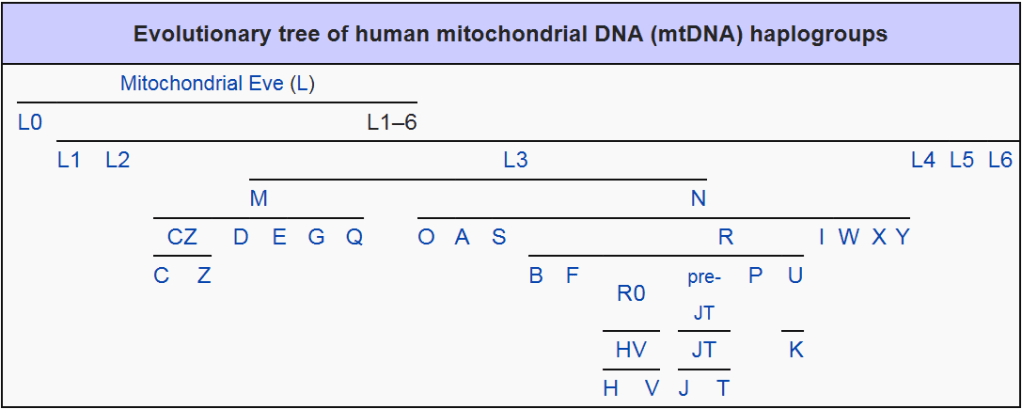
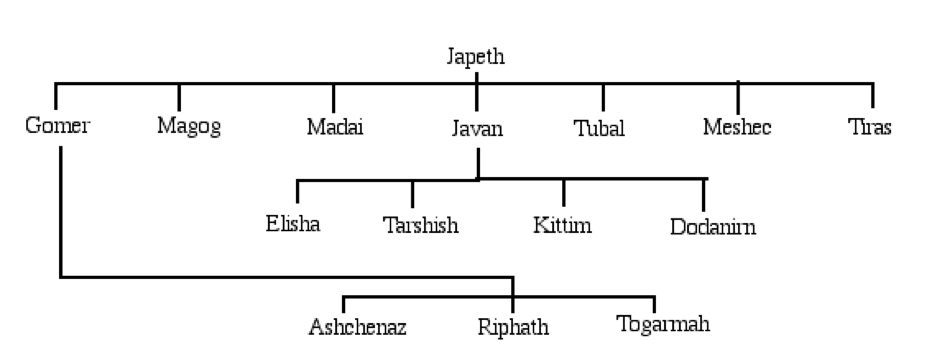


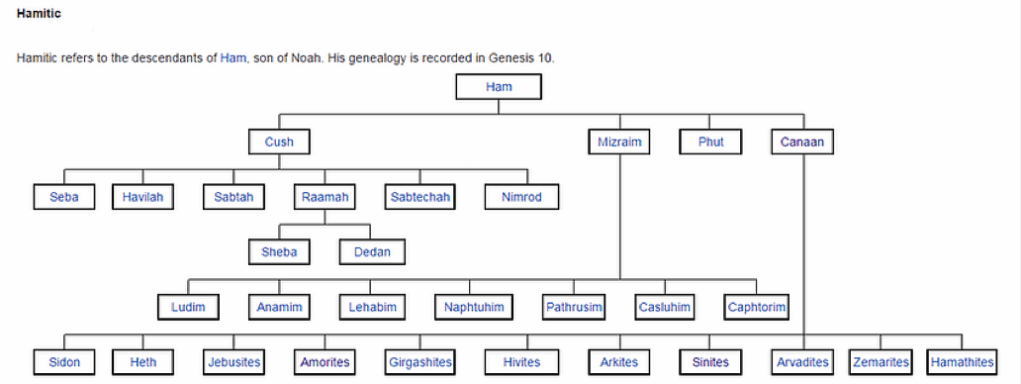
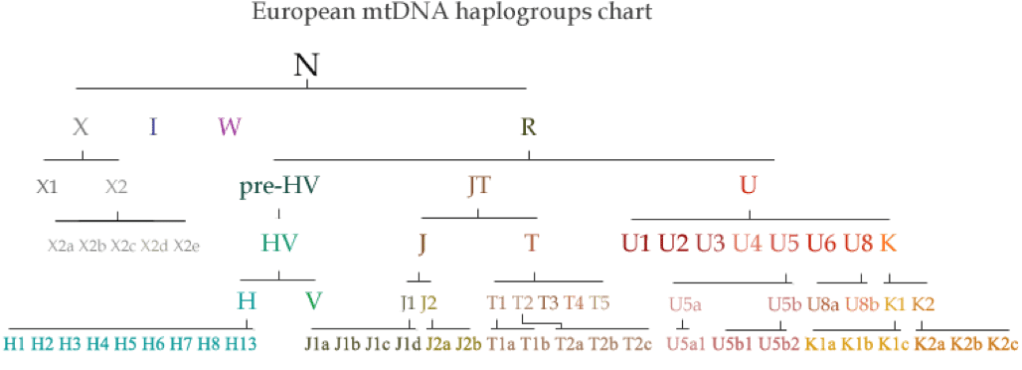
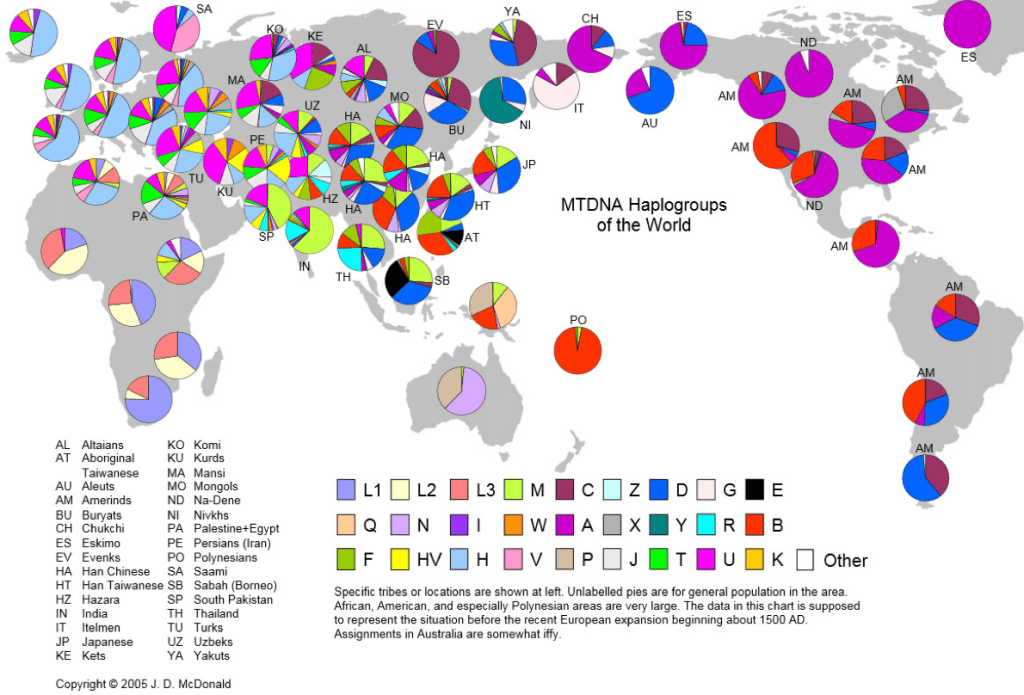


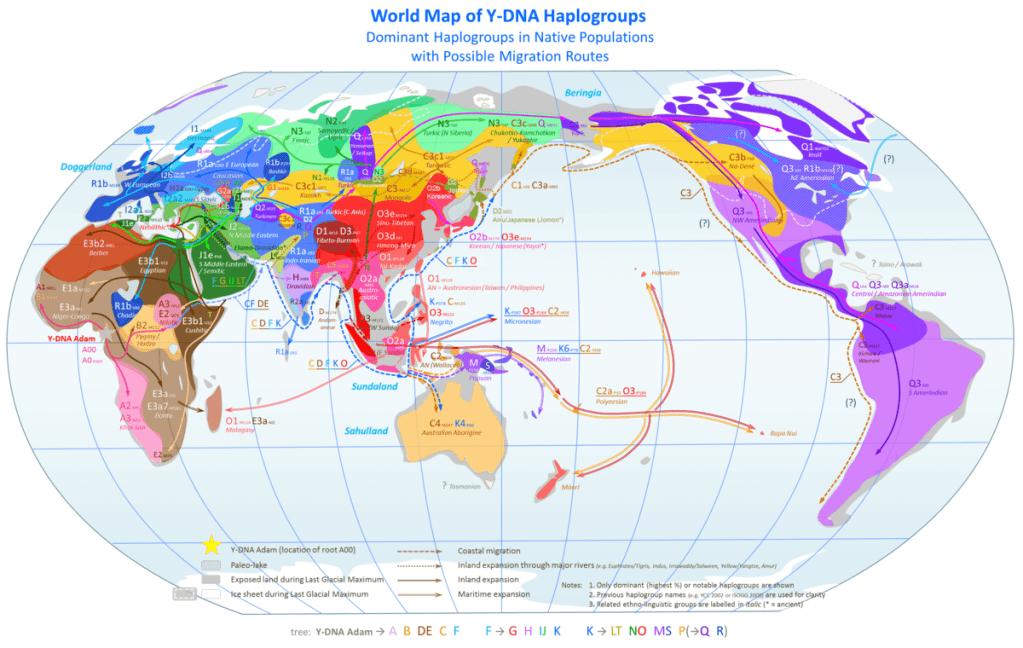
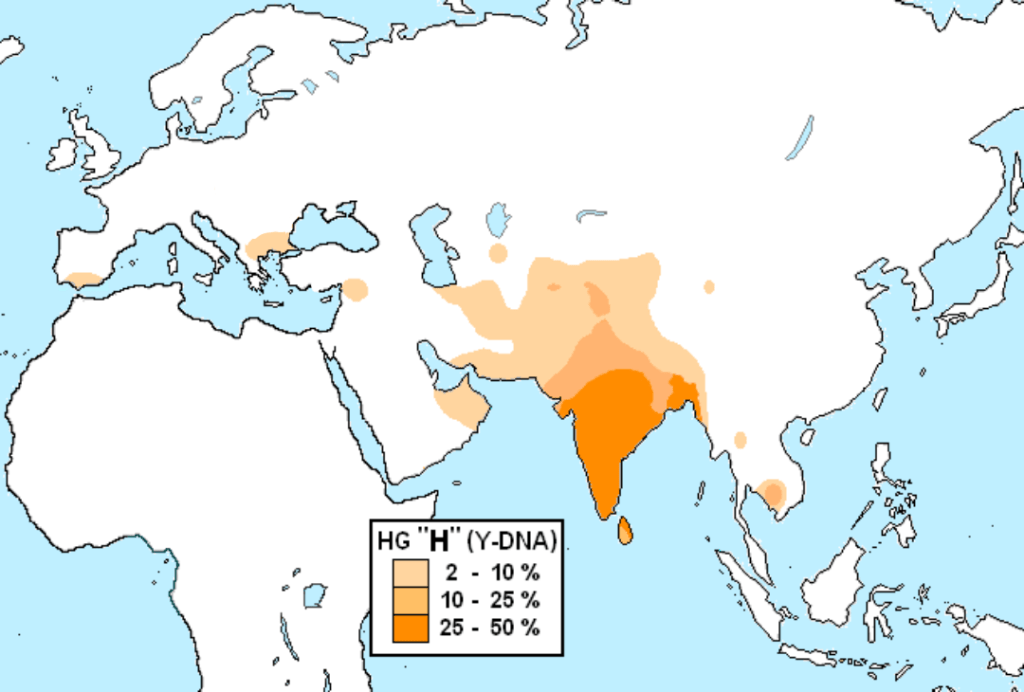


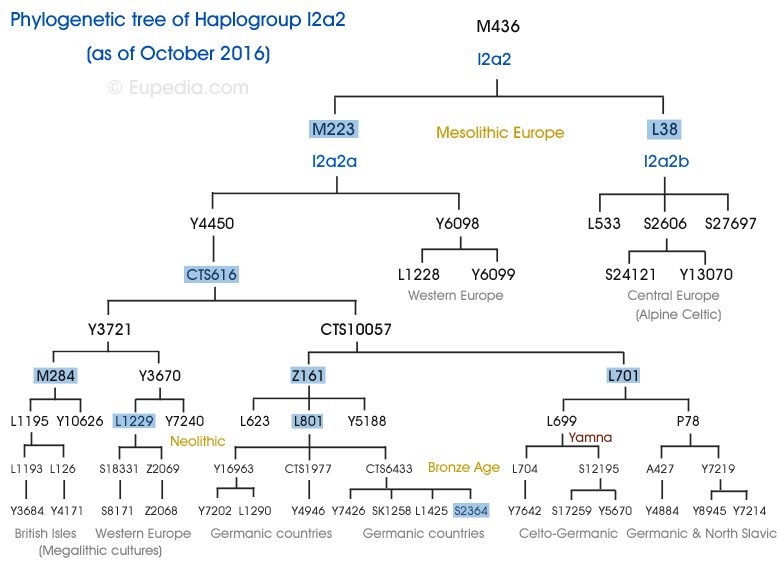


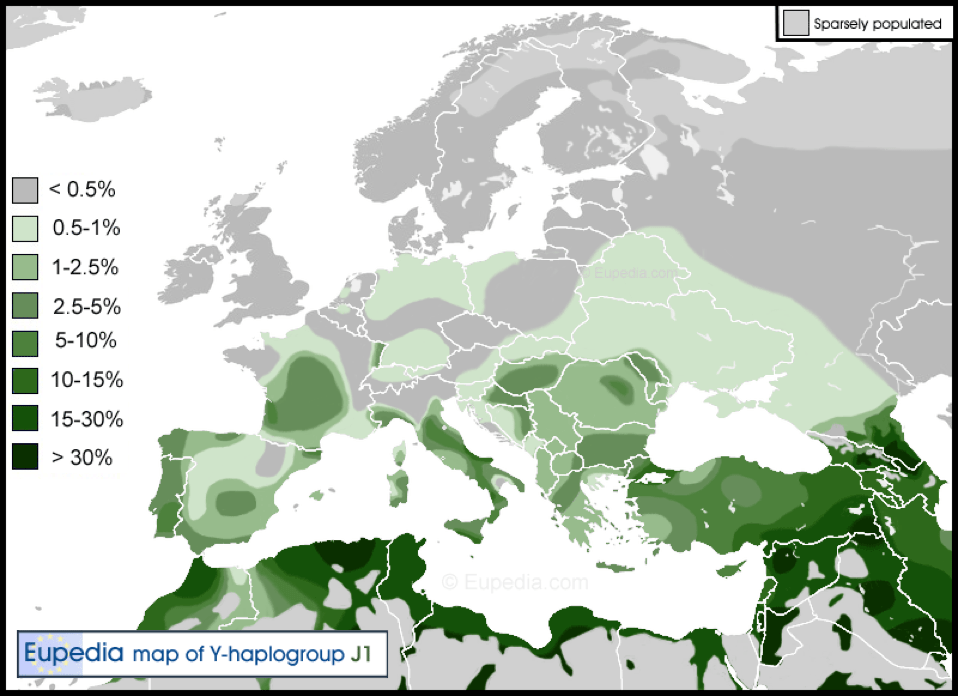

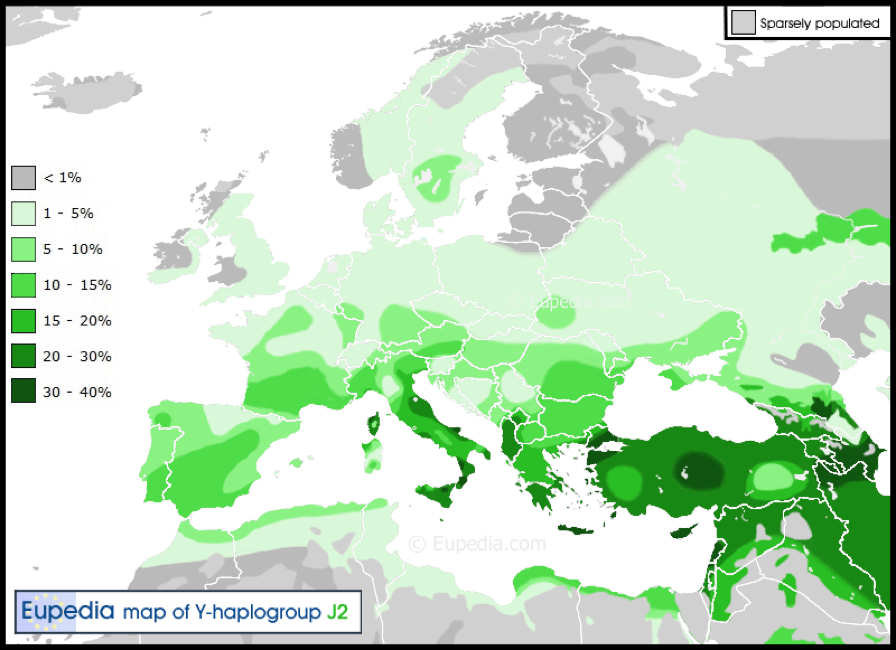


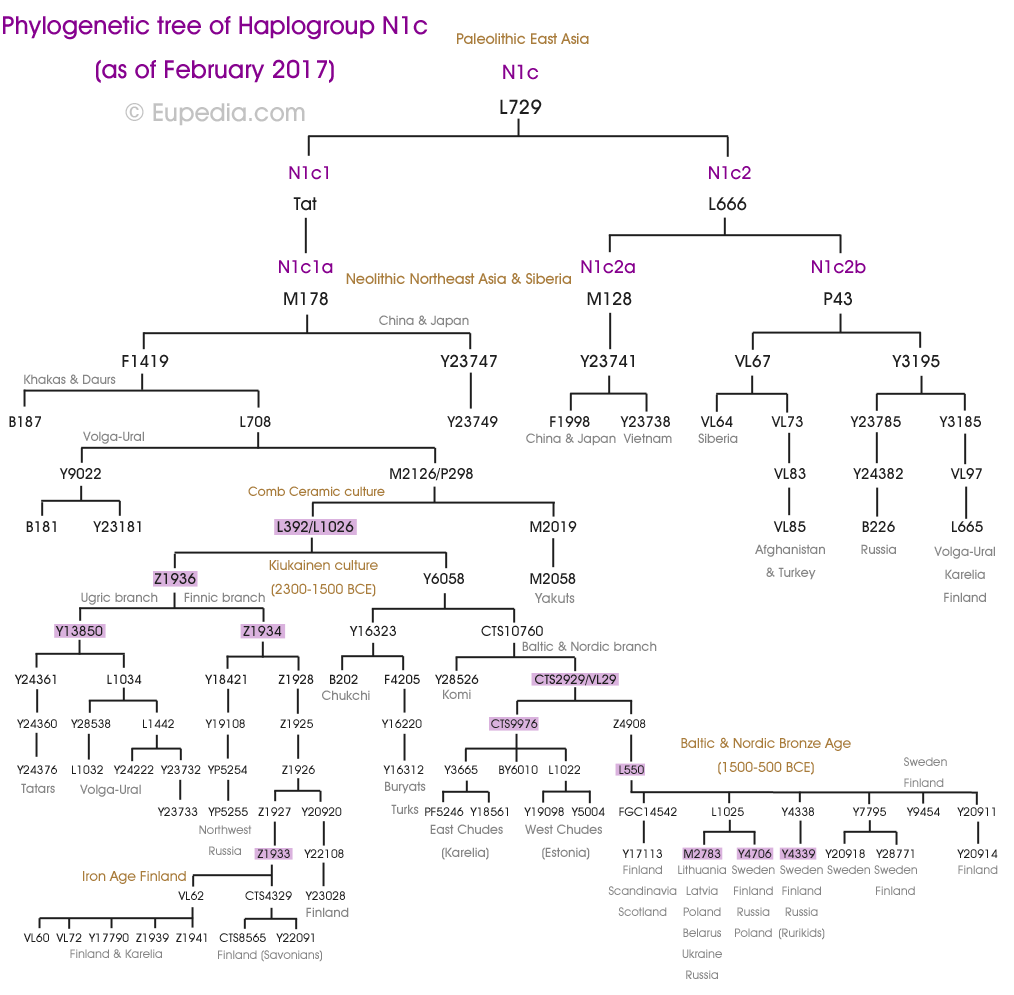

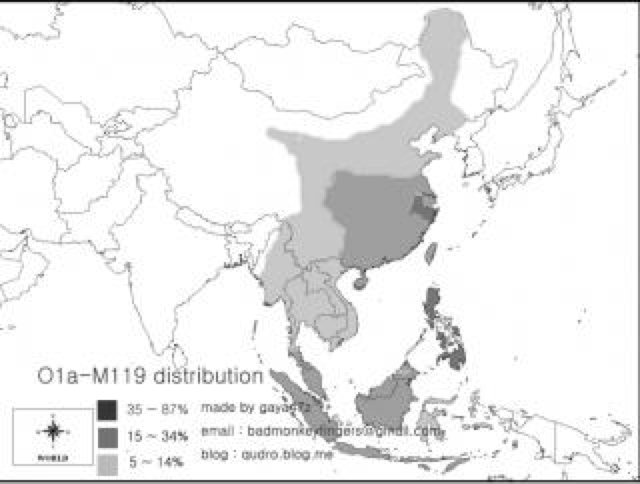
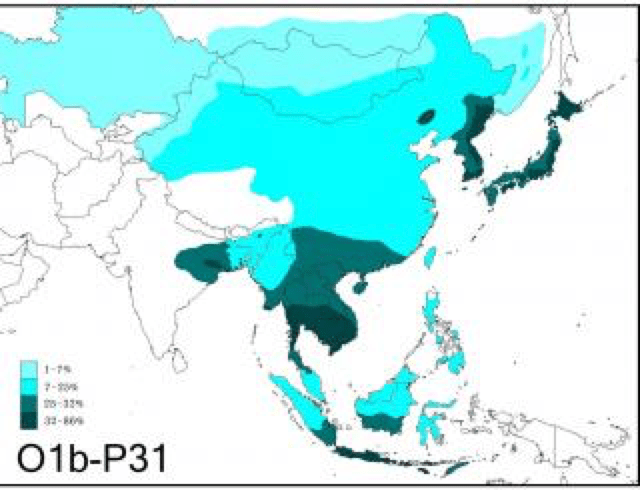

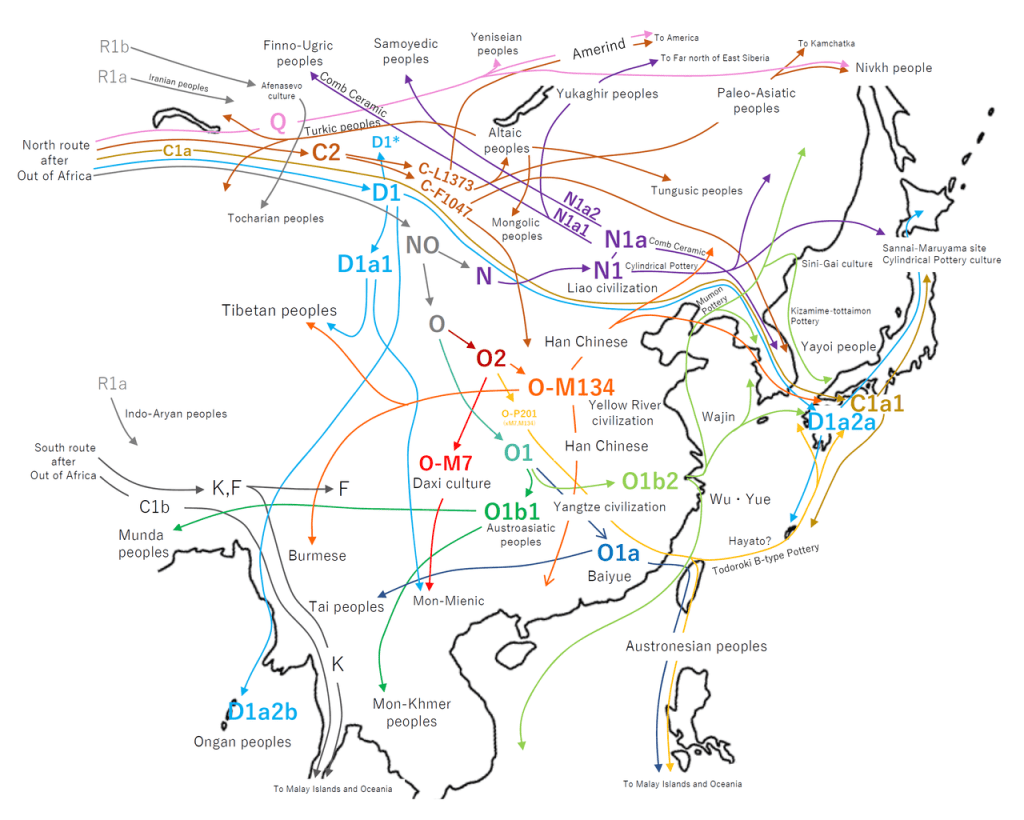


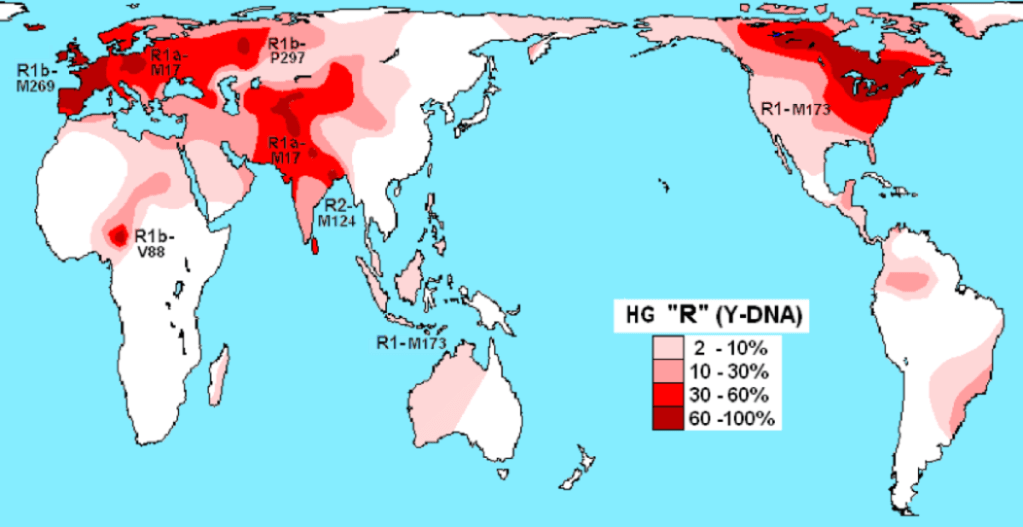


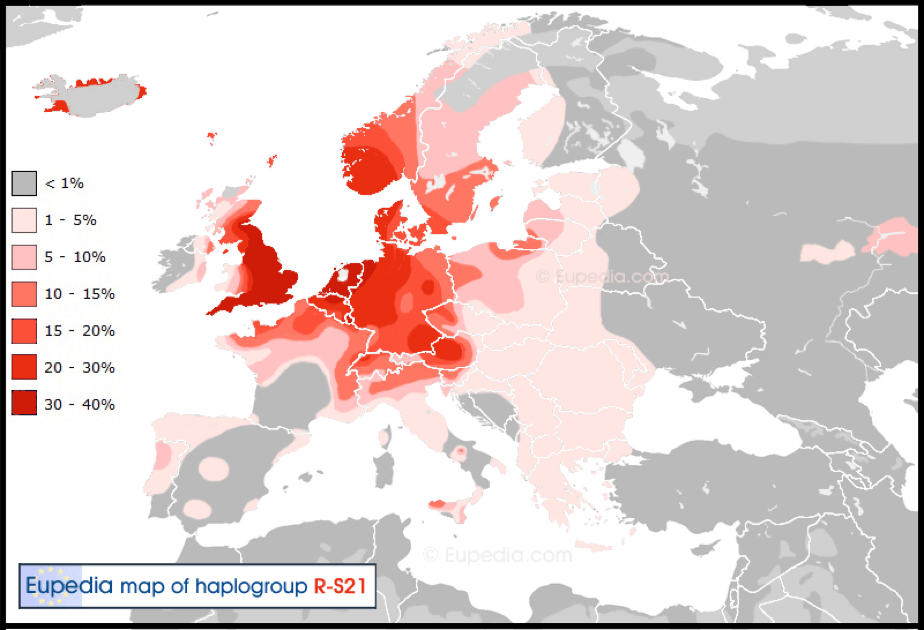

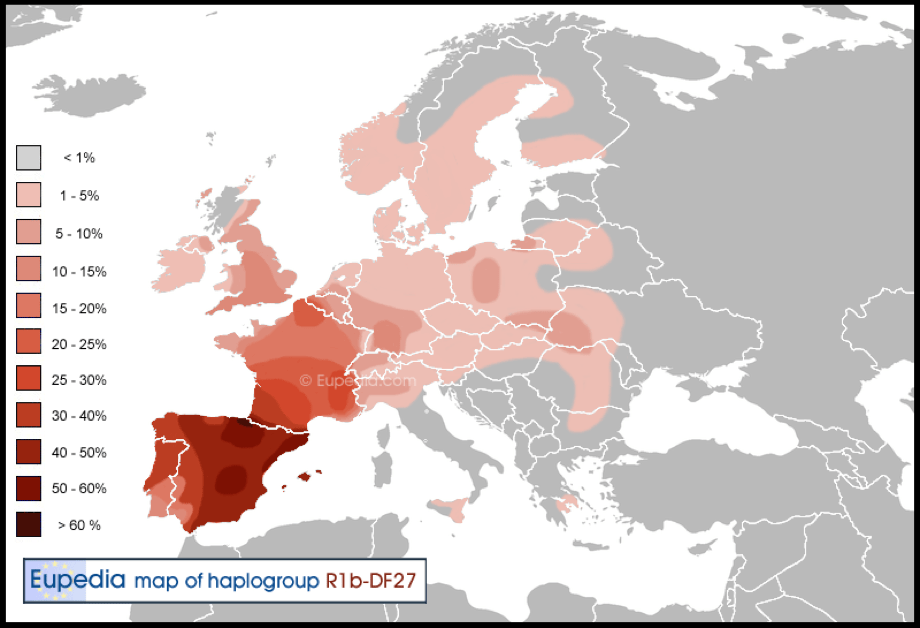

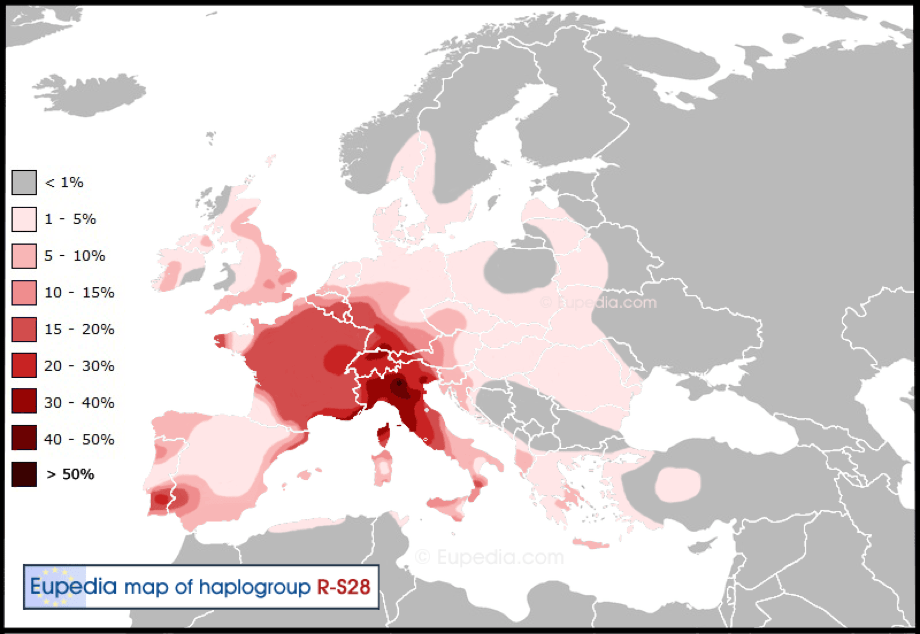

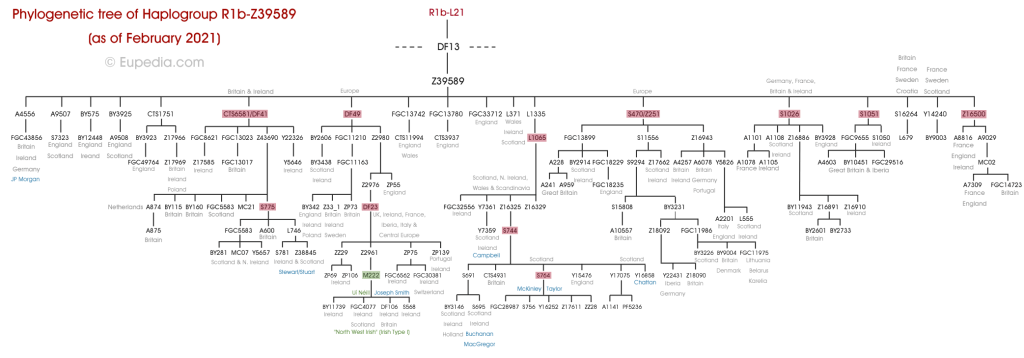
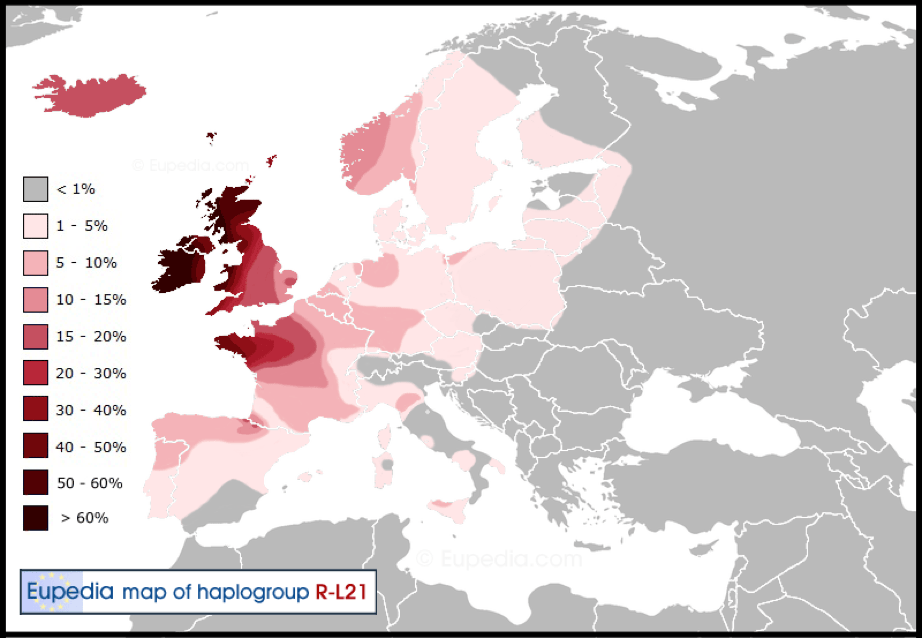


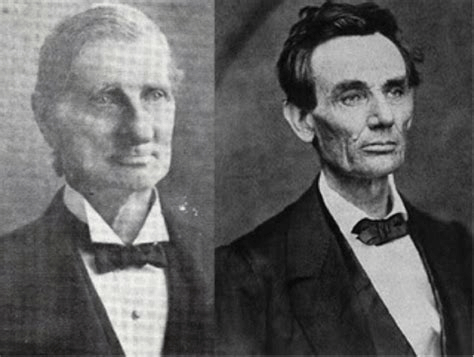


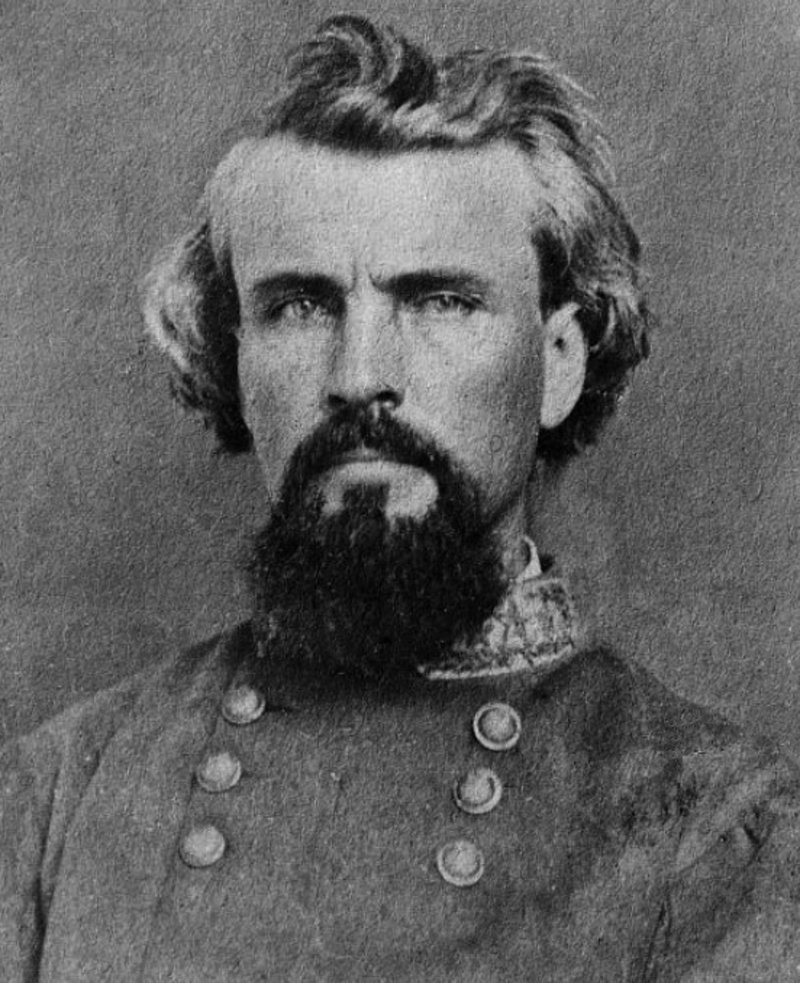

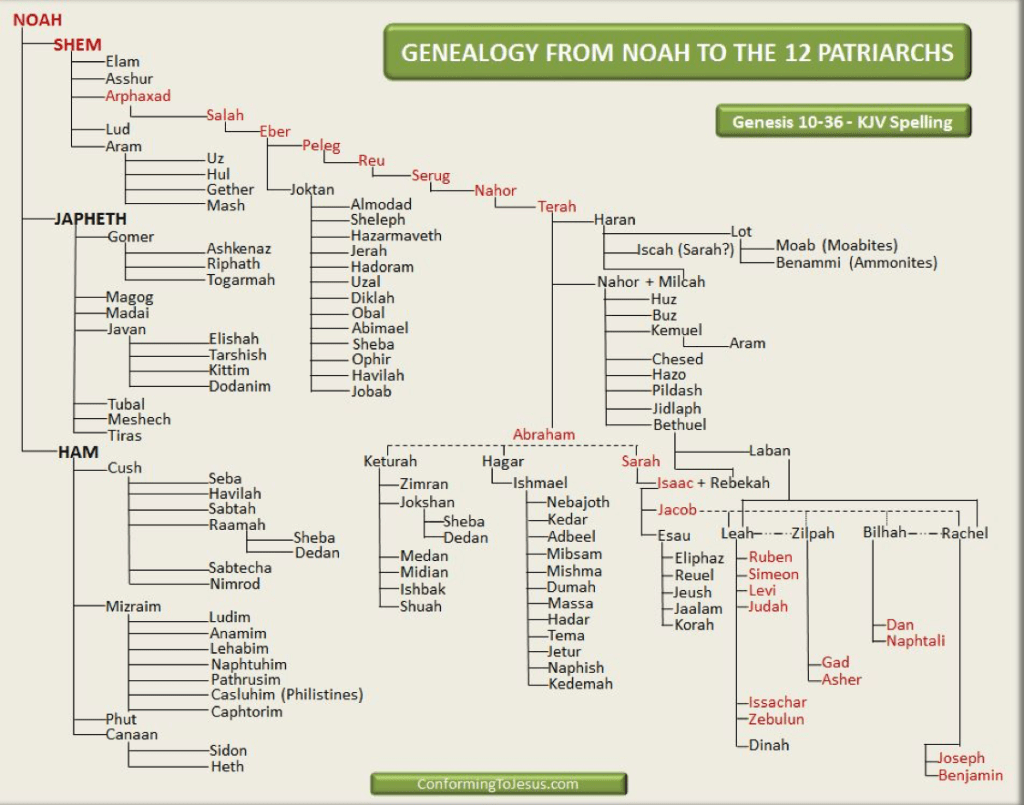


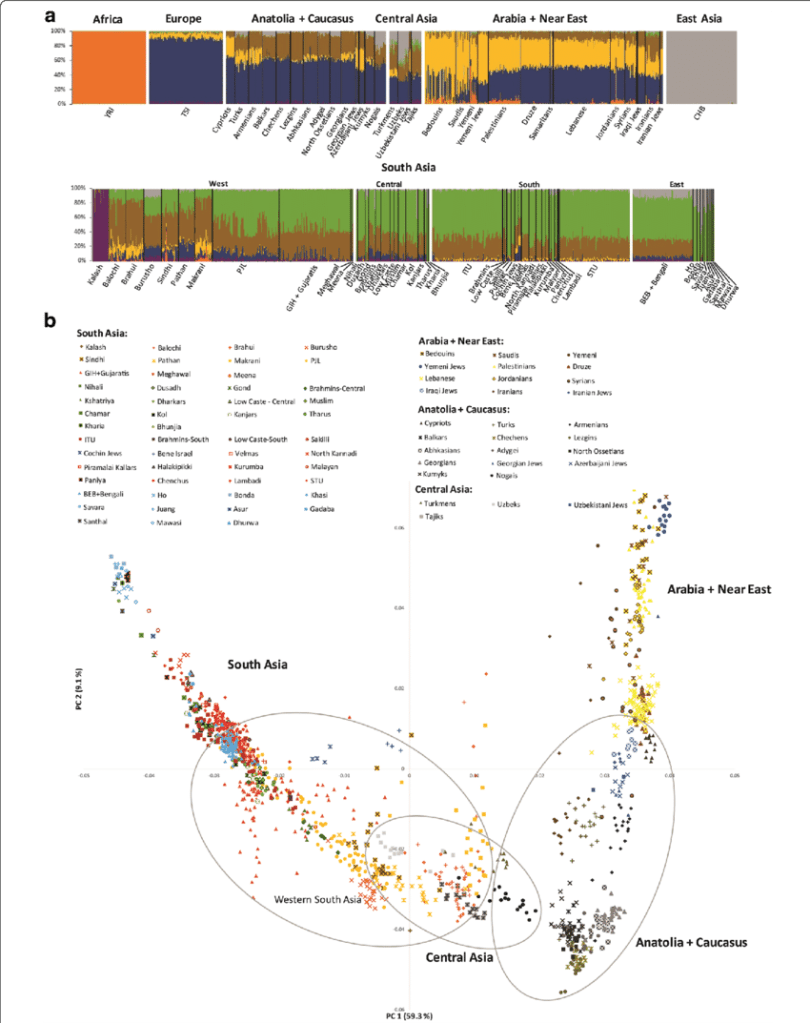
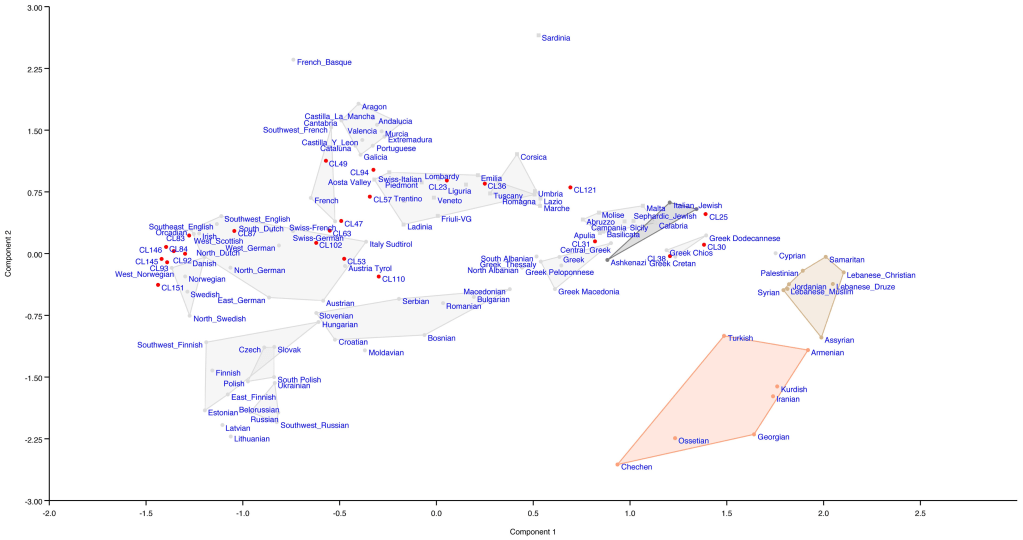

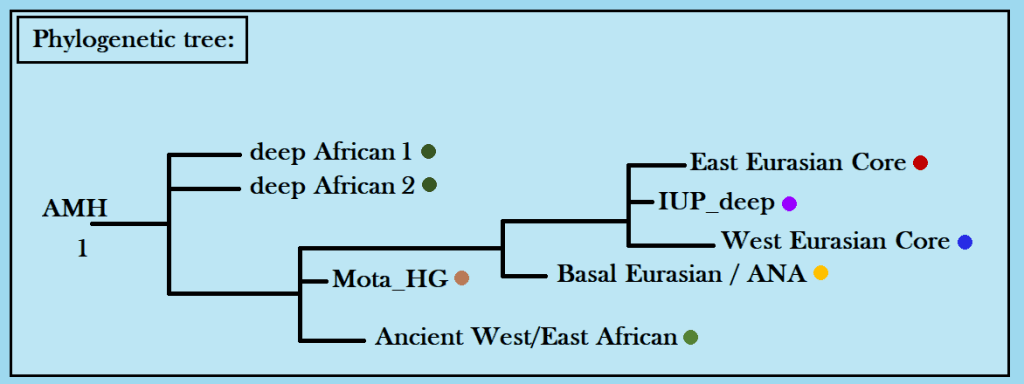
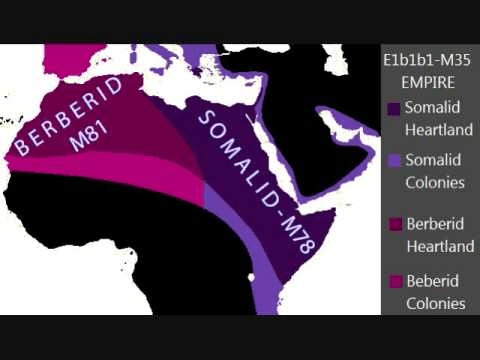



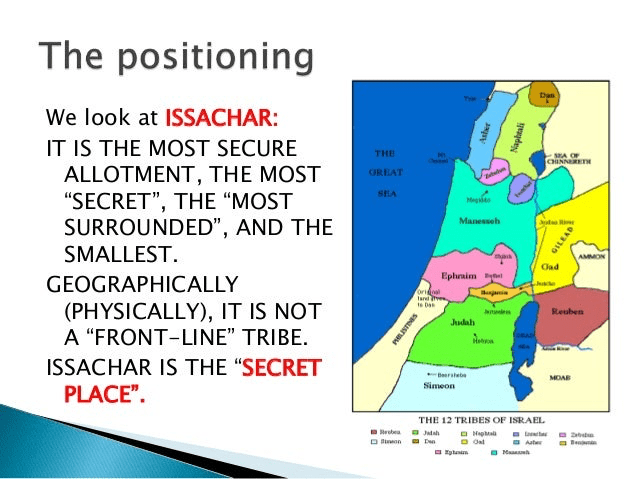










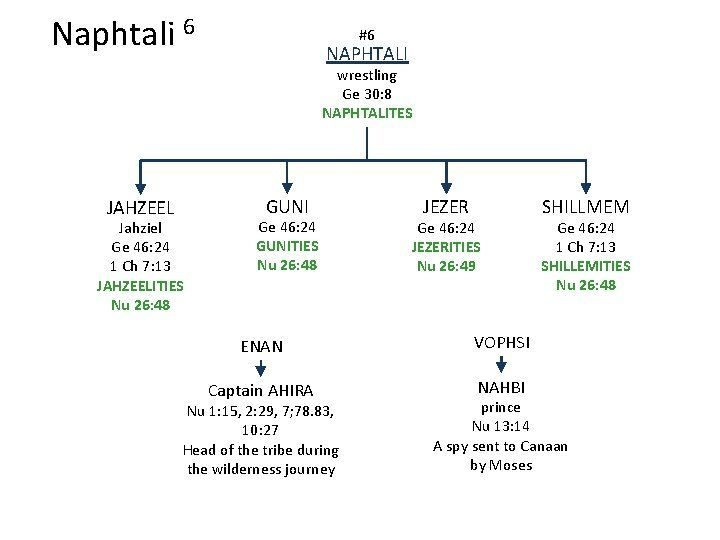













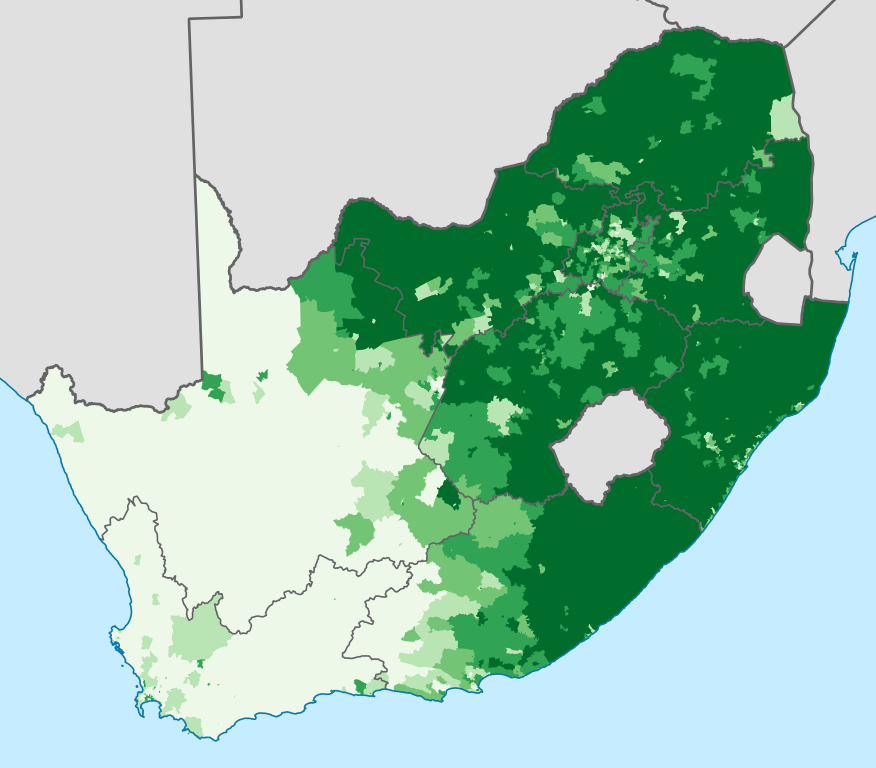
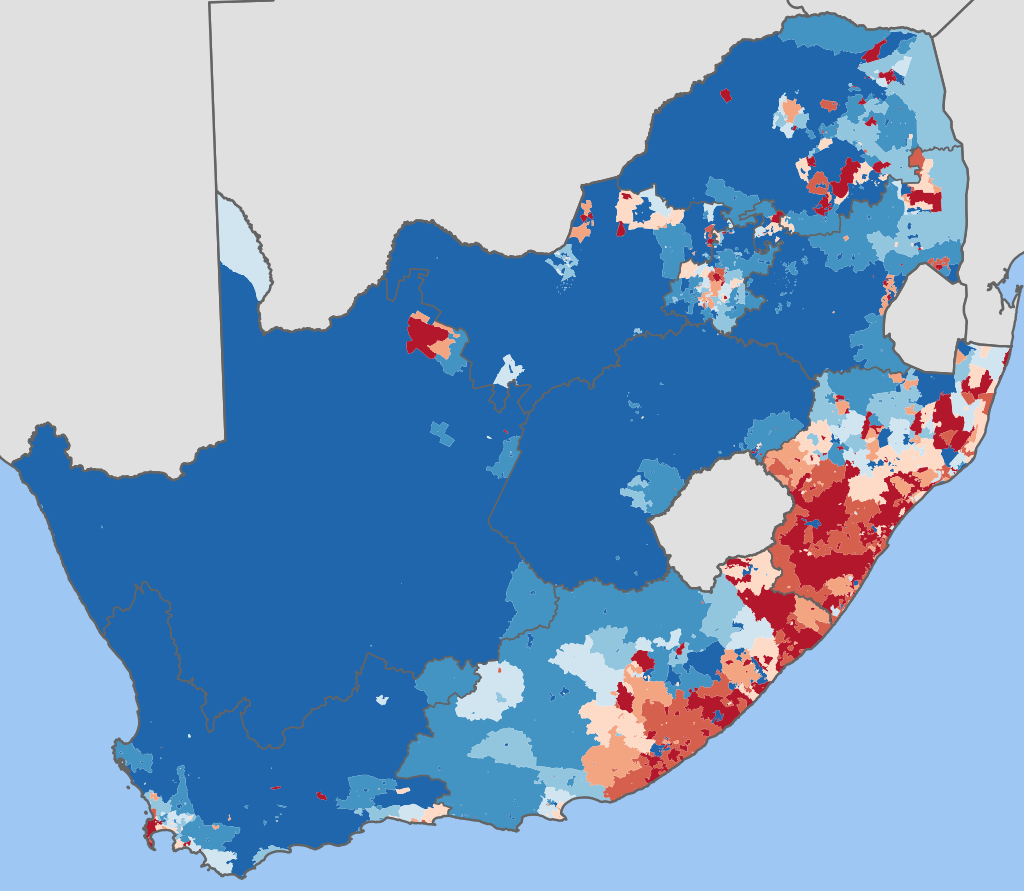



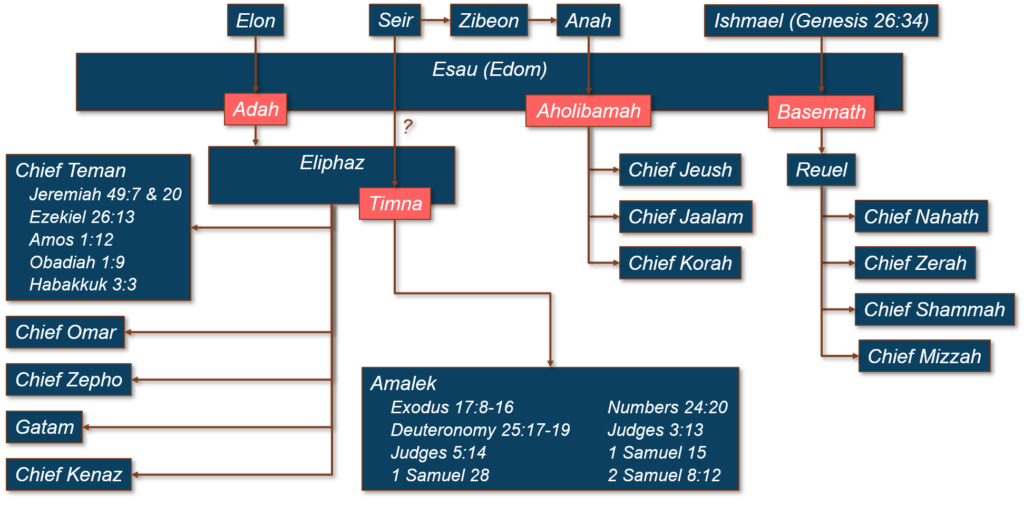













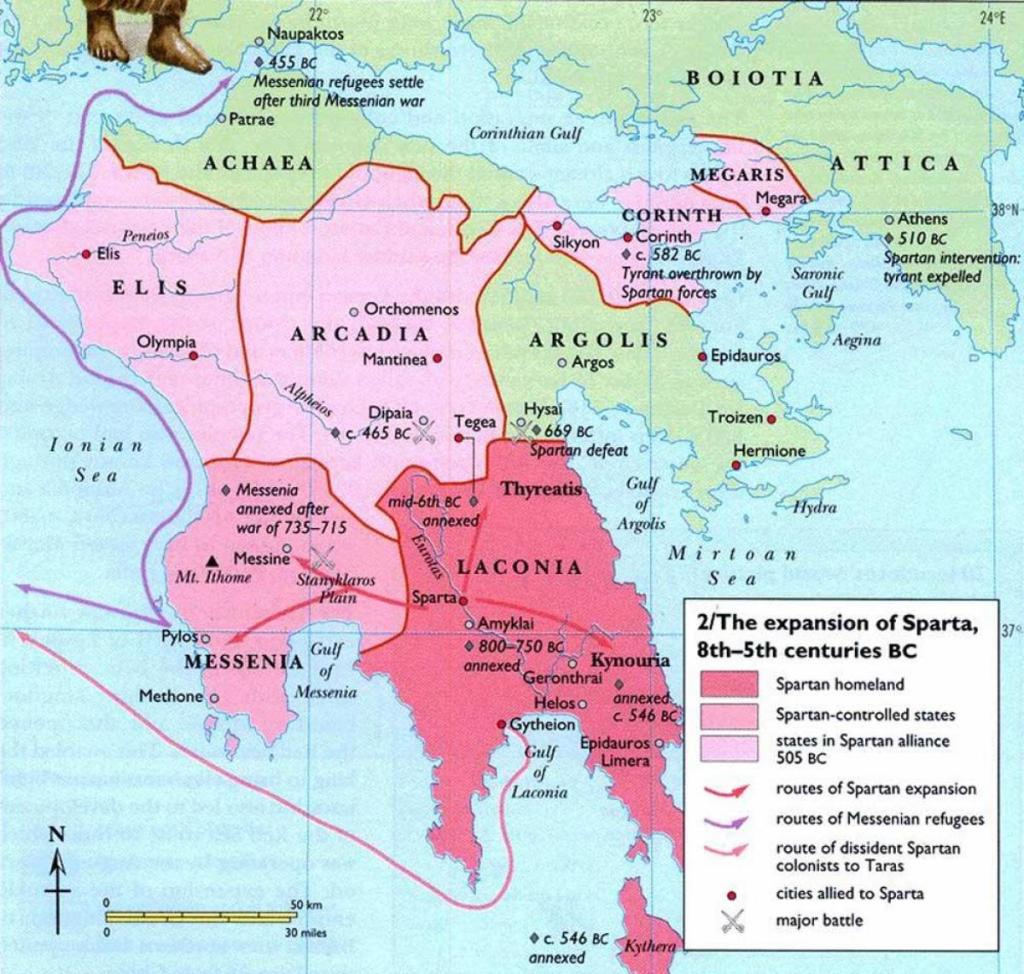



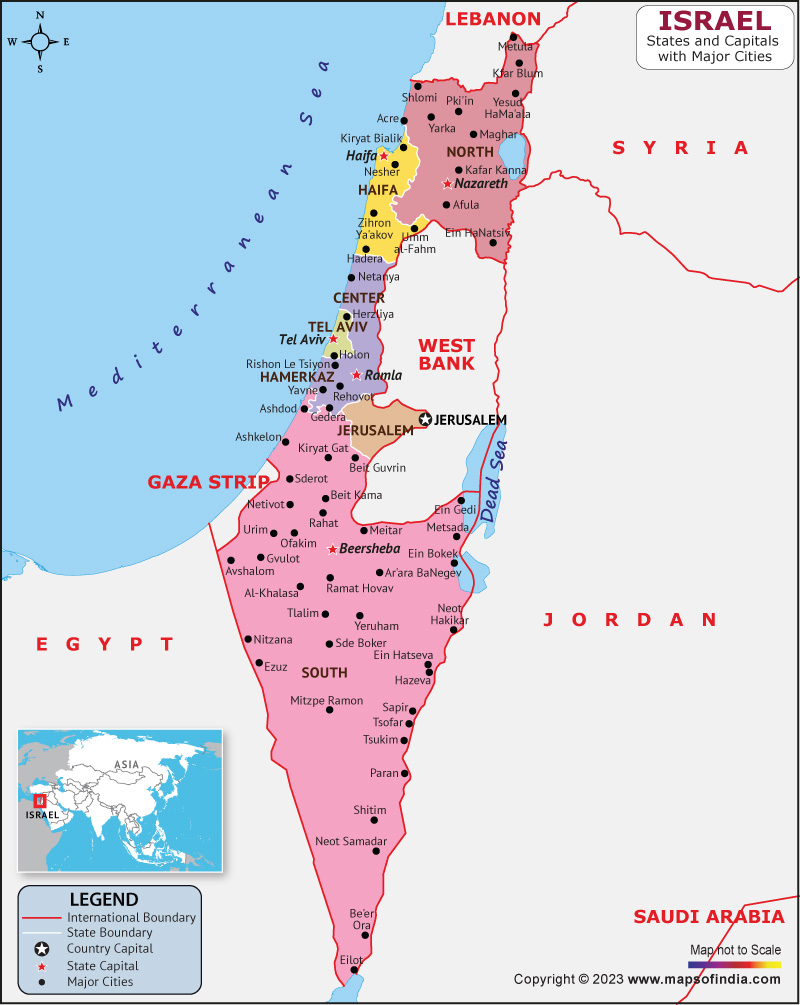


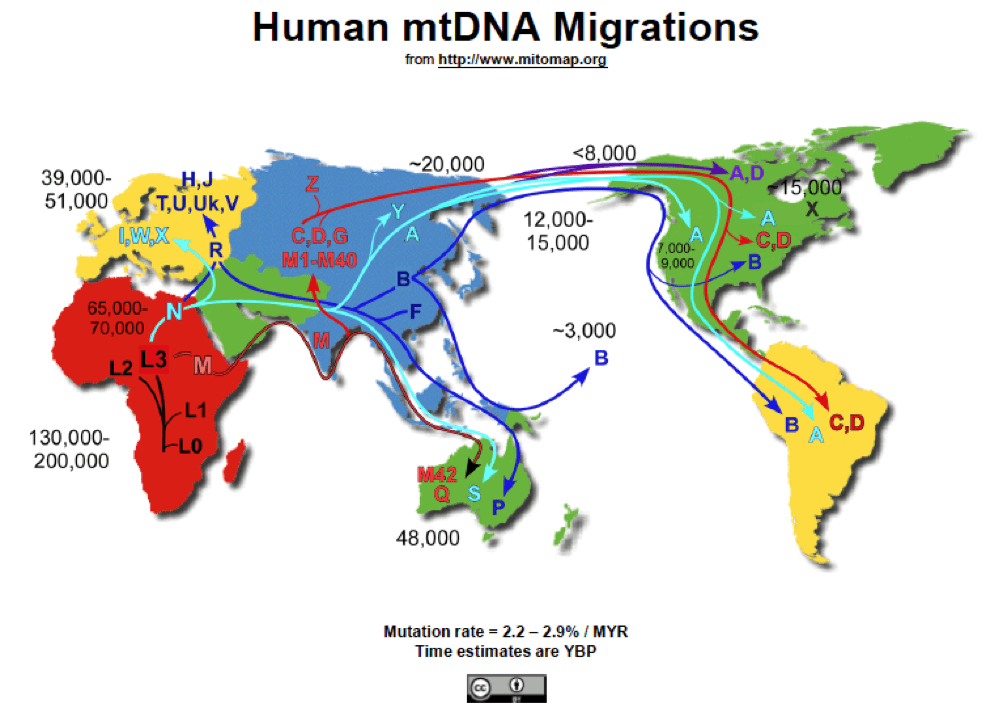


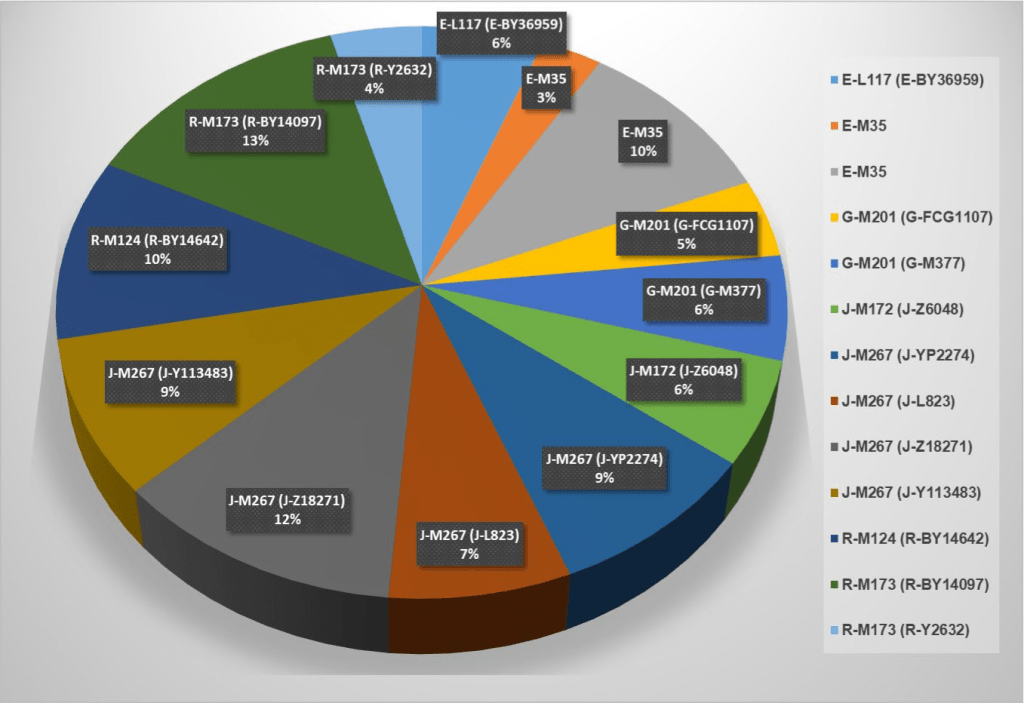

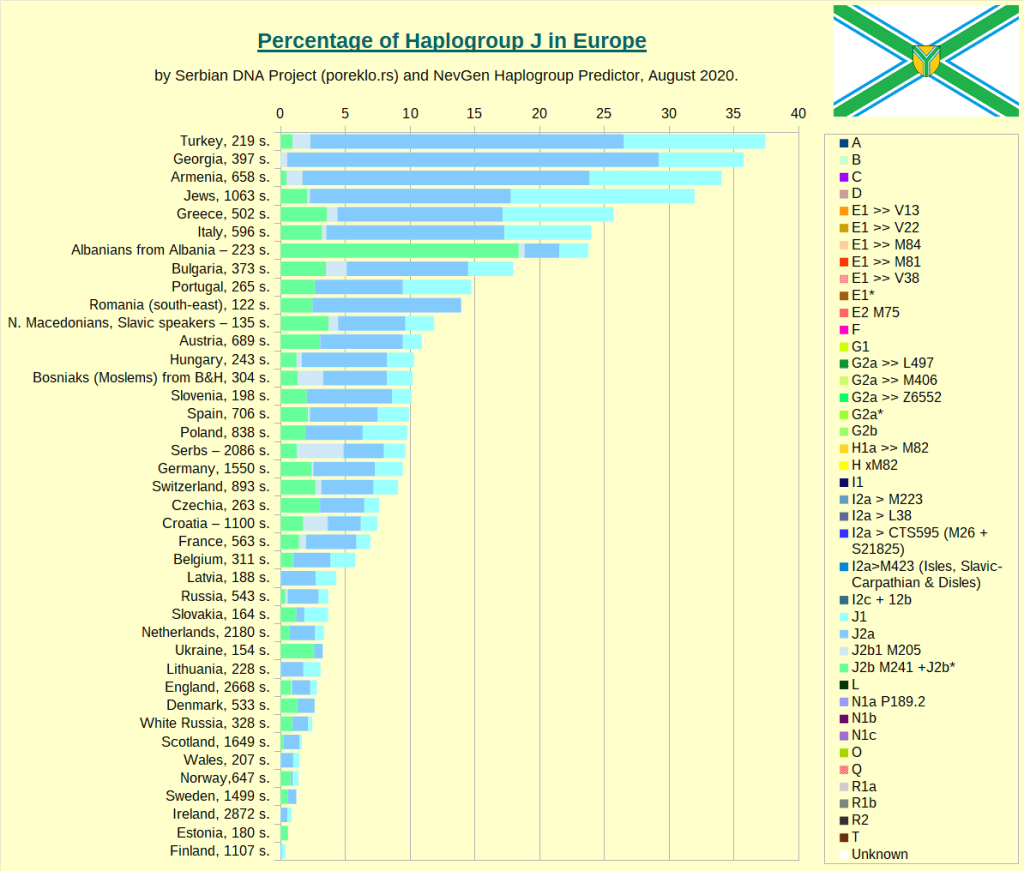


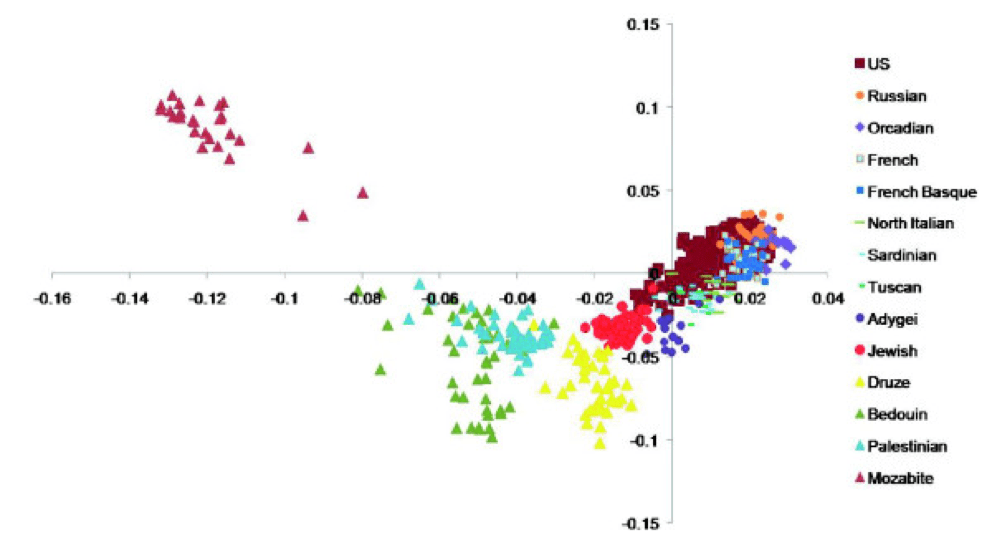
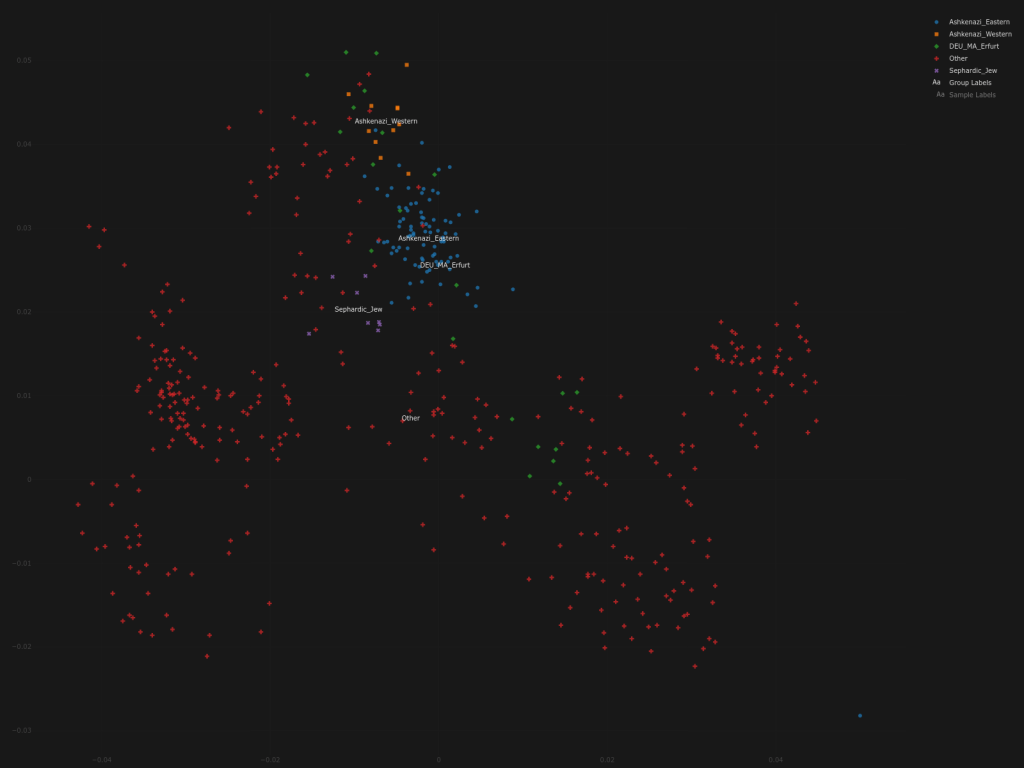
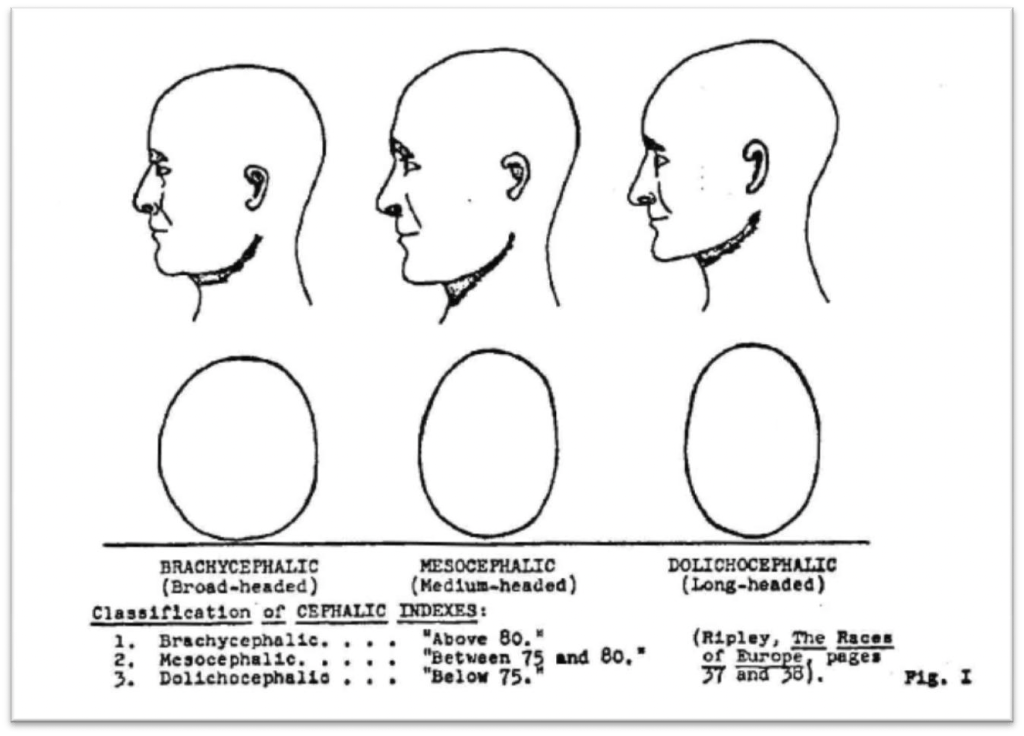

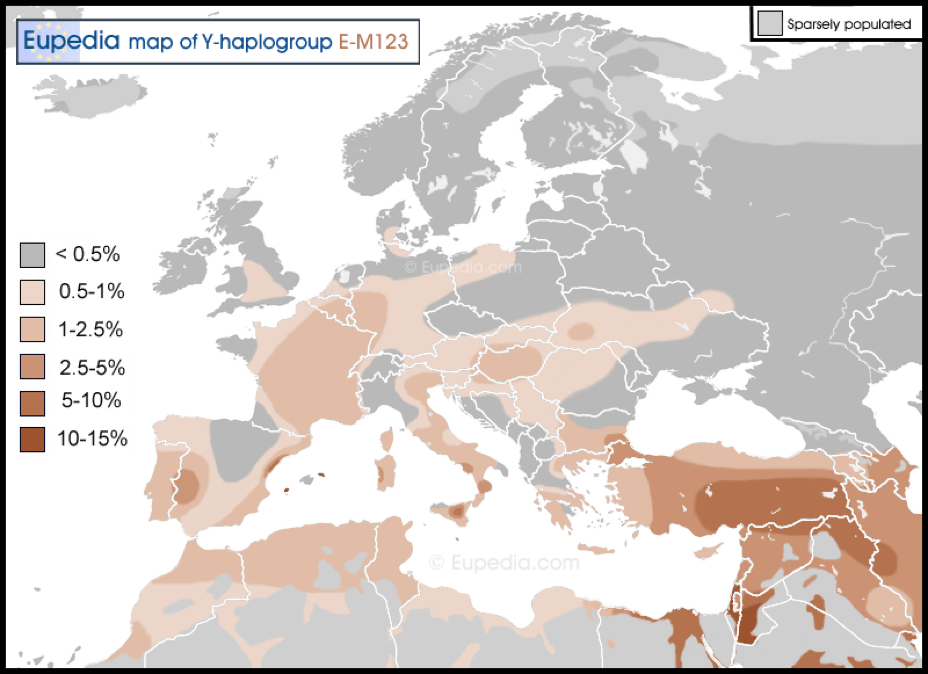
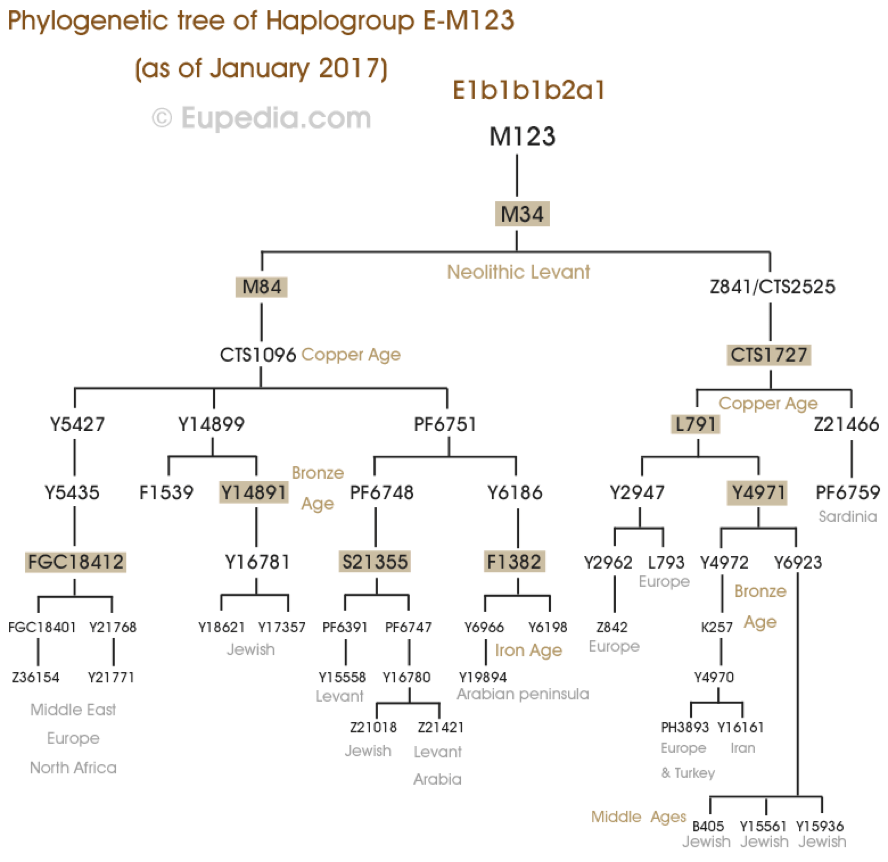

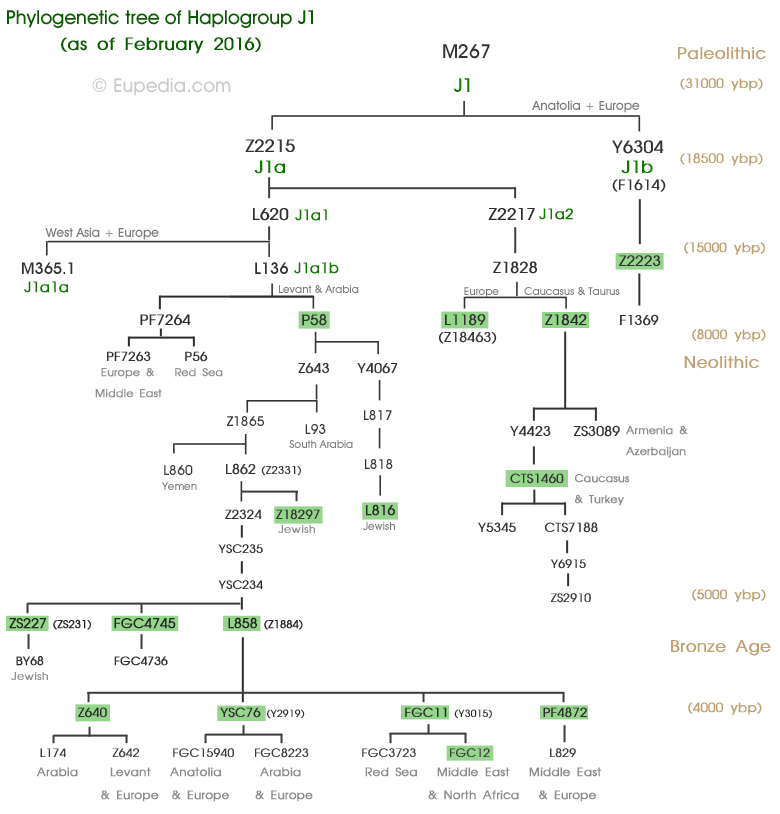

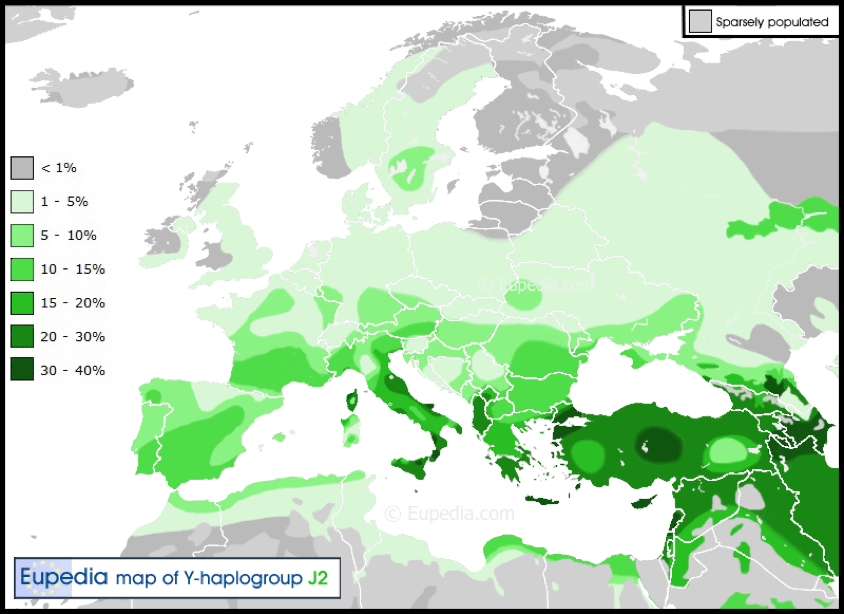
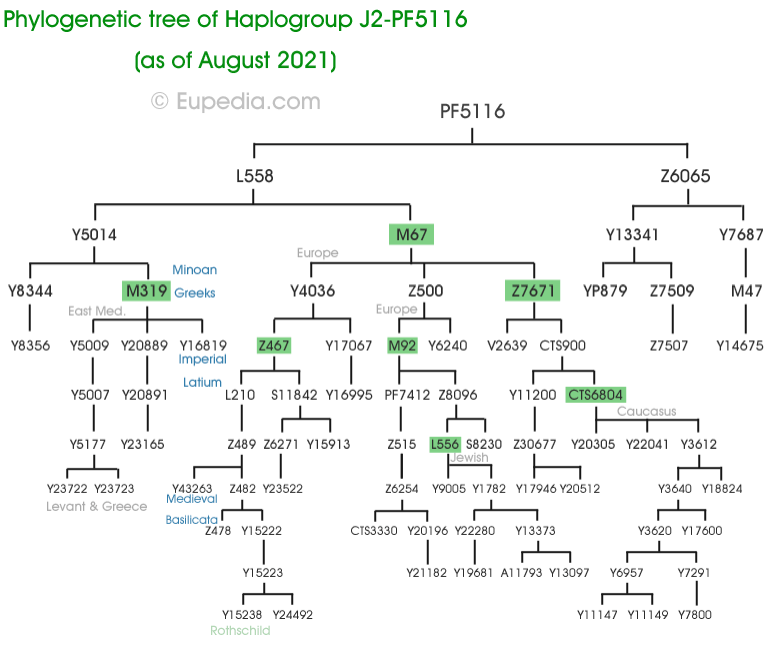


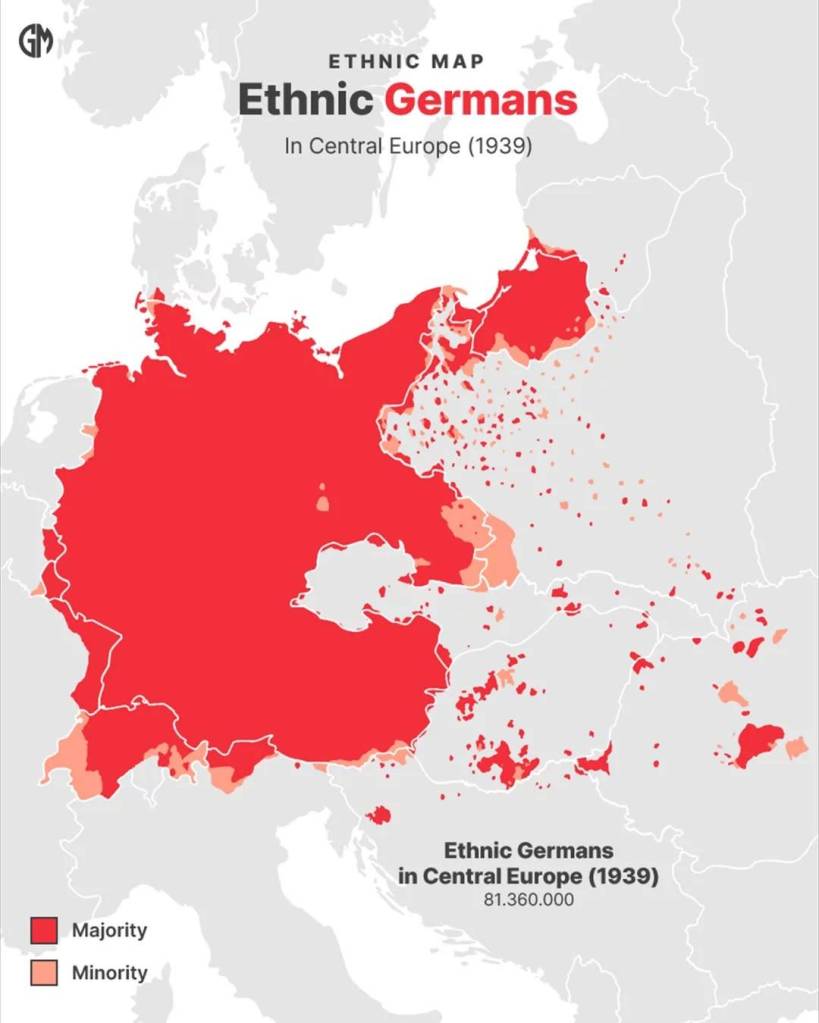

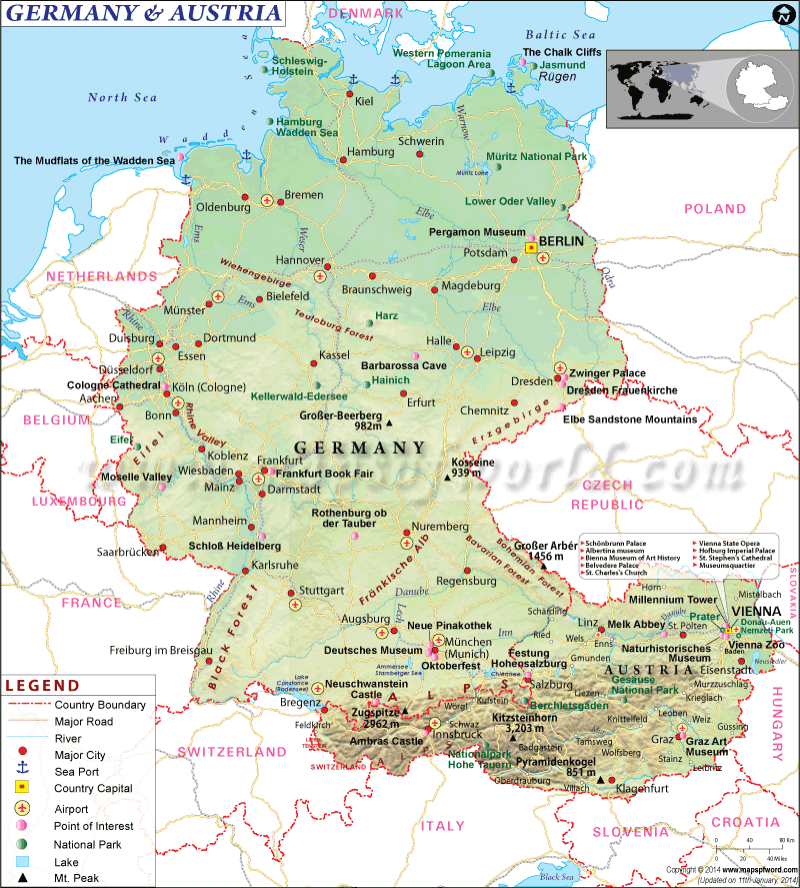
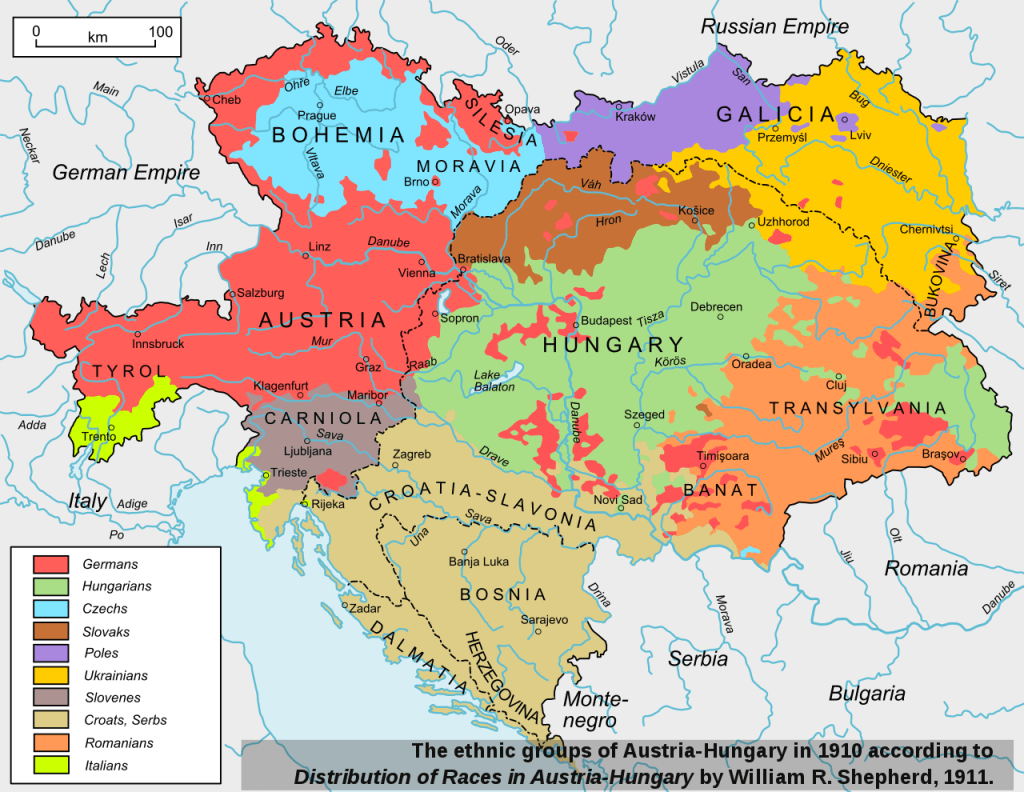












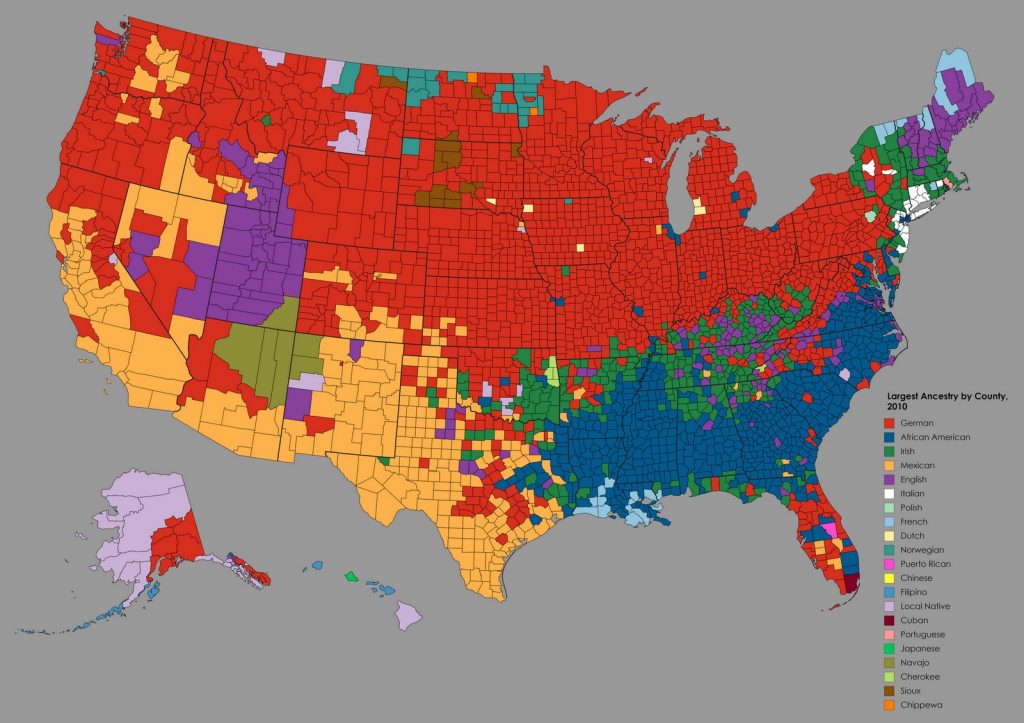

















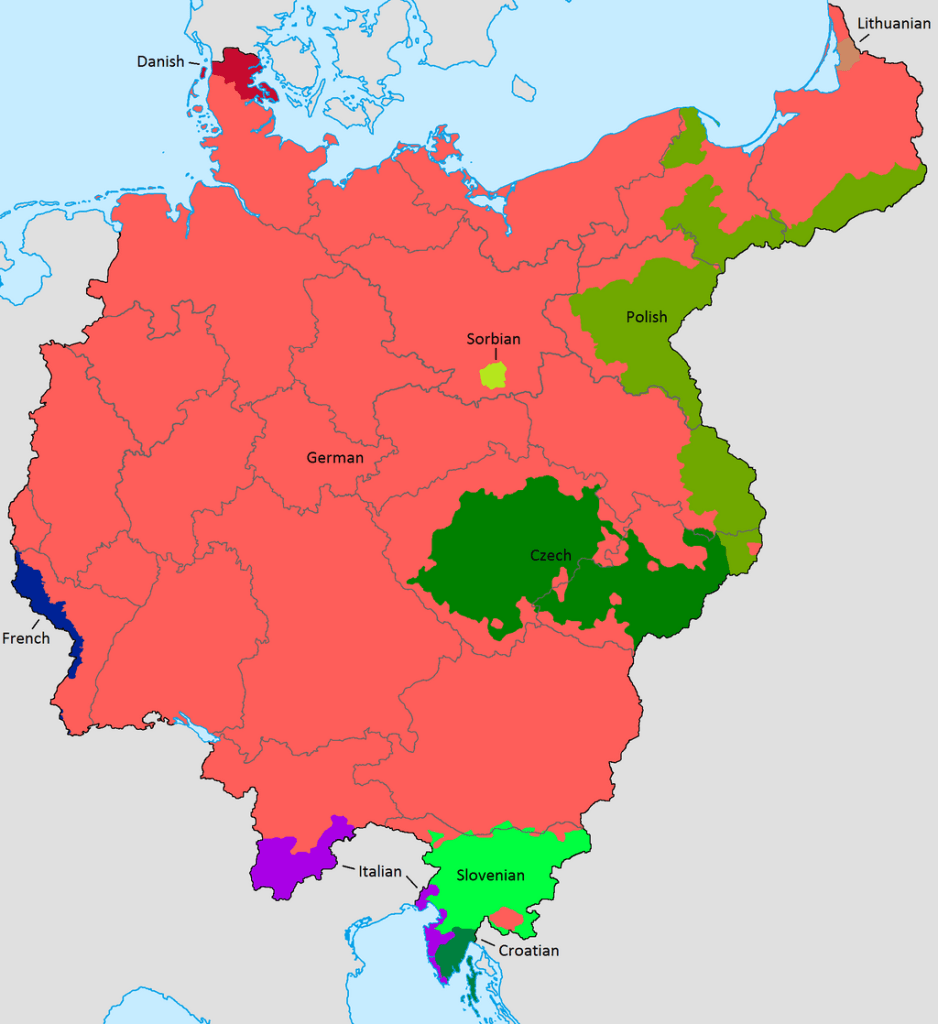
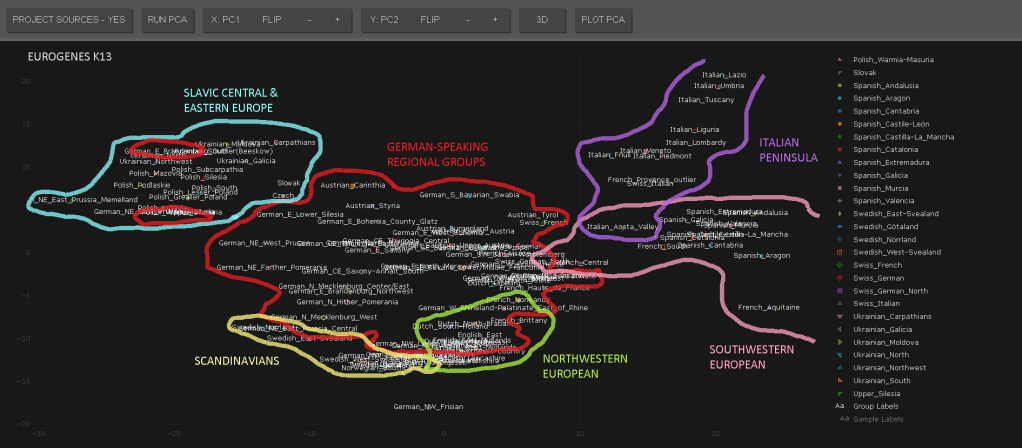

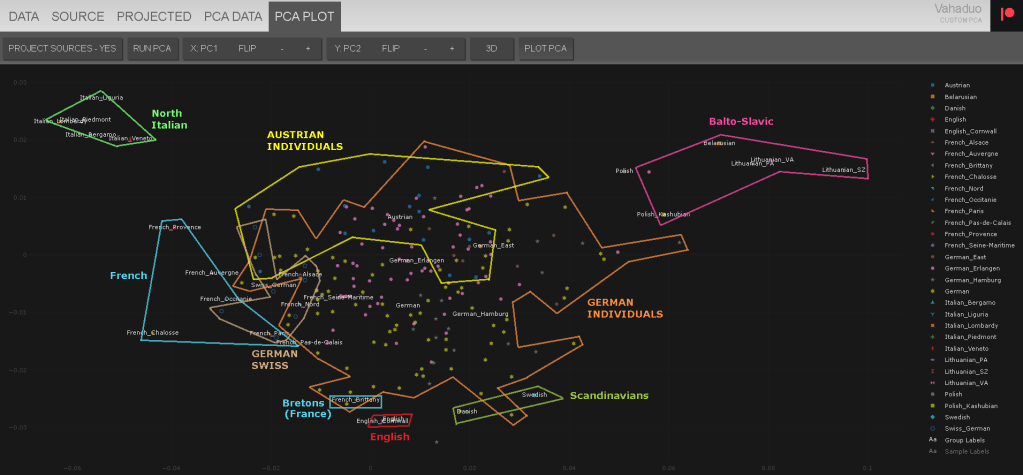

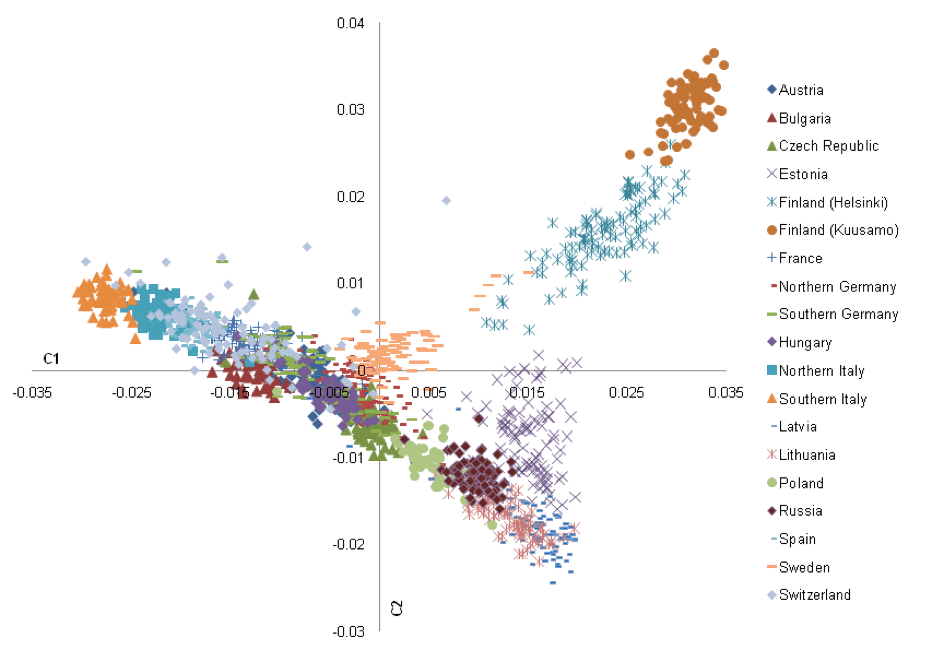
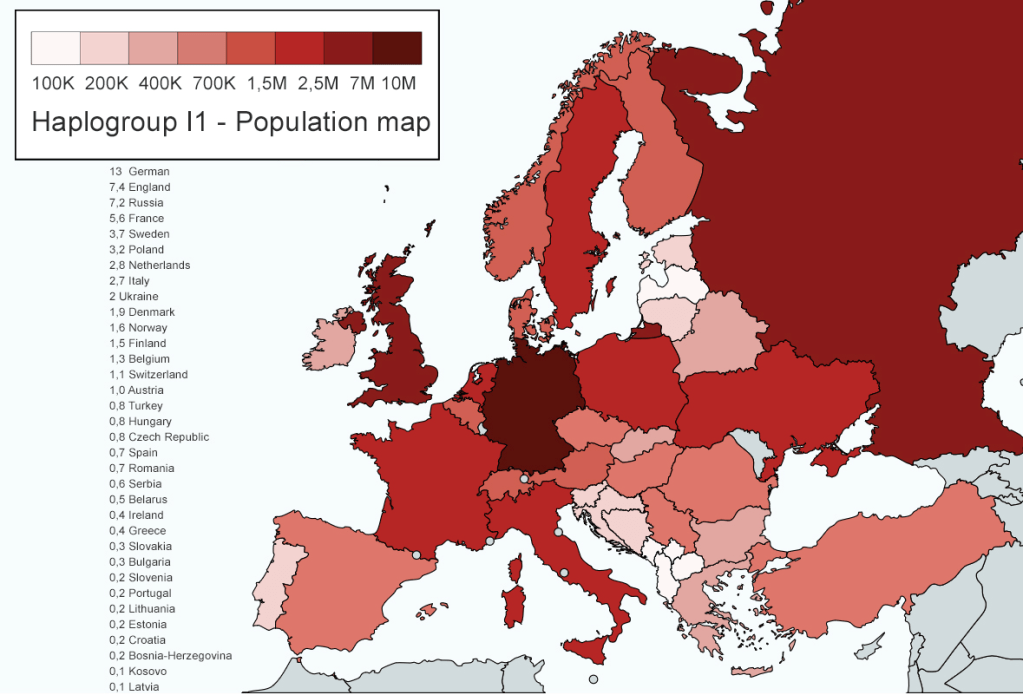
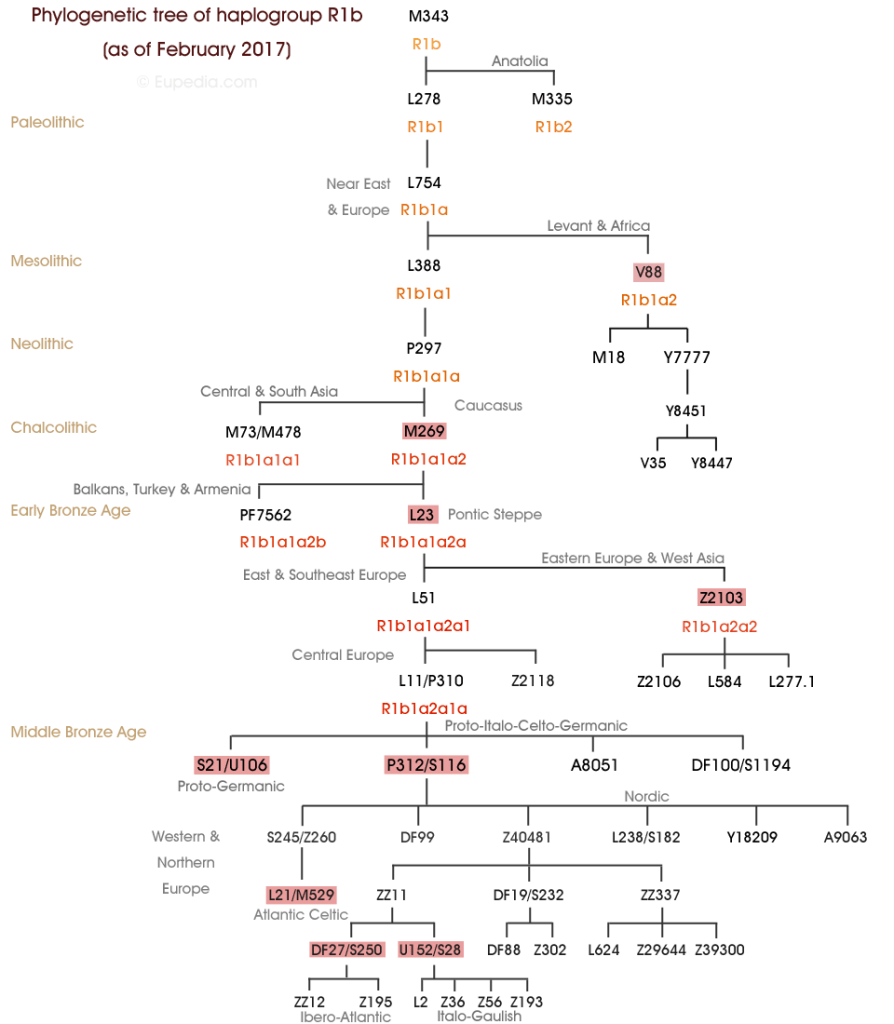


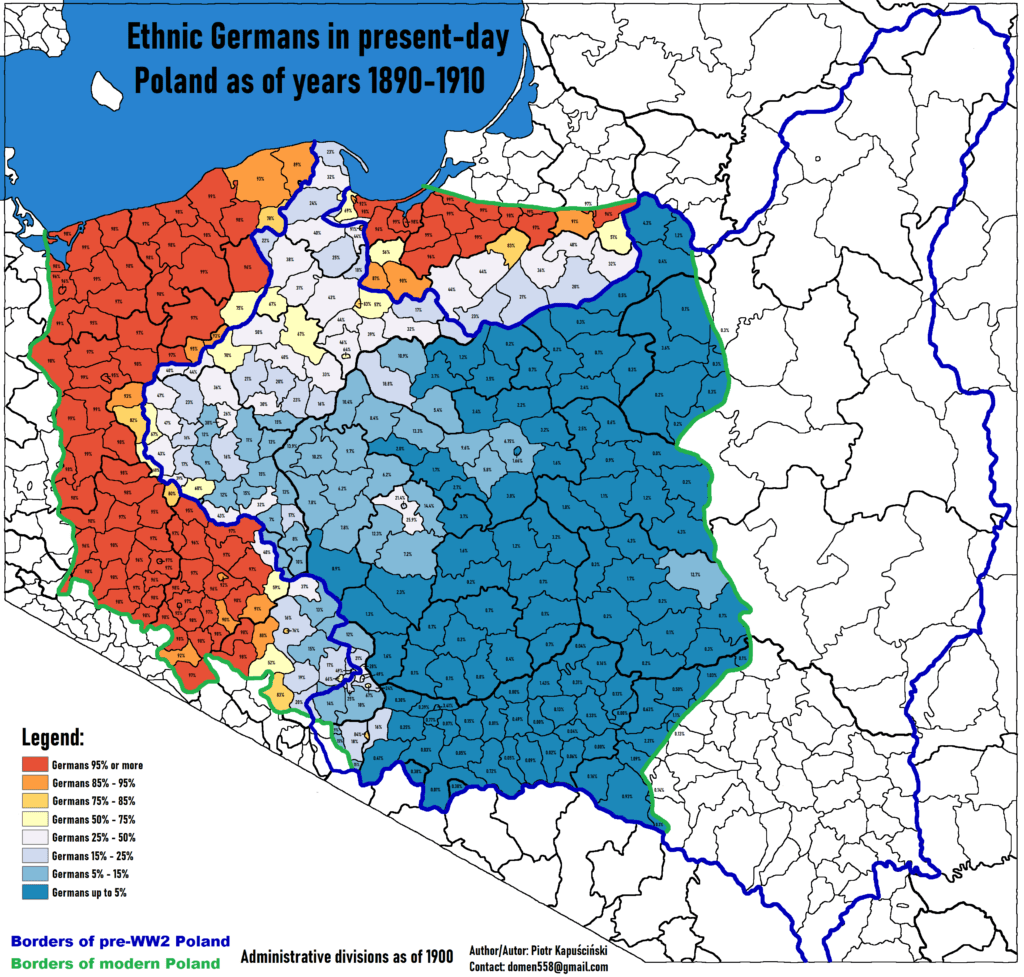























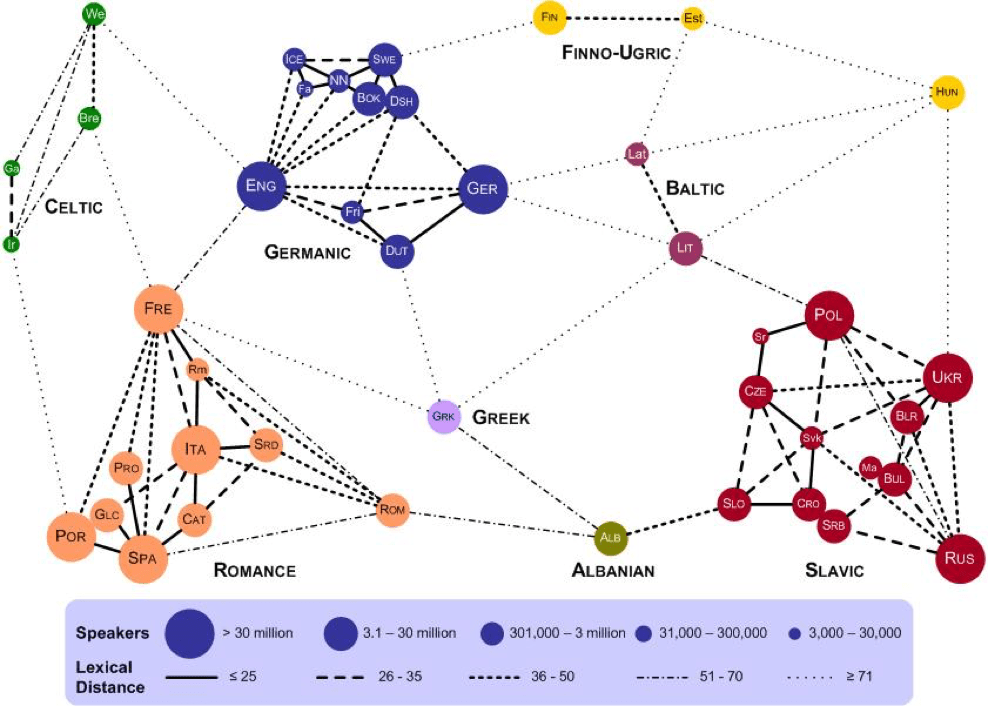
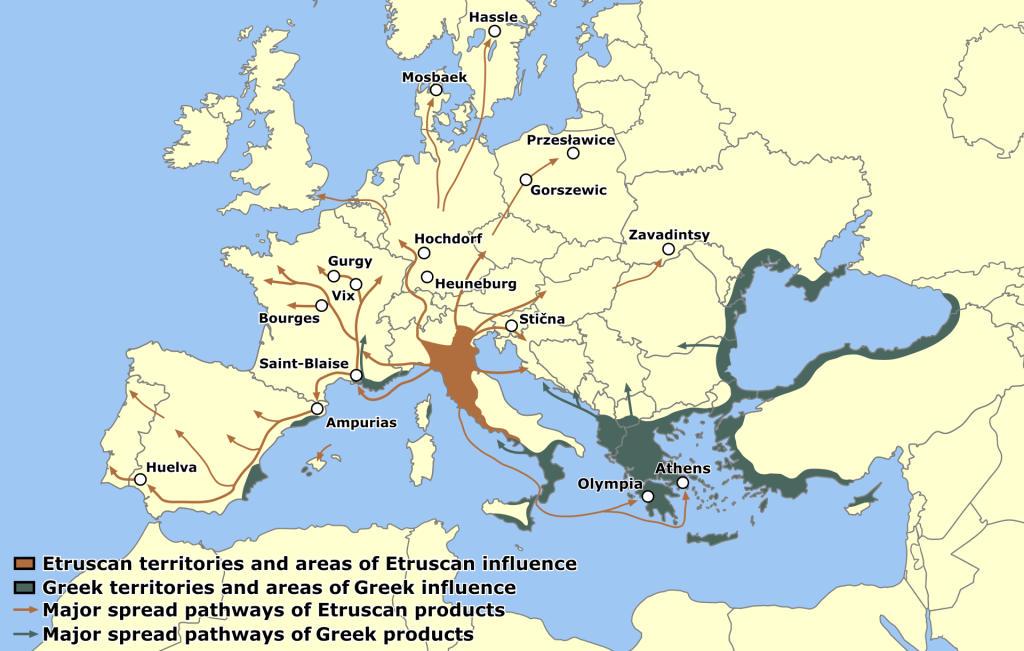
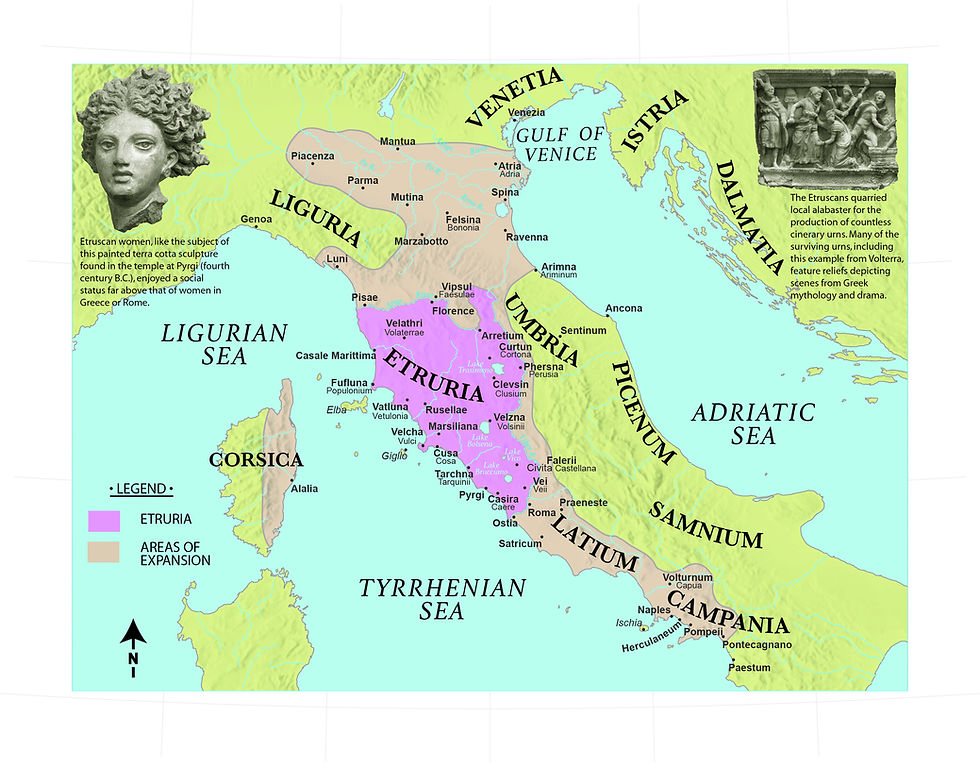





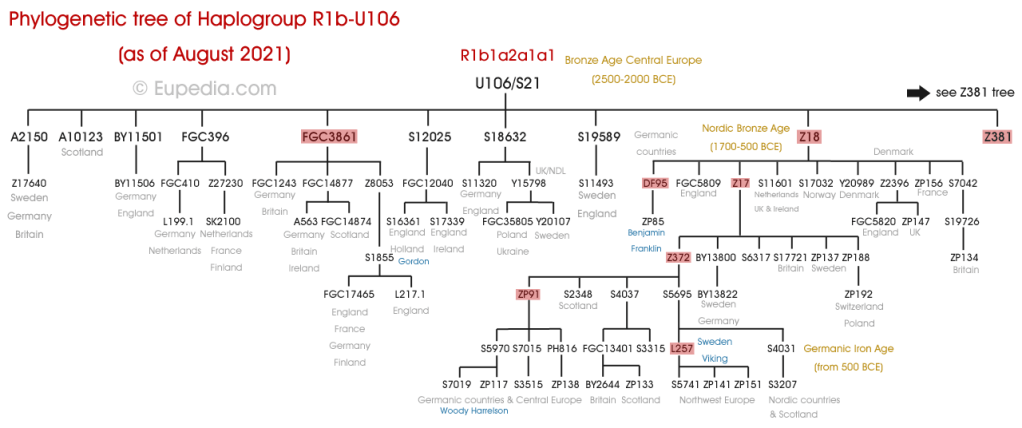
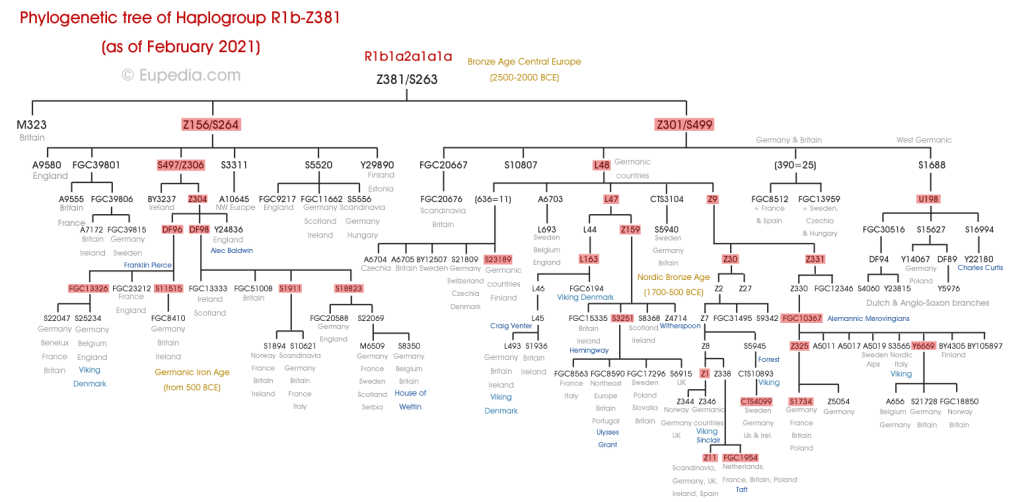
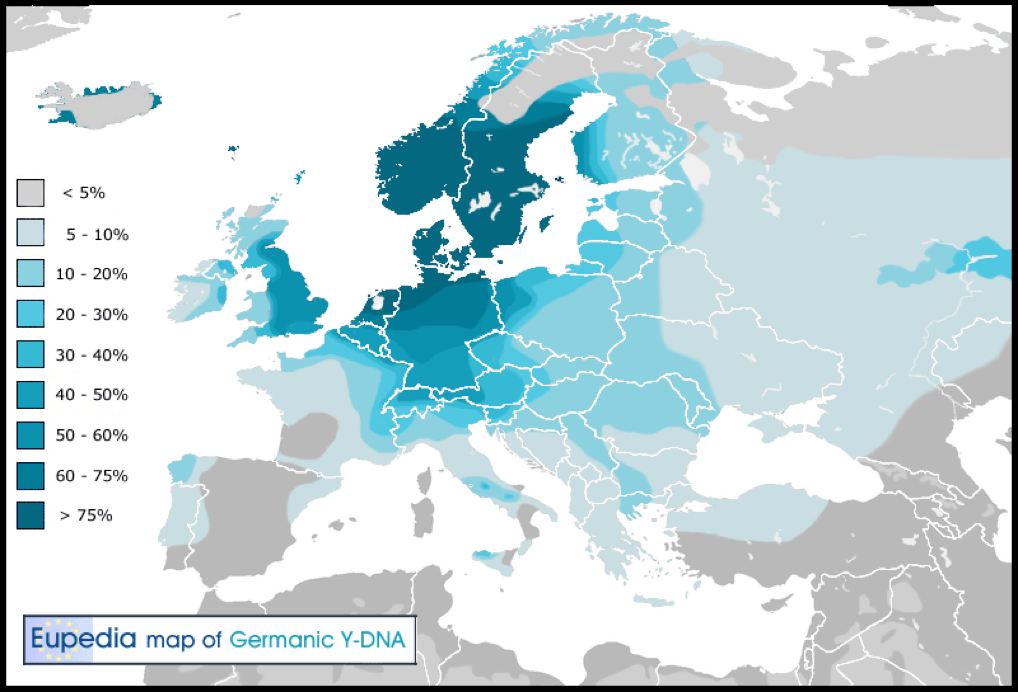



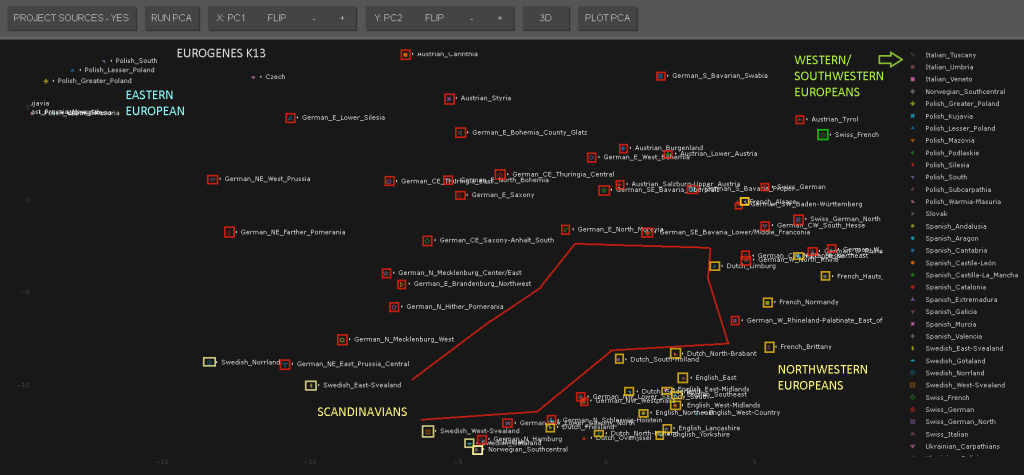


























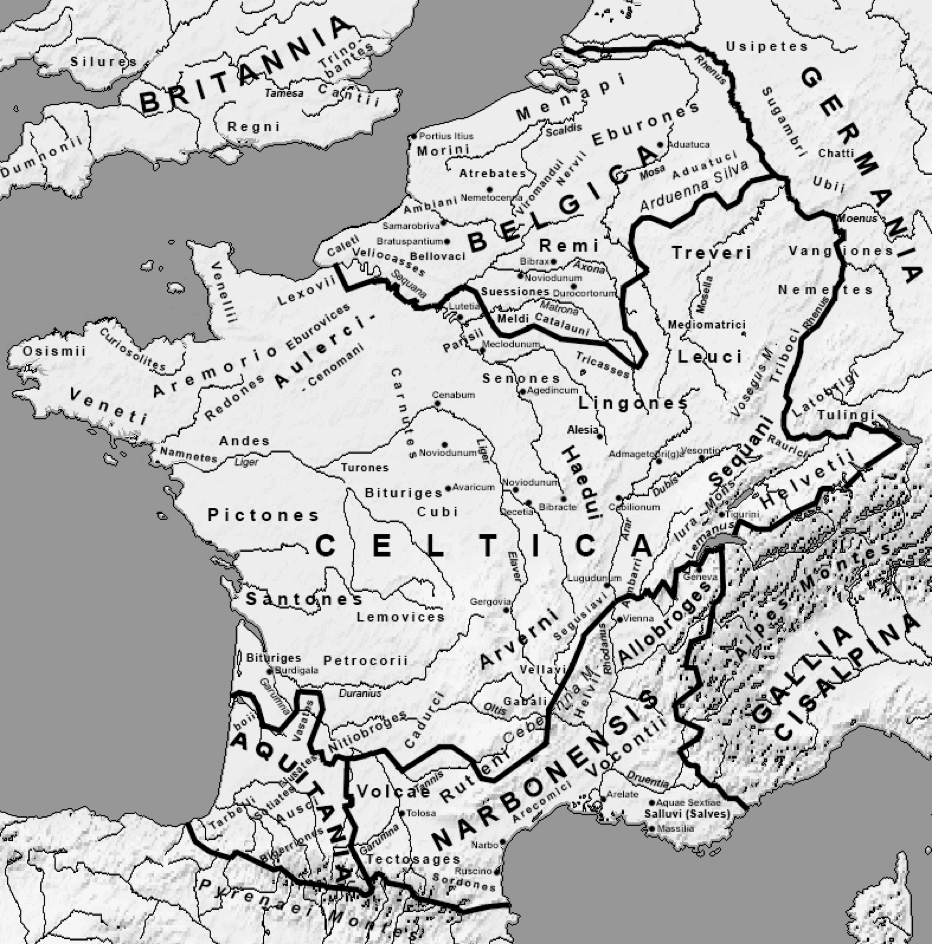

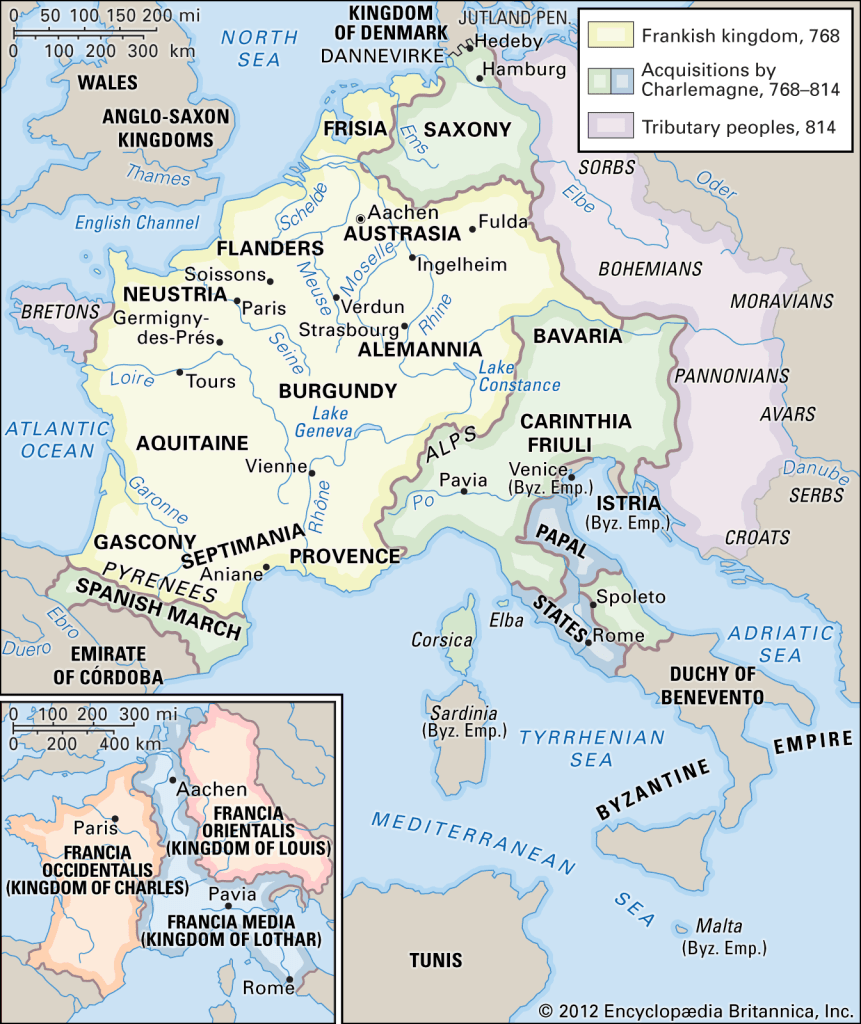





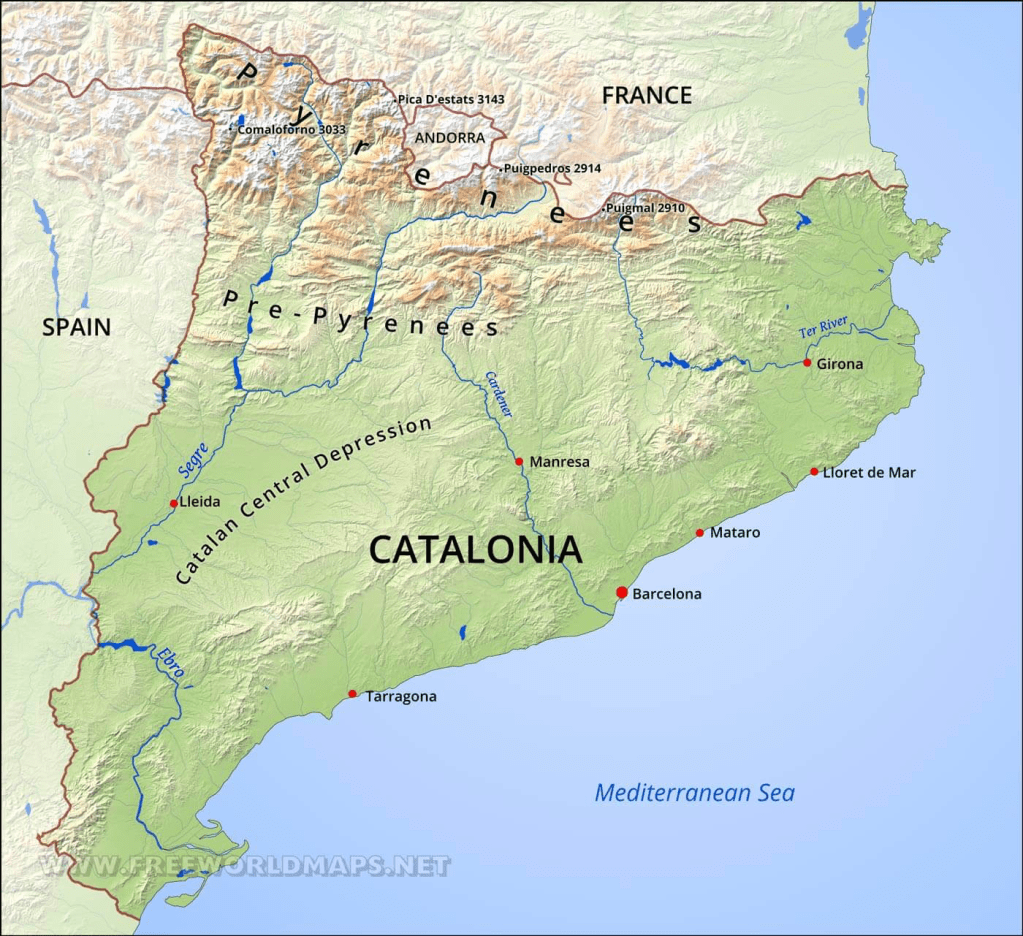
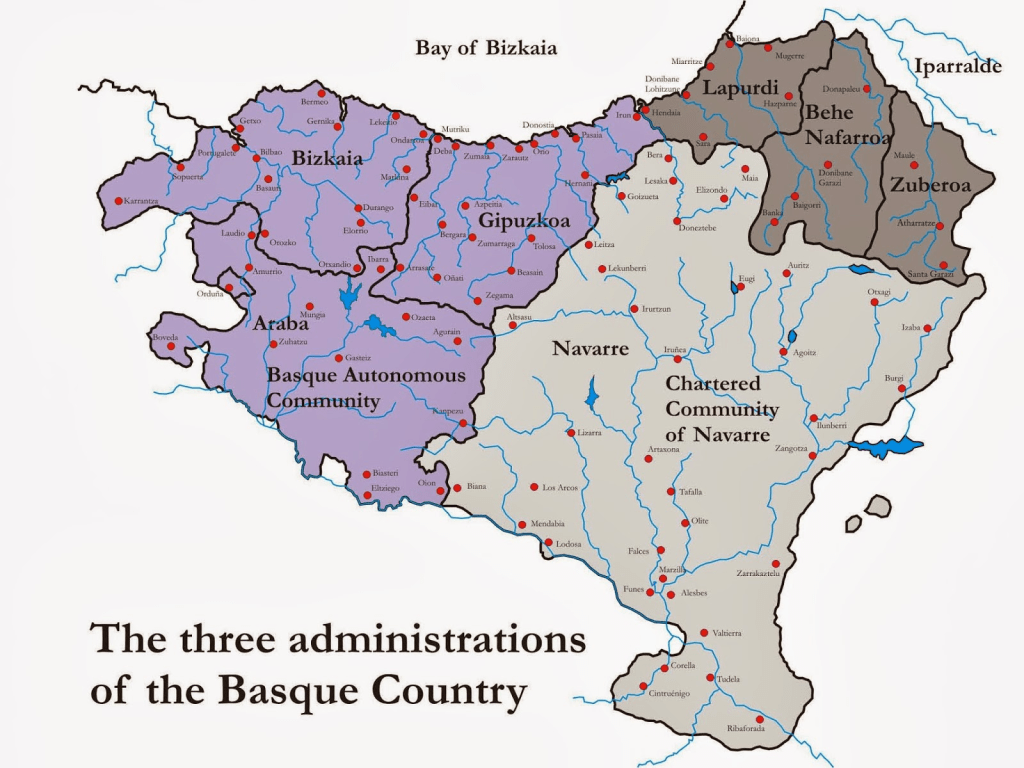



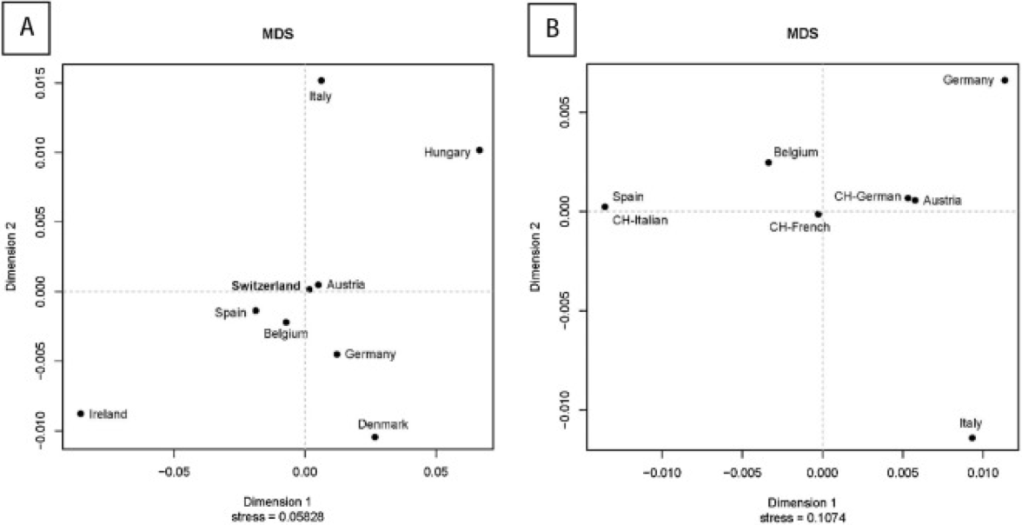


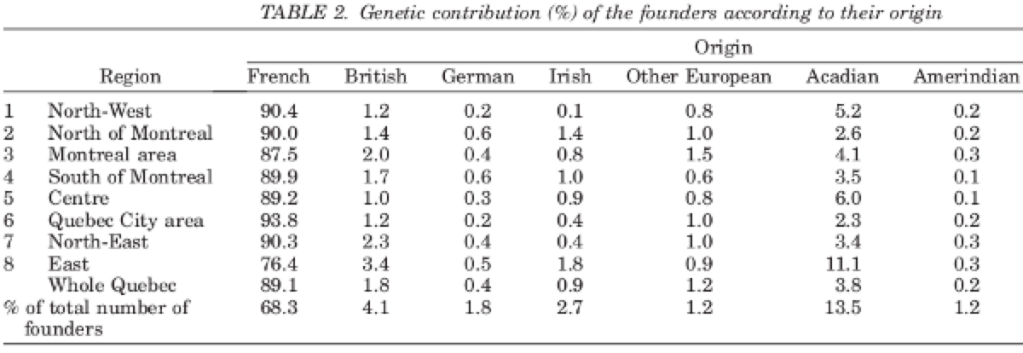


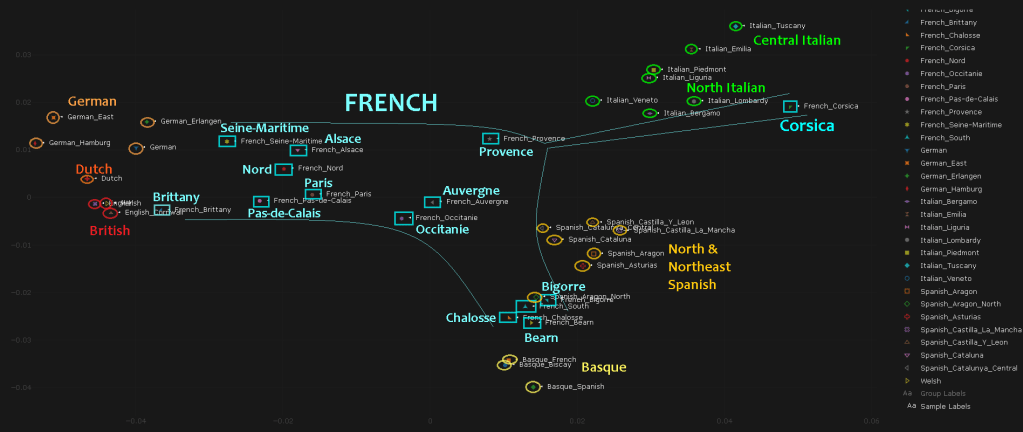


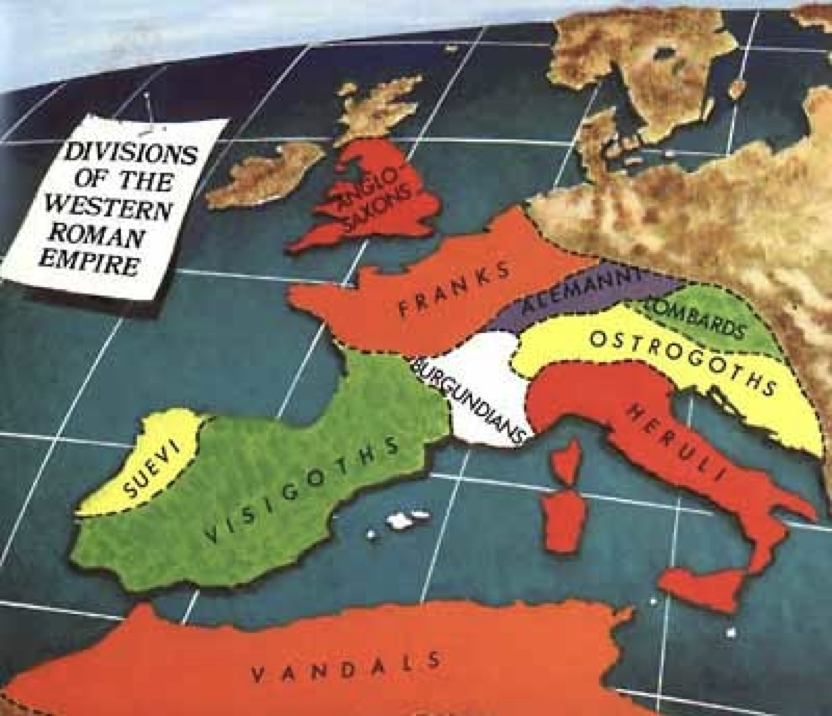





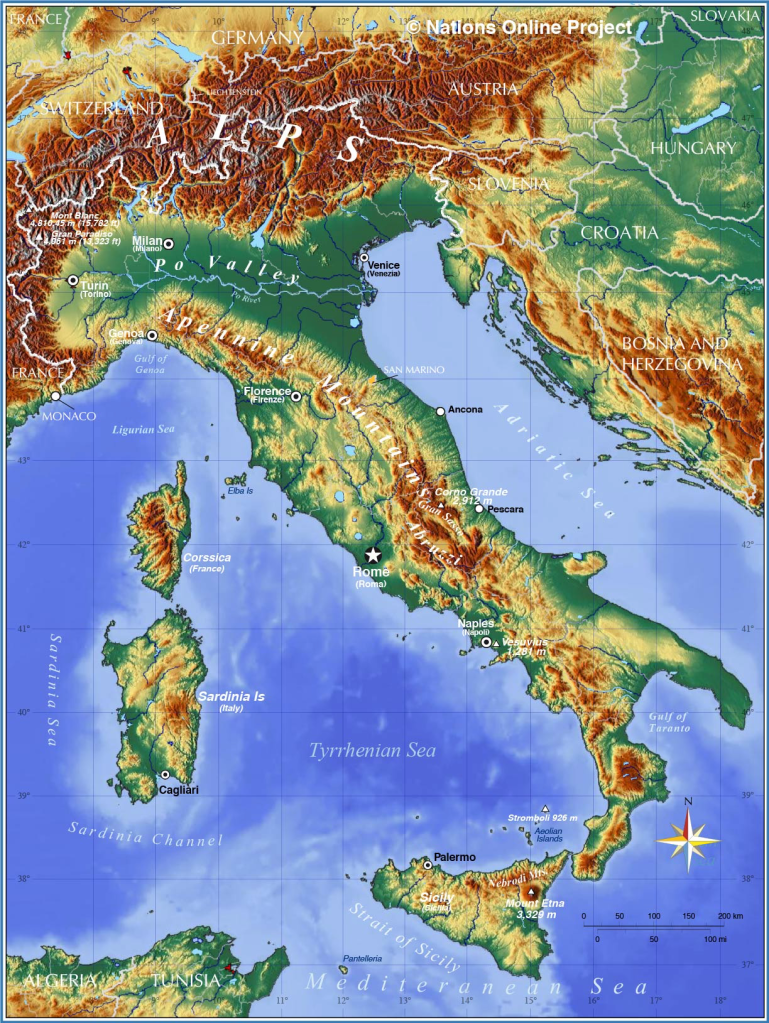







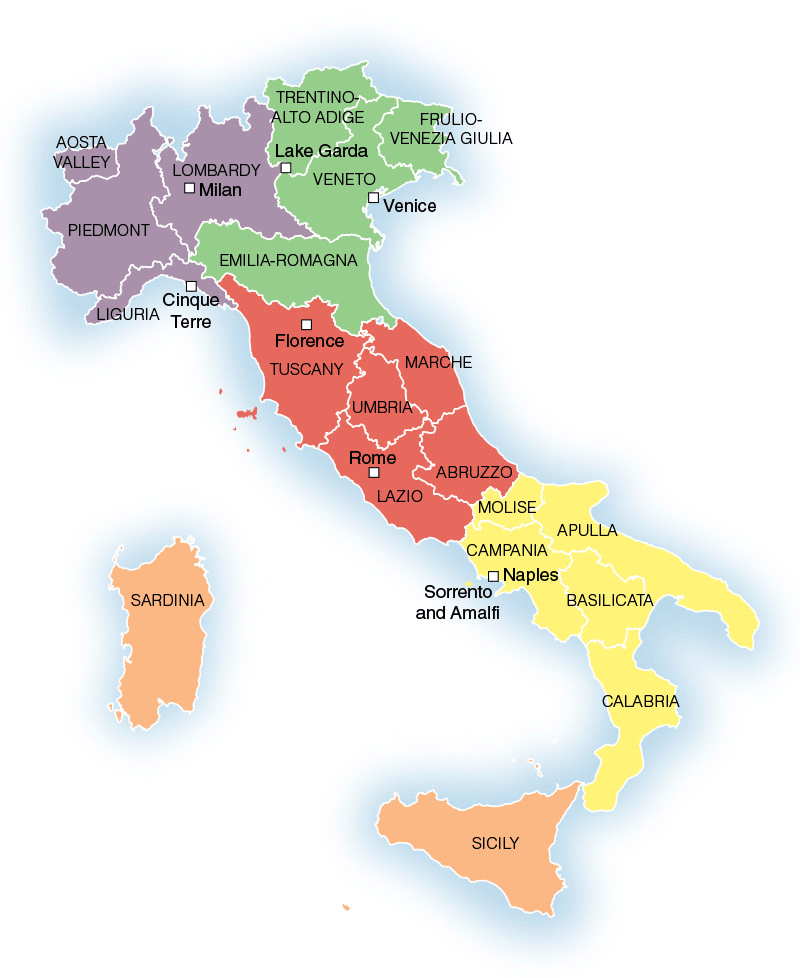

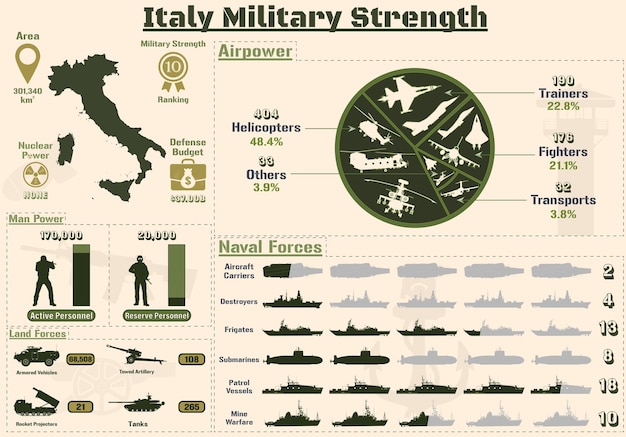


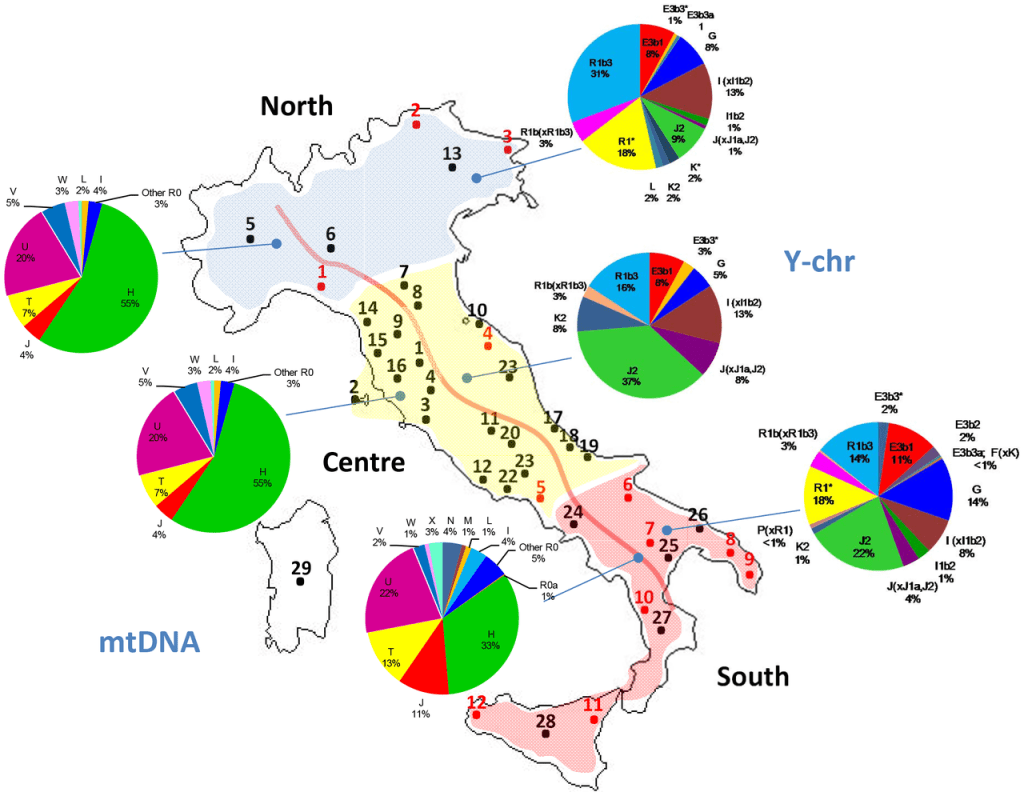
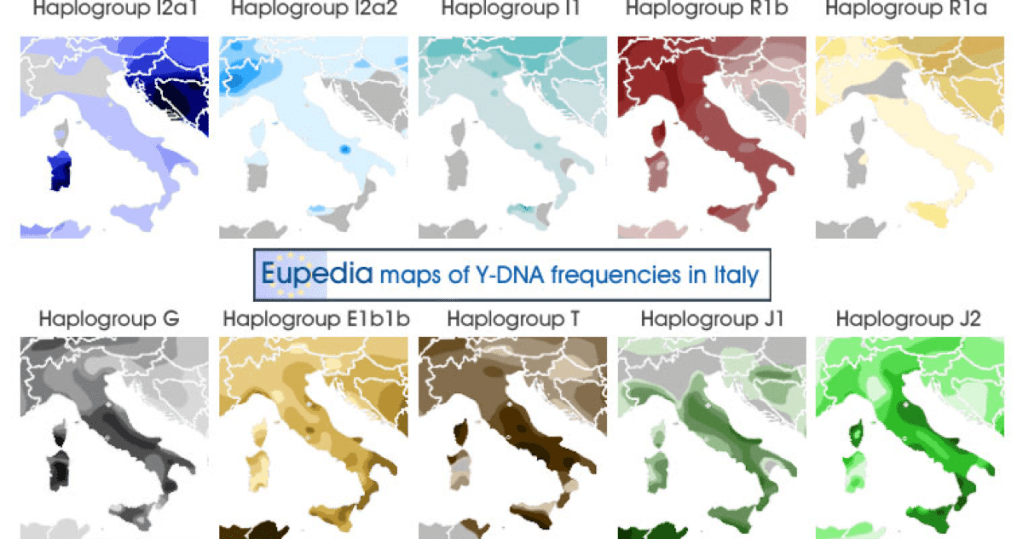

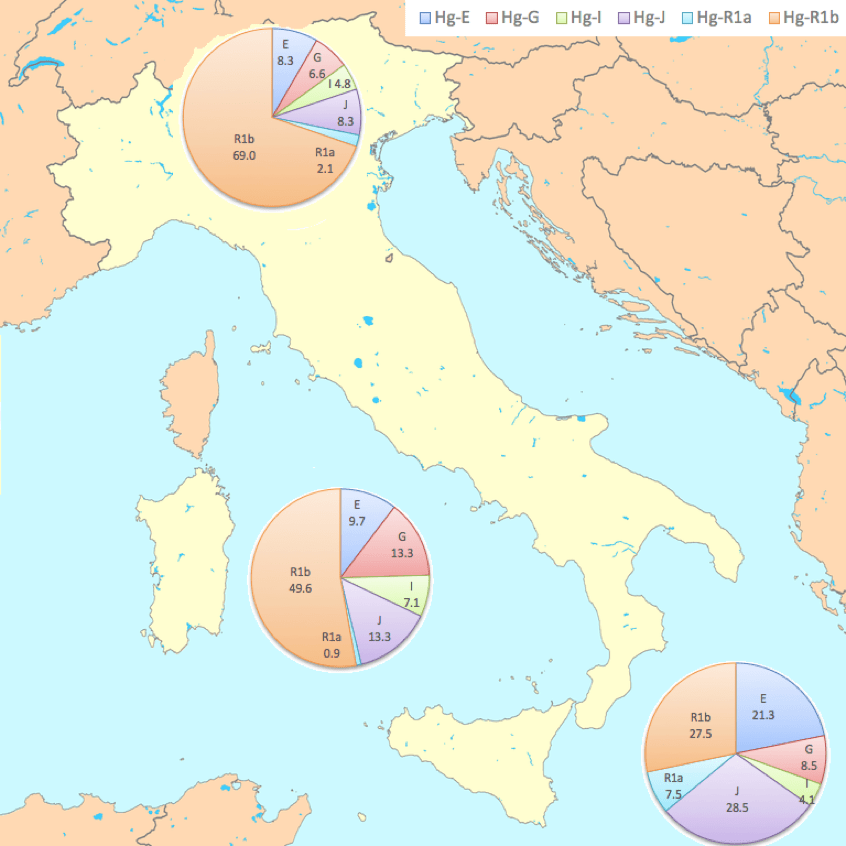
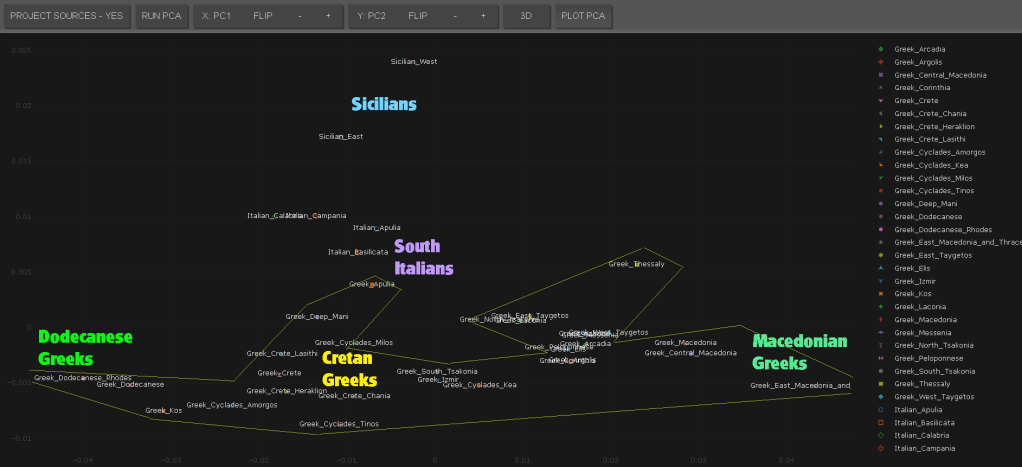


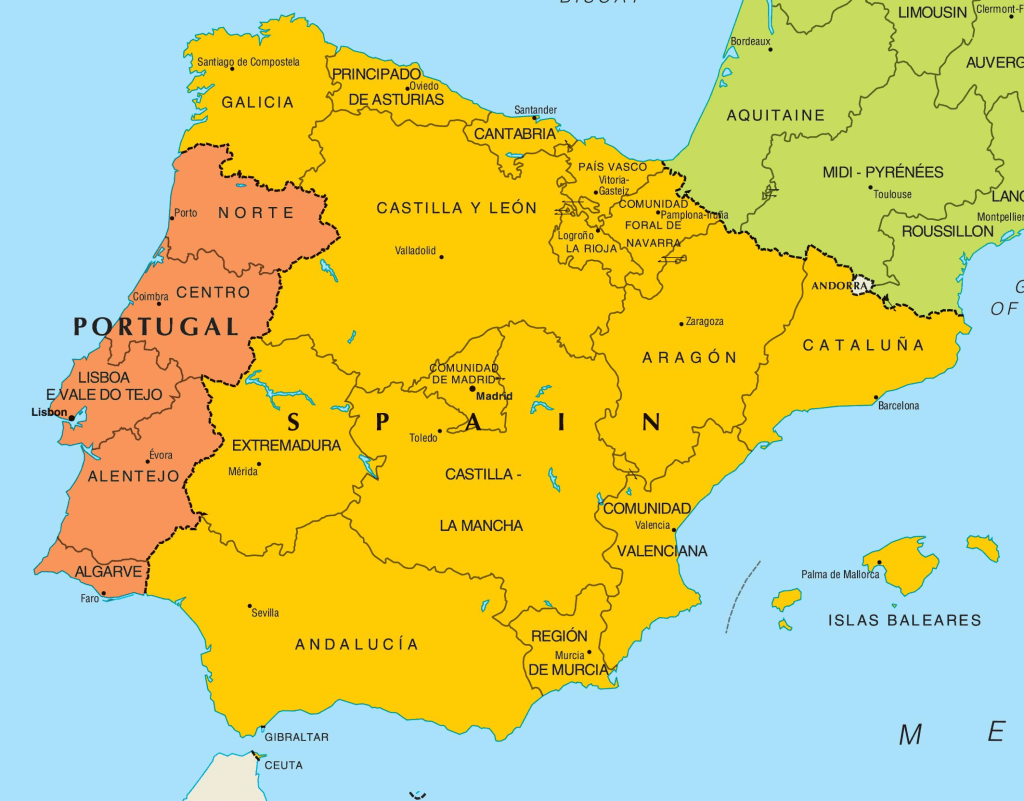

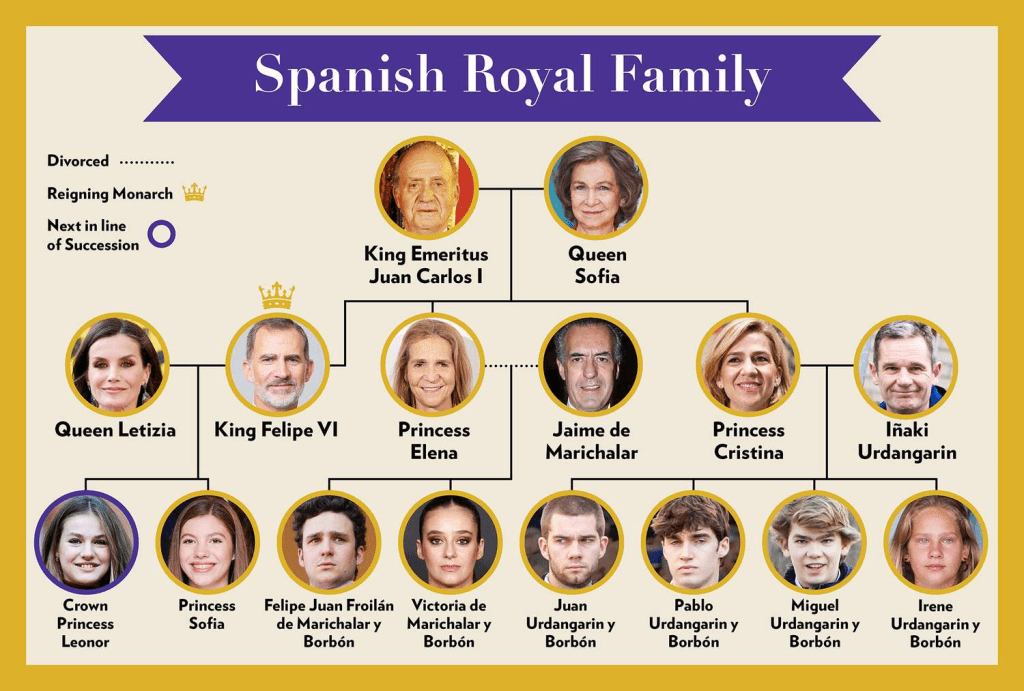









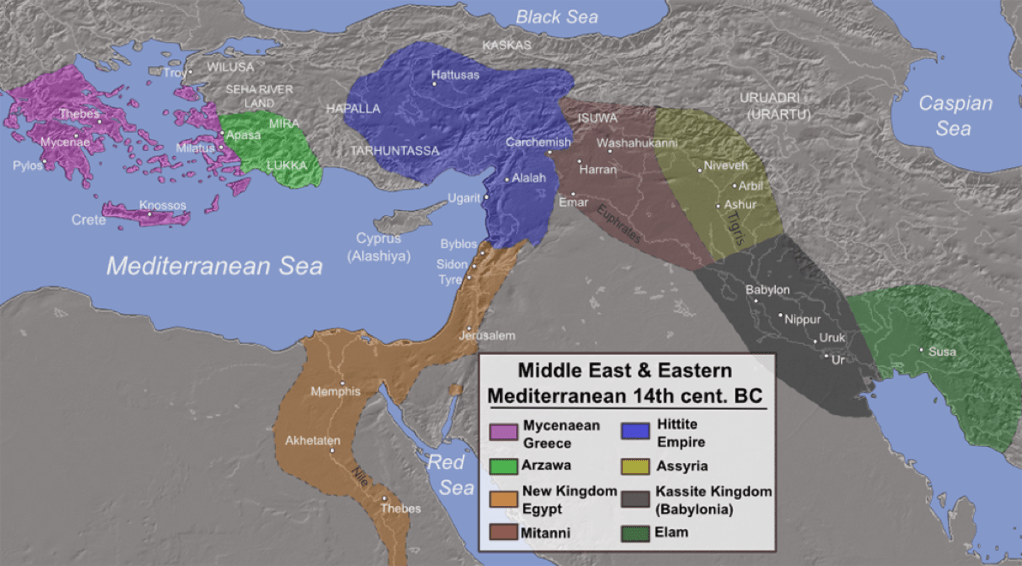
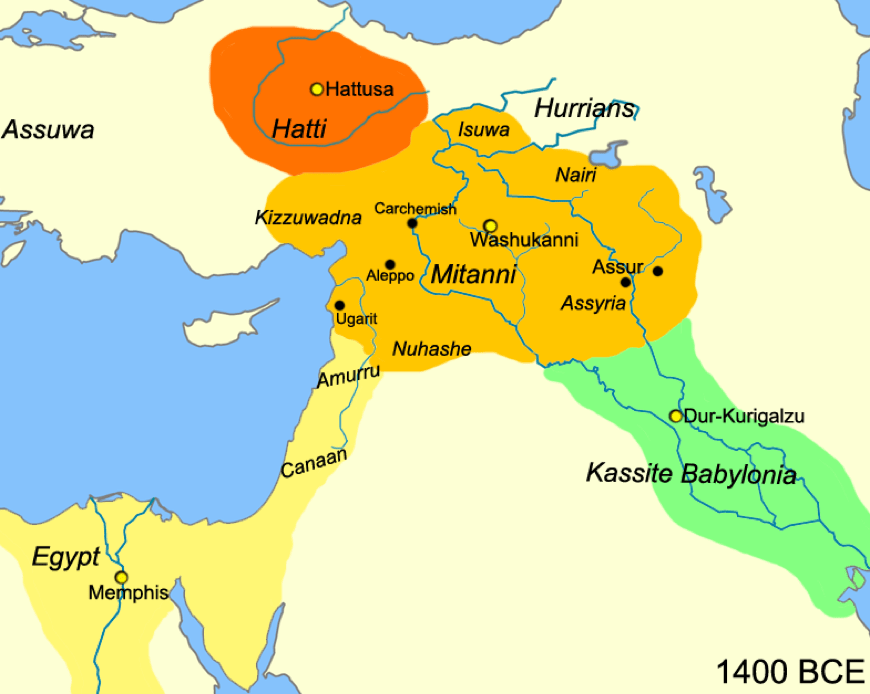








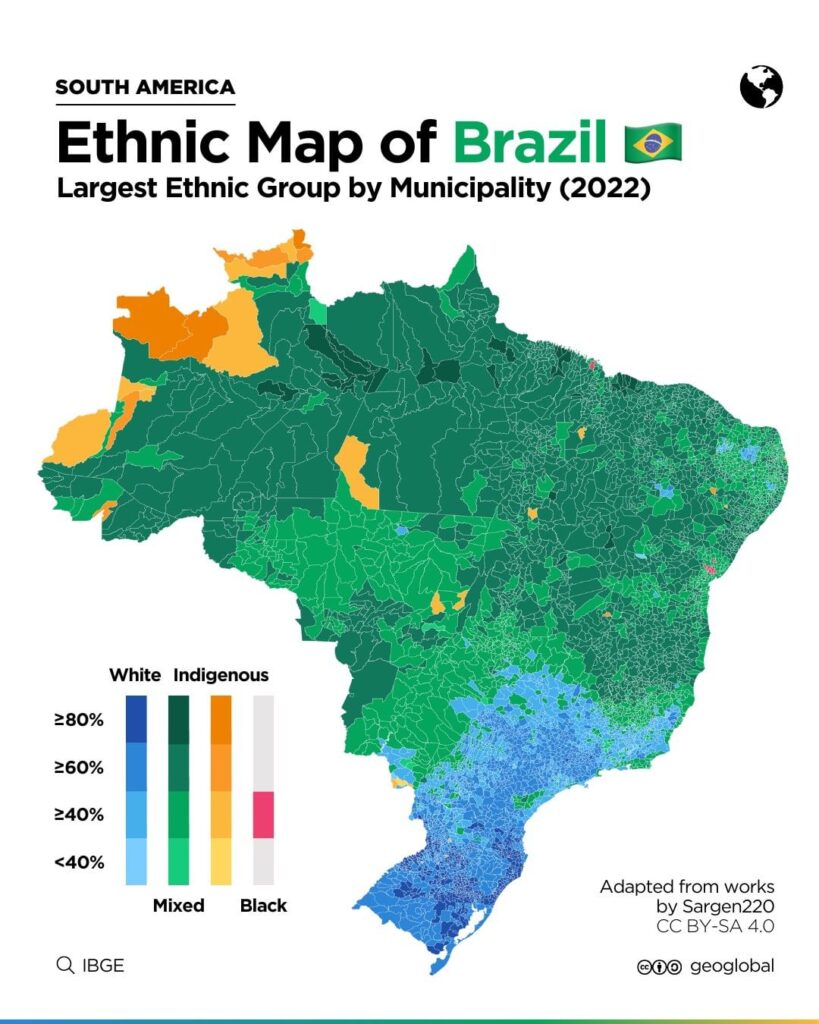


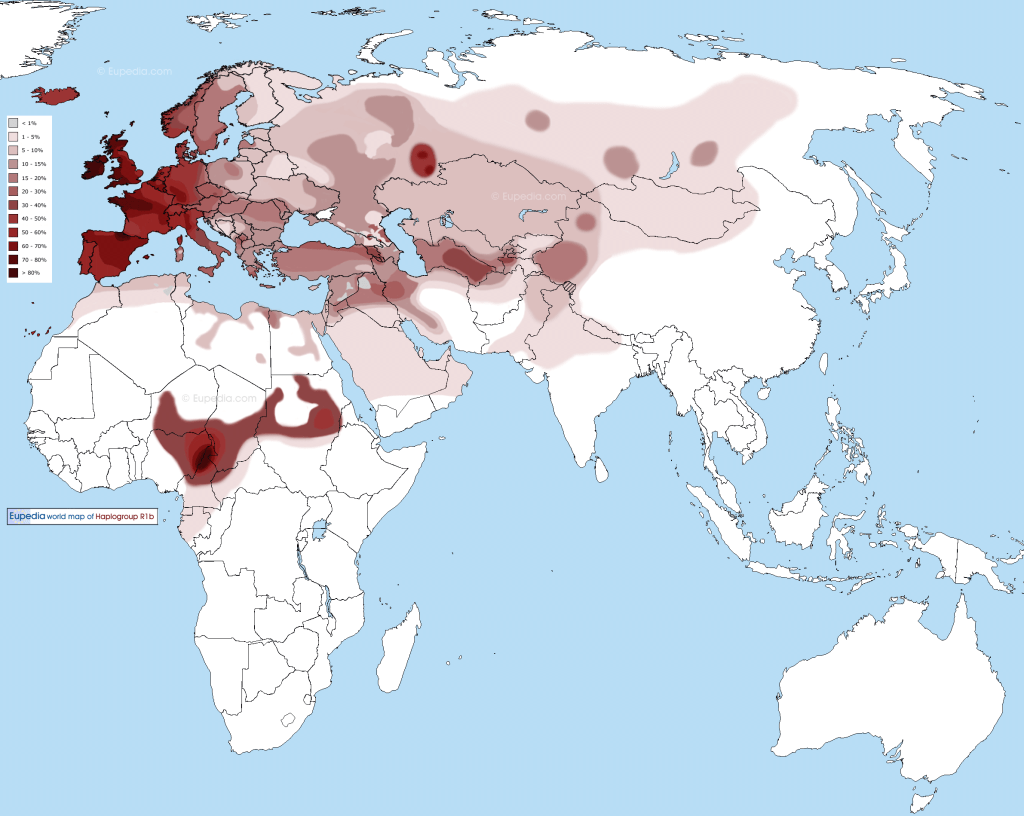
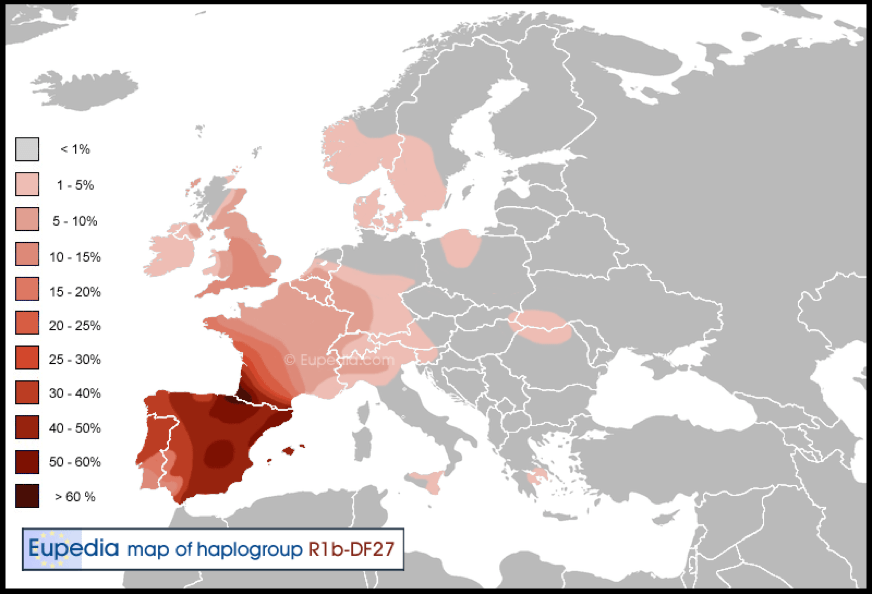
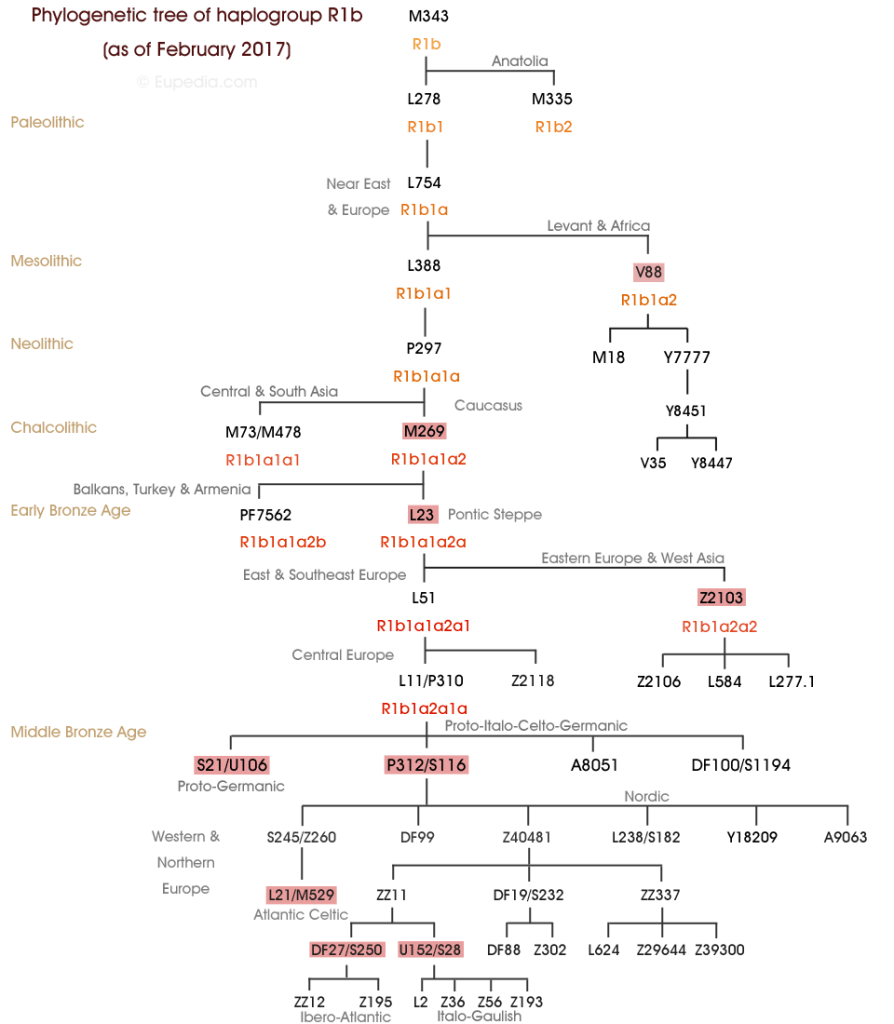

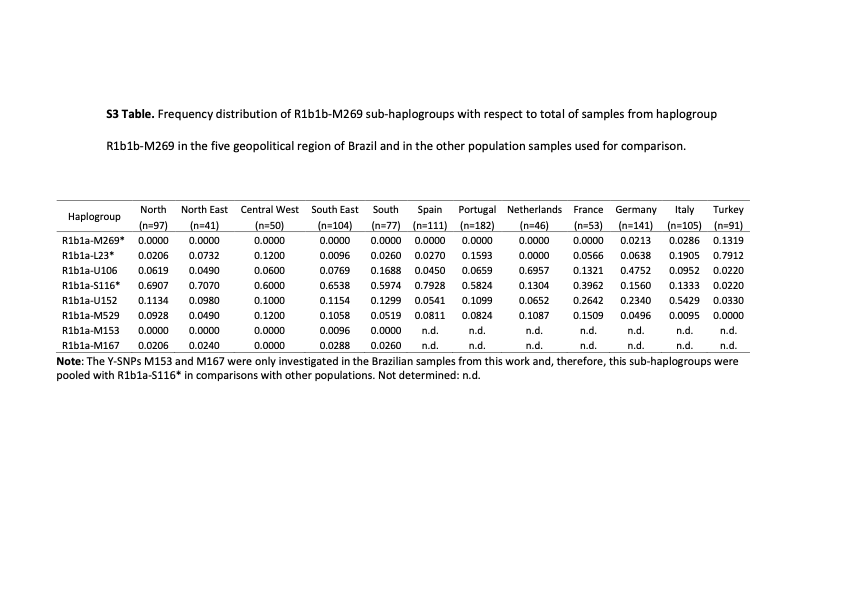


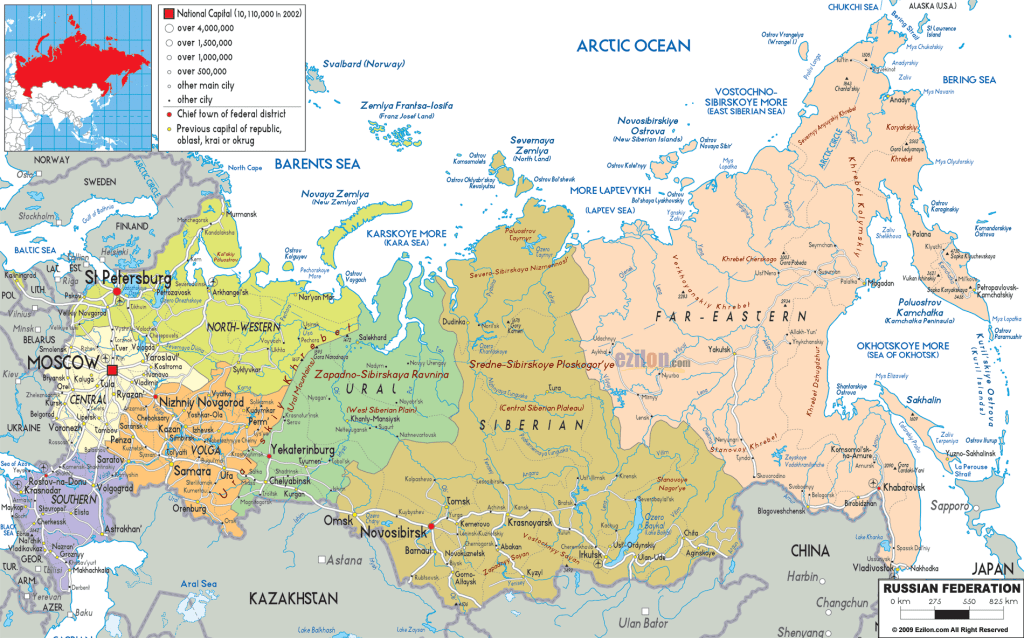

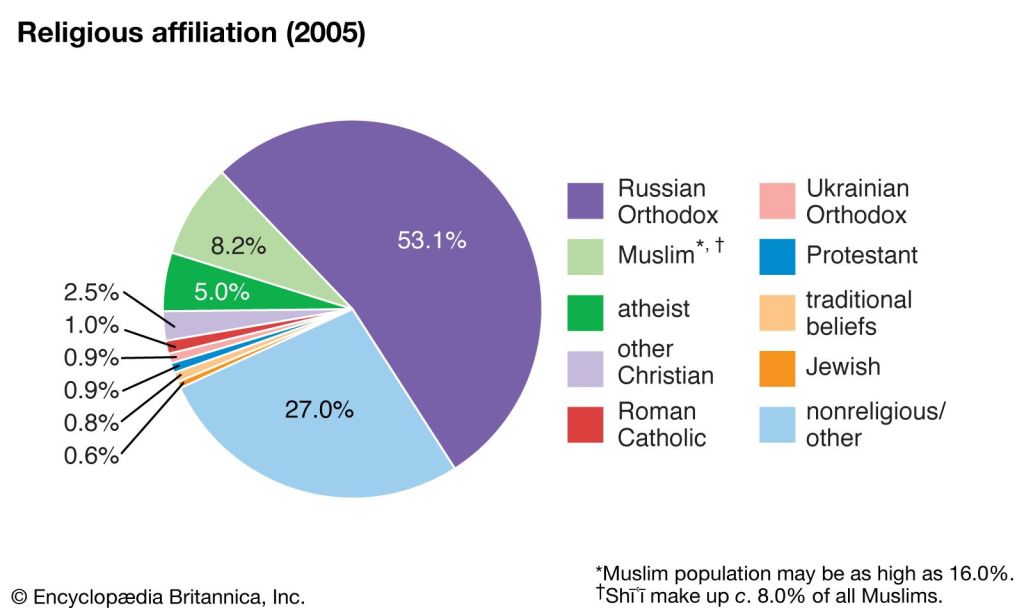




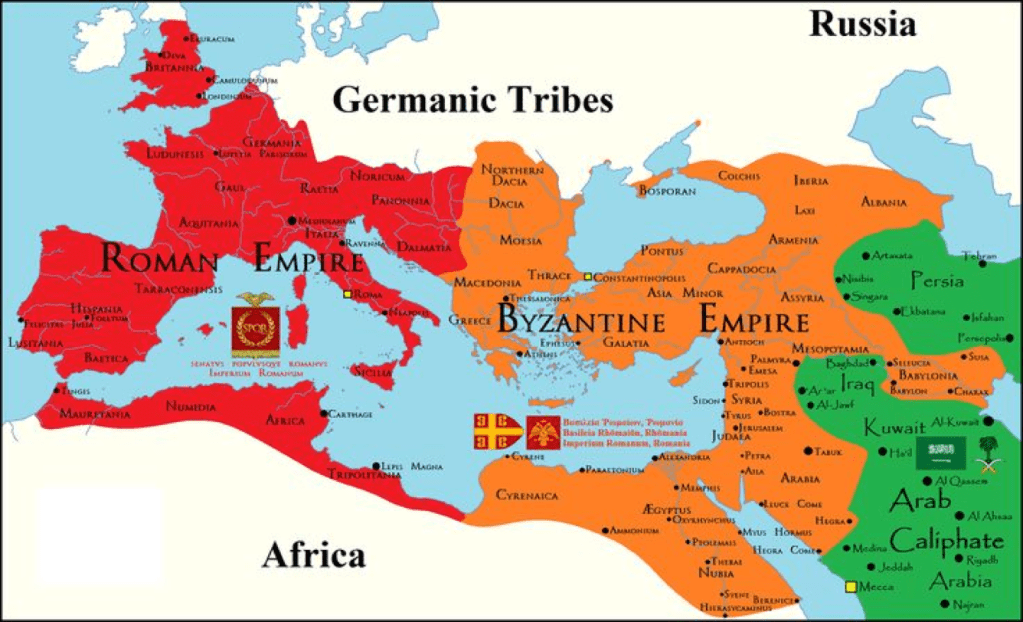
















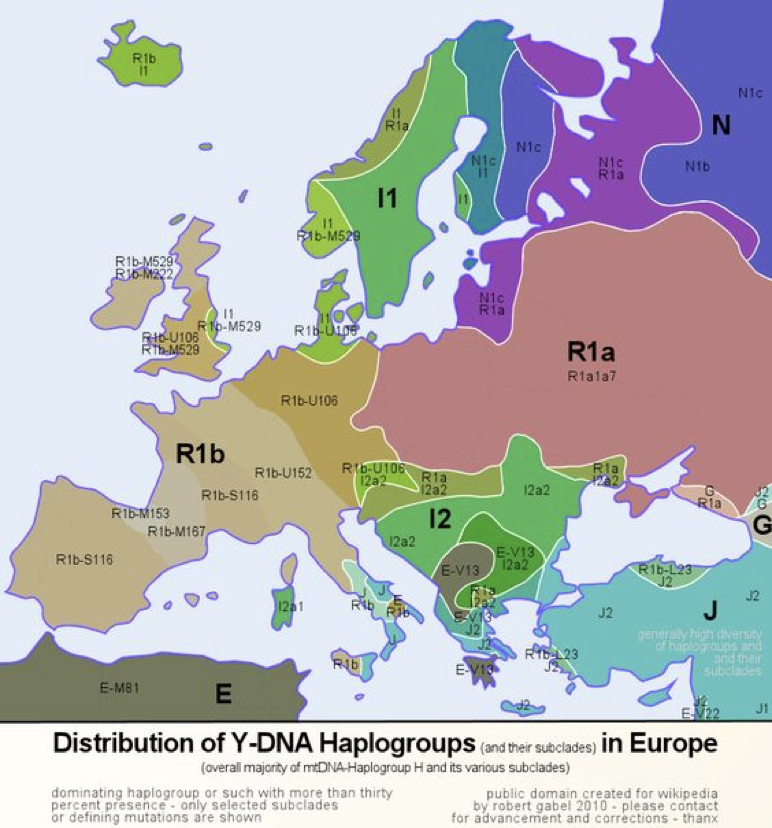


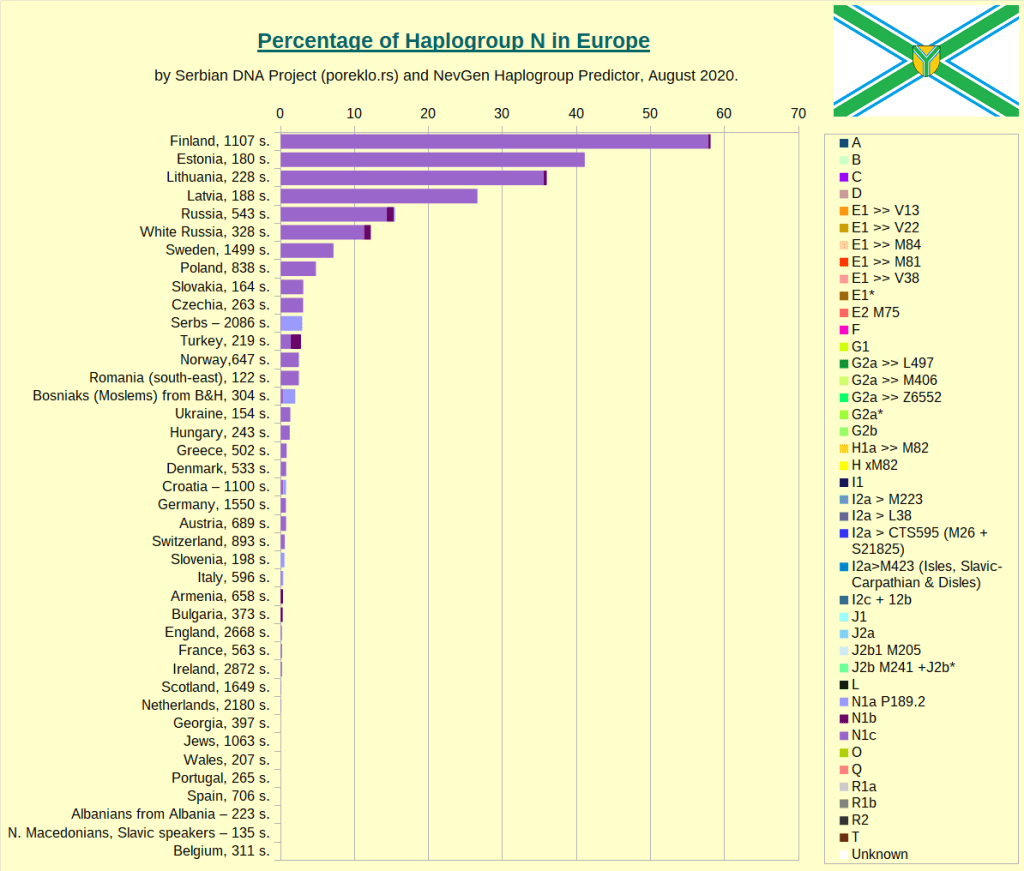
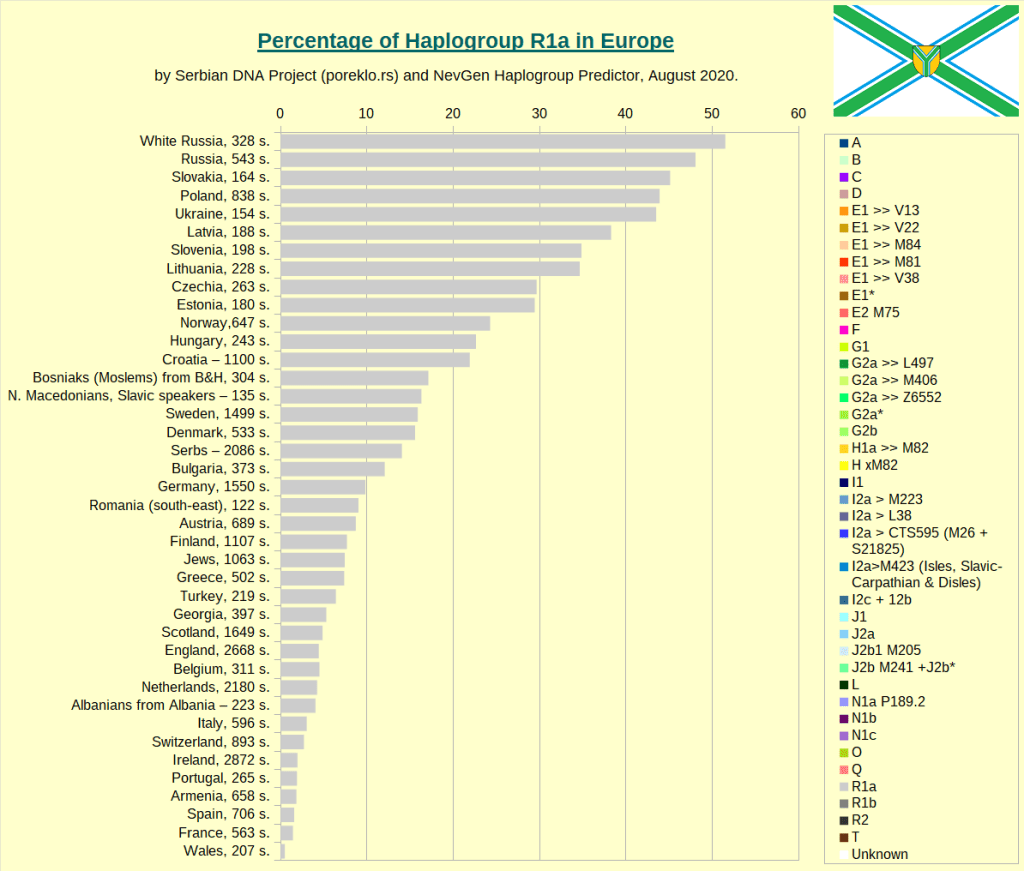
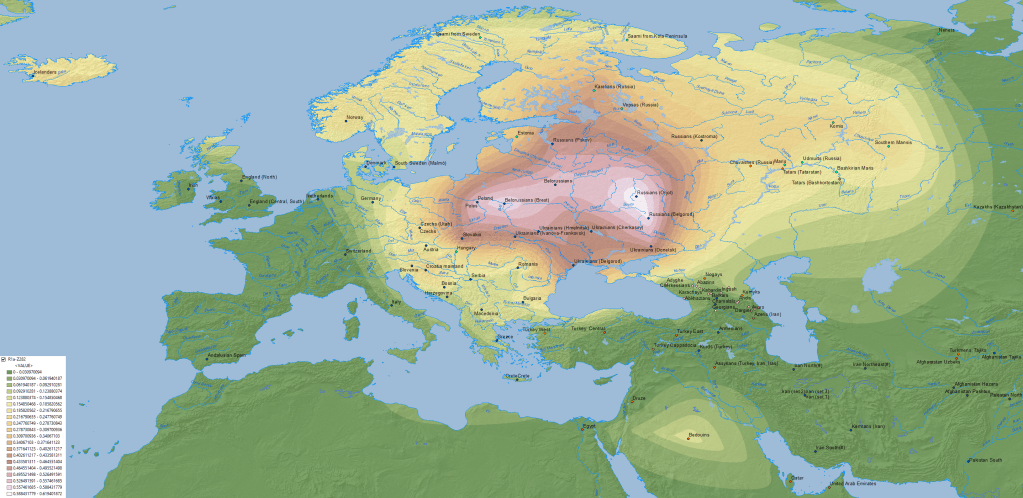



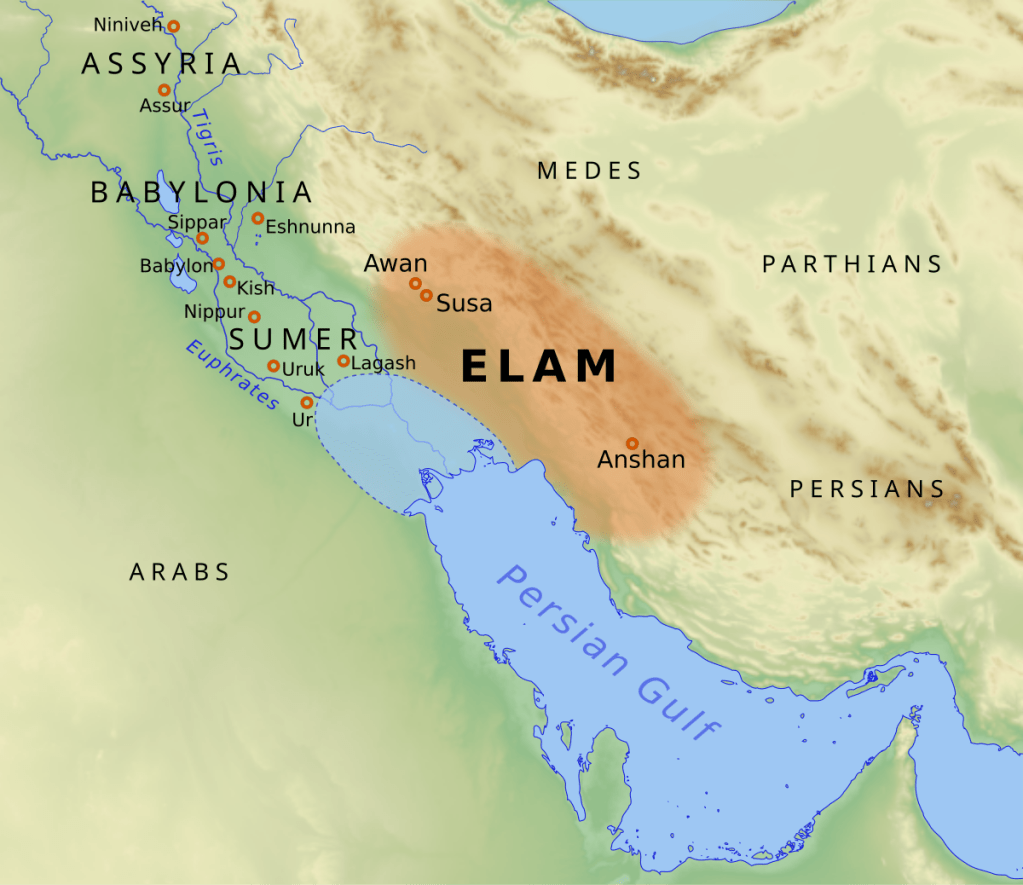


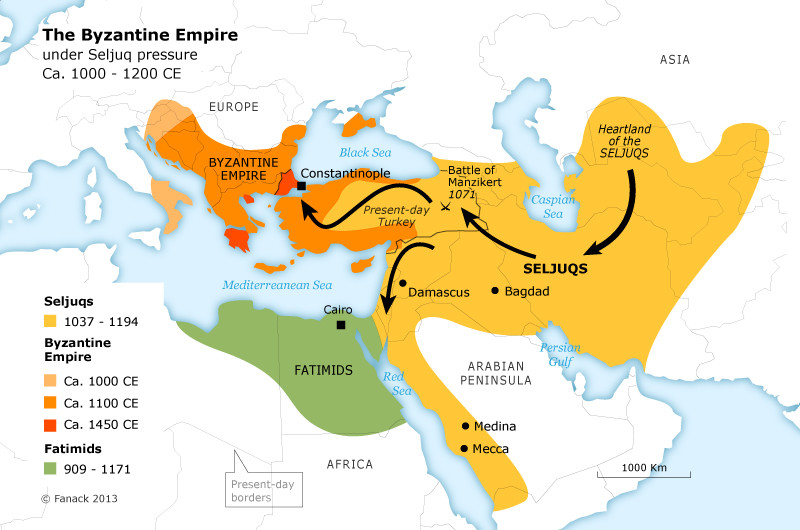
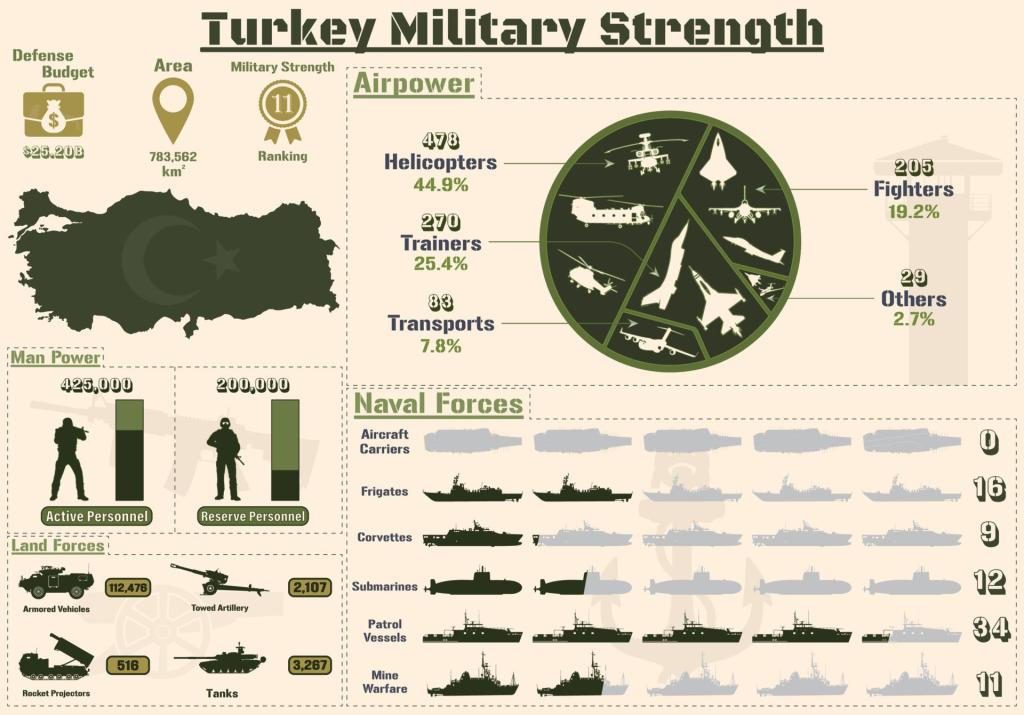




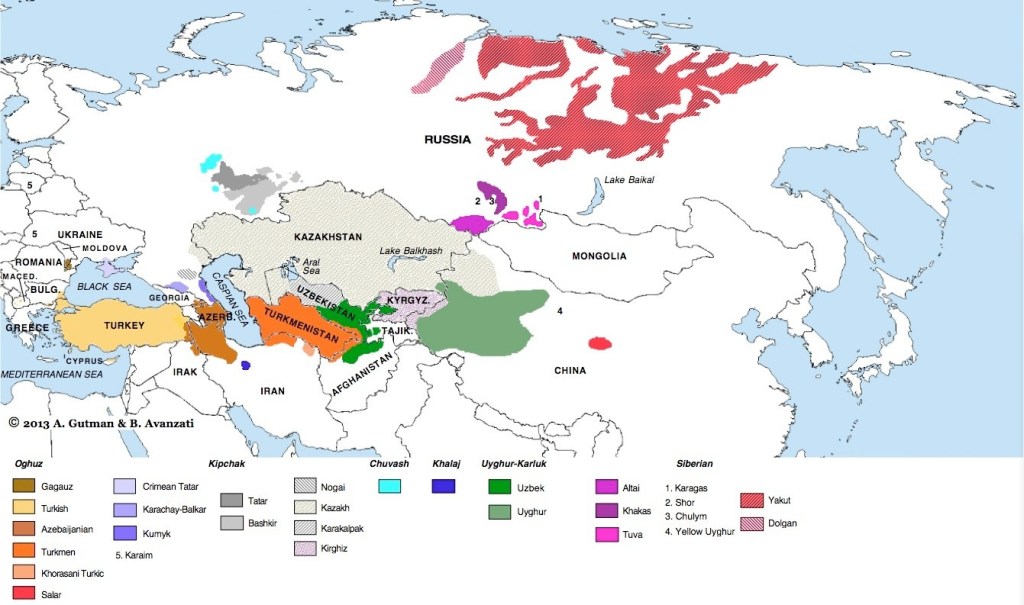
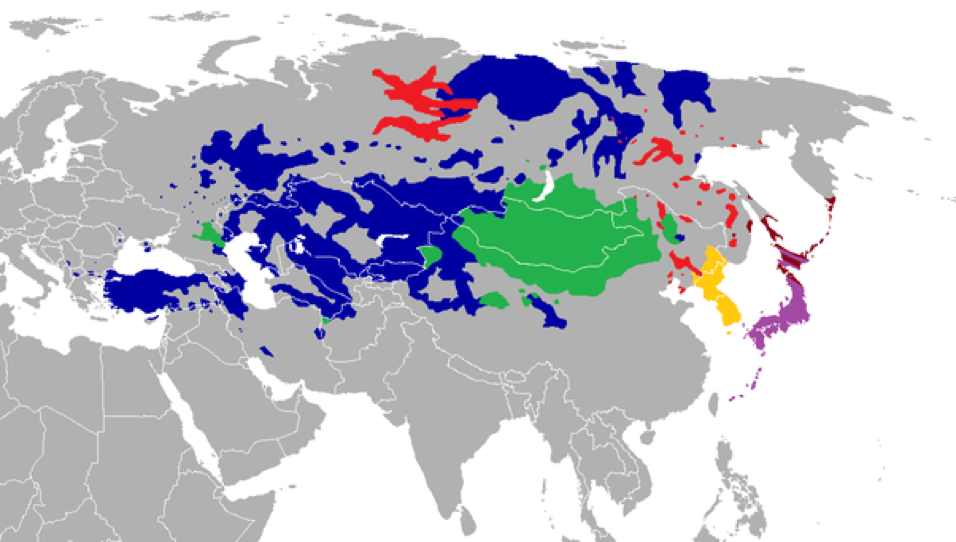


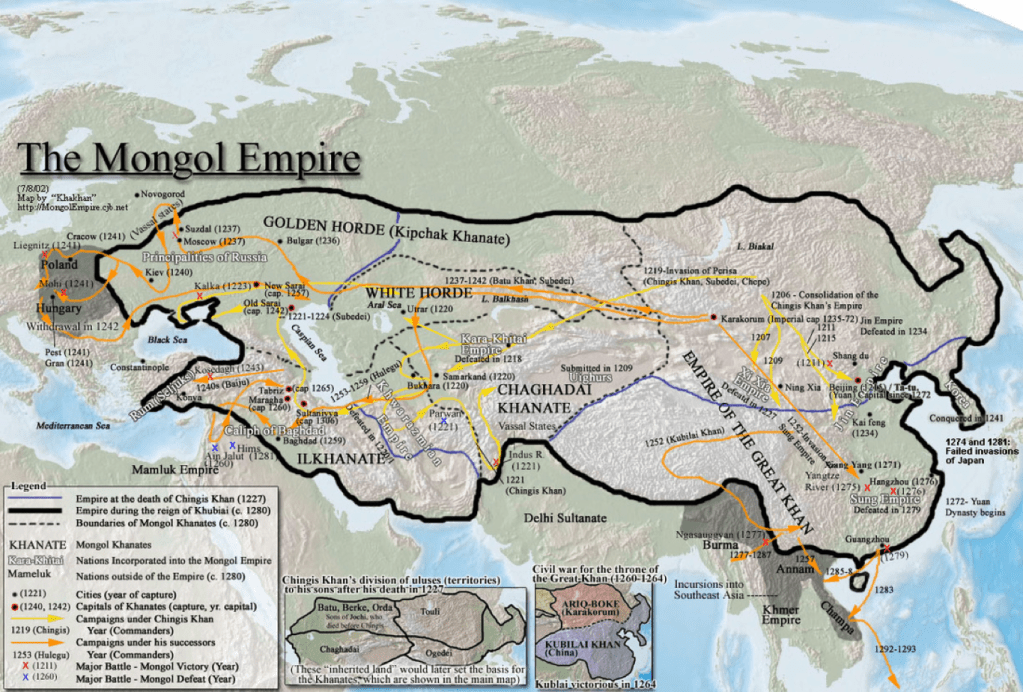

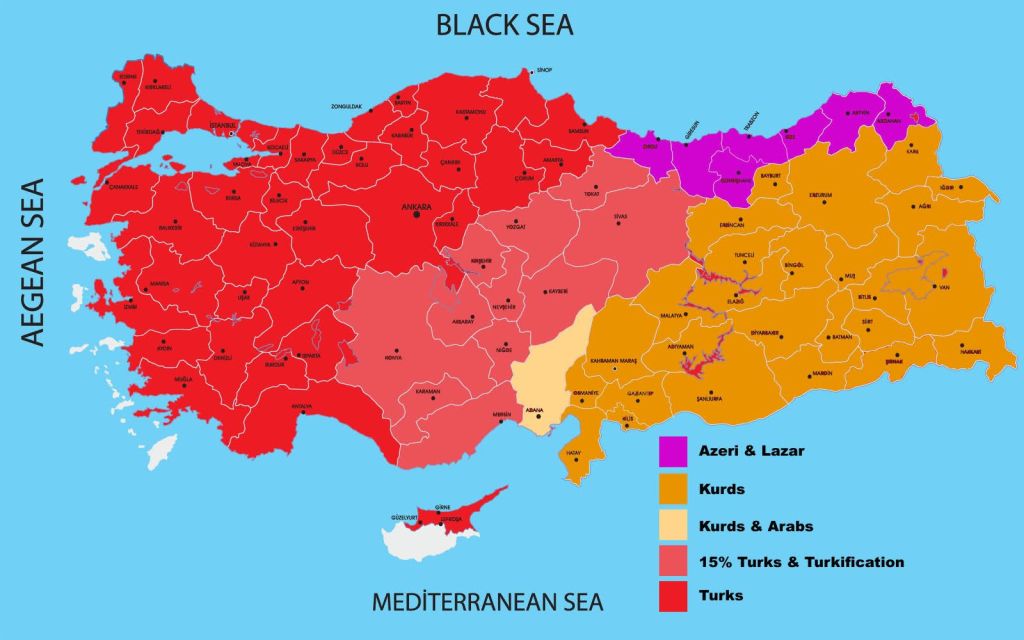


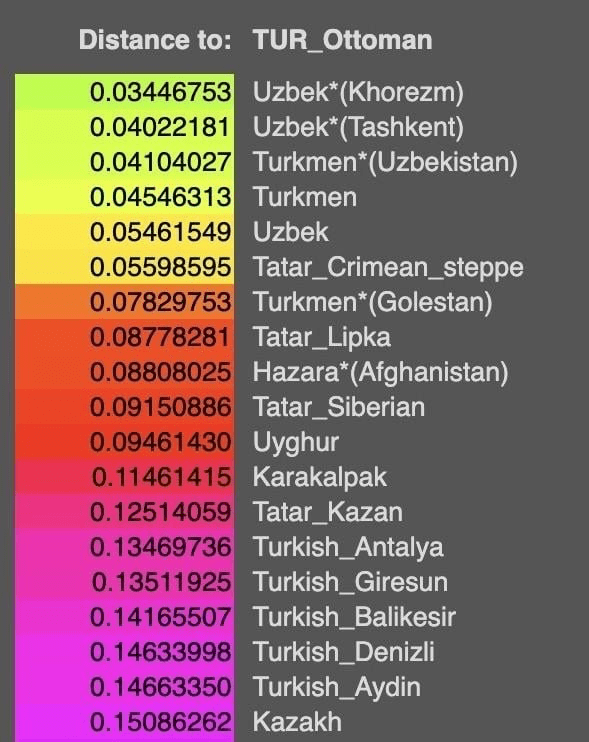
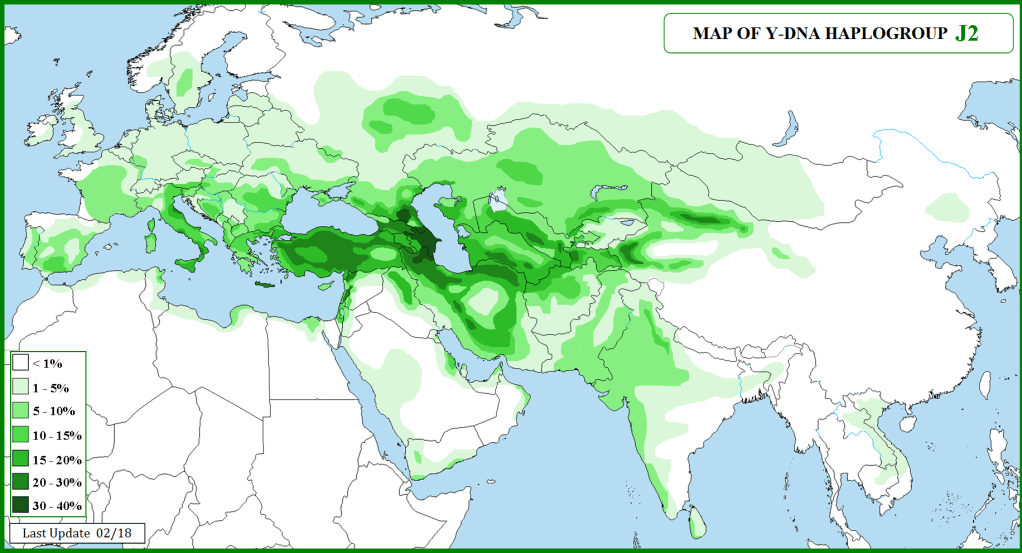

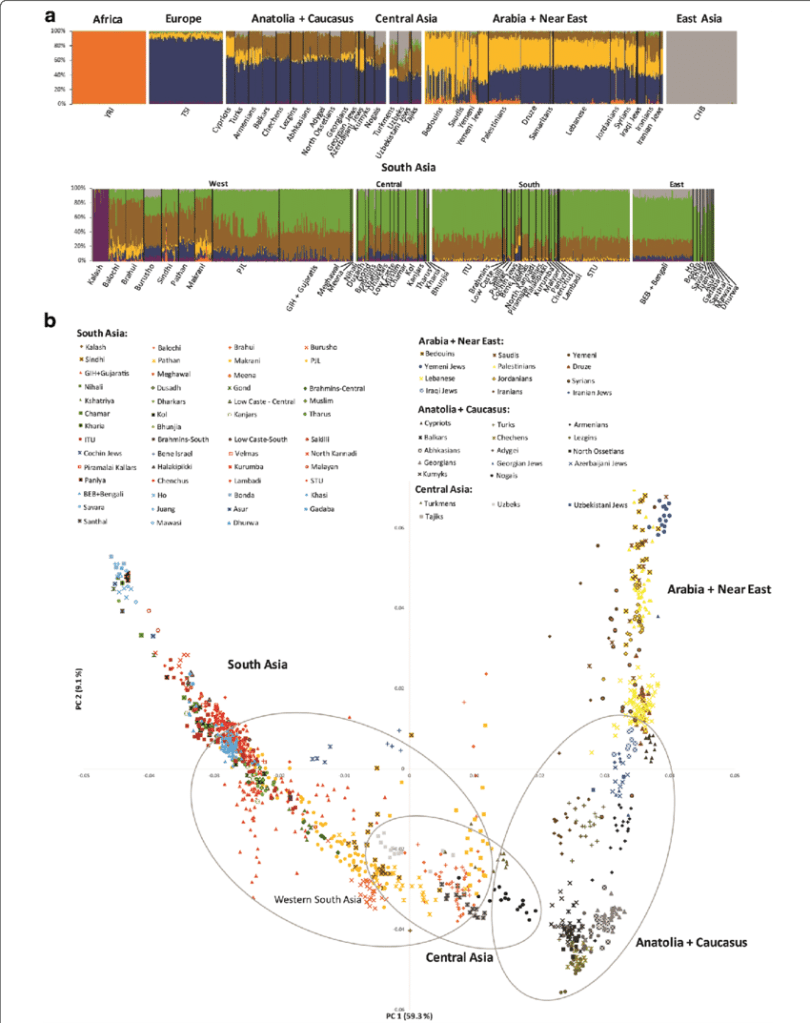


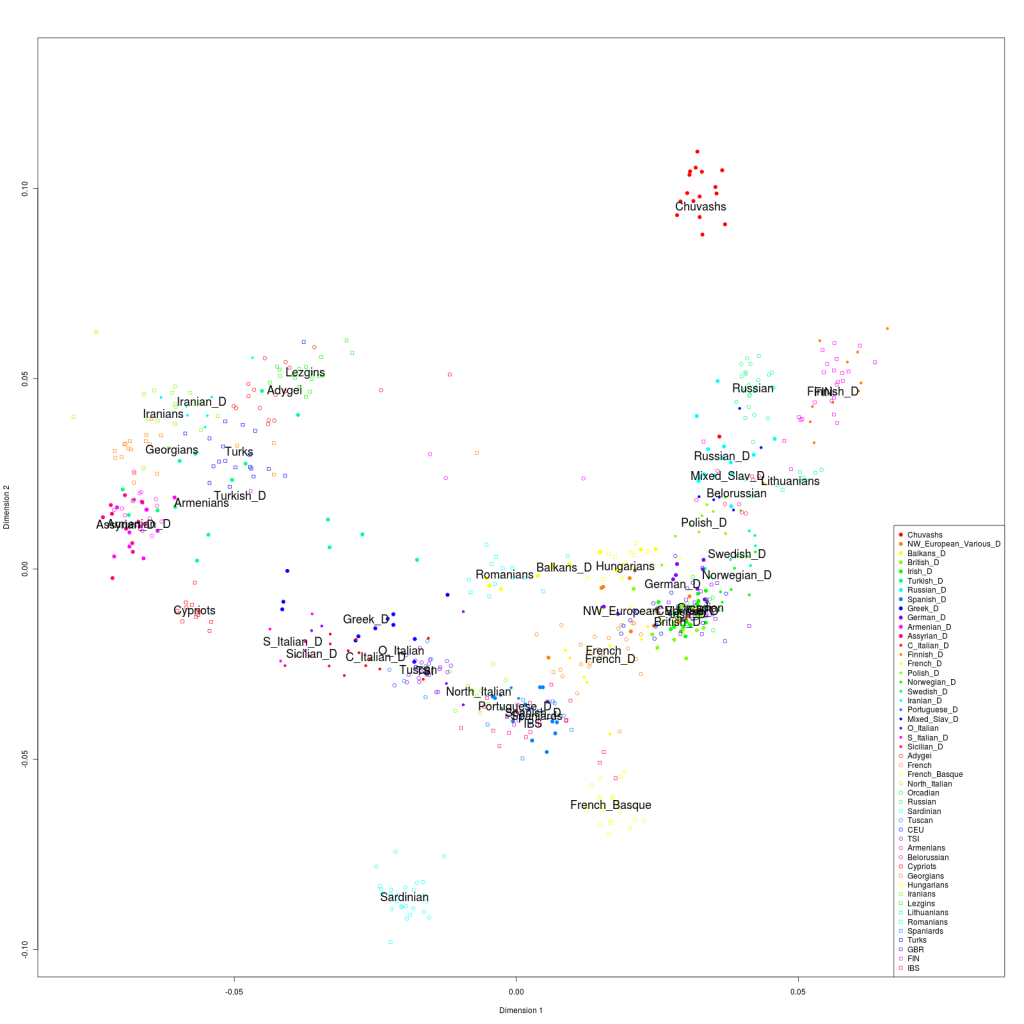



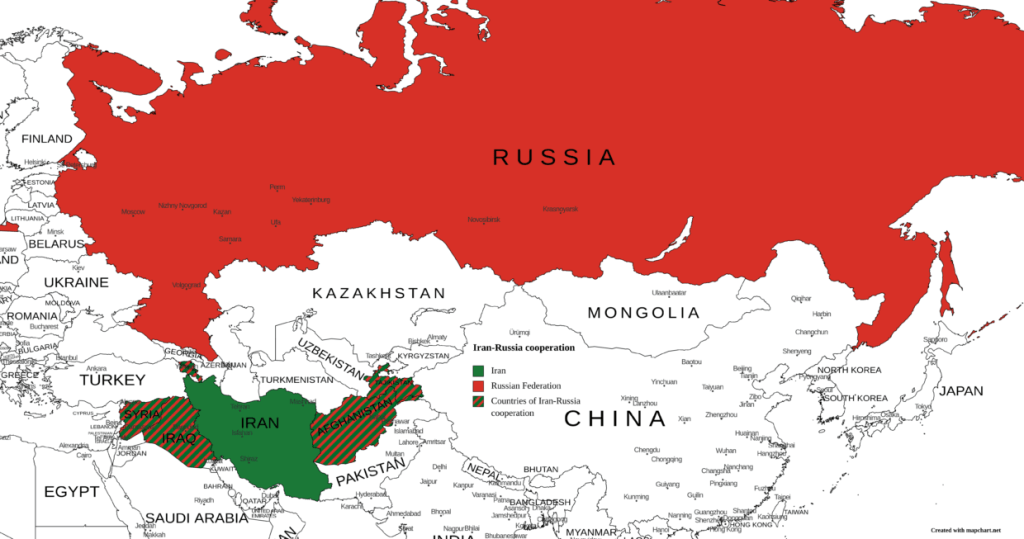
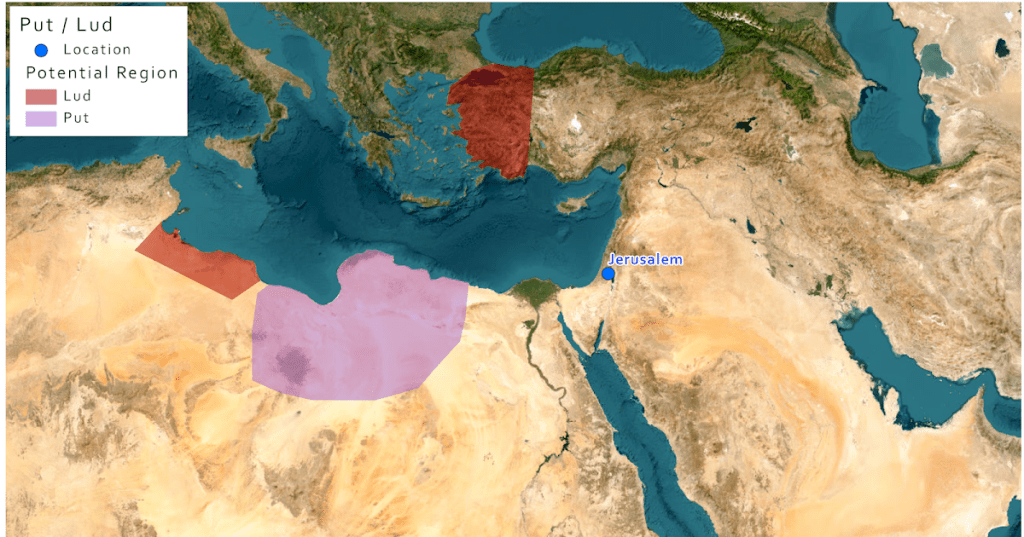
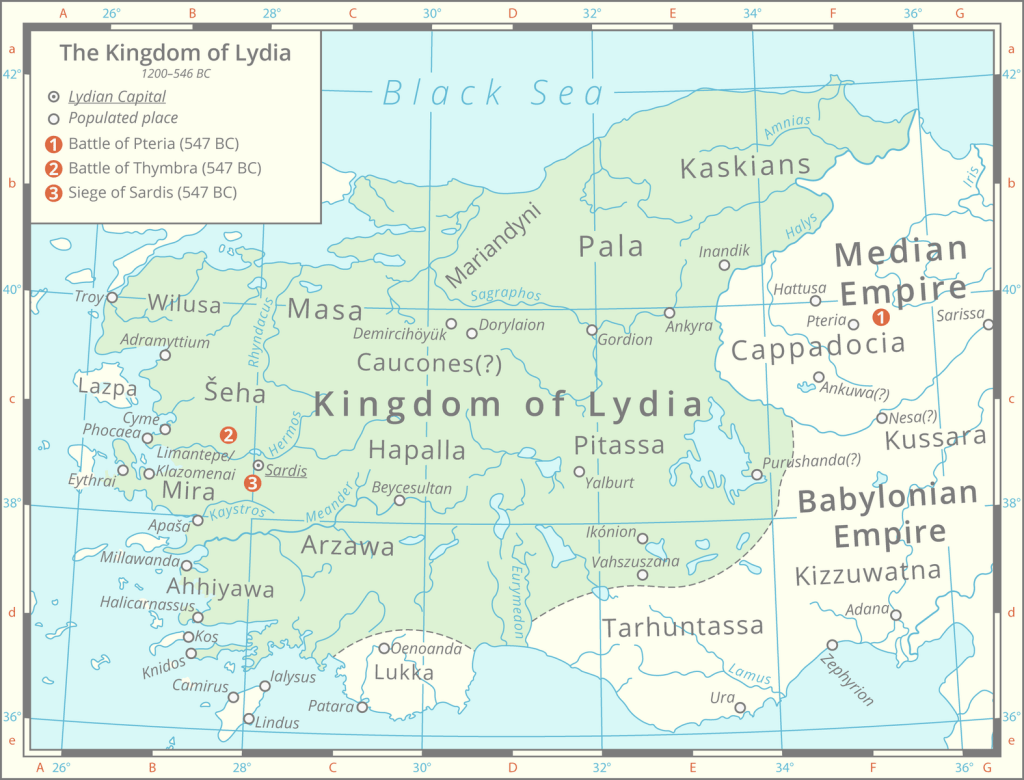
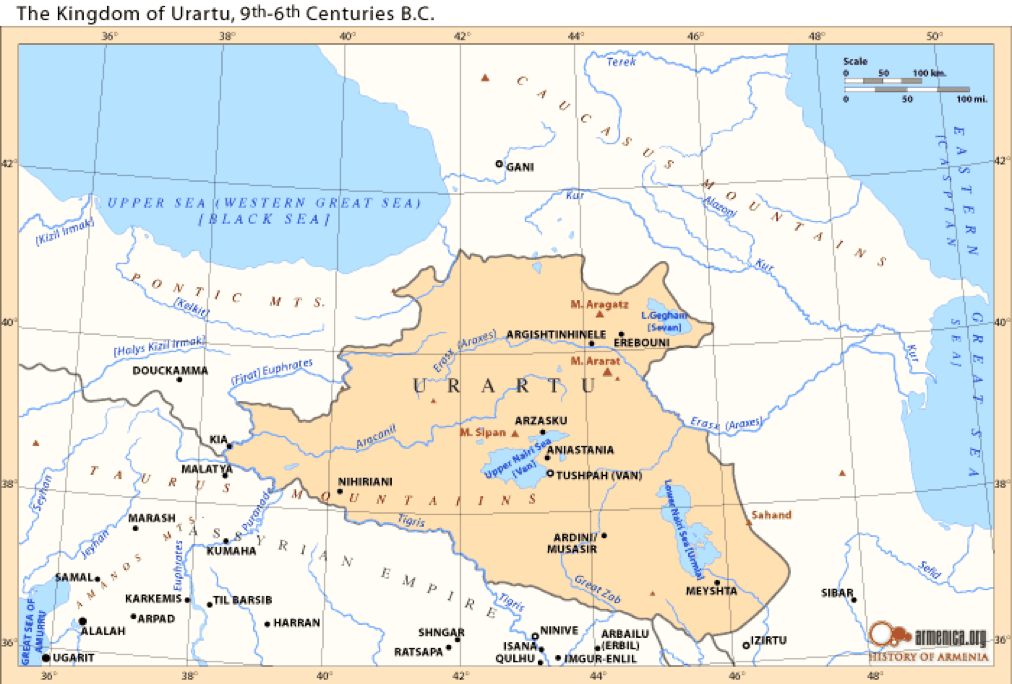
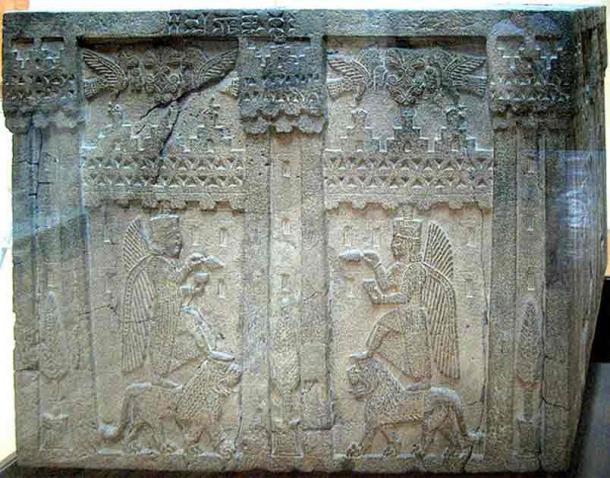






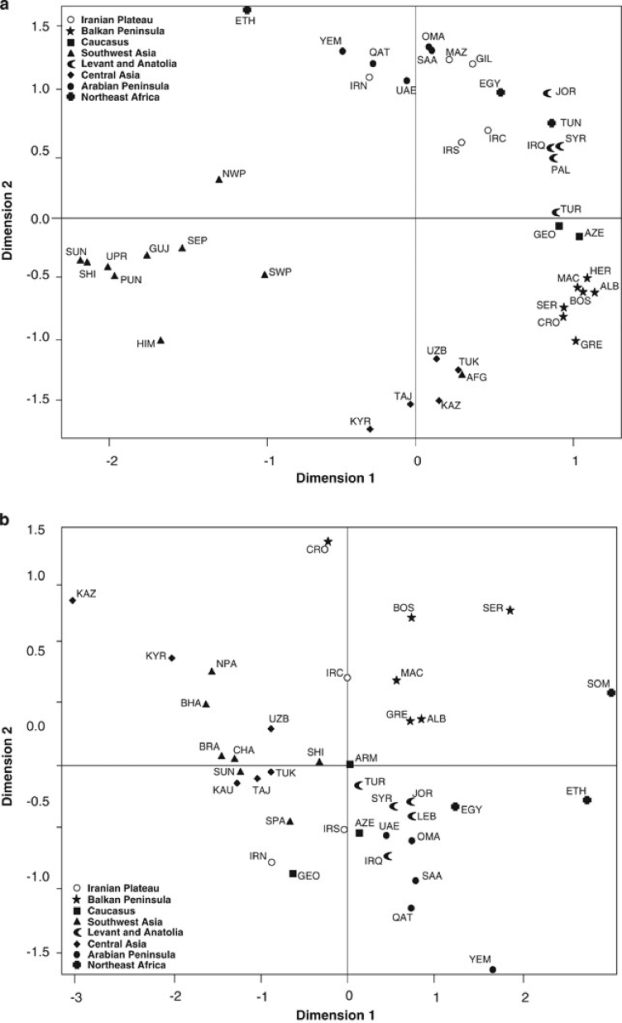



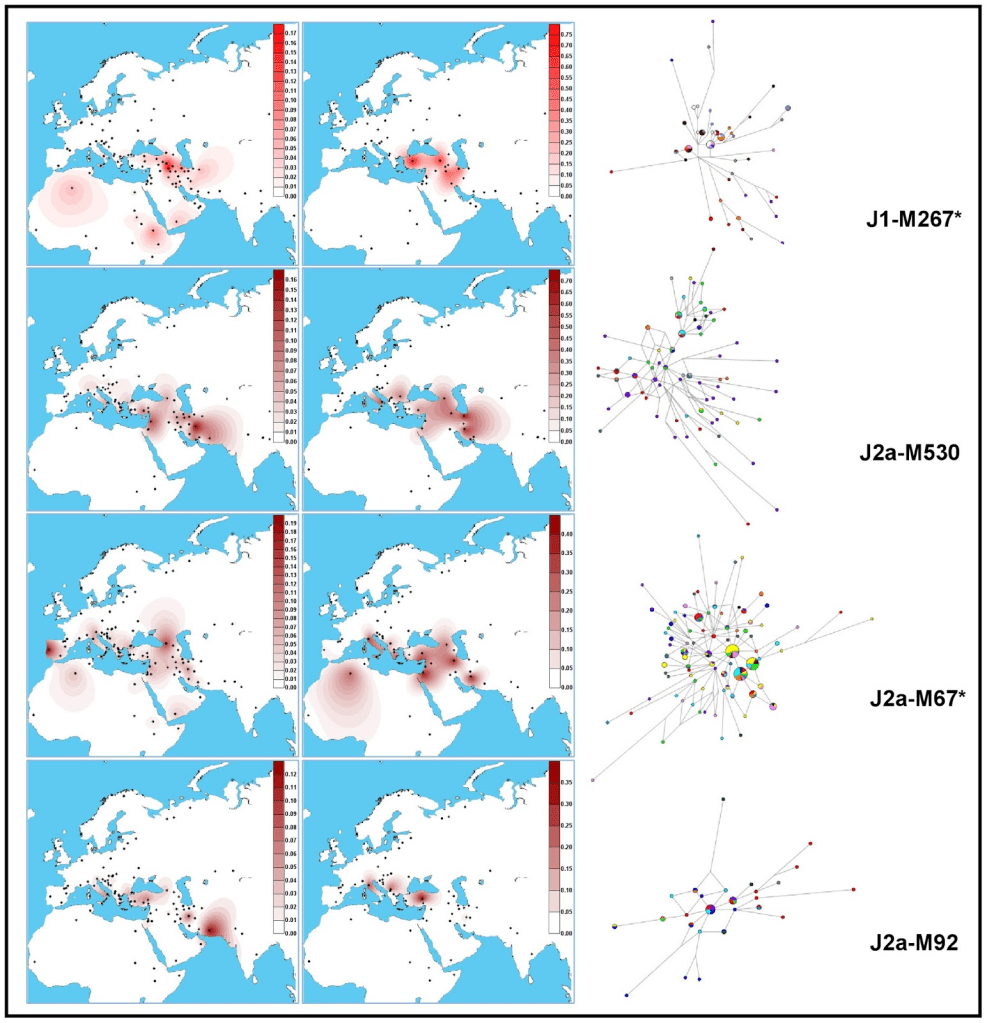
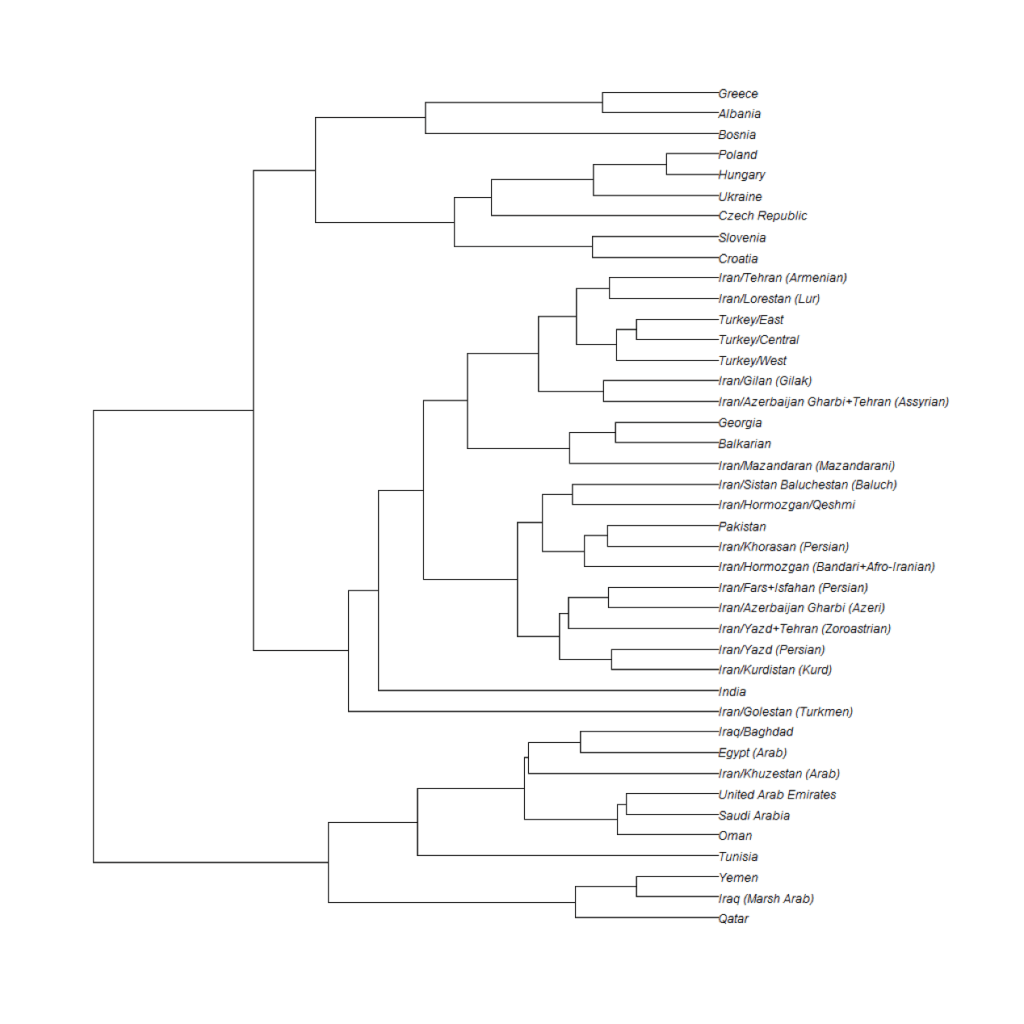






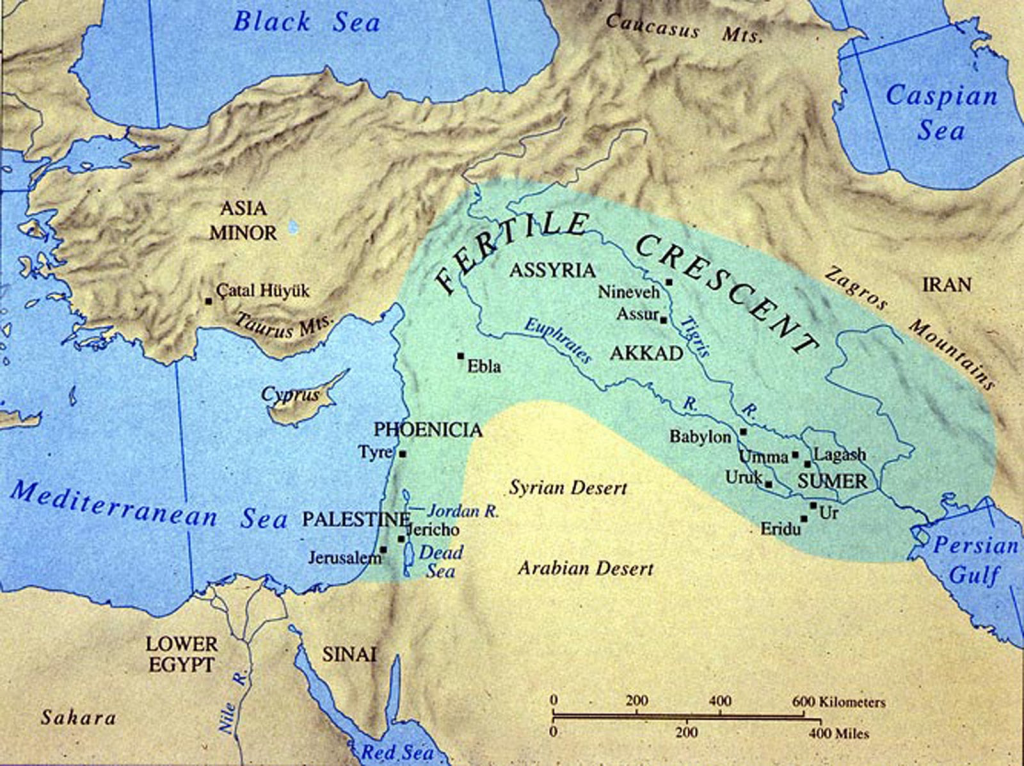

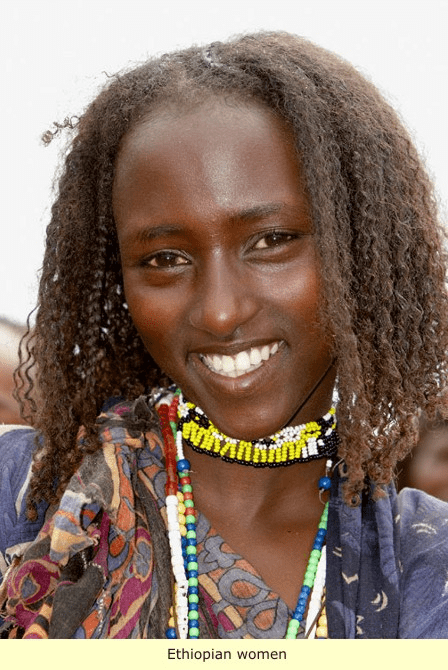
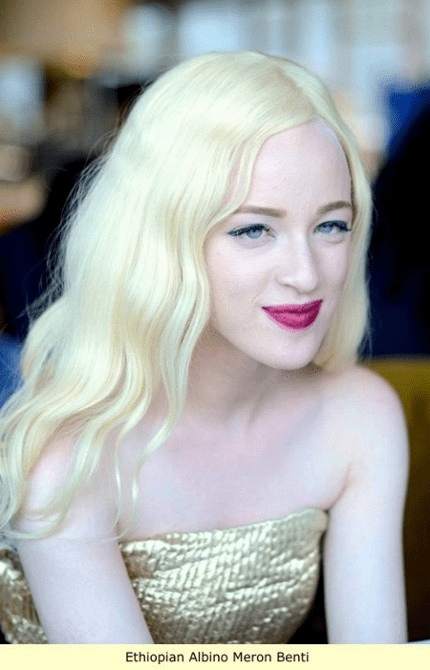

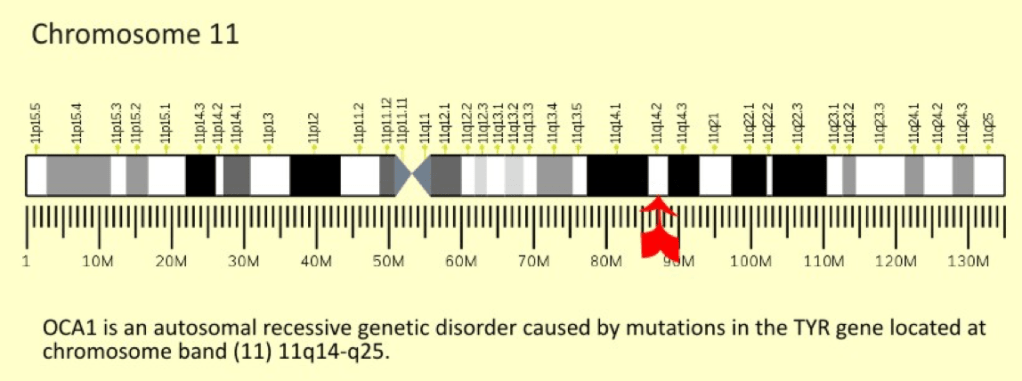
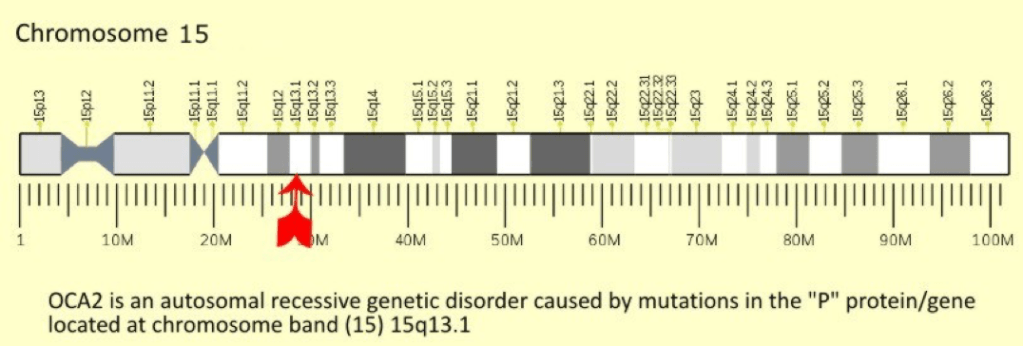
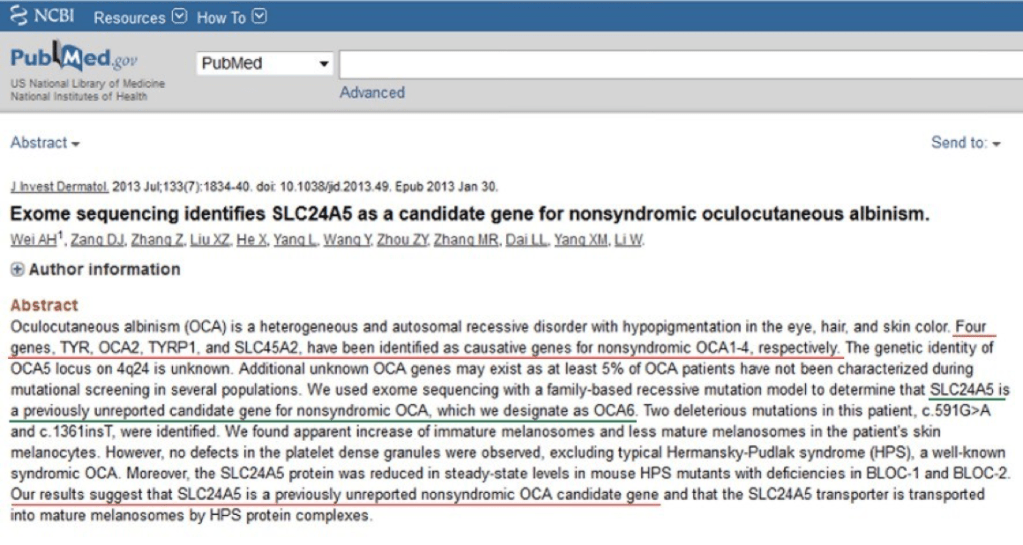

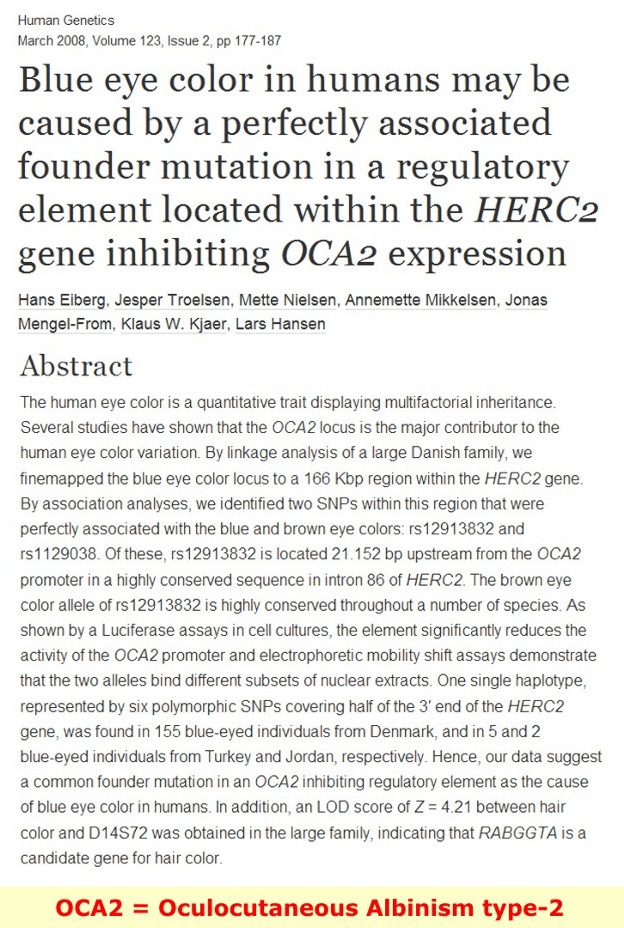


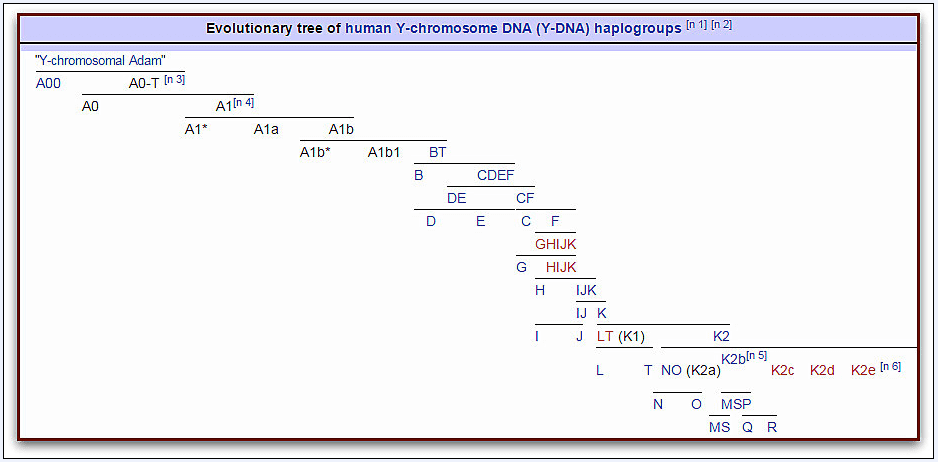







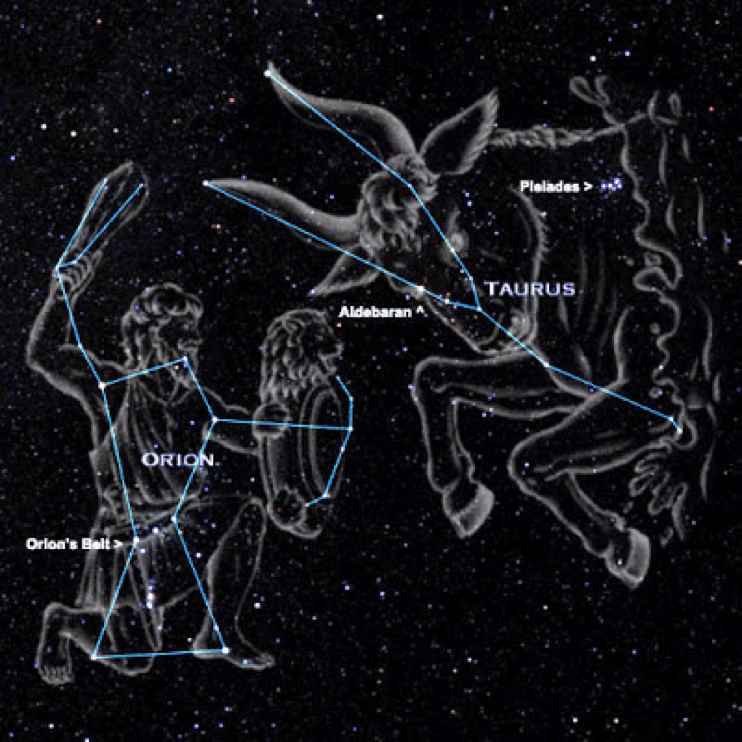
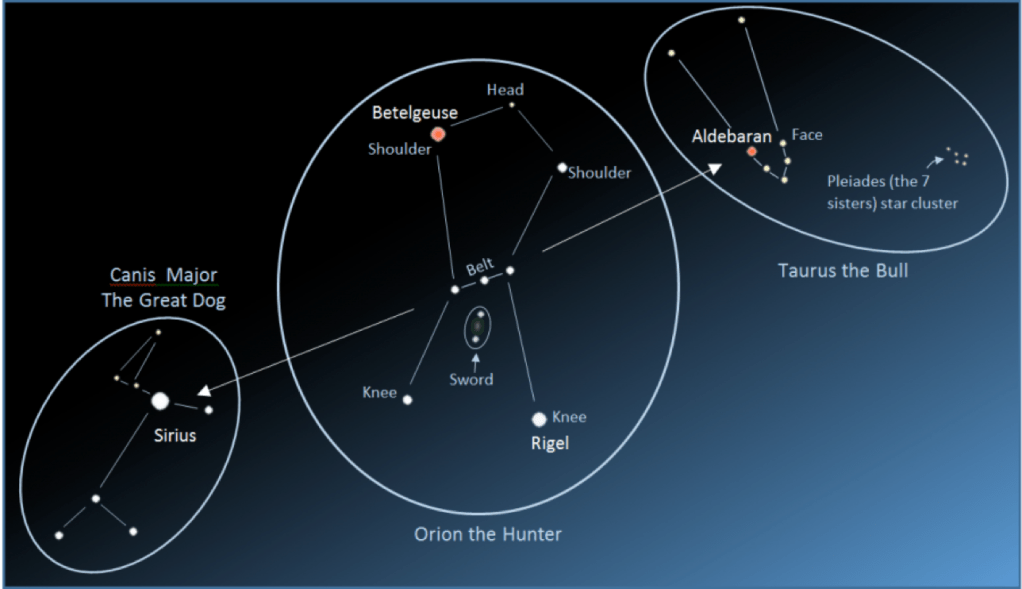



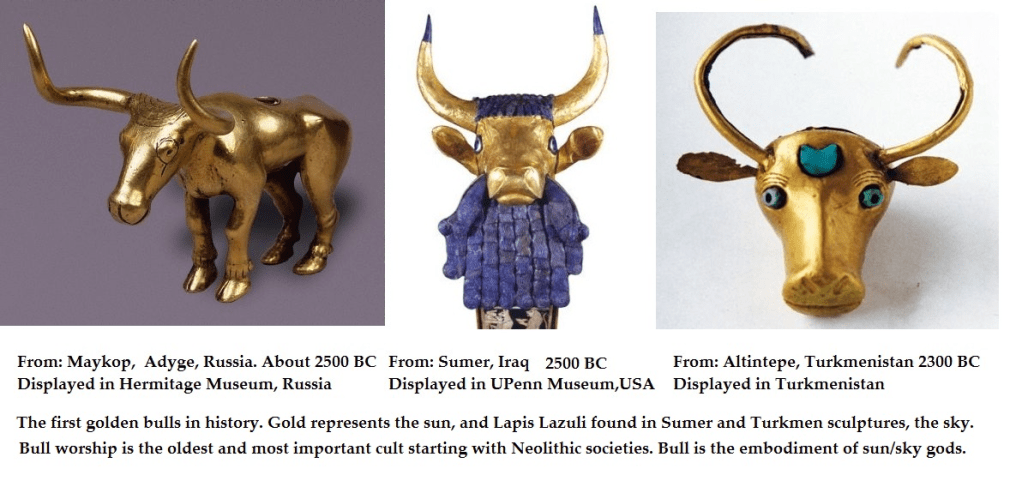
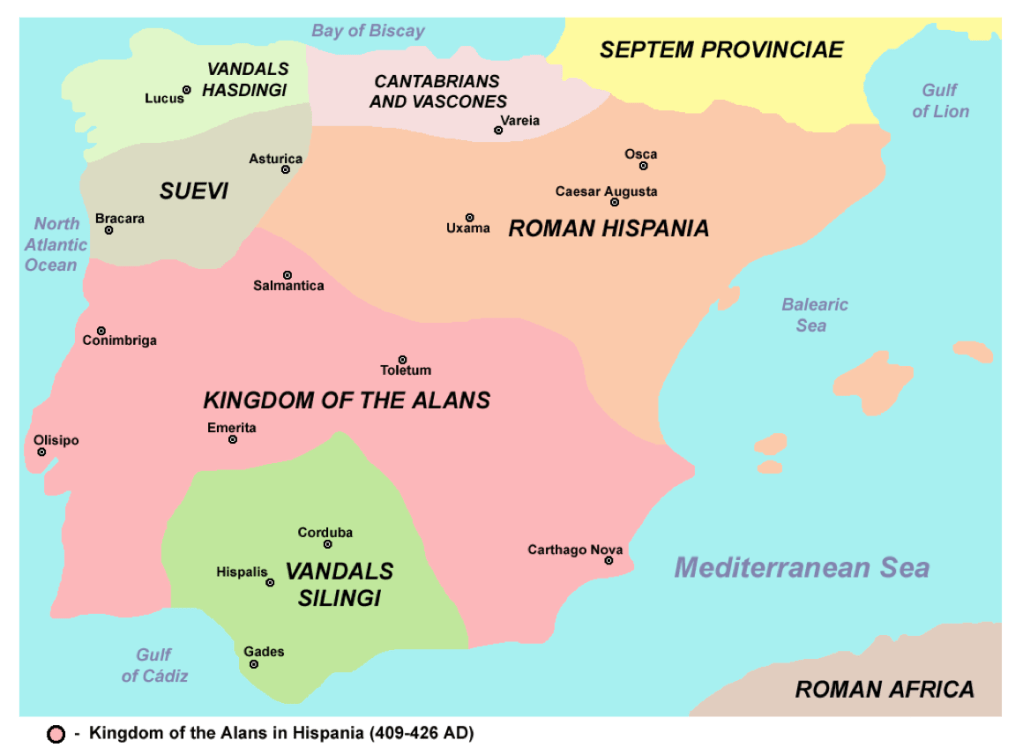
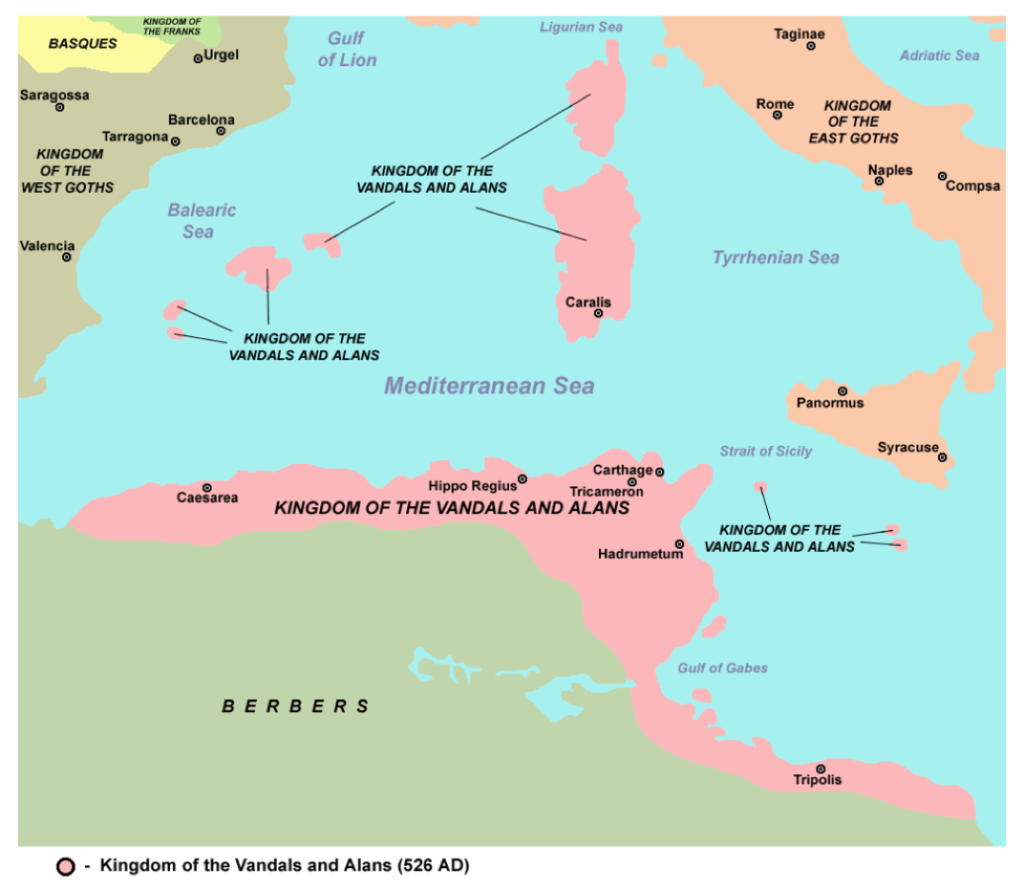
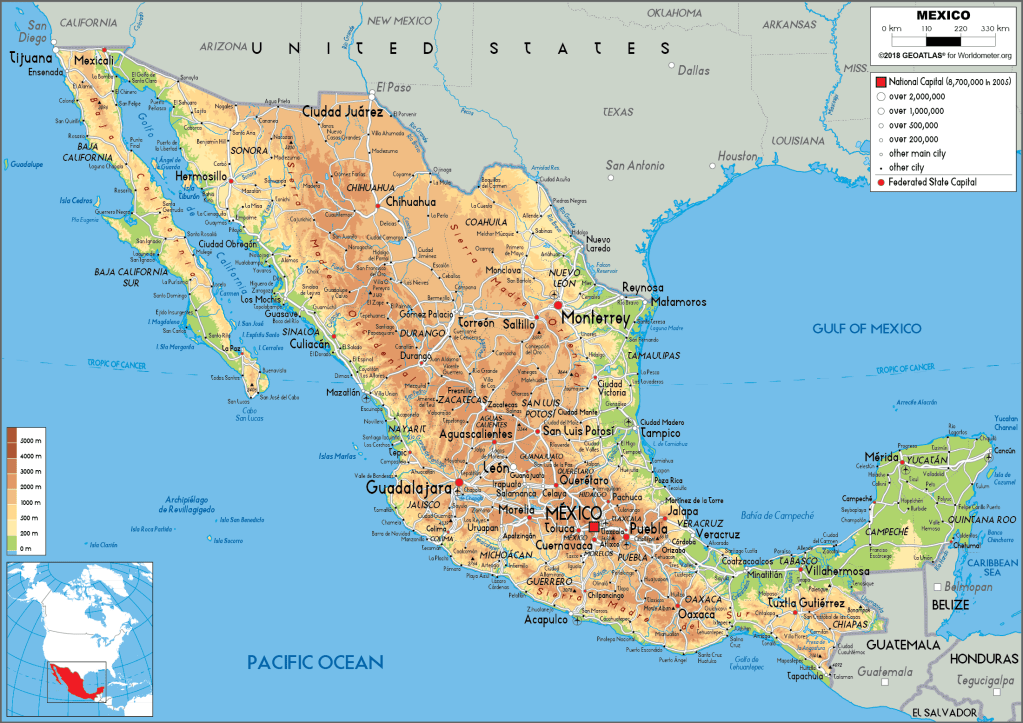










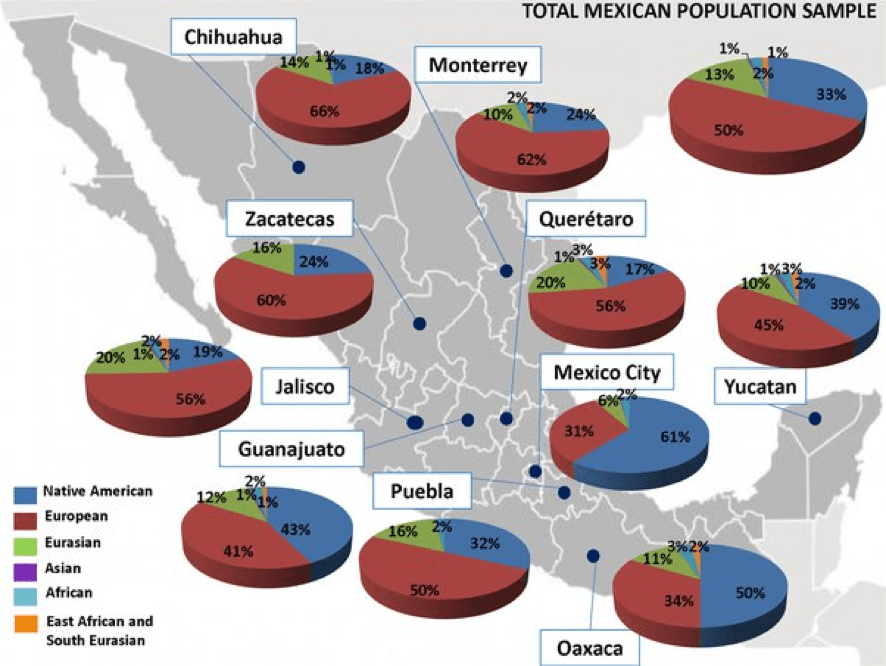




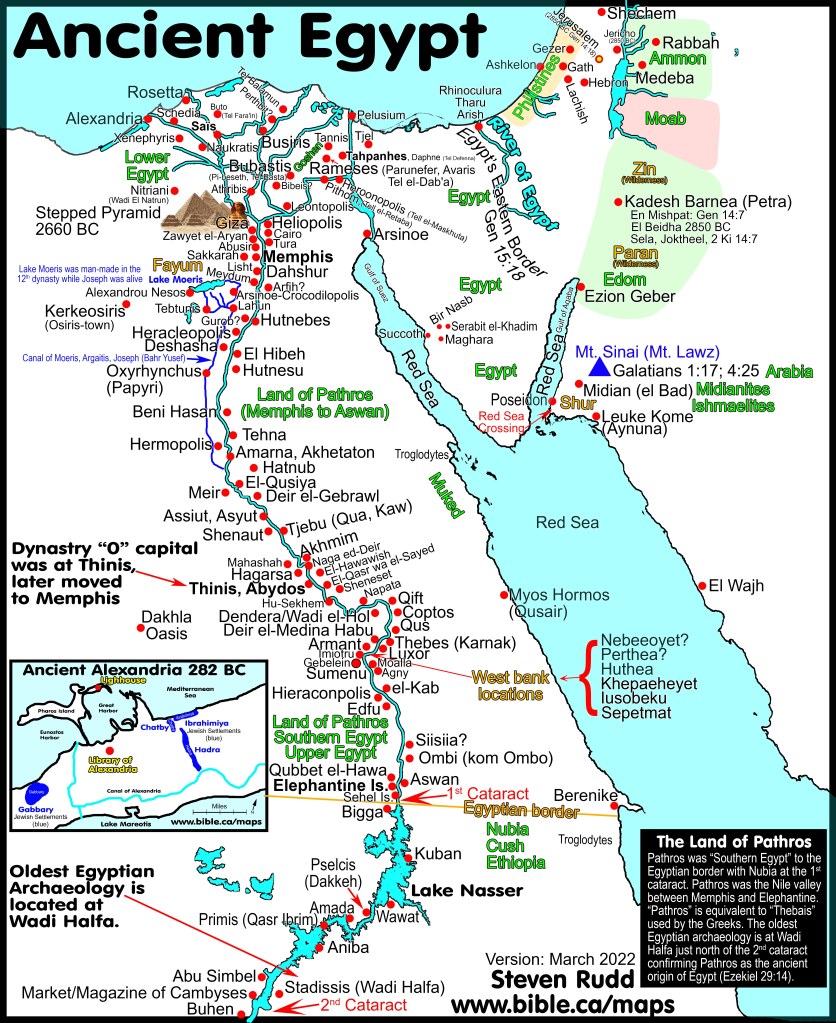

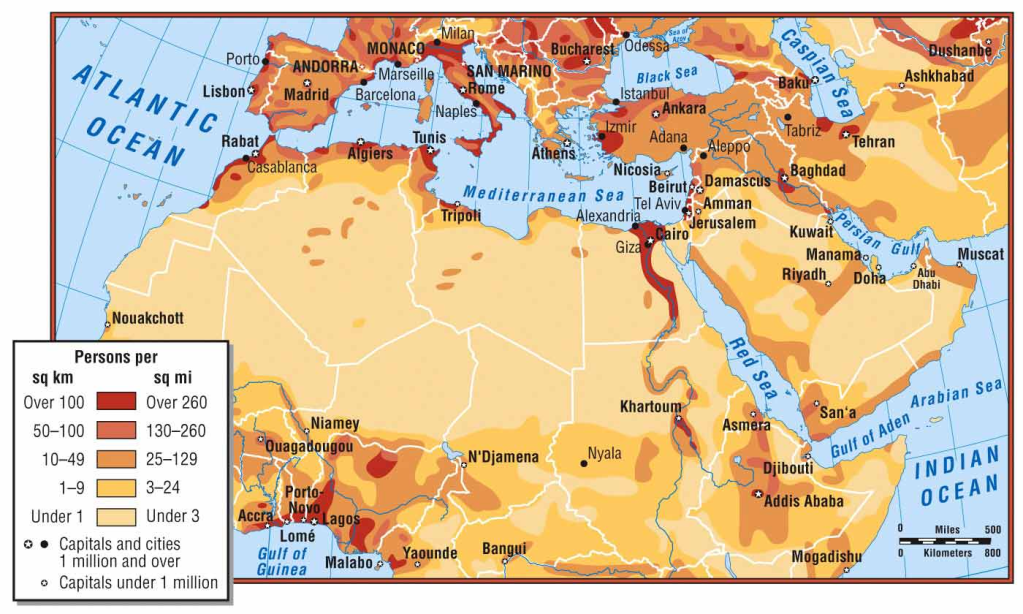

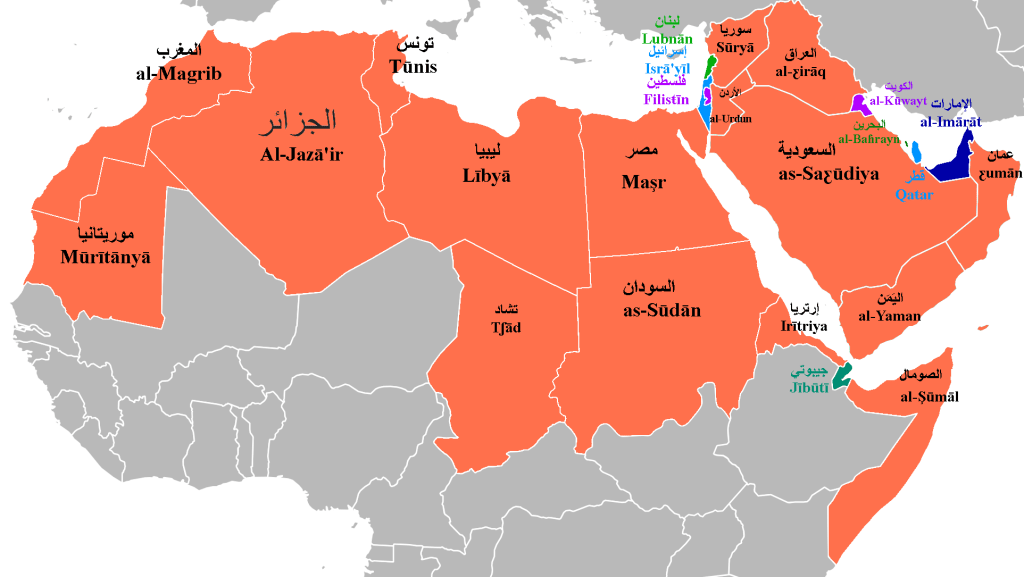


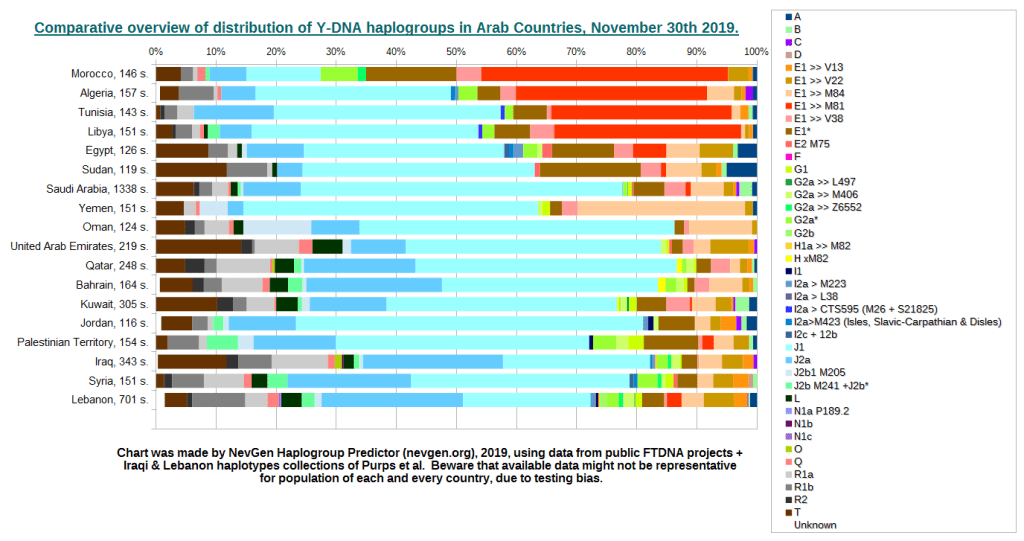
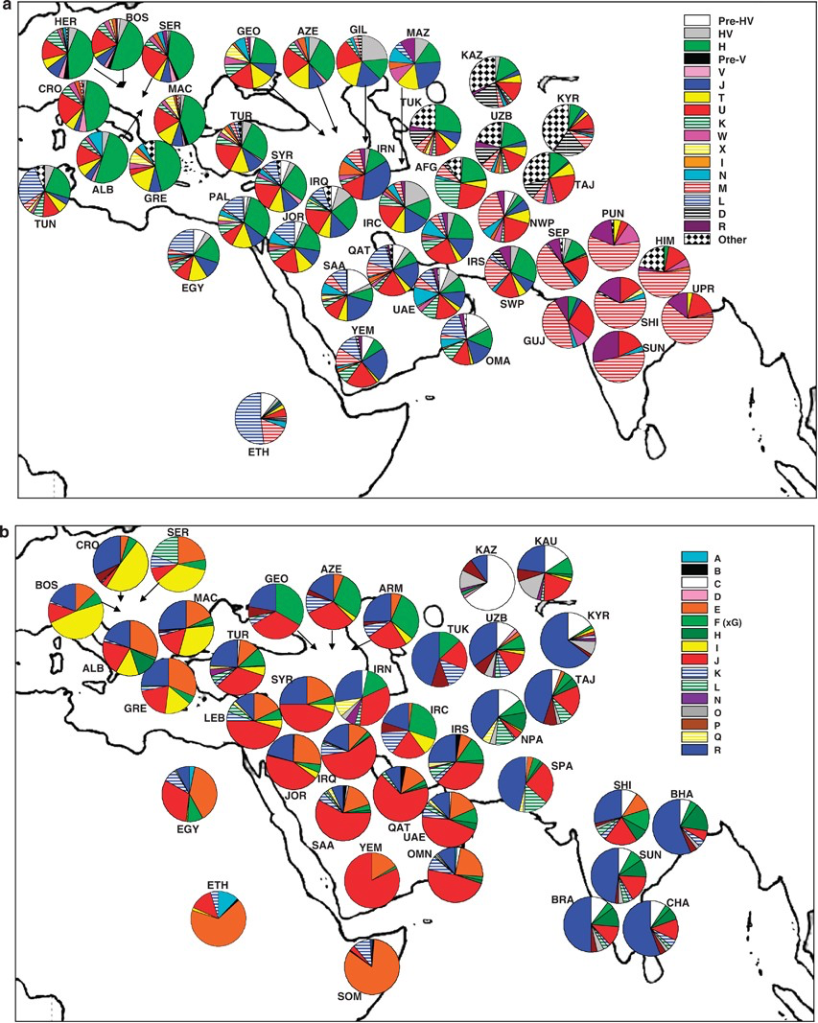


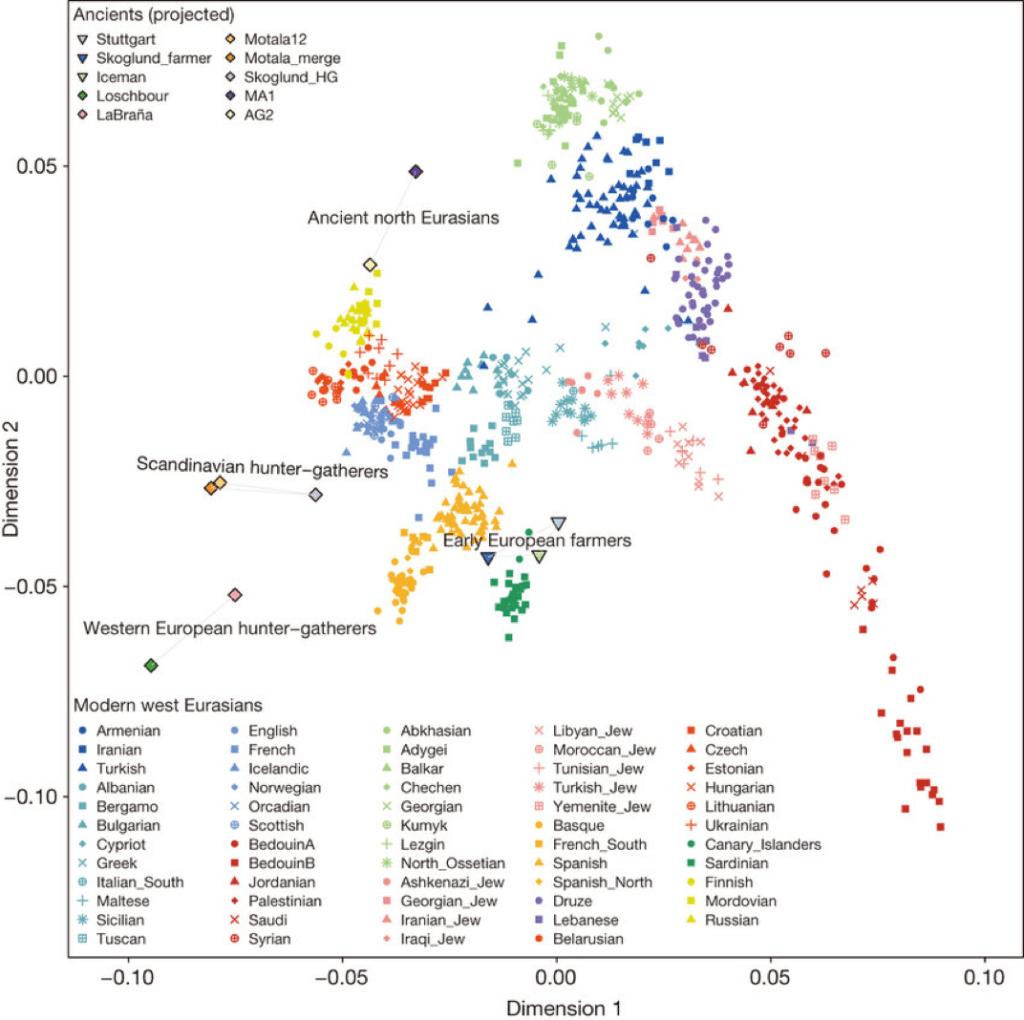


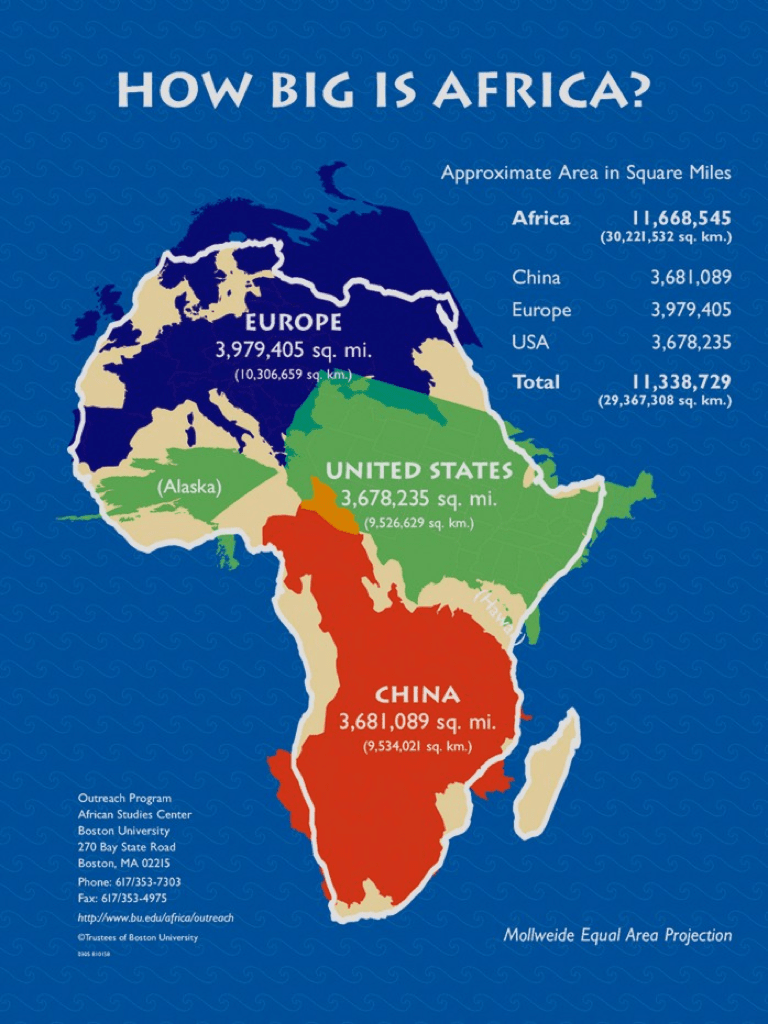







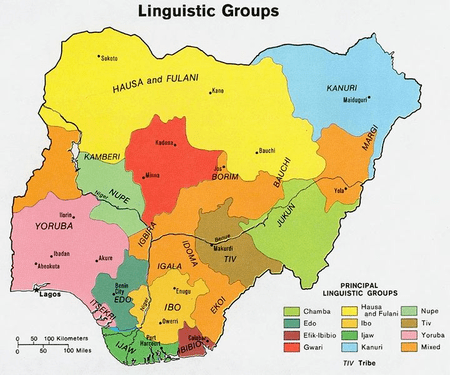

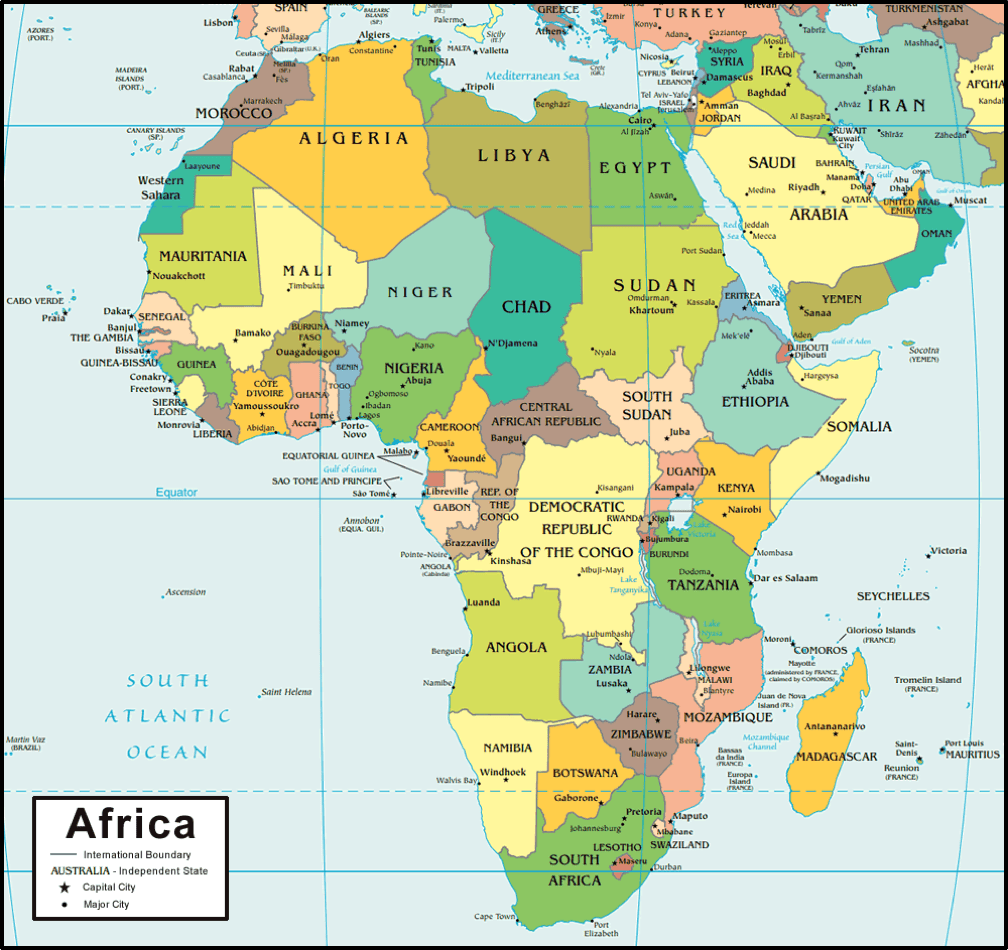

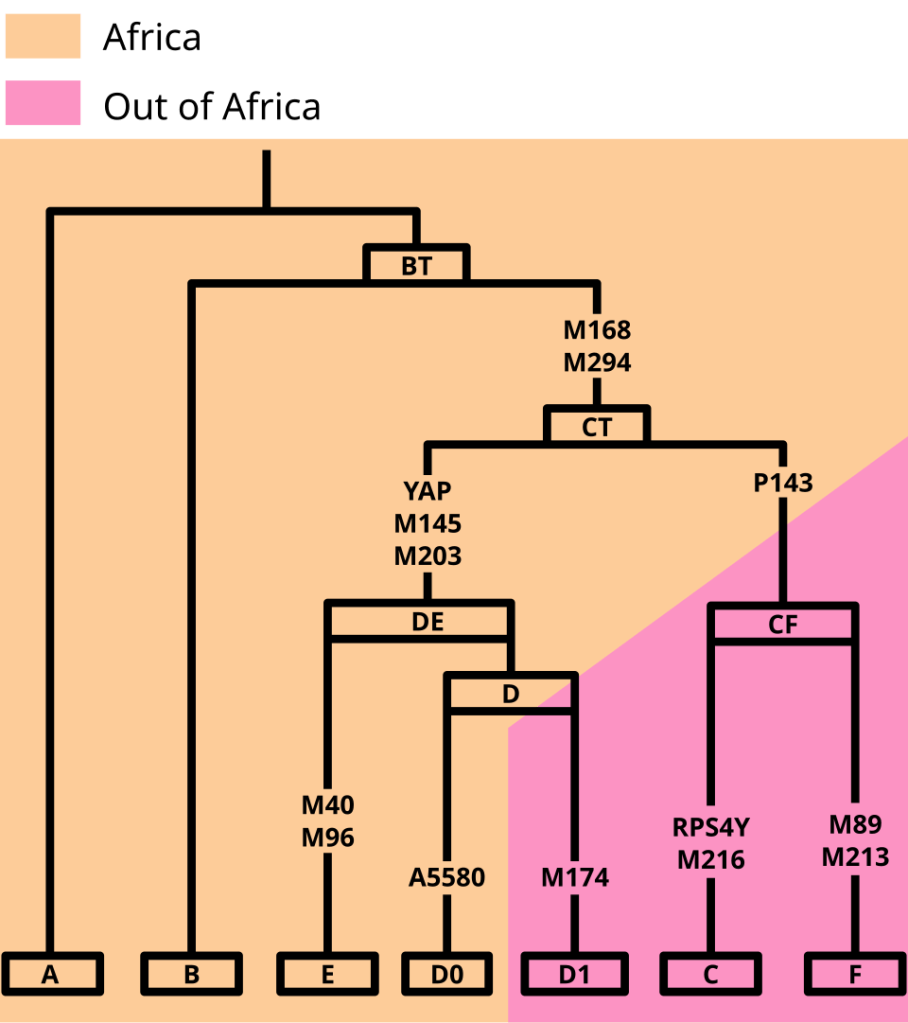
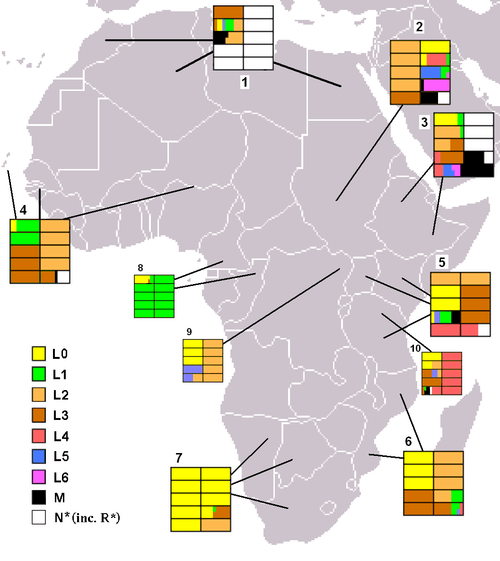

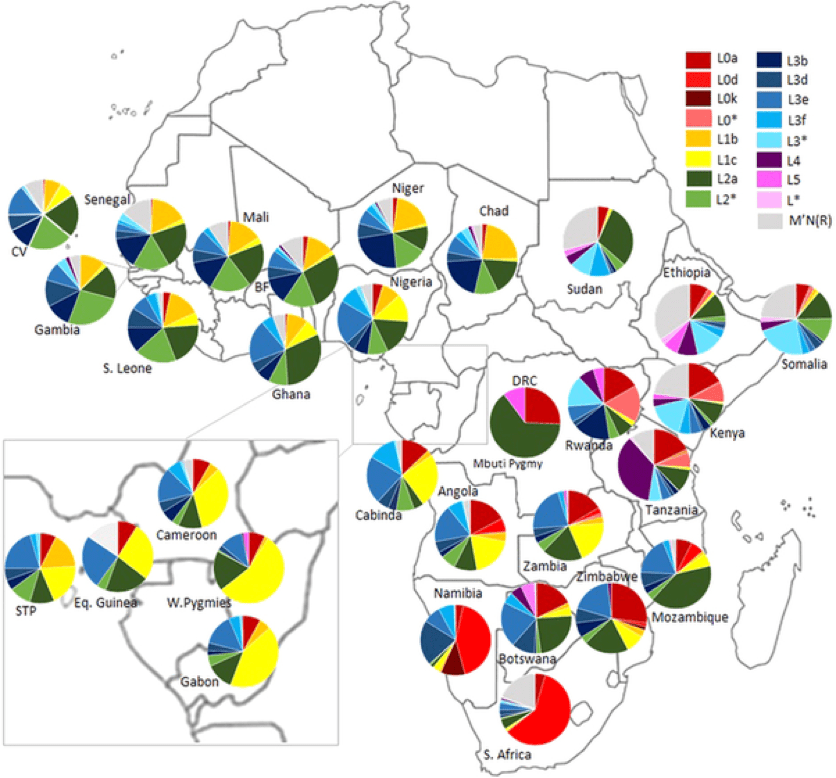


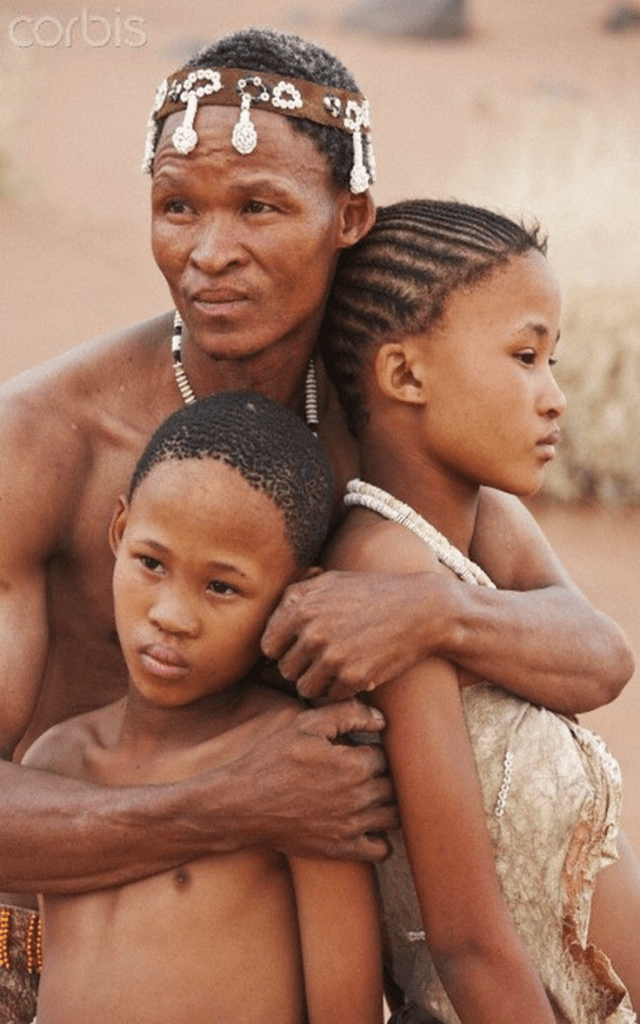










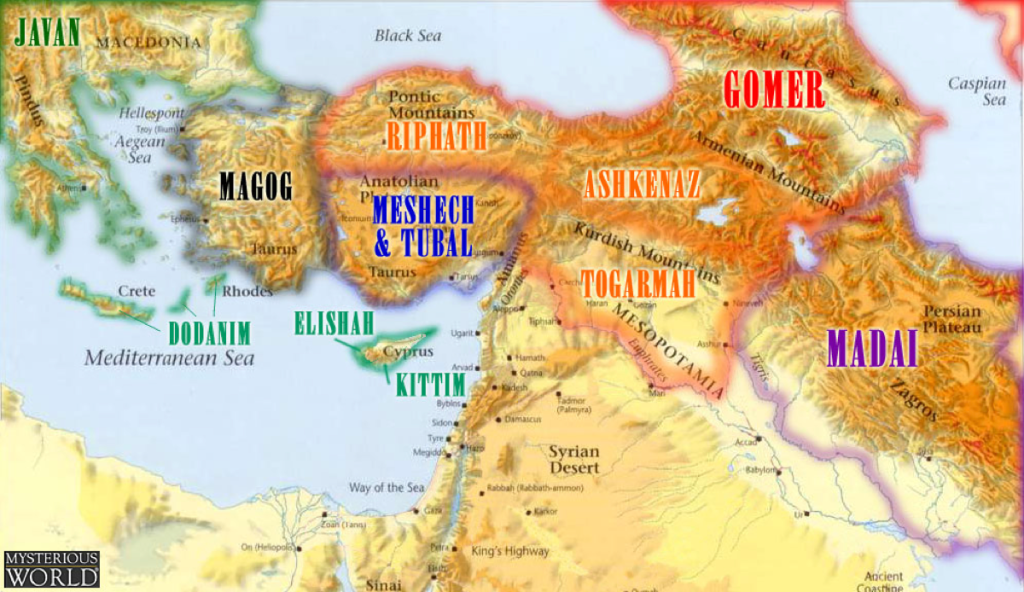















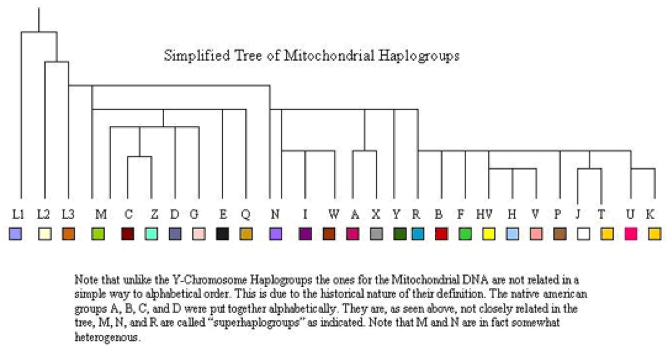
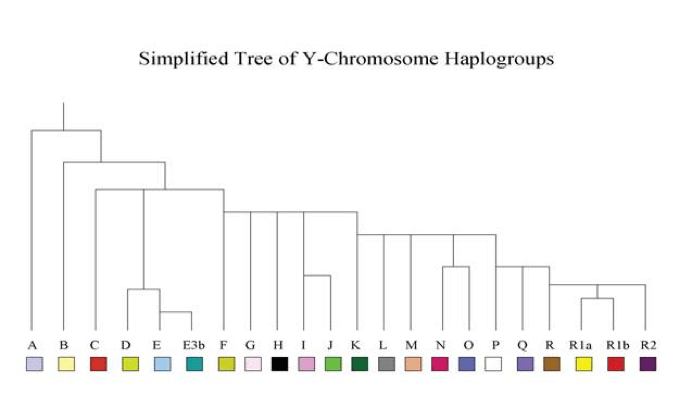
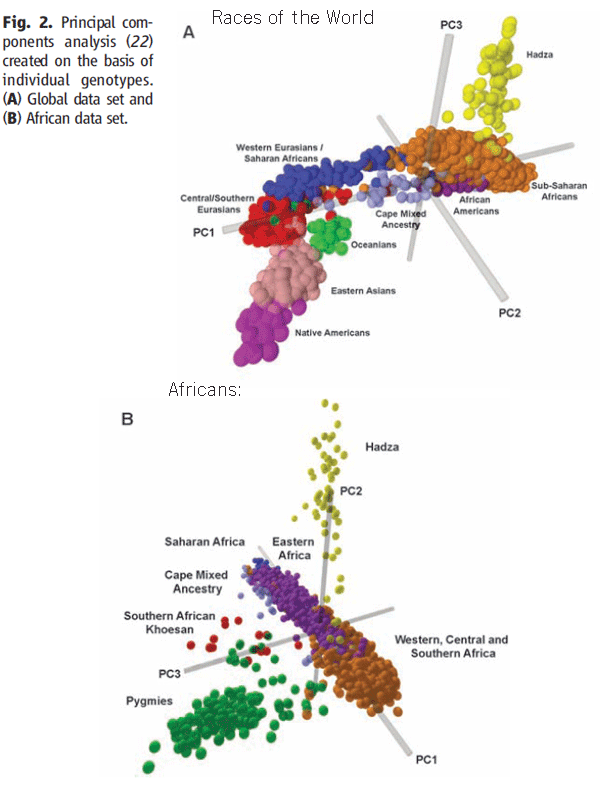




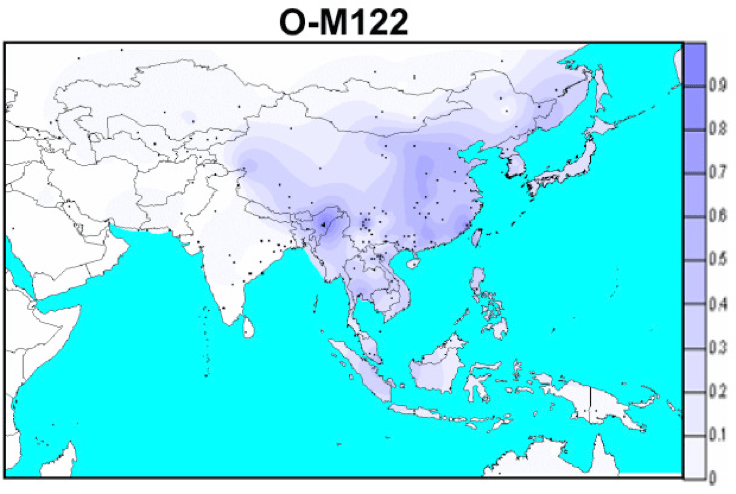

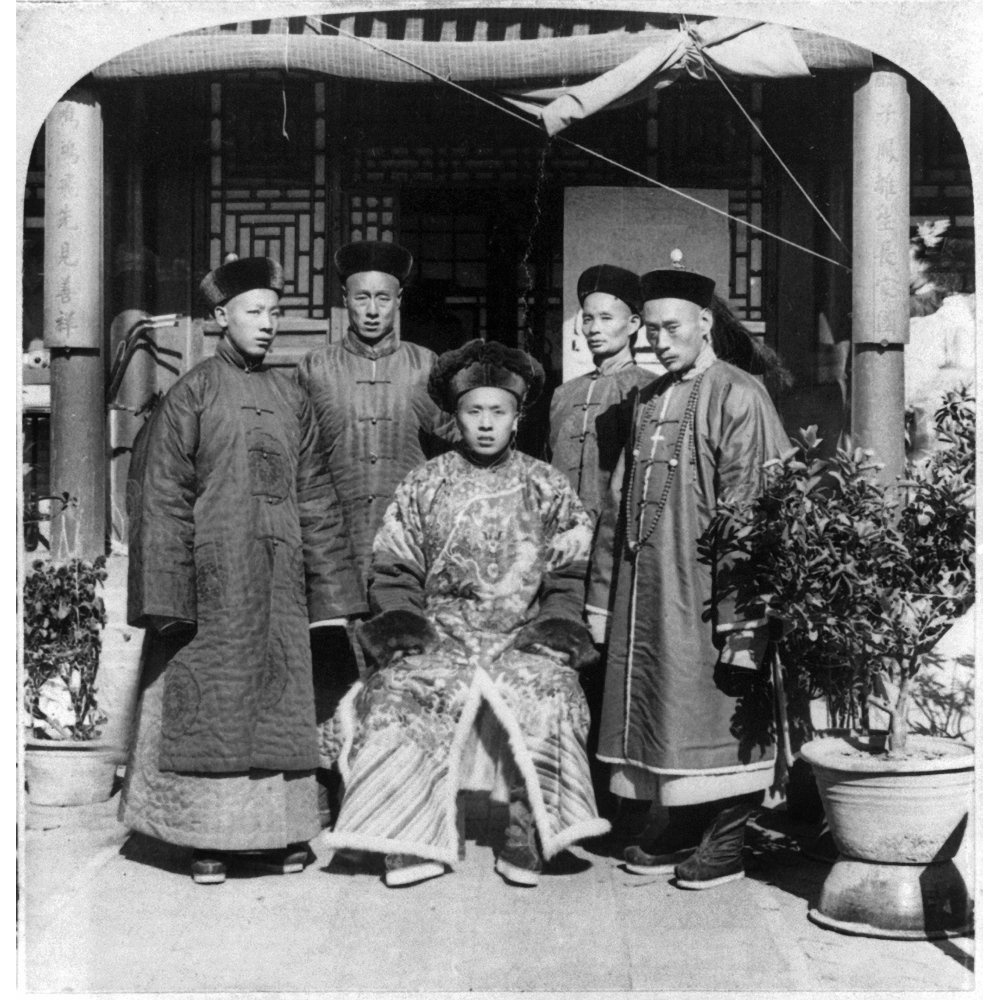
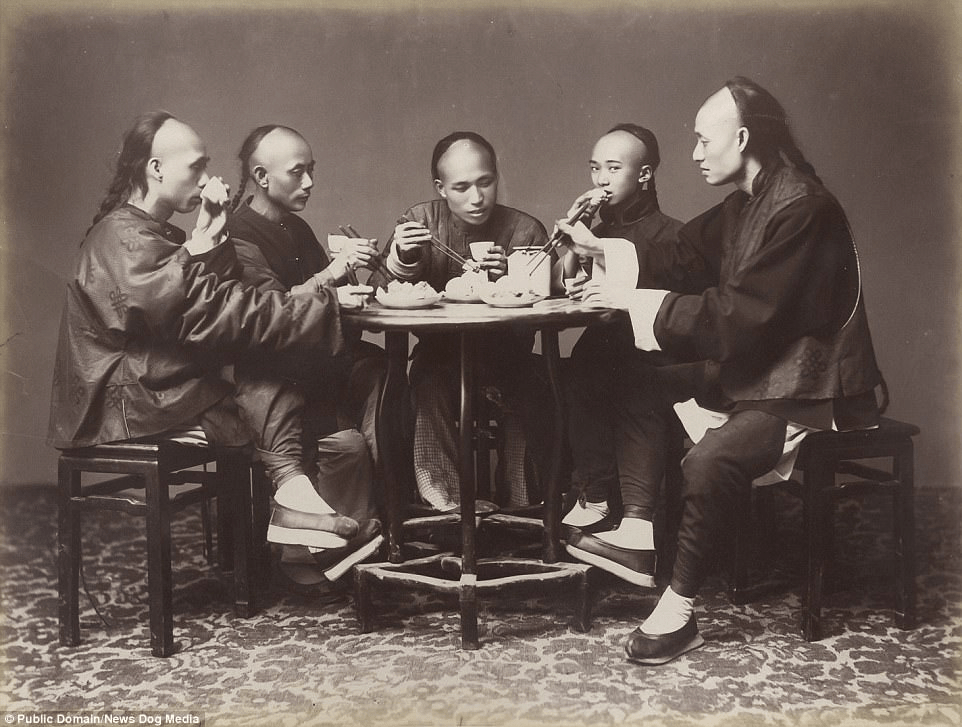
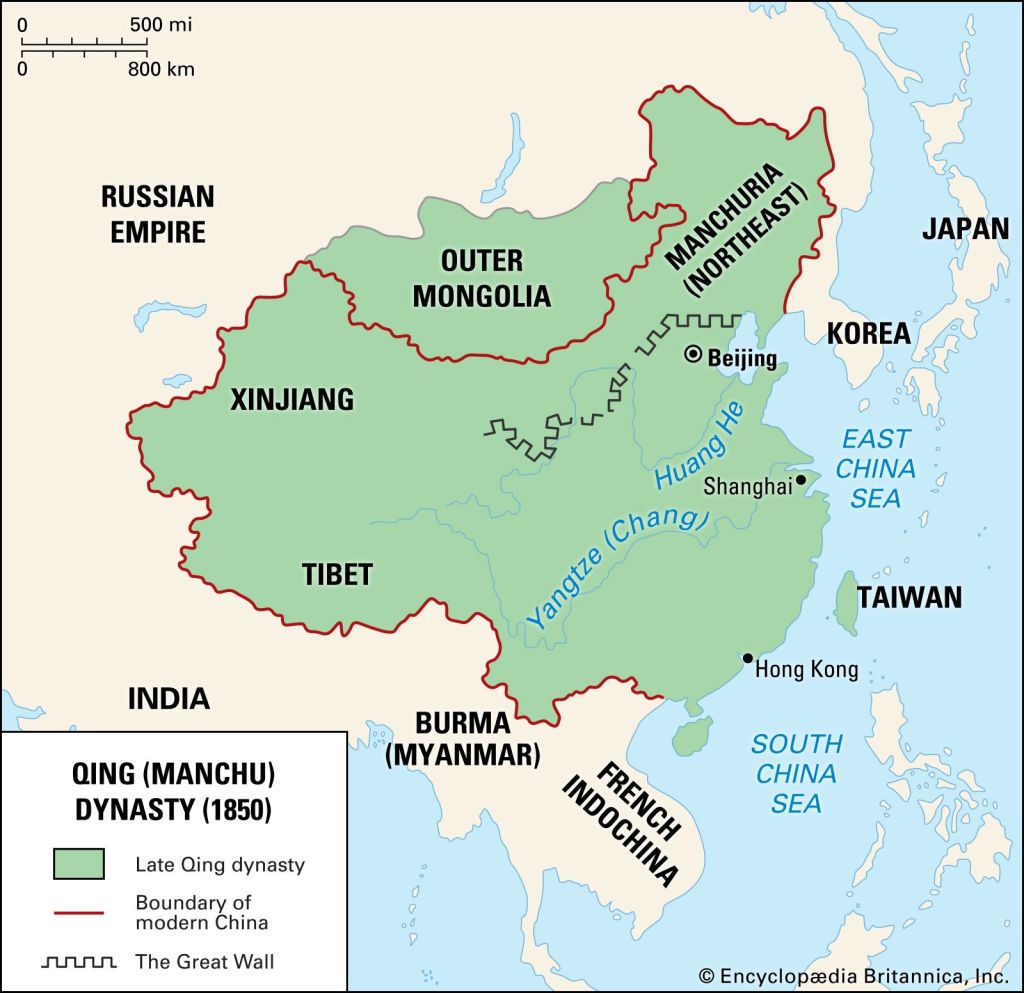


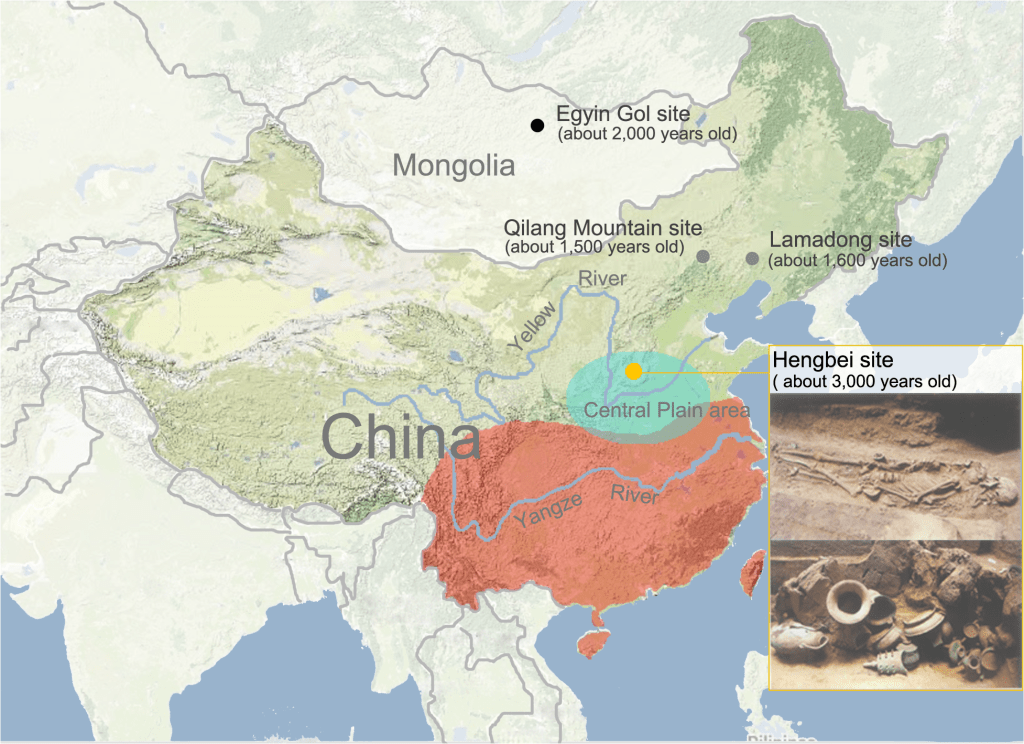

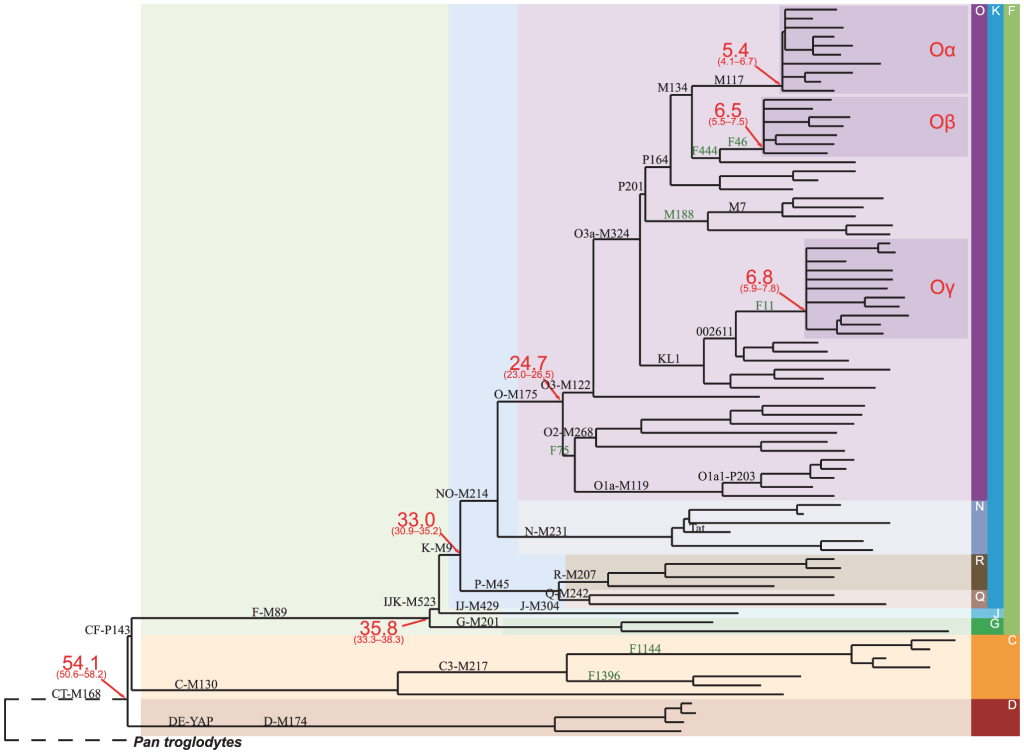





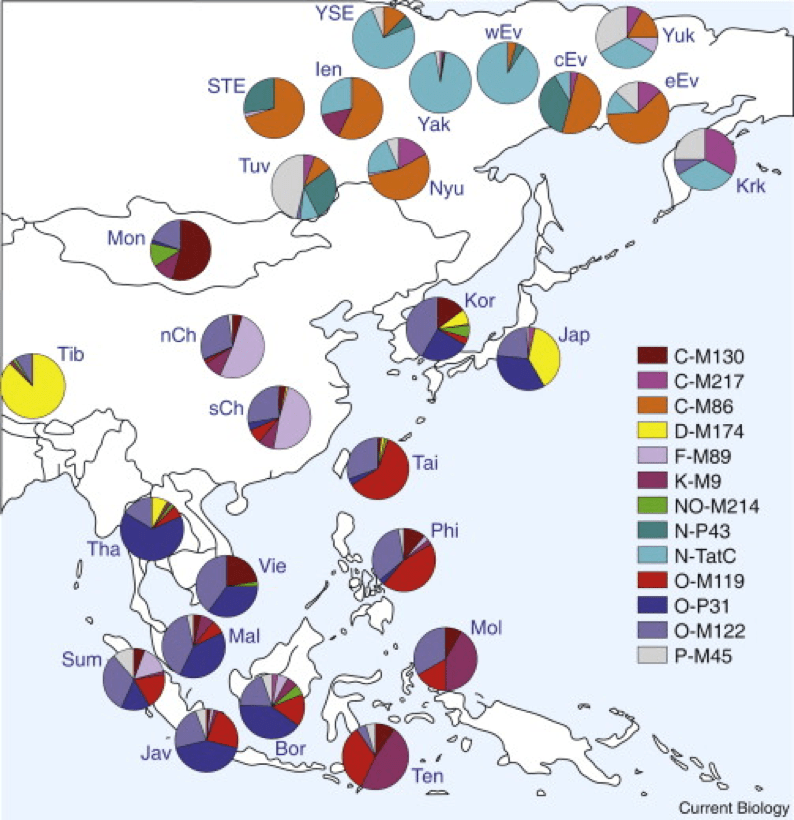

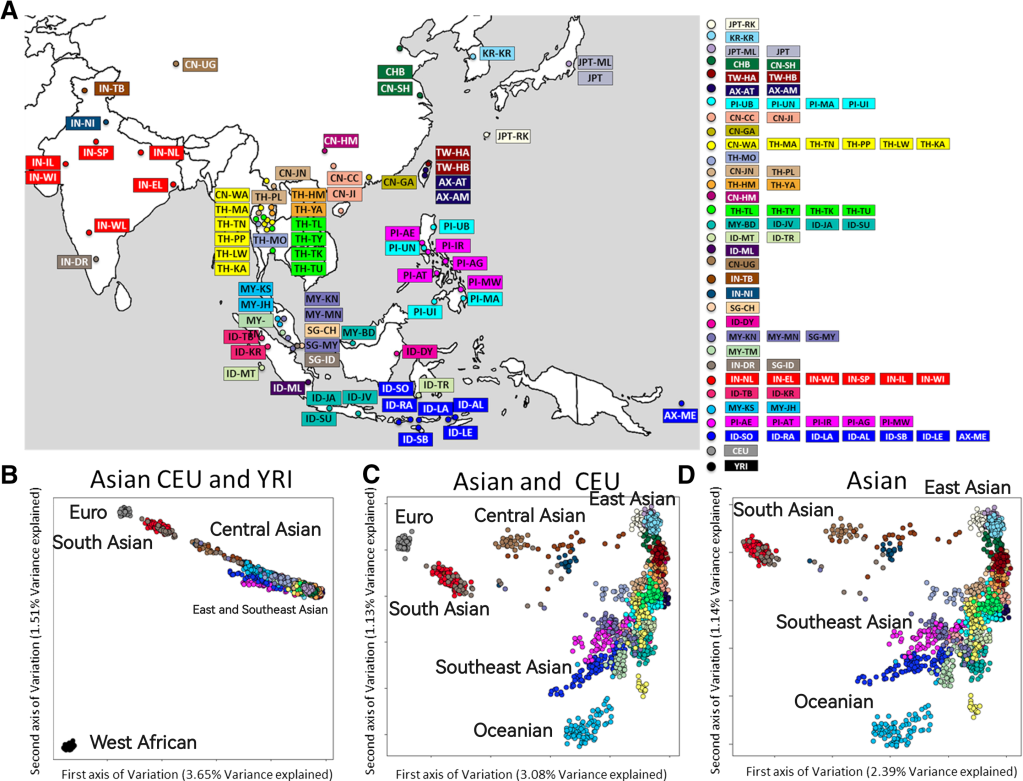













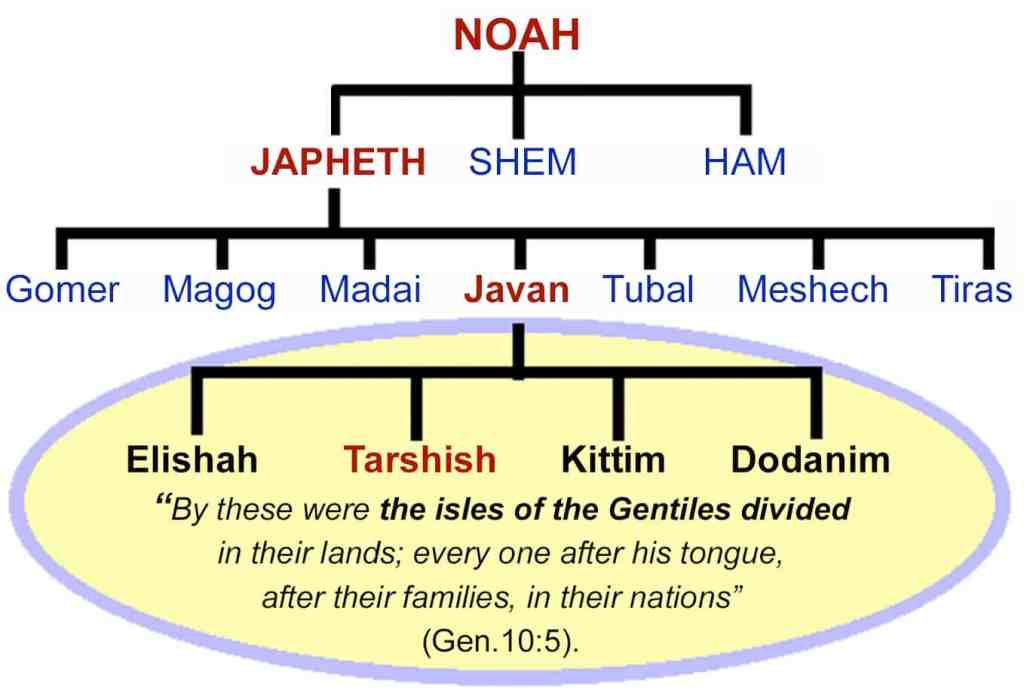



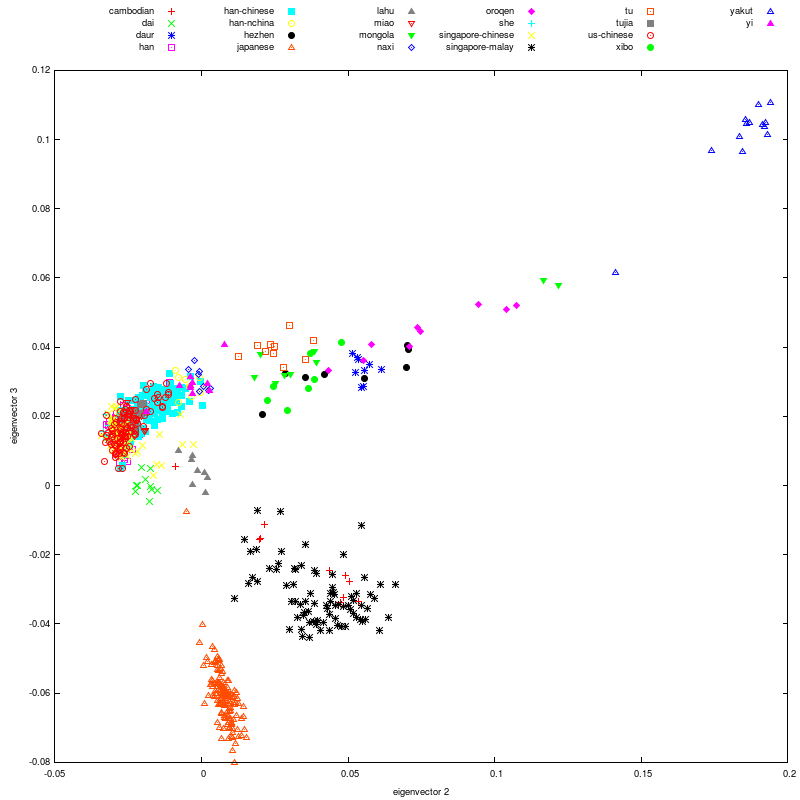
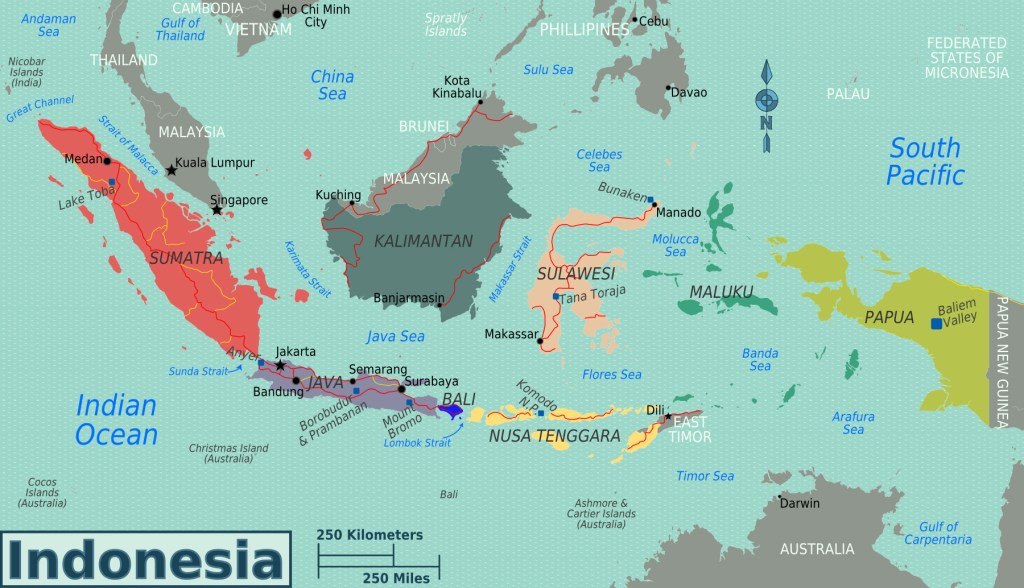




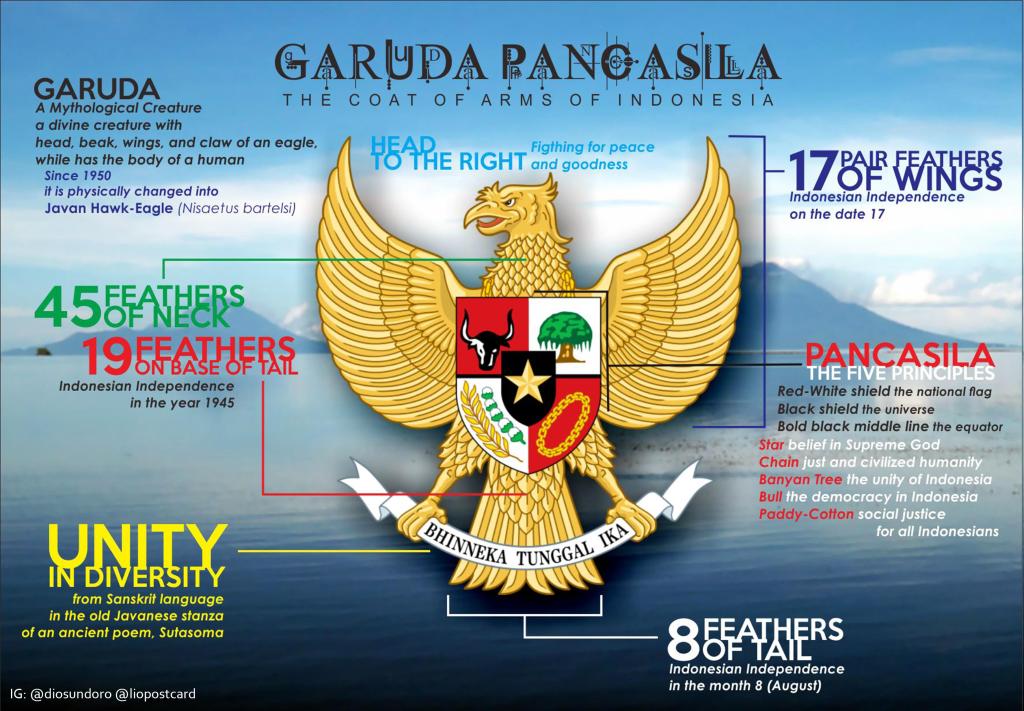






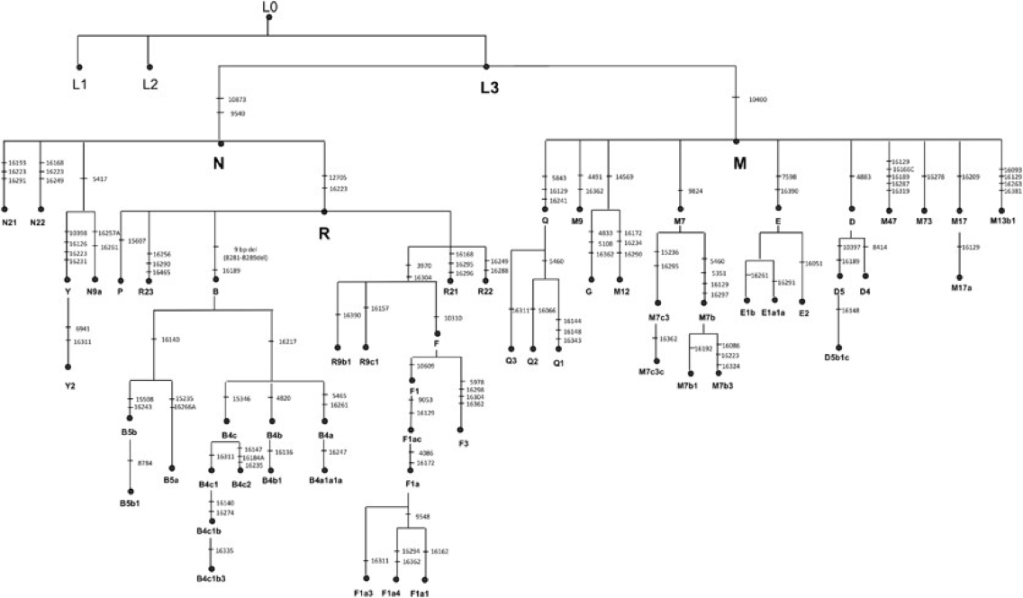
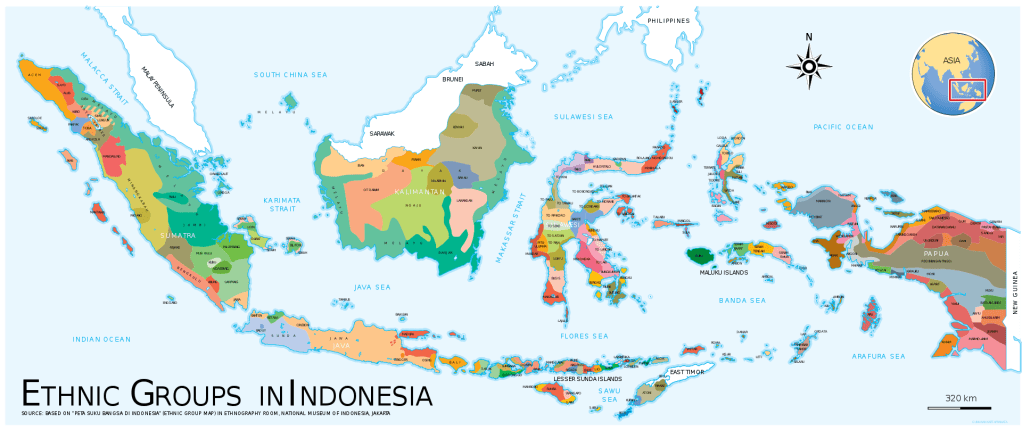


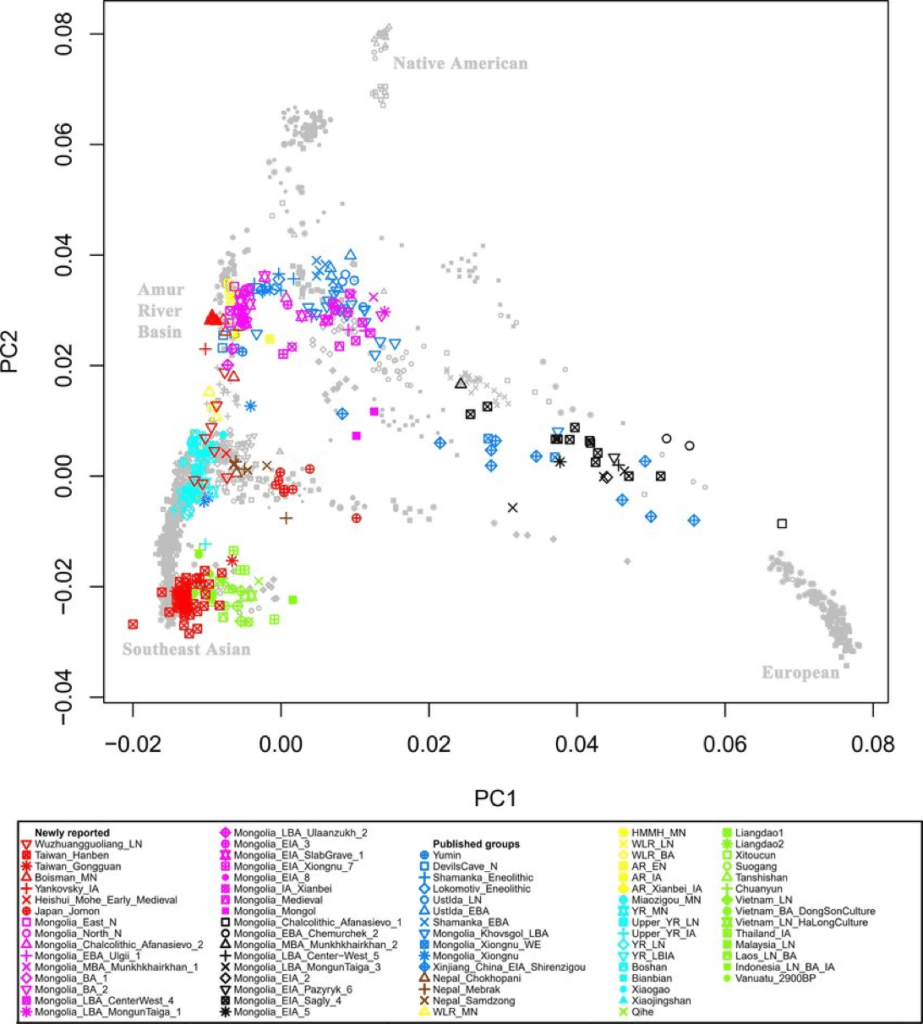
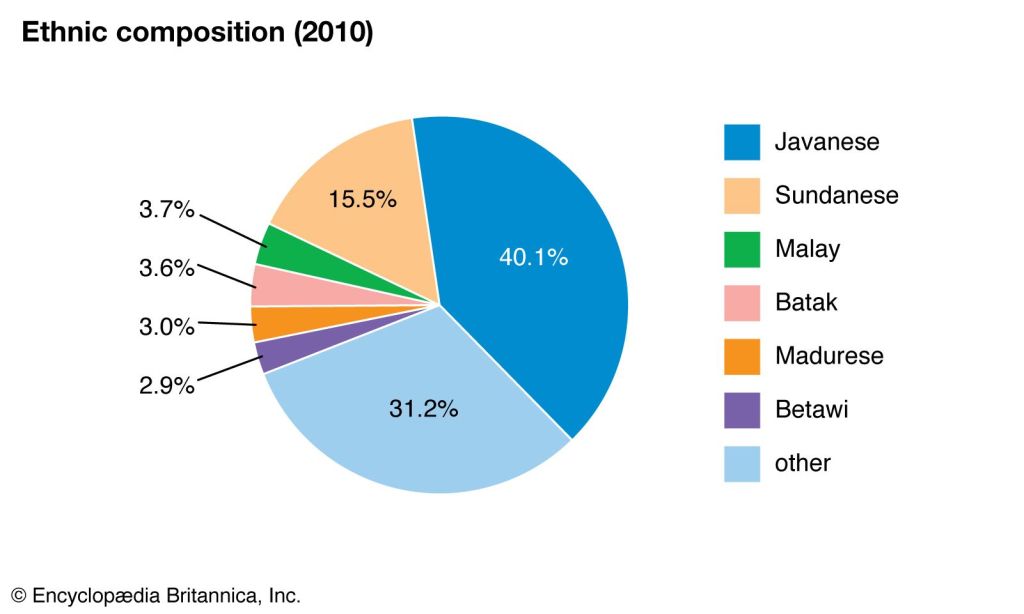

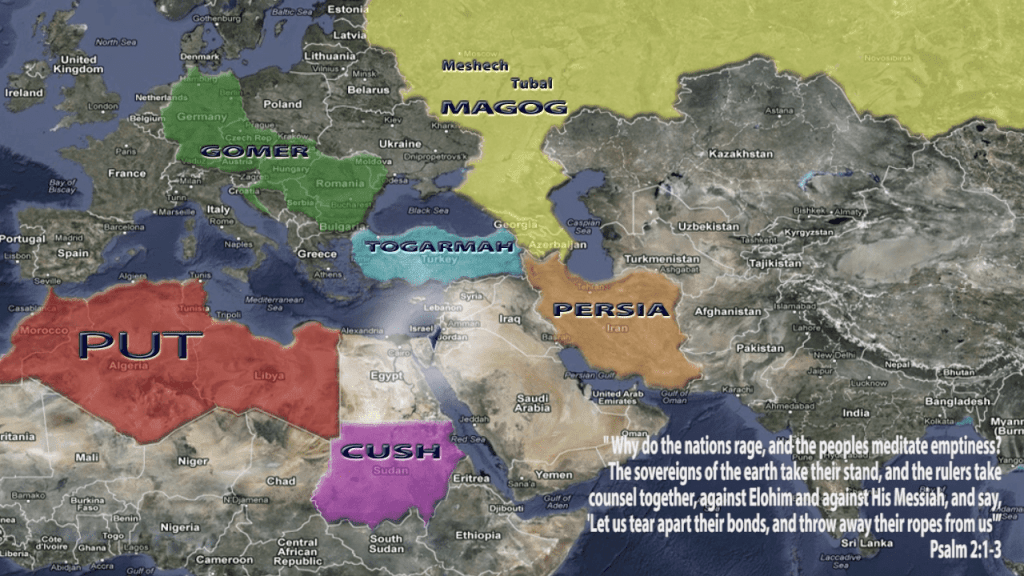
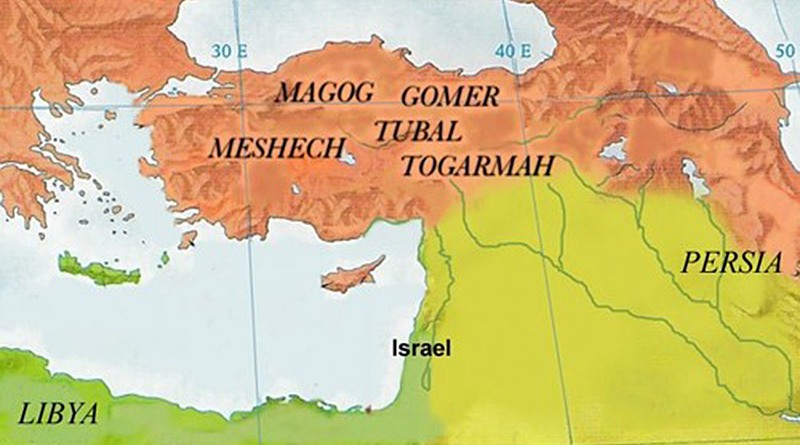
















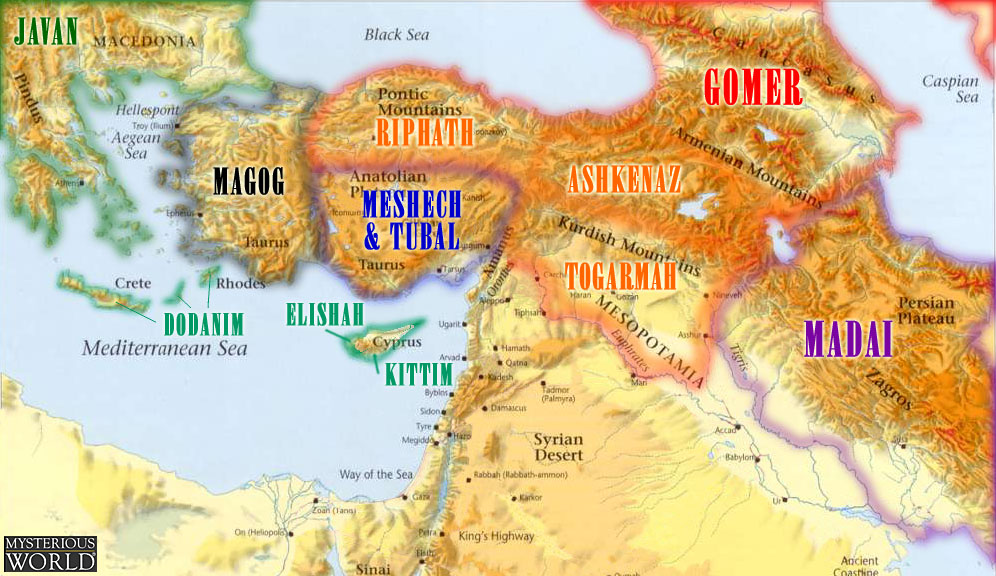















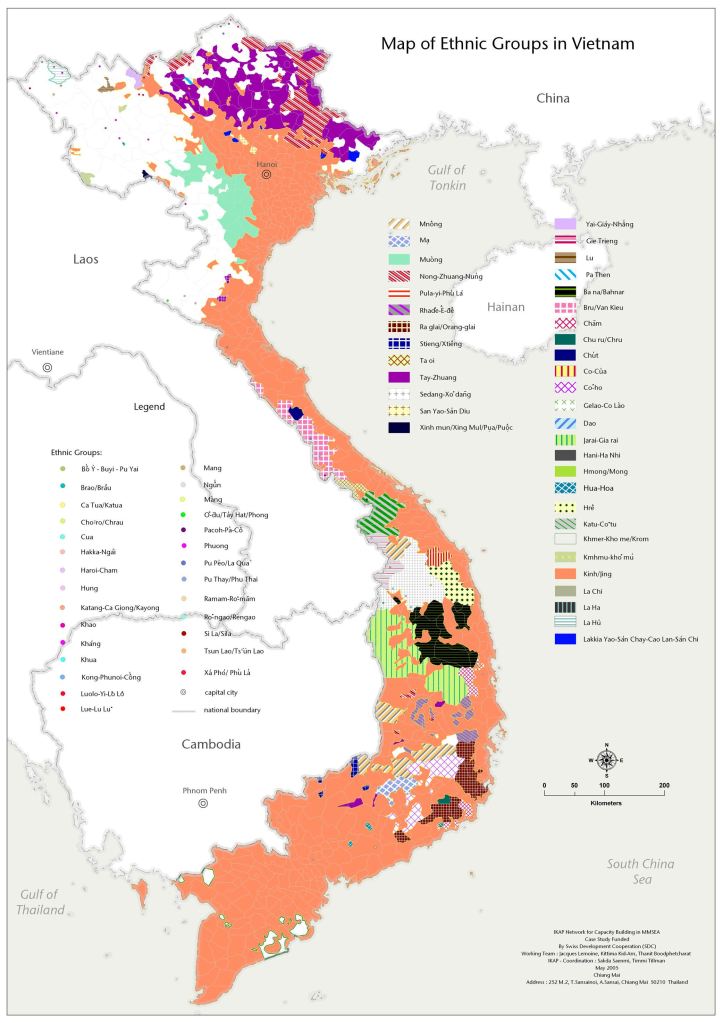





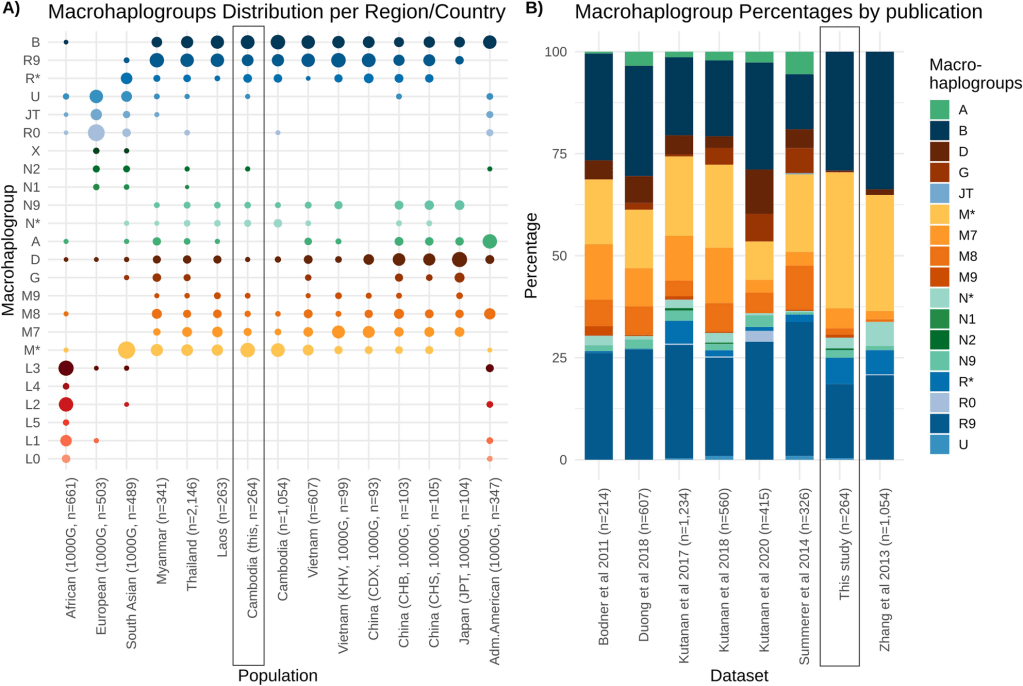
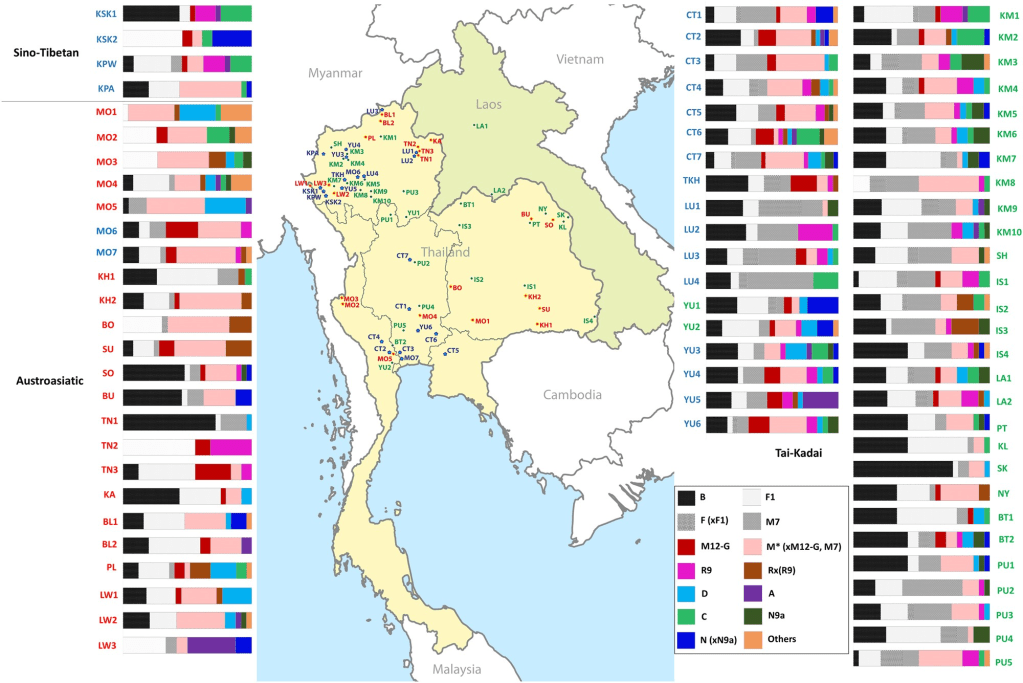
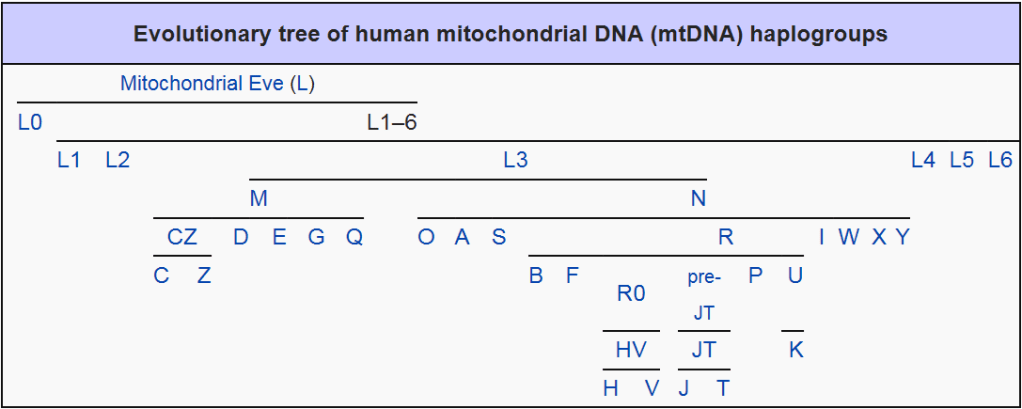
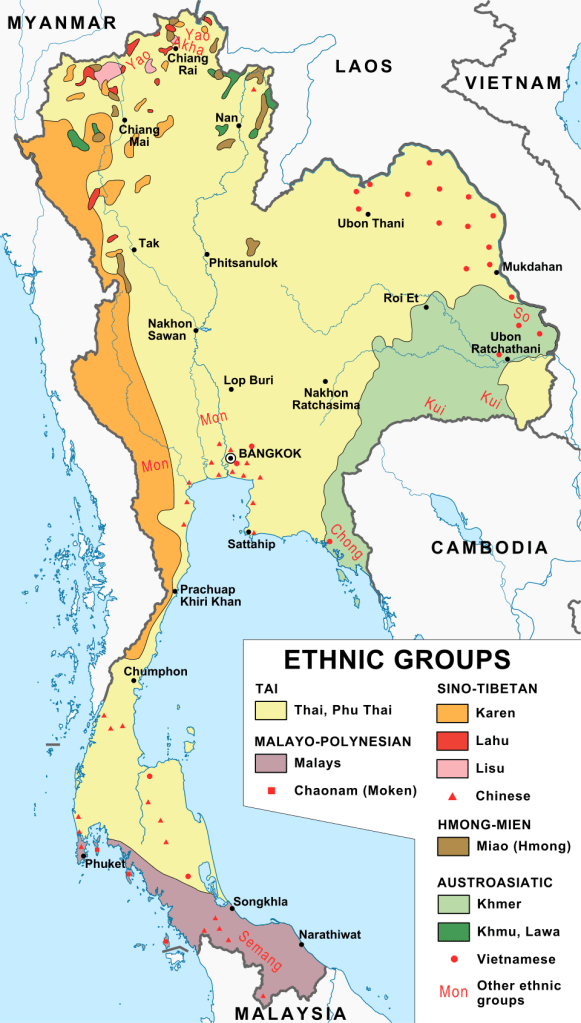



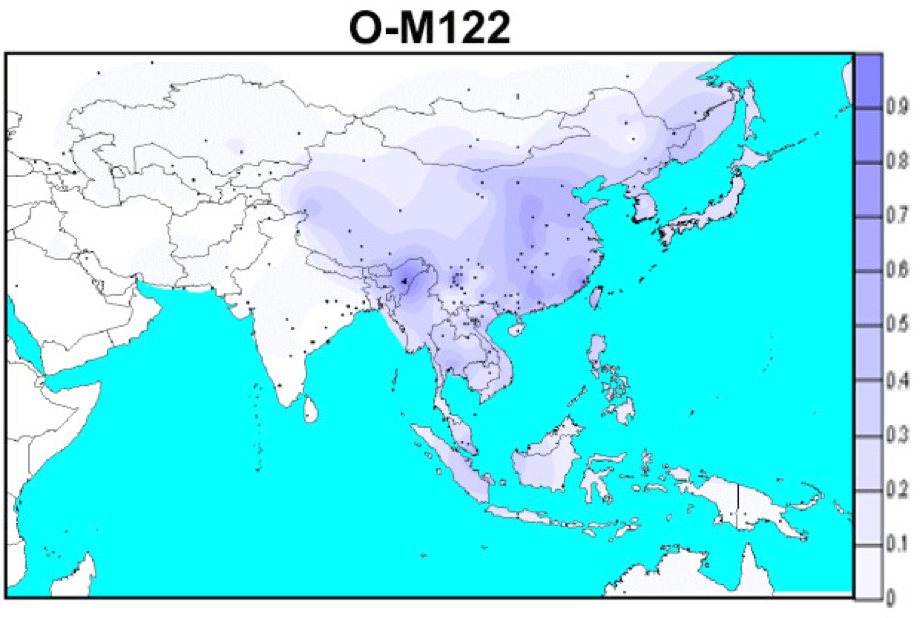




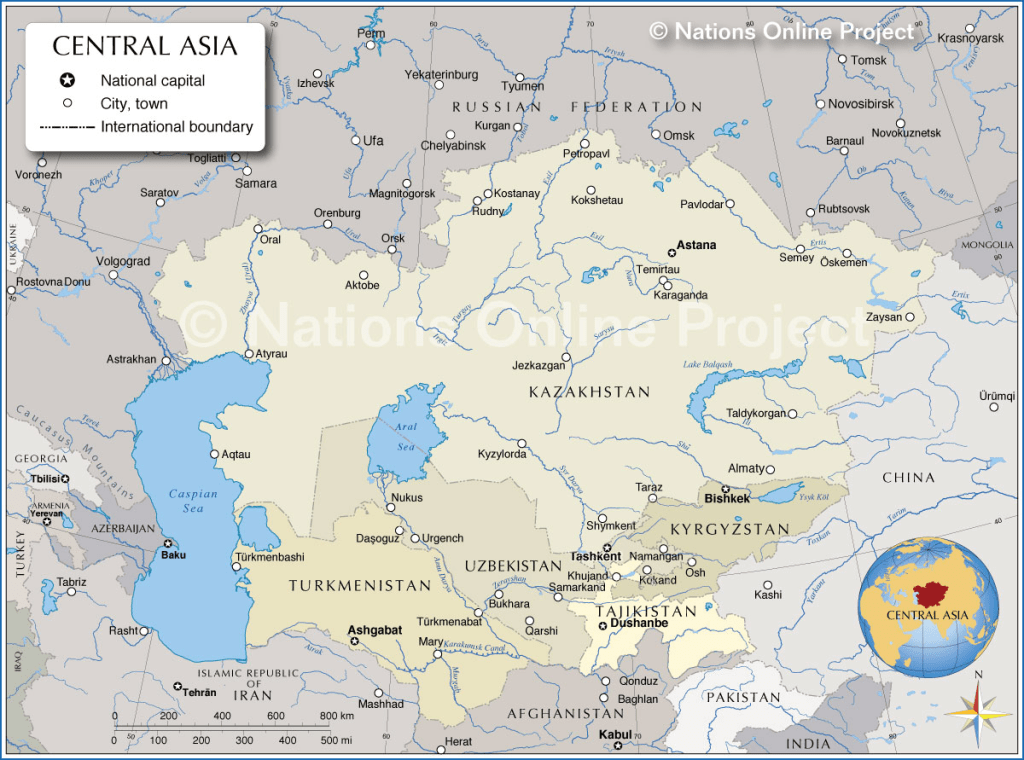
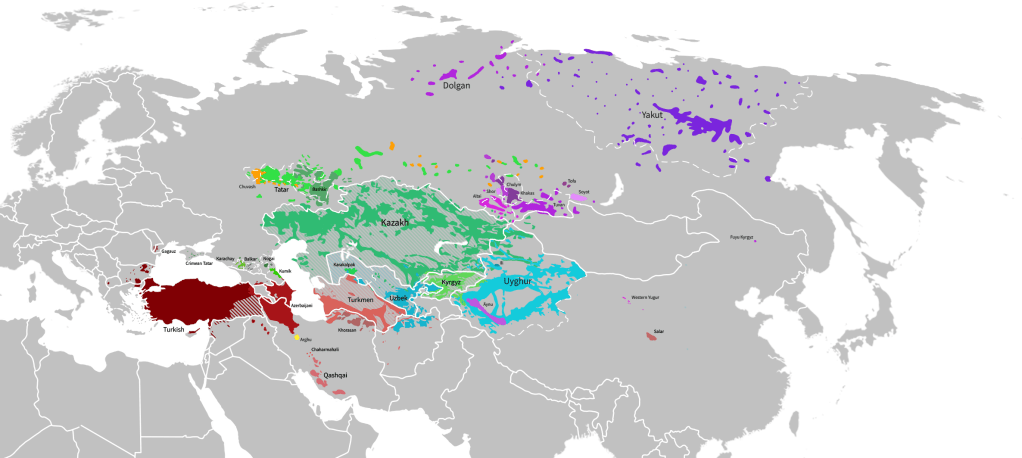




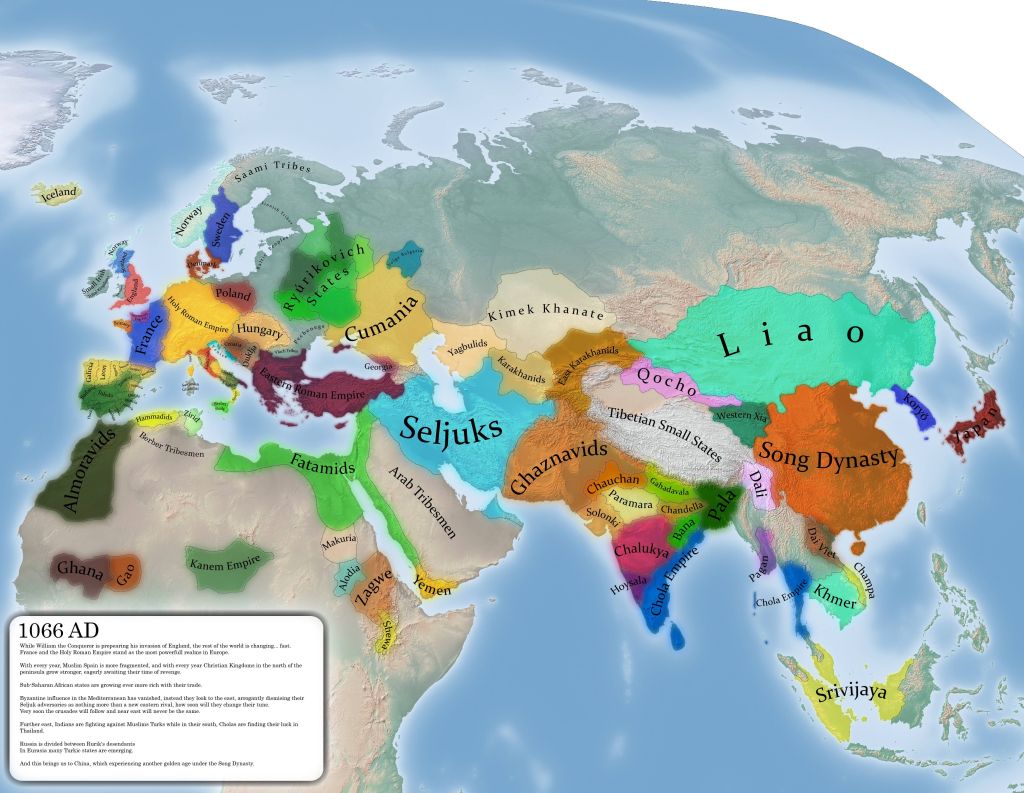
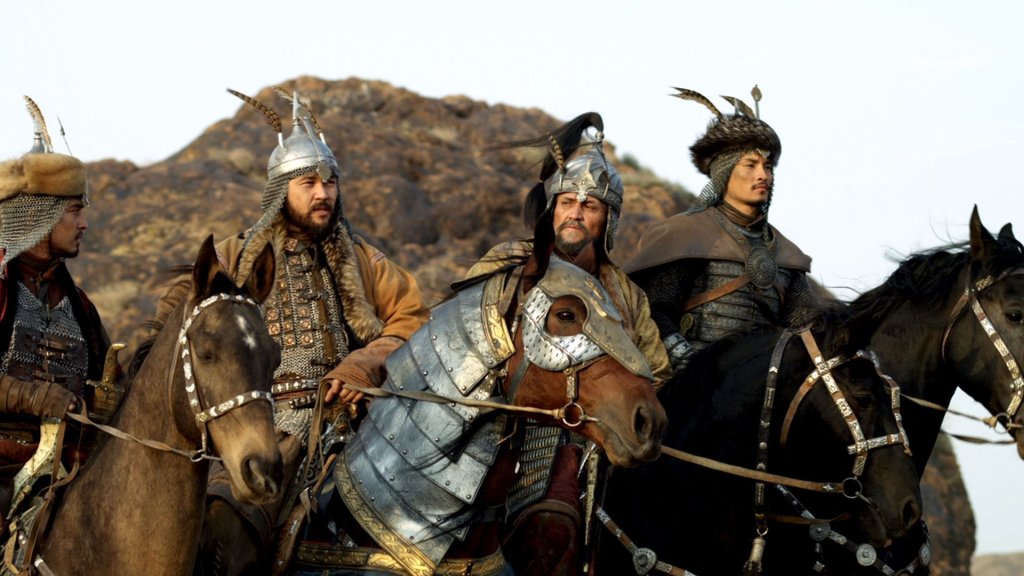


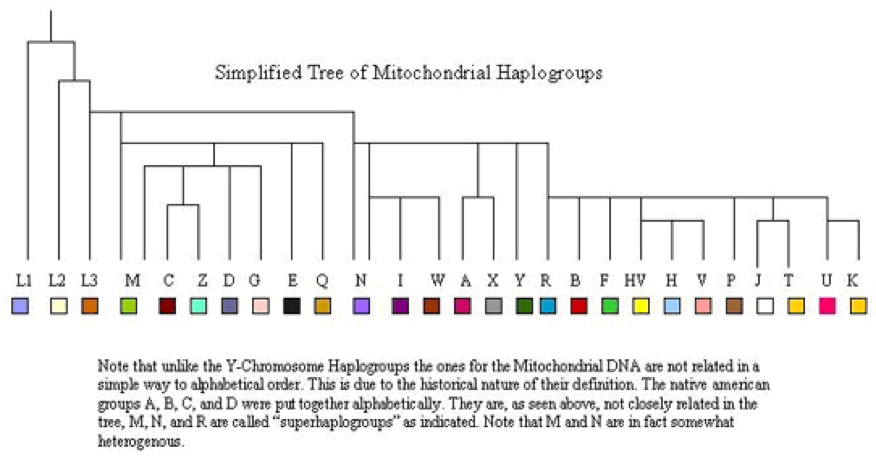






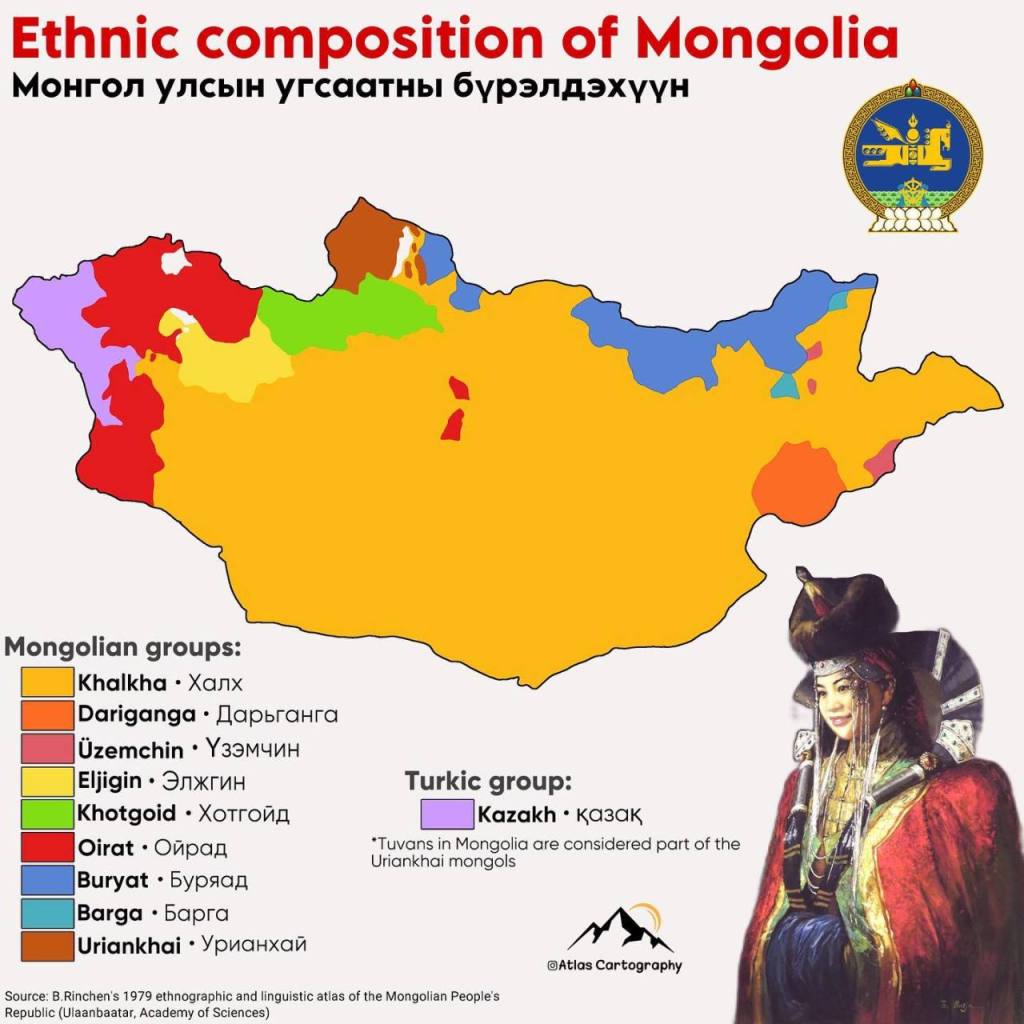






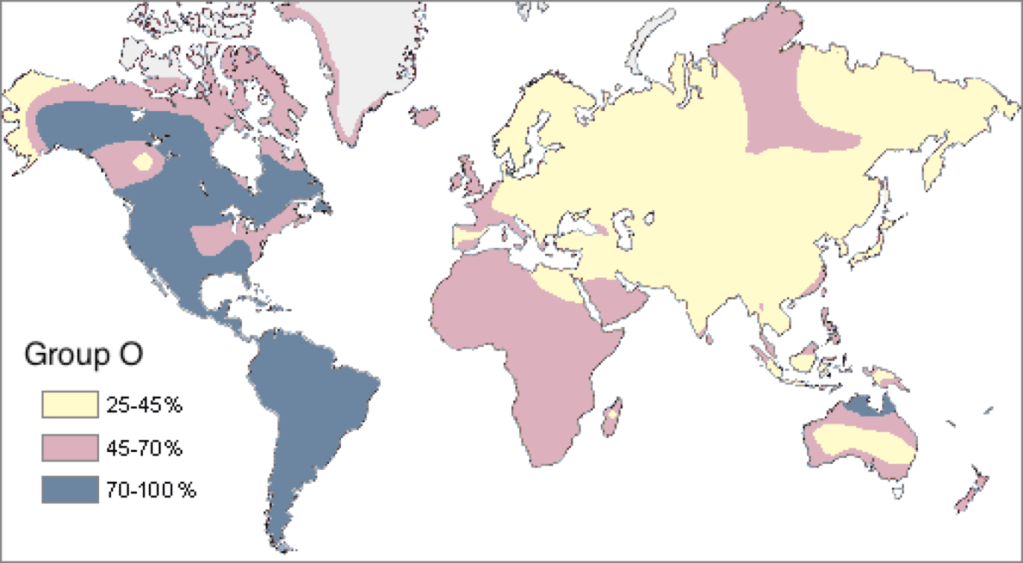


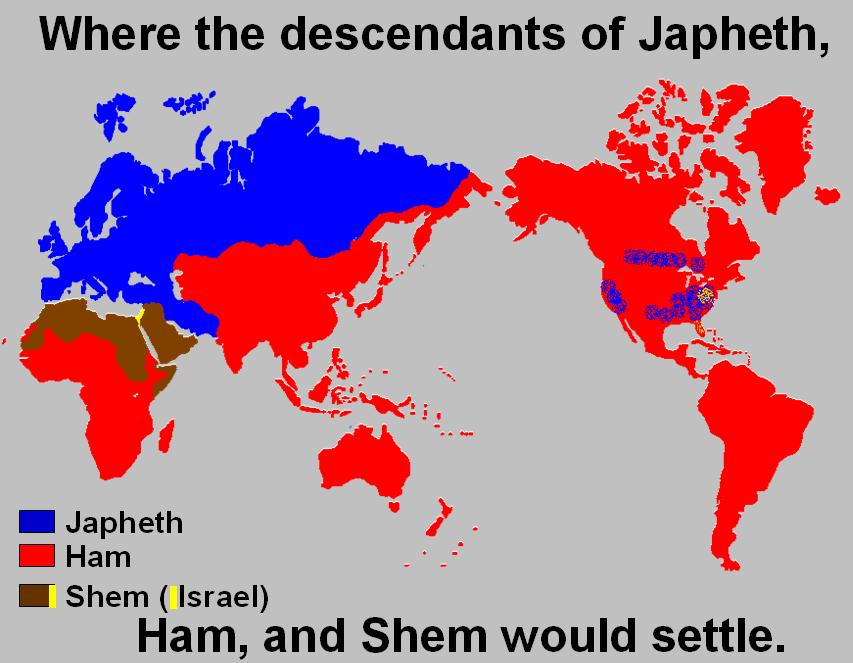

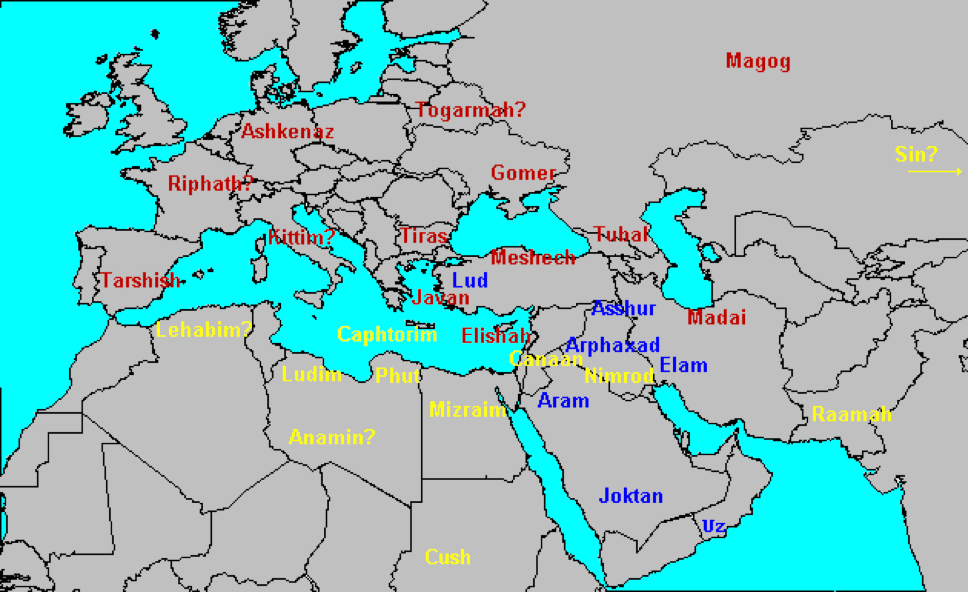




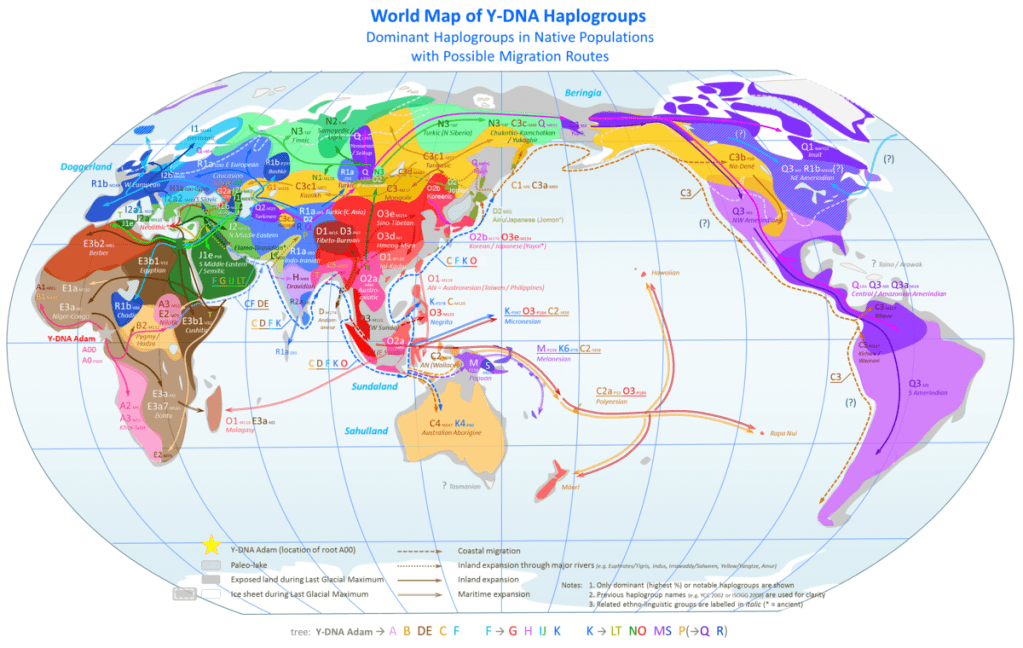
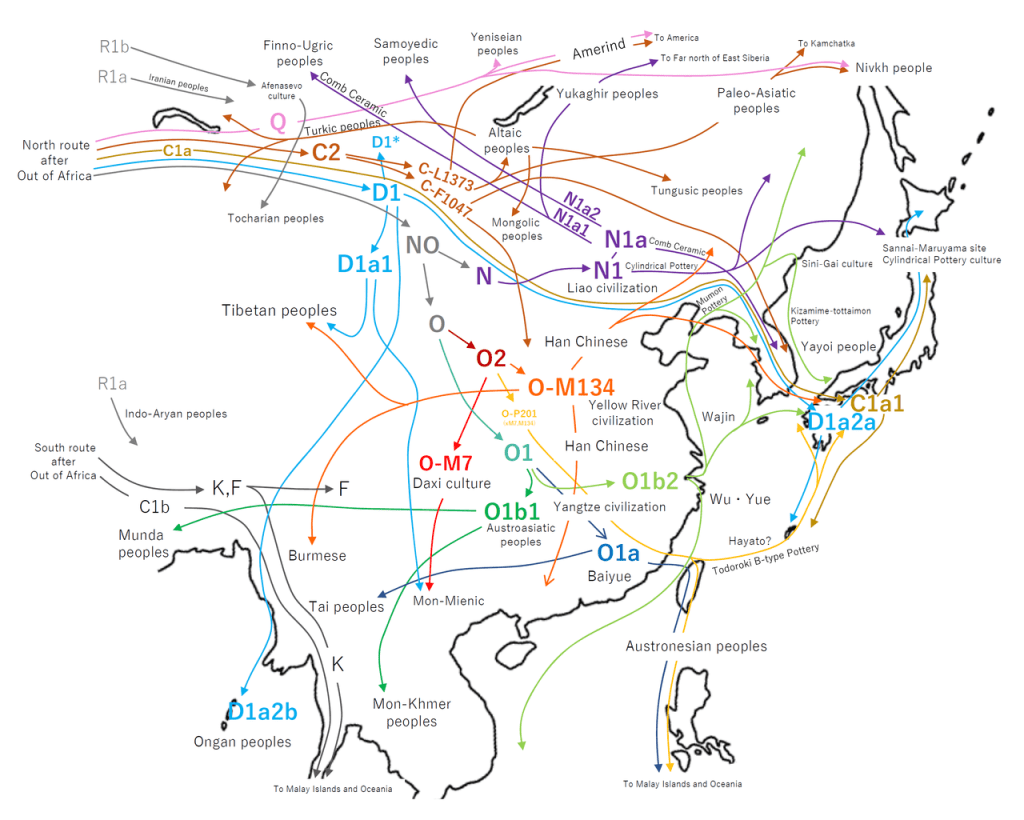

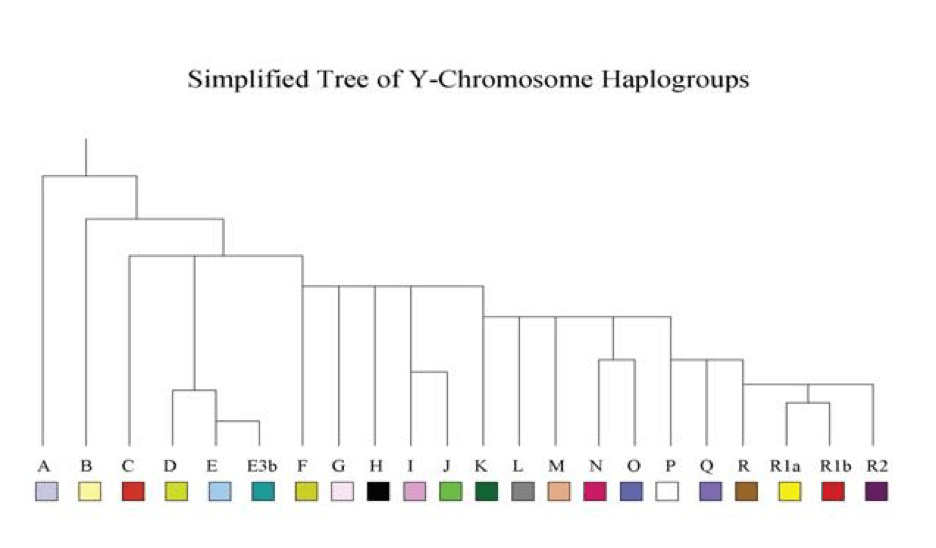


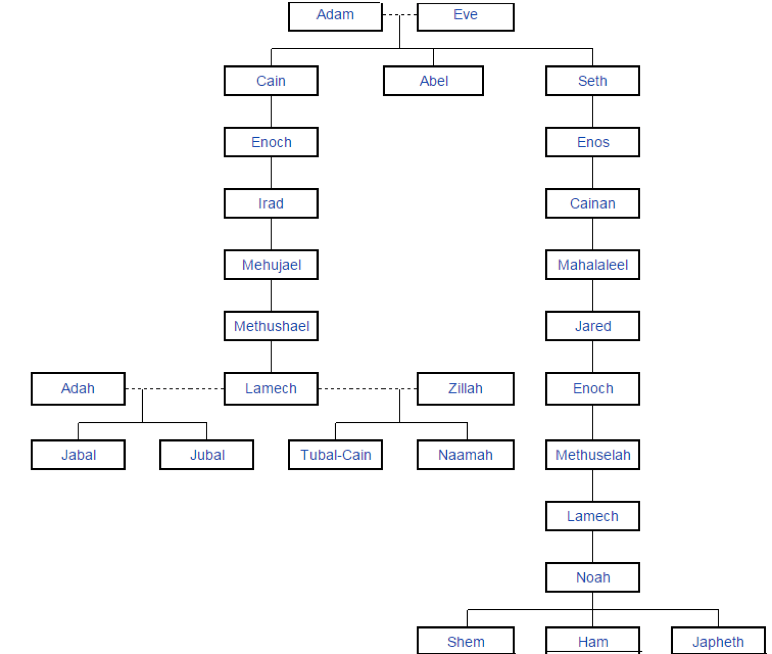







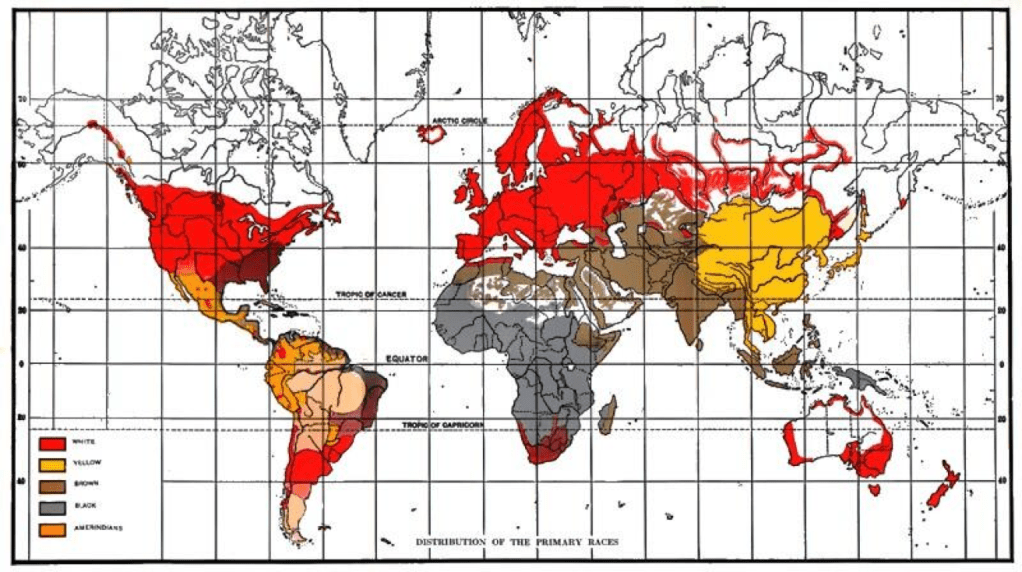
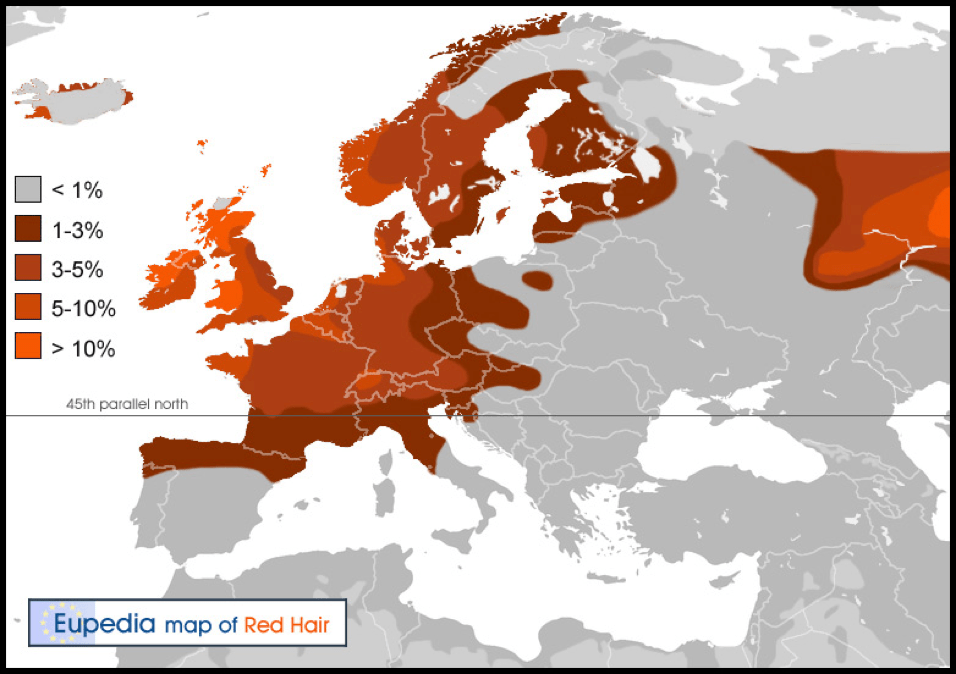


 The Lightkeeper