
The recent article, The Top Ten Unexplained Mysteries of All Time, has proven popular with readers, even with adding in two extra mysteries. The arcane Ark of the Covenant or Ark of the Testimony could easily be number thirteen; for it is one of the most enduring famous historical artefacts. With considerably more superstition and myth embedded in the popular psyche than fact. A lingering aura of fascination surrounding the Ark of God, continues to haunt those with a preoccupation for a relic that seemingly vanished into thin air. As if it wasn’t already well-known, the acclaimed 1981 American action-adventure film, Raiders of the Lost Ark – directed by Steven Spielberg and based on a story by George Lucas and Philip Kaufman – catapulted interest to a much wider secular audience.

The Ark of the Covenant as it appeared in Raiders of the Lost Ark
Even so, the significance of the Ark is profoundly misunderstood. This article follows on from the previous article, The Manna Mystery, in the hope of lifting the lid – no pun intended – on the Ark and its role in the lives of the Israelites and how its symbolism relates to us today. More interest has been invested in trying to discover the location of the Ark than what it represented in the lives of the Israelites or what lessons we can learn from its design, construction and use.

The still above is from a clip at the very end of the film, Raiders of the Lost Ark, where the discovered Ark – unrealistically found in Canis, Egypt in 1936… or not? – is put into a Washington DC vault with myriad other treasures. A discovery of this magnitude, would not be relegated to such an ignominious fate.

Indiana Jones with the lost Ark
Studying the biblical references will provide the backbone for this investigation, as it did for the article on manna. While manna is stated a handful of times in the Bible, the Ark of the Covenant is discussed frequently by comparison. To the degree that we will certainly endeavour to identify the key scriptures, in leaving ‘no stone unturned.’
The Book of Exodus is where we first learn of an ark for God. In chapter twenty-five, the Eternal instructs Moses to seek contributions from the Israelites which will be used for the construction of a movable temple called a Tabernacle, as well as for items associated with the establishment of a new priesthood descending from Moses’ elder brother, Aaron – Chapter XXXI Reuben, Simeon, Levi & Gad – the Celtic Tribes; and article: The Calendar Conspiracy.
This was long before King Solomon four hundred and eighty years later began the Temple in 966 BCE. Three integral items amongst others to be placed within the Tabernacle – listed in chapter twenty-five – were an Ark, a Table for Bread and a Lamp Stand. The first two were to be comprised of wood and overlaid with gold, while the Lampstand was to be made purely of solid gold.

Exodus 25:1-22
English Standard Version
1 ‘The Lord said to Moses, 2 “Speak to the people of Israel, that they take for me a contribution. From every man whose heart moves him you shall receive the contribution for me. 3 And this is the contribution that you shall receive from them:
gold [H2091 – zahab: ‘from an unused root meaning to shimmer, of brilliance, splendour, precious metal’], silver, and bronze,
4 blue and purple and scarlet yarns and fine twined linen, goats’ hair, 5 tanned rams’ skins, goat skins,
acacia [H7848 – shittiym: ‘acacia tree, acacia wood, meaning the sticks of wood, from H7850, scourge, flog, to pierce’] wood [H6086 – ets: ‘tree, timber, plank, stick’]
6 oil for the lamps, spices for the anointing oil and for the fragrant incense,
7 onyx stones, and stones for setting, for the ephod and for the breast piece.
8 And let them make me a sanctuary [H4720 – miqdash: ‘a consecrated thing, hallowed, holy place, sacred, chapel’], that I may dwell [H7931 – shakan: ‘abide, settle down, rest, inhabit’] in their midst [H8432 – tavek: ‘among, within, between, therein, middle’].
9 Exactly as I show you concerning the pattern [H8403 – tabniyth: ‘construction, likeness, form’], of the tabernacle [H4908 – mishkan: ‘dwelling place, habitation, tents’], and of all its furniture [H3627 – kliy: ‘furnishing, vessel, article, utensil’], so you shall make it.’
The Lord God who had delivered the Israelite tribes from Egypt, incredibly, desired to have an abode with them when they camped and settled for a period of time – Appendix VII: Moses, the Exodus & the Red Sea Crossing – Fabrication or Fact? Up until this time: “… the Lord went before them by day in a pillar of cloud to lead them along the way, and by night in a pillar of fire to give them light, that they might travel by day and by night. The pillar of cloud by day and the pillar of fire by night did not depart from before the people” – Exodus 13:21-22.

We will discover that the earthly tabernacle was a copy or mirror image of a celestial temple in the third Heaven where the Eternal dwells. Thus, His instructions were detailed and to be adhered to exactly. This means the items requested were significant and not randomly selected, including two principle elements: Acacia Wood and Gold.

According to the article, The Purpose of the Wilderness Tabernacle, Tamarajo, 2024, there are seven types of temples recorded in scripture.
- The Tabernacle of Moses
- The Tabernacle of David
- The Temple of Solomon
- Zerubbabel’s Temple
- The Temple of Herod
- The Temple of Ezekiel’s Vision
- The Temple, which is the Body of Christ
It could be argued that King Herod’s restoration work was a continuation of that begun by Zerubbabel. As he was an Edomite Jew – not descended from the tribe of Judah – nor a righteous or holy man as his predecessors, it is questionable whether he would be a bonafide candidate on a list including holy sanctuaries for the Lord God. Coupled with this, is the fact that the Body of true believers would then be number five; with number six either Ezekiel bring shown an ideal for ancient Israel which was never met, or a vision during the millennial rule of the Kingdom of God after Christ’s return. After this period when there is a new Earth, God with Christ will dwell with man – Revelation 21:3. In fact, there will not be a temple structure all – Revelation 21:22.
These are holy temples of scripture, yet there is an unholy temple which will be dedicated to the False Prophet. 2 Thessalonians 2:3-4, ESV: “… For that day will not come, unless the rebellion comes first, and the man of lawlessness is revealed, the son of destruction, who opposes and exalts himself against every so-called god or object of worship, so that he takes his seat in the temple of God, proclaiming himself to be God” – Chapter XXI The Incredible Identity, Origin & Destiny of Nimrod.
It is not the purpose of this article to discuss the Tabernacle at length, yet it is part of the discussion for its most important purpose was to house the Ark of God in the section of the Tabernacle known as the Most Holy Place or the Holy of Holies. For this was where the physical presence of the Lord God was manifested on Earth. Righteous people had walked and talked with the Eternal in the past, such as Noah and Abraham, yet here was an opportunity for a whole nation comprising the twelve tribes of Israel to dwell with the one who represented the Ancient of Days and thereby share in a relationship with the Son of Man, the mediator between them and the Creator.

The Eternal did not choose the descendants of Jacob flippantly or because of an unfair bias of favouritism. Deuteronomy 7:6-8, NET: “For you are a people holy to the Lord your God. He has chosen you to be his people, prized above all others on the face of the earth. It is not because you were more numerous than all the other peoples that the Lord favored and chose you – for in fact you were the least numerous of all peoples. Rather it is because of his love for you and his faithfulness to the promise he solemnly vowed to your ancestors that the Lord brought you out with great power, redeeming you from the place of slavery, from the power of Pharaoh king of Egypt” – 2 Samuel 7:24. The ancestors in question were Abraham, Isaac and Jacob who were all loyal and obedient to the Eternal. The promises of national greatness and prosperity made by the Creator to Abraham, Issac and Jacob have been fulfilled in our modern age – refer Chapter XXX Judah & Benjamin – the Regal Tribes; and Manasseh & Ephraim – the Birthright Tribes.

The diagram above renders the arrangement of the twelve tribes – thirteen counting Levi in the centre – when the Israelites camped; setting up the Tabernacle and its furnishings. Each side had a leading tribe of the three as shown and it was the standards of Reuben, Judah, Dan and Ephraim which were flown.
Exodus: 10 “They shall make an ark [H727 – ‘arown] of acacia wood. Two cubits and a half shall be its length, a cubit and a half its breadth, and a cubit and a half its height.”
A cubit is recognised as eighteen inches, thus the ark was 45 inches long, 27 inches wide and 27 inches deep. The meaning for ark includes: ‘chest, coffin’ and from H717, ‘in the sense of gathering.’ It is the same word used for Noah’s Ark – refer Chapter I Noah Antecessor Nulla. It denotes something egg like, sealed, protected and enclosed.
Exodus: 11 “You shall overlay [H6823 – tsaphah: ‘cover, plate, stud, garnish’] it with pure gold, inside and outside shall you overlay it, and you shall make on it a molding [H2213 – zer: ‘border, circlet, crown’] of gold around it. 12 You shall cast four rings of gold for it and put them on its four feet, two rings on the one side of it, and two rings on the other side of it. 13 You shall make poles of acacia wood and overlay them with gold. 14 And you shall put the poles into the rings on the sides of the ark to carry the ark by them. 15 The poles shall remain in the rings of the ark; they shall not be taken from it.”
The Ark of God was constructed from Acacia wood and then gold plated with one imagines, more than just a thin layer of gold. Added to this was an extra covering or crown of gold placed around the Ark. The poles used to carry the ark were also made from Acacia wood and likewise overlaid with gold. The poles were never to be removed from the chest of the ark so as to remove the temptation of lifting the ark itself and thereby touching it directly. As the Ark of the Covenant contained God’s presence through His Holy Spirit, it was holy and no human – being impure by comparison – could touch the holy vessel and survive. It would be tantamount to irreverent contempt to do so and a case of the profane not able to touch that which was holy and expect to live.
Exodus: 16 “And you shall put into the ark the testimony that I shall give you. 17 “You shall make a mercy seat [H3727 – kapporeth: ‘place of atonement’] of pure gold. Two cubits and a half shall be its length, and a cubit and a half its breadth.”
The mercy seat was a separate section to the chest underneath and was a lid the same dimensions as the chest of the ark. Unlike the overlaid ark and poles, it was a slab of solid gold and with the cherubim ‘constituted the throne of God.’
It was important that the lid was separate from the ark, still sitting on it, yet made entirely from solid gold without any Acacia wood. Thus while the ark was not to be touched, the mercy seat was another level up in importance. The ark housed three important items, whereas the lid represented the Divine.
This ‘golden plate of propitiation’ was where the ‘High Priest sprinkled the seat 7 times on the Day of Atonement’, symbolising reconciliation between the Eternal and His chosen people.
The testimony placed into the ark was one of three items – refer article: The Manna Mystery. The testimony is another name for the covenant agreement between the Eternal and the Israelites, embodied and encapsulated in the Law and codified by the Ten Commandments.
Exodus: 18 “And you shall make two cherubim [H3742 – kruwb: ‘an angelic being’] of gold; of hammered work [H4749 – miqshah] shall you make them, on the two ends of the mercy seat. 19 Make one cherub on the one end, and one cherub on the other end. Of one piece with the mercy seat shall you make the cherubim on its two ends. 20 The cherubim shall spread out their wings above, overshadowing the mercy seat with their wings, their faces one to another; toward the mercy seat shall the faces of the cherubim be. 21 And you shall put the mercy seat on the top of the ark, and in the ark you shall put the testimony that I shall give you.”
The hammered work is translated from miqshah as ‘beaten work, beaten out of one piece, whole piece.’ It refers to ‘finely decorated cultic objects of gold and silver’ and ‘it signifies rounded work, moulded by hammering.’ The Mercy Seat was obviously the result of very skilled craftsmanship.
One wonders if Aaron was involved in following the Eternals’ instruction given to Moses for the Ark’s design and construction? We have learned about his considerable metal working skills and creative ability previously. It is worth a reminder.
Chapter XV The Philistines: Latino-Hispano America:
Exodus 32:1-8, 19-24, 35
English Standard Version
1 ‘When the people saw that Moses delayed to come down from the mountain, the people gathered themselves together to Aaron and said to him, “Up, make us gods who shall go before us. As for this Moses, the man who brought us up out of the land of Egypt, we do not know what has become of him.” 2 So Aaron said to them, “Take off the rings of gold that are in the ears of your wives, your sons, and your daughters, and bring them to me.” 3 So all the people took off the rings of gold that were in their ears and brought them to Aaron.
4 And he received the gold from their hand and fashioned it with a graving tool [H2747 cheret – ‘a stylus, chisel’] and made a golden [H4541 maccekah – ‘molten metal, cast image’] calf [H5695 egel – ‘bull-calf, bullock, a steer’ a male calf nearly grown]. And they said, “These are your gods, O Israel, who brought you up out of the land of Egypt!” 5 When Aaron saw this, he built an altar before it. And Aaron made a proclamation and said, “Tomorrow shall be a feast to the Lord.”

6 ‘And they rose up early the next day and offered burnt offerings and brought peace offerings. And the people sat down to eat and drink and rose up to play. 7 And the Lord said to Moses, “Go down, for your people, whom you brought up out of the land of Egypt, have corrupted themselves. 8 They have turned aside quickly out of the way that I commanded them. They have made for themselves a golden calf [the Sun god, Ra] and have worshiped it and sacrificed to it and said, ‘These are your gods, O Israel, who brought you up out of the land of Egypt!”
19 And as soon as he came near the camp and saw the calf and the dancing, Moses’ anger burned hot, and he threw the tablets out of his hands and broke them at the foot of the mountain. 20 He took the calf that they had made and burned it with fire and ground it to powder and scattered it on the water and made the people of Israel drink it.’
Moses was so inflamed with anger, he made the rebellious Israelites drink the ground down gold as punishment, while at the same time ensuring they did not make another golden idol. Yet in so doing, was he inadvertently giving them something beneficial? Ancient Code: ‘Since ancient times, gold was used as medicine for thousands of years. Today, people pay hundreds of thousands of dollars to eat dishes adorned with edible 23-karat gold. Even so, it has no taste or nutritional value. However, it’s not known what, if any, value ingesting gold or nanoparticles of gold would have.’
21 ‘And Moses said to Aaron, “What did this people do to you that you have brought such a great sin upon them?” 22 And Aaron said, “Let not the anger of my lord burn hot. You know the people, that they are set on evil. 24 So I said to them, ‘Let any who have gold take it off.’ So they gave it to me, and I threw it into the fire, and out came this calf.”
35 Then the Lord sent a plague on the people, because they made the calf, the one that Aaron made.’
‘This is quite a scenario. There were people who were either oblivious or chose to ignore the leadership of Moses and that the Eternal was working through him or the fact that the Creator had delivered the Israelites from Egypt through a series of ten spectacular miracles and then again in a mind boggling act of parting the Red Sea to save them and then crashing down the thousands of tons of water to kill their enemies. The very people who had cruelly enslaved them for one hundred and forty-seven years – refer Appendix VII: Moses, the Exodus & the Red Sea Crossing – Fabrication or Fact?
Moses’s elder brother Aaron is a revelation; the man chosen to found the Levitical Priesthood for the ancient Israelites and temporarily replace the perpetual Melchizedek Order. Aaron put his artistic ability to use, fashioning the calf of gold and then he used his carpentry skills to build an altar to a pagan, false god. Aaron then ironically blames the people, for being set on evil and finally how does he think he can fool Moses, with: ‘I threw [the gold] into the fire, and out came this calf.’ Miracles had been so plenteous, it was worth a shot it would seem.’
Returning to the Ark, the instructions clearly state a. the cherubim were to be from the same piece of molten gold used for the lid; b. the cherubs were to be at either end; c. the cherubim’s wings were to be outstretched over the lid; d. the cherubs were to be facing each other; e. the cherubim’s faces were to have a downward slant looking towards the lid or Mercy Seat and not at each other. Thus in a pose of submission, deference or prayer with heads bowed. The passage does not say whether they were standing or kneeling; it does not reveal what kind of face they possessed; nor does it instruct for them to be touching. Thus some poetic licence is used in images and the construction of replica arks regarding the cherubim.

To take the one used for Raiders of the Lost Ark above as an example, the Cherubim are not fully at each end of the Mercy Seat; they do not look like they are one piece with the lid, but added on top; and they do not have their wings fully outstretched. Their heads are bowed correctly. The designers have chosen to have the cherubim kneeling and touching. This writer is not convinced the wings would be touching, particularly as this was not stated. A further error by the designers of the ark above, is that the Mercy Seat lid is not flush with the chest of the ark. Yet we know its length and width dimensions were exactly the same. A further criticism is that the cherubim may well have been impressive in size. The ones on the ark above are too diminutive in this writer’s opinion. We will look at a few examples of the Ark as we progress, which all have merit and flaws.

The ark above has perhaps oversized cherubim but it is more likely in keeping with the overall design.
A burning question which comes to mind, is what were the identities of the two cherubs – who were they? Constant readers will recall the nature of the cherubim was the subject of an investigation in Chapter XXII Alpha & Omega. A recap is presented later.
Different sources provide differing details on the angelic realm pertaining to types and hierarchies. The Bible is perhaps the simplest in the information it provides, with many researchers reading their own interpretation into various verses. The Bible speaks of a. angels who are God’s messengers; b. one archangel who is named Michael; c. one other angel, named as Gabriel, who is not called an archangel but referred to as one outside the Bible; d. the Seraphim; and e. the Cherubim.
Tradition and church writers such as Gregory and Thomas Aquinas maintain there are nine celestial orders or hierarchies of ‘angels’. Basing this supposedly on theological evidence by interpreting two verses in letters by the authors (not Paul, refer article: The Pauline Paradox) of the letters to the Ephesian and Colossae congregations as types of spiritual beings – Ephesians 1:21, Colossians 1:16.
They are ‘Virtue [dynameos: strength, mighty work, power],
Power [exousias: strength, jurisdiction, right],
Principality,
Dominion [kyriotetos: government, power, lordship, mastery] and
Throne [thronoi: seat, bench, tribunal].’
Yet these five english words used from the Greek are descriptions of rulership and government; with three of the five words all denoting power. One of the words, principality from G746 arche, meaning beginning is used for the Son of Man himself – Revelation 3:14.
Thus nine becomes four and as angel and archangel – meaning chief angel – are logically the same, there are perhaps only three types of angelic entities. To better understand the cherubim, we will look at the scriptures where they are described.
Genesis 3:24
English Standard Version
“He drove out the man, and at the east of the garden of Eden he placed the cherubim [H3742 – kruwb] and a flaming sword that turned every way [H2015 – haphak: ‘whirling’] to guard the way to the tree of life.”
More than one Cherub presumably guarded the Tree of Life. The reference to a sword is about a weapon of supernatural origin, with the word flaming meaning ‘magical, enchanted.’ The definition of the Hebrew word kruwb is rather nebulous. Abarim Publications offer from the verb karabu – ‘to bless’ or ‘to approach’ – and its adjective, ‘to be mighty.’ These meanings would fit creatures who attend the throne* of the Ancient of Days.
Ezekiel 1:4-28
English Standard Version
4 ‘As I looked, behold, a stormy wind came out of the north, and a great cloud, with brightness around it, and fire flashing forth continually, and in the midst of the fire, as it were gleaming metal. 5 And from the midst of it came the likeness of four living creatures [H2416 – chay: ‘live, life, alive’]. And this was their appearance: they had a human likeness, 6 but each had four faces, and each of them had four wings. 7 Their legs were straight, and the soles of their feet were like the sole of a calf’s foot. And they sparkled like burnished bronze. 8 Under their wings on their four sides they had human hands. And the four had their faces and their wings thus: 9 their wings touched one another. Each one of them went straight forward, without turning as they went.
10 As for the likeness of their faces, each had a human face. The four had the face of a lion on the right side, the four had the face of an ox on the left side, and the four had the face of an eagle. 11 Such were their faces. And their wings were spread out above. Each creature had two wings, each of which touched the wing of another, while two covered their bodies. 12 And each went straight forward. Wherever the spirit would go, they went, without turning as they went. 13 As for the likeness of the living creatures, their appearance was like burning coals of fire, like the appearance of torches moving to and fro among the living creatures. And the fire was bright, and out of the fire went forth lightning. 14 And the living creatures darted to and fro, like the appearance of a flash of lightning.’
The prophet Ezekiel in a vision provides a detailed yet confusing description of the cherubim. They are both anthropomorphic yet animalistic. The cherubim have human like hands with bovine hooves and chimera type faces – each human, bovine, feline and avian.
We learn there are at least four cherubim – associated with the Throne of God – with four wings each. Two wings outstretched, with two folded down beside their bodies. It is interesting to note that their upper wings touched the wing of the cherub either side of them. Adding support perhaps that the cherubim on the Mercy Seat were touching wings. It may also mean that the Ark of God cherubim possessed four wings and not just two. The question remains: why were just two cherubs included on the earthly Mercy Seat, when there are four surrounding the celestial throne?
Aside from three distinct categories of spiritual beings: Angels, Seraphs and Cherubs – it could alternatively be considered if all spirit beings are in fact Angels, that there are then just two types of angel: the order of mammalian and/or avian Cherubim and the order of the reptilian Seraphim.
We will return to the Book of 1 Kings in connection with the Ark of God, when it was housed in the Temple built by King Solomon between 966 and 959 BCE. Solomon also had two upright cherubim crafted inside the Temple’s Most Holy Place. Which interestingly makes a total of four living creatures. In addition, numerous cherubim were engraved on the inner walls of the inner sanctuary of the Holy of Holies.
1 Kings 6:23-35
English Standard Version
23 ‘In the inner sanctuary he made two cherubim of olivewood, each ten cubits high. 24 Five cubits was the length of one wing of the cherub, and five cubits the length of the other wing of the cherub; it was ten cubits from the tip of one wing to the tip of the other. 25 The other cherub also measured ten cubits; both cherubim had the same measure and the same form. 26 The height of one cherub was ten cubits, and so was that of the other cherub. 27 He put the cherubim in the innermost part of the house. And the wings of the cherubim were spread out so that a wing of one touched the one wall, and a wing of the other cherub touched the other wall; their other wings touched each other in the middle of the house.’
These two cherubim were impressively tall, standing 180 inches or fifteen feet high and a wingspan to match. The cherubs inner wings touched. One could safely assume this was in keeping with the cherubim on the Ark of God, who in turn were a reflection of the four cherubim beneath^ the Throne of the Eternal. Even so, they were not constructed from Acacia wood as used on the chest of the Ark and its poles, but from the wood of Olive Trees. While Acacia wood has an attractive grain compared to a number of alternative woods, Olivewood is stunningly beautiful.

Wood Assistant: “The olive wood, farmed from the trees of Olea europaea, is a hard… wood that is prized all around the world for its appearance, density, straight grain, and fine texture. Visually, olive wood has a strikingly rich and colorful appearance, which makes it perfect for use in decorative objects. Its structural features are highly contrasting brown lines and yellow streaks of sapwood, and even more importantly, the surface of olive wood can be easily polished to a high degree. While it can be a bit uncooperating during cutting, olive wood can easily be glued. It has a distinct, pleasant, and sweet odor during cutting, and this odor usually remains present in the finished product for several years.”

“The negative point of this wood is that lacks necessary natural oils that repel insects and rot. To achieve more extended durability, furniture made from olive wood needs to be treated so it can remain untouched by outside elements for years. Additionally, raw olive wood is hard to dry, and during this process, the lumber pieces can start to warp. To prevent this, olive wood must be very slowly dried using the Kiln-drying process at low heat levels.”

Compare the marked difference in grain and colour Olive wood has with other woods.

Inspire Uplift: “Being known as the hardest woods, Olive Wood is symbolized as peace, longevity, and sacredness… Its beautiful and messy grain patterns – straight, interlocked, or wild – is what makes it high-demanding.”

The aspect of Olive wood being prone to rot and termite infestation was remedied by Solomon in the following verse.
28 ‘And he overlaid the cherubim with gold.’
Read that again. The stunning fifteen feet tall and fifteen feet wide beautiful Olive wood cherubim were plated in gold. As everything in the Temple was either gold or covered in gold, this perhaps is not surprising. What is, is the use of such a beautiful yet slightly uncooperative wood to work with. The assumption would have to be that a plainer wood such as maple did not suit as the inside of the cherubim. Not even the decorative Cedar Wood. Thus the use of Olive wood for these Cherubim must represent the internal integrity of the inside of these creatures, as gold symbolises the exceptional exterior of these magnificent beings. Both in their close physical proximity to the Ancient of Days and in their spiritual relationship with Him.
29 ‘Around all the walls of the house he carved engraved figures of cherubim and palm trees and open flowers, in the inner and outer rooms. 30 The floor of the house he overlaid with gold in the inner and outer rooms. 31 For the entrance to the inner sanctuary he made doors of olivewood; the lintel and the doorposts were five-sided. 32 He covered the two doors of olivewood with carvings of cherubim, palm trees, and open flowers. He overlaid them with gold and spread gold on the cherubim and on the palm trees. 33 So also he made for the entrance to the nave doorposts of olivewood, in the form of a square, 34 and two doors of cypress wood. The two leaves of the one door were folding, and the two leaves of the other door were folding. 35 On them he carved cherubim and palm trees and open flowers, and he overlaid them with gold evenly applied on the carved work.’
Throughout the Most Holy Place, cherubim were carved. Beautiful Olive wood and Cyprus wood – not unlike Cedar wood – fitted doors and posts, engraved with cherubim and all overlaid in gold. One must pause to imagine the sheer volume** of gold used in this endeavour, not to mention all the expensive wood beneath it all. The cost beyond comprehension. The visual impact of a golden sea of yellow. The furnishings of Versace would not have been out of place.
The compiler of the 2 Book of Chronicles describes the Holy of Holies in Solomon’s Temple, providing supporting details.
2 Chronicles 3:8-14
English Standard Version
8 ‘And he made the Most Holy Place. Its length, corresponding to the breadth of the house, was twenty cubits, and its breadth was twenty cubits. He overlaid it with 600 talents** of fine gold. 9 The weight of gold for the nails was fifty shekels. And he overlaid the upper chambers with gold. 10 In the Most Holy Place he made two cherubim of wood and overlaid them with gold. 11 The wings of the cherubim together extended twenty cubits: one wing of the one, of five cubits, touched the wall of the house, and its other wing, of five cubits, touched the wing of the other cherub… The cherubim stood on their feet, facing the nave. 14 And he made the veil of blue and purple and crimson fabrics and fine linen, and he worked cherubim on it.’
The width of the inner sanctuary was twenty cubits, matching the outspread wings of the two cherubim. According to the footnotes^^ of the ESV Bible, a talent** is equivalent to 75 pounds or 34 kilograms. Even the nails were made from gold. A shekel^^ equivalent to 2/5 ounces or 11 kilograms. The use of the colours blue, purple and crimson are indicative of royalty. The upright nature of the two cherubim is confirmed. Perhaps the universal rendition of the cherubim kneeling on the Ark of God is inaccurate and in fact they stood on their feet.

This ark is perhaps too simple in design in that the chest does not have any ornate decoration. The Bible does not say one way or the other. Yet its lid is correctly flush with the chest, when most representations are not. Also, while the cherubim may be oversized, they are more reflective of their stature. The question of how many wings the cherubs had each, remains unanswered. Solomon used only two wings on his Cherubs. Though the design choice for these may have been purely a sculptural and spatial consideration within the inner sanctuary.
At this point it may be interesting and helpful to learn the significance of two integral components for the Ark of God – the symbol of the Lord God’s presence on the Earth with the Israelites: Acacia wood and Gold.

Compare the Acacia wood kitchen utensils with the other woods above
Acacia Wood, Exploring This Gorgeous Material & Uses, Dara Brandt, 2023 – emphasis mine : ‘Acacia wood, known for its durability and visually appealing grain, is a popular choice for the construction of long-lasting furniture and household items. Originating in [its native] Australia, Acacia trees and shrubs have spread across Africa, America, Asia… boasting over 1,350 varieties. The wood derived from Acacia is revered for its high density, pliability, and multidirectional fiber orientation, which contribute to its remarkable strength and longevity. The rich reddish-brown color, dark veins, and varying shades of sapwood present in Acacia wood make it an attractive option for interior design.’

‘Acacia wood has been used for various purposes since ancient times. It is mentioned in various historical records, including religious texts, where it was used to construct sacred items due to its resilience and robustness. Acacia’s hardiness has stood the test of time…
The distinctive features of acacia wood make it easy to identify compared to other hardwoods. A common characteristic is the presence of stripes on both sides of the wood grain, which typically occur parallel to each other. Additionally, acacia wood contains distinct pores or holes that extend from the tree’s bark into the center of its trunk, making it easily distinguishable from other types of wood. Acacia wood is valued for its high density, registering at 2,300 psi on the Janka scale. This density makes it 55% harder than European white oak, 23% harder than hickory, and 90% harder than carbonized bamboo.’
Adrian Tapu: ‘Acacia wood is not only hard and robust, it is also very flexible and easy to work with. The natural material is one of the few types of wood in resistance class 1 and can… be used outdoors without impregnation. Fungi, pests, weather will not affect furniture made of acacia… there are different types or species. Among all of them, two types of wood stand out. The first one known as black acacia (Acacia Melanoxylon) and native to Oceania, although it really is not entirely black and the second one known as the “false acacia” (Robinia Pseudoacacia)… is normal to find it in temperate climates.’
Brandt: ‘Blackwood… is highly sought after for its attractive, dark brown wood with a medium to coarse texture. It is commonly used in making furniture, cabinetry, and musical instruments due to its workability and beautiful finish.’
Tapu: ‘Robinia or “false acacia” is the… most common and which we usually refer to when talking about acacia wood. These trees belong to the Fabaceae family… Robinia originate from North America and were introduced as park trees. Since robinia is permanent and hardly needs any maintenance, the furniture industry soon became interested in it. There is hardly any real acacia wood on the North American and European market, which is why the false acacia, i.e. the robinia, has become the name of acacia wood.’
Tamarajo: ‘Trees or wood in Scripture are symbolic of human life and, in the case of the Tabernacle… represent Christ’s humanity. According to Glen Carpenter, in his book Connections, the shittim tree, sometimes called the Acacia, is a desert tree that can survive in the most barren and challenging conditions, as described by the prophet Isaiah. “I will plant in the wilderness the cedar and the acacia (shittim) tree, The myrtle and the oil tree…” – Isaiah 41:19-21. Shittim wood is resistant to decay and insect infestations, which speaks of the incorruptible Christ who became a man [refer Shittim, article: Belphegor]. No other type of wood was used in the Tabernacle’s construction, furnishings, or utensils. The boards, poles, and furnishings consisted of this particular wood and were also plated with gold… gold represents God and His glory.’
Thus the Acacia wood used for the chest of the Ark was both beautiful and robust. It was going to last a very long time, particularly with gold plating. The relation to Christ is very important, for the being who represented the Eternal One, His name YHWH, and whom tabernacled with the Israelites through the Ark was the Son of Man, who later manifested as the incarnated son of God – his name at that time, the Hebraic Yeshua. Which today would actually be closer to the anglicised name Joshua, rather than the commonly expounded Latinised Jesus.
While water may be technically the most important commodity on the Earth – apart from oxygen and a breathable atmosphere – and diamonds the most expensive; it is gold which historically has been the most sought after precious metal on the Earth – Article: Wonder of Water. Gold is the everlasting symbol of luck, prosperity and wealth and is truly a fascinating element; being the 58th rarest on Earth, with many remarkable properties.

Daniel Fisher: “Gold is considered rare due to its limited availability in the Earth’s crust compared to most elements, but it certainly isn’t the rarest. Rhodium is 35 times rarer to find than gold, with platinum and palladium 30 times rarer. Rarer still are metals such as osmium, iridium, and ruthenium.”
Gold is not reactive; doesn’t combine with oxygen; it doesn’t rust or tarnish easily; doesn’t react with halogens easily; or entirely dissolve with acids.
Gold – Physical, Mechanical, Thermal, and Electrical Properties, Skyla Baily, 2010: – emphasis mine:
‘Gold has an atomic number of 79, which means each gold atom contains 79 protons in its nucleus. Gold’s atomic mass is 196.967… The way the outer electrons are arranged around the gold nucleus is associated with the characteristic [lustrous] yellow color of gold. A metal’s color is based on the movement of electrons between energy bands.’

‘The conditions for the strong absorption of light at the wavelengths that are essential to creating the characteristic gold color are met by a transition from the d-band to vacant positions in the conduction band. The warm and attractive color of gold has led to its extensive use in ornaments alongside other precious metals. While the number of protons in a gold nucleus is fixed at 79, the number of neutrons can differ from one atom to the other, offering several isotopes of gold. However, there is only one stable non-radioactive isotope that makes up for all naturally found gold.’
Fisher: “It’s the very core of gold’s makeup that sets it apart from other elements. It possesses a set of fundamental characteristics that enable it to outperform every other metal for a number of important uses.”

“Gold is represented by the chemical symbol “Au,” derived from the Latin word “aurum,” meaning “shining dawn.” Positioned within the transition metals group on the periodic table… As a noble metal [as opposed to a base metal], gold exhibits remarkable resistance to corrosion and oxidation. While gold is an expensive option for use in jewellery and electrical connectors, its corrosion resistance means it offers more longevity, improving the overall value of selecting it as the material of choice.”

Bailey: ‘Metallic gold has a crystal structure that is a face-centered cubic FCC. This crystal structure is responsible for the very high ductility of gold… Gold is ductile (the level of extension that takes place before the failure of a material in tension), and one ounce can be drawn into 80 km (50 miles) of thin gold wire (5-µm diameter), to create electrical contacts and bonding wire.’

‘The density of gold is 19.3 [grams per cubic centimetre – g/cm³]… this relies on its atomic mass as well as its crystal structure. This makes gold quite heavy… aluminum’s density is 2.7 gcm-3 and steel’s density is just 7.87 gcm-3.’

Fisher: “Worth its weight in gold”, is an expression referring to gold’s value. But its density and weight are also significant in their own right, which plays [important] roles in various practical applications and industries. Density refers to the amount of mass per unit volume of a substance… how heavy is something for its size. Gold is notably dense… [its] high density makes gold one of the densest naturally occurring elements, surpassed only by a few other precious metals such as platinum and iridium. If you’re ever lucky enough to pick up a kilo gold bar, it’s [surprisingly] heavy for its size.”

Bailey: ‘Pure gold has a melting temperature of 1064 °C [1947 degrees Fahrenheit]. The boiling point of gold, where gold changes from a liquid state to a gaseous state, is [2856] degrees Celsius or 5,173 degrees Fahrenheit.’ Fisher: “… gold’s relatively high melting point contributes to its enduring value and durability. It withstands the rigors of high-temperature environments, ensuring that gold-based products retain their structural integrity and aesthetic appeal over time.”’

Bailey: ‘Gold can efficiently transfer heat and electricity, and this ability is surpassed only by silver and copper, but unlike these metals, gold does not tarnish, making it crucial in electronics. The corrosion resistance of gold is possibly one of its most valuable properties.’
Fisher: “Tarnishing, which is the dulling or discoloration of metals due to chemical reactions with substances like sulphur or oxygen [rust], is a common issue with many metals, including silver and copper. This makes keeping gold coins far easier than silver coins, with the later prone to tarnishing if exposed to too much oxygen. Gold’s inert nature ensures that it does not tarnish or corrode even when exposed to elements that typically cause tarnishing in other metals. This property makes gold particularly valuable in applications where maintaining appearance and longevity are critical, such as in jewellery and electronics.”

Rare gold coins found beneath a theatre in Italy
“When exposed to heat, gold rapidly distributes thermal energy throughout its structure, making it valuable in applications where efficient heat dissipation is essential. This trait comes in very handy in electronics, where gold is used in components such as heat sinks to prevent overheating and ensure the reliable performance of devices. Additionally, gold’s high thermal conductivity makes it suitable for aerospace technology, where it helps regulate temperatures in spacecraft components.
Electrical conductivity refers to a material’s ability to conduct electrical current. The official unit of measurement is Siemens per metre (S/m), named after the German physicist Ernst Werner von Siemen… Gold scores 48.8 compared to silver’s top of class 62.9. Silver ranks a perfect 100 on its self-administered scale, with copper scoring 97, and gold… in third at 76. Gold’s low resistance to the flow of electrons makes gold highly efficient in transmitting electrical signals. This property is exploited in various electronic devices, where gold is used in connectors, circuitry, and contacts to ensure reliable electrical connections. While silver is both cheaper and more conductive, gold’s corrosion resistance further enhances its utility in electronics, as it maintains conductivity over time without succumbing to oxidation or tarnishing.”
Bailey: ‘Gold is highly malleable (the degree to which a material can experience deformation in compression before failure). In the annealed state, gold can be hammered cold into a translucent wafer with a thickness of 0.000013 cm.’
Gold ranks amongst the most malleable of all metals. ‘Hardness can be defined as a material’s ability to resist surface abrasion. The relative hardness of materials was traditionally evaluated using a list of materials set in such an order that any material in the list will scrape any material below it. Thus, diamond, the hardest substance known, tops the list with a hardness index of 10, while talc is at the bottom with a hardness index of 1. On this scale, gold has a value of 2.5 to 3, meaning it is a soft metal.’ Though not as soft as tin or lead.

Fisher: “Its softness allows gold to be easily shaped and moulded into intricate designs, making it a great choice for jewellery…” such as the golden calf fashioned by Aaron and the Cherubim atop the Mercy Seat. “Within industrial settings, gold’s malleability and ductility are harnessed in processes like gold leaf production, where thin sheets of gold are used for decorative purposes, and in aerospace technology, where gold foils are employed for thermal insulation.”

Gold Leaf
Bailey: ‘Gold exhibits superior biocompatibility within the human body (the key reason for its use as a dental alloy), and, consequently, there are several direct applications of gold as a medical material.’ Gold’s flexibility is demonstrated in dentistry, when dental restorations such as crowns and bridges utilise gold because it conforms to a precise shape ensuring a comfortable and durable fit. ‘Gold also has a high degree of resistance to bacterial colonization, and hence it is the preferred material for implants that are at risk of infection, such as the inner ear.’
Fisher: “One of the most intriguing properties of gold is its exceptional reflectivity. Gold does not absorb any light rays at all, reflecting light with remarkable efficiency, making it appear bright and radiant even in dim lighting conditions. This high reflectivity is not only aesthetically pleasing but also practical. Gold’s reflective properties find applications in various fields, including optics and electronics. In mirrors and reflective coatings, gold’s ability to bounce light back contributes to clarity and precision, making it invaluable in optical instruments and high-tech devices.
Gold is inherently shiny and possesses a distinctive lustre that sets it apart from other metals. Its natural brilliance and reflective properties give it a shiny appearance, especially when polished or crafted into jewellery… gold typically maintains its shiny allure, making it a prized material for adornment and decoration.”
Features of gold having importance in the construction of the Ark include its ductility and efficient transfer of electricity and heat,* as well as its density and corrosion resistance. Some conclude the Ark was amongst other things, primarily a communication device, where these attributes would certainly be advantageous. As would its high melting point coupled with its reflective quality, allowing the ark to withstand the effects of the temperatures* inflicted by the pillar of fire – the manifestation of the power of the Holy Spirit – on the Mercy Seat. If gold is symbolic in bridging a gap between God and man, then gold’s electrical conductivity and biocompatibility with the human body may be of an unrecognised significance.
Ancient Code – emphasis mine: ‘Interestingly, there are… researchers that suggest… the construction details of the Ark are those which… would basically resemble an electrical capacitor with two electrodes separated by insulator drivers. The ark… is very similar to other artifacts that have been found in Egypt; the ark was placed in a dry “room” where the natural magnetic field is usually 500 or 600 volts per vertical meter. According to several ancient alien theorists, this would have made it possible to charge it through the golden crown that surrounded it; suggesting that the Ark of the Covenant would have acted as a capacitor.’
Online Encyclopaedia: ‘In electrical engineering, a capacitor is a device that stores electrical energy [much like a battery] by accumulating electric charges on two closely spaced surfaces that are insulated from each other. The capacitor was originally known as the condenser… It is a passive electronic component with two terminals.’
Ancient Code: ‘… some believe the Ark of the Covenant was… a generator of unknown, uncontrollable and deadly force… it was something extremely powerful… Ancient Astronaut theorists believe that the Ark of the Covenant was… a power generator or part of a more complex system of energy production. Energy that could be used as a weapon (Jericho) as a means of telecommunication (dialogue between Moses and god) and other… uses, and theorists state that the proof of its power lies in reading the instructions for the assembly of the tabernacle, the tent of meeting, where the ark was guarded and the precise rules for accessing it inside in order to protect human lives.’
Tamarajo in the article, The Meaning of the Tabernacle Metals: Gold, Silver, and Copper, provides observations regarding the metals used in the construction of the Tabernacle in the wilderness, including gold used for the Ark. Only gold, silver and copper qualify as genuine noble metals based on their electron structure. They were each resistant to corrosion and oxidation. The Tabernacle’s purpose was to facilitate a connection with the Eternal via His Son and as such had to symbolise purity and incorruptibility.
These three metals are ‘noted for their antimicrobial features that resist bacteria and viruses. Contact with God is cleansing and healing. Interestingly, when Moses destroyed the golden calf, he burnt it, ground it to powder, put it in water, and made the children of Israel drink it. Its germ-fighting qualities could have been a remedial prescription for possible infectious conditions that may have occurred when they “rose up to play” before their self-created god.
All three are ductile… and are malleable. Contact with God through His prescribed system will soften us and make us pliable in His hands. All three are excellent conductors of heat and electricity. Contact with God includes power that we cannot generate nor produce in and of ourselves.’
R A Boulay adds insightful details on the communication aspect of the Ark. Flying Serpents and Dragons, 1990 – emphasis mine:
‘In Mesopotamia, reed huts were scattered throughout the land and appear quite often in paintings and engravings on cylinder seals and pottery. This is presumably the reed hut that was used by Utnapishtim when he was informed of the coming Deluge’ – Chapter I Noah Antecessor Nulla. ‘Not wishing to see his creation destroyed, Enki decided to forewarn Utnapishtim so that he could make preparations and build a ship. In the epic, Enki addresses the wall of the reed hut, “Reed-wall, reed-wall! Wall! Wall! Reed-wall, listen! Wall, pay attention! Man of Shuruppak, son of Ubaratutu, tear down the house. Build an Ark.”
This verse of the epic has baffled scholars as to its meaning, of why the god would speak to the wall of a reed hut in order to pass information to the Sumerian Noah. Understandably, this was just not a pastoral reed hut. Enki would logically at this time be where the gods had just met in counsel to decide man’s fate, probably in [an] orbiting space ship. Utnapishtim was presumably listening to the broadcast at a reed hut or radio receiver below at his home city of Shuruppak in Mesopotamia.
These reed huts which were scattered all over Mesopotamia and the adjacent lands are shown on numerous cylinder seals and paintings. They all have the strange feature in common of antenna-like projections on the roofs with round eye-like objects attached. These antenna later became stylized as gateposts with streamers and became a symbol of the goddess Ishtar who seems to have had some association with these reed huts or radio stations’ – Article: Lilith.
‘These reed huts were also portable and could be moved from place to place when required, as shown on a cylinder seal depicting one being transported by boat.* Another example of the portable or mobile radio station was the Ark of the Covenant built by Moses specifically to contact Yahweh during the days of the Exodus.’
Ancient Code: ‘Another sacred object resembling the Ark is the Bark of Horus found in the sanctuary of the temple of Horus at Edfu. According to Global Egyptian Museum:
“… it is assumed that the so-called solar barks, found near Old Kingdom tombs, were designed to transport the king through the underworld. The best known is the boat* belonging to Khufu, now restored and open to the public where it was found, next to his pyramid at Giza. In addition, there was also another type: the bark used to transport the (statue of a) god in Egypt. This type resembled an ordinary Nile boat, but was decorated with an aegis [a shield, breastplate or statue symbolising majesty and a strong force of protection and support] at the prow or at both ends, and instead of a cabin had a shrine enclosing the statue. In most cases these barks also had carrying poles which rested on the shoulders of the priests carrying the bark.”

The holy bark in the sanctuary of the temple of Horus at Edfu
Boulay: ‘During the Exodus, Moses and the Israelites needed… a means of communication… to pass orders down when the deity was not among the Israelites in the Tent of Meeting. Moses was given instructions on how to build the Ark of the Covenant and schematic drawings as well. The fact that Moses built the Ark from drawings supplied by Yahweh on Mount Sinai is clearly stated in the Scriptures when he is told, “Note well and follow the patterns for them that are being shown you on the mountain.” The box itself was of acacia wood with gold plating. The cover, however, was the key to the device. The cover was to be fashioned of solid gold with a cherub at each end facing one another; solid gold was an excellent choice since it was a good conductor of electricity. It was also specified that the cherubs and the cover must be made in one piece, probably to ensure good electrical contact.
The cherubim were to have wings outstretched, facing each other and shielding the cover with their wings, thus forming an antennae. There is no description of what these cherub looked like, but in view of the Egyptian origin of Moses and his associates, it must have looked something like a winged sphinx.
The cover was to be placed on the box after depositing the tablets… It is significant that it was only after the Ark was constructed that the tablets were provided to Moses. The tablets presumably were an integral part of the device and contained the power source necessary to activate the receiver-transmitter. Moses is told then, “There I will meet you, and I will impart to you – from above the cover, from between the two cherubim that are on top of the Ark of the Pact.”
This was the form of communication used as they travelled through the wilderness for the next 38 years. According to Numbers 7, Moses “would hear the Voice addressing him from above the cover that was on top of the Ark of the Pact between the two cherubim.” The power source and transmission device was incorporated into the two tablets of “stone” upon which was inscribed the Ten Commandments. When Moses broke the first set of tablets upon descending Mount Sinai because he was angry at the sight of the Israelites worshiping a golden calf, it defeated the whole purpose of the Ark. Moses had to go back a second time in order to have another set fashioned. Perhaps this explains the forty days he spent there – it may have taken that long to fabricate a second set or to get the replacement parts.
At first, only Moses, Aaron, and his… sons were allowed to approach the Ark because of its inherent dangers. This was demonstrated when an accident killed… two sons of Aaron. They were hit by a sudden and unexpected discharge of electricity from the Ark for as Leviticus states, “and fire came forth from the Lord and consumed them; thus they died before the Lord.” The Old Testament does not give the full story, however, and we must look to the Hebrew oral tradition for further details on this event.
In the Haggadah, it relates how, “from the Holy of Holies issued two flames of fire, as thin as threads, then parted into four, and two each pierced the nostrils of Nadab and Abihu, whose souls were burned, although no external injury was visible.” This obvious electrical discharge proved to be a real threat to anyone who dared to enter the tent in order to service the deity. Thus in order to prevent further casualties, Moses was told in Leviticus to warn Aaron: “Tell your bother Aaron that he is not to come at will into the shrine behind the curtain, in front of the cover that is upon the Ark, lest he die.” This statement makes it clear that it is the Ark of the Covenant that is dangerous and not something else in the Tent of Meeting…
Due to the inherent dangers of the Ark, it was decided to train a group of priests – the tribe of Levi – to care for and to handle all [contact] with the Ark. From thereon, only a fixed, clearly defined group of initiates, who wore protective clothing, and followed the proper safety procedures, were allowed access to the Ark. The instructions for fabricating these garments is very detailed and specific, allowing for no margin of error, indicative that its protective nature was woven into the fabric of the material. The Ark was extremely dangerous and even the Levites must have approached it with trepidation and a certain fear of not returning from the Tent alive.’
Regarding the symbolic properties of gold, Tamarajo comments: ‘In particular, silver and gold were used to fashion idols, the other “gods.” The idols of the nations are silver and gold, The work of men’s hands – Psalm 135:15.
Gold, silver, and copper are referred to as the “royal family” in the world of metals because they are considered currency metals and, therefore, can be attached to concept ideas regarding value. These are used in this respect in the New Testament when Jesus sends out His disciples. Provide neither gold nor silver nor copper in your money belts – Matthew 10:9… currency implies transactions between parties, which this structure is about. Our spiritual condition concerns a transaction. Salvation, therefore, required a transaction. These metals… serve as tools… to illustrate value and transaction, considering that the price paid for our salvation was even more precious than these… you were not redeemed with corruptible things, like silver or gold, from your aimless conduct received by tradition from your fathers, but with the precious blood of Christ, as of a lamb without blemish and without spot – I Peter 1:18-19.
The first of the three metals is gold, and its first occurrence is in Genesis chapter two… we see the temple pattern themes with their origins in Genesis. Gold is the only metal mentioned before the fall and stands alone as the last discussed metal in the Bible during the restoration of all things in the heavenly city. And the street of the city was pure gold, like transparent glass – Revelation 21:21. Gold’s connection with God’s pure, glorious, eternal, and holy characteristics is displayed in plan “A” of creation and restored in plan “B.” Gold is set apart (holy) from the others; it is the only metal that does not tarnish.
It remains virtually unchanged throughout time and exposure, hinting at the glorious eternal illustrations gold exhibits regarding faith. Faith is the currency of heaven. Gold in scripture is symbolic of tried and tested faith in the goodness of God. Faith finds its most exquisite exhibit in a life that glorifies Him. Gold and faith are both refined and purified by fire. In this you greatly rejoice, though now for a little while, if need be, you have been grieved by various trials, that the genuineness of your faith, being much more precious than gold that perishes, though it is tested by fire, may be found to praise, honor, and glory at the revelation of Jesus Christ – I Peter 1:6-9.
In connection with this concept of gold, glory, and tested faith, the Hebrew word for glory means: heavy with substance. Gold is understood to be very dense and, therefore, [a] heavy metal. In his second letter to the Corinthian church, Paul discusses glory in terms of weight. For our light affliction, which is but for a moment, is working for us a far more exceeding and eternal weight of glory – II Corinthians 4:17.
A characteristic of gold is that it is the most pliable and versatile metal. It is so soft that it can be scratched with a fingernail. One of the instructions for the high priest’s garment included a turban adorned with a plate of pure gold inscribed with “Holiness to the Lord” on it. “You shall also make a plate of pure gold and engrave on it, like the engraving of a signet: HOLINESS TO THE LORD – Exodus 28:36. As our faith comes forth as pure gold through test and trial, He will inscribe His holiness on our lives. May we be as pliable and malleable as gold in our faith as we trust him in everything?’
Two points which were invaluable and worth highlighting is first – which this writer had not been consciously aware – gold being stated at both the beginning of Genesis and at the end of Revelation. If one doubted the importance of the physical presence of gold to the Creator, then the street of the future dwelling of the Lord God Almighty and the Lamb made from gold, as well as gold’s presence in His former residence in the Garden of Eden, quells the idea – Article: The Eden Enigma. Of course, more impressive still is the fact that while the wall of the New Jerusalem is constructed of jasper, the whole city itself is made of gold; which is a staggering 1,372 miles foursquare – Revelation 21:15-16.
The second point, is if one wondered to what extent the symbolism of gold was important to the Eternal, it is answered by His likening faith produced through trials, to being even more precious than pure gold.
Returning to the Book of Ezekiel and the cherubim: 15 ‘Now as I looked at the living creatures, I saw a wheel [H212 – ophan: ‘to revolve, whirlwinds, spheres’] on the earth beside the living creatures, one for each of the four of them. 16 As for the appearance of the wheels and their construction: their appearance was like the gleaming of beryl. And the four had the same likeness, their appearance and construction being as it were a wheel within a wheel. 17 When they went, they went in any of their four directions without turning as they went. 18 And their rims were tall and awesome, and the rims of all four were full of eyes all around. 19 And when the living creatures went, the wheels went beside them; and when the living creatures rose from the earth, the wheels rose. 20 Wherever the spirit wanted to go, they went, and the wheels rose along with them, for the spirit of the living creatures was in the wheels. 21 When those went, these went; and when those stood, these stood; and when those rose from the earth, the wheels rose along with them, for the spirit of the living creatures was in the wheels.’
The Second Book of Enoch equates the mysterious wheels – in Hebrew the ophanim – as a type of spiritual creature or the ‘many-eyed ones’ – 1 Enoch 20:1, 21:1. While the First Book of Enoch implies they are related to the ‘Thrones’ mentioned in the Letter to the Colossians, by listing the Ophanim with the Seraphim and Cherubim – 2 Enoch 61:10, 71:7. They are also described as never sleeping, guarding the throne of God. What does not fully persuade that they are heavenly creatures but rather a mechanism of movement in transporting the Eternal’s throne is the control the Cherubim have over the wheels.
King Solomon added elements to the Temple, including the following.
1 Kings 7:27-36
English Standard Version
27 ‘He also made… ten stands of bronze. Each stand was four cubits long, four cubits wide [six feet], and three cubits high [four and a half feet]. 28 … they had panels, and the panels were set in the frames, 29 and on the panels that were set in the frames were lions, oxen, and cherubim. On the frames, both above and below the lions and oxen, there were wreaths of beveled work. 30 Moreover, each stand had four bronze wheels and axles of bronze… 32 And the four wheels were underneath the panels. The axles of the wheels were of one piece with the stands, and the height of a wheel was a cubit and a half. 33 The wheels were made like a chariot wheel; their axles, their rims, their spokes, and their hubs were all cast… and on the top of the stand its stays and its panels were of one piece with it. 36 And on the surfaces of its stays and on its panels, he carved cherubim, lions, and palm trees, according to the space of each, with wreaths all around.’
The ten stands made from bronze were of good size and decorated with cherubim symbolism: lions, oxen or bulls and cherubs. The exact nature of the artwork will be looked at later. The stands had supports and were stationary, yet had decorative wheels at the bottom. An obvious correlation between the cherubic imagery of the stand and its wheels with the cherubim and the ophanim of God’s throne.
Ezekiel: 22 ‘Over the heads of the living creatures there was the likeness of an expanse, shining like awe-inspiring crystal, spread out above their heads. 23 And under the expanse their wings were stretched out straight, one toward another. And each creature had two wings covering its body. 24 And when they went, I heard the sound of their wings like the sound of many waters, like the sound of the Almighty, a sound of tumult like the sound of an army. When they stood still, they let down their wings. 25 And there came a voice from above the expanse over their heads. When they stood still, they let down their wings.
26 And above the expanse over^ their heads there was the likeness of a throne, in appearance like [dark blue] sapphire; and seated above the likeness of a throne* was a likeness with a human appearance. 27 And upward from what had the appearance of his waist I saw as it were gleaming metal, like the appearance of fire enclosed all around. And downward from what had the appearance of his waist I saw as it were the appearance of fire, and there was brightness around him. 28 Like the appearance of the bow that is in the cloud on the day of rain, so was the appearance of the brightness all around.’
Above the Cherubim, the throne of the Eternal One is located, who we now discover has a human appearance with a waist. We have previously discussed the throne of the Ancient of Days – Daniel 7:9-10 – refer Chapter I Noah Antecessor Nulla. Here, we learned only of His clothing being ‘white as snow’ and the hair of His head as white as ‘pure wool’ – refer Daniel 7:13, Revelation 1:14. This is quite a revelation, though an unsurprising one since man is made in the image of God – Genesis 1:26.
Ezekiel reveals wheels move God’s throne and Daniel states the same, albeit a different word is used, the Aramaic inspired, ‘galgal.’ Daniel 7:9, ESV: “… the Ancient of Days took his seat… his throne was fiery flames; its wheels were burning fire.”
Also of interest, is the number of spiritual beings who are loyal to the Ancient of Days, which in turn may give a clue to how many serve the Adversary – Revelation 12;4, 9. Daniel 7:10, ESV: “… a thousand thousands served him, and ten thousand times ten thousand stood before him; the court sat in judgment, and the books were opened.” A million angelic beings directly serve the Eternal from a total of one hundred million. It is not clear if this is an original number or a future count. If past, the number 33 is revered amongst the Establishment’s luciferian cabals and societies, thus taking on a profound significance if there were 33,333,333 rebellious angels who fell with the Great Red Dragon – refer articles: 33; and Asherah. Alternatively, the number could be fifty million fallen angels if a future reference is implied.
Later in the Book of Ezekiel the approaching of the sacking of Jerusalem and destruction of the Temple by the Chaldeans is described. It may be a dual prophecy with a future application.
Ezekiel 9:1-10
English Standard Version
1 ‘Then he cried in my ears with a loud voice, saying, “Bring near the executioners of the city, each with his destroying weapon in his hand…” 3 Now the glory of the God of Israel had gone up from the [cherubim] on which it rested to the threshold of the house…’
Prior to the attack, the Holy Spirit of the Eternal lifted and departed from presumably, the Cherubim on the Ark.
4 ‘And the Lord said… “Pass through the city, through Jerusalem, and put a mark on the foreheads of the men who sigh and groan over all the abominations that are committed in it.”’
This is reminiscent of the future sealing of the faithful 144,000 saints of which 12,000 are from the tribe of Judah – Revelation 7:5. The earth, sea and trees are not to be harmed until the sealing of the servants of God on their foreheads – Revelation 7:3. What was this mark? Revelation 14:1, ESV: “Then I looked, and behold, on Mount Zion stood the Lamb, and with him 144,000 who had his name and his Father’s name written on their foreheads.”
5 ‘And to the others he said in my hearing, “Pass through the city after him, and strike. Your eye shall not spare, and you shall show no pity. 6 Kill old men outright, young men and maidens, little children and women, but touch no one on whom is the mark. And begin at my sanctuary.” So they began with the elders who were before the house. 7 Then he said to them, “Defile the house, and fill the courts with the slain. Go out.” So they went out and struck in the city.
8 And while they were striking, and I was left alone, I fell upon my face, and cried, “Ah, Lord God! Will you destroy all the remnant of Israel in the outpouring of your wrath on Jerusalem?” 9 Then he said to me, “The guilt of the house of Israel and Judah is exceedingly great. The land is full of blood, and the city full of injustice. For they say, ‘The Lord has forsaken the land, and the Lord does not see.’ 10 As for me, my eye will not spare, nor will I have pity; I will bring their deeds upon their heads.”’
Continuing in the Book of Ezekiel.
Ezekiel 10:1-22
English Standard Version
1 ‘Then I looked, and behold, on the expanse that was over the heads of the cherubim there appeared above them something like a [dark blue] sapphire [H5601 – cappiyr], in appearance like a throne. 2 And he said to the man clothed in linen, “Go in among the whirling wheels [H1534 – galgal] underneath the cherubim. Fill your hands with burning coals from between the cherubim, and scatter them over the city.”
The Hebrew word for sapphire can also mean Lapis lazuli, a Persian word meaning blue. It is a pretty rock composed primarily of the minerals lazurite, pyrite and calcite and is a lighter shade of blue than the darker sapphire stone. As the lower atmosphere and sky is blue and the oceans are a blue-green, it is perhaps safe to assume the Creator likes the colour blue; for His throne is of the same hue.
The same word used in the Book of Daniel for wheel is used here and not ophan used in chapter one of Ezekiel. As Ezekiel wrote both chapters, he must have had a reason in making a distinction. This word means ‘wheel, whirl, whirlwind, whirling.’ It stems from H1556, galal, meaning, ‘roll, roll away, roll down, roll together, roll up, to roll oneself.’
‘And he went in before my eyes. 3 Now the cherubim were standing on the south side of the house, when the man went in, and a cloud filled the inner court. 4 And the glory of the Lord went up from the cherub to the threshold of the house, and the house was filled with the cloud, and the court was filled with the brightness of the glory of the Lord. 5 And the sound of the wings of the cherubim was heard as far as the outer court, like the voice of God Almighty when he speaks.’
We read earlier about the noise the wings of the cherubim made when they moved. Recall there are four cherubs and each have four wings. Again they are pictured standing and not kneeling. The Cherubim are clearly responsible for the transportation of God’s Throne. Psalm 18:10, 80:1 ESV: “He rode on a cherub and flew; he came swiftly on the wings of the wind.” “Give ear, O Shepherd of Israel… You who are enthroned upon the cherubim, shine forth.” Isaiah 37:16, ESV: “O Lord of hosts, God of Israel, enthroned above the cherubim, you are the God, you alone…”
6 ‘And when he commanded the man clothed in linen, “Take fire from between the whirling wheels [H1534], from between the cherubim,” he went in and stood beside a wheel [H212 – ophan; ‘to revolve, a wheel’]. 7 And a cherub stretched out his hand from between the cherubim to the fire that was between the cherubim, and took some of it and put it into the hands of the man clothed in linen, who took it and went out. 8 The cherubim appeared to have the form of a human hand under their wings.’
Ezekiel uses both words for wheel and continues to use ophan in the following verses. This writer’s view is that ophan is the prime word for wheel when it is stationary and galgal is used by Ezekiel when the wheel is in motion, whirling.
9 ‘And I looked, and behold, there were four wheels beside the cherubim, one beside each cherub, and the appearance of the wheels was like sparkling beryl [H8658 – tarshiysh]. 10 And as for their appearance, the four had the same likeness, as if a wheel were within a wheel. 11 When they went, they went in any of their four directions without turning as they went, but in whatever direction the front wheel faced, the others followed without turning as they went. 12 And their whole body, their rims, and their spokes, their wings, and the wheels were full of eyes all around – the wheels that the four of them had.’

13 ‘As for the wheels [H212], they were called in my hearing “the whirling wheels [H1534].” 14 And every one had four faces: the first face was the face of the cherub, and the second face was a human face, and the third the face of a lion, and the fourth the face of an eagle.’
The Hebrew word for beryl can mean a topaz stone. Each are a clear gem stone, though can exhibit other colours from impurities. The connotation here is that it is a yellow shade like yellow jasper – refer Chapter IX Tarshish & Japan. The four wheels act as one in the direction they move. Mysteriously, they are described as possessing four faces like the cherubim. But unlike them, the face of an ox or bull is swapped for a cherub – who supposedly have four faces themselves?
15 ‘And the cherubim mounted up. These were the living creatures [Revelation 4:6-8] that I saw by the Chebar canal. 16 And when the cherubim went, the wheels went beside them. And when the cherubim lifted up their wings to mount up from the earth, the wheels did not turn from beside them. 17 When they stood still, these stood still, and when they mounted up, these mounted up with them, for the spirit of the living creatures was in them.
The Chebar Canal or river comes from hebar, meaning ‘far-off’ and likely was the ‘Habor or the Royal Canal of King Nebuchadnezzar.’ The cherubs are described as living creatures, whereas the wheels are not. Similarly, the wheels do not appear to have action of themselves unless the movement is coordinated from the Cherub. While endeavouring to maintain an open mind on the possibility the ophanim are subservient spiritual beings of the cherubim, it seems they are – either a part of the cherubim themselves or as this writer lean towards – a transportation mechanism controlled by the Cherubs.
18 ‘Then the glory of the Lord went out from the threshold of the house, and stood over the cherubim. 19 And the cherubim lifted up their wings and mounted up from the earth before my eyes as they went out, with the wheels beside them. And they stood at the entrance of the east gate of the house of the Lord, and the glory of the God of Israel was over them. 20 These were the living creatures that I saw underneath the God of Israel by the Chebar canal; and I knew that they were cherubim. 21 Each had four faces, and each four wings, and underneath their wings the likeness of human hands. 22 And as for the likeness of their faces, they were the same faces whose appearance I had seen by the Chebar canal. Each one of them went straight forward.’
The Prophet Ezekiel does not stop there, for he goes on to describe an infamous Cherub in chapter twenty-eight. We have investigated this chapter previously and so it is not the intention to repeat all the discussion on the subject, but there are some salient points in chapter twenty-eight – refer Chapter XXII Alpha & Omega. A mistake commentators make is equating this chapter with chapter fourteen of the Book of Isaiah. The individual discussed in Isaiah is not the same person. Added to this, is the fact that the Prince of Tyre in verses one to ten of Ezekiel twenty-eight, is not the same personality as that described incorrectly as the King of Tyre in verses eleven to nineteen.
For this king is actually a queen. The difficulty is that the Hebrew word used, melek [H4428] is masculine for king. It stems from the same root word which can mean king or queen [H4427], literally, “to become queen or king”. The Hebrew does not have a specific word for queen, for it only recognises a queen as not a ruler in her own right, but as subsidiary to a king. Thus, there is the feminine of melek, in malkah [H4436] which is used invariably for a queen regent or wife of a king; for example Queen Vashti, the wife of Artaxerxes I (or Ahasuerus) – Esther 1:9: refer Chapter IV Central Asia – Madai & the Medes.
Alternatively, shegal (H7694) for a queen consort (Psalm 45:9, Daniel 5:2-3), which simply means a ‘wife’ of the first rank, as distinguished from mere concubines; and gebirah (H1377) for a lady or queen mother – for example Tahpenes, wife of Pharaoh Hadad, 1 Kings 11:19 (1 Kings 2:19). McClintock and Strong: ‘Gebirdh… is expressive of authority; it means “powerful” or “mistress,” being the feminine of gebir, “master,” or “lord.” The feminine is to be understood by its relation to the masculine, which is not applied to kingly power or to kings, but to general authority and dominion.’
The one exception is the Queen of Sheba who visited King Solomon. She very obviously a female, was accorded the Hebrew word malkah – 1 Kings 10:1. Refer Chapter XIII India & Pakistan: Cush & Phut. Otherwise there has been in Hebrew, a bias in the assumption a ruler was male and therefore a king and so in the case of typing this ruler against that of Tyre, the identity of Wisdom the once closest companion (Proverbs 8:22-31^) of the Ancient of Days turned His greatest Adversary (Job 1:6-12), has remained conveniently hidden for millennia… refer Article: Asherah.
Thus the crucial passages in Isaiah and Ezekiel pertain to three distinct rebellious beings. In error, they have all been ascribed to a Satan, yet only one of them actually identifies under not this name, but rather the descriptive title or rank Satan, meaning: an Adversary. This Satan, is only the subject of the latter verses in Ezekiel chapter twenty-eight and in perhaps one of the greatest plot twists in the entirety of the scriptures, is actually… a feminine supernatural entity and not an assumed masculine one.
Ezekiel 28:12-19
English Standard Version
12 “Son of man, raise a lamentation over the king [H4428 – melek: ‘royal’] of Tyre, and say to him, Thus says the Lord God:
While ostensibly this appears to be written to or more accurately about, a human king of Tyre, the subsequent verses leave no doubt that a powerful being residing in the spirit realm is being discussed – Chapter XXIII Aram & Tyre: Spain, Portugal & Brazil. Further, unlike the prophetic nature of verse one to ten for the Prince of Tyre, this passage is a paradoxical lamentation for one not dead, though will be. The word can be translated as a dirge or elegy. In other words, a mournful commemoration for one already dead. This being is such a one who has been close to the Creator and while deserving of the sentence of death, is of such high esteem, is remembered…
Most Bible translations say king; only a couple use the correct contextual, ‘ruler.’ In the Hebrew, the word ‘him’ is not there and has been added in English translations, only misleading further regarding the true identity of this ‘ruler of Tyre.’ For the Hebrew word if it were included in the original, would be H1931 hu or hi, meaning either ‘he, she’ or ‘it’ depending on the context.
“You were the signet [or seal] of perfection, full of wisdom and perfect in beauty [H3308 – yophiy].”
This individual was full of wisdom for she was the Wisdom^ of God – Proverbs 8:22-31. She was the first of God’s creation with the Word and perfect in every way – John 1:1-2. The Hebrew word used here for beauty is a word associated with females rather than for males and can mean from its root, ‘fair, to be bright, beautiful.’
13 “You were in Eden, the garden of God; every precious stone was your covering, sardius, topaz, and diamond, beryl, onyx, and jasper, sapphire, emerald, and carbuncle; and crafted in gold were your settings and your engravings. On the day that you were created they were prepared.”
This being’s name is Asherah – 1 Kings 18:19, 2 Kings 23:6, Micah 5:14. It was she who was in Eden with God and after she turned away from Him, she is the enigmatic Tree of Knowledge of Good and Evil in the Garden – Deuteronomy 16:21, Judges 6:25, Jeremiah 17:2, 2 Kings 17:10. It was the fruit of her tree that the Serpent enticed Eve and Adam to eat from. The Ancient of Days had planned and prepared Asherah’s creation and adorned her with many precious gem stones in recognition of her beauty, perfection and wisdom. These presents, tantamount to jewellery were not given to a male being.
14 “You were an anointed [H4473 – mimshach: ‘outspread (with outstretched wings)’, root H4886: ‘consecrate’] guardian [H5526 – cakak: ‘cover, defend, overshadow, to screen, protector’] cherub [H3742 – kruwb]. I placed you; you were on the holy mountain of God; in the midst of the stones of fire you walked.”
Eden was both a heavenly and earthly abode – refer article: The Eden Enigma. In the celestial abode with God, Asherah was an original Cherub. Though she is not any more. Was she one of the four cherubs who transport the Throne of the Ancient of Days and was then replaced? Probably not. Perhaps at least two cherubs guarded the Tree of Life in the Garden. With Asherah included too, there were at least seven cherubim. If Asherah was originally a consecrated cherub, she had four wings, of which at least two were outstretched and therefore covering something or someone. Was Asherah one of two Cherubs who covered the Eternal? Could the other have been the Word? Making at least eight cherubim? And how could this perhaps be related to the cherubim of the Ark of God?

A surprise answer to who may have been the second covering Cherub with Asherah is the mysterious leader of the Watchers who rebelliously descended to Earth in the endeavour to corrupt humanity during the time of righteous Enoch. His name was Samyaza, which tellingly means ‘covering’ or ‘that which covers’. The shocking true identity of Samyaza is revealed in Chapter XXII Alpha & Omega.
15 “You were blameless in your ways from the day you were created, till unrighteousness was found in you. 16 In the abundance of your trade you were filled with violence in your midst, and you sinned; so I cast you as a profane thing from the mountain of God, and I destroyed you, O guardian cherub, from the midst of the stones of fire. 17 Your heart was proud because of your beauty; you corrupted your wisdom for the sake of your splendor. I cast you to the ground; I exposed you before kings, to feast their eyes on you. 18 By the multitude of your iniquities, in the unrighteousness of your trade you profaned your sanctuaries; so I brought fire out from your midst; it consumed you, and I turned you to ashes on the earth in the sight of all who saw you. 19 All who know you among the peoples are appalled at you; you have come to a dreadful end and shall be no more forever.”
As discussed in The Manna Mystery, Asherah fell foul to the sin of ingratitude. She was summarily dismissed from the upper echelon of God’s government and was no longer welcome. Her fate is the same as all those in Heaven and Earth who reject the Tree of Life – Matthew 25:41, Revelation 20:10.
Revelation 4:1-11
English Standard Version
1 ‘After this I looked, and behold, a door standing open in heaven! And the first voice, which I had heard speaking to me like a trumpet, said, “Come up here, and I will show you what must take place after this.” 2 At once I was in the Spirit, and behold, a throne stood in heaven, with one seated on the throne. 3 And he who sat there had the appearance of jasper [G2393 – iaspis] and carnelian [G4556 – sardios], and around the throne was a rainbow that had the appearance of an emerald.’
While jasper can be different colours, we have learned from other scriptural references that the Ancient of Days is clothed in white and has white hair. The most likely inference in this verse is white jasper, suggested by Knowing Jesus: “There is one kind called the Aeizusa, [likened] to air and another Crystallizusa, clear as crystal. So Pliny speaks of a white Jasper called Astrios, and which, he says is “crystallo propinquans”, near to crystal, found in India, and on the shores of Pallene.”
Similarly, the word carnelian is the precious stone sardius, of which there are two types: a sard and the ‘flesh coloured’ carnelian. The sard is harder and darker. The carnelian ranges from a pale light orange on one hand to a reddish-orange or a deep reddish-brown on the other.
4 ‘Around the throne were twenty-four thrones, and seated on the thrones were twenty-four elders, clothed in white garments, with golden crowns on their heads. 5 From the throne came flashes of lightning, and rumblings and peals of thunder, and before the throne were burning seven torches of fire, which are the seven spirits of God, 6 and before the throne there was as it were a sea of glass, like crystal.’
The mysterious Elders are not mentioned outside of the Book of Revelation and are included in relation to the four living creatures of God’s Throne. The term elder signifies an office as well as great age. The Elders wear crowns of rulership. Their role appears to be one of co-rulership with the Eternal as a serving advisory Council.
The number twelve symbolises a foundation, particularly in regard to power, authority and governance; as well as completeness in a nation, such as the Israelites. The number twelve is found throughout scripture. The word twelve, is recorded 189 times in the King James version; with most references in 1 Chronicles, 26 times; followed by Revelation with 22. The word twelfth is used 23 times.
Examples include:
- Twelve sons of Jacob
- Twelve sons of Ishmael
- Twelve sons of Canaan
- Twelve loaves of Bread in the Tabernacle
- Twelve officers appointed by King Solomon over all of Israel
- Twelve chapters in the Books of Daniel and Ecclesiastes
- Twelve Minor Prophets
- Twelve gem stones embedded on the High Priest’s breastplate
- Twelve patriarchs descending from Noah: Shem, Arphaxad, Shelah, Eber, Peleg, Reu, Serug, Nahor, Terah, Abraham, Isaac and Jacob.
- Twelve names in the Bible with two letters according to Bible Study: ‘… Ai (Joshua 7:2), Ar (Numbers 21:15), Ed (Joshua 22:34), Er (Genesis 38:3), Ir (1 Chronicles 7:12), No (Jeremiah 46:25), Og (Numbers 21:33), On (Numbers 16:11), Pe (Psalm 119:129), So (2 Kings 17:4), Ur (Genesis 11:28) and Uz (Genesis 10:23).’
- Twelve ‘people are specially noted in the Bible… being anointed for a unique task or responsibility… Aaron and his four sons to serve as priests (Exodus 29:7-9), Saul (1 Samuel 10:1), David (1 Samuel 16:13) and Solomon (1 Kings 1:39) to serve as kings over a united Israel. David’s son Absalom, who wanted to take the throne of his [father] David but was killed (2 Samuel 19:10), was also anointed by some to be king. The remaining three specially anointed are King Jehu of Israel (2 Kings 9:6) and Kings Joash (2 Kings 11:12) and Jehoahaz (2 Kings 23:30) of Judah’ – Bible Study.
- Twelve Passovers mentioned in the Bible, six in each Testament
- Twelve disciples who became apostles
- Twelve stars on the Woman’s crown in Revelation Twelve
- Twelve thousand people from the twelve Tribes – aside from Dan – sealed before the Great Tribulation
- Twelve foundations of the New Jerusalem with the twelve names of the twelve apostles on them
- Twelve gates in the New Jerusalem, with twelve angels and the twelve names of the tribes inscribed
- Twelve thousand stadia foursquare equals the boundary size of the city of the New Jerusalem
- Twelve multiplied by itself equals the 144 cubit height of the city’s walls
Thus the twenty-four Elders represent the added authority of twelve twice. The number twelve itself is comprised of the numbers 3 x 4. The number three signifying decision and finality, while the number four represents the Creator and a creative foundation – Article: 33.
Revelation: ‘And around the throne, on each side of the throne, are four living creatures, full of eyes [G3788 – ophthalmos: sight] in front and behind: 7 the first living creature like a lion, the second living creature like an ox, the third living creature with the face of a man, and the fourth living creature like an eagle in flight.
8 And the four living creatures, each of them with six wings, are full of eyes all around and within, and day and night they never cease to say, “Holy, holy, holy, is the Lord God Almighty, who was and is and is to come!” 9 And whenever the living creatures give glory and honor and thanks to him who is seated on the throne, who lives forever and ever, 10 the twenty-four elders fall down before him who is seated on the throne and worship him who lives forever and ever. They cast their crowns before the throne, saying, 11 “Worthy are you, our Lord and God, to receive glory and honor and power, for you created all things, and by your will they existed and were created” – Revelation 11:16; 19:4.’
The living creatures may not literally possess many eyes but rather have keen sight beyond what is seen into what is known. A metaphor for ‘the eyes of the mind, the faculty of knowing.’ Not just literally but figuratively and ‘by implication’ visionary. These creatures exhibit the characteristics of cherubim, with each one being either feline, bovine, humanoid or avian.
It is these same symbols which were used by the head tribes of each of the fours sides of the encampment. The Lion, the standard of Judah; the Bull, the standard of Ephraim; a Man, the standard of Reuben; and an Eagle, the standard of Dan – refer Chapter XXII Alpha & Omega.
There appears to be an abrupt transition after verse 7 about the cherubim in verse 8, where six wings and crying aloud with praise for God, is a description of the Seraphim – Isaiah 6:2-7.

Thus these four new living creatures are not the cherubs spoken of earlier, who are ‘around’ and ‘on each side’ of the Throne.
The Elders honour the fact that the Ancient of Days created all things and gave life to all living beings. A gross irony when held up against the rebellious angelic spirits who like the Adversary, Asherah, have chosen to dishonour the Eternal One.
Chapter XXII Alpha & Omega:
‘The biblical prophet Ezekiel describes the cherubim as a tetrad of living creatures, each having four faces: of a lion, an ox, an eagle and of a man… this is symbolic in that they possess the four facets described and not a literal description of four faces… each Cherub may have a predominant personality so that one may look human, one birdlike… and… like a minotaur… They may have shape shifting ability in exhibiting them at will.
One is reminded of the Egyptian gods with human bodies and [the] heads of animals, such as the… god Horus with the head of a falcon… Anubis had the head of a jackal… The goddess of war, Sekhmet had a lioness head; Heket the goddess of birth and fertility possessed a frogs head and her husband, Khnum had the head of a ram; Sobek, had the head of a crocodile; Thoth the head of an Ibis; and Kehpheri, the head of a scarab beetle’ – Article: Thoth.

‘The definition of Cherub is not clear, though the verb karabu means ‘to bless’ and the adjective form, is ‘to be mighty’ or Mighty Ones. It can also connote ‘to approach’ and to be ‘in the midst’ or ‘within.’ Hence, these mighty multi-faceted beings are blessed by attending to the Creator and are in the midst of His presence and throne.’
The Cherubim: Their Role on the Ark in the Holy of Holies, Dr Rabbi Zev Farber – emphasis mine: “Tradition has a rich history of interpreting the mythical cherubs in numerous ways. Nevertheless the extensive findings from the Ancient Near East make it clear that the Cherubs historically represented either frightening beasts used as guards, or the equivalent of flying horses drawing chariots; these images fit a number of biblical passages. In the Mishkan, however, they served either as God’s throne or as buffers surrounding the deity.
Anciently karibu were depicted as colossal bulls. The Cherubs that are stationed by the Eternal’s throne-cum-transportation device appear to conduct a dual role of bodyguard, providing a protective covering with their wings; and flight attendants, including piloting of said craft or chariot – Psalm 18:10, 2 Samuel 22:11, Ezekiel 9:3. Engravings and paintings of chimera type creatures abound as do sphinx, gryphons and lamassu which are all cherubim inspired.
The idea of a god or a king riding a chariot pulled by fantastic creatures exists in the Ancient Near East. Phoenician art depicts sphinx driven war chariots, for instance. The idea is most developed, and well known, in the ancient Greek and Roman worlds, where many different gods and goddesses are [pictured] with their own chariots. Apollo rides a gryphon, Poseidon a pair of Hippokampi (horse-fish). Helios’ chariot is carried by winged horses, Saturn by serpents, and Dionysius by centaurs. When seen in this context, the imagery of God riding a chariot in the Bible seems in keeping with ancient conceptions and poetic norms.”
‘Cherubim are associated with the images of Lamassu, with a human head, the body of a bull or lion and eagle wings [see below]; the Sphinx, with a female human head, the body of a lion and the wings of a falcon; and the Griffin, with the body, tail and hind legs of a lion and the head, wings and front talons of an eagle.’

The dual role of the cherubim surrounding God’s Throne appears to be distinct yet similar to the role of other cherubim. For while the four cherubim of the Eternal uniquely transport his Throne, they are also protectors just as the cherubim who guard Eden for example. Asherah once was a protector who covered something or someone. Who or what did she guard? Perhaps it was the Tree of Life, before she established her own tree – the Tree of Knowledge of Good and Evil.
The other tree, the Tree of Life symbolises the Bread from Heaven – the Son of Man – Article: The Manna Mystery. The two cherubs on the Mercy Seat are symbolic protectors of the Ark of God. The Ark with the Tabernacle a representation in miniature, of the Eternal’s Throne on Earth.
Exodus 25: 22 “There I will meet with you, and from above [H5921 – al: ‘upon, over, through’] the mercy seat, from between the two cherubim that are on the ark of the testimony, I will speak with you about all that I will give you in commandment for the people of Israel.”
The Ark of God then, was not just the point where the Eternal resided with the Israelites on their epic forty year journey through the Sinai wilderness, but it was the conduit with which the Eternal manifested his presence when he met with and spoke with his righteous and humble servant Moses. This time the Holy Spirit of God in the column of cloud by day or the pillar of fire by night grounded or earthed in the Ark, just as it had done in the burning bush with Moses a few weeks previously – Exodus 3:1-5.
Exodus 34:27-35
English Standard Version
27 ‘And the Lord said to Moses, “Write these words, for in accordance with these words I have made a covenant with you and with Israel.” 28 So he was there with the Lord forty days and forty nights. He neither ate bread nor drank water. And he wrote on the tablets the words of the covenant, the Ten Commandments.
29 When Moses came down from Mount Sinai, with the two tablets of the testimony in his hand as he came down from the mountain, Moses did not know that the skin of his face shone [H7160 – qeren: ‘to send out rays’] because he had been talking with God. 30 Aaron and all the people of Israel saw Moses, and behold, the skin of his face shone, and they were afraid to come near him. 31 But Moses called to them, and Aaron and all the leaders of the congregation returned to him, and Moses talked with them. 32 Afterward all the people of Israel came near, and he commanded them all that the Lord had spoken with him in Mount Sinai.
33 And when Moses had finished speaking with them, he put a veil over his face. 34 Whenever Moses went in before the Lord to speak with him, he would remove the veil, until he came out. And when he came out and told the people of Israel what he was commanded, 35 the people of Israel would see the face of Moses, that the skin of Moses’ face was shining. And Moses would put the veil over his face again, until he went in to speak with him.’
For Moses to have fasted without water for forty days, meant he was given miraculous assistance from the Eternal. His time with God meant his face shone. The Hebrew word reveals that Moses did not just have a red face or a radiation burn but rather the Holy Spirit from God’s presence had transferred to him. This means they were physically close to one another when they spoke as two people chatting. In the Holy Place, one imagines Moses kneeled or sat facing towards the Ark behind the veiled curtain separating the Most Holy Place. His meetings with the Eternal were regular enough for Moses to be compelled to wear a veil. Moses undoubtedly looked like an angel and this must have caused both awe and consternation amongst the Israelites.
In numbers 7:89, ESV, at the consecration of the Tabernacle we read: ‘And when Moses went into the tent of meeting to speak with the Lord, he heard the voice speaking to him from above the mercy seat that was on the ark of the testimony, from between the two cherubim; and it spoke to him.’
Thoth:
‘Moses did an about turn, radically changing his whole philosophy, belief system and the gods he had venerated. Moses already a unique individual, became the most humble man on the face of the Earth – Numbers 12:3. He was given – because of his faithfulness and belief – a special relationship with the Eternal. Exodus 33:9-11, The Voice: “When Moses entered the tent, the cloud pillar descended to the tent’s entrance, and the Eternal would talk with Moses. When people witnessed the cloud pillar standing at the meeting tent’s entrance, they would stand and bow in worship at the entrance of their own tents. The Eternal spoke with Moses face-to-face, just as a friend speaks to another friend.”
The next chapter, Exodus twenty six, explains in detail how the Tabernacle was constructed. The principle colours used being blue, scarlet and purple and the main components, Acacia wood, gold, silver and bronze. It says the following regarding the cherubim and the Ark.
Exodus 26:1, 31-34
English Standard Version
“Moreover, you shall make the tabernacle with ten curtains of fine twined linen and blue and purple and scarlet yarns; you shall make them with cherubim skillfully worked into them. “And you shall make a veil of blue and purple and scarlet yarns and fine twined linen. It shall be made with cherubim skillfully worked into it. And you shall hang it on four pillars of acacia overlaid with gold, with hooks of gold, on four bases of silver. And you shall hang the veil from the clasps, and bring the ark of the testimony in there within the veil. And the veil shall separate for you the Holy Place from the Most Holy. You shall put the mercy seat on the ark of the testimony in the Most Holy Place.”
Exodus chapter thirty discusses the construction of the altar of incense and in chapter thirty-one the two men who led the construction of the Tabernacle are disclosed; eliminating Aaron as the head* of its design.
Exodus 31:1-11
English Standard Version
1 ‘The Lord said to Moses, 2 “See, I have called by name Bezalel the son of Uri, son of Hur, of the tribe of Judah’ – Chapter XXX Judah & Benjamin – the Regal Tribes, 3 ‘and I have filled him with the Spirit of God, with ability and intelligence, with knowledge and all craftsmanship, 4 to devise artistic designs, to work in gold, silver, and bronze, 5 in cutting stones for setting, and in carving wood, to work in every craft. 6 And behold, I have appointed with him Oholiab, the son of Ahisamach, of the tribe of Dan’ – Chapter XXIV Dan: The Invisible Tribe.
‘And I have given to all able men ability, that they may make all that I have commanded you: 7 the tent of meeting, and the ark of the testimony, and the mercy seat that is on it, and all the furnishings of the tent, 8 the table and its utensils, and the pure lampstand with all its utensils, and the altar of incense, 9 and the altar of burnt offering with all its utensils, and the basin and its stand, 10 and the finely worked garments, the holy garments for Aaron the priest and the garments of his sons, for their service as priests, 11 and the anointing oil and the fragrant incense for the Holy Place. According to all that I have commanded you, they shall do” – Exodus 35:30-35; 36:1-2.
Exodus 37:1-9
English Standard Version
1 ‘Bezalel made the ark of acacia wood. Two cubits and a half was its length, a cubit and a half its breadth, and a cubit and a half its height. 2 And he overlaid it with pure gold inside and outside, and made a molding of gold around it.
3 And he cast for it four rings of gold for its four feet, two rings on its one side and two rings on its other side. 4 And he made poles of acacia wood and overlaid them with gold 5 and put the poles into the rings on the sides of the ark to carry the ark.
6 And he made a mercy seat of pure gold. Two cubits and a half was its length, and a cubit and a half its breadth. 7 And he made two cherubim of gold. He made them of hammered work on the two ends of the mercy seat, 8 one cherub on the one end, and one cherub on the other end. Of one piece with the mercy seat he made the cherubim on its two ends. 9 The cherubim spread out their wings above, overshadowing the mercy seat with their wings, with their faces one to another; toward the mercy seat were the faces of the cherubim.’

The cherubim on the Mercy Seat above are in proportion with the chest of the Ark. The wings are not touching but are very close together. They are in a raised kneeling position closer to an upright stance. Yet lacking two extra wings to make four. The lid of the Mercy Seat is oversized and not flush with the opening of the Ark. Additionally, the Ark incorrectly has legs; whereas it should just have the four pole hoops as it feet.
Exodus 38:21-31
English Standard Version
21 ‘These are the records of the tabernacle, the tabernacle of the testimony, as they were recorded at the commandment of Moses, the responsibility of the Levites under the direction of Ithamar* the son of Aaron the priest. 22 Bezalel the son of Uri, son of Hur, of the tribe of Judah, made all that the Lord commanded Moses; 23 and with him was Oholiab the son of Ahisamach, of the tribe of Dan, an engraver and designer and embroiderer in blue and purple and scarlet yarns and fine twined linen.’
Bezalel was responsible for the design and construction of the components of the Tabernacle made from metal and wood, while Oholiab for those made from fabrics including the yarn and linen.
24 ‘All the gold that was used for the work, in all the construction of the sanctuary, the gold from the offering, was twenty-nine talents [talent = 75 pounds / 34 kilograms] and 730 shekels [2/5 ounces ‘ 11 grams]…’
Exodus 40:1-3, 17-18, 20-21,
English Standard Version
‘The Lord spoke to Moses, saying, 2 “On the first day of the first month you shall erect the tabernacle of the tent of meeting. 3 And you shall put in it the ark of the testimony, and you shall screen the ark with the veil. 17 In the first month [March/April] in the second year, on the first day of the month [New Moon], the tabernacle was erected. 18 Moses erected the tabernacle.
20 He took the testimony and put it into the ark, and put the poles on the ark and set the mercy seat above on the ark. 21 And he brought the ark into the tabernacle and set up the veil of the screen, and screened the ark of the testimony, as the Lord had commanded Moses.’

The comments for the previous image of the Ark apply to the one pictured above.
34 ‘Then the cloud covered the tent of meeting, and the glory of the Lord filled the tabernacle. 35 And Moses was not able to enter the tent of meeting because the cloud settled on it, and the glory of the Lord filled the tabernacle. 36 Throughout all their journeys, whenever the cloud was taken up from over the tabernacle, the people of Israel would set out. 37 But if the cloud was not taken up, then they did not set out till the day that it was taken up. 38 For the cloud of the Lord was on the tabernacle by day, and fire was in it by night, in the sight of all the house of Israel throughout all their journeys.’
Leviticus 16:1-16,
English Standard Version
1 ‘The Lord spoke to Moses after the death of the two sons of Aaron, when they drew near before the Lord and died [Leviticus 10:1-2], 2 and the Lord said to Moses, “Tell Aaron your brother not to come at any time into the Holy Place inside the veil, before the mercy seat that is on the ark, so that he may not die. For I will appear in the cloud over the mercy seat… 5 And he shall take from the congregation of the people of Israel two male goats for a sin offering, and one ram for a burnt offering. 6 “Aaron shall offer the bull as a sin offering for himself and shall make atonement for himself and for his house.’
Absolutely no one was to enter the Holy of Holies while encamped. Not even Moses. Only the High Priest could enter on the Day of Atonement on the 10th day of the seventh month – September/October. Aaron had to offer a bull first and wear the correct garments before he could enter.
7 ‘Then he shall take the two goats and set them before the Lord at the entrance of the tent of meeting. 8 And Aaron shall cast lots over the two goats, one lot for the Lord and the other lot for Azazel. 9 And Aaron shall present the goat on which the lot fell for the Lord and use it as a sin offering, 10 but the goat on which the lot fell for Azazel shall be presented alive before the Lord to make atonement over it, that it may be sent away into the wilderness to Azazel.’
For additional information on Azazel, refer Chapter XXI The Incredible Identity, Origin & Destiny of Nimrod; and Chapter XXII Alpha & Omega.
12 ‘And he shall take a censer full of coals of fire from the altar before the Lord, and two handfuls of sweet incense beaten small, and he shall bring it inside the veil 13 and put the incense on the fire before the Lord, that the cloud of the incense may cover the mercy seat that is over the testimony, so that he does not die. 14 And he shall take some of the blood of the bull and sprinkle it with his finger on the front of the mercy seat on the east side, and in front of the mercy seat he shall sprinkle some of the blood with his finger seven times.
15 “Then he shall kill the goat of the sin offering that is for the people and bring its blood inside the veil and do with its blood as he did with the blood of the bull, sprinkling it over the mercy seat and in front of the mercy seat. 16 Thus he shall make atonement for the Holy Place, because of the uncleannesses of the people of Israel and because of their transgressions, all their sins. And so he shall do for the tent of meeting, which dwells with them in the midst of their uncleannesses.’
This process was performed once a year on the Day of Atonement, with the cleansing of the inner sanctuary and the Ark of the Covenant with the sprinkling of the sacrificial blood by the High Priest of the bull for himself and then the goat on behalf of the congregation of Israel. At-one-ment achieved between the Holy God and the unholy Israelites.
Numbers 4:5, 15
English Standard Version
‘When the camp is to set out, Aaron and his sons shall go in and take down the veil of the screen and cover the ark of the testimony with it. And when Aaron and his sons have finished covering the sanctuary and all the furnishings of the sanctuary, as the camp sets out, after that the sons of Kohath shall come to carry these, but they must not touch the holy things, lest they die. These are the things of the tent of meeting that the sons of Kohath are to carry.’
When the Israelites broke camp, Only Aaron and his priestly sons could enter the Most Holy Place and cover the Ark of God with the curtain veil that separated the Holy Place and the Holy of Holies. Once all the holy items had been covered, then the sons of Kohath could uplift them, but they were not to touch anything directly with their skin, body or hands. Levi originally had three sons. Kohath was the middle son between Gershon and Merari and the ancestor of Moses and Aaron – Genesis 46:11.
Numbers 10:11-35
English Standard Version
11 ‘In the second year, in the second month, on the twentieth day of the month, the cloud lifted from over the tabernacle of the testimony, 12 and the people of Israel set out by stages from the wilderness of Sinai. And the cloud settled down in the wilderness of Paran. 13 They set out for the first time at the command of the Lord by Moses. 17 And when the tabernacle was taken down, the sons of Gershon and the sons of Merari, who carried the tabernacle, set out.
21 Then the Kohathites set out, carrying the holy things, and the tabernacle was set up before their arrival. 33 So they set out from the mount of the Lord three days’ journey. And the ark of the covenant of the Lord went before them three days’ journey, to seek out a resting place for them. 34 And the cloud of the Lord was over them by day, whenever they set out from the camp. 35 And whenever the ark set out, Moses said, “Arise, O Lord, and let your enemies be scattered, and let those who hate you flee before you.”
Boulay: ‘The Ark also appears to have emitted dangerous radioactivity. Numbers [twelve] relates the incident when [Miriam], the sister of Moses, was “stricken with scales” at the entrance to the Tent, an affliction that sounds very much like radioactive poisoning. Subsequent associations with the Ark seem to confirm the radioactive character of the instrument.’
Recorded in Numbers fourteen is an account where the people of Israel, incredibly, rebelled against Moses and Aaron, planning to stone them to death, desiring a new leader to take them back to Egypt. The Eternal in His anger said to Moses: “How long will this people despise me? And how long will they not believe in me, in spite of all the signs that I have done among them? I will strike them with the pestilence and disinherit them, and I will make of you a nation greater and mightier than they.”
Moses in his humility and wisdom replied, “Then the Egyptians will hear of it… [and] the nations who have heard your fame will say, ‘It is because the Lord was not able to bring this people into the land that he swore to give to them that he has killed them in the wilderness.’ Please pardon the iniquity of this people, according to the greatness of your steadfast love, just as you have forgiven this people, from Egypt until now.”
The Eternal listened to Moses and relented. Yet he punished all those over twenty years of age by extending their journey to Canaan to last forty years, allowing for those over twenty to die. Only those under twenty were allowed to enter the promised land. There were two exceptions of the faithful men, Joshua the son of Nun and Caleb the son of Jephunneh. The Lord said, “And none of those who despised me shall see it. But my servant Caleb, because he has a different spirit and has followed me fully, I will bring into the land into which he went, and his descendants shall possess it.”
The Eternal warned the people about the Amalekites and the Canaanites and to change direction towards the Red Sea. Yet the people did not heed and hoped to bypass them. The Eternal removed his protection and predicted they would fall by the sword. Tellingly, they proceeded out of the camp with ‘neither the ark of the covenant of the Lord nor Moses… Then the Amalekites and the Canaanites who lived in that hill country came down and defeated them and pursued them, even to Hormah.’
The Israelites were aware of the potency of the Ark of God, the Eternal’s miracles and the faith of Moses, yet astoundingly chose to trust in themselves.
Boulay: ‘In Numbers [chapter sixteen], the story is related of how a group of 250 members of the tribe of Korah were annihilated by the destructive power of the Ark. When the Israelites were resting near Kadesh after their second and final defeat in Canaan, 250 members of the tribe of Korah were directed to bring copper pans for presenting incense, and to appear at the entrance of the Tent of Meeting. Suddenly, “a fire went forth from the Lord and consumed the two hundred and fifty men offering incense.”
The victims appeared to have been completely incinerated for the priests were told to remove “the charred remains, and scatter the coals.” Ironically, their copper pans which had attracted the electrical discharge were hammered into sheets and used as plating for the altar. Since the incident happened right after their second defeat at Hormah, it may be, as the Haggadah seems to suggest, that the tribe was eliminated for showing cowardice at this battle.’
In Deuteronomy, the compiler of the first five books of the Bible, provides his version of events regarding the Ark and the second set of tablets after he had broken them in anger – Exodus 32:19.
Deuteronomy 10:1-10
English Standard Version
1 “At that time the Lord said to me, ‘Cut for yourself two tablets of stone like the first, and come up to me on the mountain and make an ark of wood. 2 And I will write on the tablets the words that were on the first tablets that you broke, and you shall put them in the ark.’ 3 So I made an ark of acacia wood, and cut two tablets of stone like the first, and went up the mountain with the two tablets in my hand. 4 And he wrote on the tablets, in the same writing as before, the Ten Commandments that the Lord had spoken to you on the mountain out of the midst of the fire on the day of the assembly. And the Lord gave them to me. 5 Then I turned and came down from the mountain and put the tablets in the ark that I had made. And there they are, as the Lord commanded me.”
Deuteronomy 31:1-7, 23-29
English Standard Version
1 ‘… Moses… said… “I am 120 years old today. I am no longer able to go out and come in. The Lord has said to me, ‘You shall not go over this Jordan.’ 3 The Lord your God himself will go over before you. He will destroy these nations before you, so that you shall dispossess them, and Joshua will go over at your head, as the Lord has spoken… 6 Be strong and courageous. Do not fear or be in dread of them, for it is the Lord your God who goes with you. He will not leave you or forsake you.” 7 Then Moses summoned Joshua and said to him in the sight of all Israel, “Be strong and courageous, for you shall go with this people into the land that the Lord has sworn to their fathers to give them, and you shall put them in possession of it. 8 It is the Lord who goes before you. He will be with you; he will not leave you or forsake you. Do not fear or be dismayed.” 23 And the Lord commissioned Joshua the son of Nun and said, “Be strong and courageous, for you shall bring the people of Israel into the land that I swore to give them. I will be with you…”
25 Moses commanded the Levites who carried the ark of the covenant of the Lord, 26 “Take this Book of the Law and put it by the side of the ark of the covenant of the Lord your God, that it may be there for a witness against you. 27 For I know how rebellious and stubborn you are. Behold, even today while I am yet alive with you, you have been rebellious against the Lord. How much more after my death! 28 Assemble to me all the elders of your tribes and your officers, that I may speak these words in their ears and call heaven and earth to witness against them. 29 For I know that after my death you will surely act corruptly and turn aside from the way that I have commanded you. And in the days to come evil will befall you, because you will do what is evil in the sight of the Lord, provoking him to anger through the work of your hands”.’
The Book of the Law was not the Ten Commandments writ by the finger of God on the tablets, known as the testimony, but rather the instructions the Eternal had given Moses regarding the seven annual Holy Day festivals. The Law was to be kept next to the Ark, not inside it. Moses did not withhold any punches in his address to the people just before his death. After the death of Joshua, the people did walk down an evil path, just as Moses had predicted for them.
Joshua 3:1-17
English Standard Version
1 ‘Then Joshua rose early in the morning and they set out from Shittim. And they came to the Jordan, he and all the people of Israel, and lodged there before they passed over. 2 At the end of three days the officers went through the camp 3 and commanded the people, “As soon as you see the ark of the covenant of the Lord your God being carried by the Levitical priests, then you shall set out from your place and follow it. 4 Yet there shall be a distance between you and it, about 2,000 cubits in length. Do not come near it, in order that you may know the way you shall go, for you have not passed this way before.” 5 Then Joshua said to the people, “Consecrate yourselves, for tomorrow the Lord will do wonders among you.” 6 And Joshua said to the priests, “Take up the ark of the covenant and pass on before the people.” So they took up the ark of the covenant and went before the people.’
Two thousand cubits represents 3,000 feet or over half a mile. This was some distance separating the trailing Israelites behind the Ark carrying Levitical priests.
Boulay: ‘The Tent of Meeting containing the Ark was kept at a safe distance from the Israelite camp. When travelling, the Ark was carried by the Levites and preceded the body of people. In Joshua 3, they are instructed to keep a safe distance, “there shall be two thousand cubits, do not come near it.” Two thousand cubits is roughly one kilometer, the distance considered as a safety buffer zone.’

Joshua passing the River Jordan with the Ark of the Covenant – Benjamin West
7 ‘The Lord said to Joshua, “Today I will begin to exalt you in the sight of all Israel, that they may know that, as I was with Moses, so I will be with you. 8 And as for you, command the priests who bear the ark of the covenant, ‘When you come to the brink of the waters of the Jordan, you shall stand still in the Jordan.’ 9 And Joshua said to the people of Israel… 11 Behold, the ark of the covenant of the Lord of all the earth is passing over before you into the Jordan… 13 And when the soles of the feet of the priests bearing the ark of the Lord, the Lord of all the earth, shall rest in the waters of the Jordan, the waters of the Jordan shall be cut off from flowing, and the waters coming down from above shall stand in one heap.
14 So when the people set out from their tents to pass over the Jordan with the priests bearing the ark of the covenant before the people, 15 and as soon as those bearing the ark had come as far as the Jordan, and the feet of the priests bearing the ark were dipped in the brink of the water (now the Jordan overflows all its banks throughout the time of harvest), 16 the waters coming down from above stood and rose up in a heap very far away, at Adam, the city that is beside Zarethan, and those flowing down toward the Sea of the Arabah, the Salt Sea [the Dead Sea], were completely cut off. And the people passed over opposite Jericho. 17 Now the priests bearing the ark of the covenant of the Lord stood firmly on dry ground in the midst of the Jordan, and all Israel was passing over on dry ground until all the nation finished passing over the Jordan.’
Joshua, seen as a righteous man like Moses, meant the Eternal saw fit to cement his authority in the eyes of the people by performing a similar miracle to the parting of the Red Sea – refer Appendix VII: Moses, the Exodus & the Red Sea Crossing – Fabrication or Fact? Incorporating the Ark in the miracle, embellished its role in the lives of the Israelites as a symbol of Israel’s power – the power of God’s Holy Spirit and its presence leading them.
There is a third occurrence in the Bible of waters being parted and again it was the River Jordan.
‘Then a company of fifty of the sons of the prophets went and stood at a distance, facing Elijah and Elisha as the two of them stood by the Jordan. And Elijah took his cloak, rolled it up, and struck the waters, which parted to the right and to the left, so that the two of them crossed over on dry ground’ – 2 Kings 2:7-8, Berean Standard Bible.
Joshua 4:1-24
English Standard Version
1 ‘… the Lord said to Joshua, 2 “Take twelve men from the people, from each tribe a man, 3 and command them, saying, ‘Take twelve stones from here out of the midst of the Jordan, from the very place where the priests’ feet stood firmly, and bring them over with you and lay them down in the place where you lodge tonight”… The people passed over in haste. 11 And when all the people had finished passing over, the ark of the Lord and the priests passed over before the people…
14 On that day the Lord exalted Joshua in the sight of all Israel, and they stood in awe of him just as they had stood in awe of Moses, all the days of his life.
15 And the Lord said to Joshua, 16 “Command the priests bearing the ark of the testimony to come up out of the Jordan”… 18 And when the priests bearing the ark of the covenant of the Lord came up from the midst of the Jordan, and the soles of the priests’ feet were lifted up on dry ground, the waters of the Jordan returned to their place and overflowed all its banks, as before.
19 The people came up out of the Jordan on the tenth day of the first month [four days before Passover], and they encamped at Gilgal on the east border of Jericho. 20 And those twelve stones, which they took out of the Jordan, Joshua set up at Gilgal. 21 And he said to the people of Israel, “When your children ask their fathers in times to come, ‘What do these stones mean?’ 22 then you shall let your children know, ‘Israel passed over this Jordan on dry ground.’ 23 For the Lord your God dried up the waters of the Jordan for you until you passed over, as the Lord your God did to the Red Sea, which he dried up for us until we passed over, 24 so that all the peoples of the earth may know that the hand of the Lord is mighty, that you may fear the Lord your God forever”.’
Joshua 6:1-27
English Standard Version
1 ‘Now Jericho was shut up inside and outside because of the people of Israel. None went out, and none came in. 2 And the Lord said to Joshua, “See, I have given Jericho into your hand, with its king and mighty men of valor. 3 You shall march around the city, all the men of war going around the city once. Thus shall you do for six days. 4 Seven priests shall bear seven trumpets of rams’ horns before the ark. On the seventh day you shall march around the city seven times, and the priests shall blow the trumpets. 5 And when they make a long blast with the ram’s horn, when you hear the sound of the trumpet, then all the people shall shout with a great shout, and the wall of the city will fall down flat, and the people shall go up, everyone straight before him.”
6 So Joshua the son of Nun called the priests and said to them, “Take up the ark of the covenant and let seven priests bear seven trumpets of rams’ horns before the ark of the Lord.” 7 And he said to the people, “Go forward. March around the city and let the armed men pass on before the ark of the Lord.” 8 And just as Joshua had commanded the people, the seven priests bearing the seven trumpets of rams’ horns before the Lord went forward, blowing the trumpets, with the ark of the covenant of the Lord following them. 9 The armed men were walking before the priests who were blowing the trumpets, and the rear guard was walking after the ark, while the trumpets blew continually.
10 But Joshua commanded the people, “You shall not shout or make your voice heard, neither shall any word go out of your mouth, until the day I tell you to shout. Then you shall shout.” 11 So he caused the ark of the Lord to circle the city, going about it once. And they came into the camp and spent the night in the camp.’
Can you imagine the cacophony created from the blaring trumpets with an eerie lack of voices until they all shouted, yet the foot falls of over six hundred thousand soldiers marching around the imposing walls of an impregnable city. The spectacle may have been humorous and ominous in equal measure for the inhabitants of the ancient city of Jericho. Added to this scenario, was the glimpse of the ghostly and gleaming golden Ark.
12 ‘Then Joshua rose early in the morning, and the priests took up the ark of the Lord. 13 And the seven priests bearing the seven trumpets of rams’ horns before the ark of the Lord walked on, and they blew the trumpets continually. And the armed men were walking before them, and the rear guard was walking after the ark of the Lord, while the trumpets blew continually. 14 And the second day they marched around the city once, and returned into the camp. So they did for six days.’
These days corresponded to the seven days of Unleavened Bread from the 15th to the 21st day, following the Passover on the 14th day of the first month.
15 ‘On the seventh day they rose early, at the dawn of day, and marched around the city in the same manner seven times. It was only on that day that they marched around the city seven times. 16 And at the seventh time, when the priests had blown the trumpets, Joshua said to the people, “Shout, for the Lord has given you the city. 17 And the city and all that is within it shall be devoted to the Lord for destruction…
19 But all silver and gold, and every vessel of bronze and iron, are holy to the Lord; they shall go into the treasury of the Lord.” 20 So the people shouted, and the trumpets were blown. As soon as the people heard the sound of the trumpet, the people shouted a great shout, and the wall fell down flat, so that the people went up into the city, every man straight before him, and they captured the city. 21 Then they devoted all in the city to destruction, both men and women, young and old, oxen, sheep, and donkeys, with the edge of the sword… 24 And they burned the city with fire, and everything in it. Only the silver and gold, and the vessels of bronze and of iron, they put into the treasury of the house of the Lord.
26 Joshua laid an oath on them at that time, saying, “Cursed before the Lord be the man who rises up and rebuilds this city, Jericho. At the cost of his firstborn shall he lay its foundation, and at the cost of his youngest son shall he set up its gates.”
27 So the Lord was with Joshua, and his fame was in all the land.’
Word quickly spread about the spectacular victory – consternation for all the land of Canaan.
Joshua 7:1-6, 19-26
English Standard Version
1 ‘But the people of Israel broke faith in regard to the devoted things, for Achan the son of Carmi, son of Zabdi, son of Zerah, of the tribe of Judah, took some of the devoted things. And the anger of the Lord burned against the people of Israel. 6 Then Joshua tore his clothes and fell to the earth on his face before the ark of the Lord until the evening, he and the elders of Israel. And they put dust on their heads.
19 Then Joshua said to Achan, “My son, give glory to the Lord God of Israel and give praise to him. And tell me now what you have done; do not hide it from me.” 20 And Achan answered Joshua, “Truly I have sinned against the Lord God of Israel, and this is what I did: 21 when I saw among the spoil a beautiful cloak from Shinar, and 200 shekels of silver, and a bar of gold weighing 50 shekels, then I coveted them and took them. And see, they are hidden in the earth inside my tent, with the silver underneath.”
24 And Joshua and all Israel with him took Achan the son of Zerah, and the silver and the cloak and the bar of gold, and his sons and daughters and his oxen and donkeys and sheep and his tent and all that he had. And they brought them up to the Valley of Achor. 25 And Joshua said, “Why did you bring trouble on us? The Lord brings trouble on you today.” And all Israel stoned him with stones. They burned them with fire and stoned them with stones. 26 And they raised over him a great heap of stones that remains to this day. Then the Lord turned from his burning anger. Therefore, to this day the name of that place is called the Valley of Achor.’
Achan’s sin was in keeping the cloak which should have been destroyed and for not giving the silver and gold to the treasury. This was not a battle, where spoils of war were acceptable. As the Eternal had provided the way to victory, it was His rules during this unique event and Achan lost his life in learning that lesson.
Judges 20:24-28
English Standard Version
24 ‘So the people of Israel came near against the people of Benjamin the second day. 25 And Benjamin went against them out of Gibeah the second day, and destroyed 18,000 men of the people of Israel. All these were men who drew the sword. 26 Then all the people of Israel, the whole army, went up and came to Bethel and wept. They sat there before the Lord and fasted that day until evening, and offered burnt offerings and peace offerings before the Lord. 27 And the people of Israel inquired of the Lord (for the ark of the covenant of God was there in those days, 28 and Phinehas the son of Eleazar, son of Aaron, ministered before it in those days), saying, “Shall we go out once more to battle against our brothers, the people of Benjamin, or shall we cease?” And the Lord said, “Go up, for tomorrow I will give them into your hand”.’
This event occurred when certain men from the tribe of Benjamin raped and murdered a Levite’s concubine. All the other tribes united in opposition to mete out punishment – Chapter XXX Judah & Benjamin – the Regal Tribes. They stopped short of completely annihilating the tribe of Benjamin, when only 600 men remained. The Ark is mentioned in context of the Eternal still communicating through it and Phinehas was High Priest. This would have occurred after his grandfather Aaron died in 1402 BCE – his father Eleazar and then Joshua in 1354 BCE – circa 1351 BCE.
1 Samuel 3:1-3
English Standard Version
1 ‘Now the boy Samuel was ministering to the Lord in the presence of Eli. And the word of the Lord was rare in those days; there was no frequent vision’ – Psalm 74:9. 2 ‘At that time Eli, whose eyesight had begun to grow dim so that he could not see, was lying down in his own place. 3 The lamp of God had not yet gone out, and Samuel was lying down in the temple of the Lord, where the ark of God was.’
The time frame was well after Joshua, with the slow slide of Israel towards captivity well under way, though it accelerated after David’s death in 970 BCE. Samuel was born circa 1090 BCE and would have been about twelve in this story, circa 1078 BCE. If the word of the Lord was rare, it means communication via the Ark was still occurring, yet declining. This was a reflection on the people and also on the High Priests preceding Eli.
Even so, it also signifies that the power of God was still present about the Ark, as we shall discover. Eli was both High Priest and Judge of Israel before Samuel and dwelt at Shiloh in Ephraim (the holy place in Israel well before Jerusalem succeeded to the same role). Eli was born in 1144 BCE and became Judge in 1086 BCE at 58 years of age. Eli died in 1046 BCE, when righteous Samuel became a Judge of Israel. Samuel judged until his death at age eighty-five in 1015 BCE – five years prior to David becoming king.
1 Samuel 4:1-21
English Standard Version
1 ‘… Now Israel went out to battle against the Philistines. They encamped at Ebenezer, and the Philistines encamped at Aphek. 2 The Philistines drew up in line against Israel, and when the battle spread, Israel was defeated before the Philistines, who killed about four thousand men on the field of battle. 3 And when the people came to the camp, the elders of Israel said, “Why has the Lord defeated us today before the Philistines? Let us bring the ark of the covenant of the Lord here from Shiloh, that it may come among us and save us from the power of our enemies.” 4 So the people sent to Shiloh and brought from there the ark of the covenant of the Lord of hosts, who is enthroned on the cherubim. And the two sons of Eli, Hophni and Phinehas, were there with the ark of the covenant of God.
5 As soon as the ark of the covenant of the Lord came into the camp, all Israel gave a mighty shout, so that the earth resounded. 6 And when the Philistines heard the noise of the shouting, they said, “What does this great shouting in the camp of the Hebrews mean?” And when they learned that the ark of the Lord had come to the camp, 7 the Philistines were afraid, for they said, “A god has come into the camp.” And they said, “Woe to us! For nothing like this has happened before. 8 Woe to us! Who can deliver us from the power of these mighty gods? These are the gods who struck the Egyptians with every sort of plague in the wilderness. 9 Take courage, and be men, O Philistines, lest you become slaves to the Hebrews as they have been to you; be men and fight.” 10 So the Philistines fought, and Israel was defeated, and they fled, every man to his home. And there was a very great slaughter, for thirty thousand foot soldiers of Israel fell.
11 And the ark of God was captured, and the two sons of Eli, Hophni and Phinehas, died.’
Notice the Israelite army believed in not just the reputation of the Ark, but also its perceived power in saving them from defeat to the Philistines – Chapter XV The Philistines: Latino-Hispano America. Yet their faith in the Ark’s power to provide protection was not enough. Disobedience to the Eternal, as evidenced by the dwindling communication – a mark of a relationship breakdown – meant the Eternal was not listening. The Ark only had power when the Eternal spoke, not because the Israelites had spoken. In fact, the Philistines exhibited more faith, in their determination to beat the Israelites and their fearsome God, before they were beaten in turn. To the point that the most unforgivable act imaginable occurred, with the Ark being captured – for the first and only time in Israel’s history.
12 ‘A man of Benjamin ran from the battle line and came to Shiloh the same day, with his clothes torn and with dirt on his head. 13 When he arrived, Eli was sitting on his seat by the road watching, for his heart trembled for the ark of God. And when the man came into the city and told the news, all the city cried out. 14 When Eli heard the sound of the outcry, he said, “What is this uproar?” Then the man hurried and came and told Eli. 15 Now Eli was ninety-eight years old and his eyes were set so that he could not see. 16 And the man said to Eli, “I am he who has come from the battle; I fled from the battle today.” And he said, “How did it go, my son?”
17 He who brought the news answered and said, “Israel has fled before the Philistines, and there has also been a great defeat among the people. Your two sons also, Hophni and Phinehas, are dead, and the ark of God has been captured.” 18 As soon as he mentioned the ark of God, Eli fell over backward from his seat by the side of the gate, and his neck was broken and he died, for the man was old and heavy. He had judged Israel forty years.
Eli was far more concerned with the loss of the talismanic Ark than with the death of his own two sons. That was how grave the situation was – an unbridled calamity. How low the nation had sunk in faithlessness and how far the Israelites had traversed from a faith-believing, undefeated army sweeping through Canaan with victory after victory, to become a crippled military force losing the very earthly sanctuary of the Lord God.
19 ‘Now his daughter-in-law, the wife of Phinehas, was pregnant, about to give birth. And when she heard the news that the ark of God was captured, and that her father-in-law and her husband were dead, she bowed and gave birth, for her pains came upon her. 20 And about the time of her death the women attending her said to her, “Do not be afraid, for you have borne a son.” But she did not answer or pay attention. 21 And she named the child Ichabod, saying, “The glory has departed from Israel!” because the ark of God had been captured…’
1 Samuel 5:1-12
English Standard Version
1 ‘When the Philistines captured the ark of God, they brought it from Ebenezer to Ashdod. 2 Then the Philistines took the ark of God and brought it into the house of Dagon and set it up beside Dagon.’

Dagon has associations with the Canaanite word for fish, with his depictions showing him as a half-fish half-man god. He was the god of all amphibious creatures of the ocean. An analogy for supernatural beings in space, or more correctly, dimensions beyond our own. His name also has connections to the root dgn, which had to do with the clouds and the weather. Much like the Storm god, Baal Hadad. He was a supreme god beneath the Creator and this would equate with the former Archangel, Samael – otherwise known as Baal (in the Old Testament) or Beelzebub (in the New Testament) – Chapter XXII Alpha & Omega. This same religion is practiced by the same peoples today – refer Chapter XV The Philistines: Latino-Hispano America. It would be interesting to know how the Philistines transported the Ark. As no deaths are recorded, it would appear they either used the poles attached, or an existing cart and did not directly touch the Ark or Mercy Seat.

3 ‘And when the people of Ashdod rose early the next day, behold, Dagon had fallen face downward on the ground before the ark of the Lord. So they took Dagon and put him back in his place. 4 But when they rose early on the next morning, behold, Dagon had fallen face downward on the ground before the ark of the Lord, and the head of Dagon and both his hands were lying cut off on the threshold. Only the trunk of Dagon was left to him. 5 This is why the priests of Dagon and all who enter the house of Dagon do not tread on the threshold of Dagon in Ashdod to this day.’
The Eternal was not to be mocked in sharing a place in a temple dedicated to a fallen archangel.
6 ‘The hand of the Lord was heavy against the people of Ashdod, and he terrified and afflicted them with tumors, both Ashdod and its territory. 7 And when the men of Ashdod saw how things were, they said, “The ark of the God of Israel must not remain with us, for his hand is hard against us and against Dagon our god.” 8 So they sent and gathered together all the lords of the Philistines and said, “What shall we do with the ark of the God of Israel?” They answered, “Let the ark of the God of Israel be brought around to Gath.” So they brought the ark of the God of Israel there.’
There were five lords of the Philistines, representing the five major cities of Ashdod, Ashkelon, Ekron, Gaza and Gath. The Lord of Gath at this time was none other than a certain Elioud giant called Goliath – refer Chapter XXX Judah & Benjamin – the Regal Tribes.
9 ‘But after they had brought it around, the hand of the Lord was against the city, causing a very great panic, and he afflicted the men of the city, both young and old, so that tumors broke out on them. 10 So they sent the ark of God to Ekron. But as soon as the ark of God came to Ekron, the people of Ekron cried out, “They have brought around to us the ark of the God of Israel to kill us and our people.”
11 They sent therefore and gathered together all the lords of the Philistines and said, “Send away the ark of the God of Israel, and let it return to its own place, that it may not kill us and our people.” For there was a deathly panic throughout the whole city. The hand of God was very heavy there. 12 The men who did not die were struck with tumors, and the cry of the city went up to heaven.’
It is mind boggling the Philistines persevered with the Ark as long as they did. It highlights how beautiful and prestigious a trophy it was.
1 Samuel 6:1-21
English Standard Version
1 ‘The ark of the Lord was in the country of the Philistines seven months. 2 And the Philistines called for the priests and the diviners [H7080 – qacam: ‘soothsayer, false prophet’] and said, “What shall we do with the ark of the Lord? Tell us with what we shall send it to its place.” 3 They said, “If you send away the ark of the God of Israel, do not send it empty, but by all means return him a guilt offering. Then you will be healed, and it will be known to you why his hand does not turn away from you.” 4 And they said, “What is the guilt offering that we shall return to him?” They answered, “Five golden tumors and five golden mice, according to the number of the lords of the Philistines, for the same plague was on all of you and on your lords. 5 So you must make images of your tumors and images of your mice that ravage the land, and give glory to the God of Israel. Perhaps he will lighten his hand from off you and your gods and your land.
6 Why should you harden your hearts as the Egyptians and Pharaoh hardened their hearts? After he had dealt severely with them, did they not send the people away, and they departed? 7 Now then, take and prepare a new cart and two milk cows on which there has never come a yoke, and yoke the cows to the cart, but take their calves home, away from them. 8 And take the ark of the Lord and place it on the cart and put in a box at its side the figures of gold, which you are returning to him as a guilt offering. Then send it off and let it go its way 9 and watch. If it goes up on the way to its own land, to Beth-shemesh, then it is he who has done us this great harm, but if not, then we shall know that it is not his hand that struck us; it happened to us by coincidence”…’
The Philistine diviners and rulers were smart enough to realise an offering would appease the angry God of the Ark, as well as its return to the Israelite tribes.
12 ‘And the cows went straight in the direction of Beth-shemesh along one highway, lowing as they went. They turned neither to the right nor to the left, and the lords of the Philistines went after them as far as the border of Beth-shemesh. 13 Now the people of Beth-shemesh were reaping their wheat harvest in the valley. And when they lifted up their eyes and saw the ark, they rejoiced to see it. 14 The cart came into the field of Joshua of Beth-shemesh and stopped there. A great stone was there. And they split up the wood of the cart and offered the cows as a burnt offering to the Lord.
15 And the Levites took down the ark of the Lord and the box that was beside it, in which were the golden figures, and set them upon the great stone. And the men of Beth-shemesh offered burnt offerings and sacrificed sacrifices on that day to the Lord. 16 And when the five lords of the Philistines saw it, they returned that day to Ekron.’
It must have seemed a long seven months and quite unexpected to find the Ark meandering its way home.
17 ‘These are the golden tumors that the Philistines returned as a guilt offering to the Lord: one for Ashdod, one for Gaza, one for Ashkelon, one for Gath, one for Ekron, 18 and the golden mice, according to the number of all the cities of the Philistines belonging to the five lords, both fortified cities and unwalled villages’ – Chapter XV The Philistines: Latino-Hispano America. ‘The great stone beside which they set down the ark of the Lord is a witness to this day in the field of Joshua of Beth-shemesh.’
Boulay: ‘… in the days of Eli the Prophet, the Ark was captured by the Philistines and brought to their cities in the hill country of western Palestine. The First Book of Samuel describes how the Philistines suffered from plagues for seven months. Those who came too close to the Ark received sores and tumors and their hair fell out, classic symptoms of radioactivity poisoning. It was passed from one Philistine city to another until finally, in disgust, they returned it to the nearest Israelite community and abandoned it at Kireath Jearin.’
1 Samuel 6:19 ‘And he struck some of the men of Beth-shemesh, because they looked [H7200 – ra’ah: ‘inspect, observe, look intently’] upon [into] the ark of the Lord. He struck seventy men of them, and the people mourned because the Lord had struck the people with a great blow. 20 Then the men of Beth-shemesh said, “Who is able to stand before the Lord, this holy God? And to whom shall he go up away from us?” 21 So they sent messengers to the inhabitants of Kiriath-jearim, saying, “The Philistines have returned the ark of the Lord. Come down and take it up to you.”
The Hebrew words used clearly show the seventy men looked inside the Ark. They would have had to take the Mercy Seat off to do so and thereby touch it. Even if they had used a covering blanket, gloves or a utensil of some kind, they were not authorised to do so. Even the Levites who took down the Ark from the cart could not do so and live. Only the High Priest could have done so, if instructed by the Eternal. Presumably, the three items in the Ark – the tablets of the testimony, the omer of manna and Aaron’s rod – were still inside and had not been taken by the Philistines?
A twenty year period of peace ensued between Israel and the Philistines – 1 Samuel 7:9-13. Samuel became a Judge when Eli died at 98 years of age [1 Samuel 4:15-18] and the capture of the Ark of the Covenant was seven months before the ending of the Philistine oppression at the hands of the Judge Samson – 1 Samuel 6:1. The Ark was returned and spent some twenty years in Kiriath-jearim [1 Samuel 2:18-4:1; 6:21; 7:1-8:1] from 1046 to the year 1026 BCE when Saul was anointed king. When the Ark was captured, the Philistines burned Shiloh – 1 Samuel 4:12-17. Even though this is not stated in the bible, excavations confirm the city’s destruction.
Did the Philistines destroy the Israelite Sanctuary at Shiloh? The Archaeological Evidence, Biblical Archaeology Review, June 1975:
‘Ms. Buhl, a Keeper of the National Museum of Denmark, recently wrote part of the final report on the Danish excavations at Shiloh… the… excavations had been carried out by a Danish expedition about 40 years earlier… under the direction of Hans Kjaer… Kjaer… [published] two preliminary reports on the excavations containing a major finding for students of the Bible: Shiloh had been destroyed in about 1050 B.C., about the time that the Philistines had captured the Ark of the Lord – after it had been taken from the central sanctuary at Shiloh to lead the Israelite forces in battle. It seemed reasonable to conclude that the Philistines had destroyed the Israelite sanctuary at Shiloh following the fateful defeat of the Israelite army near Aphek.’
Ancient Code: ‘Near the settlement of Beit El, archaeologists made important discoveries that are believed to be connected with the Ark of the covenant. They unearthed clay pots, stoves, buildings but most importantly, they found holes carved into solid rock. Based on the location, researchers believe that these holes may have once held the wooden beams that were actually used to support the Tabernacle at Shiloh.’
1 Samuel 7:1-4
English Standard Version
1 ‘And the men of Kiriath-jearim came and took up the ark of the Lord and brought it to the house of Abinadab on the hill. And they consecrated his son Eleazar to have charge of the ark of the Lord. 2 From the day that the ark was lodged at Kiriath-jearim, a long time passed, some twenty years, and all the house of Israel lamented after the Lord. 3 And Samuel said to all the house of Israel, “If you are returning to the Lord with all your heart, then put away the foreign gods and the Ashtaroth from among you and direct your heart to the Lord and serve him only, and he will deliver you out of the hand of the Philistines.” 4 So the people of Israel put away the Baals and the Ashtaroth, and they served the Lord only.’
This was a highly unusual time in the history of Israel at the very end of the period of the Judges and prior to the coronation of King Saul in 1025 BCE. The Israelites had a dramatic change of heart for twenty years and followed the Eternal. This religious revival and turn around was sparked by the return of the Ark and the symbolic presence again of the Lord God within their midst.
2 Samuel 6:1-22
English Standard Version
1 ‘David again gathered all the chosen men of Israel, thirty thousand. 2 And David arose and went with all the people who were with him from Baale-judah to bring up from there the ark of God, which is called by the name of the Lord of hosts who sits enthroned on the cherubim. 3 And they carried the ark of God on a new cart and brought it out of the house of Abinadab, which was on the hill. And Uzzah and Ahio, the sons of Abinadab, were driving the new cart, 4 with the ark of God, and Ahio went before the ark. 5 And David and all the house of Israel were celebrating before the Lord, with songs and lyres and harps and tambourines and castanets and cymbals.
6 And when they came to the threshing floor of Nacon, Uzzah put out his hand to the ark of God and took hold of it, for the oxen stumbled. 7 And the anger of the Lord was kindled against Uzzah, and God struck him down there because of his error, and he died there beside the ark of God.
8 And David was angry because the Lord had broken out against Uzzah. And that place is called Perez-uzzah to this day. 9 And David was afraid of the Lord that day, and he said, “How can the ark of the Lord come to me?” 10 So David was not willing to take the ark of the Lord into the city of David [Jerusalem]. But David took it aside to the house of Obed-edom the Gittite. 11 And the ark of the Lord remained in the house of Obed-edom the Gittite three months, and the Lord blessed Obed-edom and all his household’ – 1 Chronicles 13:1-14.
This was a big event, which had turned into a festival. Uzzah did what would come naturally to any normal person without thinking and stretched out his arm to steady the Ark when the oxen stumbled on their journey. But of course, this is where Uzzah came unstuck in not thinking first. The Ark was not to be touched by anyone, no matter how well intentioned. David let his emotions cloud his thinking and understandably feared the Lord and thought, “I don’t want the Ark anywhere near me.”
Boulay: ‘… the Ark acquired a deadly reputation and due to its dangers remained untouched and unmoved until much later when David decided to return it to Jerusalem. In this attempt, one of the men tried to steady the Ark as it began to topple from the wagon carrying it. He was killed outright by a discharge from the Ark. This appeared to be the last activity of the Ark, and this last discharge probably neutralized the power source, for the Ark remained inactive in the days that followed.’
We do not know how Obed-Edom was chosen to house the Ark. In 1 Chronicles 15:18 he is described as a gatekeeper. No mean responsibility. Judging by his name, he may have been an Edomite, or even a Philistine if he was a Gittite from Gath. Either way, the Eternal blessed his family to make a point. 1 Chronicles 13:3-4 ESV: ‘David said to all the assembly of Israel… “let us bring again the ark of our God to us, for we did not seek it in the days of Saul.” All the assembly agreed to do so, for the thing was right in the eyes of all the people.’
2 Samuel: 12 ‘And it was told King David, “The Lord has blessed the household of Obed-edom and all that belongs to him, because of the ark of God.” So David went and brought up the ark of God from the house of Obed-edom to the city of David with rejoicing. 13 And when those who bore the ark of the Lord had gone six steps, he sacrificed an ox and a fattened animal’ – Ezekiel 45:22; 46:6.
14 ‘And David danced before the Lord with all his might. And David was wearing a linen ephod [H464 – ephowd: ‘High Priest shoulder-cape or mantle, ornamented with gems and gold, woven of blue, purple, scarlet’]. 15 So David and all the house of Israel brought up the ark of the Lord with shouting and with the sound of the horn.’
The festivities were renewed with great gusto. David didn’t do anything by halves. He also didn’t take any chances, with a sacrificial offering right at the beginning of the journey to the capital. The wearing of an Ephod is highly irregular. Not unlike when David ate of the Shewbread – 1 Samuel 21:1-6.
In 1 Samuel 10:12, Saul is likened to a prophet and in Acts 2:29-30, ESV, Paul says: “Brothers, I may say to you with confidence about the patriarch David that he both died and was buried, and his tomb is with us to this day. Being therefore a prophet, and knowing that God had sworn with an oath to him that he would set one of his descendants on his throne…”
Thus David was a prophet, but even more, 1 Chronicles 15:27, ESV, records: ‘David was clothed with a robe of fine linen, as also were all the Levites who were carrying the ark…’ This coupled with wearing an Ephod means David was also a Priest. 2 Samuel 8:18, ESV confirms: “… David’s sons were priests.” David from the tribe of Judah, was not of the Aaronic Levitical priesthood but rather like Christ, after the order of Melchizidek, as intimated in Psalm 110:4.
David Among the Priests: Seeing the Royal Priesthood of David in the Book of 1 Chronicles, David S Schrock, 2020 – emphasis mine:
‘In Leviticus – a book given for the instruction of priests – the high priest is told to sprinkle [blood on the] altar on the mercy seat, which is on the ark of the covenant, once a year, on the Day of Atonement (Leviticus 16). Thus, priests served at… this altar. Which is to say in reverse, where the ark is, priests are. Yet, in 1 Chronicles 16 the ark is no longer found in the tabernacle where Zadok and the others sons of Aaron served. Rather, David puts the ark in his city under a tent, thus associating priesthood with Jerusalem (cf. Psalm 132). In fact, 1 Chronicles 16:37, 39 [goes] so far as to separate the ark from the tabernacle, placing the former in Jerusalem under David’s care and leaving the tabernacle in Gibeon under the care of Zadok.
Does this not point to David’s superior priesthood over Zadok? I think so. And it goes even further, for when David praises God in 1 Chronicles 17, he does so, having received God’s covenant promise that his son would build the temple (the place where the ark would dwell). At the same time, his son would receive an eternal throne.
In response, David praises God and takes courage to pray before him. Verse 25 says, “Therefore your servant has found courage to pray before you.” This is a strange phrase (“found courage to pray before [God]”), unless, it means something like the fact that David found courage to stand before the ark and pray like a priest. Remember, David has brought [the Ark] to Jerusalem, leaving the priests in Gibeon. Previously, it was the priests who stood before the ark and prayed before God. Anyone who forced their way to the altar, like Saul (1 Samuel 13:12), did so in violation of God’s rules for the altar. But now, based upon God’s divine word to David, he recognizes the gracious invitation to approach the throne of grace and offer prayer.
As [per] Hebrews 5:1-4, no priest selects themselves. And every time a priest or Levite or servant seeks to exalt themselves and approach God without permission, they die (see Nabab and Abihu, Korah, and Uzzah). Therefore, approaching God takes courage – for it is a dangerous step to draw near to God. Yet, here in response to God’s grace, David does draw near to God in prayer, thus evidencing God’s favor on David and David’s priestly status.
In 1 Chronicles 15-16, when he brings the Ark to Jerusalem, he acts like a priest in at least five ways.
- David leads the procession of priests, who are carrying the ark (15:16-29).
- David offers burnt offerings. These offerings certainly involve the Levitical priests (16:1), but v. 2 says, “when David had finished offering the burnt offerings and peace offerings,” thus indicating his leading role.
- David blesses the people in the name of the Lord (v. 2), an unmistakable priestly action. In Numbers 6:24-26, God granted Aaron and his sons the role of blessing the people. Moreover, because blessing came from the altar, it was the priest’s place to mediate the blessing.
- David shares a meal with the people of Israel. We learn from Moses that only the priests could eat the sacrifices. When Israel, as a nation ate of the sacrifices (during the various festivals…), they functioned as a kingdom of priests. Thus, the eating and distribution of the bread, meat, and cakes of raisins suggests a priestly action by David.
- Finally, but prior to bringing the ark to Jerusalem, David learns from the mistake of carrying the ark on a cart (see 13:5-14). Yet, in learning from the Law, he becomes a teacher of the Law – a priestly duty (see Leviticus 10:10-11; Malachi 2:1-9).
All in all, these five actions, plus the previous three evidences – (1) David’s association with the priests, (2) his priestly attire, and (3) making his city (Jerusalem) the home of the ark, while leaving the tabernacle behind all point to the fact that in 1 Chronicles, David is identified as a priestly king.
Certainly, this fact raises questions, for how can a son of Judah be a priest? But better than denying that question outright, we should see how 1-2 Chronicles develops the tension. Certainly, there is the promise of a new priest(hood) to replace the old priesthood in 1 Samuel 2:35. And I would suggest that in 1-2 Chronicles we have something of the history that stands beside the Psalm 110 promise of a royal priest like Melchizedek. In the fulness of time, we learn how this resolves in Christ. But in 1 Chronicles itself, we can begin to see the outworking of the royal priesthood – namely, the weakening/weakness of Levi, the promise of a better priest, and the ongoing story of Israel that leads to a better royal priest, who, like a previous Joshua, will bring the ark of the covenant into the presence of God.’
2 Samuel: 16 ‘As the ark of the Lord came into the city of David, Michal the daughter of Saul looked out of the window and saw King David leaping and dancing before the Lord, and she despised him in her heart. 17 And they brought in the ark of the Lord and set it in its place, inside the tent that David had pitched for it. And David offered burnt offerings and peace offerings before the Lord. 18 And when David had finished offering the burnt offerings and the peace offerings, he blessed the people in the name of the Lord of hosts 19 and distributed among all the people, the whole multitude of Israel, both men and women, a cake of bread, a portion of meat, and a cake of raisins to each one. Then all the people departed, each to his house.
20 And David returned to bless his household. But Michal the daughter of Saul came out to meet David and said, “How the king of Israel honored himself today, uncovering himself today before the eyes of his servants’ female servants, as one of the vulgar fellows shamelessly uncovers himself!” 21 And David said to Michal, “It was before the Lord, who chose me above your father and above all his house, to appoint me as prince over Israel, the people of the Lord – and I will celebrate before the Lord” – Ezekiel 46:4. 22 “I will make myself yet more contemptible than this, and I will be abased in your eyes. But by the female servants of whom you have spoken, by them I shall be held in honor” – 1 Chronicles 15:1-29; 16:1-7.’
It is difficult to know what was really getting underneath the skin of David’s wife, Michal. It may have been a combination of factors: 1. an arranged marriage at a very young age; 2. David’s popularity had eclipsed that of her father King Saul, as well as her own; 3. David as an extremely handsome man was very popular with other women – 1 Samuel 16:12; 18:7; 4. David was displaying greater enthusiasm for the Ark and worshipping God than he showed her; and 5. in David’s exuberance and celebration while dancing, he had inadvertently revealed more of himself than intended and this was the trigger for Michal’s anger and frustration to spill over.

This representation of the Ark has a lid correctly flush with the Chest and the Cherubim are in relative proportion, yet not standing or with four wings. The most interesting feature and only replicated on the earlier image of the Tabernacle in the wilderness, are the poles located parallel along the breadth of the Ark as opposed to its length. There is a certain amount of logic to this arrangement in this writer’s mind as it means both cherubs travelled in the same direction; with one not having its back facing a forward trajectory. The Ark is also situated in a more authoritative angle in this position.
2 Samuel 11:11
English Standard Version
‘Uriah said to David, “The ark and Israel and Judah dwell in booths, and my lord Joab and the servants of my lord are camping in the open field. Shall I then go to my house, to eat and to drink and to lie with my wife? As you live, and as your soul lives, I will not do this thing”.’
In this episode, David had already slept with Uriah’s wife, Bathsheba and gotten her pregnant. David endeavoured to have Uriah the Hittite* sleep with his wife while on leave orchestrated by David – Chapter XXVIII The True Identity & Origin of Germans & Austrians – Ishmael* & Hagar. Uriah who was undoubtedly an officer and a honourable soldier, refused to go home while his men were still fighting the Ammonites – Chapter XVI The French & Swiss: Moab, Ammon & Haran. David then instructed the Head of his Army, Joab, to position Uriah in the front lines and then pull back, leaving him isolated and vulnerable to an inevitable death. It is incongruous that the Ark – which David had made such a fanfare of during its triumphant entry into Jerusalem – should be considered by a non-Israelite and good man who was soon to meet his death by the orders of the one who had so enthusiastically celebrated the Ark.
In 2 Samuel chapter fifteen – discussed in Chapter XXX Judah & Benjamin – the Regal Tribes – David’s son Absalom, conspires to seize the throne from his father David. David flees Jerusalem, where Absalom is heading and goes to the Mount of Olives. Meanwhile…
24 ‘… and behold, Zadok came also with all the Levites, bearing the ark of the covenant of God. And they set down the ark of God until the people had all passed out of the city. 25 Then the king said to Zadok, “Carry the ark of God back into the city. If I find favor in the eyes of the Lord, he will bring me back and let me see both it and his dwelling place… 28 See, I will wait at the fords of the wilderness until word comes from you to inform me.” 29 So Zadok and Abiathar carried the ark of God back to Jerusalem, and they remained there.’
So the Ark remained until the reign of Solomon in the tent provided by David and not in the original Tabernacle constructed by Moses.
1 Kings 3:1-15
English Standard Version
1 ‘Solomon made a marriage alliance with Pharaoh king of Egypt. He took Pharaoh’s daughter and brought her into the city of David until he had finished building his own house and the house of the Lord and the wall around Jerusalem. 2 The people were sacrificing at the high places, however, because no house had yet been built for the name of the Lord. 3 Solomon loved the Lord, walking in the statutes of David his father, only he sacrificed and made offerings at the high places. 4 And the king went to Gibeon to sacrifice there, for that was the great high place. Solomon used to offer a thousand burnt offerings on that altar’ – Articles: Belphegor; and Seventh Son of a Seventh Son.
5 ‘At Gibeon the Lord appeared to Solomon in a dream by night, and God said, “Ask what I shall give you.” 6 And Solomon said, “You have shown great and steadfast love to your servant David my father, because he walked before you in faithfulness, in righteousness, and in uprightness of heart toward you. And you have kept for him this great and steadfast love and have given him a son to sit on his throne this day. 7 And now, O Lord my God, you have made your servant king in place of David my father, although I am but a little child. I do not know how to go out or come in. 8 And your servant is in the midst of your people whom you have chosen, a great people, too many to be numbered or counted for multitude. 9 Give your servant therefore an understanding mind to govern your people, that I may discern between good and evil, for who is able to govern this your great people?”
10 It pleased the Lord that Solomon had asked this. 11 And God said to him, “Because you have asked this, and have not asked for yourself long life or riches or the life of your enemies, but have asked for yourself understanding to discern what is right, 12 behold, I now do according to your word. Behold, I give you a wise and discerning mind, so that none like you has been before you and none like you shall arise after you. 13 I give you also what you have not asked, both riches and honor, so that no other king shall compare with you, all your days. 14 And if you will walk in my ways, keeping my statutes and my commandments, as your father David walked, then I will lengthen your days.”
15 And Solomon awoke, and behold, it was a dream. Then he came to Jerusalem and stood before the ark of the covenant of the Lord, and offered up burnt offerings and peace offerings, and made a feast for all his servants.’
King Solomon is a contradictory character, in that while he ‘loved the Lord, walking in his statutes’, he was also ‘sacrificing’ to false gods at the ‘High places’ used for demonic idol worship – refer article: Na’amah and Chapter XIII India & Pakistan: Cush & Phut. Even so, the Eternal did not give up on Solomon, in part due to his love for his father David – Acts 13:22. When offered anything in the world, Solomon chose wisdom to discern – in reality, the Tree of Knowledge of – good and evil. While this was less selfless than riches and honour, it wound up with Solomon abusing the knowledge he gained from his wisdom and pursuing dark esoteric paths – refer article: Seventh Son of a Seventh Son.
Perhaps a better choice would have been humility and better still, the Holy Spirit – as symbolised by the Tree of Life. Needless to say, Solomon did not follow the Eternal all his life and thus his days were not lengthened. Notice as with the Israelites when the Ark returned and when David brought the Ark to Jerusalem; Solomon’s interest in the Ark coincides with his increased fervour, after his dream sent from the Lord.
1 Kings 6:1-21, 38
English Standard Version
1 ‘In the four hundred and eightieth year after the people of Israel came out of the land of Egypt [1446 – 480 = 966 BCE], in the fourth year of Solomon’s reign over Israel [970 to 930 BCE], in the month of Ziv [or Iyar], which is the second month [April/May], he began to build the house of the Lord. 2 The house that King Solomon built for the Lord was sixty cubits long [90 feet], twenty cubits wide [30 feet], and thirty cubits high [45 feet]…’

7 ‘When the house was built, it was with stone prepared at the quarry, so that neither hammer nor axe nor any tool of iron was heard in the house while it was being built. 14 So Solomon… 15 lined the walls of the house on the inside with boards of cedar. From the floor of the house to the walls of the ceiling, he covered them on the inside with wood, and he covered the floor of the house with boards of cypress. 18 … All was cedar; no stone was seen. 19 The inner sanctuary he prepared in the innermost part of the house, to set there the ark of the covenant of the Lord.
20 The inner sanctuary was twenty cubits long, twenty cubits wide, and twenty cubits high, and he overlaid it with pure gold… 21 And Solomon overlaid the inside of the [rest of the] house with pure gold… 38 And in the eleventh year [659 BCE], in the month of Bul [or Cheshvan], which is the eighth month [October/November], the house was finished in all its parts, and according to all its specifications. He was seven years in building it.’

The Temple was a reasonable length and width and not overly ostentatious from the outside as it was constructed with quarried stone. Though it was tall compared with its length and supremely spectacular inside with every item being either made from pure gold or overlaid with gold. The Holy of Holies was a perfect cube, 30 feet by 30 feet by 30 feet. The number three representing decision and finality; and the number ten, judgement and completion. After Solomon completed the Temple, the Ark of God was transported from the tent of meeting to the new Temple.
1 Kings 8:1-21
English Standard Version
1 ‘Then Solomon assembled the elders of Israel and all the heads of the tribes, the leaders of the fathers’ houses of the people of Israel, before King Solomon in Jerusalem, to bring up the ark of the covenant of the Lord out of the city of David, which is Zion. 2 And all the men of Israel assembled to King Solomon at the feast in the month Ethanim, which is the seventh month [September/October].
3 And all the elders of Israel came, and the priests took up the ark. 4 And they brought up the [1] ark of the Lord, [2] the tent of meeting, and all the [3] holy vessels that were in the tent; the priests and the Levites brought them up. 5 And King Solomon and all the congregation of Israel, who had assembled before him, were with him before the ark, sacrificing so many sheep and oxen that they could not be counted or numbered.’
Verse two, is the only instance in the Bible where the seventh month of Tishri is called by a different name. While King Solomon is dedicating a permanent House for the Eternal, its predecessor, the ‘Tabernacle or Mishkan, was a moveable tent-like dwelling. It moved, and the people followed.’ David spent seven years on the run from the age of 23 to 30, during the years 1016 to 1010 BCE. David felt guilt that he dwelt in a beautiful palace, when the Eternal symbolically lived in a simple tent for centuries.
2 Samuel 7:1-17
English Standard Version
1 ‘Now when the king lived in his house and the Lord had given him rest from all his surrounding enemies, 2 the king said to Nathan the prophet, “See now, I dwell in a house of cedar, but the ark of God dwells in a tent”… the word of the Lord came to Nathan, 5 “Go and tell my servant David, ‘Thus says the Lord: Would you build me a house to dwell in? 6 I have not lived in a house since the day I brought up the people of Israel from Egypt to this day, but I have been moving about in a tent for my dwelling. 7 In all places where I have moved with all the people of Israel, did I speak a word with any of the judges of Israel, whom I commanded to shepherd my people Israel, saying, “Why have you not built me a house of cedar?”
Far from the Eternal being peeved, He like Abraham, had been a sojourner with the Israelites – Hebrews 11:9-10. A commentator states – capitals his: ‘The word translated… as “moving about” is the Hebrew word halak. This text literally says, “I have been walking in a tent and a tabernacle.” God is moving, even in the tent… a God and King that MOVES and WALKS. He is not like the deaf and dumb idols of darkness. Etanim is a significant term to use for the 7th month… Strong’s H388: A masculine noun indicating strength, permanence, endurance. Figuratively, it describes the usual, constant position of a stream or sea (Exodus 14:27)… King Solomon’s desire was for the House of YHWH to perpetually endure, just as God promised King David that his house (dynasty/throne) would continue or endure. Allusions to eternity begin to form with this one well placed word.’
1 Chronicles 28:2
English Standard Version
‘Then King David rose to his feet and said: “Hear me, my brothers and my people. I had it in my heart to build a house of rest for the ark of the covenant of the Lord and for the footstool of our God, and I made preparations for building.’
Isaiah 66:1, ESV: 1 ‘Thus says the Lord: “Heaven is my throne, and the earth is my footstool; what is the house that you would build for me, and what is the place of my rest?’ 2 Chronicles 6:41, ESV: “And now arise, O Lord God, and go to your resting place, you and the ark of your might” – Psalm 132:8.
1 Kings 8: 6 ‘Then the priests brought the ark of the covenant of the Lord to its place in the inner sanctuary of the house, in the Most Holy Place, underneath the wings of the cherubim. 7 For the cherubim spread out their wings over the place of the ark, so that the cherubim overshadowed the ark and its poles. 8 And the poles were so long that the ends of the poles were seen from the Holy Place before the inner sanctuary; but they could not be seen from outside. And they are there to this day [at time of writing].
9 There was nothing in the ark except the two tablets of stone that Moses put there at Horeb, where the Lord made a covenant with the people of Israel, when they came out of the land of Egypt.’
We learn that tragically at some point, between 1446 BCE and 959 BCE, that Aaron’s rod which miraculously budded [Numbers 17:1-11], as well as the Manna have been taken and are now missing – refer article: The Manna Mystery. The omer of Manna was to be ‘kept safe’ within an urn inside the chest of the Ark. Somewhere between Moses and Solomon, these two items were either removed for safe keeping or stolen. It is easy to blame the Philistines perhaps, when they captured the Ark and held it for seven months. The Bible does not say one way or the other.
As both items were of an organic nature, they were prone to rot and then petrify. So there is no reason why they couldn’t still be in existence. If such is the case, the thieves who took them would obviously take great care in their survival and passing down through future generations. For it was the Ark which had supernatural power and dealt death to those who touched it. Whether this transferred to the items within it is open to speculation.
10 ‘And when the priests came out of the Holy Place, a cloud filled the house of the Lord, 11 so that the priests could not stand to minister because of the cloud, for the glory of the Lord filled the house of the Lord. 12 Then Solomon said, “The Lord has said that he would dwell in thick darkness. 13 I have indeed built you an exalted house, a place for you to dwell in forever.” 14 Then the king turned around and blessed all the assembly of Israel, while all the assembly of Israel stood. 15 And he said, “Blessed be the Lord, the God of Israel, who with his hand has fulfilled what he promised with his mouth to David my father, saying, 16 ‘Since the day that I brought my people Israel out of Egypt, I chose no city out of all the tribes of Israel in which to build a house, that my name might be there. But I chose David to be over my people Israel.’ 17 Now it was in the heart of David my father to build a house for the name of the Lord, the God of Israel.
18 But the Lord said to David my father, ‘Whereas it was in your heart to build a house for my name, you did well that it was in your heart. 19 Nevertheless, you shall not build the house, but your son who shall be born to you shall build the house for my name.’ 20 Now the Lord has fulfilled his promise that he made. For I have risen in the place of David my father, and sit on the throne of Israel, as the Lord promised, and I have built the house for the name of the Lord, the God of Israel. 21 And there I have provided a place for the ark, in which is the covenant of the Lord that he made with our fathers, when he brought them out of the land of Egypt” – 2 Chronicles 5:1-14; 8:1-18.’
Unfortunately, the Eternal was not able to dwell in either the Ark or Temple ‘forever.’ Only for approximately 350 years, until circa 607 to 587 BCE. David had desired to build the temple, but God had rejected him because of his violent lifestyle and penchant for bloodshed – 1 Chronicles 28:2-3. It is very sad irony that Solomon built the temple, when he later turned away from the Lord – 1 Kings 11:9. In time, the grandiose setting of the Temple proved fruitless in being the perpetual home of the Ark.

This image of the Ark of God bears inconstancies like the former images – such as the poles being too short, thin; on the incorrect sides perhaps; the lid of the Mercy Seat overhanging the Ark, yet it is flush with the bevelled bottom of the chest; and the cherubim while in proportion with the Ark and exhibiting a realistic wing formation, are not on the far edges, or standing with four wings. Though that said, this ark radiates the most convincing aesthetic appeal and accuracy of construction in this writer’s view.
2 Chronicles 35:1-6
English Standard Version
‘Josiah kept a Passover to the Lord in Jerusalem. And they slaughtered the Passover lamb on the fourteenth day of the first month. 2 He appointed the priests to their offices and encouraged them in the service of the house of the Lord. 3 And he said to the Levites who taught all Israel and who were holy to the Lord, “Put the holy ark in the house that Solomon the son of David, king of Israel, built. You need not carry it on your shoulders. Now serve the Lord your God and his people Israel. 4 Prepare yourselves according to your fathers’ houses by your divisions, as prescribed in the writing of David king of Israel and the document of Solomon his son. 5 And stand in the Holy Place according to the groupings of the fathers’ houses of your brothers the lay people, and according to the division of the Levites by fathers’ household. 6 And slaughter the Passover lamb, and consecrate yourselves, and prepare for your brothers, to do according to the word of the Lord by Moses.”
Josiah was the sixteenth king of the Kingdom of Judah and one of a select few to be called righteous, for most were deemed evil by the Eternal. Josiah stood out even amongst the righteous kings of Judah. Josiah reigned from 639 to 608 BCE, just prior to the fall of Judah during 607 to 587 BCE – 2 Kings 23:1-23. For whatever reason, the Ark of God had been moved from out of the Temple in Jerusalem between the end of Solomon’s reign in 930 BCE and the beginning of Josiah’s in 639 BCE.
2 Kings 23:2-3, 21-25
English Standard Version
2 ‘And the king went up to the house of the Lord, and… all the people, both small and great. And he read in their hearing all the words of the Book of the Covenant that had been found in the house of the Lord. 3 And the king stood by the pillar and made a covenant before the Lord, to walk after the Lord and to keep his commandments and his testimonies and his statutes with all his heart and all his soul, to perform the words of this covenant that were written in this book. And all the people joined in the covenant.
21 And the king commanded all the people, “Keep the Passover to the Lord your God, as it is written in this Book of the Covenant.” 22 For no such Passover had been kept since the days of the judges who judged Israel, or during all the days of the kings of Israel or of the kings of Judah. 23 But in the eighteenth year of King Josiah [in 621 BCE] this Passover was kept to the Lord in Jerusalem. 24 Moreover, Josiah put away the mediums and the necromancers and the household gods and the idols and all the abominations that were seen in the land of Judah and in Jerusalem, that he might establish the words of the law…
25 Before him there was no king like him, who turned to the Lord with all his heart and with all his soul and with all his might, according to all the Law of Moses, nor did any like him arise after him.’
The Prophet Jeremiah predicted a time when the Ark of God would no longer be remembered or revered – Isaiah 65:17. This epoch stretches into the future for Jeremiah describes the Israelite tribes coming from the North, where they presently dwell – refer Chapter XXX Judah & Benjamin – the Regal Tribes.
Jeremiah 3:16-18
English Standard Version
‘And when you have multiplied and been fruitful in the land, in those days, declares the Lord, they shall no more say, “The ark of the covenant of the Lord.”
It shall not come to mind or be remembered or missed; it shall not be made [H6213 – asah: ‘fashion, accomplish, produce’] again.
At that time Jerusalem shall be called the throne of the Lord, and all nations shall gather to it, to the presence of the Lord in Jerusalem, and they shall no more stubbornly follow their own evil heart. In those days the house of Judah shall join the house of Israel, and together they shall come from the land of the north to the land that I gave your fathers for a heritage’ – Jeremiah 31:31-34.
Hebrews 8:1-13
English Standard Version
1 ‘… we have such a high priest, one who is seated at the right hand of the throne of the Majesty in heaven, 2 a minister in the holy places, in the true tent that the Lord set up, not man. 3 For every high priest is appointed to offer gifts and sacrifices; thus it is necessary for this priest also to have something to offer. 4 Now if he were on earth, he would not be a priest at all, since there are priests who offer gifts according to the law. 5 They serve a copy and shadow of the heavenly things. For when Moses was about to erect the tent, he was instructed by God, saying, “See that you make everything according to the pattern that was shown you on the mountain.” 6 But as it is, Christ has obtained a ministry that is as much more excellent than the old as the covenant he mediates is better, since it is enacted on better promises. 7 For if that first covenant had been faultless, there would have been no occasion to look for a second.
8 For he finds fault with them when he says: “Behold, the days are coming, declares the Lord, when I will establish a new covenant with the house of Israel and with the house of Judah, 9 not like the covenant that I made with their fathers on the day when I took them by the hand to bring them out of the land of Egypt… I will put my laws into their minds, and write them on their hearts, and I will be their God, and they shall be my people. 11 And they shall not teach, each one his neighbor and each one his brother, saying, ‘Know the Lord,’ for they shall all know me, from the least of them to the greatest. 12 For I will be merciful toward their iniquities, and I will remember their sins no more.” 13 In speaking of a new covenant, he makes the first one obsolete. And what is becoming obsolete and growing old is ready to vanish away.’
The Old Covenant was flawed and temporary. The new Covenant is spiritual and eternal. A literal temple is no longer required, nor the tablets of the Law, or the Ark of the Covenant, for there is a heavenly tabernacle – 1 Corinthians 3:16, Hebrews 10:16.
Hebrews 9:1-26
English Standard Version
1 ‘Now even the first covenant had regulations for worship and an earthly place of holiness. 2 For a tent was prepared, the first section, in which were the lampstand and the table and the bread of the Presence. It is called the Holy Place. 3 Behind the second curtain was a second section called the Most Holy Place, 4 having the golden altar of incense and the ark of the covenant covered on all sides with gold, in which was a golden urn holding the manna, and Aaron’s staff that budded, and the tablets of the covenant. 5 Above it were the cherubim of glory overshadowing the mercy seat…
6 These preparations having thus been made, the priests go regularly into the first section, performing their ritual duties, 7 but into the second only the high priest goes, and he but once a year, and not without taking blood, which he offers for himself and for the unintentional sins of the people. 8 By this the Holy Spirit indicates that the way into the holy places is not yet opened as long as the first section is still standing 9 (which is symbolic for the present age). According to this arrangement, gifts and sacrifices are offered that cannot perfect the conscience of the worshiper, 10 but deal only with food and drink and various washings, regulations for the body imposed until the time of reformation.
11 But when Christ appeared as a high priest of the good things that have come, then through the greater and more perfect tent (not made with hands, that is, not of this creation) 12 he entered once for all into the holy places, not by means of the blood of goats and calves but by means of his own blood, thus securing an eternal redemption. 13 For if the blood of goats and bulls, and the sprinkling of defiled persons with the ashes of a [red] heifer, sanctify for the purification of the flesh, 14 how much more will the blood of Christ, who through the eternal Spirit offered himself without blemish to God, purify our conscience from dead works to serve the living God.
15 Therefore he is the mediator of a new covenant, so that those who are called may receive the promised eternal inheritance, since a death has occurred that redeems them from the transgressions committed under the first covenant… 18 Therefore not even the first covenant was inaugurated without blood. 19 For when every commandment of the law had been declared by Moses to all the people, he took the blood of calves and goats, with water and scarlet wool and hyssop, and sprinkled both the book itself and all the people, 20 saying, “This is the blood of the covenant that God commanded for you.” 21 And in the same way he sprinkled with the blood both the tent and all the vessels used in worship. 22 Indeed, under the law almost everything is purified with blood, and without the shedding of blood there is no forgiveness of sins.
23 Thus it was necessary for the copies of the heavenly things to be purified with these rites, but the heavenly things themselves with better sacrifices than these. 24 For Christ has entered, not into holy places made with hands, which are copies of the true things, but into heaven itself, now to appear in the presence of God on our behalf. 25 Nor was it to offer himself repeatedly, as the high priest enters the holy places every year with blood not his own, 26 for then he would have had to suffer repeatedly since the foundation of the world. But as it is, he has appeared once for all at the end of the ages to put away sin by the sacrifice of himself.’
Chad Napier: ‘Unlike the statutes of gods idolized by many of the Israelites, the Ark of the Covenant served as a religious symbol where the people could meet with God. He hovered over the Ark when the priests were present. If the priests were absent, the presence of the law tablets reflected God’s presence. Thus, the Ark of the Covenant was aptly named because of the commandments written on the tablets.’
Jack Zavada: ‘The Ark was an important foreshadowing of Jesus Christ as the sole place of atonement for sins. In the Old Testament, the Ark was the only place believers could go (through the high priest) to have their sins forgiven. In the New Testament, Christ replaced the Ark becoming the only way to salvation and the kingdom of heaven.’
We have encountered Athanasius previously. He was instrumental in replacing the truth about Jesus Christ’s human status when on Earth and replacing it with the false doctrine of the Trinity – whereby instead, Christ was decreed as both Divine and God – refer article: Arius, Alexander & Athanasius. Athanasius had the following to say regarding the Ark. Online Encyclopaedia: ‘Saint Athanasius, the bishop of Alexandria, is credited with writing about the connections between the Ark and the Virgin Mary:
“O noble Virgin, truly you are greater than any other greatness. For who is your equal in greatness, O dwelling place of God the Word? To whom among all creatures shall I compare you, O Virgin? You are greater than them all O (Ark of the) Covenant, clothed with purity instead of gold! You are the Ark in which is found the golden vessel containing the true manna, that is, the flesh in which Divinity resides” (Homily of the Papyrus of Turin).
The three errors in his statement are a. Mary the mother of Jesus as a physical human being, is no where in scripture, commanded to be venerated like God; b. The Word was and is not God – this is a mistranslation of the Greek in John 1:1; and c. while Jesus was in the flesh, he was not divine, he only represented Divinity as a mediator between the Father and ourselves.
‘The Ark is referred to in the Quran (Surah The Heifer: 248): Their prophet further told them, “The sign of Saul’s kingship is that the Ark will come to you – containing reassurance from your Lord and relics of the family of Moses and the family of Aaron [the manna and Aaron’s rod], which will be carried by the angels. Surely in this is a sign for you, if you ‘truly’ believe.’

Above: Picture by Raizel Shurpin showing possibly the correct location for the carrying poles, as well as an accurate rendering of the cherubim standing upright. Below: While the cherubim are kneeling, it is the only image found so far which may represent the Cherubim accurately with four wings.

The Manna Mystery:
‘It is interesting that there is considerable effort expended into the present day whereabouts of the ark, yet in the mind of this writer, what happened to the three items inside its chest are just as worthy of attention.’
Did the tablets of the testimony go missing with the Ark? Or did they disappear after the Manna with Aaron’s staff, yet still prior to the Ark itself? We will return to this question.
There are two main scenarios regarding the Ark of God’s disappearance, prior to the fall of Jerusalem to the invading Chaldeans (2 Kings 25:8-9, 2 Chronicles 36:17-20, Jeremiah 52;12) and the destruction of the Temple at the hands of the Edomites – Psalm 137:7, Jeremiah 41:4-5, Obadiah 1:10. The first, is that the Ark was buried or hidden near or under the Temple. The second, is that it was smuggled out of Jerusalem and hence away from the Kingdom of Judah. Then within the first scenario, there are a further two options.
First, the Ark remains buried and undiscovered, or second it was found – for instance by the Crusaders or the Templar Knights – and taken to a new location, such as the Vatican, or transported by the Templars when they fled France via Portugal to Scotland. From there, the Ark may have reached the inheritance of true Zion and Judah, or even been taken to the promised land of America – Chapter XXX Judah & Benjamin – the Regal Tribes; and Chapter XXXIII Manasseh & Ephraim – the Birthright Tribes.
In the second scenario, the party which included Jeremiah, Baruch and King Zedekiah’s daughters may have carried the Ark with them out of Judah, to Egypt. Then possibly to Spain and finally to Ireland – a claim we shall investigate. Zedekiah was the last king of Judah before Jerusalem’s fall and though he was captured and died a prisoner in Babylon – with his sons all being killed – his daughters were spared by King Nebuchadnezzar II; for he was unaware of the legitimacy of succession through a monarch’s oldest daughter as well as an eldest son – Chapter XXX Judah & Benjamin – the Regal Tribes.
One writer offers the following. Shurpin: ‘Aaron collected some manna and put it in a jar inside the Holy of Holies. The Midrash relates that it remained there for many years, and in the days of the prophet Jeremiah [who wrote between 626 and 586 BCE], when Jeremiah rebuked the Jews, saying, “Why do you not engage in the Torah [the law]” they answered, “Should we leave our work and engage in the Torah? From what will we support ourselves?” He brought out the jar of manna and said to them, “You see the word of the L‑rd” – reference Jeremiah 2:31.
The account in the Midrash is false if the Manna had been taken between the time of Moses and Solomon as the Bible seems to say. Alternatively, it could be true if the Manna* had not been lost and just not in the Ark, so that Jeremiah was able to lay his hands on it so readily.
Shurpin: ‘… when King Solomon built the Holy Temple, knowing that it was destined to be destroyed, he built a place in which to hide the Ark, at the end of hidden, deep, winding passageways. Ultimately, [in 608 BCE] 22 years before the destruction of the First Temple [in 586 BCE], King Josiah hid the jug of manna* together with the Ark in that special hidden passage. Note: Talmud, Yoma 52b; Mishneh Torah, Laws of the Holy Temple 4:1.’ “According to tradition, it is still hidden there, waiting to be rediscovered…”
It would be naive to think that secret passageways, tunnels and chambers were not built underneath the Temple, so as to safeguard sacred items during a time of calamity. There is a ring of truth in righteous King Josiah secreting the Ark away in advance before the fall of Jerusalem. The addition of the Manna being hidden is interesting in light of Jeremiah having access to the omer of Manna during the same time frame. It may also mean that the Ark was only hidden a short period of time, with Jeremiah in fact taking it with him either when he and his party fled to Egypt or to another location entirely. Jeremiah’s cryptic words recorded in Jeremiah 3:16-18, lend weight to Jeremiah being a. involved in transporting the Ark away from Jerusalem to safety; and b. one of, if not the last person, to know where its final secret resting place is…
It appears the Babylonians took vessels associated with the Ark, but interestingly, not the Ark itself. “And they took all the holy vessels of the Lord, both great and small, with the vessels of the ark of God, and the king’s treasures, and carried them away into Babylon” – 1 Esdras 1:54.
During times of crisis, the Ark was spirited away for safe keeping. Encyclopaedia: ‘In a noncanonical text known as the Treatise of the Vessels, Hezekiah is identified as one of the kings who had the Ark and the other treasures of Solomon’s Temple hidden during a time of crisis. This text lists the following hiding places, which it says were recorded on a bronze tablet: (1) a spring named Kohel or Kahal with pure water in a valley with a stopped-up gate; (2) a spring named Kotel (or “wall” in Hebrew); (3) a spring named Zedekiah; (4) an unidentified cistern; (5) Mount Carmel; and (6) locations in Babylon.’ While these locations may be viable, the last one in the city of Babylon is undoubtedly incorrect. Hezekiah was a righteous king as well as the thirteenth monarch of Judah, reigning from 720 to 691 BCE.
Where is the Ark of the Covenant? Boniface, 2007 – except scripture verses, emphasis mine:
‘After the dedication of the Temple by Solomon, there are only three references to the Ark in the entire Old Testament. The first comes from II Chronicles 35:3, where good King Josiah says to the Levites: “Put the holy ark in the house which Solomon the son of David, king of Israel, built; you need no longer carry it upon your shoulders.” … in the time of Josiah, the Ark was… not in the Temple where it should have been.
Josiah reigned from 640-609 BC… if we look to his predecessors, we find two of Judah’s wickedest kings, Amon (642-640) and Manasseh (697-642)… Manasseh was the wickedest king of Judah, in fact, the one because of whom the destruction of Jerusalem by Babylon was decreed.
His crime was that “he built altars for all the host of heaven in the two courts of the house of the Lord. And he burned his sons as an offering in the valley of the son of Hinnom, and practiced soothsaying and augury and sorcery, and dealt with mediums and wizards” (II Chronicles 33:5-6). While normally we dwell on the sacrifice of children to Moloch in listing Manessah’s crimes, in this case we ought to focus on the fact that he “built altars for all the host of heaven in the two courts of the house of the Lord.”
Now, knowing that the Ark was the holiest object in ancient Israel, is it likely that the priests and Levites would have allowed it to remain in the Temple in the midst of such sacriligious worship and abominations as those which Manessah was practicing? … the Levites and priests removed the Ark for safe-keeping during Manessah’s idolatrous and wicked reign…
But did the priests ever return it? A verse from Jeremiah, written “in the days of King Josiah” (ie, prior to 609 and at least 25 years before the destruction of the Temple [circa 611 BCE]), seems to suggest that it was not… Jeremiah… 3:16… is an amazing verse. It suggests that at the time Jeremiah was writing… people were lamenting the fact that the ark was apparently gone.’
As stated earlier, it is this writer’s understanding that Jeremiah’s words were yet future. Written somewhere between 626 and 608 BCE, so that Jeremiah is saying the Ark will one day not be missed or replaced. It does not mean that it was already missing. But, if it were then it would have occurred between when Josiah instructed the priests to restore the Ark to the Temple for the Passover – in his 18th year of rule in 621 BCE – and when he is reputed in the Talmud to have hidden the Ark in the final year of his reign in 608 BCE. Thus, it was during this thirteen year window that the Ark possibly went ‘missing.’ Well before the destruction of the Temple in 586 BCE.
Boniface – emphasis theirs: ‘There are four generally accepted theories on the whereabouts of the Ark of the Covenant.
- The Ark was either destroyed or carried away to Babylon by Nebuchadnezzar in the destruction of the Temple in 586 (the secular archaeological view).
- The Ark is buried under the Temple Mount in Jerusalem (believed by many Protestant Evangelicals).
- The Ark was hidden by Jeremiah on Mount Nebo shortly before the Babylonian conquest (Jewish tradition, adhered to by many Catholics over the ages).
- The Ark rests in St. Mary of Zion Church in… Ethiopia (the claim of the Coptic Church in Ethiopia).
Each of these theories have merit… the “Secular Archaeological View”… the [disappearance] of the Ark is traceable to the Babylonian destruction of the Temple of Solomon in 586. The Ark was either (a) captured, or (b) destroyed.
It seems unlikely that the Ark was captured and carried away as booty for three reasons.
First, the book of Jeremiah lists all the items that were carried away to Babylon: “The Babylonians broke up the bronze pillars, the movable stands and the bronze Sea that were at the temple of the LORD and they carried all the bronze to Babylon. They also took away the pots, shovels, wick trimmers, sprinkling bowls, dishes and all the bronze articles used in the temple service. The commander of the imperial guard took away the basins, censers, sprinkling bowls, pots, lampstands, dishes and bowls used for drink offerings – all that were made of pure gold or silver” (Jeremiah 52:17-19). It seems that if the Bible lists even the “wick trimmers” and “sprinkling bowls” that were taken, [Jeremiah] would have mentioned the Ark… which was certainly more important…
Second, in the book of Daniel, chapter 5, we see the feast of Belshazzar, where the Babylonian king orders all of the vessels taken from the Temple to be brought out to him so that he and his lords could drink from them. The miraculous hand appears on the wall and decrees that the kingdom of Belshazzar will come to an end, because “the vessels of… (God’s) house have been brought in before you, and you and your lords, your wives, and your concubines have drunk wine from them” (Daniel 5:23). It seems that if the Babylonians had possessed the Ark, this would have been mentioned… If the kingdom of Belshazzar could be destroyed for [sacrilegious] use of the Temple vessels, how much more for [sacrilegious] possession of the holy Ark, which devastated the Philistines in the time of Saul?
Third, the Ark is not among the list of items returned to the Jews by King Cyrus of Persia for the rebuilding of the Temple. The Bible says: “Moreover, King Cyrus brought out the articles belonging to the temple of the LORD, which Nebuchadnezzar had carried away from Jerusalem and had placed in the temple of his god. Cyrus king of Persia had them brought by Mithredath the treasurer, who counted them out to Sheshbazzar the prince of Judah. This was the inventory: thirty gold bowls, one thousand silver dishes, one thousand silver pans, twenty-nine censers, two thousand four hundred ten bowls of silver, and a thousand other vessels. In all, there were five thousand four hundred sixty-nine articles of gold and of silver. Sheshbazzar brought all these along when the exiles came up from Babylon to Jerusalem” (Ezra 1:7-10). Surely, in this minute inventory, the Ark of the Covenant would have been mentioned were it present.
What about the possibility that it was destroyed by the Babylonians, as the Romans destroyed much of the Temple… in the year 70 AD? This seems unlikely… because it was not mentioned or even alluded to anywhere; it seems that the Jews would have written about it had it been destroyed, since it was the inner sanctum of their sanctuary.
… the Secular Archaeological View fails in a very important area… the Ark went missing before the Babylonians ever came to Jerusalem… Therefore, the Babylonians never saw the Ark. The only way the Secular Archaeological View can hold water is if we assert that the prophecy of Jeremiah 3:16 was written [retroactively] after the Temple destruction to look like a prophecy (similar to the way modernists interpret the prophecies of Daniel). But such an [interpretation] depends on anti-supernatural bias and is [inadmissible] to any Catholic exegete. I think we can say with confidence that not only did the Babylonians not take or destroy the Ark, but that it was missing long before they ever showed up.’
This writer concurs with the author’s conclusions. The Ark went missing prior to the Edomites successfully desecrating and destroying the Temple after the fall of Jerusalem. Therefore, neither had opportunity to either destroy or capture the Ark. Such a momentous event would surely have been gloated upon and recorded? As an aside, one could argue that the Ark was demolished, for Jeremiah clearly says the Ark would not be ‘made or fashioned again.’ This could be seen to imply that it was destroyed. Not by the hands of the Babylonians or Edomites, but from a decision made by the High Priest, the King or even Jeremiah?
What is key in our investigation regarding its possible current whereabouts, is who at the time may have been involved in its disappearance and whether it was either successfully hidden, or taken to safety. What is of most interest thus far, is the fact that two people appear to have been involved in the Ark’s fading from view in the pages of the Bible. King Josiah might well have been a. the last monarch of Judah to have seen the Ark; and b. the one to order its removal from the Temple and for it to go into hiding. The Prophet Jeremiah speaks confidently that the Ark will not be replaced and ultimately not missed. While this alludes to the coming Messiah, it may mean Jeremiah knew more than he could let on.
Ancient Code: ‘Scholars do not know for sure what occurred to the Ark after the Babylonian conquest… Most historians agree that the Ark of the Covenant is found in Ethiopia in the town of Aksum [Axum]; the Cathedral of St. Mary of Zion.’ A theory made popular in 1992 by investigative journalist, Graham Hancok. ‘According to church authorities [of the Ethiopian Orthodox Tewahedo Church], only one man; the Guardian of the Ark can see it. Church authorities have never permitted the “Ark” to be studied for authenticity.’
Benito Cerino: The Ark ‘has been fiercely guarded by a succession of virgin monks who dedicate their lives to keeping watch over the Ark in the chapel and are forbidden to step foot outside once anointed to this duty [till the day they die]. The Ethiopian chronicle known as Kebra Negast (“The Glory of Kings”) records when the Queen of Sheba (i.e., Ethiopia) went to visit Solomon… she got pregnant with his son, named Menelik. When Menelik later visited his father, some Israelite nobles accompanied him on his return trip. Unknown to Menelik, these nobles had stolen the Ark and replaced it with a fake. Since Menelik had borne the Ark all the way to Ethiopia without being destroyed, he knew it had to have been God’s will… Since no one but the Ark’s guardian is allowed to see it, who can dispute it?’

The Chapel of the Tablet at the Church of Our Lady Mary of Zion in Axum allegedly houses the original Ark of the Covenant.
John D Keyser – capitalisation his: ‘In the September, 1935 issue of the National Geographic magazine, an article… stated that when the Queen of Sheba visited King Solomon in Jerusalem, she had a child by him called Menelik I… Solomon educated the young boy in Jerusalem until he was nineteen years of age… King Solomon wanted to give Menelik a REPLICA of the Ark to take with him since the distance between Jerusalem and Ethiopia was such that Menelik would be prevented from ever again worshipping at the Temple. “However, Prince Menelik was concerned with the growing APOSTASY of Israel and the fact that his father, Solomon, was now allowing idols to be placed in the Temple to please his pagan wives. King Solomon gave the prince a going-away banquet and after the priests were filled with wine, Menelik and his loyal associates SWITCHED ARKS AND LEFT THE REPLICA in its place in the Holy of Holies.
“A group of priests with some representatives from several of the tribes of Israel reverently took the TRUE ARK OF THE COVENANT to Ethiopia for safekeeping until Israel should turn from idol worship and return to the pure worship of God. Unfortunately, Israel never wholly returned to following God exclusively and suffered a succession of mostly evil kings until both Israel and Judah were finally conquered four hundred years later. Thus, the Jewish descendants of Menelik I of Ethiopia NEVER RETURNED the Ark of the Covenant to Jerusalem” (Armageddon: Appointment with Destiny, by Grant R. Jeffrey, page 115).’
One source states: ‘It was taken to Elephantine Island in the River Nile south of the Valley of the Kings, where it was protected for about 200 years. Then it was moved down the Nile to Khartoum and from there down the Blue Nile River to Lake Tana, Ethiopia, where it was housed on an island in the lake. Later a temple was built at Axum, Ethiopia, home of the Queen of Sheba, to permanently house the Ark. Supposedly it is still there to this day. This editor has visited the Mariam Church of the Ark of the Covenant. Then, there was nothing but a locked door preventing access to the Ark and its official caretaker-priest. Today, there is a chainlink fence around that church, and the church yard is patrolled by armed guards wielding machine guns.’
Encyclopaedia: ‘In a 1992 interview, [Edward] Ullendorff [a British scholar of Semitic languages] says that he personally examined the ark held within the church in Axum in 1941 while an officer in the British Army. Describing the ark there, he says, “They have a wooden box, but it’s empty. Middle-to late-medieval construction, when these were fabricated ad hoc.”
On 25 June 2009, the patriarch of the Orthodox Church of Ethiopia, Abune Paulos, said he would announce to the world the next day the unveiling of the Ark of the Covenant, which he said had been kept safe and secure in a church in Axum. The following day, he announced that he would not unveil the Ark after all, but that instead he could attest to its current status.’
There is an additional assertion for the Ark’s location on the African continent, though it perhaps lacks as much convincing credibility as the aforementioned claim. Encyclopaedia: ‘The Lemba people of South Africa and Zimbabwe have claimed that their ancestors carried the Ark south, calling it the ngoma lungundu or “voice of God”, eventually hiding it in a deep cave in the Dumghe mountains, their spiritual home. On 14 April 2008, in a UK Channel 4 documentary, Tudor Parfitt… says that the object described by the Lemba has attributes similar to the Ark. It was of similar size, was carried on poles by priests, was not allowed to touch the ground, was revered as a voice of their God, and was used as a weapon of great power, sweeping enemies aside.
In his book The Lost Ark of the Covenant (2008), Parfitt… suggests that the Ark was taken to Arabia following the events depicted in the Second Book of Maccabees, and cites Arabic sources which maintain it was brought in distant times to Yemen. Lemba tradition maintains that the Ark spent some time in a place called Sena, which might be Sena in Yemen. Later, it was taken across the sea to East Africa and may have been taken inland at the time of the Great Zimbabwe civilization. According to their oral traditions, some time after the arrival of the Lemba with the Ark, it self-destructed. Using a core from the original, the Lemba priests constructed a new one. This replica was discovered in a cave by a Swedish-German missionary named Harald von Sicard in the 1940s and eventually found its way to the Museum of Human Science in Harare.’
Ancient Code: ‘According to historians, the other possibility is that the Ark of the Covenant is located in a hidden chamber beneath the first temple of Jerusalem before being destroyed by the Babylonians. This claim cannot be verified because this site is where the Dome of the Rock shrine is located; sacred to… Islam…’

It is remarkable that historians agree the lost Ark is in Ethiopia with no proof to substantiate the sensational claim. It is convenient in the same way it alternatively might be buried underneath the Dome of the Rock, where no excavation work can be carried out; or that the Ark was in Zimbabwe, but self-destructed.
Diana Bocco: ‘In 1909, British aristocrat Captain Montagu Brownlow Parker embarked on what would become the biggest and most bizarre archeological search for the Ark of the Covenant ever attempted. According to Smithsonian Magazine, Parker’s team consisted of a psychic, a poet, a cricket player, and a somewhat experienced steamboat pilot. No historians, no archeologists. Parker arrived in Jerusalem (which was at the time under the rule of the Ottoman Empire) hoping to find the Ark as well as a number of other objects from the time of King Solomon. After securing an excavation permit, Parker intended to dig on a nearby hill to find a secret tunnel that he’d been told ran under the Dome of the Rock and would lead him to the Ark. And while the hired local workers found ancient passages here and there over a period of almost two years, none truly led anywhere or held any treasures. In a last desperate attempt, Parker illegally entered the cave right under the holy shrine and started to dig. He was caught by locals and had to flee the country, but not before he almost caused a holy war.’
Where Parker failed, another man claims to have met with success in tracking down the Ark. Kerry Sullivan: ‘… Ron Wyatt – an amateur researcher, adventurer and Seventh Day Adventist – claimed he had found the Ark of the Covenant and its ten Commandments buried under the remains of the old city of Jerusalem. Indeed, his version says that the Ark of the Covenant was situated exactly beneath the spot where Jesus of Nazareth was crucified and that the event was foretold by prophecy’ – by Ellen G White in 1901. ‘Wyatt and his team dug… eventually stumbling upon a network of ancient caves. It is in one of these that… He described his discovery in a 1999 interview with AnchorStone International, made shortly before his death from cancer.’
“Once we found that place, I knew that, well basically, that I needed to get inside that escarpment, because there were several indications that it was just a system of tunnels and chambers, and that I needed to, basically, just go chamber by chamber, tunnel by tunnel, and whatever, systematically go through there, until I found the Ark of the Covenant, or until I didn’t find it.
And so, anyway, we found it on January 6th, 1982 at approximately 2 o’clock in the afternoon. And so, when I found it, it was in a situation that I had not anticipated or expected, that was that it was in a chamber that was totally filled with what appeared to be debris. And what turned out to be a bunch of materials of furnishings of the first temple, covered first by animal skins, then that covered by boards, and then these covered by stone, just whatever they could get their hands on, looked like. It looked like it had been done in a hurry, looked like they just grabbed everything, whatever they could get to fill the place, and I was still a little fuzzy on why that would be done, but I don’t see that I need to know everything. When God does something I just know it’s done perfectly, so.”
Very conveniently, ‘Wyatt claimed that divine interference prevented any of the pictures or videos he took of the Ark of the Covenant to show. Upon returning to the site to gather further evidence it is said that, “Four angels stood before him and he was told that the time is not yet for the world to see this discovery with their own eyes, but the time is coming when the inhabitants of the world will have a universal, religious law enforced upon them.” Well, he is right on the last score – Revelation 13:15-17 (Article: Is America Babylon).
‘The Ark of the Covenant is not the only startling discovery that Ron Wyatt claimed to have made. Among more than 100 Biblical-related discoveries, Wyatt said he found Noah’s Ark [refer Chapter I Noah Antecessor Nulla], anchor stones used by Noah, his post-flood house, tombs of Noah and his wife, the Tower of Babel site, the site of the Crucifixion of Jesus, and the blood of Jesus in an earthquake crack, which he said had 24 chromosomes instead of 46. His discoveries have been dismissed by scientists, historians, biblical scholars, other Creationists and by leaders in his own Seventh-day Adventist Church. Nevertheless… his work continues to have a following and has been preserved by Wyatt Archaeological Research (W.A.R.).’ Hmmm…
John D Keyser: ‘According to Grant R. Jeffrey: “A respected source told me in confidence that Jewish archaeologists had in fact seen the Ark at a distance in one of these tunnels but were prevented from examining it because the Muslim authorities immediately sealed up the tunnel entrance” (Armageddon: Appointment with Destiny, page 122).’
Ark of the Covenant: Under the Temple Mount? Boniface, 2007 except scripture verses, emphasis mine:
‘… that the Ark is buried beneath the Temple Mount in Jerusalem… is adhered to primarily by Zionists, extremely pro-Israel Evangelical Protestants and certain orthodox Jews. According to this theory, the Ark has rested in a secret vault beneath the Temple [Mount] (in fact, beneath the exact spot of the Holy of Holies) since the days just before the Babylonian capture of Jerusalem in 586 BC.
The evidence for this theory is that the Ark was the holiest object in the ancient world, and could only therefore rest in a [holy] place. It’s proper place was the Holy of Holies. However, knowing the Babylonians were coming to destroy the Temple, the Jews decided to hide it. However, wherever they hid it had to be sacred, consecrated ground. Now, according to Jewish theology, the sacredness of a space extends not only to its two-dimensional borders but to its ultimate spatial extent. Thus, all of the air and sky directly above the Holy of Holies and all the ground beneath it down to the center of the earth are just as holy as the sanctuary. Thus, the theory goes, the priests (or some say Solomon) had a chamber dug under the Holy of Holies in the event that someday the Ark would need to be hidden there.
Shortly before the Babylonian captivity, the Ark was removed and hidden in this chamber. Then, all of the priests who knew of its whereabouts were slain or died in exile, leaving the entrance to the secret chamber a mystery. Jeremiah 52:24 mentions that Nebuzaradan the captain of the guard captured “Seraiah the chief priest, and Zephaniah the second priest, and the three keepers of the threshold… and brought them to the King of Babylon at Riblah. And the king of Babylon struck them, and put them to death at Riblah in the land of Hamath.” Now, if the chief priests and the keepers of the threshold were all executed, would anybody be left to know where the Ark was taken?
The idea that the Ark is under the Temple Mount… found support in the work of two Israeli archaeologists, Shlomo Goren and Yehuda Getz, also Rabbis. They were digging secretly in a tunnel beneath the Temple Mount when they noticed some water seeping through a wall. The wall was removed, revealing a [vaulted] chamber with the sealed entrance to another chamber below it. This chamber, the rabbis [believe], held the Ark. However, when the Moslems discovered that there were diggings being conducted under the Dome of the Rock, they threatened a general riot and the diggings were stopped. The rabbi explains that, for the sake of maintaining peace with their Moslem neighbors, the Israelis had to reseal the entrance to the tunnel, and it remains blocked up to this day.
Another reason Rabbi Getz said that no attempt was made to remove the Ark was that there was no one in the proper state of ritual purification able to move it, especially since the Temple Mount was dominated by Gentiles; ie, they had no one who could touch it without being struck dead. Thus they are content to leave it sit until the coming of the Messiah.
This theory… I find problematic for several reasons.
- As… discussed… the Ark was missing… years before the Babylonian captivity.
- It is based on theological reasoning: that the Ark must be in a place as sacred as the Holy of Holies. There is no historical evidence that the Ark was ever taken to any underground chamber.
- Furthermore… it is not necessarily true that the Ark has to be somewhere sacred. We know that it rested in the house of Obed-Edom the Gittite for three [months]… Not only was nobody cursed or struck dead for it, but “the Lord blessed Obed-Edom and all his household” (2 Samuel 6:11). The Scriptures never said that the [Ark] could not touch the dirty ground, only that it could not touch sinful flesh.
- The Templar Knights, when the Temple Mount was in their exclusive possession during the Crusades, did a series of excavations beneath the site of the Temple and found nothing.
- Rabbi Getz and Rabbi Goren have not said how they knew that the Ark was in the chamber, only that they were “certain.” Furthermore, their work is tied up with Israeli-Palestinian politics and the desire to build a Third Temple. Thus, it is in their political best interest to have the Ark located beneath the Temple Mount.
- The excuse of Rabbi Getz as to why they didn’t make more of an effort to retrieve the Ark (that there was no one holy enough to move it) seems suspect. There exists the modern technology to dig the Ark out and transport it without any human having to touch it.
This theory, which I call the Zionist Theory, is very controversial because, if it were true, it gives Jews a strong claim to parts of the Temple Mount. Most adherents of this view support the idea of building a Third Temple on the Mount and [re-instituting] animal sacrifice according to Old Testament regulations. Zionist Jews and Protestants are among these supporters; on the other hand, Catholic tradition has always seen the rebuilding of the Temple as a sign of antichrist (as in the well known story of Julian the Apostate’s attempt to rebuild it in the mid-4th century). This theory’s main weakness is that it is based on a series of theological assumptions with little history to back them up, and even the assumptions themselves are questionable.’
This writer shares agreement with the author’s conclusions. It remains a theory until the finding of the Ark buried under the Temple Mount is excavated and it becomes fact. This happening is unlikely it would seem. If the Templar Knights truly found nothing, then this is damming. We will look at the Templars in a moment. Of course, an over whelming spanner in the works is the fact that the Jews are not the legitimate inheritors of the Ark, whether it is found or not, let alone any claim of rights to the Temple Mount area or building a ‘third’ temple there, or not – refer Chapter XXIX Esau: The Thirteenth Tribe.
Ancient Code: ‘Some have proposed that the Ark of the covenant made its way to Japan and that it was buried in Mount Tsurugi. Japanese historian Takane Masanori even performed [excavations] on Mount Tsurugi in search of the Ark, but these were canceled years after due to environmental reasons… the Ark wasn’t located.’
Cerino: ‘One of the most recent claimants to being the location of the Ark of the Covenant is the alleged tomb of Alexander the Great on the Greek island of Thasos. According to the Huffington Post, in 2012 an… archaeological outfit announced they’d uncovered the final resting place of one of history’s greatest conquerors, and… they found the Ark of the Covenant inside. Bulgaria’s Focus Information Agency, [was] the [unreliable] source of the story… [obtaining] their story from the [dubious] Russian website Grekomania [fake news].
Thasos, which is near Macedonia, where Alexander was from, has long been rumored to be where… [he] was buried… But why would the Ark of the Covenant be there? … according to the Jewish historian Josephus, Alexander did in fact go to Jerusalem, where he was shown a copy of the Book of Daniel, which prophesied a great Greek leader would conquer the Persians… Seeing this, he was satisfied and left Jerusalem alone. Definitely no mention of him taking one of the holiest items of the Jews along with him… as a souvenir… [and] which had been missing for centuries… It seems like Josephus would have mentioned that…’
Encyclopaedia: ‘The Ark of the Covenant was said to have been kept in the Basilica of St. John Lateran, surviving the pillages of Rome by Alaric I and Gaiseric but lost when the basilica burned. “Rabbi Eliezer ben Jose stated that he saw in Rome the mercy-seat of the temple. There was a bloodstain on it. On inquiry he was told that it was a stain from the blood which the high priest sprinkled thereon on the Day of Atonement.”
Regarding the Templar Knights – formed in 1119 – they were best placed to ever locate the Ark if it was buried or hidden by King Josiah under or near Solomon’s Temple. That is, if it hadn’t been retrieved before the Babylonian conquest of Jerusalem. The issue with the Templar stories is that they remain theories at best. Though of interest is the fact that while ostensibly France is claimed as the resting place for the Ark – even over the Vatican – it is the destination of Britain where rumours of its final travels are strongest. This is significant, for the true descendants of the Kingdom of Judah – comprising the tribes of Judah, Benjamin, Simeon and Levi – are today to be found in the British Isles – refer Chapters XXX Judah & Benjamin – the Regal Tribes; and Chapter XXXI Reuben, Simeon, Levi & Gad – the Celtic Tribes.
Cerino: ‘There’s no biblical artifact so famous someone won’t claim it was recovered by the Knights Templar and taken from the Holy Land back to Europe somewhere. As Crusader History explains, French author Louis Charpentier argues the Templars, not satisfied with having attained the Holy Grail [which is likely fictional], apparently removed the Ark of the Covenant from the ruins of Solomon’s temple and took it back to the French Cathedral of Our Lady of Chartres. The theory is the Templars, in their roles as master stonemasons (on top of being bodyguards for Crusaders), were the ones to rebuild Chartres Cathedral as an exquisitely carved Gothic cathedral after it had burnt down, with the intention of it being a great storehouse for holy relics and wisdom. The evidence of this can be found in reliefs depicting the transportation of the Ark.’
Other legends say the Ark is buried in the Languedoc region. The Knights Templars are also credited with smuggling the Ark out of Jerusalem and taking it to Oak Island, Nova Scotia, Canada. Ancient Code: ‘If so, it remains hidden, protected by a curse… like the Curse of the Pharaohs at King Tut’s tomb, where the Anubis shrine was found. There are clues that the Templars did bury a well-protected treasure on the island, and many people have died trying to get it.’
Cerino: ‘The Leamington Courier reports, however, that British author Graham Phillips argues the Templars took the Ark not to France, but to – wait for it – Britain. In Phillips’s reconstruction of events, the Templar leader Ralph de Sudeley found the Ark among the hidden stash on Mount Nebo and carried it back to his estate in Warwickshire. Phillips asserts among the rubble of a church there was found a tablet inscribed with strange symbols he believes to be one of Moses’s tablets.’
Further legends state that the Knights Templar took the Ark of the Covenant to Scotland to the Rosslyn Chapel but as with other theories, this has not been corroborated. While The Templars in France suffered persecution between 1307 to 1312 from King Philip IV and Pope Clement V, with many leaving France via Portugal and then onwards to Scotland, where they were given safe homage by Robert the Bruce (1306-1329); the Templars in England did not suffer to the same degree.
If the Templars did recover the Ark, it is possible – because it is often linked with France – that it was taken to and kept in Frankish lands for some time, before being taken from France to safety in Scotland. As feasible, is the account of it being taken to England. We will return to the significance of both Scotland and England as destinations for the Ark. Of interest, is de Sudeley finding the Ark not in Jerusalem but on Mount Nebo.
In the non-canonical Book of 2 Maccabees, written circa 100 BCE we learn the following:
2 Maccabees 2:1, 4-8
Revised Standard Version Catholic Edition
‘One finds in the records that Jeremiah the prophet… having received an oracle, ordered that the tent and the ark should follow with him, and that he went out to the mountain where Moses had gone up and had seen the inheritance of God. And Jeremiah came and found a cave, and he brought there the tent and the ark and the altar of incense, and he sealed up the entrance. Some of those who followed him came up to mark the way, but could not find it. When Jeremiah learned of it, he rebuked them and declared: “The place shall be unknown until God gathers his people together again and shows his mercy. And then the Lord will disclose these things, and the glory of the Lord and the cloud will appear, as they were shown in the case of Moses, and as Solomon asked that the place should be specially consecrated”.’
Did Jeremiah Hide the Ark on Mt. Nebo? Boniface, 2007 – emphasis mine:
‘This theory is… supported by… archaeological finds in the mid-1980’s by an American archaeologist named Tom Crotser who carried out excavations on Mount Pisgah (the highest point in the Mt. Nebo range) in 1981. In his excavations, Croster reportedly discovered “a large object covered with blue material”, which they measured to be “62 inches long, 37 inches high and 37 inches deep.” Crotser, however, who runs the Institute for Restoring Ancient History in Kansas, also claims to have found Noah’s Ark and the Tower of Babel and has little professional credibility. Though Crotser claims to have not only discovered the Ark but even photographed it, he for some reason refused to attempt to bring the Ark out or tell anybody else where it was. He said, “God sent me only to locate the Ark. I was not to open it; neither was I to bring it out.” Indeed, he believed his very expedition was ordained by God: “I knew that God had chosen us to find this most sacred box that belongs to the Almighty. It belongs to Him for this specific purpose: the Regathering of His People Israel for the receiving of the Kingdom of God on earth.”
This second quote demonstrates another weakness in Crotser’s credibility: that his “discovery of the Ark” is related directly to his messianic-political beliefs about the State of Israel. Though Crotser did not move or touch the Ark, he claimed to have photographed it. When asked for the photographs, he replied that he would not release them until he had first shown them to London banker, and Jew, David Rothschild, who Crotser believed would fund the building of a new Temple in Jerusalem (incidentally, Rothschild referred to the claim as a “pure joke”)’ – Article: The Establishment: Who are they… What do they want? ‘Thus, the photos never surfaced and Crotser quietly went away.
But what were his plans following the Ark debacle? Crotser says, “In 1985, I will be moving to Jerusalem. In ’86, I will witness the mark of the beast. In ’87 I will be one of God’s Chosen 144,000 sent by Christ to preach the Word. In ’88 I will meet Jesus Christ on Mount Sion which is 125 miles north of Jerusalem. And then, from Revelation chapter 11, I will be in Jerusalem when the two witnesses are assassinated. For three and a half days they will be dead, then rise and go into the city of Petra where the 144,000 will be. Soon after the Battle of Armageddon will be fought. And Christ will establish his Kingdom on earth and rule and reign as King for 1,000 years of peace.”
This should be enough to discredit him.
But on a more serious note, what about this verse from Maccabees? Since this is from Sacred Scripture, does this not prove irrefutably that the Ark is on the summit of Pisgah in Mount Nebo? As the Catholic Encyclopedia points out, the answer is no, for a very simple reason relating to Scriptural infallibility.
Regarding the passage from Maccabees cited above, the Encyclopedia notes that: “[The] letter from which the above-cited lines are supposed to have been copied cannot be regarded as possessing Divine authority; for, as a rule, a citation remains in the Bible what it was outside of the inspired writing; the impossibility of dating the original document makes it very difficult to pass a judgment on its historical reliability.”
If we re-read Maccabees carefully, we see that indeed, the account is said to be transcribed from a letter, and letters and outside writings which are quoted in the Bible do not therefore gain canonicity, but retain their original authority. Therefore, the fact that this citation appears in 2 Maccabees does not give it any infallible authority, though, as the Encyclopedia says, neither ought it to be discarded automatically.
In my opinion, the argument that the Ark is on Mt. Nebo fails for the following reasons:
- No constant, historical tradition of the Ark being there, even in the Franciscan Church that sits on Mt. Nebo. Though the Church claims to be the resting place of Moses (which I think is a tenuous claim), there is no tradition of anything to do with the Ark here.
- Archaeological expeditions, like Crotser’s, have turned up no promising evidence.
- It is unlikely that Jeremiah, who was at such odds with the Jerusalem priesthood in the period before the destruction of the Temple, would have been permitted by them to simply take the Ark away. Remember, the Jerusalem priesthood of Jeremiah’s time did not believe his prophecies about the destruction of the city, and thus would have no incentive to move the Ark, let alone give it to Jeremiah, whom they despised.
- Scripture seems to attest that the Ark was gone by the reign of King Josiah (see II Chronicles 35:3), at least 25 years before the coming of Nebuchadnezzar.
- Like the assertion that the Ark is under the Temple Mount, this one seems to be tied up with political-Zionist aspirations that have little to do with true, objective archaeology.
- As we have seen, the Scriptural reference to the Ark being on Mt. Nebo is taken from a quotation and thus is not inerrant.
These factors seem to indicate that the Ark of the Covenant is not on Mt. Nebo.’
This writer agrees with points one, two, five and six. Regarding point four, we have noted the likelihood King Josiah hid the Ark in a secret underground location associated with the Temple. This leads to point three in which Jeremiah may not have met resistance from the priesthood hierarchy if the Ark was no longer in the Temple. Added to this is that if Jeremiah fled with King Zedekiah’s daughters, he may have had royal decree not just for transferring the princesses to safety but also for the Ark. Regardless, if the Eternal sanctioned the Ark’s removal by Jeremiah’s hand, then a way of doing this would have been provided.
After Boniface wrote the article, he stated the following after receiving comments from a reader. “UPDATE! I am now a bit more uncertain about some propositions in this article. Please read the comments for more info.” It is worth including the comments to see if there is any foundation in their counter claims.
Confitebor: ‘Most fascinating, but I’m afraid you’re mistaken on several points here.
1) The old Catholic Encyclopedia occasionally gets things wrong, and one can trace the faint influence of “Higher Criticism” in its treatment of the Old Testament at times. This is one of those instances.
It is difficult to see how The Catholic Encyclopedia’s claims… can be reconciled with Leo XIII’s Providentissimus Deus 20-21
(“But it is absolutely wrong and forbidden, either to narrow inspiration to certain parts only of Holy Scripture, or to admit that the sacred writer has erred… For all the books which the Church receives as sacred and canonical, are written wholly and entirely, with all their parts, at the dictation of the Holy Ghost; and so far is it from being possible that any error can co-exist with inspiration, that inspiration not only is essentially incompatible with error, but excludes and rejects it as absolutely and necessarily as it is impossible that God Himself, the supreme Truth, can utter that which is not true… It follows that those who maintain that an error is possible in any genuine passage of the sacred writings, either pervert the Catholic notion of inspiration, or make God the author of such error.”),
Pius XII’s Humani Generis 38
(“If, however, the ancient sacred writers have taken anything from popular narrations (and this may be conceded), it must never be forgotten that they did so with the help of divine inspiration, through which they were rendered immune from any error in selecting and evaluating those documents.”), and
Vatican II’s Dei Verbum 11
(“the books of both the Old and New Testaments in their entirety, with all their parts, are sacred and canonical because written under the inspiration of the Holy Spirit, they have God as their author and have been handed on as such to the Church herself. In composing the sacred books, God chose men and while employed by Him they made use of their powers and abilities, so that with Him acting in them and through them, they, as true authors, consigned to writing everything and only those things which He wanted. Therefore, since everything asserted by the inspired authors or sacred writers must be held to be asserted by the Holy Spirit, it follows that the books of Scripture must be acknowledged as teaching solidly, faithfully and without error that truth which God wanted put into sacred writings for the sake of salvation.”).
In light of what the Church believes about the inerrancy of Sacred Scripture, we must reject any attempt to suggest that some parts of the Scripture are not canonical or not infallible. If it is a part of a scriptural book, then it is canonical, and if it asserts anything, then the assertion is true. In this case, we have only to determine if the inspired author/compiler of II Maccabees intended to assert that Jeremiah concealed the Ark of the Covenant on Mt. Nebo. If he quoted that letter with the belief that what the letter says is true, then because he was the Holy Spirit’s inspired instrument, what the letter says about the Ark is true.
At the very least, the fact that the letter was included in Scripture proves that the letter is authentic and was written when it claims to have been written… It seems unlikely that the author would have included the letter if he thought it contained counterfactual statements: the author is presumed to have believed what the letter says, which would mean he asserted the contents of the letter, which under the Catholic doctrine of biblical inerrancy would mean the letter’s story of Jeremiah’s concealment of the Ark is true, vouched for by the Holy Spirit.’
This writer’s response to the argument above is that they are only correct regarding scripture which has not only been inspired by the Eternal, but included through the Eternal’s guidance in the finalised Canon. Though this is not the whole Bible consisting of 66 Books, but rather the 49 which are the inspired Word of God – refer article: The Pauline Paradox.
As the author of 2 Timothy writes:
2 Timothy 3:14-17
J.B. Phillips New Testament
‘Yet you must go on steadily in all those things that you have learned and which you know are true. Remember from what sort of people your knowledge has come, and how from early childhood your mind has been familiar with the holy scriptures, which can open the mind to the salvation which comes through believing in Christ Jesus. All scripture is inspired by God and is useful for teaching the faith and correcting error, for re-setting the direction of a man’s life and training him in good living. The scriptures are the comprehensive equipment of the man of God and fit him fully for all branches of his work.’
Conversely, while value can be gleaned from non-canonical works such as 2 Maccabees, it has not been divinely directed for inclusion in the scriptures for a reason. The Catholic Church does not have the authority to say it holds the same status as the Bible. Only God’s inspired Word is set apart in this way. The words and actions purported to Jeremiah may be true or they may be false. As such, they cannot be relied upon as proof of the whereabouts of the Ark of god.
Confitebor:
2) ‘You say there is no constant, historical tradition of the Ark being hidden somewhere on Mt. Nebo. I can’t speak to that, because I haven’t made a comprehensive survey of the relevant literature of the past two millennia. To my knowledge, however, no ancient Christian author contradicted the II Maccabees account, that would counter one argument from silence with another. We should not expect the Church on Mt. Nebo to claim to be the location of the unknown cave where Jeremiah is said to have hidden the Ark, since the caves location is supposed to remain unknowable until the general conversion of the Jewish people to Catholicism at the end of time.’
This is a non-argument as who can contradict a belief if no one knows the answer. Plus, no persistent rumour within the area of the Ark’s presence is odd, if it has been held to be there for two and a half thousand years. It is presumptuous to say Jews will convert to Catholicism. It is more likely to be the other way around if anything; but that said, the strong deception perpetrated on humanity at the end of the age, will be a compelling new religion which will completely take the world by surprise with its persuasive appeal.
3) ‘We should not expect any archaeological expeditions on Mt. Nebo to find the cave, since Jeremiah is said to have pronounced that it would remain hidden until the time when the scattered Israelites are regathered and God has mercy on them, something the Church Fathers say won’t happen until the Last Days.’
This falls under the umbrella of a convenient and weak assertion which does not prove or disprove the Ark’s location on Nebo; in addition to a mis-interpretation of prophetic scripture.
4) ‘You say that it’s not likely that Jeremiah would have been permitted by them to simply take the Ark away.
True, the unfaithful priests of Jerusalem would not likely have given him the Ark or allowed him to take it – but after Nebuchadnezzar’s vizier Nebuzaradan had sacked Jerusalem and the high priest Seraiah had been put to death, with the other leading priests dragged off in shackles to a Babylonian dungeon, those priests would not have been in any position to stop Jeremiah from taking the Ark. We know that Jeremiah was on reasonably good terms with Nebuzaradan, and we know from the Book of Baruch that Jeremiah’s secretary Baruch managed to obtain some silver Temple vessels in Babylon, intending to take them back to the ragtag group of Jews still living in or near the desolate, ruined city of Jerusalem so they could resume sacrifices there. In that light, it’s not hard to believe that the Babylonians could have given the Ark to Jeremiah before they set fire to the Temple. Again, in IV Kings’ catalogue of items looted from the Temple, the Ark is not mentioned: unless the Ark had already left the Temple years before the time of the fall of Jerusalem, the absence of the Ark from that catalogue would suggest that somehow it had been removed from the Temple just before, during, or just after the sack of Jerusalem.’
This writer does not believe for one second that Nebuchadnezzar would have allowed the Ark to be taken by Jeremiah, if he had somehow gotten his hands on it first.
4) ‘II Chron. 35:3 does not say that the Ark was gone by the reign of King Josiah. On the contrary, after cleansing and repairing the Temple and reconstituting the priestly worship, Josiah issued a decree to the Levites to return the Ark to the Temple. If the Ark was gone before Josiah’s reign, its absence would have been noticed when the Temple renovation project began. If the Levites had not been carrying the Ark on their shoulders, Josiah would not have told them, “It shall no longer be a burden on you shoulders.” So he issued his decree, and we are not told that the Levites failed to obey it: the usual meaning in such cases is that the King’s edict had gone into effect and had been obeyed. Far from attesting that the Ark was gone by Josiah’s reign, II Chron. 35:3 shows that the Ark was still in Jerusalem in his day.’
The reader has misunderstood, going off on a tangent, as Boniface did not say the Ark had disappeared, but that it had been removed from the Temple – likely during the reign of evil King Manasseh – to another secure location in Jerusalem.
5) ‘Some “Christian Zionists” or evangelical Protestants… like Crotser, suffer from fevered delusions of the imminent return of Christ, and they hope that the prophecy of II Macc. 2:7 will be fulfilled – so Crotser tries to find the Ark on Mt. Nebo, thereby ushering in the Second Advent of Christ. But the truth or falsity of this biblical tradition cannot be established through well poisoning or guilty by association. There are a lot of kooks who believe things the Bible says: that doesn’t mean what the Bible says is wrong.’
There is agreement with point number five. The reader does not include a point six, or perhaps point seven is a mistake and should be point number six.
7) ‘You reiterate that “the Scriptural reference to the Ark being on Mt. Nebo is taken from a quotation and thus is not inerrant.” I have already addressed that point above, but here is a further example. At the Areopagus, St. Paul quoted two pagan Greek poets, Epimenides of Knossos and Aratus of Soli (Acts 17:28). Does the fact that verse 28 is made up of two quotations of pagan poets establish that what they said is not inerrant, and therefore could be false? As Leo XIII said, it is forbidden to limit inerrancy only to certain passages of Scripture: inerrancy applies to all of Scripture, even the quotations.’
Yes, this certainly holds true to what Paul says in the Book of Acts in the Holy Bible. The words written in 2 Maccabees are not part of holy writ and thus this point is not a valid argument, like their point number one.
‘All things taken together, I say the scenario that must hold pride of place is that recounted in II Macc. 2: Jeremiah concealed the Ark somewhere on Mt. Nebo, and the location of that cave will remain unknown until Christ comes again in glory to judge the living and the dead. Anyone trying to find that cave is wasting his time… Jeremiah prophesied elsewhere, the time will come when the Ark of the Covenant will no longer be of [importance] to God’s People: that time came 2,000 years ago… when… the Ark of the New Covenant… [was] assumed into heaven. As I’m sure you agree, that is the Ark we should really be focusing on.’
It is unfortunate that Boniface should succumb to the authoritative approach of Confitebor and allow a seed of doubt to grow in his mind. For though Confitebor appears to offer valid points in counter to Boniface’s reasons; this is a classic example of a detractor not really knowing what they are speaking about, while at the same time disagreeing with a well reasoned and thought out argument based on their own prejudice. For Confitebor is upholding the very biased Catholic tradition which Boniface has already admitted to regarding the Ark’s location on Nebo. Yet Boniface provides sufficient evidence – perhaps not to rule out Mount Nebo completely, but – to realise something does not quite sit right with the theory.
Further, the Talmud states that the Ark was never included in the second Temple built after the Babylonian captivity. If Jeremiah really did take the Ark to a secret cave on Mount Nebo, would it not have – if it had remained intact – been returned to the second Temple? As a final thought, a comment online states: “Jeremiah and a few priests hid the ark in some kind of “hollow” which he closed up… afterward, the location was lost, hence why it was not recovered for the second temple. There is a tradition that the two priests who hid the ark volunteered to be hidden with it so that its location would be forever lost… it would explain why others could not find the hiding place after the ark was hidden – no one was alive who knew!”
If a ruler were entrusted to protect the Ark at this time, such as righteous King Josiah, he acted according to logical common sense. Josiah recognised the ominous warning signs of a strengthening Babylon and its encroaching armies drawing ever closer to Jerusalem. Even so, hiding the Ark near or underneath the Temple was too obvious and potentially dangerous. If the Chaldeans did not find it, then someone else eventually would do so. Thus, someone like Jeremiah reasoned the only way to properly protect the Ark was to spirit it away from Jerusalem. But, wouldn’t it make sense that in so doing, a region of historical significance could be chosen and purposely leaked to distract from where the Ark actually went?

Mount Nebo was where Moses looked down upon the predestined Israelite homeland in Canaan, the inheritance for the sons of Jacob as promised by the Eternal to Abraham – Deuteronomy 32:48-52; 34:1-5. As can be observed on the map above, Mount Nebo is thirty miles east of Jerusalem and requires going slightly around the northern tip of the Dead Sea. The issue with this location as the resting place for the Ark, is that it was heading towards the enemy. Any travelling north or east was a dangerous idea during this phase of Judah’s history.
But, with that said, there is the possibility that the Ark of God may have been hidden on Mount Nebo temporarily, with Jeremiah either collecting it en route to Egypt or for an entirely different destination. Perhaps the precise manoeuvring of the Ark, as well as its destiny, will never be known for certain. There is reason to consider the Ark found its way to the British Isles and if it wasn’t at the time of the Crusades and the Knights Templar, then during the flight of Jeremiah to Egypt is the only other feasible time period. Fleeing south by land to Egypt or west to the Mediterranean Sea were the only viable escape routes. Yet, Jeremiah and his entourage heading to a port in Israel would arouse attention and suspicion, as his passengers – the king’s daughters – were even more important than the precious cargo containing the Ark of God. A route to Egypt was the safest option in successfully disappearing. Once in the busy environs of Egypt, Jeremiah and his important band were able to briefly lie low until they set sail for ostensibly the Iberian Peninsula and then on to Ireland.
Recall the Prophet Jeremiah predicted a time when the Ark of God would no longer be remembered or revered – Jeremiah 3:16-18. This is a definite clue that Jeremiah knew more about the Ark than he was letting on. In the Book of Jeremiah – to cut a long story short – we learn that he was treated worse in being imprisoned by his own King Zedekiah of Judah, than he was by the conquering Chaldean King Nebuchadnezzar. Wherever the Ark was at that time, Jeremiah was part of a select group of people who left Jerusalem.
Jeremiah 43:5-7
English Standard Version
‘But Johanan the son of Kareah and all the commanders of the forces took all the remnant of Judah… the men, the women, the children, the princesses, and… also Jeremiah the prophet and Baruch the son of Neriah. And they came into the land of Egypt… And they arrived at Tahpanhes.’
We know for sure that Jeremiah and Zedekiah’s daughters arrived in Egypt. It has to be considered they did not journey further and that the Ark may have ended up in Egypt. The producers of Raiders of the Lost Ark, certainly thought so. As the tribes of Israel and Judah who had been taken captive by the Assyrians and Chaldeans respectively, later reconvened in the British Isles as a fulfilment of prophecy; so too earlier migrations of the descendants of Jacob travelled to Albion and Erin. It would seem that even if the Ark had a perilous and winding journey through the ages, it would eventually end up where the so-called Lost Tribes are located today – refer Chapter XXX Judah & Benjamin – the Regal Tribes and Chapter XXXIII Manasseh & Ephraim – the Birthright Tribes.
There are a considerable number of detractors against any idea that Jeremiah or royal princesses from Judah ever journeyed to, or stepped foot on Irish or British soil. We will follow this line of enquiry regardless, for what if ‘where there is smoke there is fire?’
Jeremiah was a special prophet and selected by the Eternal before he was conceived. He was also one of a select band of men who received the Holy Spirit prior to his birth, with John the Baptist and Jesus – Luke 1:15, Matthew 1:18. One could say no other person at the time was better placed to not only secure the safe passage of King Zedekiah’s daughters out of Jerusalem but also if required, the Ark.
Jeremiah 1:1-10
English Standard Version
‘The words of Jeremiah, the son of Hilkiah, one of the priests who were in Anathoth in the land of Benjamin, to whom the word of the Lord came in the days of Josiah the son of Amon, king of Judah, in the thirteenth year of his reign [in 626 BCE]. It came also in the days of Jehoiakim the son of Josiah, king of Judah, and until the end of the eleventh year of Zedekiah [in 586 BCE], the son of Josiah, king of Judah, until the captivity of Jerusalem in the fifth month [July/August of that year].
Now the word of the Lord came to me, saying, “Before I formed you in the womb I knew you, and before you were born I consecrated you; I appointed you a prophet to the nations.” Then I said, “Ah, Lord God! Behold, I do not know how to speak, for I am only a youth.” But the Lord said to me, “Do not say, ‘I am only a youth’; for to all to whom I send you, you shall go, and whatever I command you, you shall speak. Do not be afraid of them, for I am with you to deliver you, declares the Lord.”
Then the Lord put out his hand and touched my mouth. And the Lord said to me, “Behold, I have put my words in your mouth. See, I have set you this day over nations and over kingdoms, to pluck up and to break down, to destroy and to overthrow, to build and to plant.”
Notice, Jeremiah was to be prophet to nations and peoples in the plural and to be sent to them and speak the Eternal’s words. He was told not to be afraid of them. The reason being he was going to peoples he did not know. The context of the Book of Jeremiah shows it didn’t mean a gentile nation such as Egypt, but to his kith and kin in the isles to the northwest of the Kingdom of Judah – Jeremiah 31:8-10. In the process, was Jeremiah given the role in being instrumental in restoring the breach of the Pharez line of Judah with that of Zarah?
Chapter XXX Judah & Benjamin – the Regal Tribes:
The final king of Judah, Zedekiah was also known as Mattaniah.
Judah’s Sceptre & Joseph’s Birthright, The Sceptre and the Davidic Covenant, J H Allen, 1902 – capitalisation his, emphasis mine:
‘Jeremiah records the downfall of Zedekiah and his sons, the royal princes, as follows:
“In the ninth year of Zedekiah, king of Judah, in the tenth month, came Nebuchadnezzar, king of Babylon, and all his army against Jerusalem, and they besieged it. And in the eleventh year of Zedekiah, in the fourth month [June/July], and the ninth day of the month [the day following the Sabbath], the city was broken up. And all the princes of the king of Babylon came in, and sat in the middle gate, even Nergal-sharezar, Samgar-Nebo, Sarsechim, Rabsaris, Rabmag, with all the residue of the princes of the king of Babylon.”
“And it came to pass, that when Zedekiah, the king of Judah, saw them, and all the men of war, then they fled, and went forth out of the city by night, by the way of the king’s garden, by the gate betwixt the two walls; and he went out the way of the plain. But the Chaldeans’ army pursued after them, and overtook Zedekiah in the plains of Jericho; and when they had taken him, they brought him up to Nebuchadnezzar, king of Babylon, to Riblah, in the land of Hamath, where he gave judgment upon him. Then the king of BabyIon slew the sons of Zedekiah in Riblah before his eyes; also the king of Babylon slew all the nobles of Judah. Moreover he put out Zedekiah’s eyes, and bound him in chains, to carry him to Babylon. And the Chaldeans burned the king’s house, and the houses of the people, with fire, and brake down the walls of Jerusalem,” (Jeremiah 39:1-8).
‘In the fifty-second chapter of Jeremiah there is a statement of these events, to which, after recording the fact concerning the king’s being carried to Babylon in chains, there is added the following: “And the king of Babylon… put him in prison till the day of his death,” (Jeremiah 52:11). When those events occurred which resulted in the overthrow of the Zedekiah branch of the royal house, a climax was reached…’ “Then Ishmael carried away captive all the residue of the people that were in Mizpah, even the King’s Daughters…”
‘Baruch, the scribe, was the companion of Jeremiah in prison, when the Lord took them out and hid them. He was also his companion in persecution and affliction and accusation. Now, since we find his name mentioned as one of this company which Johanan compelled to go to Egypt against the direct command of God, there is just one prophecy concerning him which we need to mention before we proceed further. It is as follows:
“Thus saith the Lord, the God of Israel, unto thee, O Baruch: Behold, that which I have built will I break down, and that which I have planted I will pluck up, even this whole land… but thy life will I give unto thee for a prey (booty or reward) in all places whither thou goest,” (Jeremiah 45:2, 4, 5).
- We have in this company, which has come down into Egypt from Judea, “the King’s daughters.” Since the plural form of speech is used there are at least two of them – history says there were three [1]. These are the royal seed of the house of David [2], who are fleeing from the slayers of their father, Zedekiah, the last King of the house of Judah, and the slayers of their brothers, the sons of Zedekiah and princes of Judah.
- In company with these princesses is Jeremiah, their grandfather [3], whom also the Lord has chosen to do the work of building and planting. In the princesses the prophet has royal material with which to build and plant.
- In company with Jeremiah and his royal charge we have Baruch, his faithful scribe, whom expert genealogists prove to have been uncle [4] to the royal seed.
- God has promised that the lives of this “small number,” only five or six at most [5], shall be to them a prey (reward) in all lands whither they shall go.
- Prior to this, at a time when Jeremiah was greatly troubled, when in his great distress and anguish of heart he cried unto the Lord, saying: “Remember me, visit me, and revenge me of my persecutors”; then the Lord said, “Verily it shall be well with thy remnant; verily I will cause the enemy to entreat thee well in the time of evil and in the time of affliction… And I will make thee to pass with thine enemies into a land which thou knowest not,” (Jeremiah 15:11-14).’
The contention amongst identity adherents is that Jeremiah took Zedekiah’s daughters to Ireland, whereby they married into the royal line already established in Ireland from ancient times; when descendants of the family of Zarah, namely Heman, Calcol and Dara or Darda, migrated to the British Isles. As Zedekiah’s daughters were descended from Pharez, the line of King David, it is maintained that the two royal lines were joined together in the Irish High kings and that the original breach at birth of the twins had been healed.
The five points listed by Allen are all valid in regard to them being based on scripture. The five fascinating, yet uncorroborated pieces of information Allen includes, have been numbered; for they are not substantiated with references, sources or biblical accuracy. The same applies with the following pivotal paragraph.
Allen: ‘About 585 B.C. a “notable man,” an “important personage,” a patriarch, a saint, an essentially important someone [1]… came to Ulster [2], the most northern province of Ireland, accompanied by a princess [3], the daughter of an eastern king, and that in company with them was one Simon Brach, Breck, Brack, Barech, Berach, as it is differently spelled [4]… This eastern princess was married [5] to King Herremon [6] on condition, made by this notable patriarch, that he should abandon his former religion, and build a college for the prophets. This Herremon did [7], and the name of the school was Mur-Ollam, which is the name, both in Hebrew and Irish, for school of the prophets. He also changed [8] the name of his capital city, Lothair – sometimes spelled Cothair Croffin – to that of Tara… it is a well-known fact that the royal arms of Ireland is the harp of David, and has been for two thousand and five hundred years.’
The following article concisely draws upon the legend surrounding Jeremiah going to Ireland as well as delineating the key scriptural prophecies on the kingly line of Judah. As with Allen, anything open to conjecture is numbered for the readers benefit.
Zedekiah’s Daughter Tamar Tephi of Pharez Married Eochaidh Heremon of Zarah in Ireland, unknown author, 2000 – capitalisation theirs, emphasis mine:
‘The THRONE of BRITAIN is the oldest in Europe and it has preserved the same fundamental coronation service as far as records go back from Egferth in 785 A.D. That is for [1239] years. It is identical to the Bible’s coronation service: The anointing with oil (1 Kings 1:34), the crown of pure gold (Psalm 21:3), sitting on or: at his pillar” (stone) (2 Chronicles 23:13), presented with a Bible (Deuteronomy 17:14), given bracelets of St. George (2 Samuel 1:10) [1], the shout, “God save the king” (1 Samuel 10:24) and an oath between king and people to obey [God] (2 Chronicles 23:16). This is proof the British are the HOUSE of ISRAEL [and specifically England, the house of Judah].
In Jeremiah 52:11 we… read that Zedekiah was beginning, in 585 B.C., seven times of national punishment and Jeremiah was commanded to “root out, and to pull down, and to destroy, and to throw down” (Jeremiah 1:10) the royalty of the Pharez line in Judah. Why Jeremiah? Because Josiah “married Hamutal, the daughter of Jeremiah” [2] (Jeremiah 1:1). Their son was Zedekiah (2 Kings 24:17). But after this “went Jeremiah… to Mizpeh” (Jeremiah 40:6) where King Zedekiah’s DAUGHTERS were (41:10).
Apparently Nebuchadnezzar didn’t know that Hebrew law permitted the PRINCESS to inherit the throne when there were no male descendants (Numbers 27:8). He didn’t harm Zedekiah’s DAUGHTERS or take them to Babylon. Now “the king’s DAUGHTERS… and Jeremiah the prophet, and Baruch… came into the land of Egypt” (Jeremiah 43:5-7). When they arrived in Tahpanhes (meaning “secret flight”), the Eternal warned Jeremiah that Babylon’s king would soon overrun Egypt also, and destroy the remnant of Judah there…” (Jeremiah 44:28). “To this day Tahpanhes or modern Tell Defneh (the [fortress] mound) is called the PALACE of the JEW’S DAUGHTER” (The History of Egypt by Sir Flinders Petrie) – Qasr Bint el Yehudi.
After tearing down the throne of PHAREZ Judah, Jeremiah was commissioned “to build, and to plant” (Jeremiah 1:10) as the prophecy said, “the remnant that is escaped of the house of Judah shall again take root downward, and bear fruit upward; For out of Jerusalem shall go forth a remnant, and they that escape out of Mount Zion” (Isaiah 37:31-32). This remnant was the royal DAUGHTERS (2 Kings 19:30-31). In Ezekiel 21:25 we read that the royalty would CHANGE. The Eternal says, “take off the crown: this (crown) shall not be the same: EXALT him that is LOW, and ABASE him that is HIGH.” So Judah’s son PHAREZ was ABASED and ZARAH was EXALTED. The nation of JUDAH had been HIGH and ISRAEL LOW (Hosea 3:4). Now the positions were REVERSED.’
The unusual circumstance surrounding the twins birth caused controversy as to which child was truly the firstborn. The rights of the firstborn were at stake. The twins were born circa 1705 BCE prior to Jacob relocating his family to Egypt in 1687 BCE. Once in Egypt, it would be another seventeen years before Jacob would proclaim his prophecy of Genesis chapter forty-nine. When the boys were born, it was ordained yet not yet given that Judah’s offspring would inherit the rights of rulership – Genesis 49:10.
Due to this unique inheritance and the privilege of royal lineage, the Pharez and Zarah controversy became supremely significant, for the right of regal rule was paramount. As Pharez was born first literally and second by a technicality, he was blamed for and even named for the breach. A passionate brotherly rivalry was a foregone conclusion. There is no doubt that Zarah and his subsequent line believed that they had been deprived of the firstborn position and the right to rule over Israel.
This family breach, could be resolved through a royal marriage, such as the one proposed of ‘Eochaidh’ of Zarah and ‘Tamar’ of Pharez.
Unknown: ‘The daughters were planted “In the mountain of the height of ISRAEL” (Ezekiel 17:24). But where was LOST ISRAEL? We know that Jeremiah was sent to “the kings of the ISLES which are beyond the sea” (Jeremiah 25:15-22; 31:10). Just as the prophecy said, “I will appoint a PLACE for my people Israel, and will plant them” (2 Samuel 7:10). Not only the tribes, but also the royalty. The parable of Ezekiel 17 (encoded so no Babylonian spy could understand) describes this whole episode.
Nebuchadnezzar and Pharaoh were the two “EAGLES.” The “HIGH CEDAR” is the royal house of David. The “HIGHEST BRANCH” was Zedekiah. The “TENDER ONE” of the “YOUNG TWIGS” was the young crown princess.
The Hebrew word here used for “tender” is feminine, in contrast to the masculine form of the same word in Isaiah 53:2. After the transplanting to a “HIGH MOUNTAIN” which was Israel (verse 23) in IRELAND, this feminine twig would “bring forth boughs, bear fruit, and be a goodly cedar” which means that many royal descendants would come from it. Through his grandmother, Matilda of Scotland, descent is claimed from the daughter of Zedekiah for Henry the Second, Henry Plantagenet of England [3]. His surname means “a twig.”
The ancient Chronicles of IRELAND (Leabhar Gabhala; Keating’s History of Ireland) inform us [4] that a sage named “Ollam Fodla” (“Wonderful Prophet”) came from Egypt by way of Spain about six centuries B.C., and that he landed on the northeast coast of IRELAND where Carrickfergus is now. He brought with him a princess called “Tamar Tephi” (“Beautiful Palm”) and a secretary/scribe named “Simon Brug” or “Bruch.”
Also a massive, strongly secured, and mysterious chest which they regarded with utmost reverence and guarded with zealous care (Ark of Covenant) [5] and a large, rough stone [6] and golden banner with a red lion on it [7]. Perhaps the Ark and the two tables of stone lie buried in the Hill of Tara (2 Maccabees 2:7) [8]. Irish poetry and folklore [9] identify Ollam Fodla as JEREMIAH and Tamar Tephi as the DAUGHTER of ZEDEKIAH.’
This is a dramatic admission as to the whereabouts of the Ark of God circa 580 BCE. While disputed, it is the best or only record for explaining where the Ark may have mysteriously departed after King Josiah’s reign. If the Ark arrived in Ireland, did it stay there, or was it moved again? The Hill of Tara is an ancient ceremonial location for the coronation of the high kings of Ireland and a burial site near Skryne in County Meath.

Encyclopaedia: ‘Between 1899 and 1902, the British-Israel Association of London carried out limited excavations of the Hill of Tara in Ireland looking for the Ark of the Covenant. The Irish nationalists including Maud Gonne and the Royal Society of Antiquaries of Ireland (RSAI) campaigned successfully to have them stopped before they destroyed the hill [the seat of High Kings and the capital of ancient Ireland]. A non-invasive survey by archaeologist Conor Newman carried out from 1992 until 1995 found no evidence of the Ark. The British Israelites believed that the Ark was located at the grave of the Egyptian princess Tea Tephi, who according to Irish legend came to Ireland in the 6th century BC and married Irish King Erimon.
Mairead Carew: “British Israelites wanted to present the Ark to Queen Victoria as they believed that Tea Tephi was the ancestor of the English Kings and Queens. Victoria was interested in Tara herself and had in her possession two replica Tara brooches for her wardrobe (she wasn’t to know that the original brooch wasn’t found at Tara!).”
Encyclopaedia: ‘Because of the historical importance of Tara, Irish nationalists like Douglas Hyde [later Irish President; Arthur Griffith, founder of Sinn Fein; novelist, George Moore] and W. B. Yeats [Nobel prize-winning poet] voiced their protests in newspapers and in 1902 Maud Gonne [muse to Yeats] led a protest [with hundreds of children] against the excavations at the site.’
Carew: “The landlord, [and Freemason] Gustavus Villiers Briscoe, who had given permission for the British-Israelites [Walton Adams and Charles Groom, also Freemasons] to dig at Tara had prepared a bonfire to celebrate the coronation of Victoria’s son, Edward VII. Maud Gonne lit the fire and sang the rebel song ‘A Nation Once Again’ in honor of an independent Ireland.”
Supposing Jeremiah did bring the Ark to Ireland, what reason would Jeremiah have for burying the Ark at Tara or anywhere else for that matter? Particularly as it had been brought thousands of miles already. Things buried have an uncanny knack of eventually being found. While the Ark had likely lost the Holy presence of the Eternal by this time, it still was an artefact of incredible importance, beauty and value. One could imagine Jeremiah entrusting its safe keeping to someone loyal and faithful. The big question is what happened to the Ark after that and who’s hands did it fall into? Would the Eternal have allowed this scenario in the first place? There is also the lingering question of the tablets of the testimony.
Unknown: ‘Ancient Irish poetry [10] is full of praises for Tamar Tephi and tells of her lofty birth, her stormy life in Jerusalem and at Tahpanhes in Egypt, her voyage to Spain and from there to Ireland. It is also claimed that Tamar Tephi’s younger sister SCOTTA, who was with JEREMIAH on the first lap of the journey, never reached Ireland because she married a Celto-Scythian MILESIAN prince in Spain. Tamar Tephi married the Irish king called Eochaidh Heremon of ZARAH JUDAH after he agreed to give up Baal idolatry and worship Yahweh according to the two tables of law and provide a school for ollamhs.’
Regarding Eochaidh, Walsh writes: “One of Ireland’s rulers was a man named Eochaidh Heremon. Eochaidh is Irish for the Greek name Achaios, and the term Heremon is a title meaning Chief of the Landsmen, a king. He was a Milesian living among the Tuatha de Danann… His genealogy traces back to Chalcol [I Chronicles 2:6; I Kings 4:31], the Zarahite founder of Athens, who is said to have planted a royal dynasty in Ulster [Northern Ireland]. Tephi, heiress to the Pharez Davidic throne, married into an existing Zarah royal line going back hundreds of years. As the newly crowned Queen of Ireland, Tephi contributed the authority of the throne of David to Eochaidh’s kingship. Eochaidh’s coronation is recorded taking place in 580 BCE, six years after the fall of Jerusalem. Through their children the tender twig grew to become a majestic cedar – a new royal dynasty in its own right, through which the Davidic throne would be perpetuated.”
‘When Jeremiah reached Tara Ireland, about 580 B.C., he established the “Mur-ollamain” (Hebrew: “School of the Prophets”). Also the Iodhan Moran was created (Hebrew: “Chief Justice”) and the Rectaire (Hebrew: “the Judge”). On the Four Courts at Dublin (the Supreme Court of Ireland) is a statue of the Prophet JEREMIAH [11].’

‘To this very day, JEREMIAH’S burial place is pointed out on Devenish Island, in Lough Erne, two and a half miles below Enniskillen, Co. Fermanagh. The tomb is hewn out of solid rock. It has been known through the centuries as “JEREMIAH’S TOMB.” He was the real SAINT PATRIARCH – a name later corrupted to “St. Patrick” by Catholics.’
Jacob’s Pillar, E Raymond Capt: “The other [site proposed for Ollamh Fodhla], and best authenticated is located in Schiabhla-Cailliche, near Oldcastle, County Meath, in Ireland, not far from Tara. A huge cairn of stones marks the spot [known as Cairn T], and a large carved stone is still pointed out as Jeremiah’s judicial seat.”
For further information:
Unknown: ‘From the union of Heremon and Tea Tephi came a long line of IRISH monarchs extending over a period of more than one thousand years. The SCOTCH monarchs were descended from the Irish kings. The last Scottish king, James VI of Scotland, became James I of ENGLAND, and from him the [former] Queen of Great Britain is descended. King Heremon and Queen Tamar Tephi were crowned at TARA (Hebrew. “TORAH”) upon the Lia Fail, (Hebrew: STONE of DESTINY) of Israel, just as the kings of Judah had been for centuries. It was as this time that the “HARP of DAVID” became part of the royal heraldic symbolism on family crests and flags since David was the Pharez line.’
According to Jah Truth: ‘Teia Tephi arrived in Ireland at Howth, then called Pen Edair (Binn Eadair), on the 18th June of 583 B.C. and the Mound of The Hostages (Teamur) [see previous photo] was built between then and the death of Jeremiah on the 21st of September of 581 B.C., as is recorded and carved in stone inside Jeremiah Tomb (Cairn T) at Loughcrew.’
There is energetic debate regarding the person of Zedekiah’s daughter. Whether she really existed or is a myth. The Tea-Tephi tradition is a great story, a legend which is shrouded in myth. This does not mean the account should be dismissed. As with all tales, the kernel of truth is within to extract. Her name appears to be a composite, which has aided the weakening of her credentials as a real person. Some call her Tea or Tamar. Tephi appears to be the common denominator in each case. But which name if any is correct and why the confusion?
Quoted earlier with regard to the Ark being hidden on Mount Nebo, Confitebor adds:
“Old Irish documents refer to an ancient legendary Irish king named Ollamh Fodhla, another ancient legendary Irish kin[g] named Siomon Breac, and an Egyptian princess named Tephi (NOT “Tamar Tephi”), daughter of Pharaoh (supposedly the eponym of Teamhuir or Tara, ancient cultic seat of the Irish high kings in County Meath), but there is no old Irish text that ever mentions these three individuals living at the same time or arriving in Ireland together with [a] mysterious box or stone. There’s just no such story in the ancient Irish Gaelic legendarium – it’s a concoction of the British Israelists, wholly unknown to anybody before it appears in their literature during the Victorian age.”
By their own admission, these three personages are recorded as ‘real’ legendary people. Though as we shall uncomfortably learn, their comment raises an issue of a misunderstanding between the identities of different people. The legend alleges Tephi was Egyptian and not Hebrew. This could be a mix up in her origin, for she had set sail from Egypt and likely knew the Egyptian royal family, being a guest while staying there.
Ark Files: ‘… Egypt and Jerusalem were… allied against Babylon. The pharaoh and Zedekiah knew were acquainted. The normal thing in those days when a people enter a country is for the ruler… to be notified and… it’s very likely that Pharaoh would invite the princesses… to dwell with him as a protest against Babylon. It would be a status to have the remaining children of the king their enemy had just destroyed. Being a beneficiary to the survivors from the monarchy would help the call for more allies against Babylon. If Pharaoh had taken the daughter of Zedekiah into his palace she would be known as an adopted daughter of the Pharaoh. And so it is not impossible for a [Judean] princess to also have been called a daughter of Pharaoh…’
Jah Truth: ‘There they stayed in a palace that was given to Teia Tephi by Pharaoh Hophra after he adopted her as his own daughter. The palace, although now in ruins at Tel Defneh, is still known today as “Quasr Bint el Jehudi” which means “Palace of the Daughter of Judah”.’
Ark Files: ‘However, God had given a message to Jeremiah saying that Nebuchadnezzar would soon conquer the ruler of Egypt… Pharaoh and Egypt would suffer a similar fate as Jerusalem… If the daughter of Zedekiah, at least one of the daughters as there was more than one according to the biblical record, took Jeremiah’s warning seriously, it meant that she would have to leave Pharaoh’s protection to seek refuge elsewhere. The legend of this story says Jeremiah was the one who took Zedekiah’s daughter and traveled with her first to the Iberian Peninsula and from there to Ireland.
One of the primary Irish chronicles, The Annals of the Kings of Ireland by the Four Masters, mentions “Tea, daughter of Lughaidh, son of Itha, whom Eremhon married in Spain” (1636, Volume 1, page 31). At first glance, this would seem to rule out her being the daughter of Zedekiah. However, Lughaidh may not refer to an actual person. The Irish are referred to as the “race of Lughaidh” and Ireland as “the land of Lughaidh” – “one of the many arbitrary bardic names for Ireland” (Annals of the Four Masters, Volume 6, appendix). Lughaidh in old Gaelic could mean “House of God” – broken down as Logh, “God,” and aidhe, “house, habitation, fortress” (Edward O’Reilly, An Irish-English Dictionary, 1821, 1864).’
A ballad composed by a celebrated Bard, and one time Regent of Ireland, Cu-an-O’Cochlain in 1024 CE, includes the following verses:
“Where, after her death was Tea’ monument, Which structure perpetuated her fame. Bregia of Tea was a delightsome abode, On record as a place of great renown, It contains the grave, the Great Mergech [Hebrew, meaning ‘resting place’], A sepulchre which has not been violated. The daughter of Pharaoh of many champions, Tephi, ‘the most beautiful’ that traversed the plain, Here formed a fortress circular and strong Which she described with her breast-pin and wand. It may be related without reserve That a mound was raised over Tephi as recorded, And she lies buried beneath this unequalled tomb, Here formed for this mighty Queen.”
The actual answer may relate to an earlier arrival of indeed a ‘daughter of Pharaoh’ – a princess named Scota. Not to be confused with ‘Tea’ or ‘Tephi’, the daughter of Zedekiah; though she obviously is. Her son was Gaodhal Glas, credited as the progenitor of the Gaels and the Gaelic speaking Q-Celts who settled* in Ireland – the Hiberi Scotti – refer Chapter XXXI Reuben, Simeon, Levi & Gad – the Celtic Tribes.
Confitebor continues: “… this spurious legend identifies the stone that “Ollamh Fodhla”/Jeremiah supposedly brought to Ireland not as the Ark of the Covenant, but as the Lia Fail, or Stone of Destiny. Late medieval legend claims that the Lia Fail was moved from Tara to Scone in Scotland, where it became the coronation stone of the Scottish kings. Modern research has determined, however, that the Lia Fail never left Tara, and that the Stone of Scone, also called Jacob’s Pillow Stone, is of Scottish origin, not Irish or Near Eastern. Even if the Stone of Scone originally came from Ireland…”
This is a pivotal point, for the Stone of Scone has been deemed of sandstone origin which is prevalent in Scotland and yes, not from the Middle East. All this means is that the Scottish stone is a copy. Where the original Stone of Destiny is, is by the bye. What is certain, is the Stone of Scone on public display and used in the coronation of each new monarch is a duplicate. This writer’s opinion is that the original Lia Fail was taken to Scotland by the Milesian** Scots and subsequently lost there on purpose for safe keeping.
Prior to the Gaels and their arrival* in Ireland in 1046 BCE, there is an important point to consider. Firstly, descendants of the tribe of Judah and the royal line of Zarah arrived in the Emerald Isle in 1404 BCE – Chapter XXX Judah & Benjamin – the Regal Tribes. King Heremon – a title not a name – was a descendant of the Zarah line of royal** Milesian kings and it was he who purportedly married ‘Tephi’, one of the princess daughters of Zedekiah from the royal Pharez line circa 580 BCE.
Another vital point of great significance in this discussion is an occurrence not long after 1046 BCE and which involves David who was king of Judah between 1010 and 970 BCE – Appendix IV: An Unconventional Chronology. For David is the key to the riddle of how Ollamh Fodhla actually lived prior to Jeremiah yet is still equated with the prophet Jeremiah over four hundred years later. John Keyser presents a compelling argument for Ollamh Fodhla, meaning “Sage of Ireland” was none other than King David. For ‘he proved himself to be an “Ollamh” in wisdom and in intellect…’
The achievements credited to this man are true, they just don’t apply to Jeremiah. Ollamh Fodhla was a king, warrior, poet, legislator, who kept the Feast of Tara [Tabernacles] and reigned the exact same forty years as David, dying in his sleep – 1 Kings 2:10. The significance of the Harp of David as a prominent Irish symbol is more than a coincidence – 1 Samuel 16:16, 23.
John D Keyser – capitalisation his: ‘The Four Courts of Dublin, which is the seat of the high courts of Ireland, at one time had a large dome decorated with life-like medallions of the world’s greatest lawgivers. Unfortunately, this dome was destroyed by fire some years ago. These medallions however, constructed in “basso relievo,” included the likenesses of King Alfred, Solon, Confucius, Moses and Ollamh Fodhla. Who was this Ollamh Fodhla, memorialized in the great dome of the Four Courts? According to the Irish annals, the name Ollamh Fodhla, pronounced “Ollav Fola,” means the “Ollamh” or chief POET of “Fodhla” or Ireland…
Thomas Moore, in his book The History of Ireland, outlines some of the enlightened institutions King Ollamh Fodhla established: “Among the numerous kings that, in this dim period of Irish history, pass like shadows before our eyes, THE ROYAL SAGE, OLLAMH FODHLA, is almost the ONLY ONE who, from the strong light of tradition thrown round him, STANDS OUT as being of historical substance and truth.”
The article, Was Ollamh Fodhla King David of Israel? can be found at:
https://www.hope-of-israel.org/i000118a.htm
We learned previously that David was not just a king but also a priest and most importantly in this instance a prophet. While Jeremiah was not Ollamh Fodhla, he may well have been viewed as a wise man and called Ollamh. Keyser in his article, Jeremiah In Ireland – Fact Or Fabrication? raises issues undeniably showing Jeremiah was not the Ollamh Fodhla and how British Israelites have created a mish-mash of a story which it is agreed, is ostensibly not true. Though one does not concur with all of Keyser’s points, this writer agrees the Stone of Destiny or Lia Fail was not taken to Ireland by Jeremiah.
Keyser convincingly explains that there was a Tea recorded in the Irish Annals as well as another woman called Tephi. There is no such person as Tea Tephi and this woman is a fabrication.
Afterword on British-Israelism, Greg Doudna – emphasis mine:
“In 1861, a British-Israel expositor named F. R. A. Glover combined ‘Tea’ and ‘Tephi’ into one person, in the first book to promote the ‘Tea-Tephi’ theory. Glover is the inventor of the story of ‘Tea-Tephi’ and Jeremiah, et al. Glover’s slipshod scholarship was adopted by other British-Israelites, including C. A. L. Totten’s first five volumes of Our Race (1890-92), followed by W. M. H. Milner, The Royal House of Britain an Enduring Dynasty (1902), J. H. Allen (1902)… The story of Glover’s origination of ‘Tea-Tephi,’ with documentation, is told in Filmer, Nithsdale, Price, and Stough, ‘Tea-Tephi or Scota,’ The Message, Issue 5 (London: Covenant Publishing Co.,).”
It occurs then that perhaps Zedekiah’s princess daughter’s name may have been Tamar after all. As this was a Hebrew name, it is a plausible identity. For it was a family name in the line of Judah and Pharez. Tamar the mother of Pharez and Zarah, Genesis 38:6; Tamar the daughter of David, 2 Samuel 13:14; and Tamar the grand daughter of David, 2 Samuel 14:27.
Regarding Jeremiah’s scribe Baruch, Doudna states: “In the first place, nothing in the annals links Ollam Fodla with Simon Brach. Second, Simon Brec is identified in the annals, according to Britannica (11th edition), as a famous ancient warrior BEFORE the Milesians ever arrived in Ireland.
Keyser: ‘Geoffrey Keating, in The History of Ireland, verifies the existence of the early Simon Breac, who was the grandson of Neimheadh and the “sea-robber” mentioned in the eleventh edition of the Encyclopedia Britannica. (See Volume I, pages 179-191. The Irish Texts Society.) The second Simon – called Symon Brek – is verified by Hector Boece in The Chronicles of Scotland as being a later king of Ireland and far removed from the time of Jeremiah. (See Volume I, pages 27-30. William Blackwood & Sons, Ltd. Edinburgh. MCMXXXVIII).’
Greg Doudna: “Is there a ‘third Breac’ in the annals answering to the biblical companion of Jeremiah named Baruch? Absolutely not! The story of Jeremiah bringing Zedekiah’s daughter over to Ireland is an obvious cut-and-paste job, taking prominent names in the Irish annals separated by many centuries and making the most superficial, gullible identifications. If anyone checks the story of the annals themselves and stumbles across these things, the… explanation is that there were ‘second’ Ollam Fodlas, Heremons, Tea-Tephis, and Brachs – these ‘second’ personalities all just happening to have such famous names and of whom, strangely, the Irish legends know nothing and all conveniently at the right time, unlike their inconveniently dated famous namesakes” (Afterword on British-Israelism, pp. 125-126).
Keyser: ‘All of this research into Jeremiah and the so-called Tea-Tephi is actually made superfluous by one core truth – only a SON, NOT A DAUGHTER, could perpetuate the royal line of David! If you study the genealogies in the Bible, you will find that they pass down through the MALE LINE without exception. The only time females are named in the genealogies is when there is something remarkable about them that needs to be recorded. Examples of this are found in Genesis 11:29; 22:23; 25:1-4; 35:22-26; Exodus 6:23 and Numbers 26:33. This is why Josephus could say: “And after this manner have the kings of David’s race ended their lives, being in number twenty-one, until THE LAST KING, who altogether reigned five hundred and fourteen years, and six months, and ten days: of whom Saul, who was their first king, retained the government twenty years, though he was not of the same tribe with the rest” (Antiquities of the Jews, chap. VIII, 4).’
This is not correct as it runs counter to the Mosaic Law enumerated in Numbers 27:8, ESV: And you shall speak to the people of Israel, saying, ‘If a man dies and has no son, then you shall transfer his inheritance to his daughter’ – 11 Kings 11:1-3.
Keyser: ‘During an interesting dissertation on the anointing oil used by certain royal lines, Roderic O’Flaherty comments “that David and his posterity were anointed with the same oil that is used in the ordination of priests: the Rabbis unanimously believe it: and they also confirm, by traditions which they hold in the highest veneration, that the blessed oil, with which Aaron was anointed priest, was providentially and miraculously preserved without the smallest diminution, UNTIL THE LINE OF DAVID WAS EXTINCT….” (Ogygia, or, a Chronological Account of Irish Events. Vol. I. W. M’Kenzie, Dublin. 1793, p. 71). This is not to say that DESCENDANTS of David no longer carried on the line, but that descendants of David sitting on the throne IN JERUSALEM came to an end. David’s blood-line continued and there are people today, on this earth, descended from David… O’Flaherty, a leading authority on the Irish annals, KNOWS NOTHING of David’s line being transferred to Ireland by Jeremiah!’
The obvious disappointment for those believing a false version of events surrounding Jeremiah is compounded when realising the overlooked nature of Jeremiah’s true commission according to Les Aron Gosling.
Gosling – capitalisation & emphasis his: ‘Thus is recorded the major reason why Jeremiah went to Gedeliah at Mizpah, and that was to grant the protection of God to the daughters of the deposed Zedekiah. There is biblical and secular evidence that Jeremiah later left Egypt on a worldwide commission to the nations, and that he took the daughters of Zedekiah with him for at least part of the journey.’
At the end of the day, it cares not whether Jeremiah went to Ireland or not. Though it would make sense if he took Zedekiah’s daughters to the British Isles, for this was where previous waves of migrating Israelites had sojourned and they housed prominent colonies of the tribes of Israel. Most of the tribes had departed from Canaan and it was no longer safe to stay even in Egypt. The likelihood Jeremiah dropped them off in Ireland or Britain is strengthened by the fact there was Irish and British royalty for the princesses to marry into. This highlights a further issue with the Tea Tephi version of events in that Zedekiah’s daughters were but young girls and not adult women.
Gosling: ‘Zedekiah was just 32 years of age when his little sons were so cruelly despatched (2 Kgs 24.18) and we have the testimony of Josephus that his children were still under the care of their mothers at the time of the Babylonian invasion and seige of Jerusalem (Josephus, Antiquities, X, VIII, 2).’
Gosling continues regarding Jeremiah’s remarkable misson: ‘As a result of this commission men in various nations were raised up teaching social reform, under Jeremiah, leading to the rise of powerful societal paridigms and completely novel religious systems of worship… Jeremiah’s commission to overturn existing social systems during what has now been termed “the Axial Period of History” did not fail to produce fruit for the religious and philosophical wisdom that suddenly blossoms forth in Asia and the ancient Orient around 500 BCE, and the cultural revolution that took place worldwide at that time, came as the direct result of Jeremiah’s commission from God (Jer 1.10).
He was to “root out,” “pull down,” “destroy,” and to overthrow nations and kingdoms, as well as to institute entirely new systems – “build” and “plant.” And God’s prophet obeyed God’s Word implicitly (25.15ff). As a result of his efforts the world as we know it now emerged. Historians claim it as a miracle! “The Axial Period is in the nature of a miracle, in so far as no really adequate explanation of it is possible within the limits of our present knowledge” (Karl Jaspers, The Origin and Goal of History, 1949, 18).
But happen it did! It is no coincidence that during Jeremiah’s travels Zoroaster, Lao Tzu, Confucius, Gautama (the Buddha), king Numa of Rome, and the philosophers in Hellas “made their appearances… SIMULTANEOUSLY as reformers of the national religion” (Lasaulx, quoted in Jaspers, ibid., 8).’
Gosling correctly refutes Jeremiah’s blood relationship with Zedekiah ‘… British-Israelites… insist that Jeremiah was actually the father of Hamutal, the mother of Zedekiah, continuing the line through one of his daughters. We have demolished the “Tea party” story, but has this forceful claim concerning Jeremiah’s bloodline any merit? Or is it yet another Anglo-Israel myth? … There were eight Jeremiah’s in the biblical record.
- Jeremiah the prophet.
- Jeremiah, a high ranking priest of the second or third Temple courses (Nehemiah 10.1-8; 12.1,12).
- Jeremiah, head of a house in the transjordanic half-tribe of Manasseh and one of the “mighty men of valor” (1 Chronicles 5.24).
- Jeremiah, a Benjamite, who came with others to David in Ziglag when he retreated from Saul (1 Chronicles 12.1-4).
- Two Gadite warriors named Jeremiah, also in David’s army (1 Chronicles 12.10,13).
- Jeremiah of the house of the Rechabites (Jeremiah 35.3).
- Jeremiah of Libnah, the father of Hamutal wife of Josiah and who mothered Jehoahaz and Zedekiah (2 Kings 23.31; 24.18; 52.1).
Jeremiah of Anathoth was the prophet of God not Jeremiah of Libnah! Indeed, Jeremiah himself plainly states that there was absolutely no connection between himself and Zedekiah. He was decidedly NOT Zedekiah’s grandfather (see Jeremiah 1.1)… Zedekiah was not an heir to the throne of David. Further, he could not convey the throne to any of his descendants, including a mythical “Tea.”
The powerful prophet Ezekiel denounced him as an appointed stooge of Nebuchadnezzar and as a Davidic would-be king (Ezekiel 21.25-27). The last legitimate king of Israel was Jeconiah, who was also called Coniah and Jehoiachin.
Jeremiah did not languish through his final years enjoying the green tranquility and safety of Irish shores and a debauched life of economic prosperity. In fact, most biblical historians believe he was finally stoned to death in Egypt. Considering his horrendous prophetic mission, and the character of the man, it begs intellectual assent to accept the highly questionable proposition that he personally preferred to spend his final years in comparitive peace and comfort.’
And so it would seem this is a fitting last word on Jeremiah not setting foot in Ireland – apart from the proposed evidence at Cairn T of his tomb – but, the plot of Jeremiah’s life is still open according to John E Wall. Who confidently asserts: “Contrary to the doubting opinions of some, Jeremiah is mentioned in the Irish annals, under another name.” Yet he aptly admits: “This of course is not the total answer to all the mystery surrounding Jeremiah in Ireland. The question of Ollam Fodhla, variously called a prophet and a king in Irish history, needs to be explored. There are also questions that need to be answered concerning King Zedekiah’s daughters allegedly taken to Ireland by Jeremiah, the identity of Eochaidh the Heremon, the whereabouts of the wondrous stone, harp, and ark which were also carried to Ireland by Jeremiah according to legend. But that is for further research and/or revelation.”
Jeremiah in Ireland, Proof from the Bible and the Irish Annals – emphasis & bold mine:
‘Historian Geoffrey Keating, writing of the expedition of Nemedh to Ireland in “thirty-four ships, with a crew of thirty in each ship” said that this party of colonisers was led by “Nemedh and his four sons, Starn, Iarbanel the Prophet, Anind and Fergus Leth-derg (Fergus of the Red Side)” – refer Chapter XXXI Reuben, Simeon, Levi & Gad – the Celtic Tribes.
In all the genealogies of Nemedh’s descendants, one name is met with consistently: Iarbanel the Prophet. Iarbanel is clearly stated to be a descendant (“son of”) Nemedh, the Hebrew chieftain. This obviously makes Iarbanel also a Hebrew. Furthermore, Iarbanel is also unique in that he is called a prophet, the only one of Nemedh’s descendants so called… Keating, in his account of founders of a sort of school established by Fenius Farsa in Egypt after the Tower of Tahpanhes was abandoned. He writes, “The three sages that held the chief direction of this great school were Fenius Farsa from Scythia; Gaedal, son of Ethor… from Greece; and Caei, the Eloquent (or the Just), from Judea, or Iar[Iarbanel], son of Nemha [Nemedh], as others call him …”
‘… the name Tahpanhes… should be familiar to Bible students. The name is found in the book of Jeremiah… (Jeremiah 43:7)… according to legend, Jeremiah, his scribe, and the king’s daughters left that place to continue their journey to Ireland.
Keating, quoting from the Leabhar Gabhala, gives us the following lines from a poem: “The Fair Iarbanel, a prophet true, / Was son of Nemedh, son of Ardnaman – / To this gray hero, mighty in spells…”
‘Iarbanel is called “fair” (which may refer to lightness of skin or a mild… temperament or a man of sympathy, deep feeling and justice), a “prophet true” (as opposed to a false prophet); a “gray hero”; and, “mighty of spells”, i.e., a miracle-worker. What do we know about Jeremiah? Firstly, he was a Hebrew, a true prophet (Jeremiah 1:5) coming from a priestly family (Jeremiah 1:1); he came from Judea (Anathoth in Judah, a town northeast of Jerusalem – Jeremiah 1:1). He spoke the word of the Lord often and eloquently, rising early (Jeremiah 7:13, 25; 25:3; 35:14), speaking of justice (Jeremiah 22:15; 23:5; 31:23; 50:7).
His eloquence, given to Jeremiah by God Himself (Jeremiah 1:7, 9) is revealed in his words and in this admission from the International Standard Bible Encyclopedia that, “As far as the form of his poetic utterances is concerned, Jeremiah is of a poetical nature… He often speaks in the meter of an elegy”. As for “fair” (in the temperamental sense) and just, the ISBE says that Jeremiah “was, by nature, gentle and tender in his feelings, and sympathetic”.
‘The name Jeremiah in Hebrew is Yirmeyahu, abbreviated to Yirmeyah. It means “the Lord establishes”. The beginning letters in the name are yod and resh… the letters “Iar” in “Iarbanel” are simply an abbreviation for the name Yirmeyahu (Jeremiah), a transliteration into the Irish tongue of the yod and resh of the prophet’s name. “Ban” is simply the Hebrew ben, meaning “son of”; “el” is the Hebrew El, meaning “God”… Iarbanel, translated from Hebrew to English is Iar ben El, or “Jeremiah, the son of God”! As a true prophet of God, who had God’s Holy Spirit within him, Jeremiah could legitimately be called a son of God… a “sanctified one”, i.e., one set apart for holy use and having the Spirit of God, Jeremiah certainly qualified as a saint.
It is interesting to note that the Irish word for saint is namh (pronounced “nav”), and that Iarbanel is said to be a son of Nemedh, also spelled Nemha. Is there a philological connection between Nemedh/Nemha and namh? More light on this question will be shed later, but for now let us note the opinion of Yair Davidy, a respected Israeli Lost Ten Tribes researcher, who points out that, “Nemha [Nemedh] (i.e. in ‘Iar son of Nemha’ above) is from the same root as ‘Nemedian’ and means sanctified” (emphasis mine). A sanctified person is a saint!
Jeremiah was the “son of of Hilkiah, of the priests that were in Anathoth in the land of Benjamin”. Anathoth was a priestly town. E. W. Bullinger in a note to Jeremiah 1:1 in his Companion Bible, in comparing the priestly lines of Eleazar and Ithamar says that “Anathoth belonged to that (line) of Ithamar”. This is not a common name in Scripture and only one man bears it. Ithamar is the fourth son of Aaron who founded a line of priests (I Chronicles 24:3, 6). It is obvious that if Jeremiah’s father, Hilkiah, who lived in Anathoth, was of the line of Ithamar, son of Aaron [from Levi], then this makes Jeremiah a [Levitical] descendant (“son of”) Aaron as well.
The evidence presented… leads to only one conclusion: that Iarbanel was Jeremiah. If one does not believe that Iarbanel was Jeremiah, then one is forced to believe that an amazing thing has happened. It has happened that a Hebrew prophet, a true prophet… in whom God’s Holy Spirit dwelt… who lived in Judea, who fled to Tahpanhes in Egypt… who was an eloquent speaker and a gentle man who preached justice, who was an old man and a worker of miracles, disappeared from the face of the earth.
At the same time in history there appeared in Ireland, a Hebrew prophet… a true prophet, who was considered a saint, who lived in Judea, who fled to Tahpanhes in Egypt…who was an eloquent and a just man, who was an old man and “mighty in spells”, appeared on the scene, fully formed, literally out of nowhere. If one does not believe that Iarbanel was Jeremiah, one must believe that this is all a coincidence.’
The Nemedians arrived in Ireland in approximately 1714 BCE, ruling Ireland for two hundred and seventeen years, to circa 1497 BCE. The Nemedians are claimed ‘to be descendants of Sru, Sera and Isru. These names… are all forms of the name Israel.’ Aside from the fact the Nemedians invaded Ireland some eleven centuries before Jeremiah’s arrival – but if Iarbanel is a descendant of Nemedh and not a literal son – this writer finds little to fault in Wall’s argument. For if there is a case for Ollamh Fodhla being David, then Iarbanel as Jeremiah is equally as tenable in this writer’s view.
Ark Files: ‘Jeremiah is the person most traditions say had something to do with the Ark’s disappearance, however, Jeremiah had been given this prophecy: “For thus saith the LORD, That after seventy years be accomplished at Babylon I will visit you, and perform my good word toward you, in causing you to return to this place. For I know the thoughts that I think toward you, saith the LORD, thoughts of peace, and not of evil, to give you an expected end.” (Jeremiah 29:10-11)
So Jeremiah knew very well that the kingdom would continue in Jerusalem after 70 years, and that God would still regard the hills there as His special place. Jeremiah would have no reason to panically bring the Ark out of its hiding place and drag it all the way to Ireland. Jeremiah still believed and prayed for the future of Jerusalem and pleaded with the people to not leave Jerusalem. He said their future was still there. If God’s people were faithful after the Babylonian captivity they would have been the chosen people and city forever.’
This was certainly true about Jerusalem in 586 BCE, for the second Temple was completed seventy years later in 516 BCE. But by 70 CE, the Temple was destroyed and the true descendants of Judah departed from a land which had been dominated by Edomite Jews for many decades – refer Chapter XXIX Esau: The Thirteenth Tribe.
Finding the Ark of the Covenant, Philadelphia Trumpet, Gerald Flurry, December 2013:
‘Remember the prophecy in Jeremiah 3:16, because God tells us that the ark is going to be found! And Scripture and Irish history even tell us, in general, where it will emerge!’
Here we have one person presenting the valid point of why would Jeremiah go through the massive undertaking of traipsing the Ark across the world, when a second Temple was to be built in the Holy land? A Temple which importantly, did not include the Ark. A second reason to consider, is why would Jeremiah transfer the Ark thousands of miles, when the Eternal did not speak through the Ark any longer and His presence had departed from it.
On the other hand, Flurry subscribes to the continued importance of the Ark and its necessary transfer from the Middle East, where Jacob’s descendants no longer remain to the British Isles – where they are now. Flurry believes in its symbolic prophetic importance and relies on perhaps a misinterpretation of Jeremiah 3:16.
There are three vital points to consider.
The first, is that if the Ark was transported to Ireland, it makes no sense to bury it there at Tara. In that case, it would have been easier to leave it buried in Jerusalem or on Mount Nebo.
The second, is that if Ireland is the tribe of Dan as Flurry and the majority of Bible students believe, then of all places, the Ark would not be residing there, under any circumstances – refer Chapter XXXIV Dan: The Invisible Tribe. The truth is, Ireland is the tribe of Gad – Chapter XXXI Reuben, Simeon, Levi & Gad – the Celtic Tribes. Even so, the likelihood of the Ark being in Ireland is slim if based on historic precedent.
For after the conquest of Canaan during 1406 to 1400 BCE, the Ark was kept at Shiloh in the land of Ephraim. Later, we learn the Ark was in Bethel in Benjamin’s territory. This was at the time of the brutal rape and murder of the Levite’s concubine, circa 1351 BCE. Israel gathered to attack Benjamin in retribution and this occurred while Phinehas, the grandson of Aaron was High Priest. After that, it was returned to Shiloh, where we learn it was later cared for by Eli’s sons, Hophni and Phinehas. After the capture of the Ark and its return by the Philistines in 1046 BCE, the Ark never left the tribe of Judah for 460 years until circa 586 BCE.
Why is this significant? Because the modern day nations comprising the descendants of Benjamin, Judah and Ephraim respectively, are: Scotland, England and the United States of America – Chapter XXX Judah & Benjamin – the Regal Tribes; and Chapter XXXIII Manasseh & Ephraim – the Birthright Tribes. Thus, it would not be a surprise or unexpected to learn the Ark was held securely in one of these countries.
Whatever is eventually revealed to be the truth, it would appear that all roads for the Ark of God – if it still exists – lead to its finding a place of safety, after wending its way to the home of the relocated peoples of Judah in present day England, the true Zion and non-coincidently, located in its at once literal capital, London and symbolic chief city, Jerusalem.
The third, is that in Revelation 11:19, ESV it reveals: ‘… God’s temple in heaven was opened, and the ark of his covenant…’ Very obviously, there is a spiritual Ark in Heaven and the one on Earth was a replication of the celestial one. If such is the case, then what need or requirement would the resurfacing of the earthly one merit?
At the end of the day, the Bible is the beginning and the end of any matter, question, teaching or doctrine. As interesting, helpful or unhelpful as the case may be, all other non-canonical information is bluntly, irrelevant. Thus, the answer must be in the Bible and it would seem Jeremiah has answered the question.
Jeremiah 3:16
Living Bible
‘Then, when your land is once more filled with people, says the Lord, you will no longer wish for “the good old days of long ago” when you possessed the Ark of God’s covenant. Those days will not be missed or even thought about, and the Ark will not be reconstructed, for the Lord himself will be among you.’
While some may wish to interpret Jeremiah’s words as meaning the Ark is hidden and will one day be found or revealed, he is actually saying the Ark once had its purpose, but no more and so there is no need to replace it with another one. And therein lies the answer, there, all along. Why would anyone need to reconstruct a new Ark? The only reason to do so, would be because the original one was no longer in existence. But then, this would be redundant also, for the veil between us and God – where the Ark of the Covenant was located – was torn in two and we have access to the Father, through Christ who represents a new covenant – Hebrews 6:19; 9:12; 10:20.
It is very unfortunate that writers within British-Israelism combined fact with fiction, resulting in discrediting a story which may actually have happened. The lingering hints of Jeremiah’s presence in Ireland as evidenced by certain references to him alive and dead, as well as his quite possible identity under another name and the unique commission given to him, support his travelling there. It was not safe to leave the princesses in Egypt, so taking them to Ireland does not seem unreasonable. One daughter known as Tamar in Judah, to be subsequently known as Tea or Tephi in Ireland is not difficult to accept either. This would have been responsibility enough for Jeremiah and as it is almost certain he did not carry the Stone of Destiny; it seems transporting the Ark was similarly not part of his remit.
Remember the omer of manna; Aaron’s staff which budded; and the tablets of the testimony? The Testimony remained with the Ark, but the manna and rod had apparently disappeared between the time of Moses and Solomon according to the Bible, yet we read later that King Josiah hid the Ark and the manna together. We can only assume that the manna and the tablets containing the ten commandments writ on them, suffered the same fate as the Ark. Unless any further evidence surrounding the tablets and manna reveals otherwise. Aaron’s rod is another matter, as that is not mentioned by the Bible or any non-canonical work. Perhaps it was buried with Aaron in 1402 BCE, when he died – four years after Moses and his sister Miriam – during the seven years it took Israel to conquer Canaan and divide the land amongst the twelve tribes.
It is very probable that Jeremiah was the last person to see the Ark of God – Jeremiah 3:16.
There are four options which are viable solutions to the conundrum of what happened to the Ark.
One: Jeremiah daringly smuggled it out of Jerusalem, to Egypt and then on to Ireland. After considering all that we have learned, this seems the least likely course of action – Deuteronomy 4:23-24. The Ark would have eventually fallen into the hands of unrighteous people. A secret society would have ultimately taken possession of the Ark. This would not be something the Eternal would allow to happen when it had been representative of his presence and power on Earth; even though it was now defunct.
Two: Jeremiah left the Ark exactly where King Josiah had hidden it in a secret chamber near the Temple originally constructed by King Solomon. This also appears unlikely for the reason: Jeremiah knew that Judah and Jerusalem would be subsumed into Idumea and ruled by the Edomites at the time of Christ and eventually become completely un-Israelite as it is today – Jeremiah 31:4, 8, 10: 44:14, Lamentations 1:3. Neither the Jews or the Arabs are Israelite descended peoples and it is questionable whether the Eternal would let it fall into the hands of gentiles in the latter days – 2 Thessalonians 2: 3-4 (Chapter XIV Mizra: North Africa & Arabia).
Three: Jeremiah really did move the Ark to a location such as Mount Nebo, as recorded in the Book of 2 Maccabees. This writer believes this is getting warmer to what may have happened, but not exactly as imagined. This leads to the final option. The one Jeremiah cryptically alludes.
Four: The Ark was taken by Jeremiah, albeit reluctantly, to a secure and symbolic location. Mount Nebo was where Moses was able to view the land promised to the Israelites and where one day in the distant future they will once again dwell – Ezekiel 38:14, 18. Jeremiah understood that a New Covenant would be enacted, one which did not necessitate or require the physical Ark of the Old Covenant.
Jeremiah 31:31-34
English Standard Version
“Behold, the days are coming, declares the Lord, when I will make a new covenant with the house of Israel and the house of Judah, not like the covenant that I made with their fathers on the day when I took them by the hand to bring them out of the land of Egypt, my covenant that they broke… I will put my law within them, and I will write it on their hearts. And I will be their God, and they shall be my people… for they shall all know me, from the least of them to the greatest, declares the Lord. For I will forgive their iniquity, and I will remember their sin no more.”
As the Ark was not under any circumstance – the Philistines excepted, as an object lesson and wake up call – to fall into the hands of enemies and unbelievers or to be mocked and desecrated, the Eternal would have sensationally told Jeremiah to decommission the Ark; by melting it down and disposing of it, burying its residue (for the want of an alternative location) on Mount Nebo.
For all can agree, the Ark has seemingly disappeared from the face of the Earth.
Manhatten Gold & Silver, Can Gold be Destroyed?
‘As it stands, it is not possible to destroy gold on a molecular level with any naturally occurring substance on earth. Pure gold is virtually indestructible. It will not corrode, rust or tarnish, and fire cannot destroy it. This is why all of the gold extracted from the earth is still melted, re-melted and used over and over again. A great example of this is the Perth Mint in Australia… They host a public gold pour multiple times a day. Since 1993, they have melted and recast the same gold bar over 65,000 times. Throughout this time, none of the recast gold has been irrecoverably destroyed.
The only way gold could truly be destroyed is through nuclear reactions. However, there does exist a way to dissolve gold using “Aqua Regia,” which is a mix of hydrochloric and nitric acids. Even so, this does not mean the gold is destroyed after exposure. After dissolving, it exists as gold particles in a more widely dispersed form.’
Jeremiah, devastated, would have had churning emotions aghast with horror in performing such an awful act. Imagine having to destroy the most awe inspiring device in history, at once stunningly beautiful with deadly potency. Yet, its symbolic destruction pre-figured the momentous event involving Christ offering himself as a sacrifice so that the distance between all humankind and God was bridged, with Jesus as the intermediary – 1 Timothy 2:5.
Matthew 27:50-52
New International Version
‘And when Jesus had cried out again in a loud voice, he gave up his spirit. At that moment the curtain of the temple was torn in two from top to bottom. The earth shook, the rocks split and the tombs broke open. The bodies of many holy people who had died were raised to life.’
The Eternal through His Holy Spirit now dwells permanently in the hearts of believers instead of the temporal Ark – 1 Corinthians 3:16, 2 Timothy 1:14. The Ark of God will never re-appear and will never be re-made. Instead, the glorious Heavenly Ark will one day be made manifest. May that day be soon…
Then God’s temple in heaven was opened, and the ark of his covenant was seen within his temple
Revelation 11:19 English Standard Version
And I saw no temple in the city, for its temple is the Lord God the Almighty and the Lamb
Revelation 21:22 English Standard version
“In this regard – and only this regard – God is kind of like Sheldon from Big Bang Theory: they’re both very territorial about where they sit.”
Benito Cerino
© Orion Gold 2024 – All rights reserved. Permission to copy, use or distribute, if acknowledgement of the original authorship is attributed to orion-gold.com






























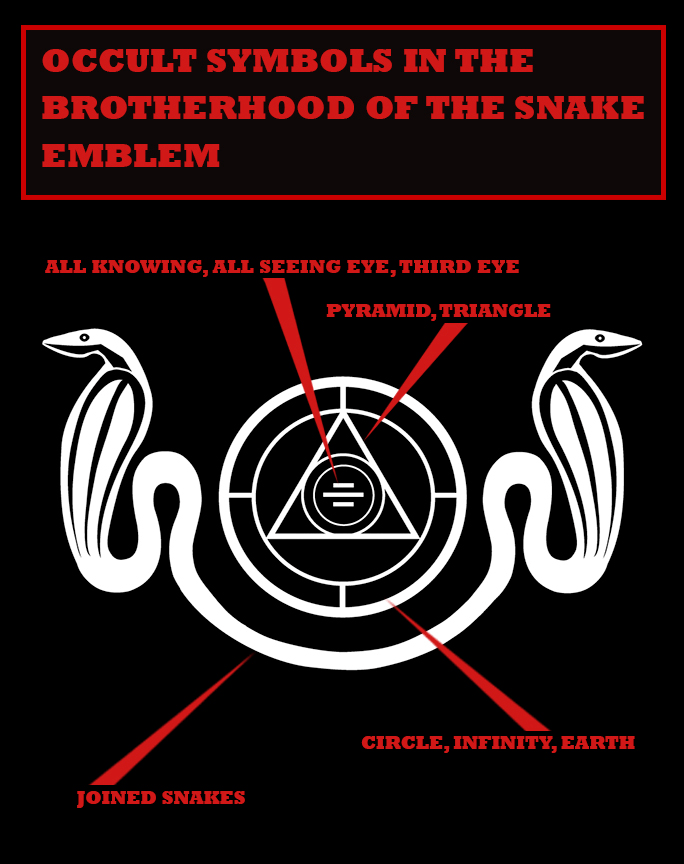

















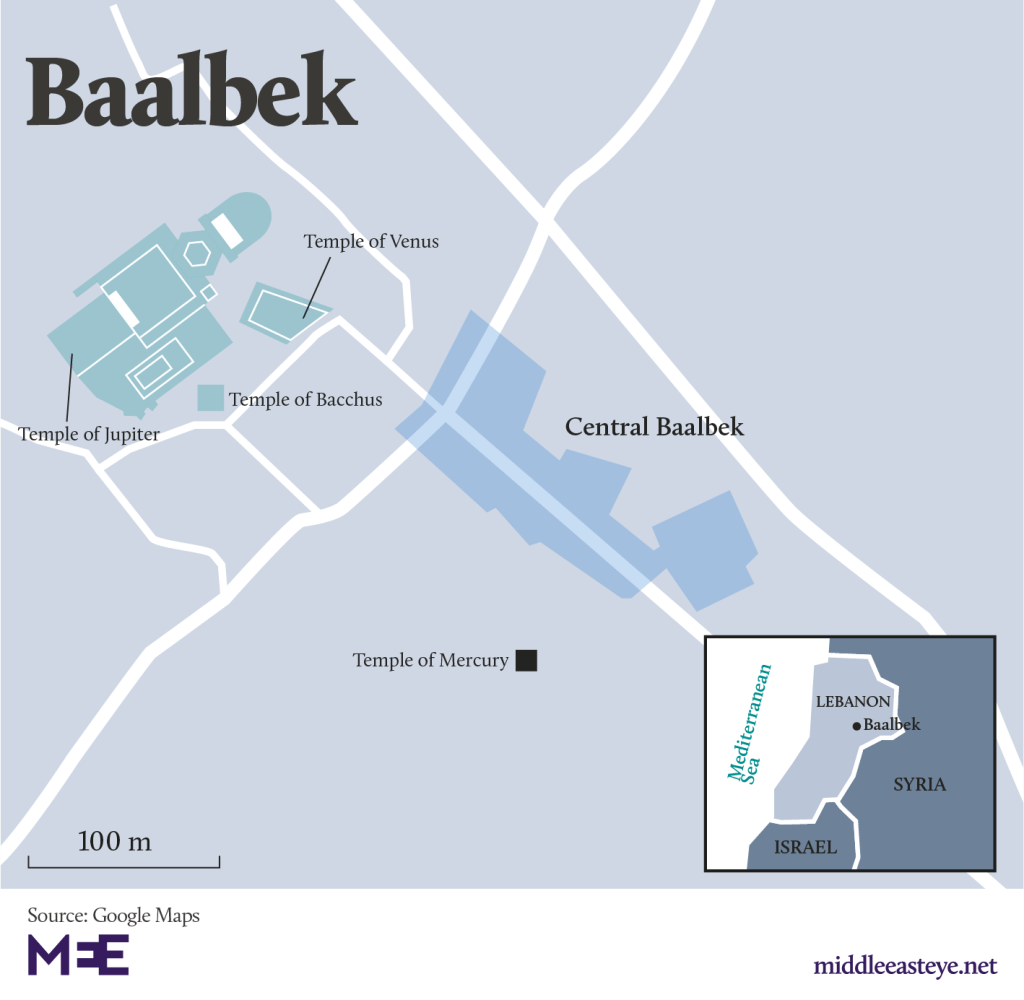

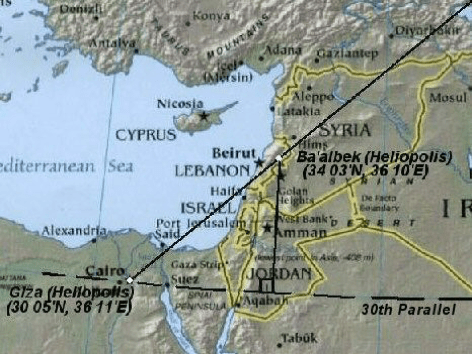


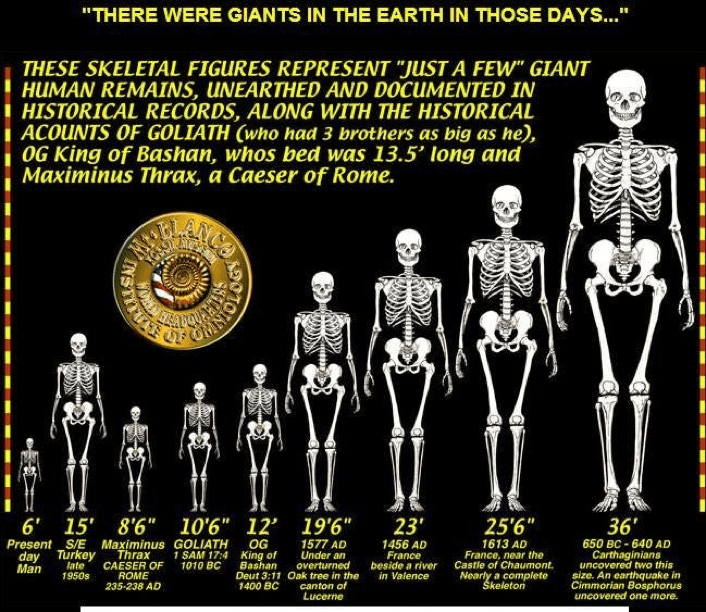


 The Lightkeeper