
This writer’s interest in the Younger Dryas event is relatively recent during thirty years of research and thanks in the main to the investigative journalism of Graham Hancock. Consider this article a continuation of two previous articles: Monoliths of the Nephilim and Antartica: Secrets of the Lost Continent of Atlantis. Two chapters of The Noachian Legacy which dovetail with the subject matter and may be of interest to new readers seeking further discussion are: Chapter I Noah Antecessor Nulla and Chapter XXII Alpha & Omega. Of course, mention either Atlantis or the Nephilim and one’s credibility in mainstream academia and the orthodox scientific community drops to zero.
How ironic then, that a true understanding and accurate interpretation of mankind’s arcane past is only possible when incorporating the all persistent fairy tales of an advanced civilisation represented by Atlantis and its fall; coupled with and influenced by a pantheon of gods and a race of giant demigods – the Titans of mythology – Articles: Nephilim & Elioud Giants I & II. This pantheon of gods is deserving of a future article, though they have been introduced previously – refer articles: Principalities & Potentates: What they want… Who they are; Thoth; and Chapter XXII Alpha & Omega.

On a personal note, I would not normally endorse another researcher or advocate to support them, but a question on the internet platform Quora, compelled me to defend his work. The reason being, that I find little fault in his theories and conclusions. The question and my answer are reproduced in their entirety for it serves as an appropriate introduction.
Question: “Graham Hancock claims there is a mountain of undeniable evidence for a civilization that existed before ours. Is there any truth to this?”
Answer: ‘Graham Hancock is correct and he is a brave soul for going up against the inflexible establishment of orthodox academia and scientists who either have an agenda to continue swimming in error and promulgate falsehood to the masses in keeping them in the dark; or who are genuinely blinded by their own intellectual vanity and self-importance.
He is the visible focus point for all iconoclasts and contrarians in ancient history for both the Earth and its early civilisations. Worldwide ancient legends, archaeology, the geological record and even an accurate interpretation of the Bible, all support Hancock and the growing number of people with similar understanding.
It is just a matter of time for all the pieces of the jig-saw puzzle on this subject to be discovered and put together. As with all debates and matters of disagreement, there are two sides. Only one is ever right. Yet invariably, it is the one which is incorrect who disdainfully looks down on the other as ignorant, simple minded and obtuse. But, when the truth is finally revealed, one side will be far more surprised (and embarrassed) than the other.’
A passionate response perhaps, yet hardly surprising considering the immense wall of obstruction put up against Hancock, his theories and his conclusions by a threatened and intimidated Establishment whom are not ready to acknowledge the ramifications and validity of the growing evidence, or to re-write humanities early history as a result. Admitting they have been in error regarding humankind’s evolution as not a gradual upward curve at all but an undulating one instead, is abhorrent and unthinkable. In response, the insults directed at Hancock whether based professionally or personally have plummeted to new lows in their degradation towards the intrepid investigator. But, history shows all new ideas and theories which are correct, eventually win out, no matter how many decades of denial persist.
Graham Bruce Hancock was born August 2, 1950 in Edinburgh and is a British writer who opponents claim promotes pseudoscientific theories – because they challenge mainstream science – involving ancient civilisations and hypothetical lost lands. Hancock’s premise is that an advanced ice age civilisation was destroyed in a global cataclysm and its survivors preserved their knowledge regarding agriculture; monumental architecture; and astronomy to hunter-gatherers around the world; which in turn gave rise to the early civilisations and cultures in Egypt, Mesopotamia and Mesoamerica.

Online Encyclopaedia: ‘Reviews of Hancock’s interpretations of archaeological evidence and historic documents have identified them as a form of pseudoarchaeology or pseudohistory containing confirmation bias supporting preconceived conclusions by ignoring context, cherry picking, or misinterpreting evidence, and withholding critical countervailing data. His writings have neither undergone scholarly peer review nor been published in academic journals.’
This is merely the opinion of his detractors in the scientific community who maintain closed ranks over a conspiracy like agenda to misinform the populace and not of the millions of civilians who think for themselves and recognise the fundamental flaws in the established evolutionary view of humankind’s supposed technical progression. Plus, scientists hold high value in the dates they propose, yet these are open to serious question, for carbon dating is often seriously skewed beyond four thousand years ago, while other dating is influenced by the desire to uphold evolution lasting millions of years, when in reality it is only tens of thousands of years in length – Appendix IV An Unconventional Chronology.
Hancock has brought the concept of mankind’s widespread amnesia about a global catastrophe almost wiping out humanity during the Younger Dryas to a wider audience through the 2022 documentary released by Netflix, Ancient Apocalypse. Of the eight episodes, the fifth one, Legacy of the Sages about Gobekli Tepe and Karahan Tepe was of special interest. Of which it was included in a previous article: Monoliths of the Nephilim. The other episode of specific interest was the last one and we will discuss its contents in due course as well as Hancock’s thoughts and conclusions on the Younger Dryas event.
Opponents are quick to point out the coincidence of Hancock’s son Sean, being ‘senior manager of unscripted originals’, which has no bearing on the content of the program. The series concentrates on megalithic sites around the world and how they are evidence of his central premise. At the same time claiming that ‘archaeologists are ignoring or covering-up this alleged evidence. It incorporates ideas from the Comet Research Group (CRG), including the controversial Younger Dryas impact hypothesis, which… attributes climate change at the end of the Pleistocene to a massive meteor bombardment. Archaeologists and other experts have described the theories presented in the series as lacking in evidence and easily disproven. It has been criticised for failing to present alternative hypotheses or contradicting evidence, and for unfounded accusations that “mainstream archaeology” conspires against Hancock’s ideas.’
The ultimate low blow – as can be directed at research which claims to identity the origins of people or which supports any kind of platform supporting racial theories for instance – is that ‘Archaeologists have linked Hancock’s claims to “racist” and “white supremacist” ideologies from the 19th century, which they say are insulting to the ancestors of indigenous peoples who built the monuments.’ Constant readers will realise that it is a matter of perspective regarding who built megalithic monuments and who is actually being forgotten or insulted – refer articles: Monoliths of the Nephilim; and Antartica: Secrets of the Lost Continent of Atlantis.
‘The Society for American Archaeology (SAA) objected to the classification of the series as a documentary and requested that Netflix reclassify it as science fiction.’ This laughable finger pointing by the very ones who have been spinning a yarn for decades. ‘The SAA also stated that the series: “Repeatedly and vigorously dismisses archaeologists and the practice of archaeology with aggressive rhetoric, willfully seeking to cause harm to our membership and our profession in the public eye… the theory it presents has a long-standing association with racist, white supremacist ideologies; does injustice to Indigenous peoples; and emboldens extremists.”
One irony being that nearly all the megalithic monuments in question were not built by either Native Indigenous people, or by ancestors of White Europeans. Rather, a race of formidable Elioud giants descended from the Nephilim are responsible and so would that not be racist and insulting against them? – refer articles: Nephilim & Elioud Giants I & II; Chapter XXII Alpha & Omega; and Chapter XXI The Incredible Identity, Origin & Destiny of Nimrod.
It was during independent research, that this writer became convinced how the Last Glacial Maximum from 27,000 to 20,000 years ago – preceded the global cataclysm which destroyed all human life, all animal, all insect and all bird life, save on the Ark, as described in the Bible during the Flood – Genesis 6:7.

It was discovered that dating for the pre-flood patriarchs incorrectly based on a decimal system instead of a sexagesimal count; as well as inadvertently adhering to an inaccurate post-flood chronology, altered through editing was an error. Using an unconventional chronology to re-align the biblical account with scientific data, resulted in the date of 10,837 BCE for the great deluge. Imagine the surprise and satisfaction to learn that the beginning of the Younger Dryas Stadial is dated to precisely the same time frame.

What is the Younger Dryas event exactly? The Younger Dryas was the last cool interval occurring approximately between 12,900 and 11,600 years ago – remarkably, 10,875 to 9575 BCE – which disrupted the prevailing warming trend occurring at the end of the Pleistocene and preceded the beginning of the current, warmer Holocene epoch. Various researchers believe that this is what caused the worldwide Mega Fauna Extinction Event that occurred at the same time.

dryas octopetala
The event is named after the Dryas, an alpine-tundra wildflower that grows around the Artic Circle and whose leaves thrive in the cold, It is abundant in certain sedimentary deposits dated to this epoch, when it became common. In determining how much pollen is found in annual layers of lake sediment called varves, researchers have estimated where the boundary of the Arctic Circle was during a given time. The further south, the greater the glaciation. The further north, the greater the warming.
It is the contention of this writer that the Younger Dryas was an epochal transformation event which decimated the Adamic Age, ending it dramatically and in turn, ushering in the legacy of the Noachian world we live in today. Thus, the Younger Dryas Stadial was at once a sudden yet protracted process that brought about a major and abrupt change of the world climate over the course of about 1,300 years. The temperature drop was massive, with the globe entering into a near-glacial period where it was extremely cold and windy. This occurred almost immediately after there was an increase of temperatures following the previous glacial period about, 14,500 years ago and lead to a sudden warming which put an end to the Ice Age period which had lasted thousands of years.
Encyclopaedia: ‘The Younger Dryas was the most severe and longest lasting of several interruptions to the warming of the Earth’s climate, and it was preceded by the Late Glacial Interstadial (also called the Bølling-Allerød interstadial), an interval of relative warmth that lasted from 14,670 to 12,900 BP.’
According to World Atlas: ‘[This] warming led to the melting of massive ice deposits in North America and Europe…’ The conditions changed again soon after entering the Younger Dryas period and ended over a thousand years later when the climate warmed again with Greenland recording a 10°C temperature increase in a decade. The Younger Dryas is a stand out event in history and the manner in which it ended abruptly confounds scientists. The question as to what caused the Younger Dryas is hotly debated and has led to numerous explanations being put forward to explain the event, with no unified agreement being reached.

The Younger Dryas event was unlike any normal climate change and was bound to have unique repercussions on the world. Temperature fluctuations not only occurred before and after but also during the phenomenon. The change was relatively sudden, took place over decades and resulted in advances of glaciers and drier conditions over much of the temperate Northern Hemisphere. In England, glaciers began to form, caused by extremely low temperatures. While in the Netherlands, the temperatures fell below -20°C during the winter season. Of all the regions affected by the Younger Dryas, it was in Greenland that the effects were the worst, with the ice cores recording a temperature drop of 15°C. Trees were affected the most in Europe, with alpines and tundra becoming dominant after the original trees had retreated.

Scientists have long been aware of the presence of a distinct cold period at the end of the Last Glacial Maximum. ‘Paleobotanical and lithostratigraphic studies of Swedish and danish bog and lake sites, as in the Allerod clay pit in Denmark, first recognized and described the Younger Dryas. The Younger Dryas is the youngest and longest of three stadials, which resulted from typically abrupt climatic changes… the prefix “Younger” refers to the recognition that this original “Dryas” period was preceded by a warmer stage, the Allerod oscillation, which, in turn, was preceded by the Older Dryas, around 14,000 calibrated years BP… [and] generally accepted to have lasted around 200 years.
In northern Scotland, the glaciers were thicker and more extensive than during the Younger Dryas. The Older Dryas, in turn, was preceded by another warmer stage, the Bolling oscillation, that separated it from a third and even older stadial, often known as the Oldest Dryas. The Oldest Dryas occurred about 1,770 calibrated years before the Younger Dryas and lasted about 400 years. According to the GISP2 ice core from Greenland, the Oldest Dryas occurred between about 15,070 and 14,670 calibrated years BP.’

‘In Ireland, the Younger Dryas has also been known as the Nahanagan Stadial, and in Great Britain it has been called the Loch Lomond Stadial. In the Greenland Summit ice core chronology, the Younger Dryas corresponds to Greenland Stadial 1 (GS-1). The preceding Allerød warm period (interstadial) is subdivided into three events: Greenland Interstadial-1c to 1a (GI-1c to GI-1a).
Analyses of stable isotopes from Greenland ice cores provide estimates for the start and end of the Younger Dryas. The analysis of Greenland Summit ice cores, as part of the Greenland Ice Sheet Project 2 and Greenland Icecore Project, estimated that the Younger Dryas started about 12,800 ice (calibrated) years BP. More recent work with stalagmites strongly suggests a start date of 12,870 ± 30 years BP, consistent with the more recent North Greenland Ice core Project (NGRIP) ice core data.’
This is of immense importance and interest, as an unconventional chronology supports a global cataclysm occurring in the year 10,837 BCE. When this writer began researching, little did they realise that stalagmites would corroborate these findings and offer a date of 10,846 BCE +/- 30 years. Thus, a mere nine years separates the two dates, which is within the mean of 30 years and so the dates actually synchronise. Perhaps Noah’s flood, recorded in a book of fanciful fables, may have been a reality which transpired after all? – Chapter I Noah Antecessor Nulla.
Encyclopaedia: ‘Depending on the specific ice core analysis consulted, the Younger Dryas is estimated to have lasted 1,150-1,300 years. Measurements of oxygen isotopes from the GISP2 ice core suggest the ending of the Younger Dryas took place over a period of about 50 years. Other proxy data, such as dust concentration and snow accumulation, suggest an even more rapid transition, lasting for 30 years or less, potentially as rapid as less than 20 years. Greenland experienced about 7 °C (13 °F) of warming in just half a century. Total warming in Greenland was 10 ± 4 °C (18 ± 7 °F). The end of the Younger Dryas has been dated to around 11,550 years ago, occurring at 10,000 BP… The International Commission on Stratigraphy put the start of the Greenlandian stage, and implicitly the end of the Younger Dryas, at 11,700 years before 2000 [or 9700 BCE].’
There are three main theories on the cause of the cataclysm during the Younger Dryas, yet the answer may lay in all three being contributing factors. The incredible worldwide devastation caused during this monumental earth-changing event is discussed in a previous chapter – Chapter I Noah Antecessor Nulla.
The hypothesis historically most supported and accepted by scientists was the premise that the Atlantic Meridional Overturning Circulation (AMOC), which transports warm water from the Equator towards the North Pole, was interrupted by an influx of fresh, cold water from North America into the Atlantic. This intrusion of water is said to have originated from Lake Agassiz which broke its bank and released freshwater into the Labrador Sea, in turn floating on the salty water. This then blocked the AMOC current which transports heat to the north using its warm waters – in essence a shutdown of the North Atlantic conveyor. This blockade led to Northern Europe freezing. This is also known as the Thermohaline Circulation (THC) disruption where the North Atlantic froze while the South Atlantic warmed. For research shows that if the THC was disrupted, less heat would reach the north from the south.
However, some discredit this explanation as research also shows a similar water release happened after the end of the Younger Dryas. This raises questions as to why the climate was not affected in the same way. There are in fact several issues relating to the hypothesis, one of which is the ‘lack of a clear geomorphological route for the meltwater. In fact, the originator of the meltwater hypothesis, Wallace Broecker, stated in 2010 that “The long-held scenario that the Younger Dryas was a one-time outlier triggered by a flood of water stored in proglacial Lake Agassiz has fallen from favor due to lack of a clear geomorphic signature at the correct time and place on the landscape.”
Encyclopaedia: ‘The lack of geological evidence for such an event…’ or a ‘consensus… on the precise source of the freshwater… [means] the freshwater pulse hypothesis has… been called into question… originally the freshwater pathway was believed to be the Saint Lawrence Seaway, [but] the lack of evidence for this route has led researchers to suggest alternative sources for the freshwater’ including: a pathway along the Mackenzie River: de-glacial water coming off of Scandinavia; the melting of sea ice; increased rainfall; or increased snowfall across the North Atlantic.

It perhaps could be viewed that any disruptions to the AMOC and THC are results of the cataclysm and not necessarily its cause. Another plausible theory is that the reason why the water stream changed its course and went northward was caused as a consequence of deglaciation (melting ice sheet) in North America. This, in turn, led to an increased amount of rain in the North Atlantic which sufficed to disrupt the THC.
A further related explanation is that the El Nino-Southern Oscillation was affected in response to changes which occurred in Earth orbital patterns. This explanation is discredited because it cannot explain how such an event affects regions far from the tropics. Yet it raises an important question in what could cause a change in Earth’s orbital pattern? A passing cosmic body, such as a comet, meteors or even another planet perhaps?

‘The global climate would then have become locked into the new state until freezing removed the fresh water “lid” from the North Atlantic.’ Simulations indicate that a ‘one-time-flood’ is unlikely to have caused the ‘new state to be locked for 1,000 years. Once the flood ceased, the AMOC would recover and the Younger Dryas would stop in less than 100 years. Therefore, continuous freshwater input would be necessary to maintain a weak AMOC for more than 1,000 years. A 2018 study proposed that the snowfall could be a source of continuous freshwater resulting in a prolonged weakened state of the AMOC. The lack of consensus regarding the origin of the freshwater, combined with the lack of evidence for sea level rise during the Younger Dryas, are problematic for any hypothesis where the Younger Dryas was triggered by floodwater.’
Theses two points are not issues unless one make them so. First, the cataclysm which afflicted the Earth, caused global flooding from a combination of sources, including eruptions of springs from under the oceans and the falling of the canopy in the atmosphere above – not just from lakes and rivers – Chapter I Noah Antecessor Nulla. Second, whether the sea level rose or not – and it would have – is secondary to the violence of the earthquakes and tidal waves which ripped across the world’s oceans and landmasses in their path.
The second – and increasingly well-supported – alternative to the meltwater trigger, is that the Younger Dryas calamity was the result of volcanic activity. The ‘presence of anomalously high levels of volcanism immediately preceding the onset of the Younger Dryas has been confirmed in both ice cores and cave deposits.’ In fact ‘numerous papers now confidently link volcanism to a variety of cold events… and in particular several note the ability of volcanic eruptions to trigger climate change lasting for centuries to millennia.’

Encyclopaedia: It has been ‘proposed that a high latitude volcanic eruption could have shifted atmospheric circulation sufficiently to increase North Atlantic sea ice growth and slow down AMOC, subsequently leading to a positive cooling feedback and initiating the Younger Dryas.
Particularly strong support comes from sulphur data from Greenland ice cores showing that the radiative forcing associated with the cluster of eruptions immediately preceding the Younger Dryas initiation “exceeds the most volcanically active periods during the Common Era, which experienced notable multidecadal scale cooling commonly attributed to volcanic effects”. Notably, the sulphur data strongly suggest that a very large and high latitude northern hemisphere eruption occurred 12,870 [10,846 BCE] years ago, a date indistinguishable from the stalagmite-derived onset of the Younger Dryas event.
It is unclear which eruption was responsible for this sulphur spike, but the characteristics are consistent with the Laacher See eruption [located in Rhineland-Palatinate, Germany], as the source. The eruption was dated to 12,880 ± 40 years BP [10,856 BCE (+/- 40 years), offers a mere nineteen years separating this date with the unconventional chronology date of 10,837 BCE for the flood], by varve counting sediment in a German lake and to 12,900 ± 560 years by 40Ar/39Ar dating, both of which are within dating uncertainties of the sulphur spike at 12,870 years BP, and make the Laacher See eruption a possible trigger for the Younger Dryas.’
A ‘new radiocarbon date [challenged] the previous dating for the Laacher See eruption, moving it back to 13,006 years BP, but this date itself has been challenged as potentially having been affected by radiocarbon ‘dead’ magmatic carbon dioxide, which was not accounted for and made the date appear older than it was. Regardless of the ambiguity surrounding the date for the Laacher See eruption, it almost certainly caused substantial cooling either immediately before the Younger Dryas event or as one of the several eruptions which clustered in the ~100 years preceding the event [during the Older Dryas]. A volcanic trigger for the Younger Dryas event also explains why there was little sea level change at the beginning of the event. Furthermore, it is also consistent with previous work that links volcanism with [Dansgaard-Oeschger] events and with the perspective that the Younger Dryas is simply the most recent D-O event.’
Another theory is that a solar flare might have been responsible for the megafaunal extinction which occurred during the Younger Dryas, but this alone cannot account for the apparent variability in the timing of the extinction across all the continents.
The third cause for the Younger Dryas event is the impact hypothesis [or Clovis comet hypothesis], which attributes the cooling that occurred to the cosmic ‘impact of a disintegrating comet or asteroid.’ An impact of this type would have left a ‘lot of debris that cooled the climate fast and in turn [eliminated] certain species’ due to the extreme conditions. Interestingly, this ‘idea is rejected by most experts though it is promoted by pseudoscientific archaeology television.’
A dig here – no pun intended – at all those who advocate this theory such as Graham Hancock. One can’t help but wonder if scientists deliberately support volcanism as the trigger for the Younger Dryas period, in their effort to distance themselves from a Great Flood as described in myriad myths world-wide. And what would cause a global flood perchance? A cosmic impact certainly would.

An increase in volcanic eruptions preceding a comet strike for instance, could have been symptomatic of the beginning of lethal activity preceding the foretold disaster. The molten layers of lava beneath the Earth’s crust could well have been heating to dangerous levels, becoming less viscous and allowing the movement of the Earth’s crust to become volatile, which would then facilitate the destructive power of earthquakes and seismic shifts in the continual landmasses when a comet, asteroid or meteors struck in 10,837 BCE.

Online Encyclopaedia: ‘It is worth noting that of the proposed Younger Dryas triggers, the volcanic trigger is the only one with evidence that is almost universally accepted as reflecting the actual occurrence of the trigger. No consensus exists that a meltwater pulse happened, or that a bolide impact occurred prior to the Younger Dryas, whereas the evidence of anomalously strong volcanism prior to the Younger Dryas event is now very strong.’ Even so ‘outstanding questions include whether a short-lived volcanic forcing can trigger 1,300 years of cooling, and how background climate conditions affect the climate response to volcanism.’

The end of the Younger Dryas was caused by an increase in carbon dioxide levels and a shift in the Atlantic Meridional Overturning Circulation. There are other examples of climate fluctuations similar to the Younger Dryas over the past 50,000 years like the Heinrich event; the Dansgaard-Oeschger phenomenon; and the Akkadian Collapse.
A Heinrich event is a natural phenomenon, where a prodigious volume of icebergs break off from the Laurentide Ice Sheet, traversing the Hudson Strait into the North Atlantic. It was first described by marine geologist Hartmut Heinrich. Dansgaard-Oeschger events (D-O) – named after palaeoclimatologists, Willi Dansgaard and Hans Oeschger – are rapid climate fluctuations that have occurred 25 times during the last glacial period.
It is often noted that the Younger Dryas is merely the last of these major climate D-O events over the past 120,000 years. ‘These episodes are characterized by abrupt beginnings and endings (with changes taking place on timescales of decades or centuries). The Younger Dryas is the best known and best understood because it is the most recent… [of the] cold phases…’ yet fundamentally different, due to the violence which destroyed nearly all life on Earth.

Abrupt Climate Change During the Last Ice Age, Matthew W Schmidt & Jennifer E Hertzberg (Department of Oceanography, Texas A&M University), 2011:
‘Unlike the relatively stable climate Earth has experienced over the last 10,000 years, Earth’s climate system underwent a series of abrupt oscillations and reorganizations during the last ice age between 18,000 and 80,000 years ago (Dansgaard 1984, Bond et al. 1997, 1999). These climate fluctuations were first discovered when scientists reconstructed past temperature variability over Greenland by analyzing tiny changes in the relative abundance of the oxygen-16 isotope versus the oxygen-18 isotope (noted as δ18O and reported in parts per thousand) in ice cores recovered from Greenland glaciers.
Each successively deeper ice layer represents a snapshot of Earth’s climate history from the past, and together, the oxygen isotope record told a story of abrupt, millennial-scale climate shifts in air temperatures over Greenland between extremely cold stadial conditions and relatively mild interstadial periods during the last ice age (Alley 2000, Alley et al. 2003). There are twenty-five of these distinct warming-cooling oscillations (Dansgaard 1984) which are now commonly referred to as Dansgaard-Oeschger cycles, or D-O cycles. One of the most surprising findings was that the shifts from cold stadials to the warm interstadial intervals occurred in a matter of decades, with air temperatures over Greenland rapidly warming 8 to 15°C (Huber et al. 2006). Furthermore, the cooling occurred much more gradually, giving these events a saw-tooth shape in climate records from most of the Northern Hemisphere.’
The current conviction is that volcano activity initiated the Younger Dryas – while being a precursor or result of an extraterrestrial mechanism is not considered. In the process displacing the theory of massive meteor impacts. Ivan Petricevic, August 2, 2020, says ‘… unprecedented volcanic activity was previously confused with extraterrestrial impacts…’ and that ‘…the geochemical signature [presumably from volcanic activity] associated with the cooling event is not unique but occurred at least four times between 9,000 and 15,000 years ago [13,000 to 7000 BCE]. Alan Brandon, professor of geosciences at the University of Houston, revealed in a statement that… Previous geochemical evidence of a large meteorite exploding in the atmosphere reflects a period of major volcanic eruptions… the cooling episode, scientifically known as the “Younger Dryas” was caused by numerous coincident Earth-based processes, not by an extraterrestrial impact.’

Thus geochemical evidence of meteorites has switched to now reflecting volcanic eruptions. Convenient, as it deflects from the unpalatable truth of a flood caused by a cosmic impact. The period after the Flood saw an unstable world, where it took centuries to dry out, to become farmable, and millennia to settle into rhythmic patterns of weather and a stable settlement of the Earth’s crust. Therefore, earthquakes, volcanic eruptions and severe regional flooding such as in the Black Sea region circa 6700 BCE is not a surprise.
We were introduced to Martin B Sweatman, a Reader (Associate Professor) at the University of Edinburgh in the article, Monoliths of the Nephilim. ‘His research, involving the statistical analysis of the motion of atoms and molecules (statistical mechanics and molecular thermodynamics) has helped him solve one of the world’s greatest puzzles – the meaning of ancient animal symbols found in Palaeolithic caves, and [Pillar 43] at Gobekli Tepe… This breakthrough enables the dating of prehistoric artworks using an entirely new method – zodiacal dating.
His article, Volcanic or cosmic impact origin of the YD mini ice-age? New evidence from Hall’s Cave, Texas, August 6, 2020, is in response to the switch in thinking about the cause of the Younger Dryas. Sweatman: ‘Until now, over 60 primary peer-reviewed journal papers together with dozens of supporting responses all agree the Younger Dryas event was caused by Earth’s collision with debris from a disintegrating comet. Only one paper has previously suggested it was caused by the Laacher See volcanic explosion – and that paper was thoroughly refuted only a year later.
… the sediment of Hall’s Cave, Texas… has accumulated over tens of thousands of years, providing a convenient record of environmental conditions near the cave over this time. An easily visible transition in the colour of the sediment at a depth around 1.51 m signifies a dramatic change in climate, and has been suggested to indicate the onset of the Younger Dryas climate anomaly when the Northern Hemisphere experienced a sudden return to near ice-age conditions for over 1000 years.’

‘This view is supported by the discovery in this boundary layer of the same kinds of microscopic impact debris found at many other Younger Dryas boundary sites across four continents. So, it appears that Hall’s Cave is yet another record of this most dramatic and important cosmic impact event, thought to have reset human Cultures and extinguished many species of large animal across the globe. An event that is probably remembered by numerous extant religions, and might even have helped trigger the rise of our own civilisation.’

Younger Dryas Boundary Field – Graphic from Kinzie, Firestone, Kennett et al. “Nanodiamond-Rich Layer across Three Continents Consistent with Major Cosmic Impact at 12,800 Cal BP”, The Journal of Geology, 2014, volume 122, pages 475 – 506
‘… the dinosaur-killing Chicxulub impactor was particularly rich in iridium, and coated Earth in an iridium-rich layer of dust and debris. However, we know from analysis of the GISP2 ice core in Greenland, that the Younger Dryas impactor was instead rich in platinum. Since that discovery peaks in platinum concentration within sediments have been used to locate the Younger Dryas boundary accurately at many other sites… asteroids – that originate from the asteroid belt in the inner solar system – tend to be rich in osmium, and osmium enhancement is therefore a good indicator of an asteroid strike, the same is not known to be generally true for comets. Yet the prevailing model of the Younger Dryas impact involves a highly fragmented comet, not an asteroid.
… volcanic eruptions can also produce abundances of platinum group metals, since these metals are more highly concentrated in Earth’s interior than its crust… osmium by itself cannot be used to distinguish between a volcanic eruption and a cosmic impact, especially if caused by a comet… there are far better indicators and proxies for these very different events that can easily discriminate between them. Sulphates are known to be excellent in this respect, with a strong sulphate abundance clearly indicating a volcanic eruption. We know from high-resolution analysis of the GISP2 ice core that there is no significant sulphate signal at the onset of the Younger Dryas cooling. Moreover, a strong sulphate spike in the GISP2 ice-core, thought to signify the Laacher See eruption, precedes the Younger Dryas climate transition by around 100 years and is not associated with any significant cooling.’
Thus supporting, with the Laacher See eruption at least during the Older Dryas, that it was a precursor to the Younger Dryas and not the ignition of it. ‘As the GISP2 ice core is sampled at roughly 3-year intervals, it is a much better record than Hall’s Cave, which is effectively sampled at 50 to 100 year intervals… abundances of magnetic microspherules, containing over 85% iron, have been found at the Younger Dryas boundary layer in various locations, strongly indicating a cosmic impact and contra-indicating a volcanic eruption. Quite simply, it is impossible for a volcanic eruption to produce these iron-rich particles. The Laacher See eruption is therefore unequivocally ruled out as the cause of the Younger Dryas boundary layer. Clearly, then, the focus on osmium by Sun et al., by itself a poor discriminator of a comet impact versus a volcanic eruption, is not useful in this debate.’
Sweatman’s analysis and critique of Sun et al. paper in Science Advances, July 31, 2020 can be found at the following link:
A further point of interest aside from Martin Sweatman’s article, were comments supporting this writer’s research on the time frame of the Younger Dryas and specifically the flood cataclysm. One comment confirmed that a ‘cosmic impact of the proposed magnitude would induce volcanic activity, among other seismic events. They’re clearly not mutually exclusive events.’
An anonymous comment claimed the following:
‘For the record, I was the first to discover and publicly claim on the Cosmic Tusk site (in the comments) that the Laacher See eruption was caused by an impact… on a volcanic field which resulted in subsequent eruption. In Laacher See tephra, all 14 rare earth elements have enhanced abundances by the factor of 20-30, and there are other anomalies which make this eruption quite unique. It is the only known impact caused eruption. The event happened on June 29, 10,961 BC, Gregorian calendar, and it is the year marked on the Göbekli Tepe’s Pillar 43. Sweatman’s claim of 10,950 BC +/- 250 for this I reduced to 10,961 BC +/- 0 years…’
This date, 10,961 BC, is 124 years before the flood in 10,837 BCE and fits with the volcanic activity beginning approximately one hundred years before the Younger Dryas cataclysm – Genesis 6:3. The significance of this time frame has biblical support. Though it does not concur with the dating of Pillar 43 being 10,961 BC.
Ronald Sechler adds:
‘The earth is growing and expanding, because it has a fission core [equivalent of a nuclear reactor]’ – Article: Nuclear Nefariousness. ‘The growing and expanding causes the earth to go out of balance over time. Asteroid or comet impacts send shock waves through the crust and mantle of the earth, causing the crust to crack and break allowing mantle material to flow out over the crust. As balance is quickly lost the earth experiences an extreme wobble. All… major mass extinction events are [caused] by the growing and expanding earth.’
Ad Roest states:
‘When will researchers accept the fact that the earth is suffering from a regular recurring “space impact”. A real impact does not return regularly so the cause of this is not a comet. Ancient books tell us that this must be caused by a heavenly body that causes a cycle of seven natural disasters. The only cause of such a cycle is a ninth planet [aka Planet X or Nibiru] in our solar system’ – Chapter XXII Alpha & Omega. ‘That exists says NASA but they don’t see it. Ancient sources know about an invisible ‘star’. I reconstructed our history using many ancient sources including the bible. The most recent worst “space impact” occurred in the year 10,844 BC.’
This comment was of particular interest. A collision with a planetary body has happened to the Earth before about 35,000 years ago. This same body may well have hit and gouged Mars 13,000 years ago and at the same time either scraped our globe or passed close enough for its accompanying trailing comet(s) and its meteor fragments, to rain down upon the Earth. The date given of 10,844 BC is exceptionally accurate in this writer’s estimation and within seven years of their own calculation: 10,837 BCE. It relays confidence in the accuracy of the two dates after weighing together available data and information.

While this writer personally subscribes to a ninth planet theory – with volcanism and flooding byproducts or side affects – lets go with a comet impact hypothesis for the sake of simplicity. Graham Hancock endorses a book which solidly combats the opponents of a comet strike as the cause of the Younger Dryas, where he states:
‘Did impacts and airbursts from multiple fragments of a disintegrating comet cause the onset of the Younger Dryas global cataclysm 12,800 years ago? After more than a decade of acrimonious scientific controversy around the Younger Dryas Impact Hypothesis (YDIH), an important new book by eminent geologist Dr James L. Powell answers this question in great depth and sets the record straight with a resounding YES. Titled “Deadly Voyager: The Ancient Comet Strike That Changed Earth and Human History”, this thoroughly researched… study systematically demolishes all the criticisms of the YDIH that have been made… by scientific opponents.
What makes Powell’s book so significant, however… is its thorough documentation of how solidly-based on compelling geological evidence the YDIH really is, and the rational and balanced way in which it reveals the flaws of the scientific process – the personal grudges, the vested interests in the orthodox paradigm, and the axes to grind – that for so long were allowed to mislead the public about the truth of the matter. It is sadly the case, as Powell does not hesitate to remind us, that some scientists are willing to use “sleight-of-hand… to ward off a theory that they have long denied. But evidence always wins out, and all such scientists accomplish is first, to delay scientific progress and second, to besmirch their reputation in history.”
The notion that a comet struck North America at the end of the last ice age was initially proposed as a ‘speculative premise’ by the American congressman and alternative historian, Ignatius Donnelly in 1883 – refer Donnelly, article: Antartica: Secrets of the Lost Continent of Atlantis. He suggested it formed the Great Lakes, causing a sudden extreme cold period, which devastated animal and human populations. After a long hiatus, it has since gained widespread attention, when this hypothesis entered widespread scientific discussions at the May, 2007 meeting of the American Geophysical Union in Acapulco, Mexico. Even though the YDIH was formally debuted in 2007, a version of the hypothesis first appeared from Firestone and Topping in 2001, followed by substantial elaboration in the Firestone, West, and Warwick-Smith book of 2006.
From The Cosmic Tusk, a lesser known essay by Graham Hancock on the YDIH is the rather lengthy quote which follows – emphasis and bold mine. Though not reproduced in its entirety, the salient points were deemed important to include.
‘The epoch which geologists call the Younger Dryas has… been recognized as mysterious and tumultuous. When it began 12,800 years ago the earth had been emerging from the Ice Age for roughly 10,000 years, global temperatures were rising steadily and the ice caps were melting. Then there was a sudden dramatic return to colder conditions – nearly as cold as at the peak of the Ice Age 21,000 years ago [in 19,000 BCE]. This short, sharp deep freeze lasted for 1,200 years [Genesis 6:3] until 11,600 years ago [9600 BCE] when the warming trend resumed with incredible rapidity, global temperatures shot up again and the remaining ice caps quite quickly melted away, dumping all the water they contained into the oceans and raising sea level significantly all around the world.
The Younger Dryas Impact Hypothesis is… the work of highly-qualified scientists from universities in countries, collaborating as the Comet Research Group. Members include nuclear analytical chemist Richard Firestone – a nuclear analytical chemist – of the Lawrence Berkeley National Laboratory, world-renowned oceanographer Jim Kennett of the University of California, Wendy Wollbach Professor of Inorganic Chemistry and Geochemistry at DePaul University, Albert Goodyear, Professor of Archaeology at the University of South Carolina, Geophysicist Allen West, Astrophysicist Malcolm Le Compte, Geologists James Teller and Ted Bunch – and more than 50 other leading researchers from a wide range of disciplines.
“Probed as to why no crater had yet been identified with this hypothetical impact 12,900 years ago… Arizona-based geophysicist Allen West, suggested that smaller, low-density parts of the comet would have exploded in the atmosphere, while larger fragments might have crashed into the mile deep ice cap that covered North America at that time. ‘Such craters,’ West observed, ‘would have been ice-walled and basically melted away at the end of the last ice age’, leaving few traces.
… the sediment samples the team’s evidence focussed on contained several different types of debris that could only have come from an extraterrestrial source, such as a comet or an asteroid. The debris included nanodiamonds, created by the shock and heat of impacts, tiny carbon spherules that form when molten droplets cool rapidly in air, and carbon molecules containing the rare isotope helium-3, far more abundant in the cosmos than on Earth. “You might find some other explanation for these individually,” says Firestone, “but taken together, it’s pretty clear that there was an impact.” The team says the agent of destruction was probably a comet, since the key sediment layer lacks both the high nickel and iridium levels characteristic of asteroid impacts.”
Last but not least, the New Scientist article confirmed, all the evidence pointed to North America as the epicentre of the disaster: “Levels of the apparent extraterrestrial debris, for example, are highest at the Gainey archaeological site in Michigan, just beyond the southern reach of North America’s primary ice sheet 12,900 years ago. Moreover, levels decrease the further you go from Gainey, suggesting that the comet blew up largely over Canada…” In other words, largely over the ice cap that covered the northern half of North America during the Ice Age – the source of all the meltwater that scarred and hacked the scablands of Washington State…
…the Comet Research Group published a detailed paper on their findings. It appeared in the prestigious Proceedings of the National Academy of Sciences (PNAS) on 9 October 2007.’
“EVIDENCE FOR AN EXTRATERRESTRIAL IMPACT 12,900 YEARS AGO THAT CONTRIBUTED TO THE MEGAFAUNAL EXTINCTIONS AND THE YOUNGER DRYAS COOLING.”
‘A carbon-rich layer’… “dating to around 12,900 years ago, has been previously identified at Clovis-age sites across North America and appears contemporaneous with the abrupt onset of the Younger Dryas (YD) cooling. The in situ bones of extinct Pleistocene megafauna, along with Clovis tool assemblages, occur below this black layer but not within or above it. In this paper, we provide evidence for an extraterrestrial (ET) impact event close to 12,900 years ago, which we hypothesize caused abrupt environmental changes that contributed to YD cooling, major ecological reorganization, broad-scale extinctions, and rapid human behavioural shifts at the end of the Clovis Period.
Clovis-age sites in North America are overlain by a thin, discrete layer with varying peak abundances of (i) magnetic grains with iridium, (ii) magnetic microspherules, (iii) charcoal, (iv) soot, (v) carbon spherules, (vi) glass-like carbon containing nanodiamonds, and (vii) fullerenes with ET helium, all of which are evidence for an ET impact and associated biomass burning circa 12,900 years ago… We propose that one or more large, low-density ET objects exploded over northern North America, partially destabilizing the Laurentide Ice Sheet and triggering YD cooling.”

“The shock wave, thermal pulse, and event-related environmental effects (e.g., extensive biomass burning and food limitations) contributed to megafaunal extinctions…” ‘Nor were the mammoths, mastodons, ground sloths, horses, camels, giant beaver and other megafauna alone. In total, it is particularly striking that no less than thirty-five genera of mammals (with each genus consisting of several species) became extinct in North America between 12,900 and 11,600 years ago, i.e. precisely during the mysterious Younger Dryas cold event.
… Firestone, Kennett and West’s proposal for their comet was that it was a conglomeration of impactors including one that might have been as much as 4 kilometers (2.5 miles) in diameter. Furthermore, that four-kilometer object would itself have been just one amongst multiple fragments resulting from the earlier disintegration – while still in orbit – of a giant comet up to 100 kilometers or more in diameter. Many of the fragments of the parent comet remained in orbit. Those that hit the earth at the onset of the Younger Dryas underwent further explosive fragmentation (accompanied by powerful airbursts that would themselves have had cataclysmic effects), as they entered the atmosphere over Canada.
Nonetheless, the authors thought it likely that a number of large impactors, up to two kilometers in diameter, would have remained intact to collide with the ice-cap. There, as West had earlier told New Scientist, any craters would have been transient, leaving few permanent traces on the ground after the ice had melted. “Lasting evidence,” the PNAS paper added, “may have been limited to enigmatic depressions or disturbances in the Canadian Shield, e.g. under the Great Lakes, or Hudson Bay.”
Summarising the damage, the authors envisaged: “a devastating, high-temperature shock wave with extreme overpressure, followed by underpressure, resulting in intense winds travelling across North America at hundreds of kilometers an hour, accompanied by powerful, impact-generated vortices. In addition, whether single or multiple objects collided with the earth, a hot fireball would have immersed the region near the impacts… At greater distances the re-entry of high-speed, superheated ejecta would have induced extreme wildfires which would have decimated forests and grasslands, destroying the food supplies of herbivores and producing charcoal, soot, toxic fumes and ash.”
‘… how might all this have caused the dramatic cooling of the Younger Dryas? The authors offered many mechanisms operating together, amongst the most prominent of these being the huge plume of water vapour from the melted ice cap that would have been cast into the upper atmosphere, combined with immense quantities of dust and debris “composed of the impactor, ice-sheet detritus, and the underlying crust” as well as the smoke and soot from continent-wide wildfires. Taken in sum, it’s quite easy to understand how so much lofted debris could, as the authors propose, “have led to cooling by blockage of sunlight”; meanwhile the water vapour, smoke, soot and ice would have promoted the growth of “persistent cloudiness and noctilucent clouds, leading to reduced sunlight and surface cooling… (thus reducing) the solar insolation at high latitudes, increasing snow accumulation and causing further cooling in the feedback loop.”
‘Severe and devastating enough in themselves, these factors nonetheless pale into insignificance when compared with the consequences of the hypothesized impacts on the ice cap:
“The largest potential effect would have been impact-related partial destabilization and/or melting of the ice-sheet. In the short term this would have suddenly released meltwater and rafts of ice into the North Atlantic and Arctic Oceans, lowering ocean salinity with consequent surface cooling. The longer-term cooling effects would have resulted largely from the consequent weakening of thermohaline circulation in the northern Atlantic, sustaining YD cooling for (more than) 1,000 years until the feedback mechanisms restored ocean circulation.”
‘What was envisaged here, clearly, was a cataclysm – a debacle! – on a truly massive scale. But what struck me most forcefully in the paragraph quoted above was that the authors had only considered the consequences of the huge quantities of icebergs and meltwater dumped into the oceans north, west and east of the North American epicenter of their proposed comet impacts. They did not consider the effects of that gigantic icy flood on the lands lying immediately south of the ice cap – which most certainly would not have been spared.
… if their calculations are correct the explosive power of the Younger Dryas comet would have been of the order of ten million megatons. That makes it two million times greater in its effects than the former USSR’s Tsar Bomba, the largest nuclear weapon ever tested, and a thousand times greater than the estimated explosive power (10,000 megatons) of all nuclear devices stockpiled in the world today.
A global disaster of such magnitude at exactly the time I suggested in my 1995 book Fingerprints of the Gods does not prove the existence of a lost civilization of the Ice Age but does at least provide us with a mechanism large enough – if such a civilization did exist – to have obliterated it almost entirely from human memory.
The results, published in PNAS on 4 June 2013, took advantage of recent advances in radiocarbon technology to refine the date of the Younger Dryas impact from 12,900 to 12,800 [10,800 BCE] years ago and enabled a much more detailed map of the YDB field to be drawn up, covering close to 50 million square kilometres of North, Central and South America, a large segment of the Atlantic Ocean, and most of Europe, North Africa and the Middle East.
Calculations indicate that the impact deposited around ten million tonnes of spherules across this vast strewn field.’
Science Direct: “Spherules are small spherical or non-spherical particles formed from the rapid cooling of molten silicate droplets. They can be found in discrete layers in sedimentary rocks, especially after impact events, and have various shapes, sizes and textures.”
‘Nor, was there any doubt in the researchers’ minds that an impact had been at the heart of the matter: “The analyses of 771 YDB objects presented in this paper strongly support a major cosmic impact at 12,800 years ago… Spherules… are (i) widespread at 18 sites on four continents; (ii) display large abundance peaks only at the YD onset at around 12,800 years ago; (iii) are rarely found above or below the YDB, indicating a rare event; and (iv) amount to an estimated 10 million tonnes of materials distributed across around 50 million square kilometres of several continents, thus precluding a small, local event.”
‘In Killer Comet, a book published in 2016, Zamora elaborates on the extent and true horror of the Younger Dryas cataclysm. He considers how the effects of the primary impact over Michigan would have been massively compounded by the secondary impacts of glacier ice boulders across the Carolinas. It’s instructive to spend a few moments with the disturbing scenario that follows:
“All living things within 100 kilometers of the (Michigan) impact died instantly. They were either burned by the heat blast or killed by the shock wave. (In the Carolinas), 1000 kilometers from the impact zone, the blinding flash on the horizon was followed by a sky that darkened ominously as it filled with the giant ice boulders ejected by the impact. Three minutes after the flash, the dark sky advanced relentlessly, and the ground shook as the first seismic waves from the extraterrestrial impact site arrived travelling at 5 km/sec.”
“By this time, all animals and humans were aware that something terrible was happening. The sky continued to darken, and then filled with bright streaks as the ice boulders in suborbital flights re-entered the atmosphere at speeds of 3 to 4 km/sec… (As) the giant ice boulders started falling… the thumping of the impacts sent shock waves through the ground that travelled at 5 to 8 km/sec… The shaking ground started to liquefy, trapping everyone. The ground had turned to quicksand, making it impossible to walk or run… At the peak of intensity, a hail of glacier ice chunks, many as big as a baseball stadium, left steam trails in the sky as they re-entered the atmosphere at supersonic speeds and crashed into the liquefied ground accompanied by the thunder of sonic booms. The impacts created oblique, muddy, conical craters… with diameters of one to two kilometers…that swallowed whole villages and buried all the vegetation. The vibration of the ground quickly reduced the depth of the conical craters and turned them into (the) shallow depressions (that we know today as the Carolina Bays)…”
“The comet itself had not killed the megafauna. The saturation bombardment by the ice boulders that were ejected when the comet struck the Laurentide ice sheet caused the extinction event… The landscape of the Eastern Seaboard had been transformed into a barren wasteland full of huge, shallow mud holes… The Carolina Bays have remained as evidence of the glacier ice impacts on the soft, sandy soil of the East Coast. No such evidence remains of the ice chunks that must have fallen on harder ground, but the ice impacts in the central and Midwestern states were equally merciless. When the colossal chunks of glacier ice hit the hard terrain, they shattered and sent out ice fragments at high speed. Any creature or vegetation in the path of the fast-moving ice shards was destroyed.
When the ice finally came to rest, the ejecta blanket had covered one-half of the contiguous United States with a thick layer of crushed ice… that increased the albedo of the Earth and reflected a significant portion of the dimmer light from the Sun back into space. The combined effect of the increased ice cover and the orbiting ice crystals would make the land cold and inhospitable for many years… The buried vegetation would freeze or remain dormant under the ice. Grazing animals that had survived the glacier ice bombardment had no access to their normal food sources and would soon starve. Predators that were still alive would also soon die without their herbivorous prey… Eventually, North America would be repopulated by new land animals and new humans, but the megafauna, and the ingenious Clovis people… were gone forever.”
‘To this apocalyptic picture, which traces the origin of the Carolina Bays to a large fragment of the disintegrated Younger Dryas comet hitting the North American icecap over what is now Saginaw Bay and throwing out a devastating barrage of ice boulders, must be added the implications of primary impacts by other fragments of the same comet at other points across the icecap. Zamora’s research does not consider these.
The reader will recall… that the scientists of the Comet Research Group calculate there may have been as many as four such impacts… it is highly plausible that at least one of these other impacts was responsible for the radical destabilization of the “Cordilleran” segment of the ice sheet above Spokane unleashing the single, cataclysmic flood that… created the channeled scablands. The single largest flood the earth has ever seen… An icy bombardment… Darkened skies… Plunging global temperatures… Mass extinctions…
Extraterrestrial platinum [is found] at the Younger Dryas Boundary not only in the Greenland ice cores but also… across North America… the Younger Dryas cataclysm was not a single event but an epoch with two pronounced nodes of disaster – the first, 12,800 years ago, accompanied by a humungous flood and abrupt, extreme global cooling, the second, 11,600 years ago, again accompanied by another humungous flood and this time by abrupt, extreme global warming.’
This is noteworthy as the scriptures describe the flood from its beginning when Noah entered the Ark, to when he disembarked on dry land, lasting for just over a year – Genesis 7:11; 8:14-16 (Chapter I Noah Antecessor Nulla). Squaring up a second flood, when the Bible says the ‘waters had subsided from the earth’ is an anomaly – Genesis 8:11. Unless, the secondary* flooding were a residue of water which spilled or erupted primarily in the northern (or northwestern) hemisphere.
Hancock addresses the synchronicities of the timing for the Younger Dryas. ‘There are several distinct and compelling curiosities about the terminal Younger Dryas event and the global warming and flooding that accompanied it. First, just as was the case 12,800 years ago, and as noted above, the date of 11,600 years ago coincides with an immense episode of global flooding – nominated by geologists as Meltwater Pulse 1B – as the remnant ice caps in North America and northern Europe collapsed simultaneously amidst worldwide global warming. The late Cesare Emiliani, Professor in the Department of Geological Sciences at the University of Miami, carried out isotopic analysis of deep-sea sediments that produced hard evidence of cataclysmic global flooding “between 12,000 and 11,000 years ago.”
‘Secondly, and rather strikingly, The Greek lawmaker Solon visited Egypt around the year 600 BC and there he was told a very remarkable story by the priests at the Temple of Sais in the Nile Delta – a story that was eventually handed down to his more famous descendant Plato, who in due course shared it with the world in his Dialogues of Timaeus and Critias. It is, of course, the story of the great lost civilization of Atlantis swallowed up by flood and earthquake in a single terrible day and night nine thousand years before Solon’s visit to Egypt – in other words in 9,600 BC, or 11,600 years before the present’ – refer article: Antartica: Secrets of the Lost Continent of Atlantis.
‘Since that date (give or take a margin of error of a few decades) coincides with Meltwater Pulse 1B and is accepted by geologists as the “official” end of the last Ice Age – the end of the “Pleistocene” epoch and the beginning of our current epoch, the “Holocene” – it is intriguing, to say the least, that it coincides so precisely with the date that Plato gives us for the destruction, and submergence beneath the sea, of the lost civilization of Atlantis. Also striking is the fact that 9600 BC is the date established by the German Archaeological Institute for the foundation of the truly extraordinary megalithic site of Gobekli Tepe in Turkey’ – refer article: Monoliths of the Nephilim. ‘For the full significance of Gobekli Tepe see Graham Hancock’s book Magicians of the Gods.
While the impact of comet fragments on the North American ice cap 12,800 years ago is now strongly supported by the mass of evidence reviewed in this article as the cause of the beginning of the Younger Dryas, there is much less clarity over what caused the end of the cold interval and the renewed flooding and warming of 11,600 years ago… very radical climate changes occurred at both the onset and the termination of the Younger Dryas. In both cases these changes were global and were accomplished within the span of a human generation… the comet hypothesis helps to make sense of this.
The estimated combined explosive force of the impacts would have lofted sufficient ejecta into the atmosphere 12,800 years ago to plunge the earth into a long, sustained twilight, akin to a nuclear winter – the “time of darkness” that so many ancient myths speak of – capable of reducing solar radiation for more than 1,000 years. The dramatic warming that began 11,600 years ago would then be explained by the final dissipation of the ejecta cloud coupled with an end to the system-wide inertia that had beset thermohaline circulation in the North Atlantic.
Another possibility, not necessarily mutually contradictory with any of the above mechanisms, is that 11,600 years ago the earth interacted for a second* time with the debris stream of the same fragmenting comet that had caused the beginning of the Younger Dryas 12,800 years ago. This is by no means implausible since the earth still passes through that debris stream twice a year.
It is the well-known Taurid meteor stream, now 30 million kilometers wide. Travelling at around 2.5 million kilometers a day on its orbital path, our planet passes through the Taurid stream for around 12 days at the end of June and again for 12 days in late October and early November. At both transits, meteorites – “shooting stars” – in huge numbers enter and are usually small enough to burn up in our atmosphere (in October/November they are often referred to as the “Halloween Fireworks”).
That sounds harmless enough but, as long ago as 1990, before any of the physical, geological evidence for the Younger Dryas comet impacts had been discovered, astrophysicist Victor Clube and astronomer Bill Napier warned of the view: “that treats the cosmos as a harmless backdrop to human affairs, a view which Academe now often regards as its business to uphold and to which Church and State are only too glad to subscribe.” Such a view, in Clube and Napier’s prescient 1990 opinion, is dangerous in that its effect is to “place the human species a little higher than the ostrich, awaiting the fate of the dinosaur.”
As can be seen from the reactions of some members of “Academe” to the Younger Dryas impact hypothesis, this view, and what Clube and Napier call the “great illusion of cosmic security” that it engenders, are still powerful forces in the world today. Much more than the truth about our own past is at stake, however, for there is a chilling convergence between Clube and Napier’s findings on the one hand, and the findings of Kennett, West and Firestone on the other, as to what the Younger Dryas comet really means for humanity.
To understand the implications of this convergence properly it will be necessary to review some of the discoveries made by Clube, Napier and others in the 1980’s and 1990’s – discoveries… that are completely independent of the later work of the Kennett/West/Firestone team on the Younger Dryas impacts… the burden of these discoveries is that it is possible – indeed highly probable – that we are not yet done with the comet that changed the face of the earth 12,800 years ago.
Clube and Napier’s work, with important contributions also from the late Sir Fred Hoyle, and from mathematician Emilio Spedicato and astronomer Professor Chandra Wickramsinghe, obliges us to consider the chilling possibility that the Younger Dryas comet was itself only a fragment of a much larger, giant comet – once perhaps as much as 100 kilometers in diameter – which entered the inner solar system about 30,000 years ago and was captured by the sun and flung into an earth-crossing orbit.’
Or as is even just as probable, comet fragments trailing a ninth planet. A planet which traverses a 3,600 year elliptical orbit around the Earth – refer Chapter XXII Alpha & Omega; and article: The Pyramid Perplexity. The role of the mysterious Nibiru as enumerated in Sumerian texts and latterly labelled Planet X by astronomers, will hopefully be the subject of a future article.
‘It remained relatively intact for the next 10,000 years. Then around 20,000 years ago it underwent a massive “fragmentation event” somewhere along its orbit that transformed it from a single deadly and potentially world-killing object into multiple objects grading down from 5 kilometers to 1 kilometer or less in diameter, each and every one of which would still, in its own right, be capable of causing a global cataclysm. The astronomers believe it was several fragments on this scale that hit the earth 12,800 years ago, causing the Younger Dryas, and that we can expect further encounters with the remaining fragments in the future. “This unique complex of debris,” write Clube and Napier, “is undoubtedly the greatest collision hazard facing the Earth at the present time.”
‘The Taurid meteor stream, so called because its showers of “shooting stars” look to observers on the ground as though they originate in the constellation of Taurus, is the most familiar and best-known product of the ongoing fragmentation of the original giant comet’ – refer Chapter XV The Philistines: Latino-Hispano America; and article: The Calendar Conspiracy.

‘As Clube, Napier, Hoyle and Wickramsinghe have demonstrated, however, the Taurid stream also contains other much more massive material, sometimes visible, sometimes shrouded in clouds of dust, and all of it flying through space at tremendous velocities and intersecting the Earth’s orbit twice a year, regular as clockwork, year in year out. Amongst these massive, deadly members of the Taurid family are Comet Encke, which is estimated to have a diameter of around five kilometers. But Comet Encke is not alone.’

‘According to Clube and Napier there are also: “between one and two hundred asteroids of more than a kilometer diameter orbiting within the Taurid meteor stream. It seems clear that we are looking at the debris from the breakup of an extremely large object. The disintegration, or sequence of disintegrations, must have taken place within the last twenty or thirty thousand years, as otherwise the asteroids would have spread around the inner planetary system and be no longer recognizsable as a stream.”
‘In addition to Comet Encke, there are at least two other comets in the stream – Rudnicki, also thought to be about five kilometers in diameter, and a mysterious object named Oljiato, which has a diameter of about 1.5 kilometers. Initially believed to be an asteroid, this extremely dark, Earth-crossing projectile sometimes shows signs, visible in the telescope, of volatility and outgassing and most astronomers now regard it as an inert comet that is in the process of waking up. Comet Encke itself is known to have been inert for a long period, until it suddenly flared into life and was first seen by astronomers in 1876. It is now understood to alternate regularly, in extended cycles, between its inert and volatile states.
Clube and Napier’s research had convinced them that an as yet undetected companion to Comet Encke is orbiting amidst clouds of harmless dust at the very heart of the Taurid meteor stream. They believe that this object is of exceptional size, that it is a comet, and that like Encke and Oljiato it sometimes – for very long periods – shuts itself down. This happens when pitch-like tars that seethes up continuously from its interior during episodes of outgassing become so copious that they coat the entire outer surface of the nucleus in a thick, hardening shell and seal it off completely – perhaps for millennia. On the outside all falls silent after the incandescent “coma” and tail have faded away and the seemingly inert object tears silently through space at a speed of tens of kilometers per second. But, at the center of the nucleus, activity continues, gradually building up pressure. Like an overheated boiler with no release valve, the comet eventually explodes from within, breaking up into fragments that can become individual comets every one of which threatens the Earth.
Calculations indicate that this presently invisible object at the heart of the Taurid stream might be as much as 30 kilometers in diameter. Moreover, it is thought likely that other large fragments accompany it. According to Professor Emilio Spedicato of the University of Bergamo: “Tentative orbital parameters which could lead to its observation are estimated. It is predicted that in the near future (around the year 2030) the Earth will cross again that part of (the Taurid meteor stream) that contains the fragments, an encounter that in the past has dramatically affected mankind” – Article: The Great Reset & the Fourth Industrial Revolution.
‘With this warning that an ancient enemy poses a real and present danger to the near and immediate future of civilization, let us return to the Younger Dryas and the possibility, after the first encounter 12,800 years ago, that the earth interacted for a second time with some large and dangerous comet fragments orbiting in the Taurid stream. On this hypothetical second occasion, however, the scenario proposed by the astronomers suggests that the primary impacts were not on land, or onto ice, but into the world’s oceans throwing up vast plumes of water vapour and creating a “greenhouse effect” that caused global warming rather than global cooling.’
This is a plausible explanation for the secondary flooding. The invisible object of exceptional size within the Taurid meteor stream may well turn out to be Planet X and its trailing comets and meteors the initial cause of the Younger Dryas epoch. The threat ascribed to the Taurid stream is real and may well have a role in a future impact event – articles: Antartica: Secrets of the Lost Continent of Atlantis; The Pyramid Perplexity; and Chapter XXII Alpha & Omega.
With that in mind, Martin Sweatman quoted earlier, refers to Pillar 43 at Gobekli Tepe and its association with the Taurid meteor stream – Decoding GÖBEKLI TEPE with Archaeoastronomy: What does the Fox say? Martin B Sweatman and D Tsikritsis (pages 233-250):
‘We have interpreted much of the symbolism of Göbekli Tepe in terms of astronomical events. By matching low-relief carvings on some of the pillars at Göbekli Tepe to star asterisms we find compelling evidence that the famous ‘Vulture Stone’ is a date stamp for 10950 BC ± 250 yrs, which corresponds closely to the proposed Younger Dryas event, estimated at 10890 BC. We also find evidence that a key function of Göbekli Tepe was to observe meteor showers and record cometary encounters. Indeed, the people of Göbekli Tepe appear to have had a special interest in the Taurid meteor stream, the same meteor stream that is proposed as responsible for the Younger-Dryas event. Is Göbekli Tepe the ‘smoking gun’ for the Younger-Dryas cometary encounter, and hence for coherent catastrophism?’ – refer article: Monoliths of the Nephililm.
Allied with a comet strike in North America, is an alternative explanation of one in adjacent Greenland. A massive crater hides beneath Greenland’s ice, Carolyn Gramling, November 14, 2018: ‘Whether the impact is related to a period of cooling called the Younger Dryas is unknown. There’s something big lurking beneath Greenland’s ice. Using airborne ice-penetrating radar, scientists have discovered a 31-kilometer-wide crater – larger than the city of Paris – buried under as much as 930 meters of ice in northwest Greenland. The meteorite that slammed into Earth and formed the pit would have been about 1.5 kilometers across… That’s large enough to have caused significant environmental damage across the Northern Hemisphere, a team led by glaciologist Kurt Kjær of the University of Copenhagen reports November 14 in Science Advances.
Although the crater has not been dated, data from glacial debris as well as ice-flow simulations suggest that the impact may have happened during the Pleistocene Epoch, between 2.6 million and 11,700 years ago. The discovery could breathe new life into a controversial hypothesis that suggests that an impact about 13,000 years ago triggered a mysterious 1,000-year cold snap known as the Younger Dryas.
Members of the research team first spotted a curiously rounded shape at the edge of Hiawatha Glacier in northwest Greenland in 2015, during a scan of the region by NASA’s Operation IceBridge… it is not only the first crater found in Greenland, but also one of the 25 or so largest craters yet spotted on Earth. And it has held its shape… from its elevated rim to its bowl-shaped depression. “It’s so conspicuous in the satellite imagery now,” says John Paden, an electrical engineer at the University of Kansas in Lawrence and a member of the team. “There’s not another good explanation.”

The image above shows the topography under the site at Hiawatha glacier, mapped with airborne radar data. Black triangles and purple circles are elevated peaks around the rim and centre. Dotted red lines and black circles show locations of additional sampling.
‘On the ground, the team hunted for geochemical and geologic signatures of an asteroid impact within nearby sediments. Sampling from within the crater itself was impossible, as it remains covered by ice. But just beyond the edge of the ice, meltwater from the base of the glacier had, over the years, deposited sediment. The scientists collected a sediment sample from within that glacial outwash and several from just outside of it. The outwash sample contained several telltale signs of an impact: “shocked” quartz grains with deformed crystal lattices and glassy grains that may represent flash-melted rock. The sample also contained elevated concentrations of certain elements, including nickel, cobalt, platinum and gold, relative to what’s normally found in Earth’s crust. That elemental profile points not only to an asteroid impact, the researchers say, but also suggests that the impactor was a relatively rare iron meteorite.
The ice-penetrating radar data revealed that the crater bowl itself contains several distinct layers of ice. The topmost layer shows a clear, continuous sequence of smaller layers of ice, representing the gradual deposits of snow and ice through the most recent 11,700 years of Earth’s history, known as the Holocene. At the base of that “well-behaved” layer is a distinct, debris-rich layer that has been seen elsewhere in Greenland ice cores, and is thought to represent the Younger Dryas cold period, which spanned from about 12,800 to 11,700 years ago. Beneath that Younger Dryas layer is another large layer – but unlike the Holocene layer, this one is jumbled and rough, with undulating rather than smooth, nearly flat smaller layers.’
“You see folding and strong disturbances,” says study coauthor Joseph MacGregor, a glaciologist with Operation IceBridge. “And below that, we see yet deeper, complex basal ice.” Radar images of that bottommost ice layer within the crater show several curious peaks, which MacGregor says could represent material from the ground that got incorporated into the ice. “Putting that all together, what you have is a snapshot of an ice sheet that looked fairly normal during the Holocene, but was quite disturbed before that.”
‘Those data clearly suggest that the impact is at least 11,700 years old… And the rim of the crater appears to cut through a preexisting ancient river channel that must have flowed across the land before Greenland became covered with ice… That time span – essentially, the entire Pleistocene Epoch – is a large range. The team is working on further narrowing the possible date range, with more sediment samples, simulations of the rate of ice flow and possibly cores collected from within the crater. The date range does include the possibility that the impact occurred near the onset of the Younger Dryas. “It’s the woolly mammoth in the room,” MacGregor says.’
In a followup article entitled: Greenland may have another massive crater hiding under its ice, February 12, 2019, Carolyn Gramling states: ‘Greenland’s ice may be hiding more than one crater left by long-ago meteorite impacts. An analysis of satellite and airborne images of the topography beneath the ice sheet has revealed a large, craterlike structure buried beneath two kilometers of ice. It’s just 183 kilometers southeast of Hiawatha… The newfound bowl-shaped object is about 36.5 kilometers across, slightly larger than the 31-kilometer-wide Hiawatha depression, researchers report online February 11 in Geophysical Research Letters.
Like Hiawatha, the new feature consists of a ring-shaped rim surrounding a depression with a peak at its center – consistent with a crater carved out by the impact of a large meteorite, says coauthor Joseph MacGregor, a glaciologist with NASA’s Operation IceBridge. Without more direct geologic data, scientists can’t… determine whether the two might be related to the same event. “It’s simply not that unusual,” says coauthor William Bottke, a planetary scientist at the Southwest Research Institute in Boulder, Colorado. Scientists already know of two such pairs – one in Ukraine and another in Canada – but, statistically, a third pair is plausible too, Bottke says.’
As Above So Below: Do the Giza Monuments encode the date of the Younger Dryas comet impact? Graham Hancock, December 10, 2014: ‘… it is possible that some fragments may have hit Egypt and this raises an intriguing speculation concerning the ancient Egyptian cult of the Benben stone. As long ago as 1989 my friend and colleague Robert Bauval proposed in the academic journal “Discussions in Egyptology” that the original Benben stone might have been an oriented iron meteorite… it is worth re-opening this discussion… whether the mysterious object worshipped in the Mansion of the Phoenix in Heliopolis might in fact have been a fragment of the Younger Dryas comet that caused the global cataclysm of 12,800 years ago’ – refer article: Monoliths of the Nephilim. ‘Like the Phoenix, comets are objects that return again and again to our skies and it is conceivable that some fragments of the Younger Dryas comet remain in orbit and might even threaten us today.’
Such speculations add new light to the strange correlation of sky and ground that memorialises the sky of 12,800 years ago in the giant monuments of Egypt’s Giza plateau where the priesthood of Heliopolis practised their star religion. I propose that this religion – the title of the High Priest of Heliopolis was “Chief of the Astronomers” – had its origins in a lost civilisation destroyed during the Younger Dryas cataclysm, and that survivors of that civilisation settled in Egypt and created a message to the future written in the language of astronomy and monumental architecture that was designed to draw attention to the exact epoch of the comet impact.
The ancient Egyptians called the Milky Way the “Winding Waterway”. The constellation of Orion was seen as the celestial image of the god Osiris, said to have brought the gifts of civilisation to Egypt in the remote past in the epoch called Zep Tepi, “the First Time.”

‘The graphic [above] indicates the sky over Giza as it would looked early in the precessional “Age of Leo” (the period of roughly 2,160 years – between approximately 12,970 years ago and 10,810 years ago) when the constellation of Leo “housed” the sun on the Spring Equinox. Because of the phenomenon known as the precession of the equinoxes, each of the 12 zodiacal constellations takes it’s turn to house the sun during the course of “Great Year” which lasts a total of 12 X 2,160 years, i.e. 25,920 years. The alignment indicated in the graphic therefore only recurs every 25,920 years.’
The likelihood of a rogue planet within our Solar System and a trailing retinue of perhaps more than one comet and accompanying meteors being responsible for igniting the Younger Dryas, is in this writer’s view a persuasive argument. What may be quite astonishing is to learn the possible identity of the mysterious comet in question. Immanuel Velikovsky discusses an unintentional solution in his book Worlds in Collision, first published in 1950.

His premise: that the second planet from the Sun Venus, began its life as a moon of Jupiter. It was deviated away from the gravitational pull of the biggest planet in our Solar System by another large, though not as big, planetary body as it hurtled past in close range. Venus became an unwitting comet and after a dangerous encounter with planet Earth – which he believed to be at the time of the Exodus from Egypt- finally rested in its current orbit between Mercury and Earth. This then would explain – what still alludes scientists – the reason for why Venus spins on its axis from east to west (that is, backwards or clockwise) and not from west to east like every other planet, excepting Uranus – refer Chapter XXII Alpha & Omega.
Velikovsky says when Venus positioned itself in our Solar System it possessed a tail and moved on a not yet circular orbit, acting more like a comet than a planet. It was called a “smoking star” by the ancient Mexicans. He states: ‘The tails of comets are composed mainly of carbon and hydrogen gases. Lacking oxygen, they do not burn in flight, but the inflammable gases, passing through an atmosphere containing oxygen, will be set on fire. If carbon and hydrogen gases, or vapor of a composition of these two elements, enter the atmosphere in huge masses, a part of them will burn, binding all the oxygen available at the moment…’ Velikovsky provides considerable information regarding Venus, which ties in with information we have covered previously – refer article: Monoliths of the Nephilim; and Chapter XXII Alpha & Omega. It is relevant towards its role as a comet possibly around 13,000 years ago.
‘When Venus had a coma, the horns of its crescent must have been extended by the illuminated portions of the coma. It thus had two long appendages and looked like a bull’s head. Sanchoniathon says that Astarte (Venus) had a bull’s head. The planet was even called Ashteroth-Karnaim, or Astarte of the Horns, a name given to a city in Canaan in honor of this deity. The golden calf worshiped by Aaron and the people at the foot of Sinai was the image of the star’ – Article: The Calendar Conspiracy; and Chapter XXVII Abraham & Keturah – Benelux and Scandinavia.
‘Rabbinical authorities say that “the devotion of Israel to this worship of the bull is in part explained by the circumstance that, while passing through the Red Sea, they beheld the celestial Throne, and most distinctly of the four creatures [Cherubim] about the Throne, they saw the ox.” The likeness of a calf was placed by Jeroboam in Dan, the great temple of the Northern Kingdom’ – Article: Monoliths of the Nephilim; and Chapter XXXIV Dan: The Invisible Tribe. ‘Tistrya of the Zend-Avesta, the star that attacks the planets, “the bright and glorious Tistrya mingles his shape with light moving in the shape of a golden-horned bull.” The Egyptians similarly pictured the planet and worshiped it in the effigy of a bull. The cult of a bull sprang up also in Mycenaean Greece. A golden cow head with a star on its brow was found in Mycenae, on the Greek mainland.’
It is worth mentioning in the book of Ezekiel, Cherubim are described, including their faces. Ezekiel 10:14, ESV: “And every one had four faces: the first face was the face of the cherub, and the second face was a human face, and the third the face of a lion, and the fourth the face of an eagle.” The Hebrew word for Cherub is H3742 – kruwb, meaning an ‘angelic being’ – Article: The Ark of God; and Chapter XXII Alpha & Omega. While most translations use the word cherub, angel or guardian, some use the word Ox or Bull.
Velikovsky: ‘The long horns of Venus could have been seen without the aid of a telescopic lens. The horns were the illuminated portions of the coma of Venus, which stretched toward the earth. These horns could also have extended toward the sun as Venus approached the solar orb, since comets were repeatedly observed with projections in the direction of the sun, while the tails of the comets are regularly directed away from the sun. When Venus approached close to one of the planets, its horns grew longer: this is the phenomenon the astrologers of Babylon observed and described when Venus neared Mars. “It is well known that not a few passages in the cuneiform texts on astrology speak of the right or the left horn of Venus. It was deduced that the phases of Venus were observed already by the Babylonians and that Galileo, in the sixteenth century, was not the first to see them.” Schaumberger, “Die Homer der Venus” in Kugler…’

‘In every country of the ancient world we can trace cosmo-logical myths of the birth of the planet Venus. If we look for the god or goddess who represents the planet Venus, we must inquire which among the gods or goddesses did not exist from the beginning, but was born into the family. The mythologies of all peoples concern themselves with the birth only of Venus, not with that of Jupiter, Mars, or Saturn. Jupiter is described as heir to Saturn, but his birth is not a mythological subject. Horus of the Egyptians and Vishnu, born of Shiva, of the Hindus, were such newborn deities. Horus battled in the sky with the monster-serpent Seth; so did Vishnu. In Greece the goddess who suddenly appeared in the sky was Pallas Athene. She sprang from the head of Zeus-Jupiter. In another legend she was the daughter of a monster, Pallas-Typhon, who attacked her and whom she battled and killed.
The slaying of the monster by a planet-god is the way in which the peoples perceived the convulsion of the pillar of smoke when the earth and the comet Venus disturbed each other in their orbits, and the head of the comet and its tail leaped against each other in violent electrical discharges.
The Greek authors described the birth of Athene (planet Venus), saying she sprang from the head of Jupiter. “And mighty Olympus trembled fearfully… and the earth around shrieked fearfully, and the sea was stirred, troubled with its purple waves.” One or two authors thought that Athene was born of Cronus [Saturn]. But the consensus of ancient authors makes Athene-Venus the offspring of Jupiter: she sprang from his head, and this birth was accompanied by great disturbances in the celestial and terrestrial spheres.
The comet rushed toward the earth, and it could not be very well distinguished whether the planet Jupiter or its offspring was approaching. I may divulge here something that belongs to the second book of this work; namely, that at an earlier time, Jupiter had already caused havoc in the planetary family, the earth included, and it was therefore only natural to see in the approaching body the planet Jupiter.
… modern theory… ascribes the birth of the terrestrial planets to the process of expulsion by larger ones. This appears to be true in the case of Venus. The other modern theory, which ascribes the origin of comets of short period to expulsion by large planets, is also correct: Venus was expelled as a comet and then changed to a planet after contact with a number of members of the solar system. Venus, being an offspring of Jupiter, bore all the characteristics known to men from early cataclysmic encounters. When a ball of fire tore the pillar of cloud and pelted the pillar with thunderbolts, the imagination of the people saw in this the planet-god Jupiter-Marduk rushing to save the earth by killing the serpent-monster Typhon-Tiamat.
It is not strange, therefore, that, in places as remote from Greece as the islands of Polynesia, it is related that “the planet Jupiter suppressed the tail of the great storm.” But we are told that in the same places, notably on the Harvey Islands, “Jupiter was often mistaken for the Morning Star.” On other islands of Polynesia, “the planets Venus and Jupiter seem to have been confused with each other.” Explorers found “that the name Fauma or Paupiti was given to Venus… and that the same names were given to Jupiter.”
‘Early astronomy shared Ptolemy’s opinion that “Venus has the same powers” and also the nature of Jupiter [as a former moon of Jupiter], an opinion reflected also in the astrological belief that “Venus, when she becomes sole ruler of the event, in general brings about results similar to those of Jupiter.” In one local cult in Egypt the name of Isis… originally belonged to Jupiter, Osiris being Saturn. In another local cult Amon was the name for Jupiter. Horus originally was also Jupiter. But when a new planet was born of Jupiter and became supreme in the sky, the onlookers could not readily recognize the exact nature of this change. They gave the name of Isis to the planet Venus, and sometimes the name of Horus. This must have caused confusion. “One is confused by the various relations which exist between mother and son (Isis and Horus). Now he is her consort, now her brother; now a youth… now an infant fed at her breast.”
“A noteworthy representation shows her in association with Horus as the Morning Star, and thus in a strange relation… which we cannot yet explain from the texts.” Also Ishtar of Assyria-Babylonia was in early times the name of the planet Jupiter; later it was transferred to Venus, Jupiter retaining the name of Mardulc. Baal, still another name for Jupiter, was an earlier name for Saturn, and later on became the name of Venus, sometimes the feminine form Baalath or Belith [of Sidon] being used. Ishtar, also, was at first a male planet, subsequently becoming a female planet’ – Articles: Lilith; The Calendar Conspiracy; and Monoliths of the Nephilim.
“Ishtar, the fearful dragon,” wrote Assur-banipal. The Morning Star of the Toltecs, Quetzal-cohuatl (Quetzal-coatl), also is represented as a great dragon or serpent: “cohuatl” in Nahuatl is “serpent,” and the name means “a feathered serpent.” The Morning Star of the Indians of the Chichimec tribe in Mexico is called “Serpent cloud”, a remarkable name because of its relation to the pillar of cloud and the clouds that covered the globe after the contact of the earth with Venus. When Quetzal-cohuatl, the lawgiver of the Toltecs, disappeared on the approach of a great catastrophe and the Morning Star that bore the same name rose for the first time in the sky, the Toltecs “regulated the reckoning of the days, the nights, and the hours according to the difference in the time.”
The Morning-Evening Star Ishtar was called also “the star of lamentation.” The Persian Mithra, the same as Tistrya, descended from the heavens and “let a stream of fire flow toward the earth,” “signifying that a blazing star, becoming in some way present here below, filled our world with its devouring heat.” In Aphaca in Syria fire fell from the sky, and it was asserted that it fell from Venus: “by which one would think of fire that had fallen from the planet Venus.” The place became holy and was visited each year by pilgrims. The festivals of the planet Venus were held in the spring. “Our ancestors dedicated the month of April to Venus,” wrote Macrobius.’
‘Baal of the Canaanites and of the Northern Kingdom of Israel was worshiped in Dan, the city of the cult of the calf, and throngs visited there during the week of Passover. The cult of Venus spread to Judea also. According to II Kings (23:5), King Josiah in the seventh century “put down the idolatrous priests, whom the kings of Judah had ordained to burn incense in the high places in the cities of Judah, and in the places round about Jerusalem; them also that burned incense unto Baal, to the sun, and to the moon, and to the planets, and to all the host of heaven.” Baal, the sun, the moon, and the planets, is the division used also by Democritus: Venus, the sun, the moon, and the planets. In Babylonia the planet Venus was distinguished from other planets and worshiped as a member of a trinity: Venus [Ishtar (Lilith)], Moon [Ba’al (Samael)], and Sun [Apollos (Azazel)]’ – Articles: Arius, Alexander & Athanasius; and Monoliths of the Nephilim. ‘This triad became the Babylonian holy trinity in the fourteenth century before the present era.
In the Vedas the planet Venus is compared to a bull: “As a bull thou hurlest thy fire upon earth and heaven” … [Jezebel], wife of Ahab, made her the chief deity of the Northern Kingdom. The women of Jerusalem made cakes for the queen of heaven [actually Asherah and not Ishtar] and worshiped her from the roofs of their houses.
On Cyprus it was neither Jupiter nor any other god but “Kypris Queen whom they with holy gifts were wont to appease… pouring libations out upon the ground of yellow honey.” Such libation, as already mentioned, was made in Athens in commemoration of the Flood of Deucalion.’
The story of Deucalion and Pyrrha is the Greek version of the biblical Flood and Noah’s Ark, as told in the Roman poet Ovid’s, The Metamorphoses. Zeus the king of the gods, resolved to destroy all of humanity and so Deucalion constructed an ark in which he and his wife rode out the flood and landed on Mount Parnassus.
Velikovsky: ‘The planet Venus was Lux Divina, the Divine Light, in the worship of the Roman imperial colonies – Isaiah 14:12 [H1966 Heylel: ‘shining one, light-bearer, morning star, lucifer’]. In Babylonia, Venus was pictured as a six-pointed star – which is also the shape of David’s shield – or as a pentagram – a five-pointed star (seal of Solomon) – and sometimes as a cross; as a cross it was pictured in Mexico, too.
The attributes and deeds of the Morning Star were not invented by the peoples of the world: this star shattered mountains, shook the globe with such a violence that it looked as if the heavens were shaking, was a storm, a cloud, a fire, a heavenly dragon, a torch, and a blazing star, and it rained naphtha [a colourless, volatile petroleum distillate, usually an intermediate product between gasoline and benzine, used as a solvent or fuel] on the earth. Assurbanipal speaks of Ishtar-Venus, “who is clothed with fire and bears aloft a crown of awful splendor, (and who) rained fire over Arabia.”
‘In the attributes and in the deeds ascribed to the planet Venus – Isis, Ishtar, Athene [Lilith] – we recognize the attributes and deeds of the comet… Venus, of which it is said that “horns grew out of her head,” or… Venus cornuta, looked like the head of a horned animal; and since it moved the earth out of its place, like a bull with its horns, the planet Venus was pictured as a bull. The worship of a bullock was introduced by Aaron at the foot of Mount Sinai. The cult of Apis originated in Egypt in the days of the Hyksos, after the end of the Middle Kingdom, shortly after the Exodus. Apis, or the sacred bull, was very much venerated in Egypt; when a sacred bull died, its body was mummified and placed in a sarcophagus with royal honors, and memorial services were held.’
“All the coffins and everything excellent and profitable for this august god (the bull Apis)” were prepared by the Pharaoh, when “this god was conducted in peace to the necropolis, to let him assume his place in his temple.” The worship of a cow or bull was widespread in Minoan Crete and in Mycenaean Greece, for golden images of this animal with large horns were found in excavations’ – refer Chapter XV The Philistines: Latino-Hispano America. ‘Isis, the planet Venus, was represented as a human figure with two horns, like Astarte (Ishtar) of the horns; and sometimes it was fashioned in the likeness of a cow. In time, Ishtar changed from male to female, and in many places worship of the bull changed to worship of the cow. The main reason for this seems to have been the fall of manna which turned the rivers into streams of honey and milk. A horned planet that produced milk most closely resembled a cow.
In the Hymns of the Aiharva-Veda, in which the ambrosia that falls from the sky is glorified, the god is exalted as the “great cow” which “drips with streams of milk”… A passage of the Ramayana about the “celestial cow” says: “Honey she gave, and roasted grain… and curled milk, and soup in lakes with sugared milk,” which is the Hindu version of “rivers of milk and honey.” The “celestial cow” or “the heavenly Surabhi” (“the fragrant”) was the daughter of the Creator: she “sprung from his mouth”; at the same time nectar and “excellent perfume” were spread, according to the Indian epic. This description of the birth of the daughter from the mouth of the Creator is a Hindu parallel of Athene [Venus (Lilith)] springing from the head of Zeus [Jupiter (Lucifer/Samael*)].
Down to the present day, the Brahmans worship the cow. Cows are regarded as daughters of the “heavenly cow” [Kali (Asherah)]. In India, as in other places, the worship of cows began in some period of recorded history. “We find in early Hindu literature sufficient information to establish the thesis that cows were once victimised at sacrifices and used at times as articles of food.” Then came the change. Cows became sacred animals, and ever since the religious law has forbidden the use of their meat for food. The Atharva-Veda repeatedly deprecates cow-killing as “the most heinous of crimes.” “All that kill, eat or permit the slaughter of cows rot in hell for as many years as there are hairs on the body of the cow slain.”
Capital punishment was prescribed for those who either stole, hurt, or killed a cow. “Whoever hurts or causes another to hurt, or steals or causes another to steal, a cow, should be slain.” Even cows’ urine and dung are sacred to the Brahmans. “All its excreta are hallowed. Not a particle ought to be thrown away as impure. On the contrary, the water it ejects ought to be preserved as the best of holy waters… Any spot which a cow has condescended to honour with the sacred deposit of her excrement is forever afterwards consecrated ground.” Sprinkled on a sinner, it “converts him into a saint.”
‘The bull is sacred to Shiva, “the god of destruction in the Hindu Trinity” [otherwise known as the Storm god and Baal Hadad*]. “The consecration of the bulls and letting them loose as privileged beings to roam at their will and draw respect from all people is to be noted with particular interest… The freedom and privileges of the Brahman bull are inviolate.” Even when it is destructive, the bull must not be restrained. These quotations show the Apis cult preserved until our times. The “celestial cow” that gored the earth with its horns and turned rivers and lakes into honey and milk is still revered in the common cow and bull by hundreds of millions of the people of India.
The beautiful Morning Star was related to Ahriman, Seth, [and] Lucifer… It was also Baal of the Canaanites and of the Northern Kingdom of the Ten Tribes, the god hated by the biblical prophets, also Beelzebub or Baal Zevuv, or Baal of the fly.’
These three titles – Lucifer, Baal and Beelzebub – are descriptions of a being who is not Satan, the Adversary… but rather, the Serpent who was in the Garden of Eden – refer Samael: Chapter XXII Alpha & Omega.
‘In the Pahlavi text of the Iranian book, the Bundahis, describing the catastrophes caused by celestial bodies, it is written that at the close of one of the world ages “the evil spirit (Ahriman) went toward the luminaries.” “He stood upon one-third [Revelation 12:4] of the inside of the sky, and he sprang, like a snake, out of the sky down to the earth.” It was the day of the vernal equinox [March 20/21]. “He rushed in at noon,” and “the sky was shattered and frightened.” “Like a fly, he rushed out upon the whole creation, and he injured the world and made it dark at midday as though it were in dark night.’
Revelation 8:12, JBP: “… a third-part of the sun, a third-part of the moon and a third of the stars were struck. A third-part of the light of each of them was darkened, so that light by day and light by night were both diminished by a third-part.”
‘And noxious creatures were diffused by him over the earth, biting and venomous, such as the snake, scorpion, frog, and lizard, so that not so much as the point of a needle remained free from noxious creatures [Revelation 9:3, 10, 19; 16:13-14]. Then the Bundahis proceeds: “The planets, with many demons (comets), dashed against the celestial sphere, and they mixed the constellations; and the whole creation was as disfigured as though fire disfigured every place and smoke arose over it…”
‘It is significant that all around the world peoples have associated the planet Venus with flies. In Ekron, in the land of the Philistines, there was erected a magnificent temple to Baal Zevuv, the god of the fly.’ A more accurate translation for Beelzebub is ‘Lord of the Fliers’ or ‘Lord of those who fly’ – Matthew 12:24, Mark 3:22, Luke 11:15. Thus Baal is the lord of dark angels and demonic spirits. Likewise, Venus is really associated with these same entities and not merely literal flies.
‘In the ninth century King Ahaziah of Jezreel, after he was injured in an accident, sent his emissaries to ask advice of this god at Ekron and not of the oracle at Jerusalem – 2 Kings 1:2. This Baal Zevuv is Beelzebub of the Gospels – Luke 11:18-19, Matthew 10:25. Ahriman, the god of darkness who battled with Ormuzd, the god of light, is compared in the Bundahis to a fly. Of the flies that filled the earth buried in gloom it is said: “His multitudes of flies [demons] scatter themselves over the world that is poisoned through and through.”
‘Ares (Mars) in the Iliad calls Athene [Venus**] “dog-fly” – Isis** (Lilith) is the Dog Star (Sirius); refer article: The Pyramid Perplexity. “The gods clashed with a mighty din, and the wide earth rang, and round about great heaven pealed as with a trumpet.” And Ares spoke to Athene: “Wherefore now again, thou dog-fly, art making gods to clash with gods in strife?” The people of Bororo in central Brazil call the planet Venus “the sand fly,” an appellation similar to that which Homer used for Athene. The Bantu tribes of central Africa relate that the “sand fly brought fire from the sky,” which appears to be a reference to the Promethean role of Beelzebub, the planet Venus.’
While Beelzebub, Baal and Lucifer can be symbolised singularly by the planet Venus… when in reference to a trinity of gods; Baal is specifically Jupiter and it is in fact Ishtar, otherwise known as Lilith, who is more accurately represented by Venus. The third member of this specific trinity is Apollo, the Sun god – refer Azazel – Chapter XXI The Incredible Identity, Origin & Destiny of Nimrod; Chapter XXII Alpha & Omega; and article Monoliths of the Nephilim.
‘(Darmesteter), refers to worm-stars that “fly between the earth and heaven,” and that supposedly signify the meteorites. Possibly it is a reference to their infesting property’ and corroborated in Revelation 8:10-11, ESV: “The third angel blew his trumpet, and a great star fell from heaven, blazing like a torch, and it fell on a third of the rivers and on the springs of water. The name of the star is Wormwood [G894 – apsinthos: ‘bitterness, calamity’]. A third of the waters became wormwood, and many people died from the water, because it had been made bitter” – Chapter XXII Alpha & Omega.
‘This idea of contaminating comets is found in a belief of the Mexicans described by Sahagun: “The Mexicans called the comet citlalin popoca which means a smoking star… These natives called the tail of such a star citlalin tlamina, exhalation of the comet; or, literally, ‘the star shoots a dart.’ They believed that when such a dart fell on a living organism, a hare, a rabbit, or any other animal, worms suddenly formed in the wound and made the animal unfit to serve as food. It was for this reason that they took great care to cover themselves during the night so as to protect themselves from this inflaming emanation.”
‘The Mexicans thus thought that larvae from the emanation of the comet fell on all living things. Sahagun says also that at the rising of the Morning Star, the Mexicans used to shut the chimneys and other apertures in order to prevent mishap from penetrating into the house together with the light of the star. The persistence with which the planet Venus is associated with a fly in the traditions of the peoples of both hemispheres, also the emblems carried by the Egyptian priests and the temple services conducted in honor of the planet-god “of the fly,” create the impression that the flies in the tail of Venus were not merely the earthly brood, swarming in heat like other vermin, but guests from another planet.
There exists an extensive exegetic literature on… Mazzaroth, from which it can be concluded only that “the meaning of Mazzaroth is uncertain.” But the Vulgate (Latin) translation of the Bible has Lucifer for Mazzaroth. The (Greek) translation of the Seventy (Septuagint) reads: “Canst thou bring forth Mazzaroth in his season and guide the Evening Star by his long hair?” These words of the Septuagint seem very strange… the Greek word komet means “the long-haired one,” or a star with hair, a comet. In Latin, coma is “hair.” Mazzaroth means a comet… and… Mazzaroth means Venus and a hairy star.’ – refer articles: Lilith; and The Pyramid Perplexity.
‘Venus ceased to appear in its seasons. What… happened? Venus [became the] Morning Star… [and] has followed an orbit between Mercury and earth, which it has maintained ever since. It became the Morning and Evening Star. Seen from the earth, it is never removed more than 48 degrees (when at its eastern and western elongation) or three hours and a few minutes east or west of the sun. The dreaded comet became a tame planet. It has the most nearly circular orbit among the planets.’

‘Venus in the night sky to the left of Betelgeuse, a variable red supergiant star of the first magnitude and second brightest in the Orion constellation. Its designation is α Orionis (Latinised to Alpha Orionis), given by Johann Bayer in 1603. The traditional name Betelgeuse was derived from the Arabic Yad al-Jawzā’ or ‘the hand of al-Jawzā’, that is, Orion. The name Betelgeuse – pronounced ‘beetlejuice’ – is not far removed from Beelzebub [aka, Ba’al Zebub, Belzebuth and Beelzebul].
The end of the terror… was the inspiration for Isaiah when he said: “How art thou fallen from heaven, O Lucifer, son of the morning! how art thou cut down to the ground, which didst weaken the nations! For thou hast said in thine heart, I will ascend into heaven, I will exalt my throne above the stars of God.” What does it mean, that the Morning Star was assailing the heavens and rising high, and that it was cut down low to the horizon, and would weaken no more the nations? More than a hundred generations of commentators have occupied themselves with this passage, but have met with failure.
Why… should the beautiful Morning Star, called Lucifer, the Light Bearer, live in the imagination of peoples as an evil power, a fallen star? What is in this lovely planet that makes her name an equivalent of… the dark power? After a great struggle, Venus achieved a circular orbit and a permanent place in the family of planets. During the perturbations which brought about this metamorphosis, Venus also lost its cometary tail. In the valley of the Euphrates, “Venus then gives up her position as a great stellar divinity, equal with sun and moon, and joins the ranks of the other planets.” A comet became a planet.’
The role of the goddess Venus – as Lilith and Ishtar – has been discussed previously, as has the planet Venus, which has the fascinating history of once being a moon of Jupiter; a comet of Nibiru; and now a permeant resident of our Solar System. What hasn’t been considered until now, is Venus’s role as the initiator of the Younger Dryas Stadial; terminator of the antediluvian age; and herald of the post-flood epoch in which we currently live.
A striking coincidence is the Bull symbolism of the planet Venus and the origin of the Taurid Meteor stream in the Taurus constellation. Or is it?

A fascinating occurrence in early 2020, when Venus was transposed with the Taurus constellation
Bulls are mentioned numerous times in the scriptures. “Reprimand the beasts in the tall grass, the herds of bulls that are with the people’s calves…” – Psalm 68:30, The Voice. “Wild oxen shall fall with them, and young steers with the mighty bulls…” – Isaiah 34:7, ESV.
It is ironic that the hot debate on the Younger Dryas, is what caused it and in so doing, deflects from the most important element of the Younger Dryas – whether an ancient advanced civilisation with technology superior to our twenty-first century world, was destroyed.
Ancient Code reported on a massive study which included twenty-four researchers and was published in two scientific papers. ‘The study titled Extraordinary Biomass-Burning Episode and Impact Winter Triggered by the Younger Dryas Cosmic Impact ~12,800 Years Ago, analyzed geochemical and isotopic markers and found that massive fires would have been responsible, in part, for the disappearance of large mammals.’ The paper is divided into Part I: Ice Cores and Glaciers and Part II, Lake, Marine and Terrestrial Sediments. “The study includes measurements made at more than 170 different sites around the world,” said Adrian Melott, Professor Emeritus of Physics and Astronomy at the University of Kansas and one of the authors of the research.
“The hypothesis is that a massive comet fragmented and the pieces hit Earth, generating this disaster,” said Melott. This impact would have caused fires so large that the resulting dust clogged the sky and prevented sunlight from entering. “A number of different chemical signatures – carbon dioxide, nitrate, ammonia, and others – seem to indicate that an astounding 10% of the earth’s surface, or about 10 million square kilometers, was consumed by fires.”
This may be an important component in the Earth’s demise, prior to the global inundation of flood waters. Imagine powerful earthquakes, multiple volcanic eruptions and widespread fires afflicting the people around the world – all before the massive hundred foot tidal waves swept the globe.
An intriguing discovery revealing an ancient past which directly contradicts mainstream history for humankind are the Ica Stones of Peru – much like the Inga Stone in Brazil – Article: Monoliths of the Nephilim. The Ica Stones consist of a collection of thousands of stones discovered in modern-day Peru. The Ica Stones ‘depict humans coexisting with Dinosaurs, as well as numerous advanced technologies that should not have existed before written history… numerous laboratories have confirmed their existence… [as] extremely old.’
The stones were found in 1961 by farmers, beneath the sands of the vast desert of Ocucaje on the coast of the Department of Ica in Peru. The stones vary in size with different colours ‘ranging from gray, black, yellow and red.’ They are composed out of oxidised andesite. Carbon 14 studies conducted by the University of Madrid in 2003, determined that they are between 60,000 and 100,000 years old. It is proposed that an adjusted more accurate date, would be consistent with 6,000 to 10,000 years old instead.

Ancient Code state: ‘The discovery of the Ica Stones is considered by many as one of the greatest controversies in the archaeological community… the enigmatic stones are the ultimate evidence which proves mankind coexisted with dinosaurs in antiquity…’ that is, at least in the antediluvian age and perhaps older, dating circa 11,000 to 36,000 BCE according to an Unconventional Chronology.
‘This controversial timeline proposed by many researchers directly contradicts mainstream views on history yet seems to follow a pattern set by similar discoveries which oppose [current] views of history and human origins.
The engravings on the Ica stones… [depict]… the reproductive cycle of a primitive fish without jaws… the process of blood transfusions performed on a pregnant woman… organ transplants (kidney, heart)… the application of anesthetic gas in a Caesarean section… the transplant of cerebral hemispheres, the use of electromagnetic energy, pyramids, space travel, men looking at the stars with binoculars, the study of ancient petroglyphs…’

‘Interestingly, the Ica Stones also depict 13 constellations: the traditional ones studied and observed by ancient cultures around the globe and the constellation of the Pleiades [found in the constellation of Taurus – refer article: The Pyramid Perplexity]. According to reports, the 13 constellations correspond to the Babylonian Zodiac, which observed the sky recording the passage of our planet through the universe… the Ica stones are yet another discovery that proves history as we know it is completely wrong. And as author, producer, and anthropologist specializing in linguistics, archeology, and paleobiology (archaeogenetics) Robert Sepehr… [said], mankind is a species with Amnesia.’
Even with an abundance of legends, myths and tales of a worldwide flood and a demise of an advanced arcane civilisation, there are those who smugly disdain those who try to encourage people to think for themselves and seek the truth on humanity’s past.
One example is the article: No, There Wasn’t an Advanced Civilization 12,000 Years Ago – Did an advanced civilization disappear more than 12,000 years ago? by Michael Shermer, June 1, 2017 – emphasis and bold mine. In it he states: ‘Graham Hancock is an audacious autodidact who believes that long before ancient Mesopotamia, Babylonia and Egypt there existed an even more glorious civilization.’
An autodidact is “a person who has learned a subject without the benefit of a teacher or formal education; a self-taught person.” Yes, perish the thought that one drifts from relying on mainstream academia to lead the way for them and shine the light on what is factual, correct, accurate, right or true. They have proved time and time again that they can be relied upon to always provide an agenda free and honest discussion, correct?
The word audacious means, “extremely bold or daring; recklessly brave; fearless, extremely original; without restriction to prior ideas; highly inventive.” Both these words are compliments when measured against the lies and deceit perpetrated by historians and scientists, but let’s continue with what Shermer has to say after the personal insult.
‘One so thoroughly wiped out by a comet strike around 12,000 years ago that nearly all evidence of its existence vanished, leaving only the faintest of traces, including, Hancock thinks, a cryptic warning that such a celestial catastrophe could happen to us. All this is woven into a narrative entitled Magicians of the Gods (Thomas Dunne Books, 2015). I listened to the audio edition read by the author, whose British accent and breathless, revelatory storytelling style are confessedly compelling. But is it true? I’m skeptical.’
Well yes, one would be wouldn’t they? If they did not give any credence to a flood story recounted by hundreds of cultures around the world. And certainly, any prophetic warning as provided in the scriptures is laughable and to be ignored and ridiculed. Strange though, that the warning signs are available to science should they wish to remove the blinkers over their eyes, regarding the cyclical nature of devastating disasters.
‘First, no matter how devastating an extraterrestrial impact might be, are we to believe that after centuries of flourishing every last tool, potsherd, article of clothing, and, presumably from an advanced civilization, writing, metallurgy and other technologies – not to mention trash – was erased? Inconceivable.’
Not inconceivable, if the all-consuming destructive power of moving flood water a hundred feet high and the complete annihilation of animal life, insect life, bird life and human life is truly comprehended. Sherman is like the ostrich which hides its head in the sand. Doing so, doesn’t negate the reality occurring out of sight.
‘Second, Hancock’s impact hypothesis comes from scientists who first proposed it in 2007 as an explanation for the North American megafaunal extinction around that time and has been the subject of vigorous scientific debate. It has not fared well.
In addition to the lack of any impact craters determined to have occurred around that time anywhere in the world, the radiocarbon dates of the layer of carbon, soot, charcoal, nanodiamonds, microspherules and iridium, asserted to have been the result of this catastrophic event, vary widely before and after the megafaunal extinction, anywhere from 14,000 to 10,000 years ago.
Further, although 37 mammal genera went extinct in North America (while most other species survived and flourished), at the same time 52 mammal genera went extinct in South America, presumably not caused by the impact. These extinctions, in fact, were timed with human arrival, thereby supporting the more widely accepted overhunting hypothesis.’
Sherman is choosing to ignore the data supporting impacts in the northern hemisphere as well as splitting hairs on the time frame for the beginning of the Younger Dryas; which is a non-argument in regard to the existence of an advanced civilisation or not. The aspect of which animal species survived and didn’t is a feeble attempt to discredit, when it also does not have any bearing on whether an advanced civilisation collapsed or not – Chapter I Noah Antecessor Nulla.
Third, Hancock grounds his case primarily in the argument from ignorance (because scientists cannot explain X, then Y is a legitimate theory) or the argument from personal incredulity (because I cannot explain X, then my Y theory is valid). This is the type of “God of the gaps” reasoning that creationists employ, only in Hancock’s case the gods are the “magicians” who brought us civilization.
The problem here is twofold: (1) scientists do have good explanations for Hancock’s X’s (for example, the pyramids, the Great Sphinx), even if they are not in total agreement, and (2) ultimately one’s theory must rest on positive evidence in favor of it, not just negative evidence against accepted theories.’
Sherman has successfully defined the formula practiced by investigators, whether a journalist or a police officer. Applying Occam’s razor leads to the either the simplest; the most logical; or the only explainable solution in an enquiry. Science dares not to tread down this path, if a lack of hard evidence is shadowed by circumstantial evidence. Whereas, this does not deter or inhibit a journalist and a detective.
Scientists have incorrect explanations for the Giza pyramids and the Sphinx. They are incorrect on who built them and when they did. Thus a theory of an advanced civilisation does not have a ‘problem’, it is science that does. Likewise, the second problem is for science too, in that a theory has to be rock solid and provable ‘beyond all reasonable doubt’. It is not being ‘negative’ to show otherwise. Science’s answer for the evolution of humankind as a gradual upward curve has been shown to be full of holes and would not convince a judge and jury of its infallibility.
‘Hancock’s biggest X is Göbekli Tepe in Turkey, with its megalithic, T-shaped seven-to 10-ton stone pillars cut and hauled from limestone quarries and dated to around 11,000 years ago, when humans lived as hunter-gatherers without, presumably, the know-how, skills and labor to produce them. Ergo, Hancock concludes, “at the very least it would mean that some as yet unknown and unidentified people somewhere in the world, had already mastered all the arts and attributes of a high civilization more than twelve thousand years ago in the depths of the last Ice Age and had sent out emissaries around the world to spread the benefits of their knowledge.”
This sounds romantic, but it is the bigotry of low expectations. Who is to say what hunter-gatherers are or are not capable of doing? Plus, Göbekli Tepe was a ceremonial religious site, not a city – there is no evidence that anyone lived there. Moreover, there are no domesticated animal bones, no metal tools, no inscriptions or writing, and not even pottery-all products that much later “high civilizations” produced.’
Sherman reveals himself to be a bigot. Bigotry: “stubborn and complete intolerance of any creed, belief, or opinion that differs from one’s own.” Often the case when a person reduces themselves to name calling. The one point Michael Sherman is correct on, is the unlikelihood of ‘hunter-gatherers’ being the architects of Gobekjli Tepe – refer article: Monoliths of the Nephilim. These are dots Graham Hancock has not quite joined together. While Hancock is resilient enough to include the anathema word ‘Atlantis’ in his research, the next steps are ‘giants’ and the ‘Nephilim’. While Gobekli Tepe may not have been a ‘city’ as one would normally label; it was certainly a settlement which incorporated ceremonial features. Sherman with a little more research would know that evidence has been unearthed proving people did dwell there permanently and not just in a temporary capacity – Article: Monoliths of the Nephilim.
‘Fourth, Hancock has spent decades in his vision quest to find the sages who brought us civilization. Yet decades of searching have failed to produce enough evidence to convince archaeologists that the standard timeline of human history needs major revision. Hancock’s plaint is that mainstream science is stuck in a uniformitarian model of slow, gradual change and so cannot accept a catastrophic explanation. Not true.’
But, from an evolutionary view for humankind this is true. Mainstream science is guilty as charged.
‘From the origin of the universe (big bang), to the origin of the moon (big collision), to the origin of lunar craters (meteor strikes), to the demise of the dinosaurs (asteroid impact), to the numerous sudden downfalls of civilizations documented by Jared Diamond in his 2005 book Collapse, catastrophism is alive and well in mainstream science. The real magicians are the scientists who have worked this all out.’
The Big Bang as currently explained was not a collision per se, but an explosion of energy. Perhaps at the molecular level it can be argued to be a collision, but it is not a good example either way. The dinosaurs became extinct far more recently than science realises, with their demise actually supporting Hancock’s conclusions. ‘Catastrophism’ may be ‘alive and well in mainstream science’ but the ‘real magicians’ [are those] who propose its dramatic affect on mankind and the danger it poses for humanity’s future. ‘Scientists have [not] worked this all out’ at all.
The Moon on the other hand is an interesting proposition. It appears that an ancient collusion if you will through a literal collision, occurred between the Moon and the Earth. The Moon is a body seemingly not even originating in this Solar System and any collisions or scarring on its surface have no bearing in this discussion, or so this writer thought – refer Chapter XXII Alpha & Omega.
A comment on Graham Hancock’s website caught the eye.
Kalopin, May 1, 2017:
‘Please… study further into this… The YDB ejecta blanket strewn field covered over four continents and reached extreme [temperatures] over 2200*C. Any form of life beneath this was instantly incinerated (vaporized)… The only source to exert this much energy, that contains enough mass, weight, volume, density, velocity, in orbit and enough electromagnetic repulsion, would be the Moon…
During the Pleistocene there was less gravity, less electromagnetism, less ground-level radiation. Plants and animals grew much larger and lived much longer… megafauna, megaflora, including the dinosaurs and many highly intelligent civilizations thrived during this period…
The Moon was in a much closer and unstable orbit, as the weight of Pangaea… caused an imbalance, finally allowing the Moon to impact where the Mediterranean is, after releasing massive amounts of plasma at the Black sea, lofting many tonnes of rock from beneath the Tethys [Ocean], breaking apart the super-continent…
At this same moment, exhuming massive amounts of deeper, colder limestone to form the Ozarks, pinching in the entire thickness of a tectonic plate inward forming the Mississippi embayment, and pushing the burnt surface material and rocks to form the Appalachias and this self-made springboard, along with a pole reversal (Gothenburg geomagnetic excursion) sent the Moon back out to a safer orbit, but not before curling the entire western edge of the plates upward, engulfing a couple of broken slabs, the Farallon and Nazca plates, forming the Rockies and Andes then releasing another massive amount of plasma to form the Grand canyon… All the mountainous anomalies throughout the southwest were formed by this impact, such as Devil’s tower and Kasha-Katuwe…
Chicxulub crater was once downtown Atlantis and stretches from Xibalba to out [past] the Bimini road…’ refer article: Antartica: Secrets of the Lost Continent of Atlantis. ‘The Sahara desert is the finer material (Libyan glass) from this impact. It [swivelled] the African plate at the southwestern edge of the Arabian plate and forced the Indian plate into Eurasia to form the Himalayas. Released Australia to the east, Antarctica to the south and released Madagascar on its way back, from tectonic rebound…
When the Moon impacted it slowed the outer plates and mantle, in relation to the faster spinning, crystallized inner core, increasing electromagnetism, length of the day and gravity, along with producing more radiation, making it impossible for dinosaurs to exist and greatly reducing the size and lifespan of every living creature [including man]… The Moon is iron, much harder than Earth’s oceans and outer plates. It is the remnants, the crystallized iron inner core, from a once habitable planet, in a now defunct solar system that was traveling ahead of this one and whose star had went supernova, as this action is commonplace, as these inner cores have strong attractions to stars and inner solar systems…
All this occurred in an instant, when the Moon impacted the Mediterranean sea 12,980 years ago. They have recently found a layer of platinum along with the iridium at the YDB… after the continents drifted to about where they are currently, a comet struck the Hudson bay, emptying out lake Agassiz, causing further sea-level rise, ending the Clovis period, destroying even more technology, science and history… which had accumulated up to the end of the Pleistocene… We are recovering from an extreme period of devolution… (until;-)’
Where to begin? Kalopin raises a number of interesting points. This writer has pondered the great length of human age in the antediluvian epoch. Yet not discovered a reasonable answer. A link between this anomaly of age, with gravity, electromagnetism, radiation and the Moon is intriguing. A Moon closer to Earth’s super continent fits with Pangea breaking up at the time of Noah and the flood – Chapter XXII Alpha & Omega. The geological and geographical changes are plausible and the repositioning of Antartica further south; though do not concur with Kalopin’s location for Atlantis – Article: Antartica: Secrets of the Lost Continent of Atlantis.
Nor is this writer convinced the Moon collided with the Earth at this time. Its change to an orbit further away would still have impacted life on Earth as Kalopin describes, but may have been actuated by the fly by of Planet X and the near miss of the comet Venus in tow – flinging the Moon away from Earth’s gravitational pull. Of interest, is the explanation of the Moon being the remnant of an inner iron core of a former planet. As the Moon is hollow, this lends credence to the Earth – and other planets – having at their very centre, a hollow core. The secondary cosmic hit whether a comet or not, would tally with the Comet Encke and Taurid Meteor stream hypothesis and the later flooding at the end of the Younger Dryas.
An article by Mark Boslough of Skeptic, highlights (just a few) inconsistencies of the Comet Research Group and the YDIH. ‘Plagued by self contradictions, logical fallacies, basic misunderstandings, misidentified impact evidence, abandoned claims, irreproducible results, questionable protocols, lack of disclosure, secretiveness, failed predictions, contaminated samples, pseudoscientific arguments, physically impossible mechanisms, and misrepresentations, the YDIH has never been accepted by experts in any related field. The skepticism has increased following instances of questionable conduct by the Comet Research Group leaders…’
While the CRG may have acted to bring discredit on the YDIH, it does not negate the central tenant of their thesis. Detractors are quite happy in using these issues to deflect from the idea of the destruction of an advanced civilisation.
‘… Hancock’s facts about sea level rise during the late Pleistocene are… wrong. There is no evidence that the world’s oceans rose dramatically in a series of deluges during the Younger Dryas. Hancock’s claim contradicts the sea level data collected around the world. For example, corals in Barbados recorded rates decreasing from 20 mm/year at 13,900 years BP (before 1950) to 4 mm/year 11,550 years BP.’

A ‘series of deluges’ is not accurate. As discussed, the initial flood in 10,837 BCE and a secondary lesser one at the termination of the Younger Dryas some 1,200 years later are viable. Thus a settling of water during this lengthy period is not unexpected and small decreases in millimetres not unusual or worthy to be used as examples to discredit an overall rise in sea level of one hundred metres as the graph above so clearly shows.
‘In round numbers, the current rate of sea level rise is 4 mm/year (and rising), about the same as at the end of the Younger Dryas, a rate that many global warming deniers dismiss as too low to be concerned about or even to measure’ – refer article: Climate Change & Global Warming – Looming Crisis or a New Equilibrium? ‘Unfortunately for Hancock the rate of sea level rise during the Younger Dryas was lower than it was just before the Younger Dryas.’
This can be explained as discussed previously by the unusual weather patterns for approximately one hundred and twenty years before and including the onset of the deluge at the beginning of the Younger Dryas – Genesis 6:3. This included an increase in earthquakes, volcanic eruptions and the global warming of temperatures.
Boslough concludes: ‘… Graham Hancock’s Ancient Apocalypse has many of the attributes of pseudoscience: rejection of the scientific method, extraordinary claims without extraordinary (or even ordinary) evidence, dismissal of contrary evidence, contempt for recognized subject matter experts, unfalsifiable claims, confirmation bias, and lack of peer review.’
Of course what Boslough and every critic neatly fail to mention, is that Hancock is not a scientist, geologist, archaeologist, engineer or historian and does not claim to be any of these. Graham Hancock is an investigative journalist highlighting holes in the current teaching about Mankind’s ancient past. Hancock claims ancient myths are memories of real events and that humanity is suffering from amnesia about its past without realising. It is true, one does not know they are living in deception until they become aware that they are deceived. Hancock is merely blowing the whistle the loudest on the subject. Scientists don’t like it because if true, they have a massive revision of history to tackle and humble pie to eat. They are not going to permit a ‘pseudoscientist’ to embarrass them in this way.
‘Nevertheless, some skeptics might conclude that the one scientifically viable element of Ancient Apocalypse is the hypothesis that a swarm of comet fragments triggered a global catastrophe at just the right time by colliding with the Earth.’
Well, that is surely a vital piece of the Younger Dryas puzzle? And Mark Boslough readily admits the most important matter of all… that Hancock may have a point.
‘As well, and given the fact that peer review is fallible, it is my professional opinion that the YDIH should also be viewed by skeptics with suspicion. Virtually all experts, working independently in the relevant fields, who have stated their opinions about the YDIH, have expressed skepticism. The negative scientific consensus that emerged very quickly after the first peer-reviewed publication introduced the YDIH 15 years ago has not changed.’
So why the continued obstinance in accepting a collision or collisions as the ignition for the cataclysm at the beginning of the Younger Dryas?
Considering Venus as a possible suspect in the Younger Dryas cataclysm, the following comments regarding comets on Hancock’s website are of interest.
Ioannis Demetriades, May 3, 2017:
‘I have to apologise Mr Hancock. It is not your fault that you repeat this non-sense. There is no evidence that a comet or a piece of comet ever hit the Earth in the past and so we cannot make comparisons with proxy evidence (nano-diamonds). It is a physical impossibility for a comet to hit the Earth. First it is the region they inhabit and the trajectories of comets and second their composition. They are made of loose material (surprisingly little ice)… The Tunguska incident was not proved to be a comet that exploded before hitting the earth (no evidence). The comet Shoemaker-Levy 9 that plunged into Jupiter first broke into pieces (due to tidal forces) and then exploded before reaching the surface. Most comets are caught by larger planets before they reach the inner small planets. The only extra terrestrial objects that hit the earth in the past and today are mainly meteorites (because they are composed mainly of iron) and asteroids made of rock and if they are small say less than 100 Metres in diameter they explode before they reach the surface (maybe Tunguska?). Please do not misunderstand me I do not suggest for a minute that the Younger Dryas incident was not by an extra-terrestrial object hitting the Earth all I am saying it could not be a comet.’
Graham Hancock:
‘You need to educate yourself on the science before making abrupt and insulting remarks about my work. It’s simply a matter of looking at the evidence, much of which is set out in my article which you do not appear to have read. Follow up the references to all the papers published since 2007. Of course there is opposition to the Younger Dryas Impact Hypothesis but the evidence is mounting fast… and in my humble opinion the detractors, including yourself, are going to end up looking rather silly… I never said a comet of 200 kms diameter HIT the earth. The evidence is that a giant comet approaching that size entered the solar system 20,000 or 30,000 years ago and began, as most comets do (eg Shoemaker Levy 9) to break up into multiple fragments. Around 12,800 years ago some of these fragments (maximum size 1 to 2 kms diameter) hit the earth with the epicenter on the North American ice cap. There may have been further impacts 11,600 years ago. And more impacts during the Bronze Age. The Tunguska event in 1908 was likely another fragment out of the debris trail of the same comet. That debris trail, including several massive objects such as Comets Encke, Oljiato and Rudnicki is still on an earth-crossing orbit and we pass through it twice a year. It’s called the Taurid meteor stream. Its likely that most of the mass of the original giant comet is still aloft in the stream.’
Ioannis Demetriades, May 9, 2017:
‘I apologise if I caused any offense. It was not my intention. I like your work. I admit I used some harsh words. There are still arguments about the chemical composition of Comets. There is not enough data. Comet ISON showed that it is composed of loose rock material. There was not much ice observed on ISON but after the impact and surprisingly explosion; analysis showed Methanol, Formaldehide, H-Cyanide, Acetyline etc. i.e. Organic materials that produce water (after the interaction with ionising Solar wind) that is observed in the tail of most comets not a trace of Platinum (joke). There is no analysis available for the rocky material. It is a conjecture that asteroids in Taurid shower are cometary fragments; they may or may not be (such conclusions will be irresponsible and not scientific). We do not really know the composition of the comets and any theories regarding them is mainly a conjecture. If you look closely at the referred publication the detected Platinum is not conclusively from a comet. It says “Cometary or meteoric influx” – Platinum points to a meteorite (not even an asteroid) but it “proves” (I must see all the data regarding Platinum) that a large extraterrestrial object hit the Earth at that time (younger Dryas) although the samples shown on the map… seem very few to be conclusive, that is if they refer to the same event. By studying proxy materials on earth will not tell us anything about their origin since we do not know the composition of the comets… you mention of supposedly the original comet was a gigantic 200 km that broke up. That is pure conjecture by the scientists involved. They should be taken to task by an authorised astronomical committee. Publicising in journals is not good enough. Today’s peer review leaves a lot to be desired.’
If the cosmic debris pelting the Earth in the past was not a comet per se, then fragments from previous collisions involving Planet X and its trail of meteors is a viable alternative option. The larger body within the Taurid meteor stream which passes Earth bi-annually – as opposed to Nibiru’s 3,600 year circuit around Earth – is unlikely to be Planet X.
The Ancient Apocalypse eighth and final episode, Cataclysm and Rebirth, was particularly interesting and discussed evidence for a great deluge at the beginning of the Younger Dryas. The sites discussed included the Channelled Scablands and the Missoula Floods.
Online Encyclopaedia: The Missoula floods, known as the Spokane floods, the Bretz floods or Bretz’s floods are described as ‘cataclysmic glacial lake outburst floods that swept [supposedly] periodically across eastern Washington [rather than once] and down the Columba River Gorge at the end of the last ice age.’ The Channeled Scablands are a barren soil-free region of ‘interconnected relict and dry flood channels, coulees and cataracts eroded into Palouse loess and the typically flat-lying basalt flows that remain after cataclysmic floods within the southeastern part of Washington state. The Channeled Scablands were scoured by [supposedly] more than [80] cataclysmic floods [rather than one] during the Last Glacial Maximum.’
Graham Hancock discusses these sites at length on his website. We will hit the high points. For those readers interested in the whole article, the link is:
https://grahamhancock.com/hancockg17/
Hancock: ‘In March 2017 the National Geographic Society and the Smithsonian Institution, those bastions of scientific orthodoxy, highlighted the remarkable achievements of two scientific rebels, one retired and the other deceased, confessing that multiple injustices had been done to both and that the “toxic” way in which they had been treated by their professional colleagues had “poisoned” scientific progress… for National Geographic the rebel of choice in 2017 was US geologist J. Harlen Bretz, condemned to pariah status in the 1920’s for daring to propose that a gigantic flood had scoured the “scabland” of America’s Pacific Northwest near the end of the last Ice Age. It was an idea that contradicted the consensus view of scientists at the time that geological transitions were always slow and gradual – a view in which there was no place for sudden and cataclysmic earth changes. Bretz died in 1981… [and was] ultimately proved right.’

‘Here is Bretz, writing in 1928 after one of his field trips across Washington State in the Pacific Northwest of the US:
“No one with an eye for landforms can cross eastern Washington in daylight without encountering and being impressed by the “scabland.” Like great scars marring the otherwise fair face of the plateau are these elongated tracts of bare, or nearly bare, black rock carved into mazes of buttes and canyons. Everybody on the plateau knows scabland. It interrupts the wheat lands, parcelling them out into hill tracts less than 40 acres to more than 40 square miles in extent. One can neither reach them nor depart from them without crossing some part of the ramifying scabland. Aside from affording a scanty pasturage, scabland is almost without value. The popular name is an expressive metaphor. The scablands are wounds only partially healed – great wounds in the epidermis of soil with which Nature protects the underlying rock.
With eyes only a few feet above the ground the observer today must travel back and forth repeatedly and must record his observations mentally, photographically, by sketch and by map before he can form anything approaching a complete picture. Yet long before the paper bearing these words has yellowed, the average observer, looking down from the air as he crosses the region, will see almost at a glance the picture here drawn by piecing together the ground-level observations of months of work. The region is unique: let the observer take the wings of the morning to the uttermost parts of the earth: he will nowhere find its likeness.”

Graham Hancock with catastrophist Randall Carlson at Dry Falls – a fossilised waterfall of enormous size cut by the waters of Bretz’s flood and left as seen now when the flood had run its course
Hancock: ‘… when he saw huge numbers of erratics – giant boulders that didn’t belong naturally in the area but had clearly been brought in from elsewhere – he was inclined to assume that they might have travelled here in icebergs carried on some great glacial flood. This impression was strengthened when he explored Grand Coulee and Moses Coulee – gigantic channels gouged deeply in the earth – and visited the Quincy Basin at the southern end of Grand Coulee where he found the whole 600-square-mile depression filled up to a depth of 400 feet with small particles of basalt debris. He couldn’t help but wonder, “where had all the debris come from, and when?” Again the answer that presented itself to him was a flood.’

A colossal glacial erratic perched high up on the valley side above the town of Wenatchee, Washington State, was laid to rest above in an iceberg the size of an oil tanker and carried on a raging flood hundreds of feet deep.
‘Bretz was… in the Scablands in 1923 for three months of exploration and it seems to have been during this field trip that his later views – namely that “some spectacular hydrological event… had begun in this region, then abruptly stopped”, really began to take shape. Bretz was an eminently rational man, and certainly no religious dogmatist, yet, as his biographer John Soennichsen notes, “while hiking through the hot, dry, ragged world of the Scablands, everything he had seen pointed not to a slow, uniform change over time but to a catastrophe, a sudden release of colossal quantities of water that had quickly washed away the loessial topsoil and then carved deeply into the basalt rock beneath.”
Bretz noted in his 1923 paper: “The writer confesses that during ten weeks of study of the region, each newly examined scabland tract reawakened a feeling of amazement that such huge streams could take origin from such small marginal tracts of an ice sheet, or that such an enormous amount of erosion, despite high gradients, could have resulted in the very brief times these streams existed. Not River Warren, nor the Chicago outlet, not the Mowhawk channel, nor even Niagara Falls and Gorge itself approach the proportions of some of these scabland tracts and their canyons. From one of these canyons alone (Upper Grand Coulee) 10 cubic miles of basalt was eroded by its glacial stream.”
‘Concluding the paper, and moving towards the profoundly heretical and anti-uniformitarian idea that would soon get him into a great deal of trouble, namely that a single cataclysmic flood sustained only for a very short period had been responsible for all the devastation he had witnessed, Bretz wrote:
“Fully 3,000 square miles of the Columbia plateau were swept by the glacial flood, and the loess and silt cover removed. More than 2,000 square miles of this area were left as bare, eroded, rock-cut channel floors, now the scablands, and nearly 1,000 square miles carry gravel deposits derived from the eroded basalt. It was a debacle which swept the Columbia Plateau.” In other words, as Bretz’s biographer summarizes, the geologist now believed that the features he had documented “could only have been created by a flood of unimaginable proportions, possibly the largest flood in the history of the world” – refer Chapter I Noah Antecessor Nulla.

‘The reaction of the geological establishment was one of stunned, embarrassed silence. To have strayed so far from the doctrine of uniformitarianism could only mean that Bretz must have gone mad. David Alt, Professor Emeritus of Geology at the University of Montana, describes one of the lectures that Bretz gave in which he expounded on the ideas in his 1923 paper:
“The geologists… were aghast in the same way that a roomful of physicists would be upon hearing a colleague explain how he had made a perpetual motion machine out of old popsicle sticks. Physicists had all learned very early of the futility of perpetual motion machines, and no properly educated geologist was supposed to traffic in catastrophes of any sort.”
‘To this day, most geologists consider it nothing less than heresy to invoke a catastrophic explanation for a geologic event. So Bretz stepped off the edge of a very long limb when he suggested that a great flood had eroded the Scablands… (It made) him a pariah among geologists, an outcast from the politer precincts of society.
James Gilluly, well known as an apostle of geologic gradualism, dismissed the notion of a single cataclysmic flood with words like “preposterous”, “incompetent”, and “wholly inadequate”. He found nothing in Bretz’s evidence to exclude his own preferred solution, namely that multiple smaller floods had been involved… Likewise G.R. Mansfield doubted that “so much work could be done on basalt in so short a time… The Scablands seem to me better explained as the effects of persistent ponding and overflow of marginal glacial waters, which changed their position or their places of outlet from time to time through a somewhat protracted period.” O.E. Meinzer was obliged to confess that “the erosion features of the region are large and bizarre” but he, too, preferred a gradualist explanation: “Before a theory that requires a seemingly impossible quantity of water is fully accepted, every effort should be made to account for the existing features without employing so violent an assumption…”
‘In summary, not a single voice was raised in support of Bretz and there was much patronizing dismissal of his “outrageous hypothesis” of a single large flood. In particular, the massed geologists homed in on what they clearly believed was the fatal flaw in the case for a sudden and overwhelming cataclysm – namely that Bretz had failed to identify a convincing source for his floodwaters. Bretz replied that he saw no logic in this, since lack of a documented source for the flood did not prove that there had been no flood. “I believe that my interpretation of channeled scabland should stand or fail on the scabland phenomena themselves,” he argued.
He was, he said, as sensitive as anyone else to adverse criticism, and had “no desire to invite attention simply by advocating extremely novel views.” Moreover, he himself had repeatedly been driven to doubt “the verity of the Spokane Flood”, only to be forced “by reconsideration of the field evidence, to use again the conception of enormous volume… These remarkable records of running water on the Columbia Plateau, and in the valleys of the Snake and Columbia Rivers, cannot be interpreted in terms of ordinary river action and ordinary valley development… Enormous volume, existing for a very short time, alone will account for their existence.” In the final analysis, however, they could not disprove his science, only disapprove of it, which is a very different thing.’
Therefore today, contrary to all the evidence, Gradualism and Uniformitarianism have won out as the theories ascribed to the violent topography of the Scablands and the outpouring of water from Lake Missoula. The literal interpretation of Catastrophism for the Scablands condition has been neatly compartmentalised into a series of mini catastrophes, not a great singular catastrophe at all really. Phew, that releases scientists from ever having to concede that a global flood afflicted the Earth as recorded in the scriptures. What else might one find in the Bible that is problematic and uncomfortable for mainstream academia to acknowledge, one wonders?
Hancock: ‘While the impact of comet fragments on the North American ice cap 12,800 years ago is now strongly supported by the mass of evidence reviewed in this article as the cause of the beginning of the Younger Dryas, there is much less clarity over what caused the end of the cold interval and the renewed flooding and warming of 11,600 years ago. [Robert] Schoch makes an interesting contribution to the debate… and he might ultimately be vindicated in his proposal that it was “solar outbursts and accompanying catastrophic cataclysms” that caused the abrupt ending of the Younger Dryas around 11,600 or 11,700 years ago. On the other hand it is also perfectly possible that [Fred] Hoyle will be vindicated and that comet impacts are implicated not only at the beginning but also at the end of the cold episode.’

‘More research certainly needs to be done to establish the exact mechanisms, in all their complexity, that brought about the sudden termination of the Younger Dryas, but the effects on global climate are already well understood. Just as much as the events of 12,800 years ago, the events of 11,600 years ago were, as J Harlen Bretz might have put it, “a debacle”. Could it be that those events, with North America standing squarely at their epicenter, were indeed the final straw that destroyed a great advanced civilization of prehistoric antiquity?’

‘As we’ve seen, all the old archaeological certainties regarding the peopling of the Americas have now been thrown out with the recognition that Clovis was very far from being “first”. Perhaps the lost civilization that I have spent the last quarter of a century trying to track down had its most significant outpost, possibly even its heartland, in North America in the period BEFORE the Younger Dryas cataclysms of 12,800 to 11,600 years ago?’
Yes, that is an interesting surmising. Did Noah and his family live on the North American continent? Or perhaps even in Atlantis, as geological evidence shows Antartica was once joined with North America – Article: Antartica: Secrets of the Lost Continent of Atlantis.
Mark Boslough whom we quoted earlier, expresses his opinion regarding Hancock’s and Carlson’s theories on the Scablands: ‘As a subject matter expert in impact physics and planetary defense, it is my professional opinion that Graham Hancock misrepresents science in claiming that there is a strong “what’s called uniformitarian trend” in geology. Ironically, he makes that assertion while discussing the Channeled Scablands, for which the widely accepted geological explanation is a series of catastrophic floods from ice dam collapses that released water from the enormous prehistoric Lake Missoula. Regarding this event, at least, geologists are catastrophists.’
Well, this was only achieved through foul play, by besmirching Bretz’s findings. Calling geologists catastrophists in regard to the Scablands, is a long stretch. Admitting a series of flood episodes does not reflect the evidence for a single cataclysm and is fudging at best and downright dishonest at worst.
‘Nevertheless, Hancock goes on to say that “modern geologists” don’t like cataclysms very much. Not so. It was a modern geoscientist named Gene Shoemaker who proved that Meteor Crater in Arizona and Ries Crater in Bavaria were created by asteroid impacts. And another named Walter Alvarez was one of the leaders of the team that discovered the impact event that wiped out the dinosaurs. Modern geologists embrace cataclysms fully… when there is evidence for them.’
If only it were that simple. They like catastrophes, if they can place extraordinarily long dates in the past for them. And only if it stays clear of any relation to a cataclysmic event which too closely parallels the biblical flood it would seem. Nor are they very open to a more recent cyclical nature of passing asteroids, meteors, comets and planets which pose a real threat of collision in the future.
‘Unfortunately, in his Netflix series, Hancock doesn’t interview any scientists or subject matter experts about impact physics or geology.’
How many of them agree? Or, how many of them would want to be interviewed publicly?
‘Instead, he asks amateur geologist and author Randall Carlson to weigh in on his unorthodox speculations that the professionals don’t know what they are talking about, haven’t properly identified the source of floodwaters, and that the water actually came from the Arctic ice cap.’
It doesn’t seem the professionals do know what they are talking about. Recent generations of scientists and geologists have become indoctrinated in believing in a series of floods over a long period as the answer to the Scablands formation, so that they now don’t see what is clearly before them. Have any of these professionals actually studied and visited the Scablands?
‘Carlson also thinks that the floods are not as old as geological dating demonstrates, and are really a single event that happened at the onset of the Younger Dryas.’
In this instance, this writer would agree with the free thinker, whether he is an amateur or not. The Scablands is perhaps one of the best examples of the agenda ridden academic community advancing an evolutionary explanation, for an occurrence which clearly supports an ancient non-evolutionary event.
An interesting phenomena is the evidence provided by what are called Black Mats (below). They are strata of organic-rich soil that have been identified at about fifty archaeological sites across North America. They are significant in that they support a bolide impact. Bolide means: ‘a large, brilliant meteor, especially one that explodes; a fireball.’

Encyclopaedia: ‘Using statistical analysis and modeling, James P. Kennett and others concluded that widely separated organic-rich layers, including black mats, were deposited synchronously across multiple continents as an identifiable Younger Dryas boundary layer. In 2019, Jorgeson and others tested this conclusion with the simulation of radiocarbon ages. They accounted for measurement error, calibration uncertainty, “old wood” effects, and laboratory measurement biases, and compared against the dataset of radiocarbon ages for the Laacher See eruption. They found the Laacher See 14C dataset to be consistent with expectations of [synchronicity]. They found the Younger Dryas boundary layer 14C dataset to be inconsistent with the expectations for its [synchronicity], and the synchronous global deposition of the hypothesized Younger Dryas boundary layer to be extremely unlikely.’
Yes, bet they did. As Carbon 14 dating is unreliable past four thousand years ago, this writer remains sceptical about the new results. Either way, whether dating matches the flooding of the Younger Dryas or the volcanic activity approximately one hundred years earlier, it still creates a flashing neon arrow sign marker for a cataclysmic event like no other in the historical record of Homo sapiens.

At Arizona’s Murray Springs, an organic clay layer, or black mat (above), dating to around 12,800 years ago, sits on top of deposits containing Clovis artifacts and skeletons of large game; with some researchers saying the layer holds markers of an extraterrestrial impact.
In a previous article, the likelihood of another ice age occurring was discussed and the fact that the Earth is not experiencing global warming at all, but rather under going global cooling – refer article: Climate Change & Global Warming – Looming Crisis or a New Equilibrium? An article in the Sun Newspaper, entitled: CHILLING PREDICTION Planet Earth could be heading for an ICE AGE as face of The Sun ‘goes blank’, by Jasper Hamill, October 3, 2016, states:
‘Climate experts issue terrifying warning which will literally send shivers down every human’s spine. The Sun has “gone blank” and it could herald the arrival of an Ice Age… This chilling prediction is based on analysis of the solar surface, which is currently exhibiting a distinct lack of action. Normally, the face of our parent star is pocked by sunspots.
But it’s looking as smooth as a billiard ball… and sunspots are appearing at the lowest rate for 10,000 years as solar activity slows down… Space Weather… said there were more blank suns to come. “There will be lots of spotless suns. At first, the blank stretches will be measured in days; later in weeks and months. The current blank spell is the 4th such interval of 2016, so far.”
‘It is feared the lack of sunspot activity could prompt the arrival of a cold snap similar to the Maunder Minimum, which [began] in 1645 and continued to about 1715. This period is known as the Little Ice Age and became famous for the winter frost fairs held on the frozen surface of the Thames River. Last year [2015], Professor Valentina Zharkova suggested a similar episode could hit Earth in the 2030s. She said the Sun’s activity would drop by up to 60% during the next mini Ice Age, potentially causing crop failures and other minor disasters down here on Earth.’
“I am absolutely confident in our research. It has good mathematical background and reliable data… In fact, our results can be repeated by… researchers… in… solar observatories, so they can derive their own evidence… in solar magnetic field and activity.”

A single bloom of the alpine wildflower Dryas octopetala in a high valley in the Orjen Mountains of Montenegro.
And there were flashes of lightning, rumblings, peals of thunder, and a great earthquake such as there had never been since man was on the earth, so great was that earthquake… and the cities of the nations fell…
Revelation 16:18-19 English Standard Version
… a great earthquake shook the earth and the sun grew dark and became black (like mourning sackcloth) and the full moon became red like blood. The stars of heaven fell to earth as a fig tree drops its fruit during a winter storm.
Revelation 6:12-13 The Voice
“It is perfectly obvious that the whole world is going to hell. The only possible chance that it might not is that we do not attempt to prevent it from doing so.”
J Robert Oppenheimer
© Orion Gold 2024 – All rights reserved. Permission to copy, use or distribute, if acknowledgement of the original authorship is attributed to orion-gold.com




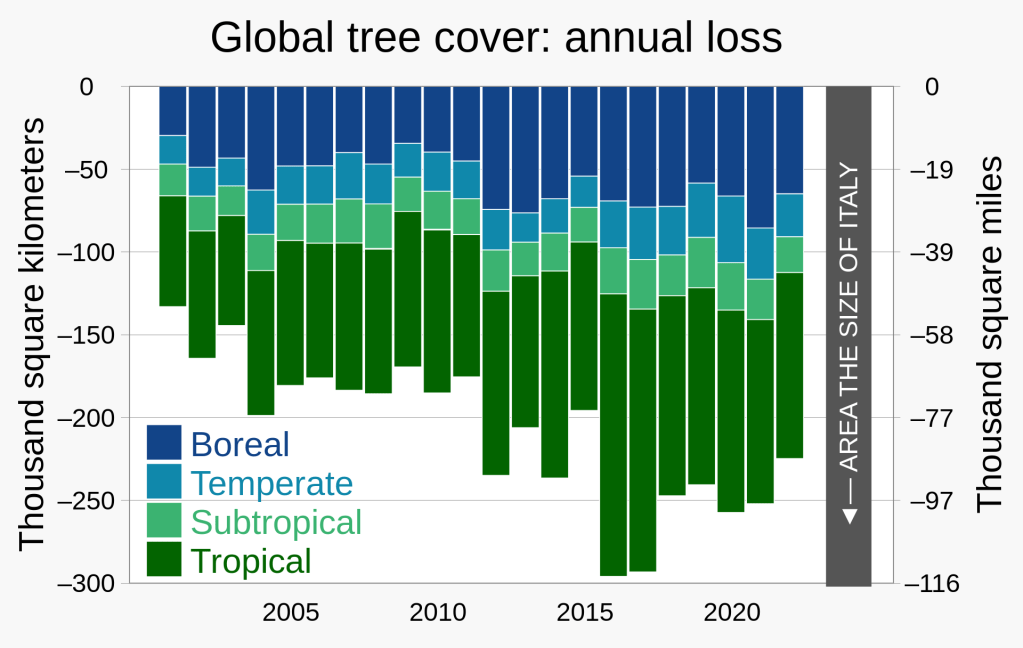
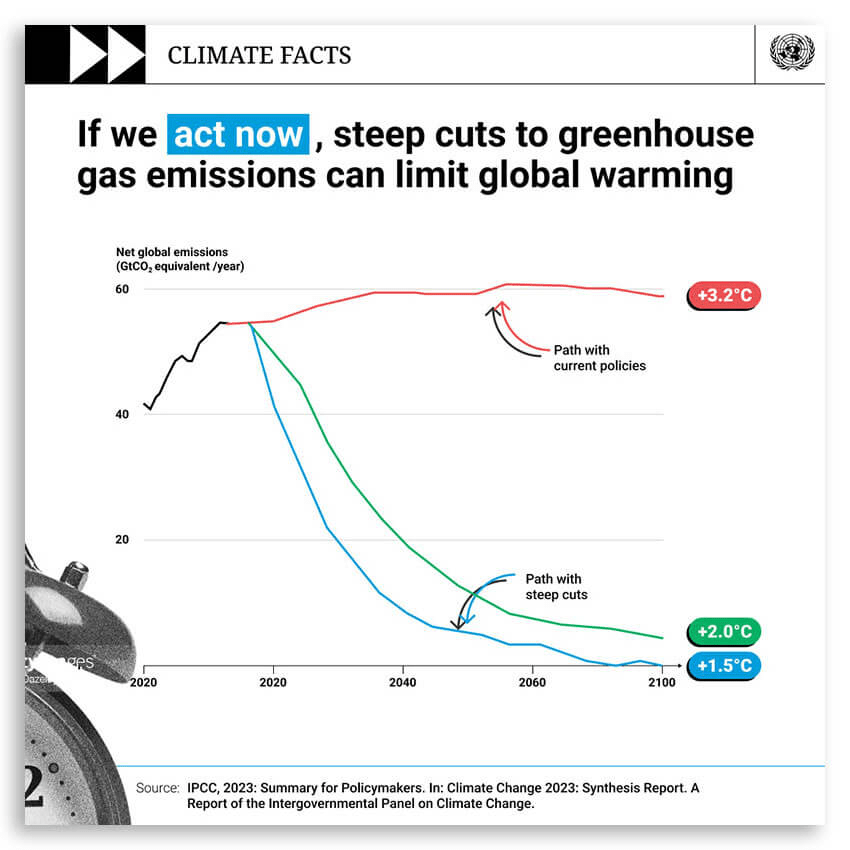
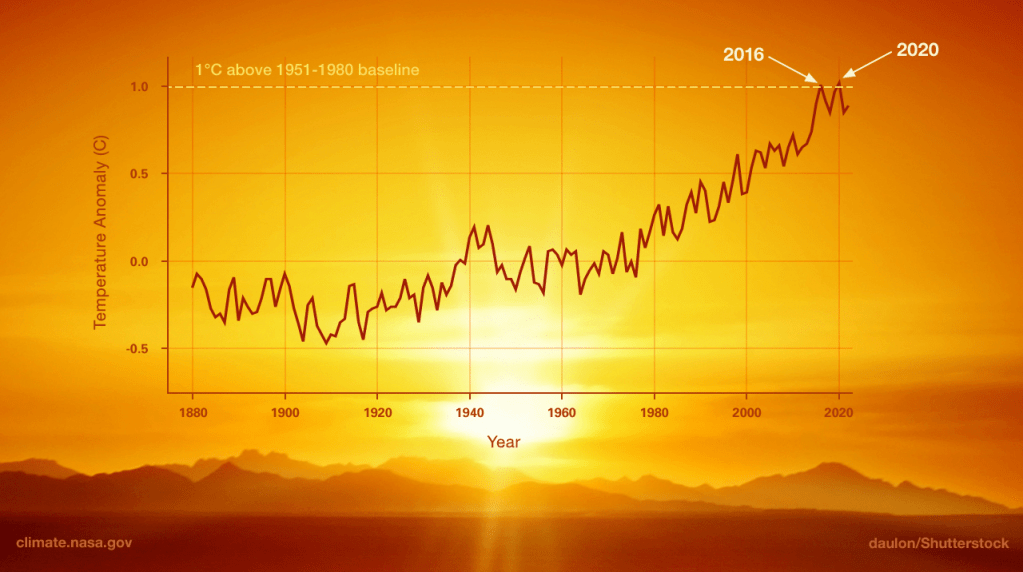
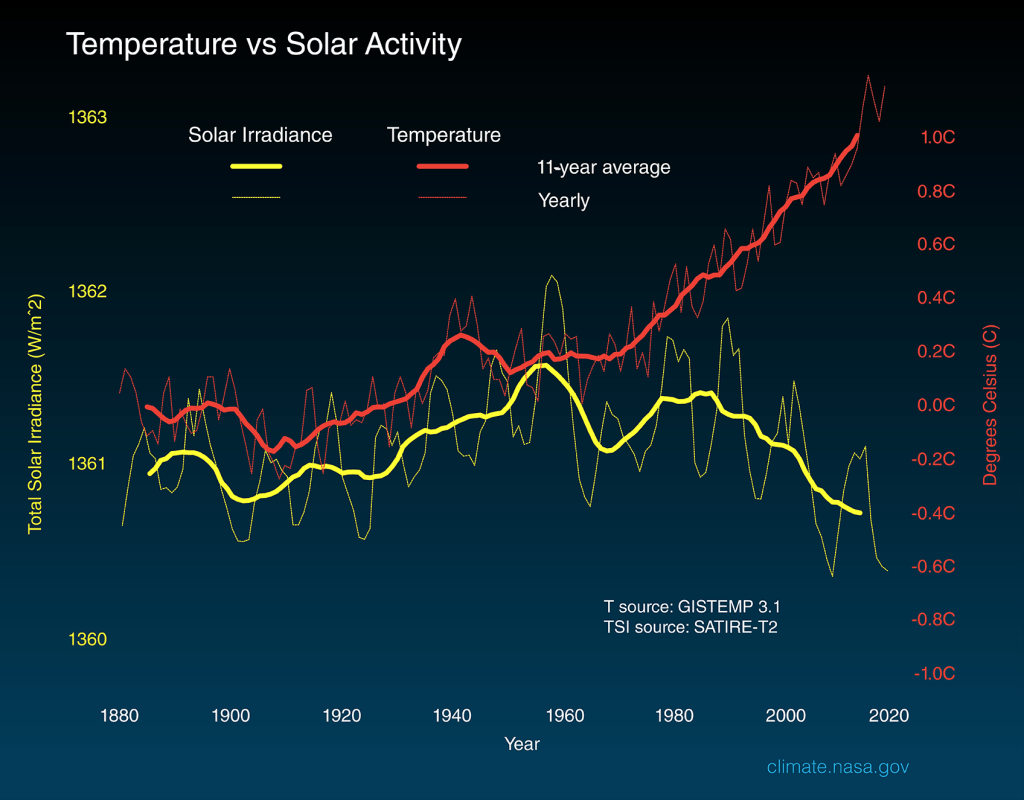


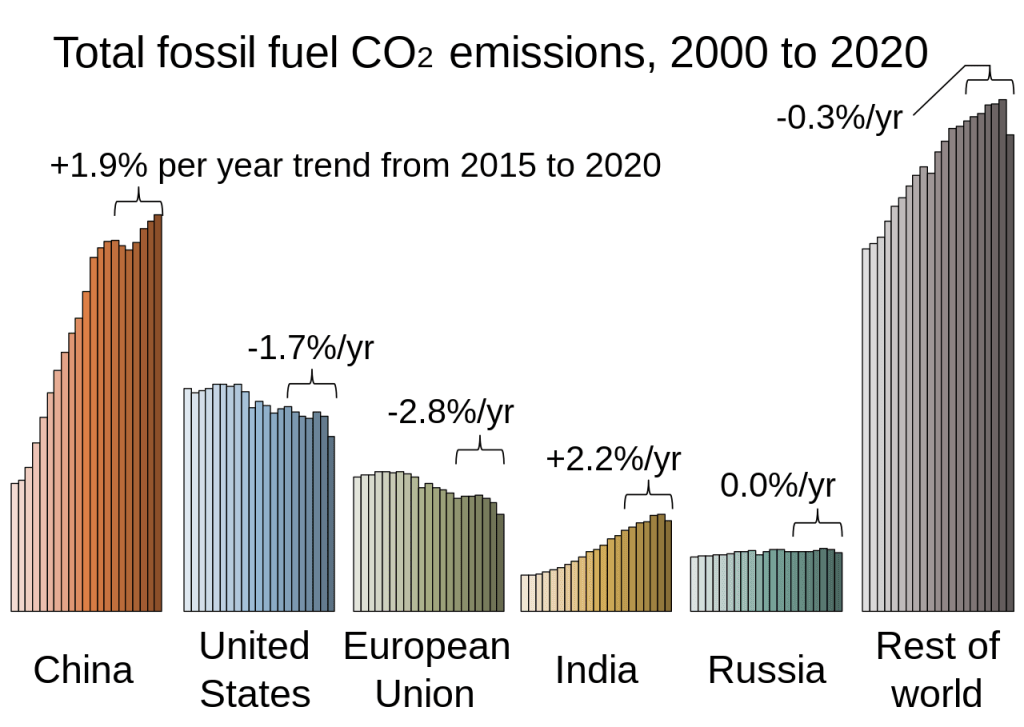
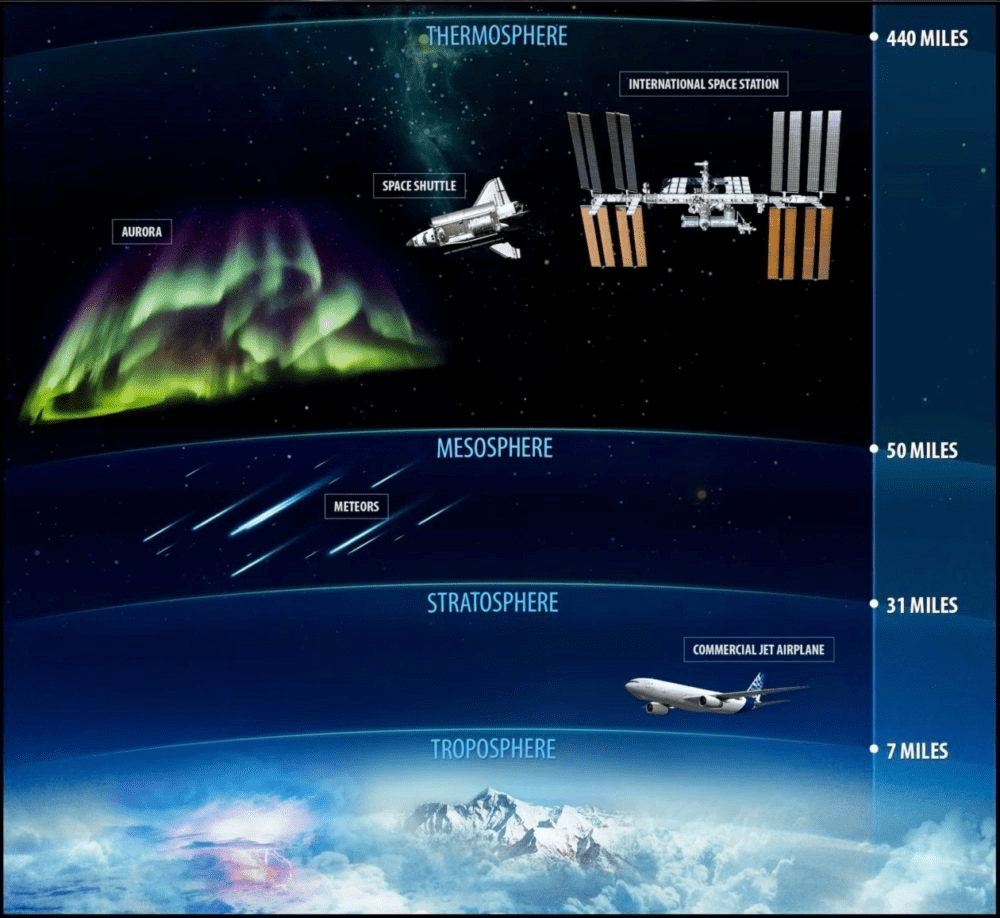


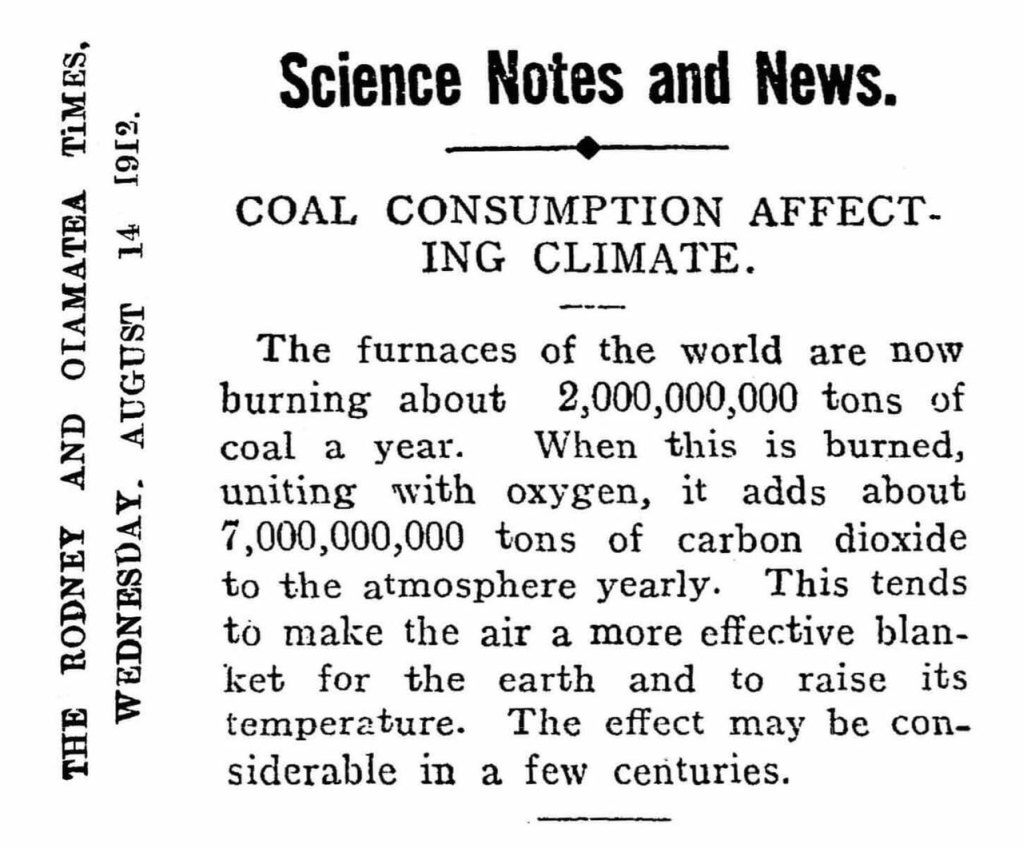




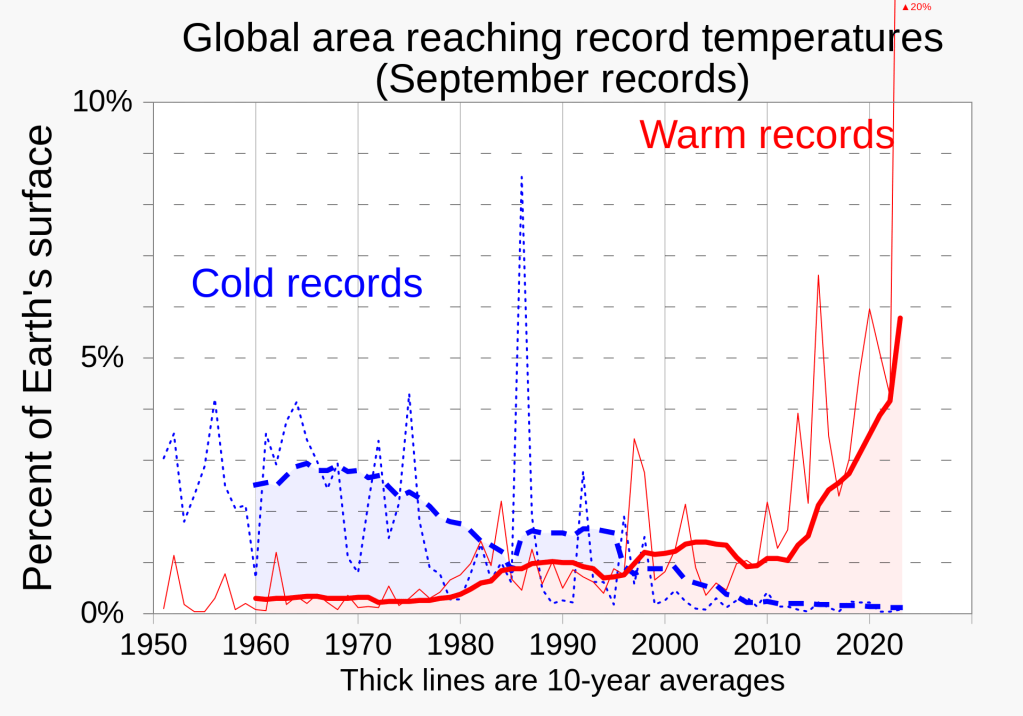



 The Lightkeeper