
What does the great reset really mean for civilisation? Is it a portend of a dark future as some claim? “If only it were just a conspiracy”, as some state; or is it an innocuous plan for practical and beneficial changes for the majority of humankind? Is it to be embraced or feared? Regardless, there is a level of skepticism towards the Great Reset, for it was launched during the Covid-19 pandemic; itself shrouded in suspicious anomalies.
The philosophy originated from the World Economic Forum and is the brain child of Klaus Schwab, founder and Executive Chairman. It is interesting to note that the name Klaus is a German name stemming from Nikolaus – English, Nicholas – and means ‘victory of the people.’ His last name Schwab is indicative of a German or Ashkenazi Jew from the region of Swabia in southern Germany. Numerologist Eida Goodman says the name Schwab, ‘inspires expressivity, aspiration and devotion.’ Yes, but to what?
The WEF website contains an article entitled: Now is the time for a ‘great reset’, June 3, 2020. Available at:
https://www.weforum.org/agenda/2020/06/now-is-the-time-for-a-great-reset/
There follows in their own words the reasoning behind a reset in the wake of Covid-19 – emphasis theirs, bold mine.
“… the world must act jointly and swiftly to revamp all aspects of our societies and economies, from education to social contracts and working conditions. Every country, from the United States to China, must participate, and every industry, from oil and gas to tech, must be transformed. In short, we need a “Great Reset” of capitalism. There are many reasons to pursue a Great Reset, but the most urgent is COVID-19.
According to the Financial Times, global government debt has already reached its highest level in peacetime. Moreover, unemployment is skyrocketing in many countries: in the US, for example, one in four workers have filed for unemployment since mid-March, with new weekly claims far above historic highs… And frustrations over social ills like rising inequality – US billionaires’ combined wealth has increased during the crisis – are intensifying.
Left unaddressed, these crises, together with COVID-19, will deepen and leave the world even less sustainable, less equal, and more fragile. Incremental measures and ad hoc fixes will not suffice to prevent this scenario. We must build entirely new foundations for our economic and social systems. That will require stronger and more effective governments, though this does not imply an ideological push for bigger ones.
The Great Reset agenda would have three main components.
The first would steer the market toward fairer outcomes. To this end, governments should improve coordination (for example, in tax, regulatory, and fiscal policy), upgrade trade arrangements, and create the conditions for a “stakeholder economy.” At a time of diminishing tax bases and soaring public debt, governments have a powerful incentive to pursue such action. Moreover, governments should implement long-overdue reforms that promote more equitable outcomes. Depending on the country, these may include changes to wealth taxes, the withdrawal of fossil-fuel subsidies, and new rules governing intellectual property, trade, and competition.
The second component of a Great Reset agenda would ensure that investments advance shared goals, such as equality and sustainability. Rather than using… funds, as well as investments from private entities and pension funds, to fill cracks in the old system, we should use them to create a new one that is more resilient, equitable, and sustainable in the long run. This means, for example, building “green” urban infrastructure and creating incentives for industries to improve their track record on environmental, social, and governance (ESG) metrics.
The third and final priority of a Great Reset agenda is to harness the innovations of the Fourth Industrial Revolution to support the public good, especially by addressing health and social challenges. During the COVID-19 crisis, companies, universities, and others have joined forces to develop diagnostics, therapeutics, and possible vaccines; establish testing centers; create mechanisms for tracing infections; and deliver telemedicine. Imagine what could be possible if similar concerted efforts were made in every sector.
The COVID-19 crisis is affecting every facet of people’s lives in every corner of the world. But tragedy need not be its only legacy. On the contrary, the pandemic represents a rare but narrow window of opportunity to reflect, reimagine, and reset our world to create a healthier, more equitable, and more prosperous future.”
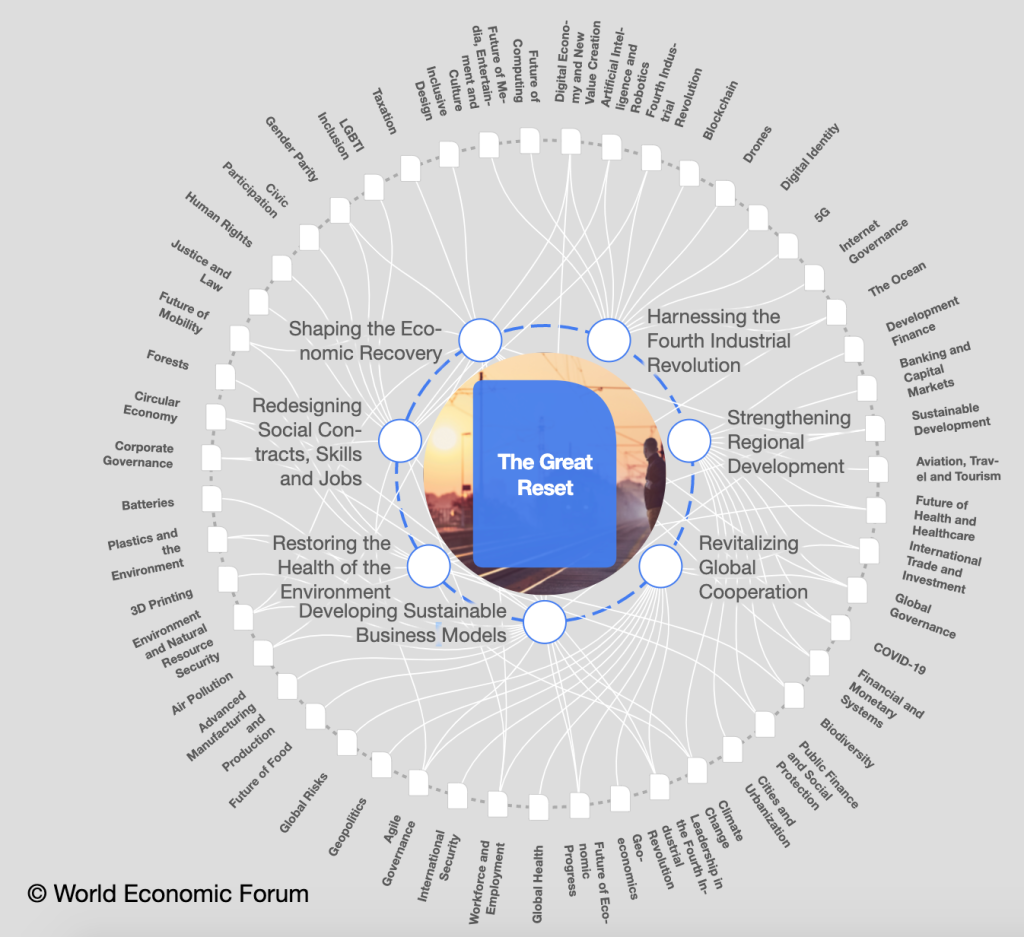
The Great Reset Transformation Map
On the surface it all sounds positive, doesn’t it? Though there are some concepts or words included that one should be wary of perhaps. They are in bold. The most stated principle is the one of equality… for the masses. While this appears a noble principle when considering the widespread poverty endured throughout Asia, Africa and Latin America, it is equally alarming for those who are prosperous and live in North America, Europe and the far East. These citizens would not welcome a system which makes them more equal.
The Fourth Industrial Revolution was a term ‘first introduced by a team of scientists developing a high-tech strategy for the German government.’ Klaus Schwab introduced the phrase to a wider audience in a 2015 article published by Foreign Affairs. It can be abbreviated to 4-IR or Industry 4.0 and describes rapid technological advancement during the twenty-first century, driven by artificial intelligence, advanced robotics and gene editing, producing a profound change in industrial capitalism.
In the process blurring the lines between the physical, biological and digital worlds. Where a reliance on smart technology with machine to machine communication (M2M); and the Internet of things (IoT); means increased automation with less need for the intervention of humans in global production, supply networks, manufacturing and industry.
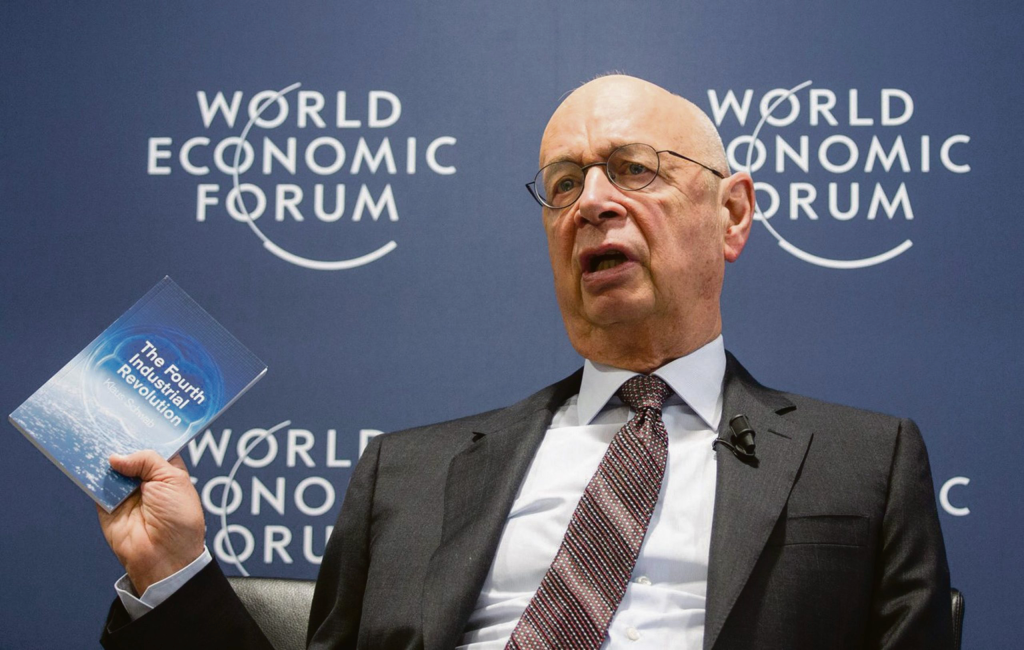
Klaus Schwab and the 280 page book: The Fourth Industrial Revolution
Regarding the 4-IR the WEF states: “The Fourth Industrial Revolution represents a fundamental change in the way we live, work and relate to one another. It is a new chapter in human development, enabled by extraordinary technology advances commensurate with those of the first, second and third industrial revolutions. The speed, breadth and depth of this revolution is forcing us to rethink how countries develop, how organisations create value and even what it means to be human.”
It would be well to look at both sides of how the Great Reset has been received. Firstly, from those who support the proposal as a benevolent initiative. An article compiled by BBC Reporters: Olga Robinson, Shayan Sardarizadeh, Jack Goodman, Christopher Giles and Hugo Williams, a year after the announcement by the WEF, entitled:
What is the Great Reset – and how did it get hijacked by conspiracy theories? June 24, 2021 – emphasis mine:
“A vague set of proposals from an influential organisation has been transformed by online conspiracy theorists into a powerful viral rallying cry… Believers spin dark tales about an authoritarian socialist world government run by powerful capitalists and politicians… Like many popular conspiracy theories, this one starts with a grain of fact.
In June 2020, the Prince of Wales and the head of the annual Davos summit launched an initiative calling for the pandemic to be seen as a chance for what they called a Great Reset of the global economy – refer article: The Life & Death of Charles III. A flashy launch video interspersed images of a world in chaos – a dead killer whale, a hurricane, a kangaroo caught in a fire – with a speech by Prince Charles. “We have an incredible opportunity to create entirely new sustainable industries,” the prince said. “The time to act is now.”
But the plan is light on specific detail… the scope is huge – covering technology, climate change, the future of work, international security and other themes – and… it’s difficult to see precisely what the Great Reset might mean in practice. This lack of clarity, combined with the plan being launched by an influential organisation, provided fertile ground for conspiracy theories to grow.
The proposals, along with the WEF itself, face legitimate criticism from a variety of sources. Conservative political figures and media outlets accuse the organisation of pushing for environmental policies that would hurt the economy. There are questions about whether unelected individuals like Mr Schwab should have the power to lobby so prominently for ideas that could potentially transform the global economy. The Davos meeting is certainly filled with powerful people who have a huge influence on world events. There are also concerns about the impact of technology on civil liberties and jobs.
But the real energy online is not about legitimate political questions – discussions about fossil fuels and income equality – but in the shape of wild and unsubstantiated claims. The term “Great Reset” has received more than eight million interactions on Facebook and been shared almost two million times on Twitter since the initiative was launched, according to BBC Monitoring research.
Among the most popular posts are baseless statements that the Great Reset is a strategic part of a grand conspiracy by the global elite, who somehow planned and managed the Covid-19 pandemic. In this narrative, lockdown restrictions were introduced not to curb the spread of the virus, but to deliberately bring about economic collapse and a socialist world government, albeit run for the benefit of powerful capitalists. The nebulousness of this conspiracy theory means it has found followers among anti-vaccine activists, anti-lockdown campaigners, new-age healers, and those on the far right and far left.
Melanie Smith, head of analysis at Graphika, who researches online movements and disinformation, says… In the hands of a diverse group of online activists, the Great Reset has been transformed – from a call to encourage people to think about a sustainable future, to a sinister plot against humanity.
On 15 November, the phrase started trending on Twitter when a video went viral showing Canadian prime Minister Justin Trudeau at a UN meeting in September, saying the pandemic provided an opportunity for a “reset”. It’s unclear whether he was referring to the WEF plan. But some claimed his speech was proof that global leaders were using the pandemic as a pretext to introduce a range of socialist and environmental policies.
Most of the narratives being promoted around the Great Reset are not new. Experts say similar ideas about the emergence of a totalitarian world government have been circulating since the 1960s under the umbrella term the New World order, which itself borrows ideas from conspiracy theories of the 18th century.”
This may be right, though it it does not negate a conspiracy of a planned totalitarian regime being true.
“In a video from January, the WEF acknowledged that the messaging around the Great Reset didn’t quite go to plan. “Hands up, this kind of slogan hasn’t gone down well,” a voiceover says. In response to questions about whether the discussion had been hijacked by conspiracists, the WEF said in a statement: ‘Conspiracy theories replace reason with fantasy. They are a noisy but peripheral part of the public sphere.’
An alternative representation of Schwab’s plans was offered by American academic and scholar, Michael Rectenwald. ‘… adapted from a talk delivered at Hillsdale College, on November 7, 2021, during a Center for Constructive Alternatives conference on “The Great Reset.”
What is the Great Reset? was published in American Scholars, Volume 50, Issue 12, December 2021 – emphasis mine. It is worth reading and so reproduced in its entirety.
“Is the Great Reset a conspiracy theory imagining a vast left-wing plot to establish a totalitarian one-world government? No. Despite the fact that some people may have spun conspiracy theories based on it – with some reason, as we will see – the Great Reset is real.
Indeed, just last year, Klaus Schwab, founder and executive chairman of the World Economic Forum (WEF) – a famous organization made up of the world’s political, economic, and cultural elites that meets annually in Davos, Switzerland – and Thierry Malleret, co-founder and main author of the Monthly Barometer, published a book called COVID-19: The Great Reset. In the book, they define the Great Reset as a means of addressing the “weaknesses of capitalism” that were purportedly exposed by the COVID pandemic.
But the idea of the Great Reset goes back much further. It can be traced at least as far back as the inception of the WEF, originally founded as the European Management Forum, in 1971. In that same year, Schwab, an engineer and economist by training, published his first book, Modern Enterprise Management in Mechanical Engineering. It was in this book that Schwab first introduced the concept he would later call “stakeholder capitalism,” arguing “that the management of a modern enterprise must serve not only shareholders but all stakeholders to achieve long-term growth and prosperity.” Schwab and the WEF have promoted the idea of stakeholder capitalism ever since. They can take credit for the stakeholder and public-private partnership rhetoric and policies embraced by governments, corporations, non-governmental organizations, and international governance bodies worldwide.
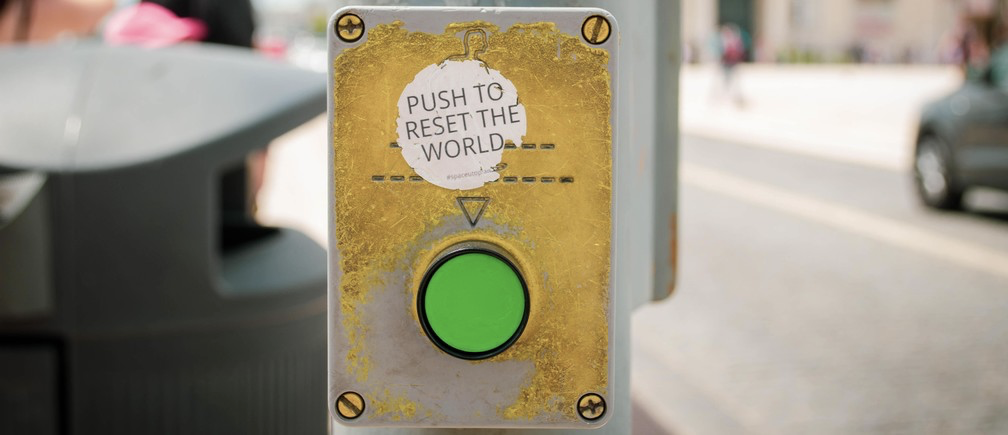
The specific phrase “Great Reset” came into general circulation over a decade ago, with the publication of a 2010 book, The Great Reset, by American urban studies scholar Richard Florida. Written in the aftermath of the 2008 financial crisis, Florida’s book argued that the 2008 economic crash was the latest in a series of Great Resets – including the Long Depression of the 1870s and the Great Depression of the 1930s – which he defined as periods of paradigm-shifting systemic innovation. Four years after Florida’s book was published, at the 2014 annual meeting of the WEF, Schwab declared: “What we want to do in Davos this year . . . is to push the reset button” – and subsequently the image of a reset button would appear on the WEF’s website.”
“In 2018 and 2019, the WEF organized two events that became the primary inspiration for the current Great Reset project… In May 2018, the WEF collaborated with the Johns Hopkins Center for Health Security to conduct “CLADE X,” a simulation of a national pandemic response. Specifically, the exercise simulated the outbreak of a novel strain of a human parainfluenza virus, with genetic elements of the Nipah virus, called CLADE X. The simulation ended with a news report stating that in the face of CLADE X, without effective vaccines, “experts tell us that we could eventually see 30 to 40 million deaths in the U.S. and more than 900 million around the world – twelve percent of the global population.” Clearly, preparation for a global pandemic was in order.
In October 2019, the WEF collaborated with Johns Hopkins and the Bill & Melinda Gates Foundation on another pandemic exercise, “Event 201,” which simulated an international response to the outbreak of a novel coronavirus. This was two months before the COVID outbreak in China became news and five months before the World Health Organization declared it a pandemic, and it closely resembled the future COVID scenario, including incorporating the idea of asymptomatic spread” – refer article: The WHO… will own my body?
“The CLADE X and Event 201 simulations anticipated almost every eventuality of the actual COVID crisis, most notably the responses by governments, health agencies, the media, tech companies, and elements of the public. The responses and their effects included worldwide lockdowns, the collapse of businesses and industries, the adoption of biometric surveillance technologies, an emphasis on social media censorship to combat “misinformation,” the flooding of social and legacy media with “authoritative sources,” widespread riots, and mass unemployment.
In addition to being promoted as a response to COVID, the Great Reset is promoted as a response to climate change” – refer article: Climate Change & Global Warming – Looming Crisis or a New Equilibrium? “In 2017, the WEF published a paper entitled, “We Need to Reset the Global Operating System to Achieve the [United Nations Sustainable Development Goals].”
On June 13, 2019, the WEF signed a Memorandum of Understanding with the United Nations to form a partnership to advance the “UN 2030 Agenda for Sustainable Development.” Shortly after that, the WEF published the “United Nations-World Economic Forum Strategic Partnership Framework for the 2030 Agenda,” promising to help finance the UN’s climate change agenda and committing the WEF to help the UN “meet the needs of the Fourth Industrial Revolution,” including providing assets and expertise for “digital governance.”
In June 2020, at its 50th annual meeting, the WEF announced the Great Reset’s official launch, and a month later Schwab and Malleret published their book on COVID and the Great Reset. The book declared that COVID represents an “opportunity [that] can be seized”; that “we should take advantage of this unprecedented opportunity to reimagine our world”; that “the moment must be seized to take advantage of this unique window of opportunity”; and that “(f)or those fortunate enough to find themselves in industries ‘naturally’ resilient to the pandemic” – think here of Big Tech companies like Apple, [Microsoft], Google, Facebook, and Amazon – “the crisis was not only more bearable, but even a source of profitable opportunities at a time of distress for the majority.”
The Great Reset aims to usher in a bewildering economic amalgam – Schwab’s stakeholder capitalism – which I have called “corporate socialism” and Italian philosopher Giorgio Agamben has called “communist capitalism.” In brief, stakeholder capitalism involves the behavioral modification of corporations to benefit not shareholders, but stakeholders – individuals and groups that stand to benefit or lose from corporate behavior. Stakeholder capitalism requires not only corporate responses to pandemics and ecological issues such as climate change, “but also rethinking (corporations’) commitments to already-vulnerable communities within their ecosystems.” This is the “social justice” aspect of the Great Reset. To comply with that, governments, banks, and asset managers use the Environmental, Social, and Governance (ESG) index to squeeze non-woke corporations and businesses out of the market. The ESG index is essentially a social credit score that is used to drive ownership and control of production away from the non-woke or non-compliant.
One of the WEF’s many powerful “strategic partners,” BlackRock, Inc., the world’s largest asset manager, is solidly behind the stakeholder model. In a 2021 letter to CEOs, BlackRock CEO Larry Fink declared that “climate risk is investment risk,” and “the creation of sustainable index investments has enabled a massive acceleration of capital towards companies better prepared to address climate risk.” The COVID pandemic, Fink wrote, accelerated the flow of funds toward sustainable investments:
‘We have long believed that our clients, as shareholders in your company, will benefit if you can create enduring, sustainable value for all of your stakeholders… As more and more investors choose to tilt their investments towards sustainability-focused companies, the tectonic shift we are seeing will accelerate further. And because this will have such a dramatic impact on how capital is allocated, every management team and board will need to consider how this will impact their company’s stock.’
“Fink’s letter is more than a report to CEOs. It is an implicit threat: be woke or else.
In their recent book on the Great Reset, Schwab and Malleret pit “stakeholder capitalism” against “neoliberalism,” defining the latter as “a corpus of ideas and policies… favouring competition over solidarity, creative destruction over government intervention, and economic growth over social welfare.” In other words, “neoliberalism” refers to the free enterprise system. In opposing that system, stakeholder capitalism entails corporate cooperation with the state and vastly increased government intervention in the economy.
Proponents of the Great Reset hold “neoliberalism” responsible for our economic woes. But in truth, the governmental favoring of industries and players within industries – what used to be known as corporatism or economic fascism – has been the real source of what Schwab and his allies at the WEF decry.
While approved corporations are not necessarily monopolies, the tendency of the Great Reset is toward monopolization – vesting as much control over production and distribution in as few favored corporations as possible, while eliminating industries and producers deemed non-essential or inimical. Another way of describing the goal of the Great Reset is “capitalism with Chinese characteristics” – a two-tiered economy, with profitable monopolies and the state on top and socialism for the majority below.
Several decades ago, as China’s growing reliance on the for-profit sectors of its economy could no longer be credibly denied by the Chinese Communist Party (CCP), its leadership approved the slogan “socialism with Chinese characteristics” to describe its economic system. Formulated by Deng Xiaoping, the phrase was meant to rationalize the CCP’s allowance of for-profit development under a socialist political system. The CCP considered the privatization of the Chinese economy to be a temporary phase – lasting as long as 100 years if necessary – on the way to a communist society. Party leaders maintain that this approach has been necessary in China because socialism was introduced too early there, when China was a backward agrarian country. China needed a capitalist booster shot.
Stripped of its socialist ideological pretensions, the Chinese system amounts to a socialist or communist state increasingly funded by capitalist economic development. The difference between the former Soviet Union and contemporary China is that when it became obvious that a socialist economy had failed, the former gave up its socialist economic pretenses, while the latter has not.
The Great Reset represents the development of the Chinese system in the West, but in reverse. Whereas the Chinese political class began with a socialist political system and then introduced privately held for-profit production, the West began with capitalism and is now implementing a Chinese-style political system. This Chinese-style system includes vastly increased state intervention in the economy, on the one hand, and on the other, the kind of authoritarian measures that the Chinese government uses to control its population.
Schwab and Malleret write that if “the past five centuries in Europe and America” have taught us anything, it is that “acute crises contribute to boosting the power of the state. It’s always been the case and there is no reason it should be different with the COVID-19 pandemic.”
The draconian lockdown measures employed by Western governments managed to accomplish goals of which corporate socialists in the WEF could only dream – above all, the destruction of small businesses, eliminating competitors for corporate monopolists favored by the state. In the U.S. alone, according to the Foundation for Economic Education, millions of small businesses closed their doors due to the lockdowns. Yelp data indicates that 60 percent of those closures are now permanent. Meanwhile companies like Amazon, Apple, Facebook, and Google enjoyed record gains.
Other developments that advance the Great Reset agenda have included unfettered immigration, travel restrictions for otherwise legal border crossing, the Federal Reserve’s unrestrained printing of money and the subsequent inflation, increased taxation, increased dependence on the state, broken supply chains, the restrictions and job losses due to vaccine mandates, and the prospect of personal carbon allowances.
Such policies reflect the “fairness” aspect of the Great Reset – fairness requires lowering the economic status of people in wealthier nations like the U.S. relative to that of people in poorer regions of the world. One of the functions of woke ideology is to make the majority in developed countries feel guilty about their wealth, which the elites aim to reset downwards – except, one notices, for the elites themselves, who need to be rich in order to fly in their private jets to Davos each year.
The Great Reset’s corporate stakeholder model overlaps with its governance and geopolitical model: states and favored corporations are combined in public-private partnerships and together have control of governance. This corporate-state hybrid is largely unaccountable to the constituents of national governments.
Governance is not only increasingly privatized, but also and more importantly, corporations are deputized as major additions to governments and intergovernmental bodies. The state is thereby extended, enhanced, and augmented by the addition of enormous corporate assets. As such, corporations become what I have called “governmentalities” – otherwise private organizations wielded as state apparatuses, with no obligation to answer to pesky voters. Since these corporations are multinational, the state essentially becomes globalist, whether or not a one-world government is ever formalized.
As if the economic and governmental resets were not dramatic enough, the technological reset reads like a dystopian science fiction novel. It is based on the Fourth Industrial Revolution – or 4-IR for short. The first, second, and third industrial revolutions were the mechanical, electrical, and digital revolutions. The 4-IR marks the convergence of existing and emerging fields, including Big Data, artificial intelligence, machine learning, quantum computing, genetics, nanotechnology, and robotics…
There is nothing original about this. Transhumanists and Singularitarians (prophets of technological singularity) such as Ray Kurzweil forecasted these and other revolutionary developments long ago. What’s different about the globalists’ vision of 4-IR is the attempt to harness it to the ends of the Great Reset.
If already existing 4-IR developments are any indication of the future, then the claim that it will contribute to human happiness is false. These developments include Internet algorithms that feed users prescribed news and advertisements and down rank or exclude banned content; algorithms that censor social media content and consign “dangerous” individuals and organizations to digital gulags; “keyword warrants” based on search engine inputs; apps that track and trace COVID violations and report offenders to the police; robot police with scanners to identify and round up the unvaccinated and other dissidents; and smart cities where residents are digital entities to be monitored, surveilled, and recorded, and where data on their every move is collected, collated, stored, and attached to a digital identity and a social credit score.
In short, 4-IR technologies subject human beings to a kind of technological management that makes surveillance by the NSA look like child’s play. Schwab goes so far as to cheer developments that aim to connect human brains directly to the cloud for the sake of “data mining” our thoughts and memories. If successful, this would constitute a technological mastery over decision-making that would threaten human autonomy and undermine free will.
The 4-IR seeks to accelerate the merging of humans and machines, resulting in a world in which all information, including genetic information, is shared, and every action, thought, and motivation is known, predicted, and possibly precluded. Unless taken out of the hands of corporate-socialist technocrats, the 4-IR will eventually lead to a virtual and inescapable prison of body and mind.
In terms of the social order, the Great Reset promises inclusion in a shared destiny. But the subordination of so-called “netizens” implies economic and political disenfranchisement, a hyper-vigilance over self and others, and social isolation – or what Hannah Arendt called “organized loneliness” – on a global scale. This organized loneliness is already manifest in lockdowns, masking, social distancing, and the social exclusion of the unvaccinated. The title of the Ad Council’s March 2020 public service announcement – “Alone Together” – perfectly captures this sense of organized loneliness.
In my recent book, Google Archipelago, I argued that leftist authoritarianism is the political ideology and modus operandi of what I call Big Digital, which is on the leading edge of a nascent world system. Big Digital is the communications, ideological, and technological arm of an emerging corporate-socialist totalitarianism. The Great Reset is the name that has since been given to the project of establishing this world system.
Just as Schwab and the WEF predicted, the COVID crisis has accelerated the Great Reset. Monopolistic corporations have consolidated their grip on the economy from above, while socialism continues to advance for the rest of us below. In partnership with Big Digital, Big Pharma, the mainstream media, national and international health agencies, and compliant populations, hitherto democratic Western states – think especially of Australia, New Zealand, and Austria – are being transformed into totalitarian regimes modeled after China.
But let me end on a note of hope. Because the goals of the Great Reset depend on the obliteration not only of free markets, but of individual liberty and free will, it is, perhaps ironically, unsustainable. Like earlier attempts at totalitarianism, the Great Reset is doomed to ultimate failure. That doesn’t mean, however, that it won’t, again like those earlier attempts, leave a lot of destruction in its wake – which is all the more reason to oppose it now and with all our might.”
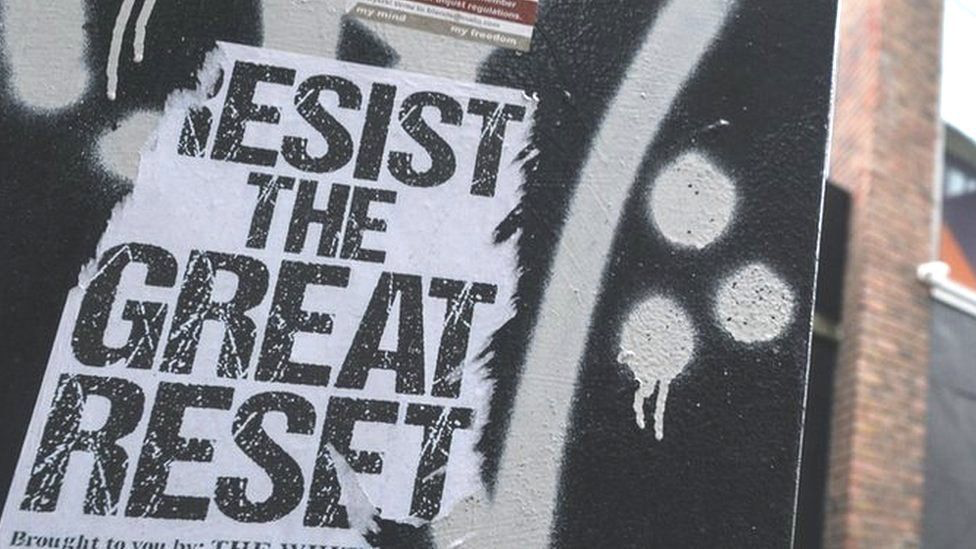
It is sincerely wished with all this writer’s heart that they could concur with Michael Rectenwalds’s conclusion. Not that we should not fight with all our might, but that the Great Reset is doomed to failure. As unpalatable as it may be for many, a certain book with a rather dusty cover because not many people open it, let alone understand what it reveals, had something to say a long time ago about the time we are entering.
“At that time… there shall be a time of trouble, such as never has been since there was a nation till that time… shut up the words and seal the book, until the time of the end. Many shall run to and fro, and knowledge shall increase… [the great reset] causes all, both small and great, both rich and poor, both free and slave, to be marked on the right hand or the forehead, so that no one can buy or sell unless [they have] the mark…”
The agenda of the New World Order has been accelerated by the Great Reset proposed by the World Economic Forum in 2020. Perhaps even by the year 2030 or earlier, the world as we know it will fade and a new world based on a combination of George Orwell’s 1984 and Aldous Huxley’s Brave New World will be landing.
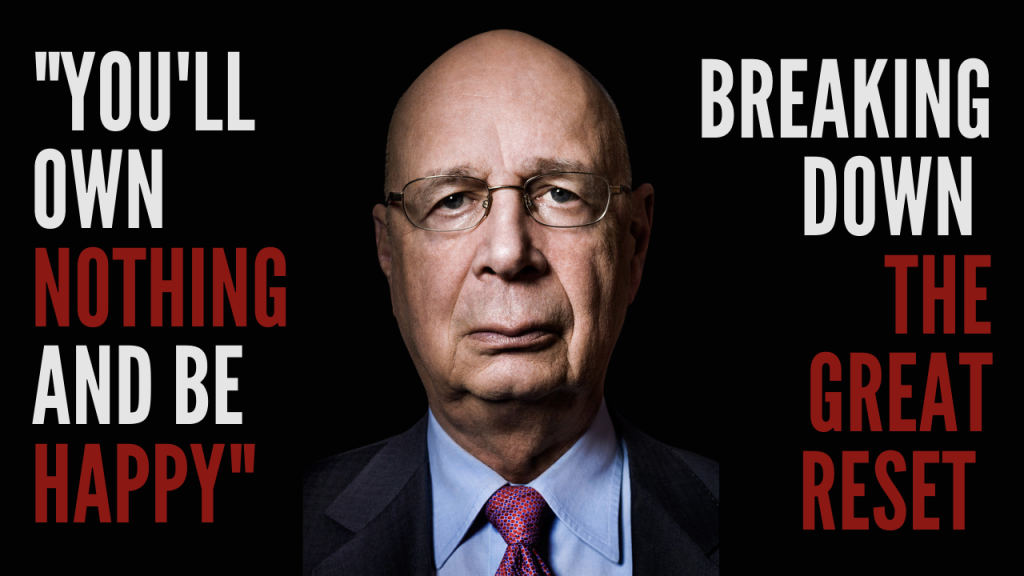
A society based on the communist model as implemented in the state of China, is undeniably planned for the West. A socialist creed of reducing the masses to an equivalency of non-ownership of any major assets and a stripping of the freedom for personal choice; the possessions you own; the goods you purchase; the job you perform; the car you drive; where you can travel; and the things you do.
Much like George Orwell’s prophetic warning in the 1945 novella, Animal Farm – the herd of humanity is being corralled into pens, where like farm animals:
All people are equal, but some people are more equal than others.
A three point plan is underway, designed to implement life-changing reversals of personal rights and freedoms.
It includes Surveillance, Finance and Scoring.
Humans are tracked via CCTV, the internet, mobile phones and smart watches. A future step is a micro-chip device either worn or implanted in the human body. Not only a tracking device, but a digital library of everything we choose to buy and do.
Our financial footprint is monitored via internet online banking. Planned, is a global, centralised digital currency which is not just easily tracked but controlled.
A social credit scoring system is established in China and other nations are partially scored via a credit rating. The next step will be to implement a comprehensive scoring system based on every action in our day-to-day lives; whether it be the items we purchase; how efficiently we work; how cooperative we are with colleagues; how we treat shop staff or strangers; and how well we drive.
The impact of a life lived this way is immeasurable and intolerable. Ultimately, society will be told what to believe and what not to believe, what not to do and what to do and when to do it.
Will the world let this happen right before their very eyes? It would be a bitter indictment indeed on a society which has become pampered and selfish, lacking the unified moral fibre and fortitude to fight an evil which is steadily engulfing their civilisation.
The same ignored and ridiculed book powerfully warns:
Where there is no vision, the people perish, for we live in an important time. It is now time for you to wake up.
“Better never means better for everyone. It always means worse, for some.”
Margaret Atwood, The Handmaid’s Tale
© Orion Gold 2023 – All rights reserved. Permission to copy, use or distribute, if acknowledgement of the original authorship is attributed to orion-gold.com






 The Lightkeeper