Seventh Son of a Seventh Son

The expression seventh son of a seventh son, while not original to them, was popularised and brought to wider attention by the hugely successful and well known hard rock/metal band, Iron Maiden. It was both a song and title of an acclaimed seventh album and considered by many fans as one of their best loved albums alongside classics, The Number of the Beast, Piece of Mind and Powerslave. One wonders why the song is listed as track number five out of eight and wasn’t placed at number seven?

On a personal note, the inspiration for this article came from a question asked of me: “Who are some famous seventh sons, specifically the seventh son of the seventh son?” As this is a topic I have thought about during my research on the Israelite tribes, I was curious to discover more. 

Online comment: “Yes, there have been documented instances of men being the seventh son of a seventh son. In some cultures and folklore, being the seventh son of a seventh son is believed to bestow special powers or abilities. This belief is particularly strong in Irish and Scottish folklore, where the seventh son of a seventh son is thought to have healing powers or be a natural-born healer. While there is no scientific evidence to support these beliefs, the idea has been a recurring theme in literature and folklore.”

We shall return to the subject introduced in the third sentence, as there is a fascinating and non-coincidental correlation between a seventh son and the paternal ancestors of both the Irish and Scottish. 

Dom Lawson for Metal Hammer magazine, describes how Iron Maiden came to write their ‘epic [1988] concept album… [which] took them to heavy metal immortality.’ Lawson: ‘… famous British ‘psychic’ Doris Stokes… death in May 1987 proved to be the unlikely starting point for Maiden’s seventh and most impactful album yet. “I just had a thought: ‘I wonder if she could foresee her own death?’ stated Steve Harris… “Who knows? So I started off with that sort of idea. 

I wrote The Clairvoyant and then went to Bruce with it and basically he said, ‘Yeah, it’s a great idea!’ I started then having an idea for a song, Seventh Son Of A Seventh Son, because supposedly if you were born the seventh son of a seventh son you had the powers of a clairvoyant. So I had those two ideas and Bruce went, ‘You know what? We should do a concept album about this…’

The Lyrics minus the repeated chorus, for Seventh Son of a Seventh Son:

Here they stand, brothers them all

All the sons, divided they’d fall

Here await the birth of the son

The seventh, the heavenly, the chosen one

Here, the birth from an unbroken line

Born the healer, the seventh, his time

Unknowingly blessed and as his life unfolds

Slowly unveiling the power he holds


Then they watch the progress he makes

The Good and the Evil, which path will he take?

Both of them trying to manipulate

The use of his powers before it’s too late


Today is born the seventh one

Born of woman, the seventh son

And he in turn of a seventh son

He has the power to heal

He has the gift of the second sight

He is the chosen one

So it shall be written

So it shall be done

Two points raised are that a seventh son of a seventh son possesses healing powers as well as clairvoyant ability. A clairvoyant is defined as ‘having or claiming to have the power of seeing objects or actions beyond the range of natural vision.’ Which is subtly different from having second sight as mentioned in the the song. For second sight is ‘the supposed ability to perceive future or distant events.’

Barry Rountree provides invaluable information from a nineteenth century source, Notes and Queries

‘F. C. Birkbeck Terry posted the following question in the September 12 1885 issue: Seventh Son Superstition – Belief in the power of a seventh son to heal diseases is no doubt of considerable antiquity, but I do not remember to have seen it referred to in our dramatic literature, though probably there are several references besides the one here quoted: 

“Whether my cure be perfect yet or no, It lies not in my doctor-ship to know. Your approbation may more raise the man, Then all the Colledge of physitians can; And more health from your faire hands may be wonne, Then by the stroekings of the seaventh sonne.” B. Brome, The Antipodes, the Epilogue, 1640. 

‘This passage evidently has reference to the cure of the king’s evil. This belief seems still to prevail in Stornoway [Isle of Lewis, Scotland]… Folk-lore Journal, volume i. pages 59, 60… 397. At page 31 of volume ii is the following passage: “The power of the seventh son of a seventh son is very interesting to us, as being quoted by Cornelius a Lapide as existing in Flanders in his day, some two hundred years ago.” … Folk-Medicine, by Mr. W. G. Black (Folk-lore Society).

The several replies to this query were published in the December 19 1885 issue. One of the more fascinating responses quotes a text from 1660 as follows: 

“It is manifest, by experience, that the seventh male child, by just order (never a girle or wench being born between) doth heal only with touching (through a natural gift) the king’s evil.” 

‘The King’s evil is… Tuberculous cervical lymphadenitis, otherwise known as scrofula.’ 

Scrofula ‘refers to a lymphadenitis of the cervical lymph nodes associated with tuberculosis as well as nontuberculous mycobacteria. The second part of the quote above, ends as “… which is a special gift of God, given to kings and queens, as daily experience doth witnesse.” It was written by Thomas Lupton, in the second edition of his book, A Thousand Notable Things in 1660.

John Huculiak adds: ‘The Seventh child of the Seventh child are called a “Luck Child”. They are an auspicious sign for the frontier family, and the lore stems from the sixteenth century, where there were written records of curing the “King’s Evil”. If you simply look at it from a practical standpoint, this feat shows abundance, “healthy” stock, and many hands for working, thus bringing in [and] turning out more. When so many children could survive and thrive in one family; other families believed that it was supernaturally-influenced, and maybe it was… 

The seventh daughter to the seventh daughter is gifted with “second sight” as known as the gift of prophesy. A seventh son is gifted with healing ability and/or a green thumb for Life. Now, not every culture saw the seventh child of the seventh child as a blessed; some attributed that they would suck the Life from the mother, even turn into a vampire (Romanian lore). There really is not much else recorded about the Seventh child of the Seventh child until the 1960’s where the New Age took the idea and ran amok with the concept.’ 

According to Huculiak, a seventh child of a seventh child is a lucky child. Though it is not clear whether for good or bad luck. Also, he makes an important distinction between a male having the gift of healing; whereas a female possessing the prophetic gift of second sight. This belief in a daughter’s gift of prophetic vision is held in Scotland.

It is worth noting that ‘in many cases seventh sons (who are not born to a seventh son) are also said to have supernatural or healing abilities.’ Online Encyclopaedia: ‘To qualify as “the seventh son of a seventh son” one must be the seventh male child born in an unbroken line with no female siblings born between, and to a father who himself is the seventh male child born in an unbroken line with no female siblings born between. The number seven has a long history of mystical and biblical significance…’ of which we will investigate. 

Regional variations of the folklore surrounding special powers of a seventh son include the following. 

Encyclopaedia: ‘In Italian legend, “Ciarallo” was a seventh son of a seventh son who had the power to enchant and recall snakes, and who was immune to snake venom. Ciarallo was not only a seventh son, but underwent a special initiation rite called “inciaramazione”. Customarily, one would ask Ciarallo’s intercession when a snake was discovered in the house. Ciarallo would answer these requests by attracting the snake with a whistle. He would also perform the inciaramazione rite on other people to ensure protection from snakes by spreading a special oil on their arm. Children were led to Ciarallo by their mothers to get protection. 

In some Latin American countries [specifically Argentina, Uruguay, Paraguay and Brazil], the seventh son of a seventh son is believed to be cursed to be a werewolf, lobizón, Luison (in Paraguay) or lobisomem (the Portuguese word for “werewolf”). To prevent this, the newborn should be baptized in seven different churches. Alternately, he may be baptized under the name Benito, with his eldest brother (the eldest son of their father) as his godfather. The local myth of the lobizón is not connected to the custom*… by which every seventh son (or seventh daughter) born in Argentina to “legitimately married parents of good conduct and moral character” is eligible to become godchild to the president.’

The Legendary Powers of a Seventh Son of a Seventh Son, Wu Mingren, 2019: 

‘In 1907, [a]… custom* about the seventh son was created. According to this custom, which originated in Germany, the reigning prince would be the sponsor to a seventh son of any of his subjects. When Enrique Brost and Apolonia Holmann, who were Volga Germans from south eastern Russia, immigrated to Argentina in the early 1900s, they brought the custom along. They requested the then Argentinian president, Jose Figueroa Alcorta, be their seventh son’s godfather. The president agreed to their request and this tradition has been kept till today. In 2014, Yair Tawil, a seventh son, became the godson of Argentina’s president, Cristina Fernandez de Kirchner.’
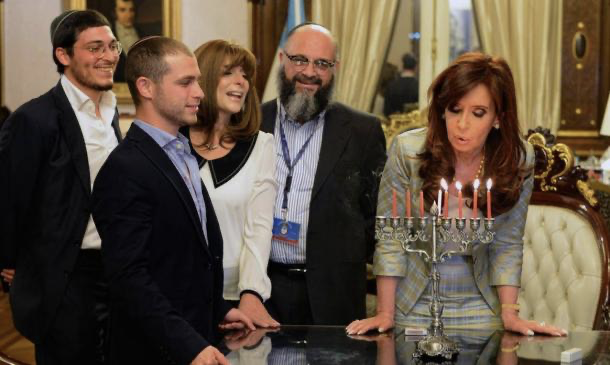
Yair Tawil, the seventh son, front left, becomes the godson of Argentinian president Christina Fernandez de Kirchner, front right.

In a similar vein to the Argentinian custom, albeit a rather complicated political issue, is the 2010 article in The German Way & More, which refers to an article entitled, Unlucky number seven causes headache for German President, where it states: ‘Thanks to a law made in 1949, German families may request that the German President act as godfather to their seventh child, in the event that one is born. President Christian Wulff was called upon to fulfill this role to a family in the northeastern federal state of… Mecklenburg-Western Pomerania. What may seem at first glance as a run of the mill duty of a figure head became a loaded decision. Apparently, the family in question has close links to Germany’s far-right National Democratic Party… [with] neo-Nazi leanings… as German President, it is more of an honorary vs. hands-on role to be godfather… Wulff’s decision has been highly criticized by local politicians… They voiced that he ought to have condemned the family’s political standpoint and activities and instead have given them a leg up in their political aspirations by association… Wulff… states that this decision is about the child and not about its parents. In fact, to deny the child’s legal right to have the German President as his godfather… would in fact be taking a fascist stance.’ 

Wu Mingren: ‘The myth of the luison originates with the Guarani, an indigenous group of people from Paraguay. In Guarani mythology, the luison was the seventh and youngest offspring of Tau, an evil spirit, and Kerana, a mortal woman. In the original story, the luison is said to be the God of Death and had a horrendous figure. His face was long and pale, and much of his body was covered with long dirty hair. He also had frightening eyes and the stench of death and decay around him. It was perhaps interaction with European colonists that transformed this myth overtime, as the luizon changed from a God of Death into a werewolf.’

‘It is believed that on the night of a full moon, especially if it fell on a Friday, the seventh son in a family of all boys, after he reached the age of 13, would transform into the luison. Like the European werewolf, the luison would terrorize the night by hunting and killing, and spread its curse through its bite.’

Encyclopaedia: ‘Raymond T. McNally and Radu Florescu describe the Transylvanian folk belief that “the seventh son of a seventh son is doomed to become a vampire.” 

According to Edward Augustus Kendall in Travels through the Northern Parts of the United States, in the year 1807-1808, while he visited the Newgate copper mine and prison, he met an innkeeper who told him that “there was to be found in the surrounding hills, a black stone, of a certain species, through which a seventh son of a seventh son, born in the month of February, with a caul on his head, can discern everything that lies in the depths and interior of the globe.” The author speculated that the importance of mining to the community gave rise to the localized belief.’ 

The tradition that a seventh son had the power to cure the king’s evil was also believed in France. ‘He was called a “Marcou” and branded with a fleur-de-lis. The Marcou breathed on the part affected, or else the patient touched the Marcou’s fleur-de-lis.’

Encyclopaedia: ‘In Lancashire and particularly in Blackburn there was, in the eighteenth and nineteenth centuries, a tradition of calling seventh sons of seventh sons (and seventh sons) ‘Doctor’ (forename) because of their supposed abilities as healers.’ 

The Diary of Walter Yonge 1604-1628, published by the Camden Society in 1847 and edited by G Roberts, says regarding a false claim: “In January, 1606-7, it is reported from London by credible letters, that a child being the seventh son of his mother, and no woman child born between, healeth deaf, blind, and lame; but the parents of the child are popish, as so many say as are healed by it. The Bishop of London, Doctor Vaughan, caused divers [people] to be brought to the child as aforesaid, who said a short prayer as [he] imposed his hands upon, as ’tis said he did unto others; but no miracle followeth any, so that it appeareth to be a plain lie invented to win grace to the popish faction.” 

Another contributor to Notes & Queries in the June 12, 1852 issue observed: “In Saltash Street, Plymouth [England], my friend copied, on the 10th December, 1851, the following inscription on a board, indicating the profession and claims of the inhabitant: ‘A. Shepherd, the third seventh daughter, Doctress.’” 

This is an amazing advertisement of a woman born as a seventh daughter of not just the second but the third generation. Here we have an example of a female who had healing powers and not just an exclusivity of a male. This isn’t a surprise as ‘there was a general belief in Britain that the seventh son of a seventh son was destined to be a physician and would have an intuitive knowledge of the art of healing, often curing a patient simply by touching an afflicted part. This belief also extended to the seventh daughter of a seventh daughter’ according to one source.

Domestic Annals of Scotland from the Reformation to the Revolution, Robert Chambers, 1858, states that in February 1682, Hugh McGie “… gave in a bill to the Privy Council, representing that, by the practice of other nations, any tradesman having seven sons together, without the intervention of a daughter, is declared free of all public burdens and taxes, and has other encouragements bestowed on him, to enable him to bring up the said children for the use and benefit of the commonwealth; and claiming a similar privilege on the strength of his having that qualification. The Council recommended the magistrates [of Edinburgh] to take Hugh’s seven sons into consideration when they laid their ‘stents’ (trade taxes) upon him.” 

It is in Ireland, where the seventh son of a seventh son was believed to be gifted as a healer and was attached to a general phenomenon known as ‘the “cure” (sometimes also called the “charm”). Belief in the efficacy of seventh son healers and other folklore related to healing persisted to the 20th century in parts of Ireland.’ Even the saliva of a seventh son was said to have healing properties. 

A tradition in Donegal, Ireland claims that the healing powers of a seventh son ‘required a special ceremony at the moment of the infant’s birth. The woman who received the child in her arms [would] place in its hand whatever substance she decided that he should use to heal in later life. This substance could be metal (e.g., a silver coin) or a common substance like salt, or even hair’ so that ‘when the child was old enough, it would rub the substance and the patient would apply it to an afflicted part for healing purposes. There was also an Irish tradition similar to the Scottish belief that a seventh son of a seventh son possessed prophetic as well as healing powers.’ 

Astonishingly, the belief in these abilities is acknowledged in recent times. Two examples of healing of this kind, include Irishmen Danny Gallagher and Finbarr Nolan. They are called touch healers. Both men ‘recommend a sequence of two or three visits for maximum healing’ and are ‘credited with remarkable cures.’ Gallagher also “blesses” soil that is then mixed with water, before being applied to the afflicted area of a patient. Meanwhile Gallagher is ‘reported to have restored the sight of a woman blind for twenty-two years, and Nolan [claimed] to have successfully healed injured race horses as well as human beings.’ We shall return to these two men and investigate their gifts more fully. 

Occult World, based on The Encyclopedia of Witches, Witchcraft and Wicca by Rosemary Ellen Guiley, 1989, 1999, 2008:

‘Seven is the most mystical and magical of numbers. Since the middle Ages, the seventh son of a seventh son is supposed to have formidable magical and healing powers: He is clairvoyant and can see Demons and witches that no one else can see. He is capable of casting powerful spells, and he possesses the ability to heal by a laying on of hands. The Pennsylvania Dutch hold in high regard the seventh son of a seventh son who is born into a family of witches, for his spells are considered more powerful than those of other witches and more difficult to break. The seventh daughter of a seventh daughter or a seventh son is supposed to be born with the powers of a witch, but with no connection to the devil. She can foretell the future and can heal the sick.’

This raises a a number of salient points. We will study the number seven shortly. Magical powers are a step up from clairvoyance and healing capabilities. Perceiving demons and casting spells embrace the domain of evil and are not sourced from a Divine inspiration. 

While laying of hands on the sick and anointing with oil is a ritual of a true believer, it can also be mimicked by a wicked spirit acting through a human instrument – Acts 28:8, James 5:14, Acts 8:9-11, 18-23. One could readily accept a seventh child of a seventh child born into a family with a legacy of witchcraft, would have special magical powers beyond an ordinary witch. Just as the Paraguayan luison was the seventh and youngest offspring born of an evil spirit and a human woman and formerly described as a God of Death, yet latterly as a werewolf. 

A concerning anonymous online comment regarding the dark side of being simply a seventh child, written January 6, 2017: 

“I am the seventh son of my [ten] siblings. When I was born, just months later my mother got pregnant right then but the child died after [he was six] months old. According to the doctor, the child who was the 8th of my siblings was actually my twin but… destiny put a space for me to [be] born uncontested as the 7th son. I am… kind of different… it seems like I am not really human… when someone [hurts] me… nature will revenge and hurt [them] back… I have a rare vision, my dreams often tell me what [will] happen tomorrow… When I… pray to God and talk to them I [can] feel I am so [close] to him. I could ask [for any] material thing and he [would] grant everything… 

I am still [continuously] discovering myself because it seems like I am owned by someone. If I fall in love [with] anyone, they would be driven away from me. I am good looking, and charming but it seems like I am not lovable… very few [become] my girlfriend… seems like… destiny does not want me to be owned by anyone because I am… already owned by [the] unknown. I feel like a super cudgel or a stick of an immortal… being used… owned by a supernatural nature. Anyone who loved me would be blessed and anyone who hurt me would [suffer]… seems I could not see the answer of the questions [of] who really I am… not in the library and not in Scientific theories… now… what I know I am the seventh son.”

Alison Laurie: ‘… 7 years old [is] regarded as [the] age of reason, when an infant [becomes] a child, and [can] work, or later, the school age (still is in Scandinavia). Fourteen was the church confirmation age, and still is, it was also the school leaving age in some places. And 21 was/is the coming of age, with parties and celebrations, it was the age you could vote (now lowered to 18), and drink alcohol (also now lowered). But interesting – 7, 14, 21. All significant. And lifespan, in the bible, is 3 score and 10 = 70.’

Mingren: ‘Seven seems to be a magical number in many cultures, and is often imbued with mystical and religious attributes. In the Abrahamic faiths, for instance, it is believed that God created the world in seven days [rather, epochs], while in Greek mythology, the Pleiades were seven sisters who were the companions of the goddess Artemis’ – Chapter XXII Alpha & Omega; Chapter XV The Philistines: Latino-Hispano America; and article: Lilith.
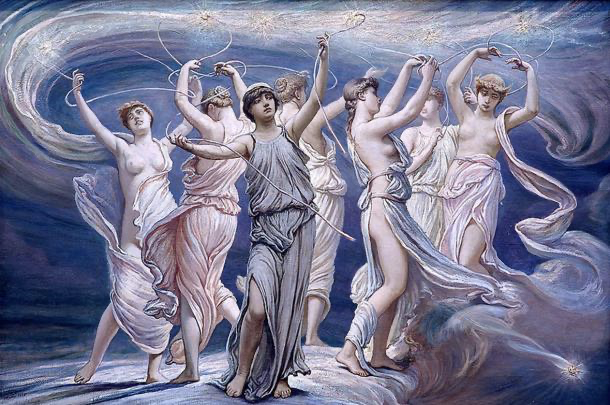
In the Greek myth of the Pleiades, a group of seven sisters were transformed into a cluster of stars – Article: The Pyramid Perplexity.

‘Other groups of seven include the Seven Wonders of the World, the Seven Sages of Greece, and the Shichi Fukujin (Seven Gods of Fortune) of Japanese mythology. In folklore, seven also has a special role in the order of birth.’ 
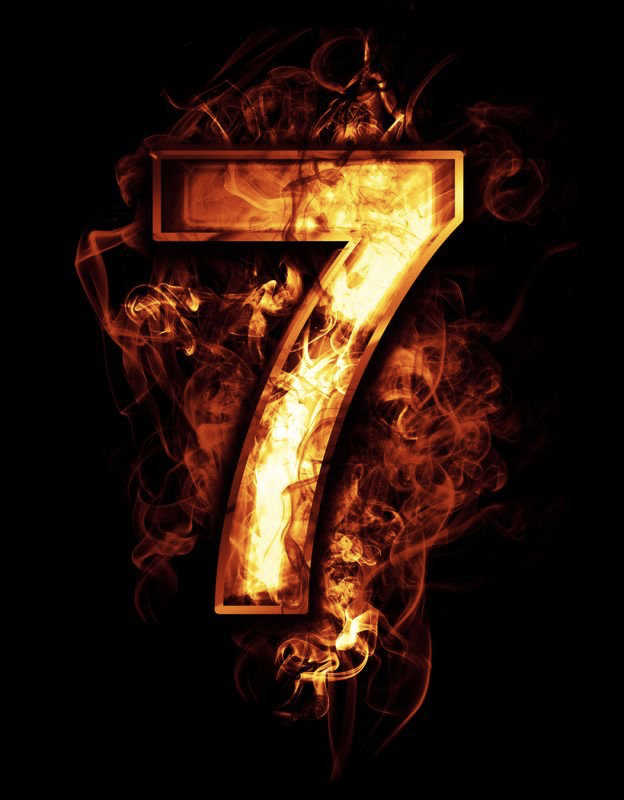
The number seven in numerology is equated with the intellect; inner wisdom; the metaphysical and occult mysteries; and a person led by this number is often a loner, eccentric, intuitive, private, skeptical and reserved. 

The Tarot card equivalent is interestingly, The Hermit – refer article: Thoth. Sarah Regan: ‘While the archetype of the hermit can symbolize many things, spiritually it… [is] someone who withdraws a bit from society or cloisters themselves in order to study the spiritual mysteries.’

The Complete Idiot’s Guide to Numerology, Kay Lagerquist & Lisa Lenard, 2004: 

‘The energy of the number 7 is… focussing inward… leaving the material world to turn to the world of spiritual understanding. The 7’s energy is spent on inner seeing… The 7 operates on a different wavelength than others… The 7 is often associated with magical powers… The number 7 is indivisible, and it represents the perfection of the God energy.

… the Mayans believed in a seven layered sky and that the number 7 was the number for orientation in space. In early Egypt it was believed that there were seven paths to heaven… seven heavenly cows, and Osiris, Egyptian god and judge of the dead, [led] his father through the seven halls of the netherworld [that is, hell].’

Jaliessa Sipress: ‘In numerology, the number 7 is a wild card, associated with unpredictable spiritual energy. Connected with the angelic realm and divine intervention, number 7 encourages you to try your luck and let the chips fall where they may.’ 

Kay Lagerquist: ‘Master Numbers indicate spiritual gifts that make them highly sensitive to intuition, extrasensory perception, and the world of higher guidance, including celestial beings, other life realities, and universal spiritual law.’ Number 77 is the master of spiritual energies. 

Tanya C Richardson: “Angel numbers are a synchronicity, or a meaningful coincidence – divine guidance from angels and the universe.” Vanessa Hall: ‘The angel number 777 represents… spiritual awakening, divine intervention and in some cases, luck!’ Brett Larkin: ‘The number 7 is a highly mystic and spiritual number, so having it tripled makes 777 very powerful indeed… this number is… also connected to the magic of manifestation.’
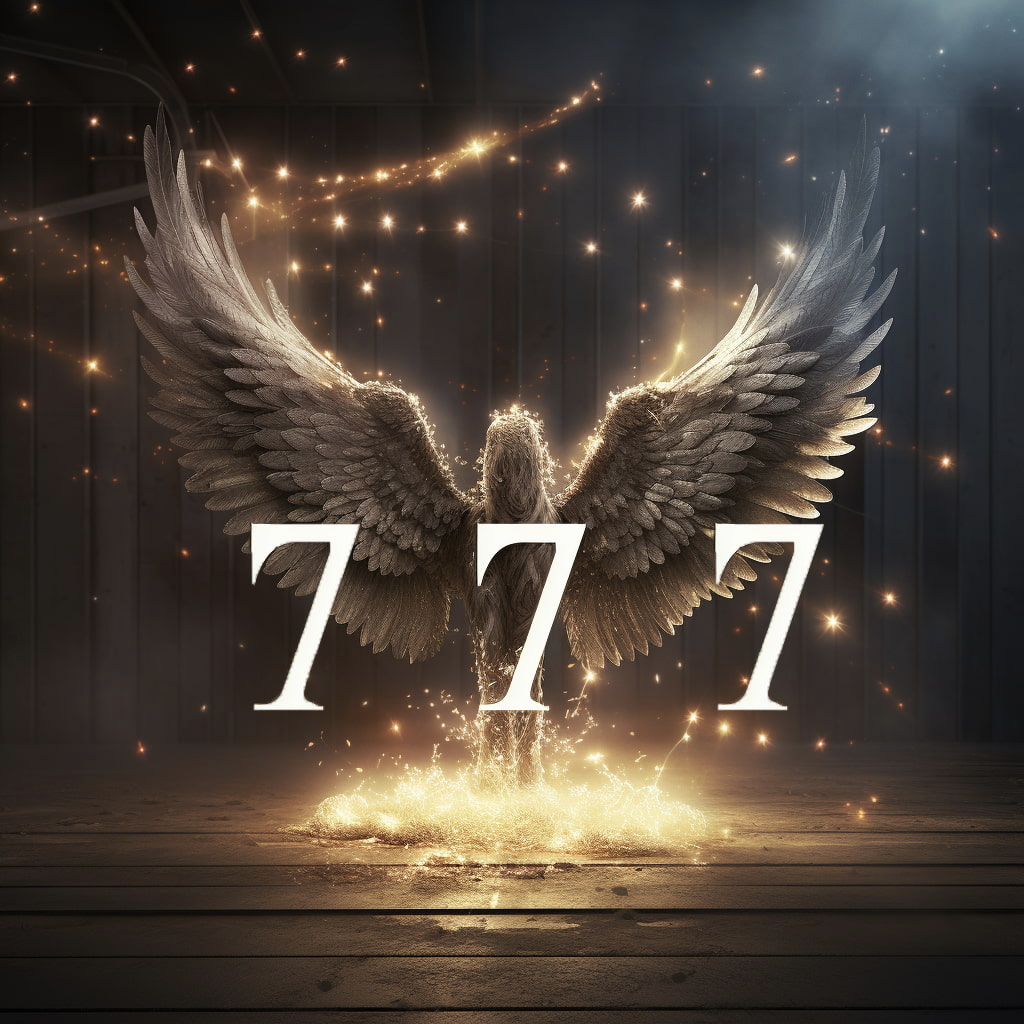
In the Bible, the number seven signifies something finished, completed and perfected. Particularly in association with the Divine. The number seven in its singular form is mentioned 463 times in the King James Version of the Bible, with fascinatingly the most occurrences recorded 54 times each both in scripture’s first book Genesis and its last book, Revelation. If other variations of the word for seven, such as sevens, seventh and sevenfold are included, it brings the total to 591 times. 

The number seven is heavily rooted in the creation, where it is used seven times in describing the Eternal’s creative work; with seven days in each Moon cycle; a seven day weekly cycle; and the Sabbath on the Seventh day – Articles: The Calendar Conspiracy; and The Sabbath Secrecy. There are seven colours in the spectrum; seven notes on the musical scale; and seven energy centres or chakras in the body.

There are numerous groups of sevens in the Bible. A few pertinent or interesting examples include the following according to Bible Study: 

  • The Bible, when it was originally canonized, was divided into seven major divisions. The total number of originally inspired books was forty-nine, or 7 x 7, demonstrating the absolute perfection of the Word of God. 
  • There are at least seven men in the Old Testament who are labeled “a man of God.” They are Moses (Joshua 14:6), David (2 Chronicles 8:14), Samuel (1 Samuel 9:6, 14), Shemaiah (1 Kings 12:22), Elijah (1 Kings 17:18), Elisha (2 Kings 5:8) and Igdaliah (Jeremiah 35:4). 
  • In the book of Revelation there are 7 churches as well as the same number of angels overseeing them. The book also contains seven seals, [seven] trumpet plagues, [and seven] thunders.
  • Jesus performed 7 miracles on God’s holy Sabbath Day… 1) Jesus healed the withered hand of a man attending synagogue services (Matthew 12:9). 2) At a Capernaum synagogue [Jesus cast] out an unclean spirit that possessed a man (Mark 1:21). 3) Right after the above miracle Jesus heals Peter’s wife’s mother of a fever (Mark 1:29). 4) A woman attending synagogue, who was made sick by a demon for eighteen years, is released from her bondage (Luke 13:11). 5) At a Pharisee’s house eating a meal with the host and several lawyers, Jesus heals a man with dropsy (Luke 14:2). 6) A man who is disabled and unable to walk is healed at the pool of Bethesda (John 5:8 – 9). 7) Jesus heals a man born blind at the pool of Siloam (John 9:14). 
  • There are seven annual Holy Days (holy periods) in the Bible… They are Passover, the Days of Unleavened Bread (7 days), Pentecost, the Feast of [Trumpets], the Day of Atonement, the Feast of Tabernacles (7 days) and the Last Great Day. This cycle begins in the first month of the Hebrew calendar’s sacred year and completes in its seventh month. 
  • Jerusalem, historically, was a city believed to be built on 7 hills. These hills are Mount Scopus, Olivet, Corruption, Ophel, the original Mount Zion, the new Mount Zion, and the hill on which the Antonia Fortress was built. 

In the Book of Genesis we read about the family of Cain. After Cain had murdered his brother Abel and the Eternal banished him, Cain was ironically and cowardly concerned for his own life. The Eternal replies in Genesis 4:15, ESV: ‘… “Not so! If anyone kills Cain, vengeance shall be taken on him sevenfold.” The Hebrew word for sevenfold is H7659, shib’athayim and means: ‘seven times.’ It derives from H7651, sheba, which is the Hebrew word for the number seven. It is not given why God chose this number over other spiritually perfect numbers in the Bible, such as three times or ten times for instance. The number three signifying a decision or finality and the number ten, judgement. 

In the same chapter an important descendant of Cain, the evil Lamech is discussed – refer article: Na’amah. Interestingly, Lamech was the seventh generation after Adam, just as righteous Enoch was, who descended from Seth. Genesis 4:23-24, ESV: ‘Lamech said to his wives: “Adah and Zillah, hear my voice; you wives of Lamech, listen to what I say: I have killed a man for wounding me, a young man for striking me. If Cain’s revenge is sevenfold, then Lamech’s is seventy-sevenfold.”

Lamech met with the most unfortunate occurrence imaginable, in that it was he who inadvertently murdered Cain while out hunting. This happened in part because Lamech had poor eyesight and his son had mistook Cain for an animal. In the aftermath and the ensuing melee, Lamech accidentally killed his own son, Tubal-Cain. The similarity of his name with Cain, an interesting coincidence. 

The Hebrew word for seventy is H7657, shib’iym, meaning: seventy. It derives from the word for seven, sheba. What is of note here, is that the Hebrew word used for sevenfold is not H7659, shib’athayim, but rather, H7651, sheba, which means seven. Yet this word can also mean: ‘sevens, seventh, seventeen, seventeenth’ and ‘seven times’ or ‘sevenfold.’

Why Lamech refers to seventy-seven times for his avenged life is not clear. The same way we do not know why the Eternal chose seven. That is, until we consider the root word for sheba, which is H7650, shaba. This word is key, for it means: ‘to swear, adjure, take an oath, to curse.’ It can also refer to the Eternal swearing by Himself. Thus in the context of Cain, the curse – not put upon Cain, but – on anyone who killed him, was to be sevenfold in severity. One could say Lamech paid an immediate price, in losing his third and perhaps youngest son and then later when his life was undeniably cut short in the global flood cataclysm. 

The curiosity surrounding the number seven doesn’t stop in chapter four and continues in the following chapter. In chapter five of the Book of Genesis, the descendants of Seth are listed. Here there is another Lamech, who happens to be the father of Noah. This Lamech was the ninth generation after Adam and his life too, was cut short by the flood. 

Genesis 5:30-31, ESV: ‘Lamech… after he fathered Noah… had other sons and daughters. Thus all the days of Lamech were 777 years, and he died.’ 

An angel number such as 777 is extremely rare in the scriptures. The only other one which this writer is immediately aware, is 666 – Revelation 13:18. Refer: Chapter XXI The Incredible Identity, Origin & Destiny of Nimrod; Chapter XXII Alpha & Omega; and article: Monoliths of the Nephilim.

A selection of people either claiming to be seventh sons of seventh sons or regarded as such, include the following individuals: 

Glen Travis Campbell:

An American Country and Western singer, he was ‘born on April 22, 1936, in Billstown, a tiny community near Delight in Pike County, Arkansas, to John Wesley Campbell (a sharecropper) and Carrie Dell (née Stone) Campbell. Campbell was of Scottish descent and was the seventh son of 12 children. As a child he almost died from drowning. His family went to the Church of Christ, and Campbell’s brother Lindell became a Church of Christ minister. In 2011, Campbell said his mother was Irish; although his mother was born in the United States, her family had emigrated from County Tipperary’ in the Republic of Ireland. Campbell died August 8, 2017. 

Perry Como (1912-2001):

Cheryl E Preston: ‘Singer Como [who was the seventh child of thirteen] discussed being a seventh son of a seventh son in interviews. He had two older sisters and only one older brother to survive until they were adults. He had three siblings who died in infancy and I assume they were boys. If the girls in Como’s family were the oldest and Perry the youngest, this would indeed qualify him for the honor with six brothers who preceded him. Some say his birth order is why he was so successful as an entertainer.’
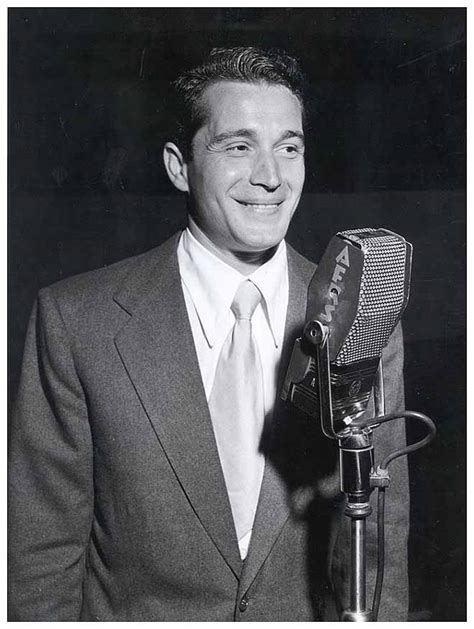
Without further information, there is some doubt regarding Perry Como’s credentials and more so with Glen Campbell’s. They share a similar gift and career in the music industry. Como was of Italian descent, while Campbell had both Scottish and Irish ancestry. Campbell’s heritage is of particular interest and this aspect will be studied in more detail.

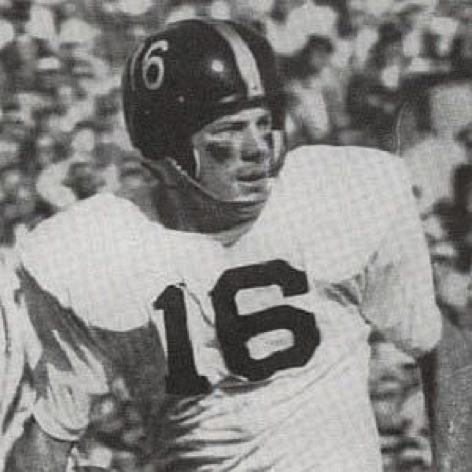
Leonard Ray Dawson (June 20, 1935 – August 24, 2022):

American football quarterback who played in the NFL and the AFL for 19 seasons – primarily with the Kansas City Chiefs. Dawson quarterbacked the Kansa City Chiefs to a win in Super Bowl IV and is a member of the Pro Football Hall of Fame. Dawson was the seventh son of a seventh son and ninth of eleven children overall. As Dawson was the ninth child, it indicates there were two females born before him. If the two females were born first, and then seven sons, he would qualify as a seventh son; provided his father also qualified by the same rule. Dawson had two children of his own.
Ivor Verdun Powell MBE (July 5, 1916 – November 6, 2012):

Welsh football player and manager. He won eight caps for Wales. Powell was a seventh son of a seventh son, who said that “people used to keep pointing it out, but it didn’t mean a lot to me.” 

Both Powell and Dawson – like Como and Campbell – share similar careers. In this case, in the world of sport and related team sports at that. These four men are not on record in exhibiting or speaking about any gifts of healing or clairvoyant abilities.

Archille Noé Baillargeon (February 13, 1889 – January 29, 1940):

From Tecumseh, Ontario, Canada was the seventh son of a seventh son, being the eighth child of fourteen siblings – with a sister and six brothers preceding him – and credited with possessing extraordinary healing powers. Baillargeon had two children of his own. 
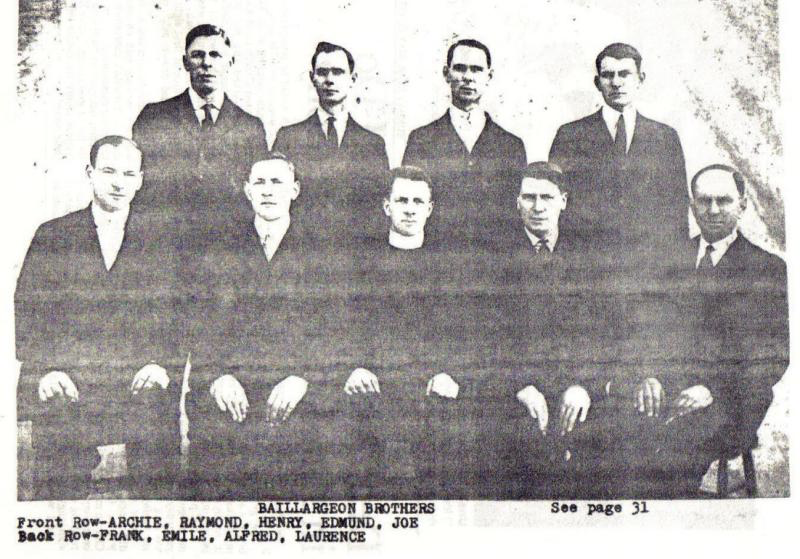
Baillargeon is described as having a gift of healing, yet there is scant information about him, or regarding any additional abilities. It is the next two deceased men, in which we have considerably more information documenting preternatural behaviour. Both make fascinating reading and without a doubt, bear the expected hallmarks typified by a seventh son of a seventh son.

Abram George (1914/16 – ?):

Mohawk faith healer from Akwesasne, New York. Darren Bonaparte – capitals his:

‘This young fellow garnered a lot of press in the late 1920’s and early 1930’s because of his abilities as a healer. The Massena Observer ran an article on February 17, 1927 under the headline INDIAN BOY IS CAUSE OF WORRY. The story dealt with the question of whether or not Indians lose their rights when buying a home off the reservation. The house in question was purchased for Abram George by his father, Mitchell. 

“In Batavia, there lives an 11-year-old St. Regis Indian boy named Abram George. The boy has built up a reputation as a healer and, incidentally, a small fortune. His father, Mitchell George, has purchased expensive automobiles for the lad and puts him up at the best hotels when traveling. Now, he wants to buy a home for the boy and he doesn’t want it on an Indian reservation. Through an attorney, he asked the assemblyman to ascertain whether an Indian would lose his tribal rights, ceded to him by state and federal governments, if he bought a home outside the reservation… 

Abram is credited not only with the ability to find bodies of drowned persons but with magical powers of healing and curing lameness. A St. Regis Indian, he formerly resided with his parents, nine brothers and two sisters between Hogansburg and St. Regis. He has been doing “private practice,” besides visiting the fairs in the fall.” 
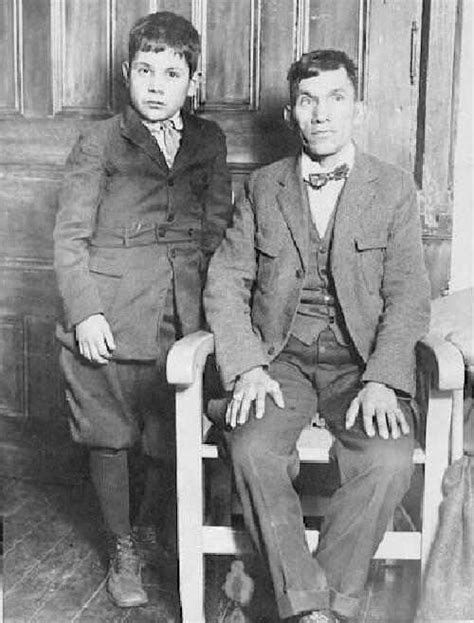
‘… March 10, 1927, the Massena Observer… “There is nothing boyish about the little red doctor… Years of traveling around the country and being held up as a supernatural being have given him a reticent manner and a countenance as solemn as that of Jiddu Krishnamurti, the much heralded ‘New Messiah,’ who recently came to this country from the Far East. He is a husky little chap of 12 years with the true bronze skin of his race and tousled shock of straight, black hair. He has unusually large jet black eyes that have a lustrous quality and intensity that command immediate attention” – Article: Are you an Old Soul… with a Young Heart. “He never questions his father’s orders and goes about his business with the matter of fact air of a practitioner…” The article goes on to suggest that his healing power stems more from the faith of those being healed than in the boy himself, who understands English but doesn’t speak it.’

“… While the powers claimed for the boy are explained by his father only in the statement that he is the seventh son of a seventh son, it is believed that this belief must be one of the Iroquois tribe or perhaps some clan of which the Georges are [members]. Seneca Indians on the Tonawanda reservation say they have never heard of such an Indian legend until the coming of the George family to Batavia. There is the belief that the seventh son of a seventh son is favored by luck, but as far as can be learned it is the first time that anyone has come forth with a statement that Indians thus endowed have a magic healing power…” 

The article goes on to describe one Laverne Ellis, a Batavia boy who suffered from an attack of infantile paralysis that shrank his arms and legs and left him in a wheelchair. Abram George healed him of his afflictions, prompting his mother to declare the young healer “worth his weight in gold.” 

“… [Abram] never speaks from the time he enters the home of a patient until he leaves – a nod or shake of his head or a smile being his only response to questions asked of him as he massages the atrophied limbs and twisted body parts of his patient.” 

‘The Massena Observer ran another article about Abram George on March 20, 1930 under the headline, INDIAN HEALER RETURNS HOME… Like a medicine man, whose descendant he is said to be, the youth is revered… among the members of the St. Regis tribe for it was among them that the curative powers of the touch of his hands were first brought to light. Just at what time this seeming power was discovered is not known. In recent years he startled thousands with his apparent miracles. 

Two years ago, when he was 14 years of age, accounts of a demonstration given by the boy at Rochester, swept through pages of newspapers and magazines. At that time, before a gathering of thousands of people, the boy is said to have given the healing touch to 75 people and was eagerly pressed for assistance by others who sought the touch of his hand. Again, while he was at Batavia near Tonawanda reservation, hundreds of letters came to him asking him to come to other cities and demonstrate his healing power, but it was decided that he must wait until he was 16 years of age before going out into the world on his curative missions… 

Abram returns to Hogansburg after several weeks spent in Miami, Florida, where he mystified hundreds with demonstrations of his apparent power to heal by touch. At the Alcazar hotel in that city early in January of this year he gave a remarkable revelation of his miraculous healing before approximately 250 people. The crowd was amazed as afflicted persons announced that they had been helped by the touch of the boy’s hands… Some have attributed the boy’s miraculous powers to his descendancy. He is the seventh son of a seventh son and from this circumstance is believed to have been endowed with a sort of sixth sense. He is also a direct descendant of a great Indian healer and medicine man who lived in the days of the French and Indian wars when the powerful Iroquois tribes were supreme in the north… 

Members of the St. Regis tribe and other followers of the youth, although unable to account for the work which he has done, stoutly declare that the healing touch of his hands has brought health to scores of afflicted. Abram George’s career as a healer eventually came to an end when he grew up, according to a member of the George family. He lived out the rest of his days in Akwesasne.’ 

Did Abram’s gift depart from him, or did he simply tire of the burden of his mission in helping and healing so many people. It is interesting that his gift was apparent from a very early age. We will find this is a common trait amongst seventh sons of seventh sons. It is worth noting his ancestry included a renowned healer and medicine man – ‘a person believed to have magical powers of healing; a shaman.’ Perhaps he too had been a seventh son. It is also notable that Abram’s father enjoyed and shared in the material trappings earned from his son’s healing powers. 

James Murrell:

The seventh son of a seventh son, according to investigations by Arthur George Morrison – English writer and journalist. Online Encyclopaedia: Murrell ‘(c. 1785 – 16 December 1860)’ – baptised on October 9, 1785 – ‘also known as Cunning Murrell, was an English cunning man, or professional folk magician, who spent most of his life in the town of Hadleigh in the eastern English county of Essex. In this capacity, he reportedly employed magical means to aid in healing both humans and animals, exorcising malevolent spirits, countering witches, and restoring lost or stolen property to its owner… he was married in [August] 1812. He had seventeen children with his wife [though many did not survive infancy], and the family… [settled] in Hadleigh, where Murrell gained work as a shoemaker.’ 

Did Murrell also have a seventh son?

‘On a number of occasions his magical activities gained the attention of the local press. Although many residents valued his services and viewed him as a good and benevolent individual, his activities proved controversial and divisive. Many educated figures criticised what they saw as his role in encouraging superstition among the local population; his death certificate recorded his profession as that of a “quack doctor”… local folklore… surrounding him in the Hadleigh area, [included] the allegation that he had the ability to fly and to instantaneously transport himself vast distances.’ Remember this claimed feat of flying. 

‘No images of Murrell survive. Accounts describe him as a short man who walked with his hands behind his back and hummed as he went. He was also noted for wearing a hard hat, bobbed tail coat, and iron goggles, while carrying a whalebone umbrella and a basket into which he placed the herbs that he collected. His appearance reportedly scared local children, of whom he was nevertheless fond. He cultivated an air of mystery about himself by keeping himself largely apart from wider community life, speaking seldom, and traveling largely at night.’
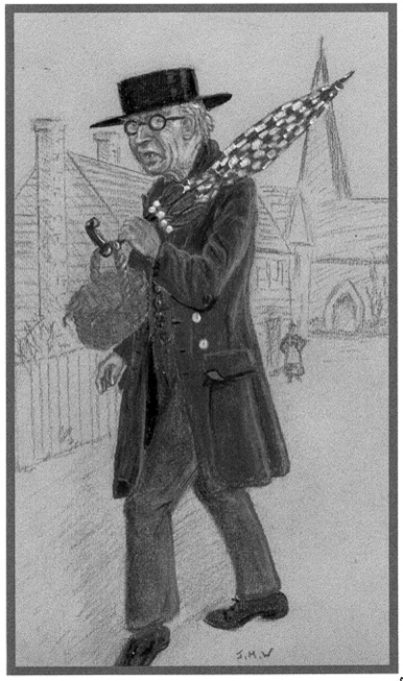
‘His house was locally known as a “place to avoid” and those visiting him reportedly often waited for some time outside, plucking up the courage to enter. Within the cottage, Murrell had drying herbs hanging from his ceiling, and his devices were reported to include a crystal, a mirror, and a bowl of water. Other items that Murrell used in his magical practices were a copper charm with which he would allegedly distinguish whether an individual was lying or not, and a “trick” telescope that supposedly enabled him “to see through brick walls”.  

Murrell possessed a library of books, including works on astrology and astronomy, conjuration, and medical texts. He also wrote a number of personal notebooks containing information on such topics… He was reputed to cure sick animals by passing his hands over their affected area, muttering a prayer, and then hanging an amulet about their neck… the folklorist Eric Maple encountered claims that Murrell was able to summon anyone he wished using [witch bottles], including individuals who had gone overseas. Murrell experimented with the use of a witch bottle constructed out of iron; he had two such devices created by a local smith, Stephen Choppen, and had the plug at the mouth soldered up before the bottle was placed in a fire as part of an anti-bewitchment spell.’
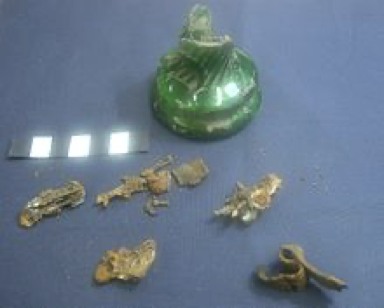
‘The idea behind this was that the bottle itself would not explode under the heat, and that thus it could be reused on other occasions. According to folklore collected by Maple, the smith’s attempts, which were initially unsuccessful, succeeded only after Murrell had recited a charm. 

According to Maple’s research… [Murrell] was able to predict the death of a man to the “very day and hour” while another was that he also predicted the time of his own death to the very minute. It was claimed that on one occasion he was asked to provide the horoscope of a newborn child, but that he refused, stating that “Make the most of the child, you will not have it for long”, after which the child soon died, while when an old lady asked him to predict the future for her, he refused to do so for more than nine years ahead, with her dying in the eighth. Morrison found that the locals whom he spoke to – many of whom remembered Murrell from several decades before – found the cunning man to be “a white and lawful wizard [‘a man who has magical powers’], who warred against the powers of darkness with all his might”; they added that it was “no sin to employ the arts of a man like him.”

Maple found one woman, Mrs Petchey, who described him as “a smuggler and a bad man. He did things that wouldn’t be allowed today – them witchcrafts, I mean. Nowadays, people would say he’d sold his soul to the Devil, wouldn’t they? They’d put him away for his witchcrafts” – 2 Kings 21:6. ‘Conversely, Maple noted that Mrs Murrell, who was a descendant of James, described the cunning man as “a good man and a regular churchgoer”. According to the folklore obtained by Maple, Murrell would often have debates about Christian theology with a local parson, the Reverend Thomas Espin – who had been Professor of Pastoral Theology at Queens College, Birmingham – and that Espin expressed the view that Murrell “knows his Bible better than I do… He is either a very good man or a very bad one, and I can’t make up my mind which.” 
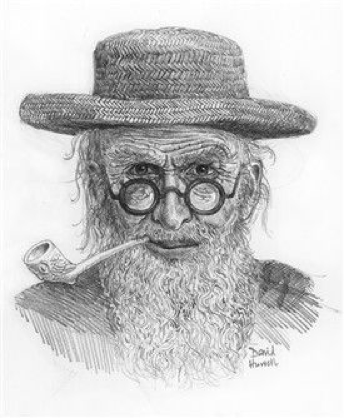
[A] story reports that Murrell took to his death bed aware of his oncoming demise, informing his daughter to turn away the curate “For I be the devil’s master as be well knowed. Clergymen den’t bother me in the oad time, they shan’t now.” Conversely, Maple recorded a story that in his final hours, Murrell was visited by the local curate; Murrell was frustrated by the latter’s attempts to administer religious consolation and eventually scared him off by shouting out “I am the Devil’s master”

Murrell left no will. His son Edward later claimed that Murrell’s landlord soon buried a wooden chest with the old man’s papers in the garden of the cottage, deeming their associations with magic to be dangerous. Edward claimed that he subsequently dug the chest up again.’
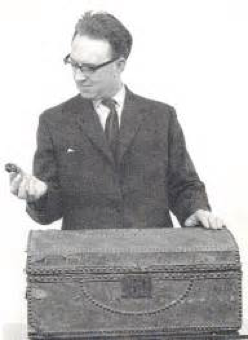
‘Murrell’s personal effects were treated as souvenirs, and several were treated as though they retained magical and supernatural associations for many years after his death. Murrell’s correspondences and papers – then contained in the wooden chest owned by his son – were examined by Morrison during the course of his research. Morrison discovered that Murrell was in possession of the manuscript [the] Key of Solomon grimoire* on which he based his magical practise.’
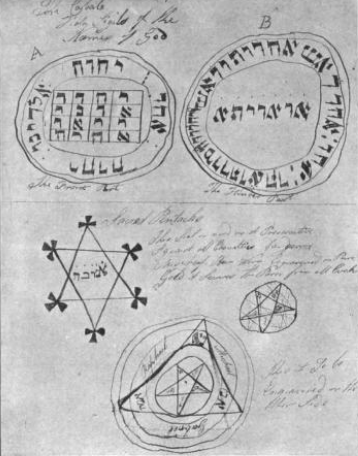
Reproductions of pages from Murrell’s books of magic; the page above depicts sigils and pentacles, the page below depicts a horoscope.
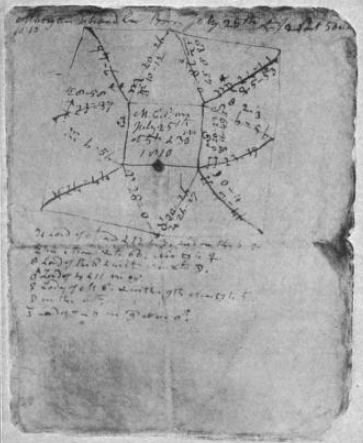
‘These texts survived until 1956, at which point they were burned by someone who did not believe them to be of any importance. Many of Murrell’s handwritten books were also lost, although his scrapbook of astrological data had survived until at least the late 1950s…’  

The concluding paragraphs leave little doubt that Murrell was not a servant of the Eternal. Not because of his denunciation of the clergy, for this is rightly so, as they represent and teach a false christianity based on the theology of Paul – Articles: The Pauline Paradox; The Sabbath Secrecy; Arius, Alexander & Athanasius; and The Seven Churches – A Message for the Church of God in the Latter Days. Rather, the references to his being a wizard; possessing magical powers; practising black* magick; selling his soul to the devil; and claiming to be the devil’s master, in the vein of King Solomon – of whom we will have more to say later – Article: Na’amah

As Reverend Espin was ‘double minded’ regarding Murrell’s character, he perhaps should have ‘rightly divided the word of truth’ to discern the answer – 2 Timothy 2:15, James 1:8. For it is no mean thing if someone is wily in debating the Bible – for even Satan can quote scripture – and presents themselves as wholly righteous when in reality they represent good and evil – Matthew 4:6, 2 Corinthians 11:14, Genesis 3:5. 

Following, are examples from the hotbed capital of seventh sons of seventh sons: Ireland. The significance of which, will be investigated in-depth. The first two men are deceased, while the remaining four are presently alive.

Valentine Greatrakes (February 14, 1628 – November 28, 1682):

Known as Greatorex or The Stroker, was an Irish faith healer from County Waterford; who toured England in 1666, claiming to cure people by the laying on of hands. It is not clear if he was a ‘seventh son of a seventh son.’ He certainly exhibited the signs of one in the main, but with mixed results. Both his parents were English Protestant settlers. Encyclopaedia: ‘He seemed to have been very religious; his outlook was grave but simple. He said himself, that ever since that year 1662 he had felt a strange impulse or persuasion that he had the gift of curing the King’s evil… and this suggestion became so strong, that he stroked several persons, and cured them. 

Three years after that, an epidemical fever was raging in the country, he was again persuaded that he could also cure that. He made the experiment, and he affirmed to his satisfaction that he cured all who came to him. At length, in April 1665, another kind of inspiration suggested to him, that he had the gift of healing wounds and ulcers; and experience, he also said, proved that he was not deceived. He even found that he cured convulsions, the dropsy, and many other distempers.’
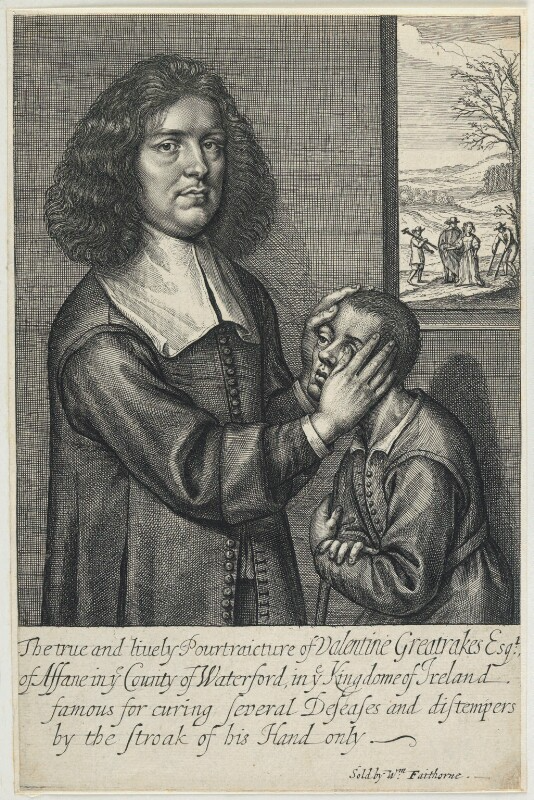
‘Robert Phayre… who had served in his regiment… [was] cured… in a few minutes of an acute ague’ in 1665. Greatrakes had served as a lieutenant in Lord Broghill’s regiment in the English Parliamentary army in Ireland in 1649, campaigning in Munster against the Irish Royalists. ‘John Flamsteed the famous Astronomer, (then aged 19) went over to Ireland… to be touched by Greatrakes for a natural weakness of constitution, but received no benefit.’ 

Even so, ‘crowds flocked to him from all parts, and he was reported to have performed such extraordinary cures, that he was summoned into the Bishop’s court at Lismore, and, not having a licence for practising, was forbidden to lay hands on anyone else in Ireland… Greatrakes was invited to England by his old commander, Lord Broghill… to cure Anne Viscountess Conway of an inveterate headache. He arrived in England in early 1666 but failed to cure the Viscountess. Undaunted, he travelled through the country, treating the sick. 

King Charles II, being informed of it, summoned Greatrakes to Whitehall. While unpersuaded that Greatrakes had miraculous power, the king did not forbid him to continue his ministrations. Greatrakes went every day to a place in London where many sick persons, of all ranks in society, assembled. Pains, gout, rheumatism, convulsions and so forth were allegedly driven by his touch from one body part to another. Upon reaching the extremities, reportedly, all symptoms of these ailments ceased. As the treatment consisted entirely of stroking, Greatrakes was called The Stroker. Greatrakes ascribed certain disorders to the work of evil spirits. When persons possessed by such spirits saw Greatrakes or heard his voice, the afflicted fell to the ground or into violent agitation. He then proceeded to cure them by the same method of stroking.’
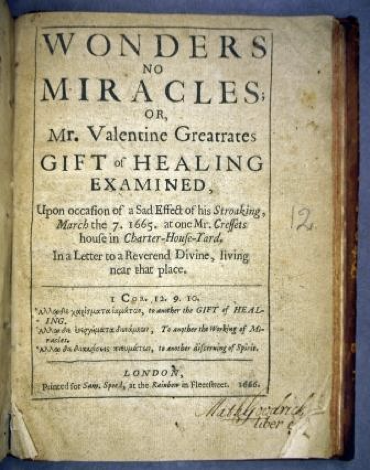
‘Greatrakes returned to Ireland in 1667, and resumed farming in 1668… Although he lived for many years, he no longer kept up the reputation of performing those strange cures which made him a name. However, his case is very singular, that on the strictest enquiry no sort of blemish was ever thrown upon his character, nor did any of those curious and learned persons, who espoused his cause, draw any imputation upon themselves.’ 

It would seem like Abram George, Greatrakes went into retirement. Was it to escape the responsibility his – sometimes happenstance – gift of healing weighed upon him? It is testament to Greatrakes that his character was described as blameless. We will confirm with subsequent healers that like Greatrakes, not all patients were healed. This is notable for a number of reasons, which we will discuss. Greatrakes, unlike George and Murrell, was a Christian and so ‘faith healer’ is an applicable term. Though not all healers are comfortable with the religious connotation and distance themselves from this label.

Finbarr Thomas Nolan (October 2, 1952 – June 20, 2020):

Encyclopedia: An ‘Irish healer who [was] the seventh son of a seventh son, and was thus, according to folk tradition, destined to begin healing by touch. He was born… at Loch Gowna, county Cavan, Republic of Ireland. His mother stated “I knew…God would give him the power to heal.” There were requests for healing when Nolan was only three months old, but his mother insisted that healing wait until the boy was at least two years old. At that time, a man brought his five-year-old child, who was suffering from ringworm. Nolan’s mother circled the spots with holy water, making the sign of the cross in the middle, then placed the two-year-old Nolan’s hand on each spot in turn, while she prayed for healing and asked her son to repeat the prayers after her. She claims that the ringworm was cured after two visits.’
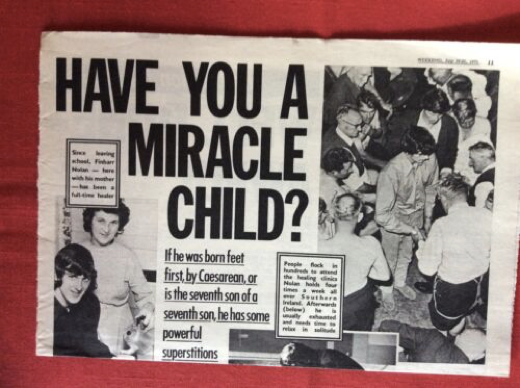
‘However, Nolan did not immediately undertake regular healing, although at the age of nine he touched the paralyzed hand of a local hotel proprietor and the hand became normal in three days’ time. The father of this man was confined to a wheelchair with severe arthritis, but the day after Nolan touched him he was able to use his hands, and a month later he had recovered sufficiently to resume his job as a butcher. 

At the age of sixteen, while still attending school, Nolan was asked to go to Donegal to cure an aunt. She notified the local newspaper, with the result that the young Nolan arrived to find a crowd of three hundred people and a television film crew. For several weeks afterward, some five thousand people a day came to his home for healing, and he touched them in groups of 14 or 15 at a time in the kitchen of the house’ – Matthew 14:13-21. ‘After that Nolan decided to leave school and devote himself full time to healing. 

His reputation as a healer spread rapidly, and visitors came from around the world for treatment. Since county Cavan is located near the border of Northern Ireland, the political unrest and disorders began to discourage visitors, so Nolan moved with his parents and brothers to a house in the suburbs of Dublin. Here the large number of visitors seeking healing soon made it difficult for the family to live a normal life in an average-sized house, so Nolan hired halls and hotel rooms for regular clinics.’ 
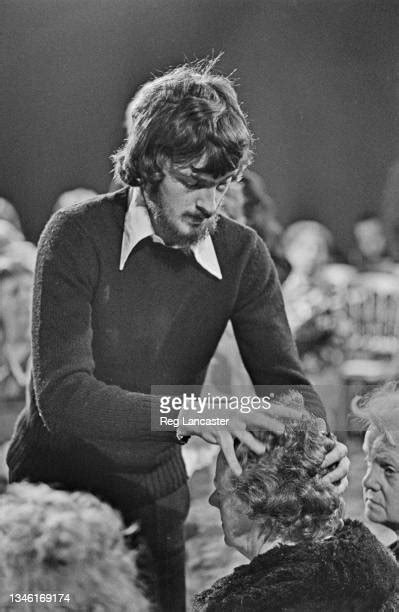
‘In the early period, Nolan had been influenced by his mother’s religious outlook and used holy water, making the sign of the cross when touching each patient, but eventually he discarded such specifically Catholic tradition. As he said: “It deterred a lot of Protestants and I have nearly as many Protestant patients at my clinic as I do Catholic.” Moreover he came to believe that his healing power had nothing to do with religion, and rejected the term “faith healer.”

He stated: “People should understand my healing has nothing to do with faith; I believe my power is a gift… I’ve proved that faith is not needed by curing animals and babies.” Indeed, he became well known for treating injured race horses, and one horse he treated won nine races afterward. 

His healing power appears to be in his right hand, and he therefore places it on each part of a patient’s body that is afflicted. He lays his hand on the patient for several seconds and does not himself feel anything unusual happening, although patients often state that they feel a sensation of heat. His healing technique was monitored at a Belfast hospital, and it was found that during healing sessions there were changes in his respiration, pulse rate, and the electrical potential of his skin.’
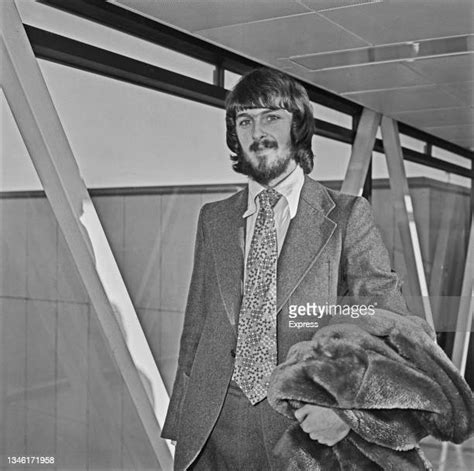
‘Like other seventh son healers, he has found that three visits are usually necessary. Patients sometimes feel worse after the first healing session, usually a sign that some changes have commenced. Healing is usually consolidated at the second and third visits. Most patients pay a small voluntary contribution for healing, but some wealthier individuals have been very generous. An elderly lady in New York suffering from rheumatoid arthritis paid for Nolan’s 6,000-mile journey and gave him an additional check for several thousand dollars. Nolan has also flown to Washington to treat a young Vietnamese war soldier. Nolan has held clinics in London as well as the United States and is credited with some remarkable cures. 

Nolan is an amiable and, apart from his healing activity, eminently normal individual, with none of the mystique of many professionals in the paranormal. He does not think about anything in particular during the laying on of hands and exudes a friendly matter-of-fact atmosphere.’

Gail Walker, 2004: ‘In the 1970s he made a point of not charging a fee for his services but, understandably, grateful clientele were very generous [consultations later cost £25]. Finbarr… began living a life of considerable luxury. He had a beautiful detached home. He drove fast cars. But some thought it was all a bit incongruous, given the day job.’

Liam Collins: ‘With his playboy good looks, long hair and black beard, Finbarr Nolan brought show business glamour to the old-fashioned practice of faith healing, and for a time was as rich and famous as a show business celebrity. In his heyday, the softly spoken… ‘seventh son of a seventh son’ was said to be taking home “sacks of cash” for “laying” hands on the sick…’

Walker: ‘In any case, the taxman called and bankruptcy followed. Speaking at his home in Dublin, Finbarr, now 51, balding and a father-of-two [sons], is philosophical about his career – and, indeed, about life in general. He doesn’t so much blame speculation over his earnings for the wane in interest, as an older superstition being superceded by the sophistication of modern life. “More people are more educated now, and they look for a doctor with as many letters after his name as possible,” he says. “What I do, based on me being the seventh son of a seventh son, isn’t their thing at all. They’d never think that I can cure them.”
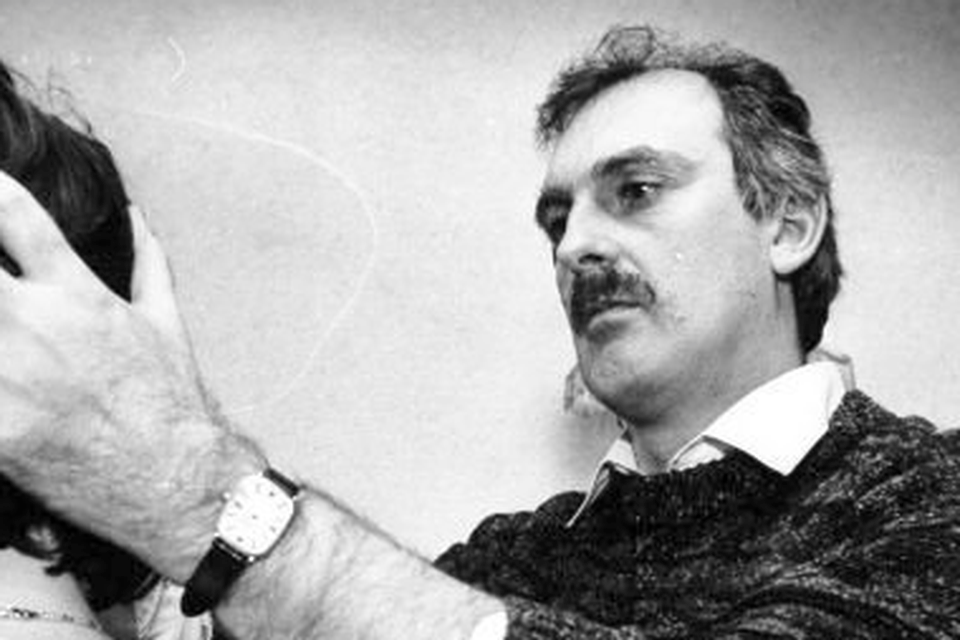
‘In fact, Finbarr doesn’t promise that he can cure anyone. Asked to rate his chances, he puts it as “at best, 50/50.” He says: “I’ve always been upfront about it. It might work, it might not. “But I’ll certainly have a go at anything. I have had some measure of success with every condition but also some measure of failure with every condition.” 

Among his most publicised cases in Northern Ireland was that of Anthony Milligan, from Co Down. In 1978 he had cancer of the pancreas and doctors had given him just six weeks to live. But he’s still alive today. “Of course Anthony’s story is unbelievable,” says Finbarr. “If I hadn’t been there myself, I wouldn’t believe it. But it happened. “I was staying at a hotel in Northern Ireland and more or less as a favour to the owner I agreed to go out and see Anthony. He was too ill to come to me. “After I saw him I even remember saying to someone that I wouldn’t be back to see that man again because he was so ill. “But two years later I was taking a clinic in Lisburn and Anthony walked through the door. I couldn’t believe it. I thought he would have been dead and buried. He’s still knocking about today.” 

Finbarr’s own health has been poor since he was was almost killed in an accident 10 years ago. He was hit by a lorry while out cycling on a bike his wife Caroline had bought for him to tackle his middle-age spread. He was left with chronic back pain – and, no, the healer cannot heal himself. Perhaps unsurprisingly, there were once plans to turn his life story into a Hollywood movie. But they collapsed at the last moment.’ 

It is of consequence that Nolan came to view his ability to heal as a gift and not one of faith, in contrast with his religious mother. The use of holy water and making the sign of the cross, while indicative of Catholicism are not traditions associated with the Bible, Christ, the apostles or the early church. The fact Nolan rates his success as 50% also underlines that his healing is certainly not based on his faith, though it does not necessarily negate faith exhibited on the part of the patients involved. 

The question of faith is an important one, for when Christ returns, he asks whether he will even ‘find faith on the earth’ – Luke 18:8. Nolan realises his gift does not stem from faith, but rather his status as a ‘seventh son of a seventh son.’ Thus, the question arises: where did Nolan’s gift come from? For a gift of healing has a spiritual source. Matthew 10:1, ESV: ‘And he called to him his twelve disciples and gave them authority over unclean spirits, to cast them out, and to heal every disease and every affliction.’ Yet how can one know what type of spirit is involved? Whether the Holy Spirit, or an infernal one? 

1 John 4:1-6

The Voice 

‘… I warn you: do not trust every spirit. Instead, examine them carefully to determine if they come from God, because the corrupt world is filled with the voices of many false prophets. Here is how you know God’s Spirit: if a spirit affirms the truth that Jesus the Anointed, our Liberating King, has come in human flesh, then that spirit is from God. If a spirit does not affirm the true nature of Jesus the Anointed, then that spirit does not come from God and is, in fact, the spirit of the antiChrist. You have heard about its coming; in fact it is already active in the world… Whoever is not from God will not listen… This is the way we discern the difference between the spirit of truth and the spirit of deception.’ 

It is staggering beyond comprehension then, that nearly all of Christianity promulgates and believes a falsehood, perpetrated by the doctrine of the Trinity, which denies Christ was created by God and fully human while on the Earth and teaches he was ‘God in the flesh’ instead – the very spirit of the antichrist – refer article: Arius, Alexander & Athanasius.

How does one recognise a true believer? Isaiah 66:2, ESV: ‘… But this is the one to whom I will look: he who is humble and contrite in spirit and trembles at my word.’ A true servant of God and therefore a true healer, believes and lives by, the word of God – Matthew 4:4. 

In what manner does a true healer perform a divine healing? James 5:14-16, NTFE: ‘Are any among you sick? They should call for the elders of the church, and they should pray over the sick person, anointing them with [olive] oil in the name of the Lord. Faithful prayer will rescue the sick person, and the Lord will raise them up. If they have committed any sin, it will be forgiven them. So confess your sins to one another, and pray for one another, that you may be healed. When a righteous person prays, that prayer carries great power.’ 

It is not this writer’s intention to denigrate Nolan’s real healings which were genuine wonderworking, but to call attention to his and other healers – no matter how well intentioned – who either heal without acknowledging Christ, or who are mislead by a deceiving spirit… and therefore not healing by the authority of Jesus Christ and the power of the Holy Spirit. 

The electricity registered on Nolan’s skin when laying his hands, confirms that he was a vessel for a force greater than himself. It behooves all healers to question what exactly they are channeling and to what or to whom they are serving as a medium and acting as a conduit for energy transmission – Article: DEATH: A Dead End or a New Beginning? Thus, it is truly incredible that healers and particularly seventh sons of seventh sons, may devote their whole lives to a practice they are quite unable to explain. In essence having faith in its reality and in its results; yet without ever comprehending the source. 

Finally, two vital points which distinguish true healings from, let’s say counterfeit ones, though this does not mean they are necessarily less genuine, just less miraculous. The first is the question of renumeration. Nolan originally accepted donations – some generous – and then later, began charging a ‘modest’ consultation fee of £25. 

This would seem reasonable no doubt, as expenses requiring travel and hiring of halls or hotels require payment. But herein lays the issue, for healers discovering their gift then think they must use it indiscriminately, widely and often. Yet the New Testament example, is one of discrimination and is predicated on healing the few who either exhibit faith; who are deserving; or who by being healed, the example furthers the good news of the gospel message – giving glory to God and Christ.

Nolan endeavouring to heal 5,000 people a day, is in no way supported by the scriptures, no matter how well intentioned he was. By performing healing in this manner, it focuses attention on the healer, rather than on the healed, and more importantly, the supernatural author of the healing. Having ‘sacks of cash’, luxury items and a lavish lifestyle are not what a true servant of God is called to possess or strive for – Titus 1:11, 1 Timothy 3:8, 1 Peter 5:2. 

When Jesus commissioned the apostles, he stated plainly in Matthew 10:8-14, The Voice: ‘Heal the sick, raise the dead, and cleanse those who have leprosy. Drive out demons from the possessed. You received these gifts freely, so you should give them to others freely. Do not take money with you: don’t take gold, silver, or even small, worthless change.

Do not pack a bag with clothes. Do not take sandals or a walking stick. Be fed and sheltered by those who show you hospitality. When you enter a town or village, look for someone who is trustworthy and stay at his house as long as you are visiting that town. When you enter this home, greet the household kindly. And if the home is indeed trustworthy, let your blessing of peace rest upon it; if not, keep your blessing to yourself. If someone is inhospitable to you or refuses to listen to your testimony, leave that house or town and shake the dust from your feet.’ 

It is tragic, yet ironic that Nolan should lose his wealth, develop poor health and pass from this world early. One hopes he learned valuable lessons before he died and that his extraordinary gift and life lived were not in vain. 

The second vital point to be aware, is the fact that Nolan’s healings were not 100% effective and in the main did not occur instantaneously. Often requiring three visits before a full healing occurred. A somewhat suspicious number – refer articles: 33; and The Establishment: Who are they… What do they want?

The converse of this in the biblical account and how one would recognise a bonafide healer today for instance, is that healings performed by Christ and the apostles were instantaneous miracles on the spot. The other aspect of an individual used in the capacity as a true healer, is the gift of raising the dead. 

Acts 14:8-15

English Standard Version 

‘Now at Lystra there was a man sitting who could not use his feet. He was crippled from birth and had never walked. He listened to Paul speaking. And Paul, looking intently at him and seeing that he had faith to be made well, said in a loud voice, “Stand upright on your feet.” And he sprang up and began walking. And when the crowds saw what Paul had done, they lifted up their voices, saying… “The gods have come down to us in the likeness of men!” … We also are men, of like nature with you, and we bring you good news, that you should turn from these vain things to a living God, who made the heaven and the earth and the sea and all that is in them.’ 

Acts 20:9-12 

English Standard Version 

‘And a young man named Eutychus, sitting at the window, sank into a deep sleep as Paul talked still longer. And being overcome by sleep, he fell down from the third story and was taken up dead. But Paul went down and bent over him, and taking him in his arms, said, “Do not be alarmed, for his life is in him.” And when Paul had gone up and had broken bread and eaten, he conversed with them a long while, until daybreak, and so departed. And they took the youth away alive…’ 

Notice in both instances, the healing was immediate and performed with humility. Paul did not accept adulation and in the case of the dead young man, he maintained he was just unconscious and alive, rather than say: “I resurrected him”, thus causing too much discussion surrounding the feat and thereby distracting from his visit with the brethren and the importance of being able to share more truths with them – of far more consequence even than the miraculous raising of the dead – lasting the rest of the night as it eventuated. 

In our modern world, it would be difficult with word of mouth and media, not to have the knowledge of a healing gift in a true servant of the Eternal spread – 1 Corinthians 12:9, 30. Though it would be safe to say, that should such an individual exist, they would not endeavour to publicise their power, but rather to maintain privacy at the utmost cost. In so doing, healings would be limited to those they were inspired to conduct (Job 5:18) – like the example set by Christ and the apostles (Matthew 13:58) – and therefore, travelling hundreds or thousands of miles to heal hundreds or thousands of people would not be sought. The result being, that recouping costs and charging money would not be necessary. Regardless of the fact that Jesus said not to take payment or strive for money – Matthew 6:24, 33, 1 Timothy 6:10. 

Thus, one would know a true healer today in that they a. would not willingly broadcast their gift; b. would certainly not charge money in receipt of healing; c. healing would be from a divine source and thus instantaneous, permanent, with a 100% success rate; d, the healer would be acting not only according to their own faith, but in many instances the faith of the patient (Matthew 8:8; 15:28, Mark 5:23); e. the laying on of hands, with anointing oil would be used, though there could be exceptions; and f. divine healing would not be offered or given without an affirmation from the patient that being made whole and having sin forgiven was performed and given by and through the authority of Jesus Christ and the Holy Spirit; with an agreement to walk a better and new life; serving the Eternal and his Son – John 9:35, 38, Acts 3:16, Mark 10:52.

The following Irish seventh sons of seventh sons are currently living.

Bart Gibbons:

Irish Central: ‘An article by The New York Times, published in December 2021, investigated the phenomenon and met with seventh sons from around Ireland and even got the chance to witness their healing powers in action.’ Megan Specia, 2021:

‘Bart Gibbons, 57, who owns a grocery store in the village of Drumshanbo in County Leitrim [Republic of Ireland], has a cure for warts that was passed down from his father and his father’s father before him. It involves taking a bundle of rushes and saying a combination of prayers as they are held over the affected area. Then, he buries the reed-like plants. The belief is that when they decay, the warts are gone. Mr. Gibbons didn’t plan to carry on with the treatment after his father’s death, but then a woman showed up at his door asking for the cure to clear her warts before her wedding day. He said he would try. It worked, he said, and people have been coming ever since, some from hundreds of miles away.’
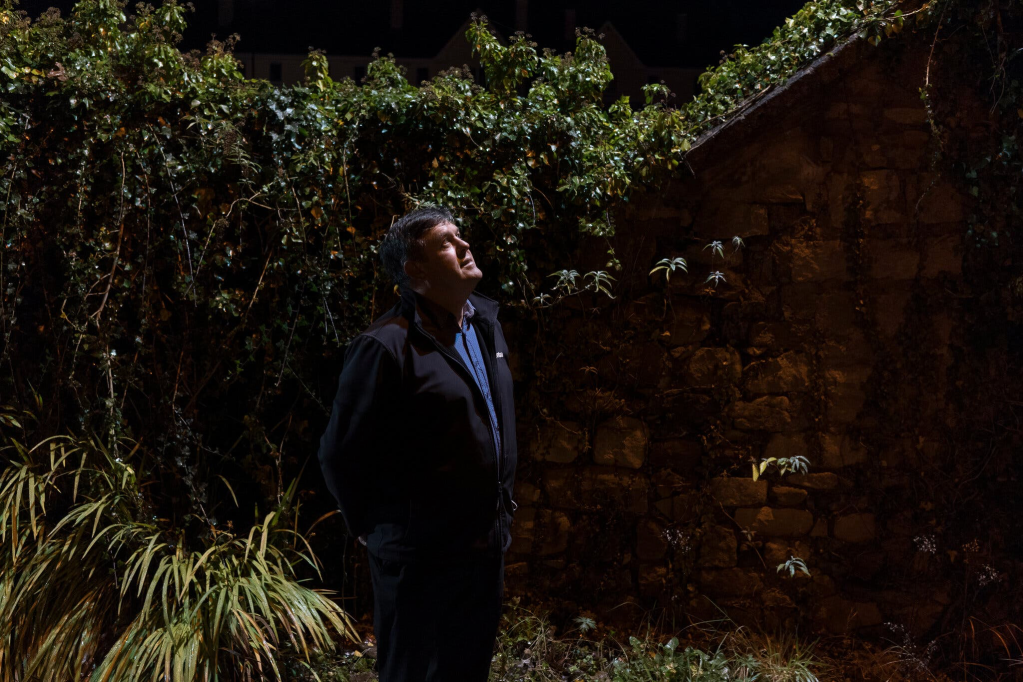
‘He said it would be wrong to receive payment for a cure, and the idea that payment is taboo is something experts say is ingrained in the tradition. Mr. Gibbons described being a “vessel” of his cure.’ 

2 Timothy 2:20-21, ESV: ‘Now in a great house there are not only vessels of gold and silver but also of wood and clay, some for honorable use, some for dishonorable. Therefore, if anyone cleanses himself from what is dishonorable, he will be a vessel for honorable use, set apart as holy, useful to the master of the house, ready for every good work.’

“I’m not holy,” he said. “And I don’t pretend to be.”  

1 Peter 1:15, CEB: ‘… you must be holy in every aspect of your lives, just as the one who called you is holy.’

‘In Mr. Gibbons’s view, the cure is about belief rather than religion. “If people believe strongly enough that this has happened, I think your body makes it happen,” he said.’

Andrew Keane:

Megan Specia, 2021: ‘As Irish families have gotten smaller, seventh sons have become much rarer. But Andrew Keane, 37, who lives in County Mayo, [Republic of Ireland] is one. When he was a baby, his parents were told by another seventh son that theirs had the cure for ringworm, and he showed the boy the ritual. His mother still has vivid memories of Andrew as a young boy reaching out tiny hands and saying the curing prayers.’

Portrait of Andrew Keane, bottom-right, and his siblings

‘In their farming community, where ringworm is common in cattle and easily passes to people, it was a popular cure. Now, with two children of his own, doing the cure is just part of his everyday routine, and he has never really second-guessed it. “I’d feel bad if I stopped,” said Mr. Keane, who treats people in the evenings after work as a builder. “I feel like I was given this gift. And why would I not use it?” 

Mr. Keane also treats animals. On this particular night, he went to visit neighbors, Áine McLoughlin, 54, and her husband, Chris McLoughlin, 55, whose two dogs had ringworm. “I thought it was worth a shot because the dogs weren’t improving,” Mr. McLoughlin said, adding they had already visited the vet. Mr. Keane stroked the floor three times, made the sign of the cross’ – Appendix VIII: When the Creator came to dwell with His Creation – ‘and placed his hands on the Highland Westies’ backs, while saying the Hail Mary’ – refer Chapter XXII Alpha & Omega. ‘As she watched him perform, Mrs. McLoughlin said she had grown up with beliefs in cures. But she worries the rituals may be lost in the next generation.’

Keane performing the cure for ringworm 

Joe Gallagher:

Megan Specia, 2021: ‘Pullough, [Republic of] Ireland – For two hours on Sunday mornings, they come to the pub with all that ails them. A small boy with a rash. A farmer with ringworm. A man with a throat infection. They are here to see Joe Gallagher, who owns this canary yellow pub, nestled alongside a canal in the tiny Irish village of Pullough in County Offaly.’ 

‘They believe that as the seventh son of his family, he holds a cure. “I’m at this all my life,” said Mr. Gallagher, 75, as he took a deep drag on his cigarette. As he explained how he does the cure – by laying his hands on the affected area, doing the sign of the cross and reciting some prayers – he breathed out ribbons of smoke that swirled around his face. Mr. Gallagher is just one of hundreds of men and women across Ireland who are healers, or have “the cure,” an approach to health care that interweaves home remedies with mysticism, superstition, religion and a sprinkle of magic.’ 
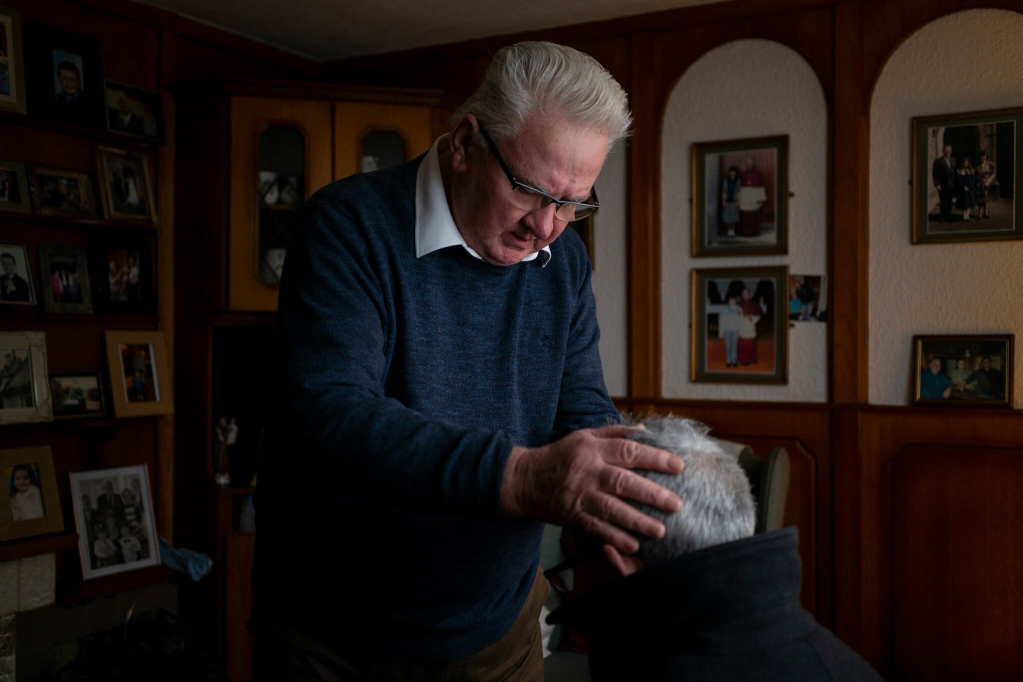
‘It’s part of a belief in folk medicine, curing charms and faith healers that is still a way of life for many in Ireland, if a fading one. Some who are believed to have the cure are seventh sons, like Mr. Gallagher, a birth order long thought to bestow special powers. Others are keepers of family customs that range from rituals, prayers and charms to herbal tinctures, offered up as treatments for everything from burns and sprains to rashes and coughs. Since his childhood, people have sought out Mr. Gallagher. 

“I think you must have the belief,” he said, acknowledging that the process doesn’t always work. “I wouldn’t say that I can do miracles.” For Mr. Gallagher, a former monk who said his religious order had been accepting of the cure, the practice is a deeply religious one. “You have to put your heart and soul into it, and you’re asking God to help you with this thing,” he said. For others, the cures depend less on a deep Christian faith and more on secrets handed down through centuries of oral tradition.’ 

Traditional faith healer Joe Gallagher performs a faith healing ritual inside his living room attached to The Pull Inn

Kayley Hardiman: ‘Joe explained: “It’s something I’ve been doing since I was a baby. My parents used to take my hand and do it when I didn’t know I was doing it.” At around six or seven years of age, Joe knew how to make the sign of the cross and to say a prayer on the affected area of the person’s body but said he didn’t like curing people then as he didn’t understand it. “I would be called in when I would be out playing. That time ringworm was the big thing. As I got older I realised what it was all about.” “You don’t know what people are going to turn up with. I just do what I do and see how it goes.” The Leitrim native doesn’t charge clients for his services as he explained: “If I got a gift from God I didn’t pay for it so I don’t think it’d be right to charge for it so I hope my reward will be in the next world” – Article: DEATH: A Dead End or a New Beginning?

Joe also has very strong faith and was a Franciscan monk in his youth up until the age of 25, [as he was unable to work as a missionary abroad] based at monasteries in Clara and Galway from 1960 to 1971 when he left the Brothers and opened the pub in Pullough. He said that he “enjoyed every day” with the Brothers and that they were “lovely people.” Joe also performed cures for people while in the monastery. “Being a monk helped me with my faith,” he said. “I have a strong belief in God and in prayer, there’s nothing better than prayer.”

Joe highlighted that faith healers are a “dying breed” as people with his gift cannot pass it on. “When I pass away that’s it, it dies with me,” explained Joe. “There’s not seven in a family never mind seven sons (nowadays.) There’s nobody can afford to have seven children, and then it’s just by luck if you have seven sons. There’s only two or three in most families now but in my time they were all big families where I came from in north Leitrim.” Joe has eight children…’ 

Times of Malta: ‘A blurry black and white photo shows a row of six brothers with a smiling Gallagher the youngest – and last surviving – in the line. Another brother, Oliver, died in infancy. “When I was born, the parish priest called to see my mother and said to her, ‘This lad must have the cure, sure, isn’t he the seventh son?’ he said. To prove whether the infant Joe had “the cure”, a worm was placed in his hand, and promptly died. “From then on I’ve been doing the cures, long before I ever knew what I was doing, but as I grew up, I realised I had this gift, and had to do it,” he said. Gallagher doesn’t charge for his services but visitors can donate to a children’s hospital if they wish. Told never to refuse anybody, he was once asked to “do an exorcism” for a Polish man. “That was frightening, it’s not something I’d be happy to do too often,” he said. Inside the small living room where he receives visitors, religious items, crucifixes and vials of holy water look down from shelves. 

After enquiring about the complaint, Gallagher places his hand on the affected area, rubs ointment and calls for divine help. “Heal this little baby,” he said, stroking the sole of an infant’s foot as the father held the child. “It’s only a little touch of rash,” he added soothingly. Gallagher asks visitors to pray themselves and return three Sundays in succession, which makes for a hectic schedule. “Sometimes people might have to come back more if it’s not cleared up, but there’s always an improvement,” he said, adding that he has no intention to retire. “I get a great feeling if somebody comes back to me and says, ‘That worked, Joe’, so why should I stop?”

Danny Gallagher:

Power in the palm of his hands, Una Brankin, February 12, 2014: ‘In his youth, Danny Gallagher [another Gallagher like his preceding namesake, Joe] looked like a cross between the Sixties folk singer Donovan and musical icon David Essex. His face is fleshier and ruddier these days but he has managed to keep the dark curls, although they’re not as thick on top now. For a down-to-earth no-frills Maghera [County Down, Northern Ireland] man, he’s amusingly reluctant to give away his age (I’d put him in his early 60s).’ 

‘At the height of his international fame in the Eighties, the seventh son of a seventh son had the chance to make a pop star’s fortune when major promoters came knocking on his door. They’d heard the reports of his miraculous cures all over the world and saw the pound signs. 

“The trouble was, they wanted to put me in these great big halls which would have meant the people would have been charged far too much to see me,” he recalls over coffee in Armagh’s City Hotel. “So I turned them all down. This is not something I do to make money. It’s to help people. I only make enough to cover my expenses. I usually only break even, but it’s important to use hotels because they are neutral; actual religion doesn’t come into my work, so using a parish hall or whatever wouldn’t be right.” He charges £25 per healing session, which usually take place in hotels. Taking in the cost of the hotel, advertising, insurance and transport, he reckons each gathering costs £5,000 to put on. He is incredibly busy working as a healer full-time and has no other source of income. 

Much loved by those he has helped – many of whom have come to regard him as part of the family – his activities have, however, drawn the disapproval of the Advertising Standards Authority of Ireland (ASAI), specifically for, they say, the claim that he could treat “serious or prolonged ailments or conditions requiring the attention of a registered medical or other qualified practitioner”. According to the ASAI, a complainant said that: “Danny Gallagher had no medical qualifications and while no form of medical treatment was on offer, the advertiser nevertheless appeared to be making healing claims for serious illnesses.” 

Danny is untroubled by the claim, though. “The complainant I think was some private doctor who I believe is jealous of my healing and tried to make it out it was not true,” he shrugs. “My healing is true; it’s backed up by testimonies. I don’t worry about that – it came to nothing at all. I asked the ASAI to come and meet the people who were healed and they would speak for themselves. They refused. It’s some stupid code that no-one understands.” 

These testimonies are in their hundreds and they all cite a great heat coming from Danny’s hands when he touches them. Recent ones include 78-year-old Antrim woman, Martha Rea, who was blind from incurable degenerative eye disease until she started seeing Danny for healing, and Tipperary student, Laura Halloran, who suffered from Peripheral Neuropathy in her feet, nerve damage which left her in such agony she could hardly bear to walk to the toilet. “I was on 23 tablets a day, which did nothing for the pain,” Laura (26) told a…  newspaper. 

“I had to get injections for pain relief but when they wore off, I’d be in complete agony again. It was as if my feet were stuck in the fire. But the minute I met Danny, in Kildare, I knew immediately this man could help me. I met him three times in Athy and continued to have the pain until one night I slept – I couldn’t sleep properly before because the weight of a duvet or blankets on my feet was unbearable. The pain just disappeared and I was able to go to college, something that was impossible for me before meeting Danny.” 

The day we meet, Danny has driven from his home in Maghera to the City Hotel in Armagh, where he often works. He arrives right on time and walks in brisk little strides to my table in the foyer. I’ve a habit of speaking quickly at times and he tells me not to be nervous, that he’s “an ordinary person”, just like me. He sits beside me on the sofa, insists on paying for the coffees, and leans in to chat – very openly and with good humour. I like him immediately. 

So did Chris Tarrant when he met Danny while filming in Ireland in 2002, describing how he’d seen the “unassuming Irish man’s God-given talent” for himself at a healing event. Tarrant reported on the astonishing case of Fintona woman, Mary Mullan, who had been paralysed after suffering a seizure. At her second healing session with Danny, she was able to get out of her wheelchair and walk towards him. 

According to ancient Celtic wisdom, the seventh son of a seventh son possesses the power to heal people by simply touching them. The origin of the legend is unclear, but it was common during the 17th century in England and according to the Encyclopedia of Folk Medicine, this idea of the seventh of the seventh being a healer is widespread among many cultures. Danny’s father, Michael Gallagher from Draperstown, survived the Battle of the Somme in WWI and won several medals for bravery in the conflict. A private man and hardworking labourer all his life, Michael never spoke about the war. Danny also values his privacy and prefers to keep his wife Nora and family out of the limelight. And like his father, he never spoke during his childhood of the experience that would change his life forever. 

He was only eight when he had an extraordinarily vivid dream about curing a young girl, in which he was given a prayer to say for the sick. He told no-one and made no attempt to heal anyone for many years after his vision, until he finished school and bought himself an ice-cream van. One of his regulars was a tiny crippled girl for whom he always saved a free ice-cream. He laid his hands on the girl in the manner revealed to him as a child, said the prayer (which he keeps private) and the girl began to regain the power of her legs. The story of the cure was reported by the local newspaper and Danny’s life was changed for good. He obtained an immediate following locally, where the tradition of – if not necessarily the belief in – the powers of the seventh son is deep-rooted through generations.’

Steven Moore, 2023: ‘… Danny reveals: “I was very ill as a young boy… I was sick all the time from the age of about five to the age of 13. I was never out of hospital, particularly the Mid-Ulster in Magherafelt. It was my second home but I also ended up in the Royal (Victoria Hospital) too. One particular illness which was bad was pneumonia and then pleurisy which was very serious. I ended up having more operations than I care to remember. I had to get skin grafts from my leg to cover my wounds from operations. I still have the scars today from the grafts taken from my two legs. Doctors told my mother I would not survive. My mother brought me home because she wanted me to pass away at home and not in hospital”… he remembers coming close to death. 

“I remember the priest by my bedside [reading the last rites] and my mother telling me not to worry, that the angels would come through the ceiling and take me with them.”

Brankin: ‘As people began to claim more cures, the national media began to take notice, at first concentrating efforts on exposing him as a fraud, later supporting him with exclusive accounts. Hundreds of letters and telephone calls were now coming daily from England. He eventually decided to take the boat across to England [as Valentine Greatrakes before him], but what he initially intended as a national tour came to an abrupt halt in the industrial heartland around Birmingham, because of the great demand there for his services. One cure in the Midlands did more to enhance Danny’s reputation than anything before. Jean Prichett, then a 40-year-old housewife, had been blind for 22 years from what was diagnosed as Retinitis Pigmentosa. She had visited specialists all over Britain without finding help. Her cure caused an immediate sensation in the popular press, attaining front page headlines in the News Of The World on October 31, 1976. The medical profession was immediately critical. One specialist expressed the opinion that Mrs Pritchett suffered from a case of hysterical blindness which was probably brought on by the psychological technique of autosuggestion.

But the Pritchett ‘miracle’ was followed a month later by Gallagher’s equally remarkable cure of Kathleen Bailey from the village of Dawley, near Shrewsbury, in England. Mrs Bailey, a 29-year-old mother-of-three, had been confined to a wheelchair after a spinal injury at work 11 years before. The condition did not respond to medical treatment and grew progressively worse. “I was virtually a cripple,” Mrs Bailey told the Shropshire Star on December 9, 1976. “I could not do anything.” Friends and relatives persuaded her to visit Gallagher at his clinic in Erdington, Birmingham. After treatment by the healer she was able to leave her wheelchair. A remarkable photograph of her in an article in the Shropshire Star, shows her bending to touch her toes, and a consultant at the Shropshire Orthopedic Hospital at Gobowen, a small town near the Welsh border, described her recovery as “incredibly dramatic.” Danny stresses, however, that he does not cure everyone, and strongly advises those he sees not to stop taking any form of medication or treatment. 

“Not even Jesus cured everyone who came to him,” he says [though not because he couldn’t but rather, it just wasn’t feasible when many thousands of people flocked to listen to him]. “I don’t feel any different to anybody else. “I never asked to be a healer, it just happened. I can’t explain it.” Does a person have to believe in God and divine healing in order to be cured? “No,” replies Danny. “I’ve been able to help non-believers, the blind English girl never had been in a church in her life. And then there’s babies. They don’t believe in anything and still some of them are cured. The blind girl came over to see me a while after and she loved driving through the countryside. I asked her what was the nicest thing she saw and she said, ‘A leaf falling off a tree’. “It’s the simple things that have the power in them. I’ve clergy on both sides and nuns coming to see me all the time with all sorts of problems. Even the doctors now are more supportive. I’m very lucky with the world’s media too. Once they caught on I was genuine, they were very positive in their reports.” 

Back in 2002, when Deportivo La Coruna defender, Aldo Duscher, broke David Beckham’s foot, Mr Gallagher offered to help heal the former Manchester United winger. Beckham reportedly asked Danny to be put on standby to treat the injury, as it was feared that the damage to his foot would not be receptive enough to medical treatment in time for the World Cup in South Korea and Japan. Danny proudly shows me the letter of thanks on Manchester United headed paper, and another from the late Queen Mother’s private secretary, thanking him for his offer to help her when she was unwell, and assuring him she was feeling much better. He also shows me newspaper coverage of his cures in Kenya, Holland, Australia, Washington, New York, Singapore, India, Pakistan and Turkey, as well as emails from three doctors, from London, Letterkenny and the famously expensive private Blackrock Clinic in Dublin, asking for his help with personal medical issues they couldn’t treat with conventional medicine. There are also dozens of letters from delighted people citing cures from depression, paralysis, eczema, anorexia and psoriasis. 

Such is his reputation for healing, a RTE radio team recently followed Danny around for a week for a documentary on his work, while he will also feature in a major upcoming History Channel series, Miracles Decoded, which airs this June. A typical working day for him begins with replying to emails, which can take an hour or two, depending on the requests. Some enquire if he is returning to hold clinics abroad so that they can visit him in their own country. Others ask him to visit hospitals, some of whom are seeking absent healing. Then it’s off to his healing centres across the country, from his clinics in Maghera and Cavan to hotels such as the Clanree in Letterkenny, where he sets up signs to direct people to the room he’s in. He sees people individually from 2-8.30pm, “sometimes with no breaks in between”. 

“I am so exhausted when I get back to my room sometimes I could sleep on a chair watching the news on television. I’ll get up around 7am and go down for breakfast at a quiet table, hoping no-one will come over to my table and start telling me their problems before I have time to butter my toast! If I am lucky, no-one bothers me, although I couldn’t ignore anyone who might appear. Then I head to the next city and do the same thing all over again. “Sometimes the healing works and sometimes not. It can be very stressful – travelling, taking phone calls and listening to everyone’s problems, some very disturbing, such as boys and girls who have been abused by a family member or close relative from a very young age. The suffering they came through can be very disturbing.” 

One of the most disturbing encounters he’s had recently was in Washington, with young American soldiers badly injured in Iraq. “They were only babies those fellas. Babies in their teens. One was in a deep coma with half the head blown off him. I took his hand and he squeezed my hand. All I could do was touch his head and pray for him; I don’t know if he survived. 

“It’s not all bad though. I met a 90-year-old the other day who could hardly walk and when I touched her she said it was years since anyone had felt her leg! You get a good laugh sometimes.” 

Next stop for this warm, humble man is a trip to Russia, where he has been invited for healing. As he walks me to the car outside the hotel, he remarks for the second time, with a look of concern on his face, that I look tired, and says he will say a prayer. Then he scurries to his car boot and gives me seven small candles he uses in his healing, to light for each day of the week, and a card with [his] healing prayer on it. I go home and forget all about the candles, but I’ve kept the prayer card in my purse, just in case…’

Irish Central, October 5, 2022: ‘It was reported by the Sunday World that Gallagher recently came out of retirement to help a baby girl from Belfast who was brought to him with heart issues.’ Moore: ‘It was the story of little Co Antrim baby Maia Mhandu who was born with four holes in her heart. Her desperate parents, one of who is a leading surgical doctor at the Royal Victoria Hospital, approached Danny as a last resort. Doctors treating Maia told her parents when she was born she could suffer heart failure and die at any moment and she’d at the very best need several invasive operations and strong medication to save her life. When Maia’s parents became so afraid to sleep in case Maia didn’t wake up, they took drastic action and sought the help of Danny. And after a few visits the holes in her heart – including a massive one in her small chamber – closed over and scans at her six-month review proved it.’

Irish Central: “We visited him and he did the blessing always after sunset but even after the first visit we saw big improvements,” her mother explained “She started feeding better, putting on weight and getting stronger, she just had more energy and she just kept improving.” Moore: ‘Her mum Emma… : “We remain forever grateful to Danny. He was very honest with us from the start. He told us there was no guarantee and he was insistent that we keep up all our hospital appointments. “He wasn’t promising anything and definitely wasn’t saying we should ignore the advice of the hospital, quite the opposite. “It was fantastic being able to celebrate her first birthday in September. There were moments when we feared she would ever get to celebrate that.” Irish central: “The only thing I can call it is a miracle. I have no idea how it happened or why it happened but it happened.”

‘… Danny reveals how he was a reluctant healer and how he still has no idea how it works. “As a small boy my mother kept telling me I would be a healer one day,” he says.’ 

The persistent and prevalent folklore surrounding a seventh child in Scotland and especially Ireland, has its roots in the Bible. The identity of the Scots and Irish has been fully documented for those newer readers wishing to delve deeper into the secular, biblical and genetic evidence – refer Chapter XXX Judah & Benjamin – the Regal Tribes; and Chapter XXXI Reuben, Simeon, Levi & Gad – the Celtic Tribes.  

Map of Scotland, Ireland and Northern Ireland and a hypothetical union in the future of the descendants of Benjamin, Gad and Reuben.

The Patriarch Jacob had twelve sons. Only two of them had seven sons or more. They were Jacob’s youngest and twelfth son, Benjamin – born to Jacob’s second wife Rachel – who had ten sons of his own; and his first son born to Leah’s maidservant, Zilpah. His name was Gad and he was Jacob’s seventh son. Gad in turn, had seven sons of his own. 

It is then an uncanny coincidence that it is these two sons of Jacob, each with seven sons or more, who are the progenitors of the people in Scotland and Ireland respectively.
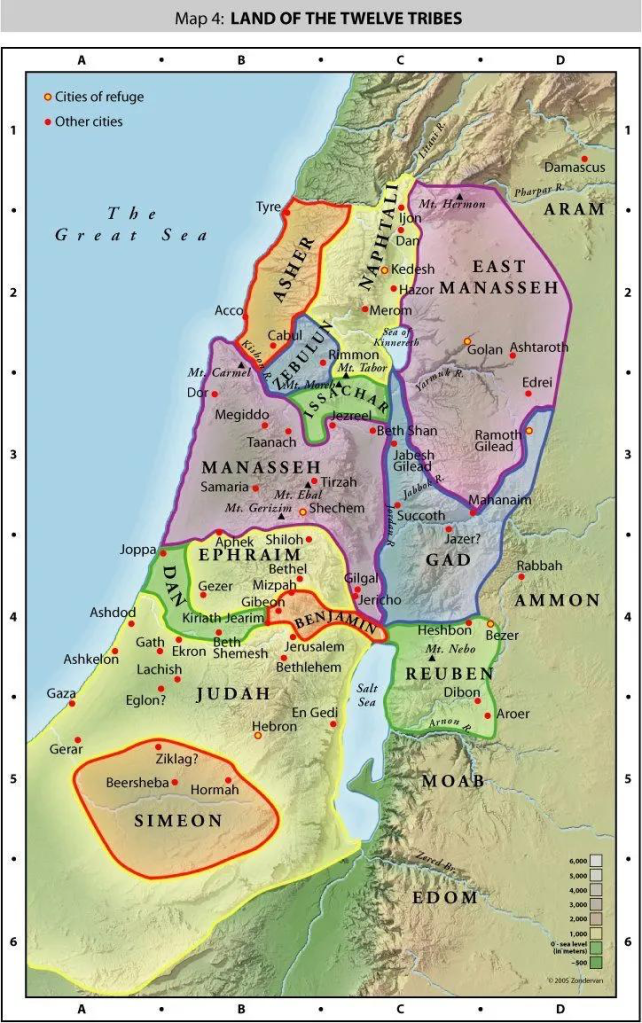
The original allotment of land for the twelve sons of Jacob. Note the geographic proximity between the tribes of Benjamin and Gad – then as well as today.

Famous and well known people from the tribe of Benjamin in the scriptures include, a. Ehud, second Judge of Israel; b. Saul, first king of Israel ; c. Mordecai; d. Esther; and e. the ‘Apostle’ Paul (Article: The Pauline Paradox). 

Benjamin’s name in Hebrew means: Son of the Right Hand. ‘From (1) the noun (ben), son, and (2) the noun (yamin), right hand.’ This was not Benjamin’s original name. 

Genesis 35:16-19

English Standard Version 

‘Then they journeyed from Bethel. When they were still some distance from Ephrath, Rachel went into labor, and she had hard labor. And when her labor was at its hardest, the midwife said to her, “Do not fear, for you have another son.” And as her soul was departing (for she was dying), she called his name Ben-oni; but his father called him Benjamin. So Rachel died, and she was buried on the way to Ephrath (that is, Bethlehem)…’ 

Book of Jubilees 32:33-34 

‘And Rachel bare a son in the night, and called his name ‘Son of my sorrow’; for she suffered in giving him birth: but his father called his name Benjamin, on the eleventh of the eighth month [October/November, circa 1699 BCE]… And Rachel died there and she was buried in the land of Ephrath, the same is Bethlehem, and Jacob built a pillar on the grave of Rachel, on the road above her grave.’ 

There are three men named Benjamin in the Bible, with Jacob’s son being the most famous. The other two men named are, 1. a descendant of the original Benjamin, namely a son of Bilhan, son of Jediael – 1 Chronicles 7:10; and 2. a son of Harim, ‘who had married and probably divorced a foreign woman during the purge of Ezra – Ezra 10:32.’ 

A number of chief families are listed amongst the exiles returning from Babylon, from the tribes of Judah, Benjamin and Levi. Included are families listed as Israel. Whether this means a remnant from all the tribes, or just not from Judah and Levi, meaning from Benjamin is not clear. If it was Benjamin, then Harim in verse 32 – not the same as Harim of the priesthood in verse 21 – may have been from the tribe of Benjamin and hence his son called Benjamin too. The same as the other two Benjamins recorded in the Bible. Of these families, four had seven or more sons. Including Harim, who had eight sons, with Benjamin being number six and Malluch, the seventh son. 

Ezra 10:25-35

English Standard Version 

‘And… of the sons of Parosh: Ramiah, Izziah, Malchijah, Mijamin, Eleazar, Hashabiah, and Benaiah [built up of the Lord]… 

Of the sons of Pahath-moab: Adna, Chelal, Benaiah, Maaseiah, Mattaniah, Bezalel, Binnui [built], and Manasseh. 

Of the sons of Harim: Eliezer, Isshijah, Malchijah, Shemaiah, Shimeon, Benjamin, Malluch, and Shemariah. 

Of the sons of Hashum: Mattenai, Mattattah, Zabad, Eliphelet, Jeremai, Manasseh, and Shimei* [renown, famous].’

The thread of commonality between the meanings of the names of these seventh sons is interesting as is the meaning of Malluch in particular, which means reigning and stems from the verb malak, ‘to be or become king.’ 

The sons and early descendants of Benjamin are listed in three places. 

Genesis 46:21

English Standard Version 

‘And the sons of Benjamin: Bela [1], Becher [family name of Ephraim], Ashbel, Gera, Naaman, Ehi, Rosh [7], Muppim, Huppim, and Ard [10].’ 

Numbers 26:38-41

English Standard Version 

‘The sons of Benjamin according to their clans: of Bela, the clan of the Belaites; of Ashbel, the clan of the Ashbelites; of Ahiram, the clan of the Ahiramites; of Shephupham, the clan of the Shuphamites; of Hupham, the clan of the Huphamites And the sons of Bela were Ard and Naaman: of Ard, the clan of the Ardites; of Naaman, the clan of the Naamites. These are the sons of Benjamin according to their clans, and those listed were 45,600.’ 

1 Chronicles 7:6-12 

English Standard Version 

‘The sons of Benjamin: Bela, Becher, and Jediael, three.

The sons of Bela: Ezbon, Uzzi, Uzziel, Jerimoth, and Iri, five, heads of fathers’ houses, mighty warriors. And their enrollment by genealogies was 22,034. 

The sons of Becher: Zemirah, Joash, Eliezer, Elioenai, Omri, Jeremoth, Abijah [7], Anathoth, and Alemeth.

All these were the sons of Becher. And their enrollment by genealogies, according to their generations, as heads of their fathers’ houses, mighty warriors, was 20,200. 

The son of Jediael: Bilhan. And the sons of Bilhan: Jeush [family name of Esau], Benjamin, Ehud, Chenaanah, Zethan, Tarshish [family name of Javan], and Ahishahar [7].

All these were the sons of Jediael according to the heads of their fathers’ houses, mighty warriors, 17,200, able to go to war. And Shuppim and Huppim were the sons of Ir, Hushim the son of Aher.’ 

Abijah means: ‘Yah Is (My) Father’ and Ahishahar, ominously means: brother of darkness or dark brother

In 1 Chronicles chapter eight, the genealogy of Israel’s first king is recorded.

1 Chronicles 8:1-34

English Standard Version

‘Benjamin fathered Bela his firstborn, Ashbel the second, Aharah the third, Nohah the fourth, and Rapha the fifth. And Bela had sons: Addar, Gera [?], Abihud, Abishua, Naaman, Ahoah, Gera [7], Shephuphan [7a?], and Huram.

And Shaharaim fathered sons in the country of Moab after he had sent away Hushim and Baara his wives. He fathered sons by Hodesh his wife: Jobab, Zibia, Mesha, Malcam, Jeuz, Sachia, and Mirmah [7]. 

These were his sons, heads of fathers’ houses. He also fathered sons by Hushim: Abitub and Elpaal. The sons of Elpaal: Eber, Misham, and Shemed… and Beriah and Shema… and Ahio, Shashak [7], and Jeremoth. Zebadiah, Meshullam, Hizki, Heber, Ishmerai, Izliah, and Jobab [7] were the sons of Elpaal. 

Jakim, Zichri, Zabdi, Elienai, Zillethai, Eliel, Adaiah [7], Beraiah, and Shimrath were the sons of Shimei.*’

Ishpan, Eber, Eliel, Abdon, Zichri, Hanan, Hananiah [7], Elam, Anthothijah, Iphdeiah, and Penuel were the sons of Shashak. These were the heads of fathers’ houses, according to their generations, chief men. These lived in Jerusalem. 

Jeiel the father of Gibeon lived in Gibeon, and the name of his wife was Maacah. His firstborn son: Abdon, then Zur, Kish, Baal, Nadab, Gedor, Ahio [7], Zecher, and Mikloth (he fathered Shimeah). Now these also lived opposite their kinsmen in Jerusalem, with their kinsmen. 

Ner was the father of Kish, Kish of Saul, Saul of Jonathan, Malchi-shua, Abinadab and Eshbaal; and the son of Jonathan was Merib-baal; and Merib-baal was the father of Micah.’ 

Gera or Gerar means: ‘dragging’ or ‘sojourning.’ The first Gera may have died and hence the second Gera may have been the sixth son. Placing Shephuphan as the seventh son instead. His name menacingly means: burrowing snake or serpent; Mirmah means: deceit or treachery; Jobab means: ‘to call’ or ‘cry shrilly’; and Ahio means: ‘brotherly’ or ‘brother of Yah’. Adaiah’s name has unique meanings: ‘Ornament of the Lord’, ‘Yahweh has adorned’ and ‘Yah has decked himself.’ 

In the main, the definitions are positive, though some stand out as dark and may indicate seventh sons who were evil. All in all, there are a number of families with seven sons, as larger families were the norm. 

The first confirmed seventh son of a seventh son, is Hananiah. Which means: ‘Yah has been gracious’, who was the seventh son of Shashak. His name meaning: babel or six (666); the son of Elpaal- meaning: ‘God has wrought.’ 

Genesis lists ten sons; Numbers lists five sons; I Chronicles seven lists three sons and chapter eight which includes Saul’s genealogy, unhelpfully lists five sons. Even if one assumes the change from five to three was due to the Israelite civil war against Benjamin – it doesn’t explain the drop from ten to five in the first place – and if the six hundred men remaining were from Bela, Becher and Jediel, apart from Bela the one consistent son, the firstborn in all four references, Becher is missing from the second and fourth references and Jediel is only mentioned once, unless he is Ashbel. Even Muppim seems to have turned into Shuppim. 

Added to this are the two lists of sons of seven from Elpaal. Either he had two wives, or there were two Elpaals in the family tree of Saul. The answer overall may lay with Benjamin having more than one wife. A connection between seventh son Rosh and the clan name Ros-s is possible, as is Ard-encaple with Benjamin’s tenth son, Ard. Rosh means ‘head, chief’ or ‘top’ – refer Chapter X China: Magog, Tubal & Meshech. Interestingly, the name Ross, means: ‘up-land peninsula’, ‘promontory head-land’, ‘cape’, ‘elder’ and may also be derived from the Gaelic word for ‘red.’ 

Before we study Gad, we learn the following about his half brother, Simeon’s descendants – the Welsh. 1 Chronicles 4:24-25, ESV: ‘The sons of Simeon: Nemuel, Jamin, Jarib, Zerah, Shaul; Shallum was his son, Mibsam his son, Mishma his son. The sons of Mishma: Hammuel his son, Zaccur his son, Shimei his son.’ 

Another son named Shimei as in the tribe of Benjamin. The name was a popular family name, for there was also a Shimei in Reuben’s family tree, in Levi’s and also a descendant of David of Judah  – 1 Chronicles 5:4; 6:17. Shimei of Judah was the brother of Zerubbabel – 1 Chronicles 3:19. The Shimei from Simeon ‘… had sixteen sons and six daughters; but his brothers did not have many children, nor did all their clan multiply like the men of Judah’ – verse 27. It is possible that this Shimei from Simeon with sixteen sons, may have had an unbroken consecutive line of seven sons. 

Continuing, Chronicle’s lists: ‘Elioenai, Jaakobah, Jeshohaiah, Asaiah, Adiel, Jesimiel, Benaiah [7], Ziza the son of Shiphi, son of Allon, son of Jedaiah, son of Shimri, son of Shemaiah – these mentioned by name were princes in their clans, and their fathers’ houses increased greatly – verses 36-38.

Seventh son Benaiah has the same name as the Benjamite seventh son of the returning exile from Babylon to Judea, Parosh. Included in King David’s descendants – tellingly as we shall discover – through his son Solomon’s line, was a man called Elioenai; meaning, ‘towards the Lord are my eyes’, who had seven sons. His seventh son was named Anani, meaning: ‘my obscurity, my cloud’ and ‘cloud of the Lord’ – 1 Chronicles 3:24.

Apart from Benjamin and possibly Simeon, evidence of seventh sons of seventh sons is scant amongst the sons of Jacob in the scriptures. Which leaves the tribe of Gad, where one does not need to hunt for an example, as it is leaps out from the pages of the Bible.

It is worth noting that Jacob’s uncle, Ishmael had twelve sons. His seventh son was called Massa, meaning ‘to lift up’ or an ‘oracle’ – Genesis 25:13-16. Refer Chapter XXVIII The True Identity & Origin of Germans & Austrians – Ishmael & Hagar.

Another relation, the elder brother of Abraham, Nahor also had twelve sons. He had eight sons with his wife Milcah who was Abraham’s niece – Genesis 11:29. The seventh son was called Jidlaph, meaning ‘he drips’ and ‘he weeps‘ – Genesis 22:20-24. Refer Chapter XXV Italy: Nahor & the Chaldeans.

A further example is the patriarch Job, a distant relative of Jacob and a contemporary of Moses. Job had seven sons and three daughters – Job 1:2. We are not told the names of his sons, or what order his ten children were born – Article: Job.

Outside of Jacob’s family, there are only two other examples of seventh sons in the Table of Nations in Genesis chapter ten. The first are the seven sons of Japheth, where the seventh is Tiras; his name meaning ‘desire, moisten’ – Genesis 10:2. Refer Chapter III Tiras the Amerindian.

The second is a descendant of Shem called Joktan, who had thirteen sons – Genesis 10:26-29. The seventh was called Diklah, meaning ‘palm tree’ – refer Chapter XXIV Arphaxad & Joktan: Balts, Slavs & the Balkans.

Abarim Publications: 

There are two or three Gads mentioned in the Bible:

  • The famous Gad [born in 1744 BCE] is the seventh son of Jacob and the first son of Zilpah, Leah’s maid (Genesis 30:11).
  • The lesser known human Gad is a prophet in the time of David (1 Samuel 22:5).
  • In Isaiah 65:11 the prophet seems to refer to an idol named Gad (also see the name Baal-gad) apparently in conjunction with the god Meni.

Gad’s name derives from the verb gadad, ‘to cut, invade’ and ‘expose.’ 

Abarim: ‘The name Gad indicates a fortune for which a troublesome, invasive effort is made. There are plenty of words to indicate treasure or felicity, but Leah who named the son of her maid, chose this painful word גד, Gad. Perhaps the reason for this is that she gave Zilpah to Jacob only because she could not conceive anymore. In those days, that was pretty awful, even though she had already given her husband four sons. The name Gad tells of a wife’s deep anguish, shame and loneliness. 

For the meaning of Gad, the NOBSE Study Bible Name List reads Good Fortune. Jones’ Dictionary of Old Testament Proper Names has the same, but adds Good Luck. A more accurate translation would be Harrowing Fortune.’ Everyone has heard of “the luck of the Irish.” 

Genesis 46:16

English Standard version

‘The sons of Gad: Ziphion [hidden], Haggi [festive], Shuni [silence], Ezbon [understand], Eri [focused], Arodi [fugitive], and Areli [7].’ 

Gad himself a seventh son, had seven sons. His seventh son was named Areli. His name stands out from his brothers, who all have relatively straight forward meanings. Whereas Areli means: ‘gathered by God, Lion of my God, valiant’ and ‘heroic.’ 

Perhaps Areli was a significant presence as a seventh son of a seventh son.

Areli: the seventh son of Gad

Gad’s fifth son Eri, has an etymological link with the names Eri-n and Ire-land, as well as the islands of Aran. Erin is the 41st most common girls name in Ireland out of 101 names – as of February 2024.

The Book of Numbers includes the main clans of Gad at the time of the census after the trek through the wilderness – Appendix VII: Moses, the Exodus & the Dead Sea Crossing – Fabrication or Fact?

Numbers 26:15-18 

English Standard Version

‘The sons of Gad according to their clans: of Zephon, the clan of the Zephonites; of Haggi, the clan of the Haggites; of Shuni, the clan of the Shunites; of Ozni, the clan of the Oznites; of Eri, the clan of the Erites; of Arod, the clan of the Arodites; of Areli, the clan of the Arelites. These are the clans of the sons of Gad as they were listed, 40,500.’ 

We learn that Areli had children and perhaps a seventh son of his own? In 1 Chronicles, further information regarding Gad’s descendants is provided. 

1 Chronicles 5:11-13

English Standard Version 

‘The sons of Gad lived over… in the land of Bashan as far as Salecah: Joel the chief, Shapham the second, Janai, and Shaphat in Bashan. And their kinsmen according to their fathers’ houses: 

Michael, Meshullam, Sheba, Jorai, Jacan, Zia and Eber [7], seven. 

These were the sons of Abihail the son of Huri, son of Jaroah, son of Gilead, son of Michael, son of Jeshishai, son of Jahdo, son of Buz.’ Michael is the 15th most common boys name in Ireland out of 102 names – as of February 2024.

‘Ahi the son of Abdiel, son of Guni, was chief in their fathers’ houses, and they lived in Gilead, in Bashan and in its towns, and in all the pasturelands of Sharon to their limits. All of these were recorded in genealogies in the days of Jotham king of Judah [who reigned from 749 to 733 BCE], and in the days of Jeroboam [II, who reigned from 793 to 753 BCE] king of Israel.’

The final seventh son of a seventh son is identified as Eber, the son of Abihail. Eber means: ‘the region beyond, one from beyond, from the other side’ and ‘he who passed over.’ While these definitions are understood to be from a physical perspective for the original Eber – Genesis 10:24 – for this Eber, there may have been a spiritual application as a seventh son of a seventh son. 

Eber was a common family name and for example, recall the same name of the son of Elpaal of Benjamin, as well as the son of Shashak. From the Hebrew word Eber, has derived the following names: Hebrew, Iberia and Hibernia. 

The mystique of Ireland and their ancient Patriarchal ancestor Gad is reflected in the non-canonical work, The Book of Gad the Seer, mentioned in the Bible – 1 Chronicles 29:29. As is the preoccupation with seven sons in the 1954 motion picture, Seven Brides for Seven Brothers. Aside note of interest for the constant reader: all seven brothers had red hair – Chapter I Noah Antecessor Nulla and Chapter XXIX Esau: The Thirteenth Tribe.
There is one final example of perhaps the most famous seventh son of a seventh son of all and he also is to be found in the scriptures. 

We begin with the young man in the Bible called David. Readers interested in added detail about David and his life are encouraged to read Chapter XXX Judah & Benjamin – the Regal Tribes. Picking up with David in the year 1022 BCE when he was seventeen years of age. The Eternal has directed the prophet and priest Samuel, to anoint a new king, for King Saul had fallen out of favour. Samuel arranges a meeting with a man from the tribe of Judah called Jesse and his sons. 
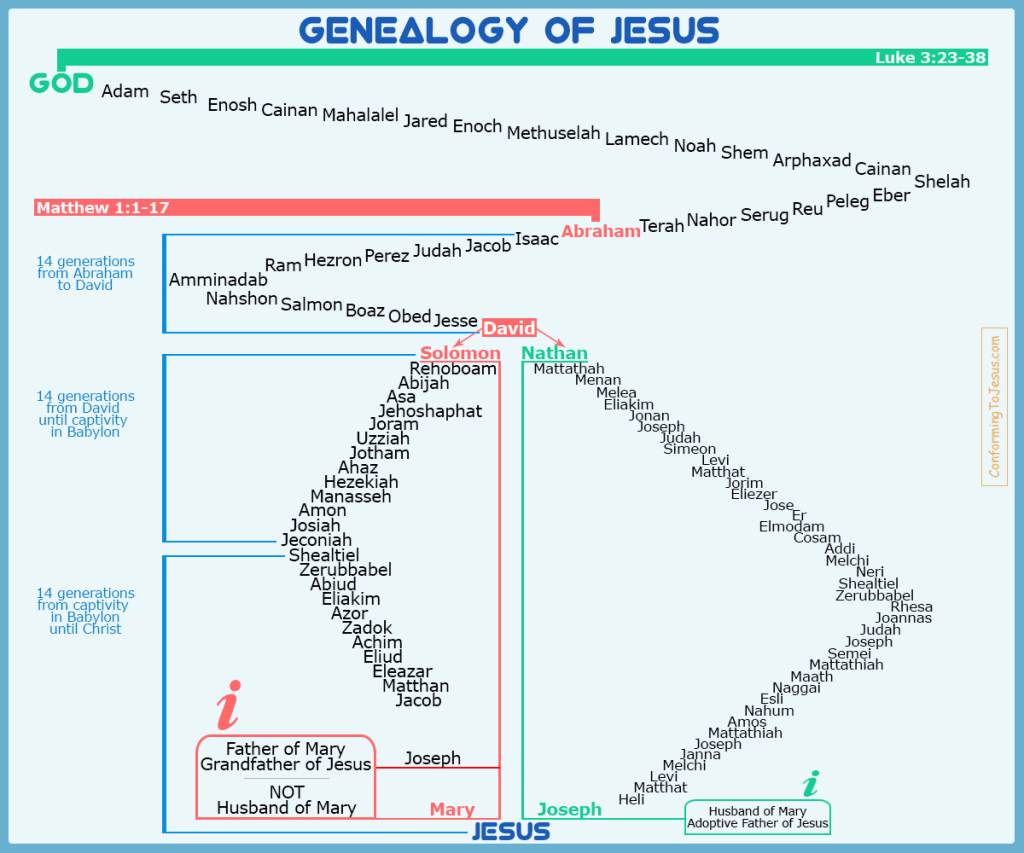
1 Samuel 16:6-13

English Standard Version 

‘When they came, he looked on Eliab [1] and thought, “Surely the Lord’s anointed is before him.” But the Lord said to Samuel, “Do not look on his appearance or on the height of his stature, because I have rejected him. For the Lord sees not as man sees: man looks on the outward appearance, but the Lord looks on the heart” [Jeremiah 17:9, Isaiah 66:2] Then Jesse called Abinadab [2] and made him pass before Samuel. And he said, “Neither has the Lord chosen this one.” Then Jesse made Shammah [3] pass by. And he said, “Neither has the Lord chosen this one.” And Jesse made seven of his sons pass before Samuel. And Samuel said to Jesse, “The Lord has not chosen these.”

Then Samuel said to Jesse, “Are all your sons here?” And he said, “There remains yet the youngest, but behold, he is keeping the sheep.” And Samuel said to Jesse, “Send and get him, for we will not sit down till he comes here.” And he sent and brought him in. Now he was ruddy and had beautiful eyes and was handsome. And the Lord said, “Arise, anoint him, for this is he.” Then Samuel took the horn of oil and anointed him in the midst of his brothers. And the Spirit of the Lord rushed upon David from that day forward…’

Samuel understandably, was struck by the impressive height and looks – with regard to stature and muscles – of David’s brothers. All seven passed by Samuel, though the Eternal did not choose any of them. David had not been deemed worthy enough by his father Jesse, to bring to such an important and historic event perhaps. Thus everyone had to wait until David was found herding the families sheep, freshened up and brought before Samuel. David was different and not especially close with his family – Psalm 38:11. Or it merely may have been that Jesse, who was very old at the time, felt a seventeen year old could not surely be in the running to be the next king. 

This passage alludes to David being the eighth son of Jesse. And while David was a very handsome man, with a fair complexion and red hair, he was not as tall or imposing as his impressive brothers. Between this event and David’s confrontation with the Philistine giant Goliath, David worked for King Saul part time playing music, while still herding sheep for his father. David’s three eldest brothers mentioned in the previous passage were all in Saul’s army. 

1 Samuel 17:12-18 

English Standard Version 

‘Now David was the son of an Ephrathite of Bethlehem in Judah, named Jesse, who had eight sons. In the days of Saul the man was already old and advanced in years. The three oldest sons of Jesse had followed Saul to the battle. And the names of his three sons who went to the battle were Eliab the firstborn, and next to him Abinadab, and the third Shammah [3]. David was the youngest. The three eldest followed Saul, but David went back and forth from Saul to feed his father’s sheep at Bethlehem.

For forty days the Philistine [giant called Goliath] came forward and took his stand, morning and evening. And Jesse said to David his son, “Take for your brothers an ephah of this parched grain, and these ten loaves, and carry them quickly to the camp to your brothers. Also take these ten cheeses to the commander of their thousand. See if your brothers are well, and bring some token from them.”

Again, the account records that Jesse had eight sons, with David being the eighth and youngest son. Yet in the later Book of Chronicles there is a perplexing omission in the genealogy of David. 

1 Chronicles 2:3-16

English Standard Version 

‘The sons of Judah: Er, Onan and Shelah; these three Bath-shua the Canaanite bore to him… His daughter-in-law Tamar also bore him Perez and Zerah. Judah had five sons in all. The sons of Perez: Hezron and Hamul. The sons of Zerah: Zimri, Ethan, Heman, Calcol, and Dara, five in all… 

The sons of Hezron that were born to him: Jerahmeel, Ram, and Chelubai. Ram fathered Amminadab, and Amminadab fathered Nahshon, prince of the sons of Judah. Nahshon fathered Salmon, Salmon fathered Boaz, Boaz fathered Obed, Obed fathered Jesse. 

Jesse fathered Eliab his firstborn, Abinadab the second, Shimea the third, Nethanel the fourth, Raddai the fifth, Ozem the sixth, David the seventh. 

And their sisters were Zeruiah and Abigail…’ 

Here we learn that David is now the seventh son. The account clearly lists seven brothers with Eliab the firstborn and David now the seventh born son and importantly seventh born sibling, implying his sisters were younger. As this is obviously not a slip of the scribal pen, it means an older brother of David has been omitted. The question then, is why? 

We read twice that the third child of Jesse was a male named Shammah, meaning at its worst: ‘waste, appalling desolation’ and at its best, ‘astonishment.’ This name has terrible significance and as Abarim note, Shammah ‘is an example of a name that probably didn’t have the function of reflecting qualities of the bearer but rather to commemorate a certain event that had nothing to do with the bearer, and at best coincided with his birth.’ I would add, maybe it had something to do with his death. Perhaps Shammah suffered a brutal demise while a soldier in Saul’s army. 

Some equate Shimea and Shammah as the same person. Though their names have entirely different meanings, ruling this theory out. Shimea means: ‘He (God) has heard, hearing’ and ‘rumour.’ Either way, David began as the eighth son and sibling out of ten, to then legitimately become the seventh son and seventh sibling out of a resulting nine in total. There is reason to believe that the name David was in fact a title, meaning: a ‘beloved chieftain.’ Whereas David’s true name, was Elhanan, meaning ‘God has been gracious.’ It was a man called Elhanan, who had defeated Goliath. 

David had a colourful love life and an eye for the ladies. He was charismatic, good looking and popular. In the Book of Chronicles, many of David’s numerous children from a number of wives are enumerated. 

1 Chronicles 3:1-9

English Standard Version 

‘These are the sons of David who were born to him in Hebron: the firstborn, Amnon, by Ahinoam the Jezreelite [in the territory of Issachar]; the second, Daniel [Kileab], by Abigail the Carmelite, the third, Absalom, whose mother was Maacah, the daughter of Talmai, king of Geshur [an Aramaean kingdom]; the fourth, Adonijah, whose mother was Haggith; the fifth, Shephatiah, by Abital; the sixth, Ithream, by his wife Eglah; six were born to him in Hebron, where he reigned for seven years and six months.’ 

This period was between Saul’s death when David ruled from the city of Hebron and winning a war against Saul’s son Ish-Bosheth; which made David Israel’s undisputed king.

‘And he reigned thirty-three years in Jerusalem. These were born to him in Jerusalem: 

Shimea, Shobab, Nathan and Solomon, four by Bath-shua, the daughter of Ammiel; 

then Ibhar, Elishama, Eliphelet, Nogah, Nepheg, Japhia, Elishama, Eliada, and Eliphelet, nine. 

All these were David’s sons, besides the sons of the concubines, and Tamar was their sister.’ 

King David had six sons from six wives when living and ruling in Hebron. There, it abruptly and tantalisingly stops on a cliffhanger. Where we wonder who is number seven? David then proceeds to have at least thirteen more sons and a daughter, with at least eight wives. David possibly ‘inherited’ more wives of Saul – as was the custom – where the sons are listed without mothers named. This does not include the additional sons from concubines who are not listed in the kingly succession. 

A son of David named Jerimoth is mentioned in 2 Chronicles 11:18; though it’s not clear whether he is one of the sons mentioned above, using another name, or if he was one of David’s sons by a concubine. Regarding three of David’s first six sons, Antonakis Maritis lists the key points: 

Amnon: David’s firstborn by his wife Ahinoam was a man of low character and driven by lust. He became obsessed with his half-sister Tamar (daughter of Maakah) and lured her to his room on false pretenses so he could rape her. He was later murdered in revenge by Tamar’s full brother, Absalom (2 Samuel 13). 

Absalom: Third in line, Absalom is one of David’s most notorious sons. A son of David’s wife Maakah, Absalom was hot-tempered and power-hungry. He planned out the murder of his half-brother Amnon to avenge the rape of his sister, and then he plotted to steal his father’s throne. He drew a following in Jerusalem, and David was forced to flee the city. To help complete his coup, Absalom had sex with David’s concubines in view of everyone. He died in battle when Joab, commander of David’s army, killed him. (2 Samuel 13-19 [1 Chronicles 3:1-2]).

Adonijah: David’s fourth son, by his wife Haggith, was handsome and undisciplined (1 Kings 1:6). He is known for a failed attempt to become king of Israel after his father died (1 Kings 1:9). Adonijah was eventually executed by his half-brother Solomon, the rightful king, for continued insurrection and attempts to steal the throne (1 Kings 2:23-25). 

Amnon and Absalom died while David was alive and Adonijah after his death. David had one other son die while he was alive and that was his first son with Bathsheba. The one preceding the birth of Solomon. This son died seven days after his birth – 2 Samuel 12:14-23. It appears that he is not included with the four sons of Bathsheba and David. It is noteworthy that this son died after seven days and was not to be a seventh son of a seventh son. 

Maritis: ‘Shimea: (Shammua). A son of Bathsheba… was born in Jerusalem, but nothing else is known about him.’ Note the name Shimea was the name of one of David’s elder brothers. 

Shobab: Another son of Bathsheba; nothing else is known about him. 

Nathan: … nothing else is known of him. Nathan was named after the prophet Nathan, who had a long-term association with David. 

Solomon: David’s most famous son was also by Bathsheba. God chose Solomon to become the next king of Israel’ as well as to build the Temple. ‘God offered to grant Solomon anything he asked, Solomon asked for wisdom to rule the people well. God was so pleased with Solomon’s request that He granted the wisdom and also gave him unmatched wealth… Solomon was the author of most of the Proverbs, the Song of Solomon, and the book of Ecclesiastes.’ Also attributed to Solomon is the deuterocanonical book – which means this work is part of Catholic and Eastern Orthodox canon but tends to be viewed as apocryphal by Protestants – the Wisdom of Solomon, also known as the Book of Wisdom and the Odes of Solomon, Psalms of Solomon and the Testament of Solomon all part of the pseudepigrapha. 

What is unusual is that Bathsheba’s sons are not listed in chronological order. Why? We do not know. Is it to hide the true identity of David’s seventh son? The answer is found in the Book of Samuel. When David and Bathsheba lost their son after seven days, they had another child.

2 Samuel 12:24-25

English Standard Version 

‘Then David comforted his wife, Bathsheba, and went in to her and lay with her, and she bore a son, and he called his name Solomon. And the Lord loved* him and sent a message by Nathan the prophet. So he called his name Jedidiah, because of the Lord.’ 

David named his son Solomon, meaning: ‘recompense, completeness, peace’ and ‘peaceable.’ While the prophet Nathan, was moved by the Eternal to give him a birth name of Jedidiah, meaning: ‘beloved of the Lord’ and ‘friend of God.’ This name was fitting as the Lord loved Solomon. Solomon, like his father had two names and was also favoured by the Eternal.

The same way it was orchestrated that David the eighth son of Jesse became the seventh son; Solomon, the would be eighth son of David, became instead his seventh son. Thus Solomon was a seventh son of a seventh son. He is undoubtedly, the most famous seventh son of a seventh son in the biblical record and perhaps in history. 

If we count the son who died as a baby after having been conceived through David’s adulterous relationship with Bathsheba, David had at least twenty sons by his wives, plus an unknown number from his concubines and this is not even including daughters. Thus it is well conceivable that David had thirty or more children. 

As an aside, there are two genealogies in the Gospels for Christ. One includes David’s son Nathan – Luke 3:23-38 –  which is considered the lineage of Christ’s mother, Mary. The other includes David’s son Solomon – Matthew 1:1-16 – which is considered the lineage of Christ’s adoptive father, Joseph. The truth is that the reverse is true as it is Matthew who has recorded Christ’s biological bloodline from King Solomon. Though it says Joseph was the husband of Mary, this Joseph was actually the father of Mary; as attested by early Hebrew manuscripts of the New Testament, before they were re-written in Greek. Evidence that Christ was descended from the biological line of Solomon and not Nathan is found in the Book of Samuel. 

2 Samuel 7:12-17

English Standard Version 

‘When your [that is, David’s] days are fulfilled and you lie down with your fathers, I will raise up your offspring after you, who shall come from your body, and I will establish his [Solomon’s] kingdom. He shall build a house for my name [Solomon built the Temple, not Nathan], and I will establish the throne of his kingdom forever [refer articles: The Ark of God; and The Life & Death of Charles III]. I will be to him a father, and he shall be to me a son. When he commits iniquity, I will discipline him with the rod of men, with the stripes of the sons of men, but my steadfast love* will not depart from him, as I took it from Saul, whom I put away from before you. And your house and your kingdom shall be made sure forever before me. Your throne shall be established forever” – Chapter XXX Judah & Benjamin – the Regal Tribes

The chart above by Conforming to Jesus, correctly aligns the family tree of David and his descendant Jesus Christ

Verse seventeen states: ‘So all the generations from Abraham to David were fourteen generations, and from David to the deportation to Babylon fourteen generations, and from the deportation to Babylon to the Christ fourteen generations.’ This is interesting in light of the significance of the number seven, as this is two times seven, three times. 

While both the Eternal and David favoured his seventh son, Bathsheba with the prophet Nathan, was instrumental in ensuring Solomon was anointed and coronated the next king. David assisted in the process by creating history’s first recorded ‘hit list’ which he gave to Solomon as one of his final acts as King of Israel. One Bible scholar calling it “a last will and testament worthy of a dying Mafia capo.” Solomon wasted no time in having Adonijah and Joab executed, while banishing Abiathar the priest from his office – 1 Kings 2:26-35. In both cases, the executioner was Benaiah, the captain of David’s bodyguard. King David died soon after Solomon’s coronation in 970 BCE who was thirty years of age, after saying: “I have appointed [Solomon] to be ruler over Israel and Judah” – 1 Kings 1:35. 

As a seventh son of a seventh son, did Solomon possess a gift of healing? Did Solomon have second sight? Was he a seer of visions? The Bible does not reveal an answer. Though it would appear that Solomon did have a proclivity towards the occult and the supernatural, as we will learn. Solomon began his reign well enough, being a recipient of the Eternal’s love and pleasing Him by asking for wisdom in selflessly ruling the Kingdom of Israel, instead of seeking riches for himself. Even so, he was offering sacrifices to idols. 

1 Kings 3:3-15

English Standard Version 

‘Solomon loved the Lord, walking in the statutes of David his father, only he sacrificed and made offerings at the high places. And the king went to Gibeon to sacrifice there, for that was the great high place. Solomon used to offer a thousand burnt offerings on that altar. 

At Gibeon the Lord appeared to Solomon in a dream by night, and God said, “Ask what I shall give you”… Give your servant therefore an understanding mind to govern your people, that I may discern between good and evil, for who is able to govern this your great people?” 

It pleased the Lord that Solomon had asked this. And God said to him, “Because you have asked this, and have not asked for yourself long life or riches or the life of your enemies, but have asked for yourself understanding to discern what is right, behold, I now do according to your word. Behold, I give you a wise and discerning mind, so that none like you has been before you and none like you shall arise after you. 

I give you also what you have not asked, both riches and honor, so that no other king shall compare with you, all your days. And if you will walk in my ways, keeping my statutes and my commandments, as your father David walked, then I will lengthen^ your days”.’ So the Eternal would give Solomon what he did not ask for: riches and honour. Yet Solomon did not live to see seventy, dying^ in 930 BCE – for he didn’t walk in the way of his father David. 

The downfall of Solomon began with a. sacrificing to idols; then b. marrying hundreds of foreign wives; c. following after their gods; which led to d. worshipping demons; and e. sacrificing his own children – refer article: Na’amah. Solomon desired to discern between good and evil, yet this was what the Serpent Samael offered Eve from the Tree of Knowledge of Good and Evil – Chapter XXII Alpha & Omega. It didn’t end well. Solomon lacked the wisdom to consider asking for God’s Holy Spirit as represented by the Tree of Life, was the most important request one could ever make – 2 Kings 2:9. It was what separated and distanced him from his father, David – 2 Samuel 23:2, Mark 12:36. 
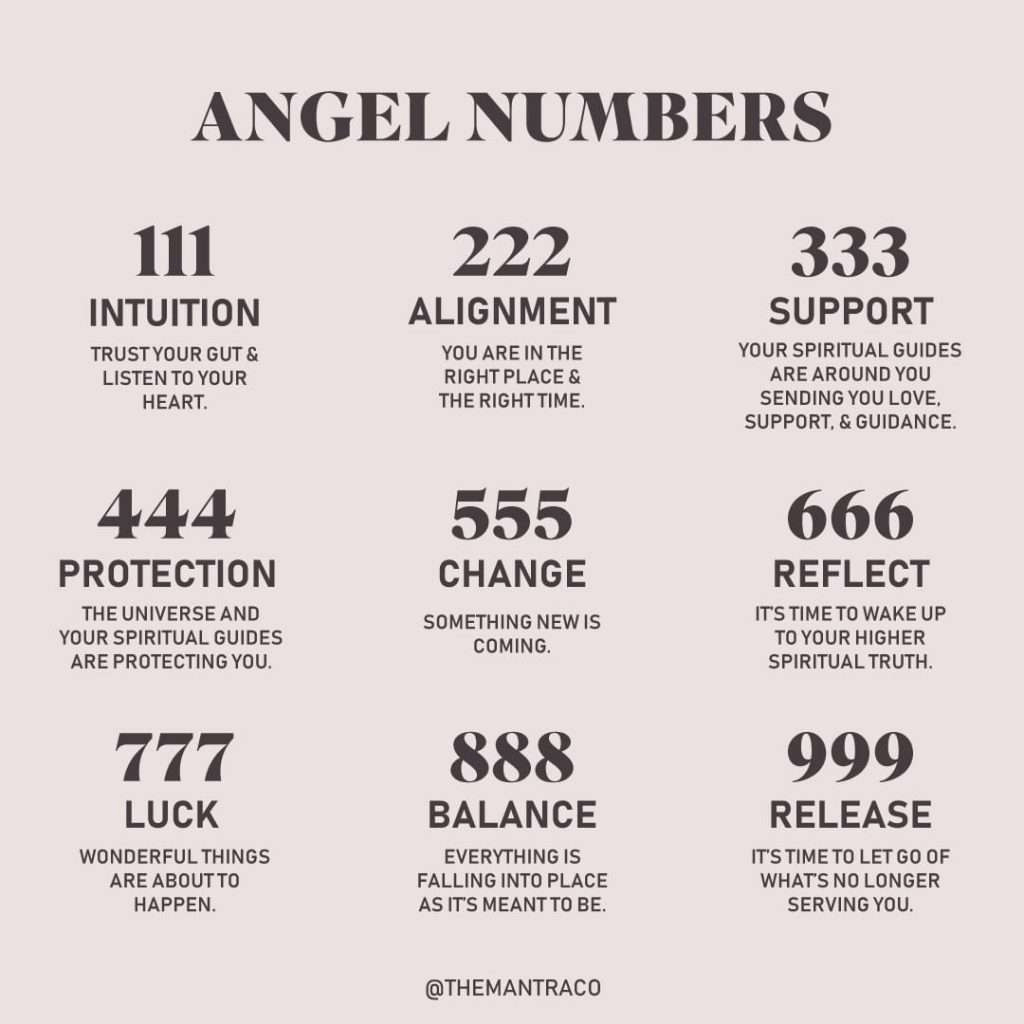
Recall the angel numbers discussed earlier, contained within the scriptures: 666 and 777.

During the post-exilic period, both Ezra and Nehemiah recorded the families who returned to Jerusalem from Babylon. The total number of each family are listed and in Ezra 2:13, ESV it says: ‘The sons of Adonikam, 666.’ Nehemiah on the other hand states 667 instead (Nehemiah 7:18), for this family who were part of the second wave of returnees.

Abarim Publications: ‘Ezra reports a secondary surge of Adonikamites returning with the second wave, and counts 63 males, among whom [are] Eliphelet, Jeuel and Shemaiah (Ezra 8:13).’ The name Jeuel is a family name of the tribe of Judah and his son, Zarah – 1 Chronicles 9:6.

The name Adonikam – only mentioned once in the Bible – according to Abarim means: ‘my Lord has risen’ or ‘Lord of enemies.’ From (1) the noun (adon), lord, and (2) the verb (qum), to rise up or stand.

There is a curious scripture where there is a fourth angel number listed. 

1 Kings 10:14 

English Standard Version 

‘Now the weight of gold that came to Solomon in one year was 666 talents of gold…’ 

Aside from the similarity with the number of the Beast, this is an incredible amount of gold, just in one year. A talent is seventy-five pounds, which equates to 50,000 pounds or twenty-five tons. In today’s value this is worth a staggering, USD $1,728,890,625. Of interest perhaps is that Solomon’s name in numerology – albeit in English – looks like this: 

1, [6], 3, [6], 4, [6], 5.

 A further peculiar numerical coincidence involving Solomon is the fact he was born in the auspicious angel number year of 999 BCE. One could say it is 666 inverted.

The Untold Truth of King Solomon, Benito Cerino, 2020: ‘The Jewish Encyclopedia reports legend had it Solomon… could determine a person’s guilt simply by looking at them without need for a trial… Arguably, Solomon’s greatest achievement as king was the completion of the First Temple in Jerusalem… the Bible credits Solomon with planning, funding, and executing the construction of the Temple in order to create a permanent location for the Ark of the Covenant… the literal physical presence of God’ – refer article: The Ark of God.

Online Encylopaedia: ‘Solomon’s Temple is a central symbol of Freemasonry which holds that the first three Grand Masters were King Solomon, King Hiram I of Tyre, and Hiram Abiff – the craftsman/architect who built the temple. Masonic initiation rites include the reenactment of a scene set on the Temple Mount while it was under construction.’
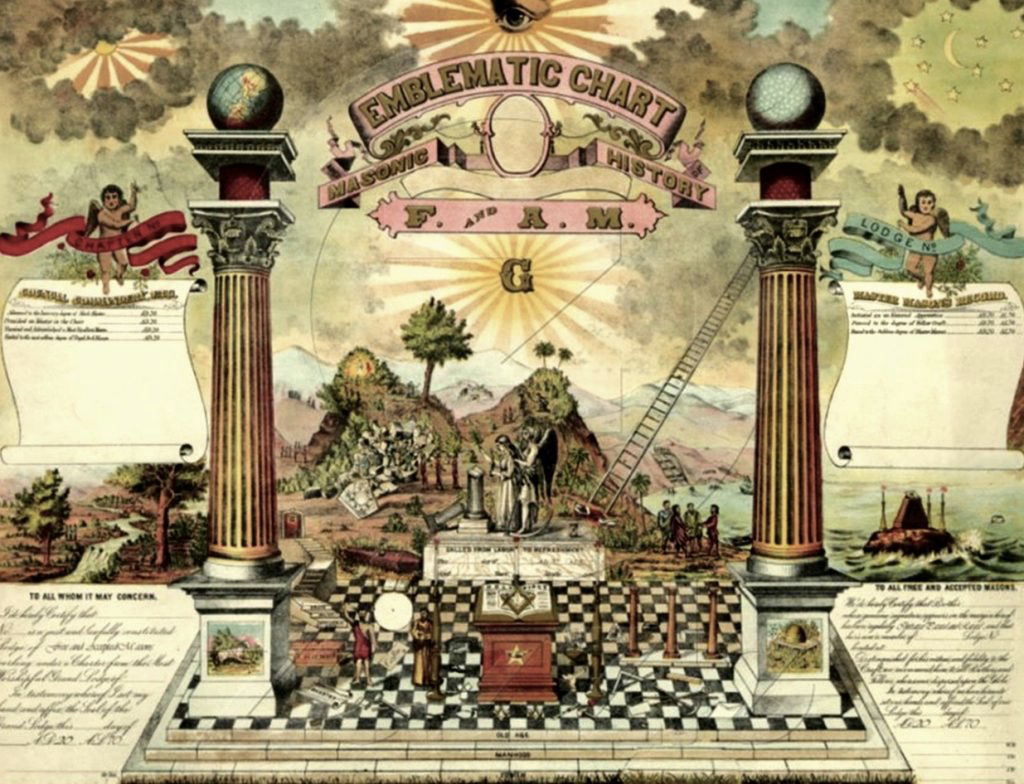
‘Every Masonic lodge, therefore, is symbolically the Temple for the duration of the degree and possesses ritual objects representing the architecture of the Temple. These may either be built into the hall or be portable. Among the most prominent are replicas of the pillars Boaz and Jachin through which every initiate has to pass’ – refer articles: 33; The Establishment: Who are they… What do they want? and Chapter XXIII Aram & Tyre: Spain, Portugal & Brazil

Occult World: Solomon knew ‘the lore of plants, animals, and everything in the natural world… [ruling] over the realm of nature… In legend, his wisdom expands to include formidable magical knowledge… [becoming] the greatest of magicians and his name is used to control both good and bad spirits… able to summon angels and command demons’ – 1 Kings 4:33. 

‘Josephus’ Antiquities credits Solomon with writing 1,500 books of odes and songs and 3,000 books of parables and similitudes and knowing how to exorcize Demons’ – 1 Kings 4:32. ‘The Sefer Raziel, a magical text, says that Solomon was heir to the famed book (also called the Book of Mysteries), which enabled him to become the source of all wisdom.’

Historical Blindness: ‘… in the Wisdom of Solomon, and also in Jewish Antiquities, [Solomon] is depicted as a master of occult knowledge, and specifically two areas of knowledge: astronomy, which would further link him to the magical art of astrology, and demonic exorcism, which would contribute to the tales of his power to bend all spirits to his will.’ 

Occult World: ‘Numerous magical handbooks, or Grimoires, attributed to the authorship of Solomon were popular in the early centuries of Christianity. By the 12th century, at least 49 texts were in existence. The most famous was the Greater Key of Solomon, quoted often in the magical books of the 17th-19th centuries’ as well as the Lemegeton Clavicula Salomonis or Lesser Key of Solomon. Recall James Murrell the Cunning man, was in possession of The Key of Solomon. Other works attributed to Solomon include the Secrets of Solomon and The Book of Solomon. 

Historical Blindness: ‘The various versions of the Keys of Solomon provide instructions for the practitioner of magic, directing them in purification rituals and how to prepare the tools they will require. They collect incantations like recipes, demonstrating how to cast spells that invoke rain, conjure gold coins, make oneself invisible, instill love, and curse enemies. And perhaps most offensive to the Church, they name and describe many demons and teach the magician how to summon them and how to compel them to do their bidding.’ 
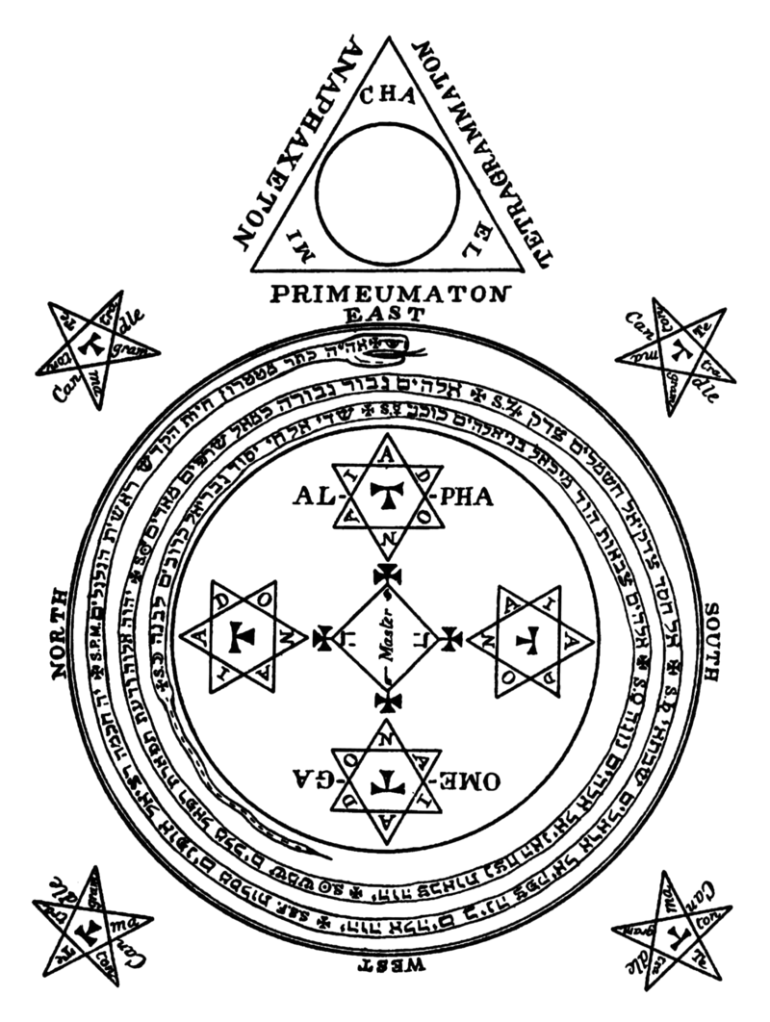
A magic circle used in the summoning of demons, according to the Lesser Key of Solomon

The question this begs is not why the [Catholic] church would ban such literature, but how the figure of Solomon, presented in the Bible as a wise and holy king favored by the Judeo-Christian God above all other men, came to be associated with black magic.

According to the lore of magic, King Solomon was not only a master magician, he was the originator of some magics. Just as Zoroaster is viewed as the first magus and inventor of astrology, and Hermes Trismegistus the first alchemist’ – refer article: Thoth – ‘King Solomon is thought of as the originator of more than one form of magic, such as Ars notoria, the magical art of supernaturally achieving knowledge, and perhaps most importantly, Ars goetia, the ritual magic used to summon and bind [72] demons and thus obtain favors from them. 

… according to the magical myth of Solomon… God granted him supernatural wisdom like a superpower, including even the ability to talk with animals and to command spirits. From angels he received four magical stones, one that gave him power over the animal kingdom, one that empowered him to move heaven and earth, one that granted him dominion over all angels, and one that enabled him to bind even demons to his service… he united these stones into a ring that made him the most powerful human of all time. He possessed also the philosopher’s stone, it was believed by others, and thus was able to create gold and riches. 

Zosimos… in one work refers to some supposedly ancient and conveniently lost book purportedly written by Solomon that is said to have detailed the many uses of quicksilver [or mercury – refer article: Thoth].

And with this great wealth and power, he built many wonders, forcing demons to complete the labor on his behalf. Not only did he build the Temple of Jerusalem in this manner, but also mythical constructions like the walled city of copper, a vast and secret city built to contain all his treasures and books of arcane wisdom. 

In total, he was an ancient superhero, and his legend would provide the background for quite the adventure story. But where does this all come from? As mentioned, those who only know Solomon from the Bible know him only as the wise king, a writer of songs, lauded for his clever judgments, the builder of the First Temple, arrayed in riches and luxuries, and known for his sexual escapades. Unsurprisingly, there is no biblical basis for these fanciful legends, but perhaps more surprisingly, there is little scriptural support for any claims of Solomonic magic.’

Or, is there?

1 Kings 4:29-30, ESV: ‘And God gave Solomon wisdom and understanding beyond measure, and breadth of mind like the sand on the seashore, so that Solomon’s wisdom surpassed the wisdom of all the people of the east and all the wisdom of Egypt.’ 

Historic Blindness: ‘As Midrashic commentaries have emphasized, the wisdom of the East and Egypt was astrological in nature, so it would only make sense then that Solomon’s surpassing wisdom also partook of this kind of divination [‘the practice of attempting to foretell future events or discover hidden knowledge by occult or supernatural means’] and augury [the practice of divination]. 

The Hygromanteia is a Greek work, but portions of it appear to have Italian influence and to have been added later, in the early Middle Ages. In these sections, Solomon is not only a practitioner of astrology, but also of other forms of magic, such as hydromancy, the summoning of demons in a water basin to create a kind of crystal ball that would show him things he desired to see.

In the Arab and Muslim world… [Solomon] was called Nabi Sulayman and was said to be master of their version of demons, the djinn. Indeed, the entire notion of Solomon keeping demons in a bottle and forcing them to do his bidding may explain much about the development of stories featuring wish-granting genies kept in bottles.’

Allegedly, Solomon was in possession of magical items, including a flying carpet and was carried ‘aloft either by the demons at his command or by the winds that he could tame, depending on what source you read.’ Recall the rumours of James Murrell being able to move quickly from place to place as if he was transported by flying.
Cerino: ‘Of all of Solomon’s magic items that he used during his reign, probably the most famous is his ring that let him control demons. In many popular folktales of Solomon, this ring was known as the Seal of Solomon and featured a six-pointed [hexagram] Star of David on it, but in the early demonological text the Testament of Solomon, the ring is described as bearing a pentalpha, that is, a pentagram.’ The seal is the predecessor to the misleading name, the Star of David – a Jewish symbol – and in modern vexillology, it features on the flag of the state of Israel – refer Chapter XXIX Esau: The Thirteenth Tribe.
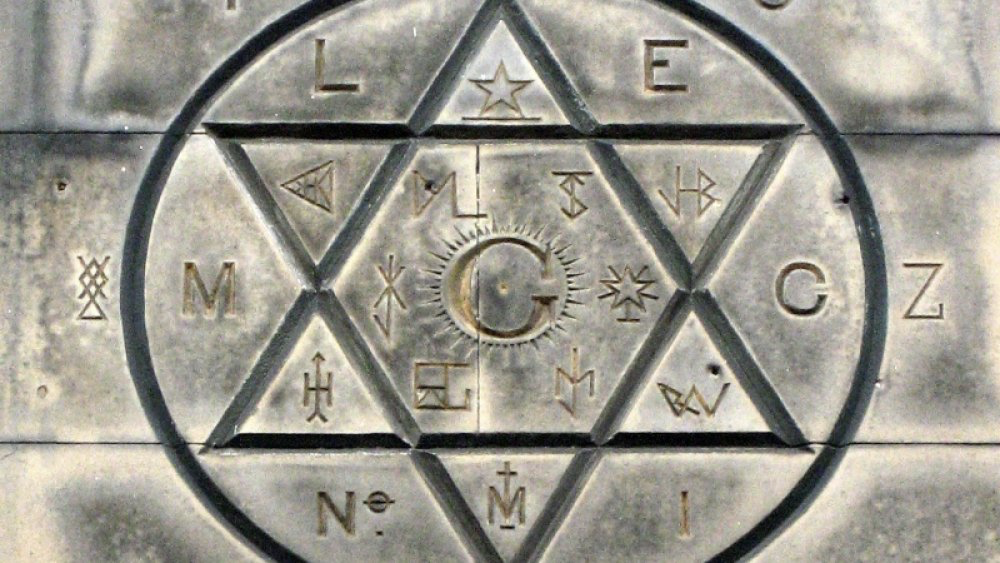
‘In that text, Solomon receives the ring from the archangel Michael… Once Solomon realizes his new power, he summons the demons one by one, learns their powers and dominions and to which constellations they are bound, as well as which angel has power over them. Once he has gained this wisdom, Solomon puts the demons to work on building the Temple.’ 
Occult World: ‘The Testament of Solomon… probably written between the first and third centuries C.E., is a legendary tale about how Solomon built the Temple of Jerusalem by commanding Demons. The text is rich in Demonology, angelology, and lore about medicine, astrology, and Magic. The author is unknown and may have been a Greek-speaking Christian who was familiar with the Babylonian Talmud. The magical lore related to Demons, which dominates the text, shows Babylonian influences. 

The Demons are described as Fallen Angels or the offspring of fallen angels and human women, and they live in stars and constellations. They can shape shift into beasts and forces of nature. They lurk in deserts and haunt tombs, and they dedicate themselves to leading people astray. They are ruled by Beelzeboul (Beelzebub), the Prince of Demons.’ 
‘The stellar bodies themselves are Demonic, wielding destructive power over the affairs of humanity. The 36 decans, or 10-degree portions of the… 12 zodiacal signs, are called heavenly bodies and likewise are ruled by Demons, who cause mental and physical illnesses. There are seven “world rulers,” who are equated with the vices of deception, strife, fate, distress, error, power, and “the worst,” each of whom is thwarted by a particular angel (with the exception of “the worst”). Solomon summons them to appear before him for interrogation to learn what they do and the names of the angels who thwart them. They appear with heads of formless dogs and as humans, bulls, dragons with bird faces, beasts, and sphinxes.

The testament considers angels as God’s messengers but does not describe their origin or hierarchy. The main purpose of angels is to thwart Demons and render them powerless. Each angel is responsible for thwarting specific Demons. Humans must call upon the right angel by name in order to defeat a Demon; otherwise, Demons are worshipped as gods. Among the angels named are the archangels Michael, Raphael, Gabriel, and Uriel’ – Chapter XXII Alpha & Omega

‘When the Demon ORNIAS vampirizes Solomon’s favourite boy by sucking out his soul through his thumb, Solomon begs God for power over the Demon. While he prays, Michael appears and gives Solomon a ring with a seal engraved upon a precious stone. Michael tells Solomon that this magical ring will give him power over all Demons, male and female, and that they will help him build the temple. The Demons are subdued when the ring is thrown at their chests with the command “Solomon summons you!” Solomon interviews the Demons and demands from them the names of their thwarting angels. When they are subdued, they are made to construct his temple. One of [the] Demons interrogated by Solomon gives no name but describes himself as “a lecherous spirit of a giant man who died in a massacre in the age of giants.” He lives in “inaccessible places” – Articles: Nephilim & Elioud Giants I & II.

Historical Blindness: ‘Josephus included in his Jewish Antiquities an account of an exorcism performed by a man named Eleazar who cast out demons in the name of Solomon, speaking incantations the text says were written by Solomon, and pressing a ring said to bear the seal of Solomon to the possessed man’s nose. 

Clearly by this point, the exorcism rituals attributed to Solomon had become a kind of folk healing remedy, and his name and seal an apotropaic [‘intended to ward off evil’] protection against evil spirits. Interestingly, we see here a ring, though not the magical ring gifted by angels to endow Solomon with power over all things. Rather it seems perhaps many such rings may have been made and used in such rituals, their power thought to derive from the “seal” engraved on it. 

Over the following centuries, many apotropaic amulets would be inscribed with the names of demons, following the Solomonic exorcism ritual, and would even claim to bear the seal given to Solomon to ward off demons. Sometime after the first century CE, likely in the period of Late Antiquity between the 3rd and 6th centuries, we find this legend fully formed in the fragments later collected in the Middle Ages as the pseudepigraphal work called the Testament of Solomon, which not only has him wielding his magic ring but also compiles an entire demonology, with the names of each offending spirit, the nature of their activities, and specific prescriptions for exorcising them.’ 

Most if not all of the works ascribed to Solomon outside of the Bible, are likely not written by him, but rather an example of authors who have attributed their work to a more famous, well-known person to give their text legitimacy and credibility. Even so, “where there is smoke there is fire.” Solomon’s descent along the left hand path is undeniable and therefore his interaction with evil spirits a given. He followed many of the beliefs of his seven hundred wives and three hundred concubines, which ultimately led to his sickeningly sacrificing hundreds of his own children – refer Chapter XIII India & Pakistan: Cush & Phut; and article: Na’amah

Whatever predisposition towards spirituality Solomon may have inherited as a seventh son of a very potent seventh son in his own right, King David, it was not used for the benefit of others; whether it included any gifts of healing and divination or not, but for selfish satisfaction. 

1 Kings 11:6-10

English Standard Version 

‘… Solomon did what was evil in the sight of the Lord and did not wholly follow the Lord, as David his father had done… Solomon built a high place for Chemosh the abomination of Moab, and for Molech the abomination of the Ammonites, on the mountain east of Jerusalem’ – Articles: Na’amah; and Belphegor. ‘And so he did for all his foreign wives, who made offerings and sacrificed to their gods. And the Lord was angry with Solomon, because his heart had turned away from the Lord, the God of Israel, who had appeared to him twice and had commanded him… that he should not go after other gods. But he did not keep what the Lord commanded.’

The most famous seventh son of a seventh son of all – hidden in plain sight within the inspired pages of the Bible – tragically failed to live up to his incredible potential and instead became entangled in demonolatry; plummeting into the dark depths where the daemons themselves reside. 

Jesus said to them, “… I have given you power to crush… snakes and scorpions under your feet. Nothing will hurt you. Yes, even the spirits obey you. And you can be happy, not because you have this power, but because your names are written in heaven.” 

Luke 10:18-20 Easy-to-Read Version

Now the priest of Midian had seven daughters, and they came and drew water and filled the troughs to water their father’s flock.

Exodus 2:16 English Standard Version

“I’m not quite sure what the odds are of a seventh son of a seventh son, however it must have happened by now because I am the seventh daughter of the seventh daughter of the seventh daughter. As I understand it, the odds are astronomical, but here I am, so I’m certain that such a man exists!”

Win Strack

© Orion Gold 2024 – All rights reserved. Permission to copy, use or distribute, if acknowledgement of the original authorship is attributed to orion-gold.com

The Sabbath Secrecy

The Sabbath Secrecy follows on from The Calendar Conspiracy and so it is sincerely recommended they be read in chronological order. 

This investigation seeks to address two key aspects of Christian belief and practice; the Law and within its confines the subject of a day of worship, namely the Sabbath. While the Old Covenant with ancient Israel ended – and the Mosaic Law with it – through Christ’s sinless life, sacrifice and death; what exactly is expected with respect to the Law under the terms of the New Covenant for a Christian believer? Further, is the fourth commandment still required to be observed or was the Sabbath fulfilled and completed in Christ?

A study of the pertinent scriptures will be considered and a conscientious presentation of their context, intent, instruction and meaning.

As we progress, remembrance that the Sabbath represented a person’s relationship with God is key in acknowledging how the Sabbath is to be viewed and understood under the terms of the New Covenant.

The Kingdom of Judah used the 1st of Tishri, of the seventh month of the Civil calendar as their new year falling in September/October; while the Kingdom of Israel in turn, used the 1st of Abib (or Nisan), of the first month of the Sacred calendar falling in March/April for the beginning of their new year. 

The Hebrew calendar months running from the first to twelfth month are: Nisan, Iyar, Sivan, Tammuz, Av, Elul, Tishri, Cheshvan, Kislev, Tevet, Shevat, Adar and Adar II in leap years. The beginning of Spring – from the Spring Equinox (March 20) – is the logical time to commence a new year, at a time of re-birth following winter. The use of the 1st of January in our modern era, two weeks into winter after the winter solstice on the 21st of December makes little sense from the harvesting of crops and a seasonal perspective and is based entirely on the Babylonian mystery religion – refer article: The Calendar Conspiracy

The beginning of a day on the Gregorian Calendar inherited from the Romans, has been set at a time which makes little sense: in the middle of the dark of night at midnight. The Jewish custom of beginning a new day at sunset, as a day closes out and fades away with the setting sun is also puzzling. We have learned that the custom of preparing rigorously for the erroneous Saturday Sabbath and desisting from all work, led to observing this day from the late afternoon, early evening, rather than from when a new day actually begins, at dawn. The additional rules and laws in Orthodox Judaism added burdens in observing the Sabbath which weren’t instituted by the Creator. 

It was established that the seventh day on the Roman calendar called Saturday, is not the true biblical seventh day Sabbath of rest as ordained by the Creator; which was originally calculated according to a Lunar cycle consisting of a 29 or 30 day month, beginning at sunrise on the day after the conjunction of the New Moon. 

A selection of Old Testament passages about the true seventh day may be helpful in understanding the institution of the Sabbath; followed by a survey of New Testament verses in comprehending its role in our present inter-covenantal period. For the establishing of the New Covenant beyond the first fruits of God’s plan is yet future – Jeremiah 31:31-33, Revelation 14:4.

Genesis 1:14-19

New English Translation

14 ‘God said, “Let there be lights [H3974 – ma’owr: bright luminary bodies] in the expanse of the sky to separate [H914 – badal: divide] the day [H3117 – yowm: sunrise to sunset meaning to be hot] from the night [H3915 – layil: gloom, shadow], and let them be signs [mark] to indicate seasons [H4150 – mow’ed: appointed time, meeting, feast, assembly] and days and years, 15 and let them serve as lights in the expanse of the sky to give light on the earth.” 

It was so. 16 God made two [H8147 – shnayim: both, double, twofold] great [H1419 – gadowl:  large (in magnitude and extent)] lights – the greater light to rule over the day and the lesser light to rule over the night. He made the stars also. 

17 God placed [H5414 – nathan: set, put, made, caused, consecrated] the lights in the expanse of the sky to shine on the earth, 18 to preside [H4910 – mashal: rule, have dominion, reign] over the day and the night, and to separate the light from the darkness. God saw that it was good. 

19 There was evening [H6153 – ereb: sunset, dusk, night], and there was morning [H1242 – boqer: morrow, break of day, beginning of day, coming of sunrise and daylight, dawn], a fourth day.’ 

It is appreciated that there are a number of Hebrew word meanings to assimilate, though they are included as they have bearing on the subject of this article. These verses reveal the celestial clock and calendar created by the Eternal – Jeremiah 31:35.

The greater light begins a new day. How does a sun setting or darkness falling begin a new day? – refer article: The Calendar Conspiracy. It is merely the daylight portion of a day which draws to a close when the sun sets, just as winter ends a yearly cycle and spring begins a new year. Christ was resurrected during the early dawn on the first day of the week of the Hebrew calendar – refer article: Chronology of Christ.

In Genesis chapter one – compiled by Moses and later Ezra – is a record of the Creator declaring six times the circle (or cycle) of time, for day one, day two, day three and so forth as marked by a night time of twelve hours, broken by sunrise and a daylight period of twelve hours. Thus, when the seventh day is mentioned in Chapter two, what period of time did the Creator designate as sacred? Was it a full circle of time, such as the night followed by the day and the daylight followed by the night; or was it only to be the daylight hours?

Genesis 2:1-3

Amplified Bible

‘So the heavens and the earth were completed, and all their hosts (inhabitants). 2 And by the seventh [H7637 – shbi’iy: seven, seventh time] day God completed [H3615 – kalah: accomplished, finished, determined, fulfil] His work which He had done, and He rested (ceased) [H7673 – shabath: to cease, desist, celebrate] on the seventh day from all His work which He had done. 

3 So God blessed [H1288 – barak: salute, congratulate, praise] the seventh day and sanctified [H6942 – qadash: hallow, dedicate, consecrate, to be observed as holy] it (as His own, that is, set it apart as holy from other days), because in it He rested from all His work which He had created [H1254 – bara’: shape, form, fashion] and done.’

We learn that the Creator paused after His creating – He took a time out. He stopped and desisted from working. The Eternal literally took a rest from what He had been doing. Not because He was tired, but so that He could think about and draw pleasure from all that He had created. To take stock so to speak and to step back from the individuality of all things and observe them as a whole.

The sacred hours of the Sabbath are during the daylight portion of a 24 hour cycle of time, comprising a day of light, followed by a night of dark. Scripture does not mention night watches occurring on the Sabbath. If the day was to begin at sunset, these two verses would declare that the Eternal rested on the seventh night at sunset (two times), instead of the seventh day (of light) – John 11:9.

The fundamental truth established in Genesis chapter one, verse five, was the permanent division separating day (light) from the dark of night. All creation was performed during the daylight hours. It stands to reason that when the Creator ceased or rested on the seventh ‘day’ of light, that it was during the exact same period of time that He had formerly performed all His work of creating – refer Chapter XXII Alpha & Omega

The next time we learn about a Sabbath, is shortly before the commandments are given by the Eternal via Moses to the congregation of Israel – Exodus 16:1-30; 32:15-16. The miracle of the manna, a supernatural type of bread (Psalm 78:24) was provided for the Israelites while they sojourned for forty years in the wilderness – refer article: The Manna Mystery. The Sabbath was either a. introduced at the same time as some biblical scholars maintain; or b. it was re-introduced to a people who had lost reverence for its commemoration.

This is a possibility alluded to in Exodus 5:1-5 while the Israelites were still in Egypt, where the Hebrew word chagag (H2287) for a feast or festival is used (Leviticus 23:6), as well as shabath (H7673) for rest. Shabath is the exact same word used in Genesis chapter two for the ‘day’ the Creator rested and made Holy.

Even so, the Hebrew grammar according to expert biblical scholarship indicates the Sabbath (in the form it was presented) was introduced for the first time to the Israelites. Multiple authors – capitalisation theirs:

“In the English language an ARTICLE modifies a noun (the name of a person, place, or thing), making it either indefinite (“a” or “an”) or definite (“the”). Unlike English, Hebrew does not have an indefinite article – just a definite article.

The linguistic term ANARTHROUS means, in reference to a noun, that it does not have an article, definite or indefinite, before it (e.g. the Sabbath or a Sabbath). Nouns that do not have an article before them in Hebrew are generally translated into English with the indefinite article (e.g. “a” or “an”). However, in the case where the anarthrous nouns are qualitative, the Hebrew noun is often translated without any article.

In Hebrew, the occurrence of an anarthrous noun (one without any kind of an article associated with it) carries the significance that the whole idea is new. It is of great significance, then, that the Hebrew word for “Sabbath” in Exodus 16:23, Exodus 20:10, and Exodus 35:2-3 is articular in construction. There are only four places in the Pentateuch where this particular form of the Hebrew word for Sabbath is found, again indicating that the noun is a new thing. In the three latter instances this anarthrous construction occurs within a formula (= Work six days, but on the seventh there is a rest.) The combination of the anarthrous construction within a specified formula gives even more support for the likelihood that the intention of Moses was to emphasize that the concept of the Sabbath was new.

Combined with our understanding of the significance of the anarthrous construction of nouns in Hebrew, it is clear that the majority of the scholars who translated the Hebrew texts of the Old Testament into English have recognized the existence of this usage indicator for a long time.

The first time any… holy day is mentioned in Scripture, it always lacks the definite article (“a” Sabbath versus the indefinite “the” Sabbath, for example). The… holy days are never introduced the first time in Scripture with the definite article “the” but with the indefinite “a” or “an”. This powerful argument provides more than ample evidence that the weekly Sabbath did not exist before Exodus 16:23.

What makes it irrefutable is the fact that every… Holy Day follows this same pattern!”

Conversely, support is proposed by others that the Sabbath had been known and observed after the Flood prior to Moses, for Abraham as God’s friend (2 Chronicles 20:7, James 2:23) kept all of His statutes, laws and commandments – Genesis 26:5. This then, it is assumed by extension would have included the seventh day Sabbath commandment. Granted, it is not actually stated. Nor is it for the patriarchs Isaac and Jacob.

In addition and what is recorded in scripture, is how Abraham partook of the ceremony of bread and wine with Melchizedek (chronologically prior to 1. the Passover in Exodus 12:1-8; and 2. the Lord’s supper in Matthew 26:26-29); paid tithes (Leviticus 27:30, Numbers 18:26) in accordance to the law (Genesis 14:18-20); and complied with the statute of circumcision – Genesis 17:22-27.

There is a circuitous case for the keeping of the Sabbath prior to the flood in the person of Noah.

John Keyser in his article From Sabbath to Saturday: The Story of the Jewish Rest Day observes – emphasis mine: ‘Genesis 6:9 says “Noah was a just man and perfect in his generations, and Noah walked with God.” Amos 3:3 says two cannot walk together unless they agree – so Noah must have agreed with [the Lord] God about the Sabbath day. In 2 Peter 2:5 we read that Noah was “a preacher of righteousness” and we know… “all thy commandments are righteousness” (Psalm 119:172). So, therefore, Noah must have preached about the Sabbath, and also kept it himself since it is one of [the Lord’s] commandments.’

While Keyser rightly points out Noah would have obeyed any and all instruction from the Eternal; as with Abraham, the observation of a Sabbath is not directly stated. Keyser assumes it was a ‘commandment’ in the antediluvian age, using circumstantial reasoning as evidence.

This line of thought could also be used just as readily in supporting that there was not a Sabbath rest between the Sabbath (H7637 – shbiy`iy: seventh, seven; haš·šə·ḇî·‘î – 81 occurrences) rest (H7673 – shabath: cease, rest; way·yiš·bōṯ2 occurrences and šā·ḇaṯ – 7 occurrences) God took in Genesis and the Sabbath (H7676 – shabbath: Sabbath, week; haš·šab·bāṯ – 44 occurrences) He required of the Israelites in the Book of Exodus.

If the Eternal set in motion a cyclical, weekly Sabbath rest in the antediluvian age, then why use a different word for supposedly the same Sabbath ‘day’ for the Israelites? It is important to note that the six occurrences for the word sabat (outside of Genesis 2:3), are either linked to the Creator resting or to a ceasing of something else (unrelated to the Sabbath) – Exodus 31:17, Isaiah 14:4; 24:8; 33:8, Lamentations 5:15. Not one of the seven scriptures are referring to the seventh day Sabbath given to the Israelites. And for the one occurrence for the word wayyisbot (outside of Genesis 2:2), it is not referring to the seventh day Sabbath, but rather the manna given to the Israelites – Joshua 5:12.

It is worth mentioning that the Creator told Noah to take two of every living creature onto the ark, a male and a female – Genesis 6:19. Noah was also told to “Take with you seven pairs of all clean animals, the male and his mate, and a pair of the animals that are not clean, the male and his mate…” – Genesis 7:2. This shows Noah was conversant with unclean animals later prohibited to eat (Leviticus 11:1-47, Deuteronomy 14:3-20) and those which were edible for eating or for sacrificial purposes as had undoubtedly righteous Abel before him – Genesis 4:4; 8:20, Hebrews 11:4.

Thus while the Bible does state that the Creator ceased from his works, it does not say that He instituted a rest for humankind at that time. Or that He repeated a cyclical rest of any kind. In fact, the Hebrew syntax suggests otherwise.

Multiple authors – capitalisation theirs: ‘These following three things tend to indicate Genesis 2:2-3’s lack of support for Sabbatarianism: (1) The Ancient Hebrew verb for “set apart” cannot mean “set aside for religious services.” (2) The Ancient Hebrew verb translated “cease” likely does not mean “rest” in the English sense of “repose.” (3) The lack of the evening and morning suffix, in effect, LIMITS the blessing and setting aside to this one day because it EXTENDS its MEMORY from this one point in time on a continuum which projects into the future with no boundaries. Since this one day has been blessed forever, it is impossible to bless or set it aside again. There would be no point in blessing it again and again by observing a recurring cultic ceremony.’

Similarly, the Bible is silent from Abel all the way though to Noah (some ten and a half millennia) regarding a Sabbath before the Flood cataclysm and again in the post-flood world until the time of Moses. It is only by inference that a case can be built that the Sabbath was observed prior to the Israelites agreeing to the Old Covenant. The terms of which included the decalogue and the fourth commandment wrapped in the centre of it.

With that said, the ten commandments are listed three times in the Pentateuch – in Exodus chapter twenty and (partially in) chapter thirty-four and again in Deuteronomy chapter five. In Deuteronomy, it is recorded that the Old Covenant was a new agreement and so there is support for the Sabbath being introduced for the first time as part of the Old Covenant.

‘And Moses summoned all Israel and said to them, “Hear, O Israel, the statutes and the rules that I speak in your hearing today, and you shall learn them and be careful to do them. The Lord our God made a covenant with us in Horeb. Not with our fathers did the Lord make this covenant, but with us, who are all of us here alive today’ – Deuteronomy 5:1-3, ESV.

Sabbath in Christ, Dale Ratzlaff, 1990-2012 – emphasis mine:

‘Some who reviewed this manuscript argued that the “our fathers” in this text refers back to the generation who died in the wilderness and not to Abraham, whom they claim, was a Sabbath keeper. However, this cannot be the case because the above reference clearly states that the “Lord our God made a covenant with us at Horeb. The “us” includes not only Moses but all the children of Israel. The “our fathers” must refer to Abraham, Isaac and Jacob who were not included in the Sinaitic Covenant [1]. “Our fathers” is a term often used by Moses to refer to Abraham, Isaac and Jacob.

Moses then lists the Ten Commandments (Deuteronomy 5:1−21) and the other laws in the “book of the covenant” that were not given to Abraham or to “the fathers” as part of the covenant stipulations God made with them. However, the Israelites were the descendants of Abraham, and therefore came under the covenant of circumcision [2]. In Leviticus 12:1-3 God repeated the commandment of circumcision, indicating its continuing importance for the men of Israel.

The Israelites living after the Sinaitic Covenant were under both covenants.

Remember His covenant forever, the word which He commanded to a thousand generations, the covenant which He made with Abraham, and His oath to Isaac. He also confirmed it to Jacob for a statute, to Israel as an everlasting covenant (1 Chronicles 16:15–17; cf. Psalm 105).

The Sinaitic Covenant had one unique sign, yet because the Israelites were descendants of Abraham for all practical purposes the old covenant could be considered to have two signs: Sabbath and circumcision. Only those households where the males were circumcised were included in the covenant community of Israel. Notice the parallel in language between these two covenant signs:

Circumcision “C” and Sabbath “S” as recorded in Genesis 17: 9−14 and Exodus 31:12−18; 20:12:

C. “You shall keep My covenant” 17:9. S. “You shall surely observe My sabbath” 31:13.

C. “Me and you and your descendants” 17:9. S. “Me and the sons of Israel” 31:17.

C. “And you shall be circumcised” 17:11. S. “You are to observe the sabbath” 31:14.

C. “Throughout your generations” 17:12. S. “Throughout your generations” 31:13.

C. “The sign… between Me and you” 17:11. S. “A sign between Me and you” 31:13.

C. “An everlasting covenant” 17:13. S. “A perpetual covenant” 31:16.

C. “Uncircumcised… cut off: 17:14. S. “Whoever does any work… cut off” 31:14.

C. Servant to be circumcised 17:12. S. Servant to keep Sabbath 20:10.

C. Sign of circumcision given at time of giving of the covenant 17:1-9. S. Sign of Sabbath given at time of giving of the covenant 31:18.

The similarities in wording, style and time of giving, are too striking to be accidental. And the similarity is even more apparent in the original language. For example, “everlasting” (Genesis 17:13) and “perpetual” (Exodus 31:16) are translations from the same Hebrew word, olam. It is important that we understand the relationship between circumcision and [the] Sabbath and see the role they play in the Sinaitic Covenant. Circumcision was the entrance sign into the covenant God made with Abraham and his descendants. It was the initiatory or entrance sign of the covenant by which one became a member of the covenant community. The Passover feast was a celebration for the covenant community only. In the following reference circumcision served as the entrance sign into the covenant community and thus gave one the right to participate in the Passover (or covenant) celebration.

And the LORD said to Moses and Aaron, “This is the ordinance of the Passover: no foreigner is to eat of it; but every man’s slave purchased with money, after you have circumcised him, then he may eat of it… if a stranger sojourns with you, and celebrates the Passover to the LORD, let all his males be circumcisedand then let him come to celebrate it; and he shall be like a native of the land. But no uncircumcised person may eat of it” (Exodus 12:43, 44, 48).

The Sabbath, in a similar way, was the continuing sign the covenant people – now under the Sinaitic covenant – were to “remember.” It was a ceremony observed weekly as a renewing of the covenant. As in the case with circumcision, if a foreigner desired to join in covenant fellowship he was to observe the Sabbath. Circumcision was given to the descendants of Abraham as the one-time entrance sign into the covenant community. The Sabbath was given as a repeatable sign of the Sinaitic Covenant Israel was to “remember.”

Ratzlaff: ‘The covenant was said to be written on two tablets of stone (Exodus 34:1). Artists often picture these tablets as written only on one side. But Scripture states they were written on both sides. “Then Moses turned and went down from the mountain with the two tablets of the testimony in his hand, tablets which were written on both sides; they were written on one side and the other (Exodus 32:15).”

Exodus 20:8-11

English Standard Version

8 “Remember [H2142 – zakar: record, mindful, recall, make a memorial] the Sabbath day, to keep it holy [H6942 – qadash: sanctify, hallow, dedicate, consecrate, appointed].

9 Six days you shall labor, and do all your work, 10 but the seventh day is a Sabbath to the Lord your God. On it you shall not do any work, you, or your son, or your daughter, your male servant, or your female servant, or your livestock, or the sojourner who is within your gates. 11 For in six days the Lord made heaven and earth, the sea, and all that is in them, and rested on the seventh day. Therefore the Lord blessed the Sabbath day and made it holy.’

The Sabbath command is reiterated in Leviticus 23:3 with the festivals and the Holy Days.

“Six days shall work [H4399 – mla’kah: business, occupation] be done, but on the seventh [H7637 – shbi`iy: seven] day is a Sabbath [H7676 – shabbath: derived from H7673 and Greek 4521 sabbaton] of solemn rest [H7677 – shabbathown: weekly sabbath observance, special holiday], a holy [H6944 – qodesh: set-apartness, separateness, sacredness, sanctuary] convocation [H4744 – miqra’: sacred assembly]. You shall do no work. It is a Sabbath [H7676] to the Lord in all your dwelling places” – ESV.

The Sabbath was instituted in part as a remembrance of the work the Eternal performed in the creation and is listed as the fourth commandment – between the first three which honour God and the final six which show respect to other people. Like Him, the Israelites were to stop working every seventh day during a Lunar cycle, not Saturday of the Gregorian calendar – and rest from their weekly activities, so that they could honour the Creator – refer article: The Calendar Conspiracy.

“Six days you shall do your work, but on the seventh day you shall rest; that your ox and your donkey may have rest, and the son of your servant woman, and the alien, may be refreshed” – Exodus 23:12, ESV.

An act of kindness was imposed on the people of Israel, so that they could rest physically and mentally as well as having a day to focus spiritually. It was a vital anchor for a people who were easily led astray and frequently described as ‘stiff necked’ – Exodus 32:9; 33:5. 

Further evidence exists that the weekly seventh day Sabbath was introduced for the first time to the Israelites. It was tailored explicitly for the Israelites and not intended for other nations, hence why it was embedded within the decalogue as a sign between them and the Eternal.

Multiple authors: “A number of exhaustive studies have been done by modern scholars who have more information about Hebrew culture and better analytical tools than ever before. Calculations… conclusively demonstrate the non-observance of any Sabbath for the first few weeks of [the] Exodus journey. The Hebrews left Goshen in Egypt on Nissan 14 [rather, the 15th of Nisan, March 22 – Numbers 33:3], a Thursday, and a Passover [rather, the First Day of Unleavened Bread], and arrived at the Wilderness of Sin 31 days later on a Saturday [rather, the fifteenth day of the Lunar cycle and the seventh day of the week on the sacred calendar] evening about 5 pm.

That evening, God explained the Manna Obedience Test, and the Manna fell the next morning – a Sunday [rather, the sixteenth day of the Lunar cycle and the first day of the week on the Sacred calendar]. It wasn’t until the following “Friday” [rather, the twenty-first day of the Lunar cycle and the sixth day of the week on the Scared calendar] that God gave them the Sabbath Obedience Test. He explained the Sabbath along with instructions for gathering twice the normal amount of Manna that evening. Therefore, the first Sabbath ever kept in the history of the world was observed on the 38th day after the Hebrews left Egypt.

Since they did not arrive at the Wilderness of Sin until late Saturday [rather, the fifteenth day of the Lunar cycle and the seventh day of the week on the sacred calendar] afternoon, they marched on the seventh day of that week the week before the first Sabbath was observed. No wonder the Jews have never believed that the Sabbath was a Creation ordinance! These facts are especially compelling because the Hebrew people were led directly by God to treat all days the same for the first five weeks of their journey.”

Aaron and his sons were reminded of the Sabbath rest every seven days, when they were consecrated for the Priesthood. They were also ordained on the actual Sabbath day, the eighth day of the Lunar month:

“On the eighth day Moses called Aaron and his sons and the elders of Israel…” – Leviticus 9:1, ESV. Similarly: “The gatekeepers were on the four sides, east, west, north, and south. And their kinsmen who were in their villages were obligated to come in every seven days in turn, to be with these, for the four chief gatekeepers who were Levites, were entrusted to be over the chambers and the treasures of the house of God” – 1 Chronicles 9:24-26, ESV.

The counting of the wave sheaf to arrive at the Feast of Weeks (or the Day of Pentecost) is counted from the day after the Sabbath. As the Sabbath and First Day of Unleavened Bread occurred on the same day, the 15th day of the first month of Abib is the Sabbath in question. Seven Sabbaths are counted and Pentecost is on the fiftieth day, the first day of the Sacred calendar, not to be confused with the Roman day Sunday – refer article: The Calendar Conspiracy:

“You shall count seven full weeks from the day after the Sabbath, from the day that you brought the sheaf of the wave offering” – Leviticus 23:15, ESV. This was the Pharisee method of counting. The Sadducees and some Churches of God today count from the weekly ‘Sabbath’ on Saturday and so Pentecost is always on a Sunday. Yet this method is flawed, because it is based on the weekly seven day cycle of the Gregorian calendar. 

At the dedication of the newly built Temple in 959 BCE, King Solomon held a festival celebration for seven days and on the Sabbath, the 8th day of the Lunar month a convocation was kept. Then two weeks later, people departed on the 23rd of the month; the day after the third weekly Sabbath of the lunar month on the preceding day of the 22nd.

“At that time Solomon held the feast for seven days, and all Israel with him, a very great assembly, from Lebo-hamath to the Brook of Egypt. And on the eighth day they held a solemn assembly, for they had kept the dedication of the altar seven days and the feast seven days. On the twenty-third day of the seventh month he sent the people away to their homes, joyful and glad of heart for the prosperity that the Lord had granted to David and to Solomon and to Israel his people” – 2 Chronicles 7:8-10, ESV.

The following verses in 2 Chronicles support the seven day weekly cycle and the observance of the Sabbath on the 8th and 15th days of the Lunar month.

2 Chronicles 23:8

English Standard Version

‘The Levites and all Judah did according to all that Jehoiada the priest commanded, and they each brought his men, who were to go off duty on the Sabbath, with those who were to come on duty on the Sabbath, for Jehoiada the priest did not dismiss the divisions.’

2 Chronicles 29:17

English Standard Version

‘They began to consecrate on the first day of the first month [the New Moon], and on the eighth day of the month [first Sabbath of four] they came to the vestibule of the Lord. Then for eight days they consecrated the house of the Lord, and on the sixteenth day of the first month [the day after the second Sabbath on the 15th day] they finished.’

In the Book of Esther – refer Chapter IV Central Asia – Madai & the Medes; and Chapter XVIII Elam & Turkey – we learn of a difference in celebration between the peoples of Judah living in Elam’s capital Susa and those in the outlying districts of Persia. Those dwelling in Susa observed Purim on the Sabbath, while those living outside Susa chose the Preparation of the Sabbath on the 14th day of the month. 

Esther 9:16-19

English Standard Version

16 ‘Now the rest of the Jews who were in the king’s provinces also gathered to defend their lives, and got relief from their enemies and killed 75,000 of those who hated them, but they laid no hands on the plunder. 17 This was on the thirteenth day of the month of Adar [12th month, corresponding to February/March], and on the fourteenth day they rested and made that a day of feasting and gladness. 18 But the Jews who were in Susa gathered on the thirteenth day and on the fourteenth, and rested on the fifteenth day, making that a day of feasting and gladness. 19 Therefore the Jews of the villages, who live in the rural towns, hold the fourteenth day of the month of Adar as a day for gladness and feasting, as a holiday, and as a day on which they send gifts of food to one another.’

The Prophet Isaiah brings condemnation from the Eternal to the peoples of Judah with regard to the hypocritical observance they fell into regarding the New moon, the Sabbath and the Holy Day Festivals.

“Bring no more vain offerings; incense is an abomination to me. New moon and Sabbath and the calling of convocations – I cannot endure iniquity and solemn assembly. Your new moons and your appointed feasts my soul hates; they have become a burden to me; I am weary of bearing them” – Isaiah 1:13-14, ESV.

Isaiah elaborates further, speaking about the peoples attitude towards the Sabbath. Something the Israelites continually back slid in, as the Prophet Ezekiel also comments.

Isaiah 58:13

New English Translation

‘You must observe the Sabbath rather than doing anything you please on my holy day. You must look forward to the Sabbath and treat the Lord’s holy day with respect. You must treat it with respect by refraining from your normal activities, and by refraining from your selfish pursuits and from making business deals.’

The Sabbath was intended to be a day, where a person did not work to earn a living or meet to discuss business deals. It was a chance to reflect on the blessings from the Eternal and the good in their lives, to rest their bodies and minds and focus on their families.

Ezekiel 20:18-21

English Standard Version

18 “And I said to their children in the wilderness, ‘Do not walk in the statutes of your fathers, nor keep their rules, nor defile yourselves with their idols. 19 I am the Lord your God; walk in my statutes, and be careful to obey my rules, 20 and keep my Sabbaths holy that they may be a sign between me and you, that you may know that I am the Lord your God.’ 

21 But the children rebelled against me. They did not walk in my statutes and were not careful to obey my rules, by which, if a person does them, he shall live; they profaned my Sabbaths.”

The New Testament writer Luke, records that John the Baptist was circumcised not just the eighth day after his birth, but on the eighth day, the Sabbath. Thus we learn that he was born on a New Moon, the first day of the month. It was discussed how the birth of Christ (Luke 2:21) and his delivery were on the 1st of Tishri in the seventh month; corresponding to the Feast of Trumpets – refer article: Chronology of Christ. As Christ and John were cousins, born six months apart with John being the elder, we discovered that John was born on the 1st day of the first month of Abib (or Nisan), in 3 BCE.

Luke 1:59

English Standard Version

‘And on the eighth day they came to circumcise the child [John]. And they would have called him Zechariah after his father…’ 

The Sabbath was deemed by the Eternal as significantly important, being mandatory during the duration of the Old Covenant era. It was elevated as a pivotal sign between God’s chosen people the Israelites and Himself. Yet it was often and easily broken. It is of note then, that by the time of Christ, the religious rulers of the day – the Priesthood, Scribes and Pharisees – had added numerous additional rules which had caused the Sabbath to be both restrictive and burdensome. Christ though, transcended these and taught the disciples that the Sabbath was only as important as in that it reminded people of the Creator and His creation. 

While Jesus was with the twelve disciples, his presence far outweighed how one observed the Sabbath day. Christ was the embodiment of the Sabbath and so getting caught up in the rituals of Sabbath keeping and missing the profoundness of his being with them, would have been an irony in the extreme. Observing the Sabbath was not to be compared with the honour due to the Son of Man, who was in their very company.

Matthew 12:1-8

English Standard Version

‘At that time Jesus went through the grainfields on the Sabbath. His disciples were hungry, and they began to pluck heads of grain and to eat. 2 But when the Pharisees saw it, they said to him, “Look, your disciples are doing what is not lawful to do on the Sabbath.” 3 He said to them, “Have you not read what David did when he was hungry, and those who were with him: 4 how he entered the house of God and ate the bread of the Presence, which it was not lawful for him to eat nor for those who were with him, but only for the priests?’ 

The Message translation says: “How [David] entered the sanctuary and ate fresh bread off the altar, with the Chief Priest Abiathar right there watching – holy bread that no one but priests were allowed to eat – and handed it out to his companions?” – Mark 2:25-26 (Christ is speaking of the account in the Old Testament).

1 Samuel 21:1-6

English Standard Version

‘Then David came to Nob, to Ahimelech the priest. And Ahimelech came to meet David, trembling, and said to him, “Why are you alone, and no one with you?” 2 And David said to Ahimelech the priest, “The king has charged me with a matter and said to me, ‘Let no one know anything of the matter about which I send you, and with which I have charged you.’ I have made an appointment with the young men for such and such a place. 3 Now then, what do you have on hand? Give me five loaves of bread, or whatever is here.”

4 And the priest answered David, “I have no common bread on hand, but there is holy bread – if the young men have kept themselves from women.” 5 And David answered the priest, “Truly women have been kept from us as always when I go on an expedition. The vessels of the young men are holy even when it is an ordinary journey. How much more today will their vessels be holy?” 6 So the priest gave him the holy bread, for there was no bread there but the bread of the Presence, which is removed from before the Lord, to be replaced by hot bread on the day it is taken away.’

David possessed God’s Holy Spirit and was Holier than the Holy bread which he and his companions ate (Psalm 51:11, Matthew 22:43 [Psalm 110:1]). Were they to go hungry? Their need was greater. The author of First Peter says of the saints: ‘… but as he who called you is holy, you also be holy in all your conduct, since it is written, “You shall be holy, for I am holy” – 1 Peter 1:15-16, ESV.

1 Samuel: 5 ‘Or have you not read in the Law how on the Sabbath the priests in the temple profane the Sabbath and are guiltless? 6 I tell you, something greater than the temple is here. 7 And if you had known what this means, ‘I desire mercy, and not sacrifice,’ you would not have condemned the guiltless.

For the Son of Man is lord of the Sabbath.”

The Book of Mark adds: “… The Sabbath was made for man, not man for the Sabbath” (Mark 2:27, ESV) and the New Century versions states: “… The Sabbath day was made to help people; they were not made to be ruled by the Sabbath day.” Even Christ himself reminded of man’s destiny: “Is it not written in your Law, ‘I said, you are gods’?” – John 10:34 (Psalm 82:6), ESV.

The four gospels include the chronology of events surrounding Christ’s final days before his death. While we have discussed thoroughly – refer articles: Chronology of Christ; and The Calendar Conspiracy – it is beneficial to look at some of the scriptures again. Not only does an understanding of a day beginning at dawn, reconcile a long dispute amongst many Sabbath keepers (and biblical scholars) regarding the timing of the Passover on the 14th of Nisan and the First day of Unleavened Bread on the 15th of Nisan; but as well, the chronology of Christ’s death and his resurrection.

John 19:31

English Standard Version

‘Since it was the day of Preparation [the 14th], and so that the bodies would not remain on the cross on the Sabbath [the next day at dawn] (for that Sabbath was a high day) [A double Sabbath: the 15th day of the month weekly Sabbath and the First Holy Day of Unleavened Bread], the Jews asked Pilate that their legs might be broken and that they might be taken away.’

Mark 15:42

English Standard Version

‘And when evening had come [sunset, followed by dusk], since it was the day of Preparation [the day before the Sabbath, that is either the 7th, 14th, 21st or 28th of the Lunar month – in this case the 14th day of Nisan, the Passover], that is, the day before the Sabbath [the 15th day of the month and in this case the First Day of Unleavened Bread, which would begin at dawn]…’

Matthew 28:1

English Standard Version

‘Now after [G3796 – opse: after a long time, long after, late (in the day)] the Sabbath [which had ceremonially ended at sunset and technically ended by sunrise], (as it began) toward [G1519 – eis: before] the dawn [G2020 – epiphosko: to grow light, to dawn] of the [‘of, the’ not in the Greek] first day of the week, Mary Magdalene and the other Mary went to see the tomb.’ 

Previous reading of this verse was that the change from full dark to sunrise, encompassing what we term as dawn was part of the preceding day, with sunrise the beginning of the new day. An honest view now (in light – no pun intended – of other scriptures) is that dawn heralded the new day.

Mark 16:1-2

English Standard Version

‘When the Sabbath was past [the first Holy day of Unleavened Bread on the 15th], Mary Magdalene, Mary the mother of James, and Salome bought spices, so that they might go and anoint [Christ]. 2 And very early [G4404 – proi: early, at dawn, day-break, in the morning during the fourth watch – between 3am to 6am] on the first day of the week [the 16th], when the sun had risen [G393 – anatello: spring up, be up, to rise], they went to the tomb.’

The author of Mark like the Gospel of Matthew, stresses that the Sabbath of the 15th day was past and the two Marys were arriving on the 16th day. The Messiah was clearly risen before sunrise, on the first day of the week. Saturday keepers find it necessary to support a Sabbath resurrection. Yet, this verse cannot strictly be used in this context, as Christ would have either risen during the night time portion of the seventh day – not during the sacred daylight portion of the Sabbath – or early on the following day.

The translation of anatello as ‘risen’ in Mark’s gospel is not a clear rendering. ‘As the sun was rising’ would be accurate in describing the arrival of both Marys at daybreak. 

Luke 24:1

English Standard Version

‘But on the first day of the week [the 16th], at early dawn [G3722 – orthros: very early in the morning at early dawn or daybreak, rising of light], they went to the tomb, taking the spices they had prepared.’ 

Luke corroborates Matthew and Mark’s accounts, highlighting it was the 16th day; the first day of the week on the Lunar based Sacred Calendar. Luke also describes the timing of the two Mary’s arrival at Christ’s tomb as being during dawn, just prior to sunrise. 

John 20:1

English Standard Version

‘Now on the first day of the week Mary Magdalene came to the tomb early [G4404 – proi: at dawn, day-break], while it was still [G2089 – eti] dark [G4653 – skotia: dimness, due to want of light], and saw that the stone had been taken away from the tomb.’ 

John mentions only one Mary, Mary Magdalene. Did she arrive before the other Mary? One would assume if it was pre-sunrise and still dark during dawn, that at that hour they would travel together and that John has just omitted the other Mary from his recollection.

According to John, Mary Magdalene arrived just prior to sunrise as the sky was still dim, between night time and sunrise – in other words during dawn – to discover the open tomb. Any doubt that it was the 16th day, dawn and before sunrise, are dispelled by the Apostle John. Thus, the beginning of a new day is at dawn, not at sunrise (and definitively not as sunset). 

One final point on this verse, is the word still, or eti in the Greek. The King James translates it as yet, 51 times; more, 22 times; any more, 5 times; still, 4 times; further, 4 times; and longer, 3 times. Interestingly, it connotes something not necessarily still happening but something changing, ‘of a thing which went on formerly, whereas now a different state of things exists or has begun to exist.’ In other words, the darkness was giving way to light. 

The observance of the New Moon, Sabbath and Holy Day Festivals was an integral half of the system of worship established by the Eternal for the ancient tribes of Israel.

The other, being the sacrificial rituals and statutes, coupled with the Tabernacle and later the Temple ordinances maintained by the Levitical Priesthood – refer article: The Ark of God. These twin components were clearly still in effect during the time of Christ. The transitional period between the Messiah’s death in 30 CE and the Roman destruction of the second Temple in 70 CE saw the ending of the Levitical Priesthood, the sacrificial system and with it, tithing – Article: Chronology of Christ

What is not clear and a significant issue dividing a proportion of Sabbatarian Christians from other denominations, is the question of whether the observance of the Sacred Calendar, the New Moon and the Holy Days were still required in the New Testament dispensation or whether they have passed away because they pointed to the fulfilment achieved in the atoning sacrifice of the Messiah. 

Nota Bene

At this point it is only fair to mention the status of the man originally called Saul and later, Paul. While mainstream Christians recognise Paul as a prominent figure in the New Testament church, the truth of the matter is that Paul was actually the founder of Christianity – refer article: The Pauline Paradox. His teachings are contrary to the apostles and in variance with that of Christ and true followers of the Way. Importantly, on the one hand anything written by Paul (seven New Testament books) and any credited to him (six New Testament books) are of no value in the following theological debate. On the other hand, as literally all the ‘difficult’ scriptures in the New Testament are ascribed to Paul, these books and any other pertinent to our investigation will be included.

In the Book of Acts, we read of Paul observing the Festivals; being reprimanded by the Church hierarchy in Jerusalem for appearing to teach ‘Jews to forsake’ the law of Moses; taking part in a purification which included an offering, perhaps an animal sacrifice; and being apprehended by the Jews for the same accusation. Paul had already shown that he comprehended the transitional period within which he lived and in ‘becom[ing] all things to all people’ when he circumcised his most ardent disciple, Timothy – 1 Corinthians 9:22.

Acts 16:1-5, 20:5-6, 16, 21:17-29

English Standard Version

‘Paul came also to Derbe and to Lystra. A disciple was there, named Timothy, the son of a Jewish woman who was a believer, but his father was a Greek. 2 He was well spoken of by the brothers at Lystra and Iconium. 3 Paul wanted Timothy to accompany him, and he took him and circumcised him because of the Jews who were in those places, for they all knew that his father was a Greek. 4 As they went on their way through the cities, they delivered to them for observance the decisions that had been reached by the apostles and elders who were in Jerusalem.’

This is highly ironic for Paul circumcised Timothy while delivering the verdict of the Jerusalem Council, which was that circumcision was no longer required – Acts 15:5, 10-11, 19.

5 ‘So the churches were strengthened in the faith, and they increased in numbers daily.’ 

Paul was attending or keeping the Festivals; though the question remains whether he was doing so because they were still in force, or because the Jews were keeping them and it was expedient to do so.

Acts: 5 ‘These went on ahead and were waiting for us at Troas, 6 but we sailed away from Philippi after the days of Unleavened Bread 16 For Paul had decided to sail past Ephesus, so that he might not have to spend time in Asia, for he was hastening to be at Jerusalem, if possible, on the day of Pentecost.’

It was during the Days of Unleavened Bread when Peter was imprisoned by King Herod Agrippa (who ruled from 41 CE to 44 CE) after the execution of James, the brother of John in circa 42 CE – Acts 12:1-5. 

Acts chapter twenty shows that the Feast of Weeks (or Pentecost) was still being kept in Jerusalem after the first observance following Christ’s resurrection. If the Day of Pentecost had been fulfilled in this spectacular one time event, why was it continued? Was it really fulfilled in Acts chapter two, or is the prophecy in the Book of Joel, the final fulfilment of Pentecost?

Half of the answer is that true followers of the Way, particularly non-Jewish converts were not observing the Old Covenant festivals any longer. While those people who were still keeping the Holy Days were either a. Jews who were observing the Old Covenant and had not accepted Christ; or b. they had accepted Christ, yet were still transitioning in the change of paradigm from the Old Covenant to a New Covenant. The other half of the answer is provided by the Apostle Peter.

‘When the day of Pentecost arrived, they were all together in one place. 2 And suddenly there came from heaven a sound like a mighty rushing wind, and it filled the entire house where they were sitting. 3 And divided tongues as of fire appeared to them and rested on each one of them. 4 And they were all filled with the Holy Spirit… But Peter, standing with the eleven, lifted up his voice and addressed them: 

“Men of Judea and all who dwell in Jerusalem, let this be known to you, and give ear to my words… this is what was uttered through the prophet Joel (Joel 2:28): 17 “And in the last days it shall be, God declares, that I will pour out my Spirit on all flesh…’ – Acts 2:1-4, 14, 16-17. ESV. 

An additional example of Paul hastening to return to Jerusalem for a festival, possibly the Feast of Tabernacles: “When they [the brethren at Ephesus] asked him to stay a longer time with them, he did not consent, but took leave of them, saying, “I must by all means keep this coming feast in Jerusalem; but I will return again to you, God willing.” And he sailed from Ephesus” – Acts 18:20-21, NKJV.

Also: “Now when much time had been spent, and sailing was now dangerous because the Fast [G3521 – nesteia: fasting on the day of atonement, 10th day of the seventh month of Tishri] was already over [Leviticus 23:27-32]…” – Acts 27:9, NKJV.

Paul arrives in Jerusalem, where a number of eminent apostles and elders were headquartered, including the Lord’s half-brother, James.

Acts: 17 ‘When we had come to Jerusalem, the brothers received us gladly. 18 On the following day Paul went in with us to James, and all the elders were present. 19 After greeting them, he related one by one the things that God had done among the Gentiles through his ministry. 20 And when they heard it, they glorified God. And they said to him, “You see, brother, how many thousands there are among the Jews of those who have believed. They are all zealous for the law, 21 and they have been told about you that you teach all the Jews who are among the Gentiles to forsake Moses, telling them not to circumcise their children or walk according to our customs.’ 

What was Paul teaching to the Gentiles (and Jews amongst them) exactly? Galatians 2:7-8 – the Law had been fulfilled in Christ and was no longer an obligation; or that sacrifices and circumcision were no longer required? The very visible and outward manifestations of the Judaic religion, not to be confused with later Judaism. 

Did Paul Sin in Submitting to the Temple Ritual? Wayne Jackson:

‘Here was the problem: a report had been circulated widely that Paul went about constantly teaching that Jews, especially those who lived in Gentile lands, should “forsake,” (apostasia – cf. “apostasy”) Moses. “Moses” stands for the Old Testament economy. They apparently had concluded that Paul opposed any sort of connection with the Hebrew system, which was not true. The apostle himself had circumcised Timothy in order to prevent offense to the Jews (16:3). Paul had not opposed observing certain elements of the law – provided the intent was not to seek justification on that basis.’

Acts: 22 ‘What then is to be done? They will certainly hear that you have come. 23 Do therefore what we tell you. We have four men who are under a [Nazarite] vow [Numbers 6:1-21]; 24 take these men and purify yourself along with them and pay their expenses [considered an act of piety at the time], so that they may shave their heads [officially end their vow]. Thus all will know that there is nothing in what they have been told about you, but that you yourself also live in observance of the law.’ 

It was the wisdom of James and the Elders to advise Paul to outwardly purify himself, partially for the benefit of putting the minds to rest of the new Jewish converts to the Way, though principally for the Jewish religious community at large. Paul himself, had recently ended a similar vow – Acts 18:18. 

For Paul was born of the tribe of Benjamin and thus as the House of Judah, was counted as a Jew – Acts 22:3, Philippians 3:5. It is not clear if Paul in his offering, sacrificed an animal at the Temple. One could assume that he did not – Hebrews 10:10, 14, 18. 

Acts: 25 ‘But as for the Gentiles who have believed, we have sent a letter with our judgment that they should abstain from what has been sacrificed to [1] idols, and from [2] blood, and [3] from what has been strangled, and [4] from sexual immorality.”

Some commentators put forward the case, that of the obligations placed on the new Gentile converts, a glaring omission is that of the Holy Days or weekly Sabbath.

It is worth noting that the word Gentile has a broad application and has to be read against the context it is used. It is generally not a good translation of the Greek word ethne, singular and ethnos, plural. A better translation is nations, representing either 1. the nation of Israel; or 2. the dispersed northern tribes; sometimes 3. non-Israelites; and 4. even everybody, as in all nations.

Pauls’s ‘commission’ included the Gentile nations and perhaps the ‘Gentile’ Israelites: “But the Lord said, “Go and do what I say. For Paul is my chosen instrument to take my message [Ephesians 2:17-18] to the nations and before kings, as well as to the people of Israel” – Acts 9:15, Living Bible. Paul’s commission is confusing as it was contrary to the one given the apostles: to seek only the lost sheep of Israel and not to the gentiles – Matthew 10:5-6.

Acts: 26 ‘Then Paul took the men, and the next day he purified himself along with them and went into the temple, giving notice when the days of purification would be fulfilled and the offering [G4374 – prosphero: to bring a present] presented [G4376 – prosphora: a sacrifice, whether bloody or not] for each one of them.’ 

Paul – who was not an apostle, Revelation 2:2 (Luke’s bias in Acts 14:14 notwithstanding) – took part in the purification ritual (at the behest of James), because during this unique period there wasn’t an equation of right or wrong for those who were coming into the truth of the Way. This was while certain elements of the Mosaic system were being or had passed away (circumcision); and others were or had been amplified (spirit of the law). Each convert had different perspectives in understanding regarding the Messiah’s oblation which now for example made animal sacrifices obsolete. For many of the Jewish converts this understandably took longer for them than for others. 

For Paul in this one-off situation, it was expedient to acquiesce to the decision of the Elders and set an example which was motivated by peace and love – Acts 24:18. Some commentators teach that Paul sinned by taking part in the vow, if it included offering an animal sacrifice. Only the Eternal knows the heart of Paul and his reasoning for doing so… if he did. Conversely, if Paul had offered blood sacrifices regularly, contrary to his own teachings and as written in the Book to the Hebrews; only then would he have been culpable of denying the Messiah’s sacrifice and be guilty of sinning.

Wayne Jackson – emphasis mine: 

‘It should be noted in passing that ceremonial “purification” did not necessarily involve atonement for personal sin. A Jewish woman had to be “purified” following the birth of a child (cf. Leviticus 12:1ff; Luke 2:22), even though the act of bearing a child is not sinful. Paul’s act of “purification,” therefore, need not suggest that he was seeking personal forgiveness by means of an animal sacrifice. Clearly that was not Paul’s purpose in this temple ritual.’

It is worth noting that the animal sacrifice may have been omitted, if the four young men were new converts to the Way and understood animal sacrifice was now obsolete and rather, the four men merely brought their shaven hair as a sacrifice.

Acts: 27 ‘When the seven days were almost completed, the Jews from Asia, seeing him in the temple, stirred up the whole crowd and laid hands on him, 28 crying out, “Men of Israel, help! This is the man who is teaching everyone everywhere against the people and the law and this place. Moreover, he even brought Greeks [Gentiles] into the temple and has defiled this holy place.” 29 For they had previously seen Trophimus the Ephesian with him in the city, and they supposed that Paul had brought him into the temple.’

Evidence Unseen states: “Nothing in the text suggests that this was a wise move. It doesn’t lead to Jewish evangelism, and in fact, a lynch mob stops this event from happening… Whatever the case, God seems to have interrupted this event, perhaps showing that Paul shouldn’t have put himself in this situation in the first place.”

Paul was caught between a rock and a hard place in following the direction of James and the Elders. He displays a lack of discretion and sound judgement in heeding their counsel; whether they had intended to put him in an awkward position or not. Since Paul later follows the beat of his own drum, one wonders if this experience was a factor.

Related or not, Paul veers off the path of the ‘faith once delivered’ – Article: The Pauline Paradox. In his mind, he thought he was misunderstood by the leaders of the Way in Jerusalem: “who were biased towards their Mosaic heritage ingrained in their psyche and national culture.” Paul, whether by mindset and personality or because of his unique yet counterfeit calling and mission, quickly embraced a new path and a way not of Jesus Christ.

1 Corinthians 9:19-23

English Standard Version 

19 ‘For though I am free from all, I have made myself a servant to all, that I might win more of them. 20 To the Jews I became as a Jew, in order to win Jews. To those under [G5259 – hupo] the law [G3551 – nomos] I became as one under the law (though not being myself under the law) that I might win those under the law. 21 To those outside the law [G459 – anomos] I became as one outside the law (not being outside the law of God but under the law of Christ) that I might win those outside the law. 22 To the weak I became weak, that I might win the weak. I have become all things to all people, that by all means I might save some. 23 I do it all for the sake of the gospel, that I may share with them in its blessings.’

The Greek word for under is defined by Strong’s concordance as: “… under… of place (beneath), or with verbs (the agency or means, through)… or where [below])… among, by, from, in, of, under, with… of inferior position or condition, and specially covertly or moderately.” Paul is referring to the Jews who were under or bound by the Law. Which Law?

The Greek word for law is inclusive of the “… Mosaic law, and referring… either to the volume of the law or to its contents… the name of the more important part (the Pentateuch), is put for the entire collection of the sacred books of the OT… (of Moses… [and] also of the Gospel)… [and] the Christian religion: the law demanding faith, the moral instruction given by Christ, esp. the precept concerning love.” Thus the Law includes the Old and New Testament aspects, but does it delineate between one or the other according to context in the Bible? 

The Greek word for without law is translated by the King James version: transgressor, twice; wicked, twice; lawless, once; and unlawful, once. It means one who is ‘destitute of (the Mosaic law), not subject to (the Jewish) law, departing from the law, a violator of the law, of the Gentiles.’ Thus anyone not a Jew was considered without the law; though what did this mean for new believers in the Way, whether Jew, Israelite or Gentile? 

There were those who were accustomed towards conservatism and clung to the Judaic, Old Covenant legalism which Christ had released new believers from – Matthew 11:28-30*. Paul and Barnabas had to contend with Pharisee converts who were misleading and confusing other believers, particularly Gentiles saying that they had to be circumcised to be saved. The issue became so contentious that a conference was convened in Jerusalem in 49 CE.

Acts 15:1-11

English Standard Version

‘But some men came down from Judea and were teaching the brothers, “Unless you are circumcised according to the custom of Moses, you cannot be saved.” 2 And after Paul and Barnabas had no small dissension and debate with them, Paul and Barnabas and some of the others were appointed to go up to Jerusalem [City of Jerusalem located at altitude] to the apostles and the elders about this question… 4 When they came to Jerusalem, they were welcomed by the church and the apostles and the elders, and they declared all that God had done with them. 5 But some believers who belonged to the party of the Pharisees rose up and said, “It is necessary to circumcise them and to order them to keep the law of Moses.”

6 The apostles and the elders were gathered together to consider this matter. 7 And after there had been much debate, Peter stood up and said to them,

“Brothers, you know that in the early days God made a choice among you, that by my mouth the Gentiles should hear the word of the gospel and believe. 8 And God, who knows the heart, bore witness to them, by giving them the Holy Spirit just as he did to us, 9 and he made no distinction between us and them, having cleansed their hearts by faith. 10 Now, therefore, why are you putting God to the test by placing a yoke* on the neck of the disciples that neither our fathers nor we have been able to bear? 11 “But we believe that we will be saved through the grace of the Lord Jesus, just as they will.”

It was the Apostle Peter, who had been given the responsibility of final decisions regarding doctrinal issues or disputes (Matthew 16:19), who sliced through the debate with the sword of the spirit and truth (Ephesians 6:17, 2 Timothy 2:15) and reminded all attending, that the Gentiles were one and the same with the Jews regarding salvation – Romans 10:12. The Council wrote a letter to Gentile converts, making it clear that circumcision was not required by the Law or as a path to salvation. 

Acts 15:23-24

New King James Version

23 ‘They wrote this letter by them: The apostles, the elders, and the brethren, To the brethren who are of the Gentiles in Antioch, Syria, and Cilicia: Greetings.

24 Since we have heard that some who went out from us have troubled you with words, unsettling your souls, saying, “You must be circumcised and keep the law” – to whom we gave no such commandment

This raises a point of monumental significance. The Gentle converts were not required to be physically circumcised and keep the law. What is vital to comprehend is that circumcision was the sign of one’s commitment in being a Jew. One could not keep the Sabbath or the Mosaic Law, unless they were a Jew. A person was not a Jew, unless they were circumcised.

What did the ‘keep the law’ entail? Part of the law of Moses were the offerings and sacrifices – 2 Chronicles 23:18; 30:16. Another aspect were the Holy day festivals – Nehemiah 8:14. Importantly to this discussion the law of Moses included: “… and keep the charge of the Lord your God, walking in his ways and keeping his statutes, his commandments, his rules, and his testimonies, as it is written in the Law of Moses…” – 1 Kings 2:3, ESV.

Multiple authors: “The Carson team re-discovered the principle that observance of the Ordinance of Circumcision is a prerequisite for Sabbath-keeping, whether that person is a Jew or a proselyte” – D A Carson is the author of From Sabbath to Lord’s Day, 1982. “This fact has been known to Christians from the very beginning. The founders of Christianity were Jews themselves, and Jews understood the principle that the Sabbath is dependent on the ordinance of circumcision.

It is worth saying… they understood that the Council of Jerusalem officially put the Sabbath Question to rest when it voted to not require the new Gentile converts to be circumcised. This is why there is no record of any apostolic discussion of Sabbath-keeping in the context of Christian practice thereafter.    What the Carson team accomplished… was to prove… beyond any reasonable doubt… that the concept that Christians must keep the Jewish Sabbath defies what the Bible clearly teaches…”

Let’s hold this conclusion there for now until all the pertinent areas have been investigated.

Paul had always been viewed on the outside by the church establishment. And for good reason – Article: The Pauline Paradox. His ‘progressive’ interpretation of the Gospel; his ‘unique’ commission; his persecution of the early followers of the Way; literally blinded so that he could ‘truly’ see; and then his dramatic idealogical reversal; with his subsequent unparalleled ‘conversion’ and ‘teaching’ from the supposedly ascended Son of God for as long as three years; meant he was never in the apostles eyes… “one of us” – Acts 22:1-22, Galatians 1:11-24. 

Saul before he became Paul, was a formidable force of fear for the early followers of the Way – Acts 9:1-31. Paul shares his dubious conversion experience in his epistle to the Galatian brethren. The Book of Galatians is credited to Paul – agreed by all biblical scholars – and chronologically deemed the first of his written works in the Bible – Article: The Pauline Paradox.

Galatians 1:11-23

English Standard Version

11 ‘For I would have you know, brothers, that the gospel that was preached by me is not man’s gospel. 12 For I did not receive it from any man, nor was I taught it, but I received it through a revelation of Jesus Christ. 13 For you have heard of my former life in Judaism, how I persecuted the church of God violently and tried to destroy it. 14 And I was advancing in Judaism beyond many of my own age among my people, so extremely zealous was I for the traditions of my fathers. 

15 But when he who had set me apart before I was born, and who called me by his grace, 16 was pleased to reveal his Son to me, in order that I might preach him among the Gentiles, I did not immediately consult with anyone; 17 nor did I go up to Jerusalem to those who were apostles before me, but I went away into Arabia, and returned again to Damascus.

18 Then after three years I went up to Jerusalem to visit Cephas [Peter] and remained with him fifteen days. 19 But I saw none of the other apostles except James the Lord’s brother [not an apostle]. 20 (In what I am writing to you, before God, I do not lie!) 21 Then I went into the regions of Syria and Cilicia. 22 And I was still unknown in person to the churches of Judea that are in Christ. 23 They only were hearing it said, “He who used to persecute us is now preaching the faith he once tried to destroy.”

The believers in Jerusalem were afraid of Paul and rightly so. This would have been possibly 34 CE, for Paul had allegedly spent three years in Arabia, beginning in likely 31 CE. The Messiah died and rose again in April, 30 CE – refer article: Chronology of Christ. Thus we can deduce that the early Church beginnings and Saul’s persecution ran parallel from 30 CE to 31 CE until his conversion.

Paul describes another visit to Jerusalem prior to the Council in 49 CE, recounting it to the church in Galatia. As we have discussed in length – refer Chapter XXXI Reuben, Simeon, Levi & Gad – the Celtic Tribes – the Galatians as Gentiles were in reality, part of the ‘lost sheep of the House of Israel.’ 

Galatians 2:1-16

English Standard Version

‘Then after fourteen years I went up again to Jerusalem [in 48 CE] with Barnabas, taking Titus along with me. 2 I went up because of a revelation and set before them (though privately before those who seemed [1] influential) the gospel that I proclaim among the Gentiles, in order to make sure I was not running or had not run in vain. 3 But even Titus, who was with me, was not forced to be circumcised, though he was a Greek. 4 Yet because of false brothers secretly brought in – who slipped in to spy out our freedom that we have in Christ Jesus, so that they might bring us into slavery – 5 to them we did not yield in submission even for a moment, so that the truth of the gospel might be preserved for you.’ 

Fourteen years after his first visit to Jerusalem, the issue regarding circumcision particularly for Gentiles had escalated to the degree that it had become a serious stumbling block for many brethren. The cause being the infiltration of non-believers seeking to destroy the fledgling movement of the Way

Galatians: 6 ‘And from those who seemed [2] to be influential (what they were makes no difference to me; God shows no partiality) – those, I say, who seemed [3] influential added nothing to me. 7 On the contrary, when they saw that I had been entrusted with the gospel to the uncircumcised, just as Peter had been entrusted with the gospel to the circumcised 8 (for he who worked through Peter for his apostolic ministry to the circumcised worked also through me for mine to the Gentiles), 9 and when James and Cephas and John, who seemed [4] to be pillars, perceived the grace that was given to me, they gave the right hand of fellowship to Barnabas and me, that we should go to the Gentiles and they to the circumcised. 10 Only, they asked us to remember the poor, the very thing I was eager to do.’

Remembering the poor, may be in reference to the serious famine which had been foretold and corroborated by a number of secular sources including the fourth century historian Orosius. 

Acts 11:27-30

English Standard Version

27 ‘Now in these days prophets came down from Jerusalem to Antioch. 28 And one of them named Agabus stood up and foretold by the Spirit that there would be a great famine [lasting between 44 CE to 48 CE] over all the world (this took place in the days of Claudius) [Roman emperor from 41 CE to 54 CE]. 29 So the disciples determined, every one according to his ability, to send relief to the brothers living in Judea. 30 And they did so, sending it to the elders by the hand of Barnabas and Saul.’

The fact Paul visits Jerusalem with relief for the brethren in 48 CE, at the tail end of the famine, while mentioning the circumcision issue, but not the Jerusalem Council or its decision, dates the writing of the Book of Galatians in the minds of most scholars, to between 48 and 49 CE. 

Galatians: 11 ‘But when Cephas [the Apostle Peter] came to Antioch, I opposed him to his face, because he stood condemned. 12 For before certain men came from James, he was eating with the Gentiles; but when they came he drew back and separated himself, fearing the circumcision party. 13 And the rest of the Jews acted hypocritically along with him, so that even Barnabas was led astray by their hypocrisy. 14 But when I saw that their conduct was not in step with the truth of the gospel, I said to Cephas before them all,

“If you, though a Jew, live like a Gentile and not like a Jew, how can you force the Gentiles to live like Jews?” 15 We ourselves are Jews by birth and not Gentile sinners; 16 yet we know that a person is not justified [G1344 – dikaioo: freed, innocent, rendered righteous] by works [G2041 – ergon: act, deed, labour, toil] of the law [G3351 – nomos] but through faith in Jesus Christ, so we also have believed in Christ Jesus, in order to be justified by faith in Christ and not by works of the law, because by works of the law no one will be justified.’

We will return to the debate regarding faith versus works.

The most important question is whether the seventh day Sabbath – as calculated by the Lunar cycle (and not the day we call Saturday), which is included with, yet still outside the Holy Day and sacrificial system, as part of the Ten Commandments – remains a sign between the Eternal and His people. Or whether it has been fulfilled in Christ, with the saints – who comprise the embryonic Kingdom of God – in perpetual rest with the Creator.

For Christ said: “Come to me, all who labor and are heavy laden, and I will give you rest. Take my yoke upon you, and learn from me, for I am gentle and lowly in heart, and you will find rest for your souls. For my yoke is easy, and my burden is light” – Matthew 11:28-30, ESV.

We will survey the New Testament in approximate order of the biblical canon, in seeking an answer to a very big question. There are three aspects to this inquiry: the Law; the Holy Days; and the weekly Sabbath.

Many Christians affirm that the Law (of Moses) – whether in its entirety or our keeping of it – has been perfected through Christ and that Christ has fulfilled the Law, in that we are not required to keep it imperfectly, for Christ has (and now) keeps it perfectly for us.

Yet Christ stated: “Do not think that I have come to abolish [G2647 – kataluo: destroy, annul, dissolve] the Law or the Prophets; I have not come to abolish them but to fulfill [G4137 – pleroo] them” – Matthew 5:17, ESV.

Did Christ end the Law? He certainly was the perfect embodiment of the Law. The Greek word for fulfil is translated by the KJV as fulfil, 51 times; fill, 9 times; be full, 7 times; complete, 2 times; end, 2 times. The word means: ‘to fill up, consummate, render perfect, accomplish, carry through to the end, ratify, bring to pass, to make replete, execute, finish, verify, expire, perfect.’ 

Jesus set the perfect example in obeying the law as it was intended to be kept. This verse does not support Christ annulling the Law, or provide justification that the law is no longer applicable. Does this verse support our not being under the same obligation or condemnation as required of the Old Covenant? This is not completely without consideration. Does the verse support a magnification of the Law? Yes, it does when understood the Mosaic (physical), letter of the Law was superseded by the spirit of the Law through Christ – Revelation 12:17.

In the future, just prior to the return of the Son of Man, the Bible states: “Here is a call for the endurance of the saints, those who keep the commandments of God and their faith in Jesus” – Revelation 14:12, ESV. One wonders which commandments these might be? As the ten commandments (Exodus 20:3-17) were undoubtedly the central core of the Law – elaborated and expanded upon by Christ – do they somehow remain distinct from the rest of the Law? What is really required of a believer during this inter-covenantal period?

Even though the words testament and covenant are superficially linked and can be interchangeable; it invariably is not correct usage to do so. A careful reading of the two words shows that a testament is a written will or instruction, which may include a covenantal clause or agreement. A covenant is not the same as a testament for it is strictly an agreement between two parties in performing a specific function. 

Thus, calling the two portions of the scriptures Old and New Testaments, accurately describes the written record of the era before Christ and the one following him. Each Testament is a compiled written testimony of the Prophets and Apostles sermons, letters, messages, histories and prophecies.

Contained within the Old Testament is the Old Covenant. The agreement between the Eternal and the sons of Jacob, whereby one promised to be righteous and the other promised to bless and protect. Once the Israelites showed that reneging on their side of the agreement was to be a habitual occurrence, the Eternal in His patience did allow them to go into slavery, but only hundreds of years later. 

The Old Covenant was flawed because it was made with carnal, unconverted people and because the offering up of animals as sacrifices was a messy, savage and time consuming substitute. The New Testament records the Messiah as the Lamb, would be sacrificed once, and for all humanity who has ever lived. It neatly disposed of the Old Covenant and prepared the way for the New Covenant.

“In speaking of a new covenant, he makes the first one obsolete. And what is becoming obsolete and growing old is ready to vanish away” – Hebrews 8:13, ESV.

“Behold, the days are coming, declares the Lord, when I will make a new covenant with the house of Israel and the house of Judah, not like the covenant that I made with their fathers on the day when I took them by the hand to bring them out of the land of Egypt, my covenant that they broke, though I was their husband, declares the Lord. For this is the covenant that I will make with the house of Israel after those days, declares the Lord: I will put my law within them, and I will write it on their hearts. And I will be their God, and they shall be my people” – Jeremiah 31-33, ESV.

What many christians profoundly do not realise, is that we are in an inter-covenantal, transitional period (Hebrews 8:8–12, Acts 2:17–21); for only a very few of the many that are called actually choose the path or Way – Matthew 24:14; Luke 12:32. 

They are called first fruits in the scriptures (James 1:18), pictured by the Day of Pentecost, of which Christ was the first of the first fruits – 1 Corinthians 15:23. It will only be when the Son of Man returns and ushers in the Kingdom of God on earth that the New Covenant will fully kick in, as it will be offered with the Holy Spirit to everyone at that time. 

In Hebrews 8:6, the Greek word for covenant means a contract or pact. In Revelation 12:17 true believers are described as keeping the commandments and testimony (or testament) of Christ. The Greek word is different and means the evidence of his witness and words. It is not referring to the agreement or pact, as constituting the New Covenant. For the testimony of Jesus is the ‘spirit of prophecy’ – Revelation 19:10. Which in truth were Christ’s (prophetic) words and they were about the good news (Gospel) of the Kingdom of God.

Dale Ratzlaff defines the meaning of the word commandments written by the Apostle John, in Sabbath in Christ, 1990-2012:

‘The word “commandments,” as used in the New Testament, may refer to one or more of the Ten Commandments. However, this term does not always refer to the Ten Commandments, and when it does, only once is it used in connection with the Sabbath commandment. That one time is:

And they returned and prepared spices and perfumes. And on the Sabbath they rested according to the commandment (Luke 23:56).

Other uses of the term commandment or commandments of God include the following:

Circumcision is nothing, and uncircumcision is nothing, but what matters is the keeping of the commandments of God. Let each man remain in the condition in which he was called (1 Corinthians 7:19, 20).

There is no evidence that entolon theou (“the commandments of God”) was a technical term which would have been understood as referring exclusively (or even primarily) to the Decalogue.

We must remember that we are seeking to define “commandments” as used by John, the author of Revelation. While Luke used the Greek word commandment (entole) to refer to the Sabbath commandment, John always, uses the word “Law” (nomos) when referring to old covenant law.

When John uses the word “commandment” (entole) it never refers to the old covenant law and usually refers to the new covenant law of love. I encourage the reader to refer to… all the passages in John’s writings which contain the words “law” and “commandment”… It will become immediately evident that when used in John, “commandment” (entole) does not refer to the Ten Commandments, or other portions of the old covenant.

Here are a few of the places where the Greek word (entole), used for “commandments” in Revelation 12:17 and Revelation 14:12, is used by John in his other writings.

If you love Me, you will keep My commandments (John 14:15). He who has My commandments, and keeps them, he it is who loves Me… (John 14:21). If you keep My commandments, you will abide in My love; just as I have kept My Father’s commandments, and abide in His love… This is My commandment, that you love one another, just as I have loved you… This I command you, that you love one another (John 15:10, 12, 17).

And this is His commandment, that we believe in the name of His son Jesus Christ, and love one another, just as He commanded us. And the one who keeps His commandments abides in Him, and He in him. And we know by this that He abides in us, by the Spirit which He has given us (1 John 3:23, 24).

And this commandment we have from Him, that the one who loves God should love his brother also (1 John. 4:21). By this we know that we love the children of God, when we love God and observe His commandments. For this is the love of God, that we keep His commandments; and His commandments are not burdensome (1 Jn. 5:2, 3).

We conclude that the term, “commandments of God” as used by John in Revelation 12:17 and 14:10 does not refer to the Ten Commandments. If he were referring to the Ten Commandments He would have used the Greek word (nomos) “Law”.’

The contention regarding the status and obedience of the Law surrounds almost entirely the written words of the maverick Paul. As is the case with doctrinal disputes, the Bible can be quite successfully used to support either side in an argument. The truth only emerges once the weight of evidence leans towards one view or the other. We will evaluate what Paul says and what he does not say and also the written words of James the Lord’s half-brother, as well as the Apostle John.  

Romans 3:20, 23

King James Version

20 ‘Therefore by the deeds of the law there shall no flesh be justified in his sight: for by the law is the knowledge [G1922 – epignosis: recognition, discernment, precise and correct knowledge] of sin. 23 For all have sinned [G264 – hamartano: miss the mark, tresspass, violate], and come short [G5302 – hustereo: be in want, to fail, be behind] of the glory of God…’

Paul states that our keeping the law does not justify or save us. James the Just (Christ’s half-brother) contradicts Paul in his own letter – refer article: The Pauline Paradox.

More importantly, Paul’s teaching is contrary to the words of Jesus:

“Therefore whoever relaxes one of the least of these commandments and teaches others to do the same will be called least in the kingdom of heaven, but whoever does them and teaches them will be called great in the kingdom of heaven” – Matthew 5:19, ESV.

The Law is in place so that we know right from wrong. If it was about just keeping the law blamelessly, then all humans have failed. Paul’s audience at Rome included Roman citizens and therefore Gentiles – Chapter XXVIII The True Identity & Origin of Germany & Austria – Ishmael & Hagar. His alternative audience at Rome, were the converts of the British Royal family living in Rome – Appendix VIII: When the Creator came to dwell with His Creation. They were from the tribes of Israel, yet could also be viewed as ‘gentiles’. Paul states: “For the wages of sin is death; but the gift of God is eternal life through Jesus Christ our Lord” – Romans 6:23, KJV. 

When we die, we are dead and do not live again in heaven or hell but await a resurrection from the dead – refer articles: Heaven & Hell; and DEATH: A Dead End or a New Beginning? We would remain dead though, if it were not for the sacrifice of the Messiah, which frees each and every human from eternal death. Should they choose to accept his sacrifice and follow him in obedience. Obedience that is, to the Law and his commandments.

Romans 4:4-5, 7-9, 13-16

English Standard Version

4 ‘Now to the one who works, his wages are not counted as a gift but as his due. 5 And to the one who does not work but believes in him who justifies the ungodly, his faith is counted as righteousness, 6 just as David also speaks of the blessing of the one to whom God counts righteousness apart from works: 7 “Blessed are those whose lawless deeds are forgiven, and whose sins are covered; 8 blessed is the man against whom the Lord will not count his sin.”

9 Is this blessing then only for the circumcised, or also for the uncircumcised? 13 For the promise to Abraham and his offspring that he would be heir of the world did not come through the law but through the righteousness of faith. 14 For if it is the adherents of the law who are to be the heirs, faith is null and the promise is void. 15 For the law brings wrath, but where there is no law there is no transgression. 16 That is why it depends on faith, in order that the promise may rest on grace and be guaranteed to all his offspring – not only to the adherent of the law but also to the one who shares the faith of Abraham…’

Paul is saying that one does not work for their salvation. It is rather, a blessing to have one’s sins covered and forgiven because of their faith. The consequences of breaking the law – the penalty of death – does not exist for a convert who through faith believes in the saving grace of the Eternal. For there is no punishment, no transgression, no law for one who has truly accepted and faithfully believes in the sacrifice and shed blood of the Saviour.

Well, this not only flies in the face of Christ’s words read earlier in Matthew chapter five but also against what the Eternal said to Abraham.

“I will multiply your offspring as the stars of heaven and will give to your offspring all these lands. And in your offspring all the nations of the earth shall be blessed, because Abraham obeyed my voice and kept my charge, my commandments, my statutes, and my laws” – Genesis 26:4-5, ESV.

If Paul were correct, where would this leave King David? The Eternal replaced King Saul, ‘because he did not do what the Lord commanded him.’ Whereas David was ‘a man after his own heart’ – 1 Samuel 13:14, ESV.

Why was David a man after God’s own heart? The Bible reveals seven attributes David possessed which enabled God to liken David to Himself. The first six are: faith, loyalty, love, humility, integrity and forgiveness. Yet, the all important seventh quality was David’s unswerving obedience towards God. David’s relationship with God was exemplified by his attitude towards the Law. Just like Abraham.

“Oh how I love your law! It is my meditation all the day. Your commandment makes me wiser than my enemies, for it is ever with me. I have more understanding than all my teachers, for your testimonies are my meditation. I understand more than the aged, for I keep your precepts.

I hold back my feet from every evil way, in order to keep your word. I do not turn aside from your rules, for you have taught me. How sweet are your words to my taste, sweeter than honey to my mouth! Through your precepts I get understanding; therefore I hate every false way” – Psalm 119:97-104, ESV.

Incredibly, the New Covenant is an everlasting one based on God’s love for David – Isaiah 55:3-4.

Romans  6:9-23

English Standard Version

9 ‘We know that Christ, being raised from the dead, will never die again; death no longer has dominion over him. 10 For the death he died he died to sin, once for all, but the life he lives he lives to God. 11 So you also must consider yourselves dead to sin and alive to God in Christ Jesus.’

In other words, the death penalty is no longer hanging over our heads or applicable because Christ has released us from the punishment for sin.

Romans: 12 ‘Let not sin therefore reign in your mortal body, to make you obey its passions. 13 Do not present your members to sin as instruments for unrighteousness, but present yourselves to God as those who have been brought from death to life, and your members to God as instruments for righteousness. 14 For sin will have no dominion over you, since you are not under law but under grace [G5485 – charis: favour, pleasure, delight, benefit, gift]. 15 What then? Are we to sin because we are not under law but under grace? By no means!’ 

We are set free and the death penalty for sin has no rule over a converted believer – though we are still judged by the Law, contrary to what Paul advocates – it does not then present a licence to sin flagrantly because we are spared through God’s favour. 

Romans: 16 ‘Do you not know that if you present yourselves to anyone as obedient slaves, you are slaves of the one whom you obey, either of sin, which leads to death, or of obedience, which leads to righteousness? 17 But thanks be to God, that you who were once slaves of sin have become obedient from the heart to the standard of teaching to which you were committed, 18 and, having been set free from sin, have become slaves of righteousness… 20 For when you were slaves of sin, you were free in regard to righteousness. 21 But what fruit were you getting at that time from the things of which you are now ashamed? For the end of those things is death. 22 But now that you have been set free from sin and have become slaves of God, the fruit you get leads to sanctification [G38 – hagiasmos: holiness, consecration, purification] and its end, eternal [G166 – aionios: everlasting, never to cease, without beginning and end] life.’

The death penalty is not applicable to those who have accepted Christ’s sacrifice by faith. For one is saved by God’s grace or favour; yet as we shall discover, rewarded and justified according to their actions and works.

Romans 7:4-7, 14-15, 17-18, 22- 25

English Standard Version

4 … you also have died [G2289 – Thanatoo: put to death, to make to die, render extinct, to be liberated from the bond of anything, literally to be made dead in relation to (something)] to the law through the body of Christ, so that you may belong to another, to him who has been raised from the dead, in order that we may bear fruit for God. 5 For while we were living in the flesh, our sinful passions, aroused by the law, were at work in our members to bear fruit for death. 6 But now we are released from the law, having died to that which held us captive, so that we serve in the new way of the Spirit and not in the old way [G3821 – palaiotes: oldness, the old state of life controlled by ‘the letter’] of the written code [G1121 – grammatos: bill, bond, a debt, scriptures, the sacred writings (of the OT)].

7 What then shall we say? That the law is sin? By no means! Yet if it had not been for the law, I would not have known sin. 14 For we know that the law is spiritual, but I am of the flesh, sold under sin. 15 For I do not understand my own actions. For I do not do what I want, but I do the very thing I hate. 17 So now it is no longer I who do it, but sin that dwells within me. 18 … For I have the desire to do what is right, but not the ability to carry it out. 

22 For I delight in the law of God, in my inner being, 23 but I see in my members another law waging war against the law of my mind and making me captive to the law of sin… 24 Wretched man that I am! Who will deliver me from this body of death? 25 Thanks be to God through Jesus Christ our Lord! So then, I myself serve the law of God with my mind, but with my flesh I serve the law of sin.’

The conversion of a believer releases them from the bondage of the letter of the Law with its punishment of death – ‘it has no more power over us to condemn [or] damn’ – to then belonging to the resurrected Christ instead and the opportunity of eternal life. Even so, the spirit is willing and the flesh is weak and thus a continual war is waged against our carnal human nature, our flesh which relentlessly serves the law of sin instead of the Law of God.

Romans 10:4-5, 9

English Standard Version

4 ‘For Christ is the end [G5056 – telos: termination, conclusion, the last in any succession or series, that by which a thing is finished, the end to which all things relate] of the law for righteousness to everyone who believes. 5 For Moses writes about the righteousness that is based on the law, that the person who does the commandments shall live by them. 9 [but], if you confess with your mouth that Jesus is Lord and believe in your heart that God raised him from the dead, you will be saved.’

Paul is explaining that Christ is the end of the law in the context that he has superseded the Old Covenant – which pointed to him in the first place. Where Paul strays is in saying – and which has become the mantra of Christianity – is that one only has to confess Christ and believe in his name to be saved. Paul relegates the law in favour of grace. Where James makes clear: “faith without works is dead” – James 2:26.

A critical text is found in Romans chapter fourteen and particularly verses five to six.

Romans 14:1-3, 5-6, 13-15, 21-23

English Standard Version

14 ‘As for the one who is weak in faith, welcome him, but not to quarrel over opinions. 2 One person believes he may eat anything, while the weak person eats only vegetables. 3 Let not the one who eats despise the one who abstains, and let not the one who abstains pass judgment on the one who eats, for God has welcomed him. 

5 One person esteems [G2919 – krino: judge, determine, approve, choose, decree, distinguish, an opinion concerning right and wrong] one day as better than another, while another esteems all days alike.* Each one should be fully convinced in his own mind.’

The Living Bible

‘Some think that Christians should observe the Jewish holidays as special days to worship God, but others say it is wrong and foolish to go to all that trouble, for every day alike belongs to God. On questions of this kind everyone must decide for himself.’ 

The Message 

‘Or, say, one person thinks that some days should be set aside as holy and another thinks that each day is pretty much like any other. There are good reasons either way. So, each person is free to follow the convictions of conscience.’

Clarke’s Commentary – emphasis mine:

‘Perhaps the word ημεραν, day, is here taken for time, festival, and such like, in which sense it is frequently used. Reference is made here to the Jewish institutions, and especially their festivals; such as the passover, pentecost, feast of tabernacles, new moons, jubilee… The converted Jew still thought these of moral obligation the Gentile Christian not having been bred up in this way had no such prejudices. And as those who were the instruments of bringing him to the knowledge of God gave him no such injunctions, consequently he paid to these no religious regard.

The converted Gentile [esteemed] every day… [and considered] that all time is the Lord’s, and that each day should be devoted to the glory of God; and that those festivals are not binding on him.

We add here alike, and make the text say what I am sure was never intended, [that is] that there is no distinction of days, not even of the Sabbath: and that every Christian is at liberty to consider even this day to be holy or not holy, as he happens to be persuaded in his own mind.

That the Sabbath is of lasting obligation may be reasonably concluded from its institution and from its typical reference. All allow that the Sabbath is a type of that rest in glory which remains for the people of God. Now, all types are intended to continue in full force till the antitype, or thing signified, take place; consequently, the Sabbath will continue in force till the consummation of all things. The word alike* should not be added; nor is it acknowledged by any [manuscript] or ancient version.’

Clarke’s raise the important point of the Sabbath having continued. The question is whether this is true and if so, in what form? Clarke’s uses ‘may be reasonably’ rather than a definitive conclusively concluded in connection with the continued observance of the Sabbath during the inter-covenantal era. Agreed that the antitype fulfils the type. In this case, it could be argued that the Lord of the Sabbath is that fulfilment and eternal rest is found in him – Hebrews 4:3. Even without the added word, alike, does not Paul still say that while some decide to elevate a certain day above another day (whatever the day), the reminder choose not to do that.

Romans: 6 ‘The one who observes the day, observes it in honor of the Lord. The one who eats, eats in honor of the Lord, since he gives thanks to God, while the one who abstains, abstains in honor of the Lord and gives thanks to God.

13 Therefore let us not pass judgment on one another any longer, but rather decide never to put a stumbling block or hindrance in the way of a brother. 14 I know and am persuaded in the Lord Jesus that nothing is unclean in itself, but it is unclean for anyone who thinks it unclean. 15 For if your brother is grieved by what you eat, you are no longer walking in love. By what you eat, do not destroy the one for whom Christ died. 

21 It is good not to eat meat or drink wine or do anything that causes your brother to stumble. 22 The faith that you have, keep between yourself and God. Blessed is the one who has no reason to pass judgment on himself for what he approves. 23 But whoever has doubts is condemned if he eats, because the eating is not from faith. For whatever does not proceed from faith is sin.’

It is difficult to surmise what the Apostle Paul is actually saying. This is a frequent habit of Paul – refer article: The Pauline Paradox. Is he speaking about all meat including unclean meat (Leviticus 11:1-47); clean meat, as opposed to a meat free diet; or meat intended for sacrifices? One would assume clean meat, yet why would a plant based diet be described as weak. Would it not be the other way around? – refer article: Red or Green? For both the Apostle Peter and James the Just refrained from eating meat – refer article: The Pauline Paradox. One can understand not flaunting eating meat and drinking wine to one new in the faith with different dietary views. But, why would one abstain from meat or eat meat for religious reasons; unless, it is tied to the annual festivals and Holy days? 

If such is the case, then Clark’s Commentary regarding the festivals would be a plausible explanation. If new converts had differing understanding and views regarding the Holy days, it would explain the variety of dietary opinions. For some must have been keeping the festivals and some were not. The history of observing these days included the act of feasting, in eating meat and by extension, drinking wine. Some new believers were coming into the truth seemingly with a diet that was plant based, not wishing to eat meat – or they were opposed to eating meat sacrificed to idols. Other believers, understood meat had been sanctioned to be eaten on the festival Holy days and therefore had no qualms in doing so. 

A crucial point, is that the meat may have originated from that offered to idols. This being the case, then some brethren with those new in the faith, would not have been comfortable and so Paul says, don’t flaunt this in front of them or place a stumbling block in the way of their faith. Even so, Paul’s view is contrary to the Jerusalem Conference ruling, to which he had agreed.

Paul’s clarification that a believer is “blessed… who has no reason to pass judgment on himself for what he approves” is the key to understanding Romans chapter fourteen. For it proves the flexibility in keeping the festivals or not and how one feasts on those days if observed. Paul is stressing the point of not looking down on other brethren and passing judgement on what they are doing or not doing. Yet, in so doing, he adds not to place a burden on someone else’s faith through their actions and to be considerate towards them instead.

Clarke’s Commentary suggests this passage may not include the Sabbath in being ‘esteemed as one day better than another, while another esteems all days.’ We learn here from Paul at least, that the Holy days had become optional, perhaps influenced according to one’s past as either a Jew or a Gentile. Does this mean the same for believers today? It would if the Law of Moses has been modified (and magnified) by Jesus Christ.

Paul is obviously expressing that some converts, for instance Jewish brethren were placing importance on a specific day, for example a Holy day; whereas Gentile converts were treating every day as equal. This raises a question mark not on the continuation of the Sabbath necessarily, but in the manner of its observance up until that time; as evidenced by the author of Hebrews – which biblical scholars almost unanimously agree was not Paul.

While festivals (New Moons) and Holy days clearly changed from a command to a choice, the Sabbath – remaining as part of the ten commandments and the law – transferred from the Old Covenant to the New Covenant. Its manner of observation, celebration and worship evolved from a physical keeping of a twenty-four hour slice of time to a perpetual spiritual rest with God through Christ – Matthew 11:28, Hebrews 4:3. Importantly therefore, its meaning did not alter in – that remember – the Sabbath was and is about our relationship with the Creator.

So it is puzzling then that the apostles just didn’t mention the Sabbath in any context at all.

As one commentator says: “After all, what were the Apostles thinking [in] blatantly [omitting] any instructions of the Sabbath observance? Unless, of course, they believed the Mosaic Covenant and the Sabbath observance to be obsolete.”

While irrelevant to a degree, nor did Paul. Robert Brinsmead highlights this point in Sabbatarianism Re-Examined, 1981:

‘Paul… raised up many churches and wrote them letters of instruction. He… declared the whole counsel of God (Acts 20:27). Where is the evidence that he urged any kind of Sabbatarianism on the Gentiles? We must ask the Saturday Sabbatarian for evidence Paul imposed the Sabbath on the Gentile churches. And we must ask the Sunday Sabbatarian for the evidence that… [Paul] substituted one form of Sabbatarianism for another… historical evidence is damaging to the Sabbatarian thesis…’

Sabbatarians have used this situation of silence as evidence of no change in the Sabbath and therefore little or no requirement in discussing it. Yet the same could be argued in that, as the method of (the Old Covenant) Sabbath observance had passed away and was replaced with a spiritual relationship with the Lord of the Sabbath… there was nothing to be said about what was already palpably obvious. The author of the Book of Hebrews reminds converts of it spiritual relevance, though has no need to belabour this aspect of a rest that was now the New Covenant Sabbath.

We are at an early stage with regard to Paul’s writings – not counting the Book of Acts most plausibly authored by the evangelist Luke and written circa 59 to 61 CE (for the death of James, the Lord’s brother in 62 CE is not mentioned, yet Paul’s first imprisonment is stated, during 56 to 58 CE) – in quoting from his Epistle to the Romans, written in 56 CE – refer Appendix VIII: When the Creator came to dwell with His Creation.

Turning now to Paul’s instructions to the church at Corinth and the two letters we have (out of the four in total) written to the church a year earlier in 55 CE. 

When did Paul write 1 Corinthians, before or after his 1st trial? Excerpt from Dating The New Testament – emphasis mine: 

“There is scholarly consensus that the letters of 1 and 2 Corinthians were written by Paul during his third missionary journey, which encompassed the years 52-57 A.D [rather between 51 to 56 CE]. There is sufficient biographical information in both the letters to the Corinthians and in the book of Acts to allow these letters to be dated very accurately. The sequence of events is described below: 

Paul visits Corinth for the first time and establishes a church there (Acts 18:1-17).”

Acts: 11 ‘And he stayed a year and six months [during 51 CE], teaching the word of God among them. 12 But when Gallio was proconsul of Achaia [an inscription at Delphi reveals that Gallio entered his office in Corinth in 51 CE], the Jews made a united attack on Paul and brought him before the tribunal, 13 saying, “This man is persuading people to worship God contrary to the law.”

14 But when Paul was about to open his mouth, Gallio said to the Jews, “If it were a matter of wrongdoing or vicious crime, O Jews, I would have reason to accept your complaint. 15 But since it is a matter of questions about words and names and your own law, see to it yourselves. I refuse to be a judge of these things.” 16 And he drove them from the tribunal. 17 And they all seized Sosthenes, the ruler of the synagogue, and beat him in front of the tribunal. But Gallio paid no attention to any of this.’

“Among his converts were Sosthenes, who is listed as a co-author of 1 Corinthians (1 Corinthians 1:1). Paul travels to Ephesus, where he stays for three years [during 52 to 55 CE] – refer article: The Seven Churches – A Message for the Church of God in the Latter Days. “It is here that he writes his first letter to the Corinthians, however, this letter is not our canonical First Corinthians, it is called “the previous letter” (1 Corinthians 5:9). We will call this letter “Corinthians A.” 

“Paul receives news from various sources about trouble at Corinth (1 Corinthians 1:11; 7:1; 16:17). In response he writes “Corinthains B“, the letter we know as 1 Corinthians. This is written from Ephesus (1 Corinthians 16:8) and is apparently sent by the hand of Timothy. 

Paul apparently visits Corinth for a second time, although we have no record of this visit. We know it occured because Paul says in 2 Corinthians 12:14 and 2 Corinthians 13:1-2 that he intends to visit for a third time. Things seem to have worsened in the aftermath of the visit, leading Paul to write the “severe letter”, which we will call Corinthians C“. Paul mentions this letter in 2 Corinthians 2:4 and 2 Corinthians 7:8. Paul was worried about the severe letter and overall situation. He hurried to meet Titus, who was returning with a response (2 Corinthians 2:13; 7:5, 13). 

Paul was encouraged by the news from Titus, and wrote “Corinthians D“, the letter of 2 Corinthians. Some scholars believe the other letters of Paul may have been added into our canonical 2 Corinthians. For example the “severe letter” may have been added, now forming 2 Corinthians 10-13, and a portion from Corinthians A may have been tucked into 2 Corinthians 6:14-7:1. 1 Cor 5:7-8 seems to say that Passover season is imminent. The time frame for both letters then is quite narrow, with 1 Corinthians being written just before Passover in 55 A.D. [early Spring 55 CE] and 2 Corinthians being written in 56 A.D [rather, during Autumn in 55 CE].” 

Paul’s first missionary journey was conducted between circa 45 to 47 CE; his second from circa 48 to 51 CE; his third from 51 to 56 CE; his first imprisonment in Rome lasted from 56 to 58 CE; his between imprisonment years, including a fourth missionary journey occurred between 58 to 64 CE and finally; his second imprisonment began in 64 CE until the time of his death in 66 CE – refer Appendix VIII: When the Creator came to dwell with His Creation

Aside from chapter nine already discussed, Paul states the following in First Corinthians:

1 Corinthians 6:9-11, 12, 14-15, 17, 19-20

English Standard Version

9 ‘Or do you not know that the unrighteous will not inherit the kingdom of God? … 11 And such were some of you. But you were washed, you were sanctified, you were justified in the name of the Lord Jesus Christ and by the Spirit of our God. 12 “All things are lawful for me,” but not all things are helpful. “All things are lawful for me,” but I will not be dominated by anything… 14 And God raised the Lord and will also raise us up by his power. 15 Do you not know that your bodies are members of Christ? … 17 But he who is joined to the Lord becomes one spirit with him 19 … do you not know that your body is a temple of the Holy Spirit within you, whom you have from God? You are not your own, 20 for you were bought with a price. So glorify God in your body.’

1 Corinthians 10:23, 31-33

English Standard Version

23 “… All things are lawful,” but not all things build up. 24 Let no one seek his own good, but the good of his neighbor… 31 So, whether you eat or drink, or whatever you do, do all to the glory of God. 32 Give no offense to Jews or to Greeks or to the church of God, 33 just as I try to please everyone in everything I do, not seeking my own advantage, but that of many, that they may be saved.’

Bible Reference: ‘It is true that nothing – including sin – can ever separate a forgiven Christian from the love of God that is in Christ Jesus (Romans 8:38–39). However, it’s possible the Corinthians were practicing sin and using this idea to justify their actions. Paul writes that this is a wrongheaded standard for believers. Christian liberty is not an open excuse for any behavior or attitude. Whether participating in something will “send me to hell” is not a sufficient question for the… believer. Instead, we must ask, “Will this help me and other people?” 

“Will this activity master me, cause me to lose control of myself?” Paul is urging the Corinthians to live up to who they are now in Christ. He is encouraging them – and by extension, all Christians – to make this the standard for their choices. This contrasts with “living down” to the standards of what is acceptable in a sin-drenched culture.’

Following the first two chapters from the Book of Galatians previously addressed, one of the important texts used to establish the ‘abolishment’ of responsibility and accountably to the law, are the next two chapters in Galatians and particularly in Galatians 4:8-11. 

While what Paul writes is irrelevant on the one hand (refer article: The Pauline Paradox) and has only led many Christians to waste their time debating in a quagmire of theological redundancy; it is of modicum benefit still to analyse Paul’s interpretation of the law pertaining to observances in light of the study being presented.

Galatians 3:1-6, 10-14, 19, 21-28

English Standard Version

O foolish Galatians! Who has bewitched [G940 – baskaino: charm, fascinate, malign, slander, evil eye] you? It was before your eyes that Jesus Christ was publicly portrayed as crucified. 2 Let me ask you only this: Did you receive the Spirit by works of the law or by hearing with faith? 3 Are you so foolish? Having begun by the Spirit, are you now being perfected by the flesh? 4 Did you suffer so many things in vain – if indeed it was in vain? 5 Does he who supplies the Spirit to you and works miracles among you do so by works of the law, or by hearing with faith – 6 just as Abraham “believed God, and it was counted to him as righteousness”?

A believer does not receive the Holy Spirit by keeping the Law, for one would need to keep it blamelessly and this is impossible. The Holy Spirit is received only through faith in Christ, the same type of faith as that exemplified by Abraham. The Galatians were being caught up in the works of the law, particularly the physical rite of circumcision. 

Galatians: 10 ‘For all who rely on works of the law are under a curse; for it is written, “Cursed be everyone who does not abide by all things written in the Book of the Law, and do them.” 11 Now it is evident that no one is justified before God by the law, for “The righteous shall live by faith.” 12 But the law is not of faith [G4102 – pistis: belief, conviction, assurance, persuasion], rather “The one who does them shall live by them.” 13 Christ redeemed us from the curse of the law by becoming a curse for us – for it is written, “Cursed is everyone who is hanged on a tree” – refer Appendix VIII: When the Creator came to dwell with His Creation. 14 ‘so that in Christ Jesus the blessing of Abraham might come to the Gentiles, so that we might receive the promised Spirit through faith.’

One is cursed with death if solely relying on keeping the Law perfectly, for they are doomed to fail. Christ took upon himself the curse of the death penalty, so that a believer can be released from the penalty of death which results from imperfectly keeping the Law and therefore transgressing.

Galatians: 19 ‘Why then the law? It was added because of transgressions [G3847 – parabasis: violation, breaking], until the offspring [seed] should come to whom the promise had been made, and it was put in place through angels by an intermediary [mediator]. 21 Is the law then contrary to the promises of God? Certainly not! For if a law had been given that could give life, then righteousness would indeed be by the law. 22 But the Scripture imprisoned everything under sin, so that the promise by faith in Jesus Christ might be given to those who believe. 

23 Now before faith came, we were held captive under the law, imprisoned until the coming faith would be revealed. 24 So then, the law was our guardian [G3807 – paidagogos: instructor, tutor, schoolmaster] until Christ came, in order that we might be justified by faith. 25 But now that faith has come, we are no longer under a guardian, 26 for in Christ Jesus you are all sons of God, through faith. 27 For as many of you as were baptized into Christ have put on Christ. 28 There is neither Jew nor Greek [Gentile], there is neither slave nor free, there is no male and female, for you are all one in Christ Jesus.’ 

The Law has its place and meaning. The Law is a necessary precursor, as a way of knowing right from wrong, righteousness from sin. Even so, it holds one in bondage to the curse of death for breaking the law; requiring Christ’s sacrifice to release a true believer from the bondage of the death penalty and thereby receiving everlasting life through faith in Christ.

Galatians 5:1-13, 16-26

English Standard Version

‘For freedom Christ has set us free; stand firm therefore, and do not submit again to a yoke of slavery. 2 Look: I, Paul, say to you that if you accept circumcision, Christ will be of no advantage to you. 3 I testify again to every man who accepts circumcision that he is obligated to keep the whole law. 4 You are severed from Christ, you who would be justified by the law; you have fallen away from grace. 5 For through the Spirit, by faith, we ourselves eagerly wait for the hope of righteousness. 6 For in Christ Jesus neither circumcision nor uncircumcision counts for anything, but only faith working through love.’

Paul is very clear in writing to the brethren in Corinth when he says: “Was anyone at the time of his call already circumcised? Let him not seek to remove the marks of circumcision. Was anyone at the time of his call uncircumcised? Let him not seek circumcision. For neither circumcision counts for anything nor uncircumcision, but keeping the commandments of God. Each one should remain in the condition in which he was called” – 1 Corinthians 7:18-20, ESV.

Galatians: 7 ‘You were running well. Who hindered you from obeying the truth? 8 This persuasion is not from him who calls you. 9 A little leaven leavens the whole lump. 10 I have confidence in the Lord that you will take no other view, and the one who is troubling you will bear the penalty, whoever he is. 11 But if I, brothers, still preach circumcision, why am I still being persecuted? In that case the offense of the cross has been removed. 12 I wish those who unsettle you would emasculate themselves!’

These are strong sentiments from Paul and it is clear that though the Law had not been taken away, there was a change in the Law. Circumcision ceased from being a mandatory act signalling agreed obedience between the Creator and Israel, to not being required for salvation at all. Thereby becoming an optional choice, predicated on one’s view of any intrinsic health benefits and any spiritual advantage of none effect. 

Galatians: 13 ‘For you were called to freedom, brothers. Only do not use your freedom [G1657 – eleutheria: liberty, licence, true liberty is living as we should not as we please] as an opportunity for the flesh, but through love serve one another… 16 But I say, walk by the Spirit, and you will not gratify the desires of the flesh. 17 For the desires of the flesh are against the Spirit, and the desires of the Spirit are against the flesh, for these are opposed to each other, to keep you from doing the things you want to do. 18 But if you are led by the Spirit, you are not under the law.’ 

Verse eighteen is one of the most profound yet misunderstood statements from Paul in the New Testament. If a believer is truly converted, they are a new creation, a spiritual creature walking with Christ and one with him in spirit. Such a person is above the law, so that it is not written for them, nor are they any longer under its condemnation. For a true christian, there is ‘no’ law. Even so, has the law been magically done away or disappeared because Christ overcame sin and kept the law perfectly? No, the Law is the law and remains… the law.

Galatians: 19 ‘Now the works of the flesh are evident: sexual immorality [G3430 – moicheia: adultery (in marriage)], impurity [G4202 – porneia: fornication, sexual intercourse, harlotry, homosexuality, lesbianism, bestiality], sensuality [G167 – akatharsia: moral and physical uncleanness, lustful, impure], 20 idolatry [G1495 – eidololatreia: worship of Mammon (riches or material wealth, Matthew 6:24, Luke 16:9, 11, 13 – a personification of riches as an evil spirit or deity)]…’

Luke 16:13-17

English Standard Version

13 ‘No servant can serve two masters, for either he will hate the one and love the other, or he will be devoted to the one and despise the other. You cannot serve God and money.”

14 The Pharisees, who were lovers of money, heard all these things, and they ridiculed [Christ]. 15 And [Jesus] said to them, “You are those who justify yourselves before men, but God knows your hearts. For what is exalted among men is an abomination in the sight of God.’

Galatians: ‘sorcery [G5331 – pharmakeia: witchcraft, magical arts, magic, medication, pharmacy, the use or the administering of drugs]…’ 

Revelation 21:8

English Standard Version

“But as for the cowardly, the faithless, the detestable, as for murderers, the sexually immoral, sorcerers [G5332 – pharmakeus: one who prepares or uses magical remedies, (a drug, [that is] spell-giving potion), a druggist (“pharmacist”) or poisoner, a magician], idolaters, and all liars, their portion will be in the lake that burns with fire and sulfur, which is the second death.”

Galatians: ‘enmity, strife, jealousy, fits of anger, rivalries, dissensions, divisions, 21 envy, drunkenness, orgies [G2970 – komos: revelling, carousal, drinking parties that are protracted till late at night and indulge in revelry], and things like these. I warn you, as I warned you before, that those who do such things will not inherit the kingdom of God’ – Romans 1:29-31, Ephesians 5:28-32.

22 ‘But the fruit of the Spirit is love, joy, peace, patience, kindness, goodness, faithfulness, 23 gentleness, self-control; against such things there is no law. 24 And those who belong to Christ Jesus have crucified the flesh with its passions and desires. 25 If we live by the Spirit, let us also keep in step with the Spirit. 26 Let us not become conceited, provoking one another, envying one another.’

When a believer is led by the Holy Spirit through faith in the risen Jesus, they are not held to ransom by the Law or under its power. A believer is free and washed clean by Christ’s sacrifice – 1 Corinthians 6:11, 1 John 1:7-9, Revelation 1:5. 

Galatians 4:2-11

English Standard Version

2 ‘… when we were children, [we were] enslaved to the elementary principles of the world. 4 But when the fullness of time had come, God sent forth his Son, born of woman, born under the law, 5 to redeem those who were under the law, so that we might receive adoption as sons. 6 And because you are sons, God has sent the Spirit of his Son into our hearts… 7 So you are no longer a slave, but a son, and if a son, then an heir through God.’

Any physicalness of the Law, does not compare with the spirituality of Christ. A converted mind comprehends the immeasurable difference. No longer slaves to corruption and fallibility, but servants of incorruption and infallibility. The sentence of death abrogated and the promise of eternity guaranteed… to the obedient.

Galatians: 8 ‘Formerly, when you did not know God [Ephesians 2:12], you were enslaved to those that by nature are not gods [fallen angels, elemental spirits and demons who are the powers behind the physical universe]. 9 But now that you have come to know God, or rather to be known by God, how can you turn back again to the weak and worthless elementary principles* (of the world?) [2 Peter 3:10-12], whose slaves you want to be once more?’ 

Returning to deception and forsaking enlightenment; Paul is incredulous. What is it that the Galatian brethren have returned to, which has so astounded Paul? Christian Greek: “Clemen reasoned that what St. Paul intended were astral deities*, the spirits dwelling in the physical elements and in the heavenly bodies… St. Paul’s ‘we’ may well include Jewish readers who in fact practiced astrology, even though it was forbidden them.” 

Galatians: 10 “You observe [G3906 – paratereo: to watch assiduously, insidiously, keep scrupulously, observe carefully] days [G2250 – hemera: time, daylight hours and or 24 hour day] and months [G3376 – men: month as in the time of the New Moon and first day of each month] and seasons [G2540 – kairos: measure of time, occasion, set or proper time] and years! 11 I am afraid [G5399 – phobeo: startled, amazement, alarmed] I may have labored over you in vain.

J B Phillips New Testament

‘Your religion is beginning to be a matter of observing certain days or months or seasons or years. Frankly, you stagger me, you make me wonder if all my efforts over you have been wasted!’

New Century Version

‘You still follow teachings about special days, months, seasons, and years…’

The Message 

‘… you are intimidated into scrupulously observing all the traditions, taboos, and superstitions associated with special days and seasons and years…’

New Living Translation

‘You are trying to earn favor with God by observing certain days or months or seasons or years. I fear for you…’

The question arises, which days are the Galatians trying to earn the favour of God with? Days of their own accord and of an astrological nature or the Jewish festivals and Holy days?

The definitions of the Greek word for observe are interesting, as they convey an unhealthy approach. Assiduously means: ‘with careful and consistent effort; diligently or tirelessly, constantly, ceaselessly.’ Scrupulously means: ‘in a way that shows strict regard for moral standards or principles, care or precision.’ Insidiously means: ‘intended to trap or beguile, stealthily treacherous or deceitful, operating in an inconspicuous or seemingly harmless way but actually with grave effect.’ 

The expressions, days and years do not reveal much on first reading, though the words for month and seasons can be used for the festivals and Holy days. 

Harold & Donna Kupp – emphasis mine:

‘When Paul said: “ye observe days”, it could not mean [the] Sabbath Day because Gentiles couldn’t “turn back” to Sabbath observance. Therefore that verse has to refer to some Gentiles in the Galatian churches who were falling away from the obedience of the faith. They were going back to their old way of life when they served demons with their idolatry, witchcraft – and astrology. Astrology is the practice and system of predicting events by the position and occult influence on human affairs of the sun, moon, and planets.

Observers of times, horoscopes and fortune-telling are an abomination to God. (See Deuteronomy 18:9-14 “observer of times”) That is why Paul speaks with so much concern when he says: “… I am afraid of you, lest I have bestowed upon you labour in vain.” Certainly, observing days, months, times and years in the verse above has absolutely nothing to do with The Sabbath – or even the feast days of the Jews because we have… historical records of Paul observing feast days …’

This interpretation of Galatians chapter four verses eight to eleven contradicts the standard explanation offered by orthodox Christianity. Another commentator adds that the “Galatian Christians were Gentiles who were going back to what they had come from (verse 9). They were returning to pagan observances. God nowhere made any months holy, and He condemned the observance of times [astrology] in Deuteronomy 18:10[-11], so these could not refer to biblical festivals and Holy Days. Verses 8 and 9 of Galatians 4 refer to the practices of the Galatians before they knew the true God. Then they are shown to be returning to the weak and beggarly elements. To say that God’s laws are weak and beggarly elements is blasphemous.”

One point to note, is that the context of chapter four in the verses preceding verse ten and those afterwards, let alone the other chapters of Galatians does not appear to address a return to astrology as it does a return to the obligatory Old Covenant laws, statutes and ordinances – which include the Holy day festivals, which were inexorably tied to the ceremonial sacrifices, feasting on animals and New Moon observance. This is not far removed from the physical rite of circumcision and a fleshly adherence to the Law. The reality is that they are intrinsically linked. These physical acts do not provide justification before the Eternal or salvation for eternal life. It is only through Christ’s sacrifice and our faith in Him which justifies, sanctifies, pardons, makes holy and ultimately provides salvation. 

The whole argument over what Paul meant or didn’t mean in Galatians is redundant in light of Paul’s status as a false apostle – Article: The Pauline Paradox. Even if he was discussing the holy day festivals – which have been abrogated – he would not have been intending the Sabbath in its New Covenant format. Yet many modern biblical scholars are eager to add the seventh day here in an attempt to permanently dissolve the Sabbath in any form.

A selection of commentators confirm where the first states: “Sabbatarian apologists claim that the special days Paul was referring to here were the sacred days of the pagan calendar. Unfortunately, the focus of the book of Galatians is on the baleful influence of the Judaizers – Christian Jews who wanted all Christians to keep the Law of Moses and the rabbinical traditions. Several verses later, Paul even names the Judaizers as the culprits he is referring to.” 

Bible Reference – emphasis mine: 

‘The Galatian Christians had initially responded to Paul’s message of salvation by grace, through faith (Galatians 1:6). However, a certain group, known as the Judaizers, had begun to claim that salvation also required adherence to the law of Moses (Galatians 2:4). Paul has been pointing out how “foolish” it is for the Galatians to turn from a gospel of faith, to a gospel of works. 

Paul now points to some specific works of the law that these Galatian Christians have begun to follow. They have started to observe specific “days and months and seasons and years.” He means that they have started to observe and celebrate all the special days and holidays Israel was commanded to observe under the law of Moses. These days would have included the weekly Sabbath with all of its restrictions, beginning on [the sixth day at sunset and lasting until the seventh day] at sunset. 

It would have included specific festivals and fasts and days of remembrance. From the time of Moses until the time of Christ, all Israelites were required to obey God by observing these days. Failing to observe them was reason enough for God to remove His blessing under His covenant with Israel.’

A valid point is made regarding the ceremonial and restrictive trappings of the Sabbath day, undoubtedly made more burdensome by the Jews. These were removed with the physicality of Sabbath observance, though the spiritual relationship with God symbolised in the New Covenant Sabbath continued and is not reflected in these verses at all.

‘Is Paul saying that it is always wrong for believers to observe any special “holy days”? Not necessarily, but one does need to be aware of motives… The problem was that these Christians were observing all the special days, not to honor the Lord, but to be honored by Him. They hoped to be more fully justified and holy as followers of Christ.’

Exposition of the Bible, John Gill – emphasis mine:

‘Lest the apostle should be thought to suggest, without foundation, the inclination of these people to be in bondage to the ceremonies of the law, he gives this as an instance of it; which is to be understood, not of a civil observation of times, divided into days, months, and years, for which the luminaries of the heavens were made, and into summer and winter, seedtime and harvest, which is not only lawful, but absolutely necessary; but of a religious observation of days not of the lucky and unlucky days, or of any of the festivals of the Gentiles, but of Jewish ones.

By “days” are meant their seventh day sabbaths; for since they are distinguished from months and years, they must mean such days as returned weekly; and what else can they be but their weekly sabbaths? These were peculiar to the Israelites, and not binding on others; and being typical of Christ, the true rest of his people, and he being come, are now ceased.’

It could be argued that the word days actually applies to the seven Holy days of Unleavened Bread, Pentecost, Trumpets, Atonement, the Feast of Tabernacles and the Last Great Day. That said, Gill raises the reality that the Sabbath was peculiar to the Israelites under the Old Covenant.

John Gill: ‘By “months” are designed their new moons, or the beginning of their months upon the appearance of a new moon, which were kept by blowing trumpets, offering sacrifices, hearing the word of God, abstaining from work, and holding religious feasts; and were typical of that light, knowledge, and grace, the church receives from Christ, the sun of righteousness; and he, the substance, being come, these shadows disappeared. 

By “times” are intended the three times in the year, when the Jewish males appeared before the Lord at Jerusalem, to keep the three feasts of tabernacles, passover, and pentecost, for the observance of which there was now no reason; not of the feast of tabernacles, since the word was made flesh, and tabernacled among us; nor of the passover, since Christ, our passover, is sacrificed for us; nor of pentecost, or the feast of weeks, or of the first fruits of the harvest, since the Spirit of God was poured down in a plenteous manner on that day upon the apostles; and when the firstfruits of a glorious harvest were brought in to the Lord, in the conversion of three thousand souls. 

And by “years” are to be understood their sabbatical years; every seventh year the land had a rest, and remained untilled; there were no ploughing and sowing, and there was a general release of debtors; and every fiftieth year was a jubilee to the Lord, when liberty to servants, debtors was proclaimed throughout the land: all which were typical of rest, payment of debts, and spiritual liberty by Christ; and which having their accomplishment in him, were no longer to be observed; wherefore these Galatians are blamed for so doing; and the more, because they were taught to observe them, in order to obtain eternal life and salvation by them.’

Though sabbatical years were ordained for the Israelites while they remained a nation, it is a principle that would produce better crops today and allow soil to remain nutrient rich if the land was left fallow as prescribed by the Bible. Of course, humankind has been consumed with avarice and such a procedure would never be contemplated. As an aside, the year 5782 on the Jewish calendar – September 7, 2021 to September 26, 2022 – was the most recent Sabbatical year.

Sabbatical years may or may not be intended by Paul. Though it appears to this writer that none else could be being referred too. As Gill puts forward a logical and concise explanation for years, times and months used by Paul in verse ten of Galatians chapter four, it is difficult perhaps to fault his argument that days can ‘only’ be in reference to the weekly Sabbath.

If such is truly the case, then Paul has included the Sabbath with observance of the New Moon and the Holy day festivals. It now remains an interesting side issue to be seen if Paul sheds further light in his letters on his stance on the Sabbath.

Bridgeway Bible Commentary:

“Before they believed in Christ, most of the Galatians were pagans, in bondage to idols of wood and stone. Now that they have come to know the true God, they are foolish to get into bondage again by trying to keep the Jewish law. By doing so they are not going forward in their Christian lives; they are going backwards (8-11). The Galatians should live as those free from the [penalty of the] law, just as Paul does. He feels sorry for them, not angry with them. He does not consider their error to be an attack on him… and he still has the most pleasant memories of their kindness to him when he was ill while visiting them (12-14). They would have done anything for him then, and he hopes they will not turn against him now because of his attempts to correct their error (15-16).”

Coffman’s Commentaries on the Bible:

‘Sabbatarians have done their best to eliminate the meaning of this passage, but as Huxtable tells us, the words used here “were used by Josephus for the keeping of sabbath days”; and when read in conjunction with Colossians 2:16 there cannot be any doubt that the sin of the Galatians was simply that of keeping, after the Jewish manner, the sabbaths, festivals and special days of the Old Covenant, which if persisted in, would mean their total loss to Christianity. The whole thesis of this epistle is… “Judaism and Christianity do not mix”.’

Dr. Constable’s Expository Notes – emphasis mine:

‘The Judaizers had urged Paul’s readers to observe the Mosaic rituals. Here the annual feasts are in view. Paul despaired that they were going backward and that much of his labor for them was futile. They were not acting like heirs of God… Paul was always against any idea of soteriological [the study of religious doctrines of salvation] legalism – i.e., that false understanding of the law by which people think they can turn God’s revelatory standard to their own advantage, thereby gaining divine favor and acceptance. 

This, too, the prophets of Israel denounced, for legalism so defined was never a legitimate part of Israel’s religion. The Judaizers of Galatia, in fact, would probably have disowned ‘legalism’ as well, though Paul saw that their insistence on a life of Jewish ‘nomism’ [a religious system that is strictly governed by rules and regulations with the idea that one can become acceptable to God by such observance] for his Gentile converts actually took matters right back to the crucial issue as to whether acceptance before God was based on ‘the works of the law’ or faith in what Christ had effected…

Yet while not legalistic, the religion of Israel, as contained in the OT and all forms of ancient and modern Judaism, is avowedly ‘nomistic’- i.e., it views the Torah, both Scripture and tradition, as supervising the lives of God’s own, so that all questions of conduct are ultimately measured against the touchstone of Torah and all of life is directed by Torah…

… Judaism speaks of itself as being Torah-centered and Christianity declares itself to be Christ-centered, for in Christ the Christian finds not only God’s law as the revelatory standard preeminently expressed but also the law as a system of conduct set aside in favor of guidance by reference to Christ’s teachings and example and through the direct action of the Spirit.

Paul himself observed the Jewish feasts after his conversion (1 Corinthians 16:8; Acts 20:16). However he did so voluntarily, not to satisfy divine requirements. He did not observe them because God expected him to do so but because they were a part of his cultural heritage. He also did so because he did not want to cast a stumbling block in the path of Jews coming to faith in Christ (1 Corinthians 9:19-23; Romans 14:5-6). In other words, he did so to evangelize effectively, not to gain acceptance from God.

In recent years some have argued that all or at least most of the laws that these interlopers were pressing on the Galatians were the legislative pieces that established ‘boundary markers’- the practices that differentiated Jews from other people, in particular circumcision, food laws, and [the] Sabbath. Paul wants those things dropped because he wants to build a unified church composed of Jew and Gentile alike, and the boundary markers inevitably provoke division. Certainly Paul is constantly at pains to unite Jewish Christians and Gentile Christians. Nevertheless, this ‘new perspective’ on Paul is too narrow.’

The author presents a viable reason for Paul maintaining the keeping of the festivals. Paul was steeped in this tradition and it was part of his being all things to all people, aimed at the significant Jewish component of the influx of new believers. It was an unprecedented transitory period between Christ’s revelation and the foretold destruction of the Temple, when the forced conclusion of the Levitical priesthood and the sacrificial system transpired.

The context of the Book of Galatians clearly states circumcision; very probably the festivals; and possibly it would seem the (Old Covenant) Sabbath, in reflecting a return to Judaic bondage and fallibility. Yet the Food Laws are not categorically included by Paul. Even with a persuasive argument for the relaxing of eating unclean meats, a common sense approach due to the dangers of eating too much meat would still be wisely applicable – refer article: Red or Green?

Constable: ‘Paul cast the function of the law in more sweeping terms than boundary markers (especially chapter 3), not least its capacity to establish transgression (Galatians 3:19), and he ties the heart of his debate to the exclusive sufficiency of the cross of Christ to see a person declared ‘just’ before God.’

Barne’s Notes on the Whole Bible – emphasis mine:

“Ye observe – The object of this verse is to specify some of the things to which they had become enslaved.

Days – The days here referred to are doubtless the days of the Jewish festivals. They had numerous days of such observances, and in addition to those specified in the Old Testament, the Jews had added many others as days commemorative of the destruction and rebuilding of the temple, and of other important events in their history.”

Barnes does not agree with John Gill’s interpretation of Galatians 4:10 and days meaning the weekly Sabbath, or even the annual Sabbaths. 

Barnes: “It is not a fair interpretation of this to suppose that the apostle refers to the Sabbath, properly so called, for this was a part of the Decalogue; and was observed by the Saviour himself, and by the apostles also.”

Agreed.

“It is a fair interpretation to apply it to all those days which are not commanded to be kept holy in the Scriptures; and hence, the passage is as applicable to the observance of saints’ days, and days in honor of particular events in sacred history, as to the days observed by the Galatians. There is as real servitude in the observance of the numerous festivals, and fasts in the papal communion and in some Protestant churches, as there was in the observance of the days in the Jewish ecclesiastical calendar, and for anything that I can see, such observances are as inconsistent now with the freedom of the gospel as they were in the time of Paul. We should observe as seasons of holy time what it can be proved God has commanded us, and no more.”

The big question: is what days or day has been commanded to be observed in the New Covenant, if any?

Barnes: “And months – The festivals of the new moon, kept by the Jews. Numbers 10:10; Numbers 28:11-14. On this festival, in addition to the daily sacrifice, two bullocks, a ram, and seven sheep of a year old were offered in sacrifice. The appearance of the new-moon was announced by the sound of trumpets.

And times – Stated times; festivals returning periodically, as the Passover, the Feast of Pentecost, and the Feast of Tabernacles.

And years – The sabbatical year, or the year of jubilee.”

Perhaps there is an inconsistency with Barnes combining pagan days with the Israelite New Moons and Holy day festivals. By agreeing that the New Moon is being discussed by Paul as a no longer required ordinance, this would severely impact the observance of the true seventh day Sabbath, which is calculated on a calendar based on the weekly cycle of the Moon. Hence lending credibility to the days being referred to as actually the weekly Sabbath of the Old Covenant.

In support of Barnes’ comments regarding the Sabbath; a day or period, was instituted by the Creator at the time of the Creation – Genesis 2:1-3. It was beyond and before the Law, including the ten commandments. But, even though the Eternal observed a Sabbath type rest, there is no direct command for man to observe a Sabbath rest. In fact, as addressed, there is no concrete evidence of anyone keeping the Sabbath prior to Moses and the giving of the Law at Mount Sinai – Exodus 16:27-30. 

Abel, righteous Enoch, Noah, Abraham, Issac, Jacob and Joseph express no biblical record of their observing the Sabbath or being reminded to do so. The Old Testament reveals covenants have signs; thus the Noachic covenant was sealed with a rainbow (Gensis 9:8-17); while the Abrahamic covenant was sealed with circumcision – Genesis 17:1-14.

Similarly, the Sabbath was a sign of the Creator’s agreement with ancient Israel, the Mosaic Covenant – Exodus 31:13, Nehemiah 9:14, Ezekiel 20:12. They were commanded to rest and the penalty for breaking the Sabbath was death – Exodus 20:8-11; 31:12, 14-17; 35:2.

As discussed earlier, there is circumstantial evidence that Noah and Abraham knew of the Sabbath. Yet, proponents against the Sabbath teach ‘The Sabbath was not referenced to the [seventh] day of Creation, but rather to the principle of work[ing] six days and rest[ing] the [seventh day].’ This may be a valid argument for some, or it may be a flimsy attempt at divorcing the two from one another for others.

Regardless, the Sabbath was given to Moses encased in the ten commandments; which of themselves are a summary or condensing of the Law. If the Sabbath did indeed exist prior to the Law, even if the Law has been annulled or amended because it was perfectly kept by the Saviour, it is clear that the Sabbath has remained and continued as if almost, outside the Law.

The symbols associated with the ushering in of the ‘New’ Covenant included the sealing of baptism as the initiation (Acts 2:38) and the ceremony of bread and wine as the enduring sign – Matthew 26:26-28. Therefore the question is raised regarding the sign of the Sabbath applicable for Old Testament Israel and whether it was transferable and finds the same application for the New Covenant Christian?

In connection with the Mosaic covenant, Justin Taylor states in an article entitled, Is the Sabbath Still Required for Christians, 2010 – emphasis mine: 

“We would expect the Sabbath to no longer be in force since it was the covenant sign of the Mosaic covenant… it is clear that believers are no longer under the Sinai covenant. Therefore, they are no longer bound by the sign of the covenant either. The Sabbath, as a covenant sign, celebrated Israel’s deliverance from Egypt, but the Exodus points forward, according to New Testament writers, to redemption in Christ. Believers in Christ were not freed from Egypt, and hence the covenant sign of Israel does not apply to them.”

But believers in Christ are freed from the bondage of sin of which Egypt was a type. It is true the Sabbath is no longer a sign as it once was and so it is understandable why most people incorrectly assume it is no longer applicable, relevant, binding or commanded.

Calvin’s Commentary on the Bible – emphasis mine:

“10. Ye observe days. 

He adduces as an instance one description of “elements,” the observance of days. No condemnation is here given to the observance of dates in the arrangements of civil society. The order of nature out of which this arises, is fixed and constant. How are months and years computed, but by the revolution of the sun and moon?” – a Lunar-Solar Calendar. “What distinguishes summer from winter, or spring from harvest, but the appointment of God, – an appointment which was promised to continue to the end of the world? (Genesis 8:22.) The civil observation of days contributes not only to agriculture and to matters of politics, and ordinary life, but is even extended to the government of the church. Of what nature, then, was the observation which Paul reproves? It was that which would bind the conscience, by religious considerations, as if it were necessary to the worship of God, and which, as he expresses it in the Epistle to the Romans, would make a distinction between one day and another. (Romans 14:5.)

When certain days are represented as holy in themselves, when one day is distinguished from another on religious grounds, when holy days are reckoned a part of divine worship, then days are improperly observed. The Jewish Sabbath, new moons, and other festivals, were earnestly pressed by the false apostles, because they had been appointed by the law. When we, in the present age, intake a distinction of days, we do not represent them as necessary, and thus lay a snare for the conscience; we do not reckon one day to be more holy than another; we do not make days to be the same thing with religion and the worship of God; but merely attend to the preservation of order and harmony. The observance of days among us is a free service, and void of all superstition.”

In other words, choosing a physical day in which to congregate for fellowship and worship is not based on any requirement set by God in the New Covenant, whether it be Christianity’s Sunday; Judaism’s Saturday; or Islam’s Friday; or any day of the week for that matter.

It would seem that Galatians 4:10 as a proof text of and by itself is open to question with regard to an annulment of the (Old Testament) Sabbath. On observing the festivals, Paul can be interpreted as condemning the Galatian brethren for heeding the Jewish teachers instructions in putting misplaced emphasis on days which were no longer required, yet remained optional. Thus with Romans 14:5, Galatians 4:10 supports the ending of the Holy day and festival requirement as a point of salvation for a true believer in the inter-covenantal dispensation.

Turning to the letters to the churches at Ephesus and Colossae, each located in Western Asia Minor. What is of significance about these letters is that there is serious doubt that Paul wrote either one of them – refer article: The Pauline Paradox.

Regardless, these churches are of interest and import, for Ephesus was a founding headquarters church, where the Apostle John purportedly spent most of his life (John 19:26-27); where Paul lived for two to three years (Acts 19:8, 10; 20:31); and which embraced the first era of believers in the Way (Revelation 2:1-7) – Article: The Seven Churches – A Message for the Church of God in the Latter Days. 

The Colossians are interesting in that they are linked via a missing, yet similar letter to their neighbouring brethren in Laodicea – Colossians 2:1; 4:13, 15-16. Now, the Church of Laodicea was chosen to represent the seventh and final age of the church prior to the return of the Son of Man – Revelation 3:14-22. These two letters with the Letter to the Philippians and to Philemon are known as ‘Paul’s’ prison epistles, for the latter two at least, were penned during the two years of Paul’s first house arrest in Rome, from 56 to 58 CE – Acts 28:30-31.

Ephesians 2:5, 8-22

English Standard Version

5 ‘… even when we were dead in our trespasses, made us alive together with Christ – by grace you have been saved… 8 For by grace you have been saved through faith. And this is not your own doing; it is the gift of God, 9 not a result of works, so that no one may boast. 10 For we are his workmanship, created in Christ Jesus for good works, which God prepared beforehand, that we should walk in them. 

11 Therefore remember that at one time you Gentiles in the flesh, called “the uncircumcision” by what is called the circumcision, which is made in the flesh by hands – 12 remember that you were at that time separated from Christ, alienated from the commonwealth of Israel and strangers to the covenants of promise, having no hope and without God in the world. 13 But now in Christ Jesus you who once were far off have been brought near by the blood of Christ.

14 For he himself is our peace, who has made us both one and has broken down in his flesh the dividing wall of hostility 15 by abolishing [G2673 – katargeo] the law [G2551 – nomos] of commandments [G1785 – entole] expressed [G1722 – en: by, with, among, through, in] in ordinances [G1378 – dogma], that he might create in himself one new man in place of the two, so making peace, 16 and might reconcile us both to God in one body through the cross, thereby killing the hostility.’

Verse 15 – Message translation: 

‘He tore down the wall we used to keep each other at a distance. He repealed the law code that had become so clogged with fine print and footnotes that it hindered more than it helped. Then he started over. Instead of continuing with two groups of people separated by centuries of animosity and suspicion, he created a new kind of human being, a fresh start for everybody.’

Verse 15 – Living Bible: 

‘By his death he ended the angry resentment between us, caused by the Jewish laws that favored the Jews and excluded the Gentiles, for he died to annul that whole system of Jewish laws. Then he took the two groups that had been opposed to each other and made them parts of himself; thus he fused us together to become one new person, and at last there was peace.’

The Greek word for abolish is translated by the King James Version: destroy, five times; do away, three times; loose, once; cease, once. It means: ‘to render idle, inactivate, inoperative, to deprive of force, influence, power, to put an end to, annul, to be severed from, make void.’ Something to do with the law is very clearly ending, but what exactly? 

The Greek word for commandments or precepts means: ‘an order, charge, injunction’ and an ‘authoritative prescription.’ It has the connotation of ‘a prescribed rule in accordance with a thing to be done, a precept relating to lineage’ or ‘of the Mosaic precept concerning the priesthood.’ Also, ‘ethically used of the commandments in the Mosaic law or Jewish tradition.’

The Greek word for ordinances means: ‘decree, doctrine’ and specifically, ‘the rules and requirements of the law of Moses (carrying a suggestion of severity and of threatened judgement).’

The person speaking to the Gentile converts at Ephesus is reminding them that they have been ‘brought near to the commonwealth of Israel’ through the ‘blood of Christ.’ According to this author, the dividing wall of separation between them and the Jews was the Mosaic law of ‘commandments’ pertaining to the sacrificial system; with all its ‘ordinances’ as administered by the Levitical priesthood. It is this ‘hostility’ which has been ‘done away, made void’ and ‘abolished’ through the blood of the Lamb. 

This has been a truly liberating act of kindness by the Creator. Paul described the Law – as encapsulated by the ten commandments – as a guide. The Law of itself did not hold a believer in bondage, but rather the death penalty for breaking the law did. The penalty of death was removed and according to Paul, the believer is liberated further in not being under the law. The believer as a new spiritual creation, lives according to the Law, though through faith in Christ’s atoning sacrifice, understands they are washed clean and therefore without blemish before the Eternal. The law in effect, is of no consequence, for Christ has perfected it for the true believer. Therefore, the gift of Eternal life is just that, a gift given through the Creators’s favour (or grace) towards us.

That is the end of the story if one were to believe just Paul. But, there is another aspect to the subject of salvation and that is: acts of obedience, good works and rewards. We will study these points when we arrive at the inspired words of James the Just (the Lord’s half-brother) and the Apostle John. Prior to focussing on the crucial Book of Colossians, Paul also addresses the issue of the law and legalism in his epistle to the church at Philippi, where he does not mince his words.

Philippians 3:2-6, 18-19

English Standard Version

2 ‘Look out for the dogs, look out for the evildoers, look out for those who mutilate the flesh. 3 For we are the circumcision, who worship by the Spirit of God and glory in Christ Jesus and put no confidence in the flesh – 4 though I myself have reason for confidence in the flesh also. If anyone else thinks he has reason for confidence in the flesh, I have more: 5 circumcised on the eighth day, of the people of Israel, of the tribe of Benjamin’, – Chapter XXX Judah & Benjamin – the Regal Tribes – ‘a Hebrew of Hebrews; as to the law, a Pharisee; 6 as to zeal, a persecutor of the church; as to righteousness under the law, blameless. 18 For many, of whom I have often told you and now tell you even with tears, walk as enemies of the cross of Christ. 19 Their end is destruction, their god is their belly, and they glory in their shame, with minds set on earthly things.’

Paul continues in this letter to address the very real problem of Judaizers – a faction of the early Jewish Christians (both of Jewish and non-Jewish origins), ‘who regarded the Levitical laws of the Old Testament as still binding on all Christians’ – trying to enforce Jewish circumcision upon the early Gentile converts. Paul offers his own credentials as a zealous Jew, yet acknowledging that it counted for nought after the perfection of Christ. Any righteousness from the Law, invalid compared to the righteousness of the perfect Christ.

It is incredibly ironic that the Book of Colossians contains the most ‘difficult’ scripture in the New Testament, in fact the whole Bible and it wasn’t even penned by Paul. But as it is prominent in the debate regarding the Law, the Holy days and the Sabbath, its inclusion is logical.

Colossians 2:4, 6-8, 11-21

English Standard Version

4 ‘I say this in order that no one may delude [G3884 – paralogizomai: beguile, deceive, misreckon] you with plausible arguments. 6 Therefore, as you received Christ Jesus the Lord, so walk in him, 7 rooted and built up in him and established in the faith, just as you were taught… [Jude 3-4, 8] 8 See to it that no one takes you captive [G4812 – sulagogeo: spoil, lead away as booty or from the truth] by philosophy and empty deceit, according to human tradition, according to the elemental spirits of the world, and not according to Christ.’

The context of the chapter is introduced, where the author has seemingly returned to the theme some propose is in the Book of Galatians chapter four… exhorting the Colossians to not fall back into deceptive pagan, esoteric and occult teachings. Today, they may include New Age and spiritualist ideas which have as their same source, elemental or demonic spirits. 

We surmised that Paul was speaking more towards the Old Covenant festivals and Holy days as opposed to pagan days – for example, the solstices, Easter, May Day, Halloween, Christmas – or astrology. The message to the Colossians is similar to the Galatians letter and may well include false pagan holidays and observances. 

Colossians: 11 ‘In him also you were circumcised with a circumcision made without hands, by putting off the body of the flesh, by the circumcision of Christ, 12 having been buried with him in baptism, in which you were also raised with him through faith in the powerful working of God, who raised him from the dead. 13 And you [Gentiles], who were dead in your trespasses and the uncircumcision of your flesh, God made alive together with him, having forgiven us all our trespasses…’

Here we arrive at the first of three pivotal verses, which are used as proof texts for the abrogation of the Law and particularly the Sabbath. So now looking at the first of these verses closely.

Colossians: 14 ‘by canceling [G1813 – exaleipho: blot out, wipe away, erase, to obliterate] the record [G5498 – cheirographon: hand writing, manuscript (legal document or bond)] of debt [G1378 – dogma: ordinance] that stood against [G5227 – hupenantios: opposite to, opposed to, contrary to, an adversary] us with its legal demands. This he set aside, nailing [G4338 – proseloo: to fasten with nails, to peg to, spike] it to the cross.’ 

Living Bible 

‘… and blotted out the charges proved against you, the list of his commandments which you had not obeyed. He took this list of sins and destroyed it by nailing it to Christ’s cross.’

New Century Version

‘… He canceled the debt, which listed all the rules we failed to follow. He took away that record with its rules and nailed it to the cross.’

New International Reader’s Version

‘… He wiped out what the law said that we owed. The law stood against us. It judged us. But he has taken it away and nailed it to the cross.’

The author in verse fourteen of Colossians chapter two is clearly stating that a believer’s sins, the commandments of the Law he or she has broken, incurs a debt of death. It is this list of transgressions and its required debt, which has been defeated by Christ on the tree of the cross, when he died after perfectly observing the Law – Appendix VIII: When the Creator came to dwell with His Creation. The Law was not ‘against us’, the Law was not ‘cancelled’, the Law was not the ‘record’, but the list of each and everyone’s sins was. The Law was not ‘nailed to the cross.’ 

Colossians: 15 ‘[Christ] disarmed [despoiled] the rulers [G746 – arche: beginning, first, leader, principality, magistracy of angels and demons] and authorities [G1849 – exousia: power, strength, potentate, magistrate] and put them to open shame, by triumphing [conquering] over them in him.

New Century Version

‘God stripped the spiritual rulers and powers of their authority. With the cross, he won the victory and showed the world that they were powerless.’

Living Bible

‘In this way God took away Satan’s power to accuse you of sin, and God openly displayed to the whole world Christ’s triumph at the cross where your sins were all taken away.’

In so doing, Christ defeated Satan and their minions the angels of death, who rule humankind and have established their way of good and evil on the Earth – Genesis 3:4-5, Ephesians 6:12.

Now the next two crucial verses and the only place in Paul’s writing’s (though it wasn’t Paul) where he directly states the seventh day weekly Sabbath.

Colossians: 16 ‘Therefore let no one pass judgment [G2919 – krino: call in question, condemn, to dispute, pronounce an opinion concerning right or wrong] on you in questions of food [G1035 – brosis: meat, act of eating], and drink [G4213 – posis: (the act of) drinking], or with regard to a festival [G1859 – heorte: holy day] or a new moon [G3561 – noumenia: the festival of the new moon] or a Sabbath [G4521 – sabbaton: the seventh day]. 

17 These are a shadow [G4639 – skia: an image cast by an object and representing the form of that object, outline, adumbration (a foreshadowing of a precursor to something, a faint image of something)] of the things to come, but the substance [G4983 – soma: body, mystical body, that which casts a shadow as distinguished from the shadow itself] belongs to Christ.’ 

The author speaks about eating and drinking and though meat could be included it is not specifically mentioned in the Greek; nor is alcohol or wine. The context does fit with eating and drinking during festivals, Holy days, New Moons and the Sabbath. The author of Colossians does not appear to be condemning the actual keeping of said days on first reading, but rather those outsiders who are criticising the manner by which true believers were conducting themselves on these days. 

‘Let no one pass judgement, call into question, condemn’ or influence your understanding of what is appropriate eating and drinking on each of these days. A case for not keeping them at all, does not seem to be the thrust of the words not written by Paul. We have established already, that an optional stance is likely on the festivals and Holy days and probably extending to the New Moon of and by itself. Though the New Moon was pivotal from the perspective of calculating the seventh day Sabbath – refer article: The Calendar Conspiracy.

New Life Version

‘Do not let anyone tell you what you should or should not eat or drink. They have no right to say if it is right or wrong to eat certain foods or if you are to go to religious suppers. They have no right to say what you are to do at the time of the new moon or on the Day of Rest. These things are a picture of what is coming. The important thing is Christ Himself.’

The Voice

‘So don’t let anyone stand in judgment over you and dictate what you should eat or drink, what festivals you should celebrate, or how you should observe a new moon or Sabbath days – all these are only a shadow of what shall come. The reality, the core, the import, is found in the Anointed One.’

New International Reader’s Version

‘So don’t let anyone judge you because of what you eat or drink. Don’t let anyone judge you about holy days. I’m talking about special feasts and New Moons and Sabbath days. They are only a shadow of the things to come. But what is real is found in Christ.’

Living Bible

‘So don’t let anyone criticize you for what you eat or drink, or for not celebrating Jewish holidays and feasts or new moon ceremonies or Sabbaths. For these were only temporary rules that ended when Christ came. They were only shadows of the real thing – of Christ himself.’

These other translations only appear to support this premise. The Living Bible has more loosely paraphrased the author’s sentiments to say that all of them have ended. Whereas scripture so far in our study, does not corroborate the ending of the Sabbath explicitly. With regard to these observances foreshadowing the real fulfilment of them through Christ, again they may be pointers to Christ and they may be inferior to the Messiah; yet the Colossians author does not categorically stipulate their removal, irrelevance or annulment anywhere else – Galatians 4:10 (and Paul) not withstanding. To understand this, the author continues to the Colossians. 

Colossians: 18 ‘Let no one disqualify you, insisting on asceticism [rigorous self-denial, extreme abstinence, self-mortification to attain a high spiritual and moral state] and worship of angels, going on in detail about visions, puffed up without reason by his sensuous mind, 19 and not holding fast to the Head, from whom the whole body, nourished and knit together through its joints and ligaments, grows with a growth that is from God.

20 If with Christ you died to the elemental spirits of the world, why, as if you were still alive in the world, do you submit to regulations [G1379 – dogmatizo: to decree, command, enjoin, lay down an ordinance (an authoritative rule, ordained by a deity or destiny, an established rite or ceremony)]  – 

21 “Do not handle, Do not taste, Do not touch” 22 (referring to things that all perish as they are used) – according to human precepts [commandments] and teachings [doctines]? 23 These have indeed an appearance of wisdom in promoting self-made religion and asceticism and severity to the body, but they are of no value in stopping the indulgence of the flesh.’

The author concludes the chapter by returning to the esoteric and spiritualist beliefs which were affecting the church brethren at Colossae, according to some commentators. Yet, is it these that he is really combating and not rather the Old Covenant festivals and Sabbath? Opinion is split on what the mystery writer actually means.

It can be argued that the person who isn’t Paul is principally condemning humanistic and demonic teachings and only including the festivals in light of their not being affected by these infiltrating precepts from the proponents of paganism and gnosticism. Equally, it cannot be denied that rigorously enforcing a dogma of strict Sabbath keeping and festival observance in a ritualistic and legalistic manner may be the subject of verses eighteen to twenty-three – Article: The Seven Churches – A Message for the Church of God in the Latter Days.

A commentator online supporting the first view says – emphasis mine:

“Why would Paul be telling the Gentile Colossians not to follow practices of asceticism on these festive days? Because they were following the commandments and doctrines of men, not God. By no stretch of the imagination could one find anything in the Bible labeling the annual Holy Days as doctrines of men. They are God’s feasts. Quite obviously, the Colossians were being led away from the proper observance of the Holy Days… [and not] following the examples set by Christ and Paul. Paul here cautioned the Church not to be dissuaded by the condemnation of others regarding these festivals, which are a shadow of things to come. Some people like to say they were a shadow of Christ, and once Christ came, the shadow disappeared. That’s not what the scripture says. They are a shadow of things yet to come in God’s plan. This was stated many years after Christ was crucified.”

Kerry Wynne a former third generation Seventh Day Adventist member for fifty years, supports the second view in his book, Sabbathgate 1888, 2009:

“The highest profile Adventist leader to ever turn his back on Adventism was a man named [Dudley] M. Canright. He had worked shoulder to shoulder with Ellen White for years. In 1887 he left the Church and… [wrote] a series of articles and papers that demonstrated from the Bible and the history of the Early Church that Sabbatarianism was impossible. Canright had proven that the Sabbath reference in Colossians 2:14-17 was unquestionably a reference to the weekly Sabbath of the Decalogue… as one of the obsolete “shadows” that Paul taught had met its reality in Christ.”

The true intent of these verses may never be known. Nor does it matter for the inclusion of the Book of Colossians in the Bible is likely an uninspired one and so its words are not fit for formulating doctrine anyway. The Holy day festivals and New Moon were remnants of the Old Covenant and the Sabbath had transferred to the New Covenant and so as an Old Testament observance it was no longer applicable either.

The two letters to the Thessalonians are considered early works of Paul. Yet, only the first book is believed by the majority of biblical scholars to be legitimately the work of Paul; with 2 Thessalonians written in his name only – Article: The Pauline Paradox. First Thessalonians was likely written between the Book of Galatians in 49 CE and the Book of Romans in 56 CE. Most scholars place both of them circa 52 to 53 CE and some earlier during 50 to 51 CE.

The brethren with Paul assumed Christ’s return was imminent and a sustained work was not required; though the author of 2 Thessalonians countered with the understanding that a prominent antichrist figure would appear first, before the end of the age – Revelation 13:11-18. What is significant about this person is that they are associated with sin and lawlessness; being in opposition to the Law – refer Chapter XXI The Incredible Identity, Origin & Destiny of Nimrod. The Thessalonians were known for their faith and had turned from worshiping ‘idols to serve the living and true God’ – 1 Thessalonians 1:8-9.

2 Thessalonians 2:1-13, 15

English Standard Version

‘Now concerning the coming of our Lord Jesus Christ and our being gathered together to him, we ask you, brothers, 2 not to be quickly shaken in mind or alarmed, either by a spirit or a spoken word, or a letter seeming to be from us, to the effect that the day of the Lord has come. 3 Let no one deceive [beguile] you in any way.

For that day will not come, unless the rebellion [G646 – apostasia: falling away, to forsake, defection from truth] comes first, and the man [G444 – anthropos: man-faced, human-being or of the angels] of lawlessness [G266 – hamartia: sin] is revealed [make manifest], the son of destruction [G684 – apoleia: perdition, damnable, perish, die, eternal misery in hell], 4 who opposes [G480 – antikeimai: adversary, be contrary, be adverse to, withstand, to be set over against] and exalts [G5229 – huperairomai: be exalted above measure, be haughty, to lift one’s self up, to behave insolently towards one] himself against every so-called god or object of worship, so that he takes his seat [G2523 – kathizo: to set, appoint, to confer a kingdom on one, to have fixed one’s abode] in the temple [G3485 – naos: used of the temple at Jerusalem… the sacred edifice (or sanctuary)… the Holy place and the Holy of Holies, the spiritual temple consisting of the saints of all ages joined together by and in Christ] of God, proclaiming himself to be God. 

5 Do you not remember that when I was still with you I told you these things? 6 And you know what is restraining him now so that he may be revealed in his time. 7 For the mystery [G3466 – musterion: hidden purpose, secret will, confided only to the initiated and not to ordinary mortals] of lawlessness is already at work. Only he who now restrains it will do so until he is out of the way. 8 And then the lawless one will be revealed, whom the Lord Jesus will kill with the breath of his mouth and bring to nothing by the appearance of his coming. 

9 The coming of the lawless one is by the activity of Satan with all power and false signs and wonders [lying], 10 and with all wicked deception for those who are perishing, because they refused to love the truth and so be saved. 

11 Therefore God sends them a strong [supernatural] delusion [G4106 – plane: deceit, one led astray from the right way, a mental straying], so that they may believe what is false [G5579 – pseudos: a lie, perverse, impious, whatever is not what it seems to be], 12 in order that all may be condemned who did not believe the truth but had pleasure in unrighteousness [iniquity]. 

13 But we ought always to give thanks to God for you, brothers beloved by the Lord, because God chose you as the firstfruits to be saved, through sanctification by the Spirit and belief in the truth… 15 So then, brothers, stand firm and hold to the traditions that you were taught by us, either by our spoken word or by our letter’ – Jude 3-4.

The author states that the son of perdition must rise up before the return of the Son of Man, who will defeat them at his second coming. This is no small event, but a profound worldwide experience which will deceive nearly everyone. For how Paul incredibly fits into these events, refer article: The Pauline Paradox. The author of 2 Thessalonians is reiterating what the Messiah had already warned in a companion passage in the Gospel of Matthew. 

Matthew 24:11-16, 20-27

English Standard Version

11 ‘And many false prophets will arise and lead many astray – 1 John 2:18. 12 And because lawlessness will be increased, the love of many will grow cold. 13 But the one who endures to the end will be saved. 14 And this gospel of the kingdom will be proclaimed throughout the whole world as a testimony to all nations, and then the end will come.

15 “So when you see the abomination [G946 – bdelugma: a foul thing, a detestable thing, of idols and things pertaining to idolatry] of desolation [G2050 – eremosis: making desolate] spoken of by the prophet Daniel, standing in the holy place (let the reader understand), [Daniel 11:30-34] 16 then let those who are in Judea flee to the mountains… 20 Pray that your flight may not be in winter or on a Sabbath. 

21 For then there will be great tribulation, such as has not been from the beginning of the world until now, no, and never will be. 22 And if those days had not been cut short, no human being would be saved. But for the sake of the elect those days will be cut short. 

23 Then if anyone says to you, ‘Look, here is the Christ!’ or ‘There he is!’ do not believe it. 24 For false christs and false prophets will arise and perform great signs and wonders, so as to lead astray, if possible, even the elect. 25 See, I have told you beforehand. 26 So, if they say to you, ‘Look, he is in the wilderness,’ do not go out. If they say, ‘Look, he is in the inner rooms,’ do not believe it. 27 For as the lightning comes from the east and shines as far as the west, so will be the coming of the Son of Man.’

Both the writer of 2 Thessalonians and Christ gravely warn about the Son of Perdition (the False Prophet) of whom the Apostle John spoke – Revelation 20:10. This personage is in direct opposition to the Eternal One and His Law, yet masquerades as 1. the Saviour of the Saints; 2. the Head of the Body of Christ; and 3. of the true Church of God.

If the elect could be deceived and fall, how much more so the rest of the world? The central thrust of this arch-deceiver, is one of antinomianism and their denial of the real Messiah – the precise definitions of an antichrist – Matthew 5:17, 1 John 4:3, 2 John 7. The Man of Lawlessness (of Iniquity) stands against the Law of the Creator and seeks to obtain the allegiance of humankind in serving him and the Beast – in direct opposition to the Ancient of Days and His eternal Law of Righteousness. 

It is worth noting that Jesus, when prophesying the yet future abomination of desolation urges a prayer requesting to be spared from the burden of fleeing on the Sabbath day. This may be a curious saying indeed if the seventh day rest had passed away upon Christ’s death. Unless – between 30 CE (Christ’s death) and 70 CE with the sacking of Jerusalem and the destruction of the Temple by the future emperor Titus – there was a transition period for Jewish converts. This interval was abruptly terminated, so that the sacrifices, priesthood and festivals dissolved.

The urging of Christ to pray it was not a Sabbath was based on the fact that the gates of Jerusalem were closed late afternoon on the sixth day and opened again after sunset on the seventh day. Therefore any flight from danger in the city would not be possible on the day of the Sabbath and more difficult in the winter.

While the Sabbath was still being observed by the Jews, Gentile Christians not able to meet at synagogues, gathered together primarily on the first day of the week – Acts 20:7.

Got Questions: ‘When did the early Christians meet? Acts 2:46-47 gives us the answer, “Every day they continued to meet together in the temple courts. They broke bread [bread and wine] in their homes and ate together with glad and sincere hearts, praising God and enjoying the favor of all the people. And the Lord added to their number daily those who were being saved.”

‘A common error in the Sabbath-keeping debate is the concept that the Sabbath was the day of worship… Seventh Day Adventists hold that God requires the church service to be held on Saturday… That is not what the Sabbath command was. The Sabbath command was to do no work on the Sabbath day (Exodus 20:8-11). Yes, Jews… use Saturday as the day of worship, but that is not the essence of the Sabbath command. In the book of Acts, whenever a meeting is said to be on the Sabbath, it is a meeting of Jews and/or Gentile converts to Judaism, not Christians.’

Kerry Wynne: “… Canright only knew that Sabbath abandonment was prevalent in the Church by around 100 AD, whereas we now have discovered convincing evidence that this phenomenon was the case as early as 50-70 AD. What then needs to be taken into consideration is that the Gentile Christians never did, as a group, embrace the Sabbath to begin with, and that the Jewish Christians after one or two generations are the ones who were truly abandoning the last vestiges of the old covenant in favor of the new.

A variety of Early Christian writers documented that Christians chose to worship on Sunday, beginning in 70 AD…” The year the Jerusalem Temple was destroyed, ending the forty year transition from Christ’s death and the subsequent fading of the Old Covenant. “… many of these writers discuss the term “Sabbath” in the context of the Sabbath festival (such as whether or not to fast) and not in the Jewish sense of a day that is intrinsically holy and requires resting upon it by Divine law.”

“… the Christian Church during its first 500 years… worshiped on Sundays and celebrated the Sabbath festival at selected times of the liturgical year. If they rested on these Sabbath festivals, it was because of the festive nature of the tradition, and if they worshiped on them it was because it was a festival established as a tradition to keep alive the memory of the Creation Week. The Lord’s Supper was often celebrated on this festival.

From the Jewish perspective, the early Christians, then, “broke” the Sabbath on all the Saturdays of the year that were not set aside as a Sabbath festival, and they “broke” it on the Sabbath festival days because the festive activities were not what the Law of Moses would have allowed on the weekly Sabbath of the Decalogue.

The Pauline Theory – [is] the concept that Christians abandoned Sabbath keeping as a result of following Paul’s counsels in Colossians 2:14-17 and other related passages of his writings… You have a command by Paul. The command is followed. The Council of Jerusalem determines that circumcision is not to be required of the new Gentile converts, and the Sabbath… cannot be kept without circumcision. Sabbath abandonment in Christianity appears to have happened about as rapidly as one could expect Paul’s writings to be copied and distributed to all the Churches in the Roman Empire.”

These circumstances would tally with the ending of the old Covenant Sabbath day and the beginning of a New Covenant Sabbath relationship.

The final letters attributed to Paul would under normal circumstances be the poignant letters to his faithful evangelising minsters, Timothy and Titus. Yet, these three letters are not considered to be authentic and rather written by other people. Regardless, they are widely held to have been written when Paul returned to Rome after his six year absence during 58 to 64 CE and between his two imprisonments. This would place the writing of 1 Timothy, Titus and lastly, 2 Timothy in the final two years of his life between 64 and 66 CE – Appendix VIII: When the Creator came to dwell with His Creation. The author of First Timothy discusses the Law which has remained a pressing issue.

1 Timothy 1:3, 6-9

English Standard Version

3 ‘As I urged you when I was going to Macedonia, remain at Ephesus so that you may charge certain persons not to teach any different doctrine… 6 Certain persons, by swerving from these, have wandered away into vain discussion, 7 desiring to be teachers of the law, without understanding either what they are saying or the things about which they make confident assertions. 8 Now we know that the law is good, if one uses it lawfully, 9 understanding this, that the law is not laid down for the just but for the lawless and disobedient, for the ungodly and sinners, for the unholy and profane…’

These sentiments closely follow Pauline thought, where the Law is a faint shadow in the background for a saint who walks with Christ living by its precepts. It is tantamount to a believer being above the Law, or as Paul states, as if there is no Law. For a non-believer, if one does not break the Law, it is invisible. Only if they trespasses against the Law, does it come into sharp focus like a neon flashing light with a very loud siren. The law is for the sinner; not the righteous. 

This is speaking in riddles, for the Law is the law and applies to everyone: saints and sinners.

Titus 2:11-14

English Standard Version

11 ‘For the grace of God has appeared, bringing salvation… 12 training us to renounce ungodliness and worldly passions, and to live self-controlled, upright, and godly lives in the present age, 13 waiting for our blessed hope, the appearing of the glory of our… Savior Jesus Christ, 14 who gave himself for us to redeem us from all lawlessness and to purify for himself a people for his own possession who are zealous for good works.’

The author of Titus says believers are to live upright lives. The Eternal’s grace does not cover wilful licentiousness after conversion. His favour remains extended to a faithful and obedient servant as evidenced by their good works. Though we are spared or saved by God’s grace, it does not mean it cannot be revoked.

We arrive at the enigmatic Book of Hebrews. It is credited as the fourteenth book of Paul by many christians, though for the majority of biblical scholars his authorship is open to serious question.

The Most Controversial Books That Were Included In The Bible, Benito Cereno, 2020:

‘… Hebrews was accepted early on as a work of Paul, and by the time of the second century, its canonicity was… universally accepted by the Eastern church… The Western church… had no such unanimity. By the late fourth century, however, Hebrews was accepted on the strength of its writing and theology despite its mysterious provenance.

This wasn’t good enough for Martin Luther, who felt the book’s theology contained some “wood, hay, and stubble,” and so he relegated it with some other New Testament books to a lesser status. John Calvin didn’t think Paul wrote it but thought it was good enough to be in the Bible anyway.’

Paul’s customary salutation which is common to his other works is missing from the Hebrews letter and coupled with this is the fact that the writer of the epistle, relied upon testimony from others who were actual eye-witnesses of Christ’s ministry – Hebrews 2:3. Potential authors in order of likelihood include: Apollos, Barnabas, Luke the physician – who wrote the Gospel of Luke and the Book of Acts – Silas, Philip the Deacon and Aquila or his wife Priscilla. 

As Timothy was still alive at time of writing (Hebrews 13:23), though Paul was not – and coupled with the absence of any evidence about the end of the Old Covenant sacrificial system at the time of Jerusalem’s destruction in 70 CE – indicates a date prior to this for when the letter to the Hebrews was penned, in perhaps 65 CE. 

A unique perspective of the book is the fact that the writer to the Hebrews constantly adheres to the theme of the inadequacies of the Old Testament sacrifices in comparison to the completion in Christ, the perfect High Priest. A role for the Messiah, which Paul interestingly never alludes to in his other letters, where he the author. Whereby the Old Covenant required continual sacrifices, with a dramatic once-a-year Atonement for sin, offered by human priests; the New Covenant agreement provides a once and for all sacrifice through Christ – Hebrews 10:10. The Book of Hebrews is the only New Testament writing to expound on the Saviour as the Great High Priest and ultimate sacrifice. 

Further evidence that the book was not authored by Paul is that the style of Hebrews, except in the closing verses (Hebrews 13:18-15) is decidedly unlike any other writing which has survived from Paul. It does not convey the abruptness, digressions or personal experiences as typical of Paul. The Greek of the Book of Hebrews is literary and very ornate; in keeping with the style of a person well educated in formal rhetoric. Added to this, the vocabulary is sophisticated; including one hundred and fifty words that are not found elsewhere in the New Testament and another ten words which do not occur in any other Greek writings that have survived for study and scholarship. 

An argument for its authorship is the early ‘friend’ of Paul, Barnabas who accompanied Paul on his first missionary journey – Appendix VIII: When the Creator came to dwell with the Creation. Church historian Tertullian (150-220 CE) records that Barnabas authored the Letter to the Hebrews. 

The association of Barnabas with Hebrews may stem from the fact he was described as a ‘son of encouragement’ (Acts 4:36*), and Hebrews 13:22 describes the letter as a word of encouragement or exhortation. Additionally, Barnabas is referred to as a Levite* (Barnabas was the Uncle of John Mark and Barnabas’ sister Mary was the wife of Peter – Acts 12:12, Colossians 4:10, 1 peter 5:13. Thus John Mark was descended from the tribe of Judah on his father’s side of the family and the tribe of Levi from his mother’s) and so Barnabas would have had the interest and knowledge regarding the priesthood and temple ritual, which dominates the whole thread of the Book.

Even so, the strongest argument for Hebrew’s authorship is Apollos. 

1 Corinthians 3:4-6

English Standard Version

4 ‘For when one says, “I follow Paul,” and another, “I follow Apollos,” are you not being merely human? 5 What then is Apollos? What is Paul? Servants through whom you believed, as the Lord assigned to each. 6 I planted, Apollos watered, but God gave the growth’ – 1 Corinthians 1:12.

The truth of the Way reached Alexandria at a very early date. A turning point arose in Jerusalem following the stoning of Stephen when great persecution broke out and believers began to scatter – Acts 7:54-60; 8:1-3. 

Zondervan Academic – emphasis mine:

“When Acts 6:1 mentions both Hellenistic and Hebraic Jews, the phrase pros tous hebraious is used in that context, the exact phrase by which Hebrews is later known. One twentieth-century scholar named William Manson suggested that Christians who were of the same mind as Stephen brought the Christian message to Alexandria, noting several elements common to Stephen’s speech in Acts 7 that are also shared by the book of Hebrews – its high rhetorical style, its use of the Septuagint, and its possible conceptual constructs. These connections make it very likely that the author was originally from the Alexandrian church, regardless of where he was when he penned the letter, and regardless of to whom it was originally sent.”

Acts 18:24-28

English Standard Version 

24 ‘Now a Jew named Apollos, a native of Alexandria, came to Ephesus. He was an eloquent man, competent in the Scriptures. 25 He had been instructed in the way of the Lord. And being fervent in spirit, he spoke and taught accurately the things concerning Jesus, though he knew only the baptism of John. 26 He began to speak boldly in the synagogue, but when Priscilla and Aquila heard him, they took him aside and explained to him the way of God more accurately. 27 And when he wished to cross to Achaia, the brothers encouraged him and wrote to the disciples to welcome him. When he arrived, he greatly helped those who through grace had believed, 28 for he powerfully refuted the Jews in public, showing by the Scriptures that the Christ was Jesus.’

Apollos is a very likely and probable candidate for the author of Hebrews. He was from Alexandria, was a highly educated Jew who would not only have been conversant with the sacrificial system but also schooled in the literary style as exemplified in the letter. Apollos would have had thorough knowledge of the Old Testament Scriptures in their Greek LXX version, which the book of Hebrews exclusively uses. He was not only a close associate of Paul’s (1 Corinthians 16:12), he also became a leading servant of Christ and as renowned as the wayfaring Paul and the steadfast Apostle Peter – 1 Corinthians 1:12; 3:22; 4:6. The Corinthian brethren viewed Apollos as an ‘apostle’ – 1 Corinthians 1:10-4:21. Paul did not contradict their perception and therefore may have shared the same view, seeing Apollos as a fellow ‘apostle’ – 1 Corinthians 4:8-9. 

Hebrews 2:14-15, 17-18

Common English Bible

14 ‘Therefore, since the children share in flesh and blood, [Christ] also shared the same things in the same way. He did this to destroy the one who holds the power over death – the devil – by dying. 15 He set free those who were held in slavery their entire lives by their fear of [the] death [penalty]… 17 Therefore, he had to be made like his brothers and sisters in every way. This was so that he could become a merciful and faithful high priest in things relating to God, in order to wipe away the sins of the people. 18 He’s able to help those who are being tempted, since he himself experienced suffering when he was tempted.’

Hebrews 4:1-16

English Standard Version

‘Therefore, while the promise of entering his rest [G2663 – katapausis] still stands, let us fear lest any of you should seem to have failed to reach it. 2 For good news [the Gospel] came to us just as to them, but the message they heard did not benefit them, because they were not united by faith with those who listened. 3 For we who have believed enter that rest, as he has said, “As I swore in my wrath, ‘They shall not enter my rest’ [Hebrews 3:11, 18-19]” although his works were finished from the foundation of the world.’ 

Living Bible

‘For only we who believe God can enter into his place of rest. He has said, “I have sworn in my anger that those who don’t believe me will never get in,” even though he has been ready and waiting for them since the world began.’

The Voice 

‘We who believe are entering into salvation’s rest, as He said, That is why I swore in anger they would never enter salvation’s rest, even though God’s works were finished from the very creation of the world.’

Hebrews: 4 ‘For he has somewhere spoken of the seventh day in this way: “And God rested [G2664 – katapauo] on the seventh day from all his works.” 5 And again in this passage he said, “They shall not enter my rest.”

The Greek word for rest means: ‘a putting to rest, a resting place, a calming of the winds.’ It is also a metaphor for ‘the heavenly blessedness in which God dwells, and of which he has promised to make persevering believers in Christ partakers after the toils and trials of life on earth are ended.’ Katapausis derives from G2664 – katapauo, meaning: ‘restrain, cease, to make quiet, to grant rest, to lead to a quiet abode.’ 

This word in turn derives from G2596 – kata, meaning: ‘down from, throughout, according to’ and G3973 – pauo, meaning: refrain, desist, release from sin – no longer stirred by its incitements and seductions.

The author of Hebrews, let’s call him Apollos, is explaining that those who believe, enter a spiritual rest. Is it the next life after the resurrection, or now after conversion? If the former, it is a life in stark contrast to this one, endured on an implacable Earth. Though if presently, it is a life that has ceased from willingly or habitually transgressing the Law and entering into an existence of rest from sin due to God’s grace.   

Hebrews: 6 ‘Since therefore it remains for some to enter it, and those who formerly received the good news failed to enter because of disobedience, 7 again he appoints a certain day, “Today,” saying through David so long afterward, in the words already quoted, “Today [Hebrews 3:7, 13, 15], if you hear his voice, do not harden your hearts” – Matthew 22:14.

Notice it says Today. A true believer enters rest with the Creator today and for them, according to a number of scholars, every day is one of Sabbath rest. Ceasing from our own works or labor and finding rest in the salvation of the Lord as Apollos describes later in verse ten. Christ affirmed that we would find rest in him.

Matthew 11:28-30

English Standard Version

“Come to me, all who labor and are heavy laden, and I will give you rest. Take my yoke upon you, and learn from me, for I am gentle and lowly in heart, and you will find rest for your souls. For my yoke is easy, and my burden is light.”

Hebrews: 8 ‘For if Joshua had given them rest, God would not have spoken of another day later on. 9 So then, there remains a Sabbath rest [G4520 – sabbatismos: blessed rest from toils and troubles… in the age to come derived from G4521 – sabbaton: seventh day sabbath] for the people of God, 10 for whoever has entered God’s rest [Katapausis*] has also rested [katapauo*] from his works [physically: business and employment; spiritually: sin and transgression of the Law] as God did from his.’

Recall the Hebrew word for when God rested (H7673 – shabath) in Genesis was a different word to that used for the rest given to the Israelites (H7676 – shabbath) in Exodus. So it is curious that the author of Hebrews uses different Greek words* to describe a rest in contrast to the Greek word for Sabbath (G4521 – sabbaton; 16 occurrences) – Matthew 24:20. This Greek word sabbato, is derived from the Hebrew word (H7676 – shabbath) – the Sabbath given to the Israelites. Whereas the word used here (G4520 – sabbatismos) is only used once in the entire New Testament.

The word (G4520 – sabbatismos) relates to a Sabbath relationship with God in distinction from the weekly seventh day Sabbath (G4521 – sabbaton). Thus what clearer clue would a reader need in ascertaining that the New Covenant rest is not the same as the Old Covenant Sabbath.

This is why Apollos says the entering of the promised land after the Israelites forty year sojourn in the wilderness was not a fulfilment of the rest. The rest is yet to be fulfilled in its entirety for all – Revelation 20:4-6; 21:1-4; 22:1-5. 

1 Corinthians 15:50-56

English Standard Version

‘I tell you this, brothers: flesh and blood cannot inherit the kingdom of God, nor does the perishable inherit the imperishable. 

51 Behold! I tell you a mystery. We shall not all sleep, but we shall all be changed, 52 in a moment, in the twinkling of an eye, at the last trumpet. For the trumpet will sound, and the dead will be raised imperishable, and we shall be changed. 54 When the perishable puts on the imperishable, and the mortal puts on immortality, then shall come to pass the saying that is written: “Death is swallowed up in victory.” 55 “O death, where is your victory? O death, where is your sting?” 

56 The sting of death is sin‘ 

Thus the rest to which Apollos refers is not the rest that the believer enters into at death. The promised land was not meant to represent the afterlife. The sons of Jacob, led by Joshua and Caleb entered a land replete with enemies and challenges. They entered with faith in the Eternal who would work on their behalf – Exodus 14:14, Numbers 14:9.

As the Sabbath is equated to a rest – there is the consideration that the Sabbath pictures the rest a Christian enters now and so as spiritual citizens of Heaven and of the embryonic Kingdom of God – a believer is in a type of millennial rest. As such, the meaning and manner of the physical observation of the Sabbath day under the Old Covenant has been modified (for now, until the Millennium) and as a result has transformed from the letter of the Law to the spirit of the Law.

It is reasonable that the Sabbath relationship now between the saints and God, is similar to and replicates the one experienced between the Eternal and Abraham for example. Where a seventh day Sabbath was not in operation yet, but the Sabbath rest inaugurated by the Creator was available for those who obeyed Him – probably extending to the likes of Abel, righteous Enoch and Noah.

Just as the Levitical priesthood (Sinaitic Covenant) reverted to the Order of Melchizedek (Abrahamic Covenant – Hebrews 7:11); and Passover (Sinaitic Covenant) was replaced by the Bread and Wine ceremony (Abrahamic Covenant – Genesis 14:18); it is not a stretch to contemplate that the Sabbath commandment (Sinaitic Covenant) was superseded by the rest (Abrahamic Covenant – Genesis 17:1; 18:18) found in a relationship where Abraham walked with God.

“For when there is a change in the priesthood, there is necessarily a change in the law as well” – Hebrews 7:12, ESV. The law did not just change after Christ for the priesthood, but also for tithing, sacrifices, circumcision, the festivals and the Sabbath.

Dale Ratzlaff summarises the key aspects addressed in Hebrews chapter four.

‘This “rest” cannot be the seventh-day Sabbath of the Fourth Commandment for five reasons:

First, the Israelites who disbelieved, as mentioned in Exodus 17:7, were the same people to whom God gave the Sabbath as recorded in Exodus 16 (the giving of the manna). They were the same people to whom God gave the Ten Commandments at Sinai (Exodus 20). They were the same people who kept the seventh-day Sabbath, and the other sabbaths included in the “appointed times of the Lord” (Leviticus 23). The author of Hebrews states three times that these people did not enter the rest of God to which he is referring (Hebrews 3:11, 18, 19).

Second, the next generation of Israelites who were not included in the oath of God which stated “They shall not enter My rest” (Hebrews 3:11) according to the author of Hebrews, also did not enter into the rest of God to which he was referring. Nor had Israel entered God’s rest in the time of David (Hebrews 4:7, 8), but all of these groups had the Sabbath of the Fourth Commandment.

Third, the concept of “believing” is never associated with keeping the seventh-day Sabbath in the old covenant. Rather, the way an Israelite entered into the Sabbath rest of the Fourth Commandment was by complete physical rest, not doing any work, not carrying a load, not building a fire, not going out of one’s place, not buying or selling, and not cooking. However, the writer of Hebrews states “For we who have believed enter that rest” (Hebrews 4:3).

Fourth, those who rested from their works on the seventh-day Sabbath were required to repeat their Sabbath rest every seven days. The writer of Hebrews, however, by using the Greek aorist tense in connection with “has rested,” shows that the believer who rests from his works did so at one point of time in the past.

Fifth, the author of Hebrews states that the promise of entering God’s rest is good “today” and shows that “today” is an extended period of time: “as long as it is called today.” This “today” is not every seventh day.

The “rest of God,” referred to in Hebrews 3 and 4, must refer to the “rest of grace” which is characterized by a renewed relationship between man and God because of the following ten important reasons.

First, this rest of God is associated with the “good news” – the gospel of Christ [rather, the Kingdom of God]. (Hebrews 4:2, 6).

Second, one enters this “rest” by believing (Hebrews 4:3).

Third, the one who “has himself also rested from his works” did that resting at a point in past time. This must refer to the point of salvation when a person believes in Christ and quits trying to be acceptable to God on the basis of his own “works” [rather, deceases from willingly and habitually sinning] and “rests” in God’s grace!

Fourth, this “rest” is associated, not with the rest of Sinai, but with the seventh-day rest of creation. The creation rest of God was a cessation of activity. This is the true “Sabbath rest” which the blind beggar experienced in John 9. He had been called, healed, washed, forgiven and found by the Creator and was worshipping in His very presence while the Pharisees who were keeping the Sabbath rest of the Fourth Commandment rejected the Messiah.

Fifth, the writer of Hebrews characterizes this rest as a “Sabbath rest” by using a word which is unique to Scripture. I believe he did this to give it special meaning just as we do when we put quotation marks around a word as I have done with the term “God’s rest.” As pointed out above, the author is showing how much better the new covenant is than the old. I believe the truth he is conveying is that the “Sabbath” (σαββατισμὸς) of the new covenant is better than the Sabbath (σαββάτων) of the old covenant.

Sixth, the writer of Hebrews is showing that this “Sabbath” rest of the new covenant is even better than the “rest” God gave Israel when they conquered Canaan and… better than the rest Israel experienced under their hero, King David.

Seventh, Hebrews was written for the purpose of encouraging Hebrew Christians to remain faithful and not fall back under old covenant law and worship. Near the end of this book it is written:

For you have not come to a mountain that may be touched and to a blazing fire, and to darkness and gloom and whirlwind, and to the blast of a trumpet and the sound of words which sound was such that those who heard begged that no further word should be spoken to them. (This is a graphic description of the giving of the Ten Commandments. See Exodus 19:16-25; 20:18.) But you have come to Mount Zion and to the city of the living God, the heavenly Jerusalem, and to myriads of angels, to the general assembly and church of the firstborn who are enrolled in heaven, and to God the judge of all, and to the spirits of righteous men made perfect, and to Jesus the mediator of a new covenant (Hebrews 12:18-24).

Eighth, in the old covenant the “rest” was experienced once each seventh day. The writer of Hebrews stresses the word “today” on several occasions. In the new covenant, one can enter into God’s rest “today.” He does not have to wait until the end of the week. The new covenant believer is to rejoice in God’s rest continually.

Ninth, both the promise of rest and the rest itself remain. This rest does not end. Just as the phrase, “and there was evening and there was morning, a seventh day,” was omitted in the record of that Eden rest, the new covenant rest remains for the people of God.

Tenth, we see the larger picture of “God’s rest” in the context of the whole book of Hebrews when we consider the author’s stress on the finished work of God at creation (Hebrews 4:3) and Christ’s finished work of redemption.

Considering the context of this whole book, one must conclude that the Christian is not to look to Sinai for law or leadership. Jesus is better than Moses. The Christian is not to look to Sinai for priesthood. The priesthood of Jesus is far superior to that of Aaron. The believer is not to look to Sinai for forgiveness of sin. Jesus forgives our sin, which the blood of animals could not do. And the Christian is not to look to Sinai for God’s rest. Jesus brings a better “Sabbath rest” – the rest of His grace, which has its foundation in the finished atonement of Christ and resembles the rest of God when He finished creation.’

It is worth noting that the New Testament never commands believers to observe the Sabbath even though other commandments are stated such as in Matthew chapter nineteen and Romans chapter thirteen. Nor remember, was it constrained on the Gentile converts at the Jerusalem conference. Paul warned against a great number of transgressions in his epistles, though never once speaks of breaking the Sabbath.

‘In the gospels the word Sabbath occurs 50 times. In the book of Acts it occurs [just] 9 times. In the epistles (Romans through to [Jude]) this word occurs only once [in] (Colossians 2:16).’ A book which wasn’t written by any of the twelve apostles or even by the itinerant Paul.

Interestingly, throughout the book of Acts the Sabbath is set forth not as a day of worship or rest but in contrast, it was exploited as a day of evangelism – Acts 13:14-16; 13:42; 16:13; 17:2; 18:4. An insight into an early meeting of followers in the Way is found in the Book of Acts – Article: The Seven Churches – A Message for the Church of God in the Latter Days.

Acts 20:5-7, 11

English Standard Version 

5 ‘These went on ahead and were waiting for us at Troas, 6 but we sailed away from Philippi after the days of Unleavened Bread* [G106 – azumos: unfermented, free from leaven or yeast], and in five days we came to them at Troas, where we stayed for seven days. 

7 On the first [G1520 – heis: one] day of the week [G4521 – sabbaton: Sabbath day, week], when we were gathered together to break [G2806 – klao: breaking of bread or communion (Lord’s Supper)] bread* [G740 – artos: bread (as raised) or a loaf, (shew-) bread], Paul talked with them, intending to depart on the next** day [a new day which began at sunrise], and he prolonged his speech until midnight. 

11 And when Paul had gone up and had broken bread and eaten, he conversed with them a long while, until daybreak** [G827 – auge: dawn, radiance, brightness, daylight], and so departed [the day after the first day].’

We learn a number of salient points from this passage. Firstly and unknown to the great majority of Christians and Jews who observe communion (or Passover), is that the Bread of Affliction (or unleavened bread), is not the same bread used in the Lord’s supper as instituted by the Messiah the night prior to the Passover – Deuteronomy 16:3, Mark 14:20, 22-24. 

This bread like the Bread of the Presence with which David ate and the Shewbread within the Tabernacle was leavened – Exodus 25:30, Leviticus 24:5-9, 1 Samuel 21:4. For though leaven symbolised sin prior to the Saviour’s sojourn; after his sacrifice, leaven symbolises the risen, living Christ and is likened to the Kingdom of God – Matthew 13:33, John 6:23, 32-34, 40. 

The phrase ‘first day of the week’ means the day after the seventh day. Though the Greek word sabbaton means the Sabbath, it also delineates a seven day cyclical weekly period of time. The word for first or one shows it was not the Sabbath day. 

The fact that it was nearly two weeks after the Days of Unleavened Bread shows that it was not the beginning of the seven-week count for Pentecost either. This fifty day count began the day after the Sabbath and First day of Unleavened Bread as per the Pharisee method of counting. Those who support the Sadducee count from the weekly Sabbath within the Feast of Unleavened Bread instead, do so because Pentecost then falls on a different date of the calendar each year, even though it is always a Sunday instead of falling on the 6th of Sivan, the 3rd month.

What those who advocate this method do not realise is that the Pharisee method of reckoning Pentecost (Feast of Weeks), only falls on the same date each year because it is based on the Gregorian Solar calendar. If the original Lunar calendar was utilised, then Pentecost after a seven week, forty-nine day count would fall on a different date* (5, 6 or 7 Sivan) due to the irregularity of the Lunar cycle being either 29 or 30 days long – refer article: The Calendar Conspiracy. 

It does not really bear any significance necessarily that the group took Bread and Wine on the first day of the week, it is just worth noting that they did not feel compelled to commemorate the ceremony on the seventh day Sabbath. Also, as discussed in the article, The Calendar Conspiracy*, Luke confirms a new day begins at dawn (or daybreak) preceding sunrise and not at sunset (or sun down). 

There was no transition from the Sabbath to a ‘Lord’s Day’. Sunday is not the Sabbath. Just as Saturday isn’t either. Christians may choose to meet on a Sunday in remembrance or honour of the risen Christ from the dead, but there is no mandate anywhere in scripture to do so. This came much later as instigated by the Universal Church – refer articles: Arius, Alexander & Athanasius; The Calendar Conspiracy; and The Seven Churches – A Message for the Church of God in the Latter Days.

Yet, the Sabbath is not just a shadow of another rest, it is also to be remembered – a memorial of the creation and when the Creator ceased from His creative works. Could one give that injunction greater justice, if ceasing from work and resting on the seventh day as calculated per the Lunar-Solar calendar and not the Gregorian calendar? Yes, but even more so as a believer who has entered a continual spiritual sabbath rest with God. 

Each day, a servant of the Eternal is mindful of receiving His grace and from ceasing from ones own sinful works, participating in righteous works through faith instead – Philippians 2:13, Hebrews 13:21. This new life is not our own but lived by and through the power of Jesus Christ. When discussing chapter two of the Book of Galatians we did not include Paul’s impassioned summation. 

Galatians 2:19-21

The Message

‘What actually took place is this: I tried keeping rules and working my head off to please God, and it didn’t work. So I quit being a “law man” so that I could be God’s man. Christ’s life showed me how, and enabled me to do it. I identified myself completely with him. Indeed, I have been crucified with Christ. My ego is no longer central. It is no longer important that I appear righteous before you or have your good opinion, and I am no longer driven to impress God. Christ lives in me. 

The life you see me living is not “mine,” but it is lived by faith in the Son of God, who loved me and gave himself for me. I am not going to go back on that. Is it not clear to you that to go back to that old rule-keeping, peer-pleasing religion would be an abandonment of everything personal and free in my relationship with God? I refuse to do that, to repudiate God’s grace. If a living relationship with God could come by rule-keeping, then Christ died unnecessarily.’

How do non-Sabbatarians view the Sabbath?

The Middleton Bible Church in an article entitled The Sabbath and the Lord’s Day contrast the Old and New Covenantal requirements of the Sabbath:

The Sabbath Under LawThe Sabbath Under Grace
The believer was to rest on the seventh day (Exodus 20:8-10).The believer is to rest seven days – “today” and every day! (Hebrews 4:1-11).
God’s work of creation took 6 days (Exodus 20:11).God’s work of the new creation (redemption) took approximately 6 hours – the time that Christ spent on the cross (see Mark 15:25, 33-37).
After His finished work of creation God rested (Genesis 2:1-3).After His finished work of redemption Christ rested and “SAT DOWN” (John 19:30; Hebrews 1:3). Note: Contrast the priests in the tabernacle who could never sit down because their work was never finished (Hebrews 10:11-12).
The Old Testament believer was to stop working on [the Sabbath] (Exodus 20:10).The New Testament believer is to stop working and to cease from his own works every day of the week (Hebrews 4:1-11). It is a Faith-Rest Life based on the finished work of Christ, in the power of God the Holy Spirit.

Justin Taylor comments – emphasis mine: 

‘I do not believe the Sabbath is required for believers now that the new covenant has arrived in the person of Jesus Christ. Strictly speaking, Jesus does not clearly abolish the Sabbath [because it transferred from the Old Covenant to the New Covenant], nor does he violate its stipulations. Jesus’ observance of the Sabbath does not constitute strong evidence for its continuation in the new covenant [on the contrary, it does]. Believers are called upon to honor and respect those who think the Sabbath is still mandatory for believers. 

But if one argues that the Sabbath is required for salvation, such a teaching is contrary to the gospel and should be resisted forcefully [agreed]. It is wise naturally for believers to rest, and hence one principle that could be derived from the Sabbath is that believers should regularly rest. The Sabbath pointed toward eschatological rest in Christ, which believers enjoy in part now and will enjoy fully on the Last Day.’

Returning to Hebrews chapter four.

11 ‘Let us therefore strive to enter that rest, so that no one may fall by the same sort of disobedience… 14 Since then we have a great high priest who has passed through the heavens, Jesus, the Son of God, let us hold fast our confession. 15 For we do not have a high priest who is unable to sympathize with our weaknesses, but one who in every respect has been tempted as we are, yet without sin. 16 Let us then with confidence draw near to the throne of grace, that we may receive mercy and find grace to help in time of need.’

A believer strives to enter the rest by being obedient: keeping the commandments and performing good works. Though this will not save us; disobedience will certainly un-save us. We can only claim the Eternal’s favour through Christ’s sacrifice, if we remain obedient. In so doing we then grow in both grace and knowledge according to the author of 2 Peter 3:18. 

‘… Scripture offers only two real options for seeking “God’s rest”… 

  1. The old covenant way of seeking rest in a day – whether it be Saturday or Sunday. 
  2. The new covenant way of entering God’s rest through the Person of God’s own Son, Jesus Christ, and His finished work of salvation…

Jesus alone is our true Atonement, no longer a day. He alone is our true Passover, no longer a day. He is our true Provider of Pentecostal blessing, no longer a day; and Jesus alone is our true Sabbath-rest – it is no longer a day! We are complete in Him…’ – Richard Fredericks.

In Hebrews chapters five and six, Apollos reminds us that Christ, like Aaron, did not choose the role of High Priest. The difference being that Christ from the tribe of Judah was ‘designated by God a high priest after the order of Melchizedek’, for he could not be of the Levitical priesthood who were descended from the sons of Aaron and the tribe of Levi. 

Hebrews 6:19-20

English Standard Version

‘We have this as a sure and steadfast anchor of the soul, a hope that enters into the inner place behind the curtain, where Jesus has gone as a forerunner on our behalf, having become a high priest forever after the order of Melchizedek.’

Hebrews 7:1-16, 18-28

English Standard Version

‘For this Melchizedek, king of Salem, priest of the Most High God, met Abraham returning from the slaughter of the kings and blessed him, 2 and to him Abraham apportioned a tenth part of everything. He is first, by translation of his name, king of righteousness, and then he is also king of Salem, that is, king of peace. 

3 He is without father or mother or genealogy, having neither beginning of days nor end of life, but resembling [G871 – aphomoioo]* the Son of God he continues a priest forever.’

The origin and identity of Melchizedek has been investigated and it was ascertained that he was probably not the pre-incarnate Christ – refer chapter XXVII Abraham & Keturah – Benelux & Scandinavia. The Greek word for resembling, persuades that Christ was copied after Melchizedek, not that he was the Melchizedek, or an exact copy of him. 

It means: ‘make like, to be made like, render similar, to cause a model to pass off into an image or shape like it, to express itself in it, to copy’. Though, as the person of Melchizedek remains an enigma, it is perhaps unwise to categorically rule out the possibility of a connection.

Hebrews: 4 ‘See how great this man was to whom Abraham the patriarch gave a tenth of the spoils! 5 And those descendants of Levi who receive the priestly office have a commandment in the law to take tithes from the people, that is, from their brothers, though these also are descended from Abraham. 6 But this man who does not have his descent from them received tithes from Abraham and blessed him who had the promises. 7 It is beyond dispute that the inferior is blessed by the superior. 8 In the one case tithes are received by mortal men, but in the other case, by one of whom it is testified that he lives.

9 One might even say that Levi himself, who receives tithes, paid tithes through Abraham, 10 for he was still in the loins of his ancestor when Melchizedek met him. 11 Now if perfection had been attainable through the Levitical priesthood (for under it the people received the law), what further need would there have been for another priest to arise after the order of Melchizedek, rather than one named after the order of Aaron? 12 For when there is a change in the priesthood, there is necessarily a change [G3331 – metathesis: transfer] in the law as well.’

Apollos confirms a change in the law of the Levitical priesthood, or rather its removal. He is not speaking of all the Law, or its annulment. Orthodox Christians claim – using verse twelve with Colossians 2:14-17 – that the Sabbath law was not addressed to Christians, but rather applied to Israelites living under the Old Covenant. Thus, the law was not changed or removed for them; inferring that it was for Gentiles. While this may be applicable to the Colossians, it is stretching Apollos’ statement. Which in this context, is speaking of the priesthood and its associated functions of circumcision, tithing and it would seem the festivals and Holy days. 

Hebrews: 13 ‘For the one of whom these things are spoken belonged to another tribe, from which no one has ever served at the altar. 14 For it is evident that our Lord was descended from Judah, and in connection with that tribe Moses said nothing about priests. 15 This becomes even more evident when another priest arises in the likeness [G3665 – homoiotes: similitude, resemblance]* of Melchizedek, 16 who has become a priest, not on the basis of a legal requirement concerning bodily descent, but by the power of an indestructible life.’ 

The word similitude is an interesting one and lends to the understanding that Melchizedek and Christ are two different personages. It means: ‘a person… that is like or the match or counterpart of another’ and ‘semblance’ or ‘image.’ The word resemblance means a ‘similarity’.

Hebrews: 18 ‘For on the one hand, a former commandment is set aside because of its weakness and uselessness 19 (for the law made nothing perfect); but on the other hand, a better hope is introduced, through which we draw near to God.’

Notice it is commandment in the singular, not in the plural. Not all the commandments have changed; just the one being spoken of regarding the Priesthood… changing from Aaron to Christ. 

Hebrews: 20 ‘… For those who formerly became priests were made such without an oath, 21 but this one was made a priest with an oath by the one who said to him: “The Lord has sworn and will not change his mind, ‘You are a priest forever’.” 22 This makes Jesus the guarantor of a better covenant. 23 The former priests were many in number, because they were prevented by death from continuing in office, 24 but he holds his priesthood permanently, because he continues forever. 25 Consequently, he is able to save to the uttermost those who draw near to God through him, since he always lives to make intercession for them.

26 For it was indeed fitting that we should have such a high priest, holy, innocent, unstained, separated from sinners, and exalted above the heavens. 27 He has no need, like those high priests, to offer sacrifices daily, first for his own sins and then for those of the people, since he did this once for all when he offered up himself – Hebrews 9:1-14. 28 For the law appoints men in their weakness as high priests, but the word of the oath, which came later than the law, appoints a Son who has been made perfect forever.’

In Hebrews chapter eight, Apollos writes of the New Covenant the Eternal will enact with the Houses of Israel and Judah (Hebrews 8:8-12), which is yet future, for recall we are in an inter-covenantal period and “In speaking of a new covenant, he makes the first one obsolete. And what is becoming obsolete and growing old is ready to vanish away” – Hebrews 8:13. This is a poignant statement if written a few short years prior to the destruction of the Temple in 70 CE.

Hebrews 9:15, 18-20, 22, 24-26

English Standard Version

15 ‘Therefore [Christ] is the mediator of a new covenant, so that those who are called may receive the promised eternal inheritance, since a death has occurred that redeems them from the transgressions committed under the first covenant. 

18 … not even the first covenant was inaugurated without blood. 19 For when every commandment of the law had been declared by Moses to all the people, he took the blood of calves and goats, with water and scarlet wool and hyssop, and sprinkled both the book itself and all the people, 20 saying, 

“This is the blood of the covenant that God commanded for you.” 22 … under the law almost everything is purified with blood, and without the shedding of blood there is no forgiveness of sins.

24 … Christ has entered, not into holy places made with hands, which are copies of the true things, but into heaven itself, now to appear in the presence of God on our behalf.  25 Nor was it to offer himself repeatedly, as the high priest enters the holy places every year with blood not his own, 26 for then he would have had to suffer repeatedly since the foundation of the world. But as it is, he has appeared once for all at the end of the ages to put away sin by the sacrifice of himself.’ 

Hebrews 10:1, 4, 14, 15-18, 26-29, 

English Standard Version

‘For since the law has but a shadow of the good things to come instead of the true form [the Messiah] of these realities, it can never, by the same sacrifices that are continually offered every year, make perfect those who draw near… 

4 For it is impossible for the blood of bulls and goats to take away sins… 14 For by a single offering he has perfected for all time those who are being sanctified.

15 And the Holy Spirit also bears witness to us; for after saying, 16 “This is the covenant that I will make with them after those days, declares the Lord: I will put my laws on their hearts, and write them on their minds,” 17 then he adds, “I will remember their sins and their lawless deeds no more.” 18 Where there is forgiveness of these, there is no longer any offering for sin.

26 … if we go on sinning deliberately after receiving the knowledge of the truth, there no longer remains a sacrifice for sins, 27 but a fearful expectation of judgment, and a fury of fire that will consume the adversaries. 28 Anyone who has set aside the law of Moses dies without mercy on the evidence of two or three witnesses. 29 How much worse punishment, do you think, will be deserved by the one who has trampled underfoot the Son of God, and has profaned the blood of the covenant by which he was sanctified, and has outraged the Spirit of grace?’ 

Apollos in verses twenty-six to twenty-nine is very clear in the fact that sinning – which is the ‘transgression of the Law’ – will end in the lake of fire (Revelation 21:8). Thinking that the ‘old’ Law is done away, that one is exempt because Christ has perfected the Law for us, that one can wilfully flout the law or from doing good works, will not cut it with the Eternal. Grace from the Creator which is lovingly extended to the faithful, can be withdrawn from the dis-obedient.

The Book of James is the first of the books known as the general epistles, that is those not written by Paul (or attributed to him). The author of James does not identify himself as to whether he is the brother of John or the brother of Christ. As the first James (the brother of John) was martyred circa 44 CE by King Herod, it is assumed that the Lord’s brother (James the Just) is the author. This James was martyred in 62 CE according to Josephus. As there is no mention of the Jerusalem Council by James and similarly his letter is not mentioned at the Council, where he played a prominent role, the epistle could have been written anywhere up until 48 CE; though it is more likely to have been written just prior to his death or compiled shortly thereafter – refer article: The Pauline Paradox.

James 2:10-17, 19-22, 24

English Standard Version

10 ‘For whoever keeps the whole law but fails in one point has become guilty of all of it. 11 For he who said, “Do not commit adultery,: also said, “Do not murder.” If you do not commit adultery but do murder, you have become a transgressor of the law. 12 So speak and so act as those who are to be judged under the law of liberty. 13 For judgment is without mercy to one who has shown no mercy. Mercy triumphs over judgment.

14 What good is it, my brothers, if someone says he has faith but does not have works? Can that faith save him? 15 If a brother or sister is poorly clothed and lacking in daily food, 16 and one of you says to them, “Go in peace, be warmed and filled,” without giving them the things needed for the body, what good is that? 17 So also faith by itself, if it does not have works, is dead.

20 Do you want to be shown, you foolish person, that faith apart from works is useless? 21 Was not Abraham our father justified by works when he offered up his son Isaac on the altar? 22 You see that faith was active along with his works, and faith was completed by his works… 24 … a person is justified by works and not by faith alone.’

New Century Version 

14 ‘My brothers and sisters, if people say they have faith, but do nothing, their faith is worth nothing. Can faith like that save them… faith by itself – that does nothing – is dead. 18 Someone might say, “You have faith, but I have deeds.” Show me your faith without doing anything, and I will show you my faith by what I do… Abraham’s faith and the things he did worked together. His faith was made perfect by what he did… people are made right with God by what they do [their works], not by faith only… 26 Just as a person’s body that does not have a spirit is dead, so faith that does nothing is dead!’

James covers a lot of ground and in the process contradicts Paul’s stance on faith and works. James confirms the fact that faith in Christ is in tandem with obedience to the Law, which is manifested in good works. One without the other is impossible and would lead to loss of salvation. For those in any doubt about the continuity or relevance of the Law, James actually says: “faith [and grace] apart from works [and obedience to the Law] is useless”. James affirms that keeping the Law without faith is a waste of time, for even if one kept the whole law and failed in only one point, they have then transgressed the whole law.

For the first five books of the Bible (the Torah) contain 613 statutes, judgements and commandments (including the ten commandments of the decalogue), which comprise the Law.

James goes on to say that showing mercy far outweighs judgement which is measured by the Law. Jesus confirmed when he said: “Woe to you, scribes and Pharisees, hypocrites! For you tithe mint and dill and cumin, and have neglected the weightier matters of the law: justice and mercy and faithfulness. These you ought to have done, without neglecting the others” – Matthew 23:23, ESV.

A Christian is still obligated to perform works and obey the Law. Why? Because we are ultimately rewarded according to our obedience expressed in good works. The Son of Man proclaims: “And, behold, I come quickly; and my reward is with me, to give every man according as his work shall be” – Revelation 22:12, KJV.

Matthew 19:16-19

English Standard Version

‘And behold, a man came up to [Christ], saying, “Teacher, what good deed must I do to have eternal life?” And he said to him, “Why do you ask me about what is good? There is only one who is good.

If you would enter life, keep the commandments.” 

He said to him, “Which ones?” And Jesus said,

“You shall not murder [6th], You shall not commit adultery [7th], You shall not steal [8th], You shall not bear false witness [9th], Honor your father and mother [5th], and, You shall love your neighbor as yourself [10th].”

The words of Christ could not be plainer. The commandments are still in force and are to be obeyed if one desires to lay hold of eternal life. Christ quoted the last six commandments which are all focused on loving other people. Perhaps the context of the question, meant Christ omitted the first three commandments on purpose, which express love towards the Eternal. The glaring omission is the fourth commandment – to remember the sabbath day.

James 3:13; 4:11-12

English Standard Version

13 ‘Who is wise and understanding among you? By his good conduct let him show his works in the meekness of wisdom… 11 Do not speak evil against one another, brothers. The one who speaks against a brother or judges his brother, speaks evil against the law and judges the law. But if you judge the law, you are not a doer of the law but a judge. 12 There is only one lawgiver and judge, he who is able to save and to destroy. But who are you to judge your neighbor?’

The Apostle John is outspoken on the matter of keeping the commandments of Jesus and leaves no doubt as to their required relevance. 

1 John 2:1-8

English Standard Version

‘My little children, I am writing these things to you so that you may not sin. But if anyone does sin, we have an advocate with the Father, Jesus Christ the righteous. 2 He is the propitiation for our sins, and not for ours only but also for the sins of the whole world. 3 And by this we know that we have come to know him, if we keep his commandments. 4 Whoever says “I know him” but does not keep his commandments is a liar, and the truth is not in him, 5 but whoever keeps his word, in him truly the love of God is perfected. By this we may know that we are in him: 6 whoever says he abides in him ought to walk in the same way in which he walked.

7 Beloved, I am writing you no new commandment, but an old commandment that you had from the beginning. The old commandment is the word that you have heard. 8 At the same time, it is a new commandment that I am writing to you, which is true in him and in you, because the darkness [Old Covenant] is passing away and the true light [the Saviour] is already shining.’ 

John clearly states that a believer should ‘walk in the same way in which [Christ] walked.’ That is, keep the commandments. As Christ perfected the Law, we too are perfected in keeping the Law. If we do not keep the commandments, for they are ‘done away’ then we do not know Christ and are a liar. John states the commandments are the old ones, that they are familiar with. They have not been done away, rather they have been amplified. Though by virtue of Christ, they are new in that they are to be kept in the spirit of the Law and not just by the letter of the Law. 

1 John 3:4-6, 22-24

English Standard Version

4 ‘Everyone who makes a practice of sinning also practices lawlessness; sin is lawlessness. 5 You know that he appeared in order to take away sins, and in him there is no sin. 6 No one who abides in him keeps on sinning; no one who keeps on sinning has either seen him or known him. 22 … whatever we ask we receive from him, because we keep his commandments and do what pleases him. 23 And this is his commandment, that we believe in the name of his Son Jesus Christ and love one another, just as he has commanded us. 24 Whoever keeps his commandments abides in God, and God in him…’

There is no room too manoeuvre for those who say the Law is done away, fulfilled or perfected. The evidence in the teachings of James and John, are explicit and conclusive beyond any shadow of a doubt.

Revelation 14:12

King James Version

‘Here is the patience of the saints: here are they that keep the [all the] commandments [of the Law] of God, and the faith [or testimony] of Jesus.’ 

Revelation 20:4-6

New English Translation

4 ‘… I also saw the souls of those who had been beheaded because of the testimony [witness] about [of] Jesus [Gospel of the Kingdom of God] and because of the word of God [the law]. These had not worshiped the beast or his image and had refused to receive his mark on their forehead or hand. They came to life and reigned with Christ for a thousand years. 5 (The rest of the dead did not come to life until the thousand years were finished.) This is the first resurrection. 6 Blessed and holy is the one who takes part in the first resurrection. The second death has no power over them, but they will be priests of God and of Christ…’

What has ended, was the death penalty hanging over every human being’s head for the sins they have committed. Until Christ offered himself as a perfect sacrifice once and for all; the people of Israel and Judah had to endure an imperfect sacrificial system of atonement which was inviolably bloody, messy and vexingly inconvenient. It was a heavy burden and this was removed – Matthew 11:30, Hebrews 10:1–13. The Law was not removed. It is still required. It is there for our benefit and as a guide and not for our hurt or hindrance.

The father of the faithful, Abraham “obeyed my voice and kept my charge [moved to Canaan], my commandments [Noahide Laws], my statutes [circumcision, bread and wine], and my laws [tithing, clean and unclean meats, animal sacrifices]” – Genesis 26:5, ESV. The Law Abraham kept was well before the sacrificial system imposed on the Israelites. It included precepts for the ten commandments which would then not be new at the time of Moses, but rather a reiteration and expansion upon what righteous Abel had known and obeyed from the very beginning – Matthew 23:35.

These pre-Old Covenant laws are known as the Noahide Laws – refer article: Samson.

1. Do not deny the One God by committing idolatry
2. Do not blaspheme God’s name
3. Do not murder
4. Do not steal
5. Do not engage in sexual immorality
6. Do not eat the flesh taken from a live animal
7. Establish courts and legal systems to ensure obedience of these laws

Got Questions: ‘According to Jewish tradition, the first six of these seven laws were given to Adam in the Garden of Eden (the sixth law, to not eat live animals, was extraneous, since Adam did not eat any animals). When God established His covenant with Noah, He added the seventh (and the sixth became applicable). Each of the seven Noahide Laws is seen as a summary of more detailed laws, about 211 [in] total.’

It is worth noting that the Sabbath is not included in this set of archaic laws for humankind during the antediluvian age.

A principle reason for this is that the Sabbath command was a ceremonial precept unlike the other commandments which were and are an enduring moral code. The Sabbath when it was instituted was different from the other commandments in that it came with exceptions. Such as priests who profaned the day (Matthew 12:5); circumcision could be performed (John 7:22-23); caring for animals (Luke 13:15); and rescuing a person or animal in distress (Luke 14:5).

Whereas the moral commandments such as “you shall not commit adultery” or “steal” were black and white, with no exceptions. This is why the ceremonial sabbath was not included on the lists of moral transgressions (or sin) in the New Testament – Mark 7:1-23, Galatians 5:19-21, 1 Corinthians 6:9-10.

It is interesting to note that when Christ spoke through the Apostle John about habitual sins which would keep someone from entering into eternal life – breaking the Sabbath was not one of them. Revelation 21:8, CEB: ‘But for the cowardly, the faithless, the vile… murderers, those who commit sexual immorality, those who use drugs and cast spells… idolaters and all liars….’

At the end of the day, there are three Sabbath options for Christian believers.

Dale Ratzlaff: ‘First, there are those who believe Sunday is the Sabbath of the New Testament. They often refer to it as the Lord’s Day and see it as a special day set aside for religious service. Those in this group feel free to use “Remember the sabbath day, to keep it holy”… in admonishing Christians to observe the Sabbath, or the Lord’s Day. Opinion regarding appropriate Sabbath behavior varies widely within this group. Some will not engage in regular employment [or sport] on Sunday and try to keep at least some of the biblical rules for Sabbath observance.

We will refer to this group as holding the Transfer/Modification motif. Transfer, in that the Seventh-day Sabbath has been transferred to Sunday; Modification, in that the rules for Sabbath keeping have been modified.’

This first option is clearly incorrect, with no scriptural or apostolic support and was imposed by the Roman Emperor Constantine the Great on March 7, 321 CE – refer articles: The Calendar Conspiracy; The Seven ChurchesA Message for the Church of God in the Latter Days; and Arius, Alexander & Athanasius.

‘The second motif of Sabbath understanding we will call Reformation/Continuation. Reformation, in the sense of needing to restore the Seventh-day Sabbath of the Fourth Commandment; Continuation, in that the Seventh-day Sabbath is to continue into the new covenant, and even the world made new.

In this group are those who believe Saturday is the true, biblical Sabbath and who continue to worship on the seventh day. There is also a wide variety of understanding within this group. Some hold the seventh day as the preferred day of worship but see no reason to try to persuade other Christian groups to observe the seventh day. On the other end of the spectrum are those who worship on the seventh day and teach the seventh-day Sabbath will be God’s final test of loyalty for all Christians living in the last days before the second coming of Christ. They believe those who worship on Sunday will, in the final days, receive the mark of the beast and the resulting wrath of God…’

A monumental issue affecting the second option is that Saturday is not the true seventh day Sabbath (on the Lunar Calendar) and a counterfeit as significant as Sunday is opposed to the true first day of the week. Thus observing this Sabbath option is hugely problematic for any christian compared to the Israelites (and Judah) who as a community were more easily able to keep on a national level – refer article: The Calendar Conspiracy. The disappearance of the Sabbath from the pages of the Bible and early church history fires a devastating blow against the second option’s validity.

‘A third motif of Sabbath understanding we will call Fulfillment/Transformation. Fulfillment, in that the Seventh-day Sabbath rest of the Old Testament has met its fulfillment in Christ; Transformation, in that the weekly Sabbath rest of the Fourth Commandment has been transformed into the rest of grace offered in the new covenant gospel of Christ.

This motif we will refer to as “Sabbath in Christ.” Those who hold this third view are Christians who believe the Sabbath as a special day no longer exists. They believe it is important to have a time of Christian worship but the day on which it takes place is unimportant. They see the old covenant Sabbath, as all the other old covenant ceremonies, as a shadow of Christ who brings the true rest for the soul.’ 

Hopefully the reader who has persevered this far, will comprehend how the third Sabbath option is the only one that fits all the available data, whether scriptural or historical. Far from this option being a watered down or lukewarm Sabbath, it is a remarkable transformation made possible by Christ’s sacrifice which embeds itself in the mind and life of the believer more effectively and powerfully than the Old Covenant Sabbath ever could.

“What then? are we better than they? No, in no wise: for we have before proved both Jews and Gentiles, that they are all under sin; As it is written, There is none righteous, no, not one: There is none that understandeth, there is none that seeketh after God” – Romans 3:9-11, KJV. 

“The Law and the Prophets were until John; since then the good news of the kingdom of God is preached, and everyone forces [clamours to make] his way into it. But it is easier for heaven and earth to pass [G3928 – parechomai: perish] away than for one dot [G2762 – keraia: tittle, point, apex, extremity (“not even the minutest part of the law shall perish”)] of the Law to become void [G4098 – pipto: fall, fail, collapse]” – Luke 16:16, ESV.

The commandments can be condensed into two great laws.

Deuteronomy 6:5

English Standard Version

“You shall love the Lord your God with all your heart and with all your soul and with all your might” – Matthew 22:37.

Mark 12:30-31

English Standard Version

“And you shall love the Lord your God with all your heart and with all your soul and with all your mind and with all your strength.”

The second is this: “You shall love your neighbor as yourself. There is no other commandment greater than these” – Luke 10:27.

Galatians 5:14

New English Translation 

“For the whole law can be summed up in a single commandment, namely, You must love your neighbour as yourself.”

Leviticus 19:18, 34 

English Standard Version

‘You shall not take vengeance or bear a grudge against the sons of your own people, but you shall love your neighbor as yourself: I am the Lord… You shall treat the stranger who sojourns with you as the native among you, and you shall love him as yourself, for you were strangers in the land of Egypt…’

Luke 6:31

English Standard Version

“… as you wish that others would do to you, do so to them.

John 13:35

English Standard Version

‘By this all people will know that you are my disciples, if you have love for one another.’

Romans 13:8-10

English Standard Version

‘Owe no one anything, except to love each other, for the one who loves another has fulfilled the law. For the commandments, “You shall not commit adultery [7th], You shall not murder [6th], You shall not steal [8th], You shall not covet [10th],” and any other commandment [5th, 9th], are summed up in this word: “You shall love your neighbor as yourself” – Matthew 19:18-19 – ‘Love does no wrong to a neighbor; therefore love is the fulfilling of the law.’ 

James 2:8

English Standard Version

If you really fulfill the royal law according to the Scripture, “You shall love your neighbor as yourself,” you are doing well.’

For the law was given through Moses; grace and truth came through Jesus Christ.

John 1:17 English Standard Version

And I will put an end to all her mirth, her feasts, her new moons, her Sabbaths, and all her appointed feasts.

Hosea 2:11 English Standard Version

“Carnality can take many forms. Often these are obvious and unappealing to people with a religious outlook. Some typical examples would be: sexual uncleanness or immorality; vulgar language; overindulgence in food or drink; driving personal ambition; uncontrolled anger or other evil passions. What makes legalism especially dangerous is that it appeals to earnest, dedicated men and women who would not easily be entrapped by these more obvious sins of the flesh. Yet in its final consequences, legalism is just as deadly as other, less “respectable” sins. It is Satan’s favorite tool to divert Christians who could otherwise become a serious threat to his kingdom.” 

Derek Prince

© Orion Gold 2023 & 2025 – All rights reserved. Permission to copy, use or distribute, if acknowledgement of the original authorship is attributed to orion-gold.com

Post Scriptum

An important note… since the original posting of this investigation, events have transpired to inspirit the conscience of this writer to view the subject matter through a diametrically different lens of perception. This has been no mean task, for it has necessitated a profound personal journey along a path never remotely contemplated or envisaged. Arduous has been the resulting emotional sojourn, mental struggle and spiritual challenge; in receiving a long held cherished belief and practice for nigh on fifty years, come unexpectedly under the spot light… all the while seeking to grow in grace and knowledge – 2 Peter 3:18. This revised article is the result.

Addendum I

For those readers interested in a comprehensive investigation on the Sabbath, the Law of Moses and the Old Covenant, the following books and articles are recommended:

Sabbatarianism Re-Examined, Robert Brinsmead, 1981

Sabbath in Christ, Dale Ratzlaff, 1990, 2012

Difficult Scriptures, David Albert, 1997

Addendum II

A review of pertinent points regarding the Sabbath by Dale Ratzlaff.

  • The Genesis account says nothing about man resting or keeping a Sabbath.
  • There is no mention of Sabbath keeping before the time of Moses.
  • The Ten Commandments are the very words of the Sinaitic Covenant.
  • The Book of the Covenant was an expansion and application of the Ten Commandments to the life of Israel.
  • The Sabbath is the sign of the Sinaitic Covenant.
  • One purpose of the Sabbath was a reminder of God’s rest at the end of creation’s sixth day.
  • One purpose of the Sabbath was a reminder of redemption from Egyptian bondage.
  • The Sabbath was given only to the nation of Israel.
  • The stipulations of the Sinaitic Covenant were not given to Abraham.
  • The Sabbath is mentioned with moral laws of the Sinaitic Covenant two times.
  • The Sabbath is mentioned with ritual laws of the Sinaitic Covenant at least a dozen times and is part of the sabbatical system pointing forward to the Jubilee.
  • The Sabbath was to be kept by the whole Israelite family, their slaves, their animals and their land.
  • The laws for Sabbath observance were stringent and clearly spelled out.
  • Violators of the Sabbath were to be put to death and were cut off from the covenant community.
  • The Sabbath is inseparably linked with every aspect of the Sinaitic Covenant.
  • Jesus is the new covenant center.
  • The New Testament defines the old, or first, covenant as including both the Ten Commandments and the other laws of the Torah.
  • The new covenant is a more complete and a better revelation of truth than was the old.
  • We must allow the new covenant to interpret, transform and apply all old covenant law(s) in a Christ-centered way.
  • Jesus always let moral and ethical considerations determine His actions even if his actions violated old covenant ritual law.
  • Jesus expanded old covenant moral laws given to Israel into eternal moral principles for all nations.
  • By His actions it is clear that Jesus understood the Sabbath laws to be ritual laws.
  • Jesus purposely went out of His way to create controversy regarding Sabbath law. In doing so, He was trying to help the people become Christ centered rather than old-covenant-law centered.
  • The apostle John states that Jesus was continually breaking or destroying the Sabbath.
  • Nowhere in the book of Acts is there record of Christian assemblies being held on the Sabbath. All Sabbath meetings in the book of Acts are in Jewish gatherings.
  • The old covenant law was given 430 years after Abraham and was to rule until Christ.
  • The old covenant law was given to lead Israel to Christ but when Christ came they were no longer under old covenant law.
  • Christians are free from the law and serve in the newness of the Spirit and not in the oldness of the letter.
  • Colossians 2:16 is a clear reference to the Seventh-day Sabbath and links it with the other old covenant ritual laws which were a mere shadow of Christ.
  • The epistles never give instruction regarding Sabbath keeping.
  • The epistles never give a command to keep the Sabbath.
  • The epistles never mention Sabbath breaking in any lists of sins.
  • The Sabbath is not the seal of God for new covenant believers.
  • New covenant believers are sealed with the Holy Spirit at the moment they believe in Christ as their Lord and Savior.
  • New covenant righteousness is beyond and above that of old covenant, law-based righteousness.
  • In the new covenant the Holy Spirit fills the role that the law served in the old covenant and is the guide to righteous living.

Addendum III

In the article, The Seven Churches – A Message for the Church of God in the Latter Days, Ignatius the Bishop of Antioch and a disciple of the Apostle John was briefly mentioned. As he lived during the apostolic era, his comments regarding the practice of the early church are extremely relevant.

Tradition records that Ignatius converted to christianity at a tender age and was the friend of Polycarp (69 – 155 CE) – the Bishop of Smyrna – also a disciple of John. Ignatius was allegedly chosen to serve as the third Bishop of Antioch by the Apostle Peter. Ignatius was known as Theophorus, meaning ‘God Bearer.’ Ignatius was believed to be the child whom Jesus Christ took in his arms and blessed – Mark 9:36-37. While the birth of Ignatius is considered to be circa 50 CE, this would be too late if he met Jesus as a child. For this would have occurred prior to Christ’s death in 30 CE – Article: Chronology of Christ.

Online Encyclopaedia: ‘Ignatius was condemned to death for his faith, but instead of being executed in his home town of Antioch, the bishop was taken to Rome by a company of ten soldiers… Scholars consider Ignatius’ transport to Rome unusual, since those persecuted as Christians would be expected to be punished locally. Stevan Davies has pointed out that “no other examples exist from the Flavian age of any prisoners except citizens or prisoners of war being brought to Rome for execution.”

During the journey to Rome, Ignatius and his entourage of soldiers made a number of lengthy stops in Asia Minor, deviating from the most direct land route from Antioch to Rome. Scholars generally agree on the following reconstruction of Ignatius’ route of travel:

  1. Ignatius first traveled from Antioch, in the province of Syria, to Asia Minor. Travelling by sea probably from Seleucia to either Tarsus in Cilicia or Attalia in Pamphylia and then over land.
  2. At Laodicea on the River Lycus, where a choice of routes presented itself, his guards selected the more northerly direction. He was then taken to Smyrna, via a route that bypassed the cities of Magnesia, Tralles, and Ephesus, but likely passed through Philadelphia and Sardis.
  3. Ignatius then traveled to Troas, where he boarded a ship bound for Neapolis in Macedonia.
  4. He then passed through the city of Philippi.
  5. After this, he took some land or sea route to Rome.

‘During the journey, the soldiers seem to have allowed the chained Ignatius to meet with entire congregations of Christians, at least at Philadelphia, and numerous Christian visitors and messengers were allowed to meet with him individually. These messengers allowed Ignatius to send six letters to nearby churches, and [a seventh] to Polycarp.’

  • The Epistle to the Ephesians 
  • The Epistle to the Magnesians
  • The Epistle to the Trallians
  • The Epistle to the Romans
  • The Epistle to the Philadelphians
  • The Epistle to the Smyrnaeans

New Advent: ‘… his journey was a kind of triumph. News of his fate, his destination, and his probable itinerary had gone swiftly before. At several places along the road his fellow-Christians greeted him with words of comfort and reverential homage. The stay at Smyrna, which was a protracted one, gave the representatives of the various Christian communities in Asia Minor an opportunity of greeting the illustrious prisoner, and offering him the homage of the Churches they represented.’

Tradition places Ignatius’s martyrdom in the reign of the Emperor Trajan (98-117 CE). Encyclopaedia: ‘Étienne Decrept has argued from the testimony of John Malalas and the Acts of Drosis that Ignatius was martyred under the reign of Trajan during Apollo’s festival in July 116 AD, and in response to the earthquake at Antioch in late 115 AD.’

Ignatius predicted that he would be thrown to the beasts and in the fourth century Eusebius noted a tradition that he was devoured by wild animals. Jerome (347-420 CE) was the first to mention death by lions; while John Chrysostom (347-407 CE) was the first to place Ignatius’ martyrdom at the Colosseum in Rome. 

‘According to a medieval Christian text titled Martyrium Ignatii, Ignatius’ remains were carried back to Antioch by his companions after his martyrdom. The sixth-century writings of Evagrius Scholasticus state that the reputed remains of Ignatius were moved by the Emperor Theodosius II to the Tychaeum, or Temple of Tyche, and converted it into a church dedicated to Ignatius. In 637, when Antioch was captured by the Rashidun Caliphate, the relics were transferred to the Basilica di San Clemente in Rome.

The Epistle to the Magnesians is of particular interest and thus selected portions of it are reproduced below.

“… I salute the Church which is at Magnesia, near the Mæander, and wish it abundance of happiness in God the Father, and in Jesus Christ. 

Be not deceived with strange doctrines, nor with old fables, which are unprofitable. For if we still live according to the Jewish law, we acknowledge that we have not received grace.

If, therefore, those who were brought up in the ancient order of things have come to the possession of a new hope, no longer observing the Sabbath, but living in the observance of the Lord’s Day, on which also our life has sprung up again by Him and by His death – whom some deny, by which mystery we have obtained faith, and therefore endure, that we may be found the disciples of Jesus Christ, our only Master…

Therefore, having become His disciples, let us learn to live according to the principles of [Christ]. For whosoever is called by any other name besides this, is not of God. Lay aside, therefore, the evil, the old, the sour leaven, and be changed into the new leaven, which is Jesus Christ. Be salted in Him, lest any one among you should be corrupted, since by your savour you shall be convicted. It is absurd to profess Christ Jesus and to Judaize. For Christianity did not embrace Judaism, but Judaism Christianity, that so every tongue which believes might be gathered together to God.

Fare well in the harmony of God, you who have obtained the inseparable Spirit, who is Jesus Christ.”

While on first reading, Ignatius appears to be of the same school of thought as Paul, his sentiments support the understanding that the Law of Moses (Old Covenant) had been superseded by the Law of Christ (New Covenant). Christians left behind the physical observance of the Sabbath and its association with an old and completed system for a new relationship – not just with God but with other believers – celebrating the risen Christ instead on a different day, with the mind of distancing themselves from Jewish tradition.

It is highly significant that in the time of Ignatius, the Lunar-Solar calendar would have been still in use. Therefore, meetings – to fellowship, worship and partake of the Lord’s Supper – on the first day would have been very different from meeting on the day of the Sun on the Julian calendar, which comprised an eight day-week.

It appears to have escaped the attention of those researchers and scholars who advocate the abrogation of the seventh day Sabbath in favour of the Lord’s Day; that as the pagan Saturn’s day or Saturday is a counterfeit of the original seventh day Sabbath, so too, is the pagan Sun’s day or Sunday on the Gregorian calendar, a supposititious replacement for the original first day of the week of the Lunar-Solar calendar – refer article: The Calendar Conspiracy.

Thus, Saturday and Sunday are just two of the seven days of a weekly cycle. They comprise the weekend break for most working people. Neither day has anything special about it – apart from the fact each is dedicated to pagan gods – with each being appropriate for fellowship. The trap to be aware, is thinking either one is better than the other; that either one is required to be observed; or that either one is necessary for salvation.

One can honestly appreciate why Paul wrote: “One person values one day above another. Another person values every day the same. Let each person be fully convinced in his own mind” – Romans 14:5, EHV.

Predestination & Free Will

1 Timothy 2:4

English Standard Version

‘… [God] who desires all people to be saved and to come to the knowledge of the truth.’

The well known verse in Matthew 22.14: ‘many are called, few are chosen’ is mis-leading as the word are is added. The intent of the verse is how ‘many [or all] are selected, few choose’ or respond. One translation out of about sixty, translated the verse correctly.

TPT: “For everyone is invited to enter in, but few respond in excellence.”

The Creator would like all to be saved. The reality is, that is sadly not going to happen. The author of 2 Timothy continues:

2 Timothy 2:19-21

New Century Version

‘But God’s strong foundation continues to stand. These words are written on the seal: “The Lord knows those who belong to him,” and “Everyone who wants to belong to the Lord must stop doing wrong.”

In a large house there are not only things made of gold and silver, but also things made of wood and clay. Some things are used for special purposes, and others are made for ordinary jobs. All who make themselves clean from evil will be used for special purposes. They will be made holy, useful to the Master, ready to do any good work.’

The words predestination [or fate] and free will are not helpful. They are polar extremes of black and white; whereas the answer is a careful blend of the two.

The Eternal does select people to work more closely with, for they are those who are willing to put in the effort to be acceptable. It is a paradoxical equation of the Creator predestinating those He wishes to work with, yet the people selected for this relationship are the very people who will believe in Him though faith and also show obedience to Him by good works.

Some might think faith is the easier part and good works the harder, but Christ says in Luke 18:7-8, English Standard Version:

‘And will not God give justice to his elect, who cry to him day and night? Will he delay long over them? I tell you, he will give justice to them speedily. Nevertheless, when the Son of Man comes, will he find faith on earth?

Paul says in Galatians 2:16

English Standard Version

‘… yet we know that a person is not justified by works of the law but through faith in Jesus Christ, so we also have believed in Christ Jesus, in order to be justified by faith in Christ and not by works of the law, because by works of the law no one will be justified.’

Yet, in James 2:17, English Standard Version, it says:

‘So also faith by itself, if it does not have works, is dead.’

And John confirms in Revelation 14:12

English Standard Version

‘Here is a call for the endurance of the saints, those who keep the commandments of God and their faith in Jesus.’

We learn from Paul, that we are set apart through our faith in Christ (and accepting his sacrifice). Yet doing this alone is talking the talk. If we do not walk the walk and live by every word of God, as spoken by James and John, our sanctified status would become of no effect and possibly lost. Like the foolish Virgins with no oil (Holy Spirit) in their lamps – Matthew 25:1–12.

The end result of denying the salvation offered once accepted is given in Mark 3:28-29, English Standard Version:

“Truly, I say to you, all sins will be forgiven the children of man, and whatever blasphemies they utter, but whoever blasphemes against the Holy Spirit never has forgiveness, but is guilty of an eternal sin.”

For this reason, Matthew also confirms why only a few choose in Matthew 7:14, English Standard Version:

‘For the gate is narrow and the way is hard that leads to life, and those who find it are few.’

Luke supports the fact that those who choose this path are small in number, yet the reward is worth the effort in Luke 12:32, English Standard Version:

‘Fear not, little flock, for it is your Father’s good pleasure to give you the kingdom.’

The prophet Malachi compares at the time of the end, the many who doubt and the few with faith. Malachi 3:13-17; 4:1-3, New Century Version:

‘The Lord says, “You have said terrible things about me.

“But you ask, ‘What have we said about you?’

“You have said, ‘It is useless to serve God. It did no good to obey his laws and to show the Lord All-Powerful that we were sorry for what we did. So we say that proud people are happy. Evil people succeed. They challenge God and get away with it.

For behold, the day is coming, burning like an oven, when all the arrogant and all evildoers will be stubble. The day that is coming shall set them ablaze, says the Lord of hosts, so that it will leave them neither root nor branch. But for you who fear my name, the sun of righteousness shall rise with healing in its wings. You shall go out leaping like calves from the stall. And you shall tread down the wicked, for they will be ashes under the soles of your feet, on the day when I act, says the Lord of hosts.”

Excerpt from an answer to the question posed on Quora: Is predestination biblical according to Ephesians 1:4?

“… even as he chose us in him before the foundation of the world, that we should be holy and blameless before him…”

Ephesians 1:4 English Standard Version

© Orion Gold 2021 – All rights reserved. Permission to copy, use or distribute, if acknowledgement of the original authorship is attributed to orion-gold.com