Chedorlaomer & the War of Nine Kings

Chapter XIX

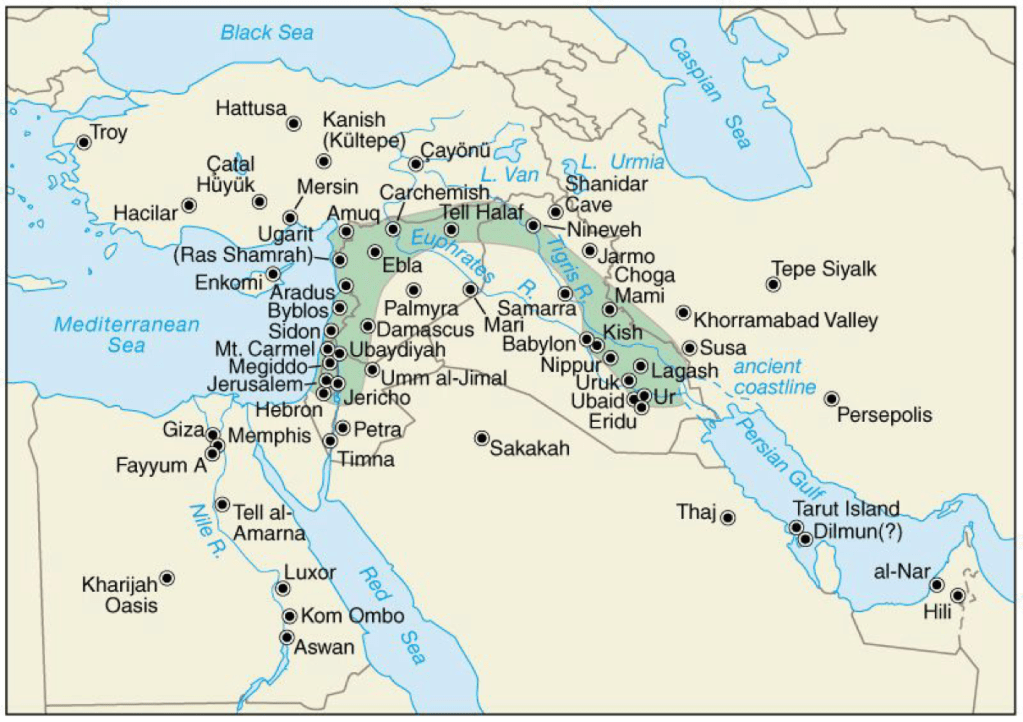
The earliest known historical figure connected with Elam, is Enmebaragsei, the penultimate king of the first Dynasty of Kish who reigned over much of Sumer, possibly as late as circa 2615 to 2600 BCE. The Sumerian King List says he reigned nine hundred years. A more realistic 15 years is probable when dividing by 60, based on the Sumerian sexagesimal system according to an unconventional chronology. Enmebaragesi is a key figure as he bridges the divide between myth and history. He is the earliest ruler to be evidenced directly from archaeology. Four inscriptions have been found with his name. En is an honorary title and not part of his original name. Me means crown; bara means ruler; and si means to fill.

Enmebaragsei fought a successful campaign against Elam, capturing Uruk, confiscating their weapons and imposing his kingship – he “who made the land of Elam submit.” He preceded the Old Elamite period dated to circa 2600 to 1500 BCE, broadly incorporating three main dynasties beginning from approximately the end of his reign. They were the combined Awan I and II era, circa 2600 to 2300 BCE and 2300 to 1930 BCE consecutively; the Shimashki (or Simaski) era, circa 1955 to 1840 BCE; and the Sukkalmah era, circa 1840 to 1500 BCE. It is the end of the 1st dynasty and the beginning of the 2nd with which we are primarily interested.

The Awan (or Avan) II dynasty was contemporary with the Mesopotamian emperor Sargon I or the Great of Akkad, reigning from 2224 to 2169 BCE. He defeated the 12th Awan king, Luh-Ishshan – who reigned circa 2194 to 2169 BCE – subjugating Susa. Historical sources concerning Elam now become more frequent, as the Mesopotamians had developed an interest in resources, such as wood, stone and metal from the Iranian plateau; thereby encouraging more frequent military excursions to the region. 

Though the foreign Guti Dynasty (refer Chapter XXIII Aram & Tyre: Spain, Portugal & Brazil) had been ruling in Sumer since 2088 BCE, it was in 2039 BCE that Akkad fell to the Gutians and with it, the final and 11th king of the Dynasty of Akkad – Shu-Dural (or Shu-Tural). The Gutium spoke an agglutinative language isolate like Sumer and Elam – refer Chapter XXIV Arphaxad & Joktan: Balts, Slavs & the Balkans; and Chapter XVIII Elam & Turkey. The Gutians ruled Sumer and Elam until 1991 BCE. The last king of nineteen, Tirigan, reigned for only 40 days, when Utu-hengal reigning from 1995 to 1988 BCE of the 5th Dynasty of Uruk defeated him – ending the Gutian Dynasty. 

Now, Utu-Hengal was the father of Ur-Namma the 1st King of the Ur III Dynasty from 1988 to 1970 BCE and he in turn, was the father of King Shulgi who reigned from 1970 to 1924 BCE. 

These names are mentioned as there is considerably more to say about Ur-Namma as we progress, who was concurrent with King Kutik-Inshushinak of Elam the next to last king before Chedorlaomer; as well as Shulgi, the 2nd King of Ur, who was a contemporary of the Elamite King Chedorlaomer, as well as the Patriarch Abraham.

Elam declared independence under the supposedly last and 17th Awan king, Kutik-Inshushinak (or Puzur-Insusinak) who reigned from 1980 to 1955 BCE, throwing off the Akkadian language and promoting the Linear Elamite script in the process. Kutik-Inshushinak conquered the future principal Elamite cities of Susa and Anshan. The Shimashki dynasty arose at the tail end of the Awan Dynasties, with an unnamed king from 1955 to 1930 BCE, so that there was a crossover of some twenty-five years. Elam endured a continual threat of attacks from the Sumerians and the Gutians. The Elamite empire state of Shimashki at this time extended into northern Iran and as far as the Caspian Sea. 

A century later in 1882 BCE, the Elamites allied with the city of Susa and led by their king Kindattu (or Kindadu) – ruler from 1892 to 1872 BCE – the 10th king of the Shimashki Dynasty, sacked Ur in Sumer with the first Akkadian King of Isin (or Issn), Ishbi-Erra from 1895 to 1862 BCE; and defeated the 5th and final king of the Ur III Dynasty, the great grandson of Shulgi: Ibbi-Suen, who reigned twenty-four years beginning in 1906 BCE.

The succeeding Sukkalmah dynasty lasting from 1840 to 1500 BCE, is so named after the ‘Great or Grand regents’, the title borne by Elamite rulers. It was also called the Epartid dynasty after the name of its founder Eparti II – also known as Ebarti (or Ebarat) who reigned from circa 1840 to 1820 BCE – and was concurrent with both the Old Assyrian Empire and the Old Babylon period in Mesopotamia. Eparti II was a contemporary of Iddin-Dagan and his reign from 1842 to 1822 BCE; the grandson of Ishbi-Erra and 3rd King of the Isin Dynasty in Akkad – marrying his daughter. 

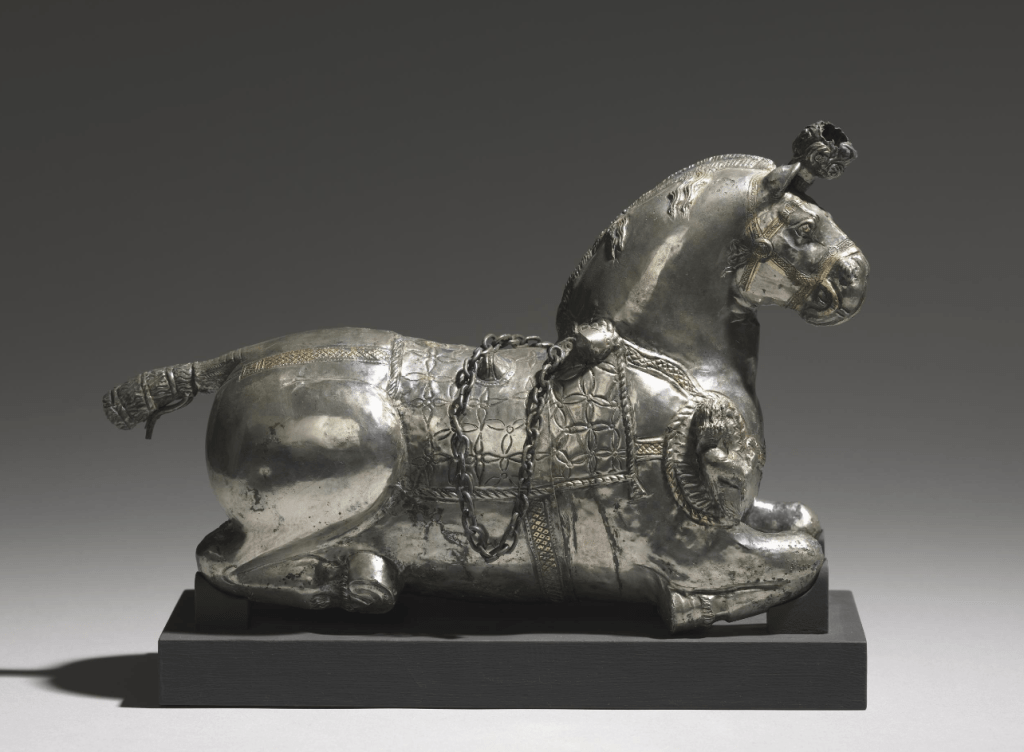
A ruler named Silhaha – (or Shilkhakha), ruling from 1820 to 1800 BCE – who described himself as ‘the chosen son of Ebarti’ is also credited as the founder of the dynasty. Ebarti II appears as the founder of the dynasty according to building inscriptions, but later kings refer to the second ruler Silhaha, Eparti’s son, in their filiation claims. Possibly, Silhaha won out over a brother; as there was an Eparti III before Shilhaha. Both their names as the founding members of the Sukkalmah Dynasty, have been found on the Gunagi silver vessels, inscribed in the Linear Elamite script. The Gunagi vessels were discovered only recently in 2004.

Notable Eparti dynasty rulers in Elam during this time include the 12th king Siruk-tuh (or Shirukduh), circa 1660 to 1640 BCE, who entered various military coalitions to contain the power of the southern Mesopotamian states; 14th ruler and a son of Siruk-tuh, Siwe-Palar-hupak, circa 1615 to 1595 BCE, who for some time was the most powerful ruler in the region, respectfully addressed as ‘Father’ by Mesopotamian kings such as Zimri-Lim of Mari.

The 16th king, Kutir-Nahhunte I (or Kedor-nakhunta), circa 1560 to 1530 BCE, exacted revenge and plundered the temples of southern Mesopotamia, as the North was under the control of the Old Assyrian Empire. In fact, Kutir-Nahhunte dealt so serious a defeat to the Babylonians that the event was remembered nearly one thousand years later in an inscription of the Assyrian king Ashurbanipal, when he conquered Susa in 660 BCE. 

Trade between the Indus Valley Civilisation and the cities of Mesopotamia and Elam have been deduced from numerous Indus artefacts; particularly in excavations in Susa, showing the origination of the post-diluvian society in the east and the subsequent migration west to the plains of Mesopotamia – refer Chapter I Noah Antecessor Nulla. Objects made with shell species that are characteristic of the Indus coast, such as Trubinella Pyrum and Fasciolaria Trapezium, have been found in the archaeological sites of Mesopotamia and Susa dated circa 2500 to 2000 BCE. Carnelian beads from the Indus were found in Susa in the tell of the citadel excavation. Exchanges seem to have waned after 1900 BCE, with the eventual demise of the Indus valley civilisation. 

It is to this backdrop that we read of an extraordinary account in Genesis chapter fourteen. For a biblical account, it is remarkably detailed and it comprises two parts. A war between a confederacy of Southern Mesopotamian kings against vassal Canaanite kings to the southwest, which we will now look at and an amazing rescue operation of Lot by his uncle, the patriarch Abraham which we will study later in Chapter XXVII Abraham & Keturah – Benelux & Scandinavia.

Genesis 14:1-11

English Standard Version

‘In the days of [1] Amraphel king of Shinar, [2] Arioch king of Ellasar, [3] Chedorlaomer king of Elam, and [4] Tidal king of Goiim [or Nations], 2 these kings made war with 

Bera king of Sodom, Birsha king of Gomorrah, Shinab king of Admah, Shemeber king of Zeboiim, and the king of Bela (that is, Zoar). 

3 And all these joined forces in the Valley of Siddim (that is, the Salt Sea) [north of the present day Dead Sea]. 

Twelve years [from 1907 to 1895 BCE] they had served Chedorlaomer, but in the thirteenth year they rebelled [1907-1895 BCE]. 

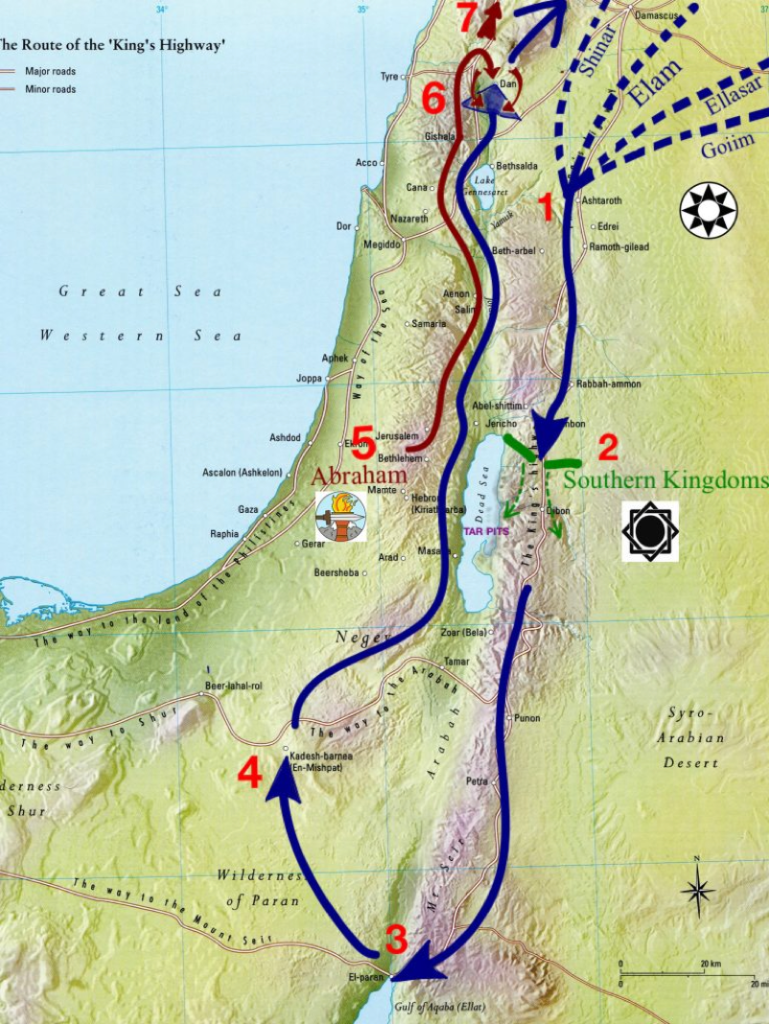
5 In the fourteenth year [1894 BCE] Chedorlaomer and the kings who were with him came and defeated the Rephaim in Ashteroth-karnaim, the Zuzim in Ham, the Emim in Shaveh-kiriathaim, 

6 and the Horites in their hill country of Seir as far as El-paran on the border of the wilderness. 7 Then they turned back and came to En-mishpat (that is, Kadesh) and defeated all the country of the Amalekites, and also the Amorites who were dwelling in Hazazon-tamar.

8 Then the king of Sodom, the king of Gomorrah, the king of Admah, the king of Zeboiim, and the king of Bela (that is, Zoar) went out, and they joined battle in the Valley of Siddim 9 with [1] Chedorlaomer king of Elam, [2] Tidal king of Goiim, [3] Amraphel king of Shinar, and [4] Arioch king of Ellasar, four kings against five. 10 Now the Valley of Siddim was full of bitumen pits, and as the kings of Sodom and Gomorrah fled, some fell into them, and the rest fled to the hill country [of Seir]. 

11 So the enemy took all the possessions of Sodom and Gomorrah, and all their provisions, and went their way.’

The five kings of the Plain, happen to represent the exact same five cities that the angels of the Lord came to destroy, sixteen years later and in the process, dramatically rescue Abraham’s nephew Lot, for the second time in his life. The references to the Repha-im, Zuz-im and Em-im are all clans of Nephilim offspring. In fact, the Horites and Amalekites are also included with these mysterious tribes. We will discuss these peoples in depth, in Chapter XXII Alpha & Omega and in Chapter XXIX Esau: The thirteenth Tribe.

Though Chedorlaomer I of Elam is listed third – he is placed first in verse nine – Chedorlaomer is the leader of the northern confederacy. The only king not stated is that of Bela or Zoar. This city and its people were the only one of the five which were not destroyed by the Creator’s wrath during the time of Lot. The time frame is particularly critical, as this battle would need to have taken place between Abraham’s birth in 1977 BCE and his death in 1802 BCE. This would align with the end of the Awan II Dynasty and the beginning of the Shimashki.
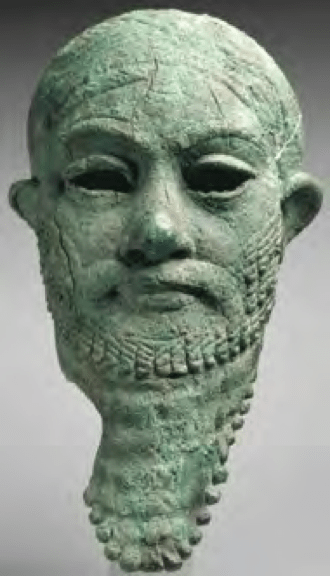
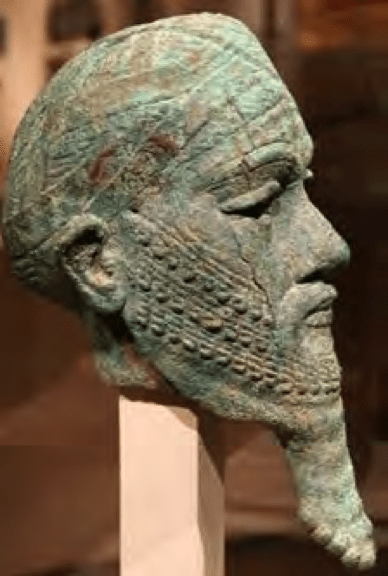
Head of Chedorlaomer (and no, it is not Tom Hanks): Height 34.3 cm in Arsenical Copper from Iran, circa 2000 BCE. 

The Metropolitan Museum of Art, 1947
Hitchcock’s Bible Names Dictionary defines the name Chedorlaomer as: a roundness of a sheaf; Smith’s Bible Dictionary as: a handful of sheaves. The full name Chedorlaomer, is not known outside the Bible, although the name is genuinely Elamite. It is composed of two elements, which do appear separately in Elamite sources. ‘Laomer’ is apparently a divine name whose Elamite form is Lagamar. ‘Chedor’ is derived from the Elamite Katir (or Kutir), meaning ‘servant’. We have seen its use in the name of the 16th Sukkalmah Dynasty King Kutir-Nahhunte. The name could also mean ‘servant of the god Lagamar’.

Easton’s Bible Dictionary – emphasis & bold mine: 

‘Many centuries before the age of Abraham, Canaan and even the Sinaitic peninsula had been conquered by Babylonian kings, and in the time of Abraham himself Babylonia was ruled by a dynasty which claimed sovereignty over Syria and Palestine. The most famous king of the dynasty was Khammu-rabi‘ (or Hammurabi), ‘who united Babylonia under one rule, and made Babylon its capital. When he ascended the throne’ – in 1894 BCE an unconventional chronology – ‘the country was under the suzerainty of the Elamites, and was divided into two kingdoms, that of Babylon (the Biblical Shinar) and that of Larsa (the Biblical Ellasar). 

The king of Larsa was Eri-Aku (“the servant of the moon-god”), the son of an Elamite prince, Kudur-Mabug’ or Durmah-ilani, ‘who is entitled “the father of the land of the Amorites.” A recently discovered tablet enumerates among the enemies of Khammu-rabi, Kudur-Lagamar (“the servant of the goddess Lagamar”) or Chedorlaomer, Eri-Aku or Arioch, and Tudkhula or Tidal. Khammu-rabi, whose name is also read Ammi-rapaltuor [for] Amraphel by some scholars, succeeded in overcoming Eri-Aku and driving the Elamites out of Babylonia.’

After the Valley of Siddim campaign, Hammurabi – or Amraphel, King of Shinar and – King of Babylon, ironically chose to go against his three former allies and circa 1893 BCE, he too rebelled. As we progress, we will possess significant support for the confirmation of the four Northern kings identities as real historical figures, as well as a credible time frame for the events recorded. It is proposed that Hammurabi was born in 1912 BCE according to an unconventional chronology and ascended the Babylonian throne in 1894 BCE, at the age of 18; following the abdication of the 5th king of the Amorite Dynasty, his father Sin-Muballit, who ruled for nineteen years from 1913 BCE. 

There is fevered debate over when Hammurabi of Babylon lived. This is convenient for scholars, in that it neatly throws a spanner in the works for conclusively supporting the accuracy of the biblical account. Hammurabi is a colourful and influential king in ancient history and thus for detractors, it is problematic to have such a clear sign of the authenticity of the biblical record; which in turn underpins the veracity of the existence of Abraham and his nephew Lot, whom both fathered peoples who have become prominent 21st century nations.

An informative paper: Abraham and Chedorlaomer Chronological, Historical and Archaeological Evidence by Gérard Gertoux; provides comprehensive research in presenting the evidence for Chedorlaomer’s identity and his place as a legitimate historical king. Where we firstly and slightly disagree, is in the chronology by sixty years; for he has presumably, dated the Exodus in the early sixteenth century, circa 1507 BCE as opposed to the middle of the fifteenth century in 1446 BCE. Secondly, he has adopted the most recent academic opinion regarding the time frame for Hammurabi’s rule; some 200 to 150 years later than proposed hereAppendix IV: An Unconventional Chronology. He states, emphasis & bold mine:

‘The only way to assess the veracity (historical truth) of this event is by determining its exact chronology (“the backbone of history”). Foremost one should know that until now Babylonian chronology, which is the best known, has not been yet fixed since Oppert (1863) made the start of the reign of Hammurabi in 2394 BCE, Thureau-Dangin (1927) lowered this date to 2003 BCE and Gasche proposed (1998) lowering it again to 1696 BCE. Hammurabi has rejuvenated about 700 years during the 20th century!

When T.G. Pinches (1856-1934), lecturer in Assyriology at University College, London and at the University of Liverpool, published the Spartoli tablets he made a link between the biblical names: Amraphel, Arioch, Chedorlaomer and Tidal (Genesis 14:1) and Hammurabi, Eri-e-Aku, Kudur-lahgamal and Tudḫula. Unfortunately this deduction has three major errors: 1) Hammurabi (1697-1654) reigned three centuries after the events, 2) his name is very different from that of Amraphel and 3) the reading “laḫ” of the sign KU [for Chedorlaomer] is not documented.’ 

These three reasons are flimsy at best and are really no more than excuses. The dating conflict regarding Hammurabi’s timeline, means it has to be reconciled with other documents to understand when he truly lived. As we will find that Hammurabi was indeed a contemporary of Chedorlaomer, Arioch and Tidal, it is fitting to parallel his timeline with them. This then resolves the dates for Hammurabi’s life.

Some scholars have made the connecting link between the names Hammurabi and Amraphel. That aside, it is not unusual for people and places to have more than one name. Amraphel may have been his given name. As he was only eighteen when he ascended the Babylonian throne after Sin-Muballit and then ruled for a lengthy forty-two years. A new name may have been chosen as monarchs have done up until our recent history. The Bible possibly records his name as Amraphel as he had just ascended the throne and was in his very first year of his reign. An accurate record, no less than his being subsequently known after his exploits as Hammurabi and recorded as such in future histories.

Etymology shows the lah is actually part of Chedorlaomer’s name, though regardless, the Kudur-…gamal is still strong evidence for the correlation with his identity. Gertoux mixes Akkadian and Elamite together, to show the kudur is Akkadian and la(h)gamal is Elamite. The Akkadian actually says: kudur-lagamar and the Elamite says: kutir-lagamol. The Greek Septuagint refers to him as Chodol-logomor and it is synonymous with the aforementioned as well as the Hebrew name: Kdorla’omer.

Gérard Gertoux – emphasis & bold mine:

Ku-du7-[ur-La-ga-mar] (line 13) reigned 36 years (line 14) over Akkad as king of Awan I (Elam). King List WB 444 (Weld-Blundell Prism) dated c. 1800 B.C. Ashmolean Museum, Oxford (number: AN1923.44).

Kudur-Lagamar’s name is located in a part of the prism which is unfortunately very damaged but three important data have been preserved: [1] a mighty king of Elam at the end of the 3rd millennium BCE, [2] whose name was Kudu[-], [3] died without a successor.

A chronological reconstruction based on synchronisms shows that among the dynasties from Sumerian lists the third and last Elamite king of the Awan I dynasty was Kudur-Lagamar.’
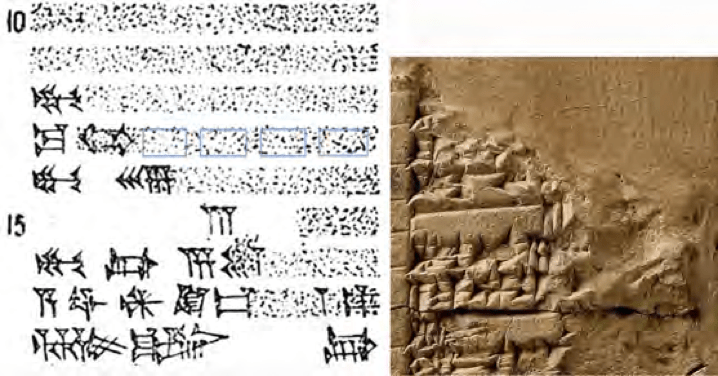
‘The three Elamite kings of the dynasty of Awan I (Puzur-Insusinak [Kutik-Insusinak 1980-1955 BCE], [-]-lu [1955-1930 BCE], Kudur-Lagamar [1929-1893 BCE]) were regarded as genuine kings of Akkad in parallel with the Sumerian kings of the dynasty of Ur III (Ur-Nammu, Sulgi). Besides they used Akkadian in their writings, in place of Elamite, and they quoted Mesopotamian gods rather than their Elamite divinities.’

The Northern kings listed in Genesis fourteen verse one could be geographical in orientation, as Larsa is south of Babylon and Elam is south of Ellasar. Some researchers believe Tidal, King of Nations refers to a very northwesterly position and the peoples of Hatti, or later the Hittites in Anatolia. This would not fit with the cluster of powers in lower Mesopotamia. Nor would assigning all four kings as Assyrian kings as at least one researcher has proposed. This writer considers the Gutians – to the direct north of Elam and northeast of Shinar – as the fourth power in the alliance. We will look at the Gutium in more detail when we study Shem’s fifth son Aram in Chapter XXIII Aram & Tyre: Spain, Portugal & Brazil. 

The three main regions for Shem’s children in Mesopotamia were the city-states of Assyria, then the Land of Shinar and thirdly, Elam. As we have learned, the land of Shinar was split into north and south – refer Chapter XVI Shem Occidentalis. The North was known as Akkad – Akkadia or Accadia – and in time as Babylonia after its main city Babel; while the South was understood as Sumer. These two regions within Shinar, were the combined offspring of Shem’s son Arphaxad** – Chapter XXIV Arphaxad & Joktan: Balts, Slavs & the Balkans

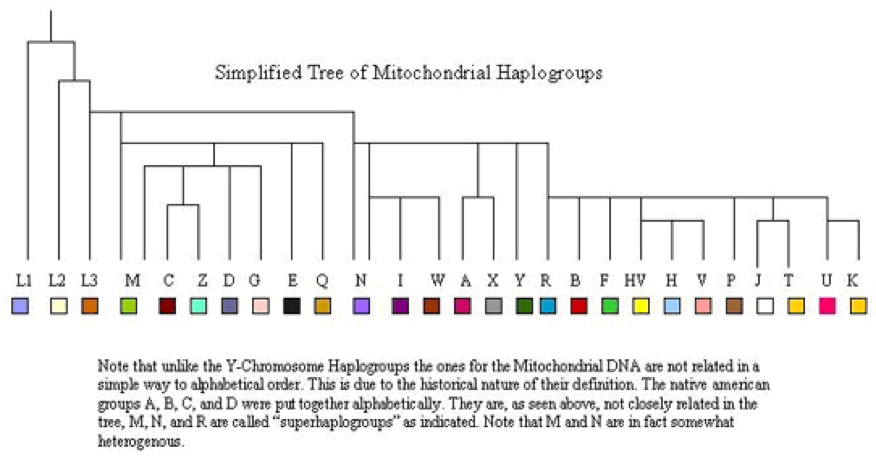
Arphaxad had two great grandsons, Peleg and Joktan. These two sons of Eber were the forefathers of a major split in the family line which we will study – and are confirmed in the Y-DNA super sub-Haplogroup split of R1 into the predominantly eastern R1a and western R1b. As an aside, the four remaining sons of Shem, while encompassing the earlier Haplogroups of G, I1 and I2 are principally identified by the paternal marker Haplogroups R1a and R1b.

There is good reason to acknowledge Peleg’s descendants comprised the northern territory of Akkad and Joktan’s children were located in Sumer. This would explain why two separate, yet closely related cultures arose though still under the banner of the Land of Shinar. Today, the same scenario has occurred with two distinct, yet adjacent regions of eastern and western nations within Europe – yet all descended from Arphaxad.**
In the British Museum there are artefacts mentioning three of the four northern kings at the Battle of the Valley of Siddim. The first two accounts record Chedorlaomer leading a rebellion with Tidal and Arioch’s son Dursrilani, a co-regent perhaps, against the king of Shinar at Babel circa 1929 to 1909 BCE, prior to the Valley of Siddim battle in 1894 BCE. The unnamed king of Shinar then strikes back. This king would have been from the Amorite Dynasty, the same as Hammurabi, the 6th king. The two possible kings are the 4th king, Apil-Sin who reigned from 1930 to 1913 BCE or the 5th king, Sin-Muballit* from 1913 to 1894 BCE. Each are viable as Apil-Sin is Hammurabi’s grandfather and Sin-Muballit, his father. A clear and reasonable motive for Hammurabi’s later actions against Chedorlaomer, suddenly becomes apparent: revenge.

The first artefact is British Museum #BM 35404 – sp II.987, which says: 

“The property and the possessions of Babylon, small and great, in their faithful counsel to Chedorlaomer [Ku-der-lah-ga-mal], king of the land of Elam”… I am a King, the son of a king… the son of a daughter of the king who on the throne of dominion have sat… Dur-sir-ilani the son of Arioch [Eri-ekua] who with the spoil of the throne of dominion sat, and with the sword was killed.”

The second artefact is British Museum #BM 34062 – sp.158 & SPII.962 and states that Chedorlaomer the king of the Elamites, turned against the king of Shinar and attacked his cities at Babil and Borsippa:

“The enemy, the Elamite, multiplied evils against Bel [Baal] and Babil [Babel] which he planned evil against… there he set his mind on destroying the temple… the enemy, the Elamite, took its goods… He decreed it’s destruction… he showed his dislike for and barred the people of Bel of Ezida… the road to Sumer. Who is this Chedorlaomer [Ku-der-lah-ga-mal], the maker of this evil? He has also gathered the Unman-Manda, and the people of Bel he has ruined… the Elamite caused his yoke to be directed down to Borsippa. He set his face against and he traversed also the road of darkness, the road to Mesku. This wicked man the Elamite, destroyed its palace, the princes he subdued with the sword, and from all the temples he carried off their goods as spoils of war, and he took them back to Elam.”

Notice Babylon is referred to as its original name of Babel – its name inherited prior to the Tower of Babel incident – Article: The Pyramid Perplexity. Chedorlaomer was a formidable opponent, a ‘wicked man’ who had subdued a future threat in Babylon and with it, their king – either Hammurabi’s father or grandfather – before amalgamating the states into a powerful coalition. 

Abraham and Chedorlaomer Chronological, Historical and Archaeological Evidence, Gérard Gertoux:

‘The Spartoli tablets (c. 650 BCE) describe [the] famous attack of Babylonia by a coalition of evil kings named Kudur-KUKUmal, [ku.ku means: carrying no mercy] king of Elam, Tudhula, king of Gutium, and Eri-Aku [king of Larsa]. This coalition of kings (Sumer, Larsa, Gutium) united under Kutur-Lagamar is quite likely, because all these kings were vassals or allies of the king of Elam (and Akkad) at that time, moreover, they came from neighbouring regions. Chedorlaomer’s route and the description of his actions show that this king came to this region near Egypt in order to maintain control over this new land trade route. 

This ambitious project had to have worried Amenemhat I (1975-1946) because southern Canaan was a big source of supply. In order to protect Egypt, Amenemhat I built the “Walls of the Ruler”. One can notice that the area of Sodom is called Sutu(m) in execration texts (then Moab after 1800 BCE)’ Moab as a son of Lot, lived where Lot had previously dwelt. 

Gertoux: ‘Thus the kings of Sumer [Ur] were oppressed on two occasions: once by Kudu [Lagamar in 1909 BCE]* king of Awan, and once by Kindadu [in 1882 BCE], king of Simaski. These two kings of Elam left a bad unforgettable memory in Sumerian annals. After the destruction of Ur the kings of Elam were blackened because they were charged with all misfortunes that occurred in the land of Sumer.’

The Pharaoh mentioned by Gertoux, Amenemhat I – who reigned from 1677 to 1647 BCE – was actually a Pharaoh while Joseph and the other sons of Jacob were dwelling in Goshen, the Nile delta region in Lower Egypt – some three hundred years after Gertoux’s orthodox, though inaccurate dating – Appendix IV: An Unconventional Chronology; and Appendix VII: Moses, the Exodus & the Red Sea Crossing – Fabrication or Fact? The wall he built was to the east of the delta region, to protect the eastern Egyptian frontier from the inhabitants of the Sinai Peninsula. As relations with the Israelites were still favourable at this time, it would seem a benevolent act and not an insidious one to contain the prospering sons of Jacob within Egypt’s boundary; though this cannot be ruled out as a partial motive. 

There is only one possible Pharaoh who ruled between 1929 BCE – the ascension of Chedorlaomer to the Elamite throne – and 1907 BCE, the first year of enforced tribute of the Transjordan City-States, who would have been concerned with the growing strength of Chedorlaomer. 

The 3rd Pharaoh of the 1st Dynasty Djer, was the the son of Hor-Aha. Prominent during Djer’s reign was his grandmother, Queen Neithhotep. Cemetery evidence confirms that she lived during the reign of Hor-Aha and succeeded him into Djer’s rule. Neithoptep had been the wife of the 1st Pharaoh, Narmer also known as Menes. The First Dynasty of Egypt is incorrectly dated as beginning circa 3100 BCE. We will return to the dating and accurate sequencing of the Egyptian dynasties in an unconventional chronology.

Djer ruled Lower and Upper Egypt beginning 1922 BCE for fifty-four years until 1868 BCE. What is interesting about this Pharaoh is that it was Djer, who met Abraham and Sarah in 1902 BCE, during the 20th year of his reign while there was a famine in Canaan. We will return to this story in Genesis chapter twelve, when we study Abraham in Chapter XXVII Abraham & Keturah – Benelux & Scandinavia

The third artifact is British Museum #BM 35496 – sp III.2. A new King of Shinar, namely Hammurabi – or Amraphel – counter-attacks Dursirilani, Tidal and Chedorlaomer:

“Samas [Babylonian sun god] the illuminator of… Merodach [chief Babylonian god]… the rulers who were not nourishing… he caused to be slain. Dur-sir-ilani, the son of Arioch [Eri-ekua]… his goods he carried off to the waters of Babylon and back to the temple of Esaggil… his son, with the weapon of his hands, like a lamb he was slaughtered… the child he cut off… Tidal [Tu-ud-hul-amar] son of Gazza… his goods he carried off to the waters of Babylon and to the temple of Esaggil… 

His son, with the weapon of his hands, fell upon him… of his dominion, before the temple of Annunit… Elam, the city of Ahhe to the land of Rabbatu, he spoiled in ruins, he set the fortress of Akkad, the whole of Borsippa…ended Chedorlaomer [Ku-der-lah-ga-mal], his son, and with the steel sword he pierced his heart… his enemy. He took the will of these kings, the lords of sin… their rebellions… who the chief of the gods, Merodach, brought his anger against.”

It entailed a series of battles over a number of years imposed by the king of Shinar, violently slaughtering the other three kings and their families and in the process… ending three separate dynasties in a bloodbath of destruction. The artefacts confirm the names of Dursirilani, Tidal, and Chedorlaomer. Possibly, Arioch was the one casualty amongst the Mesopotamian kings during Abraham’s night time raid and this is why his son Dursirilani is listed as king of Ellasar (or Larsa), at the time of Hammurabi’s betrayal and revenge. Alternatively, Dursirilani may have been a co-regent with his father Arioch.

It was shortly after the Battle of the Valley of Siddim, when Hammurabi rebelled and slaughtered his – once allies now – enemies, beginning in 1893 BCE. 

It may now explain why Amraphel is listed first in the Genesis account. Ultimately, he killed his three rivals; each powerful rulers in southern Mesopotamia. As the king of Babylon and Akkad, Amraphel added the kingship of Sumer while subjugating both the lands of Elam and the Guti.

Regarding Chedorlaomer, the International Standard Bible Encyclopaedia, on British Museum Sp. II 987 and Sp. III, 2, records: 

‘… refers to the bond of heaven extended to the four regions, and the fame which Merodach set for the Elamites in Babylon, the city of his glory. So the gods, in their faithful or everlasting counsel, decreed to Kudur-lahgumal, king of Elam their favor. He came down, and performed what was good to them, and exercised dominion in Babylon, the city of Kar-Dunias (Babylonia). When in power, however, he acted in a way which did not please the Babylonians… [between 1929 and 1894 BCE].

The less perfect fragment (Sp. III, 2) contains, near the beginning, the word hammu, and if this be, as Professor F. Hommel has suggested, part of the name Hammurabi (Amraphel), it would in all probability place the identification of Kudur-lahgumal with Chedorlaomer beyond a doubt.’

This would cement an already compelling argument for the veracity of the king of Shinar’s identity as Hammurabi, who as Amraphel, was a contemporary of and briefly allied with Chedorlaomer, when he ascended the throne in 1894 BCE. Amraphel then in turn, rebelled against Chedorlaomer, killing him in 1893 BCE for the humiliation perpetrated against probably his father, Sin-Muballit or possibly his grandfather, Apil-Sin.

King Hammurabi

Hammurabi and the Babylonian Empire, Dr Joshua J Mark, 2018 – emphasis mine:

‘Hammurabi (also known as Khammurabi and Ammurapi… assumed the throne… and expanded the kingdom to conquer all of ancient Mesopotamia. The kingdom of Babylon comprised only the cities of Babylon, Kish, Sippar, and Borsippa when Hammurabi came to the throne but, through a succession of military campaigns, careful alliances made and broken when necessary, and political manoeuvres, he held the entire region under Babylonian control by [his death].

According to his own inscriptions, letters and administrative documents from his reign, he sought to improve the lives of those who lived under his rule. He is best known in the modern day for his law code which, although not the earliest code of laws, came to serve as a model for other cultures and is thought to have influenced the laws set down by Hebrew scribes, including those from the biblical Book of Exodus.

The fifth king of the dynasty, Sin-Muballit… successfully completed many public works projects but was unable to expand the kingdom or compete with the rival city of Larsa to the south. Larsa was the most lucrative trade center on the Persian Gulf and the profits from this trade enriched the city and encouraged expansion so that most of the cities of the south were under Larsa’s control. Sin-Muballit [1913-1894 BCE] led a force against Larsa but was defeated by their king Rim Sin I [1924-1865 BCE]. At this point it is uncertain what exactly happened, but it seems that Sin-Muballit was compelled to abdicate in favor of his son Hammurabi. Whether Rim Sin I thought Hammurabi would be less of a threat to Larsa is also unknown but, if so, he would be proven wrong. 

The historian Durant writes: “At the outset of [Babylonian history] stands the powerful figure of Hammurabi, conqueror and lawgiver through a reign of forty-three years. Primeval seals and inscriptions transmit him to us partially – a youth full of fire and genius, a very whirlwind in battle [akin to Alexander the Great], who crushes all rebels, cuts his enemies into pieces, marches over inaccessible mountains, and never loses an engagement. Under him the petty warring states of the lower valley were forced into unity and peace, and disciplined into order and security by an historic code of laws.”

‘The alliances [Hammurabi] made with other states would repeatedly be broken when the king found it necessary to do so but, as rulers continued to enter into pacts with Hammurabi, it does not seem to have occurred to any of them that he would do the same to them as he had previously to others. A technique he seems to have used first in this engagement would become his preferred method in others when circumstances allowed: the damming up of water sources to the city to withhold them from the enemy until surrender or, possibly, withholding the waters through a dam and then releasing them to flood the city before then mounting an attack.’

In 1866 BCE, the undefeated Hammurabi turned against Rim-Sin I because he had refused to support Hammurabi in his ongoing war against Elam, despite pledging troops. Hammurabi with extra troops from Mari, attacked Mashkan-shapir located on the northern edge of Rim-Sin’s realm. Hammurabi’s forces reached Larsa with alacrity and after a six-month siege the city of Larsa fell. Rim-Sin I escaped from the city but was soon found, taken prisoner and died thereafter in 1865 BCE. Rim-Sin I was the 14th and last king of the Larsa Dynasty which had begun in 2128 BCE.

In 1864 BCE, Hammurabi defeated a coalition that stood against him comprising Elam, the Guti and the Marhashi kingdom in Iran. The following year, he defeated Zimri-Lim the King of Mari, an Amorite kingdom northwest of Babylon and his former ally. Hammurabi not only broke his alliance with Zimri-Lim but also for the first and only time, completely destroyed Mari rather than conquering it. Hammurabi would subdue cities, absorb them into his kingdom, repair and improve them. Scholars have debated his reasons and believe Mari’s great wealth posed a threat and was too close in proximity to Babylon’s designs on being the greatest city in Mesopotamia. 

After Mari’s destruction, Hammurabi marched on Asshur, took control of the extent of Assyria and then Eshunna; so that by 1857 BCE – five years before his death at age sixty – he ruled all of Mesopotamia.

Joshua Mark: ‘A popular title applied to Hammurabi in his lifetime was bani matim, ‘builder of the land’, because of the many building projects and canals he ordered constructed throughout the region. Documents from the time attest to the efficacy of Hammurabi’s rule and his sincere desire to improve the lives of the people of Mesopotamia… letters and administrative works… such as directives for the building of canals, food distribution, beautification and building projects, and legal issues…

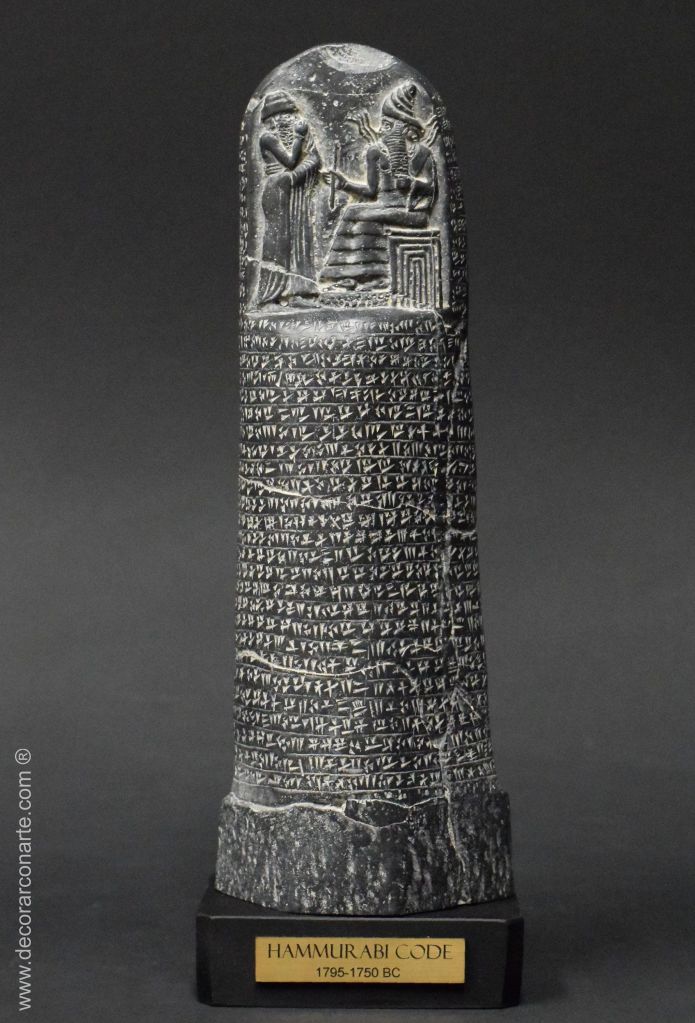
His law code is not the first such code in history (though it is often called so) but is certainly the most famous from antiquity prior to the code set down in the biblical books. The Code of Ur-Nammu… which originated with either Ur-Nammu or his son Shulgi of Ur, is the oldest code of laws in the world. Unlike the earlier Code of Ur-Nammu, which imposed fines or penalties of land, Hammurabi’s code epitomized the principle known as Lex Talionis, the law of retributive justice, in which punishment corresponds directly to the crime, better known as the concept of ‘an eye for an eye and a tooth for a tooth’, made famous from the later law code of the Old Testament… 

By [1857 BCE]… Hammurabi was old and sick. In the last years of his life his son, Samsu-Iluna’ who ruled from 1852 to 1815 BCE, ‘had already taken over the responsibilities of the throne and assumed full reign by’ 1851 BCE. ‘The conquest of Eshnunna had removed a barrier to the east that had buffered the region against incursions by people such as the Hittites and Kassites. Once that barrier was gone, and news of the great king weakening spread, the eastern tribes prepared their armies to invade. 

The vast kingdom Hammurabi had built during his lifetime began to fall apart within a year of his death, and those cities that had been part of vassal states secured their borders and announced their autonomy. None of Hammurabi’s successors could put the kingdom back together again, and first the Hittites… then the Kassites invaded. The Hittites sacked Babylon and the Kassites inhabited and re-named it. The Elamites, who had been so completely defeated by Hammurabi decades before, invaded and carried off the stele of Hammurabi’s Law Code which was discovered at the Elamite city of Susa in 1902 CE.’
Gérard Gertoux summary:

‘Kedor-Lagomer corresponds to Kudur-Lagarma which is an Akkadian transcription of Kutir-Lagamal “bearer (servant) of Lagamal”. According to the biblical text (Genesis 10:10), Shinar was a region south of Mesopotamia composed of at least three major cities: Babylon (Babel), Uruk (Erech) and Aggad (Akkad). In time the name Babylon came to mean the whole of Babylonia (Daniel 1:2). During the period [1988-1894 BCE] the two main actors in the Mesopotamian world were the kings of Ur III and the kings of [late] Awan I [/II and early Shimashki]. 

The power of these two empires [Sumer and Elam] depended on trade and therefore control of trade routes. They earned money through vassal kings who levied customs duties on traders passing through their territories and had to pay to their “emperors” for ensuring their security (by means of military force). Kudur-Lagamar probably wanted to create a new major trade route from Susa to Egypt. The route taken by Abraham and that one followed by Chedorlaomer are in agreement with the major communication routes of the time.

In this context, the capture of the goddess Nanaya [in 1909 BCE] served to justify the westward expansionist projects of Kudur-Lagamar. Indeed, change in titulatures confirm his new role of “king of Akkad”. The complete titulature of the kings of Awan I, as the one of Puzur-Insusinak, was as follows: governor (ENSI) of Susa, viceroy (GIR.NITA) of Elam and king (LUGAL) of Awan. 

Abram…at that time… lived in Ur… he must have learned that Chedorlaomer had confiscated the statue of the goddess Nanaya [Inana or Ishtar]. [As the Assyrian king] Ashurbanipal refers exactly [circa 660 BC] to Ku-du[r-Lagamar], king of Awan I, in Sumerian royal lists and as the Spartoli tablets describe the attack of Babylonia by the king of Elam named Kudur-KUKUmal, this king of Elam must have been Chedorlaomer

Prior to [1909 BCE] relationships with the kings of Elam remained cordial… From this date Kutur-Lagamar behaves as “King of Akkad” and, in the same way as Sargon of Akkad, he chose to open a new trade route to the west as far as Egypt. Titulary of Ur… kings changed… [from] King of Sumer and Akkad… [to] King of the 4 corners (of Universe) [an indicative title of the later Mede and Persian (Elamite) empire], indicating that Akkad was no longer under full control of the king of Ur… 

[In summation]: King Kudur-Lagamar [reigning from 1929 to 1893 BCE] alias Chedorlaomer, actually existed since he was the third and last king of Awan I, the only Elamite dynasty mentioned in Sumerian lists. His two main actions that have passed to posterity were the capture of Uruk’s goddess (Nanaya) and [the] looting of the city of Sodom.’

The timing of two years – as deduced from Gertoux’s chronology – prior to the beginning of the tribute being exacted on the Canaanite cities in 1907 BCE, means King Chedorlaomer of Elam with his allies, Tudhula, king of the Gutium, and Eri-Aku king of Larsa, would have fought both the kings of Babylon [Akkad] and Sumer [Uruk] to gain control of the land of Shinar. This was twenty years after Chedorlaomer came to the throne of Elam and thus gave him ample time to consolidate his power, build his military capability and win or subjugate the necessary allies. 

This means, we now know which king he fought against in Babel; it would have been Hammurabi’s father, Sin-Muballit who reigned from 1913 to 1894 BCE – the 5th king of the Amorite Babylonian Dynasty – and in Ur, King Shu-Suen ruler from 1915 to 1906 BCE; the grandson of Shulgi, the son of Ur-Nammu, the founder of the Ur III Dynasty. This explains the abdication of Sin-Muballit in favour of his son, Hammurabi who was probably chosen by Chedorlaomer as a puppet king. A role that the young Amraphel spectacularly did not follow.

Hasting’s Dictionary of the Bible, C H W Johns & James Hastings, 1909:

‘Arioch king of Ellasar was allied with Chedorlaomer in the campaign against the kings of the plain (Genesis 14:1). He has been identified with Rim-sin, king of Larsa, and consequently Ellasar is thought to be for al-Larsa, the city of Larsa. Larsa, modern Senkereh in Lower Babylonia on the east bank of the Euphrates, was celebrated for its temple and worship of the sun-god Shamash’ – Article: Monoliths of the Nephilim.

The meaning of Ellasar is very close to the meaning of Nimrod, who we will study in detail – Chapter XXI The Incredible Identity, Origin & Destiny of Nimrod. Ellasar in Hebrew means ‘rebellious God’ or ‘onto rebellion’ from the word ‘el, meaning God; or denoting motion toward and the verb sarar, ‘to be rebellious’ or ‘stubborn’, though more in attitude rather than revolt.

The city of Ellasar, is believed by most scholars to be the same city identified as Larsa. Some place it far north where the Hurrians dwelt, though this would not fit with the cluster of the remaining three cities in southern Mesopotamia. Larsa is credibly located southeast of the very ancient city of Erech or Uruk – from which Iraq derives its name – and northwest of Ur, where Abraham’s family originated – Chapter XXV Italy: Nahor & the Chaldeans

Tudhula of the Gutium is reputed to have ruled approximately from 1909 to either 1893 or possibly 1864 BCE. Support for these dates, is that Tidal may have come to power due to Chedorlaomer’s politicking and thus as one of his allies, would have assisted in the defeat of Babylon and Ur in 1909 BCE. Plus, Tidal if still king, would have died when Hammurabi defeated his coalition with Elam in 1864 BCE – or more likely earlier in 1893 BCE as discussed.

International Standard Bible Encyclopedia – emphasis mine:

‘ERI-AKU er-i-a-koo’, e-ri-a-ku’: This is the probable Sumerian reading of the well-known Babylonian name written with the characters for “servant” (Sem wardu or ardu) and the group standing for the Moon-god Sin^ (written En-zu = Zu-en), otherwise Aku, the whole meaning “servant of the Moon-god.” This ruler, who was king of Larsa [Ellasa], is generally identified with the Arioch of Genesis 14:9. Eri-Aku belonged to an Elamite family which held the throne of Larsa, a state which, in common with Babylonia itself, acknowledged the suzerainty of Elam… it may be noted, that the expression adda, “father,” probably means simply “administrator”.’

Gérard Gertoux: ‘The Akkadian name Warad-Sin, king (LUGAL) of Larsa, is written Eri-Aku (e-ri-a-ku) which is a transcription of the Sumerian name IR-AGA “servant of the lunar disc” translated into Akkadian as (u)-ar-du-a-gu… Warad-Agu, an equivalent of Warad-Sin “servant of the Moon^ (god)”.’

What is interesting here, is that Rim-Sin I was the final king of the Larsa Dynasty from 1924 BCE to 1865 BCE and he is identified with Arioch of Ellasar (or Eri-Aku of Larsa). Yet Gertoux says Warad-Sin is also Eri-Aku, or Arioch. In the king lists, Warad-Sin was the brother of Rim-Sin I and supposedly ruled for twelve years prior to his brother from 1936 BCE to 1924 BCE and as a co-regency with his father, Kudur-Marbuk. Arioch, may then be a family name, a title, or even a descriptive name.

For we learn more about Eri-Aku in the Targum of Palestine account of Genesis 14:9, in that Eri-Aku was a giant. He was called Arioch due to his great height. Arioch is derived from Arik which means ‘tall among the giants’. Even compared to other giants, Arioch was impressive and intimidating. This is an interesting piece of information, as the Northern confederacy fought against Nephilim descended Elioud giants before literally turning around to subdue the five Canaanite kings. 

Picking up the story from Genesis Six Giants, emphasis mine:

‘Of course, no ancient records exist that tell us how many giants served under Chedorlaomer. He may have had only Arioch, or that towering king plus a few others, or he may have had many such men in his service. In any event, the results of their opening battle with the Jordanian giants clearly show that he commanded a far superior force. Sweeping down the valley, his army quickly laid siege to Ashteroth Karnaim.

This chief city of the Rephaim lay in the district of Bashan,’ – refer Chapter XXII Alpha & Omega; and Chapter XXXIV Dan: The Invisible Tribe – ‘about six miles northwest of Edrei. These giants worshipped Astarte, the goddess of the crested^ moon’ – refer article: Lilith. 

‘They were greatly decimated. Continuing along what the ancients called the King’s Highway, a trade route that ran the entire length of the Trans-jordanian plateau to the Gulf of Aqabah, Chedorlaomer and his confederate kings next fell upon the enormous Zamzummim people at Ham. Some archaeologists identify this city with modern Ham, which is located in eastern Gilead, about four miles south of Irbid. 

After this, the kings from Elam and Mesopotamia attacked and cut off the terrible Emim giants at nearby Shaveh Kiriathaim. These people, described as “great and many and tall,” occupied the land that the Moabites later took. Sodom and Gomorrah, at the [northern] tip of the Salt Sea, stood next in line. They quickly got ready to defend themselves, expecting the worst. But to their amazement the invaders passed them by. Pressing on southward into the rough mountain range of Seir, Chedorlaomer waged war instead against the giant Horites.’
The land of Canaan was infested with Nephilim descended Elioud and was literally the land of the giants. In verse seven of Genesis chapter fourteen, just after the Horites are mentioned, we read about the defeated Amalekites. This reveals that the Amalekites existed before Esau had a future grandson called Amalek, some one hundred and twenty years later. Esau was to marry into and live with the Nephilim related Horites. The Amalekites of the Bible are identifiable in secular sources under a different name, which we will study. The link in Genesis fourteen between the Horites and Amalek and then Esau marrying into the Horites and naming a grandson Amalek is not only not a coincidence, but rather quite significant – refer Chapter XXIX Esau: The Thirteenth Tribe; and article: Na’amah. The Amalekites were also Elioud and related to the giant Horites.

Genesis 6 Giants: ‘He also conquered the Negev to eliminate any threat from that quarter. Having thus neutralized all the countryround, he finally turned his attention upon the rebellious Sodom and Gomorrah and their neighbors. Giving up whatever security their fortified walls afforded them, “the king of Sodom and the king of Gomorrah and the king of Admah and the king of Zeboiim and the king of Bela (that is, Zoar) came out,” notes Moses; “and they arrayed for battle against them in the valley of Siddim, against Chedorlaomer king of Elam and Tidal king of Goiim and Amraphel king of Shinar and Arioch king of Ellasar – four kings against five”.’

Regarding these ‘Canaanites’, the Book of Jasher 10:25-27, states:

‘And four men from the family of Ham went to the land of the plain; these are the names of the four men, Sodom, Gomorrah, Admah and Zeboyim. And these men built themselves four cities in the land of the plain, and they called the names of their cities after their own names. And they and their children and all belonging to them dwelt in those cities, and they were fruitful and multiplied greatly and dwelt peaceably.’

Recall, the original inhabitants of Canaan unsurprisingly, were the peoples descended from Canaan – the son of Ham – refer Chapter XII Canaan & Africa. The Nephilim arrived after the Canaanites and dwelt amongst them. The Book of Jasher claims Nimrod was the king of Shinar. We have learned that Hammurabi is undoubtedly the king in question. Nearly 5,000 years elapsed since Nimrod and the Tower of Babel incident and though longevity was on his side, it would be unlikely he was still living at this time. Such a powerful figure such as he was, he would have been still ruling and making his presence known if alive. His inferred demise points to when the Tower was ‘destroyed’ – refer Chapter XXI The Incredible Identity, Origin & Destiny of Nimrod.

Genesis 6 Giants: ‘This bold strategy to meet the invaders in the open field was decided by the surrounding treacherous terrain. Many slime pits, dug to obtain pitch or mortar for building, transversed the area. While most English translations simply describe the Valley of Siddim as being “full of slime pits,” the force of the original Hebrew language, according to Speiser, conveys to the reader a picture of “one bitumen pit after another.” The locals were most familiar with the locations of these pits. The invaders were not. 

They were also accustomed to the foul-smelling, boiling waters on whose surface floated lumps of asphalt or bitumen the size of bulls. The enemy, they hoped, would be at least a little disconcerted by the unfamiliar terrain and terrible odor and afraid of falling into the boiling waters. But the pits failed to deter the invaders. Indeed, they soon turned them to their own advantage. In the resulting warfare, many in the defenders’ ranks saw death. Alarmed by the way the battle was progressing against them, the five local kings and their armies panicked and attempted to flee the field. The slime pits, however, made retreat difficult. In the confusion, two of the fleeing kings – and presumedly many men with them – fell into the tar pits. Those who escaped fled into the mountains.

For a time some scholars disbelieved this Genesis story, labeling it a fiction. But evidence dug up by archaeologists in recent years verifies that in Abraham’s time a great destruction came upon the very places mentioned in Chedorlaomer’s invasion. 

Dr. Nelson Glueck, whose work in this area extended from 1932 until 1947, when it was halted by the Israeli-Arab disturbances, reports that the highly developed civilization which flourished here during the Middle Bronze I period (c. 2100-1900 B.C.) came to an abrupt and savage end [in 1894 BCE]. 

This well-known archaeologist found that not only the cities mentioned in Genesis but also many villages – beginning with Ashtaroth-Karnaim and proceeding south through Transjordan and the Negev to Kadesh Barnea in the Sinai – were systematically gutted. “From southern Syria to central Sinai, their fury raged,” he writes. “A punitive expedition developed into an orgy of annihilation. I found that every village in their path had been plundered and left in ruins, and the countryside laid waste. The population had been wiped out or led away into captivity. For hundreds of years thereafter, the entire area was like an abandoned cemetery, hideously unkept, with all its monuments shattered and strewn in pieces on the ground”.’

Flying Serpents and Dragons, R A Boulay, 1997 & 1999, Page 148:

‘The power of the invading kings, numbered as 800,000 according to the Haggadah, must have been overwhelming indeed, for they not only crushed these fortified cities but they never were rebuilt and the land [of the northern tip of the Dead Sea] remained unoccupied for a thousand years.’ 

Some will repeatedly take an opposing view and there will always be those who do not see what is in plain sight. Yet we have substantial verification documenting as historically authentic, the biblical account recording a devastating war.

The four northern kings were real personages and led the ancient coalition comprising city-states located in Elam, Akkad, Sumer and Aram. Acadia represented by descendants of Peleg and Sumer by those from Joktan – brothers and great grandsons from Shem’s son Arphaxad, collectively known as the land of Shinar – and with Elam and Aram, they exacted terrible revenge for disobedience by the southern kings of Ham and the Nephilim descended Elioud giants.

The modus operandi consisting of devastating destruction rings true, for we have learned how both Chedorlaomer and Hammurabi were uncompromising in their style of warfare. Possibly, a further reason why Amraphel is listed first, even while still a youngster; with his blitzkrieg style, he likely made a sizeable impression and perhaps shared the lead in the ensuing carnage; the obliteration of the opposition forces; and the desolation of their land.

“Look,” says the Teacher, “I have discovered this by adding one thing to another to find out the explanation…”

Ecclesiastes 7:27 Christian Standard Bible

“I would rather be in minority and be right, than in the majority and wrong.”

Jodi Picoult 

© Orion Gold 2020 – All rights reserved. Permission to copy, use or distribute, if acknowledgement of the original authorship is attributed to orion-gold.com

Elam & Turkey

Chapter XVIII

The first born son of Shem is Elam. We have discussed his relationship with Japheth’s son Madai and Elam’s identity as the people of Turkey in Chapter IV Central Asia – Madai & the Medes. The impact of Turkey’s influence and culture on the peoples who live adjacent is palpable in names and language, particularly on the Central Asian Republics descended from Madai

The Elamites were historically known as Persians and in the Bible, it is Elam which is being referred to and not the Persians from the nation of Iran who dwell in the region today. We have learned in the preceding chapter that Iran is descended from Lud and Lud is associated closely with Phut, Cush and Persia in the Bible – the nations respectively of Pakistan, India and Turkey. The regional powers of Lud-Iran and Elam-Turkey have crossed swords more than once. They are both descended from Noah’s son Shem and due to their location, have similarly intermingled with other people from primarily the Middle East for Iran and likewise plus Central Asia for Turkey, to each produce a complex ethnicity as shown by their paternal Haplogroups for example. 

Iran has intermixed with a son of Mizra from Ham and Turkey likewise as well as with the sons of Madai, a son from Japheth. Of the five sons of Shem, Elam and Lud are the closest genetically and so it is not a surprise that they should dwell in close proximity or share the same Islamic faith; both having one foot in two different worlds, geographically and in ideology. 

The Origin of the Nations, Herman Hoeh, 1957 – capitalisation his, emphasis mine:

‘Elam was a son of Shem (Genesis 10:22). Elam settled east of the ancient city of Babylon. Daniel the prophet spent some time in Elam (Daniel 8:2). The Elamites named the most famous mountain in their land Elwend (Rawlinson’s SEVEN GREAT MONARCHIES, chapter 1. Media). No wonder the Elamites were called the “Wends” in Europe.

Elam early invaded the Palestinian Coast of the Mediterranian (Genesis 14:1). There they named a river Elwend – the Greeks called it the Orontes. Some of them migrated into Asia Minor where they were named the people of Pul (Isaiah 66:19). From the word “Pul” comes P-o-land – the land of Pol or Pul! From Asia Minor they migrated into South Russia, then into Eastern Europe. Another tribe in ancient Elam was called KASHU (ENCYCLOPAEDIA BIBLICA…) In Poland we find the Kashub living today! (ENCYCLOPAEDIA BRITTANICA “Kashubes.”) The Greeks in ancient times said that the Elimaei dwelled northwest of them – in what is Southern Yugoslavia today (SMITH’s CLASSICAL DICTIONARY “Elimea”). 

The word Elimaei was also used by the Greeks to refer to the ancient land of “Elam” near Babylon. The Latins called the Elamites or Wends “Eneti”. Strabo, the Roman geographer wrote about the migration “of Enetians from Paphlagonia in Asia Minor TO THE ADRIATIC” – modern Yugoslavia! (GEOGRAPHY OF STRABO, page 227). Surely there is no mistaking where Elam is today.

… “Siberia!” The same word was used to refer to a part of ancient Elam, and today we have the Serbians in Yugoslavia – part of the land of Elam today! In Bible times Elam was divided between East and West, that is, between Media and Babylon. The same is true today! The Elamites are divided between East and West – between Western Europe and the Russian Iron Curtain’ – refer Chapter XXIV Arphaxad & Joktan: Balts, Slavs & the Balkans.

The former Yugoslavia and Poland do descend from Shem, though not from Elam. Pul is not a mistranslation for Phut, nor does it refer to Poland, but rather a King of Assyria as already touched upon previously – Article: Four Kings & One Queen.

Israel a History of – emphasis mine:

‘The first of Shem’s sons listed is Elam. The Elamites are recurrent throughout Scripture, and many monuments attest to their prominence in the region. Genesis 14 describes a confederation of Kings that waged war in Canaan during the times of Abram. 

One of the leaders of this alliance was Chedorlaomer, King of Elam. The Elamites capital city was Susa, or Shushan. This archaic city was located east of Mesopotamia. The Noahic Prophecy of Japheth dwelling in the tents of Shem is fulfilled through the Elamites. They later merged with other peoples, namely the Medes. The Medes were descended from Madai, a son of Japheth. These two peoples joined forces to form the Persian Empire. Thus, the descendants from two of the sons of Noah, Shem and Japheth, joined together to form one of antiquity’s most powerful empires.’

According to Abraim, the meaning of Elam in Hebrew is ‘hidden’, from the verb ‘alam ‘to be hidden.’

Abarim Publications – emphasis mine:

  • A region named Elam is first mentioned in the War of Four Against Five Kings, when Chedorlaomer, king of Elam, enters into an alliance with kings Amraphel, [Arioch] and Tidal to battle an alliance of five Canaanite kings (Genesis 14:1). 
  • The Persian province named Elam, or Elymais, mentioned by the prophets Jeremiah 49:36… and Isaiah (21:2). The author of Acts seems to distinguish between Elamites and residents of Mesopotamia [Sumer] (Acts 2:9), and Ezra equates the Elamites with the men of Susa (a Persian city – Ezra 4:9).
  • The first mentioned person named Elam is a son of Shem… It’s assumed that the Biblical narrative identifies this Elam as the ancestor of the Persians.
  • A gatekeeping Korahite (1 Chronicles 26:3).
  • A Benjaminite (1 Chronicles 8:24).
  • An Elam among the signers of the covenant (Nehemiah 10:14).
  • Two heads of families that came back from exile, both named Elam (Ezra 2:7 and 2:31). One of these is possibly the same as the next:
  • The father of Shecaniah, son of Jehiel, who confessed to Ezra that Israel’s marriage to local women was contrary to the stipulations of YHWH (Ezra 10:2).
  • A priest present at the dedication of the Jerusalem wall (Nehemiah 12:42).

‘The verb (‘alam)… can be derived of any of the following: to be hidden or concealed and noun (ta’alumma) describes a hidden thing, but all this with an emphasis on a potential coming out rather than a hiding for, say, safety or mysteriousness. Noun (‘elem) describes a young man, (‘alma) a young woman, and (‘alumim) youth(s) in general, which appears to appeal to the still “hidden” potential of youth. Likewise the noun (olam), which means forever or everlasting, appears to refer to the potential of any present situation, which may realise when time is unlimited.

For the meaning of the name Elam, NOBSE Study Bible Name List reads Hidden, and Jones’ Dictionary of Old Testament Proper Names reads Hidden Time, Eternity, but the name Elam means just as much Young Man or Always.’ Strong’s Concordance adds ‘distant’.

‘Persia: from the verb (paras), to split or divide.

The name Persia once belonged to a huge empire, and is today mostly used to refer to the geographical area in which the much smaller derivative state of Iran (… which was named after king Aryaman, who lived around the time of David in 1000 BC) is situated, as well as its culture, history and language (Farsi, from the same root as Persia, which is spoken in Iran, Afghanistan, Tajkistan and some other formerly Persian regions)’ – refer Chapter XVII Lud & Iran.

‘Cyrus descended from Achaemenes (born around 700 BC… ) who had founded the Achaemenid dynasty of rulers of Persis (now Fars province of Iran; its ancient capital was called Parsa or Persepolis by the Greeks), and was named after his paternal grandfather Cyrus the First. Cyrus the Second’s maternal grandfather Astyages was a Median king and Cyrus may actually have spent his early childhood at the Median court.

For some obscure reason, the mean Median king Astyages went to war with his noble grandson Cyrus, who by that time had just ascended the modest and feudal throne of Persis. The ensuing victory was Cyrus’, but was also strikingly reported due to a mutiny on the Median side. Cyrus marched onto to the Median capital, and kept going until he had conquered Lydia [Lud] and Babylon… Cyrus the Great, had liberated and united their countless tribes and peoples into the largest empire the world has ever seen, stretching from the Balkans to India.

Persia’s signature quality was its promotion of religious and cultural diversity via a centralized administration, and for many centuries, Cyrus’ Persia was remembered with great nostalgia as a time of worldwide peace. It was that international nostalgic memory of Persian global freedom that paved the way for the copy-cat empire of Alexander of Macedon.

The origin of the name Persia appears to be not wholly agreed upon, but an excellent candidate is the ancient root far-, from whence come the Farsi word fars, meaning horseman, and the Arabic word farash, meaning stable [for horses]. The original Persians were either part of or developed close to the Eurasian nomads of the steppes, who are credited with the domestication of the horse. Tamed horses did wonders for the advancement of civilization, as well as for warfare and the centralization of large territories. For better or worse, the horse culture was exceedingly dominant in Eurasia, and it stands to reason that the Persians proudly dubbed themselves The Horse People.

This far- root may even be related to the Greek word (peri) and Avestan pairi-, meaning “around”, from which comes the modern Persian and Arabic word firdaus, meaning garden, and ultimately our word “paradise”. This very common Greek word (peri) is also the root of words such as the adjective (perissos), meaning exceeding, and the noun (perisseuma), meaning abundance. The Greek name for Persia was (Persis), which to a Greek ear probably sounded like Land of Plenty. This is not so strange since even in our time the word Persia brings to mind surplus and luxury (think of Persian rugs, Persian cats and even the peach, or “persic”).

The roots (paras)… most basically speak of a sudden bursting forth in a wide spray of elements of something that was previously well concealed [see meaning for Elam]. Verb (paras) means to break and divide in equal shares. The name Persia probably literally means Land Of The Horses*, but because the horse became known as “one hoofed” and then simply as “a hoof” and the hoof in turn began to be known mostly for its cloven variety of domesticated cattle, the name Persia in Hebrew adopted the additional meaning of Land Of Divisions.’

An important element in Persia’s rise to immense power was their terrifyingly effective use of cavalry. Cyrus the Great’s marriage allowed Persia access to the renowned Median horses, as well as allowing the Persians to adopt a variety of military tactics borrowed from the Medes – as used by the Scythians. Many breeds were used and colours ranged from black to light chestnut. 

No mixed colours, light colours or white markings were allowed as these horses were prone to bad hoofs and becoming lame. The situation could not be solved prior to the advent of horseshoes. The Median horses were noted as being exceptionally powerful, with larger heads and proud necks. Stunning white Nisean horses – carefully trained – were used for kings and generals to stand out; denoting wealth and authority.

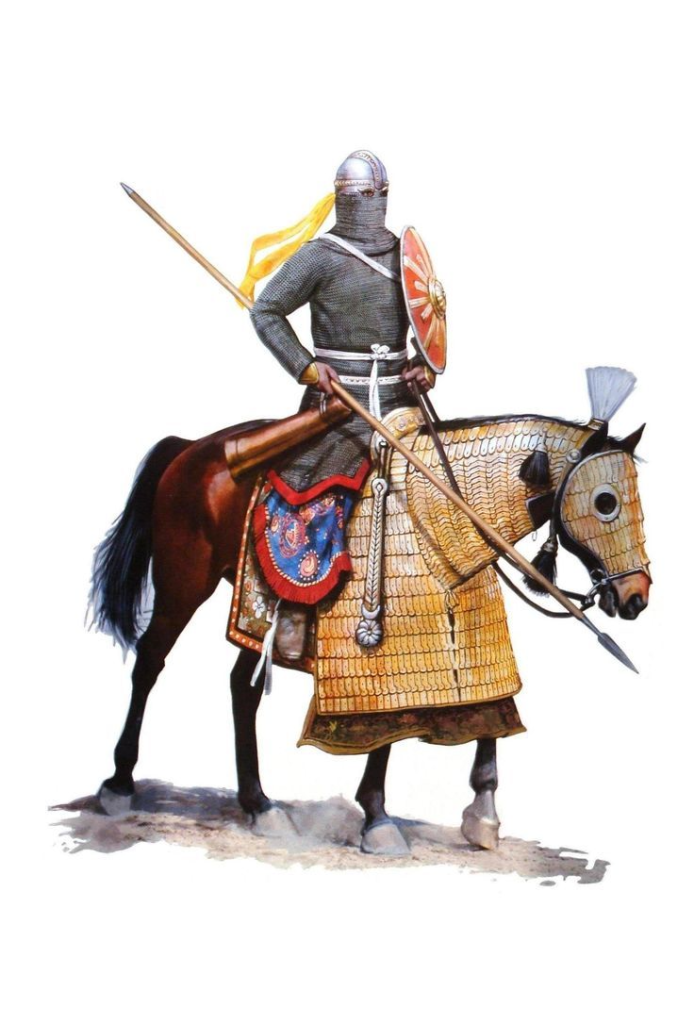
Persian cavalry soldiers used large bright, heavily embroidered saddle cloths. Stirrups and saddles were not yet in use, so they were essentially riding bareback. In time, horses acquired armour of barding, a leather and metal apron to protect their chest; a bronze plate to protect their head; and a parmeridia which was a curvature of the saddle to protect the rider’s thighs. The Assyrians and the Sakaehad used horse armour from the seventh century BCE, though the Persians first mentioned employing it in 401 BCE with Cyrus the Younger’s Guard Cavalry. Cyrus the Younger was the son of Darius II of Persia and a prince and general Satrap of Lydia and Ionia from 408 to 401 BCE, when he died during a failed attempt to oust his older brother Artaxerxes II from the Persian throne. 

The Nisean* or Nisaean horse is mentioned by Herodotus circa 430 BCE: “In front of the king went first a thousand horsemen, picked men of the Persian nation – then spearmen a thousand, likewise chosen troops, with their spearheads pointing towards the ground – next ten of the sacred horses called Nisaean, all daintily caparisoned. (Now these horses are called Nisaean, because they come from the Nisaean plain, a vast flat in Media, producing horses of unusual size.)” They were the most valuable horse breed, with a more robust head compared to Arabian breeds and the royal Nisean was the preferred mount of the Persian nobility.

The Nisean horse was so sought after, that the Greeks – particularly, the Spartans; Chapter XXIX Esau: The Thirteenth Tribe – imported Nisean horses and bred them with their native stock and many nomadic tribes, such as the Scythians also imported, captured, or stole Nisean horses. Nisean horses had several traits, which they passed on to their descendants. One of them were bony knobs on their forehead often referred to as horns. This could have been due to prominent temple bones or cartilage on their forehead and is reminiscent of a unicorn. Pure white Niseans were the horses of kings and in myth, the gods. The Assyrians started their spring campaigns, by attacking the Medes so as to take their horses. The Medes were the breeders of the first Nisean horses; though the Nisean eventually became extinct by 1200 CE.

Turkish Flag

Earlier, a number of scriptures regarding Elam were studied, when verses on Madai were read – refer Chapter IV Central Asia – Madai & the Medes. The Turk and Turko-Mongol relationship now established, we will concentrate on Elam; though we shall return to Madai towards the end of this chapter.

Ezekiel 32:24

English Standard Version

‘Elam is there, and all her multitude around her grave; all of them slain, fallen by the sword, who went down uncircumcised into the world below, who spread their terror in the land of the living; and they bear their shame with those who go down to the pit.’

Daniel 8:2

Expanded Bible

‘In this vision I saw myself in the capital city [or fortress city] of Susa, in the area [or province] of Elam. I was standing by the Ulai Canal [or Gate].’

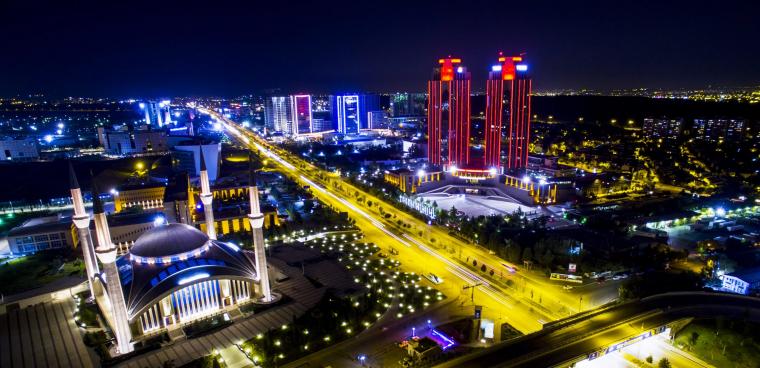
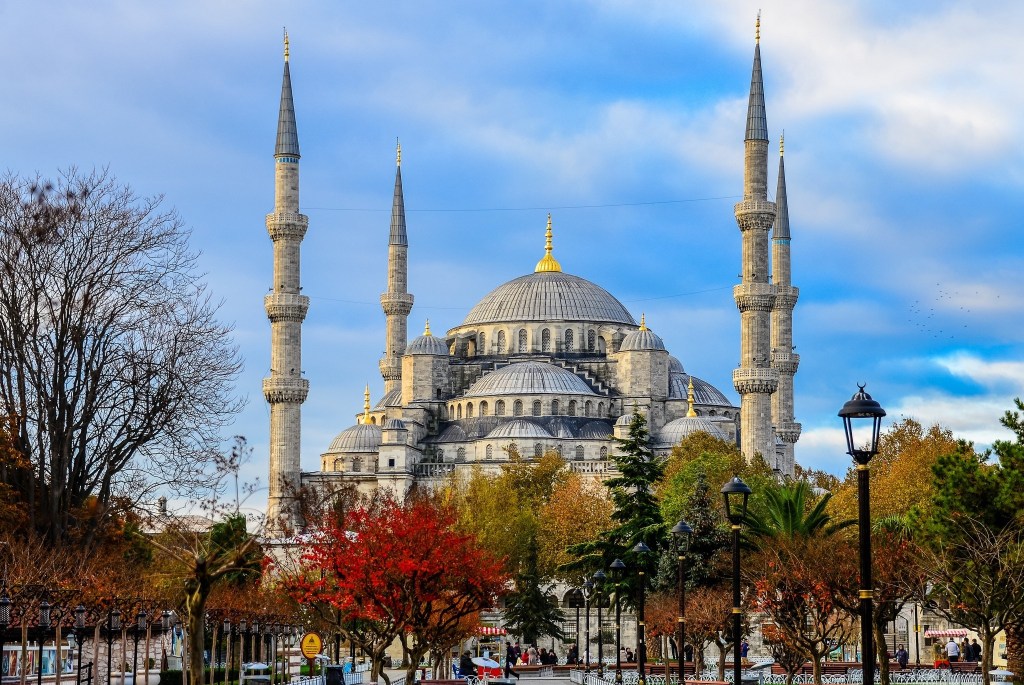
The capital of Elam was Susa or Shushan, where the christian name Susan derives. Today, the capital of Turkey since 1923 is Ankara. Historically, it was Constantinople – changed to Istanbul in 1453 – and it is this city that equates with ancient Susa.

In the Book of Jasher 7:15, we learn of the sons of Elam:

… and the sons of Elam were Shushan, Machul and Harmon.

Turkey – in Asia Minor or Anatolia – is located at the crossroads between Europe and Asia and thus has had a pivotal geographic role. The city of Troy, famous in Greek literature, was located on the present western Turkish coastline – Chapter XXVI The French & Swiss: Moab, Ammon & Haran; and Chapter XXX Judah & Benjamin – the Regal Tribes

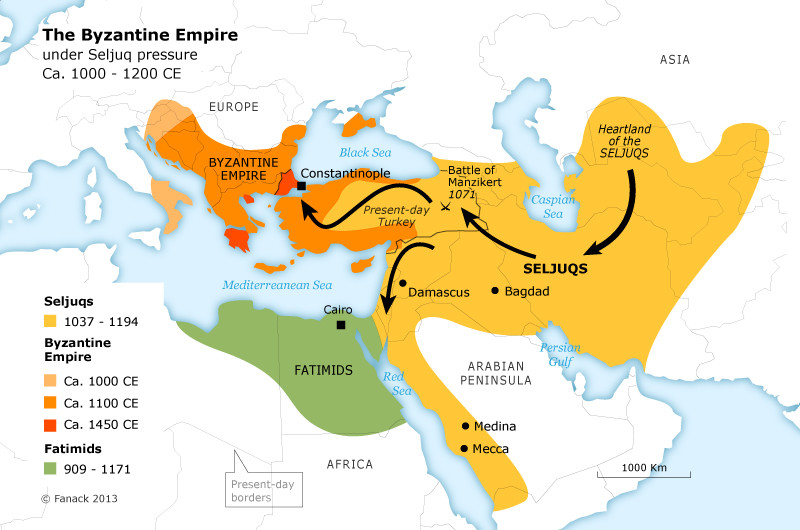
There were numerous city states in the Aegean-Asia Minor region, with the first major empires in Anatolia including the Hittite Empire in the west and the Assyrians to the east. The Persian Empire followed, then the Greco-Macedonian and of course the Roman Empire. In 330 CE, Byzantium became the new capital of the Roman Empire under Roman Emperor Constantine I – Articles: Arius, Alexander & Athanasius; and The Seven Churches – A Message for the Church of God in the Latter Days. The city was renamed Constantinople and remained the capital of the Byzantine Empire for hundreds of years. 

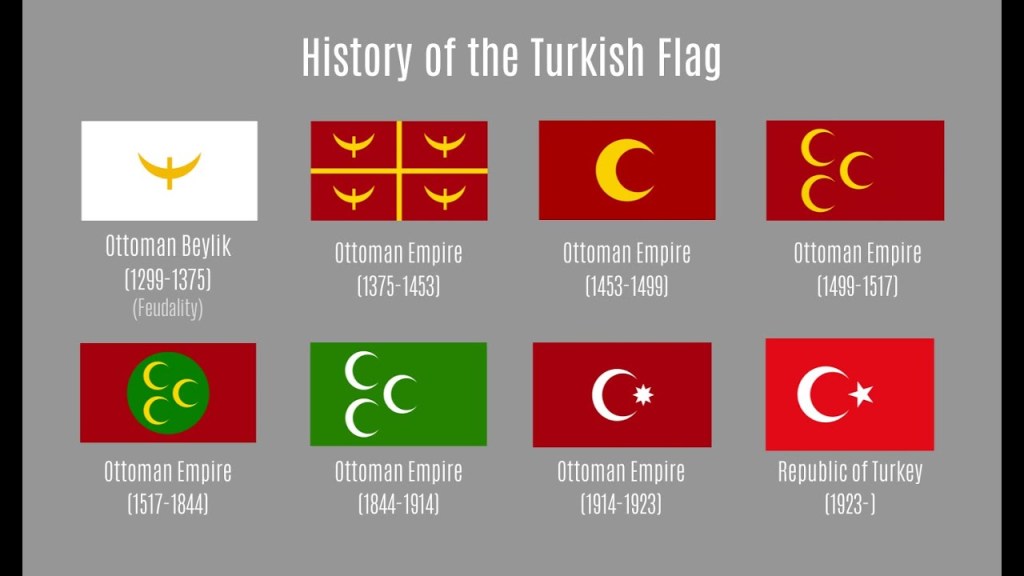
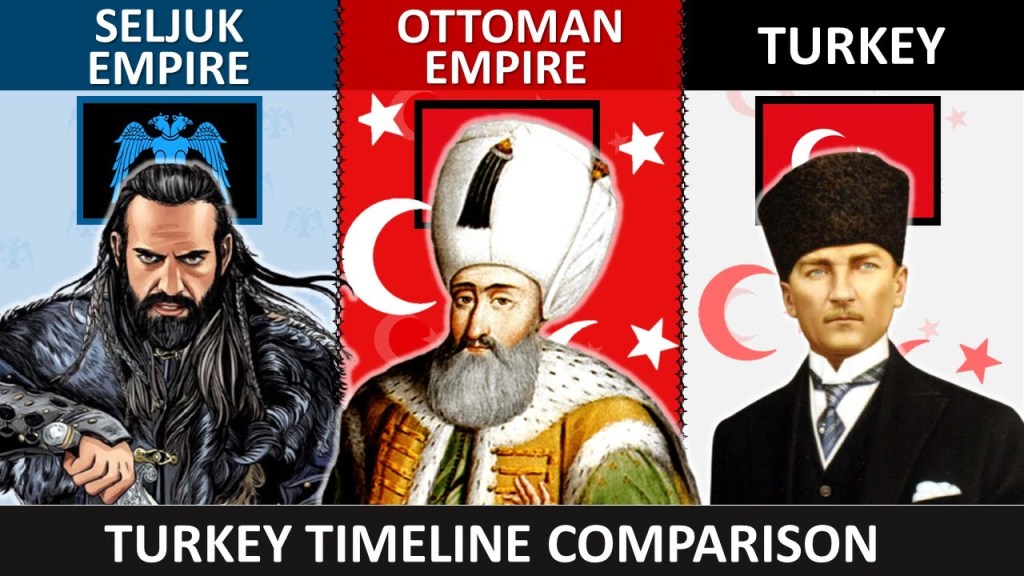
In the eleventh century, the Turks began to invade the area. The Seljuk Sultanate defeated the Byzantium army at the Battle of Manzikert in 1071. The Ottoman Empire was founded by Osman I in 1299. It would become a powerful empire and ruled for just over six hundred years. In 1453 the Ottomans, under Sultan Mehmet II – the Conqueror – defeated Constantinople after besieging it for fifty-five days bringing an end to the Byzantium Empire. From 1520 until 1566, Suleiman the Magnificent ruled and he expanded the empire to include much of the Middle East, Greece, and Hungary. In 1568, the first conflict between Russia and Turkey initiated a series of Russo-Turkish wars which endured until 1878.

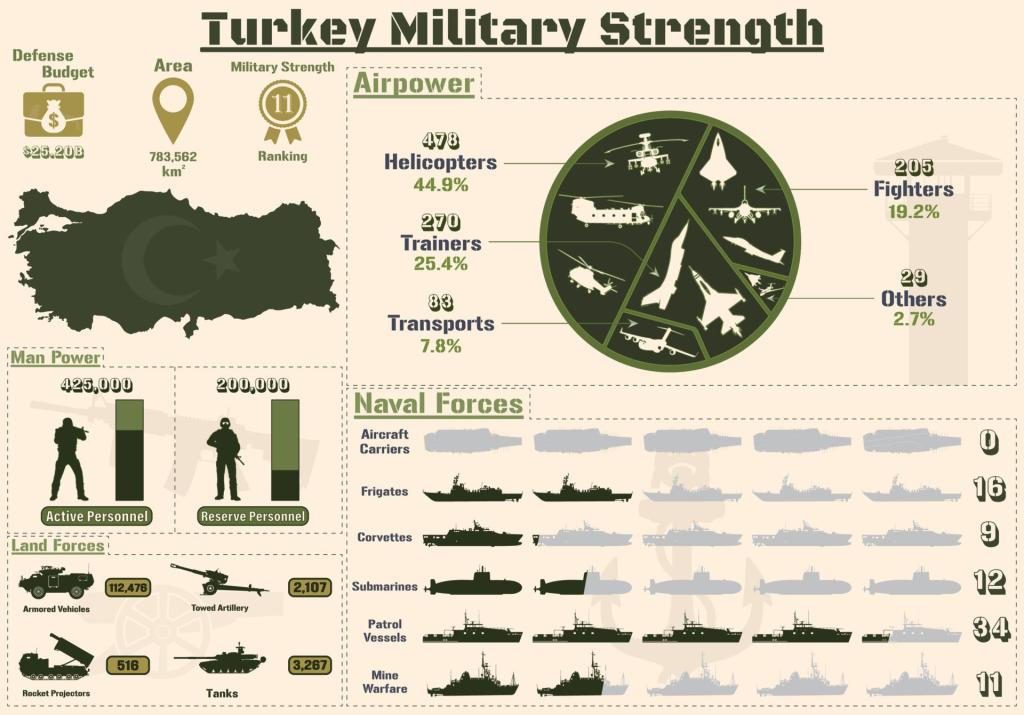
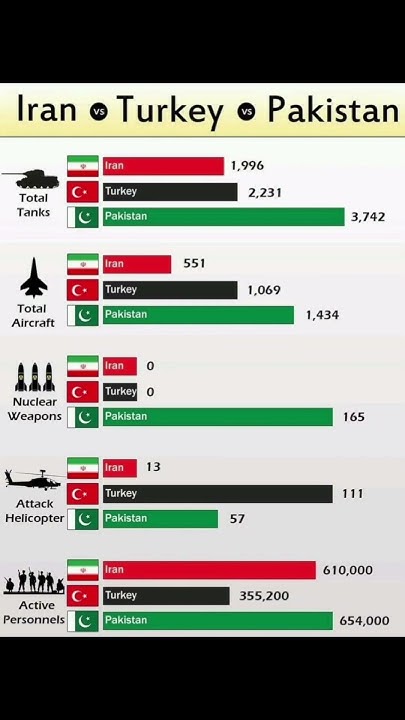
After World War I, the Ottoman Empire collapsed and Turkish war hero Mustafa Kemal founded the Republic of Turkey in 1923. He became known as Ataturk, which means ‘father of the Turks’. Turkey has the second largest standing military force in NATO, after the United States Armed Forces. The population of Turkey is 87,639,088 people, now less than neighbouring Iran. 

‘The following export product groups represent the highest dollar value in Turkish global shipments during 2021.

  1. Vehicles: US$25 billion 
  2. Machinery including computers: $20.8 billion 
  3. Iron, steel: $17.1 billion 
  4. Electrical machinery, equipment: $12 billion
  5. Gems, precious metals: $11 billion
  6. Knit or crochet clothing, accessories: $10.8 billion 
  7. Plastics, plastic articles: $10 billion 
  8. Articles of iron or steel: $8.8 billion 
  9. Mineral fuels including oil: $8.5 billion
  10. Clothing, accessories (not knit or crochet): $7.5 billion 

Iron and steel represent the fastest grower among the top 10 export categories, up by 94.1% from 2020 to 2021. In second place for improving export sales was mineral fuels including oil which rose 80.5% led by refined petroleum oils. Turkey’s shipments of gems and precious metals posted the third-fastest gain in value up by 63.8%, propelled by higher international revenues from gold.’

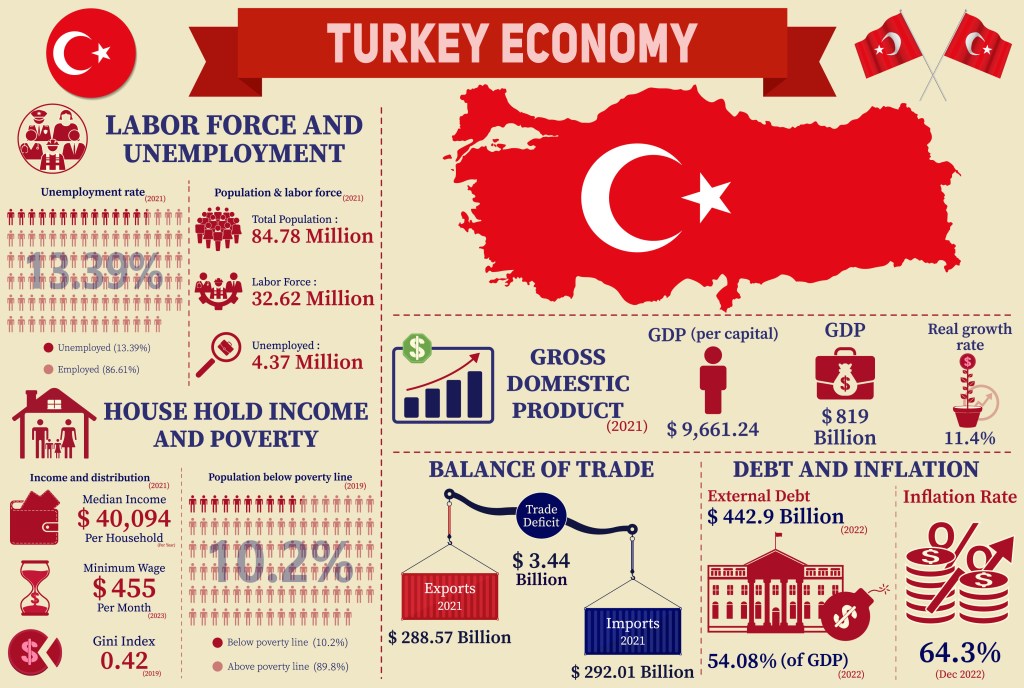
Turkey is the 19th largest economy in the world, with a GDP of $761.43 billion in 2019. Turkey has a mainly open economy, containing large industrial and service sectors. Major industries include: electronics, petrochemicals and automotive production. Ever present political turmoil, with involvement in regional armed conflicts result in financial and currency market instability for Turkey; raising questions on its economic future.

Turkish men

Oxford Bible Church, Derek Walker – emphasis & bold mine:

‘The nation’s geography is a mirror of its political and military position… [and] it is being pulled both ways. Turkey covets recognition by the West – even to the point of desiring inclusion in the European Union. Turkey as part of NATO regularly cooperates with the United States in military operations in the region. But Turkey is still a Muslim nation. The Turkish government pays the salaries of 60,000 imams and dictates the contents of their sermons, often down to the last word. 

In the years following World War I, Kemal Ataturk aggressively transformed Turkey from a theocratic autocracy into a Western-oriented democracy. In 1922 he abolished the Sultanate. In 1924 he abolished the Caliphate and religious courts. In 1925 he made it illegal to wear the fez (a symbol of backwardness). Having rid Turkey of the trappings of Islam, he adopted Western ways. In 1925 Turkey adopted the Western calendar; in 1926 the Swiss civil code and Italian penal code; in 1928 [Turkey] switched to the Latin alphabet; in 1931 the metric system; in 1934 all Turks were obliged to take a surname, and women were given the vote. After World War II Turkey joined all the main Western institutions: the UN, IMF, OECD, Council of Europe and NATO. Turkey received associate membership in the EU in 1963. A crisis began to loom as Turkey applied for full membership in 1987. Although full membership was held out as an eventual goal, it began to become clear that Turkey was not being welcomed by the EU.

Turkey’s rejection has understandably clouded its course and strategy. Turkey is still viewed by many as a Middle Eastern nation with no place in Europe. This is an affront to the Turkish people who have, for many years, rejected much of their own past in favour of becoming members of the West. While full membership negotiations continue (since 2005) their future as part of the EU is still very much in doubt.

… up to quite recently, Turkey has been an ally of Israel, trading the use of air bases while the generals signed military assistance pacts with Israel. The generals have also made sure that Turkey remains a strictly secular state according to its constitution. But their power in Turkey is now waning. Islam has again become a rising influence in Turkey, particularly through the Directorate of Religious Affairs, which is attached to the Prime Ministry and has substantial resources (including 90,000 civil service personnel) under its control. 

The Directorate supplies imam (mosque prayer leaders) to every village or town; it writes the sermons the imam must preach; it organises the pilgrimages to Mecca; it provides commentaries on religious themes and publishes the Koran and other works; it pronounces judgements on religious questions and monitors mosque building; and it provides teachers and advisors to Turkish citizens living abroad and helps oversee official religious ties with other countries. The secondary education system, the Ankara University faculty, the police force, and the media are all becoming increasingly Muslim controlled. In each succeeding election, conservative Islamic elements seem to be gaining more power.

Turkey has been integrated with the West through membership of organizations such as the Council of Europe, NATO, OECD, OSCE and G-20. But [Turkey] has also fostered close cultural, political, economic and industrial relations with the Eastern world, particularly with the Middle East and the Turkic states of Central Asia, through membership in organizations such as the Organisation of the Islamic Conference and Economic Cooperation Organization. Since Turkey is linked to Central Asia both ethnically and linguistically, it has a natural relationship to these nations, and since the breakup of the former Soviet Union she has been able to strengthen her relationship with them greatly. [Four of the five] former Soviet Central Asian republics are Turkic speaking (Tajikistan is the exception, with a Persian dialect).

There has been a recent rise of political Islam… Since gaining power they have gradually been moving Turkey away from the west and towards the east, partly because of the Party’s Islamic roots and partly because of the EU’s rejection of Turkey. If this continues, Turkey will pursue its destiny more towards Eurasia and the Islamic Middle East. If [Turkey] moves away from the West [it] will come under Russian influence, who covets Turkey as it is strategic, giving Russia control of the vital ports on the Mediterranean and the ability to outflank much of Europe [refer article: Four Kings & One Queen].’

Turkey is becoming more like Iran and is increasingly adrift from any real connection with Europe. The Bible supports this role for Elam and its eventual alliance with both the nations of Iran and Pakistan. We will look at the Old Elamite period from 2700 to 1500 BCE, when we study a prominent Biblical Elamite king, Chedorlaomer in the following chapter. 

Turkish women

The Middle Elamite period began with the rise of the Anshanite dynasties circa 1500 BCE. Their rule was characterised by an ‘Elamisation’ of language and culture in Susa, and their kings took the title ‘king of Anshan and Susa.’ Anshan was located in the mountainous north of Elam’s territory and Susa in the lowland south. The relationship between the two akin to the one today between Ankara the capital and Istanbul. The city of Susa, is one of the oldest in the world – as a past forerunner to the future Constantinople – dating back in records to at least 4200 BCE. Since its founding, Susa was known as a central power location for Elam and then later, for the related Persian dynasties. Susa’s power peaked during the Middle Elamite period between 1500 to 1100 BCE as the region’s capital.

Some of the kings married Kassite princesses. The Kassites were also a Language Isolate speaking people – arriving from the Zagros Mountains – who had taken Babylonia shortly after its sacking by the Hittite Empire in 1595 BCE. The Kassite king of Babylon Kurigalzu II – who had been installed on the throne by Ashur-uballit I of the Middle Assyrian Empire – temporarily occupied Elam circa 1320 BCE. We will look further into the relationship between the Hittites and Assyria, as well as the association of the Kassities with the Arameans. Kassite-Babylonian power waned and was defeated in 1158 BCE, by a combined force of Elam and the Middle Assyrian Empire, led by their king, Ashur-Dan I.

A couple of decades later, the Elamites were defeated by Nebuchadnezzar I of Babylon who reigned from 1125 to 1104 BCE – not to be confused with Nebuchadnezzar II written at length in the scriptures and king from 605 to 562 BCE – who sacked Susa; thus ending the greatest period of Elamite power during the Middle dynasties, but who was then himself defeated by the Assyrian king Ashur-resh-ishi I. The Elamite king – Khutelutush-In-Shushinak circa 1120 to 1110 BCE – fled to Anshan, but later returned to Susa and his brother, Shilhana-Hamru-Lagamar may have succeeded him as the last king of the Middle Elamite dynasty.

The last part of Shilhana’s name, ‘Lagamar’ is also the end suffix of Chedor-laomer. We will study this in significantly more detail – Chapter XIX Chedorlaomer & the War of Nine Kings. Following Khutelutush-In-Shushinak, the power of the Elamite empire began to wane quickly and Elam disappears into obscurity for over three centuries.

The darkening shroud enveloping Elam’s history from 1100 to 770 BCE included their migration northwards to Lake Urmia after their defeat. They resurfaced in the region as the Parsu. Assyrian sources circa 800 BCE distinguish the ‘powerful Medes.’ Medes was a broad term and included a number of peoples such as the Parsu Persians, who would cause the Elamite’s original home in the Iranian Plateau, to be renamed Persia.

In the 653 BCE, the Assyrian vassal state of Media fell to the Scythians and Cimmerians, causing the displacement of the migrating Parsu peoples to Anshan which their king Teispes had captured that same year; turning it into a kingdom under Asshurbanipal’s rule, which would a century later become the nucleus of the Achaemenid dynasty. King Asshurbanipal drove the Scythians and Cimmerians from their lands, while the Medes and Persians remained vassals of Assyria. 

We have discussed in our study about Madai, how the Persian Cyrus the Great (576-530 BCE), defeated Media at the Battle of Pasargadae in 551 BCE and became king of both kingdoms. The Median-Persian Empire endured from 550 to 330 BCE, when it was eventually conquered by Alexander the Great. 

After the fall of Persia, Elam migrated north again and now we will find them some seven hundred years later in that melting pot region of Central Asia. Madai migrated to the region known as Mongolia, east of central Asia. We would expect to find both Elam as Persia and Madai as Media in Asia and then track them both to their present locations in primarily: Turkey, Kazakhstan, Uzbekistan, Kyrgyzstan and Turkmenistan. 

We will now investigate the proposition, that the Persians of Elam were included in the Hunnic peoples of Asia and were therefore the principal body of people known as the Huns; who in turn ultimately, settled in Asia Minor evolving into the mighty Ottoman Empire, the precursor to the modern nation of Turkey. As with many discussions on peoples of the past and their link with modern nations, there is much debate and polarisation in viewpoint on the Hunnic-Turkic association. Ultimately, there is an accurate explanation and this is what we are endeavouring to discover with each and every identity.

The Huns invaded southeastern Europe circa 370 CE and for seven decades built an enormous empire in central Europe. The Huns appeared from behind the Volga and the Don Rivers. They had overrun the Alani (Chapter XV The Philistines: Latino-Hispano America), overthrew the Ostrogoths (Chapter XXV Italy: Nahor & the Chaldeans) and defeated the Visigoths (Chapter XXIII Aram & Tyre: Spain, Portugal & Brazil), in present day Romania by 376. ‘As warriors, the Huns inspired unparalleled fear. They were amazingly accurate mounted archers and their complete command of horsemanship, their ferocious charges… unpredictable retreats and the speed of their strategical movements brought them overwhelming victories.’

The Huns extended their power over many of the Germanic peoples of Europe and fought for the Romans. By 432 CE the leadership of the Huns had been centralised under a single king, Rua, or Rugila, who ruled for two years. Rua died in 434 and he was succeeded by his two nephews, Bleda and Atilla. About 445, Attila murdered his brother Bleda and in 447 continued his assault on the Eastern Roman Empire. He decimated the Balkans and forged south into Greece.

The Huns acquired gold from a. their treaties with Rome; b. plunder and c. by selling prisoners back to the Romans. This wealth altered the nature of their society. The military leadership became hereditary in Attila’s family and Attila assumed autocratic powers both in peace time and war. Atilla administered his impressive empire by means of loyal men, logades, whose function was the governing of and the collection of, the food and tribute from subject peoples.

In 451 Attila invaded Gaul but was defeated by Roman and Visigoth forces at the  Battle of the Catalaunian Plains or according to some authorities, of Maurica. This was Attila’s first and only defeat. In 452 the Huns invaded Italy but famine and pestilence forced them to abandon the campaign. In 453 Attila died and his many sons began quarrelling among themselves, whilst embarking on a series of costly struggles with their subjects who had revolted. The Huns were finally routed in 455 by a combination of Gepidae, Ostrogoths, Heruli and others in a great battle on the unidentified river Nedao in Pannonia. From there, they receded into the historical background. 

The Huns, reminiscent of the Turks over a thousand years later, were able to push deep within civilised Europe, but weren’t able to subjugate all of southern Europe. As the Turks pressed deep into eastern Europe and encroached on the Austro-Hungarian Empire, they were not able to penetrate any further west. The influence of the Huns is shown by their name left in the country of the Magyars, Hun-gary.

The Origins of the Huns – A new view on the eastern heritage of the Hun tribes. Text edited from conversations with Kemal Cemal, Turkey, 1 November 2002 – apart from Editor’s note, emphasis mine:

Editor’s Note: “When it was published in 2002 the subject of this article was somewhat controversial, and is even more so with hindsight. The views expressed here are the author’s own. They are presented here as the ‘opposition’ view of Hunnic origins, a view which did not fully tie in with prevailing thought on the Huns, and does so even less today.”

‘Although in the past the Huns are thought to have been Mongolian emigrants [descended from Madai (and Japheth) for instance], it is far more likely that they were of Turkic origin [descended from Elam (and Shem)]. This point has been repeated by thousands of historians, sinologists, turcologists, altaistics, and other researchers. Let me try to state how this idea began with Sinology researchers.

While the Mongol Empire was in the ascendancy, the power of the Catholic Church seemed to be fading, and the power of the Pope was somewhat shaky. At the same time, the Mongols opened the eastern roads for travel, and the Pope decided that there were now so many evident non-Christians that his power in the West was under severe threat. If he could convert these non-Christians he could regain power. As a result, Jesuit missionaries started to head east. Before spreading Christianity, they researched Chinese beliefs. They examined Chinese history and philosophy’ – Chapter X China: Magog, Tubal & Meshech. ‘There were some missioners who stayed twenty or thirty years in China, and built up healthy relations with Chinese scholars. They also started to translate Chinese books about both history and philosophy into Western languages. 

The first translations were made in Portuguese. Then this was translated to the other languages; Spanish, Italian and French’ – Chapter XXIII Aram & Tyre: Spain, Portugal & Brazil. ‘So the West started to learn about China from these Jesuit missionaries. 

Sin means China in Latin and Sinology means “sciences of China.” Sinology mainly started with these translations in the sixteenth century, and Turk history became part of this study. Later, the number of Sinology studies increased with many travellers from the West heading to China. The book written by de Guinness in the eighteenth century is accepted as one of the important collected studies about Turkish history. De Guinness did not know Chinese but he wrote the history of the Turks [Elam-Turkey], Mongols [Madai/Turko-Mongols] and Tartars [Madai/Turko-Mongols] by using Jesuit missionaries’ translations. It was printed under the name of “General History of Turks, Tatars and Mongols.”

All the information obtained to this point by the researchers showed that the Huns were of Turkic origin. We learn nearly all our current knowledge on the Huns from the information left to us by their contemporary neighbours. For example. It is pretty definite that their language was Turkic. Chinese annals reveals that the Hunnic language was very close to that of the Toles, a Turkic tribe. The Byzantine Empire said that the language of the Huns was the same as the languages of the Bulgars, Avars, Szeklers and other tribes which were flooding into Eastern Europe from Central Asia. The historians of that period accepted that these Turkic-speaking tribes were no different from the Huns because their languages were the same.

There are many words written in Chinese chronicles which were used by Huns in daily life. These are Turkic words. K Shiratoriy, reading a Hunnic sentence which has survived to the present day, has proven that it is Turkic. Hunnic-runic writings belonging to European Huns in Cafcasia has been read and has been proven to be of Turkic origin.

One area for backing up this claim is that of Hunnic names. It is difficult to explain the names belonging to Asian Huns because of [the] fact that they were translated into Chinese in the form of Chinese names. The meanings of the names of European Huns can be comfortably explained in Turkish. One of the most striking features related to European Hunnic names is that they can’t be explained by any language but Turkish. Some of the names belonged to the German language due to cultural interaction, but the majority of them were Turkish. The author W Bang has proven the name of Attila’s wife was Arikan in Turkish in the result on his researches. 

There are many names and captions belonging to Hunnish leaders which were written down in a document at Duro-Eropas, a border castle in Doma which was captured by the Persians in 260 BC. These names and captions are Turkish names and captions. Aramaic writing in present-day Georgia appeared in the period following the Huns’ penetration into the Caucuses. This writing was also used by the Bulgars. It is estimated that this writing was proto-Turkic and appeared before the Orkhun inscriptions in Mongolia.

The word “Hun” comes from the word “kun” in Turkish It means people, or nation.

Tengri also means ‘God’ or ‘Heaven’ in Mongolian

English
GOD
POLITICALPOWER
GIRL
WOMAN
HORSETAIL
MAGIC
ARMY
IRANIAN
GO
WOLF
STRONG/THICK
SWORD
COUNTRY
Hunnish
TENGRI
KUT
KIZ
KATUN
TUG
BÜYÜ
ORDA
TAT
BAR
BÖRI
TOK
KILIÇ
EL
Turkish
TENGRI
KUT
KIZ
KATUN/KADIN/HATUN
TUG
BÜYÜ
ORDA/ORDU
TAT
BAR
BÖRI/KURT
TOK
KILIÇ
EL

A book written by Gyula Nemeth, the world famous Hungarian historian is recommended for further reading on this subject, and will greatly expand on this short feature. There are many Turkology institutes which study… the origins of the Turks in many European countries from Denmark and Germany to Russia and Japan. All of these contain a great number of resources regarding the origin of the Huns.

As stated, many sources claim the Huns were of Mongol origin, since European Huns were somewhat mongoloid in appearance. Some historians also accept Turks as Mongols. All of these views are somewhat back-to-front. The Chinese annals say the Mongols [from Madai] always lived to the east of the lands in which the Huns [from Elam] dwelt. The Mongols originate from what is now known as Manchuria [and Mongolia].

The Mongol Empire was based on Turkic elements rather than Mongol elements. The governing structure of the empire was based on Turkic ideas of governing. The official language of the Mongol Empire was Uigrian, which is a Turkic language. Eighteen Turkish tribes played an important role in the founding of the Mongol Empire. There are many more examples that show the effects of Turkic elements on the Mongol Empire. For example, the Indian Moghal Empire was established by Turks. But many scholars still hold the belief that the Moghals were of Mongol origin. The truth is that the language of the Moghals* was Turkic, and that the founders of this empire were proud of being Turk.’

The Moghuls* may have actually been a Turko-Mongol mix of people as scholars profess, with their offspring deriving from inter-tribal wars and the intermixing of the various Central Asian tribes. For they possessed not only a Turkic physiognomy but also included distinct mongol features. More indicative of the line of Madai than Elam, who were already a mixture of the two peoples. Generally aggressive towards their enemies and competitors they were known as excellent horse riders. Their descent seems to be via Timur-i Lang – or Tamerlane, founder of the eastern Iranian Timurid dynasty – and Chagatai Khan of the Chaghatayids. From 1519, as the ruler of Kabul, in Afghanistan, their leader Babar led a great many raids on Delhi, in India. In 1526, he was invited by the nobility to invade the sub-continent. Babar created a Moghal empire which eventually sacked and controlled Delhi, making it the heart of the empire.

Kemal Cemal: ‘You can come across many researchers who say the Huns are a nation whose origin is still [a] mystery. When you look at bibliographies on internet sites you will see that those sites have referenced the work of historians such as McGovern and Haelfen-Manchen, but these sites don’t say these authors already accept the Huns as Turkic. Haelfen-Manchen accepts that Asiatic Huns were in fact of Turkic origin and says that their language was also Turkic, but he raises an objection by adding that, in his view, European Huns are not descended from Asiatic Huns.

I don’t know the reason for it but many European researchers still seem not to accept that Attila’s Huns were of Turkic stock.’

A selection of insightful comments from forums on the general question: Who are the Huns Today? Emphasis mine.

1 ‘… less educated people, and advocates of the “non-Türkic origin theory of the Huns” also often claim that “the Turks did not exist before the 6th century AD”. But these arguments have been refuted by the known fact that names evolve and change, and the same [people] during different eras are mentioned under different names.

If in today’s terminology, the linguistic family and ethnos are called ‘Turkic’, they were called “Hun, Scythian, Tatar” etc. during other periods. The main body of the Turkic people consisted of ‘Tele/Tiele’ tribes, a confederation of nine Turkic [peoples]. The main body of the Huns consisted of Uigur tribes, and the modern descendants of the Tiele people are called the Turks. The first known records of the Turks are milleniums older than the modern notions of the linguistic family and the ethnos termed ‘Turkic’. For instance, Ptolemy used “Huns, Ases/Alans” instead of “North Pontic Turks”. Therefore, the Great Hunnic Empire was founded, and governed by the Turks. The first ‘tanhu/khan’ of the empire was Teoman/Tu-Man. He was succeeded by his son Mete/Mo-Tun. According to some theories, Mete and Oghuz Khan, the semi-mythological ancestor of the Turks, are the same persona.

The Gokturks considered themselves as the continuation of the Huns as well. The European Huns also emerged as a result of the migration movements following the collapse of the Hunnic Empire. Which means that Attila [the Hun], Teoman and Mete were the leaders of the same nation.

The list of scholars who acknowledge that the Huns were Turkic covers the whole alphabet:

“Altheim.. Bazin.. Bernshtam.. Chavannes.. Clauson.. de Guignes.. Eberhard.. Franke.. Grousset.. Gumilev.. Haussig.. Hirth.. Howorth.. Klaproth.. Krouse.. Lin Gan.. Loufer.. Marquart.. Ma Zhanshan.. McGovern.. Nemeth.. Parker.. Pelliot.. Pricak (Pritsak).. Radloff.. Remusat.. Roux.. Samolin.. Szasz.. and Wang Guowei.”

‘Chinese chronicles carry numerous statements on the linguistic and ethnological closeness or identity of the many Hunnic tribes. Among them are direct statements :

“Weishi and Beishi say that the customs and language of Yueban Xiongnu were the same with the Gaoche… Beishi gives the ancestry legend of the Gaoche and links it with the Xiongnu [Huns]. Zhoushu and Beishi state that the “Tujue [Turks-Gokturks]” were a branch of the Xiongnou. Suishu states that the ancestors of Tiele were descendants of Xiongnu. Xin Tangshu says that the ancestors of Huihe [Uigur] are the Xiongnu.”

‘The Eastern and Western Huns belonged to the Ogur linguistic family, the kin of Oghuz branch. Ogur is modestly called as the Karluk group today. In the antiquity, the Ogur family was much more visible than the Oghuz, due to their proximity to the literate southern populations. In addition, the Ogur group included Tochars, Kangars, Uigurs, Karluks, Bulgars, Khazars, Sabirs, Agathyrs and Avars. Huns are the ancestors of both Turks [from Elam] and Mongols [from Madai]… Turks and Mongols were once the same [united] people and have separated into two different ethnic groups after the Huns. In the past Mongolians looked more European than they do today. The Huns were genetically Eurasiatic. Chinese historians make this very clear. 

The confusion… arises from the fact that, defeated by the Chinese (3rd century?), half the Huns stayed in their ancestral homeland (Mongolia and Manchuria) and were gradually assimilated by the Chinese, and [the] other half moved Westward. Part of those that moved West became the ancestors of the modern Turks and Mongols [Turko-Mongol, Tatar], whereas the bulk, still under the ethnonym Hun, ended up in Europe and ruled most of Europe for close to a century. These (European) Huns [the Turks] had Uralic, Iranic, Slavic and Germanic people as their loyal subjects.

The Xiongnu from Mongolia/Manchuria predates the Huns in Europe (as they showed up 200 years later from the northern borders of China). Many scholars have debated for years and many now are in… agreement that they’re the same confederacy who… reached Europe. There were many Turkic tribes in Central and Western Asia. Many of the Mongol or Manchu origin of Xiongnu have integrated with the Turks, Alans, and other nomadic people as they [traveled] further to the west.

[A] Russian anthropologist (1960s) provided the ethnological details of the skulls and remains when [visiting] the Hunnish and Avar cemetary sites in Hungary and Romania. Most of [the] Hunnish elite leaders had a striking resemblance to modern Manchurians and the elite Avar remains with central Mongolians. He… also noted that… most of calvary remains were either intermixed or homogenous. 

Overall, it had a higher Turkic related remains (70% Turkic vs 30% Mongoloid). What’s interesting about his report is that the elite skulls were purely Mongoloid [Madai] without any mixture of Turks [Elam].

Hun, Avar and conquering Hungarian nomadic groups arrived into the Carpathian Basin from the Eurasian Steppes and significantly influenced its political and ethnical landscape. In order to shed light on the genetic affinity of above groups we have determined Y chromosomal haplogroups and autosomal loci, from 49 individuals, supposed to represent military leaders. Haplogroups from the Hun… are consistent with Xiongnu ancestry of European Huns [from Elam]. Most of the Avar… individuals carry east Asian Y haplogroups [C2, K and O2]… and their autosomal loci indicate mostly unmixed Asian characteristics [of Madai].

Let’s not speculate and have too much dependency on the languages and cultures alone as much can be borrowed. At the end of the day, the genetic proof wins in understanding the origin.’

2. ‘A great way of viewing the legacy of the Turkic migration is by looking at the spread of Altai-Uralic speaking minorities and nations. Speaking about the Uralic tribes, they are believed to share some basic fundamental similarities in language with the Altaic family. Uralic languages would include Hungarian, Finnish and Estonian. The Turkic tribes and Huns introduced the Uralic tribes to the Altaic language. All the Ural-Altaic languages share certain characteristics of syntax, morphology, and phonology. The languages use constructions of the type the-by-me-hunted bear rather than “the bear that I hunted,” and a-singing I went rather than “I sang as I went.” There are few if any conjunctions. Suffixation is the typical grammatical process – that is, meaningful elements are appended to stems, as in house-my, “my house,” go-(past)-I, “I went,” house-from, “from the house,” go-in-while, “while (in the act of) going,” and house-(plural)-my-from, “from my houses.”

A great many Ural-Altaic languages require vowel harmony; the vowels that occur together in a given word must be of the same type. Thus poly, “dust,” is a possible word in Finnish because o and y are both mid vowels and hence belong to the same phonetic class; likewise polku, “path,” is possible because o and u are both vowels. Words such as polu or poly are not possible, because o and u, or o and y, are too dissimilar. Stress generally falls on the first or last syllable; it does not move about, as in the English series family, familiar, familiarity.

Typically, the Ural-Altaic languages have no verb for “to have.” Possession is expressed by constructions such as the Hungarian nekem van, “to-me there-is.” Most of the languages do not express gender, do not have agreement between parts of speech (as in French les bonnes filles, “the good girls”), and do not permit consonant clusters, such as pr-, spr-, -st, or -rst, at the beginning or end of words.

Before the Hunnic empire the Scythians had migrated west from central Asia and had adopted Iranian influence. Just like the Oghuz Turkic tribes centuries later. However, The Scythians spoke a ‘Turkisized Iranian dialect’. 

The Scythians are very hard to uncover but are believed to have included groups of Huns with major Iranian influence’ – refer Chapter XXX Judah & Benjamin – the Regal Tribes. ‘Turkic tribes were believed to have lived on the fringes of Scythia. All these Proto Turkic-Mongol groups were nomadic horse-riding pastoralists in north-east Asia, and would attack ruthlessly with bow and arrow when migrating west. The Yuezhi, Huns and Turkic-Mongol groups lived in exclusive historical periods to one another. Their descendants and precursors lived close to each other, occasionally intermarried and influenced each other culturally. 

Interestingly Yuezhi were Chinese with Indian influence, in modern-day Afghanistan, Pakistan. The Huns consisted of many smaller Turkic tribes in their advancements into Europe as well as Scythian tribes. Scythian and the Uralic tribes are also believed to form the Huns, Many Germanic tribes also formed infantry in the Hunnic empire against the Eastern and Western Roman empire. Still, the father of the Turkic peoples is considered – Bumin Qaghan the founder of the first Turkic empire called the Celestial Turks : Gokturks.

Bumin Qhagan was born [in 490 CE] just 37 years after the death of Atilla [in 453 CE]. Bumin Qhagan was the first to refer to himself as a Turk which stems origins to the word ‘Combat helmet’ in Chinese. These early Turkic people spoke old Turkic dialect and believed in Tengri – the one god represented by the Sun. Modern day Turks call God Tanri, and believe in the one god. Common Turkish and Turkic names include Atilla, Cengiz (Genghiz), Kaan (Qhagan).

It is a question whether the early Proto Turkic-Mongol groups such as the Avars, Khazars, Huns influenced the languages of the indigenous people. The Orkhon Inscriptions is the oldest preserved Old Turkic script. The inscriptions provided much of the foundation for translating other Turkic writings. The Hunnic language has been compared mainly with Turkic, Mongolic and Yeniseian languages, but bears most resemblance to this Old Turkic script.

The Huns are considered inter-related to these Turkic tribes just as much as Mongolians are. When calling Huns ‘Turk’ and ‘Turkic’ it is very misleading. The Turks mentioned are the descendants of the Gokturks of the Altai mountains hence ‘Altaic’ or the members of the Ashina [ancient Elamite city of Anshan] tribe. Also known as Asen, Asena, or Açina. It was the ruling dynasty of the old/ancient Turkic Peoples. It rose to prominence in the mid 6th century when Bumin Qaghan, revolted against the Rouran Khaganate and established the first Turkic empire.

Modern day Turks were so proud of their ancestry, they carried on the name Turk instead of Oghuz or Seljuk, the name of the Turkic Tribes in Persia and Anatolia, unlike many Central Asian nations such as the Kazakh’s, Azeri’s, Uzbeks, Turkmens, Kygrz… In fact, the Oghuz and Seljuks predecessor, the Ottomans, named their empire after their leader Osman and still referred to themselves as the ‘Turkish Empire’ for centuries. 

Modern day Turkey is more the Oghuz Turkic tribe or Oghuzstan/Seljukstan bearing heavy Persian and Byzantine influence than ‘Land of the Turks’. Therefore the term ‘Turk’ and ‘Turkic’ are very distinct. Information on the Hunnic language is contained in personal names and tribal ethnonyms. On the basis of these names, scholars have proposed that Hunnic may have been a Turkic language, a language between Mongolic and Turkic. Since the Huns consisted of many Turkic tribes, Turkic language had a huge influence in the Hunnic language.’ 

‘The Hunnic language is part of the broader Altaic languages, which is the family of Turkic and Mongolian languages. The Huns can be considered Altaic if we were to reference language and therefore Mongolian-Turkic.’

3. ‘Of course [the]… Xiongnu was [a] confederation of both Turks and Mongols. When we look at the DNA results, it’s shown clearly. Xiongnu samples divided into two [groups] as Xiong-Nu and Xiong-Nu_WE. Xiong-Nu results are closer to Mongolics and Xiong-Nu_WE results are closer to Central Asian Turkics (mostly to Uzbeks and Uighurs). And if we look [at] their descendants [the] Tian_Shan_Hun, they’re mostly closer to Turkics than any other [nation]. Short answer: Yes. Some [ignorant people] will deny this fact but facts are always painful.’

These comments with the article, support what we have learned about Elam and Madai and their close cultural, linguistic and migratory ties. They also support the assertion that the Huns were the precursors to the Turks and hence are descendants from Elam in the Bible. For there is a connecting link between the Turkic Huns and the Seljuks and Ottoman Turks.

The House of Seljuk originated from the Kinik branch of the Oghuz Turks who dwelt on the outskirts of the Muslim world, in the Yabgu Khagnate of the Oguz confederacy; located to the north of the Caspian and Aral Seas in the ninth century. In the tenth century, the Seljuks began migrating from their ancestral homeland into Persia, which became the base of the Great Seljuk Empire, after its foundation by Tughril.*

In 1071, the Seljuks defeated the Byzantines at the Battle of Manzikert, beginning the Turkification of the region. The Turkish language with Islam, was introduced to Armenia and Anatolia. The culturally Persianised Seljuks laid the foundation for a Turkic-Persian culture in Anatolia; continued by their successors the Ottomans. In 1243, the Seljuk armies were defeated by the Mongols at the Battle of Kose Dag, causing the Seljuk Empire’s power to slowly wane. One of the Turkish principalities governed by Osman I would evolve over the next two hundred years into the formidable Ottoman Empire.

In 1514, Sultan Selim I – ruler from 1512 to 1520 – vigorously expanded the empire’s southern and eastern borders, by defeating Shah Ismail I of the Safavid dynasty of Iran (Lud) in the Battle of Chaldiran. In 1517, Selim I also expanded Ottoman rule into Algeria (Mizra) and Egypt (Pathros) and created a naval presence in the Red Sea. 

A contest arose between the Ottoman and Portuguese empires to become the dominant sea power in the Indian Ocean, with a number of naval battle exchanges between the two in the Red Sea, the Arabian Sea and the Persian Gulf. The Portuguese presence in the Indian Ocean had been perceived as a threat to the Ottoman monopoly over the ancient trade routes between East Asia and Western Europe – refer Chapter XXIII Aram & Tyre: Spain, Portugal & Brazil.

The Ottoman Empire’s power and prestige peaked in the sixteenth and seventeenth centuries, particularly during the reign of Suleiman the Magnificent, from 1520 to 1566; who instituted major legislative changes relating to society, education, taxation and criminal law. The empire was often in conflict with the Holy Roman Empire in its stubborn advance towards Central Europe through the Balkans and the southern part of the Polish-Lithuanian Commonwealth. In the east during the sixteenth to eighteenth centuries, the Ottomans were invariably at war with Safavid Persia over conflicts stemming from territorial disputes or religious differences. The Ottoman wars with Persia continued until the first half of the nineteenth century. 

An Ottoman Turk Cavalryman

From the sixteenth to the early twentieth century, the Ottoman Empire fought twelve wars with the Russian Tsardom and its sprawling Empire. Primarily about Ottoman territorial expansion and consolidation in southeastern and eastern Europe – beginning with the Russo-Turkish War of 1768 to 1774 – they became more about the survival of the Ottoman Empire; which had begun to lose its strategic territories on the northern Black Sea to the advancing Russians. From the second half of the eighteenth century onwards, the Ottoman Empire began to decline and ultimately culminated in its defeat in World war I after allying with the Central Powers.

The Mongols of Madai meanwhile – on the other side of Asia – had been steadily growing in power at the same time the Seljuk Turks of Elam were migrating to Persia. The father of infamous Chingiz Khan, his real name Temujin was a powerful clan leader named Yesukhei (or Yesugei). He led the Borjigin clan but died when Temujin was still a child – poisoned by Tartars the constant enemies of the Mongols. 

Temujin attempted to seize leadership of the Borjigin, but the tribesmen refused to be led by someone so young; so he and his family were cast adrift. Temujin and his brothers grew up in the wilderness, hunting for their own food. A dispute in which he and another brother killed a half-brother called Begter over hunting spoils, cemented his position for being ruthless and a worthy contender for commander. Thus by the time he was a young man, Temujin commanded a group of Mongol warriors. He won favour with Toghril* Khan of the Kerait tribe and was able to build up his forces into a powerful army; including the Onggirat (or Qongrat tribe), the same tribe his mother and his first wife were from. Soon, he was strong enough to attack the hated Tartars, defeating them in battle, beheading all their men, taking their women and children as concubines and slaves and at the same time, avenging his father’s death. 

Later, Jamuka a childhood friend, initiated a power struggle, betraying a close bond of trust that had been established between them as children at the age of twelve. For Jamuka and Temujin had become andas, or blood brothers; cemented by drinking each others blood. Jamuka persuaded Toghril that Temujin was a threat to them all and so the two of them allied against him. In the resulting close run campaign which was protracted for a year, Temujin emerged victorious against all the odds. Jamuka fled for his life with Toghril left for dead. 

Temujin was elevated to the most powerful warrior chief and at the age of forty-four in 1206, he was declared supreme khan. He then took a completely unique title, Chingiz Khan, meaning ‘the fierce king.’ Genghis Khan – descended from Madai – is as infamous and notorious as his Elamite counterpart before him: Attila the Hun. Gengis Khan died ironically, from a fall from his horse in 1227.

A Mongol cavalryman

Another famous Mongol, was the leader Kublai Khan born in 1215. The Mongols had taken control of China through a series of conquests, ending with total domination between the reigns of Genghis Khan and Kublai Khan. Kublai Khan retained China as his base during a civil war against his brother from 1260 to 1264, for control of the Mongol Empire. From 1279, he was emperor of the Chinese as well as great khan of the Mongols. The centre of the Mongol empire shifted with him to China, fragmenting its authority farther west. Kublai Khan’s death in 1294 heralded the eventual end of the empire’s power, so that the eastern Mongols ruled only in China, Mongolia, southern Siberia, and Tibet.

The Medo-Persian Empire in the Bible is represented by the chest and arms of silver in the prophetic vision of a male statue experienced by Nebuchadnezzar – Daniel 2:32, 39. The silver reflects a lesser refinement and status compared with the previous Chaldean-Babylonian Empire which was represented by a head of gold. The silver alternatively, is a stronger metal portraying a more robust kingdom, lasting longer. The two arms represent the two political-ethnic components of the Persian Empire – Media and Persia. 

This great world empire, which followed Babylon’s rise to power, defeated the Chaldeans in 539 BCE. It was symbolised by a bear (Daniel 7:5) and also as a ram in Daniel 8:2-7, 20-21, NET:

2 ‘In this vision I saw myself in Susa the citadel, which is located in the province of Elam. In the vision I saw myself at the Ulai Canal. 3 I looked up and saw a ram with two horns standing at the canal. Its two horns were both long, but one was longer than the other. The longer one [Persia] was coming up after the shorter one [Media]. 4 I saw that the ram was butting westward, northward, and southward.’

The last verse is a clue to Elam’s historic central geographic location, which is replicated today in Turkey’s position in Asia minor; at the strategic crossroads between Europe, the Near east, the Middle East and West Asia – refer Chapter IV Central Asia – Madai & the Medes.

‘No animal was able to stand before it, and there was none who could deliver from its power. It did as it pleased and acted arrogantly. 

5 While I was contemplating all this, a male goat was coming from the west over the surface of all the land without touching the ground [with great speed]. This goat had a conspicuous horn between its eyes. 6 It came to the two-horned ram that I had seen standing beside the canal and rushed against it with raging strength.

7 I saw it approaching the ram. It went into a fit of rage against the ram and struck it and broke off its two horns. The ram had no ability to resist it. The goat hurled the ram to the ground and trampled it. No one could deliver the ram from its power [in 330 BCE]. 20 The ram that you saw with the two horns stands for the kings of Media and Persia. 21 The male goat is the king of Greece, and the large horn between its eyes is the first king [Alexander the Great].’

We read of a severe judgement on Elam in Jeremiah 49:34-38 ESV, yet a curiously enigmatic and hopeful statement about Elam’s future is written in verse thirty-nine.

“But in the latter days I will restore the fortunes of Elam, declares the Lord.”

The NET says:

“Yet in future days I will reverse Elam’s ill fortune,” says the Lord.

The BBE says:

“But it will come about that, in the last days, I will let the fate of Elam be changed, says the Lord.”

Studies have revealed that Turkish people cluster most closely with population groups such as Armenians, Chechens, Georgians, Kurds, as well as with Iran and have the lowest Fst distance with these peoples – refer Chapter XVII Lud & Iran. Benedetto in 2001, revealed that Central Asian genetic contribution to the current Anatolian mtDNA gene pool was estimated as roughly thirty percent by comparing the populations of Mediterranean Europe and the Turkic-speaking people of Central Asia.

Recall, a comparison of the Y-DNA Haplogroups for these nations in the preceding Chapter; verified Iran’s link with Turkey, though particularly Azerbaijan. Whereas Turkey, is closer to Armenia and Georgia sits between these two pairings.

A 2012 study of ethnic Turks by Hodoglugil stated – emphasis mine: 

‘[The] Turkish population has a close genetic similarity to Middle Eastern and European populations and some degree of similarity to South Asian and Central Asian populations.

Results also indicated previous population movements [such as migration, admixture] or genetic drift and that the Turkish genetic structure is unique.’ This completely supports Elam’s identity as distinct from either Persian, Arab or southeastern European. ‘A study in 2015 confirmed that previous genetic studies have generally used Turks as representatives of ancient Anatolians… results show that Turks are genetically shifted towards Central Asians, a pattern consistent with a history of mixture with populations from this region.’ 

With the rather recent development of genetic research in relation to human history and population genetics; inevitable criticism has arisen from researchers and scholars traditionally considered expert on the subject – including anthropologists, archaeologists and historians – because the formation of a ‘biological construct of historical communities’, in part, repudiates their twentieth century ‘scholarly’, error-ridden discourses. Or more bluntly: has put a lot of egg on their faces. 

Thus, the relatively new proposition of the Central Asiatic ethnic origin of the Turkish people is viewed as problematic, rather than a resolution. The status quo is perceived to be under threat and rightly so, as ensuing collisions between scholastic history which is often theory or opinion-led and fact-based scientific genetic evidence will continue to challenge incorrect orthodoxy. As one academic states: ‘… [the] clash with modern human [genetic research] raises in a new light the questions: What was a “Turk [or Turkic person]” and who are the modern Turks?’

An alarmed academia are rightly concerned that their control over unscientific hypothesising versions of history, will be exposed for the agenda-filled falsehoods it invariably represents. A similar stance will be held by some in that microcosm of historical research, which is influential in the biblical identity of nations movement. A new perception, contrary to the orthodox position is usually received as heretical, no matter how well documented – even with the solid unmoving evidence of science, underpinning it. Yet, as with all truth, it will eventually win out and have the last word.

The mtDNA Haplogroups for Turkey are similar to Iran in that the sequence for their first six groups are in common, though in marked varying percentages; for Turkey is more closely matched with Armenia. 

Turkey: H [30.8%] – J [8.9%] – U [6.3%] – K [5.6%] – HV [4.8%] –

T2 [4.3%] – U3 [3.7%] – U5 [3%] – T1 [2.8%] – H5 [2.4%] – U4 [1.9%] –

W [1.9%] – X [1.9%] – I [1.5%] – U2 [1.3%] – L [1.3%] – HVO + V [0.7%] 

Iran:      H [16.9%] – J [13.8%] – U [11.8%] – HV [7.4%] – K [7.3%] –

T2 [4.9%]

As we did not consider the Tatar mtDNA Haplogroups earlier in Chapter IV Central Asia – Madai & the Medes and only cursorily looked at the Kazakh mtDNA Haplogroups; we will include them in the comparison table.

Tatars: H [30.7%] – U5 [10.5%] – T2 [ 9.2%] – J [ 7.5%] –

U4 [7%] – K [5.7%] – HVO + V [3.9%] – U [3.1%] – T1 [2.6%] –

U3 [2.2%] – W [1.8%] – U2 [0.9%] – HV [0.9%] – I [0.9%]

                           HV     H        J      T2      U       K

Kazakhstan                 14       4        6         3      3

Iran                     7       17      14        5      12       7

Georgia              4       20       3        9        5     12

Azerbaijan         6       23       6      10        9      4

Armenia             6      30      10       5        8       7

Turkey                5       31       9        4        6       6

Tatars                  1      32       8        9        3       6

The Tatars possess an interesting resemblance to the Turks; though after everything we have investigated in Chapter IV Central Asia – Madai & the Medes and in this chapter, it is not a surprise. Coupled with the fact that the Tatars are interspersed within the Russian people. The Russian Communist leader Lenin from 1917 to 1924, is repudiated to have had Tatar blood, as well as Jewish. It is difficult to substantiate either, though Lenin was born in Ulyanovsk – known as Kazan/Simbirsk – a city where Russians and Tatars lived together.

The Kazakhs and Tatars aside, Iran and Turkey guided by the dominant H levels, bookend the mtDNA maternal Haplogroups in the wider Caucasus region. 

As previously noted when investigating Lud, ‘autosomal DNA and paternal Haplogroups show a different line of descent for Arab related peoples compared with Europeans, [yet there] must be a common denominator in the maternal lineage for Indians and Arabs from Ham with Europeans from Shem.’ As Haplogroup H is the most common group amongst Europeans and generally Arabs; followed by U and J.

According to a 2004 study by Cinnioglu, there are many Y-DNA Haplogroups present in Turkey. The majority of Haplogroups in Turkey are shared with West Asian and Caucasian neighbours, similar with Iran. 

‘The most common haplogroup in Turkey is J2 (24%), which is widespread among the Mediterranean, Caucasian and West Asian populations. Haplogroups that are common in Europe (R1b and I – 20%), South Asia (L, R2, H – 5.7%) and Africa (A, E3*, E3a – 1%) are also present. By contrast, Central Asian haplogroups are rarer (C, Q and O). However, the figure may rise to 36% if K, R1a, R1b and L (which infrequently occur in Central Asia but are notable in many other Western Turkic groups) are also included. J2 is also frequently found in Central Asia, a notably high frequency (30.4%) being observed particularly among Uzbeks.’

Turkey’s Y-DNA Haplogroups in comparison with its near neighbour, Iran.

Turkey: J2 – R1b – G2a – E1b1b – J1 – R1a – I2a1 – N – L –

T1a – Q – O – I1 – R2 – H – C – I2a2 

Iran:     J2 – R1a – G2a – R1b – J1 – E1b1b – L – Q – T1a – N1c2 – I

A Comparison of the main Haplogroups shared between these two nations, highlights that they have the first six in common. The key difference – aside from J2 and G2a – is that it is R1b which Turkey predominates in above R1a; whereas Iran has the opposite correlation. R1a in Europeans is concentrated in eastern Europe and R1b in western Europe. Both J2 and G2a are found in the Caucasus region, southern Europe and the Middle East. Yet J2 is an intermediate paternal line of descent from Ham – particularly defining men from Phut in Pakistan – and G2a an early lineage from Shem. Haplogroups J1 and E1b1b are associated heavily with the Middle East and North Africa and by degree with southern Europe from admixture. 

Turkey: J2 [24%] – R1b [16%] – G [11%] – E1b1b [11%] –

J1 [9%] – R1a [7.5%] – I2a1 [4%] – N [4%] – L [4%] –

T [2.5%] – Q [2%] – O [2%] – I1 [1%] – R2 [1%] – H [1%] –

C [1%] – I2a2 [0.5%] 

Iran: J2 [23%] – R1a [15.5%] – G [10%] – R1b [9.5%] – J1 [8.5%] –

E1b1b [6.5%] – L [6.5%] – Q [5.5%] – T [3%] – N [1%] – I [0.5%]

When we investigated Madai, we compared only those Y-DNA Haplogroups which clearly derived from Japheth – such as C, K, O and Q – and not any suspected admixture Haplogroups from Elam or others.

                              C        O       K       P      Q

Kazakhstan           40        8      10       3      2

Kyrgyzstan            14         8       2        2

Uzbekistan            12         4       7        6    

Turkmenistan                           13      10

Tajikistan                3

Thus, a comparison table of the principle Y-DNA Haplogroups for Turkey and Iran, as well as the Central Asian Republics as per the Haplogroups more closely associated with Shem of R1a, R1b and G2a or from Ham of J1, J2 and E1b1b – are now appropriate. Tajikistan is included even though it is the least representative of Madai and bears a closer similarity with Pakistan and Afghanistan – Chapter XIII India & Pakistan: Cush & Phut

                     J1       J2     R1a      R1b     G     E1b1b

Georgia      16       27        9        10     30          2

Iran              9        23     16         10      10          7

Turkey         9        24       8         16      11         11

Armenia     11       22        5        30      12           6

Azerbaijan          (31)       7         11      18           6 

Tajik                      18      44                     

Turkmen               17        7         37

Uzbek                    13      25         10                                        

Kazakh                    8        7           6          

Kyrgyz                     2      64          2    

Turkey and Iran apart from R1a and R1b percentages, are remarkably similar in their paternal descent – closer than their mtDNA maternal lineages. The Central Asians are a highly mixed peoples and as viewed on the PCA plot below, act as a genetic bridge between South Asia and Anatolia with the Caucasus. 

Recall from the previous chapter, where Iran-Lud-Ludim has interacted considerably with the Arab world, as has Turkey-Elam. Both nations have not strayed as far from their original homeland positions in ancient Mesopotamia – as Asshur, Aram and Arphaxad have – so that they have been in the pathway of peoples migrating east-west and vice-versa. Located at the crossroads of the world in Asia Minor – much like Madai in Central Asia – has meant a variety of additional paternal Haplogroups, albeit some at fractional percentages, being added to their core DNA.

The pie charts reflect the difference between the not so distantly related Greek and Turkish men. The latter having more E1b1b (from admixture) and I2a, whereas the Turks have more G2a.

Turkey and Iran share a number of similar Haplogroup percentages as brothers and sons of Shem.

We will learn in time, that Asshur and Aram are distinct from one another, yet both are more closely related to their brother Arphaxad than to either Elam or Lud. Supporting the hypothesis that nations today are more times than not, located next to those peoples they are more genetically related too. There are exceptions to the rule as we have seen already with Togarmah-Korea and Tarshish-Japan and there will be a handful more. 

Continuing the Y-DNA comparison table begun with Lud and now with the addition of Turkey.

                                    J        J1      J2     E1b1b      G      R1a     R1b      L

Uzbekistan              13                 13                                 25        10

Turkmenistan         17                 17                                   7        37

Azerbaijan               31                               6         18         7         11        2

Iran                           32       9       23         7          10       16        10        7

Armenia                   33      11       22         6          12         5        30       3

Turkey                      33       9       24         11         11         8         16       4

Georgia                    43      16       27         2          30        9        10        2

Turkey and Iran as Elam and Lud, are both Y-DNA Haplogroup J driven and specifically J2. This reveals the impact of intermixing and intermarriage with the dominant Middle Eastern J1 Haplogroup and the enigmatic J2 Haplogroup of West Asia – refer article: Y-DNA Adam & mtDNA Eve: The Genesis & Evolution of Homo sapiens.

We will confirm that the remaining three sons of Shem have more in common with each other and they are R1a or R1b dominant, with Haplogroups G2a, J1, J2 and E1b1b all varying in lesser percentages as a result of admixture.

The focus will shift from J2 and G2a of South West Asia and the Caucasus to R1a and R1b, with the addition of I1 and I2; just as the nations of the Caucasus region shifted from the J1 and E1b1b emphasis of the Arab nations of the Middle East and North Africa.

Haplogroup G is an ancient line of descent from Shem and therefore Haplogroup G2a is an important component in the Turkish paternal heredity as is R1b and a lesser degree R1a – a reverse mirror image of Iran. For while Iran’s non Hamitic sequence is R1a, G2a and R1b; it is R1b, G2a and R1a for Turkish men.

It was concluded in the previous chapter that Persian men descending from Lud, are represented by the defining marker Haplogroup R1a-Z93. Whereas for Turkish males representing the original lineage from Elam, the defining marker Haplogroup – albeit perhaps also originally stemming via Haplogroup G – is R1b-Z2103.

The second son born to Shem after Elam is Asshur. He was an influential ancestor of a mighty people and yet their true identity today is completely mis-understood by experts in the field. So eager are they in convincing the Bible student of their role as Germany which superficially fits, the fact that it is easily exposed as entirely deficient when investigated fully against genetics and hereditary autosomal DNA, completely passes over them.

Though first, the next chapter will focus on the most famous yet enigmatic king in ancient Elam’s history – where the spotlight shines on him brightly in the early chapters of the Book of Genesis.

The ear that hears and the eye that sees – the Lord has made them both.

Proverbs 20:12 New English Translation

“A lie doesn’t become truth, wrong doesn’t become right, and evil doesn’t become good, just because it’s accepted by a majority.”

Booker T Washington 

© Orion Gold 2020 – All rights reserved. Permission to copy, use or distribute, if acknowledgement of the original authorship is attributed to orion-gold.com

Four Kings & One Queen

Interest in the Kings of the North and of the South is well founded as the culmination of their prophetic roles signals the onset of the time of Jacob’s trouble and may well unravel a third of a millennia from now, near and a little beyond the horizon line of where the third century ends and the next begins.

Jeremiah 30:7

English Standard Version

‘Alas! That day is so great there is none like it; it is a time of distress for Jacob; yet he shall be saved out of it.’

The Book of Daniel chapter eleven contains the single longest prophecy in the Bible; whom biblical scholars believe chronicles principally the break up of the Greco-Macedonian Empire, before projecting into the future. The early part of the chapter references Greece or Javan – somewhat confusingly – as it is not the son of Japheth being described, but actually the Greco-Macedonian Empire and its confrontation with the existing, ruling Medo-Persian Empire ending in 331 BCE.

This writer is not convinced that it is towards the end of the chapter when a change in the players of north and south is revealed, but that it occurs earlier. Regardless, the King of the North and King of the South shift from a Mediterranean and Middle Eastern theatre of orientation, to an imminent global power struggle. 

While not stated as such in the Bible, there is of sorts, a King of the West. This nation is presently a behemoth on the world stage; yet has begun a gradual decline, as we enter the beginning of the end – refer Chapter XXXIII Manasseh & Ephraim – the Birthright Tribes. Within a sixty-five year period, the pride of its power will speedily decline, suddenly fail and with that, it cataclysmically falls.

Isaiah 7:8

English Standard Version

‘… And within sixty-five years Ephraim will be shattered from being a people.’

Its final demise will be spectacular, sudden, devastating and completed at the hands of the King of Assyria – Isaiah 7:17, Hosea 11:5. 

The United States does not play a role as the King of the North or the King of the South, though according to Bible prophecy, it will experience tragedy at the hands of the future King of the North (Article: Is America Babylon?)

The prevalent view amongst identity adherents and fundamentalist Christians has been that Asshur as ‘the instrument of God’s wrath’ in bringing true Israel to its knees in repentance past and future, is the nation of Germany and the Teuton peoples. Yet geography, history, migration, autosomal DNA, mtDNA and Y-DNA Haplogroups, reveal that the Germans are actually descended from Ishmael – refer Chapter XXVIII The True Identity & Origin of Germans & Austrians – Ishmael & Hagar

As the dominant nation from the descendants of Peleg – the son of Eber from Arphaxad a son of Shem – in Western Europe, centrally placed Germany is also the leading nation of all of Joktan’s descendants from Eber, who reside in Eastern Europe. In the future, a German led United States of Europe will ally itself with the real Assyrians – refer article: Is America Babylon? 

The prophet Balaam provides a future prophecy on these specific nations, including Kittim, a son of Javan descended from Japheth.

Numbers 24:24

English Standard Version

“But ships shall come from Kittim and shall afflict [H6031 – anah] Asshur and Eber; and he too shall come to utter destruction.”

It is in fact the Russians who descend from Asshur and are modern day Assyria – refer Chapter XX Will the Real Assyria Stand Up: Asshur & Russia. Russia is both the King of the North and the instrument of God’s wrath against true Israel and Judah. The Hebrew word for afflict, means: ‘to afflict, abase’ or ‘humble (one self).’

While Iran and France are not the future King of the North, it is insightful by the source of this montage to correctly include Russia, Moscow and its current president under the banner of the King of the North.

Zephaniah 2:13

English Standard Version

‘And he will stretch out his hand against the north and destroy Assyria, and he will make Nineveh [their capital] a desolation, a dry waste like the desert.’

Isaiah 10:5, 24-25

English Standard Version

5 ‘Woe to Assyria, the rod of my anger; the staff in their hands is my fury… 

24 Therefore thus says the Lord God of hosts: “O my people, who dwell in Zion, be not afraid of the Assyrians when they strike with the rod and lift up their staff against you as the Egyptians did. 25 For in a very little while my fury will come to an end, and my anger will be directed to their destruction.’

There are only two nations in the northern hemisphere which could at a certain point in the future, possess the military and economic wherewithal to inflict a captivity of this magnitude on the modern nations of Israel and Judah – not the modern state called Israel – Chapter XXX Judah & Benjamin – the Regal Tribes; and Chapter XXIX Esau: The Thirteenth Tribe. The nation of Germany is not in the north.

Amos 6:8-9, 11, 14

English Standard Version

‘… declares the Lord, the God of hosts: “I abhor the pride of Jacob and hate his strongholds, and I will deliver up the city and all that is in it.” … And if ten men remain in one house, they shall die… and the great house shall be struck down into fragments, and the little house into bits. “For behold, I will raise up against you a nation, O house of Israel,” declares the Lord, the God of hosts; “and they shall oppress you…”

The other contender nation China, already has its own predetermination as we will learn. The Assyrians are given their mission as Israel’s punisher from the Creator, though as they relish the role, their demise is also foretold. 

We then read further, about the King of the North in the book of Daniel. The whole of chapter eleven is worth reading, though for brevity the key verses include the following.

Daniel 11: 15, 18, 25, 29-31, 40, 42-44

English Standard Version

‘Then the king of the north shall come… Afterward he shall turn his face to the coastlands and shall capture many of them… And he shall stir up his power and his heart against the king of the south with a great army. And the king of the south shall wage war with an exceedingly great and mighty army, but he shall not stand, for plots shall be devised against him…’ 

The King of the North finds reason to attack the coastlands or isles which in the Bible are always associated with the far East. In this case, southeast Asia – Chapter VII Javan: Archipelago South East Asia & Polynesia; and Chapter IX Tarshish & Japan.

Isaiah 66:19, ESV: ‘… to Tarshish , Pul, and Lud, who draw the bow, to Tubal and Javan, to the coastlands far away, that have not heard my fame or seen my glory…’ Pul, is not a mis-translation of Put or Phut. It is a name of a king; a King of Asshur and a reference to Assyria. Russia then turns its attention to the King of the South and defeats them in their first encounter.

Daniel: ‘At the time appointed he shall return and come into the south, but it shall not be this time as it was before. For ships of Kittim shall come against him, and he shall be afraid and withdraw, and shall turn back and be enraged and take action against the holy covenant… and profane the temple and fortress, and shall take away the regular burnt offering. And they shall set up the abomination that makes desolate’ – Matthew 24:15.

The interlinear says: ‘For ships Chittim shall come…’ It does not include ‘of’ or ‘from’ in the Hebrew, though it is considered the inference is from more than of, Kittim. Sometimes translated unhelpfully, as ships from the west. Some have then mistakenly translated Kittim as being Cyprus or Italy; where they once dwelled. The people today descended from Kittim live in the Indonesian archipelago – refer Chapter VIII Kittim & Indonesia.

We learned earlier in Numbers 24:24, that ships from Kittim inflict a loss on Asshur and Eber – an alliance of Russia and a German led European Union respectively. 

At some point, Kittim is either part of those nations amalgamated as the King of the South, and Indonesia’s military and naval power is formidable enough to fight Russia and Europe, or more likely, the verse is a veiled reference to a naval cavalcade, of various confederate nations travelling from a base in Kittim. It is plausible that Indonesia could accommodate a military and naval presence within its strategically positioned islands in southeast Asian waters. This enlargement of the King of the South alliance creates a powerful navy, which wins a confrontation against the King of the North, scaring them into retreat.

Modern navies since the last century have considerably more impact in any escalation than in the past, as they not only provide an effective means of transporting soldiers and military hardware, they include the critical strike potency afforded through the combined use of aircraft carriers and their jet fighter aircraft – Article: 2050.

In wrathful response, the abomination of desolation is committed and marks the beginning of the great tribulation some thirty days later and a final three and one half year period; a prophetic 1260 days before the Son of Man returns – Daniel 9:27, 12:11, Matthew 24:21-22.

Daniel: ‘At the time of the end, the king of the south shall attack him, but the king of the north shall rush upon him like a whirlwind, with chariots and horsemen, and with many ships He shall stretch out his hand against the countries, and the land of Egypt [Mizra] shall not escape. He shall become ruler of the treasures of gold and of silver, and all the precious things of Egypt, and the Libyans [Phut] and the Cushites shall follow in his train. But news from the east and the north shall alarm him, and he shall go out with great fury to destroy and devote many to destruction.’

The King of the North clashes for a third time with the King of the South, who this time is the aggressor – bolstered by winning the second exchange – attacking Russia with its allies. Notice the King of the North is prepared with ‘many ships’ and wins the third and final conflagration. Mizra includes the Arab nations, led by Egypt, Phut is Pakistan and Cush is India – refer Chapter XIII India & Pakistan: Cush & Phut; and Chapter XIV Mizra: North Africa & Arabia. India though, is not aligned with the King of the South. Russia gains control of Arab assets, for instance oil reserves. The threat from the Northeast, is an East Asian alliance, led by China.

The dominance of Russian interest expands to include the Middle East, West Asia and South Asia. This has been the long term goal of Russia – not withstanding the failed attempt at securing a warm water port during the war in Afghanistan from 1979 to 1989 – and echoes the words of ‘Peter the Great… [who] advised his descendants to “approach as near as possible to Constantinople [Istanbul] and India [Cush]. Whoever governs there will be the true sovereign of the world. Consequently, excite continual wars, not only in Turkey [Elam], but in Persia [Iran, Lud]… Penetrate as far as the Persian Gulf [Iraq], advance as far as India” – Prisoners of Geography, Tim Marshall, 2016 & 2019, page 13.

Ezekiel 27:10

New English Translation

‘Men of Persia [Elam], Lud, and Put [Pakistan] were in your army, men of war. They hung shield and helmet on you; they gave you your splendor.’

Lud a son of Shem, is associated with Elam and Phut geographically and militarily a number of times in the Bible. All the verses which mention them are connected with warfare. It is not a surprise therefore to discover that Lud is the modern militaristic state of Iran – refer Chapter XVII Lud & Iran. Their relationship with Pakistan and Elam falls into place in the jig-saw of who comprises the King of the South; as Elam is the nation of Turkey – refer Chapter XVIII Elam & Turkey.

What is worth noting, from Ezekiel 27:10, is that Turkey, Iran and Pakistan are the heart and core of the future Islamic Alliance which is referred to in the Book of Daniel, as the King of the South. Peripheral players in this powerful confederacy, may well include other major Islamic nations of Egypt, Pathros from Mizra; Bangladesh, Havilah from Cush; and Indonesia, Kittim from Javan.

There are a handful of contender nations for leader of the Muslim world: population wise, Bangladesh and Indonesia; diplomatically wise as in gaining pan-Arab support, Egypt; militarily, Pakistan and critically, ideologically wise, Iran. The last two would appear favourites and Iran has the edge maybe, in religious zealotry and militancy compared with Pakistan. 

On the fringes because of its ostensibly more western footing is Turkey. How it would fit into an Islamic alliance is not as clear cut, unless economic clout is considered foremost. Potential leader cannot be ruled out particularly as its economy – 19th biggest GDP in the world – though marginally behind Indonesia at 16th and Saudi Arabia at 18th, is growing to soon make it the dominant nation of the South.

Turkey is included in the Next Eleven countries that are projected to dominate the global economy in the middle of the twenty-first century. Other N-11 nations coincidentally, include Bangladesh, Egypt, Indonesia, Iran and Pakistan. Most of the group’s total gross domestic product derives from Mexico, Indonesia, South Korea and yes, Turkey. These Islamic nations are the fastest growing major economies of the next generation along with the burgeoning economies of the BRIC nations, comprising Brazil, India, China and forebodingly, Russia.

India is discussed in the Bible and has a vital role to play as the Queen of the South; a powerful counterpoint to the King of the South.

Matthew 12:42

Amplified Bible

‘The Queen of the South (Sheba) [Sheba and Dedan descended from Cush] will stand up [as a witness] at the judgment against this [last] generation, and will condemn it because she came from the ends of the earth to listen to the wisdom of Solomon; and now, something greater than Solomon is here [the Messiah].’

The term Queen of the South is a tantalising clue as it confirms the status of India on the world stage, while at the same time excluding it from the future union of Islamic nations incorporating the King of the South: Turkey, Iran, Pakistan, Egypt and their allies Indonesia and Bangladesh.

An alliance led by China, is predicted in the Book of Revelation.

Revelation 16:12

English Standard Version

‘The sixth angel poured out his bowl on the great river Euphrates, and its water was dried up, to prepare the way for the kings from the east.’

The Kings from the East comprise China, North Korea or sensationally, a united Korea and much of continental southeast Asia, including Vietnam, Myanmar and Thailand. At this juncture, after the King of the North has conclusively and systematically defeated the King of the South; the Queen of the South; and having previously dispatching the King of the West; China decides to impede Russia’s rush towards total global dominion.

Revelation 16:16

English Standard Version

‘And they assembled them at the place that in Hebrew is called Armageddon [G7171 meaning: ‘the hill or city of Megiddo’ derived from G4023: ‘to surround, encompass, take possession, sieze’ and G2022: ‘to pour upon’].’

The forces of the Russian King of the North square up against the combined Chinese led Asian Kings of the East on the plains below (adjacent to) Megiddo.

China comprises three of Japheth’s sons – refer Chapter X China: Magog, Tubal & Meshech. Magog, Tubal and Meshech dwell in the North and in the East – Daniel 11:44, Revelation 16:12. Magog is described in Ezekiel chapters thirty-eight, thirty-nine and in Revelation 20:1–10. Only one nation in the world could be the correct match.

Gog is a future ruler of Magog – quite literally, a de-magog-ue.

Definition of a demagogue: ‘a person, especially an orator or political leader, who gains power and popularity by arousing the emotions, passions, and prejudices of the people.’

This leader is suspiciously reminiscent of the Nephilim – Articles: Nephilim & Elioud Giants I & II.

There are in fact two wars predicted, involving Magog:

1. Towards the end of the Great tribulation at the battle of Armageddon, Magog with the Kings of the East, faces off against the King of the North.

2. At the end of a millennial period of peace, Magog and its allies attack, not the present day state of Israel (or the Jews), but rather true Israel descended from the sons of Jacob – Chapter XXIX Esau: The Thirteenth Tribe; and Chapter XXX Judah & Benjamin – the Regal Tribes.

‘The phrase, “The Yellow Peril,” was first introduced into public print by Emperor William of Germany in 1895. In making a cartoon, representing the dangers likely to arise from the nations of the East against the West, the Emperor named the picture, ‘The Yellow Peril’ – The Yellow Peril, or the Orient vs. the Occident as viewed by modern statesmen and ancient prophets, 1911, Greenberry George Rupert (1847-1922).

The Statue in Nebuchadnezzar’s dream has been discussed previously, with the Medes of Madai, represented by the Turko-Mongols of Central Asia and the Persians of Elam, represented by Turkey, being the chest and arms of silver.

The head of gold is synonymous with the Babylonian Chaldean Empire from the descendants of Abraham’s brother Nahor, represented by Italy.

The torso and thighs of bronze equate to the Greco-Macedonian Empire, the descendants of Abraham’s nephew Lot (Moab and Ammon), represented by France – Chapter XXV Italy: Nahor & the Chaldeans; and Chapter XXVI The French & Swiss: Moab, Ammon & Haran.

Each descending metal is less valuable, though more robust than the one previous to it.

In Daniel 2:33, 40 NET, it says:

Its legs were of iron… Then there will be a fourth kingdom, one strong like iron. Just like iron breaks in pieces and shatters everything, and as iron breaks in pieces all these metals, so it will break in pieces and crush the others.’

The legs of iron, are much stronger than the bronze of the Greco-Macedonians, yet not as culturally sophisticated or resplendent. It would be unusually conspicuous if the Assyrians were missing from the statue, as other major European powers are included as we have investigated.

The two legs represent the division of the Roman Empire. One leg of iron is the Western Roman Empire centred in Rome and represents the descendants of Ishmael: Germany – Chapter XXVIII The True Identity & Origin of Germans & Austrians – Ishmael & Hagar.

The other leg is the Eastern Roman Empire of Byzantium and this leg represents the descendants of Asshur: Russia – Chapter XX Will the Real Assyria Stand Up: Asshur & Russia.

Edited excerpt from an answer to questions asked on Quora: What is the meaning of Daniel chapter 11? and What does the Bible mean about “Queen of the South”?

© Orion Gold 2021 – All rights reserved. Permission to copy, use or distribute, if acknowledgement of the original authorship is attributed to orion-gold.com
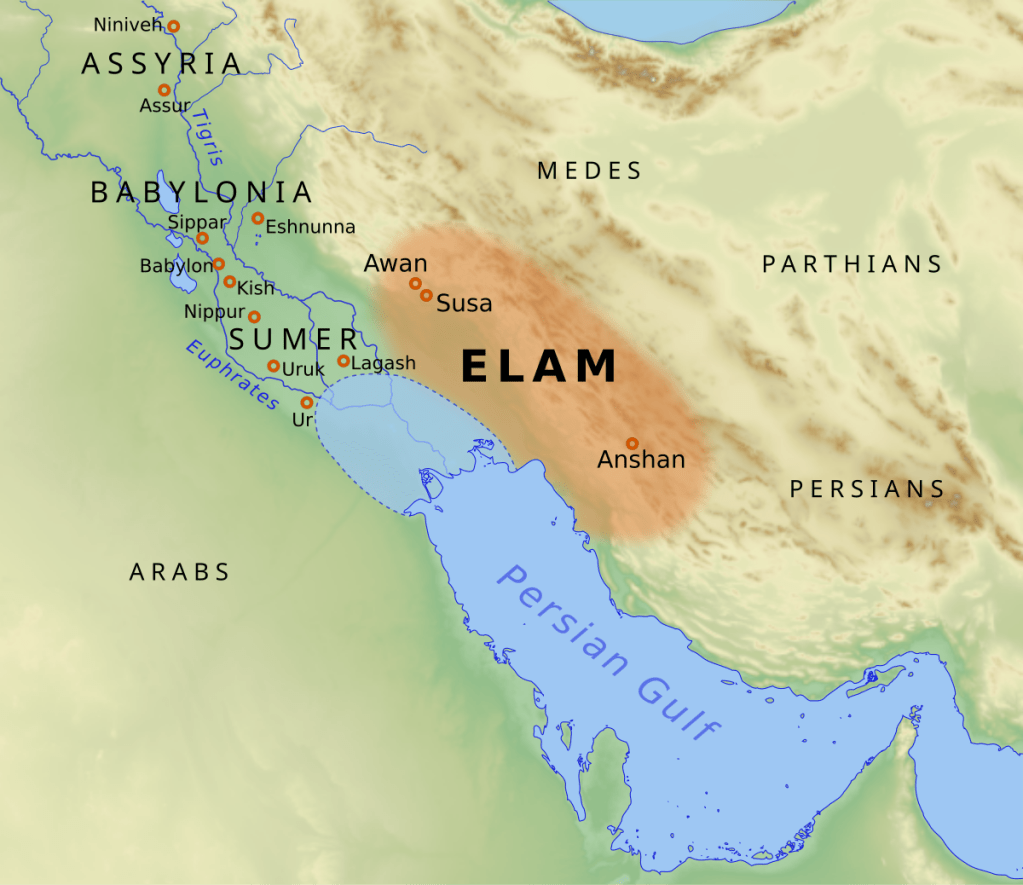
Central Asia – Madai & the Medes

Chapter IV

Japheth’s third son Madai, is mentioned more frequently in the Bible than most of his brothers. This is due to a close relationship with a certain cousin from Shem.

Herman Hoeh discusses Madai in his 1957 article, Origin of the Nations – capitalisation  his, emphasis mine:

‘Herodotus mentions that the “Matienians” from the land of Rosh were associated with the people of Meshech and Tubal! (Thalia, 94.) And Pliny the Roman natural historian speaks of the “Matiani” as moving into Russia through the Caucasus (BooK VI, section xviii of NATURAL HISTORY). Not all Russians are Great Russians and White Russians. Some are called “Little Russians”. They live – in the Ukraine and the eastern parts of Romania and Poland. They are often called Ukrainians or Ruthenians. There are about 50 million of them! Who are these people? The MEDES! The sons of Madai! Here is the proof!
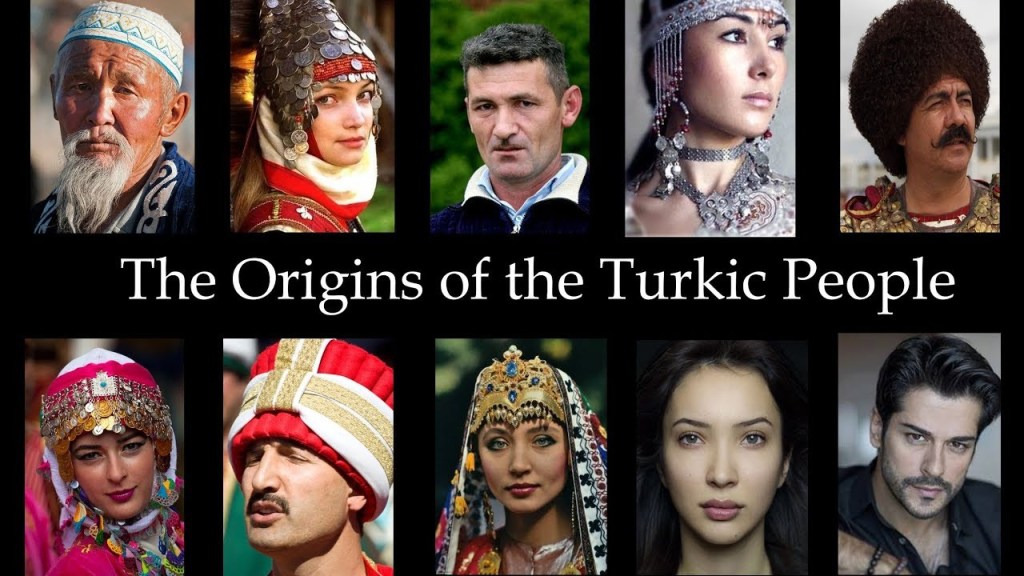
In Genesis 10:2 we have Madai, the son of Japheth listed. Now check in an exhaustive concordance. You will find the original Hebrew word translated into English as “Mede” or “Median” is always Madai. Madai is the father of the Medes. The Medes used to be associated with the Persians. You will read about them especially in the book of Daniel. But by the time of Nehemiah the Persians were much more prominent. Today there are no Medes left in Persia [Iran]. The Medes are gone. Certainly a great branch of the human family could not suddenly vanish from the earth!

Indeed they did not. Throughout South Russia – in the Ukraine – four centuries before Christ the Medes were beginning to settle. Here is what the historian Herodotus wrote of these people: “They say that they are a colony of the Medes. How they can have been a colony of the Medes I cannot comprehend; but anything may happen in course of time” (Terpsichore, 9). Herodotus, like many moderns, was prone to believe that the people who inhabited Mesopotamia and the”Bible lands” must be living there today. But they are not. The Arabs have taken their place! The fact that the Medes are the Little Russians today is further amplified by Pliny in his NATURAL HISTORY, Book VI, section xi. He mentions “the river Don, where the inhabitants are… said to be descended from the Medes”!

While Hoeh enthusiastically concludes the northeastern Slavic speaking nations, lead by Ukraine are descended from Madai, we will learn that the sons of Madai the Medes, are of an Asian line of descent – albeit with European admixture – and not living in eastern Europe – refer Chapter XXIV Arphaxad & Joktan: Balts, Slavs & the Balkans

The Races of the Old Testament, A H Sayce, 1891, page 45:

‘Madai are the Medes, the Mada of the Assyrians. We first hear of them in the cuneiform records under the name of Amada, about B.C. 840, when their country was invaded by the Assyrian monarch. They were at that time settled in the Kurdish mountains, considerably to the east of Lake Urumiyeh. Some fifty years later, however, we find them in Media Rhagiana, where they are called no longer Amada but Mada. It was from the latter form of the name that the Greeks took the familiar Mede.’

Amazing Bible Time Line – emphasis mine: 

‘According to the Book of Jubilees [10:35-36], [Madai] married the daughter of Shem and pleaded with the three brothers of his wife [Elam, Asshur and Arphaxad] to let him live on their land instead [of] occupying an area in Japheth’s land[!] They gave him a spot to dwell on with his family and it was later… named Media. The capital city of Media was Ecbatana [Ezra 6:2]… Media flourished in the trade industry and was… blessed in the field of agriculture. Its lands were fertile…’ 

Recall Genesis 9:27 in Chapter II Japheth Orientalium – the prediction of Japheth dwelling with Shem – where, Madai has intermingled with Shem in extraordinary fashion and has been blessed with fertile soil and mineral wealth in its modern location.

The Book of Jubilees 8:5 states that a daughter of Madai named Milcah [Aramaic: Melkâ] married Canaan, Ham’s youngest son.

The Book of Jasher 7:5 

And the children of Madai were

Achon, Zeelo, Chazoni and Lot

We will meet another, well-known Lot, later – refer Chapter XXVI The French & Swiss: Moab, Ammon & Haran.

A selection of verses – in chronological order – regarding the Medes of Media in the Bible and revealing their intricate relationship with not only Elam of Persia, but also Asshur of Assyria.

2 Kings 17.6

English Standard Version

‘[Shalmaneser V]… the king of Assyria captured Samaria, and he carried the Israelites away to Assyria and placed them in Halah, and on the Habor, the river of Gozan, and in the cities of the Medes.

This occurred during 721 to 718 BCE – 2 Kings 18:11. Media while a powerful people, found themselves in the shadow of the Babylonian Empire and subject to the Assyrian Empire. The Persian Cyrus or Darius the Great, became King of Persia in 559 BCE. His father was King Astyages of Media, against whom he rebelled and desiring to remove Media’s dominance over Persia, annexed Media to the Persian Empire in 549 BCE.

Cyrus was the first ruler of the Achaemenid Empire, which lasted for over two hundred years. The Medes though conquered, continued to be honoured in the new empire and were invariably referenced together with the Persians – Acts 2:9.

Isaiah 21:2

New Century Version

‘… Elam, attack the people! Media, surround the city and attack it! I will bring an end to the pain the city [of Babylon] causes.’ 

Cyrus conquered the Chaldean Empire in 539 BCE. This event was foretold long before by the prophets Isaiah (13:17) and Jeremiah (25:25; 51:11, 28) and it occurred one year before Cyrus/Darius issued the decree which allowed remnants of the Kingdom of Judah to return to Jerusalem – Ezra 1:1-4.

Daniel 5:28

English Standard Version

‘Peres, your kingdom [of the Chaldeans] is divided and given to the Medes and Persians.”

Daniel 5:31

New Century Version

‘So Darius the Mede became the new king when he was sixty-two years old.’

Cyrus ruled until 530 BCE. There were two interim kings and then Darius came to the throne of the Medes and Persians in 522 BCE, ruling until 486 BCE. Darius was not a son of Cyrus, being a Mede and not a Persian. 

Daniel 6:15

New Century Version

Then those men went as a group to the king. They said, “Remember, O king, the law of the Medes and Persians says that no law or command given by the king can be changed.”

Daniel 6:28

New Century Version

‘So Daniel was successful during the time Darius [the Mede] was king and [later] when Cyrus the Persian was king.’

Daniel had found favour and was a key figure in the Court of both kings for half a century or more. In 485 BCE Xerxes I, the son of Darius the Mede became king, ruling until 465 BC. His son Artaxerxes I or Ahasuerus, ascended to the throne, when his father was murdered, at the age of twenty-six in 465/464 BCE. This was the apex of the empire, inherited from his father and when we are introduced to the biblical character Esther.

The second chapter of the Book of Esther reveals Esther’s rags to riches story. She was part of the returned captives originally from the Kingdom of Judah in 458/457 BCE. Esther descended from the tribe of Benjamin and was beautiful in countenance and spirit – Esther 2:7. She was placed in the King’s palace… 

Esther 1:1-4

New Century Version

‘This is what happened during the time of King Xerxes, the king who ruled the one hundred twenty-seven states from India to Cush.’ 

Literally from present day India all the way west, to the nation in east Africa now known as Ethiopia.

‘In those days King Xerxes ruled from his capital city of Susa [or Susan]. In the third year of his rule [482 BCE], he gave a banquet for all his important men and royal officers. The army leaders from the countries of Persia and Media and the important men from all Xerxes’ empire were there. The banquet lasted one hundred eighty days. All during that time King Xerxes was showing off the great wealth of his kingdom and his own great riches and glory.’

Esther 2:16-18

English Standard Version

‘And when Esther was taken to King Ahasuerus, into his royal palace… in the seventh year of his reign [458/457 BCE], the king loved Esther more than all the women, and she won grace and favour in his sight more than all the virgins, so that he set the royal crown on her head and made her queen instead of Vashti.’ 

Esther 1:19

English Standard Version

‘If it please the king, let a royal order go out from him, and let it be written among the laws of the Persians and the Medes so that it may not be repealed, that Vashti is never again to come before King Ahasuerus. And let the king give her royal position to another who is better than she’ – Daniel 6:12.

‘Then the king gave a great feast for all his officials and servants; it was Esther’s feast. He also granted a remission of taxes to the provinces [including Jerusalem] and gave gifts with royal generosity.’

About a third of the references to the name Madai, including Media and the Medes in the Bible, occur in the Book of Esther. 

The Medo-Persian Empire contained 44% – about 50 million people – of the world’s population within its borders, according to Ehsan Yarshater in The Cambridge History of Iran – the highest such percentage for any empire in history.

To fully appreciate Madai’s identity, we will briefly touch upon Shem’s sons Elam and Asshur – with a selected identifying defining biblical verse for each – before returning in detail to each in their own chapters.

The modern day descendants of Elam or ancient Persia, are the Turks and the nation of Turkey – refer Chapter XVIII Elam & Turkey

Jeremiah 49:36

New English Translation

‘I will cause enemies to blow through Elam from every direction like the winds blowing in from the four quarters of heaven. I will scatter the people of Elam to the four winds. There will not be any nation where the refugees of Elam will not go.’

Footnote:

‘Or more simply, “I will bring enemies against Elam from every direction. / And I will scatter the people of Elam to the four winds.” Or more literally, “I will bring the four winds against Elam / from the four quarters of heaven./ I will scatter…” However, the winds are not to be understood literally here. God isn’t going to “blow the Elamites” out of Elam with natural forces. The winds must figuratively represent enemy forces that God will use to drive them out.’

We are provided an intriguing clue with regard to Elam’s location. It is vulnerable to attack from all sides: north, south, east and west. These are four points on a compass and represented by the direction of four winds, northerly, easterly and so forth. Turkey is literally at the crossroads of the Earth. It sits between the continents of Europe, Asia and the region of the Middle East geographically, politically and culturally – not quite a full member of any one.

Cyrus the Persian, the Elamite King, was known as:

‘The Great King, King of Kings, King of Anshan, King of Media, King of Babylon, King of Sumer and Akkad, King of the Four Corners of the World.’

Elam or Persia historically was geographically near Madai (or Media). Following points one, three and four in the introduction (primus verba), we should expect to find a European and Asian peoples not only in geographic proximity today but also connected through history, language and inter-marriage, revealed by their respective Haplogroups and autosomal DNA.

The reader is highly recommended to read Chapter XVIII Elam & Turkey in conjunction with this chapter.

Meanwhile, the modern day descendants of Asshur and Assyria, dwell in Russia – refer Chapter XX Will the Real Assyria Stand Up: Asshur & Russia.

Zephaniah 2:13

English Standard Version

‘And he will stretch out his hand against the north [H6828 – tsaphown: northward, northern, (direction of), north side, north wind] and destroy Assyria, and he will make Nineveh [the capital] a desolation, a dry waste like the desert.’

If one studies a world map, Russia is as far north as you can travel. There it is; exactly where the Bible says. The Assyrians historically used their neighbour Media, as a foot stool. We will find a similar relationship has continued into modern times.

One can hear those readers with more than a cursory knowledge, gasping incredulously. Edward Hine first proposed Germany was Assyria in the 1870s – with people influenced by its adversarial relationship with Great Britain in following decades – and the idea proceeded to cement firmly in people’s minds like reinforced steel concrete. When Edom was first linked with Turkey is not exactly clear; though the arguments used hang by tenuous threads for both identities, with genetics providing the knock out blow, as it shall be discovered.

Many will be thinking: then who are the Germans and where is Edom? We will look more closely at these two influential peoples in later chapters – including the intricate relationship between Madai and Elam – Chapter XVIII Elam & Turkey.

It would be very convenient if Madai and or Elam still lived in present day Iran… since Iranians call themselves Persian – but this does not mean they are Madai or Elam. Please refer to point number one and two in the introduction (primus verba).

The cumulative evidence leads to Madai being the Turko-Mongol peoples of the Central Asian Republics; including the Tartars of Russia and the Mongols in Mongolia – namely, Kazakhstan, Kyrgyzstan, Uzbekistan,Turkmenistan, partially Tajikistan and possibly including the Sami and Lapps of Russia, Finland and Scandinavia.

Madai from the verb madad, means: ‘measure, sufficient, enough’ or ‘judging’ and ‘as often as’, as well as ‘middle land’, and ‘out of the abundance of’. It could also be interpreted as: ‘My Measure[ment].’

For now, we will only introduce the relationship Madai has with Elam; detailing a comprehensive study later when we discuss Elam in Chapter XVIII Elam & Turkey. We will see support for the subservient relationship of Madai towards Asshur, present day Russia and the abundance Madai has been given in fulfilment of their name. If one looks at a map of the world, it is evident just how in the middle of the world, Madai truly is.

The five nations comprising Central Asia are former Soviet Republics, from the modern incarnation of the Assyrian Empire. They are referred to as ‘the stans’ – the Persian (Iranian) suffix meaning: land of.

The region historically connected the Silk Road, standing as the intersection for the movement of people, trade and philosophies between all parts of Asia and Europe. The population of the four principle nations is approximately 67 million people; not far off the Amerindian population of the Americas – Chapter III Tiras the Amerindian.

The people of Turkmenistan are known as Turkmen or Turkmen Turks.

Arlen Seitbatkal:

‘The word Turkmen stems from “Turk” and the intensifying suffix “men,” meaning true Turk. The word Trkmen is also mentioned in Mahmud al-Kashgari’s 11th-century dictionary, “Dīwān Lughāt al-Turk,” where it refers to an ethnic group and carries the meaning of Turk or Turkish person.’

Turkmen also live in Uzbekistan, Kazakstan, Iran and Afghanistan. They speak the Turkmen language; classified as part of the Eastern Oghuz branch of the Turkic languages – see map below. 

Examples of other Oghuz languages include Turkish and Azerbaijani. In the early Middle Ages, Turkmen originally called themselves Oghuz and then later as Turkmen.

Flag of Turkmenistan

Uzbekistan – the nation with the largest population of the four – mines 80 tons of gold yearly; 7th highest in the world. Uzbekistan’s copper deposits rank 10th in the world, its uranium deposits 12th and the country’s uranium production ranks 7th globally. The Uzbek national gas company, Uzbekneftegas ranks 11th in the world in natural gas production and the country has significant untapped reserves of oil and gas.

What’s in Name of Central Asian Nations, Aibarshyn Akhmetkali , 2025:

‘Scholars link the origin of the term Uzbek to the name of Uzbek Khan, the ruler of the Golden Horde in the 14th century. When the horde began to disintegrate, the nomadic tribes within his ulus began to call themselves Uzbeks.’

Arlen Seitbatkal:

“In the nomadic tradition, a strong leader has always been identified with the people. If someone had power and authority, people followed them, and their name became fixed after the group.”

Turkic influence in Central Asia during the first millennium CE brought Turkic culture and language to the lands now known as Kazakhstan.

Orexca:

‘Written sources of the 6th century register the term “Tyurk” which is pronounced as “Tutszyue” by the Chinese and as “Turk” by the Sogdians. Archeological studies of Turkic monuments make it possible to somehow compare “these” Turks with certain Turkic tribal associations. In the Sayano-Altai region they have identified certain archeological cultures which might well be likened to early Kyrgyz, early Kypchaks or early Oguzes.

In the course of not infrequent internecine wars, tribal discord, and struggles for power and pasture, a part of the Turkic tribes which inhabited the steppes and valleys of Kazakhstan moved southwards – to Central Asia (… Tyurgeshes, Karluks, Kypchaks, Uzbeks, Oguz, and Turkmens-Seldzhuks), to Asia Minor… [and] to the Caucasus (Turkmen and Seldzhuks)…

Starting from the 4th century up to the beginning of the 13th century, the territory of Kazakhstan was the seat of West-Turkic, Tyurgesh, Karluk Kaganates, of the state made by the Oguz, Karakhanides, Kimeks and Kypchaks. All of them successively replaced one another right up to the Mongol invasion.’

These states contributed to the spread of Islam and the development of urban culture.

Mongol influence occurred in the thirteenth century when Genghis Khan conquered the region (1219-1224), incorporating it into the vast Mongol territories – refer Chapter XVIII Elam & Turkey. The region then became part of the Golden Horde, a Mongol successor state.

Orexca: ‘After the invasion, [that is] in the beginning of the 13th century, uluses of the Mongol Empire of Zhuchi-Khan and Zhagatai were formed, which later gave birth to Ak-Orda, Mongolistan and finally to the Kazakh Khanate’ in about 1465.

The Kazakh Khanate was established by Jani Beg (Janibek) and Karay (Kerei) Khan. Various nomadic Uzbek tribes were unified under a single political entity and subsequently developed a distinct Kazakh identity.

Britannica:

‘[For these] separatist Uzbeks became known as Kazakh (“Independent” or “Vagabond”) Uzbeks, and over time a significant differentiation developed between them and the [non-separatist] Uzbeks in their respective ways of life: that of the Kazakh was more nomadic, that of the Uzbeks more sedentary.’

Online Encyclopaedia:

‘According to the latest research of population genetics, mainly of autosomal markers and Y-chromosome polymorphism, it is believed that during the 13th to 15th centuries that the Kazakh ethnicity emerged.’

The Kazakh Khanate reached its peak in the sixteenth century with a golden age under the leadership of Kasym Khan (1509-1518), who expanded its territory and influence.

Britannica: ‘… the Kazakhs were the masters of virtually the entire steppe region, reportedly able to bring 200,000 horsemen into the field and feared by all their neighbours. The prevailing view is that the rule of Kasym Khan marked the beginning of an independent Kazakh polity. Under his rule Kazakh power extended from what is now southeastern Kazakhstan to the Ural Mountains.’

The Kazakh Khanate conducted wars with neighbouring states; the Uzbek Khanate and the Tsardom of Moscow (1547-1721). In the early sixteenth century, the Kazakhs faced an increasing threat from first the Mongols and then from Russia which was expanding its borders to the East.

Kazakhstan became part of the Russian Empire in the eighteenth century. Its colonisation was accompanied by significant changes in the traditional lifestyle of the Kazakh people. Russia sought to actively develop land resources and introduce new administrative structures.

History Central:

‘The situation worsened after 1861 when Russian and Ukrainian peasants flowed into Kazakhstan after the freeing of the serfs and were given Kazakh lands. (This influx of Russians and Ukrainians was not limited to this period – it continued throughout the first seven decades of the [twentieth] century as well such that by 1979, there were more Russians than native Kazakhs in the region.)

Simmering resentments [following repeated revolts] led to a major rebellion in 1916′, sparked by the forced mobilisation of Kazakhs to the Russian front during World War I. ‘In suppressing the uprising, the Russians killed thousands. The Communist revolution the next year [in 1917] plunged Kazakhstan into civil war. Defeated, Kazakhstan became part of Russia as an autonomous entity, eventually attaining the status of one of the Soviet Union’s republics [Kazakh SSR in 1936].’

Britannica:

‘From 1927 the Soviet government pursued a vigorous policy of transforming the Kazakh nomads into a settled population and of colonizing the region with Russians and Ukrainians.’ This period in its history was marked by industrialisation, collectivisation of agriculture and cultural repression.

Britannica: ‘Despite their nomadic rural existence, the Kazakhs were the most literate and dynamic Indigenous people in Central Asia. But the collectivisation brutally imposed by the Soviet regime resulted in a shocking decrease in the Kazakh population: between 1926 and 1939 the number of Kazakhs in the Soviet Union fell by about one-fifth. More than 1,500,000 died during this period, the majority from starvation and related diseases, others as a result of violence. Thousands of Kazakhs fled to China, but fewer than one-fourth survived the journey; about 300,000 fled to Uzbekistan and 44,000 to Turkmenistan.’

In 1991 after the collapse of the Soviet Union, Kazakhstan became an independent country and a member of the Commonwealth of Independent States (with Russia); under the leadership of the first President Nursultan Nazarbayev. The new state began to implement economic reforms and political changes aimed at integrating into the international community.

History Central:

‘Non-Muslim ethnic minorities departed Kazakhstan in large numbers from the mid-1990s through the mid-2000s and a national program has repatriated about a million ethnic Kazakhs (from Uzbekistan, Tajikistan, Mongolia, and the Xinjiang region of China) back to Kazakhstan. As a result of this shift, the ethnic Kazakh share of the population now exceeds two-thirds.’

This checkered history replicates the intertwined historical relationship between the descendants of Asshur (Assyria) and Madai (the Medes); the ancestors of the Russians and Central Asians respectively.

Today, the transcontinental Republic of Kazakhstan, the nation with the biggest land area of the four within Central Asia, has an additional smaller portion west of the Ural Mountains in Eastern Europe. It is the world’s largest landlocked country and the 9th largest country in the world, with an area of 1,052,100 square miles. Kazakhstan is the dominant nation of Central Asia economically, generating 60% of the region’s GDP, mainly through its oil and gas industries. It also possesses vast mineral resources.

The Kazakh language is a member of the Turkic language family, with Uzbek, Kyrgyz, Tatar, Uyghur, modern Turkish, Azeri, Turkmen and numerous other languages spoken in Eastern Europe, as well as Central and Eastern Asia. 

Arlen Seitbatkal:

“In the works of academician Abduali Kaidarov and professor Telkozha Januzakov, it is explained that the word ‘qazaq’ can be associated both with ‘qas saq’ (true Sakas) and with the combination of the words ‘qaz’ (goose) and ‘aq’ (white). But most researchers agree that the concepts of yerkin (free) and batyr (warrior) are at the core. The people who broke away from Khan Abulkhair called themselves free, i.e. qazaq.”

CountryPopulationArea (km²)GDP (nominal)
 Kazakhstan19,312,1652,724,900$196.4 billion
 Kyrgyzstan6,782,627199,900$6.4 billion
 Uzbekistan34,629,727447,400$52.0 billion
Turkmenistan6,242,581488,100$29.9 billion
Total66,967,100

Kazakhstan has the 2nd largest uranium, chromium, lead, and zinc reserves; the 3rd largest manganese reserves; the 5th largest copper reserves; and ranks in the top ten in the world for coal, iron, and gold. It is also an exporter of diamonds. 

Flag of Kazakhstan

Most significantly for its economic future, Kazakhstan has the 11th largest proven reserves of both petroleum and natural gas in the world. There are three refineries in the country and not being capable of processing the total crude output, much of it is exported to Russia.

Russian Proton launch vehicle with the Granat high-energy astrophysics observatory, prior to launch on December 1, 1989, from the Baikonur Cosmodrome, Kazakhstan.

Kazakhstan, while part of the Soviet Union was instrumental in the Russian Space Program; providing the launch sites for CCCP rockets.

Astana, the capital of Kazakhstan since 1997 and renamed from Aqmola in 1998

The Tatars are a collective of Turkic-speaking groups – nearly 7 million people – living in the Russian Federation. The Chinese referred to these nomadic tribes as Ta-Ta or Da-Da – meaning dirty or barbarian. During the early thirteenth century, Ghenghis Khan united the nomadic tribes then living in Mongolia. One of his grandsons Batu Khan, led the Mongol invasion of Eastern Europe – refer Chapter XVIII Elam & Turkey.

Tatar man

Web source: 

‘The… Tatars were conquered by imperial Russian forces during the reign of Tsar Ivan IV in 1552… When the Russian Empire collapsed in 1917, the Tatars… formed their own home-land, the Idil-Ural State. The Soviet government… instead formed the Bashkir Autonomous Republic (Bashkortostan) and the Tatar Autonomous Soviet Socialist Republic (Tatarstan) on the same soil. When the Soviet government took over these regions, it redrew the boundaries and gave neighboring Russian provinces the best lands. By changing the boundaries, about 75 percent of the Tatar population found itself living outside the borders of Tatarstan.

Tatar culture was… affected… through the policy of Russification, where the Russian language and culture were legally forced on the Tatars and other ethnic groups… Tatars, of whom about 26 percent live in Tatarstan… is about the size of Ireland or Portugal. 

About 15 percent of all Tatars live in Bashkortostan, another ethnic homeland in the Russian Federation that lies just east of Tatarstan. There are also smaller Tatar populations in Kazakstan, Kyrgyzstan, Tajikistan, Turkmenistan… In 922, the Tatars’ predecessors, the Bulgars, converted to Islam, and the old Turkic script was replaced by the Arabic alphabet. 

A famous old Tatar… proverb is Tuzga yazmagannï soiläme, which means, roughly, “If it’s not written on salt, it’s wrong to even mention it.” The proverb refers to the ancient method of keeping records on plaques made of wood and salt, and commends the practicality of keeping written records.’

Recall ‘the Law of the Medes and Persians’, where a proclamation stood fast and could not be altered as discussed in the Books of Esther and Daniel.

Top 14 Tribes of Ancient Central Asia, Mahesh Shant – emphasis & bold mine:

‘Before the Turks entered the arena of history the Awars occupied the regions which later came under the sway of the Turks. After the destructions of the Huns, Syan Pi took over Manchuria, Mongolia and some parts of China. One of the dynasties descended from them, the To-Ba dynasty, was founded in 315 A. D. and continued till the 5th Century. This Hunnish tribe lived in the areas near Lake Baikal… and north of the Gobi desert [Mongolia].

At first the Chinese name for the Awar tribe was Ju-Jun but it was later (in 451 A. D.) changed to JvanJvan by the To-Ba Emperor Tai-Hu-Ti (425-452 A.D.)…

She Lun, a powerful chieftain, who conquered the Kao She tribe and, consolidating his military strength, took the title of Kagan (Khan). The king­dom of the She Lun, which spread from Korea to the Altai, included a part of China as well as a section of the trade route of Central Asia. The Awars relations with the Chinese were not unlike those of their Hunnish ancestors. At times they plundered the border regions of China, at others they gave military aid to the Chinese Emperor. The Turks put an end to the military might of the Awars in 546 A. D.’

Of interest is the remarkable coincidence of the To-Ba dynasty – who were related to descendants from Madai (just as the Huns were from Elam) – should take on the name of their long distant uncle, Japheth’s fourth son, Javan (Jvan-Jvan).

Shant: ‘The Selzuks were a nomadic people inhabiting the regions north of the Sir Darya [Syr Darya River]. They were also known as Turkmans and the region once inhabited by them now forms part of the Soviet Socialist Republic. A branch of the Aguz, they spread in the course of their wanderings to the northern banks of the Sir Darya.

The Guz or Aguz [Oghuz] Turks were divided into three branches – Kipchiaks, Kankalis and Karluks. The Selzuk dynasty, which ruled over Central Asia and Iran for a long time, was descended from the Kipchiaks, and the Turks of modern Turkey are descended from the Osmanali branch of this tribe.

The similarity in language points to the Uzbeks, Turkmans, Khirgiz and Kazaks having sprung alike from Turkish stock.

They can be divided into three parts:

(i) The Northern Turks – the Yakuts of Siberia,

(ii) The Eastern Turks – the Sinkiang Turks, Uzbeks, Kazaks are Kufa Tatars

(iii) The Western Turks – Osman Ali, Azerbaijanians and Turkmans.

A branch of the Turks left its original homeland in the Altai mountains and advanced into Turkestan, driving out or absorbing the Scythian and Sogdhian tribes inhabiting these regions. Among these Turks were the Selzuks and the Chingiz Mongols.

The Sulzuks acquired that name from Selzuk Turk their first Muslim Chief, although they were equally well-known as Turkmans. The Western Turks, of whom Turkmans were the majority, brought Asia Minor and Armenia under their control, while another branch of the Western Turks, the Osmani Turks, brought about the downfall of the Byzantine Empire, made Constantinople their capital in the 15th century and later extended their rule over Eastern Europe.’

The entwined relationship between Madai (Mongols) and Elam (Turks) – the Medes and Persians of old – has endured through the cyclic phases of their history. The label Turk, used interchangeably for Uzbeks, Kazakhs and Turkmen of Central Asia as well as for the Turkish in Asia Minor – Chapter XVIII Elam & Turkey.

Facts and Details, People of Central Asia:

‘The people of Central Asia are basically divided into two types: the traditional nomads and semi-nomads (Kazakhs, Kyrgyz, Mongols and Turkmen) and the settled people (the Uzbeks and Tajiks). According [to] DNA studies, Tajiks, Uzbeks and Turkmen have retained their “ethnic purity.”

There has traditionally been a lot of intermarriage between the ethnic groups of Central Asia. Uzbeks and Tajiks have traditionally been difficult to distinguish from one another. The same is true with Kyrgyz and Kazakhs. Up until the 20th century… [the Uzbeks and Tajiks] were regarded as essentially the same people except that Uzbeks spoke a Turkish language and the Tajiks spoke a Persian language.

Tajiks are… distinguished from other Central [Asians] by their traditional Islamic-Iranian culture [and ethnicity]. Uzbeks consider themselves the [dominant] people of Central Asia by virtue of their numbers and their historic links to… Genghis Khan. Other ethnic groups in Central Asia dispute this claim.

Kazakhs and Kyrgyz are close relatives. They look similar, have many similar customs and speak similar languages. Many believe they are [essentially] the same people with Kazakhs traditionally residing in the steppes and Kyrgyz living in the mountains. The Kyrgyz, however, have a longer and more coherent history than the Kazakhs. Clan and regional ties have historically been more important than ethnic identity.

Central Asia is a meeting point of Turkic, Persian and Mongol cultures.’

The Analysis of the Genetic Structure of the Kazakh Population as estimated from mitochondrial Dnapolymorphism, Scientific Centre of Obstetrics, Genecology and Perinatology, Galina Berezina, Gulnara Svyatova & Zhanar Makhmutova, 2011:

‘The most closely related populations are the Kazakhs and Uighurs, they are accompanied by the Uzbeks and the nation(s) of the southern Altai on one level. The Kyrgyz and Bashkir [Tatar] nations formed an independent taxonomic group in this cluster. The contribution of [European] and [Asian] components in the formation of the anthropological type of the Kazakhs was proved… by Ismagulov (1970) on the basis of a comprehensive study of paleoantropological and craniological materials.’

The land of Kazakhstan has been a place of interaction comprising many ethnic layers during a historically long period. Mongolian tribes, Turkic-speaking populations from Siberia and Altai, Indo-Iranians from the Near East, as well as Slavs from Eastern Europe took part in the formation of the Kazakhs. Thus, it is possible to explain a high level of genetic variability of mtDNA, with a complicated ethnic history.

Khazaria, Kazakh Genetics: Abstracts and Summaries, Kevin Alan Brook – emphasis mine:

‘Kazakhs (Qazaqs, Kazaks) are a Turkic-speaking people living in several modern countries including (but not limited to) Kazakhstan, China, and Mongolia. They are approximately 70% [Asian] and 30% [European] and this admixture explains why some Kazakhs have light European physical features in contrast to the majority who have black hair, brown eyes, and epicanthic eyefolds. 

The Kazakhstan DNA Project‘s Y-chromosome records show that among its male members are the Y-DNA haplogroups C3, C3*, C3c, G… O2, Q1a3, E1b1b1, N1c1, R1a1, R1b1b1, R2, J2a1, J2a, and J2.’

The paternal Haplogroups in bold are indicative of lineages from Japheth; with the ancient C Haplogroup the defining marker for descendants from Madai.

Brook: ‘C3 [C2] (M217, P44) is not only common among Kazakhs but also frequent in Mongolia [and the Kyrgyz].

The analysis shows that Western Europe… and Eastern Europe… mtDNA lineages exist in the Kazakhs population. A high genetic diversity was observed in the Kazakhs population (h=0.996). “We have studied the relation between East Eurasian and West Eurasian lines in the gene pool of the Kazakhs using the data on polymorphism HVSI of mtDNA (frequencies of haplogroups). It was found out that the main contribution of East Eurasian lines (55% of the total gene pool) to the modern gene pool of mtDNA of the Kazakhs make haplogroups D, C, G and Z (36.2%), A and F (6.9%) and other haplogroups of Asian origin (11.9%) [B].’ 

The complexity of the Kazakh genetic make up is due to their Haplogroups being split between Asian (64-70%) and European lineages (30-35%); with their European genealogy being split further, between western (41%) and eastern European (55%) gene pools.  

Brook: ‘West Eurasian lines (41% of the total gene pool) in the Kazakh gene pool are most frequently represented by the haplogroups H (14.1%), K (2.6%), J (3.6%), T (5.5%), U5 (3%) and others (12.2%).” We found that more than 64% of mtDNA lineages belong to Asian-specific haplogroups (M, C, Z, D, G, A, B, F, N9). Supercluster M was found with most high frequency (45%).’ 

Japheth’s son Tiras possesses the mtDNA Haplogroups in common with Madai: C, D, A and B – refer Chapter III Tiras the Amerindian. Haplogroups C and D derive from super sub-Haplogroup M, itself from L3 while Haplogroup A derives from super sub-Haplogroup N and B from super sub-Haplogroup R.

Brook: ‘Western-Eurasian specific haplogroups were observed in 35% (H, V, HV, J, T, U1, U2, U4, U5, U7, K, W, X)… the lineage of Hg U7, typical for all Levant, including Iran, was revealed in Kazakhs… East Asian hgs – A, B, F, N9 – make up about 18% in Kasakhs, like in all Central Asian populations, Altaics, Tuvinians and Bashkirs…

While those Kazak people who reside in China are mostly [Asian], just like Kazakhs in Kazakhstan, this study showed that 30.2% of their ancestry is western Eurasian. “In this study, we also find that all Turkic and Mongolic groups possess a common set of maternal haplogroups (C, D, G2a, H)…*

Kyrgyz (Kirghiz, Kirgiz) are a Turkic-speaking people living mostly in Kyrgyzstan but also in neighboring Uzbekistan, Tajikistan, Afghanistan, and China. They are descended from multiple different ancient peoples. Mongoloid (East Eurasian) ancestry represents between half and two-thirds of Kyrgyz ancestry. 

Kyrgyz living in Tajikistan and western areas of Kyrgyzstan have less Mongoloid ancestry and more Caucasoid ancestry than other Kyrgyz. Central and South Asian ancestry is the next most important element representing about one-fourth. West Eurasian (including European) represents about one-eighth. Ancestry from West Asia [Arab, Persian] is not significant in any Kyrgyz person and many have none of it.

The Kirgiz DNA-Project’s Y-chromosome records show that among its male members who are Kyrgyz from Kyrgyzstan are the Y-DNA haplogroups C-M217 (C3) [C2], I-M253 (I1), J-M172 [J2], N-M232, O-P201, R-M198 (R1a1a), R-M269 (R1b1a2), and R-M343 (R1b1a1). R1a1 (and its subtypes) is also found among Kazakhs, eastern Siberians, South Asians, East Slavs, and West Slavs.’

‘This study of Y-DNA includes Kyrgyz samples as well as samples from other Central Asian peoples like Tajiks, Uzbeks, and Karakalpaks, plus many other populations from elsewhere. M17 [R1a1] is suggested to be “a diagnostic Indo-Iranian marker”… [resulting from admixture with European lineages]. “The exceptionally high frequencies** [63%] of this marker in the Kyrgyz, Tajik/Khojant, and Ishkashim populations are likely to be due to drift, as these populations are less diverse, and are characterized by relatively small numbers of individuals living in isolated mountain valleys.”

The most prevalent mtDNA Haplogroups for the Kyrgyz, in order are: D, H and C.* D, C and G are indicative of Asian ancestry and H is reflective of European admixture in the maternal line. The main Y-DNA paternal Haplogroups for the men from half of the seven million Kyrgyz are in descending percentage order: 

R1a [63.5%] – C2 [13.5%] – O [5.8%] – K [1.9%] – O2 [1.9%] – N1c1 [1.9%] – 

P [1.9%] – R1b [1.9%] – I1 [1.9%] – J2 [1.9%]

The Haplogroups, R1a, R1b and I1 are indicative of European admixture. The Haplogroups C2, K, O2 and N1c1, are the main Asian lineages for the Kyrgyz men, with C2 the principle defining Asian paternal Haplogroup. The very high frequency of R1a** is somewhat of an anomaly and reveals considerable admixture. For R1a is mainly associated with either the Eastern European peoples of Slavic descent; from eastern Siberia; or from mixed Indian ancestry in northern India. 

J2 is typically a west Asian Haplogroup and particularly associated with Turkey, Iran and Pakistan. R1b is the main identifying Haplogroup for western European men and Haplogroup I1 originates with northwestern Europeans. What is important, is that Haplogroups C, K, N and O are key Asian Y-DNA Haplogroups. 

The main Amerindian mtDNA Haplogroups – in order – are A, B, C and D. The Kyrgyz and the Kazakhs have the same Haplogroups, though with different variations and percentages. Similarly, the American Indian has Y-DNA Haplogroups Q and C, of which they share C with the Kyrgyz and both C2 and Q1a3 with the Kazakhs.

Kazakhstan Soldiers

The following prevalent Asian mtDNA Haplogroups are found in the Kazakh population of nearly twenty million people: D, C, G, Z, followed by A, F and also B and N9. The supercluster M is found with the highest frequency of 45%. The main European mtDNA Haplogroups include, H at 14%, K, J, T and U5. These two sets are very similar to the Kyrgyz people.

The main Y-DNA Haplogroups include:

C2 [40%] – K [10%] – O2 [8%] – J2 [8%] – R1a [7%] – N1c1 [7%] –

R1b [6%] – P – [3.3%] – Q1a3 [2%] – R2 [1%] – I1 [1%] 

This is where they differ, with the Kazakh’s showing less European admixture as shown by the predominant and distinct C, K and O Asian Haplogroups. It also highlights how principle admixture has passed from the maternal^ line, with Madai males taking Elamite wives, or in other words, Turko-Mongol males marrying primarily Turkish women. J2 is the most prevalent Y-DNA Haplogroup of Turkish men with R1b and a lesser extent R1a and so the Kazakh and Kyrgyz males possessing the same is not a coincidence.

Decoding a Highly Mixed Kazakh Genome, multiple authors, 2020 – emphasis mine: 

‘We present the whole genome sequence and thorough genetic variant and admixture analysis of a Central Asian, Kazakh MJS. We found several SNVs associated with drug toxicity, metabolism, diseases, phenotypic features and identified recent and ancient admixtures. Both PCA and phylogenetic analyses confirm closer MJS and other Kazakh similarity to modern East Asians than Europeans and showed the overall closest genetic affinities are with other Central Asian populations, namely, Kalmyk, Uzbek and Kyrgyz. All populations with significant similarity to MJS genome could be backed up by historic migration events involving the Kazakh population and the major fraction of genomic variation could be attributed to fairly recent admixture with geographically close populations.

However, MJS’s mitochondrial^ DNA [maternal] haplogroup is of European [Turkish] or Near Eastern (West Asian) [Iranian] ancestry. It corresponds to the heterozygous SNPs associated with European phenotypic features and confirmed by admixture f3 statistics and all other Kazakh autosomal data showed very similar ancestral compositions to MJS’s. This highly heterozygous and admixed Kazakh genome provides insights into complex admixtures and can serve as a reference for mapping complex heterogeneity in Central Asian populations.’

The males from the total eight million Tajiks exhibit these main Y-DNA Haplogroups:

R1a [44.7%] – J2 [18.4%] – R2 [7.9%] – C2 [2.6%] 

Tajikistan shows only a slim oriental link with their near neighbours and could have either mixed heavily or more likely, have more in common paternally with their southern Asian neighbours in Afghanistan and Pakistan – refer Chapter XIII India & Pakistan: Cush & Phut

The males from the six million people of Turkmenistan carry the following Y-DNA Haplogroups: 

R1b [37%] – J2 [17%] – K [13%] – P [10%] – R1a [7%] – R2 [3%]

The Haplogroup R2a (M124) is typically associated with the southern Asian men of particularly India with 10%; Pakistan with 8%; Western Asia; plus the Central Asian nations. 

The Turkmen on the other hand show strong admixture with the Turks (and related peoples) as revealed by their R1b and to a lesser extent J2 Haplogroup levels. The K and P Haplogroups are indicative of their Oriental ancestry. Haplogroup P derives from K and Q descends from P. Even though Y-DNA Haplogroups P and Q can be associated with Europeans in trace quantities due to admixture, they are sourced originally from and consistently found in, Asiatics .

Kazakh Women

The Y-DNA Haplogroups for the men of half of the thirty million plus people in Uzbekistan: 

R1a [25.1%] – J2 [13.4%] – C2 [11.5%] – R1b [9.8%] – K [6.8%] –

P [5.5%] – O2 [4.1%] – R2 [2.2%] – I1 [2.2%] – N1c1 [1.4%]

Uzbekistan like the smaller Kyrgyzstan and Turkmenistan has obviously mixed with a people not descended from Japheth but rather from Shem, though not as heavily and thus retains more of their core Oriental Haplogroups such as C, K and O. Their R1a, J2 and R1b Haplogroups again link them as we will learn, with primarily Turkey.

Uzbek man

Seen together, their respective Y-DNA Haplogroups appear as the following: 

Tajikistan:           R1a – J2 – R2 – C2 

Turkmenistan:   R1b – J2 – K – P – R1a – R2

Kyrgyzstan:         R1a – C2 – O – K – O2 – J2 – N1c1 – P – R1b – I1 

Uzbekistan:         R1a – J2 – C2 – R1b – K – P – O2 – R2 – I1 – N1c1

Kazakhstan:        C2 – K – O2 – J2 – R1a – N1c1 – P – R1b – Q1a3 – R2 – I1

On the one hand they are all similar and on the other, there are differences highlighting the extent of the admixture experienced by Madai with principally Elam. Kazakhstan, the furthest north remains the closest to its genetic Asian roots. It is the nations of Kyrgyzstan and Uzbekistan tucked underneath Kazakhstan to the south who are more mixed and it is Kyrgyzstan further east which remains purer than Uzbekistan in its core Asian Haplogroups. 

Meanwhile it should be no surprise that the nation the most southwards – Turkmenistan which is the closest to Turkey – exhibits the most genetic influence with higher frequencies in Haplogroups J2 and R1b. Tajikistan is the most distant and has more in common with southern Asia than it does with Central or East Asia. Of the two bigger populated nations, Uzbekistan reveals intermarriage levels similar to the others and only Kazakhstan is the nation that has mixed the least, thus retaining a truer Central Asian identity

Turkmen woman

Within the Haplogroup sequencing, Kazakhstan and Kyrgyzstan are more eastern in orientation, while Turkmenistan the most western oriented. Turkmenistan is geographically, linguistically and culturally more connected to Turkey – Chapter XVIII Elam & Turkey. Uzbekistan bridges the gap between the other three. 

The Haplogroups C2, O2 and major sub-Haplogroups K and P are all indicative of these nations descending from Japheth and their close genetic relationship with northern and eastern Asians. 

A comparison table below for the principle Y-DNA defining marker Haplogroups for the North American Indian and Central Asian men.

         C   O  K  P  Q

NA Amerindian     6                                  77

Kazakhstan           40        8      10       3      2

Kyrgyzstan            14         8       2        2

Uzbekistan            12         4       7        6    

Turkmenistan                           13      10

What does this table tell us? Noah would have carried Y-DNA Haplogroup A, which later mutated to C, D and F in his descendants descending principally from his eldest son Japheth. Japheth in carrying the proto-type C (and F) Haplogroup, gave his sons the mutations which would eventually derive into C, D, K, N, O1, O2 and Q.

Coincidentally totalling seven principle Y-DNA Haplogroups and thereby equaling the same number of sons descending from Japheth. Overall, the predominant oriental Haplogroups for Central Asia chronologically being C, followed by K, P and finally O. 

It is Haplogroup C2 which is the defining marker Haplogroup for the male descendants of Japheth’s third born son Madai.

Tiras the Amerindian likely received Haplogroup C from admixture rather than inheriting it; thus proving interaction with either Madai or perhaps other sons of Japheth in the distant past. Some Native Indian tribes possess none and others varying levels of Haplogroup C.

More importantly, what we do know is that Japheth passed on the mutation which would eventually form Haplogroup Q. In this, the descendants of Tiras stand out with their relatively recent and unique Y-DNA Haplogroup marker. For other Asian peoples only carry Q in small quantities. Those European men who carry it, also possess it in small percentages, signifying admixture. 

The table from Decoding a Highly Mixed Kazakh Genome, shows the genetic markers in comparing Asian populations. AM = America, CA = Central Asia, EA = East Asia, EUR = Europe, NA = North Asia, OC = Oceania, SA = South Asia, SEA = Southeast Asia and WA = West Asia. 

Interestingly as expected, Tajikistan is not represented. The closeness between Kazakhstan and Kyrgyzstan is confirmed as it is between Uzbekistan and Turkmenistan following their westernisation and particularly Turkmenistan’s proximity to West Asia – Turkey and Iran. Both Tiras the Amerindian, and more so Madai in Central and North Asia, have experienced varying degrees of admixture as evidenced by the table. 

We will confirm that Japheth’s remaining five sons are all grouped in the bottom right hand corner of the table, incorporated within East Asia and Southeast Asia.

These findings correlate to what we should expect to find if the Turko-Mongol peoples are descended from Madai… an Asian people descended from Japheth, which have absorbed European DNA from Shem’s line at different times in their history. The variety of admixture may be accounted for by the following: 

  1. A historical alliance with the children of Elam in ancient Persia, and the intermarriage between the two peoples over a number of centuries. 
  1. The Assyrian* removal of captive Israelites to Media. There may have been relationships formed between the two peoples – with possibly the subsequent original introduction of the R1a* Y-DNA Haplogroup. 
  1. The Medes were in a unique position of migrating across the vast Asiatic continent, yet they did not remain and become far removed from their original homeland. The circuitous route via East Asia and Mongolia, meant the bulk of Madai ultimately returned to the middle of the world, merely settling a little northwards from their ancestral home in ancient Persia, now modern Iran – refer Chapter XVIII Elam & Turkey.

This central position meant they were also exposed to travellers travelling east and west and therefore the recipients of the resultant impact on their racial diversity and identity. Only the surface has been scratched regarding Madai; their place in the world; and their historical impact. We will revisit Madai, when we study Elam – Chapter XVIII Elam & Turkey.

Chapter five discusses two of the three sons of Gomer. A surprise for a number of researchers will be the fact that the descendants from Gomer are not located in Europe. A further revelation is that the third born son of Gomer, did not dwell near his brothers and this geographic patten is replicated today.

Words come again and again to our ears, but we never hear enough, nor can we ever really see all we want to see.

Ecclesiastes 1:8 New Century Version

“… being wrong can be dangerous, but being right, when society regards the majority’s falsehood as truth, could be fatal.” 

Thomas Szasz

© Orion Gold 2020 – All rights reserved. Permission to copy, use or distribute, if acknowledgement of the original authorship is attributed to orion-gold.com