China: Magog, Tubal & Meshech

Chapter X

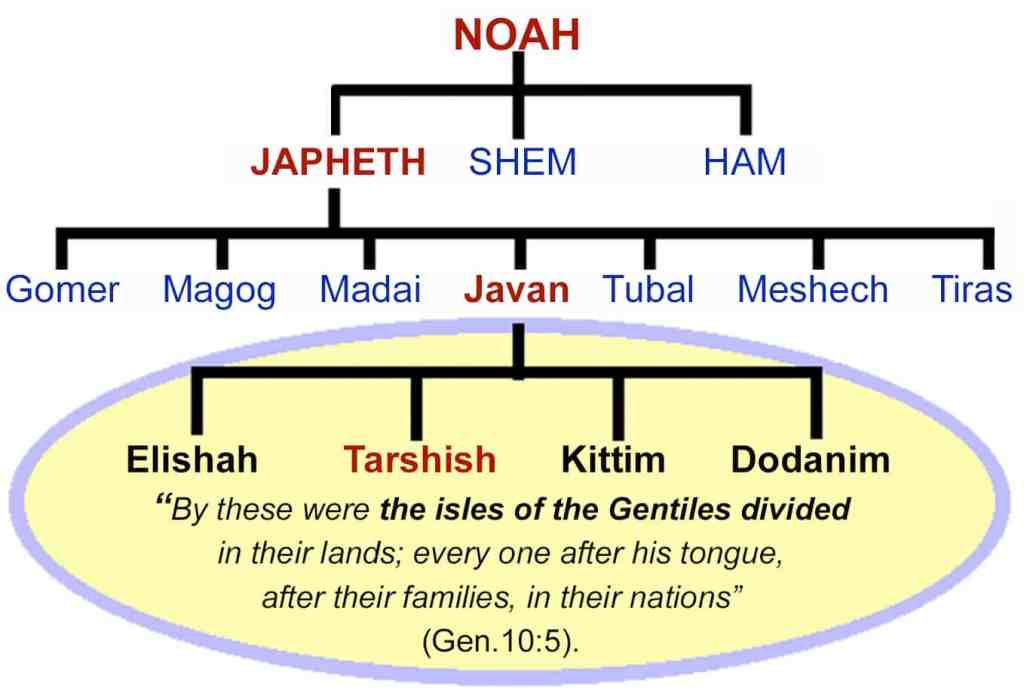
We arrive at one final – glaringly left-out – country, on our journey of the identity of nations and principally, the seven sons of Japheth. The informed reader will be doing cognitive cart wheels – for ironically, this nation is famous for its acrobats and tumblers – seeing not just one, but three of Japheth’s sons grouped together, after only discussing four sons thus far.

Tubal is the fifth son of Japheth and Meshech, the sixth. An enduring number of (many) painstaking years elapsed in searching for them both. The Koreas as Meshech and Japan as Tubal was considered; as well as studying the merit of North Korea as Meshech and South Korea as Tubal (with Japan as Togarmah) – Chapter VI Togarmah & the Koreas; and Chapter IX Tarshish & Japan.

Eventually, the pieces of the puzzle led to only one viable answer – the identity arrangement we will now investigate. When searching for scientific support and historic precedent, this writer was incredulous in discovering considerable information for each avenue of enquiry.

A valuable lesson was learned: examine the genetic data more thoroughly and delve more rigorously into history.

Magog is the second son of Japheth. There are very few Bible verses on Magog, yet ironically, he is probably the most well-known of Japheth’s seven sons and the one that certainly leaves, the biggest impression. There has been less confusion surrounding Magog – saying that, many have attributed Magog incorrectly with the Celts (or Britain, as with Gomer) or primarily Russia – yet conversely, considerable mis-understanding regarding Meshech and Tubal. So much so, it has affected accurate research immeasurably.

The Races of the Old Testament, A H Sayce, 1891, pages 45, 47-48 – emphasis mine:

‘Gog is the Gugu of the Assyrian inscriptions, the Gyges of the Greeks… Tubal and Meshech… are almost always coupled together in the Old Testament, and were famous for their skill in archery.’

Israel a History of – emphasis mine:

‘These three sons of Japheth are closely linked throughout scripture. Ezekiel 38:2 mentions all three sons in a prophecy against Gog. Magog’s name possibly means “the place of Gog”, and is very likely that this referred to the region near the Black Sea called Georgia. Josephus states that Magog, or Gog, was the forebearer of the Scythians. The Scythians originally settled in the Black Sea area, which correlates to the meaning of Magog’s name. Ezekiel links these three brothers together in association with Rosh, translated “chief” in the King James… Rosh was the name from which present day Russia was derived. By and large, from the line of the sons of Noah, Magog, Meshech, and Tubal have come to be known and accepted by scholars as the originators of the current Russian peoples.’

The Scythians we will discover, are a line from Shem, not Japheth. Meshech and Tubal may well have lived in Russia and left their names behind while sojourning east. Neither Magog, or his two younger brothers identify with Russia. The Hebrew word ‘Rosh’ is just that, a Hebrew word meaning chief. It is a title, not a name or identity. 

Derek Walker – capitalisation his, emphasis mine: 

‘One of the most fascinating aspects of Ezekiel 38-39 is that Islam has its own version of the Battle of Gog and Magog, called the War of Yajuj and Majuj. In two places the Koran specifically mentions Yajuj and Majuj by name (18:96; 21:96).

Tubal and Meshech are mentioned together in Ezekiel 38:2. Some believe these people intermarried and became known as Magog, the dominant tribe.* There are two main theories for their location: (1) RUSSIA and (2) TURKEY. Whichever it is does not change the overall picture as both are identified by the other names in Ezekiel. 

(1) Regarding Meshech and Tubal, some assign a Russian identification, connecting these 2 nations with the modern Russian cities of Moscow and Tobolsk. This view is partly based on the similarity of sound in these names and their close proximity to Rosh (Russia). L. Sale-Harrison corroborated this identification on linguistic grounds. 

Wilhelm Gesenius, the world class Hebrew scholar, whose Hebrew Lexicon has never been surpassed, said Gog is undoubtedly the Russians. “Meshech was founder of the Moschi, a barbarous people, who dwelt in the Moschian mountains.” He went on to say that theGreek name “Moschi”, derived from the Hebrew ‘Meshech’, is thesource of the name for the city of MOSCOW.

In discussing Tubal he said, “Tubal is the son of Rapheth [Japheth], founder of the Tibereni, a people dwelling on the Black Sea to the west of the Moschi.” His conclusion was these people make up the modern Russian people. 

‘Meshech’ the 6th son of Japheth, [originally] settled in the NE portion of Asia Minor.His posterity extended from the shores of the Black Sea along to the south of the Caucasus. He was the father of the Rossi and Moschi, who dispersed their colonies over a vast portion of Russian territory. And their names are preserved in the names of Russians and Muscovites to this day. The Septuagint version of the Old Testament renders the term: “Meshech” by the words “Mosch” and “Rosch”; while “Moscovy” was a common name for Russia, and the city of Moscow is one of her principal cities.

‘Tubal’ or ‘Tobal’ [originally] settled beyond the Caspian and Black Seas in the eastern possessions of Russia, embracing a very large portion of these dominions. The name of this patriarch is still preserved in the river Tobal, which waters an immense tract of Russian territory; and the City of Tobalski in Russia is still a monument to him.

(2) Another line of study reveals that Meschech and Tubal are the ancient Moschi/Mushki and Tubalu/Tibareni peoples who dwelled in the area around, primarily south of, the Black and Caspian Seas in Ezekiel’s day. Meshech was located near what was known as Phrygia, in central and western Asia Minor, while Tubal was located in eastern Asia Minor. 

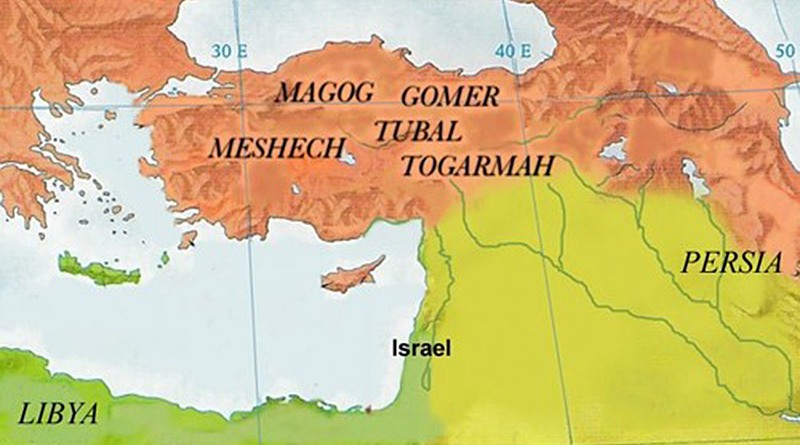
So Meshech and Tubal form portions of modern Turkey. Expositors Bible Commentary: “Meshech and Tubal refer to areas in eastern Turkey, southwest of Russia and northwest of Iran.” Assyrian texts & monuments locate Meshech (Mushku) and Tubal (Tabal) in Anatolia (Western Turkey), the areas that became known as Phyygia and Cappadocia. Later migrations north from Turkey to Russia could mean that both identifications are valid, and indeed both Turkey and Russia are directly to the north of Israel (as required by Ezekiel 38:6, 15, 39:2).

In any case, between them, Magog, Rosh, Mechesh and Tubal certainly represent RUSSIA…’

While all these apparent correlations appear superficially convincing, examining scripture thoroughly exposes the flaws in these two theories. We will expand on the potential of intermarrying later, with Derek Walker’s final sentence also key; though this writer would substitute the title Rosh with the personality of Gog.

The Origin of the Nations, Herman Hoeh, 1957 – capitalisation & emphasis his:

‘Russia is mentioned almost by name in some versions of the Bible! Turn to Ezekiel 38:2. Here you will find that a certain power called “Gog” is “the chief prince of Meshech and Tubal”. The proper translation is “the prince of Rosh. Meshech and Tubal!” In Hebrew, the word for chief is “Rosh”. That is also the ancient name for “Russia.”

We will study Russia and its identity as Asshur and scrutinise the word ‘rosh’ – refer Chapter XX Will the Real Assyria Stand Up: Asshur & Russia.

Rosh may look like Rus-sia but it is not a marker for the Russians but rather a clue to Meshech and Tubal’s relationship with Gog.

Herman Hoeh:

‘Over half of all Russia is occupied by a people called “Great Russians” today. The Great Russians are divided into two distinctive people who have remained constantly together since the beginning of history. We shall now prove from history that the Great Russians are the descendants of Meshech and Tubal (Genesis 10:2). Here is what the ENCYCLOPAEDIA BRITANNICA says about the Great Russians: “Not with standing the unity of language, it is easy to detect among the Great Russians themselves two separate branches differing from one another by slight divergencies of language and type and DEEP DIVERSITIES OF NATIONAL CHARACTER…

One branch settled around Moscow. The word Moscow is but an English spelling of the Russian “Moskva”, a word almost identical to the one used by the Assyrians to refer to the the people of Meshech! The other branch constitutes the people of Tubal. This branch of the Great Russians founded the city of Tobolsk in Siberia and named the Tobol River… Meshech and Tubal migrated into Russia! Surely there is no mistaking who Meshech and Tubal are today.’

Meshech and Tubal, as a great many others, traversed and dwelt in the vast landscape that is now incorporated in the present day boundary of Russian land. Their final migratory resting place is not within Russia.

Hoeh: ‘… Do you know where the word “Siberia” comes from? In Asia Minor, where the people of Tubal first settled, a vast tract of land was called Subaria, sometimes spelled less correctly “Subartu”. This word has puzzled historians no end! Here is the origin of “Siberia!”

What is the origin of the word “Russian” – the “Rosh” of Ezekiel 38:2 (when properly translated)? The INTERNATIONAL STANDARD BIBLE ENCYCLOPAEDIA gives the answer. Here, under the article “Rosh”, we find that a vast area of the Mesopotamian Valley was called “the land of Rashu!” The word “Russ” or “Rosh” means blonde. In modern times the name “Russ” was first applied to Russia because of the blond people of White Russia who live next to the people of Meshech and Tubal.’

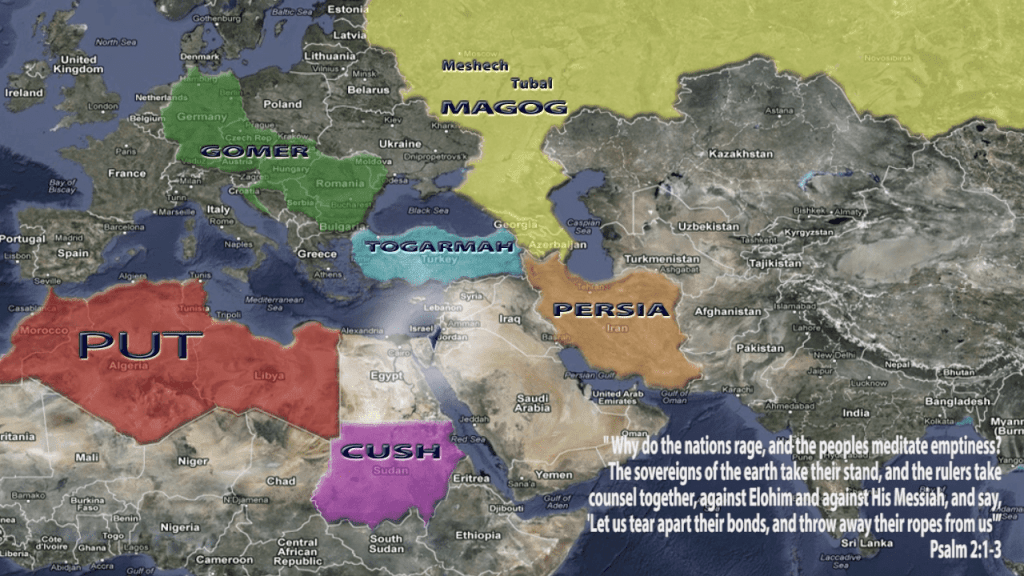
Who Magog, Meshech and Tubal are not… the map above is an example of a common representation for the biblical identities listed in Ezekiel chapter thirty-eight. All without exception are incorrect, as our progression through the descendants of Japheth, Ham and Shem will reveal. Put and Cush are cold; Magog (Gog) not quite as cold; Persia warm, yet still cold; and Meshech, Tubal, Gomer with Togarmah very cold.

Hoeh: ‘Turn again to the prophecy of Ezekiel 38 and 39. Notice the identity of Gog and Magog. Who are the people called “Gog” and “Magog”? Magog, rather than Gog, is mentioned in Genesis 10:2. Gog is apparently a tribal subdivision of Magog.* In prophecy, Magog comes to great prominence in the West only in the latter days. Here is what the JEWISH ENCYCLOPAEDIA says about Gog and Mogog: “… [a] wall [was] built by… (Alexander the Great) to shut them off from the rest of the world… Geographically they represent the extreme northeast, and are placed on the borders of the sea that encircles the earth.”

‘Notice what the unrivalled McCLINTOCK & STRONG ENCYCLOPAEDIA says about Gog and Magog: “According to Reinegge… some of the Caucasian people call their mountains Gog, and the highest northern points Magog” –because the people of Magog once lived in these regions in Bible times!

“The [Arabians] are of the opinion that the descendants of Gog and Magog inhabit the northern parts of Asia, beyond the Tartars and Sclavonians (or Russians), and they put Yajuj and Majuj always in conjunction,thereby indicating theextreme points in north and north-east of Asia”. Some writers spell these Arabic words Yagog and Magog. Now to what people are these names referring? They dwell in the northern part of Asia, bordering on the ocean, andrise to prominence… “in the latter days” (Ezekiel 38:8).

The Mongols and their Asiatic kinsmen! In fact, the proper spelling of “Mongol” is “Mogol”, obviously a slightly changed form of “Magog”! And in Asiatic Russia live the Yakuts – the Yagog of the Arab historians. The people of Mongolia, together with China, Manchuria, Korea [Gomer’s son Togarmah] and Japan [Javan’s son Tarshish], are all of this one great branch of mankind. A remnant of the people of Magog appear, with pigtails and yellow skin, on the Egyptian monuments. They were called Kheta by the Egyptians and Ketei by the Greeks. When the Russians first met the Mongolians and Chinese they called them Khitai! Western Europeans used a similar word for China in the Middle Ages: Cathay. Here indeed is “Gog, of the land of Magog.”

Herman Hoeh errs in his conclusions regarding Tubal and Meshech, while he is partially correct with his summation of Magog.

No, The Bible Does Not Predict A Russian Invasion, Thom Jonas – emphasis mine:

‘… there are 3 main sources that heavily influenced the identification of Russia in Ezekiel 38:2. These are The Septuagint translation [1], Gesenius [2], and the Scofield Reference Bible [3].’

When Time Shall Be No More: Prophecy Belief in Modern American Culture, Paul Boyer, 1999, page 154 – emphasis mine:

“The German Hebraicist Wilhelm Gesenius (1786 – 1842), professor of theology at the University of Halle in Prussia, played a key role in the process by which Gog came to be identified as Russia. Gesenius, whose Old Testament lexicon of 1828 long stood as a standard reference work, viewed “Rosh” not only as a proper name but as an early form of the word “Russia.” In another step that would prove highly influential for prophecy interpretation, he also claimed that “Meshech” and “Tubal” were present-day Moscow and the Siberian city of Tobolsk.”

Meshech, Tubal, and Company: A Review Article, Edwin Yamauchi, 1992 – emphasis mine:

“The Hebrew word for “chief” (ros) in Ezekiel 38:2 was transliterated by the Septuagint as a proper name (Ros), giving rise to a widespread impression that “Russia” was intended. These groundless identifications have unfortunately gained widespread currency in the evangelical world through many channels: the first and the second editions of the Scofield Reference Bible; the phenomenally popular book by Hal Lindsey and C. C. Carlson, The Late Great Planet Earth; and the lectures of Campus Crusade evangelist Josh McDowell on numerous college campuses. The perpetuation of such idenfications based on superficial similarities is completely untenable in the light of the clear evidence of cuneiform texts which locate Mushku (Biblical Meshech) and Tabal (Biblical Tubal) [in the distant past] in central and eastern Anatolia.”

The Book of Ezekiel, Daniel I Block, 1997:

“Tubal or Tabal was the territorial designation of the interior Anatolian kingdom know to the Assyrians as Bit Buritash. This landlocked kingdom, between the Halys River and the Taurus River in Asia Minor, was bounded on the west by Meshech, on the south by Hilakku, on the east by Melidu and Til-garimmu (Beth-togarmah) and on the north by Kasku… Meshech, to be identified with Mushku/Musku in neo-Assyrian sources, was also located in central Anatolia. Ancient records attest to contact with the Assyrians as early as the reign of Tiglath-Pileser I in the 12th-11th century.”

Thom Jonas:

‘Further, all of the other places mentioned in Ezekiel 38 also appear together in the table of nations from Genesis 10, but “Rosh” does not appear there at all. In fact, the word “rosh” is never translated as a proper noun, despite appearing many times in the Old Testament.

… the identification of the remaining nations such as Meshech and Tubal has been settled by the discovery of Assyrian cuneiform tablets bearing all of their names. They refer to several ancient places that were situated near each other in the region of Asia Minor. This rules out the identification of Meshech as Moscow, and Tubal as Tobolsk, both of which were based on flawed etymology (they sound a bit the same – go figure!). The same applies to the association of Gomer with Germany, and you can follow this theme with most of the other places listed in that chapter.’

“It is a reflection on evangelical scholarship when some of its spokesmen continue to adhere to the groundless identification of ros as Russia, and the association of Meshech with Moscow and of Tubal with Tobolsk, when we have had cuneiform texts and discussions of them that provided the true clarification of these names since the end of the 19th century” – Meshech, Tubal, and Company: A Review Article, Edwin Yamauchi, 1992, pages 243-244.

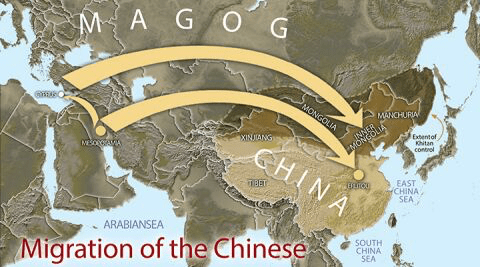
Magog principally, is the modern nation of China.

The Chinese are an amalgamation of different, related peoples, with the answer contained inside the Bible all along. Discoveries in genetics have demonstrated the proposition as factual.

Think about it… for the question remains regardless:

Would the scriptures seriously remain silent on an influential mass of people such as the Chinese?

And in the process, ignoring a prominent nation of great magnitude from ‘end-time’ biblical prophecy?
Rosh in Hebrew, means: ‘Head, Chief, Top’.

From the root ro’sh [H7218], which has to do with primality and can mean ‘to shake the head (as most easily shaken), whether literal or figurative (in many applications, of place, time, rank…)’ It can also mean, ‘beginning, first, principal, captain, company’ and ‘height.’ It is used as head, 349 times in the KJV of the Bible; chief, 91 rimes; and top, 73 times.

Definitions include: the head of men, a company or a division, the top or tip on a mountain, the height of stars.
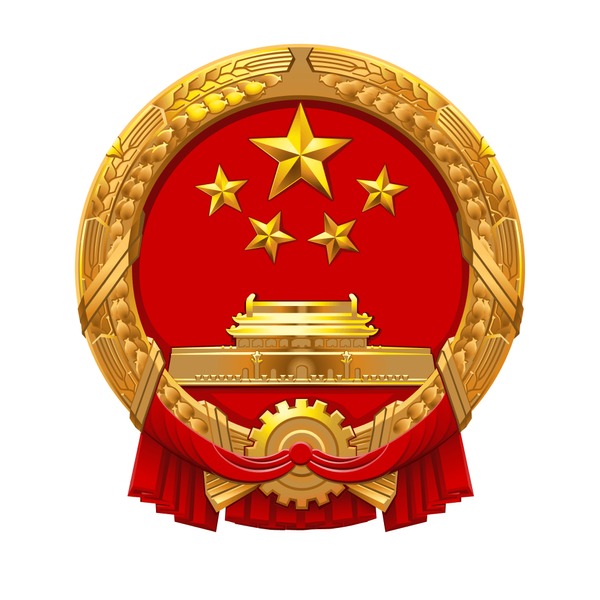
The coat of arms of China is known as the National Emblem of the People’s Republic of China and features a red circle with a depiction of Tiananmen Gate, encompassed by sheaves of wheat and rice which symbolise agricultural workers.

Note the five stars positioned above.

The largest star represents the Chinese Communist Party, while the four smaller stars symbolise the four social classes defined by Maoism.

  1. The proletariat (workers)
  2. The peasantry (farmers)
  3. The intelligentsia (educated individuals)
  4. The national bourgeoisie (capitalists who supported the revolution).

The word following rosh in Ezekiel chapter thirty-eight, verse two is the Hebrew word *nasiy’ [H5387], which is translated by the KJV as prince, 96 times; captain, 12 times; chief, 10 times; ruler, 6 times; vapours, 3 times; and governor, 1 time. It refers to ‘one lifted up’ a ‘rising mist’ or ‘vapour.’ It is linked with H5375, ‘an exalted one’, a king.

Abarim Publications: 

‘The name Rosh belongs to a man and to a region in the Bible. Rosh the man is a son of Benjamin (Genesis 46:21), but other Biblical genealogies of Benjamin don’t list Rosh. Rosh the land is mentioned only by Ezekiel in his apocalyptic vision of the attack of Gog of Magog, the prince of Rosh, Meshech and Tubal (Ezekiel 38:2-3 and 39:1).’

Rosh is being misinterpreted and is either a title of a person known as Gog, or a description of a region called Gog – not a region called Rosh. Nor does the word rosh come after nasiy’, it precedes it. Thus ‘prince of rosh’ or literally ‘prince of head’ is not what the Hebrew is saying, it is saying: the ‘head prince.’

Abarim:

‘The name Rosh is the same as the noun (ro’sh) meaning head or top… it may also refer to the beginning of a period: adjective (ri’shon) literally means chiefly but is mostly used in the same sense of previous or former. Noun (ri’sha) means pinnacle but may also refer to some past golden age or bygone glory days.’
Magog can be defined as ‘place of Gog’ or ‘agent of Gog’. Magog is derived from the name Gog. Its literal meaning is ‘rooftop’* and ‘place of the roof’, from the noun gag, meaning ‘rooftop.’

Abarim Publications – emphasis mine:

‘Magog was originally a son of Japheth, son of Noah (Genesis 10:2) but later this name came to denote a region (Ezekiel 38:2). Magog is often mentioned in conjunction with Gog of Reuben (1 Chronicles 5:4).’

We will return to Gog the descendent of Reuben, when we study the sons of Jacob – Chapter XXXI Rueben, Simeon, Levi & Gad – the Celtic Tribes.

Abarim:

‘Magog is often mentioned in conjunction with Gog… but later also the name of a certain prince of Rosh, Meshech and Tubal…literally the Chief Prince of the Occupied Zone that is The World… 

The name Magog is the name Gog with a prefixed mem, which may be a particle of inquisition: (me), what, or (mi), who? Or it may come from the particle (min; often abbreviated to a single mem), meaning from. Nouns that start with an m often describe place or agent of the parent verb.

Where the name Gog comes from is not clear; BDB Theological Dictionary resolutely declares its root unknown. Jones’ Dictionary of Old Testament Proper Names, on the other hand, points towards the Hebrew word (gag), usually meaning roof. The noun (gag) means rooftop, but since a society was a “house” its “rooftop”referred to that society’s level of science and technology… the most remarkable usage is in Exodus 30:3 and 37:26 where [it] denotes the top of the altar of incense.

Gog may be aregion, and Magog is then said to mean From Gog (BDB Theological Dictionary). But Ezekiel 38:2 speaks of a man named Gog who is of the land of Magog (= the land of the land of Gog), which seems overly redundant.

But Gog may mean Roof, and Magog may subsequently mean Off The Roof, which means more in English than in Hebrew. Magog might literally mean Place Of The Roof and describe a center of wisdom, or Agent Of The Roof and describe a person who works in such [a] center.’

Perhaps place of the roof denotes China’s size and influence on the Earth, whether it be superior technology, military strength, economic power, or even the gigantic rooftop covering of its colossal population. China blankets civilisation with its increasing number of souls and its deluge of exports. Is the roof or top of the world, a prediction that China will be the preeminent power in the world – refer articles: 2050; and Four Kings & One Queen.

It surely isn’t a coincidence that Rosh means top and Magog roof-top. A roof covers the whole building beneath it. It also protects those underneath.

A map of the world from a Chinese perspective – the Middle of the Earth (refer Addendum II) – and note how the United States of America is turned on its head.

Lastly, it could be a reference to conquering space and China’s dominance over the rest of the world beneath it. China is actively developing its space program to rival that of Russia and the United States. It became only the third nation to retrieve materials from the Moon, bringing back lunar rocks in December 2020.

The Great Wall of China – visible from outer space – was built over the course of many centuries, with its earliest sections dating back to the seventh century BCE. The most significant construction occurred during the Qin Dynasty from 221 BCE to 206 BCE and continued through the Ming Dynasty from 1368 until 1644.

Science-fiction writer Isaac Asimov proposed the idea for a space power station in 1941. China is planning to launch a fleet of mile-long solar panels into space by 2035, that would convert solar energy into electrical energy and be fully operational by 2050. A microwave transmitter or laser emitter would convert the power to a high frequency radio wave and transmit the highly economical green energy to Earth. An Array would capture the signal like a giant fishing net, converting into electricity to be fed into the grid.

In 2008, Japan confirmed the idea of space solar power a national goal. The United Kingdom has joined Japan, China, Russia and the United States in pursuing space based power generation, in a new space race. 
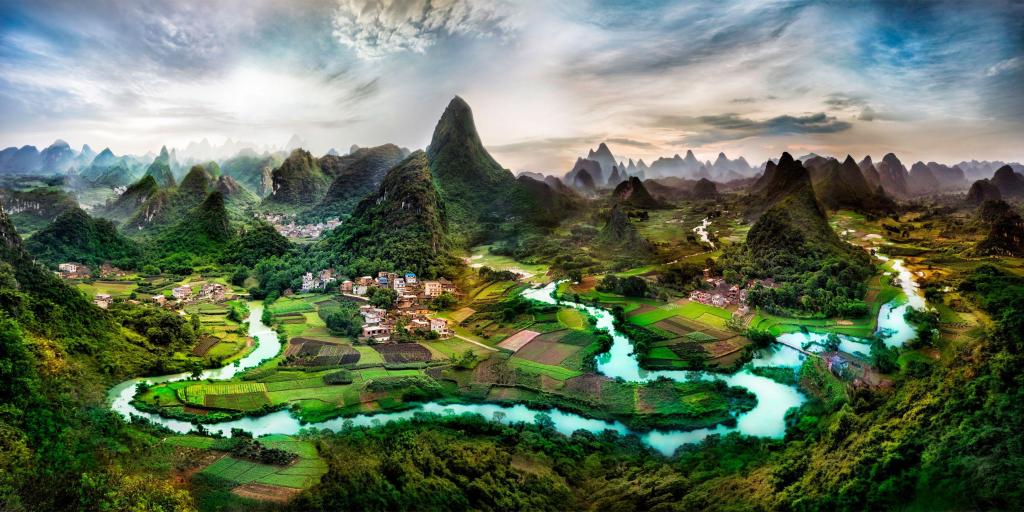
The People’s Republic of China receives continual press as an emerging ‘second superpower.’ Barry Buzan said in 2004 that “China certainly presents the most promising all-round profile” of a potential superpower. In 2011, Singapore’s first premier, Lee Kuan Yew, stated that: “[China] have transformed a poor society by an economic miracle to become now the second-largest economy in the world. How could they not aspire to be number 1 in Asia, and in time the world?” using their “huge and increasingly highly skilled and educated workers to out-sell and out-build all others.” Arvind Subramanian an Economist stated in 2012 that, “China was a top dog economically for thousands of years prior to the Ming dynasty. In some ways, the past few hundred years have been an aberration” – Article: 2050.

Though China is considerably ahead of the other top ten economic powers in the world it is yet to catch the United States; as China is lacking in soft power – the ability to influence others to your advantage – and has a low GDP per person. China also has an ageing and shrinking workforce to tackle in the future.
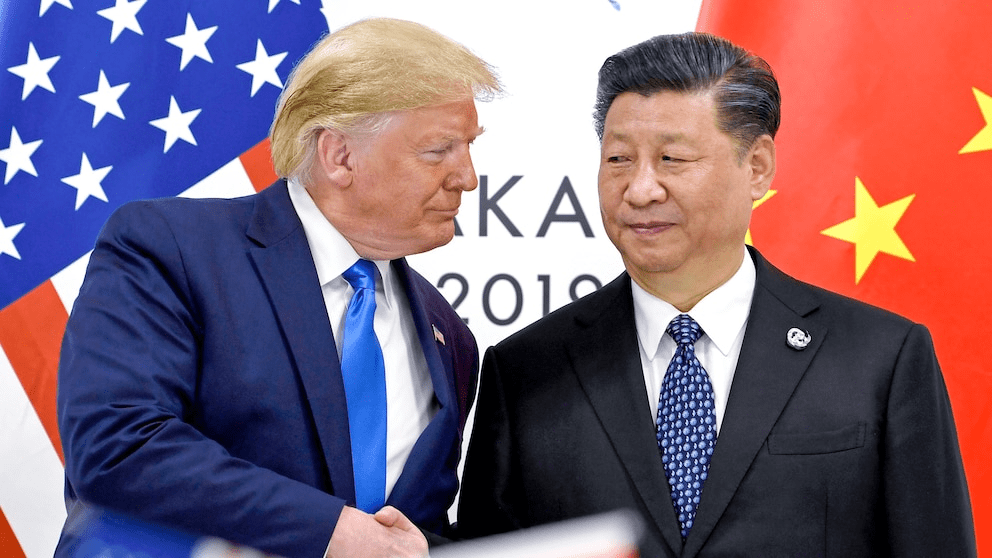
China’s uneasy relationship with the United States demonstrated by its two leaders, Xi Jinping and Donald Trump.

Susan Shirk in China: Fragile Superpower, 2008, lists factors that ‘could constrain China’s ability to become a superpower… limited supplies of energy and raw materials, questions over its innovation capability, inequality and corruption, and risks to social stability and the environment.’ Minxin Pei said in 2012, that China has used its economic power to influence some nations, yet is surrounded by potentially hostile nations. ‘This situation could improve if regional territorial disputes were resolved and China participated in an effective regional defence system that would reduce the fears of its neighbours.’ Also, a ‘democratization of China could improve foreign relations with many nations.’
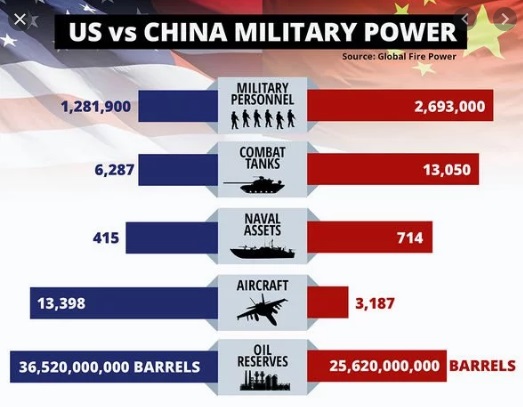
Prisoners of Geography, Tim Marshall, 2016 & 2019, page 62:

‘China is not weighed down or motivated diplomatically or economically by human rights in its dealings with the world. It is secure in its borders… and now moving around the globe in confidence. If it can avoid a serious conflict with Japan or the USA, then the only real danger to China is itself.

There are 1.4 billion reasons why China may succeed, and 1.4 billion reasons why it may not surpass America as the greatest power in the world. China has locked itself into the global economy. If we don’t buy, they don’t make.’

‘And if they don’t make there will be mass unemployment. If there is… long-term unemployment, in an age when the Chinese are a people packed into urban areas, the inevitable social unrest could be – like everything else in modern China – on a scale hitherto unseen.’
“China is a civilisation pretending to be a nation” – Lucian Pye

Meshech in Hebrew means: ‘Departed, drawn out’ from the verb mush, ‘to depart’; masha, ‘to draw out’; and mashak, ‘to draw or drag.’

Abarim Publications – emphasis mine:

‘In Genesis 10:23, Mash is listed as a son of Aram, who is a son of Shem… In 1 Chronicles 1:17 the same genealogy occurs, although the various generations are now all listed as sons of Shem. And Mash is called (Meshech). Another man named Meshech is mentioned as a son of Japheth… (Genesis 10:2). He is mentioned about half a dozen times in the Bible, mostly along with Javan and Tubal, and it’s clear that these are the names of nations rather than individuals (Psalm 120:5, Ezekiel 27:13). Older translations may have the ethnonym “the Moschi” instead of Meshech.

The name (Mash) does not occur as a regular word in Hebrew, but it may be viewed as a contraction of the word (mush), meaning depart or remove… The verb (mashash) means to feel; to sense or search for tactilely… and appears most often in the negative, when something is typically not ambulant but stays where it’s at… the sweeping or scanning motion that usually accompanies tactile reconnaissance. This same motion could be applied to describe a being footloose or untethered. Verb (nasa’) describes an upward motion, generally of something that is being pulled up and out so as to remove it… to lift up… to bear or carry… to take or take away… to loan on interest… to deceive or beguile.

Noun (mas’et), reflects… uprising (of smoke), uplifting (of hands), utterance (of an oracle), a burden or that what’s carried. Noun* (nasi’) describes a lifted-up one… a captain or chiefa mist or vapour. Note this keenly observed connection between paying interest and being formally governed…mesho’a, ruin or desolation… Plural noun (mashshu’ot) means deceptions… Noun (si’) means loftiness or pride. Noun (se’et) means dignity, swelling or outburst, a rising up… the verb (sha’a), to be noisy or ruinous. 

The verb (nasha)… to lend on interest or to forget, or rather to have a memory slowly evaporate away. Noun (neshiya) means forgetfulness or oblivion. Noun (neshi) means debt… Verb (masha) means… a drawing out of waters: to extract from water. NOBSE Study Bible Name List does not translate Mash but reads Extend(ed), or Tall for Meshech.’

An upward motion into mist or vapour could refer to space, or just how high Meshech is over the world. The final definitions of extended and tall alludes to this as does Meshech appearing to have financial power as a lender and the control or governance, that extends from lending – on a worldwide scale.

According to Abarim Publications, Tubal’s definition in Hebrew is incredible in light of both Magog’s and Meshech’s meanings. They define it from the noun tebel, as ‘the whole world-economy’ and the verb yabal, meaning ‘to flow or carry along’, ‘to bring, lead, conduct.’
Abarim Publications – emphasis mine:

‘In the Bible there’s one person named Tubal and one more named Tubal-cain [Genesis 4:22]. Tubal-cain and his brothers Jabal and Jubal and sister Naamah are the last in line from Cain, the cursed son of Adam and Eve [refer article: Na’amah]… Just Tubal descends from Cain’s youngest brother Seth and is a son of Japheth, who is a son of Noah… The latter Tubal shows up quite a bit in prophetic texts, usually in the company of his brothers Meshech and Magog… 

The verb (balal) means to mix something with oil, usually flour products… as ritualistic food preparation. The emphasis… lies on saturation and overflowing: to fill something with oil until it can absorb no more and begins to reject an excess of oil. Noun (belil) describes a very rich mix of animals to eat… and noun (teballul) tells of insoluble material that obstructs a person’s eye. 

Noun (yabal) means water course or conduit… noun (‘ubal) means stream or river… noun (bul) means produce or outgrowth. Noun (yobel)… describes “a carrier” or “a producer” or “something that drives a flow”… Verb (‘abel)… [is]… often used to describe a collective mourning, which either happened in a procession or else contagious enough to drag others along. Nouns (‘ebel) and (‘abel) both mean mourning, but the latter is also the word for [an] actual water stream or brook… adverb (‘abal)… expresses solemn affirmation (verily, truly, yes indeed I’m totally going along with you there) but later texts appear to put somewhat of a breaking force on the momentum (“yes! … but”)

Jones’ Dictionary of Old Testament Proper Names settles for the general meaning of the verb and reads Flowing Forth for the meaning of the name Tubal. However, identical to the name Tubal is our root’s derivative (tebel), meaning world. Hence the name Tubal means World, but the whole flow and currencies of the world-economy in its broadest sense.’

A ‘very rich mix of animals’ is reflected in the varied taste of the Chinese and the breadth of animals they will eat. Tubal has a role to play in driving the global economy and therefore the world. The Earth appears to comply, though with growing reservation. There are a handful of alternative meanings for Meshech and Tubal, which we will now consider as we study verses on all three brothers.
The Book of Jubilees 8:25:

‘And for Japheth came forth the third portion beyond the river Tina to the north of the outflow of its waters, and it extends north-easterly to the whole region of Gog, and to all the country east thereof.’

Japheth’s area is measured against the land of Gog, as Magog is gigantic compared to his brothers. The Book of Jasher 7:4, 7-8 provides names for the sons of Magog, Tubal and Meshech, who are omitted in the Bible: 

‘And the sons of Magog were Elichanaf and Lubal

And the sons of Tubal were Ariphi, Kesed and Taari.

And the sons of Meshech were Dedon, Zaron and Shebashni.’

Notice the similarity with Meshech’s son Dedon and Javan’s son Dodan: the Filipinos – refer Chapter VII Javan: Archipelago South East Asia & Polynesia

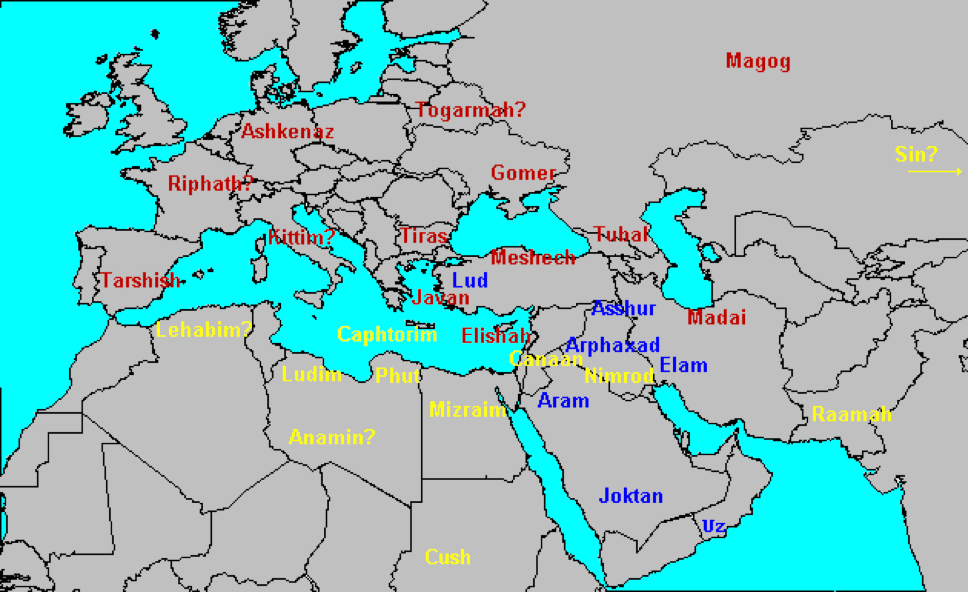
The map above provides a good representation of some of Japheth’s descendants after their migration from the Indus Valley following the flood cataclysm (10,837 BCE), somewhere between 9500 and 7000 BCE. The sons of Javan and Madai are accurate as they are and Tiras would have been where Javan – which is redundant – is marked. Javan’s fourth son Tarshish, should be located between Dodan and Tiras and would later migrate to Iberia. Gomer is redundant and marks where Magog was actually dwelling. Tubal and Meshech would have been living adjacent to Magog, where Ashkenaz and Togarmah are in eastern Anatolia. Ashkenaz should be where Meshech and Tubal are placed and finally, Togarmah would have been residing where Magog is incorrectly placed in western Anatolia.

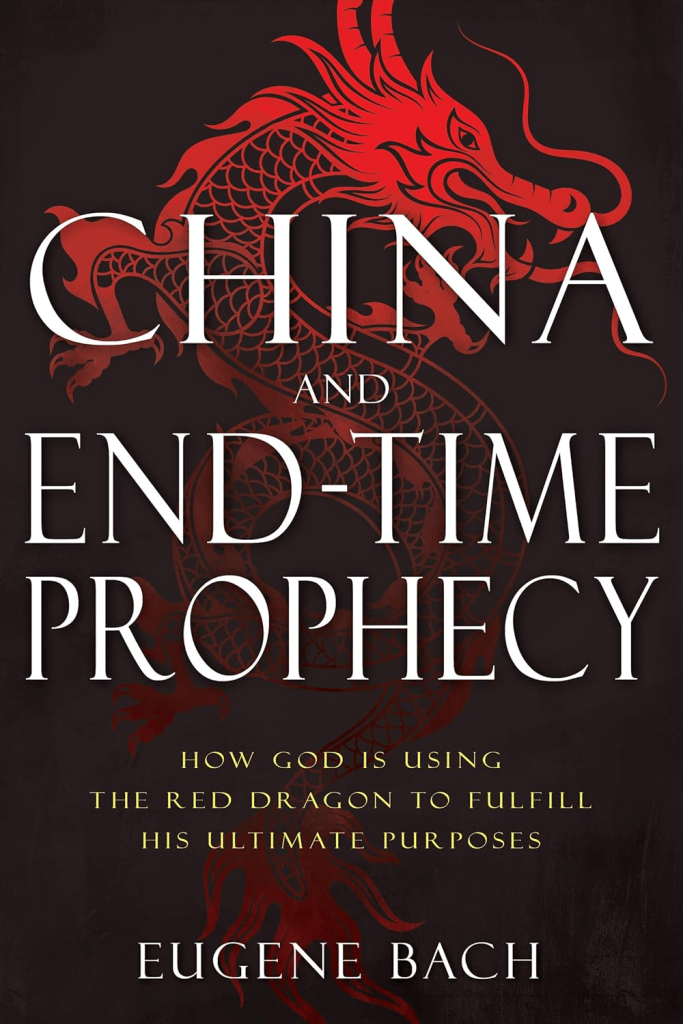
Books like the one below reveal the level of interest in China’s destiny, yet its title – with so many others – is misleading for it does not actually explain China’s role in end-time prophecy as the title and caption claim. 

It is not a forlorn quest as many erroneously think, such as Tom Hobson who writes: 

“When I first arrived at seminary 38 years ago [in 1979], I was full of curiosity as to where I could find the Chinese people in the Bible. Which of the names in the Genesis 10 Table of Nations was China by another name? A Chinese student was quick to advise me not to waste my time on the search.”

Talk about the worse advice ever. An example unfortunately, of the vast majority of souls who call themselves christian, yet in name only and typically not by exemplifying the faith of Christ the living Son of God. 

The Book of Ezekiel describes a combined East Asian and South East Asian military alliance, though it is far in the future, after the prophesied return of the Son of Man and at the end of a millennial Kingdom He establishes on Earth.

The Book of Daniel as we noted with Kittim, alludes to a battle between the King of the North and his confrontation with an enemy from the North and the East – Chapter VIII Kittim & Indonesia.

Therefore, China has a two-fold role in figuring prominently in shaping world events through warfare. The first scenario, possibly a few centuries from now involves Magog in opposition to the King of the North – Russia and her ally, a German led, United States of Europe.

Ezekiel 38:1-23

New English Translation

A Prophecy Against Gog

1 ‘The Lord’s message came to me: 2 “Son of man, turn toward [Hebrew: “set your face against”], Gog of the land of Magog, the chief prince of Meshech and Tubal… Look, I am against you, Gog, chief prince of Meshech and Tubal.’

The Interlinear Hebrew text, without punctuation or prepositions says:

‘… set thy face against Gog land Magog chief prince Meshech Tubal… Gog chief prince Meshech…’

4 ‘I will turn you around, put hooks into your jaws, and bring you out with all your army, horses, and horsemen, all of them fully armed, a great company with shields of different types all of them armed with swords.

5 Persia [Elam-Turkey], Ethiopia [Cush-India], and Put [Phut-Pakistan] are with them, all of them with shields and helmets.

6 They are joined by Gomer [Continental South East Asia – principally Vietnam] with all its troops, and by Beth Togarmah [the (united) Koreas] from the remote parts of the north with all its troops – many peoples are with you.

7 Be ready and stay ready, you and all your companies assembled around you, and be a guard for them. 8 After many days you will be summoned [at the end of the Millennium]; in the latter years [the end of the era following our present age] you will come to a land restored from the ravages of war [the war preceding the return of Christ], from many peoples gathered on the mountains of Israel** that had long been in ruins.

Its people were brought out from the peoples, and all of them will be living securely [this is yet future, for the people of the state of Israel do not live securely]. 9 You will advance; you will come like a storm. You will be like a cloud* covering the earth [description of Magog], you, all your troops, and the many other peoples with you.

10 This is what the Sovereign Lord says: On that day thoughts will come into your mind, and you will devise an evil plan. 11 You will say, “I will invade a land of unwalled towns; I will advance against those living quietly in security – all of them living without walls and barred gates – ‘

This is speaking of a future time when the tribes of Israel – not the Jews – are restored to a new homeland without the need for fortifications.

12 ‘to loot and plunder, to attack the inhabited ruins and the people gathered from the nations, who are acquiring cattle and goods, who live at the center** of the earth [a reshuffled Middle East].”

13 Sheba and Dedan [grandsons of Cush (India)] and the traders of Tarshish [Japan] with all its young warriors [East Asian Tiger Economies] will say to you, “Have you come to loot? Have you assembled your armies to plunder, to carry away silver and gold, to take away cattle and goods, to haul away a great amount of spoils?”

14 … On that day when my people Israel [the sons of Jacob, not the current nation of Israel**] are living securely, you will take notice 15 and come from your place, from the remote parts of the north, you and many peoples with you, all of them riding on horses, a great company and a vast army. 16 You will advance against my people Israel like a cloud covering the earth.

In future days I will bring you against my land so that the nations may acknowledge me, when before their eyes I magnify myself through you, O Gog.

17 … Are you the one of whom I spoke in former days by my servants the prophets of Israel, who prophesied in those days that I would bring you against them? 18 On that day, when Gog invades the land of Israel, declares the Sovereign Lord, my rage will mount up in my anger. 19 In my zeal, in the fire of my fury, I declare that on that day there will be a great earthquake in the land of Israel.

20 The fish of the sea, the birds of the sky, the wild beasts, all the things that creep on the ground, and all people who live on the face of the earth will shake at my presence. The mountains will topple, the cliffs will fall, and every wall will fall to the ground. 21 I will call for a sword to attack Gog on all my mountains, declares the Sovereign Lord; every man’s sword will be against his brother.

22 I will judge him with plague and bloodshed. I will rain down on him, his troops, and the many peoples who are with him a torrential downpour, hailstones, fire, and brimstone [The Day of the Lord – Malachi 4:1-3].

23 I will exalt and magnify myself; I will reveal myself before many nations. Then they will know that I am the Lord.’

Footnote:

38:2 translation Hebrew : “the prince, the chief of Meshech and Tubal.” Some translate “the prince of Rosh, Meshech and Tubal,” but it is more likely that the Hebrew noun in question is a common noun in apposition to “prince,” rather than a proper name. See D. I. Block, Ezekiel (NICOT), 2:434-35. As Block demonstrates, attempts by some popular writers to identify these proper names with later geographical sites in Russia are anachronistic. 

This writer concurs with the NET Bible footnote and does not subscribe to a prince of rosh. It doesn’t make sense to have a ‘prince of head, chief or top’. It does make sense to have a ‘head, chief or top prince’. This prince is the head, chief or top of Meshech and Tubal.

‘The accentual system and syntactical construction of the Hebrew language strongly indicate an appositional relationship between the words “prince” and “chief.” Both terms are related equally, then, to the geographical words Meshech and Tubal. Grammatically, it would seem best to render the phrase, “the prince, the chief, of Meshech and Tubal” – Ralph Alexander.

Foes From the Northern Frontier, Edwin Yamauchi, 2003, page 20:

‘For one thing, even if one were to transliterate the Hebrew rosh as a proper name… rather than translate it as “chief”… it can have nothing to do with modern “Russia”. This would be a gross anachronism, for the modern name is based upon the name Rus, which was brought into the region of Kiev, north of the Black Sea, by the Vikings only in the Middle Ages.’

Ezekiel, by Joseph Blenkinsopp, 1990, page 184:

‘Gog is further described as “chief prince” of Meshech and Tubal. There are only two proper names here, since ro’sh (“chief, head”) is nowhere attested as such. It has no more connection with Russia (a name of Norse extraction) than Meshech has with Moscow.’

The top prince, is revealed a few words previously as Gog… of the land of Magog. It is not immediately clear whether Gog is purely a dominant people; government; region within and part of Magog; or an actual leader either named or more likely, titled Gog. Verses 16 and 21-22 support an individual, with the use of the personal you and him

If Gog is a ruler, then it is an individual of great authority^ as they have ‘height’ as ‘one lifted up’ and as ‘an exalted one.’

John MacArthur:

“Gog came to be used as a general title for an enemy of God’s people. ‘Gog’ most likely carries the idea [of] ‘high’* or ‘supreme one,’ based on the comparison in Numbers 24:7.”

The rebellion of Magog transpires when the Adversary called Satan, is loosed* from their restraint; thus, the likelihood of Gog being an actual leader of Magog is strengthened. As is their identity being linked to the mysterious Nephilim^ – Articles: Nephilim & Elioud Giants I & II; and Chapter XXII Alpha & Omega.

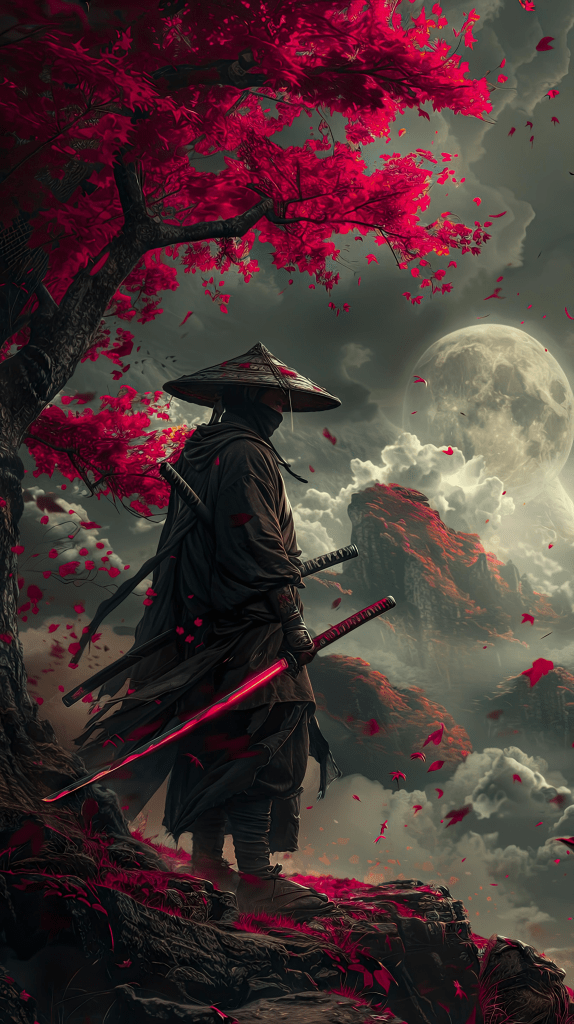
A supernatural element or explanation for the identity of Gog is plausible – as intimated in the artwork below – for it would mirror what is to befall humanity prior to Christ’s return (refer Chapter XXI The Incredible Identity, Origin & Destiny of Nimrod; and article: The Pyramid Perplexity).

Gog is clearly the leader over all three brothers. Therefore using the name (title) Gog is appropriate when referring to all three peoples comprising Magog, Tubal and Meshech.

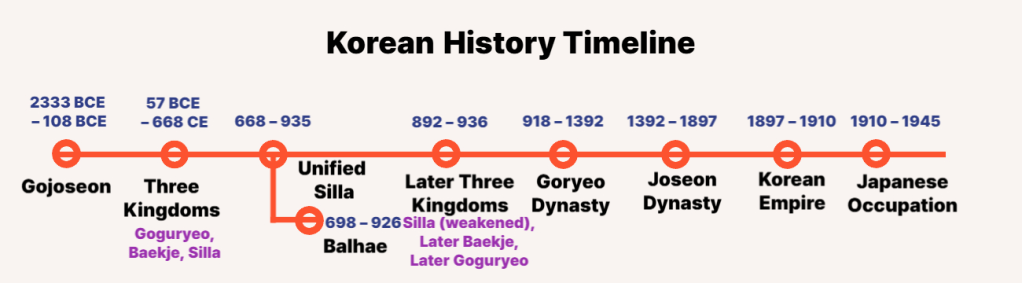
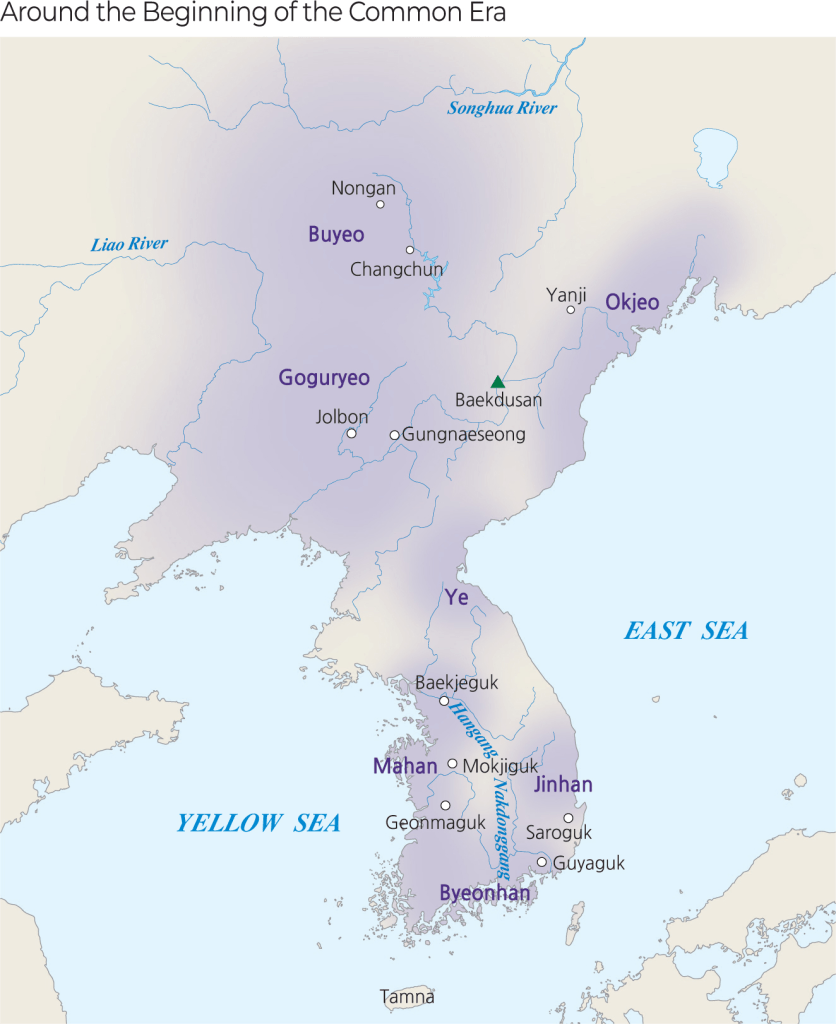
As an aside – of which constant readers will be aware – it is worth noting the Goguryeo Kingdom which encompassed most of the Korean peninsula and large parts of Manchuria from 37 BCE until 668 CE – Chapter VI Togarmah & the Koreas.

It was later known as Goryeo (meaning high* and beautiful) – alternatively spelled as Koryŏ – a shortened form of Goguryeo (Koguryŏ), meaning high Castle. The word was adopted as the official title in the fifth century and is the origin of the English word, Korea.

Ezekiel 39:1-16

New English Translation

“… O Gog, chief prince of Meshech and Tubal! 2 I will turn you around and ‘drag you along’ [definition of Tubal and Meshech]; I will lead you up from the remotest parts of the north and bring you against the mountains of Israel…

I will send fire on Magog and those who live securely in the coastlands [principally Magog, Tubal and Meshech with Gomer (in Continental SE Asia)]…

Then those who live in the cities of Israel will go out and use the weapons for kindling – the shields, bows and arrows, war clubs and spears – they will burn them for seven years. 10 They will not need to take wood from the field or cut down trees from the forests because they will make fires with the weapons…”

11 “On that day I will assign Gog a grave in Israel. It will be the valley of those who travel east of the sea; it will block the way of the travelers. There they will bury [their leader] Gog and all his horde [army]; they will call it the Valley of Hamon [H1995 – multitude] Gog.

12 For seven months Israel will bury them, in order to cleanse the land. 13 All the people of the land will bury them… 14 They will designate men to scout continually through the land, burying those who remain on the surface of the ground, in order to cleanse it. They will search for seven full months. 15 When the scouts survey the land and see a human bone, they will place a sign by it, until those assigned to burial duty have buried it in the valley of Hamon Gog. 16 (A city by the name of Hamonah will also be there)…’

The inference is that Gog is the identity of a real ruler. A literal dema-gog-ue.

Demagogue definition: ‘a person, especially an orator or political leader, who gains power and popularity by arousing the emotions, passions, and prejudices of the people.’

Magog-China is clearly in the far ‘north’ as is Togarmah – refer Chapter VI Togarmah & the Koreas. Seven months to bury the dead and seven years of using the component parts of their weapons reveals the gigantic size of Magog and its alliance’s military might.

As there are prophetic Kings of the North and south, there is also a name for the Magog led confederacy from East Asia and Southeast Asia: the Kings from the East – article: Four Kings & One Queen.

Revelation 16:12-14

English Standard Version

12 ‘The sixth angel poured out his bowl on the great river Euphrates, and its water was dried up, to prepare the way for the kings from the east. 

13 And I saw, coming out of the mouth of the dragon and out of the mouth of the beast and out of the mouth of the false prophet, three unclean spirits like frogs. 14 For they are demonic spirits, performing signs, who go abroad to the kings of the whole world, to assemble them for battle on the great day of God the Almighty.

Revelation 20:2, 7-9

English Standard Version

2 ‘… the dragon, that ancient serpent, who is the devil and Satan, and bound [them] for a thousand years… 7 And when the thousand years are ended, Satan will be released* from [its] prison 8 and will come out to deceive^ the nations that are at the four corners of the earth, Gog and Magog, to gather them for battle; their number is like the sand of the sea. 9 And they marched up over the broad plain of the earth and surrounded the camp of the saints and the beloved city, but fire came down from heaven and consumed them…’

The book of Revelation is specific in that the gathering of Magog – at the instigation of the Adversary – is an innumerable number of people. Only two nations could provide such a prolific amount of personnel: India or China. 

We will learn that India does not descend from Japheth, nor does India fulfil the verses which apply to Magog. Remember, the timing of this attack against the sons of Jacob is at the end of the millennial rule and devoid of any alliance with the King of the South, or against the King of the North as before the Millennium.

It is perhaps signifiant and non-coincidental that the Dragon (Revelation 12:3, 9) will entice and enrage the people (Revelation 20:7-9) represented by none other than… a dragon.

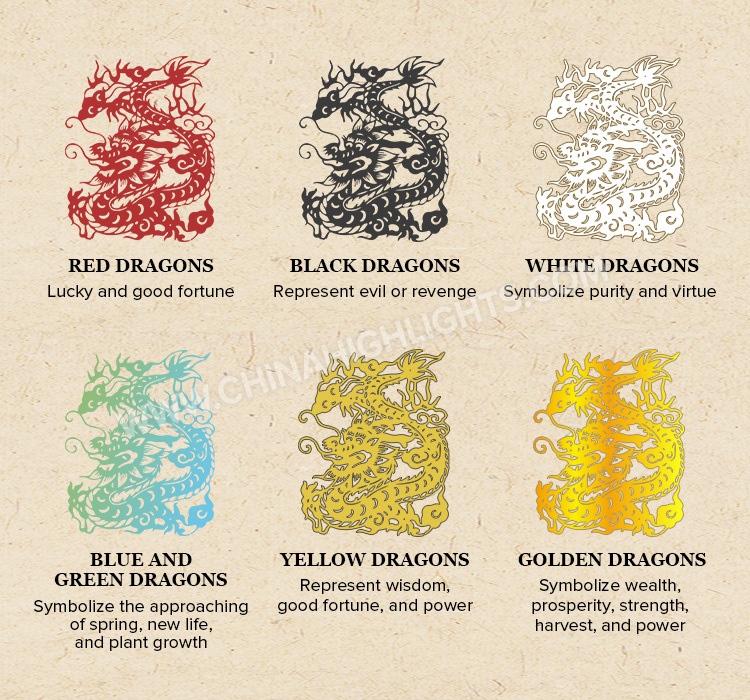
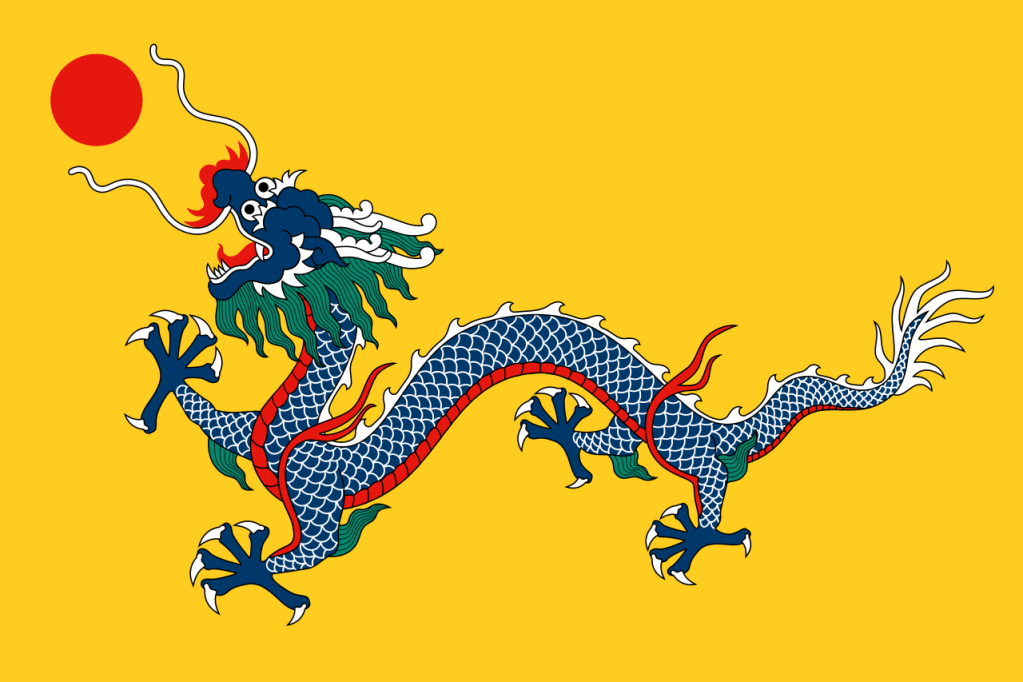
The dragon is the primary symbol of China. In heraldry the dragon is a powerful and charismatic emblem. As formidable or more so even than that of an eagle (United States, Russia) or a lion (India, United Kingdom) both adopted by numerous nations in the world.

China Highlights, Chinese Dragons – Facts, Culture, Origins, and Art:

‘There are many differences between Western dragons and Chinese dragons.

Unlike Chinese dragons, Western dragons often live in lairs or caves in mountains, while Chinese dragons live at the [bottom] of lakes and rivers, and in cloudy skies.

Western dragons have large bat-like wings and big claws and most Western dragons look like carnivorous dinosaurs with wings, while Chinese dragons, though also dinosaur-size or larger, have elements of many different animals and in general look long and snake-like.

Western dragons are depicted as dangerous creatures and symbols of evil (usually), while Chinese dragons, by contrast, are believed to be friendly, auspicious, and lucky (usually) – symbols of great power, good fortune, wisdom, and health.’

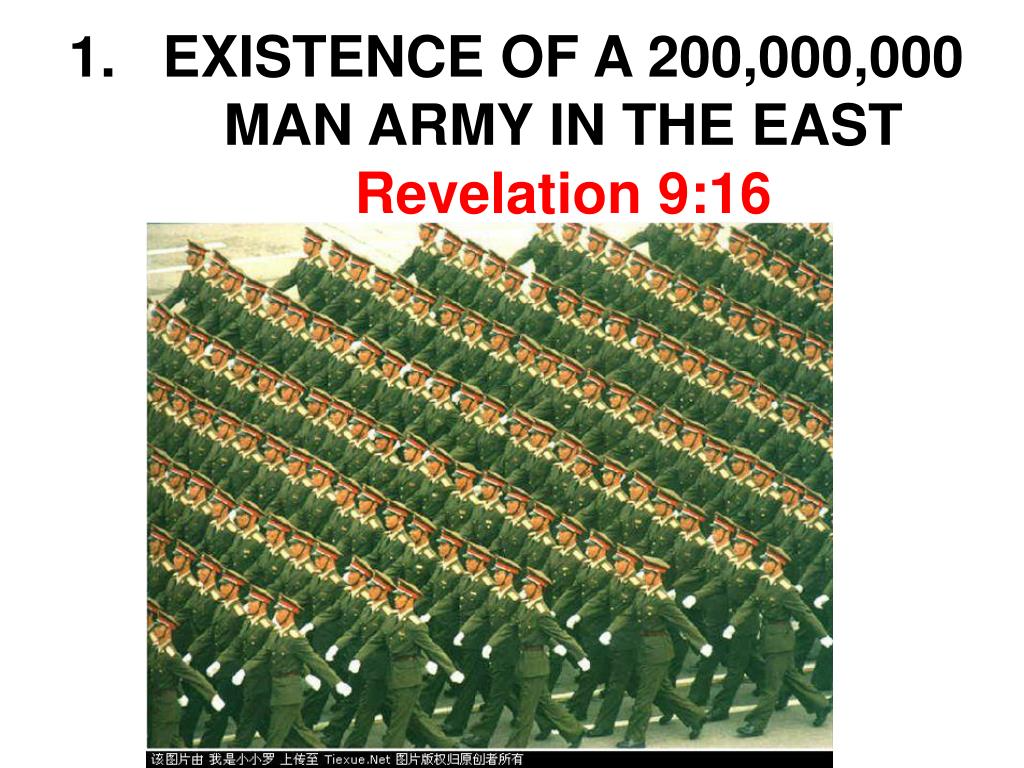
A number of biblical scholars claim China is referenced in Revelation 9:16, NKJV:

‘Now the number of the army of the horsemen was two hundred million; I heard the number of them.’

Where Are The Chinese People In God’s Word?, Tom Hobson, 2017: 

‘The only other possible reference to the Chinese is in Revelation 16:12, the “kings from the East” who come in the final days before the return of Christ from beyond the Euphrates, for whom we are given their number: 200 million of them… It is a number probably larger than the entire population of the planet in 95 AD, but it has been argued that today’s China could potentially field an army that large. The claim that this is China cannot be proved, but cannot easily be dismissed.’

Yet the context of the preceding verses and those following verse sixteen is in relation to the supernatural undead. Released during the Sixth Trumpet of the Eternal’s wrath and judgement on the world; who then sweep across the Earth exacting plagues and subsequently death – Chapter XXI The Incredible Identity, Origin & Destiny of Nimrod.


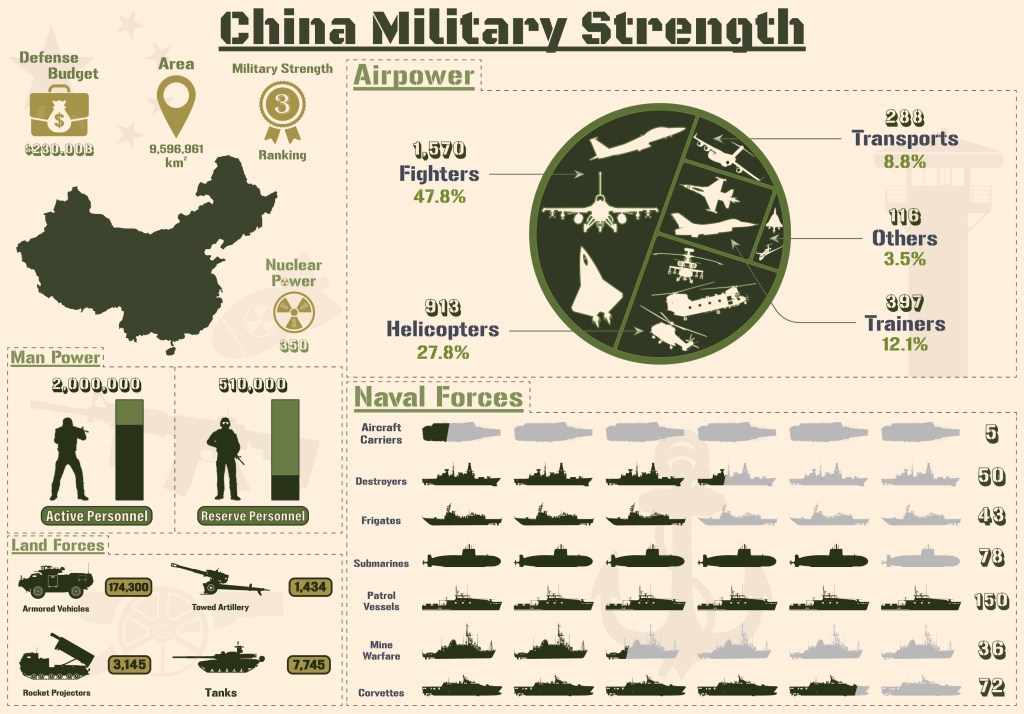
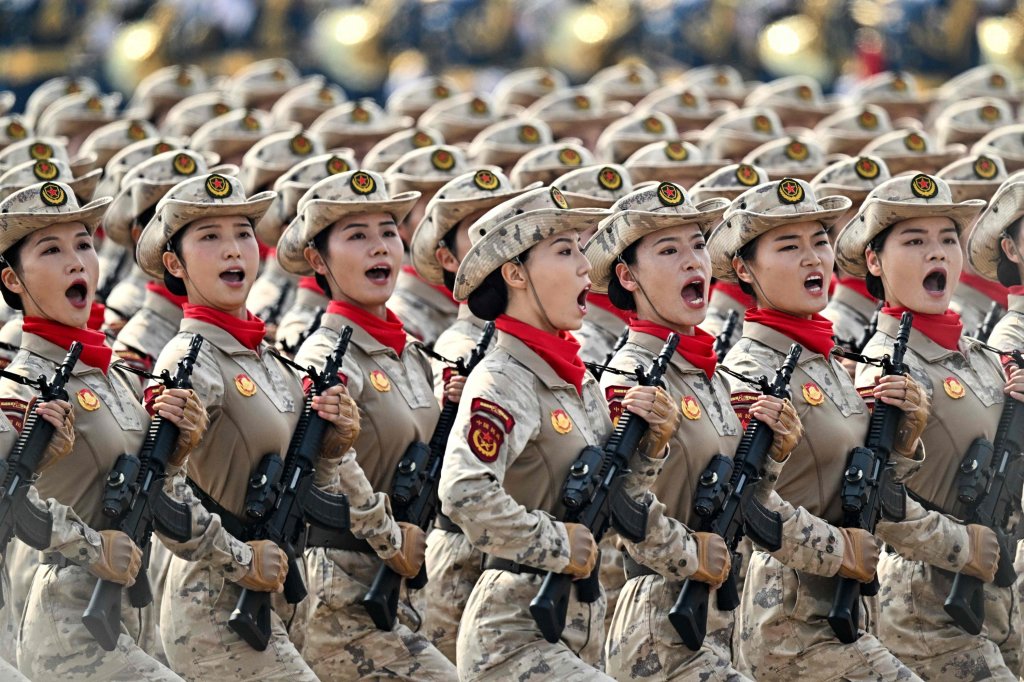
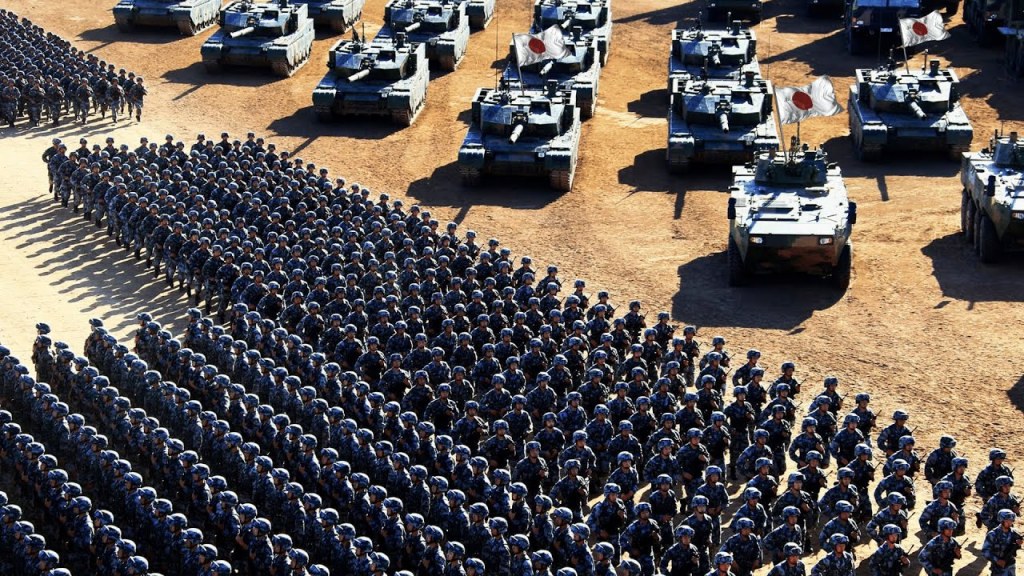
China’s standing army contains 2,035,000 active military personnel (in 2024), the highest in the world – followed by India and the United States. A far cry from two hundred million. That said, China certainly has the potential to raise an army of 200 million men (and women) in the future.

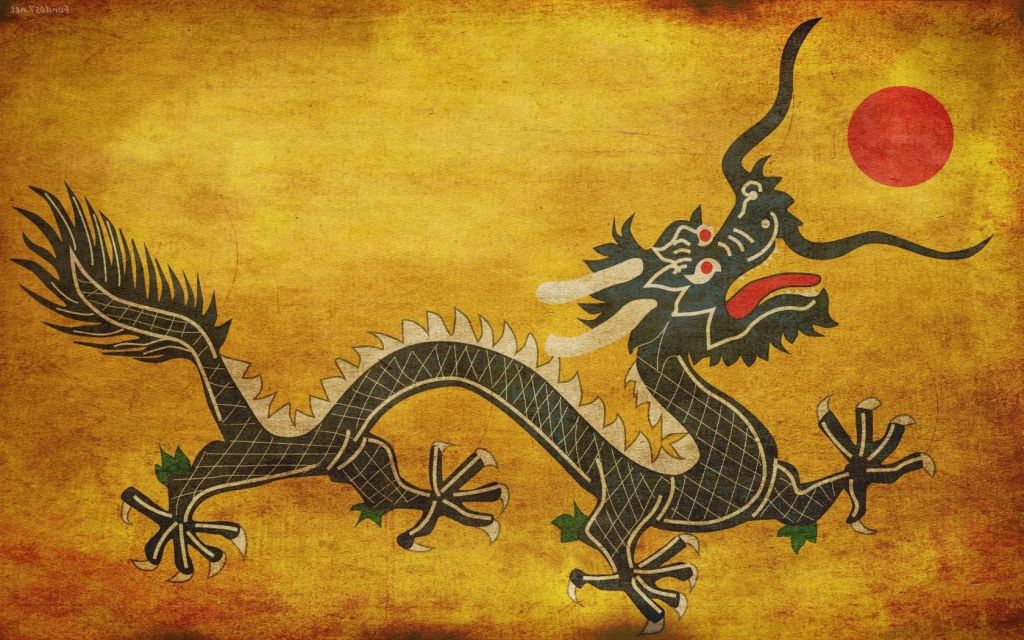
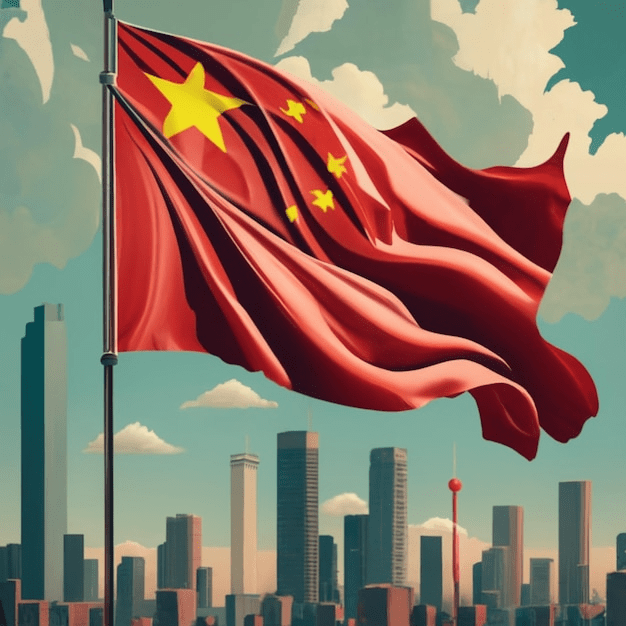
China’s state flag above and the Manchu Qing dynasty flag of 1890 to 1912 below

The meanings of the names Meshech and Tubal – those with a darker connotation – are compelling when compared with Magog’s, to cover like a cloud with an innumerable number of Soldiers.

Meshech as part of Gog, also means ‘deception,^ pride, forgetfulness’ and ‘oblivion’. Formulating a plan to deceive fellow nations and thereby encouraging them to be involved in the plot to attack the sons of Jacob – not the state of Israel – with a pride in their power; a forgetfulness of a prior age of suffering before the millennium; and a disregard for the then current age of peace; ultimately brings oblivion for the actions chosen and implemented by Gog. 

Tubal’s part as Gog, broadly means to ‘lead and drag’ other nations into a conspiracy, like a ‘poisonous wound’ and the forceful ‘flow of water’; other nations ‘agree to be coerced, though with growing reservation’.

Scriptures which pertain to Meshech and Tubal:

Psalm 120:5

New English Translation

‘How miserable I am. For I have lived temporarily in Meshech; I have resided among the tents of Kedar.’

Kedar – a son of Ishmael – is likened to Meshech, due to a similarity in exhibiting an austere and militaristic way of life. 

In reference to trading with Tyre, Ezekiel 27:12-14 NET:

12 “Tarshish [Japan] was your trade partner because of your abundant wealth; they exchanged silver, iron, tin, and lead for your products. 13 Javan [Archipelago SE Asia, principally Indonesia], Tubal, and Meshech were your clients; they exchanged slaves and bronze items for your merchandise. 14 Beth Togarmah [the Koreas] exchanged horses, chargers, and mules for your products.”

Ezekiel 32:26 

New Century Version

“Meshech and Tubal are there with the graves of all their soldiers around them. All of them are unclean and have been killed in war. They also frightened people when they lived on earth.”

Isaiah 66:19

English Standard Version

and I will set a sign among them. And from them I will send survivors to the nations, to Tarshish [Japan], Pul, and Lud [a son of Shem (Iran)], who draw the bow, to Tubal and Javan, to the coastlands [or isles] far away, that have not heard my fame or seen my glory. And they shall declare my glory among the nations.’

There are a number of scriptures including Magog, Tubal and Meshech together, as well as one each for the brothers where they are accounted for singularly. We could deduce three separate nations or three separate peoples in one nation, as the majority include all three or two together. As we have run out of East Asian nations, or rather attributed the remaining sons of Japheth successfully to their modern day counterparts, this writer is convinced it is the latter option. 

Obviously at one time, the brothers were separate peoples, before amalgamating. For the purpose of understanding the future prophecies in the Bible, they appear as one identity. It is interesting to note their order. Gog is always before Magog and both are listed first as designated leader of the three brothers.

Even though Tubal is older than Meshech, he is always placed second of the two, with one exception. It appears that when the context is militaristic, Meshech has dominance. The singular verse that signals economic power, it is Tubal with the superiority and listed first. The individual meanings of their names supports this arrangement.

Lastly, the verse where Tubal is listed without Meshech, associates Tubal with Javan’s children; highlighting their extreme eastern coastal location, as well as economic influence.

China’s major exports.

‘The following export product groups categorize the highest dollar value in Chinese global shipments during 2024.

  1. Electrical machinery, equipment: US$928 billion
  2. Machinery including computers: $568.3 billion
  3. Vehicles: $216.1 billion
  4. Plastics, plastic articles: $141.3 billion
  5. Furniture, bedding, lighting, signs, prefab buildings: $126.4 billion
  6. Articles of iron or steel: $100.1 billion
  7. Knit or crochet clothing, accessories: $85.4 billion
  8. Organic chemicals: $82.6 billion
  9. Toys, games: $82.5 billion
  10. Optical, technical, medical apparatus: $72.5 billion

Vehicles represent the fastest grower among the top 10 export categories, up by 12.1% from 2023 to 2024. In second place for improving export sales was machinery including computers, propelled by an 11% gain. China’s shipments of plastics, both as materials and items made from plastic, posted the third-fastest gain in value up by 6.6%.

The lone year-over-year decliner among China’s top 10 export categories was the toys and games classification, thanks to its -7.4% drop.’

China is the world’s second largest economy, with a nominal GDP in current dollars of $19.23 trillion in 2025 – 3.95% higher than in 2024 and a 16.9% share of the world’s total.

China has opened its economy over the past four decades and its economic development has improved living standards greatly. The government has gradually phased out collectivised agriculture and industry, allowing greater flexibility for market prices and increasing the autonomy of businesses with the result of foreign and domestic trade investment booming. An industrial policy that encourages domestic manufacturing, has made China the world’s number one exporter. Still, China faces the ‘challenges of a rapidly ageing population and severe environmental degradation.’

China experiences an easier relationship and better understanding with its neighbour Russia, as demonstrated by its leaders Xi Jinping and Vladimir Putin. Even so, in the distant future China and Russia will become the deadliest of enemies – refer article: Four Kings & One Queen.

Of the top ten countries with the most natural resources China tops the list as number one overall, with an estimated worth of $23 trillion. Ninety percent of China’s resources include coal and rare earth metals. Timber is a major natural resource and other resources China produces are ‘antimony, gold, graphite, lead, molybdenum, phosphates, tin, tungsten, vanadium, and zinc. China is the world’s second largest producer of bauxite, cobalt, copper, manganese, and silver’ and also has deposits of chromium and gem diamonds.

China fulfils the important role of being one of the world’s breadbaskets – in other words, it has large areas of highly arable land. It is in fact ranked number three in the world. The food produced by the country constitutes about twenty percent of total world exports. China has the largest agricultural output in the world and seventy-five percent of its farming focuses on food crop farming. The country’s primary crop is rice, with rice fields occupying approximately twenty-five percent of its cultivated land. 

That said, ‘China is caught in a catch-22. It needs to keep industrialising as it modernises and raises standards of living, but that very process threatens food production.’ Feeding its population is a growing problem for the Chinese government. If it cannot solve this dilemma there will be unrest. ‘More than 40 per cent of arable land is now either polluted or has thinning topsoil, according to their Ministry of Agriculture’ – Prisoners of Geography, Tim Marshall, 2016 & 2019, page 52.

China is included in the top ten most technologically advanced nations in the world, positioned at number nine. Recall South Korea is number three and Japan number one. China has a long list of achievements in the last decade. It currently focuses on furthering advances in robotics, semiconductors, high-speed trains, super-computers and in genetics.

Of the top ten nations with the largest gold reserves, China is at number six, the highest in Asia.

China has 1,948.3 tonnes of gold, yet this is only 3.3% of its foreign reserves. As of 2021, China has allowed ‘domestic and international banks to import large amounts of the precious metal into the country in an effort to support prices.’

The only other East Asian nation in the top ten is Japan in eighth position. It has 765.2 tonnes which makes up 3.1 percent of its foreign reserves.

In January 2016, China ‘lowered interest rates below zero – which helped fuel demand for gold around the world.’

The gradual decline and shrinkage of America’s economy over ensuing decades; coupled with China’s increasing growth and competition in key sectors such as space, genetics and particularly in robotics and artificial intelligence will see increased aggravation and perhaps hostility between the behemoth that is the United States and the Chinese leviathan – Job 40:15-24; 41:1-34.

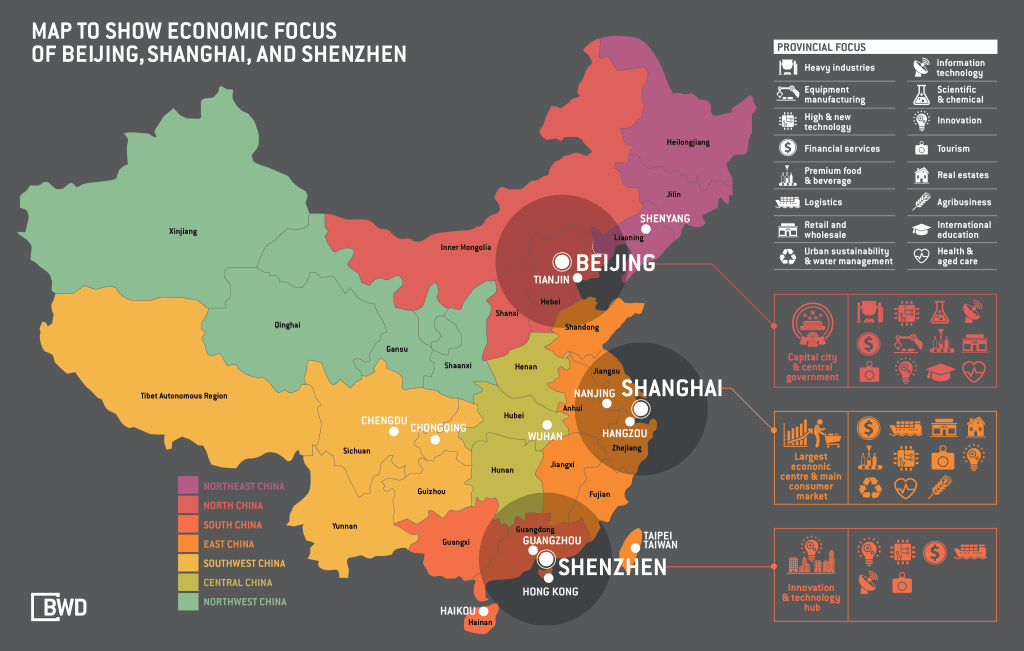
China’s wealthiest cities – as listed by The Richest website – assist in gauging any demographic patterns.

City number ten Chengdu, is located in the southwest of China. Also in the Southwest is Chongqing at number five.

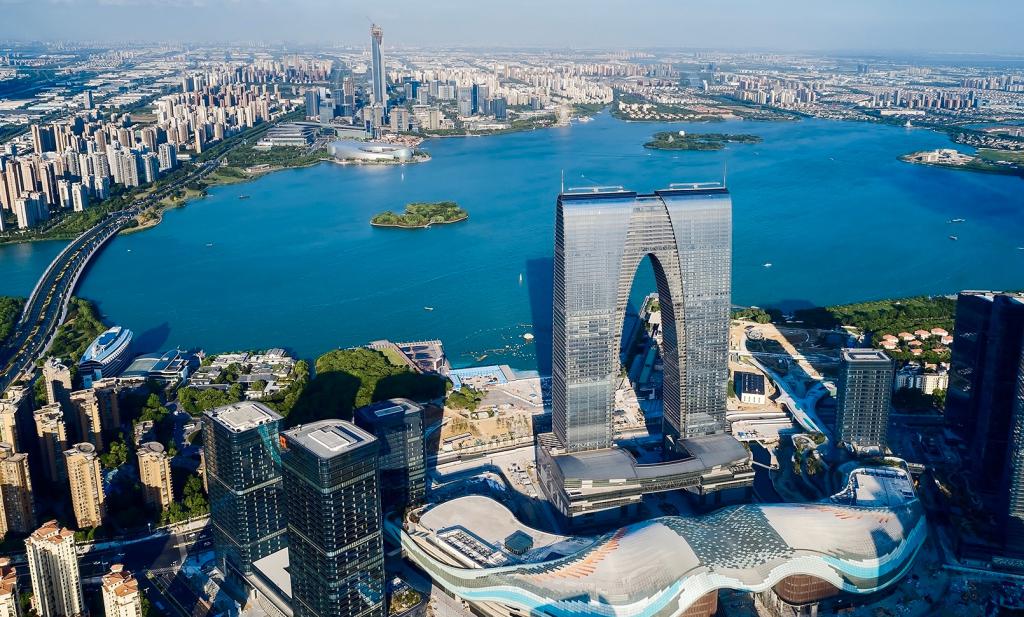
In the Southeast is Hangzhou, nine; Guangzhou, seven; Suzhou, six; and Shenzhen at number four.

Suzhou

Both islands of Hong Kong and Taiwan are situated on the southeastern coast of mainland China. A city that we are all now aware is Wuhan, also in the Southeast and is ranked number eight.

‘Traditionally China’s powerful urban [centres] were along the borders or the coast, but Wuhan has risen up in recent years from central [southeast] China to become an extremely important city in its own right. First settled in 1500 BC, Wuhan is one of the oldest cities in China. Wuhan’s population of 10,220,000 [people] is relatively small by Chinese standards, but the city punches well above its weight economically. Regarded as the key to central China, Wuhan’s economy is based primarily on finance, transportation, and information technology.’

In the Northeast there are the cities of Tianjin, number three; and Beijing (formerly Peking) the capital, at number two.

‘The national capital of the People’s Republic of China, Beijing is one of China’s cities that the entire world is familiar with. Beijing is China’s political and cultural [centre], and home to virtually all of China’s largest state-owned companies. With a population of 21,150,000 [people], Beijing is home too many of the ruling government’s key leaders and operations, both past and present – the renowned Forbidden City, that housed the Chinese emperors of old, is situated in Beijing. Beijing’s economy is valued at an absolutely astounding 366.11 billion Yuan (approximately $59.88 billion USD).

It is by a large margin one of the global economy’s most important hubs, and one of the most prosperous and developed cities in China.’

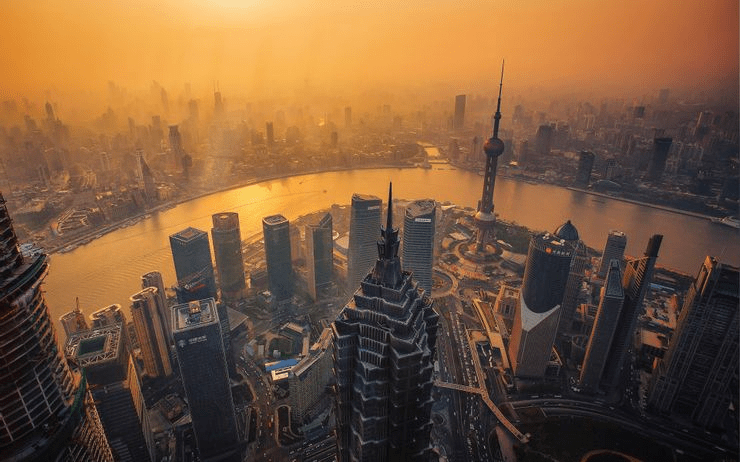
Stunning photographs of Shanghai

At number one, is Shanghai – the counter point to Beijing in the North – located in the Southeast.

‘Although it might be tempting to assume Beijing is the Chinese economy’s most important city, since it also doubles as the national capital, that would be a mistake.

The specter of Shanghai looms large not only over all of China, but also over the entire world.

Shanghai proper has a population of 24,000,000 [people] (which doesn’t account for those living just outside the city) making it the most populous city in the entire world. It’s also the world’s busiest port city, and boasts an urban economy valued at an absolutely astounding 410.95 billion Yuan (approximately $67.16 billion USD). Shanghai has emerged in post-reform China as the nation’s economic leader, and its policies and practices have served as an example for China’s other rising cities since the influx of foreign investment into China began.

Where Shanghai goes, the Chinese economy will follow.’

Recall Tubal in its broadest sense means the whole flow and currencies of the world-economy. ‘To flow or carry along’, ‘to bring, lead, conduct.’

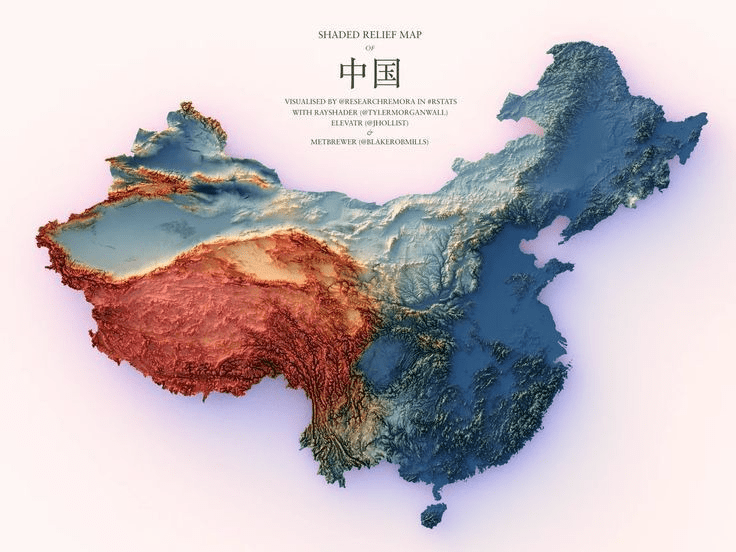
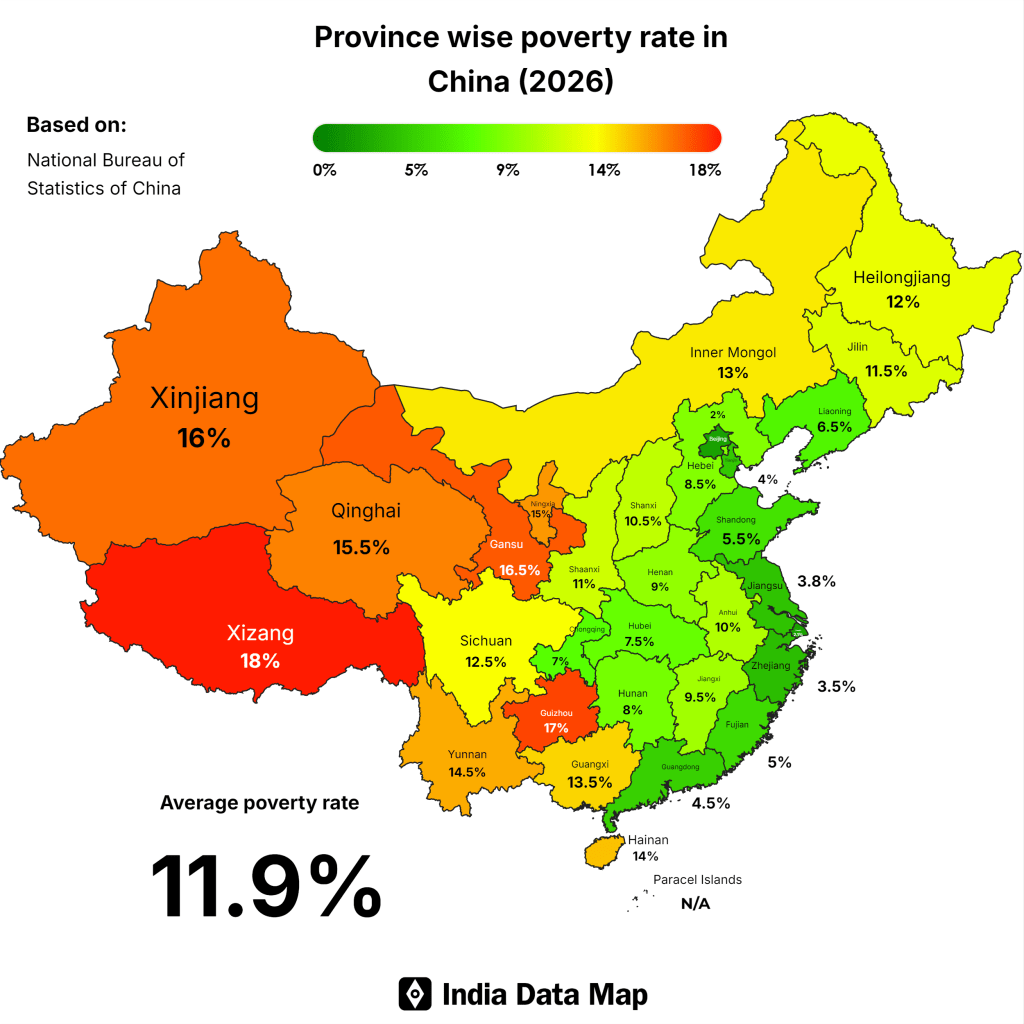
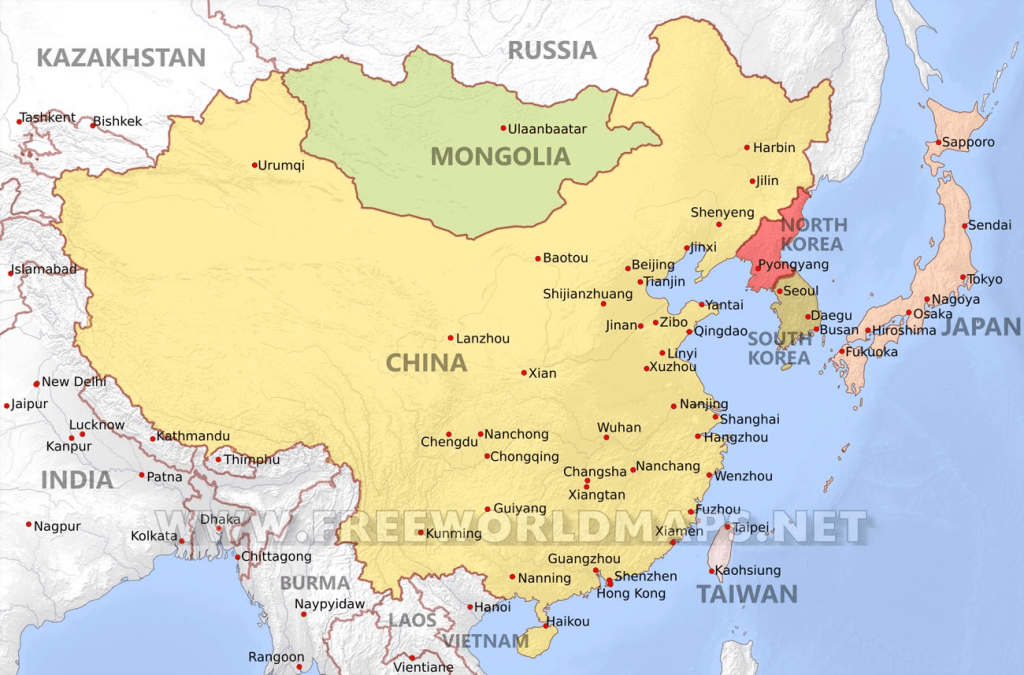
A breakdown of China’s richest cities includes: two in the Southwest; six in the Southeast; and two in the Northeast – or alternatively, eight in the South and two in the North. Those cities located on the East coast of China, (refer map) are in keeping with Tubal’s location, name and wealth.

China has the world’s second biggest population (following India), a staggering 1,414,453,100 people.

Magog certainly blankets like a ‘covering’ as the rooftop of the world.

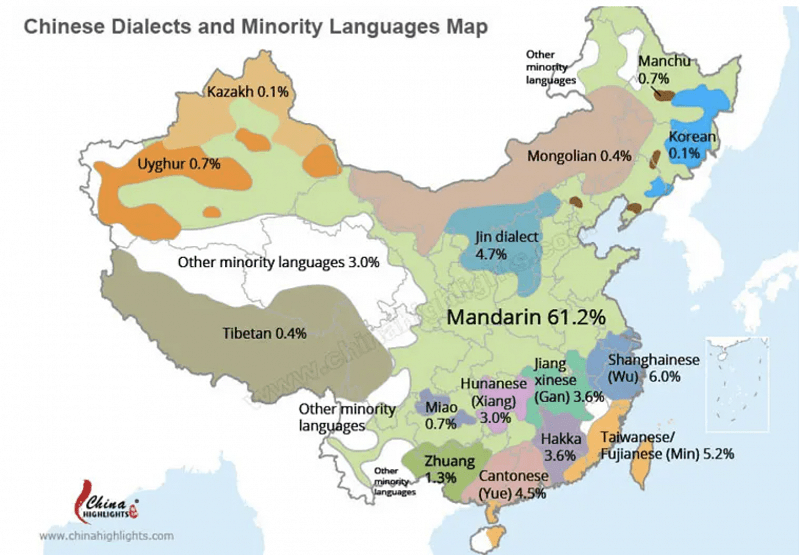
Mandarin is spoken in northern and southwestern China and has by far the most speakers. This language group includes the Beijing dialect which forms the basis for Standard Chinese called Putonghua or Guoyu and often translated as Mandarin or simply Chinese.

Wu varieties are spoken in Shanghai, most of Zhejiang and the southern parts of Jiangsu and Anhui. This group comprises hundreds of distinct spoken forms, many of which are not mutually intelligible. The Suzhou dialect is usually taken as representative as Shanghainese features several atypical innovations.

Jerry Norman classified ‘the traditional seven dialect groups of China into three larger groups: Northern (Mandarin), Central (Wu, Gan, and Xiang) and Southern (Hakka, Yue, and Min).’

Norman stated that the Southern Group was derived from a standard used in the Yangtze valley during the Han dynasty from 206 BCE to 220 CE, calling it Old Southern Chinese. The Central group was transitional between the Northern and Southern groups. Dialect boundaries between Wu and Min are particularly abrupt, while others, such as between Mandarin and Xiang or between Min and Hakka, are less clearly defined.

We will continue to investigate this three-part distinction – as highlighted in the major language groups – as it is a tip of an iceberg with regard to the Chinese composition of China.

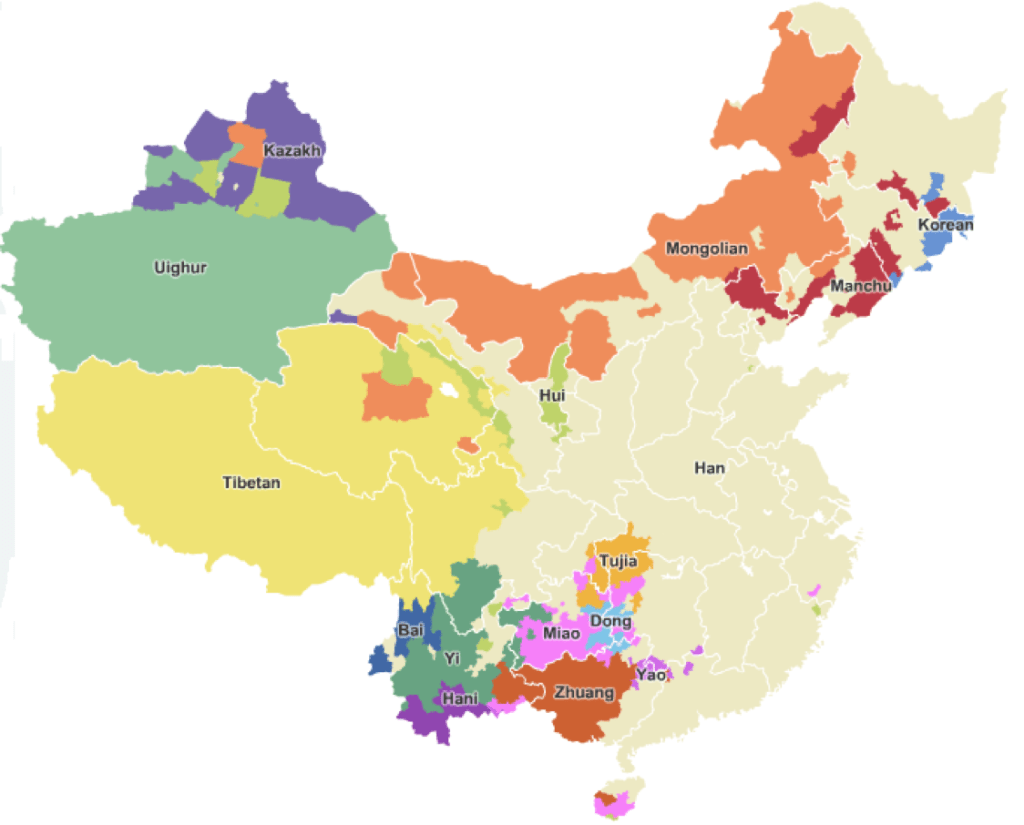
There are a large number of peoples within China’s borders which include the Han, Manchu, Mongol and Tibetan for example. China is officially composed of fifty-six ethnic groups – the dominant Han (93%) and fifty-five ethnic minorities (shaoshu minzu) accounting for seven percent of the population.

Fifty-four minorities – except the Hui – use spoken languages of their own and twenty-three ethnic groups have their own written languages. 

The fifty-five ethnic minorities include:

Achang, Bai, Bonan, Bouyei, Blang, Dai, Daur, Deang, Dong, Dongxiang, Dulong, Ewenki, Gaoshan, Gelao, Hani, Hezhe, Hui, Jing, Jingpo, Jinuo, Kazak, Kirgiz, Korean, Lahu, Li, Lisu, Luoba, Manchu, Maonan, Menba, Miao, Mongolian, Mulao, Naxi, Nu, Oroqen, Ozbek, Pumi, Qiang, Russian, Salar, She, Shui, Tajik, Tatar, Tibetan, Tu, Tujia, Uigur, Wa, Xibe, Yao, Yi, Yugur, Zhuang.

According to population size, the major ethnic (minority) groups are in italics.

Nota Bene

The original section which followed concerning Neanderthal man has been removed. The material is reproduced in its entirety in the article ‘Homo neanderthalensis I’ and is now available there for the interested reader.

A perusal of East Asians does highlight a few salient points.

They stand out from the rest of the world in physiognomy* and yet within Japheth’s seven sons, there is far less DNA variation amongst them than we will find exhibited in the six sons of Canaan for instance – Chapter XII Canaan & Africa.

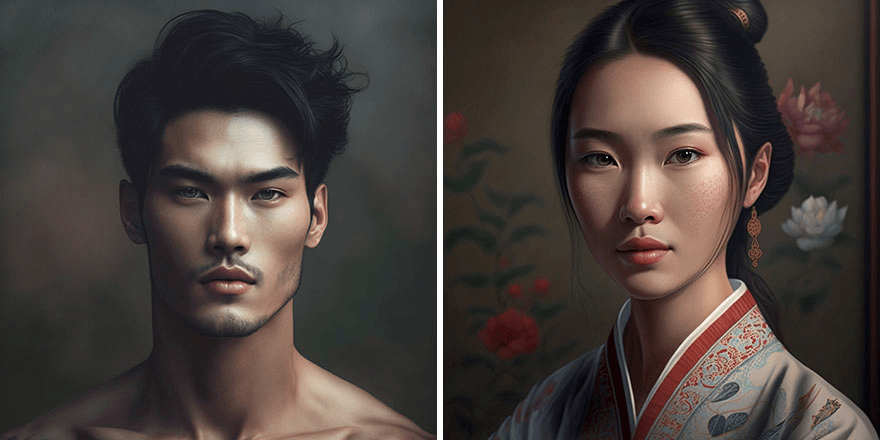
The Oriental Asians mainly have straight hair, a smaller stature and are by various degrees rather inscrutable. They appear to have a closer affinity with a hive mentality, which adds to their industriousness compared with other peoples. Their languages are pictorial and reminiscent of the hieroglyphs of Ancient Egypt; which in turn possess a rather distinct alien* impression and perhaps inspiration. 

Plus, why do so many Asians wear eye glasses?

Myopia or nearsightedness afflicts some twelve percent of Americans and twenty-three percent of Australians. It is quite different in East Asia, where it has been recorded as high as 90%, starting in Singapore, Hong Kong and Taiwan (all islands) and spreading to the big cities of China. High myopia affects two percent of Americans, but upwards of sixteen percent in East Asians. 

Then there is the mystery of the shape* of Asian eyes, alluding scientists ability to explain as there is no satisfactory evolutionary answer for the slant of the eyes. Formed by a fold of skin, Asian eyes look deceptively smaller. It can be known as a monolid, a single eyelid or a Mongolian bridle. Its correct name is the epicanthic fold or epicanthus.

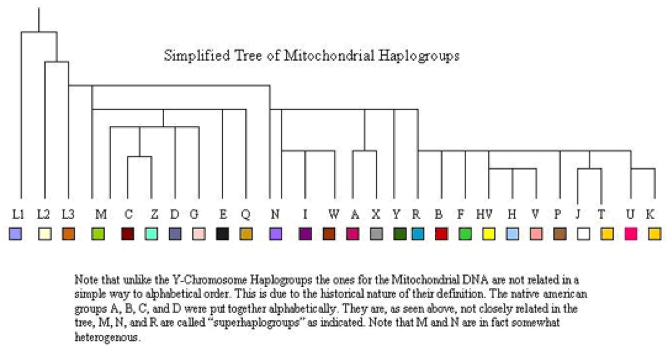
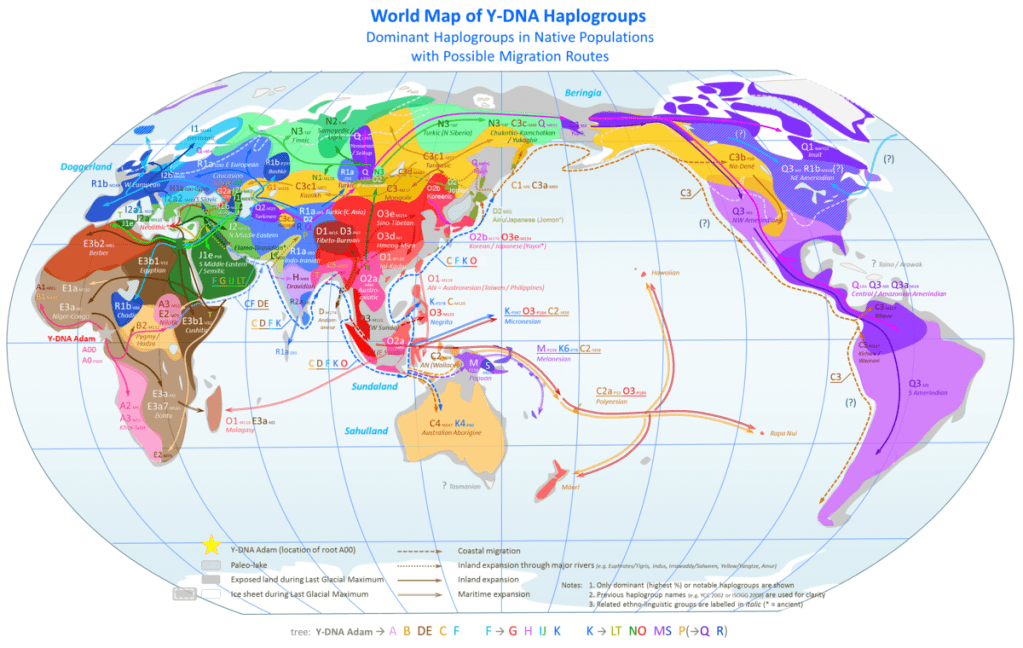
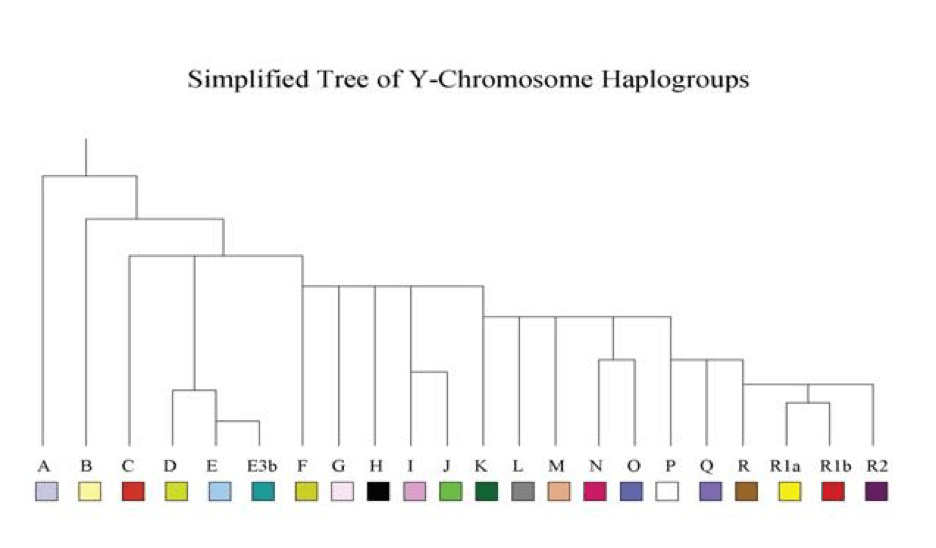
Looking at the Haplogroup family trees, it is apparent that with mtDNA – mitochondria passed from mothers to their sons and daughters – the main East Asian Haplogroups alphabetically, of B, F and M* are less closely linked to the Haplogroups of H** and M* for Ham; L0 to L6 of Canaan; or the prime Haplogroups of H**, J and U for Shem. 

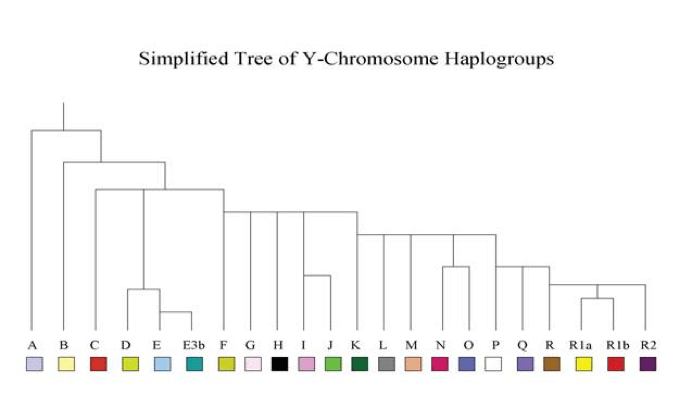
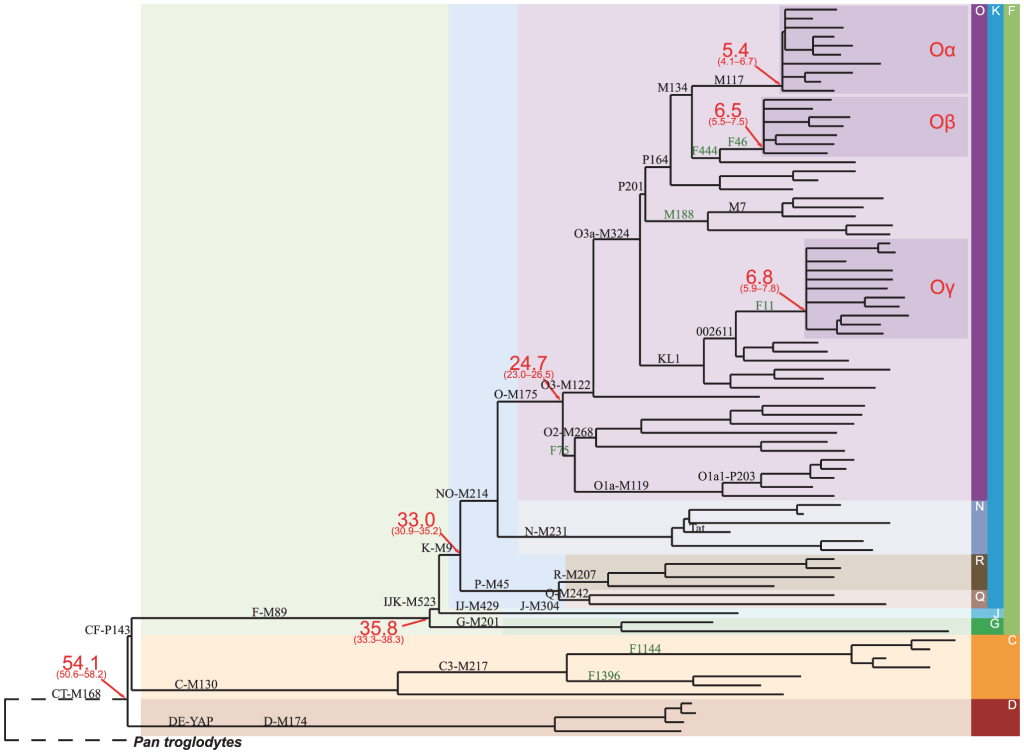
With regard to the Y-DNA Haplogroups – the Y sex chromosome passed from fathers only to their sons – they also indicate that the principle East Asian Haplogroups comprising O1a, 01b and O2 are less closely linked to the key Haplogroups of R1a and R1b for Shem; the main Haplogroups of Ham, H, J1 and J2; or E1b1a and E1b1b for Canaan. 

It is Ham and Shem who are marginally closer genetically on the maternal Haplogroup side and Japheth and Shem on the paternal Haplogroup side. This means that the wives of Ham and Shem were more closely related than with Japheth’s wife.

Even so, the Y-DNA passed from Noah to both Ham and Shem later exhibits more crossover mutations and shared Haplogroups – which we will discuss as we progress – refer article: Y-DNA Adam & mtDNA Eve: The Genesis & Evolution of Homo Sapiens.

Meanwhile, Japheth’s descendants inherited a quite different set of Y-DNA Haplogroups. Considering the high levels of Neanderthal DNA in the Oriental Asian; it remains puzzling, why the African people descended from Canaan, possess practically 0% Neanderthal DNA, while the peoples from Ham and the Europeans from Shem, possess Neanderthal DNA albeit in smaller percentages – refer Chapter XI Ham Aequator; and Chapter XII Canaan & Africa.

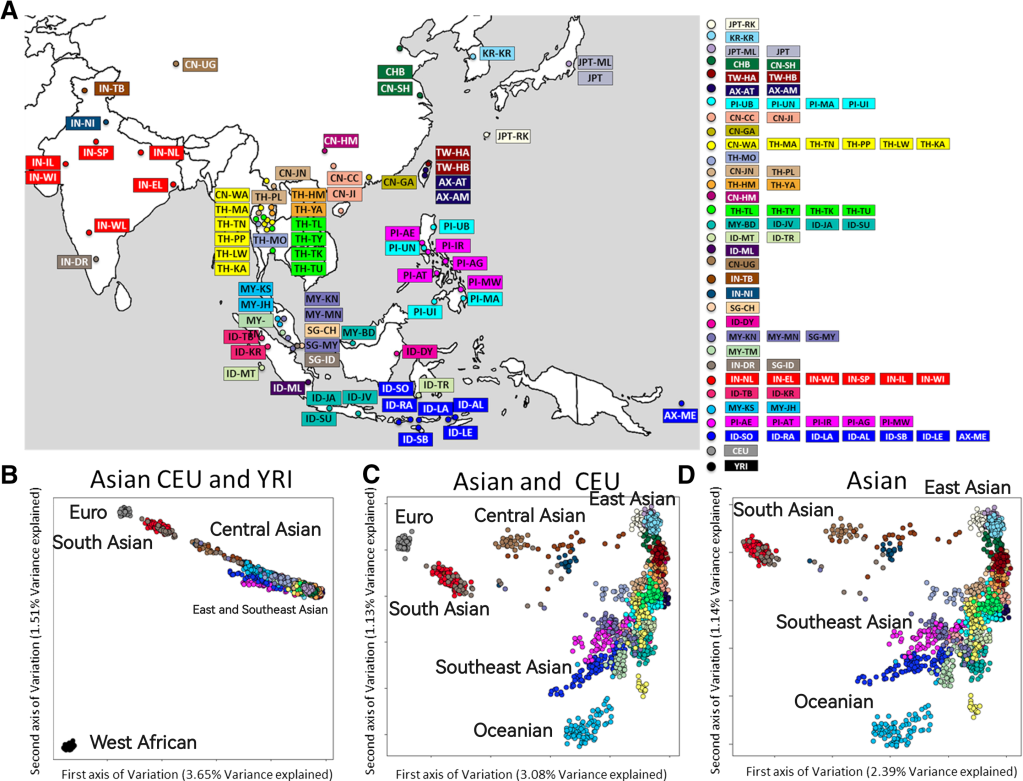
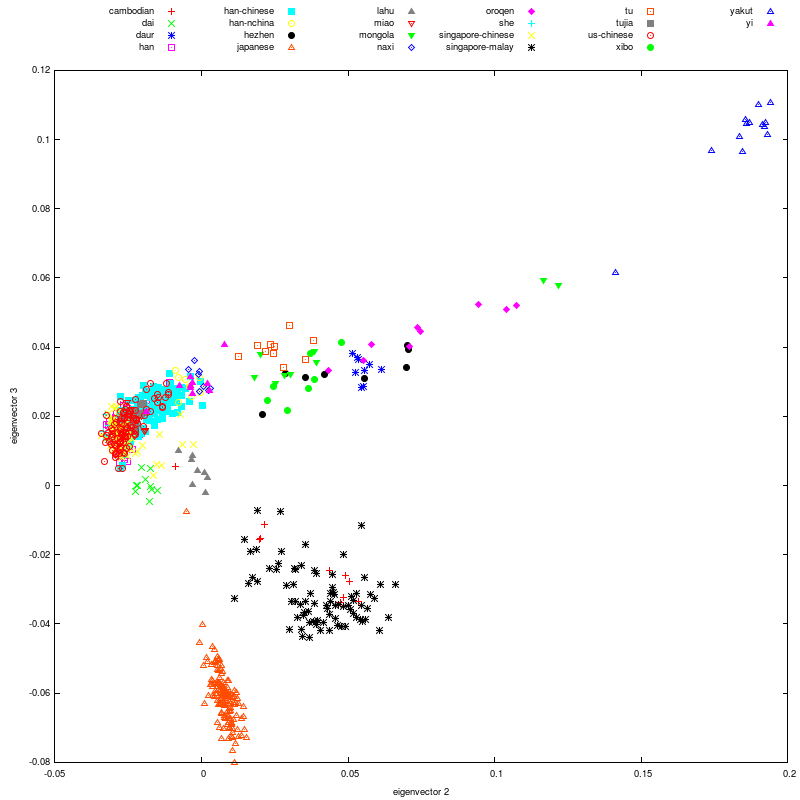
Comparing autosomal DNA – the 22 pairs of chromosomes that contain about 20,000 genes which determine your traits and characteristics – it is the descendants of Shem and Japheth who are closer genetically; as per the PCA graph above, just to add to the mystery surrounding the origin of the races.

Chinese men

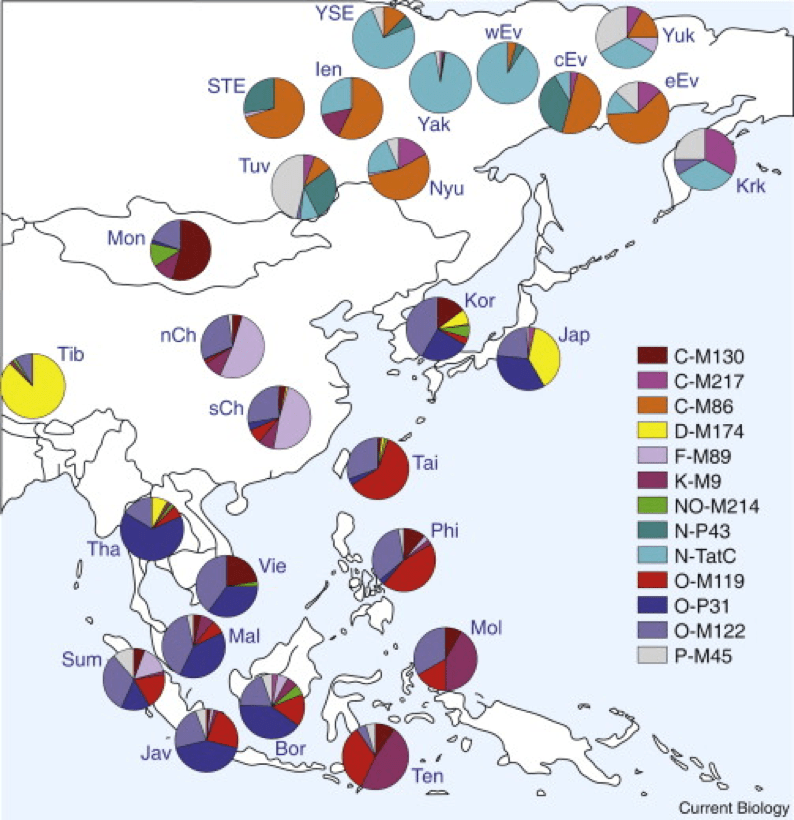
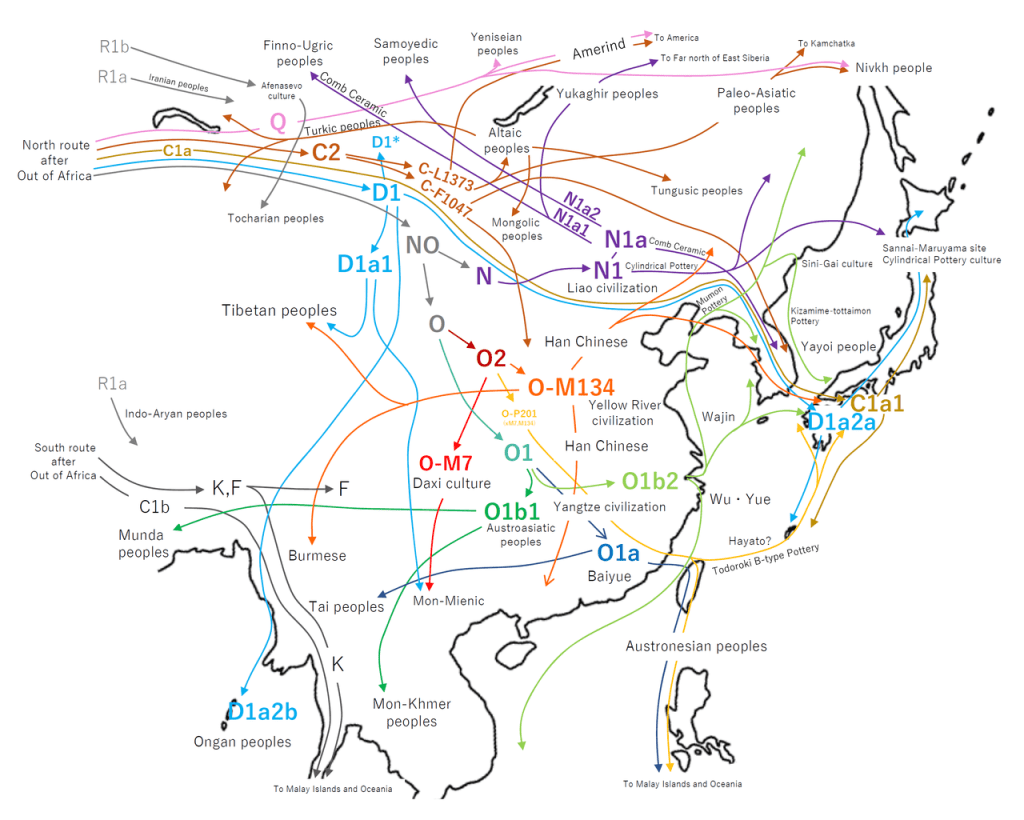
The distribution of Y-DNA Haplogroup D-M174 or D1, is found among nearly all the populations of Central Asia and Northeast Asia south of the Russian border, although at a low frequency of 2% or less. A significant spike in the frequency of D1 occurs towards the Tibetan Plateau (D1a1). D-M174 is also found at high frequencies among Japanese people as discussed previously (D1a2), though it fades into low frequencies in the Koreas and China, between the vast expanse of land separating Japan and Tibet.

A study carried out in 2018 calculated ‘pairwise FST (a measure of genetic difference) based on genome-wide SNPs, among the Han Chinese (Northern Han from Beijing and Southern Han from Hunan and Fujian provinces), Japanese and Korean populations.

It found that the smallest FST value was between North Han Chinese (CHB) and South Han Chinese (CHS) (FST[CHB-CHS] = 0.0014), while CHB and Korean (KOR) (FST[CHB-KOR] = 0.0026) and between KOR and Japanese (JPT) (FST[JPT-KOR] = 0.0033). Generally, pairwise FST between Han Chinese, Japanese and Korean (0.0026~ 0.0090) are greater than that within Han Chinese (0.0014).

These results suggested Han Chinese [Magog, Tubal, Meshech], Japanese [Tarshish (Javan)] and Korean [Togarmah (Gomer)] are different in terms of genetic make-up, and the difference among the three groups are much larger than that between northern [Magog] and southern Han Chinese [Tubal, Meshech].’

Chinese women

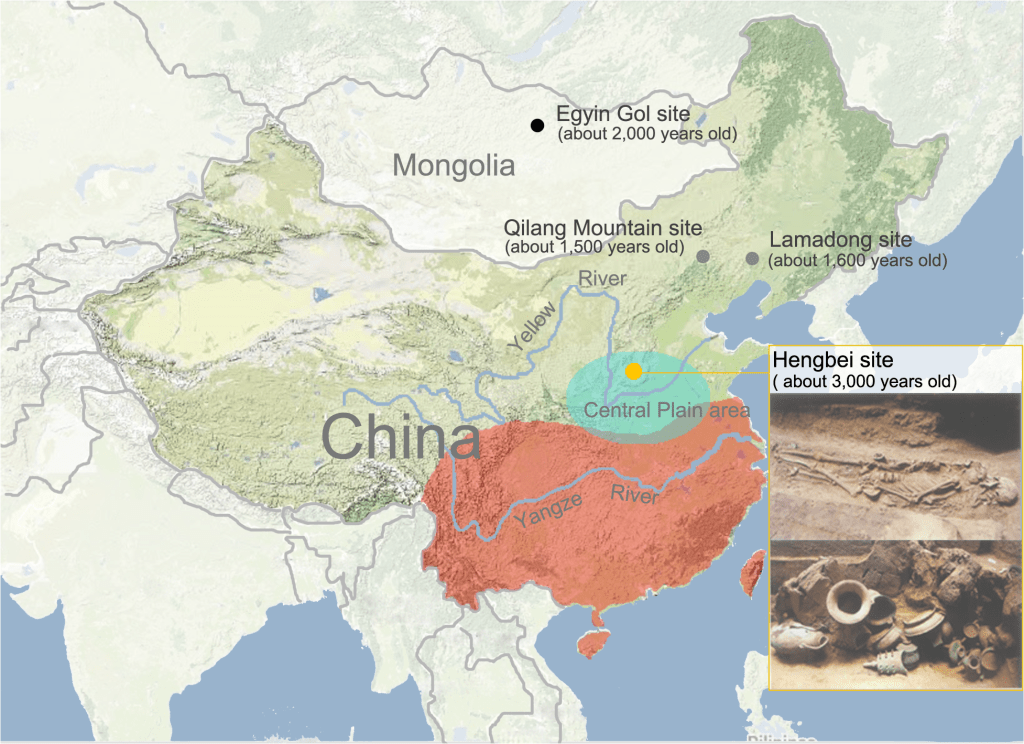
A genetic study on the remains of people circa 4000 BCE ‘from the Mogou site in the Gansu-Qinghai (or Ganqing) region of China revealed more information on the genetic contributions of [the] ancient Di-Quiang people to the ancestors of the Northern Han. It was deduced that 3300–3800 years ago some Mogou [Mago-g] people had merged into the ancestral Han population, resulting in the Mogou people being similar to some northern Han in sharing up to ~33% paternal [O2a1] and ~70% maternal (D, A, F, M10) haplogroups. The mixture rate was possibly 13-18%.

The contribution of northern Han to southern Han is substantial in both paternal and maternal lineages and a geographic cline exists for mtDNA. As a result, the northern Han [Magog] are the primary contributors to the gene pool of the southern Han [Tubal and Meshech]. The expansion process was dominated by males, as there is evidence of a greater contribution to the Y-chromosome [paternal] than the mtDNA [maternal] from northern Han to southern Han. 

These genetic observations are in line with historical records of continually large migratory waves of northern Chinese inhabitants escaping warfare and famine, to southern China. Other smaller southward migrations also occurred during the past two millennia. A study by the Chinese Academy of Sciences into the gene frequency data of Han subpopulations and ethnic minorities in China, showed that Han subpopulations in different regions are also genetically quite close to the local ethnic minorities, meaning that blood of ethnic minorities had mixed into Han, while at the same time, the blood of Han had mixed into the local populations. 

The most extensive genome-wide association study of the Han population, showed that geographic, genetic stratification from north to south has occurred and centrally placed populations acted as the conduit for outlying ones. Ultimately, with the exception in some ethnolinguistic branches of the Han Chinese, such as Pinghua, there is “coherent genetic structure” (homogeneity) in all Han Chinese.’

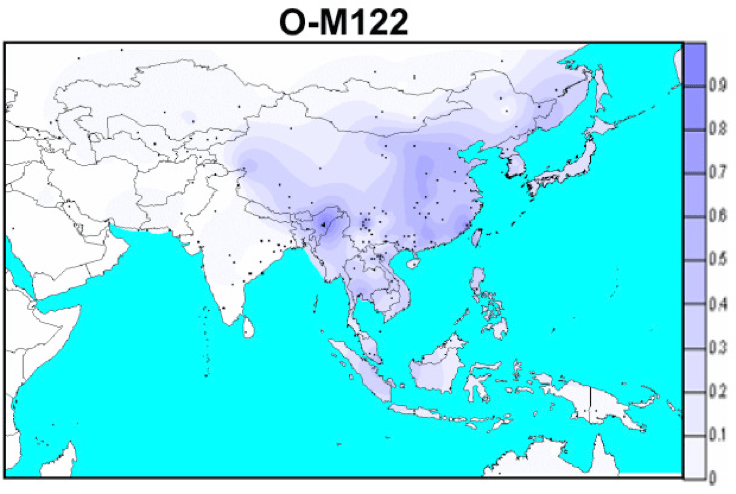
Y-chromosome Haplogroup O2 (M122), is a prevalent DNA marker in Han Chinese, as it appeared in China in prehistoric times. ‘It is found in more than 50% of Chinese males, and ranging up to over 80% in certain regional subgroups of the Han ethnicity.

The mitochondrial DNA (mtDNA) of Han Chinese increases in diversity* as one looks from northern to southern China, which suggests that male migrants from northern China married with women from local peoples after arriving in southern China.’

Tests comparing the genetic profiles of northern Han, southern Han and southern natives determined that Haplogroups O-M176 (O1b2), O-M88 (O1b1a1a1a1a) and O-M7 (O2a2a1a2), which are prevalent in southern natives, were only observed in some southern Han – 4% on average – but not in the northern Han. This proves that the male contribution of southern natives on southern Han was limited. 

There are consistent strong genetic similarities in the Y chromosome Haplogroup distribution between the southern and northern Chinese population.

Analysis indicates almost all Han populations form a tight cluster in their Y chromosome. However, other research has also shown that the paternal lineages Y-DNA O-M119 (O1a), O-P201 (O2a2a1a1a [M-159]), O-P203 (O1a1a [M307]) and O-M95 (O1b1a1a) are found in both southern Han Chinese and South Chinese minorities, but more commonly in the latter. In fact, these paternal markers are in turn less frequent in northern Han Chinese.

The Han Chinese which form some 93% of China’s population are closely related, though there are variations in the Haplogroups to suggest the Han can be split into northern and southern origins. The southern Han have more variation than the northern Han and indicate a further division again.* The Mongols are an ethnic group in northern China (Inner Mongolia), Mongolia, parts of Siberia and Central Asia – Chapter III Central Asia – Madai & the Medes.

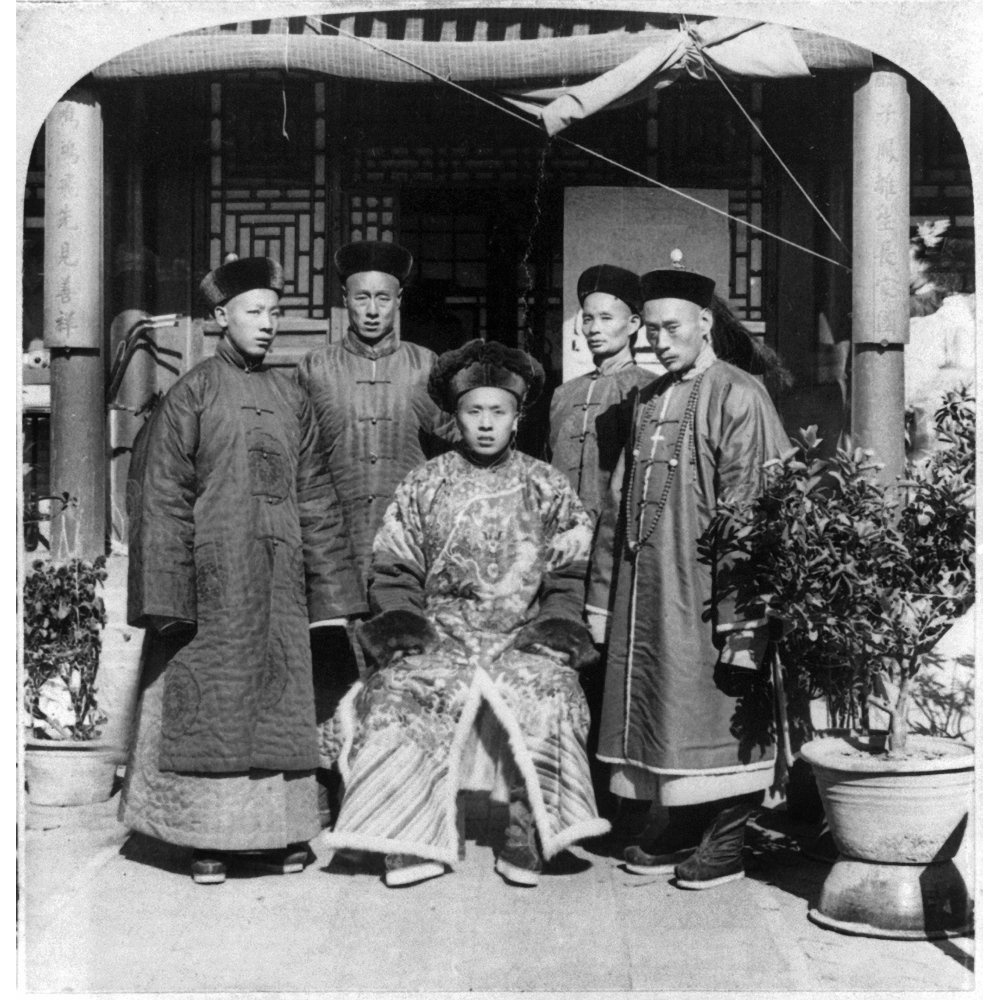
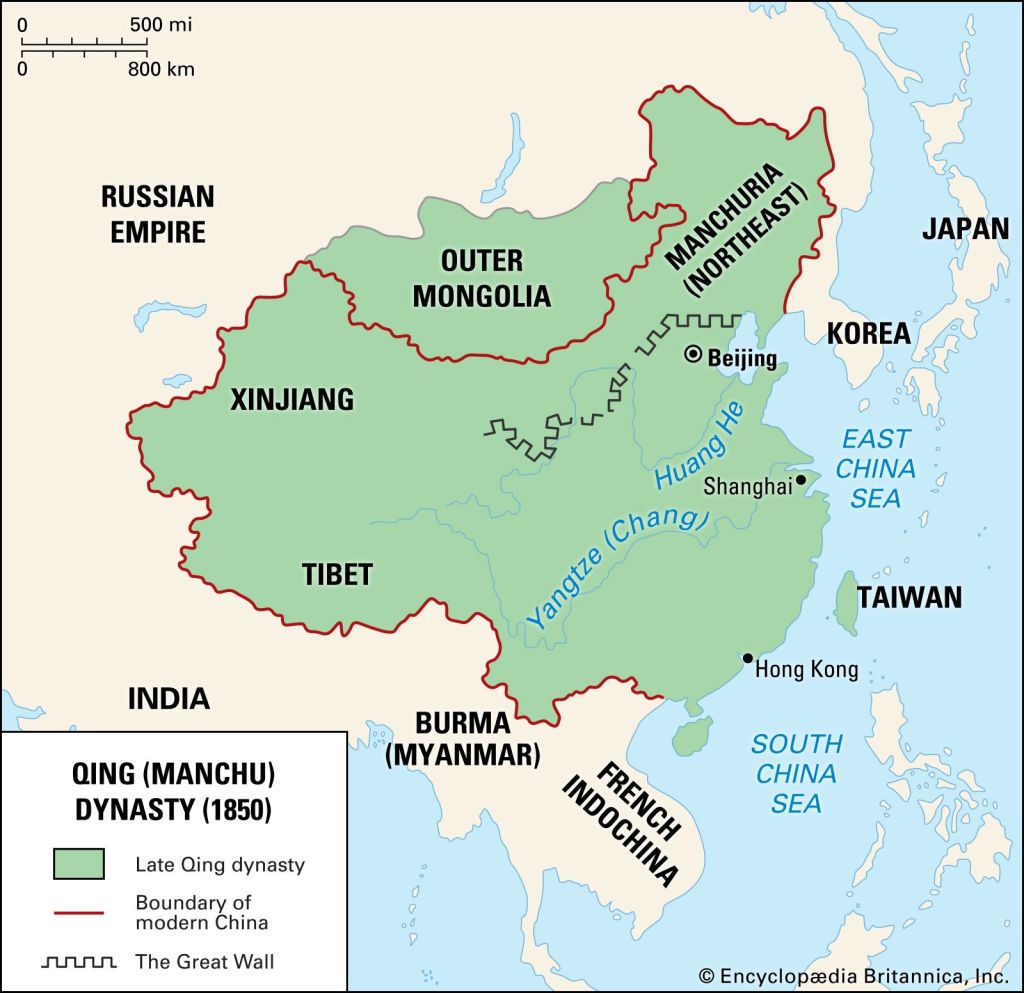
The Later Jin dynasty from 1616 to 1636 CE and the subsequent Qing dynasty from 1636 (1644) to 1912 CE were established and ruled by Manchus, descended from the Jurchen people who earlier established the first Jin dynasty during 1115 to 1234 CE in China. Manchus form the largest branch of the Tungusic peoples and are distributed throughout China, forming the fourth largest ethnic group – the 2nd being Zhuang, with 17 million people and 3rd, the Hui with 10 million people. They can be found in thirty-one Chinese provincial regions. They also form the largest minority group in China without an autonomous region.

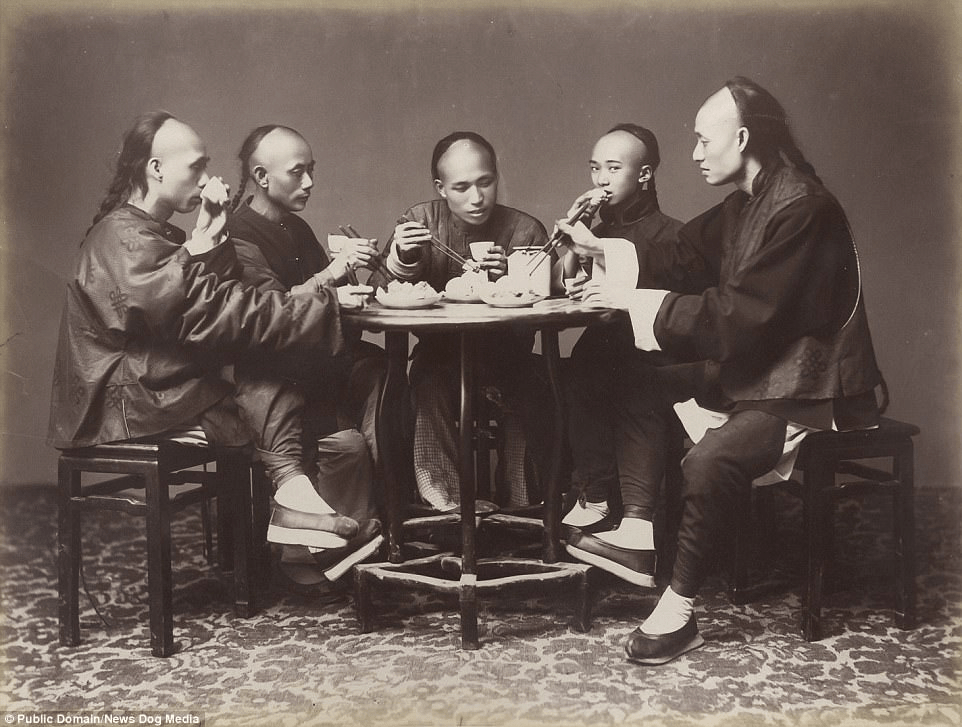
Manchu men with a single braid of hair known as a queue

While the Manchu ruling elite at the Qing imperial court in Beijing and in posts of authority throughout China increasingly adopted Han culture, the Qing imperial government viewed the Manchu communities – as well as those of various tribal people – in Manchuria as a place where traditional Manchu virtues could be preserved and as a vital reservoir of military manpower fully dedicated to the regime.

The Qing emperors endeavoured to protect the traditional way of life of the Manchus in central and northern Manchuria. In particular, they restricted the migration of Han settlers to the region. This had to be balanced with practical needs, such as maintaining the defence of northern China against the Russians and the Mongols, supplying government farms with a skilled work force and conducting trade in the region’s products. Even so, a continuous trickle of Han convicts, workers and merchants found their way to the Northeast.

There is debate* over whether the Qing equated the lands of the Qing state – including present-day Manchuria, Xinjiang, Mongolia, Tibet and other areas – with ‘China.’ Most Manchu people now live in Mainland China with a population of 10,410,585 people; approximately nine percent of the ethnic minorities and 0.8% of China’s total population.

Northern and southern China are two mega-regions within China. The self-perception of the Chinese nation has been dominated by this concept of two Chinas; as regional differences in culture and language have historically under-pinned distinct regional identities. Used as the geographical dividing line between northern and southern China is the Qinling-Huaihe Line – the Qin Mountains and the Huai River. The Northeast and Inner Mongolia are considered belonging to northern China according to this definition. 

At certain times in history Tibet and other areas, were not considered* as being part of either the North or south, though internal migration has led to previously marginalised areas being viewed as part of the North. The perception of a northern and southern China originates from differences in climate, geography, culture and physical traits; as well as historical periods of political division. 

Northern and north-eastern China is considered too cold and dry for rice cultivation – though rice is grown there today, using modern technology – and consists largely of flat plains, grasslands or desert, Southern China is contrastingly, warm and rainy enough for rice and consists of ‘lush mountains cut by river valleys’.

These differences have influenced warfare during the pre-modern era. For instance, cavalry could easily dominate the northern plains, but encountered difficulties against river navies used by the South. There are also major differences in cuisine, culture and popular entertainment. The Northern and Southern Dynasties showed such a high level of polarisation between North and South that sometimes northerners and southerners referred to each other as barbarians.

For a large part of Chinese history, northern China was economically ahead. The Jurchen or Manchu and Mongol invasion caused migration to southern China, so that the Emperor shifted the Song dynasty capital city from Kaifeng in northern China to Hangzhou, located south of the Yangtze river. The population of Shanghai increased from 12,000 households to over 250,000 inhabitants after Kaifeng was sacked by invading armies.

This began a shift of political, economic and cultural power from northern China to southern China. The Eastern coast of southern China has continued as a leading economic and cultural centre for China until the present day.

In 1730 the Kangxi Emperor made the observation in the Tingxun Geyan:

“The people of the North are strong; they must not copy the fancy diets of the Southerners, who are physically frail, live in a different environment, and have different stomachs and bowels.”

Lu Xun a major Chinese writer, wrote:

‘According to my observation, Northerners are sincere and honest; Southerners are skilled and quick-minded. These are their respective virtues. Yet sincerity and honesty lead to stupidity, whereas skillfulness and quick-mindedness lead to duplicity.’

During the Deng Xiaoping reforms of the 1980s, Southern China developed more quickly than Northern China, leading scholars to wonder whether the economic fault line would create political tension between the North and South. This was based on the idea that there would be conflict between the bureaucratic north and the commercial south.

This never eventuated ‘because the economic fault lines eventually created divisions between coastal China [represented primarily by Tubal] and the interior [Meshech] as well as between urban and rural China, which run in different directions from the north-south divide, and in part, because neither north or south has any type of obvious advantage within the Chinese central government.’

The concepts of North and South continue to play an important role in regional stereotypes.

Northerners are seen as:

  • Taller: according to the 2014 census, the average male height between the age of 20-24 was 173.4 cm in Beijing, 174.9 cm in Jilin province and 177.1 cm in Dalian
  • Speaking Mandarin Chinese with a northern (rhotic) accent
  • More likely to eat noodles, dumplings and wheat-based foods (rather than rice-based foods)

Southerners are viewed as:

  • Shorter: according to the 2014 census, the average male height between the age of 20–24 was 173.3 cm in Shanghai, 171.6 cm in Zhejiang provinceand 171.9 cm in Fujian province
  • Speaking Mandarin Chinese with a southern (non-rhotic) accent or speaking any southern Chinese language, such as those under Yue (e.g. Cantonese), Min (e.g. Hokkien), Wu (e.g. Shanghainese), Hakka, Xiang or Gan
  • More likely to eat rice-based foods (rather than wheat-based foods) and seafood

A Chinese man and woman

Following: two integral papers regarding Chinese origins. They are lengthy and a little technical for those readers so inclined. For those not so much inclined, the key findings have been highlighted in bold. We will then piece together what we have investigated, in endeavouring to clarify the puzzle of China’s inhabitants.

Ancient DNA Reveals That the Genetic Structure of the Northern Han Chinese Was Shaped Prior to 3,000 Years Ago, multiple authors, 2015 – emphasis & bold mine:

The Han Chinese are the largest ethnic group in the world, and their origins, development, and expansion are complex.

Many genetic studies have shown that Han Chinese can be divided into two distinct groups: northern Han Chinese and southern Han Chinese. The genetic history of the southern Han Chinese has been well studied. 

However, the genetic history of the northern Han Chinese is still obscure. In order to gain insight into the genetic history of the northern Han Chinese, 89 human remains were sampled from the Hengbei site… 

We used 64 authentic mtDNA data obtained in this study, 27 Y chromosome SNP data profiles from previously studied Hengbei samples, and genetic datasets of the current Chinese populations and two ancient northern Chinese populations to analyze the relationship between the ancient people of Hengbei and present-day northern Han Chinese. We used a wide range of population genetic analyses, including principal component analyses, shared mtDNA haplotype analyses, and geographic mapping of maternal genetic distances. 

The results show that the ancient people of Hengbei bore a strong genetic resemblance to presentday northern Han Chinese and were genetically distinct from other present-day Chinese populations and two ancient populations. These findings suggest that the genetic structure of northern Han Chinese was already shaped 3,000 years ago…’

The consensus is that the Han Chinese migrated south and contributed greatly to the paternal gene pool of the SH, whereas the Han Chinese and ancient southern ethnic groups both contributed almost equally to the SH maternal gene pool. However, the genetic history of the NH is still obscure. Currently, NH populations inhabit much of northern China, including the Central Plain and many outer regions that were inhabited by ancient northern ethnic groups. 

The Han Chinese or their ancestors who migrated northward from the Central Plain might have mixed with ancient northern ethnic groups or culturally assimilated the native population. This scenario would indicate that the Han Chinese living in different areas should have genetic profiles that differ from each other. However, genetic analyses have shown that there are no significant differences among the northern Han Chinese populations, which has led to conflicting arguments on whether the genetic structure of the NH is the result of an earlier ethnogenesis or, instead, results from a combination of population admixture and continuous migration of the Han Chinese. 

Until now, only a few genetic studies have investigated the ancient Han Chinese or their ancestors. These studies have been restricted by small sample sizes, high levels of kinship among samples, and short fragments of mitochondrial DNA (mtDNA) and thus provide limited insights into the genetic history of the Han Chinese… a large number of graves were excavated at a necropolis called Hengbei located in the southern part of Shanxi Province, China, on the Central Plain, that dates back to approximately 3,000 years ago (Zhou dynasty), a key transitional period for the rise of the Han Chinese.

In a previous study investigating when haplogroup Q1a1 entered the genetic pool of the Han Chinese, we analyzed Y chromosome single nucleotide polymorphisms (SNPs) from human remains excavated from the Hengbei (HB) site and identified haplogroups for 27 samples. In the present study, we attempted to extract DNA from 89 human remains. Using a combination of Y chromosome SNPs and mtDNA genetic data, we uncover aspects of the genetic structure of the ancient people from the Central Plain region and begin to determine the genetic legacy of the northern Han Chinese in both the maternal and paternal lineages.

According to a previous study, the haplogroups of the Han Chinese can be classified into the northern East Asian-dominating haplogroups, including A, C, D, G, M8, M9, and Z, and the southern East Asian-dominating haplogroups, including B, F, M7, N, and R.

These haplogroups account for 52.7% and 33.85% of those in the Northern Han, respectively.

Among these haplogroups, D, B, F, and A were predominant in the NH, with frequencies of 25.77%, 11.54%, 11.54%, and 8.08%, respectively.

However, in the SH, the northern and southern East Asian-dominating haplogroups accounted for 35.62% and 51.91%, respectively.

The frequencies of haplogroups D, B, F, and A reached 15.68%, 20.85%, 16.29%, and 5.63%, respectively.’

In other words, the southern Han were opposite to the northern Han with a dominance understandably in south eastern mtDNA Haplogroups; as opposed to the northern Han being dominant, unsurprisingly in north eastern mtDNA Haplogroups. 

Recall on our journey through the descendants of Japheth, how the maternal Haplogroups B4/B5, F1 and M7 have figured prominently and of these it has been Haplogroup B which has been the overall common defining marker mt-DNA Haplogroup for Japheth’s children.

‘Notably, in the HB samples, haplogroups D, B, F, and A were also predominant and showed frequencies of 23.44%, 12.5%, 10.93%, and 10.93%, respectively.

In addition, the frequency of haplogroup M was high and reached 17.19%.

Other haplogroups such as C, G, M7, M8, M9, Z, N9a and R had lower frequencies at 3.13%, 1.56%, 1.56%, 3.13%, 7.81%, 3.13%, 3.13% and 1.56%, respectively.

The northern and southern East Asian-dominating haplogroups [from the Hengbei] account for 50.04% and 26.56%, respectively, which is similar to the values in the NH.

To further identify the genetic affinities among the HB, two ancient populations and the present-day Chinese population, represented by 9 NH, 9 Northern Minorities, 14 SH and 57 Southern Minority groups, the mtDNA haplogroup distributions were compared using a PCA.

The PCA plot of the first and second components (31.81% of the total variance), shows that the current populations largely segregate into three main clusters:

Northern Han (in orange), Southern Han (in blue)… Southern Minorities (in gray), and Northern Minorities (in green).

The distribution of populations in the PCA plot was in line with their geographic distribution, and these populations were separated by the first principal component. The populations living in northern China (NH and NM) are located on the right side of the PCA, and they contain the northern East Asian-dominating haplogroups A, C, D, G, M8, M9, and Z.’

‘In contrast, the populations living in southern China (SH and SM) are located on the left side of the PCA, and they contain the southern East Asian-dominating haplogroups B, F, M7, and R. 

Moreover, the NH can be separated from other populations except for two SH (Hubei and Shanghai), using the second principal component. The HB population (PC1 value: 0.071; PC2 value: 1.453) groups closely with the NH (PC1 value: 0.239±0.269; PC2 value: 1.590±0.336). Overall, these results indicate that the HB [Hengbei] population shares a similar genetic profile with the Northern Han that is distinct from the Northern Minorities and ancient northern ethnic groups.

The Han Chinese originated from the Central Plain region, which is substantially smaller than the region the Han Chinese now occupy. According to historical documents, the Han Chinese suffered many conflicts with natives prior to expansion into their lands. The Han migrated northward into regions inhabited by many ancient northern ethnic groups. Based on the advanced agriculture, technology, and culture, the Han Chinese or their ancestors often had a greater demographic advantage over ancient northern ethnic groups.

Thus, the Han Chinese or their ancestors might have played a predominant role in the genetic mixture of populations. This scenario would mean that the genetic structure of the NH was shaped a long time ago. In our study, the HB population showed great genetic affinities with the NH when maternal lineages were tested.

First, the HB contained a distribution and component of mtDNA similar to that of the NH and clustered closely together with the NH in the PCA plot.

Second, the HB shared more haplotypes with the NH than with other populations in the haplotype-sharing analysis. Third, the FST value from comparisons between the HB and NH populations was lowest and negative. Generally, FST value should theoretically range between 0 and 1. 

However, if the estimate of within diversity is larger than the estimate obtained of variance among groups, negative FST values should be obtained, and they are represented as equal to zero. It indicated that HB bore a very high similarity to NH populations.

Considering the location and culture of the HB, we suggest that the NH might have provided a significant contribution to the HB and find that the maternal genetic profiles of the NH [principally represented by Magog] were shaped 3,000 years ago. These conclusions are further supported by the relationship between the HB and NM, XN, and XB. 

In our study, the PCA plot is consistent with the SH not onlymixing with the SM but also with the NH, which is consistent with a previous genetic study that concluded that the SH was formed from almost equal contributions of southward migrating Han Chinese and southern natives.

However, the NH and NM group into two separate clusters, which is not consistent with their current geographic distributions because these two populations often live together in the northern region of China. Moreover, XN, XB1 and XB2 pool into the NM and are far away from HB and NH. 

A haplotype-sharing analysis of the three ancient populations and each present-day Han Chinese population shows that the fraction of haplotypes from HB is significantly higher than that from XN, XB1 and XB2 (all of the p values of HB/XN, HB/XB1 and XB2 are less than 0.01, two-tailed t-test. In the FST comparisons, the FST values of the XN/HB, XB/HB, XB/NH, XN/NH, and NM/NH are significantly higher, and all of the p values are less than 0.05, indicating that the XN and XB were distinct from the NH and HB. 

This finding indicates that the ancient populations of the XN and XB had a limited maternal genetic impact on present-day Han Chinese.

Y chromosome SNP analysis was consistent with the conclusions drawn from studying the maternal lineages. In the paternal lineage, HB contained the haplogroups or sub-haplogroups N, [O1a, O1b, O2a] and Q1a1. The total frequencies of these haplogroups reached high levels (66% – 100%) in current Han Chinese. Haplogroup Q1a1, which was predominant in HB, is highly specific to the Han Chinese. Haplogroup [O2a1], the second highest frequency (33.34%) in HB, occupies the highest frequencies in almost all current Han Chinese populations (32.5%-76.92%).

Moreover, in the PCA plot, HB groups closely [align] with the Han Chinese. 

These results indicate that the 3,000-year-old ancient people from the Central Plain region share similar paternal genetic profiles with the current Han Chinese.

In contrast, XN yielded three haplogroups (N3, Q, and C) but no haplogroup O. The frequency of O in NM is significantly lower than the frequency of O in NH, but the frequency of haplogroup N shows the inverse trend. Moreover, NM has a relatively high frequency of haplogroup R, but NH does not.’

Y Chromosomes of 40% Chinese Descend from Three Neolithic Super-Grandfathers, multiple authors, 2014 – emphasis & bold mine:

‘To achieve sufficiently high coverage in the non-recombining regions of Y chromosome (NRY) and an adequate representation of individual samples, we selected 110 males, encompassing the haplogroups O, C, D, N, and Q which are common in East Eurasians, as well as haplogroups J, G, and R which are common in West Eurasians and sequenced their non-repetitive segments of NRY using a pooling-and-capturing strategy.’

Y-DNA Haplogroups G, R1a and R1b are indicative of European men, whereas Haplogroups J1 and J2 are reflective of males of either Arab and Pakistani descent in the Middle East and West Asia, or of admixture with these lineages.

‘Results… Overall ∼4,500 base substitutions were identified in all the samples from the whole Y chromosome, in which >4,300 SNPs that has not been publicly named before 2012 (ISOGG etc.). We designated each of these SNP a name beginning with ‘F’ (for Fudan University). We obtained ∼3.90 Mbp of sequences with appropriate quality (at least 1× coverage on >100 out of 110 samples, and identified ∼3,600 SNPs in this region. 

A maximum parsimony phylogenetic tree of the 78 individuals with good coverage was reconstructed, the topology of which is congruent with the existing tree of human Y chromosome. The tree contained samples from haplogroups C, D, G, J, N, O, Q, and R, and thus represented all the three super-haplogroups out of Africa C, DE and F. In addition to the known lineages, many new downstream lineages were revealed. 

All the earlier divergences were found to be bifurcations, except for three star-like structures, i.e. multiple lineages branching off from a single node, were observed under Haplogroup [O2a-M324+], indicating strong expansion events.’

‘The most surprising discovery in the tree is the three star-like expansions in Haplogroup [O2a-M324+], i.e. under the M117 clade, the M134 [O2a2b1] x M117 [O2a2b1a1] paragroup, and the 002611 clade. Here we denote the three star-like expansions as Oα, Oβ, and , respectively. 

Since the sample selection for high-through put sequencing was intended for representing a wide variety of clades in East Asian populations, a star-like expansion indicates successful expansion of male lineages within a very short period (<500 years). These three clades are present with high frequency across many extant East Asian populations and encompass more than 40% of the present Han Chinese in total (estimated 16% for Oα, 11% for Oβ, and 14% for Oγ). 

It is conspicuous that roughly 300 million extant males are the patrilineal progenies of only three males in the late Neolithic Age.

The expansion dates are estimated 5.4 kya for Oα, 6.5 for Oβ, and 6.8 for Oγ… We therefore propose that in the late Neolithic Age, the three rapidly expanding clans established the founding patrilineal spectrum of the predecessors in East Asia.’

The authors are prosing a time frame post the tower of Babel dispersal during the time of Peleg circa 6755 BCE. This could conceivably be the case.

‘Since all the sequenced Han Chinese M117+ samples are under the Oα expansion, and M117+ subclade exists in moderate to very high frequency in many Tibeto-Burman ethnic groups, it would be of interest to know when the M117+ individuals in other ethnic groups diverged with the ones in Han Chinese, and whether they are also under the Oα expansion, in order to trace the origin and early history of [the] Sino-Tibetan language family.

Although most of the sequences in this study were obtained from individuals in China, the haplogroup representation (C, D, G, J, N, O, Q, and R) already enabled us to calculate the times of most of the major divergence events… like G/IJK, NO/P etc., since the times were achieved using the hypothesis of [a] molecular clock, and the results of divergence time between haplogroups would not be affected by from whichever continent or country the individuals were sampled. One good sequence from each of two haplogroups is enough for calculating their divergence time, and more sequences could only help to enhance the precision but would not greatly change the result.’

Additional Supporting Paper:

‘It [remains] mysterious… how many times the anatomically modern human migrated out of Africa, since that among the three super-haplogroups C, DE and F,

Haplogroup F distributes in [the] whole [of] Eurasia,

C in Asia and Austronesia,

D exclusively in Asia, while D’s brother clade

E [is distributed] mainly in Africa, so there are two hypotheses, 

1) haplogroups D and CF migrated out of Africa separately; 

2) the single common ancestor [Y-DNA Haplogroup B] of CF and DE migrated out of Africa followed by a back-migration of E to Africa. From this study, the short interval between CF/DE and C/F divergences weakens the possibility of multiple independent migrations (CF, D, and DE) out of Africa, and thus supports the latter hypothesis.’

We will return to Y-DNA Haplogroup E and the continent of Africa – Article: Y-DNA Adam & mtDNA Eve: The Genesis and Evolution of Homo sapiens; and Chapter XII Canaan & Africa.

Haplogroup D is comprised of subclade D1-M15 [D1a1a] and D3-P99 [D1a1b], both in continental East Asia… especially frequent in Tibet [D1a1], subclade D2-M55 [D1a2a], nearly exclusively in Japan, and paragroup D, which was discovered mainly in Tibet as well as on the Andaman Islands. In this study, only [D1a1a] and [D1a1b] samples were sequenced. Except for the sample YCH177 (Zhuang ethnicity), all the tested D1 samples (Han and Yi ethnicities) are derivative at SNP N1.

Together with Haplogroup D, C is also considered as one of the harbingers in East Eurasia and Australia. Soon after its divergence with F, Haplogroup C moved eastwards along the coast of Indian Ocean, reached India and China, and might be associated with the earliest known modern human inhabitants in Australia… 

In China, the vast majority of Haplogroup C belongs to [C2]-M217, which constitutes ~10% of Han Chinese, as well as [a] great part of Altaic-speaking populations, e.g. Mongol, Manchu, and Kazakh [Chapter IV Central Asia – Madai & the Medes].

Here we identified two clades of [C2] which split at 25.9 kya [?]: a northern clade (C3-n) with SNP F1396, including a Mongol and a Manchu sample, and a southern clade (C3-s) with SNP F1144, including all sequenced Han Chinese [C2] samples. The STRs of YCH168 (Mongol ethnicity) is close to the ‘star-cluster’, which is abundant in the steppe ethnicities, indicating that a substantial part of Altaic-speaking population belongs to C3-n. 

The southern clade expands rather late (only about 6.5 kya, i.e. in the Neolithic Age), including most former [C2] individuals in Han Chinese. Interestingly, the subclade C3d-M407 [C2c1a1a1], which is common in Sojot (Turkic) and Buryat (Mongolic), originated only after this expansion of C3-s. The C3-s clade showed a similar expansion time comparing to the three star-like expansions under [O2], and probably will also be found a multifurcation, if more samples will be sequenced.’

The southern clade expanded later than the north^ because it contained Tubal and Meshech’s lines, who share similar Haplogroup mutations not just with each other but with the northern clade as evidenced by Magog. The reason why these three brothers have easily and inconspicuously become one, is due to their strong similarity genetically, in temperament and in personalty.

‘The Superclade F did not undergo [a] major split since 54.0 kya [?], until the divergence of Haplogroup G and IJK at 35.8 kya [?], which was followed by the emergence of all major haplogroups (IJ, and K, and its subclades NO, P, and LT) during the following 3,000 years. Haplogroup NO… split into N and O at 30.0 kya [?] Haplogroup P diverged into Q and R at ~24.1 kya [?], slightly before the LGM.’

An alternative explanation is that Noah carried Haplogroup A, with the resulting mutations forming Haplogroups B to T all taking place after* the LGM and the Younger Dryas Stadial – refer Chapter I Noah Antecessor Nulla; and article: Y-DNA Adam & mtDNA Eve: The Genesis and Evolution of Homo sapiens.

Both Japheth and Shem’s male descendants carry Y-DNA Haplogroups K, N and Q; yet they are original groups for Japheth’s descendants while contrastingly, they are mutations from admixture in Shem’s.

‘Most Q individuals in Han Chinese belong to the Q1a1-M120 clade, while R’s in Han Chinese are mostly R1a1-M17. The separation events of R1 and R2, and R1a and R1b are estimated here at 19.9 and 14.8 kya [?], respectively.* This study leads to a discovery of 265 new SNPs under Haplogroup N-M231, adding significantly to the only 11 currently known SNPs. Haplogroup N is frequently found in Tibeto-Burman, Austroasiatic, Altaic, Uralic, Slavic, and Baltic peoples. Haplogroup N went through a bottleneck lasting for 14 thousand years (30 – 15.8 kya).

Haplogroup O, which [covers] 1/4 of all males [in] the world today, began frequent splitting into subclades before [rather after] the LGM [Last Glacial Maximum]. The ancestor of O-M175 [Noah indirectly circa 19,000 ya and Japheth’s descendants after 13,000 years ago] suffered an intermediate bottleneck event at 30 – 25 kya, and expanded rapidly at 24.7 – 21.5 kya, indicating a southern distribution during [following] the LGM

We found that Haplogroups O1 and O2 share 6 SNPs (e.g. F75), forming a monophyletic lineage before joined with [O2]-M122… O1a1-P203 [O1a1a M307] is the major clade of Haplogroup O1 in China, especially frequent (>20%) in the eastern provinces like Zhejiang and Jiangsu, corresponding to the Neolithic expansion of the ancient Yue (ancestral group of present Tai-Kadai and southern Han Chinese). Since Tai-Kadai O1 samples were not included in this study, their divergence time with the East China Yue population is not yet clear.

Among the three main branches of Haplogroup O, [the O1] clade expanded the earliest, fitting the current distribution which is more at the south.^ All the sequenced O2-M268 [O1b] samples other than [O1b2]-M176 form a monophyletic clade, labeled by F1462, and the SNP PK4 lies inside this clade.

Further genotyping of the newly discovered SNPs under F1462 clade will unveil the origin and migration routes and time of the Austro-Asiatic and Tai-Kadai peoples in South China, Southeast Asia and India.

Haplogroup [O2] covers more than half of all the [male] Han Chinese population.’

Khazaria – emphasis & bold mine: 

Ancient DNA evidence supports the contribution of Di-Qiang people to the Han Chinese gene pool, multiple authors, 2010: 

“Han Chinese is the largest ethnic group in the world. During its development, it gradually integrated with many neighboring populations. To uncover the origin of the Han Chinese, ancient DNA analysis was performed on the remains of 46 humans (1700 to 1900 years ago) excavated from the Taojiazhai site in Qinghai province, northwest of China, where the Di-Qiang populations had previously lived. 

In this study, eight mtDNA haplogroups (A, B, D, F, M*, M10, N9a, and Z) and one Y-chromosome haplogroup [O2] were identified. All analyses show that the Taojiazhai population presents close genetic affinity to Tibeto-Burman populations (descendants of Di-Qiang populations) and Han Chinese, suggesting that the Di-Qiang populations may have contributed to the [Northern] Han Chinese [Magog] genetic pool.”

‘The Y-DNA haplogroup O2-M122 is very common in the Han Chinese population and had a presence in prehistoric China, as did Q1a1a1-M120, which is also found among Mongols. Other branches of Q1a are found among Central Asians, Siberians, Amerindians, and Northern Europeans.

Most Han Chinese lineages are of East Eurasian origin, and in autosomal tests most Chinese people score entirely within the East Asian and Southeast Asian categories. However, some male lineages originating from Central-South Eurasia or West Eurasia have been detected in some groups of northern Han, including:

R1a1, which is particularly common in Eastern Europe, Central Asia, and South Asia; 

R2a, which is especially found among South Asians and also found among some Central Asians; 

G2a, which is fairly common in Southern Europe, Asia Minor, and the Caucasus

J1, which is especially common in the Middle East among Arabs and among [proselytised] Jews… 

J2a, which is prevalent among Middle Easterners, Italians, southern Spaniards, Pakistanis, and northwestern Indians.’

Y-DNA Haplogroup R1a is a Haplogroup mutation naturally deriving from eastern Europeans. Occurrences in South Asia are from intermixing. Haplogroup R2a on the other hand is a mutation in South Asian men stemming from the resulting admixture evidenced by R1a.

Haplogroup G2a is the ancestor for I1 and I2 males in Europe.

Haplogroup J1 is indicative of Arabs and only found in other men through admixture.

Haplogroup J2 is complex and stems primarily from Pakistani men and related males in Northern India. J2 found in Western Asia and Southern Europe are mutations inherited from admixture.

‘The Han originated in China’s Central Plain (Zhōngyuán) region and were descendants of the Hua and Xia tribes that farmed the lands near the Yellow (Huáng Hé) River.’ 

The Xia Dynasty from circa 2070 BCE to 1600 BCE is considered the first dynasty in traditional Chinese historiography and at the same time often viewed as semi-mythical due to limited archaeological evidence.

‘Beginning during the early period of unified China’s rule by kings from the Shang dynasty, beginning around 1600 B.C.E., [lasting until circa 1046 BCE] the Hua and Xia combined to form the Huaxia ethnicity, but they later rebranded themselves the Han after the name of the ruling Han imperial dynasty (260 B.C.E. to 220 C.E.).

The Han people did not originally live as far south as Guangdong or as far southwest as Sichuan, nor in the far northern areas of today’s China. What happened was that in later times, many Han men [Magog] moved southward and northward into lands of other cultures and intermarried with their women, including those from the so-called Yue peoples of the south [Tubal] and the Dian peoples of the southwest [Meshech], and China politically grew to encompass those new lands. 

The Han culture became dominant in southern China after this expansion and the descendants of Han-Yue intermarriages came to regard themselves as Han. Although the Han are a coherent ethnicity on the paternal side, carrying a core group of Y-chromosomal haplogroups across the geographic span of the ethnicity, there are some genetic differences between the Northern Han and Southern Han that persist to the present day, because Southern Han are somewhat shifted towards southeastern Asians [Javan (and Gomer)] and carry some different mtDNA haplogroups. 

Nevertheless, Razib Khan pointed out that the Southern Han Chinese “are not closer to Southeast Asians than they are to North Chinese (the furthest southern dialect groups, such as those of Guangdong, are about equidistant to Vietnamese).”

On the maternal side, however, the mtDNA haplogroup distribution showed substantial differentiation between northern Hans and southern Hans.

The overall frequencies of the northern East Asian-dominating haplogroups (A, C, D, G, M8a, Y and Z) are much higher in northern Hans (55%, 49-64%) than are those in southern Hans (36%, 19-52%). In contrast, the frequency of the haplogroups that are dominant lineages (B, F, R9a, R9b and N9a) in southern natives is much higher in southern [Hans] (55%, 36-72%) than it is in northern Hans (33%, 18-42%).”

“… Our results highlight a distinct difference between spatial genetic structures of maternal and paternal lineages. A substantial genetic differentiation between northern and southern populations is the characteristic of maternal structure, with a significant uninterrupted genetic boundary extending approximately along the Huai River and Qin Mountains north to [the] Yangtze River.

On the paternal side, however, no obvious genetic differentiation between northern and southern populations is revealed.”

“…Fisher’s exact test revealed that [mt-DNA] haplogroups M7, D4, R9, A, and B4… displayed the most significant differences in distribution between northern and southern China… Haplogroups D4 [similar with the Koreans and Japanese] and A contributed most to the north cluster, whereas M7, F1, and B4 [similar with southeast Asians] to the south cluster […]”

“… Using only 6 populations (two Han Chinese populations, Japanese, Korean and two Mongolian populations) to reconstruct an individual tree, we found the phylogeny of the populations became clearer.

Japanese individuals have their own cluster and Korean individuals are almost distinct from Han Chinese.

North and South Han Chinese mixed together, but still have some substructure…”

A Comprehensive Map of Genetic Variation in the World’s Largest Ethnic Group-Han Chinese, multiple authors, 2018 – emphasis mine:

‘A comprehensive autosomal DNA study of the genomes of 11,670 Han women from 19 of China’s provinces plus one autonomous region and all four direct-controlled municipalities. Excerpts from the Abstract:

“… We identified previously unrecognized population structure along the East-West axis* of China, demonstrated a general pattern of isolation-by-distance among Han Chinese, and reported unique regional signals of admixture, such as European influences among the Northwestern provinces of China…”

Case for Two Divisions:

It is clear that China has a north-south divide ethnically and culturally, combined with an east-west divide economically. The concentration of prosperity can be located in the eastern and southern coasts of Tubal… and the governance of the nation in the north of Magog. The Han element to the South has more genetic variations, coupled with a greater variety of minorities – indicating a Meshech-Tubal amalgamation. The North is less diverse, with less minorities that have merged more fully; including the minorities to the far west and far north. This split concept would be indicative of a northern Magog and a southern Meshech-Tubal divide. 

Case for Three Divisions:

We have seen the scientific data to support three paternal parentages for the Chinese, as well as for three main language groups. Anciently, there were three dominant kingdoms: Wei, Shu* and Wu.

Wei representing Magog; Shu, Meshech; and Wu, Tubal.

Bob Thiel:

‘In China, along the coast, there was a people called [the] Three Han by the early Chinese writers [refer Addendum I].

Han may be a derivative of Javan or Yahan

The three were Ma-Han, Shon-Han and the Pien-Ha. There is, as Bishop writes, a very close relationship between them…’ – The Origin of Nations, History Research Projects, Craig White, 2003, pages 164-165.

It may or may not be a coincidence that the Chinese mafia are known as the Triads.

Encyclopaedia: ‘Chinese triads are organized crime syndicates that originated from secret societies in China, primarily in Hong Kong [1], Macau [2], and Taiwan [3]. They are involved in various illegal activities, including drug trafficking [1], extortion [2], and money laundering [3], and have a significant presence in many countries with Chinese communities.’

Case for Four Divisions:

Even though Gog appears strongly to be an individual, it is plausible to consider Gog as a fourth geopolitical component in China. Geographically, it would sit with Magog in the North. The Manchus would be a good fit for Gog, as they have had prominence as the ruling element of China historically – or it could mean the greater geopolitic area of the Beijing/Tianjin region.

An informative table and map, found online, with gratitude extended to its anonymous author; for they have marked the four territories, as this writer would approximately position them. 

ProvincePopulation (2010)Density (/km2)Area (km2)
NORTHEAST (GREEN) GOG


Jiangsu Province78,659,903767102,600
Hebei Province71,854,202383187,700
Beijing Municipality19,612,3681,16716,800
Tianjin Municipality12,938,2241,14411,305
Shandong Province95,793,065623153,800
Liaoning Province43,746,323300145,900
NORTHEAST TOTAL322,604,085522618,105


SOUTH (YELLOW) TUBAL


Shanghai Municipality23,019,1483,6306,341
Zhejiang Province54,426,891534102,000
Anhui Province59,500,510426139,700
Hong Kong Special Administrative Region7,061,2006,3961,104
Guangdong Province104,303,132579180,000
Jiangxi Province44,567,475267167,000
Fujian Province36,894,216304121,300
Hainan Province8,671,51825534,000
SOUTH TOTAL338,444,090451751,445


WEST (RED) MAGOG


Shaanxi Province37,327,378182205,600
Sichuan Province80,418,200166485,000
Yunnan Province45,966,239117394,000
Jilin Province27,462,297147187,400
Shanxi Province35,712,111228156,300
West subtotal226,886,2251591,428,300
Ningxia Hui Autonomous Region6,301,3509566,400
Heilongjiang Province38,312,22484454,000
Gansu Province25,575,25456454,300
Inner Mongolia Autonomous Region24,706,321211,183,000
Xinjiang Uyghur Autonomous Region21,813,334131,660,400
Qinghai Province5,626,7228721,200
Tibet Autonomous Region3,002,16621,228,400
Rural West subtotal125,337,371225,767,700
WEST TOTAL352,223,596497,196,000


MIDLANDS (BLUE) MESHECH


Guangxi Zhuang Autonomous Region46,026,629195236,000
Henan Province94,023,567563167,000
Hunan Province65,683,722313210,000
Guizhou Province34,746,468197176,000
Hubei Province57,237,740308185,900
Chongqing Municipality28,846,17035182,300
MIDLANDS TOTAL326,564,2963091,057,200


CHINA TOTAL1,339,836,0671449,622,750

Green and Red equate to Magog, with green representing Gog.

Blue for Meshech and yellow for Tubal.

The four quarters comprising extremely similar numbers of population; though greater Magog – Gog and Magog combined – represents half the Chinese population and therefore, the dominant tri-partner. As stated in the book of Revelation, their number is like the the sand of the sea. When Gog is spoken to separately from Magog, this would be plausible, whether it is their leader being addressed or if it is in reference to Northeast China and the leadership in Beijing, the capital.

Ezekiel 38 paraphrased with today’s identities, could read: 

‘The Lord’s message came to me: Son of man, turn toward, Beijing of the land of Manchuria… the leader over Southern China…’ 

Alternatively:

‘… turn toward Gog from Northern China… the leader ruling all the rest of China also…’

When comparing Y-DNA Haplogroups from China with Tibet, Bhutan, Taiwan and Mongolia, we find Tibet and Bhutan have Haplogroup sequencing in common, rather than with China. Mongolia has Haplogroups in common with the Central Asian Republics – refer Chapter IV Central Asia: Madai & the Medes – though Inner Mongolia within China has less of Haplogroup C and a higher percentage of O2 like China. 

Only Taiwan of the four, is similar with China; but not the Aboriginal Taiwanese whom we have discussed in Chapter VII Javan: Archipelago South East Asia & Polynesia, but rather the Han Chinese, though this is a mis-leading appellation. 

Society for the Dissemination of Historical Fact, The Taiwanese are not Han Chinese, Lin Kenryo:

‘Many people think the Taiwanese belong to the same ethnic group as the mainland Chinese… that 2% of the Taiwanese population are aborigines, 13% are natives of the mainland who fled to Taiwan with Chiang Kai-Shek in 1949 (and their descendants), and the remaining 85% are natives of the mainland who arrived in Taiwan prior to World War II. Therefore, they reach the conclusion that 98% of Taiwanese are Han Chinese.

Dr. Lin Mali, professor of hematology at Mackay Memorial Hospital in Taipei, conducted a hematological survey. By analyzing human lymphocytes, she discovered that the genetic makeup of Taiwanese is completely different from that of Han Chinese. The Taiwanese are not Han Chinese.’

The Taiwanese share a similar frequency of Y-DNA Haplogroup O2a1 with the Southern Han Chinese, though they differ enough in O1a and O1b2, to reveal that they are a distinct line of descent within the possible Meshech and probable, Tubal gene pool.

China:        O2 – O1b – O1a – C – N – K – D – Q

Taiwan:      O2 – O1a – O1b – C – Q – D

Tibet:          D – O2 – N – Q – C – R1a

Mongolia:  C – O2 – N – Q – O1b – D – K – R1a – O1a

Inner Mongolia: C – O2 – N – K – O1b

Comparing China’s Y-DNA Haplogroups with its nearest neighbours. 

China: O2a1 [56%] – O1b2 [13%] – O1a [12.5%] – C2a [7.5%] –

N1c2 [3.5%] – K [1.1%] – D1 [1.1%] – Q [1%] 

Taiwan: O2a1 [58.2%] – O1a [22.4%] – O1b2 [8.5%] – C [6.3%] –

Q [1.1%] – D1 [0.3%] 

Tibet: D1 [51.6%] – O2a1 [33.9%] – N1c2 [4.5%] – Q [3.2%] –

C [2.6%] – R1a [2%] 

Mongolia: C2a [51%] – O2a1 [13%] – N1c2 [11.5%] – Q [3.5%] –

O1b2 [2.5%] – D1a [1.5%] – K [1.5%] – R1a [1%] – O1a [0.2%] 

Inner Mongolia: C [46.7%] – O2a1 [28.9%] – N1c2 [13.3%] – 

K [4.4%] – O1b2 [2.2%] 

There is a resemblance between the Chinese and the Taiwanese, yet it is clear they are different. The Mongol peoples within China show the result of admixture with the Chinese; otherwise, Mongolia like Tibet is comprised by peoples unlike the Chinese. 

A comparison of the main Haplogroups within China, consisting of the Manchu, the Northern Han and the Southern Han – as well as Taiwan – shows the difference, yet similarity amongst them. Taiwan may well show the truer Haplogroup sequencing for Tubal; since it is mixed with Meshech in the Southern Han.

Manchu:  O2 – O1b – C – N – O1a – K – D – Q

N Han:     O2 – C – O1b – O1a – D – N – Q

S Han:      O2 – O1a – O1b – C – N – D – Q

Taiwan:    O2 – O1a – O1b – C – Q – D

The population of Taiwan is 23,061,033 people.

Manchu: O2a1 [49%] – O1b2 [22.5%] – C2a [19.5%] – N1c2 [3.5%] –

O1a [ 2.5%] – D1 [0.5%] – K [2%] – Q [0.5%] 

N Han: O2a1 [53.5%] – C2a [11%] – O1b2 [10.5%] – O1a [8.5%] –

D1 [3%] – N1c2 [2%] – Q [2%] 

S Han: O2a1 [56.5%] – O1a [15%] – O1b2 [13.5%] – C2a [6%] –

N1c2 [3.5%] – D1 [0.5%] – Q [0.5%] 

Taiwan:  O2a1 [58.2%] – O1a [22.4%] – O1b2 [8.5%] – C [6.3%] –

Q [1.1%] – D1 [0.3%] 

A table showing the difference between the Northern and Southern Han and the similarity between the Southern Han and the Taiwanese. The Northern Han are comparable in O2 and O1b, exhibit less O1a and possess more D1 and Q Haplogroups than the Southern Han and Taiwanese. The Manchu’s high level of Haplogroup C gives them a commonality with the Mongol; otherwise they have more in common with the Northern Han overall. 

                                C       D1     K     N     O1a     O1b    O2      Q                  

Manchus:             20     0.5       2     4          3       23      49     0.5

Northern Han:     11        3              2          9        11      54       2

Southern Han:      6      0.5              4         15       14      57   0.5

Taiwan:                  6      0.5                         22         9      58    1.1

China, when compared with Korea and Japan, is closer with Korea’s Haplogroup sequence, yet remains distinct. In fact, the comparison highlights the marked difference between the three nations.

China:     O2 – O1b – O1a – C – N – K – D1 – Q

Korea:     O2 – O1b – C – N – O1a – D1 – Q – K

Japan:     D1 – O1b – O2 – C – N – O1a – Q 

Though related as sons of Japheth: Magog, with Tubal and Meshech, and Togarmah from Gomer and Tarshish from Javan, they are different peoples and do not share the same genealogy just because they dwell in juxtaposition together in the northeast of Asia. 

China: O2a1 [56%] – O1b2 [13%] – O1a [12.5%] – C2a [7.5%] –

N1c2 [3.5%] – K [1.1%] – D1 [1.1%] – Q [1%]

Korea: O2 – [42.1%] – O1b [ 33.1%] – C [12.9%] – N [3.8%] –

O1a [3.1%] – D1 [ 2.5%] – Q [1.8%] – K [0.5%] 

Japan: D1a [39.5%] – O1b [30%] – O2 [19%] – C [7%] –

N [2%] – O1a [1.5%] – Q [0.1%]

The main Y-DNA Haplogroups of a selection of the major nations descended from Japheth, in order:

Tarshish, Elishah, Kittim, Magog-Tubal-Meshech, Togarmah, Ashkenaz and Dodan.

Tarshish, Elishah, Kittim and Dodan are sons of Javan; Togarmah and Ashkenaz, sons of Gomer.

Japan:           D1 – O1b – O2 – C – N – O1a – Q 

Malaysia:      O1b – O2a – O1a – K – C – F

Indonesia:    O2 – O1b – O1a – C – K – D1

China:            O2 – O1b – O1a – C – N – K – D1 – Q

Korea:            O2 – O1b – C – N – O1a – D1 – Q – K

Vietnam:       O2 – O1b – Q – O1a – C – D1 – N 

Philippines:  O2 – O1a – K – C – O1b 

Japan and the Philippines bookend the seven nations, with the widest divergence between them. Japan and Malaysia do not have O2a as their prime Y-DNA Haplogroup; the other five do. China sits squarely in the middle, between Indonesia and the Koreas. The Philippines though having O2a as their first Haplogroup, O1b does not figure prominently as it does for the other six nations. 

Adding the Taiwanese ‘Han’ and Aborigines to these seven peoples and comparing the three principle Y-DNA marker Haplogroups for East Asians and Southeast Asians, O, C and K. The data for the Taiwan Aborigine is updated from previous chapters, with figures from a more recent study.  

Japan:           O1b  [30%]     O2a   [19%]     O1a   [1.5%]                      C  [7%]

Malaysia:      O1b  [32%]     O2a  [30%]     O1a      [8%]    K  [8%]    C   [6%] 

Indonesia:    O1b   [23%]    O2a  [29%]      O1a   [18%]    K   [3%]   C  [13%] 

China:            O1b  [13%]     O2a   [56%]    O1a  [13%]      K  [1%]      C   [8%] 

Taiwan [H]:  O1b    [9%]     O2a   [58%]   O1a  [22%]                         C   [6%] 

Korea:            O1b  [33%]     O2a  [42%]     O1a   [3%]      K  [4%]      C [13%]

Vietnam:       O1b  [33%]     O2a  [40%]     O1a   [6%]                          C  [4%] 

Philippines:  O1b    [3%]     O2a   [39%]    O1a  [28%]    K [20%]     C   [5%] 

Taiwan [A]:   O1b   [7%]      O2a     [9%]    O1a  [84%]  

Aside from Haplogroup D1, the brother nations descended from Javan group together – Japan, Malaysia and Indonesia – with the Philippines the outlier.

China and Taiwan group together as expected.

The Koreas and Vietnam group together as already discussed – refer Chapter V Gomer: Continental South East Asia; and Chapter VI Togarmah & the Koreas.

Returning to the comparison table begun in chapter four, with those peoples constituting Japhetic lineal descent – with samples from Tiras, Madai, Gomer, Javan and the addition of Magog, Tubal and Meshech.

                                     O     O2a   O1a   O1b     C       D         K       Q   N

NA Amerindian                                                    6                          77

Cook Islands              5                                       83                  8

Kazakhstan                8                                       40                10       2   7

Micronesia                 9                                       19                65

Mongolia                   16       13    0.2        3       51     1.5      1.5     4

Tibet                          34       34                             3     52                  3   5

Japan:                        51       19     1.5      30        7     40               0.1   2

Sulawesi                    51       17      21       13      22                   7      

Tonga                        60                                      23                  1

Borneo                      66       36       9       21      22

Indonesia                 69       29      18      23      13     0.5       3     

Malaysia                   70       30        8      32       6                   8

Philippines               70      39      28        3        5                 20

Sumatra                    72      40      18       14        5       2         4  

N Han                       74       54        9       11      11        3                  2     2        

Manchu                    75       49        3      23     20    0.5         2   0.5    4

Vietnam                    79      40        6      33       4        3                  7   3

South Korea             79      42        3      33      13     2.5      0.5      2   4

China                         82     56       13      13        8        1         1        1    4

Bali                             84       7       18      59        2                 1    0.4         

S Han                         86     57       15      14        6     0.5              0.5  4

Java                            88     23      23      42        2                 2  

Taiwan [H]                89     58      22        9        6     0.3              1.1

Taiwan [A]              100       9      84        7            

The addition of these seven people’s defining marker Y-DNA Haplogroups, is fascinating of itself. Coupled with the fact we have completed the sons of Japheth, it makes the table even more compelling reading.

We now have a rather comprehensive view of Japheth’s male descendants spread of the five key Haplogroups (C, D, K, O, Q) – aside from N (6) – mutated from Japheth, his seven sons and his seven (Ashkenaz, Riphath, Togarmah, Elishah, Tarshish, Kittim, Dodan) to eleven (Ararat, Minni, Diphath, Rodan) named grandsons.

The Haplogroups are O, made up of O1a (7), O1b (8), O2a1 (9) and O2a2 (10);

C made up of C1a1 (1) and C2a (2);

D, made up of D1a1 (3) and D1a2 (4);

K (5) and Q (11).

It is a pertinent coincidence that there are eleven principle paternal Haplogroup mutations, corresponding with a potential eleven lines of descent from the grandsons of Japheth.

The seven regions or peoples we have added to the table are:

Mongolia, Tibet, China, Taiwan, the Manchu, the Northern Han and the Southern Han.

As five regions of Indonesia were included due to the diversity of its large population; the three representative peoples of China are in addition, to the overall Haplogroup sequencing for China. 

The two bookends so-to-speak are the Amerindian with the highest percentage of Haplogroup Q and just one other Haplogroup of C, and no Haplogroup O; and the Taiwan Aborigine with the highest percentage of Haplogroup O overall and with no other groups. In fact, the Taiwan Aborigine has a full 100% of Haplogroup O and the highest individual Haplogroup percentage of all, with 84% for O1a. 

To put this into some form of context, it is the Filipino who has the next highest O1a percentage with 28%. Interestingly, it is the Han Taiwanese who have the next highest overall O Haplogroup percentage with 89%. 

The insertion of Mongolia and Tibet are notable, in that Mongolia has the highest levels of Haplogroup C in Asia, with Kazakhstan next. This indicates a connection with the Turko-Mongol peoples of Central Asia and the Tatars of Russia and Siberia. The Tibetans have lower levels of O and the highest percentage of D, with Japan next. The vast geographic distance between these two peoples does not explain the high levels of D1 in common. Only the distinctive isolations, provide a tantalising clue to the strange anomaly which Tibet and Japan share. 

As remarked upon, the Taiwanese are clearly related to the Southern Han of China, yet their Haplogroups subtly reveal the distinct line of descent which makes them unique. The Manchu and Northern Han are too similar to ignore a common ancestry, with the Manchu possessing a high percentage of Haplogroup C reflecting probable admixture with the Mongols. 

The similarity of the Northern Han and the Southern Han clearly highlights a common ancestry from Japheth, as well as considerable admixture with each other; yet also delineates a separate divergent descent in keeping with if not three different sons, at the very least two from Japheth.

Highest frequency distribution of paternal Haplogroups include the following patterns:

Haplogroup C – 1: Polynesia 2: Northern and Central Asia

Haplogroup D – 1: Tibet 2: Japan

Haplogroup K – 1: Micronesia 2: Philippines

Haplogroup N – 1: Central Asia 2: Northern Asia

Haplogroup Q – 1: Americas 2: Northern Asia

Haplogroup O1a – 1: Taiwan 2: Philippines; 3: Indonesia

Haplogroup O1b – 1: Indonesia/Malaysia 2: Vietnam/South Korea; 3: Japan

Haplogroup O2a1 – 1: Taiwan/China 2: South Korea/Vietnam

The following peoples possess the highest percentages for the five principle defining East Asian, South East Asian, Central Asian and Amerindian Y-DNA Haplogroups:

the Taiwan aborigine men with 84% of O1a;

Bali with 59% of O1b;

the Taiwanese males with 58% of O2;

the Cook Islander men with 83% of C;

Micronesia with 65% of K;

the North American Indian with 77% of Q, with certain Amerindian tribes carrying 100% of Q;

and men in Tibet possessing 52% of Haplogroup D1a

A final thought on Haplogroups is the parallel between mtDNA and Y-DNA Haplogroup progression, in that while Japheth’s descendants are represented by a number of maternal Haplogroups, it is mtDNA Haplogroup B (B4 and B5) which figures consistently in all seven sons. Yet this Haplogroup while relatively recent, is not the youngest mutation, with F occurring after it.

Likewise, of all the paternal Haplogroups, it is O2 (O2a1) which figures not consistently but rather predominantly in Japheth’s male descendants. Similarly, O2 is recent, yet it is not the youngest mutation for it has been followed by Haplogroup Q.

Japheth’s seven sons, or the seven out of twenty-one grandsons of Noah are concluded. We may return to some in part as we progress, particularly Madai – Chapter XVIII Elam & Turkey.

Historically in the biblical identity field, we have been taught incorrectly, to think that Madai (Eastern Europe) and Magog (Russia) are mainly attributable with European identities, or in the case of the Medes, also with Iran; Meshech and Tubal again as Russia; Gomer with the Turks, Germans or even the Cymry of Wales; and Javan as the Latin peoples of Europe (or with the ancient Greece)… when really, all these people are actually descended from Shem. The sons of Japheth were predicted to live in the far north and in the far off coastlands and isles – a neon-flashing arrow pointing towards East Asia and the Pacific in one trajectory and the Americas in the opposite direction. 

The children of Japheth were prophesied to eventually dwell in the lands of Shem and today we are witnessing a wide dispersal of Chinese, Filipinos, Thais and Vietnamese into European nations as well as critically the new world nations of the United States, Canada, Australia and New Zealand – refer Chapter II Japheth Orientalium; and Chapter XXXII Issachar, Zebulun, Asher & Naphtali – the Antipodean Tribes.

At a stretch, the word Japheth has the connotation for fair and so identity seekers head off on a tangent in assuming Japheth must be the progenitor of the European peoples. Many East Asians do have fair skin – even a milky white skin – particularly those living in northeast Asia.

It is perplexing, why there has been such a comprehensive inaccuracy in the identities assigned to Japheth’s sons. Some of those interested in the subject, reject out of hand the simplistic view that Japheth, Ham, Shem (and Canaan) could actually be the forefathers of the eastern, equatorial, western (and African) peoples respectively. This would be too easy and logical an answer. It would also give the scriptures validity, when really they are just fanciful fables, right? 

Regrettably, the complete confusion and lack of coherence on the subject doesn’t overly improve with the sons of Ham and Canaan with which we shall now turn our attention. It is sincerely hoped the constant reader has received due reward from the journey thus far. For the path of discovery will continue to catechise and challenge, though this writer trusts we can continue travelling onwards as co-seekers of knowledge with open hearts and minds.

Spend time with the wise and you will become wise…

Proverbs 13:20 New Century Version

“Truth will always be truth, regardless of lack of understanding, disbelief or ignorance.”

W Clement Stone 

“The thing you resist is the thing you need to hear the most.

Dr Robert Anthony

© Orion Gold 2020 – All rights reserved. Permission to copy, use or distribute, if acknowledgement of the original authorship is attributed to orion-gold.com

Addendum I

23andMe Increases Resolution of Chinese Ancestry Inference, 2022 – emphasis & bold mine: 

‘With more than 30 detailed ancestry regions in China and 19 in Taiwan, 23andMe was already the best DNA test for people with Chinese ancestry, but there was room for improvement. “I had some specific regional matches in China and Taiwan, but my ancestry breakdown – my pie chart – just said 100 percent Chinese, which was a little disappointing since China has much more diversity than that,” said Alison Kung, 23andMe’s Director of Product Management, whose family hails from Taiwan. With this latest update, the “Chinese” reference population was replaced by three more specific populations: 

‘More than 90 percent of people in China identify as Han Chinese, but nested within that Han identity are many layers of regional variation. For example, separating the northern Han from the southern Han are vaguely defined, but often deeply felt, geographical, cultural, historical, and linguistic differences. To what extent does their DNA reflect those distinctions? 

A recent study, led by a group at BGI-Shenzhen in Guangdong, China, analyzed the population structure of self-described Han Chinese in China. The authors found a gradient of genetic similarity, but they were also able to identify three distinct genetic groups of Han Chinese, color-coded by region in the paper’s supplemental figure… shown below.’ 

Addendum II

Due to the incorrectly ingrained teachings on the identity of the Chinese over not just enduring decades but regrettably over the course of centuries, it may be productive to prove who China is not

One theory presented by biblical scholars is the seeming link between the Latin prefixes Sino- and Sin- from Sina (which historically refer to China or Chinese culture) and a. the biblical identity of Sin; as well as b. the reference to Sinim in the Old Testament. 

Firstly, the Sinites are named in Genesis 10:17 as a family line from Canaan, the youngest son of Noah and the brother of Japheth, Shem and Ham – refer Chapter XI Ham Aequator; and Chapter XII Canaan & Africa*.

Sin is ostensibly an eighth son of eleven. Though in reality Sin was a city, later identified with Tripoli in Lebanon and once called Shian by the Assyrians. 

Sin was originally a city-state which at a certain point has been recast as a Canaanite clan and is not a literal ethnic or personal name for a person. While the city of Sin may have been foundered by a son of Canaan (perhaps even called Sin), it is probable Sin was at one time inhabited with a specific lineage descended from Canaan’s bona fide six* sons. 

It is debatable whether the naming of the Sinai Peninsula is linked with the southward migration of the Canaanite Sinites, or with the Moon goddess Sin for instance. Regardless, the Sinites were not descended from Japheth, whom the Chinese clearly are – refer Chapter II Japheth Orientalium.

For they have little in common with sub-Saharan Africans. Endeavouring to draw an association between the Sinites and the Sino-Chinese is extremely tenuous at best.

One source states:

‘Sinae was an ancient Greek and Roman name for… people who dwelt south of the Seres in the eastern extremity of the inhabitable world. References to the Sinae include mention of a city that the Romans called Sera Metropolis, which is modern Chang’an.’

The Greeks and Romans likely derived the term Sinae from ‘Chin’. On the other hand, the name ‘Serica’ referred to the land where silk came from. Serica is thought to be derived from the Chinese word for silk 丝 sī pronounced ‘ser’.

‘Although the name Sinae appears to be derived from the same etymological source as the Latin prefixes Sino- and Sin-…’ Examples include: sinophile (someone who likes China) and sinologist (a person studying China) ‘… there is some controversy as to the ultimate origin of these terms, as their use in historical texts of classical antiquity in the West appears to antedate the emergence of the Qin (pronounced Chin) Dynasty and its empire, the name of which has often been cited as the source of Latin Sino- and Sin-.’

This is an important point as the Qin dynasty founded by Qin Shi Huang-Di in 221 BCE and which unified the country in the 3rd century BCE (between 259 BCE to 210 BCE), has its roots in the Sanskrit word cīna (China without the h) and was adopted into English through the Portuguese in the 16th century. Though the name China has been in use for centuries, it is not easy to trace to its origin. It may well derive from the Sanskrit word Chinasthana (meaning country to the East of India). 

The Qin (Chin) state (founded in 778 BCE) was situated as the most westerly of the numerous smaller kingdoms that eventually formed China and therefore would have been the first kingdom reached when traveling overland from India and Central Asia.

It is also important to remember that the Chinese do not refer to themselves as China or as Sino-. Just as there are English names for countries, for example Greece is known as Hellas to the Greeks and Egypt is Misr to its people – refer Chapter XIV Mizra: Arabia & North Africa.

The Chinese have various names for their country, though the official name for China is Zhōng guó. It means literally, the middle or central kingdom (or region). The term first appeared in historic records of the Zhou Dynasty (circa 1050/1046 BCE to 236/221 BCE). The name reflects the ancient Chinese belief that China is the centre of the world, geographically and culturally. 

Secondly, the ‘land of Sinim’ is a biblical hapax legomenon (A word or form that occurs only once in the recorded corpus of a given language) and appears in Isaiah 49:12. 

Chapter XXXII Issachar, Zebulun, Asher & Naphtali – the Antipodean Tribes

“A curious prophetic verse is in the Book of Isaiah, which describes where certain tribes of Israel were dispersed.

Isaiah 49:12

Christian Standard Bible

‘See, these will come from far away, from the north and from the west, and from the land [H776 – ‘erets: land without return (under) [the] world] of Sinim [H5515: ‘distant, a people living at the extremity of the known world’, by connotation the South].’

We know the North and west relates to the British Isles. The counterpoint to that is Sinim, which is inferred as the opposite direction of, or southwards (and far away). Just as the tribe of Naphtali was to eventually settle in the South and west… exactly where New Zealand is located – Deuteronomy 33:29.”

Scholars favour two interpretations, with the majority supporting China and the minority advocating Australia. Most dismiss Australia without further thought as surely it cannot be Australia? But this is due in large part because in their mind, China must be included somewhere in the Bible for they do not recognise that china is stated under other names elsewhere.

There are two aspects in answering which is correct.

First, as Naphtali (New Zealand) is in the South and west, so too Australia (tribe of Asher) is located southwards. As will become palpable, China is in the North and eastwards. 

Second, it suits scholars to lean towards China as a. they do not know where the Chinese are actually spoken of in the Bible and b. any theory which distracts from the identity and location of the ‘lost’ Israelites is agreeably preferable. 

The issue with this line of reasoning is that the context of the passage concerns the return of Israelites from around the world (North America [Ephraim and Manasseh], Britain [Judah, Simeon and Benjamin], Ireland [Gad and Reuben], Southern Africa [Zebulun and Issachar], Australia [Asher] and New Zealand [Naphtali]) to a new Israelite home after Christ’s return during the Millennium. It is definitively not speaking about any gentile peoples and specifically the Chinese, whom as we have discovered play a vastly different role.  

“The Jerome translation of the Latin Vulgate Bible for Isaiah 49:12 says:

‘ecce isti de longe venient et ecce illi ab aquilone et mari et isti de terra australi.’

The key phrase being: isti de terra australi. 

By a strange turn, the word Australia is derived from the Latin word australis, meaning ‘southern’. Australia has been colloquially referred to as Oz, slang for Aus’ since the early twentieth century. It is the ‘land down under’ and literally the great ‘southern land’. Australia has been called ‘the Oldest Continent’, ‘the Last of Lands’ and ‘the Last Frontier’. Australia is the last of lands, in the sense that it was the last continent, apart from Antarctica to be explored by Europeans.”

An example following of what is hidden in plain sight and of the prevalent and inaccurate view held amongst researchers. 

Where Are The Chinese People In God’s Word?, Tom Hobson, 2017 – emphasis mine: 

‘The Latin version reads de terra australi, “from the land of the south” (not Australia, although it is amusing to consider!). The Greek version reads “from the land of the Persians,” which may be a directional stab in the dark, or a directional understatement; the land in question may be much further east than Persia.’

“The term Terra Australis Incognita, or an ‘unknown land of the South’ dates back to Roman times. After European discovery, its name included Terra Australis.

An anonymous quote: 

‘The earliest recorded use of the word Australia in English was in 1625 in “A note of Australia del Espíritu Santo, written by Sir Richard Hakluyt”, published by Samuel Purchas in Hakluytus Posthumus, a corruption of the original Spanish name “Tierra Austral del Espíritu Santo” (Southern Land of the Holy Spirit) for an island in Vanuatu. 

The Dutch adjectival form Australische was used in a Dutch book in Batavia (Jakarta) in 1638, to refer to the newly discovered lands to the south. Australia was later used in a 1693 translation of Les Aventures de Jacques Sadeur dans la Découverte et le Voyage de la Terre Australe, a 1676 French novel by Gabriel de Foigny, under the pen-name Jacques Sadeur. Referring to the entire South Pacific region, Alexander Dalrymple used it in An Historical Collection of Voyages and Discoveries in the South Pacific Ocean in 1771.’

The name Sinim (סינים siyniym) occurs nowhere else in the Bible and it is evident that it is a remote country; remarkable in that it is the only such land specified by name in the Bible. The Chaldee also interprets it as Jerome has done: of the south. Whereas the Syriac has not translated it but retained the name Sinim.”

Origin, Yair Davidiy, 2002:

‘The Egyptians referred to the southernmost known area of land as “sin-wur”. This corresponds to the Land of “Sinim” meaning Australia. There are reports of Egyptian and Phoenician remains being found in Australia.’

An additional teaching nearly as popular as Sinim in Isaiah 49:12, is that of the Chittim (or Kittim) in Isaiah 23:1, 12. 

An article, Is China in the Bible? by David Vejil spends time (unknowingly) dismissing China’s true biblical identity as that of Russia, while basing China’s identity on the Kittim from just one verse. 

This author with others forms the erroneous conclusion that the Khitai dynasty which ruled northern China from 907 CE to 1125 CE were descended from Kittim. The region to the north of China proper (the Song Dynasty) was the land of the Khitan – becoming Cathay. Whether the name Khitai is linked or derived from Kittim is not clear. The Khitai people were certainly not. 

There are a number of verses regarding Javan’s (Chapter VII Javan: Archipelago South East Asia & Polynesia) son Kittim, of which we will note two in particular.

Chapter VIII Kittim & Indonesia

“Isaiah gives a prophecy on Tyre and its demise in chapter 23:1, 12 NCV:

This is a message about Tyre: You trading ships [of Tarshish (Japan)], cry! The houses and harbor of Tyre [Brazil] are destroyed. This news came to the ships from the land of [Kittim (Indonesia)]. He said, “Sidon [South Africa], you will not rejoice any longer, because you are destroyed. Even if you cross the sea to [Kittim], you will not find a place to rest.”

What David Vejil fails to notice or share with his readers is that both the prophets Jeremiah and Ezekiel reveal that Kittim is an island nation and therefore precludes China being Kittim. 

Jeremiah 2:10

King James Version

‘For pass over the isles of Chittim…’

Ezekiel 27:6

Young’s Literal Translation

‘Of oaks of Bashan they made thine oars [ship building], Thy bench they have made of ivory… from isles of Chittim.’

The sons of Javan include the related peoples of Japan; the aborigines of Taiwan; the Philippines; Malaysia; Indonesia; and Polynesia. There is no place for continental China within these island nations.

Tarshish & Japan

Chapter IX

Javan’s second son Tarshish, figures prominently in the Bible. He lived the furthest of all his brothers; somewhat similar to Togarmah separating from Gomer’s other sons – Chapter VI Togarmah & the Koreas.

Tarshish grew wealthy through trade and is synonymous with shipping. Of all the eastern peoples, Tarshish had a strong orientation to the West, enduring until the present day. There is only one candidate remaining in East Asia who could fulfil Tarshish’s inherited identity as a maritime island nation descended from Javan.

The people descended from Tarshish today, comprise the people of Japan.

The Origin of the Nations, Herman Hoeh, 1957:

‘Tarshish first settled in Asia Minor. The city of Tarsus was named after him. Here… Paul was born. From Tarsus the tribe spread into Spain and northern Portugal, founding the famous port of Tartessus – the Tarshish of the Old Testament history of Solomon’s time…’

During Solomon’s reign from 970 to 930 BCE, the people of Tartessus were Phoenicians and not the descendants of Tarshish who founded the city. The following regions are attributed to Tarshish and are all plausible cities and ports established during trading expeditions and migrations in the ancient past, as we have formerly noted with Kittim in the Mediterranean – refer Chapter VIII Kittim & Indonesia. 

The Targum of Jonathan renders Tarshish as Carthage in north Africa, though a biblical commentator Samuel Bochart, read it as Tartessos in ancient Hispania on the Iberian Peninsula, near Huelva and Sevilla today. Jewish scholar, Isaac Abarbanel, described Tarshish as ‘the city known in earlier times as Carthage and today called Tunis.’ An earlier identification had been with the inland town of Tarsus in Cilicia of south-central Turkey. American scholars William Albright and Frank Cross suggested Tarshish was located in Sardinia because of the discovery of the Nora Stone, whose Phoenician inscription mentions Tarshish.

Nineteenth century commentators proposed Tarshish was fulfilled in Britain, including proponent Alfred Dunkin. This idea stemmed from the fact that Tarshish is recorded to have been a trader in tin, silver, gold and lead which had all been mined in Cornwall. Britain is still reputed to be the ‘Merchants of Tarshish’ today by some Christian believers; which is weighted with irony, due to the many points of similarity between Japan and Britain.

Much could be written on the fascinating inter-relatedness of Japan and Great Britain – Island nations on the periphery of continents; part of yet separate, from their neighbours geographically and ideologically; strong self-identity; cultural icons; empires; military and economic powers; sea-faring and maritime states; ship builders; inventors; traders… world influencers – Article: 2050.

Japan, Its Biblical Past and Future, Bob Thiel, 2007:

‘… within Church of God circles [some] have… speculated that the Japanese may have descended from Ashkenaz [Vietnam], a son of Gomer (Generations of Japheth. Church of God News… 1965) or Togarmah [North Korea and South Korea], another of Gomer’s [sons]; the… Plain Truth magazine stated, “Japan is Tarshish of Asia in Bible prophecy” (Plache R F, Lexander G L. Japan’s New Role in Asia. Plain Truth, April 1968, page 27).

Steven M Collins in his book, The Lost Ten Tribes of Israel… Found! 1992, proposes three explanations on the biblical Tarshish – emphasis mine:

‘The King James Version of the Bible records in I Kings 10:22 that King Solomon “had at sea a navy of Tharshish” (other versions simply say “Tarshish”). One possibility is that Solomon had a fleet of ships based in Spain because Tartessus (in ancient Spain) is often identified as “Tarshish”… “ships of Tarshish” were recorded as having made voyages to the New World… It is also significant to note that I Kings 10:22 is the Bible’s first mention of “ships of Tarshish.” I Kings 10:22 may be a reference to a Phoenician/Israelite colony in Spain which became the homeport of a major… fleet during Solomon’s reign. If so, Tartessus (or Tarshish) was a jumping-­off point for voyages throughout the Atlantic… [and] that a reference to “ships of Tarshish” identified the fleet that Israel (together with Tyre and Sidon) had based in ancient Spain. 

The second explanation considers the possibility that the extra “h” in the word Tharshish identifies this navy with one of the clans of the Israelite tribe of Benjamin, which was named “Tharshish” (I Chronicles 7:10). Since “Tharshish” is an Israelite name, the Bible’s reference to “ships of Tharshish” could mean that this navy was primarily crewed by members of this branch of the tribe of Benjamin. It is also possible that the term “ships of Tarshish” later came to describe a particular class of sea­going vessels used by the Phoenicians. This possibility is supported by the reference in I Kings 22:48 that over a century later Judah’s King Jehoshaphat tried to “make” a fleet composed of “ships of Tarshish” for basing in the Red Sea port of Ezion­geber.’ 

This is an insightful observation, as we will learn that modern day Benjamin does indeed have a strong ship building legacy – refer Chapter XXX Judah & Benjamin – the Regal Tribes.

Collins:

‘Some readers might wonder whether the “ships of Tarshish” belonged to the Japhethic tribe of Tarshish mentioned in Genesis 10:4. While that would seem to be a possibility at first, the fact that the Tartessian “Tarshish” was located in the direction that Jonah sailed to Tarshish, and the fact that the Iberian “Tarshish” spoke a dialect of Phoenician (a Semitic language) argues for a Semitic origin for Solomon’s “ships of Tharshish” and the Iberian “Tarshish.”

Further­more, there is no biblical evidence of any close cooperation between King Solomon’s Israelites and the Japhethic nation of Tarshish. Since Barry Fell’s book, America B.C. gives evidence of “the ships of Tarshish” being involved in ancient explorations of North America, this also argues that the biblical “Tarshish” was located proximate to the Atlantic Ocean (such as in ancient Spain).’ 

Tarshish may well be the city port, located in Spain. 

Mount Fuji is an active stratovolcano located on the Japanese Island of Honshu; though has been dormant since its last eruption in 1707. Mount Fuji is located about 60 miles (100 km) west of the Tokyo-Yokohama metropolitan area. The volcano has a summit elevation of 3,776.24 m (12,389 ft 3 in) and is the highest mountain in Japan, as well as being the second-highest volcano on any Asian Island after Indonesia.

Recall, we learned with Kittim in the preceding chapter, that the verse in Daniel detailing a naval fleet setting sail from Kittim is not a reference to the West, or to Rome, or even Italy, but as the verse states, it is a direct reference to Kittim the descendants of Javan. Albeit, it is a future prophecy. The difference here, is that the ‘ships of Tarshish’ are detailing a current event; though it is the ships of Tarshish stated, not Tarshish the port. With that in mind, there are verses which record a round trip to Tarshish being considerably further than merely from Canaan to Spain. 

Bochart suggested eastern localities for the ports of Ophir and Tarshish during King Solomon’s reign, specifically the Tamilakkam continent: present day Southern India* and Northern Ceylon** (now Sri Lanka), where the Dravidians were famous for their gold, pearls, ivory and peacock trade.

1 Kings 10:22

English Standard Version

‘For the king [Solomon] had a fleet of ships of Tarshish at sea with the fleet of Hiram [the Phoenician]. Once every three years the fleet of ships of Tarshish used to come bringing gold, silver, ivory, apes, and peacocks.’

Contrary to Collins dismissing a relationship with Tarshish the nation, this verse may well be supporting an economic arrangement with the Tarshish of the East – rather than the city-port, of the western Mediterranean. If the visits were this infrequent, it supports Tarshish was all the way around the Earth, either in Japan or East Asia – some 5,656 miles from the Israelite Kingdom – and their ships were collecting exotic items throughout Southeast Asia and India en route. See 2 Chronicles 9:21, 1 Kings 22:48 and 2 Chronicles 20-36-37.

Ship building sites in Japan

Psalm 72:10

New Century Version

‘Let the kings of Tarshish and the faraway lands bring him [King Solomon] gifts. Let the kings of Sheba and Seba [a grandson (India*) and a son of Cush (Sri Lanka**) respectively] bring their presents to him.’

Jeremiah 10:9

English Standard Version

‘Beaten silver is brought from Tarshish, and gold from Uphaz. They are the work of the craftsman and of the hands of the goldsmith; their clothing is violet and purple; they are all the work of skilled men.’

The Japanese are a highly skilled people with an economy reflecting their talent, work ethic, technological prowess and subsequent wealth. 

The reference to violet and particularly purple, lends itself to either the Phoenicians – refer Chapter XII Canaan & Africa – or it is exemplifying the quality of the workmanship, the products and the fitness for royalty, such as for King Solomon himself. Either way, it cannot be ignored, that Tarshish was linked to ‘faraway’ lands – refer Chapter VII Javan: Archipelago South East Asia & Polynesia – and with ‘Sheba and Seba’ of Cush – refer Chapter XIII India & Pakistan: Cush & Phut.

Both associations are clues to Tarshish being located a great distance away, as in Asia and not the western Mediterranean.

Ezekiel 27:12, 25

English Standard Version

‘Tarshish did business with you because of your great wealth of every kind; silver, iron, tin, and lead they exchanged for your wares… The ships of Tarshish traveled for you [Tyre] with your merchandise. So you were filled and heavily laden in the heart of the seas.’

Japan in the Bible, Peter Salemi:

‘In sixteenth-century Japan, the production of gold and particularly silver grew so significantly that it left a mark on world economic history. Indeed, Japan may have accounted for as much as one-third of the world’s silver output at the end of the sixteenth century and beginning of the seventeenth century’ – Kozo Yamamura, editor, The Cambridge History of Japan, pages 60-61.

‘The warlords of this period encouraged gold and silver mining as a source of funds, leading to the discovery and development of many more mines. Most of the daimyos held large stocks of gold and silver bullion and gold dust. Nobunaga, (1534-82, the ‘Japanese Attila’), and Hideyoshi (1535-98, a brilliant commander and statesman), both had great reserves of bullion collected in their castles and used gold freely and ostentatiously to impress the world with their magnificence’ – George Sansom, A History of Japan 1334-1615, pages 339-340.

Isaiah 23:1, 6, 10, 14

English Standard Version

‘The oracle concerning [the fall of] Tyre.

Wail, O ships of Tarshish, for Tyre [Brazil] is laid waste, without house or harbor! From the land of Kittim [Indonesia] it is revealed to them… Cross over to Tarshish [Japan]; wail, O inhabitants of the coast! Cross over your land like the Nile, O daughter of Tarshish; there is no restraint anymore… Wail, O ships of Tarshish, for your stronghold is laid waste.’

The fall of Tyre – a key trading partner – impacts both East Asia and Southeast Asia. Notice Tarshish and Kittim, two brothers in the far East, are linked together. This is not referring to a Phoenician port in the Mediterranean. 

Isaiah 66:19

English Standard Version

‘… and I will set a sign among them. And from them I will send survivors to the nations, to Tarshish, Pul, and Lud [fourth son of Shem], who draw the bow, to Tubal [fifth son of Japheth] and Javan, to the coastlandsfar away[archipelago Southeast Asia: Indonesia, Malaysia and the Philippines], that have not heard my fame or seen my glory [non-Christian countries]. And they shall declare my glory among the nations.’

Ezekiel 38:13

New English Translation

‘Sheba and Dedan [grandsons of Cush] and the traders of Tarshish with all its young warriors [Hebrew: lions, the East Asian ‘Tiger Economies’] will say to you, “Have you come to loot? Have you assembled your armies to plunder, to carry away silver and gold, to take away cattle and goods, to haul away a great amount of spoils?”

Tarshish, an economic and military power with Cush, stands against the great future military alliance comprising Magog, Meshech, Tubal and Gomer – which includes China and the continental Southeast Asian nations of Vietnam, Thailand, Myanmar, Cambodia and Laos, with Togarmah, a re-united Korea – and does not join with them.

Jonah 1:1-3

New English Translation

‘The Lord’s message came to Jonah son of Amittai, “Go immediately to Nineveh, that large [Hebrew – gadol: great, populous, mighty, powerful, fierce] capital city, and announce judgment against its people because their wickedness has come to my attention.”

Instead, Jonah immediately headed off to Tarshish to escape the commission from the Lord. He traveled to Joppa and found a merchant ship heading to Tarshish. So he paid the fare and went aboard it to go with them to Tarshish, far away from the Lord.’

Jonah understandably, was not keen to go to Nineveh in northern Mesopotamia, the very capital of the mighty Assyrian Empire. The equivalent assignment today would be travelling to Russia and preaching a message of sin and repentance to the Russian people in Moscow… daunting indeed – Chapter XX Will the Real Assyria Stand Up: Asshur & Russia.

There is a humorous element to Jonah boarding a vessel that would not just take him away, but take him to the furthest reaches logistically possible. The furthest destination was Tarshish. 

Similarly, for most people today, travelling to Japan would be going to the ends of the earth. Japan is so far east, it is in the West so-to-speak. Tarshish can be understood to be in the far west, depending on which direction one is heading. For example, viewed from the United States – Isaiah 2:16; 60:9.

Psalm 48:7

Common English Bible

‘… or like the east wind [from the Pacific] when it smashes the ships of Tarshish [Japan].’

The meaning of Tarshish has a number of interesting aspects and permutations.

Exodus 28:20

King James Version

‘And the fourth row a beryl [H8658 – tarshiysh: a precious stone or gem], and an onyx, and a jasper: they shall be set in gold in their in closings.’

The Hebrew term tarshish is a homonym, occurring seven times in the Bible and translated beryl in older English versions. It is also the name of a gem stone associated with the Tribe of Asher, which has been identified by the Septuagint and by Josephus as the ‘gold stone’ possibly linked to the chrysolite – a gold, yellow colour – or yellow jasper.

Well known varieties of beryl include emerald and aquamarine. The meaning of Beryl in Sanskrit is a ‘light green semi-precious gemstone’ and in Italian, ‘blue green from the sea.’ It is often colourless* or translucent, though impurities give it colours ranging from green to blue, yellow, red (the rarest) and even black. It is the first stone on the fourth row of the priestly breastplate – Exodus 28:20. Refer also, Ezekiel 1:16 and Daniel 10:6. 

Tarshish in Hebrew means: ‘his Excellency’ and ‘breaking, subjection’.

The connotation includes a ‘white dove’ or being ‘dove-white’ and a ‘search for alabaster’.

The verb rashash means to ‘beat down, shatter’, the noun shayish ‘white alabaster’, the noun tor, ‘dove’.

Tarshish has a similar definition as Riphath, Togarmah and Kittim in the element of either ‘beating or breaking.’ This shows their familial ties and perhaps somewhat of a future warning – particularly for the first three.

Abarim  Publications – emphasis mine:

‘The name Tarshish (or Tharshish according to some translations) is assigned five times in the Bible: The first Tarshish is a son of Javan son of Japheth, son of Noah (Genesis 10:4). This name is spelled (Tarshishah) in 1 Chronicles 1:7, but the -ah ending may in fact stem from a locative suffix that means toward or unto, so that it could refer to the range of the sons of Javan: all the way to Tarshish. 

Most famous is Tarshish the city famed for its wealth and merchant fleet… but which location is unknown…

A Benjaminite (1 Chronicles 7:10).

One of seven Persian princes (Esther 1:14). Note that the name of one of two aspiring assassins of king Ahasuerus, namely Teresh (Esther 2:21), seems like a truncated version of Tarshish. And both may have something to do with the Persian governmental title tirshatha, usually translated with “governor” (Ezra 2:63, Nehemiah 7:65).

The Hebrew name of a certain precious stone (perhaps yellow jasper, says BDB Theological Dictionary, but translated chrysolite by NIV and beryl by NAS) is also tarshish…

These names (and noun) Tarshish come from different languages and have different etymologies. The Persian prince was probably known as Tarshata, meaning His Excellency (says BDB Theological Dictionary). Another suggestion is a relation to the word tarsta, meaning the feared or revered (BDB Theological Dictionary). 

… Jones translates the name Tarshish with Breaking or Subjection, and the prefix taw would denote a thorough destruction or an ongoing one. But although Tarshish is mentioned here and there as subject of God’s wrath (Psalm 48:7, Isaiah 2:16, 23:1), it is mostly known for its great success in the economic arena.

Isaiah even predicts that Tarshish is not going to be simply destroyed, as were Sodom and Gomorrah, but that its legacy will one day be employed to service God (Isaiah 60:9). It is unlikely that the name Tarshish is supposed to be linked to a verb that denotes defeat and destruction. Note that the shish-part of the name Tarshish looks a lot like the word (shayish), meaning alabaster amostly translucent or white crystal:

The beryl stone is transparent* in its purest form, though it can also amongst all the other colours stated, be white.

‘There’s an odd correlation between the color white and the number six. The nouns… shesh… and… shayish… mean alabaster, which is a whitish translucent material. The identical word… shesh… means six.

The noun…shushan… describes the lily, which has six leaves and is… white.’

The Japanese have a propensity in using flowers as symbols.

‘The adjective… yashesh… means old or white haired. The verb… tur… means to explore or survey and associates with a broad, circular or sweeping motion. Noun… tor… appears to describe a circular braid of hair.’ 

On a personal note, I am reminded of the cherry blossom emblem – used by the Japanese national rugby team. One of my vivid memories after being fortunate to visit Tokyo in 1989, was all the beautiful white – and not to forget pink – tree blossom.

The ‘circular braid’ is reminiscent of ancient Samurai warriors and modern Sumo wrestlers, with their long braided hair. The related Polynesians from Javan and also the Amerindians from Tiras, wore their hair in a similar fashion.

Japan comprises an amazing archipelago of 6,852 islands covering 145,937 square miles. The country’s four main islands from north to south, are Hokkaido, Honshu, Shikoku and Kyushu.

Tokyo is situated on Honshu and is both the capital and largest city.

Other major cities include Yokohama, Osaka, Nagoya, Sapporo, Fukuoka, Kobe and Kyoto. Japan is the 12th most populous country in the world, as well as one of the most densely populated and urbanised. About three quarters of the country’s terrain is mountainous, concentrating its population of 122,783,364 people on narrow coastal plains.

The Greater Tokyo area has approximately forty-one million residents (as of 2024) – the most populous metropolitan area, or mega-city in the world.

The first mention of the archipelago appear in Chinese chronicles from the first century CE. Between the fourth and ninth centuries, the kingdoms of Japan were unified under an emperor and beginning in the twelfth century political power was held by a series of military dictators, the Shoguns and feudal lords, known as Daimyo; each enforced by a class of warrior nobility, the Samurai.

The adoption of modern firearms rendered the traditional weapons of the Samurai obsolete. The most notable being the katana (‘one-sided blade’); a Japanese sword characterised by a ‘curved, single-edged blade with a circular or squared guard and long grip to accommodate two hands.’

A century long period of civil war ended in reunification in 1603 under the Tokugawa Shogunat.

A lengthy isolationist foreign policy was then enacted until 1854, when a United States fleet forced Japan to open trade – the awakening and emergence of the great trading nation of Tarshish – to the West, which led to the end of the shogunate and the restoration of imperial power in 1868. Japan adopted a Western styled constitution and pursued a program of industrialisation and modernisation.

Prisoners of Geography, Tim Marshall, 2016 & 2019, page 235:

‘By the beginning of the twentieth century Japan was an industrial power with the third-largest navy in the world, and in 1905 it defeated the Russians in a war fought on land and sea. However, the very same island-nation geography that had allowed it to remain isolated was now giving it no choice but to engage with the world. The problem was that it chose to engage militarily.

Both the First Sino-Japanese War and the Russo-Japanese War were fought to thwart Chinese and Russian influence in Korea. Japan considered Korea to be, in the words of its Prussian military advisor, Major Klemens Meckel, ‘A dagger pointed at the heart of Japan’. Controlling the Peninsula removed the threat, and controlling Manchuria made sure the hand of China, and to a lesser extent Russia, could not get near the dagger’s handle.’

In 1937, Japan invaded China and by 1941 it had entered World War II as an Axis power. After suffering defeat in the Pacific theatre of war, Japan surrendered in 1945. After World War II, Japan experienced impressive economic growth – boosted by American investment and loans – becoming the second largest economy in the world by 1990, before being surpassed by China in 2010. A leader in the automotive and electronics industries, Japan has made considerable contributions to science and technology.

Japan is a great power and maintains Self-Defence Forces which rank as the world’s 4th most powerful military. During the 1980s, political pundits and economic analysts predicted Japan achieving superpower status; due to its population, GDP and economic growth. It was thought, as with China today that Japan would eventually surpass the economy of the United States.

Japan is considered a cultural superpower in terms of its large-scale influence in food, ‘electronics, automobiles, music, video games and anime.’ Japan has faced an ongoing period of stagnation since the 1990s, an ageing population since the early 2000s and serious population decline beginning in 2011, all of which has eroded its potential as a superpower.

Japan’s name in Japanese is written using ‘the kanji 日本 and pronounced Nippon or Nihon’ and was adopted in the early 8th century. Prior to this, the country was known ‘in China as Wa (倭) and in Japan by the endonym Yamato.’ The characters 日本 mean a ‘sun origin’, which is in reference to Japan’s far eastern location and the source of the western epithet ‘Land of the Rising Sun.’

The official name of the Japanese flag is Nisshoki, which means the ‘sun-mark flag’, though most people call it Hinomaru, meaning ‘circle of the sun’, for the circle in the centre of the flag represents the sun. The flag of Japan isn’t white and red, it is actually white and crimson. The first documented use of the flag of Japan was in 701 CE and was mentioned in the Shoku Nihongi, ‘a classical Japanese history text, which credited Emperor Mommu with the flag’s use.’

The name Japan is based on Chinese pronunciation and was introduced to European languages through trade. In the 13th century, Marco Polo recorded the early Mandarin or Wu Chinese pronunciation as Cipangu. 

Japanese Flag (above) and Naval Ensign (below)

The old Malay name for Japan, Japang or Japun, was borrowed from a southern coastal Chinese dialect and encountered by Portuguese traders in Southeast Asia, who brought the word to Europe in the early 16th century.

The first version of the name in English appeared in a book published in 1577, which spelled the name as Giapan in a translation of a 1565 Portuguese letter.

An interesting coincidental similarity exists between the English word, Jap-an with the biblical name of their forefather, Jap-heth.

Would this not be an extraordinary coincidence indeed if Japheth were the ancestor of Europeans as promulgated by the majority of teachers – refer Chapter II Japheth Orientalium. 

Yet, if Japheth is actually the paternal ancestor of the peoples in East Asia, South East Asia, Central Asia, Polynesia and the indigenous Native Americans after all, then it would be more than a mere coincidence.

The Japanese coat of arms is commonly represented by the imperial crest, known as the chrysanthemum crest (kikumon), which features a stylised sixteen (flower) petal chrysanthemum.

Japan leads the world in robotics production and use; supplying approximately 55% of the world’s total. The Japanese consumer electronics industry once the strongest in the world, now faces stiff competition from South Korea, the United States and China. Japan remains a major leader in the video gaming industry, with the United States. 

On the index of most technological nations in the world, Japan is number one. Japanese scientists have made enormous contributions in the following fields: automobiles, electronics, machinery, earthquake engineering, optics, industrial robotics, metals and semi-conductors. Japanese researchers have won numerous Noble Prizes in recognition for their superior contribution in technological pursuits.

Japan is the fifth largest economy in the world; with a GDP of $4.18 trillion in 2025. Effective co-operation between government and industry, coupled with advanced technological know-how have built Japan’s manufacturing and export-oriented economy. Japan is low in natural resources and dependent on energy imports, particularly after the 2011 Fukushima disaster and a general shutdown of its nuclear power industry.

‘The following export product groups categorize the highest dollar value in Japanese global shipments during 2021.

  1. Machinery including computers: US$147.1 billion
  2. Vehicles: $137.8 billion
  3. Electrical machinery, equipment: $117.9 billion 
  4. Optical, technical, medical apparatus: $43 billion 
  5. Iron, steel: $34.6 billion 
  6. Plastics, plastic articles: $30.3 billion 
  7. Organic chemicals: $18.3 billion 
  8. Other chemical goods: $14.6 billion 
  9. Gems, precious metals: $14.3 billion 
  10. Copper: $12.9 billion 

Iron and steel as materials represent the fastest growers among the top 10 export categories, up by 51.9% since 2020. In second place for improving export sales was copper which appreciated 37.7%.’

In 2020, Ships and boats at $10.8 billion was listed at number ten.

Japan is a member of the prestigious intergovernmental G7 Group of nations. These are the major industrialised nations, who drive the world economy, monetary issues and policy. Japan’s inclusion is significant as it is the only descendant of Japheth and the only nation from East Asia or outside the European and North American spheres.

Major nations not included are Russia (11th) due to its expulsion from the G8 in 2014 because of its annexation of the Ukraine and the Crimea; as well as the less developed major economies of China (2nd), India (5th) and Brazil (9th).

The other nations in the G7 include: the United States of America (1), Germany (4), the United Kingdom (6), France (7), Italy (8) and Canada (10).

Japan in the Bible, Peter Salemi – emphasis mine:

‘It appears that the sons of Tarshish originally settled in southern Asia Minor, giving their name to the city of Tarsus. The traditions of ancient Japan claim its people were led to the “Land of the Rising Sun” by a three legged crow – the “sun crow” representing the sun deity in the ancient Far East. Surprisingly, the rare imagery of three-legged birds as sun symbols has also been found on coins of Asia Minor, where sat Tarsus.

Yatagarasu – legend of the three legged crow

A.L. Sadler, a professor of Oriental Studies at the University of Sydney, wrote in his 1946 book A Short History of Japan

“… Some Japanese ethnologists favour the theory that the Yamato came from Central Asia” (pp. xi-xii).’

Support for this premise is the paternal Y-DNA Haplogroup D, which is prevalent in just two countries: Tibet and Japan.

Salemi:

‘The peoples of Persia called those descended from Javan in Asia Minor, Yuna or Yuana (Rapson 1914: 86).

Tarshish migrated with Kittim’ – Chapter VIII Kittim & Indonesia.

‘They stayed with Kittim [Khitan?] for a time in northern China. The Chinese… Yuan Empire and Yuanan region take their names from Javan, father of Tarshish. In China, along the coast, there was a people called the Three Han by the early Chinese writers.

Han may be a derivation of Javan or Yahan.

They were recognized as being a very different people to the rest of the Chinese. The three were the Ma-Han, Shon-Han and the Pien-Han.

There is, as Bishop writes, a very close relationship between them and the people who settled Japan (Bishop 1925: 556). Their culture may be described as partly Chinese and partly central Asian (ibid, 558). Hurlimann traces them back to central Asia (Hurlimann 1970: 90) and Japanese traditions maintain they originated in the far west of Asia. (Odlum 1937: 17).

Colin in his Native Races and Their Customs writes:

“The principle settler in these archipeligoes was Tharsis, son of Java, together with his brothers.” (quoted in The Philippine Islands 1493-1898).

Of further interest is the statement in a Japanese document compiled in 720 AD, the Nihon Shoki; (The Chronicles of Japan), that Ninigi, a forefather of their race, had four sons. This may have been Javan, who also had four sons. From one of these sons descended the Japanese emperor Jemmu Tenno. This son was named Po-wori which means “Fire Bender” and may be compared to Tarshish which means “smelter” or “refiner”.

Japan’s role in Biblical Prophecy, Steve M Collins, 2007 – emphasis mine:

‘… Tarshish… A huge clue as to their modern identity is that Ezekiel 38:13 calls them “the merchants of Tarshish.” Their entire nation is so closely linked to merchandising goods to others that they are called a nation of “merchants”… Japan pioneered the export-driven model of mercantile sales to other nations as a national policy. This trait was so well-known that the nation was sometimes called “Japan, Inc.” in media articles… also prophesied [is] that there would be “young lions” that would be closely linked to the “merchants of Tarshish” in the latter days. 

There are a number of smaller Asian nations on the Pacific Rim which have copied the mercantile, export-driven success of the Japanese nation. These nations are even called the “young tiger” nations or “young tiger” economies of Asia. The “young tiger” nations include such nations as South Korea, Taiwan, the Philippines, Singapore, Thailand…

Japan is an island nation and it lives at the doorstep of two powerful nations: Russia and China. Japan has fought wars with both nations, and China bears a vengeful grudge against Japan as a result of World War II. Russia seized Sakhalin and the Kuril Islands after World War II and its retention of these formerly Japanese islands is a bone of contention between Russia and Japan.

Japan cannot hope to make allies of these nations. Therefore, Japan must side with the USA and the West by default. However, Japan and the USA have grown to be genuine allies in the period after World War II. The USA was not a harsh conqueror of Japan. 

The USA (in Japan’s post-World War period of reconstruction) preserved Japan’s monarchy, treated the Japanese people and their culture with respect and laid the foundation for Japan’s mercantile success by blending Western, democratic institutions with Japan’s own unique culture. Japan has become a trusted ally and friend and it becoming an ever-more important nation in the Western alliance.

An article… in… The Economist… stated that Japan: ‘seeks closer ties with democratic India’ – refer Chapter XIII India & Pakistan: Cush & Phut – ‘and recently formalized a security alliance of sorts, only Japan’s second, with Australia… in addition to becoming an ally of Australia, Japan “sought a new partnership with India while building security ties with South east Asia,” and that “the main catalyst for the security pact (is) the rise of China.”

Japan, Its Biblical Past and Future, Bob Thiel, 2007:

“Ise is the most venerated shrine in Japan, representing the indigenous religion, Shinto, and the mythical origins of the Japanese people. The sacred mirror is kept at Ise… individuals, who claim to have seen the mirror, agree that the horizontal writing on the bronze back is distinctly un-Japanese in style and resembles ancient Hebrew or Aramaic, spawning theories that connect the Japanese people to the ancient… [Israelite] tribes who vanished from history after the Assyrian conquest in 722 BC.

Scholars have found similarities in ancient Hebrew and Japanese ceremonies, priest apparel, the structure and layout of shrines, language used in ancient texts, and the three imperial regalia having been used as tokens of authority. It has also been argued that the Ise Shrine symbol, carved into the stone lamps surrounding the complex, is the Star of David.”

Theiel: ‘Perhaps it should be mentioned that in Japan there has long been a small Caucasian group who has been there for hundreds, if not thousands, of years. It is possible that they had some contact with the Middle East and brought that knowledge with them when they [ended] up in Japan.’

A significant identification of Tarshish in the past was its interaction with the descendants of Shem through extensive trade and its western cultural leanings; considerably more so than any other descendant of Japheth. In modern times, Japan has repeated this assimilation of all things western to become technologically almost more western than the West. It is ironic that this began after centuries of self-imposed isolation beginning in 1624, after the Japanese government refused a Spanish trading delegation to step on Japanese soil. Japan reluctantly came out of isolation due to American intervention and displays of naval sea power during 1853 to 1864. 

March of the Titans, Arthur Kemp, 1999 & 2016, pages 374-376 – emphasis mine:

‘The Japanese government then began copying everything they saw in… European nations, a pattern for which their country later became famous.

French army officers were paid to enter Japan to remodel the Japanese army while British naval officers were paid to reorganise the Japanese Navy.

Dutch engineers were paid to supervise the construction of the first major Western style public works and infrastructure… and Japanese officials were sent abroad to study the… workings of [European] governments and to select their best features for duplication in Japan.

The new Japanese parliament [opened] in 1891, modelled directly on [European] parliaments… The Japanese constitution was drawn up by a specially-appointed commission under a samurai nobleman, Ito Hirobumi, who in 1882 sent missions to the US, Britain, France, Spain and Germany to observe their democratic systems. Eventually, the German model (and the Prussian variant in particular) was selected and implemented…

A new penal code was modelled on that of France, and a ministry of education, based on that of the United States, was established in 1871 to develop a system of universal education. Rapid industrialisation, under government direction, accompanied… political development and by 1890, Japan had completely revised its criminal, civil, and commercial law codes to match the European and American models.

By the end of the twentieth century, both Japan and China had developed into industrial giants, responsible for the production (but not the invention) of the majority of day-to-day appliances and convenience goods used all over the world. Both nations… practice immigration policies designed to preserve their racial homogeneity… unlike the … Western nations. Japan… famously refused to take Vietnamese boat people refugees of the 1970s and 1980s unless they were racially compatible with the existing Japanese population. This strict, racially-based immigration policy is [Japan’s]… formula for long-term survival and progress. If maintained, this policy will ensure that they escape the fate of Western nations who have abandoned such policies.’

Prisoners of Geography, Tim Marshall, 2016 & 2019, pages 239-240:

‘It is China that keeps Japanese leaders awake at night and keeps them close to the USA, diplomatically and militarily. Japanese statisticians fear that the population will shrink to under 100 million by the middle of the century. If the current birth rate continues, it is even possible that by 2110 the population will have fallen below the 50 million it was in 1910… [the Japanese population is rapidly ageing and predicted to drop to only ninety-five million people by 2050]

Japan, itself a re-militarising power with a quietly hawkish outlook, is going to require friends in the neighbourhood… this means the US 7th fleet will remain in the Bay of Tokyo and US Marines will remain in Okinawa, guarding the paths in and out of the Pacific and the China Sea… The waters can be expected to be rough.’

Encyclopaedia:

‘Geisha, also known as geiko or geigi, are female Japanese performing artists and entertainers trained in traditional Japanese performing arts styles, such as dance, music and singing, as well as being proficient conversationalists and hosts. Their distinct appearance is characterised by long, trailing kimono, traditional hairstyles and oshiroi make-up. Geisha entertain at parties known as ozashiki, often for the entertainment of wealthy clientele, as well as performing on stage and at festivals.

Despite long-held connotations between sex and geisha, a geisha’s sex and love life is usually distinct from her professional life. Geishas are not submissive and subservient, but in fact they are some of the most financially and emotionally successful and strongest women in Japan…’

‘The kimono is a traditional Japanese garment and the national dress of Japan. The kimono is a wrapped-front garment with square sleeves and a rectangular body, and is worn left side wrapped over right, unless the wearer is deceased. ‘

Japanese society is linguistically, ethnically and culturally homogeneous, composed of 98.1%^^ ethnic Japanese. The most dominant native ethnic group is the Yamato. Primary minority groups include: the indigenous Ainu and Ryukyuan people and also Brazilians, mostly of Japanese descent. We will return to the Brazilian connection – Chapter XXIII Aram & Tyre: Spain, Portugal & Brazil.

Japanese men

A study by Hideaki Kanzawa, showed that the Jomon of Hokkaido and Honshu – the first of three peoples to have migrated into Japan – have a genome that is commonly found in Arctic populations but is rare in Yamato people.^^

According to Mitsuru Sakitani, the Jomon are an admixture of two distinct ethnic groups: a more ancient group, carriers of Y chromosome D1a2a (D-M55) and a more recent group, carriers of Y chromosome C1a1 (C-M8) ‘that migrated to Japan about 13,000 years ago.’

Haplogroup D1a2a is found in approximately 20% to 40% of the male population and Haplogroup C1a1 in about 6% of modern Japanese men.

Haplogroup D1a2a, originates in the Japanese archipelago and is distinct from other D-branches, with five unique mutations not found in the D1 Haplogroups. Scientists also propose that Haplogroup C1a1 originated about 12,000 years ago, which aligns with the start of the Jomon period.

According to a 2011 study, all major East Asian mtDNA lineages expanded prior to 8000 BCE, except for two Japanese lineages consisting of D4b2b1 and M7a1a expanding circa 5000 BCE, again during the Jomon Period.

Note, the mt-DNA Haplogroup D (above) not to be confused with Y-DNA Haplogroup D (below).

It is interesting how the timeline presented by scientists for the spreading and fanning out of the relevant ancient C and D Y-DNA Haplogroup mutations, mirror the dates of key events in our ancient past. The ending of the last ice age with the Flood in 10,837 BCE; according to an unconventional chronology – refer article: The Younger Dryas Stadial: Ending of the Earth… Beginning of the World* – and the birth of Tarshish sometime after this; as well as the ‘time of Peleg’ circa 6755 BCE.

We will investigate Peleg and the Tower of Babel, when we study Nimrod; Shem’s third son Arphaxad; and Abraham’s eldest brother, Nahor – refer Chapter XXI The Incredible Identity, Origin & Destiny of Nimrod; Chapter XXIV Arphaxad & Joktan: The Balts, Slavs & the Balkans; Chapter XXV Italy: Nahor & the Chaldeans; and article: The Pyramid Perplexity.

Some readers will be aware that the early Haplogroups are often given as originating much further back than 13,000 years ago. The pre-flood world’s chronology and the vast difference in human longevity – due in large part to environmental factors* – is a missing key in understanding the time frames of the antediluvian world. It will be a shock for some and others will be incredulous; as initially this writer was too, in the knowledge that before the Flood, human ages were of immense length. 

A different method of counting was used – the sexagesimal system of the Sumerians, based on multiples of 60 as touched upon in Chapter I Noah Antecessor Nulla – and not the metric decimal system based on multiples of 10, we use today or the imperial system based on multiples of 12… a descendant of the Sumerian counting system.

The biblical ages of the pre-flood patriarchs appear to have been manipulated – making them easier to mentally digest – following the Flood, resulting in our real pre-history being extraordinarily hidden. The king lists for ancient rulers length of reigns – for instance in Sumer – are fantastically long (refer article: Na’amah), many thousands of years for individual rulers. Historians have just dismissed them as fanciful and created a completely erroneous timeline of history more in accord with those who squeeze all creation and mankind’s history into a mere six thousand years… based on a misguided interpretation of an edited biblical chronology – refer Chapter XXII Alpha & Omega.

The longevity of humans post-flood while considerable until the time of Abraham, were not nearly as long as prior to the flood – refer article: The Younger Dryas Stadial: Ending of the Earth… Beginning of the World.* A result of the Flood and the changes in the earth’s atmosphere, gravity and electro-magnetism was to reduce human life-span. An alternative explanation involving genetic manipulation cannot be entirely ruled out. From Abraham’s birth in 1977 BCE, we have witnessed human longevity reduce dramatically again to a ‘maximum’ of what we are now familiar with; consisting of approximately one hundred and twenty years. 

Genesis 6:3

New Century Version

The Lord said, “My Spirit will not remain in human beings forever, because they are flesh. They will live only 120 years.”

This verse is actually predicting how much time was left before the Deluge flooded the Earth, though it has been commonly interpreted to refer to the length of a human’s life… and since the patriarch Joseph at least, this has been true – Genesis 50:22.

It is one of the reasons – perhaps the principal argument – in which the Serpent in the Garden of Eden, was able to convince Eve in taking the ‘fruit’ from the Tree of Knowledge of Good and Evil; deceiving her and Adam regarding the truth about life and death… subtly twisting what the Creator had taught. Adam and Eve didn’t die and in fact, lived for millennia – Article: DEATH: A Dead End or a New beginning?

Thus the promise of dying was delayed considerably, to the point of Adam and Eve appearing to almost live forever; though ultimately death came for them, with the tragic lie of the Serpent being eventually exposed – refer Chapter XXII Alpha & Omega.**

When scientists propose the earliest Haplogroups divided and sub-divided between 20,000 to 60,000 thousand years ago for example, this is inaccurate because Noah was born circa 17,000 BCE and possessed the entire genome for the races and Y-DNA Haplogroup A; which then mutationally diverged with his three son’s descendants and so on.

Noah’s sons were born circa 12,000 BCE – Genesis 5.32, 9.28, 11.10-11. Adam and his wife, (Mitochondrial) Eve, were formed nearly thirty-thousand years ago, circa 27,000 BCE and the line from which Noah descended was from their (second) son Seth, who was born circa 26,097 BCE. We will comprehensively study the antediluvian age in a separate chapter,** as well as an unconventional chronology for the history of humankind – Appendix IV: An Unconventional Chronology

Japanese women

It is believed the Yayoi people – the second group of people to migrate into Japan (after the Jomon) – were migrants to the Japanese archipelago from Korea (or China) during the Yayoi period from 1000 to 300 BCE. They are seen as the direct ancestors of the modern Yamato – the majority of Japanese – as well as the Ryukyuan.

It is estimated that modern Japanese share on average about 90% of their genome with the Yayoi. There was a third period of major migration, during the Kofun period from 250 to 538 CE.

Ancient DNA rewrites early Japanese history – modern day populations have tripartite genetic origin, Trinity College Dublin, 2021: 

‘Ancient DNA extracted from human bones has rewritten early Japanese history by underlining that modern day populations in Japan have a tripartite genetic origin – a finding that refines previously accepted views of a dual genomic ancestry. Twelve newly sequenced ancient Japanese genomes show that modern day populations do indeed show the genetic signatures of early indigenous Jomon hunter-gatherer-fishers and immigrant Yayoi farmers – but also add a third genetic component that is linked to the Kofun peoples, whose culture spread in Japan between the 3rd and 7th centuries.’

A 2007 study by Nonaka, reported that the frequencies of the D1, (O1b), and O2** lineages in Japan were 38.8%, 33.5%,* and 16.7% respectively, constituting approximately 90% of the Japanese (male) population.

It is thought that the Yayoi mainly belonged to Haplogroup O1b2 (O-M176) found in 32%* of present day Japanese males; Haplogroup O-M122 (O2, formerly O3); Haplogroup O-K18 (F2320 – O1b1); and Haplogroup O-M119 (O1a) which are all typical for East Asian and Southeast Asians. 

Mitsueu Sakitani, suggests that Haplogroup O1b2, which is common in today’s Japanese, Koreans, and some Manchu, and O1a are one of the carriers of Yangtze civilisation. As the Yangtze civilisation declined, several tribes crossed westward and northerly, to the Shandong peninsula, the Korean peninsula and the Japanese archipelago. One study labels Haplogroup O1b1, a major Austroasiatic paternal lineage and the Haplogroup O1b2 of Koreans and the Japanese as a ‘para-Austroasiatic’ paternal lineage.

A study in 2018, confirmed that the modern Japanese are predominantly descendants of the Yayoi and that they largely displaced the local Jomon. The mitochondrial chromosomes of modern Japanese are nearly identical with the Yayoi and differ significantly from the Jomon population. It is estimated that the majority of Japanese have about 12% Jomon ancestry or less.^ A more recent study by Gakihari in 2019, estimates the gene-flow from the Jomon into modern Japanese people at only 3.3%.^

Further studies report:

‘A 2011 SNP consortium study done by the Chinese Academy of Science and Max Planck Society consisting of 1,719 DNA samples determined that Koreans and Japanese clustered near to each other, confirming the findings of an earlier study that Koreans and Japanese are related [as cousins – Chapter VI Togarmah & the Koreas].

However, the Japanese were found to be genetically closer to [their] Southeast Asian [sibling] populations as evident by a genetic position that is significantly closer towards Southeast Asian populations on the principal component analysis (PCA) chart [refer Chapter VII Javan: Archipelago South East Asia & Polynesia].

Some Japanese individuals are also genetically closer to Southeast Asian and Melanesian populations when compared to other East Asians such as Koreans and Han Chinese, indicating possible genetic interactions between Japanese and these populations.

A 2008 study about genome-wide SNPs of East Asians by Chao Tian et al. reported that… the Japanese are relatively genetically distant from Han Chinese, compared to Koreans. Another study (2017) shows a relative strong relation between all East and Southeast Asians.’

We would expect to see the evidence of a link between Tarshish and his brothers located in archipelago Southeast Asia. Nor is it a surprise that the Japanese have DNA in common with Koreans and Chinese, for two reasons.

First, they are originally blood brothers, then becoming cousins all stemming from Japheth and second, there would have been noticeable admixture if the Japanese migrated through China, possibly Taiwan and then the Korean peninsula. Similar transference occurred when Koreans migrated through China and some travelled to the Japanese Islands; as well as Chinese traders who visited both Korea and Japan. 

The key in answering the Japanese identity, is not with the Japanese clustering with Koreans descended from Togarmah (Gomer), but rather their closer genetic link with South East Asians (Kittim, Elishah and Dodan) also descended from Javan.

Dual origins of the Japanese: common ground for hunter-gatherer and farmer Y chromosomes, multiple authors, 2006 – emphasis mine:

‘This survey of Y chromosome SNPs in Asia reveals a set of 41 haplogroups, 19 of which are present in Japan. Three haplogroups are almost entirely restricted to the Japanese archipelago: haplogroup D-P37.1 and its descendants (D-P37.1*, D-M116.1*, D.M125*, and D-P42), O-47z, and C-M8. 

These lineages account for 34.7, 22.0, and 5.4% of Japanese Y chromosomes, respectively, and may have originated on the Japanese archipelago. The Japanese population also has high frequencies of other haplogroup O lineages that are shared mainly with Southeast Asian populations, and C lineages that are shared primarily with northern Asians. In this section, we make the case that these Y chromosome lineages descend from different ancestral populations that gave rise to the Jomon and Yayoi cultures.

We plotted the frequencies of haplogroups D, O-P31 [O1b], and O-M122 [O2] in each of our six Japanese samples against the approximate geographic distances of each of these populations from Kyushu Island. Together, these haplogroups account for 86.9% of Japanese Y chromosomes. There is a U-shaped cline for haplogroup D, and inverted U-shaped patterns for haplogroups in clade O. Based on the frequencies of these two clades, we estimate the Jomon contribution to modern Japanese to be 40.3%,^ with the highest frequency in the Ainu (75%) and Ryukyuans (60%).

On the other hand, Yayoi Y chromosomes account for 51.9% of Japanese paternal lineages, with the highest contribution in Kyushu (62.3%) and lower contributions in Okinawa (37.8%) and northern Honshu (46.2%). Interestingly, there is no evidence for Yayoi lineages in the Ainu [only Jomon].

The highest frequency of continental D lineages is found in central Asia (especially in Tibet (50.4%). Evidence for shared ancestry between Tibetans and Japanese is seen in the MDS plot. The survival of ancient lineages within haplogroup D in Tibetans and Japanese may well reflect long periods of isolation for both groups. Interestingly, a Y-SNP survey of Andaman Islanders found a very high frequency of haplogroup D-M174* [D1] chromosomes in this isolated population…’

The connection between higher levels of Y-DNA Haplogroup D and isolated, endogamic Asian populations is important. The Tibetans have been secluded from external contact and mixture for centuries as have the Japanese. The fact that Tibet and Japan – two very isolated regions – possess an ancient and prime Haplogroup, with a high percentage cannot be a coincidence. 

‘The other postulated Japanese Paleolithic founding haplogroup, C-M8 [C1a1], is associated with Y-STR haplotypes that are related to Indian and central Asian C chromosomes. The presence of NO* chromosomes in Japan also may be an indication of a remnant Tibetan ancestry. A recent mtDNA study revealed direct connections of Japanese haplotypes with Tibet, parallel to those found for the Y chromosome.

Haplogroup M12 is the mitochondrial counterpart of Y chromosome D lineage.

This rare haplogroup was detected only in mainland Japanese, Koreans, and Tibetans, with the highest frequency and diversity in Tibet.

Our data also support the hypothesis that other Y haplogroups, such as lineages within haplogroup O-M122 (i.e., O-M134 and O-LINE), as well as the O-M95 lineage within O-P31, entered Japan with the Yayoi expansion. 

High frequencies of these lineages in southwestern Japan, Korea, and Southeast Asian populations likely explain the affinity of these populations in the MDS plot.

The entire O haplogroup has been proposed to have a Southeast Asian origin (Su et al. 1999; Kayser et al. 2000; Capelli et al. 2001; Karafet et al. 2001). In fact, nearly all lineages within the O-M175 clade… except O-SRY465 and O-47z, are present at their highest frequencies (e.g., O-M95, O-P31*, M122*, O-LINE, O-M119) in southeastern Asia/Oceania, and have been proposed to have southern Chinese origins…’

This is a significant parallel connection between the related peoples of Korea and continental South East Asia and Japan and archipelago South East Asia. Togarmah-Korea is closely connected to Ashkenaz-Vietnam (and Riphath-Cambodia); as Tarshish-Japan is related to Elishah-Malaysia, Dodan-Philippines and Kittim-Indonesia.

While the ancient Y-DNA Haplogroup D is almost entirely indicative of descendants from Japheth (D1), it is found in a small number of males descending from Canaan (D2). This might be explained by the connecting Y-DNA Haplogroup DE acting as a bridge between the two – as these two disparate peoples share male ancestors in common due to the YAP+ mutation – for the defining Y-DNA Haplogroup for males descended from Canaan is Haplogroup E (Chapter XII Canaan & Africa).

Phylogentic Tree by ISOGG (Version 14.151)

DE (YAP) Nigeria, Guinea-Bissau, Caribbean, Tibet

D (CTS3946) 

D1 (M174) East Asia, Andaman Islands, Central Asia, Mainland Southeast Asia 

D1a (CTS11577) 

D1a1 (F6251/Z27276) 

 – D1a1a (M15) Mainland China, Tibet, Altai Republic 

 – D1a1b (P99) Mainland China, Tibet, Mongol, Central Asia 

D1a2 (Z3660) 

 – D1a2a (M55) Japan (Yamato) 

 – D1a2b (Y34637) Andaman Islands (Onge and Jarawa) 

D1b (L1378) Philippines (Ryukyuan and Ainu of Japan)

D2 (A5580.2) Nigeria, Saudi Arabia, Syria, African Americans 

Notice how D1a1 is indicative of mainland Asia; while D1a2 is found in Japan. Similarly, D1b is found in the Philippines as well as the indigenous Ryukyuan and Ainu of Japan. This lends support to Filipino men once living on Taiwan and dispersing from the island to the Philippine archipelago.

Wa-pedia – emphasis mine:

‘The origins of the Japanese people is not entirely clear yet. It is common for Japanese people to think that Japan is not part of Asia since it is an island, cut off from the continent [akin to the British who are alienated from Europe; whether in customs, culture, politics or national identity]. This tells a lot about how they see themselves in relation to their neighbours. But in spite of what the Japanese may think of themselves, they do not have extraterrestrial origins, and are indeed related to several peoples in Asia.’

Many a word spoken in jest – refer articles: Homo neanderthalensis I, II, III & IV.

‘Kenichi Shinoda (2003) found Chinese-looking maternal lineages (haplogroups A, B, F, M8a and M10) in the Kanto region dating from the late Jōmon period mixed with typical Jōmon lineages (M7a, N9b)… this could indicate that farmers from mainland China colonised Japan several millennia before the Yayoi invasion, which would explain why the Japanese also possess typically South Chinese Y-haplogroups not found in Korea, such as O1a, O2a [now O1b], O3a1c [now O2a1c1 – F18] and O3a2 [now O2a2 – P201].

Haplogroup C is another extremely old lineage that… spread over most of Eurasia. Two subclades of C are found in Japan: C1a1 (aka C-M8, formerly C1) and C2a (aka C-M93, formerly C3).

Both are likely to have been in the Japanese archipelago since the first human beings reached the region… Haplogroup C1a seems to have split… in the middle of Eurasia, one group going west to Europe, and the other east to Japan. C1a2 is now nearly extinct in Europe. C1a1 is particularly common in Okinawa (7%), Shikoku (10%) and Tohoku (10%), but is apparently absent from Hokkaido and Kyushu.’

An explanation for this occurrence, would be that Tarshish (Jomon, Haplogroup C, D and Yayoi, Haplogroup O) migrated through Central Asia as the other sons of Japheth – though like some of their sea-faring, maritime bothers descended from Javan, for example the Malays from Elishah (and the Maori from Rodan) – a portion (Jomon, Haplogroup D) likely travelled from the Mediterranean heading east through West Asia, prior to migrating southwards and around southern Asia. Continuing to circumnavigate Southeast Asia and travelling northward beyond China to Japan – Chapter VII Javan: Archipelago South East Asia & Polynesia.
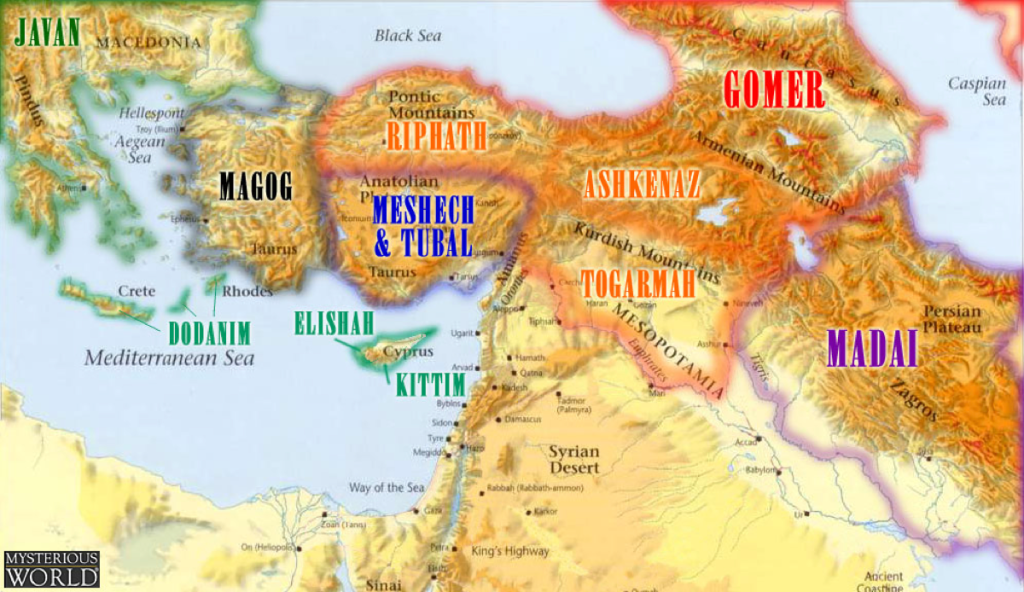
Paternal Haplogroup C1 is more commonly associated with Central Asia and northern Asia, while Haplogroup C2 in East Asia and Amerindian men of the Americas.

Wa-pedia:

‘Haplogroup C2a, representing also 3% of the population, is typically found among the Mongols, Manchus, Koreans and Siberians, which suggest a propagation by the Yayoi farmers. The last surviving tribes of ‘pure’ Ainu people, living on the island of Sakhalin in Russia, just north of Hokkaido, possess 15% of C2a (the remaining 85% being D1b [D1a2a]). There is therefore a good chance that C2a could also have come to Japan from Siberia through Sakhalin and Hokkaido. C2a is indeed found at both extremities of the country, peaking in Kyushu (8%), Hokkaido (5%), but is rare in central Japan, which supports the theory of two separate points of entry.

Over 40% of Japanese men belong to haplogroup D, a paternal lineage… 

Its first carriers would have migrated along the coasts of the Indian Ocean, from the Arabian peninsula all the way to Indonesia, then following the chain of islands up through the Philippines and using the land bridge from Taiwan through the present-day Ryukyu islands to Japan.’

When studying the Bible verses regarding Tarshish, we contemplated that the outposts of Tarshish from the mediterranean via India and Southeast Asia could lead to Japan. Therefore, not only were the various locations given for the ports of Tarshish accurate, they also provide a trail of approximately half of Tarshish’s male descendants all the way to Japan over a period of about 5,500 years – until the arrival of the Yayoi in 1000 BCE.

Wa-pedia:

‘Haplogroup D1b [D1a2a] (aka D-M55 or D-M64.1, formerly known as D2)… is found almost exclusively in Japan, with a small minority in places who have had historical ties with Japan, such as Korea. 

D1b is most common in Hokkaido (60-65%)… If D1b colonised Japan from the north, it would explain why its frequency is highest in northern Japan and, conversely also why [allegedly] pre-LGM [Last Glacial Maximum] lineages like C1a1 survived better in southern Japan…

The only other variety of D identified among the Japanese is D1a1[a] (D-M15), which only makes up 0.5% of the Japanese male population. This haplogroup is particularly common among some ethnic groups from Southwest China and Indochina, such as the Hmong and Ksingmul in Laos… and the Yao people in Guanxi and Vietnam. Tibetans carry about 54% of haplogroup D.

Andaman Islanders belong to the basal D*. It means that their most recent common ancestors goes back tens of thousands of years. In other words the genetic gap between these ethnic groups is immense, despite false appearances of belonging to a common haplogroup.

Haplogroup D1b [D1a2a]… [is thought to have] formed 45,000 [13,000] years ago, [after the flood cataclysm bottleneck], but the most recent common ancestor of Japanese D1b members lived 23,000 [circa 10,000] years ago [or less after the births of Japheth and Canaan’s sons] which means that other D1b branches may have become extinct outside Japan. Haplogroup D1b is found among the Ryukyuans as well as the Ainus, and is thought to have been the dominant paternal lineage of the Jōmon people.

Almost exactly half of Japanese men belong to haplogroup O, a paternal lineage of Paleolithic Sino-Korean origin that is now found all over East and Southeast Asia. Haplogroup [O1b2 – M176*] (aka O-SRY465) is found especially in Manchuria, Korea and Japan, and very probably came to Japan with the Yayoi people. It reaches its highest frequency in western Japan (35%) and is least common in Hokkaido (12.5%) and Okinawa (22%). In the rest of the country its frequency is around 30%.

Approximately two thirds of the Japanese [O1b – M268] belong to the [O1b2] subclade, which is much less common in Korea and Manchuria… Haplogroup [O1b2] (SRY465, M176): Found almost exclusively among the Korean, Japanese, Thai, Vietnamese and Indonesian. Haplogroup  O-47z [O1b2a1a1 – F1204; a sub-clade of OK10 from O-M176*]: Found frequently among Japanese and Ryukyuans, with a moderate distribution among Indonesians, Koreans, Manchus, Thais, and Vietnamese.

Haplogroup [O2] (aka O-M122) is the main Han Chinese paternal lineage. It is an extremely diverse lineage, with numerous subclades, including many associated with the expansion of agriculture from northern China. Most of them are found in Korea and would have been part of the Yayoi migration to Japan. 

Within Japan, it reaches a maximum frequency in Okinawa (16%),** a region with low Yayoi ancestry. Its frequency among non-Okinawan Japanese is of 10-15%, about twice higher than in Korea, a fact that cannot be explained by the Yayoi invasion. 

A negligible percentage of the Japanese belong to haplogroup O1a (aka O-M119), a lineage especially common in southern China, Taiwan, the Philippines, Malaysia and Indonesia, and haplogroup O2a1 (aka O-M95 [L127]), which is found in south-west China, Indochina, around Malaysia and in central-eastern India. Both of them might have also have come with South Chinese Neolithic farmers during the Jomon period.

Approximately 3% of Japanese men belong to haplogroup N, a lineage that is thought to have originated in China… but underwent a serious population bottleneck during the Last Glacial Maximum, and re-expanded after that.

Japanese people belong to N1… Haplogroup N1 was found at high frequency (26 out of 70 samples, or 37%) in Neolithic and Bronze Age remains (4500-700 BCE) from the West Liao River valley in Northeast China (Manchuria) by Yinqui Cui et al. (2013). Among the Neolithic samples, haplogroup N1 represented two thirds of the samples from the Hongshan culture (4700-2900 BCE) and all the samples from the Xiaoheyan culture (3000-2200 BCE). 

Haplogroup N1c is found especially among Uralic and Turkic peoples…  including among the Finns, Estonians and Sami in Northeast Europe, and among the Turks in Central Asia and Turkey. It is found at low frequencies in Korea and could have arrived with the Yayoi people. 

A comparison of Malay (Bahasa Indonesia/Melayu) and Japanese languages reveals a few uncanny similarities. Apart from the very similar phonetics in both languages, the same hierarchical differences exist in personal pronouns. For example ‘you’ can be either anda or kamu in Malay, and anata and kimi in Japanese. 

Not only are the meaning and usage of each identical, but they also sound almost the same. Likewise, the Japanese verb suki (to like) translates suka in Malay. The chances that this is a pure coincidence is extremely low, and may reveal a common origin. Furthermore, in both languages the plural can be formed by simply doubling the word. For instance, in Japanese hito means ‘person’, while hitobito means ‘people’. Likewise ware means ‘I’ or ‘you’, whereas wareware means ‘we’.

Doubling of words in Japanese is so common that there is a special character used only to mean the word is doubled (々) in written Japanese. In Malay, this way of forming the plural is almost systematic (person is orang, while people is orang-orang). Furthermore, expressions like ittekimasu, itteirashai, tadaima and okaeri, used to greet someone who leaves or enter a place, and which have no equivalent in Indo-European languages, have exact equivalents in Malay/Indonesian (selamat jalan, selamat tinggal…).

One could wonder how Malay and Japanese ever came to share such basic vocabulary and grammatical features, considering that there is no known historical migration from one region to other.’

The preceding paragraph is truly incredible, if one did not suspect a common ancestor (Javan) linking Tarshish-Japan with Elishah-Malaysia. Yet the constant reader will know already the obvious linguistic and ethnic tie between two such geographically seeming separate peoples, is easily, logically and reasonably explained; for they share the same father, Javan – Chapter VII Javan: Archipelago South East Asia & Polynesia.

As we have learned with Togarmah-Korea and Ashkenaz-Vietnam, both sons of Gomer, a genetic link proves beyond a shadow of a doubt the familial bond of sibling brothers.

Wa-pedia:

‘The Palaeolithic Jōmon people are thought to have arrived from Austronesia during the Ice Age. The original inhabitants of Indonesia and the Philippines might have been related to Dravidians of Southern India – refer Chapter VII Javan: Archipelago South East Asia & Polynesia.

Y-haplogroup C, which has been associated with the first migration of modern humans… towards Asia, is relatively frequent in Kerala (southern tip of India) and Borneo. These early Austronesians are thought to have been the ancestors of the Ice Age settlers of Japan (Y-haplogroups C1a1 and D1b [D1a2a]). The common root of the two languages must be more recent, and indeed there is one migration that could explain the connection between the two groups: the Neolithic Austronesian expansion from southern China.’

Recall in Chapter VII Javan: Archipelago South East Asia & Polynesia; where the Polynesians descended from Rodan and the Melanesian and Negritos peoples were investigated. The suspicion was that the physiognomy of these people, particularly the Australian Aborigine was similar to the Dravidian Indian. We will return to this question as the evidence indicates the Melanesians are not descended from Japheth, but rather from Ham – refer Chapter XIII India & Pakistan: Cush & Phut.

Wa-pedia:

‘From approximately 5,000 BCE, South Chinese farmers expanded southward to Taiwan and Southeast Asia, bringing Y-haplogroups [O1a, O1b and O2] to the region, which are still the dominant paternal lineages today. There is evidence of farming in Taiwan at least from 4000 BCE, but agriculturalists would probably have arrived earlier considering that the Neolithic reached the Philippines circa 5000 BCE, and Vietnam, Thailand, Malaysia and Indonesia around 4,000 BCE… the same migration could have followed the Ryukyu archipelago until Kyushu, then colonised Honshu and Shikoku. In fact, there is no good reason why these seafaring farmers would travel as far as Indonesia and not to Japan, which is much closer.

Many more Japanese words could be of Austronesian origin. The linguist David B. Solnit estimates that among 111 common Japanese words he analysed, 28% had Austronesian cognates only, while 40% had Altaic cognates, 23% competing cognates, and 9% no cognate in either.

Considering that the various branches of Proto-Austronesian split over 6,000 or 7,000 years ago, longer than Indo-European languages, it is not surprising that even languages that are undeniably classified as Austronesian… have evolved very diverging vocabularies today (except Polynesian languages, which only started to diversify with the Polynesian expansion 2,000 years ago).

It is generally more useful to look at the Proto-Autronesian root of words rather than to try to find direct matches between modern Japanese and modern Austronesian languages. For example, the Proto-Austronesian root for fish is *sikan, which gave sakana in Japanese (and maybe also ika, which means squid), ikan in Malay, ika in Fijian, and isda in Tagalog. Cases of high lexical-semantic retention over six millennia like kamu/kimi, anda/anata and suka/suki are extremely rare. The Austronesian connection with Japanese was first suggested in 1924 by the Dutch linguist Dirk van Hinloopen Labberton. 

Many linguists have since proposed the hypothesis that the Japonic language family evolved from an Austronesian substratum (Jōmon) onto which was added an Altaic superstratum (Yayoi).

However, if Austronesian speakers came to Japan with South Chinese Neolithic agriculturalists, the original Jomon people would have spoken another language, either one of Siberian origin, in light of the mtDNA ties between Jomon and Ainu people and eastern Siberians, or a language isolate, reflecting the uniqueness of the Jomon paternal lineage. Therefore, Middle and Late Jomon people would already have spoken a hybrid language. Likewise, the Koguryoic Korean language of the Yayoi people would also be a hybrid incorporating Altaic elements of Mongolian origin into an older Korean substratum of Paleosiberian origin. 

Since the 6th century CE, the Japanese started incorporating words from Chinese after adopting Buddhism and Chinese characters, in the same way that English absorbed a huge amount of Norman French and Latin words in the late Middle Ages [a further Japanese and British similarity]… approximately half of the Japanese vocabulary is of Chinese origin.

This explains why Japanese does not neatly fit in one or even two linguistic families, but is a hybrid of at least five separate sources: aboriginal Jomon, Austronesian, Korean, Altaic and Chinese.

Cultural and religious similarities also exist between Japan and Austronesia… most ethnic Malays and Indonesians are Muslim, but traditional religion survives in some islands, including Bali, which practices a syncretic form of Hinduism and aninism. Basically, Balinese religion is a form of Hinduism that has incorporated the aboriginal animistic religion. The parallel with Japan is obvious for people familiar with this culture. 

Japanese Shintoism is also a form of animism, and is practised side-by-side with Buddhism, a religion derived from Hinduism, sometimes blending the two religions in a syncretism known as Shinbutso-shugo. The relation between Hinduism and Buddhism is irrelevant here, and both are relatively recent imports in historical times. Before that, however, Jomon people and Neolithic Austronesians would have practised a very similar form of animism.

Japanese matsuri (festivals) resemble so much Balinese ones that one could wonder if one was not copied from the other.

During cremations in Bali, the dead body is carried on a portable shrine, very much in the way that the Japanese carry their mikoshi. Balinese funerals are joyful and people swinging the portable shrine in the streets and making loud noise to scare the evil spirits.

There are lots of other cultural similarities between ancient cultures of Indonesia and Japan.

For example, both Balinese temples and Japanese shrines, as well as traditional Japanese and Balinese houses have a wall surrounding them, originally meant to prevent evil spirits from penetrating the property. Despite the radical changes that Indonesian culture underwent after the introduction of Islam and Christianity, and the changes that Buddhism brought to Japan, it is still possible to observe clear similarities between the supposed original prehistoric cultures of the two archipelagoes.’

This is at once incredible yet is not, for we would expect more similarities between Japan and its related kin in Malaysia, Indonesia and by extension the Philippines and Polynesia; whether culturally, linguistically or ethnically, rather than with China or even Korea. The Koreans and Chinese are cousins, whereas the language and cultural similarities with the Malay peoples supports the proposition that the Japanese as Tarshish, are the brother of Elishah of Malaysia, Kittim of Indonesia, Dodan of the Philippines and Rodan of Polynesia.

Recall, an earlier quote from Chapter VI Togarmah & the Koreas.

‘Wa-pedia: “The study…[of]… Jung et al. (2010) said… that Koreans are genetically homogenous. The study said that the affinity of Koreans is predominately Southeast Asian with an estimated admixture of 79% Southeast Asian and 21% Northeast Asian for Koreans… all of the Koreans which were analyzed uniformly displayed a dual pattern of Northeast Asian and Southeast Asian origins.

The study said that Koreans and Japanese displayed no observable difference between each other in their proportion of Southeast Asian and Northeast Asian admixture.”

Japanese man and woman

The principle Japanese mtDNA Haplogroups include: 

D4 [34%] – M7 [12.5%] – B4 [7.5%] – G [7.5%] – A [7%]

– N9 [7%] – F [5.5%] – B5 [4.5%]

A comparison of mtDNA Haplogroups common throughout Southeast Asia such as M7, B5 and F1 show that the percentages decrease in both estranged northern nations. Japan and Korea have similar levels and more closely match the Philippines, which happens to be located between the northern two and the southern nations of Malaysia, Vietnam and Thailand who all have higher percentages overall.

Even though mtDNA Haplogroup D is the primary maternal Haplogroup in the Koreas as well as in Japan and Haplogroups M and F figure prominently, it is as noted in previous chapters, Haplogroup B which as the common thread binds the descendants of Japheth from Tiras, Madai, Gomer and Javan.  

The principal Y-DNA Haplogroups for the minority peoples in Japan: the Ainus descended from the Jomon; and the Ryukyuans, descended from the Yayoi

Region / HaplogroupCD1bNO1aO1bO2QOthers
Ainus (n=20)15%85%0%0%0%0%0%0%
Ryukyuans (n=132)8.5%45.5%1.5%1.5%23%19%0%1%

Notice the males of the Ainus and Ryukyuans both carry D1b which is found in the Philippines. 

The Y-DNA Haplogroups for the Yamato majority of Japan.

D1a2 – O1b – O2 – C1a1 – C2a – N1c2 – O1a – D1a1 – Q 

Japan: D1a2 [39%] – O1b [30%] – O2 [19%] – C1a1 [3.5%]

– C2a [3.5%] – N1c2 [2%] – O1a [1.5%] – D1a1 [0.5%] – Q [0.1%] 

A simplified percentage sequence for the Y-DNA Haplogroups.

Japan: D1a [39.5%] – O1 [31.5%] – O2 [19%] – C [7%] – N [2%] – Q [0.1%]

The Japanese possess the key Oriental and East Asian Haplogroups O and C (with the absence of K); while exhibiting the lesser marker Haplogroups, N and Q. The very high percentage of Y-DNA Haplogroup D is unique amongst the descendants of Japheth with the only other peoples bearing similar high levels, the Tibetans of Tibet.

Japan:           D1 – O1b – O2 – C – N – O1a – Q 

Malaysia:      O1b – O2a1 – O1a – K – C – F

Indonesia:    O2 – O1b – O1a – C – K – D1

Korea:            O2 – O1b – C – N – O1a – D1 – Q – K

Vietnam:       O2 – O1b – Q – O1a – C – D1 – N 

Philippines:  O2 – O1a – K – C – O1b 

A comparison of Japan with a selection of the nations studied thus far reveals the similarity of the East Asian peoples descended from Japheth’s sons, Javan and Gomer; while at the same time highlighting the unique and different paternal heritages. The Japanese are clearly distinct with high levels of D1. The second major Japanese Haplogroup is O1b and so it is Malaysia – which has O1b as their principle group – that is ostensibly closer to the Japanese – as shown on the PCA graph below. We have discussed the close linguistic ties between the two peoples.

The other four nations, two from Javan – Indonesia and the Philippines – and two from Gomer, all share O2a1 as their prime Haplogroup and so are further removed from the peoples residing on the Japanese isles.

Japan: D1a [39.5%] – O1b [30%] – O2 [19%] – C [7%] – N [2%]

– O1a [1.5%] – Q [0.1%]

Malaysia: O1b [32%] – O2 [30%] – O1a [8%] – K [8%] – C [6%]

– F [6%] 

Korea: O2 – [42.1%] – O1b [ 33.1%] – C [12.9%] – N [3.8%]

– O1a [3.1%] – D1 [ 2.5%] – Q [1.8%] – K [0.5%] 

Vietnam: O2 – [40%] – O1b [32.9%] – Q [7.1%] – O1a [5.7%]

– C [4.3%] – D1 [2.9%] – N [2.9%] 

Philippines: O2 – [39%] – O1a [28%] – K [20%] – C [5%]

– O1b [3%]

Comparing the defining marker Haplogroups of O, C and K, with the addition of Japan. The four main descendants of Javan have a distinct Y-DNA Haplogroup sequence; yet in these core groups, Japan and Malaysia bridge a closer gap overall with the Philippines and Indonesia bridging the other, albeit not as closely.

Taiwan:           O1a  [66%]   O1b  [11%]     O2a1  [11%]   C   [0.4%]

Korea:              O1a    [3%]   O1b [33%]     O2a1 [42%]   C   [13%]   K  [0.5%] 

Vietnam:         O1a    [6%]   O1b  [33%]    O2a1  [40%]  C     [4%] 

Philippines:    O1a  [28%]   O1b    [3%]    O2a1  [39%]  C     [5%]   K [20%]  

Indonesia:      O1a   [18%]   O1b  [23%]    O2a1  [29%]  C   [13%]   K   [3%] 

Malaysia:        O1a    [8%]   O1b  [32%]     O2a1 [30%]   C    [6%]   K   [8%] 

Japan:             O1a  [1.5%]   O1b  [30%]    O2a1  [19%]   C     [7%]    

Togarmah is estranged from his brothers in continental southeast Asia and of those brothers, Ararat, Minni, Riphath and Diphath, it is Ashkenaz with whom the clear closer genetic tie is shared – Chapter V Gomer: Continental South East Asia.

Similarly, Tarshish is estranged from his brothers in archipelago Southeast Asia; yet in stark contrast with Togarmah, none of his brothers, whether Kittim, Dodan or Rodan is similar. It is Elishah that the semblance of a closer genetic tie is exhibited. 

Continuing the comparison table begun in chapter four for those peoples of Japhetic lineal descent; including samples from Tiras, Madai, Gomer, Javan’s sons, now with the addition of Tarshish.

                                     O     O2a1   O1a   O1b     C      D       K       Q  N

NA Amerindian                                                    6                        77

Cook Islands              5                                       83                 8

Kazakhstan                8                                      40                10       2  7

Micronesia                 9                                       19               65

Japan:                        51       19     1.5      30        7     40               0.1   2

Sulawesi                    51       17      21       13      22                  7      

Tonga                        60                                      23                  1

Borneo                      66       36       9       21      22

Indonesia                 69       29      18      23      13     0.5       3     

Malaysia                   70       30        8      32       6                  8

Philippines               70      39      28        3        5                20

Sumatra                    72      40      18       14        5       2         4  

Vietnam                    79      40        6      33        4        3                7  3

South Korea             79      42        3      33      13     2.5     0.5      2   4

Bali                            84        7       18      59        2                   1   0.4         

Java                           88      23      23      42        2                  2  

Taiwan:                     88      11      66       11     0.4        

The five regions of Indonesia are retained due to the diversity of its large population. Immediately, a number of points concerning the Japanese are apparent.

First, the Japanese are one of the few peoples to have minute trace levels of the interconnecting Haplogroup, K. 

Second, the minute percentage of Haplogroup O1a compared with their eastern relatives. In so doing, a percentage for total Haplogroup O which would otherwise be comparable with Malaysia at 70% does not exist. 

Third, though the Japanese possess an average level of O1b, similar to South Korea and Malaysia, they have a much lower level of O2, in keeping with much of Indonesia. Especially similar to the Indonesian island Sulawesi, with O2 and total Haplogroup O percentages matching. 

Fourth, this is due to a higher percentage in a Haplogroup other than O, like Sulawesi. For Sulawesi it is Haplogroup C and for Japan, it is Haplogroup D.

Fifth, the dominance of D in the men of Japan as the defining paternal marker Haplogroup puts them along side those other peoples which are defined by a Haplogroup other than O: and not with the Taiwan aborigines with 66% in O1a; Bali with 59% in O1b; or South Korea with 42% in O2. 

Those peoples include, the Cook Islander men with 83% of Haplogroup C; Micronesia with 65% of K; and the North American Indian males with 77% of Q.

In fact, no one else – excepting Tibet – has any percentage above 3% for D1. Japan is glaringly unique in the Japheth lineage. A study of the Japanese themselves only bears out their singularity in all aspects amongst East Asian peoples.

The next chapter concludes the study on Japheth’s children and what a finale it is.

Someone might say, “Look, this is new,” but really it has always been here. It was here before we were.

Ecclesiastes 1:10 New Century Version

“The more obvious a discovery, the more obvious it seems afterwards.”

Arthur Koestler 1905 – 1983

© Orion Gold 2020 – All rights reserved. Permission to copy, use or distribute, if acknowledgement of the original authorship is attributed to orion-gold.com

Togarmah & the Koreas

Chapter VI

There are exceptions to every rule in family living together, as per point number one in the introduction (primus verba). We will encounter two significant exceptions amongst Japheth’s grandsons, with the first being the youngest son of Gomer and his prompt decision to dwell apart from his siblings, Ashkenaz and Riphath. Togarmah is highlighted as a people with military capability and forms a prominent part of the formidable future alliance with Magog and Gomer’s other sons – refer Chapter V Gomer: Continental South East Asia; and Chapter X China: Magog, Tubal & Meshech.

Book of Jasher 10:10-12

10 ‘And the children of Tugarma are ten families, and these are their names:

Buzar, Parzunac*, Balgar**, Elicanum, Ragbib, Tarki, Bid, Zebuc, Ongal and Tilmaz;

all these spread and rested in the north and built themselves cities. 11 And they called their cities after their own names, those are they who abide by the rivers Hithlah and Italac unto this day.

12 But the families of Angoli, Balgar** and Parzunac*,

they dwell by the great river Dubnee; and the names of their cities are also according to their own names.’

The sons of Togarmah are not recorded in the Bible. It is of significance that of the eleven families in the Book of Jasher, there was a division with eight living in one location and three in another. Remember this detail, for we will discover that modern Togarmah is in fact split into two.

Ancient Civilisation:

‘Encyclopaedia Britannica says that the Armenians traditionally claim to be descended from Togarmah… Ancient Armenia reached into Turkey. The name Turkey probably comes from Togarmah.’

On our journey we will experience more than once, nations claiming a specific biblical identity, though this does not make it so.

Israel a History of:

‘The Jewish Targums claim that Germany was also derived from Togarmah and his descendants. Turkey and Turkestan also have possible connections with Togarmah.’

Derek Walker – emphasis mine:

‘Togarmah is another country aligned with Russia [Russia is not Magog, Meshech or Tubal]. He was a son of Gomer, son of Japheth (Genesis 10:1-3), known in Assyrian records as Tilgarimmu, a city state in Eastern Anatolia (Asia Minor, modern Turkey)… This identification is generally acknowledged by all. The Bible confirms Togarmah’s location in Ezekiel 38:6: “Beth-Togarmah from the uttermost parts of the north with all its troops.” 

The word Beth at the beginning of the word is the Hebrew word for “house.” It means “house or place of Togarmah.” In Ezekiel 38:6: “the house of Togarmah, and all its hordes” are specifically pointed out as being from the north. 

Therefore we know it is directly north of Israel [the sons of Jacob – not the state of Israel]. Some of the sons of Togarmah can be traced to the Turkoman tribes of Central Asia. Rimmer had no doubts that Togarmah is ancient Armenia (most of which is in Turkey today…) and cited certain Assyrian chronicles as well as Tacitus in support of his view.’

Walker: ‘He said that the title the House of Togarmah is a common description for Armenia in Armenian literature. 

All agree to identify Togarmah with Armenia and Turkey. This fits Ezekiel, for Turkey is directly north of Israel. There’s a possible etymological connection between the names Togarmah and Turkey and Turkestan. In Ezekiel’s time, there was a city in Cappodocia (Turkey) known as Tegarma, Tagarma, Til-garimmu, and Takarama. It’s significant that [four] of the ancient locations Ezekiel gives are found today in the nation of Turkey. Clearly God is emphasising Turkey’s important part in the end-time coalition…’

Who Togarmah is not… the map above is an example of a common representation for the biblical identities listed in Ezekiel chapter thirty-eight. All without exception are incorrect, as our progression through the descendants of Japheth, Ham, Canaan and Shem will reveal. Put and Cush are cold; Magog (Meshech and Tubal) is cool; Persia warm; and Gomer with Togarmah, freezing.

The once location of Togarmah in Asia Minor relates to thousands of years ago, directly after the Flood – refer Chapter I Noah Antecessor Nulla. Many peoples have dwelt at this major continental intersection at one time or another; migrating as new peoples encroached. All these different groups of people cannot now still be living there, or all be identified as Turks.

The Origin of the Nations, Herman Hoeh, 1957:

‘One branch of the family of Gomer, however, did not journey to Southeast Asia’ – Chapter V Gomer: Continental South East Asia.

‘Ezekiel 38:6 explains it: “The house of Togarmah in the uttermost parts of the north, and all his bands” (Jewish translation). The far, far north means Russian Siberia today! That is where the descendants of Togarmah (Genesis 10:3) live. These Asiatics are still a wild nomadic people, much as they were 2500 years ago, trading “with horses and horsemen and mules” (Ezekiel 27:14).’

While Hoeh is closer to the truth than those who identify Togarmah with Armenia or Turkey, the descendants of Togarmah figure far more prominently in world affairs than as non-specifically identified nomadic, tribal, horsemen.

The first of the two scriptures referenced by Hoeh pertaining to Togarmah:

Ezekiel 38:6 English Standard Version, translates as quoted by Hoeh.

‘Gomer and all his hordes; Beth-togarmah from the uttermost parts of the north with all his hordes – many peoples are with you.’

Derek Walker explained the meaning of Beth as house. It is a family unit. Its use is showing Togarmah as a separate entity from his brothers Ashkenaz and Riphath – refer Chapter V Gomer: Continental South East Asia. We learned when studying Madai, that Asshur (or Assyria) lives in the North – Chapter IV Central Asia – Madai & the Medes; and Chapter XX Will the Real Assyria Stand Up: Asshur & Russia.

There are not many options in Central Asia and East Asia for who Togarmah might be today. Other translations state:

New Century Version

… the nation of Togarmah from the far north…

New English Translation

… and by Beth Togarmah from the remote parts of the north

There are only four peoples or five nations, which Togarmah could be: China, Mongolia, North Korea, South Korea and Japan.

Youngs Literal Translation

… The house of Togarmah of the sides of the north…

This is a more specific translation and eliminates China and Mongolia.

Modern King James version

… the house of Togarmah from the recesses of the north…

This translation effectively eliminates Japan, for the connotation of this word is a bend, a crook or even a hook. In the King James version it says ‘of the north quarters.’

North in Hebrew – tsaphon from the root H6845 tsaphan – signifies ‘hidden, stored up, dark, gloomy’ and ‘unknown.’

Quarters in Hebrew, from H3411: yrekah, meaning side or sides; is used 21 times in the KJV; coasts (3), parts (2); border (1); quarters (1). It also means ‘flank, extreme parts, the rear or recess’ and ‘recesses.’

The Peninsula jutting out from the Asian continent with the Democratic People’s Republic of Korea in the north and the Republic of Korea in the South, is the clear answer to where Togarmah is located today.

It was not so obvious until studying this verse very closely. This writer had initially considered that Meshech and Tubal were North Korea and South Korea respectively and that Japan was Togarmah. Though only Korea, could equate to being tucked away in this manner and hidden in a crook or recess

Yet Korea’s strategic geographical location meant it was a ‘target for domination, occupation and plunder’, so that in attempting to isolate itself it earned the name, The Hermit Kingdom in the eighteenth century – Prisoners of Geography, Tim Marshall, 2016 & 2019, pages 223-224. Even today, North Korea exists under self-imposed isolation.

The second of the two scriptures referenced by Hoeh pertaining to Togarmah:

Ezekiel 27:14

New Century Version

‘People of Beth Togarmah traded your goods for work horses, war horses, and mules.’

This verse is a past reference to when Koreans were one people. Though with a modern application today, it reveals a nation who is economically and technically advanced; producing machinery and transport for industry as well as military armaments and weaponry.

Ancient Korea, Mark Cartwright, 2016:

In the past ‘[ancient] Korea has provided many unique contributions to world culture including the invention of movable metal type printing, superb celadon ceramics, the exquisite gold crowns of Silla [refer Addendum], the oldest astronomical observatory in Asia, fine gilt-bronze Buddist figurines, stone pagodas, hanji, the most prized paper in the world, and the ondol underfloor heating system.’

Today, South Korea is a major player in the global arms trade, significantly increasing its exports in recent years and establishing itself as a competitive supplier of military technology. South Korea is ranked the eighth largest weapons exporter in the world. After once relying heavily on the United States for supplying its military hardware to its armed forces, the country manufactures a range of military equipment, including: tanks, artillery and aircraft.

South Korea is ranked fifth in the world for both its automobile production and export volume. Major manufacturers include Hyundai, Kia and GM Korea. South Korea also possesses an impressive 22.5% market share of the world’s smart phone sector through Samsung Electronics.

Korea was split in two – arbitrarily along the 38th parallel – in 1945 and unlike North Vietnam and South Vietnam does not look like uniting anytime soon.

The use of House of Togarmah in Ezekiel 38:6, does not hint at just one of the Koreas being part of the far distant military alliance with Magog and the remainder of Gomer (refer article: Four Kings & One Queen) – but rather reveals the eventual unification of North Korea and South Korea.


Seoul: Capital of South Korea

Tim Marshall: ‘The two Koreas are still technically at war, and given the hair-trigger tensions between them a major conflict is never more than a few artillery rounds away. South Korea’s capital, the mega-city of Seoul, lies just 35 miles south of… the DMZ [demilitarised zone]. Almost half of South Korea’s 51 million people live in the greater Seoul region, which is home to much of its industry and financial centres, and it is all within range’ of the estimated ten thousand North Korean artillery pieces along the 148 mile long DMZ border… ‘each side continues to prepare for a war; as with Pakistan and India, they are locked in a mutual embrace of fear and suspicion’ – pages 227-228, 232.

Korea in Prophecy, Bob Thiel, 2009:

‘A Chinese tradition [states] that Korea came from a small kingdom within China:

“Somewhere north of that vast region watered by the Sungari River, itself only a tributary to the Amur, there existed, according to Chinese tradition, in very ancient times, a petty kingdom called Korai, or To-li. Out of this kingdom sprang the founder of the Corean race…” (Griffis, William Elliot. Corea, The Hermit Nation: I. Ancient and mediæval history. II. Political and social Corea. III. Modern and recent history 8th Edition. C. Scribner’s sons, 1907, pages 19, 21).

Koreans [maintain] their own tradition about where they [originate] from:

“Korean legends say that Tangun,* who lived in the 2300’s B.C., was the father of the Korean civilization – refer Addendum. Korea developed by itself until Kija, an exile from China, led about 5,000 followers to Korea in 1122 B.C. He founded a kingdom called Chosen [Chosun, meaning Morning Calm].” (Hu, Charles Y. Korea. World Book Encyclopedia, 50th edition, Volume 11. Chicago, page 296).’

The Goguryeo Kingdom was one of the great powers in East Asia and located in the northern and central regions of the Korean Peninsula, as well as the southern and central portion of Northeast China.

The Goguryeo Kingdom was established in 37 BCE, lasting until the fall of Pyongyang in 668. It was later known as Goryeo (meaning ‘high and beautiful’) – alternatively spelled as Koryŏ – a shortened form of Goguryeo (Koguryŏ), meaning ‘high Castle.’

The word was adopted as the official title in the fifth century and is the origin of the English word, Korea.
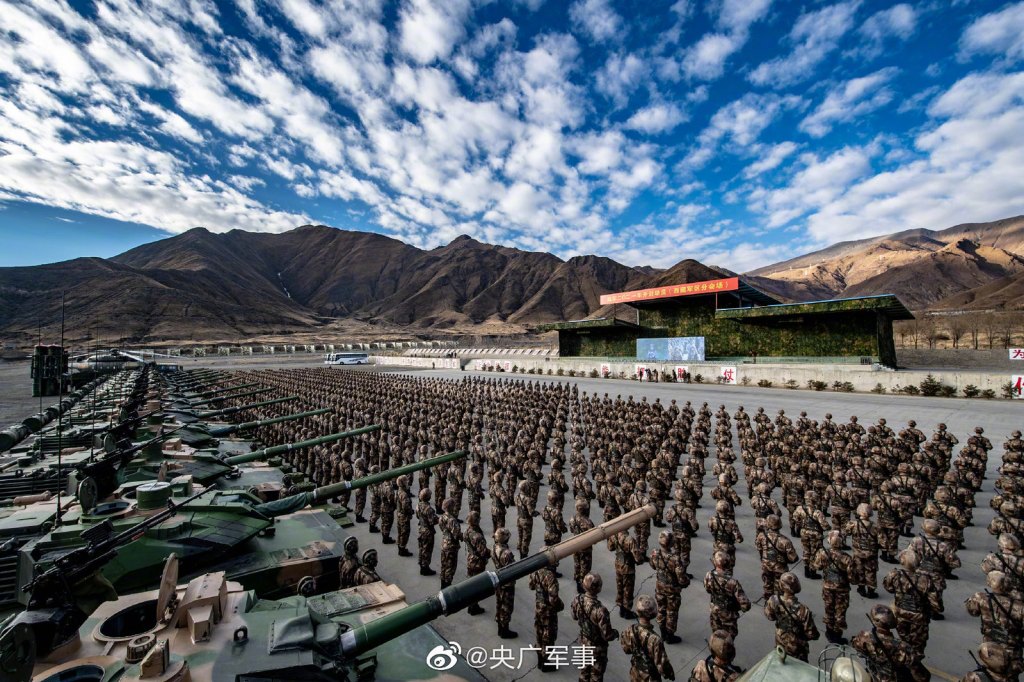
Encyclopaedia:

At the peak of its power, ‘Goguryeo encompassed most of the Korean peninsula and large parts of Manchuria, along with parts of eastern Mongolia, Inner Mongolia, and modern-day Russia. It was an active participant in the power struggle for control of the Korean peninsula and was… associated with the foreign affairs of neighboring polities in China and Japan.’

Prior to the Goguryeo Kingdom there was the Gojoseon, recognised as the first Korean kingdom. This kingdom emerged in northern Korea and parts of Manchuria, having developed a distinct culture and governance.

Ancient Korea, Mark Cartwright, 2016:

‘Gojoseon, according to Korean mythology as recounted in the 13th-century CE Samguk yusa (‘Memorabilia of the Three Kingdoms’), was founded in 2333 BCE by Dangun Wanggeom (aka Tangun*) who was the offspring of the god Hwanung and a female bear transformed into a woman.’

Cartwright:

‘Gojoseon’s territories would later become Goguryeo (Koguryo) while the southern part of Korea at this time, often referred to as the Proto-Three Kingdoms Period, was spilt into the Three Hans of…

Byeonhan, Mahan, and Jinhan (no connection to the Chinese Han), which became the three states of Baekje (Paekche), Gaya (Kaya), and Silla in the subsequent Three Kingdoms Period.’

Following Gojoseon, Buyeo arose in approximately the second century BCE, lasting until 494 CE. It was influential in the region before being absorbed by the Goguryeo Kingdom.

Cartwright:

‘Silla captured the Gaya ruling city-state Geumwan Gaya (Bon-Gaya) in 532 CE, and the state collapsed completely a few decades later.

Baekje had… [an] alliance with Silla between 433 and 553 CE [which] brought some stability, but in 554 CE at a battle at Gwansanseong Fortress (modern Okcheon) Baekje tried to reclaim territory it had lost to a Silla invasion and their 30,000-strong army was defeated and the Baekje king Seong killed.

The in-fighting between the Korean states was finally settled by outside intervention from China. Goguryeo had successfully rebuffed three invasions from Sui China in the 7th century CE, and then the Tang Dynasty (618-907 CE) attempted an invasion in 644 CE, but the great general Yang Manchun… brought victory to the Koreans.

Goguryeo had joined forces with Baekje and successfully invaded Silla territory two years before, but the Tangs were not done with their plans for Korea and they decided on Silla as their temporary ally to defeat the other two remaining Korean states. In 660 CE, a Silla army of 50,000 led by the general Kim Yu-sin and a naval force of 130,000 men sent by the Tang emperor Gaozong proved more than enough to crush Baekje and its king, Uija, was taken to China.

Then in 667 CE Pyongyang fell, and the next year the Goguryeo king Bojang was likewise taken prisoner to China along with 200,000 of his subjects. Silla had no intention, though, of becoming a Chinese vassal state and defeated the remaining Tang army in battles at Maesosong (675 CE) and Kibolpo (676 CE). Silla then took control of all of Korea… forming a new state, the Unified Silla Kingdom.

Silla Gold Crown – National Museum of Korea

Cartwright:

‘The Unified Silla Kingdom (668- 935 CE) was the first dynasty to rule over the whole of the Korean peninsula. There was a state in the north at this time, Balhae (Parhae), but most of its territory was in Manchuria… so the majority of historians do not consider it a Korean state proper.’

Korea History Insights:

‘After… unification, the Unified Silla period brought peace, learning, and the golden age of Korean Buddhism. Beautiful temples and sculptures were built, and Korean culture flourished. At the same time, a new kingdom called Balhae was founded in the north by former Goguryeo people. Balhae controlled parts of Manchuria and northern Korea and had a highly advanced culture. For a time, the Korean Peninsula was divided between these two powerful states.

Next came the Goryeo Dynasty [from 918 to 1392]… This period was known for its support of Buddhism, beautiful celadon pottery, and the creation of the Tripitaka Koreana, a massive collection of Buddhist texts carved on over 80,000 wooden blocks. Goryeo faced many invasions, including attacks from the Mongols, but it survived for nearly 500 years through diplomacy and adaptation.’

‘In 1392, General Yi Seong-gye overthrew the Goryeo government and established the Joseon Dynasty [beginning in 1392 and lasting till 1897], which would rule Korea for over 500 years. Joseon was based on Confucianism, which created a strict social system and valued education, family, and loyalty. One of the greatest achievements of this era was the invention of the Korean alphabet, Hangul, by King Sejong the Great in 1443. This allowed common people to read and write for the first time.

Joseon also faced many challenges, including Japanese invasions in the 1590s and internal struggles. Despite hardships, it was a time of scholarly learning, art, and traditional Korean culture that still influences modern society today.

As Western powers and Japan grew stronger, Korea tried to protect itself by declaring the Korean Empire in 1897 under Emperor Gojong. Unfortunately, this didn’t last long. In 1910, Japan took full control of Korea, starting a 35-year period of colonization. During this time, Korean language and culture were suppressed, and many people suffered greatly.

But Koreans did not give up. Brave activists and students led movements for independence, such as the March 1st Movement in 1919. Many Koreans also fought alongside other countries during World War II, hoping to gain freedom.

When Japan was defeated in World War II in 1945, Korea was finally liberated. However, the country was soon divided into two zones [in uncanny parallel with Vietnam – refer Chapter V Gomer: Continental South East Asia]: the Soviet Union controlled the north and the United States controlled the south. In 1948, two separate governments were established: North Korea and South Korea.

In 1950, North Korea invaded South Korea, beginning the Korean War. It was a brutal conflict that left millions dead or wounded. The war ended in 1953 with a ceasefire – but not a peace treaty – meaning the two Koreas are still technically at war today.’

Notice the striking similarity of the words Gay-a, Goj-oseon and particularly Gog-uryeo with the name Gog.

This name association in Korea’s history being of considerable interest. Particularly in light of the prophetic significance of Ezekiel chapter thirty-eight and thirty-nine; whereby a united Korea (Togarmah) is included with not only its brothers (Gomer), but Ma-gog, Meshech, Tubal and their leader, Gog – refer Chapter X China: Magog, Tubal & Meshech.

North Korea

Abarim Publications:

‘The name Togarmah most likely originated in a language other than Hebrew, and therefore does not occur as a word in the Hebrew language. But, transliterated as is, at the heart of the name Togarmah sits the common Hebrew noun (gerem), bone, which figuratively is used to mean self or strength. It comes from the verb (garam), meaning to lay aside or save… The verb [garam] means to leave over, to save for laterto break bones [or breaking bones].’

Recall the names of Gomer, Riphath and Ashkenaz: ‘Bring to an end’, ‘Crushers’, ‘fire is scattered’ or ‘sprinkling of blood’ – refer Chapter V Gomer: Continental South East Asia. Further dread then, with the addition of ‘Bone breaker’ to this formidable list of adversaries. 

Readers paying careful attention, may recall the following quote from the preceding chapter regarding Gomer – emphasis mine:

‘The study said that Vietnamese people were the only population in the study’s phylogenetic analysis that did not reflect a sizable genetic difference between East Asian and Southeast Asian populations. Jung Jongsun et al. (2010) said that genetic structure analysis found significant admixture in “Vietnamese (or Cambodian) with unknown Southern original settlers.” The study said that it used Cambodians and Vietnamese to represent “Southern people,”… The study also said that Vietnamese people are located between Chinese and Cambodian people in the study’s genome map.’

Bhak Jong-hwa, a professor in the biomedical engineering department at the Ulsan National Institute of Science and Technology (UNIST) states:

‘… the ancient Vietnamese, which was a population that flourished with rapid agricultural development after 8,000 BC, slowly travelled north to ancient civilizations in the Korean peninsula and the Russian Far East. Bhak said that Korean people were formed from the admixture of agricultural Southern Mongoloids from Vietnam who went through China – [according to most linguists and archaeologists with expertise in ancient Korea, the linguistic homeland of proto-Korean and of the early Koreans is located somewhere in Manchuria, particularly the Liao River.] – and hunter-gatherer Northern Mongoloids in the Korean Peninsula. Bhak said, “We believe the number of ancient dwellers who migrated north from Vietnam far exceeds the number of those occupying the peninsula,” making Koreans inherit more of their DNA from southerners.’

Regarding Vietnam, recall that the Vietnamese have a genetic structure that is partially dissimilar to their related neighbours (with an unknown admixture) and contrastingly aligned to East Asian peoples instead. Korea has been populated partially from a migratory wave of people travelling eastward in the North and primarily from another wave of migrants travelling northwards through China from… Vietnam – with Koreans actually possessing a majority of their DNA inherited from these southern immigrants.

This is quite an admission and provides a genetic link between Togarmah and his brother Ashkenaz in continental South East Asia. Who would have thought there is an ancestral association between the Vietnamese and Koreans. Yet the Bible acknowledged this fact millennia’s ago, when it described Togarmah dwelling separately from his brothers. 

North Korean soldiers

The Genetic history of Koreans: Studies of polymorphisms in the human Y-chromosome produced evidence to suggest that: ‘the Korean people have a long history as a distinct, mostly endogamous [marrying their own] ethnic group, with successive waves of people moving to the peninsula and three major Y-chromosome haplogroups [O2a1, O1b and C]. Several studies confirmed that Koreans have both a Northeast and Southeast Asian genome.’

Paternal lineages, Jin Han-jun, 2003:

‘Korean males display a high frequency of Haplogroup O-M176 [O1b2, formerly O2b], a subclade that probably has spread mainly from somewhere in the Korean Peninsula or its vicinity, and Hapologroup O-M122 (O2, formerly O3), a common Y-DNA haplogroup among East and Southeast Asians in general.’

The men of the South East Asian nations of Gomer – Vietnam, Cambodia, Laos, Thailand and Myanmar – likewise predominantly carry Y-DNA Haplogroup O2a1 and secondly, Haplogroup O1b.

Maternal lineages:

‘Haplogroup B [B4 and B5], which occurs very frequently in many populations of Southeast Asia, Polynesia, and the Americas, is found in approximately 10% (ethnic Koreans from Arun Banner, Inner Mongolia) to 20% (Koreans from South Korea) of Koreans. Haplogroup A has been detected in approximately 7% (Koreans from South Korea) to 15% (ethnic Koreans from Arun banner, Inner Mongolia) of Koreans. Haplogroup A is the most common mtDNA haplogroup among the Eskimo and many other Amerind ethnic groups of North and Central America.’

Other major Korean mtDNA Haplogroups include: D4 (29%), M7 (11%), G (6%) and F (5%). Similarly, the prevalent maternal Haplogroups in the South East Asian nations comprising Gomer include Haplogroups B, F and M7.

Immunoglobulin G: Hideo Matsumoto professor emeritus at Osaka medical College, tested Gm types [genetic markers] of immunoglobulin G of Korean populations in 2009. 

Matsumoto said that, ‘Gm afb1b3 is a southern marker gene possibly originating in southern China and found at high frequencies across Southeast Asia, southern China, Taiwan, Sri Lanka, Bangladesh, Nepal, Assam and parts of the Pacific. Matsumoto said that the average frequency of Gm afb1b3 for Koreans was 14.7% which was intermediate between a frequency of 10.6% for general Japanese and a frequency of 24.1% for Beijing Han Chinese.’

Autosomal DNA, Jin Han-jun, 1999:

‘… based on genetic studies of classic genetic markers of protein and nuclear DNA… that these 9-bp deletion frequencies are consistent with earlier surveys which showed that 9-bp deletion frequencies increase going from Japan to mainland Asia to the Malay peninsula.’

South Korean men

‘The Cavalli-Sforza’s chord genetic distance (4D,) from Cavalli-Sforza & Bodmer (1971), which is based on the allele frequencies of the intergenic COII/tRNALys region, showed that Koreans are more genetically related to Japanese than Koreans are genetically related to the other East Asian populations which were surveyed. The close genetic affinity between present day Koreans and Japanese is expected due to the Yayoi migration from China and the Korean Peninsula to Japan which began about 2,300 years ago. Horai [1996] detected mtDNA D-loop variation which supports the idea that a large amount of maternal lineages came into Japan from immigrants from the Korean Peninsula after the Yayoi period.’

‘Kim Jong-jin [2005] conducted a study about the genetic relationships among East Asians based on allele frequencies. Focusing on how close Chinese, Japanese and Koreans are genetically related to each other. 

The study concluded that Middle West Korea was a melting pot in the Korean Peninsula with people traveling from North to South, South to North, and people traveling from East China…’

Jung (2010) said that Koreans are genetically homogenous.

The study stated ‘the affinity of Koreans is predominately Southeast Asian with an estimated admixture of 79% Southeast Asian and 21% Northeast Asian for Koreans… all of the Koreans which were analyzed uniformly displayed a dual pattern of Northeast Asian and Southeast Asian origins.

The study said that Koreans and Japanese displayed no observable difference between each other in their proportion of Southeast Asian and Northeast Asian admixture.’

We will refer again to this fascinating duality and the parallelism between the Korean and Japanese people when we discuss Japan – Chapter IX Tarshish & Japan.

South Korean women

The Emerging Limbs and Twigs of the East Asian mtDNA Tree, multiple authors, 2002 – emphasis & bold mine:

‘Haplogroups A, C, D, G, Y, and Z almost completely cover the mtDNA pool of Northeast Asians, whereas in Southeast Asians C, Y, or Z mtDNAs have rarely been found, but instead haplogroups B and F are predominant.’

Recall the Korean population exhibit the maternal Haplogroups associated with South East Asia – B: 10% to 20%; M7: 11%; F: 5%. Haplogroup B is of particular interest for both Central Asians and the Amerindians carry it as well. Thus creating a common maternal ancestral tie between South East Asia, Central Asia and the Native Indians of the Americas.

Though it is mtDNA Haplogroup D4, which highlights the unique maternal inheritance for Koreans.

‘N9a** is, compared with its sister bough Y, widely spread [in SE Asia], although at very low frequencies, among most East Asian populations… Considering the geographic distribution of the boughs and twigs we see further regional patterns. In contrast to A4, which is widely spread, the A5 twig, with its low diversity suggesting shallow time depth [not sons of Japheth but grandsons of Japheth with a mutational evolution and migration, unlike their siblings and uncles], is specific to Koreans and Japanese…

Similarly, B4 is the prevailing bough in haplogroup B… covering all haplogroup B types in Native Americans and Polynesians. B5 is found most frequent, accounting for about one third to one half of the B types, in eastern China, Korea, and Japan…

E1 is so far found only in Southeast Asia…F1a is the main branch of F… in Southeast Asia, whereas F1b is more frequent in Central Asians and Mongols, Koreans, and Japanese. G2a is highest among Central Asians (8.8%) [Kazakhstan] and also above 3% in Tibetans and Ainu and rare or absent among southern Chinese, Vietnamese, island Southeast Asians… and Siberians. G3 is not yet well screened, but evidently it is seen in Korea, Mongolia, and Central Asia. 

Haplogroup M7, although characteristic for East Asian populations, has not been found in the northeast of the continent…It is also very rare in Central AsiansThis haplogroup has been detected so far in China and Vietnam, the Korean peninsula and Japanese islands, as well as among Mongols, the West Siberian Mansi, and island Southeast Asia. Koreans possess lineages from both the southern and the northern haplogroup complex and share M7a with Japanese, Ainu, and Ryukyu islanders.

The geographic specificity of the boughs and twigs of M7… is most intriguing:

M7c1c is specific to island Southeast Asia and M7b1 is of Chinese provenance, whereas M7a, M7b2, and M7c1b are found almost exclusively in Korea and Japan. In fact, M7 is one of the prevailing haplogroups not only among Japanese (of Honshu and Kyushu) but also for Ainu and Ryukyuans, thus testifying to a common genetic background.’

South Korea

Khazaria, Korean Genetics – emphasis & bold mine:

‘Among Korean males who have been studied, the Y-DNA (paternal DNA) haplogroups [O1b2] (P49) [M176] and [O2] (M122) were particularly common… Koreans are racially a purely Mongoloid population. They carry the 1540C allele on their EDAR gene which among other things results in thicker hair than other races. Koreans also have the ABCC11 gene nearly universally so they have dry earwax as opposed to the wet earwax of most people in Europe, the Middle East, and Africa.’

The Peopling of Korea Revealed by Analyses of Mitochondrial DNA and Y-Chromosomal Markers, Han-Jun Jin, Chris Tyler-Smith, and Wook Kim, 2009: 

‘The mtDNA haplogroup D4 is very common among Korean people. This haplogroup is also prevalent in Siberia. The study found mtDNA haplogroup A in about 10% of the Koreans tested. 

A is the most frequently encountered mtDNA haplogroup among… New World Indian (Amerindian) populations from North America and Central America. Meanwhile, the mtDNAhaplogroup B is also found in some Koreans and it’s also common in China and Japan. Less common Korean mtDNA haplogroups include F, M, R, U, and Z.’

“The Koreans are generally considered a northeast Asian group because of their geographical location. However, recent findings from Y chromosome studies showed that the Korean population contains lineages from both southern and northern parts of East Asia.”

Y-chromosoaml DNA haplogroups and their implications for the dual origins of the Koreans, multiple authors, 2003:

“We have analyzed eight Y-chromosomal binary markers (YAP, RPS4Y(711), M9, M175, LINE1, SRY(+465), 47z, and M95) and three Y-STR markers (DYS390, DYS391, and DYS393) in 738 males from 11 ethnic groups in east Asia in order to study the male lineage history of Korea… the distribution pattern of Y-chromosomal haplogroups reveals the complex origin of the Koreans, resulting from genetic contributions involving the northern Asian settlement and range expansions mostly from southern-to-northern China.”

“The haplogroups carrying the M9-G mutation and additional sublineages of M9-G in Korea appear to be at an intermediate frequency (81.9%) between southeast and northeast Asian populations.

This result implies that the Korean population may be influenced by both the northeast and southeast Asian populations.

Even within haplogroup O, the most frequent Korean STR haplotype (23-10-13 with the markers DYS390-DYS391-DYS393), 19% of haplogroup O… is the most frequent in the Philippines (27%), whereas the second most frequent Korean haplotype (24-10-12, 16%) is the most frequent in Manchuria (45%)…”

‘In this study, the Koreans appear to be most closely related overall to the Manchurians among east Asian ethnic groups… although a principal components analysis of haplogroup frequencies reveals that they also cluster with populations from Yunnan and Vietnam…’

“Using two multiplex systems, all 593 Korean mtDNAs were allocated into 15 haplogroups: M, D, D4, D5, G, M7, M8, M9, M10, M11, R, R9, B, A, and N9. As the D4 haplotypes occurred most frequently in Koreans, the third multiplex system was used to further define D4 subhaplogroups:

D4a, D4b, D4e, D4g, D4h, and D4j.”

“[Mitochondrial] Haplogroup N9a** is characteristic of eastern Asian populations, where it is detected at… frequencies in Japan (4.6%), China (2.8%), Mongolia (2.1%) and Korea (3.9%)…”

Mapping Human Genetic Diversity in Asia, 2009:

‘Koreans were found to have the least amount of Austronesian DNA compared to other East Asian peoples, even a little less than the Japanese.’

This is a significant point, as this lends weight to the proposal that the Koreans with the Japanese, have been separated from the main body of their respective family enclaves. The Austronesian peoples, including the related archipelago southeast Asian nations of the Philippines, Indonesia, Malaysia and Polynesia, migrated southwards from Taiwan after crossing from mainland China thousands of years ago – refer Chapter VII Javan: Archipelago South East Asia & Polynesia.

The Japanese as the remaining major Island people, were not included in this migratory path. Similarly, for the majority of the Korean people. Thus the Koreans and Japanese having the lowest amount of Austronesian DNA is not a surprise and supports their unorthodox movement and mutual mutational evolution in relation to their respective brothers and cousins.

Dual origins of the Japanese: common ground for hunter-gatherer and farmer Y chromosomes, multiple authors, 2005: 

“All southeastern Asian populations cluster together on the left side of the plot [not shown]; with only northern Han Chinese, Korean, and Manchu populations showing closer affinities with southeastern groups than with their geographic neighbors. All other northeast Asians, as well as central Asians, south Asians, and Oceanic populations, are on the right side of the plot… 

[There is a] very low incidence of (Y-DNA) D chromosomes in Korea [D1 (M174)]… [and] very few O-47z [sub-clade of M176 – O1b2] chromosomes found in Korea [8.7%] and Southeast Asia… Haplogroup M12 is the mitochondrial counterpart of Y chromosome D lineage. This rare haplogroup was detected only in mainland Japanese, Koreans, and Tibetans, with the highest frequency and diversity in Tibet (Tanaka et al. 2004). 

Y chromosomes that originated in Southeast Asia expanded to Korea and Japan…”

The final sentence is highly significant for the Japanese – as we shall discover – like the Koreans, they are related to their brother nations in South East Asia; and for whatever reason, both chose to dwell separately in the ancient past, replicating this pattern in the ages which followed into the present era.

There is a wealth of Haplogroup data for South Korea and the opposite for North Korea. Even so, there is confirmation unsurprisingly, that the paternal Haplogroup percentages match for they are a single people artificially separated and politically divided within two states. 

The male South Korean Y-DNA Haplogroups in descending percentage order:

O2a [42.1%] – O1b2 [ 33.1%] – C [12.9%] – N [3.8%] – O1a [3.1%] – 

D1 [ 2.5%] – Q [1.8%] – K [0.5%]

It is now interesting to compare South Korea and Vietnam.

Vietnam: O2a [40%] – O1b [32.9%] – Q [7.1%] – O1a [5.7%] – C [4.3%] –

D1 [2.9%] – N [2.9%] – J2 [2.9%]

Vietnam:         O2a – O1b – Q – O1a – C – D – N – J2

South Korea:  O2a – O1b – C – N – O1a – D – Q – K

If we disregard Vietnam’s West Asia influenced J2; the rarer Q for East Asian populations; the northern Eurasian N; the maverick Haplogroup D; and the ancient Haplogroup C (indicative of Central Asians); it is remarkable how aligned Korea and Vietnam are not only in their prime paternal marker Haplogroup of O2a1 – followed by O1b and O1a – but also in line with their autosomal DNA, as shown below on the PCA graph. One can with little difficulty, readily accept they had the same ancestral father – refer Chapter V Gomer: Continental South East Asia.

Therefore substantiating the palpable familial link with the paradoxical geographic estrangement – as revealed in the scriptures – regarding Togarmah and his older brothers Ashkenaz and Riphath (Genesis 10:3). 

What would be the odds that these two peoples (blood brothers) consisting of Vietnam and Korea would both be cut in half so-to-speak, during the twentieth century. The two peoples are also located on the eastern extremity – or coastline – of their respective south easterly and north easterly abodes. 

Now adding the prime Korean Haplogroups to the table we began in Chapter Three – with the addition of Y-DNA Haplogroup N – while also delineating between the three main strains of the O Haplogroup.

                                  O     O2a   O1a   O1b     C      D      K      Q   N

NA Amerindian                                                6                         77

Kazakhstan             8                                      40                10      2   7

Vietnam                 79       40        6      33       4        3                7   3

South Korea          79       42        3      33      13    2.5     0.5      2   4

The Koreans show a clear link with north Asian migration, with a considerably higher level of Haplogroup C, as found in Central Asia and Mongolia.

Some dispute Y-DNA Haplogroups O1 and O2 as East Asian defining markers, but as we progress it will become difficult to support their premise.

We have now studied all three of Gomer’s sons, of which Haplogroup O is clearly the principle group. As O2a followed by O1b are the principle paternal defining marker Haplogroups for continental South East Asian males, so they are for Korean men as well.

South Korea

We will soon turn our attention to Javan and his four sons, whom parallel Gomer’s sons in more ways than one – Chapter VII Javan: Archipelago South East Asia & Polynesia.

The House of Togarmah is a very specific title and carries an uncommon usage in the Bible. It distinctly alludes to one Korea in the predicted East Asian Army of the future; specifying a united Korea’s involvement in Magog’s military machine – Chapter X China: Magog, Tubal & Meshech.

Flags of North Korea (left) and South Korea (right)

A comparison of North Korea and South Korea:

IndicatorNorth KoreaSouth Korea
CapitalPyongyangSeoul
Official languagesKorean
GovernmentJuche single-party stateRepresentative Democracy
Formal declaration9 September 194815 August 1948
Area120,540 km2100,210 km2
Population (2025)26,605,36951,643,062
GDP total (2025)$34.9 billion$1.79 trillion
CurrencyKorean People’s wonKorean Republic won
Active military personnel1,106,000639,000
Military expenditure (2010/2012)$10 billion$30 billion

North and South Korea’s combined population is comparable to the Amerindian and the Turko-Mongol populations in the world. With regard to Ezekiel 27:14 and the economic and military strength of Togarmah – it is worth listing and re-iterating the key industries and exports for both countries.

North Korea: military products, machine building, electric power, chemicals, mining (coal, iron ore, limestone, magnesite, graphite, copper, zinc, lead and precious metals), metallurgy, food processing and tourism.

South Korea: electronics, telecommunications, automobile production, chemicals, shipbuilding, steel and military products.

South Korea, with a 2025 GDP of $1.79 trillion was the 13th largest economy in the world and is the third biggest in East Asia. South Korea’s economic journey is a twentieth century success story – the miracle on the Han River.

South Korea is reputed for its strategy of export led growth, the dominance of its large business conglomerates called Chaebols and its highly motivated and educated populace. South Korea has built a network of free trade agreements with as many as fifty-eight countries which account for over three-quarters of the world’s GDP. 

Korea History Insights:

‘After the war, South Korea was one of the poorest countries in the world. But through hard work, education, and innovation, it transformed into one of the world’s leading economies. Today, South Korea is known for its global influence in music (K-pop), film, technology, and fashion.’

South Korea ranks highly on the index of nations with superior technology – at number three in the world. South Korea is the birthplace to some of the biggest names in technology and development: LG, Hyundai, and Samsung are all global leaders. South Korea is also in the forefront of the incredibly vital robotics field. In 2023, South Korea was ranked tenth in the world on the Global Innovation Index – only one of two East Asian countries in the top ten, the other being Singapore at number five.

Coat of Arms of South Korea – inscription: Republic of Korea

South Korea is included in the group of Next Eleven countries which are projected to dominate the global economy in the middle of the 21st century. The other N-11 nations include Bangladesh, Egypt, Indonesia, Iran, Mexico, Nigeria, Pakistan, the Philippines, Turkey, and Vietnam.

Most of the group’s total gross domestic product derives from Mexico, Indonesia, South Korea and Turkey, whose economies have grown significantly. The World Bank described South Korea as one of the fastest growing major economies of the next generation along with the burgeoning economies of the BRIC nations comprising Brazil, Russia, India and China as well as non-BRIC nation Indonesia – Chapter VIII Kittim & Indonesia. 

Korea History Insights:

‘[South Korea] is… a democratic country with free elections, freedom of speech, and a strong desire for peace and reunification with the North.’

China buys 84.48% of North Koreas’s exports and in turn North Korea imports 84.12% of its goods from China; so fragile is the North Korean economy –Observatory of Economic Complexity figures, 2014.

The Democratic People’s Republic of Korea is the ‘least democratic state in the world’ and is ‘not run for the people’ or a republic. ‘North Korea is a stain on the world’s conscience, and yet few people know the full scale of the horrors taking place there’ – Prisoners of Geography, Tim Marshall, 2016 & 2019, page 222.

Coat of Arms of North Korea – inscription: Democratic People’s Republic of Korea

North Korea holds the dubious honour of being one of the world’s foremost powder kegs. While there are potential military hotspots in the world – such as the Middle East, Africa and nations bordering Russia – where conflagrations could ignite in a flash; it would not be a surprise if East Asia were to become the focus of attention, should a third world war enveloping the major powers arise over a geo-political crisis regarding North Korea or perhaps Taiwan for instance. Or even from escalated economic tension stemming from rapidly evolving trading-blocs. 

Regardless, an infamous place in history lays in wait for a combined Korean nation when they join in the august Asian alliance at the very end of the age following our present era – refer articles: Four Kings & One Queen; Is America Babylon? and Chapter X China: Magog, Tubal & Meshech.

Chapter seven focuses on Gomer’s younger brother and his nearest neighbours in South East Asia.

Fools do not want to understand anything. They only want to tell others what they think.

Proverbs 18:2 New Century Version

“Did I ever think I might have been wrong? Yes, sometimes and briefly. But never because of the supposed majority against me.”

Christopher Hitchens

 © Orion Gold 2020 – All rights reserved. Permission to copy, use or distribute, if acknowledgement of the original authorship is attributed to orion-gold.com

Addendum

Imagine the startling surprise when this writer noticed the following article, drawn to its eye catching title and anticipated insight.

Who Is North Korea In The Bible, Cassie Grissom, October 28, 2023:

‘North Korea is often regarded as one of the most mysterious countries in the world, shrouded in secrecy and largely isolated from the rest of the world. But there are some surprising references to North Korea in the Bible. Here, we take a closer look at this fascinating connection.

The most common biblical reference to North Korea comes from the Old Testament. In the Book of Isaiah, chapter 64, verse 2, there is mention of a land that the Hebrews call “Haemim”. The Hebrew word “Haemim” translates to “the hidden” or “the secret” and is believed to be a reference to North Korea, which was then known as Goguryeo.

This passage reads: “As wax melteth before the fire, so let the wicked perish at the presence of God. He rooted out their cities; no one was left to inhabit them. Haemim was taken in his wrath and his fury, his fierce anger and whirlwinds of devouring fire.”

The passage appears to describe the power of God destroying the kingdom of Goguryeo and its inhabitants. It is also believed to be a prophetic warning to the North Korean government of the potential consequences of ruling an oppressive and authoritarian regime.’

Regrettably, anticipation turned to disappointment for Isaiah 64:2 does not seem to express the sentiments above and a search for the passage quoted (to date), has remained fruitless.

The Hebrew word hā·’ê·mîm (H348) is the plural of H357 and means ‘terrors’. The Emim were one of the Nephilim descended clans of giants, recorded in Genesis 14:5 and Deuteronomy 2:10-11. This particular clan was located in Moab – refer articles: Nephilim & Elioud Giants I & II.

Grissom:

‘The Bible itself does not give any specific information about North Korea [apart from Ezekiel 27:14], but there are some scholars who believe that there are other references to North Korea scattered throughout scripture. In Deuteronomy 33:1, for instance, the author talks about a “people inhabiting the mysterious north [Ezekiel 38:6]”. This could be referring to the kingdom of Goguryeo, which was located in the northern part of the Korean peninsula.’

While we have investigated Togarmah dwelling in the North, chapter thirty-three of Deuteronomy does not discuss Togarmah but rather the sons of Jacob in the latter days.

Grissom:

‘Others point to the fact that the names of the two main rivers in North Korea, the Taedong and the Yalu, appear in the Bible as well. In the Book of Habakkuk, the prophet refers to “the streams of Taedong and Yalu”, which suggests that these were known to the Hebrews at one time.’

The banks of the Taedong River in the North Korean capital, Pyongyang (the former capital of the Goguryeo Kingdom)

This would be spectacular to say the least, though a search of the three chapters in the Book of Habakkuk did not yield any positive results regarding the rivers in question.

Alas, the three separate claims for North Korea in the scriptures in this instance, are unfounded.

Japheth Orientalium

Chapter II

Japheth is the eldest son of Noah and we learn important aspects about him in Genesis 9:27, English Standard Version:

“May God enlarge [H6601 – pathah] Japheth, and let him dwell [H7931 – shakan] in the tents [H168 – ‘ohel] of Shem…”

Israel a History of – emphasis theirs: 

‘The word “enlarge” is an unusual translation of the Hebrew word Pathah. Pathah is not the word normally used for “enlarge”, and in this instance, “enlarge” does not signify a geographical enlargement. Rachab would be the word used to convey a geographical enlargement. Instead, Pathah typically is translated as “entice”, or “persuade”. It is derived from the Hebrew word Pathach, which means “to make open”. However, this verse is the only instance in the Bible where the form Pathah occurs, and it has been agreed upon by linguists and scholars to be translated as “enlarge.”

The Hebrew word Pathah means: ‘to entice, deceive, persuade or seduce.’ The wider application includes: ‘to be spacious, open, be wide.’ The King James Version principally translates the word as entice, ten times; deceive, eight times; and enlarge, only once.

The New English Translation:

May God enlarge Japheth’s territory and numbers! May he live in the tents of Shem…

Footnotes:

‘The words “territory and numbers” are supplied in the translation for clarity. There is a wordplay (paronomasia) on the name Japheth. The verb (yaft, “may he enlarge”) sounds like the name (yefet, “Japheth”). The name itself suggested the idea. The blessing for Japheth extends beyond the son to the descendants. Their numbers and their territories will be enlarged, so much so that they will share in Shem’s territories… it is not clear what it would mean for Japheth to live in Shem’s tents… there is no reason in this context to expect Japheth to be blessed at the expense of Shem and occupy his territory… it would make more sense for it to mean that Japheth would participate in the blessings of Shem, but that is not clear for this phrase.’

The root of Yepheth or Japheth is pathah, ‘to make wide.’ Thus the verse could read: ‘May God enlarge enlarged and let him dwell…’

Abarim Publications explain Japheth’s meaning in Hebrew as: ‘formless expansion, enlarged, magnified, may he expand.’ It derives from the verb pata, ‘to grow bigger…’ and ‘appears to describe the process of slowly but surely growing wider… Jones’ Dictionary of Old Testament Proper Names proposes Enlargement [and the] NOBSE Study Bible Name List reads Wide Spreading.’

The Hebrew word for dwell is shakan, meaning: ‘to settle down, abide, reside, establish’ – the idea of lodging. The KJV uses the word dwell the most: ninety-two times.

The word for tents is ‘ohel, translated as: tabernacles, 198 times; tents, 141 times; and dwelling, two times.

A selection of Bible translations state the verse as follows:

Amplified Bible: ‘May God enlarge [the land of] Japheth…’

Easy to read version: ‘May God give more land to Japheth…’

International Standard Version: ‘May God make room for Japheth…’

The Message: ‘God prosper Japheth, living spaciously in the tents of Shem.’

New Life Version: ‘May God make Japheth great…’

The Voice: ‘May God make plenty of room for Japheth’s family and give them homes among Shem’s tents.’

This writer’s preference for best describing the intent, is the Good News Translation:

“May God cause Japheth to increase! May his descendants live with the people of Shem!”

As pathah is used in a unique context in this verse, it is difficult not to ascribe a geographical aspect to its intention – as it is associated with the second part of the verse – in dwelling within Shem. It would seem that the word is conveying more than just an enlargement and hinting at the method of that growth, through some form of deception or stealth.

This verse references Japheth’s posterity enlarging in population and though not intimating geography specifically it is indirectly, as Japheth is to encroach on Shem’s descendant’s territories via immigration. Japheth is increasing in prosperity – giving them the opportunity to share the economic benefits afforded – by dwelling in the prosperous nations descended from Shem – refer Chapter X China: Magog, Tubal & Meshech.

Thus Genesis 9:27 is a remarkable prophecy, as it succinctly describes Japheth’s descendants accurately, in our very age. They are enlarging within the borders of Shem’s descendants at a phenomenal rate. So much so, that the demographic status of certain nations is changing rapidly before our very eyes. We will look at figures to support this trend when we study Shem and certain of his son’s descendants.

Noah’s eldest son Japheth, represents the vast array of peoples of eastern and oriental descent; the Asiatics of Central, Eastern and South East Asia; Polynesia; as well as the Indigenous Amerindians of the Americas.

A number of people interested in the biblical identity of nations have been led astray in accepting the T and O map identification for Noah’s sons Japheth, Ham and Shem. The first printed version of Isidore’s Etymologiae is shown below.

The map identifies Cham or Ham, partially correctly as the peoples of Africa; Sem or Shem, incorrectly as Asia; and Iafeth or Japheth again incorrectly, as Europe. ‘In the seventh century, archbishop Isidore of Seville wrote his noted encyclopaedic-historical work, in which he [traced] the origins of most of the nations of Europe back to Japheth. Scholars in almost every European nation continued to [incorrectly] repeat and develop Isidore of Seville’s assertion of descent from Noah through Japheth into the nineteenth century.’

The far reaching consequence of this inaccurate scholarship has for example, resulted in the confusion exhibited on the map below.

Where would one start? For the map is wrong on numerous levels.

Shem is blue, with the exception of South West Asia. While Iran is part of Shem (in the main), Pakistan is not and is Hamitic.

The brown in Africa is not from Shem and rather a mix of Canaan and Ham. The brown in the Middle East is Ham and not Shem, though the yellow is from Shem.

The red in Africa is not Hamitic, but rather Canaanite.

The red of the Americas is a mix of primarily Japheth (indigenous) and Shem from colonial migration.

While the red of Central Asia, East Asia and South East Asia is from Japheth; the red of South Asia represents Ham and the red of Australasia is mainly Japheth and partially Ham.

If one were to entertain that the map above was correct, can the reader appreciate the disparity in geographic areas. An anomaly which does not parallel the division of the planet after the deluge amongst Noah’s ostensibly three sons (actually four) and sixteen grandsons (really twenty-one) – Genesis 10:1-32.

The map above is a closer interpretation of the truth. Even so, Shem does not extend into the Middle East (above Africa); and Africa is partially descended from Ham and principally from Canaan – refer Chapter XI Ham Aequator; and Chapter XII Canaan & Africa.
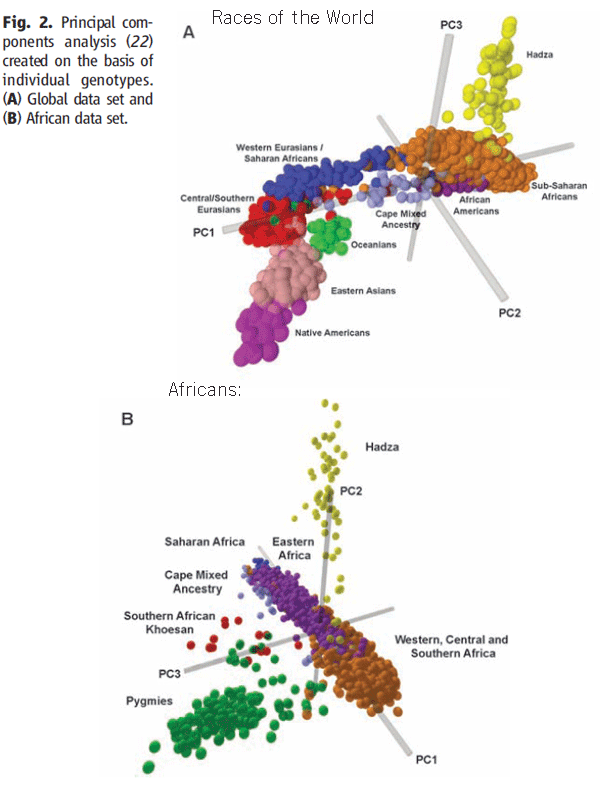
The Book of Jubilees provides information on the early settlement – after the flood cataclysm – of Southern Europe, West Asia, the Middle East and North Africa.

Book of Jubilees chapter eight:

10 ‘And it came to pass… that they divided the earth into three parts, for Shem and Ham and Japheth, according to the inheritance of each…

11 And [Noah] called his sons, and they drew nigh to him, they and their children, and he divided the earth into the lots, which his three sons were to take in possession, and they reached forth their hands, and took the writing out of the bosom of Noah, their father…

25 And for Japheth came forth the third portion beyond the river Tina to the north of the outflow of its waters, and it extends north-easterly to the whole region of Gog, and to all the country east thereof. 26 And it extends northerly to the north, and it extends to the mountains of Qelt towards the north, and towards the sea of Ma’uk, and it goes forth to the east of Gadir [Iberia] as far as the region of the waters of the sea. 

27 And it extends until it approaches the west of Fara and it returns towards ‘Aferag, and it extends easterly to the waters of the sea of Me’at. 28 And it extends to the region of the river Tina in a north-easterly direction until it approaches the boundary of its waters towards the mountain Rafa, and it turns round towards the north.

29 This is the land which came forth for Japheth and his sons as the portion of his inheritance which he should possess for himself and his sons, for their generations forever [as in a very long time]; five great islands* [in the Mediterranean Sea], and a great land in the north [Central Asia].  

30 But it is cold, and the land of Ham is hot [North Africa and the land of Canaan], and the land of Shem [Mesopotamia and Arabia] is neither hot nor cold, but it is of blended cold and heat.’

The sons of Japheth and particularly those descended from his son Javan – Elishah, Tarshish, Kittim and Dodan – migrated to the Mediterranean Sea and dwelt on the major islands* of Cyprus, Crete (and Rhodes), Sicily, Sardinia and Corsica. Today, these same peoples dwell on the great island chains comprising Japan; the Philippines; Malaysia (and Singapore); Indonesia; and Polynesia – including related peoples in Micronesia, Melanesia, Taiwan, Australia and New Zealand.

Of course, Japheth had the same DNA as his brothers and resembled them. Even so, the Y-DNA Haplogroup mutations indicative of Japheth’s descendants found their source in their paternal ancestor Japheth, inherited from his father Noah.

It was his wife ‘Adataneses, who carried the distinctive mitochondrial DNA possessed by the Asiatic peoples today – refer Chapter XXII Alpha & Omega; and article: Y-DNA Adam & mtDNA Eve: The Genesis & Evolution of Homo sapiens.

In the antediluvian age there were three principle bloodlines as discussed in Chapter I Noah Antecessor Nulla. One descending from Cain (Genesis 4:1); another from Abel’s ‘replacement’, Seth (Genesis 4:25; 5:3); and the third being the people who came into existence in what the Bible calls the Sixth Day, or rather the sixth epoch of creation – Genesis 1:26-31. For it was not a literal day – Chapter XXII Alpha & Omega.

Biblically and historically, the people of Day Six dwelt on the Earth before Adam and Eve (Genesis 2:7), who were created on Day Eight if you will; and it was with these inhabitants east of Eden where Cain settled, built a city and ruled over them – Genesis 4:16-17.

Scientifically, the people of Day Six are closely related to the modern human, Homo sapiens of the eighth epoch and they equate to Neanderthal man – refer articles: Homo neanderthalensis I, II, II & IV.

It was from this third – and chronologically first – bloodline whom Japheth’s wife ‘Adataneses (below) descended.

This explains why on one hand, many people possess genetic material of Neanderthal origin in small percentages. More importantly on the other hand, it reveals why it is people in East Asia who can exhibit high percentages of Neanderthal DNA – Articles: Homo neanderthalensis I, II, III & IV.

The principal mtDNA (mitochondria) maternal Haplogroups associated with Japheth’s descendants include:

Haplogroup A – found in Indigenous Americans (1) as well as Asians.

Haplogroup B – one of the primary East Asian lineages as well as one of five mitochondrial lineages identified among Indigenous Americans (2).

Haplogroup C – a descendant of super Haplogroup M, one of the two major lineages – with Haplogroup N – that derive from L3 – refer Chapter I Noah Antecessor Nulla. It is currently found in northeast Asia and it is also considered one of the founding lineages of the Indigenous American (3) population.

Haplogroup D – the principal East Asian lineage. Notable subgroups include D4, which is prevalent amongst Central Asian peoples; and D1, which is one of the five Haplogroups represented among Indigenous Americans (4).

Haplogroup E – located throughout the isles in Southeast Asia.

Haplogroup F – one of the primary mitochondrial lineages in East and Southeast Asia. Its greatest frequency and sequence diversity is found among coastal Asian populations.

Haplogroup K – certain lineages are found in Central Asia.

Haplogroup L3 – a daughter of mitochondrial Eve. Asian and European Haplogroups trace their ancestry to L3.

Haplogroup M – members were among the first humans to apparently migrate east along the southern coasts of Asia.

Haplogroup R – ancient and complex; today its members can be found all over the world, including Central and South Asia.

Haplogroup X – distributed worldwide with a subgroup X2, one of the founding lineages of Indigenous Americans (5).

Haplogroup Y – associated with Siberian populations. Also found in the Japanese, Koreans and certain Southeast Asian populations.

Haplogroup Z – located throughout Asia, with higher levels exhibited in Tibet and Siberia and lower levels in Japan. A subgroup Z1, is also found among the Finnish Saami, who have both European and Asian ancestry.
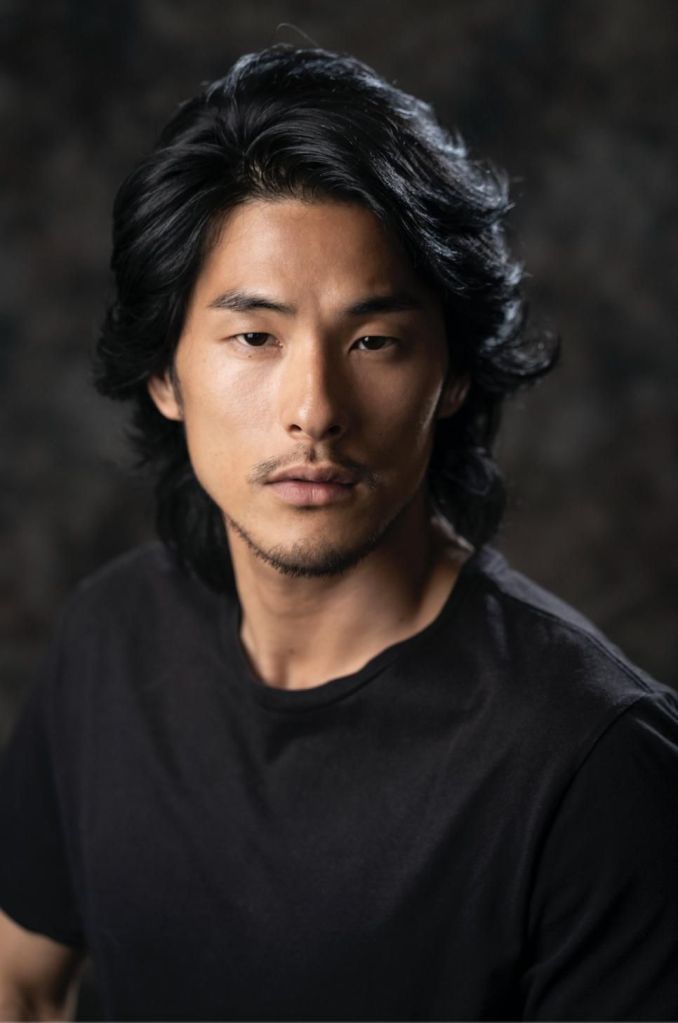
The global distribution of Y-DNA (Y sex chromosome) paternal Haplogroups associated with Japheth’s descendants are summarised in Retina, Fifth Edition, 2013:

‘Clade C [is] found in Central Asia, South Asia, and East Asia. C1 [C1a1] lineage is found exclusively in Japan. C2 [C1b3a] is found in New Guinea, Melanesia, and Polynesia. C3 lineage is … [found] in Southeast [and] Central Asia… [as well as] northern Asia, the Americas and Central Europe. C4 [C1b3b] appears to be restricted among aboriginal Australians and is dominant in that population. C5 [C1b1a1] has a significant presence in India.

Haplogroup D appears in Central Asia [D1a1b], Southeast Asia [D1], and in Japan, showing the highest frequencies in Tibet [D1a1a] and Japan [D1a2a] (50% and 35%, respectively).

Haplogroup K is the ancestral haplogroup of major groups L to R, but, in addition, also includes the minor K and K1 to K5 [K2] haplogroups, which are present at low frequencies in dispersed geographic regions all around the world, [including South East Asia].

The Y-DNA haplogroup N has a wide distribution, primarily in northern Eurasia…

Lineage O [M175] represents nearly 60% of chromosomes in East Asia. The O3 [O2a1 – M122] haplogroup has the highest frequency, being absent outside East Asia. The O1 [O1a – M119] and O2 [O1b – M268] haplogroups appear in Malaysia, Vietnam, Indonesia, South China, Japan, and Korea.

Haplogroup Q is found in Asia, the Americas, Europe, and the Middle East… its sub-clades, [groups Q1a3a1, Q1a3a2 and Q1a3a3 are] exclusively associated with the Native Americans.’

It is interesting to note concerning mtDNA Haplogroups, that some of the ones highly indicative of Japheth’s descendants are considerably older in the phylogenetic tree and not shared with Ham or Shem’s descendants, such as C, Z, D and E. Similarly, more recent mutations – though still not the newest – are also unique to his sons, such as Haplogroups A, Y and B. 

With regard to Y-DNA Haplogroups, early original Haplogroups unique to Japheth’s descendants prior to admixture, include C and to a large degree, D. More recent Haplogroups, include K, N and Q and between these is the Haplogroup most commonly associated with Japheth’s male descendants, Haplogroup O-M175.

While some may consider it just a synchronism of happenstance that the name Jap-heth and the nation Jap-an share the same first syllable; for others, it is a remarkable connection that transcends time and language beyond a mere coincidence.

Chapter Three concentrates on Tiras, the seventh and youngest son of Japheth.

And the man said to me, “Son of man, look with your eyes, and hear with your ears, and set your heart upon all that I shall show you, for you were brought here in order that I might show it to you…”

Ezekiel 40:4 English Standard Version

“No great discovery was ever made without a bold guess.”

“If I have ever made any valuable discoveries, it has been due more to patient attention, than to any other talent.” 

Isaac Newton 1643 – 1727

© Orion Gold 2020 – All rights reserved. Permission to copy, use or distribute, if acknowledgement of the original authorship is attributed to orion-gold.com