Is America Babylon?

This is a pertinent question, as support for this teaching has gained increased acceptance amongst open minded Christians. 

Feed the Hunger: ‘The prophetic community is somewhat divided over whether or not America is the “Babylon the Great” mentioned in Revelation 17-18.’

So that interpretations vary with some commentators identifying Babylon as ancient Rome and thus by extension, the Universal Church for example; while others teach Babylon represents a modern power like the United States.

Regardless, Babylon the Great in the Book of Revelation is depicted as a powerful and dominating entity responsible for idolatry, moral corruption and luring nations into rebellion and sin against God.

What is key, is what does the Bible actually state rather than relying on the perceptions of biblical scholars and descriptions by teachers; who may have arrived – through over zealous enthusiasm for end time prophecy fulfilment – at perhaps an incorrect conclusion.

It is as crucial to understand whether Babylon is at once a city, a state, a country, a group of nations or is a system. If the latter, is it political and or religious? 

Similarly, is the (first) Beast of Revelation, a man or a spirit entity (an antichrist); or is it a system? Likewise, who or what is the second Beast; a national state or an individual called the false prophet? And, is one of these beasts, Babylon? 

The books of Revelation and Daniel are the focus of this discussion and therein will lie the answer. 

While constant readers will be aware of this writer’s findings and conclusions in previous articles, a fresh investigation is perhaps warranted in bringing further insight (of which can be confirmed has been the result). 

A summary of present understanding – new readers please lend patience and withhold judgement until the end – is that the first Beast is the angel of the Abyss known as Abaddon in Hebrew and Apollyon in Greek – meaning (place of) destruction (or doom) and the destroyer respectively. This being was originally Azazel, one of the chief Watchers who descended to the earthly plane to corrupt the Eternal’s creation. The Beast is subservient to the Dragon (the Adversary) and when loosed from the bottomless pit (an endless void) as the Antichrist, seeks to enslave and ultimately destroy humankind – Chapter XXII Alpha & Omega.

Which thematically leads to the second Beast, who sets a constraining mark on humanity to worship the first Beast. This second Beast enforces a belief system that is at once contrary to the true religion espoused by Christ – refer article: The Seven Churches – A Message for the Church of God in the Latter Days – and a continuation of the Babylonian Mystery Religion promulgated by the Nephilim tyrant Nimrod. The second Beast is a supernatural entity and scripture indicates its identity as a re-incarnation of Nimrod himself – Chapter XXI The Incredible Identity, Origin & Destiny of Nimrod

The question surrounding Babylon is understood by many to represent a continuation of this self same mystery religion. Where this writer differs from other commentators is that they teach ‘Babylon’ is centred in Rome, the Vatican and wholly within Catholicism; while it is this writer’s understanding that ‘Babylon’ includes all of Rome’s apostate (protestant) daughters. For Christianity is a false religion inspired by and based upon the theology of Paul and not the Way as preached by the apostles who followed the teachings of Christ – refer article: The Pauline Paradox.

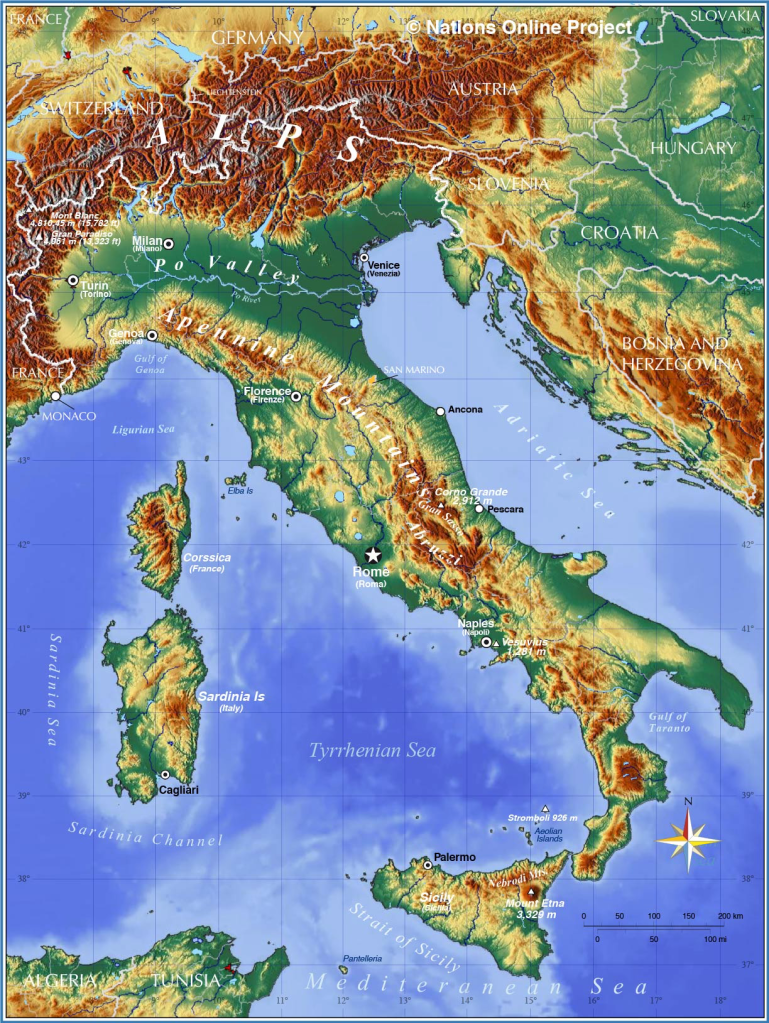
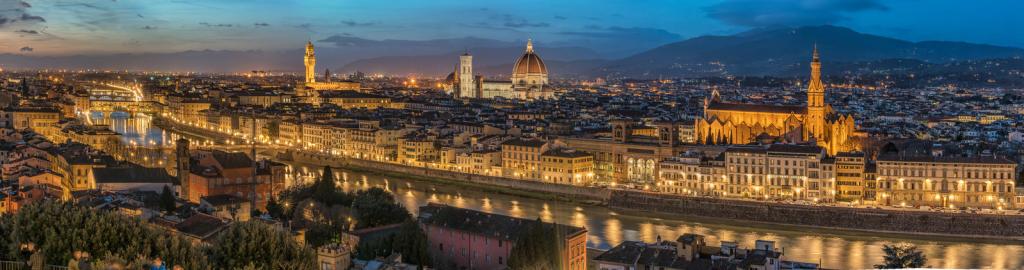
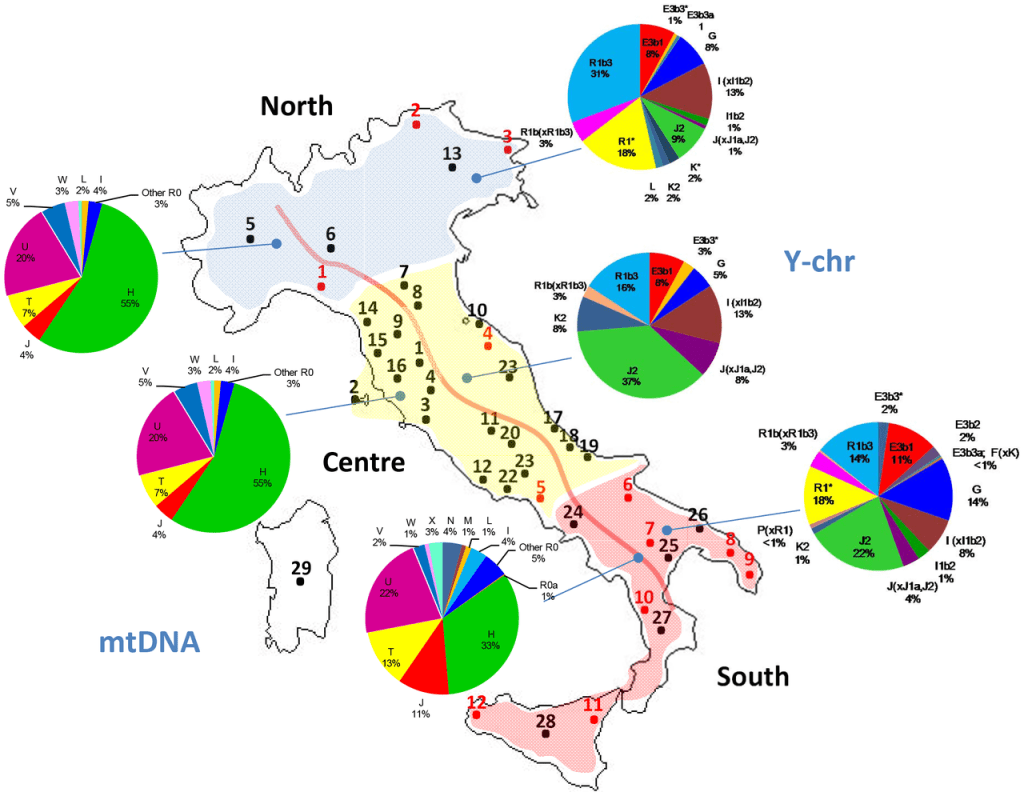
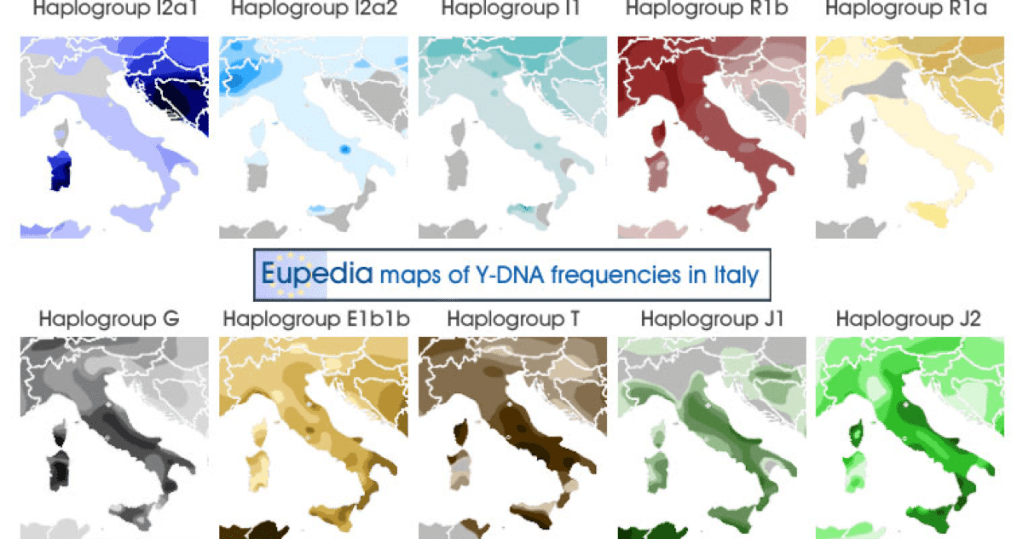
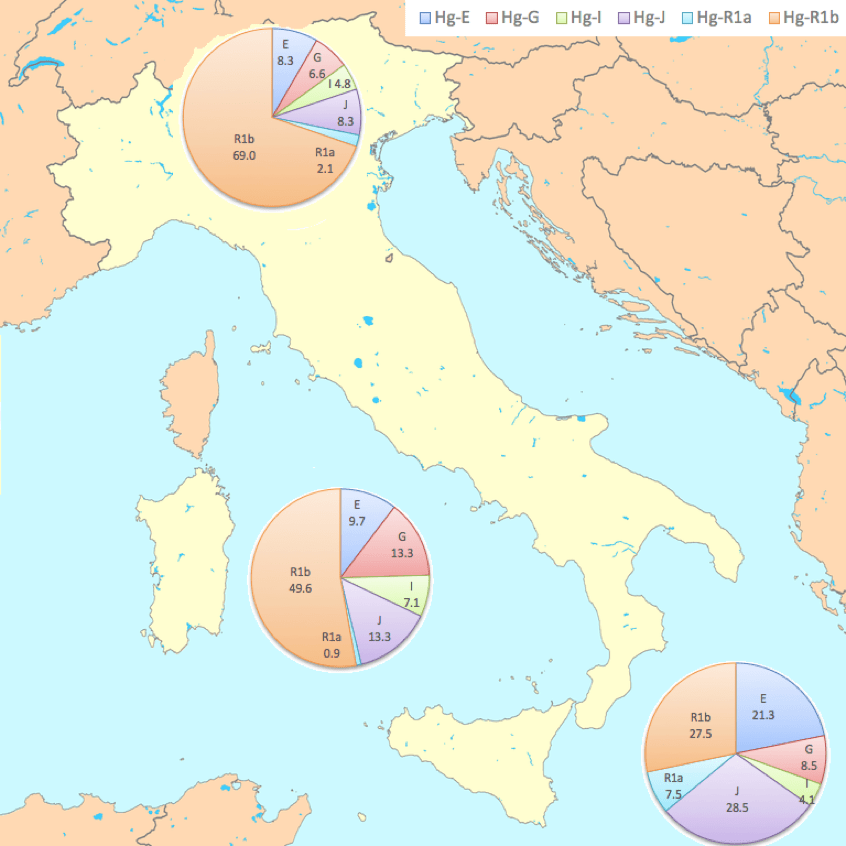
The fact that northern (and central) Italy is populated principally by people of Chaldean descent is no coincidence, for they are the biological inheritors of the Chaldean lineage descending from Abraham’s elder brother Nahor – refer Chapter XXV Italy: Nahor & the Chaldeans; and Chapter XXIII Aram & Tyre: Spain, Portugal & Brazil. Thus the same mystery religion of the Chaldean Babylonians is realised in Vatican City and the Universal Church – this is true.

Where does this leave the United States of America? Some propound it is the second beast while recognising Rome, the Vatican and the Papacy as the first beast. For others, Babylon is being fulfilled entirely by America. An important part of their reasoning is how could a hyper power of such magnitude be omitted from the scriptures. And they are right, so they seek to identify America in the Book of Revelation. Yet ironically, the United States is mentioned in Revelation – as it is throughout the Old Testament. Unless one understands the true identity of America, interpretation of prophetic scripture is easily skewed into misinterpretation.

This dichotomy is widespread as Tim LaHaye (American Baptist minister) acknowledges:

“One of the hardest things for American prophecy students to accept is that the United States is not clearly mentioned in Bible prophecy, yet our nation is the only superpower in the world today.”

Where Are The Chinese People In God’s Word?, Tom Hobson, 2017: 

‘God’s word may speak more specifically about China than it does about America [no, not true]. The closest such verse I can find is Ezekiel 30:5, which mentions the “Land of the Covenant,” which sounds like the modern Israeli name in Hebrew for the “United States” (Artzoth-ha-Berith, “The Lands of the Covenant”) [yes, true].’

Constant readers will be cognisant of America’s real identity as the descendants of Jacob’s son Joseph, through his sons Ephraim and the half tribe of West Manasseh. For the tribe of Manasseh split into two, with the half tribe of East Manasseh becoming the nation of Canada – Chapter XXXIII Manasseh & Ephraim – the Birthright Tribes. 
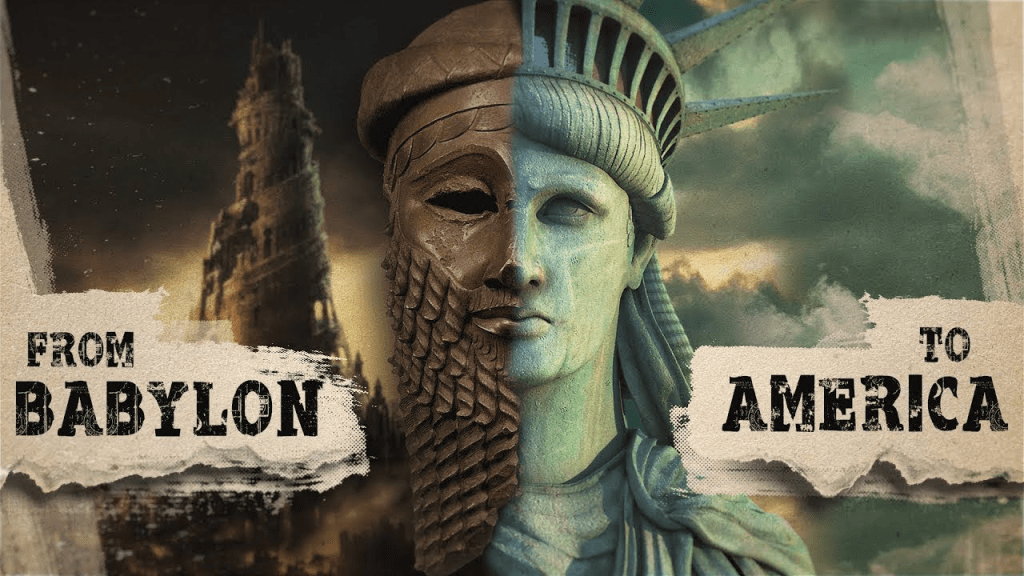
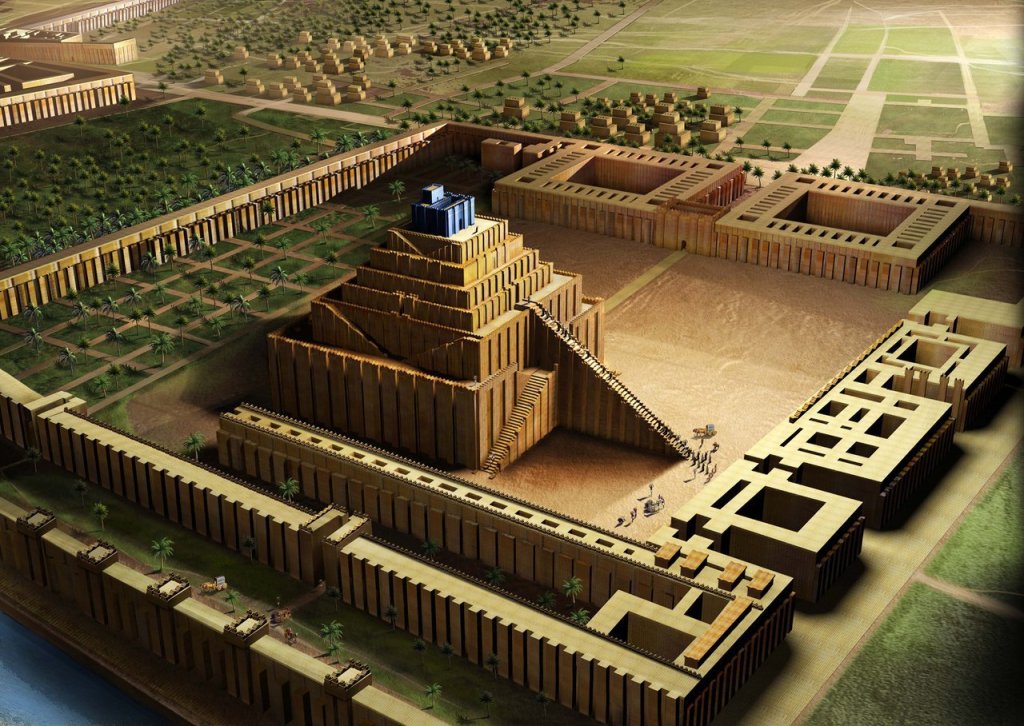
Part of our investigation will necessitate understanding what Babylon meant historically, as well as its derivation from Babel and its infamous tower campaigned and built by none other than Nimrod – refer article: The Pyramid Perplexity.  

Prior to exploring Babylon and specifically the Book of Revelation; it is to its companion book in the Old Testament we turn, the prophetic Book of Daniel; to discover what we can learn in assisting to comprehend the mysterious revelation given to the Apostle John directly by Jesus Christ.  

Ancient Babylon

Daniel was of royal birth and descended from the tribe of Judah and as a young man was selected with three others to be retained in the court of the Chaldean King Nebuchadnezzar II (King of Babylon) – Daniel 1:3. Daniel was blessed by the Eternal and like Joseph was a seer of dreams and visions (Article: Seventh Son of a Seventh Son) – Daniel 1:17, Genesis 37:5-11; 40: 5-23; 41:15-32 (English Standard Version throughout unless stated otherwise).

In the second chapter of Daniel we learn that Nebuchadnezzar was troubled and sleep deprived from a vivid reoccurring dream. He challenged his wise men (magicians and sorcerers) to not just interpret the dream but to reveal his dream to him. They were aghast and declared no one in the world could do what he asked. 

Daniel learned of the king’s challenge and requested an audience with King Nebuchadnezzar. He also beseeched mercy from the Eternal “concerning this mystery, so that Daniel and his companions might not be destroyed with the rest of the wise men of Babylon. Then the mystery was revealed to Daniel in a vision of the night.”

Nebuchadnezzar’s dream was of a great statue and Daniel reveals this as well as three pertinent facts. First, the head of gold symbolised Nebuchadnezzar himself and the Chaldean Empire; second, there would be identifiable kingdoms following his own; and three, the Kingdom of God would ultimately supplant the kingdoms of men with Christ’s return – Daniel 2:44. 

The following understanding on the successive kingdoms is universally agreed, though their modern identities and the final interpretation on the two yet individual legs is this writer’s.  

Four Kings & One Queen

‘The Statue in Nebuchadnezzar’s dream has been discussed previously, with the Medes of Madai… [ancestors of] the Turko-Mongols of Central Asia and the Persians of Elam… [ancestors of the Turks], being the chest and arms of silver.

The head of gold is synonymous with the Babylonian Chaldean Empire from the descendants of Abraham’s brother Nahor… [and the ancestors of the Italians] – Chapter XXV Italy: Nahor & the Chaldeans.’

The fall of Babylon in 539 BCE at the hands of Cyrus the Great, king of the Medes and Persians 

‘The torso and thighs of bronze equate to the Greco-Macedonian Empire, the descendants of Abraham’s nephew Lot (Moab and Ammon)… [and ancestors of the French] – Chapter XXVI The French & Swiss: Moab, Ammon & Haran

Each descending metal is less valuable, though more robust than the one previous to it.’

‘In Daniel 2:33, 40 NET, it says: 

“Its legs were of iron… Then there will be a fourth kingdom, one strong like iron. Just like iron breaks in pieces and shatters everything, and as iron breaks in pieces all these metals, so it will break in pieces and crush the others.”

‘The legs of iron, are much stronger than the bronze of the Greco-Macedonians, yet not as culturally sophisticated or resplendent. It would be unusually conspicuous if the Assyrians were missing from the statue, as other major European powers are included as we have investigated. 

The two legs represent the division of the Roman Empire. One leg of iron is the Western Roman Empire centred in Rome and represents the descendants of Ishmael… [the ancestor of the Germans] Chapter XXVIII The True Identity & Origin of Germans & Austrians – Ishmael & Hagar.

The other leg is the Eastern Roman Empire of Byzantium and this leg represents the descendants of Asshur… [the ancestor of the Russians] – Chapter XX Will the Real Assyria Stand Up: Asshur & Russia.’

It is worth noting two important points in the a. anthropomorphic symbolism for worldly kingdoms in Daniel chapter two and whether this is replicated in Revelation or not and b. how the legs and hence the (future) feet represent gentile kingdoms and not those of Israel (the sons of Jacob not to be confused with the state of Israel – Chapter XXIX Esau: The Thirteenth Tribe). 

In other words, not the United States or the United Kingdom as many propose – observe diagram of statue above for example. While these nations may have been successors to Rome and Byzantium from an imperial (global power and influence) perspective; they have not necessarily been the inheritors of the Babylonian Mystery Religion. This is an important aspect regarding whether America is included in the Revelation of Christ to John or not. Whereas German states were the nucleus of the Holy Roman Empire for a thousand years (from 800 to 1806).

It is also pivotal in appreciating which powers will be the focus of attention in the latter days. For they are Russia (one foot and five toes) with a resurrected ‘Soviet’ empire; and a German (the other foot and five toes) led ‘United States of Europe’ – refer article: Four Kings & One Queen.

In chapter three, King Nebuchadnezzar in his arrogance erects an ‘image’ of gold, a statue some ninety feet high and presumably of himself (or the statue of his dream) – Daniel 3:1. 

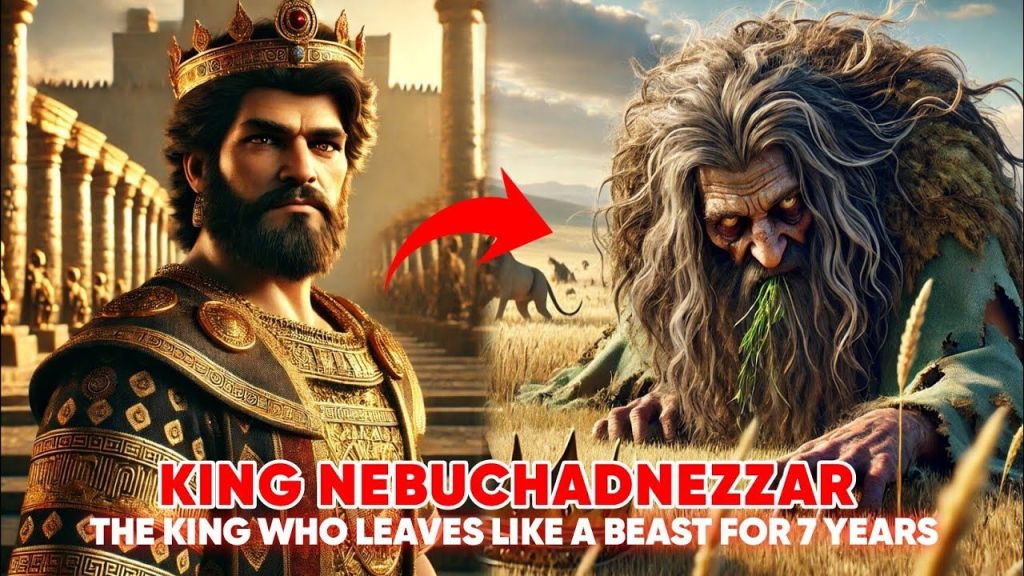
Either way, the king required everyone to bow down and worship it or die in a fiery furnace – Daniel 3:5-6. It is no surprise then, that in chapter four, the eternal strikes Nebuchadnezzar with a mental breakdown (psychosis), whereby he becomes like a ‘beast’ living with animals and eating grass for seven years – Daniel 4:32-33. The result was a miraculous turnaround when his madness was removed and Nebuchadnezzar was converted, becoming a servant of the Eternal – Daniel 4:34-35, 37.

The next key dream vision (prophecy) is in Daniel chapter seven. 

2 ‘Daniel declared, “I saw in my vision by night, and behold, the four winds of heaven were stirring up the great sea*. 3 And four great beasts [a living animal] came up out of the sea, different from one another. 

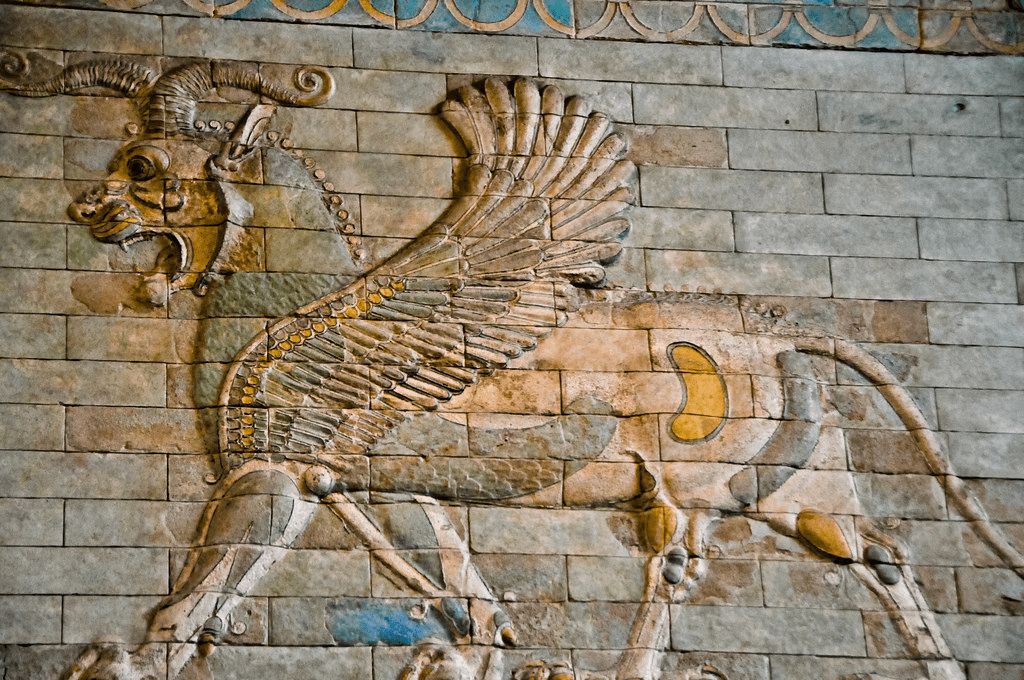
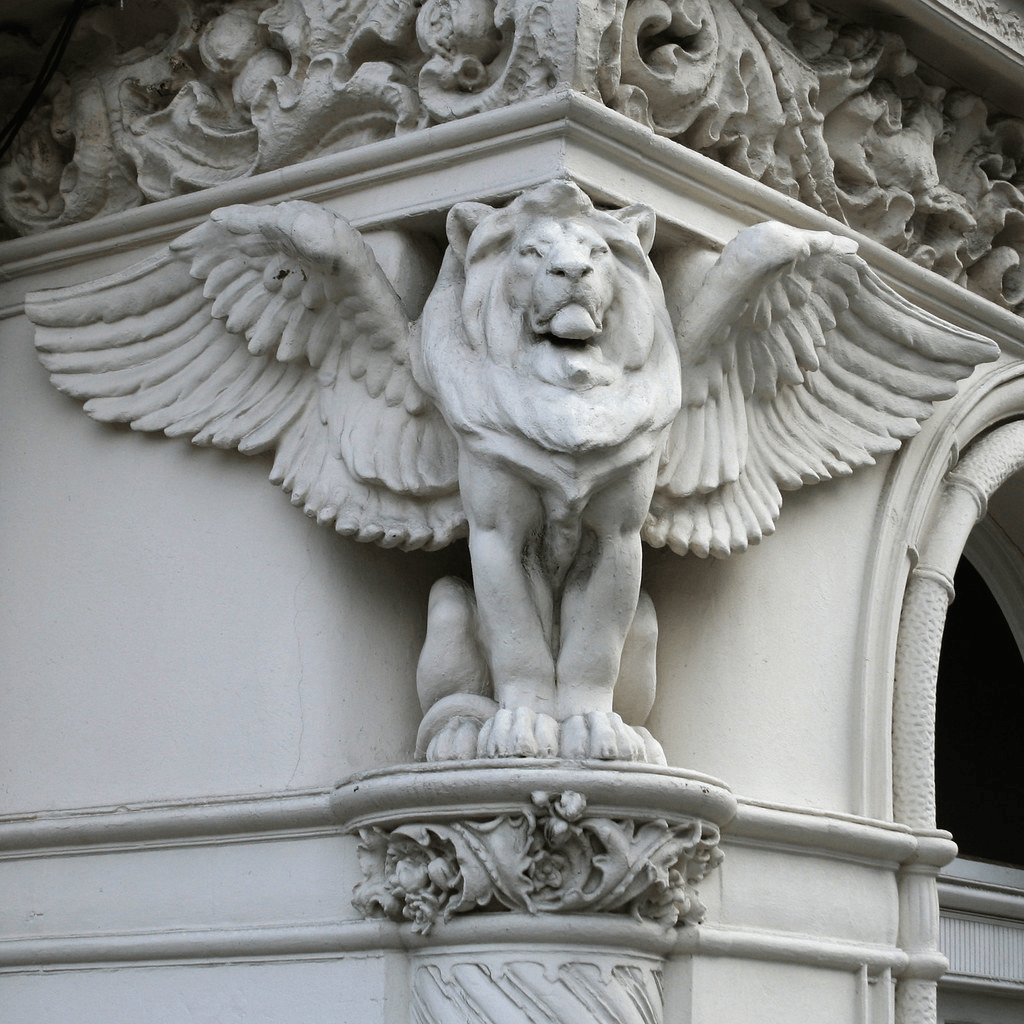
4 The first was like a lion and had eagles’ wings. Then as I looked its wings were plucked off, and it was lifted up from the ground and made to stand on two feet like a man, and the mind of a man was given to it.’

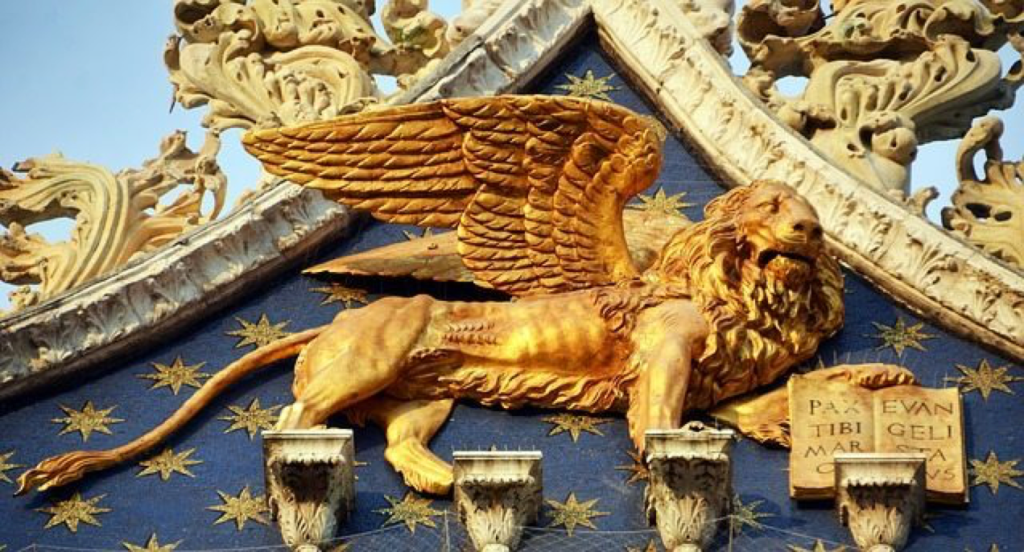
The lion^ with eagles** wings (like the head of gold) represents the Chaldean’s regality and ostensibly (literally and figuratively) not the United Kingdom^ or America.** Amazingly, the symbol of a lion with eagles wings is prevalent throughout modern day Italy – refer Chapter XXV Italy: Nahor & the Chaldeans. 

5 ‘And behold, another beast, a second one, like a bear. It was raised up on one side. It had three ribs in its mouth between its teeth; and it was told, ‘Arise, devour much flesh.’ 

The bear in this instance (seemingly not Russia) symbolises the raw strength of the Medo-Persian Empire.

Bear and Eagle: Tom Lovorn, Th.D: ‘The bear was reared up on one side to indicate that Persia would be the stronger nation, eventually absorbing the Medes into one empire.’

The three ribs signify the defeated kingdoms in Persia’s rise to world power: Babylon, Egypt and either Lydia (probably) or Assyria (possibly). Persia ‘devoured much flesh’, in that its geographic size was immense.

The Achaemenid (Achaemenian) Empire was the largest that the ancient world had seen. The kingdom covered a total area of approximately 2.1 million square miles. Only later eclipsed by the Mongol Empire and following that, the British Empire.

6 ‘After this I looked, and behold, another, like a leopard, with four wings of a bird on its back. And the beast had four heads, and dominion was given to it.’

The four wings are deemed to represent the speed with which the Greco-Macedonian empire travelled and fought. The four heads were fulfilled by the division of the empire following Alexander’s death among four of his generals – Chapter XXVI The French & Swiss: Moab, Ammon & Haran. 

7 ‘After this I saw in the night visions, and behold, a fourth beast, terrifying and dreadful and exceedingly strong. It had great iron teeth [Job 41:14]; it devoured and broke in pieces and stamped what was left with its feet [Job 41:10, 25]. It was different from all the beasts that were before it, and it had ten horns. 8 I considered the horns, and behold, there came up among them another horn, a little one, before which three of the first horns were plucked up by the roots. And behold, in this horn were eyes like the eyes of a man, and a mouth speaking great things.’ 

Aurel Gheorghe describes the common yet problematic explanation for the little horn and the three horns plucked by the roots. 

“There is little agreement among Bible scholars who the little horn is or who the three horns of Daniel 7 are. (In the Bible horns represent powers or kings). 

However, the explanation that makes the most sense (in my opinion) is that the little horn is papal power while the three little horns are the Heruli (493 AD), the Vandals, (534 AD), and, the Ostrogoths (538 AD). 

Vandals, Ostrogoths and Heruli were tribes [who] opposed the rise of the papal power and were completely destroyed by the Roman armies. In 538 AD after the defeat of the Ostrogoths, Justinian decreed that the bishop of Rome is the head of all the churches.”

The horns and particularly the little horn is given human attributes of a mouth and eyes. Thus the horns appear to be rulers emanating from the fourth beast. We will discover in Revelation a theme of seven heads; whereby a mysterious eighth head is included from nowhere. This would seem to correlate with the ten horns losing three to make way for the transplanting of an eighth horn.

17 ‘These four great beasts are four kings who shall arise out of the earth.* 18 But the saints of the Most High shall receive the kingdom and possess the kingdom forever, forever and ever.’

This verse says the beasts are kings (whether human or otherwise) and not just kingdoms or nations. As the Greek word for king is different for that for kingdom. 

19 “Then I desired to know the truth about the fourth beast, which was different from all the rest, exceedingly terrifying, with its teeth of iron (like Rome) and claws of bronze (like Greece), and which devoured and broke in pieces and stamped what was left with its feet, 20 and about the ten horns that were on its head, and the other horn that came up and before which three of them fell, the horn that had eyes and a mouth that spoke great things, and that seemed greater than its companions.’

The fourth beast is not recognisable amongst the known animals of the Earth, though it may well be a frightening creature such as a dragon (dinosaur, xenomorph). 

21 ‘As I looked, this horn made war with the saints and prevailed over them, 22 until the Ancient of Days came, and judgment was given for the saints of the Most High, and the time came when the saints possessed the kingdom.’

The little horn is clearly defined as a future ruler, with biblical scholars jumping the gun identifying it as the papacy. 

23 “Thus he said: ‘As for the fourth beast, there shall be a fourth kingdom on earth, which shall be different from all the kingdoms [continuation or rather an evolution of the (Holy) Roman Empire], and it shall devour the whole earth, and trample it down, and break it to pieces.’ 

The beasts are allegedly kings yet verse twenty-three says the fourth beast is actually a kingdom. It appears to lead into the final kingdom before Christ’s return when viewed alongside John’s details in Revelation. 

Online Encyclopaedia: ‘The Holy Roman Empire fell on August 6, 1806, when the last emperor, Francis II [a Hapsburg], abdicated in response to Napoleon’s rise to power and the formation of the Confederation of the Rhine, which included many German states that had previously been part of the empire. This dissolution marked the end of a political entity that had existed for over a thousand years, weakened by wars and internal divisions.’ 

Thus the dissolving of the Holy Roman Empire may only be an interruption and as Adolf Hitler wished to proclaim a thousand year Reich of German hegemony, a future ruler will in some form, resurrect the Holy Roman Empire and its dominion will pave the way for the little horn, enslavement and destruction. The Book of Revelation provides the important details on who this little horn is.

24 ‘As for the ten horns, out of this kingdom ten kings shall arise, and another shall arise after them; he shall be different from the former ones, and shall put down three kings’ – recall the three ribs in the mouth of the bear.

In this verse, the horns are kings which then supports the identification of the fourth beast on which the ten horns are attached is not a king but a kingdom (or system). 

25 ‘He shall speak words against the Most High, and shall wear out the saints of the Most High, and shall think to change the times and the law; and they shall be given into his hand for a time, times, and half a time’ – refer article: The Calendar Conspiracy.

The preceding verse lends weight to a (supernatural) future fulfilment for the eleventh ‘little’ horn. Many commentators regarding the Gregorian Calendar teach the first half of the verse has been fulfilled, though it is tied in to the promised three and one half year tribulation in the world as described by John in Revelation and foretold by Christ – Matthew 24:21. 

26 ‘But the court shall sit in judgment, and his dominion shall be taken away, to be consumed and destroyed to the end. 27 And the kingdom [of God] and the dominion and the greatness of the kingdoms under the whole heaven shall be given to the people of the saints of the Most High; his kingdom [Matthew 6:33] shall be an everlasting kingdom, and all dominions shall serve and obey him.’

These beasts are clearly animals which represent kingdoms (or empires). The fourth beast is marked out as different, just as a dragon is in comparison with a lion, a bear or a leopard. In the same way its horns are human rulers, the eleventh little horn is seemingly supernatural.

Chapter eight of Daniel is enlightening as it supports and adds to our conclusions thus far. Daniel sensationally predicts the overthrow of the Medo-Persian Empire by Alexander the Great, the swiftness of his army’s tactical manoeuvres and the breakup of his empire amongst four generals upon his death. 

20 ‘As for the ram that you saw with the two horns, these are the kings of Media and Persia. 

5 As I was considering, behold, a male goat came from the west across the face of the whole earth, without touching the ground. And the goat had a conspicuous horn between his eyes.’

21 ‘And the goat is the king of Greece. And the great horn between his eyes is the first king. 22 As for the horn that was broken, in place of which four others arose, four kingdoms shall arise from his nation, but not with his power.’

Chapter eight discusses the mysterious ‘little’ horn. 

9 ‘Out of one of them came a little horn, which grew exceedingly great toward the south, toward the east, and toward the glorious land* [Judea, state of Israel]. 10 It grew great, even to the host of heaven. And some of the host and some of the stars [angels] it threw down to the ground and trampled on them. 11 It became great, even as great as the Prince of the host [Christ]. And the regular burnt offering was taken away from him, and the place of his sanctuary was overthrown’ – Abomination of Desolation (Matthew 24:15). 12 ‘And a host will be given over to it [Revelation 9: 3-11*] together with the regular burnt offering because of transgression, and it will throw truth to the ground, and it will act and prosper.’

This passage confirms a number of salient points. 

The little horn is a spirit entity and challenges the Son of God for supremacy of the Earth. This drama was prefigured and enacted in the Holy day observance of Atonement by the Israelites. Leviticus chapter sixteen provides the name of this entity as Azazel. None other than the leader* of the Abyss and future Antichrist. 

He was represented by a goat no less as was Christ. The goat foreshadowing Christ was sacrificed as a sin offering, while the second goat was led into the desert wilderness, symbolic of the spiritual void in which Azazel dwells. This goat was ultimately led over a cliff (representing the bottomless pit) to fall to its death. As the defeat of Azazel’s challenge to Christ’s authority to rule the World will ultimately fail and lead to his death (Revelation 19:20) – Chapter XXI The Incredible Identity, Origin & Destiny of Nimrod. 

Azazel will rule from Jerusalem and this is indicated in Revelation and he will commit an act of desecration regarding Christ’s sacrifice and status as the true Son of God. 

An interesting side note is that the little horn in verse nine is described as issuing from one of the four horns (leaders) of the Greco-Macedonian Empire. The ancestors of this empire are the sons of Lot, Moab and Ammon whom today comprise the French nation. 

Curiously in the eleventh chapter of Daniel we learn that the future King of the North when he sweeps into the ‘glorious land’*, ‘tens of thousands’ will die, but two peoples are spared from his wrath: the Edomites (Israel) and Moab and Ammon (France). While the state of Israel is understandable for the antichrist chooses to reign from there, the protecting of France is perplexing in light of the Russian connection with the King of the North and the German connection with ‘Rome’ and the Chaldeans of the Vatican – Article: Four Kings & One Queen.

23 ‘And at the latter end of their kingdom, when the transgressors have reached their limit, a king of bold face, one who understands riddles, shall arise. 24 His power shall be great – but not by his own power; and he shall cause fearful destruction and shall succeed in what he does, and destroy mighty men and the people who are the saints’ – refer Chapter XXXIV Dan: The Invisible Tribe

25 ‘By his cunning he shall make deceit prosper under his hand, and in his own mind he shall become great. Without warning he shall destroy many. And he shall even rise up against the Prince of princes [Christ], and he shall be broken – but by no human hand.’  

The Book of Revelation reveals this being receives its power from the Dragon, the foremost adversary of the Eternal (Revelation 13:2, 4) – Article: Asherah.

While commentators almost unanimously subscribe to much of the chapter referring to the clashes which would take place in mainly the Levant and Egypt amongst the four factions of the divided Greco-Macedonian Empire, it is plausible this is not the case and that Daniel chapter eleven predominantly predicts the conflict between a future King of the South and the King of the North. 

Four Kings & One Queen

“Daniel 11: 15, 18, 25

English Standard Version

‘Then the king of the north shall come… Afterward he shall turn his face to the coastlands and shall capture many of them… [in verses twenty to twenty-four we are introduced to a new and final human leader (king) of the North] And he shall stir up his power and his heart against the king of the south with a great army. And the king of the south shall wage war with an exceedingly great and mighty army, but he shall not stand, for plots shall be devised against him…’

The King of the North finds reason to attack the coastlands or isles which in the Bible are always associated with the far East. In this case, Southeast Asia – [Chapter V Gomer: Continental South East Asia]; Chapter VII Javan: Archipelago South East Asia & Polynesia; Chapter VIII Kittim & Indonesia; and Chapter IX Tarshish & Japan

Isaiah 66:19, ESV: ‘… to Tarshish , Pul, and Lud, who draw the bow, to Tubal and Javan, to the coastlands far away, that have not heard my fame or seen my glory…’ Pul, is not a mis-translation of Put or Phut. It is a name of a king; a King of Asshur and a reference to Assyria. Russia then turns its attention to the King of the South and defeats them in their first encounter.”

Daniel 11:29-45

29 ‘At the time appointed he [a new king – the Antichrist] shall return and come into the south, but it shall not be this time as it was before. 30 For ships of Kittim [or from Kittim (Indonesia)] shall come against him, and he shall be afraid and withdraw, and shall turn back and be enraged and take action against the holy covenant. He shall turn back and pay attention to those who forsake the holy covenant. 31 Forces from him shall appear and profane the temple and fortress, and shall take away the regular burnt offering. And they shall set up the abomination that makes desolate’ – Matthew 24:15, 2 Thessalonians 2:3-6. 

“The interlinear says: ‘For ships Chittim shall come…’ It does not include ‘of’ or ‘from’ in the Hebrew, though it is considered the inference is from more than of, Kittim. Sometimes translated unhelpfully, as ships from the west. Some have then mistakenly translated Kittim as being Cyprus or Italy; where they once dwelled. The people today descended from Kittim live in the Indonesian archipelago – refer Chapter** VIII Kittim & Indonesia.”

We learned in a previous chapter** – in Numbers 24:24 – that ships from Kittim inflict a loss on Asshur and Eber – “an alliance of Russia and a German led European Union respectively.”

32 ‘He shall seduce with flattery those who violate the covenant, but the people who know their God shall stand firm and take action’ – 2 Thessalonians 2:7-12.

While the author of 2 Thessalonians (not Paul), probably the prophet Silas – once supporter of Paul, before changing loyalty to Peter (Article: The Pauline Paradox) – is writing about the false prophet, the second beast, his attributes are in tandem with the Antichrist; for the two of them are a committed double act – Chapter XXI The Incredible Identity, Origin & Destiny of Nimrod. 

33 ‘And the wise among the people shall make many understand, though for some days they shall stumble by sword and flame, by captivity and plunder. 34 When they stumble, they shall receive a little help. And many shall join themselves to them with flattery, 35 and some of the wise shall stumble, so that they may be refined, purified, and made white, until the time of the end, for it still awaits the appointed time’ – Daniel 12:1-4, 9-10. 

Christ’s message to the true church at the end of the age: 

’For you say, “I am rich, I have prospered, and I need nothing,” not realizing that you are wretched, pitiable, poor, blind, and naked. I counsel you to buy from me gold refined by fire, so that you may be rich, and white garments so that you may clothe yourself and the shame of your nakedness may not be seen, and salve to anoint your eyes, so that you may see’ – Revelation 3:17-18. 

“Behold, I am coming like a thief! Blessed is the one who stays awake, keeping his garments on, that he may not go about naked and be seen exposed!” – Revelation 16:15

Daniel: 36 ‘And the king shall do as he wills. He shall exalt himself and magnify himself above every god, and shall speak astonishing things against the God of gods. He shall prosper till the indignation is accomplished; for what is decreed shall be done. 37 He shall pay no attention to the gods of his fathers, or to the one beloved by women. He shall not pay attention to any other god, for he shall magnify himself above all. 38 He shall honor the god of fortresses [the god of war Baal-hadad, the storm god – aka Samael^] instead of these. A god whom his fathers did not know he shall honor with gold and silver, with precious stones and costly gifts. 39 He shall deal with the strongest fortresses with the help of a foreign god.^ Those who acknowledge him he shall load with honor. He shall make them rulers over many and shall divide the land for a price.’

40 ‘At the time of the end, the king of the south shall attack him, but the king of the north shall rush upon him like a whirlwind, with chariots and horsemen, and with many ships. And he shall come into countries and shall overflow and pass through. 41 He shall come into the glorious land. And tens of thousands shall fall, but these shall be delivered out of his hand: Edom [state of Israel] and Moab [France] and the main part of the Ammonites [Northern France, Paris]. 

42 He shall stretch out his hand against the countries, and the land of Egypt [Middle East] shall not escape. 43 He shall become ruler of the treasures of gold and of silver, and all the precious things of Egypt, and the Libyans [Pakistan] and the Cushites [India] shall follow in his train. 

44 But news from the east and the north [Chinese Confederacy] shall alarm him, and he shall go out with great fury to destroy and devote many to destruction’ – Revelation 16:12. 45 ‘And he shall pitch his palatial tents between the sea and the glorious holy mountain. Yet he shall come to his end, with none to help him’ – Article: Four Kings & One Queen.
What is open to question for some is the identity of the King of the North either prior to or culminating with the Antichrist’s reign – still, this writer remains fully persuaded in the belief it is Russia – yet what is strikingly clear as we progress, is the extreme nature of the violence and hateful tyranny which will be enforced on Earth’s inhabitants. Spearheaded by the False Prophet through the mark of the Beast and worship of the Antichrist.

Book of Revelation
We turn our attention now to the Book of Revelation, seeking to survey the key verses which will help in decoding and clarifying the identity of the Beast, the False Prophet and specifically Babylon the Great. It is noteworthy that there are three integral members comprising the ‘opposition team’ – the Dragon, the Antichrist and the False Prophet – who campaign tirelessly and relentlessly in rebellion against the ‘home team’, constituting the Eternal, His Son and the archangel Michael. 

Recall in Daniel chapter seven, the fourth beast (of four) is frightening and terrible – dragon like. This beast has ten horns, with the addition of a little horn representing the Antichrist. This eleventh horn has ‘eyes like the eyes of a man, and a mouth speaking great things.’ 

Support for the two beasts in Revelation chapter thirteen being spiritual entities in contrast with the Book of Daniel – which focusses on the beasts (or animals) as physical kingdoms – stems from a curious description of Christ. 

‘And between the throne and the four living creatures and among the elders I saw a Lamb standing, as though it had been slain, with seven horns and with seven eyes, which are the seven spirits of God sent out into all the earth’ – Revelation 5:6.  

Christ is the Lamb (Revelation 13:8; 21:22-23, 1 Peter 1:19-20) and the seven spirits work on his behalf – refer article: The Seven Churches – A Message for the Church of God in the Latter Days.* 

No one would expect a lamb to have seven horns, just the nubs beginning for two horns. This verse clearly shows that horn’s are typology for sentient beings; whether human rulers like Alexander the Great or a spirit being in the case of the Antichrist. The Son of God is revealed elsewhere as looking human with white hair and eyes aflame – burning so brightly they are blue* (Revelation 1:13-14, Daniel 7:9). 

Thus the symbolism of an innocent lamb is reflective of Christ’s role as the mediator between God the Father and humankind. Not a description of what he actually looks like. The prevalence of ram and goat (of Mendes, Baphomet) imagery in the occult worship of spirits is an interesting correlation and or coincidence. 
This is a key in recognising the nature of the two Beasts in chapter thirteen. 

Revelation clearly delineates between human rulers and spiritual rulers. In chapter six there are seven seals. The first four opened by the Lamb himself are known as the Four Horsemen of the Apocalypse – false religion, war, famine and pestilence. These are angelic beings and not literal human horsemen. 

‘Then the kings of the earth and the great ones and the generals and the rich and the powerful, and everyone, slave and free, hid themselves in the caves and among the rocks of the mountains, calling to the mountains and rocks, “Fall on us and hide us from the face of him who is seated on the throne, and from the wrath of the Lamb…” – Revelation 6:15-17. 

In Revelation chapter nine, angelic beings (Revelation 9:1, 13) sweep across the Earth delivering destruction, riding locusts which look like horses decked out for battle, each with a lions head and the sting of a scorpion. Their number is two hundred million – Revelation 9:16. Various commentators incorrectly associate this reference with the Kings of the East in Revelation 16:12 and the immense population of China – Chapter X China: Magog, Tubal & Meshech

Revelation chapter seven discusses the 144,000 sealed saints who will be protected at the time of the end in contrast with the majority of the world who will accept the mark of the Beast. An understanding of the identity of the so-called ‘lost tribes of Israel’ means the omission of the tribe of Dan and the listing of Manasseh and Joseph, instead of Ephraim can be explained –  Chapter XXXIV Dan: The Invisible Tribe. 

As touched upon, the tribe of Manasseh during the division of the promised land split into two. The half tribe of East Manasseh east of the River Jordan are the ancestors of principally British and Irish Canadians. Whereas the half tribe of West Manasseh remained with Ephraim on the west side of the Jordan river and include the ancestors of British and Irish immigrants (amongst others) in America – refer Chapter XXXIII Manasseh & Ephraim – the Birthright Tribes

In the Bible, the half tribe of East Manasseh is called: Manasseh, Gilead and Machir. Whereas the combined tribes of Ephraim and West Manasseh are called: Joseph, Ephraim or Samaria. 

Thus it is profoundly vital to appreciate that the United States of America is mentioned in a number of Old Testament (prophetic) scriptures – particularly the Book of Hosea – aside from clearly being included in the Book of Revelation. 

The two witnesses are the subject of chapter eleven.   

‘When the two witnesses have finished their testimony, the beast that comes up from the Abyss will wage war with them, and will overpower and kill them. Their bodies will lie in the street of the great cityfiguratively called Sodom and Egypt – where their Lord was also crucified [Jerusalem]’ –  Revelation 11:7-8, BSB. This beast is the same being who is king over the angelic army of two hundred million. ‘They have as king over them the angel [Azazel] of the bottomless pit. His name in Hebrew is Abaddon, and in Greek he is called Apollyon’ – Revelation 9:11.

The Dragon

Chapter twelve of Revelation discusses the true body of Christ (a church), the little flock (Luke 12:32). This small church is described as a woman – Revelation 12:17. The woman is persecuted by a great red Dragon (the Adversary) who is described as having seven heads, with crowns on each of them and with ten horns – Revelation 12:3. 
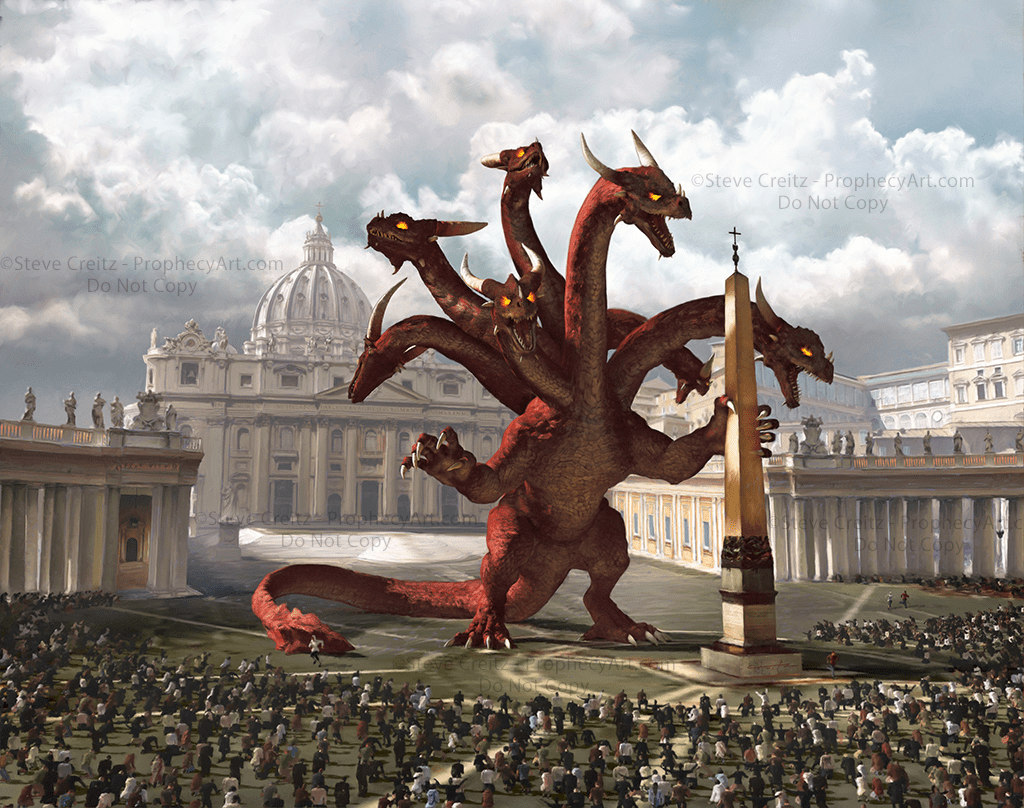
Of note, unlike the beasts of Daniel, the Dragon is identified as an individual: ‘… that ancient serpent, who is called the devil and Satan, the deceiver of the whole world…’ who fights against Michael in Heaven. 

We then learn in the following chapter that the first Beast possesses seven heads and ten horns as well, but this time the crowns are on the horns instead. What this means is unclear, though a shift is apparent from kingdoms (head) possessing power to kings (horn). 

Revelation chapter thirteen in likeness with Daniel chapter two (four beasts), describes two beasts. Are these two beasts world ruling empires, kingdoms, churches, systems, human beings, spiritual beings, all (none) of the above? 

First Beast

1 ‘And I saw a beast rising out of the sea, with ten horns and seven heads, with ten diadems [crowns] on its horns and blasphemous names on its heads.’

The Beast rendered above has ten heads instead of seven. Even so, it depicts the reality of the Beast appearing as from out of nowhere and the frightening repercussions resulting from its sudden presence on the Earth.  

The descriptions says the Beast rises out of the sea, though we just read in chapter eleven where it says: ‘… the beast that rises from the bottomless pit…’ Constant readers will be aware that the sea can be a euphemism for space or the spirit realm. In this instance it perhaps indicates the supernatural Antichrist being loosed from a spiritual  prison, either originating beneath the sea or not.  

Remember, the fourth (dragon) beast in Daniel originally had ten horns before an eleventh sprouted, while Nebuchadnezzar’s statue had ten toes. If the horns are rulers (kings) over ten territories, what do the seven heads signify? The next chapter answers this question. 

‘This calls for a mind with wisdom: the seven heads are seven mountains… they are also seven kings… And the ten horns that you saw are ten kings…’ Revelation 17:9-10, 12. 

Christ confirms that the ten horns are kings (at the time of the end), whereas the seven heads in biblical eschatology are believed to be successive empires. Borrowing from Revelation seventeen, commentators have claimed the seven heads are the seven hills of Rome; though out of interest, Jerusalem is also situated on seven hills.  

AI suggests: ‘The seven heads of the beast in Revelation 13 serve as a multifaceted symbol, representing both historical and spiritual elements of power, authority, and opposition to divine rule.’ 

The scriptures discuss mountains and they can be linked with the celestial government and abode of the Eternal. Regarding the one known as Lucifer: 

You said in your heart, ‘I will ascend to heaven; above the stars [angels] of God. I will set my throne on high; I will sit on the mount of assembly in the far reaches of the north; I will ascend above the heights of the clouds; I will make myself like the Most High’ – Isaiah 14:13-14. 

Similarly, regarding the Adversary: 

‘… I placed you… on the holy mountain of God; in the midst of the stones of fire you walked… you were filled with violence in your midst, and you sinned; so I cast you as a profane thing from the mountain of God, and I destroyed you, O guardian cherub…’ – Ezekiel 28:14, 16. 

Mountains in the Bible also represent places where Heaven and the Earth meet – the spiritual realm touching upon the physical dimensions and inevitably encounters between God (or spirits) with humanity. These meetings are associated with significant events, such as receiving divine revelation or making covenants. None better demonstrated by the descent of the fallen Watcher angels on Mount Bashan and their covenant to stand united in corrupting humankind; or Moses ascending Mount Sinai to receive the Law from the Eternal. 

Mountains (kingdoms) can be destroyed – Zechariah 4:7. 

‘And in the days of those kings the God of heaven will set up a kingdom that shall never be destroyed, nor shall the kingdom be left to another people. It shall break in pieces all these kingdoms and bring them to an end, and it shall stand forever, just as you saw that a stone was cut from a mountain by no human hand, and that it broke in pieces the iron, the bronze, the clay, the silver, and the gold’ – Daniel 2:44-45. 

‘It shall come to pass in the latter days that the mountain of the house of the Lord shall be established as the highest of the mountains, and shall be lifted up above the hills; and all the nations shall flow to it…’ Isaiah 2:2.
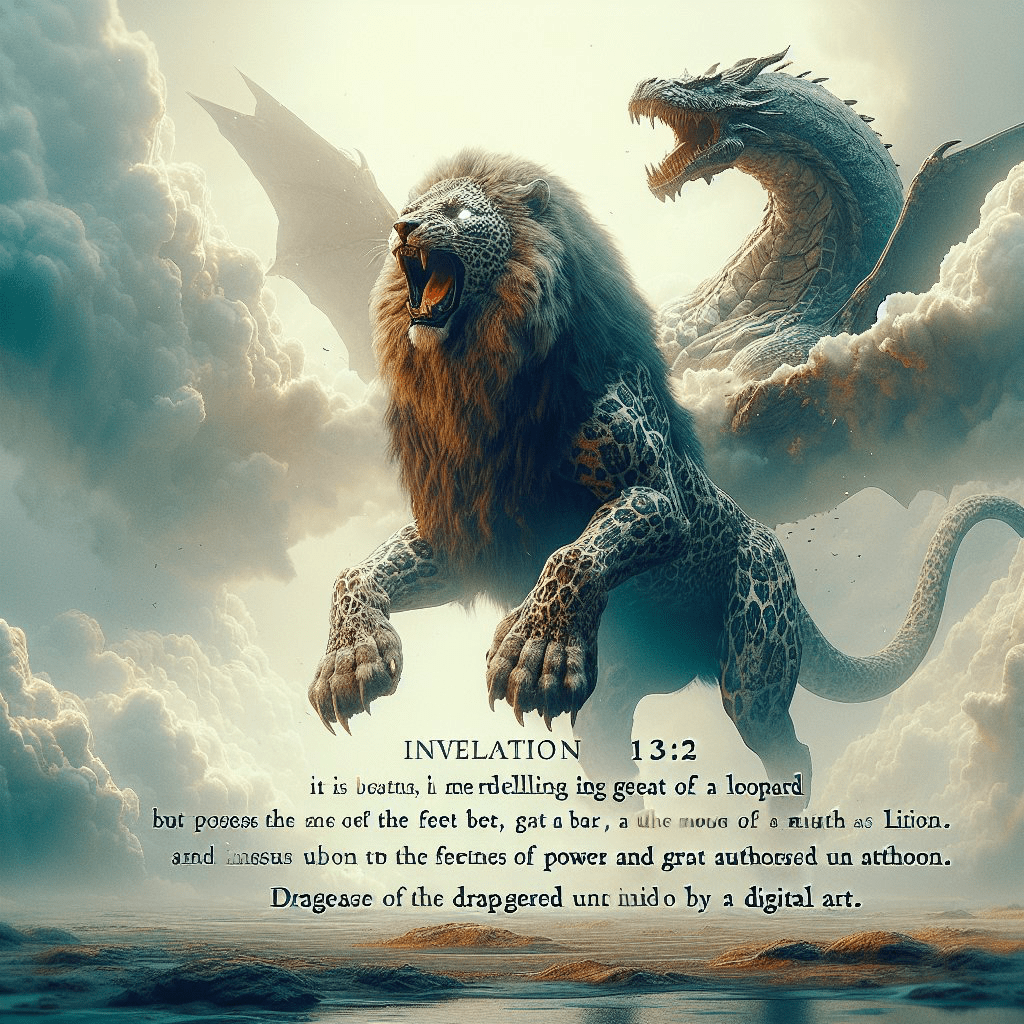
Revelation: 2 ‘And the beast that I saw was like a leopard; its feet were like a bears, and its mouth was like a lions mouth. And to it the dragon gave his power and his throne and great authority. 

This creature is not the Dragon – with seven heads and ten horns – yet displays qualities similar to the Greek (French), Persian (Turkish) and Chaldean (Italian) empires – speed, strength and power.

Scripture Speaks: ‘This beast possessed qualities of three animals… The kingdom the beast rules and represents seems to reflect his personal qualities. “The fact that the leopard of Greece, the bear of Medo-Persia, and the lion of old Babylon (Daniel 7) are all seen in this Beast, shows how all-inclusive… will be his character; he sums up all the brilliancy (Greece), all of the massive ponderousness of power (Persia), all of the absolute autocratic royal dominion (Babylon), that the Gentiles have ever known.”

This aspect may be referenced in Daniel, where it states: 

“I looked then because of the sound of the great words that the horn was speaking. And as I looked, the beast was killed, and its body destroyed and given over to be burned with fire. As for the rest of the beasts [the lion, bear and leopard], their dominion was taken away, but their lives were prolonged for a season and a time” – Daniel 7:11-12.

The likeness with the same number of heads and horns indicates the Beast is aligned with the Dragon’s purpose in influencing the same seven kingdoms and ten kings, apart from receiving its authority from the Dragon.
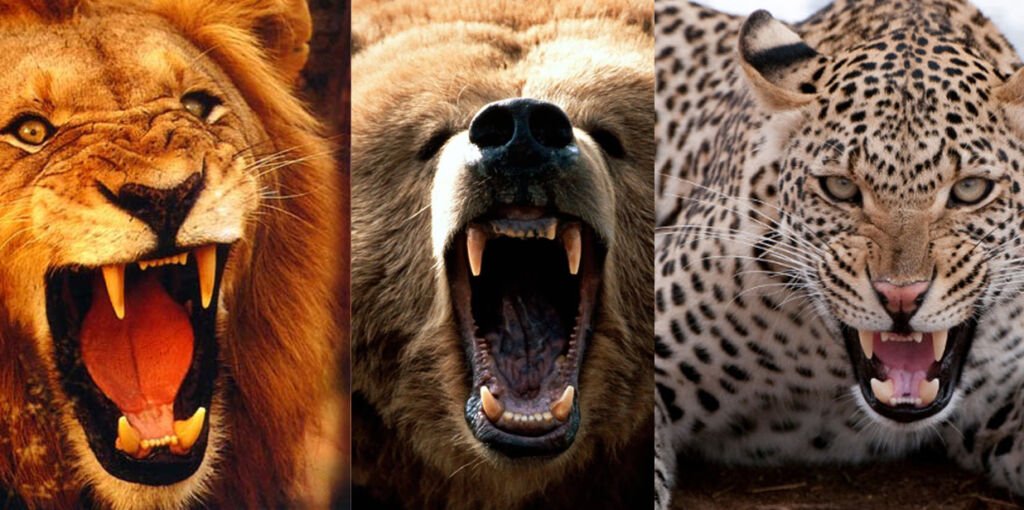
It is worth mentioning that a prevalent view amongst biblical scholars and researchers is the belief the leopard, bear and lion are separate nations and in turn – if also combined with the same animals in the book of Daniel – must represent modern powers. Even though the beast appears to be a single creature in the form of a leopard, with the paws of a bear and the head of a lion; verse two does say beasts in the plural.

This mish mash of animal symbolism appears to have merit, yet does not align smoothly with all the Book of Daniel. Unless of course, these animals really are future kingdoms and nothing to do with Daniel chapter seven. Thereby, the animals representing kingdoms in Daniel chapter seven may not correlate with the statue image in Daniel chapter two at all.

A convincing case is made in an article by Thomas Taylor; Daniel’s Lion, Bear, & Leopard are modern-day countries, 2015 – capitalisation & emphasis his:

‘If it were true that Daniel 7 is ancient Babylon, ancient Media/Persia, and ancient Greece, then it is nothing more than a repeat of Daniel 2… But this is not true. They are separate because Daniel 2 deals primarily with an image of ancient nations, but the symbolic animals of Daniel 7 are dealing with modern times…

Daniel 7:1-6 describes the rising of the lion, bear, and leopard. Next, in verses 7, 8, the Kingdom of the Antichrist is described. Therefore, the lion, bear, and leopard kingdoms must still exist during the reign of the Antichrist. This is what makes us look at modern nations to be considered rather than ancient Babylon, ancient Media/Persia, and ancient Greece.

Notice the lion, bear, and leopard “shall arise”. Daniel is under the Babylonian king when he had this vision. Therefore, this proves that the first beast mentioned is NOT ancient Babylon, because it was already risen and at the height of its power during Daniel’s time. In Daniel 2, when he spoke of the image with the head of gold, arms of silver, mid-section of brass, legs of iron, and feet of iron and clay, he clearly says the golden head is the current kingdom of Babylon. But Daniel 7:17 says all the kingdoms are yet in the future relative to Daniel’s time.

When you count the heads of Daniel’s beasts you get 7 (1 – lion, 1- bear, 4 – leopard, 1 – dreadful beast). Revelation 13 shows the same 7 heads. There are seven heads yet one beast. This one beast has all of these kingdoms, the lion, bear, and leopard, within it in the end times. Revelation primarily deals with the time of Christ’s Second Coming and these beasts are, therefore, all present at Christ’s Second Coming, unlike ancient Babylon, ancient Media/Persia, and ancient Greece.’

For interest sake, ideas proposed include, the lion (Revelation 13) representing England and the plucked wings of an eagle (Daniel 7) being the United States of America. According to Dr Gene Kim, the lion’s mouth is “the English language since it can be considered the universal language, given that many countries speak it.”

The bear is universally accepted as Russia.

Taylor: ‘Russia is well known for its ability to devour much flesh as leaders like Lenin and Stalin killed several million people. The bear is raised up on one side with three ribs in its mouth. These three ribs may be the nations the final end-time Russia will conquer in an attempt to gain back former Soviet republics that it once held, such as Ukraine and two unknown others. So we can predict that Russia is on the move to take two more former Soviet republics…’

It is the leopard which creates the most diverse opinion. Gene Kim concludes the “Leopard represents America because it is a multi-racial country. The leopard has three colors representing races, a white belly, yellow skin, and black spots.’

Just as convincingly, the leopard with multiple spots could symbolise the European Union and the leopard’s four heads the leading nations comprising: Germany, France, Italy and Spain. While Germany’s symbol is an eagle, Thomas Taylor considers the leopard in this instance the symbol for Germany.

Taylor: ‘The leopard… has four heads. So there must be four distinct kingdoms within this one kingdom. It also says it has the wings of a fowl. Therefore, another kingdom is associated with it. Germany seems to fit best as being the leopard because of their ferociousness at war like a leopard on the hunt. Interestingly, Germany has a modern tank… called the Leopard.

The four heads are the four reichs (German for “empires”) of Germany. The First Reich was the Holy Roman Empire first ruled by a Frankish king Charlemagne (800 – 1806). The Second Reich was the German Empire under Otto Van Bismark (1870 – 1919). The Third Reich was Adolf Hitler’s rule (1933 – 1945). The Fourth Reich seems to be the European Union (1958 – present), an entity almost entirely held up and controlled by Germany and France.

The Germans have a strong alliance with the French as the key players of the European Union. France’s national symbol is a rooster, hence the wings of the foul prophecy is fulfilled when these two nations come together. All of the reichs were/are attempting to unite Europe under one government and religion. They are attempting to recreate the original Holy Roman Empire which held so much power for over 1,000 years.’

Yet an alternative view is that the leopard is in fact China.

The Four Beasts of the End-Times, Mark A Becker, 2021 – emphasis mine:

‘… this is the most difficult beast to identify. Most would think that if this beast was China, that she would be represented by the dragon. One would surely think that would be the case, but the dragon has already been assigned to Satan…

The leopard is… cunning, swift, and [a] stealth hunter. China has been very cunning on the geopolitical stage. At home, as is so well documented, no nation has ever surveilled their own people as the Chinese Communists have – stealthily lurking at a distance, as a leopard hunts its prey.

Most fascinating… is China’s push for a global government and… tracking of all citizens of the world. Something I would never have dreamed would happen, as I always thought they may be the last to lean into globalism, yet here we are.

Her stealth and rapid rise in economic power have been, as one might say, “Accomplished under the radar, yet in plain sight.” The United States, in particular, has played an active role in China’s rise in economic wealth and power as they import China’s goods at an astronomical rate.

Militarily, China has swiftly used those economic resources to fund her capabilities to unheard-of heights, as she has become a preeminent military threat to the world and a major supplier of arms.

The rise in technological advances – whether from within or without through stolen intellectual properties and trade secrets – is mind-blowing, probably surpassing even the United States.

When it comes to Daniel’s description of the leopard having “four wings of a fowl,” one can’t help but notice the rate of speed her ascension to dominance has had on the world stage in such a remarkably short time. These four “wings” could also indicate China’s expansion in all four directions of her sphere of influence.

As far as the “four heads,” there may be an alliance coming in the near future… though, the “four heads” could very well be in China herself – as one of the 10 kings – being split up into four smaller kingdoms [Magog (Gog), Meshech and Tubal] within her borders, all under the leadership of the one king [Rosh]. The population of China is unsurpassed and could very well need four separate “governors” in four separate regions within the nation of China to help delegate the orders from the supreme leader – or king – of China’s regional global kingdom’ [refer Chapter X China: Magog, Tubal & Meshech].

This writer would add, the leopard was a significant symbol in ancient Egypt. The leopard represented strength and power and was associated with royalty and the divine. It was used in rituals and as a garment for priests and kings, symbolizing their authority and connection with the gods.

In this case following the theme presented, the leopard could represent Islam and by extension, the King of the South. Thus the four heads would represent an Islamic confederation led by Turkey, Iran and Pakistan with Egypt. If so, then the bear could well be Russia and the King of the North; with the lion representative – not of England or America but rather – of Rome and with it the Vatican, each indicative of the Chaldean legacy and hence modern Babylon (refer article: Four Kings & One Queen).

The Leopard-like Beast of Revelation 13, Part I & II, Kym Jones – emphasis theirs:

“This… beast is described as having ‘the mouth of a lion’. Just as… a winged lion with the head of a man… representative of ancient Babylon… was the first of the four beasts which Daniel saw in vision described as being ‘like a lion, and had eagles wings… and made stand upon the feet as a man, and a man’s heart was given to it.’ (Daniel 7: 4)

… we find King Nebuchadnezzar commanding all within his kingdom to fall down and worship the golden image which he had set up, under pain of death (Daniel 3: 4-6). This is representative of the ‘little horn’ of Daniel 7: 20, 25, which had ‘a mouth that spake very great things’, and who ‘shall speak great words against the most High’.

Thus this aspect of the… beast of Revelation 13 having ‘the mouth of a lion’ clearly represents the papacy, which is ‘lifted up’ and ‘exalted’… for it sets itself up in the seat of Caesar as Pontifex Maximus – the ‘bridge builder’ between heaven and earth.

… the third kingdom of Daniel chapter 2  is depicted… as Greece, and Daniel chapter 8 declares that the rough goat which is described in that chapter is this very same power, then it is Greece which we turn to as we attempt to understand precisely why this… beast is described as being like a Leopard. 

To say that the… beast of Revelation 13 has the body of a Leopard is actually a misnomer, for a literal translation of the text is that it ‘was like a leopard’ (NKJV).  If it was ‘like a leopard’ – then the chief characteristic of the Papacy is that as it is very much like Greece in some respects, then its ‘likeness’ to Greece constitutes the foundation of Catholic faith.”

If we momentarily reconsider the beast as not an entity but an amalgamation of kingdoms (empires), it is likely that the creature symbolism in Revelation thirteen is a logical continuation of the same animals introduced in Daniel chapter seven.

Thus the Chaldean rule (head of a Lion) in Babylon was continued in the Holy Roman Empire of Central Europe (comprising many German states) and headquartered in Rome – as the mouth of the Lion, it is currently fulfilled by the Holy See of the Vatican (Chapter XXV Italy: Nahor & the Chaldeans).

Holy Roman Empire 1359

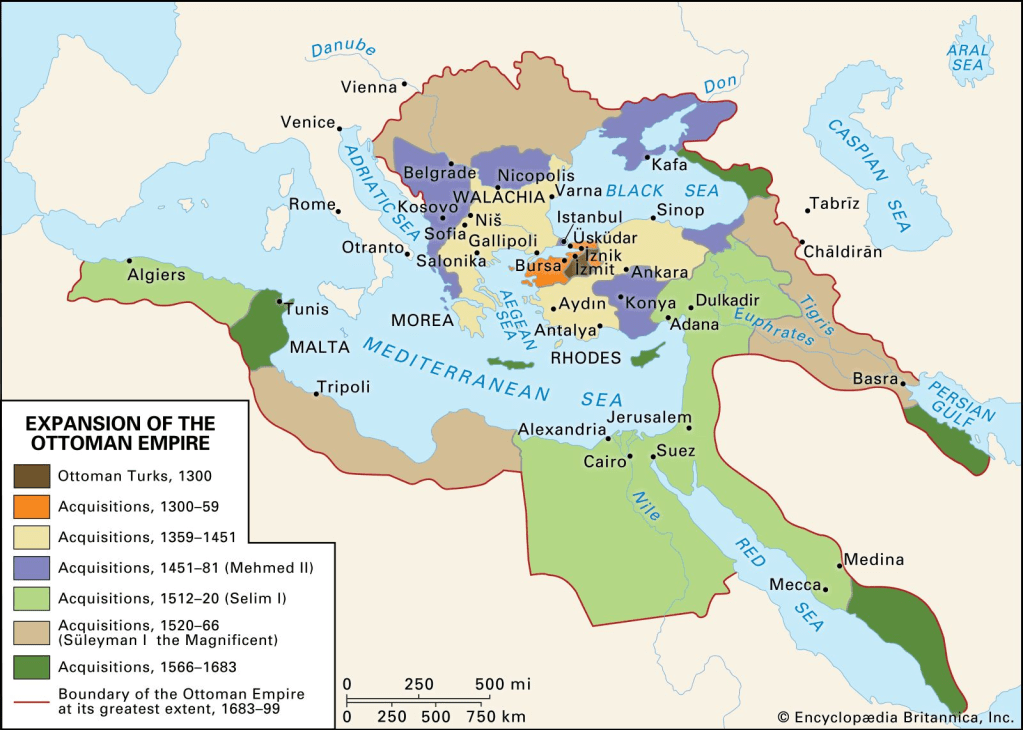
In like manner, the Medo-Persian Empire was resurrected by the Elamite descendants of the Turks during the Ottoman Empire – stretching very nearly to the steps of Vienna. The Bear’s four paws a reflection of the four quarters of the compass (north, south, east and west) in which the Ottoman empire spread throughout Eastern Europe and the Middle East – refer Jeremiah 49:36 (Chapter XVIII Elam & Turkey).
The Greco-Macedonian Empire comprising the children of Lot (Moab and Ammon) was in later in evidence during the formation of the French nation by the Franks who were the early embodiment of the future Holy Roman Empire led by Charlemagne. Napoleon Bonaparte an eerie incarnation of Alexander the Great in his designs for a French Empire which like the Leopard stealthily took over Western Europe in counter balance to the Ottoman Empire in the East – refer Jeremiah 48:9, 29 (Chapter XXVI The French & Swiss: Moab, Ammon & Haran).

3 ‘One of its heads seemed to have a mortal wound, but its mortal wound was healed, and the whole earth marveled as they followed the beast. 4 And they worshiped the dragon, for he had given his authority to the beast, and they worshiped the beast, saying, “Who is like the beast, and who can fight against it?” 

Taylor: ‘The fall of the Berlin wall [in 1989] united East and West Germany into one nation again (and incidentally created modern-day Russia [in 1991]). This resurrection of Germany was prophesied in Revelation as the head that had the mortal wound but lived. 

Rev 13:3 KJV And I saw one of his heads as it were wounded to death; and his deadly wound was healed: and all the world wondered after the beast. Germany was mortally wounded as a nation and… thought to never recover after WWII… [after its division into] East and West Germany. But we know that… [Germany re-uniting created] the New World Order.’

A question remains over what a mortal wound would mean for the Antichrist. With regard to how it is viewed by scholars who advocate the Beast is the Papacy, End Times Prophecy explain: 

“The Papacy received a ‘mortal wound’ in 1798 when the French army marched into Rome and captured the pope and the Papacy lost it’s control and power. But then in 1929 Mussolini granted state power back to the Vatican and the deadly wound began to heal.’

An alternative view is presented by Revelation Logic – emphasis mine: 

‘Note that Revelation 13:3 remarks that the composite beast has one head that appears to have been slain, but the fatal wound was healed. Later, this fatal wound is referenced in Revelation 13:12-15, where it indicates that the beast shall be killed (suffer a fatal wound) and then be brought back to life. This “death and resurrection” is certainly reminiscent of the work of Christ, which itself happens to be referenced in this chapter (Revelation 13:8).

In Daniel 7:11, we read that the fourth beast of Daniel’s vision… was slain, and yet in  Daniel 7:23-24 we read that ten kings will arise from it, and the “little horn” (Antichrist) shall arise among them. We may thus say that the fourth kingdom itself has, in this sense, attained a new life, or resurrection. 

In Revelation 13:12, we read about how the False Prophet will lead people to worship the beast. In this context, the word beast refers to the individual Antichrist who is given authority as Satan’s final king (Revelation 13:2), and who persecutes the saints for 42 months (Revelation 13:5, 7) [Article: 42]. He is also described as having a fatal wound from a sword (Revelation 13:12, 14), and yet he was returned to life as one of the “great signs” performed by the False Prophet (Revelation 13:15). 

In this sense, the future Antichrist himself will appear to have a death and resurrection, as appropriate for a counterfeit Christ.’

5 ‘And the beast was given a mouth uttering haughty and blasphemous words, and it was allowed to exercise authority for forty-two months. 6 It opened its mouth to utter blasphemies against God, blaspheming his name and his dwelling, that is, those who dwell in heaven.’

The Beast like the antichrist little horn has a mouth and uses it to blaspheme – Daniel 7:25. It could be inferred that the Beast is an entity, as opposed to a kingdom or power – as evidenced in the Book of Daniel, where the lion, the bear, the leopard and the fourth beast do not speak – by virtue of having either eyes or in this case a mouth.  

7 ‘Also it was allowed to make war on the saints and to conquer them. And authority was given it over every tribe and people and language and nation, 8 and all who dwell on earth will worship it, everyone whose name has not been written from the foundation of the world in the book of life of the Lamb who was slain. 

Worship of an individual whether a god or a demagogue is easier to comprehend than worship of a state, system or a church. Therefore subscribing to the idea the first Beast is the Vatican and Catholicism is problematic. That said, the Beast like the Dragon clearly leads and influences seven kingdoms and ten kings.

Second Beast 

11 ‘Then I saw another beast rising out of the earth. It had two horns like a lamb and it spoke like a dragon.’

12 ‘It exercises all the authority of the first beast in its presence, and makes the earth and its inhabitants worship the first beast, whose mortal wound was healed.’ 

The second Beast does not arise from the sea like the first Beast, but from the Earth. Is this a veiled clue to the fact that the second Beast is not an angel but rather of Nephilim origin? The disembodied spirits of Nephilim are tied to the Earth as demons, of whom Nimrod is an arch-demon – Article: Nephilim & Elioud Giants I & II. For the second Beast does not have seven heads and ten horns. 

This Beast masquerades as a Christ like lamb yet is really a devouring satanic dragon like creature. A wolf in sheep’s clothing – Matthew 7:15. The second Beast speaks and thus provides difficulty for those who ascribe a national identity such as the United States. The second Beast is in fact identified as the False Prophet in Revelation 16:13, 19:20; 20:10.
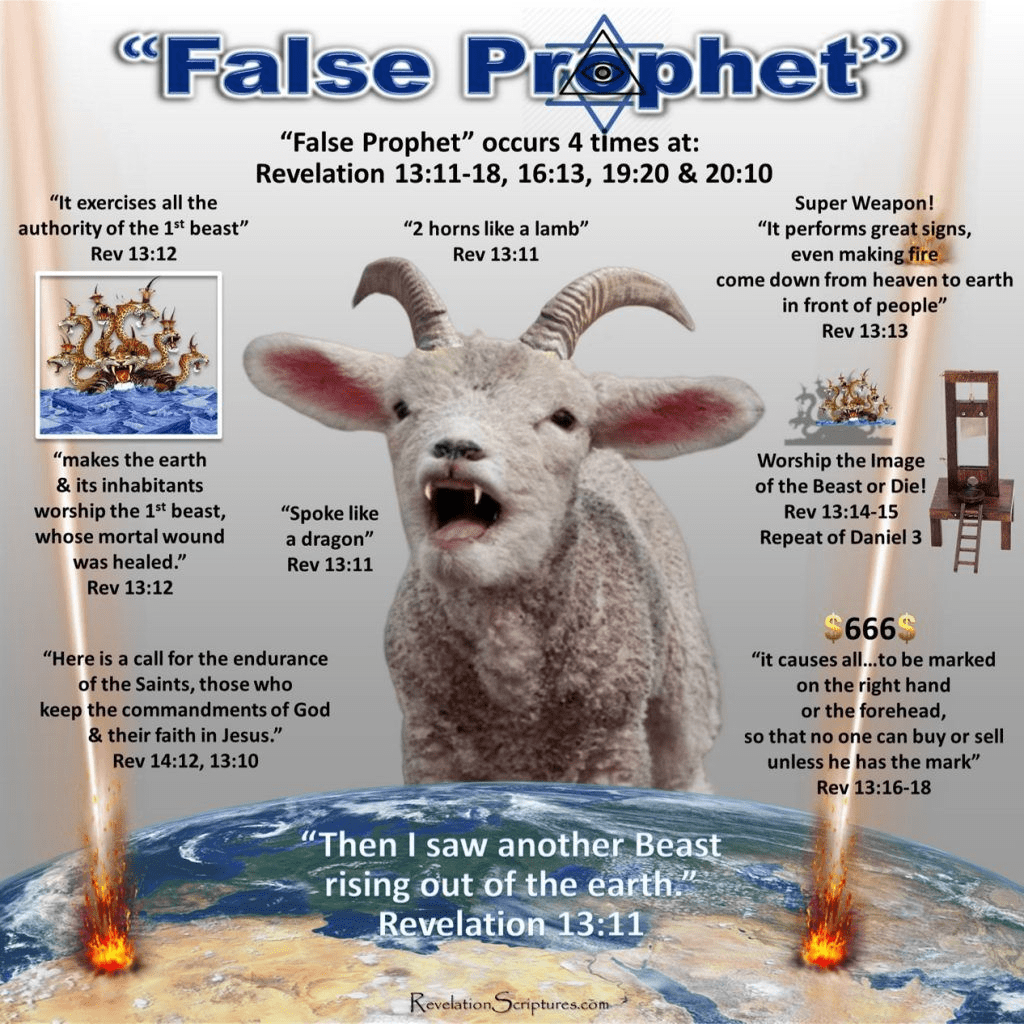
13 ‘It performs great signs, even making fire come down from heaven to earth in front of people, 14 and by the signs that it is allowed to work in the presence of the beast it deceives those who dwell on earth, telling them to make an image for the beast that was wounded by the sword and yet lived. 15 And it was allowed to give breath to the image of the beast, so that the image of the beast might even speak and might cause those who would not worship the image of the beast to be slain.’ 

The working of the false prophet:

‘Let no one deceive you in any way… The coming of the lawless one is by the activity of Satan with all power and false signs and wonders, and with all wicked deception…’ – 2 Thessalonians 2:3, 9-10. 

The false prophet performs spectacular miracles like the two witnesses: 

‘And if anyone would harm them, fire pours from their mouth and consumes their foes… They have the power to shut the sky, that no rain may fall during the days of their prophesying, and they have power over the waters to turn them into blood and to strike the earth with every kind of plague, as often as they desire’ – Revelation 11:5-6. 

Verses thirteen to fifteen read like Mary Shelley’s Frankenstein. One could say a third character is introduced, a mini-me of the first Beast. This is confirmed four times in Revelation: 

“If anyone worships the beast and its image [1] and receives a mark on his forehead or on his hand, he also will drink the wine of God’s wrath, poured full strength into the cup of his anger, and he will be tormented with fire and sulfur…And the smoke of their torment goes up forever and ever, and they have no rest, day or night, these worshipers of the beast and its image [2], and whoever receives the mark of its name.” – Revelation 14:9-10 (Revelation 16:2; [3] 19:20 [4]).

The author of Colossians (not Paul – refer article: The Pauline Paradox) relates a different and even more profound example of an image. 

‘He is the image of the invisible God, the firstborn of all creation. And he is the head of the body, the church…’ – Colossians 1:15, 18. 

16 ‘Also it causes all, both small and great, both rich and poor, both free and slave, to be marked on the right hand or the forehead, 17 so that no one can buy or sell unless he has the mark, that is, the name of the beast or the number of its name. 18 This calls for wisdom: let the one who has understanding calculate the number of the beast, for it is the number of a man, and his number is 666.’ 

The constant reader will be aware of the discussion on the mark of the Beast in a number of articles. The key aspect is that the Greek word for man (G444, anthropos) can be used for an angel. For whatever reason, translators have not followed (or understood) the context of Chapter thirteen in using the word man. 

Therefore a full understanding on the mysterious number originating from an evil angelic being may remain out of reach for the time being. It might only be towards the end, when the saints may well understand its exact meaning.

 In chapter fourteen verse eight we read about Babylon for the first time. 

Another angel, a second, followed, saying, “Fallen, fallen is Babylon the great, she who made all nations drink the wine of the passion of her sexual immorality.” 

While there is an argument that sexual immorality applies in a context of false religious worship (and belief) – mentioned as a problem in earlier eras of the true church – there was two thousand years ago at time of Revelation’s writing, temple prostitutes. Refer article: The Seven Churches – A Message for the Church of God in the Latter Days. 

‘But I have a few things against you: you have some there who hold the teaching of Balaam, who taught Balak to put a stumbling block before the sons of Israel, so that they might eat food sacrificed to idols and practice sexual immorality’ – Article: Belphegor.

‘But I have this against you, that you tolerate that woman Jezebel, who calls herself a prophetess and is teaching and seducing my servants to practice sexual immorality and to eat food sacrificed to idols. I gave her time to repent, but she refuses to repent of her sexual immorality’ – Revelation 2:14, 20-21.

In this context, one could be persuaded that Babylon is a continuation of the Chaldean mysteries, which originated with Nimrod and are preserved by the Vatican in Rome. This verse does not call Babylon a city, wherein chapter eighteen of Revelation does. If such is the case, then ascribing the United States to Babylon would not be correct.  

In Chapter sixteen verse ten, the Beast is unarguably an individual, who rules its own kingdom: 

‘The fifth angel poured out his bowl on the throne of the beast, and its kingdom was plunged into darkness…’

Credence that the Antichrist is linked with the King of the North, is the amassing of the Kings of the East in verse twelve prior to the Battle of Armageddon in verse sixteen – Daniel 11:44. 

18 ‘And there were flashes of lightning, rumblings, peals of thunder, and a great earthquake such as there had never been since man was on the earth, so great was that earthquake. 19 The great city [1] was split into three parts, and the cities [2] of the nations fell, and God remembered Babylon the great [3], to make her drain the cup of the wine of the fury of his wrath. 20 And every island fled away, and no mountains were to be found.’

The question is, is this Jerusalem, the great city (like sodom) in chapter eleven or another great city, Babylon (Revelation 18:10). As the great city is seemingly distanced from Babylon the Great by the cities of the nations, it is possible the first great city is Jerusalem. Coincidently, the old city of Jerusalem is currently split into four parts and ‘three’ religions: Christian, Jewish, Muslim and Armenian. 

In support of the city in question being Babylon, for Jerusalem was clearly defined in Revelation chapter eleven, G G Rupert held the following conclusion: 

‘Drawing a line north and south, east of Italy, you have on one hand the dragon power: on the other hand, Western Europe, or the beast power. Hence we cannot look to the old world for the territory of the third power. We must look to the new world, across the ocean in the far West… 

In the language of Bishop Berkeley:-

“Westward the course of empires takes its way; 

The first four acts already passed; 

The fifth shall close the drama of the day. 

God’s noblest offspring is the last.”

‘… Babylon is represented as being divided into three parts. But the question is, Where are these divisions? We answer, They exist in the three great divisions of the world powers as symbolized by the three great divisions just considered, – Greek Catholicism as it exists in the dragon territory; Roman Catholicism as it exists in the beast territory, or the Western Empire of Rome; apostate Protestantism as it exists in the territory of the two-horned beast, or North America.’

The division of Europe into east and west with the dominant nations of each, Russia and Germany respectively, aligns with the two lower legs and feet of Nebuchadnezzar’s statue. The addition of North America, while it is not revealed on the statue in Daniel or in the beasts of Revelation, warrants consideration in being a component of Babylon at the least.

The reason for this is that Babylon derives from the Tower of Babel and the tower was the endeavour by Nimrod – no less (Article: The Pyramid Perplexity) – to challenge and thwart God’s plan for humanity by taking a different route – the one offered by the Adversary, the Dragon. That is, to merge the spiritual and physical in an unholy alliance (marriage) as revealed by the feet of iron and clay on Nebuchadnezzar’s statue – Daniel 2:43. An attempt to revisit the antediluvian age of Angels, Nephilim and Giants – Chapter XXII Alpha & Omega.

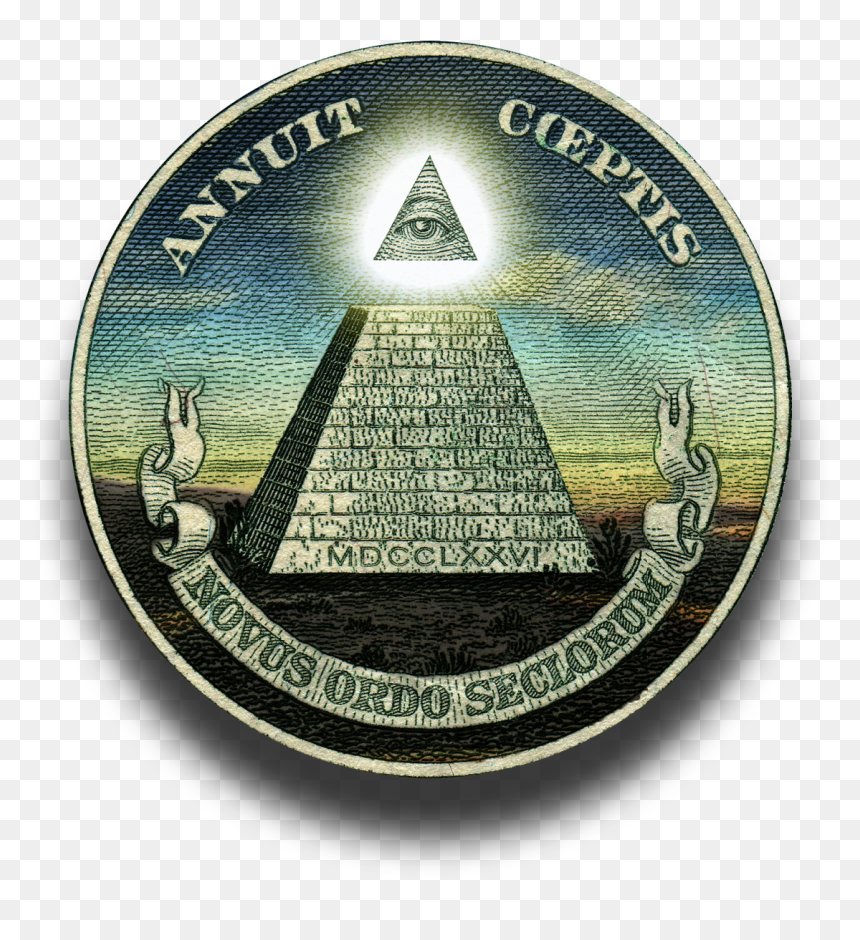
It is significant that America was founded on the ideal of a New World Order – Article: The Establishment: Who are they… What do they want? America’s mottoes on the reverse of the Great Seal being Novus ordo seclorum, meaning ‘New order of the ages’; and the equally ominous Annuit coeptis, translating as ‘He has favored our undertakings’ or ‘Providence favors our undertakings.’ The ‘he’ is accepted as God, though the question is which god? – refer article: 33. As the all seeing eye is shrouded in a burst of light, former archangel Samael (aka Lucifer) – the light bringer – is prime candidate. 

Thus America’s connection with Babylon or rather Babel is through Nimrod seeking to bring the world together in rebellion against the Eternal. It was serious to the extent that the Lord came down to Babel to put an end to humankind’s united efforts (Genesis 11:5) – Chapter XXI The Incredible Identity, Origin & Destiny of Nimrod

Should the second Beast, the False Prophet be Nimrod himself, then his using the Beast’s mark to bind the inhabitants of the world to one cause under a single government is not a coincidence and while it finds it seeds in the Tower of Babel, it fruition may well be accomplished from the shoulders of America. Regardless, the endeavour will be to raise up Babylon (the Great) to eclipse the original rebellion of Babel in leading the world’s inhabitants diabolically astray.

Constant readers will have joined the dots, for this amazing correlation is symbolically epitomised on the reverse of America’s Great Seal with the powerful imagery of a pyramid (and its emblazoned capstone), reminiscent of the Great Pyramid (minus capstone) which is stunningly… the actual Tower of Babel – Article: The Pyramid Perplexity. 

There is a connecting line between the Tower of Babel (which was not destroyed – Genesis 11:8), Babylon, Egypt, The Great Pyramid, the Great Seal and the founding of the United States of America. 

The story of Joseph ruling in Egypt; the Israelite’s enslavement; and their exodus from under the shadow of the Great Pyramid; is shrouded in dark and foreboding irony when viewed with the knowledge that America today was founded by and principally peopled from descendants of Joseph’s sons, Ephraim and Manasseh – Chapter XXXIII Manasseh & Ephraim – the Birthright Tribes.

America’s contribution and participation in a Babylonian system would seem a given in light of this connection. We will now study the crucial chapters seventeen and eighteen of Revelation to understand if a. such is the case; b. whether as more and more advocates are proposing, the United States is wholly Babylon; c. Babylon is specifically represented by Nebuchadnezzar’s statute and the leg denoting Europe, Germany, the Vatican and Rome (the physical and literal descendants of the Chaldeans); or d. some other interpretation entirely. 

Scarlet Beast

1 ‘Then one of the seven angels who had the seven bowls came and said to me, “Come, I will show you the judgment of the great prostitute who is seated on many waters, 2 with whom the kings of the earth have committed sexual immorality, and with the wine of whose sexual immorality the dwellers on earth have become drunk.” 

In this context, the great prostitute is the Universal Church and sexual immorality includes all the central tenets of Catholicism which are nowhere to be found in the Old Testament or those books not written by Paul and other imposters in the New Testament and are tantamount to idolatry – Articles: The Seven Churches – A Message for the Church of God in the Latter Days; and The Pauline Paradox.

3 ‘And he carried me away in the Spirit into a wilderness, and I saw a woman sitting on a scarlet beast that was full of blasphemous names, and it had seven heads and ten horns. 4 The woman was arrayed in purple and scarlet, and adorned with gold and jewels and pearls, holding in her hand a golden cup full of abominations and the impurities of her sexual immorality.’ 

There are valuable pieces of the end time puzzle here and in the remainder of the chapter in that a new beast is not introduced but the first Beast is presented with its seven heads, ten horns and additionally, the colour of scarlet. The woman is dressed in scarlet, which links her not only to the Beast which she rides (but does not control), but to the Great ‘Red’ Dragon. It is notable that cardinals (the highest ranking priests beneath the Pope) of the Catholic Church wear scarlet – while Bishops wear purple. 

This woman is resplendent with wealth and the elixir of false doctrine. So much so, she acts as royalty represented by the colour purple. The use of the word abomination is important in relation to who she is riding (the Antichrist) and the Abomination of Desolation (claiming to be Christ/God) to be committed by him when in Jerusalem – Daniel 8:13, Matthew 24:15. Finally, this woman who symbolises the great false church is in stark antithesis to the other woman recorded in Revelation chapter twelve, the true church. 

5 ‘And on her forehead was written a name of mystery: 

Babylon the great, mother of prostitutes and of earths abominations.” 

The Identity of Babylon the Great in the Book of Revelation, Adam Robinson: 

‘By calling the woman Babylon, John relates her to two of the most infamous cities in the Old Testament… The first city to which the Old Testament gives prominence is Babylon (בבל/Βαβυλών), who rebelled against God’s command to fill the earth (Genesis 1:28; 9:1, 7; 11:1–9). Babylon is also the name of one of the worst anti-God cities in the Old Testament due to her destruction of Jerusalem, the temple, and her other atrocities (2 Kings 25:1–10; Jeremiah 50:14, 24, 29; 51:11, 24, 49). 

By relating the Prostitute to two of the most infamous cities in the Old Testament, the interpreting angel is clarifying that the woman… is opposed to both God and his people. Further, by identifying the Prostitute with the two Babylons of the Old Testament, the book of Revelation suggests she has a history that is intertwined with them.’

6 ‘And I saw the woman, drunk with the blood of the saints, the blood of the martyrs of Jesus.’ When I saw her, I marveled greatly.’ 

The woman is the great prostitute and the mother of all her daughter prostitutes. These being all forms of Protestantism; whether mainline or not and whether non-denominational or not. As the great prostitute is the Universal Church it is to the same church that one finds guilty of a litany of persecution and death stretching for centuries. The Earth’s prime abomination is that this woman has led the western world away from the truth of the Way as taught by Jesus and the apostles. 

7 ‘But the angel said to me, “Why do you marvel? I will tell you the mystery of the woman, and of the beast with seven heads and ten horns that carries her. 8 The beast that you saw was, and is not, and is about to rise from the bottomless pit and go to destruction. And the dwellers on earth whose names have not been written in the book of life from the foundation of the world will marvel to see the beast, because it was and is not and is to come.”

The Beast is Azazel who for all intent and purpose had disappeared (was) as if dead (is not), to be ‘resurrected’ by being released (about to rise) from the bottomless pit – Jude 6, Revelation 9:11. Though in all probability it is a reference to the Beast sustaining a mortal wound, its death and resurrection. It may tie in with the mysterious image of the Beast brought to life by the False Prophet and worshipped by the world. This of itself is a curious scenario, for this was part of the function of the Tower of Babel orchestrated by Nimrod, in seeking to bridge the gap between the physical and spiritual dimensions through resurrection and rebirth – Chapter XXI The Incredible Identity, Origin & Destiny of Nimrod; and article: The Pyramid Perplexity. 

9 “This calls for a mind with wisdom: the seven heads are seven mountains on which the woman is seated; 10 they are also seven kings, five of whom have fallen, one is, the other has not yet come, and when he does come he must remain only a little while. 11 As for the beast that was and is not, it is an eighth but it belongs to the seven, and it goes to destruction.”

The woman is representative of the Roman Catholic Church – and preceding that incarnation, the Babylonian Mystery Religion – so it is she who will have presided over six kingdoms with one more to arise. The seventh then gives way to an eighth (or 7b) ruled directly by the Antichrist.

12 “And the ten horns that you saw are ten kings who have not yet received royal power, but they are to receive authority as kings for one hour, together with the beast. 13 These are of one mind, and they hand over their power and authority to the beast. 14 They will make war on the Lamb, and the Lamb will conquer them, for he is Lord of lords and King of kings, and those with him are called and chosen and faithful.” 

As the seven kingdoms appear successive, the ten kings in contrast are concurrent. It is also noteworthy that they rule with (and for) the Beast and so are classed as the eighth kingdom from this perspective but in actuality are the seventh. The eighth is closely related to the seventh chronologically and in ideology. This eighth kingdom rules during the three and one half year tribulation. A short time as intimated by one hour – Revelation 17:10. The exact time frame used to denote Babylon’s judgement – Revelation 18:10. These ten kings are divided it would seem geographically, five and five, as well as being an unnatural mixture if they are represented by the two feet and ten toes composed of iron and clay. 

15 ‘And the angel said to me, “The waters that you saw, where the prostitute is seated, are peoples and multitudes and nations and languages. 16 And the ten horns that you saw, they and the beast will hate the prostitute. They will make her desolate and naked, and devour her flesh and burn her up with fire, 17 for God has put it into their hearts to carry out his purpose by being of one mind and handing over their royal power to the beast, until the words of God are fulfilled. 18 And the woman that you saw is the great city that has dominion over the kings of the earth.”

The Vatican City State is an independent country where the Pope is both spiritual and administrative head of the smallest country in the world. In this instance, the great city appears without many other contenders to be the Vatican. For Vatican City and the Papacy has wielded immense power over temporal kings. In other articles we have discussed the spirit which rules the false church as being the fallen angel Lilith, alluded to albeit cryptically in the Old Testament – Article: Lilith. She has been known by a host of names including Isis, Semiramis and Ishtar, where the word (celebration) Easter derives. Lilith is also linked with the Greek goddess Europa and the Roman goddess Libertas – from whom the Statue of Liberty is inspired.

Judging by verse sixteen, the Papacy will shockingly come to an end and the dissolution of the Catholic Church will be enforced, to make way for the Antichrist’s rule. In tandem with this the False Prophet ensures the globe or the western world at least, worships the Beast, a new god and with it, a New Religion.  

Babylon the Great

Revelation chapter eighteen specifically and graphically describes Babylon and its spectacular downfall. It is important to remember the context of the chapter and the seventeen chapters which have preceded the eighteenth. 

1 ‘After this I saw another angel coming down from heaven, having great authority, and the earth was made bright with his glory. 2 And he called out with a mighty voice, 

Fallen, fallen is Babylon the great! She has become a dwelling place for demons, a haunt for every unclean spirit, a haunt for every unclean bird, a haunt for every unclean and detestable beast.’

Lilith is associated with demons, unclean spirits, unclean birds and detestable beasts, so this is not an odd coincidence – Article: Lilith.

3 ‘For all nations have drunk the wine of the passion of her sexual immorality, and the kings of the earth have committed immorality with her, and the merchants of the earth have grown rich from the power of her luxurious living.” 

4 Then I heard another voice from heaven saying, 

“Come out of her, my people, lest you take part in her sins, lest you share in her plagues; 5 for her sins are heaped high as heaven, and God has remembered her iniquities. 6 Pay her back as she herself has paid back others, and repay her double for her deeds; mix a double portion for her in the cup she mixed. 7 As she glorified herself and lived in luxury, so give her a like measure of torment and mourning, since in her heart she says, ‘I sit as a queen, I am no widow, and mourning I shall never see.’ 8 For this reason her plagues will come in a single day, death and mourning and famine, and she will be burned up with fire; for mighty is the Lord God who has judged her.” 

For the Israelites – whether spiritual or perhaps even physical – to come out of Babylon would infer Babylon is not a city, a state or one country. Yet, an interesting coincidence is the use of double portion; as the name Ephraim means: ‘Doubly Fruitful, Two-fold Increase.’ Perhaps the United States is punished twofold in measure in recompense for being doubly blessed. Babylon is a queen, which is female and corresponds with “the woman that you saw is the great city that has dominion over the kings of the earth.” Linking again with false Christianity, which is in reality all of it (99.9%). 

9 ‘And the kings of the earth, who committed sexual immorality and lived in luxury with her, will weep and wail over her when they see the smoke of her burning. 10 They will stand far off, in fear of her torment, and say, “Alas! Alas! You great city, you mighty city, Babylon! For in a single hour your judgment has come” [Revelation 17:12].

11 And the merchants of the earth weep and mourn for her, since no one buys their cargo anymore, 12 cargo of gold, silver, jewels, pearls, fine linen, purple cloth, silk, scarlet cloth, all kinds of scented wood, all kinds of articles of ivory, all kinds of articles of costly wood, bronze, iron and marble, 13 cinnamon, spice, incense, myrrh, frankincense, wine, oil, fine flour, wheat, cattle and sheep, horses and chariots, and slaves [human trafficking*], that is, human souls [this does not bode well* for the future].

14 “The fruit for which your soul longed has gone from you, and all your delicacies and your splendors are lost to you, never to be found again!” 15 The merchants of these wares, who gained wealth from her, will stand far off, in fear of her torment, weeping and mourning aloud, 16 “Alas, alas, for the great city that was clothed in fine linen, in purple and scarlet, adorned with gold, with jewels, and with pearls!

17 For in a single hour all this wealth has been laid waste.” And all shipmasters and seafaring men, sailors and all whose trade is on the sea, stood far off 18 and cried out as they saw the smoke of her burning,

“What city was like the great city?”

R A Coombes takes stock in the fact that the ‘city of Babylon, New York features a tall water tower that ship captains use to navigate directly into the harbor channel. They come within view of Babylon before turning west to head into the ports of New York City.’ Babylon was founded in 1872 by immigrant Jews. Their idea of a little joke perhaps. New York harbour is dwarfed by Los Angeles and it in turn is not as busy as Rotterdam, Antwerp and Hamburg in Europe. Commentators have latched onto the idea of a deep water port and then proceeded to synchronise it with New York, without thought of consideration that European ports are bigger and busier. 

19 ‘And they threw dust on their heads as they wept and mourned, crying out, “Alas, alas, for the great city where all who had ships at sea grew rich by her wealth! For in a single hour she has been laid waste.’

What is revealing in this passage is how economic wealth is clearly derived from global trading; while easily ruling out Vatican City as being singularly Babylon on one hand. On the other, those who trade with Babylon stand afar off across oceans and see Babylon’s demise from a distance; thus ruling out Babylon not as an influential global economic and religious system, but as a geographic entity beyond a certain delineated area.

Even so, this understanding can be added to the fact that Babylon is not just one country either.  

Viewing the world today from an economic perspective, the United States is an obvious – as it is the glue which binds the present global economy – yet incorrect choice.

What pundits forget or do not recognise – as they see Christ’s imminent return without fully understanding Bible prophecy (due to not comprehending the biblical identity of modern nations) – is that Babylon the Great is a future enterprise taking centre stage in a vastly different world.

In this future time frame the United States is a diminished power. 

‘Ephraim mixes himself with the peoples; Ephraim is a cake not turned [burned black on one side, pale on the other – revealing the increasing ethnic mixture that will irrevocably alter America’s population demographic]. Strangers devour his strength, and he knows it not; gray hairs are sprinkled upon him, and he knows it not’ – Hosea 7:8-9. 

‘Ephraim has become like a silly dove. He cannot decide where to go. The Israelites ask Egypt to help them. Then they decide to ask Assyria [Russia] instead’ – Hosea 7:11, EEB.

The surprise for some is that Russia will be one of two powers which replace the United States – Article: Four Kings & One Queen.

The other will be a surprise for most and that is a powerful German Empire – a ‘United States of Europe – will ally with a rejuvenated Russian Empire – Chapter XX Will the Real Assyria Stand Up: Asshur & Russia; and Chapter XXVIII The True Identity & Origin of Germans & Austrians – Ishmael & Hagar.

The other equally forgotten aspect not realised by biblical prophecy enthusiasts is that the chapters preceding chapter eighteen have either directly or indirectly emphasised the religious arm of Babylon above any civil or economic aspect.

20 ‘Rejoice over her, O heaven, and you saints and apostles and prophets, for God has given judgment for you against her!” 21 Then a mighty angel took up a stone like a great millstone and threw it into the sea, saying, 

“So will Babylon the great city be thrown down with violence, and will be found no more; 22 and the sound of harpists and musicians, of flute players and trumpeters, will be heard in you no more, and a craftsman of any craft will be found in you no more, and the sound of the mill will be heard in you no more, 23 and the light of a lamp will shine in you no more, and the voice of bridegroom and bride will be heard in you no more, for your merchants were the great ones of the earth, and all nations were deceived by your sorcery.

24 And in her was found the blood of prophets and of saints, and of all who have been slain on earth.” 

Destruction of Babylon

Two essential points addressed in this passage is that firstly, there have only ever been twelve apostles; all living during the first era of the true church – Article: The Seven Churches – A Message for the Church of God in the Latter Days. This tells the reader that Babylon has existed for far longer than the United States of America has. 

Secondly and very importantly – apart from witch hunts – the United States has not systematically killed people who did not believe the central tenets of the Universal Church. Rather the opposite, where religious freedom and protestantism (even though in the main 99.9% false) was tolerated without fear of reprisal or death. This is perhaps the biggest nail in the coffin for the idea that America is Babylon the Great.

The Church of Rome – and before it, the early Roman Caesars – have been killing christians for a long time. While the high born in England hunt foxes, the popes have made killing humans their blood sport. The history of the Vatican is one dripping in the shed blood of innocent lives – Revelation 2:10, 13, 22. While the Spanish Inquisition is the most well known and lasted from 1478 to 1834; other forms of the Inquisition existed before and after this period. The horror of this is not just the tragic loss of life but the horrendous suffering which was endured by those souls tortured. 

What does all this mean?

Well, Babylon the Great is a system, a religious control mechanism which subverted early christianity and its current home is with the literal and physical descendants of ancient Babylon when under Chaldean dominion and their most (in)famous king: Nebuchadnezzar II.

If Babylon was merely a city today then it would be Rome. The addition of the religious legacy stemming from Nimrod is found in the Vatican within Rome – a city within a city. As the prophecies in Revelation are about a future Babylon’s greatness and subsequent demise, it is not about America today. 

The thrust of all the imagery and symbolism in the books of Daniel and Revelation is a chronicling of the successive stages of the Babylonian legacy inherited from the Chaldeans (1), to the Persians (2), the Greeks (3), the Romans (4), Byzantium (5), the European Union (6) and whatever follows – a combination of Western Europe and Eastern Europeans (7); a resurrection (or evolution) of the Holy Roman Empire, to be subsumed under the Antichrist (8) which lasts but only a short while – Revelation 17:10. 

All the major European (Shem) descended players have been included in preserving the Babylonian mysteries: 1. Italy (Nahor); 2. Turkey (Elam); 3. France (Moab and Ammon); 4 Germany (Ishmael); 5. Russia (Asshur).

We have learned the seventh kingdom (head of the Beast) correlates with the ten horns on the fourth beast in Daniel and the ten toes of Nebuchadnezzar’s statue; while the eighth kingdom is represented by the (eleventh) little horn. 

It is important to understand that when John recorded ‘five have fallen one is and one is to come’, it was not from the context of his own time. Thinking Rome was number six, scholars have subsequently sought to find two empires preceding the Chaldeans and make them one and two, invariably Egypt and Assyria. This is incorrect as Nebuchadnezzar’s statue begins with the Chaldeans for the reason that they are number one.

Added to this is not recognising the two arms of Rome (in this case lower legs) were not just two different geopolitical units but an ethnic ‘Roman’ division between a fading power in the West (Ishmael-Prussia-Germany) and a rising power in the East (Asshur-Rus-Russia). 

Thus this prophecy was written for our time when the two lower legs of iron, Byzantium and Rome (including the Holy Roman Empire) had faded from the pages of history and their successor states, the Soviet Union and the European Union came into focus. The European Union appears to be the fledgling number six. The defunct Soviet Union is clearly not, though watch this space as the former Russian Empire is slowly restored – articles 2050; Four Kings & One Queen; and Ophir & Ukraine

This is not a fabricated concept on this writer’s part as enumerated by Steven Anderson: 

‘There is a principle stated in Daniel 12:8-10 that the referents of certain eschatological prophecies cannot be understood before the stage begins to be set for the fulfillment of those prophecies. Thus, while the identification of Babylon the Great should be obvious at the present time, it would have been impossible to make this identification before the United States became the dominant power in the world. Today, the identification of Babylon the Great is clear, due to the way in which the United States of America is aligning with Revelation 17-18. 

The main reason why this interpretation has not yet gained wide acceptance in the church is due to a commitment to eschatological agnosticism on the part of most Bible scholars and pastors. It is hoped that the arguments made in this treatise will help refocus the church’s attention on the literal interpretation of Bible prophecy.’

Yet unbeknown to Anderson and perhaps a perspective not considered – due to the endemic myopia (Revelation 3:17-18) afflicting Christians on eschatological chronology in stubbornly viewing Christ’s return just around the corner – is the fact that a future power will fulfil the scriptures regarding Babylon in a more comprehensive manner than America appears to do so now. 

As noted, the Book of Revelation discusses at length a false religious system (in its doctrine and worship) which exhibits global economic dominance. The United States has economic dominance today but does not have the religious pedigree wielded by the Vatican and the Pope – or specifically, possessed by the coming Antichrist.  

And where did the Papacy receive its power? 

“In 330 A. D. Constantine removed his capital from Rome to Constantinople. The ancient city was left to the papal power and the pope occupied in Rome a throne higher than any occupied by the Caesars. Constantine laid the foundation of the papacy; but it remained for Justinian to complete the edifice in 533 A.D., by declaring that memorable decree which constituted the pope the head of all the churches” – S N Haskell, Seer of Patmos, 1905, page 229.

“The Popes filled the place of the vacant emperors at Rome, inheriting their power, prestige and titles from Paganism. Constantine left all to the Bishop of Rome… The Papacy is but the ghost of the deceased Roman Empire, sitting crowned upon it’s grave…” – Stanley’s HISTORY, page 40, as quoted in Charlene R Fortsch, Daniel: Understanding the Dreams and Visions, page 105.

Anderson describes the United States of America, yet inevitably the exact same sentiments will be palpably applicable in describing a future strong German led Europe: 

‘The United States of America is no insignificant entity. It is the prime player in today’s world… The United States [of Europe] differs in its greatness and scope of action from the great powers of the past; its power and luxury are on a different order of magnitude… Never before has one nation been able to stamp its own image upon the whole world. With its tangled tentacles extending into every sphere of life in every corner of the globe, the United States [of Europe] is shaping the world of the end times – politically, economically, culturally, and spiritually.’ 

American Eagle

“The United States is and remains the one indispensable nation. That has been true for the century passed and it will be true for the century to come” – President Barack Obama, May 28, 2014. 

This is somewhat insightful of the 44th president of the United States, for America will certainly remain the globe’s leader during the 21st Century. It is what lays beyond which is of more interest, with the 22nd century belonging to China and the following centuries after that to Germany and Russia respectively. 

Therefore, it is Western Europe and a revived Holy Roman Empire which is the physical inheritor and spiritual successor of Babylon’s legacy, not the United States. The Italians, particularly from Northern and Central Italy are the descendants of the Chaldeans (from Abraham’s brother Nahor); whereas the Germans are the descendants of the (western) Romans from Jacob’s uncle, Ishmael. 

A number of commentators erroneously ascribe chapters fifty and fifty-one of the Book of Jeremiah to America; though even a cursory reading of each one – beginning in the first verse of chapter fifty no less – reveals they are discussing the Chaldeans and no Israelite tribe, let alone Ephraim or Manasseh. There is considerable irony in this mistake, as the Chaldeans ruled Babylon at the time Jeremiah wrote the book; with Judah’s defeat and many of its people taken captive. 

German Eagle

Family rivalry and jealousy is a key component in what has occurred in Europe in recent centuries and for what will happen again in the future – Genesis 16:11-12. Ishmael smarted at being rejected as the firstborn and his whole endeavour through the millennia has been to dominate – as the Hittites and the Romans in the past and in the future as the successor to an American (Israelite) power vacuum… creating a United States of Europe. 

A description and aim not unique to this writer, for former German Chancellor Gerhard Schröder (1998-2005) remarked: “… we cannot have a common currency zone without a common fiscal, economic and social policy… We will have to give up national sovereignty” – Brian Rohan reported, ‘Former German leader calls for United States of Europe’, Reuters.com, September 4, 2011.

Twice in recorded history, Ishmael and Asshur possessed empires adjacent to one another. Once as the Hittites and Assyrians…

… and again as Rome and Byzantium.

The Bible reveals it will occur a third time before the end of our age. The threat of a revival in German aggression, supported by Russia is real – Chapter XXVIII The True identity of Germans & Austrians – Ishmael & Hagar.

Map of Europe in 1914 – a prophetic glimpse into our near future, whereby history will repeat itself in the centuries which follow – articles: Four Kings & One Queen; and 2050.

An alliance between Moscow and Berlin is not so far-fetched as evidenced in the seminal work by Jewish German journalist and writer, Friedrich Tete Harens Tetens (1899-1976): Germany Plots with the Kremlin, 1953.

Excerpt: An Open Letter to President Eisenhower

Mr PRESIDENT:

While the free world is busy organizing its strength in the struggle against the Soviet bloc, Germany’s geo-political master minds have quietly sharpened the weapons from their time-tested arsenal of Realpolitik. They have mapped out a bold plan aimed at undoing our military victories. They hope to achieve this goal by a treacherous sellout of Europe to Moscow, a scheme that would entail economic and political disaster for the United States.

We have not learned our lessons from the past. Twice within a generation we went to war in order to stop German aggression. Each time we gained military victory, only to throw it away by making Germany strong again as a “bulwark against the East”. That policy has always backfired against its architects. This was proven in 1922 at Rapallo, and in 1939 in the Moscow-Berlin Pact.

After World War I, the United States put Germany back on her feet with generous political concessions and huge loans. But shortly thereafter the German industrialists, politicians and generals turned toward Moscow and made their economic, political and military deals against the West.

If the Germans have their way it will happen again. If events take that course, then the United States will indeed be faced with the greatest disaster in her history. All of our planning since 1945 will have turned out to be the preparation which hastens our economic and political suicide.

With this thought in mind, and as a warning to the nation, I bring this book with its documentation to your special attention.

Respectfully yours,

T. H. TETENS

Cooperstown, N. Y.,

February, 1953.

Telegram from Hitler to Stalin on August 20, 1939:

‘Herr Stalin, Moscow.

1) I sincerely welcome the signing of the new German-Soviet Commercial Agreement as the first step in the reordering of German-Soviet relations.


2) The conclusion of a nonaggression pact with the Soviet Union means to me the establishment of a long-range German policy. Germany thereby resumes a political course that was beneficial to both states during by-gone centuries. The Government of the Reich is therefore resolved in such case to act entirely consistent with such a far-reaching change…’

Stalin replied the following day and two days later on August 23, the non-aggression pact between Germany and the Soviet Union was signed. Later to be reneged upon by Hitler when Germany foolishly attacked Russia on June 22, 1941.

“There is a wing of the German industrialists, and some of the officers, who believe an alliance with Russia and agrarian eastern Europe against the West (is more promising). In any case the concept seems uniform that Germany play off East against West and ally itself with one against the other in the interests of German dominance in Europe” – Howard K Smith, Chief European Correspondent for CBS.

Tetens: ‘… we must follow the only… course open to us: That is, the United States should remain in Germany as an occupying power [there are currently 35,188 American troops in Germany, the highest number in Europe and the second highest in the world after Japan (53,246)] until there is clear proof that a new generation of Germans can be trusted [unlikely] or until we have made the other European powers so strong that they can prevent the resurgence of aggressive German militarism without our help [even more improbable].’

Russian Eagle

The Assyrians have historically been everyone’s rival – Isaiah 10:5, Micah 5:6. Admittedly, Babylon has been associated with gentile nations and peoples descended from Arphaxad; but specifically not Jacob’s descendants. In fact, Judah was defeated by the Chaldeans and a sizeable number were taken captive to Babylon. 

It would certainly run against the biblical narrative to say America is Babylon and would require a very persuasive argument to prove it beyond all shadow of a doubt. It is this writer’s belief that it cannot be done – not without misquoting scripture. It is therefore understandable why scholars are divided on the question and for now, it remains open for debate.

Aside from Babylon, it doesn’t end well for the first beast, the Antichrist (Azazel) or the second beast, the False Prophet (Nimrod). 

‘And I saw the beast and the kings of the earth with their armies gathered to make war against [the Lamb]… and against his army. And the beast was captured, and with it the false prophet who in its presence had done the signs by which he deceived those who had received the mark of the beast and those who worshiped its image. These two were thrown alive into the lake of fire that burns with sulfur. And the rest were slain by the sword… of him who was sitting on the horse…’ – Revelation 19:19-21. 

… for I am a father to Israel, and Ephraim is my firstborn… I have heard Ephraim grieving… Is Ephraim my dear son? Is he my darling child? For as often as I speak against him, I do remember him still. Therefore my heart yearns for him; I will surely have mercy on him, declares the Lord.

Jeremiah 31:9, 18, 20

“In truth, there was only one christian and he died on the cross.”

Friedrich Nietzsche

“You will find more saints are interested in antichrist than Christ.”

Frank Gaebelein

“Man prefers to believe what he prefers to be true.”

Francis Bacon

© Orion Gold 2025 – All rights reserved. Permission to copy, use or distribute, if acknowledgement of the original authorship is attributed to orion-gold.com

Italy: Nahor & the Chaldeans

Chapter XXV

Peleg, the brother of Joktan, is not only synonymous with a split in Arphaxad’s line, but most famously with the division of all the peoples and ethnicities descending from Japheth, Ham, Canaan and Shem who had congregated in the Mesopotamian region – refer Chapter I Noah Antecessor Nulla; Chapter XVI Shem Occidentalis; and Chapter XXIV Arphaxad & Joktan: Balts, Slavs & the Balkans.

The failed Tower of Babel venture circa 6755 BCE, had ended with the Son of Man – by some means unexplained – confounding the universal language spoken – refer Chapter XXI The Incredible Identity, origin & Destiny of Nimrod; and article: The Pyramid Perplexity.

Now, eleven of the main lines of people began to spread abroad; the seven from Japheth and the three from Ham. Cush, Phut and Mizra travelled to northeast Africa and Egypt; Canaan eventually to northwest Africa, via the land later known as Palestine. Gomer and Javan headed towards the Mediterranean and Magog, Tubal, Meschech and Madai northward to Anatolia – Asia Minor. The majority of Tiras’ descendants heading west into south eastern Europe as Gomer and Javan; but unlike them, continuing westwards via Scotland, Iceland, Greenland and onto North America – refer Chapter III Tiras the Amerindian.

Abarim Publications – emphasis mine: 

‘The name Peleg meaning Division, Dividing Canal from the verb (palag), to split or divide. Noun (peleg) means channel or canal and noun (pelagga) means stream or division. Nouns (pelugga) and noun (miplagga) mean division.

NOBSE Study Bible Name List and Jones’ Dictionary of Old Testament Proper Names agree: the name Peleg means Division or Divider, although the word is commonly used to denote a channel or canal. Note that this “division of the earth” follows the pattern of the second creation day, in which Joktan represents the waters under the dividing firmament, which eventually produced dry land and all its creatures, while Peleg represents the dividing firmament, which eventually came to house the celestial lights that would lead the living on earth (Genesis 15:5, Daniel 12:3).’

The genealogy of Arphaxad to Abraham is listed in Genesis chapter eleven. Peleg had a son called Reu, born 6827 BCE, according to an unconventional chronology – refer Chapter XXII Alpha & Omega. Reu’s name in Hebrew means, a ‘friend, associate.’

In the Book of Jubilees we read further in chapter 10:18-27.

‘… Peleg took to himself a wife, whose name was Lomna the daughter of Sina’ar, and she bare him a son… and he called his name Reu; for he said: ‘Behold the children of men have become evil through the wicked purpose of building for themselves a city and a tower in the land of Shinar

… for in his days they built the city and the tower, saying, ‘Go to, let us ascend thereby into heaven…’ And the Lord sent a mighty wind against the tower* and overthrew it upon the earth, and behold it was between Asshur and Babylon in the land of Shinar, and they called its name ‘Overthrow’ – Article: The Pyramid Perplexity.

Two points of interest are the dating of the tower of Babel during the time of Peleg and the meaning of Peleg’s name to include a division associated with water. In an unconventional chronology, Peleg was born in 7727 BCE and died in 4737 BCE; during the precessional Age of Cancer, lasting from 8810 to 6650 BCE. Human life spans were considerably reduced post-flood – in part due to the changes in Earth’s atmosphere – though still enormously long compared with the dramatic decrease, which eventuated in Abraham’s lifetime some five generations later – refer article: The Younger Dryas Stadial: Ending of the Earth… Beginning of the World. Peleg lived for 2,990 years.

During this time frame, Nimrod challenges the Eternal and gathered the nations in support of his rebellion; with the Tower of Babel being a literal and symbolic statement of their united defiance. Nimrod had been alive for about a thousand years or longer when Peleg was born. An earlier date for the confusion of the languages and the dividing of the earth is circa 7275 BCE and a later date is 6232 BCE. Dividing in two gives 6755 BCE. This appears plausible as Nimrod would still be ‘young’ and Peleg about a third of the way through his life. 

This approximate dating supports a gap in history between this event and the sudden ‘(re)appearance’ of the early – but more accurately intermediate – Sumerian Civilisation circa 4000 BCE (or earlier). It also ties in with the three hundred year transitional period – from 6976 to 6676 BCE – between the Treta Yuga Silver Age and the Dwapara Yuga Bronze Age; the epoch before our current Kali Yuga Iron Age, running from 3676 BCE to 2025 CE. Four short years from the time of writing until we enter another three hundred year transitional period, which also coincides with the Age of Aquarius beginning in 1990. Though Aquarius is an air sign, it has a strong connection with water. Cancer, the Age at the time of the Earth’s division is a water sign and is a startling coincidence. 

The end of the Kali Yuga in 2015: Unravelling the mysteries of the Yuga Cycle, Bibhu Dev Misra, 2012 – emphasis & bold mine:

‘The 300 year transitional period between the Treta Yuga (Silver Age) and the Dwapara Yuga (Bronze Age) from 6976 BC – 6676 BC also coincides with a significant environmental event – the Black Sea Catastrophe which has recently been dated to 6700 BC. The Black Sea once used to be a freshwater lake. That is, until the Mediterranean Sea, swollen with melted glacial waters, breached a natural dam, and cut through the narrow Bosphorous Strait, catastrophically flooding the Black Sea. This raised the water levels of the Black Sea by several hundred feet, flooded more than 60,000 square miles of land, and significantly expanded the Black Sea shoreline (by around 30%). This event fundamentally changed the course of civilization in Southeastern Europe and western Anatolia. Geologists Bill Ryan and Walter Pitman of Lamont-Doherty Earth Observatory in New York, who had first proposed the Black Sea Catastrophe hypothesis, have gone to the extent of comparing it to Noah’s Flood.

Similar major flooding events were taking place in many parts of the world, as massive glacial lakes, swelled by the waters of the melting ice, breached their ice barriers, and rushed into the surrounding areas. In the book Underworld, Graham Hancock has described some of the terrible events that ravaged the planet during that time’ – refer article: The Younger Dryas Stadial: Ending of the Earth… Beginning of the World.

‘Sometime between 6900 BC – 6200 BC the Laurentide ice-sheet disintegrated in the Hudson Bay and an enormous quantity of glacial waters from the inland Lake Agassiz/Ojibway discharged into the Labrador Sea. This was possibly the “single largest flood of the Quarternary Period”, which may have single-handedly raised global sea-level by half a metre. The period between 7000 BC – 6000 BC was also characterized by the occurrences of gigantic earthquakes in Europe. In northern Sweden, some of these earthquakes caused “waves on the ground”, 10 metres high, referred to as “rock tsunamis”. It is possible that the global chain of cataclysmic events during this transitional period may have been triggered by a single underlying cause, which we are yet to find out.’

The ‘mighty wind’ which the Lord sent against the tower* could have been a detonation of some kind. We will run into a similar scenario in the next chapter when we investigate the life of Lot and the destruction of Sodom with its neighbouring cities some five thousand years after the tower of Babel’s apparent obliteration – refer article: The Pyramid Perplexity. A blast of this magnitude may have set off considerable seismic activity, leading to earthquakes and localised flooding throughout the Middle East and well beyond. 
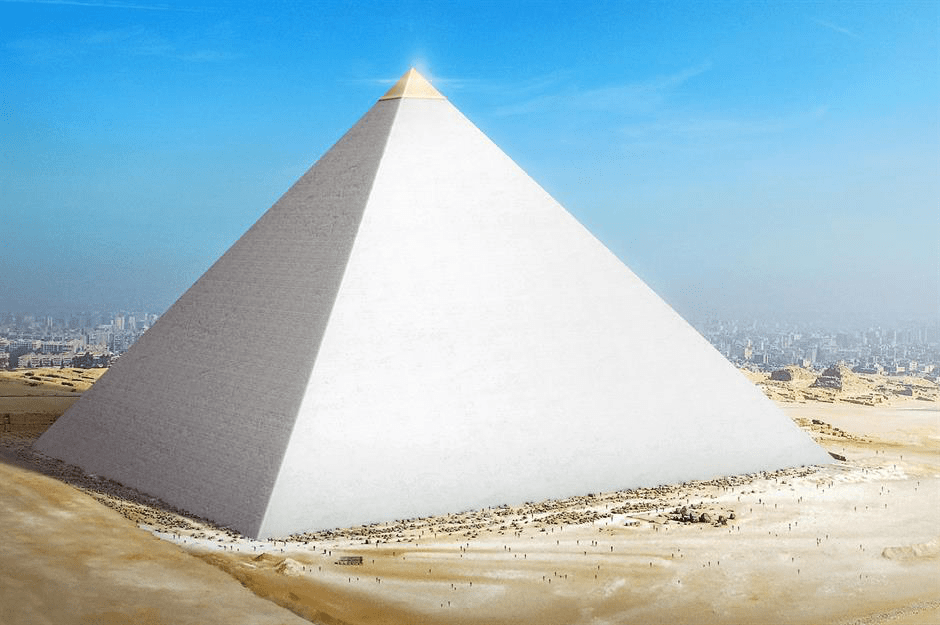
Reu also had a son, called Serug, born in 5867 BCE. Serug’s name in Hebrew means, ‘branch’ from the verb sarag to be ‘intertwined.’ Between Serug’s birth and his son Nahor (I), Shem died in 5717 BCE, age 6,120 years and Arphaxad died in 5617 BCE, age 5,100 years – refer Chapter XXII Alpha & Omega

Book of Jubilees 11:1-6

‘… Reu took to himself a wife, and her name was ‘Ora, the daughter of Ur, the son of Kesed, and she bare him a son, and he called his name Seroh… And the sons of Noah began to war on each other, to take captive and to slay each other, and to shed the blood of men on the earth, and to eat blood, and to build strong cities, and walls, and towers, and individuals (began) to exalt themselves above the nation, and to found the beginnings of kingdoms, and to go to war people against people, and nation against nation, and city against city, and all (began) to do evil, and to acquire arms, and to teach their sons war, and they began to capture cities, and to sell male and female slaves. And Ur, the son of Kesed, built the city of ‘Ara of the Chaldees^, and called its name after his own name and the name^ of his father. 

And they made for themselves molten images, and they worshipped each the idol… and they began to make graven images and unclean simulacra, and malignant spirits assisted and seduced (them) into committing transgression and uncleanness. And the prince Mastema [chief of spirits – Beelzebub]… sent forth other spirits, those which were put under his hand, to do all manner of wrong and sin… to corrupt and destroy, and to shed blood upon the earth. 

For this reason he called the name of Seroh, Serug, for every one turned to do all manner of sin and transgression. And he grew up, and dwelt in Ur of the Chaldees, near to the father of his wife’s mother, and he worshipped idols, and he took to himself a wife… and her name was Melka, the daughter of Kaber, the daughter of his father’s brother.’

Kesed is a family name, as Nahor (II) had a grandson called Chesed. We will return to the people called the Chaldees and Chaldeans. Nahor I, Abraham’s grandfather was born in 4967 BCE, while Peleg later died in 4737 BCE. Nahor I died in 2887 BCE, though his son Terah of purported Nimrod fame (refer previous chapter), was born in 4077 BCE. Terah in Hebrew derives from the verb tarah, meaning: ‘wanderer’ or ‘turn’ and the noun ruah, means, ‘wind, breath’ or ‘spirit.’

Book of Jubilees 11:7-14

‘And she [Melka] bare him Nahor [I]… and he grew and dwelt in Ur of the Chaldees, and his father taught him the researches of the Chaldees to divine and augur, according to the signs of heaven [astrology]. And… he took to himself a wife, and her name was Ijaska, the daughter of Nestag of the Chaldees. And she bare him Terah… And the prince Mastema sent ravens and birds to devour the seed which was sown in the land, in order to destroy the land, and rob the children of men of their labours. And the years began to be barren… it was only with great effort that they could save a little of all the fruit of the earth in their days… Terah took to himself a wife, and her name was ‘Edna, the daughter of ‘Abram, the daughter of his father’s sister. And… she bare him a son, and he called his name Abram, by the name of the father of his mother; for he had died before his daughter had conceived a son.’

Abram is a family name along with Kesed and Nahor. There are two Nahors: Nahor I, the grandfather of Abraham and Nahor II, the brother of Abraham. It is Abraham’s brother we are studying and will refer to him simply, as Nahor. In Genesis 11:26, we learn of Terah’s three sons, Abram, later known as Abraham, Nahor and Haran. 

It is a similar situation to Genesis 10:1, where Shem, Ham and Japheth are listed, but in fact Japheth is the eldest and while Shem appears the youngest in certain contexts, it is Ham who was the youngest of the three (Canaan not withstanding) – Genesis 9:24.

Abram is stated first as his descendants would fulfil the Genesis 3:15 prophecy. Though Haran is the eldest and Nahor is in the middle as the second born son of Terah. We will discover that Haran died prematurely and it was territory named after him, where Abraham later dwelt. More importantly, in support for Haran being the eldest is that Nahor married a niece from Haran’s family. Haran had children first and they were marriageable age, for Nahor. Similarly, Abraham also married family. What is not clear superficially, is whose exactly.

Haran was born in 2009 BCE and Abraham was born in 1977 BCE. Nahor was born perhaps circa 1993 BCE. Nahor in Hebrew means: ‘snort’ or ‘scorched’ from the verb nhr, ‘to snort vigorously’ and the root harar, ‘to be a central hub of heat.’

Abarim Publications – emphasis mine:

‘The root (harar) describes a society’s central and enclosed source of heat. It thus may express a geographical depression, but more so… being hot and ultimately… being a ruler (whether by might, political clout or wisdom).

Verb (harar I) means to be hot, burned or charred. Noun (harer) denotes a parched place and noun (harhur) describes a violent heat or fever. The unused verb (harar II) means to be free… which is the opposite of being a slave. Noun (hor) means noble or nobleman. The unused verb (harar III) appears to refer to the enclosure of kilns and ovens, as the first ones were most likely built in natural hollows. The noun… (hor)… [means] hole or cavern, but obviously relate to the previous word in that freemen surround themselves with walls and armies.

Verb (hara) means to burn or ignite (in the Bible solely in an emotional way: to get angry). Noun (haron) describes the burning of anger. Verb (hawar) means to be or grow white (like ash or baked bricks). Verb (nahar) looks very much like a passive or reflexive version of (harar) or its participle. This verb isn’t used in the Bible but nouns (nahar) and (naharah) describe the vigorous snorting of a horse, and noun (nahir) means nostril (which in turn reminds of a cavern).

Whatever the true etymology and original meaning, to any Hebrew audience the name Nahor would mean both A Snort or A Snorting, and Charred or Scorched, or even Noble or Freeman. For a meaning of the name Nahor… Jones’ Dictionary of Old Testament Proper Names reads… Breathing Hard.

Joshua 24:2

English Standard Version

And Joshua said to all the people, “Thus says the Lord, the God of Israel, ‘Long ago, your fathers lived beyond the Euphrates [Ur of the Chaldees], Terah, the father of Abraham and of Nahor; and they served other gods’ – Genesis 31:53

Book of Jasher 9:7-8

‘And the king [of Ur] and all his servants, and Terah with all his household were then the first of those that served gods of wood and stone. And Terah had twelve gods of large size, made of wood and stone, after the twelve months of the year, and he served each one monthly, and every month Terah would bring his meat offering and drink offering to his gods; thus did Terah all the days.’

Jubilees 12:1-15

‘And it came to pass… that Abram said to Terah his father, saying, ‘Father!’ And he said, ‘Behold, here am I, my son.’

And he said, “What help and profit have we from those idols which thou dost worship, And before which thou dost bow thyself? For there is no spirit in them, For they are dumb forms, and a misleading of the heart. Worship them not: Worship the God of heaven, Who causes the rain and the dew to descend on the earth And does everything upon the earth, And has created everything by His word, And all life is from before His face. Why do ye worship things that have no spirit in them? For they are the work of (men’s) hands, And on your shoulders do ye bear them, And ye have no help from them, But they are a great cause of shame to those who make them, And a misleading of the heart to those who worship them: Worship them not.”

And his father said unto him, ‘I also know it, my son, but what shall I do with a people who have made me to serve before them? And if I tell them the truth, they will slay me; for their soul cleaves to them to worship them and honour them. Keep silent, my son, lest they slay thee.’ And these words he spake to his two brothers, and they were angry with him and he kept silent.’

Recall, Terah is recorded as originally serving Nimrod directly at his command, administering the Babylonian religious system resurrected by Nimrod after the Flood with his mother-wife Semiramis… the evil angel Lilith – refer Chapter XXI The Incredible identity, Origin & Destiny of Nimrod; and article: Lilith.

Though historically, the king in question was perhaps Shulgi, the son of Ur-Nammu and 2nd king of the 3rd Dynasty of Ur. Shulgi ruled 46 years, from 1970 to 1924 BCE – Chapter XIX Chedorlaomer & the War of Nine Kings. Though in reality it was likely a far earlier, unknown king whom maintained the traditions of Nimrod.  

Regardless, the entanglement of that situation clung to Terah as if he were shrink-wrapped in plastic. This alignment to the mystery religion is beyond coincidental, as Terah’s descendants through Nahor, have continued their unrivalled involvement and allegiance, to the present day.

After the unknown king’s death, Terah maintained an exalted position in Ur with huge strings attached. To give this up was a monumental request from Abraham. To defy the people who viewed Terah as synonymous with Nimrod’s legacy, was tantamount to death. 

Book of Jasher 7:41, 49-51

‘And he [the king] placed Terah the son of Nahor the prince of his host, and he dignified him and elevated him above all his princes… And Terah the son of Nahor, prince of [the king’s] host, was in those days very great in the sight of the king and his subjects, and the king and princes loved him, and they elevated him very high. And Terah took a wife and her name was Amthelo [Edna in the Book of Jubilees] the daughter of Cornebo; and the wife of Terah [later] conceived and bare him a son… and Terah called the name of his son that was born to him Abram, because the king had raised him in those days, and dignified him above all his princes that were with him.’ 

Different sources include Shem, Abraham or Esau as the eventual slayer of Nimrod. If Nimrod was born circa 8700 BCE, it is dubious whether he would still be alive some 7,000 years later when Abram was born in 1977 BCE. Shem died in 5717 BCE and is the only candidate of the three who makes sense. Nimrod’s days after the failed tower were numbered and his demise in this era would appear logical.

We will look at two different versions of the events that transpired surrounding the death of Abram’s eldest brother Haran and his family’s rather hasty departure from Ur in Sumer. The two accounts may be inaccurate or contain elements of what happened. Either way, Abram’s family fled; most likely driven by their dissatisfaction with a religious-political system they could no longer support.  

The Book of Jasher in chapter 8:1-36, enumerates an apparent history between Nimrod and Abraham, which began at his birth. It is proposed that it was actually the second king of the Third Dynasty of Ur. Shulgi is to Ur as Hammurabi was to Babylon and Chedorlaomer to Elam – refer Chapter XIX Chedorlaomer & the War of Nine Kings. King Shulgi preceded them both by a few years and was a prominent ruler of his time and the most famous monarch to have reigned from Ur – after his father the renowned Ur-Nammu.

It was in 1927 BCE when Abram’s family departed Ur for Haran; with Abram being fifty years old. Therefore, the name of Nimrod has been substituted with either Ur-Nammu – who reigned from 1988 to 1970 BCE – or Shulgi as applicable, to give the account an element of veracity that it lacks with Nimrod as the king of Ur. Besides, Nimrod had been the king of ancient Babylon, yet the king of Babylon at the time of Abram’s birth in 1977 BCE was the second king of the Amorite Dynasty I of Babylon, Sumu-la-El who began his thirty-five year reign three years earlier in 1980 BCE.

1 ‘And it was in the night that Abram was born, that all the servants of Terah, and all the wise men of [Ur-Nammu], and his conjurors came and ate and drank in the house of Terah, and they rejoiced with him on that night. 

2 And when all the wise men and conjurors went out from the house of Terah, they lifted up their eyes toward heaven that night to look at the stars, and they saw, and behold one very large star came from the east and ran in the heavens, and he swallowed up the four stars from the four sides of the heavens. 

4 And they said to each other, This only betokens the child that has been born to Terah this night, who will grow up and be fruitful, and multiply, and possess all the earth, he and his children for ever, and he and his seed will slay great kings, and inherit their lands. 6 And they spoke and said to each other, Behold the sight that we saw last night is hidden from the king, it has not been made known to him. 7 And should this thing get known to the king in the latter days, he will say to us, Why have you concealed this matter from me, and then we shall all suffer death; therefore, now let us go and tell the king the sight which we saw, and the interpretation thereof, and we shall then remain clear. 

8 And they did so… and we saw a great star coming from the east, and the same star ran with great speed, and swallowed up four great stars, from the four sides of the heavens. 11 … this thing applies to the child that is born to Terah, who will grow up and multiply greatly, and become powerful, and kill all the kings of the earth, and inherit all their lands, he and his seed forever. 14 And the king heard their words and they seemed good in his sight, and he sent and called for Terah… 15 And the king said to Terah… 16 And now therefore give me the child, that we may slay him before his evil springs up against us, and I will give you for his value, your house full of silver and gold. 28 And Terah saw that the anger of the king was kindled against him, and he answered the king, saying, All that I have is in the king’s power; whatever the king desires to do to his servant, that let him do, yea, even my son, he is in the king’s power, without value in exchange, he and his two brothers that are older than he [Haran and Nahor]. 29 And the king said to Terah, No, but I will purchase your younger son for a price… ‘

‘Terah said, Let my king give me three days’ time [three is the number of decision and finality] till I consider this matter within myself, and consult with my family concerning the words of my king; and he pressed the king greatly to agree to this. 31 And the king hearkened to Terah, and he did so and he gave him three days’ time, and Terah went out from the king’s presence, and he came home to his family and spoke to them all the words of the king; and the people were greatly afraid. 32 And it was in the third day that the king sent to Terah, saying, Send me your son for a price as I spoke to you; and shouldst you not do this, I will send and slay all you hast in your house, so that you shall not even have a dog remaining. 33 And Terah hastened, (as the thing was urgent from the king), and he took a child from one of his servants, which his handmaid had born to him that day, and Terah brought the child to the king and received value for him. 

34 And Yahweh was with Terah in this matter, that [Ur-Nammu] might not cause Abram’s death, and the king took the child from Terah and with all his might dashed his head to the ground, for he thought it had been Abram; and this was concealed from him from that day, and it was forgotten by the king, as it was the will of Providence not to suffer Abram’s death. 35 And Terah took Abram his son secretly, together with his mother and nurse, and he concealed them in a cave, and he brought them their provisions monthly. 36 And Yahweh was with Abram in the cave and he grew up, and Abram was in the cave ten years, and the [new] king [Shulgi] and his princes, soothsayers and sages, thought that the [previous] king [Ur-Nammu] had killed Abram.’

Book of Jubilees 12:1-15:

‘And in the [fiftieth] year [1927 BCE] of the life of Abram… Abram arose by night, and burned the house of the idols, and he burned all that was in the house and no man knew it. And they arose in the night and sought to save their gods from the midst of the fire. And Haran hasted to save them, but the fire flamed over him, and he was burnt in the fire, and he died [at 82 years of age] in Ur of the Chaldees before Terah his father [who died in 1842 BCE], and they buried [Haran] in Ur of the Chaldees [in Sumer].’ 

Stalled by the palpable reticence from Terah, Abraham took matters into his own hands. Abraham would later when rescuing Lot, attack and ambush King Chedorlaomer the Elamite and his coalition army by cover of night. This Ur of Chaldea was located south of Babylon, in the area known as Sumer – the southern portion of the Land of Shinar. The descendants of Joktan had primarily dwelt in Sumer and the descendants of Peleg, mainly to the North in Akkadia where the city of Babylon was located.

Jubilees: ‘And Terah went forth from Ur of the Chaldees, he and his sons, to go into the land of [northern] Lebanon… and he dwelt in the land of Haran, and Abram dwelt with Terah his father in Haran [for 25 years, from 1927 to 1902 BCE].’

At this point, after the devastating loss of his eldest son Haran, Terah – his name meaning, wanderer – decides to leave Ur and his privileged life behind. They leave to begin a new life, to soften the blow of the loss of Haran as well as possibly concern about retribution from Shulgi the king. Terah may have acted differently if he had known Haran had died at the hands of Abraham. Saying that, the Book of Jasher claims a very different version of events surrounding Haran’s death.

Book of Jasher 11:33-61, 12:1-70

33 ‘And when Abram saw all these things his anger was kindled against his father, and he hastened and took a hatchet in his hand, and came unto the chamber of the gods, and he broke all his father’s gods. 34 And when he had done breaking the images, he placed the hatchet in the hand of the great god which was there before them, and he went out; and Terah his father came home, for he had heard at the door the sound of the striking of the hatchet; so Terah came into the house to know what this was about. 

35 And Terah, having heard the noise of the hatchet in the room of images, ran to the room to the images, and he met Abram going out. 36 And Terah entered the room and found all the idols fallen down and broken… 37 And when Terah saw this his anger was greatly kindled… 38 And he found Abram his son still sitting in the house; and he said to him, What is this work you hast done to my gods? 

… 42 Is there in these gods spirit, soul or power to do all you hast told me? Are they not wood and stone, and have I not myself made them, and canst you speak such lies, saying that the large god that was with them smote them? It is you that didst place the hatchet in his hands, and then say he smote them all. 43 And Abram answered his father and said to him, And how canst you then serve these idols in whom there is no power to do any thing? Can those idols in which you trust deliver you? Can they hear your prayers when you call upon them? Can they deliver you from the hands of your enemies, or will they fight your battles for you against your enemies, that you shouldst serve wood and stone which can neither speak nor hear? 46 Did not our fathers in days of old sin in this matter, and Yahweh the Almighty of the universe brought the waters of the flood upon them and destroyed the whole earth?

52 … and they went and brought Abram before the king. And [Shulgi] and all his princes and servants were that day sitting before him, and Terah sat also before them. 53 And the king said to Abram, What is this that you hast done to your father and to his gods? And Abram answered the king in the words that he spoke to his father… The large god that was with them in the house did to them what you hast heard.’  

Abram exhibits a black sense of humour and a level of audaciousness before the king.

Jasher: 54 ‘And the king said to Abram, Had they power to speak and eat and do as you hast said? And Abram answered the king, saying, And if there be no power in them why dost you serve them and cause the sons of men to err through your follies? 56 O foolish, simple, and ignorant king, woe unto you forever. 60 And if your wicked heart will not hearken to my words to cause you to forsake your evil ways, and to serve the eternal Yahweh, then wilt you die in shame in the latter days, you, your people and all who are connected with you, hearing your words or walking in your evil ways.’

It is worth noting that a later Chaldean king, Nebuchadnezzar II, faced a similar challenge and after being humbled, became a believer in the Eternal.

Jasher: 1 ‘And when the king heard the words of Abram he ordered him to be put into prison; and Abram was ten days in prison. 3 And the king said to the princes and sages, Have you heard what Abram, the son of Terah, has done to his father? 5 And they all answered the king saying, The man who reviles the king should be hanged upon a tree [a reference to crucifixion]; but having done all the things that he said, and having despised our gods, he must therefore be burned to death, for this is the law in this matter. 6 … And the king did so, and he commanded his servants that they should prepare a fire for three days and three nights in the king’s furnace… and the king ordered them to take Abram from prison and bring him out to be burned [a pre-shadowing of Shadrach, Meshach and Abednego: Daniel 3:12-30]. 

7 And all the king’s servants, princes, lords, governors, and judges, and all the inhabitants of the land, about nine hundred thousand men, stood opposite the furnace to see Abram. 8 And all the women and little ones crowded upon the roofs and towers to see what was doing with Abram, and they all stood together at a distance; and there was not a man left that did not come on that day to behold the scene. 9 And when Abram was come, the conjurors of the king and the sages saw Abram, and they cried out to the king, saying, Our sovereign lord, surely this is the man whom we know to have been the child at whose birth the great star swallowed the four stars, which we declared to the king…

10 And behold now his father has also transgressed your commands, and mocked you by bringing you another child, which you didst kill. 11 And when the king heard their words, he was exceedingly wroth, and he ordered Terah to be brought before him. 15 And the king said Who advised you to this? Tell me, do not hide aught from me, and then you shall not die. 16 And Terah was greatly terrified in the king’s presence, and he said to the king, It was Haran my eldest son who advised me to this; and Haran was in those days that Abram was born, two and thirty years old. 17 But Haran did not advise his father to anything, for Terah said this to the king in order to deliver his soul from the king, for he feared greatly; and the king said to Terah, Haran your son who advised you to this shall die through fire with Abram; for the sentence of death is upon him for having rebelled against the king’s desire in doing this thing. 

18 And Haran at that time felt inclined to follow the ways of Abram, but he kept it within himself. 19 And Haran said in his heart, Behold now the king has seized Abram on account of these things which Abram did, and it shall come to pass, that if Abram prevail over the king I will follow him, but if the king prevail I will go after the king. 20 And when Terah had spoken this to the king concerning Haran his son, the king ordered Haran to be seized with Abram. 22 And the king’s servants took Abram and his brother, and they stripped them of all their clothes excepting their lower garments which were upon them. 23 And they bound their hands and feet with linen cords, and the servants of the king lifted them up and cast them both into the furnace.

24 And Yahweh loved Abram and he had compassion over him, and Yahweh [the Son of Man] came down and delivered Abram from the fire and he was not burned [just as the Son of God had saved Shadrach and his friends: Daniel 3:25]. 25 But all the cords with which they bound him were burned, while Abram remained and walked about in the fire. 26 And Haran died when they had cast him into the fire, and he was burned to ashes, for his heart was not perfect with Yahweh; and those men who cast him into the fire, the flame of the fire spread over them, and they were burned, and twelve men of them died.

27 And Abram walked in the midst of the fire three days and three nights, and all the servants of the king saw him walking in the fire, and they came and told the king, saying, Behold we have seen Abram walking about in the midst of the fire, and even the lower garments which are upon him are not burned, but the cord with which he was bound is burned. 28 And when the king heard their words his heart fainted and he would not believe them; so he sent other faithful princes to see this matter, and they went and saw it and told it to the king; and the king rose to go and see it, and he saw Abram walking to and fro in the midst of the fire, and he saw Haran’s body burned, and the king wondered greatly. 

29 And the king ordered Abram to be taken out from the fire; and his servants approached to take him out and they could not, for the fire was round about and the flame ascending toward them from the furnace. 30 And the king’s servants fled from it, and the king rebuked them, saying, Make haste and bring Abram out of the fire that you shall not die. 31 And the servants of the king again approached to bring Abram out, and the flames came upon them and burned their faces so that eight of them died.

32 And when the king saw that his servants could not approach the fire lest they should be burned, the king called to Abram, O servant of Yahweh who is in heaven, go forth from amidst the fire and come hither before me; and Abram hearkened to the voice of the king, and he went forth from the fire and came and stood before the king. 34 And the king said to Abram, How is it that you wast not burned in the fire? 35 And Abram said to the king, Yahweh of heaven and earth in whom I trust and who has all in his power, He delivered me from the fire into which you didst cast me.

36 … And the king, princes, and inhabitants of the land, seeing that Abram was delivered from the fire, they came and bowed down to Abram. 38 And Abram said to them, Do not bow down to me, but bow down to Yahweh of the world who made you, and serve him, and go in his ways for it is he who delivered me from out of this fire, and it is he who created the souls and spirits of all men, and formed man in his mother’s womb, and brought him forth into the world, and it is he who will deliver those who trust in him from all pain. 39 And this thing seemed very wonderful in the eyes of the king and princes, that Abram was saved from the fire and that Haran was burned; and the king gave Abram many presents and he gave him his two head servants from the king’s house; the name of one was Oni and the name of the other was Eliezer. 

40 And all the kings, princes and servants gave Abram many gifts of silver and gold and pearl, and the king and his princes sent him away, and he went in peace. 41 And Abram went forth from the king in peace, and many of the king’s servants followed him, and about three hundred men joined him. 42 And Abram returned on that day and went to his father’s house, he and the men that followed him, and Abram served Yahweh his Almighty all the days of his life, and he walked in his ways and followed his law‘ – Article: The Sabbath Secrecy. 43 ‘And from that day forward Abram inclined the hearts of the sons of men to serve Yahweh. 

57 Now therefore my king, surely you know… since your sages saw this at the birth of Abram, and if my king will suffer Abram to live in the earth it will be to the injury of my lord and king, for all the days that Abram lives neither you nor your kingdom will be established, for this was known formerly at his birth; and why will not my king slay him, that his evil may be kept from you in latter days? 58 And [Shulgi] hearkened to the voice of Anuki [Anunnaki?], and he sent some of his servants in secret to go and seize Abram, and bring him before the king to suffer death. 59 And Eliezer, Abram’s servant whom the king had given him, was at that time in the presence of the king, and he heard what Anuki had advised the king, and what the king had said to cause Abram’s death. 

60 And Eliezer said to Abram, Hasten, rise up and save your soul, that you may not die through the hands of the king, for thus did he see in a dream concerning you, and thus did Anuki interpret it, and thus also did Anuki advise the king concerning you. 61 And Abram hearkened to the voice of Eliezer, and Abram hastened and ran for safety… and the king’s servants… searched through out the country and he was not to be found, and… the king’s anger against Abram was stilled, as they did not find him, and the king drove from his mind this matter concerning Abram. 63 And Abram… was still afraid of the king; and Terah came to see Abram his son secretly… 64 And Abram said to his father, Dost you not know that the king thinks to slay me, and to annihilate my name from the earth by the advice of his wicked counsellors? 

65 Now whom hast you here and what hast you in this land? Arise, let us go together to the land of Canaan, that we may be delivered from his hand, lest you perish also… 66 Dost you not know or hast you not heard, that it is not through love that [the king] gives you all this honor, but it is only for his benefit that he bestows all this good upon you? 67 And if he do unto you greater good than this, surely these are only vanities of the world, for wealth and riches cannot avail in the day of wrath and anger. 68 Now therefore hearken to my voice, and let us arise and go to the land of Canaan, out of the reach of injury from [the king]; and serve you Yahweh who created you in the earth and it will be well with you; and cast away all the vain things which you pursuest. 70 And Terah hearkened to the voice of his son Abram, and Terah did all that Abram said, for this was from Yahweh, that the king should not cause Abram’s death.’

In this version, it wasn’t Abraham who accidentally killed his brother. Terah had his own firstborn son murdered. It was Terah with the grisly secret to hide. Nor did Terah altogether need Abraham to convince him to leave Ur, for how long before Shulgi’s mind returned to Terah’s betrayal, by hiding Abram after his birth. In each account, the common denominators are a. the death of Haran (by fire) because he did not have the same relationship with the Eternal as Abram; b. Abram’s dissatisfaction with his fathers’ religious beliefs and allegiance to Ur’s king and his persuading Terah to repent; and c. motives for Terah and or Abram to leave Ur behind. This was no mean decision, as Terah’s family were counted as aristocracy; royalty even, for Terah was a prince and as we shall discover as well about Abraham. It was a complete uprooting and sacrifice to abandon the privileged yet complicated life, titles, standing and influence they enjoyed in Ur. 

The land of Haran, named after Terah’s eldest son Haran, was in a direct line northwest from Ur. Ur was fifty miles south of Babylon. From Ur of the Chaldees to the region of Haran is approximately 600 miles. Haran was located on the edge of southeastern Asia Minor, halfway along the Fertile Crescent between Mesopotamia and the Mediterranean and just beyond the northern reaches of the land which became known as Lebanon – the ‘land of Laban’ a grandson of Nahor. Terah and his family did not make it to the final destination of Canaan, deciding to linger in Haran. 

Genesis 11:31

English Standard Version

‘Terah took Abram his son and Lot the son of Haran, his grandson, and Sarai his daughter-in-law, his son Abram’s wife, and they went forth together from Ur of the Chaldeans to go into the land of Canaan, but when they came to Haran, they settled there.

Book of Jasher 13:1-2 

‘… And when they came as far as the land of Haran they remained there, for it was exceedingly good land for pasture, and of sufficient extent for those who accompanied them. And the people of the land of Haran saw that Abram was good and upright with Yahweh and men, and that Yahweh his Almighty was with him, and some of the people of the land of Haran came and joined Abram, and he taught them the instruction of Yahweh and his ways; and these men remained with Abram in his house and they adhered to him.’ 

Terah died in Haran in 1842 BCE – Genesis 11:32. Apart from Haran, there was another city called Ur – though not to be confused with Ur located six hundred miles southeast.

Genesis 11:27-29

English Standard Version

‘Now these are the generations of Terah. Terah fathered Abram, Nahor, and Haran; and Haran fathered Lot. Haran died in the presence of his father Terah in the land of his kindred, in Ur of the Chaldeans. And Abram and Nahor took wives. The name of Abram’s wife was Sarai, and the name of Nahor’s wife, Milcah, the daughter of Haran the father of Milcah and Iscah. 30 Now Sarai was barren; she had no child.’

Nahor married his niece – the daughter of his deceased brother Haran. Haran has three children mentioned in the Bible, Lot, Milcah and the mysterious Iscah. They were all born and raised in the city of Ur in Sumer. Before we turn to Milcah and Nahor, let’s look at Iscah and Sarai.

Genesis 20:9-13

English Standard Version

‘Then Abimelech [the Philistine king] called Abraham [c. 1878 BCE] and said to him, “What have you done to us? And how have I sinned against you, that you have brought on me and my kingdom a great sin? You have done to me things that ought not to be done.” And Abimelech said to Abraham, “What did you see, that you did this thing?” Abraham said, “I did it because I thought, ‘There is no fear of God at all in this place, and they will kill me because of my wife.’ Besides, she is indeed my [half] sister, the daughter of my father though not the daughter of my mother, and she became my wife. And when God caused me to wander from my father’s house, I said to her, ‘This is the kindness you must do me: at every place to which we come, say of me, “He is my brother.”

Abraham feared he would be murdered for his beautiful wife Sarai – her name was later changed to Sarah. Sarai in Hebrew means, my princess and Sarah similarly means, princess. He says to Abimelech that she is his half-sister. Yet, we read above in Genesis 11:31, that Sarai was Terah’s daughter-in-law. It does not say that Sarah is Terah’s daughter. Abraham also claims that she has a different mother. We learned in the Book of Jasher that Terah had a wife named Amthelo. The Bible delineates if a man has more than one wife. It doesn’t say this for Terah. The Book of Jasher states that Terah married again, though later in his old age. Two clear falsifications from Abraham, to add to the original one, of Sarah not being his wife. This situation had apparently already occurred when Abraham and Sarah had previously travelled to Egypt.’

Genesis 12:10-20

English Standard Version

10 ‘Now there was a famine in the land. So Abram went down to Egypt to sojourn there, for the famine was severe in the land. 11 When he was about to enter Egypt, he said to Sarai his wife, “I know that you are a woman beautiful in appearance, 12 and when the Egyptians see you, they will say, ‘This is his wife.’ Then they will kill me, but they will let you live. 

13 Say you are my sister, that it may go well with me because of you, and that my life may be spared for your sake.” 14 When Abram entered Egypt, the Egyptians saw that the woman was very beautiful. 15 And when the princes of Pharaoh saw her, they praised her to Pharaoh. And the woman was taken into Pharaoh’s house. 16 And for her sake he dealt well with Abram; and he had sheep, oxen, male donkeys, male servants, female servants, female donkeys, and camels.17 But the Lord afflicted Pharaoh and his house with great plagues because of Sarai, Abram’s wife. 18 So Pharaoh called Abram and said, “What is this you have done to me? Why did you not tell me that she was your wife? 19 Why did you say, ‘She is my sister,’ so that I took her for my wife? Now then, here is your wife; take her, and go.” 20 And Pharaoh gave men orders concerning him, and they sent him away with his wife and all that he had.’

These two accounts are often highlighted by commentators to show that the highly obedient patriarch to the Creator, lied – twice. Technically, the lie to Abimelech was a half-truth if the story were true. It would be more constructive, if the time spent on critiquing Abraham’s behaviour had been used to question the discrepancy in Abraham and Sarah’s cover story. For Sarah was accomplice in saying that Abraham was her brother. The Pharaoh in question – according to an unconventional chronology and a synchronisation of the Egyptian dynasties – was the third Pharaoh of Dynasty I: Djer. The meeting took place in 1902 BCE, when Sarah was sixty-five years old and just after Abraham had moved from Haran to Canaan. Djer ruled a united Egypt from 1922 to 1875 BCE.

The only plausible answer, if Sarah was not Terah’s daughter and therefore not Abraham’s sister, is that she is Iscah; the sister of Milcah and the daughter of Haran. In the Talmud, Rabbi Isaac states that Iscah is synonymous with Sarai. Thus, the two sisters, Milcah and Sarai, married the two younger brothers of their father, Haran: Nahor and Abraham. The uncles, married their nieces. In the Book of Leviticus, marriages between aunt and nephew would be later outlawed, though it did not forbid marriage between an uncle and niece, nor deem it incestuous – Leviticus 18:14; 20:19. 

The name Iscah in Hebrew means, one who looks forth. This is interesting, as Sarah was barren, and so ‘one who looks forth’ for a baby, is an apt name.

The Book of Jasher 12:44 & 9:1-6

‘And at that time Nahor and Abram took unto themselves wives, the daughters of their brother Haran; the wife of Nahor was Milca and the name of Abram’s wife was Sarai. And Sarai, wife of Abram, was barren; she had no offspring in those days. And Haran, the son of Terah, Abram’s oldest brother, took a wife in those days. Haran was thirty-nine years old when he took her; and the wife of Haran conceived and bare a son, and he called his name Lot [who was born in 1970 BCE, seven years after Abraham]. And she conceived again and bare a daughter, and she called her name Milca; and she again conceived and bare a daughter, and she called her name Sarai. 

Haran was forty-two years old when he begat Sarai [in 1967 BCE], which was in the tenth year of the life of Abram; and in those days Abram and his mother and nurse went out from the cave, as the king and his subjects had forgotten the affair of Abram… and Abram knew Yahweh from three years old, and he went in the ways of Yahweh until the day of his death…’

It is interesting to note that Abraham’s nephew was of a similar age. An easy interpretation of their relationship – their closeness as evidenced with Abraham following Lot when he had been captured, securing his life in a dare devil night time raid – can incorrectly be perceived that they (as Uncle and Nephew) were like a father and son. Rather, their ages show that they must have had a relationship akin to brothers. This presumably would have been strengthened with the loss of Lot’s father – when he was forty-three – and Abraham’s eldest brother, Haran.

Also, if accurate, Abraham’s tender age highlights that the Eternal was working with Abraham from very young, showing that Abraham was precocious, open minded and humble. Quite often, though not always, it is a reoccurring theme that the Creator works with His true servants either very rarely from before birth; sometimes rarely, from birth; or less rarely (yet still infrequently), from a young child. 

Genesis 22:20-24

English Standard Version

‘Now after these things it was told to Abraham, “Behold, Milcah also has borne children to your brother Nahor: 

Uz [family name of Aram, Joktan and Esau] his firstborn, Buz his brother, Kemuel the father of Aram [family name of Shem’s son Aram], Chesed [family name], Hazo, Pildash, Jidlaph [7th son]’ – Article: Seventh Son of a Seventh Son – ‘and Bethuel.” (Bethuel fathered Rebekah.)’ – Genesis 24:24. ‘These eight Milcah bore to Nahor, Abraham’s brother. 

Moreover, his concubine, whose name was Reumah, bore Tebah, Gaham, Tahash, and Maacah.’

Nahor and Milcah had eight sons – Uz the firstborn (or Huz) in some translations and the interlinear version. Buz means ‘to despise’ or ‘hold as insignificant’ and ‘my contempt.’ Huz is similar with Uz and means ‘wood, counsel’ and ‘fastened.’ We briefly covered Uz, the son of Aram and their fastened location in Italy – refer Chapter XXIII Aram & Tyre: Spain, Portugal & Brazil.

The peoples of (northern and central) Italy, are the principal descendants of Nahor – by his wife and concubine. Early in their northern Mesopotamian history, they settled in the same region as sons of Aram – specifically Uz – and that relationship is evident in modern Italy. To reinforce this, Kemuel, the third son is the only one stated with a son, or grandson of Nahor and his name is… Aram.

Nahor had a concubine called Reumah and she bare four sons to Nahor and so we have a third gene pool to add to Milcah’s sons and the descendants of Uz from Aram. DNA and Haplogroup evidence point to Reumah’s ancestry being possibly from Arphaxad’s great grandson Joktan – Chapter XXIV Arphaxad & Joktan: Balts, Slavs & the Balkans

Whereas Milcah, as her husband Nahor, were descended from Joktan’s brother Peleg – Genesis 10:25. What is significant, is that the southern Italians and Sicilians are more closely related to Greeks than they are to other Italians. The Greeks themselves are descended from Joktan’s sixth son, Uzal – refer Chapter XXIV Arphaxad & Joktan: Balts, Slavs & the Balkans. It is more than a passing coincidence that variations of Uz, H-uz, B-uz and Aram from Nahor; Uz from Aram; and Uz-al from Joktan, should all be found either in the modern Italian nation or nearby neighbours, Greece. 

Therefore the three sections of Italy: North, Central and Southern are represented by Milcah, Aram and Reumah. That said, the descendants of Nahor and Uz from Aram have in part blended, so that northern and central Italy are a mix of the two. Still, PCA graphs reveal that northern Italians are genetically closer to the related peoples from Aram in Spain and Portugal. And while the central Italians sit between the northern and southern Italians; it is the Italians in the north of Italy with which they share more in common.

Apart from Aram, many additional grandson’s of Nahor are listed in the Book of Jasher 22:15-39:

15 ‘And Abraham’s brother Nahor and his father and all belonging to them dwelt in Haran, for they did not come with Abraham to the land of Canaan. 16 And children were born to Nahor which Milca the daughter of Haran, and sister to Sarah, Abraham’s wife, bare to him. 

17 And these are the names of those that were born to him, Uz, Buz, Kemuel, Kesed, Chazo, Pildash, Tidlaf, and Bethuel, being eight sons, these are the children of Milca which she bare to Nahor, Abraham’s brother… 19 And the children that were born to Nahor were twelve sons besides his daughters, and they also had children born to them in Haran.

20 And the children of Uz the first born of Nahor were Abi, Cheref, Gadin, Melus, and Deborah their sister.

21 And the sons of Buz were Berachel, Naamath, Sheva, and Madonu.

22 And the sons of Kemuel were Aram and Rechob.

23 And the sons of Kesed were Anamlech, Meshai, Benon and Yifi;

and the sons of Chazo were Pildash, Mechi and Opher.

24 And the sons of Pildash were Arud, Chamum, Mered and Moloch‘ – refer article: Belphegor.

Note that Nahor’s fifth son Chazo named his firstborn son the same name as his younger and sixth brother, Pildash.

25 ‘And the sons of Tidlaf [Jidlaph] were Mushan, Cushan and Mutzi.

26 And the children of Bethuel were Sechar, Laban and their sister Rebecca.

27 These are the families of the children of Nahor, that were born to them in Haran; and Aram the son of Kemuel and Rechob his brother went away from Haran, and they found a valley in the land by the river Euphrates. 28 And they built a city there, and they called the name of the city after the name of Pethor the son of Aram, that is Aram Naherayim [near Padan-Aram] unto this day.

29 And the children of Kesed also went to dwell where they could find a place, and they went and they found a valley opposite to the land of Shinar, and they dwelt there. 30 And they there built themselves a city, and they called the name at the city Kesed after the name of their father, that is the land Kasdim* unto this day, and the Kasdim [Chaldeans] dwelt in that land and they were fruitful and multiplied** exceedingly.’

A simplified map of the three main waves of people who entered the Italian Peninsula after the departure of the Romans. They constituted the Heruli, Ostrogoths or eastern Goths and the Lombards; who broadly represent descendants of Joktan, Aram and the branches of Nahor’s family respectively. Anciently, Nahor’s tribes were known as the Chaldees who overthrew Babylon and made it their capital; just as in Italy today and the appropriating of Rome – modern Babylon – as the capital of the Italian nation.

As an aside, the Suevi were the descendants of Shem’s son Aram and the ancestors of the Portuguese. The Visigoths are also descendants from Aram and are the ancestors of the Spaniards. The Spanish – like the Italians – are a complex amalgamation of peoples. That said, the majority of Spanish who departed for the Americas are either descended from a different branch of Aram’s four sons (Vandals and Alans), or are of Moorish and Berber stock – refer Chapter XV The Philistines: Latino-Hispano America; and Chapter XXIII Aram & Tyre: Spain, Portugal & Brazil.

Jasher: 31 ‘And Terah, father of Nahor and Abraham, went and took another wife in his old age, and her name was Pelilah, and she conceived and bare him a son [in 1867 BCE] and he called his name Zoba. 32 And Terah lived twenty-five years after he begat Zoba. 33 And Terah died in that year, that is in the thirty-fifth year [1842 BCE] of the birth of Isaac [in 1877 BCE the] son of Abraham… 35 And Zoba the son of Terah lived thirty years [1837 BCE] and he begat Aram, Achlis and Merik. 36 And Aram son of Zoba son of Terah, had three wives and he begat twelve sons and three daughters; and the Lord gave to Aram the son of Zoba, riches and possessions, and abundance of cattle, and flocks and herds, and the man increased** greatly.’

And so today, the descendants of Terah and Nahor have been richly blessed as figures show for the economy, standard of living and quality of life of the Italian nation.

Jasher: 37 ‘And Aram the son of Zoba and his [brothers] and all his household journeyed from Haran, and they went to dwell where they should find a place, for their property was too great to remain in Haran; for they could not stop in Haran together with their brethren the children of Nahor. 38 And Aram the son of Zoba went with his brethren [Achlis and Merik], and they found a valley at a distance toward the eastern country and they dwelt there. 39 And they also built a city there, and they called the name thereof Aram, after the name of their eldest brother; that is Aram Zoba to this day.’

Aram, Achlis and Merik – sons of Zoba, son of Terah – went to dwell where the sons of Kesed the son of Nahor – Anamlech, Meshai, Benon and Yifi – had gone to dwell. Also, where Aram and Rechob – sons of Kemuel, son of Nahor – had travelled. All three groups dwelt south of Haran and in a vicinity west of Shinar. This region was adjacent to Uz, son of Aram the son of Shem, and is the Padan-Aram where Bethuel’s family also migrated. In essence, this means that the ‘Aramaean’ elements from Nahor and Terah merged with Uz from Aram and form the dual regions of northern and central Italy today. 

Kemuel means, ‘congregation of God, God’s rising’ and ‘God’s grain.’ The ancient peoples of Nahor were instrumental in perpetuating the Babylonian Mystery religion inherited from Nimrod and today it is  continued by the Universal Roman Catholic Church in the smallest state in the world, the Vatican City – Chapter XXI The Incredible Identity, Origin & Destiny of Nimrod^.

An aerial view of St Peter’s Basilica and of St Peter’s Square in the Vatican City, Rome.

Nahor’s people also made the city of Babylon, their own and today that great capital is represented by the city of Rome.

Just as the ancient capital of Assyria, Nineveh is replicated today in Moscow – refer Chapter XX Will the Real Assyria Stand Up: Asshur & Russia^.

The other parallel, is that as the sons of Joktan lived in ancient Sumer, the South eastern portion of the Land of Shinar, the descendants of Peleg – mainly comprised from Nahor’s children – lived adjacently to the Northwest in Akkad. Today, the sons of Joktan live to the East, adjacent to the Italian Peninsula – Chapter XXIV Arphaxad & Joktan: Balts, Slavs & the Balkans.

Chesed means, as if it were a: ‘field, mountain, breast, protecting spirit.’ The Alfred Jones’ Dictionary of Old Testament Proper Names reads for Chesed: Increase. Though for the word Chaldean: ‘as it were demons.’ The Hebrew word for Chaldeans is Kashedim* the plural of Chesed.

Researchers state that Nahor named his son after the people he came from. That is, an earlier Kesed as mentioned in the Book of Jubilees. Similarly, others claim the word Chaldean (or Chaldee) does not derive from Chesed; because Chesed is stated in chapter twenty-two of Genesis, whereas the word Chaldean is used in Genesis chapter eleven to describe Abraham’s origination in ‘Ur of the Chaldeans.’ The second view is explained by either post-dated editing, or by the fact it is substantiating the first view raised. 

The line from Arphaxad to Peleg and then on to Nahor is just one line of descent. It is recorded in the Bible, that other peoples came from that line. It goes without saying that other sons and daughters were born to all the different families, even from Terah as discussed. Family trees grow large very quickly and could not all be recorded in scripture. In the book of Jubilees we read of Peleg’s son Reu. Reu married Ora, the daughter of Ur, who was the son of the earlier Kesed. Both Ur and Kesed were family names. The name Ur first being used in southern Mesopotamia for a city and then used again in Haran. The A-kkad-ians and Kashed-im were Arphaxad’s children and so Nahor using the name Kesed was not inexplicable, nor a deliberate attempt to name his son after the Kashedim. It would be like being an English person from England and having either word as your last name as people do today, for instance: John England.

Another point is that the word or prefix Kush, Kash and Kish which was common in the Babylonian region, is reflective of the original Babylonians – and Assyrians – than that of Cush, descended from Ham as discussed previously^. Speaking of family names, the prime repeating name in Arphaxad’s family has the prefix Reu. Reu the son of Peleg, just mentioned; Reu-mah the concubine of Nahor and later we will see there is a Reu-el, in the family of Esau – also Jethro the father-in-law of Moses, the priest of Midian who’s name was Reu-el – and a Reu-ben, the first born son in the family of Jacob.

Nahor’s fifth son’s name Hazo means, ‘seer, vision’ or ‘to see or have a vision.’ Pildash means, ‘steely, flashing steel, fiery iron.’ Jidlaph means, ‘he will weep, he weeps, he drips.’ Bethuel, the father of Rebekah means, ‘man of God, house of God’ and ‘virgin of God.’ There is a religious or pious theme reflected in the definitions for these names. Today, the Italian people are not just staunchly Catholic, it is the heart, soul and headquarters of the Catholic faith. 

The mother of these eight sons, Milcah’s name means, ‘queen’ or ‘counsel.’ Milcah was an ancestor of the patriarch Jacob. Milcah’s son Bethuel moved to Padan-Aram and fathered Rebekah – Genesis 24:15. 

Milcah’s granddaughter Rebekah, then married Milcah’s nephew Isaac (Genesis 24:67) and gave birth to Jacob (Genesis 25:21), who became Israel. Milcah and her sister Sarah are contrasted in that she conceived a bounty of sons and Sarah was barren. Eventually though, Sarah shared being an ancestor in that she bore Isaac, Jacob’s father – Genesis 21:1-4. 

The mother of Nahor’s remaining four sons was Reumah and her name means, ‘exalted’ or ‘wild ox.’ Reumah’s sons names are Tebah, which means, ‘confidence, slaughter’ or ‘butcher’; Gaham, which means, ‘flame, burning’; Tahash, meaning, ‘to hurry’ or ‘hasten’; and Maacah meaning, ‘oppression, to press’ or ‘squeeze.’ It could be ventured that these names reflect the Latin temperament.

Nahor moved from Ur of the Chaldees with his father Terah and younger brother Abraham. While they settled in Haran, Nahor dwelt adjacent to Aramean territory and the land of Aram’s son Uz, which became known as Aram Nahar-aim, founding the city of Nahor.

Genesis 24:10

Young’s Literal Translation

‘And the servant taketh ten camels of the camels of his lord and goeth, also of all the goods of his lord in his hand, and he riseth, and goeth unto Aram-Naharaim, unto the city of Nahor

The word Nahar-aim means ‘two rivers,’ that is, the Euphrates and the Tigris. From Hebrew, it has been translated into Greek as the midst of [two] rivers.

Genesis 25:20

English Standard Version

‘… and Isaac was forty years old when he took Rebekah, the daughter of Bethuel the Aramean of Paddan-aram, the sister of Laban the Aramean, to be his wife.’

The word paddan means ‘area’ in Aramaean, thus the name Paddan-Aram could be translated as the region, area or even field of the Aramaeans. The descendants of Nahor had become interchangeably known as Aramaeans (or Syrians). Bethuel had moved away from but still adjacent to the region of Aram-Naharaim.

Genesis 27:43

English Standard Version

‘Now therefore, my son, obey my voice. Arise, flee to Laban my brother in Haran.’

Rebekah is speaking to Jacob after he had deceived his own father regarding the birthright blessing. Laban was her brother, the son of Bethuel, son of Nahor and was living in Haran. Haran was synonymous with the territory of Padan-Aram, near Aram-Naharaim.

Genesis 29:4-5

English Standard Version

4 ‘Jacob said to them, “My brothers [or cousins], where do you come from?” They said, “We are from Haran.” 5 He said to them, “Do you know Laban the son of Nahor?” They said, “We know him.”

Laban is called the son of Nahor, though the Hebrew word for son can mean a descendant, as in a grandson. Abraham, Lot the son of Haran and Nahor each dwelt near each other either in Haran which included the northern Ur, Aram-Naharaim or Padan-Aram.

Nahor’s descendants in the Bible are collectively called Chaldeans from the word Chaldees, derived from Kashedim, linked to the Hebrew names Kesed and Chesed. They are not called Aramaeans (or Syrians) from an historical or prophetic viewpoint after the book of Genesis. 

The Origin of the Nations, Herman Hoeh, 1957 – capitalisation his, emphasis mine:

‘Abraham lived among the Chaldeans. One whole book of the Bible – Habakkuk – is entirely devoted to a prophecy concerning the Chaldeans in these latter days! But where are the Chaldeans today? Certainly they are not at ancient Babylon. No one lives there! Notice first where the Chaldeans were. Abraham came from “Ur of the Chaldees”. Ancient Ur was in Mesopotamia. Ur is a shortened name for Urfa. There were once two cities by that name. 

Stephen, in his inspired sermon, makes plain that it was the northern Ur in Mesopotamia from which Abram came (Acts 7:2-3). That is where the Chaldeans first dwelt – over 400 miles northwest of ancient Babylon. Who are these Chaldeans so frequently mentioned in Bible prophecy? Here is the plain, simple explanation recognized by most Hebrew scholars. The word “Chaldean” comes from the Greek. The original Hebrew word is Chasdim, meaning “the people of Chesed”. Notice that Chesed was a common name in the family of Abraham (Genesis 22:22).

Next, consider the original Hebrew word translated in our Bibles as “Arphaxad”. Most biblical encyclopaedias will clearly show that the Hebrew form is Arfachesed MEANING ARFA OR URFA THE CHALDEAN! The Chaldeans come from Arphaxad. They are his children. Abraham was a branch of this stock! The city of Ur was named after Arfa or Urfa, the Chaldean. Chaldean probably means “capturer”, just as Jacob means “supplanter”. The reason that some Chaldeans were later associated with Babylon in Daniel’s time is that a small part of them was later settled by the Assyrians near Babylon. The original inspired Hebrew of Isaiah 23:13 explains this: “Behold, the land of the Chaldeans – this is the people that was not, when Asshur founded it for shipmen”. How clear.

The Chaldeans were divided, not an organized nation. A part of them was transplanted to Babylon. At Babylon they became the ruling class. But the remainder settled farther north around Lake Van, about halfway between the Caspian Sea and the Mediterranean. Here they were called [Chaldeans]… Sometimes they were referred to as HURRI or Hurrians, after Haran (Genesis 11:29; 22:20-24). Sometimes they bore the name GUTI, probably meaning “people of God.”

The Amorites and Kassites; the Guti and Gutium; the Goths and Visigoths; were all descended from Aram as studied in Chapter XXIII Aram & Tyre: Spain, Portugal & Brazil. The Ostrogoths or eastern Goths who swept into the Italian Peninsula and partially into the Balkans were related and possibly composed of a mix of the descendants of Nahor, Aram and Zoba. Dr Hoeh raises the point for two locations for the ancient Chaldeans. The fragmented nature of their structure mirrors modern day Italy, which did not form a single unified nation until between 1861 to 1871. The Chaldeans from Nahor are not the same as the Guti from Gether a son of Aram; nor with the Hurrians who descend from Nahor’s elder brother Haran. Similarly, the ancient Mitanni kingdom may have comprised a mixture of Nahor and Uz from Aram. We will revisit this when we study Haran in the following chapter.

The Races of the Old Testament, A H Sayce, 1891 – emphasis & bold mine:

‘At a later date the tribe of Kassi obtained a permanent footing in Babylonia and established a dynasty there which lasted for several centuries [circa 1200-800 BCE]. Kassites and Babylonians intermingled together, and the long continuance of Kassite rule has been thought to explain the name of Kasdim given to the inhabitants of Babylonia in the Old Testament. 

Chesed, of which Kasdim is the Hebrew plural, has been explained as Kas-da the country of the Kassitesit is quite as easy to derive Kasdim from the Assyrian verb Kasddu to conquer so that the Kasidi or Kasdim would be the Kassite conquerors of the Chaldaean plain. In the Septuagint the Hebrew word Kasdim is translated… Chaldaeans… Chaldaean and Babylonian had become synonymous terms, and Babylonia had come to be known as Chaldaea…’

This writer is not convinced the Kassites were one and the same with the Chaldeans; rather, they are considered a division of Aram. The Kassites migrated from the east, from a similar location as the Guti. The Kassites, in direction of travel and time-frame, do not sit squarely enough to identify as the Chaldeans. The Kassites rose to prominence in the south of Mesopotamia at the same time as the Mitanni were rising in the North. The Mitanni are linked with the descendants of Nahor and or Uz from Aram – refer Chapter XXIII Aram & Tyre: Spain, Portugal & Brazil.

The major accomplishment of the Kassites was to unify Mesopotamian culture, centred around Babylon, instead of continuing the separate independence of the surrounding city-states. This paved the way for the Chaldeans to rule a strong capital in Babylon and a unified region of neighbouring cities.

Dynasty X from 626 to 539 BCE was the most famous ruling dynasty of the Chaldeans and included Nebuchadnezzar II, who features prominently in the Old Testament.

Nebuchadnezzar II

The first king Nabopolassar – who reigned from 626 to 605 BCE – was a native of Babylon, who drove out the Assyrians and re-established an independent Babylonian kingdom. His son, Nebuchadnezzar ruled from 605 to 562 BCE and it was he, who took the Kingdom of Judah into captivity. He was succeeded by his son, Amel-Marduk (565-560 BCE). His reign was short-lived as the throne was usurped by Nebuchadnezzar’s son-in-law Neriglissar from 560 to 556 BCE. Then his son Labashi-Marduk, briefly reigned in 556 BCE, who in turn had the throne usurped by another possible son (Daniel 5:2, 11, 13, 18) of Nebuchadnezzar, Nabonidus (556-539 BCE). 

Nabonidus ruled until the fall of Babylon, at the hands of Cyrus the Great and the Medo-Persian empire – refer Chapter IV Central Asia – Madai & the Medes; and Chapter XVIII Elam & Turkey. This tumultuous sequence of rapidly toppled regimes is reminiscent of modern day Italian government and its frequent changes of ruling political parties and prime minsters. In 2019, Italy had endured sixty-nine governments since the ending of World War II, with an average of nearly one every year, each lasting on average for merely thirteen months. It ‘is a revolving door like no other in Europe.’

The Chaldeans are mentioned in a number of scriptures in the Bible.

Isaiah 23:13

New English Translation

‘Look at the land of the Chaldeans, these people who have lost their identity! The Assyrians have made it a home for wild animals. They erected their siege towers, demolished its fortresses, and turned it into a heap of ruins.’

The Chaldeans had originally transformed Babylon and Babylonia into a wealthy, prosperous region. Assyrian rule left it impoverished and powerless.

Habakkuk 1:6

English Standard Version

‘For behold, I am raising up the Chaldeans, that bitter and hasty nation [Latin temperament], who march through the breadth of the earth to seize dwellings not their own.’

Job 1:17

Amplified Bible

‘While he was still speaking, another [messenger] also came and said, “The Chaldeans formed three bands and made a raid on the camels and have taken them away and have killed the servants with the edge of the sword, and I alone have escaped to tell you.”

Ezra 5:11-13

English Standard Version

‘And this was their reply to us: ‘We are the servants [tribes of Judah and Benjamin] of the God of heaven and earth, and we are rebuilding the house that was built many years ago, which a great king of Israel [Solomon] built and finished. But because our fathers had angered the God of heaven, he gave them into the hand of Nebuchadnezzar king of Babylon, the Chaldean, who destroyed this house and carried away the people to Babylonia. However, in the first year of Cyrus… Cyrus the king made a decree that this house of God should be rebuilt.’

Ezekiel 23:14-17, 23

English Standard Version

‘… She [Kingdom of Judah] saw men portrayed on the wall, the images of the Chaldeans portrayed in vermilion, wearing belts on their waists, with flowing turbans on their heads, all of them having the appearance of officers, a likeness of Babylonians whose native land was Chaldea. When she saw them, she lusted after them and sent messengers to them in Chaldea. And the Babylonians came to her into the bed of love, and they defiled her with their whoring lust. And after she was defiled by them, she turned from them in disgust… the Babylonians and all the Chaldeans, Pekod [visitation] and Shoa [rich] and Koa [cutting off]…’ 

The vermillion is reminiscent of the crimson (purple and red) worn by Cardinals in the Vatican – Revelation 17:4.

The next passage laments the fall of Babylon to the Medes. The Chaldeans were zealous, religious and deeply steeped in astrology, the occult and the mystery religion. Plus, the Chaldeans were renowned for their cultural influence and artistic talent. Just as modern Italy led the renaissance and is a global influencer in cuisine, fashion, art and film. This might explain the focus on the feminine aspect describing their empire in the Book of Isaiah (Ezekiel 16:1-58). 

Isaiah chapter forty-seven, is similar to the verses we read regarding the Prince and the ‘King’ of Tyre in Ezekiel twenty-eight – refer article: Asherah. The description of the fall of ancient Babylon, runs in tandem with the descriptions in the Book of Revelation regarding the future Babylon. 

Also, the “Queen forevermore, I am” and “there is no one besides me”, is a hidden reference to none other than the original Queen of Heaven, Asherah. Her wisdom – pride and knowledge – from which the Tree of Knowledge of Good and Evil derives, led her astray. This path was chosen in her desire to remain in the blended spirit and physical realm, where she was a god, pseudo-creator and is mystically known as the architect – Article: Asherah. This is what the Serpent Samael offered by trickery to Eve – a descent wholly from spirit to the physical with no way (seemingly) back – Chapter XXII Alpha & Omega.

Isaiah 47:1-15

Amplified Bible

1 ‘Come down and sit in the dust, O virgin daughter of Babylon; Sit on the ground [in abject humiliation]; there is no throne for you, O daughter of the Chaldeans, For you will no longer be called tender and delicate. 2 “Take millstones [as a female slave does] and grind meal; Remove your veil, strip off the skirt, Uncover the leg, cross the rivers [at the command of your captors]. 3 “Your nakedness will be uncovered, Your shame will also be exposed; I will take vengeance and will spare no man.” 4 Our Redeemer [will do all this], the Lord of hosts is His name, The Holy One of Israel. 5 “Sit in silence, and go into darkness, O daughter of the Chaldeans; For you will no longer be called The queen of kingdoms.” 

6 “I was angry with My people, I profaned [Judah] My inheritance And gave them into your hand [Babylon]. You showed them no mercy; You made your yoke very heavy on the aged. 7 “And you said, ‘I shall be a queen [H1404 – gbereth: ‘lady, mistress’ from root H1376 – gbiyr: lord, ruler] forevermore [H5769 – olam: perpetual, continuous existence, unending].’

You did not consider these things, Nor did you [seriously] remember the [ultimate] outcome of such conduct. 8 “Now, then, hear this, you who live a luxuriant life, You who dwell safely and securely, Who say in your heart (mind), ‘I am [the queen], and there is no one besides me. I shall not sit as a widow, Nor know the loss of children.’ 9 “But these two things shall come to you abruptly, in one day: Loss of children and widowhood. They will come on you in full measure In spite of your many [claims of power through your] sorceries, In spite of the great power of your enchantments. 

10 “For you [Babylon] have trusted and felt confident in your wickedness; you have said, ‘No one sees me.’ [like Samael, the ‘blinded of God’] Your wisdom [Matthew 10:16 ESV “… so be wise as serpents…] and your knowledge [Genesis 3:6 Amplified Bible “And when the woman saw that the tree was… to be desired in order to make one wise and insightful (knowledgable)…” ] have led you astray, And you have said in your heart (mind), ‘I am, and there is no one besides me [H657 ‘ephec & H656 ‘aphec, meaning: ‘to cease, come to an end, be clean gone, fail, finality, end, at an end].’

Exodus 3:14 ESV “God [elohiym, a God, not the God] said to Moses, “I am [H1961 hayah & H1933 hava, meaning: ‘to fall, to become, to happen, to come about, to come to pass. to appear, to arise, to come into being, to be instituted, to be established, to be brought about, to be, to exist’] who I am. (or I will be what I will be)” And he said, “Say this to the people of Israel: ‘I am has sent me to you.’ Either an evasive, cryptic and somewhat derisive reply or just honest, blunt and to the point?

The Name of God as revealed in Exodus 3:14, An explanation of its meaning, K J Cronin – emphasis & bold mine: 

‘Moses was quite understandably anticipating what the Israelites would say to him when he told them that their God had sent him to them. The first thing he anticipated them asking for was the name of their God, YHWH, which if Moses had not known would have proved that he was not sent by Him. 

It would, therefore, have been a perfectly reasonable and practical question for the Israelites to ask. As for Moses’ question of Exodus 3:13, “What should I say to them?”, we need only keep in mind one certainty to understand what Moses was asking for in these words. That certainty is that Moses already knew of the existence of a Divine name in Israelite tradition when he asked this question of God. We know this for certain because Moses refers to a Divine name in Israelite tradition immediately before he asks the question of God. It is very unlikely that he could have been aware of the existence of a Divine name without being aware of what it was and so I believe that we can say with certainty that Moses knew the name YHWH before he asked his question of Exodus 3:13.

Moreover, we are informed that as a young man Moses regarded the Hebrews in his midst as his kinsfolk (Exodus 2:11). It is very unlikely that he would not have known the most important feature of his kinsfolk’s religion – the proper name of their God – and so our certainty is confirmed that Moses knew the name YHWH before asking the question of Exodus 3:13. Furthermore, his father-in-law in Midian was a priest (Exodus 2:16) and as such would surely have known the names of the most prominent regional deities amongst whom YHWH would have been counted, which also confirms our certainty that Moses would have known the name YHWH before he asked the question of Exodus 3:13. Bearing in mind these three points the question of Exodus 3:13 can perhaps best be understood as Moses saying to God “I know that You have a proper name, and I even know what that name is, but I still want direction from You as to how I should respond to the Israelites if they ask me for Your name.”

In response to his question Moses received what was no doubt more than he had expected when he asked the question of God, just as the Israelites received more than they could have expected when they asked Moses for the name of their God. Neither Moses nor the Israelites could have expected to receive two names in response to their respective questions but that is what they did receive.

For his part Moses received two answers to his question of Exodus 3:13, or two parts of the one answer, one of them in Exodus 3:14 and one in Exodus 3:15. He was told that when the Israelites ask him for the name of the God who sent him to them, he was first to say that ehyeh had sent him to them (3:14b) and he was then to say that YHWH had sent him to them (3:15). Both words are clearly intended to be understood as answers to the same question because the sentence structure in the two verses is identical, they have a shared vocabulary and there is only one question being answered.

Irrespective of the widespread opinion that these verses are attributable to the Elhoistic source, the entire passage is written with great care and deliberation and is clearly intended to be read and understood precisely as we find it. 

Considered in this way, and as the bold-type text makes clear, the most important difference between the two answers Moses receives to his question is that in the position where Exodus 3:14b has the word ehyeh, Exodus 3:15 has the name YHWH. Both are identified as sending Moses to the Israelites and because there is only one God doing the sending both must be names of the God of Israel. Moreover the word ehyeh is a first person singular of the verb, which means that as a name it can only be one by which God knows Himself; a Personal name. Therefore Ehyeh must be the Personal name of God and YHWH His proper name. It will be recalled that this conclusion is supported by the interpretations of Recanati, Rashbam, Ibn Ezra, Sarna and Buber among others.’

Isaiah: 11 “Therefore disaster will come on you; You will not know how to make it disappear [with your magic]. And disaster will fall on you For which you cannot atone [with all your offerings to your gods]; And destruction about which you do not know Will come on you suddenly. 12 “Persist, then, [Babylon] in your enchantments and your many sorceries with which you have labored from your youth; Perhaps you will be able to profit [from them], Perhaps you may prevail and cause trembling. 

13  “You are wearied by your many counsels. Just let the astrologers, The stargazers, Those who predict by the new moons [each month] Stand up and save you from the things that will come upon you [Babylon]. 14 “In fact, they are like stubble; Fire burns them. They cannot save themselves from the power of the flame [much less save the nation], There is no blazing coal for warming Nor fire before which to sit! 15 “This is how they have become to you, those [astrologers and sorcerers] with whom you have labored, Those who have done business with you from your youth; Each has wandered in his own way. There is no one to save you.’

This passage in Isaiah chapter forty-seven is dual in intention and loaded with meaning. We have read previously regarding Nebuchadnezzar’s dream and the statue of gold, silver, brass, iron and clay in preceding chapters. The first five chapters of the Book of Daniel are dedicated to the Chaldean empire; with the first four relating to the ruler King Nebuchadnezzar himself. The king’s astrologers were not able to recount the dream, let alone explain it. Daniel had it revealed to him by the Creator through Gabriel (Daniel 9:21) and explains:

Daniel 2:1-2, 31-38 

English Standard Version

‘In the second year of the reign of Nebuchadnezzar, Nebuchadnezzar had dreams; his spirit was troubled, and his sleep left him. 2 Then the king commanded that the magicians, the enchanters, the sorcerers, and the Chaldeans be summoned to tell the king his dreams. 31 You saw, O king, and behold, a great image. This image, mighty and of exceeding brightness, stood before you, and its appearance was frightening. 32 The head of this image was of fine gold… 

37 You, O king, the king of kings, to whom the God of heaven has given the kingdom, the power, and the might, and the glory, 38 and into whose hand he has given, wherever they dwell, the children of man, the beasts of the field, and the birds of the heavens, making you rule over them all – you are the head of gold.’ 

Recall, the Medo-Persian Empire (Chapter IV Central Asia – Madai & the Medes; and Chapter XVIII Elam & Turkey) was the chest and arms comprising silver and one of the legs of iron was the Byzantine Empire, the eastern leg of the Roman Empire – refer Chapter XX Will the Real Assyria Stand Up: Asshur & Russia.

The feet and toes of iron and clay are a spirit-human mix. Daniel 2:43 says: ‘As you saw the iron mixed with soft clay, so they will mix with one another in marriage – by the seed of men – but they will not hold together, just as iron does not mix with clay.

The Chaldean empire was the most cultured, refined and resplendent of the six kingdoms described or predicted. It remained shorter – less widespread – than the ones that followed and was not as militarily dominant as evidenced by the softer, though more valuable element of gold – Article: The Ark of God.

Another description of Nebuchadnezzar’s empire is in the Book of Daniel in chapter seven. We have previously covered the Medo-Persian empire, the second kingdom being described as a bear and also in chapter eight as a ram; the fourth kingdom, of which the Byzantium empire constitutes half of, being described in chapter seven as a ‘terrible beast with ten horns.’

Daniel 7:1-4, 17

English Standard Version

‘In the first year of Belshazzar [556 BCE, son of Nabonidus] king of Babylon, Daniel saw a dream and visions of his head as he lay in his bed. Then he wrote down the dream and told the sum of the matter. Daniel declared, “I saw in my vision by night, and behold, the four winds of heaven were stirring up the great sea. And four great beasts came up out of the sea, different from one another. The first was like a lion and had eagles wings [like the Cherubim].

Then as I looked its wings were plucked off, and it was lifted up from the ground and made to stand on two feet like a man, and the mind of a man was given to it…” ‘These four great beasts are four kings who shall arise out of the earth.’

The lion – or a bull with a human head, known as a Lamassu – with eagles wings is a prevalent animal hybrid symbol in Chaldean history.

It is also seen sometimes in Asshur’s monuments as well in Lud’s – refer Chapter XVII Lud & Iran. Today, it is frequently seen in none other than Italy.

The symbol of Saint Mark of Venice is a prime example below.

In Daniel chapter four we read of Nebuchadnezzar’s greatness, his pride, his being humbled through madness and then his subsequent acknowledgment of the Creator for all that he had been given. The tree described, is a parallel analogy of the restraint of Asherah – refer article: Asherah.

Daniel: ‘… I know that the spirit of the holy gods is in you [Daniel] and that no mystery is too difficult for you, tell me the visions of my dream that I saw and their interpretation. 10 The visions of my head as I lay in bed were these… [Daniel] answered and said… The tree you saw, which grew and became strong, so that its top reached to heaven, and it was visible to the end of the whole earth, 21 whose leaves were beautiful and its fruit abundant, and in which was food for all, under which beasts of the field found shade, and in whose branches the birds of the heavens lived – 22 it is you, O king, who have grown and become strong. Your greatness has grown and reaches to heaven [the attention of the spirit realm], and your dominion to the ends of the earth. 

23 And because the king saw a watcher, a holy one, coming down from heaven and saying, ‘Chop down the tree and destroy it, but leave the stump of its roots in the earth, bound with a band of iron and bronze, in the tender grass of the field, and let him be wet with the dew of heaven, and let his portion be with the beasts of the field, till seven periods of time pass over him…’

27 Therefore, O king, let my counsel be acceptable to you: break off your sins by practicing righteousness, and your iniquities by showing mercy to the oppressed, that there may perhaps be a lengthening of your prosperity.” 29 At the end of twelve months he was walking on the roof of the royal palace of Babylon, 30 and the king answered and said, “Is not this great Babylon, which I have built by my mighty power as a royal residence and for the glory of my majesty?”

Pride before a fall.

31 ‘While the words were still in the king’s mouth, there fell a voice from heaven, “O King Nebuchadnezzar, to you it is spoken: The kingdom has departed from you… until you know that the Most High rules the kingdom of men and gives it to whom he will.” 33 Immediately the word was fulfilled against Nebuchadnezzar. He was driven from among men and ate grass like an ox, and his body was wet with the dew of heaven till his hair grew as long as eagles’ feathers, and his nails were like birds’ claws.’

34 ‘At the end of the days [seven years] I, Nebuchadnezzar, lifted my eyes to heaven, and my reason returned to me, and I blessed the Most High, and praised and honored him who lives forever… 35 all the inhabitants of the earth are accounted as nothing, and he does according to his will among the host of heaven and among the inhabitants of the earth; and none can stay his hand or say to him, “What have you done?” 36 At the same time my reason returned to me, and for the glory of my kingdom, my majesty and splendor returned to me. My counselors and my lords sought me, and I was established in my kingdom, and still more greatness was added to me [like Job].

37 Now I, Nebuchadnezzar, praise and extol and honor the King of heaven, for all his works are right and his ways are just; and those who walk in pride he is able to humble.’

This was a remarkable experience, lesson and process of conversion for the arrogant and self-righteous Nebuchadnezzar who had been brought low, humbled and in an about turn admitted gratitude and became thankful to the supreme source of all his blessings.

Prior to looking at the golden age of the Chaldeans, we will look at their ancient ancestors and clarify an important scholarly debate. We have noted the sons of Canaan; as the original inhabitants of the land of Canaan – with the Nephilim and Elioud giants. In time, other peoples came to be known by the names of some of the sons of Canaan. We have seen this with the Amorites and how that name became more well known for the blond Aramaeans, than it did for the darker-skinned Amor-ites descended from Canaan. 

A case in point is Heth. We have studied the original Heth, living in Hamath and now equating to modern Nigeria – refer Chapter XII Canaan & Africa. In time there were a light-skinned people called Hittites. Where it becomes complex, is that these Hittites inherited the name of Hatti, not from the original Heth of Canaan, but rather from the proto-Chaldeans, who were known as Chatti. To further complicate the issue, historians have associated Khatti and Kheta (or Khetae) a reference to the Kittim, to then conclude that the Hatti and Hittites were tawny-skinned Asiatics descended from the Kittim of Javan. Kittim – present day Indonesia – is not the true identity of the Hatti or the Hittites.

We will study the Hittites in detail, for their imprint and impact on the world has been monumental in successive re-incarnations throughout ancient and modern history. Regarding the Hatti and the Hittites, the New World Encyclopaedia states, emphasis and bold mine:

‘”Hittites” is the conventional English-language term for an ancient people who spoke an Indo-European language and established a kingdom centered in Hattusa (the modern village of Bogazkoy in north-central Turkey), through most of the second millennium B.C.E. The Hittite kingdom, or at least its core region, was apparently called Hatti in the reconstructed Hittite language. 

However, the Hittites should be distinguished from the Hattians,” an earlier people who inhabited the same region until the beginning of the second millennium B.C.E., and spoke a non-IndoEuropean language conventionally called Hattic.

Hittites or more recently, Hethites is also the common English name of a Biblical people, who are also called Children of Heth. These people are mentioned several times in the Old Testament, from the time of the Patriarchs up to Ezra’s return from Babylonian captivity of Judah. The archaeologists who discovered the Anatolian Hittites in the nineteenth century initially believed the two peoples to be the same, but this identification remains disputed.

Around 2000 B.C.E., the region centered in Hattusa that would later become the core of the Hittite kingdom was inhabited by people with a distinct culture who spoke a non-Indo-European language. The name “Hattic” is used by Anatolianists to distinguish this language from the Indo-European Hittite language, that appeared on the scene at the beginning of the second millennium B.C.E. and became the administrative language of the Hittite kingdom over the next six or seven centuries. 

As noted above, “Hittite” is a modern convention for referring to this language. The native term was Nesili, i.e. “in the language of Nesa.” The early Hittites, whose prior whereabouts are unknown, borrowed heavily from the pre-existing Hattian culture, and also from that of the Assyrian traders – in particular, the cuneiform writing and the use of cylindrical seals. Since Hattic continued to be used in the Hittite kingdom for religious purposes [a trait of the Chaldeans], and there is substantial continuity between the two cultures, it is not known whether the Hattic speakers – the Hattians – were displaced by the speakers of Hittite [yes], were absorbed by them [no], or just adopted their language [no].’

To summarise the aforementioned quote: Two different, successive peoples dwelt in ancient Anatolia, with different languages, the Hatti and Hattic, a non-Indo-European language and then the Hittites, speaking Hittite an Indo-European language. The Hittites are definitely not the same as the sons of Heth, or Hethites from Canaan. Identifying them as one and the same is a false premise, which is correct to remain disputed amongst scholars. We will learn definitively once we study the Hittites, that the Hatti – the future Chaldeans – did not adopt the Hittite language nor did they become absorbed into the Hittite civilisation. Rather, the Hatti were displaced by the encroaching Hittites.

Amazing Bible Time Line – emphasis mine:

‘It is a matter of considerable scholarly debate whether the biblical “Hittites” signified any or all of:

1) the original Hattites of Hatti; [no, they do not]

2) their Indo-European conquerors (Nesili), who retained the name ‘Hatti” for Central Anatolia, and are today referred to as the “Hittites” (the subject of this article); [yes, they are the same] or

3) a Canaanite group who may or may not have been related to either or both of the Anatolian groups, and who also may or may not be identical with the later Neo-Hittite, Luwian polities [redundant]. 

Other biblical scholars have argued that rather than being connected with Heth, son of Canaan, [Heth and the Hittites are different] instead the Anatolian land of Hatti was mentioned in Old Testament literature and apocrypha as “Kittim” (Chittim), a people said to be named for a son of Javan [incorrect].’

Sarah wife of Abraham. Fairy tale or Real History? Gerard Gertoux – emphasis mine:

‘The Hittites who lived in Syria, and sometimes in Canaan, wanted to define themselves by their genealogical link “people from the land of Heth” as does the Bible (Genesis 26:34; 36:2), the original land being likely the region around Hat(ti)-tusa (Hattusa). According to the Bible, when Joshua entered the Promised Land (in 1493 BCE) [1407 BC] he expelled a number of nations, including the Hittites. These Hittites were located north of Syria. The few scattered references that we have to Hantili’s reign (1500-1495) indicate that he intended on maintaining Hittite influence on Syria. The Hittites, south of Euphrates, mentioned in the time of Joshua and Hantili I, are therefore the same

The Hittites met by Abraham were not quite the same as those of Joshua 37 since they are identified as sons of Heth, not Hittites. In the biblical narrative (Genesis 23:2-10), Ephron (“of a calf”), son of Zohar (“tawny”), was not a Hittite in the usual manner because his birth name and that of his father are not Hittite but Canaanite, implying that they had been settled in this region for a long time.’

Yes… Ephron was an original son of Heth, a son of Canaan, an African with dark skin – Chapter XII Canaan & Africa.

‘Consequently the history of Hittites is complex, its official beginning is the period called Early Empire (c. 1530 BCE) but previously there was a period called Hattian period, with 3 ancestors kingdoms, those of Hattusa, Kanesh and Carchemish. Those ancient Hittites, called Hattians by scholars or sons of Heth, son of Canaan in Genesis 10:15, were [incorrectly called] the ancestors of the Hittites.’

The sons of Heth – Black people – were not the ancestors of the Hittites; nor were the Hattians. The Hittites are related to the Hattians, but the Hattians are not the ancestors of the Hittites. Heth, Hatti and the Hittites are three separate, distinct peoples. Egyptian depictions of the Battle of Kadesh, show long-nosed Hattian soldiers, while the Hittite leaders look different; highlighting two different peoples.

Ancient history can be hazy for all cultures and empires with information largely based on king lists and inscriptions on tablets, steles and so forth. The Akkadian kingdom in central Mesopotamia, the northern half of the land of Shinar with Sumer, the older civilisation in the south, fascinates; yet their rise and fall are cloaked in shadows. After the Tower of Babel, all peoples dispersed eventually. The sons of Shem stayed closer to the main theatre of events, for longer. The Akkadians were the main body – or rather became the most influential – from Peleg’s branch of Arphaxad’s family tree and later Sumer were the branch from Joktan (refer Chapter XXIV Arphaxad & Joktan: Balts, Slavs & the Balkans). 

The Amurru or Amorites from the Northwest, circa 1994 BCE and the Gutians – both Aramaean peoples – from the East, circa 2067 BCE had invaded the region, with Terah and his family living further south, in northern Sumer at this time. Accad is listed in Genesis chapter ten with Babel, Erech and Calneh as the beginning of Nimrod’s kingdom. The Akkadian Empire reached its political peak between 2224 and 2064 BCE, following the conquests of its founder the great Sargon during 2224 to 2169 BCE. Under Sargon and his successors, the Akkadian language was imposed on the neighbouring conquered states of Elam, the Guti and the Martu – or Amurru. Sargon had also defeated Sumer, Canaan and the Assyrians. Akkad is regarded as the first empire in recent ancient history. 

Sargon claimed he did not know his father and that his mother was a changeling. A changeling is believed to be a fairy which has been left in place of a human, who has been stolen by fairies. Other sources say his mother was La’ibum (or Itti-Bel), either a. a humble gardener; b. a hierodule – ‘a slave-prostitute living in a temple and dedicated to the service of a god’ – or c. a priestess to the Babylonian goddess Ishtar – Inanna in Sumer. Sargon was originally a Rabshakeh, or cupbearer to a king of Kish, Ur-Zababa – Kish as in the Khatti and not from Cush – Chapter XXI The Incredible Identity, Origin & Destiny of Nimrod.

After the fall of the Akkadian Empire, the people of Mesopotamia eventually split into two major Akkadian speaking nations; Assyria in the upper north, and a few centuries later, Babylonia to its south. The third Dynasty of Ur from 1988 to 1882 BCE was founded by Ur-Nammu (or Ur-Namma). Ur-Nammu became king after serving as governor to his father and Ur-Nammu – notice family name of Ur – was the first king to use the title, King of Sumer and Akkad. Ur-Nammu is credited with building the ziggurats at Ur and Uruk. The Code of Ur-Nammu, parallels the later Code of Hammurabi – refer Chapter XIX Chedorlaomer & the War of Nine Kings. The phrase: There will come a king of the four quarters of the earth, originated from Akkadian soothsaying.

During the same time period of the preeminence of Akkad – from 2224 to 2039 BCE the kingdom of the Hatti existed in western Asia Minor – as evidenced by Hittite and Assyrian records. The structure of archeological finds in sites like Hattush, reveal a highly developed culture, with distinct social classes. The Hattians were organised ‘in monarchial city-states. These states were ruled as theocratic kingdoms or principalities.’ A theocracy is ‘a system of government by priests claiming a divine commission’ and ‘a form of government in which a deity is recognised as the supreme civil ruler, the deity’s laws being interpreted by the ecclesiastical authorities.’ The Pope and Cardinals of the Vatican, bearing a more than coincidental parallel of similarity.

The pantheon of gods in Hatti, included the storm god Taru, represented by a bull and the sun goddess Furusemu, represented by a leopard, amongst other symbols. Certain reliefs show a female figure giving birth to a bull; as the the mother goddess Kattahha was mother to the storm god Taru – refer Chapter XV The Philistines: Latino-Hispano America; and article: The Calendar Conspiracy. 

Ancient symbols are often replicated in modern insignias by businesses and sports teams. For instance, the famous Italian sports car marque, Lamborghini. 

The Hittites incorporated much of the Hattian pantheon into their own religious beliefs. James Mellaart proposed that the Hattian ‘religion revolved around a water-from-the-earth concept. Pictorial and written sources show that the deity of paramount importance to the inhabitants of Anatolia was the terrestrial water-god. The Hittite legends of Telipinu and the serpentine dragon Illuyanka found their origin in the Hattian civilization.’

World History Encyclopaedia, Hatti, Joshua J Mark, 2012 – emphasis & bold mine:

‘The Hatti… migrated to the area sometime prior to 2400 BCE. The region was known as ‘Land of the Hatti’ from c. 2350 BCE until 630 BCE, attesting to the influence of the Hattian culture there.  Controlling a significant number of city states and small kingdoms, they had established lucrative trade with the region of Sumer (southern Mesopotamia) by the year 2700 BCE. The historian Erdal Yavuz writes: ‘Besides the timber and stone essential for construction, but deficient in Mesopotamia, Anatolia had rich mines which provided copper, silver, iron, and gold.’ Their trade with the cities of Mesopotamia enriched the region and helped to develop their kingdom. The historian Marc Van De Mieroop includes the Hatti among the nations… in the diplomatic and trade consortium he refers to as The Club of the Great Powers it, included Mitanni, Babylonia, Assyria, Hatti and Egypt…

In 2500 BCE the Hatti established their capital high on a hill at the city of Hattusa [seven Hills of Rome] and held lands securely in the surrounding areas, administering laws and regulating trade in a number of neighboring states. Between c. 2334-2279 BCE the great Sargon of Akkad invaded the region after sacking the city of Ur in 2330 BCE. He then turned his attention to Hattusa but failed to gain an advantage over the city’s defences which were especially strong in that it was located high on a well-defended and fortified plateau. 

Following Sargon’s campaigns in the region, his grandson Naram-Sin (2261-2224 BCE) continued his policies, fighting against the Hattic King Pamba late in the 23rd century BCE with as little success as his grandfather had. In spite of the constant harassment from the Akkadians, Hattic art flourished around 2200 BCE and, by 2000 BCE, their civilization was at its height with prosperous trading colonies established between Hattusa and their other city of Kanesh and, of course, continuing trade relations with Mesopotamia.

In 1700 BCE, the Kingdom of the Hatti was again invaded, this time by the Hittites, and the great city of Hattusa was stormed and destroyed by a king named Anitta from the neighboring Kingdom of Kussara. Excavations at the site show that the city was burned to the ground. King Anitta had such contempt for the city he had vanquished that he cursed the ground and further cursed whoever should re-build Hattusa and try to rule there. Even so, not long after, the city was re-built and re-populated by a later king of Kussara who called himself Hattusili [I]. 

Whoever the Hatti originally were, or where they came from, remains a mystery in the modern day owing to the lack of ancient records. The actual nature of the relationship between the Hatti and the Hittites remains a mystery in the modern day and waits on the discovery of ancient documentation to be resolved.’

Joshua Mark confirms the distinction between the Hatti and Hittites; admitting the lack of historical information regarding their relationship. When we study the Hittites, the relationship will become clearly apparent – Chapter XXVIII The True Identity & Origin of Germany & Austria – Ishmael & Hagar. The dates he provides are all earlier than Nahor’s life, for he was not born until circa 1993 BCE. These Hatti were ante-descendants of Nahor, descending from Peleg and perhaps Terah. It was from the Hatti in Anatolia that the Mitanni of upper Mesopotamia descended – refer Chapter XXIII Aram & Tyre: Spain, Portugal & Brazil.

Later, the Chaldeans dwelt near the coastal area of the Persian Gulf and had not been entirely subjugated by the Assyrians. In 630 BCE Nabopolassar became king of the Chaldeans and by 626 BCE he had forced the Assyrians out of Uruk and crowned himself king of Babylonia. He endeavoured to destroy Assyria, while at the same time, to restore the dilapidated network of canals in the neighbouring cities of and including, Babylon. 

As the Babylonians had grown tired of Assyrian rule and weary of internal struggles, they were easily persuaded to submit to the new Chaldean king. The result was a rapid social and economic consolidation, assisted by the fact that after the fall of Assyria, no external enemy threatened Babylonia for decades. In the cities, the temples were an important part of the economy and the business class regained its strength in the trades, commerce, livestock breeding as well as in agriculture. The collapse of the Assyrian empire, had meant many trade arteries were rerouted through Babylonia with the city of Babylon emerging as a world centre.

Naboploassar had fought the Assyrian King Ashur-uballiṭ II and then turned his attention against Egypt; his successes alternating with defeats. In 605 BCE Nabopolassar died in Babylon. 

Nabopolassar had named his oldest son Nabu-kudurri-usur*, after the famous king of the second dynasty of Isin. He was trained carefully for his future kingship and shared responsibilities with his father. When Nabopolassar died, Nebuchadnezzar* II was with his army in Syria. He had just crushingly defeated the Egyptians near Carchemish in a bloody battle and was pursuing them toward the South. He returned immediately to Babylon on hearing the news of his father’s death. Nebuchadnezzar’s numerous building inscriptions enumerate his many wars, most of them interestingly, ending with prayers

Nebuchadnezzar continued to frequently campaign in Syria in the bid to drive out the Egyptians. In 604 BCE he took the Philistine city of Ashkelon and attacked Canaan at the end of 598 BCE. King Jehoiakim of Judah had rebelled and was relying on aid from Egypt. Even so, Jerusalem was won on March 16, 597 BCE. Jehoiakim died during the siege, and his son, King Johoiachin, together with at least 3,000 people from Judah, were led into exile in Babylonia. The captives were treated well, according to document records.

Judah rebelled again in 589 BCE and Jerusalem was placed under siege. The city finally fell between 587 and 586 BCE and was completely destroyed, along with the Temple. Many thousands from Judah and Benjamin were forced into Babylonian exile. The former Kingdom of Judah, was reduced to a province of the Babylonian empire. The revolt had been caused by an Egyptian invasion which pushed as far north as Sidon. Nebuchadnezzar laid siege to Tyre for thirteen years without taking the city, as he had no decisive winning fleet at his disposal. In 568 and 567 BCE he attacked Egypt, again without much success, but from that time on the Egyptians refrained from further attacks on Canaan. 

Nebuchadnezzar was at peace with Media throughout his reign and he was a mediator after the Median-Lydian war which lasted five years from 590 to 585 BCE. The Babylonian empire under Nebuchadnezzar grew, becoming one of the richest lands in western Asia – a remarkable transformation as it had been rather poor when it was ruled by the Assyrians. Babylon was the largest city of the civilised world. Nebuchadnezzar maintained the revitalised canal systems of his father and built many supplementary canals, making the land even more fertile; with trade and commerce booming during his reign.

Nebuchadnezzar’s building efforts easily surpassed those of most of the Assyrian kings before him. He fortified the old double walls of Babylon, adding a triple wall outside the old wall and erected a further wall, the Median Wall, north of the city between the Euphrates and the Tigris rivers. According to Greek estimates, the Median Wall was about one hundred feet high. Nebuchadnezzar enlarged the original palace, ‘adding many wings, so that hundreds of rooms with large inner courts were now at the disposal of the central offices of the empire. Colourful glazed-tile bas-reliefs decorated the walls. Terrace gardens, called the Hanging Gardens in later accounts, were [built]. Hundreds of thousands of workers are thought to have been required for all his ambitious building  projects.’

Britannica- emphasis mine:

‘The temples were objects of special concern. He devoted himself first and foremost to the completion of Etemenanki, the “Tower of babel.’ Construction of this building began in the time of Nebuchadrezzar I about 1110 [BCE]. It stood as a “building ruin” until the reign of Esarhaddon of Assyria, who resumed building about 680 but did not finish. [Nebuchadnezzar] II was able to complete the whole building. The mean dimensions of Etemenanki are to be found in the Esagila Tablet, which has been known since the late 19th century. Its base measured about 300 feet on each side, and it was 300 feet in height. There were five terrace like gradations surmounted by a temple, the whole tower being about twice the height of those of other temples. The wide street used for processions led along the eastern side by the inner city walls and crossed at the enormous Ishtar gate with its world-renowned bas-relief tiles. [Nebuchadnezzar] also built many smaller temples throughout the country.

The [last] king [of Dynasty X] was the Aramaean Nabonidus… [556–539 BCE] from Harran, one of the most interesting and enigmatic figures of ancient times. His mother, Addagoppe, was a priestess of the god Sin* in Harran; she came to Babylon and managed to secure responsible offices for her son at court. The god of the moon* rewarded her piety with a long life – she lived to be 103 – and she was buried in Harran with all the honours of a queen in 547 [BCE]. 

His viceroy in Babylonia was his son Bel-shar-usur, the Belshazzar of the Book of Daniel in the Bible. Cyrus… [annexed] Media in 550. Nabonidus, in turn, allied himself with Croesus of Lydia [Lud] in order to fight Cyrus. Yet, when Cyrus attacked Lydia and annexed it in 546, Nabonidus was not able to help Croesus. Cyrus bode his time. In 542 Nabonidus returned to Babylonia, where his son had been able to maintain good order in external matters but had not overcome a growing internal opposition to his father. He appointed his daughter to be high priestess of the god Sin in Ur, thus returning to the Sumerian-Old Babylonian religious tradition. 

The priests of Marduk looked to Cyrus, hoping to have better relations with him than with Nabonidus; they promised Cyrus the surrender of Babylon without a fight if he would grant them their privileges in return. In 539 [BCE] Cyrus [I] attacked northern Babylonia with a large army, defeating Nabonidus, and entered the city of Babylon without a battle. The other cities did not offer any resistance either. Nabonidus surrendered, receiving a small territory in eastern Iran. Babylonia’s peaceful submission to Cyrus saved it from the fate of Assyria. It became a territory under the Persian crown but kept its cultural autonomy. Even the racially mixed western part of the Babylonian empire submitted without resistance.’

King Nebuchadnezzar was reportedly a very short man, though he overshadowed his height with his personality and achievements.

Nebuchadnezzar II king of Babylonia, Henry W F Saggs – emphasis mine:

‘Nebuchadnezzar II… is known from cuneiform inscriptions, the Bible and later Jewish sources, and classical authors. His name, from the Akkadian Nabu-kudurri-usur, means “O  Nabu, watch over my heir.” While his father disclaimed royal descent, Nebuchadnezzar claimed the third-millennium Akkadian ruler Naram-Sin as ancestor. The year of his birth is uncertain, but it is not likely to have been before 630 BCE, for according to tradition Nebuchadnezzar began his military career as a young man, appearing as a military administrator by 610. He is first mentioned by his father as working as a labourer in the restoration of the temple of Marduk, the chief god of the city of Babylon and the national god of Babylonia.

After his father’s death on August 16, 605, Nebuchadnezzar returned to Babylon and ascended the throne within three weeks. This rapid consolidation of his accession and the fact that he could return to Syria shortly afterward reflected his strong grip on the empire. Much influenced by the Assyrian imperial tradition, Nebuchadnezzar consciously pursued a policy of expansion, claiming the grant of universal kingship by Marduk and praying to have “no opponent from horizon to sky.”

Nebuchadnezzar’s main activity, other than as military commander, was the rebuilding of Babylon. He completed and extended fortifications begun by his father, built a great moat and a new outer defense wall, paved the ceremonial Processional Way with limestone, rebuilt and embellished the principal temples, and cut canals. This he did not only for his own glorification but also in honour of the gods. He claimed to be “the one who set in the mouth of the people reverence for the great gods” and disparaged predecessors who had built palaces elsewhere than at Babylon and had only journeyed there for the New Year Feast. Little is known of his family life beyond the tradition that he married a Median princess, whose yearning for her native terrain he sought to ease by creating gardens simulating hills.

Despite the fateful part he played in Judah’s history, Nebuchadnezzar is seen in Jewish tradition in a predominantly favourable light. It was claimed that he gave orders for the protection of Jeremiah, who regarded him as God’s appointed instrument whom it was impiety to disobey, and the prophet Ezekiel expressed a similar view at the attack on Tyre’ – Article: The Ark of God. ‘A corresponding attitude to Nebuchadnezzar, as God’s instrument against wrongdoers, occurs in the Apocrypha in 1 Esdras and, as protector to be prayed for, in Baruch. In Daniel (Old Testament) and in Bel and the Dragon (Apocrypha), Nebuchadnezzar appears as a man, initially deceived by bad advisers, who welcomes the situation in which truth is triumphant and God is vindicated.

In modern times Nebuchadnezzar has been treated as the type of godless conqueror; Napoleon was compared to him. The story of Nebuchadnezzar is the basis of Giuseppe Verdi’s opera Nabucco [the coincidental irony of a modern Italian (Chaldean) writing about an ancient Chaldean (Italian)], while his supposed madness is the theme of William Blake’s picture “Nebuchadnezzar.”

Did King Nebuchadnezzar Really Go Mad and Eat Grass for 7 Years? David Roos, 2020 – emphasis mine:

‘The Babylonian King Nebuchadnezzar II is one of the greatest villains of the Hebrew Bible… In… 2 Kings, Nebuchadnezzar and his army lay siege to Jerusalem, loot gold and other treasures from the temple, abduct the Judean king and his court, and carry off 10,000 officers, artisans and skilled workers into exile in Babylon. Ten years later, Nebuchadnezzar returns and razes Solomon’s temple to the ground. And in another unforgettable story in Daniel, Nebuchadnezzar is punished for his hubris and wanders the wilderness like a beast eating grass for seven years.

The question is: Did any of this really happen? For centuries, historians and biblical scholars have searched for clues about the real-life Nebuchadnezzar II… We know from the archaeological record that Nebuchadnezzar was a master builder, raising Babylon to a grandeur unmatched in the ancient Near East. But was Nebuchadnezzar really the tyrant who sacked Jerusalem and sent the Judeans into exile, and is there any truth to the Bible’s account of his “bestial” bout with madness?’

“Nebuchadnezzar is one of those characters in the Bible for whom we have an enormous amount of data from non-biblical sources,” says Eckart Frahm, a professor of Near Eastern languages and civilizations at Yale University. “There’s just a tremendous amount of material.”

‘Archaeologists have recovered tens of thousands of clay tablets and other inscribed objects from sites across the ancient Babylonian Empire, which stretched from the Mediterranean Sea (modern-day Egypt and Israel) to the Persian Gulf (Iraq, Iran and Kuwait). They were written in cuneiform and include everything from royal proclamations to accounting documents. “Among [these texts] are many, many inscriptions written in Nebuchadnezzar’s own name,” says Frahm, “and obviously in these texts he presents himself not as a villain, but as the ‘great builder.’ He’s very eager to indicate that he built these massive temples and palaces, and that he’s also very pious. He confesses that he’s constantly thinking of the gods when building temples to them.”

Nebuchadnezzar doesn’t write anything about his political or military exploits, but some important details were captured in a remarkable set of clay tablets known as the Babylonian Chronicles.’

Or, it may have been the measure of the man, why Nebuchadnezzar chose to leave these aspects of pride in his life in the background and reflect on those of higher altruistic value. Nebuchadnezzar as recoded in the Book of Daniel had a change of heart after his affliction with madness – Daniel 4:34-37. His self image was humbled to include a relationship with a Creator who had opened his mind to understand and appreciate the matters that carry important consequence. 

Roos: ‘In 2 Kings, we learn that the Judean King Jehoiakim refused to pay tribute to Babylon, so Nebuchanezzar invaded Judah to quash the rebellion. The Babylonian Chronicles confirm this, and provide an exact date for the conquest of Jerusalem (597 B.C.E.)’

“There’s no reason to doubt that this really happened,” says Frahm of both the first Babylonian siege in 597 B.C.E. and the second in 587 B.C.E. “On both occasions, many people in Jerusalem were in fact taken into exile, including the royal family.”

‘King Jehoiakim died either before or during the siege, leaving his 18-year-old son Jehoiachin to taste Nebuchadnezzar’s wrath. Along with the young king and his extended royal family, thousands of Jerusalem’s elites – officials, priests, warriors, artisans – were all marched to Babylon. In the early 20th century, archaeologists excavating beneath the ruins of an ancient Babylonian palace found 14 vaulted rooms they first believed to be part of the legendary Hanging Gardens of Babylon, but later figured out were part of a royal storehouse. In that storehouse were more clay tablets, mostly records of the day-to-day affairs of the palace. And among those tablets was a 3-inch tall fragment containing the name “Jehoiakhin, king of Judah.” The fragment turned out to be part of a “ration list” indicating how much oil and foodstuffs were given to King Jehoiachin and his exiled Judean court in Babylon. “That was a remarkable find,” says Frahm. The ration list specifically mentions Jehoiachin, other Judean dignitaries and Jehoiachin’s five sons. The quantities of the rations were sizable…    

So where does this leave the famous story of Nebuchadnezzar losing his marbles and eating grass for seven years? [author allows his prejudice to spill over into derogatory sarcasm] Are there also hints in the historical record?… Nebuchadnezzar has a disturbing dream that none of his court magicians could interpret, so he asks Daniel, a young exiled Judean known as a visionary. To Daniel, the dream is clear: If Nebuchadnezzar doesn’t repent and praise the one true God, he will be stricken with a madness that will cause him to wander the wilderness like a beast. Incredibly, there is an independent record of a Babylonian king going mad and wandering in the wilderness for years. But it wasn’t Nebuchadnezzar, says Frahm. In Babylonian texts, the “mad king” was Nabonidus, a king who ruled two decades after Nebuchadnezzar and ended up losing the Babylonian Empire to the Persians.’

The author places too much confidence in the suppositions of Frahm; as well as reading the Babylonian text at face value. Why would an otherwise impressive record of Nebuchadnezzar’s achievements be tarnished with the sensitive episode of a sustained mental breakdown, or the fact he converted to worship the one true God of the tribe of Judah? Easy to pin the story on a later, lesser king, if such is the case?

Roos: ‘According to the records, King Nabonidus replaced the Babylonian gods with a new moon god and then led his troops on a strange campaign into the Arabian Desert to attack some towns, including Yathrib, the later Medina. He then dwelled the next 10 years in the Arabian city of Tayma. “This sojourn of Nabonidus in Arabia for 10 years is clearly the background of the story of Nebuchadnezzar in the wilderness,” says Frahm. There’s even physical proof of the Nabonidus story also being tied to a Hebrew sage.

Four fragments discovered among the Dead Sea Scrolls contained what’s now known as the Prayer of Nabonidus: I was afflicted [with an evil ulcer] for seven years… and an exorcist pardoned my sins. He was a Jew from among the [children of the exile of Judah, and said,] “Recount this in writing to [glorify and exalt] the Name of the [Most High God].”

Frahm says that the “exorcist” in the Nabonidus account is clearly Daniel, and it’s easy to understand why the authors of Daniel would have substituted the “tyrant” Nebuchadnezzar in their retelling. “In this theology, where you have to be punished for the sins you committed, it makes sense that it’s Nebuchadnezzar and not Nabonidus who is said to have had this strange episode,” says Frahm.”

It would seem that this parallel yet, different account is about Nabonidus. An exorcist and ulcer are not part of Nebuchadnezzar’s story. Frahm has made sizeable jumps in assumption which are not necessarily true. Likewise, his very reasons why Nebuchadnezzar is in the biblical account and not Nabonidus, can be swapped as to why Nabinidus is recorded in the Dead Sea Scroll fragments and not Nebuchadnezzar.

Roos: ‘The Hebrew Bible is an incredible document, not only for the faithful, but for historians like Frahm. In books like 2 Kings and Jeremiah, there are accounts of Nebuchadnezzar and later Babylonian kings that have been independently confirmed by ancient cuneiform tablets recovered from Babylonian sites. But then you have the [story] in Daniel about… Nebuchadnezzar’s dreams and being cursed with a seven-year madness, all of which Frahm describes not as history, but literature [can’t have it both ways; either both are fiction or both are historical accounts].

What does the example of Nebuchadnezzar teach us about the historicity of the Bible? That it’s neither entirely factual nor entirely made up, Frahm says. “You have to look at the details,” says Frahm. “When we have these independent sources, as we do for the sixth century B.C.E., you do have a good chance of figuring out what is historically correct and what is later theological interpretation [this line of reasoning is circular, flimsy and biased].”

Roos is keen to discredit the biblical account and promote Frahm’s agenda driven interpretation of the Babylonian texts. By Frahm’s own admission, he states the name of Nebuchadnezzar has been substituted with Nabonidus. If true, this would not be hard to understand and has support for two reasons. Firstly, Nebuchadnezzar II was the most prominent and successful ruler of the Chaldean Dynasty X of Babylon. Why besmirch his legacy and renown with an account of madness? It was easy to transfer this episode to a weak king who was the last king of the dynasty; and whom allowed the kingdom slide away irrevocably into the hands of the Medes and Persians. 

Secondly, the Bible is clear that Daniel and Nebuchadnezzar had an involved and complex relationship. They have the starring roles in the first four chapters of the Book of Daniel. There is just one chapter devoted to Daniel and Nabonidus and it does not portray as close a relationship. Nor does Nabonidus appear to have any affinity with the Eternal as Nebuchadnezzar before him; therefore, as the Babylonian text accounts appear suspiciously inaccurate and do not align with the Bible, they are to be mistrusted before the Book of Daniel.

Italian men

Forwarding some five hundred years, Germanic tribes are credited with originating from a homeland in southern Scandinavia – modern day Sweden and Norway – including the Jutland area in northern Denmark and a narrow strip of Baltic coastline. The East Germanic Goths were one of the first of the Germanic tribes to form a recognised kingdom and Jordanes states, according to Dio: ‘the Goths were ever wiser than other barbarians and were nearly like the Greeks.’ This is more than coincidental, in that the eastern Goths are closely related to the people we will study as the Greeks in the next chapter – Chapter XXVI The French & Swiss: Moab, Ammon & Haran.

Those of noble birth amongst the Goths – from whom their kings and priests were appointed – were first known as Tarabostesei. The word ‘tarabostesei’ with its suffixe removed leaves tarabost. The first part, tara can have several meanings, including ‘bull’ or ‘fast.’ Recall the storm god of the Hatti, Taru the bull. The second half, ‘bost’ means ‘hand’ or ‘fist’.

The Goths were constantly attended by a subject tribe, the Heruli who later emerged in Italy as part of the Gothic kingdom of Rome, and to an extent by the Scirii as well. Edward Dawson proposes that there is a distinct possibility that the Goth name emerged as a result of Gaulish (Celtic) influence on a tribal name which derived from Woden (or Wodan). ‘The use of Godan instead of Wodan by the Langobard tribe is [key], given the known tendency of Gaulish to convert a ‘w’ into a ‘gw’ or ‘gu’ sound. It then appears that Wodan [from Odin], Goth, and God are cognates.’ The people of Guti, Goth, or God.

The Ostrogoths (Eastern Goths), dominated a vast swathe of what is now southern Russia and Ukraine by the mid-third century. In the Old English epic poem Widsith, the Ostrogoths are known as the Hreo-Gotum or Victory Goths. They migrated through eastern Europe and southwards through modern day Poland. In 487 CE the Scirian commander of Rome, Odoacer, defeated the Rugli tribe, long time allies of the Ostrogoths. This presented a future threat for Italy, with the Langobards migrating into the Rugli homelands in Lower Austria. Theodoric the Great, led the Ostrogothic invasion of Italy, supported by elements of the Rugli – over throwing Rome and ruling from 493 to 526 CE.

Italian women

The Langobards or Langobardi were the other significant body of people to invade and settle in Italy; who had originated in northwestern Germany from the 1st century CE and later migrated above northern Silesia – now western Poland as part of the Suevi or Suebi confederation of tribes. Recall, the Suevi continued on into the Iberian Peninsula and settled in Portugal – refer Chapter XXIII Aram & Tyre: Spain, Portugal & Brazil. The Suebi were comprised of principally Hul a son of Aram. It is probable that they, like the Goths had earlier origins in southern Scandinavia and were forced to migrate due to population expansion. They were also known by their original ethnic name, the Winnili  – ‘Winn’ Germanic for ‘striving’ or ‘being victorious’, reminiscent of the Victory Goths.

In 415, continuing to wander – recall Terah’s name means, wanderer – from Poland, the Langobards had entered Vurgundaib. This is thought to be the original lands of the Burgundians – who eventually settled in present day Switzerland – located in the northern Carpathians. Their westwards journey by the tail end of the fifth century lead to the area equating with modern Austria. They began to attack the established order in Italy from 568 CE; invading northern Italy and surrounding the ‘island’ dominion in Venice. The Langobards, were now known as Lombards and they filled a void left by the demise of the Ostrogoth kingdom at the hands of Byzantium. 

The Lombards occupied territory which had been home to various Celtic tribes since the sixth century BCE, almost unopposed. Their attacks badly affected Rome, cutting it off from the Byzantine empire. Unlike the Ostrogoths, the Lombards did not seek to preserve the ancient Roman methods of governance. Their kingdom in the North and the independent Lombard duchies to the South in central Italy, added a Germanic essence to the peninsula which had begun with the Goth’s arrival. 

This highlights the distinction between the northern and north central Italians with the South central and southern Italians; with the Lombards in the North descending from Nahor’s wife Milcah and the Goths from Aram’s son Uz. Whereas, the southern Italians and Sicilians contain a mixture from Nahor’s concubine Reumah and Joktan’s children, such as Uzal, the progenitor of the modern Greeks. Somewhere in this mix is Terah’s other son, Zoba and his son Aram. Zoba’s descendants, like those from Uz of Aram may be represented by the ancient Mitanni of Mesopotamia – refer Chapter XXIII Aram & Tyre: Spain, Portugal & Brazil.

The biggest city in southern Italy is Naples, with some three million people. The biggest city in central Italy is the capital Rome, with approximately four million people. The biggest city in northern Italy and the fashion capital of the world, Milan – though the French would beg to differ – has three million people. It is the capital of the Lombardy region, houses the Italian stock exchange, the Borsa Italiana and has the third largest economy in Europe according to GDP after the cities of London and Paris.

During 584 to 585, the Lombards invaded the Merovingian Frankish region of Provence. Returning in kind, the Frankish king of Austrasia, Childebert II and Guntramn, king of Burgundy, invaded Lombard Italy, or Lombardy as it came to be known. They captured Trent and opened negotiations with the eastern Roman emperor with the probable view, of carving up Italy between them. The Lombards, fearing Frankish domination, elected a new king called Authari, to end their disunity after ten years of rule by various Dukes. In 590, Authari was succeeded by Agilulf, the Duke of Turin, who was able to recover most of the portions of land that had been lost to the Frankish-Byzantine alliance. The Lombards, like the Visigioths of Spain were Arians, though they later converted to orthodox christianity in the latter part of the seventh century – refer Chapter XV The Philistines: Latino-Hispano America

The invasion of papal territories by the Lombard kings Aistulf (749–756) and Desiderius (756–774) compelled Pope Adrian I to seek aid from the Frankish king Charlemagne. The Franks entered Italy in 773 and after a year’s siege Pavia fell to their armies. Desiderius was captured and Charlemagne became king of the Lombards as well as of the Franks. Lombard rule in Italy came to an end in 774. In a momentous and astute act, Pope Leo III crowned Charlemagne head of the Holy Roman Empire on December 25, 800 CE.

The Frankish king Charlemagne conquering Lombardy would be echoed centuries later, when the French Emperor Napoleon also subjugated Italy.

In the 1200s, powerful city-states – indicative of the ancient Chaldeans – began to develop throughout Italy including Florence, Milan, Venice, and Naples. The Renaissance began in Florence, Italy in the 1300s. The Lombards of Florence (or Firenze), are credited with initialising banks and the system of banking. From these Princedoms, famous merchant families arose such as the Medici in Florence, who then formed political dynasties. 

Italy is responsible for driving the arts, sciences and exploration forward with massive worldwide impact; a precursor to the age of discovery, later joined by Portugal (1400-1500) and Spain (1500-1600). Famous influencers, included: Galileo, Michelangelo, Da Vinci, Volta, Dante, Ariosto, Verdi and Vivaldi. Today, Italian artists, writers, designers, musicians, chefs, actors and filmmakers have added immeasurably to global art and culture.

In 1796, Northern Italy was conquered by Napoleon and incorporated into the French Empire. Later in 1805, Napoleon declared Italy a kingdom. Subsequently in 1814, Napoleon was defeated and Italy was divided up into small states. In 1815, the process of reunification began and in 1861, the Kingdom of Italy was established for the second time. Rome and Venice had been separate states, but by 1866, Venice became part of Italy and by 1870, Rome was included in one united kingdom. The key personalities in achieving unification were General Garibaldi, spear heading the campaign in Naples and Sicily, the Count of Cavour who led the government of the House of Savoy in the Kingdom of Sardinia for the Northern Italian monarchy and Victor Emmanuel II – who became the first king of the united Italy. Italy remained a monarchy until 1946.

‘From the late 19th century to the early 20th century, Italy rapidly industrialised, mainly in the north, and acquired a colonial empire, while the south remained largely impoverished and excluded from industrialisation, fuelling a large and influential diaspora.’ Many Italians migrated to Brazil – as well as Argentina, Uruguay and the United States.

Italy’s geographic shape resembles a boot. The other boot that completes the pair exists elsewhere – Chapter XXXII Issachar, Zebulun, Asher & Naphtali – the Antipodean Tribes. During World War I, Italy fought on the side of the Allies, though under the rule of the fascist leader Benito Mussolini (1922-1943), it waged war against the Allied powers in World War II. From 1945, Italy has had a multiparty system dominated by two large parties: the Christian Democratic Party and the Italian Communist Party. 

In the early 1990s the Italian party system underwent a radical transformation and the political centre collapsed, leaving a right and left polarisation of the party options which threw the north and south divide of Italy into sharper contrast and gave rise to political leaders like media magnate Silvio Berlusconi. 

Italy is considered to be one of the world’s most culturally and economically advanced countries, with 59,155,168 people. It is the third largest economy in the European Union, in the top ten in the world according to national wealth and the third largest with a central bank gold reserve, behind the United States and Germany. Italy has 2,451.8 tonnes of gold which equates to 69.3 percent of its foreign reserves. Italy has maintained the size of its reserves over a long period. 

Mario Draghi, a former Bank of Italy and European Central Bank governor, ‘when asked by a reporter in 2013 what role gold plays in a central bank’s portfolio, answered that the metal was “a reserve of safety,” adding, “it gives you a fairly good protection against fluctuations against the dollar.” Recall that the Chaldeans were represented by the head of gold in Nebuchadnezzar’s dream. 

Italy ‘ranks very highly in life expectancy [due to its mediterranean diet], quality of life, healthcare and education. The country plays a prominent role in regional and global economic, military, cultural and diplomatic affairs; it is both a regional power and a great power, and is ranked the world’s eighth most-powerful military. 

Italy is a founding and leading member of the European Union… the country has long been a global centre of art, music, literature, philosophy, science, [technology and fashion; greatly influencing and contributing] to diverse fields including cinema, cuisine, sports, jurisprudence, banking and business. As a reflection of its cultural wealth, Italy is home to the world’s largest number of World Heritage sites (55), and is the fifth-most visited country’ in the world.

The Chaldeans were one of the foremost cultured civilisations in the ancient world, just as Italy is today.

Italy is a member of the elite group of G7 nations; comprising the most advanced, developed and biggest economies in the world – excepting the burgeoning economies of the BRIC nations, comprising Brazil, Russia, India and China. These four as we have learned, represent the most prominent descendants from Japheth, Ham and Shem in the scriptures, in that they represent respectively, Tyre from Aram; Asshur and the Assyrians; Cush (biblically translated Ethiopia); and Magog, Tubal and Meschech.

Japan is the one non-European nation in the seven, though by irony is the most westernised nation of those from the East just as Tarshish was anciently – Chapter IX Tarshish & Japan. Italy is one of the four influential nations from Europe and as we shall discover, is closely related to them all – France, Germany and the United Kingdom – for they are all descended from either Nahor or one of his brothers, Haran and Abraham. 

There are numerous theories on the etymology of the name Italia. One is that it was borrowed via Greek from the Oscan Viteliu, ‘land of calves’ which in Latin is vitulus. Nahor’s concubine Reumah’s name, included wild ox as a meaning. The daughters of Laban, a grandson of Nahor, both married Jacob, Abraham’s grandson. Leah’s name includes the definition of wild cow and her younger sister Rachel, includes ewe, a female sheep in hers.

Flag of the Italian Navy, displaying the coat of arms of Venice, Genoa, Pisa and Amalfi the most prominent maritime republics. The strong shipping tradition is indicative of the sons of Aram – Spanish and Portuguese.

‘The following export product groups represent the highest dollar value in Italian global shipments during 2021.

  1. Machinery including computers: US$108.1 billion 
  2. Vehicles: $45.4 billion
  3. Electrical machinery, equipment: $37.7 billion 
  4. Pharmaceuticals: $36.7 billion
  5. Plastics, plastic articles: $26.3 billion 
  6. Articles of iron or steel: $21.3 billion
  7. Gems, precious metals: $20.8 billion 
  8. Mineral fuels including oil: $19.6 billion 
  9. Iron, steel: $19.2 billion 
  10. Furniture, bedding, lighting, signs, prefabricated buildings: $15.8 billion 

Mineral fuels including oil represents the fastest grower among the top 10 export categories, up by 75.3% from 2020 to 2021. That product category was propelled by Italy’s greater international sales of refined petroleum oils. In second place for improving export sales was iron and steel as materials via a 72.9% gain.’

Flag of Italy

Allegedly, Napoleon chose the Italian flag in 1796 during the annexation of Piedmont, based on the French Tricolore and substituting blue for green. Though it may have been inspired by the colour of the uniforms of the Milanese City militia; whose members since 1782, had worn a green uniform with red and white gorget patches. Also, red and white were peculiar to the ancient municipal coat of arms of Milan and were common on Lombard military uniforms.

The world’s eighth largest economy according to GDP belongs to Italy, at $2.46 trillion in 2025. Italy’s economy and level of development vary notably by region, with a more developed, industrial economy in the North contrasted by underdeveloped southern regions. Italy’s second biggest export is automobiles, including several famous brands such as Alfa Romeo, Fiat, Ferrari, Lamborghini and Maserati. One of Italy’s most famous exports is clothing, which includes world-famous brands such as Versace, Gucci, Giorgio Armani and Prada. 

The flag of Venice above and of the Vatican City below

Did you know that Italians have the most diverse DNA in Europe? L’Italo Americano, Giulia Franceschini, 2020 – emphasis & bold mine:

‘We usually say that America is a melting pot of cultures and races, but did you know that, according to genetic research, Italy may be just as varied? The study was carried out by a team of researchers from Rome’s Universita La Sapienza, in collaboration with the universities of Bologna, Cagliari and Pisa, and led by anthropologist Giovanni Destro Bisol in 2014. Its main findings show that Italian DNA has from 7 to 30 times more differences than those registered between the Portuguese and the Hungarians. This variety is present everywhere, from North to South and includes also Italy’s islands, Sardinia and Sicily. In other words, Bisol et al.’s research shows that Italians have a higher level of diversity among themselves than populations living at opposite corners of the continent.’ 

The diagram below is a good example of the difference between those peoples predominantly descended from Ham’s son Mizra in the Middle East (gold) and North Africa (brown) – refer Chapter XIV Mizra: North Africa & Arabia – below 0.0 x axis and the peoples of Europe descending in the main from Shem’s son Arphaxad – above 0.0 x axis. It also shows the East to west gradient divide studied in the preceding chapter.

The red markers show the similarity between Eastern Europeans such as Poles and Ukrainians with south eastern Europeans including Romanians and Greeks, who all descend from Joktan and are positioned less than 0.0 y axis. The Blue of southern (central) Italy is the interconnection between Eastern and Western Europe (green) showing both the similarity with each half of the continent, yet also its uniqueness. Their markers lie predominantly above 0.0 y axis, as befits the majority of Italian descent from either Peleg (or Aram) rather than from Joktan.

Genetic History of Ethnic Italians, unknown author, 2017:

‘In… recent decades there has been a huge increase in the study of human genetics. Practically it has substituted the banned (after WW2) studies on human races. Now we don’t divide world populations because of their eyes and/or hair color, but because of their so called genetic “haplogroup.”

Ratio of blond haired people in Italy: with yellow shading, over 20% of the population; and black below 2.4% of the population. Highlighting the difference between the Teutonic (Chaldean) north; the Gothic (Aramaean/Zoba) Centre; and the Grecian (Joktan) south.

Eupedia explains the Y-DNA Haplogroup correlation for blond hair, red hair and blue eyes.

Fair hair was another physical trait associated with the Indo-Europeans. In contrast, the genes for blue eyes were already present among Mesolithic Europeans belonging to Y-haplogroup I [I1, I2a1 and I2a2]. The genes for blond hair are more strongly correlated with the distribution of haplogroup R1a, but those for red hair have not been found in Europe before the Bronze Age [beginning circa 2500 to 2000 BCE], and appear to have been spread primarily by R1b people.’

United States National Library of Medicine, Is eye color determined by genetics? – emphasis & bold mine: 

‘A person’s eye color results from pigmentation of a structure called the iris, which surrounds the small black hole in the center of the eye (the pupil) and helps control how much light can enter the eye. The color of the iris ranges on a continuum from very light blue to dark brown. 

Most of the time eye color is categorized as blue, green/hazel, or brown. Brown is the most frequent eye color worldwide. Lighter eye colors, such as blue and green, are found almost exclusively among people of European ancestry.

Eye color is determined by variations in a person’s genes. Most of the genes associated with eye color are involved in the production, transport, or storage of a pigment called melanin. Eye color is directly related to the amount and quality of melanin in the front layers of the iris. People with brown eyes have a large amount of melanin in the iris, while people with blue eyes have much less of this pigment.

A particular region on chromosome 15 plays a major role in eye color. Within this region, there are two genes located very close together: OCA2 and HERC2. The protein produced from the OCA2 gene, known as the P protein, is involved in the maturation of melanosomes, which are cellular structures that produce and store melanin. The P protein therefore plays a crucial role in the amount and quality of melanin that is present in the iris. Several common variations (polymorphisms) in the OCA2 gene reduce the amount of functional P protein that is produced. Less P protein means that less melanin is present in the iris, leading to blue eyes instead of brown in people with a polymorphism in this gene.

A region of the nearby HERC2 gene known as intron 86 contains a segment of DNA that controls the activity (expression) of the OCA2 gene, turning it on or off as needed. At least one polymorphism in this area of the HERC2 gene has been shown to reduce the expression of OCA2, which leads to less melanin in the iris and lighter-colored eyes.

Several other genes play smaller roles in determining eye color. Some of these genes are also involved in skin and hair coloring. Genes with reported roles in eye color include ASIP, IRF4, SLC24A4, SLC24A5, SLC45A2, TPCN2, TYR, and TYRP1. The effects of these genes likely combine with those of OCA2 and HERC2 to produce a continuum of eye colors in different people.’

As with fairer coloured hair, lighter eyes predominate in the northern regions of Italy. In previous chapters, particularly with the descendants of Shem, there have been sometimes irregular patterns in which nations are more closely related with other countries when comparing mitochondrial DNA inherited from mothers, or Y chromosome DNA inherited from fathers. 

As Franceschini states, there is wide diversification in Italy from north to south. We will compare the mtDNA from several regions now we recognise the three component parts of Italy: northern, central and southern Italy, including Sicily. Specific regions chosen to reflect these three sections are the highest population areas of Lombardy in the North; Tuscany and Latium (or Lazio) in Central Italy; and Campania and Sicily in the South.

Lombardy: H [38.4%] – K [11.3%] – T2 [9%] – X [6.8%] – 

J [5.1%] – U5 [5.1%] – U4 [4%] – HV0+V [3.9%] – HV [3.4%] –

T1 [2.8%] – U1 [1.7%] – U2 [1.1%] 

Lombardy has the highest percentages of lesser Haplogroups K and X in Italy; though with regard to the most common mtDNA Haplogroup in Europeans, Lombardy has less than the Italian average for H. Whereas neighbouring Piedmont has the highest percentage of Haplogroup H with 56.5% and yet the lowest level of HV at 1.2%. The region of Veneto stands out with the highest percentage of Haplogroup T2 – a relatively young Haplogroup – of 18.8%. In contrast, Liguria has the lowest level of T2 with 4% but has the highest percentage of HV0+V, with 10%. Friuli-Venezia-Guilia in the far northeast has the second highest levels of Haplogroup H with 54%, yet interestingly, has the lowest levels of a number of Haplogroups: HV0+V, 0%; J, 4%; T1, 0%; K, 2%; I, 0% and X, 0%.

Tuscany: H [41.4%] – T2 [8.6%] – K [7.8%] – J [6.4%] – 

HV0+V [5.1%] – HV [4.8%] – U5 [4%] – U3 [3.5%] – T1 [2.7%] –

U3 [2.4%] – U4 [2.1%] – X [2.1%] – U2 [1.9%] – U1 [0.5%]

Latium: H [39.3%] – J [8.4%] – K [7.6%] – U3 [5.3%] – 

HV0+V [4.7%] – T2 [4.6%] – U5 [4.2%] – HV [3.2%] – X [3.1%] –

T1 [2.9%] – U2 [1.9%] – U1 [1.6%] – U [1.2%] – U4 [0.6%]

Both Tuscany and Latium are not far removed from each other or from Lombardy; with mainly average levels of most Haplogroups. In fact on PCA graphs, Northern Italians and Central Italians are similar. Even Corsicans though part of France; have a genetic composition in keeping with Central Italians. It is as we move southwards that we find observable differences. For Southern Italians are more alike with Greeks and Sardinians, are not comparable with anyone, being as far removed from Southern and Central Italians as say an Iranian. 

Campania: H [43.8%] – J [8%] – K [7.4%] – T2 [6.3%] – 

U3 [5.2%] – U5 [4.1%] – T1 [4.1%] – HV [2.8%] – HV0+V [2.8%] –

U [2.2%] – U4 [1.9%] – X [1.7%] – U1 [1.1%] – U2 [0.6%]

Sicily: H [45.2%] – J [6.7%] – K [6.3%] – HV [5%] – 

T2 [4.4%] – X [3.7%] – U5 [3.3%] – T1 [2.7%] – HV0+V [2.3%] –

U1 [2%] – U1 [1.7%] – U4 [1.3%] – U2 [1%] – U3 [0.7%]

Sardinia: H [44.3%] – J [13%] – T2 [10.3%] – U5 [10%] – 

K [6%] – HV [4.4%] – HV0+V [3.7%] – T1 [2.9%] –

U [1.4%] – L [0.5%] – X [0.4%]

Both Campania and Sicily, as well as Sardinia exhibit above average percentages of prime Haplogroup H. Campania has the highest levels of T1 and Sardinia lacks a number of the U sub-Haplogroups. Calabria located in the southern most tip of Italy has the highest level of HV with 10% and also the lowest percentage of Haplogroup H with 28%. Calabria also has the highest percentage of Haplogroup J and Sardinia second with 14% and 13% respectively. 

The average percentages as shown across Italy as a whole. 

Italy: H [40.2%] – T2 [8.2%] – J [8.1%] – K [7.7%] – U5 [4.6%] – 

HV0+V [3.3%] – HV [2.9%] – T1 [3.3%] – U [2.7%] – U3 [2.1%] –

X [2%] – U4 [1.9%] – U2 [1.6%] –  U1 [1.5%] –  L [0.8%]

                            H       HV   HV0+V    J        T2     U5       K       X

Piedmont         57       1.2          7          7         6      1.2        7        3

Lombardy        38         3          4          5         9         5       11        7

Tuscany            41         5           5          6         9        4        8         2

Latium              39         3           5         8         5        4         8        3

Campania         44         3          3          8        6         4        7      1.7

Calabria            28       10          4        14       10       12        8        2

Sicily                 45          5          2          7        4          3        6        4

Sardinia            44         4          4        13       10       10        6     1.3

Italy                   40         3          3          8        8         5         8        2

The demarkation between regions is blurred and not overly obvious. There are few clear patterns. For example, Haplogroup H percentages fluctuate rather than steadily increase or decrease when heading southwards, though T2 levels do decrease overall. Lombardy’s higher levels of Haplogroup K, is invariably associated with Ashkenazi Jews and the Basque in Spain and France.

                           H       J      T2      K      HV    U5   HV0+V

Lombardy          38      5        9       11         3        5          4

Campania          44      8        6        7          3        4          3

Portugal             44       7       6        6       0.1        7          5

Spain                  44       7       6        6       0.7        8          8

According to PCA graphs, Portugal and Spain are closer to Lombardy. Contrastingly, the stronger link in maternal mtDNA is between Campania in the south of Italy and Iberia. The addition of Brazil confirms a maternal similarity amongst these four regions.

                            H       U        T         J     HV0+V   HV        X         

Spain                44      14        9         7           8          0.7      1.7     

Portugal           44      13       10        7           5          0.1         2          

Brazil                44      16       14       11                          2         3         

Campania        44      15       10        8           3             3         2

It is now enlightening to add Italy to the mtDNA comparison table of the principle descendants of Shem studied thus far.

                        H         HV    HV0+V      J        T2         U        U5       K

Brazil             44          2                         11 

Portugal        44       0.1           5             7         6           3          7         6

Spain             44       0.7           8            7          6           2         8         6

Poland          44           1           5             8         7        1.4        10        4

Russia           41           2           4            8          7           2        10        4

Greece           41          3         1.8          10          7          3          5         5

Italy               40         3            3            8          8          3          5         8            

Ukraine        39          4            4            8          8      0.6        10         5

Romania      37          2            4           11          5           2          7        8

Finland         36                        7            6          2       0.8        21        5

Turkey          31           5        0.7            9          4           6         3         6

Iran               17           7        0.6           14          5         12         3         7

A comparison of the principal mtDNA Haplogroups for Italy with the other prominent descendants of Shem studied so far, shows that Italy with its diverse blood lines, is unlike Turkey or Iran and with its combined genetic input from Nahor, Terah, Aram and Joktan sits quite closely with Greece. Italy in fact sits squarely in the middle of the table and bisects the descendants of Arphaxad in half. From an mtDNA perspective, it is not as close to its Latin cousins.

We have Aram at one end of the spectrum and Lud at the other, with the sons of Joktan interspersed between them and Asshur and now Nahor, relatively in the centre of those nations dominated by Haplogroup H. This highlights how closely related the sons of Shem are and particularly those from Arphaxad. Note the similarity between Portugal and Spain; Russia and Ukraine; and Greece and Italy.

The Haplogroup map above emphatically shows on the maternal mtDNA side how closely related north and central Italy are; yet their paternal Y-DNA (classifications now out of date) rightly reveals a considerable difference. In other words, their original fathers were from different families, yet their mothers are near identical. This would mean that Aram’s son Uz must have married a relative of Milcah and Sarah, the daughters of Haran. On the other hand, southern Italy has a markedly different maternal lineage, as well as a unique paternal line of descent. Therefore, their original progenitors were not related to Uz, Nahor or either of their wives.

The Fifty-Three Known Forefathers of the Italian People: Latest Discoveries from Genetics, Michael Curtotti, 2018 – emphasis & bold mine:

‘If we go back far enough (thousands of years) we find (along the patrilineal line) that virtually all Italians are descended from only fifty-three men. A third kind of DNA “autosomal DNA” [First two: Y-DNA (paternal) and mt-DNA (maternal)] (found on all the chromosomes except the sex chromosome) is also used to find relatives and estimate ethnicity (although the latter process is controversial).

R1b, the highest proportion across Italy and one of the 53 forefathers we can now identify is “R1b-U152” [(S28) is most frequent in northern and central Italy, France and Switzerland]… and is the patrilineal ancestor of over 22% of Italians. The highest representation of R1b-U152 occurs in Bergamo plains (53%) and Bergamo Valleys (46%) and Tortona (35%).

The next of our fifty-three forefathers is R1b-S116 [P312] who is the patrilineal ancestor of 8% of Italians. R1b-S116 is found most frequently in Spain [and Portugal].

R1b-U106 [S21, M405], who comes in at 3.8% is a forefather of proto-Germanic speakers [Germany, Low Countries, Scandinavia and the United Kingdom]. He lived 4700 years ago and his branch expanded from northern Europe around 1700-500 BCE. Some of his descendants will have arrived in Italy during the Gothic and Lombard periods.

R1b-L23 dates to 6100 years before the present and represents 3.5% of Italian paternal ancestry [Southern Italy, Greece, the Caucasus]. The branch is most strongly represented in Anatolia [Asia Minor, modern Turkey] and may be associated with the ancient Hittites [the Hatti]…’

In connection with sub-Haplogroup R1b-U106, this – in the form of its prototype mutations – would have been passed along Arphaxad’s line via Peleg and though present in Italy’s male descendants, is actually the dominant R1b in the Germanic related peoples of western Europe. R-U106 perhaps appearing nearly 4,000 years ago when Nahor and his two brothers were born. The approximate date given of 4,700 years ago by scientists is then seemingly quite accurate.

The R1b-L23 date of 6100 BCE is also interesting in that this goes back to Peleg, the ancestor, of Nahor and his descendants, the Chaldeans; when the divisional Haplogroup split, between R1b and R1a in Arphaxad’s line likely occurred, at the very latest. Thus the dates for R-U106 and L23 may need to be called into question and a more recent (revised) mutation for each is probable.

It is actually R1b-U152 which is the defining marker Haplogroup for men descended from Nahor. R1b-S116 is the marker paternal Haplogroup for those men descended from Aram’s son Uz. Haplogroup R1b-L23 is the Haplogroup associated with males descended from Joktan’s son Uzal. Terah’s son Zoba is a guess and could be either of the R1b sub-clades U152, L23 or even U106.

The author, inadvertently says ancient Hittites, this doesn’t mean the later Hittites, but the earlier Hatti (or Chatti), who are none other than the Chaldeans, descended primarily from Nahor – the modern day Italians.

Eupedia, Maciamo Hay, 2013 & 2017 – emphasis & bold mine:

‘According to the founding myth of Rome, Romulus and Remus descended from the Latin kings of Alba Longa, themselves descended from Trojan prince Aeneas, who fled to the Latium after the destruction of Troy by the Greeks. Troy may well have been founded by the early M269 and/or L23 branches of R1b… If there is any truth in the myth (as there usually is), the Trojans might have brought M269 or L23 (probably with other haplogroups, notably J2) to central Italy circa 1200 BCE, around the same time as U152 invaded from the north. 

The Etruscans, who are thought to have originated in western Anatolia, not far from Troy, might also have brought R1b-L23 to Italy, also blended with other haplogroups. Nowadays R1b-L23 [in the south] is the second most common subclade of R1b in Italy, although well behind R1b-U152 [in northern and central Italy]. By comparing Sardinian… DNA, it can be estimated that the Sardinians have inherited between 16% and 24% of their Y-DNA from the Phoenicians.’

Investigation will show that with regard to the Trojans, M269 is an accurate assessment and L23 is not. The same can be said of the Etruscans. The more specific R1b sub-Haplogroups for both are actually M269 and U106. With regard to the Phoenicians, Hay is more accurate if he meant R1b-S116.

Eupedia: ‘In 475, various East Germanic tribes (Herulians, Rugians, and Scirians) were refused federated status by [the] Roman emperor. Under the leadership of Odoacer, a former secretary of Attila, they deposed the last emperor and created the first Kingdom of Italy (476-493), bringing to an end the Western Roman Empire. 

The kingdom was taken over by the Ostrogoths, who ruled the whole of Italy except Sardinia until 553. The Ostrogoths’s capital was Ravenna. They were succeeded by the Lombards (568-774), who had to contend for the political control of Italy with the Byzantines. Like the Ostrogoths, the Lombards had invaded Italy from Pannonia and settled more densely in north-east Italy and in Lombardy, which was named after them. The Lombard capital was in Pavia, Lombardy. They set up many duchies, notably those of Friuli (based in Cividale), Trento, Tuscany (based in Lucca), Spoleto, Benevento, as well as in the major cities of Lombardy and Venetia.

In the 5th century the Goths would have become such a melting pot that their original Germanic Y-DNA might have only represented a small percentage of their lineages. This explains why there is apparently so little Germanic Y-DNA in south-western France and Spain (location of the former Visigothic kingdom) compared to other regions conquered by Germanic tribes in Western Europe, including Italy.

In contrast with the Goths and the Vandals, the Lombards left Scandinavia and descended due south through Germany, Austria and Slovenia, only leaving Germanic territory a few decades before reaching Italy. The Lombards would have consequently remained a predominantly Germanic tribe by the time they invaded Italy.’

Hay has drawn correct conclusions though possibly via incorrect summations. The reason there is ‘little’ Germanic DNA in Spain is because they are different peoples from the Germanic Germans. Northern Italians are labelled ‘Germanic’ yet they are in part kindred peoples with the Spanish and Portuguese – refer Chapter XXIII Aram & Tyre: Spain, Portugal & Brazil. The migratory route of the Lombards had little to do with their Germanic-ness.

The Vandals and Alans were not Germanic and the Visigoths and Suevi – the Spanish and Portuguese today – were not pure Germanic. The Visigoths and Suevi were relatively Germanic, when compared with the Vandals, Alans and Moors, who were a blend of Aram and descendants from Ham, via Mizra’s sons Casluh and Caphtor – refer Chapter XV The Philistines: Latino-Hispano America.

Note the decrease of R1b heading southwards and the increase through admixture of the Hamitic J, either from inhabitants from southeastern Europe or the Middle East. Like wise the Canaanite E1b1b Haplogroup also increases as a result of intermixing from the same regions as well as North Africa. The old Shem Haplogroup G and the intermediate Haplogroup I generally increase towards the South. As does R1a from intermarriage with principally eastern Europeans descended from Joktan.

The Y-DNA percentages below for the higher population regions of Italy, plus Sardinia; followed by a comparison with the nations of Shem studied to date, reveal the following.

Lombardy: R1b [59%] – G2a [10%] – E1b1b [10%] – J2 [6%] – 

I2a2 [5%] – R1a [4%] – I1 [2.5%] – I2a1 [1%] – T1a [1%] 

Tuscany: R1b [52.5%] – J2 [11.5%] – G2a [9%] – E1b1b [9%] – 

I1 [4%] – R1a [4%] – I2a2 [2.5%] – J1 [2%] – T1a [2%] –

I2a1 [1.5%] – L [0.5%]

Latium: R1b [29%] – J2 [18.5%] – E1b1b [16.5%] – G2a [11%] – 

I1 [8.5%] – T1a [4.5%] -I2a2 [3%] –  R1a [2%] – J1 [2%] –

Q [2%] – I2a1 [1%]

Campania: R1b [29%] – J2 [18%] – E1b1b [16%] – G2a [11%] – 

J1 [6%] – I2a1 [4%] – T1a [4%] – R1a [3%] – I1 [3%] – I2a2 [1.5%] 

Sicily: R1b [26%] – J2 [23%] – E1b1b [20.5%] – G2a [8.5%] – 

R1a [4.5%] – T1a [4%] – J1 [ 3.5%] – I1 [3.5%] – I2a1 [3%] –

I2a2 [1%] – Q [1%]  

Sardinia: I2a1 [37.5%] – R1b [18.5%] – G2a [12%] – E1b1b [9.5%] – 

J2 [9%] – J1 [4%] – I2a2 [2%] – T1a [1.5%] – R1a [1%] – L [0.5%]

With the exception of Sardinia, the four predominant Italian Y-DNA Haplogroups overall, include R1b, J2, E1b1b and G2a. This grouping is similar with Spain, Portugal and Brazil. Haplogroup R1b is indicative of western Europe, J2 of West and South West Asia, E1b1b of North Africa and G2a of the Caucasus region. It is important to remember that E1b1b and J2 are paternal lines of descent from Canaan and Ham respectively and are the result of admixture from intermixing and intermarriage. 

Haplogroup G on the other hand is an ancient lineage descending from Shem and it is very interesting that it has a consistently strong presence in Italian males from the South running all the way up the peninsula to the North. Again, it is Haplogroup R1b which is the defining marker Haplogroup for Italian men descended from either Nahor or Aram. What is also worth noting is the almost lack of Haplogroups I2 and I1 in Italy overall, with Sardinia being the exception and showing its parallel ties with the Balkans – Chapter XXIV Arphaxad & Joktan: Balts, Slavs & the Balkans

Lombardy has the highest average for R1b, though the highest level has been recorded in Tuscany with 76.2%. Sardinia has the lowest level of R1b, followed by Sicily. Lombardy has the lowest percentage for J2, while Calabria in the very south possesses an average of 29%. The highest percentage for E1b1b is found in Sicily; while Piedmont and Trentino-South Tyrol have the lowest with 6%. The highest level by far of I2a1 is Sardinia and is similar to certain countries in the Balkans. The highest percentages for I1 are found in Friuli-Venezia-Giuliai with 21% and also R1a with 13%; while Sardinia has the lowest I1 and Umbria and Molise each have with 0% of R1a.

                            R1b      J2     E1b1b     G2a    I1     I2a1     I2a2     R1a      J1

Lombardy          59         6         10          10      3         1           5          4         

Tuscany              53       12          9            9       4        2           3          4         2

Latium                29       19        17           11       9        1            3          2         2

Campania           29      18        16           11       3        4           2           3         6

Sicily                   26       23        21            9       4        3                        5         4

Sardinia              19         9        10          12               38           2           1         4  

There are a number of salient points highlighted in the Table. It is strikingly clear as confirmed by PCA data that the paternal ancestry for Sardinia is unlike the rest of Italy. Tuscany is counted with Central Italy, though from a paternal Haplogroup perspective, it has much in common with Lombardy in the North. 

Haplogroup R1b indicative of western Europe, decreases from north to central Italy markedly, with Latium – which includes Rome – being closer with southern Italy. It also supports the evidence that R1b generally decreases as one heads in a south eastern direction in Europe. 

In contrast, Haplogroups J2 and E1b1b increase. The J2 increase is understandable as it is rarer in northern Europe. Though even the Spanish and Portuguese do not have as high a percentage of J2. One has to look to Greece, Turkey and Iran for similarly high levels. Haplogroup J2 is reflective of admixture in southern European and southeastern European males, as in the near east and West Asia with a source likely in South West Asian males – Chapter XIII India & Pakistan: Cush & Phut. Haplogroup J2 is related to the Hamitic J1 carried by the majority of Arab men.

Haplogroup E1b1b percentages – a Canaanite paternal Haplogroup – are different, in that even Turkey and Iran do not compare with Sicily. It is only Greece which matches southern Italy. This should not be a surprise as remember, all these nations descend from Shem and as with cousins, some similarities are shared with certain cousins and other likenesses with different relatives. It bears out that those nations with these higher levels have a. been drawn to dwell further south in warmer climes and latitudes; and b. due to their location, they therefore show higher levels of admixture with men principally descended from Canaan and Mizra in North Africa and the Middle East. The approximate breakdown for E1b1b in Italy is E1b1b1a, 10%; E1b1b1c, 3%; and E1b1b1b, 1 %.

Combining the regions into the three main areas as well as a total average for Italy produces the following results.

Italy North: R1b [49.5%] – E1b1b [11%] – J2 [10%] – G2a [7.5%] – 

I1 [7%] – R1a [4.5%] – I2a2 [3.5%] – T1a [2%] – J1 [1.5%] – I2a1 [1%] 

Italy Central: R1b [36%] – J2 [23%] – E1b1b [11.5%] – G2a [11%] – 

J1 [5%] – R1a [3%] – T1a [3%] – I1 [2.5%] – I2a1 [2%] – I2a2 [1.5%] 

Italy South: R1b [27.5%] – J2 [21.5%] – E1b1b [18.5%] – G2a [10.5%] – 

J1 [4%] – I2a1 [3.5%] – R1a [3%] – I1 [2.5] – T1a [2.5%] – I2a2 [1%]

Italy: R1b [39%] – J2 [15.5%] – E1b1b [13.5%] – G2a [9%] – 

I1 [4.5%] – R1a [4%] – I2a1 [3%] – J1 [3%] – I2a2 [2.5%] – T1a [2.5%] 

Aside from the sub-Haplogroups mentioned of U152, U106, L23 and S116 for R1b, others include: L21 (M529) found in the Celtic arc of Europe and M167 found in northern Spain. 

                                R1b      J2     E1b1b    G2a     I1     I2a1   I2a2    R1a      J1

Italy North             50       10         11          8        7         1         4         5         2

Italy Central          36       23         12         11        3        2         2         3         5

Italy South             28       22        19         11        3        4          1         3         4

Italy                         39       16         14          9        5        3         3         4         3

Italy subdivided into its three key parts, highlights a little clearer the Haplogroup level changes. Italy as a whole and averaged out reflects central Italy in both R1b and E1b1b levels. There is a clear three way split, which can be explained by three separate paternal lineages that have intertwined, yet remain distinct. The fathers being Uz from Aram and a wife probably related to Terah’s family; Nahor from Arphaxad and Peleg and his wife Milcah from Haran, as well as his concubine Reumah, possibly descended from Joktan. 

Added to this mix and not to be discounted is a mysterious father, such as Aram from Zoba (and Terah) and again a wife possibly from Joktan’s family. Perhaps revealed in the undefined grey areas above. In total, three original progenitors with Nahor providing two of the eventual four lines. Central Italians show evidence of similar admixture in that J2 Haplogroup levels are akin to southern Italy, yet their E1b1b levels are different, being closer to northern Italy. Plus, the R1b percentage is marginally closer to southern Italians which also highlights increased intermixing as opposed to northern Italian men. 

Haplogroup R-M269 is the sub-clade of human Y-chromosome Haplogroup R1b that is defined by the SNP marker M269. According to ISOGG 2020 it is phylogenetically classified as R1b1a1b (now R1b1a1a2). R-M269 is the most common European Haplogroup in the genetic composition of mainly Western Europe; increasing in frequency from an east to west gradient. For instance in Poland, it is found in 22.7% of the male population, compared with Wales at 92.3%. It is carried by over 110 million European men. 

Scientists propose that the age of the M269 mutation is somewhere between 4,000 to 10,000 years ago. This time frame is plausible and neatly fits with the birth of Peleg and hence the beginning of the R1b mutation, circa 7727 BCE, according to an unconventional chronology. The most recently significant R1b mutations originated with Abraham and his descendants beginning in 1977 BCE.

The sub-Haplogroup of R1b, U106 or S21, is frequent in central to western Europe, reaching 66.8% in Germany; while the sub-lineage R-S116 is the most frequent in the Iberian Peninsula. R-U152 is more frequent in France and Italy; R-U198 in England; and R-M529 in the Celtic nations of the United Kingdom and the Republic of Ireland. 

As we progress through the descendants of Shem, we will find the levels of R1b vary, though gradually increase. We will keep a record of the levels for the two main R1b sub-Haplogroups for some of the nations we will study. R-M269 stretches across Europe, with levels increasing as one heads westwards. R-U106 covers western Europe eastwards with its epicentre in Central Europe.

Turkey:    R-M269   14%   –  R-U106   0.4%

Russia:     R-M269   21%   –  R-U106   5.4%

Slovenia  R-M269   17%    –  R-U106      4%

Czech       R-M269  28%    –  R-U106    14% 

Poland     R-M269  23%    –  R-U106      8% 

Ukraine   R-M269  25%    –  R-U106      9%

Italy         R-M269   53%   –  R-U106      6%

Italy’s dominant Haplogroup is R1b and we can see the marked difference comparing with nations from Eastern Europe and beyond. It is worth mentioning that the north to south axis is as important as the east to west and so this explains why for instance Poland has slightly higher percentages of both clades of R1b than Russia as it is further west. Comparably, the Czech Republic displays a higher level of R-U106 than Italy which is further south; yet less R-M269 overall as it is the descendants of Peleg and Aram which have the highest levels of R1b – Chapters XV The Philistines: Latino-Hispano America; and Chapter XXIII Aram & Tyre: Spain, Portugal & Brazil.

Our Y-DNA comparison table from the previous chapters, now sees the addition of Italy – the first major descendant from Peleg’s line, Nahor. 

                       J        J1      J2     E1b1b    G      R1a     R1b      R1    

Georgia       43      16       27         2        30        9        10       19 

Armenia      33      11       22        6         12         5        30      35  

Turkey         33       9       24       11         11         8        16       24

Iran              32       9       23         7        10       16        10       26

Greece         26       3       23       21          6       12        16       28

Italy             19       3        16       14          9         4        39       43

Romania     15        1       14        14          3       18        16       34

Portugal      13        3       10       14          7       1.5       56       58

Brazil           10                 10       11          5          4       54       58

Spain           10     1.5         8         7          3         2       69        71     

Ukraine        5     0.5     4.5          7          3       44         8       52

Poland          3                   3          4          2       58       13        71

Russia           3                   3         3           1       46         6       52

Finland                                      0.5                      5         4         9

Georgia continues as one bookend with the highest Haplogroup J2, J1 and G2a percentages. Finland is the opposite bookend, with no Haplogroup J and the lowest R1 levels. Poland exhibits the highest percentage of R1a while Greece has the most E1b1b. Spain’s total R1 is equalled by Poland, though in opposite percentages for R1a and R1b. Italy slots in towards the middle of the table with relatively average figures for all their main Haplogroups. This mirrors Italy’s geographic position in bisecting western and eastern Europe and the descendants of Peleg and Joktan.

Focussing on the key Y-DNA Haplogroups associated with the majority of the European nations, Haplogroups R1a, R1b, I1 and I2 segment Europe roughly into quarters. Haplogroup R1b is dominant in the West; R1a in the East; I1 and I2a2 in the North and west; with I2a1 in the South and east. Added to this, is N1c1 from admixture with Japheth, prevalent in northern Europe and in counter balance to Haplogroups J2 and J1 derived from Ham, which are more common in southern Europe.

                     R1a      R1b       I1     I2a1      I2a2    N1c

Portugal      1.5         56         2      1.5           5          

Spain              2         69      1.5         5           1

Brazil              4         54                  [9]            

Italy                4         39         5        3           3         

Finland          5           4       28                   0.5      62

Turkey           8         16         1         4         0.5        4  

Greece          12         16         4       10         1.5      

Iran               16         10                 0.5                      1           

Romania      18         16         4       28           3        2

Ukraine        44          8         5        21       0.5         6

Russia           46          6         5        11                    23

Poland          58         13        9          6          2         4

The comparison table shifts in emphasis when northern European Y-DNA Haplogroups comprising the old Haplogroups of I1 and I2a2 with the ancient Haplogroup G2a (all from Shem) are compared. Italy has more in common with the other Aramaean nations of south western Europe, which is not a surprise. It sits towards the top of the table due to its low levels of R1a and higher percentage of R1b. Being a southern and western European nation, Italy does not exhibit more than low percentages for Haplogroups I1 and I2. Italy has little in common with those nations further north and east such as Poland, Ukraine and Russia. Though as mentioned, Southern Italy has marked autosomal DNA commonality with Greece.

Italy is a Latin country and like Spain, it has a Gothic core. While Gothic may be considered broadly Germanic it is not an accurate label. Spain has experienced multiple influences, yet a Visigoth demographic dominance, means it is a Latin nation. Unlike Spain, Italy includes a Germanic – in a more Teuton sense – ethnic element in its north and a Balkan, Grecian composition in its south. While Spain is wholly Latin, Italy becomes more latinised as one heads southwards.

Italy during its multi-layered past received Greek, Roman and Celtic influences amongst others, yet even so, it is today a Latin nation dominated by its Ostrogoth centre. For Latin nations encompass a similar culture, a related romance language, the same religion and to some degree, shared ethnicity. In fact, Italy’s composition is closer to France – the nation forming the centre of our focus in the following chapter. Italy is a complex yet subtle blend from Germanic to Latin and sits between Spain and the French. For France has a more pronounced Latinised south and Germanic north. Still, both France and Italy, straddle the two world’s; while linguistically, it is Italy and Spain which are more closely related.

Incline your ear, and hear the words of the wise, and apply your heart to… knowledge…

Proverbs 22:17 English Standard Version

“Majorities are generally wrong, if only in their reasons for being right.”

George Saintsbury

© Orion Gold 2021 – All rights reserved. Permission to copy, use or distribute, if acknowledgement of the original authorship is attributed to orion-gold.com

Chedorlaomer & the War of Nine Kings

Chapter XIX

The earliest known historical figure connected with Elam, is Enmebaragsei, the penultimate king of the first Dynasty of Kish who reigned over much of Sumer, possibly as late as circa 2615 to 2600 BCE. The Sumerian King List says he reigned nine hundred years. A more realistic 15 years is probable when dividing by 60, based on the Sumerian sexagesimal system according to an unconventional chronology. Enmebaragesi is a key figure as he bridges the divide between myth and history. He is the earliest ruler to be evidenced directly from archaeology. Four inscriptions have been found with his name. En is an honorary title and not part of his original name. Me means crown; bara means ruler; and si means to fill.

Enmebaragsei fought a successful campaign against Elam, capturing Uruk, confiscating their weapons and imposing his kingship – he “who made the land of Elam submit.” He preceded the Old Elamite period dated to circa 2600 to 1500 BCE, broadly incorporating three main dynasties beginning from approximately the end of his reign. They were the combined Awan I and II era, circa 2600 to 2300 BCE and 2300 to 1930 BCE consecutively; the Shimashki (or Simaski) era, circa 1955 to 1840 BCE; and the Sukkalmah era, circa 1840 to 1500 BCE. It is the end of the 1st dynasty and the beginning of the 2nd with which we are primarily interested.

The Awan (or Avan) II dynasty was contemporary with the Mesopotamian emperor Sargon I or the Great of Akkad, reigning from 2224 to 2169 BCE. He defeated the 12th Awan king, Luh-Ishshan – who reigned circa 2194 to 2169 BCE – subjugating Susa. Historical sources concerning Elam now become more frequent, as the Mesopotamians had developed an interest in resources, such as wood, stone and metal from the Iranian plateau; thereby encouraging more frequent military excursions to the region. 

Though the foreign Guti Dynasty (refer Chapter XXIII Aram & Tyre: Spain, Portugal & Brazil) had been ruling in Sumer since 2088 BCE, it was in 2039 BCE that Akkad fell to the Gutians and with it, the final and 11th king of the Dynasty of Akkad – Shu-Dural (or Shu-Tural). The Gutium spoke an agglutinative language isolate like Sumer and Elam – refer Chapter XXIV Arphaxad & Joktan: Balts, Slavs & the Balkans; and Chapter XVIII Elam & Turkey. The Gutians ruled Sumer and Elam until 1991 BCE. The last king of nineteen, Tirigan, reigned for only 40 days, when Utu-hengal reigning from 1995 to 1988 BCE of the 5th Dynasty of Uruk defeated him – ending the Gutian Dynasty. 

Now, Utu-Hengal was the father of Ur-Namma the 1st King of the Ur III Dynasty from 1988 to 1970 BCE and he in turn, was the father of King Shulgi who reigned from 1970 to 1924 BCE. 

These names are mentioned as there is considerably more to say about Ur-Namma as we progress, who was concurrent with King Kutik-Inshushinak of Elam the next to last king before Chedorlaomer; as well as Shulgi, the 2nd King of Ur, who was a contemporary of the Elamite King Chedorlaomer, as well as the Patriarch Abraham.

Elam declared independence under the supposedly last and 17th Awan king, Kutik-Inshushinak (or Puzur-Insusinak) who reigned from 1980 to 1955 BCE, throwing off the Akkadian language and promoting the Linear Elamite script in the process. Kutik-Inshushinak conquered the future principal Elamite cities of Susa and Anshan. The Shimashki dynasty arose at the tail end of the Awan Dynasties, with an unnamed king from 1955 to 1930 BCE, so that there was a crossover of some twenty-five years. Elam endured a continual threat of attacks from the Sumerians and the Gutians. The Elamite empire state of Shimashki at this time extended into northern Iran and as far as the Caspian Sea. 

A century later in 1882 BCE, the Elamites allied with the city of Susa and led by their king Kindattu (or Kindadu) – ruler from 1892 to 1872 BCE – the 10th king of the Shimashki Dynasty, sacked Ur in Sumer with the first Akkadian King of Isin (or Issn), Ishbi-Erra from 1895 to 1862 BCE; and defeated the 5th and final king of the Ur III Dynasty, the great grandson of Shulgi: Ibbi-Suen, who reigned twenty-four years beginning in 1906 BCE.

The succeeding Sukkalmah dynasty lasting from 1840 to 1500 BCE, is so named after the ‘Great or Grand regents’, the title borne by Elamite rulers. It was also called the Epartid dynasty after the name of its founder Eparti II – also known as Ebarti (or Ebarat) who reigned from circa 1840 to 1820 BCE – and was concurrent with both the Old Assyrian Empire and the Old Babylon period in Mesopotamia. Eparti II was a contemporary of Iddin-Dagan and his reign from 1842 to 1822 BCE; the grandson of Ishbi-Erra and 3rd King of the Isin Dynasty in Akkad – marrying his daughter. 

A ruler named Silhaha – (or Shilkhakha), ruling from 1820 to 1800 BCE – who described himself as ‘the chosen son of Ebarti’ is also credited as the founder of the dynasty. Ebarti II appears as the founder of the dynasty according to building inscriptions, but later kings refer to the second ruler Silhaha, Eparti’s son, in their filiation claims. Possibly, Silhaha won out over a brother; as there was an Eparti III before Shilhaha. Both their names as the founding members of the Sukkalmah Dynasty, have been found on the Gunagi silver vessels, inscribed in the Linear Elamite script. The Gunagi vessels were discovered only recently in 2004.

Notable Eparti dynasty rulers in Elam during this time include the 12th king Siruk-tuh (or Shirukduh), circa 1660 to 1640 BCE, who entered various military coalitions to contain the power of the southern Mesopotamian states; 14th ruler and a son of Siruk-tuh, Siwe-Palar-hupak, circa 1615 to 1595 BCE, who for some time was the most powerful ruler in the region, respectfully addressed as ‘Father’ by Mesopotamian kings such as Zimri-Lim of Mari.

The 16th king, Kutir-Nahhunte I (or Kedor-nakhunta), circa 1560 to 1530 BCE, exacted revenge and plundered the temples of southern Mesopotamia, as the North was under the control of the Old Assyrian Empire. In fact, Kutir-Nahhunte dealt so serious a defeat to the Babylonians that the event was remembered nearly one thousand years later in an inscription of the Assyrian king Ashurbanipal, when he conquered Susa in 660 BCE. 

Trade between the Indus Valley Civilisation and the cities of Mesopotamia and Elam have been deduced from numerous Indus artefacts; particularly in excavations in Susa, showing the origination of the post-diluvian society in the east and the subsequent migration west to the plains of Mesopotamia – refer Chapter I Noah Antecessor Nulla. Objects made with shell species that are characteristic of the Indus coast, such as Trubinella Pyrum and Fasciolaria Trapezium, have been found in the archaeological sites of Mesopotamia and Susa dated circa 2500 to 2000 BCE. Carnelian beads from the Indus were found in Susa in the tell of the citadel excavation. Exchanges seem to have waned after 1900 BCE, with the eventual demise of the Indus valley civilisation. 

It is to this backdrop that we read of an extraordinary account in Genesis chapter fourteen. For a biblical account, it is remarkably detailed and it comprises two parts. A war between a confederacy of Southern Mesopotamian kings against vassal Canaanite kings to the southwest, which we will now look at and an amazing rescue operation of Lot by his uncle, the patriarch Abraham which we will study later in Chapter XXVII Abraham & Keturah – Benelux & Scandinavia.

Genesis 14:1-11

English Standard Version

‘In the days of [1] Amraphel king of Shinar, [2] Arioch king of Ellasar, [3] Chedorlaomer king of Elam, and [4] Tidal king of Goiim [or Nations], 2 these kings made war with 

Bera king of Sodom, Birsha king of Gomorrah, Shinab king of Admah, Shemeber king of Zeboiim, and the king of Bela (that is, Zoar). 

3 And all these joined forces in the Valley of Siddim (that is, the Salt Sea) [north of the present day Dead Sea]. 

Twelve years [from 1907 to 1895 BCE] they had served Chedorlaomer, but in the thirteenth year they rebelled [1907-1895 BCE]. 

5 In the fourteenth year [1894 BCE] Chedorlaomer and the kings who were with him came and defeated the Rephaim in Ashteroth-karnaim, the Zuzim in Ham, the Emim in Shaveh-kiriathaim, 

6 and the Horites in their hill country of Seir as far as El-paran on the border of the wilderness. 7 Then they turned back and came to En-mishpat (that is, Kadesh) and defeated all the country of the Amalekites, and also the Amorites who were dwelling in Hazazon-tamar.

8 Then the king of Sodom, the king of Gomorrah, the king of Admah, the king of Zeboiim, and the king of Bela (that is, Zoar) went out, and they joined battle in the Valley of Siddim 9 with [1] Chedorlaomer king of Elam, [2] Tidal king of Goiim, [3] Amraphel king of Shinar, and [4] Arioch king of Ellasar, four kings against five. 10 Now the Valley of Siddim was full of bitumen pits, and as the kings of Sodom and Gomorrah fled, some fell into them, and the rest fled to the hill country [of Seir]. 

11 So the enemy took all the possessions of Sodom and Gomorrah, and all their provisions, and went their way.’

The five kings of the Plain, happen to represent the exact same five cities that the angels of the Lord came to destroy, sixteen years later and in the process, dramatically rescue Abraham’s nephew Lot, for the second time in his life. The references to the Repha-im, Zuz-im and Em-im are all clans of Nephilim offspring. In fact, the Horites and Amalekites are also included with these mysterious tribes. We will discuss these peoples in depth, in Chapter XXII Alpha & Omega and in Chapter XXIX Esau: The thirteenth Tribe.

Though Chedorlaomer I of Elam is listed third – he is placed first in verse nine – Chedorlaomer is the leader of the northern confederacy. The only king not stated is that of Bela or Zoar. This city and its people were the only one of the five which were not destroyed by the Creator’s wrath during the time of Lot. The time frame is particularly critical, as this battle would need to have taken place between Abraham’s birth in 1977 BCE and his death in 1802 BCE. This would align with the end of the Awan II Dynasty and the beginning of the Shimashki.

Head of Chedorlaomer (and no, it is not Tom Hanks): Height 34.3 cm in Arsenical Copper from Iran, circa 2000 BCE. 

The Metropolitan Museum of Art, 1947

Hitchcock’s Bible Names Dictionary defines the name Chedorlaomer as: a roundness of a sheaf; Smith’s Bible Dictionary as: a handful of sheaves. The full name Chedorlaomer, is not known outside the Bible, although the name is genuinely Elamite. It is composed of two elements, which do appear separately in Elamite sources. ‘Laomer’ is apparently a divine name whose Elamite form is Lagamar. ‘Chedor’ is derived from the Elamite Katir (or Kutir), meaning ‘servant’. We have seen its use in the name of the 16th Sukkalmah Dynasty King Kutir-Nahhunte. The name could also mean ‘servant of the god Lagamar’.

Easton’s Bible Dictionary – emphasis & bold mine: 

‘Many centuries before the age of Abraham, Canaan and even the Sinaitic peninsula had been conquered by Babylonian kings, and in the time of Abraham himself Babylonia was ruled by a dynasty which claimed sovereignty over Syria and Palestine. The most famous king of the dynasty was Khammu-rabi‘ (or Hammurabi), ‘who united Babylonia under one rule, and made Babylon its capital. When he ascended the throne’ – in 1894 BCE an unconventional chronology – ‘the country was under the suzerainty of the Elamites, and was divided into two kingdoms, that of Babylon (the Biblical Shinar) and that of Larsa (the Biblical Ellasar). 

The king of Larsa was Eri-Aku (“the servant of the moon-god”), the son of an Elamite prince, Kudur-Mabug’ or Durmah-ilani, ‘who is entitled “the father of the land of the Amorites.” A recently discovered tablet enumerates among the enemies of Khammu-rabi, Kudur-Lagamar (“the servant of the goddess Lagamar”) or Chedorlaomer, Eri-Aku or Arioch, and Tudkhula or Tidal. Khammu-rabi, whose name is also read Ammi-rapaltuor [for] Amraphel by some scholars, succeeded in overcoming Eri-Aku and driving the Elamites out of Babylonia.’

After the Valley of Siddim campaign, Hammurabi – or Amraphel, King of Shinar and – King of Babylon, ironically chose to go against his three former allies and circa 1893 BCE, he too rebelled. As we progress, we will possess significant support for the confirmation of the four Northern kings identities as real historical figures, as well as a credible time frame for the events recorded. It is proposed that Hammurabi was born in 1912 BCE according to an unconventional chronology and ascended the Babylonian throne in 1894 BCE, at the age of 18; following the abdication of the 5th king of the Amorite Dynasty, his father Sin-Muballit, who ruled for nineteen years from 1913 BCE. 

There is fevered debate over when Hammurabi of Babylon lived. This is convenient for scholars, in that it neatly throws a spanner in the works for conclusively supporting the accuracy of the biblical account. Hammurabi is a colourful and influential king in ancient history and thus for detractors, it is problematic to have such a clear sign of the authenticity of the biblical record; which in turn underpins the veracity of the existence of Abraham and his nephew Lot, whom both fathered peoples who have become prominent 21st century nations.

An informative paper: Abraham and Chedorlaomer Chronological, Historical and Archaeological Evidence by Gérard Gertoux; provides comprehensive research in presenting the evidence for Chedorlaomer’s identity and his place as a legitimate historical king. Where we firstly and slightly disagree, is in the chronology by sixty years; for he has presumably, dated the Exodus in the early sixteenth century, circa 1507 BCE as opposed to the middle of the fifteenth century in 1446 BCE. Secondly, he has adopted the most recent academic opinion regarding the time frame for Hammurabi’s rule; some 200 to 150 years later than proposed hereAppendix IV: An Unconventional Chronology. He states, emphasis & bold mine:

‘The only way to assess the veracity (historical truth) of this event is by determining its exact chronology (“the backbone of history”). Foremost one should know that until now Babylonian chronology, which is the best known, has not been yet fixed since Oppert (1863) made the start of the reign of Hammurabi in 2394 BCE, Thureau-Dangin (1927) lowered this date to 2003 BCE and Gasche proposed (1998) lowering it again to 1696 BCE. Hammurabi has rejuvenated about 700 years during the 20th century!

When T.G. Pinches (1856-1934), lecturer in Assyriology at University College, London and at the University of Liverpool, published the Spartoli tablets he made a link between the biblical names: Amraphel, Arioch, Chedorlaomer and Tidal (Genesis 14:1) and Hammurabi, Eri-e-Aku, Kudur-lahgamal and Tudḫula. Unfortunately this deduction has three major errors: 1) Hammurabi (1697-1654) reigned three centuries after the events, 2) his name is very different from that of Amraphel and 3) the reading “laḫ” of the sign KU [for Chedorlaomer] is not documented.’ 

These three reasons are flimsy at best and are really no more than excuses. The dating conflict regarding Hammurabi’s timeline, means it has to be reconciled with other documents to understand when he truly lived. As we will find that Hammurabi was indeed a contemporary of Chedorlaomer, Arioch and Tidal, it is fitting to parallel his timeline with them. This then resolves the dates for Hammurabi’s life.

Some scholars have made the connecting link between the names Hammurabi and Amraphel. That aside, it is not unusual for people and places to have more than one name. Amraphel may have been his given name. As he was only eighteen when he ascended the Babylonian throne after Sin-Muballit and then ruled for a lengthy forty-two years. A new name may have been chosen as monarchs have done up until our recent history. The Bible possibly records his name as Amraphel as he had just ascended the throne and was in his very first year of his reign. An accurate record, no less than his being subsequently known after his exploits as Hammurabi and recorded as such in future histories.

Etymology shows the lah is actually part of Chedorlaomer’s name, though regardless, the Kudur-…gamal is still strong evidence for the correlation with his identity. Gertoux mixes Akkadian and Elamite together, to show the kudur is Akkadian and la(h)gamal is Elamite. The Akkadian actually says: kudur-lagamar and the Elamite says: kutir-lagamol. The Greek Septuagint refers to him as Chodol-logomor and it is synonymous with the aforementioned as well as the Hebrew name: Kdorla’omer.

Gérard Gertoux – emphasis & bold mine:

Ku-du7-[ur-La-ga-mar] (line 13) reigned 36 years (line 14) over Akkad as king of Awan I (Elam). King List WB 444 (Weld-Blundell Prism) dated c. 1800 B.C. Ashmolean Museum, Oxford (number: AN1923.44).

Kudur-Lagamar’s name is located in a part of the prism which is unfortunately very damaged but three important data have been preserved: [1] a mighty king of Elam at the end of the 3rd millennium BCE, [2] whose name was Kudu[-], [3] died without a successor.

A chronological reconstruction based on synchronisms shows that among the dynasties from Sumerian lists the third and last Elamite king of the Awan I dynasty was Kudur-Lagamar.’

‘The three Elamite kings of the dynasty of Awan I (Puzur-Insusinak [Kutik-Insusinak 1980-1955 BCE], [-]-lu [1955-1930 BCE], Kudur-Lagamar [1929-1893 BCE]) were regarded as genuine kings of Akkad in parallel with the Sumerian kings of the dynasty of Ur III (Ur-Nammu, Sulgi). Besides they used Akkadian in their writings, in place of Elamite, and they quoted Mesopotamian gods rather than their Elamite divinities.’

The Northern kings listed in Genesis fourteen verse one could be geographical in orientation, as Larsa is south of Babylon and Elam is south of Ellasar. Some researchers believe Tidal, King of Nations refers to a very northwesterly position and the peoples of Hatti, or later the Hittites in Anatolia. This would not fit with the cluster of powers in lower Mesopotamia. Nor would assigning all four kings as Assyrian kings as at least one researcher has proposed. This writer considers the Gutians – to the direct north of Elam and northeast of Shinar – as the fourth power in the alliance. We will look at the Gutium in more detail when we study Shem’s fifth son Aram in Chapter XXIII Aram & Tyre: Spain, Portugal & Brazil. 

The three main regions for Shem’s children in Mesopotamia were the city-states of Assyria, then the Land of Shinar and thirdly, Elam. As we have learned, the land of Shinar was split into north and south – refer Chapter XVI Shem Occidentalis. The North was known as Akkad – Akkadia or Accadia – and in time as Babylonia after its main city Babel; while the South was understood as Sumer. These two regions within Shinar, were the combined offspring of Shem’s son Arphaxad** – Chapter XXIV Arphaxad & Joktan: Balts, Slavs & the Balkans

Arphaxad had two great grandsons, Peleg and Joktan. These two sons of Eber were the forefathers of a major split in the family line which we will study – and are confirmed in the Y-DNA super sub-Haplogroup split of R1 into the predominantly eastern R1a and western R1b. As an aside, the four remaining sons of Shem, while encompassing the earlier Haplogroups of G, I1 and I2 are principally identified by the paternal marker Haplogroups R1a and R1b.

There is good reason to acknowledge Peleg’s descendants comprised the northern territory of Akkad and Joktan’s children were located in Sumer. This would explain why two separate, yet closely related cultures arose though still under the banner of the Land of Shinar. Today, the same scenario has occurred with two distinct, yet adjacent regions of eastern and western nations within Europe – yet all descended from Arphaxad.**

In the British Museum there are artefacts mentioning three of the four northern kings at the Battle of the Valley of Siddim. The first two accounts record Chedorlaomer leading a rebellion with Tidal and Arioch’s son Dursrilani, a co-regent perhaps, against the king of Shinar at Babel circa 1929 to 1909 BCE, prior to the Valley of Siddim battle in 1894 BCE. The unnamed king of Shinar then strikes back. This king would have been from the Amorite Dynasty, the same as Hammurabi, the 6th king. The two possible kings are the 4th king, Apil-Sin who reigned from 1930 to 1913 BCE or the 5th king, Sin-Muballit* from 1913 to 1894 BCE. Each are viable as Apil-Sin is Hammurabi’s grandfather and Sin-Muballit, his father. A clear and reasonable motive for Hammurabi’s later actions against Chedorlaomer, suddenly becomes apparent: revenge.

The first artefact is British Museum #BM 35404 – sp II.987, which says: 

“The property and the possessions of Babylon, small and great, in their faithful counsel to Chedorlaomer [Ku-der-lah-ga-mal], king of the land of Elam”… I am a King, the son of a king… the son of a daughter of the king who on the throne of dominion have sat… Dur-sir-ilani the son of Arioch [Eri-ekua] who with the spoil of the throne of dominion sat, and with the sword was killed.”

The second artefact is British Museum #BM 34062 – sp.158 & SPII.962 and states that Chedorlaomer the king of the Elamites, turned against the king of Shinar and attacked his cities at Babil and Borsippa:

“The enemy, the Elamite, multiplied evils against Bel [Baal] and Babil [Babel] which he planned evil against… there he set his mind on destroying the temple… the enemy, the Elamite, took its goods… He decreed it’s destruction… he showed his dislike for and barred the people of Bel of Ezida… the road to Sumer. Who is this Chedorlaomer [Ku-der-lah-ga-mal], the maker of this evil? He has also gathered the Unman-Manda, and the people of Bel he has ruined… the Elamite caused his yoke to be directed down to Borsippa. He set his face against and he traversed also the road of darkness, the road to Mesku. This wicked man the Elamite, destroyed its palace, the princes he subdued with the sword, and from all the temples he carried off their goods as spoils of war, and he took them back to Elam.”

Notice Babylon is referred to as its original name of Babel – its name inherited prior to the Tower of Babel incident – Article: The Pyramid Perplexity. Chedorlaomer was a formidable opponent, a ‘wicked man’ who had subdued a future threat in Babylon and with it, their king – either Hammurabi’s father or grandfather – before amalgamating the states into a powerful coalition. 

Abraham and Chedorlaomer Chronological, Historical and Archaeological Evidence, Gérard Gertoux:

‘The Spartoli tablets (c. 650 BCE) describe [the] famous attack of Babylonia by a coalition of evil kings named Kudur-KUKUmal, [ku.ku means: carrying no mercy] king of Elam, Tudhula, king of Gutium, and Eri-Aku [king of Larsa]. This coalition of kings (Sumer, Larsa, Gutium) united under Kutur-Lagamar is quite likely, because all these kings were vassals or allies of the king of Elam (and Akkad) at that time, moreover, they came from neighbouring regions. Chedorlaomer’s route and the description of his actions show that this king came to this region near Egypt in order to maintain control over this new land trade route. 

This ambitious project had to have worried Amenemhat I (1975-1946) because southern Canaan was a big source of supply. In order to protect Egypt, Amenemhat I built the “Walls of the Ruler”. One can notice that the area of Sodom is called Sutu(m) in execration texts (then Moab after 1800 BCE)’ Moab as a son of Lot, lived where Lot had previously dwelt. 

Gertoux: ‘Thus the kings of Sumer [Ur] were oppressed on two occasions: once by Kudu [Lagamar in 1909 BCE]* king of Awan, and once by Kindadu [in 1882 BCE], king of Simaski. These two kings of Elam left a bad unforgettable memory in Sumerian annals. After the destruction of Ur the kings of Elam were blackened because they were charged with all misfortunes that occurred in the land of Sumer.’

The Pharaoh mentioned by Gertoux, Amenemhat I – who reigned from 1677 to 1647 BCE – was actually a Pharaoh while Joseph and the other sons of Jacob were dwelling in Goshen, the Nile delta region in Lower Egypt – some three hundred years after Gertoux’s orthodox, though inaccurate dating – Appendix IV: An Unconventional Chronology; and Appendix VII: Moses, the Exodus & the Red Sea Crossing – Fabrication or Fact? The wall he built was to the east of the delta region, to protect the eastern Egyptian frontier from the inhabitants of the Sinai Peninsula. As relations with the Israelites were still favourable at this time, it would seem a benevolent act and not an insidious one to contain the prospering sons of Jacob within Egypt’s boundary; though this cannot be ruled out as a partial motive. 

There is only one possible Pharaoh who ruled between 1929 BCE – the ascension of Chedorlaomer to the Elamite throne – and 1907 BCE, the first year of enforced tribute of the Transjordan City-States, who would have been concerned with the growing strength of Chedorlaomer. 

The 3rd Pharaoh of the 1st Dynasty Djer, was the the son of Hor-Aha. Prominent during Djer’s reign was his grandmother, Queen Neithhotep. Cemetery evidence confirms that she lived during the reign of Hor-Aha and succeeded him into Djer’s rule. Neithoptep had been the wife of the 1st Pharaoh, Narmer also known as Menes. The First Dynasty of Egypt is incorrectly dated as beginning circa 3100 BCE. We will return to the dating and accurate sequencing of the Egyptian dynasties in an unconventional chronology.

Djer ruled Lower and Upper Egypt beginning 1922 BCE for fifty-four years until 1868 BCE. What is interesting about this Pharaoh is that it was Djer, who met Abraham and Sarah in 1902 BCE, during the 20th year of his reign while there was a famine in Canaan. We will return to this story in Genesis chapter twelve, when we study Abraham in Chapter XXVII Abraham & Keturah – Benelux & Scandinavia

The third artifact is British Museum #BM 35496 – sp III.2. A new King of Shinar, namely Hammurabi – or Amraphel – counter-attacks Dursirilani, Tidal and Chedorlaomer:

“Samas [Babylonian sun god] the illuminator of… Merodach [chief Babylonian god]… the rulers who were not nourishing… he caused to be slain. Dur-sir-ilani, the son of Arioch [Eri-ekua]… his goods he carried off to the waters of Babylon and back to the temple of Esaggil… his son, with the weapon of his hands, like a lamb he was slaughtered… the child he cut off… Tidal [Tu-ud-hul-amar] son of Gazza… his goods he carried off to the waters of Babylon and to the temple of Esaggil… 

His son, with the weapon of his hands, fell upon him… of his dominion, before the temple of Annunit… Elam, the city of Ahhe to the land of Rabbatu, he spoiled in ruins, he set the fortress of Akkad, the whole of Borsippa…ended Chedorlaomer [Ku-der-lah-ga-mal], his son, and with the steel sword he pierced his heart… his enemy. He took the will of these kings, the lords of sin… their rebellions… who the chief of the gods, Merodach, brought his anger against.”

It entailed a series of battles over a number of years imposed by the king of Shinar, violently slaughtering the other three kings and their families and in the process… ending three separate dynasties in a bloodbath of destruction. The artefacts confirm the names of Dursirilani, Tidal, and Chedorlaomer. Possibly, Arioch was the one casualty amongst the Mesopotamian kings during Abraham’s night time raid and this is why his son Dursirilani is listed as king of Ellasar (or Larsa), at the time of Hammurabi’s betrayal and revenge. Alternatively, Dursirilani may have been a co-regent with his father Arioch.

It was shortly after the Battle of the Valley of Siddim, when Hammurabi rebelled and slaughtered his – once allies now – enemies, beginning in 1893 BCE. 

It may now explain why Amraphel is listed first in the Genesis account. Ultimately, he killed his three rivals; each powerful rulers in southern Mesopotamia. As the king of Babylon and Akkad, Amraphel added the kingship of Sumer while subjugating both the lands of Elam and the Guti.

Regarding Chedorlaomer, the International Standard Bible Encyclopaedia, on British Museum Sp. II 987 and Sp. III, 2, records: 

‘… refers to the bond of heaven extended to the four regions, and the fame which Merodach set for the Elamites in Babylon, the city of his glory. So the gods, in their faithful or everlasting counsel, decreed to Kudur-lahgumal, king of Elam their favor. He came down, and performed what was good to them, and exercised dominion in Babylon, the city of Kar-Dunias (Babylonia). When in power, however, he acted in a way which did not please the Babylonians… [between 1929 and 1894 BCE].

The less perfect fragment (Sp. III, 2) contains, near the beginning, the word hammu, and if this be, as Professor F. Hommel has suggested, part of the name Hammurabi (Amraphel), it would in all probability place the identification of Kudur-lahgumal with Chedorlaomer beyond a doubt.’

This would cement an already compelling argument for the veracity of the king of Shinar’s identity as Hammurabi, who as Amraphel, was a contemporary of and briefly allied with Chedorlaomer, when he ascended the throne in 1894 BCE. Amraphel then in turn, rebelled against Chedorlaomer, killing him in 1893 BCE for the humiliation perpetrated against probably his father, Sin-Muballit or possibly his grandfather, Apil-Sin.

King Hammurabi

Hammurabi and the Babylonian Empire, Dr Joshua J Mark, 2018 – emphasis mine:

‘Hammurabi (also known as Khammurabi and Ammurapi… assumed the throne… and expanded the kingdom to conquer all of ancient Mesopotamia. The kingdom of Babylon comprised only the cities of Babylon, Kish, Sippar, and Borsippa when Hammurabi came to the throne but, through a succession of military campaigns, careful alliances made and broken when necessary, and political manoeuvres, he held the entire region under Babylonian control by [his death].

According to his own inscriptions, letters and administrative documents from his reign, he sought to improve the lives of those who lived under his rule. He is best known in the modern day for his law code which, although not the earliest code of laws, came to serve as a model for other cultures and is thought to have influenced the laws set down by Hebrew scribes, including those from the biblical Book of Exodus.

The fifth king of the dynasty, Sin-Muballit… successfully completed many public works projects but was unable to expand the kingdom or compete with the rival city of Larsa to the south. Larsa was the most lucrative trade center on the Persian Gulf and the profits from this trade enriched the city and encouraged expansion so that most of the cities of the south were under Larsa’s control. Sin-Muballit [1913-1894 BCE] led a force against Larsa but was defeated by their king Rim Sin I [1924-1865 BCE]. At this point it is uncertain what exactly happened, but it seems that Sin-Muballit was compelled to abdicate in favor of his son Hammurabi. Whether Rim Sin I thought Hammurabi would be less of a threat to Larsa is also unknown but, if so, he would be proven wrong. 

The historian Durant writes: “At the outset of [Babylonian history] stands the powerful figure of Hammurabi, conqueror and lawgiver through a reign of forty-three years. Primeval seals and inscriptions transmit him to us partially – a youth full of fire and genius, a very whirlwind in battle [akin to Alexander the Great], who crushes all rebels, cuts his enemies into pieces, marches over inaccessible mountains, and never loses an engagement. Under him the petty warring states of the lower valley were forced into unity and peace, and disciplined into order and security by an historic code of laws.”

‘The alliances [Hammurabi] made with other states would repeatedly be broken when the king found it necessary to do so but, as rulers continued to enter into pacts with Hammurabi, it does not seem to have occurred to any of them that he would do the same to them as he had previously to others. A technique he seems to have used first in this engagement would become his preferred method in others when circumstances allowed: the damming up of water sources to the city to withhold them from the enemy until surrender or, possibly, withholding the waters through a dam and then releasing them to flood the city before then mounting an attack.’

In 1866 BCE, the undefeated Hammurabi turned against Rim-Sin I because he had refused to support Hammurabi in his ongoing war against Elam, despite pledging troops. Hammurabi with extra troops from Mari, attacked Mashkan-shapir located on the northern edge of Rim-Sin’s realm. Hammurabi’s forces reached Larsa with alacrity and after a six-month siege the city of Larsa fell. Rim-Sin I escaped from the city but was soon found, taken prisoner and died thereafter in 1865 BCE. Rim-Sin I was the 14th and last king of the Larsa Dynasty which had begun in 2128 BCE.

In 1864 BCE, Hammurabi defeated a coalition that stood against him comprising Elam, the Guti and the Marhashi kingdom in Iran. The following year, he defeated Zimri-Lim the King of Mari, an Amorite kingdom northwest of Babylon and his former ally. Hammurabi not only broke his alliance with Zimri-Lim but also for the first and only time, completely destroyed Mari rather than conquering it. Hammurabi would subdue cities, absorb them into his kingdom, repair and improve them. Scholars have debated his reasons and believe Mari’s great wealth posed a threat and was too close in proximity to Babylon’s designs on being the greatest city in Mesopotamia. 

After Mari’s destruction, Hammurabi marched on Asshur, took control of the extent of Assyria and then Eshunna; so that by 1857 BCE – five years before his death at age sixty – he ruled all of Mesopotamia.

Joshua Mark: ‘A popular title applied to Hammurabi in his lifetime was bani matim, ‘builder of the land’, because of the many building projects and canals he ordered constructed throughout the region. Documents from the time attest to the efficacy of Hammurabi’s rule and his sincere desire to improve the lives of the people of Mesopotamia… letters and administrative works… such as directives for the building of canals, food distribution, beautification and building projects, and legal issues…

His law code is not the first such code in history (though it is often called so) but is certainly the most famous from antiquity prior to the code set down in the biblical books. The Code of Ur-Nammu… which originated with either Ur-Nammu or his son Shulgi of Ur, is the oldest code of laws in the world. Unlike the earlier Code of Ur-Nammu, which imposed fines or penalties of land, Hammurabi’s code epitomized the principle known as Lex Talionis, the law of retributive justice, in which punishment corresponds directly to the crime, better known as the concept of ‘an eye for an eye and a tooth for a tooth’, made famous from the later law code of the Old Testament… 

By [1857 BCE]… Hammurabi was old and sick. In the last years of his life his son, Samsu-Iluna’ who ruled from 1852 to 1815 BCE, ‘had already taken over the responsibilities of the throne and assumed full reign by’ 1851 BCE. ‘The conquest of Eshnunna had removed a barrier to the east that had buffered the region against incursions by people such as the Hittites and Kassites. Once that barrier was gone, and news of the great king weakening spread, the eastern tribes prepared their armies to invade. 

The vast kingdom Hammurabi had built during his lifetime began to fall apart within a year of his death, and those cities that had been part of vassal states secured their borders and announced their autonomy. None of Hammurabi’s successors could put the kingdom back together again, and first the Hittites… then the Kassites invaded. The Hittites sacked Babylon and the Kassites inhabited and re-named it. The Elamites, who had been so completely defeated by Hammurabi decades before, invaded and carried off the stele of Hammurabi’s Law Code which was discovered at the Elamite city of Susa in 1902 CE.’

Gérard Gertoux summary:

‘Kedor-Lagomer corresponds to Kudur-Lagarma which is an Akkadian transcription of Kutir-Lagamal “bearer (servant) of Lagamal”. According to the biblical text (Genesis 10:10), Shinar was a region south of Mesopotamia composed of at least three major cities: Babylon (Babel), Uruk (Erech) and Aggad (Akkad). In time the name Babylon came to mean the whole of Babylonia (Daniel 1:2). During the period [1988-1894 BCE] the two main actors in the Mesopotamian world were the kings of Ur III and the kings of [late] Awan I [/II and early Shimashki]. 

The power of these two empires [Sumer and Elam] depended on trade and therefore control of trade routes. They earned money through vassal kings who levied customs duties on traders passing through their territories and had to pay to their “emperors” for ensuring their security (by means of military force). Kudur-Lagamar probably wanted to create a new major trade route from Susa to Egypt. The route taken by Abraham and that one followed by Chedorlaomer are in agreement with the major communication routes of the time.

In this context, the capture of the goddess Nanaya [in 1909 BCE] served to justify the westward expansionist projects of Kudur-Lagamar. Indeed, change in titulatures confirm his new role of “king of Akkad”. The complete titulature of the kings of Awan I, as the one of Puzur-Insusinak, was as follows: governor (ENSI) of Susa, viceroy (GIR.NITA) of Elam and king (LUGAL) of Awan. 

Abram…at that time… lived in Ur… he must have learned that Chedorlaomer had confiscated the statue of the goddess Nanaya [Inana or Ishtar]. [As the Assyrian king] Ashurbanipal refers exactly [circa 660 BC] to Ku-du[r-Lagamar], king of Awan I, in Sumerian royal lists and as the Spartoli tablets describe the attack of Babylonia by the king of Elam named Kudur-KUKUmal, this king of Elam must have been Chedorlaomer

Prior to [1909 BCE] relationships with the kings of Elam remained cordial… From this date Kutur-Lagamar behaves as “King of Akkad” and, in the same way as Sargon of Akkad, he chose to open a new trade route to the west as far as Egypt. Titulary of Ur… kings changed… [from] King of Sumer and Akkad… [to] King of the 4 corners (of Universe) [an indicative title of the later Mede and Persian (Elamite) empire], indicating that Akkad was no longer under full control of the king of Ur… 

[In summation]: King Kudur-Lagamar [reigning from 1929 to 1893 BCE] alias Chedorlaomer, actually existed since he was the third and last king of Awan I, the only Elamite dynasty mentioned in Sumerian lists. His two main actions that have passed to posterity were the capture of Uruk’s goddess (Nanaya) and [the] looting of the city of Sodom.’

The timing of two years – as deduced from Gertoux’s chronology – prior to the beginning of the tribute being exacted on the Canaanite cities in 1907 BCE, means King Chedorlaomer of Elam with his allies, Tudhula, king of the Gutium, and Eri-Aku king of Larsa, would have fought both the kings of Babylon [Akkad] and Sumer [Uruk] to gain control of the land of Shinar. This was twenty years after Chedorlaomer came to the throne of Elam and thus gave him ample time to consolidate his power, build his military capability and win or subjugate the necessary allies. 

This means, we now know which king he fought against in Babel; it would have been Hammurabi’s father, Sin-Muballit who reigned from 1913 to 1894 BCE – the 5th king of the Amorite Babylonian Dynasty – and in Ur, King Shu-Suen ruler from 1915 to 1906 BCE; the grandson of Shulgi, the son of Ur-Nammu, the founder of the Ur III Dynasty. This explains the abdication of Sin-Muballit in favour of his son, Hammurabi who was probably chosen by Chedorlaomer as a puppet king. A role that the young Amraphel spectacularly did not follow.

Hasting’s Dictionary of the Bible, C H W Johns & James Hastings, 1909:

‘Arioch king of Ellasar was allied with Chedorlaomer in the campaign against the kings of the plain (Genesis 14:1). He has been identified with Rim-sin, king of Larsa, and consequently Ellasar is thought to be for al-Larsa, the city of Larsa. Larsa, modern Senkereh in Lower Babylonia on the east bank of the Euphrates, was celebrated for its temple and worship of the sun-god Shamash’ – Article: Monoliths of the Nephilim.

The meaning of Ellasar is very close to the meaning of Nimrod, who we will study in detail – Chapter XXI The Incredible Identity, Origin & Destiny of Nimrod. Ellasar in Hebrew means ‘rebellious God’ or ‘onto rebellion’ from the word ‘el, meaning God; or denoting motion toward and the verb sarar, ‘to be rebellious’ or ‘stubborn’, though more in attitude rather than revolt.

The city of Ellasar, is believed by most scholars to be the same city identified as Larsa. Some place it far north where the Hurrians dwelt, though this would not fit with the cluster of the remaining three cities in southern Mesopotamia. Larsa is credibly located southeast of the very ancient city of Erech or Uruk – from which Iraq derives its name – and northwest of Ur, where Abraham’s family originated – Chapter XXV Italy: Nahor & the Chaldeans

Tudhula of the Gutium is reputed to have ruled approximately from 1909 to either 1893 or possibly 1864 BCE. Support for these dates, is that Tidal may have come to power due to Chedorlaomer’s politicking and thus as one of his allies, would have assisted in the defeat of Babylon and Ur in 1909 BCE. Plus, Tidal if still king, would have died when Hammurabi defeated his coalition with Elam in 1864 BCE – or more likely earlier in 1893 BCE as discussed.

International Standard Bible Encyclopedia – emphasis mine:

‘ERI-AKU er-i-a-koo’, e-ri-a-ku’: This is the probable Sumerian reading of the well-known Babylonian name written with the characters for “servant” (Sem wardu or ardu) and the group standing for the Moon-god Sin^ (written En-zu = Zu-en), otherwise Aku, the whole meaning “servant of the Moon-god.” This ruler, who was king of Larsa [Ellasa], is generally identified with the Arioch of Genesis 14:9. Eri-Aku belonged to an Elamite family which held the throne of Larsa, a state which, in common with Babylonia itself, acknowledged the suzerainty of Elam… it may be noted, that the expression adda, “father,” probably means simply “administrator”.’

Gérard Gertoux: ‘The Akkadian name Warad-Sin, king (LUGAL) of Larsa, is written Eri-Aku (e-ri-a-ku) which is a transcription of the Sumerian name IR-AGA “servant of the lunar disc” translated into Akkadian as (u)-ar-du-a-gu… Warad-Agu, an equivalent of Warad-Sin “servant of the Moon^ (god)”.’

What is interesting here, is that Rim-Sin I was the final king of the Larsa Dynasty from 1924 BCE to 1865 BCE and he is identified with Arioch of Ellasar (or Eri-Aku of Larsa). Yet Gertoux says Warad-Sin is also Eri-Aku, or Arioch. In the king lists, Warad-Sin was the brother of Rim-Sin I and supposedly ruled for twelve years prior to his brother from 1936 BCE to 1924 BCE and as a co-regency with his father, Kudur-Marbuk. Arioch, may then be a family name, a title, or even a descriptive name.

For we learn more about Eri-Aku in the Targum of Palestine account of Genesis 14:9, in that Eri-Aku was a giant. He was called Arioch due to his great height. Arioch is derived from Arik which means ‘tall among the giants’. Even compared to other giants, Arioch was impressive and intimidating. This is an interesting piece of information, as the Northern confederacy fought against Nephilim descended Elioud giants before literally turning around to subdue the five Canaanite kings. 

Picking up the story from Genesis Six Giants, emphasis mine:

‘Of course, no ancient records exist that tell us how many giants served under Chedorlaomer. He may have had only Arioch, or that towering king plus a few others, or he may have had many such men in his service. In any event, the results of their opening battle with the Jordanian giants clearly show that he commanded a far superior force. Sweeping down the valley, his army quickly laid siege to Ashteroth Karnaim.

This chief city of the Rephaim lay in the district of Bashan,’ – refer Chapter XXII Alpha & Omega; and Chapter XXXIV Dan: The Invisible Tribe – ‘about six miles northwest of Edrei. These giants worshipped Astarte, the goddess of the crested^ moon’ – refer article: Lilith. 

‘They were greatly decimated. Continuing along what the ancients called the King’s Highway, a trade route that ran the entire length of the Trans-jordanian plateau to the Gulf of Aqabah, Chedorlaomer and his confederate kings next fell upon the enormous Zamzummim people at Ham. Some archaeologists identify this city with modern Ham, which is located in eastern Gilead, about four miles south of Irbid. 

After this, the kings from Elam and Mesopotamia attacked and cut off the terrible Emim giants at nearby Shaveh Kiriathaim. These people, described as “great and many and tall,” occupied the land that the Moabites later took. Sodom and Gomorrah, at the [northern] tip of the Salt Sea, stood next in line. They quickly got ready to defend themselves, expecting the worst. But to their amazement the invaders passed them by. Pressing on southward into the rough mountain range of Seir, Chedorlaomer waged war instead against the giant Horites.’

The land of Canaan was infested with Nephilim descended Elioud and was literally the land of the giants. In verse seven of Genesis chapter fourteen, just after the Horites are mentioned, we read about the defeated Amalekites. This reveals that the Amalekites existed before Esau had a future grandson called Amalek, some one hundred and twenty years later. Esau was to marry into and live with the Nephilim related Horites. The Amalekites of the Bible are identifiable in secular sources under a different name, which we will study. The link in Genesis fourteen between the Horites and Amalek and then Esau marrying into the Horites and naming a grandson Amalek is not only not a coincidence, but rather quite significant – refer Chapter XXIX Esau: The Thirteenth Tribe; and article: Na’amah. The Amalekites were also Elioud and related to the giant Horites.

Genesis 6 Giants: ‘He also conquered the Negev to eliminate any threat from that quarter. Having thus neutralized all the countryround, he finally turned his attention upon the rebellious Sodom and Gomorrah and their neighbors. Giving up whatever security their fortified walls afforded them, “the king of Sodom and the king of Gomorrah and the king of Admah and the king of Zeboiim and the king of Bela (that is, Zoar) came out,” notes Moses; “and they arrayed for battle against them in the valley of Siddim, against Chedorlaomer king of Elam and Tidal king of Goiim and Amraphel king of Shinar and Arioch king of Ellasar – four kings against five”.’

Regarding these ‘Canaanites’, the Book of Jasher 10:25-27, states:

‘And four men from the family of Ham went to the land of the plain; these are the names of the four men, Sodom, Gomorrah, Admah and Zeboyim. And these men built themselves four cities in the land of the plain, and they called the names of their cities after their own names. And they and their children and all belonging to them dwelt in those cities, and they were fruitful and multiplied greatly and dwelt peaceably.’

Recall, the original inhabitants of Canaan unsurprisingly, were the peoples descended from Canaan – the son of Ham – refer Chapter XII Canaan & Africa. The Nephilim arrived after the Canaanites and dwelt amongst them. The Book of Jasher claims Nimrod was the king of Shinar. We have learned that Hammurabi is undoubtedly the king in question. Nearly 5,000 years elapsed since Nimrod and the Tower of Babel incident and though longevity was on his side, it would be unlikely he was still living at this time. Such a powerful figure such as he was, he would have been still ruling and making his presence known if alive. His inferred demise points to when the Tower was ‘destroyed’ – refer Chapter XXI The Incredible Identity, Origin & Destiny of Nimrod.

Genesis 6 Giants: ‘This bold strategy to meet the invaders in the open field was decided by the surrounding treacherous terrain. Many slime pits, dug to obtain pitch or mortar for building, transversed the area. While most English translations simply describe the Valley of Siddim as being “full of slime pits,” the force of the original Hebrew language, according to Speiser, conveys to the reader a picture of “one bitumen pit after another.” The locals were most familiar with the locations of these pits. The invaders were not. 

They were also accustomed to the foul-smelling, boiling waters on whose surface floated lumps of asphalt or bitumen the size of bulls. The enemy, they hoped, would be at least a little disconcerted by the unfamiliar terrain and terrible odor and afraid of falling into the boiling waters. But the pits failed to deter the invaders. Indeed, they soon turned them to their own advantage. In the resulting warfare, many in the defenders’ ranks saw death. Alarmed by the way the battle was progressing against them, the five local kings and their armies panicked and attempted to flee the field. The slime pits, however, made retreat difficult. In the confusion, two of the fleeing kings – and presumedly many men with them – fell into the tar pits. Those who escaped fled into the mountains.

For a time some scholars disbelieved this Genesis story, labeling it a fiction. But evidence dug up by archaeologists in recent years verifies that in Abraham’s time a great destruction came upon the very places mentioned in Chedorlaomer’s invasion. 

Dr. Nelson Glueck, whose work in this area extended from 1932 until 1947, when it was halted by the Israeli-Arab disturbances, reports that the highly developed civilization which flourished here during the Middle Bronze I period (c. 2100-1900 B.C.) came to an abrupt and savage end [in 1894 BCE]. 

This well-known archaeologist found that not only the cities mentioned in Genesis but also many villages – beginning with Ashtaroth-Karnaim and proceeding south through Transjordan and the Negev to Kadesh Barnea in the Sinai – were systematically gutted. “From southern Syria to central Sinai, their fury raged,” he writes. “A punitive expedition developed into an orgy of annihilation. I found that every village in their path had been plundered and left in ruins, and the countryside laid waste. The population had been wiped out or led away into captivity. For hundreds of years thereafter, the entire area was like an abandoned cemetery, hideously unkept, with all its monuments shattered and strewn in pieces on the ground”.’

Flying Serpents and Dragons, R A Boulay, 1997 & 1999, Page 148:

‘The power of the invading kings, numbered as 800,000 according to the Haggadah, must have been overwhelming indeed, for they not only crushed these fortified cities but they never were rebuilt and the land [of the northern tip of the Dead Sea] remained unoccupied for a thousand years.’ 

Some will repeatedly take an opposing view and there will always be those who do not see what is in plain sight. Yet we have substantial verification documenting as historically authentic, the biblical account recording a devastating war.

The four northern kings were real personages and led the ancient coalition comprising city-states located in Elam, Akkad, Sumer and Aram. Acadia represented by descendants of Peleg and Sumer by those from Joktan – brothers and great grandsons from Shem’s son Arphaxad, collectively known as the land of Shinar – and with Elam and Aram, they exacted terrible revenge for disobedience by the southern kings of Ham and the Nephilim descended Elioud giants.

The modus operandi consisting of devastating destruction rings true, for we have learned how both Chedorlaomer and Hammurabi were uncompromising in their style of warfare. Possibly, a further reason why Amraphel is listed first, even while still a youngster; with his blitzkrieg style, he likely made a sizeable impression and perhaps shared the lead in the ensuing carnage; the obliteration of the opposition forces; and the desolation of their land.

“Look,” says the Teacher, “I have discovered this by adding one thing to another to find out the explanation…”

Ecclesiastes 7:27 Christian Standard Bible

“I would rather be in minority and be right, than in the majority and wrong.”

Jodi Picoult 

© Orion Gold 2020 – All rights reserved. Permission to copy, use or distribute, if acknowledgement of the original authorship is attributed to orion-gold.com
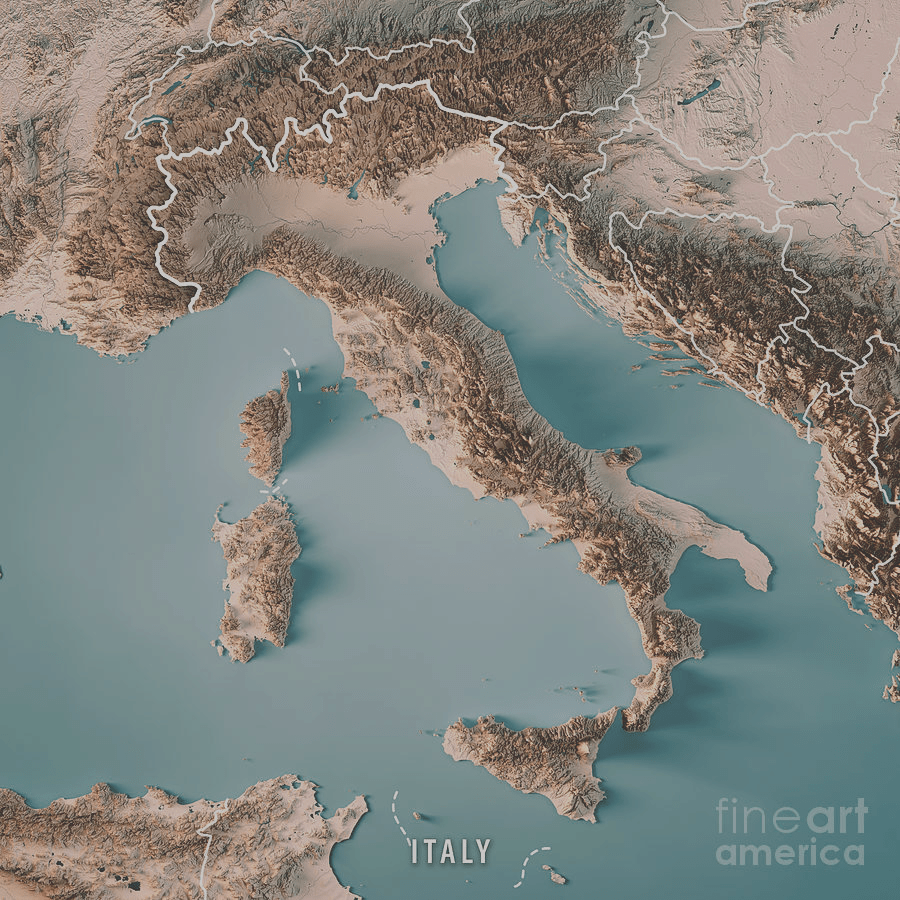
Shem Occidentalis

Chapter XVI

Noah’s third son is Shem. His descendants are prominent in the Bible and influential in the history of civilisation. His descendants – from all his five sons – are the European, western peoples of the Earth located in Europe, West Asia and the New World of the Americas as well as in Australia, New Zealand and South Africa. They include a diverse range of peoples from fair skin, blue eyes and blond hair, to olive skin, brown eyes and black hair. 
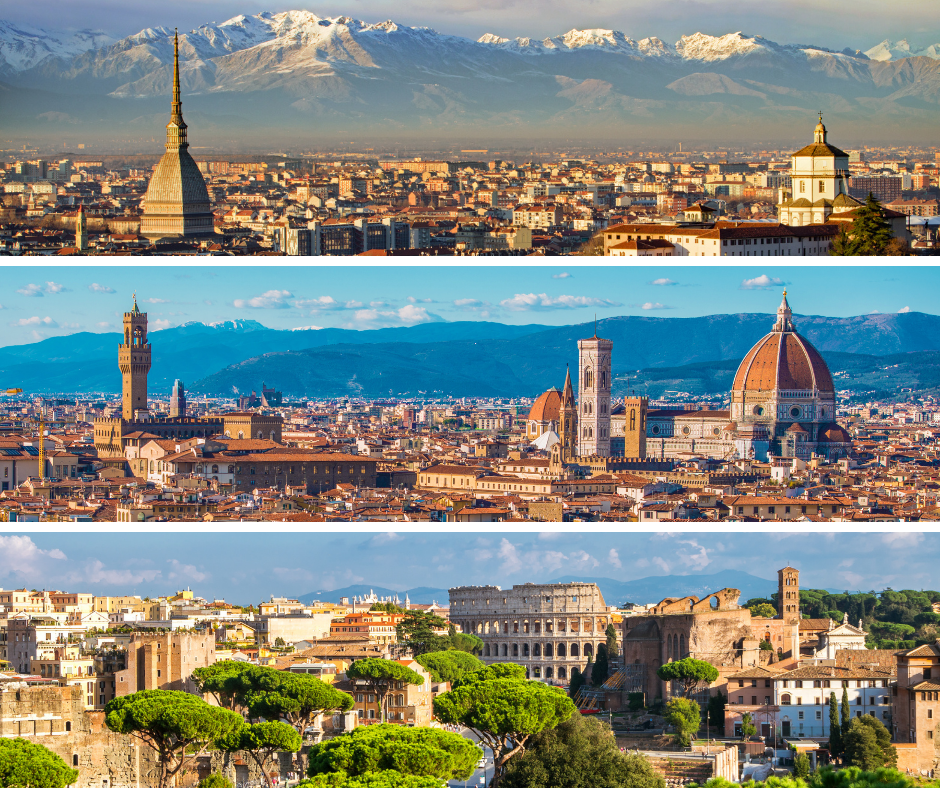
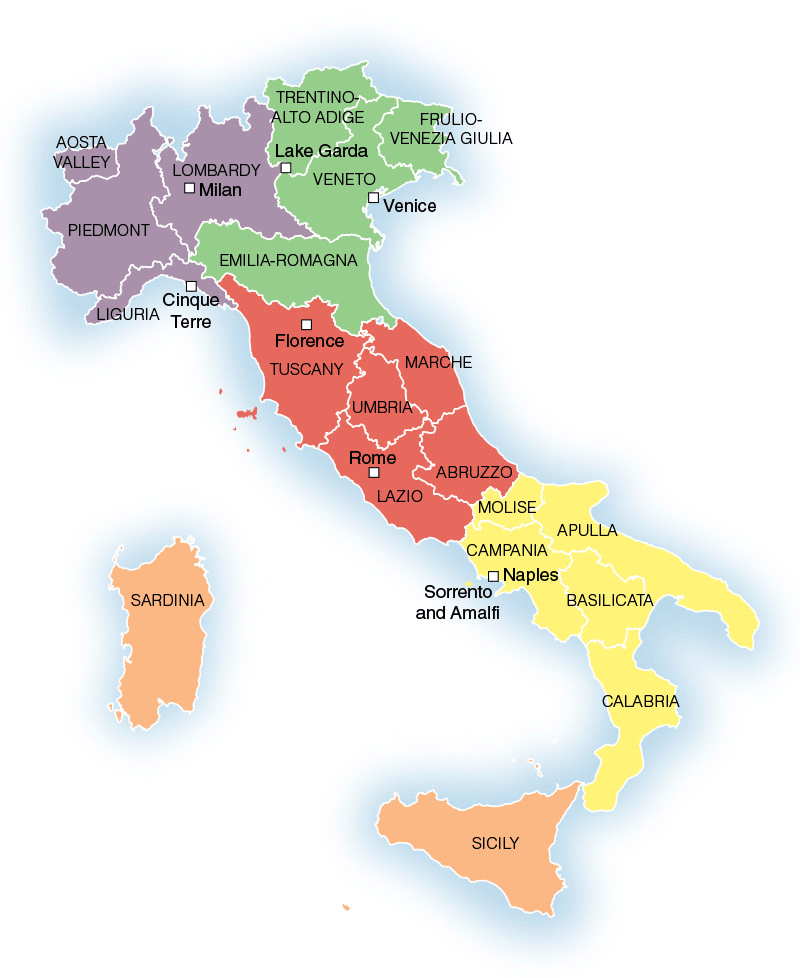
Shem in Hebrew, means: ‘name’ or ‘renown’ from the noun shem.

Abarim Publications – emphasis mine:

‘Shem became the ancestor of Abraham and thus Jesus (Luke 3.36)… Shem… lent his name to the language group that Hebrew is part of: Semitic. The name Shem is equal to the word (shem), which itself means “name”:

The name Shem means Name, Fame or Reputation, or even Identity or Personality… we’re pretty sure that Shem wasn’t named after his own fame or prowess but rather after the Name of the Creator, which in turn reflected all of his deeds…

For a meaning of the name Shem, NOBSE Study Bible Name List reads… Renown. Jones’ Dictionary of Old Testament Proper Names… adds Celebrated, Distinguished.’

We will look at additional definitions and ramifications for Shem’s name when we study Nimrod in Chapter XXI The Incredible Identity, Origin & Destiny of Nimrod. Shem is mentioned in the genealogical lists in Genesis Ten and 1 Chronicles One with his brothers. We have investigated the incident involving Noah, Ham and Canaan – refer Chapter XI Ham Aequator. Shem with Japheth, acted honourably in dealing with the aftermath and his reward is recounted in Genesis 9:26, Expanded Bible:

Genesis 9:26

Expanded Bible

‘Noah also said, “May the Lord, the God of Shem, be praised [or blessed]! May Canaan be Shem’s slave.”

Notice, Shem wasn’t being praised or his name, but rather the Creator. There is a clue here that Shem may have been similar to Noah, Enoch and Abel before them, in being a member of a priestly line and a servant of the Creator.

Some teach that Shem is the same person as the priest of the most High God, Melchizedek, whom Abraham paid tithes to and partook of bread and wine. In the Book of Jasher it says in chapter sixteen, verses 11-12:

11 ‘And Adonizedek king of Jerusalem, the same was Shem [of renown], went out with his men to meet Abram and his people, with bread and wine, and they remained together in the valley of Melech‘ – refer articles: Na’amah; and Belphegor. 12 ‘And Adonizedek blessed Abram, and Abram gave him a tenth from all that he had brought from the spoil of his enemies, for Adonizedek was a priest before God.’

Using Usher’s widely accepted biblical chronology, this would be possible. Combining science (worldwide geological flood evidence is missing for circa 4000-2500 BCE) and an accurate chronology (an unconventional chronology based on the Sumerian sexagesimal base 60 system) for the Old Testament epoch following the Flood – and prior to Genesis chapter twelve – it would be impossible for Shem and Abraham to meet, as Shem died in 5717 BCE and Abraham was born in 1977 BCE. That aside, Melchizedek is a unique personality and not to be mistaken for Shem or even Christ as some propose. We will look at Nimrod’s kingdom later, though for now it is interesting to note that his territory was the ‘land of Shinar’ – Chapter XXI The Incredible Identity, Origin & Destiny of Nimrod.

Shinar is mentioned outside of the Nimrod account recorded in Genesis Ten and Eleven.

Joshua 7:20-21

English Standard Version

20 ‘And Achan answered Joshua, “Truly I have sinned against the Lord God of Israel, and this is what I did: 21 when I saw among the spoil a beautiful cloak from Shinar, and 200 shekels of silver, and a bar of gold weighing 50 shekels, then I coveted them and took them. And see, they are hidden in the earth inside my tent, with the silver underneath.”

Isaiah 11:11

English Standard Version

11 ‘In that day the Lord will extend his hand yet a second time to recover the remnant that remains of his people, from Assyria [Asshur (Russia)], from Egypt [Mizra – Arabs (of the Middle East and North Africa)], from Pathros [nation of Egypt], from Cush [India], from Elam [Turkey], from Shinar [Europe], from Hamath [Nigeria], and from the coastlands of the sea [East Asia and South East Asia].’

Zechariah 5:10-11

English Standard Version

10 ‘Then I said to the angel who talked with me, “Where are they taking the basket?” 11 He said to me, “To the land of Shinar, to build a house for it. And when this is prepared, they will set the basket down there on its base.”

What is the Land of Shinar and Where is it Located? Petros Koutoupis, 2007 – emphasis & bold mine:

‘Genesis 10:10 And the beginning of his kingdom was Babel [Babylon], and Erech, and Accad, and Calneh, in the land of Shinar. Genesis 10:11 Out of that land went forth Asshur [Nimrod], and built Nineveh [capital], and Rehoboth-ir, and Kalaḥ, Genesis 10:12 and Resen between Nineveh and Kalaḥ – the same is the great city. 

In the past, many have argued… about the true location of the land of Shinar… among a majority of scholars in the same field, [I] have identified this to mean the land of Sumer. While the Sumerians themselves called their land ki-en-gir (“place of the civilized lords”), the name Sumer is derived from the Akkadian Shumer [Shem]. 

Shinar is simply a Hebrew corruption of the Akkadian word. It literally translates to “country of two rivers” which could only mean the Tigris and Euphrates when taking into account the cities mentioned above. 

Erech/Uruk, Akkad/Agade, and Babylon existed nowhere else but the land of Shinar. In times past, early rulers used to differentiate the lands between Sumer and Akkad when boasting of their achievements, making the one the southern kingdom (Sumer) and the other the northern kingdom (Akkad). 

Collectively this had evolved to one piece of land between the two rivers. Further evidence of its location, outside of Genesis 10:10-11 comes to us from the Book of Daniel: 

1:1 In the third year of the reign of Jehoiakim king of Judah came Nebuchadnezzar king of Babylon unto Jerusalem, and besieged it. 1:2 And the Lord gave Jehoiakim king of Judah into his hand, with part of the vessels of the house of God; and he carried them into the land of Shinar to the house of his god, and the vessels he brought into the treasure-house of his god. 

Nebuchadnezzar [II], a Neo-Babylonian king to whom Jerusalem fell [during 607-587 BCE] under which also resulted in the Jewish Exile, was said to have come from the land of Shinar or Chaldea.

Erech has been identified with the Mesopotamian city of Uruk (Sumerian Unug); the home and kingdom of Gilgamesh. Akkad has been identified with Agade, the capital of the Akkadian Empire. Babel was the native name of the city the Greeks called Babylon, which literatally translates [as] “gate of god”, corresponding to the Akkadian Bab-ili. As for the location of Calneh, modern day scholars have located this to be Nippur (modern day Niffer), which is situated in the marshes of [the] east bank of the Euphrates; roughly 60 miles southeast of Babylon.’

Assyria derived from Asshur, was situated to the north of Akkad and not counted as the land of Shinar. The land of Shinar incorporated Akkad and Sumer, with Babylon formerly Babel, to the south of Akkad; located approximately in the middle of the two regions. Thus the cities of Accad and Babylon were northwards in Akkad and Calneh or Nippur and Erech further south in Sumer. ‘Sumer’ and the Sumerians derive from the name Shem, while the Akkad[ian] origin is unclear. The term Chaldea[n] is believed to have derived from Shem’s son Arphaxad. Akkad is possibly linked to Arphaxad as well. 

The early geography involved descendants from three of the sons of Shem in close proximity after the Tower of Babel, so that in the north of the fertile crescent there was located Asshur, below them, Arphaxad and beneath them, Elam. Aram or Syria and Lud or Lydia, were not so clearly defined. Lud has been identified more with Ham’s children, particularly Mizra and may have been located originally south of Shinar. Lud is invisible until he appears in Anatolia in Western Asia Minor – refer Chapter XIV Mizra: North Africa & Arabia; and Chapter XVII Lud & Iran. The same applies to Aram until he appears north of Assyria and to the East of Lud. This layout will come into clearer focus, once we uncover the five identities of the sons of Shem. 

The Races of the Old Testament, A H Sayce, 1891, pages 60-61 – emphasis mine:

‘… But Babylonia had not always been in Semitic hands. Its earliest population belonged to another race, and the language which they spoke was agglutinative… it was the pre-Semitic population, and not the Semitic intruders, to whom the origin of Chaldaean culture and civilisation were due. It was this population who were the inventors of the pictorial characters which developed into the cuneiform syllabary, they were the first to write on tablets of clay, they founded the great cities and temples of the country, and initiated the art and science, the literature and law, the systems of government and religion which the Semitic Babylonians afterwards inherited. Babylonia was divided into the two provinces of Accad in the north and Sumer… in the south; Accad was the first to fall under Semitic influence and domination, and it was here that the first Semitic empire that of Sargon of Accad took its rise.’

Turkey (or Elam) is not considered by all biblical historians as a line of Shem but invariably from Japheth. The interaction of Elam with Madai – descended from Japheth – accounts for some of the confusion. The pictorial characters are the cursive script of Elam and evidenced today by modern Turkish. Recall in the previous chapter we touched upon the link between Turkish and Sumerian. Agglutinative is defined as: ‘pertaining to or noting a language, as Turkish, characterized by agglutination.’ It includes ‘the act or process of uniting by glue or other tenacious substance, the state of being thus united; adhesion of parts, that which is united; a mass or group cemented together.’

In linguistics: ‘a process of word formation in which morphemes, each having one relatively constant shape, are combined without fusion or morphophonemic change, and in which each grammatical category is typically represented by a single morpheme in the resulting word, especially such a process involving the addition of one or more affixes to a base, as in Turkish, in which ev means “house,” ev-den means “from a house,” and ev-ler-den means “from houses.”

Though descended from Shem, Elam as Turkey, has its feet planted firmly in the two worlds of Japheth and Ham, as evidenced by its link with the Central Asians; a Turko-Mongol language; and the non-European religion of Islam – refer Chapter IV Central Asia – Madai & the Medes; and Chapter XVIII Elam & Turkey. In time, Elam moved eastwards from Sumer – adjacent to the Persian Gulf, into modern day Iran – and hence the gradual lessening of their influence on the descendants of Arphaxad who moved southwards from Akkadia into Sumer – refer Chapter XXIV Arphaxad & Joktan: Balts, Slavs & the Balkans.

Two other nations which have agglutinating languages, causing dispute regarding their language families are the Korean and Japonic languages. An understandable coincidence, as we have learned in Chapter six and nine, that both Korea descending from Gomer and Japan from Javan, migrated in a different pattern to their brothers in South East Asia. Thus, their languages are not readily linked to not-so-related close neighbours China, or more closely related, yet geographically distant relatives in the southeast of Asia – Chapter VI Togarmah & the Koreas; and Chapter IX Tarshish & Japan.

Book of Jubilees 7:13-18

‘And Ham knew that his father had cursed his younger son, and he was displeased that he had cursed his son and he parted from his father, he and his sons with him, Cush [Indians] and Mizraim [Arabs] and Put [Pakistan] and Canaan [Africans]. And he built for himself a city and called its name after the name of his wife Na’elatama’uk. And Japheth saw it, and became envious of his brother, and he too built for himself a city, and he called its name after the name of his wife ‘Adataneses.

And Shem dwelt with his father Noah, and he built a city close to his father on the mountain, and he too called its name after the name of his wife Sedeqetelebab. And behold these three cities are near Mount Lubar; Sedeqetelebab fronting the mountain on its east; and Na’eltama’uk on the south; ‘Adatan’eses towards the west. And these are the sons of Shem: Elam, and Asshur, and Arpachshad…’

This account relates to the period after the flood, or shortly after the incident with Noah – Chapter XI Ham Aequator. If Noah stayed close to the Kashmir area, then the locations for Ham’s and Japheth’s children equate with their travelling along the Indus River and populating this region in southwest Asia. Japheth and Ham continued to the far west; Shem migrating behind them both. Japheth’s descendants eventually dwelling in the Aegean and Anatolia; Ham’s descendants living in Canaan, Egypt and North Africa; while Shem’s descendants settled in Mesopotamia.

Shem’s descendants migrating westward and displacing the children of Japheth and Ham would answer two questions. Why the sons of Ham migrated into North Africa, though the children of Canaan lingered in the coastal strip of the East Mediterranean – because the land was rich in natural resources and beautiful, being the best real estate in the area – rather than continuing southward with Cush, Phut and Mizra. And, Why the sons of Japheth moved northward into Asia Minor and west into Greece and its islands. Javan or ‘Greece’ – the island peoples – left their family names throughout the area until the present day – refer Chapter II Japheth Orientalium.

It would explain why the area is now known as Sumer, as Shem’s descendants have left a more recent and indelible imprint. Remember, the time frame is considerably longer ago than typically credited by historians or biblical scholars. Some time well after 10,837 BCE, though still prior to Nimrod circa 6755 BCE. Then we are introduced to Nimrod and the emphasis of the names for the areas of Assyria named after Asshur, Akkad named after Arphaxad and Sumer after Shem; even though his first born Elam, may have been originally first, his memory has been erased or blurred due to his migration further southeast – possibly directly after the Tower of Babel – as well as the important fact of lower Mesopotamia being inhabited by additional children of Arphaxad – for Arphaxad had numerous descendants – refer Chapter XXIV Arphaxad & Joktan: Balts, Slavs & the Balkans

The Book of Jubilees provides additional details regarding Shem’s territory – the central middle eastern region – which was sandwiched between Japheth to the north and Ham to the south. It is referenced against the Garden of Eden, which we will return to when we study Eden – Chapter XXII Alpha & Omega.

Book of Jubilees 8:10-18, 21

8:10 ‘And it came to pass… that they divided the earth into three parts, for Shem and Ham and Japheth, according to the inheritance of each… 11 And he called his sons, and they drew nigh to him, they and their children, and he divided the earth into the lots, which his three sons were to take in possession, and they reached forth their hands, and took the writing out of the bosom of Noah, their father.

12 And there came forth on the writing as Shem’s lot the middle of the earth which he should take as an inheritance for himself and for his sons… from the middle of the mountain range of Rafa, from the mouth of the water from the river Tina, and his portion goes towards the west through the midst of this river, and it extends till it reaches the water of the abysses, out of which this river goes forth and pours its waters into the sea Me’at, and this river flows into the great sea. And all that is towards the north is Japheth’s, and all that is towards the south belongs to Shem. 13 And it extends till it reaches Karaso… which looks towards the south. 14 And his portion extends along the great sea, and it extends in a straight line till it reaches… the Egyptian Sea… and it extends to the west to ‘Afra, and it extends till it reaches the waters of the river Gihon, and to the south of the waters of Gihon, to the banks of this river. 

21 And he knew that a blessed portion and a blessing had come to Shem and his sons unto the generations… the whole land of Eden and the whole land of the Red Sea… the land of Bashan, and all the land of Lebanon and the islands of Kaftur, and all the mountains of Sanir and ‘Amana, and the mountains of Asshur in the north, and all the land of Elam, Asshur, and Babel, and Susan [the eventual capital of Elam] and Ma’edai [Madai], and all the mountains of Ararat [Turkey], and all the region beyond the sea, which is beyond the mountains of Asshur towards the north, a blessed and spacious land, and all that is in it is very good [the whole of Mesopotamia and Anatolia].’

Abarim Publications – emphasis mine:

‘Shinar Meaning: From the root (s’r), which expresses intense negative emotion and the experience of violence. From the root (na’ar), to growl, shake or be young. From (1) the verb (shanan), to be sharp, and (2) the noun (‘ir), city. Scholars generally assume that Shinar is the Hebrew interpretation of what is commonly referred to as Sumer. 

Jones’ Dictionary of Old Testament Proper Names derives [shinar] from (sh’r): (se’ar) means hair… the… verb (sa’ar)… literally mean[s] to be hairy… but in fact is solely used to mean to be afraid… Noun (sa’r) means horror. Verb (sa’ar) means to sweep or whirl away… in relation to a storm wind. 

Verb (she’ar)… to break, tear through or split… nouns (sha’ar), gate, and (sho’er), gatekeeper… The core idea of root (sh’r) is to split open, to break through. Thus, for a meaning of the name Shinar, Jones reads Casting Out, or Scattering In All Manner Of Ways…’

Online Encyclopaedia – emphasis mine: 

‘The name Sin’ar occurs eight times in the Hebrew Bible… This location of Shinar is evident from its description as encompassing both Babel/Babylon (in northern Babylonia) and Erech/Uruk (in southern Babylonia). In the Book of Genesis… Verse 11:2 states that Shinar enclosed the plain that became the site of the Tower of Babel after the Great Flood. [The Book of] Jubilees 9:3 allots Shinar (or, in the Ethiopic text, Sadna Sena`or) to Ashur… Jubilees 10:20 states that the Tower of Babel was built with bitumen from the sea of Shinar. David Rohl theorized that the Tower was actually located in Eridu*, which was once located on the Persian Gulf, where there are ruins of a massive, ancient ziggurat worked from bitumen.’

Alan Alford comments on Sumer – emphasis mine:

‘The discovery of ancient Sumer is an exciting story, which begins in the nineteenth century… Spurred on by Biblical clues, the accounts of earlier travellers and by local folklore, archaeologists such as the Paris-born Englishman Sir Austen Henry Layard indeed found their fame and fortune. It was a Frenchman who made the first important discovery. In 1843, Paul Emile Botta uncovered fantastic temples, palaces and a ziggurat (step-pyramid) at a site identified as Dur-Sharru-Kin, the eighth century BC capital of Sargon II, king of Assyria. Botta will always be remembered as the discoverer of the Assyrian civilization.

Whilst archaeologists such as Botta and Layard continued to seek and explore new sites such as Nimrud and Nineveh, scholars such as Sir Henry Rawlinson and Jules Oppert began to shed light on the numerous clay tablets which the digs had uncovered. It soon became apparent that the ancient Mesopotamians were diligent record keepers, preserving information in a cuneiform script, inscribed on clay tablets. In 1835, Rawlinson had carefully copied a vital trilingual inscription on a stone slab found at Behistun in Persia; in 1846, he deciphered the script and its languages, one of which was Akkadian, common to the Assyrians and the Babylonians, who had inherited the Near East after the collapse of Sumer c. 2000 BC.

Sir Henry Rawlinson’s timing was fortuitous. A few years later, Sir Austen Henry Layard began to excavate the mounds of the ancient Assyrian capital Nineveh, 250 miles north of modern-day Baghdad. As well as fantastic temples and palaces, he discovered in 1850 the library of Ashurbanipal [Assyrian King, from 669 to 631 BCE], containing a collection of 30,000 clay tablets. As more and more tablets were translated, the archaeologists became increasingly excited by the independent confirmation of Biblical rulers and cities.

One inscription, listing the achievements of an earlier ruler, Sargon I, claimed that he was the “King of Akkad, King of Kish”, and that he had defeated in battle the cities of “Uruk, Ur and Lagash”. Scholars were amazed to find that this Sargon had preceded his later namesake by nearly two thousand years, taking the Mesopotamian civilization back to at least 2400 BC. This was just the beginning of a series of tremendous finds which turned back the clock on the beginning of civilization and enriched the museums of Europe and America with some of their prize exhibits. At this time, Sumer did not exist in the history books – it is only with hindsight that we now recognize it as the Biblical “Shinar”.

Further south, the hot and dusty wasteland of Uruk yielded the world’s first ever ziggurat, dedicated to the Goddess Inanna, as well as examples of some of the earliest inscribed writing. The best preserved ziggurat in the whole of Mesopotamia was found at Ur, the birthplace of the Old Testament patriarch Abraham. The partly restored ruins of that ziggurat still dominate the landscape today at the modern town of Muqayyar, 186 miles south-east of Baghdad. It was at Eridu, however, almost 200 miles south-east of Baghdad that the earliest Sumerian city was found. The city of Eridu is [today] an abandoned, windswept wilderness, dominated by the ruins of Ur-Nammu’s* ziggurat’ – Chapter XIX Chedorlaomer & the War of Nine Kings.

With all that said, it is important to understand that it will be discovered later on in our journey that the original and first Shinar was located in a different geographical position to the one it became synonymous with in lower Mesopotamia – refer article: The Pyramid Perplexity.

The subjects of albinism, Noah, his son Shem and the introduction of white skin were addressed in Chapter I Noah Antecessor Nulla; as well as discussing melanin variation which causes the darkness and lightness of skin, hair and eyes in Chapter XII Canaan & Africa.

Blond hair is linked to the carriers of Y-DNA Haplogroup R1a; blue eyes with Haplogroup I1; and Red hair with Haplogroup R1b. The argument for antediluvian humans possessing a light shade of brown skin is incontrovertible and the introduction of all other shades which are evident in South Asians, East Asians, Arabs, Latinos and Europeans through Noah, his sons and their wives is the only scenario that fits the 11,000 to 19,000 years ago timeline, provided by scientists – and supported by an unconventional chronology.

Due to lengthened ages in the antediluvian age, Noah was born nearly 19,000 years ago and his sons about 14,000 years ago; with Noah’s grandsons beginning to be born approximately 13,000 years ago – Article: The Younger Dryas Stadial: Ending of the Earth… Beginning of the World. The exact time frame when the explosion of Haplogroup mutations is thought to have occurred.  

Real History explains the scientific process of where and how white skin originates – capitalisation theirs, emphasis & bold mine:

‘Gene copies, however, are not always healthy. When the copies of a gene differ from each other, as through deleterious mutation or failure: Then in this heterozygous condition, we call the two parts “Alleles” and the undamaged or un-mutated allele is dominant, and the organism’s appearance and function is normal. The damaged “other” allele has no noticeable effect on the organism’s appearance, and is called the “Recessive” allele.

When BOTH alleles of a gene become recessive, then the gene cannot complete its assignment. As an example: many Black people have alleles of their “P” gene which are heterozygous and they look normal in every way: (The “P” gene controls the production of Melanin in the skin for protection from the Sun).’ 

‘But if TWO of these people with heterozygous alleles in their “P” gene [reproduce], then one or more, of their children will be an Albino. If two Albinos mate, there is only damaged or recessive “P” genes to inherit; therefore ALL of their children will be White.’ 

‘The trait for curly hair (which is the [norm] for humans) follows the same rules, two damaged or recessive allele’s of the “TCHH” gene [results in] straight hair. Same for the genes which control eye color and hair color: (Blonde and Red hair is recessive, as is Blue, Green, and Gray eyes).’

‘Washington Post: Friday, May 1, 2009, Study Finds Africans More Genetically Diverse Than Other Populations:

“Africans are more genetically diverse than the inhabitants of the rest of the world combined, according to a sweeping study that carried researchers into remote regions to sample the bloodlines of more than 100 distinct populations. So says Sarah Tishkoff, a University of Pennsylvania geneticist who led the international research team. The report was published in the journal Science Express.”

‘Spencer Wells, [Genetic Anthropologist, on the first Great Migrations] page 39 The Journey of Man: A genetic Odyssey 

“… Genetic data corroborates the mitochondrial results, placing the root of the human family tree – our most recent common ancestor – [from Africans]… Consistent with this result, all of the genetic data shows the greatest number of polymorphisms in [Africans] – there is simply far more variation in that continent than anywhere else. You are more likely to sample extremely divergent genetic lineages within a single African village than you are in whole of the rest of the world. 

The majority of the genetic polymorphisms found in our species are found uniquely in Africans – Europeans, Asians and Native Americans carry only a small sample of the extraordinary diversity that can be found in any African village.”

‘The question was asked: If Europeans are Albinos, then how is it that they still make [white children]? [The] confusion is due to believing [the] definition of [an] Albino. In order to confuse pigmented people, [Europeans]… try to say that ONLY type 1 (OCA1) [Chromosome 11] Albinos exist.’

‘They say: “Though we have White Skin, we DON’T have White Hair and Red eyes. We also have good vision and can TAN, so that proves that we are NOT Albinos… Type “1” Albinos are [those] with White hair, White Skin, Red Eyes, and poor eyesight. There are “8” (so far discovered) types of Albinism, with type 2 (OCA2) [Chromosome 15] being by far the MOST COMMON!’

‘The phenotype typical of type 2 Albinism (OCA2) is “TANNABLE WHITE SKIN, BLONDE to BROWN HAIR, and BLUE, GREEN, GRAY, or BROWN EYES” – sound familiar? And how is it that type 2 (OCA2) Albinos can still make type 1 (OCA1) Albinos? Simple, normal everyday European Albinism is caused by mutation of the “P” (OCA2) gene. Whereas type 1 (OCA1) Albinism is caused by a mutation of the tyrosinase gene. These genes are at different locations of the cell Chromosome, therefore one mutation does not exclude the other. Consequently type 2 Albinos producing type 1 Albinos is not unusual in the least. And just like in Blacks with Albinism, future generations are dependent only on the… partner’s mutations or lack of mutations.’

“It is my conviction that a white skin is not natural to man, and that by nature he has either a black or brown skin like our forefathers… and that the white man was never originally created by nature; and that, therefore, there is no race of white people.” From… Metaphysics of Sexual Love by Arthur Schopenhauer.’

Genetics Out of Africa, Dr. Orville Boyd Jenkins:

“Recently a major molecular cause of this change in skin color has been discovered in Europeans. Specifically, the gene SLC24A5 turns out to be critical for the production of melanin, the predominant dark pigment of the skin and hair… 100 percent of Europeans have a mutation in SLC24A5 that impairs the function of the protein… Asians share the fully functional version of SLC24A5, but have acquired mutations in other genes that result in lighter skin, while retaining black hair (Francis Collins, The Language of Life (NY: Harper, 2010), page 150).”

Keith Cheng from Penn State College of Medicine reported that one amino acid difference in the gene SLC24A5 is a key contributor to the skin color difference between Europeans and West Africans. This is undoubtedly where the Irish get their light skin from. “The mutation in SLC24A5 changes just one building block in the protein, and contributes about a third of the visually striking differences in skin tone between peoples of African and European ancestry,” he said.’

The study by professor of pathology Keith Cheng, was published in the Genetics Journal, 2005. Cheng worked together with Victor Canfield, assistant professor of pharmacology, studying DNA sequence differences across the globe. Segments of genetic code have a mutation located closely on the same SLC24A5 chromosome and are often inherited together. Specifically the mutation is called A111T and is found in every one of European ancestry.

A111T is also found in peoples of the Middle East and the Indian subcontinent, though not in high numbers in Africans. Researchers discovered that all individuals from the Middle East, North Africa, East Africa and Southern India who carry the A111T mutation share a common ‘fingerprint’ or ‘traces of the ancestral genetic code’ in the corresponding chromosomal region; which indicates that all existing instances of this mutation originated from the same person. That same person would be ancestor zero: Noah. Cheng unwittingly confirms: “This means that Middle Easterners and South Indians, which includes most inhabitants of India, Pakistan, and Bangladesh, share significant ancestry” – refer Chapter XIII India & Pakistan: Cush & Phut.

Apparently, the mutated segment of DNA was itself created from a combination of two other mutated segments which are commonly found in Eastern Asians. Cheng comments: “The coincidence of this interesting form of evidence of shared ancestry of East Asians with Europeans, within this tiny chromosomal region, is exciting… the combining of segments occurred after the ancestors of East Asians [descended from Japheth] and Europeans [descendants of Shem] split geographically [genetically] more than 50,000 [14,000] years ago; the A111T mutation occurred afterward” in Noah’s sixteen grandsons.

Differences in skin colour affect skin cancer rates. For instance, Europeans have ten to twenty times more instances of melanoma than Africans; yet despite having lighter skin as well, East Asians have the same lower melanoma rates as Africans. The reason for this difference could only be explained once the gene mutations for both groups are found.

It is proposed that it is linked to the fact that the original two lines of humankind before Noah’s sons (Homo sapiens sapiens) were the Neanderthal line created on Day Six; and the Adamic line (Homo sapiens) created on Day Eight – refer Chapter XXII Alpha & Omega; and articles: Homo neanderthalensis I, II, III & IV. These antediluvian lines are replicated today with modifications, respectively to the oriental peoples descended from Japheth and the section of equatorial peoples descended from Ham’s wife, Na’eltama’uk (and Noah) through their son, Canaan – refer Chapter XI Ham Aequator.

‘The study above mentions the term “Nonsyndromic”: A “Syndrome” is a set of signs and symptoms that appear together and characterize a disease or medical condition. Therefore “Nonsyndromic” means something that is not associated with other signs and symptoms. This comes into play because Europeans typically deny their Albinism by claiming that “REAL” Albinos have bad eyesight! 

This study makes clear that is not the case: Note that this study was [conducted] by Asians. Just like SLC24A5 is a gene denoting Albinism, so too is SLC45A2, an Albino gene. What is the official name of the MC1R gene? The official name of this gene is “melanocortin 1 receptor (alpha melanocyte stimulating hormone receptor).”

What is the normal function of the MC1R gene? The MC1R gene provides instructions for making a protein called the melanocortin 1 receptor. This receptor plays an important role in normal pigmentation. The receptor is primarily located on the surface of melanocytes, which are specialized cells that produce a pigment called melanin. Melanin is the substance that gives skin, hair, and eyes their color. Melanin is also found in the light-sensitive tissue at the back of the eye (the retina), where it plays a role in normal vision.

Melanocytes make two forms of melanin, eumelanin and pheomelanin. The relative amounts of these two pigments help determine the color of a person’s hair and skin. People who produce mostly eumelanin tend to have brown or black hair and dark skin that tans easily. Eumelanin also protects skin from damage caused by ultraviolet (UV) radiation in sunlight. People who produce mostly pheomelanin tend to have red or blond hair, freckles, and light-colored skin that tans poorly. Because pheomelanin does not protect skin from UV radiation, people with more pheomelanin have an increased risk of skin damage caused by sun exposure.

The melanocortin 1 receptor controls which type of melanin is produced by melanocytes. When the receptor is activated, it triggers a series of chemical reactions inside melanocytes that stimulate these cells to make eumelanin. If the receptor is not activated or is blocked, melanocytes make pheomelanin instead of eumelanin.

Common variations (polymorphisms) in the MC1R gene are associated with normal differences in skin and hair color. Certain genetic variations are most common in people with red hair, fair skin, freckles, and an increased sensitivity to sun exposure. These MC1R polymorphisms reduce the ability of the melanocortin 1 receptor to stimulate eumelanin production, causing melanocytes to make mostly pheomelanin. Although MC1R is a key gene in normal human pigmentation, researchers believe that the effects of other genes also contribute to a person’s hair and skin coloring. The melanocortin 1 receptor is also active in cells other than melanocytes, including cells involved in the body’s immune and inflammatory responses. The receptor’s function in these cells is unknown.

The MC1R gene belongs to a family of genes called GPCR (G protein-coupled receptors). A gene family is a group of genes that share important characteristics. Classifying individual genes into families helps researchers describe how genes are related to each other. Many genetic changes in the MC1R gene increase the risk of developing skin cancer, including a common, serious form of skin cancer that begins in melanocytes (melanoma). Alterations in the MC1R gene disrupt the ability of the melanocortin 1 receptor to trigger eumelanin production in melanocytes.

Because eumelanin normally protects skin from the harmful effects of UV radiation, a lack of this pigment leaves fair skin more vulnerable to damage from sun exposure. Skin damage caused by UV radiation from the sun is a major risk factor for developing melanoma and other forms of skin cancer.

Studies suggest that variations in the MC1R gene may also increase the risk of developing melanoma in the absence of UV radiation-related skin damage. In these cases, melanomas can occur in people of dark or light skin coloring. These cancers are often associated with mutations in additional genes related to melanoma risk, such as the BRAF and CDKN2A genes. Researchers are working to explain the complex relationship among MC1R variations, other genetic and environmental factors, and melanoma risk.’

Online source: “[The top four] places in the world where… [Europeans] refuse to accept the fact that they have physical disadvantages as regards the Sun [are] Israel, Australia, New Zealand [and] California… In these places they inhabit beaches as if they were Black or Brown people. The results are often disastrous.’ Since this comment, the state of Israel has been passed by Australia, moving into second and New Zealand has leapt into first, regarding the highest rates of skin cancer in the world.

‘Certain genetic changes in the MC1R gene modify the appearance of people with oculocutaneous albinism type 2. This form of albinism, which is caused by mutations in the OCA2 gene, is characterized by fair hair, light-colored eyes, creamy white skin, and vision problems. People with genetic changes in both the OCA2 and MC1R genes have many of the usual features of oculocutaneous albinism type 2; however, they typically have red hair instead of the usual yellow, blond, or light brown hair seen with this condition.’

Wiki: ‘Sodium/potassium/calcium exchanger 5 (NCKX5), also known as solute carrier family 24 member 5 (SLC24A5), is a protein that in humans is encoded by the SLC24A5 gene that has a major influence on natural skin colour variation. The NCKX5 protein is a member of the potassium-dependent sodium/calcium exchanger family. Sequence variation in the SLC24A5 gene, particularly a non-synonymous SNP changing the amino acid at position 111 in NCKX5 from alanine to threonine, has been associated with differences in skin pigmentation.’

‘The SLC24A5 gene’s derived threonine or Ala111Thr allele (rs1426654[3]) has been shown to be a major factor in the light skin tone of Europeans compared to Africans, and is believed to represent as much as 25–40% of the average skin tone difference between Europeans and West Africans. It has been the subject of recent selection in Western Eurasia, and is fixed in European populations.

The SLC24A5 gene, in humans, is located on the long (q) arm of chromosome 15 on position 21.1, from base pair 46,200,461 to base pair 46,221,881. NCKX5 is 43 kDa protein that is partially localized to the trans-Golgi network in melanocytes. Removal of the NCKX5 protein disrupts melanogenesis in human and mouse melanocytes, causing a significant reduction in melanin pigment production. Site-directed mutagenesis corresponding to a non-synonymous single nucleotide polymorphism in SLC24A5 alters a residue in NCKX5 (A111T) that is important for NCKX5 sodium-calcium exchanger activity. SLC24A5 appears to have played a key role in the evolution of light skin in humans of European ancestry… The Penn State team [calculated] that the gene, known as slc24a5, is responsible for about one-third of the pigment loss that made black skin white. A few other as-yet-unidentified mutated genes apparently account for the rest…’

This removes any doubt that Homo sapiens, from the line of Seth, the third son of Adam and Eve were darker skinned. Science has confirmed that white skin is a mutation – the SLC24A5 gene on Chromosome 15 – of a darker skinned human. Science dating of this event aligns with the birth of Shem and the genetic bottleneck at the time of the Flood. Eve as mitochondrial Eve would have been mtDNA Haplogroup L0 at least. Adam as Y-DNA Adam, would have been Y-DNA Haplogroup A. Both these Haplogroups are Haplogroups found in sub-Saharan Black African peoples – refer Chapter XII Canaan & Africa.

‘The gene’s function in pigmentation was discovered in zebrafish as a result of the positional cloning of the gene responsible for the “golden” variety of this common pet store fish. Evidence in the International HapMap Project database of genetic variation in human populations showed that Europeans, represented by the “CEU” population, had two primary alleles differing by only one nucleotide, changing the 111th amino acid from alanine to threonine, abbreviated “A111T”.

The derived threonine allele (Ala111Thr; also known as A111T or Thr111) represented 98.7 to 100% of the alleles in European samples, while the ancestral or alanine form was found in 93 to 100% of samples of Sub-Saharan Africans, East Asians and Indigenous Americans. The variation is a SNP polymorphism rs1426654, which had been previously shown to be second among 3011 tabulated SNPs ranked as ancestry-informative markers. This single change in SLC24A5 explains between 25 and 38% of the difference in skin melanin index between peoples of West African vs. European Ancestry.

Furthermore, the European mutation is associated with the largest region of diminished genetic variation in the CEU HapMap population, suggesting the possibility that the A111T mutation may be the subject of the single largest degree of selection in human populations of European ancestry. It is theorised that selection for the derived allele is based on the need for sunlight to produce the essential nutrient vitamin D. In northerly latitudes, where there is less sun, greater requirement for body coverage due to colder climate, and frequently, diets poor in vitamin D, making lighter skin more suitable for survival. Tests for this variation have obvious application to forensic science. 

It has been estimated that the threonine allele became predominant among Europeans 11,000 [circa 9,000 to 10,000 BCE and the birth of Shem’s sons: Elam, Asshur, Arphaxad, Lud and Aram] to [circa 17,000 BCE and the birth of Noah] 19,000 years ago.

After providing all manner of scientific data to prove European Albinism: We now turn to the common sense approach to proving European Albinism… todays White Europeans… are clearly loath to admit that they are [technically] Albinos. So to hide this truth, they utilize all manner of “Double-Speak”: that is defining Albinism, but turning aside all inference to themselves. They say things like: OCA2 is rare in Europe, but more common in AfricaALL White Europeans are ALREADY OCA2, so to hide that; they only count as Albino, those of their number who have genetic vision problems because of their OCA2 Albinism: (Another lie they tell is that ALL Albinos have vision problems). So for a better understanding, [let’s] DEFINE OCA2. OCA2 stands for Oculocutaneous Albinism type II.

“OCA” stands for Oculocutaneous Albinism. The “OC” stands for “Oculocutaneous” Definition of OCULOCUTANEOUS: relating to or affecting both the eyes and the skin – oculocutaneous albinism – Definition of ALBINISM: the condition of an albino. Full Definition of ALBINO: an organism exhibiting deficient pigmentation; especially: a human being that is congenitally deficient in pigment and usually has a milky or translucent skin, white or colorless hair, and eyes with pink or blue iris and deep-red pupil (In short, Albino means WHITE or WHITE like – from the Latin albus “white”).

These are the symptoms of OCA2. Genetics Home Reference

“The OCA2 gene (formerly called the P gene) provides instructions for making a protein called the P protein. This protein is located in melanocytes, which are specialized cells that produce a pigment called melanin. Melanin is the substance that gives skin, hair, and eyes their color. Melanin is also found in the light-sensitive tissue at the back of the eye (the retina), where it plays a role in normal vision.”

NOAH: National Organization for Albinism and Hypopigmentation. Striking coincidence, or is it? And an intriguing irony that this is the acronym, for Noah… who is patently Ancestor Zero. 

“A common myth is that people with albinism have red eyes. Although lighting conditions can allow the blood vessels at the back of the eye to be seen, which can cause the eyes to look reddish or violet, most people with albinism have blue eyes, and some have hazel or brown eyes. There are different types of albinism and the amount of pigment in the eyes varies; however, vision problems are associated with albinism.”

‘Did you notice in the “Genetics Home Reference” definition where it said that “The OCA2 gene was formerly called the P gene”? Now why would White people RENAME a gene after a disease?

THE HUMAN BODY DOES NOT “NORMALLY” COME WITH DISEASE! So why did [Europeans] RENAME the “P” gene, and give it the name of a DISEASE? They did that when they found out that the MUTATED form of the “P” gene was “NORMAL” in THEM! OCA2 “IS” the “MUTATED” FORM of the “P” gene. To put it plainly… A normal Black person’s gene would be called a “P” gene. And only the MUTATED form found in Europeans and African Albinos, would be called the OCA2 gene. Since ALL Europeans have the OCA2 gene, therefore they are all Albinos. And of course it’s rare in Africa, most Africans are NOT Albinos.

So then, if the OCA2 gene is a “Normal” human gene, then BLACKS MUST HAVE A “OCA-2” (Albinism gene) too? Logically then: if “OCA2” means “Oculocutaneous Albinism type 2” – HOW CAN BLACK PEOPLE HAVE THIS GENE AND NOT BE WHITE?… Of course Black People DO NOT have a OCA2 Gene, they have a “P” gene. When the “P” gene is healthy, Black people make Black people. But when the “P” gene has “Mutated” and is no longer healthy, It CAN cause Black people to produce WHITE people (Albinos).

How can two people with normal pigmentation (Black people) produce a child with albinism? That is because these parents – like one out of every 75 people – are carriers for albinism. A carrier is someone who has one functional gene and one abnormal gene. (We all have two copies of all genes). Because the functional gene overrides the abnormal gene, these people do not have albinism themselves. However, they are still able to pass the abnormal gene on to their child. If the other parent is also a carrier for the same type of albinism, the offspring has a 25% chance of having albinism, a 50% chance of being a carrier, and a 25% chance of having two “normal” genes.

In Herodotus’s “History of the Persian Wars” of the dozens of peoples that he describes in the book; he chooses to describe only three peoples by racial type. The Colchians… whom he describes as “black-skinned and have woolly hair”. And the Budini of Gelonus (east-central Ukraine), whom he describes as (they have all deep blue eyes, and bright red hair). The Roman historian Cornelius Tacitus (56-118 A.D.) said this about them: 

“For my own part, I agree with those who think that the tribes of Germany are free from all taint of intermarriages with foreign nations, and that they appear as a distinct, unmixed race, like none but themselves. Hence, too, the same physical peculiarities throughout so vast a population. All have fierce blue eyes, red hair, huge frames, fit only for a sudden exertion. They are less able to bear laborious work. Heat and thirst they cannot in the least endure; to cold and hunger their climate and their soil inure them.”

‘From those passages we know for sure what White Europeans looked like when they first invaded Europe – they were Pure Albinos. But today, they rarely have the RED HAIR and BLUE EYES of their ancestors – What Happened?’

We will learn that the Germanic tribes in Germany were peoples who were predominantly fair and blue eyed and they still are today. It doesn’t account for all the White people in Europe with brunette hair and brown eyes. Thus the assertion that the blue eyed, red haired people are disappearing is not true in this background context, of ‘all white people were red haired and blue eyed.’ What is true, is that those nations which are predominately fair and blue eyed are being ‘watered down’ so-to-speak through intermarriage and inter-mixing. Thus the following is relevant in that context.

‘THIS HAPPENED! “Since the turn of the century, people born with blue eyes in the United States have dramatically decreased, with only about 10 percent having blue eyes today.

According to Mark Grant, an epidemiologist from Loyola University in Chicago. During the turn of the last century, the percentage of people with blue eyes stood at 57.4% for those born between 1899 through 1905; and 33.8% for those born between 1936 through 1951. According to Grant, in a study titled “Cohort effects in a genetically determined trait: eye color among US whites.” This decrease in the occurrence of blue eyes is due to many factors, with the majority pointing to the increase in brown-eyed immigrants, mainly Hispanics and Asians, as well as heightened interracial relationships: as the other determinant, (when a normal Black person and a European make a baby, the baby GAINS varied ability to make MELANIN). Blue eyes, next to green, are the rarest eye color in the world, as people of countries in Asia and Africa possess brown eyes.”

‘Are there three Races? As the evidence indicates… [Europeans have]… taught… that there [are] THREE RACES: The Black Race. The White Race. The [Asiatic] type Race. This was just to give themselves an undeserved place of importance in the Human hierarchy. Following the evidence, it becomes clear that there are indeed THREE RACES, but their types are different: [1] Blacks with “Negroid” features, produce Albinos with Negroid features. [2] Blacks with “Caucasian” features, produce Albinos with Caucasian features. And [3] Blacks with “Mongol” features produce Albinos with Mongol features… there is the one Black Human Race. Then there are TWO sub-races: The Albino Race – which encompasses Whites/Albinos of EVERY Phenotype. (Europeans insist that they are the only “True” Whites: but as is clear from the evidence, they are in no way unique). And then there is the “MULATTO” Races: which are MIXTURES of all the above, in varying QUANTITIES… [including] the Middle East, North Africa, and Latin American: as well as Asia…’

A rather abrupt expression of the no less undeniable reality, that the oldest genes – as expressed by paternal Y-DNA Haplogroup A – pre-flood, are the ancestor genes (and Haplogroup) which mutated through Noah’s sons and grandsons into the variety of races or ethnicities we observe today. Thus the original mtDNA L and Y-DNA A Haplogroups were passed from Noah and Ham’s wife Na’eltama’uk, to Canaan.

Future mutations of the founding Haplogroup A, would have been passed via Ham to each of his own three sons. Each son receiving a unique sequence, yet there are some Haplogroups common to each or all. Japheth received a unique set which diversified amongst his seven sons, as did Shem for his five sons. The fact there are crossover Haplogroups between Japheth, Ham and Shem’s grandson’s descendants, proves their family link and supports the scientific understanding of genetic mutations as evidenced by Haplogroup expansions and admixture.

For example, let’s take R1a and R1b. Both are European marker Haplogroups, for western and eastern Europe respectively. Yet, many Indian males in India also carry R1a. Geneticists debate the origin of R1a: is it West Eurasian and therefore European; or Central Eurasian and South Asian in origin? Which line came from who? The answer is that it is Shem’s line who carried the Y-DNA R Haplogroup with any subsequent evidence in Ham’s line (R1a, R2) originating from admixture. Therefore, Indians and Eastern Europeans are related, just not as closely as scientists believe. They are not both Aryan, as the Indian peoples are Hamitic. Not brothers per se, but more accurately, cousins – refer Chapter XIII India & Pakistan: Cush & Phut

The principal mtDNA maternal Haplogroups associated with Shem’s descendants via his wife, Sedeqetelebab include:

Haplogroup H – is the most frequently found Haplogroup throughout West Eurasia, with a uniform distribution throughout Europe.

Haplogroup HV – is the ancestral Haplogroup to H and V, which dominates the western European lineages today. About seventy-five percent of the western European population descends from this Haplogroup.

Haplogroup I – is widespread throughout Europe, although at relatively low levels occurring at about two percent. 

Haplogroup J – is one of the four major specific European Haplogroups.

Haplogroup K – spread throughout Europe. Certain lineages are also found in Central Asia and Northern Africa. It is known for its presence in distinct population groups, such as the prehistoric Basques and the Ashkenazi Jews.

Haplogroup N – is one of the two major lineages from which non-African Haplogroups descend. Today, members of this Haplogroup are found in many continents around the world.

Haplogroup T – is a relatively young European Haplogroup.

Haplogroup U – is one of Europe’s oldest and most diverse Haplogroups. About 10 to 11% of Europeans and Americans of European descent belong to this Haplogroup.

Haplogroup V – a European Haplogroup with links to Iberia [Spain], which spread east and north.

Haplogroup W – is found throughout Europe, deriving from super Haplogroup N.

Sedeqetelebab

The global distribution of Y-DNA paternal Haplogroups associated with Shem’s descendants are summarised in Retina, Fifth Edition, 2013:

‘The highest frequencies of haplogroup G appear in the Caucasus region; however it also shows significant frequencies in the Mediterranean areas and the Middle East.

Haplogroup I [I1, I2a1 and I2a2] is a clear European haplogroup; it is one of the most frequent haplogroups among northwestern European populations. 

The extensive haplogroup R, which is mainly represented by two lineages – R1a and R1b. The members of R1b are… the most common Y haplogroup in Europe. More than half of men of European descent belong to R1b. Haplogroup R1a is currently found in central and western Asia, India, and in Slavic populations of Eastern Europe.’

A PCA graph below highlighting the descendants of Shem and their genetic proximity with one another. 

We will now turn our attention to Shem’s five sons and their offspring; beginning with the elusive descendants from Lud.

And whatever you do, in word or deed, do everything in the name of the Lord Jesus, giving thanks to God the Father through him.

Colossians 3:17 English Standard Version

Sir Isaac Newton was asked how he discovered the law of gravity. He replied:

“By thinking about it all the time.”

“He who thinks half-heartedly will not believe in God; but he who really thinks has to believe in God.”

Isaac Newton 1643 – 1727

© Orion Gold 2020 – All rights reserved. Permission to copy, use or distribute, if acknowledgement of the original authorship is attributed to orion-gold.com