The most damaging aspect of the biblical identity doctrine has been the element of whatever someone new to the subject first hears, reads or learns for any given identity, it is this knowledge that becomes firmly implanted and invariably impossible to shift. As Proverbs 18:17 ESV rightly observes, the first case heard always has the advantage, whether right or wrong by virtue of being first.
“The one who states his case first seems right, until the other comes and examines him”
Any secondary information has a herculean task in gaining consideration, let alone replacing the previously held incorrect premise.
Yet, the accurate definition and explanation of the nations identities in the Bible in our modern age is crucial in understanding future prophecy and by extension past history. The credibility of the Bible has been at stake and those who have taught erroneous identities have been unwittingly holding the Eternal’s word to ransom. Now is the time for the truth to go out to those who truly seek wisdom and understanding – for the ending of the latter days are nearly upon us. J H Allen understood the foundational basis of this knowledge in proving the veracity of the Bible, as written under inspiration by holy men and not the ramblings of eccentric or fanatical prophets.
‘We have been moved by the Holy Spirit to thus write concerning the earthly history of God’s chosen race, because so very little of it is known by the masses of our people, and yet it is the foundation upon which the entire structure of Christianity must rest.
A knowledge of these earthly things not only renders the claims of Christianity impregnable, but they are also the basis upon which we must rest our faith for better things. For Jesus has said, “If I have told you of earthly things, and ye believe not, how shall ye believe, if I tell you of heavenly things?” The truth… as set forth in this book – that is, the realization of the promises made to ISRAEL… has… [brought] more skeptics to the light of his truth, than in all our previous ministry… [and]… We are… sure… that the faith of those who have made shipwreck could not have failed, if they had known these things.’
Dictionary.com:
‘Genetic evidence has undermined the idea of racial divisions of the human species and rendered race obsolete as a biological system of classification. Race therefore should no longer be considered as an objective category… There are times when it is still accurate to talk about race in society. Though race has lost its biological basis, the sociological consequences of historical racial categories persist. While the scientific foundation for race is now disputed, racial factors in sociological and historical contexts continue to be relevant.
First recorded in 1490-1500; from Middle French race “group of people of common descent,” from Italian razza “kind, species”…’
We can say, the English people or the country of England rather than calling them what they are. The scientific community has imposed a politically correct use, or rather less use of the word race. It would make sense if the word was banned outright, yet it is still applicable for social or historical definitions, just not for the actual aspect it is defining – our biological inheritance. Whether we use alternative words such as ethnicity or ancestry, it does not make the physical, biological differences between people disappear or obsolete.
Following are synonyms: tribe, clan, family, stock, line, breed, blood, colour, culture, nation, people, offspring, progeny, seed, stock, strain, ethnicity. Some of these words could have a more inflammatory impact than the word race in this writer’s opinion. There is an agenda to attack the White race. The expression, Black lives matter, could be better expressed as ‘all lives matter.’ There is pressure to make white people uncomfortable and to do away with a concept of white people. It is blatant passive aggressive discrimination. Will brown, red and yellow people also come under fire?
The term race is unhelpful in relation to all humanity. The term mankind is preferable or if you will, humankind; not the human race. We are a kind, as there are animal kinds. The races are like species within the kind. It is very hard to do away with genetic lines of people that make them common to each other and distinct from other racial lines. They are simply, different races.
With this in mind, Greg Doudna reflects the frustration and division this issue causes, in the questions he poses. The discord, confusion and strength of emotion it arouses exist in part, because people do not appreciate the differences in people. This is heightened due to the fact people do not know who they are. Yet, it is observed online, mammoth interest in tracing family ancestry and forming a sense of self-identity; particularly with the breakthrough with Haplogroups and autosomal DNA. People want to understand their own race or racial heritage. Ironically, Haplogroups have also contributed to people becoming even more scathing, condemning and incorrect in their summations.
Showdown at Big Sandy, Greg Doudna, 1989, 2006, pages 143-144 – Italics his:
‘…consider three questions. Think:
(1) Is there any biblical basis to such a notion of classification as a “white race” in history?
Are Italians part of the “white race”? Why? Are Russians? What about Assyrian Christian Iraqis who descend from the Assyrians of old?’ Not correct – refer Chapter XIV Mizra: North Africa & Arabia; and Chapter XX Will the real Assyria Stand Up: Asshur & Russia.
‘What about Jordanians? Are Arab tribes who claim descent from Ishmael?’ Refer Chapter XXVIII The True Identity & Origin of Germany & Austria:Ishmael & Hagar.
‘Are Spaniards part of the white race? Are Portuguese? Are Greeks? Are Poles? How about Muslim Shi’ite Azerbaijanis from the Caucasus? How about Armenians and Georgians and Chechens from the Caucasus area, otherwise known as Caucasians, or in Russia known negatively as blacks (because their skin is typically darker and more “ethnic” looking than that of Russians)? Are these Caucasians, who are Russia’s blacks, members of the “white race”? (Remember, historically Armenians and Georgians from the Caucasus started out defining the so-called Caucasian/white race). Are Hungarians part of “the white race”? Rumanians? Czechs? Gypsies (Roma)? Albanians? Serbs? How about the Persians of Iran, Iran’s largest ethnic group, who descend from the ancient Aryan Persians?’
A resounding Yes to nearly all. Yes, they are white. They do descend from Shem.
In the main, the author has selected the descendants from Shem’s sons Lud, Elam in part, Asshur and Aram in part, as well as a handful from Arphaxad in Eastern Europe. The exception above is the true Arab who descends from Mizra and his father Ham. It was white peoples living in the Caucasus Mountain area who were classified as Caucasian; not the Armenians or Georgians specifically, who came to dwell in the region later.
The Iranian Persians are descended from Lud and not from the original Persians of Elam, as we have confirmed in Chapter XVII Lud & Iran and Chapter XVIII Elam & Turkey.
Doudna:
‘(2) What is the actual basis for such a notion of a “white race” in history?’
Again, a resounding yes. Y-DNA and mtDNA Haplogroups with autosomal DNA support the Bible record of a major three way split as evidenced by Noah’s three (actually four) sons and the sixteen lines (really twenty-one) of variation represented by Noah’s grandsons – Chapter I Noah Antecessor Nulla. They provide the scientific data, for all those with a stubborn, ‘prove it to me with scientific facts only, and not all this Bible nonsense’ view – article: Y-DNA Adam & mtDNA Eve: The Genesis and Evolution of Homo sapiens.
The author’s use of the word notion three times is insightful as notion means: ‘a general understanding; vague or imperfect conception or idea of something, an opinion, view, or belief, a fanciful or foolish idea; whim.’ The reality of the peoples of the earth being all one blood and from one source, yet each possessing a variety of physical, mental and emotional characteristics, is so much more than just a notion.
1 Corinthians 3:18-20
New Century Version
‘Do not fool yourselves. If you think you are wise in this world, you should become a fool so that you can become truly wise, because the wisdom of this world is foolishness with God. It is written in the Scriptures, “He catches those who are wise in their own clever traps.” It is also written in the Scriptures, “The Lord knows what wise people think. He knows their thoughts are just a puff of wind.”
Doudna:
‘Same questions as above, repeated. How did some of these groups get to be members of “the white race” while others did not? Who decided, and why? And finally,
(3) Has this notion done more good or harm?
I leave these questions open, to encourage reflection.’
The constant reader appreciates the supreme Creator in His wisdom separated the races for His purpose; while the powers that be, have separated peoples according to their self-serving agenda and yes, created more harm than good – Article: The Establishment: Who are they… What do they want?
The Creator planned the different races. The Creator must be racist? The Creator chose to work more closely with one family. The Creator must be playing favourites? If both are true… deal with it. Or, if both are not true, then why do people think they are wiser than the Creator?
March of the Titans, Arthur Kemp, 1999 & 2016, pages 224-225, emphasis mine:
‘… Benjamin Disraeli… [British] prime minister… was a Christianised Jew whose writings on race are so profound that they are today largely ignored by politically correct present-day historians. In his book Tancred… 1868, Disraeli wrote:
“All is race – there is no other truth”… and in his book Endymion… he wrote:
“No man will treat with indifference the principle of race. It is the key to historyand why history is so often confused is that it has been written by men who were ignorant of this principle and all the knowledge it involves… Language and religion do not make a race – there is only one thing which makes a race, and that is blood”…’
In academic and scientific fields of research whether private or public, the key for support is financial funding, sponsorship and donations. Hence in the main, there is pressure to only research; publish findings; and to teach; that which follows a curriculum or agenda as per the ones holding the purse strings. Independent research is thus few or far between or most often, non-existent.
Ellis Silver, pages 258-259 – emphasis mine:
‘Scientists [Anthropologists, ethnologists, geneticists, theologians, ministers] joining an organization have to follow their managers’ orders. Those managers will have been through the same school of indoctrination, and probably additional levels of it too. So they know what’s at stake [if] they try to investigate something that’s even slightly outside the mainstream.
The penalties include:
loss of credibility
loss of funding
loss of tenure
ridicule from their peers
refusal by their peers to review their work
refusal by mainstream publications to review or publish their work
As a result, mainstream scientists refuse to have anything to do with these things, even if you provide them with irrefutable evidence.They don’t want to be associated with it. They see it as potentially career-damaging, and… they label it “pseudoscience” or “yet another stupid hoax” to emphasize their dismissal of it, usually without even looking at it. Another problem with scientific teaching [dogmatic belief] is that it follows a single, rigid pathway [creed].
Anything that isn’t on that pathway “can’t possibly be true.”
Hence the reason and motivation, this work and its findings has been compiled and collated together and why many could and would not, do likewise. Though in doing so, this writer has unwittingly and unintentionally, become both a contrarian and an iconoclast.
Contrarian: a person who takes an opposing view, especially one who rejects the majority opinion.
Iconoclast: a person who attacks cherished beliefs, traditional institutions… as being based on error or superstition. A breaker or destroyer of images, especially those set up for religious veneration.
Lloyd Pye, pages 64-65 – emphasis mine:
‘[There is] resistance to change within any status quo of the mainstream scientific [and scholarly] community.
Truth has nothing to do with it; proof has even less to do with it than truth; and forget logic – logic is wasted on people with a sharp axe to grind.
What counts in such disputes is usually about 50 years, two generations, which have to retire before any controversial new reality will be fully accepted. First is the status quo crowd at the time of discovery [or proposal]. They reject it because to them it means three very bad things:
being wrong on a major issue;
having to rewrite a large portion of their purview; and
a ripple effect of doubt cast on everything else they have achieved or profess to know.
The next generation spawns two groups: those who cling to the old status quo, and those who accept the new reality. As a whole they never fully embrace it, but they produce enough converts to grant it limited acceptance, allowing it to be openly supported without committing career suicide. The converts then teach their views to the next generation, and when they take over they see to it that what had been a “heresy” is accepted wisdom. It always requires time, but time and the truth invariably win out.
For as harsh as criticism is toward dissent from outside the scientific [or the historic research] establishment, dissent from within [identity adherents] is often worse.’
Why it may take decades for this work – The Noachian Legacy – to be even remotely valued or viewed as credible. And, how long for any would be detractors or academic intelligentsia in desisting from impugning or assailing the material contained herein. It is of little consequence; they will not inherit the last word, but ultimately the truth and those precious souls who embrace it will. If this work impacts only a handful of people, or even just finds one… you; it will have been worth every hour of the thousands invested over the past thirty years.
“When you possess great treasures within you, and try to tell others of them, seldom are you believed” – Paulo Coelho, The Alchemist.
1 Kings 19:18
Complete Jewish Bible
“… Still, I will spare seven thousand in Isra’el, every knee that hasn’t bent down before Ba’al…”
Luke 12:32
Common English Bible
“[and] little flock… your Father delights in giving you the kingdom.”
Treasured reader, you have in your hands a seminal work. Not because of its authorship or style of writing; rather for its profound revelation, submitted humbly and solemnly. When we read to the end of the book that is called the Holy Bible; right through to the last chapter and on the very final page, it is the aspirants of truth and the followers of Him who declares it, that win…
Revelation 22:14-15
New Century Version
“Blessed are those who wash their robes so that they will receive the right to eat the fruit from the tree of life and may go through the gates into the city. Outside the city are the evil people, those who… love lies and tell lies.”
Dedicated with heartfelt encouragement and admiration to those faithful and true earthly sojourners some three centuries hence; who will complete the good work of the Way to the One who gives life eternal and whom will value what is yet concealed herein, for today’s generation will not; for they look, but do not see; read, but do not comprehend; listen, but do not hear.
Isaiah 6:9-10
English Standard Version
“… Go, and say to this people: ‘Keep on hearing, but do not understand; keep on seeing, but do not perceive.’ Make the heart of this people dull, and their ears heavy, and blind their eyes; lest they see with their eyes, and hear with their ears, and understand with their hearts, and turn and be healed.”
“… To the righteous and the wise shall be given books of joy, of integrity, and of great wisdom. To them shall books be given, in which they shall believe… and all the righteous shall be rewarded, who from these shall acquire the knowledge of every upright path.”
Book of Enoch 103:10-11
“It is dangerous to seek the truth, if one does not desire to truly change.”
Michael Logan
“Thine hope that many, could well receive;
alas ’twas vanity,thy seeker’s mind did conceive.
Ye scattered, thy hand doth write,
an urgent plea to thine precious few;
strike a chord, thee with sight, a gift immeasurable and true.”
We have learned the identities of half the sons of Jacob. So far, all have been located in the British Isles. The other half have migrated to the New World and beyond. It is recommended that Chapter XXX Judah & Benjamin – the Regal Tribes; and Chapter XXXI Reuben, Simeon, Levi & Gad – the Celtic Tribes are read prior to this chapter.
We have addressed the over extension by biblical identity researchers, when defining the sons of Jacob and concluding that Joseph represents all the English speaking peoples; while then attributing the other tribes to nations in northwest Europe. Yet these nations are invariably the descendants of Abraham and Keturah, Lot or even Ishmael.
Certain tribes were prophesied to not just live in the North and west from Canaan as the British and Irish do today – Isaiah 49:12, Jeremiah 31:10. Two were predicted to live in ‘the midst’ of the earth, one was to live in ‘the Southwest’ and another was described as a ‘great southern land.’
Historically, biblical identity adherents have been consistent in identifying Zebulun, Issachar’s younger brother and twin of Dinah as the Dutch of the Netherlands. The description of ports, ships and trade has led to this conclusion. We have addressed the Netherlands previously (refer Chapter XXVII Abraham & Keturah – Benelux & Scandinavia), for the Dutch descend from Abraham’s son Midian.
Issachar has been linked to Switzerland due its landlocked position and watch making expertise, though the predominant identification favoured for Issachar has been with Finland. As we learned in Chapter XXIV Arphaxad & Joktan: Balts, Slavs & the Balkans, Finland is not descended from Abraham or his two brothers, let alone Jacob; but rather possibly from Joktan, the brother of Peleg or more likely judging by Haplogroup and autosomal DNA, from Arphaxad’s other sons Anar or Ashcol.
The Swiss descend from Haran, Abraham’s brother – refer Chapter XXVI The French & Swiss: Moab, Ammon & Haran. A key point we will find in identifying Issachar is that they are geographically adjacent with Zebulun and therefore to be found together. A further pairing to add to those we have highlighted already with Judah and Benjamin; Simeon and Levi; Reuben and Gad. Thus, wherever one is located the other will be next to them. The Netherlands and Finland – and likewise the Netherlands and Switzerland – being separated, are very far apart and could not fulfil this requirement, geographically, genetically or linguistically. Leading biblical identity teacher Yair Davidy comments on the prevailing, yet inaccurate view:
‘Finland was settled by peoples from the Israelite tribes of Gad [Ireland], Simeon [Wales], and especially Issachar. The earliest written histories of Finland repeat the tradition that they were descended from the Lost Ten Tribes of Israel. Descendants of several Israelite tribes are to be found in Switzerland [Haran]. Issachar judging from tribal names and national characteristics prevails.’
Historically, Asher has been attributed principally with Belgium because of the blessing of fine cuisine or misleadingly pastries and more recently as Scotland and Ireland. Naphtali has been attributed to Sweden because of a love of freedom, as well as with Norway. Yair Davidy adds: ‘Norway was colonized by Naphtalite Huns and other groups of Naphtali.’ We will discover that Yair Davidy is correct initially and that these Naphtalites continued their migration into Britain and Ireland and then travelled further afield.
Location of the Tribes of Israel, Herman Hoeh, circa 1950 – capitalisation his, emphasis mine:
‘Issachar is compared to a “large-boned ass,” Jacob continues: “For he saw a resting-place that it was good, and the land that it was pleasant; and he BOWED HIS SHOULDER TO BEAR, and became a SERVANT UNDER “ASSWORK.” (Genesis 49:14-15.) An ass is not the most intelligent of animals, but it is a willing worker. Such is Finland. Finland is the ONLY nation that has voluntarily taken the full responsibility of her debts. She is today paying off a huge indemnity to Russia. Her land is pleasant and good, not extraordinarily rich.
According to Deuteronomy 33:19 she deriveswealth from fishing and from hidden treasures of the sand… gigantic peat bogs… the finest sand for glass-making. Issachar is not a colonizing people they dwell pastorally “in tents,” said Moses.’
Not the most gracious of comments, though the intent is correct. But, we are searching for a British and Irish descended, or Celtic-Saxon-Viking people who have shouldered a burden of some kind. They will also be dwelling with Zebulun.
Hoeh: ‘Zebulun settled in Holland (The Netherlands). Zebulun dwell at the “shore of the sea, and he shall be a shore for ships, and his flank shall be upon Zidon” a Gentile country. Moses said: “rejoice, Zebulun, in thy going out.” She takes also treasures from the seaand the sand, Zebulun, then, is a colonizing people. She is not a pillaging people as Benjamin.’
Hoeh is accurate on the colonising aspect of Zebulun as well as drawing attention to their dwelling by Zidon. In the Bible, the territory which included Canaanites and Midianites was called Sidon – refer Chapter XII Canaan & Africa; and Chapter XXIII Aram & Tyre: Spain,Portugal & Brazil – and is fulfilled in modern day South Africa.
Recall, we spent considerable time looking at the connection between the Kenites, the Hivites, the Midianite Dutch and their ancient Phoenician association with the city of Sidon. As a consequence, we have now located Zebulun and Issachar.
By a strange twist of irony, the very identity ascribed to Zebulun by identity researchers is Holland and it is predominantly Dutch descendants who are entwined with the tribes of Zebulun and Issachar today. Thus Zebulun comprises the British element – and Issachar – within South Africa. Issachar has also dwelt in Zimbabwe, formerly Rhodesia.
Herman Hoeh: ‘Asher “hisbread shall be fatand he shall yield royal dainties” (Genesis 49:20). This peculiar expression could have reference alone to Belgium and the kindred state Luxembourg. From Belgium have come the finest Flemish paintings, the royal tapestries which graced the halls of kings, fine cut diamonds, porcelain and Belgian lace. Belgium and Luxembourg are blessed above many [other sons] of Jacob “Blessed be Asher above sons; let him be the favoured of his brethren, and let him dip his foot in oil” prosperity. Iron and brass shall [be] thy bars; andas thy days, so shall they riches increase. Because of uranium, Belgium’s prosperity will continue to grow.’
Hoeh is correct to highlight Asher’s blessing being disproportionate to his brothers; though still tertiary to those of Joseph and Judah the birthright and sceptre recipients. The blessings are far more extensive, than the nation of Belgium possesses. The people of Belgium being descended from Abraham’s grandsons Sheba and Dedan – refer Chapter XVII Abraham & Keturah – Benelux & Scandinavia.
Hoeh: ‘Nepthali represents Sweden “satisfied with favor, full with the blessings of the Lord.” She is compared to a prancing hind or deer and “giveth goodly words” (Genesis 49:21). From Sweden, with a well-balanced economy, come the Nobel prizes in token to great world accomplishments. Sweden, during two world wars and the recent trouble in Palestine, sent her emissaries to speak words of conciliation and peace.
The promise by Moses to possess “the sea and the south” is applicable both to ancient Nepthali and modern Sweden: notice the position of the Sea of Galilee and Baltic relative to the position of this tribe. (It may be of interest to note that the word translated as ‘west’ regarding Napthali is also defined as roaring sea, which is how Herman Hoeh explained it. Sweden is basically on the west border of the Baltic Sea).’
Both Hoeh and Nickels who comments in the parentheses, have missed the reference to the South and West is from Canaan’s perspective. Therefore, the Baltic is a far cry from fulfilling this clue. As will become clear, Naphtali is the nation of New Zealand and Asher is Australia.
Genesis 49:13-15
English Standard Version
13 “Zebulun shall dwell [H7931 – shakan: lodge] at the shore of the sea; he shall become a haven for ships, andhis border [H3411 – yrekah: flank, quarters, recesses]shall be at [unto] Sidon.”
Regarding Jacob’s oracle, the New English Translation says that the verb ‘shakhan means “to settle,” but not necessarily as a permanent dwelling place. The tribal settlements by the sea would have been temporary and not the tribe’s territory.’
This is significant as since 1994 and the handing over of white control of South Africa’s political process to all South African’s, the British descended peoples from Zebulun in particular, have begun to migrate en mass to North America, Britain, Australia, New Zealand and other countries.* We will shortly learn that this was predicted.
Stats SA, July 2012:
‘… provided a breakdown of demographics, including the estimated shifts among different racial population groups. Black South African estimates increased… the country’s coloured population grew… [and] The Asian/Indian population group… South Africa’s white population, however, declined by 17,311 people between 2020 and 2021… Notably, while South Africa’s white population still maintains its proportionate make-up of the overall population, at 7.8%, this has steadily declined over the years, from 7.9% in 2019, 8.1% in 2016, and 9.0% in 2011. Stats SA pointed to emigration as a key factor in this declining trend.’
South Africa has a population of 60,799,352 people, thus the White population equates to 4,742,349 people. Of which an approximate sixty/forty split divides the Afrikaan speakers from the English as a first language. The British descended people account for approximately 1,896,939 people, less those who have left South Africa and Zimbabwe. In the past, the total White population was nearer eight million people and closer to fifteen to twenty percent of the population.
British Red Ensign used in South Africa until 1928
The Cape of Good Hope was a welcome stop in any journey sailing past Africa, east or west. The cape originally was called the Cape of Storms by the Portuguese explorer Bartolomeu Dias in the 1480s.
Cape Town
Encyclopaedia: ‘Cape Town is the legislative capital of South Africa. It is the country’s oldest city [founded in 1652] and the seat of the Parliament of South Africa. Cape Town is the country’s second-largest city by population, after Johannesburg… The city is known for its harbour… and for landmarks such as Table Mountain and Cape Point.
Cape Town has been named the best city in the world, and world’s best city for [travellers], numerous times, including by The New York Times in 2014, Time Out in 2025, and The Telegraph for the past 8 years.
Genesis: 14 “Issachar is a strong donkey, crouching between the sheepfolds [saddle bags or two burdens].
15 He saw [H7200 – ra’ah: perceive, vision] that a resting place was good, and that the land was pleasant, so he bowed his shoulder to bear, and became a [tributary]servantat forced [slave] labor.”
The New English Translation comments – emphasis mine:
‘The verb forms in this verse {“sees,” “will bend,” and “(will) become”} are preterite; they is used in a rhetorical manner, describing the future as if it had already transpired. The oracle shows that the tribe of Issachar will be willing to trade liberty for the material things of life. Issachar would work (become a slave laborer) for the Canaanites, a reversal of the oracle on Canaan’ – refer Chapter XI Ham Aequator.
The descendants of Issachar have in the main, chosen to stay in the Republic of South Africa; with many having fled from Zimbabwe. The two burdens are the original Black (Canaanite) population and the (Hivite) Afrikaners, descended from Midian and the Kenites – refer Chapter XXVII Abraham & Keturah – Benelux & Scandinavia.
The connotation is that as Zebulun chose to live by the Sea, such as Cape Town, Port Elizabeth, East London and in Durban; Issachar has chosen to dwell inland and is thereby landlocked, like most of the Dutch Afrikaners in Bloemfontein, Pretoria, Johannesburg and by extension Zimbabwe.
Johannesburg
Encyclopaedia: ‘Johannesburg [founded in 1886] is the most populous city in South Africa. With 5,538,596 people in the City of Johannesburg alone and over 14.8 million in the urban agglomeration, it is classified as a megacity and is one of the 100 largest urban areas in the world.
Johannesburg is the provincial capital of Gauteng, the wealthiest province in South Africa, and seat of the country’s highest court, the Constitutional Court. The city is located within the mineral-rich Witwatersrand hills, the epicentre of the international mineral and gold trade. The richest city in Africa by GDP and private wealth, Johannesburg functions as the economic capital of South Africa and is home to the continent’s largest stock exchange…’
Ezra 3:7
English Standard Version
‘So they gave moneyto the masonsand the carpenters, and food, drink, and oil to the Sidonians [South Africa today] and the Tyrians [Brazil today] to bring cedar treesfrom Lebanon to the sea, to Joppa, according to the grant that they had from Cyrus king of Persia [Elam].’
South African flag from 1928 to 1994.
The flags in the centre are the Union Jack; The Orange Free State; and the South African Republic flag. The main flag is based on the flag of the Netherlands, before the orange (of William of Orange) was changed to red.
Deuteronomy 33:18-19
English Standard Version
18 And of Zebulun he said, “Rejoice, Zebulun, in your going out* [H3318 – yatsa’: depart, pull out, spread], and Issachar, in your tents [at home].
19 They shall call peoples to theirmountain[H2022 – har: hill country]; there they offer right [H6664 – tsedeq] sacrifices; for they draw [H3243 – yanaq: to suck] from the abundance [H8228 – shepha: resources] of the seas and the hidden [H2934 – taman: conceal, bury, secretly] treasures [H8226 – saphan: valuable, covered] of the sand.”
Notice Issachar and Zebulun are included together in both verses and are not receiving separate prophetic blessings; just different futures within the same prophecy by Moses. Much of South Africa is at high altitude. Johannesburg is some 5,600 feet above sea level on a plateau, where the air is thinner than the coast and it apparently takes an egg one minute longer to boil. The Hebrew word for right, tsedeq means ‘righteousness’ but also ‘just, justice’ and a ‘righteous cause.’
Particularly linked with ‘government’ and a ‘vindication’ against ‘controversy’ and ‘victory’ or ‘deliverance’ to bring about an ‘ethically right’ result. This remarkably parallels the monumental political changes in South Africa since 1994. The reference could also be pointing to a Messianic fulfilment.
Current Flag of South Africa
Matthew 4:13-16 – Isaiah 9:1-2, 4
English Standard Version
13 ‘And leaving Nazareth [Christ] went and lived in Capernaum by the sea, in the territory of Zebulun and Naphtali, 14 so that what was spoken by the prophet Isaiah might be fulfilled:
‘But there will be no gloom for her who was in anguish. In the former time he brought into contempt the land of Zebulun and the land of Naphtali, but in the latter time he has made gloriousthe way of the sea, the land beyond the Jordan, Galilee of the nations.‘
15 “The land of Zebulun and the land of Naphtali, 16 the people dwelling in [deep] darkness have seenagreat light, and for those dwelling [and walking] in the region and shadow of death, on them a light has dawned [shone].”
‘For the yoke of his burden, and the staff for his shoulder, the rod of his oppressor, you have broken as on the day of Midian.’
The Messiah is speaking of Himself as a light in revealing the gospel of the Kingdom of God and He is also speaking of His return. Thus, we learn that at the time of the Son of Man’s second coming, either the earth has spun on its axis and the magnetic north and south poles have reversed; or the Lamb approaches Earth from the South. For this is where Zebulun (33.9249 S) and Naphtali (36 50’54.4596 S) reside today at a similar latitude in the southern hemisphere of the globe.
It is another coincidence that Midian is mentioned in verse four of chapter nine of Isaiah. Not only does Zebulun dwell with a branch of the Midianites in South Africa; New Zealand was discovered by the Dutch explorer Abel Tasman and named after the Dutch province of Zeeland derived from Sea-land, in 1642.
Southern Rhodesia flag 1924 to 1964
The prediction of mineral wealth from the soil is incredible in its fulfilment and not something that could be attributed to the Netherlands or Finland. Of the world’s top mineral producing countries, South Africa is an incredible number one and the mining powerhouse of the world. South Africa’s geographic location is in a continent that is considered the richest in biodiversity and natural resources and it abounds with mineral reserves which are estimated to be worth over $2.5 trillion dollars, according to World Mining Statistics.
Flag of Rhodesia 1968 to 1979
This dominant African nation is the largest producer and exporter of important and high in demand minerals and gems in the world, such as platinum (accounting for nearly 50% of world production), diamonds of gem quality – as opposed to industrial quality of which only Australia, Russia, Zaire and Botswana produce more – chrome, manganese, vanadium and vermiculite. South Africa is the second largest producer of ilmenite, palladium, rutile and zirconium. South Africa is the world’s third largest coal exporter; fifth in the world for gold; and a huge producer of iron ore. In 2012, it overtook India to become the world’s third-biggest iron ore supplier to China – the world’s largest consumer of iron ore.
South Africa has the 40th largest economy in the world with a GDP of $410.3 billion in 2025.
‘The following export product groups represent the highest dollar value in South African global shipments during 2021.
Gems, precious metals: US$35 billion
Ores, slag, ash: $18.6 billion
Vehicles: $10.7 billion
Mineral fuels including oil: $10.3 billion
Machinery including computers: $6.6 billion
Iron, steel: $6.3 billion
Fruits, nuts: $4.5 billion
Other chemical goods: $2.1 billion
Aluminum: $1.9 billion
Electrical machinery, equipment: $1.7 billion
Gems and precious metals was the fastest grower among the top 10 export categories, up by 75.3% from 2020 to 2021. In second place for improving export sales was iron and steel which rose 58.9%. South Africa’s shipments of mineral fuels including oil posted the third-fastest gain in value up by 49.51% year over year.’
Current Flag of Zimbabwe
Judges 5:14-15
English Standard Version
14 ‘… from Machir marched down the commanders, and fromZebulunthose who bear [H4900 – mashak] the lieutenant’s staff [H7626 – shebet]; 15 the princes [chiefs, rulers] of Issachar came with Deborah, and Issachar faithful to Barak[from the tribe of Naphtali, Judges 4:6]; into the valley they rushed at his heels…’
When the majority of Israelite tribes – though not all as we have discovered earlier – aided the fourth Judge of Israel Deborah (1184-1144 BCE) in her war against Jabin the King of the Canaanites, both Zebulun and Issachar were enthusiastic in their support on the battlefield. The Hebrew word mashek means, ‘to draw’ as in a bow, ‘to march’, ‘to be tall.’ The Hebrew word shebet means, a ‘rod, staff, club, sceptre’ as in a ‘mark of authority’ and a ‘shaft of’ a ‘spear’ or ‘dart.’ Its wider application includes ‘literally a stick for punishing, writing, fighting, ruling’ and ‘walking.’ The verse could be paraphrased as: ‘… from Zebulun, those with military authority and competency.’
Rhodesian Coat of Arms 1924 to 1981
Notice two symbols on the Rhodesian Coat of Arms. Firstly, the prominent English Lion passant and secondly, Thistles of Scotland, showing the common familial tie with Judah and Benjamin. Even more significant is the pick axe, a tool used for digging and representative of mining; while also indicative of Issachar’s servitude.
March of the Titans, Arthur Kemp, 1999 & 2016 – emphasis mine:
‘As a loyal British colony, Southern Rhodesia called up 5,500 young white men – a significant proportion of that age group in the country at the time – and sent them to fight for Britain on the Western front in France. During World war II, double that number served in the British forces, with eleven Rhodesian Air Force pilots given “ace” status… Rhodesia’s superb fighting force was never defeated militarily [raids against Mozambique and Zambia guerrilla forces], but this helped little when the demographic war had been lost.’
We have discussed the significant pairings of Jacob’s sons… some between blood brothers as with Simeon and Levi and now Issachar and Zebulun and other pairings between half-brothers, including Judah and Benjamin, Reuben and Gad and next, Asher and Naphtali. The final pairing are the sons of Joseph, Manasseh and Ephraim – Chapter XXXIII Manasseh & Ephraim – the Birthright Tribes. The odd one out is Dan – Chapter XXXIV Dan: The Invisible Tribe.
That said, the sagacious reader will have deduced that a case could be made for Judah and Simeon; Benjamin and Dan; with Levi the odd tribe.
2 Chronicles 30:18
English Standard Version
‘For a majority of the people, many of them from Ephraim, Manasseh, Issachar, and Zebulun, had not cleansed themselves, yet they ate the Passover otherwise than as prescribed. For Hezekiah had prayed for them, saying, “May the good Lord pardon everyone…”
2 Samuel 24:6-7
English Standard Version
‘Then they came to Gilead, and to Kadesh in the land of the Hittites; and they came to Dan, and from Danthey went around to Sidon and came to the fortress of Tyre and to all the cities of the Hivites and Canaanites…
1 Chronicles 12:38-40
English Standard Version
38 ‘All these, men of war, arrayed in battle order, came to Hebron with a whole heart to make David king over all Israel. Likewise, all the rest of Israel were of a single mind to make David king. 39 And they were there with David for three days, eating and drinking, for their brothers had made preparation for them. 40 And also their relatives, from as far as Issachar and Zebulun [2 Chronicles 30:10] and Naphtali, came bringing food on donkeys and on camels and on mules and on oxen, abundant provisions of flour, cakes of figs, clusters of raisins, and wine and oil, oxen and sheep, for there was joy in Israel.’
Coat of Arms of Zimbabwe
These verses confirm the closeness between Zebulun and Issachar as one people; albeit spread in part, over two countries. The third passage highlights that in the past as it is today, Zebulun and Issachar with Naphtali, once lived the greatest distance northwards in Canaan, while today, South Africa and New Zealand are the furthest southwards below the equator.
Former South African Coat of Arms
Notice the more Dutch-Midianite looking Lion passant guardant, as opposed to an English one; though there is homage to seafaring and trade represented by the figure of Britannia and the anchor.
An interesting verse regarding Issachar.
1 Chronicles 12:32
English Standard Version
32 ‘Of Issachar, men who had understanding [H998 – biynah: ‘wisdom, knowledge’] of the times [H6256 – eth: ‘season, occasion’], to know [H3045 – yada: ‘percieve, understand’] what Israel ought to do [H6213 – asah: ‘offer, prepare’]…’
The Hebrew word for understanding means, ‘discernment, perfectly.’ The word for know means, ‘to discriminate, distinguish’ ‘to make known, declare.’ The Hebrew word for ought means, ‘to attend to, put in order, to observe, celebrate, appoint, ordain’ and ‘institute.’ The Tribe of Issachar were given the responsibility and skills to perform the function of regulating the calendar, so that the dates for the Holy Days, Sabbaths and New Moons were observed correctly. This was a function that in time (no pun intended), the Levitical priesthood took responsibility – refer articles: The Calendar Conspiracy; and The Sabbath Secrecy.
Remarkably, in Cape Town, there is the southern suburb of Observatory where the world renowned South African Astronomical Observatory (SAAO) is situated, as well as the location of the McClean Dome. Another dome onsite houses the Victoria telescope, built in 1897. The Southern African Large Telescope (SALT) has the largest single optical telescope in the southern hemisphere based in Sunderland some two hundred and fifty miles to the North, though they conduct research in astronomy and astrophysics at SAAO. In the library are two clocks. The first shows normal South African time and the second shows sidereal time – ‘based on the Earth’s rate of rotation measured relative to the fixed stars – something like the time kept by a sundial, so roughly four minutes slower than an average day.’
South Africa’s Coat of Arms, including observations on its symbols
Genesis 30:17-20
English Standard Version
17 ‘And God listened to Leah, and she conceived and bore Jacob a fifth son [in 1742 BCE]. 18 Leah said, “God has given me my wages because I gave my servant [Zilpah] to my husband.”
So she called his name Issachar [there is reward, there is recompense].
19 And Leah conceived again, and she bore Jacob a sixth son [1740 BCE]. 20 Then Leah said, “God has endowed me with a good endowment; now my husband will honor me, because I have borne him six sons.”
So she called his name Zebulun [honour, dwelling].’
Genesis 46:13-15
English Standard Version
13 ‘The sons of Issachar: Tola, Puvah, Yob [Job], and Shimron.’
14 ‘The sons of Zebulun: Sered, Elon, and Jahleel.’
15 ‘These are the sons of Leah, whom she bore to Jacob in Paddan-aram, together with his daughter Dinah [Zebulun’s twin]…’
Recall in the article: Job, how Job’s second wife was possibly a descendant of Dinah. And here we see that Job is a family name in Dinah’s brother’s line. The name is also listed in Genesis 10:29 as a son of Joktan. The Book of Jasher refers to this Jobab of Genesis 10:29 and to the Job [Iob] listed here.
Issachar
Book of Jasher 45:5-7:
5 ‘… Issachar went to the land of the east, and… took [for himself a wife from]… the daughters of Jobab the son of [Joktan], the son of Eber; and Jobab the son of Yoktan had two daughters… and the name of the younger was Aridah.
6 … Issachar took Aridah, and… came to the land of Canaan, to their father’s house… 7 And Aridah bare unto Issachar Tola, Puvah, Job [Iob or Jashub, Numbers 26:24, 1 Chronicles 7:1] and Shomron, four sons…’
Issachar married an equivalent of an eastern European. The identity of Jobab is not clear, though an example of a Czech may not be far amiss* – refer Chapter XXIV Arphaxad & Joktan: Balts, Slavs & the Balkans. Recall, Levi married Aridah’s elder sister – Chapter XXXI Reuben, Simeon, Levi & Gad – theCeltic Tribes. The Book of Jubilees records Issachar’s wife’s name as Hezaqa.
Book of Jubilees 34:20-21
‘And after Joseph perished, the sons of Jacob took unto themselves wives… the name of Issachar’s wife, Hezaqa: and the name of Zabulon’s wife, Ni’iman… and the name of Naphtali’s wife, Rasu’u, of Mesopotamia… and the name of Asher’s wife, ‘Ijona…’
The Book of Jasher continues regarding the wives of Naphtali, Asher and Zebulun.
Book of Jasher 45:9-10, 12-20
9 ‘… Naphtali went to Haran and took from thence [a daughter] of Amuram the son ofUz, the son ofNahor… 10… the name of the elder was Merimah… and Naphtali took Merimah… and brought [her] to the land of Canaan, to their father’s house. 11 And Merimah bare unto Naphtali Yachzeel, Guni, Jazer and Shalem, four sons…’
12 And Asher went forth and tookAdon the daughter of Aphlal, the son of Hadad, the son of Ishmael, for a wife, and he brought her to the land of Canaan.
13 And Adon the wife of Asher died in those days: she had no offspring; and it was after the death of Adon that Asher went to the other side of the river and took for a wife Hadurah the daughter of Abimael, the son ofEber, the son of Shem.
14 And the young woman was of a comely appearance, anda womanof sense, andshe had been the wife of Malkiel the son [descendant] of Elam, the son of Shem. 15 And Hadurah bare a daughter unto Malkiel, and he called her name Serach, and Malkiel died after this, and Hadurah went and remained in her father’s house.
16 And after the death of the wife [of] Asher he went and took Hadurah for a wife, and brought her to the land of Canaan, and Serach her daughter he also brought with them, and she was three years old, and the damsel was brought up in Jacob’s house. 17 And the damsel was of acomely appearance, and [Serach] went in the sanctified ways of the children of Jacob; she lacked nothing, and Yahweh gave her wisdom and understanding. 18 And Hadurah the wife of Asher conceived and bare unto him Yimnah, Yishvah, Yishvi and Beriah; four sons.
19 And Zebulun went to Midian, and took for a wife Merishah the daughter of Molad, the son of Abida, the son of Midian [the son of Abraham and Keturah], and brought her to the land of Canaan. 20 And Merushah bare unto Zebulun Sered, Elon and Yachleel; three sons.’
Naphtali like his half brother Gad, married from the line of Nahor (North Italian) as his father Jacob and his grandfather Isaac had done before him – refer Chapter XXV Italy: Nahor & the Chaldeans.
Asher took a first wife from Ishmael (German) who died childless and Asher’s second wife Hadurah was descended from Eber, which could mean probably Peleg or possibly Joktan* – Chapter XXIV Arphaxad & Joktan: Balts, Slavs & the Balkans.
Fascinatingly, the strong link between Zebulun and part of Midian – the British and Dutch South Africans – continues, withZebulun taking his wife Merishah from the line of Abraham’s sonMidian’ – Chapter XXVII Abraham & Keturah –Benelux & Scandinavia.
Zebulun
Numbers 1:28-31, 41, 43
English Standard Version
28 ‘Of the people of Issachar, their generations, by their clans, by their fathers’ houses, according to the number of names, from twenty years old and upward, every man able to go to war: 29 those listed of the tribe of Issachar were 54,400. 31 those listed of the tribe of Zebulun were 57,400… 41 those listed of the tribe of Asher were 41,500… 43 those listed of the tribe of Naphtali were 53,400.’
1 Chronicles 7:1-5
English Standard Version
1 ‘The sons of Issachar: Tola, Puah, Jashub, and Shimron, four. 2 The sons of Tola: Uzzi, Rephaiah, Jeriel, Jahmai, Ibsam, and Shemuel, heads of their fathers’ houses, namely of Tola, mighty warriors of their generations, their number in the days of David being 22,600.
3 The son of Uzzi: Izrahiah. And the sons of Izrahiah: Michael, Obadiah, Joel, and Isshiah, all five of them were chief men. 4 And along with them, by their generations, according to their fathers’ houses, were units of the army for war, 36,000, for they had many wives and sons. 5 Their kinsmen belonging to all the clans of Issachar were in all 87,000 mighty warriors, enrolled by genealogy.
Strangely, further sons or grandsons for Zebulun are missing from the 1 Chronicles genealogical lists.
Genesis 30:7-13
English Standard Version
7 ‘Rachel’s servant Bilhah [refer Chapter XXXI Reuben, Simeon, Levi & Gad – the Celtic Tribes] conceived again and bore Jacob a second son [in 1742 BCE]. 8 Then Rachel said, “With mighty wrestlings I have wrestled with my sister and have prevailed.”
So she called his name Naphtali [wrestlings of God, my struggle, cunning].
9 When Leah saw that she had ceased bearing children, she took her servant Zilpah and gave her to Jacob as a wife…
Zilpah the mother of Gad and Asher
Genesis: 12 ‘Leah’s servant Zilpah bore Jacob a second son [in 1744 BCE]. 13 And Leah said, “Happy am I! For women have called me happy.”
So she called his name Asher [happy, happy one].’
Genesis 46:17, 24
English Standard Version
17 ‘The sons of Asher:
Imnah, Ishvah, Ishvi, Beriah, with Serah
And the sons of Beriah: Heber and Malchiel… [1 Chronicles 1:31-32: ‘who fathered Birzaith. Heber fathered Japhlet, Shomer, Hotham, and their sister Shua…]’
Asher
Genesis: 24 ‘The sons of Naphtali: Jahzeel, Guni, Jezer, and Shillem.’
In Asher’s family there is the family name of Heber (Eber, Hebrew, Iberia, Hiberi, Hibernia, Hebrides) – Chapter XXXI Reuben, Simeon, Levi & Gad – the Celtic Tribes – and Naphtali has a son, Jahzeel similar to Zebulun’s son Jahleel.
Australian Flag
Genesis 49:20-21
English Standard Version
20 “Asher’s food shall be rich [H8082 – shaman: plenteous, lusty, robust], and he shall yield [be granted or permitted] royal [H4428 – melek: (fit for a) king] delicacies.”
The Good News Translation for Asher says: ‘Asher’s land will produce rich food. He will provide food fit for a king.’ Australia is one of the bread basket nations of the world, with an infinite market opening up to its neighbours in East Asia.
Australian Coat of Arms
Notice the strong link with the tribe of Judah, incorporating the symbols of: Crowns, Lions and the St George’s Cross.
Genesis: 21 “Naphtali is a doe [deer] let loose [H7961 – shalach: let free], that bears [granted, given] beautiful [beauty, goodness] fawns [(offspring) or confusingly, ‘he gives beautiful words’].
A more helpful paraphrase of verse 21: ‘Naphtali is a female deer running free, that has been bestowed beauty and goodness.’ This verse explains itself for anyone who has had the opportunity in visiting New Zealand.
Naphtali
Deuteronomy 33:23-29
English Standard Version
23 ‘And of Naphtali he said, “O Naphtali, sated with favor [H7522 – ratsown: pleasure, delight], and full of theblessing[prosperity]of the Lord, possess [inherit] thelakeand the south [H3220 – yam: west (47 times KJV), south (1)].”
24 And of Asher he said, “Most blessed of sons [or blessed with children] be Asher; let him be thefavorite[acceptable, a pleasure, delight] of his brothers, and let him dip [plunge]his foot in oil.25 Your bars shall be iron and bronze, and as your days, so shall your strength be.’
It is clear from these verses that Asher especially and Naphtali in large part, have been granted special favour above their brothers, aside from Joseph and Judah. Both Australia and New Zealand regularly make the top ten lists for best or safest countries to live in.
The CEV says: ‘The Lord is pleased with you, people of Naphtali. He will bless you and give you the land to the west and the south.’ The nation furthest from the original land of Canaan as well as from the British and Irish Isles, in a southwest direction is, New Zealand. It is also separated by vast oceans and sea. Even taking its name from the word Sea-land inherited from the Netherlands and Denmark prior to that.
Australian men
The original Hebrew says that Asher would be blessed with children, a favourite amongst his brothers, while in possession of immeasurable wealth beneath his feet. After North America and England, Australia has the highest population of the sons of Jacob with 26,996,595 people. It is a very popular destination to visit or emigrate and has a high level of wealth relative to its population. Though Belgium is a blessed nation, it does not match the oracle as given by Moses, like Australia does. Australia has the highest average wealth in the world, passing Switzerland in 2018.
Australia is the 14th largest economy in the world with a GDP of $1.77 trillion in 2025. Australia combines an open domestic economy, with an extensive network of free trade arrangements with trading partners principally around the Asia-Pacific Rim.
Sydney
Australia ranks at number ten in the nations with the most natural resources. Australia, which is similar in size to the continental United States, is known for its large reserves of coal, timber, copper, iron ore, nickel, oil shale and rare earth metals. Australia is one of the world leaders in uranium and gold mining. The country has the largest gold reserves in the world, supplying over fourteen percent of the world’s gold demand and forty-six percent of the world’s uranium demand. Australia is also the top producer of opal and aluminum.
If that wasn’t enough, it is number three in the world for mineral producing nations. It is interesting that Australia is called the ‘lucky country’ especially as this is the meaning of his blood brother’s name, Gad. The link with Ireland doesn’t stop there. Some thirty percent of Australians claim Irish descent and they share a love of the unique yet similar sports of Gaelic football and Australian or Aussie Rules football.
Australian women
The continent-nation of Australia has approximately $737 billion worth of seaborne ore reserves alone. It houses massive reserves of important minerals, such as bauxite – twenty-three percent of the world’s reserves – and nickel, with some thirty-five percent of the world’s total reserves. It may not exceed the scale of South Africa and Russia in terms of mineral reserves, but Australia is more popular among international mining investors due to the government’s credibility and track record of performance in protecting its mining industry. As Russia (2) and Ukraine (4) are top five mineral powers, the counter balance to the mighty Assyrians and Orphir (from Joktan) respectively, are Sidon-Midian-Zebulun of South Africa and Asher of Australia.
A coincidence pertains to the fact that Asher from Jacob and Asshur of Shem have similar names and both possess enormous countries containing vast mineral wealth, with allies who also possess huge reserves.
‘The following export product groups categorize the highest dollar value in Australian global shipments during 2021.
Ores, slag, ash: US$132.1 billion
Mineral fuels including oil: $91 billion
Gems, precious metals: $20.7 billion
Meat: $11.6 billion
Cereals: $10.1 billion
Inorganic chemicals: $6.4 billion
Machinery including computers: $4.8 billion
Aluminum: $4.7 billion
Copper: $3.9 billion
Electrical machinery, equipment: $3.7 billion
Cereals was the fastest groweramong the top 10 export categories, up by 164.1% since 2020. In second place for improving export sales was aluminum which was up by 52.6%. Australia’s shipments of ores, slag and ash posted the third-fastest gain in value up by 45.6% year over year. The most modest advance among Australia’s top 10 export categories was for gems and precious metals thanks to its 5.6% gain.’
Judges 5:17-18
English Standard Version
‘… Ashersat still at the coast of the sea, staying by his landings.Zebulun is a people who risked their lives to the death; Naphtali, too, on the heights of the field.’
Judges 4:10
English Standard Version
‘And Barak called out Zebulun and Naphtali to Kedesh. And 10,000 men went up at his heels, and Deborah went up with him.’
We learn that Asher like Reuben, Dan, Gad, Simeon, Levi and Judah was reticent to get involved in a war that didn’t directly impinge on their territory. Meanwhile, Ephraim, Manasseh, Benjamin, Zebulun, Issachar and Naphtali took part. With Naphtali, Zebulun was the most courageous.
March of the Titans, Arthur Kemp, 1999 & 2016 – emphasis mine:
‘ANZAC [Australia and New Zealand Army Corps] Day is still celebrated on April 25th each year to honour New Zealand’s military dead. An astonishing 103,000 New Zealander’s served in the armed forces during the First World War – out of a total population of one million. Of this number, 16,697 were killed. This meant that 1.6 percent of all New Zealanders died in the conflict… the highest death [rate] per capita of any country in the war. An even greater number of New Zealanders served in World war II. Some 140,000 soldiers fought overseas in Europe, North Africa, and in the Pacific… 11,928 were killed, or just under 1 percent of the total population…’
It can be no small coincidence that the two greatest men’s Rugby Union teams in the world – consistently for over one hundred years with seven Rugby world cups between them out of a possible ten – are the New Zealand All Blacks and the South African Springboks.
For what is rugby, but a battle without weapons or resulting in death. Blood and injury though are par for the course in the most brutal sport in the world outside of cage fighting, boxing and American Football.
Field Marshall Erwin Rommel, Hitler’s commander in North Africa during World War II insightfully said about the Australians and New Zealanders after facing their infantry divisions (ANZACs):
“If I had to take hell, I would use the Australians to take it and the New Zealanders to hold it.”
Judges 7:23
English Standard Version
‘And the men of Israel were called out fromNaphtaliand from Asher and from all Manasseh, and they pursued after Midian.’
When the Judge Gideon fought the Midianites, his main allies apart from his own tribe of Manasseh, were Naphtali, with their neighbour Asher, in the far north of Canaan.
Joshua 19:24-29
English Standard Version
24 ‘The fifth lot came out for the tribe of the people of Asher according to their clans.
25 Their territory included Helkath, Hali, Beten, Achshaph, 26 Allammelech, Amad, and Mishal. On the west it touches Carmel and Shihor-libnath, 27 then it turns eastward, it goes to Beth-dagon, and touches Zebulunand the Valley of Iphtahel northward to Beth-emek and Neiel. Then it continues in the north to Cabul, 28 Ebron, Rehob, Hammon, Kanah, asfar as Sidon the Great. 29 Then the boundary turns to Ramah, reaching to the fortified city of Tyre…’
The inheritance of Asher in Canaan is described in the Book of Joshua. It is interesting, as it a condensed description of their current neighbours today. Zebulun and Sidon equating to South Africa on the African continent to their west, separated by a vast expanse of sea; and similarly to the east, Tyre equating to Brazil on the South American continent – Chapter XXIII Aram & Tyre: Spain, Portugal & Brazil.
A curious prophetic verse is in the Book of Isaiah, which describes where certain tribes of Israel were dispersed.
Isaiah 49:12
Christian Standard Bible
‘See, these will come from far away, from the northand from thewest, and from the land [H776 – ‘erets: land without return (under) [the] world] ofSinim [H5515: ‘distant, a people living at the extremity of the known world’, by connotation the South].‘
We know the North and west relates to the British Isles. The counterpoint to that is Sinim, which is inferred as the opposite direction of, or southwards (and far away). Just as the tribe of Naphtali was to eventually settle in the South and west… exactly where New Zealand is located – Deuteronomy 33:29.
Some researchers propose that Sin-im relates to China (as the Arabs called the Chineses Sin[a]); or to Canaan’s son Sin; but both these options are an incorrect interpretation. The Jerome translation of the Latin Vulgate Bible for Isaiah 49:12 says: ‘ecce isti de longe venient et ecce illi ab aquilone et mari et isti de terra australi.’ The key phrase being: isti de terra australi.
By a strange turn, the word Australia is derived from the Latin word australis, meaning ‘southern.’ Australia has been colloquially referred to as Oz, slang for Aus’ since the early twentieth century. It is the ‘land down under’ and literally the great ‘southern land.’ Australia has been called ‘the Oldest Continent’, ‘the Last of Lands’ and ‘the Last Frontier.’ Australia is the last of lands, in the sense that it was the last continent, apart from Antarctica to be explored by Europeans.
The term Terra Australis Incognita, oran ‘unknown land of the South’ dates back to Roman times. After European discovery, its name included Terra Australis.
An anonymous quote:
‘The earliest recorded use of the word Australia in English was in 1625 in “A note of Australia del Espíritu Santo, written by Sir Richard Hakluyt”, published by Samuel Purchas in Hakluytus Posthumus, a corruption of the original Spanish name “Tierra Austral del Espíritu Santo” (Southern Land of the Holy Spirit) for an island in Vanuatu.
The Dutch adjectival form Australische was used in a Dutch book in Batavia (Jakarta) in 1638, to refer to the newly discovered lands to the south. Australia was later used in a 1693 translation of Les Aventures de Jacques Sadeur dans la Découverte et le Voyage de la Terre Australe, a 1676 French novel by Gabriel de Foigny, under the pen-name Jacques Sadeur. Referring to the entire South Pacific region, Alexander Dalrymple used it in An Historical Collection of Voyages and Discoveries in the South Pacific Ocean in 1771.’
The name Sinim (סינים siyniym) occurs nowhere else in the Bible and it is evident that it is a remote country; remarkable in that it is the only such land specified by name in the Bible. The Chaldee also interprets it as Jerome has done: of the south. Whereas the Syriac has not translated it but retained the name Sinim.
Origin, Yair Davidiy, 2002:
‘The Egyptians referred to the southernmost known area of land as “sin-wur”. This corresponds to the Land of “Sinim” meaning Australia. There are reports of Egyptian and Phoenician remains being found in Australia.’
New Zealand men
The Lost Ten Tribes of Israel… Found! Steven M Collins, 1992 – emphasis mine:
‘Another large mass of people, the Yuechi, was being pushed out of inner Asia toward Scythia and Parthia. Early Chinese chronicles record that the “Ephthalites” were one of the tribes of the Yuechi. The Ephthalites were also called “White Huns” because they were “fairskinned” (indicating a Semitic origin). Other names for the Ephthalites include the “Hephthalites” or “Nephthalites,” although the Encyclopaedia Britannica adds that “the initial N… is believed to be a clerical error.” It should be easy for anyone with a knowledge of biblical history to identify this tribe as the Israelite tribe of Naphtali! The consonants of Ephthali (or Nephthali) precisely match Naphtali, one of the ten tribes of Israel.
It is interesting that the Encyclopaedia Britannica observed that the ancient historians who recorded that this tribe’s name began with an “N” are “believed… (to have made) a clerical error.” No evidence is offered to support a claim that it was a clerical error, but it is “believed” to be one. Why?
The reader must realize that “establishment” histories have a strong bias against “finding” any of the “lost” ten tribes of Israel (doing so would draw interest toward the Bible). While many Israelite tribal names can be found in Asia, this similarity between the “Nephthalites” and an Israelite tribe (the Naphtalites) is glaringly obvious.
The presence of a tribe in Asia bearing a Hebrew name unchanged from biblical times is an academic “hot potato”! A “belief” that the “N” is an ancient “clerical error” helps to obscure the Israelite nature of this tribe. Indeed, if establishment histories were to examine Scythian or Parthian history in much depth at all, their identity as the ten tribes of Israel would be impossible to miss. Perhaps that is why their history (prominently cited by Greek and Roman historians) is mostly ignored in the modern world.
The fact that the Ephthalites were “fairskinned” further verifies their identification as Israelites (since the Israelites were of the Semitic, or “white” race). The fact that the Ephthalites were called “White Huns” indicates that while they came out of Asia, they were differentiated from the rest of the Huns, who were not fairskinned or white. Indeed, the Encyclopaedia Britannica itself refers to the Sakas (or Sacae Scythians), the YueChi and the Ephthalites as being related “Indo-Scythian” tribes.
In chapter eight, it wasdocumented that the Nephthalites were undoubtedly the Israelite tribe of Naphtali which went into Asia in 741 B.C. as captives of the Assyrians.Since the tribe of Naphtali did not go into captivity in a piecemeal fashion, but rather in one complete mass (II Kings 15:29), they retained their original Israelite tribal name longer than the other tribes.
The Ephthalites waged war on the Sassanian Persians (which was natural since the Ephthalites were kinsmen of the Parthians and Scythians). As late as 484 A.D., the Ephthalites defeated the Persians and extended their control into India, establishing a capital as Sakala (which bore the name of Isaac).
The Encyclopaedia Britannica cites the Greek writer, Procopius, as stating the Ephthalite Hunswere “far more civilized than the Huns of Attila.” Ephthalite power in Asia was not broken until 557 A.D. when they were beaten by the Persians and Turks… the Ephthalites, as a whole, simply disappeared from Asia. Where did they go? They were likely pushed toward Europe, arriving in a later migration. This would make the tribe of Naphtali one of the first to go into Asia and the last to leave it.’
Origin, Yair Davidiy, 2002 – emphasis mine:
‘In the very far east of Scythia in what is now eastern Siberia and western China a good portion of the Naphtalite horde had remained. In the 450-500 CE period the Naphtalites began to move west eventually entering Scandinavia in the 500’s and 600’s CE. The Naphtalites themselves settled mainly in Norway.’
‘Sons of Naphtali were… Jahzeel, Guni, Jezer, and Shillem.
Jahzeel are recalled in Zealand of Denmark. Culturally, the region of Zealand in Denmark had contacts with Zeeland in Holland up to the first century b.c.e… In Danish Zealand itself are places known as Sjaelland, Silund, and Selund which names… possibly derive from Shillem (Silem) son of Naphtali.
Guni, son of Naphtali, may be recalled in the Gugerni of Batavian-Holland and in the Egan of Denmark. Jezer, son of Naphtali, is connected to the Vraesan of Denmark and from the Danish isle of Fyne, the Vraesi are believed to have migrated en-masse to Britain.
The symbol of Naphtali was “A hind let loose” (Genesis 49;21) and a deer or stag was used as a royal symbol by the Kings of Scandinavia. The stag also seems to have been a favourite motif amongst Phoenecian and Israelite craftsmen.
Norway was known as Thule. P. Senstius (1931) once suggested that Thule is a shortened form of Nafthali… not only Norway but also the people of Norway were called Thuls and… this word means Speaker [in Old English]. The Greek traveler Pytheas from Massilia (Marseille) traveled along the coast of what is now known as Norway… around 330 BC, and he called that land Thule, which a Norse [scholar]… Ottar Groenvik understands as “the land of the Thuls” or “the Thul land”.
As we have discussed in the previous two chapters, the waves of invaders into Britain and Ireland match the sons of Jacob and their tribal groupings. Though ultimately the twelve sons became fourteen tribal splits, they were to form ten nations in the modern world.
The tribal divisions being Reuben, Gad, Benjamin, Simeon, Levi, Judah, Issachar, Zebulun, Asher, Naphtali, Dan, Ephraim, the half tribe of West Manasseh and the half tribe of East Manasseh.
New Zealand women
These fourteen tribes became the ten English speaking nations comprising: England, Wales, Scotland, Northern Ireland, Ireland, South Africa, New Zealand, Australia, Canada and the United States of America. Levi was scattered which leaves thirteen. Issachar and Zebulun are together as one, which leaves twelve. Ephraim and the half tribe of West Manasseh are together as one and are called either Ephraim, Joseph or Samaria in the Bible, which leaves eleven… and Dan the enigma, remains unidentified until later, which leaves ten.
The waves of invaders also follows the pattern of ten, rather than fourteen arrivals. They are the Cymry; the Cruithni; the Fir Bolg; the Tuatha de Dannan; the Hiberi or Goidels; the Jutes; the Frisians; the Angles; the Norsemen; and the Danes. Sandwiched in between these are the Royal Milesians who were a branch of Judah from Zarah and the Normans who were predominantly the tribe of Judah – Chapter XXX Judah & Benjamin – the Regal Tribes.
The ancient Britons were spear headed by the Cymry and are the Welsh today principally from the tribe of Simeon; the Cruithni from Benjamin were known as Picts and became Scottish; the Fir Bolg from Reuben became synonymous with the Ulaid and today Northern Ireland; the Danann are simply the tribe of Dan; the Goidels (or Gaedhals) of Gad became Gaels the ancestors of the Irish; the Jutes from the true tribe of Judah are the founding peoples of todays English; the Frisians descended from both Zebulun and Issachar became the British South Africans and Rhodesians; the Angles to be yet revealed, became known as Americans and Canadians; the Norsemen (or Norwegians) from Naphtali, became New Zealanders [notice all the Ns]; while the Danish Vikings became Australians from their ancestor Asher.
New Zealand Coat of Arms
Just as the Norwegians, Danes and Normans were known as Vikings and the earliest tribes to arrive were called Celts, so too were the tribes of Jutes, Angles and Frisians collectively known as Saxons. The term ‘Anglo-Saxon’ is made up and is somewhat misleading as it implies two separate peoples, when in fact the Angles were Saxons. It is interesting to note that the first letter of many of Jacob’s sons names have survived either to the present day or at least until their arrival in Ireland or Britain. Especially noticeable, with the tribe of Naphtali.
Both Collins and Davidy’s comments are informative regarding Naphtali who had remarkably, kept their identity for some fifteen hundred years. An important point to understand is that as peoples migrated they pushed against those in front of them and in turn were pressed from behind. The Naphtalite Huns made their way to Scandinavia as had many of the tribes before them. They with the Danes and the Normans were the last to vacate Scandinavia. The Normans had dwelt in Brittany and Normandy for two centuries before they invaded Kent and Sussex. Meanwhile, the Danish Vikings had the numbers to establish a capital at York and to inject their royal line into the British Saxon kings. The Norwegian Vikings raided and then settled the north of England, Scotland and Ireland. Though there is some overlap between the two Viking peoples.
A number of interesting similarities are that the Vikings were expert sailors and navigators who had designed practical yet fast open going vessels, known as longboats.
Viking Dragon Ship
This interest and ability is mirrored today by the Australians and New Zealanders in the love of sailing and yachting. Notice the three ships on the New Zealand Coat of Arms. The biggest city in New Zealand, Auckland, is known as the City of Sails as there are more yachts per head of population than anywhere else in the world.
City of Auckland
Both Australia and New Zealand have shook up the most famous Yachting regatta in the world, the America’s Cup in recent decades, with New Zealand leading the innovation within the competition, for perhaps the most prestigious sporting trophy in the world.
The Vikings were known for dwelling near water outlets and on the coast. Today Australians and New Zealanders live principally within striking distance of a beach and have built their largest cities all on the coasts. An interesting correlation is just as the Vikings either established or cultivated the five principle coastal cities in Ireland… Dublin, Wexford, Waterford, Limerick and Cork – they then went on to Australia and built the thriving five major cities: Sydney, Brisbane, Melbourne, Adelaide and Perth.
Though Norwegians and Danes today claim to be Vikings, they are in reality descendants of Abraham and his second wife Keturah and have instead inherited the name. The true Vikings have either been assimilated within Britain and Ireland as the Norman aristocracy, or the previous Danes and Norsemen ventured on to Australia and New Zealand, creating their new identity’s as Aussies and Kiwis.
The United Tribes of New Zealand flag from 1834 to 1840
The Lost Ten Tribes of Israel… Found! Steven M Collins, 1992 – emphasis mine:
‘The Phoenicians also mined tin and other ores in Britain, and exported them to other nations in the Mideast. George Rawlinson states:
“The Phoenicians had one more colony towards the west… Phoenician ships from Gadeira… crossed the mouth of the English Channel… to the Scilly Isles and conveyed thither a body of colonists who established an emporium. The attraction which drew them was the mineral wealth of the islands and of the neighboring Cornish coast… It is reasonable to suppose that the Phoenicians both worked the mines and smelted the ores.”
‘Historical evidence points to the Israelite tribe of Asher as being directly involved with the mining of tin in early Briton. William Camden, a British historian who lived from 1551 to 1623, states in his historical work, Britannia, that:
“The merchants of Asher worked the tin mines of Cornwall, not as slaves, but as masters and exporters.” A British historian of the nineteenth century, Sir Edmund Creasy, also noted that: “The British mines mainly supplied the glorious adornment of Solomon’s Temple” – Article: The Ark of God.
Notice the tribe of Asher were involved in mining, just as Australians are heavily involved today. The tribe of Asher took on the Danish name which may or may not have derived from the name of Jacob’s son, Dan as investigated previously. By coincidence the peoples today now called Danes in Denmark are the descendants of Me-dan – Chapter XXVII Abraham & Keturah – Benelux & Scandinavia.
New Zealand Flag
The Denes (or Danes) are thought to have either had a female leader called Dana (or Danu); that they worshipped the Goddess Dana; or simply that someone called Dan mentioned in medieval Scandinavian texts was the legendary founder of the ancient Danish kingdom.
Unrest in Scania led to war and a new order, represented by the Scyldings and the Healfdena. They led the migration of Danes from Sweden into the Cimbric Peninsula, thus putting pressure on the Jutes in the north. This may have resulted in feuds and local power struggles, which would have in turn impacted the sizeable tribe of the Angles. In 420 CE a man named Hoc seemed to be allied to the Scyldings by blood or marriage. The Danish side of his parentage is covered by the epic poem, Beowulf, which describes him as the son of Beowulf the elder, while the other side was probably Jutish or Anglian.
In 448 CE Hnaef a prince of a group of Danes called the Hocingas, and as a Sæ-Dene (Sea Dane), is involved in a power struggle in the North Sea. His family likely settled in modern Jutland. Hnaef winters with his elder sister, Hildeburh, who is married to Finn, king of the Frisians. Fighting appears to be sparked by a feud between the Jutish allies of either side, as those with the Frisians are angry that some of their people have sworn loyalty to the Danes who are ‘stealing’ Jutish territory.
Hnaef is killed during the Freswæl, the ‘Fight at Finnesburg’. Finn is then killed in revenge by Hengist, Hnaef’s Jutish comrade in arms. As his duty is done to his deceased lord Hnaef, Hengist with his brother Horsa leads his people to Britain to take up temporary service under another lord, the high king of Britain Vortigern, but this soon turns into a conquest of the southeastern territory of England in 455 CE – Chapter XXX Judah & Benjamin – the Regal Tribes. Large numbers of Jutes and Angles follow Hengist and this has the effect of leaving Jutland almost deserted for the incoming Dene.
The Danish migration was complete by about the sixth century, but a single, fully unified kingdom took approximately three more centuries to emerge. During the ninth and tenth centuries the Danes, along with the Norwegians, became the scourge of Britain and Ireland. The Danes staged a major invasion of the English kingdoms during 879 to 880 CE, conquering a swathe of eastern and northern territory in Britain. The Danish army under Guthrum formalised its rule under the Peace of Wedmore in 879. Guthrum secured the Danish kingdom of East Anglia, which was founded to exist alongside the Scandinavian kingdom of York.
By 918 CE the failure to apply a concentrated force meant that the Danes were defeated. They lost a large number of men, particularly at Bedford, where the besieged English garrison inflicted a severe defeat upon them, putting their army to flight. The Danish kingdom in England fell to Edward the Elder of Wessex, as he began to unify the country under one king. At the very end of the tenth century a Danish dynasty took the English throne, heralding a new Anglo-Scandinavian period which was ended with the Battle of Hastings in 1066 and the arrival of more Scandinavians, the Normans. The Danes also settled in Greenland, the Faroe Islands and Iceland.
The Frisians descended from Issachar and Zebulun, being a smaller tribal unit are invariably lost as part of the larger Saxon tribe the Angles, from an historical perspective. This is not surprising as in the Bible, Issachar and Zebulun are often quoted with Ephraim and Manasseh. Zebulun and Issachar are also the younger brothers of Judah and so their close association with the Jutes explains the Jutish, Angle and Frisian triangular nucleus of the Saxon peoples.
The word viking became associated with someone who goes on a ‘pirate raid’, a predatory ‘sea robber’ but this is a later interpretation of the word based on their reputation for attacking the medieval kingdoms of England and France. The word was originally used to denote a trader. Indo-European languages contain cognates of the root word for trader, such as the Latin vic (vicus: village, habitation), along with the Saxon wic and the Germanic wich. All of these relate to the Scandinavian vik, from the Old Norse, vikingr. A Vikingr or Viking was someone who went on expeditions, often abroad, usually be sea and in a group with other Vikingar (plural) to wics (or wichs) to trade.
Norway is called the North Way as it was the North way or sea path. Without roads the only reliable travel was by water, so trading centres would be sited in protected inlets. The use of vik became transferable from the trade location or village to its location on inlets. In England, this double usage did not apply, but many Saxon villages still retain their trading names, such as Harwich, Ipswich, and Norwich, while Hamptonwic was modified to Southampton.
The Norse feminine vik, means an inlet, small bay or creek. As the Vikings dwelt beside creeks that fed to the sea, the name also incorporates the fact that viking means a ‘creek dweller.’ The origin of this interpretation though may go back to earlier etymology which derives Viking from the same root as Old Norse vika, meaning ‘sea mile’. This was originally ‘the distance between two shifts of rowers’, from the root weik (or wik), as in the Proto-Germanic verb wikan, meaning ‘to recede’ and the Proto-Nordic verb, meaning ‘to turn’. The Old Icelandic equivalent is vikja, meaning ‘to move, to turn’, with a nautical usage.
Linguistically, this explanation is probable as the term predates the use of the sail by the Germanic peoples of Northwestern Europe, as the Old Frisian spelling Witsing (or Wising) shows that ‘the word was pronounced with a palatal k and thus in all probability existed in North-Western Germanic before that palatalisation happened, that is, in the 5th century or before…’ If such is the case – that the tired rower moved aside for the rested rower on long sea journeys – a vikingr would originally have been a rower; so that the ‘word Viking was not originally connected to Scandinavian seafarers but assumed this meaning when the Scandinavians begun to dominate the seas.’
When the Norsemen were invaded by the Roman Catholic soldiers, they asked the people who their king was, and they replied “Viking,” which means; “We’re King.” A very antipodean response. Coincidently, the Vikings were known as Ascomanni, or ‘ash-men’ by the Germans for the Ash wood of their boats. The Gaels called them Lochlannaich, ‘people from the land of lakes’; while the Saxons called them Dene and the Frisians called them Northmonn.
As mentioned previously, most Australians and particularly New Zealanders do not live very far from water. In Australia, Vickers and Vickermans are popular surnames. The Vikings imprint on history is less piratical raider propaganda and more the reality of sea-faring traders, fishermen, farmers and craftsmen; with their own laws, art and architecture.
Dutch explorer Captain Willem Janszoon landed in Australia in 1606, though it was in 1770 when Captain James Cook mapped the eastern coast and claimed the continent for Great Britain. The first British settlement was founded in 1788. In 1824 the vast Island is called Australia, changed from New Holland – coined by Dutch explorer Abel Tasman in 1644 – at the request of Governor Lachlan Macquarie.
In 1841, New Zealand became its own colony separate from Australia. The year 1868 saw the end of convicts being sent to Australia. Some one hundred and sixty thousand convicts were shipped to Australia between 1788 and 1868.
Six colonies were formed in Australia: New South Wales, 1788; Tasmania, 1825; Western Australia, 1829; South Australia, 1836; Victoria, 1851; and Queensland, 1859. These same colonies later became the states of the Australian Commonwealth. In 1911, the Northern Territory became part of the Commonwealth and the city of Canberra was founded. It was named as the Australian Capital Territory or ACT.
The Commonwealth of Australia was formed in 1901 and a national flag was adopted. Even though it was adopted one year before New Zealand, the New Zealand flag of 1902 had originally been designed earlier in 1869.
In 1986, Australia became fully independent from the United Kingdom. Australia is the sixth largest country in the world and the biggest island, though as it is officially a continent, Greenland is deemed the biggest island in the world. In 2021, Australia signed a significant security treaty with the United Kingdom and the United States (AUKUS) aimed at countering the growing threat of China in the region.
March of the Titans, Arthur Kemp, 1999 & 2016 – emphasis mine:
‘Australian and New Zealand participation in the disaster of the Gallipoli Campaign – which was an attempted invasion of the Turkish mainland during World war I [1914-1918] – forged the antipodean nations into a heightened sense of national consciousness [and camaraderie]. The brutality of the battle… ended in an Allied defeat…’
New Zealand is called by the indigenous Maori: Aotearoa, translated as ‘land of the long white cloud.’ Maori had several traditional names for the two main islands, including Te Ika-a-Maui, ‘the fish of Maui’ for the North Island; and Te Waipounamu, ‘the waters of greenstone’; or Te Waka o Aoraki, ‘the canoe of Aoraki’ for the South Island.
New Zealand also has some seven hundred smaller islands, covering an area of 103,500 square miles and a population of 5,255,216 people. In comparison, Japan has an area of 145,937 square miles and a population of one hundred and twenty-five million people. The area of the United Kingdom and Northern Ireland is 93,628 miles with a population of sixty-nine million people.
Naphtali was prophesied to be free as a deer let loose and so it is for the small population of New Zealand compared to its area. Saying that, there are still two nations in the world who could increase their population sizes dramatically as they have enough land to be able to sustain them satisfactorily. Unlike Australia say, which has a vast interior of desert and only coastal regions suitable for the bulk of their population. Those nations are New Zealand and Canada; both of which are under-populated and have potential for massive growth. We will look further into this when we study Canada in the next chapter.
Due to their remoteness, ‘the islands of New Zealand were the last large habitable landmass to be settled by humans.’ Approximately 1000 CE, Maori had become the dominant Polynesian culture and society. In 1642, the Dutch explorer Abel Tasman sighted and officially recorded New Zealand. In 1840, representatives of the United Kingdom and Maori chiefs signed the Treaty of Waitangi, declaring British sovereignty. A year later, New Zealand became a colony of the British Empire and by 1907 it had become a self-governing dominion. New Zealand gained full independence in 1947, with the British Monarch remaining the head of state.
In 1951, the United Kingdom increasingly focusing on its European interests led to New Zealand joining Australia and the United States in the ANZUS security treaty. A variety of ethical conflicts, particularly New Zealand’s nuclear free policy led to the United States’s suspension of ANZUS obligations. The treaty remained in effect between New Zealand and Australia, whose foreign policy has followed a similar historical trend of close political cooperation, free trade agreements and mutual citizenship rights between the two nations, so that citizens can visit, live and work in both countries without restrictions.
New Zealander’s, consistent with their identity as Naphtali have been involved and contributed man power in many conflicts, including: Vietnam, the two World Wars, the second Boer War, the Korean War, the Malayan Emergency, the Gulf War and the Afghanistan War. It has also contributed forces to numerous several regional and global peacekeeping missions since World War II.
New Zealand has an advanced market economy, ranked 14th in the Human Development Index and 3rd in the Index of Economic Freedom. New Zealand is identified as one of the world’s most stable and well governed nations. As of 2017, the country was ranked fourth in the strength of its democratic institutions and first in government transparency and lack of corruption.
‘The following export product groups categorise the highest dollar value in global shipments from New Zealand during 2024.
Dairy, eggs, honey: US$12.4 billion
Meat: $5.2 billion
Fruits, nuts: $2.9 billion
Wood: $2.9 billion
Cereal/milk preparations: $1.6 billion
Beverages, spirits, vinegar: $1.5 billion
Machinery including computers: $1.5 billion
Fish: $1.22 billion
Modified starches, glues, enzymes: $1.18 billion
Electrical machinery, equipment: $960.7 million
Electrical machinery and equipment was the fastest grower among the top 10 export categories, up by 38.2% from 2023 to 2024. In second place for improving export sales was fruits and nuts which rose by 34.1%.
It was the ascent of Mount Everest by New Zealander Sir Edmund Hillary with Sherpa Tenzing Norgay in 1953 that was one of the defining moments of the twentieth century. Hillary stated: “In some ways, I believe I epitomise the average New Zealander: I have modest abilities, I combine these with a good deal of determination, and I rather like to succeed.”
The British diaspora in Sub-Saharan Africa includes British and Irish descended people not just in South Africa and Zimbabwe but also in lesser numbers in countries such as Namibia (formerly South West Africa, a German colony and then administered by South Africa from 1946 to 1966), Kenya, Botswana and Zambia.
Though Great Britain had settlements and ports along the West African coast to facilitate the Atlantic slave trade, British settlement in Africa began in earnest at the end of the eighteenth century, at the Cape of Good Hope and following the second British occupation of the Dutch Cape Colony in 1806.
British settlers were encouraged to Albany (Settler Country), in 1820 to bolster the Cape’s eastern frontier against the Xhosa. Natal was added as a colony in 1843. After defeating the Boers in 1902, Britain also annexed the Boer Republics, the Orange Free State and the Transvaal.
Map showing population density of the Black Africans in South Africa
The discovery of gold in the Witwatersrand in 1886 after diamonds in Kimberly in 1866, encouraged additional settlement not just by the British but also Australians, Americans and Canadians. Mining magnate and empire builder, Cecil Rhodes (1853-1902) envisioned a British Africa linked from Cape Town to Cairo in Egypt. Cecil Rhodes was the founding chairman of the board of directors of De Beers Mining Company, funded by Nathaniel, the first Lord Rothschild – Article: The Establishment: Who are they… What do they want?
Rhodes foundered the British South Africa Company in 1889 which controlled the territory named after him from 1895 to 1911 and then as Southern – first used in 1898 – Rhodesia from 1911 to 1964. The region had originally been known as Zambesia. Later called Rhodesia from 1964 to 1979 and then finally Zimbabwe. Northern Rhodesia is now known as Zambia. Meanwhile, British East Africa became Kenya. In 1923, the company’s charter was revoked and Southern Rhodesia attained self-government and established a legislature.
With the exception of South Africa, the British populations of Zimbabwe, Zambia and Kenya are relatively small, with approximately 30,000, 40,000 and 32,000 people respectively. These peoples may or may not be descended in part from Issachar. Zimbabwe is adjacent to South Africa and large numbers of Zimbabwean British white people have left, especially to live in South Africa. The Republic of Zimbabwe shares a one hundred and twenty-five mile border on the south with South Africa.
Map showing population density of White Africans in South Africa
The rapid decolonisation of Africa in the 1950s and 1960s alarmed a proportion of Southern Rhodesia’s white population. In an effort to delay the transition to black majority rule, the white Southern Rhodesian government issued its own declaration of Independence from the United Kingdom in 1965. At first seeking recognition as an autonomous realm within the Commonwealth, it instead reconstituted itself into a republic in 1970. Hostility between black political factions and the white government, led to war weariness, diplomatic pressure and an extensive trade embargo imposed by the United Nations. These pressures prompted Rhodesian prime minister Ian Smith to concede to majority rule in 1978.
Rhodesia was once known as the Jewel of Africa for its great prosperity. The name Zimbabwe derives ‘from a Shona term for Great Zimbabwe, a medieval city (Masvingo) in the country’s south-east whose remains are now a protected site.’ Zimbabwe may stem from ‘dzimba-dza-mabwe, translated from the Karanga dialect of Shona as “houses of stones”. Archaeologist Peter Garlake says that Zimbabwe represents a contracted form of dzimba-hwe, which means venerated houses in the Zezuru dialect of Shona and usually references chiefs’ houses or graves.’
The modern equivalent of the Aramean Phoenicians discovered Southern Africa in 1488, when Portuguese explorer Bartolomeu Dias sailed around the southern tip of Africa – refer Chapter XXIII Aram & Tyre: Spain, Portugal & Brazil. It was many years later in 1652, when the modern equivalent of the Midianite Phoenicians via the Dutch East India Company established a small settlement at the Dutch Cape Colony; with the intent to be a small port town for ships traveling to India, which eventually became a full settlement of German, French, Dutch and British settlers – refer Chapter XXVII Abraham & Keturah – Benelux & Scandinavia.
The Dutch Colony in 1795 was occupied by British forces after the Battle of Muizenberg. In 1802, the Dutch regained control of the Cape Colony with the Peace of Amiens agreement. Then in 1806, the British regained control after the Battle of Blaauwberg. By 1814, the Dutch formally agreed that the colony was to be part of the British Empire.
The British outlawed slavery in 1833 and so began the Great Trek inland by the Dutch Boers, who founded two republics. The republic of Transvaal formed in 1856 and was annexed by the British in 1877, sparking the first Boer War in 1880. The Boers won and gained independence for Transvaal and the Orange Free State. In 1889, the Second Boer War began, with the British winning and taking over Transvaal and the Orange Free State. In 1910 the Union of South Africa was formed – within the British Empire as a self-governing dominion – from the four colonies, comprising the Cape Colony; Natal Colony; Transvaal Colony; and the Orange Colony. In 1912, the African National Congress (ANC) party was formed.
In 1931, the Union gained legislative independence from the United Kingdom, becoming fully sovereign. Three years later, the South African Party and National Party merged to form the United party. They sought reconciliation between Afrikaners and English speaking White people. Then in 1939, the party split over the entry of the Union into WWII as an ally of the United Kingdom; as the National Party followers strongly opposed the decision.
In 1948 the ethnic Afrikaners of the National Party were voted into power and they initiated the apartheid policy of separating white people and black people based on their race and entrenching a system of segregation in the land.
Many of the British diaspora had voted ‘No’ in a 1960 referendum on South African independence, but it was approved by a narrow margin. The Natal majority voted against the republic and some residents called for secession from the Union after the referendum. In 1961, South Africa was declared a republic and became a fully independent nation, ending the British Monarch as the head of State with Queen Elizabeth II losing the title Queen of South Africa. Pressured by other Commonwealth nations, South Africa withdrew from the organisation in 1961, to later rejoin in 1994.
It was at this time that ANC leader Nelson Mandela formed an armed branch of the ANC to fight against apartheid. He was arrested in 1962 and jailed. Mandela was incarcerated for twenty-seven years while fighting for equal rights; becoming a worldwide symbol against apartheid.
Frederik Willem de Klerk was elected president in 1989. He immediately began to work to end apartheid, with Public facilities desegregated. In 1990, Nelson Mandela was released from prison. Subsequently, Nelson Mandela and Frederik Willem de Klerk were awarded the Nobel Peace Prize and by 1994 Apartheid had been fully repealed. Equal rights were attained and black people voted; electing Nelson Mandela as South African president.
Constant readers will appreciate this is the point where we study Y-DNA and mtDNA Haplogroups, with autosomal DNA. As mentioned in the previous chapter (Chapter XXXI Reuben, Simeon, Levi & Gad – the Celtic Tribes), the assumption by geneticists is that the white Celtic-Saxon-Viking peoples of the United States, Canada, South Africa, Australia and New Zealand, are composite peoples of the English, Welsh, Scottish, Irish and Northern Irish.
In other words, their Haplogroups will be the same as these five antecedent lines from Britain and Ireland. Though they will be similar, the contention proposed here is that the continued mutations for the defining paternal marker paternal R1b Haplogroups – including U106 (Proto-Germanic), U198 (West Germanic), M529 (Atlantic Celtic) – will be changing. Consequently other applicable north western European Y-DNA lineages such as I1 and I2a2 will also include differences, as these five nations are individual, separate and distinct tribes primarily descending from different sons of Jacob.
The biblical identity community arrived at the same erroneous conclusion as scientists, in that these nations are all the descendants of Joseph and hence the exact same peoples. The difference in facial features, national characteristics, social mores, administrative processes, spoken accents, cultural and sporting interests, seems to have completely bypassed everyones attention and perception to see and acknowledge the differences which clearly point to different members, of the same family group. As there are no studies known to this writer to enlist as support, we will look at some of the individual demographics and statistics for each tribe. As it is plausible that Issachar and perhaps even Zebulun have spilled over into Rhodesia we will include the British white people from Zimbabwe.
Of significance amongst the white community in Rhodesia was its transience. Settlers were as likely to leave Rhodesia after a few years as permanently settle – Genesis 49:13. For example, of the seven hundred British immigrants who were the first white settlers in 1890, only fifteen were still living in Rhodesia in 1924. As the white population of Rhodesia had a low birth rate of 18 per 1,000 people, it was dependent upon immigration, which accounted for sixty percent of the growth of the white Rhodesian population between 1955 and 1972.
American historian Josiah Brownell noted: ‘the turnover rate for white residents in Rhodesia was very high, as Rhodesia took in a total of 255,692 white immigrants between 1955 and 1979 while the same period a total of 246,583 whites emigrated.’ During the boom of the late 1950s Rhodesia took in an average of ‘13,666 white immigrants per year, mostly from the United Kingdom and South Africa’ but conversely, an average of 7,666 whites emigrated annually.Between 1961 and 1965, Rhodesia took in an average of 8,225 white immigrants per year, yet lost more people each year with an average white emigration of 12,912 people.
Most people arriving were uninterested in settling in Rhodesia permanently and did not apply for Rhodesian citizenship, despite a 1967 campaign urging them to do so. Brownell explains that ‘patriotism in the white community was “shallow” due to its essentially expatriate character.
Brownell also claimed that the majority of white immigrants in the late 1960s and early 1970s were unskilled laborers who competed with the country’s black African workforce and did not contribute badly needed technical or professional skills to the country. He argued that this was due to a government policy aimed at making white immigration as “unselective as possible” and guaranteeing every white immigrant a job.’
White Zimbabweans make up about 0.22% of the total population today and are mostly of British origin, though there are also Afrikaner, Greek, Portuguese, French and Dutch enclaves. The white population peaked at around 278,000 people, or 4.3% of the population in 1975, though it was 7.3% of the population in 1960 with some 223,000 people. What is interesting is that in 1890 the Black population was only about 150,000 people, yet in fifty years it had exploded into the millions. This was due to what the white settlers brought: food, medicine and employment.
In 1921, Rhodesia had a total population of 899,187 people; of which, 33,620 were European; 1,998 were mixed race; 1,250 were Asiatic; 761,790 were Bantu natives; and 100,529 people were Bantu aliens (not native to the territory). Most emigration has been to the United Kingdom, then South Africa, Botswana, Zambia, Mozambique, Canada, Australia and New Zealand.
White South Africans are split in two from a descent, linguistic, cultural and historical perspective – the Afrikaans speaking descendants of the Dutch East India Company’s original settlers the Afrikaners, and the Anglophone descendants of the colonial Britons. White Afrikaners trace their ancestry to the mid-seventeenth century, developing a separate cultural identity and distinct language; whereas the English speaking South Africans trace their ancestry to the settlers of 1820. The remainder of the White South African population consists of immigrants who arrived later from Europe, including Germans, Italians, Greeks and Jews, of which many left when apartheid was abolished. Portuguese immigrants arrived after the collapse of the Portuguese colonial administrations in Mozambique and Angola.
In 1911, white people comprised 22.7% of the population. By 2020, they numbered just 7.8% of the total population. Just under a million white South Africans live as expatriate workers abroad, constituting the majority of South Africa’s brain drain.
March of the Titans, Arthur Kemp, 1999 & 2016 – emphasis mine:
‘Australia and New Zealand were unique among the European colonies because they were the only areas of the New World where nonwhite slaves were never imported as part of the colonization process. The result of this significant difference was that the new colonies in Australia and New Zealand were homogenous in their early years and for this reason, established a record for stability and progress virtually unmatched in history.
[Their] racial history… is therefore focused on the interaction between the white immigrants and the native populations of the Aborigines… [Chapter XIII India & Pakistan: Cush & Phut] and the Maori… [Chapter VII Javan: Archipelago South East Asia & Polynesia] It was only in the last part of the twentieth century that significant numbers of nonwhites… entered… [and] that development, even more… [is altering] the racial dynamics of Australia and New Zealand – and not in favour of the Europeans.’
Australians of European, including Celtic-Saxon-Viking descent are the majority, estimated at seventy-six percent of the population. The majority proportion of early settlers arrived from their own free will and were of British and Irish descent, with the convict and prison guard element very much in the minority at twenty percent. Many of the first Australian settlers came from London, the Midlands, the North of England and Ireland; then afterwards from the southeast and the southwest of England, as well as Scotland.
In 1888, sixty percent of the Australian population had been born in Australia, and almost all had British ancestral origins. From the remaining forty percent, thirty-four percent had been born in the British isles and six percent were of European origin, mainly from Germany and Scandinavia. In the 1840s, Scottish born immigrants constituted twelve percent of the Australian population. The European population on the continent grew from 0.3% of the population in 1800 to 58.6% in 1850. Germans constituted the largest non-British community for most of the nineteenth century. ‘The census of 1901 showed that [98%] of Australians had Anglo-Celtic ancestral origins, and [were] considered as “more British than Britain itself.’
During the 1950s, Australia was the destination of thirty percent of Dutch emigrants and the Netherlands born became numerically Australia’s second largest non-British group. ‘Abolition of the White Australia Policy in 1957 led to a significant increase in non-European immigration, primarily from Asia and the Middle East. This is ironic as the White Australia policy was enacted after gold was discovered in the 1850’s bringing an influx of peoples, including Chinese. With them came Triad gangs, smuggling and other crimes that led to public agitation and eventually the State of Victoria in 1856 passed a law forbidding Chinese to enter. The exclusion law was then adopted by every other colony.
Chinese, Indian, Filipino, Vietnamese, Korean and Sri Lankan are the most commonly nominated Asian ancestries in Australia. Chinese Australians constituted 5.6% of the Australian population and Indian Australians constituted 2.8% on the 2016 census. In 2019, 30% of the Australian resident population, were born overseas.
New Zealand is one of the last major landmasses settled by humans. Most European New Zealanders have British or Irish ancestry, with smaller percentages being other European ancestries such as Germans, Poles (historically noted as ‘Germans’ due to the partitioning of Poland), French, Dutch and Scandinavians. Lesser minorities include: Greek, Turkish, Italian, Lebanese, Arab and Balkan Slavs.
The ethnic makeup of the New Zealand population is undergoing a process of radical change because of waves of immigration, higher birth rates and increasing interracial marriages; resulting in the New Zealand population of Māori, Asians and Pacific Islanders growing at a higher rate than those of solely European descent. Over one million New Zealanders recorded in the 2013 Census were born overseas.
Most New Zealanders are resident in New Zealand, though there is also a significant diaspora, estimated at around 750,000 people. Of these, around 640,800 live in Australia and others are heavily concentrated in the United Kingdom, the United States or Canada. In 1961 the European element in New Zealand comprised 92% of the population and the Maori 7%. By 2018 the whites comprised 72% of the total, the Maori 17% and others accounted for 11%. The United Kingdom remains the largest source of New Zealand’s immigrant population, with around a quarter of all overseas born New Zealanders born in the United Kingdom. Other major sources for New Zealand’s overseas born population include: China, India, Australia, South Africa, Fiji and Samoa.
Despite their reputation for raping the Vikings left little trace of their DNA, Mail Online, November 1, 2020 – emphasis mine:
‘Analysis of thousands of DNA samples from the UK, continental Europe and Scandinavia revealed a surprising lack of Viking genes in England, despite the Norsemen once occupying much of the country. The international team led by scientists from Oxford University and the Wellcome Trust… [and their] research, published in the journal Nature, did not find any obvious genetic footprint from the Romans or Danish Vikings. However, this is not down to a lack of virility – merely that they were not here in large enough numbers to have had enough children for their genes to live on today. Study co-leader Sir Walter Bodmer said:
“You get a relatively small group of people who can dominate a country that they come into and there are not enough of them, however much they intermarry, to have enough of an influence that we can detect them in the genetics… At that time, the population of Britain could have been as much as one million, so an awful lot of people would need to arrive in order for there to be an impact.”
‘His colleague Professor Peter Donnelly added:
“Genetics tells us the story of what happens to the masses. ‘There were already large numbers of people in those areas of Britain by the time the Danish Vikings came so to have a substantial impact on the genetics there would need to be very large numbers of them leaving DNA for subsequent generations. The fact we don’t get a signal is probably about numbers rather than the relative allure or lack thereof of Scandinavians to English women.”
‘Others said that the Danes may actually have been more attractive to local women because their habit of washing weekly meant they were seen as cleaner. Even in Orkney, which was a part of Norway from 875 to 1472, the Vikings contributed only about 25 per cent of the current gene pool. It suggests that the Vikings mixed very little with the indigenous population they initially terrorised and then conquered.’
On the surface, it would seem this is a valid point, but the reality is that the vast bulk of ‘Danish Vikings’, the tribe of Asher – and probably some of Naphtali too, as many ‘Australians’ originally from Britain later moved to settle in New Zealand – had left the United Kingdom. Even though they are related to the English, Welsh and Scots, they remain a distinct tribe, having left en masse. Therefore, one would not expect to find genetic ‘evidence’ of them in the United Kingdom.
It is not about the size of a people or their impact. The Angles were the biggest tribe of the Saxons, far outnumbering the Picts, Cymry, Frisians, Jutes, Norsemen, Danes and Normans. Their genetic footprint is also negligible. This only makes sense if the vast bulk left British shores. The Romans, mainly soldiers would have intermarried with some British women and so their DNA is likely still in Britain. The key piece of information in this genetic puzzle is that as the Romans are the ancestors of the Germans (refer Chapter XXVIII The True Identity & Origin of Germans & Austrians – Ishmael & Hagar), sharing similar DNA and paternal Haplogroups, particularly R1b-U106. Spotting their DNA is like looking for a needle in a haystack. It is there, but not going to be necessarily visible.
‘The Vikings, from Norway, Sweden and Denmark, carried out extensive raids and occupations across wide areas of northern and central Europe between the eighth and late 11th centuries. Danish Vikings in particular took over large parts of England, eventually settling in an a region stretching from Essex to County Durham which was ruled by ‘Danelaw’.
The findings support previous research from the University of Oslo suggesting that Viking men were family-orientated andnot particularly bothered about the British women they conquered. Rather than Viking raiding parties consisting wholly of testosterone-charged men, researchers found that significant numbers of women, and possibly whole families, travelled on the longboats. DNA extracted from 45 Viking skeletons showed that women played an integral part in establishing settlements in the UK.’
The other salient point is that comparing DNA from the UK with ‘continental Europe and Scandinavia’ will not add anything useful as the original Vikings left Scandinavia and now live primarily in Australia and New Zealand. Not only are the Antipodeans unlike the English, the Scots and Welsh they are also not the same as the Swedes, Norwegians and Danes who are children from Abraham and his second wife Keturah – Chapter XXVII Abraham & Keturah – Benelux & Scandinavia. Added to this, is the fact that the ‘Vikings’ who swarmed out of Sweden and colonised the vast tracts of Russia were not the same peoples as now living in Britain or Scandinavia – Chapter XX Will the Real Assyria Stand Up: Asshur & Russia.
Recall in Chapter II Japheth Orientalium, we looked at the prophecy in Genesis chapter nine, verse twenty-seven regarding Japheth ‘dwelling in the tents of Shem.’ We also detailed the global agenda to ‘water-down’ the European nations in the drive towards eliminating particularly, the pure white stock of the nations of Israel – refer Chapter XXIX Esau: The Thirteenth Tribe; and Chapter XXXIV Dan: The Invisible Tribe.
In Australia, between the years 1984 to 1995, forty percent of all migrants were of Asian origin. In 2003, a report revealed that fourteen percent of the residents of Perth were born in Southeast Asia – principally Vietnam. Demographic trends indicate that Australia’s residents will be twenty-seven percent Asian by 2025. Considering Third world reproduction rates and the natural shrinkage of the First World population, Australia will be close to a Third World majority population well before 2050.
An example of an irony of the savage kind is that the largest mosque in Australia, located in Sydney, New South Wales is called the Auburn Gallipoli. This is in reference to the World War I battle where thousands of Australian troops were killed and defeated in an attempt to invade the Islamic Ottoman Empire – Chapter XVIII Elam & Turkey.
The First World element of New Zealand’s population is projected to drop to less than sixty percent by 2026; with the Asian population set to increase by 145% between 2001 and 2021. Predictions from the 2001 census include European children constituting 63% of all children in New Zealand in 2021 compared with 74% in 2001. The 2006 census showed that the Asian ethnicity had overtaken the Pacific Polynesian peoples into third palace and that by 2026, they will overtake the second place Maori. These stats show that it is highly likely that New Zealand will lose its majority First World population status before the year 2050.
March of the Titans, Arthur Kemp, 1999 & 2016 – emphasis mine:
‘The lesson of Rhodesia proves that no matter how technologically proficient, no matter how militarily-capable, no matter how determined, no minority can indefinitely resist the power of demographics… The White Rhodesians failed to understand the relationship between demographics and political power… Rhodesian whites were imbued with the nineteenth century white supremacist belief that they had a paternalistic right to rule over nonwhites “for their own good”… white rule caused an explosion in black numbers as Western medicine, education, and technology boosted black numbers way beyond their natural reproduction levels. As a result, white supremacism created a racial demographic time bomb which swept away all vestiges of Western rule.
This reality underlines the truth that demographic replacement is the sole driver of cultural change and that themajority of the population determines the nature of the society. It is a lesson that the Western world, which has imported vast numbers of nonwhites through mass immigration policies which started in the last part of the twentieth century, must learn. Failure to do so will result in them sharing the same fate of the white Rhodesians.’
Israelites in Southern Africa, Mikkel Stjernholm Kragh, 2010:
‘South Africa… has become very bad for whites since 1994. The crime rates per inhabitant for violent crimes such as murder and rape in South Africa are among the highest in the world. More than 3,600 white farmers and their family members have been murdered in farm attacks since 1987. The ANC government has made racial employment laws, Black Economic Empowerment, which bar whites from large parts of the job market. Many white South Africans had become so poor that in 2008 more than 600,000 Afrikaners lived in squatter camps. Many fear that South Africa will follow Zimbabwe’s example and completely drive out the whites. Many even call it a genocide.’
The following chapter concentrates on the birthright tribes descending from Jacob’s eleventh son, Joseph. The constant reader has now shared in the increasingly shocking revelations surrounding the true identities for Ishmael, Esau and Judah. The biblical identity of Joseph’s sons, Manasseh and Ephraim are no less profound and strikingly reshape prophetic understanding.
There is a time to look for something and a time to stop looking for it. There is a time to keep things and a time to throw things away… There is a time… to speak…
Ecclesiastes 3:6-7 New Century Version
The Teacher was very wise and taught the people what he knew. He very carefully thought about, studied, and… looked for just the right words to write what is dependable and true. Words from wise people are like… nails that have been driven in firmly… that come from one Shepherd. So be careful, my son, about other teachings.
Ecclesiastes 12:9-12 New Century Version
“The overwhelming majority of people never think and those who think never become the overwhelming majority. Choose your side.”
The identity of Ishmael became complicated by the subterfuge of an incorrect ancestral claim addressed previously (refer Chapter XIV Mizra: North Africa & Arabia) where it was explained the Arabs descend from Ham and his son, Mizra – definitely not from Abraham.
When Mohammed captured Arabia in 620 CE, he used passages from the Book of Genesis to falsely claim the Arabs were ‘God’s people’ Ishmael… while establishing the Islamic religion.
Added to this, Ishmael’s position as firstborn son to Abraham, yet to his wife’s handmaiden – for Hagar was not a concubine – meant that he would not be the recipient of the firstborn blessings.
But that is not the end of the story.
We can make a strong assumption that Hagar and Keturah were from similar, albeit different stock, though seemingly not from Nahor’s line; possibly from Haran; probably from a line of Peleg; or most likely, from another son of Arphaxad, such as Anar or Ashcol – refer Chapter XXVII Abraham & Keturah – Benelux & Scandinavia.
The evidence for this, is that Ishmael not only lived to the East in the Arabian wilderness, between Keturah’s sons and Joktan’s sons; but crucially, is more closely related to Keturah’s than Isaac’s children, as supported by Y-DNA (with mtDNA) Haplogroups and autosomal DNA.
Today, the true descendants of Ishmael comprise the modern nation of Germany.
Just as in the ancient past, Germany is sandwiched between the countries in the West descended from Keturah and to the East by the nations descended from Joktan – Chapter XXIV Arphaxad & Joktan: Balts, Slavs & the Balkans.
The close geographic relationship between the Dutch of the Netherlands and the Germans of Deutsch-land was evident anciently when they were known as Hivites and Hittites respectively – Chapter XXVII Abraham & Keturah – Benelux & Scandinavia.
The original people of Hatti were in the main, descendants of Peleg and later Nahor – living principally in Northern and Central Italy today – Chapter XXV Italy: Nahor & the Chaldeans.
The Hatti migrated from Anatolia southeastwards when Ishmael’s people grew larger and pressed into their land. The Ishmaelites appropriated their territory and name and it is they, who are the later Hittites, which people are most familiar. The mighty kingdom and formidable military machine which dwelt to the west of the other historic imperialist state of the time: Assyria – Chapter XX Will the Real Assyria Stand Up: Asshur & Russia.
The geographic, cultural and ethnic closeness shared between the two – Germany and the Netherlands – explains the interplay between the names Midianite and Ishmaelite; sharing the family name of Midian. Today, both peoples can be called Germanic, as can a number of other nations – ranging from Austria in the East to England in the West, all part of the same Teutonic family tree.
The peoples of Ishmael and Keturah dwelt together in the wilderness – or on the Arabian Peninsula – and are the original Arabians in the Bible. They did not become Arabs as we have investigated – refer Chapter XIV Mizra: North Africa & Arabia.
Continuing with Herman Hoeh’s article, he addresses Ishmael and parrots the prevalent view which has so stubbornly and yet erroneously taken hold amongst biblical identity believers.
The Origin of the Nations, 1957 – emphasis mine:
‘Abraham’s firstborn son was Ishmael (Genesis 16:15). His descendants are called Arabs today. They still remember that they are descended from Abram’s son Ishmael. Ask any Arab. He’ll tell you so! Whenever you see the name “Ishmael,” or any name of Ishmael’s sons (Genesis 25:12-18), you will know that the prophecy is referring to the Arabs today. The Arabs have spread from Arabia throughout North Africa and eastward into the Far East. There is trouble in the Near East between Jordan and the Jews. Here is why.’
The Book of Jubilees describes the geographic proximity of the Ishmaelites and the Sons of Keturah in chapter 20:12-13:
“And Ishmael and his sons, and the sons of Keturah and their sons, went together and dwelt from Paran to the entering in of Babylon in all the land which is towards the East facing the desert [wilderness]. And these mingled with each other, and their name was called Arabs [Arabians], and Ishmaelites.”
Later, the mighty entity we call Rome, evolved and slowly enveloped the Etruscan state as it outgrew its boundaries – as it had done with the Hatti in Asia Minor – Chapter XXVII Abraham & Keturah – Benelux & Scandinavia.
In modern times, the German states which formed the modern German nation in 1871 were also a sprawling borderless geographic area. The German concept of greater living space or lebensraum, particularly from 1871 to 1940 meant German boundaries were continually expanding and changing.
Adolf Hitler:
“It is eastwards, only and always eastwards, that the veins of our race must expand. It is the direction which Nature herself has decreed for the expansion of the German peoples.”
Our study of Haran and his descendants, which include the Swiss, means they are not as German as many may assume – refer Chapter XXVI The French & Swiss: Moab, Ammon & Haran.
The Swiss resolutely do not identify with a ‘German’ tag.
The Austrians on the other hand, are a different proposition from the Swiss. A survey revealed that sixty percent of Austrians viewed themselves as German – in other words, the same as Germans living in Germany.
This is revealing, for the Austrians share Hagar as a mother with the Germans. The two peoples are half brothers by their mother; as Germany-Ishmael is a half brother by his father Abraham with Keturah’s descendants, which include Denmark, the Netherlands and the other northwestern European nations comprising Scandinavia and the Low countries – refer Chapter XXVII Abraham & Keturah – Benelux & Scandinavia.
We first read of Hagar and Ishmael in Genesis chapter Sixteen. We will concentrate on Hagar initially. It is alleged by Arab tradition that a Pharaoh – actually Djer, the 3rd King of the 1st Dynasty, ruling from 1922 to 1875 BCE according to an unconventional chronology – had given Hagar to Sarai from his royal household in recompense for his transgression. There is reason to consider that Hagar had not always been a mere servant (a handmaid) but rather, a daughter of the Pharaoh and a royal princess.
Genesis 16:1-15
English Standard Version
1 ‘Now Sarai, Abram’s wife, had borne him no children. She had a female Egyptian servant whose name was Hagar.
2 And Sarai said to Abram, “Behold now, the Lord has prevented me from bearing children. Go in to my servant; it may be that I shall obtain children by her.” And Abram listened to the voice of Sarai. 3 So, after Abram had lived ten years [from 1902 BCE to 1892 BCE] in the land of Canaan, Sarai, Abram’s wife, took Hagar the Egyptian, her servant, and gave her to Abram her husband as a wife[not literally, but sexually as a wife, for Abraham did not marry Hagar].’
Sarah
4 And he went in to Hagar, and she conceived. And when she saw that she had conceived, she looked with contempt on her mistress. 5 And Sarai said to Abram, “May the wrong done to me be on you! I gave my servant to your embrace, and when she saw that she had conceived, she looked on me with contempt. May the Lord judge between you and me!” 6 But Abram said to Sarai, “Behold, your servant is in your power; do to her as you please.” Then Sarai dealt harshly with her, and she fled from her.’
Sarah blames Abraham for Hagar’s attitude and so Abraham absolves himself of responsibility and passes the problem back to Sarah. It seems Sarah is heavy handed with Hagar and so the Eternal becomes involved in the matter.
7‘The angel of the Lord found her by a spring of water in the wilderness, the spring on the way to Shur.
8 And he said, “Hagar, servant of Sarai, where have you come from and where are you going?” She said, “I am fleeing from my mistress Sarai.” 9 The angel of the Lord said to her,“Return to your mistress and submit to her.”
It is clear that there is no love lost between Sarah and Hagar. Animosity certainly grew and intensified after Hagar conceived. The Angel of the Lord did not speak with anyone whom the Creator was not working with or had regard for. Hagar was wrong to be joyful over conceiving by gloating, thinking she had one over Sarah. Though we do not know what she may have gone through to display that reaction?
Hagar
Hagar was younger (and likely fair and beautiful as Sarai had once been) and probably thought it would obtain her favour with Abraham and lead to her and their son achieving a greater status in Abraham’s family. One does not have to read long though, to appreciate that Abraham only had eyes for Sarah. Later, when Hagar and Ishmael are cast out, the Creator again intervenes to spare their lives and ensure that their futures are safe and prosperous. The Book of Jasher contains a parallel account of Hagar’s first banishment:
Jasher 16:25-36
25 ‘For Hagar learned all the ways of Sarai as Sarai taught her, she was not in any way deficient in following her good ways.
26 And Sarai said to Abram, Behold here is my handmaid Hagar, go to her that she may bring forth upon my knees, that I may also obtain children through her… 29 And when Hagar saw that she had conceived she rejoiced greatly, and her mistress was despised in her eyes, and she said within herself, This can only be that I am better before God than Sarai my mistress, for all the days that my mistress has been with my lord, she did not conceive, but me the Lord has caused in so short a time to conceive by him.
30 And when Sarai saw that Hagar had conceived by Abram, Sarai was jealous of her handmaid, and Sarai said within herself, This is surely nothing else but that she must be better than I am.33… and Sarai afflicted her,and Hagar fled from her to the wilderness. 34 And an angel of the Lord found her in the place where she had fled, by a well, and he said to her, Do not fear… now then return to Sarai thy mistress, and submit thyself under her hands. 35 And Hagar called the place of that well Beer-lahai-roi, it is between Kadesh and the wilderness of Bered. 36 And Hagar at that time returned to her master’s house…’
Genesis 21:14
English Standard Version
‘So Abraham rose early in the morning and took bread and a skin of water and gave it to Hagar, putting it on her shoulder, along with the child, and sent her away. And she departed and wandered in the wilderness of Beersheba.’
This incident came under the umbrella of, ‘it seemed a good idea at the time.’ What was Abraham thinking? The ultimate sending of Hagar and Ishmael away, left them in a story state, ‘wandering in the wilderness.’
As mentioned previously in our discourse, if a people are mentioned even once in the Bible, they are more than a territory or region, they have become an identifiable people or nation in their own right. This is what happened to Hagar. Reading between the lines, she obviously continued raising Ishmael who was a young teen. At a certain point she would have met a man who took her as a wife and had at least one child, a son with her. This son’s name is not given, though his descendants are named in the Bible as Hagrites or Hagarenes.
The only nation today that is smaller than Ishmael, yet easily identifiable as being related to Hagar, is the nation of Austria.
Christian Churches of God in their article No. 212C, 2007 state:
‘The question as to whether Hagar remarried and had other children is considered by some to be a matter of conjecture. The question as to whether the Hagarites are the descendants of Ishmael, Hagar’s first-born or only son, or the sons of another tribe altogether is still to be solved. Perhaps the advances in DNA will tell us the definite solution once the tribes are properly identified and tested.’
Well, we can know now, not just from scripture but by studying Austrian and German autosomal DNA and Haplogroups.
Abarim Publications – emphasis & bold mine:
‘The name Hagar meaning: ‘flight, to be dragged off, pressed into service’ from a verb (hagar), to flee… the verb (garar), ‘sojourner, to drag out or away.’
From the Persian/ Greek verb (aggareuo), ‘to press into service…’ meaning mounted messenger (a royal courier who could requisite or press into service whatever he needed to deliver his message faster), which in turn is thought to be the source of the familiar noun (aggelos), meaning ‘messenger’ or ‘angel.’
Hagar travels south, possibly to go home to Egypt, but loses her way. The verb used to describe her “wandering” about in the wilderness of Beersheba is (ta’a), to err, go astray. A derivation of this verb is (to’a), error. Hagar wanders the desert until her supplies run out. Desponded and exhausted, Hagar abandons her son so that she won’t have to watch him die, and sits down a bow shot away from the boy to cry. Curiously, not her cries but the cries of the boy reach heaven, and God shows up. For the second timethe Angel of YHWH speaks to Hagar,and promises her that Ishmael will be a great nation.
God opens her eyes and she sees the well of Beersheba. This is fortunate for two reasons. First of all she and Ishmael now have water, but they also know again where they are. Quickened Hagar and Ishmael resume their journey.
Ishmael becomes anarcherandlives in the wilderness of Paran(in the Sinai desert between the Gulf of Suez and the Gulf of Aqaba) with his Egyptian wife whom Hagar has obtained for him. Hagar becomes the grandmother of twelve princes, who form the great nation that God promised. That nation is not really named in Scriptures… Ishmael’s sons do not become the rivals of Israel as one may expect.’
Ishmael’s descendants took a back seat to Moab, Ammon, the Midianites and Edom because geographically they were once separated from the Israelites. But not so later, when the respective families of Ishmael and Israel were the greatest of rivals and dramatically again in the modern age. In the Bible, the Ishmaelites are revealed cryptically under the guise of Hittites, ‘Midianites’ and Arabians.
Abarim:
‘His son Kedar gets mentioned for their signature black tents, once positive in the Song of Solomon (1:5), and once negative by king David in Psalm 120:5. The prophet Isaiah mentions Ishmael’s first born son Nebaioth and his brother Kedar among the nations that will be gathered up into the Kingdom of God (Isaiah 60:7).
Although Hagar is an Egyptian, her name appears to be Semetic[correct, as descended from Arphaxad (the ruling class of Egypt) not Mizra (the actual Egyptian populace)]. If indeed so… the verb… is not used in the Bible and its meaning is subsequently unknown. NOBSE Study Bible… insist that the verb means to flee. BDB Theological Dictionary refers to the Arabic equivalent, meaning forsake or retire. An Arabic noun derived of this root serves as the name for Mohammed’s famous flight, the Hegira.’
Flag of Austria with Coat of Arms
1 Chronicles 5:18-20
English Standard Version
‘The Reubenites, the Gadites, and the half-tribe of Manasseh had valiant men who carried shield and sword, and drew the bow, expert in war, 44,760, able to go to war.
They waged war against the Hagrites, Jetur, Naphish, and Nodab.
And when they prevailed over them, the Hagrites and all who were with them were given into their hands, for they cried out to God in the battle, and he granted their urgent plea because they trusted in him.
1 Chronicles 5:10
English Standard Version
‘And in the days of Saul they waged war against the Hagrites, who fell into their hand. And they lived in their tents throughout all the region east of Gilead.’
1 Chronicles 27:30-31
English Standard Version
‘Over the camels was Obil the Ishmaelite [Ishmael-German]; and over the donkeys was Jehdeiah the Meronothite[?]. Over the flocks was Jazizthe Hagrite [Hagar-Austrian]. All these were stewards of King David’s property.’
Psalm 83:6-8
English Standard Version
‘… the tents of Edom and the Ishmaelites [Germany], Moab [France] and the Hagrites [Austria], Gebal and Ammon [French Quebec] and Amalek, Philistia [Latino-Hispano America] with the inhabitants of Tyre [Brazil]; Asshur [Russia] also has joined them; they [Russia] are the strong arm of the children of Lot [Moab and Ammon].’
Psalm 83:6
Young’s Literal Translation
‘… Tents of Edom, and Ishmaelites, Moab, and theHagarenes…’
The Hagrites are mentioned as separate people distinct from Ishmael.
Jetur and Naphish are sons of Ishmael.
Jaziz the Hagrite oversaw the flocks – goats, sheep and cattle – of King David. Though Psalm 83:6-8 is non-prophetical and a listing of the chief enemies of Israel at the time of David, they are indicative of the future global alliance against the sons of Jacob; including the Europeans as represented by Eber in Numbers 24:24 – Articles: 2050; and Four Kings & One Queen.
Austria is a landlocked mountainous country and with Switzerland, forms what has been characterised as the neutral core of Europe, gaining permanent neutrality in 1955.
Austria has a population of 9,108,410 people; less than Sweden and more than Switzerland.
Part of Austria’s past empirical prominence can be attributed to its geographic position at the centre of European traffic between east and west along the Danubian trade route, as well as north and south, through the Alpine passes. The capital of Austria is the historic Vienna (or Wien), the former seat of the Holy Roman Empire.
Vienna
Austria was first a prefecture, a margraviate formed from former territory in Bavaria; developing into a duchy and then an archduchy. In the sixteenth century, Austria rose to prominence via the Hapsburg or Habsbur Monarchy – the House of Hapsburg being one of the most influential royal dynasties in history.
‘Not only did the house occupy the throne of the Holy Roman Empire continuously between 1438 and 1740, it also occupied the thrones of the Kingdoms of Bohemia, England and Ireland (as a result of the marriage between King Philippe II of Spain and Mary I of England), Germany, Croatia, Hungary, Portugal, Spain as well as the second Mexican Empire and several Dutch and Italian principalities.’
Early in the nineteenth century, Austria established its own empire, becoming a great power and the driving force of the German Confederation. After its defeat in the Austro-Prussian War of 1866 for hegemony of the German states, it sought its own course. In 1867, Austria formed an Austria-Hungarian Dual Monarchy.
Following WWI, a Republic of German-Austria was proclaimed. A union with Germany, but the victorious allied powers did not recognise the new state. In 1938, the Austrian-born Adolf Hitler as Chancellor of the Third German Reich, annexed Austria by the Anschluss – union.
The German name for Austria, Osterreich, derives from the Old High German Ostarrichi, which means ‘eastern realm.’ The word Austria is a Latinisation of the German name; first recorded in the twelfth century. At the time, Upper and Lower Austria was the easternmost extent of Bavaria.
German is the country’s official language, though many Austrians also speak a variety of Bavarian dialects.
Austria is the 31st largest economy in the world with a nominal GDP of $534.3 billion in 2025.
‘The following export product groups represent the highest dollar value in Austrian global shipments during 2024.
Machinery including computers: US$36.1 billion
Electrical machinery, equipment: $23 billion
Pharmaceuticals: $21 billion
Vehicles: $20.4 billion
Plastics, plastic articles: $9.1 billion
Iron, steel: $8.7 billion
Articles of iron or steel: $7.2 billion
Mineral fuels including oil: $6.1 billion
Optical, technical, medical apparatus: $6 billion
Wood: $5.5 billion
Pharmaceuticals represent the fastest grower among the top 10 export categories, up by 19.3% from 2023 to 2024. In second place for improving export sales was electrical machinery and equipment via a 13.6% advance. Austria’s shipments of plastics, both as materials and articles made from plastic, posted the third-fastest gain in value up by 3.5%. The leading decliner among Austria’s top 10 export categories was mineral fuels including oil, pulled down by a -21.4% year-over-year drop.’
Austrian man and woman
Continuing with the Book of Genesis and the story of Ishmael:
Genesis 16:1-15
English Standard Version
10 ‘The angel of the Lord also said to [Hagar],
“I will surely multiply your offspring so that they cannot be numbered for multitude.”
11 And the angel of the Lord said to her, “Behold, you are pregnant and shall bear a son.You shall call his name Ishmael, because theLord has listened to your affliction.
12 He shall be a wild [H6501* – pere: running wild, wild ass] donkeyof a man,
his hand against everyone and everyone’s hand against him,
and he shalldwell over against [H6440 – paniym: before, amongst, toward, in the presence of] all his kinsmen.”
13 So she called the name of the Lord who spoke to her, “You are a God of seeing,” for she said, “Truly here I have seen him who looks after me.”
14 Therefore the well was called Beer-lahai-roi; it lies between Kadesh and Bered. 15 And Hagar bore Abram a son [in 1891 BCE], and Abram called the name of his son, whom Hagar bore, Ishmael.’
Ishmael
We learn of Ishmael’s key traits in identifying him. His posterity were to become large in number – twelve princes in fact. We are not looking for a small nation in western Europe; yet related principally with the Dutch from Midian; and partially the French from Lot and the North-Central Italians from Nahor.
The interlinear does not include the word ‘donkey’. It is added because the Hebrew word for wild* is used elsewhere in connection with a wild ass or donkey. In this context it is mis-leading as Ishmael is not an individual out-of-control.
He is energetic, forceful, his own man, with a ‘fiercely independent spirit’ in opposition to his family; a hunter and predatory – and yet, he is fiercely stubborn… just like a donkey no less.
With that in mind it is quite remarkable that a misidentification for the tribe of Issachar (a son of Jacob), should have led this writer to the following symbols and heraldry.
Notice the frequency of use of a donkey in Germany, spilling over into parts of Poland and the Czech Republic, where non-coincidently their western borders were once former German territory.
Issachar is invariably interpreted incorrectly as either Finland or Switzerland – Chapter XXXII Issachar,Zebulun, Asher & Naphtali – the Antipodean Tribes.
In like manner, Germany is principally misidentified as Asshur, Gomer or Gad and so in similarity, the researcher and author of the above diagrams has missed the link between the ass and Ishmael (Germany), crediting it instead to Issachar.
Alternative translations assist in the meaning of these verses.
New English Translation
‘… He will be hostile to everyone, and everyone will be hostile to him…’
New Century Version
“Ishmael… will be against everyone, and everyone will be against him. He will attack all his brothers.”
Common English Bible
“… he will fight everyone, and they will fight him. He will live at odds with all his relatives.”
The Message
“He’ll be a… real fighter, fighting and being fought, Always stirring up trouble, always at odds with his family.”
The Germans have fought wars against all the major powers in Europe, past and present: Russia, Austria, France and England, in evidence of their hostility.
Germany has also invaded or attacked: Sweden, Norway, Denmark, the Netherlands, Belgium and Austria – all of them his half-brothers.
The more distant cousins from Poland, Czechoslovakia and so forth have not escaped Ishmael’s aggression.
Germany dwells as prophesied in the presence or amongst his brethren and borders:
Denmark, the Netherlands, Flanders, Wallonia, Luxembourg, Switzerland, Liechtenstein, Austria, the Czech Republic and Poland.
Verse twelve of Genesis chapter sixteen has been used by commentators to describe the Arab nations and on the surface it is a convincing fit. There are two sizeable flaws in this argument.
Firstly, Ishmael was not predicted to be more than one nation in the past or the future – East and West Germany not withstanding.
The twelve sons of Ishmael are similar to Nahor’s twelve sons, in that Germany like Italy was a region, then a confederation of multiple states for centuries before forming one distinct nation in 1871, following Italy in 1861 – Chapter XXV Italy: Nahor & the Chaldeans.
Secondly, the constant reader who has resisted skimming or skipping ahead, will know with a good measure of surety, that we are searching for a nation which is kith and kin to those in western Europe and cannot, repeat cannot, be those people dwelling in northern Africa or the Middle East – refer Chapter XIV Mizra: North Africa & Arabia.
Spot the difference. Compared with France and England, Germany has been at war with just about everyone.
Abarim Publications – emphasis & bold mine:
‘The name Ishmael Meaning: God Hearsfrom (1) the verb (shama’), to hear, and (2) the word (‘el), God.
There are a surprising six men named Ishmael in the Bible:
The most famous Ishmael is the son of Abraham with Hagar.
A descendant of Jonathan (1 Chronicles 8:38).
The father of Zebadiah (2 Chronicles 19:11).
An officer under Joash (2 Chronicles 23:3).
The murderer of Gedaliah the Babylonian governor over the remnant in Judah (2 Kings 25:25).
A priest who divorced his foreign wife (Ezra 10:22).
Note that the proper ethnonym (Ishmaelite) occurs only once (1 Chronicles 2:17), and comes with a shorter version, which occurs just once… (1 Chronicles 27:30). The collective plural occurs six times (Genesis 37:25, 37:27, 37:28, 39:1, Judges 8:24 and Psalm 83:6). The name Ishmael consists of two elements.
The first part comes from the verb (shama’), meaning to hear: The verb (shama’) means to hear and may also mean to understand or obey.
The second part of the name Ishmael is (El)… that is Elohim, or God… The name Ishmael meansHe Will Hear God...’
Genesis 17:15-25
English Standard Version
15 ‘And God said to Abraham, “As for Sarai your wife, you shall not call her name Sarai, but Sarah shall be her name. 16 I will bless her, and moreover, I will give you a son by her. I will bless her, and she shall become nations; kings of peoples shall come from her.” 17 Then Abraham fell on his face and laughed and said to himself, “Shall a child be born to a man who is a hundred years old? Shall Sarah, who is ninety years old, bear a child?”
18 And Abraham said to God, “Oh that Ishmael might live before you!” 19 God said, “No, but Sarah your wife shall bear you a son, and you shall call his name Isaac [named by the Eternal]. I will establish my covenant with him as an everlasting covenant for his offspring after him.
20 As for Ishmael, I have heard you; behold, I have blessed him and will make him fruitful and multiply him greatly.
He shall father twelve princes, and I will make him into a great [H1419 – gadowl: in ‘magnitude, extent’ and ‘importance’] nation.
21 But I will establish my covenant with Isaac, whom Sarah shall bear to you at this time next year.”
22 When he had finished talking with him, God went up from Abraham. 23 Then Abraham took Ishmael his son and all those born in his house or bought with his money, every male among the men of Abraham’s house, and he circumcised the flesh of their foreskins that very day, as God had said to him. 24 Abraham was ninety-nine years old when he was circumcised in the flesh of his foreskin. 25 AndIshmael his son [in 1878 BCE] was thirteen years old when he was circumcised in the flesh of his foreskin.’
Abraham laughed an incredulous laugh. He did not have a disrespectful or disbelieving laugh; otherwise the Creator would have hauled him up for it. We learn that Abraham not only believed Ishmael had been provided as the son of promise, we also learn that his relationship with Ishmael was a special bond, so much so that Abraham was not desperate for another son and would have gladly had the birthright promises given to Ishmael. This is important to understand, as it impacts the events which follow.
Abraham
As Abraham’s intimate relationship with the Creator as his very friend was remarkable, it lent itself to the Creator listening to Abraham and granting his wish as best as could be fulfilled, without impinging on the promises preordained for Isaac.
The Creator says He will make Ishmael fruitful, multiply him greatly and make him a great nation.
The word ‘fruitful’ means materially blessed. True to His word, the Creator has kept his promise to Abraham. The German nation is the third biggest economy in the world.
‘Multiply greatly’ is reflected in that Germany has the second highest population in Europe behind Russia and the third highest European descended population after the United States and Russia.
Germany’s status as a great nation is beyond question. Germany’s scientific, industrial, commercial and cultural impact on western civilisation has been considerable.
There are currently three ‘superpower’ regions in the world: North America; China; and a German driven European Union.
What is interesting in this equation, is that we have read the verse in the Book of Numbers revealing the ships (of an Islamic alliance) from Kittim-Indonesia going against Asshur and Eber – Article: Four Kings & One Queen; and Chapter XX Will the Real Assyria Stand Up: Asshur & Russia.
Eber primarily represents western Europe. A German led United States of Europe in league with Russia, will for a time, be the preeminent superpower of our not so distant future – Article: Is America Babylon?
Ishmael was included as part of Abraham’s household in the requisite to be circumcised. He was included in the covenant blessing to all those who chose to follow ‘the God of Abraham, Isaac and Jacob.’ Should Ishmael have chosen to follow a path closer to the one intended for Isaac – in which Isaac’s descendants have been disastrously unsuccessful in walking – Ishmael’s descendants would have been the recipients of yet even greater blessings.
German men
Indeed, it could be a startling coincidence or perhaps a sign of a deeply embedded psychological scar, that as Ishmael was passed over as the recipient of the firstborn birthright, an extraordinary related tradition existed in parts of Germany. This concept first came to this writer’s attention via a question on Quora and its subsequent answers. The question regarding inheritances being passed ‘to the youngest son… thus forcing the eldest one to be an unmarried servant of his youngest brother…’
Answers included:
a. “Ultimogeniture, also known as postremogeniture or junior right, is the tradition of inheritance by the last-born of a privileged position in a parent’s wealth or office. The tradition has been far rarer historically than primogeniture (sole inheritance by the first-born) or partible inheritance (division of the estate among the children).
In the German Duchy of Saxe-Altenburg, land holdings were traditionally passed to the youngest son, who might then employ his older brothers as farm workers. Patrilineal ultimogeniture was traditionally the predominant custom among German peasants.
Practicality played an important part in this system. People didn’t live as long in the past, largely due to war and the spread of diseases. As a result, a family patriarch often died while he still had one or more minor sons. Bequeathing land to the youngest son encouraged the older minor children to remain on the farm, at least until they became old enough to marry. This kept a captive workforce and provided enough labor to support the patriarch’s widow.
While ultimogentiure kept sons on the farm, merchant families and nobility didn’t have the same need for physical labor. Instead, they tended to use primogeniture, which grants the right of succession to the firstborn son. Primogeniture was also the primary method for establishing royal lineages and naming new kings.”
b. “What you describe existed in [the] 19th century but was given up around 1930.”
c. “In Germany there were areas of Ultimogeniture (inheritance of the youngest), Primogeniture (inheritance of the oldest), equal division (the inheritance is divided by the number of the children) or tiered division (everybody gets some inheritance but one heir gets more).
Under the law today each child is owed a “Pflichtteil”, a mandatory part of the inheritance that is half of the “legal” part (if there is no testament equal division inheritance… mandatory in Germany), i.e. if you are… three children your Pflichtteil is 16.66% of the inheritance. That means that the maximum parents can give to one child is the inheritance minus the Pflichtteile of their siblings.”
Genesis 21:1-21
English Standard Version
1 ‘The Lord visited Sarah as he had said, and theLord did to Sarah as he had promised. 2 And Sarah conceived and bore Abraham a son in his old age at the time of which God had spoken to him. 3 Abraham called the name of his son who was born to him, whom Sarah bore him, Isaac.
4 And Abraham circumcised his son Isaac when he was eight days old [the blood coagulates the most effectively on this day, as it the peak of vitamin K production], as God had commanded him. 5 Abraham was a hundred years old [in 1877 BCE] when his son Isaac was born to him. 6 And Sarah said, “God has made laughter for me; everyone who hears will laugh over me.” 7 And she said, “Who would have said to Abraham that Sarah would nurse children? Yet I have borne him a son in his old age.”
8 And the child grew and was weaned. And Abraham made a great feast on the day that Isaac was weaned. 9 But Sarah saw the son of Hagar the Egyptian, whom she had borne to Abraham, laughing. 10 So she said to Abraham, “Cast out this slave woman with her son, for the son of this slave woman shall not be heir with my son Isaac.”
11 And the thing was very displeasing to Abraham on account of his son. 12 But God said to Abraham, “Be not displeased because of the boy and because of your slave woman. Whatever Sarah says to you, do as she tells you, for through Isaac shall your offspring be named.
13 And I will make a nation of the son of the slave woman also, because he is your offspring.”
The Book of Jubilees also records the account:
17:4 ‘And Sarah saw Ishmael playing and dancing, and Abraham rejoicing with great joy, and she became jealous of Ishmael and said to Abraham, ‘Cast out this bondwoman and her son; for the son of this bondwoman will not be heir with my son, Isaac.’
14 So Abraham rose early in the morning and took bread and a skin of water and gave it to Hagar, putting it on her shoulder, along with the [boy], and sent her away. And she departed and wandered in the wilderness of Beersheba. 15 When the water in the skin was gone, she put the [boy] under one of the bushes. 16 Then she went and sat down opposite him a good way off, about the distance of a bowshot, for she said, “Let me not look on the death of the child.” And as she sat opposite him, she lifted up her voice and wept.
17 And God heard the voice of the boy [just as the name Ishmael means], and the angel of God called to Hagar from heaven and said to her, “What troubles you, Hagar? Fear not, for God has heard the voice of the boy where he is. 18 Up! Lift up the boy, and hold him fast with your hand, for I will make him into a great nation.”
19 Then God opened her eyes, and she saw a well of water. And she went and filled the skin with water and gave the boy a drink.
20 And God was with the boy,and he grew up. He lived in the wilderness and became an expert with the bow. 21He lived in the wilderness ofParan, and his mother took a [royal] wife for him from the land of Egypt.’
We learn much from this chapter but are left scratching our head a little too. The word laughing can be more correctly translated as scoffing (or mocking). Ishmael was about sixteen (or seventeen), if Isaac was about two (or three). For whatever reason, Sarah sensed it as sinister and a perceived threat towards Isaac. Possibly, it went beyond a one time joke and may have shown a reoccurring pattern that had become a concern to her. Either Ishmael was bullying Isaac, unfairly using his age as an advantage; or he was merely playing with Isaac as if on an equal footing and it was mis-understood by Sarah because of her attitude towards Hagar.
Paul mentions the incident, expanding it further in Galatians 4:28-31, ESV:
“Now you, brothers, like Isaac, are children of promise. But just as at that time [Ishmael] who was born according to the flesh persecuted [Isaac] who was born according to the Spirit, so also it is now. But what does the Scripture say? “Cast out the slave woman and her son, for the son of the slave woman shall not inherit with the son of the free woman.” So, brothers, we are not children of the slave but of the free woman.” The Greek word persecuted can mean ‘to put to flight; to chase away; to pursue.’
An ironic definition as this is what exactly happened to Ishmael and his mother Hagar when Abraham cast them out from his presence.
Abraham’s fondness for Ishmael meant he did not take the news well. The Creator explains to Abraham that Sarah is reading the situation correctly and to send Hagar and Ishmael away. Not just Hagar, but Ishmael also had a relationship with the Creator, for his prayers are heard and answered and ‘God was with the boy.’
Ishmael became an expert hunter-soldier, though not in the vein of Nimrod. His wife from Egypt was probably similarly related to Hagar and her pedigree in standing with Abraham’s royal ancestry – refer Chapter XXVI Abraham & Keturah – Benelux & Scandinavia.
Galatians 4:22-26
English Standard Version
‘For it is written that Abraham had two sons, [Ishmael] by a slave woman and [Isaac] by a free woman. But the son of the slave was born according to the flesh, while the son of the free woman was born through promise. Now this may be interpreted allegorically: these women are two covenants. One is from Mount Sinai, bearing children for slavery; she is Hagar. 25Now Hagar is Mount Sinai in Arabia; she corresponds to the present Jerusalem, for she is in slavery with her children. But the Jerusalem above is free, and she is our mother.’
Genesis 28:8-9
English Standard Version
‘So when Esau saw that the Canaanite women did not please Isaac his father, Esau went to Ishmael and took as his wife, besides the wives he had, Mahalath the daughter of Ishmael, Abraham’s son, the sister of Nebaioth.’
Genesis 36:3
English Standard Version
‘ … and Basemath, Ishmael’s daughter, the sister of Nebaioth.
Esau, eldest son of Isaac and older twin brother of Jacob, married Canaanite women and so to appease his father and mother, married a daughter of Ishmael, to keep it in the family so-to-speak.
She has two different names in two separate records in Genesis which we will address when studying Esau – Chapter XXIX Esau: The Thirteenth Tribe.
Ishmael’s twelve sons are listed in Genesis and the prominent ones are mentioned within the Old Testament. Those in italics are mentioned once outside of this listing; those in bold, more than once.
Genesis 25:12-18
English Standard Version
‘These are the generations of Ishmael, Abraham’s son, whom Hagar the Egyptian, Sarah’s servant, bore to Abraham.
These are the names of the sons of Ishmael, named in the order of their birth:
Nebaioth [1], the firstborn of Ishmael;
and Kedar [2],
Adbeel [grief of God], Mibsam [sweet smell], Mishma [rumour], Dumah [6], Massa [7], Hadad [thunder],
Tema [9],
Jetur [10], Naphish [11], and Kedemah [eastward].
These are the sons of Ishmael and these are their names, by their villages and by their encampments, twelve princes according to their tribes. (These are the years of the life of Ishmael: 137 years. He breathed his last and died [in 1754 BCE], and was gathered to his people.)
They settled from Havilah [Poland] to Shur [the area between Mizra and Shem, Mediterranean Sea today], which is opposite Egypt [North Africa] in the direction of Assyria [Russia]. He settled over against all his kinsmen[Keturah: Scandinavia and the Low countries].’
Germany has sixteen states or federated Lander, though three of them are city-states. Berlin the Capital included within Brandenburg; Hamburg and Bremen, which are included within Lower Saxony or Niedersachsen. As Saarland is the smallest state and has a lower population density, it is included with Rhineland-Palatinate or Rheinland-Pfalz.
This leaves an accommodating twelve states. There are three dominant sons and four quite prominent sons who match well with the current German States; plus the remaining five which are more open to conjecture.
1 Chronicles 5:18-20
English Standard Version
‘The Reubenites, the Gadites… waged war against the Hagrites [Austria], Jetur [tenth son], Naphish [eleventh son], and Nodab. And when they prevailed over them, the Hagrites and all who were with them were given into their hands…’
Jetur’s name means, ‘defence, to border, succession’ and ‘mountainous.’*
Naphish means ‘revival, expansion’ from the noun nepesh, ‘breath of life.’ It can also mean ‘numerous, increase’ and ‘refreshment.’
Two states fit the profile for Jetur and Naphish, as they have relative economic wealth, higher populations and are linguistically and culturally similar with Austria-Hagar – with much in common and a high probability of ethnic admixture.
Firstly, the strongest candidate is Bavaria or Bayern and its principal cities of Munich and Nuremberg. Bavaria has the second highest population, with nearly thirteen million people coupled with being the second wealthiest state in Germany. Bavaria is the largest state by area and is also mountainous* in the South.
Secondly, Baden-Wurttemberg and its principal city, Stuttgart is a high population state of nearly eleven million people – the third highest – and is also the third wealthiest state in Germany.
Isaiah 21:11
English Standard Version
The oracle concerning Dumah [sixth son]. One is calling to me from Seir [Edom], “Watchman, what time of the night? Watchman, what time of the night?”
Dumah means ‘[deadly] silence’ derived from the noun duma, ‘silence of death’.
Proverbs 31:1
English Standard Version
‘The words of King Lemuel. An oracle that his mother taught him…’
As with Agur in Proverbs chapter thirty, we do not know who King Lemuel is as he is not recorded in the list of the kings of Judah or Israel. He is a king though who put his trust in the Creator, the Covenant God of Israel and through the fear of the Lord learned wisdom. The name Lemuel means ‘belonging to God.’ With a minor punctuation change, it can be translated (CEB) as: “The words of King Lemuel of Massa, which his mother taught him…”
Massa is the seventh son of Ishmael and his name means ‘to lift up’ from the verb, nasa – refer article: Seventh Son of a Seventh Son.
It can also mean ‘load’ and in this translation ‘burden’ or ‘oracle.’ King Lemuel is believed by some commentators to have been a king of Massa descended from Ishmael.
Two states which may fit Dumah and Massa include Hesse or Hessen – the fifth richest state and containing the wealthiest city in Germany, the financial hub of Frankfurt am Main (the German equivalent of England’s financial capital, London) – and the Rhineland-Palatinate (with Saarland).
Frankfurt
As an aside regarding Dumah, the current monarch of the United Kingdom is Charles III. He is ostensibly a Windsor on his mother’s side, from the House of Saxe-Coburg-Gotha in Thuringia; though in reality from his father’s side, he is the House of Mountbatten from the German name Battenberg in Hesse – refer article: The Life & Death of Charles III.
Thus the Edomite link with Dumah-Hesse is not a coincidence – Chapter XXIX Esau: The Thirteenth Tribe; and article: The Establishment: Who are they… What do they want?
As is the association of Saxe-Coburg-Gotha of Thuringia and the Windsors with Dumah-Hesse-Mountbatten and the Edomite Jews.
Andrew Curry – emphasis & bold mine:
‘Archaeologists have uncovered evidence of Jewish communities in Germanic provinces of the Roman Empire as early as the 300s C.E., particularly in what is today the city of Cologne [in North Rhine-Westphalia]. During the medieval period, a trio of German cities – Worms, Mainz, and Speyer [in Rhineland-Palatinate (Massa)] – was known as thecradleof Ashkenazi culture, with records of Jewish life going back to about 900 C.E. Were the Jews of Erfurt [in Thuringia, a later Ashkenazi heartland] and other medieval cities tenacious holdovers from the Roman era, as some have proposed? Or were they the descendants of more recent pioneers who crossed the Alps around 800 C.E. to found tight-knit communities along the Rhine, near modern-day Frankfurt [in Hesse]…’
Tema, the ninth born son is mentioned three times in the Bible.
Tema means ‘south country’ from the root ymn, meaning; ‘the right hand side, the southern direction’ also ‘admiration, perfection’ and ‘consummation.’
Job 6:19
English Standard Version
The caravans of Tema [ninth son] look, the travellers of Sheba [Flanders] hope.
Jeremiah 25:23-24
English Standard Version
‘Dedan [Wallonia, Brussels, Luxembourg], Tema, Buz [Northern Italy], and all who cut the corners of their hair; all thekings of Arabia [northwestern Europe] and all the kings of the mixed tribes [Joktan] who dwell in the desert [Eastern Europe]…’
These verses link Tema with Belgium and northern Italy in trade and wealth. Coincidently, it was Roman soldiers (and emperors) who had their hair cut short, in contrast to other warring ‘barbaric’ nations, where men all had long hair.
Tema equates with North Rhine-Westphalia or Nordrhein-Westfalen; which is the richest state in Germany and has the highest population with nearly eighteen million people. Bonn was the capital of the old West Germany and four of the biggest cities in Germany are located there: Cologne, Dusseldorf, Dortmund and Essen.
Isaiah 21:13-17
English Standard Version
‘The oracle concerning Arabia. In the thickets in Arabia [northwestern Europe] you will lodge, O caravans of Dedanites [Walloons]. To thethirsty bring water; meet the fugitive with bread, O inhabitants of the land of Tema.’
‘For they have fled from the swords, from the drawn sword, from the bent bow, and from the press of battle. For thus the Lord said to me, “Within a year, according to the years of a hired worker,all the glory of Kedar [second son] will come to an end. And the remainder of the archers of the mighty men of the sonsof Kedar will be few, for the Lord, the God of Israel, has spoken.”
Kedar means ‘dark, turbid’ from the verb qadar, ‘to become dark’ also ‘blackness, sorrow.’ Turbid means, ‘cloudy, murky, opaque.’
Kedar is the second son of Ishmael and is mentioned the most frequently. He was a leader, warlike, militarily proficient, practiced and driven. It is a hint of and a precursor to, the militaristic capabilities of the Prussians – and the colour black favoured on their flags and heraldry. Kedar and Tema are linked in these verses as the two most dominant families and we find that Kedar and Tema are in fact neighbouring states.
Isaiah 60:6-7
English Standard Version
A multitude of camels shall cover you, the young camels of Midian [Netherlands] and Ephah [Holland];all those from Sheba [Flanders] shall come. They shall bring gold and frankincense, and shall bring good news, the praises of the Lord.
All the flocks of Kedar shall be gathered to you; the rams of Nebaioth shall minister to you; they shall come up with acceptance on my altar, and I will beautify my beautiful house.’
The wealth of second born son Kedar and his influence, is expressed with the firstborn son Nebaioth. Nebaioth is linked with Kedar – as Kedar is with Tema – and each are located in northern Germany today – yet Tema’s central position could be classed as northern or southern as its name implies – as speakers of Low German and the descendants of the Prussians.
Nebaioth equates with the Capital Berlin (the modern incarnation of ancient Rome); coupled with the state of Brandenburg.
Berlin
Abarim Publications on the meaning of the name Nabaioth: ‘high places, seen, regarded’ and ‘having prophesied.’ It’s etymology from the ‘verb (nabah), to be high or prominent [appropriately for the capital, Berlin]. From the verb (nabat), to look, regard. From the verb (naba’), to prophesy or to be a spokesman.’
Brandenburg has 2.5 million people, is the tenth most populous state and the fifth largest in size. Berlin is the capital, as well as the biggest city in Germany with 3,576,873 people.
Ishmael has historically maintained a geographic and military closeness with Asshur, and so it is no coincidence that they lived adjacent to each other in the Baltic region, respectively becoming known as Prussians and Russians.
Ezekiel 27:20-21
English Standard Version
‘Dedan [Wallonia] traded with you in saddlecloths for riding. Arabia [north western Europe] and all theprincesof Kedar were your favored dealers in lambs, rams, and goats; in these they did business with you.’
Kedar equates with Lower Saxony and the principal city states of Hamburg, Bremen and the (capital) city of Hanover. Lower Saxony is the second largest state by area and has the fourth highest population, with approximately eight million people.
Hamburg has 1,787,408 people and Bremen has 557,464 people.
Hamburg
Lower Saxony borders the Netherlands – Midian (Isaiah 60:6). The biggest farms are located in this state (Ezekiel 27:21) and Hamburg is the second biggest city in Germany after Berlin. Hamburg is the biggest port in Germany and the third busiest in all of Europe. Bremen is the fourth busiest port behind Hamburg; with Antwerp in Belgium second and Rotterdam in the Netherlands, the busiest. These cities represent the ancestor traders oft mentioned in the Bible; descending from Ishmael, Midian, Sheba and Dedan.
The Hanover family who became the monarchs of Great Britain with George I in 1714 originated from Lower Saxony.
The total population of Germany is 83,735,146 people, the second highest in Europe and nineteenth highest in the world.
Psalm 120:5-6
English Standard Version
‘Woe to me, that I sojourn in Meshech, that I dwell among the tentsof Kedar! Too long have I had my dwelling among those who hate peace.’
Kedar in the past is compared with Meshech, as peoples of war and not for the faint-hearted traveller or immigrant – Chapter X China: Magog, Tubal & Meshech.
Song of Solomon 1:5
English Standard Version
‘I am very dark, but lovely, O daughters of Jerusalem, like the tents of Kedar, like the curtains of Solomon.’
Kedar means dark and the history of modern Germany has been dark.
The state flags of Germany have a theme of the colour black running through six of them, the current national flag contains black, as did the older flags of Imperial Germany and Prussia.
State flags of Germany with coats of arms
Isaiah 42:10-12
English Standard Version
‘Sing to the Lord a new song, his praise from the end of the earth… Let the desert [eastern Europe] and its cities lift up their voice, the villages that Kedar inhabits; let the habitants of Sela sing for joy, let them shout from the top of the mountains. Let them give glory to the Lord…’
A future, peaceful and happier time for the peoples of Kedar is predicted.
Jeremiah 2:10
English Standard Version
‘For cross to the coasts of Cyprus [Kittim-Indonesia] and see, or send to Kedar and examine with care; see if there has been such a thing.’
Kedar is again associated with war, as ships will come from the Kittim in Indonesia against Asshur of Russia and Eber of Western Europe, led by Ishmael-Germany – Numbers 24:24..
Jeremiah 49:28-33
English Standard Version
‘Concerning Kedar and the kingdomsofHazor that Nebuchadnezzar king of Babylon struck down.
Thus says the Lord: “Rise up, advance against Kedar! Destroy the people of the east! Their tents andtheir flocks shall be taken, their curtains and all their goods; their camels shall be led away from them, and men shall cry to them: ‘Terror on every side!’
Flee, wander far away,dwell in the depths, O inhabitants of Hazor! declares the Lord. For Nebuchadnezzar king of Babylon has made a plan against you and formed a purpose against you. “Rise up, advance against a nation at ease, that dwells securely, declares the Lord, that has no gates or bars, that dwells alone [H910 – badad: securely, in safety, in ‘freedom from attack’].
Their camels shall become plunder, their herds of livestock a spoil. I will scatter to every wind those who cut the corners of their hair, and I will bring their calamity from every side of them, declares the Lord. Hazor shall become a haunt of jackals, an everlasting waste; no man shall dwell there; no man shall sojourn in her.”
It is not clear where Hazor is though they are undeniably associated with Kedar. The name Hazor means ‘Village, Trumpet, Enclosure’ from the verb hasar, ‘to begin to cluster’ or ‘gather.’ The word can also mean ‘fence’ or ‘castle.’
The verses indicate that they are adjacent to the sea, with the nearest being the Wadden Sea (or North Sea) which borders none other than the entire coastline of Lower Saxony.
German women
The idea that the modern nation of Germany descends from ancient Assyria can be traced to Edward Hine in 1870, an early proponent of British Israelism. Edward Hine compared ancient Assyria and Israel to nineteenth century Britain and Germany. John Wilson in 1840, ‘the intellectual founder of British Israelism’ considered that all Germanic people – including the Dutch and Scandinavians – descended from the tribes of Israel.
British Israelites did not necessarily welcome Hine’s solution – instead of maintaining that other northwestern European nations were also descended from Israel – for he believed all the tribes of Israel were located in Britain, with Manasseh migrating to America. ‘Hine had identified the Ten Tribes as being together in Britain in that Ephraim were the drunkards and ritualists, Reuben the farmers, Dan the mariners, [Zebulun] the lawyers and writers, Asher the soldiers’ and so forth and ‘that these tribes were regional or local people in Britain.’
The theories have merit in that Wilson recognised the familial similarities between the northwestern European nations as did British Israelites, even though they mis-identified the continental people. Hine as it turns out was the most correct regarding Israel; then he went out on a tangent in identifying Germany as Assyria. Hine rightly believed that the ancient peoples recorded in the Bible must also be identifiable in our modern age – if the Bible is true and prophecy is to be fulfilled. Hine postulated that if a people were ‘lost’ then it meant that they had migrated to new regions, relevant exonyms and autonyms had evolved or changed and their histories long forgotten.
Unfortunately, as with Anglo-Israelism itself, any proposed German-Assyrian connections do not gain any support amongst mainstream historians, anthropologists, ethnologists, archaeologists or linguists. This writer would have to agree with the mainstream experts, as the theories presented are all wrong to some degree and have not done the discipline any favours. The hope is that a gradual sea-change can occur.
The ever increasing fascination developing amongst the public regarding their individual genetic identity and Haplogroup ancestry is hopefully just the tip, of a very big ice-berg of people beginning to understand and appreciate the compelling data now available. A new generation can learn in detail about the incredible diversity and similarity amongst ethnicities; not only specific to them but on a national scale, as addressed in this work.
Apart from Assyria, a growing teaching amongst knowledgeable identity adherents, is that Germany – or at least in part – is descended from either Jacob’s fourth son, Judah or his seventh son Gad – Article: Seventh Son of a Seventh Son.
Though these teachings are still inaccurate, it is encouraging to see that people are beginning to shake off the longstanding, mis-leading German-Asshur paradigm (or that the Germans descend from Japheth’s son Gomer) – Chapter XX Will the Real Assyria Stand Up: Asshur & Russia; and Chapter V Gomer: Continental South East Asia.
On one author’s web site – who adheres to the teaching Germany is Assyria – there is a list provided of postulated ancestors for the Germans of which all apart from Gomer, Judah and Gad, this writer was not aware and of course the one listed at number seven, caught the eye immediately.
Asher: a son of Jacob
Ashkenaz: a son of Gomer
Canaan: a son of Ham
Edom: Esau, a son of Isaac
Gad: a son of Jacob
Gomer: a son of Japheth
Ishmael:a son of Abraham
Judah: a son of Jacob
Simeon: a son of Jacob
We have already addressed Ashkenaz, Canaan and Gomer in previous chapters.
The four sons of Jacob we will study in depth and identify as not being viable ancestors for Germany.
We will also investigate Esau and his grandson Amalek – convincingly ruling them out of contention, which leaves only… Ishmael.
It is intriguing that this author has heard Ishmael offered as an identity for modern Germany. Regrettably, the author has chosen to concentrate on providing evidence only about Assyria for their research. It would have been extremely interesting to learn his views on Ishmael. Particularly as he has devoted over thirty years to the subject, publishing a three hundred page work on the German identity.
An example of the damage caused by a mis-identification of a biblical nation is highlighted by Greg Doudna. This author came to understand a profound truth in his early twenties – during the early 1970s – regarding who the United States of America really was in the Bible.
Identity believers and British-Israelites have unanimously and incorrectly deduced that the United States is descended from Manasseh, the eldest son of Joseph. His precious gift of insight, has since been rejected by said author and he has tragically gone even further, to dis-believe the identity teaching in its entirety.
His insight was a major part of this writer’s research beginning in the 1990s, confirming increasingly evolving conclusions. It is a great sadness to learn that Greg Doudna has rejected so clear a plain truth. It would be invaluable to understand how he now perceives the thirty-nine books of the Old Testament; for it is swept away almost wholesale if one does not believe the past, present and future application of the historical and prophetic texts.
We will return to his comments on the United States in a later chapter, though for now, his deduction regarding Germany clearly shows the pickle which identity adherents find themselves and why credibility with anyone outside of their small bubble-like community is next to zero – Article: British Israelism: As Adjudicated by a ‘Neutral’ Investigator.
Showdown at Big Sandy, Greg Doudna, 1989 & 2006, pages 242-243 – emphasis his, bold mine:
‘… [supposedly] the Anglo-Saxons and most other major peoples in Europe are Israelites – with one gigantic exception.
One people right in the heart of Europe which were not claimed to be Israel were the Germanic tribes of Germany which produced the Anglo-Saxon tribes.
In this… universe Germany today is Assyria, not symbolically or metaphorically but through genetic descent, in the same way that the Germanic tribes who settled elsewhere than Germany are Israelites through genetic descent.
(Is that clear?)… Anglo-Saxons and Germans are of the same origins.
They are the same peoples. The Saxons came from Germany. In the Finnish and Estonian languages the very word for “Germany” is Saksa, “Saxon.” Therefore if Germans came from Assyrians, it follows that the predominant ethnic components of Britain and the United States also are Assyrian. By this reasoning the United States would be Assyrians, not Israel.’
First, the author hits upon the problem with thinking that northwestern Europeans are descended from Jacob, rather than being from Abraham. Regardless of which, observing Germany – so obviously related to these other countries – but saying they are from a different son of Shem is glaringly contradictory as he rightly points out.
Second, ‘Anglo-Saxons’ and Germans are of a similar origin, but not of the same origin. Remember the early points in the introduction (primus verba); people migrate and their name is appropriated but this does not mean the new peoples are the same bloodline as the ones who have departed.
The Saxon tribes, comprising Angles, Jutes and Frisians left their eponym behind and imprinted in Denmark, the Netherlands and Germany, but these three nations are not ‘Anglo-Saxon’ peoples. The British Saxons were not the same as the German Saxons. Albeit they are related… each descending from Abraham.
The author showing Anglo-Saxon equals Assyria, equals America is accidentally showing the inaccuracy of Germany actually being Asshur. Alternatively, we will learn that the peoples who migrated to America from Britain, though similar kindred stock, are not the exact same tribe or extended family.
We will also discover, that the ‘Germans’ who did migrate to the United States (red below) are not the same people as the Germans who remained behind and presently live in Germany – Chapter XXXIII Manasseh & Ephraim –the Birthright Tribes.
Germany in Prophecy, Herman Hoeh, 1963 – capitalisation his, emphasis & bold mine:
‘Now what does the word “Hatti” or “Chatti” mean in the Hebrew language? Its closest derivation is the root “chathath” (Strongs – 2865). It means “to terrorize, or break down, as in war, hence a warrior or MAN OF WAR.”
It is a stretch by Herman Hoeh to say the Hebrew word chathath is connected with only the Hatti. Nearly all the uses of this word in the Old Testament have no connection to a particular people. Granted, it is used in describing the affliction of the Assyrians (Isaiah 30:31) but also for Cush (Isaiah 20:5) and Mizra (Egypt) as well.
Hoeh:
‘The Chatti were therefore Men of War… the ancient Chatti were… migrants who early settled in Asia Minor. Did these Chatti or Hatti later also migrate into Western Europe… Indeed! The Chatti were the chief people who settled in… [ancient] Germany. Their descendants [left] the [HESSIAN name]…
In fact, the Old High German spellingofHesse was Hatti!
THE ANCIENT KINGS OF [western Anatolia] called themselvesKhatti-sars – meaning the “Kaisers of Hatti, “or “Kings of Hatti.”
It is true that there was an ancient tribe of Chatti in this region of ‘Germany’. Though they are long gone, leaving their name behind. Rather, the modern day descendants of the Chatti dwell to the south of the present day location of Hesse, in northern Italy – Chapter XXV Italy: Nahor & the Chaldeans.
Hoeh:
‘The Empire of Hatti and the Empire of Assyria were… not two empires existing five centuries apart as historians assume. Excavated records from Bible times PROVE that the great rulers of the land of Hatti were not only contemporary with the famous kings of Assyria, but were also federated with them. All ancient Greek writers agreed that Assyria and Anatolia (the land of Hatti) were allies. All historians recognize that there were at least two distinct peoples in Asia Minor who came to be known by the same name – Chatti or Hittite.’
In this regard, Hoeh is correct though the two peoples were not concurrent, but chronological in that one followed the other, inheriting the previous name. Yet neither were identical with the Assyrians, who were never known as the Hatti or Hittite.
Hoeh:
‘The… Hatti claimed to be “the Master Race.” So have the modern Germans!
The Hatti lorded it over other peoples who lived in Asia Minor. They were the inventors of the DOUBLE-HEADED EAGLE which has always been A SYMBOL OF THE GERMAN EMPIRE!’
The double headed eagle is in fact an Assyrian symbol, perpetuated by the Byzantines, the Russians and the Holy Roman Empire, as well as admittedly the Austrians during the time of the Habsburg monarchy and the Austro-Hungarian Empire – for it represented the dual monarchy of Austria and Hungary.
The Hittites, Romans and Germans have all used a single headed eagle – refer Chapter XX Will the Real Assyria Stand Up: Asshur & Russia.
Hoeh:
‘Ritual [standards of the Hatti have been] recovered through excavation in ancient Anatolia… [notice] swastikas… [a] Hattic ritual standard in disk form… the Iron Cross… The descendants of the ancient Hatti – the modern Hessians of Germany – perpetuate these same symbols.’
Three striking Hittite artefacts highlighting…
… the iron cross (above)…
… and swastika emblems – used also in Germany’s recent past.
The symbol below, is a third century Roman swastika
It is apparent from Hoeh’s article that he believes the Hatti and Assyrians are one and the same, or that the Hessian Assyrians as he calls them, are a branch of Asshur. We have studied the original Hatti (or Chatti) when discussing Nahor and his descendants who were later called Chaldees after the Chatti – refer Chapter XXV Italy: Nahor & the Chaldeans.
The descendants of Ishmael became known as both Hatti and Hittites. We have discussed the confusing scenario of the original Hittites being from the son of Canaan, Heth (1) – Chapter XII Canaan & Africa.
The addition of the Nephilim (2) as ‘Hittites’ too (Chapter XXII Alpha & Omega) with the original Heth-ites and now, Ishmael (3) as a completely different, separate and second (or rather third) group of Hittites.
Thus, not only were there ostensibly two Hittite peoples – descended from Canaan and Ishmael – as scholars have begrudgingly recognised; there were also two peoples of Hatti – descended from Nahor and Ishmael – as well. Which has not been recognised, and so the Hatti and Hittites have been viewed as either the same civilisation or more recently as two peoples when technically, there are in fact three involved. Only Ishmael has been known by both names.
The close political ties of the later Hatti or Hittites, with Asshur is correct and was repeated again at the end of Rome’s supremacy, when it split in two and Asshur was the eastern arm and Ishmael the western. In recent times, when Germany was split into West Germany and East Germany, Russia based its control of the eastern block of nations and its head quarters operations in East Germany; within its ‘half of Berlin.’
We have touched upon the future alliance between Russia and Germany which will see them take the political and economic lead in the world, shaking up the world order, while depriving the United States in particular as well as China, of the leadership they currently take for granted – Articles: Four Kings & One Queen; 2050 and Is America Babylon?
Hoeh raises a fascinating point on the Hittite kings being known as Khatti-sars. As the Prussians did later have Kai-sers and the Russians had C-zars (or Tzars) as titles for their kings and of course to tie up the compelling correlation, these two words have derived from the original title of Cae-sar, used by both the capitols of Rome and Constantinople.
Following are a selection of verses in the Bible which speak of the Ishmaelite (3) Hittitesand not the Canaanite (1) or Nephilim (2) Hittites.
1 Kings 11:1-2
English Standard Version
‘Now King Solomon loved many foreign women, along with the daughter of Pharaoh:
Moabite [French], Ammonite [French related], Edomite [Jewish], Sidonian [Dutch], andHittite[German] women, from the nations concerning which the Lord had said to the people of Israel, “You shall not enter into marriage with them, neither shall they with you, for surely they will turn away your heart after their gods.” Solomon clung to these in love.’
Judges 1:23-26
English Standard Version
‘And the house of Joseph scouted out Bethel. (Now the name of the city was formerly Luz.) And the spies saw a man coming out of the city, and they said to him, “Please show us the way into the city, and we will deal kindly with you.” And he showed them the way into the city. And they struck the city with the edge of the sword, but they let the man and all his family go.
Andthe manwenttothe ‘land of the Hittites‘ and built a city and called its name Luz. That is its name to this day’ – Joshua 16:1-3.
Ishmael died in 1754 BCE and the period of the Judges began circa 1342 BCE with the first Judge, Othniel until 1015 BCE and the death of Samuel, the fifteenth Judge. During this lengthy period, the Ishmaelites migrated from Arabia via Canaan to Central Anatolia. We have discussed how the descendants of Lot and Jacob had travelled to the Aegean Sea and mainland Greece establishing city states – refer Chapter XXVI The French & Swiss: Moab, Ammon & Haran.
The descendants of Nahor had migrated from northern Mesopotamia to Western Anatolia. The reason for all this movement is usually attributable to the onward pressure of migrating peoples. For instance in northern Africa and southern Arabia, Cush and Phut were on the move as they would eventually dwell in south Asia, with Mizra filling the vacuum and expanding their territory from North Africa to dwelling in Arabia and the Middle East.
2 Chronicles 1:17
English Standard Version
‘They imported a chariot from Egypt for 600 shekels of silver, and a horse for 150. Likewise through them these were exportedto all the kings of the Hittites and the kings ofSyria’ – 1 Kings 10:29, 2 Kings 7:6.
1 Kings 15:5
English Standard Version
‘… because David did what was right in the eyes of the Lord and did not turn aside from anything that he commanded him all the days of his life, except in the matter of Uriah the Hittite.’
The Hittite women who King Solomon loved were the same as the Moabite, Ammonite, Edomite and Sidonian women, that is, they were descended from Shem and not through Ham’s lineage.
Notice the man from the original Canaanite city of Luz, went to the land inhabited by the Hittites in Anatolia and built a new city called Luz. The Hittites dwelt further north than the Aramaean Syrians, who lived just to the south of eastern Asia Minor. In the conquest of Canaan, the Hittites were said to dwell ‘in the mountains’ and ‘towards the north’ of Canaan – a description that matches the general direction and geography of the Anatolian Hittite empire. Uriah the Hittite was the husband of Bathsheba, whom King David conspired to kill so that he could take his wife for himself. Uriah was a high ranking soldier in David’s army; a commanding officer, perhaps a General.
Uriah is of note, as the Ishmaelites were and are, proficient military leaders and soldiers as evidenced by the legacies of the Hittite Kingdom; the Roman Empire; Imperial Prussia; and in our time, Nazi Germany.
Hittite kings as royal princes, were trained from childhood in the art of war and combat; they possessed a wealth of experience from being on the battlefield, where they were expected to lead from the front.
The New World Encyclopaedia addresses the pertinent points we have raised about the Hittities, with additional facts which are interesting in light of their identity as Ishmael, the ancestors of Rome and as modern Germans. Other supporting quotes follow with emphasis and bold mine throughout.
“Hittites” is the conventional English-language term for an ancient people who spoke an Indo-European language and established a kingdom centered in Hattusa… The Hittite kingdom, which at its height controlled central Anatolia, north-western Syria down to Ugarit, and Mesopotamia down to Babylon, lasted from roughly 1680 B.C.E. to about 1180 B.C.E. After 1180 B.C.E., the Hittite polity disintegrated into several independent city-states, some of which survived until as late as around 700 B.C.E.
The Hittite kingdom, or at least its core region, was apparently called Hatti in the reconstructed Hittite language. However, the Hittites should be distinguished from the “Hattians,” an earlier people who inhabited the same region until the beginning of the second millennium B.C.E., and spoke a non-Indo-European language conventionally called Hattic. Hittites or more recently, Hethites is also the common English name of a Biblical people… who are also called Children of Heth… These people are mentioned several times in the Old Testament, from the time of the Patriarchs up to Ezra’s return from Babylonian captivity of Judah. The archaeologists who discovered the Anatolian Hittites in the nineteenth century initially believed the two peoples to be the same, but this identification remains disputed.
The Hittites were famous for their skill in building and using chariots [tanks (cars)]’– as the Romans were and as are the Germans. ‘Some consider the Hittites to be the first civilization to have discovered how to work iron, and thus the first to enter the Iron Age.‘
Germany is known for producing some of the most advanced tanks in the world. The Leopard 2 is highly regarded as one of the best tanks for its sophistication, manoeuvrability,* engine efficiency, protection and firepower.
German Army Leopard 2 on display at Open Day at Kyffhäuser barracks in Bad Frankenhausen 2024
New World Encyclopaedia:
‘The Hittite rulers enjoyed diplomatic relations with Ancient Egypt but also fought them. The Battle of Kadesh (1275 B.C.E.) is said to have been the greatest chariot battle of all time. Rameses II claimed victory but the result was really a draw and 16 years later the two empires signed a peace treaty. The tablet concluding the treaty hangs in the United Nations headquarters.’
The Hittite king, Muwatallis II had at his disposal 3,000 chariots and 40,000 foot soldiers. It was certainly the biggest chariot battle known to history. The Hittites ambushed their enemy; had a greater force of men; and their chariots were made of iron; had lighter wheels; and carried three men instead of the standard two – an extra man as a shield bearer and to weight the chariot during tight turn manoeuvres.*
New World Encyclopaedia:
‘Hittite kings and queens shared power, and gender equality is clearly evident in records of marriage, property and probate transactions and also of criminal law. At one time, a matrilineal system may have been practiced… certain “queens involved themselves in the kingdom’s political and judicial activities, as well as in external political affairs”… The mother goddess was venerated.
After their husband’s death, several Queens ruled in their own rights. Correspondence survives between Rameses II of Egypt and Queen Puduhepa of the Hittites as early as the thirteenth century B.C.E. He addressed her as the “great queen,”as his sister and as “beloved of the God Amon.” She co-signed treaties with her husband, King Hattusilis III, including the famous treaty with Egypt. Some correspondence was signed with her own seal, indicating that she had “full authority” to make decisions on her husband’s behalf…
This ancient civilization appears to have evolved over the centuries from a harsher into a more humane, life-affirming culture, evidenced by tablets of two hundred laws from different periods that have survived. Earlier punishments required mutilation; later ones demanded fines or some form of compensation except for serious crimes, such as rape and murder – which were punishable by death.
The Hittite civilization was one of the cradles of human culture… [their culture was among the first to have codified laws, literature and libraries]. Their development of trade links did much to generate awareness of living in the same world as other peoples, and of inter-dependence between peoples and had “a profound influence on the course of Anatolian history for the next two millennia”… They often used treaties to secure safe trade and to establish its terms. These terms ensured fairness and profit on both sides. The Hittites were aware that they belonged to a common humanity [for example the European Union], something that sometimes seems forgotten in the modern world. They also made efforts to integrate conquered people by adapting some of their religious customs.
During sporadic excavations at Bogazkoy (Hattusa) that began in 1905, the archaeologist Hugo Winckler found a royal archive with ten thousand tablets, inscribed in cuneiform Akkadian… He also proved that the ruins at Bogazkoy were the remains of the capital of a mighty empire that at one point controlled northern Syria. [The Hittite capital city Hattusha was the most advanced and powerful city of the ancient world].
The language of the Hattusa tablets was eventually deciphered by a Czech linguist, Bedrich Hrozny (1879–1952), who on November 24, 1915, announced his results in a lecture at the Near Eastern Society ofBerlin[no less].His book about his discovery was printed in Leipzig in 1917 with the title ‘The Language of the Hittites: Its Structure and Its Membership in the Indo-European Linguistic Family.’
The preface of the book begins with: The present work undertakes to establish the nature and structure of the hitherto mysterious language of the Hittites, and to decipher this language […] It will be shown that Hittite is in the main an Indo-European language.
For this reason, the language came to be known as the Hittite language, even though that was not what its speakers had called it… Under the direction of the GermanArchaeological Institute, excavations at Hattusa have been underway since 1932, with wartime interruptions. Bryce (2006)describes the capital as one of the most impressive of its time, comprising “165 hectares”…
The history of the Hittite civilization is known mostly from cuneiform texts found in the area of their empire, and from diplomatic and commercial correspondence found in various archives in Egypt and the Middle East. Around 2000 B.C.E., the region centered in Hattusa that would later become the core of the Hittite kingdom was inhabited by people with a distinct culture who spoke a non-Indo-European language. The name“Hattic” is used by Anatolianists to distinguish this language from the Indo-European Hittite language, that appeared on the scene at the beginning of the second millennium B.C.E. and became the administrative language of the Hittite kingdom over the next six or seven centuries.
As noted above, “Hittite”is a modern convention for referring to this language. The native term [for their language] was Nesili, i.e. “in the language of Nesa” [and for themselves, Neshites or Nessites]. The early Hittites, whose prior whereabouts are unknown, borrowed heavily from the pre-existing Hattian culture, and also from that of the Assyrian traders – in particular, the cuneiform writing and the use of cylindrical seals. Since Hattic continued to be used in the Hittite kingdom for religious purposes, and there is substantial continuity between the two cultures, it is not known whether the Hattic speakers – the Hattians – were displaced by the speakers of Hittite, were absorbed by them, or just adopted their language.
The kingdom developed into the greatest and richest power at the time in the region. Bryce (2006) argues that early use of tin to make bronze helped to stimulate a stable political system and also to develop trade-links with surrounding peoples. The earliest known Hittite king, Pithana, was based at Kussara. In the eighteenth century B.C.E., Anitta conquered Nesa, where the Hittite kings had their capital for about a century, until [Labarnas II] conquered Hattusa and took the throne name of [Hattusilis I c. 1650-1620 BCE] “man of Hattusa.”
The Old Kingdom, centered at Hattusa, peaked during the sixteenth century and even managed to sack Babylon at one point [ending the Amorite Dynasty], but made no attempt to govern there, choosing instead to turn it over to the domination of their Kassite allies who were to rule it for over four hundred years. Bryce describes the conquest of Babylon under King [Mursilis I Hattusilis’ grandson] (1620-1590) as the “peak of Hittite military achievement” that also marked the “end of the illustrious era of Babylonian history”…’
The Hittite kingdom finally dissolved after defeats and loss of territory to the strengthening Assyrians. The Hittite legacy was influential on both the legendary city-state of Troy descended in the main from Lot, the French today and the Etruscan civilisation of Midian – the Dutch people today – who in turn, ironically, were a foundation for the later Roman Republic… the very reincarnation of the Hittite peoples who had migrated from western Anatolia to central Italy.
New World Encyclopaedia:
‘The success of the Hittite economy was based on fair trade. In return for tin, they sold gold, silver, and copper, as well as wool and woolen clothes. A banking system made credit readily available. This, however, was run humanely, so that if for example a farmer, due to a bad harvest, could not repay the loan, it was sometimes canceled by the king… Macqueen (1975) argues that what made Anatolia much more than a “land-bridge” between Europe and Asia was itsabundant mineral resources. It was no more or no less fertile than other regions, but its resources… “made it a land of rich possibilities (that made it) a primary center rather than a backwater which served only to link more favored areas”…’
The Lion Gate at the entrance of the former city Hattusa
Amazing Bible Timeline – emphasis & bold mine:
‘The Hittite Empire is mentioned… in the Bible as one of the most powerful empires in… ancient times. Scholars used to question the accuracy of the Bible saying that such [an impressive] Hittite Empire was only hearsay since it was nowhere to be found. They considered the Hittites a small group of people living in the hills of Canaan together with Abraham.
This was until the discovery… [of] important proofs… [including] tablets, documents, and successful excavations… [revealing] the truth about the existence of this great empire.
It is a matter of considerable scholarly debate whether the biblical “Hittites” signified any or all of:
1) the original Hattites of Hatti
[no, two different people];
2) their Indo-European conquerors (Nesili), who retained the name “Hatti” for Central Anatolia, and are today referred to as the “Hittites”
[yes, retained the name for a period]… or
3) a Canaanite group who may or may not have been related to either or both of the Anatolian groups, and who also may or may not be identical with the later Neo-Hittite, Luwian polities
[yes, related and yes identical].’
Sarah wife of Abraham. Fairy tale or Real History? Gerard Gertoux – emphasis mine:
‘The Hittites met by Abraham were not quite the same as those of Joshua 37 since they are identified as sons of Heth, not Hittites. In the biblical narrative (Genesis 23:2-10), Ephron (“of a calf”), son of Zohar (“tawny”), was not a Hittite in the usual manner because his birth name and that of his father are not Hittite but Canaanite, implying that they had been settled in this region for a long time. Consequently the history of Hittites is complex…’
We read the majority of the quote by writer D H Lawrence regarding the Etruscan civilisation in Chapter XXVII Abraham & Keturah – Benelux & Scandinavia.
The additional information is of note, now we know the identity of the Roman people who were steadily rising in power next to their Etruscan neighbours:
‘… Etruscan things are put down as a feeble Greco-Roman imitation. And a great scientific historian like Mommsen hardly allows that the Etruscans existed at all. Their existence was antipathetic to him.
The Prussian in him was enthralled by the Prussian in the all-conquering Romans.’
An interesting coincidence of comparison, for who were the original Romans but none other than the Ishmaelite Hittites who had migrated to the Italian Peninsula as had the Midianite Grecians before them becoming known as Etruscans. These ‘western’ Romans when Rome fell, migrated through central eastern Europe to the Scandinavian-Baltic region and after being part of the ‘Swedish Viking’ wave of traders and raiders, came to be known as Prussians. The Prussians eventually led the drive for unification of all the German States and principalities and were synonymous with militarism and authoritarianism.
According to legend, Rome was founded as a city state by Romulus II and his brother Remus on April 21, 753 BCE.
After completing the construction of his city, Romulus divided ‘his warriors into regiments numbering three thousand infantry and three hundred cavalry’ which he called legions. Romulus proceeded to form the city’s system of government in selecting a hundred of the most noble and richest elders, the patricians and these men became the first senators; who ruled the complex republican government when the last king was expelled.
Romulus was the city’s first king, though after his death in 716 BCE, the city was in reality under Etruscan rule even as the Kingdom of Rome. The Etruscans governed great swathes of Italy north of Rome; including Rome which was the southern tip of a chain of semi-independent city states. By 509 BCE the power of the Etruscans had weakened sufficiently for the Romans to eject them and establish the Roman Republic, ending a period of Monarchy comprising seven kings, including Romulus – refer Chapter XXVII Abraham & Keturah – Benelux & Scandinavia.
The grandeur of ancient Rome
The most famous ruler of the Republic was Julius Caesar who became the first dictator of Rome in 45 BCE after defeating Pompey in a civil war and thereby igniting the ending of the Republic. It was Julius Caesar who hired Sosigenes an Egyptian astronomer, to calculate a new twelve monthcalendar – refer article: The Calendar Conspiracy.
In 44 BCE he was assassinated on the Ides of March by Marcus Brutus. Hopes of a return to a Republic were dashed by civil war breaking out again. In 27 BCE, Octavius appointed himself Augustus, the first emperor. The Roman Empire steadily grew in power and influence; becoming the greatest empire the world had ever known up and till that time. In 64 CE, Emperor Nero set fire to Rome, blaming the Christians. Yet, in 306 CE Rome became a ‘Christian’ empire, made official by Theodosius I in 380 CE confirming Christianity the sole religion of the empire.
The Roman Empire contributed major achievements and left many legacies.
The most notable being arches, grid based cities, sewers, sanitation, roads and highways – note Germany’s autobahns of the 1930s and much of the major road systems in Britain, are based on those originally built by the Romans – aqueducts (considered engineering marvels), central heating (hypocaust: circulation of hot air), surgery tools and techniques, medical corps on the battlefield, the Julian calendar, newspapers (Acta Diurna: ‘daily acts’), concrete, construction and architecture (The Colosseum built in 80 CE, the Pantheon and Hadrian’s Wall in 122 CE), Latin from which the Romance languages sprung and Roman numerals. Their numbering system is still used today, as well as Latin in science and academia.
Arguably, the greatest achievement of the Roman Empire, was its system of government.
Though tainted with intrigue and political violence which a modern democratic political system could not survive today, the Romans established a legal code that served as a future model for political systems, including importantly the United States. The emperor Justinian from 492 CE to 565 CE, was integral in the development of the Corpus Juris Civilis, undoubtedly the earliest modern expression of civil law in history and it provided the foundation for the legal systems that define democracy in our era.
The relevance of the Roman Empire to the future of western civilisation, cannot be overstated.
In 117 CE with the death of Trajan, the empire covered territory of up to five million square kilometres; comparable to the Greco-Macedonian empire of Alexander the Great of some 5.2 million square km and the Achaemenid Empire of Darius I comprising 5.5 to 5.8 million square km.
The Roman Empire grew so large that it was an unwieldy task governing from the city of Rome. Emperor Diocletician divided the administrative rule into a western and eastern tetrarchy (‘the rule of two’) in 285 CE. By 330 CE, Emperor Constantine moved the capital to Constantinople, formally known as Byzantium. This decision plus his favouring the East by only building new infrastructure there, yet raising taxes in the West, led to the considerable weakening of the western empire; leaving it vulnerable to invaders.
In 395 CE, the Roman empire dividing was reinforced upon the death of Theodosius I, emperor of Constantinople. The provinces were shared between his two sons Arcadius and Honorius. Fifteen years later the Visigoths sacked Rome; the first time in eight hundred years. Finally, in 476 CE the Western Roman Empire ended and ancient Rome fell with the defeat of the final emperor, Romulus Augustus at the hands of the Goth ruler Odoacer. Heralding the beginning of the Dark Ages in Europe. The eastern Empire of Byzantium endured until 1453 CE when it fell to the Ottoman Turks – Chapter XVIII Elam & Turkey.
This transference of power from west to east was a switch from Ishmael to Asshur. This relationship had occurred previously in Anatolia as the neighbouring Hittites and Assyrians. As Rome faded, Byzantium (Constantinople) rose to prominence.
We have studied Nebuchadnezzar’s statue in the Book of Daniel chapter two, with
a. the head of Gold symbolising the Chaldeans;
b. the chest and arms of silver representing the Medo-Persians;
c. the torso and thighs of bronze, Greco-Macedonia; and
d. the one lower leg of iron representing Byzantium.
The other lower leg… is Rome.
The statue from a past perspective, is now complete.
The major (non-Israelite) European nations (or powers) have all been represented in Nebuchadnezzar’s statue respectively.
Comprising: a. Italy; b. Turkey; c. France; d. Russia and now, finally… Germany.
Quite an amazing coincidence or set by a predetermined purpose?
The Roman Empire powerful like the Byzantine Empire, were both constituted of iron. We have previously discussed the feet and toes of iron and clay and the possible physical-spiritual intent, at the time of the end. We also now know, that this sixth future empire – whether it includes a human-angel admixture or not – does arise from the ashes of the Roman and Byzantine empires.
The uneasy mix of iron and clay might just as easily be a reference to the short and difficult amalgamation of the Russian and German political, economic and military apparatuses. This future relationship between Ishmael and Asshur – Germany and Russia – will one final time, in a cycle of three, be instrumental in ushering in the time of the end, the very period of Jacob’s Trouble, the Great Tribulation, the Day of the Lord and the return of the Son of Man – articles: Four Kings & One Queen; and Is America Babylon?
Daniel 2:33-35
English Standard Version
‘… its legsofiron, itsfeetpartly of iron and partly of clay.
As you looked, a stone was cut out by no human hand, and it struck the image on its feet of iron and clay, and broke them in pieces. Then the iron, the clay, the bronze, the silver, and the gold, all together were broken in pieces, and became like the chaff of the summer threshing floors; and the wind carried them away, so that not a trace of them could be found. But the stone [the returning Messiah] that struck the image became a greatmountain and filled the wholeearth [the millennial rule of the Kingdom of God].’
This seventh kingdom is the Son of Man’s rule on earth; for a thousand years.
Many Bible scholars, Christians and ad infinitum seem to have difficulty accepting a millennial one thousand year period following Christ’s return. Yet the Roman and Byzantine empires were each over a thousand years long.
Rome from its foundation in 753 BCE to either its fall in 476 BCE, or the divisions of 285 and 395 CE are all over a thousand years. The fall of the Byzantine empire in 1453 is again over a thousand years, from the official division in 395 CE. It is a curious coincidence that both ‘lower leg’ empires founded by Ishmael and Asshur should have each lasted for a thousand years or longer.
Added to this curiosity, is the fact that the Holy Roman Empire which began with Charlemagne’s crowning on Christmas Day in 800 (also lasting for a thousand years); would incorporate much of Central Europe (or East Francia) and particularly the lands that would ultimately encompass present day Germany.
By 936, Otto I was crowned King of Germany and the Holy Roman Empire was for the first time fully centred in Germany. By the end of the fifteenth century the Empire was still composed of three major regions comprising Italy, Germany and Burgundy; though really, only the Kingdom of Germany counted as the Burgundian territories were lost to France and the Italian territories splintered into independent territories. The dissolution of the Empire occurred a thousand years later at the conclusion of the Napoleonic Wars in 1815. At this time most of the Holy Roman Empire was included in the German Confederation, with the exception of the Italian states – Article: Is America Babylon?
A decree in 1512, changed the name to the Holy Roman Empire of the German Nation, though this term was hardly ever applied.
The political philosopher Voltaire remarked:
“This body which was called and which still calls itself the Holy Roman Empire was in no way holy, nor Roman, nor an empire.”
The Empire was often called the German Empire, Deutsches Reich or the Roman-German Empire: Romisch-Deutsches Reich. After its dissolution, it was simply called ‘the old Empire’ – das alte Reich.
Beginning in 1923, Nazi propaganda would identify the Holy Roman Empire as the First Reich – Reich meaning realm or hegemony, loosely, ’empire’ – with the German Empire as the Second Reich from 1871 to 1918 and either a future German nationalist state or as it turned out, Nazi Germany as the Third Reich.
It is a further curiosity that Adolf Hitler should wish to impose a thousand year German rule.
It cannot be coincidence and very possibly demonically inspired to remark on in essence, an ante-Christ and anti-Christ millennial rule.
Adolf Hitler in 1931:
“I intend to set up a thousand-year Reich and anyone who supports me in this battle is a fellow-fighter for a unique spiritual – I would say divine – creation… Rudolf Hess, my assistant of many years standing, would tell you: If we have such a leader, God is with us.”
Quoted by Richard Breiting in Secret Conversations with Hitler, 1970.
The similarities between the Roman Empire and Germany are numerous and palpable; replicated by the Nazi regime, whether from design or coincidence.
The Nazi salute and greeting, Sieg Heil meaning Hail to Victory and Heil Hitler, resonates with the original ‘Hail Caesar.’
The Nuremberg rallies with their layout, flags, standards and military precision were deliberately reminiscent of the Roman army legions which prefigured them.
The eastern third of the Frankish empire eventually evolved into modern Germany, after Louis the Pious, the only one remaining of Charlemagne’s three sons died in 840 CE, leaving East Francia to his son, Louis the German as discussed in Chapter XXVI The French & Swiss: Moab, Ammon & Haran.
His territory included Alemannia, Bavaria, Khorushka, Saxony, Franconia and Thuringia.
Interestingly, a province or Gau of East Francia, is first mentioned in the Treaty of Meerssen in 870. Known as the Hattuarian Gau, on the west bank of the Rhine. Some think this was a surviving relic of the Germanic tribe, the Chattuarii. Note the striking resemblance to Hattusa the capital of the Hittite Empire and before them, the Chatti.
Louis the German died in 876 and he in turn left East Francia to his three sons: Carloman, king of Bavaria and lower Pannonia from 876 to 880; Louis III, the younger of Franconia, Hesse, Saxony and Thuringia from 876 to 882; and Charles II, the Fat from 876 to 887, of Rhaetia and Alemannia or Swabia, with the addition of Italy in 879 and France in 884. In 882, East Francia was re-united after its division in 876 with the death of Charles’ brother Louis III.
Between 1648 and 1815 Prussia or Preussen in German, rose remarkably in stature.
The margraves, or marcher lords of Brandenburg became Electors of the Holy Roman Empire. Brandenburg and East Prussia fell under the control of the Hohenzollern family, who mastered the Brandenburg hereditary nobility the Junkers and ignited the centuries long march to power, which ended with the First World War and the abdication of the Kaiser in 1918.
In 1640, Frederick William or Wilhelm of Brandenburg, also called the Great Elector, became ruler of Brandenburg-Prussia; throwing off vassalage under the Kingdom of Poland and re-organising his loosely knit and scattered territories. By the time he died in 1688, Frederick William had made Brandenburg-Prussia the strongest of the northern German states; created an efficient army; and had fortified Berlin.
The Kingdom of Prussia is Founded, Richard Cavendish, History Today, Volume 51, Issue January 1, 2001 – emphasis mine:
‘His son, the Elector Frederick III (1657-1713), was not a chip off the old block. Known in Berlin as ‘crooked Fritz’, because a childhood accident had left him with a twisted spine and a humped back, he was besotted with all things French and looked for a crown as a reward for aiding the Emperor Leopold I. There could not be a king of Brandenburg, which was part of the Empire, and there could not be aking of Prussia, because part of it was in Poland.
By an ingenious formula, however, Frederick was permitted to call himself king in Poland. He put the crown on his head with great ceremony at Königsberg as Frederick I and so created the Prussian kingdom, with its capital at Berlin. Brandenburg from then on, though still theoretically part of Germany owing allegiance to the Emperor, was treated in practice as part of the Prussian kingdom.’
Prussia became a European power from 1763 and in turn, Austria’s greatest rival for hegemony of Germany. Instrumental in this growth was Frederick II the Great, who reigned from 1740 to 1786. In 1857, the Prussian king was Frederick William IV. He suffered a stroke and while incapacitated, his brother served as regent until 1861 when he then officially became King William I.
From an early age he received private tuition and as the second son of the King, was not expected to take the throne. According to Royal traditions, he was initially destined to a military life. He was an officer in the Prussian Army when he was only twelve and later on in his adolescence was commissioned as a Captain; joining the Allied monarchs fight against France and Napoleon I when he was sixteen years of age.
Wilhelm I was devoted to military service and was determined to perfect the capabilities of the Prussian Army. Wilhelm helped quell several uprisings and hence consolidated the power of his brother, King Frederick William IV. He took part in setting up the Vereinigter Landtag, the Prussian Parliament with a seat for himself in the Herrenhaus or upper chamber.
Wilhelm’s most significant accomplishment was naming Otto von Bismarck as Prussian Foreign Minister in 1862; who became known as the ‘blood and iron chancellor.’
Bismarck was born in 1815 in a noble family estate west of Berlin in Prussian Saxony. He was a Prince, Count and Duke all-in-one. He died at the age of eighty-three in 1898. With the formidable assistance of Bismarck, King Wilhelm impressively modernised Germany, accelerating its journey into one of the dominant military and economic powers of Europe. ‘Wilhelm centralised power, built a strong military, and improved Germany’s international status. It was also under his reign that Germany became one of the first modern welfare states.’
There had been growing disputes between Prussia and Denmark over the territory of Schleswig and these escalated in 1863. It was not part of the German Confederation, while Danish nationalists wanted to incorporate Schleswig into the Danish kingdom. By astutely placing Denmark in the aggressors role, Bismarck was able to spark the Second war of Schleswig in 1864. Prussia, cleverly getting Austria involved, easily defeated Denmark and occupied Jutland. The Danes were forced to cede both the Duchy of Schleswig and the Duchy of Holstein to Austria and Prussia.
The subsequent governing of the two duchies, inevitably led to tensions between Austria and Prussia. Austria wanted the duchies to become independent within the German Confederation; Prussia planned to annex them. This disagreement served as the intended and perfect pretext for the Seven Weeks War between Austria (Hagar) and Prussia (Ishmael), breaking out in June 1866.
The two powerful armies clashed at Sadowa-Koniggratz in Bohemia, in an enormous battle in July, involving half a million soldiers. Superior Prussian troop manoeuvres, with the modern breech-loading needle guns over the slow muzzle loading rifles of the Austrians were decisive in giving Prussia victory. The battle importantly, had decided the question of hegemony in Germany. Bismarck was deliberately lenient with the spent force that was Austria; who after their defeat, played a subordinate role in German affairs.
The world-renowned Neuschwanstein castle was built for King Ludwig II of Bavaria, and served as his private refuge. Construction began in 1869 and was finished in 1892, though it was not technically completed.
The Castle became the dream world where the Bavarian king escaped, after he ceded his power to the Prussians in 1866.
Following the War with Austria, the German Confederation was dissolved and the North German Federation or Norddeutscher Bund, was established under the leadership of Prussia. Austria was excluded and its longstanding immense influence over Germany abruptly came to an end.
The North German Federation was a temporary organisation, existing between 1867 and 1871. Due to revolution in Spain, the exile of Queen Isabella II to France began a fortuitous and remarkable chain of events on the surface, yet cleverly contrived behind the scenes. Her abdication in June 1870 lead to the Franco-Prussian war when France refused the possibility of the Prussian Prince Leopold of Hohenzollern-Sigmaringen taking the vacant Spanish throne.
French troops were humiliated by Prussia’s ‘ultra-modern’ army and being driven back to the gates of Paris, quickly swept away the exposed myth of French military prowess, bringing about its downfall. In the process, Prussia had not only displaced Austria as the preeminent German power it was now the dominant state of central Europe. In 1871 Wilhelm was proclaimed Emperor or Kaiser, of a united German State, with Bismarck its first Chancellor.
On 18 January 1871, the German Empire was proclaimed in the Hall of Mirrors of the Palace of Versailles – Bismarck is in the centre, dressed in white with a gold sash
The Prussian led German Empire’s massive military build up, coupled with phenomenal economic growth, meant war with Great Britain was inevitable, as it it sought to be the principal power of all Western Europe.
The Proud Tower: A Portrait of the World before the War, 1890-1914, Barbara Tuchman – emphasis & bold mine:
‘Germans knew themselves to be the strongest military power on earth, the most efficient merchants, the busiest bankers, penetrating every continent, financing the Turks, flinging out a railway from Berlin to Baghdad, gaining the trade of Latin America, challenging the sea power of Great Britain, and in the realm of the intellect systematically organising… every branch of human knowledge.
They were deservingand capable of mastery of the world.
Rule by the best must be fulfilled… What they lacked and hungered for was the world’s acknowledgement of their mastery. So long as it was denied, frustration grew and with it the desire to compel acknowledgement by the sword.’
This mind set is truly indicative of Ishmael and his descendants as delineated in the scriptures. Ishmael as Abraham’s firstborn has always been in contention with the offspring of Isaac in seeking preeminence. Yet in their own right, the Ishmaelites are a talented people, whereby not only have they led the world in its progression with numerous achievements; they have often as the older sibling, been the driving force in furthering the advancement of the sons of Isaac the younger brother.
Flag of the North German Confederation from 1866 to 1871 (above) and of the German Empire from 1871 to 1918 (below).
Alien World Order, Len Kasten, pages 175-177 – emphasis mine:
‘… in 1890… Germany and Prussia were the richest and most powerful nations in the world at that time, even greater than the United States and on a par with England…
Tuchman says that in… [1905, Kaiser Wilhelm II] astounded everyone by “publicly ascribing the genesis of his Navy to his childhood admiration of the British Fleet”…
He was the oldest grandchild of Queen Victoriaand the son of Princess Victoria, the oldest daughter of the queen and Prince Albert’ – Article: The Life & Death of Charles III.
‘His father was Prince Frederick William of Prussia, the heir to the Prussian crown who eventually became King Frederick III. [Wilhelm] wasclosely related to all the royalty of Europe and Russia.
He was a first cousin to King George V of England; Queen Marie of Romania; Queen Maud of Norway; Victoria Eugenie, the queen consort of Spain; and Empress Alexandra of Russia, the wife of Czar [Nicholas II].’
Once Germany was unified, an effective system of alliances designed and managed by Bismarck, had maintained peace and good relations across Europe. This was necessary because the recently unified Germany in its central location in Europe bordering a host of nations was brilliantly situated for trade, yet in the case of war, extremely vulnerable to attack on a variety of fronts. In 1888, the ‘Year of Three German Emperors’ Wilhelm I died at the age of 90 in March, followed shortly by his son – Wilhelm II’s father – Frederick III, who died of cancer in June.
The new Kaiser (or King), Wilhelm II was eager to be seen as the one who could competently manage foreign relations, without the need of someone else and thus Bismarck was unceremoniously and unwisely, fired. Bismarck’s clever diplomatic ‘system of complex alliances, with their give-and-take features, encouraging moderation, were deliberately’ severed. Kaiser Wilhelm II ignored renewing a treaty of friendship with Russia, rather seeking ‘alliances with the traditional opponents of German expansionism, Great Britain and France, with momentous consequences.’
The following quote is not intended to single out Germany, Germans or the Japanese. Tragically, it is indicative of all waring aggressor nations, when under the influence of dark forces. Humankind all too readily falls under the spell of depravity at times like these; thus taking leave of their otherwise moral code of decency, to replace it with evil insanity.
Alien World Order, Len Kasten, pages 182-183 – emphasis mine:
‘Germany attacked Belgium on August 2, 1914, as part of their plan to quickly encircle the French forces. They needed to go through Belgium, using it as a corridor. In doing this, they were violating Belgian neutrality, which had been declared in the Treaty of 1839. The brutality with which the German Army treated the defenceless Belgian citizenry was not equaled again until 1937, by the Japanese in their infamous invasion… of Nanking.
The German soldiers looted, pillaged, raped and murdered civilians with cold, drunken abandon…. crimes… were brutally cruel and sadistic… but were committed with a detached lack of restraint, sometimes while singing! All of the acts were meticulously catalogued in the impartial report of the British Bryce Committee… in May 1915… the German atrocities were in violation of the Hague Convention of 1907, which dealt with the conduct of war on land, to which Germany was a signatory.
The offences enumerated… are divided into the following categories:
The Killing of noncombatants
The treatment of women and children
The use of noncombatants as shields during military operations
Looting, burning, and wanton destruction of property
Killing the wounded and prisoners
Firing on hospitals, Red Cross ambulances, and stretcher bearers
Abuses of the Red Cross and the White [surrender] Flag
About one hundred thousand Belgians were killed, of which sixty thousand were civilians, six thousand by execution. About 1.5 million Belgians were displaced by the invasion… An estimated 120,000 Belgian civilians of both genders were used as forced labor, roughly half of which were deported to Germany. They toiled in prison factories and camps, some just behind the front lines, digging trenches while artillery shells burst all around them.
In this can be seen the same [cold-blooded] indifference to human suffering that became even more pronounced in World War II. It is clear evidence of themassive mind control… and the violent dispositions… programmed into the young German males.’
As if once wasn’t enough, the same dark, controlling influence polluted the leadership of Germany again a short twenty years later in World War II.
The dark shadow of Adolf Hitler still looms large on the German psyche and memory.
Adolf Hitler’s last name is a possible variation of Hiedler, a surname applied to those who reside near a Hiedl or ‘subterranean river.’ Other theories derive the surname from Huttler, also spelled Huettler meaning ‘one who lives in a hut’ from Hutte, or from huten, meaning to ‘guard, look after.’
Adolf derives from Adal, which means noble or majestic and Wulf, meaning wolf. A ‘majestic wolf guarding, looking after’ Germany. Hitler certainly lived up to his name, as the predatory ruler who hijacked control by dictatorship.
Notice the similarity between the name Hit-ler and the word Hit-tite.
The irony, is Hitler’s ancestors were not German; that is, descended from Ishmael, yet it was he who lead the German-Ishmaelite nation down its darkest path; for Hitler was three quarters Austrian and purportedly one quarter Jewish.
Alien World Order, Len Kasten, 2017, Page 196 – emphasis his:
‘In his book, The Biggest Secret, David Icke has made a persuasive case for the theory that Adolf Hitler was the grandson of a Rothschild, and that the Rothschild family was responsible for his rise to power’ – refer article: The Establishment: Who are they… What do they want?
‘Icke informs us that according to the book The Mind of Hitler, psychoanalyst/author Walter Langer says that Hitler’s grandmother, Maria Anna Schicklgruber became pregnant with the child of Salomon Mayer Rothschild while working as a domestic servant at his mansion in Vienna. Her illegitimate son Alois later became Hitler’s father. Icke says, “The Rothschilds and the Illuminati produce many offspring out of wedlock… and these children are brought up under other names with other parents.”
After World War II in 1949, Germany was divided into two countries: East Germany and West Germany.
East Germany was a communist state under control of the Soviet Union. The Berlin Wall was built between the two states and ideologies to prevent people from escaping from East Germany to the West. It became a central point and focus of the Cold War. Inaugurating the collapse of the Soviet Union and communism, the wall fell November 9, 1989.
Nearly a year later on October 3, 1990, East Germany and West Germany were reunited into one country.
Notable dates in German history include: 1455 when Johannes Gutenberg first printed the Gutenberg Bible. His printing press incomparably influenced the future of the written word.
In 1517, Martin Luther published his Thesis which marked the beginning of the Protestant Reformation and the huge schism from the Universal Church – refer article: The Seven Churches – A Message for the Church of God in theLatter Days.
In 1756, famous composer Wolfgang Amadeus Mozart was born in present day Austria.
In 1806, the French Empire under Napoleon I conquered many of the German states.
In 1808, Ludwig van Beethoven’s famous Fifth Symphony was first performed.
In 1812, German writers the Brothers Grimm, published their first collection of tales.
Prussian flag (above) and German flag during World war I (below) – notice the Prussian one headed eagle, the Hittite iron cross, the Nordic cross and the pan-German colours of red, white and especially, black.
After the United States, Germany is the second most popular immigration destination in the world, with the majority of migrants living in the western regions of Germany. Germany’s power and prestige has grown all over the globe. In a May 2013 poll, Germany emerged as ‘the most popular country in the world’ – BBC poll: ‘Germany most popular country in the world’, BBC.com, May 23, 2013.
In the January 2016 U.S. News & World Report, a poll analysed countries according to 75 criteria, with Germany again taking the top spot, being named, ‘the best country in the world’ – Jonathan Chew, ‘This Country Was Named the Best in the World’, Fortune.com, January 20, 2016.
The English word Germany derives from the Latin Germania, used by Julius Caesar ironically, to describe the peoples east of the Rhine River. The German term Deutschland, originally diutisciu land or the ‘German lands’, was derived from the word deutsch and is similar to the word Dutch, descending from the Old High German diutisc, meaning ‘of the people’ from diot (or diota) – ‘people.’
Bob Thiel:
‘While many claim that the term German [came] from the Medieval Latin term Germanus and essentially means “brother,” another explanation is that it is made up of the Latin words Guerra manus, which basically means “war gang” (… [and] “war man” or “war men”)’ – refer Genesis 16:12.
The Nazi flag from 1933 till 1945 (above) and the flag of the Holy Roman Empire (below)
Western Germany received considerable support from the United States – as did Japan – in rebuilding its economy after World War II. For decades, Germany was the third biggest economy in the world. Though with China’s ascent, Germany slipped to the fourth largest world economy behind Japan.
In 2023 Germany passed Japan – as has India – and so with a GDP of $4.744 trillion in 2025 has regained third position.
Germany is Europe’s largest economy and is a top exporter of vehicles, machinery, chemicals and other manufactured goods, with a highly skilled workforce. Germany is well known for its pharmaceuticals and is the home of one of the world’s top drug makers, Bayer.
Germany also has a low fertility rate, with an ageing population and workforce. Coupled with this is its high levels of net immigration, both of which are putting a strain on Germany’s social welfare system.
‘The following export product groups represent the highest dollar value in German global shipments during 2025.
Vehicles: US$287 billion
Machinery including computers: $284.5 billion
Electrical machinery, equipment: $195.1 billion
Pharmaceuticals: $131.3 billion
Optical, technical, medical apparatus: $93.6 billion
Plastics, plastic articles: $70.4 billion
Aircraft, spacecraft: $40.7 billion
Articles of iron or steel: $36.1 billion
Other chemical goods: $35.3 billion
Gems, precious metals: $34.7 billion
Gems and precious metals represent the fastest grower among the top 10 export categories, up by 24.2% from 2024 to 2025. Unwrought gold was a major driver for that increase. In second place for improving export sales was aircraft and spacecraft via a 11.1% upturn. Germany’s shipments of optical, technical and medical apparatus posted the third-fastest gain in value, up by 9.3%.’
The German flag (above) during the Weimar Republic between World War I and Nazi Germany (1918-1933) and since reunification in 1989; as well as the German Coat of Arms (below).
The coat of arms of Germany – the Bundeswappen – is one of the oldest coats of arms in the world and the oldest national symbol used in Europe. It is a re-introduction of the coat of arms of the Weimar Republic, which was adopted by the Federal Republic of Germany in 1950.
Germany’s military, known as the Bundeswehr, has (in early 2026) approximately 186,423 active-duty personnel; 860,000 reserve personnel; and is an integral member of NATO.
Germany is ranked 12th globally in military strength, with a defence budget of €108.2 billion ($127 billion) in 2025.
Germany aims to become the strongest conventional army in Europe by 2031.
While Germany may not eclipse Russia’s military strength, Germany will ultimately leap frog into the top five militaries in the world – possibly over ensuing decades and certainly the next few centuries. A return to the competitive prestige once displayed by Germany as evidenced by its military capability during World War II (example below).
Germany is in the top ten nations in the world for technological innovation, at number five, one ahead of Russia at six. Germany has always found its name in this list and is consistently regarded as one of the most technologically advanced nations in the world. German research scientists contribute to numerous fields of endeavour including space exploration and biotechnology.
The German automotive industry produces some of the most high-tech engines and automobiles, with pioneering brands like Mercedes Benz, BMW, Volkswagen, Audi and Porsche.
On the 2023 Global Innovation Index, Germany was ranked eighth in the world, between the Netherlands at seventh and Denmark at ninth. Recall, Switzerland was ranked number one and Sweden number two in the world.
Germany has the second largest gold reserves in the world, ahead of Italy, France and Russia at 3, 4 and 5 respectively. Germany has 3,362.4 tonnes of gold which represents 74.5% of its foreign reserves. In 2017 Germany completed a four year repatriation operation to move back a total of 674 tonnes of gold from the Banque de France and the Federal Reserve Bank of New York to its own vaults.
Germany is included in the influential G7 group of nations, where apart from Japan, two of the remaining six nations descend from Abraham’s two brothers, Nahor and Haran, corresponding with Italy and France respectively. Abraham’s children within the G7 include Germany, the United Kingdom, Canada and the United States of America.
Some global analysts predict a weakening of China’s economy over the next decade, regardless of this, a strong Germany aligning itself with a mending Russia – after the collapse of the Soviet Union in 1991 – would have enormous repercussions on the future of global foreign policy, world trade, arms development, military expansion and political influence – refer article: Is America Babylon?
Geopolitical strategist Peter Zeihan in an article on Russia (Assyria), comments on Germany’s pivotal role in central Europe – emphasis mine:
‘European history is a chronicle of the rise and fall of its geographic center. As Germany rises, the powers on its periphery buckle under its strength and are forced to pool resources in order to beat back Berlin. As Germany falters, the power vacuum at the middle of the Continent allows the countries on Germany’s borders to rise in strength and become major powers themselves.
Since the formation of the first “Germany” in 800, this cycle has set the tempo and tenor of European affairs. A strong Germany means consolidation followed by a catastrophic war; a weak Germany creates a multilateral concert of powers and [multi-state] competition (often involving war, but not on nearly as large a scale).
For Europe this cycle of German rise and fall has run its course three times – the Holy Roman Empire, Imperial Germany, Nazi Germany – and is only now entering its fourth iteration with the reunified Germany’ and the European Union.
The destinies of Germany and Russia remain entwined.
The warlike and empire driven peoples from Germany and Russia were each thwarted in their aims during the 20th Century. Germany by the might of the United states and its allies and Russia by time, political ideology and economic mis-management.
Germany and Russia remain restless and… patient.
Imperialistic Russia will not rest until its possessions are restored and it has recaptured the preeminence it once enjoyed as the USSR. Ukraine was and is Russia’s most vital economic and geographic buffer state. It is number one on its long list and just the beginning.
An expansionist Germany has seemingly been contained and seemingly (safely) cocooned in the European Union, yet in reality, a ready made empire has been constructed for Germany to lead. And so what Germany failed to win through warfare, it will attain through political and economic stealth within a United States of Europe.
The European Union, might just be one of the worst decisions in the history of humankind.
Former Chancellor Angela Merkel (2005-2021) was called Europe’s most impressive politician and the most powerful woman in the world at the time. She was described as a political mastermind, who used “the European Union as her vehicle… and succeeded where Bismarck, Kaiser Wilhelm II and Hitler failed – turning an entire continent into a greater German Empire” – Dominic Sandbrook, ‘Angela Merkel has made Germany master of Europe in a way Hitler and Kaiser Wilhelm only dreamt of.
The implications are frightening’, DailyMail.co.uk, April 19, 2013.
Focusing on the genetic inheritance of the Germans raises the issue of an Aryan Race.
It was during the nineteenth century that the concept of an ‘Aryan race’ was co-opted by proponents of scientific racial classification or racism depending on ones perspective.
The term Aryan originally referred to a group of people who spoke an archaic Indo-European language. Later used primarily to describe the Proto-Indo-Europeans who settled in ancient Iran and northern India. The etymology of the word Aryan – as is its link with the word Iran – is discussed in various other chapters in The Noachian Legacy.
Though it is commonly held that the word is derived from the Sanskrit word ā́rya, meaning ‘noble.’
Figures including Arthur de Gobineau and Houston Stewart Chamberlain promoted the idea that Aryans – specifically those of Northern European descent – were superior to other races.
This ideology gained traction in Nazi Germany – particularly with Hitler and Heinrich Himmler – where the term was used to define a ‘so-called master race’ characterised by traits such as pale skin, blond hair, and blue eyes.
While these features are found amongst Shem’s descendants, the fact of the matter is they occur naturally and predominantly amongst Shem’s son Arphaxad. These people today include North eastern and North western Europe – Chapter XXIV Arphaxad & Joktan: Balts, Slavs & the Balkans.
Of note then is that the peoples of North western Europe descend from Abraham; while exhibiting a higher degree of blond and red haired people with blue eyes.
So as this aspect of Aryan-ism is accurate, it is the hostile and racist belief these peoples are superior which has led to the theory being unfortunately discredited as a ‘pseudoscientific construct with no basis in biological reality.’
The Nazi regime believed in the superiority of the Aryan race and sought to maintain racial purity. Thereby excluding Non-Aryans and specifically, Jews who were deemed inferior and targeted for isolation and persecution though policy and law.
The constant reader will be cognisant (and the disciplined reader reading in order will become aware shortly) of the ramifications of German obsessive attention towards Jews which is soaking and dripping in evil irony – Chapter XXIX Esau: The Thirteenth Tribe.
Modern anthropology is correct in rejecting the idea of inherent racial superiority, yet has in the process darkened the window of observation of what is clearly a core ethnic reality – restricting the term to a linguistic context.
Any ‘superiority’ is not biological, but rather the fulfilling of blessings promised to Abraham’s descendants (Genesis 17:1-7) – Chapter XXVII Abraham & Keturah – Benelux & Scandinavia.
The top eight main (maternal) mtDNA Haplogroups found in Austria and Germany include:
Austria: H [44.9%] – J [8.8%] – U5 [8.6%] – K [8.6%] –
The almost exact similitude between the two German nations in their mitochondrial DNA percentage sequence is instantly recognisable. The maternal Haplogroups leave little doubt as to the shared lineage and mutual ancestry from their mother Hagar (and her daughters); as evidenced in the key Haplogroups H, J, T2 and U5 – admittedly, indicative of most Europeans.
H HVO+V J K T2 U4 U5
Germany 45 4 9 7 8 3 9
Austria 45 2 9 9 8 5 9
Netherlands 45 8 11 10 12 7 8
Norway 46 4 11 5 8 3 11
Sweden 46 5 8 6 4 3 12
Denmark 47 4 13 9 6 2 6
Bel-Lux 47 3 6 12 9 3 3
Adding Austria and Germany to the table from Chapter XXVII Abraham & Keturah – Benelux & Scandinavia and comparing the key mtDNA Haplogroups, highlights the unquestionable family link between Abraham and Keturah’s children with the two sons born from Hagar; Ishmael with Abraham and the Hagarites with her second, unnamed husband.
H J T2 U5 K HVO+V HV U4
Switzerland 48 12 9 7 5 5 0.5 3
France 44 8 6 8 9 5 3 3
Germany 45 9 8 9 7 4 0.5 3
Austria 45 9 8 9 9 2 0.8 5
Comparing Ishmael and the Hagarites with Abraham’s brother Haran’s children, highlights the re-occurring genetic relationship amongst cousins, which can sometimes be as close as those shared between siblings. The Germans and Austrians are closely aligned in mtDNA with the French from Moab and Ammon.
The table below is a continuation of the table of nations descended from Shem studied to date, with the addition of Hagar’s descendants.
H HV HVO+V J T2 U U5 K
Switzerland 48 0.4 5 12 9 0.4 7 5
Bel-Lux 47 0.7 3 6 9 5 3 12
Denmark 47 4 13 6 1 6 9
Norway 46 0.2 4 11 8 2 11 5
Sweden 46 0.5 5 8 4 3 12 6
Netherlands 45 8 11 12 0.5 8 10
Austria 45 0.8 2 9 8 1 .4 9 9
Germany 45 0.5 4 9 8 0.8 9 7
France 44 2 5 8 6 1 8 9
Brazil 44 2 11
Portugal 44 0.1 5 7 6 3 7 6
Spain 44 0.7 8 7 6 2 8 6
Poland 44 1 5 8 7 1.4 10 4
Russia 41 2 4 8 7 2 10 4
Greece 41 3 1.8 10 7 3 5 5
Italy 40 3 3 8 8 3 5 8
Ukraine 39 4 4 8 8 0.6 10 5
Iceland 38 4 2 14 10 0.2 8 10
Romania 37 2 4 11 5 2 7 8
Finland 36 7 6 2 0.8 21 5
Turkey 31 5 0.7 9 4 6 3 6
Iran 17 7 0.6 14 5 12 3 7
Switzerland remains as one bookend of the European descended peoples, with Iran remaining at the other end as per the dominant mtDNA Haplogroup H. The addition of the Austrians and Germans, sees them unsurprisingly, nestled amongst near relatives and neighbours, the Scandinavian, Benelux and French descended peoples.
Recall from previous chapters that a pattern has emerged showing the percentage levels of the main European mt-DNA Haplogroup H, increasing as one heads west across Europe. Switzerland though, has not fitted into this genetic type as it sits firmly in central Europe. What we will notice as we progress, is that the nations of northwestern Europe in the main exhibit higher levels of mtDNA Haplogroup H further north and west; with the Swiss being the first to evidence this fact.
Regarding Y-DNA Haplogroup R1b: Haplogroup R-M269 is the sub-clade of human Y-chromosome Haplogroup R1b which is defined by the SNP marker M269. According to ISOGG 2020 it is phylogenetically classified as R1b1a1b (now R1b1a1a2). R-M269 is the most common European Haplogroup in the genetic composition of mainly Western Europe; increasing in frequency from an east to west gradient. For instance in Poland, it is found in 22.7% of the male population, compared to Wales at 92.3%. It is carried by over 110 million European men.
Scientists propose that the age of the M269 mutation is somewhere between 4,000 to 10,000 years ago. This time frame is plausible and neatly fits with the birth of Peleg and hence the beginning of the R1b mutation, circa 7727 BCE, according to an unconventional chronology. The most recently significant R1b mutations originated with Abraham and his descendants beginning with his birth in 1977 BCE.
The sub-Haplogroup of R1b, U106 (S21), is frequent in central to western Europe, reaching 66.8% in Germany; while the sub-lineage R-S116 is the most frequent in the Iberian Peninsula.
R-U152 is more frequent in France and Italy; R-U198 in England; and R-M529 in the Celtic nations of the United Kingdom and the Republic of Ireland.
As we progress through the descendants of Shem, the levels of R1b vary and gradually increase. We will keep a record of the levels for the two main R1b sub-Haplogroups – M269 and U106 – for some of the nations we will study.
It is worth mentioning that the North to south axis is as important as the East to west and so this explains why for instance Poland has slightly higher percentages of both clades of R1b than Russia as it is further west.
Comparably, the Czech Republic displays a higher level of R-U106 than Italy (due to admixture with Germany) which is further south; yet less R-M269 overall as it is the descendants of Peleg and Aram which have the highest levels of R1b – refer Chapter XV The Philistines: Latino-Hispano America; and Chapter XXIII Aram & Tyre: Spain, Portugal & Brazil.
Turkey R-M269 14% – R-U106 0.4%
Russia R-M269 21% – R-U106 5.4%
Slovenia R-M269 17% – R-U106 4%
Czech R-M269 28% – R-U106 14%
Poland R-M269 23% – R-U106 8%
Ukraine R-M269 25% – R-U106 9%
Italy R-M269 53% – R-U106 6%
France R-M269 52% – R-U106 7%
Swiss R-M269 58% – R-U106 13%
Netherlands R-M269 54% – R-U106 35%
Denmark R-M269 34% – R-U106 17%
Austria R-M269 27% – R-U106 23%
Germany R-M269 43% – R-U106 19%
With the addition of Austria and Germany, we see that Germany has similar percentages as their neighbouring cousins in Denmark; while Austria possess levels similar to their neighbours the Czechs. Though the mtDNA Haplogroups for Austria and Germany were very similar, we find more variance with the Y-DNA Haplogroups and a marked difference in the percentage of the key R1b group R-M269.
The lower R-M269 level immediately stands out for Austria. A realistic explanation is that though Hagar was the mother of Ishmael and the mother of the Austrian Germans, her husband, who gave her a child (or children), could likely have been from Peleg’s great grandfather Arphaxad, rather than a direct lineal descendant of Peleg. As Austria has a similar percentage of R-M269 as its eastern European neighbours, coupled with its close geographic, cultural, political and historical ties with Hungary, this lends support for the proposition.
Principal component analysis graphs show that some Austrians are genetically related with Slovenians and Hungarians, while most are closer to Germans, particularly from Southern and Eastern Germany.
As heading west highlights an increase in R1b, travelling eastwards shows the dramatic decreasing percentages for both R1b groups.
Pakistan R-M269 3% – R-U106 0%
Palestine R-M269 0% – R-U106 0%
Middle East R-M269 0% – R-U106 0%
The absence of both of the R1b sub-Haplogroups in the Arab peoples shows how they are not European, western, ‘white’ or descended from Shem.
Pakistan also proves that like India, they are not the same as Europeans and are incorrectly classified as Aryan.
The Y-DNA Haplogroups found in Germany and Austria.
Unlike the striking similarity with mtDNA Haplogroups, reflecting shared ancestry from the same mother, the difference in Y-DNA Haplogroups shows an undoubtedly different paternal ancestor for the Germans and Austrians.
The higher level of Haplogroup I and especially I1 in Germany is similar to the Nordic and Germanic nations on or near its northern borders. Haplogroup I1 indicates an older lineage from Shem than the more recent, yet defining marker Haplogroup of R1b for German men descended from Ishmael.
While it could be debated what Abraham’s paternal Haplogroup was, there is no doubting that his male descendants predominantly exhibit the Germanic R1b-U106 mutation.
Whereas the ‘Latin’ men descended from Abraham’s brothers Nahor (northern Italy) and Haran (Switzerland and France) exhibit R1b-U152, with the men of Iberia (Aram) possessing R1b-DF27.
The family connection, yet distinctiveness of the German peoples was discussed by Raymond McNair in a thesis entitled:
Key to Northwest European Origins, Raymond F McNair, 1963 – capitalisation his, emphasis mine:
‘Here are some interesting excerpts from an article entitled Are We Cousin to the German? by Sir Arthur Keith.
In the standard Atlases and school geographies the Germans colour Great Britain, Holland, Denmark, Norway and Sweden with the same tint as their own empire, to indicate that all those lands are inhabited by branches of the great Teutonic family… It is an historical fact that the Anglo-Saxons came into lands lying on the western shores of the present German Empire.
In the same issue of The Graphic, Sir Arthur Keith illustrated prevalent British and German forms of skulls. He pointed out the marked difference between the typical British skulls when contrasted with that of the average German. Speaking of the typical British and German skull form, he says:
“The radical difference in the two forms leaps to the eye. In the majority of BRITON – English, Welsh, Scottish and Irish – the hinder part of the head, the occiput, projects predominately backwards behind the line of the neck; the British head is long in comparison with its width (ibid., page 720).”
Sir Arthur Keith says that “in the vast majority of Germans” the hinder part of the head is “flattened.” He mentions, however, that this “peculiarity of the German skull” is not due to “artificial means.”
We know that the prominent occiput and flattened occiput are characters that breed true over thousands of years, and that they are characters which indicate a profound racial difference. Even in the sixteenth century, Vesalius, who is universally regarded as the ‘father of Anatomy,’ regarded the flat occiput as a German characteristic… He came, rather unwillingly, to the conclusion that thevast majority of modern German people differed from the British, Dutch, Dane and Scandinavian in head form (ibid., p. 720).
Some of the North Germans are closely allied to the Danes, Dutch and other Northwestern Europeans. The exact racial affinity of the northern Germanic type to certain other Nordics of North-west Europe yet remains to be clearly demonstrated. But many North Germans have mixed to some extent with their neighbors, thus producing a people closely related to the racial type of Scandinavia, the British Isles, and the Low Countries.’
We will progress further with this subject when we investigate the German immigrants to the United States of America – Chapter XXXIII Manasseh & Ephraim – the Birthright Tribes.
Germany having a large and varied population, means it is helpful to break down their Y-DNA Haplogroups into four quadrants – not far removed from the four divisions created after World War II, which were administered by the United Kingdom, the Soviet Union, the United States and France.
What is immediately noticeable is the strong similarity between northern and eastern Germany and the similar cohesion between western and southern Germany.
R1b R1a I1 I2a1 I2a2 E1b1b J2 N1C1
East 36 24 17 2 5 8 2 1
North 36 22 19 0.5 8 3 4 2
West 47 9 13 3 7 8 5 2
South 49 10 11 5 3 8 5 0.5
Germany 45 16 16 2 5 6 5 1
Notice the strong east to west divide between R1a and R1b; as we have encountered in previous chapters on our journey across Europe. The higher levels of R1a in East German men is indicative of intermixing with the peoples descended from Joktan such as the Poles and Czechs – Chapter XXIV Arphaxad & Joktan: Balts, Slavs & the Balkans.
Haplogroup I1 is associated with north western Europe and the figures for Germany reflect this gradient. The higher overall percentage for Germany’s R1b at 45% is influenced by the higher population of the southern and western German states with 49% and 47% respectively.
Comparing Germany and Austria’s Y-DNA R1b led Haplogroups, with their Nordic and Benelux cousins, places them interestingly between the two.
R1b R1a I1 I2a1 I2a2 E1b1b J2 J1 G2a
Iceland 42 23 29 4
Norway 32 26 32 5 1 0.5 1
Sweden 22 16 37 2 4 3 3 1
Denmark 33 15 34 2 6 3 3 3
Austria 32 19 12 7 3 8 9 1 8
Germany 45 16 16 2 5 6 5 5
Frisians 55 7 [34] 2 [1]
Netherlands 49 4 17 1 7 4 4 0.5 5
Flanders 61 4 12 3 5 5 4 1 4
Wallonia 60 7 11 2 5 6 2 6
Luxembourg 61 3 3 3 6 5 8 3 6
Continuing our Y-DNA comparison table from previous chapters with the addition of Abraham’s son Ishmael and Hagar’s unnamed ‘son’.
J J1 J2 E1b1b G R1a R1b R1
Georgia 43 16 27 2 30 9 10 19
Armenia 33 11 22 6 12 5 30 35
Turkey 33 9 24 11 11 8 16 24
Iran 32 9 23 7 10 16 10 26
Greece 26 3 23 21 6 12 16 28
Italy 19 3 16 14 9 4 39 43
Romania 15 1 14 14 3 18 16 34
Portugal 13 3 10 14 7 2 56 58
Luxembourg 11 3 8 5 6 3 61 64
Brazil 10 10 11 5 4 54 58
Spain 10 2 8 7 3 2 69 71
Austria 10 1 9 8 8 19 32 51
France 8 2 6 8 6 3 59 62
Ukraine 5 1 5 7 3 44 8 52
Germany 5 5 6 5 16 45 61
Flanders 5 1 4 5 4 4 61 65
Netherlands 4 1 3 4 5 4 49 53
Switzerland 4 0.5 3 8 8 4 50 54
Poland 3 3 4 2 58 13 71
Russia 3 3 3 1 46 6 52
Denmark 3 3 3 3 15 33 48
Sweden 3 3 3 1 16 22 38
Wallonia 2 2 6 6 7 60 67
Frisians 1.4 2 7 55 62
Norway 0.5 0.5 1 1 26 32 58
Iceland 23 42 65
Finland 0.5 5 4 9
Adding Austria and Germany to the continuing table of main Y-DNA Haplogroups for European nations, places them both centrally as indicative of their respective R1b percentages (and Geography).
Georgia continues as one bookend with the highest Haplogroup J2, J1 and G2a percentages. Finland is the opposite bookend, with no Haplogroup J and the lowest R1 levels. Poland exhibits the highest percentage of R1a while Greece has the most E1b1b. Spain’s total R1 is equalled by Poland, though in opposite percentages for R1a and R1b.
Neither Germany or Austria are remarkable or particularly stand out with any of their Haplogroups; confirming their location in central Europe. It tends to be the countries on the periphery of Europe and its extreme outer edges such as Finland, Spain, Greece or even Georgia which possess the most or least amounts of specific paternal Haplogroups.
Focussing on the key Y-DNA Haplogroups associated with the majority of the European nations, Haplogroups R1a, R1b, I1 and I2 segment Europe roughly into quarters.
Haplogroup R1b is dominant in the West; R1a in the East; I1 and I2a2 in the North and west; with I2a1 in the South and east.
Added to this, is N1c1 from admixture with Japheth, prevalent in northern Europe and in counter balance to Haplogroups J2 and J1 derived from Ham, which are more common in southern Europe.
R1a R1b I1 I2a1 I2a2 N1c
Portugal 1.5 56 2 1.5 5
Spain 2 69 1.5 5 1
Luxembourg 3 61 3 3 6
France 3 59 9 3 4
Switzerland 4 50 14 2 8 1
Netherlands 4 49 17 1 7
Flanders 4 61 12 3 5
Brazil 4 54 [9]
Italy 4 39 5 3 3
Finland 5 4 28 0.5 62
Frisians 7 55 [34]
Wallonia 7 60 11 2 5
Turkey 8 16 1 4 0.5 4
Greece 12 16 4 10 1.5
Denmark 15 33 34 2 6 1
Sweden 16 22 37 2 4 7
Germany 16 45 16 2 5 1
Iran 16 10 0.5 1
Romania 18 16 4 28 3 2
Austria 19 32 12 7 3 0.5
Iceland 23 42 29 4 1
Norway 26 32 32 5 3
Ukraine 44 8 5 21 0.5 6
Russia 46 6 5 11 23
Poland 58 13 9 6 2 4
The comparison table shifts in emphasis (with the exception of N1c from admixture with Japheth) when northern European Y-DNA Haplogroups from Shem, comprising the intermediate, yet relatively old Haplogroups of I1 and I2a2 are included.
Finland possess the highest levels of N1c1, while the highest percentage of I1 is found in Sweden. Switzerland retains the highest levels of I2a2. Germany and Austria have R1a percentages similar to Denmark and Sweden, while the I1 percentages for the Germans and Austrians resemble those of the Swiss, Dutch and the Flemish.
The defining Y-DNA Haplogroups for those men dwelling in western Europe principally descended from Arphaxad’s great grandson Peleg:
In Italy it is R1b-U152 and J2; and in
France it is also R1b-U152 and I1; while in
Scandinavia they include I1 and R1b-U106; and similarly for the
Benelux nations it is R1b-U106 and I1; and for
Germans (Austrians) they include R1b-U106, R1a (and I1).
This completes the descendants of Abraham from his six sons with second wife Keturah and his one son Ishmael, by Sarah’s handmaid Hagar – with their combined descendants comprising the peoples of Scandinavia, Benelux and Germany.
We now turn our attention to the two sons from Abraham’s second son of eight and only child with Sarah, Isaac.
The constant reader will need to hold on to more than just their hats, for if the true identity of Ishmael was not astonishing enough, the following chapter’s revelations concerning the real identity of Esau’s offspring are even more shocking and controversial.
From everyone to whom much has been given, much will be required; and to whom they entrusted much, of him they will ask all the more.
Luke 12:48 Amplified Bible
“True scholarship involves the sincere wish to weed out the errors that we are all plagued with and to accept new understandings with humility of thankfulness. In this spirit I am submitting this research to those who are interested. My best critics will be those who show me, and the rest of the world, just where the truth lies.”
Ernest L Martin 1932-2002
“The truth is incontrovertible. Malice may attack it, ignorance may deride it, but in the end, there it is.”
Winston Churchill
“The surest barrier to advancing truth is the conviction one already has it.”
Cush is the eldest son of Ham, having a close affinity with Phut; the third-born and not widely recognised, youngest of Ham’s sons – refer Chapter XI Ham Aequator.
Five sons are attributed to Cush. Cush and Phut have historically been entwined and in the Bible are mentioned numerous times together; similar to what we learned, regarding Magog, Tubal and Meshech in chapter ten, though with a twist.
Herman Hoeh continues his invaluable platform of research in Origin of the Nations, 1957 – capitalisation his, emphasis mine:
‘This puzzle is easily solved! Bordering on the Black Sea in the Colchis (near eastern Turkey today) lived in ancient times “dark-skinned people”, according to historians. This circumstance puzzled even the ancients who thought all black people ought to live in Africa! Black people living in what today is the Caucasus of Russia is merely a confirmation of the fact that civilization commenced with Nimrod, a black man, in Babylon (Genesis 10:8-10). His kingdom spread northward from Babel to this very region!’
Nimrod will form a separate study in a dedicated chapter – refer Chapter XXI The Incredible Identity, Origin & Destiny of Nimrod.
His identity will be unravelled and the assumption he was Black will be questioned and answered- Articles: Thoth; and The Pyramid Perplexity.
Herman Hoeh:
‘When the Assyrians carried Egyptians and Ethiopians captive (Isaiah 20), many were undoubtedly planted in this very region where the remnants of Nimrod’s empire had long remained… These people practiced circumcision – just as the [Black] Aborigines of Australia do today! From this region a few hundred miles northwest of Babylon comes the [Black] race [Negritos and Melanesians] of Southeast Asia.
In II Chronicles 12:3 we read of the Sukkiim who came out of Africa into Palestine. We hear no more of them in Africa. But Herodotus tells us that they journeyed to Colchis by the Black Sea… In this region we find the mention of Sukhum… and of the dark-skinned Sakai.They gave their name to the Caspian Sea, which the ancients called “Sikim”… A large [?] province in India also is named Sikkim after them…
The Sakai are scattered throughout Southeast Asia. They journeyed with the sons of Gomer. One of the proofs that Gomer is in Asia, but not in Europe, is this fact that the [Black people] who lived in the land of Gomer near Babylon now live in Southeast Asia! In ancient Colchis also lived the Aeetas… Where are the Aeetas today? In the Philippines where some of the sons of Gomer [rather, Javan] also are… The really important reason for knowing where these [Black] people journeyed is that they help us solve the riddle where the sons of Gomer are today!’ – Chapter V Gomer: Continental South East Asia.
Australian Aborigine men
Hoeh:
‘A most intriguing question is the origin of the [Black African]… Part of the black race stems from Cush (Genesis 10:6). Cush means black in Hebrew (YOUNG’s CONCORDANCE). The word “Cush” is often translated into English by the word “Ethiopia”, but not all Cushites live in Ethiopia (an independent nation in East Africa). The Greeks called the children of Cush “Ethiopians”. That’s why we use the word in English.’
Australian Aborigine women
Hoeh:
‘Cush first settled around ancient Babylon (Genesis 10:8-10). The children of Cush were the original Babylonians, not the Chaldeans who are in Southern Europe today. From Babylon, Cush spread far and wide. Most of the black children of Cush migrated across central Arabia and around the southern coast of Arabia to East Africa. The Egyptians called East Africa, south of Syene, “Kosh”. The Chaldeans and the Assyrians called it “Kushu”… Not all Scriptures refer to the Cushite who settled in East Africa.’
Dravidian women
Hoeh:
‘Cush also had sons who went east into Asia rather than Africa. Here is what Herodotus wrote:
The Ethiopians from the sun-rise (for [there are] two kinds)… were marshalled with the Indians, and did not at all differ from [them] in appearance but only in their language, and their hair. For the eastern Ethiopians are straight-haired; but those of (Africa) have hair more curly than that of any other people [the Black African is a different line and not descended from Cush – refer Chapter XII Canaan & Africa]. These Ethiopians from Asia were accounted (almost the same as the Indian [of India]) (Polymnia, section 20).’
Dravidian men
Hoeh:
‘The Brown people of South India and Ceylon [Sri Lanka] are the descendants of Cush!
Historians call them Dravidians today. The ancients called them SIBAE… Their Bible name was Seba (Genesis 10:7). Josephus, the Jewish historian, recognized an eastern and a western Cush – one in Asia, the other in Africa (ANTIQUITIES. VI, 2). Herodotus calls them “Asiatic Ethiopians” (Thalia, section 94). The word translated “Ethiopia”, in Ezekiel 38:5 should be properly translated “Cush”. It refers primarily to the Asiatic Cush, India today.’
The Aborigines of Australia are related to the Negritos of South East Asia and they in turn with the Indians from (southern) India – refer Chapter VII Javan: Archipelago South East Asia & Polynesia.
The similarity of the Aborigine facial characteristics with the Dravidian peoples of Southern India and Sri Lanka (above) is too palpable to ignore. Herman Hoeh provides applicable and insightful information, yet with some incorrect conclusions.
Though the Black African is not descended from Cush but rather Canaan; the peoples from Southern India as explained by Dr Hoeh are descended from Cush – Chapter XII Canaan & Africa.
In fact, Cush’s sons have spread even further afield. Cush once lived in East Africa, though they are not there now. There is no east-west split of Cush today. This would make Bible verses confusing, not knowing which Cush is intended? Cush’s descendants were not the original Babylonians. The meaning of Cush has been problematic, regardless of Young’s Concordance definition as ‘black.’
Abarim Publications – emphasis mine:
‘The origin of the name Cush is irretrievably obscure, and none of the translators have more to say about it than that it is related to Ethiopia, and having a dark countenance. The prophet Jeremiah rhetorically asks,“Can the Cushite change his skin?” (Jeremiah 13:23), which may or may not suggest that the Cushites were known for being black. Still, this says very little about the meaning of the name Cush. Klein’s Etymological dictionary of the Hebrew Language lists a word written similar to Ethiopia, meaning spindle (with poetic function of ‘horn’?) [the Horn of Africa, present day Ethiopia is southwards from where the descendants of Cush settled], but he gives no applications to try the word. The Septuagint translates this name with a compilation of derivatives of the Greek verb ‘to scorch,’ and noun ‘countenance’.
However, the Hebrew word for black is (sahar). The heth and rosh in this word are so dominant that the name Cush can hardly have come from it. Allowing this would link Cush to pretty much any other word that contains a shin. Like the word (yshsh; weak, impotent, aged) for instance, which makes a far more plausible candidate as a repeated letter often falls away and the yod alternates with the waw. In concert with the common Hebrew particle (ke; as if, like), the name would mean As If He Were Weak.
And then there is the root (yshh; meaning uncertain), which yields the noun (tushiya), meaning wisdom, sound knowledge, which would yield the meaning of Cush as As If He Were Getting Smarter… Jones’ Dictionary of Old Testament Proper Names reads A Black Countenance, Full Of Darkness, but also submits… “the etymology is most uncertain”. NOBSE Study Bible Name List simply reads Black.’
Not only do we lack a clear definition for the name Cush, the word has caused editors confusion in translating Cush in the Bible. It is invariably translated as either Cush, Cushan, Cushim or Cushi – either with a capital C or K.
The following article by Peter Unseth, details inadvertently attributing biblical names to current political boundaries and the usage of the word Cush – emphasis mine.
Hebrew Kush: Sudan, Ethiopia, or Where?
‘Some published sources have acknowledged that Biblical kush was in what is now Egypt and Sudan… [and] I have found no actual evidence that the Kingdom of Kush indeed ruled any parts of the territory in modern Ethiopia. Much of the translators’ tendency to translate kush by a term that has modern day political significance stems from the Septuagint’s use of the word Aithiopia. At the time the Septuagint was translated, this was indeed a correct Greek term to use in translating kush.
If kush is translated as “Ethiopia”, the question arises: “Ethiopia’s borders at which point in time?” But in the centuries and decades since such early translations as the KJV, the use of “Ethiopia” in translating kush into English has become less and less of a legitimate choice. Translators too often retained the word “Ethiopia”, overlooking the fact that there has been a change in what was referred to between the use of English “Ethiopia” in earlier centuries (when the English meaning of Ethiopia was very similar to that of Greek Aithiopia) and the word “Ethiopia” in common usage of 20th century English (and a number of the world’s languages).
… the kingdom of kush was not within the borders of present day Ethiopia, but rather within the borders of Sudan and Egypt.
So we must conclude that the use of “Ethiopia” in English translations (and other languages) today leads readers to the erroneous conclusion that the Biblical references were to people and places actually within the delineated borders of the present state of Ethiopia.
I have studied over 30 English translations, charting their translations of kush in 21 verses. Their choices were generally from one of four terms:“kush”, “Ethiopia”, “Nubia”, “Sudan”… problems have resulted from kush being translated by a term that has present day political significance… ordinary readers have simply not understood the text correctly.
They have assumed that the word referred to an area that coincided with the borders of a modern state.
This confusion is increased when different versions use words referring to different states. My friend who grew up on the Ethiopian-Sudanese border was genuinely perplexed and wanted to know “Which country does the Bible refer to in Psalm 68:31, Ethiopia or Sudan?”
… Biblical prophecy has been applied to the wrong parts of the world as a result of terms with political significance’ – refer article: Four Kings & One Queen.
‘Writers unduly influenced by translations have misunderstood the Biblical text and interpreted prophecies as applying to the present states of Ethiopia or Sudan. Writing about Biblical prophecy, Otis wrote “Persia [Elam], Ethiopia (Cush), Libya [Phut] … are all easily identifiable with modern nations”…
‘In summary, the Old Testament references to kush do not refer specifically or exclusively to the present states of Sudan, Ethiopia, or any other political entity in Africa, and should not be translated with terms that would refer to such political states. The word kush should be translated in a way that is faithful to the text and as clear as possible to the reader. This will generally mean that the word will have to be translated by different words or phrases, according to the particular context and language.’
The difficulty in translating Cush is removed when their identity is understood. Cush’s sons include a number of nations. The simplicity of the matter is that everywhere ‘Cush’ is stated, it can simply be replaced with India.
Leaving Nimrod for the time being, the five sons of Cush as given in Genesis 10:6-7 ESV are:
Seba, Havilah, Sabtah, Raamah and Sabteca.
Raamah had two sons and they are Sheba and Dedan.
Abarim Publications – emphasis mine:
‘There’s only one Seba in the Bible… (Genesis 10:7). There seems to be something secretive about this name. Neither BDB Theological Dictionary nor NOBSE Study Bible Name List dares to even hint at an interpretation. Jones’ Dictionary of Old Testament Proper Names ignores any Hebrew words that may have to do with the name Seba and goes after an Arabic cognate and concludes Eminent.
… to a Hebrew audience the name Seba sounded very clearly like it came from the verb (saba), meaning to imbibe… and is mostly associated with strong liquor and heavy drinking. Noun (sobe) means a drink… Whatever the original name was intended to convey, to a Hebrew audience the name Seba must have looked like Drunkard. According to Klein’s Etymological Dictionary of the Hebrew Language, the name Seba means He Drank Wine.’
Isaiah 43:3
English Standard Version
‘For I am the Lord your God, the Holy One of Israel, your Saviour. I give Egypt [Mizra] as your ransom, Cush [India] and Seba in exchange for you.’
Isaiah 45.14
New Century Version
The Lord says, “The goods made in Egypt [Mizra] and Cush [India] and the tall people of Seba will come to you and will become yours. The Sabeans will walk behind you, coming along in chains. They will bow down before you and pray to you, saying, ‘God is with you, and there is no other God’.”
Psalm 72:10
English Standard Version
‘May the kings of Tarshish [Japan] and of the coastlands [East Asia and South East Asia] render him tribute; may the kings of Sheba and Seba bring gifts!’
Seba is included with their neighbour, India. A clue is given regarding their height. The Tamils of Sri Lanka are taller than either Indian Tamils or Indians in general.
Seba and the Sabeans are the peoples of modern day Sri Lanka.
Sri Lanka has a population of 23,298,176 people.
Cush’s sons together, boast a population far bigger than China’s combination, comprising Magog, Tubal and Meshech – Chapter X China: Magog, Tubal &Meshech.
Sri Lankan man and woman
Notice the similarity again of not only the Australian Aborigine with the Dravidians of India; but also with Sri Lankans.
The predominant peoples of Sri Lanka are the Sinhalese (Seba).
Who is India in Bible Prophecy? Kelly McDonald, 2016:
‘An interesting fact… the Hebrew names for Ivory, Ape, and Peacock come from the Tamal language… (Smith’s Bible Dictionary, 1884).’
According to Abarim, Havilah in Hebrew means:
‘Circle’ and from the verb hul, ‘to whirl’, the verb hawa, ‘to gather into a symbiosis’ and the verb laha, ‘to languish’ and by extension, a ‘languishing village’, or an ‘exhausted revelation’.
Abarim Publications – emphasis mine:
‘The name Havilah is assigned three different times in the Bible: It is first mentioned as a land that contains both gold and the river Pishon, one of four rivers of Eden (Genesis 2:11). The people of Ishmael settled there (Genesis 25:18) and [King] Saul drove out the Amalekites from there (1 Samuel 15:7).
The land [of] Havilah was probably named in retrospect, as the territory of one of the two human Havilahs… we surmise that the Pishon may have been named after the Indus River… that the story of the four rivers most generally tells of the evolution of human civilization… Also note that in Genesis 2:11 the name Havilah is preceded by the definite article or article of approach: the or onto Havilah. [1] A son of Cush, (Genesis 10:7). [2] A son of Joktan, the son of Eber (Genesis 10:29).’
The people of Ishmael for example, settled adjacent to the Havilah of Joktan^ descended from Shem; not the Havilah from Cush, the son of Ham.
Abarim:
‘The name Havilah probably comes from the root group (hul I & II) and can be interpreted in many ways: Verb (hul I) denotes a whirling in circular motions… noun (hol), mining sand, the noun (hil), meaning pain* so bad that it makes one writhe (specifically childbirth)… verb (hul II) means to be strong… derived noun (hayil) means might.
When the letter waw is a consonant (as it is in the name Havilah) it is a completely different letter than when it is a vowel (as in the verb), and there must be a very good reason why a vowel changes to a consonant (the same problem occurs with the name David). Perhaps it is to deliberately point at some other words.
Perhaps to the verb (hawa): means to lay out in order to live collectively, and describes investing one’s personal sovereignty into a living collective… to prostrate, which is to submit oneself wholly and bodily to a collective or to a leader… another form of laying out is in proclaiming information that will lead to greater oneness among the hearers… the noun (ahawa) meaning brotherhood.
For a meaning of the name Havilah… Jones’ Dictionary of Old Testament Proper Names has… Trembling* (with pain).’
Genesis 2:10-14
New English Translation
‘Now a river flows from Eden to water the orchard, and from there it divides into four headstreams. The name of the first is Pishon; it runs through [Hebrew: it is that which goes around] entire land of Havilah, where there is gold. (The gold of that land is pure; pearls and lapis lazuli are also there). The name of the second river** is Gihon; it runs through the entire land of Cush [India]. The name of the third river is Tigris; it runs along the east side of Assyria. The fourth river is the Euphrates.’
Though it is tempting to assume the Havilah in question is that of Cush, because Cush is mentioned in the next verse; it is actually Havilah, the son of Joktan^ who is being referenced and which has a connection with Assyria – refer Chapter XXIV Arphaxad & Joktan: Balts, Slavs & the Balkans; and Chapter XX Will the Real Assyria Stand Up: Asshur & Russia.
Flags of Sri Lanka (above) and Bangladesh (below)
Havilah (from Cush) is the nation of Bangladesh.
Coincidently, it has so many rivers and water ways that regular and devastating flooding causes much pain* to its 176,852,422 inhabitants – currently the eighth highest in the world.
Assignment Point – emphasis mine:
‘Bangladesh is a land of rivers. In fact, the pride of Bangladesh is her rivers with one of the largest networks in the world. In spite of being a very small country, Bangladesh has an amazing number of about 700 rivers. Most of the rivers… rise from the Himalayan range and fall into the Bay of Bengal.
The rivers of Bangladesh consist of tiny hilly streams, winding seasonal creeks, muddy canals, some truly magnificent rivers, and their tributaries. In some places, such as Patuakhali, Barisal, and Sundarbans… the watercourses are so plentiful that they form a veritable maze… Bangladesh has [coincidently] predominantly four major river systems –
1) the Brahmaputra-Jamuna, 2) the Ganges-Padma,** 3) the Surma-Meghna, and 4) the Chittagong region river system.’
The synchronous four main river systems many millennia apart is notable; with the Gihon river running through the ‘entire land of Cush’ possibly synonymous with the Ganges River? The original location of Eden and its Garden will be investigated in a subsequent study – refer article: The Eden Enigma.
Man and woman from Bangladesh of whom 98% of the population are Bengali
‘The predominant religion in Bangladesh is Islam, with about 91% of the population identifying as Muslim. Other significant religions include Hinduism (approximately 8%)…’
With Bangladesh being a Muslim country, it has perhaps more in common with Pakistan (ideologically) than it does with India (ethnically). An unrealised – by many – role may await Bangladesh as an ally or member of the Islamic alliance which unites the confederacy (Turkey, Iran, Pakistan, Egypt) of the future King of the South – Article: Four Kings & One Queen.
Sabtah and Sabteca, the third and fifth sons of Cush, are not mentioned outside of Genesis Ten and 1 Chronicles One.
Abarim Publications – emphasis mine:
‘Sabtah is a son of Cush… In Genesis 10:7 his name is spelled [one way] but in 1 Chronicles 1:9 it’s spelled [differently as Sabta] which appears to be an Aramaic spelling. The etymology of the name Sabtah and that of his brother Sabteca is unclear. Both names start out with [a letter] which does not occur in Hebrew.
Neither BDB Theological Dictionary nor NOBSE Study Bible Name List attempt to interpret these names but Jones’ Dictionary of Old Testament Proper Names proposes relations with an Arabic verb, which transliterated into Hebrew would form [a word sabat] which means to beat or to break. Jones… states that this name means Breaking Through, and adds: i.e. a terror to foes. But perhaps a Hebrew audience that wasn’t aware of Arabic roots, would have associated our name Sabtah with the Hebrew root (sabab), meaning to turn or go around, encircle… the verb (sabab) describes a going in a circular motion: to turn, turnabout, turn into or to encircle. Nouns (mesab) and (musab) describe that which surrounds (i.e. a wall*)’
Abarim note Sabteca in Hebrew means:
‘Beating, Encircle Depression’, from an unused verb sabat, ‘to beat or break’ like Sabtah.
Abarim Publications:
‘From (1) the verb (sabab), to turn or encircle, and (2) the verb (ka’a), to be disheartened… the name Sabteca ends with (k-a), the meaning of which can also not be retrieved. The verb (ka’a) is a rare verb… The even rarer adjective (ka’eh) means cowed.’
Sabtah and Sabteca are a nation and a territory – possibly a future state – which are both encircled in being landlocked and thus represented by modern day Nepal with a population of 29,600,238 people (acting as a wall* along the mountainous border of India and China) and Kashmir, the disputed and disheartened territory located in the north of India and Pakistan.
Kashmir’s population is an estimated 15,427,841 people.
Note the striking similarity of the spelling of Kash-mir, with – to the North east of Kashmir, above Pakistan – the Hindu Kush Mountain range… and Ham’s son, Cush.
Would this not be an extraordinary coincidence indeed, if the Indian related peoples were not the descendants of Cush?
The Indian administered region of Kashmir, the union territories of Jammu and Kashmir have 12,541,302 people. The Pakistani territory of Azad Kashmir has 2,016,192 people and the Chinese region of Gilgit-Baltistan, has 870,347 people (approximate figures).
In 2 Chronicles 12.2-3 ESV, we are introduced for the first and only time to the Sukki, Sukkites or Sukkiim as mentioned by Dr Hoeh.
‘In the fifth year of King Rehoboam, because they had been unfaithful to the Lord, Shishak king of Egypt came up against Jerusalem with 1,200 chariots and 60,000 horsemen. And the people were without number who came with him from Egypt [Mizra] – Libyans [Lubim], Sukkiim, and Ethiopians [India].’
This was a military alliance with Egypt against King Rehoboam of the Kingdom of Judah. Sukki or Sikki, means ‘booth dwellers’ with the connotation of being both warlike and nomadic. The word has a similarity to the people of the Punjab, India who adhere to the Sik-h or Sikhism religion. Interestingly, the men let their hair grow, without cutting and wear turbans to keep it covered. Similar to a nazarite vow in the Old Testament and the Danite Judge Samson, who did not cut his hair – refer Chapter XXXIV Dan: The Invisible Tribe; and article: Samson.
The Sukki are mentioned sandwiched between Phut and Cush and are a people in their own right, similar to Ararat and Minni, studied previously – refer Chapter V Gomer: Continental South Asia.
The biblical Sukki equate to the nation of Afghanistan.
Afghanistan’s population is 44,509,087 people.
Yet in the year 2100, Afghanistan’s population is projected to be a staggering 130,217,000 people – growing at 2.81% annually. Afghanistan would then not be out of place within any alliance with the nations, India, Pakistan and Egypt.
The Pashtuns make up the largest ethnic group in Afghanistan, comprising between 38% and 42% of the country’s population. Their main territory Pashtunistan, is between the Hindu Kush mountains in Afghanistan and the Indus River in neighbouring Pakistan, where there, they are the second largest ethnic Group.
Flag of Afghanistan
Surely it is beyond a mere coincidence that in reflection of the Sukkiim, there is the city of Sukk-ur in neighbouring Pakistan and the state of Sikk-im in India.
“India is not a nation, nor a country. It is a subcontinent of nationalities” – Muhammad Ali-Jinnah.
We now turn our attention to the sub-Continent of India and study scriptures pertaining to Raamah and his sons Sheba and Dedan.
India: The Ancient Past, A History of the Indian subcontinent from c. 7000 BCE to CE 1200, 2007 & 2016, Burjor Avari – emphasis mine:
In view of their kindred peoples ‘… the earliest roots of Indian civilisation can only be understood through studying what has been recovered from archaeological excavations and field-work, mainly inside Pakistan. Nepal and Sri Lanka, too, have always had close links with the Indian cultural world. And, during varied periods of ancient history, Afghanistan and India have had a lasting symbiotic relationship.’
Raamah in Hebrew means:
‘Trembling, thundering’, from the verb ra’am and ‘to thunder’. Quite applicable, when one imagines the enormous multitude of Indians and the noisy tumult their voices and footfalls make. India’s population alone, is a staggering 1,470,948,055 people and set to overtake China during the first half of this century (this occurred in April 2023).
India’s share of the world’s population is just under 18% and while China’s population is forecast to decrease during the twenty-first century; India’s increased by 0.89% in 2025 over 2024 and shows no sign of abating. That said, both Pakistan and Bangladesh are increasing at an even faster rate than India.
Abarim Publications – emphasis & bold mine:
‘The one and only Raamah in the Bible is a son of Cush… (Genesis 10:7). After his brief appearance in Genesis 10, and the parallel text of 1 Chronicles 1:9, where his name is spelled (Raama), we hear no more of this person. The unused verb (ra’am) probably meant to roll like thunder… appears to be a rare word to describe a horse’s mane, perhaps in the sense of its rolling or whipping. For a meaning of the name Raamah, NOBSE Study Bible Name List reads Trembling. Jones’ Dictionary of Old Testament Proper Names reads Thundering.
There are two completely different names in the Bible that both transliterate into English as Sheba – We’ll call our two different names Sheba I (spelled with an ayin) and Sheba II (spelled with an aleph):
Sheba I: ‘Seven, Oath’ from (shaba), seven, or to swear.
The name Sheba-with-ayin is ascribed to: A town in Simeon (Joshua 19:2). A Benjaminite (2 Samuel 20:1). A Gadite (1 Chronicles 5:13). This name Sheba is identical to the words (sheba’), meaning seven and (shaba’), meaning to swear (an oath): has to do with… the act of binding with an oath… (seven seals or seven bonds).
Sheba II: Unknown, but perhaps Man, Drunk, Captive, Splinter
The name Sheba-with-aleph belongs to: [1] A son of Raamah… (Genesis 10:7). [2] A son of Joktan, who is the brother of Peleg (Genesis 10:28). [3] A son of Jokshan, son of Abraham and Keturah.* Sheba is also a region or nation of which the queen journeyed to Solomon 1 Kings 10:1; Matthew 12.42).’
This raises an important point, which has been a stumbling block for many commentators and researchers: the fact there are two Sheba and Dedan relationships in the Bible; plus a third individual in the Table of Nations, called Sheba.* Also, Dedan is very much like Dodan, the son of Javan.
Understandably, it has been confusing for researchers. One from Ham and two separate Shebas from Shem. This has led some to consider an editorial slip-up and that all are one-and-the-same. Rather than accepting they are listed for a reason and the possibility they were just popular names of the day, like we have our more commonly used first names today. As we identity them on our journey, we will see that they are all separate personalities.
Abarim:
‘This name Sheba is according to Jones’ Dictionary of Old Testament Proper Names comparable with an Ethiopic word meaning ‘man’. And so, for a meaning of this name Sheba, Jones’ Dictionary of Old Testament Proper Names reads Man. BDB Theological Dictionary sees relations with a verb that means to make campaign or expedition, but lists (saba), meaning to imbibe (see the name Seba).
The name may even have to do with (shaba) to take captive. The noun is used in the Aramaic Talmud to mean splinter, a possible derivative (says BDB Theological Dictionary) from the unused (shbb I & II), which yields (shebabim, from root I), splinters, and (shabib, from root II), flame.
Dedan: Leading Gently, from the verb (dada), to move or lead slowly. The name Dedan comes possibly from the Hebrew noun (dd), meaning breast or nipple… For a meaning of the name Dedan, Jones’ Dictionary of Old Testament Proper Names goes with (dada) and reads Leading Forward, i.e. great increase of family. The NOBSE Study Bible Name List reads Low…’
For further meanings, please refer back to Rodan and Dodan’s descendants from Javan in chapter seven. A ‘great increase of family’ is certainly applicable to India. The Sons of Raamah have populated India; Sheba to the North and Dedan to the South.
Nota Bene
This writer allows for the possibility that the opposite could be applicable with regard to where Sheba and Dedan reside in India. For an almost as convincing argument could be made for this alternative geographical arrangement.
In Ezekiel 27:12-24 NET, describing trading with Tyre, we have references to Sheba and Dedan from Cush, as well as from Abraham. We can ascertain whom is being refereed to from the context of who is mentioned with them from an ethnic and geographical perspective. Recall point number one in the Introduction (primus verba).
12 “Tarshish [Japan] was your trade partner because of your abundant wealth; they exchanged silver, iron, tin, and lead for your products.
13 Javan [Archipelago South East Asia], Tubal [Eastern Coastal China], and Meshech [Southern Central China] were your clients; they exchanged slaves and bronze items for your merchandise. 14 Beth Togarmah [a united Korea] exchanged horses, chargers, and mules for your products.
15 The Dedanites [Southern India] were your clients. Many coastlands [East Asia and South East Asia] were your customers; they paid you with ivory tusks and ebony… 22 The merchants of Sheba [Northern India] and Raamah [all India] engaged in trade with you; they traded the best kinds of spices along with precious stones and gold for your products.
20 Dedan [Abraham] was your client in saddle cloths for riding. 21 Arabia [Joktan, Abraham and Keturah] and all the princes of Kedar [Ishmael] were your trade partners; for lambs, rams, and goats they traded with you. 23 Haran, Kanneh, Eden [Haran], merchants from Sheba [Abraham], Asshur [Russia], and Kilmad were your clients. 24 They traded with you choice garments, purple [feature of Tyre and Phoenicians] clothes and embroidered work, and multicolored carpets bound and reinforced with cords; these were among your merchandise.”
The second stated Dedan and the second Sheba are related to Abraham and the peoples mentioned with them are descended from Shem. Sheba and Dedan of Raamah and Cush are in bold.
The majestic Taj Mahal ‘is an ivory-white marble mausoleum on the right bank of the river Yamuna in Agra, Uttar Pradesh, India. It was commissioned in 1631 by the fifth Mughal emperor, Shah Jahan, to house the tomb of his beloved wife, Mumtaz Mahal; it also houses the tomb of Shah Jahan himself.’
The mention of ‘precious stones’ is worth noting as India’s second biggest export is Gems and precious metals. Peter Unseth, comments on this in the article we read earlier – emphasis & bold mine:
‘In Job 28:19, in a reference to the surpassing quality of a topaz, Job speaks of the “topaz of kush”.
Job 28:19
New Century Version
“The topaz from Cush cannot compare to wisdom; it cannot be bought with the purest gold.”
‘(The identification of the exact stone is not precise.) There are no topaz (or other similar gems) found in Ethiopia [but there is in India], at least not in the quantity to be known outside of the immediate area. The point of the reference to Kush is to assert its quality, the particular geography of its origin is not the point of the passage [disagree, as it is part of the point]. “Here the place name probably designates the quality of the gem and not its place of origin” (Reyburn 1992:512) Following this line of reasoning, GNB translates this “the finest topaz.”
Once we understand where the modern descendants of Cush are located today, this verse is remarkable in its accuracy. It is actually stating a precious gem, from the present geographic location of Cush. Topaz is found in India and anciently, it was one of twelve precious stones esteemed in Indian culture and medicine.
Diamond mining extends back into Indian antiquity. Anciently, India was the source of nearly all the world’s known diamonds. In fact, until the discovery of diamonds in Brazil in 1726, India was the only place where diamonds were mined.
A case in point is the Koh-i-Noor (Persian for ‘Mountain of Light’), the eighth largest cut diamond in the world weighing 105.6 carats (21.12 g). Its dimensions being 3.6 cm (1.4 inches) long, 3.2 cm (1.3 inches) wide and 1.3 cm (0.5 inches) deep. The diamond is currently set in the front of the crown originally worn in 1937 by the Queen Mother (Elizabeth Bowes-Lyon), wife of George VI and mother of Elizabeth II. The same crown was worn by Camilla Parker Bowles at the coronation of Charles III. The diamond originated in the Kollur mine in present day Andhra Pradesh, India.
Psalm 72:10, 15
English Standard Version
‘May the kings of Tarshish [Japan] and of the coastlands [East Asia and South East Asia] render him tribute; may the kings of Sheba [Northern India] and Seba [Sri Lanka] bring gifts! Long may he live; may gold of Sheba be given to him…’
India is number four in the world, in the top ten countries with the most natural resources. India’s mining sector contributes 11% of the country’s industrial GDP and 2.5% of its total Gross Domestic Product. In 2010 the mining and metal industry was worth over $106.4 billion. India’s coal reserves are the fourth largest in the world and its other natural resources include ‘bauxite, chromite, diamonds, limestone, natural gas, petroleum, and titanium ore. India provides over 12% of global thorium, over 60% of global mica production, and is the leading producer of manganese ore.’
Capital of India – New Delhi (above and below)
In Ezekiel 38:13 ESV – India, as we saw earlier with Japan, stands against the great East Asian – Chinese led – military alliance of the far future. This is in keeping with current geo-political alliances, with both Japan and India currently favouring a relationship with the United States and hence South Korea and Taiwan. Whereas China aligns more closely with Russia, North Korea and by extension, Pakistan.
“Sheba and Dedan [Northern and Southern India] and the merchants of Tarshish [Japan] and all its leaders will say to you, ‘Have you come to seize spoil? Have you assembled your hosts to carry off plunder, to carry away silver and gold, to take away livestock and goods, to seize great spoil?” – refer Chapter X China: Magog, Tubal & Meshech.
Joel 3:8
Young’s Literal Translation
‘And have sold your sons and your daughters into the hand of the sons of Judah, And they have sold them to Shabeans [H7615 from H7614, Sheba: Genesis 10:7], unto a nation far off…
Most translations say Sabeans as in Seba, meaning Sri Lanka (formerly Ceylon). It should read Sheba, as the people involved are being sold to a powerful nation and thus, India makes contextual sense. Sheba is also shown to be dominant over his brother Dedan in the scriptures. The relationship with Judah is also a significant clue to the identity of both Sheba and Judah – refer Chapter XXX Judah & Benjamin – the Regal Tribes.
Chapter eighteen of Isaiah is dedicated to Cush. Verse 1 and 2 ESV:
‘Ah, land of whirring wings [Havilah] that is beyond the rivers of Cush [such as the Ganga (Ganges), Godavari, Brahmaputra and Krishna, the four longest rivers], which sends ambassadors by the sea, in vessels of papyrus on the waters!
Go, you swift messengers, to a nation tall and smooth [Dedan (Seba)], to a people feared near and far, a nation mighty [India] and conquering, whose land the rivers divide [India a country crisscrossed by nine major rivers].’
Ezekiel 30:3-5, 9
English Standard Version
3 ‘For the day is near, the day of the Lord is near; it will be a day of clouds [veiled reference to Magog-China], a time of doom for the nations. 4 A sword shall come upon Egypt [Mizra], and anguish shall be in Cush, when the slain fall in Egypt, and her wealth is carried away [by the King of the North], and her foundations are torn down.
5 Cush, and Put*, and Lud, and all Arabia, and Libya* and the people of the land that is in league, shall fall with them by the sword. 9 “On that day messengers shall go out from me in ships to terrify the unsuspecting people of Cush, and anguish shall come upon them on the day of Egypt’s doom; for, behold, it comes!’
Ezekiel 38:1-2,5-6
English Standard Version
‘The word of the Lord came to me: “Son of man, set your face toward Gog [the ruler], of the land of Magog [Northern China], the chief prince of Meshech [Southern Central China] and Tubal [Eastern Coastal China], and prophesy against him… Persia [Elam], Cush, and Put are with them, all of them with shield and helmet; Gomer [Continental South East Asia, particularly Vietnam] and all his hordes; Beth-togarmah [a united Korea] from the uttermost parts of the north with all his hordes – many peoples are with you.’
We learned in verse thirteen that Cush, comprising Sheba and Dedan with Tarshish-Japan are not aligned with Magog-China in the yet future, powerful military alliance. Though verse 5 says Cush is an ally. India presumably begins in the alliance, to then later withdraw.
Steven Collins, an experienced and knowledgable biblical identity researcher concurs with an identification of Sheba and Dedan with India; for he states on his website:
“Sheba and Dedan” are increasingly looking like the nation of modern India, as is discussed in my May 2, 2007 Prophecy Blog entry entitled “Will India and the USA Become Allies?” India is a large democracy with an English-speaking history from its membership in the British Empire [and Commonwealth]. It is increasingly being drawn toward the West via economic ties as well as mutual concerns about Islamic terrorism [within Pakistan and Afghanistan] and the rapid militarization of China.’
India is one of a handful of nations named by name in the Old Testament – Esther 1:1; 8:9. The verses in question relate to the time of the Medo-Persian Empire; marking the kingdom’s boundary from Ethiopia in the West to India in the East – one the past location for the descendants of Cush, the other the present location.
The Hebrew word is Hoduw (H1912), signifying ‘the country surrounding the Indus’ and ‘Hodu’ – that is, Hindu-stan.
Jeremiah 13:23
English Standard Version
‘Can the Ethiopian change his skin or the leopard his spots…’
The people of Cush were identifiable by their darker skin. We read the following regarding the third wife of Moses. Presumably, his second wife had died at this point and the sister and brother of Moses took umbrage.
Numbers 12:1-3, 9-11
English Standard Version
‘Miriam and Aaron spoke against Moses because of the Cushite woman whom he had married… And they said, “Has the Lord indeed spoken only through Moses? Has he not spoken through us also?” And the Lord heard it. Now the man Moses was very meek, more than all people who were on the face of the earth. And the anger of the Lord was kindled against them, and he departed. When the cloud removed from over the tent, behold, Miriam was leprous, like snow. And Aaron turned toward Miriam, and behold, she was leprous. And Aaron said to Moses, “Oh, my lord, do not punish us because we have done foolishly and have sinned.’
It is ironic that Miriam’s condemnation of Moses taking a dark skinned wife, led to her becoming as white as snow. We read in 1 Kings and also the Song of Solomon – all eight chapters – about Solomon meeting the Queen of Sheba. Judging from the accounts, they were quite enamoured with each other.
1 Kings 10: 1-13
English Standard Version
‘Now when the queen of Sheba [who reigned from 960 to 945 BCE] heard of the fame of Solomon [who reigned from 970 to 930 BCE] concerning the name of the Lord, she came to test him with hard questions [circa 955 BCE]. 2 She came to Jerusalem with a very great retinue, with camels bearing spices and very much gold and precious stones. And when she came to Solomon, she told him all that was on her mind.
3 And Solomon answered all her questions; there was nothing hidden from the king that he could not explain to her. 4 And when the queen of Sheba had seen all the wisdom of Solomon, the house^ that he had built [Temple completed in 959 BCE – 1 Kings 6:38], 5 the food of his table, the seating of his officials, and the attendance of his servants, their clothing, his cupbearers, and his burnt offerings that he offered at the house of the Lord, there was no more breath in her.
6 And she said to the king, “The report was true that I heard in my own land of your words and of your wisdom, 7 but I did not believe the reports until I came and my own eyes had seen it. And behold, the half was not told me. Your wisdom and prosperity surpass the report that I heard. 8 Happy are your men! Happy are your servants, who continually stand before you and hear your wisdom! [Article: Seventh Son of a Seventh Son] 9 Blessed be the Lord your God, who has delighted in you and set you on the throne of Israel! Because the Lord loved Israel forever, he has made you king, that you may execute justice and righteousness.”
10 Then she gave the king 120 talents of gold, and a very great quantity of spices and precious stones. Never again came such an abundance of spices [such as those which combine to make curry perhaps: coriander, turmeric, cumin, chilli peppers] as these that the queen of Sheba gave to King Solomon.
11 Moreover, the fleet of Hiram, which brought gold from Ophir, brought from Ophir a very great amount of almug wood and precious stones. 12 And the king made of the almug wood supports for the house^ of the Lord [Temple construction began in 966 BCE] and for the king’s house, also lyres and harps for the singers. No such almug wood has come or been seen to this day.
13 And King Solomon gave to the queen of Sheba all that she desired, whatever she asked besides what was given her by the bounty of King Solomon. So she turned and went back to her own land with her servants.’
Song of Solomon 1:5-6
New English Translation
‘I am dark [H7838 – shachowr: Black, jet black, dusky] but lovely, O maidens of Jerusalem, dark like the tents of Qedar [Kedar, son of Ishmael], lovely like the tent curtains of Salmah. Do not stare at me because I am dark [H7840 – scharyah: blackish, swarthy], for the sun has burned [scorched] my skin [not literally, but figuratively].’
Footnotes:
‘The [second use of the] term “dark” does not appear in the Hebrew in this line but is supplied in the translation from the preceding line for the sake of clarity. The terms “black but beautiful” in the A-line are broken up – the B-line picks up on “black” and the C-line picks up on “beautiful.” The Beloved was “black” like the rugged tents of Qedar woven from the wool of black goats, but “beautiful” as the decorative inner tent-curtains of King Solomon (J. L. Kugel, The Idea of Biblical Poetry, 40; W. G. E. Watson, Classical Hebrew Poetry, 181).’
Queen of Sheba
In an article entitled, The Dynasty of Moses and the Queen of Sheba, Hope of Israel Ministries, add fascinating details about an amazing forerunner romance which preceded Solomon and the Queen of Sheba – capitalisation theirs, emphasis mine:
‘In the book of Deuteronomy… God made Moses an amazing promise. After Israel had sinned, and made a golden calf to worship, Yehovah was furious. He declared to Moses: “I have seen this people, and behold, it is a stiffnecked people: Let me alone, that I may destroy them, and blot out their name from under heaven: and I will make of thee a nation MIGHTIER AND GREATER THAN THEY” (Deuteronomy 9:13-14). Moses, however, interceded for the people, and turned away… God’s wrath from them (verses 18-19, 22-29).
However, prior to Moses leaving Egypt, the Jewish historian Josephus points out that he had been a great general who led Pharaoh’s army to victory over the kingdom of Ethiopia, which had conquered most of Egypt. While attacking the Ethiopian capital city, Tharbis, the daughter of the king of Ethiopia, became enamoured of Moses, seeing his valiant exploits, and bargained to deliver the city into his hands if he would but marry her. Moses agreed, and she fulfilled her promise – and Moses married her, and fulfilled the obligation of a husband to her, causing her to become pregnant (Josephus, Antiquities, II, x). This occurred sometime before 1532 B.C., when Moses was driven out of Egypt for slaying an Egyptian (Exodus 2: 11-15). The vitally important royal city where this conflict culminated was “Saba.”
Moses will be the subject of study in another chapter – refer Chapter XXXI Reuben, Simeon, Levi & Gad – the Celtic Tribes; and Appendix VII: Moses, the Exodus & the Red Sea Crossing – Fabrication or Fact?
Accordingly, Moses was born later than the article proposes, by some six years in 1526 BCE. Moses fled from Egypt at forty years of age in 1486 BCE. His campaign in Cush would have been circa 1506 to 1496 BCE – refer Appendix IV: An Unconventional Chronology.
‘Josephus relates:
“… he came upon the Ethiopians before they expected him; and, joining battle with them, he beat them, and deprived them of the hopes they had of success against the Egyptians, and went on in overthrowing their cities, and indeed made a great slaughter of these Ethiopians… the Ethiopians were in danger of being reduced to slavery, and all sorts of destruction; and at length they retired to SABA, which was a royal city of Ethiopia, which Cambyses afterward named MEROE, after the name of his own sister.
The place was to be beseiged with very great difficulty, since it was both encompassed by the Nile quite round, and the other rivers...” (Antiquities II, X, 2). ‘The Greek historian Herodotus spoke of Meroe, or Saba, as “… a great city, the name of which is MEROE. This city is said to be the mother of all Ethiopia” (The History, pages 142-143, quoted in The Sign and the Seal, page 448).
When Egyptian history is properly restored and reconstructed, this event means that Moses’ son by Queen Tharbis became the progenitor of a line of Ethiopian [Cushite] kings. When Israel left Egypt in 1492 B.C., [1446 BCE] the land of Egypt was in a shambles – utterly destroyed, as the Papyrus Ipuwer states with awesome clarity in describing the plagues which fell upon that land – including the plague of blood – Appendix VII: Moses, the Exodus & the Red Sea Crossing – Fabrication or Fact?
The papyrus also shows that invaders from the east, the Hyksos, conquered northern Egypt (lower Egypt) and dominated the region as cruel “shepherd kings” for about 500 years. These “Hyksos” were the Amalekites who fought the children of Israel in Sinai as they left Egypt (Exodus 18). They were not thrown out of Egypt until the reign of king Saul of Israel, who conquered the Amalekites in Arabia (I Samuel 15), and Samuel the prophet slew their king Agag (vs. 32-33)’ – refer Chapter XXIX Esau: The Thirteenth Tribe.
‘At this same time, the famous and powerful Eighteenth Dynasty arose in southern Egypt and Ethiopia – a dynasty of dark-skinned kings and queens! Among the famous kings of this powerful dynasty, which overthrew the Hyksos and conquered northern (lower) Egypt, Immanuel Velikovsky writes in Ages in Chaos:
“The kingdom of Egypt, after regaining independence under AHMOSE, a contemporary of Saul, also achieved grandeur and glory under Amenhotep I, THUTMOSE I, Hatshepsut [Queen of Sheba], and THUTMOSE III. Egypt, devastated and destitute in the centuries under the rule of the Hyksos, rapidly grew in riches” (page 103).
Notice the strange sounding names of this line of kings from southern Egypt and Ethiopia – they contain the name of their ancestor, who was none other than the Biblical MOSES! Why would Egyptian kings of the [2nd] most powerful dynasty that ever ruled Egypt be called by the name of Moses, and be named after Moses? Because this dynasty of kings and queens was descended from Tharbis, who became Queen of Ethiopia, and her husband was none other than Moses!’
The first Pharaoh to incorporate moses as part of his name was a regional Pharaoh during the period of the Exodus, Pharaoh Dudimose I who reigned from 1450 to 1446 BCE. Though he was contemporaneous with Moses, he was not the Pharaoh of the Exodus as we shall discover – Appendix VII: Moses, the Exodus & the Red Sea Crossing – Fabrication or Fact?
Some commentators have stated ‘moses’ is merely a title or rank rather than a personal name, so as to minimise or eliminate Moses from Egypt’s historical record. It is probable it became a title during and after the famous Moses had left his mark on Egyptian history.
Hope of Israel:
‘As Josephus writes, after she delivered up the impregnable city of Saba to Moses, “No sooner was the agreement made, but it took effect immediately; and when Moses had cut off the Ethiopians, he gave thanks to God, and consummated his marriage, and led the Egyptians back to their own land” (Antiquities II, x, 2).
Notice! The royal city where this marriage was consummated was “Saba.” Saba can be none other than the same as Sheba! Thus, the Queen of Sheba, whom Josephus says was the Queen of Ethiopia and Egypt, who visited Solomon in 992 B.C., [circa 958 to 945 BCE] roughly 540 years after Moses married the Ethiopian princess, came from this same royal city of Saba-Sheba. This means that she was a royal descendant of Moses and Tharbis, the daughter of the king of Ethiopia – a descendant of Moses!
… God fulfilled his promise to make a powerful dynasty of kings from the loins of Moses. And in the days of Solomon, the Queen of Sheba – Hatshepsut [ruler of Egypt from 960 to 945 BCE], her Egyptian name, or Makeda, her Ethiopian name – like Tharbis, her ancestor, had a love affair or romance with a Hebrew leader, King Solomon. Thereby the royal lines of Moses [from the tribe of Levi] and David [from the tribe of Judah] became intertwined, and have ruled in the nation of Ethiopia [higher castes in the people of Cush] ever since…
The very name “Hatshepsut” itself may be indicative of the fact that this famous Queen, who visited the land of Punt, the “Divine Land,” and who built a temple on the banks of the Nile at Thebes in upper Egypt patterned after Solomon’s Temple in Jerusalem, was indeed the Queen of Sheba.
“Ha,” in Hebrew, means “the.” “Sut is a suffix which may relate to royalty. Thus her actual name is “Shep,” but nominatives are often interchangeable, and it could be rendered “Sheb,” that is, SHEBA – thus her very name could mean, “The Sheba Queen,” or” The Queen of Sheba.”
Interestingly, historians know that the Eighteenth Dynasty of Egypt, at its most powerful, was a [black] dynasty – that is, Ethiopian or Nubian! On page 105 of his book Ages in Chaos, Velikovsky has a plate showing the visage of Queen Hatshepsut, courtesy of the Metropolitan Museum of Art. It is a regal looking statue showing her distinctive Ethiopian features, or a mixture of Ethiopian and Semitic – but of course, for she was the descendant of Tharbis and Moses!
Was Hatshepsut the same person as the Queen of Sheba, or the Queen of Ethiopia, as Josephus states clearly that the Queen of Sheba was? The Ethiopian name of this Queen, who visited Solomon and had a son by him, was Makeda. Did Hatshepsut have this as her personal name? Velikovsky quotes the Karnak obelisk, in Breasted, Records, volume II, section 325, in its description of the famous Egyptian Queen Hatshepsut: “Thy name reaches as far as the circuit of heaven, the fame of MAKERE (Hatshepsut) encircles the sea” (Ages in Chaos, page 105).
Makere is clearly the same name as Makeda, the Ethiopian name for the Queen of Sheba or Saba. The term “Sheba” or “Saba” refers to the name of the famous Ethiopian royal city at the confluence of the Nile and two other Ethiopian rivers, at the upper reaches of the Nile!
The word “Ethiopia” is a Greek word meaning “burnt faces.” The Hebrew word Cush, translated as “Ethiopia,” was used in Biblical times to refer to “the entire Nile Valley south of Egypt, including Nubia and Abyssinia” (Edward Ullendorff, Ethiopia and the Bible, page 5, quoted in The Sign and the Seal, page 450).
The 1955 Revised Constitution of Ethiopia confirms the age-old monarchy’s Divine Right to rule. It states:
“The Imperial dignity shall remain perpetually attached to the line of Haile Selassie I, whose line descends without interruption from the dynasty of Menelik I, son of the Queen of Ethiopia, the Queen of Sheba, and King Solomon of Jerusalem…” (ibid., page 24). Haile Selassie, the former Emperor of Ethiopia, claimed to be the 225th direct line descendant of Menelik I, the son of the Queen of Sheba or Saba, the royal city and “mother” city of all Ethiopia. Thus her Biblical name, “Queen of Sheba,” actually helps to prove her true identity!’
The above claim of lineage by Haile Selassie from the nation of Ethiopia, is included for interest and not proof – refer Chapter XII Canaan & Africa. Though if the claim is correct, Selassie’s Y-DNA Haplogroup would be the same as King Solomon… and that would be R1b. If Moses’s first wife was a descendant from Cush, then it is not such a random act for Moses to later take another Cushite woman as his third wife.
Was Hatshepsut the Queen of Sheba – or Merely the Queen of Theba? By Emmet Sweeney – emphasis mine:
‘In the Old Testament she is named simply “Queen of Sheba,” but in the Gospel of Matthew [12:42] she is called “Queen of the South”. Both these titles point directly to Egypt.
In the Book of Daniel the Ptolemaic pharaoh is named “King of the South” on several occasions. It may be that this was not the most common biblical designation for the Egyptian ruler, but its occurrence in Daniel, without any explanatory comments, proves beyond question that it was a commonly-used expression. And the king of the south shall be strong… and shall enter into the fortress of the king of the north… and shall also carry captives into Egypt… So the king of the south shall come into his own kingdom and return to his own land (Daniel 11, v. 5-9).
It should be noted that the Book of Daniel is generally dated to the first century BC, whilst the Gospel of Matthew seems to have been written in the third quarter of the first century AD’ – not necessarily, refer article: The Pauline Paradox.
‘Evidently, during this century or two, “monarch of the south” was an accepted term for the Egyptian ruler… Hatshepsut was… very definitely a Queen of the South. She was also, as we shall now see, a Queen of Sheba.
The capital of Egypt during the Eighteenth Dynasty was the mighty city of Thebes. Modern Egyptologists still use this name, which is derived from the Greeks. Where the Greeks got it has always been a mystery, since the native name of the metropolis, in the hieroglyphs, is read as Wa-se or Wa-she (actually, the glyphs used are that of the scepter – written as Uas-t by Budge – and that of a plant and an arm – written as Shema or Sh-a by Budge: thus Uas-sha or Was-sha).
… Lisa Liel of Israel, an authority on both hieroglyphic and cuneiform scripts, pointed out to me that in her opinion the word should be read as Se-wa or She-wa, since the spellings of hieroglyphic names vary and in addition are often written not precisely as they should be pronounced. In fact, spellings often had more to do with aesthetics or religious sentiment than with strict phonetics. Thus the name Tutankhamen is actually written as Amen-tutankh (since the god’s name had to come first) and the names of the Senwosret pharaohs of the Twelfth Dynasty appear in the hieroglyphs as Wsr-t-sn’ – Appendix VII:Moses, the Exodus and the Red Sea Crossing – Fabrication or Fact?
‘One might also note that various pharaohs whose names are made up of the elements Ka-nefer-re are alternately named Nefer-ka-ra (in actual fact the name appears in the hieroglyphs normally as Ra-nefer-ka).
Now, if Thebes’ Egyptian name is really Shewa (Sheba) then a whole host of hitherto mysterious facts become comprehensible. First and foremost, we now know where the Greeks got the word Thebes (Theba). A normal linguistic mutation (lisping) turns “s” or “sh” into “th.” Thus for example the Persians called Assyria, Athuria. Secondly, we know why Josephus called the capital of Ethiopia (i.e. Upper Egypt/Nubia) by the name Saba or Shaba. Finally, we understand the significance of the name of another cult shrine of the god Amon – the oasis of Siwa.
Thus the two titles by which the Queen of Sheba is known in the biblical story clearly identify her as a queen of Egypt’ – refer articles: Four Kings & One Queen; and Is America Babylon?
‘Yet the connection between Egypt and the terms Queen of Sheba and Queen of the South still however leaves us with the question: Why did the biblical authors prefer these terms to “Egypt”? One possible answer, which may or may not be of value, is that the Jewish chroniclers were keenly aware of the Nubian (ie “Ethiopian”) origin of the Eighteenth Dynasty. To call the Queen of Sheba an Egyptian would thus, perhaps, have been (in their minds at least) a slight inaccuracy.
We recall here that a generation or so after the time of Solomon, Israel was attacked by an “Ethiopian” ruler named Zerah. Everyone, even mainstream scholars, agree that this “Ethiopian” king was an Egyptian pharaoh (he is said to have brought an army of Libyans [Phut] and Ethiopians [Cush] against Israel), and the present writer agrees with Velikovsky in identifying this man with Amenhotep II [7th king of the 18th Dynasty 912-887 BCE] – a man whose Nubian ethnic identity is very clear in the portrayals of him that have survived.’
There are scholars and commentators who refute Hatshephut being the same person as the Queen of Sheba and the biblical narrative as authentic; but in so doing, do not provide a viable, believable or provable alternative.
Matthew 12:42
Amplified Bible
‘The Queen of the South (Sheba) will stand up [as a witness] at the judgment against this generation [the last generation], and will condemn it because she came from the ends of the earth to listen to the wisdom of Solomon; and now, something greater than Solomon is here [the Messiah].’
The term Queen of the South is a tantalising clue as it confirms the status of India on the world stage, while at the same time excluding it from the future confederation of Islamic nations incorporating the King of the South: Egypt, Turkey, Iran, Pakistan, Indonesia and possibly Bangladesh and Nigeria – refer article: Four Kings & One Queen.
City of Calcutta
Anil Gupta predicts that India will become a superpower this century and that due to ‘India’s functional institutions of democracy, it will emerge as a desirable, entrepreneurial and resource and energy-efficient… full-fledged economic superpower by 2025′ – refer article: 2050.
India did briefly become the world’s fastest growing economy in 2015 but since 2018 growth has declined beneath China’s. Robyn Meredith notes that ‘some of India’s achievements, such as working to dismantle the centuries-old caste system and maintaining the world’s largest diverse democracy, are historically unprecedented.’
Fareed Zakaria offers that India’s young population allied with the second[?] largest English speaking population in the world could give India an advantage over China. Thus by 2050, India’s per capita income could rise by twenty times its current level. Another strength, is that India has maintained a democratic government, lasting for over seventy years, providing long-term stability and in the process giving India a stable name. Clyde Prestowitz founder and president of the Economic Strategy Institute and former counselor to the Secretary of Commerce in the Ronald Reagan administration, said:
“It is going to be India’s century. India is going to be the biggest economy in the world. It is going to be the biggest superpower of the 21st century.”
Parag Khanna believes India along with China will grow ever stronger as the West stagnates. Though he stresses that India is lagging behind by several decades in development and ‘strategic appetite.’ He added that India is “big but not important” as it has a successful professional class, yet many millions of its citizens still live in abject poverty.
Khanna also wrote that it ‘matters that China borders a dozen more countries than India and is not hemmed in by a vast ocean and the world’s tallest mountains.’ Manjari Chatterjee Miller, at Boston University ‘argues that India is a “would-be” great power but “resists its own rise” and that “India’s inability to develop top-down, long-term strategies means that it cannot systematically consider the implications of its growing power. So long as this remains the case, the country will not play the role in global affairs that many expect.”
Poverty (above) coupled with severe pollution of the River Ganges (below)
Garbage in the Ganges River in Varanasi, India; along one of the most revered stretches of India’s holiest river
These summations are quite accurate regarding India’s destiny, for while it is surely a world power, whether gauged economically or militarily, it does not and will not fulfil overt superpower status. In other words, its effectiveness in shaping the world’s direction; building enough strategic allies; or its diplomatic influence are limited in comparison with the United States or China for instance. Even in the future, it will be a Latin confederation; an Islamic alliance; and a resurrected Russian empire in tandem with a German led United States of Europe, which will dominate global politics and trade.
That said, India is clearly a military giant commensurate with its burgeoning population and increasing economic growth.
‘India is ranked as the 4th strongest military in the world [one place behind China at third] according to the Global Firepower index for 2026…
The Indian Armed Forces consist of the Indian Army, Navy, and Air Force, supported by various paramilitary forces and a significant number of active personnel’, meaning India has the second largest standing army in the world following China.
The emblem of India’s armed forces, very similar in design and colours to the one used by Pakistan.
A comparison of India’s military capability against Pakistan highlights a sizeable disparity in relative strength. While comparing India and China reveals a similar divide between them when evaluating size; mobility of troop and weapon deployment; and the endurance required in a protracted conflict.
Yet, this does not mean an encounter between India and China could be categorically predicted in China’s favour – refer Chapter IX Tarshish & Japan.
India Darpan:
‘While China is militarily superior in many aspects, particularly in terms of size, technology, and naval power, India’s strong strategic positioning, combat experience, and nuclear deterrence make it a formidable opponent. A direct war between India and China would have devastating consequences for both nations, and… in a conventional military confrontation, China would likely have the upper hand. The answer to whether India can defeat China in war remains uncertain, as it depends on multiple variables, including international alliances, military strategies, and the political landscape at the time of any conflict.’
A number of readers will have been doing mental cartwheels from the moment it was suggested India is composed of two brothers, Sheba and Dedan. As the ‘Aryans’ of northern India appear to be physically, diametrically opposite and in stark contrast with the Dravidians of southern India. How could they possibly be blood brothers?
It is quite a hot topic and subject of debate regarding how different the two peoples of India appear to be… or are they? We will hope to understand this question by the end of the section on Cush.
India: The Ancient Past, A History of the Indian subcontinent from c. 7000 BCE to CE 1200, 2007 & 2016, Burjor Avari:
“The earliest sacred text of India, the Rig-Veda, speaks of a land called Sapta-Sindhava, which can be identified as the province of Punjab, formerly the land of seven rivers. Today, five rivers flow through it – the Indus [the most westerly], Jhelum, Chenab, Ravi and Sutlej/Beas – but some 4,000 years ago there were two other rivers, called the Sarasvati and the Drasadvati, which have long since dried up.”
The name India originates from a number of sources. The ancient Greeks referred to India as Indoi, translated as ‘The people of the Indus’. Hellenistic Greeks used Indos in reference to the river and India for the land around and beyond the river. The Old Persian word was Hindhu (or Hindush)* – the eastern province of the Achaemenid empire. The Sanskrit word was Sindhu, or ‘river (frontier)’, for the Indus River.
Burjor Avari:
“So ‘India’ is actually a Greek expression; no native in ancient India would have thought of using this term. They used Sanskritic proper nouns such as Bharat (a descendant of the ancient Puru clan), Madhyadesha (the Middle Country), Aryavarta (the land of the Aryans) and Jambudvipa (the shape of a Jambu tree, broad at the top and narrowing at its base, like the map of India) to describe the vast terrain with which they became familiar.”
The term Bharat is mentioned in Indian epic poetry and recognised as the official name in the Republic of India’s Constitution – ‘India that is Bharat’. The modern rendering of the historical name Bharatavarsha – which applied to a region of the Gangetic Vally – is Hindustan,* a Middle Persian name for India, introduced during the Mughal Empire. Its meaning varied between referring to a region encompassing present day northern India with Pakistan, and to India in its near entirety.
India has the fourth largest economy in the world, with a nominal GDP of $4.18 trillion for 2025 – 6.2% higher than in 2024.
With its large population, India has the lowest per capita GDP amongst the twenty-five biggest economies in the world, though is the third largest by purchasing power parity, or PPP with $9.56 trillion. With an average annual GDP growth rate of 5.8% over the past two decades, India is one of the world’s fastest-growing economies.
‘India’s economy is a mixture of traditional village farming and handicrafts alongside booming modern industry and mechanized agriculture. India is a major exporter of technology services and business outsourcing, and the service sector makes up a large share of its economic output. Liberalization of India’s economy since the 1990’s has boosted economic growth, but inflexible business regulation, widespread corruption, and persistent poverty pose challenges to ongoing expansion.’
India is truly a global economic power in the making, in the vein of china.
‘The following export product groups categorize the highest dollar value in Indian global shipments during 2024.
Mineral fuels including oil: US$75.4 billion
Electrical machinery, equipment: $40.2 billion
Machinery including computers: $32.5 billion
Gems, precious metals: $29.9 billion
Pharmaceuticals: $23.3 billion
Vehicles: $22.1 billion
Organic chemicals: $21 billion
Cereals: $12.1 billion
Iron, steel: $10.3 billion
Articles of iron or steel: $10.1 billion
Electrical machinery and equipment represent the fastest grower among the top 10 export categories, up by 24.3% from 2023 to 2024. In second place for improving export sales was machinery including computers via a 10.9% advance. India’s shipments of pharmaceuticals posted the third-fastest gain in value, up by 9.5%. The leading decliner among India’s top 10 export categories was mineral fuels including oil, pulled down by a -15.6% year-over-year retreat.’
Of the nations with the largest gold reserves, India ranks ninth, one place behind Japan. It has 687.8 tonnes, which represents 6.5 percent of its foreign reserves. The Bank of India in fact, has one of the largest stores of gold in the world and India is the ‘second largest consumer of the precious metal, and is one of the most reliable drivers of global demand.’
The State Emblem of India ‘is an adaptation of the Lion Capital of Ashoka, an ancient sculpture dating back to 280 BCE during the Maurya Empire. The statue is a three dimensional emblem showing four lions. It became the emblem of the Dominion of India in December 1947, and later the emblem of the Republic of India.’
After World War I – in which one million Indians served – a new period began in India. The British brought reforms but also repressive legislation, leading to a deepening Indian preoccupation with self-rule. A non-violent movement of non-co-operation began. Mohandas Karamchand Gandhi would become its leader, figurehead and enduring symbol. At this time there was also an upsurge of Muslim nationalism. Ultimately, independence was achieved in 1947; tempered by the partition of the British Indian Empire into two independent states: a Hindu majority Dominion of India and a Muslim majority Dominion of Pakistan. Havoc ensued with ‘unprecedented migration amid large-scale loss of life.’
Online Encyclopaedia:
‘Economic liberalisation, which began in the 1990s, has created a large urban middle class, transformed India into one of the world’s fastest growing economies, and increased its geopolitical clout. Indian movies, music, and spiritual teachings play an increasing role in global culture. Yet, India is also shaped by seemingly unyielding poverty, both rural and urban; by religious and caste-related violence, by Maoist-inspired Naxalite insurgencies; and by separatism in Jammu and Kashmir and… unresolved territorial disputes with’ [both] China and… Pakistan.
India has two major language families, Indo-Aryan spoken by about 74% of the population and Dravidian, spoken by 24% of the population. ‘Other languages spoken in India come from the Austroasiatic and Sino-Tibetan language families. India has no national language. Hindi, with the largest number of speakers, is the official language of the government. English is used extensively in business and administration…’
There are approximately 245 million native speakers of Dravidian languages. Dravidian speakers form the majority of the population of Southern India descended from Dedan* and are also found in Pakistan, Afghanistan, Bangladesh, Nepal, Sri Lanka, the Maldives and Bhutan. The origins of the Dravidians are considered a ‘very complex subject of research and debate.’
The origin of the Sanskrit word dravida is Tamil. Sanskrit tradition used the word to denote the geographical region of Southern India and according to one source, dravida in Sanskrit means ‘surrounded by water’ or a ‘Peninsula.’
‘Epigraphic evidence of an ethnic group termed as such is found in ancient India where a number of inscriptions have come to light datable from the sixth to the fifth century BCE mentioning Damela or Dameda* persons.
‘Dravidian grammatical impact on the structure and syntax of Indo-Aryan languages is considered far greater than the Indo-Aryan grammatical impact on Dravidian. Some linguists explain this anomaly by arguing that Middle Indo-Aryan and New Indo-Aryan were built on a Dravidian substratum. There are also hundreds of Dravidian loanwords in Indo-Aryan languages, and vice versa.
Studies have shown that the Indian subcontinent houses two major ancestral components:
‘the Ancestral North Indians (ANI) which is broadly related to West Eurasians and the Ancestral South Indians (ASI) which is clearly distinct from ANI. Later, a component termed “AASI” (found to be the predominant element in ASI), was distinguished in subsequent studies.’
Encyclopaedia – emphasis mine:
‘As no “ASI” or “AASI” ancient DNA is available, the indigenous Andamanese (exemplified by the Onge, a possibly distantly related population native to the Andaman Islands) is used as an (imperfect) proxy. The two groups (ANI and ASI) extensively mixed in India between 4,200 and 1,900 years ago (2200 BCE-100 CE).
In fact, Dr. David Reich states that sometime between 1,900 and 4,200 years ago, “profound, pervasive convulsive mixture [between the ANI and ASI] occurred, affecting every Indo-European and Dravidian group in India without exception. “Because of this mixing, according to Reich et al., both ANI and ASI ancestry are found all over the subcontinent (in both northern and southern India) in varying proportions, and that “ANI ancestry ranges from 39-71% in India, and is higher in traditionally upper caste and Indo-European speakers”.
According to a large craniometric study (Raghavan and Bulbeck et al. 2013) the native populations of India and Sri Lanka have distinct craniometric and anthropologic ancestry. Both southern and northern groups are most similar to each other also show deep relations [with] populations of Europe, the Middle East and North Africa [not really Europe, partially North Africa and mainly the Middle East].
The study further showed that the native South Asians, north and south, form a unique group distinct from “Australo-Melanesians”. However Raghavan and Bulbeck et al., while noting the differences of South Asian from Andamanese and Australoid crania, while also noting the distinctiveness… between South Asian and Andamanese crania, explain that this is not in conflict with genetic evidence showing a partial common ancestry and genetic affinity between South Asians and the native Andamanese, stating that “the differences may be in part due the greater craniometric specialisation of South Asians compared to Andamanese.”
The Andamanese are Negrito peoples living on islands in the southeastern region of the Bay of Bengal in Southeast Asia. They are related to the Negritos and Melanesians of the Philippines, Papua New Guinea, Fiji and Australia, amongst other islands.
As stated above and highly significant for the Andamanese (AASI) – and by implication all Melanesians – is the admittance that the cranial structure of an Australian Aborigine for example even though bigger, is still in genetic proportion to a person from Southern India (ASI).
Compare a Dravidian and an Aborigine, side-by-side and the resemblance** is clear, as highlighted earlier. It is interesting to note that it was identified that the Polynesian-Micronesian and Filipino peoples are descended from and linked respectively with Rodan and Dodan from Javan – refer Chapter VII Javan: Archipelago South East Asia & Polynesia.
The Negritos are descended from Dedan. Coincidently or not so, the highest number of Negrito peoples from Dedan, are located in Dodan of the Philippines. As researchers have claimed, there has been significant admixture between Polynesians descended from Japheth and Melanesians from Ham via inter-marriage, with their Haplogroups supporting this blend.
As we have digressed; let’s give attention to the Negritos, before returning to India and Cush.
Encyclopaedia – emphasis mine:
‘The main paternal haplogroup of the Negritos is K2b in the form of its rare primary clades K2b1 and P (a.k.a. K2b2 or P-P295). Most Aeta males (60%) carry K-P397 (K2b1), which is otherwise uncommon in the Philippines and is strongly associated with the indigenous peoples of Melanesia and Micronesia. Basal P is rare outside the Aeta and some other groups within Maritime Southeast Asia. Some Negrito populations are Haplogroup D-M174, a branch of D-M174 among Andaman Islanders, as well as Haplogroup O-P31 [M268 O1b] which is also common among the now Austroasiatic-speaking Negrito peoples, such as the Maniq and the Semang in Malaysia. The Onge and all the Adamanan Islanders belong strictly to the mitochondrial Haplogroup M.
It is also the predominant marker of other Negrito tribes as well as Aboriginal Australians and Papuans.
Analysis of mtDNA, which is inherited exclusively by maternal descent, confirms the above results. All Onge belong to mtDNA M, which is unique to Onge people.
A 2009 study by the Anthropological Survey of India and the Texas Biomedical Research Institute identified seven genomes from 26 isolated “relic tribes” from the Indian mainland, such as the Baiga tribe, which share “two synonymous polymorphisms with the M42 haplogroup, which is specific to Australian Aborigines”.
These were specific mtDNA mutations that are shared exclusively** by Australian aborigines and these Indian tribes, and no other known human groupings.
Bulbeck (2013) shows the Andamanese maternal mtDNA is entirely mitochondrial Haplogroup M. Their Y-DNA belongs to the D haplogroup, which has only been found in Japan and Tibet at low frequencies outside of the Andaman Islands, a fact that underscores the insularity of these tribes.
The word Negrito is the Spanish diminutive of negro, used to mean “little black person”. Many online dictionaries give the plural in English as either “Negritos” or “Negritoes”, without preference. The plural in Spanish is “Negritos”. This usage was coined by 16th-century Spanish missionaries operating in the Philippines, and was borrowed by other European travellers and colonialists across Austronesia to label various peoples perceived as sharing relatively small physical stature and dark skin – Chapter VII Javan: Archipelago South East Asia & Polynesia.
Contemporary usage of an alternative Spanish epithet, Negrillos, also tended to bundle these peoples with the pygmy peoples of Central Africa, based on perceived similarities in stature and complexion. (Historically, the label Negrito has also been used to refer to African pygmies.)’
Indian men
Dispersals Into India by Rene J Herrera & Ralph Garcia-Bertrand. In Ancestral DNA, Human Origins, and Migrations, 2018 – emphasis & bold mine:
‘All the mtDNA lineages outside Africa are derived from three deep-rooted (old) founder haplogroups: M, N, and R. This is reminiscent of what is seen in relation to the Y chromosome in which all haplogroups in Eurasia descend from three ancient haplogroups, C, D, and F. In addition, both uniparental genomes (genetic makeup) in the populations of India exhibit little recent mtDNA and Y chromosome impact from non-Indian-Eurasian groups, and no evidence of extinction or replacement of the original settlers has been observed…’
This is an important comment as it reveals that the Indian sub-continent is composed of specific peoples, especially applicable to the north in that they have not been diluted as significantly by Aryan peoples who have invaded and dwelt in Northern India, as many researchers, historians and anthropologists claim.
‘The very similar ages of haplogroups M, N, and R, 61,300, 64,100, and 65,500 ya, respectively [rather in reverse, let alone the inaccurate length of each by over fifty thousand years], are congruent with a single early migration, possibly made up of several hundred migrants. Also, it is noteworthy that several subhaplogroups derived from the M, N, and R parent mtDNA types exhibit dates of origins very similar to the parent haplogroups themselves.’
The mtDNA super Haplogroup M and its super sub Haplogroups N and R equate to the split of maternal Haplogroup L3 from L0 to L6. Haplogroups which derived from these parent Haplogroups, tangible in the offspring of the grandchildren of Noah, could (and should) therefore, exhibit dates of origins very similar to the parent Haplogroups themselves.
‘This condition suggests that the mutations that define the subhaplogroups of M, N, and R occurred soon after the arrival of AMHs to the subcontinent [Yes, this is correct]. It is also likely that population expansion events took place soon after the colonization of South Asia by AMHs [yes indeed]. These dispersals clearly extended beyond the borders of the Indian subcontinent and into the rest of Eurasia. These initial population expansion events… resulted in a fivefold increase in the population.
Yet, signals of additional secondary expansions from the Near East to India involving lineages W, U7, [both mtDNA and recent mutations] and R2 [Y-DNA and most recent mutation]… are evident, dating to more recent time periods (about 30,000 to 20,000 ya) [plausibly half to a quarter of these dates – Article:Y-DNA Adam & mtDNA Eve: The Genesis & Evolution of Homo sapiens].^
These younger population expansion episodes coincide with humid epochs prior to the LGM 18,000 ya [rather post-flood and since 10,837 BCE – refer article: The Younger Dryas Stadial: Ending of the Earth…Beginning of the World]. Also this radiation and increment in population density coincides with the emergence of a novel, more refined, and sophisticated lithic tradition in India known as the geometric microlithic technology.
There are a number of other parallelisms between Y chromosome and mtDNA inheritance in AMHs with regard to the peopling of South Asia. For example, both sets of uniparental genetic systems indicate that the dispersals that led to the peopling of South Asia occurred soon after sapiens exited Africa [the Ark] in a speedy migration [toward India and the Indus Valley, circa 10,500 BCE] and beyond to the east [West and Mesopotamia, circa 10,000 to 9,000 BCE].
The absence of nucleotide differences in the coding (gene-containing) mtDNA among South Asian, Southeast Asian, and Oceania groups is congruent with a scenario of a brisk dissemination eastward occurring during a time span of thousands of years rather than tens of thousands of years. If the dispersal had been slow, the DNA would have been able to accumulate mutations during the trip.’
This time frame fits the period following the Flood, for the dissemination for all the grandsons of Noah and not just Cush’s gene pool. That is, thousands of years had passed since 10,837 BCE rather than tens of thousands of years, which would have been indicative prior to the Flood – refer Chapter I Noah Antecessor Nulla.
The mtDNA Haplogroups M, N and R and their descendent groups are mutations evident after the Flood, filtering from Noah’s three sons and their wives who carried L.^
‘As with the Y chromosome haplogroups, the mtDNA lineages generally exhibit genetic uniformity among extant Indian populations across language, caste, and tribal groups. This suggests that the arrival of the primal mtDNA types took place before the creation and partitioning of caste and tribal groups. Also, the mtDNA M lineage characterizes populations of East Eurasia [Japheth], including South Asia [Ham], whereas West Eurasian [Shem] populations feature mtDNA haplogroups N and R and their derivatives.
It is worth noting that a coastal route is also supported by both uniparental genetic markers.
Specifically, the absence of mtDNA haplogroup M in contemporaneous Levantine populations suggests…
AMHs carrying the mitochondrial M type de-parted Northeast Africa via the Southern route (the Horn of Africa) and continued through the littoral of Iran, Pakistan,and India to the east.
The other suprahaplogroup, type N, predominantly of West Eurasia, could have traveled with migrants using the southern (Horn of Africa) or northern (Sinai Peninsula) route, which then moved into the Levant and westward.
Today the most common mtDNA types in the subcontinent are M, R, and U. Haplogroup U is a descendant of R. The ancient M haplogroup and its sublineages constitute about 60% of the overall Indian populace.
M is found at 58% among the cast groups [northern India] and 72% amid the tribes [southern India], with a demic increase toward the south and east of India. As a suprahaplogroup, M contributes considerably to the genetic diversity of the subcontinent. The other 40% of mtDNAs in India belong to suprahaplogroup R’ and evidence of admixture.
Indian women
An online Encyclopaedia remarks on pertinent points regarding Indian lactose tolerance – emphasis & bold mine:
‘According to Gallego Romero et al. (2011), their research on lactose tolerance in India suggests that “the west Eurasian genetic contribution identified by Reich et al. (2009) principally reflects gene flow from Iran and the Middle East.” Gallego Romero notes that Indians who are lactose-tolerant show a genetic pattern regarding this tolerance which is “characteristic of the common European mutation. “According to Romero, this suggests that “the most common lactose tolerance mutation made a two-way migration out of the Middle East less than 10,000 years ago [agreed as post-flood]. While the mutation spread across Europe, another explorer must have brought the mutation eastward to India – likely traveling along the coast of the Persian Gulf where other pockets of the same mutation have been found.”
Asko Parpola, who regards the Harappans to have been Dravidian, notes…
Mehrgarh (7000 BCE to c. 2500 BCE), to the west of the Indus River valley, is a precursor of the Indus Valley Civilisation, whose inhabitants migrated into the Indus Valley and became the Indus Valley Civilisation‘ – refer Chapter I Noah Antecessor Nulla.
‘It is one of the earliest sites with evidence of farming and herding in South Asia.
According to Mondal et al. 2017, based on paternal DNA analysis, Indians are most closely related to Southern Europeans [only through admixture] and people in the Levant and that this relation existed already before Steppe migration:
These results suggest that the European-related ancestry in Indian populations might be much older and more complex than anticipated…
Two genetic studies (Shinde et al. 2019 and Narasimhan et al. 2019,) analysing remains from the Indus Valley civilisation (of parts of Bronze Age Northwest India and East Pakistan), found them to have a mixture of ancestry… The analysed samples of both studies have little to none of the “Steppe ancestry” component associated with later Indo-European migrations into India. The authors found that the respective amounts of those ancestries varied significantly between individuals, and concluded that more samples are needed to get the full picture of Indian population* history.’
This data supports a descent from the Himalayas (Kashmir region) of Noah’s family following the flood cataclysm as proposed by this writer elsewhere. The admixture which resulted in Indian men having ‘European’ DNA (Haplogroups R1a, R2) likely occurred during the Tower of Babel incident circa 6755 BCE. Similarly, the genetic admixture passed on through Indian women is evidenced by Haplogroup U and to a lesser extent, mtDNA Haplogroup H.
Lactose tolerance, associated with European peoples is a clue to the fact that Indians who are not a European people, but rather a Hamitic line… have a palpable injection of European DNA. This is the reason why there is variance amongst individuals and not a uniform pattern of admixture throughout the Indian population.* Before we address how this admixture originated, a brief description of Lactose and what intolerance to it means.
Lactose is milk sugar and is an essential component of breast milk. Its digestion is made possible by an enzyme, called lactase, which breaks down lactose as simple sugars which are then absorbed into the bloodstream. In most mammals, the production of the lactase enzyme reduces significantly after weaning. Older children and adults become lactose intolerant. This applies to most of the world’s population. Some people possess a genetic mutation that allows the production of lactase through adulthood. This is called lactase persistence (LP).
Lactase persistence is particularly common among Northwest Europeans descended from the ancient Celtic, Nordic and Germanic people. The highest incidence for the lactase persistence alleles, are found among the Scandinavia nations; Sweden, Denmark, Norway; the Dutch and British, comprising England, Scotland, Wales and Northern Ireland; and the Irish and Basque peoples. We will discover that these peoples are closely related and are all members of the same extended family.
Y-DNA Haplogroup R1b men in Western Europe are thought to be the first people on Earth to successfully domesticate cattle and to develop a lifestyle based on cattle husbandry and herding – Genesis 30:29. It is known that most herding societies consumed some animal milk and made cheese from it, as cheese contains less lactose and is easier to digest for lactose intolerant people. Speculations among geneticists and evolutionary biologists regarding the origin of the lactase persistence allele in Europeans are ongoing. The origin of the mutation may have been present at low frequencies in the human gene pool before it underwent positive selective pressure among cattle-herding societies.
The LP allele was found at a frequency of 27% among thirteen individuals from the Lichtenstein Cave in Germany. They belonged to the Urnfield culture and were a mix of Y-Haplogroups R1b, R1a and I2a2. Today, the LP allele is proportional to the percentage of R1b and to a lesser extent R1a, found in a population. In the British Isles, the Low Countries and southwest Scandinavia LP is the highest in the world – the combined percentage of R1a and R1b generally exceeds 70% of these populations. In Iberia, the highest percentage of LP is observed among the Basques, who have the highest percentage of R1b in Europe. In Italy, LP is most common in the north, in proportion to R1b levels. The lowest incidence of LP in Europe is found in Southern Italy, Greece and the Balkans – the regions which have the least R1b lineages.
The Indian population – a people descended from Ham – shows evidence of the presence of a mutation for Lactase persistence universally associated with Shem’s descendants. How did this happen? One of the biggest misconceptions in ethnology and the identity movement, is the belief that the peoples of North Africa, the Middle East and South(west) Asia are akin to European peoples.
For example, the Arabs claim to be descended from Ishmael, Abraham’s first son and this has definitely muddied the waters – refer Chapter XIV Mizra: North Africa & Arabia; and Chapter XXVIII The True Identity & Origin of Germany & Austria – Ishmael & Hagar.
The Indians are labelled Aryans and this has certainly clouded the issue further.
The word Aryan, refers to the region of present day Iran and etymologically, Iran and Aryan are the same word. The European peoples who once lived there, later encroached on the region now located in northern India. The peoples of Northern India and Cush in turn, have had that name ascribed to them. Northern Indians do exhibit skin tones and facial characteristics that are ‘Aryan’, received through admixture. Are the Indians themselves Aryan… no they are not.
We have covered considerable material thus far, which has shown that even though there is a difference between Northern and Southern Indians – these two descriptions are preferred to:
Aryan, Indo-European, Caste, Dravidian or Tribal,
(which only confound further) for we would expect some difference, as they are the brothers Sheba and Dedan – we have also observed that they are related, even before any admixture. What is overtly apparent with some of the Northern population, is the evidence of a fusion of more recent European ancestry.
There are two aspects in answering – or perhaps more accurately understanding – this question. The first is presented by Arthur Kemp in March of the Titans, 1991 & 2016, pages 36-37, 38 – emphasis mine:
‘Around 2000 BC, a sun worshipping Indo-European tribe calling themselves Aryans invaded central Asia and occupied territory as far as the north of India… [using] the Sanskrit written language. By the middle of the sixth century BC the Persian Empire [had] incorporated Aryana into its boundaries… During the first century AD, the Kushans, an Asiatic race, occupied Aryana… [later] Another branch of the Aryans penetrated as far east as India, where they settled and built a civilization. The invading Aryans were more advanced and referred to the conquered Indians as “Dasyu” – the “dark ones” or slaves.
… a clear distinction was drawn between the two types of people in the Indus River Valley: the “fair” conquering immigrants and the “dark” native people. Within three hundred years… physical mixing… [led to] two racial classes… [and] membership in each class was determined solely by the color of an individual’s skin. This became known as the caste system. The word “caste” was… from the Latin word cactus, meaning pure. The original Sanskrit… was “varna” which means color… the caste system became more… complex, till four major divisions were created… with the highest caste, the Brahmans… being the lightest in color, and the Sudas or “untouchables” being the darkest.
The… Aryan… legacy lives on in the language, religion, and poetry of India – and the caste system. Blue or grey eyes can, however, still be found in the Indian upper classes, which tend to be concentrated in the northern parts of [the] country… Many of these lighter colored Indians become successful actors and actresses in India’s film industry which is nicknamed “bollywood.”
An online definition of the term caste: ‘caste is not originally an Indian word, though it is now widely used, both in English and in Indian languages. According to the Oxford English Dictionary, it is derived from the Portuguese casta, meaning “race, lineage, breed” and, originally, “pure or unmixed (stock or breed)”. There is no exact translation in Indian languages, but varna and jati are the two most approximate terms.’
The Kushans mentioned by Kemp were not Asiatic by race but rather geography. They were one of five branches of the Yuezhi confederation, an ostensibly ‘Indo-European’ nomadic people, but in reality descendants of Cush. The Yuezhi had lived in the grasslands of eastern Central Asia’s Tarim Basin, in present day Xinjiang, China until they were driven west by the Xiongnu during 176 to 160 BCE.
The Kushan Kingdom (135 BCE to 375 CE) was founded in the Bactria region of northern Afghanistan, where the Kushan displaced the Greco-Bactrian kingdom and expanded over the Hindu Kush Mountains into today’s India and Pakistan. The Kushans controlled parts of Afghanistan, Iran and in India the realm stretched from Purushapura (modern Peshawar, Pakistan) in the Northwest, to Varanasi (Uttar Pradesh) in the East and to Sanchi (Madhya Pradesh) in the South.
The fourth and greatest Kushan emperor, Kanishka the Great, elevated the Kushan Empire to its greatest geographic extent (including Kashmir and Tibet) and cultural breadth to become as its patron a centre of literature and art.
When the Kushan Empire was at its peak during the first three centuries after Christ, it ranked with Rome, China and Parthia as one of the great powers of the world. ‘The Kushan Kingdom was the crucible of trade among the Indian, Persian, Chinese and Roman empires and controlled a critical part of the legendary Silk Road.’ Ultimately, the empire fragmented into many principalities and was replaced in North India by the resurgent Hindu Gupta Empire while its Afghan territories became tributary to the Persian Sassanid Empire.
As with Kash-mir and the Hindu Kush, it is not a mere coincidence that the Kushan should have a name resembling their great paternal forebear Kush (Cush).
The second aspect stems from those Bible verses we looked at earlier about the third wife of Moses, who was a Cushite and King Solomon’s love affair with the Queen of Sheba – Hatshepsut of Egypt, also a Cushite – his one true love. Moses had a child with his first wife, the King’s daughter and Hatshepsut was descended from Moses. It is highly probable Moses and his third wife had children. He also had two sons with his second wife, Zipporah the Midianite.
Even though Solomon had 700 wives and 300 concubines (1 Kings 11:3, 43), it doesn’t say that he truly loved any of them. Only one son, Rehoboam who became King of Judah after Solomon died, is mentioned in scripture with two daughters (1 Kings 4:11, 15), Taphath and Basemath – also the name of a daughter of Ishmael, who became a wife of Esau – refer Chapter XXIX Esau: The Thirteenth tribe.
What is astonishing, is that only three children are mentioned, when Solomon must have had many, many children from so many wives. The Kebra Nagast contains a legend that Solomon sired a son with the Queen of Sheba and that she returned to her own land long before this child was born.
Moses was descended from the priestly tribe of Levi and Solomon was from the royal line of the tribe of Judah. The lines of Moses and Solomon intertwining, while mixing with Cush, creates descendants from either a priestly or a joint priestly and royal line – refer Chapter XXX Judah & Benjamin – the Regal Tribes and Chapter XXXI Reuben, Simeon, Levi & Gad – the Celtic Tribes.*
It would certainly be plausible for the royalty of Cush in desiring to protect and elevate those descendants and in so doing, contributing to the evolution of the caste system, to perpetuate these two lines. It also adds explanation to the lightness of skin that the Indians of higher castes exhibit and the physiological impact on Cush’s physiognomy and caste culture. This introduction of not only a priestly line, but also a royal line, would account for the caste system’s emphasis of the two highest, wealthier castes; of first priests – the Brahmins – and second rulers, the Kshatriyas or Rajanyas.
We will look at this further when studying Jacob’s sons and address a coincidence too striking to ignore, in the comparison of not only Cush’s historical association with Judah and Levi, but also its relationship* with them today.
Returning to King Solomon’s children and the seemingly glaring omission of them in the Bible. Scripture does offer an answer, though an unpalatable one. It helps to understand why there are no genealogical lists for Solomon’s sons as there are for Saul and David in the Bible and why Solomon is not included in Hebrews chapter eleven as a man of faith. The chapter reads as a hall of fame for heroes of the Old Testament. Yet Solomon is omitted – Article: Seventh Son of a Seventh Son.
We have touched on 1 Kings eleven, regarding Solomon’s wives and concubines:
1 Kings 11:1-13
English Standard Version
‘Now King Solomon loved [or lusted after and collected] many foreign women, along with the daughter of Pharaoh [Hatshepsut]: Moabite, Ammonite, Edomite, Sidonian, and Hittite women, 2 from the nations concerning which the Lord had said to the people of Israel, “You shall not enter into marriage with them, neither shall they with you, for surely they will turn away your heart after their gods.” Solomon clung to these in love. 3 He had 700 wives, who were princesses [from royalty], and 300 concubines. And his wives turned away his heart.
4 For when Solomon was old his wives turned away his heart after other gods, and his heart was not wholly true to the Lord his God, as was the heart of David his father.
5 For Solomon went after Ashtoreth [Ishtar] the goddess of the Sidonians, and after Milcom [Molech] the abomination of the Ammonites’ – refer article: Na’amah. 6 ‘So Solomon did what was evil in the sight of the Lord and did not wholly follow the Lord, as David his father had done. 7 Then Solomon built a high place for Chemosh the abomination of Moab’ – refer article: Belphegor – ‘and for Molech the abomination of the Ammonites, on the mountain east of Jerusalem.**
8 And so he did for all his foreign wives, who made offerings and sacrificed to their gods. 9 And the Lord was angry with Solomon, because his heart had turned away from the Lord, the God of Israel, who had appeared to him twice 10 and had commanded him concerning this thing, that he should not go after other gods. But he did not keep what the Lord commanded’ – Article: Thoth.
11 ‘Therefore the Lord said to Solomon, “Since this has been your practice and you have not kept my covenant and my statutes that I have commanded you, I will surely tear the kingdom from you and will give it to your servant. 12 Yet for the sake of David your father I will not do it in your days, but I will tear it out of the hand of your son. 13 However, I will not tear away all the kingdom, but I will give one tribe to your son [Rehoboam], for the sake of David my servant and for the sake of Jerusalem that I have chosen.”
Worshipers of gods such as Chemosh and Molech practiced human sacrifice: particularly the inhumane sacrificing of babies. Chemosh, Molech (or Milcom), are names for gods within the pantheon of Ba’al. The Jewish Encylopaedia maintains that Solomon built a temple to Chemosh on the Mount of Olives** which remained in use for over four hundred years, from circa 940 to 540 BCE.
Deuteronomy 12:29-31
English Standard Version
29 “When the Lord your God cuts off before you the nations whom you go in to dispossess, and you dispossess them and dwell in their land, 30 take care that you be not ensnared to follow them, after they have been destroyed before you, and that you do not inquire about their gods, saying, ‘How did these nations serve their gods? – that I also may do the same.’
31 You shall not worship the Lord your God in that way, for every abominable thing that the Lord hates they have done for their gods, for they even burn their sons and their daughters in the fire to their gods.’
Idols were composed of metal and fierce furnaces were heated inside the sculpture so it became cremation-level-hot. Worshipers placed babies onto the idol’s outstretched hands whereupon they burned to death. The hands could be winched so that the hands raised and then dropped the sacrifice into the idol’s mouth as if it were eating.
King Solomon’s Worshipful Offering to Molech – Illustration from the 1897 Bible Pictures and What They Teach Us by Charles Foster.
Isaiah 57:5-10
English Standard Version
‘… you who burn with lust [through sexual rituals and magic] among the oaks, under every green tree [of Asherah – refer Article: Asherah], who slaughter your children in the valleys, under the clefts of the rocks’ – Article: Belphegor. ‘On a high and lofty mountain [Nephilim related] you have set your bed, and there you went up to offer sacrifice…
You journeyed to the king [Solomon] with oil and multiplied your perfumes; you sent your envoys far off, and sent down even to Sheol [the Earth as hell]. You were wearied with the length of your way, but you did not say, “It is hopeless”; you found new life for your strength, and so you were not faint.’
Leviticus 20:1-5
English Standard Version
20 The Lord spoke to Moses, saying, 2 “Say to the people of Israel, Any one of the people of Israel or of the strangers who sojourn in Israel who gives any of his children to Molech shall surely be put to death. The people of the land shall stone him with stones. 3 I myself will set my face against that man and will cut him off from among his people, because he has given one of his children to Molech, to make my sanctuary unclean and to profane my holy name. 4 And if the people of the land do at all close their eyes to that man when he gives one of his children to Molech, and do not put him to death, 5 then I will set my face against that man and against his clan and will cut them off from among their people, him and all who follow him in whoring after Molech.”
Atrocity of the highest order and we can understand why the Creator became wrathful with Solomon and why the Kingdom of Israel later fragmented into two – the separate kingdoms of Israel and Judah – and if the false idol temple remained in Jerusalem for some four hundred years, this takes us to the time period when Judah ultimately fell in 587 and 586 BCE, with their punishment leading to captivity.
These sacrificial ceremonies were ancient and practised by Nimrod and the Nephilim before him. We will also find that a specific son of Jacob had and still continues, a propensity for these occult practices and that the powerful and prevalent backdrop of child sacrifice, looms large as a dark shadow over the account of the God who demanded Abraham to offer up his son Isaac – refer Chapter XXXIV Dan: TheInvisible Tribe; and Chapter XXVII Abraham & Keturah – Benelux & Scandinavia.
Finally, recall when we studied Tiras in chapter three; sources claimed he had a descendant called Cushni, who had granddaughters that had married into Cush, Phut and Canaan’s families. It may explain the differences between North American Indians and those from Central and South America. It also possibly connects the American Indian by more than just a name with their counterparts on the Indian sub-Continent.
Flag of India
Ham’s ostensibly little understood third son Phut, is the ancestor of the peoples who comprise the nation of Pakistan.
Flag of Pakistan
The Origin of the Nations, Herman Hoeh, 1957 – emphasis mine:
‘Ham had another son, Phut or Put – it is spelled both ways in the Bible. Here is what Josephus writes about the people of Phut. “Phut also was the founder of Libya (by which he means [North] Africa), and called the inhabitants Phutites, from himself: there is also a river in the country of the Moors which bears that name; whence it is that… the Grecian historiographers mention (Africa) by the appellation of Phut”. Put, then, is the father of the west and central Africans, where the true [Black people] live today. The Egyptians called the region of the Sudan (which was south of Egypt) by the name of Pet. The Babylonians and Persians called a similar region “Putu”.
Notice, however, that Put is named before Canaan in the tenth chapter of Genesis and in I Chronicles 1. Put was originally settled just south of Asia Minor, between Mizraim and the city of Hamath of the Canaanites. From this region Phut spread west and south to Africa, and also east! Numerous sons of Put early settled into the western region of Mesopotamia, a few hundred miles from ancient Babylon. This is the original center of Hindi, the language of northern and central India. This is the same region that some of the sons of Abraham and Keturah settled.
The people who were settled in this region were uprooted by the Assyrians and driven east into India. In India the highest castes were not only called Brahmins, but also Rajputs.
The word “Rajput” means “king or chief of Put.”
The Indians of Central and North India – being slightly mixed with white stock – vary from light to dark brown. The Rajputs are the most noted warriors of India. The word “Phut” or “Put” means a warrior in Hebrew.
The word Phut is not properly translated “Libya” in Ezekiel 38:5. It should be translated Put or Phut, as given in the margin. The people of Phut are those of India. Of the four sons of Ham, only Cush bears a name which means “black”. Just as some of the sons of Cush are brown, so some of the children of Phut mutated [?] racially into black. But this is not all of the story.
What is the origin of all the black people of the Isles of Southeast Asia and Australia?’
Dr Hoeh with the best of intentions is incorrect in his conclusions and yet his views and variations thereof are misleadingly still commonly promulgated.
Derek walker – emphasis & bold mine:
‘Both Gesenius… and Brown… identify Put as Libya. The first settlement of Put was called Libya by the ancient historians Josephus and Pliny. The Greek translation of the Hebrew Old Testament, called the Septuagint, translates Put as Libya in about 165 BC. Biblically, Put (or Putt) is the region west of Egypt. This is the nation of Libya. Most modern scholars agree with this interpretation. The descendants of Put migrated to the land west of Egypt and became the source of the North African Arab nations, such as Libya, Algeria, Tunisia and Morocco.’
The geo-political state of Libya, has a population of 7,501,531 people. Whereas Phut is prophesied as a growing economic and military power. North African Libya is not ideally placed to fulfil the Bible verses ascribed to it. Nor is it near Cush, which we have identified as principally India. The exact same issues with ascribing ‘Ethiopia’ or Kush to the African nation of Ethiopia are mirrored in attributing ‘Libya’ or Phut to the African Arab State of Libya. Aside from being two of the three sons of Ham, both Phut and Cush have nothing to do with the Africans; in that the Black peoples are descended from Canaan – not Phut or Cush.
The meaning of Phut aside from Hoeh’s definition of ‘warrior’ is unclear, though according to Abarim may mean a ‘gift’, from the verb put, ‘to give’.
Abarim Publications – emphasis mine:
‘This name is spelled the same as the verb put, to give… There is nothing in Hebrew that looks like this name. If this name indeed derives from the Egyptian verb put, it would mean Gift… Jones’ Dictionary of Old Testament Proper Names… reads Extension. NOBSE Study Bible Name List reads Foreign Archers…‘
The Book of Jasher 7:12 provides names for Phut’s sons:
And the sons of Phut were
Gebul, Hadan, Benah and Adan.
The name Pakistan – in Urdu (and Persian) – means a land abounding in the pure and a land in which the pure abound.
While the word pak means ‘pure’ and stan, ‘land’; Pakistan is apparently an acronym. ‘The P is for Punjab, A is for Afghania… K for Kashmir, S for Sindh and T stands for ‘tan’, as in Baluchistan. From these five distinct regions, each with their own language, one state was formed, but not a nation’ – Prisoners of Geography, Tim Marshall, 2016 & 2019, page 197.
The Islamic Republic of Pakistan has the fifth highest population in the world, with 257,417,628 people and the second largest Muslim population after Indonesia.
Though this is set to change in a remarkable way, for by the year 2100 Pakistan’s population is projected to be half a billion with a staggering 511,001,100 people. This would place it as third overall behind India and China, with Pakistan eclipsing Indonesia by some two hundred million people as the dominant Islamic country in the world.
Perhaps a chief contender (with Turkey, Iran and Egypt) for leader of the King of the South (Daniel 11:40) – Articles: Four Kings & One Queen; and Is America Babylon?
Pakistan is ranked among the emerging and growth leading N-11 economies of the world. ‘Pakistan’s political history since independence has been characterised by periods of military rule, political instability and conflicts with India.’
‘Pakistan’s military is ranked 14th out of 145 countries in the Global Firepower index for 2026, with approximately 660,000 active personnel and a total of 1.5 million including reserves and paramilitary forces.’
Pakistan is recognised as one of the top global military powers, especially in terms of manpower and land forces, possessing the seventh largest standing armed forces in the world.
‘The United States, Turkey, and China maintain close military relations and regularly export military equipment and technology transfer to Pakistan. Joint logistics and major war games are occasionally carried out by the militaries of China and Turkey.’
Inter-Services Emblem of the Pakistan Armed Forces
Notice its close similarity in design and the colours incorporated, with India’s comparable emblem.
Islamabad, capital of Pakistan
‘Urdu, the lingua franca and a symbol of Muslim identity and national unity is the national language understood by over 75% of Pakistanis. It is the main medium of communication in the country; yet the primary language of only 7% of Pakistan’s population.’ Urdu and English are the recognised official languages of Pakistan; even though Punjabi is the most common language overall, being the first language for 40% of Pakistan’s population.
Pakistan is the 42nd largest economy in the world by nominal GDP – totalling $399 billion in 2025.
Pakistan’s principle exports:
‘The following export product groups categorize the highest dollar value in Pakistani global shipments during 2024.
Knit or crochet clothing, accessories: $4.8 billion
Cereals: $4.5 billion
Clothing, accessories (not knit or crochet): $3.9 billion
Cotton: $2.7 billion
Copper: $842.4 million
Leather/animal gut articles: $659.5 million
Mineral fuels including oil: $559.1 million
Sugar, sugar confectionery: $549.1 million
Salt, sulphur, stone, cement: $537.8 million
Mineral fuels including oil was the fastest grower among the top 10 export categories, up by 227.8% from 2023 to 2024. In second place for improving export sales was sugar including sugar confectionery via a 75.1% advance. The leading decliner among Pakistan’s top 10 export categories was cotton, recording a -12.8% year-over-year drop.’
City of Lahore
Jeremiah 46:9
English Standard Version
‘Advance, O horses, and rage, O chariots! Let the warriors go out: men of Cush [India] and Put [Pakistan] who handlethe shield, men of Lud [Iran], skilled in handling the bow.’
Cush and Phut historically – aside from possessing formidable military capability – have been closely tied to each other, similar to Magog, Tubal and Meshech – refer Chapter X China: Magog, Tubal & Meshech.
Cush and Phut, though often mentioned together; give no scriptural clue that they are one people in similar fashion with China and three brothers within its borders. Therefore, it is fascinating that they were one amalgamated people for so many centuries; with the fundamental difference being religion as the motivation in their separation and partition.
In this regard, Pakistan has closer ties to its fellow Arabic and Islamic neighbours.
Pakistan Coat of Arms
Note Ezekiel 38:5 ESV:
‘Persia [Turkey], Cush [India], and Put [Pakistan] are with them, all of them with shield and helmet…’
We have just read about Pakistan’s relationship with Turkey and China in connection with military technology and tactical manoeuvres. The distant future military alliance with China includes Pakistan with other key Islamic States, such as Turkey and Iran.
In Daniel chapter eleven concerning the prophecy involving the end time King of the North and King of the South; the King of the North retaliates to an attack by the King of the South and subsequently subjugates Egypt (Mizra), Cush (India) and Phut (Pakistan), verse 43 ESV:
‘He [the King of the North] shall become ruler of the treasures of gold and of silver, and all the precious things of Egypt [Mizra], and the Libyans [Pakistan] and the Cushites [India] shall follow in his train.’
Ezekiel 27:10
New English Translation
‘Men of Persia [Turkey], Lud [Iran], and Put [H6316 – Puwt: meaning: a bow] were in your army, men of war. They hung shield and helmet on you; they gave you your splendor.’
2 Chronicles 16:8
New English Translation
‘Did not the Cushites and Libyans [H3864 – meaning: empty hearted, afflicted] have a huge army with chariots and a very large number of horsemen?’
Recall 2 Chronicles 12:3, which we looked at earlier. It also says Libyan or Lubim instead of Phut.
There are a couple of verses regarding Phut, which appear to state him twice. They are distinct and different terms, yet describing similar people.
Nahum 3:9
New English Translation
‘Cush [Ethiopia] and Egypt [Mizra] had limitless strength; Put [H6316] and the Libyans [Lubim H3864] were among her allies.’
Ezekiel 30:5
New King James Version
“Ethiopia [Cush], Libya [Phut], Lydia [Lud], all the mingled people, Chub [H3552 – Lehab], and the men of the lands who are allied, shall fall with them by the sword.”
We will delve into this more fully in the next chapter; for now though, the Lub-im or Lehab (H3853) are similarly related peoples descended from a different son of Ham, who have intermingled with Phut in Pakistan. We have seen the difficulty in defining a meaning for Phut.
Not so for Lehab [H3853] – mentioned in the Genesis Chapter Ten and 1 Chronicles Chapter One table of nations – which in Hebrew means: ‘Flames, flaming’ from the noun lahab, ‘flame.’
Abarim Publications – emphasis mine:
‘The unused verb (lahab) probably meant to flame or burn. Nouns (lahab) and (lehaba) mean flame, but also denoted the blade or a sword or tip of a spear. For a meaning of the name Lehabim, NOBSE Study Bible Name List reads Flaming. Jones’ Dictionary of Old Testament Proper Names has Flames, or more interpretative, Scorching Heat. There is, of course, no telling why [they] were named or known as such… perhaps they… were arms dealers [many a true word spoken in jest].’
In keeping with the definition of Lehab, Pakistan is a zealous militant Islamic nation; supportive of harbouring and training terrorist cells, while entertaining a militaristic bias, which will only intensify in the future.
Pakistani man and woman
The partition of India was brutal.
‘By 1947 the forces of post-colonial nationalism and religious separatism broke the subcontinent into two, and later three major pieces: India, Pakistan and Bangladesh. An extraordinary movement of people followed as millions of Muslims fled the new borders of India, heading west to Pakistan, with millions of Hindus and Sikhs coming the other way. It was carnage. Riots broke out across both countries as Muslims, Hindus, Sikhs and others turned on each other in panic and fear… at least a million people died and 15 million were displaced’ – Prisoners of Geography, Tim Marshall, 2016 & 2019, pages 194-195.
Marshall:
‘India and Pakistan can agree on one thing: neither wants the other one around. Each country fairly bristles with antagonism… so how they manage this unwanted relationship is a matter of life and death on a scale of tens of millions… Pakistan appears to define itself by its opposition to India, while India, despite obsessing about Pakistan, defines itself in many ways, including that of being an emerging world power with a growing economy… They have fought four major wars and many skirmishes. Modern Pakistan and India were born in fire; next time the fire could kill them.’
Perhaps it is India’s long held mistrust of both China and Pakistan which influences its decision to pull out – with Japan who does not join for similar reasons – from the East Asian and South(west) Asian alliance in the far future – Ezekiel 38:5, 13.
Deep common ancestry of Indian and western-Eurasian mitochondrial DNA lineages, multiple authors, 1999 – emphasis & bold mine:
‘About a fifth of the human gene pool belongs largely either to Indo-European or Dravidic speaking people inhabiting the Indian peninsula. The ‘Caucasoid share’ in their gene pool is thought to be related predominantly to the Indo-European speakers.
A commonly held hypothesis, albeit not the only one, suggests a massive Indo-Aryan invasion to India some 4,000 years ago. Recent limited analysis of maternally inherited mitochondrial DNA (mtDNA) of Indian populations has been interpreted as supporting this concept.
Here, this interpretation is questioned.
We found an extensive deep late Pleistocene genetic link between contemporary Europeans and Indians, provided by the mtDNA haplogroup U, which encompasses roughly a fifth of mtDNA lineages of both populations. Our estimate for this split is close to the suggested time for the peopling of Asia and the first expansion of anatomically modern humans in Eurasia and likely pre-dates their spread to Europe.
Only a small fraction of the ‘Caucasoid-specific’ mtDNA lineages found in Indian populations can be ascribed to a relatively recent admixture.
The diagram is an outline of this Indian mtDNA tree within the background of the previously defined global mtDNA lineage clusters (haplogroups)… all of the Indian mtDNA lineages we inferred can be seen as deriving from the African mtDNA lineage cluster L3a…
We found that more than 80% of the Indian mtDNA lineages belong to either Asian-specific haplogroup M (60.4%) or western-Eurasian-specific haplogroups H, I, J, K, U and W (20.5%), while the remaining 19.1% of lineages do not belong to any of the previously established mtDNA haplogroups. We note that haplogroup K should now be considered a sub-cluster of haplogroup U.’
‘The skeleton network of Indian lineage clusters on the background of continent-specific mtDNA haplogroups.
Red, Indians; green, western Eurasians; yellow, eastern Eurasians; blue, Africans.
Haplogroup frequencies are proportional to node sizes.’
Recall from our earlier investigations in previous chapters, the diagram above reflects the four main racial strands descending from Noah’s four sons – refer Chapter XI Ham Aequator.
The mtDNA Haplogroup L lineages in blue (dominated Haplogroup L3) represent Canaan’s descendants from his six sons.
The yellow lineages reflect the descendants of Japheth and while Haplogroup M is predominant; we discovered that Haplogroup B was the one Haplogroup found in varying frequencies for all of Japheth’s seven sons.
Therefore, it is of considerable interest that Haplogroup M should figure prominently for both Japheth (yellow) and Cush (red) from Ham. Does this mean there was a shared common maternal ancestor? If so, who?
This leads to the next anomaly where mtDNA Haplogroup U is seemingly indicative of Shem’s descendants (in green) from his five sons (where Haplogroup H is dominant); yet Haplogroup U is also found amongst the descendants of Cush. This reveals a shared maternal ancestor.
‘All Indian, eastern-Eurasian and western-Eurasian mtDNA lineages coalesce finally to the African node L3a. The former are shown magnified to account for higher mtDNA diversity in sub-Saharan Africans. The most likely root of the tree is indicated within a pan-African cluster L1. The dashed line leading from the African external node L3a to the Eurasian mtDNA varieties identifies the position of L3a in the magnified part of the tree.
The first and the most profound layer of overlap between the western-Eurasian and the Indian mtDNA lineages relates to haplogroup U, a complex mtDNA lineage cluster with an estimated age of 51,000 – 67,000 years. Until now, this haplogroup has not been reported to occur in India nor east of India and was considered a western-Eurasian-specific haplogroup.
Surprisingly, we found that haplogroup U is the second most frequent haplogroup in India as it is in Europe.
Nevertheless, the spread of haplogroup U subclusters in Europe and India differs profoundly.
The dominant subcluster in India is U2.
Although rare in Europe, the South-Asian form differs from the western-Eurasian one: western-Eurasian U2 includes a further characteristic transversion at nucleotide position (np) 16,129, which is absent in Indian U2 varieties. We calculated the coalescence age essentially as described in and estimate the split between the Indian and western-Eurasian U2 lineages as 53,000 ± 4,000 years before present (BP).
We note that U5, the most frequent and ancient subcluster of haplogroup U in Europe, has an almost identical coalescence age estimate. Still, despite their equally deep time depth, the Indian U2 has not penetrated western Eurasia, and the European U5 has almost not reached India.’
This proves that the Indian, whether northern or southern with primarily mtDNA Haplogroup U2, is not Indo-European (or Aryan) – as with U5 and a differing U2 – but a specific, separate people who have descended from Ham not Shem.
Yet, while they share a common paternal ancestor in Noah and a maternal ancestor in his wife, Emzara; at some point the maternal lineage deriving from – Ham’s wife Na’eltama’uk and then – Cush, shared a female ancestor with Shem’s descendants.
‘Reconstruction of haplogroup U lineages found in India.
Green bold lines, the background of previously characterized haplogroup U lineages from western Eurasia;
red lines, lineages and haplotypes found only in India;
pink nodes, Dravidic speakers [south];
blue nodes, Hindi speakers [north].
Subcluster U7 is another variety of haplogroup U present in India. Unlike the Indian U2, it has been sampled, albeit rarely, in southern Europe, the Near East and (according to HVR I sequence identification only) also in Central Asia. We calculated the coalescence age of this subcluster in India as… considerably younger than that for U2.
Typical western-Eurasian mtDNA lineages found in [primarly northern] India belong to haplogroups H, I, J, T, X and to subclusters U1, U4, U5 and K of haplogroup U. Frequencies of these lineages in Indian populations are more than an order of magnitude lower than in Europe: 5.2% versus 70%, respectively. This finding might be explained by gene flow… Nevertheless, we note that the frequency of these mtDNA haplogroups reveals neither a strong north-south, nor language-based gradient: they are found both among Hindi speakers from Uttar Pradesh (6%) and Dravidians of Andhra Pradesh (4%).
Assuming that they are largely of western-Eurasian origin, we may ask when their spread in India started.’
The question does arise:
Could Haplogroup U actually be a mutation from Ham’s wife Na’eltama’uk and not from Shem’s wife Sedeqetelebab at all? Could the shared maternal ancestor be from Ham’s lineage and not from Shem’s and thus the origin for mtDNA Haplogroup U is not with West Eurasians but rather from South(west) Asians? Support for this is lent by the fact that the Indian dominant Haplogroup mutation is U2; whereas the European dominant Haplogroup mutation is U5. Even if scientists are correct in an overlap, one had to be first.
‘To assign a tentative date for their introduction, we calculated the averaged minimal distance of the corresponding mtDNA hypervariable region sequences in Indians from the branches shared with western Eurasians. We obtained a value for the statistic ρ equal to 0.46, consistent with a divergence time of 9,300 ± 3,000 years BP [the post-flood epoch and the subsequent re-populating of the Earth].
This is an average over an unknown number of various founders and, therefore, does not tell us whether there were one or many migration waves, or whether there was a continuous long-lasting gradual admixture. Their low frequency but still general spread all over India plus the estimated time scale, does not support a recent massive Indo-Aryan invasion, at least as far as maternally inherited genetic lineages are concerned.
We note, however, that within an error margin this time estimate is consistent with the arrival to India of cereals domesticated in the Fertile Crescent [refer Chapter I Noah Antecessor Nulla]. Furthermore, the spread of these western-Eurasian-specific mtDNA clusters also among Dravidic-speaking populations of India lends credence to the suggested linguistic connection between Elamite [Indo-Iranian] and Dravidic populations.’
The article draws an important distinction between the time frames of maternal and paternal admixture. So that a maternal infusion of presumably (for now) West Eurasian genes stems back to the age following the global flood cataclysm – Article: The Younger Dryas Stadial: Ending of the Earth… Beginning of the World.
This would have occurred between 12,000 years to 9,000 years ago – Chapter I Noah Antecessor Nulla; and Chapter XXII Alpha & Omega.
Whereas an apparently additional paternal genetic influx (Haplogroup R1a) in the Indian gene pool appears to have been a far more recent event.
‘Thus, we have shown that the overwhelming majority [but not all] of the so-called western-Eurasian-specific mtDNA lineages in Indian populations, estimated here to be carried by more than a hundred million contemporary Indians, belong in fact to an Indian–specific variety of [a] haplogroup U [mutation] of a late Pleistocene origin. The latter exhibits a direct common phylogenetic origin with its sister groups found in western Eurasia, but it should not be interpreted in terms of a recent admixture of western Caucasoids with Indians caused by a putative Indo-Aryan invasion 3,000–4,000 years BP. From the deep time depth of the split between the predominant Indian and European haplogroup U varieties, it could be speculated that haplogroup U arose in neither of the two regions. This split could have already happened in Africa, for example, in Ethiopia, where haplogroup U was recently described.’
The last sentence is significant as the people of Cush once lived in the Horn of Africa. And as the subsequent split or alternate U Haplogroup mutations from a common maternal descendant occurred post-flood and likely during the Tower of Babel epoch, it is even more relevant considering where the tower was situated – refer article: ThePyramid Perplexity.
‘Although there is no strong evidence yet for the presence of anatomically modern humans in India before 35,000-40,000 years ago, the earliest estimates of the presence of modern humans in Australia make it very likely that the subcontinent served as a pathway for east-ward migration of modern humans somewhat earlier and that it could have been inhabited by them en route, as suggested by the ‘Southern Route’ hypothesis.
Our coalescence age estimate for the mtDNA sub-cluster U2 overlaps not only with the corresponding value for the European U5, but with the suggested coalescence age of the Indian-specific subset of the predominantly Asian haplogroup M lineages as well.
Taken together, these data suggest that a common denominator – most likely beneficial climate conditions [post Last Glacial Maximum] – led to the expansion of populations all over Eurasia [post-flood], including the ancestors [Ham’s wife Na’eltama’uk, Cush’s wife and an unknown maternal ancestor from Shem] of those who now encompass most of the mtDNA genome pool of the extant Indians.
Furthermore, this specific distribution of mtDNA varieties in India compared with the distribution observed among Mongoloids and the Caucasoid populations of western Eurasia is, at present, best explained by two separate late Pleistocene migrations of modern humans to India. One of them, possibly arriving by the southern route, brought to India [by] an ancestral population carrying haplogroup M and was spread further eastward. The second migration brought the ancestors of haplogroup U [U2, U7].
Although the admixture of these major waves started perhaps very early – explaining the spread of these major mtDNA varieties all over the subcontinent – it is likely that it happened after the carriers of haplogroup M found their way further east, explaining the absence of haplogroup U lineages among Mongoloid populations studied so far.’
The defining mtDNA Haplogroups for Japheth’s descendants include M (M7) and then uniquely F, A and D. Though it was the relatively recent Haplogroup B mutations (B4, B5) which were prevalent in varying frequencies amongst all seven of his son’s descendants today in Central Asia, East Asia and the Americas.
In the previous chapter, it was shown how support for Canaan being a fourth and separate genetic line was evident in their ancient defining mtDNA Haplogroups L0 through to L6 – Chapter XII Canaan & Africa.
Though it is L3, which is the most frequent maternal lineage amongst sub-Saharan Africans.
The article’s conclusion is based on evolution and the ‘out of Africa’ theory; whereas the reality lays with an off the Ark scenario; in that both Ham and Shem’s wives, Na’eltama’uk and Sedeqetelebab – and not forgetting Japheth’s wife ‘Adataneses – who carried the genetic DNA for the mitochondria M super-Haplogroup; which later mutated into the sub-super Haplogroup R. Meaning, both may have carried the relevant specific mtDNA for the various U Haplogroups – deriving from R – in their respective lines.
If this is not the case, then the only other explanation is that a descendant of Shem intermixed with that of Cush’s line. Either way, it would explain the corresponding U Haplogroup mutations, U2 for Cush and U5 for Shem being of course, a similar yet perhaps slightly staggered age.
The main mtDNA Haplogroups in India include:
M 51% – U 19% – R 12% – H 5% – HV 3% – W 3% – N 2%
plus C, F, K, J, T, A, D, L2, B, I, L0, L1 and X which total less than 1%
The Lambadis nomads of India carry the highest levels of Y-DNA R1b and their mtDNA Haplogroups percentages are:
M 64% – R 13% – U 12%
plus H, V, T, J, N, X, K and W which comprise 8%.
The Sri Lankan mtDNA Haplogroups:
M 58% – U 18% – R 14% and H to W comprising 8%.
The Bengali in Bangladesh, mtDNA Haplogroups:
M 67% – U 13% – R 9% and H to W of 6%.
M U R
India 51 19 12
Lambadis 64 12 13
Sri Lanka 58 18 14
Bangladesh 67 13 9
It is clear that mtDNA Haplogroup M is the defining maternal Haplogroup for the Indian sub-continent.
The M macro-Haplogroup in India includes many subgroups, ‘that differ profoundly from other sublineages in East Asia…’ as well as Central Asia. This is because these peoples are descended from Japheth as we have studied, whereas the Indians and related peoples, are descended from Ham. Yet a common maternal ancestor appears to link them.
Subgroup M2, including M2a and M2b, is lower in the north of India and higher in Bangladesh and Sri Lanka.
M3a is highest in northwestern India; while M4a peaks in Pakistan and Kashmir.
M6a and M6b are found in Kashmir, the Bay of Bengal and Sri Lanka. M18 is found throughout South Asia, whereas M25 is less frequent.
R2 is common throughout the sub-continent and R5 as well, peaking in the southwest of India. R6 is widespread at low rates across India, peaking among Tamils and Kashmiris.
Related group W, is found in the northwest of India, peaking in the Punjab and Kashmir.
U2 is sparsely distributed, particularly in the northern half of India; though it is found in southwest Arabia. U2a has high density in both Pakistan and northwest India. U2b is found in Sri Lanka and also Oman, as is U2i. U2c is prominent in Bangladesh and West Bengal in India.
U7 is significant in Pakistan and the Punjab, with its highest presence in near neighbour Iran.
Indian man and woman
Retina, Y Haplogroups, Fifth Edition, 2013, M Cristina Kenney & Nitin Udar – emphasis & bold mine:
‘Clade C was found in Central Asia, South Asia, and East Asia… C2 [now C1b3a – M38] is found in New Guinea, Melanesia… C4 [now C1b3b – M347] appears to be restricted among aboriginal Australians and is dominant in that population. C5 [now C1b1a1 – M356] has a significant presence in India.
Haplogroup F is the parent of haplogroups from G to R; however excluding these common haplogroups, the minor clades F, F1, and F2, seem to appear in the Indian continent…
Until now, haplogroup H [L901] has not been well studied, members of this haplogroup were mainly found in the Indian continent [H1a]…
Haplogroup L [M20] is found mainly in India and Pakistan, as well as in the Middle East and, very occasionally, in Europe, particularly in Mediterranean countries…
The highest frequencies of haplogroup M [P256] are shown in Melanesia, being restricted to the geographical distribution of Papuan languages…
The P [P295] clade is the parent of haplogroups Q and R, and is rarely found. It has been detected at low frequencies in the Caucasus and India [P1 – M45]…’
The major South Asian and Indian Y-DNA Haplogroups in order are R1a, H, L, R2 and J2.
According to studies undertaken between 2003 and 2010, R1a-Z93 as shown below, is prevalent throughout Central Asia, Southern Asia and West Asia. Meaning it is shared by Japheth’s (mixed) descendants from Madai; the Hamitic peoples of India; as well as the Persians of Iran descended from Shem.
It is important to remember that R1a is the result of admixture in the male population and originates in Shem’s line and not Ham’s.
R2 on the other hand as shown below, is restricted to Southern Asia. It is a mutation peculiar to this region and not the same as the European R1a.
Haplogroup L is found in India, Pakistan and further west, to include the Near and Middle East.
Haplogroup J2 is a complex and complicated mutation to explain – Article: Y-DNA Adam & mtDNA Eve: The Genesis & Evolution of Homo sapiens; and Chapter XIV Mizra: North Africa & Arabia .
While J2 is found in men of the Middle East, West Asia and Southern Europe, it appears to be a defining paternal Haplogroup for descendants of Phut in Pakistan.
Haplogroup H is the one Haplogroup that is nearly entirely restricted to South Asia and particularly indicative of Indian men. Y-DNA Haplogroup H is found at a high frequency, as the major indigenous paternal lineage and the defining marker Haplogroup for Indian males. It is rarely found outside of South Asia, with traces found in men of southeastern Europe and the Arabs of the Levant. All three branches of H (H1, L902; H2 and H3) are found in South Asia.
Haplogroup H1a (M69, M370) is found extensively in Southern India at approximately 28% and in Northern India at approximately 25%, showing their common heritage as the sons of Raamah. While in Pakistan, it is the reverse and is tellingly, much less frequent.
Haplogroup J2 is present in South Asia as J2a-M410 and J2b-M102. Overall, it is found in higher percentages in Pakistan than in India; giving it some commonality with the Arab nations to its west and showing its distinctiveness from India.
Haplogroup L is far more frequent in the south of India compared to the north, with rates of up to 68% in Karnataka as opposed to 2% to 7% in northern India. Overall, Pakistan nationally, has slightly less Haplogroup L than India.
Haplogroup O1b (O-K18 from M248) is somewhat mysterious as it is heavily associated with the East Asians and Southeast Asians as we have learned in preceding chapters; yet it is found at varying frequencies in India, Sri Lanka and Bangladesh for instance.
Recall, the Melanesians also exhibit O1 which is believed to have derived from admixture with the Polynesian – refer Chapter VII Javan: Archipelago South East Asia & Polynesia.
Observe the sharp divide between the R1 Haplogroup of Central and South Asia with Haplogroup O in East Asia and South East Asia.
R1a is thought to have originated circa 25,000 years ago – though more likely, quarter the number to closer to 6,250 ya – with its sub-clade M417 (or M198) diversifying circa 5,500 ya, with a distribution of its sub-clades R-Z282 and R-Z280 in Central and Eastern Europe and R1a-Z93’s sub-Haplogroup M750 being exclusive of India, Pakistan and Afghanistan.
As this Haplogroup is found in Occidental and Oriental Eurasia as well as South Asia, it is a topic of much debate as to its origin geographically. This is a blind, as the premise is based on evolutionary migration from Africa and or Australia; rather than a post-diluvian migration from Kashmir; then the Indus Valley region; and later Mesopotamia and Arabia – refer Chapter I Noah Antecessor Nulla.
The simple answer is that one son of Noah carried the potential for Y-DNA Haplogroup R; with Japheth’s and Ham’s children either inheriting or receiving R (R1a) by admixture – Chapter III Central Asia – Madai & the Medes.
While R2 and R2a are Haplogroups found in South Asia with at least 90% of R-M124 found in the region and R1 or M173 with R* or M207, are found in Bali, Indonesia; the specific eastern European branch of R1a is R-M458 and it is with these men that R1a is the original defining marker Haplogroup – Chapter XXIV Arphaxad & Joktan: Balts, Slavs & the Balkans.
A recent genetic study by Yelmen et al. in 2019, shows that modern South Asian populations are close to each other and distinct from populations outside of South Asia or the lands comprising Cush (and Phut). Analysis performed by Mondal in 2017, concluded that closest neighbour studies revealed that Indian Y-DNA paternal lineages are close to southern European populations and that ‘European-related ancestry in Indian populations might be much older and more complex than anticipated, and might originate from the first wave of agriculturists or even earlier.’
This finding supports the lines of Shem and Cush intermixing as we have discussed. The relationships of Moses and King Solomon validate this in the least, while a greater numeric past influence from migrations and admixture at the most. The exact when and where this happened runs contrary to the current Aryan invasion circa 2000 BCE theory.
A major 2009 study by Reich, used 500,000 biallelic autosomal markers; hypothesizing ‘that the modern South Asian population was the result of admixture between two genetically divergent ancestral populations… These two “reconstructed” ancient populations he termed “Ancestral South Indians” (ASI) and “Ancestral North Indians” (ANI).’
Reich stated:
“ANI ancestry is significantly higher in Indo-European than Dravidian speakers, suggesting that the ancestral ASI may have spoken a Dravidian language before mixing with the ANI.” Both the ANI and ASI ancestry is distributed all across the subcontinent in varying degrees, with “ANI ancestry [ranging] from 39-71% in India, and is higher in traditionally upper caste and Indo-European speakers.”
Two studies based on autosomal markers – by Watkins in 2005 and Kivislid in 2003 – concluded that ‘Indian caste [northern India] and tribal populations [southern India] have a common ancestry.’
A 2004 study by Viswanathan et al. on ‘genetic structure and affinities among tribal populations of southern India concludes:
“Genetic differentiation was high and genetic distances were not significantly correlated with geographic distances. Genetic drift therefore probably played a significant role in shaping the patterns of genetic variation observed in southern Indian tribal populations. Otherwise, analyses of population relationships showed that all Indian and South Asian populations are still similar to one another, regardless of phenotypic [genetic and environmental] characteristics, and do not show any particular affinities to Africans. We conclude that the phenotypic similarities of some Indian groups to Africans do not reflect a close relationship between these groups, but are better explained by convergence.”
The matter of the African being descended from Canaan and the Indian from Cush shows they are half brothers, conventionally from the same father, Ham. Though Canaan being a fourth son of Noah is actually a half-brother of Ham via Ham’s wife Na’eltama’uk. Canaan is also a half-brother of Cush, again through having the same mother, Na’eltama’uk.
Autosomal DNA, Y-DNA and mtDNA Haplogroups support this theory – refer Chapter XI Ham Aequator; and Chapter XII Canaan & Africa.
Due to having different fathers, their prime respective Haplogroup mutations of E1b1a (Canaan) and H1a (Cush) bear little resemblance. Though surprisingly, we find that it is not Cush and Phut which share a similar ethnic legacy, but rather it is Mizra and Phut who are similar siblings through paternal Haplogroups J1 and J2 respectively. For Ham’s remaining son Mizra, possesses a Y-DNA Haplogroup closely related to Phut – Chapter XIV Mizra: North Africa & Arabia.
The Southern and Northern Indians are similar as brothers as their true shared Y-DNA Haplogroup H indicate. We cannot know how they differed exactly, though it is clear that Indo-European admixture has altered the Haplogroup percentages for the Northern Indian as we will learn.
Less frequent Haplogroups found in Indian men include: T, F, P, C, R1b, G, E1b1a and Q. Indians in the United Kingdom have also exhibited, E1b1b and J1.
Afghanistan’s Y-DNA Haplogroups are represented by its majority group the Pashtun, comprising some 40% of the population. Overall, Afghanistan has more in common with Pakistan than India, or even the other nations of South Asia. The mysterious Sukkim do not have a sequence close to any of Cush’s sons, apart from one.
In Pakistan (above), the Punjabs comprise approximately 50% of the population and the Pashtuns 15%. The Punjabs of India are located in the northwest of the country and account for approximately twenty million people.
Jammu and Kashmir Haplogroups are based on the Indian Gujars; who comprise 20 to 30% of the population. The southern Indians or Dravidians, comprise 25% of India’s population – of which, the two largest groups are the Telugus and the Tamils, with approximately eighty million people each.
The Nepalese Haplogroups are based on the Terai Hindus.
Afghanistan: R1a – Q – L – H – G – J – R2 – C
Jammu & Kashmir: R1a – L – H – R2 – K – J – F – R1 – Q – C
Nepal: R1a – C – H – J – R2
Afghanistan: R1a [51%] – Q [18.4%] – L [12.2%] – H [6.1%] –
G [6.1%] – J [2%] – R2 [2%] – C [2%]
Kashmir Gujars: R1a [40.9%] – L [16.3%] – H [10.2%] – R2 [8.2%] –
K [8.2%] – J [6.1%] – F [4%] – R1 [2%] – Q [2%] – C [2%]
Nepal: R1a [69.2%] – C [11.5%] – H [3.8%] – J [3.8%] – R2 [3.8%]
The Nepalese Hindus as Sabtah, show the influence of Central and East Asia with a higher percentage of Haplogroup C. Aside from Haplogroup Q, Afghanistan as the Sukkim and Kashmir as Sabteca, are more closely aligned in the key Cushite Haplogroup of H (and secondarily L) than any other people in the region – with the exception of Pakistan.
Bangladesh: H – R1a – J – R2 – C – L – G – Q
Dravidian: H – R1a – J – L – F – R2 – G – C – Q – R1b
Southern India: H – R1a – R2 – J – L – T – F – C – P – R1b
Sri Lanka: R1a – L – H – J – R2 – F – P – K
Eastern India: R1a – H – R2 – J – T – F – P – L – C
T [3.8%] – F [2.7%] – P [2.7%] – L [1.9%] – C [o.8%]
The Bangladeshi Y-DNA Haplogroups are based on the Bangladesh Bengalis. We can appreciate the identities of Havilah, Dedan and Seba are more aligned to each other than to the first group of Sukki, Sabtah and Sabteca.
As we will find repeatedly, some peoples have a closer Haplogroup sequence affinity with a cousin than a brother, who may also be somewhat removed geographically. Hence, one would expect Bangladesh and Eastern India to have more in common – or Eastern India with Southern India in comparison – as Sri Lanka and the Dravidian of Southern India; but as can be seen, it is in fact Eastern India and Sri Lanka that align more closely in paternal Haplogroup frequencies.
There is a relative resemblance between Sri Lanka, Bangladesh and the Dravidian Indians inhabiting Southern and Eastern India. All three peoples are generally the darker skinned peoples of Cush as the result of far less admixture. Hence, little surprise that the northern Indians – 72% of India’s population – possess a contrasting Haplogroup footprint compared to these three.
Notice above top, that while Pakistanis are similar to Indians they are clearly distinct from them. See above bottom, how looking closely, the data for Pakistan differs from that of India and sits clearly between India and that of North Africa and the Middle East.
Northern India: R1a – H – R2 – J – L – F – G – R1b
Indian Upper Castes: R1a – H – L – J – R2 – F – P – C – R1b
Lambadis: R1b [37.1%] – C [17.1%] – L [17.1%] – H [8.6%] –
R1a [8.6%] – J [5.7%] – F [2.9%] – P [2.9%]
A comparison of the Haplogroup sequences for the Northern Indian, the upper castes, the Punjab and the Lombadis. Apart from the Lombadi Nomads and their anomaly of a high frequency R1b, the highest levels of R1b in India are in the Punjab. This could be a hint at the lines that have entered amongst others, from people like the priestly line of Moses** and a royal line from King Solomon.* The upper castes overall have a trace of R1b at 0.5%, as does northern India as a whole.
It is important to note that excluding R1a from admixture, it is Haplogroup H which is the dominant male Haplogroup in Northern India as it is in Southern India, Bangladesh and Sri Lanka. Whereas for the Punjabi Indian it is Haplogroup J2, which is also the prime Haplogroup for the men descended from Phut in Pakistan.
As R1b is indicative of a western European line of descent, this information alerts us to the fact that any link to the tribes of Judah* and Levi** – and by implication other sons of Jacob, as well as relatives of his – will point to them being found dwelling in Western Europe.
The average percentages for Y-DNA Haplogroups for the vast nation of India and its myriad peoples.
India: R1a – H – O2 – L – R2 – J2 – T1 – F – P – C – R1b – G
India: R1a [28.3%] – H [23%] – L [17.5%] – R2 [ 9.3%] – J2 [9.1%] –
T [3.1%] – F [3%] – P [2.7%] – C [1.4%] – R1b [0.5%] –
G [0.1%] – Q [0.4%]
Strains of R1a and J2 are found extensively outside of India and its related neighbours. Haplogroups L and R2 though found outside of South Asia, are still predominant in the Indian sub-Continent. These four Haplogroups are all significant Haplogroups in India; yet, it is Haplogroup H1a which is the defining marker Haplogroup for Indian men and related peoples.
The principal component analysis graph on the left clearly highlights the demarcation between the four ancestry groups descending from Cush-Ham (black); Canaan (blue); Japheth (grey); and Shem (yellow, green).
The Punjabi have a percentage of 8% for R1b. The Punjabi in Pakistan by comparison, do not have any R1b. If Pakistan was a son of Cush and not Phut, one would expect to find evidence of R1b, as it is even found in the Dravidian. Interestingly, the Pathans – originally Pashtuns from Afghanistan who are refugees in the Punjab region of Pakistan – comprising 15% of the population, have a similar percentage of R1b with the Punjabs of India.
Pathans Pakistan: R1a – H – L – R2 – G – R1b – Q – R – C
Pathans Pakistan: R1a [38.1%] – H [14.3%] – L [9.5%] – R2 [9.5%] –
G [9.5%] – R1b [9.5%] – Q [9.5%] – R [4.8%] – C [4.8%]
Recall, we observed the noticeable difference between the Indo-European Indians of the North and the Dravidian Indians of the South. Whether it be physical characteristics, skin tone, culture and so forth, they appear too different to be the full brothers, Sheba and Dedan from Raamah their father.
Yet, we learned that they are related and their autosomal DNA supports this premise. The higher level in northern India’s R1a, a result from intermixing, as well as a corresponding lower level in R2, J and perhaps L. The Northern Indians retain similar levels of H with the south of India – the very Haplogroup which is unique to the Cushite men in South Asia.
G [ 8.3%] – H [6.3%] – L [4.2%] – Q [4.2%] – C [2%]
Pakistan Pashtun: R1a [44.8%] – L [12.5%] – G [11.5%] –
J [6.2%] – Q [5.2%] – H [4.2%] – F [2.1%] – T [1%]
Comparing the Punjab of Pakistan and India and also the Pashtun of Pakistan and Afghanistan, we find that they are related, yet ostensibly different. There is a crossover so that some descendants of Phut say, are still living in the Indian Punjab; but, even though they have the same name, many are clearly not the same peoples. The Punjabis who left India for Pakistan are descended from Phut and not from Cush; and in turn are closely related to the Pathans (Pakistani Pashtun).
The lack of any R1b and far less frequency of Haplogroup H, reflect a different lineage; as does the difference in Haplogroup G between say Pakistan and India. Note that Y-DNA Haplogroup G is not indicative of the descendants of Cush and Phut as are H, L and J2, but rather an early paternal lineage of Shem.
Afghanistan: R1a [51%] – Q [18.4%] – L [12.2%] – H [6.1%] – G [6.1%] –
J [2%] – R2 [2%] – C [2%]
Pakistan Pashtun: R1a [44.8%] – L [12.5%] – G [11.5%] – J [6.2%] –
Q [5.2%] – H [4.2%] – F [2.1%] – T [1%]
Comparing Pakistan with India, highlights the fact that rather than being another descendant nation of Cush; Pakistan is descended from Phut. The Haplogroup sequencing, frequency, concentrations and percentages do not match the five main regions of Cush’s male descendants: India, Jammu and Kashmir, Sri Lanka, Bangladesh and Nepal.
Pakistan: R1a – J – L – R2 – G – H – Q – C
India: R1a – H – L – R2 – J2 – T – F – P – C – R1b – G – Q
India: R1a [28.3%] – H [23%] – L [17.5%] – R2 [ 9.3%] –
J2 [9.1%] – T [3.1%] – F [3%] – P [2.7%] – C [1.4%] –
R1b [0.5%] – G [0.1%] – Q [0.4%]
The obvious difference between these two great peoples is India’s higher levels of defining Haplogroup H and Pakistan’s higher levels of Haplogroup J2. The higher percentage of J will be investigated in the following chapter – Chapter XIV Mizra: North Africa & Arabia.
The comparison table shows the principle Y-DNA marker Haplogroups (including from admixture) for the males of South Asia – the actual defining marker Haplogroup for each is in bold.
H R1a R2 L J
Afghanistan 6 51 2 12 2
Pakistan 6 37 8 12 20
Sri Lanka 15 27 12 19 14
India 23 28 9 18 9
Bangladesh 36 21 7 5 12
Constant readers will notice that no paternal Haplogroups are included from Canaan’s line – A, B, E1a, E1b1a, E1b1b, E2 – thus supporting a distinct and separate lineage from Noah rather than from Ham and bearing no obvious link with the cluster of Haplogroups indicative of Ham’s sons descendants: H, J1, J2 and L.
Aside from the Sukki of Afghanistan with Haplogroup L; Pakistan with J2 does not fit neatly with the rest of South Asia and H1a. Instead, Pakistan as Phut is in contrast with the descendants of Cush and though admixture has occurred between the two, Pakistan leans towards West Asia – the clue being the difference in Haplogroups H and J. It is interesting to note that as Haplogroup H increases in these nations, the corresponding level of R1a from admixture decreases.
It is Haplogroup L which presents an interesting enigma in that it does not form a uniform pattern in its distribution. It would be tempting to say it highlights a divide in India with Haplogroup H – represented by Sheba and Dedan. Though the higher percentages of the paternal Haplogroup L in both Afghanistan and Sri Lanka would seem to contradict this theory. Perhaps L as a more recent mutation, will continue to outgrow H1a over time and become the defining marker for Cush instead of Haplogroup H – as might be the case currently in Sri Lanka and in time, India also.
While it still appears Sheba equates to Northern India and Dedan to Southern India, the possibility remains that they are the other way around and Southern India is Sheba, adjacent to the similar peoples of Seba in Sri Lanka.
Note the preponderance of words beginning with the letter P associated with Phut:
Pathan, Pashtun, Punjab and Pakistan.
Recall, that there appears to be more than one ‘Libya’ in scripture. We will study the Lubim in the next chapter and find they are actually incorporated into the nation of Pakistan. A clue is the prominence of Haplogroup J.
We will discover in the next section that Haplogroup J is found liberally in those men of Arabic related descent. The sons of Cush exhibit this Haplogroup through admixture with related peoples descended from Ham. The fact that Pakistani men carry Haplogroup J at higher frequencies, is due in part to an Arab admixture embedded within the peoples of Phut.
Proverbs 9:9 New Century Version
Teach the wise, and they will become even wiser; teach good people, and they will learn even more.
“Majority wins, but majority is not necessarily right and sometimes majority is awfully wrong.”
Amit Kalantri
“The public will believe anything, so long as it is not founded on truth.”


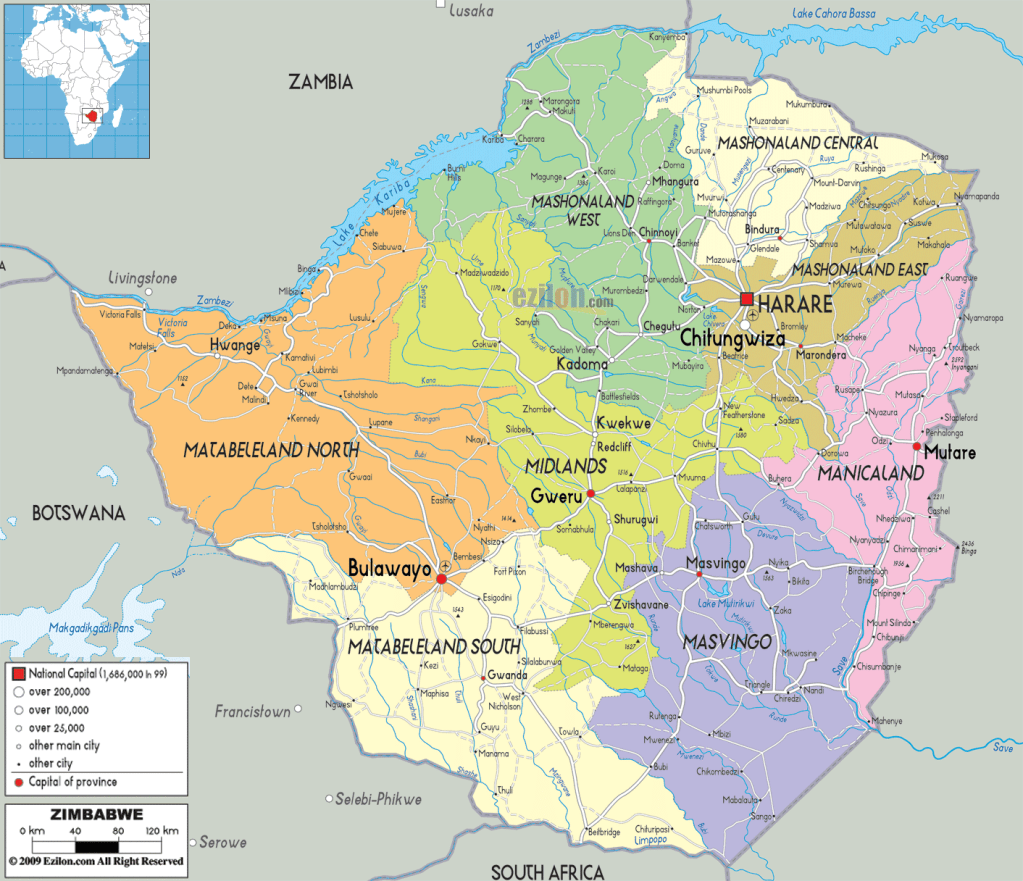
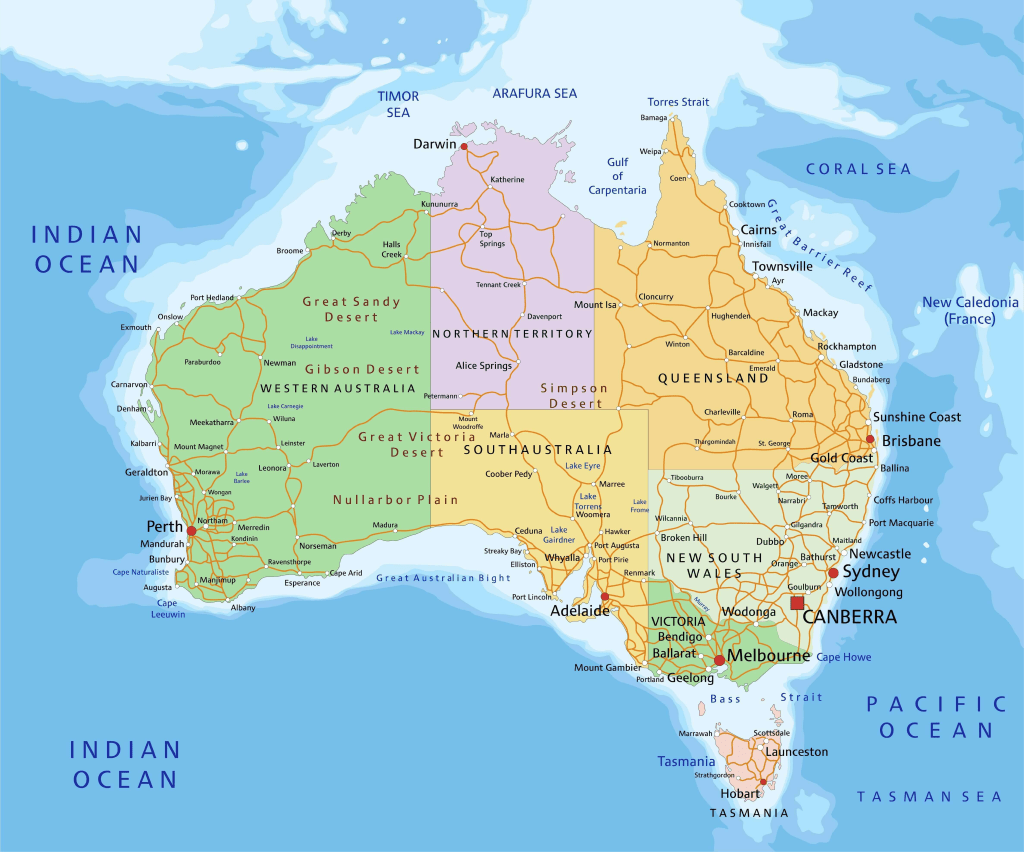
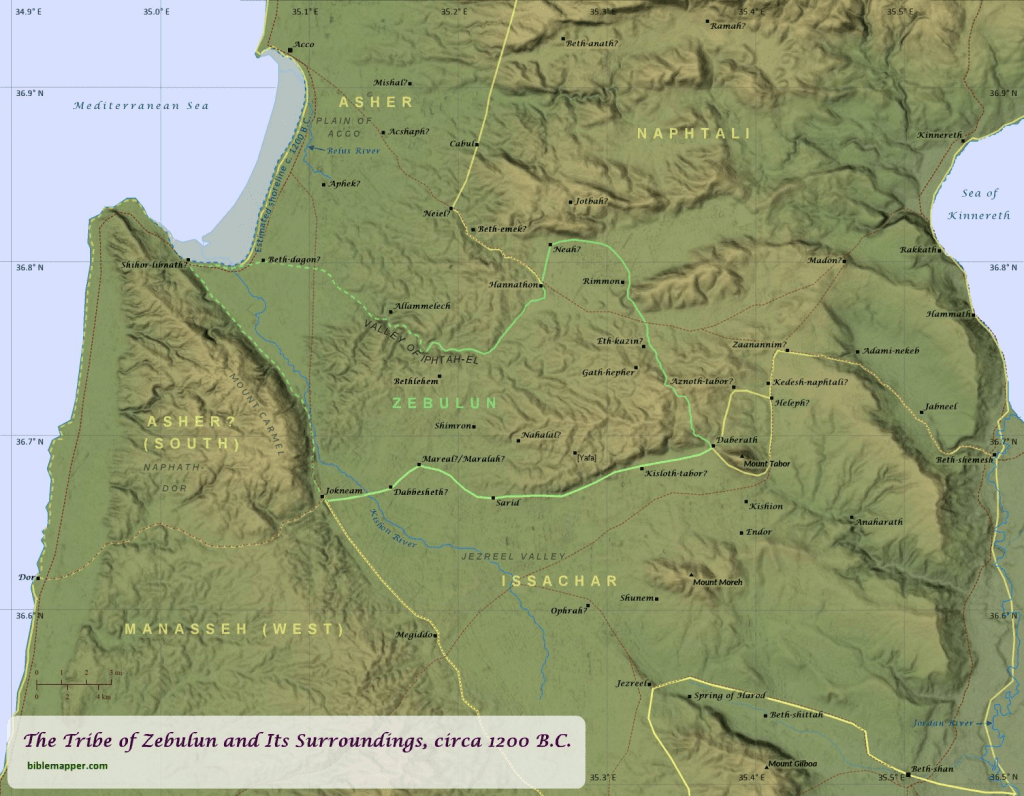
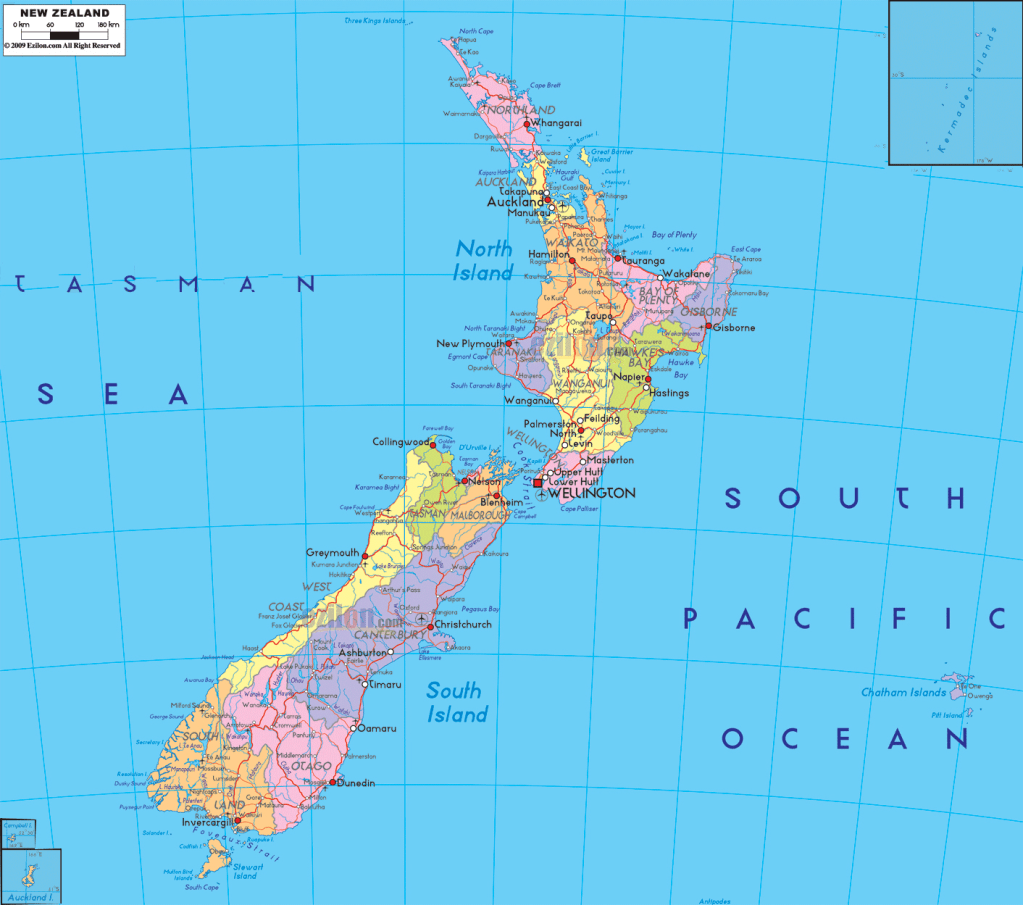
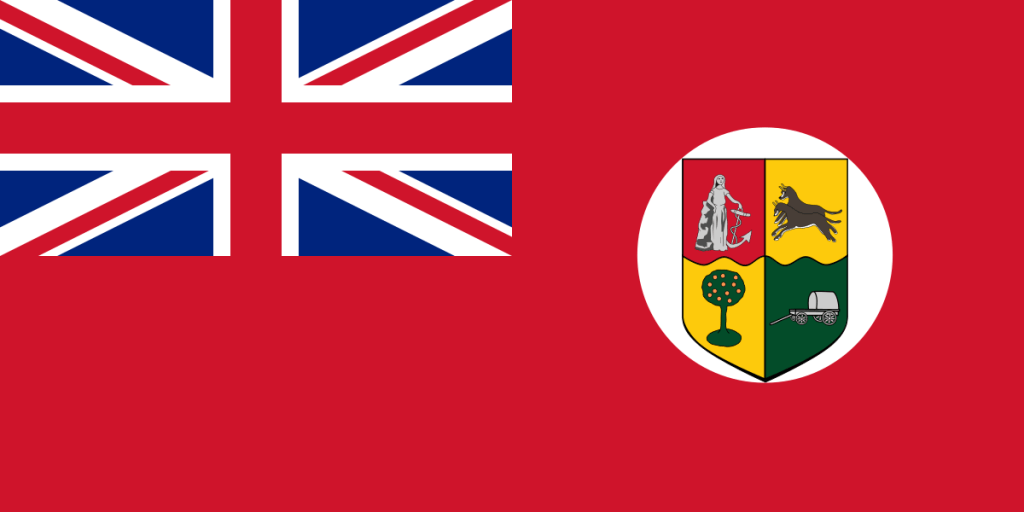
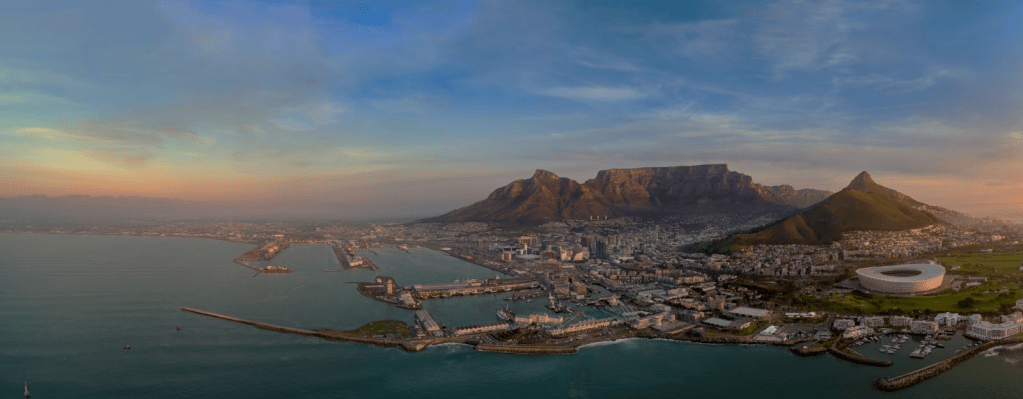


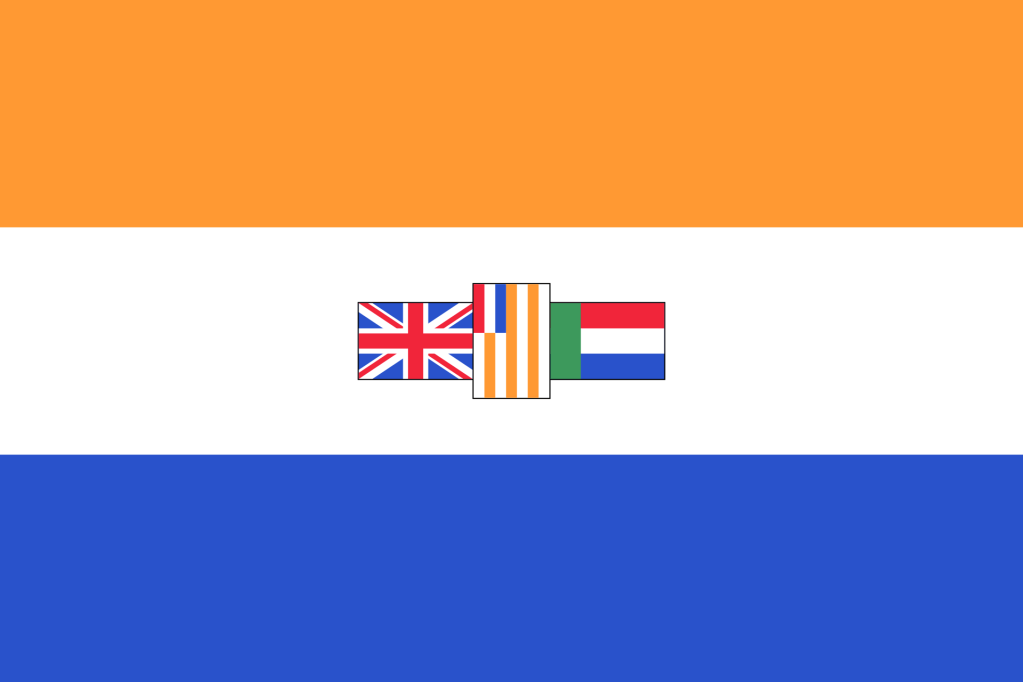

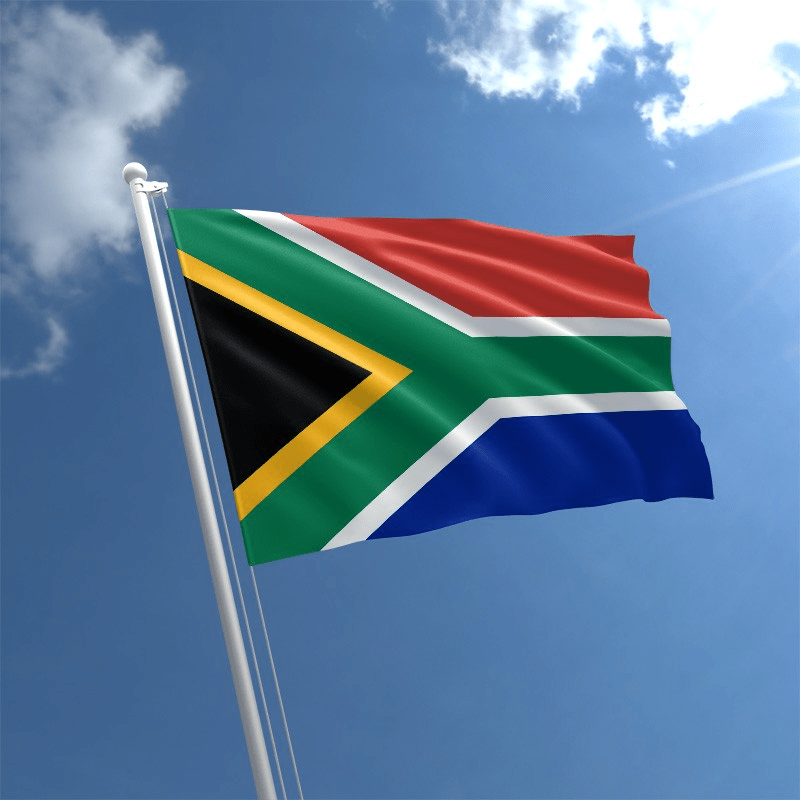

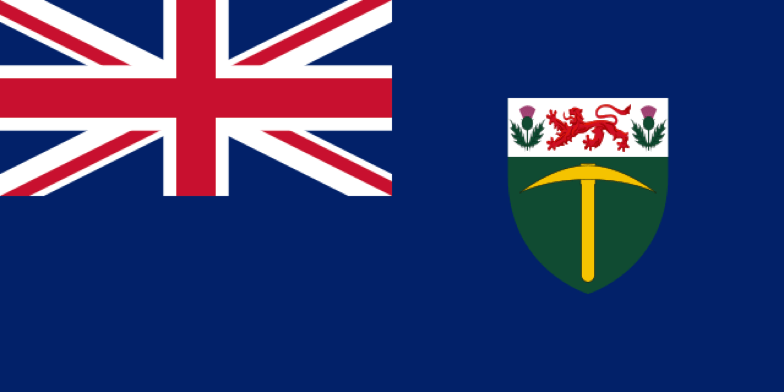


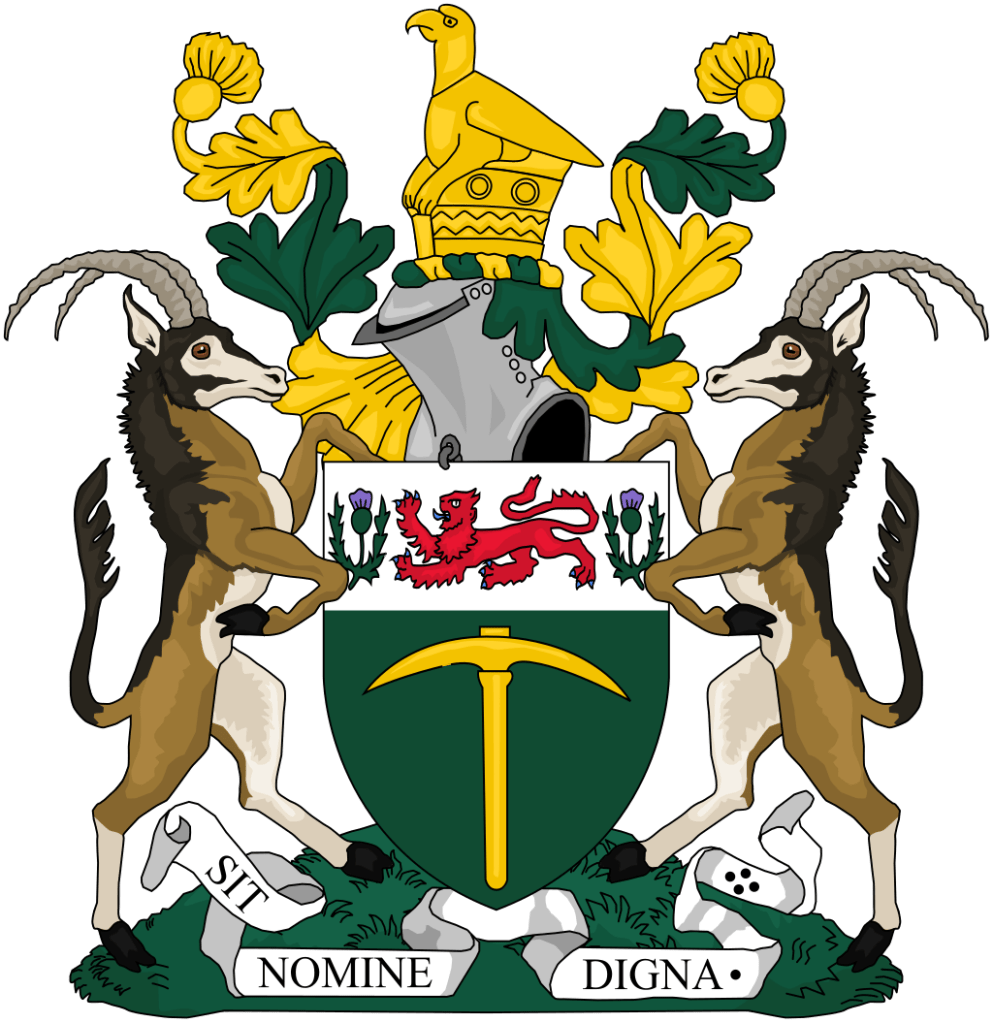
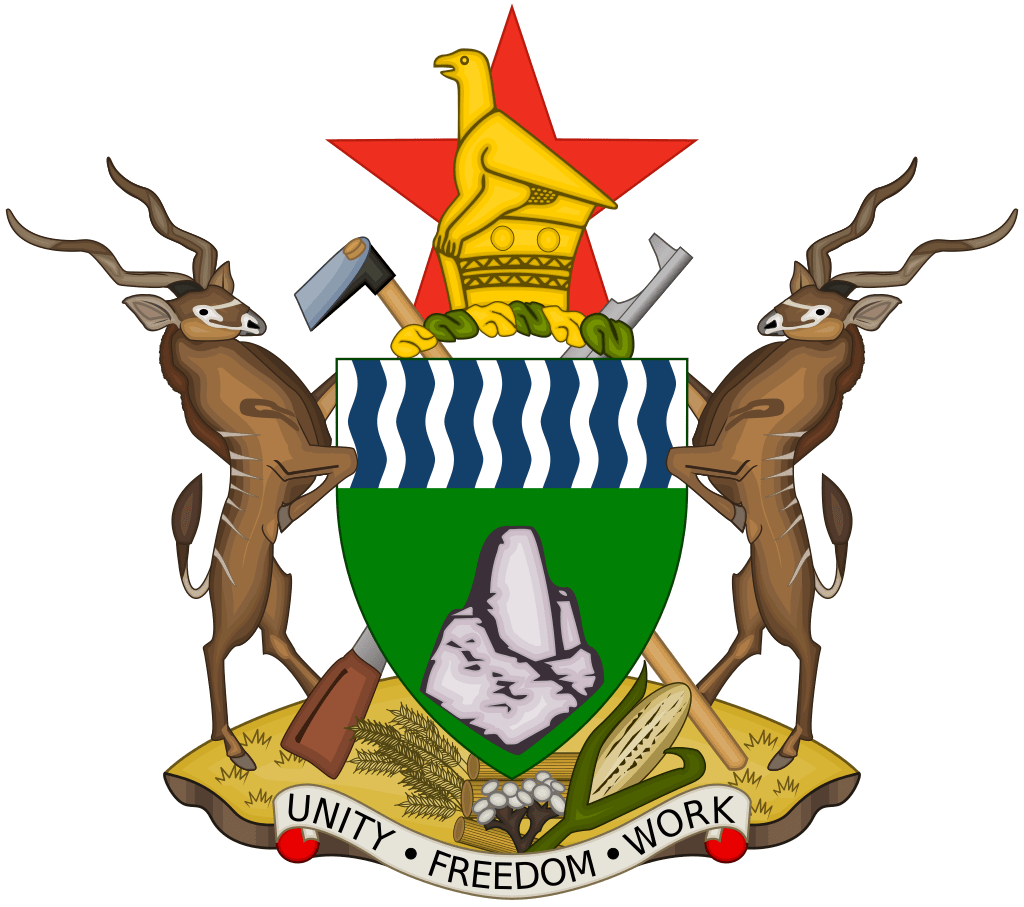






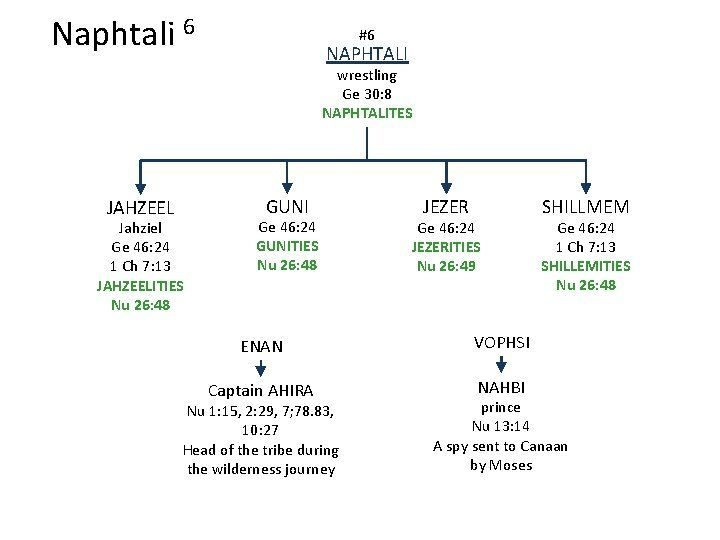
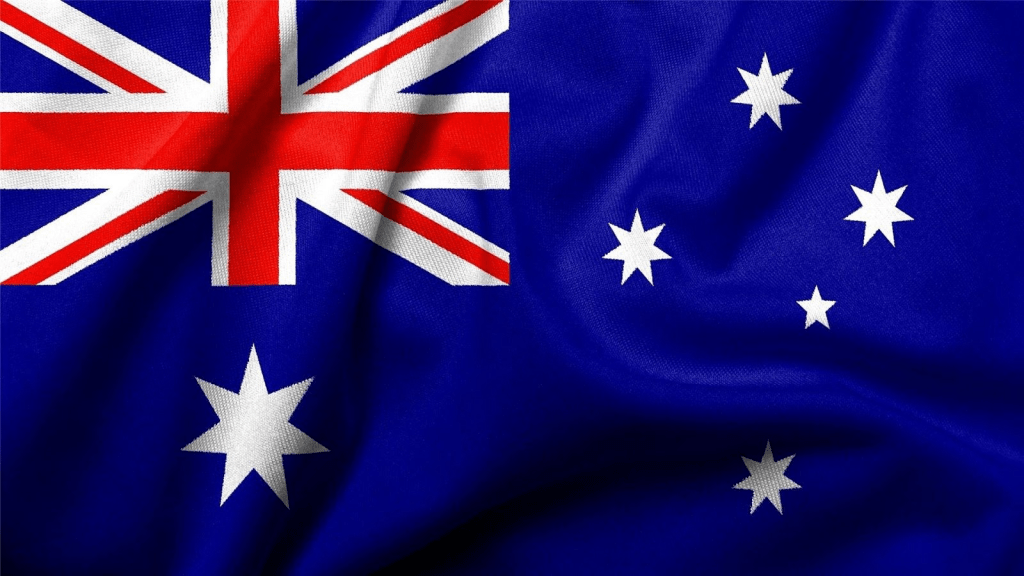


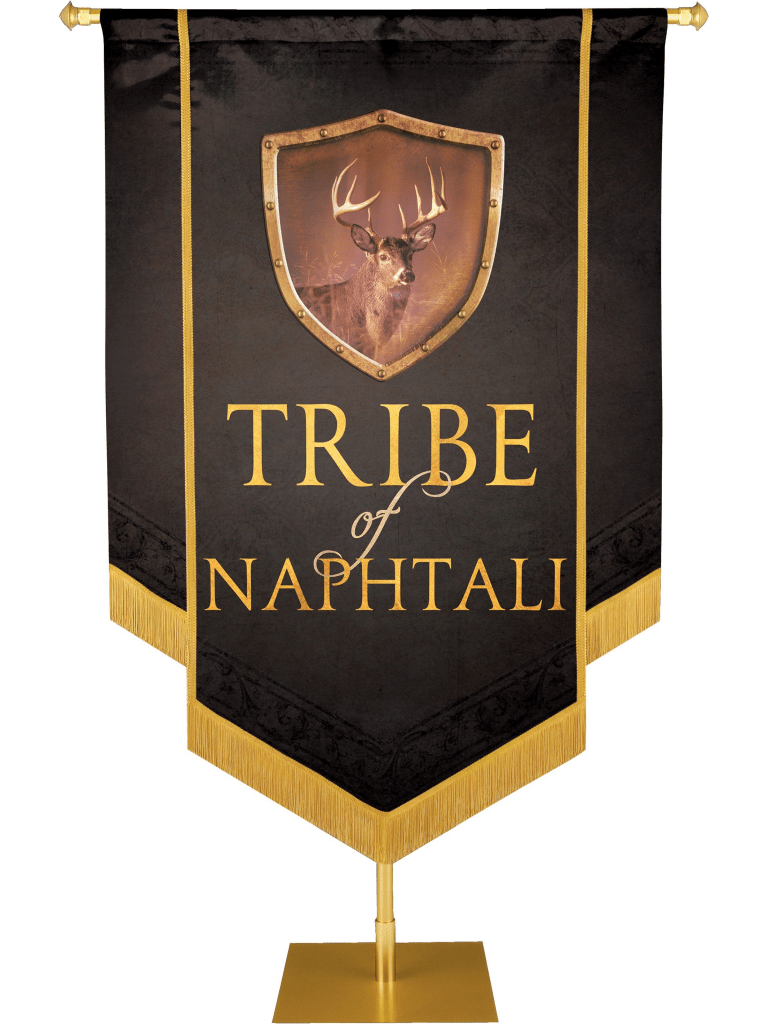


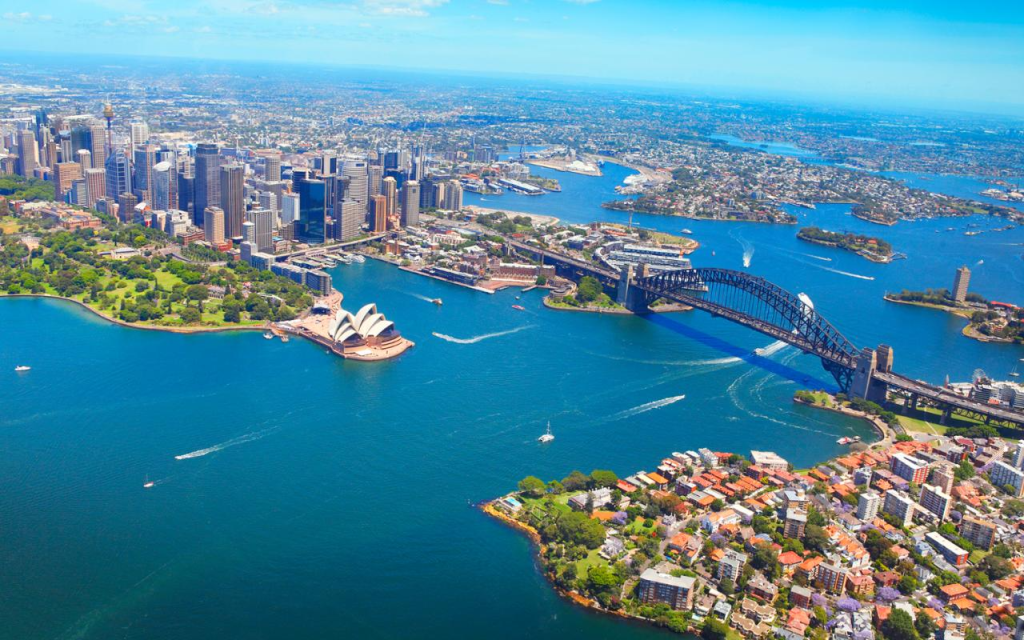




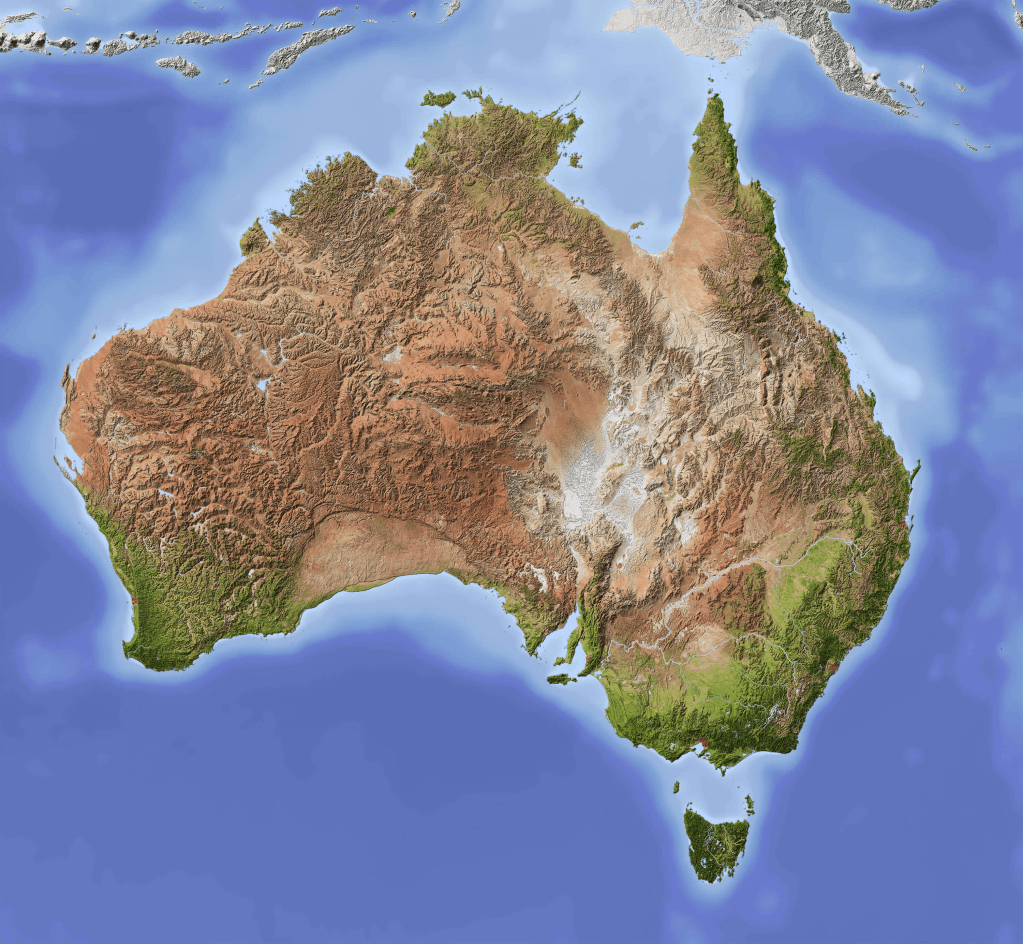



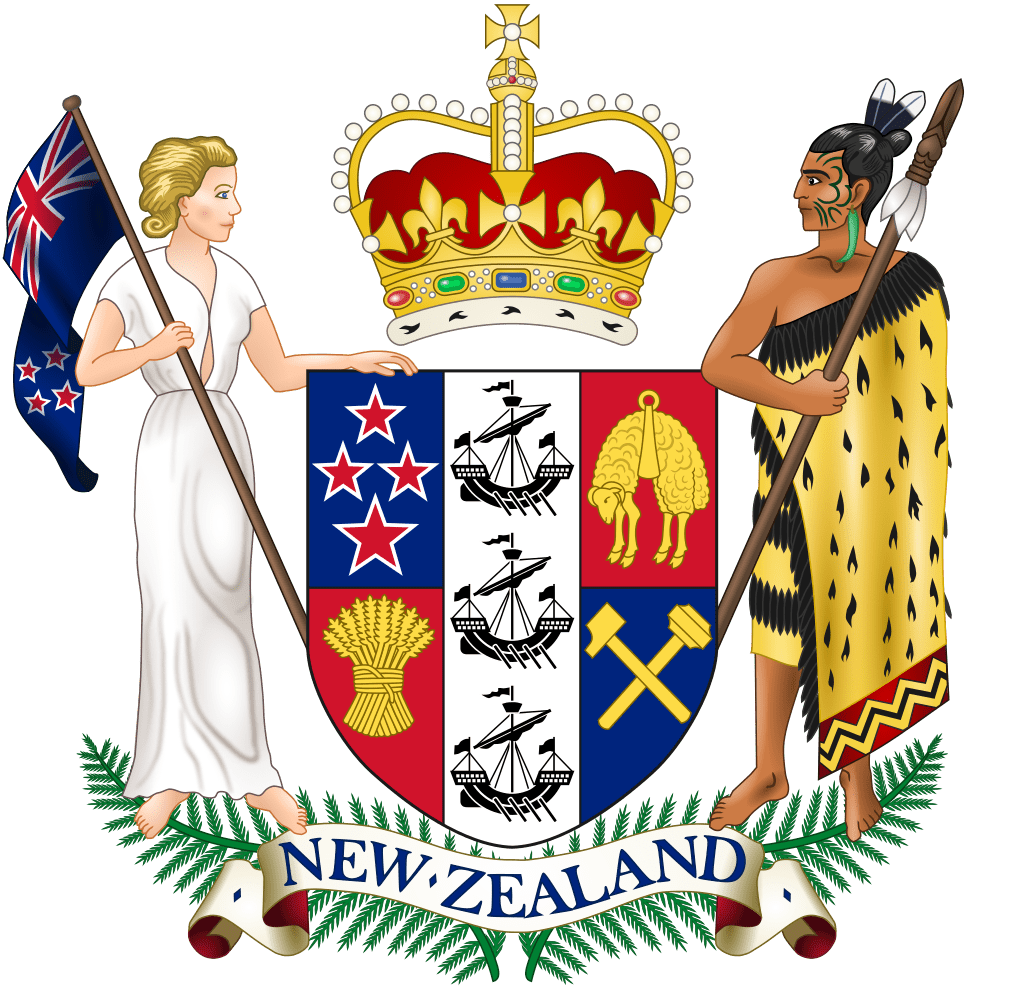


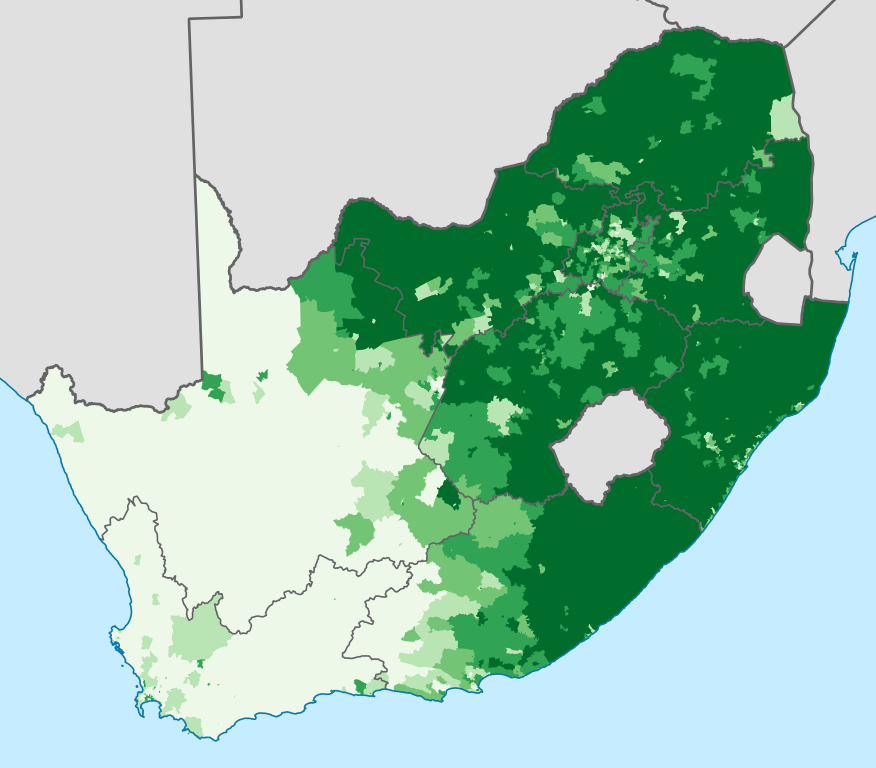
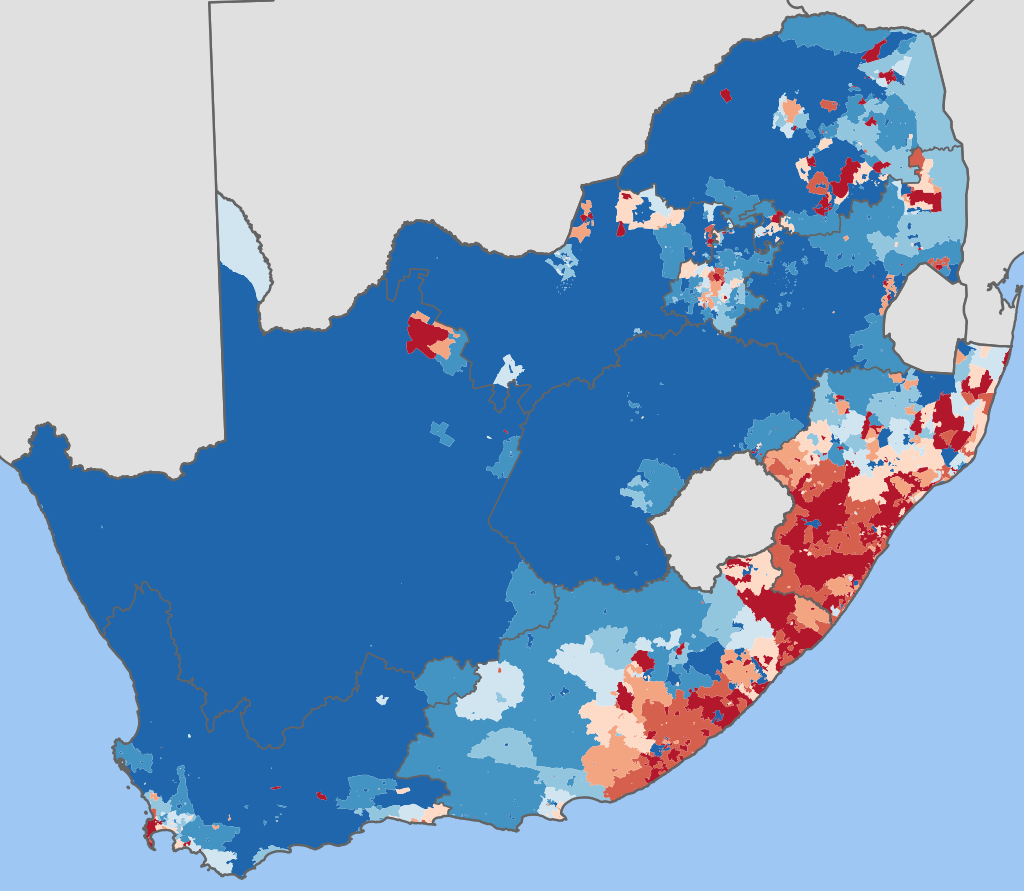


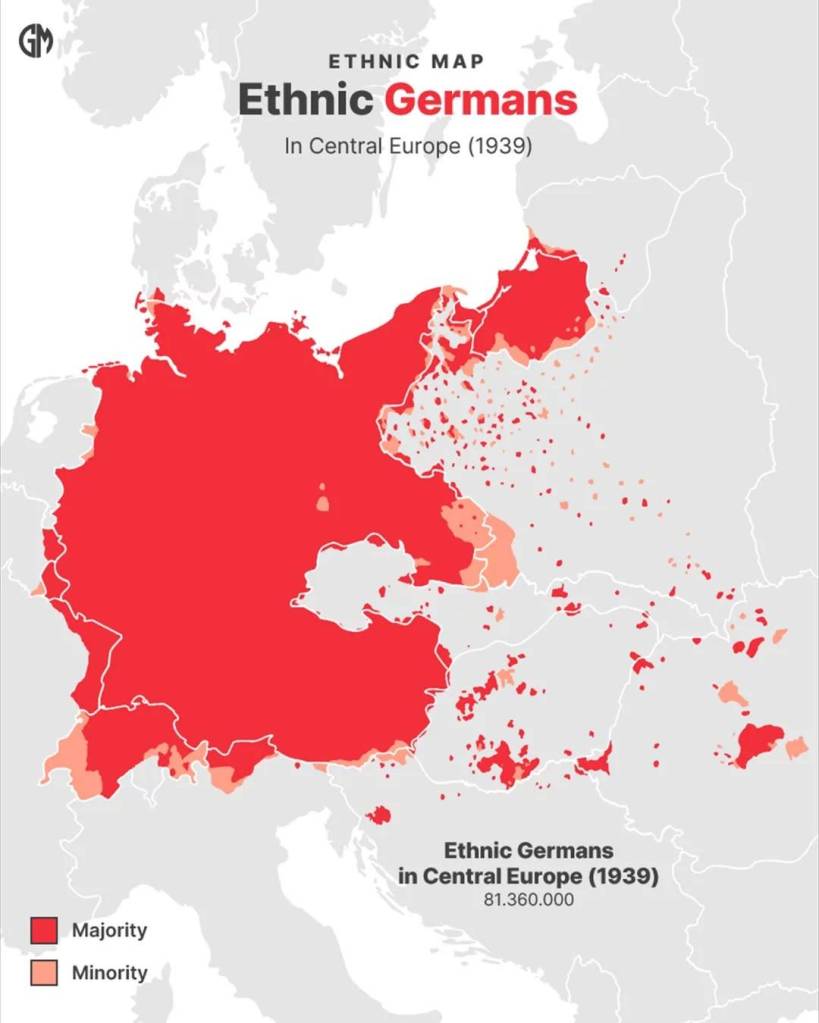

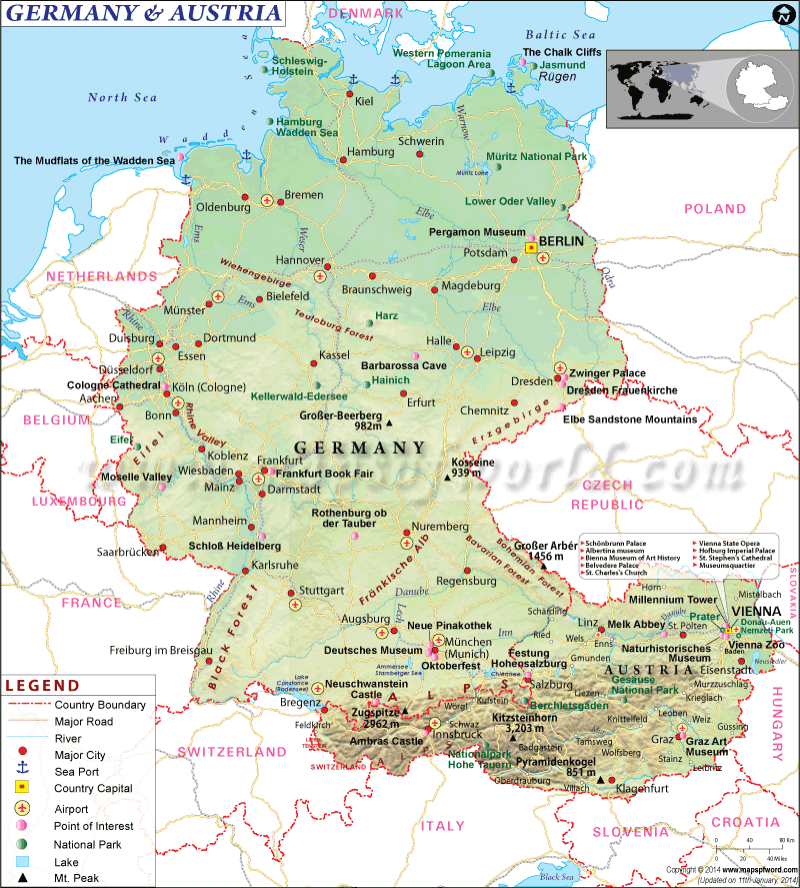
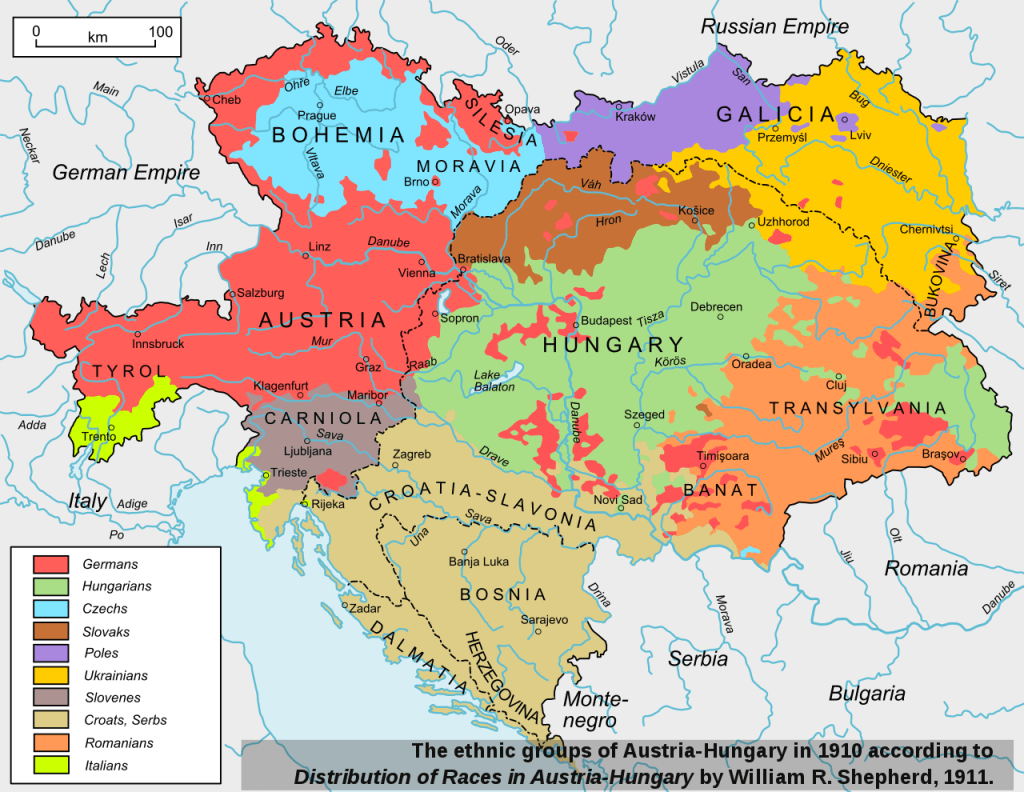




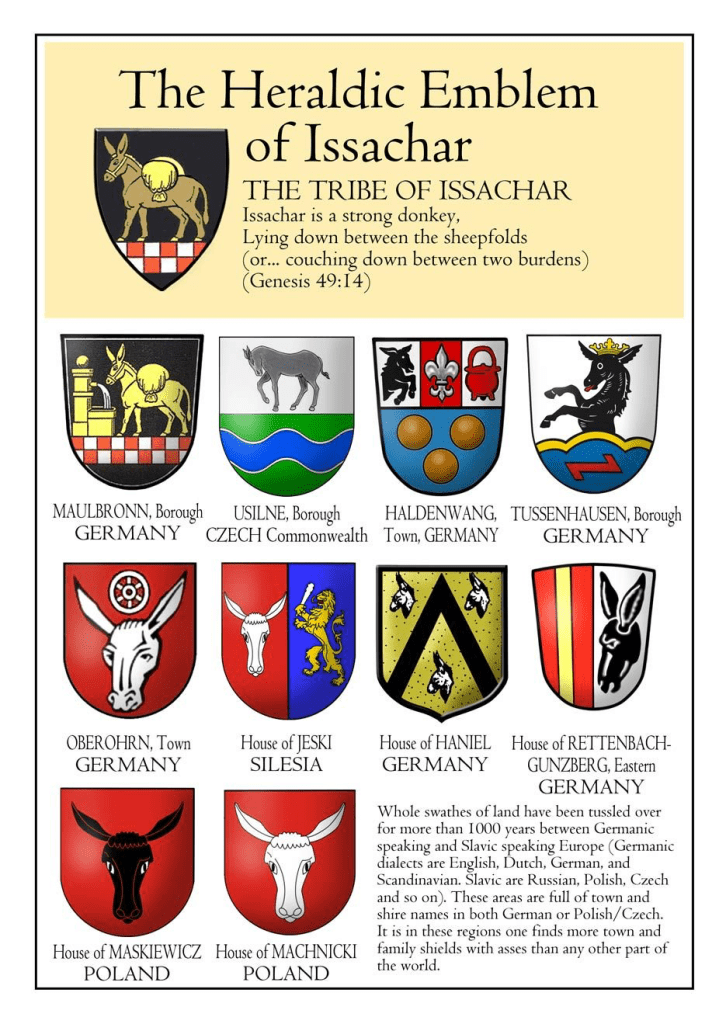









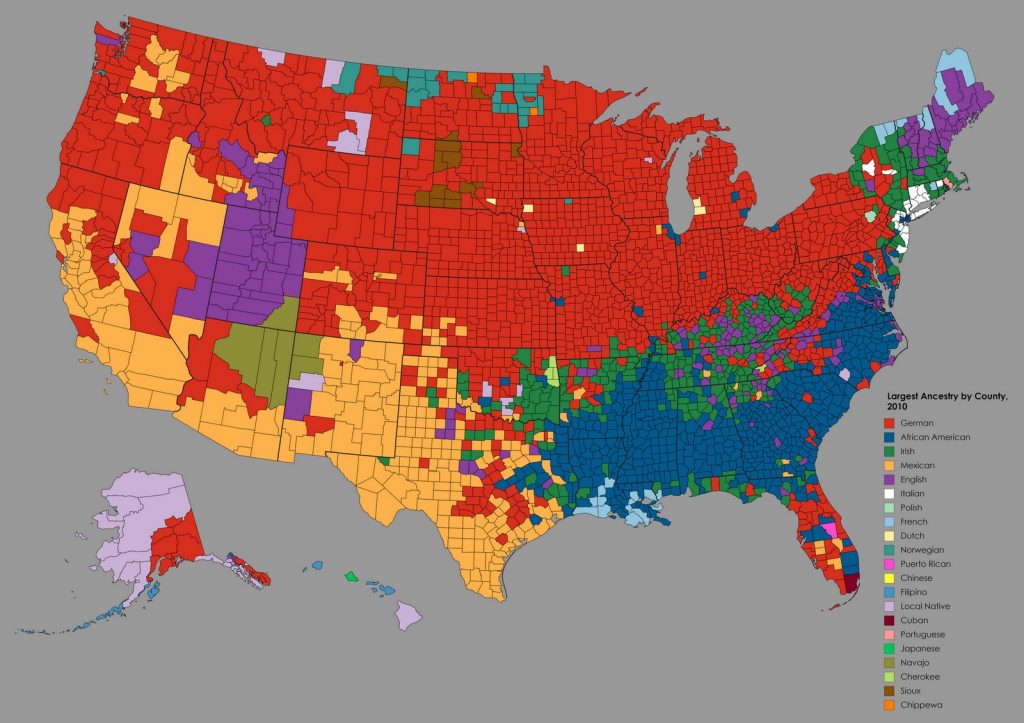

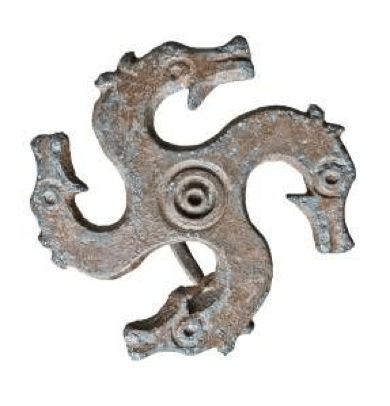

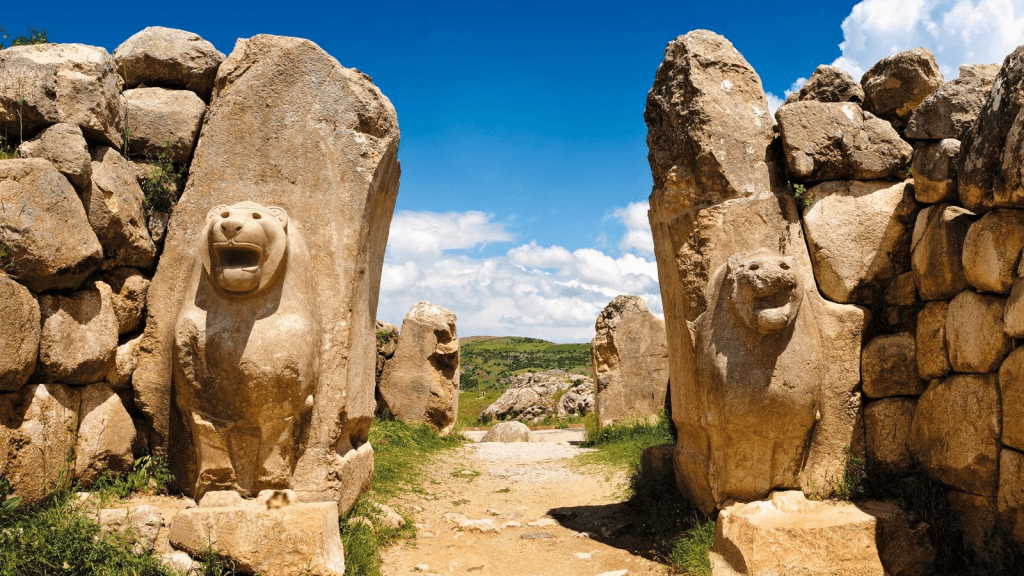

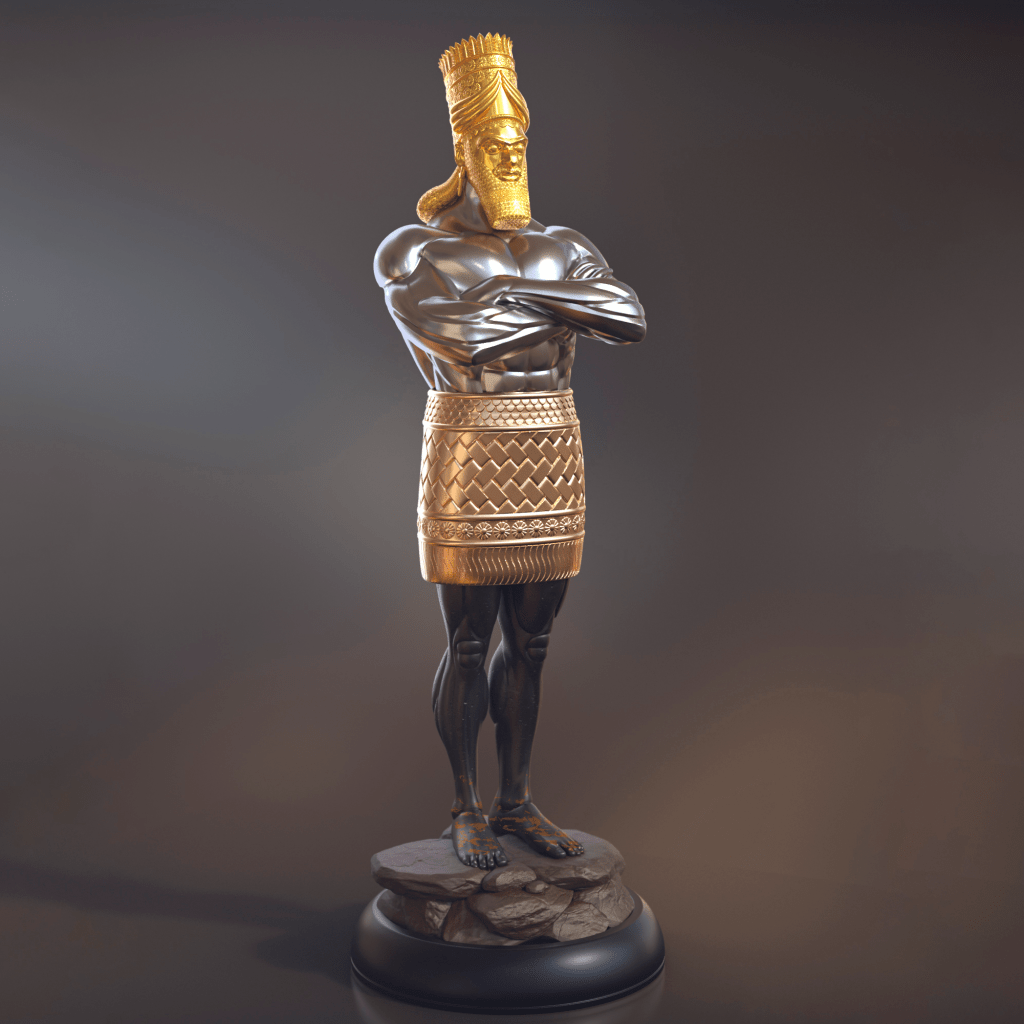










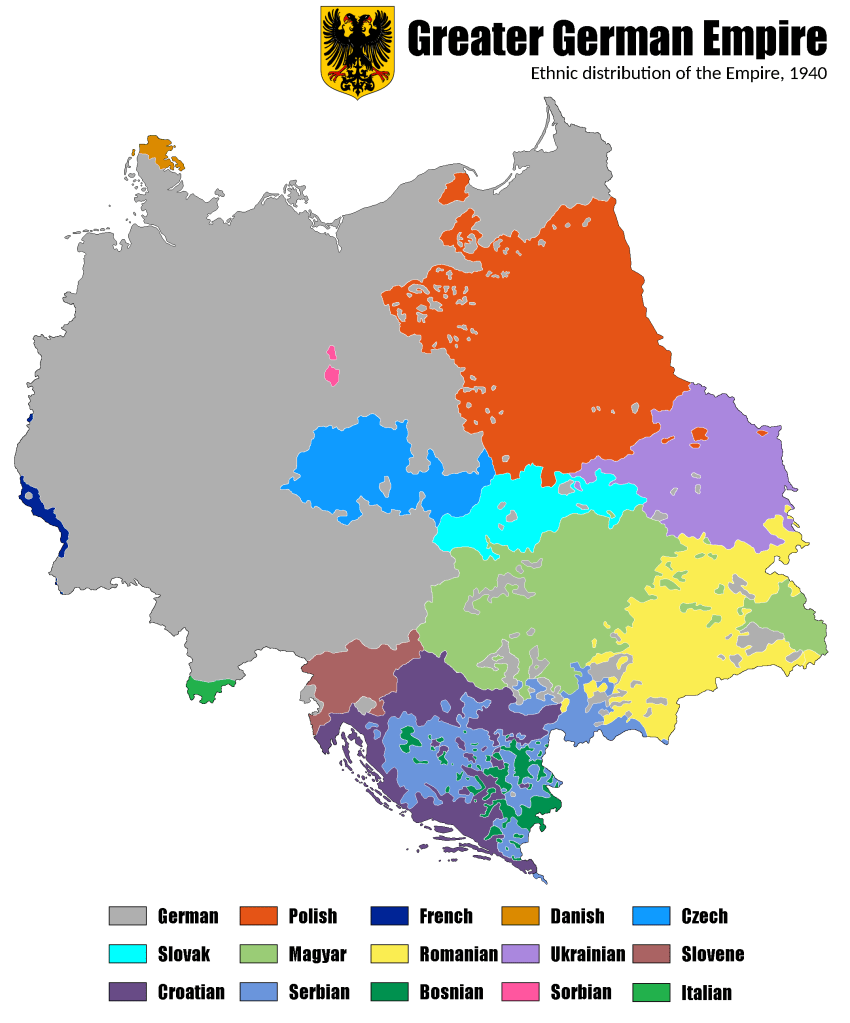
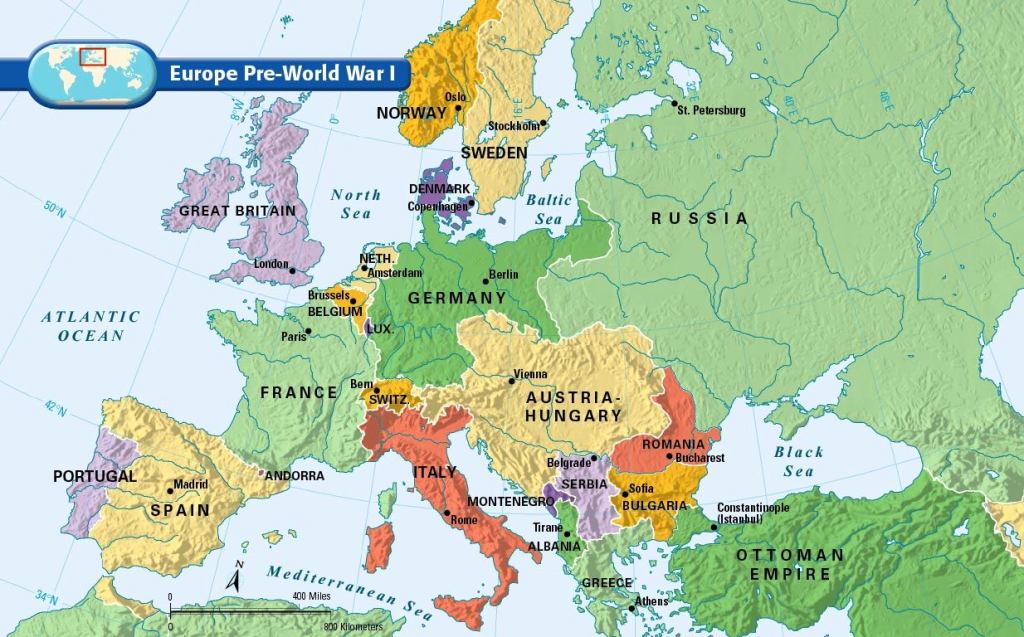




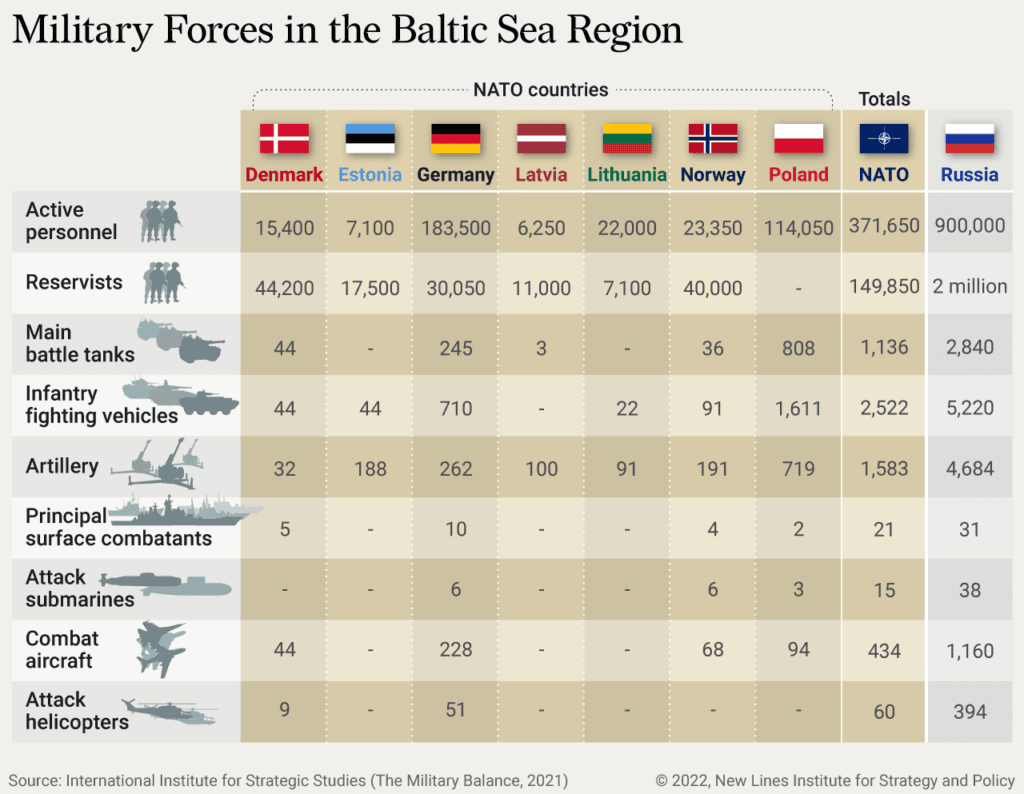
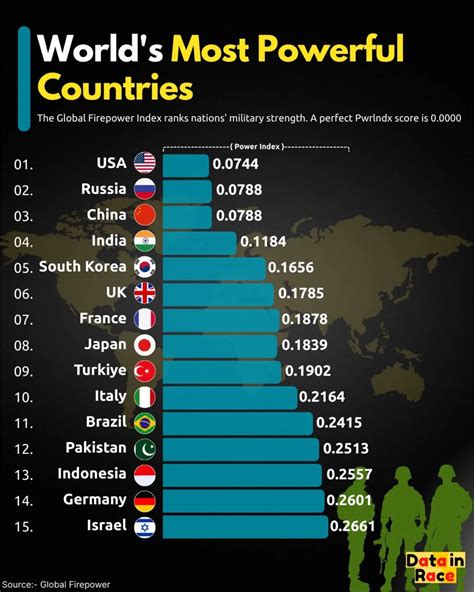
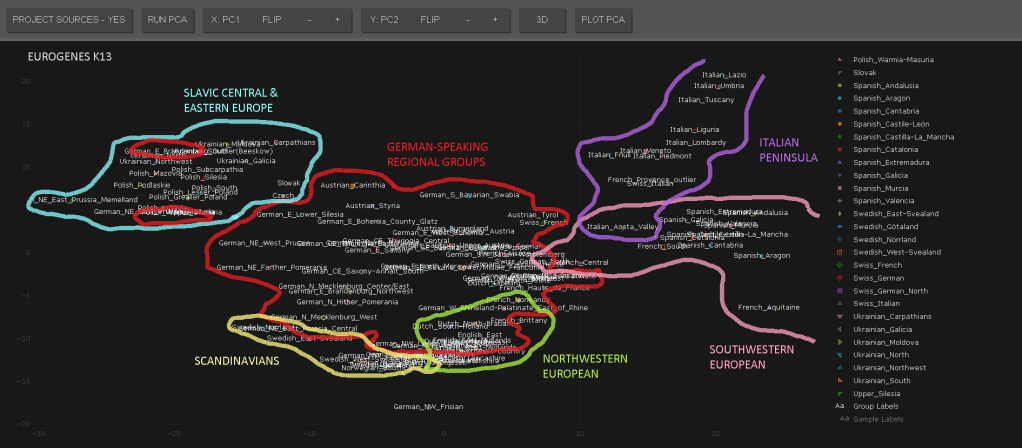

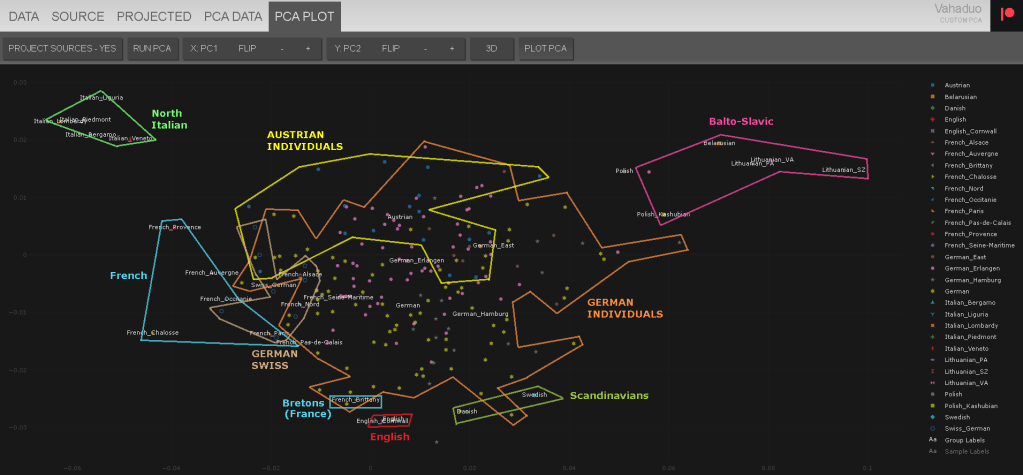

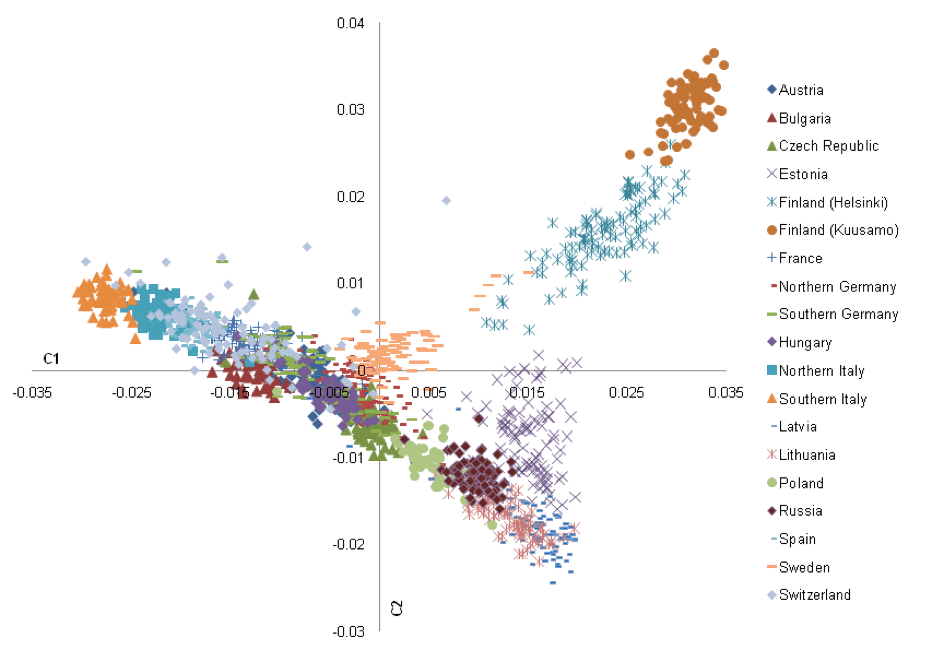
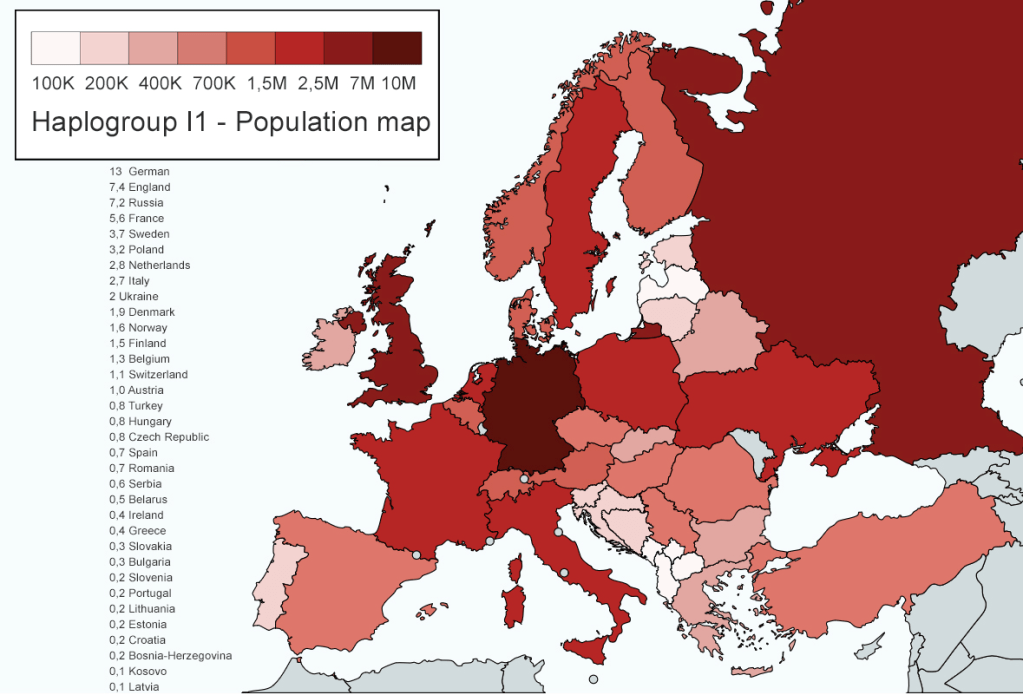
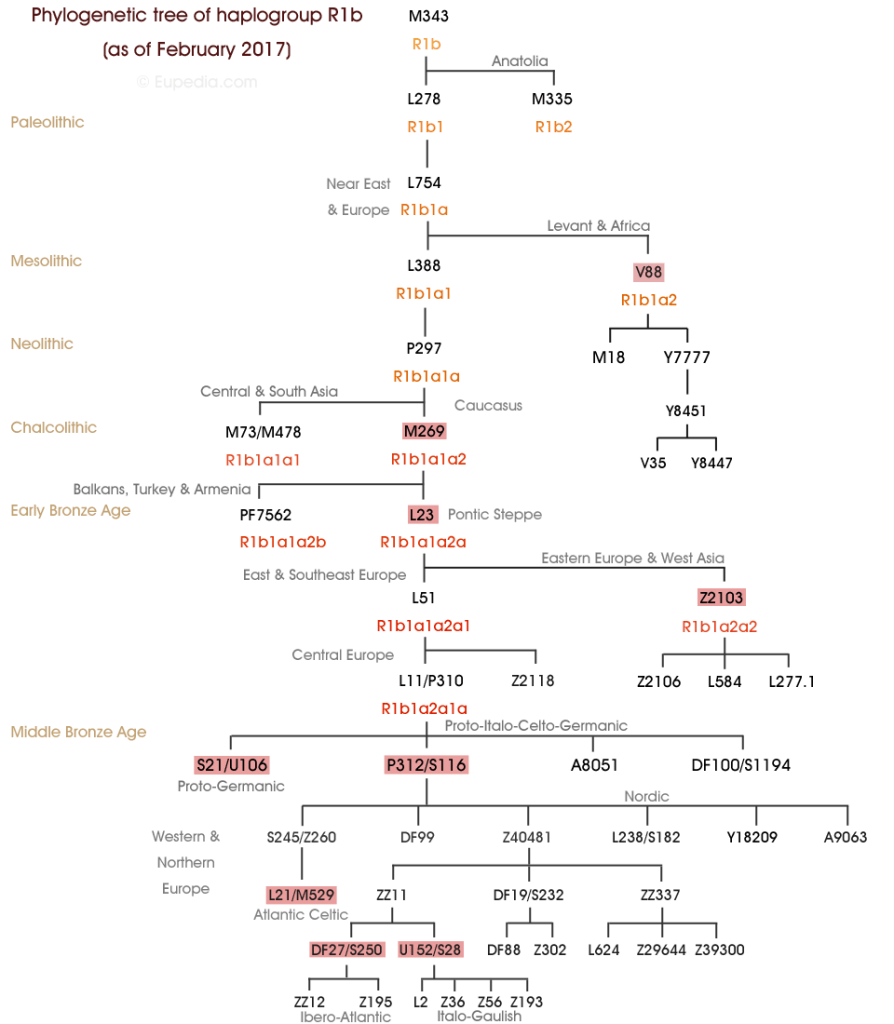


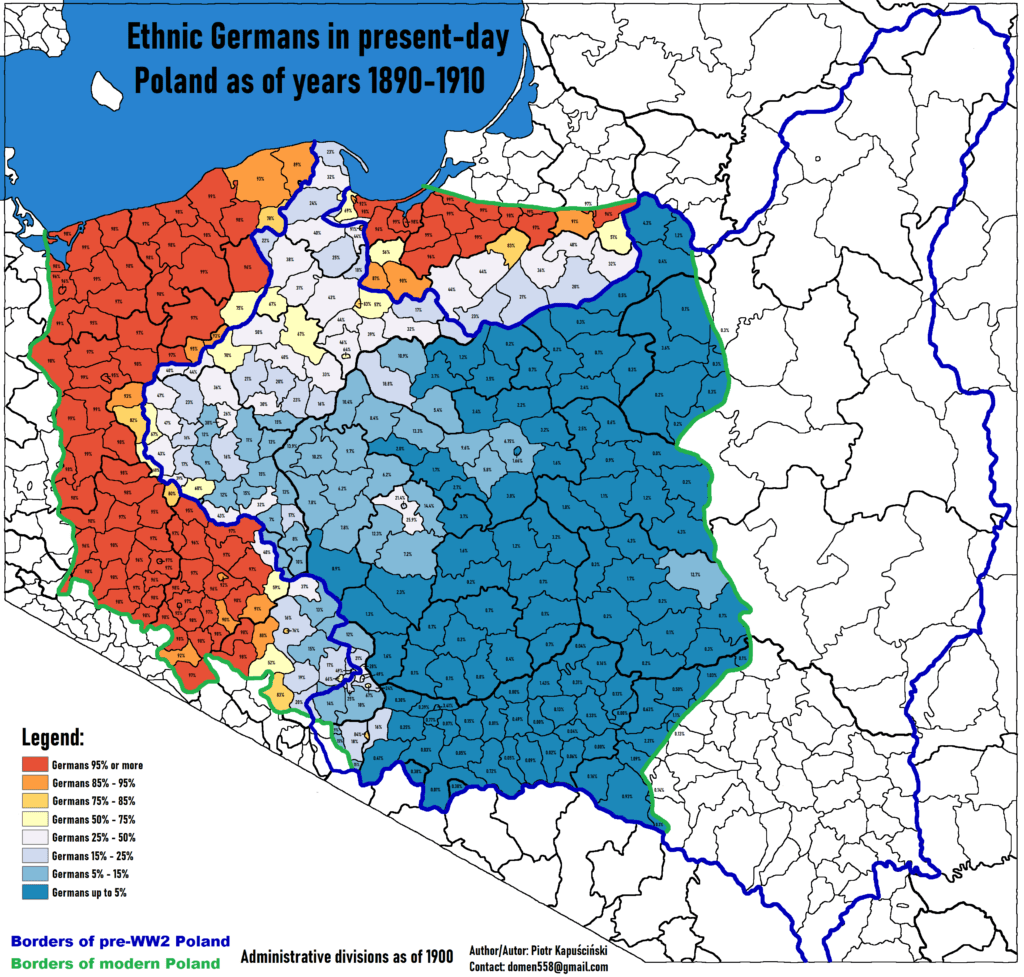




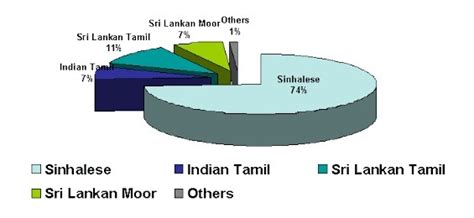

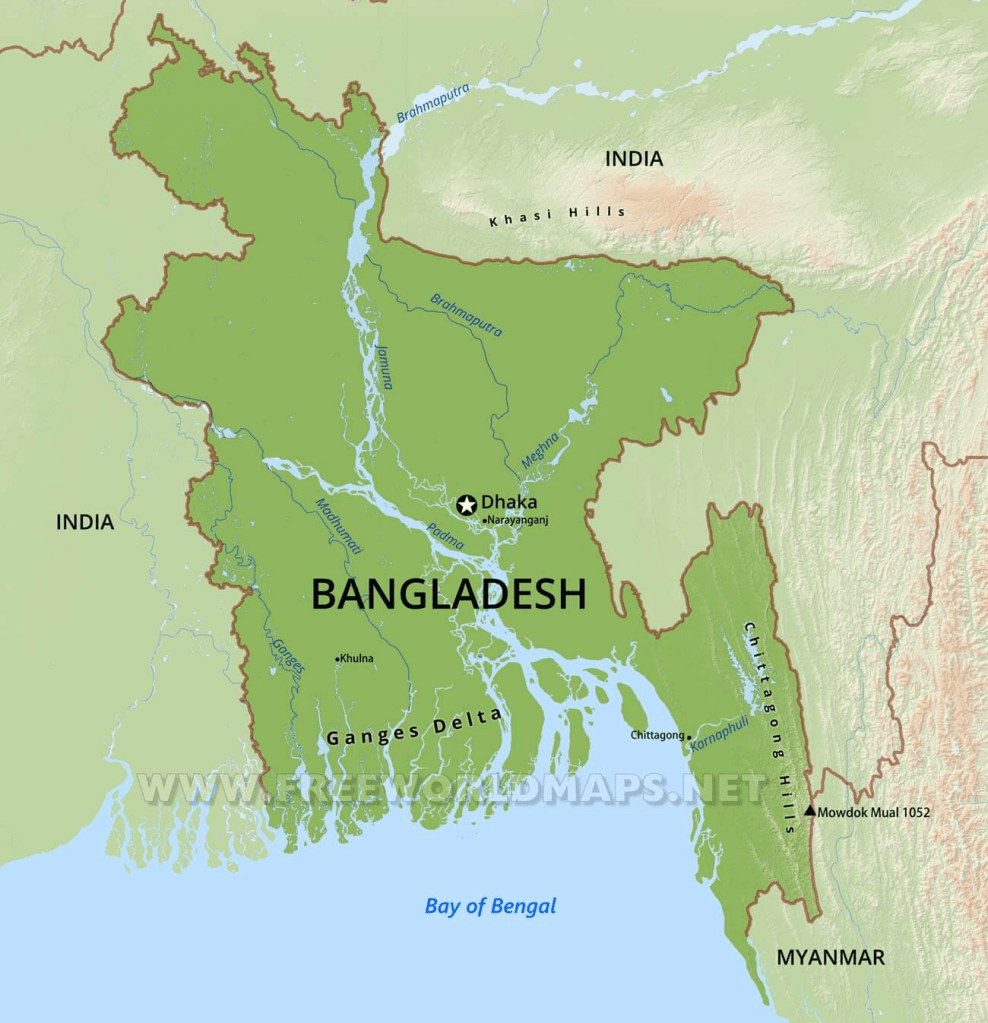
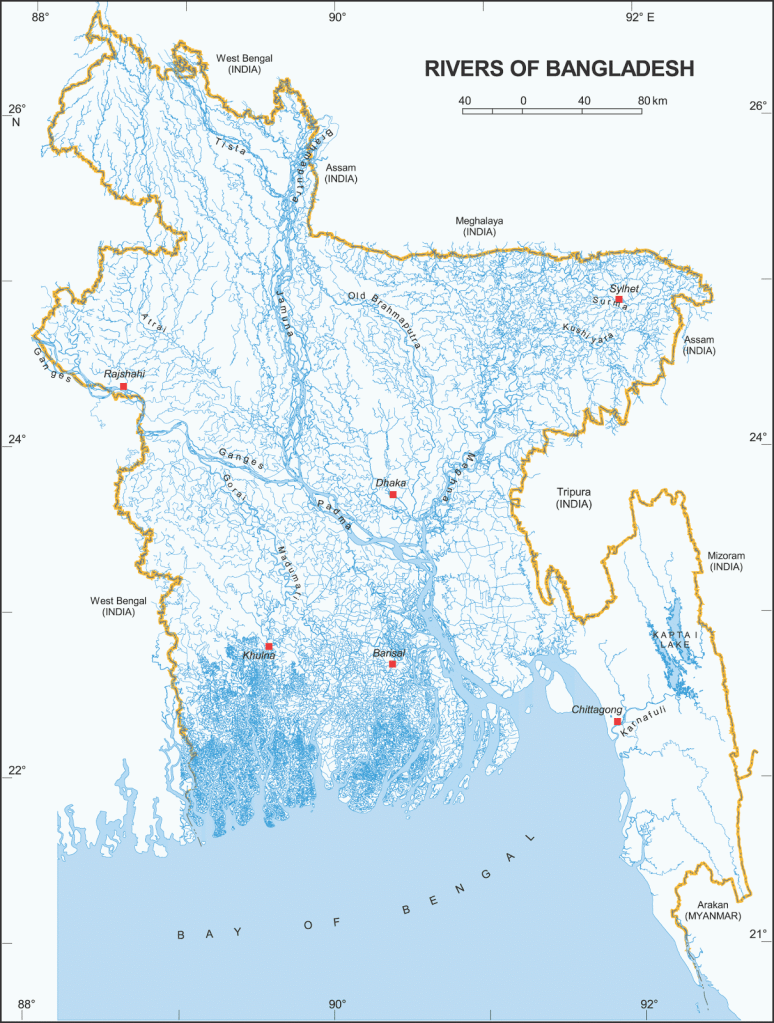



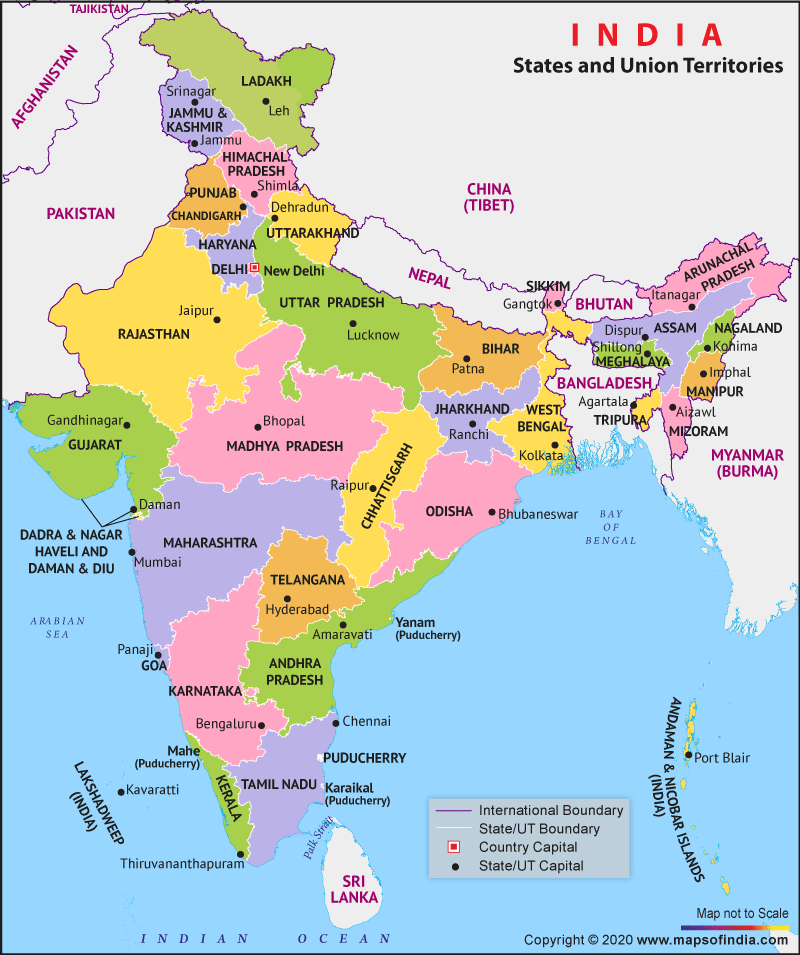
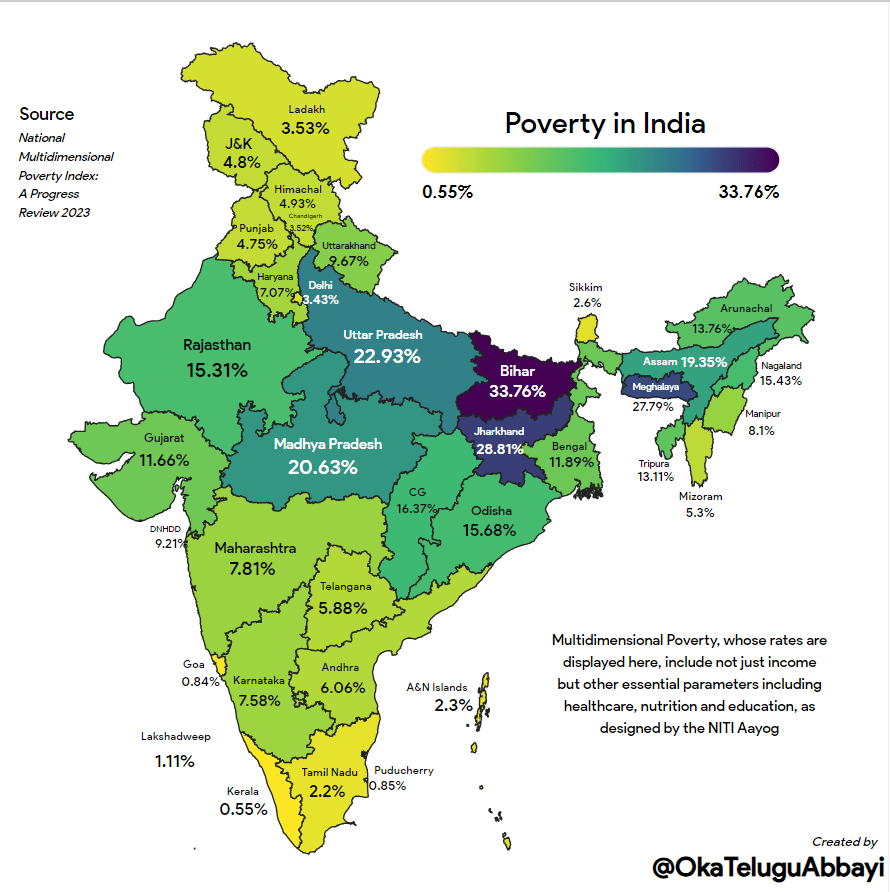
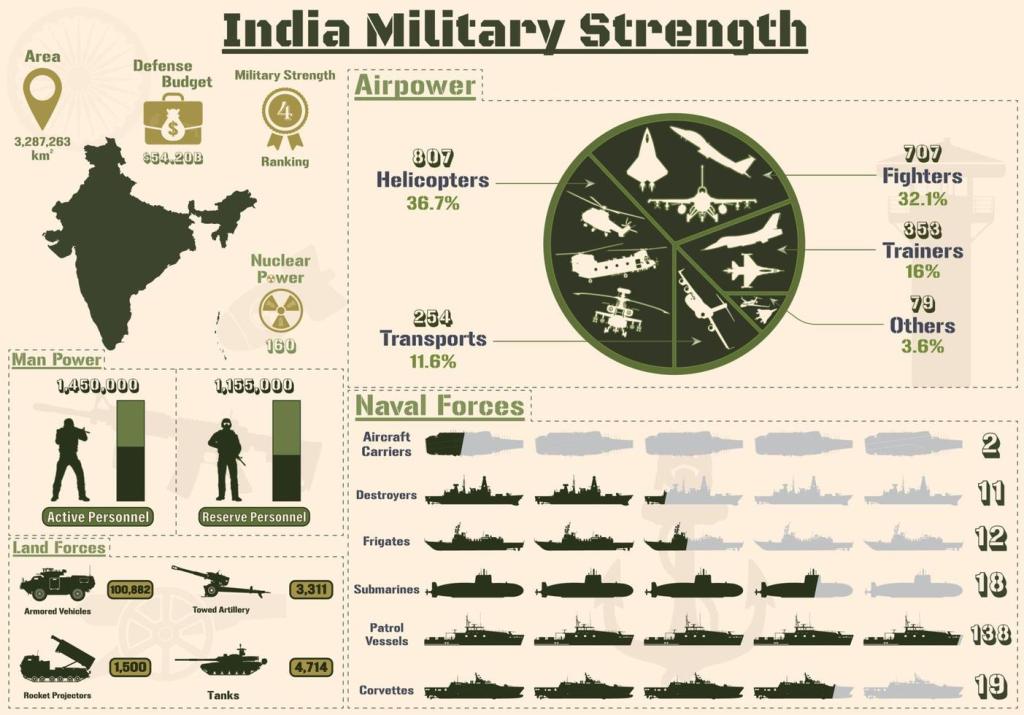
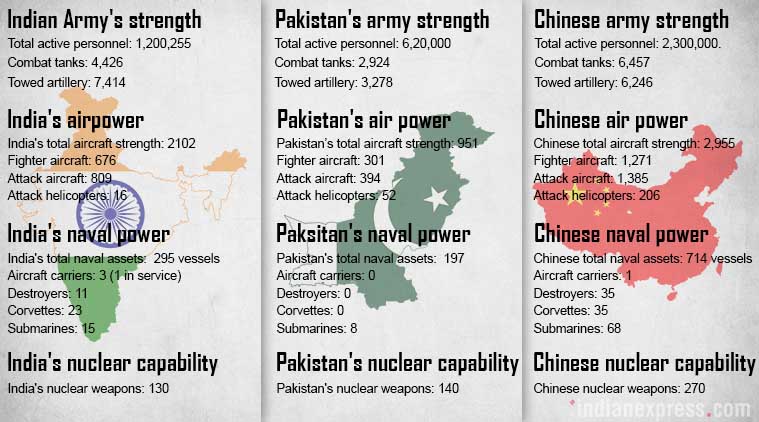
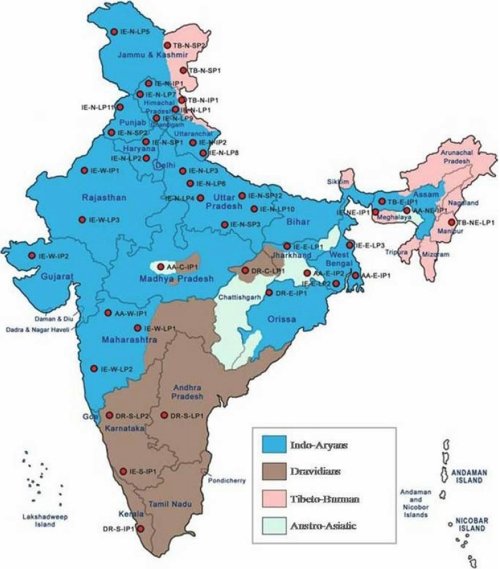






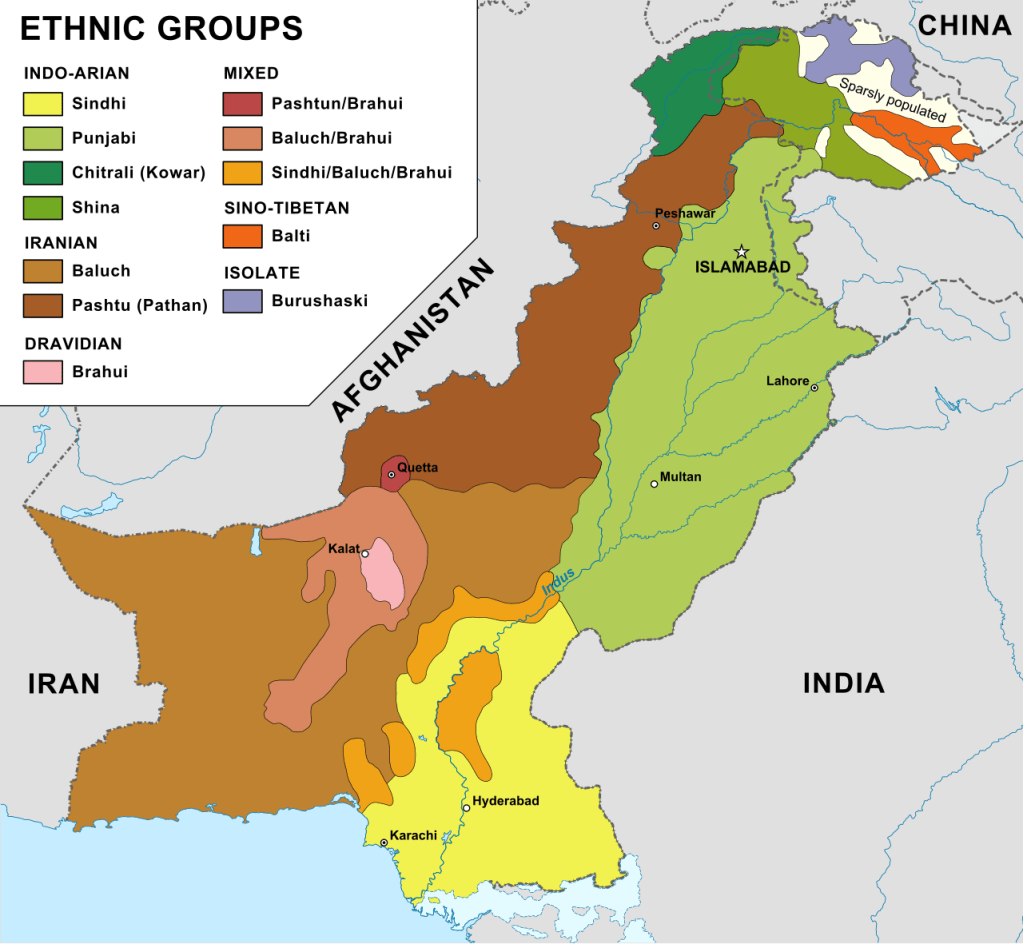
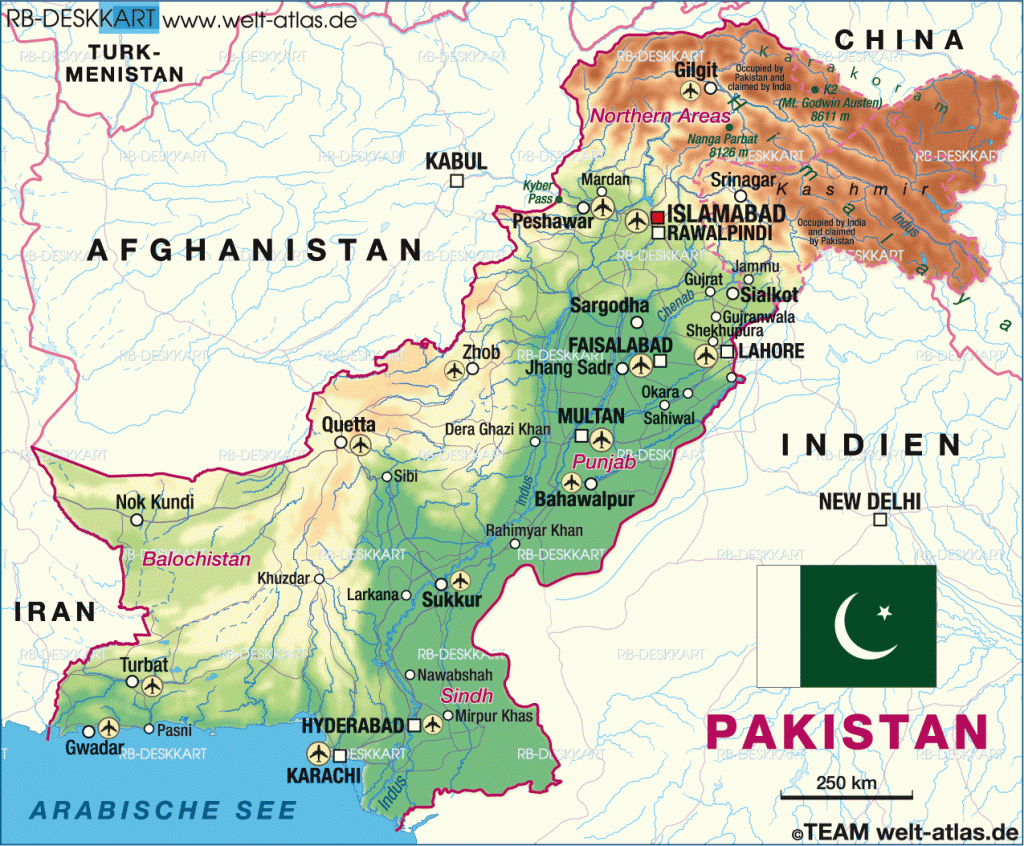


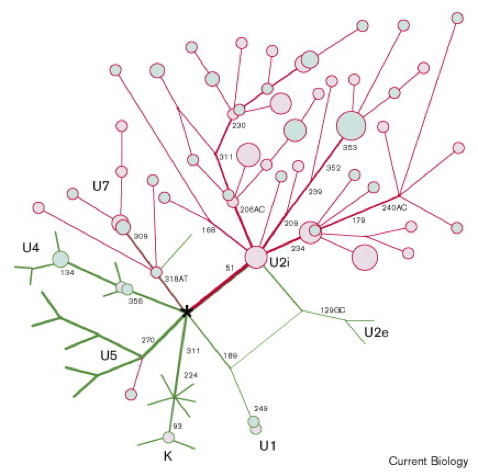
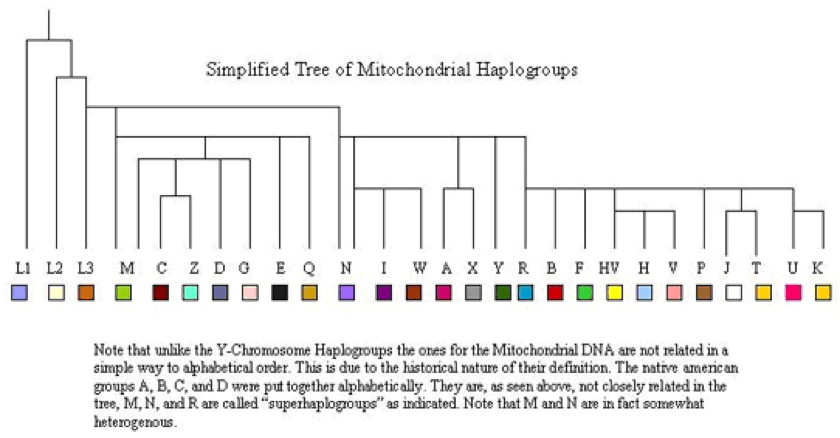


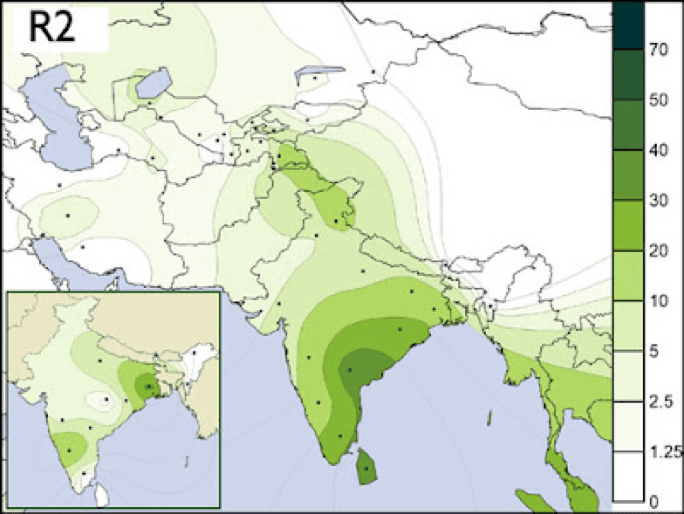


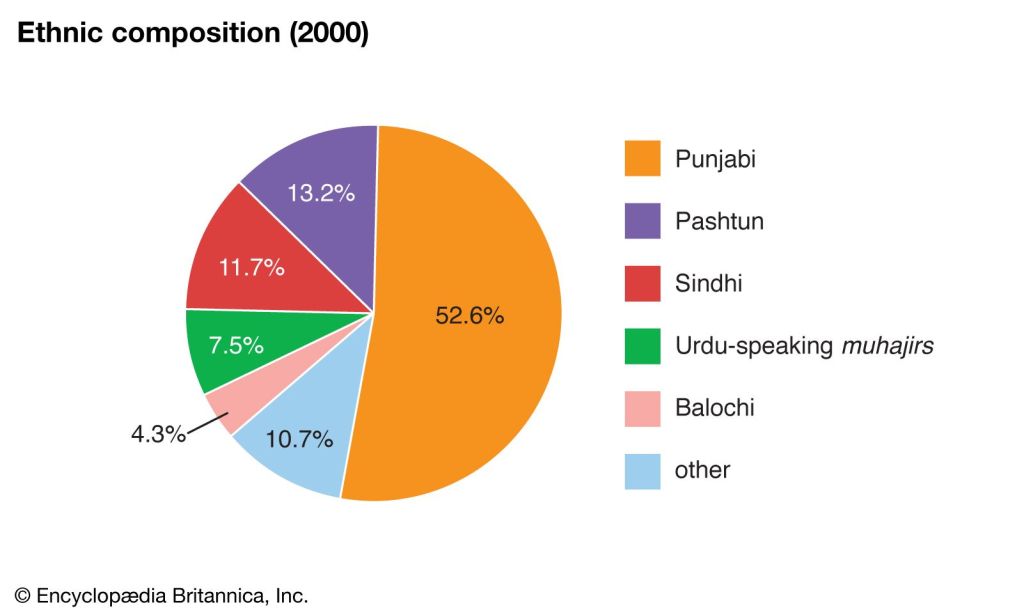

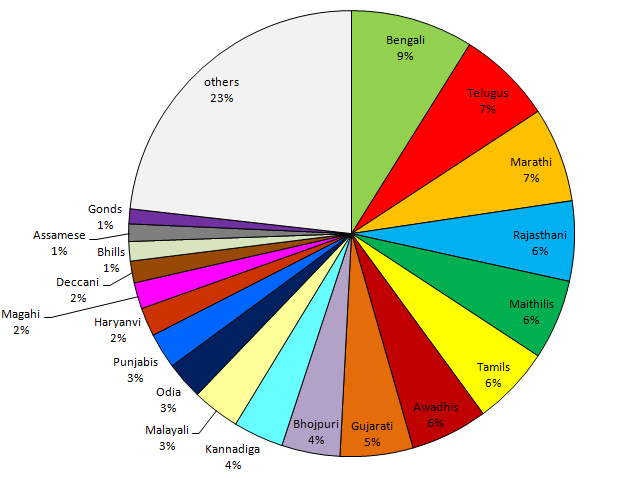
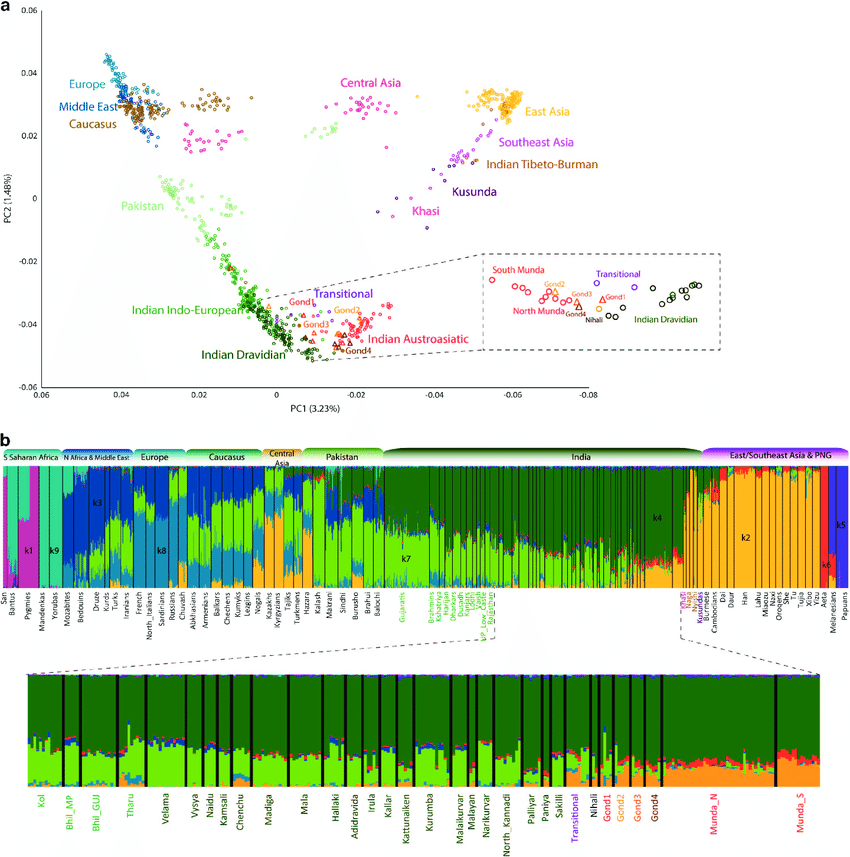



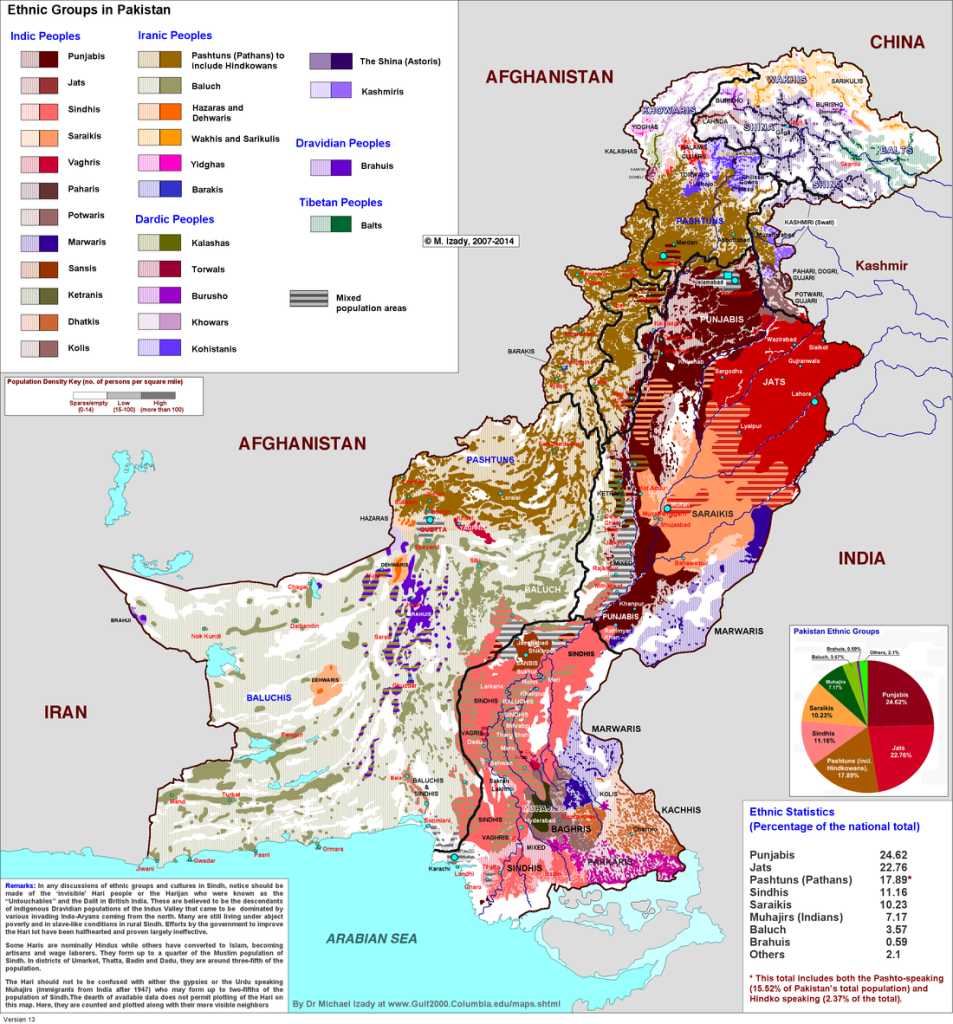
 The Lightkeeper