A proportion of researchers and commentators consider there is a link between the Edomite king Job-ab with the Patriarch Job in the Old Testament. If such is the case, then Job is the most famous Edomite in the Bible after Esau himself.
Job has forty-two chapters (Article: 42) dedicated to the story of his righteousness – one of the three most righteous men listed in the Bible (Ezekiel 14:14), with the antediluvian Patriarch Noah and the Prophet Daniel – and his subsequent testing by the Adversary, with the Eternal’s confident agreement. The written structure of the book of Job is unusual, in that it combines prose and poetry. No other book in the Bible uses this ‘prose-poetry-prose pattern.’ Which lends itself to having more than one author. Job is considered by some scholars the most ancient book in the Bible, predating Genesis – Job 19:23.
In addition to its profound biblical message it is regarded as a literary masterpiece. The book contains dialogue between Job and his four friends as well as Job’s conversations with the Creator. There is much wisdom to glean as well as valuable information regarding the pre-Adamic (or angelic) world, particularly with regard to impressive creatures such as Leviathan…
… and the Behemoth…
… ostensibly dinosaurs and allegorically, angelic beings – Chapter XXII Alpha & Omega; and article: Asherah.
Christopher Eames: ‘the book of Job is believed by many to be a translation into Hebrew from an original text of another language, based on certain peculiarities throughout. Davis, who explains them in his book, summarizes: “Job is distinctively non-Israelite in nature, saying nothing about the land of Israel, the people and history of Israel, or the religious practices in Israel. The names of Job and his friends are not Israelite names. This… hints at a non-Israelite origin for the book. If the book’s origin was not within Israel, the original language would likely not be Hebrew.”
Added to this is the fact that the Book of Job makes no references to Israelite law, the Old Covenant or the temple, suggesting a pre-Mosaic era. Job must have lived during an ancient epoch prefiguring – yet overlapping – Moses and the Israelites, as his wealth is measured in livestock, similar to the patriarchs Abraham, Isaac, and Jacob; as well as his age (210) being a length similar to Abraham (175) and Isaac (180).
Eames: ‘The book of Job is unique in that it contains the greatest percentage of hapax legomena of all the books in the Hebrew Bible. A hapax legomenon is a word that is only found once in a source – as such, these words can often be difficult to understand or translate, as over time their meaning is easily lost. The book of Job contains nearly 150 of them – and a full 60 are completely without derivation from any known biblical root words. (As a side note, the circa second-century b.c.e. Greek Septuagint translation of the book of Job is some 400 lines shorter than the Hebrew – one theory for this is that the translators became so frustrated with the book’s complex language that they simply gave up!).’
The Book of Job: Chronological, Historical and Archaeological Evidence, Gerard Gertoux, 2015:
‘Many people who think themselves wise assume that Job was a fictional character like the Good Samaritan, a parable to teach morals. This assumption is illogical and even absurd. Indeed, what is the importance of knowing many insignificant details… [about his life] (Job 42:9-14)… If the Book of Job was a parable Satan would have persecuted a fictional character. Those who suppose that Satan must be the principle of evil lead to an absurdity because in that case God [wouldn’t] have discussed with “it”… [the details regarding Job’s character] (Job 1:8-10).’
The name Jobab means ‘to call’ or ‘cry shrilly’ from the verb yabab, whereas Job is a different name meaning ‘returning enemy’ or ‘the persecuted.’ Job was blessed greatly after his trial, with much more than all he possessed before his series of vicissitudes.
Job 42:10-17
Common English Bible
‘Then the Lord changed Job’s fortune when he prayed for his friends, and the Lord doubled* all Job’s earlier possessions. All his brothers, sisters, and acquaintances came to him and ate food with him in his house. They comforted and consoled him concerning all the disaster the Lord had brought on him, and each one gave him a qesitah [an amount of money: value not known] and a gold ring. Then the Lord blessed Job’s latter days more than his former ones. He had fourteen thousand sheep, six thousand camels, one thousand yoke of oxen, and one thousand female donkeys… After this, Job lived 140 years* and saw four generations of his children [4 x 35 years]. Then Job died, old [210 years of age] and satisfied.’
In the Jewish Encyclopedia, “Jose B. Ḥalafta [states] that Job was born when Jacob and his children entered Egypt and that he died when the Israelites left that country.” This equals two hundred and forty-one years. It would place Job’s testing around 1587 BCE at the age of one hundred and his birth in 1687 BCE. This scenario fits, though a marriage to second wife Dinah does not work – to be discussed later – and how did Job live a staggering one hundred years longer than any one else of his generation?
The orthodox view maintains that the Book of Job belongs to the era before the Exodus and if Eliphaz is linked rather to Ishmael – as a Tema-nite – and not Esau’s son by the same name, then the patriarch Job lived sometime between the time of Ishmael, who died in 1754 BCE and the children of Israel’s Exodus from Egypt in 1446 BCE. Saying that, Esau’s grandson would have been born circa 1725 BCE and sits convincingly in the same time frame.
Chuck Swindoll proposes regarding Job: “Though we cannot be certain, Job may have lived during the time of Jacob or shortly thereafter.” A chronology based on Job living seventy years, then receiving an additional one hundred and forty, would mean that he lived after Jacob. Jacob died in 1670 BCE and Job would have been born fourteen years later in 1656 BCE – the beginning of Jobab’s reign as king of Edom for ten years – Genesis 36:33-34. This suggests that Jobab and Job were two different people.
If Job lived one hundred and forty years after his testing, being blessed doubly, then his age at his testing in 1586 BCE, would have been seventy. Job living to two hundred and ten* would have been a very special blessing and reward, as he was afforded an extra seventy years or so on top of what people were usually living at that time; yet in keeping with the patriarchs Abraham and Issac. Job’s death in 1446 BCE, would indicate he would have known the Israelites had been freed, for he ‘died satisfied.’ His birth would have been some forty years after Jacob’s family entered Egypt and when Joseph was seventy years old and had been Vizier for forty years – Appendix VI: Joseph & Imhotep – One man, differentname?
In the Alexandrian Septuagint (LXX), dated approximately three hundred years before Christ (280 BCE), there is a part of the Book of Job (Job 42:17) later translators left out of the Masoretic MSS (180 CE). Where it states Job lived a total of about 248 years.
Dan Fefferman: ‘In the Greek version of the Book of Job, at the end, there is the following addition:
“This man (Job) is described in the Syriac book as living in the land of Ausis, on the borders of Idumæa and Arabia; and his name before was Jobab; and he, having taken an Arabian wife, begot a son whose name was Ennon. And he himself was the son of Zare, who was one of the sons of Esau, and Bosorrha; so that he was the fifth in descent from Abraham. And these were the kings who reigned in Edom, which country he also ruled over: first Balak, the son of Beor, and the name of his city was Dennaba; and after Balak Jobab.”
Fefferman: ‘This is convincing evidence for those who accept the Septuagint as inspired scripture even when it departs from the Hebrew version in a major way. However, for those who see the above as a scribal insertion, the proof is not convincing.’
As the Septuagint has more than once shown itself on our journey – much like the historian Josephus – to be unreliable (regardless of which version), both these points regarding a conflict with age and supporting Job’s Edomite origin are dubious in this writer’s view.
Moslem tradition posits that after his father died, Job journeyed to Egypt to marry Rahme (or Rahma), the daughter of Ephraim – or possibly Manasseh according to some sources – ‘who had inherited from her grandfather Joseph his beautiful robe [of many colours].’ The chronology supports this scenario, as a daughter born circa 1660 BCE is likely and would mean she was the same age as Job when they married – circa 1615 BCE, a year after Joseph’s death – and would have time to have ten children by 1586 BCE.
Job 1:1-22
Amplified Bible
1 ‘There was a man in the land of Uz whose name was Job; and that man wasblameless [H8535 – tam: complete, undefiled, perfect, pious] and upright [H3477 – yashar; pleasing, straight, righteous], and one who feared God (with reverence) and abstained from and turned away from evil (because he honored God).
2 Seven sons and three daughters were born to him. 3He also possessed 7,000 sheep, 3,000 camels, 500 yoke (pairs) of oxen, 500 female donkeys*, and avery great number of servants, so that this man was the greatest [and wealthiest and most respected] of all the men of the east.’
To be located in the east, means Job may not have been an Edomite or living in the land of Uz associated with Seir – Genesis 36:28. The alternatives for the location of Uz include a son of Aram called Uz and a son of Nahor, Abraham’s brother – Genesis 10:23; 22:21. Both equate to some admixture and as the peoples of northern and central Italy today – refer Chapter XXV Italy: Nahor & the Chaldeans; and Chapter XXIII Aram & Tyre: Spain, Portugal & Brazil. This writer considers it a distinct possibility that Job is from – or could be an ancestor of – an Italian lineage as opposed to a Jewish one. We will compare the evidence as we progress.
Eames: ‘The book of Job introduces the protagonist in no uncertain terms: “[This] man was the greatest of all the men of the east” (Job 1:3). The word “east” here can mean exactly that – but it is also the same word for “ancient times” or “antiquity.” Thus, it can be just as accurately translated “this man was the greatest of all the men of antiquity.” (And this may well be the better translation, as other words are used in Job to describe “east” directionally.)’
Job: 4 ‘His [seven] sons used to go (in turn) and feast in the house of each one on his day, and they would send word and invite their three sisters to eat and drink with them. 5 When the days of their feasting were over, Job would send (for them) and consecrate [H6942 – to set apart, to be holy] them, rising early in the morning and offering burnt [sin] offerings according to the number of them all; for Job said, “It may be that my sons have sinned and cursed God in their hearts.” Job did this at all (such) times.’
It has been inferred by some that ‘on his day’ refers to Job’s birthday or the son’s birthdays and that his day was a special occasion; but the Hebrew wording indicates, that his refers to each of the brothers in turn. As there were seven of them, it follows that they likely held a banquet every day of the week, rotating from house to house, as indicated in verse five. This is evidence of the brothers’ prosperity, as well as the close relationship they maintained with one another. Job’s concern for them and offering sacrifices on their behalf could mean the brothers were debauched in their carousing and leading their sisters astray. Or more likely from the context, that the sons were righteous, as Job could only consecrate or sanctify someone holy. The fact that Job is offering sacrifices on their behalf and not his own, would indicate that he was a priest. If so, Job would have been a priest of the Most High, of the Order of Melchizedek – refer article: The Ark of God.
Perhaps ‘a man in the land of Uz’ is an inspiration for the motion picture The Wizard of Oz and particularly the poem Ozymandias by Percy Bysshe Shelley.
The support for Job being a priest of note is found in the Book of Jasher, where the Pharaoh of Egypt summoned his two counsellors, Reuel the Midianite and Job the Uzite – ‘from Mespotamia, in the land of Uz.’ When studying Abraham’s son Midian we looked at Moses’ father-in-law Jethro and his status as a High Priest and possibly one of three priests acquainted with the Pharaoh, including Job and the false prophet Balaam. Recall that Reuel is Jethro’s last or family name inherited from his father and Jethro his priestly name – refer Chapter XXVII Abraham & Keturah – Benelux & Scandinavia. Notice that the reference to Uz is in Mesopotamia and not Edom, Canaan or Arabia. This lends support towards the Uz being a reference to either territory in Aram or Nahor.
It is worth noting, that support for Job living east of Edom, is the fact that the prophet Balaam was from a city called Pethor – Numbers 22:5; Deuteronomy 23:4.
Numbers 23:7
Amplified Bible
‘Balaam took up his (first) discourse (oracle) and said: “Balak, the king of Moab, has brought mefrom Aram (Syria), from the mountains of the east…‘
Balaam lived in the east and he was from Aram. Now the city of Pethor was situated in northern Mesopotamia, on the banks of the Euphrates River. In the region we have discussed when studying Nahor, the very area known as Aram-Naharaim discussed in Chapter XXV Italy: Nahor & the Chaldeans. Jethro from Midian, lived in the east, in the north of the Arabian Peninsula, east of Egypt and south of Canaan. Balaam from Aram-Nahar(aim) lived in the East, in western Mesopotamia, north of Canaan.
The time frame means that Jethro, Job and Moses were contemporaries towards the end of Job’s life, just as Job was with Joseph when he was younger. The fact Job visited Egypt and may have married Joseph’s grand daughter, means he must have surely met Imhotep the Vizier of Egypt – refer Appendix VI: Joseph & Imhotep – One man, different name? The later Pharaoh prior to the Exodus, apparently was not enamoured with Job’s counsel regarding the Israelite slaves and who could well have been Moses’ adopted father, Amenemhet III – who reigned from 1529 to 1484 BCE – the sixth king of the 12th Dynasty (refer Appendix VII: Moses, the Exodus & the Red Sea Crossing – Fabrication or Fact?)
Even so, the land of Uz may well have been a separate land unique in its connection with Edom – indications are that it could have been northerly in the Hauron Valley of Bashan in the Transjordan, or southerly on the Kings’s Road between Bozrah and Elath adjoining the Red Sea – and named after Seir’s great grandson Uz, the brother of Aran, similar to the name Aram and the son of Dishan, who was in turn the son of Lotan.
As Job is not Jobab, then his descent from Edom is questionable. It hinges in part, on his four friends and their origins. The constant reader will be aware we have established the link between the Uz of Aram and Uz of Nahor as the modern Italians. Gether, another son of Aram is the ancestor of the Spanish – Chapter XXIII Aram & Tyre: Spain, Portugal & Brazil. The link with Spain is through the Sephardic Jew, who were located in the Iberian Peninsula. Jews had a strong presence in Italy, as highlighted by William Shakespeare in The Merchant of Venice. Lotan of Seir may have a connection with Lot’s sons Moab and Ammon, the modern day French. Could these links with Spain and France find an answer within the peoples nestled there, known as the Basque and perhaps the Catalonians? – Chapter XXVI The French & Swiss: Moab, Ammon & Haran.
Job: 6 ‘Now there was a day when the sons of God (angels) came to present themselves before the Lord, and Satan (adversary, accuser) also came among them.
7 The Lord said to Satan, “From where have you come?” Then Satan answered the Lord, “From roaming around on the earth and from walking around on it.”
8 The Lord said to Satan, “Have you considered and reflected on My servant Job? For there is none like him on the earth, a blameless and upright man, one who fears God [with reverence] and abstains from and turns away from evil [because he honors God].”
9 Then Satan answered the Lord, “Does Job fear God for nothing? 10 Have You not put a hedge [of protection] around him and his house and all that he has, on every side? You have blessed the work of his hands [and conferred prosperity and happiness upon him], and his possessions have increased in the land.
11But put forth Your hand now and touch (destroy) all that he has, and he will surely curse You to Your face.” 12 Then the Lord said to Satan, “Behold, all that Job has is in your power, only do not put your hand on the man himself.” So Satan departed from the presence of the Lord.’
The Creator barred the Adversary from actually killing Job, though all else was available to Satan in seeking to turn Job from his devotion to the Eternal. Satan did not understand Job’s heart; in thinking Job’s faithfulness was based on what the Creator had given (or done) for him. The Almighty though, seeks those who love and trust Him, regardless of what He does for them. Those individuals with that mindset will later be given all things, even though it is not that reward which fires their passion for loyalty.
One wonders, if Satan only ever loved the Almighty because of what they had been given – refer article: Asherah. Thus their loyalty could be broken. Whereas Job’s faith, could be tested indefinitely and he would still remain steadfast. When the Creator says there is none like Job, this would have been in approximately 1586* BCE. Now Jacob died in 1670 BCE and all his sons with Levi being the last – died by 1611 BCE. Joseph had lived for the first forty years of Job’s life from 1656 to 1616 BCE and so the statement is immense; though stated thirty years after Joseph’s death and sixty years before the birth of Moses. We know that Joseph pleased the Eternal and was richly blessed.
Genesis 41:38
English Standard Version
And Pharaoh said to his servants, “Can we find a man [Joseph] like this, in whom is the Spirit of God?”
Hebrews 11:22
English Standard Version
‘By faith Joseph, at the end of his life, made mention of the exodus of the Israelites and gave directions concerning his bones.’
Job: 13 ‘Now there was a day when Job’s sons and daughters were eating and drinking wine in their oldest brother’s house, 14 and [1] a messenger came to Job and said, “The oxen were plowing and the donkeys were feeding beside them, 15 and the Sabeans[terrorising robbers from SW Arabia] attacked and swooped down on them and took away the animals. They also killed the servants with the edge of the sword, and I alone have escaped to tell you.”
16 While he was still speaking, [2] another [messenger] also came and said, “The fire of God (lightning) has fallen from the heavens and has burned up the sheep and the servants and consumed them, and I alone have escaped to tell you.”
17 While he was still speaking, [3] another (messenger) also came and said, “The Chaldeans formed three bands and made a raid on the camels and have taken them away and have killed the servants with the edge of the sword, and I alone have escaped to tell you.”
18 While he was still speaking, [4] another [messenger] also came and said, “Your sons and your daughters were eating and drinking wine in their oldest brother’s house, 19 and suddenly, a great wind came from across the desert, and struck the four corners of the house, and it fell on the young people and they [all ten] died, and I alone have escaped to tell you.’
The dramatic succession of the loss of Job’s possessions – livestock – and family, quickly turned from the sublime to the ridiculous… with the such seemingly coincidental catalogue of strange disasters to descend on Job. It is not clear who the Sabeans are, expert perhaps by context. They could at a stretch be the Seba and Sheba (Genesis 10:7) descended from Cush – Chapter XIII India & Pakistan: Cush & Phut. Geographically closer and far more likely – due to the reference to the Chaldeans – they are either Sheba from Joktan (Genesis 10:28) or Sheba of Jokshan (Genesis 25:3), the son of Abraham (refer Chapter XXIV Arphaxad & Joktan: Balts, Slavs & the Balkans; and Chapter XXVII Abraham & Keturah – Benelux & Scandinavia).
Sheba, son of Joktan would be the preferred guess and who would equate to their descendants today: the Romanians. Coincidently, Ophir another son of Joktan and brother of Sheba, is mentioned in Job 22:24 – Article: Orphir & Ukraine.
It is worth noting that Jobab is a family name amongst Arphaxad’s descendants, for it is not only recorded in Esau’s sons – descended from Peleg – but also as a son of Peleg’s brother, Joktan. Jobab the brother of Sheba, was the thirteenth and youngest son of Joktan – Genesis 10:29. As this Jobab lived circa 7000 BCE, it effectively rules him out as being the Patriarch Job.
The reference to the Chaldeans is important, for if Job was descended from Uz of Nahor, then Job would be a Chaldean himself. Why would his own people be attacking him? Yet, this is not an entirely valid reason as some of the worst atrocities are committed by family members against each other.
The fact Job’s sons and daughters are described as young, fits with what we know already about Job and his Ephraimite wife, Uzit. Recall, Isaac was described as young when he was thirty years old. Job and his wife would have married circa 1615 BCE and their ten children would have been born somewhere between 1615 to 1595 BCE. Thus, the eldest at the time of their deaths would have been about twenty-nine and the youngest between nineteen and perhaps twelve*. It would explain how all the children had inheritances and the sons, their own dwellings; particularly as Job was a wealthy ruler, the equivalent of a king.
Job 29:1-25
English Standard Version
2 “Oh, that I were as in the months of old… 7 When I went out to the gate of the city, when I prepared my seat in the square [similar with Lot – Genesis 19:1 – Job held a position of rulership], 8 the young men saw me and withdrew, and the aged rose and stood; 9 the princes refrained from talking and laid their hand on their mouth; 10 the voice of the nobles was hushed, and their tongue stuck to the roof of their mouth…
12 because I delivered the poor who cried for help, and the fatherless who had none to help him. 14 I put on righteousness, and it clothed me; my justice was like a robe and a turban. 16 I was a father to the needy, and I searched out the cause of him whom I did not know. 21 Men listened to me and waited and kept silence for my counsel.
22 After I spoke they did not speak again, and my word dropped upon them.
23 They waited for me as for the rain… 25 I chose their way and sat as chief, and I lived like a king among his troops, like one who comforts mourners.”
20 Then Job got up and tore his robe and shaved his head (in mourning for the children), and he fell to the ground and worshiped (God).
21 He said “Naked (without possessions) I came (into this world) from my mother’s womb, And naked I will return there. The Lord gave and the Lord has taken away; Blessed be the name of the Lord.”
22 Through all this Job did not sin nor did he blame God.’
Job 2:1-13
Amplified Bible
1 ‘Again there was a day when the sons of God (angels) came to present themselves before the Lord, and Satan (adversary, accuser) also came among them to present himself [H3320 – yatsab: set, stand or station oneself, present oneself] before the Lord. 2 The Lord said to Satan, “From where have you come?” Then Satan answered the Lord, “From roaming around on the earth and from walking around on it.”
3 The Lord said to Satan, “Have you considered and reflected on My servant Job? For there is none like him on the earth, a blameless and upright man, one who fears God [with reverence] and abstains from and turns away from evil [because he honors God]. And still he maintains and holds tightly to his integrity, although you incited Me against him to destroy him without cause.”
4 Satan answered the Lord, “Skin for skin! Yes, a man will give all he has for his life. 5 But put forth Your hand now, and touch his bone and his flesh [and severely afflict him]; and he will curse You to Your face.” 6 So the Lord said to Satan, “Behold, he is in your hand, only spare his life.”’
The Amplified Bible says regarding verse four, one possible meaning is that ‘according to Satan, Job would be willing to give up his wife (his remaining loved one) to save his own life, thus surrendering his integrity (verse 3). Another is that Satan is hypothetically offering to give up his own life if Job is actually willing to die for his integrity. In any case, this is a bluff on the Adversary’s part, probably to make what they really desire (verse 5) appear less drastic.’
7 ‘So Satan departed from the presence of the Lord and struck Job with loathsome boils and agonizingly painful sores from the sole of his foot to the crown of his head. 8 And Job took a piece of broken pottery with which to scrape himself, and he sat [down] among the ashes (rubbish heaps).
Job: 9 Then his wife said to him, “Do you still cling to your integrity[and your faith and trust in God, without blaming Him]? Curse God and die!”
10 But he said to her, “You speak as one of the [spiritually] foolish women speaks [ignorant and oblivious of God’s will]. Shall we indeed accept (only) good from God and not (also) accept adversity and disaster?” In [spite of] all this Job did not sin with [words from] his lips.’
The Septuagint states: “After taking an Arabian wife, he became father to a son whose name was Ennon. But he himself was the son… of his mother Bosorra (Bozra)…” Job’s wife does not appear to be led by the Holy Spirit in the same way as Job. She reminds the reader of Lot’s wife. Her lack of understanding is indicative of an unconverted mind. For she thinks that Job is placing confidence in his own righteousness and faith, rather than perceiving that Job is actually focusing foremost, on the the will of the Eternal. Islamic tradition calls Job’s wife Rahma and Jewish sources state her name as Uzit, [in the Greek Sitidos (Sitis)]. Sitis may have the same root as Satan in Hebrew or Sotah, meaning ‘unfaithful wife’ – Article: Asherah. Uz-it was Job’s first wife and is believed to have died during Job’s afflictions.
Job: 11 ‘Now when Job’s three friends heard of all this adversity that had come upon him, each one came from his own place,
[1] Eliphaz theTemanite[probably this Eliphaz is someone ‘of Teman’ meaning a ‘man of Teman (city)’ rather than the first Eliphaz the father of Teman (or alternatively an Eliphaz the Tema-nite from Ishmael)],
[2] Bildad the Shuhite, and
[3] Zophar the Naamathite;
for they had made an appointment together to come to sympathize with him and to comfort him. 12 When they looked from a distance and did not recognize him [because of his disfigurement], they raised their voices and wept; and each one tore his robe [in grief] and they threw dust over their heads toward the sky [in sorrow]. 13 So they sat down on the ground with Job for seven days and seven nights and no one spoke a word to him, for they saw that his pain was very great.’
The Eliphaz stated here, is assumed by most to be the son of Esau and Adah. Eliphaz had been taken captive by Joseph and according to the Book of Jasher, Eliphaz was a notable military leader and was killed in Rameses, Egypt at the age of eighty-three. If he was born approximately when Esau married Adah, in circa 1777 BCE and died in 1694 BCE; he was not alive in 1586 BCE when Job was afflicted. Therefore, this Eliphaz is a different person, though could still be a descendant of Eliphaz via his son Teman and a potential cousin of Job. Edom and by extension Teman in the Bible are described as ‘wise men’ with ‘understanding’ which is an apt description for the Jewish intelligentsia – Obadiah 1:8-9.
There remains the alternative argument that this Eliphaz is descended from Tema, a son of Ishmael. Thus the Temanite description could actually be a reference to Tema and not Teman. In the Book of Job, Tema is mentioned with a Sheba. From the context, most likely Sheba the nephew of Midian; though Sheba of Joktan cannot be ruled out.
Job 6:19
English Standard Version
‘The caravans of Tema look, the [travellers] of Sheba hope.’
There is a scripture in Job which alludes to Eliphaz possibly being old when he speaks with Job. It is Job’s father who is referenced and Eliphaz measures his own age with other men who are older even than Job’s father.
Job 15:9-10
English Standard Version
‘What do you know that we do not know? What do you understand that is not clear to us? Both the gray-haired and the aged are among us, older than your father.’
Of Job’s three friends, Bildad is humorously regarded as the shortest man in the Bible, as he is only ‘shoe height’ (Shu-hite). The Shuhites are deemed descendants of Shuah – the sixth (Genesis 25:2) and youngest son of Abraham and Keturah – the ancestor of the Swedes.
Zophar in the Septuagint LXX: Sophar, meaning ‘to chirp’ or ‘to leap’, the Naamathite, meaning ‘sweet, pleasant’ is proposed by a number of sources as the king of the Minaeans in Arabia – possibly a link with Abraham’s children by Keturah. At a stretch he is possibly associated with Eliphaz’s son Zepho (or Zephi), a grandson of Esau.
Recall, Zepho – meaning ‘watch’ or ‘gaze’ – had also been taken prisoner by Joseph at the time of Esau’s death during the battle of the burial of Jacob in 1670 BCE. It is possible that if it is Zepho, he was still alive and approximately one hundred and forty. There was a town in the land of Judah called Naamah – Joshua 15:41 – possibly the hometown of Zophar the Naamathite? – Article: Na’amah.
We are left with the following two options for Job’s three locutionary friends of either being an Ishmaelite; a Shuite from Shuah; and let’s say a Naamathite from the tribe of Judah – or alternatively, three Edomites. Either way it does not equivocally prove that Job was or wasn’t an Edomite. Though the various references throughout to Arabia and the East, favours the first option and indicates the likely hood that Job maintained a closer genetic tie with Uz descended from Nahor (or Aram), instead of the Uz from Seir (and Edom).
Later in the Book of Job, there is a fourth friend of Job – who becomes exasperated with the other three – mentioned in Job chapter thirty-two. His name is Elihu the Buzite: descended from Buz, the brother of Uz, the son of Nahor – Genesis 22:21.
Job 32:1-10
The Message
1-5 ‘Job’s three friends now fell silent. They were talked out, stymied because Job wouldn’t budge an inch – wouldn’t admit to an ounce of guilt [because he was righteous in his own eyes]. Then Elihu lost his temper. (Elihu was the son of Barakel the Buzite from the clan of [A]Ram.) He blazed out in anger against Job for pitting his righteousness [justifying himself] against God’s [as if God was in the wrong]. He was also angry with the three friends because they had neither come up with an answer nor proved Job wrong [even though they had declared Job to be in the wrong].’
Job 32:2-3
Living Bible
‘Then Elihu… became angry because Job refused to admit he had sinned and to acknowledge that God had just cause for punishing him. But he was also angry with Job’s three friends because they had been unable to answer Job’s arguments and yet had condemned him.’
Elihu had waited with Job while they spoke because they were all older than he. But when he saw that the three other men had exhausted their arguments, he exploded with pent-up anger.
Job 6-10 ‘This is what Elihu, son of Barakel the Buzite, said: “I’m a young man, and you are all old and experienced. That’s why I kept quiet and held back from joining the discussion. I kept thinking, ‘Experience will tell. The longer you live, the wiser you become.’
But I see I was wrong –it’s God’s Spirit in a person, the breath of the Almighty One, that makes wise human insight possible.The experts have no corner on wisdom; getting old doesn’t guarantee good sense. So I’ve decided to speak up. Listen well! I’m going to tell you exactly what I think.’
Elihu’s lineage as a Chaldean, lends considerable support for Job being of the same extraction. Elihu clearly sees Job’s predicament better than his other friends and grasps the trial Job is going through. Is this a clue to Job being a Chaldean descended from Nahor too? It is worth remembering that Job though not in the heart of Edomite territory, could have been on the periphery to the northeast or southeast even. Job had easy access to the Pharaoh in Egypt and this supports a southeastern location in Canaan at the least. Plus, he was in striking distance of the Sabeans in Arabia and the Chaldean raiding parties from the North in Babylon.
Job could well have migrated from southern Mespotamia, or even from Paddan-Aram (or Haran), like Abraham. This might explain his status as a Priest and his acceptable sacrifices to the Eternal; in that he was not Aramaean or an Edomite, but rather descended from Abraham’s brother Nahor. A Chaldean who was related to his cousins Bethuel, Rebekah, Laban, Leah and Rachel. Bethuel was the eighth son and youngest brother of Uz the eldest (and Buz the second) born son of Nahor (Genesis 22:21-22) and Milcah – the sister of Sarah and eldest daughter of Haran.
Remember: “There is one other factor which may or may not be a valid consideration, namely the typology of the line of Esau. This line [is] often depicted as resisting or opposing the Lord’s people and His ways (as in Obadiah or King Herod for example). If Job was from the line of Esau, he would be the Scriptural exception to this picture” – Barry Setterfield.
Once the friends begin speaking they start well enough, though soon descend into Uzit’s territory in mis-reading Job, his predicament and the Eternal’s involvement. Their words and his torment lead Job into a less than positive mindset. Even so, he refuses to blame the Almighty, but rather bemoans himself.
Job 3:1-4
Common English Bible
1 ‘Afterward, Job spoke up and cursed the day he was born. 2 Job said: 3 Perish the day I was born, the night someone said, “A boy has been conceived.” 4 That day – let it be darkness; may God above ignore it, and light not shine on it.’
Job 7:1-4
Common English Bible
‘Isn’t slavery everyone’s condition on earth, our days like those of a hired worker? Like a slave we pant for a shadow, await our task like a hired worker.’
So I have inherited months [or years] of emptiness; nights of toil have been measured out for me. If I lie down and think – When will I get up? – night drags on, and restless thoughts fill me until dawn.’
Job 14:5
Amplified Bible
“Since [man’s] days are determined, The number of his months [years] is with You (in Your control), And You have made his limits [by a death gene or an accident] so he cannot pass(his allotted time)” – Ecclesiastes 3:2, NIV: ‘… a time to be born and a time to die.’
Dark, poignant and timeless truths are expressed by Job. We are born into a flawed and decaying world. There is not much to celebrate. Being physical on this earth, means enduring bondage and slavery in a corrupt world, serving evil masters. We enter and exit this life, according to the Almighty’s will and the timing of His plan for us. When Job had endured the testing and trials sent to him for long enough and the Eternal recognised a humble change in an already righteous man, then he restored Job’s wealth and family. Sources record that Job’s second wife was in fact Jacob’s daughter and Zebulun’s twin, Dinah.
Dinah though, was born in 1741 BCE and marrying a seventy year old Job when Dinah was one hundred and fifty-five seems unreasonable to entertain. As Job may have already married an Israelite, it is plausible he did so again; just as Jacob had married into Nahor’s family… Job was doing the reverse – as a Chaldean marrying an Israelite. A romantic solution, is that there is some truth in the record and that it was a descendant of Dinah – a great… granddaughter – who Job married.
There is an interesting link between Dinah her brother Issachar and Job. Recall, Jobab was a family name for Arphaxad – specifically the families of Joktan and Esau. Likewise, the name Job (Genesis 46:13) may have been as well, for the third son of Issachar was named Jashub (1 Chronicles 7:1); yet it is also translated as Job (H3102) – possibly a form of Jobab (H3103) or as Strong’s consider, an erroneous transcription of Jashub (H3437).
Dinah was Zebulun’s twin and Zebulun had a close relationship with his older brother by Leah, Issachar. Today they live in the same territory – Chapter XXXII Issachar, Zebulun, Asher & Naphtali – theAntipodean Tribes. So it is a notable coincidence that Job might have married a second wife from Dinah’s descendants who in turn may have a close association with Issachar (and Zebulun), where a son of Issachar was called Job – Deuteronomy 33:18-19.
Could this Job from Issachar be the patriarch Job? Well, Issachar was born in 1742 BCE and lived 122 years until 1620 BCE. Job was born in 1656 BCE. It is certainly possible Issachar’s third son was born when he was eighty-six years old, when he lived to one hundred and twenty-two himself.
The tantalising question would be how Issachar’s son Job acquired his vast wealth, kingdom and lands far removed from the Israelites living in Goshen, Egypt? Yet, an additional fascinating coincidence linking Job again with the tribe of Issachar, is that the sons of Issachar were renowned for their calendrical and astronomical ability – 1 Chronicles 12:32 (refer Chapter XXXII Issachar, Zebulun, Asher & Naphtali – theAntipodean Tribes). How strange then that Job should also possess advanced astronomical knowledge – Job 38:31-33 (refer article: The Pyramid Perplexity).
The Creator doubled all of Job’s assets and wealth and restored the number of ten children he had previously. Curiously, the three daughters are named, though the sons are not.
Job 42:10-16
Common English Bible
10 ‘Then the Lord changed Job’s fortune when he prayed for his friends… 12… the Lord blessed Job’s latter days more than his former ones… 13 He also had seven sons and three daughters.
14 He named one Jemimah [dove],
a second Keziah [cinnamon, ‘ended’],
and the thirdKeren-happuch [dark eyes (from mascara) or ‘radiate with beautiful eyes’].
Job: 15 No women in all the land were as beautiful as Job’s daughters; and their father gave an inheritance to them along with their brothers [The Message Bible: Their father treated them as equals with their brothers, providing the same inheritance].’
The remarkable reason Job’s daughters are named, while his sons are not, is due to the fact the daughters are clearly new born girls; whereas the sons were not new, with no need to introduce them, as the same sons had returned, or simply: they had been resurrected.
We are presented with new daughters but not new sons. The sons names being omitted is not a mistake, but a clue. In Job chapter one we learned that Job’s sons were righteous. This is why Job offered sacrifices for them and how they could be worthy to have been resurrected. For Satan took their lives without good cause. The Adversary killed them before their time, to spite Job. Job knew full well, that his children could be resurrected.
Job 33:28-30
The Message
‘But God stepped in and saved me from certain death. I’m alive again! Once more I see the light! This is the way God works. Over and over again He pulls our souls back from certain destruction so we’ll see the light – and live in the light!’
Immeasurable joy must have filled Job to have his seven sons miraculously raised from the dead. The three original daughters had houses and an inheritance, but they were not inviting their brothers or being hospitable. The fact they were not resurrected implies they were not converted like their brothers.
The new daughters given to Job through his second wife Dinah, were given an inheritance like their half-brothers. Job’s replacement daughters were not like the first three. Job’s new daughters were the most stunning women in that region of the world. The KJV says: “And in all the land were no women found so fair as the daughters of Job…” The Hebrew word for fair (or beautiful) includes the connotation of one being fair in complexion. The implication is that Job’s three daughters, Jemimah, Keziah and Keren-happuch were blond (red) and blue (light) eyed.
The Book of Job – Chronological, Historical and Archaeological Evidence, Gerard Gertoux, 2015 – emphasis mine:
‘Why does the Bible specify that God gave 140 years of extra life to Job? Only the context allows us to answer this question. According to the Talmud, Moses wrote the Book of Job (Baba Bathra 15a) and this information is very likely true for the following reasons: the writer of the Book of Job knew him intimately because he was able to give the names of his three daughters (Job 42:12-14) as well as the exact assessment of his cattle and herds, it can be assumed that he must have met him after his trial around… [1586 BCE].
When Moses… [1526-1406 BCE] came in Midian… [from 1486-1446] he had to have met Job… [1656-1446] who was around 137 years old [rather 170, with Moses 40 years of age] at that time. Job probably heard through Moses that the Israelites were under the yoke of Egypt… [since 1593 BCE] and that he had tried to stop their oppression, but without success. In the same manner that Job saw the end [to] his suffering, he also saw the end of suffering for the Israelites… before his death [in 1446 BCE].
If God had given him only 100 additional years [instead of 140], Job would not have been able to see this extraordinary deliverance. Similarly, Moses saw the Promised Land before he died (Deuteronomy 32:48-52) [in 1406 BCE, the year of his death].’
An original excerpt transferred from Chapter XIX Esau: The Thirteenth Tribe.
Aram is the only son of Shem in the Bible, to list Shem’s grandsons. This signifies that they must be identifiable nations and peoples over a large area as we learned with the sons of Gomer, Javan and Cush – though not as disparate or numerous as the Canaanites with over fifty nations of descent or Mizraim with over thirty nations.
It is recommended to read in tandem with this section: Chapter XV The Philistines: Latino-Hispano America.
Genesis 10:23
English Standard Version
The sons of Aram:
Uz, Hul, Gether, and Mash.
The Origin of the Nations, Herman Hoeh, 1957 – capitals his, emphasis mine:
‘Trouble is boiling up in the Middle East. Syria is now the focal point of intrigue [written in 1957]. Where is Syria mentioned in the Bible? Who are the Syrians? The Syrians are the descendants of Aram, a son of Shem. Everywhere in the Old Testament where the word “Syria” or “Syrian” appears in English, the word in Hebrew is Aram or Aramean. The Arameans were called Syrians by the Greeks because they once formed part of the Assyrian Empire dominated by Asshur, the Germanic [rather, Russian] people’ – refer Chapter XX Will the Real Assyria Stand Up: Asshur & Russia.
As previously discussed, the nation of Syria is an Arab nation and they descend from Ham’s son Mizra – Chapter XIV Mizra: North Africa & Arabia.
The words Aram and Aramaean are translated as Syria and Syrian in the Bible. The sons of Aram, dwelt to the northwest of Asshur in northern Mesopotamia and hence the similar sounding names of As-syria and Syria. Further descendants from Aram dwelt to the southwest – near and on the coast of northern Canaan, in juxtaposition to the later Philistines on the southern coast. The sons of Jacob inherited the central coastal region.
Hoeh:
‘Now we are about to find an unusual characteristic of the children of Aram. Aram had four sons listed in Genesis 10:23: Uz, Hul, Gether and Mash. Compare this with I Chronicles 1:17. Here the sons of Shem include “Aram, AND Uz, and Hul, and Gether, and Meshech.” First, notice that the sons of Aram are raised to the level of brothers in I Chronicles 1- they are on an equal footing with their uncles!* Further, the name Mash is changed into Meshech, because Mash became associated with Meshech, the son of Japheth!’
We will confirm that Mash from Aram, is not associated with Meshech descended from Japheth – Chapter X China: Magog, Tubal & Meshech.
Hoeh:
‘Why should these sons be elevated to the position of fathers of distinct peoples?
Because the sons of Aram must have possessed extremely divergent characteristics. Here is the proof! Where are the sons of Meshech or Mash today? We ought to find them in Russia, since that is where Meshech the son of Japheth is! And indeed we do find them there! In the far north of European Russia dwell the little-known Zyrians or Sirians or Syryenians – the name is spelled in half a dozen different ways.
They are related to numerous small tribes scattered throughout European Russia. And where are the sons of Hul? According to the Jewish historian Josephus, Hul, the brother of Mash, founded Armenia, a land in the Caucasus between the Black and Caspian Sea (Book I, chapter vi, section 4). The Armenians are a very business-like people. Many have migrated to America. The name “Armenian”, like the word “Syryenian” (applied to Mash or Meshech) means a son of Aram, or son of Syria. The ending “-ian” means “son of” in the Armenian tongue!’
We have heard repeatedly as the constant reader will testify that Gomer and a number of other identities are ascribed to either Armenia or Turkey. So many identities cannot all be Armenian or Turkish. What this shows, is how many diverse peoples at different times, lived at this strategic east-west crossroads in Asia Minor before continuing to migrate. The Armenians and Turks are just the last to arrive and dwell in a region of high migratory activity. Yet they are not descendants of Aram – Chapter XVII Lud & Iran; and Chapter XVIII Elam & Turkey.
Hoeh:
‘Present-day Syria, on the Mediterranean, was founded by Uz, according to Josephus. As the descendants of Gether are nowhere mentioned in prophecy, their movements do not need to be included here. See Josephus’ ANTIQUITIES and the article on “Afghanistan” in the BRITANNICA for their present location. No wonder the sons of Aram were raised to the rank of distinct people. They are extremely divergent in national characteristics.
Who would ever guess today that all these people had the same father, Aram?’
As it turns out, these divergent people are not all the sons of Aram. The people previously identified as Canaanites and Javan by Dr Hoeh are in fact Aram. Aram’s four sons are distinct yet separated peoples today, though their Haplogroups and autosomal DNA reveal they are closely related and not as diverse genetically as Hoeh proclaims.
Finally, relying on Josephus at best, has limited value as he addressed what he understood at the time of writing and at worst, he has been found to be less than reliable in numerous instances. Peoples and nations had a long way to travel in their respective migrations before a settled picture could come into somewhat clearer focus from circa 1600 when the American colonies were forming, more specifically by the 1870s when the German (1871) and Italian (1861) states had united to form nations and particularly from between 1918 to 1945 with the redrawing of European boundaries.
We have seen how the sons of Shem thus far, are located on the periphery of Europe proper:
Lud in Iran, Elam in Turkey and Asshur in Russia.
The four sons of Aram are similarly located on the outer edges of Europe, in principally Spain and Portugal on the Iberian Peninsula and stretching across the Atlantic Ocean in Brazil, South America.
Descendants of Aram are also located throughout the heavily mixed Hispanic nations of the Americas and particularly concentrated in Uruguay, Argentina and Chile – refer Chapter XV The Philistines: Latino-Hispano America.
Similarly, descendants of Aram are also located in Italy, though the Italian Peninsula contains more than one lineage of people as we will discover – Chapter XXV Italy: Nahor & the Chaldeans.
In Genesis 25:20, a wife was found for Isaac from Abraham’s brother’s family. This brother had a close association with Aram. Dwelling in the same territory as one of Aram’s sons Uz, so that a shared name of Paddan-Aram describes them both. We find in Genesis chapter twenty-two a list of sons, where Uz and Aram are both shared family names.
Genesis 25:20
English Standard Version
‘…and Isaac was forty years old when he took Rebekah, the daughter of Bethuel the Arameanof Paddan-aram, the sister of Laban [the father of Leah and Rachel] the Aramean, to be his wife.’
The word Paddan in Hebrew means ‘a field’ or ‘a plain’ – therefore, the field or plain of Aram.
Both of the sons named Uz descending from Aram as well as from Nahor, are the firstborn of their brothers.
Jeremiah 25:19-22
English Standard Version
19 ‘Pharaoh king of Egypt, his servants, his officials, all his people, 20 and all the mixed tribes among them; all the kings of the land of Uz [Chapter XXV Italy: Nahor & the Chaldeans] and all the kings of the land of the Philistines (Ashkelon, Gaza, Ekron, and the remnant of Ashdod) [Spanish speaking Central and South America];
21 Edom, Moab, and the sons of Ammon; 22 all the kings of Tyre [Aram], all the kings of Sidon [South Africa], and the kings of the coastland across the sea [East Asia and South East Asia]…’
Abarim Publications – emphasis mine:
‘Uz in Hebrew means, ‘Contemplation, Inner Strength’, from the verb (‘us), to create inner strength by contemplation.
The name Uz is assigned four times in the Bible:
A [firstborn] son of Aram, a son of Shem… (Genesis 10:23).
The first-born son of Nahor and Milcah (Genesis 22:21).
A descendant of Seir the Horite (Genesis 36:28)…
A location… where Job lived (Job 1:1).
The name Uz probably arose in a language other than Hebrew… but spelled as is, it is identical to the verb (‘us) meaning to counsel, regard:
Noun (‘osma) means strength…Adjective (‘asum) means mighty or numerous. Noun (ta’asuma) is a plural and intensive form meaning might but a whole lot of it.
The very common noun (‘es) means tree (whose fruits proverbially show its “heart”). Collectively, trees are known as (‘esa)… [such as] the cedars of Tyre…
Probably a by-form of the previous, the verb (‘us) means to counsel or regard with deep inner contemplation. To a Hebrew audience the name Uz would have meant Counsel or Contemplation, an interpretation that is confirmed by Jones’ Dictionary of Old Testament Proper Names, which reads Counsellor. NOBSE Study Bible Name List takes a different approach and goes possibly through the root (‘sh) that yields the noun (es) meaning tree, wood or timber. Hence NOBSE reads Firmness.’
We will study Italy (and Uz) separately and so for now, concentrating on the remaining three sons of Aram; Hul, Gether and Mash who none of which are specifically mentioned again in the Bible, even though they are distinct peoples as advocated by Dr Hoeh. Two of the three are prominent and are stated, though with different nomenclature.
One is called Tyre throughout the Bible and the other sometimes as Aram or Syria, though invariably by its capital city, Damascus.
Damascus as the capital of Aram included primarily the descendants of Gether and today they equate to the Spaniards of Spain – and by extension, their descendants who migrated to the Americas.
Hul and Mash (or Meshech) are not so clear. It appears that one is associated with the Portuguese and Brazil and the other mixed throughout Latin America.
Abarim Publications – emphasis mine:
‘Aram meaning:
‘Elevated, Citadel’ from the verb (rum), to be high.
Altogether, the name Aram or Syria occurs 12 times in the New Testament. [Other] Biblical Arams are:
A son of Shemer, son of Heber, son of Beriah, son of Asher, the eighth son of Jacob and the second of Zilpah (1 Chronicles 7:34).
A district in Gilead (1 Chronicles 2:23).
… the King James and the Darby translations list an Aram in the genealogy of Christ, but this Greek Aram is due to an odd transliteration of the Hebrew name Ram. Modern English versions of the Bible speak of Ram (Matthew 1:3, Luke 3:33).
The name Aram comes probably from the common Hebrew verb (rum) meaning to be high, rise up: The verb (rum) means to be high or high up in either a physical, social or even altitudinal sense, and may also refer to the apex in a natural process: the being ripe and ready-for-harvest of fruits. Subsequently, our verb may imply a state beyond ripe (higher than ripe, overripe), which thus refers to rotting and being maggot riddled. This means that to the ancients higher did not simply mean better, and an arrogant political status that was higher than it should be equaled rot and worms (Acts 12:23).
Derived nouns, such as (rum) and related forms, describe height or pride. Noun (ramut) describes some high thing. The noun (‘armon) refers to a society’s apex: a citadel or palace. The noun (re’em) describes the wild ox, which was named possibly for the same reason why we moderns call arising market a “bull” market. The similar verb (ra’am) means to rise.
The noun (‘armon), meaning citadel, is thought to derive from a root (‘rm), which, according to BDB Theological Dictionary, is probably a by-form of the Hebrew verb (rum) and which is identical to our name Aram. The name Aram, in fact, may derive from the idea of a global capital…‘
The aspect of being at high altitude is reflected in Spain’s capital Madrid perhaps, which averages 646 metres above sea level. This is not necessarily high for a number of towns or cities, though it is the highest capital in the world.
Madrid
‘The name Madrid is believed to originate from the Arabic word “Majrit,” meaning “water channel” or “stream,” which refers to the area’s abundant water sources.’
Parts of Madrid can be 750 meters above sea level. Some have made note of 666 metres for parts of Madrid and the correlation with the number of the Beast. A film incorporating Madrid as the birthplace of the Antichrist was made by Spanish film director Alex de la Iglesia called, The Day of the beast.
Notice the reference to the bull, recalling its strong link with the Philistines and still within Spain’s traditions today – refer Chapter XV The Philistines: Latino-Hispano America.
Additionally, the idea of a global capital is insightful (Article: Is America Babylon?); remember this point when we study Italy in Chapter XXV and when we identify Tyre shortly.
One source says Aram can mean a flaming fire. Aram’s capital – mirrored by Spain’s capital Madrid today – is represented by Damascus in the Bible and means, a sack of blood.
The son of Aram who principally populates Spain is Gether
– refer Goth: Chapter XV The Philistines: Latino-Hispano America.
Abarim Publications – emphasis mine:
‘Gether meaning:
‘Winepress of Vision, Circle of the Winepress’ or ‘Fear.’
From (1) the noun (gat), winepress [Spain is a wine producer and exporter], and (2) the verb (ra’a), to see or understand… and… the verb (tur), to explore or survey… From the verb (gur), to fear.
Jerome suggests that [Gether] consists of two elements. The verb (yagan) probably meant to beat or press… The second part of the name Gether, according to Jerome, may come from the verb (ra’a), meaning to see: The verb (ra’a) means to see, and by extension to understand. It may mean to become visible (of, say, an angel) or to become understandable (of, say, a theory). Noun (ro’eh) means either seer, or prophetic vision, and noun (mar’a) means either vision as means of revelation, or mirror.
The verb (garar) means to drag or drag away, mostly in a circular or repetitive* motion. The verb (gara) means to strive or agitate strife, obviously not by means of one singular assault but rather by repeated provocations and withdrawals. Noun (tigra) means contention or opposition.
Nouns (gor) and (gur) both denote lion cubs. Perhaps young male lions were named after the verb (gur) because they are expelled from the pride and are forced to roam adjacent territories. Perhaps a third identical verb (gur) means to dread, but perhaps it describes dread that is built up over time and from many little threats and suspicions. Nouns (magor) and (megora) mean fear or terror…’
Judges 10:6
New Century Version
‘Again the Israelites did what the Lord said was wrong. They worshiped Baal and Ashtoreth, the gods of Aram, Sidon, Moab, and Ammon, and the gods of the Philistines. The Israelites left the Lord and stopped serving him.’
Judges 18:7
Bible in Basic English
‘Then the five men [from Dan] went on their way and came to Laish and saw the people who were there, living without thought of danger, like the Zidonians, quiet and safe; for they had everything on earth for their needs, and they were far from the Zidonians and had no businesswith Aram.’
2 Samuel 8:6
English Standard Version
‘Then David put garrisons in Aram of Damascus, and the Syrians became servants to David and brought tribute. And the Lord gave victory to David wherever he went.’
Isaiah 7:8
New King James Version
‘For the head of Syria [Aram] is Damascus, And the head of Damascus is [King] Rezin…’
Isaiah 9:12
English Standard Version
‘The Syrians [Spanish] on the east and the Philistines [Central America and South America (excepting Brazil)] on the west devour Israel with open mouth. For all this his anger has not turned away, and his hand is stretched out still.’
A future prophecy (above) which will impact the United States of America.
Isaiah 22:6
Bible in Basic English
‘And Elam [Turkey] was armed with arrows, and Aramcame on horseback; and the breastplate of Kir [wall or boundary with Moab] was uncovered.’
2 Kings 16:10
English Standard Version
‘When King Ahaz [of Judah] went to Damascus to meet Tiglath-pileser king of Assyria, he saw the altar that was at Damascus. And King Ahaz sent to Uriah the priest a model of the altar, and its pattern, exact in all its details.’
Jeremiah 49:23
English Standard Version
‘Concerning Damascus:
“Hamath [Nigeria*] and Arpad [Angola*] are confounded, for they have heard bad news; they melt in fear, they are troubled like the sea that cannot be quiet.’
Formerly cities peopled with descendants from Canaan which became cities in Aram’s territory. As a dual prophecy, it refers to Canaanites* in the future and not Aram.
Ezekiel 27:18-19
New Century Version
‘People of Damascus became traders for you because you have many good things and great wealth. They traded your goods for wine from Helbon, wool from Zahar, and barrels of wine from Izal. They received wrought iron, cassia, and sugar cane in payment for your good things.’
Amos 1:5
Amplified Bible
“I also will break the bar [of the gate] of Damascus, And cut off and destroy the inhabitant from the Valley of Aven (Wickedness), And the ruler who holds the scepter, from Beth-eden (Damascus); And the people of Aram [conquered by the Assyrians] will go into exile to Kir,” [Moab] Says the Lord.’
It is of note that the sceptre of royalty is attached with Damascus (of Aram); for Spain with its current king, Felipe VI – since 2014 – is one of the few nations in the world which possesses a (parliamentary) monarchy.
‘Beth-Eden’ means: The House of Eden. We will learn that Eden (not the Garden) are part of the lineage of Haran’s descendants; the brother of Abraham – refer Chapter XXVI The French & Swiss: Moab, Ammon & Haran.
The reference to ‘the gods of Aram, Baal and Ashteroth’ – their idols and altars – is the same religion of their neighbours or affiliated peoples. Today, the descendant religion of this ancient false system of worship is the Universal Church (or Catholicism) and its Protestant daughters – Article: Is America Babylon?
The Syrians and Philistines in the Bible are linked frequently, just as Spain and Spanish Central America and South America are closely linked by history, culture, religion, migration and ethnicity.
The Aramaeans have had an influential role in the affairs of Ephraim and Judah – refer Chapter XXX Judah & Benjamin – the Regal Tribes; and Chapter XXXIII Manasseh & Ephraim – the Birthright Tribes.
Biblically in the past, Damascus was representative of an economic power, just as the Spanish Empire historically was a dominant economic (and military) power principally during the sixteenth century.
Spain is located on the eastern Iberian Peninsula in south west Europe. The peninsula has witnessed considerable activity over the centuries with the influx of numerous peoples and consecutive empires. The Phoenicians arrived in the ninth century BCE or earlier, followed by the related Carthaginians, the Greeks and then the Romans With the Romans having a lasting impact on Spain’s culture, naming it Hispania.
The invading Visigoths drove out the Romans circa 500 CE. In 711 the Moors, including returning Alans and Vandals came across the Mediterranean Sea from North Africa and re-conquered most of Spain, naming it al-Andalus: al_An_s (Alans) and [V]Andal_s (Vandals). They would remain there for hundreds of years until the Europeans retook Spain as part of the Reconquista – refer Chapter XV The Philistines; Latino-Hispano America.
In 1137, the Kingdom of Aragon was formed and in 1139, the Kingdom of Portugal was established. In 1469, Isabella I of Castile and Ferdinand II of Aragon married. The infamous Spanish Inquisition began in 1478 and a year later, the Kingdom of Spain was formed when Isabella and Ferdinand were pronounced King and Queen uniting Aragon and Castile. In 1492, the Reconquista ended with the conquest of Grenada and Columbus (re)discovering the New World, while searching for India – hence the naming as the West Indies.
During the 1500s and the Age of Exploration, Spain became the most powerful country in Europe and realistically the world. Fuelled by their North and South American colonies and the great wealth of gold they acquired. A turning point occurred in the year 1588 during the battle between the world’s two greatest navies, with the British – led by Sir Francis Drake – (and the weather) defeating the Spanish Armada.
Spanish men
In 1761 Spain joined the Seven Years’ War against their old nemesis Great Britain. In 1808 the Peninsular War was fought against Napoleon’s French Empire and the Spanish American wars of independence began. By 1833 the majority of the Spanish territories in America had gained their independence. The Allies won the Peninsular War in 1814, with Spain being freed from French rule. Spain later lost the Spanish-American war of 1898 and ceded huge territory in the continental United States as well as Cuba, the Philippines, Puerto Rico, and Guam.
Spanish women
Spain became a republic in 1931 and in 1936, Spain endured a civil war. The nationalist forces won – beating the Republicans – with a General, Francisco Franco becoming leader and commencing a dictatorship lasting until 1975. From 1959 the Spanish miracle began; with a period of sustained economic growth and prosperity.
Spain had a GDP of $1.799 trillion in 2025, making it the 12th largest economy in the world.
‘The following export product groups represent the highest dollar value in Spanish global shipments during 2024.
Vehicles: US$63.8 billion
Mineral fuels including oil: $31.6 billion
Machinery including computers: $30.9 billion
Electrical machinery, equipment: $23.5 billion
Pharmaceuticals: $19.2 billion
Plastics, plastic articles: $14.9 billion
Fruits, nuts: $12.1 billion
Meat: $11.3 billion
Vegetables: $10.2 billion
Articles of iron or steel: $10.1 billion
Fruits and nuts represent the fastest grower among the top 10 export categories, up by 14.2% since 2023. In second place for improving export sales was mineral fuels including oil via a 12.9% advance. Spain’s shipments of vegetables posted the third-fastest gain in value up by 9.5%. The leading decliner among Spain’s top 10 export categories was pharmaceuticals which fell -12% year over year.’
Spain has approximately 121,802 active military personnel and ranks among the smaller European armies, with a global military strength of seventeenth in the world. Spain is a member of NATO and had a defence budget of €33.123 billion for 2025 (2% of its GDP).
The population of Spain is 47,876,972 people.
Abarim Publications – emphasis mine:
‘Hul meaning:
‘Circle,Writhing.’ From the verb (hul), to writhe.
The name Hul comes from the root group (hul I & II): Verb (hul I) denotes a whirling in circular motions.* It comes with quite a cluster of derivatives, most notably the noun (hol), meaning sand; the noun (hil), meaning pain so bad that it makes one writhe (specifically childbirth*)… Verb (hul II) means to be strong, and the important derived noun (hayil) means might. A by-form of the previous: the verb (halam I) means to be strong.’
Hul’s meaning of strong is similar with that of Uz – the first born son – of strength and Hul’s circular motion is similar to Gether and its meaning, circle. Both Gether and Hul writhed in motion and gave ‘birth’* to nations.
Second born son Hul likely identifies with Portugal for it gave birth to the nation Brazil.
Brazil is specifically addressed (prophetically) as Tyre in the Bible, while Damascus refers to Spain – not to the city of Damascus in modern day Syria (Chapter XIV Mizra: North Africa & Arabia).
The youngest of Aram’s four sons Mash (or Meshech), may in like manner with the third born son Gether, be scattered far afield, ranging from Argentina to Mexico.
If so, Aram shares with Meshech from Japheth the trait of being part of or compressed with, a larger body of people. As Meshech of China is mixed with Tubal and Magog, Mash is merged with Gether; as well as with the descendants from Tiras (Japheth), Mizra (Ham) and Canaan throughout the Americas – Chapter X China: Magog, Tubal & Meshech; and Chapter XV The Philistines; Latino-Hispano America.
While Brazil has significant African and American Indian minorities added with the majority of Portuguese inhabitants; a large number of Italians also emigrated to Brazil, corresponding with the eldest brother Uz.
Thus as the two youngest sons, Gether and Mash are linked in possibly Spain and particularly in Spanish speaking America; the two eldest sons, Uz and Hul are linked in being
a. non-Spanish;
b. deriving from Italy and Portugal respectively; and
c. dwelling principally in Brazil.
Brazil
Abarim Publications – emphasis mine:
‘Mash meaning:
‘Departed, Drawn Out’ From the verb (mush), to depart, or (masha), to draw out, or (mashak), to draw or drag.’
The definition of mash is relevant when viewed in the context of the formation of Latin America.
Abarim:
‘In Genesis 10:23, Mash is listed as a son of Aram, who is a son of Shem… In 1 Chronicles 1:17 the same genealogy occurs, although the various generations are now all listed as sons of Shem. And Mash is called (Meshech). Another man named Meshech is mentioned as a son of Japheth, who is another son of Noah (Genesis 10:2). He is mentioned about half a dozen times in the Bible… and it’s clear that these are the names of nations rather than individuals…
The name (Mash) does not occur as regular word in Hebrew, but it may be viewed as a contraction of the word (mush), meaning depart or remove (or rather: could be viewed as an expansion of an original): The verb (mashash) means to feel; to sense or search for tactilely. This verb has no derivatives but does show up in two alternate forms, namely (mush) and (mish).
An assumed whole other verb (mush) or (mish) means to depart or remove… Perhaps these two verbs relate in the sweeping or scanning motion* that usually accompanies tactile reconnaissance. This same motion could be applied to describe [as] being footloose or untethered. Verb (nasa’) describes an upward motion, generally of something that is being pulled up and out so as to remove it.
Noun (nasi’) describes a lifted-up one, i.e. (1) a captain or chief, or (2) a mist or vapor. Noun (si’) means loftiness or pride [note meaning of Aram]. Noun (se’et) means dignity, swelling or outburst, a rising-up. This noun is spelled the same as (she’t), ruin or devastation, from the verb (sha’a), to be noisy or ruinous.’
Brazil
Abarim Publications – emphasis mine:
‘Tyre meaning:
‘Rock’ From the noun (sur), rock.
Tyre is the Greek/Latin name for the famous Phoenician city often mentioned together with Sidon (Joshua 10:29). It still exists today, being situated south on the coast of Lebanon, just north of Israel. Famous Biblical Tyrians are Hiram, the builder of the temple of Solomon, and Jezebel the wife of king Ahab. Another famous Phoenician was Hannibal of Carthage, which was a Tyrian colony.
The name Tyre could be considered a Hebrew equivalent of the Greek name Peter, and when Jesus said that upon this “rock” he would build his church (Matthew 16:18), his original audience doubtlessly remembered how Solomon built the temple of YHWH on the rock of Phoenician knowledge and resources (1 Kings 5:1-12).
In New Testament times the city of Tyre was still a booming town (spelled in Greek as, Turos). Jesus referred to it (Matthew 11:21), preached to visitors from it (Luke 6:17) and retreated to its region (Matthew 15:21)… Paul spent seven days there while the ship he was travelling with was unloading…
The Semetic, and thus original, name for Tyre is pronounced Zor or Zur… scholars assume that the Hebrew name for Tyre, equals the regular word (sur) meaning rock (Jeremiah 21:13, Job 14:18). In Deuteronomy 32:31 the author compares the gods of the nations to the living God and says, “Indeed, their rock is not like our Rock”:
Verb (sur II) means to confine, secure or besiege. Noun (masor) means siege and (mesura) means stronghold. Verb (sur III) means to be an adversary. Verb (sur IV) means to form or fashion. Noun (sura) means form and noun (sir) means image. Verb (sur V)… probably means to be sharp.
The important noun (sur) means rock, and is equivalent to the Greek noun (petra), from which comes the name Peter. Verb (sarar I) means to bind… Adjective (sar) means narrow. Nouns (sar) and (sara) mean distress and yield denominative verb (sara), meaning to suffer^ distress. Verb (sarar II) means to show hostility and relates to verb (sur III). Noun (sara) means vexer or rival-wife. Verb (srh) probably describes the bleeding of an odoriferous tree. Noun (sari) denotes a kind of costly balsam.’
Iguazu Falls, one of the world’s great natural wonders, on the border of Brazil and Argentina.
Keep in mind these definitions for Tyre: rock, narrow, sharp, confine, bind and secure.
In the future, Tyre will be become a powerful and problematic political entity. Especially, when allied with the Philistines – the Spanish speaking descended nations in Central America and South America, particularly Mexico – against the United States of America – Chapter XV The Philistines: Latino-Hispano America; and Chapter XXXIII Manasseh & Ephraim – the Birthright Tribes.
Joshua 19:29
English Standard Version
‘Then the boundary turns to Ramah, reaching to the fortified city of Tyre. Then the boundary turns to Hosah, and it ends at the sea…‘
1 Kings 7:14
English Standard Version
‘He was the son of a widow of the tribe of Naphtali, and his father was a man of Tyre, a worker in bronze. And he was full of wisdom, understanding, and skill for making any work in bronze. He came to King Solomon and did all his work.’
2 Chronicles 2:14
English Standard Version
‘… the son of a woman of the daughters of Dan [elder brother of Naphtali], and his father was a man of Tyre.
He is trained to work in gold, silver, bronze, iron, stone, and wood, and in purple, blue, and crimson fabrics and fine linen, and to do all sorts of engraving and execute any design that may be assigned him, with your craftsmen, the craftsmen of my lord, David your father’ – refer article: The Ark of God.
Psalm 87:4
New English Translation
I mention Rahab [Egypt] and Babylon to my followers. Here are Philistia [Central America and South America] and Tyre [Brazil], along with Ethiopia [Cush (India)]. It is said of them, “This one was born there.”
Isaiah 23:1, 8
New King James Version
‘The burden against Tyre. Wail, you ships of Tarshish! [Japan] For [Tyre] is laid waste, So that there is no house, no harbor; From the land of [Kittim (Indonesia)] it is revealed to them. Who has taken this counsel against Tyre, the crowning city, Whose merchants are princes, Whose traders are the honorable of the earth?’
Isaiah 23:15-17
Revised Standard Version
15 ‘In that day Tyre will be forgotten for seventy years, like the days of one king. At the end of seventy years, it will happen to Tyre as in the song of the harlot: 16 “Take a harp, go about the city, O forgotten harlot! Make sweet melody, sing many songs, that you may be remembered.”
17 At the end of seventy years, the Lord will visit Tyre, and she will return to her hire, and will play the harlot with all the kingdoms of the world upon the face of the earth’ – Chapter XXV Italy: Nahor & the Chaldeans; and articles: Asherah; and Is America Babylon?
Verse seventeen coincidentally yet importantly, links the descendants of Hul – (from Aram) in Brazil – with those of Uz – (from Aram) in Italy. Both Tyre and Babylon are referred to as harlots and this is in reference to their shared allegiance to the Universal Church and a united power of influence.
The prophecy regarding Tyre’s demise in Ezekiel chapter twenty-six is not a failed prophecy – as believed and taught by some – if one accepts what verses four and fourteen are actually saying. Tyre was to be destroyed and not to be rebuilt to its former glory. Not that it would cease to exist completely.
Originally, Tyre comprised an island fortress and the mainland. The prophecy was that the mainland city would be destroyed and it was by Nebuchadnezzar II – verses six to eight.
What most fail to recognise is that verses three and five state more than one nation would besiege Tyre. It was Alexander the Great who built a causeway between the mainland and the rock fortress and subsequently conquered the island – and it became ‘bare rock’ (verses four and fourteen). Thus fulfilling the prophecy as outlined in the first half of the chapter – verses one to fourteen.
Verses five and fourteen say it would be reduced to a fishing village of which it was for centuries. For example, in ‘1894 the population of Tyre was reported to be about [only] 200 people living in an obscure fishing village.’
Yes, in ‘more recent times, the country of Lebanon has been rebuilding Tyre and rebranding it as a tourist attraction.’ Even so, it is not a mighty city-state on the world stage replete with economic power, large navy and formidable walled defence.
The Phoenician descendants of Tyre now live predominantly in Brazil and so it is pivotal to understand that verses fifteen to twenty-one are a future prophecy regarding the complete and utter destruction of modern day Tyre.
Jeremiah 47:4
BBE
‘Because of the day which is coming with destruction on all the Philistines [Central and South America], cutting off from Tyre [Brazil] and Zidon [South Africa] the last of their helpers: for the Lord will send destruction on the Philistines, the rest of the sea-land of Caphtor.
Joel 3:4
English Standard Version
“What are you to me, O Tyre and Sidon, and all the regions of Philistia? Are you paying me back for something? If you are paying me back, I will return your payment on your own head swiftly and speedily.”
Zechariah 9:3
BBE
‘And Tyre made for herself a strong place, and got together silver like dust and the best gold like the earth of the streets.’
Acts 21:3
English Standard Version
‘When we had come in sight of Cyprus [Kittim (now Indonesia)], leaving it on the left [east] we sailed to Syria [Aram] and landed at Tyre [now Brazil]…’
Brazil was born in the modern age in the year 1500, when Portuguese explorer Pedro Alvarez Cabral, with thirteen ships and twelve hundred men discovered Brazil; thinking it was a large island, while on route to India – subsequently claiming the land for Portugal.
In 1532, Sao Vicente was established as the first permanent settlement in Brazil by Portuguese explorer Martim Afonso de Sousa. The primary export was sugar.
In 1565 the city of Rio de Janeiro was founded (below).
The Dutch established a colony called New Holland on the northwest coast of Brazil in 1640; while Portugal declared its independence from Spain. The following year, Portugal officially took over the territory of New Holland from the Dutch.
For the significance of this interaction between the Portuguese and the Dutch, refer Chapter XXVII Abraham & Keturah – Benelux & Scandinavia.
In 1727, the first coffee bush was planted in Brazil by Francisco de Melo Palheta. Brazil ultimately became the world’s largest producer of coffee.
Slaves were imported from the Sub-Sahara Western Africa slave trade – as well as the Portuguese colonies of Angola and Mozambique in East Africa – to work the fields (Chapter XII Canaan & Africa).
Nearly three million slaves were brought from Africa during the three centuries lasting from 1500 to 1800. The Portuguese during this time had defeated the French to re-take Rio de Janeiro; as well as taking control of several Dutch and British outposts. In 1763, the capital city was moved from Salvador to Rio de Janeiro.
Rio de Janeiro (December 15, 2014): Christ, the symbol of Rio de Janeiro standing on top of Corcovado Hill, overlooking Guanabara Bay.
Rio de Janeiro ceased being the capital when it was replaced by Brasilia in 1960.
Recall some of the definitions for Tyre: rock, narrow, sharp, confine, bind and secure.
While Brazil equates to Tyre, it is no coincidence that Rio should have the rocky landscape that it does or that it is the third largest port in Brazil. The (rather ugly), yet unique and imposing statue of (a false) Christ the Redeemer, stands atop the city. A quiet and patient witness to the destiny of political and spiritual harlotry that awaits the city and the country – Isaiah 23:1-17.
Encyclopaedia:
‘São Paulo [above and below] is the capital city of the state of São Paulo, as well as the most populous city in Brazil [with 11,895,578 residents and 23,169,000 people in the metropolitan area], South America, the Americas, and in the Western and Southern Hemispheres.
The city exerts international influence in commerce, finance, culture, gastronomy, arts, fashion, technology, entertainment and media, having been listed by… the Globalization and World Cities Research Network as an alpha global city. It is the largest urban area by population outside Asia and the most populous Portuguese-speaking city in the world.’
In 1807, the Portuguese royal family escaped from Napoleon and fled to Brazil. In 1815, the former colony was elevated to a kingdom. Although the king, Dom Joao VI, returned to Portugal in 1821, his son Pedro remained in Brazil; declaring Brazil’s independence in 1822, after annexing Uruguay as a province in 1821. Pedro I became emperor of the newly created Empire of Brazil.
In 1824, the first constitution of Brazil was adopted and the fledgling country was recognised by the United States. In 1888, slavery was abolished by the Golden Law, with four million slaves being set free. In 1889, the short-lived monarchy was overthrown by a military coup led by Deodoro da Fonseca and replaced with a federal republic. Since then, the country has been ruled by elected presidents as well as enduring^ military coups and martial rule.
Brazilian men
‘The following export product groups categorize the highest dollar value in Brazilian global shipments during 2024.
Mineral fuels including oil: US$57.2 billion
Oil seeds: $43.8 billion
Ores, slag, ash: $35 billion
Meat: $24.5 billion
Sugar, sugar confectionery: $18.8 billion
Machinery including computers: $13 billion
Iron, steel: $11.92 billion
Vehicles : $11.89 billion
Coffee, tea, spices: $11.85 billion
Food industry waste, animal fodder: $10.7 billion
Coffee, tea and spices was the fastest grower among the top 10 export categories, up by 52.3% from 2022 to 2023. In second place for improving export sales was sugar including sugar confectionery which was up by 17.9%. Brazil’s shipments of meat posted the third-fastest gain in value, rising 11.6% year over year. The leading decliner among Brazil’s top 10 export categories was oil seeds, pulled down by a -18.9% setback.’
Brazil has the tenth largest economy in the world and is the dominant economic power in South America, with a GDP of $2.125 trillion in 2025.
Brazil’s very ‘diversified economy runs the gamut from heavy industries, such as aircraft and automotive production, to mineral and energy resource extraction. It also has a large agricultural sector that makes it a major exporter of coffee and soy beans.’
Brazil has steadily grown in importance as a prime breadbasket of the world; exporting five of the world’s major crops.
The country has two key agricultural regions; one in the Southern region which is fertile from higher rainfall and also a drier North Eastern region. The former is responsible for a big percentage of the nation’s grains, oil seeds and export crops while the latter produces its cocoa and tropical fruits.
Important agricultural products in the country include wheat, rice, sugarcane, corn, citrus and beef. Cattle farming in Brazil is massive with millions of tonnes produced yearly, so much so that deforestation of the Amazon Rain forest has become a critical issue. Nether-the-less, Brazil remains the world’s leading meat exporter.
Brazil is also the leading sugarcane producer in the world with a total yield of about six hundred million tonnes every year. Amongst the world’s top soybean producers, Brazil is ranked second. The country also produces vast amounts of corn and is the world’s third largest exporter.
Brazil ranks highly at number six of the top ten countries with the most natural resources, one place behind Russia.
‘Brazil possesses commodities worth $21.8 trillion, including gold, iron, oil and uranium. The mining industry focuses on bauxite, copper, gold, iron, and tin.’ Brazil impressively, contains the ‘largest gold and uranium deposits in the world and is the second-largest oil producer.’
Timber remains the country’s most valuable natural resource, which accounts for over 12.3% of the world’s total timber supplies. This has echoes of the Cedars of Lebanon, so important to the Phoenicians of Tyre and the Kingdom of Israel for ship building and subsequent mercantile and commercial trade routes throughout the Mediterranean and well beyond the Pillars of Hercules – the Straits of Gibraltar.
‘The Carnival of Brazil [above and below] is an annual festival held the Friday afternoon before Ash Wednesday at noon, which marks the beginning of Lent, the forty-day period before Easter. During Lent, Roman Catholics and some other Christians traditionally abstain from the consumption of meat and poultry, hence the term “carnival”, from carnelevare, “to remove meat.” Carnival is the most popular holiday in Brazil and has become an event of huge proportions. Except for industrial production, retail establishments such as malls, and carnival-related businesses, the country unifies completely for almost a week and festivities are intense, day and night, mainly in coastal cities.’
Rio Samba School Mocidade Independente de Padre Miguel perform in Carnival 2014 at Marques de Sapucai on March 3, 2014 in Rio de Janeiro
There are two distinct identities for Aram – apart from Uz which is incorporated within Italy – the Aram-Damascus component comprising Gether (Mash) in Spain and Hispanic America; and the descendants of Hul constituting Portugal and Brazil.
Aram-Damascus-Gether historically, were arch rivals of the sons of Jacob and up until the modern age remained so.
Tyre (Hul) had an economic-trading relationship with the Israelite Kingdom, which has been mirrored in recent history.
We will study Aram initially and then concentrate on Tyre.
The further we go back into pre-history these two identities are blurred, then as we enter the time of Abraham after 2000 BCE, the two begin to become clearer as separate entities.
One of the most distinctive identifying points of interest is language. Aramaean was one of the most prominent languages amongst the descendants of Shem (particularly during the time of Christ) and today, the descendant romance languages are equally influential and widespread.
Brazilian women
2 Kings 18:26
English Standard Version
‘Then Eliakim the son of Hilkiah, and Shebnah, and Joah, said to the Rabshakeh, “Please speak to your servants in Aramaic, for we understand it. Do not speak to us in the language of Judah [Hebrew] within the hearing of the people who are on the wall.”
The top ten spoken languages in the world today include three romance languages of which Spanish and Portuguese are included.
A numberof the top ten such as China, India, the Arab nations, Russia and Indonesia all have sizeable populations, or influence on near neighbours.
Whereas, England, France and especially Spain and Portugal exhibit smaller populations. Extensive colonies contributed to the volume of people who speak their languages. The ancient world was no different. The ancestors of the Spaniards and Portuguese travelled the breadth of the world via mercantile trade and in so doing, spread the Aramaic and Phoenician languages.
World Atlas:
1. English – 1.13 Billion Speakers
2. Mandarin – 1.12 Billion Speakers (China)
3. Hindi – 615 Million Speakers (India)
4. Spanish – 534 Million Speakers
5. French – 280 Million Speakers
6. Standard Arabic – 274 Million Speakers
7. Bengali – 265 Million Speakers (Bangladesh)
8. Russian – 258 Million Speakers
9. Portuguese – 234 Million Speakers
10. Indonesian – 199 Million Speakers
Aramaeans were distinctively defined by their use of either the West Semitic Old Aramaic Language between 1100 BCE and 200 CE, written using the Phoenician alphabet and also a modified Aramaic alphabet. As early as 900 BCE, Aramaic competed with the East Semitic Akkadian language and script of Assyria and Babylonia; spreading throughout the Middle East. By 800 BCE, Aramaic had become the lingua franca of the Neo Assyrian Empire and also ‘during the Achaemenid period as Imperial Aramaic. Although marginalised by Greek in the Hellenistic period, Aramaic in its varying dialects remained unchallenged as the common language of all Semitic peoples of the region until the Arab Islamic conquest of Mesopotamia in the [seventh century CE], when it [was] gradually superseded by Arabic.’
The Phoenician language was a member of the Canaanite branch of the Semitic languages. Its descendant language spoken in the Carthaginian Empire was Punic. Their evolved language descendant re-surfaced as Latin, from which we derive the Italian and French languages.
While it is Spanish, which is the predominant heir to ancient Aramaic; it is Portuguese which derives from a direct line of descent from the original Phoenician – notice the letter P in Phoenician, Punic and Portuguese.
Romance Languages of Europe
Who were the Arameans? Is There a Connection Between the Amorites and the Arameans? Daniel Bodi – emphasis mine:
‘In Sumero-Akkadian texts from the period from 2400 to 1600 BCE, Sumerian MAR.TU, Akkadian amurru occur as a geographical term… In OB times, the Amurru region embraced the great Syrian desert, the Orontes River valley, and the Amanus Mountains. In later Assyrian texts, Amurru was an established name for Syria-Palestine.
While in the 24th century BCE, Eblaite sources refer to a “king (LUGAL) of Mar-tu,”… the specific reason why the Amorites began migrating to the south-east of Mesopotamia in the course of the 21st century BCE still eludes us. The period stretching from 2000 to 1595 BCE is sometimes called “The Amorite era,” with reference to the political influence assumed by the Amorites and their epigones. During the 17th century BCE the Amorite power began to decline with the final demise experienced under the attacks of the Hittite king Mursili I, around 1595.
There is no surviving Babylonian account of the conquest of Babylon by the Hittites. After this date the Amorite kingdoms are replaced by the establishment of new entities directed by new ethnic groups like the Hittites, the Kassites and the Hurrites. In Late Bronze Age, the kingdom of Mittani… also known as Ḫanigalbat and as Nahrin “Rivers” occupied northern Syria, between the Tigris and the Euphrates. Geographically, the Amorites and the Aramean clans originally occupied the same region.
Another valuable corpus of texts useful in the reconstruction of the geographic and linguistic continuity between the Amorites and the Arameans is provided by the so-called Suhu texts, from the MB period. Just as with the term Amorite, the term Aram can stand for a toponym [a name derived from the name of a place], a geographic region in Syria, a conglomerate of tribes, and a language.
The earliest attestation of the term Aramu appears as a toponym. The Ebla texts dating from the end of the 3rd millennium BCE mention a toponym a-ra-mu. The Aramean invasions of Mesopotamia from the west began at the latest during the late 2nd millennium BCE and are attested from the time of Tiglath-pileser I (1114-1076 BCE) of Assyria and Marduk-nadin-ahhe (1099-1082 BCE) of Babylonia.
Ahlamu, forerunners of the Arameans, had been present in Mesopotamia in the Kassite period… The Amorites spoke a language belonging to the Northwest Semitic ones to which Phoenician, Aramaic… represent some chronologically more recent offshoots.
There seems to exist a linguistic continuity between the Amorite and the Aramaic languages.
R. Zadok has suggested that certain eastern members of the Amorite dialect cluster, which were spoken in the Djezireh and on the fringe of the Syrian desert, were the ancestors of the Aramaic language.
In the Hebrew Bible there are two examples where two daughters are offered to the same man. First among the patriarchal stories, Laban offered Jacob two daughters for wives, Leah and Rachel, and later Saul offered David likewise his two daughters, first Merab then Michal. The coarse Jacob-Laban story in Genesis 29:26-28, narrates how the former obtained the two sisters Leah and Rachel for wives seems to serve the purpose of showing how the nemesis or divine retribution is at work.
Jacob cheated his older brother Esau, now he gets cheated in turn by waking up in the morning finding himself in bed with the older daughter Leah while he desired Rachel, the younger one. This patriarchal tradition of incestuous marriages chronologically precedes the strict prohibition of a marriage to two sisters at the same time found in Leviticus 18:18.
The ancestors of the Hebrew tribes issued from Laban’s sister Rebekah (with Isaac) and his two daughters Leah and Rachel (with Jacob, Rebekah’s son) lived in paddan-‘aram, an expression to be connected with Akkadian paddanu, padanu “the way, the path,” meaning in this case “the way of the Arameans” (Genesis 25:20 “Rebekah [Isaac’s wife], was the daughter of Bethuel the Aramean of Paddan-aram, the sister of Laban the Aramean”; After marrying Rachel and Leah the daughters of Laban the Aramean, Jacob returned to Canaan: Genesis 48:7 [Jacob says] “for when I came from Paddan, Rachel to my sorrow died in the land of Canaan”).
The incestuous practice of giving two daughters to the same man is attested among the Amorites as the Mari documents show. As R. Zadok suggests, the nucleus of some of the chronologically later Aramean tribes seems to have evolved from the previous conglomerate of the Amorite ones. They both occupied Northern Mesopotamia and thrived in the same geographical area.
Moreover, scholars are becoming increasingly aware of the similarities in the marriage transactions between the Amorite semi-nomads and the ancient Hebrews. J. Sasson compares the way Isaac obtained Rebekah, Laban’s sister from the “city of Nahor” in Haran, as a spouse as described in Genesis 24:1-27, with the way the Sim’alite Amorite warlord Zimri-Lim negotiated his marriage with Sibtum, the daughter of Yarim-Lim from Ḫalab (Aleppo), by a proxy as described in several cuneiform letters from Mari ARMT XXVI 10; 11; 13. Both marriage transactions share numerous specific details which are best explained as being due to the conservatism of marriage customs in Northern Syria.
They tend to confirm the continuity between the Amorite tribes and the Aramean ones…
Rebekah’s and Sibtu’s betrothals share the following elements:
long-distance negotiations by wise servants or ambassadors, rich gifts to the bride and the family of the bride, the veiling of the bride, her own acceptance of her new status, the attachment of maids to her person, the merging of two families, the anxiety of the bride’s family, the long trek back, and the preparation of a chamber for the new mistress of the house. In the case of Jacob being offered two sisters Leah and Rachel as wives, it reflects Laban the Aramean’s indelicate attempt to manipulate and control him.
As a result of intensive scholarly research on ancient Amorite traditions, history and customs, it has become increasingly evident that there exists a connection and a geographical, historical and linguistic continuity between the OB Amorite nomadic tribes and the MB Aramean ones.
The geographic area where the ancient Amorites settled corresponds to the area occupied by the Aramean tribes at the end of the second millennium BCE.’
The author’s expose of Jacob and his wives is included as we will study the family he married into, in Chapter XXV Italy: Nahor & the Chaldeans.
It is well to remember that the Paddan-Aram of Nahor’s family while linked, are distinct from the Aramaeans from Aram. Abraham’s brother Nahor is represented by the peoples known as the Mitanni, as we will uncover. The association between the Amorites of this period and the later Aramaeans is supported in the fact that these Amorites are described in historical sources as including people with blond hair. Therefore, they cannot be the original black peoples descended from Canaan; nor is it likely that they were all Nephilim of similar name – refer Chapter XII Canaan & Africa; and article: Nephilim & Elioud Giants II.
The Mitanni empire was composed of a variety of smaller kingdoms spread throughout the region between Anatolia and Babylon – modern Turkey and Iraq. The Mitanni took control of the Tigris and Euphrates basin after the fall of Amorite (Aramaean) Babylon to the Hittite King Mursili I, circa 1595 BCE and the Kassites in turn ruled the fallen Babylon. The Mitanni had good relations with the Kassites and Hurrians.
The Hurrians as we will learn, were descendants of Abraham’s other brother, Haran. Notice the word Hur-[ri]-an contains Haran – their original forefather – within its spelling. We will explore this relationship further when we study Abraham’s brothers, Nahor and Haran. After the Battle of Megiddo circa 1482 to 1457 BCE, Egypt and the Mitanni fought each other relentlessly. This was mirrored, when the Visi-goths of Geth-er clashed with the Alans, Vandals and Moors – of Mash, Casluh (and Caphtor) – the Philistines centuries later.
Prior to this, the Hurrians had been based in the region surrounding Urkesh and Arrapha in northern Ur; not Ur in southern Mesopotamia some six hundred miles away near Babylon. They appear to have formed a successful relationship with the Mitanni circa 1600 BCE. The Hurrian warrior nobility enabled the combined peoples to coalesce into a feudal state, that by 1500 BCE were dominating their neighbours. By 1420 BCE the domain of the Mitanni king Saustatar stretched from the Mediterranean all the way to the northern Zagros Mountains, in western Iran. Saustatar ‘sacked the Assyrian capital of Assur, and humiliated its inhabitants by sending the doors from the city’s famous temple to Wassukanni, the capital of Mitanni.’ This led to a cease fire between Egypt and the Mitanni kingdom and an alliance was forged between the next king of Mitanni, Artatama I – who succeeded Saustatar – and the Egyptians.
Wassukanni is thought to be Tell al-Fakhariyeh in present day Syria. The pharaohs of Egypt called the Mitanni region, Naharina – also Nahrin and Maryannu – after the Assyro-Akkadian word for river.
Notice the word Nahar-ina has Nahor, their original progenitor within its spelling. The Me-ta-ni region was also known as Aram-Naharaim, the Rivers of Syria.
‘Assyrians always referred to the Mitanni as Hanigalbat or Hani-Rabbat and the Hittites – a related people – used the appellation Hurri. ‘The earliest attestation of the term Hanigalbat can be read in Akkadian within the “Annals of Hattusili I” (circa 1650-1620 BCE) along with the Hittite version mentioning “the Hurrian enemy.”
The combined Hurrite-Mitanni kingdom was a regional power from circa 1500 to 1300 BCE. The Hurrians were gradually overshadowed by the Hittites on the west and the Assyrians to the east and weakened by internal strife; while the Mitanni kingdom was relegated to province status and a pawn within the Middle Assyrian Empire. The people of Mitanni have been incorrectly linked by some scholars with the Gutians, of Gether from the previous millennia.
We have spoken of the Guti previously, regarding the four northern king alliance led by Chedorlaomer of Elam – refer Chapter XIX Chedorlaomer & the War of Nine Kings.
The fourth King, Tidal king of Nations was a ruler of the Gutium and not from Assyria, as a number of biblical researchers propose. The Gutian’s early history is as mysterious as is the subsequent Mitanni’s. The Guti had lived in the Zagros Mountain range and had gradually settled in increasing numbers in Akkad and Sumer. Then circa 2200 BCE, had swept down in force; defeating the Akkadian Empire and subjugating most of Sumer, ruling for about a century before being driven westwards.
Going forward two thousand years, the ‘Germanic’ Visigoths were the Western Got-h-s, the descendants of the Gut-i from Get–h-er, separated from their Ostrogoth brethren in the Italian Peninsula by the divisions of their peoples circa 270 CE.
The Visigoth kingdom had been based north of the Danube, in the region of modern Bulgaria and Romania and was created with the consent of Rome. Later, falling out with Rome, the Goths after a sojourn via Scandinavia established their own kingdom with a capital in Tolosa, modern day Toulouse and the province of Gallia Aquitania in south western Gaul. The Goths then forced out the related Alani and Vandali (Alan and Vandal) tribes from the Iberian Peninsula, when they migrated southwards into Hispania.
The Visigoth Kingdom lasted for three centuries from 418 to 711 CE. In 507, they were defeated – and their king, Alaric II was killed in battle – by the Franks, led by Clovis I. The Visigoths were then hedged in and limited to Hispania south of the Pyrenees, with the Kingdom of the Suebi in northeastern Iberia. The word Got-h is a derivative name, for the Gut-ones, the people who migrated from Scandinavia and whom anciently in Mesopotamia were known as the Gut-i, descended from Get-her.
The origins of the Roman name Hispania and the modern Espana are presumed to have derived from the Phoenician and Carthaginian reference to the region as Spania, or from the Iberian word Hispalis meaning ‘city of the western world.’
The root of the Phoenician term span means to forge metals, thus i-spn-ya would mean, ‘the land where metals are forged.’ Another plausible explanation is the claim that Hispania derives from the Basque word Ezpanna meaning ‘edge, border,’ a reference to the Iberian Peninsula constituting the southwestern corner of continental Europe.
In 1492, ‘the combined forces of Castile and Aragon captured the Emirate of Granada from its last ruler Muhammad XII, ending the last remnant of a 781 year presence of Islamic [Moorish] rule in Iberia.’ The Austrian Hapsburg monarchy who ruled Spain, ‘was one of the leading world powers throughout the [1500s] and most of the 17th century, a position reinforced by trade and wealth from colonial possessions and became the world’s leading maritime power.’
Spain achieved the first circumnavigation of the world during 1519 to 1521. It was the first empire on which it was said that the sun never set. ‘It reached its apogee during the reigns of the first two Spanish Habsburgs – Charles I (1516-1556) and Philip II (1556-1598).’
Flag of Spain
The PLVS VLTRA on the Spanish flag means ‘further beyond’ in Latin. In the context of the coat of arms of Spain, it means beyond the Straits of Gibraltar, referring to the Americas and the former Spanish territories and to go beyond. In the modern era, ‘Spain ruled one of the largest empires in history which was also one of the first global empires, spawning a large cultural and linguistic legacy.’
The word Canaan, with regard to the land of (and pronounced ‘keinan’ since circa 1500, due to the Great Vowel Shift, beginning in southern England) comes from the Hebrew knʿn and the Greek Χανααν, Khanaan. It appears as ki-na-ah-na in the Amarna Letters (dated 14th century BCE), and knʿn is found on coins from Phoenicia in the last half of the 1st millennium. The etymology is uncertain, though the term derives from the Semitic root knʿ ‘to be low, humble, subjugated’ as studied in Chapter Twelve.
Some scholars have suggested that this implies an original meaning of lowlands, in contrast with Aram, which was located further east inland at higher altitude, in the highlands. Ephraim Avigdor Speiser in 1936 alternatively suggests, the term derives from the Hurrian, Kinahhu, purportedly referring to the colour purple; thus Canaan and Phoenicia would be synonyms for the Land of Purple, as previously discussed in Chapter XII Canaan & Africa.
‘Tablets found in the Hurrian city of Nuzi in the early 20th century appear to use the term Kinahnu as a synonym for red or purple dye, laboriously produced by the Kassite rulers of Babylon from murex molluscs as early as 1600 BC and on the Mediterranean coast by the Phoenicians from a byproduct of glassmaking.’ The Purple cloth of Tyre was a renowned Canaanite export mentioned in the Book of Exodus and the Romans attached nobility and royalty to it.
‘In 2003, Christine Marie Thompson identified the Cisjordan Corpus, a concentration of hacksilber hoards in Israel and Palestine.’ The hoards are all silver dominant; with the largest hoard found at Eshtemo’a, present-day as-Samu and contained 26 kg of silver – Zechariah 9:3. In this geographical region that was part of Phoenicia, the hoards date to circa 1200 to 800 BCE. There is no other known concentration of silver hoards in the Mediterranean and its date range overlaps with the reigns of King Solomon from 970 to 930 BCE and that of Hiram of Tyre between 980 and 947 BCE.
The Hacksilber objects in these Phoenician hoards, have lead isotope ratios that match ores in the silver producing regions of Sardinia and Spain. Anciently, the island of Sardinia was associated with metal trading and was also called by the ancient Greeks, ‘Argyrophleps nesos’ – Island of the silver veins. The Hacksilber evidence confirms what Homer and the Greek historians Herodotus and Diodorus Siculus all stated; that the Phoenicians were exploiting the metals in the western Mediterranean and Atlantic, prior to making them permanent colonies – 2 Chronicles 2:14. Well prior to the Phoenicians, Tarshish had dwelt in the same Mediterranean locations and similarly traded – refer Chapter IX Tarshish & Japan.
For the Phoenicians to successfully travel and trade, they needed the best ships.* From 1200 BCE the Phoenicians built large merchant ships and developed the Keel on the underside of the hull for ocean going stability. Pegged mortise and tenon joints proved an innovative forefront adaption for hundreds of years. The Phoenicians were possibly the first to introduce the bireme – two decks of oars, around 700 BCE – also used by the Greeks and Assyrians. An Assyrian account describes Phoenicians evading capture with these ships. The Phoenicians are also credited with inventing the trireme; regarded as the most advanced and powerful vessel in the ancient Mediterranean world, again adopted by the Greeks and Romans.
The Phoenicians developed several maritime inventions. The amphora, a type of container used for both dry and liquid goods, which became a standardised measurement of volume for nearly two thousand years. The remnants of self-cleaning artificial harbours have been discovered in Sidon, Tyre, Atlit and Acre.
Carthage
The first example of admiralty law appears in the Levant at this time and the Phoenicians also contributed greatly to cartography in succeeding centuries. In modern times, the Portuguese and Spanish – ancient ‘Phoenicians’ from Hul and ‘Arameans’ from Gether respectively – were many decades ahead of the Dutch, French and British who all later, developed successful mercantile and military navies.
Thought Co, N S Gill, 2018 – emphasis & bold mine:
‘Phoenicians from Tyre (Lebanon) founded Carthage, an ancient city-state in the area that is modern Tunisia. Carthage became a major economic and political power in the Mediterranean fighting over territory in Sicily with the Greeks and Romans. Eventually, Carthage fell to the Romans, but it took three wars. The Romans destroyed Carthage at the end of the Third Punic War, but then rebuilt it as a new Carthage. Although Alpha and Beta are Greek letters that give us our word alphabet, the alphabet itself comes from the Phoenicians, at least conventionally. Greek myth and legend credit the dragon-teeth-sowing Phoenician Cadmus as not only founding the Boeotian Greek city of Thebes but bringing the letters with him.
The 22-letter abecedary of the Phoenicians contained only consonants, some of which had no equivalent in Greek. So the Greeks substituted their vowels for the unused letters. Some say that without the vowels, it was not an alphabet. If vowels aren’t required, Egypt can also make a claim for the earliest alphabet. Were this the only contribution of the Phoenicians, their place in history would be assured, but they did more. So much, it seems as though jealousy prompted the Romans to set out to annihilate them in 146 B.C. when they razed Carthage and were [rumoured] to have salted its earth.’
The Phoenicians are… credited with:
Inventing glass.
The bireme (two tiers of oars) galley.
The luxurious purple dye… known as Tyrian.
Circumnavigating Africa.
Navigating by the stars.
Notice the similarity between Tyre – subsequent to its being an island and later an outcrop – and Rio de Janeiro.
Gill:
‘The Phoenicians were merchants who developed an extensive empire almost as a by-product of their quality merchandise and trading routes.
They are believed to have gone as far as England to buy Cornish tin, but they started in Tyre, in an area now part of Lebanon, and expanded. By the time the Greeks were colonizing Syracuse and the rest of Sicily, the Phoenicians were already (9th century B.C.) a major power in the middle of the Mediterranean. The principal city of the Phoenicians, Carthage, was located near modern Tunis, on a promontory on the Northern Coast of Africa. It was a prime spot for access to all areas of the “known world.”
The people of Carthage seem more primitive compared to modern sensibilities than the Romans or Greeks for one main reason: They are said to have sacrificed humans, babies, and toddlers (possibly their first born to “ensure” fertility). Unlike the Romans of their time, the leaders of Carthage hired mercenary soldiers and had a capable navy.
They were extremely adept at trade, a fact that allowed them to rebuild a profitable economy even after the setbacks of military defeat during the Punic Wars, which included a yearly tribute to Rome of almost 10 tons of silver. Such wealth allowed them to have paved streets and multi-story homes, compared with which proud Rome looked shabby. According to Polybius (born circa 204 B.C.), the Greek historian Timaeus of Tauromenion (circa 357-260 B.C.), dated the founding of Carthage to 814 or 813 B.C.’
The author raises two salient points which show the link between the Phoenicians and their descendants, the Portuguese of Portugal and Brazil. The correlation of Greek stemming from Portuguese has been replicated with Latin deriving from Phoenician-Punic and then giving rise to the Romance languages. We will discover that the Greeks modern day descendants also speak a Romance language and are bound in language to the Portuguese as they were anciently – Chapter XXVI The French & Swiss: Moab, Ammon & Haran.
The Phoenicians like the Portuguese after them, were adept traders and capable ship builders, even possessing a Navy, though they were not imperialistic militarily and did not maintain an army in expressly seeking to fight wars.
The story of the Phoenicians is one of two halves, east and west. In the east with the rise of the merchant traders of Tyre and the other Phoenician coastal cities; then west, in Cyprus, Sicily, Sardinia, Spain and particularly Carthage. Carthage was an excellent location for commanding Mediterranean mercantile trade routes. It was halfway along the North African coast, perfectly situated for facilitating the commercial and mining transactions in copper and silver between the rich mines of Spain or Britain and the empires of the Eastern Mediterranean.
It is an obvious replication when twenty-three centuries later, we witness the East to west transference again; from Portugal of the Iberian Peninsula to Brazil in South America.
The Phoenicians: Mysterious Merchant Mariners Whose Inventions Impacted the World Forever, Dhwty, 2019 – emphasis mine:
‘The Phoenicians were an ancient people who once ruled the Mediterranean. Despite little being known about them as very few of their inscriptions have survived, their legacy has had an enormous impact on the world, which is still felt today.
Scholars have speculated that the Phoenicians referred to themselves as ‘Kena’ani’ (‘Kinahna’ in Akkadian, or ‘Canaanite’ in English). Interestingly, in Hebrew, this word also meant ‘merchant’, which is an apt description of the Phoenicians. The term ‘Phoenicians’, however, is commonly used today, as it was the Greeks who called these people by this name.
The ancient Greeks referred to the land of the Phoenicians as ‘Phoiniki’, which is derived from the Egyptian ‘Fnkhw’, meaning ‘Syrian’.
The Greek ‘Phoiniki’ is phonetically similar to their word for the color purple or crimson (‘phoinix’). This is due to the fact that one of the most valuable objects produced and exported by the Phoenicians was a dye known as Tyrian purple. Thus, the Phoenicians were known also as the ‘Purple People’ – refer Chapter XII Canaan^ & Africa.
‘According to the Greek historian Herodotus, the Phoenicians were originally from the Red Sea* area, but later emigrated to and settled along the eastern coast of the Mediterranean. Archaeologists today, however, regard Herodotus’ account of the Phoenicians’ origins as a myth.
In addition, there is a lack of evidence to support the claims that the Phoenicians emigrated to the eastern Mediterranean from other areas of the ancient world. Instead, it is accepted that the Phoenicians were originally from the eastern Mediterranean and may have developed from the Ghassulian culture, which is an archaeological stage in southern Palestine dating to the Middle Chalcolithic period, i.e. the 4th millennium BC.’
While this is certainly true (and a myth) in regard to the Phoenicians descending from Aram, settling in Tyre; it is true (and not a myth) in connection to those Phoenicians who settled in Sidon and were descended from Abraham’s son, Midian – refer Chapter XXVII Abraham & Keturah – Benelux & Scandinavia.
Dhwty:
‘The Phoenicians flourished during the 1st millennium BC. During that time, there were other Canaanite cultures inhabiting the region as well, and archaeologists are unable to differentiate between the Phoenicians and these other cultures* in terms of material culture, language and religious beliefs. This is due to the fact that the Phoenicians were themselves Canaanites’… as in inhabitants of the region not blood relatives of the original Canaan^.
There were other peoples and cultures in the densely populated and very popular land of Canaan. Other sons of Aram, the sons of Isaac, the sons of Lot and further sons of Abraham as well as Elioud giants. None of these peoples – just like the Phoenicians – were Canaanites by race, only by their residency in the land of Canaan. This is an extremely important point to comprehend and remember. The belief that all these peoples were ‘Canaanites’, has blurred and blinded the endeavour to actually identify all these disparate peoples.
Dhwty:
‘Glass was already being produced by other civilizations including the Mesopotamians and Egyptians. The glass produced by these civilizations was colored and it is speculated that the Phoenicians were the first ones to produce transparent glass. Yet another produce of Phoenicia was cedar wood, which the region is famous for, as far back as the Mesopotamian period. One of the main consumers of cedar wood during the 1st millennium BC was Egypt, as the demand for wood by the Egyptians was greater than the local supply. Therefore, cedar wood was imported into Egypt from Phoenicia. During the 14th century BC, for instance, the Phoenicians paid tribute to Egypt by offering cedar wood, as attested in the Amarna Letters.
We do not know to whether the Phoenicians had a shared identity* and if they considered themselves as a single nation [they did not].
Nevertheless, we do know that they established city states which were politically independent [correct].
It seems that each city state was ruled by a monarch, whose power was limited by a powerful oligarchy. In addition, there is no evidence that the cities banded together into a federation. Instead, they operated independently. Among the most notable Phoenician city states were Tyre,Sidon and Byblos.
Byblos (known today in Arabic as Jbail) is located about 30 kilometers (20 miles) to the north of modern day Beirut. Byblos is considered to be one of the oldest continuously inhabited cities in the world…
Like Byblos, Sidon (known today in Arabic as Saida) was already an ancient city by the time it became an independent city state. Sidon was established during the 3rd millennium BC and prospered in the following millennium as a result of trade.
On the other hand, Tyre (known today in Arabic as Sur) was probably originally founded as a colony of Sidon. In time, Tyre surpassed Sidon as the most important Phoenician city state as it traded and established its own colonies in other parts of the Mediterranean.
According to tradition, the famous city of Carthage was established as a colony of Tyre in 814 BC. Both Sidon and Tyre are also mentioned frequently in the Old Testament. For instance, the king of Tyre, Hiram, is recorded as providing Solomon the materials required for building the temple in Jerusalem [Articles: The Ark of God; and Seventh Son of a Seventh Son]. One of the major battles of Alexander’s campaign against the Persian Empire was the Siege of Tyre, which occurred in 332 BC.’
The early history of Sidon is difficult to ascertain. It may well have founded Tyre. The important point is that in time, Sidon though ‘Phoenician’ was peopled by different people to the Aramaeans of Tyre. We have studied Sidon briefly in Chapter XII Canaan & Africa, regarding Canaan’s descendants. We will also investigate the British descended peoples as well as the Dutch Afrikaners – Chapter XXVII Abraham & Keturah – Benelux & Scandinavia; and Chapter XXXII Issachar, Zebulun, Asher & Naphtali – the Antipodean Tribes.
It is these Dutch ancestors* who became the prominent peoples of Sidon and were also called Phoenicians. Again, their primary endeavour as was Tyre’s, was to create wealth through trade and not acting as a conventional empire based on an imperialist model. This was replicated by the Dutch millennia later, just like the Portuguese.
Spain tellingly on the other hand, was intent on building an empire and derived its wealth accordingly. To be clear, the Phoenicians were the Hul line of Aram; today featured as the Portuguese and Brazilians; whereas the Syrians of Damascus were from the Gether line of Aram corresponding to the Spaniards of Spain. The Uz line of Aram blended with Nahor’s children and we will investigate them separately – Chapter XXV Italy: Nahor & the Chaldeans.
The southwest of Iberia was already a very old Roman province founded in 27 BCE, when it was invaded in the fifth century. Named Lusitania after the Lusitani people, it comprised much of the southern half of modern Portugal and the westernmost parts of modern Spain.
The peninsula was successively invaded by first,
the Vandals (and Alans) descended from Mash; second,
the Suevi from Hul; third,
the Visigoths from Gether; and fourth,
the Moors descended from Caphtor and Casluh of Mizra
– Chapter XIV Mizra: North Africa & Arabia; and Chapter XV The Philistines:Latino-Hispano America.
Flag of Portugal
Portugal first emerged as a march, border county of the kingdom of Asturias in 868 CE. It was one of the few areas not fully conquered by the Umayyad Moors; though Portugal became a vassal of the Kingdom of Leon. It slowly grew in strength and in 1071 Garcia II of Galicia was declared King of Portugal. Portugal subsequently broke away from the Kingdom of Galicia in 1095.
Afonso Henriques proclaimed himself King of Portugal in 1139. Eventually in 1179 a papal bull officially recognised Afonso I as king. The Algarve was fully reconquered from the Moors in 1249 and in 1255 Lisbon became the capital. In 1373 Portugal formed an alliance with England:
‘… which is the longest-standing alliance in the world.
Over time, this went far beyond geo-political and military cooperation (protecting both nations’ interests in Africa, the Americas and Asia against French, Spanish and Dutch rivals) and maintained strong trade and cultural ties between the two old European allies.’
This alliance was ratified by the Treaty of Windsor in 1386 and has continued until the present day. When we study the identity of the four peoples of the United Kingdom, we will appreciate the significance of this alliance between the modern Phoenicians and England, which is more than a passing coincidence – Chapter XXX Judah & Benjamin – the Regal Tribes.
The early genesis of the Portuguese Empire began when the Portuguese Armada sailed to the rich Islamic region of Ceuta in North Africa in 1415. The decisive event though was when Portuguese explorer, Bartolomeu Dias discovered the southernmost part of Africa in 1487; the Cape of Good Hope in South Africa – modern day Sidon.
The Age of Discovery for European nations venturing outside the Mediterranean, began with Portugal, the principal descendants of the Phoenicians. During the 1400s and 1500s, Portugal ascended to the status of a world power, building a vast global maritime and commercial empire – economically, politically and culturally to rival England, France and Spain prior to their individual ascendancies. While Portugal was not a power within European affairs, its worldwide colonies and trade were supreme, founded on a strong thalassocracy.
A thalassocracy (or thalattocracy) is defined as a sea power:
‘… a state with primarily maritime realms, an empire at sea, or a seaborne empire. Traditional thalassocracies seldom dominate interiors, even in their home territories. Examples of this were the Phoenician states of Tyre, Sidon and Carthage and the Italian maritime republics of Venice and Genoa.
The Ancient Greeks first used the word thalassocracy to describe the government of the Minoan civilisation [the Philistines], whose power depended on its navy. Under the direction of Henry the Navigator, the Portuguese developed a new, much lighter* ship [as the Phoenicians before them], the caravel, which could sail farther and faster, and, above all, was highly maneuverable and could sail much nearer the wind, or into the wind.’
The Portuguese discovered the valuable Spice Islands in Indonesia and Malaysia in 1512, landing in China a year later. In 1513, Spaniard Vasco Nunez de Balboa crossed the Isthmus of Panama, reaching the ‘other sea’ from the New World. Europe first received news of the eastern and western Pacific within a one year span. ‘East and west exploration overlapped in 1522, when a Castilian expedition, led by Portuguese navigator Ferdinand Magellan and later by Spanish Basque navigator Juan Sebastian Elcano, sailing westward, completed the first circumnavigation of the world’ for Spain.
Joao Rodrigues Cabrilho, was a Portuguese navigator who sailed for the Spanish Crown and was the first European to set foot in California, landing on the shore of San Diego Bay on September 28, 1542; subsequently claiming California for Spain.
In 1543, the arrival of the Portuguese in Japan initiated the Nanban trade period, where the Japanese adopted several technologies and cultural practices, such as European styled ships. When the Chinese banned direct trade by Chinese merchants with Japan, the Portuguese filled this commercial vacuum as intermediaries between China and Japan.
The twist of the Phoenician descendants impacting the trading mercantile descendants of Tarshish during the modern age is not lost – refer Chapter IX Tarshish & Japan.
The Portuguese bought Chinese silk, selling it to the Japanese in return for Japanese mined silver. Silver was highly valued in China, so that the Portuguese could use Japanese silver to buy even larger stocks of Chinese silk. In 1573, when the Spanish established a trading base in Manila, the Portuguese intermediary trade was ended because of China’s new source of incoming silver originating from the Spanish Americas.
By the 1600s and early 1700s, Portugal retained most of its colonies, but had gradually lost its competitive edge in wealth as the Dutch, French and English beginning in 1495, entered and dominated the respective spice and slave trades. Portugal was progressively weakened by a series of events, including Spain’s abortive attempt to conquer England in 1588 by means of the Spanish Armada. Portugal found itself in an uncomfortable dynamic, having contributed many ships to the Spanish invasion fleet due to its union with Spain.
The country then suffered another setback when the destruction of much of its capital city occurred during an earthquake in 1755. The occupation by the French during the Napoleonic Wars and the subsequent loss of its largest and prized colony Brazil, in 1822 were decisive. Lastly, from the middle of the 1800s to the late 1950s, nearly two million Portuguese departed Portugal to live in Brazil (or the United States).
Today, Portugal has a stagnant (declining) population that currently stands at 10,403,301 people.
It is popularly proposed that Portugal derived its name from the Callaeci people of Calle. The Romans built a port at the mouth of the Douro, which they called Portus Calle in 200 BCE, after defeating the Carthaginians. Portus became Porto from which Oporto derives and Calle became Galle. Cale or Caileach was the name of a Celtic deity. Port of Cale became Portucale and by the seventh century, Portugale and finally by the eleventh century Portugal. The Celtic word cale or cala meant ‘port, an inlet’ or ‘harbour.’ It is likely that Galacia in Spain has derived from Callaeci and Gallaeci[a].
Portuguese men
Some scholars ‘propose that the Celtic branches [P-Celtic and Q-Celtic] all share the same origin, and place names such as Cale, Gal, Gaia, Calais, Galatia, Galicia, Gaul… all stem from one linguistic root.’
Certain French scholars support the belief that the name may have come from Portus Gallus, the Port of the Gauls.
In this there may be the truth, in not just a linguistic capacity but also an ethnic one. As Gael and Gaul are linked through the alternative ‘Port of the Gael.’ It is plausible that the Callaeci or Gallae-ci were originally Gaels. The Gaels eventually departed Portugal and migrated to Ireland. We will return to this journey in detail – Chapter XXXI Reuben, Simeon, Levi & Gad –the Celtic Tribes.
Portuguese women
The word Brazil is associated with the Portuguese word for brazilwood, a tree that once was plentiful along the Brazilian coast. In Portuguese, brazilwood is pau-brasil, with the word brasil commonly defined etymologically as ‘red like an ember’, formed from brasa (ember) and the suffix -il (from -iculum or -ilium). Brazilwood produces a deep reddye and was highly valued by the European textile industry. It was the ‘earliest commercially exploited product from Brazil.’
Not the coincidence, in that the Phoenicians were famous for their purple dye over 2,500 years earlier. Similarly, throughout the sixteenth century, huge amounts of brazilwood was harvested along the Brazilian coast. This has echoes of the vast quantity of Cedar trees planted and felled along the North Canaan coast by the Phoenicians.
The official Portuguese name in original Portuguese records was the Land of the Holy Cross – Terra da Santa Cruz. Sailors and merchants called it simply the Land of Brazil – Terra do Brasil – due to the brazilwood trade.
The Federative Republic of Brazil is the largest country in South America as well as in Latin America, with 213,330,260 people.
Brazil is the world’s fifth largest country by area and the seventh most populous. The federation is composed of the union of twenty-six states.
Brazil is one of the most multicultural and ethnically diverse nations in the world.
Brazil is a regional and middle power in international affairs. ‘On account of its international recognition and influence, the country is subsequently classified as an emerging, potential superpower. A potential superpower is a state or a political and economic entity that is speculated to be – or to have the potential to soon become – a superpower.’
The United States once a superpower became a hyper power – one that dominates all other states in military, culture, economy, technology and diplomacy – after the collapse of the former rival superpower, the Soviet Union in 1991. Several nation states are potential superpowers, though all have aspects that may hinder them attaining true superpower status.
They include the European Union and the prominent BRIC economies of Brazil, (Tyre-Hul-Aram); Russia, (Asshur); India, (Raamah-Cush); and China, (Magog, Tubal and Meshech).
Japan, (Tarshish); is labeled a cultural superpower due to the large scale influence of Japanese popular culture. Its status as a potential superpower has eroded due to an ageing, declining population since the 1990s and lack of substantial economic growth since the 1980s.
Brazil as the modern day fulfilment of Tyre in the scriptures, will ultimately become a world economic powerhouse; if not necessarily a political or military superpower. An article in The Diplomatic Courier, by former British Ambassador to Brazil, Peter Collecott, ‘identifies that Brazil’s recognition as a potential superpower largely stems from its own national identity and ambition. Collecott points out that for the past two hundred years Brazil has sought to emerge as a serious global economic and political power, a position “that [Brazil] instinctively feels is her due.”
Prisoners of Geography, Tim Marshall, 2016 & 2019, pages 262, 264:
‘When one in four of a state’s population is in abject poverty it is difficult for that state to become rich. This does not mean Brazil is not a rising power, just that its rise will be limited [perhaps resembling India’s similar status]. A shortcut to growth could be soft power… Every few years, often led by Brazil, the South Americans attempt to launch their version of the EU – the latest incarnation being UNASUR… Its headquarters is in Ecuador but Brazil has the loudest voice. In this it resembles the EU, which has an HQ in Belgium and a leading power in Germany.
And there the comparison stops… the Latin Americans differ in politics, economics, currencies, education levels and labour laws. But Brazil will keep working to help create a South American powerhouse using its diplomatic and increasing economic strength. The country is by nature non-confrontational [as their Phoenician ancestors before them], its foreign policy is against intervention in other countries, and war with any of its neighbours seems highly unlikely. It has managed to maintain good relations with all the other eleven South American nations despite having a border with nine of them… the primary regional power in Latin America… looks to be Brazil’s destiny…’
Brazilian Coat of Arms
Encyclopaedia – emphasis mine:
‘In his 2014 publication, The BRICs Superpower Challenge: Foreign and Security Policy Analysis, professor Kwang Ho Chun carefully assesses the likelihood of the [major] BRICs countries [Brazil, Russia, India, China] attaining the status of superpowers.
Regarding Brazil, Kwang Ho Chun highlights that the country possesses enormous and almost untouched “strategic” natural resources, including valuable minerals, a tenth of the world’s fresh water and Earth’s largest remaining rainforest. Because of this, Kwang Ho Chun feels it is likely that Brazil could gain a dominant role in international relations, especially when it comes to environmental issues.This soft power influence is further enhanced by Brazil’s policy makers seeking to engage in as many international organizations as possible and forming alliances, most notably on social, diplomatic and economic issues.’
These traits and aspirations mirror ancient Tyre closely, as a state with considerable global economic influence. Brazil in the twenty-first century could realistically challenge Japan, 5th; India, 4th; and Germany, 3rd for number three ranking of largest world economy.
‘Despite its economic potential and Brazil’s “self-image as a country with a great destiny,” Kwang Ho Chun believes that the country “falls far short of the levels required for a superpower.” Supporting his belief, he emphasises Brazil’s apparent lack of “traditional hard power” (i.e. military power and global security influence) as a major obstacle. Kwang Ho Chun writes that Brazil has “little incentive to invest in its military” as “the country developed in an environment with hardly any inter-state security threats”, therefore Brazil “may never be in a position to accumulate enough influence on global security matters to meet the criteria of being a superpower.” Instead, Ho Chun feels that Brazil will emerge as a great power with an important position in some spheres of influence but limited in others such as international security.’
This is insightful, as again it describes ancient Tyre. Its military was simply to defend its isolationist ‘Rock-island’ position. Tyre was not interested in becoming an imperialistic military empire, as Brazil similarly seeks global economic and diplomatic influence ahead of military power… for now.
That said, a shift has taken place in the intervening twelve years, so that Brazil is ranked 11th out of 145 countries in terms of military strength according to the Global Firepower index for 2026, making it the largest military in Latin America.
Brazil’s 2023 Budget was approximately $24.8 billion, which was about 1.1% of Brazil’s GDP.
‘The Brazilian Armed Forces consist of approximately 334,500 active personnel and 1,340,000 reserves, emphasizing regional stability [and dominance] and territorial integrity.’
Brazil’s military is characterised by its industrial self-reliance and ongoing modernisation efforts, making it a formidable force in South America.
The motto of the flag of Brazil: Order and Progress
According to the Brazilian National Research by Household Sample (PNAD) in 2008:
48.43% of the population, approximately 103 million people, described themselves as White;
43.80% or 93 million as Pardo or Brown;
6.84% or 15 million as Black;
0.58% or 1.2 million as Asian;
0.28% or approximately 599,000 people as Amerindian (officially called Indigena or Indigenous); and
0.07% or approximately 150,000 people did not state their race.
It is probable that some people have self identified as white, when in fact they are mixed, even slightly and then a certain proportion of those who claim to be brown may be mixed in varying degree and are more white^^ than brown.
Thus the figure for White people may be higher than forty-eight percent and for Brown people lower than forty-three percent. As we have studied the Amerindian Haplogroups in Chapter II Tiras the Amerindian and the African Haplogroups in Chapter XII Canaan & Africa, we will concentrate on the people descended principally from Aram (and Shem).
It is challenging – at time of initial writing – finding comprehensive research on the White population of Brazil, though what is available shows they are unsurprisingly, most similar to the Portuguese (Hul) and then Italians (Uz), the two dominant lines of Brazilian descent.
The Ancestry of Brazilian mtDNA Lineages, multiple authors, 2000 – emphasis & bold mine:
‘Brazilians form one of the most heterogeneous populations in the world, the result of 5 centuries of interethnic crosses between peoples from three continents: the European colonizers, represented mainly by the Portuguese; African slaves; and the autochthonous Amerindians.
When the Portuguese arrived, exactly 500 years ago, there were ~ 2.5 million indigenous people living in the area of what is now Brazil. The Portuguese-Amerindian admixture started soon after the arrival of the first colonizers. Mating between European men and indigenous women became commonplace and later (after 1755) was even encouraged as a strategy for population growth and colonial occupation of the country.’
‘The Amerindian tribes underwent a drastic demographic decline due to conflicts with the European colonizers and diseases to which they were not adapted. Today [2000] there are ~ 326,000 Amerindians in Brazil, living on land set aside for them by the federal government.
Africans were introduced beginning in the middle of the 16th century, brought to Brazil as slaves to work on sugarcane farms and, later, in the gold and diamond mines and on coffee plantations. Historical records suggest that between 1551 and 1850 (when the slave trade was abolished), ~ 3.5 million Africans arrived in Brazil.
As to the European immigration, it is estimated that ~ 500,000 Portuguese arrived in the country between 1500 and 1808. From then on, after the Brazilian ports were legally opened to all friendly nations, Brazil received increasing numbers of immigrants from several parts of the world.’
‘Portugal [1: Hul-Aram] remained by far the most important source of migrants, followed by Italy [2: Uz-Aram], Spain [3: Gether-Aram], and Germany.
In the 20th century, Asian immigration took place, mainly from Japan [Tarshish], as well as from Lebanon and Syria [Mizra].
According to Callegari-Jacques and Salzano (1999),
58%of the immigrants who arrived in Brazil between 1500 and 1972 were Europeans,
40%were Africans, and
2%were Asians.
The question that arises is, How much did these different groups actually contribute to the gene pool of present-day Brazilians?’
Haplogroup Frequencies within the Three Continental Fractions of Brazilian mtDNA Pool
Frequency in brazil
Haplogroup
Overall
Northern
Northeastern
Southeastern
Southern
NativeAmerican:
A
0.30
0.15
0.37
0.39
0.27
B
0.29
0.31
0.27
0.30
0.27
C
0.24
0.38
0.09
0.18
0.27
D
0.16
0.15
0.27
0.12
0.18
Total
1.00
1.00
1.00
1.00
1.00
African:
L1a
0.10
…
0.18
0.06
0.17
L1b
0.04
…
0.05
0.03
0.17
L1c
0.19
0.29
0.09
0.23
0.17
L2
0.20
0.14
0.23
0.23
…
L3d
0.06
…
0.09
…
0.33
L3e
0.30
0.43
0.32
0.32
…
L3*
0.04
…
0.05
0.06
…
U6
0.06
0.14
…
0.06
0.17
Total
1.00
1.00
1.00
1.00
1.00
European:
H
0.44
0.27
0.65
0.45
0.39
pre*V
0.03
0.07
…
0.03
0.03
V
0.06
…
0.06
0.13
0.03
HV*
0.01
…
…
…
0.03
U
0.16
0.13
0.18
0.16
0.15
pre*HV
0.01
…
…
…
0.03
J
0.11
0.20
0.06
0.03
0.18
T
0.14
0.27
0.06
0.13
0.12
I
0.01
0.07
…
…
…
X
0.03
…
…
0.06
0.03
Total
1.00
1.00
1.00
1.00
1.00
‘The Brazilian sample includes mtDNA lineages from almost all the familiar European haplogroups, except for some marginal ones, such as W and other quite-rare haplogroups related to haplogroup I.
The frequency of the dominant haplogroup H (44%); in the European fraction is somewhat higher, on average, than that observed in Europe but is well within the range of western-European H frequencies… [and] suggests predominantly western-European ancestry.
Considering that 30% of the European immigrants (including the Portuguese colonizers) to Brazil came from Italy, one can expect that a considerable number of mtDNA lineages in the Brazilian sample have Italian ancestry.’
The mtDNA Haplogroups for Brazil, Portugal, Spain, Catalonia and the Basque.
Brazil: H [44%] – U [16%] – T [14%] – J [11%] – V [9%] –
HV [2%] – X [3%] – I [1%]
Portugal: H [43.9%] – J [6.8%] – U5 [6.5%] – L [6.4%] –
T2 [6.3%] – K [6.1%] – HV0+V [4.8%] – T1 [3.3%] –
U [3%] – I [2.2%] – X [2%] – W [1.8%] – U4 [1.7%] –
T2 [6%] – K [5.3%] – X [2.3%] – U [1.9%] – T1 [1.5%] –
W [1.1%] – U2 [1%] – HV [0.8%] – U4 [0.8%] –
I [0.6%] – L [0.3%] – U3 [0.3%]
When comparing the main mtDNA Haplogroups, the similarity between Portugal and Spain is surprisingly striking. The two distinct enclaves of settlement within Spain, Catalonia and the Basque country are quite different from each other in Haplogroup H and Catalonia appears the odd one out in the group; though only in comparison with Haplogroup H. The higher percentage of Haplogroup L in Portugal is a result of African slaves.
H HV0+V J T2 K U5 L
Portugal 44 5 7 6 6 7 6
Spain 44 8 7 6 6 8 2
Basque 49 8 8 6 5 12 0.3
Catalonia 30 8 7 8 10 10 3
Brazil’s maternal mtDNA Haplogroup percentage sequence is aligned unsurprisingly with Portugal, where its white population has predominantly originated.
H U T J HV X I
Brazil 44 16 14 11 2 3 1
Portugal 44 13 10 7 0.1 2 2
Spain 44 14 9 7 0.7 2 1
Basque 49 16 8 8 0.8 2 1
Catalonia 30 22 9 7 0.5 3 1
The ethnic relatedness of these peoples is highlighted by their common ancestry, cultures and languages. Identity experts have persistently taught that these Latin nations are Canaanites from Ham or sons of Japheth’s son, Javan.
The constant reader will hopefully discern that these explanations are lacking solid support – refer Chapter VII Javan: Archipelago South East Asia & Polynesia; and Chapter XII Canaan & Africa.
Spain: H [44.1%] – J [6.6%] – T2 [6.4%] – K [6.3%] – U [1.8%] – HV [0.7%]
Russia: H [41.2%] – J [7.8%] – T2 [6.5%] – K [3.7%] – U [2.2%] – HV [1.8%]
Turkey: H [30.8%] – J [8.9%] – U [6.3%] – K [5.6%] – HV [4.8%] – T2 [4.3%]
Iran: H [16.9%] – J [13.8%] – U [11.8%] – HV [7.4%] – K [7.3%] –
T2 [4.9%]
It is worth noting that as one heads west, principal Western Eurasian mtDNA Haplogroup H increases in the above prominent nations descended from Shem studied so far. Haplogroup T2 also increases; whereas Haplogroups J, U and HV decrease. In contrast with Haplogroup T, Haplogroup U is one of the oldest and most diverse of the European Haplogroups.
Of all the peoples investigated thus far – either descended from Japheth and his seven sons; Ham and his three sons; Canaan and his six sons; or Shem’s two out of five sons – who have exhibited black or brown hair and brown eyes regardless of skin tones and eye tints; it is the Russians descended from Asshur, who are the first peoples on our identity journey possessing a marked increase in fair hair and blue eyes.
The descendants of Aram are halfway between in that they possess higher levels of fair hair and blue eyes than the Turks of Elam and the Persians of Lud; yet markedly lower than the Russians of Asshur.
H HV HV0+V J T2 U U5 K
Brazil 44 2 11
Portugal 44 0.1 5 7 6 3 7 6
Spain 44 0.7 8 7 6 2 8 6
Russia 41 2 4 8 7 2 10 4
Turkey 31 5 0.7 9 4 6 3 6
Iran 17 7 0.6 14 5 12 3 7
Comparing Portugal, Spain and Brazil with Russia, Turkey and Iran reveals that Aram, Asshur, Elam and Lud respectively, are clearly distinct from one another; though still also visibly related as cousins. If we compared their Haplogroups with India or China it is palpable that these nations are descended from the separate and unique line of Shem rather than from either Ham or Japheth.
It also clearly delineates the similarity of Portugal and Brazil with Spain as brothers. As well as the fact that Russians though distantly – as evidenced by principal component analysis – as Asshur, are still closer genetically to the peoples of Iberia and therefore Aram, than those of Turkey or Iran.
‘The oldest city in Iberia is Cadiz, which was founded by the Phoenicians as Gadir or Agadir in 1104 BCE. The Phoenicians also founded Almunecar, Malaga, Cartaya and Huelva, and settled in other existing cities such as Tartessos and Carmona.
Based on the haplogroups found in modern Lebanon and in their former colonies, the Phoenicians seem to have carried a mixture of haplogroup J2a, J1, E1b1b, G, R1b-M269/L23, T, L, R1b-V88, R2 and Q1b, roughly in that order of frequency. It is not easy to assess the percentage of modern Iberian lineages of Phoenician origin because many other peoples brought similar haplogroups. The most uniquely Phoenician lineages, which were normally not found among the ancient Greeks and Romans, are Q1b, R1b-V88 and R2. And indeed all of them have been found, mostly in Portugal and south-west Andalusia, but only at trace frequencies (under 0.5%).’
It is the view of this writer that these Haplogroups are all examples of admixture and are doubtful as being typically ‘Phoenician.’
Whereas Haplogroup R1b-DF27 would intrinsically be the defining paternal Haplogroup.
The article has the preconceived view that Phoenician equals Levant or Arab related – as reflected by the first three listed Haplogroups – which is incorrect. Thus relying on the Lebanese sequence of Y-DNA Haplogroups which are J2 dominant with far less R1b.
Eupedia:
‘The island of Ibiza was another major Phoenician colony, which has the particularity of having been left in isolation for most of its subsequent history. It is therefore likely to have more Phoenician lineages than average. That is probably the case as Adams et al. (2008) found 17% of haplogroup T on Ibiza, by far the highest percentage in Europe for the Middle Eastern lineage, but also 13% of haplogroup G (more than anywhere else in Iberia) and 4% of E-M123 the Levantine variety of E1b1b.
Not surprisingly, the second highest percentage of haplogroup T identified in Iberia is in Cadiz (10%). Like haplogroup T, E-M123 is mostly found in Murcia, Andalusia, Extremadura and Portugal, suggesting that this is where the Phoenicians had the largest genetic impact. Not surprisingly haplogroups J1 and J2a also peak in these regions.’
Haplogroups J1 (and J2) are actually reflective of the Moors genetic legacy, rather than the Phoenicians. Whereas Haplogroup G is interesting, because it is an ancient lineage deriving from Shem – from which the R1b mutation eventually evolved.
Eupedia:
‘In 406, the Alans (who were not Germanic but of Iranic origin, the Suebi [modern day Portuguese (Hul)] and the Vandals [included in modern day Central and South America (Mash)] crossed the Rhine together, invading Gaul, then three years later, they crossed the Pyrenees into Roman Hispania.
The Suebi migrated to the western half of Iberia, where they established the Kingdom of Gallaecia (409–585).
The Vandals and the Alans went south to Andalusia, then crossed over [to] North Africa in 429, where they founded a kingdom that also comprised Sicily, Sardinia and Corsica.
The Suebi…As a Germanic tribe, they would have brought haplogroups I1, I2a2a, (M223, formerly known as I2b1), R1b-U106 [specifically, R1b-S116*] and R1a (L664, Z282 and Z283 subclades) to the Iberian peninsula, and indeed all of them except R1a are found essentially in the western half of the Iberian [Peninsula], especially in Portugal and Galicia. R1a is found in northern Castile, Asturias and Cantabria, and could… have been brought there by the Visigoths… [more likely, the Alans]
The Basques are indeed somewhat different genetically from other Spaniards. They have a bit more Northwest European ancestry [similar to southwest France]… The absence of Red Sea and Southwest Asian admixture indicates that the Basques do not have any Phoenician [Aramaean], Jewish, Greek, Roman or Arabic ancestry. Looking at maternal lineages, the Basques also stand out from the rest of the peninsula, lacking many haplogroups… This is in perfect agreement with the fact that Basque language is non-Indo-European. What generally comes as a surprise is that 85%of Basque paternal lineages belong to the Proto-Celtic R1b-P312 [S116, from which DF27 derives].
Interestingly the Catalans also lack the Southwest Asian ancestry, but do have some Red Sea and Caucasian genes. The Southwest Asian admixture is slightly more common in southern Portugal and Andalusia, which is consistent with the higher historical presence of Phoenician, Roman and Arabic people in that region. The Basques and the Catalans are the only Western European completely lacking genetic contribution from Southwest Asia.
This is also translated in an extreme scarcity of Y-haplogroups J1, E-M34 and T, which are all typically Southwest Asian linages.’
‘Varieties of R1b, a common Y-DNA haplogroup in western Europe, are found in abundance among Portuguese men. About 60 percent of Southern Portuguese and about 83 percent of Northern Portuguese belong to the subclade of R1b known as the Atlantic Modal Haplotype (AMH). There are even some areas in [North-west] Portugal where the AMH is found in about 90% of men.’
The AMH corresponds most closely with subclade R1b1a1a2a1a (formerly R1b1a2a1a) or L11 – from which derives S116 and subsequently DF27.
‘The mtDNA haplogroups H, U, and L were found in substantial numbers in the population of Portugal in ancient times (including the Epipaleolithic, Neolithic, and Chalcolithic eras) just as they are today.
Millions of mixed-race (white/black/Amerindian) descendants of Portuguese live in Brazil today.
Some Portuguese of Portugal themselves have a small portion of black ancestry as well.
This is true of the mainland, in part since African slaves were brought to southwestern Portugal’s Alcacer do Sal region in the 1400s-1800s…
Portuguese people occasionally match European Jews in the autosomal DNA databases as a result of having shared Sephardic Jewish ancestors.’
Peter Ralph and Graham Coop. “The Geography of Recent Genetic Ancestry across Europe.” PLOS Biology (May 7, 2013). Excerpts:
“… Patterns for the Iberian peninsula are similar, with both Spain and Portugal showing very few common ancestors with other populations over the last 2,500 years. However, the rate of IBD [identical-by-descent] sharing within the peninsula is much higher than within Italy – during the last 1,500 years the Iberian peninsula shares fewer than two genetic common ancestors with other populations, compared to roughly 30 per pair within the peninsula – Italians share on average only about eight with each other during this period…”
“Genetic characterization of uni parental lineages in populations from Southwest Iberia with past malaria endemicity.” American Journal of Human Biology 22:5 (September-October 2010): multiple authors, pages 588-595. Excerpts from the Abstract:
‘…in Pias, the Mediterranean influence might be traced to ancient contacts with Greeks, Phoenicians, and Carthaginians, who established important trading networks in southern Iberia.’
“Relatedness among Basques, Portuguese, Spaniards, and Algerians studied by HLA allelic frequencies and haplotypes.” Immunogenetics 47:1 (1997): multiple authors, pages 37-43. Excerpts from the Abstract:
‘The results of the present HLA study in Portuguese populations show that they have features in common with Basques and Spaniards from Madrid…’
“Meta-Analysis of Mitochondrial DNA Variation in the Iberian Peninsula”, 2016, multiple authors: Excerpts from the Results section:
“… Within the Iberian Peninsula, Spain has overall higher values of haplotype diversity than Portugal… Nucleotide diversity has its highest value in the Mediterranean area, but it is also high in Portugal… The high frequency of haplogroup H in the North of Iberia spans all along the Portuguese territories, where frequencies range from 49% in the North to 45% in the South.
Haplogroup U constitutes the second most frequent haplogroup in Iberia; its frequency is similar in the main Iberian regions; it reaches the highest frequency in North of Portugal (26%)…”
“Portuguese mitochondrial DNA genetic diversity – An update and a phylogenetic revision”, multiple authors, 2015. Excerpts from the Abstract:
“In general, a typical Western European haplogroup composition was found in mainland Portugal, associated to high level of mitochondrial genetic diversity. Within the country, no signs of substructure were detected.”
“Diversity of mtDNA lineages in Portugal: Not a genetic edge of European variation”, Annals of Human Genetics 64:6, multiple authors, (November 2000): pages 491-506.
‘A study consisting of mitochondrial DNA samples from 100 Northern Portuguese, 82 Central Portuguese, and 59 Southern Portuguese. Portuguese people have more genetic diversity than some of their neighbors. They carry “all the most important European haplogroups…”
They also carry the mtDNA haplogroups U6 and L, both of African origin. U6 is “restricted to North Portugal whereas L was widespread all over the country.’
Catalonians and Gascons of France
Being Western Europeans, it is no surprise that the most common Y-DNA haplogroup among Catalans is a branch of the R1b haplogroup. R1b1b2a1 is nearly exclusive to western Europe, and the sub-haplogroup R1b1b2a1a2c is common among Catalans and Gascons.’
The Basques, Catalonians and Gascons have as much or more in common genetically with the southern French than Spaniards. We will delve into this further when France is studied – Chapter XXVI The French & Swiss; Moab, Ammon & Haran.
The Phylogeography of Brazilian Y-Chromosome Lineages, multiple authors, 2001 – emphasis & bold mine:
‘The Amerindians [from Tiras] originally peopled South America… Centuries later (on April 22, 1500), the Portuguese “discovered” Brazil, by then inhabited by 2.4 million Amerindians… Colonization of the new country initially involved men only; the immigration of European women during the first centuries was insignificant…
Thus, the first Brazilians arose by mating between European males and Amerindian females.
During the period 1500–1808, 500,000 Portuguese, mostly men, arrived in Brazil.
The most frequent Y chromosomes in white Brazilian males belonged to haplogroup 1 [R1b] (54%), which has been observed in high frequencies (40% – 80%) in Europe and seems to be absent from Africa and Japan. Accordingly, this haplogroup was seen in 60% of the Portuguese tested. In Brazil, haplogroup 1 showed discrete regional variation, with the lowest frequency in the south.
Second in frequency (18%) was haplogroup 2 [E1b1b], which has a rather wide geographical range that includes Europe, Africa, and Asia. This haplogroup was also the second most common among the Portuguese (13%) and is known to be especially frequent in Italy, from where 30% of the European immigrants to Brazil originated.
Haplogroup 2 showed regional variation, having the highest frequencies in the south (29%) and in the northeast (18%). Its relatively high frequency in the south of Brazil is probably related to the large Italian immigration to this area.
The same applies to haplogroup 3 [I1 and I2], geographically distributed in northeastern Europe and Asia, which was observed in 3.5% of the Brazilian males. The fact that it was seen almost exclusively in the south of Brazil suggests a European origin.
Haplogroup PN2 [J2] was the third in frequency, having been seen in 10% of Brazilians, with even regional distribution. This haplogroup is observed in 50% of the North Africans and in frequencies >29% in Egyptians, Greeks, Italians, and Lebanese.
Haplogroup 21 [J] has been shown to have a north-south cline in Portugal, climbing from a frequency of 10.6% in the north to 24.5% in southern Portugal.
Haplogroup M34 [J1], defined by the M34 mutation, is a subtype of haplogroup 21 and, apparently, has a low frequency but a quite broad geographical distribution in Europe, Asia, and the Middle East. It was seen in 3% of the Brazilians and 2% of the Portuguese samples.
The 12f2 deletion at DYS11 defines haplogroup 9 [G], the next most common Y-chromosome lineage observed in Brazil (8%).
This haplogroup shows maximum frequency in Jews and other Middle Eastern populations, but it is also found in North Africans and Europeans. Portugal, where haplogroup 9 was seen in 6% of the individuals studied, seems to be the major source of these Y chromosomes in Brazil.
There was a large Jewish population in Portugal until 1509, when Jews were deported during the Inquisition. To avoid expulsion, many Jews converted to Catholicism and became “New Christians,” many of whom immigrated to Brazil, carrying haplogroup 9 Y chromosomes. However, there were contributions from other populations. For example… haplogroup 9 shows the highest frequency (16%) in the north of Brazil. Intrigued by this observation, we searched the historical records and discovered that in the early 19th century there was a significant immigration wave of Moroccan Jews to the Amazon area, with eventual settlement in Manaus and Belem.
With the exception of an unknown number of colonizers who arrived during the Dutch 30-year domination of the northeast of Brazil in the 17th century, Portugal was the only significant source of European immigrants to Brazil until 1808.
Starting in the mid-16th century and continuing until 1855, 4 million African slaves were sent to Brazil…
In 1808 the Portuguese court, fleeing Napoleon’s army, moved to Brazil and opened its seaports to trade with all nations. This was soon followed by the arrival of settlers from other countries. During the period 1820-1975, 5,686,133 immigrants, mostly Europeans, arrived officially in Brazil… Portuguese [Hul] and Italian [Uz] immigrants arrived in almost equal numbers (comprising almost 70% of the total), followed by immigrants from Spain [Mash (Gether)], Germany, Syria [Mizra], Lebanon [Mizra], and Japan [Tarshish]’ – refer Chapter IX Tarshish & Japan.
The European element in Brazil’s demography has been populated by contributions principally from Hul (Portuguese) and from Uz (Italians). The descendants from Gether, the Spanish (Visigoth) of Spain are a minority; with the other lineage of Spaniards from Mash (Vandal), mainly migrating outside of Brazil throughout the Americas.
‘Now, after 500 years, it is worthwhile to ask about the genetic composition of the Brazilian population. We decided to try to partially answer this question by using lineage markers to ascertain the ancestry from different continents. In the first part of this project we analyzed 247 Brazilian mtDNAs and were surprised to find the high Amerindian (33%) and African (28%) contributions to the total mtDNA pool of white Brazilians… [total: 61%]
In the present study, we analyzed Y-chromosome UEPs in 200 Brazilian males from four different regions in Brazil (a subset of the 247 individuals typed for mtDNA). Our data demonstrate that the vast majority^^ of Y chromosomes in white Brazilian males, regardless of their regional source, is of European origin, with a very low frequency of sub-Saharan African chromosomes and a complete absence of Amerindian contributions. Together, our results configure a picture of strong directional mating in Brazil involving European males and Amerindian and African females. This is in consonance with the known history of the peopling of Brazil since 1500.’
Male Lineages in Brazil: Intercontinental Admixture and Stratification of the European Background, multiple authors, 2016 – emphasis & bold mine:
‘Brazil is a country of continental extension, and it is currently divided into five main geopolitical regions (North, Northeast, Central-West, Southeast and South) with diverse histories of colonization and settlement, a fact that is reflected in the genetic structure of the current Brazilian population.
The sample from the Northern region presented the highest Native American ancestry (8.4%), whereas the more pronounced African contribution could be observed in the Northeastern population (15.1%). The Central-Western and Southern samples showed the higher European contributions (95.7% and 93.6%, respectively). The Southeastern region presented significant European (86.1%) and African (12.0%) contributions.
The subtyping of the most frequent European lineage in Brazil (R1b1a-M269) allowed differences in the genetic European background of the five Brazilian regions to be investigated for the first time. Further studies using SNPs to increase the discrimination between lineages inside haplogroup R-M207 were performed in large samples from West Asian and European populations, revealing different gradients for R1b1a-M269 sub-clades inside Europe.
The L11-derived allele (also known as S127) separates Western European from the Eurasian lineages. Inside R-M207, the frequencies of these sub-haplogroups were all investigated in each geopolitical region [of Brazil].
The haplogroup Q1a2-M346 and its sub-lineages, mainly Q1a2-M3, are almost completely restricted to Native American populations… haplogroups E1b1b-M123 and J-P209 present higher frequencies in Central-Western Brazil (4.1% and 16.0%, respectively) than in Portugal (1.2% and 10.4%, respectively). More than 50% of the Y chromosomes belong to the R1 branch, namely to the sub-lineage R1b1a-M269…’
Haplogroups E1b1b and J are indicative of male lineages associated either indirectly or directly with Canaan or Ham’s son Mizra and his descendants through sons Casluh and Caphtor (Moors) – refer Chapter XV The Philistines: Latino-Hispano America.
‘Haplogroup R1b1a-S116*, which has its greatest frequency in Iberia was, by far, the most frequent haplogroup observed in our sample, representing 32.5% of the Y chromosomes investigated… the haplogroup R1b1a-S116* was the most frequent in the five geopolitical regions of the country emphasizing the strong influence of the early Portuguese colonization…
Portugal was estimated to be the main source of the male European lineages to Central-West, Southeast and South Brazil. The North and the Northeast showed the highest contribution from France and Italy^, respectively… [and] the Northeast appears to have a higher Eastern European^ contribution than do other Brazilian regions. The highest migration rate from Lebanon was to the Central-West, whereas a significant migration from Germany** was observed to the Central East, Southeast and South.
The sub-haplogroup R1b1a-U106** (S21) is more frequent in Central and Eastern Europe, reaching 66.8% in Germany, while R1b1a-S116, more frequent in the Western portion of the continent, is further subdivided into several haplogroups.
The sub-lineageR1b1a-S116 is the most frequent in the Iberian Peninsula,
R1b1a-U152 is more frequent in France and Italy,
and R1b1a-M529 has higher frequencies in England and Ireland.’
‘The sub-lineages R1b1a-M153 and R1b1a-M167 [both downstream from DF27] were described at high frequencies in Basque Country.
R1b1a-M167 was also found at high frequencies in the Pyrenees [Catalonia].’
The principal R1b sub-Haplogroups in Brazil are shown in the table below. Sub-clade L23 is ostensibly of Eastern European origin. The predominant R1b is S116 which originates in the Iberian Peninsula, stemming from both Portugal and Spain. The extent of Italian and German immigration is shown by the levels of (R1b) U152 and U106, respectively. Notice that the five geopolitical regions of Brazil are as expected, genetically closer to first Portugal and then Spain than any other nation of Europe.
We will discover the English and Irish are from the same familial line – that is, they share the same paternal ancestor – and the French and northern Italians are related, in that their paternal ancestors were brothers. The peoples of the Iberian Peninsula share the same R1b-S116 with Brazil, confirming their shared status as brothers descending from the same father, Aram.
As a side note, this writer remains unconvinced in the exact thread of the R1b genetic tree at its tail end – that is, it’s most recent mutations. This is not the chapter to elaborate on this contention, though at some point it is hoped it can be addressed more fully, with input from geneticists welcome.
Briefly: the Atlantic Celtic M529 would seem logically to be either parallel with the Proto-Germanic U106 – immediately downstream from L11 – or deriving from U106 directly.
Similarly, the Italo-Gaulish U152 would seem more accurately placed deriving from L11 and in turn located between the Proto-Germanic U106 and P312 – from which the Ibero-Atlantic DF27 stems.
As we progress through the descendants of Shem, we will find the levels of R1b vary, though gradually increase. We will keep a record of the levels for the two main R1b sub-Haplogroups for a number of the nations we will study. R-M269 stretches across Europe, with levels increasing as one heads westwards. R-U106 covers western Europe eastwards with its epicentre in Central Europe.
Turkey and Russia are the first two nations and both have lower levels of R1b, possessing higher levels of other Haplogroups, for instance for Turkey, it is Haplogroups J1 and J2 at 33% and for Russia, Haplogroups R1a at 46% and N1c1 at 23%.
Turkey: R-M269 14% – R-U106 0.4%
Russia: R-M269 21% – R-U106 5.4%
Portugal: R-M269 60%
Adding Portugal’s R1b national percentage clearly highlights the marked difference between the eastern regions inhabited by Shem’s descendants from those of western Europe. We will continue to see evidence of this pronounced genetic demographic as we progress.
Y-DNA distribution across Brazilian regions and an intriguingly high % of Y-DNA I, 2017 – emphasis & bold mine:
‘I’ve just read this study (Male Lineages in Brazil: Intercontinental Admixture and Stratification of the European Background) on the distribution of male lineages of Brazilians and there is something that struck me as very intriguing and, I think, difficult to explain… what do you think can explain this:
There is a surprisingly high percentage of haplogroup I, 8.9% as a whole and reaching a (for me) astounding 11.5% in the Northeast^ of Brazil, the region that least received the post-1830 non-Iberian immigration, and until the 1880s the most populous region (now the 2nd one). I thought I1 and I2 lineages would correlate a more Eastern/Northeastern European influx, but that definitely is NOT the origin of most Northeastern colonial immigrants from Europe as far as I know.
Could the Dutch have left such a noticeable impact on Y-DNA when their Dutch Brazil in the northeast lasted less than 30 years, and also – according to their Portuguese defeaters, at least – they were expelled en masse from Brazil? There was also some short settlement and longer trading voyages by Frenchmen in the Northeastern coast. These hypotheses, though, wouldn’t solve the issue that I is also strong in the North (10%), never occupied by the Dutch or French.
I thought of a clear mistake in the analysis or a very skewed and misleading sample, but looking at the other Y-DNA percentage they look totally reasonable and explainable: highest E1b1a (8.2%) in the Northeast, the largest center for slaves in roughly ~1530-1780; highest R1(xR1b), i.e. mostly R1a, in the South (5.5%), by far the main destination of the Germans and Slavs; highest Q1a2 (8.1%) in the North, the last region to be effectively colonized outside the coastal region and still today with the largest Amerindian population. So, everything fits just right, except for that high I1+I2 percentage in the Northeast/North!
As an aside, I found it interesting that, even with the relatively minor contribution of non-Western European Y-DNA (Amerindians, Africans, other Europeans), the haplogroups E1b1b (10.9%), J (10.1%) and G (5.1%) are very present, adding to a full 26.1%, more than 1/4 of the male lineages. That really indicates how strongly the (traditionally/originally) non-IE lineages resisted in Portugal.’
Haplogroups E1b1b, J1 and J2 are a result of admixture and are not correctly labeled as either western or eastern European in origin.
‘Another interesting finding, though maybe coincidental due to patterns of the demographic formation, is that theY-DNA distribution of the Brazilian Northeast appears as the most Central European-shifted among the 4 regions (i.e. a bit closer to France and, [less of] Italy), while the Southeast has the Y-DNA makeup closest to Portugal’s, even though it’s received the largest and most diversified number of immigrants from 1860 to our days. I really don’t know what to make of those results, how to explain them fitting into Brazilian history. What would you suggest/hypothesize?’
Judging from the preceding article, it would appear that the answer includes the presence of people from north-eastern Europe. High percentages of Y-DNA Haplogroup I2a1 (and lesser degree I1) are present in certain Slavic speaking nations from northern Europe and not just concentrated in south-eastern Europe – for instance, Russia, Ukraine and Belarus. Keeping in mind as well that certain areas of Spain have similar frequencies of Haplogroup I, such as Aragon, Andalusia, Valencia, Catalonia and not forgetting Portugal.
Just as Haplogroup G is an ancient male lineage from Shem, Haplogroups I1 and I2 are intermediary Haplogroups, which are relatively old and later mutations deriving from Haplogroup G. In turn, Haplogroups R1a and R1b are descendant mutations from Haplogroup I. The presence of I1 and I2 in Brazil is no more or less puzzling than Haplogroup G is. It just means that higher levels of older paternal lines have migrated to Brazil.
The Y-DNA Haplogroups for Brazil, Portugal, Spain, Catalonia and the Basque.
From a Y-DNA Haplogroup sequence perspective, particularly the first key three Haplogroups for two of Aram’s sons, the strong regional identities of the Basque resemble the Spanish and Catalonia surprisingly, parallels Portugal. From a percentage perspective, the Catalonians sit with Spain as a whole and the Basque remain distinctly unique.
It would be interesting to have more insight in how the Casluh* and Caphtor element has shaped Spain’s genetic history. Comments from a geneticist regarding Spain’s national ethnic genealogy would be welcome with regard to the impact on the Spanish Visigoths (Gether) who today principally reside on the Iberian Peninsula and those Spaniards who left for the New World – the Alans, Vandals (Mash) and Moors.*
It is interesting to note that Spain without Portugal resembles the head of a Bull, with its horns of Galicia and Catalonia either side – refer Chapter XV The Philistines: Latino-Hispano America; and article: The Calendar Conspiracy.
After the Basque country and Catalonia, it is the men of Castille-La-Mancha with the highest frequency of R1b at 66%; yet neighbouring Extremadura has the lowest percentage of R1b at 50%. Extremadura in turn has the highest E1b1b at 18.5% and aside from the Basque, it is Aragon and Castille-La-Mancha with the lowest at 5%. It is again Extremadura which possesses the highest levels of J2 at 11.5% and aside from the Basque it is Cantabria with the lowest level of 3%.
Cantabria on the other hand has the highest percentage of G2a at 10.5%, with Aragon and Valencia the lowest with 1%. All Spanish regions are low in J1, I1 and I2a2. Regarding I2a1, Aragon has the highest levels at 14.5% and Asturias and Castile & Leon with the lowest at 2%. Haplogroup R1a is low throughout Spain with only Cantabria having a relatively higher percentage of 8.5%.
This disjointed regional Haplogroup cocktail is at first sight confusing and perhaps appears difficult in extrapolating meaningful data. Yet, it would seem that Extremadura shows the greatest evidence of a higher rate of admixture with the Moorish occupation. Confirmed by its lower levels of R1b and higher percentages of E1b1b and J2.
R1b E1b1b J2 I G R1a T
Mexico 50 10 [10] 4 4 4
Brazil 54 11 10 9 5 4
Portugal 56 14 10 7 7 1.5 3
Catalonia 67 9 8 7 5 1.5 1
Spain 69 7 8 7 3 2 3
Basque 85 3 3 6 1.5
What does this all mean?
Well, the paternal Y-DNA Haplogroup table explains why the Basques may not feel comfortable living as part of Spain and their desire to achieve independence as a separate state. It certainly confirms their isolation and non-mixing with neighbours over the centuries.
In marked contrast are the 7,710,126 people in Catalonia who are in fact very similar with the rest of Spain in their Y-DNA Haplogroups – confirmed by autosomal DNA as shown on the PCA plot below. Spain would not be supportive of any independence claims by Catalonia as was witnessed in 2017. The impact on Spain’s economy would be enormous should Catalonia gain independence, as it is the 2nd largest economy in Spain by nominal GDP.
This is in stark contrast to the mtDNA Haplogroups we saw earlier, which showed the opposite, in that the Basque though slightly removed were considerably more aligned with Brazil, Portugal and Spain. It was in fact the Catalonians, which stood out differently.
We will investigate the Basque and Catalonians more fully when we investigate the French, as the surprises do not end there.
The addition of Mexico appears to highlight a difference between Mexican’s of ‘Spanish’ descent and the Spanish within Spain; though in actuality it doesn’t when the Amerindian component (and Haplogroup Q for approximately twenty percent of Mexican men) is remembered – refer Chapter XV The Philistines: Latino-Hispano America.
Comparing the Y-DNA Haplogroups found more frequently in Southern Europe, where they have origins in peoples presently living in North Africa, the Middle East, Levant and Caucasus.
E1b1b J1 J2 G2a
Brazil 11 [10] 5
Portugal 14 1.5 10 7
Spain 7 1.5 8 3
Basque 3 0.5 3 1.5
Confirmation if required, how a Moorish (Berber) and Arabic genetic footprint in Iberian men is more than negligible. It is increasingly pronounced in Portugal and less so in Spain, with the Basque proving their isolation and lack of serious admixture.
Adding Spain’s Y-DNA Haplogroup sequence with those selected larger nations previously studied, highlights Aram’s paternal dominant R1b Haplogroup compared with the defining marker Haplogroups R1a (and N1c1) for Asshur-Russia; R1a (and J2) for Lud-Iran; and R1b (and J2) for Elam-Turkey.
Though recall, J2 is not the core lineal descent for Elamite and Luddite males. It is a result of frequent admixture with males from Southwest Asia – Chapter XIII India & Pakistan: Cush & Phut.
Likewise, Haplogroup N1c1 in Russian males is a result of admixture with descendants from Japheth.
Recapping from earlier chapters the defining Y-DNA Haplogroups:
In Iran the dominant paternal Haplogroups are J2 and R1a-Z93;
for Turkey they comprise J2 and R1b-Z2103; whereas in
Russia they include R1a–Z282 and N1c1; and now additionally for
Brazil, Portugal and Spain, it is R1b-DF27.
Latino-Hispano America including Mexico (and Brazil) shares with Spain and Portugal just one dominant Haplogroup and that is R1b (and principally DF27), with other lesser Haplogroups such as J2, J1 and E1b1b – in Latin America – revealing the Hamitic (and Canaanite) component of the Philistine peoples descended from Casluh and Caphtor via Mizra.
It will be shown that Shem’s remaining and middle son, Arphaxad and his male descendants are predominantly split between R1a and R1b, with a few exceptions; where I1, I2a1 and I2a2 are remaining earlier lines of descent from Shem, predominantly found amongst Arphaxad.
Continuing the Y-DNA comparison table begun with the Persians of Iran in chapter seventeen.
J J1 J2 E1b1b G R1a R1b R1
Georgia 43 16 27 2 30 9 10 19
Armenia 33 11 22 6 12 5 30 35
Turkey 33 9 24 11 11 8 16 24
Iran 32 9 23 7 10 16 10 26
Portugal 13 3 10 14 7 1.5 56 58
Brazil 10 10 11 5 4 54 58
Spain 10 1.5 8 7 3 2 69 71
Russia 3 3 3 1 46 6 52
Georgia still bookends one end with the highest Haplogroup J percentages and lowest R1 and Russia retains the other bookend, with the lowest Haplogroup J levels and contrastingly the highest R1a. Georgia possesses the highest level of J2 as well as Haplogroup G2a – which is its defining marker Haplogroup. While Russia has the highest percentages of R1a.
Portugal has the highest levels of E1b1b and Spain the highest percentage of R1b. Comparing Aram’s descendants with those of Shem’s studied so far, portrays the difference in their inherited levels of Y-DNA Haplogroup R1b as well as admixture in J and E1b1b.
Iran and Turkey though J2 and J1 driven – showing greater recent intermixing with Arab related men – are still defined by the Haplogroups from Shem of R1a, R1b and G.
As discussed previously, four of the five sons of Shem live on the periphery of Europe, surrounding where Arphaxad’s descendants dwell. Asshur, Elam and Lud – Russia, Turkey and Iran – live in the East and to the Southeast of Europe. The sons of Aram also dwell in peripheral locations within and outside Europe; in Italy, Iberia, Brazil and throughout the America’s, particularly the southern region of South America.
Focussing on the key Y-DNA Haplogroups associated with the majority of the European nations, Haplogroups R1a, R1b, I1 and I2 segment Europe roughly into quarters.
Haplogroup R1b is dominant in the West; R1a in the East; I1 and I2a2 in the North and west; with I2a1 in the South and east.
Added to this, is N1c1 from admixture with Japheth, prevalent in northern Europe and in counter balance to Haplogroups J2 and J1 from Ham, which are more frequent in southern Europe.
R1a R1b I1 I2a1 I2a2 N1c
Portugal 1.5 56 2 1.5 5
Spain 2 69 1.5 5 1
Brazil 4 54 [9]
Turkey 8 16 1 4 0.5 4
Iran 16 10 0.5 1
Russia 46 6 5 11 23
The comparison table shifts in emphasis (with the exception of N1c from admixture with Japheth) when northern European Y-DNA Haplogroups from Shem, comprising the intermediate, yet relatively old Haplogroups of I1 and I2a2 are included.
With the inclusion of Spain and Portugal for instance, the pattern shows an increase in R1b correlating with a decrease in R1a heading westwards. Nor are the northern Haplogroups of I1, I2a2 and N1c1 displayed more than minimally in the southern Latin nations comprising Iberia.
Brazil, Portugal and Spain are all similar, exhibiting low levels of R1a due to virtually no interaction with eastern Europe directly and principally received through the immigration of men to Brazil; plus, high levels of R1b, as is common with males throughout western Europe and their descendants in the Americas. As Russia has much in common with Slavic speaking eastern Europe genetically, we will learn that the Spanish and Portuguese share a closer genetic template with the Italians and French.
The next chapter focuses on the final son of five descended from Noah’s son Shem. The constant reader will be aware this means the majority of male Europeans are in fact descended from one paternal ancestor – numbering forty-one countries and three dependancies.
People with good sense know what I say is true; and those with knowledge know my words are right.
Proverbs 8:9 New Century Version
“Most people believe most of the things they believe only because they believe that most people believe them.”
The earliest known historical figure connected with Elam, is Enmebaragsei, the penultimate king of the first Dynasty of Kish who reigned over much of Sumer, possibly as late as circa 2615 to 2600 BCE. The Sumerian King List says he reigned nine hundred years. A more realistic 15 years is probable when dividing by 60, based on the Sumerian sexagesimal system according to an unconventional chronology. Enmebaragesi is a key figure as he bridges the divide between myth and history. He is the earliest ruler to be evidenced directly from archaeology. Four inscriptions have been found with his name. En is an honorary title and not part of his original name. Me means crown; bara means ruler; and si means to fill.
Enmebaragsei fought a successful campaign against Elam, capturing Uruk, confiscating their weapons and imposing his kingship – he “who made the land of Elam submit.” He preceded the Old Elamite period dated to circa 2600 to 1500 BCE, broadly incorporating three main dynasties beginning from approximately the end of his reign. They were the combined Awan I and II era, circa 2600 to 2300 BCE and 2300 to 1930 BCE consecutively; the Shimashki (or Simaski) era, circa 1955 to 1840 BCE; and the Sukkalmah era, circa 1840 to 1500 BCE. It is the end of the 1st dynasty and the beginning of the 2nd with which we are primarily interested.
The Awan (or Avan) II dynasty was contemporary with the Mesopotamian emperor Sargon I or the Great of Akkad, reigning from 2224 to 2169 BCE. He defeated the 12th Awan king, Luh-Ishshan – who reigned circa 2194 to 2169 BCE – subjugating Susa. Historical sources concerning Elam now become more frequent, as the Mesopotamians had developed an interest in resources, such as wood, stone and metal from the Iranian plateau; thereby encouraging more frequent military excursions to the region.
Though the foreign Guti Dynasty (refer Chapter XXIII Aram & Tyre: Spain, Portugal & Brazil) had been ruling in Sumer since 2088 BCE, it was in 2039 BCE that Akkad fell to the Gutians and with it, the final and 11th king of the Dynasty of Akkad – Shu-Dural (or Shu-Tural). The Gutium spoke an agglutinative language isolate like Sumer and Elam – refer Chapter XXIV Arphaxad & Joktan: Balts, Slavs & the Balkans; and Chapter XVIII Elam & Turkey.
The Gutians ruled Sumer and Elam until 1991 BCE. The last king of nineteen, Tirigan, reigned for only 40 days, when Utu-hengal reigning from 1995 to 1988 BCE of the 5th Dynasty of Uruk defeated him – ending the Gutian Dynasty.
Now, Utu-Hengal was the father of Ur-Namma the 1st King of the Ur III Dynasty from 1988 to 1970 BCE and he in turn, was the father of King Shulgi who reigned from 1970 to 1924 BCE.
These names are mentioned as there is considerably more to say about Ur-Namma as we progress, who was concurrent with King Kutik-Inshushinak of Elam the next to last king before Chedorlaomer; as well as Shulgi, the 2nd King of Ur, who was a contemporary of the Elamite King Chedorlaomer, as well as the Patriarch Abraham.
Elam declared independence under the supposedly last and 17th Awan king, Kutik-Inshushinak (or Puzur-Insusinak) who reigned from 1980 to 1955 BCE, throwing off the Akkadian language and promoting the Linear Elamite script in the process. Kutik-Inshushinak conquered the future principal Elamite cities of Susa and Anshan. The Shimashki dynasty arose at the tail end of the Awan Dynasties, with an unnamed king from 1955 to 1930 BCE, so that there was a crossover of some twenty-five years. Elam endured a continual threat of attacks from the Sumerians and the Gutians. The Elamite empire state of Shimashki at this time extended into northern Iran and as far as the Caspian Sea.
A century later in 1882 BCE, the Elamites allied with the city of Susa and led by their king Kindattu (or Kindadu) – ruler from 1892 to 1872 BCE – the 10th king of the Shimashki Dynasty, sacked Ur in Sumer with the first Akkadian King of Isin (or Issn), Ishbi-Erra from 1895 to 1862 BCE; and defeated the 5th and final king of the Ur III Dynasty, the great grandson of Shulgi: Ibbi-Suen, who reigned twenty-four years beginning in 1906 BCE.
The succeeding Sukkalmah dynasty lasting from 1840 to 1500 BCE, is so named after the ‘Great or Grand regents’, the title borne by Elamite rulers. It was also called the Epartid dynasty after the name of its founder Eparti II – also known as Ebarti (or Ebarat) who reigned from circa 1840 to 1820 BCE – and was concurrent with both the Old Assyrian Empire and the Old Babylon period in Mesopotamia. Eparti II was a contemporary of Iddin-Dagan and his reign from 1842 to 1822 BCE; the grandson of Ishbi-Erra and 3rd King of the Isin Dynasty in Akkad – marrying his daughter.
A ruler named Silhaha – (or Shilkhakha), ruling from 1820 to 1800 BCE – who described himself as ‘the chosen son of Ebarti’ is also credited as the founder of the dynasty. Ebarti II appears as the founder of the dynasty according to building inscriptions, but later kings refer to the second ruler Silhaha, Eparti’s son, in their filiation claims. Possibly, Silhaha won out over a brother; as there was an Eparti III before Shilhaha. Both their names as the founding members of the Sukkalmah Dynasty, have been found on the Gunagi silver vessels, inscribed in the Linear Elamite script. The Gunagi vessels were discovered only recently in 2004.
Notable Eparti dynasty rulers in Elam during this time include the 12th king Siruk-tuh (or Shirukduh), circa 1660 to 1640 BCE, who entered various military coalitions to contain the power of the southern Mesopotamian states; 14th ruler and a son of Siruk-tuh, Siwe-Palar-hupak, circa 1615 to 1595 BCE, who for some time was the most powerful ruler in the region, respectfully addressed as ‘Father’ by Mesopotamian kings such as Zimri-Lim of Mari.
The 16th king, Kutir-Nahhunte I (or Kedor-nakhunta), circa 1560 to 1530 BCE, exacted revenge and plundered the temples of southern Mesopotamia, as the North was under the control of the Old Assyrian Empire. In fact, Kutir-Nahhunte dealt so serious a defeat to the Babylonians that the event was remembered nearly one thousand years later in an inscription of the Assyrian king Ashurbanipal, when he conquered Susa in 660 BCE.
Trade between the Indus Valley Civilisation and the cities of Mesopotamia and Elam have been deduced from numerous Indus artefacts; particularly in excavations in Susa, showing the origination of the post-diluvian society in the east and the subsequent migration west to the plains of Mesopotamia – refer Chapter I Noah Antecessor Nulla.
Objects made with shell species that are characteristic of the Indus coast, such as Trubinella Pyrum and Fasciolaria Trapezium, have been found in the archaeological sites of Mesopotamia and Susa dated circa 2500 to 2000 BCE. Carnelian beads from the Indus were found in Susa in the tell of the citadel excavation. Exchanges seem to have waned after 1900 BCE, with the eventual demise of the Indus valley civilisation.
It is to this backdrop that we read of an extraordinary account in Genesis chapter fourteen. For a biblical account, it is remarkably detailed and it comprises two parts. A war between a confederacy of Southern Mesopotamian kings against vassal Canaanite kings to the southwest, which we will now look at and an amazing rescue operation of Lot by his uncle, the patriarch Abraham which we will study later in Chapter XXVII Abraham & Keturah – Benelux & Scandinavia.
Genesis 14:1-11
English Standard Version
1 ‘In the days of [1] Amraphel king of Shinar, [2] Arioch king of Ellasar, [3] Chedorlaomer king of Elam, and [4] Tidal king of Goiim [or Nations],
2 these kings made war with
Bera king of Sodom, Birsha king of Gomorrah,Shinab king of Admah, Shemeber king of Zeboiim, and the king of Bela (that is, Zoar).
3 And all these joined forces in the Valley of Siddim (that is, the Salt Sea) [north of the present day Dead Sea].
4 Twelve years [from 1907 to 1895 BCE] they had served Chedorlaomer, but in the thirteenth year they rebelled [1907-1895 BCE].
5 In the fourteenth year [1894 BCE] Chedorlaomer and the kings who were with him came and defeated the Rephaim in Ashteroth-karnaim, the Zuzim in Ham, the Emim in Shaveh-kiriathaim,
6 and the Horites in their hill country of Seir as far as El-paran on the border of the wilderness. 7 Then they turned back and came to En-mishpat (that is, Kadesh) and defeated all the country of the Amalekites, and also the Amorites who were dwelling in Hazazon-tamar.
8 Then the king of Sodom, the king of Gomorrah, the king of Admah, the king of Zeboiim, and the king of Bela (that is, Zoar) went out, and they joined battle in the Valley of Siddim 9 with [1] Chedorlaomer king of Elam, [2] Tidal king of Goiim, [3] Amraphel king of Shinar, and [4] Arioch king of Ellasar, four kings against five. 10 Now the Valley of Siddim was full of bitumen pits, and as the kings of Sodom and Gomorrah fled, some fell into them, and the rest fled to the hill country [of Seir].
11 So the enemy took all the possessions of Sodom and Gomorrah, and all their provisions, and went their way.’
The five kings of the Plain, happen to represent the exact same five cities that the angels of the Lord came to destroy, sixteen years later and in the process, dramatically rescue Abraham’s nephew Lot, for the second time in his life. The references to the Repha-im, Zuz-im and Em-im are all clans of Nephilim offspring. In fact, the Horites and Amalekites are also included with these mysterious tribes. We will discuss these peoples in depth, in Chapter XXII Alpha & Omega and in Chapter XXIX Esau: The thirteenth Tribe.
Though Chedorlaomer I of Elam is listed third – he is placed first in verse nine – Chedorlaomer is the leader of the northern confederacy. The only king not stated is that of Bela or Zoar. This city and its people were the only one of the five which were not destroyed by the Creator’s wrath during the time of Lot. The time frame is particularly critical, as this battle would need to have taken place between Abraham’s birth in 1977 BCE and his death in 1802 BCE. This would align with the end of the Awan II Dynasty and the beginning of the Shimashki.
Head of Chedorlaomer (and no, it is not Tom Hanks): Height 34.3 cm in Arsenical Copper from Iran, circa 2000 BCE.
The Metropolitan Museum of Art, 1947
Hitchcock’s Bible Names Dictionary defines the name Chedorlaomer as: a roundness of a sheaf; Smith’s Bible Dictionary as: a handful of sheaves. The full name Chedorlaomer, is not known outside the Bible, although the name is genuinely Elamite. It is composed of two elements, which do appear separately in Elamite sources. ‘Laomer’ is apparently a divine name whose Elamite form is Lagamar. ‘Chedor’ is derived from the Elamite Katir (orKutir), meaning ‘servant’. We have seen its use in the name of the 16th Sukkalmah Dynasty King Kutir-Nahhunte. The name could also mean ‘servant of the god Lagamar’.
Easton’s Bible Dictionary – emphasis & bold mine:
‘Many centuries before the age of Abraham, Canaan and even the Sinaitic peninsula had been conquered by Babylonian kings, and in the time of Abraham himself Babylonia was ruled by a dynasty which claimed sovereignty over Syria and Palestine. The most famous king of the dynasty was Khammu-rabi‘ (or Hammurabi), ‘who united Babylonia under one rule, and made Babylon its capital. When he ascended the throne’ – in 1894 BCE an unconventional chronology – ‘the country was under the suzerainty of the Elamites, and was divided into two kingdoms, that of Babylon (the Biblical Shinar) and that of Larsa (the Biblical Ellasar).
The king of Larsa was Eri-Aku (“the servant of the moon-god”), the son of an Elamite prince, Kudur-Mabug’ or Durmah-ilani, ‘who is entitled “the father of the land of the Amorites.” A recently discovered tablet enumerates among the enemies of Khammu-rabi, Kudur-Lagamar (“the servant of the goddess Lagamar”) or Chedorlaomer, Eri-Aku or Arioch, and Tudkhula or Tidal. Khammu-rabi,whose name is also readAmmi-rapaltuor [for] Amraphel by some scholars, succeeded in overcoming Eri-Aku and driving the Elamites out of Babylonia.’
After the Valley of Siddim campaign, Hammurabi – or Amraphel, King of Shinar and – King of Babylon, ironically chose to go against his three former allies and circa 1893 BCE, he too rebelled. As we progress, we will possess significant support for the confirmation of the four Northern kings identities as real historical figures, as well as a credible time frame for the events recorded. It is proposed that Hammurabi was born in 1912 BCE according to an unconventional chronology and ascended the Babylonian throne in 1894 BCE, at the age of 18; following the abdication of the 5th king of the Amorite Dynasty, his father Sin-Muballit, who ruled for nineteen years from 1913 BCE.
There is fevered debate over when Hammurabi of Babylon lived. This is convenient for scholars, in that it neatly throws a spanner in the works for conclusively supporting the accuracy of the biblical account. Hammurabi is a colourful and influential king in ancient history and thus for detractors, it is problematic to have such a clear sign of the authenticity of the biblical record; which in turn underpins the veracity of the existence of Abraham and his nephew Lot, whom both fathered peoples who have become prominent 21st century nations.
An informative paper: Abraham and Chedorlaomer Chronological, Historical and Archaeological Evidence by Gérard Gertoux; provides comprehensive research in presenting the evidence for Chedorlaomer’s identity and his place as a legitimate historical king. Where we firstly and slightly disagree, is in the chronology by sixty years; for he has presumably, dated the Exodus in the early sixteenth century, circa 1507 BCE as opposed to the middle of the fifteenth century in 1446 BCE. Secondly, he has adopted the most recent academic opinion regarding the time frame for Hammurabi’s rule; some 200 to 150 years later than proposed here – Appendix IV: An Unconventional Chronology.
He states, emphasis & bold mine:
‘The only way to assess the veracity (historical truth) of this event is by determining its exact chronology (“the backbone of history”). Foremost one should know that until now Babylonian chronology, which is the best known, has not been yet fixed since Oppert (1863) made the start of the reign of Hammurabi in 2394 BCE, Thureau-Dangin (1927) lowered this date to 2003 BCE and Gasche proposed (1998) lowering it again to 1696 BCE. Hammurabi has rejuvenated about 700 years during the 20th century!
When T.G. Pinches (1856-1934), lecturer in Assyriology at University College, London and at the University of Liverpool, published the Spartoli tablets he made a link between the biblical names:
Amraphel, Arioch, Chedorlaomer and Tidal (Genesis 14:1) and Hammurabi, Eri-e-Aku, Kudur-lahgamal and Tudḫula.
Unfortunately this deduction has three major errors: 1) Hammurabi (1697-1654) reigned three centuries after the events, 2) his name is very different from that of Amraphel and 3) the reading “laḫ” of the sign KU [for Chedorlaomer] is not documented.’
These three reasons are flimsy at best and are really no more than excuses. The dating conflict regarding Hammurabi’s timeline, means it has to be reconciled with other documents to understand when he truly lived. As we will find that Hammurabi was indeed a contemporary of Chedorlaomer, Arioch and Tidal, it is fitting to parallel his timeline with them. This then resolves the dates for Hammurabi’s life.
Some scholars have made the connecting link between the names Hammurabi and Amraphel. That aside, it is not unusual for people and places to have more than one name. Amraphel may have been his given name. As he was only eighteen when he ascended the Babylonian throne after Sin-Muballit and then ruled for a lengthy forty-two years. A new name may have been chosen as monarchs have done up until our recent history. The Bible possibly records his name as Amraphel as he had just ascended the throne and was in his very first year of his reign. An accurate record, no less than his being subsequently known after his exploits as Hammurabi and recorded as such in future histories.
Etymology shows the lah is actually part of Chedorlaomer’s name, though regardless, the Kudur-…gamal is still strong evidence for the correlation with his identity. Gertoux mixes Akkadian and Elamite together, to show the kudur is Akkadian and la(h)gamal is Elamite. The Akkadian actually says: kudur-lagamar and the Elamite says: kutir-lagamol. The Greek Septuagint refers to him as Chodol-logomor and it is synonymous with the aforementioned as well as the Hebrew name: Kdorla’omer.
Gérard Gertoux – emphasis & bold mine:
‘Ku-du7-[ur-La-ga-mar] (line 13) reigned 36 years (line 14) over Akkad as king of Awan I (Elam). King List WB 444 (Weld-Blundell Prism) dated c. 1800 B.C. Ashmolean Museum, Oxford (number: AN1923.44).
Kudur-Lagamar’s name is located in a part of the prism which is unfortunately very damaged but three important data have been preserved: [1] a mighty king of Elam at the end of the 3rd millennium BCE, [2] whose name was Kudu[-], [3] died without a successor.
A chronological reconstruction based on synchronisms shows that among the dynasties from Sumerian lists the third and last Elamite king of the Awan I dynasty was Kudur-Lagamar.’
‘The three Elamite kings of the dynasty of Awan I (Puzur-Insusinak [Kutik-Insusinak 1980-1955 BCE], [-]-lu [1955-1930 BCE], Kudur-Lagamar [1929-1893 BCE]) were regarded as genuine kings of Akkad in parallel with the Sumerian kings of the dynasty of Ur III (Ur-Nammu, Sulgi). Besides they used Akkadian in their writings, in place of Elamite, and they quoted Mesopotamian gods rather than their Elamite divinities.’
The Northern kings listed in Genesis fourteen verse one could be geographical in orientation, as Larsa is south of Babylon and Elam is south of Ellasar. Some researchers believe Tidal, King of Nations refers to a very northwesterly position and the peoples of Hatti, or later the Hittites in Anatolia. This would not fit with the cluster of powers in lower Mesopotamia. Nor would assigning all four kings as Assyrian kings as at least one researcher has proposed. This writer considers the Gutians – to the direct north of Elam and northeast of Shinar – as the fourth power in the alliance. We will look at the Gutium in more detail when we study Shem’s fifth son Aram in Chapter XXIII Aram & Tyre: Spain, Portugal & Brazil.
The three main regions for Shem’s children in Mesopotamia were the city-states of Assyria, then the Land of Shinar and thirdly, Elam. As we have learned, the land of Shinar was split into north and south – refer Chapter XVI Shem Occidentalis.
The North was known as Akkad – Akkadia or Accadia – and in time as Babylonia after its main city Babel; while the South was understood as Sumer. These two regions within Shinar, were the combined offspring of Shem’s son Arphaxad** – Chapter XXIV Arphaxad & Joktan: Balts, Slavs & the Balkans.
Arphaxad had two great grandsons, Peleg and Joktan. These two sons of Eber were the forefathers of a major split in the family line which we will study – and are confirmed in the Y-DNA super sub-Haplogroup split of R1 into the predominantly eastern R1a and western R1b. As an aside, the four remaining sons of Shem, while encompassing the earlier Haplogroups of G, I1 and I2 are principally identified by the paternal marker Haplogroups R1a and R1b.
There is good reason to acknowledge Peleg’s descendants comprised the northern territory of Akkad and Joktan’s children were located in Sumer. This would explain why two separate, yet closely related cultures arose though still under the banner of the Land of Shinar. Today, the same scenario has occurred with two distinct, yet adjacent regions of eastern and western nations within Europe – yet all descended from Arphaxad.**
In the British Museum there are artefacts mentioning three of the four northern kings at the Battle of the Valley of Siddim. The first two accounts record Chedorlaomer leading a rebellion with Tidal and Arioch’s son Dursrilani, a co-regent perhaps, against the king of Shinar at Babel circa 1929 to 1909 BCE, prior to the Valley of Siddim battle in 1894 BCE. The unnamed king of Shinar then strikes back. This king would have been from the Amorite Dynasty, the same as Hammurabi, the 6th king.
The two possible kings are the 4th king, Apil-Sin who reigned from 1930 to 1913 BCE or the 5th king, Sin-Muballit* from 1913 to 1894 BCE. Each are viable as Apil-Sin is Hammurabi’s grandfather and Sin-Muballit, his father. A clear and reasonable motive for Hammurabi’s later actions against Chedorlaomer, suddenly becomes apparent: revenge.
The first artefact is British Museum #BM 35404 – sp II.987, which says:
“The property and thepossessions of Babylon, small and great, in their faithful counsel to Chedorlaomer [Ku-der-lah-ga-mal], king of the land of Elam”… I am a King, the son of a king… the son of a daughter of the king who on the throne of dominion have sat…Dur-sir-ilani the son of Arioch [Eri-ekua] who with the spoil of the throne of dominion sat, and with the sword was killed.”
The second artefact is British Museum #BM 34062 – sp.158 & SPII.962 and states that Chedorlaomer the king of the Elamites, turned against the king of Shinar and attacked his cities at Babil and Borsippa:
“The enemy, the Elamite, multiplied evils against Bel [Baal] and Babil [Babel] which he planned evil against… there he set his mind on destroying the temple… the enemy, the Elamite, took itsgoods… He decreed it’s destruction… he showed his dislike for and barred the people of Bel of Ezida… the road to Sumer. Who is this Chedorlaomer [Ku-der-lah-ga-mal], the maker of this evil?
He has also gathered the Unman-Manda, and the people of Bel he has ruined… the Elamite caused his yoke to be directed down to Borsippa. He set his face against and he traversed also the road of darkness, the road to Mesku. This wicked man the Elamite, destroyed its palace, the princes he subdued with the sword, and from all the temples he carried off their goods as spoils of war, and he took them back to Elam.”
Notice Babylon is referred to as its original name of Babel – its name inherited prior to the Tower of Babel incident – Article: The Pyramid Perplexity.
Chedorlaomer was a formidable opponent, a ‘wicked man’ who had subdued a future threat in Babylon and with it, their king – either Hammurabi’s father or grandfather – before amalgamating the states into a powerful coalition.
Abraham and Chedorlaomer Chronological, Historical and Archaeological Evidence, Gérard Gertoux:
‘The Spartoli tablets (c. 650 BCE) describe [the] famous attack of Babylonia by a coalition of evil kings named Kudur-KUKUmal, [ku.ku means: carrying no mercy] king of Elam, Tudhula, king of Gutium, and Eri-Aku [king of Larsa].
This coalition of kings (Sumer, Larsa, Gutium) united under Kutur-Lagamar is quite likely, because all these kings were vassals or allies of the king of Elam (and Akkad) at that time, moreover, they came from neighbouring regions. Chedorlaomer’s route and the description of his actions show that this king came to this region near Egypt in order to maintain control over this new land trade route.
This ambitious project had to have worried Amenemhat I (1975-1946) because southern Canaan was a big source of supply. In order to protect Egypt, Amenemhat I built the “Walls of the Ruler”. One can notice that the area of Sodom is called Sutu(m) in execration texts (then Moab after 1800 BCE)’ Moab as a son of Lot, lived where Lot had previously dwelt.
Gertoux:
‘Thus the kings of Sumer [Ur] were oppressed on two occasions: once by Kudu [Lagamar in 1909 BCE]* king of Awan, and once by Kindadu [in 1882 BCE], king of Simaski. These two kings of Elam left a bad unforgettable memory in Sumerian annals. After the destruction of Ur the kings of Elam were blackened because they were charged with all misfortunes that occurred in the land of Sumer.’
The Pharaoh mentioned by Gertoux, Amenemhat I – who reigned from 1677 to 1647 BCE – was actually a Pharaoh while Joseph and the other sons of Jacob were dwelling in Goshen, the Nile delta region in Lower Egypt – some three hundred years after Gertoux’s orthodox, though inaccurate dating – Appendix IV: An Unconventional Chronology; and Appendix VII: Moses, the Exodus & the Red Sea Crossing – Fabrication or Fact?
The wall he built was to the east of the delta region, to protect the eastern Egyptian frontier from the inhabitants of the Sinai Peninsula. As relations with the Israelites were still favourable at this time, it would seem a benevolent act and not an insidious one to contain the prospering sons of Jacob within Egypt’s boundary; though this cannot be ruled out as a partial motive.
There is only one possible Pharaoh who ruled between 1929 BCE – the ascension of Chedorlaomer to the Elamite throne – and 1907 BCE, the first year of enforced tribute of the Transjordan City-States, who would have been concerned with the growing strength of Chedorlaomer.
The 3rd Pharaoh of the 1st Dynasty Djer, was the the son of Hor-Aha. Prominent during Djer’s reign was his grandmother, Queen Neithhotep. Cemetery evidence confirms that she lived during the reign of Hor-Aha and succeeded him into Djer’s rule. Neithoptep had been the wife of the 1st Pharaoh, Narmer also known as Menes. The First Dynasty of Egypt is incorrectly dated as beginning circa 3100 BCE. We will return to the dating and accurate sequencing of the Egyptian dynasties in an unconventional chronology.
Djer ruled Lower and Upper Egypt beginning 1922 BCE for fifty-four years until 1868 BCE. What is interesting about this Pharaoh is that it was Djer, who met Abraham and Sarah in 1902 BCE, during the 20th year of his reign while there was a famine in Canaan. We will return to this story in Genesis chapter twelve, when we study Abraham in Chapter XXVII Abraham & Keturah – Benelux & Scandinavia.
The third artifact is British Museum #BM 35496 – sp III.2. A new King of Shinar, namely Hammurabi – or Amraphel – counter-attacks Dursirilani, Tidal and Chedorlaomer:
“Samas [Babylonian sun god] the illuminator of… Merodach [chief Babylonian god]… the rulers who were not nourishing… he caused to be slain. Dur-sir-ilani,the son of Arioch[Eri-ekua]… his goods he carried off to the waters of Babylon and back to the temple of Esaggil… his son, with the weapon of his hands, like a lamb he was slaughtered… the child he cut off… Tidal [Tu-ud-hul-amar] son of Gazza… his goods he carried off to the waters of Babylon and to the temple of Esaggil…
His son, with the weapon of his hands, fell upon him… of his dominion, before the temple of Annunit… Elam, the city of Ahhe to the land of Rabbatu, he spoiled in ruins, he set the fortress of Akkad, the whole of Borsippa…ended Chedorlaomer[Ku-der-lah-ga-mal], his son, andwith the steel sword he pierced his heart… his enemy. He took the will of these kings, the lords of sin… their rebellions… who the chief of the gods, Merodach, brought his anger against.”
It entailed a series of battles over a number of years imposed by the king of Shinar, violently slaughtering the other three kings and their families and in the process… ending three separate dynasties in a bloodbath of destruction. The artefacts confirm the names of Dursirilani, Tidal, and Chedorlaomer. Possibly, Arioch was the one casualty amongst the Mesopotamian kings during Abraham’s night time raid and this is why his son Dursirilani is listed as king of Ellasar (or Larsa), at the time of Hammurabi’s betrayal and revenge. Alternatively, Dursirilani may have been a co-regent with his father Arioch.
It was shortly after the Battle of the Valley of Siddim, when Hammurabi rebelled and slaughtered his – once allies now – enemies, beginning in 1893 BCE.
It may now explain why Amraphel is listed first in the Genesis account. Ultimately, he killed his three rivals; each powerful rulers in southern Mesopotamia. As the king of Babylon and Akkad, Amraphel added the kingship of Sumer while subjugating both the lands of Elam and the Guti.
Regarding Chedorlaomer, the International Standard Bible Encyclopaedia, on British Museum Sp. II 987 and Sp. III, 2, records:
‘… refers to the bond of heaven extended to the four regions, and the fame which Merodach set for the Elamites in Babylon, the city of his glory. So the gods, in their faithful or everlasting counsel, decreed to Kudur-lahgumal, king of Elam theirfavor. He came down, and performed what was good to them, and exercised dominion in Babylon, the city of Kar-Dunias (Babylonia). When in power, however, he acted in a way which did not please the Babylonians… [between 1929 and 1894 BCE].
The less perfect fragment (Sp. III, 2) contains, near the beginning, the word hammu, and if this be, as Professor F. Hommel has suggested, part of the name Hammurabi (Amraphel), it would in all probability place the identification of Kudur-lahgumal with Chedorlaomer beyond a doubt.’
This would cement an already compelling argument for the veracity of the king of Shinar’s identity as Hammurabi, who as Amraphel, was a contemporary of and briefly allied with Chedorlaomer, when he ascended the throne in 1894 BCE. Amraphel then in turn, rebelled against Chedorlaomer, killing him in 1893 BCE for the humiliation perpetrated against probably his father, Sin-Muballit or possibly his grandfather, Apil-Sin.
King Hammurabi
Hammurabi and the Babylonian Empire, Dr Joshua J Mark, 2018 – emphasis mine:
‘Hammurabi (also known as Khammurabi and Ammurapi… assumed the throne… and expanded the kingdom to conquer all of ancient Mesopotamia. The kingdom of Babylon comprised only the cities of Babylon, Kish, Sippar, and Borsippa when Hammurabi came to the throne but, through a succession of military campaigns, careful alliances made and broken when necessary, and political manoeuvres, he held the entire region under Babylonian control by [his death].
According to his own inscriptions, letters and administrative documents from his reign, he sought to improve the lives of those who lived under his rule. He is best known in the modern day for his law code which, although not the earliest code of laws, came to serve as a model for other cultures and is thought to have influenced the laws set down by Hebrew scribes, including those from the biblical Book of Exodus.
The fifth king of the dynasty, Sin-Muballit… successfully completed many public works projects but was unable to expand the kingdom or compete with the rival city of Larsa to the south. Larsa was the most lucrative trade center on the Persian Gulf and the profits from this trade enriched the city and encouraged expansion so that most of the cities of the south were under Larsa’s control.
Sin-Muballit [1913-1894 BCE] led a force against Larsa but was defeated by their king Rim Sin I[1924-1865 BCE]. At this point it is uncertain what exactly happened, but it seems that Sin-Muballit was compelled to abdicate in favor of his son Hammurabi. Whether Rim Sin I thought Hammurabi would be less of a threat to Larsa is also unknown but, if so, he would be proven wrong.
The historian Durant writes:
“At the outset of [Babylonian history] stands the powerful figure of Hammurabi,conqueror and lawgiver through a reign of forty-three years. Primeval seals and inscriptions transmit him to us partially – a youth full of fire and genius, a very whirlwind in battle [akin to Alexander the Great], who crushes all rebels, cuts his enemies into pieces, marches over inaccessible mountains, and never loses an engagement. Under him the petty warring states of the lower valley were forced into unity and peace, and disciplined into order and security by an historic code of laws.”
‘The alliances [Hammurabi] made with other states would repeatedly be broken when the king found it necessary to do so but, as rulers continued to enter into pacts with Hammurabi, it does not seem to have occurred to any of them that he would do the same to them as he had previously to others. A technique he seems to have used first in this engagement would become his preferred method in others when circumstances allowed: the damming up of water sources to the city to withhold them from the enemy until surrender or, possibly, withholding the waters through a dam and then releasing them to flood the city before then mounting an attack.’
In 1866 BCE, the undefeated Hammurabi turned against Rim-Sin I because he had refused to support Hammurabi in his ongoing war against Elam, despite pledging troops. Hammurabi with extra troops from Mari, attacked Mashkan-shapir located on the northern edge of Rim-Sin’s realm. Hammurabi’s forces reached Larsa with alacrity and after a six-month siege the city of Larsa fell. Rim-Sin I escaped from the city but was soon found, taken prisoner and died thereafter in 1865 BCE. Rim-Sin I was the 14th and last king of the Larsa Dynasty which had begun in 2128 BCE.
In 1864 BCE, Hammurabi defeated a coalition that stood against him comprising Elam, the Guti and the Marhashi kingdom in Iran. The following year, he defeated Zimri-Lim the King of Mari, an Amorite kingdom northwest of Babylon and his former ally. Hammurabi not only broke his alliance with Zimri-Lim but also for the first and only time, completely destroyed Mari rather than conquering it. Hammurabi would subdue cities, absorb them into his kingdom, repair and improve them. Scholars have debated his reasons and believe Mari’s great wealth posed a threat and was too close in proximity to Babylon’s designs on being the greatest city in Mesopotamia.
After Mari’s destruction, Hammurabi marched on Asshur, took control of the extent of Assyria and then Eshunna; so that by 1857 BCE – five years before his death at age sixty – he ruled all of Mesopotamia.
Joshua Mark: ‘A popular title applied to Hammurabi in his lifetime was bani matim, ‘builder of the land’, because of the many building projects and canals he ordered constructed throughout the region. Documents from the time attest to the efficacy of Hammurabi’s rule and his sincere desire to improve the lives of the people of Mesopotamia… letters and administrative works… such as directives for the building of canals, food distribution, beautification and building projects, and legal issues…
His law code is not the first such code in history (though it is often called so) but is certainly the most famous from antiquity prior to the code set down in the biblical books. The Code of Ur-Nammu… which originated with either Ur-Nammu or his son Shulgi of Ur, is the oldest code of laws in the world. Unlike the earlier Code of Ur-Nammu, which imposed fines or penalties of land, Hammurabi’s code epitomized the principle known as Lex Talionis, the law of retributive justice, in which punishment corresponds directly to the crime, better known as the concept of ‘an eye for an eye and a tooth for a tooth’, made famous from the later law code of the Old Testament…
By [1857 BCE]… Hammurabi was old and sick. In the last years of his life his son, Samsu-Iluna’ who ruled from 1852 to 1815 BCE, ‘had already taken over the responsibilities of the throne and assumed full reign by’ 1851 BCE. ‘The conquest of Eshnunna had removed a barrier to the east that had buffered the region against incursions by people such as the Hittites and Kassites. Once that barrier was gone, and news of the great king weakening spread, the eastern tribes prepared their armies to invade.
The vast kingdom Hammurabi had built during his lifetime began to fall apart within a year of his death, and those cities that had been part of vassal states secured their borders and announced their autonomy. None of Hammurabi’s successors could put the kingdom back together again, and first the Hittites… then the Kassites invaded. The Hittites sacked Babylon and the Kassites inhabited and re-named it. The Elamites, who had been so completely defeated by Hammurabi decades before, invaded and carried off the stele of Hammurabi’s Law Code which was discovered at the Elamite city of Susa in 1902 CE.’
Gérard Gertoux summary:
‘Kedor-Lagomer corresponds to Kudur-Lagarma which is an Akkadian transcription of Kutir-Lagamal “bearer (servant) of Lagamal”. According to the biblical text (Genesis 10:10), Shinar was a region south of Mesopotamia composed of at least three major cities: Babylon (Babel), Uruk (Erech) and Aggad (Akkad). In time the name Babylon came to mean the whole of Babylonia (Daniel 1:2). During the period [1988-1894 BCE] the two main actors in the Mesopotamian world were the kings of Ur III and the kings of [late] Awan I [/II and early Shimashki].
The power of these two empires [Sumer and Elam] depended on trade and therefore control of trade routes. They earned money through vassal kings who levied customs duties on traders passing through their territories and had to pay to their “emperors” for ensuring their security (by means of military force). Kudur-Lagamar probably wanted to create a new major trade route from Susa to Egypt.
The route taken by Abraham andthat one followed by Chedorlaomer are in agreement with the major communication routes of the time.
In this context, the capture of the goddess Nanaya [in 1909 BCE] served to justify the westward expansionist projects of Kudur-Lagamar. Indeed, change in titulatures confirm his new role of “king of Akkad”. The complete titulature of the kings of Awan I, as the one of Puzur-Insusinak, was as follows: governor (ENSI) of Susa, viceroy (GIR.NITA) of Elam and king (LUGAL) of Awan.
Abram…at that time… lived in Ur… he must have learned that Chedorlaomer had confiscated the statue of the goddess Nanaya [Inana or Ishtar].
[As the Assyrian king] Ashurbanipal refers exactly [circa 660 BC] to Ku-du[r-Lagamar], king of Awan I, in Sumerian royal lists and as the Spartoli tablets describe the attack of Babylonia by the king of Elam named Kudur-KUKUmal, this king of Elam must have been Chedorlaomer.
Prior to [1909 BCE] relationships with the kings of Elam remained cordial… From this date Kutur-Lagamar behaves as “King of Akkad” and, in the same way as Sargon of Akkad, he chose to open a new trade route to the west as far as Egypt. Titulary of Ur… kings changed… [from] King of Sumer and Akkad… [to] King of the 4 corners (of Universe) [an indicative title of the later Mede and Persian (Elamite) empire], indicating that Akkad was no longer under full control of the king of Ur…
[In summation]: King Kudur-Lagamar [reigning from 1929 to 1893 BCE] alias Chedorlaomer, actually existed since he was the third and last king of Awan I, the only Elamite dynasty mentioned in Sumerian lists. His two main actions that have passed to posterity were the capture of Uruk’s goddess (Nanaya) and [the] looting of the city of Sodom.’
The timing of two years – as deduced from Gertoux’s chronology – prior to the beginning of the tribute being exacted on the Canaanite cities in 1907 BCE, means King Chedorlaomer of Elam with his allies, Tudhula, king of the Gutium, and Eri-Aku king of Larsa, would have fought both the kings of Babylon [Akkad] and Sumer [Uruk] to gain control of the land of Shinar. This was twenty years after Chedorlaomer came to the throne of Elam and thus gave him ample time to consolidate his power, build his military capability and win or subjugate the necessary allies.
This means, we now know which king he fought against in Babel; it would have been Hammurabi’s father, Sin-Muballit who reigned from 1913 to 1894 BCE – the 5th king of the Amorite Babylonian Dynasty – and in Ur, King Shu-Suen ruler from 1915 to 1906 BCE; the grandson of Shulgi, the son of Ur-Nammu, the founder of the Ur III Dynasty. This explains the abdication of Sin-Muballit in favour of his son, Hammurabi who was probably chosen by Chedorlaomer as a puppet king. A role that the young Amraphel spectacularly did not follow.
Hasting’s Dictionary of the Bible, C H W Johns & James Hastings, 1909:
‘Arioch king of Ellasar was allied with Chedorlaomer in the campaign against the kings of the plain (Genesis 14:1). He has been identified with Rim-sin, king of Larsa, and consequently Ellasar is thought to be for al-Larsa, the city of Larsa. Larsa, modern Senkereh in Lower Babylonia on the east bank of the Euphrates, was celebrated for its temple and worship of the sun-god Shamash’ – Article: Monoliths of the Nephilim.
The meaning of Ellasar is very close to the meaning of Nimrod, who we will study in detail – Chapter XXI The Incredible Identity, Origin & Destiny of Nimrod.
Ellasar in Hebrew means ‘rebellious God’ or ‘onto rebellion’ from the word ‘el, meaning God; or denoting motion toward and the verb sarar, ‘to be rebellious’ or ‘stubborn’, though more in attitude rather than revolt.
The city of Ellasar, is believed by most scholars to be the same city identified as Larsa. Some place it far north where the Hurrians dwelt, though this would not fit with the cluster of the remaining three cities in southern Mesopotamia. Larsa is credibly located southeast of the very ancient city of Erech or Uruk – from which Iraq derives its name – and northwest of Ur, where Abraham’s family originated – Chapter XXV Italy: Nahor & the Chaldeans.
Tudhula of the Gutium is reputed to have ruled approximately from 1909 to either 1893 or possibly 1864 BCE. Support for these dates, is that Tidal may have come to power due to Chedorlaomer’s politicking and thus as one of his allies, would have assisted in the defeat of Babylon and Ur in 1909 BCE. Plus, Tidal if still king, would have died when Hammurabi defeated his coalition with Elam in 1864 BCE – or more likely earlier in 1893 BCE as discussed.
International Standard Bible Encyclopedia – emphasis mine:
‘ERI-AKU er-i-a-koo’, e-ri-a-ku’: This is the probable Sumerian reading of the well-known Babylonian name written with the characters for “servant” (Sem wardu or ardu) and the group standing for the Moon-god Sin^ (written En-zu = Zu-en), otherwise Aku, the whole meaning “servant of the Moon-god.” This ruler, who was king of Larsa [Ellasa], is generally identified with the Arioch of Genesis 14:9. Eri-Aku belonged to an Elamite family which held the throne of Larsa, a state which, in common with Babylonia itself, acknowledged the suzerainty of Elam… it may be noted, that the expression adda, “father,” probably means simply “administrator”.’
Gérard Gertoux:
‘The Akkadian name Warad-Sin, king (LUGAL) of Larsa, is written Eri-Aku (e-ri-a-ku) which is a transcription of the Sumerian name IR-AGA “servant of the lunar disc” translated into Akkadian as (u)-ar-du-a-gu… Warad-Agu, an equivalent of Warad-Sin “servant of the Moon^ (god)”.’
What is interesting here, is that Rim-Sin I was the final king of the Larsa Dynasty from 1924 BCE to 1865 BCE and he is identified with Arioch of Ellasar (or Eri-Aku of Larsa). Yet Gertoux says Warad-Sin is also Eri-Aku, or Arioch. In the king lists, Warad-Sin was the brother of Rim-Sin I and supposedly ruled for twelve years prior to his brother from 1936 BCE to 1924 BCE and as a co-regency with his father, Kudur-Marbuk. Arioch, may then be a family name, a title, or even a descriptive name.
For we learn more about Eri-Aku in the Targum of Palestine account of Genesis 14:9, in that Eri-Aku was a giant. He was called Arioch due to his great height. Arioch is derived from Arik which means ‘tall among the giants’. Even compared to other giants, Arioch was impressive and intimidating. This is an interesting piece of information, as the Northern confederacy fought against Nephilim descended Elioud giants before literally turning around to subdue the five Canaanite kings.
Picking up the story from Genesis Six Giants, emphasis mine:
‘Of course, no ancient records exist that tell us how many giants served under Chedorlaomer. He may have had only Arioch, or that towering king plus a few others, or he may have had many such men in his service. In any event, the results of their opening battle with the Jordanian giants clearly show that he commanded a far superior force. Sweeping down the valley, his army quickly laid siege to Ashteroth Karnaim.
This chief city of the Rephaim lay in the district of Bashan,’ – refer Chapter XXII Alpha & Omega; and Chapter XXXIV Dan: The Invisible Tribe – ‘about six miles northwest of Edrei. These giants worshipped Astarte, the goddess of the crested^ moon’ – refer article: Lilith.
‘They were greatly decimated. Continuing along what the ancients called the King’s Highway, a trade route that ran the entire length of the Trans-jordanian plateau to the Gulf of Aqabah, Chedorlaomer and his confederate kings next fell upon the enormous Zamzummim people at Ham. Some archaeologists identify this city with modern Ham, which is located in eastern Gilead, about four miles south of Irbid.
After this, the kings from Elam and Mesopotamia attacked and cut off the terrible Emim giants at nearby Shaveh Kiriathaim. These people, described as “great and many and tall,”occupied the land that the Moabites later took. Sodom and Gomorrah, at the [northern] tip of the Salt Sea, stood next in line. They quickly got ready to defend themselves, expecting the worst. But to their amazement the invaders passed them by. Pressing on southward into the rough mountain range of Seir, Chedorlaomer waged war instead against the giant Horites.’
The land of Canaan was infested with Nephilim descended Elioud and was literally the land of the giants. In verse seven of Genesis chapter fourteen, just after the Horites are mentioned, we read about the defeated Amalekites. This reveals that the Amalekites existed before Esau had a future grandson called Amalek, some one hundred and twenty years later. Esau was to marry into and live with the Nephilim related Horites.
The Amalekites of the Bible are identifiable in secular sources under a different name, which we will study. The link in Genesis fourteen between the Horites and Amalek and then Esau marrying into the Horites and naming a grandson Amalek is not only not a coincidence, but rather quite significant. The Amalekites were also Elioud and related to the giant Horites – refer Chapter XXIX Esau: The Thirteenth Tribe; and article: Na’amah.
Genesis 6 Giants:
‘He also conquered the Negev to eliminate any threat from that quarter. Having thus neutralized all the countryround, he finally turned hisattention upon the rebellious Sodom and Gomorrah and their neighbors. Giving up whatever security their fortified walls afforded them, “the king of Sodom and the king of Gomorrah and the king of Admah and the king of Zeboiim and the king of Bela (that is, Zoar) came out,” notes Moses; “and they arrayed for battle against them in the valley of Siddim, against Chedorlaomer king of Elam and Tidal king of Goiim and Amraphel king of Shinar and Arioch king of Ellasar – four kings against five.”
Regarding these ‘Canaanites’, the Book of Jasher 10:25-27, states:
‘And four men from the family of Ham went to the land of the plain; these are the names of the four men, Sodom, Gomorrah, Admah and Zeboyim. And these men built themselves four cities in the land of the plain, and they called the names of their cities after their own names. And they and their children and all belonging to them dwelt in those cities, and they were fruitful and multiplied greatly and dwelt peaceably.’
Recall, the original inhabitants of Canaan unsurprisingly, were the peoples descended from Canaan – the half-brother of Ham – refer Chapter XI Ham Aequator.
The Nephilim arrived after the Canaanites and dwelt amongst them. The Book of Jasher claims Nimrod was the king of Shinar. We have learned that Hammurabi is undoubtedly the king in question. Nearly 5,000 years elapsed since Nimrod and the Tower of Babel incident and though longevity was on his side, it would be unlikely he was still living at this time. Such a powerful figure such as he was, he would have been still ruling and making his presence known if alive. His inferred demise points to when the Tower was ‘destroyed’ – refer Chapter XXI The Incredible Identity, Origin & Destiny of Nimrod.
Genesis 6 Giants:
‘This bold strategy to meet the invaders in the open field was decided by the surrounding treacherous terrain. Many slime pits, dug to obtain pitch or mortar for building, transversed the area. While most English translations simply describe the Valley of Siddim as being “full of slime pits,” the force of the original Hebrew language, according to Speiser, conveys to the reader a picture of “one bitumen pit after another.” The locals were most familiar with the locations of these pits. The invaders were not.
They were also accustomed to the foul-smelling, boiling waters on whose surface floated lumps of asphalt or bitumen the size of bulls. The enemy, they hoped, would be at least a little disconcerted by the unfamiliar terrain and terrible odor and afraid of falling into the boiling waters. But the pits failed to deter the invaders. Indeed, they soon turned them to their own advantage. In the resulting warfare, many in the defenders’ ranks saw death.
Alarmed by the way the battle was progressing against them, the five local kings and their armies panicked and attempted to flee the field. The slime pits, however, made retreat difficult. In the confusion, two of the fleeing kings – and presumedly many men with them – fell into the tar pits. Those who escaped fled into the mountains.
For a time some scholars disbelieved this Genesis story, labeling it a fiction. But evidence dug up by archaeologists in recent years verifies that in Abraham’s time a great destruction came upon the very places mentioned in Chedorlaomer’s invasion.
Dr. Nelson Glueck, whose work in this area extended from 1932 until 1947, when it was halted by the Israeli-Arab disturbances, reports that the highly developed civilization which flourished here during the Middle Bronze I period (c. 2100-1900 B.C.) came to an abrupt and savage end [in 1894 BCE].
This well-known archaeologist found that not only the cities mentioned in Genesis but also many villages – beginning with Ashtaroth-Karnaim and proceeding south through Transjordan and the Negev to Kadesh Barnea in the Sinai – were systematically gutted. “From southern Syria to central Sinai, their fury raged,” he writes.
“A punitive expedition developed into an orgy of annihilation. I found that every village in their path had been plundered and left in ruins, and the countryside laid waste. The population had been wiped out or led away into captivity. For hundreds of years thereafter, the entire area was like an abandoned cemetery, hideously unkept, with all its monuments shattered and strewn in pieces on the ground.”
Flying Serpents and Dragons, R A Boulay, 1997 & 1999, Page 148:
‘The power of the invading kings, numbered as 800,000 according to the Haggadah, must have been overwhelming indeed, for they not only crushed these fortified cities but they never were rebuilt and the land [of the northern tip of the Dead Sea] remained unoccupied for a thousand years.’
Some will repeatedly take an opposing view and there will always be those who do not see what is in plain sight. Yet we have substantial verification documenting as historically authentic, the biblical account recording a devastating war.
The four northern kings were real personages and led the ancient coalition comprising city-states located in Elam, Akkad, Sumer and Aram. Acadia represented by descendants of Peleg and Sumer by those from Joktan – brothers and great grandsons from Shem’s son Arphaxad, collectively known as the land of Shinar – and with Elam and Aram, they exacted terrible revenge for disobedience by the southern kings of Ham and the Nephilim descended Elioud giants.
The modus operandi consisting of devastating destruction rings true, for we have learned how both Chedorlaomer and Hammurabi were uncompromising in their style of warfare. Possibly, a further reason why Amraphel is listed first, even while still a youngster; with his blitzkrieg style, he likely made a sizeable impression and perhaps shared the lead in the ensuing carnage; the obliteration of the opposition forces; and the desolation of their land.
“Look,” says the Teacher, “I have discovered this by adding one thing to another to find out the explanation…”
Ecclesiastes 7:27 Christian Standard Bible
“I would rather be in minority and be right, than in the majority and wrong.”
Casluh and Caphtor are listed as Mizraim’s sixth and seventh sons. We touched on in the previous chapter the debate amongst scholars about which son the Philistines descend from. That is, where the parenthesis should be. Some advocate where it is, after Casluh and others say it should be placed following Caphtor.
Genesis 10:14
English Standard Version
‘Pathrusim, Casluhim (from whom the Philistines came), and Caphtorim.’
We have already learned that there is some pairing of sorts, for the brothers from Mizra with the Lud-im and Lehab; and with Anam and Naphtuh. It is worth considering the same situation for Casluh and Caphtor. The additional information that they were now called Philistines undoubtedly has been added to the Bible verse.
One explanation is that the sons of Caphtor ostensibly lived on the island of the same name. Casluh also migrated to Caphtor now known as Crete and together they left and settled on the southern coast of Canaan, which eventually became known as Palestine derived from the word Philistine.
Additionally, Casluh migrated to Caphtor (Crete) and in time – his descendants in the plural rather than merely a son in the singular – became know as the Caphtorim.
Another possibility, the one favoured and hence the parentheses, is that Casluh is the father of Caphtor. Thus, one could say Casluh as the father of Caphtor, is the father of the Philistines. By this reasoning Caphtor is not described as the father of the Philstines… for he was the Philistines.
The Interlinear says:
‘And Pathrusim, Casluhim out whom came Philistim [the Pelishites or inhabitants of Pelesheth].’
The Hebrew word is H3318 – yatsa’, translated by the KJV as out, 518 times; forth, 411 times; come, 24 times; and proceed, 16 times. It means ‘to come out, go forth’ and ‘begotten, grow’ and ‘shoot forth.’
This writer’s suggestion for Genesis 10:14 to make it clear would be:
Casluh the father of Caphtor (from whom the Philistines came).
There are no verses for Casluh outside of Genesis ten and 1 Chronicles one. There are a couple or so pertaining to Caphtor – whereas all other scriptures use the word Philistine. An indication that the Philistines are in part, from Caphtor – the son of Casluh and – the grandson of Mizra. In part, as the explanation of the Philistine identity is complex and we will discuss it further in a moment.
Deuteronomy 2:23
English Standard Version
‘As for the Avvim [a clan of Nephilim], who lived in villages as far as Gaza, the Caphtorim, who came from Caphtor, destroyed them and settled in their place.’
In the Book of Jasher 10:21-23, we have extra detail on Mizra’s sons:
21 ‘And the children of Mitzraim are the Ludim, Anamim, Lehabim, Naphtuchim, Pathrusim, Casluchim and Caphturim, seven families. 22 All these dwell by the river Sihor, that is the brook of Egypt, and they built themselves cities and called them after their own names.
23 And the children of Pathros and Casloch intermarried together, and from them went forth the Pelishtim, the Azathim, and the Gerarim, the Githim and the Ekronim, in all five families; these also built themselves cities, and they called their cities after the names of their fathers unto this day.’
Three bear resemblance to the three of the five major branches or city-states of the Philistines listed in the Bible and located in the lower southwest coast of Canaan:
Ashdod; Ashkelon; Gaza or Azath; Ekron; and Gath or Gith.
Gerar was another city of the Philistines and it was this city where Abraham and later his son Isaac visited its king, Abimelech – refer Chapter XXVII Abraham & Keturah – Benelux & Scandinavia; and Chapter XXVIII The True Identity & Origin of Germany & Austria – Ishmael & Hagar.
Pelisht looks a little like Pereth. The Book of Jasher supports the contention that Casluh is the progenitor of Caphtor, the founder of the Philistines.
The Philistines were the remnants of the ancient Minoan civilisation on Crete. A disaster forced the majority to migrate to the already established colony on the southern coast of Canaan during the same time frame the Israelites fled Egypt and were later subduing the land of Canaan.
‘The Casluhim are listed among the descendants of Mizraim… (Genesis 10:14, 1 Chronicles 1:2). They are also named as the ancestors of the Philistines and the Caphtorim…
The etymology of this name is uncertain. Jones’ Dictionary of Old Testament Proper Names cites Jerome and reads Their Boundary Protected. Fuerst’s Hebrew & Chaldee lexicon to the Old Testament assumes relations with cognate words ks meaning mountain, and lh meaning to lighten burn, shine, make dry. The whole name would mean Dry, Barren Mountain. To a Hebrew audience, however, the dominant segment, which comprises the initial part of the name, looks a lot like the verb (kasal), meaning to be foolish…
The verb (kasal) means to have no skeletal strength or engage in pareidolia (falsely recognising images in random patterns…) or a “belief” in the systematic link between uncorrelated events. Nouns (kesel) and (kisla) mean stupidity or (misplaced) confidence. Noun (kesil)… is also the word forstellar constellations in general, and more specific the constellation Orion’ – Article: The Pyramid Perplexity.
‘Since all other meanings are deeply hidden, to a Hebrew audience the name Casluhim must have sounded similar to either Orionites or Bunch Of [Fools].
And if that isn’t bad enough, the segment (salah) is a common verb that means to forgive or pardon; this verb always describes God’s forgiving of man. Together with the particle (ke), as if, like, the name would also mean As If They Forgive, or As If They Were Forgiven, which seems to express a doubt and doesn’t sound very positive; the Casluhim are the Fools. Another name that may have to do with the constellation Orion is that of the mysterious race of the Nephilim’ – Chapter XXII Alpha & Omega; and articles: Nephilim & Elioud Giants I & II.
‘The Torah explains that Caphtor is the land of the Caphtorim, who descended from Mizraim… (Genesis 10:4), which is to say that the ancient culture of Egypt radiated its science and technology and ignited an independent derivative culture, on the north and eastern coasts of the Mediterranean, long prior to the emergence of the Phoenicians (and note that Luke places a harbor named Phoenix on Crete: Acts 27:12).
These Caphtorim appear to have displaced several earlier cultures, among which the Avvim (Deuteronomy 2:23), but somewhere along the line the Caphtorim culture itself came under pressure of others. Through the prophet Amos YHWH declared that he brought up the Philistines from Caphtor, and through Jeremiah that the Philistines emerged as a separate derivative culture from a remnant of Caphtor.
At that time this remnant of Caphtor appears to have been concentrated on an island (the noun ‘i refers to a coast region: coast, capes and islands off the coast). Most commentators seem to favor Crete as the last stronghold of the Caphtorim, which would make the Philistines displaced survivors of the Minoan culture. The Minoans had maintained a highly advanced civilization from the 4th millennium BCE, which had absorbed much of Egypt’s culture and which in turn had radiated its own identity to the Greek and Canaan coasts. After a series of natural calamities and attacks by Hittites and probably others, the Minoan culture began to decline halfway [through] the 2nd millennium BCE. Around 1200 BCE, the Minoan culture had been eradicated from the island.
It seems reasonable to expect that certain Minoan refugees began to seek refuge with their old business partners. Right around the time that the Minoan culture came to an end, Egyptian records begin to make mention of the Philistines in their realm, and the distinct Philistine identity may very well have come about when waves of late-Minoan refugees overwhelmed native Canaanite tribes.
The name Caphtor is most likely a loan word from the Minoan language to indicate Minoan Cretans. Consequentially, this word, (kaptor), came to indicate the capital on top of a pillar, named after Crete as the place from which they were first imported (Amos 9:1) or knob of bulb as seen on the Menorah in the tabernacle (Exodus 25:33). But, because the Caphtorim appear so early in the Book of Genesis, the name should also have some Hebrew connection.
Hence some commentators recognize the root group (kapar): The verb (kapar) describes the formation of any sort of protective perimeter around any sort of vulnerable interior… The renowned theologian Gesenius… proposed that the name Caphtor could be seen as the superimposition of two three-letter roots, namely (kapar)and [the verb] (katar),meaning to surround: Noun (keter) means crown. Noun… (koteret)… denotes the capital of a pillar. The final part of the name bears strong resemblance to the word (tur), to explore or survey, and derivation (tor), dove.’
We will learn that all these definitions have merit and application.
Sons of Ham: Part III Mizraim, Christian Churches of God – emphasis mine:
‘This “son” [Casluh] of Mizraim was the forefather of one of the more notable of the tribes, namely the Philistines… The name Casluhim (SHD 3695, kasluchiym) means fortified and is of foreign derivation. The brief entry for these people in the ISBE reads: Casluhim – an unknown people – or, according to [the] Septuagint, of the Casmanim, which would mean “shavers of the head” – a custom of the Phoenicians (forbidden to Hebrews as a rule)…
The term Caphtorim means crowns (SHD 3732, kaphtoriy) from Caphtor (3731)… They are called Gapthoriim in the Septuagint. Capthor first appears in the Akkadian texts as Kaptara, where it was described as beyond the Upper Sea and within the sphere of influence of Sargon of Akkad. References to Kaptara are found in the 18th century BCE Mari economic archives and in texts in both Akkadian and Ugaritic in Ugarit where it is kptr… The Egyptians refer to a place as Keftiu (kftywor kftiw) from what Egyptologists date as 2200 down to 1200 BCE.
Egyptologists generally accept that keftiu is the Egyptian form of Kaftara/Caphtor and it is clear from all contexts that it is Crete that is being mentioned.
It has been suggested that this tribe was in fact a son of the Casluhim (and thus a grandson of Mizraim… The ISBE provides several theories on the identity of this group, the first one considered the most likely.
1. Crete:
The country and people whence came the Philistines (Genesis 10:14 = 1 Chronicles 1:12 (here the clause “whence went forth the Philistines” should, probably come after Caphtorim); [Deuteronomy 2:23; Jeremiah 47:4; Amos 9:7). Jeremiah…] calls it an “island”; there is evidence of [an] ancient connection between Crete and Philistia; and the Philistines are called Cherethites, which may mean Cretans…
These considerations have led many to identify Caphtor with the important island of Crete. It should be noted, however, that the word ‘i, used by Jeremiah, denotes not only “isle,” but also “coastland.”
2. Phoenicia:
Ebers (Aegypten und die Bucher Moses, 130 ff) thought that Caphtor represented the Egyptian Kaft-ur, holding that Kaft was the Egyptian name for the colonies of Phoenicians in the Delta, extended to cover the Phoenicians in the north and their colonies. Kaft-ur, therefore, would mean “Greater Phoenicia.” But the discovery of Kaptar among the names of countries conquered by Ptolemy Auletes in an inscription on the Temple of Kom Ombo is fatal to this theory.
3. Cilicia:
A third theory would identify Caphtor with the Kafto of the Egyptian inscriptions. As early as the time of Thotmes III the inhabitants of this land, the Kafti, are mentioned in the records. In the trilingual inscription of Canopus the name is rendered in Greek by Phoinike, “Phoenicia.” This seems to be an error, as the Kafti portrayed on the monuments have no features in common with the Semites. They certainly represent a western type.’
This raises a pointed coincidence, as we shall learn that the Philistines and the Phoenicians from Tyre are entwined geographically, culturally, linguistically and in large part, ethnically – refer Chapter XXIII Aram & Tyre: Spain, Portugal & Brazil.
This leads to an important realisation in that the Philistines are composed from a lesser people of Hamitic descent and another greater people descending from in fact Shem.
This was not obvious initially for the information provided in Genesis chapter ten only provides detail on the Mizraim component of the Philistines. We learn from other passages that the Philistines are – for the want of a better term – a mongrel people. Yet the truth of this mixture did not become fully apparent until paternal Y-DNA Haplogroups – in tandem with autosomal DNA – proved the reality of the heterogeneous origin of the Philistines.
This is not embraced or understood amongst biblical identity researchers.
Herman Hoeh in The Origin of the Nations, 1957, adhered to the widely held yet incorrect interpretation of who the Philistines are today:
‘The main body of non-Jewish inhabitants of Palestine today are not Canaanites, but Philistines! The Philistines, who came from Mizraim, inhabited Southern Palestine even in the days of Abraham (Genesis 21:34). They are still there today – in the Gaza strip in Palestine – causing no end of trouble (Zechariah 9:6-7)’ – refer Chapter XIV Mizra: North Africa & Arabia.
Scientific findings contradict a (solely) Hamitic origin for the Philistines.
Oema, The Philistines were likely of Greek origin, according to new DNA evidence:
‘… the investigation provided tangible evidence that… [the Philistines] were not only related to the Ancient Greeks, but may have been their descendants.
According to DNA found in a large mass grave of Philistines, the tribe was proven not to be indigenous, but they had migrated to the area of today’s Middle East… from southern Europe and probably the Aegean…
The genetic findings came from skeletons discovered by archaeologists in Israel in 2016, including the bones of newborns buried under Philistine homes.
“Our study showed for the first time that the Philistines migrated to this area in the 12th century BC”, said Daniel Master, director of the Leon Levy mission to Ashkelon, a coastal city where the first Philistine cemetery was found.
The Ashkelon team sent more than 100 skeletal specimens to the German Max Planck Institute for the Science of Anthropological History. The DNA was found in ten people, especially in the bones of the inner ear.’
Ancient Philistines Were Likely of Greek Origin, DNA Study Shows, Philip Chrysopoulos, 2025:
A groundbreaking 2019 genetic study showed that the genes of the buried belong to a European gene pool unlike the Semitic Levantine gene pool of later inhabitants of the area. According to scientists, there was a European-related gene flow that took place during the transition from the Bronze to the Iron Age, which supports the theory that Europeans migrated to the Middle East.
The study specifically states:
“An international team, led by scientists from the Max Planck Institiute for the Science of Human History and the Leon Levy Expedition, retrieved and analyzed, for the first time, genome-wide data from people who lived during the Bronze and Iron Age (~3,600-2,800 years ago) in the ancient port city of Ashkelon, one of the core Philistine cities during the Iron Age. The team found that a European derived ancestry was introduced in Ashkelon around the time of the Philistines’ estimated arrival, suggesting that ancestors of the Philistines migrated across the Mediterranean, reaching Ashkelon by the early Iron Age.”
The National Geographic report says that the DNA analysis from human remains covered three different time periods.
The periods of these burials include the Middle and Late Bronze Age (about 1650 to 1200 BC), thus pre-dating the arrival of the Philistines, while infant burials have been determined to have been from the late 1100 BC following the arrival of the Philistines. Finally, there are also individuals that were buried in the Philistine cemetery in the later Iron Age (hence from the 10th and 9th centuries BC).
The early Iron Age DNA samples include proportionally more “additional European ancestry” in their genetic signature – at roughly 14 percent – than in the pre-Philistine Bronze Age samples, which were 2 to 9 percent.
While the origins of the European genes are inconclusive, experts have determined that they were most likely from Greece, Crete, Sardinia, or the Iberian peninsula.
Many researchers also tie the presence of the Philistines to the exploits of the Sea Peoples, tribes that raided the eastern Mediterranean at the end of the Late Bronze Age in the 13th century and early 12th century BC. This supports the theory that the Philistines, who were possibly Greek, embarked on their journey from Europe as migrants and then settled down in Ashkelon in the 12th century BC.
The arrival of the Philistines in the early 12th century BC is marked by pottery resembling that of the ancient Greek world, as well as the use of an Aegean script and a notable consumption of pork. Archaeologists agree that the Philistines were unlike their Hebrew neighbors…’
Additional evidence for the Grecian origin (and ethnicity) of the Philistines:
The Philistines today, comprise the peoples of Latino and Latina descent in Spanish Central and South America.
The article: Y-DNA Adam & mtDNA Eve:The Genesis and Evolution of Homo sapiens is not a definitive study by any stretch and is very much a work in progress. Still, it seeks to address this issue as well as others which have come to this writer’s attention when revising individual chapters.
The most pressing point to arise is one concerning the Philistines. Though the Bible cryptically states they came forth from Mizra’s son Casluh (Genesis 10:14) – who may or may not have been the father of Caphtor – with Caphtor being synonymous with ancient Crete; the likelihood exists that while the Philistines dwelt on Crete, their bloodline is predominantly from Shem’s son Aram – Chapter XXIII Aram & Tyre: Spain, Portugal & Brazil.
The evidence for this is in the paternal Haplogroup R1b, the dominant group in Latino-Hispano American men. If the Philistines were principally descended from Mizra and akin to Arabs or Berbers; the dominating paternal Haplogroup would be either J1, (and J2) or E1b1b. Though with that said, these Haplogroups are invariably the next most frequently exhibited after R1b, with sometimes the exception of Haplogroup Q represented by the Amerindian demographic of the Americas. Therefore, the information provided in verse fourteen in Genesis chapter ten is only partially about ethnic lineage; for it is really revealing a geographical history.
For the remainder of this chapter, any reference to the Philistines, incorporates Casluh – and or Caphtor – from Mizra; as well as Aram, the youngest son of Shem. This current chapter would now more accurately follow the chapter about Aram. Though as Mizra’s descendants are included – even if as a minority – there is a case to leave it in the present order. Therefore, it is recommended that this chapter is read in conjunction with not only Chapter XIV Mizra: North Africa & Arabia but also Chapter XXIII Aram & Tyre: Spain, Portugal & Brazil.
Abarim Publications – emphasis mine:
‘Philistine Meaning:
Griever, Burrower, Weakner.
From the verb (palash), to burrow or to grieve loudly.
The Philistines were an immigrant people who lived under five kings in six Canaanite cities or regions: Gaza, Ashdod, Ashkelon, Gath, Ekron and Avva (Joshua 13:3, Judges 3:3). They dominated the region during the reign of [King] Saul [from 1025-1010 BCE] (1 Samuel 13:19), and even defeated him on mount Gilboa, killed his sons and drove him to suicide (1 Samuel 31:6).
The Philistines were subdued and decimated by king David [1010-970 BCE] (2 Samuel 8:1), most famously in the valley of Elah where David killed Goliath of Gath, and it should be noted that the name Goliath doesn’t mean giant but refugee (1 Samuel 17:51). By the time of [King] Solomon [970-930 BCE], the Philistine cities had been largely destroyed or annexed by Israel although pockets of Philistine populations appear to have perpetuated until the time of Hezekiah (2 Kings 18:8). The ultimate end came for the Philistine culture when they were taken to Babylon… A related tribe, the Cherethites, who were possibly a rejected class of the Philistines, had even worked their way up into David’s military elite… (2 Samuel 20:7).
… the Minoan culture… invented a writing system that remains undeciphered to this day, called Linear A… the Philistines emerged from the Minoan civilization of Crete (Caphtorim), which in turn had emerged from a class of Egyptian dreamer-astronomers (Casluhim). The Minoan civilization lasted for three millennia but ultimately [grew] weak and petered out and was displaced by Mycenaeans from mainland [Greece]. This social pressure caused by an influx of Mycenaeans from the north probably caused waves of Minoan refugees toward the south.
The name Philistine comes from the verb (palash), which originally described the digging of burrows in river banks by rodents such as rats. By doing so, these creatures weaken the shore and may ultimately cause it to collapse. In Hebrew… this verb came to denote the verbal expression of intense grief brought about by a sudden destruction:
The verb (palash) mostly means to roll around in ashes or dust due to intense grief. In cognate languages it describes the digging of tunnels or burrows.
The ethnonym (Philistine) occurs predominantly in reference to Goliath of Gath (1 Samuel 17) and his descendants (2 Samuel 21). The proper plural, (Philistines), occurs all over the Bible, but in two cases a special plural, (Philistinians) is used: 1 Chronicles 14:10 and Amos 9:7… noun (pura) denotes a winepress, which is a synonym of (gat), from whence comes the name Gath: The verb (parar) means to split, divide and usually make more, expand or multiply… (pa’ar) means to branch out or to glorify. Verb (para) means to bear fruit or befruitful.
The name Cherethites: ‘Cretans, Outcasts’ from the name Crete, in turn from the verb (karat), to round up and cut off. In 2 Samuel 15:18, the Cherethites are mentioned along [with] the Pelethites but also the Gittites, who were Philistine refugees from Gath, as all three groups joined David on his flight from Absolam.
By the time Sheba of Bichri of Benjamin tries to ignite a rebellion against David, the Cherethites and Pelethites are mentioned along [with] general Joab and the elite Mighty Men as they set out to deal with Sheba (2 Samuel 20:7). In the aftermath of this crisis it becomes clear that the Cherethites and Pelethites are now choice warriors and Benaiah is their general (20:23)… the prophet Ezekiel… proclaimed the Cherethites doomed, and confirms their origin among the Philistines (Ezekiel 25:16). And since the Philistines themselves originate from Crete, the Cherethites are Cretans. The word “cretin” describes a fool or deficient person and is officially of unclear origin but it doubtlessly also relates to our verb (karat).’
The words Cretan and Philistine have very similar meaning.
Cretan:
‘a native or inhabitant of Crete. A person considered to be foolish or unintelligent.’
Whereas Philistine means:
‘a person who is lacking in, or hostile, or smugly indifferent to cultural values, intellectual pursuits and aesthetic refinement, or is contentedly commonplace in ideas and tastes.’
Abarim:
‘The civilization of Crete was one of the most advanced… in antiquity, which is probably due to the same reason why Holland [Chapter XXVII Abraham & Keturah – Benelux & Scandinavia] became so successful in the 17th century and the United States of America in the 20th [Chapter XXXIII Manasseh & Ephraim – the Birthright Tribes]. It’s because these nations absorbed all the rejects of other nations, which created a huge diversity of people who were desperate to improve their lives.’
The countries located in Central and South America are mixed race nations to a very high degree with populations containing Amerindians (1), refer Chapter III Tiras the Amerindian; imported Black slaves (2), refer Chapter XII Canaan & Africa; peoples of Spanish descent including the Hamitic Philistines (3) descended from Casluh (and Caphtor); and those similarly of Spanish descent (in greater numbers), including those who are fairer complexioned and lighter skinned (4) – refer Chapter XXIII Aram & Tyre: Spain, Portugal & Brazil.
Abarim:
‘The name Pelethites derives from the name Peleth, which, quite fittingly is of unclear origin. It may come from an otherwise unused verb that would be spelled (palat), and which exists in Arabic with the meaning of to flee or be swift. It may also derive from the Hebrew verb (pala), to be distinguished or separated: Verb (napal) means to fall (down, down to, into or upon). The plural form (napalim) literally means ‘fallen ones’ [like the Nephilim linked to the Avv (or Avva) displaced by the Philistines – refer articles: Nephilim & Elioud Giants I & II] ‘settled ones.’ Noun (nepel) refers to an abortion or untimely birth. The Pelethites were obviously Special Forces…‘
Map of Central America and the Caribbean, including Cuba and Haiti with the Dominican Republic; as well as one of Crete below. Cuba was where Columbus first arrived, thinking he was in Asia. The colonising of Cuba began first, then the Americas. Comparing the shape of the islands of Crete and Cuba, they are similar, though Cuba is some ten times bigger. Certainly, Cuba has been a modern type and fulfilment for the island of Caphtor.
Sons of Ham: Part III Mizraim, Christian Churches of God – emphasis mine:
‘[The Philistines] are among the most frequently mentioned people in the Bible. Their control and influence in the Mediterranean was such that it was once referred to as the “sea of the Philistines” (Exodus 23:31). The Hebrew term for them is Pelishtiy (SHD 6430, meaning immigrants), a patrial from Pelesheth or Philistia, the land of sojourners.
In his ISBE entry, C.R. Conder seems convinced that the Philistines were a Semitic rather than a Hamitic people.
“The Philistines were an uncircumcised people inhabiting the shore plain between Gezer and Gaza in Southwestern Palestine… Besides these personal names, and those of the cities of Philistia which are all Semitic, we have the title given to Philistine lords, ceren, which Septuagint renders “satrap” and “ruler,” and which probably comes from a Semitic root meaning “to command.” It constantly applies to the rulers of Gaza, Ashdod, Ashkelon, Gath and Ekron, the 5 chief cities of Philistia.”
The understandable confusion arises, for even today, the Latino-Hispano peoples though speaking a European Latin* language, Spanish; incorporate a Hamitic peoples descended from Ham through Mizra.
‘The fact that the Philistines were uncircumcised does not prove that they were not a Semitic people. Herodotus (ii.104) says that the Phoenicians acknowledged that they took this custom from the Egyptians, and the Arabs according to this passage were still uncircumcised, nor is it known that this was a custom of the Babylonians and Assyrians.
The Septuagint translators of the Pentateuch always render the name Phulistieim, and this also is found in 8 passages of Joshua and Judges, but in the later books the name is translated as meaning “strangers” throughout, because they were not the first inhabitants of Philistia…
In the Tell el-Amarna Letters we have also (about 1480 BC) letters from chiefs subject to Amenophis III at Joppa, Ashkelon, Gezer, Lachish and Keilah which show us a Semitic population, not only by the language of these letters, but also by the names of the writers.
In the case of Ashkelon especially the Semitic rulers are found to have worshipped Dagon; and, though the name “Philistine” does not occur, the race was clearly the same found by the Assyrians in 800 BC in the land of Palastan beside the Great Sea. (ISBE)”
It must be remembered that in 1480 BCE the Exodus [1446 BCE] had not yet occurred… The Canaanites and Amorites were still in occupation and their language was identical with Hebrew and derived from the Akkadian, Sumerian and Amorite north – yet clearly they were not Semites.
It is thus of no surprise that the Hamitic Philistines used the Canaanite forms in communication with them…*
The Philistines were accomplished and feared warriors. In one particular battle in the Bible, they were able to put 30,000 chariots, 6000 horsemen and innumerable troops into the field (1 Samuel 13:5). And, along with the Ammonites, the Philistines were used directly by God to punish Israel (Judges 10:7). Other nations were also given the same task at various times, namely the Egyptians, Amorites, Zidonians, Maonites (from Moab and Ammon) and Amalekites (verses 11-12). However, the arrogance or pride of the Philistines, perhaps in their pre-eminent military power, was condemned in Zechariah 9:6.
In a number of scriptures we see King David accompanied by a bodyguard of Cherethites and Pelethites, which most commentators agree were clans of the Philistines… The ISBE article gives a view contrary to the accepted one regarding these people as mercenary bodyguards to a king of Israel.
“The real explanation of these various words for soldiers seems simple; and David – being a very popular king – is not likely to have needed foreign mercenaries; while the Philistines, whom he had so repeatedly smitten, were very unlikely to have formed trusty guards. The word “Cherethi” (kerethi) means a “smiter” or a “destroyer,” and “Pelethi” (pelethi) means “a swift one” or “pursuer.”… Evidently we have here two classes of troops – as among the Romans – the heavier regiment of “destroyers,” or “stabbers, “being armed with swords, daggers or spears; while the “swift ones” or “runners” pursued the defeated foe… The Pelethi or “pursuers” may have been “runners” on foot, but perhaps more probably mounted on camels, or on horses like the later Assyrians; for in the time of Solomon (I Kings 4:28) horses and riding camels were in use – the former for chariots.”
It seems unlikely that these are merely different classes of troops, as the nation (or people: Hebrew goyim) of Cherethites is mentioned prophetically in Zephaniah 2:5; and the taking of bodyguards from among other nations, including former enemies, is not as unusual as it might appear. As one example, Pharaoh Amenophis IV (Akhenaton) is said to have employed Syrians [Arameans], Libyans [Phut] and Nubians [Cush] in his bodyguard. In fact, kings were often in more danger from their own countrymen and close associates than from (former) foreign enemies. King Elah of Israel, for instance, was killed by his own chariot commander.
In 2 Samuel 15:18, the Cherethites and Pelethites were included with 600 Gittites from the Philistine city of Gath (the home of Goliath) in putting Solomon on King David’s mule and accompanying him as a declaration of his kingship. We thus have the remarkable situation of Cherethites and Pelethites remaining faithful to the ordained kings of Israel – both David and Solomon – in contrast to such men as the normally loyal priest Abiathar, who uncharacteristically sided with Adonijah against David’s approved successor, Solomon. This example may be typical of Gentiles brought into Israel displaying greater loyalty and valuing their ‘citizenship’ more highly than many native-born Israelites.
Ironically, the land of the Philistines was also seen as a place of refuge on several occasions [as Mexico is today. There is even an expression in the United States when on the run: “Gone South”]. Isaac went to Abimelech (meaning Father-king: apparently an official title, as with Pharaoh of Egypt) in Philistia when famine was threatening the land of Canaan (Genesis 26:1). Similarly, the Shunemite woman was sent to Philistia by Elisha to escape the seven-year famine in Israel (2 Kings 8:1-3). And even David, former scourge of the Philistines, sought refuge in the city of Gath when pursued by Saul (1 Samuel 27:1-2).
In 1 Samuel 6, we see that while they held the Ark of the Covenant, the Philistines were given the chance for salvation – but they did not take it’ – refer article: The Ark of God.
‘In consequence, they effectively invited the plagues of Egypt upon themselves… In the time of the Judges, Israel experienced 40 years of peace under Gideon (Judges 8:28) [from 1184 to 1144 BCE], followed by 40 years of grief under the Philistine yoke as purposed by God [lasting from 1086 to 1046 BCE], until Samson was raised up [during 1066 to 1046 BCE] to deliver Israel’ – Judges 13:1.
A selection of verses from the over two hundred references to the Philistines – and eleven for the Cherethites – including some of the principal and traditional enemies of the sons of Jacob.
Ezekiel 30:5
Bible in Basic English
‘Ethiopia [Cush] and Put [Pakistan] and Lud [Iran] and all the mixed people and Libya and the children of the land of the Cherethites will all be put to death with them by the sword.’
2 Samuel 15:18
English Standard Version
‘And all his servants passed by him, and all the Cherethites, and all the Pelethites, and all the six hundred Gittites who had followed [David] from Gath, passed on before the king.’
2 Samuel 8:12
English Standard Version
‘… from Edom, Moab, the Ammonites, the Philistines, Amalek, and from the spoil of Hadadezer the son of Rehob, king of Zobah.’
Jeremiah 25:19-20
English Standard Version
‘Pharaoh king of Egypt, his servants, his officials, all his people, and all the mixed tribes among them; all the kings of the land of Uz [Aram] and all the kings of the land of the Philistines (Ashkelon, Gaza, Ekron, and the remnant of Ashdod)…’
Jeremiah 47:4
English Standard Version
‘… because of the day that is coming to destroy all the Philistines, to cut off from Tyre and Sidon every helper that remains. For the Lord is destroying the Philistines, the remnant of the coastland [or isle] of Caphtor.’
Ezekiel 25:16
English Standard Version
‘… therefore thus says the Lord God, Behold, I will stretch out my hand against the Philistines, and I will cut off the Cherethites and destroy the rest of the seacoast.’
Amos 1:8
New English Translation
“I will remove the ruler from Ashdod, the one who holds the royal scepter from Ashkelon. I will strike Ekron with my hand; the rest of the Philistines will also die.” The Sovereign Lord has spoken!
Zechariah 9:5-7
Expanded Bible
‘The city of Ashkelon will see it and be afraid. The people of Gaza will shake with fear, and the people of Ekron will lose hope. No king will be left in Gaza, and no one will live in Ashkelon anymore. Foreigners will live in Ashdod, and I will destroy the pride of the Philistines.
I will stop them from drinking blood and from eating forbidden food [a reference to the Giants who ruled amongst them and their cannibalistic habits]. Those left alive will belong to God. They will be leaders in Judah, and Ekron will become like the Jebusites.’
Joshua 11:22
English Standard Version
‘There was none of the Anakim [Elioud giants] left in the land of the people of Israel. Only in Gaza, in Gath, and in Ashdod did some remain.’
Joshua 15:45-47
English Standard Version
‘Ekron, with its towns and its villages; from Ekron to the sea, all that were by the side of Ashdod, with their villages. Ashdod, its towns and its villages; Gaza, its towns and its villages; to the Brook of Egypt, and the Great Sea with its coastline.’
2 Samuel 1:20
English Standard Version
‘Tell it not in Gath, publish it not in the streets of Ashkelon, lest the daughters of the Philistines rejoice, lest the daughters of the uncircumcised exult.’
Jeremiah 47:5
New Century Version
‘The people from the city of Gaza will be sad and shave their heads. The people from the city of Ashkelon will be made silent. Those left alive from the valley, how long will you cut yourselves?’
Wall reliefs, such as in the temple of Karnak indicate a major influx of the Philistines arriving in southern Canaan from Crete possibly shortly after the fall of Troy, circa 1185 to 1180 BCE. The Judge Deborah witnessed the arrival of the Philistines, during her forty years of peace, beginning in 1184 BCE.
The Philistines established themselves in southern Israel’s coast, but did not start oppressing the tribe of Judah until 1086 BCE, the year of Samson’s birth. Samson battled the Philistines (Judges 13:1) from when he turned twenty until his death and the destruction of the main Philistine temple palace in 1046 BCE – Article: Samson.
It would not be until the time of David (1010-970 BCE) that the Philistines were fully subdued. By 604 BCE the Philistine state, after having been subjugated for centuries by Assyria, was finally destroyed by the Chaldean king, Nebuchadnezzar II from Babylon. After becoming part of the Neo-Babylonian Empire and its successor the Medo-Persian Empire, the Philistines seemingly vanish from the historical record by the late fifth century BCE.
Abraham and Chedorlaomer Chronological, Historical and Archaeological Evidence, Gerard Gertoux – emphasis & bold mine :
‘Philistines in the time of Abraham are they Anachronistic?
The Philistines (pelisti) are mentioned for the first time in the Great inscription of Ramses III, year 8 (1185 BCE), among the list of Sea Peoples. Amenemope’s Onomasticon (c. 1100 BCE) then locates the Philistines (p-w-l-y-s3-ti) in Ahsdod, Ashkelon, Gaza, and [Ekron?] This massive influx of Philistines in the southern coastal plain of the Levant is mentioned 23 years before they annexed the land of Israel (1162-1122). According to Justinus (Philippics Histories XVIII:3:5), the Sidonians had already pushed back the Philistine ships one year prior to the Trojan War (1186 BCE).
On the walls of Medinet Habu pirates from the Sea Peoples appear with plumed helmets while a Philistine chief is wearing a kind of beret. Emergence of the Philistines in Palestine is concomitant in Israelite and Egyptian chronologies. However, this synchronism is problematic because, according to the Bible (Deuteronomy 2:23, Jeremiah 47:4, Amos 9:7), the Philistines who came from Crete (Caphtor) were already settled in this region (c. 2000 BCE) in the time of Abraham (Genesis 21:32-34).
These Philistines associated with the Sea Peoples, were therefore installed in their ancient colonies before dominating the Israelites. If biblical research experts agree that the Philistines were from Crete (the system of their confederation of five tyrants inspired by Aegeans, for example, differed from surrounding Canaanite kingdoms), the Akkadian Kaptaru or Egyptian Keftiu, they consider however their mention in the Bible prior to Ramses III as an anachronism. In fact, the translation of the Egyptian word Keftiu, “those of Crete/Cretans” instead of “Crete”, not only solves many paradoxes in Egyptian data, but also confirms the great antiquity of the Philistines, which the Egyptians called, in accordance with their origin:
Cretans from islands in the middle of the [Mediterranean] sea (= the Minoans, at that time).
The term Philistia appeared during the 22nd dynasty… The Philistine cities of Ashkelon and Ekron are already mentioned in the execration texts (dated c. 1950) and archaeologicalexcavations have shown that the Philistine city of Gerar (Tel Haror), cited in Genesis 26:1, flourished in the period 2000-1550 BCE. In addition, Crete was never a vassal of Egypt as was the case of southern Palestine (between 1530 and 1350 BCE). As noted Vercoutter the final w in the word Keftiu (k-f-ti-w) is abnormal (plural marker) but can be explained linguistically since the Akkadian name kaptaru “Crete” corresponds to the Egyptian k-f-ti-[r] with a disappearance of the final r. Thus keftiu can be translated as “those of Kaphto[r]” which refers to Cretans in an ethnic way, not geographic…
… the Treasury of Tod (discovered in Upper Egypt) enclosed in 4 chests bearing the cartouche of Pharaoh Amenemhat II (1901–1863) [1593-1558 BCE] contains 153 silver cups of Minoan manufacturing. These findings show that trade with Crete began prior to 2000 BCE [?] and mainly concerned the exchange of metal (and of precious materials). Mesopotamia imported mainly Cretan tin and Cypriot copper to make bronze while Egypt favoured Cretan vases including silver rhytons.
A letter (EA 114) sent by Rib-Hadda, mayor of Byblos, to his suzerain, Pharaoh Amenhotep III (1383–1345) [877-840 BCE], confirms the crucial role of this port city, as well as the cities of Tyre, Beirut and Sidon, for ships transporting from Cyprus to Egypt. Thus the Egyptians of that time considered “those of Crete” (Keftiu), that they rubbed shoulders with in “Philistia”, were coming from these “islands in the middle of the sea (Crete)” with which they traded. Knossos must have been the main focus exporter, at least until 1370 BCE (date of the destruction of the palace at Knossos).
To sum up, until 1370 BCE, the Egyptians had relations with Cretans who were living in the islands in the middle of the sea (Minoans in Crete) mainly through those who were residing in their colony of Palestine (Philistines). This extraterritorial extension of Crete explains the paradoxes concerning the location of Keftiu and the representation of its inhabitants.
The term Keftiu signifying Aegean figures (Minoans from Crete) in the tomb of Rekhmire (c. 1450 BCE) also appears in tombs of Menkheperreseneb (TT86) and Amenemhab (TT85), but here this term signifies Syrian figures (Philistines), some of which carry Aegean objects. The earliest iconographical hybrid with Aegean elements is known from the tomb of Puimre (TT39). The figure from the scene with four foreign princes in the tomb of Puimre shares elements in skin colour and hair style of Aegean figures and clothes of Syrian figures. Greek historians provide some information that illuminate the ethnic origin of the Philistines.
According to Homer:
Amid the vast sea is the beautiful and fruitful island of Crete thousands of men live, and 90 cities are enclosed in this country, where people speak different languages. Amidst this country stands the city of Knossos, where Minos reigned for 9 years (Odyssey XIX:173-177).
Plato confirms this tradition on the primacy of Cretans (Laws I:1). A scholion on this passage says that the epithet of Zeus Pelasgikos was also read as Pelastikos.
Pelasgians were originally called Pelastians from which derives the name Philistines [Palestine]
(The words pelagos “high seas”, pelasgoi* (pélas-koi) “seamen” and pelastoi “philistines” are close).
Chronological reconstruction of Philistia:
Around 2000 BCE, massive departure of Pelastians (former Philistines), a migratory ethnicity of Crete, towards Palestine (from whom it owes its name). Founding of sale counters at Ashkelon and Ekron (maybe also Ahsdod, Gaza and Gat[h]). “Philistia”is perceived by the Egyptians as a province of the Minoan kingdom. About 1930 BCE, Abraham met Abimelech [1878 BCE], a Canaanite [Philistine] king in Philistine territory (east of Gaza) and Phicol (Indo-European name), his army commander. Abimelech gave to Sarah 11 kilos of silver (Genesis 20:16), a rare metal in Palestine but abundant in Crete. Circa 1530 BCE [rather five hundred years later], expulsion of the Hyksos. “Philistia” is perceived as a Cretan principality that became vassal of Egypt. According to the biblical text, the Philistines were experts in the art of forging (Judges 1:18-19, 1 Samuel 13:19).
Circa 1185 BCE, Philistines associated with Sea Peoples [had] revolted unsuccessfully against Egypt. Philistia is now called by the Egyptians according to its ethnic origin (Philistines) and not according to its geographical origin (Cretans). It became a province subordinate to Israel. The name Goliath was close to the Lydian name Alyattes and to the name written ‘LWT on an inscription (dated c. 900 BCE) found at Tel es-Safi (Gath?)’ – refer Goliath: Chapter XXX Judah & Benjamin – the Regal Tribes.
‘Circa 800 BCE, Adad-nerari III [811-783 BCE] attacked Philistia (Palastu) which became, despite several harshly repressed revolts, a vassal country of the Assyrian empire. In 604 BCE Nebuchadnezzar II destroyed Ashkelon, which would then be attached to Tyr. The province of Philistia was integrated into the Babylonian empire and lost all autonomy.
Archaeologists have long believed that the Aegeans representations in Egyptian tombs fell more under artistic convention than historical accuracy. This negative bias, as for biblical data on Crete and Philistines, has since been refuted by a thorough analysis of all these representations. The first trade links between Egypt and the Aegean world could even go up to 2400 BCE because there was discovered on the island of Cythera, a glass in marble on behalf of the Solar Temple Userkaf. These trips could possibly have been by sea because a boat with about twenty sailors on board (Egyptian and Phoenician) was represented on the walls of the mortuary temple of King Sahureat Abusir. As the history of Philistines is only beginning to emerge we cannot use its shortcomings to discredit the biblical data, which are further confirmed by archaeological discoveries.’
It isn’t imperative to understand the exact identity of the five (to eight) branches – specifically, the five principal cities – and who they equate to today. Prophetic verses are aimed at the ‘Philistines’, which in the main, refer to Mexico as the leading economic and military power of Spanish speaking Central America and South America.
The Philistines were frequent and dangerous enemies of the sons of Jacob. The exceptional warriors of Chereth and Pereth, with the Gittites of Gath are invariably grouped together.
Ashdod, Ashkelon and Gaza appear to be possibly preeminent, in that they are mentioned more often than either Gath and Ekron.
Separating the Central and South American nations into potentially five groups, results in:
a. Argentina – with Uruguay and Chile.
Argentina’s population is 45,939,466 people. Argentina in English comes from Spanish, though the word is actually Italian, argentino meaning ‘[made] of silver’
b. the smaller nations of Central America and the Caribbean, with Guatemala being the largest with 18,618,630 people
c. Colombia – and Venezuela. Colombia has a population of 53,733,299 people
d. the nations southwards; with Peru the most prominent and sporting a population of 34,781,423 people and
e. Mexico, with a population of 132,565,494 people – the 11th highest in the world.
Ashkelon in Hebrew means: ‘I shall be weighed’ or ‘the Fire of Infamy.’
Ashdod means ‘powerful’ and
Gaza means ‘strong.’
Gath means ‘winepress’,
Chereth means ‘destroyer, smiter’ and ‘outcast’ while
‘Peleth means ‘pursuer, swift; or ‘separated.’
Ekron means ‘extermination, too pluck’ or ‘root up.’
These definitions are powerful and ominous. Assigning a name to a grouping is conjecture at this moment in time without further research.
What is significant, is that the combined population of these nineteen countries is approximately 420 million people. Their future allegiance with Tyre (Brazil) will prove to be a formidable economic and military bloc – refer Chapter XXIII Aram & Tyre: Spain, Portugal & Brazil.
This number is similar to the 450 million constituting Mizra’s offspring in North Africa and the Middle East.
Another similarity, is that as the Arab people are predominately Islamic, invariably exhibiting a high level of zealousness; the same can be said for their literal and figurative brothers in Roman Catholic Latin America, who are equally as ardent.
Bob Thiel:
‘According to the detailed Pew multi-country survey in 2014, 69% of the Latin American population is Roman Catholic and 90% claim some type of Christianity (Religion in Latin America: Widespread Change in a Historically Catholic Region).’
We will turn our attention to the precursor people for the Philistine colony on the Canaan coast, the Minoans of Crete (or Caphtor); then, their descendants who considerably later converged on the Iberian Peninsula; their subsequent migration to the New World and lastly, the most influential nation incorporating descendants from Casluh (and Caphtor) amongst others: Mexico.
The Griffin Warrior: A Staggering Discovery from Ancient Greece, Philip Chrysopoulos, 2012 – emphasis mine:
‘The discovery of the Griffin Warrior Tomb is one of the most fascinating archaeological findings as it seems to link the Minoan and the Mycenaean civilizations. On May 28, 2015, the archaeologists excavating in Pylos, southwestern Greece, discovered a Bronze Age tomb with a skeleton surrounded by rich artifacts, suggesting it belonged to an important man. The grave belongs to the Mycenaean Civilisation… 1750 BC – 1050 BC.
Also, many of the objects found seem to be related to the Minoan Civilization, c. 3500 BC – 1100 BC. Overall archaeological research has shown that the Mycenaeans had reached most of the eastern Mediterranean, including ancient Egypt, the city-states of the Near East (today’s Turkey), and the islands of the Mediterranean. However, the strongest connection discovered is the one with the Minoan Civilization in the island of Crete. The Minoan Civilization was named after the legendary King Minos, but the islanders’ culture was very different from that found on mainland Greece.
The findings were jewelry, sealstones, carved ivories, combs, gold and silver goblets, and bronze weapons, hence the warrior suggestion. The artifacts included… Carnelian, amethyst, amber, and gold beads, four gold rings, many small, carved seals with etched depictions of combat, goddesses, reeds, altars, lions, and men jumping over bulls… A plaque of ivory with a representation of a griffon in a rocky landscape…
Excavations on the Greek mainland and Crete have shown that, beginning around 1600 BC, the comparatively unsophisticated culture on the mainland underwent a transformation. “In time, there’s a blossoming of wealth and culture,” Stocker told UC Magazine. “Palaces are built, wealth accumulates, and power is consolidated in places such as Pylos and Mycenae.” For a few centuries, mainland Greeks seemed to imitate the Minoans. Pylos, an early Mycenaean power center, had buildings that resembled the large houses with ashlar masonry found at Knossos, Crete.
“There were probably four or five fancy mansions in Pylos at the time of the Griffin Warrior, all very Minoan in style,” Davis said. The mansions had painted walls, a type of artistry pioneered by the Minoans. For a time period, the Mycenaeans imported Minoan luxury goods and incorporated Minoan symbols, such as the bull, into their own art. Rich Mycenaeans were buried with Minoan luxury goods, while some other graves included locally produced Mycenaean objects, such as painted pottery, copies of Minoan originals. Mycenaean society also changed shape, becoming more hierarchical.’
Unknown source:
‘The best example of a palace society are the Minoans in Crete. According to Greek myth, Minos was a powerful ruler who lived in Crete in a palace so big that it is known as the Labyrinth. The Athenians had wronged him, so every nine years they had to send seven youths and seven beautiful maidens who were devoured by the Minotaur, a fearsome beast half man half bull.’
Samson, linked with the tribe of Dan judged Israel for 20 years. He died in 1046 BCE after 40 years of Philistine oppression. His death caused the killing of thousands of influential Philistines and it was the beginning of the sons of Jacob eventually overthrowing their rule – refer Chapter XXXIV Dan: The Invisible Tribe.
In Judges 16:23-30 ESV, we read of this event.
23 ‘Now the lords of the Philistines gathered to offer a great sacrifice to Dagon their god and to rejoice, and they said, “Our god has given Samson our enemy into our hand.” 24 And when the people saw him, they praised their god. For they said, “Our god has given our enemy into our hand, the ravager of our country, who has killed many of us.” 25 And when their hearts were merry, they said, “Call Samson, that he may entertain us.” So they called Samson out of the prison, and he entertained them. They made him stand between the pillars.
26 And Samson said to the young man who held him by the hand, “Let me feel the pillars on which the house rests, that I may lean against them.” [for the Philistines had blinded Samson] 27 Now the house was full of men and women. All the lords of the Philistines were there, and on the roof there were about 3,000 men and women, who looked on while Samson entertained.
28 Then Samson called to the Lord and said, “O Lord God, please remember me and please strengthen me only this once, O God, that I may be avenged on the Philistines for my two eyes.”
29 And Samson grasped the two middle pillars on which the house rested, and he leaned his weight against them, his right hand on the one and his left hand on the other. 30 And Samson said, “Let me die with the Philistines.”
Then he bowed with all his strength, and the house fell upon the lords and upon all the people who were in it. So the dead whom he killed at his death were more than those whom he had killed during his life.’
This ‘house’ or temple palace had to be huge to hold so many people and this style of architecture was indicative of the Minoan civilisation located on Crete.
Online Encyclopaedia – emphasis mine:
‘The Minoan civilization was a Bronze Age Aegean civilisation on the island of Crete… flourishing from c. 3000 BC to c. 1450 BC until a late period of decline, finally ending around 1100 BC. It represents the first advanced civilization in Europe, leaving behind massive building complexes, tools, artwork, writing systems, and a massive network of trade. The civilization was rediscovered at the beginning of the 20th century through the work of British archaeologist Sir Arthur Evans.
The Minoan civilization is particularly notable for its large and elaborate palaces up to four stories high, featuring elaborate plumbing systems and decorated with frescoes. The most notable Minoan palace is that of Knossos, followed by that of Phaistos.
The Minoan period saw extensive trade between Crete, Aegean, and Mediterranean settlements, particularly the Near East. Through their traders and artists, the Minoans’ cultural influence reached beyond Crete to the Cyclades, the Old Kingdom of Egypt, copper-bearing Cyprus, Canaan and the Levantine coast and Anatolia [Asia Minor].
The Minoans primarily wrote in the Linear A… preceded by about a century by the Cretan hieroglyphs. It is unknown whether the language is Minoan, and its origin is debated. Although the hieroglyphs are often associated with the Egyptians, they also indicate a relationship to Mesopotamian writings. They… were used at the same time as Linear A (18th century BC). The hieroglyphs disappeared during the 17th century BC.’
Unknown source:
‘The Linear B tablets also reveal what may have been the most important activity of all: that is textile production’ – refer Chapter XIV Mizra: North Africa & Arabia.
‘Knossos ran a massive textile industry in which every aspect of manufacture and production was centrally controlled from management to wool producing cloths, to the provision of raw materials and rations to skilled specialists in textile workshops. The workforce involved was substantial. A tablet in the Ashmolean Museum records monthly rations for women at Knossos and Phaistos, and the amount of grain issued would have sufficed for 500 women at each location. The tablets record some 100,000 sheep producing between 30 and 50 tons of wool annually for luxury textile manufacturers – this was large scale industry.’
Artwork from Minoan Crete depicting a bull and a double blade axe, prevalent in their culture.
Online Encyclopaedia:
‘Bull-leaping is thought to have been a key ritual in the religion of the Minoan civilisation in… Crete… the bull was the subject of veneration and worship. Representation of the Bull at the palace of Knossos is a widespread symbol in the art and decoration of this archaeological site. The assumption, widely debated by scholars, is that the iconography represents a ritual sport [non-combatitive bull fighting] and/or performance in which human athletes – both male and female – literally vaulted over bulls as part of a ceremonial rite.’
‘This ritual is hypothesized to have consisted of an acrobatic leap over a bull, such that when the leaper grasped the bull’s horns, the bull would violently jerk its neck upwards, giving the leaper the momentum necessary to perform somersaults and other acrobatic tricks or stunts. The sport survives in modern France, usually with cows rather than bulls… in Spain, with bulls… and in Tamil Nadu, India with bulls…’
Bull vaulting – or leaping – artwork from Minoan Crete (above) and as it is performed today (below).
‘A running of the bulls… is an event that involves running in front of a small group of cattle, typically six but sometimes ten or more, that have been let loose on a course of a sectioned-off subset of a town’s streets, usually as part of a summertime festival. Particular breeds of cattle may be [favoured], such as the toro bravo in Spain… Bulls (non-castrated male cattle) are typically used in such events.’
Unknown source:
‘Bull fighting is very closely associated with Spain and can trace its origins back to 711 A.D [no coincidence that this was the peak of Al-Andalus and Moorish rule]. This is when the first bullfight took place in celebration for the crowning of King Alfonso VIII. It is very popular in Spain with several thousand Spaniards flocking to their local bull-ring each week. It is said that the total number of people watching bullfights in Spain reaches one million every year.’
Encyclopaedia – emphasis mine:
‘Tauroctony is a modern name given to the central cult reliefs of the Roman Mithraic Mysteries. The imagery depicts Mithras killing a bull, hence the name tauroctony after the Greek word tauroktonos… A tauroctony is distinct from the cultic slaughter of a bull in ancient Rome called a taurobolium; the taurobolium was mainly part of the unrelated cult of Cybele.’
Britannica – emphasis mine:
‘Mithra, also spelled Mithras, Sanskrit Mitra, in ancient Indo-Iranian mythology, the god of light, whose cult spread from India in the east to as far west as Spain, Great Britain, and Germany. The first written mention of the Vedic Mitra dates to 1400 BC. His worship spread to Persia and, after the defeat of the Persians by Alexander the Great, throughout the Hellenic world. In the 3rd and 4th centuries AD, the cult of Mithra, carried and supported by the soldiers of the Roman Empire,was the chief rival to the newly developing religion of Christianity – Article: The Seven Churches – A Message for the Church of God in the Latter Days.
According to myth, Mithra was born, bearing a torch and armed with a knife, beside a sacred stream [Holy Spirit] and under a sacred tree [in the Garden of Eden], a child of the earth itself. He soon rode, and later killed, the life-giving cosmic bull [the Storm god, Baal Hadad], whose blood fertilizes all vegetation [a god who oversaw the creation/evolution of life on the Earth]. Mithra’s slaying of the bull was a popular subject of Hellenic art and became the prototype for a bull-slaying ritual of fertility in the Mithraic cult. As god of light [a light bringer], Mithra was associated with the Greek sun god, Helios, and the Roman Sol Invictus [a god who rules life on Earth].’
Argentina (first flag) and Uruguay (second flag) have the golden sun god of May on their flags. The month of May’s name comes from the Italian Goddess of Spring: Maia. She was the wife of Vulcan (the Greek god Zeus). Maia is the eldest of the seven sisters, which comprise the Pleiades constellation – Articles: The PyramidPerplexity; and 42.’
Maia is a nymph and the daughter of Atlas – her name means great one.
The month of May begins in the sign of Taurus the Bull.
Two common sayings describing bulls, include: being ‘bull headed’; and like ‘a bull in a china shop’.
These have similarity with the definitions for being a Cretan or a Philistine.
As well as ‘Two bulls do not live in the same shade’, a Swahili Proverb reminiscent of a Mexican standoff; where there are no winners… and ‘Talking about bulls is not the same as facing them in the ring’ – a Mexican Proverb.
With reference to the Pleiades, it is an asterism in the Taurus the Bull constellation, adjacent to Orion and contain stars visible in the night sky. The Pleiades is well known as the Seven Sisters and Orion as the Great Hunter.
Intriguingly, the Bible deems the Pleiades and Orion important enough to mention them thrice.
Job 38:31-33
English Standard Version
31 “Can you bind* the chains [H4576 ma’adannah – (sweet) influence] of the Pleiades or loose the cords [belt] of Orion? [Job 9:9]
32Can you lead forth the Mazzaroth in their season [the 12 signs of the Zodiac and their 36 associated constellations], or can you guide the Bear [Ursa Major constellation] with its children? [Arcturus, a red giant star, 4th brightest in the sky, in the Bootes (the herdsman) constellation westwards of Ursa Major]
33 Do you know the ordinances of the heavens? Can you establish their rule [H4896 mishtar – dominion, authority] on the earth?
Amos 5:8
English Standard Version
‘He who made the Pleiades [the seven sisters] and Orion [the great hunter], and turns deep darkness into the morning and darkens the day into night, who calls for the waters of the sea and pours them out on the surface of the earth, the Lord is his name…’
The Belt of Orion has been written about copiously since the three stars, Zeta, Epsilon and Delta were discovered to be apparently (yet inaccurately) in the same alignment as the three pyramids of the Giza complex – refer article: The Pyramid Perplexity.
Inside the Great Pyramid there are four internal shafts originating from the Kings Gallery and the Queens Gallery which point to four different constellations.
There is reason to consider that the constellations of Orion to the South and Draco in the North are linked to the ancestral homes respectively of the Sons of God and of the fallen Angels; the progenitors of the Nephilim – refer Chapter XXI The Incredible Identity, Origin & Destiny of Nimrod; Chapter XXII Alpha & Omega; and articles: Nephilim & Elioud Giants I & II.
‘… [the]… Pleiades as a group of seven stars… [are] visible to the naked eye as seven bright, blue-white stars, also called the Seven Sisters. Modern astronomy has shown that the constituent stars of Pleiades are expected to dissociate within the next 250 million years, and hence Pleiades is an open or unbound* cluster. That is, the motions and velocities of its constituent objects are such that the gravitational forces between them are not sufficient to hold it together (as a recognizable cluster) over the longer term. A ‘bound’ cluster, by contrast, can be shown to still be a recognizable grouping even if its motions are projected forward by a billion years or so.
Modern astronomy has revealed that more than 500 mostly faint stars belong to the Pleiades star cluster… Pleiades is a large but expanding, or unbound, cluster of stars that are all just passing the same region of space at the same time with the same motion. What was originally thought to be bound is unbound and what was thought to be unbound is bound (given current astrophysical definitions).
The text in Job 38:31, 32 describe real astronomical bodies. God is speaking to Job in practical terms about [actual] objects that Job can see (or has seen) and He is expecting Job to give Him immediate answers’ – refer Article: Job.
‘In the past, some have used this passage in Job to claim biblical accuracy in relation to the universe… it was argued that God was asking Job if he can do the same as God, while now we could turn the argument around and suggest that God is asking Job if he can undo what God has done…’
The veneration of the Bull was so prevalent and dominant in the second millennium BCE, that the sons of Jacob incredibly, made an idol of a golden calf soon after they had been miraculously delivered from bondage in Egypt. Staggeringly, over five hundred years later, when Israel and Judah split into two kingdoms after King Solomon’s reign, golden calfs were erected again – refer article: The Calendar Conspiracy.
Exodus 32:1-8, 35
English Standard Version
‘When the people saw that Moses delayed to come down from the mountain, the people gathered themselves together to Aaron and said to him, “Up, make us gods who shall go before us. As for this Moses, the man who brought us up out of the land of Egypt, we do not know what has become of him.” 2 So Aaron said to them, “Take off the rings of gold that are in the ears of your wives, your sons, and your daughters, and bring them to me.” 3 So all the people took off the rings of gold that were in their ears and brought them to Aaron.
4 And he received the gold from their hand and fashioned it with a graving tool [H2747 cheret – ‘a stylus, chisel’] and made a golden [H4541 maccekah – ‘molten metal, cast image’] calf [H5695 egel – ‘bull-calf, bullock, a steer’ a male calf* nearly grown].
And they said, “These are your gods, O Israel, who brought you up out of the land of Egypt!” 5 When Aaron saw this, he built an altar before it. And Aaron made a proclamation and said,”Tomorrow shall be a feast to the Lord” – which lord?
6 ‘And they rose up early the next day and offered burnt offerings and brought peace offerings. And the people sat down to eat and drink and rose up to play. 7 And the Lord said to Moses, “Go down, for your people, whom you brought up out of the land of Egypt, have corrupted themselves. 8 They have turned aside quickly out of the way that I commanded them. They have made for themselves a golden calf [the Sun god, Ra] and have worshiped it and sacrificed to it and said, “These are your gods, O Israel, who brought you up out of the land of Egypt!”
19 And as soon as he came near the camp and saw the calf and the dancing, Moses’ anger burned hot, and he threw the tablets out of his hands and broke them at the foot of the mountain. 20 He took the calf that they had made and burned it with fire and ground it to powder and scattered it on the water and made the people of Israel drink it’ – refer article: The Ark of God.
21 ‘And Moses said to Aaron, “What did this people do to you that you have brought such a great sin upon them?” 22 And Aaron said, “Let not the anger of my lord burn hot. You know the people, that they are set on evil. 24 So I said to them, ‘Let any who have gold take it off.’ So they gave it to me, and I threw it into the fire, and out came this calf.”
35 Then the Lord sent a plague on the people, because they made the calf, the one that Aaron made.’
This is quite a scenario. There were people who were either oblivious or chose to ignore the leadership of Moses and how the Eternal was working through him, or the fact that the Creator had delivered the Israelites from Egypt through a series of ten spectacular miraculous plagues and then again in a mind boggling act of parting the Red Sea to save them; afterwards crashing down thousands of tons of water to kill their enemies. The very people who had cruelly enslaved them for one hundred and forty-seven years – refer Appendix VII: Moses, the Exodus & the Red Sea Crossing – Fabrication or Fact? and Appendix IV: An Unconventional Chronology.
Moses’s elder brother Aaron is a revelation; the man chosen to found the Levitical Priesthood for the ancient Israelites – temporarily substituting the perpetual Melchizedek Order. Aaron put his artistic ability to use, fashioning the calf of gold and then he used his carpentry skills to build an altar to a pagan, false god. Aaron ironically next blames the people for being set on evil. And finally how does he think he can fool Moses, with: ‘I threw [the gold] into the fire, and out came this calf’ line. Miracles had been plenteous, so it was worth a shot it would seem.
The Creator reveals His wrath and disgust not for the last time, when He says to Moses that they are ‘your people, whom you brought up out of… Egypt.’ It is not surprising Moses lost his temper – ‘his anger burned hot’ – forgetting himself and dares to smash the tablets of the Law, whom the Creator had only just given him; the very One who has also delivered Moses and everyone that is partying, giving veneration to a god of gold which has no life, no power and for deeds not done, not worthy of any honour. As an after thought, the Creator inflicts a plague.
It wasn’t a good start for the fledgling relationship between the Eternal and the sons of Jacob and the tempestuousness of the marriage covenant continued, so that eventually the Creator divorced his chosen people and sent them into captivity some seven hundred years later for the Kingdom of Israel, and eight hundred and fifty years later for the Kingdom of Judah.
1 Kings 12:27-32
English Standard Version
27 ‘If this people go up to offer sacrifices in the temple of the Lord at Jerusalem, then the heart of this people will turn again to their lord, to Rehoboam king of Judah, and they will kill me and return to Rehoboam king of Judah.” 28 So the king took counsel [not good or wise counsel] and made two calves of gold. And he said to the people, “You have gone up to Jerusalem long enough. Behold your gods, O Israel, who brought you up out of the land of Egypt.” 29 And he set one in Bethel [in the south], and the other he put in Dan [in the north].
30 Then this thing became a sin, for the people went as far as Dan to be before one. 31 He also made temples on high places and appointed priests from among all the people, who were not of the Levites. 32 And Jeroboam appointed a feast on the fifteenth day [the sabbath] of the eighth month [October/November] in similitude of the feast [of Tabernacles] that was observed in Judah [during the seventh month, September/October], and he offered sacrifices on the altar. So he did in Bethel, sacrificing to the calves that he made. And he placed in Bethel the priests of the high places that he had made.’
We will return to the incredible irony of an appointed feast in the eighth month later – refer Chapter XXXIII Manasseh & Ephraim – the Birthright Tribes.
The weakness of Jeroboam is sad in that he established a different feast, illegal temples and false gods so as to retain his new position as King of Israel and not risk losing his power to Rehoboam, the King of Judah and Solomon’s son.
The Genesis 6 Conspiracy, Gary Wayne, 2014, pages 228, 585-586 – emphasis mine:
‘The golden calf altercation communicates more significance than the superficial text delivers, explicating why God responded the way He did. The idol was part of the bull cult of Canaan… and the mysticism of [evil] Enoch. The golden calf would not have been a calf but rather a bull… Exodus describes the idol as a calf to denigrate it… a bull, the aboriginal symbol or potency. Others… conclude the golden calf was indeed a calf* and base this on the Apis/Osiris bull cult of ancient Egypt… Isis bore from her womb a calf that died and later became Osiris. The Apis bull was part of Horus-king tradition…’ – Article: Belphegor.
‘The bull from Egypt’s rival bull cult was a symbol of power and defiance… the skill set required for Aaron to manufacture the golden calf came from Jethro… these skills were derived from his Kenite background that allegedly dated back to Tubal-Cain and Cain, the master antediluvian metallurgists. Baal and related deities were by and large portrayed as mating bulls symbolising fertility… Early depictions of Molech portrayed him to be a man with a bull’s head… [with a] striking similarity between Molech… and the bull of Minos… on Crete’ – Article: Na’amah.
In the Mithras Symbolism [observe earlier photo above]
the Bull is Taurus;
the Dog is Canis Major, the Greater Dog star, Sirius;
the Snake is Hydra and Serpens from Draco and
the Scorpion is Scorpius or scorpio.
Coincidentally, all are represented in the shaft positions within the Great Pyramid.
Sun – Bull Cult: English Words Ox, Cow and Latin Taurus… derive from Sumerian Turkish, Mehmet Kurtkaya, 2019 – emphasis mine:
‘Imagine how important it was for the people living in the region to have domesticated these big animals. Aurochs [wild bulls] are the biggest animals ever domesticated apart from the elephant. There is a dispute whether elephants are [truly] domesticated or not. Moreover, cattle and [oxen were] not only a symbol of richness, it meant richness. Domestication of… cattle was a major breakthrough that provided the opportunity for people to rely less on game hunting. Cattle provided them milk, meat and blood. Their hides were used for clothing, their [dung] as fuel, and their bones as tools.’
Wild Aurochs painted on the walls of Lascaux Caves, France.
‘Gobeklitepe was deliberately buried with dirt and stones some 10,000 years ago. The reason is still unknown’ – refer Gobekli Tepe, article: Monoliths of the Nephilim.
“Many animals have been totem animals for tens of thousands of years. These animals were representative of the group/tribe of people and their beliefs. Cult animals were symbols. Even today, sports teams have animal mascots… maybe remnants from ancient periods.
At the very least, associating a team with an animal is a major coincidence with ancient practices.”
[The] Bull is the oldest and most prominent [animal worshiped] in early agricultural societies. Latest genetics research revealed that [the] farming revolution… started in and around the Taurus mountains in Southeast Turkey and spread West to Europe and East to Iran from there. In fact, our modern wheat was first domesticated in Alacadag (Alaca mountain), near Gobeklitepe!’ – refer Chapter I Noah Antecessor Nulla.
‘We know that bulls are specially portrayed by the hunter gatherers of Gobeklitepe. Not too far from Gobeklitepe, neolithic site of Catalhoyuk had a bull cult about 8000 years ago. We find a bull cult in the indigenous Hatti civilization in Turkey (Anatolia) some 4500 years ago. And in Sumer (starting around 4000 BC), bulls represented sun and sky gods, their highest gods.
So, there is a continuity of [the] bull cult for civilizations in Turkey and Mesopotamia for thousands of years. The fact that Gobeklitepe is located on a hill is an indication of a very important aspect of human beliefs some 12,000 years ago: sky and sun worship. This is in line with the idea of [a] sacred mountain found in Shamanistic beliefs from Siberia. In Sumer, we find Ekur, [a] sacred mountain house where gods resided, very similar to Olympos Mountain in Ancient Greece’ – Chapter XXII Alpha & Omega.
From Ankara Medeniyetler Muzesi. Bull Cult from Catalhuyuk, a famous pre-pottery neolithic archeological site in Central Turkey 9,500-6,500 BP.
‘Egyptian Pyramids are the representations of the same beliefs based on sacred mountains. In Sumerian, “E” means house and the word “kur” represents a cosmic mountain, in addition to being the term for mountain: e+kur = Ekur. “Kur” is also the stem for the Turkish word “kurgan”, the burial mound found all over Eurasia, north Africa and [the] Americas. It also means the underworld.
“Gin” is [a] Sumerian word for mountain. “Gan” is gate as in gate to heaven. Kur+gan = Kurgan means “underworld mountain”. Some of the highest Sumerian gods, Enlil and Enki, who resided in Ekur were thought to have brought agriculture and animal husbandry to humans.
In Turkey, Mesopotamia and the surrounding regions, the bull was commonly associated with [the] sun and later [the] storm gods. Ugur (Hurrian) religious mountain sanctuaries Musasir, Kumme, Ukku and Subria located along the Taurus mountains in Southeastern Turkey, were considered as the most important centers of the Hurrian weather god Teshub (similar to Hatti Taru).
Hence, the name of the mountain ranges in Southern Turkey is the same as the word for Bull, [the] symbol animal of the storm god… They were first found in Sumer, Akkadian, Assyrian, and other ancient Near Eastern societies including the later Urartu kingdom, and Persia, Iran’ – Chapter XVII Lud & Iran.
‘Winged animal deities continued to be used elsewhere, for example in Ancient [Greece] such as the Pegasus, with [a] horse instead of the bull. [The] Cretan Minotaur is the half man-half bull deity.
Gold was the most important precious metal for ancient people, and it still is, many thousands of years later’ – Article: The Ark of God.
Sumerians used gold and lapis lazuli not only as [an] ornament but more so, for religious reasons. Gold represented the sun, and lapis lazuli the sky and the heavens. However, there was no lapis lazuli nor gold mines in Sumer or in the immediate vicinity. Moreover, their knowledge and their advanced workmanship of gold proves they worked with gold before migrating to Sumer. These are among the many evidences indicating the origins of the Sumerian people. For gold, Iran, Turkey, [and the] Indus Valley civilization are the potential sources but for lapis lazuli, there is only one source: Afghanistan!
All of this clearly point[s] at [the] Northeast’ – the Himalayan Mountains: refer Chapter I Noah Antecessor Nulla – ‘as the direction of their migration.
Gold and Lapis Lazuli were not the only ones, they also imported silver which they used as money, as well as carnelian and chlorite.
Sun Language Theory states that languages were born out of religious rituals, specifically sun [sky] worship. Taurus is the word used for bull in Latin and similar words are found in other Indo-European languages that prove a single origin for the word. Taurus is also the name of the constellation deriving from the word for bull. Moreover, Taurus is the name of the mountain ranges extending from Southwest to Southeast Turkey!
… The chapter “Gat (Gut) / Hatti / Hittite civilizations” [from] my book on Sumerian Turks:
“How many people know that Taurus, the name of the zodiac sign, derives from a rather unknown civilization that lived in Turkey in ancient times? The bull was commonly the symbol and depiction of ancient Near Eastern storm gods, Taru/Taur is [the] Gat/Hatti bull cult from some 5,000 years ago. In Turkmenistan, Sumer, Anatolia, Ancient Greece and elsewhere in many corners of Eurasia we find: Taurus.”
Taru was the name of the Hatti storm god and also the basis of Hittite Tarhunz, Etruscan Tarkan, similar in function to Greek Zeus, Indian Indra, Roman Jupiter and other Indo-European gods as well as Hurrian Teshub. In Greek mythology, many deities had an animal form. They are called theriomorphic gods. Note the relation of the Ancient Greek word “Theri” meaning “wild beast” to the word for Hatti god Taru and the word for bull “Taurus”.
In “Greek Religion: Archaic and Classical”, late German Professor Walter Burkert explains [the] bull god in Greek mythology and shows that major Greek gods, Zeus, Dionysus, and Poseidon among others were at times associated with the bull. In Kyzikos, founded by the Pelasgians [Philistines] / Etruscans, Dyonisus has a tauromorphic cult image.
Poseidon, the god of the sea, was associated with either a horse or a bull. Zeus, in the form of a bull, abducted Europa and brought her to Crete. It is very likely that the Latin word for sea “Mare” derives from [the] Sumerian word for bull “Amar”… and this is due to the role of [the] bull in Greek mythology! Indian god Nandi is associated with the bull. Indra also is often mentioned as a bull. In Egypt, the bull was worshiped as Apis, and representative of the Sun god Ra. In Irish mythology, the hero Cu Chulainn appears in [the] Ulster cycle and Scottish folklore. Donn Cuailnge the bull, appears in Tain Bo Cuailnge, a legendary tale from Early Irish mythology.
From [a] Wikipedia article for “Cu Chulainn”.
“Cu Chulainn shows striking similarities to the legendary Persian hero Rostam, as well as to the Germanic Lay of Hildebrand and the labours of the Greek epic hero Heracles, suggesting a common Indo-European origin, but lacking in linguistic, anthropological and archaeological material.”
“Lacking linguistic material”, wrong! And there is quite a lot of groundbreaking genetic studies involving the peopling of Europe and the British Isles that supports the connection. As a side note, Rostam or Rustam is the legendary hero in Shahname and Iranian mythology. Irish mythological hero Cu Chulainn sounds the same as Sumerian divine bull Gugalanna!
This is not a coincidence and points at the Sumerian Turkish origins of the Irish and English language and civilization.
Turkish word “okuz”… sounds and means exactly [the] same thing as the English word “ox”. In Hungarian, the word for “ox” is “okor”. It is very telling that Turkish “okuz” which is connected to the word “Oguz” Turkish has an “r” counterpart in Hungarian, as “okor”.
There are currently two versions of Turkish, one is Ogur Turkish the older one, and Oguz the newer one marked by an r-z conversion and some other features. This is additional evidence for [a] Hungarian connection to ancient Ogur Turkish which includes Sumerian.
That’s why Hungarian matches Sumerian so well.’
We will return to the pivotal Hungarian, Turkish and Sumerian language link – refer Chapter XXIV Arphaxad & Joktan: Balts, Slavs & the Balkans; and Chapter XVIII – Elam & Turkey.
The tradition of keeping alive the veneration of the bull is highly visible in Spain, where a portion of the descendants of Casluh (and Caphtor) once dwelt – yet where the descendants of Aram* still do – Chapter XXXIII Aram & Tyre: Spain, Portugal & Brazil.
This is a good example of a previous people leaving behind traditions, language, names and so forth which make it look like they are the one-and-the-same people, but actually they are not, even if related. We will encounter a similar scenario with the Vikings who migrated from Scandinavia into Britain – refer Chapter XXXII Issachar, Zebulun, Asher & Naphtali – the Antipodean Tribes.
The exodus of peoples from Spain to New Spain – similar to the migration of people from Britain and Ireland to North America – was a staggering relocation of peoples. The people remaining in Old Spain are not Philistines – figuratively, geographically or prophetically. We will confirm that they are descended primarily from the line of Shem* and not Ham, Mizra, Casluh (or Caphtor) – Chapter XXIII Aram & Tyre: Spain, Portugal & Brazil.
While the Spanish were still a recipient of the vast wealth derived from an enormous empire in the Americas, they were not the exact same ethnic stock as the migrant peoples in the America’s; even though in large part related.
Encyclopaedia – emphasis mine:
‘The weakening of the Western Roman Empire’s jurisdiction in [Roman] Hispania began in 409, when the Germanic Suebi [or Suevi] and Vandals, together with the Sarmation Alans entered the peninsula at the invitation of a Roman usurper. These tribes had crossed the Rhine in early 407 and ravaged Gaul [modern France].
The Suebi established a kingdom in what is today modern Galicia and northern Portugal, whereas the Vandals established themselves in southern Spain by 420 before crossing over to North Africa in 429 and taking Carthage in 439.
The Byzantines established an occidental province, Spania, in the south, with the intention of reviving Roman rule throughout Iberia. Eventually, however, Hispania was reunited under Visigothic rule. These Visigoths or Western Goths, after sacking Rome under the leadership of Alaric (410), turned towards the Iberian Peninsula with Athaulf for their leader, and occupied the northeastern portion. Wallia extended his rule over most of the peninsula, keeping the Suebians shut up in Galicia.
Theodoric I took part, with the Romans and Franks, in the Battle of the Catalaunian Plains where Atilla was routed. Euric (466), who put an end to the last remnants of Roman power in the peninsula, may be considered the first monarch of Spain, though the Suebians still maintained their independence in Galicia. Euric was also the first king to give written laws to the Visigoths. In the following reigns the Catholic kings of France assumed the role of protectors of the Hispano-Roman Catholics against the Arianism* of the Visigoths…’
The considerable information presented, essentially provides the names of the peoples who either remained in the Iberian Peninsula and Hispania, forming the eventual nations of Spain and Portugal and those Hispanics who departed for the New World and New Spain.
We will discover that the Visigoths were the nucleus of people who remained in Spain;
while the Suebians were split between those people who migrated to Brazil and those who remained to form the modern nation of Portugal.
Whereas, the Vandals and Alans principally represent the Philistine peoples descended from Aram and who had been migrating from the Canaanite coast and through Europe for the past nearly one thousand years.
The one people not mentioned are the Moors, who represent the other integral branch of Philistine peoples descended from Casluh and in turn, Caphtor.
The misnomer is that the Moors were ‘Black’ or ‘dark’ skinned, yet this appellation was to distinguish the Moors from lighter skinned Europeans. Just as Sicilians were once labelled as black on census forms to segregate them from lighter skinned northern Italians.
The Moors were the ancestors of Berbers and certain Arabs. This is a vital point to remember as the paternal Haplogroups of Latin American men indicate their heritage as either being a ‘Philistine’ descended from Aram (and therefore Shem); or from Casluh, Caphtor and Mizra (and therefore Ham).
Returning to the Arianism held by the Visigoths.
The Trinitarian view of the Godhead was first imposed on Christianity in 325 CE at the Council of Nicaea, with an initial Binitarian definition and then again in 381 CE, at the Council of Constantinople, with the addition of the Holy ‘Ghost’ as a person. It is a confusing doctrine for it is concocted by men in error and not drawn from the simplicity of the scriptures or founded in truth. This new view – for Christianity, though actually an ancient idea – of the Godhead is, in paraphrased terms:
A unity of a singular Deity, composed of three co-eternal, distinct identities.
The doctrine is convoluted and serpentine and cannot be supported by the Bible, hard as people endeavour to try. It willingly misinterprets and mis-understands the uniqueness of the Father, the Son, and the Holy Spirit. The concept of a triune of gods was not new. A Queen of Heaven and Mother of God reach back into time, way farther than the beginning of humankind. This is why Christ’s mother Mary, has been elevated to Mother of God status – the real Trinity of the Universal Church – hidden in plain sight, in the shadow of the Trinity doctrine, but no less foisted on unsuspecting believers – refer article: Arius, Alexander & Athanasius.
Nimrod, Semiramis and Tammuz were a prominent triad in ancient Babylon. In Egypt it was Osiris, Isis and Horus; and in Mesopotamia, Anu, Enlil and Ea – or Enki. Hinduism has Brahma, Shivu and Vishnu; and even Plato taught of an Unknown Father, a Logos and a World Soul. In Greece, there was Zeus, Athena and Apollo – or Zeus, Poseidon and Pluto – and in Rome, the most well known trio of Jupiter, Juno and Minerva; though just one triad of a myriad believed by the ancient Romans – Article: Monoliths of the Nephilim.
There is the triad of Al-Lat, Al-Uzza and Manat in the time of Mohammed, referenced in Surah 53:19-22; the Lugus – Esus, Toutatis and Taranis – in Celtic mythology; and the Saha Realm in Mahayana Buddhism – Shakyamuni, Avalokitesvara and Ksitigarbha. As well as the Three Pure Ones of Taoism; Fu, Lu and Shou; and the Hooded Spirits of the Gauls, to name literally just a few.
Let no one persuade the reader that the Trinity is unique to Christianity, that it is Bible based or that it was taught by Christ and the apostles in the early church. The Arian* view, upheld by the Goths for centuries, simply held that the Holy Spirit and Christ were not God, like the Father. Rather, the Father is the one true God; Christ his begotten, created son; and the Holy Spirit, God’s divine essence and power with which He simultaneously creates and upholds the creation – 1 Timothy 1:17; Revelation 3:14; Acts 1:8.
Encyclopaedia – emphasis mine:
‘The name Alan is an Iranian dialectal form of Aryan.
Having migrated westwards [from Central Asia] and [becoming] dominant among the Sarmations [the future Slavs] living between the Don River and the Caspian Sea… The Alans are mentioned in the Vologases inscription which reads that Vologeses I, the Parthian king between around 51 and 78 AD, in the 11th year of his reign (62 AD), battled Kuluk, king of the Alani. The 1st century AD Jewish historian Josephus supplements this inscription. Josephus reports in the Jewish Wars (book 7, chapter 7.4) how Alans (whom he calls a “Scythian” tribe) living near the Sea of Azoz crossed the Iron Gates for plunder (72 AD) and defeated the armies of Pacorus, King of Media, and Tiridates King of Armenia, two brothers of Vologese I.’
There are three points of interest.
First, the old foes Israel and the Philistines were fighting each other once more. A different time, a different place and with different names but still the same peoples; with the duality of living near each other and the same requirement to fight.
Second, we will study the Parthians and investigate their identity as sons of Jacob – Chapter XXX Judah & Benjamin – the Regal Tribes.
For it is no coincidence that the Mexican Philistines dwell adjacent to the United States of America today, acting one half, friendly economic ally and one half troublesome rival neighbour – with twin detrimental society changing influences of the drug trade on one hand and human traffic of some two thousand illegal immigrants a day, entering the United States on the other (Chapter XXXIII Manasseh & Ephraim – the Birthright Tribes.
Third, the Alan Philistines holding to type and plundering. We will repeatedly confirm that the Vandals and Alans were masters of looting and pillage warfare.
Encyclopaedia:
‘In 135 AD, the Alans made a huge raid into Asia Minor via the Caucasus, ravaging Media and Armenia. They were eventually driven back by Arrian the governor of Cappadocia, who wrote a detailed report (Ektaxis kata Alanoon or ‘War Against the Alans’) that is a major source for studying Roman military tactics.
From 215 to 250 AD, the Germanic Goths expanded south-eastwards and broke the Alan dominance on the Pontic Steppe. The Alans however seem to have had a significant influence on Gothic culture, who became excellent horsemen and adopted the Alanic animal style art. After the Gothic entry to the steppe, many of the Alans seem to have retreated eastwards towards the Don, where they seem to have established contacts with the Huns. Ammianus writes that the Alans were “somewhat like the Huns, but in their manner of life and their habits they are less savage.” Jordanes contrasted them with the Huns, noting that the Alans “were their equals in battle, but unlike them in their civilisation, manners and appearance” – Chapter XVIII Elam & Turkey.
‘Around 370, according to Ammianus, the peaceful relations between the Alans and Huns were broken, after the Huns attacked the Don Alans, killing many of them and establishing an alliance with the survivors. These Alans successfully invaded the Goths in 375 together with the Huns. They subsequently accompanied the Huns in their westward expansion. Following the Hunnic invasion in 370, other Alans… migrated westward.
As the Roman Empire… [declined] the Alans split into various groups; some fought for the Romans while others joined the Huns, Visigoths [Spain] or Ostrogoths [Eastern Goths, Southern Italy and Greece]. A portion of the western Alans joined the Vandals and Suebi in their invasion of Roman Gaul…’
The Alans joined their kin, the Vandals and the Visigoths; with all entering Spain and the Ostrogoths in Italy. Many Italians migrated to the New World, especially to Argentina, Uruguay and Brazil. These Italians, are principally a different people to the Italians in Italy, just as the Spanish remaining in Spain are not the same as the Hispanics who migrated to the America’s – Chapter XXV Italy: Nahor & the Chaldeans.
Encyclopaedia:
‘In 406 the Vandals advanced from Pannonia travelling west along the Danube without much difficulty, but when they reached the Rhine, they met resistance from the Franks, who populated and controlled Romanized regions in northern Gaul. Twenty thousand Vandals, including [their leader] Godigisel… died in the resulting battle… The Alan king Respendial saved the day for the Vandals in an armed encounter with the Franks at the crossing of the Rhine on December 31, 406. The Vandals crossed the Rhine, probably while it was frozen, to invade Gaul, which they devastated terribly. Under Godigisel’s son Gunderic, the Vandals plundered their way westward and southward through Aquitaine.
Following the fortunes of the Vandals and Suebi into the Iberian Peninsula (Hispania, comprising modern Portugal and Spain) in 409, the Alans led by Respendial settled in the provinces of Lusitania [west] and Cartaginensis. The Kingdom of the Alans was among the first Barbarian kingdoms to be founded. The Siling Vandals settled in Baetica [south], the Suebi in coastal Gallaecia, and the Asding Vandals in the rest of Gallaecia.
In 418 (or 426 according to some authors), the Alan king, Attaces, was killed in battle against the Visigoths, and this branch of the Alans subsequently appealed to the Asding Vandal king Gunderic to accept the Alan crown. Although some of these Alans are thought to have remained in Iberia, most went to North Africa [crossing the Strait of Gibraltar] with the Vandals in 429. Later the rulers of the Vandal Kingdom in North Africa styled themselves Rex Wandalorum et Alanorum (“King of the Vandals and Alans”).
There are some vestiges of the Alans in Portugal, namely in Alenquer (whose name may be Germanic for the Temple of the Alans, from “Alan Kerk”, and whose castle may have been established by them; the Alaunt is still represented in that city’s coat of arms), in the construction of the castles of Torres, Vedras and Almourol and in the city walls of Lisbon, where vestiges of their presence may be found under the foundations of the Church of Santa Luzia.
In 422 Gunderic decisively defeated a Roman-Suebi-Gothic coalition… For the next five years… Gunderic created widespread havoc in the western Mediterranean. In 425, the Vandals pillaged… Hispania and Mauritania, sacking Carthago Spartaria (Cartagena) and Hispalis (Seville)…
The capture of the maritime city of Carthago Spartaria enabled the Vandals to engage in widespread naval activities. In 428 Gunderic… died… He was succeeded by his half-brother Genseric who although he was illegitimate (his mother was a Roman slave) had held a prominent position at the Vandal court, rising to the throne unchallenged.’
Map of the Vandal and Alan Kingdom at the height of their power. Notice the geography of their lands. Coasts and isles as in keeping with their preference for these types of regions, evidenced by the Minoan Island of Crete and the Philistine coast in South-west Canaan.
Encyclopaedia:
‘Genseric is often regarded by historians as the most able barbarian leader of the Migration Period… he probably contributed more to the destruction of Rome than any of his contemporaries. It is possible that the name Al-Andalus (and its derivative Andalasia) is derived from the Arabic adoption of the name of the Vandals.
The Vandals under Genseric (also known as Geiseric) crossed to Africa in 429. Although numbers are unknown and some historians debate the validity of estimates, based on Procopius’ assertion that the Vandals and Alans numbered 80,000 when they moved to North Africa… Genseric seized Carthage on October 19 [in 439 CE]. The city was captured without a fight; the Vandals entered the city while most of the inhabitants were attending the races at the hippodrome. Genseric made it his capital, and… he built his kingdom into a powerful state.
The impression given by ancient sources… was that the Vandal take-over of Carthage and North Africa led to widespread destruction. However, recent archaeological investigations have challenged this assertion. Although Carthage’s Odeon was destroyed, the street pattern remained the same and some public buildings were renovated. The political centre of Carthage was the Byrsa Hill. New industrial centres emerged within towns during this period. Historian Andy Merrills uses the large amounts of African Red Slip ware discovered across the Mediterranean dating from the Vandal period of North Africa to challenge the assumption that the Vandal rule of North Africa was a time of economic instability.
During the next thirty-five years, with a large fleet, Genseric looted the coasts of the Eastern and Western Empires. Vandal activity in the Mediterranean was so substantial that the sea’s name in Old English was Wendelsæ (i.e. Sea of the Vandals). After Atilla the Hun’s death, however, the Romans could afford to turn their attention back to the Vandals, who were in control of some of the richest lands of their former empire. In an effort to bring the Vandals into the fold of the Empire, Valentinian III offered his daughter’s hand in marriage to Genseric’s son. Before this treaty could be carried out, however, politics again played a crucial part in the blunders of Rome.
Petronius Maximus killed Valentinain III and claimed the Western throne. Diplomacy between the two factions broke down, and in 455 with a letter from the Empress Licinia Eudoxia, begging Genseric’s son to rescue her, the Vandals took Rome, along with the Empress and her daughters Eudocia and Placidia… on 2 June 455, Pope Leo the Great received Genseric and implored him to abstain from murder and destruction by fire, and to be satisfied with pillage.
Whether the pope’s influence saved Rome is, however, questioned. The Vandals departed with countless valuables. Eudoxia and her daughter Eudocia were taken to North Africa. As a result of the Vandal sack of Rome and piracy in the Mediterranean, it became important to the Roman Empire to destroy the Vandal kingdom. In 460, Malorain launched an expedition against the Vandals, but was defeated at the battle of Cartagena.
In 468 the Western and Eastern Roman empires launched an enormous expedition against the Vandals under the command of Basiliscus, which reportedly was composed of 100,000 soldiers and 1,000 ships. The Vandals defeated the invaders at the Battle of Cap Bon, capturing the Western fleet, and destroying the Eastern through the use of fire ships.
Following up the attack, the Vandals tried to invade the Peloponnese, but were driven back by the Maniots at Kenipolis with heavy losses. In retaliation, the Vandals took 500 hostages at Zakynthos, hacked them to pieces and threw the pieces overboard on the way to Carthage.
In the 470s, the Romans abandoned their policy of war against the Vandals… and in 476 Genseric was able to conclude a “perpetual peace” with Constantinople. Relations between the two states assumed a veneer of normality. From 477 onwards, the Vandals produced their own coinage, restricted to bronze and silver low-denomination coins.’
‘Differences between the Arian Vandals and their Trinitarian subjects (including both Catholics and Donatists) were a constant source of tension in their African state. Catholic bishops were exiled or killed by Genseric and laymen were excluded from office and frequently suffered confiscation of their property. He protected his Catholic subjects when his relations with Rome and Constantinople were friendly, as during the years 454-57, when the Catholic community at Carthage, being without a head, elected Deogratias bishop.
Huneric, Genseric’s successor, issued edicts against Catholics in 483 and 484 in an effort to marginalise them and make Arianism the primary religion in North Africa. Generally most Vandal kings… persecuted Trinitarian Christians to a greater or lesser extent, banning conversion for Vandals, exiling bishops and generally making life difficult for Trinitarians.
According to the 1913 Catholic Encyclopaedia:
“Genseric, one of the most powerful personalities of the “era of the Migrations”, died on 25 January 477, at the great age of around 88 years… [The Vandal-Alan Kingdom waned over the next fifty years and] in 534 Gelimer [Vandal leader] surrendered to the Byzantine conqueror, ending the Kingdom of the Vandals. North Africa… became a Roman province again, from which the Vandals were expelled. Many Vandals… fled to the two Gothic kingdoms (Ostrogothic Kingdom and Visigothic Kingdom) [Italy and Spain respectively].
The 1913 Catholic Encyclopedia states that “Gelimer was honourably treated and received large estates in Galatia. He was also offered the rank of a patrician but had to refuse it because he was not willing to change his Arian faith.
In the words of historian Roger Collins:
“The remaining Vandals were then shipped back to Constantinople to be absorbed into the imperial army. As a distinct ethnic unit they disappeared”.Some… Vandals remained in North Africa while more migrated back to Spain.’
The Vandals did not cease to exist – they disappeared of sorts, just not quite in the way Roger Collins is saying – as they were assimilated into the Gothic lands of Spain and Italy, to later emigrate to the Americas.
Encyclopaedia:
‘The etymology of the name [Vandal] may be related to a Germanic verb “wand – to wander” (English wend, German wandeln). The Germanic mythological figure of Aurvandil “shining wanderer; dawn wanderer, evening star”, or “Shining Vandal”…
Renaissance and early-modern writers characterized the Vandals as barbarians, “sacking and looting” Rome [in AD 455]. This led to the use of the term “vandalism” to describe any pointless destruction, particularly the”barbarian” defacing of artwork.
English Restoration Poet John Dryden wrote, Till Goths, and Vandals, a rude Northern race, / Did all the matchless Monuments deface. Vandals and other “barbarian” groups had long been blamed for the fall of the Roman Empire by writers and historians.’
Two important points to remember about the Vandals and Alans.
Firstly, their corollary traits with the Philistines – rampaging and pillaging with total disregard for property – building elaborate palaces and staying true to their roots as sea peoples, migrating by ships and dwelling on coasts and isles.
Secondly, not all Vandals and Alans stayed in North Africa, some ventured to Italy and Asia Minor, though the vast majority returned to Spain. We will pick up their story again, a thousand years hence.
Encyclopaedia:
‘Castile, under the reign of Henry III, began the colonization of the Canary Islands in 1402… The conquest of the Canary Islands, inhabited by Guanche people, was only finished when the armies of the Crown of Castile won, in long and bloody wars, the islands of Gran Canaria (1478–1483), La Palma (1492–1493) and Tenerife (1494–1496).
In 1492, Spain drove out the last Moorish king of Granada.
After their victory, the Catholic monarchs negotiated with Christopher Columbus a Genoese sailor attempting to reach Cipangu by sailing west. Castile was already engaged in a race of exploration with Portugal to reach the Far East by sea when Columbus made his bold proposal to Isabella. Columbus instead inadvertently “discovered” the Americas, inaugurating the Spanish colonization of the continents. The Indies were reserved for Castile.
Spanish immigration to Cuba began in 1492, when… Columbus first landed on the island, and continues to the present day.
The first sighting of a Spanish boat approaching the island was on 28 October 1492, probably at Baracoa on the eastern point of the island… Columbus on his first voyage to the Americas, sailed south from what is now the Bahamas to explore the northeast coast of Cuba and the northern coast of Hispaniola. Columbus found the island believing it to be a peninsula of the Asian mainland.
In 1511, Diego Velazquez de Cuellar set out with three ships and an army of 300 men from Santo Domingo to form the first Spanish settlement in Cuba, with orders from Spain to conquer the island. In 1517 Cuba’s [now] governor Diego Velazquez de Cuellar commissioned a fleet under the command of Hernandez de Cordoba to explore the Yucatan peninsula. They reached the coast where mayans invited them to land. They were attacked at night and only a remnant of the crew returned.’
‘Velazquez then commissioned another expedition led by his nephew Juan de Grijalva, who sailed south along the coast to [the] Tabasco part of the Aztec empire. In 1518 Velazquez gave the mayor of the capital of Cuba, Hernan Cortes, the command of an expedition to secure the interior of Mexico but, due to an old gripe between them, revoked the charter. In February 1519 Cortes went ahead anyway, in an act of open mutiny. With about 11 ships, 500 men, 13 horses and a small number of cannons he landed in Yucatan, in Mayan territory, claiming the land for the Spanish crown.’
‘From Trinidad he proceeded to Tabasco and won a battle against the natives. Among the vanquished was Marina (La Malinche), his future mistress, who knew both (Aztec) Nahuatl language and Maya, becoming a valuable interpreter and counsellor. Cortes learned about the wealthy Aztec Empire through La Malinche.
In July his men took over Veracruz and he placed himself under direct orders of new king Charles I of Spain. There Cortes asked for a meeting with Aztec Emperor Montezuma II, who repeatedly refused. They headed to Tenochtitlan and on the way made alliances with several tribes. In October, accompanied by about 3,000 Tiaxcaltec they marched to Choula, the second largest city in central Mexico.’
Popocatépetl Volcano is an active stratovolcano located in central Mexico. It is the second highest peak in Mexico, standing at 5,393 meters (17,694 feet), and has been in a phase of continuous activity since 1994, frequently emitting ash and gas.
‘Either to instill fear upon the Aztecs waiting for him or (as he later claimed) wishing to make an example when he feared native treachery, they massacred thousands of unarmed members of the nobility gathered at the central plaza and partially burned the city. Arriving in Tenochtitlan with a large army, on November 8 they were peacefully received by Montezuma II, who deliberately let Cortes enter the heart of the Aztec Empire, hoping to know them better to crush them later. The emperor gave them lavish gifts in gold which enticed them to plunder vast amounts.
In his letters to King Charles, Cortes claimed to have learned then that he was considered by the Aztecs to be either an emissary of the feathered serpent god Quetzacoatl or Quetzalcoatl himself – a belief contested by a few modern historians’ – Article: The Pyramid Perplexity.
‘But he soon learned that his men on the coast had been attacked, and decided to hostage Moctezuma in his palace, demanding a ransom as tribute to King Charles. Meanwhile, Velasquez sent another expedition, led by Panfilo de Narvaez, to oppose Cortes, arriving in Mexico in April 1520 with 1,100 men. Cortés left 200 men in Tenochtitlan and took the rest to confront Narvaez, whom he overcame, convincing his men to join him. In Tenochtitlan one of Cortes’s lieutenants committed a massacre in the Great Temple, triggering local rebellion.
Cortes speedily returned, attempting the support of Montezuma but the Aztec emperor was killed, possibly stoned by his subjects. The Spanish fled for the Tlaxcaltec during the Noche Triste, where they managed a narrow escape while their back guard was massacred. Much of the treasure looted was lost during this panicked escape.
After a battle in Otumba they reached Tlaxcala, having lost 870 men. Having prevailed with the assistance of allies and reinforcements from Cuba Cortes besieged Tenochtitlan and captured its ruler Cuauhtemoc in August 1521. As the Aztec Empire ended he claimed the city for Spain, renaming it Mexico City.’
Mexico City, capital of Mexico
The Spanish adopted at this time and continued throughout the Americas, a program of destroying indigenous settlements and then re-building them, destroying native art and literature, so that hardly any records remain today and near genocide of Amerindian populations, including Aztecs and Incas.’
From Cretans and Philistines to Vandals and Conquistadors; five thousand years of history for the descendants of Casluh (his son Caphtor), as well as Aram are charted with destruction and desecration.
One item the Philistines were prudent enough not to destroy was the Israelite’s Ark of the Covenant which they captured and held for seven months (refer 1 Samuel 5:1-11; 6:1) – article: TheArk of God.
Early Chinese descriptions of the ‘Spanish’ in the Philippines:
“These barbarians (Europeans) [Philistines] have a grim look, untidy hair, and an unpleasant smell. They have no rituals worthy of the name, they’re liars, and are rather arrogant. They conquer countries by fraud and force, ingratiating themselves in a friendly way, before they oppress the natives.
At the heart of their conduct is Violence.”
Mexican Flag
Encyclopaedia:
‘Mexihco is the Nahuatl term for the heartland of the Aztec Empire… with its people being known as the Mexica.
After the colony achieved independence from the Spanish Empire in 1821, [the] territory came to be known as the State of Mexico, with the new country being named after its capital: Mexico City, which itself was founded in 1524 on the site of the ancient Mexica capital of Mexico-Tenochtitlan.’
Mexico City
‘Mexico City is the…largest city of Mexico and the most-populous city in North America. Mexico City is one of the most important cultural and financial centres in the world. It is located in the Valley of Mexico (Valle de México), a large valley in the high plateaus in the center of Mexico, at an altitude of 2,240 meters (7,350 ft).
… the population of Greater Mexico City is [22,013,412 people] which makes it the second-largest metropolitan area of the Western Hemisphere (behind Sao Paulo, Brazil… [with 22,346,768 people]). Mexico’s capital is both the oldest capital city in the Americas and one of two founded by indigenous people the other being Quito, Ecuador. The city was originally built on an island of Lake Texcoco by the Aztecs in 1325 as Tenochtitlan, which was almost completely destroyed in… 1521… Mexico City was systematically rebuilt by Cortes…
Much of the identity, traditions and architecture of Mexico developed during the 300-year colonial period from 1521 to independence in 1821. The two pillars of Spanish rule were the State and the Roman Catholic Church, both under the authority of the Spanish crown. In 1493 the pope had granted sweeping powers to the Spanish crown, with the proviso that the crown spread Christianity in its new realms. [Montezuma’s] successor and brother Cuitlahuac took control of the Aztec empire, but was among the first to fall from the first smallpox epidemic in the area a short time later.
Unintentionally introduced by Spanish conquerors, among whom smallpox, measles, and other contagious diseases were endemic, epidemics of Old World infectious diseases ravaged Mesoamerica starting in the 1520s. Severely weakened, the Aztec empire was easily defeated by Cortes and his forces on his second return… The territory became part of the Spanish Empire under the name of New Spain [Nueva Espana] in 1535.
The indigenous population stabilized around one to one and a half million individuals in the 17th century from the most commonly accepted five to thirty million pre-contact population.’
Lacandon Jungle
‘During the three hundred years of the colonial era, Mexico received between 400,000 and 500,000 Europeans, between 200,000 and 250,000 African slaves and between 40,000 and 120,000 Asians.
The first census in Mexico (New Spain) that included an ethnic classification was the 1793 census. Also known as the Revillagigedo census.
Europeans ranged from 18% to 22% of New Spain’s population,
Mestizos from 21% to 25%,
Indians from 51% to 61%…
The total population ranged from 3,799,561 to 6,122,354.
Society was organized in a racial hierarchy, with whites on top,
mixed-race persons and blacks in the middle, and
indigenous [Indians] at the bottom’
– Chapter III Tiras the Amerindian; and Chapter XII Canaan & Africa.
‘In the late eighteenth century the crown instituted reforms that privileged Iberian-born Spaniards (peninsulares) over American-born (criollos), limiting their access to offices. This discrimination between the two became a sparking point of discontent for white elites in the colony.
Mexico covers 1,972,550 square kilometers (761,610 square miles)… making it the world’s 13th-largest country by area, [11th]-most populous country and most populous Spanish-speaking nation. It is a federation comprising 31 states.
Pre-Columbian Mexico traces its origins to 8,000 BC and is identified as one of six cradles of civilisation; it was home to many advanced… civilizations, most well known among them the [Olmecs], Maya and the Aztecs.
The War of Texas Independence in 1836 and the Mexican-American War led to huge territorial losses in Mexico’s sparsely populated north, contiguous to the United States.’
The Mexican military is ranked 32nd out of 145 countries in terms of military strength. Mexico maintains an active personnel count of approximately 387,000 people and had a defence budget of $15.652 billion for 2024.
‘The Mexican Armed Forces maintain significant infrastructure… advanced naval dockyards… and advanced missile technologies. In recent years, Mexico… has taken steps to becoming more self-reliant in supplying its military by designing as well as manufacturing its own arms, missiles, aircraft, vehicles, heavy weaponry, electronics, defense systems, armor, heavy military industrial equipment and heavy naval vessels.
Historically, Mexico has remained neutral in international conflicts, with the exception of World War II. However, in recent years some political parties have proposed an amendment of the Constitution to allow the Mexican Army, Air Force or Navy to collaborate with the United Nations in peacekeeping missions, or to provide military help to countries that officially ask for it.’
The above comparison is redundant on two counts.
Firstly, Brazil has a significantly stronger military compared to Mexico, with approximately 762,000 active personnel versus Mexico’s 341,000. Coupled with the fact that Brazil operates 63 combat aircraft and 294 main battle tanks, while Mexico has only 4 combat aircraft and no tanks.
Secondly, indications in the Bible are that Mexico (Philistines) and Brazil (Tyre) will be allies as opposed to being enemies – Joel 3:4, Jeremiah 47:4, Psalm 83:7.
Bible prophecy reveals the Philistines will become an increasing economic and military presence, while steadily growing as a thorn in the side of their neighbours; the dominant descendants of Jacob – refer Chapter XXXIII Manasseh & Ephraim – the Birthright Tribes; and Chapter XXXIV Dan: The Invisible Tribe.
Encyclopaedia:
‘The electronics industry of Mexico has grown enormously within the last decade. Mexico has the sixth largest electronics industry in the world after China [1], [the] United States [2], Japan [3], South Korea [4] and Taiwan [5].
Mexico produces the most automobiles of any North American nation. The industry produces technologically complex components and engages in some research and development activities…’
Mexican men
Mexico’s GDP was $1.69 trillion in 2025, making it the 15th largest economy in the world.
Over recent decades, Mexico emerged as a manufacturing economy under a series of free trade arrangements with the United States, Canada, and forty-four other nations. Many major United States manufacturers have integrated supply chains with counterparts or operations in Mexico.
Encyclopaedia:
‘The international drug trade constitutes an ongoing challenge to Mexico’s development, which has directly contributed to violence and corruption in the country.’
Monterrey, Mexico
‘The following export product groups categorize the highest dollar value in Mexican global shipments during 2024.
Vehicles: US$168.4 billion
Machinery including computers: $129.8 billion
Electrical machinery, equipment: $114.4 billion
Optical, technical, medical apparatus: $36.9 billion
‘Fruits and nuts was the fastest grower among the top 10 export categories, up by 47.3% from 2023 to 2024. In second place for improving export sales was machinery including computers via a 38.9% advance. The lone decliner among Mexico’s top 10 export categories was mineral fuels including oil, pulled down by a -16% year-over-year drop.’
Encyclopaedia:
‘The large economy, area, population and politics make Mexico a regional power and a middle power, and is often identified as an emerging power. However, Mexico continues to struggle with social inequalities, poverty and extensive crime; the country ranks poorly on the Global Peace Index.’
Mexican women
Aside from Mexico being a Latin economic leader, Venezuela is number eight in the top ten countries with the most Natural Resources. Venezuela has an estimated $14.3 trillion worth of natural resources and is the leading exporter of bauxite, coal, gold, iron ore, and oil.
Flag of Venezuela and the pan South American colours comprising Yellow, blue and red.
Incredibly, the country’s oil reserves are greater than those of the United States, Canada, and Mexico combined. Venezuela is the third largest producer of coal after Brazil and Colombia. It also has the eighth largest reserves of natural gas accounting for 2.7% of the global supply and Venezuela has the second largest reserves of gold deposits in the world.
Man and woman from Venezuela
Encyclopaedia:
‘The coat of arms of Mexico [below] is a national symbol of Mexico and depicts a Mexican eagle perched on a prickly pear cactus devouring a rattlesnake. The design is rooted in the legend that the Aztec people would know where to build their city once they saw an eagle eating a snake on top of a lake. The image has been an important symbol of Mexican politics and culture for centuries. To the people of Tenochtitlan, this symbol had strong religious connotations, and to the Europeans, it came to symbolize the triumph of good over evil (with the snake sometimes representative of the serpent in the Garden of Eden).’
Encyclopaedia:
‘Regardless of ethnicity, the majority of Mexicans are united under the same national identity…
it is also observed that when asked directly about their ethno-racial identification, many Mexicans nowadays do not identify as Mestizos and that “static” ethnoracial labels such as “White” or “Indian” are far more prominent in contemporary Mexican society than the “Mestizo” one is…
… estimates of the percentage of European-descended Mexicans vary considerably depending [on] the criteria used:
recent nationwide field surveys that account for different phenotypical traits (hair color, skin color etc.) report a percentage between 18% – 23% if the criteria is the presence of blond hair, and of 47% if the criteria is skin color…
While during the colonial era, most of the European migration into Mexico was Spanish, in the 19th and 20th centuries a substantial number of non-Spanish Europeans immigrated to the country, with Europeans often being the most numerous ethnic group in colonial Mexican cities.
Nowadays Mexico’s northern and western regions have the highest percentages of European populations, with the majority of the people not having native admixture or being of predominantly European ancestry.
The Afro-Mexican population (1,381,853 individuals as of 2015) is an ethnic group made up of descendants of Colonial-era slaves and recent immigrants of sub-Saharan African descent. Mexico had an active slave trade during the colonial period, and some 200,000 Africans were taken there, primarily in the 17th century.
The creation of a national Mexican identity, especially after the Mexican Revolution, emphasized Mexico’s indigenous and European past; it passively eliminated the African ancestors and contributions. Most of the African-descended population was absorbed into the surrounding Mestizo (mixed European/indigenous) and indigenous populations through unions among the groups. Evidence of this long history of intermarriage with Mestizo and indigenous Mexicans is also expressed in the fact that in the 2015 inter-census, 64.9% (896,829) of Afro-Mexicans also identified as indigenous.
During the early 20th century, a substantial number of Arabs (mostly Christians), began arriving from the crumbling Ottoman Empire. The largest group were the Lebanese and an estimated 400,000 Mexicans have some Lebanese ancestry.’
A sampling of revealing quotes from a forum entitled:
What ancestry do most Mexicans have really?
“… even the Spanish mixed with the Moors, and were already a heavily mixed group before they arrived to the Americas…Actually, mostSpanish/Spaniards were and still are white people, not mixed.”
2. “The claim of Spain being racially and genetically mixed is often exaggerated. As for Mexicans most Mexicans are a mix of European, Native American, African, Asian in varying degrees.”
“I’ve been to both Spain and Mexico and the difference in physical appearance in both countries is quite palpable… the average Mexican face stands out in Spain, you can easily tell they come from the americas.”
“Mexicans are very diverse. Many look hardcore native, others look Arab, others look Italian, and others blend with white Americans (albeit most of these have light skin, dark brown hair, and dark eyes). All of my brothers and sisters and I look so different, it is amazing. I look Asian. My sister looks Middle Eastern. Everyone thinks my mother is Armenian. My little sister has blondish hair with hazel eyes. My father looks Native American. My extended family is just as mixed!”
“Many of the Spaniards were of [‘Jewish’] or Morisco (Moorish) heritage. There are records that in 1492, 1 out of every 4 Spaniards was a Jew or of [‘Jewish’] background. Because of the Inquisition, a great deal of those Converso Jews and Moors fled to the New World to escape, so factor in how many of those made it to Mexico and started families. Moriscos were Moors forced to convert to Catholicism, and were also discriminated and persecuted for centuries due to the Inquisition because of their Muslim roots. I am Mexican of Jewish Converso blood on my father’s side. Many of my dad’s family look Middle Eastern.“
“Around the middle of the 10th century, the majority of Spaniards living within Andalusia had converted to Islam. The Arabic language was then fully adopted by the 12th century, and it had supplanted the Arabized-Latin dialect (“Mozarabic”) that was spoken in Andalusia. Muslims did make the majority of Andalusia at one period in history. By the time of the Fall of Granada, the Muslim Spaniards had assimilated the minorities (Mid-Easterners, North Africans, Visigoths, Blacks, East Europeans) and the whole nation had become an “Arab” Andalusian society. That is to say, they identified as “Arabs” and… [were] called “Moors” in the West… Today’s Spaniards are not Muslim nor Arabic-speaking because the Christian Spaniards from [the] north… converted them to Christianity and imposed the Romance (mostly Castillian) language upon them. North Africans, Arabs, and Jews are ancestors of some Mexicans…”
March of the Titans, Arthur Kemp, 1999 & 2016, page 430:
‘Although led by a white-looking elite, the vast majority of the population of Mexico was, and still is, of mixed-racial origin, and openly antagonistic to the white settlers to the north [in the USA], referring to them disparagingly as “gringoes,” a slang term which means “foreigner.” That Mexicans and other Latin Americans refer to whites as “foreigners” reveals much about the racial attitudes which prevailed, and still prevail, in this part of the world.’
Men from Argentina
Encyclopaedia – emphasis & bold mine:
‘In the Y-chromosome, the haplogroup R1b (West Europeangene) is prevalent and is carried by 50% of Mexican men.
Haplogroups J1/J2 (Middle Eastern) and E1b1b (North African) combined show up in 20% of Mexican men.
Haplogroups G, I[2a1], and R1a (Caucasus, Balkans, and East European, respectively) show up at a combined 12% of Mexican males.
Haplogroup Q (Amerindian/Native American) is carried by around 16% of Mexican males.’
Argentinian women
It is quite apparent when comparing Latins from Spain and Latinos (or Hispanics) from the Americas, that there is a difference. Many Central and South Americans do look like or could pass as an Arab. Males in this category would ostensibly carry Haplogroups J2, J1 or E1b1b and be from a Moorish or Arab and Berber related lineage, signalling a likely descent from Casluh, Caphtor or Canaan – Chapter XIV Mizra: North Africa & Arabia; and Chapter XII Canaan & Africa.
And, there are people with either fair or sallow skin and features more reminiscent of an Iberian in these countries too. These men are likely descended from Aram and possessing Haplogroup R1b.
As varied amounts of Europeans have migrated to the Americas, there will be a small minority of those of true Spanish and Italian descent who are actually the same as Spaniards and Italians in Europe and while descendants of Aram, not necessarily those who could be deemed Philistines. They are obviously not descended from Mizra and the Moors and though migrating from Spain and Italy, they are not Vandal or Alan heritage either, but rather, possess Visigoth or Ostrogoth ancestry. We will later confirm an historic precedent for these two peoples being closely aligned as they were in the Iberian Peninsula as Vandals and Visigoths and in the ancient past as Philistines and Phoenicians – refer Chapter XXIII Aram & Tyre: Spain, Portugal & Brazil.
There are Haplogroup clades associated with Europeans, just as there are for Arabs, Indians, Asians and Africans. The Y-DNA Haplogroup R1a is found outside of Europe, for example in South Asia via admixture; though it is principally a European marker – Chapter XIII India & Pakistan: Cush & Phut; and Chapter XXIV Arphaxad & Joktan: Balts, Slavs & the Balkans.
Europe is split roughly in half, with R1a being indicative of Eastern Europe and the Slavic speaking peoples and R1b associated with Western Europe, from the Nordic nations in the north through to the Latin nations of Southern Europe.
What the online encyclopaedia does not delineate, is if the Haplogroups identified as ‘European’ and principally R1b – such as the major sub-clade for non Asian and Africans, R-M269 (R1b1a1b) – are exhibited in different frequencies and concentrations in the Central and South American White male populations, compared with the Spanish and Italians of Europe. Nor does it discuss the variety of R1b sub-clades that are not typical to northwestern and western Europeans yet which are found in Mexican men and in other males of Central and South American nations.
The R1b in Latin America men reveals its ancestral link with Iberia in southwestern Europe. This is due in part to the fact that this is where the Hispanics have most recently originated from and where they have intermixed with the Spanish over many centuries. Conversely, a residue of descendants from Casluh (Caphtor) and the Aramaean Philistines undoubtedly still reside in Spain.
The following article addresses the difference in the percentage ratio of R1b in Mexican males, compared to their ‘origin’ with the Spanish in Spain – as well as the inclusion of R1 in the Native Indian population prior to the arrival of the Spanish.
Geneticists have been lax, in assuming that European peoples in the Americas – including the United States, Canada and other immigrant nations constituting Australia, New Zealand and South Africa – with their lineage from Europe, entirely carry the same Haplogroups and myriad sub-clades. The truth is that these new nations outside Europe, are unique and individual nations with their own Haplogroup footprint. The principal manner of understanding these new nations identities, is to appreciate they are not exact extensions of the mother country, but distinct daughter nations.
Y chromosome Haplogroup R in America, The overlooked lineage, Austin Whittall, 2014 – emphasis & bold mine:
‘There is a very particular Y chromosome haplogroup in the Americas which is often ignored, overlooked or clumped together with “others” since it is not considered a founding lineage:
haplogroup R [M207] with its M173 mutation [R1].
Since modern Eurasian populations are predominantly haplogroup R, the Spaniards and Portuguese, French and British have a high proportion of hg. R in their genes. It was these people who discovered and conquered America so their admixture with the conquered American Native races will surely be reflected in contemporary Native Americans’ Y chromosomes by the presence of typically European R haplotypes.
Officially there are two Y chromosome haplogroups accepted as founding lineages in America:
haplogroup Q, which prevails among Amerindians with a 92.9% frequency and a less frequent haplogroup C, which is found at a much lower 7.1% frequency among indigenous American men, mostly in North America, but also with a patchy distribution in South America’ – refer Chapter II Tiras the Amerindian.
‘Then we have Haplogroup R which is considered by some to also be another Y chromosome founding Amerindian haplogroups. See, for instance Schurr et al., (2004) who add haplogroups P-M45, F-M89 and R1a1-M17 to hgs. Q and C as founding lineages. But others such as Zegura et al., (2004) are quite convinced that haplogroup R in Native Americans is of a recent European origin and that it admixed into the local natives during the last 500 years, after the discovery of America in 1492. This is a reasonable assumption: Hg. R[1] is found among Europeans at very high frequencies. But, it is also found all over the world, so why would it be absent in America?
Although the presence of hg. R[2] in South eastern Asia and Australia could also be attributed to European colonization (the Spaniards in the Philippines, the French in Indochina, the Dutch in Indonesia, and the British in Australia, etc.), but actually there is no serious academic objections to the notion that these are local Asian haplotypes and not the outcome recent admixture… [combined] data from three papers… show the frequency of hg. R in certain parts of the Old World and the Americas…
…the Asian frequencies are relatively low (2.5 to 8.6%), furthermore haplogroup R has not been detected in the highlands or coastal areas of West New Guinea and Papua New Guinea, New Britain, Moluccas, Vietnam (surprising since this was actually a French Colony) Taiwan or China. The American data on the other hand is quite different; the frequencies are much higher among some groups (12.6 to 100%), and lower in others (2.5 to 8.3%), at levels similar to those found in Asians.
This panorama indicates, in my opinion that America has the basic ancient coating of haplogroup R at Asian levels which was later overlain by additional hg. R from the European settlers. The problem is that mainstream science places all hg. R natives into the “mixed – races” category and dismisses haplogroup R as a founding lineage among Native Americans.’
But was a certain Haplogroup R really a founding lineage? Where did the ‘basic ancient coating of haplgroup R’ originate from? If not from admixture in the distant past? For Y-DNA Haplogroups C, D, K, N, O and Q are indicative of an Oriental, Eastern, Asian or Yellow origin. Whereas paternal Haplogroups G, I and R are indicative of a European, Western, Occidental or White origin. It is the conviction of this writer that any exceptions are from admixture via intermixing and intermarriage – refer article: Y-DNA Adam & mtDNA Eve:The Genesis and Evolution of Homo sapiens.
Whittall:
‘The whole of Mexico which has a very dense population and a history of admixture… of Spaniards with Native Americans and also (but to a lesser extent, African slaves) has a very low frequency of haplogroup R. Why?
Spaniards have a high frequency of hg. R and were particularly keen on mingling with the locals (natives) and with the African slaves (in Northern South America and Central America mostly), to an even greater degree than the more Puritan New England settlers. Admixture was due to a very concrete cause: women did not want to cross the oceans and settle in the New World. The few that did were wives of the Royal government officials. So the only available source of women were the local natives. Initially Spanish colonies were based on exploiting the local natives in mines and smelters to produce precious metals for export back to the Metropolis. The conquistadors were men whose aim was to make a quick fortune and return home to wife and family. Their relationships in America were basic and obviously had only one outlet: the local women. Only much later would European women migrate to America but again, they would only wed within their social circles.
So quite soon, Spanish American societies had plenty of mixed-race people:
Spanish with Indian resulted in Mestizo,
Spanish and Mestizo in Castizo,
Mestizo and Indian: Coyote,
a black and a Spanish woman: Mulato,
and so on… To maintain social order, each group had its privileges and obligations marked out by the Crown’s law (for instance Mestizos could not bear arms or have Indians given to them as encomienda – a form of serfdom), these legal inequalities eventually festered into the independence revolutions that began in 1810 and led to the creation of Spanish Americas Republics, ran by Criollos (descendants of Spaniards, but born in America) and Mestizos.
So, why is the prevalence of R haplogroup lower in Mexico and their former Colonial territories in S.W. USA? Do Spaniards have less proportion of haplogroup R than the French (in Canada) or the Britons (in the Eastern Seabord states)? No they don’t. Current Spaniards have between 51 and 85% haplogroup R, similar to the frequencies found among English and French. So this is not the cause of the unequal cline. And we have seen above that there was no reluctance on their part towards mingling with the natives.
I believe that the reason for this is that haplogroup R was already present among the natives as a founding clade in America, introgression with Europeans added some percentage points to the mix, and very likely it incorporated new European R haplotypes, but there was a substantial presence of hg. R among North American natives. These appear… in the joining-network trees as outliers with unique haplotypes not shared with Europeans.’
While there is little argument with Haplogroup R1 having an ancient ‘outlier’ presence in the Amerindian with ‘unique haplotypes’; this writer does not concur that it is original with them but rather from admixture in the distant past.
An example is with their name sakes in the Indian sub-Continent, who possess R1a-Z93. A mutation common to Central Asia, Southwest Asia and South Asia, yet still having its origin in R1a-M417 – a line originating with White males. For while Indian men can be erroneously labeled Aryan or Indo-European, they are no such thing and are a result of admixture, pure and simple – refer Chapter XIII India & Pakistan: Cush & Phut.
So too, for any Amerindian male who possesses Haplogroup R1. It proves in the past, a non-Amerindian male was his ancient ancestor.
Whittall:
‘The exceptions that confirm the rule. The issue can be easily settled. An in depth sequencing of native hg. R haplotypes would help distinguish the “American” lines from those haplotypes that are surely “European”, however this has not been done. There is a clear preconception – prejudice among scholars that simply ignores the option that hg. R is a founding lineage among Amerindians.’
Whittall’s frustration is understandable, though results from such a test would reveal the mutational differences between an early R1 infusion and R1 admixture in more recent centuries. It would not validate Haplogroup R1 as an original founding lineage only that is was an early admixture. The same case could be said for Haplogroup C found in a minority of Amerindian males. This shows commonality through admixture with those males in Central Asia who predominantly carry Haplogroup C. It is in fact Haplogroup Q, which is the defining marker Haplogroup for Amerindian men; not C even and definitely not R1.
Even so, Austin Whittall as far back as 2014, raises a key point. Though not with just any differences between the founding Spanish and the Amerindian Y-DNA R1 Haplogroup, but taken one step further to include a comparison between the founding Spanish and those that remained in Spain. Science will provide the data we seek, as the Principle Component Analysis plot below left highlights the relative genetic difference between the Latino and European peoples.
Results should support the premise that R1b sub-clades carried to the America’s are not all the same as those that either remained in Spain or more accurately are not all exhibited by the Spanish in Spain.
In fact, the Mexico DNA Project poses a similar question – emphasis mine:
“It is widely believed that a large percentage of the earliest settlers of Mexico may have origins in the Middle East and were a result of the expulsion of non-Catholics out of Spain, just before the conquest of Mexico. Did the early Iberian settlers of Mexico have proportionately different origins than modern day Spaniards?”
We will discover in fact, that there are clues that the differences in R1b sub-clades in the Americas do exist, as completed studies by the Mexico DNA Project on specific people and surnames reflective of Mexican heritage via Spain, have flagged outlier R1b Haplotypes.
‘Since most studies consider haplogroup R as a non-Native American line, it is “often removed from phylogenetic analysis”. As an example I quote a paper (Malhi et al., 2008) which describes the methodology:
“All individuals that did not belong to haplogroup Q and C were excluded from the Haplotype data set because these haplotypes are likely the result of non-native admixture“. And that is that; the data that is inconvenient is not even analysed. In all fairness, some studies have included Amerindian hg. R in their data (to disprove it as a founding lineage) and others have proposed it is a founding lineage, but that was long ago…
[One] paper… compares haplotypes… [and] overlooks something very interesting: 28.3%* of the populations sampled belonged to hg. R., the majority were R1b1a2, [now R1b1a1b – M269] but 2 individuals out of the 40 belonging to hg. R, were typed as being R1a1a1. This is… uncommon… identified by the mutations M17 ([M198] for R1a1a) and M417 (for R1a1a1), both are very basal and are found in men living in a vast area: Northern India, Slavic countries, Siberia, and, evidently America. This is not the typical R1b Western European haplotype, it is a rare variety. Of course, the authors do not analyse the R hg. samples at all. They declare it foreign and then focus on the accepted Amerindian lineages (Q and C).’
Encyclopaedia – emphasis & bold mine:
‘In a study conducted in 2014 by V. V. Ilyinskyon on bone fragments from 10 Alanic burials on the Don River, DNA could be abstracted from a total of seven. Four of them turned out to belong to yDNA Haplogroup G2 and six of them had mtDNA I. The fact that many of the samples share the same y- and mtDNA raises the possibility that the tested individuals belonged to the same tribe or even were close relatives. In 2015 the Institute of Archaeology in Moscow conducted research on various Sarmato-Alan and Saltovo-Mayaki culture Kurgan burials.
In this analysis, the two Alan samples from the 4th to 6th century AD had yDNAs G2a-P15 and R1a-z94, while from the three Sarmatian samples from 2nd to 3rd century AD two had yDNA J1-M267 and one possessed R1a. Also, the three Saltovo-Mayaki samples from 8th to 9th century AD turned out to have yDNAs G, J2a-M410 and R1a-z94 respectively. A genetic study published in Nature in May 2018 examined the remains of six Alans buried in the Caucasus from ca. 100 AD to 1400 AD. The sample of Y-DNA extracted belonged to haplogroup R1 and haplogroup Q-M242.’
The Haplogroup findings in this study are evidence of later peoples falling under the umbrella of the Alan-Sarmatian label. The Y-DNA Haplogroup G, is an older mutation yet lesser frequency clade of European descent. The Haplogroup remotely close was the one significantly earlier, R1. The other Haplogroups of particular interest are J1 and J2; indicative of the Arab and Arab related peoples of the Middle East, West Asia and South West Asia respectively – which would include descendants of Casluh (and Caphtor).
Eupedia: Genetic History of the Italians, Maciamo Hay, 2013 & 2017 – emphasis & bold mine:
‘The Vandals were the first to reach the Italian peninsula. They had migrated to Iberia, then crossed over [to] North Africa in 429, where they founded a kingdom that also comprised Sicily, Sardinia and Corsica. Sardinia is the best place to look for traces of their DNA because on the one hand it is the best studied region of Italy, and on the other hand no other Germanic peoples settled there (apart from a very brief Gothic reign), which means that the presence of Germanic lineages on the island would incontestably be of Vandalic origin.
Based on the detailed Y-chromosomal study of 1200 Sardinians by Francalacci et al. (2013), the Vandals appeared to have carried 35% of R1a, 29% of I2a2a, 24%*of R1b, 6% of I2a1b* and a mere 6% of I1.
The subclades identified were I1a3a2 (L1237+), I2a2a (L699+ and CTS616+), I2a1b (M423+), R1a-Z282 (including some Z280+), R1a-M458 (L1029+), R1b-U106 (Z381+), R1b-L21 (DF13>L513+), R1b-DF27 (Z196>Z209+).
The probable reason for the elevated (Proto-)Slavic R1a and the presence of the Eastern European I2-M423* is that the Vandals stayed in Poland before migrating to the Roman Empire. Over a third of Vandalic male lineages were therefore of Proto-Slavic origin.’
Not sure if these findings are helpful, as the percentages for R1a and I2a2 do not appear to match anyone today in the Americas. Of most interest are the R1b details as particularly R1b-DF27 is associated with Iberia. R1b-U106 is associated with Central and Western Europe, thus highlighting perhaps the similarity or the related ‘Spanish’ who left for the America’s compared to the Spaniards who stayed. Interestingly, the R1b-Z381 sub-clade is invariably indicative of a royal line – Articles: Y-DNA Adam & mtDNA Eve: The Genesis & Evolution of Homo sapiens; and The Life & Death of Charles III.
The principle Arabic mtDNA Haplogroups are L, H and U – which are shared with Europeans, except L, shared with sub-Saharan Africans – and the main Y-DNA Haplogroups are J1, J2, E1b1b (through admixture) and to a lesser degree, T. These Y-DNA Haplogroups are not indicative of Europeans, apart from exceptions in southeastern Europe and western Asia through admixture. The main European Haplogroups in contrast, are R1a, R1b, I1 and I2a.
It is worth noting the Spanish of the America’s exhibiting higher levels of Haplogroups associated with Arabs; which supports the proposed link between the Latino-Hispano of Central and South America with not just Aram but also kin descended from Mizra’s sons – while not forgetting a possible ancient relationship between Pathros of Egypt and Casluh from North Africa and subsequently Caphtor.
There is scant information on the Haplogroups of Spanish descended peoples in the Americas. Particularly regarding mtDNA maternal Haplogroups as the focus understandably, is placed on the Amerindian wives which the vast majority of Conquistadors and settlers took. The main Haplogroups of the Native American wives – refer Chapter II Tiras the Amerindian – were A2, B2, C1 and D1 totalling an average of 93.3%.
The mtDNA Haplogroups associated with Spanish admixture, include H, J, K, T, U and V, totalling some 6.7%; and from Africans, L3 amounting to 0.7%. All are all low percentages in the pie chart diagram above, showing the mtDNA of the Mexican Mestizo (European and Indian mixed) population.
An online forum included one person with Native American ancestry, who stated their mtDNA Haplogroup was B2g2, while another shared:
‘A Cuban-American friend had tested 95% European and 4% Native American, yet had the mtDNA Haplogroup A2d1, which is Native American.’ Thus showing a Native American heritage through the maternal line.
The main R1b sub-Haplogroups stemming from M269 include the following:
U106, which is frequent in Western Europe and decreases throughout Central Europe, reaching 66.8% in parts of Germany;
U152, the most frequent in France as well as in northern and central Italy;
U198, prevalent in England; and
M529, with high frequencies in Wales, Scotland and Ireland; though it is
S116 that is the sub-lineage heavily associated with the Iberian Peninsula.
From which derives DF27 and includes M153, located primarily in the Basque Country of Spain and France; with a very high frequency in Gascony.
DF27 also includes M167,** which is found at high frequencies in northeastern Spain, the Pyrenees and principally Catalonia.* It is also found in the Celtic arc of peoples, which includes: the Basque Country, Portugal, parts of western Europe, Wales and Cornwall, England.
Interesting R1b sub-clades which showed up in the Mexico DNA Project’s analysis included P25, a NorthAfrican clade relating particularly to Jews.
L21>DF73, a northwestern Iberian clade; though typically, L21 is associated with northwestern Europe;
L150, a North African and eastern European clade; and
P66, of rare Italian origin.
This is pertinent as we know some Vandals and Alans migrated to Italy.
Of more interest, was not the expected M269 which is dominant throughout western Europe, but the numerous clades associated with DF27. DF27 is of special interest as some of the peoples associated with it have the highest levels of Rh-negative blood types in the world. Something we will study further in article: Rhesus Negative Blood Factor.
R1b clades that appeared regularly included DF81, which stems from DF27.
The sub-lineage associated with DF27, M167 was frequent in the form of SRY 2627.**
One person commented on a forum:
“SRY2627 is just one small subclade of hundreds of subclades in the R1b tree. With so many subclades there is going to be a limited amount of people that are positive for the mutation. For instance, R1b exists in about 60% of the Spanish population, DF27 exists in about 40% of the Spanish population, about half of DF27 is Z195, and even fewer are Z198, and even fewer are Z292, and even fewer are SRY2627.”
Even so, the fact that SRY 2627 was frequent in Mexicans, shows their link to Catalonia* – over the rest of Spain. This is significant, because the Catalonians are also viewed as being distinct from the rest of Spain.
Another frequent clade of DF27 in Mexico is Z196; strongly linked with Iberia and southwest France.
M65 is a R1b clade associated with the Basque like M153.
Two clades that were very frequent in the Mexican’s sampled included Z278 and Z214.
A comment online explains their relationship:
“My paternal Haplogroup also changed from R-z278 to R-Z214. R-z278 is most common in Northern Spain (Including Catalonia* and Galicia) the Basque Country and Gascony, but can also be found throughout Atlantic Europe and the British Isles.
R-Z214 is much more specific to the Basque Country and Gascony. In fact, if you’re positive for R-Z214 then there’s a good chance that you are positive for R-M153 which is downstream from R-Z214. R-M153 is called the “Basque Marker” and is virtually nonexistent outside of the Basque Country or with non-Basques. 23andMe does not test for R-M153.”
Other frequent Y-DNA Haplogroups include J2 and J1 clades, particularly J1-M267, which has its highest frequencies in the Middle East and North Africa and J1 P58, which is also indicative of Arabs in high frequencies.
Trace elements of E1b1a were found, though this would be from intermixing with Africans. Two derivatives of E1b1b (M215) were common, E1b1b1b (Z287) and E1b1b1b1; both tellingly associated with North Africa… the area that the Vandals and Alans occupied, sharing with Berbers and Arabs.
March of the Titans, Arthur Kemp, 1999 & 2016, pages 403-405:
‘It is estimated that over six million Europeans, mainly of Spanish or Italian origin, emigrated to Argentina after its establishment as an independent state [in 1816]. A genetic study… in 2009… concluded that Argentinian DNA is 78.6 percent European, 17.3 percent Amerind, and 4.2 percent African… in Bolivia… in 2006, whites made up 15 percent of the population, with the rest comprising Amerind or mixed-race elements… a 2006 genetic study by the University of Chile revealed that… 30 percent of Chileans had Caucasian-only ancestry… a 2006… study in Uruguay [showed] 82 percent of male chromosomes were of European origin, 8 percent Amerindian and 10 percent African. On the maternal side, 49 percent of chromosomes were of European origin, 30 percent were Amerind, and 21 percent African.
Venezuela does not keep racial statistics of any sort… Costa Rica on the other hand, has one of the highest white populations of all the Central American countries. Politically, these nations have swayed between totalitarian dictatorships and partial democracies, while socially, South America has become the source of some of the greatest disparities in the world. The end result of this tremendous mix of races in South America has been a continent of extremes: relatively well-off white enclaves surrounded by masses of desperately poor and ever growing numbers of nonwhites.’
“We like to be called the ‘Continent of Hope’… This hope is like a promise of heaven, an IOU whose payment is always put off” –
Pablo Neruda.
The Y-DNA Haplogroups for the nations of the Caribbean, Central, and South America with the limited data available. Note the countries are not strictly grouped geographically but with those which have a similar sequence. D.R. is the Dominican Republic and R1 includes R1b and R1a.
Paraguay: Q – R1 – E1b1b – J
Bolivia: Q – R1 – E1b1b – J – I2
Ecuador: Q – R1 – E1b1b – J – I2 – G
These three nations are situated in east-central South America and have a high proportion of native American Indians; hence the leading Haplogroup Q percentage – Chapter III Tiras the Amerindian.
The only other nation to exhibit Q as their dominant Haplogroup is Guatemala, situated to the south of Mexico.
Guatemala: Q – R1 – I2 – J – E1b1b – G
Two nations which have Q and R1 swapped as their two main Haplogroups are Belize and Peru. Belize is also beneath Mexico and northeast of Guatemala. Likewise, Peru is situated between the Indian led populations of Ecuador and Bolivia. In fact, it is Peru which Mexico shares a simpler sequence, when comparing the first three dominant Haplogroups comprising R1, Q and J.
Belize: R1 – Q – I2 – J – E1b1b – G
Peru: R1 – Q – J – I2 – E1b1b – G
The next set of Latino nations possess R1 as their primary Haplogroup and correspondingly, have either less or no, Haplogroup Q; due to considerably smaller indigenous Indian populations. In each case, Haplogroup J is second and includes El Salvador and Costa Rica from Central America and two groupings from South America: Colombia and Venezuela in the northwest of South America and Uruguay, Chile and Argentina in the southern tip of South America.
El Salvador: R1 – J – I2 – E1b1b – Q – G
Costa Rica: R1 – J – E1b1b – I2 – G
Colombia: R1 – J – E1b1b – I2 – G
Venezuela: R1 – J – E1b1b – I2 – G
Uruguay: R1 – J – E1b1b – I2 – G
Chile: R1 – J – E1b1b – I2 – G – Q
Argentina: R1 – J – E1b1b – I2 – G – Q
Costa Rica like Argentina and it near neighbours exhibits a higher percentage of European descended citizens – from principally Spain and Italy – as shown by the R1 Haplogroup, indicative of a male line of descent from Aram. Whereas the J Haplogroup is reflective of an Arab related lineage from Casluh (and Caphtor).
The next three nations in Central America have relatively high Indian admixture and are also where Haplogroup E1b1b is more dominant – a Haplogroup shared with the Berbers of North Africa and Pathros of Egypt – refer Chapter XIV Mizra: North Africa & Arabia.
Honduras: R1 – E1b1b – I2 – J – Q – G
Nicaragua: R1 – E1b1b – J – I2 – Q – G
Panama: R1 – E1b1b – Q – J – I2 – G
The last two countries exhibit a stronger Black African presence as evidenced by the Haplogroups E1b1a and B.
Cuba: R1 – E1b1a/E1b1b – I2 – G – J – T
D R: R1 – E1b1a/E1b1b – J – I2 – G -B
Though R1b, R1a and I2 are indicative of western and eastern Europeans, the Haplogroups comprising E1b1b and J are closer to nations from North Africa and the Middle East – and Southern Europe due to admixture – from the line of Ham.
While Haplogroup G is an ancient lineage from Shem dominant in the Caucasus. The lower percentage of R1b – in Mexico for instance – and the separate R1b clades which thread back to Iberia, reveal clues that the Latinos of the New World are distinct from the Latins of the Old.
The assumption that the Latin American peoples are the same as the people in Spain, has only led to confusion for geneticists, ethnologists, historians and biblical scholars alike. Mexico and Cuba, though near neighbours, appear to have the greatest contrast in Y-DNA composition between them and bookend the Latino nations.
Mexico has a high percentage of Indian males in its population as evidenced by Haplogroup Q; and shows its link with North Africa and the Middle East in its 20% share of Haplogroups J and E1b1b. Even so, a Mexican man with Haplogroup R1b, may not be primarily Spanish and instead a mix of ethnicities as shown by autosomal DNA.
Chapter XIV Mizra: North Africa & Arabia:
“Taking the core African Haplogroups A, B and E, these are the defining Canaanite Haplogroups – particularly E1b1a.
The core paternal Arab Haplogroup is J1 and to a lesser extent through admixture, J2 and E1b1b.
The Berbers are obviously related to the sub-Saharan Africans as they share E1b1b, which is a bridge Haplogroup for the two peoples.
The core Haplogroups for the South Asians are H, L and J2. These are the defining Haplogroups for Cush, the Sukki and Phut. Their bridge Haplogroup – which Canaan and Mizra do not exhibit in quantity – is Haplogroup L. India and Pakistan also share the bridge Haplogroup J2 with Arab related peoples and therefore, all these equatorial peoples are linked or bonded through the key Haplogroups of either primarily J2 or L.”
Comparing two sets of peoples each from
Canaan‘s descendants, Nigeria and Ethiopia;
Cush, India and Pakistan; and
Mizra, Egypt and Saudi Arabia,
previously was revealing, for it displayed the uniqueness and relatedness of Ham and or Na’eltama’uk’s descendants in equal measure.
A/B E1b1a E1b1b J1 J2 H L R1
Nigeria 13 68 4
Ethiopia 11 63
Egypt 1.3 3 46 21 7 1 8
Saudi Arabia 8 8 40 17 2 7
Pakistan 20 6 12 37
India 9 23 18 29
Mexico 10 [10] 54
The addition of Mexico, provides a contrasting bookend to Nigeria at the other end with its high level of E1b1a. Mexico on the other hand, exhibiting the highest percentage of Haplogroup, R1 due to its Aramaean majority.
A comparison of Egypt (Pathros) with Mexico (Casluh, Caphtor, Aram) and Aramaic Spain later, reveals that they are quite different. Ostensibly, Spain and Mexico look similar. Living together for fifteen hundred years cannot be discounted. The marked variance in R1b levels, shows there is yet a significant difference. It could be argued that intermixing with the Amerindian has reduced the R1b percentage.
Until detailed studies are implemented on the exact composition and descent of the R-M269 sub-Haplogroups – and particularly R1b-DF27 – in Mexico (and Latin America), it will remain open to debate.
The converse could also be a factor, in that Spain has increased levels of E1b1b and J because the descendants of Casluh (and Caphtor) dwelt on the Iberian Peninsula for a number of centuries and North Africa prior to that. As we progress and witness more identity discussion, the logic of the Philistine identity presented in this chapter will fit smoothly into place as the only plausible answer.
Just as there is a wide genetic gap between the Arab and the Black African – though they are surely related (as half-brothers) – the same is also true comparing Arab and Berber lineages; each a significant minority of the Latino-Hispano demographic in the Americas. The later identification of Spain, Brazil and the United States of America, will lend considerable weight in confirming the modern Philistine identity.
Thus ends the investigation into the descendants of Ham (and Na’eltama’uk).
The principle (maternal) mtDNA Haplogroups are in alphabetical order:
H, L, M and U.
Though it must be remembered that Haplogroup L is indicative of Canaan and Haplogroup M for Ham; while Haplogroups H and U have been absorbed into Ham’s maternal lineages through intermixture with Shem’s descendants.
Whereas the prime (paternal) Y-DNA Haplogroups are:
E1b1a, E1b1b, H, J1, J2 and L.
Haplogroups E1b1a and E1b1b are indicative of Canaan and Haplogroups, H, J1, J2 and L for Ham’s descendants respectively:
Cush, Mizra, Phut and the Sukkiim
– Chapter XIII India & Pakistan: Cush & Phut.
As we confirmed with Japheth’s sons, there is widespread confusion in the biblical identity community.
Cush is misidentified as Ethiopia or as the Black Africans with Phut, who is also incorrectly associated with the modern nation of Libya. Some equate Sheba and Dedan with Saudi Arabia; while Canaan and Mizra are barely identified with any significant country or people and the Philistines are invariably yet erroneously, linked with the Palestinians.
The constant reader now has a firm foundation to rely upon as we proceed to investigate the five sons of Shem, beginning in the next chapter.
Don’t answer fools according to their folly, or you will become like them yourself. Answer fools according to their folly, or they will deem themselves wise.
Proverbs 26:4-5 Common English Bible
“There is a view of life which conceives that where the crowd is, there is also truth. There is another view of life which conceives that wherever there is a crowd, there is untruth.”




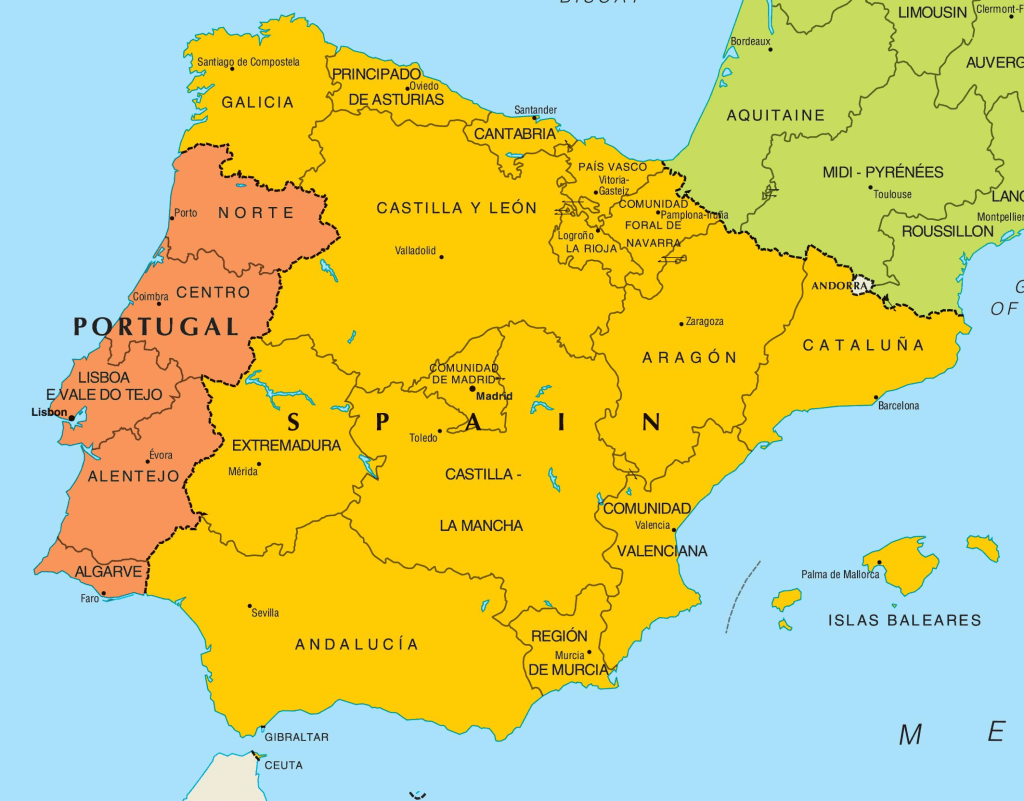

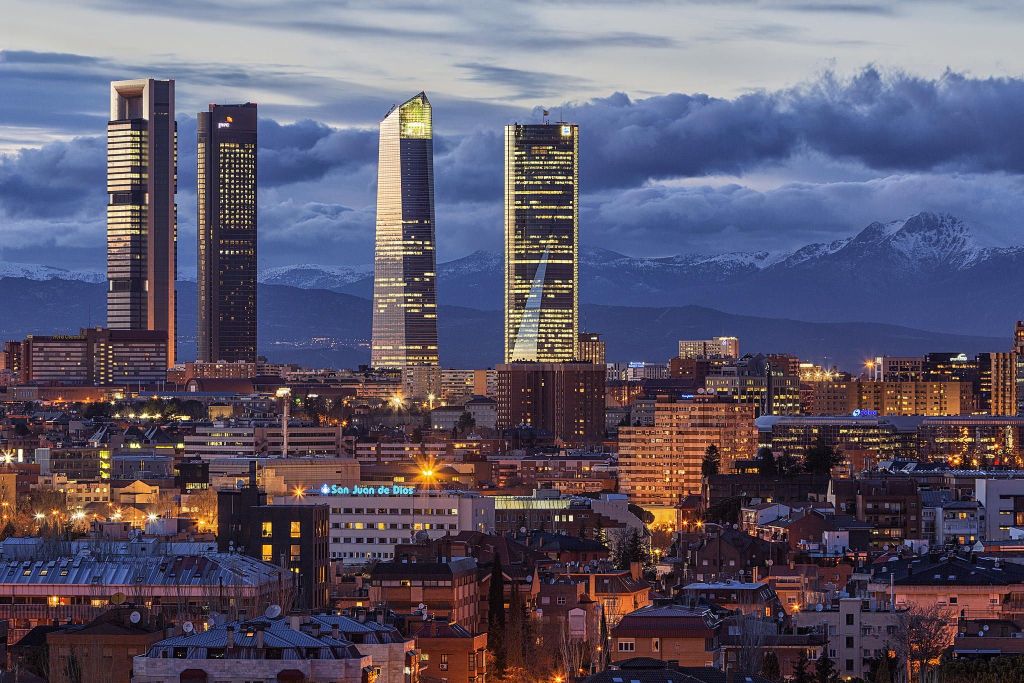
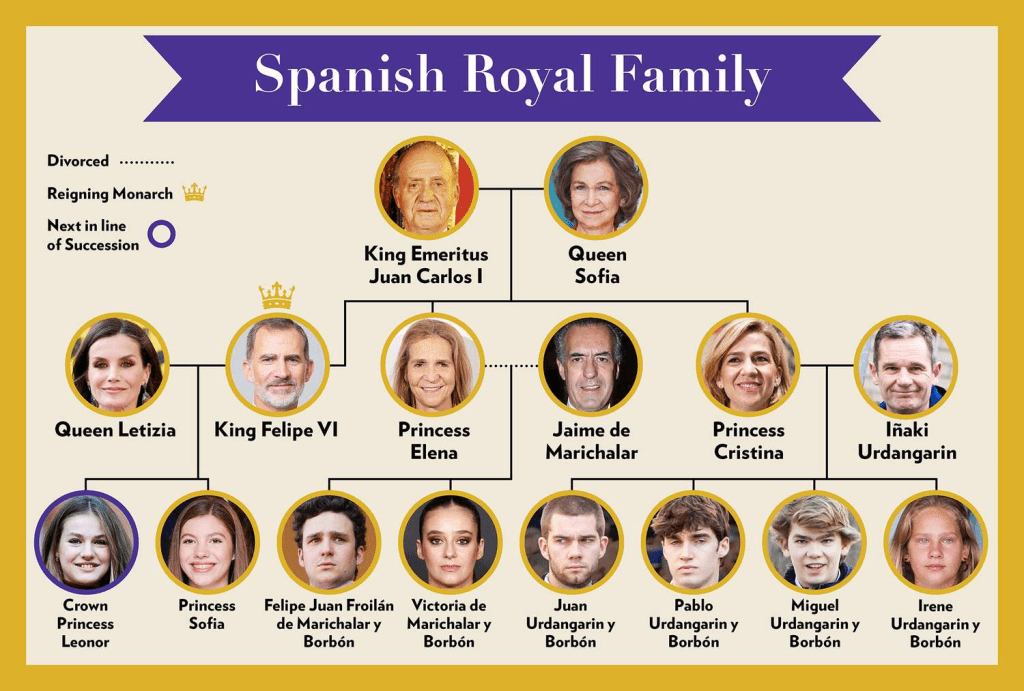




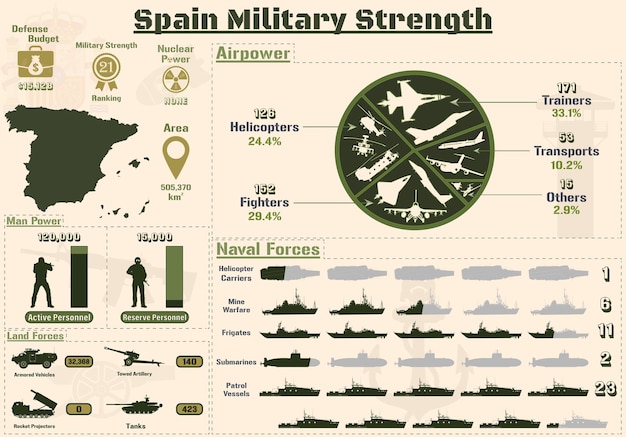



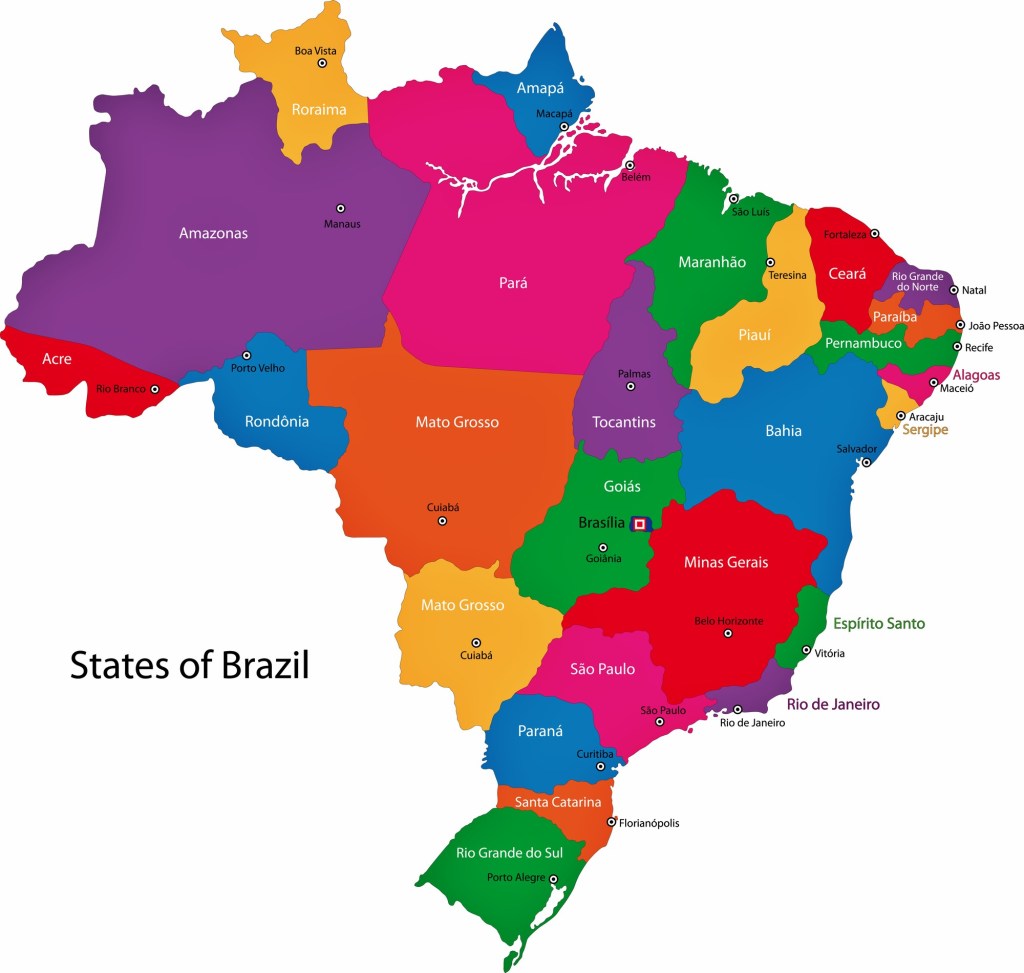

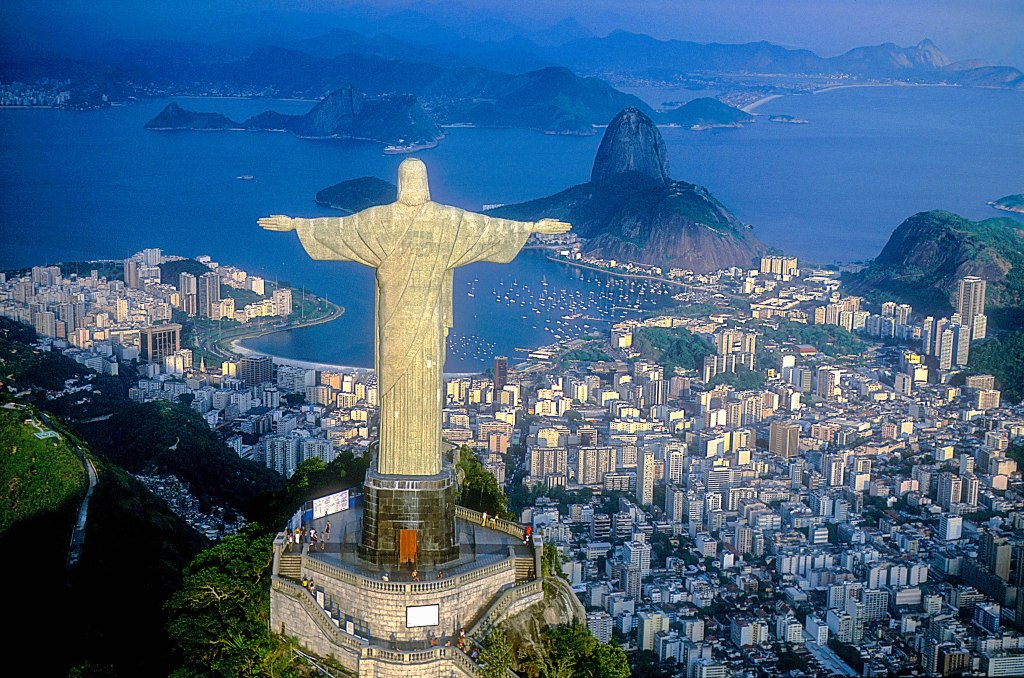






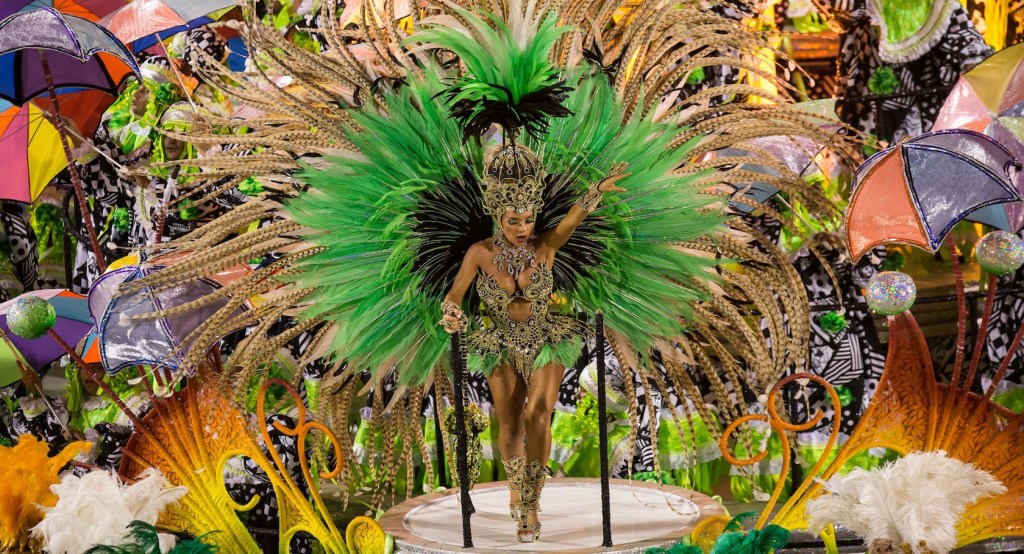


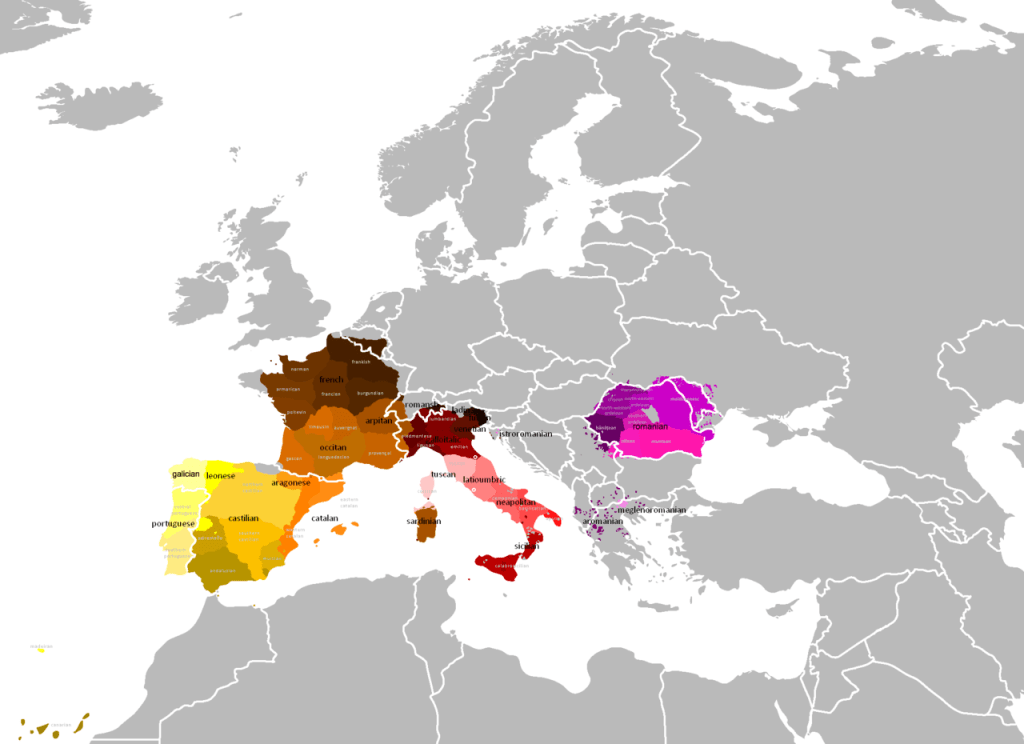
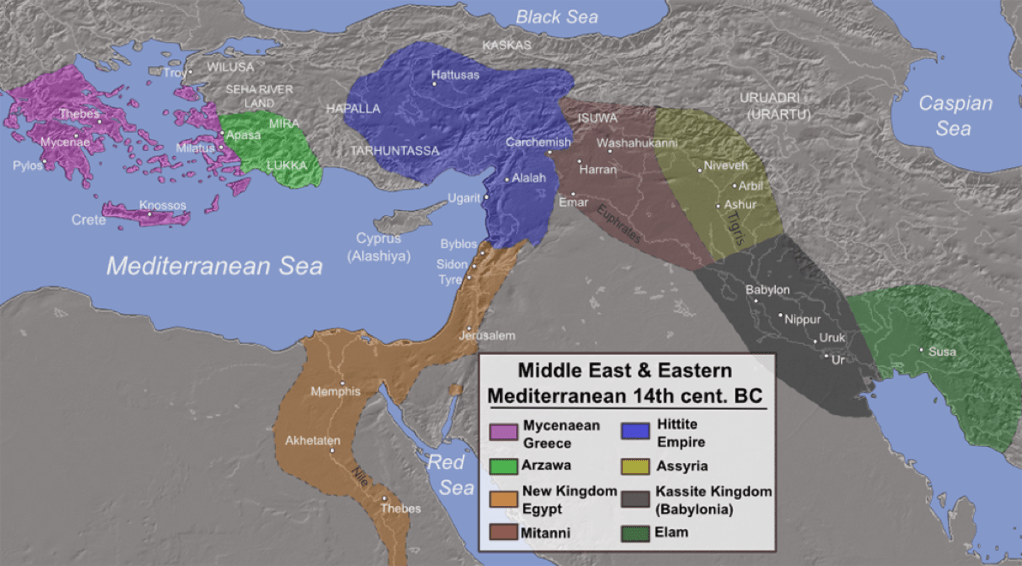
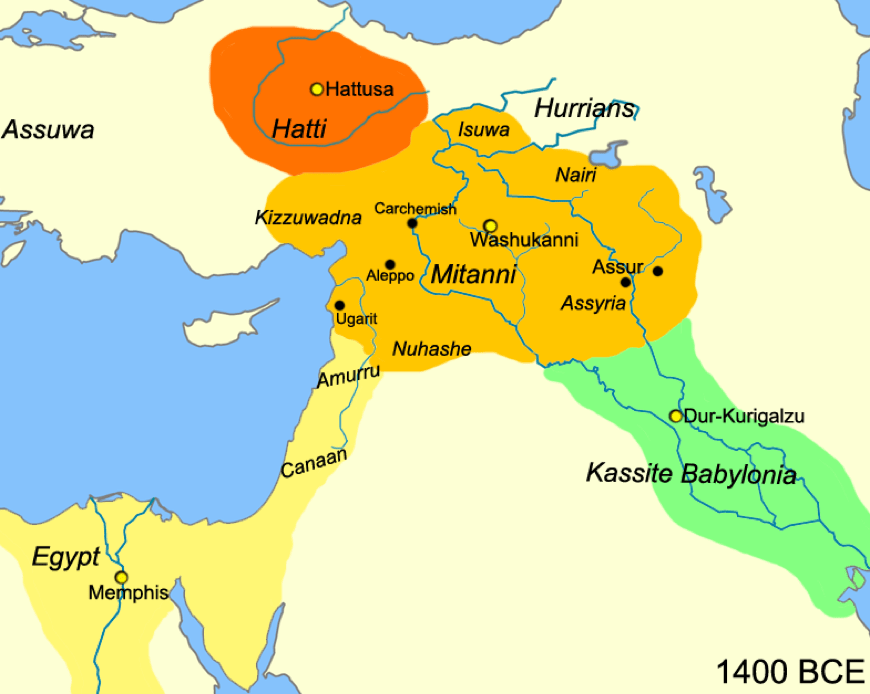






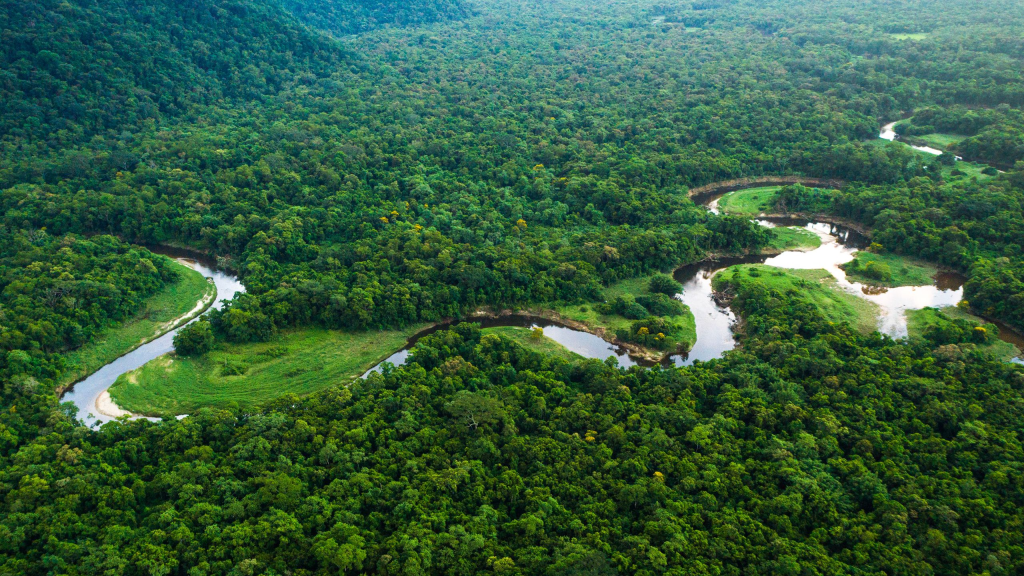



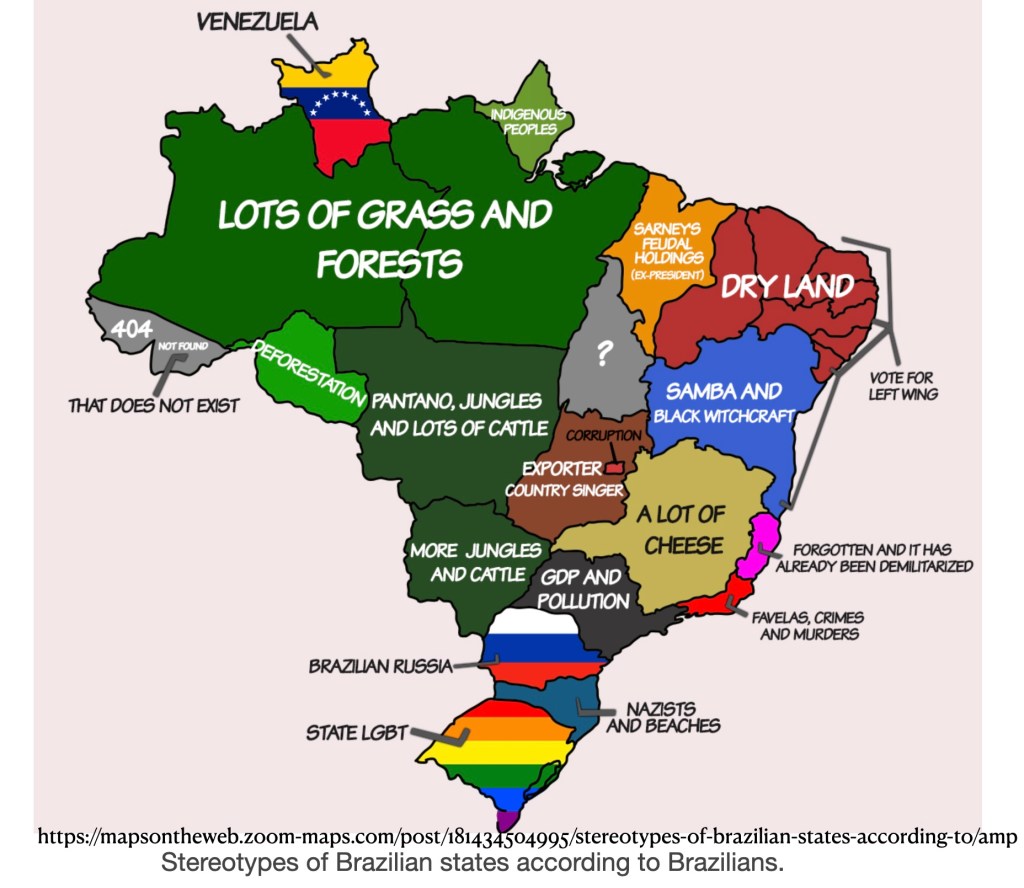

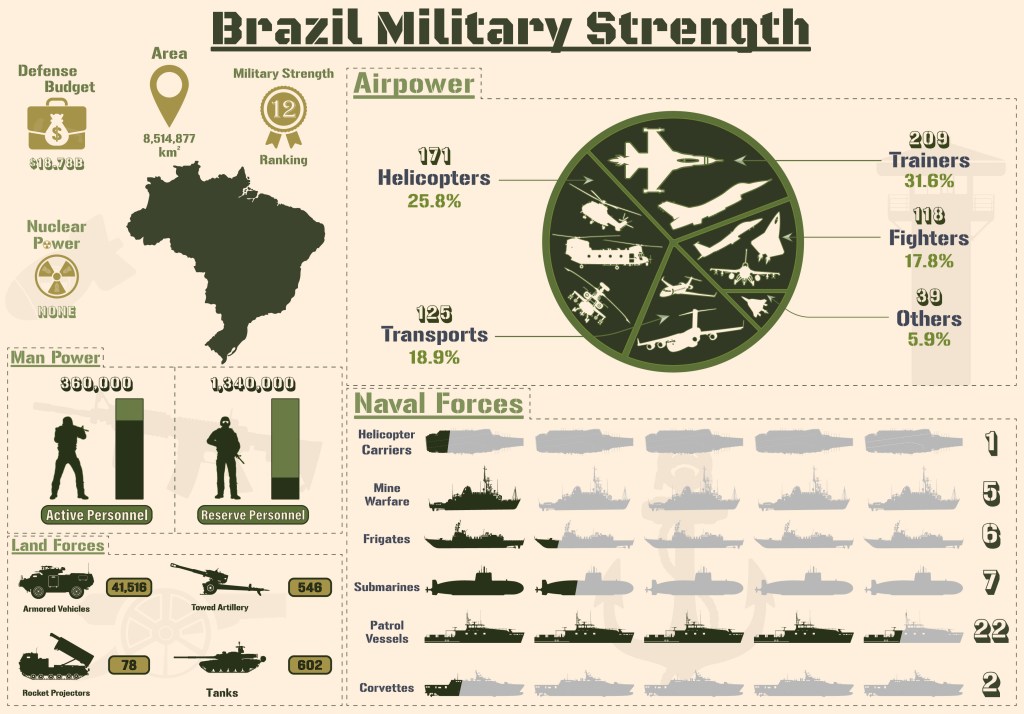

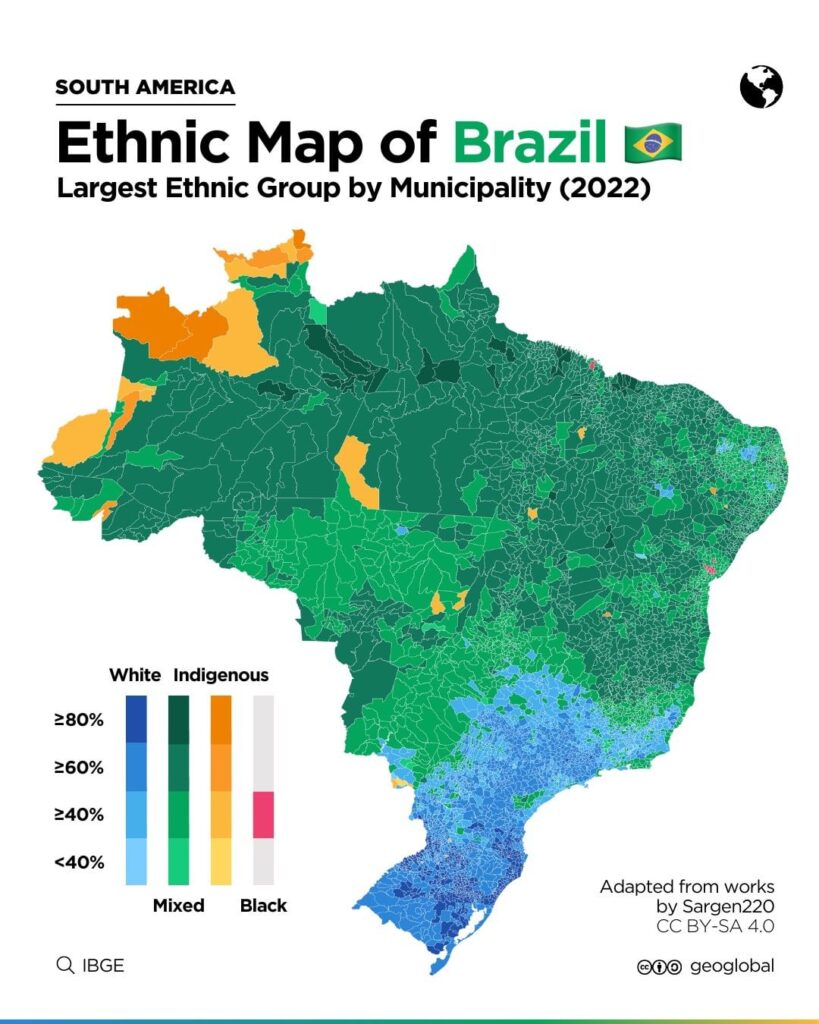


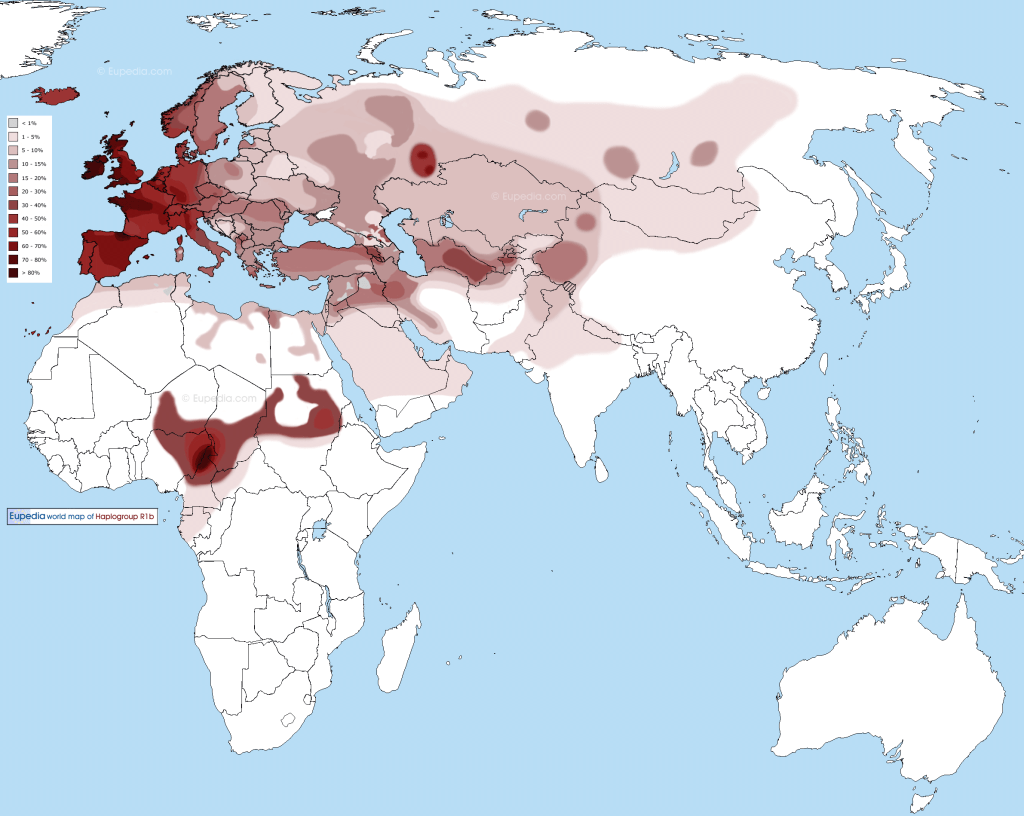
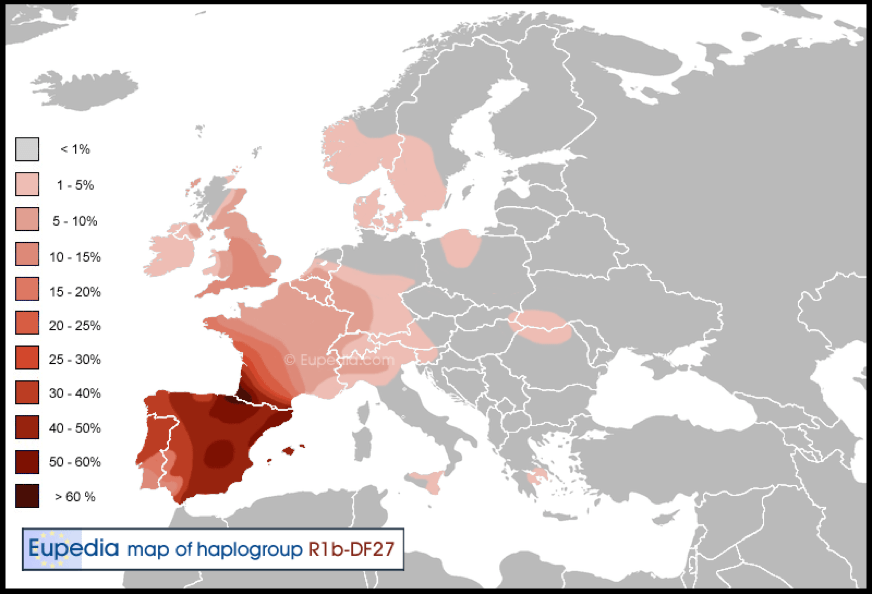
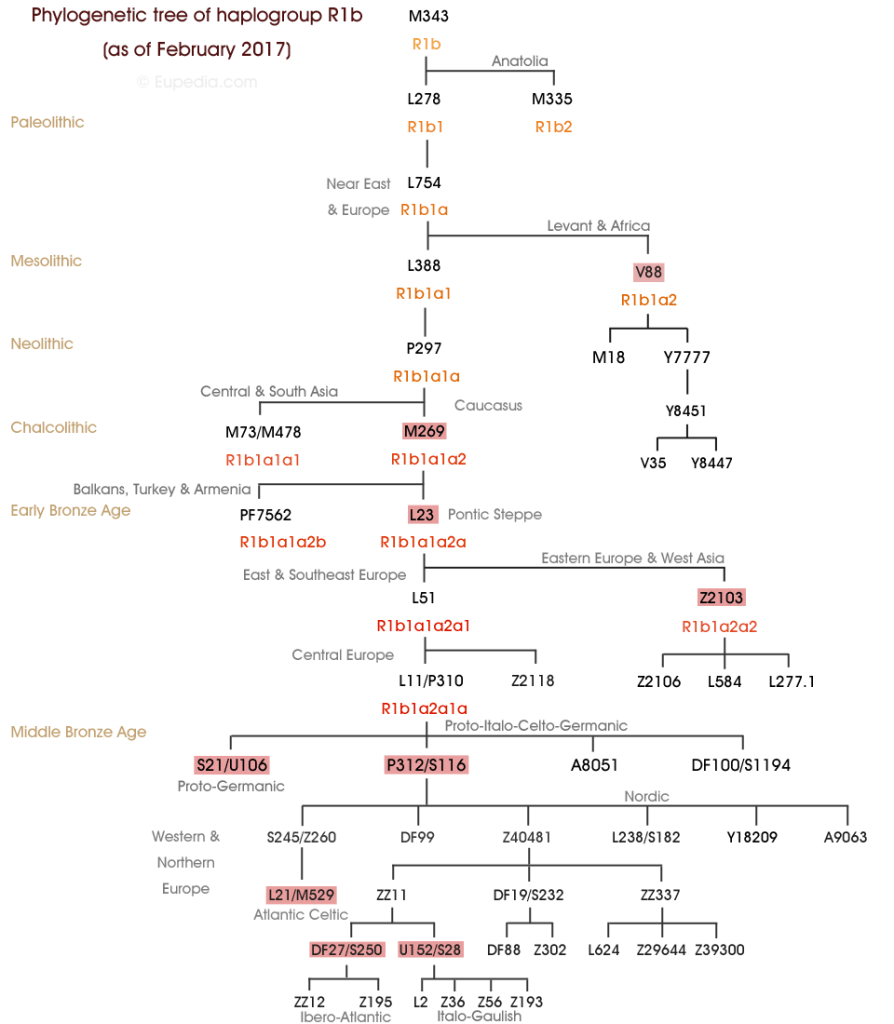

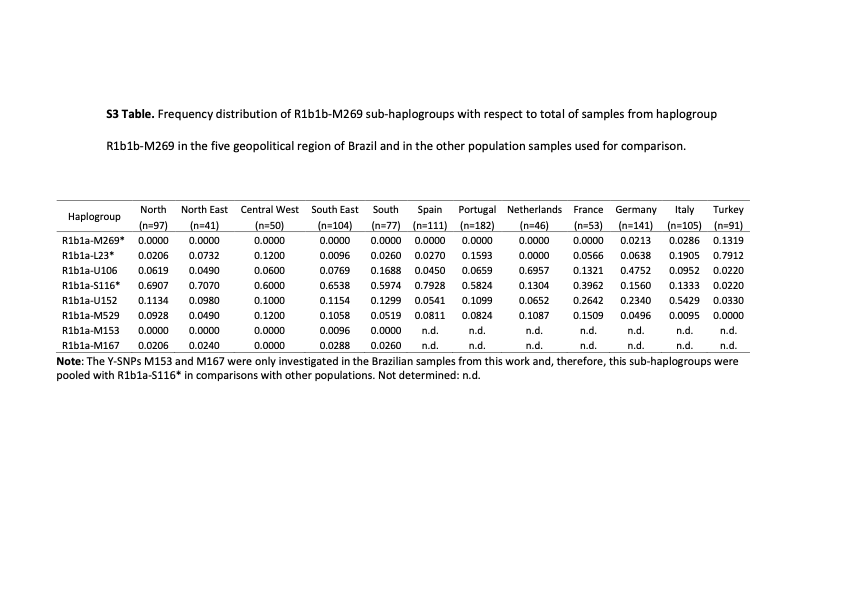
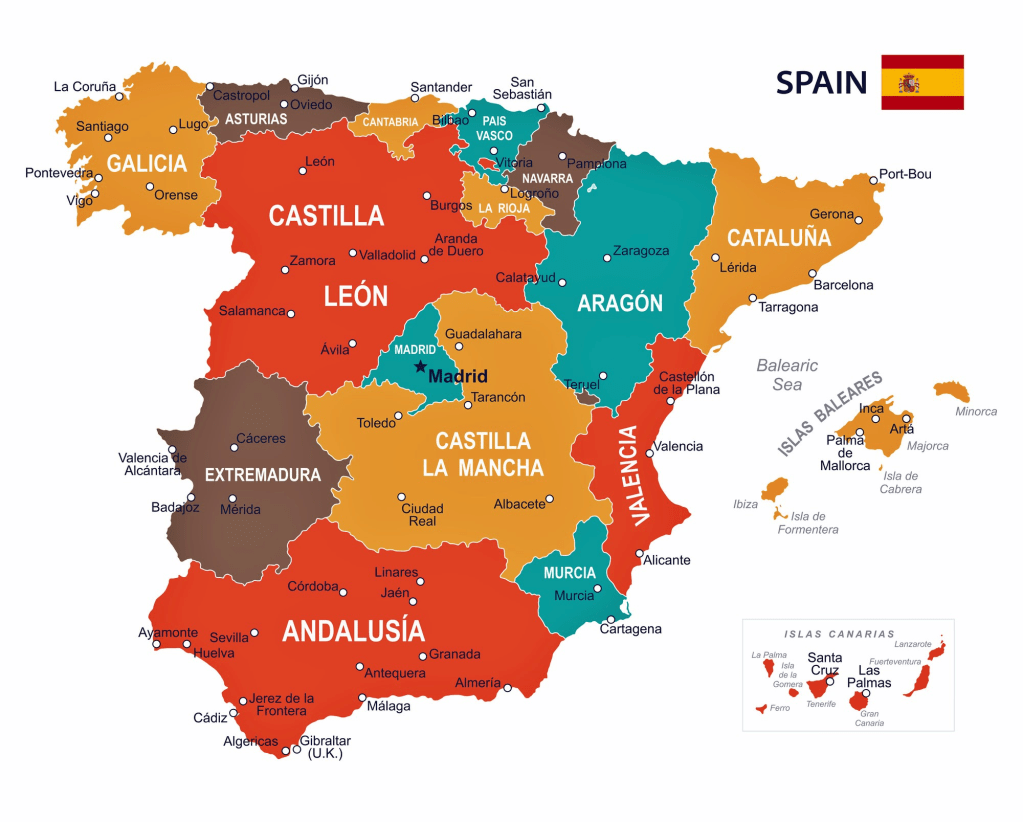


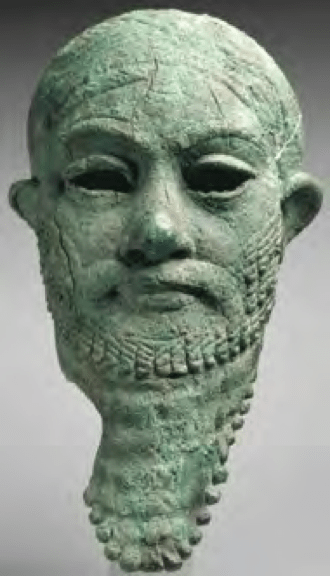
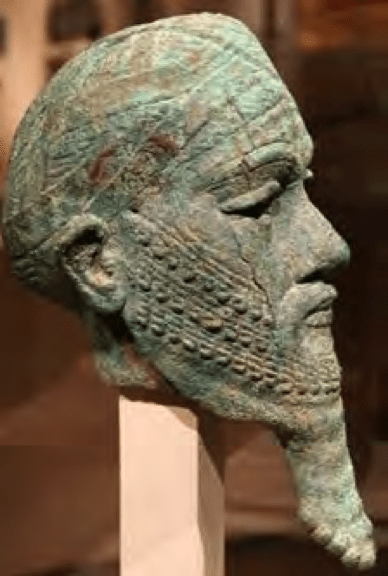
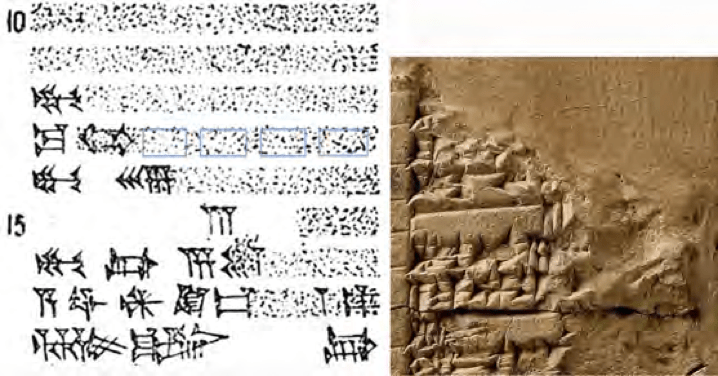
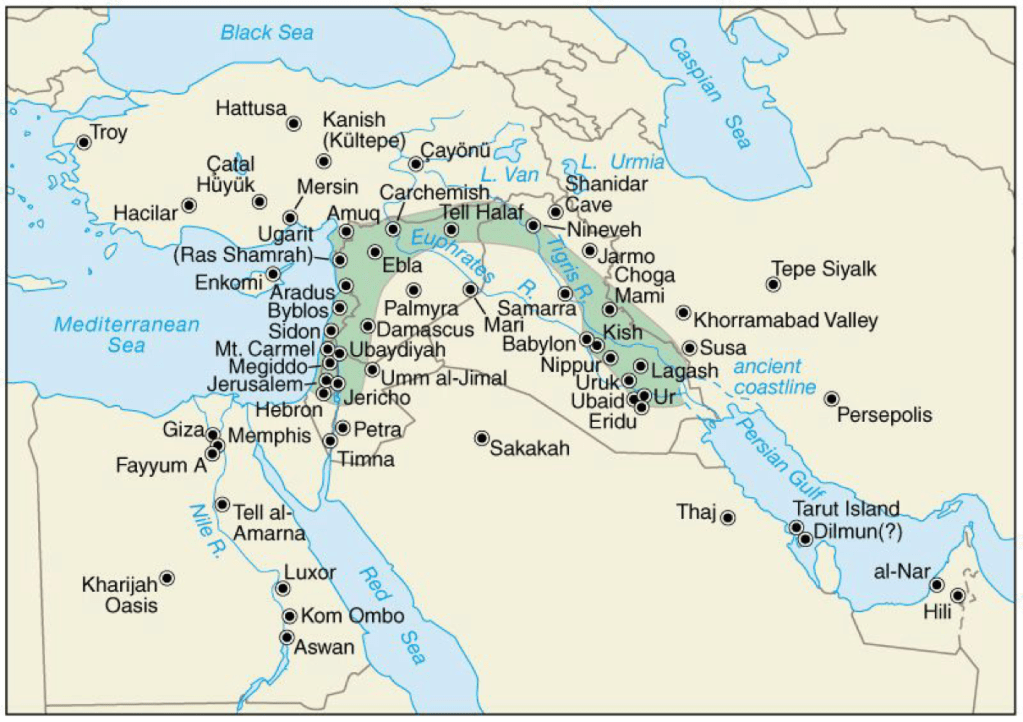

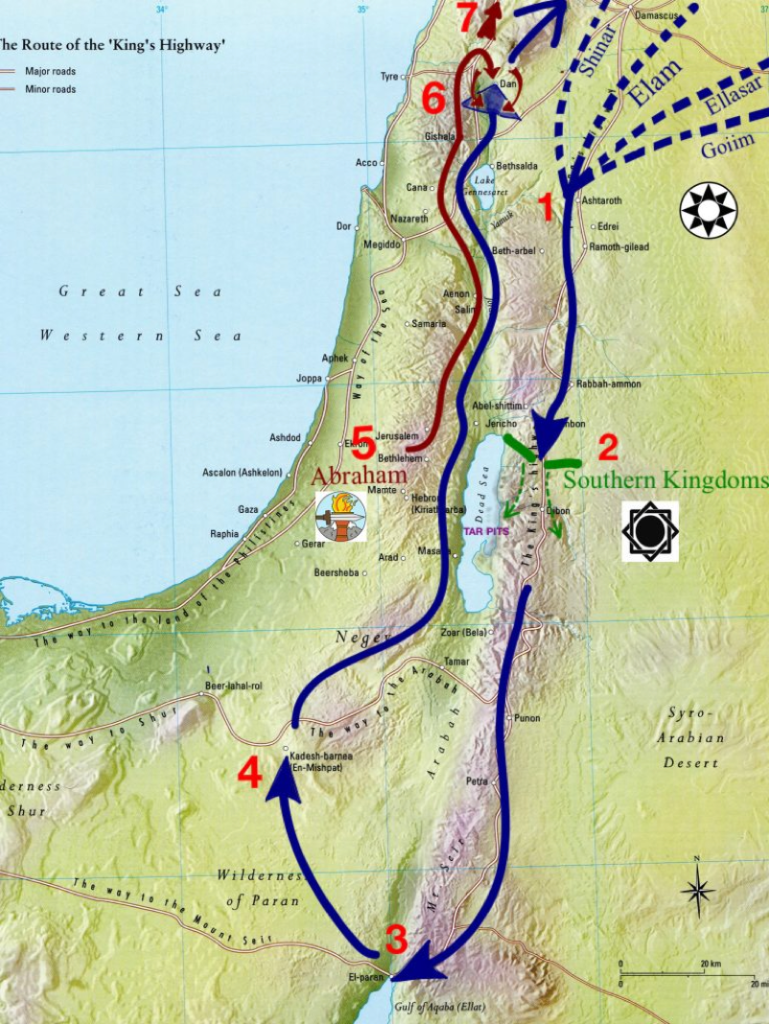



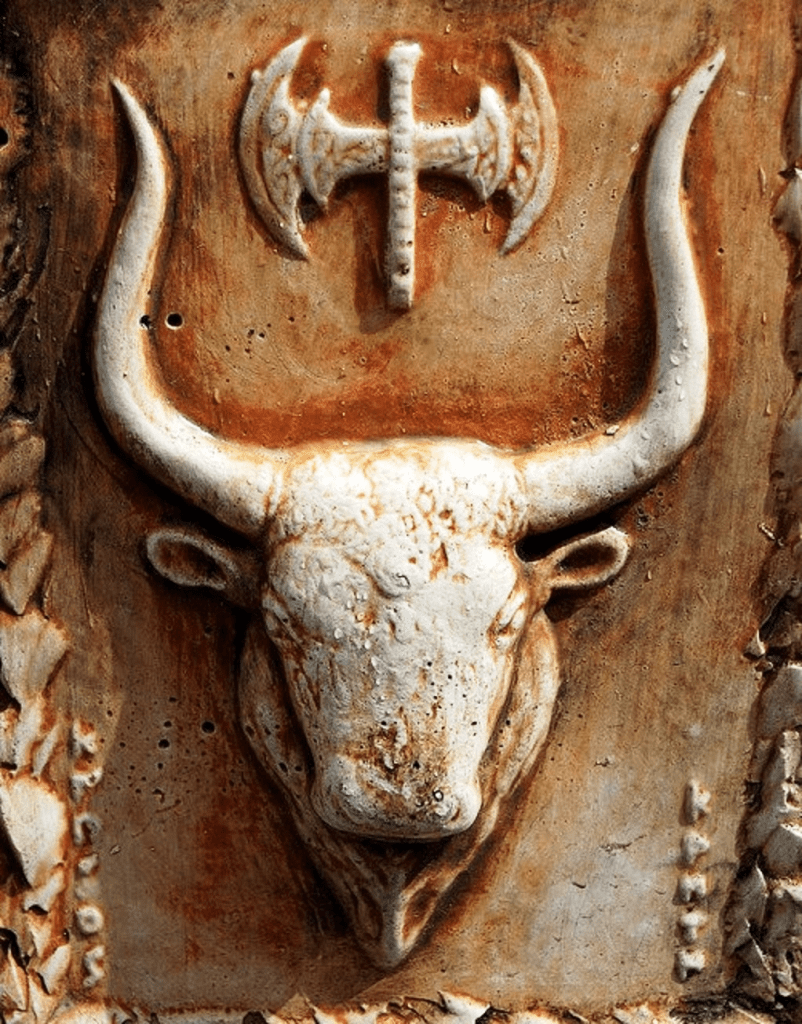

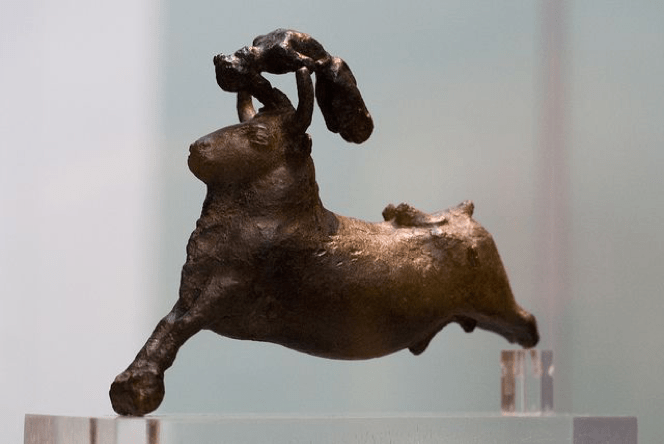


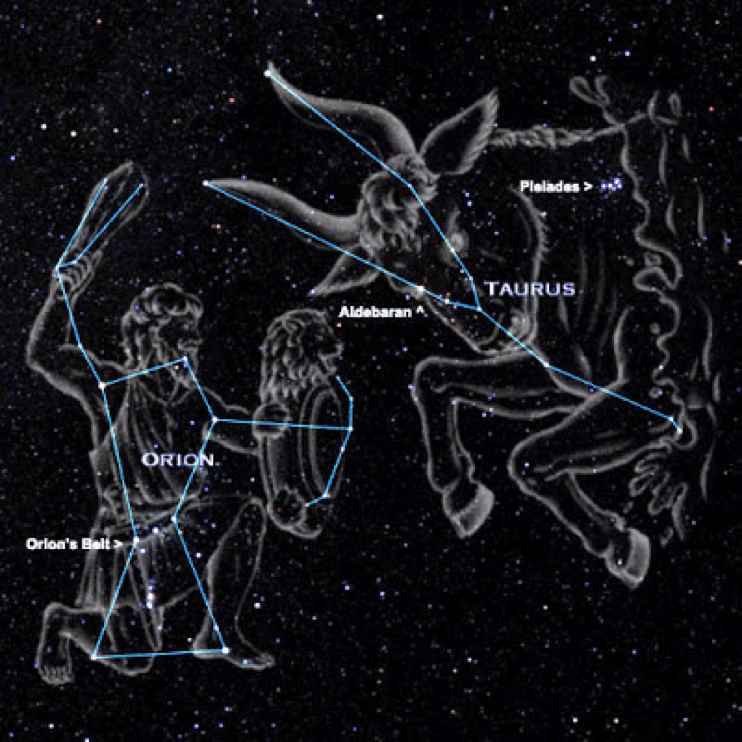
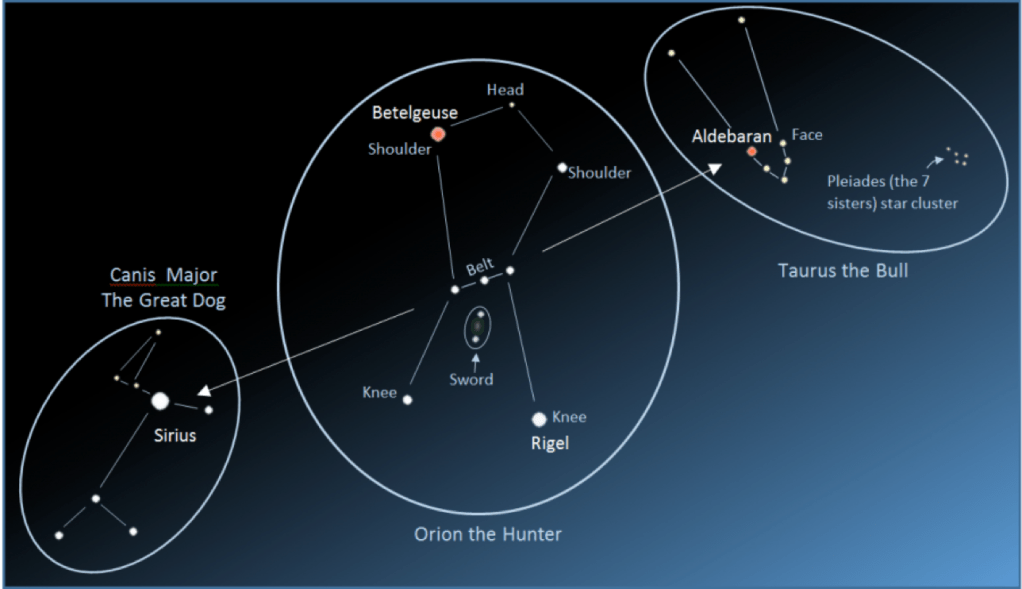

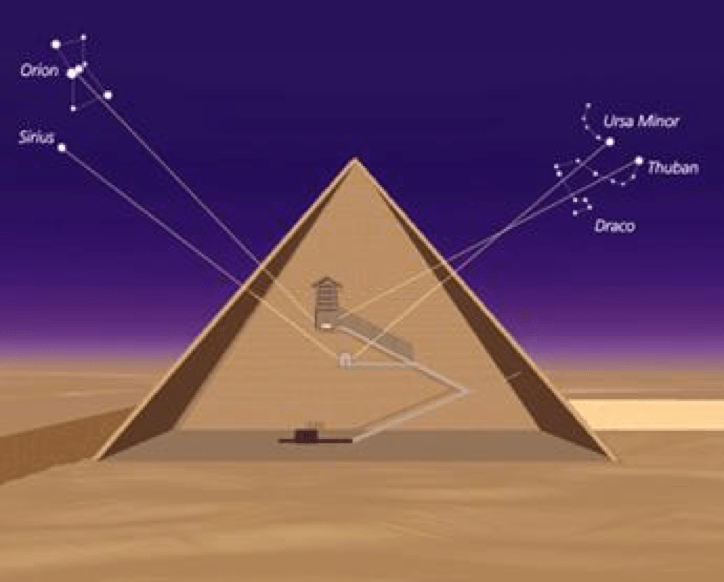


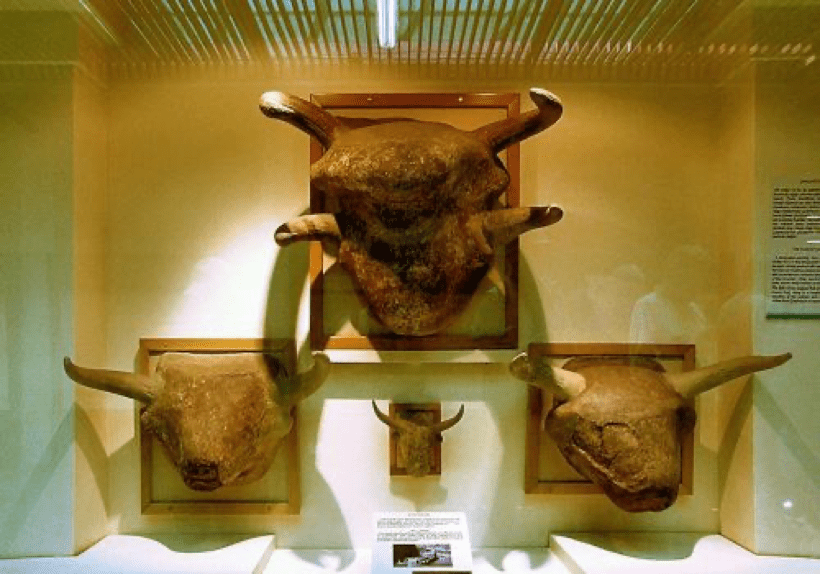
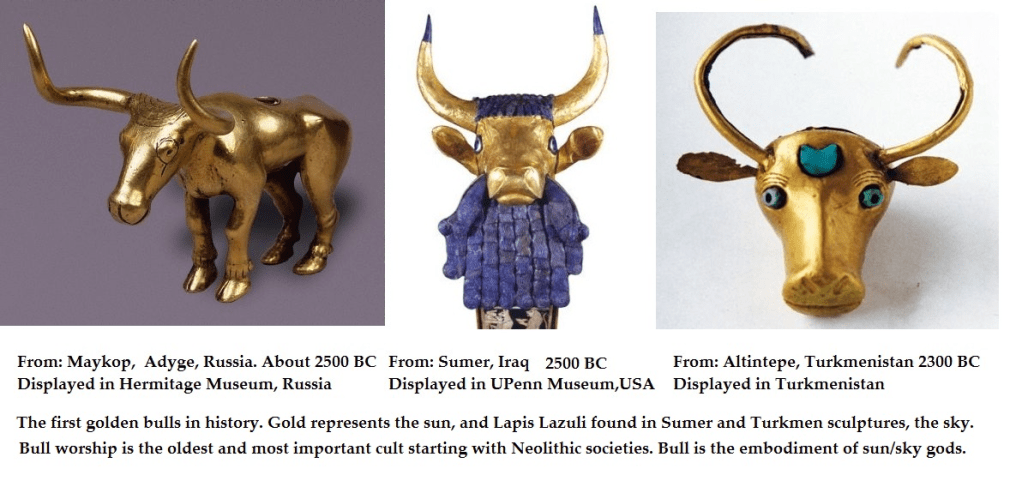
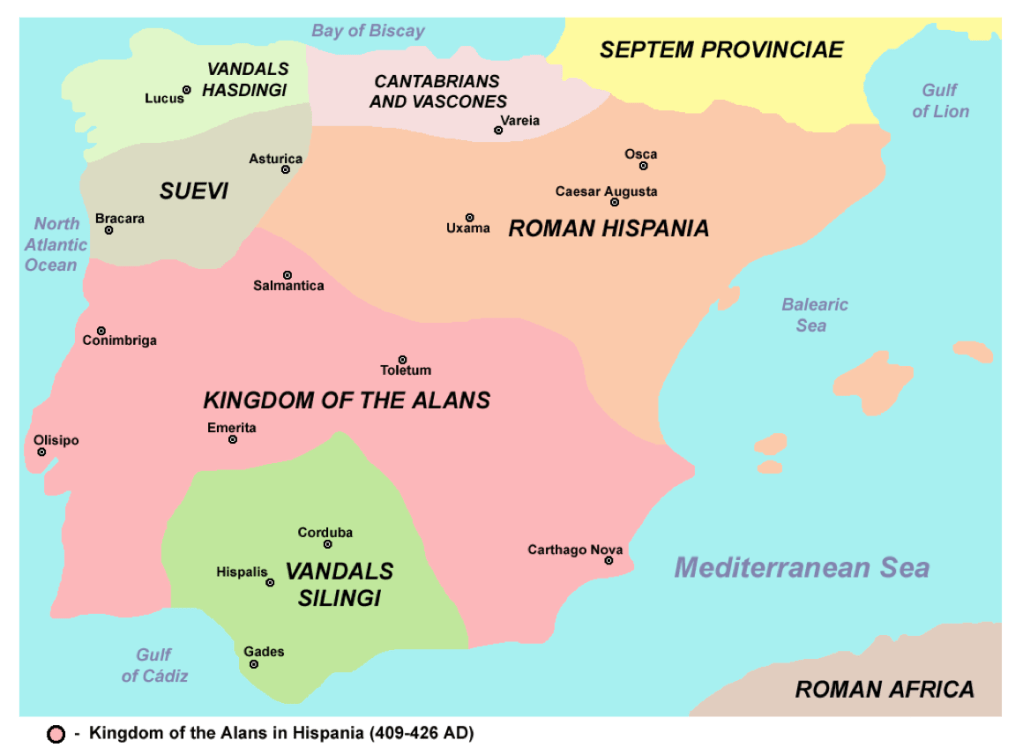
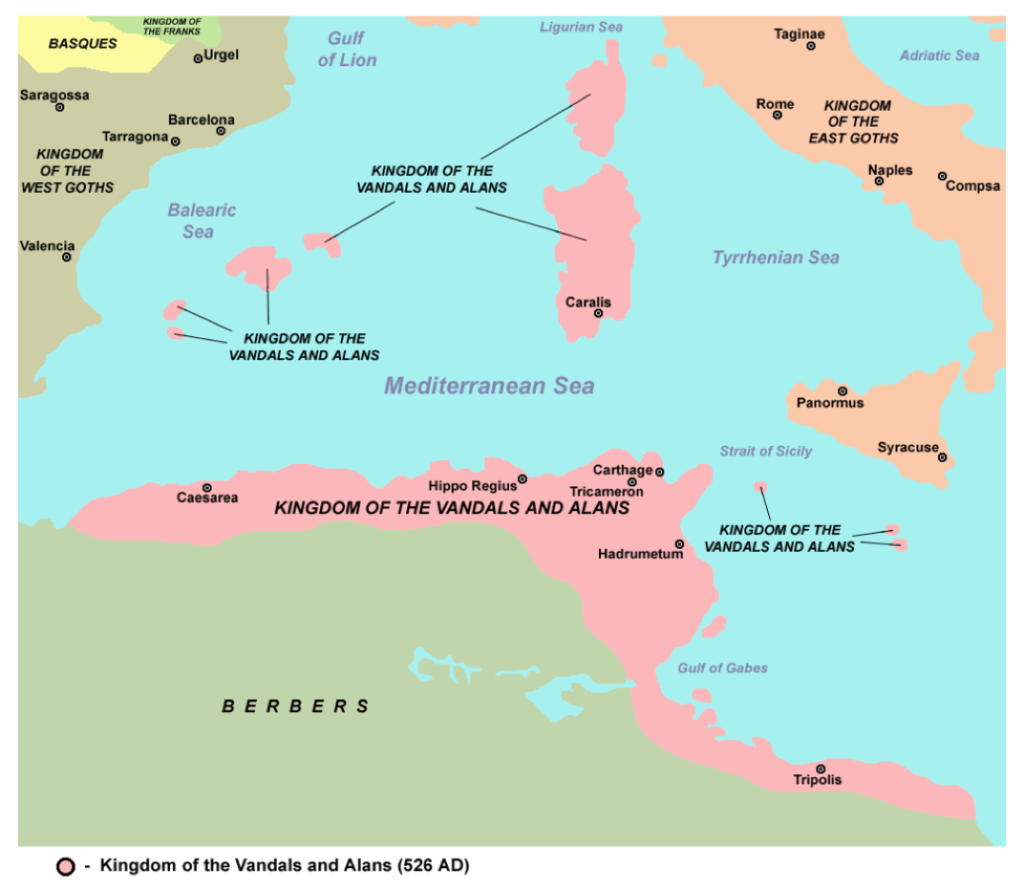
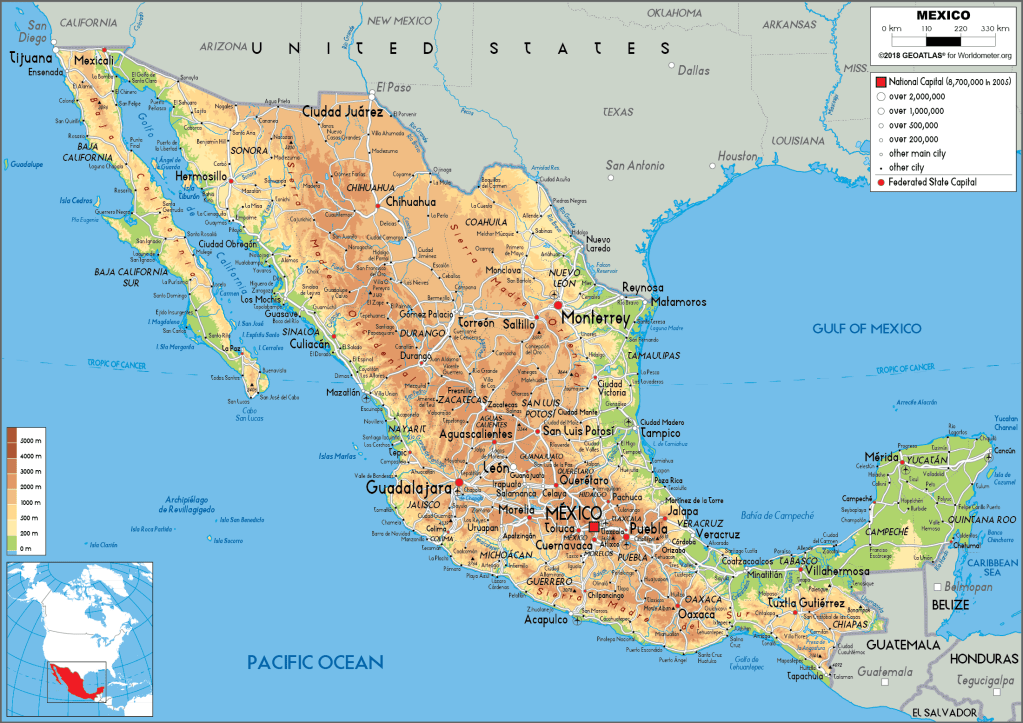


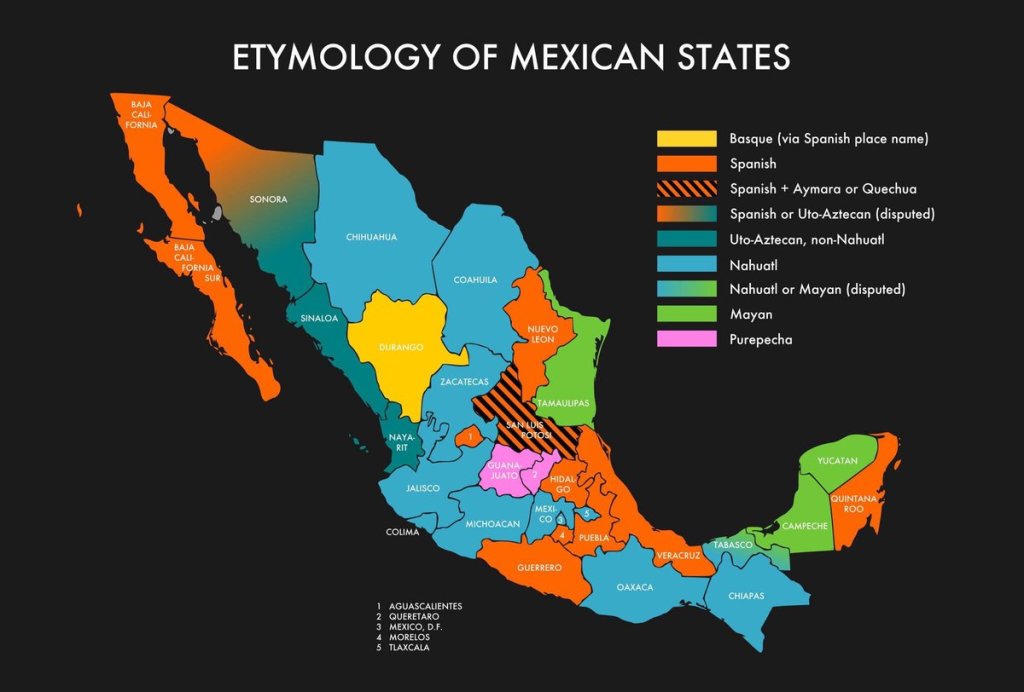
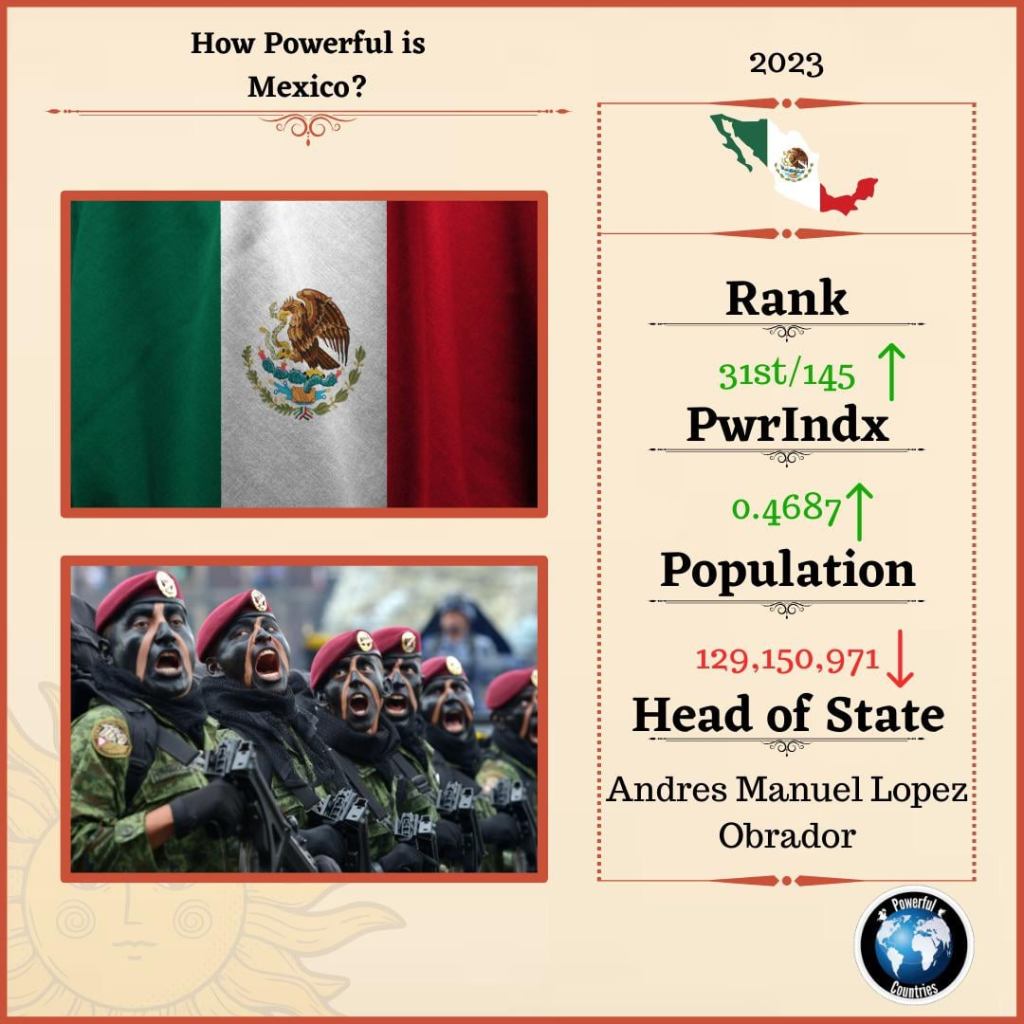













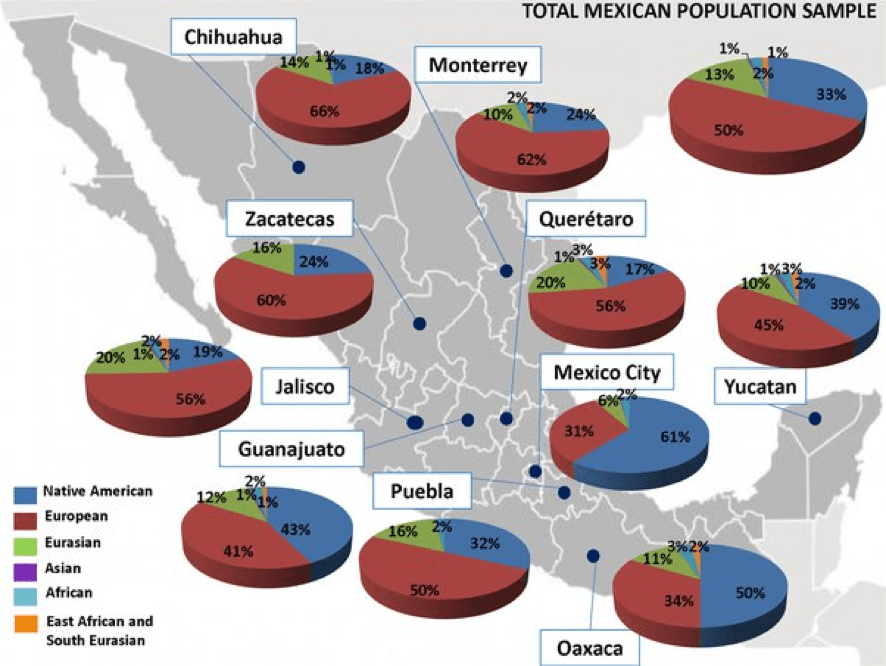
 The Lightkeeper