In the Bible, Kings of Israel and Judah were deemed as either good or evil, with no room to spare in between – 2 Kings 21:2; 22:2. King Charles sits on the throne inherited from ancient Israel and is the alleged descendant of the royal line of Judah through his purported ancestor, King David – 2 Samuel 7:16.
Who is Charles III of England and Scotland? What is the truth about the present King?
Charles Philip Arthur George Windsor, formerly known as The Prince of Wales, became King at the death of his mother Queen Elizabeth II on September 8, 2022. His coronation took place eight months later on May 6, 2023. Before we investigate Charles the man and his lineage in detail, we will study the history and ancestral roots of the British monarchy in seeking to understand better, both the Crown and the King.
The constant reader will be aware of the life and genealogies of Kings Saul, David and Solomon from previous articles – Chapter XXX Judah & Benjamin – the Regal Tribes; and article: Seventh Son of a Seventh Son. Briefly, David was from the tribe of Judah and he and his son Solomon were the ancestors of a woman called Mary, who happened to be the biological mother of a man called Yeshua in Hebrew, translating to Joshua in English. Otherwise incorrectly and commonly known as Jesus. Jesus being the English translation of the Greek name Iesous from the Hebrew Yeshua.
The two key points being: 1. The transition from Saul’s family and the tribe of Benjamin to David’s family and the tribe of Judah, was permanent. 2 Samuel 7:16, ESV: “And your house and your kingdom shall be made sure forever before me. Your throne shall be established forever.” This is some promise, one that we will see is binding and unconditional – Psalm 89:20-37, “… His offspring shall endure forever, his throne as long as the sun before me…” Added to this promise was the following prayer by Solomon based on what David had said to him – 1 Kings 2:1-5.
1 Kings 8:25, ESV: ‘Now therefore, O Lord, God of Israel, keep for your servant David my father what you have promised him, saying, ‘You shall not lack a man to sit before me on the throne of Israel, if only your sons pay close attention to their way, to walk before me as you have walked before me.’
Notice Solomon was invoking a promise from the Eternal given to David, that someone from his family would be alive and eligible to sit on the throne of Israel. Note it says Israel and not Judah. This is the first important point to remember. Also, it says of these descendants that they were eligible if, they walked in God’s ways like David. It was a conditional covenant – psalm 132:11-12. This is the second important point to remember as we progress. Of the twenty kings of Israel who reigned after Solomon from 930 to 722 BCE, not one was righteous. All, are listed as evil. Granted, these were not David’s descendants, but it is an alarming indictment. Of the twenty monarchs of Judah from 930 to 586 BCE remarkably, eight were righteous – some forty percent.
2. The big question – and one numerous Bible commentators invariably say has lasted forever to our present day and the current king of the United Kingdom – is whether this latter promise does actually extend till our day. In Jeremiah 33:17-18, ESV it repeats: “For thus says the Lord: David shall never lack a man to sit on the throne of the house of Israel, and the Levitical priests shall never lack a man in my presence to offer burnt offerings, to burn grain offerings, and to make sacrifices forever.” What is interesting and important is that the Levite priests were promised the same. Yet in 70 CE, the second temple was destroyed and the Levitical priesthood and sacrificial system came to an abrupt end for the (now) past 1,955 years.
Thus, it is open to question whether a member of David’s family sits on the throne of the United Kingdom. That it is the throne of David is without question. What is crucial is that this throne is not an Israelite but a Judaic throne due to the real identity of the English people. Their true identity is not only shocking to comprehend, but integral in understanding the ramifications of the throne’s presence in England… who is sitting on it; and the fact, that it is the throne which Christ is coming back to claim.
Isaiah 9:6-7
English Standard Version
‘For to us a child is born, to us a son is given; and the government shall be upon his shoulder, and his name shall be called Wonderful Counselor, Mighty God, Everlasting Father, Prince of Peace. Of the increase of his government and of peace there will be no end, on the throne of David and over his kingdom, to establish it and to uphold it with justice and with righteousness from this time forth and forevermore…’
Christ is given the names and titles of the Father and will sit on David’s throne. While Christ’s name on Earth was Yeshua, this is not his real or celestial name. Isaiah 7:14, ESV: ‘Therefore the Lord himself will give you a sign. Behold, the virgin shall conceive and bear a son, and shall call his name Immanuel.’
Though of course Mary did not call him by his real name but rather as instructed by Gabriel – Luke 1:31-33, ESV: ‘And behold, you will conceive in your womb and bear a son, and you shall call his name [Yeshua]. He will be great and will be called the Son of the Most High. And the Lord God will give to him the throne of his [ancestor] David, and he willreign over the house of Jacob forever, and of his kingdom there will be no end.”
Interestingly, Christ in his admonishing message to the seventh and final era of the Church, prior to his imminent return, mentions his throne. Revelation 3:21, ESV: “The one who conquers, I will grant him to sit with me on my throne, as I also conquered and sat down with my Father on his throne.” This is also a hefty promise of reward in that the very throne Christ sits, he will share with the true saints who overcome – Article: The Seven Churches – A Message for the Church of God in the Latter Days.
In other articles we have addressed the likelihood though not infallibility, of the daughters of the last king of Judah, Zedekiah, fleeing to the British Isles and specifically to Ireland – Chapter XXX Judah & Benjamin – the Regal Tribes; and article: The Ark of God. Regardless, historical records, albeit from legend and myth corroborate the ancient throne of the high kings of Ireland as being descended from Judah and specifically through his son Zarah, the twin of Pharez, the actual ancestor of David – 1 Chronicles 2:1-15.
We will study the origins of the British monarchs and glean what we can in trying to establish a link between David’s descendants and King Charles III. While various monarchs have believed they were descendants of Israelites, such as Victoria and George VI, it remains to be seen whether they are specifically from David’s family or even the tribe of Judah.
Gerald Flurry in the Philadelphia Trumpet, 2013 thinks so:
‘The Otago Witness, a prominent newspaper in New Zealand for about 80 years up until 1932, ran an article on Sept. 24, 1902, titled “The King’s Pedigree.” It mentioned how Frederick Robert Augustus Glover, one of the best Irish historians… researched the history of the British monarchy and contacted Queen Victoria. “He sent Her Majesty a letter intimating the nature and result of his labors,” the paper reported.
“In reply, he got what both surprised and delighted him. The Queen’s answer was a most gracious letter in which she acknowledged Mr. Glover’s (work) and informed him that she was already in possession of the facts of which he had spoken concerning her ancestral line… and led him to believe that the facts were actually accepted as genuine by the royal family as true and authentic.”
Queen Victoria died in 1901… She recognized that she was a descendant of King David of ancient Israel – that… sitting on the throne of England was actually a [fulfilment] of God’s promise to King David! Queen Victoria ruled more than 60 years on [the] throne of David, the same throne that sits in London today. She knew about… the history of her throne. These days, we don’t hear much about that history from Britain’s throne, but we should.’
Was Queen Victoria – from the German House of Hanover – a descendant of King David? And was it really a fulfilment of God’s promise to David? We will return to Reverend F R A Glover’s conclusions.
The British Throne is the most recognised, established and perhaps revered monarchy in the world and is one of only a few survivors in Europe, when many tumbled and fell during the 18th and 19th Centuries. There are 29 monarchies worldwide. The Tenno dynasty in Japan is deemed the oldest reigning dynasty in the world with Emperor Naruhito being the 126th monarch.
While the British monarchy is seen as being a little over a thousand years old, we may find if it truly goes back to King David that it is in fact 3,034 years old. Of the current monarchies only four have absolute power – Swaziland, Oman, Saudi Arabia and the United Arab Emirates. The rest are all Constitutional monarchies like the United Kingdom; apart from Andorra, a Co-principality monarchy; Spain, a Parliamentary monarchy; and the Vatican/Holy See, an Absolute elective monarchy.
Of the twenty-nine monarchies, twelve are European, with the remainder being Asian, African and Middle Eastern. Those which are European and not principalities, include: Belgium, Denmark, Netherlands, Norway, Spain, Sweden and the United Kingdom. It is worth noting that all the descendant peoples from Abraham and Keturah – including Luxembourg – with the exception of Iceland, have retained monarchies – refer Chapter XXVII Abraham & Keturah – Benelux & Scandinavia.
Medieval Irish historical tradition holds Ireland had a High King (Ard Rí) based at Tara well before Israel’s first king: King Saul coronated in 1025 BCE. Compilations such as the 11th-century Lebor Gabala Erenn, followed by modern works like the Annals of the Four Masters and Geoffrey Keating’s Foras Feasa ar Eirinn purport to trace the line of High Kings from later Irish annals. The Hill of Tara is in Meath and just under twenty-four miles northwest of Dublin.
As the traditional list of High Kings is a mixture of historical fact and legend, Mael Sechnaill I is often considered the first historical king, who died in 1022 CE after being overthrown in 1002 by Brian Boru and later restored in 1014 following Boru’s death. Yet the Lebor Gabala Erenn lists every High King from remote antiquity to the time of Henry II’s Lordship of Ireland in 1171. And it is where we will begin.
Online Encyclopaedia: ‘The High Kingship was established by the Fir Bolg and their nine kings are succeeded by a sequence of nine kings of the Tuatha De Danann, most if not all of whom are considered euhemerised deities.’ This is convenient scholarship or rather lack thereof, as it dismisses the fact that the Fir Bolg were early descendants of the tribe of Reuben and who are ancestors of principally – many of the Protestant – people residing in Northern Ireland today – Chapter XXXI Reuben, Simeon, Levi & Gad – the Celtic Tribes. Likewise, the Tuatha De Danann have been relegated by historians as merely fairy folk, when in actuality, they really were the early descendants of the tribe of Dan, which is what the name Tuatha De Danann signifies – Chapter XXXIV Dan: The Invisible Tribe.
Encyclopaedia: ‘After the Milesian (Gaelic) conquest the High Kingship is contested for centuries between the descendants of Eber Finn and Erimon sons of Mil Espaine. The original compilation stopped at the reign of Tuathal Techtmar’ – the first of the Goidelic kings, 80-106 CE – AFM. ‘The kings of the Goidelic dynasties established by Tuathal were added by other editors. Later editions of the Lebor Gabála tried to synchronise its chronology with dateable kings of Assyria, Persia, and Ptolemaic Egypt and Roman emperors.
There are a handful of sources slightly predating the Lebor Gabála Érenn covering significant portions of essentially the same list of Milesian High Kings (though following a discrepant chronology), starting with the Laud Synchronisms estimated to have been compiled c. 1021. The oldest section of the Lebor Gabála Érenn “Roll of Kings” is taken from the poems of Gilla Comain mac Gilla Samthainde, written c. 1072.
Keating’s chronology, based on reign lengths, is longer than the synchronised chronology of the Lebor Gabála, and the Four Masters‘ chronology is even longer.’ This writer favours Keating’s chronology – FFE: chronology based on reign lengths given in Geoffrey Keating’s Forus Feasa ar Erinn – as the most accurate and is used for the following Irish king lists. With one exception where we note the generally too long AFM – chronology from the Annals of the Four Masters – and ignore entirely the LGE with synchronised dates from Lebor Gabala Erenn, as inconsistent.
We begin not with the earliest inhabitants of the Emerald Isle of Erin, but for the purpose of this study the first dynasty of the Fir Bolg kings. These were Israelites and principally of the tribe of Reuben. For a comprehensive survey of the tribe of Reuben, please refer Chapter XXXI Reuben, Simeon, Levi & Gad – the Celtic Tribes. Reuben was Jacob’s first son and the first with his wife Leah. Reuben was born in 1752 BCE, lived for 125 years and died in 1627 BCE. Presumably while living in Egypt – but possibly not as early – descendants of Reuben travelled to Greece, Spain, France, Belgium and Ireland.
Jacob and his family moved to Egypt in 1687 BCE and it wasn’t until 1593 BCE that the Israelites began to be subjugated by a Pharaoh who did not know Joseph – Appendix VII: Moses, the Exodus & the Red Sea Crossing – Fabrication or Fact? Thus freedom of travel lasted at least 94 years. The first king of the Fir Bolg was the short-lived Slaine mac Dela, from 1514 to 1513 BCE. The lag in years could be accounted for by migration to first Greece where colonies were established by various peoples descended from or related to the patriarch Abraham. The last and ninth king was Eochaid mac Eirc, from 1487 to 1477 BCE.
Worth mentioning, is Reuben being first to establish a line of kings is intimated within Jacob’s oracles about his twelve sons. Genesis 49:3, ESV: “Reuben, you are my firstborn, my might, and the firstfruits of my strength, preeminent in dignity and preeminent in power.” Even so, it would be short-lived as Reuben disqualified himself from being the recipient of the Birthright or Sceptre promises – Genesis 49:3. While later kings, particularly in Ulster may have been from Reuben, it was not Reuben’s destiny to be anything other than one of the least of Jacob’s descendants – Deuteronomy 33:6. That said, non-coincidently, Northern Ireland displays an unwavering loyalty to the Crown.
The next dynasty of Irish kings were the Tuatha De Danann from Jacob’s fifth son and first from Rachel’s handmaid Bilhah. Dan was born in 1746 BCE, lived 120 years and died in 1626 BCE. The Danites were the ancient world’s consummate sailors, explorers and traders. The first king was Bres, from 1477 to 1470 BCE. The third ruler was Lugh, in 1447 to 1407 BCE and the king during the Exodus from Egypt in 1446 BCE.
The 7th, 8th and 9th kings were Mac Cuill, Mac Cecht and Mac Greine from 1317 to 1287 BCE, equating to the time of the Judges. It isn’t a surprise that Dan had an early monarchy as hinted at by Jacob. Genesis 49:16, ESV: “Dan shall judge [or rule] his people as one of the tribes of Israel.”
The next phase of kingship in Ireland is of interest and importance, as the Milesian High Kings were the first dynasty of kings with a link to the royal tribe of Judah – refer Chapter XXX Judah & Benjamin – the Regal tribes. Even so, it is the Zarah clan of Judah that these kings descended and not the Pharez clan of David, Solomon and ultimately the Messiah.
How Israel Came to Britain, Canadian British Israel Association – emphasis mine:
‘Actually, groups of Israelites began to migrate away from the main body before the Israel nation was formed – while, as a people, they were still in bondage in Egypt. One of these groups under the leadership of Calcol, a prince of the tribe of Judah, went westward across the Mediterranean eventually settling in Ulster (Ireland). Another, under the leadership of Dardanus, a brother of Calcol, crossed to Asia Minor to found the Kingdom later known as Troy. E Raymond Capt in his work, Jacob’s Pillar, 1977, writes that Darda was ‘Egyptian’ in that he lived there during the bondage and was the son of Zarah. This Darda according to Capt, was one and the same with ‘Dardanus’, the ‘Egyptian founder of Troy.”
1 Chronicles 2:5-6, ESV: ‘The sons of Perez: Hezron and Hamul. The sons of Zerah: Zimri, Ethan, Heman, Calcol, and Dara, five in all.’ Judah was born in 1746 BCE, lived 129 years and died in 1617 BCE. His twin sons Pharez and Zarah were born in 1705 BCE. Prominent kings and ones alive at the same time as important rulers in Canaan include the following:
Eber Finn and his brother Erimon, 1287-1286 BCE
Erimon, 1286-1272 BCE
Enna Airgdech, 1032-1005 BCE – his contemporary, King Saul, 1025-1010 BCE
Rothechtaid mac Main, 1005-980 BCE; Setna Airt, 980-975 BCE – contemporaries of King David 1010-970 BCE
Fiachu Finscothach, 975-955 BCE; Muinemon, 955-950 BCE; Faildergdoit, 950-943 BCE; and Ollom Fotla, 943-913 BCE – all contemporaries of King Solomon 970-930 BCE
Simon Brecc, 685-679 BCE
Ailill Fin, 586-577 BCE; Eochu mac Ailella, 577-570 BCE and Airgetmar, 570-547 BCE are all candidates for marriage to Zedekiah’s daughters – refer article: The Ark of God
Crimthann Nia Nair, 12 BCE to 5 CE – contemporary of Christ, born in 3 BCE
Feradach Finnfechtnach, 5-25 CE and Fiatach Finn, 25-28 CE contemporaries of Christ when he was in Britain – refer Appendix VIII: When the Creator came to dwell with His Creation; and article: The Christ Chronology.
Elim mac Conrach, 60-80 CE – last king of the Milesian Dynasty
We will return to Ireland after we look at what was happening across the Irish Sea in Albion, the land of the Britons. But first, there were a people located principally in Ulster who bridge Ireland and Scotland’s shared history and they were the Cruithne Picts. The Irish called them Cruthin after their legendary first ruler, while the Romans called them Picts. Cruthin had seven sons: Cat, Fidach, Ce, Fotla, Circinn, Fortriu and Fib. In annals, the Picts were also known as Fortriu and their Kings of Alba also as Kings of Fortriu.
The Cruithne from the tribe of Benjamin – the youngest son of Jacob by his second wife, Rachel – were ancient Irish inhabitants with the Fir Bolg and Tuatha De Danann – Chapter XXX Judah & Benjamin – the Regal Tribes. Their arrival was slightly predated by the Milesians and early enclaves of Cruithne travelled to North Britain – otherwise to be known Caledonia and Alba – during the first millennia BCE. Benjamin was born circa 1699 BCE, lived 88 years and died in 1611 BCE.
Encyclopaedia: ‘The title King of the Britons (Latin: Rex Britannorum, Welsh: Brenin y Brythoniaid) was used (often retrospectively) to refer to the most powerful ruler among the Celtic Britons, both before and after the period of Roman Britain up until the Norman conquest of England. The Britons were the Brittonic-speaking peoples of what is now England, Wales, and southern Scotland, whose ethnic identity is today maintained by the Welsh, Cornish and Bretons. At least twenty kings were referred to as “King of the Britons”… the diminishing power of the Welsh rulers relative to the Kings of England, is reflected in in the gradual evolution of the titles by which these rulers were known from “King of the Britons” in the 11th century to “Prince of Wales” in the 13th… the majority of the rulers… had their power base in Gwynedd in North Wales…
Before the Conquest of Wales, completed in 1282, Wales consisted of several independent realms… Boundary changes and the custom of dividing patrimonies between heirs meant that few princes ever came close to ruling the whole of Wales. The only person known to have ruled all of Wales as a modern territory was Gruffydd ap Llywelyn’ a prince of Gwynedd and Powys from 1039 to 1063 CE who became King of Wales from 1057 to 1063 and King of Britons from 1058 to 1063.
‘… some Welsh princes sporadically claimed the medieval title of Prince of Wales between the 13th to 15th centuries. The title remains in use, but is usually given to heir apparents of English and British monarchs. The Principality of Wales was incorporated into the Kingdom of England under the Statute of Rhuddlan in 1284, and in 1301 King Edward I invested his eldest son, the future King Edward II, as Prince of Wales. Since that time, the eldest sons of all English monarchs, except for King Edward III, have borne this title.’
Early British kings include Cassivellaunus, 54 BCE and Tasciovanus, 20 BCE to 9 CE. The early Britons, successively known as Cymry and Welsh, descend from the tribe of Simeon – the second son of Jacob and Leah. Their unique status in the Kingdom of England was foretold – Joshua 19:9. The tribe of Simeon was one of the earliest tribes to migrate to the British Isles, with Reuben, Dan and Benjamin. Legend has it they also arrived in Ireland initially, but like Benjamin left Erin for Albion. Dan spread themselves between the two islands and Reuben remained in Ireland. Simeon was born in 1750 BCE, lived 120 years and died in 1630 BCE.
This brings us to the next dynasty of kings, the Goidelic High Kings of Ireland. These kings hail from the tribe of Gad, the seventh son of Jacob and the first with Leah’s handmaid, Zilpah. Both Reuben and Gad shared a close relationship in the past and it is replicated today – Numbers 32:1-5. For Gad’s descendants – predominantly Catholic – dwell in Ireland, to the south of Reuben in Northern Ireland. Gad was born in 1744 BCE, lived 125 years and died in 1619 BCE.
The first ruler was Tuathal Techtmar, 80-106 CE AFM. Muiredach Tirech, 310-343 FFE / 326-356 AFM, was king during the reign of the first recognised king of the Picts in Alba, Vipoig in 311 to 341 CE. It is not until Mael Sechnaill mac Maele Ruanaid in 846 to 860, that rulers are considered genuine historical High Kings of Ireland. That is only 1,178 years ago. It non-coincidently equates with the first official King of the Scots, Kenneth I MacAlpin, from 843 to 858 CE. The Irish ‘High Kingship was effectively ended in the 1170s after the Anglo-Norman invasion, its last holder being Ruaidri Ua Conchobair’, from 1166 to 1198.
Here we leave the Irish thread and concentrate on the Scottish lineage of kings which transferred from Ireland. Though first, much was happening in Britain for the Saxon invasion brought Angles, Frisians and especially important to our investigation, the Jutes. These tribes were spread throughout what is now England in seven kingdoms. In the north below the Caledonian tribes of Fortriu, were the Northumbrians.
Northumbria was comprised of two separate smaller kingdoms, Deira in the south and Bernicia in the north. Sometimes these kingdoms were ruled by two different kings and other times by just one. This division led to many civil wars, much like the later war of the Roses between the Houses of Lancaster and York. The first king was Ida, from 547 to 560 and the last ruler was Egbert II in 876 to 878 CE.
To the south of Northumbria and east of Wales was another sizeable kingdom, that of Mercia. By the late eighth century the Mercian kings held power over almost all of the other kingdoms. During the Viking invasions the kingdom was split with the Angles retaining the western half and the Vikings controlling the eastern half – the Five Boroughs. From the late ninth century onwards western Mercia was under the overlordship of the Wessex kings. The first Mercian king was Icel, circa 584 and the last to rule, was Aethelflaed, from 911 to 918.
The third kingdom was east of Mercia in East Anglia. The first king was Wehha, cicra 575 and the last was Guthrum in 875 to 890. By about 600 CE the Kingdom of Essex had absorbed the kingdom of the Middle Saxons – modern Middlesex. At several times in its history it appears to have been ruled by two kings at the same time, perhaps with one ruling Essex proper and the other ruling Middlesex. It was under Mercian overlordship from about 730 until the Viking invasions of the 9th century. The first king was Sledda, circa 580 and the last king was Sigered, from 800 to 805. On the southern coast sandwiched between Wessex and Kent was the Kingdom of Sussex. The first king was Aelle in 477 to 491 and the last Aldwulf, circa 773. Sussex was absorbed into Wessex in 860 CE.
The Kingdom of Wessex became the dominant kingdom and by the middle of the tenth century, the kings of the royal house of Wessex were the rulers of the whole of England. The first king was Cerdic, from 519 to 534. The House of Wessex produced a number of notable kings including Alfred the Great, reigning from 871 to 899; Edward I the Elder, from 899 to 924 and Edmund I the Magnificent, from 939 to 946. The last Wessex king was Aethelred the Unready, from 978 to 1013 CE, when Sweyn of the House of Denmark ruled for 41 days. Aethelred the Unready retuned from exile and reigned again from 1014 to 1016. The House of Denmark was restored from 1016 to 1042 and then finally reverted to the House of Wessex from 1042 until the landmark events transpiring in 1066.
King lists for England invariably begin with Alfred the Great. Alfred styled himself king of all the Saxons from about 886, and while he was not the first king to claim to rule all of the English, his rule represents the start of the first unbroken line of kings to rule the whole of England, descending from the House of Wessex.
His son Edward the Elder conquered the eastern Danelaw, though Edward’s son Æthelstan, King of the Saxons, from 924 to 927 and then King of the English during 927 to 939, became the first king to rule the whole of England when he conquered Northumbria in 927. He is regarded by some modern historians as the first true king of England. The title King of the English or Rex Anglorum in Latin, was first used to describe Æthelstan in one of his charters in 928. The standard title for monarchs from Æthelstan until John was “King of the English”.
It is important to note that apart from the Milesian kings of Ireland who were ostensibly from Zarah of Judah, no other kings in Ireland, Scotland or England were ostensibly from any royal lines of Judah. It is only with the arrival of the Jutes in Kent – the seventh kingdom – that we first see an identifiable Judaic kingship – refer Chapter XXX Judah & Benjamin – the Regal tribes. Old Kent, equated to approximately the modern county of Kent as well as the South-Eastern part of Greater London.
It is no coincidence that etymologically, the name Jute does not just derive from Jutland – or Jute Land – in Denmark, but from the word Jude, itself deriving from Jud-ah. Though originally the first letter was a Y and not a J. Nor is it a coincidence that the first wave of Saxons were headed by the tribe of Judah. Albeit they had been invited by the British King Vortigen to help defend against the pesky Pict’s incursions southwards. At the Battle of Aegaelsthrep (Aylesford), Jute leader Horsa was killed during the battle with King Vortigern and Vortigern’s son Catigern, also died in the fighting. While Jute leader Hengist was victorious and declared himself King of Kent.
What is an interesting coincidence is the fact that there were two Jutish leaders – brothers called Hengist and Horsa. In the same way that Judah’s son Pharez had two sons also beginning with the letter H: Hezron and Hamul – 1 Chronicles 2:5. As Horsa died while fighting, it was the eldest brother Hengist who was the first king from 455 to 488 CE. Just as the eldest son Hezron was the progenitor of the royal line including David and Solomon. Hengist in Old English means stallion and Horsa means, unsurprisingly, horse. While Zarah’s descendants through Calcol had established a long line of kings in Ireland; could Hengist have been a descendant from a line of Pharez, which sprung up in the British Isles?
While the odds of the Jutish King Hengist being of the tribe of Judah are favourable, the odds begin to steadily decrease as we consider he may have been from either Judah’s oldest surviving son of three, Shelah – 1 Chronicles 2:3 – or from the competing Zarah line. Even if he was of the Pharez line, it could have easily been from Pharez’s second son Hamul. The odds decrease considerably further against Hengist actually being descended from Hezron, the ancestor of David. The odds lengthen ever more if we are to believe that Hengest was a genuine descendant of one of David’s twenty or more sons listed in scripture and thus sitting on David’s throne – Article: Seventh Son of a Seventh Son.
Which could be argued was in Ireland already, if a Zarah descended Milesian king had truly married one of Zedekiah’s daughters – Article: The Ark of God. Of course, it does not stop there. What are the chances that Hengist was an actual descendant of Solomon and in turn from one of Christ’s half brothers or sisters? For Christ was the direct descendant of King Solomon, through his son Rehoboam. The odds must be astronomical, though not impossible.
Kent was under Mercian overlordship from about 784 to 793 and also 796-825 CE. The last and 21st Kentish king was Aethelwulf during 825 to 839 and again in 856 to 858 and it was from 825 to 860, that Kent was under the overlordship of Wessex – often with a member of the West Saxon line ruling it as a sub-king. After 860, Kent was fully absorbed into Wessex as the other five kingdoms. Could Aethelwulf have truly been from a line of Pharez, or even a descendant of David? Even so, the switch to the non-Jutish dominant House of Wessex would have stopped this line in its tracks.
With that thought, we return to the monarchy in Scotland and the man who supposedly unified the twin Pictish and Milesian royal lines. But in reality, there was only a transfer of kingship over the Picts with the Milesian Scots of the Kingdom of Dal Riata, replacing the name Pict, with Scot.
Encyclopaedia: ‘Historically, the Kingdom of Scotland is thought to have grown out of an earlier “Kingdom of the Picts”, though in reality the distinction is a product of later medieval myth and confusion from a change in nomenclature i.e. Rex Pictorum (‘King of the Picts’) becomes Rí Alban (King of Alba) under Donald II when annals switched from Latin to vernacular around the end of the 9th century, by which time the word Alba in Scottish Gaelic had come to refer to the Kingdom of the Picts rather than Britain (its older meaning). The Kingdom of the Picts just became known as Kingdom of Alba in Scottish Gaelic, which later became known in Scots and English as Scotland; the terms are retained in both languages to this day. By the late 11th century at the very latest, Scottish kings were using the term rex Scottorum, or King of Scots, to refer to themselves in Latin.’
The Picts and Scots are one and the same people and from the tribe of Benjamin. Undoubtedly, some of the aristocracy and certainly the monarchs of the transplanted Dalriada Kingdom from Northern Ireland were the Zarah branch of Judah as evidenced by the re-occurring symbolism in Northern Ireland and Scotland of the Red Hand and Scarlet Thread strongly associated with the Zarah royal line – Genesis 38:27-30.
The Ulster Banner of Northern Ireland
Accepted tradition is the first King of Scots was Kenneth I MacAlpin (Cináed mac Ailpín), who founded the state of the Kingdom of Scotland in 843 CE. His reign until 858 began ‘what is often called the House of Alpin’ from 848 to 1034 – ‘an entirely modern concept. The descendants of Kenneth MacAlpin were divided into two branches [and] the crown would alternate between the two, the death of a king from one branch often hastened by war or assassination by a pretender from the other.’
Donald II in 889 to 900 was the last Alpin king to be called King of the Picts. The following king, Constantine II, from 900 to 943 was the first to be called King of Alba. Malcolm II the Destroyer, during 1005 to 1034 ‘was the last king of the House of Alpin; in his reign, he successfully crushed all opposition to him and, having no sons, was able to pass the crown to his daughter’s son, Duncan I, who inaugurated the House of Dunkeld’ from 1034 to 1040 and again in 1058 to 1286. Duncan I, who reigned from 1034 to 1040 ‘succeeded to the throne as the maternal grandson of Malcolm II. The House of Dunkeld was therefore closely related to the House of Alpin. Duncan was killed in battle by Macbeth… [his cousin and also a] maternal grandson of Malcolm II.’
Thus ushering in the short-lived House of Moray, from 1040 to 1058. Macbeth the Red King – made infamous by William Shakespeare – had a long and relatively successful reign. ‘In a series of battles between 1057 and 1058, Duncan’s son Malcolm III the Great Chief defeated and killed Macbeth and Macbeth’s stepson and heir Lulach the Unfortunate and the Foolish and became the king, thereby passing the throne back to the House of Dunkeld. The dynastic feuds did not end there: on Malcolm III’s death in battle, his brother Donald III, known as “Bán”, claimed the throne, expelling Malcolm III’s sons from Scotland. A civil war in the family ensued, with Donald III and Malcolm III’s son Edmund opposed by Malcolm III’s English-backed sons, led first by Duncan II and then by Edgar. Edgar triumphed, sending his uncle and brother to monasteries.’
David I the Saint in 1124 to 1153 was the first Scottish king to have the family name of King David of Israel. ‘After the reign of David I, the Scottish throne was passed according to rules of primogeniture, moving from father to son, or where not possible, brother to brother.’ Some may think the name William, a quintessential English king name, though Scotland had the monarch William I the Lion and the Rough, during 1165 to 1214 – albeit chronologically after the famous Norman, William the Conqueror. Alexander III, in 1239 to 1286 was the last ruler from the House of Dunkeld. Having no sons, the throne was inherited by his granddaughter Margaret, maid of Norway.
Not long after the family civil war in the House of Dunkeld, the greatest event in the history of the monarchy of England, with repercussions for the yet throne of all of Great Britain occurred. Recall the kings of the House of Wessex were titled Kings of England, beginning with Aethelstan in 927 to 939 and ending with Edward III the Confessor, from 1042 to 1066 son of Aethelred the Unready. The next king was Harold II of the House of Godwin, from January 6th, 1066 to October 14th, 1066 when he was killed at the battle of Hastings. His reign rudely interrupted by an opportune event called the Norman Invasion.
The Normans, meaning north men, were Norse Vikings who had migrated to Normandy in northwestern France some two centuries earlier, while other Vikings were already entering the British mainland and Ireland. The Norwegian and Danish Vikings were different tribes of Israel – refer Chapter XXXII Issachar, Zebulun, Asher & Naphtali – the Antipodean Tribes. The Norman invasion is signifiant for added reasons unbeknown to secular and mainstream historians.
When the Kingdom of Judah went into captivity at the hand of the Chaldean led Babylonians, the principle tribes of Judah and Benjamin were split. Some continued fleeing and joined their Israelite kin and resurfaced as the Jutes, along with the Angles and Frisians in the Saxon invasion. Others though, had fled not as far, while a sizeable proportion had also been deported to Babylon. When the Medes and Persians toppled Babylon, they were predisposed to allow the Babylonian remnant to return to Jerusalem and rebuild the Temple. They were rejoined by those who had remained close by.
It was this second group, principally from Judah as well as Benjamin who a few centuries behind their earlier kith and kin resurfaced as the Normans. All the other tribes had entered Britain and Ireland in either dribs and drabs, as well as successive waves comprising a main retinue of people. Only the tribe of Judah arrived in two significant and distinct groups, First as the Jutes and then later, as the bulk of the Normans. The Normans were skilled in warfare and government, both key identifying attributes of the tribe of Judah – Genesis 49:8-10.
Encyclopaedia: ‘In 1066, several rival claimants to the English throne emerged. Among them were Harold Godwinson (recognised as king by the Witenagemot after the death of Edward the Confessor), Harald Hardrada (King of Norway who claimed to be the rightful heir of Harthacnut) and Duke William II of Normandy ([the sixth Duke of Normandy from 1035] vassal to the King of France, and first cousin once-removed of Edward the Confessor). Harald and William both invaded separately in 1066. Godwinson successfully repelled the invasion by Hardrada, but ultimately lost the throne of England in the Norman conquest of England.’
William the Bastard invaded England landing at Pevensey on the south coast of England – like his earlier forbears, Hengist and Horsa – on September 28th, 1066. The Battle of Hastings on October 14th lasted all day and only ended when Harold II was killed. The following day, the Witan proclaimed Edgar Aetheling, great grandson of Aethelred the Unready – grandson of Edmund Ironside and son of Edward the Exile – king of England. Though the young monarch was never crowned. Following his victory at Hastings, William expected the Saxons to submit to him. When they did not he was forced to begin the Norman Conquest to take England by force.
On December 10th Edgar Aetheling and the English nobility finally submitted to William. William II of Normandy was crowned King at Westminster Abbey beginning the rule of the Normans on December 25th, 1066 and he ruled until his death in 1087. The House of Normandy lasting from 1066 to 1135. Now William I the Conqueror, he made permanent the recent removal of the capital from Winchester to London. William is also famous for a very Judaic, savvy act, the ‘Domesday Book… (the Middle English spelling…) is a manuscript record of the Great Survey of much of England and parts of Wales completed in 1086 at the behest of… William… The manuscript was originally known by the Latin name Liber de Wintonia, meaning “Book of Winchester”, where it was originally kept in the royal treasury. The Anglo-Saxon Chronicle states that in 1085 the king sent his agents to survey every shire in England, to list his holdings and dues owed to him.’
The Normans had been granted the right to live in France under the condition their kings were called Dukes and remained subservient to the French king. The legitimacy of William becoming William I of England is strengthened when his identity from the tribe of Judah is recognised. Of course, the 64,000 dollar question, is which family clan of Judah was he from? Shelah, Zarah or Pharez? As every monarch of consequence since William I claims his ancestry, the identity of William of Normandy is paramount in understanding if the current incumbent, Charles III has either: a. just Judaic blood, (without question but with admixture); b. has royal blood, (almost without question and from Zarah); or c. has a Pharez royal bloodline, (reasonably possible); and d. is in fact a descendant of King David, (slim to little chance if William was not from Pharez himself).
After William’s death his son William II Rufus reigned from 1087 to 1100. The next king was Henry I Beauclerc, from 1100 to 1135, also a son of William the Conqueror. Encyclopaedia: ‘Henry I left no legitimate male heirs, his son William Adelin having died in the White Ship disaster of 1120. This ended the direct Norman line of kings in England. Henry named his eldest daughter, Matilda (Countess of Anjou by her second marriage to Geoffrey Plantagenet, Count of Anjou, as well as widow of her first husband, Henry V, Holy Roman Emperor), as his heir presumptive. Before naming Matilda as heir, he had been in negotiations to name his nephew Stephen of Blois as his heir. When Henry died, Stephen travelled to England, and in a coup d’etat had himself crowned instead of Matilda. The period which followed is known as The Anarchy, as parties supporting each side fought in open warfare both in Britain and on the continent for the better part of two decades.’
Matilda controlled England for 209 days during 1141. She was the first woman to do so, but was never crowned and is rarely listed as a monarch of England. ‘Count Eustace IV of Boulogne (c. 1130 – 17 August 1153) was appointed co-king of England by his father, King Stephen, on 6 April 1152, in order to guarantee his succession to the throne (as was the custom in France, but not in England). The Pope and the Church would not agree to this, and Eustace was not crowned. Eustace died the next year aged 23, during his father’s lifetime, and so never became king in his own right. The House of Blois ended in 1154.’
Meanwhile in Scotland there was the short-lived House of Sverre from 1286 to 1290. ‘The First Interregnum began upon the death of Alexander III of Scotland in 1286. Alexander’s only surviving descendant was his granddaughter Margaret… a young child, who inherited the throne… A set of guardians were appointed to rule Scotland in her absence since she was living in Norway where her father Eric II was king. She was finally sent to Scotland in 1290, but died in Orkney before arriving in Scotland’ to be crowned.
‘The status of Margaret, Maid of Norway, as a Scottish monarch is debated by historians. One of her biographers, Archie Duncan, argues that because she was “never inaugurated, she was never queen of Scots”. Another, Norman H. Reid, insists that Margaret was “accepted as queen” by her contemporaries but that, owing to the lack of Inauguration, “[her] reign never started”.
The death of Margaret of Norway began a further two-year interregnum in Scotland caused by the succession crisis. ‘With her death, the descent of William I [of Scotland] became extinct and there was no obvious heir. Thirteen candidates presented themselves; the most prominent were John Balliol, great-grandson of William I’s younger brother David of Huntingdon, and Robert de Brus, 5th Lord of Annadale, David of Huntingdon’s grandson. The Scottish magnates [unwisely] invited Edward I of England to arbitrate the claims. He did so but forced the Scots to swear allegiance to him as overlord. Eventually, it was decided that John Balliol should become king. He proved weak and incapable and, in 1296, was forced to abdicate by Edward I who then attempted to annex Scotland into the Kingdom of England.’ Thus the House of Balliol ended after four years and a Second Interregnum began in Scotland lasting from 1296 until 1306.
In England there was the formidable rise of the House of Plantagenet in the wake of the demise of the Blois and Normandy houses. The Plantagenet kings ruled for a substantial 331 years from 1154 to 1485. Encyclopaedia: ‘King Stephen came to an agreement with Matilda in November 1153 with the signing of the Treaty of Wallingford in which Stephen recognised Henry… as the designated heir. The House of Plantagenet takes its name from Geoffrey Plantagenet, Count of Anjou, husband of Empress Matilda and father of Henry II.
The name Plantagenet itself was unknown as a… name per se until Richard of York adopted it as his [own] family name in the 15th century. It has since been retroactively applied to English monarchs from Henry II onward. It is common among modern historians to refer to Henry II [the first king] and his sons as the… [House of Anjou] due to their vast continental empire… The Angevins… ruled… during the 12th and 13th centuries, an area stretching from the Pyrenees to Ireland.’
The son of Henry II and Eleanor of Aquitaine, Richard the Lionheart, from 1189 to 1199 was the second king. He was succeeded by John Lackland in 1199 to 1216, a son of Henry II. The Angevins ‘did not regard England as their primary home until most of their continental domains were lost by King John… House of Plantagenet… was the name given to the dynasty after the loss of most of their continental possessions, while cadet branches of this line became known as the House of Lancaster and the House of York during the War of the Roses. The Angevins formulated England’s royal coat of arms, which usually showed other kingdoms held or claimed by them or their successors, although without representation of Ireland for quite some time. Dieu et mon droit – ‘God and my right’ – was first used as a battle cry by Richard I in 1198 at the Battle of Gisors, when he defeated the forces of Philip II of France. It has generally been used as the motto of English monarchs since being adopted by Edward III.
The future Louis VIII of France (House of Capet) briefly won two-thirds of England… from May 1216 to September 1217… Prince Louis was proclaimed King Louis of England (though not crowned)… and enjoyed the support of two-thirds of the barons. However, he suffered military defeat at the hands of the English fleet. By signing the Treaty of Lambeth… Louis gained 10,000 marks and agreed he had never been the legitimate king of England. “King Louis” remains one of the least known kings to have ruled over a substantial part of England.’
The fourth king was Henry III during 1216 to 1272, son of John and Isabella of Angouleme. Then, striding onto the pages of history, making an indelible mark in the vein of his ancestor William the Conqueror, was Edward I Longshanks, from 1272 to 1307, the son of Henry III and Eleanor of Provence. Edward was called long [from Old English lang] and shanks [from schenk, meaning leg], due to his impressive height at the time of 6’2’’. His weaker son – with Eleanor of Castile – was Edward II, reigning from 1307 to 1327. The last true Plantagenet king was Richard II, from 1377 to 1399 who died childless.
In Scotland, the House of Bruce, from 1306 to 1371 saw the monarchy in Scotland restored for the second time. Encyclopaedia: ‘For ten years, Scotland had no king. The Scots however, refused to tolerate English rule. First William Wallace and then John Comyn and finally Robert the Bruce (the grandson of the 1292 competitor, Robert de Brus, 5th Lord of Annandale) [and whose family ancestors had arrived with the Normans in 1066] fought against the English. Bruce and his supporters had murdered their rival to the throne of Scotland, John Comyn, Lord of Badenoch, on 10 February 1306 at Greyfriars Church in Dumfries. Shortly after in 1306, Robert was crowned King of Scots at Scone.
Robert Bruce was then hunted down for his crime of murder, and subsequently, he escaped to [Rathlin Island off the coast of Ulster], leaving the country completely leaderless, and the English invaded once again. Bruce would return a year later and gain support for his cause. His energy, and the corresponding replacement of the vigorous Edward I with his weaker son Edward II in 1307, allowed Scotland to free itself from English rule.
At the Battle of Bannockburn in 1314, the Scots routed the English, and by 1328 the English had agreed by treaty to accept Scottish independence. Robert’s son, David II, acceded to the throne as a child [in 1329]. The English renewed their war with Scotland, and David was [temporarily] forced to flee the kingdom, by Edward Balliol, son of King John, who managed to get himself crowned (1332-1356) and to give away Scotland’s southern counties to England before being driven out again. David spent much of his life in exile, first in freedom with his ally, France, and then in prison in England. He was only able to return to Scotland in 1357. Upon his death, childless, in 1371, the House of Bruce came to an end.’
In England, the House of Lancaster descended from Edward III’s third surviving son, John of Gaunt. Henry IV of Bolingbroke seized power from Richard II and ruled from 1399 to 1413. The last king was Henry VI in 1422 to 1461 and again in 1470 to 1471. ‘The House of York claimed the right to the throne through Edward III’s second surviving son, Lionel of Antwerp, but it inherited its name from Edward’s fourth surviving son, Edmund of Langley, first Duke of York. The Wars of the Roses (1455-1485) saw the throne pass back and forth between the rival houses of Lancaster and York. The first York king was Edward IV in 1461 to 1470 and the last was Richard III during 1483 to 1485.’
The most well known and influential Scottish dynasty was the House of Stewart (or Stuart) from 1371 to 1651. At the same time in England, the House of Tudor during1485 to 1603 was making its mark. The first Stewart king was Robert II in 1371 to 1390, grandson of Robert I. There were a series of Scottish kings named James – which derives from the name, Jacob. Then Mary I in 1542 to 1567, the daughter of James V, found herself unable to govern Scotland due to the ‘surliness of the aristocracy and the intransigence of the population, who [favoured] Calvinism and disapproved of her Catholicism.’ Mary was forced to abdicate and fled to England. There she was ‘imprisoned in various castles and manor houses for eighteen years’ and eventually executed for treason against the English Tudor Queen Elizabeth I. ‘Upon her abdication, her son, fathered by Henry, Lord Darnley, a junior member of the Stewart family’ became the Scottish King James VI, reigning from 1567 to 1625.
The Royal Coat of Arms of the Kingdom of Scotland
Encyclopaedia: ‘The Tudors descended in the female line from John Beaufort, one of the illegitimate children of John of Gaunt (third surviving son of Edward III), by Gaunt’s long-term mistress Katherine Swynford. Those descended from English monarchs only through an illegitimate child would normally have no claim on the throne, but the situation was complicated when Gaunt and Swynford eventually married in 1396 (25 years after John Beaufort’s birth). In view of the marriage, the church retroactively declared the Beauforts legitimate via a papal bull the same year.
John Beaufort’s granddaughter Lady Margaret Beaufort was married to Edmund Tudor. Tudor was the son of Welsh courtier Owain Tudur (anglicised to Owen Tudor) and Catherine of Valois, the widow of the Lancastrian King Henry V. Edmund Tudor and his siblings were either illegitimate, or the product of a secret marriage, and owed their fortunes to the goodwill of their legitimate half-brother King Henry VI. When the House of Lancaster fell from power, the Tudors followed. By the late 15th century, the Tudors were the last hope for the Lancaster supporters. Edmund Tudor’s son became king as Henry VII [in 1485 to 1509] after defeating Richard III at the battle of Bosworth Field in 1485, winning the Wars of the Roses. King Henry married Elizabeth of York, daughter of Edward IV, thereby uniting the Lancastrian and York lineages.’
One of the two most illustrious monarchs of the Tudor line was Henry VIII, who reigned from 1509 to 1547 and the son of Henry VII and Elizabeth of York. With William the Conqueror, he helped shape the future of the monarchy more than any other monarch. ‘King Henry VIII’s break with the Catholic Church is one of the most far-reaching events in English history – Article: The Seven Churches – A Message for the Church of God in the Latter Days. During the Reformation, the King replaced the Pope as the Head of the Church in England, causing a bitter divide between Catholics and Protestants. Yet ironically, despite breaking with Rome and overthrowing the authority of the Pope, Henry never became a Protestant himself. However, Edward VI from 1547 to 1553, the son he eventually had with this third wife Jane Seymour, was raised Protestant.’
Henry VIII
Royal Museums Greenwich: ‘For a Tudor king, having a strong line of succession and a male heir to the throne was imperative. After Henry VII defeated Richard III in 1485 he became the first Tudor king. Although he had secured the throne, the fact that he had done so through violence rather than lineage made his position unstable. This meant that for his son Henry VIII, a male heir was key to continuing the line of Tudor kings. Having a male heir would stabilise Henry’s power.
In 1509 Henry married his first wife Catherine of Aragon. Catherine of Aragon had been the wife of Henry’s older brother, Arthur, who had died aged 15. When Arthur died Henry became first in line to the throne. Henry’s father, Henry VII died in 1509. A few months later, Henry was married and had been crowned King Henry VIII. Although Catherine was pregnant seven times during her marriage to Henry, only one baby survived past infanthood – their daughter Mary. This was bad news for Henry, who wanted a male heir to carry on the Tudor line. Henry did not see his daughter as an heir at all.
After Catherine’s ‘failure’ to produce an heir, Henry became interested in one of Catherine’s ladies-in-waiting, Anne Boleyn. This loss of interest in Catherine was partly because Henry believed that his lack of heir was punishment from God for marrying his brother’s wife. Henry wanted to marry Anne Boleyn, and believed she could produce an heir, but he was still married to Catherine. When he discovered that Anne Boleyn was pregnant, Henry arranged to marry her in secret at Whitehall Palace – this marked the beginning of the break with Rome.’
‘Henry had asked Pope Clement VII for his marriage to Catherine to be dissolved, but the Pope would not agree. Part of the reason that the Pope refused was because Charles V, the Holy Roman Emperor, had taken control of Rome – and Charles V was Catherine’s nephew. When Henry secretly married Anne, he was excommunicated from the Catholic Church. In 1534 however, Henry pushed through the Act of Supremacy. The Act made him, and all of his heirs, Supreme Head of the Church of England. This meant that the Pope no longer held religious authority in England, and Henry was free to divorce Catherine. Henry and Anne did have a child, but it was another girl.’ She would become Elizabeth I, reigning from 1558 to 1603 – the other Tudor monarch of accomplishment who presided over the beginning of colonial America and the golden age of Britain.
Elizabeth I: A redhead like her father Henry VIII
‘Henry went on to marry four more times in his quest for an heir. This break with Rome not only meant that Henry could divorce Catherine of Aragon. It also made him wealthy. The Crown seized the land that monasteries were stood on, and the goods and riches inside them were sold off. The monasteries were disbanded, Henry claimed their income, and the money was used to fund wars abroad and pay off debts.
After Henry died, his son Edward VI ruled as a Protestant king with the aid of his ‘protectors’ – he was only 15 years old. Laws were passed to enforce Protestant doctrine, and Catholic bishops were imprisoned in the Tower of London.’ Edward VI chose to name Lady Jane Grey – great granddaughter of Henry VII – as his heir in his will, in turn overruling the order of succession laid down by Parliament in the Third Succession Act.
Within four days after his death on 6 July 1553, Jane was proclaimed queen – the first of three Tudor women to be proclaimed queen regnant. Nine days after the proclamation, on July 19, the Privy Council switched its allegiance, proclaiming Edward VI’s Catholic half-sister Mary queen. Mary I reigned from 1553 to 1558. Jane was later executed for treason.
Coat of Arms of England: 1509 – 1603
Mary repealed the Act of Supremacy, restoring Catholicism in England. ‘Her persecution of Protestants earned her the nickname ‘Bloody Mary’. When Elizabeth I became Queen she attempted to please both sides. She restored the Act of Supremacy but named herself the ‘Supreme Governor’ rather than the Head of the Church of England. Elizabeth did not want foreign powers involved in the church or state, but also did not want to anger or upset either side.’ When Queen Elizabeth I died without apparent issue in 1603, the English and Welsh Tudor line ended and transferred to her Scottish Stewart first cousin twice removed, King James VI. Thereby inheriting the English crown as James I of England and Ireland and in the process joining the crowns of England and Scotland in personal union.
James VI of Scotland and James I of England
Encyclopaedia: ‘By royal proclamation, James styled himself “King of Great Britain”, but no such kingdom was actually created until 1707, when England and Scotland united during the reign of Queen Anne to form the new Kingdom of Great Britain, with a single British Parliament sitting at Westminster. This marked the end of the Kingdom of England as a sovereign state.’ While the two crowns remained separate the monarchy was based in England.
Charles I, from 1625 to 1649, James’s son, faced a Civil War. ‘The resultant conflict lasted eight years and ended in his execution. The English Parliament then decreed their monarchy to be at an end. The Scots Parliament, after some deliberation, broke their links with England and declared that Charles II, from 1649 to 1651 and again in 1660 to 1685, son and heir of Charles I, would become King. He ruled until 1651 when the armies of Oliver Cromwell occupied Scotland and drove him into exile.’
In England, no monarch reigned after the 1649 execution of Charles I. ‘Between 1649 and 1653, there was no single English head of state, as England was ruled directly by the Rump Parliament with the English Council of State acting as executive power during a period known as the Commonwealth of England. After a coup d’etat in 1653, Oliver Cromwell forcibly took control of England from Parliament. He dissolved the Rump Parliament at the head of a military force and England entered The Protectorate period, under Cromwell’s direct control with the title Lord Protector. It was within the power of the Lord Protector to choose his heir and Oliver Cromwell [1653-1658] chose his eldest son, Richard Cromwell [1658-1659], to succeed him.’ No rigged game there then. ‘Richard Cromwell was forcibly removed by the English Committee of Safety in May 1659. England again lacked any single head of state.
After almost a year of anarchy, the monarchy was formally restored [with the House of Stuart until 1707] when Charles II returned from France to accept the throne.’ Even so, Scotland’s rights were not respected. ‘During the reign of Charles II, the Scottish Parliament was dissolved and [his son] James was appointed Governor of Scotland. James II himself became James VII of Scotland in 1685. His Catholicism was not tolerated, [he was overthrown] and… driven out of England after three years in 1688.’
In his place, a Convention Parliament elected his daughter Mary and her husband William of Orange of the Netherlands, the ruler of the Dutch Republic – son of William II of Orange and Mary Stuart of England, daughter of Charles I, as co-regents in the Glorious Revolution. ‘The two were accepted as monarchs of Scotland after a period of deliberation by the Scottish Parliament and ruled together as William III, 1689 to 1702 and Mary II, 1689 to 1694. Mary II was a cousin of William of Orange – the daughter of James VII/II and his Protestant wife Anne Hyde.
An attempt to establish a Scottish colonial empire through the Darien Scheme, in rivalry to that of England, failed, leaving the Scottish nobles who financed the venture for their profit bankrupt. This coincided with the accession of Queen Anne [1702-1707, 1707-1714] Queen of Great Britain, daughter of James VII and Anne Hyde. Anne had multiple children but none of these survived her, leaving as heir her half-brother, James [the son of James II/VII], then living in exile in France.
The English [favoured] the Protestant Sophia of Hanover (a granddaughter of James VI/I) as heir. Many Scots preferred Prince James, who as a Stuart was a Scot by ancestry, and threatened to break the Union of Crowns between England and Scotland by choosing him for themselves. To preserve the union, the English elaborated a plan whereby the two Kingdoms of Scotland and England would merge into a single Kingdom, the Kingdom of Great Britain, ruled by a common monarch, and with a single Parliament. Both national parliaments agreed to this (the Scots albeit reluctantly, motivated primarily by the national finances), and some subterfuge as a total majority of signatories were needed to ratify the Scottish parliament’s assent, bribes, and payments. Thereafter, although monarchs continued to rule over the nation of Scotland, they did so first as monarchs of Great Britain, and from 1801 of the United Kingdom.’
Therefore Queen Anne in 1707 became the last monarch of the ancient kingdoms of Scotland and England and the first of Great Britain, though the kingdoms had shared a monarch since the Union of the Crowns in 1603 and the ascension of James I of England. Anne’s Uncle Charles II, was the last monarch to be crowned in Scotland, at Scone in 1651 and he had a second coronation in England ten years later.
Encyclopaedia: ‘James VII continued to claim the thrones of England, Scotland, and Ireland. When he died in 1701, his son James [Francis Edward] inherited his father’s claims and called himself James VIII of Scotland and III of England and Ireland. He would continue to do so all his life’ – until his death in 1766 – ‘even after the Kingdoms of England and Scotland were ended by their merging as the Kingdom of Great Britain.’ He was known as the Old Pretender.
‘In 1715, a year after the death of his half-sister, Queen Anne, and the accession of their cousin George of Hanover, James landed in Scotland and attempted to claim the throne. He failed and was forced to flee back to the Continent. A second attempt by his son, Charles on behalf of his father, in 1745, also failed.’ Each being Catholic were barred from the throne by the Act of Settlement in 1701, enacted by Queen Anne.
“Charles III”… known as The Young Pretender and… called Bonnie Prince Charlie, son of James VIII, was claimant from his father’s death until his [own] death in 1788 without legitimate issue. “Henry I”, brother of Charles III and youngest son of James VIII, died unmarried in 1807. Both James’s children died without legitimate issue, bringing the Stuart family to an end. After 1807, the Jacobite claims passed first to the House of Savoy (1807–1840), then to the Modenese branch of the House of Habsburg-Lorraine (1840–1919), and finally to the House of Wittelsbach (since 1919). The current heir is Franz, Duke of Bavaria. Neither he nor any of his predecessors since 1807 have pursued their claim.’
The kings named Charles I and Charles II, did not have an easy time of it as monarchs, with the first finding death by execution at a time when the monarchy fell into deep dissatisfaction in England and the second’s reign disrupted by the same civil war which had killed his father. Then the pretender, Charles III who nearly became King of Great Britain. His Catholic status and deviance from defending the faith of the Church of England a stumbling block in his kingly ambitions. Ironic then that Charles Windsor in the shadow of an earlier Charles III, should choose to lessen the role of the Church of England for all intent and purpose as now the defender of all faiths.
Charles claims he is a “committed Anglican” and he did swear at his coronation to uphold “the laws of God and the true profession of the gospel, maintain the Protestant Reformed religion established by law and preserve inviolably the settlement of the Church of England, and the doctrine, worship, discipline and government thereof, as by law established.” Yet in the coronation oath, for the very first time, it was prefaced with the following: “the church established by law, whose settlement you will swear to maintain… will seek to foster an environment in which people of all faiths and beliefs may live freely.”
King Charles has shared: “By my most profound convictions… I hold myself bound to respect those who follow other spiritual paths, as well as those who seek to live their lives in accordance with secular ideals.” What other spiritual paths might that include one wonders? One of no faith; one of Catholicism; one of Jediism inspired by Star Wars and included on the national census once a decade; one of Witchcraft even; or one of Satanism perhaps? We will return to this thought. It means that his mother Queen Elizabeth II, was the last ‘Christian’ monarch.
Just as interesting is the fact that Charles could have chosen a different regal name, yet chose to stay with an ill-omened title – that may be prove to be a poisoned chalice – already used by the pretender, the first Charles III. Those who give credence to ill portents do not view this favourably… perceiving it an auspice of foreboding surrounding this Charles III’s reign. The name Charles has a French and English origin. It is the French spelling of the Germanic name Karl or Carl and is derived from the Old English word ceorl, meaning ‘free man.’ The word ceorl was used to distinguish a free person from a bondsman or slave (‘thew’) and a noble person (‘eorl’). The name can also mean, ‘man’ or ‘army.’ The royal name began as Charlemagne before being shortened to Charles – Chapter XXVI The French & Swiss: Moab, Ammon & Haran.
The man who would be king
Ella Creamer: ‘Charles was bullied at school – children called him “fatty” and picked on his prominent ears. His great-uncle, Earl Mountbatten, urged Charles’ parents to have them surgically pinned back to no avail.’
After Queen Anne, the semblance of a wholly British monarchy – which had taken a minor turn with the deposing of the Stewart king, James II and replacing him with William of Orange of the Netherlands – took a major turn when the Hanoverian George Ludwig Duke of Brunswick-Luneburg became the British king. Some will argue, that while originating from Germany, George Louis was still the son of Sophia, who in turn was a granddaughter of James VI/I. Similarly, William of Orange was the son of Mary II. This is true, though so is the fact that this line of related peoples was also marrying non-British people, particularly from Germany and Scandinavia. With the result that these ‘related’ descendants were being selected for the monarchy.
We will return to this question in answering how ‘English’ the current monarch is? Put another way, how visible is the thread of a Judaic lineage from the tribe of Judah? If the royal line, say from William the Conqueror has intermingled over the course of a thousand years – and particularly during the past three hundred years – then with whose blood predominantly has it been mixing with? Does it have per chance, a biological, symbolic or prophetic significance?
Encyclopaedia: ‘The House of Hanover (German: Haus Hannover) is a European royal house with roots tracing back to [only as recently as] the 17th century. Its members… ruled Hanover, Great Britain, Ireland and the British Empire at various times during the 17th to 20th centuries. Originating as a cadet branch of the House of Welf in 1635, also known then as the House of Brunswick-Luneburg, the Hanoverians ascended to prominence with Hanover’s elevation to an Electorate in 1692.
In 1714 George I, prince-elector of Hanover… assumed the throne of Great Britain and Ireland… At the end of his line, Queen Victoria’s death in 1901, the throne of the United Kingdom passed to her eldest son Edward VII, a member of the House of Saxe-Coburg and Gotha, through his father Albert, Prince Consort. The last reigning members of the House of Hanover lost the Duchy of Brunswick in 1918 when Germany became a republic. The current head of the House of Hanover is Ernest Augustus, Prince of Hanover – born in 1983.’
Ernest Augustus, from 1679 to 1698, was the 4th son of Duke George. Ernest Augustus’s wife, Sophia of the Palatinate was declared heiress of the throne of England by the Act of Settlement. Sophia was at that time the senior eligible Protestant descendant of James I of England. The Hanover dynasty provided six British monarchs:
George I – 1714-1727
George II – 1727-1760
George III – 1760-1820
George IV – 1820-1830
William IV – 1830-1837
Victoria – 1837-1901
George I, George II, and George III served as dual monarchs of Britain and Hanover, maintaining control of the Hanoverian Army and foreign policy. ‘From 1814, when Hanover became a kingdom following the Napoleonic wars, the British monarch was also King of Hanover. Upon the death of William IV in 1837, the personal union of the thrones of the United Kingdom and Hanover ended. Succession to the Hanoverian throne was regulated by semi-Salic law (agnatic-cognatic), which gave priority to all male lines before female lines, and so it passed not to Queen Victoria but to her uncle, the Duke of Cumberland. The Kingdom of Hanover ended in 1866, when it was annexed by the Kingdom of Prussia, and the King of Hanover (and Duke of Cumberland) was forced to go into exile in Austria. The 1866 rift between the houses of Hanover and Hohenzollern was settled by the 1913 marriage of Princess Viktoria Luise of Prussia to Ernest Augustus, Duke of Brunswick, the last king’s grandson.’
Royal Shield of Arms of the Kingdom of Hanover
Until Queen Elizabeth II (69 years), Queen Victoria was the longest reigning British monarch (64 years). She was born Princess Alexandrina Victoria of Kent in Kensington Palace, London. Her parents were Prince Edward, Duke of Kent and Strathearn and Feodora – born in Coburg – Princess of Hohenlohe-Langenburg. Victoria’s mother made sure that her daughter kept in touch with their German roots, speaking primarily German in the house. German was in fact Queen Victoria’s first language as a child.
Queen Victoria with her son, who would become King Edward VII; her grandson, the future King George V; and her great grandson, Edward VIII who would abdicate
World History EDU: ‘When Victoria was born, her father and [three] other uncles were… ahead of her in the line of succession. With her father’s death 8 months after her birth, Victoria became the 4th in line for the throne. Fate [would] have it that all [three] of her uncles (Prince George, the Duke of Cornwall; Prince Fredrick, the Duke of York; and Prince William, the Duke of Clarence) left no legitimate heir to the British throne. The onus was on Victoria to steer the affairs of the empire right from age 18. In retrospect, the empire could not have gotten a king or queen better than Victoria. She is famed to have fixed the deplorable image (of the royal family) left behind by her uncles (George IV and William IV). The Queen breathed new life into not just British monarchy but in monarchies all across Europe.’
In fact Victoria’s mother, Feodora endeavoured to keep her daughter far away from her uncles’ court. One wonders what impact royal endogamy played in the unsavouriness of George IV, William IV, or in the ‘madness’ of King George III; who suffering from psychiatric illness, is blamed for losing the American colonies.
1896: Queen Victoria; her son Albert [Edward VII]; Tzar Nicholas II, distantly related to Victoria; and Victoria’s granddaughter, Tzarina Alexandra Feodorovna – Princess Alix of Hesse and by Rhine
Queen Victoria had nine children. Victoria’s second child Albert Edward succeeded her as Edward VII and her fourth child and second son was Alfred. Her reign was described as and typified by the Victorian era, which saw the United kingdom evolve in several spheres: scientifically, politically, culturally and industrially, catapulting Great Britain as the most influential and dominant power in the world. Victoria expanded the British Empire across the globe including Africa and Asia, where she became the Empress of India in 1877. Victoria sensationally survived six assassination attempts on her life. She redeveloped Buckingham Palace through massive reconstruction, making it the seat of power for subsequent British monarchs.
Victoria’s son Albert Edward, the Prince of Wales as a young man
Returning to George III, History Channel: ‘England’s longest-ruling monarch before Queen Victoria, King George III (1738-1820) ascended the British throne in 1760. During his 59-year reign, he pushed through a British victory in the Seven Years’ War, led England’s successful resistance to Revolutionary and Napoleonic France, and presided over the loss of the American Revolution. After suffering intermittent bouts of acute mental illness, he spent his last decade in a fog of insanity and blindness.
George III was the first Hanoverian king born in England rather than Germany. His parents were Frederick, Prince of Wales and Augusta of Saxe-Gotha. On his father’s death in 1751, the 12-year-old George became Prince of Wales. George III became king of Great Britain and Ireland in 1760 following his grandfather George II’s death. In his accession speech to Parliament, the 22-year-old monarch played down his Hanoverian connections. “Born and educated in this country,” he said, “I glory in the name of Britain.” A year after his coronation, George was married to Charlotte of Mecklenburg-Strelitz, the daughter of a German duke. It was a political union – the two met for the first time on their wedding day – but a fruitful one; Queen Charlotte gave birth to 15 children.’
Georges’s illnesses have been blamed on a genetic blood disorder called porphyria. Symptoms include aches, pains and blue urine. Yet researchers have thrown doubt on the cause of George’s blue urine. For his medical records show that the king was given medicine based on gentian. This plant, with its deep blue flowers, is still used today as a mild tonic, but may turn the urine blue. A research project based at St George’s, University of London, concluded that George III did actually suffer from mental illness.
BBC News: ‘Using the evidence of thousands of George III’s own handwritten letters, Dr Peter Garrard and Dr Vassiliki Rentoumi have been analysing his use of language. They have discovered that during his episodes of illness, his sentences were much longer than when he was well. A sentence containing 400 words and eight verbs was not unusual. George III, when ill, often repeated himself, and at the same time his vocabulary became much more complex, creative and colourful. These are features that can be seen today in the writing and speech of patients experiencing the manic phase of psychiatric illnesses such as bipolar disorder.’ A sinister explanation for the cause of George’s madness was put forward after a 2005 analysis of hair samples, which suggested ‘arsenic poisoning (from medicines and cosmetics) as a possible cause.’
Coat of Arms of the Duchy of Saxe-Coburg and Gotha
Encyclopaedia: ‘The House of Saxe-Coburg and Gotha… German: Haus Sachsen-Coburg und Gotha)… takes its name from its oldest domain, the Ernestine duchy of Saxe-Coburg and Gotha, and its members… sat on the thrones of Belgium, Bulgaria, Portugal, and the United Kingdom and its dominions. Founded in 1826 by Ernest Anton, the sixth duke of Saxe-Coburg-Saalfeld, it is a cadet branch of the Saxon House of Wettin. One agnatic branch currently reigns in Belgium – the descendants of Leopold I – and another reigned until the death of Elizabeth II in the United Kingdom – the descendants of Albert, Prince Consort.’
Prince Albert
‘In 1917, the First World War caused the British king George V [1910-1936] to officially change the namefrom “Saxe-Coburg and Gotha” to [the very English sounding] “Windsor” in the United Kingdom.
In 1893, the reigning duke Ernest II died childless, whereupon the throne would have devolved, by male primogeniture, upon the descendants of his brother Prince Albert. However, as heirs to the British throne, Albert’s descendants consented… [to] the law of the duchy [being] ratified [so] that the ducal throne would not be inherited by the British monarch or heir apparent. Therefore, the German duchy became a secundogeniture, hereditary among the younger princes of the British royal family who belonged to the House of Wettin, and their male-line descendants.
Instead of Albert Edward, Prince of Wales (the future Edward VII of the United Kingdom [king from 1901 to 1910]) inheriting the duchy, it was diverted to his next brother, Prince Alfred, Duke of Edinburgh. Upon the latter’s death without surviving sons, it went to the youngest grandson of Prince Albert and Queen Victoria, Prince Charles Edward, Duke of Albany. Patrilineality descent as reckoned from father to son, had historically been the principle determining membership in reigning families until late in the 20th century, thus the dynasty to which the monarchs of the House of Saxe-Coburg-Gotha belonged genealogically throughout the 1900s is the House of Wettin, despite the official use of varying names by different branches of the patriline.’
Prince Alfred, Duke of Edinburgh
The ascension of Queen Victoria’s eldest son saw a change of house, in keeping with his father’s Prince Albert’s royal pedigree. Another turn of the dial in the British monarchy becoming increasingly German, not just in name but genetically. Thus with George V, the House of Saxe-Coburg-Gotha ended in name and the subsequent monarchs have been known as the House of Windsor:
Edward VIII – 1936, 325 days;
Edward VIII brother of George VI
George VI – 1936 to 1952;
George VI father of Queen Elizabeth II
Elizabeth II – 1953 to 2022.
While King Charles III is the 41st monarch since William the Conqueror and remains the fifth monarch of the House of Windsor, history may well record him as the first monarch of the Mountbatten family a branch of yet another German house, the House of Battenberg.
Encyclopaedia: ‘The Mountbatten family… name was adopted on 14 July 1917, three days before the British royal family changed its name from “Saxe-Coburg and Gotha” to “Windsor”, by members of the Battenberg family residing in the United Kingdom, due to rising anti-German sentiment among the British public during World War I. The name is a direct Anglicisation of the German Battenberg, the name of a small town in Hesse. The titles of count and later prince of Battenberg had been granted in the mid-19th century to a morganatic branch of the House of Hesse-Darmstadt, itself a cadet branch of the House of Hesse’ and rulers of the Grand Duchy of Hesse in Germany.
‘The first member of the House of Battenberg was Julia Hauke… [and] on the occasion of her… marriage to Prince Alexander of Hesse and by Rhine… Julia was elevated in her title to Princess of Battenberg… in 1858. Two of Alexander and Julia’s sons, Prince Henry… and Prince Louis… became associated with the British Royal Family. Prince Henry married The Princess Beatrice, the youngest daughter of… Victoria. Prince Louis married Victoria’s granddaughter, Princess Victoria of Hesse and by Rhine, and became the First Sea Lord of the Royal Navy. Due to anti-German feelings… Prince Louis, his children, and his nephews (the living sons of Prince Henry), renounced their German titles and changed their name to the more English sounding Mountbatten. (They rejected an alternative translation, “Battenhill”.)
The late Prince Philip, Duke of Edinburgh.., adopted the surname of Mountbatten from his mother’s family in 1947, being a member of the House of Schleswig-Holstein-Sonderburg-Glucksburg by patrilineal descent. In 1952, on the accession of his wife as Queen Elizabeth II, there was some dispute regarding the dynasty to which descendants of Elizabeth and Phillip would belong. Queen Mary (the new Queen’s grandmother) expressed to Prime Minister Winston Churchill her aversion to the idea of the House of Mountbatten succeeding the House of Windsor as the royal dynasty, and so it remained Windsor.
Mountbatten-Windsor is the personal surname of some of the descendants of Queen Elizabeth II and Prince Philip… under an Order in Council issued in 1960, which has not been applied consistently. While the order specifically applies the surname “Mountbatten-Windsor” to Elizabeth’s male-line descendants not holding royal styles and titles, “Mountbatten-Windsor” has been formally used by some of her descendants who do hold royal styles. The surname was first officially used by Princess Anne in 1973, in the wedding register for her marriage to Mark Phillips.
Prince William and his wife Catherine used the names “Monsieur et Madame Mountbatten-Windsor” when filing a French lawsuit against the French magazine Closer. Prince Harry, Duke of Sussex and his wife Meghan named their children Archie Mountbatten-Windsor [born 2019] and Lilibet Mountbatten-Windsor [born 2021] from birth, although the children formally became a prince and princess on the accession of their grandfather to the throne on 8 September 2022. Mountbatten-Windsor differs from the official name of the British royal family or royal house, which remains Windsor. The adoption of the Mountbatten-Windsor surname applies only to members of the royal family who are descended from Elizabeth…’ It is then curious that some royals have wished to hold onto and publicly acclaim their preference and allegiance, to an overtly – albeit anglicised – name: that of Mountbatten derived from the German Battenburg.
As stated at the outset, the monarch of Britain who sits on the throne of Britain, is not just following in the tradition of the monarchy of ancient Israel, but literally represents the throne descended from King David. The coronation is subsequently steeped in biblical tradition and immersed in religious ceremonial rites. It then behooves the monarch to live by the oaths they swear by. How they meet this challenge, dictates how the Eternal would have them recorded for all time in the annals of history – as either a righteous, or evil king… or queen.
Why Christianity is at the heart of the King’s coronation, Jonathan Patrick Burnside – emphasis & bold mine:
‘When Charles [was] crowned King… he [was]… following in a long tradition of Christian kingship. The existing coronation practice of the British monarchy can be traced back over a thousand years to the crowning of the first King of All England, Edgar, in Bath Abbey in 973 AD. Edgar’s coronation service – devised by the then Archbishop of Canterbury, Saint Dunstan – has been the template for every coronation since. Key elements include the oath made by the monarch to God and a service of Holy Communion. Some critics object to the Christian and biblical basis of the coronation ceremony. The National Secular Society’s chief executive Stephen Evans said [before the coronation]:
“This coronation may be fit for a king, but it’s certainly not fit for a modern democracy. An exclusively Anglican ceremony is a ludicrous way to inaugurate a head of state in one of the least religious countries on Earth”.
‘But unpicking the Christian character of the coronation risks undermining the whole event. From the beginning, the coronation ceremony has been steeped in the Bible. This is seen, most obviously, in the fact that the monarch swears on the Bible and takes the coronation oath.
Key parts of the Order of Service are built around Old Testament ideas of kingship, law and justice. The anthem ‘Zadok the Priest’, for example, which derives from 1 Kings 1:34-35, goes back, in various musical arrangements, to the very first coronation in 973 AD. The anthem ‘I was glad’, which is taken from Psalm 122, was sung, for the first time, at the coronation of Charles II in 1661. A version of it has been sung at every coronation since. The Psalm expresses the joy Israelite pilgrims felt, not only at being able to ‘go to the house of the Lord!’ (verse 1), but also their delight at being in the place where ‘thrones for judgement’ are located, as well as the ‘thrones of the house of David’ (verse 5). As with ‘Zadok the Priest’, the choice of anthems is intentional. Their longstanding use testify to a continuity in national desire to celebrate early Israelite forms of governance as the ideal for the British monarchy.
The roots of this distinctively British – and, in earlier times, distinctively English – idea of Christian kingship may in fact be found in King Alfred (849 – 899 AD); the only monarch, in these isles, to be called ‘the Great’. His law-code (dated to the late 880s or early 890s), was the first and only codification of Old English law. It was based explicitly on the laws of Moses. Alfred’s style of kingship was strikingly different to then-contemporary Christian exemplars found on the continent.
What made Alfred unique – his biblicism, his invocation of Moses and his dependence on the book of Exodus – enabled him to shape an emerging English identity around the Bible, particularly the story of Israel. This did not come from nowhere. Alfred was influenced by Bede’s Ecclesiastical History of the English People (written c. 731 AD), which developed the idea of the gens Anglorum as a chosen people.
This, in turn, built on earlier iterations by Gildas (in De Excidio et Conquestu Britanniae, written sometime in the sixth century after the Romans left Britain) and Gregory the Great. Under Alfred, as at Sinai, the Angelcynn (or the English people) are constituted as a people and a nation around divine law. It was a deliberate, and provocative, choice on Alfred’s part to hitch his Wessex wagon to the star of Jerusalem. Over time, biblical ideas about kingship and national vocation took hold and developed, and became embedded in the coronation service. The Bible, and biblical law, are woven into the coronation ceremony precisely because they are woven into the fabric of our national history.
Although the biblical concept of kingship happens to be our heritage, the monarch’s legitimacy no longer depends, for many British people, on Christian oaths. But this does not mean we should ditch the religious element of the coronation ceremony. First, the coronation ceremony emphasises the monarch’s submission to the higher sovereignty of God. This is important. Seated in the Coronation Chair, the newly crowned monarch may read the inscription written above the High Altar of the Abbey:
‘The kingdoms of this world are become the kingdoms of our Lord and of his Christ…’ (Revelation 11:15). The ceremony crowns a mortal monarch, but always keeps in sight the ‘King of kings and Lord of lords’ (Revelation 19:16). It relativises kingship itself and, in doing so, calls to account every human exercise of power.
Second, the ceremony further orientates the monarchy and the government towards accountability by the public taking of an oath to God. Such a promise puts an enormous brake on personal ambition. By emphasising instead duty, courage, sacrifice, endurance, faithfulness and loyalty… the monarch’s oath also sets a standard for public life. This benchmark stands apart from the ebb and flow of partisan politics and potentially harmful ideologies.
Third, in addition to the upward responsibility to God, the ceremony also emphasises the monarch’s downward responsibilities to his or her subjects. When Queen Elizabeth II sent a message to her subjects, on the eve of the 70th anniversary of her Accession to the throne, she signed herself, simply: ‘Your Servant, Elizabeth R’. In doing so, she stood in a biblical tradition of servant monarchy that went all the way back to the Deuteronomic laws of the king (Deuteronomy 17). This idea of servant kingship ran completely against ancient Near Eastern ideas of monarchy. It would, in time, be fully expressed in the life, death and resurrection of Jesus Christ who, in His own words, “came not to be served but to serve, and to give his life as a ransom for many” (Mark 10:45).
Finally, a thousand years of Christian, and biblical, coronation oaths have largely, if not fully, protected the Christian gospel and its free preaching and Christian worship throughout our history. This has, at different times, included freedom for other religions not seen in many countries across the world. On the occasion of her Diamond Jubilee, and in a speech concerned with “the particular mission of Christianity and the general value of faith in this country,” Queen Elizabeth II explained that: “(w)oven into the fabric of this country, the Church has helped to build a better society – more and more in active co-operation for the common good with those of other faiths.”
This was her own understanding of the oath she took 60 years earlier. It means that when a British monarch, standing in this tradition of Christian monarchy, swears an oath to God, as Supreme Governor of the Church of England, it is good news for people of all faiths, as well as none. In this way, maintaining the internal integrity of a longstanding Christian ceremony, such as the coronation, can be seen as part of a broader argument for a tolerant and welcoming Christian-based polity. Such a ceremony provides a better foundation for constitutional values than a supposedly religiously-neutral liberal-democratic polity.’
The Coronation is based on 3,000-year old Biblical tradition, Sarah Whitebloom – emphasis & bold mine:
‘There have been ‘kings’ since time immemorial, but as Professor Garnett explains, the coronation ceremony we know today… was modelled… on Old Testament traditions… but reinterpreted in terms of Christian sacraments grounded in the New Testament. The coronation which developed in Europe was clearly based on the Old Testament, and the prophet Samuel’s successive [anointing] of Saul and David as kings… The Old Testament–based coronations introduced anointing with oil – which later was reflected in Christian sacraments. It was this anointing that came to confer kingship, rather than the placing of the crown on the monarch’s head. Through the anointing, which was the ceremony’s core, the king was given strength to defend the church, consisting of God’s people.
In 1953, the anointing itself was not filmed and, it has been revealed, it will not be filmed during King Charles’ inauguration either. Professor Garnett explains, “The anointing is the most sacred part of the ceremony, when the Holy Spirit is supposed to be conferred upon the new king.” But the coronation ceremony, with its constituent parts – involving oils, crown and other regalia, and the subsequent homage – has been key to the concept of kingship for well over a thousand years in Britain. After the Conquest, says Professor Garnett, a potential successor was not king until the moment of anointing. Before the Conquest, he adds, “This was not the case. Kings acceded shortly after their predecessors’ deaths. They were rapidly acknowledged as such at an assembly of the great and good, in Old English, the Witan (wise men). When we have sufficient evidence to be precise about timing, we can prove that the coronation ceremony would follow a year or more later. Yet in the interim, they ruled as kings.”
However, that all changed. King Harold II took the precaution of being crowned and anointed in 1066 – at his predecessor Edward the Confessor’s funeral, an unseemly haste which provoked outrage. Having no blood claim, he grasped at any shred of legitimacy he could find. That did not stop Duke William of Normandy claiming the crown (and England) and being crowned and anointed himself within the year, after Harold had been killed at Hastings. It was soon suggested on William’s behalf that he had succeeded direct to Edward, but he had not become king until that coronation. A gap had followed Edward’s death. Harold’s reign was wiped from the record. He had never been king. So much for his swift anointing.’
The act of anointing becoming key in the recognising of a new king with ostensibly, William the Norman is perhaps significant, if he was genuinely of the tribe of Judah, regardless if he was from a royal line of Zarah or Pharez. If he were, then William’s anointing as King of England may have been a defining moment in the history of the British monarchy – whether or not biologically descending from David – yet still constituting the legitimate legacy of the Judaic throne of David.
Whitebloom: ‘The post-Conquest idea of a king only being king from the time of the coronation remained until Edward I’s accession. He was deemed to have assumed the monarchy four days after the death of his father Henry III. He was actually abroad at the time and did not hurry home to secure anointing for two years. Novelly, there was no need. Thereafter, monarchs were considered to have succeeded directly on the deaths of their predecessors. Over the centuries, the coronation ceremony has persisted, complete with anointing, although it has not been essential to the monarch becoming monarch. “We saw an accession council in September,” says Professor Garnett, talking about the series of events after the late Queen’s death. “All the Privy Council was there, together with other important officers of state and prelates, and members of the royal family, and Charles was proclaimed king. If we want to envisage what happened with royal successions prior to the Conquest, that gave a very good idea.”
Although Charles is to be anointed and crowned, there are expected to be breaks withtradition.Leaders of other faiths are set to be involved – in the previously strictly Christian, and since the Reformation,strictly Anglican event. But one of the biggest differences with the coronation next month, is that there will not be the traditional ‘homage’ paid to the monarch. In 1086, when William the Conqueror received at Salisbury the returns on which Domesday Book was based, recording the reallocation of landed estates consequent on the Conquest, nobles knelt in front of the monarch, placed their hands in between his, and pledged allegiance. “Something of this sort was subsequently appended to the coronation rite proper, and could conceivably have followed coronations beforehand, though is much more likely to have marked recognition at a new king’s accession,” according to Professor Garnett.
It has, however, never formed part of the liturgical proceedings. “Homage became the most important part of the non-liturgical part of the ceremony,” he explains. “It must have taken a long time, as each noble knelt before the monarch. But it created an individual relationship between the Lord King and everyone else of any importance. William was drawing a line under the Conquest; he was acknowledged as the source of all lands… England was not a feudal pyramid – everyone, every individual of any significance, had a direct connection to the monarch and owed him loyalty.”
This traditional ceremonial aspect of the inauguration is expected to be missing from King Charles’s coronation, however, breaking one link with the past. There will be far fewer people in Westminster Abbey and most peers will not be present. Such homage as there is, is expected to be restricted to royal Dukes. It is clearly disappointing to coronation aficionados. Professor Garnett says, “In 1953, all the Lords did homage individually.” But he adds, with a disappointed smile, “With the life peers, invented in 1958, that could be over 800 people. The proceedings would take as long as those at Salisbury in 1086.”
In respect of news that a ‘chorus of millions’ will be able to take part, Professor Garnett points out, “The recent revelation that all subjects viewing on television will be invited to join the congregation in Westminster Abbey in pledging allegiance in some ways seeks to replicate a tradition, apparently, first evidenced in the laws of Alfred and Edward the Elder: that all free men should pledge faith to the king. But that late ninth-or early tenth-century legal requirement did not form part of the procedure in the coronation rite devised contemporaneously.”
Over the centuries, there have been many changes, explains Professor Garnett. Perhaps the most significant change in the interim was it being translated into English for James I in 1603. It was changed in 1685, since James II was not willing to take part in a Protestant communion service. But the communion service was restored in 1689, when William and Mary were crowned. Will there be a communion service this year? “I’d be very surprised if not… the service is being conducted by the Archbishop of Canterbury”…’
The Coronation: history and ceremonial:
‘The coronation ceremony is an occasion for pageantry and celebration, but it is also a solemn religious ceremony and has remained essentially the same over a thousand years. For the last 900 years, the ceremony has taken place at Westminster Abbey, London. The service is conducted by the Archbishop of Canterbury, whose task this has almost always been since the Norman Conquest in 1066. The coronation of the new Sovereign follows some months after his or her accession, following a period of mourning and as a result of the enormous amount of preparation required to organise the ceremony. Present at the Coronation of Queen Elizabeth II were representatives of the Houses of Parliament, Church and State. Prime ministers and leading citizens from the Commonwealth and representatives of other countries also attended.’
“I shall ever remember this day as the proudest of my life” – Queen Victoria on her coronation, 28 June 1838
‘During the ceremony, the Sovereign takes the coronation oath. The form and wording have varied over the centuries. Queen Elizabeth II undertook to rule according to law, to exercise justice with mercy – promises symbolised by the four swords in the coronation regalia (the Crown Jewels) – and to maintain the Church of England. Following the oath the Sovereign is then ‘anointed, blessed and consecrated’ by the Archbishop, whilst the Sovereign is seated in King Edward’s chair (made in 1300, and used by every Sovereign since 1626). After receiving the orb and sceptres, the Archbishop places St Edward’s Crown on the Sovereign’s head.
Unless decided otherwise, a Queen consort is crowned with the King, in a similar but simpler ceremony. If the new Sovereign is a Queen, her consort is not crowned or anointed at the coronation ceremony. After Queen Elizabeth II was crowned The Duke of Edinburgh was the first, after the archbishops and bishops, to pay homage to her. The Queen’s Coronation took place on 2 June 1953 following her accession on 6 February 1952.’
Queen Consort – Duchess of Cornwall
The Oaths sworn by His Majesty King Charles III during the ceremony at Westminster Abbey:
‘The Right Reverend Dr Iain Greenshields, Moderator of the General Assembly of the Church of Scotland, [received] the Bible from the Dean of Westminster and [presented] it to The King, saying “Sir, to keep you ever mindful of the law and the Gospel of God as the Rule for the whole life and government of Christian Princes, receive this Book, the most valuable thing that this world affords. Here is Wisdom; this is the royal Law; these are the lively Oracles of God.”
The Moderator [received] the Bible and [placed] it before The King. The King [stood] and the Archbishop [said]: “Our Majesty, the Church established by law, whose settlement you will swear to maintain, is committed to the true profession of the Gospel, and, in so doing, will seek to foster an environment in which people of all faiths and beliefs may live freely. The Coronation Oath has stood for centuries and is enshrined in law. Are you willing to take the Oath?”
The King [replied] “I am willing.”
The King [placed] his hand on the Bible, and the Archbishop [administered] the Oath “Will you solemnly promise and swear to govern the Peoples of the United Kingdom of Great Britain and Northern Ireland, your other Realms and the Territories to any of them belonging or pertaining, according to their respective laws and customs?”
The King [replied] “I solemnly promise so to do.”
The Archbishop [said] “Will you to your power cause Law and Justice, in Mercy, to be executed in all your judgements?”
The King [replied] “I will.”
The King[knelt] at the Chair of Estate. The Archbishop [said] “Will you to the utmost of your power maintain the Laws of God and thetrue profession of the Gospel? Will you to the utmost of your power maintain in the United Kingdom the Protestant Reformed Religion established by law? Will you maintain and preserve inviolably the settlement of the Church of England, and the doctrine, worship, discipline, and government thereof, as by law established in England? And will you preserve unto the Bishops and Clergy of England, and to the Churches… committed to their charge, all such rights and privileges as by law do or shall appertain to them or any of them?
The King [replied] “All this I promise to do.”
The King [placed] his hand on the Bible and [said] “The things which I have here before promised, I will perform and keep. So help me God.”
The King [kissed] the Bible. The Archbishop [said] “Your Majesty, are you willing to make, subscribe, and declare to the statutory Accession Declaration Oath?”
The King [replied] “I am willing. I Charles do solemnly and sincerely in the presence of God profess, testify, and declare that I am a faithful Protestant, and that I will, according to the true intent of the enactments which secure the Protestant succession to the Throne, uphold and maintain the said enactments to the best of my powers according to law.”
The King [signed] copies of the Oaths, presented by the Lord Chamberlain, whilst the choir [sang] “Prevent us, O Lord, in all our doings with thy most gracious favour, and further us with thy continual help; that in all our works begun, continued, and ended in thee, we may glorify thy holy name, and finally by thy mercy obtain everlasting life; through Jesus Christ our Lord. Amen.” – William Byrd (c 1540–1623) The Book of Common Prayer 1549
The King [knelt] before the Altar and [said] “God of compassion and mercy whose Son was sent not to be served but to serve, give grace that I may find in thy service perfect freedom and in that freedom knowledge of thy truth. Grant that I may be a blessing to all thy children, of every faith and belief, that together we may discover the ways of gentleness and be led into the paths of peace; through Jesus Christ our Lord. Amen.”
The King [returned] to the Chair of Estate and [sat].’
Queen Camilla and King Charles III during their coronation in Westminster Abby. Camilla appears ebullient in fulfilling her desire to become Queen Consort. In contrast with Charles becoming king, who looks on with seeming trepidation and perhaps resignation.
It is open to question whether any mere mortal could perform these oaths and do them justice; instead being doomed to fail. Though that is not the point, for in the eyes of the Eternal, He does not see as humans do. In reference to David and his brothers as to who would be chosen as king to replace Saul: ‘… the Lord said… “Do not look on his appearance or on the height of his stature, because I have rejected him. For the Lord sees not as man sees: man looks on the outward appearance, but the Lord looks on the heart” – 1 Samuel 16:7, ESV. The Eternal reveals the heart He looks upon in Isaiah 66:2, ESV: ‘… But this is the one to whom I will look: he who is humble and contrite in spirit and trembles at my word.’
While Charles has considered it prudent in pleasing the majority of people by candidly admitting to embrace all beliefs, he has in turn rejected the one true faith prescribed in the word of God. The Eternal only acknowledges those who ‘walk the walk and not just talk the talk.’ Many people and nearly all monarchs fall under the condemnation written by an unknown author in the letter to the Evangelist, Titus – Article: The Pauline Paradox. Titus 1:16, TLB: ‘Such persons claim they know God, but from seeing the way they act, one knows they don’t…’
Again in Matthew 15:8, EEB: ‘God says, “These people say good things about me, but they do not really want to obey me” and Isaiah 29:13, The Voice: ‘… These people think they can draw near to Me by saying the right things, by [honouring] Me with their lips, but their hearts are far away from Me. Their worship of Me consists of man-made traditions learned by rote; it is a meaningless sham.’
The oath taken by King Charles III expresses considerably less conscience, conviction and commitment than the one taken by his forebear James VI/I, for example.
The following is the Scottish coronation oath sworn by James VI/I, Charles I and Charles II – approved by the Parliament of Scotland in 1567:
“I… promise faithfully, in the presence of the eternal, my God, that I, enduring the whole Course of my Life, shall serve the same Eternal, my God, to the utmost of my Power, accordingly as he required in his most Holy Word, revealed and contained in the New and Old Testament; and according to the same Word shall maintain the true Religion of Jesus Christ, the preaching of his Holy Word, and due and right administration of his Sacraments, now received and practised within this Realm; and shall abolish and oppose all false Religion contrary to the same; and shall rule the People committed to my Charge, according to the Will and Command of God, revealed in his foresaid Word, and according to the lovable Laws and Constitutions received in this Realm, in no way repugnant to the said Word of the Eternal, my God; and shall procure to my utmost to the Kirk of God and whole Christian people true and perfect Peace in all times coming; the Rights and Rents, with all just privileges of the Crown of Scotland, I shall preserve and keep inviolate, neither shall I transfer nor alienate the same; I shall forbid and repress in all Estates and all Degrees theft, Oppression and all kind of Wrong; in all Judgements, I shall command and procure that Justice and Equity be kept to all creatures without exception, as he be merciful to me and you that is the Lord and Father of all Mercies; and out of all my lands and empire I shall be careful to root out all Heresy and Enemies to the true Worship of God, that shall be convicted by the true Kirk of God of the foresaid Crimes; and these Things above-written I faithfully affirm by my solemn Oath.”
It cannot be denied the focus of the monarch’s reign is allegiance to God far in excess of whatever is expected in leading the people of the realm wisely and honourably. Two points stand out. First, such religiosity based on the scriptures which were recorded by Israelites for and about Israelites, only makes any meaningful sense if one comprehends the modern people of Britain are the descendants of the sons of Jacob. And specifically, the jig saw puzzle pieces on the identity of the Scottish and English kingdoms can only be resolved once they are understood to be the living descendants of the tribes of Benjamin and Judah, the former Kingdom of Judah after its split from Israel – refer Chapter XXX Judah & Benjamin – the Regal Tribes.
Secondly, such is the gravity of the oaths taken by the British monarchs, only those who chose to follow the Way of the Eternal with their whole heart would ever endeavour to accept the role required and the destined duty in being the British sovereign – Matthew 7:14, John 14:6. For it is truly a fearful expectation to swear these oaths on the very word of God, if one does not have a pure heart and conscience – Psalm 24:4-5. Hebrews 10:31, ESV: ‘It is a fearful thing to fall into the hands of the living God.’
Constant readers will be aware that Christ did not just visit but also lived in Britain, in the area of ancient Avalon… modern day Glastonbury – Appendix VIII: When the Creator came to dwell with His Creation. Like wise, a case is put forward that King David visited Ireland and may even be the same person as the Irish King, Ollom Fodla – Chapter XXX Judah & Benjamin – the Regal Tribes; and article: The Ark of God.
Similarly, the possibility exists date wise that he could have actually been King Solomon. There are records which show descendants of Judah through his son Zarah established a monarchy not just in Ireland, but in Britain as well – refer The Trojan Origins of European Royalty! by John D Keyser – while it appears the line of Pharez and hence David’s descendants being transplanted to Ireland either through King Zedekiah’s exiled daughters or as William F Dankenbring postulates, earlier still via David’s daughter, Tamar remain speculative – refer Jeremiah, Ireland, and the Dynasty of King David.
That said, this writer has documented convincing evidence that the prophet Jeremiah did arrive in Ireland after the fall of the kingdom of Judah and the inference that he brought King Zedekiah’s daughters with him is both a plausible and realistic notion. Legend maintains that a famous survivor of the Trojan siege and defeat circa 1180 BCE, Aeneas a Trojan prince, was the grandfather of a man called Brutus. Aeneas was the son of Anchises who was a first cousin of King Priam – the sixth ruler of Troy – thus making Aeneas a second cousin to Priam’s sons Hector and Paris – Article: Thoth. Priam himself a great, great, great grandson of Darda (or Dara), the fifth and youngest son of Zarah and alleged founder of Troy. What is interesting about Brutus is that he founded a Trojan royal line in Britain circa 1100 BCE from whom Caractacus and Boadicea were descended – Appendix VIII: When the Creator came to dwell with His Creation.
According to Keyser, capitalisation his throughout: ‘Even James I [VI Scotland] knew of his background, and let it be known on several occasions that he was descended from Brutus!’ Likewise, King of the Britains, Cassibelaun wrote to Julius Caesar: ‘the SAME VEIN OF NOBILITY, FLOWS FROM AENEAS, IN BRITONS AND ROMANS, and ONE AND THE SAME CHAIN OF CONSANGUINITY SHINES IN BOTH: which ought to be a band of firm union and friendship. That was what you should have demanded of us, and not slavery…’ – Chapter XXVIII The True Identity & Origin of Germans & Austrians – Ishmael & Hagar.
Keyser continues, quoting Brigadier G Wilson, ‘Cassibellaunus was not the only king of Britain who knew of his Trojan blood-line.’ So did ‘Edward I, who removed the Stone of Destiny from Scone in Scotland… “The Irish and Scottish kings, Fergus and EDWARD HIMSELF were all DESCENDANTS OF JUDAH: in fact it is said that EDWARD used to boast of his DESCENT FROM THE TROJANS!”
It is highly pertinent that Edward I and James I claimed descent from the Zarah branch of Judah and while it is a royal line, it is not a lineal descent from the Pharez line of King David, let alone a royal one from King Solomon. Which brings us now to a monumental consideration.
In Matthew 1:1-17 we learn of the biological maternal lineage of Christ.
Biblical Research Institute – capitalisation theirs, emphasis & bold mine:
‘The last legitimate Jewish king, Jehoiachin [597 BCE], the son of Jehoiakim [608-597], the son of Josiah, was carted off to Babylon and an interloper chosen by Nebuchadnezzar put in his place. The Scriptures tell us: “At that time the servants of Nebuchadnezzar, king of Babylon, came up against Jerusalem, and the city was beseiged… And Jehoiachin [Jehoiakin], the king of Judah, went out to the king of Babylon, he, and his mother, and his servants, and his princes, and his officers; and the king of Babylon took him in the eighth year of his reign…[605-562 BCE]
And hecarried away Jehoiachin to Babylon, and the king’s mother, and the king’s wives, and his officers, and the mighty of the land: those carried he into captivity from Jerusalem to Babylon… And the king of Babylon made Mattaniah, his father’s brother[Jehoiachin’s uncle] KING IN HIS PLACE, and changed his name to Zedekiah” [597-586 BCE] (2 Kgs 24:10, 15, 17).
Did the English monarch, [Elizabeth II], sit on David’s throne? The British Israel World Federation tells us so in their literature, and in their pamphlets, and they include (at first glance) impressive geneaologies in their (at first glance) impressive charts. If King Jehoiachin, languishing in Babylon, had no children to carry on the royal line, his pedigree exterminated, then Zedekiah as an indirect collateral branch could (within the realm of possibility) have some substance in the continuation of the Davidic line. Of course, the plain truth of the matter is that Matthew Levi totally ignores Zedekiah in his chronological geneaology of the Messiah. Indeed, if you examine the Matthean text you will discover the following statement: “And Josiah begat Jechoniah [Jehoiachin] and his brothers, about the time that they were carried away to Babylon; and after they were brought to Babylon,Jechoniah [Jehoiachin] begat Salathiel, and Salathiel begat Zerubabel” which royal line terminates in Yeshua the Messiah (Matthew 1:11)!
Please note! It terminates with the Messiah. It does not continue with a Europeanbloodline of some “holy grail.” Thus was fulfilled the proclamation by God that with the removal of Jehoiachin the legitimate Davidic Dynasty would come to an abrupt end. All that would be left would be the stripping of the crown from the would-be Pretender Zedekiah. “Thus says the LORD God! Remove the diadem, and take off the crown: nothing will be the same: exalt him that is low, and abase him that is high. I will RUIN (Hebrew avah), RUIN (Hebrew avah), RUIN (Hebrew avah) it (the royal crown of Israel) and it shall become EXTINCT, until he come whose legal right it is (to rule) and I will give it to him” (Ezekiel 21:27 Hebrew).’
Greg Doudna: “However, the word translated ‘overturn’ means, in the Hebrew, ‘RUIN,’ not ‘transplant,’ and this is how it is translated in the Revised Standard Version and other translations. This prophecy in fact predicts the same INTERRUPTION IN THE REIGN OF THE THRONE OF DAVID reflected in Amos 9: 11-12 and Acts 15: 16-18. ‘Take off the crown… A RUIN, RUIN, RUIN I WILL MAKE IT; THERE SHALL NOT BE A TRACE OF IT until he comes whose right it is; and to him will I give it’ (Ezekiel 21: 27).”
BRI: ‘The New Berkeley Version has outdone itself when it comes to a close relation to (or transliteration from) the Hebrew, “Thus says the Lord God: Remove the turban, and take off the crown; change is in process. Let the low be exalted and the lofty abased. Ruin, ruin I will make it; only ruin will remain; there shall not be a trace left of it until he comes, whose right it is; to him will I give it.” Thus with the rapid exit of Jehoiachin and his family to Babylon, and the termination of the rule of the surrogate Zedekiah, accompanied by the subsequent tragic slaughter of his sons, came the abrupt endof theruling powerof thethrone of David.
Notice again the emphasis concerning the throne of David: thrice we are told “ruin, ruin, ruin” and then… “extinction.” The rabbis understood the three-fold emphasis as referring to the three conquests of Jerusalem during which Jehoiakim, Jeconiah and finally Zedekiah were overthrown. The number 3 in Hebrew numerology represents God making His will known! [as a decision of finality].
So much for the theory that the present Royal family of Britain is the European continuation of David‘s Throne. Nothing could be further from the truth.
Zedekiah was not an heir to the throne of David. Further, he could not convey the throne to any of his descendants, including a mythical “Tea.” The powerful prophet Ezekiel denounced him as an appointed stooge of Nebuchadnezzar and as a Davidic would-be king (Ezekiel 21:25-27). The last legitimate king of Israel was Jeconiah, who was also called Coniah and Jehoiachin. Jeremiah was explicit in his prediction that as far as the throne of David was concerned, he would die childless.
“Is this man Coniah a despised broken idol? Is he a vessel wherein is no pleasure? Wherefore are they cast out, he and his seed, and are cast into a land which they know not? O earth, earth, earth, hear the word of the Lord. Thus says the Lord, Write you this man childless, a man that shall not prosper in his days; for no man of his seed shall prosper, sitting upon the throne of David, and ruling any more in Judah” (Jeremiah 22:28-30).
In reality he was not rendered childless, for the record says he had sons, but he was rendered childless in as much as the throne was concerned!Zedekiah did not occupy the throne of David in God’s consideration. He was the “profane prince” who had a human – Nebuchadnezzar – appoint his rule and we have seen that God overturned that appointment.
I must also insist that by inserting Zedekiah into their version of the chronological genealogies of Matthew and Luke (refer to Anglo-Israel charts if you possess any) and jettisoning Jehoiachin and Jehoiakim from the sacred records (in order to give recognition to Zedekiah’s daughter to a continuing [Judaic] throne in the British Isles and thus to ultimately legitimise [Elizabeth II’s] place in sacred history) British Israelites have shown themselves to be blatantly dishonest. British Israel tables grant only thirty-two generations from Luke 3:32-38 and from verse 33 they conveniently jump to Matthew 1:7-10 to the forty-eighth generation. As we have bluntly stated, kings Jehoiachin and Jehoiakim are then omitted and Zedekiah insidiously inserted. Anglo-Israelites seemingly fail to grasp that if Zedekiah is legitimised Yeshua haMashiach is dislodged from His rightful accession to the “Throne of his father David” (Luke 1:32). The entire deal is suspect. Our readers can check for themselves.’
The simple fact of the matter is the throne of David came to an end with Jehoiachin. Thus whether one of Zedekiah’s daughters intermarried with a Milesian king in Ireland or not, does not have bearing on a Davidic line of kings. Merely that a line of Pharez may or may not have entered Scotland with the Dal Riada Scots and their Zarah descended kings.
Thus a reinterpretation or rather a re-explanation is required regarding the account of the birth of Zarah and Pharez in Genesis 38:27-30. While Zarah’s hand appeared first and was tied with a scarlet thread, his hand retracted and his twin Pharez was actually born first. Commentators have read this as Pharez having preeminence over Zarah’s line. With Zarah being secondary to Pharez, probably because David and Christ were descended from Pharez and Zarah was born second, even though technically first. Though it would seem that the Zarah line has always been preeminent as evidenced by the scarlet thread and red hand symbols prevalent in Ireland, Scotland and England.
For all we know, the Pharez line may not have figured in royal lines at all, or seldom at best. Perhaps multiple lines from Zarah’s five sons – Zimri, Ethan, Heman, Calcol, and Dara – are the true royal lines, with the Hezron line from Pharez giving birth to David and Christ the anomaly and a one time only event. It means pivotal rulers such as the Jute, Hengist and the Norman, William the Conqueror were never a line descended from David. Whether they were of Pharez even, may be of little consequence, with a descent from Zarah actually being relevant. With Edward I and James VI/I claiming a Trojan and therefore Zarah descent, adding credence to this line of reasoning.
The question of whether King Charles III is a descendant of King David is comprehensively answered in the article by John D Keyser entitled: Does King Charles III Sit On a Throne of David? Keyser concludes: ‘The bottom line is, though, that the reign of the Davidic line in Jerusalem is TEMPORARILY INTERRUPTED’ until Christ’s return. He adds: ‘Nevertheless, the royal line of Judah (through Zarah) DID go to Ireland… thus fulfilling the prophecy in Genesis 49:10: “The scepter shall NOT depart from Judah, nor a lawgiver from between his feet, until Shiloh comes…”
What about the claim that the British Israelites have been liberal with the truth? Reverend A B Grimaldi in 1885 posed the question: Is there a King or Queen still sitting on the Throne of Judah?… in his article: THE QUEEN’S ROYAL DESCENT FROM KING DAVID THE PSALMIST – capitalisation his, emphasis mine.
‘THE possible descent of Queen Victoria from King David was first entered upon in the present day by Reverend F. R A. Glover, M.A. (“England the Remnant of Judah.” London, 1861). He did not, however, attempt to give the genealogy link by link, nor enter into the proofs in detail. Since then the whole subject of Her Majesty’s Jewish [Judaic] ancestry has been further examined by various students and writers on our Israelitish origin.’ The aspect of her Jewish ancestry as opposed to the true tribe of Judah will be examined shortly.
‘Mr. J. C. Stephens has compiled a “Genealogical Chart, shewing the Connection between the House of David and the Royal Family of Britain.” (Liverpool, 1877.) This gives the descent from Abraham to Zedekiah in full, as found in Matthew. It then gives twelve generations only between Heremon, B.C. 580, and Victoria, A.D. 1819, thus, of course, omitting a great number of links. The descent of our Royal Family from the royal line of Judah is, however, no new discovery. The Saxon kings traced themselves back to Odin, who was traced back to his descent from David, as may be seen in a very ancient MS. in the Herald’s College, London; and in Sharon Turner. (“History of the Anglo-Saxons,” volume i.)
The full and complete genealogy of Victoria from David does not appear to have been ever printed; and it has, therefore, been thought that it would be useful, as well as interesting, to put it on record, both for reference and testimony. In its compilation reliable works of reference have been used – such as Anderson (“Royal Genealogies.” London, 1732). Keating (“History of Ireland.” Dublin, 1723), Lavoisne (“Genealogical and Historical Atlas.” London, 1814), as well as those mentioned above, and others. Perfect accuracy is hardly to be expected in such an attempt; but it is believed that the genealogy is as correct as our present knowledge of this obscure and intricate subject will permit.
In the following genealogy those who reigned have K prefixed to their names. The dates after private names refer to their birth and death; those after Sovereign’s names, to their accession and death. Wherever known, the wives have been mentioned. Besides those mentioned in Genesis, some have been obtained from Polano (“The Talmud.” London, 1877). b. and d. stand for born and died.’
After reading this introduction, there are already misgivings about a genealogy which lacks crucial connecting links; mentions a fictional Heremon in an incorrect time frame; and crucially provides an adjusted maternal genealogy for Christ in the Book of Matthew. This writer has presented proof of Christ’s maternal genealogy in previous articles, showing that Mary’s husband Joseph should actually be rendered father – refer articles: The Ark of God; and Seventh Son of a Seventh Son. And as we learned in the BRI article, Christ’s maternal lineage was not through Zedekiah but rather Jechoniah.
Matthew 1:1-17
English Standard Version
The book of the genealogy of Jesus Christ, the son of David, the son of Abraham.
‘Abraham was the father of Isaac, and Isaac the father of Jacob, and Jacob the father of Judah and his brothers, and Judah the father of Perez and Zerah by Tamar, and Perez the father of Hezron, and Hezron the father of Ram, and Ram the father of Amminadab, and Amminadab the father of Nahshon, and Nahshon the father of Salmon, and Salmon the father of Boaz by Rahab, and Boaz the father of Obed by Ruth, and Obed the father of Jesse, and Jesse the father of David the king.
And David was the father of Solomon by the wife of Uriah, and Solomon the father of Rehoboam, and Rehoboam the father of Abijah, and Abijah the father of Asaph, and Asaph the father of Jehoshaphat, and Jehoshaphat the father of Joram, and Joram the father of Uzziah, and Uzziah the father of Jotham, and Jotham the father of Ahaz, and Ahaz the father of Hezekiah, and Hezekiah the father of Manasseh, and Manasseh the father of Amos, and Amos the father of Josiah, and Josiah the father of Jechoniah and his brothers, at the time of the deportation to Babylon.
And after the deportation to Babylon: Jechoniah was the father of Shealtiel, and Shealtiel the father of Zerubbabel, and Zerubbabel the father of Abiud, and Abiud the father of Eliakim, and Eliakim the father of Azor, and Azor the father of Zadok, and Zadok the father of Achim, and Achim the father of Eliud, and Eliud the father of Eleazar, and Eleazar the father of Matthan, and Matthan the father of Jacob, and Jacob the father of Joseph the husband [father] of Mary, of whom Jesus was born, who is called Christ.
So all the generations from Abraham to David were fourteen generations, and from David to the deportation to Babylon fourteen generations, and from the deportation to Babylon to the Christ fourteen generations.’
Glover’s genealogy begins with Adam and stops first at the 31st generation with Jesse the father of David; but his dates for births and deaths are incorrect according to an unconventional chronology. Though once we arrive at Abraham, Glover is close with 1992 to 1817 BCE; where it is arguably 1977 to 1802 BCE – Appendix IV: An Unconventional Chronology. He then lists the Kings of Israel from David as the 32nd generation to Zedekiah, the 49th generation, when it should be Jechoniah. David’s life is given as 1085 to 1015 BCE; where it was closer to 1040 to 970 BCE. Glover’s dates for Zedekiah are incorrect as 578 to 599 BCE, when he must mean 578 to 567 BCE, yet he ruled from 597 to 586 BCE, when the final captivity of Judah by Nebuchadnezzar II was complete.
The next grouping is the Kings of Ireland. It jumps to Heremon in 580 BCE, yet the original Erimon reigned from 1287 to 1272 BCE. His list does not match the Milesian King List and it somehow goes from the 50th generation to the 103rd, jumping to the 104th generation and the Kings of Argyleshire, with Feargus More in 487 CE. It ends with the 116th generation and Alpin. Beginning again with Alpin’s son Kenneth and the Sovereigns of Scotland, until the 141st generation and Mary as below:
117. K. Kenneth II. (d. A.D. 854). 118. K. Constantin II. (d. A.D. 874). 119. K. Donald VI. (d. A.D. 903). 120. K. Malcolm I. (d. A.D. 958). 121. K. Kenneth III. (d. A.D. 994). 122. K. Malcolm II. (d. A.D. 1033). 123. Beatrix m. Thane Albanach. 124. K. Duncan I. (d. A.D. 1040). 125. K. Malcolm III. Canmore (A.D. 1055-1093), Margaret of England. 126. K. David I. (d. A.D. 1153), Maud of Northumberland. 127. Prince Henry (d. A.D. 1152), Adama of Surrey. 128. Earl David (d. A.D. 1219), Maud of Chester. 129. Isobel m. Robert Bruce III. 130. Robert Bruce IV. m. Isobel of Gloucester. 131. Robert Bruce V. m. Martha of Carriok. 132. K. Robert I. Bruce (A.D. 1306-1329), Mary of Burke. 133. Margary Bruce m. Walter Stewart III. 134. K. Robert II (d. A.D. 1390), Euphemia of Ross (d. A.D. 1376). 135. K. Robert Ill. (d. A.D. 1406), Arabella Drummond (d. A.D. 1401) 136. K. James I (A.D. 1424-1437), Joan Beaufort. 137. K. James II. (d. A.D. 1460), Margaret of Gueldres (d. A.D. 1463). 188. K. James III. (d. A.D. 1488), Margaret of Denmark (d. A.D. 1484). 139. K. James IV. (d. A.D. 1543), Margaret of England (d. A.D. 1539). 140. K. James V. (d. A.D. 1542), Mary of Lorraine (d. A.D. 1560). 141. Q. Mary (d. A.D. 1587), Lord Henry Darnley.
It concludes with the Sovereigns of Great Britain and James VI/I, ending with the 160th generation and Queen Victoria. Meaning by this reckoning that King Charles III is the 166th generation.
142. K. James VI. and I. (A.D. 1603-1625), Ann of Denmark. 143. Princess Elizabeth (1596-1613), K. Frederick of Bohemia. 144. Princess Sophia m. Duke Ernest of Brunswick. 145. K. George I. (1698-1727), Sophia Dorothea Zelle (1667- 1726). 146. K. George II. (1727-1760), Princess Caroline of Auspach (1683-1737). 147. Prince Frederick of Wales (1707-1751), Princess Augusta of Saxe-Gotha. 148. K. George III. (1760-1820), Princess Sophia of Mecklenburgh Strelitz (1744-1818). 149. Duke Edward of Kent (1767-1820), Princess Victoria of Leiningen. 160. Q. Victoria (b. 1819, cr. 1838), Prince Albert of Saxe-Coburg.
There are three pivotal questions or concerns. The first, is the messy jump from Judah in the Middle East to Ireland, compounded by not even using the correct paternal ancestor for the Pharez line of David. The second issue, is the fact that the genealogy is reliant on this unclear connecting link for the Pharez line. While this writer is persuaded and convinced from research – and as addressed in other articles – that a line from Zarah existed in Ireland, transferred to Scotland and again finally to England; it does not explain or reveal a descent from Pharez, let alone from David. The third point, is that by concentrating on this line of descent via Ireland and Scotland, any clues in the genealogy of the Kings of the Britons, the Saxons and Normans have been incredibly either excluded or ignored.
This is quite remarkable, for the simple reason that the identities of Ireland and Scotland are not Judah – they include, Reuben, Gad, Dan and Benjamin – whereas the modern peoples of England are descended from Judah. Pointedly, the injection of the true tribe of Judah was through two peoples… the Jutes and the Normans. Thus any lines from Pharez and specifically of David will be found in these migrations into Britain and principally England. It is worth noting that both the Jutes and Normans entered into Britain on the same southeastern coastline, whereas the Saxon tribes constituting the Angles and Frisians entered from the East Anglian coast.
Israelite identity researchers have been so fixated on an incorrect theory, they have completely missed or ignored any prospective lineages from Judah (or Pharez and David) entering from the East via Europe while focussing exclusively on the West and from Ireland. But, as the reader will now be assimilating, looking for a Pharez lineage, let alone one from David may be both a pointless and fruitless exercise. One the identity researchers and British Israelites will be cognisant. Of course, what has compounded the errors, is the fact that British Israelism and fundamentalist Christians maintain England is the tribe of Ephraim and the Jews are the tribe of Judah, when such is not the case – refer Chapter XXIX Esau: The Thirteenth Tribe; and Chapter XXXIII Manasseh & Ephraim – the Birthright Tribes.
The constant reader will be well aware of the true identities for the Jewish and English peoples. Thus they will be at an advantage as we head into the next section investigating ethnicity, DNA, Y-DNA Haplogroups and the legitimacy of the current British royal family sitting on the throne of Great Britain.
Y-DNA of the British Monarchy, Bradley T Larkin, 2013 – emphasis & bold mine:
‘Media observers refer to the current royal family as ‘The House of Windsor’ but the three generations of current royal heirs will probably be known in the future as the Mountbatten dynasty:
Charles… (b. 1948)
Prince William, Duke of Cambridge (b. 1982)
Prince George of Cambridge (b. 2013)
All these Mountbatten heirs trace their Y-DNA from Prince Philip Mountbatten, Duke of Edinburgh (b. 1921 Greece). Prince Philip descends maternally from Queen Victoria (1819-1901) and Prince Louis of Battenberg (1854-1921). Phillip’s Y-DNA lineage, however, is traced to King Christian III of Denmark (1503-1559) and further back to the medieval House of Oldenburg: John II of Oldenburg, Germany (1272-1301).
… The House of Oldenburg is one of Europe’s most prolific lineages with branches that include:
the current King Harald V of Norway (b. 1937)
the current Queen Margarethe II of Denmark (b. 1940)
Prince George Oldenburg of Denmark (1653-1708), husband of British Queen Anne (1665-1714)
Nicholas II of Russia (1868-1918), the last Romanov Tsar
Because Prince Philip is also a matrilineal cousin to Tsar Nicholas II’s wife, he should have both Y-DNA and MtDNA matches for members of the last Tsar’s family. When remains thought to belong to that family were discovered in Russia, Philip personally contributed a DNA sample which helped verify their authenticity.’
Prince Philip, Duke of Edinburgh and Queen Elizabeth II
Rogaev, 2009: ‘… tested the DNA of the presumed grave of Tsar Nicolas II of Russia and all his five children, and compared them against archival blood specimens from Nicholas II as well as against samples from descendants of both paternal and maternal lineages. The results unequivocally confirmed that the grave was the one of the last Russian Royal family. Nicholas II belonged to Y-haplogroup R1b and mt-haplogroup T2.
Eupedia: ‘Ivanov et al. (1996) sequenced the mitochondrial DNA of Grand Duke of Russia Georgij Romanov in order to establish the authenticity of the remains of his brother, Tsar Nicholas II of Russia. They also compared the sequence to that of [two] living matrilineal relatives. The mtDNA all matched and fitted into haplogroup T2 (with heteroplasmy at position 16169). Retracing the matrilineal genealogy of Nicholas II leads to Elizabeth of Luxembourg (1409-1442), Queen of Germany, Hungary and Bohemia, and daughter of Holy Roman Emperor Sigismund. Her female-line descendants include a great number of European nobles’ including: Charles I, George I, George III and George V, as well as dozens of German princely and ducal houses.’
Rogaev: ‘Consequently, all Russian emperors of the Romanov dynasty since Peter III (1728-1762) also belonged to haplogroup R1b [particularly the later Tzars of the House of Romanov who descended from the ‘House of Holstein-Gottorp in Schleswig-Holstein’]. This paternal lineage ultimately descends from the House of Oldenburg, which includes all the Kings of Denmark since Christian I (reigned from 1448) as well as several Kings of Norway, Sweden and Greece, and the current heirs to the British throne’ Prince William and his son Prince George.
Larkin: ‘Figure 2 [above] illustrates how Prince Philip, Duke of Edinburgh and Tsar Nicholas II of Russia are patrilineal 11th cousins, once removed with a known TMRCA of 450 years. In terms of the potential difference in their STR allele values, their relationship is 26 DNA generations apart (26 x 17 alleles = 442 potential mutation events). With an average Y-STR mutation rate of 0.0024, we would expect to see only a single allele difference between the two men over 17 markers.’
‘Based on the Y-STR results released in the Romanov studies, the Mountbatten Y-DNA signature can be inferred from the Tsar’s results shown in Figure 3 [above]. This Y-DNA signature was classified as part of the Atlantic Modal Haplotype (AMH) cluster within haplogroup R1b. Unfortunately, with only 17 STR values published, we can only make a low resolution assessment.
For this paper, a comparison was made between the Tsar’s results and the latest modal values for R1b-L21 and R1b-U106but no clear distinction was found. The precision of the Mountbatten/Oldenburg lineage could be improved with a new round of SNP testing and publication of the existing samples from Prince Philip and living Romanov descendants.’
Most men in Western Europe have received in their Y sex chromosome from their father, the Haplogroup R1b. Related Western European Haplogroups are the older Haplogroups I1 and I2a2 – refer article: Y-DNA Adam & mtDNA Eve: The Genesis and Evolution of Homo sapiens. Larkin is explaining that results were inconclusive in which type of R1b Nicholas II carried. The Phylogenetic tree above highlights the evolution of R1b mutations.
ISGG: ‘In human genetics, the Western Atlantic Modal Haplotype (WAMH) is the most frequently occurring 12-marker Y chromosome haplotype associated with haplgroup R1b1a2[a1a – L11], the most common haplogroup in Europe. WAMH is the modal haplotype of R1b-L11 and predominates in two subclades of L11 – R1b-P312 [S116] and R1b-U106 [S21]. It is also common in R1b-L21 [M529], a subclade of P312. It is sometimes possible to predict a more downstream subclade of P312 or U106 from a 67-marker haplotype.’
Broadly speaking, men in Western Europe with R1b fall into either the Germanic U106 (found in Scandinavia, Germany and England); the Latin ZZ11 (which includes U152 found in France and Italy, and DF27 located in Spain and Portugal); and the Celtic L21, found in the Celtic arc of Europe (which includes the Basque, Brittany, Cornwall, Wales, Ireland, Northern Ireland and Scotland).
Haplogroup R1b-L21 regional concentration levels are shown on the map above. It is clearly a Celtic marker. While R1b-U106 is dominant in the regions shown in the map below.
While Tzar Nicholas II could be from the lineage of L21, logic – rightly or wrongly – would deem it more likely he was descended from U106.
Though as the kings shown above should be expected to be descended from the R1b lineages U152 or DF27 – France and Spain respectively – they are not in fact and are rather from the Germanic U106.
Larkin: ‘The Windsor dynastybegan with the crowning of King Edward VII (1841-1910) in 1901 and culminates with its fifth monarch… Queen Elizabeth II (b. 1926). The family surname was changed from ‘Saxe-Coburg and Gotha’ to ‘Windsor’ when King George V (1865-1936) renounced his Germany territories and titles during World War I. This Y-DNA lineage came from Prince Albert of Saxe-Coburg and Gotha (1819-1861) who was the husband of Queen Victoria (1819-1901). The paternal Windsor DNA line continues back to Franz Josias (Germany 1697-1764); John, Elector of Saxony (1468-1532); and further to Dietrich I of Wettin, Germany (916-976).’
‘… There are numerous royal lineages from the House of Wettin. The Y-DNA signature for the House of Wettin is characterized as Haplogroup R1b-U106 with the additional SNP Z305+ (Figure 5) [above]. This finding comes from tests of two descendants of Prince Franz Herzong von Sachsen-Coburg-Saalfeld (1750-1806). Figure 4 [below] illustrates the genealogy connection between a Coburg Prince and the Windsor Monarchs. The test participant is a second cousin, twice removed to King George VI (1895-1952) with a known TMRCA of 166 years.’
‘The Stuart line of monarchs were among the most controversial in their own time… a total of six (6) monarchs were crowned from the paternity of Henry Stuart, Lord Darnley of Scotland (1545-1567). This Y-DNA linage can be traced further back to Robert II of Scotland (1316-1390), Walter FitzAlan (1106-1177) and Alan FitzFlaad (1070-1114) who came from Brittany, France as a knight in Norman service. Because Brittany was settled (and named) by displaced Celts from Britain in the 5th century, this lineage is thought to be anciently Celtic.
Although the Stuart line of British monarchs ended with the death of Queen Anne in 1714, there are several living Dukes and other Peers who are patrilinealy descended from King Charles II (1630-1685). Thus, the Stuarts could easily return to the throne if a female Mountbatten heiress were to marry a Stuart male in the future. The recent birth of a male Prince Cambridge, however, makes the possibility of returning a Stuart to the throne unlikely for the 21st century.
Thanks to an energetic DNA project and the participation of many Stuart/Stewart descendants, the Stuart Y-DNA signature is the best-studied of all the British monarchs. Figures 3 and 5 include test result highlights for the Stuarts based on an identified ducal descendant of King Charles II. Their Y-DNA is characterized as part of haplogroup R1b-L21 with the key SNP mutation L745. This R1b-L21 result is consistent with the Celtic attribution of the Stuart’s 11th century patriarch.
The Tudors are best known for King Henry VIII (1491-1547) and his daughter, Queen Elizabeth I (1533-1603). This dynasty provided five (5) English monarchs and is the only royal male line attributed to Celtic Wales. Henry VIII’s father, Henry Tudor (1457-1509), began the dynasty in 1485 by winning the crown in battle for the Lancastrians and closing the War of the Roses by marrying Elizabeth of York (1465-1503). Henry Tudor’s paternal ancestors are believed to descend from Ednyfed Fychan (1170-1246) of Wales.
A Tudor Y-DNA signature has not been identified and there are no documented descendants after the 17th century. If a signature can be identified, however, there may be numerous living matches because the ‘Tudor’ surname is still common where the royal Tudors originated on the Isle of Angelsey in Wales. There is at least one person of Welsh descent and surname who claims paternal descent from Henry VIII’s ancestor, Ednyfed Fychan. It is also reputed that Mary Boleyn’s first son, Henry Carey (1526-1596), was an illegitimate son of Henry VIII and may have had descendants that survived but faded from historical records. Carey’s remains lie in Westminster Abbey while Henry VIII’s remains lie in St George’s Chapel at Windsor Castle so the potential for aDNA to reveal this Y-DNA signature is tantalizing.’
‘The Plantagenets are perhaps best known for King Edward I (1239-1307) as portrayed in the movie Braveheart (1995). The Plantagenets are sometimes subdivided into the Lancastrian and Yorkist factions who fought the bloody War of the Roses over succession. But all of the fourteen (14) monarchs of this group were paternally descended from King Henry II (1133-1189) who was born in France and brought Ireland and England under the same crown. Although his mother was a granddaughter of William the Conqueror (1028-1087) and daughter of English King Henry I (1068-1135), Henry II’s Y-DNA came from his father Count Geoffrey V of Anjou (1113-1151) and further back from Geoffrey Ferole II, Count of Gastinois, France (1000-1046).
Plantagenet DNA characterization has been in the news… with an announcement of findings (without data) that MtDNA evidence supports the identification of a body discovered in Leicestershire as being the remains King Richard III (1452-1485). Researchers have identified four (4) surviving male descendants of Henry Somerset, 5th Duke of Beaufort (1744-1803) who should be Y-DNA matches for Richard III and all Plantagenet kings. Unfortunately, those results have not been published and were refused for this paper.
There have also been news stories about an Australian man named Simon Abney-Hastings, 15th Earl of Loudun (b. 1972), who might have been heir to the British crown from George Plantagenet, Duke of Clarence (1449-1478) under an alternative succession. However, that lineage has seven (7) maternal descents and so does not have any Plantagenet Y-DNA preserved. If a confirming Plantagenet aDNA sample is needed, investigators might consider King Henry III (1312-1377) who was interred in a chest tomb inside Westminster Abbey, London. Or perhaps the royal tomb of King Henry IV (1366-1413) at Canterbury Cathedral should be considered. Unlike many of his kinsmen, Henry IV died of natural causes and was buried with great care by his widow.’
‘The House of Normandy was seated with the successful invasion of England in 1066 by William I (1028-1087). This dynasty introduced French language and martial skills into the Anglo-Saxon culture of England. To put it in modern terms, these Normans were the high tech gurus of the 11th century with innovations like the Domesday Book, elaborate castles, and combined-arms warfare. Yet for all the territorial gains of William the Conqueror, his dynasty did not last long – only three (3) monarchs over 69 years. William’s Y-DNA came from his Viking ancestor Robert I (846-931) who was probably born in Denmark and became Duke of Normandy, France in about the year 900.
There are no patrilineal descendants of William the Conqueror who survived past the 12th century. Nor are there any modern DNA test results that have been linked to his paternal ancestors. William I and Henry I were both buried in abbeys but their remains were destroyed in subsequent centuries. There may be a chance for an aDNA test, however, as some of the bones of William II (1056-1100) are believed to be in a mortuary chest in Winchester Cathedral.
Geographically, only one (1) of these dynasties (Wessex) originates in England before the 10th century and another in Wales.Six(6) of these dynasties converge on Germanyand Denmark (and Wessex would make a seventh if one considers its origins prior to the 7th century). Two (2) more of the dynasties originate in France. Culturally, two(2) of these dynasties are Celtic in origin, two (2) French, and five(5) Germanic.
Based on the royal test results available, the overall Y-DNA results from Europe, and the geographical convergence of many of these lineages on Denmark and Germany, it is hypothesized that the Normandy, Wessex, and Knýtlinga dynasties will be found to come from the R1b-U106 haplogroup. The Tudor line is likely to resemble the Stuart line and come from haplogroup R1b-L21. The Plantagenets are a bit more difficult to predict as some speculate that they are related to the Carpetian kings of France and descended from Roman citizens… However, early sources attribute them as Germanic Franks and thus more likely to be another branch of R1b-U106′ or possibly from R1b-U152.
A brief reminder on the origin of the royal dynasties in Britain originating in Germany. They include the House of Hanover from the lander of Lower Saxony in northwestern Germany; the House of Saxe-Coburg and Gotha or Windsor from Thuringia in central Germany; and the House of Mountbatten, from Hesse also located in central Germany.
Aside from maternal mtDNA T2, other Haplogroups linked with European royalty include J1c2c found in the remains of Edward IV and Richard III as well as the most prevalent mtDNA Haplogroup, H. William III carried Haplogroup H as did Queen Victoria. Victoria was a descendant of Matilda of Flanders, 1031-1083 who married William the Conqueror.
There is conflicting information surrounding the famous Scottish king with Norman ancestry, Robert I of Scotland and Clan Bruce. One source claims Haplogroup I1 and another that ‘Clan Bruce, Robert the Bruce and David II of Scotland and High King of Ireland, Edward Bruce, Earls of Elgin and Earls of Kincardine [were] R1b-DF27 > ZZ12 > Z46512 > FGC78762 > ZZ41 > S7432.
Hero or anti-hero – Robert the Bruce
The Austrian [German] House of Hapsburg were instrumental in spreading their royal connections throughout Europe, almost as successfully as Queen Victoria. The Hapsburg Y-DNA Haplogroup being: R1b-U152 > L2 > Z41150 > DF90 > FGC59564. Richard III of England also carried U152. Eupedia state: ‘… three modern relatives with the surname Somerset and descended from the House of Lancaster all belonged to haplogroup R1b-U152 (x L2, Z36, Z56, M160, M126 and Z192). Although this points to a non-paternity at some time in the Plantagenet lineage, it is likely that most if not all Dukes of Beaufort, and possibly most Plantagenets monarchs outside the House of York belonged to R1b-U152.’
The O’Neil Dynasty of Gaelic Irish lineage in Northern Ireland, descended from Niall of the Nine Hostages and carried R1b-L21 > DF13 > DF49. Similarly as stated earlier, the House of Stewart, ‘who ruled Scotland from 1371, then also England and Ireland from 1603 until 1707, [belonged] to R1b-L21 > DF13 > Z39589 > DF41/S524 > Z43690 > S775 > L746 > S781. The most prominent members were King Robert II of Scotland, Kings James I, Charles I, Charles II and James II of England and Ireland. This is concordant with the history of the House of Stuart, which traces its roots to Brittany (a region with a high frequency of R-L21) before settling in Scotland during the Norman period.’ While Charles I had mtDNA T2, his son Charles II inherited Haplogroup H from his mother, Henrietta Maria of France. James II was also mtDNA Haplogroup H.
Prince Philip who carried Y-DNA R1b and mtDNA H, was the son of Princess Alice of Battenberg – who helped rescue Jews during the holocaust – and Prince Andrew of Greece and Denmark. While the Windsor (Wettin) kings have belonged to the Germanic R1b-U106, it is not clear if Philip and hence Charles are the same or the Celtic R1b-L21.
According to Eupedia, regarding the House of Bourbon: ‘All kings of France being descended in patrilineal line from Robert the Strong (820-866), unless a non-paternity event happened some time before Louis XIII… belonged to the same R1b-Z381 lineage. The House of Bourbon also includes all the kings of Spain from Philip V (1683-1746) to this day with King Juan Carlos, all the kings of the Two Sicilies, the grand dukes of Luxembourg since 1964, and of course all the dukes of Orléans and the dukes of Bourbon.’
‘The lineage of the House of Wettin was identified as R1b-U106 > Z2265 > Z381 > Z156 > Z305 > Z307 > Z304 > DF98 > S18823 > S22069 > Y17440 > A6535… Members of the House of Wettin include the Kings Edward VII, George V, Edward VIII and George VI of the United Kingdom, all the Kings of the Belgians, the Kings of Portugal from 1853 to 1910, the Kings of Bulgaria from 1887 to 1946, several Kings of Poland and Grand Dukes of Lithuania, the Margraves of Meissen from 1075 to 1423, the Electors of Saxony from 1423 to 1806, the Kings of Saxony from 1806 to 1918, and the rulers of the numerous smaller Saxon duchies.’
Remarkably, a number of United States presidents have also been Z381. One perhaps would expect a truly legitimate royal line to exhibit the paternal ancestry evidenced in the R1b Haplogroup and principally, the sub-clade U106 from which Z381 is downstream. For while L21 is undoubtedly a Celtic and thus Israelite R1b sub-clade, it is not given that it is a pure line from Judah. Likewise, the maternal Haplogroups H and J may not be as representative of a royal or Judaic pedigree as mtDNA Haplogroup T2.
Edward VII carried mtDNA H from his mother Victoria and Y-DNA R1b-U106 (Z305+) from his father Prince Albert. Edward married Alexandra of Denmark (1844-1925) who passed her mtDNA Haplogroup T2 to George V – who was Y-DNA R1b-U106 like his father.
Nicholas on the left and George on the right
It is curious then, that George V possessed a remarkable physical similarity to his cousin, Nicholas II.
Nicholas on the left and George on the right
Perhaps the Tzar was R1b-U106 and not R1b-L21 after all?
Nicholas on the left and George on the right
With this in mind, it is fascinating to learn just how English or perhaps German, the British royal family’s ancestry is. An example of just how interesting yet convoluted family ancestry can be, is the fact that ‘Charles is related to Vlad the Impaler, the inspiration for Dracula. The grandmother of Elizabeth was believed to be descended from two of Vlad’s sons’, says Ella Creamer.
According to Jim Wade: Elizabeth Alexandra Mary Windsor (1926-2022), was ‘ethnically 42% German, 39% English’, leaving 19% unaccounted. The contention would be that nestled within the German figure or perhaps the remaining nineteen percent, was a hidden Jewish ancestry. This we shall explore, though the subject has been addressed in Chapter XXIX Esau: The Thirteenth Tribe.
Wade continues in saying that Prince Philip was ‘ethnically 90% German, 0% English’, leaving 10% unaccounted. Meaning a Jewish component likely resided within the German percentage or the remaining ten percent. Charles is ‘ethnically 66% German, 19% English’, leaving questionably 15% room for a Jewish element. Prince William is ‘ethnically 34% German, 35% English’, leaving a substantial 31% to be deciphered.
Wade – emphasis his: ‘Let’s look more closely at ethnicity as researched by eminent genealogist William Addams Reitwiesner in [his] paper: The Ethnic ancestry of Prince William. I’ll summarise first and then show the detail.
“Queen Mother was entirely British” Almost true. She was a good three-quarters English but ethnically five times more French than Scottish.
“King George VI was at least part ethnically British” Not true. He was ethnically 0% British, 83% German**
“Prince Philip descends from the English, Scottish and British monarchs” True but he was also ethnically 0% British – and 90% German**
“Princess Diana was entirely British” Not quite true. She was ethnically largely British (over 90%) but not entirely.**
The ‘German’ figures I’ve used reflect the fact that, according to Reitwiesner, the ‘Royal’ ethnic group (created by the historic extensive inter-breeding between European Royals) is essentially German. So he says it’s valid – and I quote – to “simply add the values I refer to as Royal to the values I refer to as German and call the result German.” Here are the ethnic group details from Reitwiesner’s extensive research – which I know upsets the standard narrative.’
The first set of results are for Queen Elizabeth’s mother. It is not clear what the right hand columns signify, but for our purposes the percentages applicable are on the left. In this case, the Queen mother was 77.5% English – therefore of the tribe of Judah. It is presumed the Anglo-Irish means Northern Irish. Added to the Irish and Scottish, it totals 16.5%. This number added to English adds up to 94% British and Irish, with only 6% equating to non-Israelite DNA. No German and on the surface, no Jewish. Unless there is unaccounted ancestry within her ‘English’ heritage.
The second table is for Queen Elizabeth’s father George VI, husband of Elizabeth Bowes-Lyon and great grandson of Queen Victoria. His principle ethnicity is counted as royal which is a euphemism for German. Thus added to obvious German is actually 83%. There is no British or Irish DNA at all. Apart from Hungarian, the remaining ethnicities are negligible. A Jewish element resides within the eighty-three percent for German. The question remains, how much?
King Charles’ table is interesting for the diversity it reveals. His combined royal and German total is 66% and again, somewhere in that figure lies a percentage of Jewish ancestry. Charles’ actual Israelite descent equals 23.5% – of which 19% equals the tribe of Judah – with the remaining 10.5% miscellaneous. Presumably inherited from his mother?
Finally, the most interesting of all, William, the Prince of Wales and Duke of Cambridge (1982 -). His combined royal and German percentage is 35%, the same as his English figure of 35%. Yet, this is still misleading, for while his mother Diana Francis Spencer (1961-1997) was 90% ‘British’, she had a Jewish mother – Frances Ruth Roche (1936-2004) and her father John Spencer, the 8th Earl Spencer (1924-1992) was from a line of Earls and Dukes all the way back to James VI/I. Thus the English percentage for William is not just from the tribe of Judah, but also includes Jewish descent from Edom. William’s known Israelite blood is 22%. Meaning the remaining 8% is miscellaneous.
Therefore, William’s son George Alexander Louis (2013 -), has inherited not only Jewish blood from his father William via both grandparents, Charles and particularly Diana; George has also inherited Jewish ethnicity from his mother Catherine Middleton, Princess of Wales and Duchess of Cambridge (1982 – ) who herself has a Jewish mother.
It is appreciated constant readers will realise where we are heading, while other readers will be grappling with why we are questioning German and Jewish ethnicity. This writer has no prejudice against Germans, Germany, Jews or Israel.
The issue is related to whether: a. Charles III sits on David’s throne – yes he does; b. whether he is descended from David – he is almost certainly not; and c. if Charles could be honestly called English and a descendant from the tribe of Judah. Or, is he for all intent and purpose, German-Jewish? If such is the case, then this has historical and prophetic significance – refer article: The Establishment: Who are they… What do they want?; Chapter XXVIII The True Identity & Origin of Germans & Austrians – Ishmael & Hagar; Chapter XXIX Esau: The Thirteenth Tribe; and Chapter XXX Judah & Benjamin – the Regal Tribes.
As stated in a previous work, “… whether one deems the royal family as being descended from [Judah] as ‘Jewish’ or not – but rather a German-British (English, Scottish and Welsh) amalgam of peoples – does not change the fact that the English are the true descendants of Judah. Therefore the present royal family, while with some form of ancestral ties to the true tribe of Judah through English, Scottish and Welsh royal families, they are predominantly German and Jewish. Meaning they are descended from ostensibly Ishmael, but even more accurately, [from] Esau…”
Testament to this is the fact that George VI had 0% British ancestry; Elizabeth II somewhere between 40% to 50% British ethnicity; Charles has only 23.5% British DNA; and William is 57% at best and more plausibly about 40% genetically British. The royal family of Windsor – a pseudonym for the true Saxe-Coburg-Gotha and Mountbatten origins – are not very English let alone British, at all. Even their ‘German-ness’ is open to question as actually being Jewish.
Concerning Prince Charles, Ella Creamer states: ‘He once sent Barbra Streisand flowers. She later commented “I had a very funny line on stage when he came to see (my) show. I said, ‘You know, if I played my cards right, I could have wound up being the first Jewish princess!’
This is not an attack on Jewish people, rather an exposition of the higher echelons of Jewry and their attack on us – Article: The Establishment: Who are they… What do they want?. It is difficult to call King Charles wholly English and if he is substantially Jewish, then why does he and the Windsor family keep this secret from the public? In a fulfilment of biblical prophecy, the Jewish establishment for the past handful of centuries sought to control the world’s money supply and to infiltrate the royal families of Europe – Genesis 25:23; 27:40. Both objectives have been successfully staged. The result is that a tightening of control continues to grip our civilisation as we head towards a totalitarian one world, theocratic government, again prophesied in the Bible (Daniel 7:23-25, Revelation 13:1-18) – Article: Is America Babylon?
A time when young Charles enjoyed little responsibility…
… the somewhat relaxed smile of childhood, giving way to the weight of royal duty
Charles and Princess Anne
… the anxiety of being heir to the throne…
… yet waiting in the wings lasted decades longer for a future king in the shadow of the longest reigning British monarch in history…
The following is an edited excerpt from Chapter XXIX Esau: The Thirteenth Tribe:
‘An example of the related closeness of European royalty was exhibited at the beginning of the first World War, where Kaiser Wilhelm of Germany and Czar Nicholas II of Imperial Russia were third cousins and both of them were first cousins with King George V of England. The British monarchy had been able to gloss over their German roots, though quickly realised that it did not help their public image to be known as the House of Coburg-Saxe-Gotha, while at the same time their British ‘subjects’ were dying in trenches fighting their equals including from none other than Coburg-Saxe-Gotha, in Thuringia, Germany. Thus the Germanic monarchy of Britain changed their name to the far more agreeable: House of Windsor.
George III, great Grandson of George I, was the first German monarch to be born in England, in London, 1738. Though it appears that the House of Hanover is German, it is really Jewish. Since at least the seventeenth century every European royal house has been infiltrated by the Jews. For instance, the famous and influential Hapsburg Royal House in Austria. It wasn’t truly a German family who… [ascended] the British throne. The Hanoverian royal family were originally a Jewish family who claimed to have converted to Christianity in the fifteenth Century. The rumours are persistent in that the British royal family are still, secretly, Jewish.
Interestingly, the sovereign Bible that all British Kings and Queens use at their Coronation has been written in Hebrew since 1714. All British Monarchs are required to attend secret ceremonies at the Bevis Marks Synagogue – established by the Bank of England in 1701 – in the City of London, the night before their Coronation. The ceremonies are always attended by Britain’s senior Jews and Bankers. The very real, yet shadowy rulers behind the throne.
James Stuart the Old Pretender, son of King James II invaded Scotland in 1715 and attempted unsuccessfully to take back the British Crown from the Jews. The Stuarts made their final attempt to re-take British sovereignty from the Jewish usurpation when they invaded England in 1745 with an army of Scottish Highland Clans under Bonnie Prince Charlie, the grandson of King James II – and recall the first Charles III. Defeated at the Battle of Culloden in 1746; Bonnie Prince Charlie went into exile and the British Royal House of Stuart came to… [a sudden] end.
The Jewish connection within the British Royal family is evidenced by the rite performed by the Mohel; a Jewish practitioner of circumcision in London on the royal family. Odd ‘that the male patron of the world’s largest protestant church is circumcised by a rabbi in a Jewish ceremony.’ Charles, as Prince of Wales, was circumcised by Rabbi Jacob Snowman a medical doctor and the leading Mohel in London at the time; circumciser to the royal family. Snowman has only ever circumcised Jewish patients. All ‘British’ Kings have been circumcised by Jewish Doctors since 1714.
Queen Victoria claimed to be a direct descendent of King David and several items in the Crown Jewels are engraved with the Star of David. The Star of David is a Jewish, Edomite symbol and though it is ironically linked to the tribe of Judah, it has nothing to do with King David – refer articles: The Ark of God; Thoth; and Seventh Son of a Seventh Son. In all Royal Palaces and other premises it is purported that both Sunday and Saturday are treated equally as the Sabbath Day – Article: The Sabbath Secrecy.
It is reported that King Charles has his own blue velvet kippa, with a royal crest on it in silver to wear at Jewish weddings and that he possesses other Jewish regalia, of which the exact purpose is not known. As the defender of the Church of England and the christian faith, it can be understood why King Charles should wish to uphold all faiths, when in fact he is secretly Jewish. His duplicity of allegiance and being a member of the Magic Circle since 1975 for instance, would only cast hypocrisy if his oath as king had not been amended. Ella Creamer adds: ‘Charles has a love for magic, and was inducted into The Magic Circle… after performing a cup and balls trick. Though his acceptance may have been pre-decided, as his certificate was signed in advance of the audition.’ At all synagogues in the United Kingdom, two daily prayers are always held, one for the Royal Family and one for the State of Israel. Both are Jewish and neither are the tribe of Judah.
Reitwiesner’s extensive research includes the following incredible ethnicities in King Charles ancestry: English, Scottish, Irish, Anglo-Irish, Royal, German, French, Dutch, Belgian, Danish, Swedish, Swiss, Bohemian, Lithuanian, Hungarian, and Russian. Yet Jewish is not listed, included or discussed? Its omission resonates resoundingly. Ironically as the former Prince of Wales, Welsh is not included in King Charles ancestry either.
Princess Diana’s mother, Frances Shand Kydd is known to be Jewish – born Frances Ruth Burke Roche, a Rothschild. That is sufficient cause for Princess Diana to be certified as Jewish as well as her son, Prince William, the future King of England. Prince Harry’s appearance in a Nazi uniform with a swastika at a party in 2005, is both irregular and unsettling in light of this. Princess [Catherine’s] mother, Carole Goldsmith, is the daughter of Ronald Goldsmith and Dorothy Harrison who were both Jewish. Thus Carole Goldsmith is Jewish and by extension, according to Jewish law and custom through the maternal line, her daughter Kate Middleton is Jewish. Therefore, the future monarch Prince George is ethnically, predominantly Jewish – not even primarily German and certainly not principally English.’
One can observe in Prince George’s face above, the apprehension seen so frequently on the face of his grandfather Charles…
… while in this photograph, there is a more than a hint of none other than Prince Andrew, as evidenced below left…
The three brothers below – Andrew, Charles and Edward – sharing a happier moment…
‘One commentator states, British mainstream media ignored how a flight attendant married the Queen’s grandson, William. Kate’s selection was carefully crafted and although the pretence maintained in Kate Middleton’s wedding ceremony is that she is Christian, her family roots show that she is considered a Sephardic Jew from her mother’s side. According to the same commentator: ‘This gains more significance once we realize that… Sources close to… Kate Middleton’ said the ‘Church of England decided to baptize and Christianize the new member unofficially and secretly so that her marriage to Prince William could be confirmed. Nevertheless even being baptized… cannot prevent Prince William’s son [George], the next king and the senior governor of the Church of England, from being a Jew…’
One considerable side benefit for the Jewish infiltration into the British monarchy is that since William the Conqueror in 1066, all of the property of England, Britain and the United Kingdom belongs to the Crown. When one thinks they own their property outright, having no debts due on say, a house; they in fact just own license to the title, and it’s the monarchy which actually owns the property. The Queen continues to legally own the lands of Britain, Northern Ireland, Canada, Australia, New Zealand, land in Antartica and thirty-two of the member nations of the Commonwealth. The king who is the Crown, owns approximately one sixth of the planet’s surface. As one website explains: ‘Feudalism is not dead. It’s just hiding.’ Eminent Domain, that is Compulsory Purchase, gives the Crown or its Government agents, the power to purchase land from the freeholder in the event of necessity. The freeholder has no power to refuse.
The fact that the royal line in England is a fraudulent usurpation and the identity of the House of Windsor is not what everyone thinks it is, is concern enough, one would think; though an additional controversy is that the marriage of Queen Victoria to Prince Albert tempestuous at times, was possibly more divided than realised. Victoria was smitten when she first met Albert of Coburg-Saxe-Gotha; though Albert revealed a different side after marriage, with his thirst for power. In reality, he was king in all but name. Though public perception was a fairy tale marriage, Albert’s strong hold on Court life and Victoria, reshaped life in the palace in the twenty-one years they were married. Victoria having seven of her nine children in the first ten years of Marriage between 1840 and 1850, was in no condition to resist Albert’s aims and was wholly subjugated.
Queen Victoria was also the first known royal carrier of Haemophilia; which is commonly associated with European royal bloodlines – refer article: Rhesus Negative Blood Factor. Persistent rumour surrounds the father of Queen Victoria’s second child and first son, being Lionel Nathan Rothschild who was Nathan Mayer Rothschild’s son. Thus King Edward VII was the firstborn son officially, yet perhaps born in a bigamous relationship and therefore illegitimate. So added to an already fraudulent line, we may have an illegitimate monarch, who was quite accepting and willing to perpetuate a deception – Article: The Establishment: Who are they… What do they want?
The royal blood inherited from King Edward VII – who was known as ‘The Father of Europe’ – in Edward’s son, King George V was in tandem with his marriage to Mary of Teck, who was German on her father’s side and a great granddaughter of King George III on her mother’s side; producing the sons who became King Edward VIII and King George VI – the father of Queen Elizabeth II. The result is that Prince William and particularly his son Prince George, are not legitimately royal, or ‘mainly’ from the tribe of Judah but rather are in truth Jewish, descended from an Edomite bloodline.
The exact nature of the subterfuge perpetrated by influential Jews relating to European royalty and particularly the Royal family of Britain, would be eased if they gave an account of themselves. Though this will never happen. In an ideal world, the advocacy of total respect for the institution and to the Monarch would be appropriate; though as the Crown is corrupt, deceitful, lawless and opposed to truth, liberty and righteousness, with the family culpable of being willing participants in upholding a duplicitous status quo, their position is therefore vulnerable to the scrutiny we are putting it under and its subsequent exposition.’
When the question was posed on the online forum Quora, regarding the usurpation of the British throne by a family with a ‘German-Jewish’ genealogy, it was understandably met with consternation, derision and disbelief. Some of the responses are included.
Cris Smith: “There is [of] course three ways you can gain the throne and crown in the UK. Right of conquer. Right of inheritance. And the third very British way, be invited by parliament who will pass a law declaring you the monarch.”
Therein lies the problem, in that the second option makes sense, while the third is a convenient way of enacting a change of monarch with one deemed more, agreeable? Where would one draw the line for reasons to substitute a monarch?
Chris Spencer: “The only real usurper was William the Conqueror, who was not descended from the English kings and took the throne by military invasion. Every monarch since then has been one of his descendants. There have been a few occasions when the strict rules of inheritance were not followed – three times leading to civil war (the Anarchy, and the Cousins’ War, the Glorious Revolution) and then once to a political decision by Parliament which brought the Hanoverians to the throne… as they were not willing to tolerate another Catholic monarch. The current monarch reigns because he is a direct descendant of William I, and because according to UK law he is the senior descendant of Sophia of Hanover, and therefore the legal monarch of the UK.”
It could be argued that William the Conqueror was actually the rightful heir – from the tribe of Judah. A closer related bloodline sitting on the throne would in the mind of some, be preferable even if Catholic than a monarch 52nd in line who in reality was only overtly Protestant and who was really Jewish. The problem is compounded in placing so much confidence in the ‘law’ of the United Kingdom.
Helen Grant: “… there is no record of Jewish ancestry in the British Royal Family… who do you have in mind for this quintessentially British Royal Family to replace our current one? Of the remaining European monarchies, the Dutch, Spanish and Swedish ones all originated in France, the Belgian one in Germany, the Norwegian one in Denmark and, as far as the Danish Royal Family is concerned, the current branch originated in the Duchies of [Schleswig]-Holstein, which were parts of the Holy Roman Empire, but now part of Germany. I’m sure you will find many people in those countries who oppose the monarchy, but I doubt if anyone does so on the basis that they are not ethnically pure enough.”
No record of Jewish ancestry does not mean it is not there. Jews by necessity through the ages have been masters at disguising their identities. The final point is a valid one, though it remains unsaid, because the citizens of these countries are not aware of the conspiracy by stealth to infiltrate their royalfamilies with a Jewish bloodline.
A Jewish King And Queen Of England? It’s Possible, Bernard Starr, College Professor (Emeritus, City University of New York), Psychologist, Journalist, June 17, 2011 – emphasis mine:
‘What’s the chance of running into two Jews at Buckingham Palace and discovering that they are the King and Queen of England? Farfetched you say. Some curious emerging facts suggest that it could happen.
When the Royal Wedding uniting Kate Middleton and Prince William was announced, genealogy sleuths got to work. At first, the buzz indicated that Kate’s mother, Carole Goldsmith (maiden name), had Jewish ancestry. If Carole Goldsmith were Jewish then, according to Jewish law, her daughter Kate Middleton would be considered Jewish – and could become the first Jewish Queen (Consort) of England.
But alas, investigators still believing that there was a Jewish heritage in Kate’s lineage found that the last five generations of her family were married in churches. Of course, that doesn’t rule out that some may have been secret Jews, which was true for many Jews during the Inquisition. Other sources still suspect Jewish lineage for Kate. And according to an Orthodox Sephardic Rabbi in Israel, both parents of Kate’s mother were Jewish.
But wait, the plot thickens. Other intriguing bits of “evidence” and speculation have been cited… that claim that Diana was conceived during her mother’s affair with the Jewish banker tycoon Sir James Goldsmith (originally Goldschmidt and no apparent relationship to Carole Goldsmith). The report says that Frances was estranged from her husband, Earl Spencer (Viscount Althorp), and had an affair with Sir James Goldsmith just at the time that Diana was conceived. Strengthening the case, a report points to striking resemblances between Princess Diana and Sir James Goldsmith’s other three children, Zak, Ben and Jemima Goldsmith.
If these tidings are true then Diana would be thoroughly Jewish with a Jewish mother (Frances Ruth Burke Roche aka Rothschild) and a Jewish father (Sir James Goldsmith). In turn William, the future King of England, would have deep Jewish roots.
What a myseh (story).’
If there is truth to these accounts, then Prince William could be at least quarter Jewish from his mother Diana and perhaps half Jewish. Add this to Charles’ genetic input, where William would have 9.5% English/Judah blood and 29% royal aka Jewish DNA. Thus, William could be anywhere between 54% to 79% Jewish and far outweighing his English ancestry. For his son George, it means he would be 25% Jewish from his mother Kate and between 27% to 39.5% Jewish from his father William. Giving a total percentage of between 52% and 64.5% Jewish ancestry for Prince George.
Ostensibly, a convenient and plausible picture is painted of a British Monarch who is both English and Scottish. But this is not wholly accurate. The partial truth, is that King Charles III does possess ancestry of all the major ‘royal’ blood lines of the countries that comprise Great Britain and Northern Ireland. For in part, Charles is the descendant of the Stewarts of Scotland, the Tudors of Wales, the Milesians of Ireland and the Plantagenets of England. But, his ancestry is dominated principally by his descent from a ‘German-Jewish’ family, transplanted to the British Isles.
What is incredibly fascinating, is understanding now the thread that unites the four major royal strands Charles has inherited from the British and Irish peoples. Specifically, the actual origin of those four but related lines of Israelite descent. And if that wasn’t enough, even more startling, is the paradoxical intrigue surrounding the origin and identity of Charles III’s real ancestral roots; though geographically stemming from Germany, yet in reality, genealogically Jewish.
Before continuing with King Charles, the following article articulates the dedication his mother Queen Elizabeth exhibited. While she is not a monarch without blemish, she was certainly the epitome of what is required of a British monarch and set an exemplary example in her service to the United Kingdom and the Commonwealth.
Who is the least signifiant person in history that we’ve all probably heard of? Allen Lobo – capitalisation and emphasis his:
‘Not “probably”, but definitely heard of… that would be some understatement if ever there was one! Everyone… living on this planet… knows who she is. In fact I won’t even mention her name at any point in this answer, because I simply don’t need to.
She is easily the most famous sitting monarch, and I’ll bet that if you did a random test of the most recognizable faces in a… poll across the globe, she would rival the American president. Except that she’s been around (and famous) for a time period spanning no fewer than thirteen U.S. presidents (and coincidentally precisely thirteen U.K. prime ministers). So when viewed over that period, that race isn’t even close. She wins a recognition contest hands down. Not even 10% of people today outside of America would recognize a picture of Harry Truman or Dwight Eisenhower, or outside of the U.K. of say John Major or Ted Heath. The good woman has been world famous for nearly 70 years now! In terms of time, more than any other human over that period.
But tell me now, Of what actual significance is she? What real power does she have None. She is a mascot. Nothing more, nothing less.
That isn’t some hyperbole.
The surest way to be unpopular with the [Americans]? Insult their flag.
The surest way to be unpopular with the Brits? Insult their queen.
For all of the fun that Brits often make of [Americans] about the latter’s display of their national flag 24/7 in every… place, the Queen is to the Brits exactly as the “Stars and Stripes” is to the [Americans].
But the American flag has no power in and of itself. It is merely a symbol, albeit an immensely powerful one. Likewise The Queen is an incredibly powerful symbol. But a symbol nonetheless. A rubber stamp who must simply sign off on any decisions made at 10 Downing [Street].’
Well, that is not entirely true as we will learn.
Lobo: ‘Let her try to overrule the prime minister on any critical policy decision and that will bethe end of the British monarchy. Go ahead, name any time in the last seventy years where she said “No!” to the prime minister openly on any national decision of actual consequence. This complete lack of power is not a position borne out of some kind benevolence but out of both necessity and astuteness.
That isn’t to say that the royal family are a deviously power-hungry bunch, but that the House of Windsor is acutely aware of how precarious the position of monarchs is. Not least given the demise of those in every other major European continental power, most notably of their own cousins in Germany and Russia a hundred years ago (the houses of Hohenzollern and Romanov respectively). And then the House of Hapsburg in Austria.
The Windsors are the last ones standing among major European powers.
They know it. They are VERY conscious of it!
And they will not risk anything at any cost, she knows how trying to insert herself into any political decisions would be the quickest way to ensure the demise of the monarchy.
Know why?
Because the public opinion can then turn on a dime at any time if a domestic policy or foreign war which she goes on to even support let alone dictate, then goes seriously bad.
With Tony Blair for the Iraq War or Theresa May with Brexit the public will say “Vote this person out!” But with the monarchy the public will say “ENOUGH!! We didn’t even vote for these people and they’re now trying to dictate our affairs?! Why are they even around?!!”
Now I personally hold that the monarchy is a very important tradition that should be maintained, that the Brits who want to abolish it are… bonkers. But and because of that’s precisely what it is – a venerable tradition, an institution. She is merely the face of that great institution which the British people can rally around, especially given the decimation of other ones like the Anglican Church. And she of all people knows that more than anyone else.
She has no real decisive say in foreign policy or domestic affairs. She is much like the president in India. A titular head of state but for all intents and purposes in frank terms, a completely toothless tiger.’
Again, not quite true and not the closest analogy. The monarch is more akin to a coiled serpent; who’s presence regarding issues remains hidden. Yet it still has two sharp fangs and a whole lot of poison, if and when it needs to strike with a bite.
Lobo: ‘Nobody even knows what she thinks on any important matters of state! Save perhaps for the prime minister who has to meet and consult with her on a fairly regular basis. Show of hands now by any of you who even have a clue about what her opinions are on the real contentious issues of the day among her subjects, like immigration or Brexit.
Any takers? No?
Okay then now go ahead, give me any other major head of state anywhere in the world at large who has significant political power – and about whose policy positions, you not only know practically nothing about but won’t find anything even if you tried. Just even one. Go on, take your time, I’ll wait. Yeah okay, you won’t find any.
Which is precisely the reason for her almost universal popularity. She’s like everyone’s favorite grandma – loved in most part precisely because she is completely powerless. Even her most loyal subjects today would turn against her within moments if she had the power of an actual monarch over their lives. With… good reason. Conversely, even republicans who want to abolish the monarchy and often speak of the royal family as ‘free loaders’ have nothing but good things to say about her. But nobody except the innermost circle of royal family staff and attendants knows what she is like in person, nobody knows how she feels, she never lets her guard down.
She is remarkably unremarkable in terms of behavior, especially in comparison to other royal family members. She has to be, she is after all the monarch. It is on purpose, and it is wise. It is also why Prince William is relatively “bland and boring” compared to his “edgy and cool” brother, Prince Harry. Because Harry won’t be king someday, William will.
When kings, queens and popes had real political power as de facto heads of state? They weren’t anywhere as popular as they are now, after being thoroughly declawed. May sound harsh but it is the plain truth. Her namesake predecessor from four centuries ago, had far more power, actual real power… and was far less popular among her subjects than this one. Because the former then had to take a lot of hard decisions which naturally displeased certain factions, most notably her Catholic subjects. [Even] a member of her own family (Mary, Queen of Scots) plotted to kill her and then was put to death!
But this one has played her part with unerring fidelity, spectacularly well in keeping the dignity of what is perhaps the nation’s most respected institution outside of its armed forces. And the British people should be thankful for that. But therein precisely lies the paradox. She knows that the monarchy must stay distant from the people, smile and wave from afar, to maintain its regal aura.
An emblem. A mascot. Albeit an exemplary one.’
King Charles at the most, has special shoes to fill, or at the least, impressive steps to follow. Yet although Queen Elizabeth may have served valiantly and performed her duty for longer than any other British monarch, it is whether she followed the Eternal and obeyed Him with her whole heart that is the only marker which will count. Jeremiah 17:9-10, TLB: ‘The heart is the most deceitful thing there is and desperately wicked. No one can really know how bad it is! Only the Lord knows! He searches all hearts and examines deepest motives so he can give to each person his right reward, according to his deeds – how he has lived.’
After just over a year since the king was crowned, how is Charles measuring up? One thing which stood out about Elizabeth II was that she was highly visible, whether at public events or in the media. It seems to this writer that Charles III is rather invisible by comparison. Where is the king?
This is somewhat unfair as seventy-five year old Charles has been undergoing health issues since January 2024. Charles has an unspecified ‘form of cancer.’ The cancer was discovered by accident when he underwent a ‘corrective procedure’ for a benign [non-cancerous] prostate enlargement. Charles spent three nights in a private hospital in London and was discharged hours after forty-two year old Catherine, Princess of Wales was released from the same facility after a successful major ‘abdominal operation.’
Charles is receiving treatment for the cancer, which presumably is an orthodox medication involving chemotherapy or similar solution. Cancer is invariably a result of an issue out of kilter in a person’s life, such as a poor diet or mental health – often a product of stress. As such, a correction in one’s diet, the addition of exercise and a positive change in attitude can each be a healthier, more effective and permanent method of healing. It is somewhat frustrating not knowing what type of cancer or how severe it is. All we know is that it is not supposedly prostrate cancer. How refreshing, if the king was open and frank. It would endear him to the people.
As the king is advanced in years, any serious health issue is a cause for concern. Lauren Said-Moorhouse and Max Foster: ‘If the King becomes completely unable to carry out his constitutional duties and the state can no longer function properly, his powers can be withdrawn and assumed by a regent. Under the Regency Act 1937, that would be the next in line to the throne, which is Prince William.’
It is a strange coincidence that two high profile royals should both undergo routine operations and then learn they have in the case of Kate, cancer in the region of her initial operation. She is undergoing a ‘course of preventative chemotherapy.’ Again we do not know what type of surgery or where the cancer is located. Possibly, Kate had a hysterectomy or an ovarian cyst removed. Could Kate’s cancer be stressed related. This writer is not convinced that all is well within the Wales’ household behind closed doors.
Kathryn Lamontagne, historian and British monarchy expert was asked questions by Boston University in an article: What King Charles’ Cancer Could Mean for the Royal Family.
BU: ‘Do you think William is upset about not having this continued privacy during this time?’
KL: “… there is a general concern that William could be thrust into taking on the monarch’s role sooner than expected. And there is concern he might not be ready to take on the mantle… Is he leaning into being a father, rather than a Head of Church and State?”
BU: ‘He wouldn’t be the first heir who unexpectedly took the throne. What are the dangers or issues with that?’
KL: “I think [with] the… 24/7 news service/social media and the issues with his brother… there is so much speculation and a beady eye is always trained on him… but the reactions and expectations would be so quickly amped up that it might be untenable. Never-ending speculation about what’s going on in your family life and an ill father and wife are not a great combination for anyone. He has clearly lost his brother as his advisor and friend, and one wonders if he is in the right place mentally to take on this extra burden [in] possibly becoming monarch.”
BU: ‘Might the King’s younger son, Prince Harry, who has largely been estranged from his family the last few years, take on new responsibilities if Charles is forced to take an extended medical leave?’
KL: “This is speculation, from having read Spare, talking with friends… but if his family needs him, and, importantly, wants him – on his terms – Harry will be there. But there has to be some kind of “moment of clarity” between the different parties. If that happens, I imagine he would be flying over as much as they needed him. But I don’t know that his brother is at that point. There’s a lot in the news about the family dynamic in Britain, and many Britons are exhausted by the narrative. Others are really hoping that a reunion happens and a bond is re-created in some way. But, it can’t be overlooked that Lilibet has never met her grandfather…”
YouGov conducted a poll in late 2023 regarding the monarchy under Charles III.
Q: Do Britons think the UK should continue to have a monarchy?
A: Currently, 62% of Britons say the UK should continue to have a monarchy, with 26% saying the country should have an elected head of state instead. A further 11% are unsure. However, the youngest Britons are divided on whether or not to keep the monarchy – as they have been since 2020. Currently, just 37% of 18-24 year olds want to Britain to remain a monarchy, while 40% would prefer an elected head of state.
Q: Do Britons think the monarchy is good for the country?
A: Most people (58%) think the institution of the monarchy is good for Britain. Only 21% consider it bad for the country, while 21% say it is neither good nor bad. Another 11% are unsure. The youngest Britons disagree with the majority view, however. Only 30% of 18-24 year olds say that the monarchy is good for Britain; the same number think it is bad for the country, and 27% say it is neither good nor bad.
Q: Do Britons think the royal family are good value for money?
A: The public… tend to see the royal family as being worth the money they receive. Half (53%) think they are good value for money, compared to 34% who say they are bad value. Among 18-24 year olds, just 34% agree – in fact, almost half (47%) say they are bad value.
Q: Are Britons proud of, or embarrassed by, the monarchy?
A: The public tend to be proud of the monarchy – 48% say so, compared to only 19% for find them embarrassing. A further 30% say they are neither proud of, nor embarrassed by, the monarchy, while 3% answered ‘don’t know.’
Q: Do Britons think King Charles is doing a good job?
A: Most Britons think the king is doing a good job (59%), compared to only 17% who say he is doing a bad job.
Q: Royal favourability ratings
A: One year into his reign, 60% of Britons have a favourable view of King Charles III, compared to 32% who have a negative view. Prince William, Princess Anne, and Catherine, Princess of Wales, are the most popular royals, with 72-74% of Britons holding a positive view of them.
Prince Andrew continues to feature at the very bottom of the tables, with a mere 6% of Britons saying they feel positively about him. Prince Harry and Meghan, Duchess of Sussex, also continue to be unpopular, with only 31% saying they have a favourable view of the former and 24% the latter. As with all our other royal questions, younger Britons take a more negative view of individual members of the royal family. Indeed, 18-24 year olds actually have net negative opinion of King Charles, with 52% disapproving of him compared to 28% who hold a positive view (giving a net score of -24).
What hasn’t helped the image of the royal family has been the rift between Prince Harry and his wife Meghan with King Charles, Prince William and Princess Catherine. Harry told Britain’s ITV he had fled the UK with his family for California in 2020 “fearing for our lives”, saying he no longer recognised his father or hiselder brother Prince William, the heir to the throne. Harry also said he wanted reconciliation with his family members but they had shown no interest, giving the impression it was better to keep him and Meghan as villains. In his memoir, Spare, Harry reveals that William had knocked him over in a brawl. As well as the fact that both brothers begged their father not to marry his second wife, Camilla now the Queen Consort.’
It is sadly ironic that Charles and Harry are not on good terms. For Charles did not have an easy relationship with his father, Prince Philip.
Ella Creamer: ‘In an interview when he was 20, Charles was asked whether his father had been a “tough disciplinarian” and whether the prince had been told to “sit down and shut up.” Charles responded: “The whole time, yes.”
One wonders whether Prince Philip did not relate well with William either and instead preferred his friendship with Harry.
Prince Philip possessed a blunt and sarcastic wit, one not unlike a stereotypical Jew. He was known for using it at inappropriate occasions and oft with a racist or sexist undertone. The following are examples:
“You are a woman, aren’t you?” (in Kenya after accepting a small gift from a local woman – 1984).
“Aren’t most of you descended from pirates?” (to a wealthy islander in the Cayman Islands).
“Still throwing spears?” (question put to an Aboriginal Australian during a visit).
“It looks as if it was put in by an Indian” (referring to an old-fashioned fuse box in a factory near Edinburgh – 1999).
“There’s a lot of your family in tonight” (after looking at the name badge of businessman Atul Patel at a Palace reception for British Indians – 2009).
“If you stay here much longer you’ll all be slitty-eyed” (to a group of British students during a royal visit to China – 1986).
“The Philippines must be half-empty as you’re all here running the NHS” (on meeting a Filipino nurse at Luton and Dunstable Hospital – 2013).
“You can’t have been here that long, you haven’t got [a] pot belly” (to a Briton he met in Hungary).
“How do you keep the natives off the booze long enough to pass the test” (to a Scottish driving instructor).
“Do you have a pair of knickers made out of this?” (question to female Scottish Conservative leader Annabel Goldie, while pointing to some tartan in Edinburgh – 2010).
“I would get arrested if I unzipped that dress” (to 25-year-old council worker Hannah Jackson, who was wearing a dress with a zip running the length of its front, on a Jubilee visit to Bromley, Kent – 2012).
Anonymous quote: “Prince Philip to European aristocracy is what Donald Trump is to American liberal democracy: an embarrassment – the men who flaunt the ugly truth from under the thin veneer of their bourgeois etiquette.”
Tom Sykes provides an overview of a man who may have shaped the Windsor family more than the late Queen – emphasis mine:
‘The dysfunction at the heart of the British royal familyhas often been ascribed to the outsized role of its domineering patriarch, Prince Philip… At moments he was a tyrannical father and vengeful ex-father-in-law, whose child rearing was condemned by his own son. Philip rarely showed what might be called a soft side, at least in public – but he was absolutely dedicated to his wife in supporting her role as queen. Although she remained devoted to him throughout their long and sometimes turbulent marriage, finding a role that would fulfill him within the marriage presented Philip with a major challenge.
As viewers of The Crown saw, Philip was in many ways a traditional man of his times; however, he was in a marriage which defined him as number two, an adjunct. He railed, for example, when it was decreed by the government that his children’s last name would be “Windsor” and that he was “the only man in the country not allowed to give his name to his own children.” The Queen compensated these emasculating wounds to Philip’s pride by allowing Philip to be “the dominant force in the family”…
This dynamic hardened after the queen ascended unexpectedly early to the throne in 1952 at the age of 26; her official duties meant she was able to find very little time for her children. “… [relying] increasingly on her husband to make the major family decisions, and she depended on the nannies to supervise daily lives.” Philip was not only in charge of things like school, activity, and (later) career choices, but also dictated the overall tenor of their hands-off, nanny-reliant parenting style. Philip, who had been abandoned by his own parents, expected his children to stand on their own feet.
“He took the view… that it was no good trying to mould them, that the only way they’d learn was by doing it for themselves… the queen and Prince Philip brought up the children extremely toughly. Never cry when hurt, never make a fuss.” The impression of Philip as a tough, unemotional, and rather cold-hearted parent was devastatingly confirmed when Prince Charles, in 1994, gave a series of interviews to Jonathan Dimbleby… In a series of candid tirades, he publicly blamed his father for his lonely, unhappy childhood and for forcing him into a loveless marriage with Princess Diana. Dimbleby’s book, described Charles as a timid and passive young boy who was cowed by his father.
Philip for his part, was upset that his son preferred the arts to sports, and was “a bit of a wimp.” He publicly humiliated him, using “mocking banter” that brought him to tears “particularly at social gatherings.” Philip’s cousin Patricia Knatchbull said that Philip was tough on Charles because he wanted to help him develop traits that would help him deal with the pressures of being the future king. Charles told Dimbleby that his dad seemed to prefer his more outgoing and “fearless” sister, Anne. Philip and Anne were certainly more attuned emotionally than Philip and Charles… [and] that Philip encouraged her boisterous behavior as a youngster, and respected her opinionated personality.’
“Anne and the Duke of Edinburgh are actually very similar characters. In many ways I think Anne is the son he wishes he’d had “- Penny Junor
‘Undoubtedly, Philip was not as tough on Edward and Andrew as he was on the boy who would be king, and neither of them have ever complained publicly about his child-rearing. Society journalist Sue Arnold told Vanity Fair, “Andrew’s romantic escapades, together with some much-publicized midshipman japes, earned him the reputation of Royal Lout-About-Town, a label that saddened his mother and annoyed his father. Secretly, however, Prince Philip admires Andrew’s macho action-man image – it reminds him of his own youth.”
However Philip was disgusted, in later years, by Andrew’s unfailing ability to bring the royals into disrepute. He also loathed his unconventional post-divorce living arrangements, which saw him continue to share a home with ex-wife Sarah Ferguson, who he hated with a passion. Philip and Edward were never believed to be close. Philip was dismayed at Edward’s decision to pursue a career in the arts, as a theater and TV producer, and ridiculed him for the embarrassing TV show he organized featuring members of the royal family called It’s a Royal Knockout…
It wasn’t just Charles’ youth that he claimed his father destroyed; the book also said Prince Charles was rushed into asking Lady Diana Spencer to marry him by Philip. After they had been courting just a few months, Dimbleby said, Philip wrote to Charles saying he had one of two options: “Either to offer his hand in marriage, thereby pleasing both his family and the country, or to end the relationship immediately” for the sake of her honor. The prince “interpreted his father’s attitude as an ultimatum,” the book said, and in a “confused and anxious state of mind” he “tried to reconcile himself to the inevitable.” Robert Lacey described in his book, The Queen, how… “At some stage when the marriage started going wrong… he dug this letter out, folded it up and started carrying it round and showing it to everyone. It was his attempt to say that he was forced into it.”
Philip remained so annoyed by Charles’ attack on him in Dimbleby’s book that seven years after it was published he quietly co-operated with Turner… sometimes described as a biography, which, while not officially authorized, was well sourced and quoted Philip’s judgment of Charles as “precious, extravagant, and lacking in the dedication… to make a good king.” It was originally published in The Telegraph in 2001, but is no longer [believed to be] available in full online.
Turner claimed Charles never learned how to handle his father’s “hectoring” manner and quoted an aide as saying: “He is quite frightened of his father, who dominates the family by being bullying and loud. Charles deals with it by disengaging. That is why he doesn’t play a bigger role in family affairs. His father often doesn’t let him get a look-in. Charles is far too sensitive.” Perhaps Charles was weak, but there is little doubt that Philip could be a terrifying and intimidating patriarch’ and he despised self-pity in others, ‘especially Charles, whose extravagance and self-indulgence drove him to distraction.
In 2004, a friend of this reporter, who was at that time a confidant of Sarah Ferguson’s, said that she would describe Prince Philip thus: “He rules that family with a rod of iron.” Philip and Fergie fell out spectacularly and he vengefully (although ultimately unsuccessfully) sought to exclude Fergie from her family’s life in the wake of her divorce from Andrew. The narrative of the tyrannical despot was certainly spread by Ferguson to almost anyone who would listen. It is also only fair to point out that he was also hugely supportive to both Fergie and Diana (another royal woman he was accused of bullying) when they first married into the family.
Clear evidence of his warm relations with Diana was actually made public in a series of letters between Diana and Philip that were presented to an inquest investigating the death of Diana and her lover Dodi Fayed in a Paris car crash in August 1997. Philip wrote in one typewritten letter, dated 1992, as the Wales’ marriage foundered: “If invited, I will always do my utmost to help you and Charles to the best of my ability, but I am quite ready to concede that I have no talents as a marriage counsellor!!!” In her handwritten reply, Diana addressed Philip as “Dearest Pa,” and said: “I was particularly touched by your most recent letter which proved to me, if I didn’t already know it, that you really do care. You are very modest about your marriage guidance skills and I disagree with you.”
Philip was also a cheerleader for Ferguson in the early years of her marriage to Andrew, which took place five years after Diana’s wedding. Fergie’s father, Major Ronald Ferguson, was Prince Philip’s polo manager and, a keen flyer himself, Philip was impressed by Fergie getting her pilot’s licence in 1986, and helicopter license in 1987. She also learned horse-drawn carriage driving, with Philip, who continued carriage driving until his 98th year (when COVID, not old age, put a stop to it) as her tutor.
But Philip absolutely believed, with every fiber of his being, that being a royal meant sublimating one’s own desires and wishes to the sacred task of doing one’s duty to the institution. And when he decided that Fergie and Diana had abandoned that duty,he went to war on them as ferociously and brutally as he had once protected them.He maintained a mean-spirited boycott of Fergie to the end of his days, refusing to even be in the same room with her, a vow that was only broken once, when they both attended Prince Harry’s wedding.
His critics say that Philip exhibited gross double standards and was accused of having several affairs himself, most notably with showgirl Pat Kirkwood. It could be argued he exploited his wife’s predictable silence in the service of upholding the monarchy’s reputation. Other women rumoured to be lovers of Philip included the actress Merle Oberon; the Duchess of York’s mother, Susan Barrantes; and Philip’s glamorous carriage-driving companion, Lady Romsey. The Duchess of Abercorn, while admitting to “a highly charged chemistry” with Philip, denied any physical relationship, adding that “the passion was in the ideas.”
Caroline Halleman: ‘Philip has also been tied to Penelope “Penny” Knatchbull, Countess Mountbatten of Burma, a close family friend and the wife of Norton Knatchbull, the grandson of Philip’s uncle, Louis Mountbatten. Their relationship is a key plot point in season five of The Crown. Again, of course, an affair or any impropriety has never been confirmed, but Philip and Penny were undeniably close.’
‘Biographer Sarah Bradford had no doubts when she plainly labeled Philip an adulterer… “The Duke of Edinburgh has had affairs… full-blown affairs and more than one… He has affairs and the queen accepts it. I think she thinks that’s how men are. He’s never been one for chasing actresses… His interest is quite different. The women he goes for are always younger than him, usually beautiful, and highly aristocratic.” Penny was one of only 30 mourners invited to Prince Philip’s private funeral in April 2021.’
Penny Knatchbull, Countess Mountbattern of Burma
‘Tapes of Princess Diana recorded by her public speaking coach Peter Settelen reveal that Philip approved of Prince Charles’s affair with Camilla. Or at least, Diana thought so… “Diana says that Prince Philip told Charles that he could go back to Parker-Bowles ‘after five years’ if the marriage did not work.”
Sykes: ‘Philip himself explicitly denied infidelity, reportedly once telling an unidentified female journalist: “Good God, woman, have you ever stopped to think that for years, I have never moved anywhere without a policeman accompanying me? So how the hell could I get away with anything like that?” Hypocritical or not, Philip became utterly furious with his daughters-in-law when they publicly admitted affairs (Diana) or were caught in the act like Fergie.
That his racist and sexist jokes are sadly part of his legacy in the popular imagination only serves to remind us that while Philip may have believed everyone else was too sensitive, it was his own lack of sensitivity that may be construed as his greatest weakness. Ultimately, unlike the queen, he was simply not able to change with the times, or – like other royals – telegraph a relatable empathy.
… Philip took great pride in fulfilling the drudgery of royalty; whether he was meeting celebrities or opening a supermarket, he would go. His commitment to showing up meant he became a much-in-demand charitable patron: When he finally stood down from public life in 2017, he was patron, president, or a member of over 780 organizations. He was regularly cited as the hardest working royal, and the Telegraph calculated that, over his life, he carried out over 22,000 public engagements, made 637 solo overseas visits, and gave 5,493 speeches. They are amazing numbers, and there is no disputing that, for all his faults, Prince Philip made an extraordinary contribution to British public life.
He had planned to live out the rest of his days at a farmhouse on the Sandringham estate, but the coronavirus meant he actually spent most of the last year of his life in lockdown with the queen at Windsor Castle. It was an extraordinary twist of fate for this most unsentimental, family-minded of men, that the last year of his life was the longest, by far, that he ever spent with his wife.’
It was only natural then, that Charles would turn to his mother for everything he was not receiving from his Germanic father.
Charles remained in the shadow of the most recognised mother in the world for seventy-five long years. One wonders how her death has really impacted him and just how greatly he on the one hand misses her and on the other, is relieved to finally be on a throne which ironically now holds far less appeal than when he was younger.
According to Ella Creamer: ‘Charles’ U.S. Secret Service codename is “Unicorn.” Not a coincidence, as the Scottish symbol of a unicorn is on the Royal Coat of Arms as well as Charles’s former Prince of Wales Coat of Arms – below.
While Philip undoubtedly had mistresses and affairs, it appears that the apple does not fall far from the tree. “Do You Seriously Expect Me To Be The First Prince Of Wales In History Not To Have A Mistress?” – Prince Charles. A surprisingly open quote by Charles from the Daily Mail newspaper in 1994. If Charles had been pressured to marry Diana as he claims, then it was doomed from the beginning as highlighted by the fact that when Charles and Diana married on July 29th, 1981 at St Paul’s Cathedral, they had only met thirteen times beforehand. Charles had proposed February 6, 1981 in a rushed romance. On February 26th, an interviewer said, “You both look very much in love,” to which Lady Diana replies, “Oh, yes. Absolutely.” Charles however, answers with an enigmatic, “Whatever ‘in love’ means”, with an awkward silence ensuing.
A reticent looking Prince Charles
With hindsight, how could the people’s princess compete with a woman who so obviously is Charles’ soul mate.
Any mention of Diana is tinged with huge sadness and the dramatic loss of one so young. She had a unique gift in making people feel included and that they were not alone. The jury is still out on the manner of her death, for those who do not subscribe to it being merely a horrendous accident. If we place the simple accident scenario to one side and entertain a conspiracy to murder, then a suspect and a motive are required. First, it may be helpful to discuss the anomalies surrounding the tragic incident on the evening of August 31, 1997 in the French capital.
Rumours of a conspiracy were so prevalent – fuelled by the Daily Express and Egyptian businessmen Mohamed al-Fayed – that the the ‘Met Police were forced to launch Operation Paget, an inquiry to establish whether there was any truth in the theories. It lasted years, cost millions of pounds – and found that the theories were entirely without foundation, and that all that happened that night was an incredibly unfortunate accident. The report examined 175 theories about what happened that night, some of them small and some of them profound. It found that none of them were true.’
Of course it did. There is no way any other result would have been forth coming. It is exactly the same as any enquiry into the death of John F Kennedy. Even if the truth had been uncovered, it would never be disclosed to the public.
Diana was pregnant and according to Mohamed al-Fayed, this was was the reason for the plot to murder her. Diana was pregnant with his son’s child and that idea was unpalatable to the British state. Andrew Griffin: ‘Mr Fayed said that the royal family “could not accept that an Egyptian Muslim could eventually be the stepfather of the future King of England.” Yet in Diana’s post-mortem examination there were no signs of pregnancy; with tests on her blood finding no evidence of this condition. Close friends and confidantes confirmed that she hadn’t mentioned the possibility of being pregnant.
A reoccurring accusation is that of the photographers on the night who are repeatedly blamed for causing the car to crash, whether there was a conspiracy or not on their part. This solution has a wide acceptance because of the paparazzi’s treatment of Diana and its harmful impact throughout her life. The chasing pack of motorcycles may have caused the Mercedes Diana was in to accelerate to an unsafe speed. Their chase pattern in circulating around the vehicle may also have encouraged an environment where a crash could more easily happen. The official investigation by Operation Paget pointed out that the paparazzi are not a cohesive group – they act separately, competing for the best photo – and were unlikely to have been working as a conspiratorial unit.
Of course in a conspiracy scenario, not all, just one motorcyclist or moped rider could have been bought off to make sure they chased hard and pushed the Mercedes to keep increasing speed. A car going too fast within the city limits has an increased chance of an accident. Whether the paparazzi pack kept up or not with the designated motorcycle and in this case they did, only added to the occupants of the car feeling all the more harassed and placing the onus on the driver to try and outdistance them. In this case dangerously so.
While the Mercedes driver Henri Paul was the head of security at the Ritz Hotel in Paris, it is thought by some that he was working for a UK or French security service – as he appeared to have more money than would be expected. The claim that Mr Paul was ‘drunk’ at the time of the crash is believed to be false and a lie spread in the media to cover up the killing. His body perhaps swapped with another person, so that the toxicological results would appear correct, or alternatively the results were falsified. Support for this line of reasoning is that Mr Paul did not behave like he was inebriated earlier in the night. Even so, there is no evidence to suggest that either of these points contributed to the crash. Granted, there were ‘mistakes made with the tests’ involved in checking the alcohol level in Henri Paul’s blood.
Central to the conspiracy on Diana’s death is the car that Diana was travelling in. Griffin: ‘Conspiracy theorists claim that its route was blocked, that it was driving at an unusual speed, or that something had been tampered with in the car.’ Reports did not reveal anything out of order with the car. Nor did witnesses express anything unusual about the way it was driving, only that it was going fast.
A number of people reported observing flashes as the car headed into the tunnel prior to crashing. Thus blaming the flashes as the cause of the car crash. Yet evidence for these flashes is lacking and could well be explained by the photographer’s camera flashes or oncoming vehicle headlights.
Coupled with a bought off paparazzi driver – or perhaps just a singular event as the paparazzi were a given on the night – it would have been relatively straight forward to slip a drug in one of Henri Paul’s drinks while he waited at the Ritz Hotel. A drug which heightened his paranoia, agitated his pulse and heart rate; while at the same time affecting Paul’s coordination and judgement.
A vital aspect of the events that night is the belief that a lack of proper medical attention contributed to Diana’s death. ‘Conspiracy theorists believe that doctors allowed Diana to die, on purpose.’ This stems from the fact that French emergency services focus on giving treatment at the scene before moving a person to hospital. While in the United Kingdom the priority is getting the patient quickly to hospital. The Operation Paget report concluded that ‘such a conspiracy would require a substantial number of expert doctors and other caregivers to both break their ethics and then lie about doing so.’ Regardless of the order of process, doctors have since said that it was almost impossible for Diana to have ever survived her injuries.
Griffin: ‘The main motivating factor behind the conspiracies is the belief that Diana herself thought she was going to be killed. And that much, it appears, is true. Chief among them is a letter that was disclosed by Paul Burrell, Diana’s one time butler, who said he had been given it for safekeeping.’
“I am sitting here at my desk today in October, longing for someone to hug me and encourage me to keep strong and hold my head high. This particular phase in my life is the most dangerous… [?] is planning ‘an accident’ in my car, brake failure and serious head injury in order to make the path clear for Charles to marry…”
‘The letter appears eerily prescient. And, indeed, it had history: when Diana wrote the letter, she had experienced problems with her car, had voiced fears about them, and her bodyguard had died in an accident that she believed had been a conspiracy. Diana clearly had concerns about her safety: that much isn’t a conspiracy theory.
In 2004, US news channel NBC aired video showing Diana talking about an affair with Barry Mannakee, a former bodyguard who she described as “the greatest love I’ve ever had. [But] it was all found out and he was chucked out [from royal protection]. Then he was killed. I think he was bumped off,” she said in the tapes.’ It was suggested there was a mysterious driver who had helped orchestrate the car crash in which Mr Mannakee died. He was riding as a pillion passenger on a motorbike, when the bike crashed into another car ‘intentionally’ coming out of a junction.
The truth on what happened late that night in Paris will likely never be known, if it was more than an accident. Chief suspects in ascending order of likelihood would include: the British government; Prince Charles; Camilla Parker-Bowles; and Prince Philip.
The two most likely motives would be one: Charles had lived in the shadow of his mother the Queen, but it would be intolerable for him once king, to be continually overshadowed by the ever popular and arguably the most famous and loved person in the world: Diana. No one puts Charles in the corner. Except in this case, Diana certainly did, through no fault of her own. She epitomised everything Charles doesn’t, yet frankly a monarch should. How authentic it would be if the Crown only but realised that a shroud of secrecy and mystery – as forged by the Wizard of Oz for example – only distances and disenchants people.
Diana once said she would ‘Like to be Queen of people’s hearts.’ Which she undoubtedly and dearly achieved. Diana was vulnerable, honest, kind and generous. The outpouring of grief and respect at the news of her death and exemplified during her funeral, proof she had touched not just a nation, but the world. My, the monarchy has a lot to learn. And in their self-satisfaction they have failed to digest the lessons which should have been eagerly assimilated from Diana’s experience. Instead they were relieved that she could be compartmentalised away forever after her ‘untimely’ demise.
While Charles is not the formidable man his father was, he is a Scorpio and they have a sting in their tail and are not afraid to use it. That said, it is difficult to imagine Charles being involved in any order to kill Diana, let alone masterminding the operation. Perhaps Philip, the ruthless and cold patriarch took matters into his own hands and had the immensely problematic Diana silenced once and for all. Even though divorced, the other motive and one which Diana alluded to in her letter, was clearing the path for Charles to remarry with no hindrances of any kind. In this case, her nemesis Camilla. Who suddenly finds herself suspect number one with a very plausible motive. She certainly had the most to gain, more than Charles. For if Camilla’s intentions were to marry Charles, with designs on becoming queen with no rival to outshine her… well, the rest is history.
This brings us to the equally unsavoury topic of associations with unseemly individuals. Most recently and publicly, involving Prince Andrew. Yet in the distracting furor of this event, Charles similar friendship never came under the same microscopic scrutiny as his younger brother. The intention is not to go into detail. Only to highlight that ‘where there is smoke there is fire’ and that one can be ‘guilty by association.’
Jeffrey Edward Epstein allegedly died by suicide in a New York prison during August, 2019. Strange then that he has been sighted more than once, including in Lebanon.
The list above purporting to include visitor’s to Epstein’s ‘island’ is like reading a who’s, who of celebrities. It may be a complete fabrication. Or it may have a semblance of truth. And of course, just because someone visited Epstein’s island, does not mean they took part in what was on offer. With that said, there are names on the list which this writer recognises are people who unfortunately, align ideologically with Establishment groups such as the Illuminati and in practicing Satanic worship. The two most glaring names on the list, are Prince Andrew and alarmingly, Charles.
The adage ‘a man is known by his friends’ is a true one, as is ‘birds of a feather flock together.’ It certainly does not paint Prince Andrew in a good light, nor does it for King Charles. Even Paul stated the same understanding to the church congregation at Corinth, who were want to allow sinners openly transgress the law. 1 Corinthians 15:33, EEB: “Do not let anyone deceive you. Remember this: ‘If you become a friend of bad people, you also will live in a bad way.’
One would like to give the present king the benefit of the doubt. Except, Charles had a friendship with James Wilson Vincent Savile… otherwise known as Sir Jimmy Savile OBE KCSG. Photographs of Savile and Charles in public together show them clearly comfortable in one another’s presence, invariably laughing and sharing a joke. It definitely wasn’t a mere acquaintance, as evidenced by Savile claiming to be a frequent visitor to both Buckingham and St James palaces.
The name Savile is ‘English (of Norman origin; Yorkshire): a habitational name from’ Normandy in northern France of ‘which the identity is not clear though it is probably Sainville in Eure-et-Loire so called from Old French saisne ‘Saxon’ + ville ‘settlement.’ Saville signifies a ‘Saxon settlement.’ Saville is a variation of Savile. Famously, Savile Row is a sophisticated street in Mayfair, London, specialising in bespoke suits and garments.
Jimmy Saville was born on Halloween, October 31, 1926 and died just short of his 85th birthday on October 29, 2011. Of note is that his last name contains the word vile and can be re-spelt as evil, in which Savile certainly was both.
Regarding Savile: “Hidden in plain sight,” wrote one commenter, while another person said: “They all knew. Shielded as he was in the inner circle of the establishment.” An Establishment which included, the BBC, Prime Minster Margaret Thatcher and Buckingham Palace.
Savile’s authorised biographer ‘Alison Bellamy… unearthed the paedophile’s guide in the files she kept while researching for her book. The Former Yorkshire Evening Post journalist said: “Jimmy is advising them how to do it. “What they should do. How they should act. What they should say. Should they say anything?” She added: “Jimmy seems to be a kind of unofficial chief advisor to the Prince of Wales.”
‘… Charles penned his own response to Savile on January 27, 1989. His letter allegedly read: “I attach a copy of my memo on disasters which incorporates your points and which I showed to my Father. He showed it to Her Majesty.”
Whether Charles has proclivities or not like Savile or was blissfully unaware of Savile’s predilection, it shows a serious gross misjudgement of Jimmy Savile’s character on Charles’ part. This shouldn’t come as a great surprise, as he has shown the same naive weakness of character as a young man, in allowing Camilla to gain not only his ear, but also his heart.
Comments online on Charles’ relationship with Savile and other sex offenders: 1. “You can tell a lot about a man by the company he keeps.” 2. “… ‘if a man keeps company with thieves he is either a thief himself or has no issue with thieves’. The same applies in this situation, either he’s a pedophile himself or he has no issue with pedophilia as a whole, hence why he’s befriended many pedophiles and further defended them.”
Some readers may blindly think Charles III is a king who exercises his authority in accordance with parliament; bound in exercising his powers within limits prescribed by the established legal framework of the constitution. In other words, a constitutional monarch, unlike an absolute monarch who is the only decision-maker. Yet in February 2021, The Guardian newspaper published two articles which demonstrated Queen Elizabeth and King Charles’ influence and power over parliament. The Queen for example had lobbied parliament to make herself exempt from a law that would have publicly revealed her private wealth. It was then revealed that over the course of her reign she and King Charles had vetted the drafts of at least a thousand articles of legislation prior to their public debate in parliament. So much for King Charles merely being a ceremonial figurehead.
Author Christopher D Spivey in his book, Monsters in the Palace, 2019, lifts the diabolical lid on the monarchy of Great Britain, which isn’t so great. In the vein of other authors such as Chris Everard and David Icke. Not everything can be vouched for as accurate, though even if ten percent were true, it would be enough to make one recoil in horror and complete disgust at the ‘sheer depth of corruption and rottenness in the ruling establishment’ in the United Kingdom. Two of the ten chapters in Spivey’s book include: Prince Philip: The sickest man in the UK? and Prince Charles, heir to Dracula’s blood line.
Spivey – emphasis mine: ‘Filmmaker and child abuse survivor Bill Maloney… [in] a rousing speech… committed treason under Nelson’s column [on August 7, 2010]… [when he declared] that the Queen Mother was a paedophile. Diana had apparently [confirmed] to a close friend that she was evil. Her footman, who had previously been a butler to the Queen, was a convicted child sex offender who used to groom his victims by taking them to parties with the Queen Mother at Clarence House.’
It is tragically ironic then that the Queen committed a treasonous act herself in 1972 ‘when she let the corrupt paedophile Prime Minister, Edward Heath sign away our sovereignty… under very unfavourable terms for the [United Kingdom] – Terms which Heath had in fact been blackmailed into agreeing… [for] it was allegedly discovered that Heath was molesting young boys from various children’s care homes around the country.
Many of these boys were… provided to Heath – and many more prominent MP’s for that matter – by the Radio 1 DJ and TV celebrity, Jimmy Savile… he was extremely flamboyant, he never married… never… had a girlfriend. But most tellingly of all was his fondness for children, especially boys in care homes.’ Regarding Charles, Spivey says: ‘Charles, on the other hand is also rumoured to be gay, or at least bisexual.’
Spivey concludes: ‘… in reality the British Royal Family are evil, inbred parasites who despise us. And far from being holier than thou, they worship Satan, are ALL deeply perverted and – if many royal researchers are to be believed – they actively take part in child sacrifice.’ Now this might sound harsh and far-fetched. But it is worth noting what one outsider who became an insider thought about the wonderful Windsors.
Royal biographer Sarah Bradford documented that Diana called the Windsors “the Germans” and that she viewed them as “jumped-up foreign princelings.” Diana and Charles were distantly related, as he was her sixteenth cousin once removed. Yet ironically, Diana actually possessed more British ‘royal blood’ than her in-laws. Thus explaining why she viewed them as the Germans. Bradford also implied in her 2006 biography of Diana that the late princess looked down on the royals due to their German roots, and because her blood was bluer than theirs.
Not only did Diana make this dig against the royal family, she infamously labelled them lizards during her interview with Barbara Walters in 1995. This is some allegation and of course one which most would laugh at with scorn at a woman seemingly off her trolley. Yet in 1998, David Icke published The Biggest Secret, which is considered an important tome in lizard people conspiracy theory. In it, Icke claims that the Royal Family are “bloodsucking alien lizards” and that the late Queen and Duke of Edinburgh, were shape-shifters who drank human blood in the endeavour to remain human looking. As incredulous as this sounds, the concept of beings such as this is not to be ridiculed without consideration – Articles: Principalities & Potentates: What they want… Who they are; Rhesus Negative Blood Factor; and Chapter XXII Alpha & Omega.
For newer readers, one commentator describes the lizards as humanoid reptilians who have the power to shape-shift into human form. They are very tall and have retractable wings. It is held that the lizards are the hidden rulers behind secret societies such as Freemasonry and the Illuminati. The lizards have been visiting Earth for millennia and breeding with humans; resulting in lizard-human hybrids. The reptilian lizards originate from the constellation Draco and have links with other systems like Sirius and Orion. They are in our popular culture called aliens and the Greys are in their service. Draco, is the eighth largest constellation, shaped like a dragon and means ‘huge serpent.’
The following article is quoted for the interesting points it makes, which tie in with a number of subjects raised thus far; though this writer disagrees with its central thesis: that Charles is the prophesied Antichrist in the Book of Revelation – refer Chapter XXI The Incredible Identity, Origin & Destiny of Nimrod; Chapter XXII Alpha & Omega; and article: Is America Babylon?
Calculate the Number of the Beast, Dani Cheung – emphasis mine:
‘There is a man on the world scene whose name and title calculates to 666 in both Hebrew and English. He doesn’t fit the image of a strong charismatic leader, and most of us think of him as “weak”. He is… Prince Charles of Wales.
He is a Prince, through his father’s lineage, of the same people who destroyed the Temple in 70 AD – the Romans – refer Chapter XXVIII The True Identity & Origin of Germans & Austrians – Ishmael & Hagar. There was a documentary on Israeli television about Prince Charles which introduced his lineage chart to the Jewish people.
Prince Charles is not well respected by his own people (even more so after the Diana ‘car crash’). He has been through many messy public scandals, and there have been rumours of homosexuality, adultery (proven), occult practices and spiritual worship…
There were seven emperors of the Holy Roman Empire named Charles… Prince Charles’ lineage chart shows that he is descended, through his father, from the fifth emperor of the Holy Roman Empire named Charles, of the House of Hapsburg.
Prince Charles’ coat of arms and crest was designed for him by the British College of Heraldry, using a system of guidelines over 500 years old. It contains… the Biblical symbols of the Antichrist. It has a dog supported by a roaring lion and a unicorn, (called a wild beast with a straight horn, or a wild oxen). Psalms 22:19-21 describes these animals, with a prayer for deliverance. The composite beast of Revelation 13:2, with the head of a lion, body of a leopard and feet of a bear.. is on his Coat of Arms.
It represents the emperors of the Holy Roman Empire. These are the animal symbols for France, the leopard;* Germany, the Bear; and England, the lion. These nations represented the western arm of the Holy Roman Empire.’
In the Bible, these animals are symbolic representations for successive kingdoms or empires as outlined in Daniel 7:3-7. Where the Lion, was Chaldea-Babylonia; the Bear, Medo-Persia; and the Leopard, Greco-Macedonia.* Today, the descendants of these ancient peoples are respectively the Italians; Turks; and French.*
Cheung: ‘That verse also says, “And the dragon gave him his power and his throne and great authority.” The dragon is “symbolic”… Prince Charles… has a red dragon on his coat of arms. It comes from the flag of Wales… At his coronation, he sat on a chair with a large red dragon emblazoned on it.’
And what is a dragon? It is a very large lizard with wings.
Cheung: ‘During the ceremony, his mother said, “This dragon gives you your power, your throne and your authority” – Chapter XXII Alpha & Omega. His response to her was, “I am now your Leige-man, and worthy of your earthly worship.” Leige is an old English word meaning “Lord”.
… Prince Charles Coat of Arms has another symbol – The Order of the Garter. The Order of the Garter is the parent organization over Free Masonry, world-wide. When a man becomes a 33rd Degree Mason, heswears allegiance to that organization, and thereby to [King] Charles [Articles: 33; and The establishment: Who are they… What do they want?]
It also always seems that the devil or dark characters like Dracula often appear or are symbolised in books and films as an aristocratic person.
I also remember a newspaper article a couple of years ago when a young man tried to “assassinate” Prince Charles. He had a fake gun and ran on to the platform where Prince Charles was speaking and aimed a gun at him – Prince Charles just stood there in front of him and did not flinch. After that incident he was interviewed and asked how he managed to stand there and not move or duck out of the way… He said “It was from years of breeding.” I never quite understood what he meant until now.’
The fourteenth monarch of the kingdom of Judah was the inherently evil Manasseh. Of the twenty rulers before Judah’s fall and captivity, twelve were deemed evil.
2 Kings 21:1-16
English Standard Version
‘Manasseh was twelve years old when he began to reign, and he reigned fifty-five years in Jerusalem [from 696 to 642 BCE]… And he did what was evil in the sight of the Lord, according to the despicable practices of the nations… For he rebuilt the high places that Hezekiah his father had destroyed, and he erected altars for Baal and made an Asherah [tree or pole], as Ahab king of Israel had done, and worshiped all the host of heaven [false gods] and served them… and usedfortune-tellingandomensanddealt withmediumsand with necromancers. He did much evil in the sight of the Lord, provoking him to anger… Manasseh led [Judah] astray to do more evil than the nations had done whom the Lord destroyed before the people of Israel…Moreover, Manasseh shed very much innocent blood, till he had filled Jerusalem from one end to another…’
Manasseh had followed in the footsteps of the eighth king of the Kingdom of Israel, the equally evil Ahab – who reigned for 21 years from 874 to 853 BCE. Of the twenty kings of Israel, not one was counted as righteous, for all of them were recorded as evil – Article: Belphegor.
1 Kings 21:25-26
English Standard Version
‘There was none who sold himself to do what was evil in the sight of the Lord like Ahab, whom Jezebel his wife incited. He acted very abominably in going after idols, as the Amorites had done, whom the Lord cast out before the people of Israel.’
Even so, King Ahab differed from King Manasseh in that he repented of his evil ways – 1 Kings 21:27-29. In so doing, he averted disaster befalling Israel and stalled their captivity at the hands of the Assyrians, until 722 BCE.
King Charles could take the unprecedented step of turning from evil practices – whether they be embracing other faiths or worse – and return to the true faith once delivered (Jude 3). If he is desirous of etching himself into history for all time and at once gaining the favour of the Almighty, his example to the British people and to the whole world in turning to the truth of the word and to the one true God would be monumental. Such actions would impact the future of the monarchy and those who sit on the throne after him.
For the future of the monarchy is at stake, as it is in grave danger. At a certain point, the true Antichrist – not Charles III as postulated by Dani Cheung – will seek to depose earthly rulers and seize their thrones for itself (Daniel 8:24, Revelation 13:2, 7) – Chapter XXI The Incredible Identity, Origin & Destiny of Nimrod; articles: Four Kings & One Queen; and Is America Babylon?
Michel de Nostredame – aka Nostradamus – was a French astrologer, apothecary [Pharmacist], physician and seer who lived between 1503 to 1566. Nostradamus is reputed to have foreseen many future events. He wrote 942 predictions in his book Les Propheties in 1555.
Supposedly, a quatrain predicts King Charles’ reign coming to an abrupt end. Where it says: ‘King of the Isles driven out by force… replaced by one who will have no mark of a king.’ Mario Reading analysed the passage – in his 2005 book, Nostradamus: The Complete Prophecies for the Future – interpreting it as: “Because they disapproved of his divorce, a man who later they considered unworthy; The People will force out the King of the islands; A man will replace who never expected to be king.”
Reading thinks Nostradamus predicted the king may abdicate, with Prince Harry possibly taking up the throne, despite now being fifth in line – behind his brother William and his three children, George Alexander Louis, born 2013; Charlotte Diana, born 2015; and Louis Arthur Charles, born 2018.
The common issue with Nostradamus’ prophecies is that they are vague and open to individual interpretation. The above could easily be about the future Antichrist deposing the British monarch and therefore nothing to do with King Charles – Article: Is America Babylon?
For instance, Reading interprets Nostradamus as predicting: “Queen Elizabeth II [would] die, circa 22, at the age of around 96”, though Nostradamus is not that specific. Even so, Reading’s ‘guess’ in 2005 was remarkably accurate. Mario Reading died in 2017. Reading also predicted – based on Nostradamus’ writings – that when Charles took the throne, the Commonwealth would no longer exist. Though this is not the case. But that does’t mean that it won’t exist in the future. Particularly, if the quatrains are about a future king and not about Charles himself; or perhaps the dissolution of the Commonwealth occurs during Charles’ reign?
A photo of a young Prince Charles and his brother Prince Edward. Look closely at Charles’ face, particularly the set closeness of his eyes; his nose; and the expression of his mouth. Who do we see staring back at us, but an uncanny likeness of his youngest son, Prince Harry. There are persistent rumours that Charles is not Harry’s father. Yet, while Diana did have affairs – there is no evidence she was doing so early in her marriage – nor does it remain consistent with Diana’s moral duty that she would not take precautions, or allow the second heir to the throne to have not been Charles’. The royal family carry the gene for red hair and so Harry’s ruddiness is in keeping with his paternal ancestor of the same name – King Henry VIII.
Asparamancer, Jemima Packington, predicts the king stepping back from duties and making Prince William, Regent. A psychic from Birmingham, John Hughes has said that King Charles will only reign seven years before abdicating the crown to Prince William. Hughes maintains that Charles ‘will restructure the royal family and put a young king in.’
As close as Reading’s prediction for Queen Elizabeth’s death was, it was not as eerily exact as that made by Logan Smith, who on July 6, 2022, predicted the death of the Queen merely two months later on September 8, 2022. What is more startling is that on the same tweet, Smith predicted: ‘King Charles dies March 28, 2026.’ What if there is substance to this? Could Charles pass away at the age of 77? Meaning a new king: William V at the age of 43, or his brother… Henry IX?
A prescient picture of a forlorn King and Queen of the once mighty United Kingdom of Great Britain and Northern Ireland. The descending fortunes of the country are sadly mirrored by the present prosaic monarchy.
The future does not hold much better hope…
“It comes down to whether Charles will have a momentary reign as King and ultimately, if he should ever be noted as a “Token Gesture” as his mother, Elizabeth, dwelled far too long on the throne… Thus, she condemned her son, by default, to a very short and inglorious reign as [nothing] more than the “Harbinger” to the eventual [dissolving] of The British Monarchy…
William is no better than his father as neither are Leaders in any manner and form. Once Elizabeth died, the Monarch ended. What is left is the “[denouement]” of Charles and his Offspring. The Monarchy is allowed to continue by “Parliament” because it brings in millions and millions of tourist tax dollars. The Monarch is “Effete” and “Anachronistic”… Charles… will be maintained just as Elizabeth was… It is already over…” – anonymous comment
The Lord will keep us safe. He is our judge, our ruler and our king.
Isaiah 33:22 – Easy English Bible
I will lift you up high, my God, the true king. I will bless your name forever and always.
In the previous chapter, we summarily mentioned the identity of Simeon as Wales. Wherever Judah is, Simeon will not just be next to them, but part of them. Only one nation and former Principality, could fulfil this role. Occupied since 1292, Wales was annexed into England by an Act of the English Parliament in 1535. While Wales ceased being a Principality by 1543, it was only in 2011 that its status as a country was made official by the ISO – International Organization for Standardization.
Scotland has its own law, distinct from English law, its own issued bank notes – though the same currency of pound sterling – and its parliament has law making powers beyond that of the Welsh Parliament, which became a Devolved National Assembly in 1999 and renamed Senedd (Parliament) in 2020. The Welsh have the same law as England and as we learned in the preceding chapter, since 1542 they constitute with England, the Kingdom of England – refer Chapter XXX Judah & Benjamin – the Regal Tribes.
The ‘lost ten tribes’ is a misnomer as all thirteen tribes were lost. The separating of the tribes into ten for the Kingdom of Israel and two for the Kingdom of Judah is misleading, as not just the House of Benjamin were united with the House of Judah, but many from the family of Kohath a son of Levi, as well as the tribe of Simeon were integral to the United Kingdom of Judah. As these four are remarkably yet without coincidence the core of the United Kingdom of Great Britain today. Presently, Northern Ireland is part of that United Kingdom, though for how long? For its destiny is to join its Israelite brothers.
It is ironically, ten tribes if we include Joseph as split into three: Ephraim; the half tribe of West Manasseh; and the half tribe of East Manasseh. If we don’t split them, as identity researchers would, then it would technically be the ‘eight’ lost tribes: Joseph, Reuben, Issachar, Zebulun, Gad, Asher, Dan and Naphtali.
As Judah is typically ascribed to the Jews and Benjamin either to the Jews or to Abraham and Keturah’s children in Norway (or Iceland); Simeon is subscribed to either Scotland or rightfully, Wales. One identity expert presents a case for the American Irish. In this investigation, Northern England was also considered for Simeon.
Reuben and Gad maintained a close historical relationship, which we will see replicated by other brothers; in that half brothers invariably formed closer relationships and dwelt adjacent to each other instead of with a full blood brother. In this case, Gad from Leah’s handmaid Zilpah and Reuben the firstborn of Leah both crossed the River Jordan to settle in the eastern border lands of Israel in Canaan. They lived in close proximity with East Manasseh, Ammon and Moab. Today, they live next to each other and share the land of the Emerald Isle. They are in juxtapostion with the three nations on the British mainland and to the (far) west is the half tribe of East Manasseh as would be expected.
Gad is the Republic of Ireland and Reuben is located within Northern Ireland, dominated by the historical Province of Ulster. As the brothers Reuben, Simeon and Levi with their half brother Gad are all intertwined in their histories and sharing the British Isles, it is logical to discuss them within the same chapter. We will probably revert back to Benjamin and the Picts at times because of their common past living in Northern Ireland, prior to settling in Alba – refer Chapter XXX Judah & Benjamin –the Regal Tribes.
Genesis 29:31-34; 30:9-11
English Standard Version
31 ‘When the Lord saw that Leah was hated [loved less than Rachel], he opened her womb, but Rachel was barren. 32 And Leah conceived and bore a son, and she called his name Reuben [see a Son], for she said, “Because the Lord has looked upon my affliction; for now my husband will love me.”
33 She conceived again and bore a son, and said, “Because the Lord has heard that I am hated, he has given me this son also.” And she called his name Simeon [heard].
34 Again she conceived and bore a son, and said, “Now this time my husband will be attached to me, because I have borne him three sons.” Therefore his name was called Levi [attached]…
9 When Leah saw that she had ceased bearing children, she took her servant Zilpah and gave her to Jacob as a wife. 10 Then Leah’s servant Zilpah bore Jacob a son. 11 And Leah said, “Good fortune has come!” so she called his name Gad [good fortune].’
Reuben’s name derives from the verb ra’a, ‘to see’ or ‘understand’ and the noun ben, ‘son’ meaning ‘behold a son, son of vision, a son who’s seen.’ Reuben was Jacob’s first son, born in 1752 BCE (according to an unconventional chronology) and the first with wife Leah.
Recall that the prefix Reu is a family name for Arphaxad’s descendants. Reu was a son of Peleg; there is Reuel, a son of Esau; a Reuel associated with the family name of Moses’s father-in-law (refer Chapter XXVII Abraham & Keturah – Benelux & Scandinavia); a Benjamite (1 Chronicles 9:8); and interestingly, a chief of Gad, Eliasaph, had a father who was called Reuel – Numbers 2:14.
Simeon was the second son born to Jacob and Leah in 1750 BCE and his name comes from the verb shama’, ‘to hear.’ Levi was Jacob and Leah’s third son, born in 1748 BCE and his name stems from the verb lawa, ‘to join’ or ‘connect.’
Gad meanwhile, was born in 1744 BCE to Leah’s handmaid Zilpah. Gad was Jacob’s seventh son, Leah’s fifth including Zilpah’s sons and Zilpah’s eldest of two – refer article: Seventh Son of a Seventh Son. Gad’s name derives from the verb gadad, ‘to cut, invade’ and ‘expose.’ Jones’s Dictionary of Old Testament Proper Names says: ‘Good luck.’
Everyone has heard of “the luck of the Irish.” This saying is applicable to the Irish of the Republic.
The people in Ireland are the descendants of Gad. Gad is invariably ascribed to Switzerland and one identity expert offers Sweden while another, Germany. Reuben is unanimously identified incorrectly as France. We have discussed the Swiss descended from Haran; and the French and their ancestors Moab and Ammon; as well as the Swedes who descend from Keturah – refer Chapter XXVI The French & Swiss: Moab, Ammon & Haran; and Chapter XXVII Abraham & Keturah – Benelux & Scandinavia.
Reuben’s descendants equate primarily to the Protestant peoples of Northern Ireland. Northern Ireland has a unique status, for he is ‘a son who’s seen, or behold a son’, as in a people… not a sovereign state; not a province, as it comprises six of the total nine counties of Ulster; not a nation; though it is both a region and constituent country of the United Kingdom.
Genesis 34:1-31
English Standard Version
1 ‘Now Dinah the daughter of Leah, whom she had borne to Jacob, went out to see the women of the land. 2 And when Shechem the son of Hamor the Hivite, the prince of the land, saw her, he seized her and lay with her and humiliated her. 3 And his soul was drawn to Dinahthe daughter of Jacob. He loved the young woman and spoke tenderly to her.
4 So Shechem spoke to his father Hamor, saying, “Get me this girl for my wife.”
5 Now Jacob heard that he had defiled his daughter Dinah. But his sons were with his livestock in the field, so Jacob held his peace until they came. 6 And Hamor the father of Shechem went out to Jacob to speak with him. 7 The sons of Jacob had come in from the field as soon as they heard of it, and the men were indignant and very angry, because he had done an outrageous thing in Israel by lying with Jacob’s daughter, for such a thing must not be done.’
Shechem had a strange way of showing his love for Dinah, through rape. Afterwards, Shechem became obsessed with Dinah. Dinah must have been alluring in personality as well as in looks.
Dinah
One wonders what seeing ‘the women of the land’ means. Did Shechem mis-read Dinah and then realise she was unique and that he wanted her as his wife. We have discussed the fact that Dinah was Zebulun’s twin. This means she was Leah’s last of seven children. Leah was thirty-four in 1740 BCE when she gave birth to Dinah.
After Jacob had left his father-in-law, Laban and reconciled with Esau in 1720 BCE, he settled in Shechem. Thus Dinah visiting the women of the land, would have been locally where they were living. In the article: Job, we study the possibility his second wife was a descendant of Dinah.
Genesis: 8 ‘But Hamor spoke with them, saying, “The soul of my son Shechem longs for your daughter. Please give her to him to be his wife. 9 Make marriages with us. Give your daughters to us, and take our daughters for yourselves.
10 You shall dwell with us, and the land shall be open to you. Dwell and trade in it, and get property in it.” 11 Shechem also said to her father and to her brothers, “Let me find favor in your eyes, and whatever you say to me I will give. 12 Ask me for as great a bride-price and gift as you will, and I will give whatever you say to me. Only give me the young woman to be my wife.”
We have studied the Hivites and the different peoples who went by that name: the original Hivites from Canaan’s son Hiv (refer Chapter XII Canaan & Africa**); Nephilim related Elioud giants (refer Chapter XXII Alpha & Omega); and the fact that certain descendants of Shem also became known by Canaanite names after the original sons of Canaan had migrated to North Africa – refer Chapter XXVI Abraham & Keturah – Benelux & Scandinavia.*
These Hivites fall into the third category and their link with the Midianites* and Kenites was explored earlier. What is also interesting is that these circumstances of the Israelites living adjacent to the Hivites and the Hivite’s willingness to share has been replicated in South Africa – modern day Sidon* (refer Chapter XXIII Aram & Tyre: Spain, Portugal & Brazil**) – between the Afrikaners and the British. We will also find that Dinah’s connection with the Hivite, Shechem and the fact her twin brother is Zebulun, much more than a passing coincidence – Chapter XXXII Issachar, Zebulun, Asher & Naphtali – the Antipodean Tribes.
Genesis: 13 ‘The sons of Jacob answered Shechem and his father Hamor deceitfully, because he had defiled their sister Dinah. 14 They said to them, “We cannot do this thing, to give our sister to one who is uncircumcised, for that would be a disgrace to us. 15 Only on this condition will we agree with you – that you will become as we are by every male among you being circumcised. 16 Then we will give our daughters to you, and we will take your daughters to ourselves, and we will dwell with youand become one people[a boldfaced lie]. 17 But if you will not listen to us and be circumcised, then we will take our daughter, and we will be gone.”
18 ‘Their words pleased Hamor and Hamor’s son Shechem. 19 And the young man did not delay to do the thing, because he delighted in Jacob’s daughter [they may have been married at this point]. Now he was the most honored of all his father’s house. 20 So Hamor and his son Shechem came to the gate of their city and spoke to the men of their city, saying, 21 “These men are at peace with us; let them dwell in the land and trade in it, for behold, the land is large enough for them. Let us take their daughters as wives, and let us give them our daughters. 22 Only on this condition will the men agree to dwell with us to become one people – when every male among us is circumcised as they are circumcised.
23 Will not their livestock, their property and all their beasts be ours? Only let us agree with them, and they will dwell with us.” 24 And all who went out of the gate of his city listened to Hamor and his son Shechem, and every male was circumcised, all who went out of the gate of his city.
25 On the third day, when they were sore, two of the sons of Jacob, Simeon and Levi, Dinah’s [elder] brothers, took their swords and came against the city while it felt secure [at night] and killed all the males. 26 They killed Hamor and his son Shechem with the sword and took Dinah out of Shechem’s house and went away. 27 The [other] sons of Jacob came upon the slain and plundered the city, because they had defiled their sister.’
The incident reminds of David’s mission given to him by Saul for the hand of his daughter, Michal. Whereby David killed two hundred Philistines for their foreskins – 1 Samuel 18:27.
It was a cruel trick which began with a lie and ended in murder; though none less than Shechem deserved. For Shechem had abused his position of authority to do as he liked, assuming Jacob’s family would accept his whims. It would have been enough to stop there, particularly as Shechem wished to make amends and do right by Dinah. It is here that we learn more about Simeon and Levi. If Dinah was about twenty-five – it may have happened earlier – it would have been 1717 BCE and Simeon would have been thirty-three and Levi, thirty-one.
Levi and Simeon
It is apparent that Simeon and Levi were very similar, they were both emotional and impetuous and they acted in one accord, believing a savage act of retribution was moral. It is admirable that they sought justice for Dinah’s shame, though it was a step too far. It circumnavigated the future that the Creator may have preferred for Shechem, Dinah and not forgetting Simeon. Note that Simeon’s brothers supported him and Levi in following up what they had started. Intriguingly, it did not seem to deter the Eternal from giving Levi’s descendants the responsibility of the priesthood.
Genesis: 28‘They took their flocks and their herds, their donkeys, and whatever was in the city and in the field. 29 All their wealth, all their little ones and their wives, all that was in the houses, they captured and plundered. 30 Then Jacob said to Simeon and Levi, “You have brought trouble on me by making me stink to the inhabitants of the land, the Canaanites and the Perizzites. My numbers are few, and if they gather themselves against me and attack me, I shall be destroyed, both I and my household.” 31 But they said, “Should he treat our sister like a prostitute?”
The chapter ends abruptly, with Simeon and Levi unrepentant. Though the trouble Jacob envisioned either didn’t happen or didn’t amount to much. As they were living near the Hivites, it makes sense Jacob was concerned. Jacob is displaying his customary worry; a trait of his which we have witnessed previously and his not always relying on the Eternal as much as he could. The Hivites and their allies may have deemed the Israelites too dangerous and decided to let it lie.
Previously, we read the Genesis account about Joseph in Egypt when his brothers visited in 1687 BCE during the seven years of famine which lasted between 1689 to 1682 BCE. We have discussed Jacob’s, Judah and Benjamin’s involvement. Reuben and Simeon are also expounded upon in the narrative.
Genesis 42:18-37; 43:16-23
English Standard Version
18 ‘On the third day Joseph said to them, “Do this and you will live, for I fear God: 19 if you are honest men, let one of your brothers remain confined where you are in custody, and let the rest go and carry grain for the famine of your households, 20 and bring your youngest brother [Benjamin] to me. So your words will be verified, and you shall not die.” And they did so. 21 Then they said to one another, “In truth we are guilty concerning our brother, in that we saw the distress of his soul, when he begged us and we did not listen. That is why this distress has come upon us.”
22 And Reuben answered them, “Did I not tell you not to sin against the boy? But you did not listen. So now there comes a reckoning for his blood.” 23 They did not know that Joseph understood them, for there was an interpreter between them. 24 Then he turned away from them and wept. And he returned to them and spoke to them. And he took Simeon from them and bound him before their eyes. 25 And Joseph gave orders to fill their bags with grain, and to replace every man’s money in his sack, and to give them provisions for the journey. This was done for them.
35 As they emptied their sacks, behold, every man’s bundle of money was in his sack. And when they and their father saw their bundles of money, they were afraid. 36 And Jacob their father said to them, “You have bereaved me of my children: Joseph is no more, and Simeon is no more, and now you would take Benjamin. All this has come against me.”
37 Then Reuben said to his father, “Kill my two sons [Hanoch and Pallu were the eldest and second born of four sons] if I do not bring him back to you. Put him in my hands, and I will bring him back to you.”
16 When Joseph saw Benjamin with them, he said to the steward of his house, “Bring the men into the house, and slaughter an animal and make ready, for the men are to dine with me at noon.” 17 The man did as Joseph told him and brought the men to Joseph’s house. 18 And the men were afraid because they were brought to Joseph’s house, and they said, “It is because of the money, which was replaced in our sacks the first time, that we are brought in, so that he may assault us and fall upon us to make us servants and seize our donkeys.”
19 So they went up to the steward of Joseph’s house and spoke with him at the door of the house, 20 and said, “Oh, my lord, we came down the first time to buy food. 21 And when we came to the lodging place we opened our sacks, and there was each man’s money in the mouth of his sack, our money in full weight. So we have brought it again with us, 22 and we have brought other money down with us to buy food. We do not know who put our money in our sacks.” 23 He replied, “Peace to you, do not be afraid. Your Godand the God of your father has put treasure in your sacks for you. I received your money.” Then he brought Simeon out to them.’
Recall that Reubens’s secret plan was to release Joseph so that he wouldn’t die. Judah resorted to a plan that also meant Jospeh wouldn’t die, but unlike Reuben’s plan it meant pretending he had died and making money from selling him at the same time.
Reuben again, feels honour bound to make a bad situation better by offering at that time, both his sons. It is not clear why Simeon is selected to be held as a prisoner. It poses a series of questions. The only matter we know about Simeon is his act of vengeful violence. Could this have been on Joseph’s mind? Dinah is never spoken of again after Simeon and Levi’s atrocity. Some offer that Dinah may have died with her husband during the chaos of that night. If so, circa 1717 BCE meant Joseph would have been nine or ten years of age. Joseph may have held Simeon accountable if Dinah had been lost. If Job married a descendant of Dinah (refer article: Job) as alleged, did she have a child by Shechem?
Genesis 48:5
English Standard Version
5 ‘And now your two sons, who were born to you in the land of Egypt before I came to you in Egypt, are mine; Ephraim and Manasseh shall be mine, as Reuben and Simeon are.’
Jacob is speaking to Joseph and in a dramatic turn of events, takes or adopts his two grandsons as his very own sons. This means they would inherit (share) in the birthright blessings promised to Joseph. The birthright if you will, skipped a generation, or, Manasseh and Ephraim were each elevated as actual sons of Jacob. Twelve sons became thirteen. What is very interesting is that Reuben and Simeon are stated together. Was the original intention to split the birthright blessing?
Recall the sceptre of rulership and royalty was given to Jacob’s fourth son Judah. The Priestly line of service was to be given to Levi, Jacob’s third born son. It appears credible that Reuben and Simeon were to be the recipients of a split blessing. If so, this means one of the peoples who became the Welsh and the Northern Irish would have instead become a great nation and the other would have become an even greater nation comprising many peoples– Chapter XXXIII Manasseh & Ephraim – the Birthright Tribes. All four sons were born to Jacob’s wife Leah and all four sons were caught out in compromising acts of weakness of character. Judah’s were discussed in length in Chapter XXX Judah & Benjamin – the Regal Tribes.
The descriptions of Jacob’s sons, including future prophecies are addressed by Jacob, Moses and the fourth Judge of ancient Israel, Deborah.
Genesis 49:5-7
English Standard Version
5 “Simeon and Levi are [close] brothers; weapons of violence are their swords.
The Message: ‘Simeon and Levi are two of a kind, ready to fight at the drop of a hat.’
Simeon and Levi were joined at the hip as they say and were obviously very close siblings. Being inseparable, they like many brothers and sisters ‘brought out the worst in each other.’ The King James version says that the brothers were ‘instruments of cruelty.’
Historically, a sword is one of the symbols for Simeon as are fortifications (or castles). Interestingly, there are far more castles in Wales than any other country in the world per square mile; approximately six hundred, with some being inhabited for over a thousand years.
Genesis: 6 ‘Let my soul come not into their council [their discussions]; O my glory, be not joined to their company [their plans]. For in their anger they killed men, and in their willfulness [H7522 ratsown: ‘pleasure, desire, self-will’]they hamstrung [H6131 aqar: cut] oxen.
Counsel should not be sought from people with quick tempers rising to uncontrolled anger, for they are unstable due to their lack of self-control. The Hebrew word aqar means to hobble a creature. Simeon and Levi took pleasure in maiming animals for sport.
7 ‘Cursed be their anger, for it is fierce, and their wrath, for it is cruel! I will divide them in Jacob and scatter them in Israel.’
Clearly, these were not men to trifle with and exhibited what could be politely called a fiery (Celtic) temperament. The Eternal was not impressed with their actions, though in the case of Levi at least a measure of forgiveness was granted in choosing his male descendants for the levitical priesthood. It would seem that Levi expressed a penitent attitude. Prominent descendants of Levi include the judges, Eli and Samuel; the scribe and priest, Ezra; the prophet, John the Baptist; and the brother-in-law of Peter, Barnabas.
The punishment for the brothers actions was to diminish their standing as sons of Jacob and strip them of tribal status, absorbing them into the remaining eleven tribes. The key reason for this was because Simeon and Levi misused the circumcision rite, which was an act of setting people apart as sanctified before the Eternal. The brothers had misused it as a weapon of war and revenge.
The Creator relents for both* brothers and lessens their sentences. In the last chapter it was mentioned that Levi and his descendants were given the role of the Priesthood and ministration as well becoming in today’s parlance, the teachers, lawyers and civil servants of society. Though, they were still to be scattered amongst the Israelite nations. The majority of which as Levi means, attached themselves to the tribes associated with the Kingdom of Judah – Simeon and Benjamin. Today they equate to the nations of England, Wales and Scotland.
In Judges chapter five, Deborah addresses eleven of the fourteen Tribal splits. The three not mentioned, are Simeon, Levi and Judah who did not take part in the war against the kings of Canaan. In Deuteronomy chapter thirty-three, Moses adds additional prophecies to Jacob’s. The only omission, is Simeon. This is because they were going to be closely aligned with the tribe of Judah. Levi on the other hand, has a more lengthy discourse than some of his brothers.
Joshua 19:1, 9
English Standard Version
‘The second lot[first lot: Benjamin] came out for Simeon… according to their clans… The inheritance of the people of Simeon formed part of the territory of the people of Judah. Because theportion of the people of Judah was too large for them, the people of Simeon obtained an inheritance* in the midst of their inheritance’ – Judges 1:3.
In dual parallelism, the Welsh people today form a separate nation that is yet also, still part of and within the geo-political entity, the Kingdom of England.
Deuteronomy 33:8-11
English Standard Version
8 ‘And of Levi he said, “Give to Levi your Thummim, and your Urim to your godly one, whom you tested at Massah, with whom you quarreled at the waters of Meribah…’
The account of Massah and Meribah is given in Exodus 17:1-7. The people were thirsty from lack of water when they camped at Rephidim in the wilderness of Sin. Rephidim was Nephilim territory. It is ironic symbolism that the land had no water [Jude 1:12, “… waterless clouds…”]. They quarrelled with Moses and tempted the Eternal by saying: “Is the Lord among us or not?” Hence Massah means ‘tempted’ and Meribah, ‘quarrel’. The Eternal did provide water, through a miracle of water gushing from a large rock, after Moses struck it with his staff.
The Urim and Thummim was a priestly device for obtaining oracles on decisions. The high priest’s ephod, an apron-like garment had a breast piece, which was an inlaid pouch with twelve precious stones engraved with the names of the twelve tribes of Israel – Exodus 28:15–30; Leviticus 8:8.
Finding the Will of God, Dr Bruce Waltke, page 62-64 – emphasis mine:
‘The priest could use the urim and thummin to determine God’s will in a particular situation… thepriest carried in his breastplate perhaps two… stones, one white and the other black, that would give a yes or no answer to a specific question’– refer article: The Christ Chronology.
‘Should Israel be preparing for battle, they would somehow shake or toss the [stones]. If they turned up black the Israelites would not go to battle, and if they turned up white they would proceed into battle with the knowledge that they were in the will of God. We read in Exodus 28:30, “Also put the Urim and the Thummin in the breastpiece,so they may be over Aaron’s heart whenever he enters the presence of the Lord. Thus Aaron will always bear the means of making decisions for the Israelites over his heart before the Lord.”
‘1 Samuel 28:6 makes clear a definite answer was not always obtainable, so it may not have been as simple as tossing two stones on [the] ground. Moses never used them; they were given for the high priest in aiding those who could not find God’s guidance any other way. Some translate the words urim and thummin to mean “curse” and “blessing,” others simply “dark” and “light,” although the literal translation [from the Hebrew is]… “light” and “perfections.”
‘The Old Testament seems to indicate that the urim and thummin faded from use during the early days of Israel’s monarchy, and are only referred to once after the Babylonian exile. This may be so because the institution of monarchy God inaugurated the office of prophet. The prophets now participated in God’s heavenly court and communicated God’s messages to the courts in Jerusalem and Samaria. Apparently prophets who revealed God’s word to the king replaced the urim and thummin, through which He revealed His mind to the priest. Nevertheless, we still find Ezra using this device to determine the ancestry of the priests who returned from the exile in Ezra 2.63. After this the Bible never mentions the urim and thummin again.’
Deuteronomy: 9 ‘who said of his father and mother, ‘I regard them not’; he disowned his brothers and ignored his children.For they observed your word and kept your covenant.’
This appears to be speaking of Levi, yet it is ultimately Aaron who would have the responsibility for carrying the Urim and Thummim on his breast plate and of casting them in decisions. We have read about this ceremony in connection with the sacrificial goat named Azazel on the Day of Atonement – refer Chapter XXI The Incredible Identity, Origin & Destiny of Nimrod.
Deuteronomy: 10 ‘They shall teach Jacob your rules and Israel your law; they shall put incense before you and whole burnt offerings on your altar.’
Many Levites and all the priests did not have an easy task. It was hard work maintaining the Tabernacle in their forty odd year trek through the wilderness during the years 1446 to 1400 CE – and then beyond until the first Temple from 959 to 586 BCE and the second Temple from 516 BCE till its destruction in 70 CE – including the sacrificing of animals on a daily basis as well as the ceremonial seven times a year for the annual festivals. It was both burdensome and bloody.
This is a significant reason why the Son of Man’s sacrifice was liberating. It ended all the ritualistic statutes, judgements and laws that pertained to the levitical sacrificial system. It wasn’t so much a blessing to Levi and his descendants, but a burden of responsibility. Even so, Moses calls for the Creator to bless* and protect Levi and his descendants, in a statement remarkably echoing the one given to Judah regarding his enemies.
Deuteronomy: 11 ‘Bless, O Lord, his substance, and accept the work of his hands; crush the loins of his adversaries, of those who hate him, that they rise not again.”
In the Book of Jubilees, we previously read of Isaac’s blessing for Judah. Issac also blesses Levi, separately from Jacob.
Book of Jubilees 31:12-17
12 ‘And the spirit of prophecy came down into [Isaac’s] mouth, and he took Levi by his right hand and Judah by his left. 13 And he turned to Levi first, and began to bless him first,and said to him:
May the Almighty of all, the very Yahweh of all the ages, bless you and your children throughout all the ages. 14 And may Yahweh give to you and to your seed greatness and great splendor, and cause you and your seed, from among all flesh, to approach Him to serve in His sanctuary… 15 And they shall be judges and princes, and chiefs of all the seed of the sons of Jacob; They shall speak the word of Yahweh in righteousness, And they shall judge all His judgments in righteousness. And they shall declare My ways to Jacob And My paths to Israel. The blessing of Yahweh shall be given in their mouths To bless all the seed of the beloved.
16 Your mother has called your name Levi, And justly has she called your name; You shall be joined to Yahweh And be the companion of all the sons of Jacob [scattered in Israel]; Let His table be yours, And do you and your sons eat thereof; And may your table be full unto all generations, And your food fail not unto all the ages. 17 And let all who hate you fall down before you, And let all your adversaries be rooted out and perish; And blessed be he that blesses* you, Andcursed be every nation that curses you.’
Location of the Tribes of Israel, Herman Hoeh, circa 1950 – emphasis mine:
‘Simeon received no blessing from Moses. In fact, he does not even mention the tribe! Jacob said God would scatter them throughout Israel. How? Take a map of Palestine for the time of the division of the land. Notice that Simeon did have an inheritance South of Judah. When Judah separated from Israel, Judah occupied that territory, yet Simeon went with Israel! The only explanation is that Simeon migrated into Israel generally, but no new territory was assigned to Simeon. This tribe became scattered. It is possible that the small scattered tribes in Western Europe, variously called the Senones or Semaones or Sennones, represented the fragments of the tribe of Simeon.’
It isn’t the only explanation as we have learned. Simeon didn’t go with Israel immediately; instead, the tribe was an integral part of Judah alongside Benjamin.
Hoeh: ‘Levi, the priestly tribe, was to be scattered in Israel (Genesis 49:5-7). God never gave them land to inherit as the other tribes. Therefore, we should not expect them to be given territory today. Nothing is said in Deuteronomy 33 about inheriting land. Among the Jews today we find many bearing the names: Levi, Levy, Levine. Others bear the name “Cohen” and its variations. The Hebrew word “Kohen” means priestand is so translated 725 times in the King James version. Here then, we have the great bulk of Levi scattered among Judah because they left their priestly functions in Israel almost totally (I Kings 12:31).’
Agreed, that the priestly Levites of Kohath, from Aaron were associated with the true tribe of Judah and not the Jews – refer Chapter XXIX Esau: The Thirteenth Tribe. Though they are not to be equated with ‘the great bulk of Levi.’ Levi was scattered amongst all the tribes, as all priests were Levites, but not all Levites were priests.
Certain Simeonites are named who went up against Sier and the Amalekites and defeated them, living in part of their land. 1 Chronicles 4:42-43 ESV: ‘And some of them, five hundred men of the Simeonites, went to Mount Seir, having as their leaders Pelatiah, Neariah, Rephaiah, and Uzziel, the sons of Ishi. And they defeated the remnant of the Amalekites who had escaped…’ Numbers 13:5 ESV gives the name of the Simeonite sent with others to spy out Canaan before they invaded: ‘…from the tribe of Simeon, Shaphat the son of Hori [remarkably similar to Sier’s forbear Hor, as in Horite].’
A selection of verses supporting the close bond Judah and Simeon shared geographically and politically, just as England and Wales exhibit today.
1 Chronicles 6:65
English Standard Version
‘They gave by lot out of the tribesof Judah, Simeon, and Benjamin these cities that are mentioned by name.’
Joshua 21:9
English Standard Version
‘Out of the tribe of the people of Judah and the tribe of the people of Simeon they gave the following cities mentioned by name…’
Judges 1:3, 17
English Standard Version
‘And Judah said to Simeon his brother, “Come up with me into the territory allotted to me, that we may fight against the Canaanites. And I likewise will go with you into the territory allotted to you.” So Simeon went with him… 17 And Judah went with Simeon his brother, and they defeated the Canaanites who inhabited Zephath and devoted it to destruction…’
In the Book of Jubilees we learn of the names of the wives of Reuben, Simeon, Levi and Gad, with the Book of Jasher offering further details.
Book of Jubilees 34:20-21
‘And after Joseph perished, the sons of Jacob took unto themselves wives.
The name of Reuben’swife is‘Ada;
and the name of Simeon’swife is‘Adlba‘a, a Canaanite;
and the name of Levi’s wife isMelka, of the daughters of Aram, of the seed of the sons of Terah [the same as Benjamin]…
and the name of Gad’s wife, Maka…
And Simeon repented, and took a second wife from Mesopotamia as his brothers.’
As the Book of Jasher tends to be a more reliable source than the Book of Jubilees, its details are favoured in this instance – except perhaps for Levi.
Book of Jasher 45:1-3, 5-6, 9-10
1 ‘… Reuben the son of Jacob went to Timnah and took unto him for a wife Eliuram, the daughter of Avi the Canaanite, and he came to her. 2 And Eliuram the wife of Reuben conceived and bare him Hanoch, Palu, Chetzron and Carmi, four sons…
2 … Simeon his brother took his sister Dinah for a wife, and she bare unto him Memuel, Yamin, Ohad, Jachin and Zochar, five sons. 3 And he afterward came to Bunah the Canaanitish woman, thesame is Bunah whom Simeon took captive from the city of Shechem, and Bunah was before Dinah and attended upon her, and Simeon came to her, and she bare unto him Saul.*
5 … Levi… went to the land of the east, and… took… for [a wife a daughter] of Jobabthe son of Joktan, the son of Eber; and Jobab the son of Yoktan had two daughters; the name of the elder was Adinah… 6 And Levi took Adinah, and… came to the land of Canaan, to their father’s house, and Adinah bare unto Levi, Gershon, Kehath and Merari; three sons.
9 … Gad… went to Haran and took… [a daughter] of Amuram the son of Uz, the son of Nahor… 10… and the name of the [youngest daughter] Uzith… and Gad took Uzith; and brought [her] to the land of Canaan, to their father’s house. 11… Uzith bare unto Gad Zephion, Chagi, Shuni, Ezbon, Eri, Arodi and Arali, seven sons’ – Article: Seventh Son of a Seventh Son.
It is not clear who the identity of Reuben’s wife is. As his brothers, Judah and Simeon had a propensity for marrying Canaanite women, a women of Black descent cannot be ruled out.
It seems unlikely that Simeon took his sister Dinah as a wife, though the question would remain who his first wife was if his second Canaanite wife gave him only his son Saul (Shaul).*
Whereas, Levi plausibly either took a wife from Joktan’s family, which equates to the predominantly Slavic speaking peoples of Eastern Europe today – and of whom Keturah was related – or from the same line that his half-brother Benjamin had married.
Gad is stated as marrying from the line of Nahor, similar to that of Isaac and Jacob.
In Numbers chapter one, census numbers for the tribes two years after they left Egypt are listed. The Levites are not included in the census figures. These are the numbers for the tribes we have covered this far, including Judah and Benjamin which weren’t included in the previous chapter.
1 ‘The Lord spoke to Moses in the wilderness of Sinai, in the tent of meeting, on the first day of the second month [New Moon, April/May], in the second year after they had come out of the land of Egypt [in 1444 BCE], saying, 2 “Take a census of all the congregation of the people of Israel, by clans, by fathers’ houses, according to the number of names, every male, head by head. 3 From twenty years old and upward, all in Israel who are able to go to war, you and Aaron shall list them, company by company.
21 those listed of the tribe of Reuben were 46,500 [4th highest].
23 those listed of the tribe of Simeon were 59,300 [2nd].
25 those listed of the tribe of Gad were 45,650 [3rd].
27 those listed of the tribe of Judah were 74,600 [1st].
37 those listed of the tribe of Benjamin were 35,400 [5th].
47 ‘But the Levites were not listed along with them by their ancestral tribe. 48 For the Lord spoke to Moses, saying, 49 “Only the tribe of Levi you shall not list, and you shall not take a census of them among the people of Israel. 50 But appoint the Levitesover the tabernacle of the testimony, and over all its furnishings, and over all that belongs to it. They are to carry the tabernacle and all its furnishings, and they shall take care of it and shall camp around the tabernacle… And if any outsider comes near, he shall be put to death. 52 The people of Israel shall pitch their tents by their companies, each man in his own camp and each man by his own standard. 53 But the Levites shall camp around the tabernacle of the testimony… And the Levites shall keep guard over the tabernacle of the testimony.”
Notice that Judah is by far the biggest tribe of these five, as England has a sizeable population today and note Simeon is second. The respective sons and clans of the tribes of Reuben, Simeon, Levi and Gad.
Genesis 46:8-16
English Standard Version
8 ‘Now these are the names of the descendants of Israel, who came into Egypt, Jacob and his sons.
Reuben, Jacob’s firstborn, 9 and the sons of Reuben [4]:
Hanoch [inaugarated], Pallu [distinguished], Hezron [enclosure], and Carmi [vinedresser].
10 The sons of Simeon [6]:
Jemuel [God’s day], Jamin, Ohad [to praise], Jachin [established], Zohar [tawny], and Shaul, the son of a Canaanite woman* [Exodus 6.15].
11 The sons of Levi [3]:
Gershon [exiled], Kohath [congregation], and Merari [bitter].
16 The sons of Gad [7]:
Ziphion [hidden], Haggi [festive], Shuni [silence], Ezbon [undertsand], Eri [focused], Arodi, and Areli [lion of God].
Gad’s son Eri may have an etymological link with the names Eri-n and Ire for Ireland. Hanoch was also the name of one of Midian’s five sons, a son of Abraham and Keturah – Chapter XXVII Abraham & Keturah – Benelux & Scandinavia. Another census was taken as they were entering Canaan some forty years later, circa 1404 BCE.
Numbers 26:1-65
English Standard Version
1 ‘After the plague, the Lord said to Moses and to Eleazar the son of Aaron, the priest, 2 “Take a census of all the congregation of the people of Israel, from twenty years old and upward, by their fathers’ houses, all in Israel who are able to go to war.” 3 And Moses and Eleazar the priest spoke with them in the plains of Moab by the Jordan at Jericho…
These are the clans of the Reubenites, and those listed were 43,730 [-2,770]. 8 And the sons of Pallu: Eliab. 9 The sons of Eliab: Nemuel, Dathan, and Abiram. These are the Dathan and Abiram, chosen from the congregation, who contended against Moses and Aaron in the company of Korah [a descendant of Kohath (Levi)], when they contended against the Lord 10 and the earth opened its mouth and swallowed them up together with Korah, when that company died, when the fire devoured 250 men, and they became a warning. 11 But the sons of Korah did not die.
14 These are the clansoftheSimeonites,22,200 [-37,100].
18 These are the clans of the sons of Gad as they were listed, 40,500 [-5,150].
51 This was the list of the people of Israel, 601,730.’
Did the reader spot the marginal decrease in Reuben’s numbers; slightly more in Gad’s population between the two censuses; and more importantly, the sizeable decrease in the Simeon’s numbers? They went from the second biggest tribe to the second^ smallest. We will look at this anomaly shortly.
Numbers: 58 ‘These are the clans of Levi: the clan of the Libnites, the clan of the Hebronites, the clan of the Mahlites, the clan of the Mushites, the clan of the Korahites.
And Kohath was the father of Amram. 59The name of Amram’s wife was Jochebed the daughter of Levi, who was born to Levi in Egypt. And she bore to Amram Aaron andMoses and Miriam their sister. 60 And to Aaron were born Nadab, Abihu, Eleazar, and Ithamar. 61 But Nadab and Abihu died when they offered unauthorized fire before the Lord. 62 And those listed were 23,000^, every male from a month old and upward. For they were not listed among the people of Israel, because there was no inheritance given to them among the people of Israel.
63 These were those listed by Moses and Eleazar the priest, who listed the people of Israel… 64 But among these there was not one of those listed by Moses and Aaron the priest, who had listed the people of Israel in the wilderness of Sinai. 65 For the Lord had said of them, “They shall die in the wilderness.” Not one of them was left, except Caleb the son of Jephunneh and Joshua the son of Nun.’
The extended family and clans for Simeon are listed in the Book of Chronicles.
1 Chronicles 4:24-43
English Standard Version
24 ‘The sons of Simeon: Nemuel [Jemuel], Jamin [the right hand], Jarib [he contends], Zerah, Shaul [jackal, fox]; 25 Shallum [retribution] was his son, Mibsam his son, Mishma his son. 26 The sons of Mishma: Hammuel his son, Zaccur his son, Shimei [famous] his son.
27 Shimei had sixteen sons and six daughters; but his brothers did not have many children, nor did all their clan multiply like the men of Judah. 28 They lived in… five cities, 33 along with all their villages that were around these cities as far as Baal. These were their settlements, and they kept a genealogical record.
34 Meshobab, Jamlech, Joshah the son of Amaziah, 35 Joel, Jehu the son of Joshibiah, son of Seraiah, son of Asiel, 36 Elioenai, Jaakobah, Jeshohaiah, Asaiah, Adiel, Jesimiel, Benaiah, 37 Ziza the son of Shiphi, son of Allon, son of Jedaiah, son of Shimri, son of Shemaiah – 38 these mentioned by name were princes in their clans, and their fathers’ houses increased greatly. 39 They journeyed to the entrance of Gedor, to the east side of the valley, to seek pasture for their flocks, 40 where they found rich, good pasture, and the land was very broad, quiet, and peaceful, for the formerinhabitantsthere belonged to Ham [Canaan].’
Three of Simeon’s six sons have had a name change between the Book of Genesis and the Book of Chronicles. Either that, or they have died and Simeon had another three sons. Ohad, Jachin and Zohar are the original names and the new names are Jarib, Zerah (a family name of Judah) and Shallum.
1 Chronicles 5:1-26
English Standard Version
1 ‘The sons of Reuben thefirstbornof Israel(for he was the firstborn, but because he defiled his father’s couch, his birthright was given to the sons of Joseph the son of Israel, so that he could not be enrolled as the oldest son; 2 though Judah became strong among his brothers and a chief came from him, yet the birthright belonged to Joseph),
3 the sons of Reuben, the firstborn of Israel: Hanoch, Pallu, Hezron, and Carmi. 4 The sons of Joel: Shemaiah his son, Gog [high] his son, Shimei his son, 5 Micah his son, Reaiah his son, Baal [Lord, possessor] his son, 6 Beerah his son, whom Tiglath-pileser king of Assyria carried away into exile; he was a chief of the Reubenites.
10 And in the days of Saul they waged war against the Hagrites [refer Chapter XXVIII The True Identity and Origin of Germans & Austrians – Ishmael & Hagar**], who fell into their hand. And they lived in their tents throughout all the region east of Gilead.’
Two of Reuben’s descendants are worth noting. The first is Gog and the second is Baal. Both formidable names. We touched on the giants in British history named Gog and Magog – or it may have been one giant – and the record of giants in Northern Ireland, in the preceding chapter. The name Gog therefore is quite a coincidence. The name Baal is associated with worship of the Prince of Darkness. It is of even more interest because as we have covered in other chapters, Baal is the storm god and his symbol includes the Bull from the constellation Taurus – refer article: The Calendar Conspiracy.
Northern Ireland has a plethora of names which include the prefix Baal. Two that standout are Bel-fast and Bal-lymena. Others include: Belleek, Belalt, Ballycastle, Ballygowen and Ballyward. Reuben has left many such names throughout Ireland as well: Ballyshannon, Ballina, Balbriggan and Ballybunnion for example.
1 Chronicles: 11 ‘The sons of Gad lived over against [Reuben] in the land of Bashan… 12 Joel the chief, Shapham the second, Janai, and Shaphat… 13 And their kinsmen according to their fathers’ houses: Michael, Meshullam, Sheba [family name of Abraham, Joktan and Cush], Jorai, Jacan, Zia and Eber [family name of Arphaxad], seven.
14 These were the sons of Abihail the son of Huri, son of Jaroah, son of Gilead [family name of Manasseh], son of Michael, son of Jeshishai, son of Jahdo, son of Buz [family name of Nahor]. 15 Ahi the son of Abdiel, son of Guni [family name of Naphtali], was chief in their fathers’ houses, 16 and theylived in Gilead, in Bashan and in its towns, and in all the pasturelands* of Sharon [great plain]* to their limits.
The words sharon and shannon may be linked, as shannon in Hebrew means fertile plain* and in Irish it means ‘old river’. A plain is fertile because it is close to a river or water. Ironically, there is a renowned Irish musician called… Sharon Shannon.
1 Chronicles: 18 ‘The Reubenites, the Gadites, and the half-tribe of [East] Manasseh had valiant men who carried shield and sword, and drew the bow, expert in war… 19 They waged war against the Hagrites [sons of Hagar**], Jetur, Naphish, and Nodab. 20 And when they prevailed over them, the Hagrites and all who were with them were given into their hands, for they cried out to God in the battle, and he granted their urgent plea because they trusted in him. 21 They carried off their livestock: 50,000 of their camels, 250,000 sheep, 2,000 donkeys, and 100,000 men alive.
… 26 the God of Israel stirred up the spirit of Pul king of Assyria, the spirit of Tiglath-pileser king of Assyria, and he took them into exile, namely, the Reubenites, theGadites, and the half-tribe ofManasseh, and brought them to Halah, Habor, Hara, and the river Gozan… [in Media].’
A significant number from the tribes of Reuben and Gad were taken into captivity together, after living next to each other for some six hundred and seventy years. It is no surprise if they migrated across Europe following each other and if they are now living adjacent to one another, across an expanse of water (the Irish Sea), from Judah, Simeon and Benjamin, who had also shared a geographical proximity. Replicated today in England, Wales and Scotland.
In Luke 3:23-38 we read of Christ’s adoptive Father’s lineage, from Judah to David and included are men who are called related tribal family names:
29 ‘… Matthat, the son of Levi, 30 the son of Simeon, the son of Judah, the son of Joseph, the son of Jonam, the son of Eliakim, 31 the son of Melea, the son of Menna, the son of Mattatha, the son of Nathan, the son of David…’
In Ezekiel chapter forty-eight, the Prophet Ezekiel describes a visionary city and the portions the twelve tribes occupy; with Manasseh and Ephraim included together. Four gates on each of the four sides are described:
Ezekiel 48:30-35
English Standard Version
30 “These shall be the exits of the city:
On the north side, which is to be 4,500 cubits by measure, 31 three gates, the gate of Reuben, the gate of Judah, and the gate of Levi, the gates of the city being named after the tribes of Israel.
32 On the east side, which is to be 4,500 cubits, three gates, the gateof Joseph, the gate of Benjamin, and the gate ofDan.”
We will discover that the grouping of Joseph, Benjamin and Dan is no coincidence. Their historical and genetic link a profound part of the Israelite story, coupled with prophetic outcomes of magnitude.
33 On the south side, which is to be 4,500 cubits by measure, three gates, thegate of Simeon, the gate ofIssachar, and the gate of Zebulun.
34 On the west side, which is to be 4,500 cubits, three gates, the gate of Gad, the gate ofAsher, and the gate of Naphtali. 35 The circumference of the city shall be 18,000 cubits. And the name of the city from that time on shall be, The Lord Is There.”
Returning to the dramatic decrease in the Simeonite tribe between censuses, leading identity researcher, Steven Collins provides a logical answer. He also concluded that the Simeonites were the historical Spartans, though we have ascertained an alternative identity in Chapter XXIX Esau: The Thirteenth Tribe.
Simeon
The Missing Simeonites, Steven M Collins – emphasis mine:
‘In the book of Numbers, we find that the Israelites under Moses undertook a first and second census of the tribes of Israel while they were in the Wilderness. The results of those enumerations of the tribes of Israel reveal some surprising results. In Numbers 1:1-3 and verse 18, we see that the census tallied the number of males “twenty years old and upward, all that are able to go forth to war in Israel.” Therefore, we should keep in mind that the entire population of Israel’s tribes in the Wilderness consisted of far more than the tally in Numbers 1.
As a guideline, one would ordinarily double the numbers to allow for one wife per man of military age. Given the polygamous culture at that time, some of the men may have had a number of wives. It is difficult to make an estimate of the number of children, but we should keep in mind that large families were very common at that time. Numbers 1:46 records that 603,550 adult males were numbered in the census. Based on some of the above rough methods of estimating the number of the entire nation of Israel at that time, we can see that the Israelites can be conservatively estimated to be body of approximately 3,000,000 people. For American readers, that number would equal the approximate population of Oregon. The actual number of Israelites was likely higher as the tribe of Levi wasn’t included in this census, nor were the people of the “mixed multitude” which accompanied the Israelites out of Egypt (Exodus 12:38).
Listed below are the populations of adult males per tribe, given in the order listed in Numbers 1.’
TRIBE
POPULATION
Reuben
46,500
Simeon
59,300
Gad
45,650
Judah
74,600
Issachar
54,400
Zebulon
57,400
Manasseh
32,200
Ephraim
40,500
Benjamin
35,400
Dan
62,700
Asher
41,500
Naphtali
53,400
‘Modern readers will notice that the tribe of Judah was, at that time, the largest tribe. The three smallest tribal figures are the three tribes which descended from Jacob and Rachel: Ephraim, Manasseh and Benjamin.
However, when the tribes of Ephraim and Manasseh are totalled together, they numbered 72,700, showing the actual total of Israelites descended from Joseph constituted the second largest grouping in Israel. Notice that the tribe of Simeon was the third largest tribe in this census…
Now, let’s examine the census taken approximately 40 years later… For purposes of comparison, listed below are the totals from each census and the change in the total of adult males in each tribe. The second census is listed in Numbers 26. Numbers 26:2 confirms that it is the sum of males “twenty years old an upward… all that are able to go to war in Israel,” so each census was conducted with the same criteria.’
TRIBE
1st Census
2nd Census
Change
Reuben
46,500
43,700
-2,800
Simeon
59,300
22,200
-37,100
Gad
45,650
40,500
-5,100
Judah
74,600
76,500
1,900
Issachar
54,400
64,300
9,900
Zebulon
57,400
60,500
3,100
Manasseh
32,200
52,700
20,500
Ephraim
40,500
32,500
-8,000
Benjamin
35,400
45,600
10,200
Dan
62,700
64.400
1,700
Asher
41,500
53,400
11,900
Naphtali
53,400
45,400
-8000
TOTALS
603,550
601,730
-1,820
‘The national totals indicate the number of Israelites enumerated under Moses had dropped very slightly,but the tribal totals reveal something very different had transpired. The most evident change is that over half the tribe of Simeon inexplicably “disappeared” from the census totals. What happened? Simeon, the third largest tribe in Israel in the first census, had plummeted to be the smallest tribe of all in the second census! Another anomaly leaps out at the reader.
The tribes of Ephraim and Manasseh shared the birthright blessing of the Abrahamic covenant, which included being blessed with large population growth. Manasseh had, indeed, risen dramatically in population, going from 32,200 to 52,700, a gain of 20,500 people, by far the largest increase in any tribe.’
Close to the timing of the second census, the tribe of Manasseh split into two tribes. With half renaming with Ephraim on the West side of the River Jordan and the other half dwelling on the East side of the river with Reuben and Gad.
Collins: ‘However, its brother tribe which shared this birthright blessing, Ephraim, dropped 8,000 people to join Simeon at the bottom of the population totals of the tribes in Israel. Even the tribe of Benjamin outnumbered the Ephraimites at that time. Judah was still the largest tribe, but Manasseh’s explosive growth resulted in the tribe of Joseph being the largest tribe if Manasseh and Ephraim were added together.
As many readers might observe, something “doesn’t add up” in these figures. As commentator Paul Harvey says here in America, let’s examine what happened to determine “the rest of the story.”
I believe the key to what happened in Numbers 26 is found in the previous chapter. In Numbers 25, we learn that Phineas, a Levite, executed “a prince of a chief house among the Simeonites” (verses 7-14)’ – refer Chapter XXVII Abraham & Keturah – Benelux & Scandinavia.
‘Phineas leaped to execute this Simeonite prince for his audacity in rebelling against God by taking a Midianite woman into his tent at a time when god was punishing Israel for such deeds. Indeed, God sent a plague among the Israelites which killed 24,000 people, and that plague was stayed by the action of Phineas.’
More violence from the explosive brothers Simeon and Levi and this time it is between themselves.
‘The Bible does not record which tribes suffered the most from that plague. Even if one assumes the Simeonites bore the brunt of this plague, it does not begin to account for the drop in population of approximately 56,000 males of 20 years and older among the tribes which lost population between the two censuses. Also, Numbers 25:9 records that 24,000 people died in the plague, it does not state that all those slain were “males 20 years of age and older.” This indicates that 24,000 men, women and children of all ages died in the plague, and that perhaps 6,000 of that total were males 20 years and older. Where did the rest go?
It is my belief that after the execution [of] a Simeonite prince by a Levitical priest,there was… great dissension in the camp of Israel. We know from the accounts in the Torah of their wanderings in the Wilderness that the Israelites were very prone to revolting against Moses over various provocations. We know from Genesis 34:25 that Simeon and Levi were the two most impulsive sons of Jacob, the two most likely to settle a matter “by the sword.” To put it in modern American terms, they were the kind who “shot first and asked questions later.” Genesis 49:5-7 prophesies that impulsive wrathfulness leading to violence would characterize both Simeonites and Levites through all the millennia up to and including the “latter days.”
In the episode of Phineas the Levite unilaterally executing a Simeonite [prince], thetwo most violent tribes were likely at [loggerheads], and a civil war among the tribes was not improbable. God usefully directed the Levites’ propensity to violence into becoming a tribe of butchers, killing, cutting up and sacrificing innumerable animals under the system of animal sacrifices established in ancient Israel. Simeon had no such outlet.
I believe a logical explanation for the sudden drop in several tribes’ population is that most of the tribe of Simeon and varying contingents of the other tribes literally “walked out” of the camp and left the main body of Israelites to strike out on their own. The huge drop in the number of Simeonites indicates that the Simeonites led this partial “exodus” from the Israelite camp. The Simeonites were impulsive and the execution of one of their chieftans (however just) could easily have provoked such an action.
The census figures indicate that the tribes of Ephraim and Naphtali contributed most of the remaining Israelites who accompanied most of the tribe of Simeon as it left the Israelite encampment. The census data indicates that the entire tribes of Manasseh, Asher, Issachar and Benjamin stayed with Moses as their second census totals reflect normal demographic growth.
Would God or Moses have allowed so large a mass of Israelite to leave the camp? I think the answer is yes. Indeed, they may have encouraged it as a way to end the dissension in the camp. There was no commandment of God that forbade any Israelites to leave the camp in the Wilderness, so the only penalty that exiting Israelites would bear would be that their children would not enter the Promised land with the children of those who stayed. Remember that every adult (except Caleb and Joshua) were under a death sentence in the Wilderness. For their rebellion, they would wander till the entire generation who refused to go into the Promised Land at first was dead! Under such circumstances, many could have thought: “If my choice is stay and die in this desert or leave and trust to my wits and sword to make a living, I’ll choose the second option.”
The tribe of Simeon… likely… led such a mini-exodus. The fact that Manasseh grew greatly between the censuses and that Ephraim dropped dramatically argues that this can only be explained if a large number of Ephraimites left the camp. Both tribes were the birthright tribes, and they shared the same promises. If no one had left the camp, the population figures of Ephraim and Mansseh should have reflected the same growth.
If we limit our number of exiting Israelites to only those tribes who had net reductions in their tribal totals, we have about 50,000 males above age twenty and all their wives and children (perhaps 200,000 people). The tribes whose populations stayed static indicates that some of the natural growth of those tribes was deleted from the census because contingents of their tribes also joined the exodus. The total of those leaving the camp may have been larger than 200,000. If such an event occurred, there would have been a powerful stimulus to conduct the second census to “see who we have left.” Indeed, Numbers 26:1-2 shows that right after the events described above, God told Moses to take a census of all the tribes.
Where did the departing Israelite go?’
Members from the tribes of Reuben, Gad and Ephraim were early arrivals in Ireland, though there were two other tribes who were the very first to arrive in the British Islands: Erin and Albion. Those two tribes were Dan and Simeon. Both would then enter Britain to explore it, with Simeon making their permanent home there instead of Ireland. It was the Simeonites who moved completely to Britain and were the first Britons with the distinction of the status as the first tribe to settle there, known as Cymry and later as the Welsh.
Whereas the Danites were likely the first tribe to explore Britain, they like the tribe of Benjamin and unlike Simeon had a foothold in both Britain and Ireland before Benjamin moved entirely to the northern reaches of Britain. Known at different times as Pictavia; Caledonia, Alba and Scotland – Chapter XXX Judah & Benjamin – the Regal Tribes. The Tribe of Dan’s story is somewhat more complicated – Chapter XXXIV Dan: The Invisible Tribe.
‘Sennacherib recorded having exiled more than 200,000 people from Judah. The Bible mentions him having captured all of the unfenced cities in Judah (2 Kings 18:13) and Midrashim also [speaks] of Sennacherib deporting vast numbers from Judah and Simeon. These exiles joined the deported Tribes of northern Israel and shared their destiny. Sennacherib… intermittently besieged Jerusalem over a number of years but his army was stricken by an angel and 185,000 Assyrians died. Sennacherib returned to Nineveh where he was assassinated by two of his sons who fled to Ararat (Urartu) [refer Chapter XVII Lud & Iran] (2 Kings 19:37).
The Ten Tribes before their exile had been called by the Assyrians, “Khumri”. This term* in Assyrian could also be rendered “GUMRI”. A similar name, “Gimiri” in Babylonian can connote “tribes” and a related term “gamira” can mean mobile exiles. At all events most authorities agree that the Cimmerians of history were composed of several peoples of differing origins. All signs indicate that at least some of these peoples were Israelite!
The Cimmerians had first been reported… by the Assyrians at the earliest in 714 though the more accepted date is ca.707 BCE. The Scythians though originally part and parcel with the Cimmerians had separated from the main body and were acting independently. Cimmerians and Scythians essentially consisted of the same elements though in different proportions. The king of the Cimmerians was referred to in an Assyrian inscription as “King of the Amurru”. The name “Amuru” was sometimes applied to Israelites and geographically the land of “Amurru” had encompassed the former Israelite areas of “Syria and Palestine”.
The Celts were believed to have come from the east and to have advanced via the Danube Valley. Welsh Legend stated that their ancestors, the Cymry, had been led by Hu Gadarn* from Drephane opposite Byzantium (on the Bosporus) across the sea to Britain. The Welsh call themselves “Gomeru”. In Welsh tradition, they (i.e. Cimmerians) were led by Hu from Drephrobane… across the sea to Defene in Wales. The name Defene is sometimes rendered as “Daphne” and there was a port named Daphne opposite Byzantium. Daphne of Antiochea was one of the places to which the Ten Tribes were taken into exile.’
Britain’s Trojan History, Bernard Jones – emphasis mine:
‘Homer, in his epic the Iliad, tells us that Aeneas led the Dardanians in the war against the Greeks whilst Hector led the Trojans. Aeneas was a cousin to Hector, who was killed by the great Achilles. It was said that Hector was the ‘heart’ of Troy whereas Aeneas was its ‘soul’. Aeneas survived the war and led his people in exile to found a new Troy. The voyage of Aeneas had taken seven years when, eventually, he brought his fleet to rest’ – refer Chapter XXX Judah & Benjamin – the Regal Tribes; and Chapter XXVI The French & Swiss: Moab, Ammon & Haran.
Jones: ‘Here, he was received honourably by Latinus the king who, because of an oracle, pledged his daughter in marriage to the Trojan prince. His daughter, however, was already betrothed to a king of the Rutuli and he immediately went to war against the Trojans because of the insult. The war was a bloody affair but ended when the king of the Rutuli was killed by the Trojan prince. Aeneas had a son by his first wife, Creusa, and they called him Ascanius. Sadly, Creusa had perished at Troy on the night that the city fell. In due course Aeneas married Lavinia, the daughter of king Latinus and the Trojans built a city and it was called Lavinium, after her.
Brutus* the Trojan was the great grandson of Aeneas of Troy. He accidentally killed his father when they were both out hunting and, as a result, was exiled for committing such a crime. He ended up in a certain part of Greece where he discovered descendants of Trojan captives, taken there by the Greeks after the Trojan War. Brutus stayed in the country for quite a time and became known for his skills, his courage and wisdom.
In due course Brutus was prevailed upon to become the leader of all the Trojans, in order to free them from thralldom under the Greek king. After a number of battles, and against all odds, Brutus captured the Greek king. To save himself from being killed the king agreed to give his daughter to Brutus as his wife, and to let the Trojans depart in peace for another country. The Greeks supplied Brutus with a large number of ships and the Trojans departed, landing eventually in Totnes, in Devon.’
Welsh men
The Genesis 6 Conspiracy, Gary Wayne, 2014, pages 469 – 471 – emphasis mine:
‘… ancient Britons migrated from Troy, from tribes led by a Trojan hero named Britu, one of many nomatives from which Britain derived… legends suggest London’s Celtic name from antiquity was Lloegress, which owned an even more mystical name dating even further back into antiquity, documented as Troja Newydd, or New Troy.
Brutus of Troy was the grandson of Aeneus, founder of the Romans in Greek mythology. Brutus was the hero of legend who rebelled against the Greeks three generations after the fall of Troy, escaping the wrath of the Greeks by sailing with his people past the Pillars of Hercules to an island known today as Britain. They freed Britain from a race of giants led by Gog, Magog, and Albion… Brutus and his victorious followers settled along the banks of the Thames River, naming it Troia Nova (New Troy), or Trinovantum. Brutus’s ancient kingdom of Britain became identified as Albion… the earliest name by which Britain was known…
Ancient Welsh legends… record three waves of… immigration that were made up first of the tribe of Cymrey… second invasion came from the tribe of the Lloegrians, and the third invasion derived from the Brython tribe of Llydaw. All three were of the same language, culture, and race. Lloegres was the ancient appellation for southern and central England, while Cymrey was the name given for Wales, northern England, Cornwall and the Scottish border region. After the death of Brutus, Britain split into three kingdoms under the rule of his three sons. The names of those three kingdoms became known as Lloegres, Cymry, and Albyne.’
For further information on the story and identity of Brutus and his entourage, refer Chapter XXX Judah and Benjamin – the Regal Tribes.
Wayne: ‘… the region of Troy, was known in antiquity as Galatia… the Black Sea region is the originating home of the Celts… and home of the Scythians and Sarmatians. The Greeks knew the Celts as Keltoi or Galatia, while the Romans… knew the Celts as the Celtae and Galatai. Julius Caesar… referred to the Celts first as Gauls… they referred to themselves in their own language as Celts.
Some scholars think Celt derived from the root key, the Old Irish celim, meaning “hidden,” suggesting they were the hidden people or people that concealed things. Celt, in another version, is thought to have derived from the European root quel, meaning “elevated,” which then evolved to Old Irish as Celthe.
The Celts regarded themselves as the elevated or noble race. The noble Celt was… blond, blue-eyed [including] the Irish, British, Welsh, and Scottish…[Celts, who] had red hair and pale green eyes… [possessing] strikingly similar characteristics to the Tuatha Denaan… Galatea translates as “milky white”… The Celts of Galatia were the very same people to whom… Paul preached.’
Identity scholar and author Raymond McNair, offers an explanation for the original derivation for the term Celt.
Key to Northwest European Origins, Raymond F McNair, 1963 – capitalisation his, emphasis mine:
‘… the Gauls, Cimmerians, Cymry and the Celts are all simply different offshoots of the CIMMERIAN branch of the great SCYTHIAN people. The ancient writers spoke of all the GAULS as CIMBRI and identified them with the CIMMERIANS of earlier date.
… the word “Galatae” was also spelled as “Geltae” or “Keltae.” This is seemingly according to Lysons, the derivation of the word Celt or Kelt. It is possible that this name “Kelt” is derived from the name of a rivulet or a brook just northeast of Jerusalem, very near Jericho.The Encyclopedia Britannica speaks of this brook and calls it “Wadi Kelt” (11th edition, Volume XIX, Article Palestine, page 602). This same Wadi is mentioned a number of times in the Rand McNally Bible Atlas, but it speaks of it as the “Wadi el Qelt” (Chapter XIX, page 395).
It is highly possible that this name comes from “Wadi Kelt.” The Ten Tribes of Israel would have been familiar with this Wadi since many of them from Northern Israel would have passed near it on their way to observing the annual festivals in Jerusalem. Kelts have never in modern times lived in the area of Jericho, but it is now abundantly evident that the ancestors of the present-day Kelts did once live in the vicinity of the “Wadi Kelt.”
McNair highlights the origin and similarity of early religious practices in Britain with that of the Israelite homeland in Canaan, coupled with the striking similarity between the Hebrew and Welsh languages.
McNair: ‘… Lysons made this confession:
“I confess that but for the universal tradition which assigns our (the British) descent to Japhet [Chapter II Japheth Orientalium; and Chapter IX Tarshish & Japan], I should have been rather inclined to attribute to the British Celts a Semitic origin, both on account of the relics of worship which we find in Britain, and also on account of the language…” (Our British Ancestors, page 18).
‘Lysons then shows that there are literally thousands of words in the English language which come from the Hebrew language (ibid., page 21 ff.). He says:
“Thus I propose to show in the course of these pages when we come to the relics of British worship remaining in the country, and retaining with little variation or corruption their aboriginal names, the remarkable similarity between those names and the HEBREW and CHALDEE languages” (ibid., page 21).
‘He then points out that many of the “old British families” have Hebrew names. “Now, whatever may be the historical value of the Welsh poems, it is undoubted that Talies in his Angar Cyfyndawd, says that his lore had been ‘DECLARED IN HEBREW, Hebraig…'” (ibid., page 22).
On page 93 of this same work, Lysons says:
“Yet this we gather from the names attaching to the British monuments still remaining among us, when divested of modern corruptions, that there is a strong affinity between these British names and that language of which HEBREW is either the original or one of its earliest off-shoots; and that therefore HEBREW, CHALDEE or some other very near cognate, must have been the language of the first inhabitants in this island” (ibid., page 93).
‘Lysons then proceeds to show the similarity between many ancient British and Hebrew words, and between the corrupted religion of the Palestinian Israelites and that of the ancient British people. Lysons finally makes this startling statement:
“We cannot avoid the conclusion that our British ancestors were devoted to that kind of worship which they brought with them from the East, whence they came at a very early period, even close upon the Patriarchal times of Holy Writ” (ibid., pages 93, 94).
‘… the early British ancestors said they came from Armenia in the area of the Caucasus Mountains; and we know that many of them arrived in the British Isles centuries before Christ’s birth. Robert Owen also substantiates this view by the following statement:
“Most Welsh scholars have employed their time on the production of grammars and dictionaries. The Hebrew learning of Dr. John Davies of Mallwyd seems to have influenced his countrymen to accept the Puritan atavism of referring Welsh to the language of Moses as its fountain” (The Kymry, pref. v., vi.).
‘For any who still might have any lingering doubts regarding the similarity between the Hebrew and the early British languages which were used by its ancient peoples, one need only study the present-day Welsh language. There are many strong similarities between modern Welsh and Hebrew. Even one who is unskilled in the science of languages cannot fail to detect a close similarity between the spoken Hebrew language when contrasted with modern Welsh. Many Welsh words are almost devoid of any vowels whatsoever, just as the ancient Hebrew language was written without any vowels.’
Judah’s Sceptre & Joseph’s Birthright, J H Allen 1902 – emphasis mine:
“… the people of Wales call themselves, in ancient Welsh, ‘Bryth y Brithan,’ or ‘Briths of Briton,’ which means ‘The Covenanters’ of the ‘land of the Covenant.’ The first form of this phrase is almost vernacular Hebrew.” The fact that these “Brythonic Celts” who migrated to the British Isles bore the Hebrew BRT root word for “covenant” confirmed their Israelite origin.
It is also unmistakably recorded in British history that the earliest settlers in Wales and southern England were called Simonii. They came by the way of the sea in the year 720 B.C. At this time there was the greatest influx of the Tuatha de Daanan to Ireland, and this synchronizes with the deportation of the Israelites of the commonwealth of Ephraim to Assyria, and the flight of Dan and Simeon from the seaports and coast country of Palestine. That Simonii is the plural of Simeon we need scarcely mention.
… Omri, the sixth king of Israel, built the city of Samaria, the third and permanent capital of Israel, and that eventually the entire country, formerly called “All Israel,”became known as Samaria, because that was the name of its capital also that Samaria became one of the national names of Israel, and is so used in some prophecies concerning them. Hence Omri is regarded as the real founder of the kingdom of Samaria, and Samaria-Israel was often referred to by other nations as the House of Omri.
When Shalmanesar, the king of Assyria, who led Israel into captivity, made a record of that captivity on the tablets of Assyria, he called them the House of Omri (Beth Khumree); also when Israel was confederate with Resin, king of Syria, and went against the Jews, and the Jews besought Tiglath-Pilesar, who was at that time king of Assyria, to become their confederate, he also in his records referred to Israel as the Beth-Khumree. In the annals of Sargon, who was also a king of Assyria (Isaiah 20:1), successor of Shalmanesar, and predecessor of Senacharib, Israel is called Beth Khumree (House of Omri), and their capital city Khumree. On the Nimroud obelisk, “Jehu, the son of Omri,” is written “Yahua-abil-Khumree.”
Professor Rawlinson, who does not believe this truth we are enforcing, says: “Jehu is usually called in the Bible the son of Nimshi – although Jehosaphat was his actual father (2 Kings 9:20), but the Assyrians, taking him for the legitimate successor to the throne, named as his father, or rather ancestor, “Omri,” the founder of the Kingdom of Samaria – Omri’s name being written on the obelisk, as it is in the inscriptions of Shalmanesar, where the Kingdom of Israel is always called the country of “Beth Omri.” Dr. Hincks also says: “The title, ‘Son of Omri,’ is equivalent to that of King of Samaria, the city which Omri built, and which was known to the Assyrians as Beth Omri, or Khumri.”
The tribes of both Dan and Simeon belonged, of course, to the Beth Khumree, when used as meaning the Kingdom of Omri, or Samaria. Simeon seems to have clung to this name far more tenaciously than did Dan, for they still call themselves and their country Kymry [Cymru]. Saville says: “This name Kymri, or Cymry, as it is more commonly written, is in reality the plural of Kymro, meaning a Welsh-man, and the country of the Kymry is called by themselves Khymru, which has been Latinized into the well-known name of Cambria.
The letter V in the Welsh language has two powers, and both these powers are active in the word Kymry. This letter V sounds as U, except when it stands in the last syllable of [a] CL word, and then it has the sound of the Italian i or the English ee! Hence, the correct pronunciation of the country of Wales, or land of the Cymry, in its ancient tongue would be as near as possible to the names Kumree, Khumree, or Kumri.”
Thomas Stephens, in the preface to his “Literature of the Kymry,” says: “On the map of Britain, facing St. George’s Channel, is a group of counties called Wales, inhabited by a people distinct from, and but very imperfectly understood by, those who surround them. Their neighbors call them Welsh-men. Welsh or Walsch is not a proper name, but a Teutonic term signifying ‘strangers,’ and was applied to all persons who were not of that family:but the proper name of these people is Kymry. They are the last remnant of the Kimmerioi of Homer, and of the Kimry (Cimbri) ofGermany.
From the Cimbric Chersonesus (Jut-land) a portion of these landed on the shores of Northumberland, gave their name to the county of Cumberland, and in process of time followed the seaside to their present resting-place, where they still call themselves Kimry, and give their country a similar name [Cymru]. Their history, clear, concise and authentic, ascends to a high antiquity. Their language was embodied in verse long before the languages now spoken rose into notice, and their literature, cultivated and abundant, lays claim to being the most ancient in modern Europe.”
Thus we find that the Khumree, Kumri, Kimry, Cumbre, Cimbri, or Cambrians, as the name is variously called in different tongues, were strangers and wanderers among the nations until they settled in the isles of the sea with the rest of their brethren, the Brith-ish or covenant people.
“Herodotus, the ‘Father of History,’ tells us much about the Khumbri, a people who, in his day, dwelt in the Crimean peninsula and thereabout. He particularly notes that they had come into that territory from Media, which he remarks was not their original home or birthplace.” – Our Race.
We have thus conclusively followed the word Khumree, for the reason that the people who are known as Angles, Saxons, Danes, Celts or Kelts, Jutes, Scots, Welsh, Scyths (or Scythians), or Normans can trace themselves back to Media-Persia, but no further, and find their ancestors in the Khumree, at the place, and at the very time, when Israel was losing her identity and was actually known in the history of that country as the Beth Khumree.’
Cardiff, capital city of Wales
Raymond McNair outlines a summary for the words Omri, Ghomri, Gimiri, Kymry and Cimmerian.
‘If we carefully piece together all of the various points which are clearly brought out by the different historians concerning the Cimmerians, the Gimiri and the Kymry, we are brought to the following conclusions:
(1) The Cimmerians appear in history in the same general vicinity to which Israel had been taken captive.
(2) They appear about one century after the first tribes of Israel were deported into the regions south of the Caucasus Mountains, near the Black and Caspian Seas – about 741 B.C.
(3) All of these peoples are closely related i.e. the Cimmerians, Gimiri, and the Kymry.
(4) They leave the area of Armenia, or the Caucasus regions, and arrive in North-west Europe. In fact… branches of these Cimmerians penetrated into Central Europe, North Italy, Spain, and into many countries of Europe, as well as into Britain and Scandinavia.
(5) … these Cimmerian or Kymric peoples are also closely related to the Gauls and Kelts…
(6) All of these peoples were sprung from the Scythian hoard, and mixed freely with them. The fact that they fought with the Scythians does not mean they were not close relatives of the Scythians. We have previously observed that the tribes of Israel even while still living in the Promised Land were continually warring among themselves, as is also mentioned in James 1:1; 4:1.
(7) The Cimmerians were the same as the Gimiri who were also the same as the Ghomri or the people of Omri. These peoples were different branches of Dispersed Israel.’
A tangible line is clearly and undeniably drawn along the dots which join Simeon, King Omri, the Cymry and in turn the Welsh. The relationship of these terms with the word Gaul is worth noting. First, the origin of the name Gaul is offered by Raymond McNair in his thesis Key to Northwest European Origins.
‘Spier mentions the name by which the exiles of Israel were known, at the time of the Second Temple. He says:
“The second holidays were adopted by the entire GOLAH, the communities living beyond the confines of Israel (meaning the exiled Ten Tribes)” (The Comprehensive Hebrew Calendar, page 11). This Jewish author uses the word “Golah” when referring to the dispersed Israelites who were living beyond the confines of the Promised Land. Note the similar pronunciation of the words“Golah” and “Gaul.”
Speaking of the territory east of the Jordan River and the Sea of Galilee, Hurlbut says, “Decapolis… embraced no less than five sections as may be seen upon the map [not shown]: (1) Gaulonities, the ancient Golan now Jaulan, east of the Jordan” (A Bible Atlas, page 94).
‘This is speaking of New Testament Palestine. The city which was anciently called “Golan” had by New Testament times given its name to the district called “Gaulonities.” (Encyclopaedia Biblica, Article Golan, pages 1747, 1748).The word “Golan” had been slightly changed in spelling to Gaulon-itis, the land of the Gaulon, meaning the land of the dispersed. On pages 100, 101, 104, and 105 of Hurlbut’s A Bible Atlas are maps illustrating this area lying immediately to the east of the sea of Galilee. The… Jewish historian, Josephus, speaks of a territory in the inheritance of Israel known as Gaulonitis. “He also gave Gaulonitis… to Philip, who was his son…” (Antiquities Book XVIII, Chapter VIII paragraph I).
We now know that the people of Israel who lived in the area of GAUL-on-itis or Golan went into their captivity in 741 B.C. Those “Gaulonites” from Gaulonitis were the first to be dispersed among the nations. Since they spoke Hebrew at the time of their exile,they must have called themselves “Golah” or Gauls meaning“Captives.” These East-Jordanic Gauls, the exiles, or captives, who had been taken out of their land by the Assyrians, had probably ceased to pronounce the “h” sound by this time.’
Welsh women
McNair continues with the link between the term Gaul, its Greek equivalent Galatia and the migrations of these peoples to the British Isles.
McNair: ‘The Gauls conquered Rome in 390 B.C. They conquered Great Britain, France except the Rhone basin, the whole of Spain except its Mediterranean coast, and north of Italy, parts of Germany, Russia, Switzerland, Hungary, Romania, and Silesia. Their empire was greater than either that of Charlemagne or of Napoleon – reaching from the Straits of Gibraltar to the Black Sea at the time when Alexander the Great was engaged in his conquest of Asia in 334 B.C. (ibid., 46, 47).
“They (the Gauls) loved bright and varigated colours in their clothes, coloured stripes and checks” (ibid., page 67). Here we can see the tartan or “Scotch Plaid” which is still used by some of the present-day descendants of the Kelts who now live in Scotland.
There were two Roman Gauls: (1) Gallia Cisalpina (Hither), included North Italy between the Alps and Apennines, and (2) Gallia Transalpina (Further), encompassed modern France, Belgium, and parts of Holland, Germany, and Switzerland.
“The Greek form of GALLIA was GALATIA, but Galatia in Latin denoted another Celtic region in Central Asia Minor, sometimes styled Gallograecia” (Encyclopaedia Britannica 11th edition Volume XI, Article Gaul page 532).
It is interesting to note that Livy and the elder and younger Pliny were Celts.
Julius Caesar in his Commentaries says that Gaul in his day was divided into three peoples – (1) Aquitani, (2) Gauls or Celts and (3) Belgae.
… these same people afterward bore the name “Gauls” in Europe and some of their kindred brethren also bore the name “Galatians,” and lived in Central Asia Minor – in the heart of modern-day Turkey. The true Galatians (or Gauls) only comprised about one-tenth of the population of the territory of “Galatia.”
Speaking of the Gauls and Kelts, Funck-Brentano in his work, The Earliest Times, states that the Celts came from the north – from Jutland, Friesland and from the coasts of the Baltic. He says: “They were the Normans of the century before our era” (ibid, page 27). They called themselves “CELTS,” but they were also known by the name of “GALATES,” and the Romans called them“GALLI.” To the ancients, the designations, Galli, Galates, and Celts were synonymous. But he says that these three names may have designated three different branches of the same race originally (ibid, pages 27, 28). A fourth branch was the Volcae-Walah, Wallachians, Wallons, and Welsh, all being derived from this Celtic name Volcae. The Celtic branch were tall and fair with pink and white skin. The Greek artists in the third century B.C. used the Gauls or Kelts as their ideal in sculpture and paintings (ibid., pages 27,28).’
In support of the convincing research quoted already, the following etymological associations are worth either recapping, or adding as further weight. Ancient Gaul or Gallia in Latin, was a vast region of western Europe which spread far beyond the modern borders of France. The Greek term Galatia is the same as Gallia. The Greeks connected the word Galatai to the ‘milk white’ skin of the Gauls and Galatians, as gala means milk. In turn, the word is related to the Welsh word gallu which means ‘to be able (can)’.
Even so, Gaul is not related to Gallia, but rather stems from the French Gaule or Waulle, which derives from the Old Frankish word Walholant, meaning ‘land of the foreigners.’ The Old English word Wealh, or Wealas derives from the Proto-Germanic, walhaz, meaning an outlander, foreigner, Celt. An exonym applied by Germanic speakers to Celts and Latin speaking people indiscriminately. It is cognate with the names Wales, Wallonia of Belgium and Wallachia of Romania. Whereas the Irish word Gael – formed from Goidel and Gaidheal – superficially similar with Gaul, are two distinct words and not derived from one another.
Interestingly, an old Welsh name for Wales was Gwalia and the modern French name for Wales is Pays de Galles; matching the similar Romanian translation of ‘country of the Gauls’. Germanic peoples called the Gauls, Volcae and the Old English word for native Britons was Vahls, which in time become Wales. It must be remembered, these are descriptions of the Welsh by others. The Cymry always called their land (country) Cymru and in Gaelic, Gymru.
A little out of context – as it relates to subjects in the article: Asherah; and Chapter XXII Alpha & Omega – but because it is Welsh focused, interesting aspects relating to dragons have been included. Dragons being akin to Seraphim which are themselves, described in the scriptures as fiery flying serpents. The dragon is a powerful symbol of rebellion and is also representative of the tribe of Dan – Chapter XXXIV Dan: The Invisible Tribe.
After the Flood, William Cooper, 1995 – emphasis mine:
‘The early Britons, from whom the modern Welsh are descended, provide us with our earliest surviving European accounts of reptilian monsters, one of whom killed and devoured king Morvidus (Morydd) in ca 336 BC. We are told in the account translated for us by Geoffrey of Monmouth, that the monster ‘gulped down the body of Morvidus as a big fish swallows a little one.’ Geoffrey described the animal as a Belua. Peredur, not the ancient king of that name (306-296 BC), but a much later son of Earl Efrawg, had better luck than Morvidus, actually managing to slay his monster, an addanc (pr. athanc: var. afanc^), at a place called Llyn Llion in Wales. At other Welsh locations the addanc is further spoken of along with another reptilian species known as the carrog. The addanc survived until comparatively recent times at such places as Bedd-yr-Afanc near Brynberian, at Llyn-yr-Afanc above Bettws-y-Coed on the River Conwy (the killing of this monster was described in the year 1693), and Llyn Barfog. A carrog is commemorated at Carrog near Corwen, and at Dol-y-Carrog in the Vale of Conwy.
Moreover, ‘dinosaurs’, in the form of flying reptiles, were a feature of Welsh life until surprisingly recent times. As late as the beginning of the present century, elderly folk at Penllin in Glamorgan used to tell of a colony of winged serpents that lived in the woods around Penllin Castle. As Marie Trevelyan tells us:
‘The woods around Penllin Castle, Glamorgan, had the reputation of being frequented by winged serpents, and these were the terror of old and young alike. An aged inhabitant of Penllyne, who died a few years ago, said that in his boyhood the winged serpents were described as very beautiful.
They were coiled when in repose, and “looked as if they were covered with jewels of all sorts [Ezekiel 28:13]. Some of them had crests sparkling with all the colours of the rainbow”. When disturbed they glided swiftly, “sparkling all over,” to their hiding places. When angry, they “flew over people’s heads, with outspread wings, bright, and sometimes with eyes too, like the feathers in a peacock’s tail” – refer articles; Thoth; and The Pyramid Perplexity. He said it was “no old story invented to frighten children”, but a real fact. His father and uncle had killed some of them, for they were as bad as foxes for poultry. The old man attributed the extinction of the winged serpents to the fact that they were “terrors in the farmyards and coverts.”
‘This account is intriguing in many respects, not the least being the fact that it is not a typical account of dragons. The creatures concerned were not solitary and monstrous beasts, but small creatures that lived in colonies. Not at all like the larger species of winged reptile that used to nest upon an ancient burial-mound, or tumulus, at Trellech-a’r-Betws in the county of Dyfed, for example.
But whilst we are in Wales, it is worth noting that at Llanbardan-y-Garrag (is Garrag a corruption of carrog?), the church contains a carving of a local giant reptile whose features* include large paddle-like flippers, a long neck and a small head. Glaslyn, in Snowdon, is a lake where an afanc^ was sighted as recently as the 1930s. On this occasion two climbers on the side of a mountain looked down onto the surface of Glaslyn and they saw the creature, which they described as having a long grey body, rise from the depths* of the lake to the surface, raise its head and then submerge again.
One could multiply such reports by the hundred. In England and Scotland*, again until comparatively recent times, other reptilian monsters were sighted and spoken of in many places. The table at the end of this chapter [not shown] lists eighty-one locations in the British Isles alone in which dinosaur activity has been reported (there are, in fact, nearly 200 such places in Britain), but perhaps the most relevant aspect of this as far as our present study is concerned is the fact that some of these sightings and subsequent encounters with living dinosaurs can be dated to the comparatively recent past.’
‘… in the 15th century, according to a contemporary chronicle that still survives in Canterbury Cathedral’s library, the following incident was reported. On the afternoon of Friday, 26th September, 1449, two giant reptiles were seen fighting on the banks of the River Stour (near the village of Little Cornard) which marked the English county borders of Suffolk and Essex.
One was black, and the other ‘reddish and spotted’. After an hour-long struggle that took place ‘to the admiration of many [of the locals] beholding them’, the black monster yielded and returned to its lair, the scene of the conflict being known ever since as Sharp fight Meadow.
In 1867 was seen, for the last time, the monster that lived in the woods around Fittleworth in Sussex. It would run up to people hissing and spitting if they happened to stumble across it unawares, although it never harmed anyone. Several such cases could be cited, but suffice it to say that too many incidents like these are reported down through the centuries and from all sorts of locations for us to say that they are all fairy-tales.
For example, Scotland’s famous Loch Ness Monster* is too often thought to be a recent product of the local Tourist Board’s efforts to bring in some trade, yetLoch Ness is by no means the only Scottish loch where monsters have been reported. Loch Lomond, Loch Awe, Loch Rannoch and the privately owned Loch Morar (over 1000 ft deep) also have records of monster activity in recent years. Indeed, there have been over forty sightings at Loch Morar alone since the end of the last war, and over a thousand from Loch Ness in the same period. – refer article: The Top Ten Unexplained Mysteries of all Time*. ‘However, as far as Loch Ness itself is concerned, few realise that monstrous reptiles, no doubt the same species, have been sighted in and around the loch since the so-called Dark Ages…
As recently as the 18th century, in a lake called Llyn-y-Gader in Snowdon, Wales, a certain man went swimming. He reached the middle of the lake and was returning to the shore when his friends who were watching him noticed that he was being followed by: ‘... a long, trailing object winding slowly behind him. They were afraid to raise an alarm, but went forward to meet him as soon as he reached the shore where they stood. Just as he was approaching, the trailing object raised its head, and before anyone could render aid the man was enveloped in the coils of the monster…’ It seems that the man’s body was never recovered.’
The Flag of Wales
Leading into Levi and an important identifying sign of the sons of Jacob, is the fact that the Creator gave ancient Israel dietary guidelines – Leviticus 11:1-8.
Nota Bene
The original section which followed concerning clean and unclean meat has been removed. The material is reproduced in its entirety in the article ‘Red or Green?’ and is now available there for the interested reader.
We find considerable evidence of the Levitical influence in ancient Britain. There has also been much written linking the Levitical system with the early Druids, who practised a combined pagan and Hebrew tradition.
Yair Davidy put together a number of quotes showing historical documentation adapted from his work The Israelite Origin of the Celtic Races, 1996 – emphasis mine. Beginning with Donald MacKenzie, whom in 1935 examined historical food prohibitions in Scotland.
“There are still thousands of Highlanders and groups of Lowlanders who refuse to keep pigs or to partake of their flesh”. MacKenzie quotes from Sir Walter Scott (“The Fortunes of Nigel”): “Sir Munko cannot abide pork, no more than the King’s most sacred majesty, nor my Lord Duke Lennox, nor Lord Dalgarno… But the Scots never eat pork strange that! Some folk think they are a sort of Jews.” “The Scots till within the last generation disliked swine’s flesh as an article of food as much as the Highlanders do at present”. Also from Sir Walter (“The Two Drovers”) we have an account of execration in Gaelic of a Highlander cursing some Englishmen who had been ridiculing him: “A hundred curses on the swine eaters, who know neither decency nor civility!”
‘James VI of Scotland“hated pork in all its varieties”. In the English Civil War, a song against Scottish partisans of the Rump Parliament (1639-1661) went: “The Jewish Scots that scorns to eat The Flesh of Swine, and brewers beat, ’twas the sight of this Hogs head made ’em retreat, Which nobody can deny.” Dr. Johnson (1773): “The vulgar inhabitants of Skye, I know not whether of the other islands, have not only eels but pork and bacon in abhorrence; and accordingly I never saw a hog in the Hebrides, except one at Dunvegan”. Dean Ramsay (1793-1872): “The old aversion to the ‘unclean animal’ still lingers in the Highlands… I recollect an old Scottish gentleman who shared this horror, asking very gravely, ‘Were not swine forbidden under the law and cursed under the gospel?’ – Matthew 8:30-32.
‘John Toland (1714): “You know how considerable a part of the British inhabitants are the undoubted offspring of[Judah and Levi] and how many worthy prelates of this same stock, not to speak of Lords and commoners, may at this time make an illustrious figure among us… A great number of ’em fled to Scotland which is the reason so many in that part of the Island have a remarkable aversion to pork and black puddings to this day, not to insist on some other resemblances easily observable.”
‘D. A. MacKenzie… claimed that thetaboo preceded Christianityand that the coming of Christian missionaries to Scotland actually weakened the prohibition. Mackenzie stated that after examination it appeared to him that in ancient Scotland there were two different cults or attitudes, one of which regarded the pig with abhorrence while the other revered it [perhaps reflective of two different tribes: Benjamin and Dan]. Ancient pictures of wild boars have been found engraved on rocks. A first century BCE grave in Scotland contained what appears to have been a pig offering and other finds indicate the consumption of swine.
MacKenzie connects the pig taboo with the Galatians… These were a small group of Galatians (also called “Galli”) who had gravitated to Anatolia (modern Turkey), conquered Phrygia and formed their own kingdom called Galatia in which they ruled over the natives.
Lucian (“De Dea Syria”) wrote concerning the Galli of Galatia: “They sacrifice bulls and cows alike and goats and sheep;pigs alone which they abominate, are neither sacrificed nor eaten. Others look on swine without disgust, but as holy animals”. Mackenzie brings numerous sources showing that in Gaul, in Ireland, in other parts of Britain, pigs were both plentiful and respected. The boar was a favorite symbol. Pigs were reared for meat all over the Celtic area and the Continental Celts [not the same people as the British Celts] even had a developed industry curing swine meat which they sold to the Romans and were famous for.
Eels, hare, and pike are also forbidden by the Mosaic code and theScots had prejudices against all of these and refused to eat them though they are popular foods amongst the neighboring English. The obvious place to look for the source of these prohibitions is in a past exposure to and acceptance of the Mosaic Law and this was the source to which observers in the past usually traced them. It is interesting to note that from time to time certain fish and fowl which the Mosaic Code (of Ancient Israel) does permit came under a ban but only in the case of those expressly prohibited by the Law of Moses did the taboo last or become widely accepted.’
“Julius Casar found that the ancient Britons tabooed the hare, the domestic fowl and the goose. The hare is still taboo to many Scots”.
‘It should be noted that abstaining from foods prohibited by the Mosaic Law may have physiological advantages conducive to long-term physical and emotional stability. Our examination of the religious practices of the early Christian Celts revealed that not only food taboos but also a large number of other practices were taken directly from the Mosaic Law and also that there existed a conscious identification with the Jews and ancient Levis. Some of these practices had proven parallels in ancient Druidical pre-Christian custom which taken together with other facts proves that at least a portion of these people were of Israelite descent.
When the Celts became Christian they carried over into Christianity some of the customs of the Druids. There were Biblical Laws among the customs of the Druids that the British and Irish Celts continued to practice after becoming Christians. This explains in part why the original Celtic Christians of Britain adopted many “Old Testament” practices of the Law of Moses.
Concerning the Druids: Julius Caesar (in his book “The Conquest of Gaul”) wrote:
“The Druidic doctrine is believed to have been found existing in Britain and thence imported into Gaul; even today those who want to make a profound study of it generally go to Britain for the purpose… It is said that these pupils have to memorize a great number of verses so many, that some of them spend twenty years at their studies. The Druids believe that their religion forbids them to commit their teachings to writing, although for some other purposes, such as public and private accounts, the Gauls use the Greek alphabet”.
‘The Romans persecuted the Druids and many Druids fled to Scandinavia according to Welsh tradition and this has been confirmed by archaeological finds… Those Druids who remained in West Britain and Ireland founded colleges and communal settlements… When the Celts were converted to Christianity… [these] were transformed into monasteries.’
‘T. W. Rolleston, (“Myths And Legends of the Celtic Race”, 1911, London) quotes from Bertrand (“L’Irlande Celtique”) – The Druids like the Hebrews… had an Oral Law that it was forbidden to write. They gave tithes and first fruits. Their sacrificial modes were similar to Biblical ones. They practiced ritual purity in ways that are reminiscent of Laws in the Bible about purification. Traditions exist that some of the Celts of Britain and Ireland practiced the Mosaic Law before the coming of Christianity.
Leslie Hardinge says that the Celtic Christians of the British Isles placed a “strong emphasis on the legal aspects of the Old Testament”. An Irish work (“Liber ex Lege Moisi”) from ca. 800 CE uses Old Testament Law as “a prime directive, for the proper conduct of everyday life”. It is said that the Celtic Church was closer to Judaism than any other branch of Christianity. Harding says:
“The shared elements include thekeeping of the Saturday Sabbath, tithing, the definition of “first fruits” and offerings… inheritance of religious office, and fasting and dietary restrictions. It also appears that the Celts kept Easter by older methods of reckoning, one of which caused Easter to coincide with the Passover. Other scholarship suggests that Irish Churchmen of the seventh and eighth centuries actually considered themselves to be Priests and Levites, as defined under Old Testament law”.
MRS. Winthrop Plamer Boswell, (“The Roots of Irish Monasticism”, California, 1969) adds to the above listed Jewish features of Celtic religion:
“… the prominence of Hebrew features in Irish canon law collections (including Biblical cities of Refuge and Jubilee Years)together with Mosaic prohibitions on diet and injunctions on tithes… There was also a Hebrew treatment of the sanctuary… and finally there were many Hebrew words occurring in cryptographic monastic Irish works such as Hisperica Famina”.
‘… theCeltic Church kept Saturday as the Sabbath Day’ – refer articles: The Sabbath Secrecy; and TheSeven Churches – A Message for the Church of God in the Latter Days. ‘Incidentally, John Brand (“Observations on the Popular Antiquities of Great Britain”, London, 1841) describes the great lengths the Church went to, to extinguish all possible traces of 7th-day Sabbath keeping amongst the English.
An article tracing the early observance of Saturday as the Sabbath noted:
‘[In the 500s CE Scotland]: “In this latter instance they seem to have followed a custom of which we find traces in the early monastic church of Ireland,by which they held Saturday to be the Sabbath on which they rested from all their labours” Columba specifically referred to Saturday as the Sabbath and this was the custom of that early church on Iona, an island off the coast of Scotland. [Scotland and Ireland 600s CE]: “It seems to have been customary in the Celtic Churches of the early times in Ireland as well as Scotland, to keep Saturday as a day of rest from labour.
They observed the fourth commandment (that you should not work on the seventh day) literally on the seventh day of the week.” [In the 900s CE Scotland]: “They worked on Sunday, but kept Saturday in a Sabbatical manner.” [In the 1000s CE Scotalnd]: “They held that Saturday was properly the Sabbath on which they abstained from work.” During the 11th century the Catholic Queen of Scotland, Margaret, tried to stamp out those that kept Saturday as the Sabbath Day and who refused to honor Sunday as the Sabbath Day.’
W M Stukeley, in his book Abury, affirms after a close study of the evidence: “I plainly discerned the religion professed by the ancient Britons was the simple patriarchal faith.” Cited in The Drama of the Lost Disciples, G F Jowett, 2009, page 44.
It is important to recognise that while the Celts in Ireland and Scotland may have held onto the Mosaic Law as specified under the Old Covenant – thereby in the process giving evidence of their Israelite roots – certain aspects of the Law had been either annulled, amended or amplified by Christ’s death – Article: The Sabbath Secrecy.
The Book of Chronicles records the main clans from the three sons of Levi.
Levi
1 Chronicles 23:1-32
English Standard Version
1 ‘When David was old and full of days, he made Solomon his son king over Israel.
2 David assembled all the leaders of Israel and the priests and the Levites. 3 The Levites, thirty years old and upward, were numbered, and the total was 38,000 men.
4 “Twenty-four thousand of these,” David said, ‘shall have charge of the work in the house of the Lord, 6,000 shall be officers and judges, 5 4,000 gatekeepers, and 4,000 shall offer praises to the Lord with the instruments that I have made for praise.” 6 And David organized them indivisions corresponding to the sons of Levi: Gershon, Kohath, and Merari.
7 The sons of Gershon were Ladan and Shimei.
8 The sons of Ladan: Jehiel the chief, and Zetham, and Joel, three. 9 The sons of Shimei: Shelomoth, Haziel, and Haran [family name of Abraham], three. These were the heads of the fathers’ houses of Ladan.
10 And the sons of Shimei: Jahath, Zina, and Jeush and Beriah. These four were the sons of Shimei. 11 Jahath was the chief, and Zizah the second; but Jeush [family name of Esau] and Beriah did not have many sons, therefore they became counted as a single father’s house.
12 The sons of Kohath: Amram,Izhar, Hebron, and Uzziel, four.
13 The sons of Amram: Aaron and Moses.
Aaron was set apart to dedicate the most holy things, that he and his sons forever should make offerings before the Lord and minister to him and pronounce blessings in his name forever.
14 But the sons of Moses the man of God were named among the tribe of Levi.
Readers seeking a comprehensive survey on the spiritual giant that was Moses, may be interested in the following – Chapter XIII India & Pakistan: Cush & Phut; Chapter XXVII Abraham & Keturah – Benelux &Scandinavia; and Appendix VII: Moses, the Exodus & the Red Sea Crossing – Fabrication or Fact?
15 The sonsof Moses:Gershom and Eliezer.
16 The sons of Gershom: Shebuel the chief.
17 The sons of Eliezer: Rehabiah the chief. Eliezer had no other sons, but the sons of Rehabiah were very many. 18 The sons of Izhar: Shelomith the chief. 19 The sons of Hebron: Jeriah the chief, Amariah the second, Jahaziel the third, and Jekameam the fourth. 20 The sons of Uzziel: Micah the chief and Isshiah the second.
21 The sons of Merari: Mahli and Mushi.
The sons of Mahli: Eleazar and Kish [family name of Benjamin]. 22 Eleazar died having no sons, but only daughters; their kinsmen, the sons of Kish, married them.
23 The sons of Mushi: Mahli, Eder, and Jeremoth, three.
24 These were the sons of Levi by their fathers’ houses, the heads of fathers’ houses as they were listed according to the number of the names of the individuals from twenty years old and upward who were to do the work for the service of the house of the Lord. 25 For David said, “The Lord, the God of Israel, has given rest to his people, and he dwells in Jerusalem forever. 26 And so the Levites no longer need to carry the tabernacle or any of the things for its service”…
28 For their duty was to assist the sons of Aaron for the service of the house of the Lord, having the care of the courts and the chambers, the cleansing of all that is holy, and any work for the service of the house of God. 29 Their duty was also to assist with the showbread, the flour for the grain offering, the wafers of unleavened bread, the baked offering, the offering mixed with oil, and all measures of quantity or size. 30 And they were to stand every morning, thanking and praising the Lord, and likewise at evening, 31 and whenever burnt offerings were offered to the Lord on Sabbaths, new moons, and feast days, according to the number required of them, regularly before the Lord. 32 Thus they were to keep charge of the tent of meeting and the sanctuary, and to attend the sons of Aaron, their brothers, for the service of the house of the Lord’ – Article: The Ark of God.
The Book of Chronicles also records which Levite families settled in various cities, of the various tribes throughout ancient Israel. The sons of Levi being Gershon, Kohath and Merari. Most of the Kohathites, of which Aaron descended lived in the territories of Judah, Simeon and Benjamin, the tribes that later constituted the Kingdom of Judah.
1 Chronicles 6:54-64
English Standard Version
54 ‘These are their dwelling places according to their settlements within their borders: to the sons of Aaronof the clans of Kohathites, for theirs was the first lot, 55to them they gaveHebron in the land of Judah and its surrounding pasturelands, 56 but the fields of the city and its villages they gave to Caleb the son of Jephunneh. 57 To the sons of Aaron they gave the cities of refuge: Hebron, Libnah with its pasturelands…
60 and from the tribe of Benjamin, Gibeon, Geba with its pasturelands… All their cities throughout their clans were thirteen. 61 To the rest of the Kohathites were given by lot out of the clan of the tribe, out of the half-tribe, the half of [West] Manasseh, ten cities. 62 To the Gershomites according to their clans were allotted thirteen cities out of the tribes of Issachar, Asher, Naphtali and [East] Manasseh in Bashan.
63 To the Merarites according to their clans were allotted twelve cities out of the tribes of Reuben, Gad, and Zebulun.
64 So the people of Israel gave the Levites the cities with their pasturelands. 65 They gave by lot out of the tribes of Judah, Simeon, and Benjamin these cities that are mentioned by name.’
The Prophet Malachi proclaims a powerful prophecy about the time of the end and the Messianic return; with the majority of people who doubt and the few who exhibit faith. Included, is a return by the Levites to Godly worship. Maimonides stated that during this time each Israelite would be informed of which tribe he belongs to.
Malachi 3:1-18
New Century Version
1 ‘The Lord All-Powerful says, “I will send my messenger, who will prepare the way for me. Suddenly, the Lord you are looking for will come to his Temple; the messenger of the agreement, whom you want, will come.”
2 No one can live through that time; no one can survive when he comes. He will be like a purifying fire and like laundry soap. 3 Like someone who heats and purifies silver, he will purify the Levites and make them pure like gold and silver. Then they will bring offerings to the Lord in the right way. 4 And the Lord will accept the offerings from Judah and Jerusalem, as it was in the past. 5 The Lord All-Powerful says, “Then I will come to you and judge you. I will be quick to testify against those who take part in evil magic, adultery, and lying under oath, thosewho cheat workers of their pay and who cheat widows and orphans, those who are unfair to foreigners, and those who do not respect me.
6 “I the Lord do not change. So you descendants of Jacob have not been destroyed. 7 Since the time of your ancestors, you have disobeyed my rules and have not kept them. Return to me, and I will return to you,” says the Lord All-Powerful.
13 The Lord says, “You have said terrible things about me.
“But you ask, ‘What have we said about you?’
14 “You have said, ‘It is useless to serve God. It did no good to obey his laws and to show the Lord All-Powerful that we were sorry for what we did. 15 So we say that proud people are happy. Evil people succeed. They challenge God and get away with it.’
This is highly reflective of our modern age. Many people, not just the world’s elite, use their wealth to take an unfair advantage of the majority of the world, in keeping them impoverished. It certainly looks like they are all getting away with their selfishness and cruelty; particularly as each century passes by without retribution. But, their own day of reckoning beckons and justice will be served.
Malachi: 16‘Then those who honored the Lord spoke with each other, and the Lord listened and heard them. The names of those who honored the Lord and respected him were written in his presence in a book to be remembered. 17 The Lord All-Powerful says, “They belong to me; on that day they will be my very own. As a parent shows mercy to his child who serves him, I will show mercy to my people. 18 You will again see the difference between good and evil people, between those who serve God and those who don’t.”
An odd story concerning Reuben, is his giving mandrakes to his mother Leah, when he was still very young and likely only ten years of age.
Genesis 30:14-23
English Standard Version
14 ‘In the days of wheat harvest Reuben went and found mandrakes [H1736 – duwday: basket, mandrake] in the field and brought them to his mother Leah. Then Rachel said to Leah, “Please give me some of your son’s mandrakes.” 15 But she said to her, “Is it a small matter that you have taken away my husband? Would you take away my son’s mandrakes also?” Rachel said, “Then he may lie with you tonight in exchange for your son’s mandrakes.”
16 ‘When Jacob came from the field in the evening, Leah went out to meet him and said, “You must come in to me, for I have hired you with my son’s mandrakes.”
So he lay with her that night. 17 And God listened to Leah, and she conceived and bore Jacob a fifth son. 18 Leah said, “God has given me my wages because I gave my servant to my husband.” So she called his name Issachar.
19 And Leah conceived again, and she bore Jacob a sixth son. 20 Then Leah said, “God has endowed me with a good endowment; now my husband will honor me, because I have borne him six sons.” So she called his name Zebulun. 21 Afterward she bore a daughter and called her name Dinah.
22 Then [later] God remembered Rachel, and God listened to her and opened her womb. 23 She conceived and bore a son and said, “God has taken away my reproach.”
Reuben may or may not have known that the mandrake contains aphrodisiac and fertility properties. As he was a child, probably not; though what led him to find the mandrakes for Leah? Did Leah have a liking for them? Was Reuben inspired by the Eternal to look for them? Leah had a temporary barren period after the birth of Judah in 1746 BCE until Issachar’s birth in 1742 BCE. It is ironic that she gives the mandrakes to Rachel and conceives herself that night, yet Rachel who likely takes the plant root does not bear Joseph until 1726 BCE. Some versions incorrectly call the plant a love apple, or in other words, a tomato.
The Mandrake is common in Palestine and flourishes in the spring, ripening at the time of the wheat harvest as Genesis states. The mandrake, also known as Satan’s apple, is the fruit, a potent root that somewhat resembles the human form of the Mandragora officinarum, a member of the Solanaceae or potato order.
There is also a British version, the Bryonia Alba. They are said to have mystical and magical properties. It is a member of the Nightshade family, used primarily for its anaesthetic properties and closely allied to the Atropa belladonna or deadly nightshade of southern Europe.
If ingested in sufficient quantities it can cause delirium and hallucinations. It is native to the Mediterranean and tellingly, the Himalayas – refer Chapter I Noah Antecessor Nulla.
The next time we read again of Reuben is in Genesis thirty-five, in one small verse sandwiched between the death of Rachel and the death of Isaac. Isaac died in 1697 BCE and Rachel died giving birth to Benjamin circa 1699 BCE. Assuming it is 1698 BCE, Reuben is fifty-four years of age. Reuben is still young, not even middle aged; for he dies at the age of one hundred and twenty-five in 1627 BCE.
Genesis 35:21-22
English Standard Version
21 ‘Israel journeyed on and pitched his tent beyond the tower of Eder. 22 While Israel lived in that land, Reuben went and lay with Bilhah his father’s concubine. And Israel heard of it.’
Bilhah was Rachel’s handmaid and someone who Reuben would have known very well. Further details are given in the Book of Jubilees.
Book of Jubilees 33:1-9
1 ‘And Jacob went and dwelt to the south of Magdaladra’ef. And he went to his father Isaac, he and Leah his wife, on the new month [New Moon the 1st] of the tenth month [January/February]. 2 AndReuben saw Bilhah, Rachel’s maid, the concubine of his father, bathing in water in a secret place, and he loved [lusted after] her.
3 And he hid himself at night, and he entered the house of Bilhah, and he found her sleeping alone on a bed in her house. 4 And he lay with her, and she awoke and saw, and behold Reuben was lying with her in the bed, and she uncovered the border of her covering and seized him, and cried out, and discovered that it was Reuben. 5 And she was ashamed because of him, and released her hand from him, and he fled.
6 And she lamented [mourned as if one had died] because of this thing exceedingly, and did not tell it to any one. 7 And when Jacob returned and sought her, she said to him: ‘I am not clean for you, for I have been defiled as regards you; for Reuben has defiled me, and has lain with me in the night, and I was asleep, and did not discover until he uncovered my skirt and slept with me.’
8 And Jacob was exceedingly wroth [vengeful, resentful, fierce anger] with Reuben because he had lain with Bilhah, because he had uncovered his father’s skirt. 9 And Jacob did not approach her again because Reuben had defiled her [well after the births of Dan (1746 BCE) and Naphtali (1744 BCE)]. And as for any man who uncovers his father’s skirt his deed is wicked exceedingly, for he is abominable before Yahweh.’
Bilhah
A tragic experience involving the rape of Bilhah; coupled with not being able to be close to Jacob ever again. The condemnation against Reuben is severe because of his evil act and one realises the prophecy’s regarding his offspring are a punishment, just as Canaan’s children were punished even though it was Canaan’s sin – refer Chapter XI Ham Aequator; and Chapter XII Canaan & Africa.
It is curious that this incident is a sexual act after the sexual aspect of the mandrake story. It is in part because of this, that identity adherents have labelled France as Reuben. Though we have already discovered their rightful identity – refer Chapter XXVI The French & Swiss: Moab, Ammon & Haran.
Reubens Ravishing of Bilhah: A Parallel Account, Dr Rabbi David Frankel – emphasis his:
‘We may compare the short original story [refer Chapter XI Ham Aequator] of the son (Canaan or Ham) molesting his father (Ham or Noah) [in reality it was Ham’s wife Na’eltama’uk* who slept with Noah] and being cursed with the similarly curt story of Reuben’s sin with his father’s concubine, Bilhah, as related in Genesis 35:21-22.’
Rachel gave Bilhah to Jacob as a substitute wife. After Rachel’s death, her status reverts to a concubine as she was not married to Jacob.
Frankel: ‘… we have a brief story about a son who sexually disgraces his father, though in this case it is the eldest son rather than the youngest son, and the disgrace to the father is done indirectly through incest with the father’s concubine, an act that the incest laws in the Torah call “revealing your father’s nakedness”:
Leviticus 18:8 Do not uncover the nakedness of your father’s wife; it is the nakedness of your father. Leviticus 20:11 If a man lies with his father’s wife, it is the nakedness of his father that he has uncovered… Deuteronomy 27:20 Cursed be he who lies with his father’s wife, for he has revealed what his father has covered…
Many have noted that the ending of the Reuben and Bilhah story is truncated. What happened when Israel “heard about it”? The story could hardly have simply ended there! The parallel with the Noah story suggests that the original continuation may be found in the “blessings” of Jacob before his death in Genesis 49:3-4…
Just as Noah immediately cursed his youngest son for taking sexual advantage* of him, so Jacob, upon hearing about the act of his oldest son with his concubine, immediately pronounced the demotion of his status vis-a-vis his brothers. If this conjecture is accepted, the similarity between the two stories is even greater. Note that brothers play no active role in the story of Reuben’s sin just as they play no active role in the reconstructed story of Ham and Canaan. And, at least if we follow the reconstruction of that narrative suggested above, it too ended with the father’s denunciation of the sinful son alone.
Incidentally, another parallel between the narratives should not be missed: just as the biblical editor sought to “sanitize” the sexual sin in the Noah story so did the Rabbis suggest that Reuben did no more than move his father’s bed from Bilhah’s tent to his mother Leah’s tent.’
Genesis 49:3-4
English Standard Version
3 “Reuben, you are my firstborn, my might, and the firstfruits of my strength [H202 – ‘own: vigour, generative power], preeminent in dignity [loftiness, exaltation] and preeminent in power. 4 Unstable [H6349] as water [H4325], you shall not have preeminence [H3498], because you went up to your father’s bed;then you defiled it – he went up to my couch!”
This is the only time when Jacob inserts his own opinion or feelings amongst the oracles concerning his sons – “he went up to my couch.” It cost Reuben dearly, as the birthright or at least the lions share, if it was to be split with Simeon, was lost, forever – just as Esau had also lost his birthright. Today, Northern Ireland as a country (which is not a nation), is caught in a no-mans-land, between the lions of Judah and Gad… England and Ireland respectively. It’s checkered past, violent and unstable as predicted. Like water that is never truly calm or still, so has the volatile history of Northern Ireland been embroiled between Catholic, Republican Irish and Protestant, Northern Irish Loyalists who reside in the majority of Ulster’s nine Counties.
The Hebrew word for unstable is pachaz, meaning, as in ‘recklessness, wantoness, unbridled license, frothiness’ – to froth. The Hebrew word for water is mayim and has the connotation for ‘danger, violence, transitory.’ It can mean ‘water of the feet’, literally: urine. The word preeminence is the Hebrew word yathar, meaning ‘excel.’ Reuben was not going to have an excess, say like Joseph, but rather a considerably minute inheritance.
Northern Irish man and woman
It is interesting to note that the Northern Irish are staunchly loyal and royal in their mindset and policy. Only Canada apart from obviously the English, rivals them for their patriotism towards the Monarchy and its figurehead that was Queen Elizabeth II. It is as if they are over-compensating for what might have been as the eldest and even possibly the recipient of the sceptre and orb of regal rulership. In Northern Ireland the reminder of this is in the practice of the frequent use of the word ‘royal‘ as in the Royal Ulster Constabulary, the title for the Northern Irish police force from 1922 to 2001.
Deuteronomy 33:6
King James Version
‘Let Reuben live, and not die [H4191 – muwth: put to death]; and let not his men [H4962] be few [H4557 – caphar: small, numbered].’
Moses predicts that Reuben would have a lot of descendants… or did he. The King James version with many others, misleadingly says Reuben would have many offspring. This is in part why identity researchers have unanimously taught Reuben as France. The Interlinear shows that the word not is added.
The Hebrew word in question H4962 math, is translated as men (14 times), few (2), number (1) and small (1). The connotation is having less sex and subsequently less males.
The English Standard version translates this verse accurately: “Let Reuben live, and not die, but let his men be few.”
Other translations with the correct context and meaning include:
HCSB: Let Reuben live and not die though his people become few.
CEV: Tribe of Reuben, you will live, even though your tribe will always be small.
MSG: Reuben: “Let Reuben live and not die, but just barely, indiminishing numbers.”
It is clear that Reuben though severely punished, in that he would be a very small tribe; he would still exist and not cease to live. France – aside from its predominant Y-DNA Haplogroup R1b-U152 which does show they are related to the Celtic-Saxon-Viking peoples of Britain (R1b-U106) and Ireland (R1b-M529)… they are still not the same – possess a large population and a preeminence of power.
Thus France does not fulfil the prophecies for Reuben. Northern Ireland does… and its intricate relationship with Gad from Ireland, makes it the only plausible biblical answer.
Belfast, capital city of Northern Ireland
Judges 5:15-16
Common English Bible
15 ‘… Among the clans of Reuben there was deep soul-searching [1]. 16 “Why did you stay back among the sheep pens, listening to the music for the flocks?” For the clans of Reuben there wasdeep soul-searching [2].’
The Reubenites were reluctant to get involved in the combined tribes of Israel war against the Canaanites during Deborah’s judgeship. In fact, they didn’t participate at all. The other tribe that declined involvement, was the tribe of Dan. This is a strange coincidence as we will discover when we study Dan. The word used for soul-searching in verse sixteen is different from the one in verse fifteen. The idea is said twice, so the strength of their reticence has been underlined for it to be stated in such a way.
The first Hebrew word is (H2711), cheqeq meaning ‘thoughts, decrees, resolve, statute, action prescribed, an enactment, a resolution.’ It looks like they took so long to deliberate and make an official decision that the war was begun and finished before they could make up their minds. This is indicative of the Northern Irish government’s policy making, as it is not known for its decisiveness.
The second word is (H2714), cheqer meaning ‘a search, investigation, enquiry, examination, enumeration, deliberation.’ Just the definitions of the word sound painful. Therefore the procrastination of the Reubenites in making a decision, meant they did not get involved at all.
Gad
Genesis 49:19
Amplified Bible
‘As for Gad [H1410 – gad: a troop] – a raiding troop [H1416 – gduwd: band, army, company] shall raid [H1464 – guwd: overcome, invade (with troops)] him, But he shall raid [H1464] at their heels and assault them (victoriously).’
NLV: “A group of soldiers [the English] will go against Gad [Ireland]. But he will go against them at their heels [in Northern Ireland].”
Gad would be attacked but will have the last word. In this verse and context, Gad’s name means a ‘raiding troop’, yet in Genesis 30:11, his name means ‘good fortune’ from H1409 gad. Both definitions are correct and in the Hebrew definition of the name Gad in Genesis chapter forty-nine, there is a play on the word Gad, as in ‘Gad, a Gad shall Gad.’ The mentioning of raiding at the heels of their enemies is another interesting coincidence, as in the preceding verses, Jacob speaks of Dan as a venomous serpent that with its fangs will bite a ‘horses heels so that his rider falls backward.’
Worth noting is that the tribe of Dan has a primary relationship with Ephraim; a secondary one with Reuben; a tertiary one with Benjamin and subsidiary connections with both Simeon and Gad – refer Chapter XXXIV Dan: The Invisible Tribe.
In Judges five and the war against the Canaanites, we observed that Judah, Simeon and Levi were not involved and Reuben and Dan did not participate. Gad, like Judah and company is not mentioned either. These tribes all have one thing in common and that is that they were on the periphery of the action and the war zone so-to-speak. The exception being Machir of the half-tribe of East Manasseh, who also dwelt on the east side of the River Jordan with Reuben and Gad. In Moses’s prophecy Gad chose the best land for himself.
Deuteronomy 33:20-21
English Standard Version
20 ‘And of Gad he said, “Blessed [H1288 – barak: ‘bless oneself, be adored’] be he who enlarges [H7337 – rachab: ‘grow wide, grow large, make room’] Gad! Gad crouches like a lion; he tears off arm and scalp [guerrilla and terrorist warfare].
21 He chose the best of the land for himself, for there a commander’s portion was reserved; and he came with the heads of the people, with Israel he executed the justice of the Lord, and his judgments for Israel.”
It could be argued that the Emerald Isle is the best of the land of the British Isles and even of all the Israelite nations. The identifications of Switzerland or Sweden as Gad fall short in two ways. Arguably, they both have great landscapes and countryside. It is not impossible but rather more difficult to assign a. specific armies (or invaders) for either one which so indelibly affected the Irish conscience; and b. their chances of enlarging their territories is highly unlikely.
Ireland on the other hand had to endure extreme measures while the English occupied their land. The saga of the English interaction and treatment of the Irish is brutal and uncomfortable reading. English Lordship began in 1172, with Ireland subordinated to the English (later British) Crown in 1541. Ireland was merged with Great Britain to form the United Kingdom in 1801.
The Irish eventually won back their country and became independent from the United Kingdom in 1922 and finally a Republic in 1949. As a Lion themselves, they stood up to the powerful Lion of Judah – Genesis 49:9. With regard to enlarging their territory: first considered was the massive Irish immigration to the United States of America. Many millions fled the potato famine (1845-1852), which was in large part induced by the English. Only English and German descended Americans outnumber those of Irish descent in America.
A more accurate interpretation, which in the past may have seemed unlikely, though with the United Kingdom having withdrawn from the European Union and Scotland sabre rattling its intention to leave the union; a Northern Ireland separating itself from England, Wales and Scotland and forming an agreement with Ireland does not seem so far fetched. A federated Ireland with either the two capitals of Dublin and Belfast, or a new neutral location working together would be seen as a victory for the Republic.
Dublin, capital city of Ireland
The religious divide of the Northern Ireland populace could be evidence of a genetic split; in that the Protestants are primarily from Reuben and the Catholics are not Reuben at all, but actually reflective of Gad. This could be another interpretation of Gad ‘enlarging his territory.’
Irish men
As the tribes of Israel are all in the process of distancing themselves from Judah and the hold its monarchy exerts; a Northern Ireland forsaking the United Kingdom could be inevitable. And before Scotland or Wales would still be a sensational political event. The big question of course is whether Scotland or Wales would actually leave the United Kingdom as historically they were the integral tribes constituting the Kingdom of Judah; comprising Judah, Benjamin and Simeon.
Location of the Tribes of Israel, Herman Hoeh, circa 1950:
‘Reuben, unstable as water and [not] having the excellency of greatness, we have recognized as France. Southern France, settled by the descendants of Javan* (the Greeks), is gentile … is unstable, yet sets the styles for the world, has the form of real excellency, and has the same sex weakness as Reuben, is France… And is it not significant that the very country at war with England around 1800 should be France (Reuben), who would lose the birthright in the Napoleonic war? (Napoleon was Italian.)’
This identification appears to fit quite well, superficially. Though it unravels when we understand who the French are and that Reuben was to be the smallest tribe – refer* Chapter VII Javan: Archipelago South East Asia & Polynesia; and Chapter XXVI The French & Swiss: Moab, Ammon & Haran.
Hoeh: ‘Gad, which means “the troop” certainly designates Switzerland the only Israelite nation in which every man is mobilized for defense. Against Gad would come the foreign troops, said Jacob, but he will “trod upon their heel.” Moses declared that Gad does NOT “leap,” a characteristic of the colonizing or pillaging tribes. Gad “teareth the arm, yea, the crown of the head” of the Holy Roman Empire [or in reality, Catholicism], in whose territory “he chose a first part for himself, and there a portion of a ruler was reserved.” To Gad come “the heads of the people” as they do today to Geneva.
No other nation on earth so perfectly fits this description of a nation of troops. Switzerland, Geneva particularly, has had a history of being an “international lawgiver.” Note: Even though the migrations of some of the ancestors of Switzerland and Germany are similar, while some have erroneously taught that Germany is Gad, Germany has no history of being a recognized lawgiver – but instead primarily descended from Assyria’ – refer Chapter XX Will the Real Assyria Stand Up: Asshur & Russia; and Chapter XXVIII The True Identity & Origin of Germany & Austria – Ishmael & Hagar.
Irish women
Hoeh offers no example in evidence of the Swiss being tread upon in fulfilment of prophecy; yet a leap is taken for Gad in assigning the Holy Roman Empire a role. A misinterpretation of scripture is applied by assigning a meaning of Gad as having many troops; rather than the ordeal of being invaded and ruled relentlessly, as Ireland endured. Also missed, is the close relationship between Reuben and Gad in dwelling together across the River Jordan.
We will find that all the sons of Jacob had a close relationship with one other tribe. It is a startling coincidence, yet all the sons of Jacob paired off, though not always with a full brother, more times it was with a half brother. The exception is Dan, who from the get go was a lone wolf, a maverick, unlike his brothers and more attune with his cousin Esau or even his uncle Ishmael. So far, we have witnessed the close ties between Judah and Benjamin; between Simeon and Levi and between Reuben and Gad.
The antiquity of Ireland’s history is shrouded in a mist of mystery and myth. What is apparent is that there has been an overlapping of various waves of people. We will endeavour to sift through the legendary and mythical history and glean what is relevant for Reuben and Gad. In so doing, we will bump into Benjamin and Zarah from Judah which we have investigated already (Chapter XXX Judah & Benjamin – the Regal Tribes) as well as the tribe of Dan, who will be studied separately in a later chapter – Chapter XXXIV Dan: The Invisible Tribe.
Ireland’s early history is ‘based largely upon the pseudo-historical Lebor Gabala Erenn, translated into English as the “Book of Invasions”; and Cath Maige Tuired, or the “Second Battle of Maige Tuired.” One of the first peoples recorded in Ireland – following the Flood – are the Partholonians, named from their leader Partholon.
An intriguing word as it is remarkably similar to the Israelite empire of the Parthians*, discussed in Chapter XXX Judah and Benjamin – the Regal Tribes. They are alleged to have ruled in Ireland for some three hundred years and then became extinct due to a disease. A gap of thirty years may have transpired separating them and the next people to arrive, the Nemedians.
In the Annals of Clonmacnois, written circa 1408 CE, Bartholome is mentioned arriving in Ireland during the time that Abraham was alive. Geoffrey Keating proposes the Partholonians arrived in Ireland circa 2061 BCE, which is amended in the unconventional chronology to 2044 BCE. Meanwhile, Abraham lived between 1977 BCE and 1802 BCE. An Old English version by Roberts of this same tradition said that the people who were led by Bartholome, sailed to Ireland from the Middle East via Spain. As Bartholomaeus is etymologically linked with Partholomus, this is likely a representation of the Partholonians.
Partholon was the son of Sera, who was the son of Sru a king of Greece. Partholon had fled from Greece, after murdering his own father and mother. In the process, Partholon had lost his left eye – Articles: Thoth; and The Pyramid Perplexity. Accompanied by his wife Dealgnaid (Delgnat); three sons, Slanga, Rudraige, Laiglinne, their wives; and a group of a thousand followers, they sailed via Sicily and Iberia before landing at Inber Scene – Kenmare in County Kerry. The Partholonians lived on a small island near the head of the estuary of the River Erne. In their third year, the settlers encountered the giant Fomorians; where they fought in the Battle of Mag Itha – Slemna of Mag Itha. In this reputed first battle on Irish soil, they defeated the Fomorians, led by a Cichol Gricenchos.
David Hughes in The British Chronicles, 2007, says: ‘the Partholonians were prominent in Ulster and in Scotland where they were referred to as “Parthi.”* An erroneous tradition says they descended from Noah’s son Japheth. Due to the timing of Jacob being born in 1817 BCE, the Partholonians could not be from the sons of Jacob. Though the later Nemedians do appear to have a connection with Jacob.
It is possible Partholon was a Hebrew, descended from Eber like Abraham. Sru may be the same as Reu, the grandson of Eber and Sera could be his son Serug, the great grandfather of Abraham – Genesis 11:16-26.
The Nemedians arrived in Ireland in approximately 1714 BCE, ruling Ireland for two hundred and seventeen years, to circa 1497 BCE. Their journey to Ireland began seemingly from Spain with a fleet of thirty-four ships and a thousand and twenty people – much like the Partholonians who preceded them.
Only one ship with about thirty people is said to have survived the journey, which included Nemed and his four sons. The name Nemed in Hebrew means ‘sanctified’ or ‘separated’ and is synonymous with the Hebrew name Peresh, given to the son of Machir from the half tribe of East Manasseh – 1 Chronicles 7:16. The Nemedians are also coincidently claimed by one source ‘to be descendants of Sru, Sera and Isru. These names… are all forms of the name Israel.’ Sera-[li] is how the Assyrians rendered the name Israel in at least one inscription.
An ancient indigenous people in Ireland, were the Fomorians. The Fomorian origins are supposed to be from North Africa. They worshipped a goddess, Domnu and their leader was Balar (or Balor), a form of the word Baal, meaning ‘lord’ or ‘possessor’ – Article: Belphegor. They were in essence, sea-going pirates and possibly female dominated. They are not considered as Celtic or permanent for they were a strange race of ugly, misshapen giants who lived on Tory Island off the coast of Donegal in Northwest Ireland.
The ancient Annals of Clonmacnois records that the Fomorians were: “descended from Cham, the sonne of Noeh, and lived by pyracie and spoile of other nations, and were in those days very troublesome to the whole world.” Previously mentioned, the Giant’s Gateway in Ireland – Cloch-an-na-bh-Fomharigh: ’causeway or stepping-stones of the Fomorians’ – was associated with giants and hence is commonly called the Giant’s Causeway – Article: Monoliths of the Nephilim.
The Fomorians were cruel and violent and they would repeatedly raid the mainland. The Fomorians had once fought the Partholonians. Once the numbers of the Nemedians had grown, they were at first successful against the Fomorians, with four decisive victories; but a pestilence decimated the population so that less than two thousand Nemedians survived. Thus the Fomorians ruled over the Nemedians for a period and then later also over the Dananns, extracting heavy tributes and taxes from them.
The Fomorian giants were undoubtedly Elioud descendants of the Nephilim – refer Chapter XXII Alpha & Omega; and articles: Nephilim & Elioud Giants I & II. They were an ancient inhabitant of the land and very possibly the first. The Irish Province of Ulster derives its name from them. For they would have been known as the Ulaid (or Ulaidh) and singularly as the Ulad (or Uladh). This is the old Irish spelling for the Hebrew word Elioud also transliterated Eljo; being the second generational offspring and beyond, of the Nephilim. The Irish name Uladh is pronounced as Ulla, which would then become Ula-ster and hence Ulster.
A commentator adds – emphasis mine:
‘The etymology of the… word Elioud is composed of the words, El, Io, and Ud. You will also find this name in Welsh charters, which it is clear it is not originally a Welsh word, but it was Hebrew and taken to the Welsh. The Welsh etymology is also very similar, where it is said the meaning of el is many and iud is lord. I believe that this is a mistranslation, and it has the same meaning as the Hebrew.
The word El is a generic name for God… found in the word Elohim. The word Io is related to the words wisdom and knowledge. Sir Godfrey Higgins had written, “in Syriac Io, was the God of Wisdom or Knowledge… The God of Wisdom was the spiritual fire…” The meaning of the word Ud is “brand or branded.” Therefor, the meaning of Elioud would be something like “branded with the spiritual fire of Godly wisdom, or wisdom branded by the spirit fire of God.”
Hence, they were [like] the sons of Cain,the accursed andbranded by God as it is said in the scriptures when God confronted Cain about Abel’s death; God responded, “Not so; if anyone kills Cain, he will suffer vengeance seven times over”, and God “set a mark upon Cain, lest any finding him should kill him” (Genesis 4:15) – refer article: Na’amah.
The original Wisdom of God who walked in the midst of fire, was the companion of the Eternal – Ezekiel 28:11, 14, 16-17, Proverbs 8:22-36 – Article: Asherah.
As an aside, in the genealogy of Christ through his mother Mary, one of His ancestors is a certain Eliud (Matthew 1:14–15), the great-great-grandfather of Joseph, the father of Mary – Article: Seventh Son of a Seventh Son. The name Eliud is (G1664), Elioud and means: ‘God his Praise’ or ‘God of Majesty.’
Three Nemedian chieftains led their people in revolt; attacking the Fomorian stronghold of Tory Island, with the Nemedians managing to kill one of the Fomorian kings and capturing one of their towers.
In the process, the Nemedians were again almost totally annihilated, with purportedly only thirty Nemedians surviving the battle. These survivors fled from Ireland.
According to legend, one branch of the Nemedians under Fergus Lethderg, fled with his son Briottan (Britain) Maol to Alba (Scotland), where the whole island was named after him. This is more convincing than Britain being named after Brutus some four hundred years later. These were related peoples to the British peoples who became known as Britons and the Cymry descended from Simeon. A second branch of the Nemedians were led by a Semeon (Semion) or Simon Brec, a son of Erglan son of Beoan son of Starn son of Nemed. They supposedly fled to Greece, where their descendants would later return to Ireland after being slaves for a long time; now known as the Fir Bolg.
According to some versions, Semeon had never been in Ireland and only his descendants were there. The name Semeon equates to the name Simeon, the son of Jacob. Though it is not the same person, rather a shared family name. For this branch of the Nemedians are the tribe of Reuben, who were known as the Fir Bolg, one and the same as the Belgae* on the continent. The Fir Bolge or sons of Bolge are also referred to as ‘Ffirvolge.’ Related names include: Firvolgian, Firbolgian, Belgarian and Belgian.*
Ptolemy describes the Tribe of Semoni on the southeast coast of Britain. They adjoined the Iceni whose name according to Yair Davidy “may be understood to be a Phoenician (or North Israelite) form of the appellation Jachin [the fourth] son of Simeon (Genesis 46:10). The Welsh in their own and in Irish Literature were referred to as Semoni.” This is an important point, for the Semoni as Simeonites, were to become known as Cymry.
Five sons of Dela, a descendant of Semeon brought their people out of slavery from Greece and Thrace. This was two hundred and thirty years later in 1267 BCE, after they had departed Ireland in 1497 BCE, prior to the tribe of Zarah-Judah’s arrival in approximately 1404 BCE – Chapter XXX Judah & Benjamin – the Regal Tribes. The sons of Dela divided Ireland into their original five provinces: Ulster, Connacht, Leinster, Munster and Meath.
Their rule was short lived; lasting a mere thirty-seven years and succession of nine kings, until the Tuatha de Danann – the tribe of Dan – arrived circa 1230 BCE. The Fir Bolg were perceived ‘as inferior people, and strangely, quite primitive in comparison to the Tuatha De Danann…’ Some versions record that the tribe of Dana’s ancestor was Bethac who had left Ireland with the other Nemedians and later returned. The Hiberi Scotti or Gaels arrived in 1046 BCE to find the Tuatha de Danann had been ruling for one hundred and seventy-four years after the Second Battle of Moytura in 1220 BCE.
The ancient Book of the Genealogies by MacFirbis states – emphasis mine:
“Every one who is white (of skin) and brown (of hair), bold, honourable, daring, prosperous, bountiful in the bestowal of property, wealth, and rings, and who is not afraid of battle or combat: they are the descendants of Milesius in Erinn… Every one who is black-haired, who is a tattler, guileful, tale-telling, noisy… the disturbers of every council and every assembly, and the promoters of discord among the people, these are the descendants of the Firbolgs” – aka the tribe of Reuben in Northern Ireland.
The Fir Bolg did not seem to have any trouble with the Fomorians, however they did not like the Tuatha de Danann and fought the First Battle of Moytura against them, where they were defeated, circa 1230 BCE.
The Story of the Irish Race – emphasis mine:
“The Irish race of today is popularly known as the Milesian Race [the (Hiberi Scotti) Gaels and not the Royal Milesian (Scots) from Zarah-Judah nearly 400 years previously], because the genuine Irish (Celtic) people were supposed to be descended from Milesius of Spain,whose sons, say the legendary accounts, invaded and possessed themselves of Ireland a thousand years before Christ [in 1046 BCE].
The races that occupied the land when the so-called Milesians came, chiefly the Firbolg [Tribe of Reuben] and the Tuatha De Danann [Tribe of Dan], were certainly not exterminated by the conquering Milesians [Gad, not Zarah-Judah]. Those two peoples [Reuben and Dan] formed the basis of the future population [in Ulster], which was dominated and guided, and had its characteristics moulded, by the far less numerous but more powerful Milesian [Zarah-Judah] aristocracy and soldiery.
All three of these races, however, were different tribes of the great Celtic family, who, long ages before, had separated from the main stem, and in course of later centuries blended again intoone tribe of Gaels [Irish] – three derivatives of one stream, which, after winding their several ways across Europe from the East, in Ireland turbulently met, and after eddying, and surging tumultuously, finally blended in amity, and flowed onward in one great Gaelic stream.
The possession of the country was wrested from the Firbolgs, and they were forced into partial serfdom by the Tuatha De Danann (people of the goddess Dana), who arrived later. Totally unlike the uncultured Firbolgs, the Tuatha De Dannann were a capable and cultured, highly civilised people, so skilled in the crafts, if not the arts, that the Firbolgs named them necromancers, and in course of time both the Firbolgs and the later coming Milesians [Hiberi Scotti] created a mythology around these.
In a famed battle at Southern Moytura (on the Mayo-Galway border) it was that the Tuatha De Danann met and overthrew the Firbolgs. The Firbolgs noted King, Eochaid was slain in this great battle, but the De Danan King, Nuada, had his [red] hand cut off by a great warrior of the Firbolgs named Sreng. The battle raged for four days. So bravely had the Firbolgs fought, and so sorely exhausted the De Dannann, that the latter, to end the battle, gladly left to theFirbolgs, that quarter of the Island wherein they fought, the province now called Connaught. And the bloody contest was over.
The famous life and death struggle of two races is commemorated by a multitude of cairns and pillars which strew the great battle plain in Sligo – a plain which bears the name (in Irish) of “The plain of the Towers of the Fomorians”. The Danann were now the undisputed masters of the land. So goes the honoured legend.”
The Fir Bolg lost the battle because the Danann had superior ‘technological’ weapons. Tailtiu was the daughter of the King of the Mag Mor, “Great Plain”, from the Land of the Dead, which was a poetic name for Spain. Tailtiu married the last Fir Bolg king, Eochaid Mac Eirc, who died at Moytura. At her husband’s death, she married Eochaid Garb Mac Duach, a Danann warrior. Eventually, Lugh Lamfada led the Danann to overthrow the Fomorian tyranny and oppression and annihilate them, circa 1220 BCE in the Second Battle of Moytura. Balor was their last leader and Lugh killed him. Since Tailtiu was the foster mother of Lugh, she was held in honour by the Tuatha de Danann. The Tribe of Dana subsequently intermarried with the Fomorian giants – refer Chapter XXXIV Dan: The Invisible Tribe.
Fir means ‘man or men’ and Bolg is thought to have derived from the Hebrew Bela(gh) from either the son of Benjamin (Genesis 46:21); or more likely, a family head in the tribe of Reuben (1 Chronicles 5:8), who interestingly hailed from Aroer, near Baal*-meon. A symbol of Reuben is a Man, which is linked to the water carrier (water from Jacob’s oracle in Genesis 49:4) and the zodiacal sign of Aquarius – refer Chapter XXII Alpha & Omega.
Yair Davidy comments – emphasis mine:
‘TheFir Bolgare identified by researchers with theBelgaewho in the 100s BCE sent colonists from their base in North Gaul into southern Britain where they were reported by Ptolemy. T.F. O’Rahilly idenfitied the Belgae in Ireland with the Erain (Iverni in the southwest) [and the] Ulaid(Ulster)… The Belgae gave their name to Belgium.
Within the Land of Israel the tribes of Reuben, Gad, and half Menasseh at an early stage had formerly expanded their territories up to and perhaps even beyond the Euphrates River. Sections of other Israelite tribes, including Benjamin, were also to be found in the Israelite areas between the Jordan and Euphrates Rivers. Ptolemy in his map of “Arabia” records the existence of Israelite [clans] and territorial names in areas adjoining the Euphrates. Amongst these names are Balagea and Belginaea which appellations relate to the Belgae descendants of Bela(g)h from Benjamin and/or Reuben.’
As both Benjamin [Cruithni Picts] and Reuben [Fir Bolg] lived in Northern Ireland, the link to Bela could relate to either or both of them. Ultimately, it was the tribe of Reuben who finally settled there, appropriating the ancient name of the Ulaid, becoming the modern word Ulster.
‘Israel, as we know, was cast out of her land for idolatry, and Baal-ism was one of her chief idolatries. Before she was cast out she seems to have acquired the habit of attaching the name of the god Baal to places and cities, for on the ancient maps of Palestine we find Baal*-meon, Baal-gad, Baal-ath, Baal-shalisha, Baal-Tamar, Baal-peor [Article: Belphegor], Baal-hazor, Baal-zephon, Mt. Baalah, and others.
But surely these people carried that same proclivity with them to the islands, for in Ireland this name of the god Baal is found just as frequently,if not more frequently, a circumstance which shows that this idol was honored and worshipped by her eastern colonists.
The Rev. T. R. Howlett furnishes us with the following list of Baal-it-ish names found in Ireland: Baa-y-Bai, Baal-y-gowan, Baal-y-Nahinsh, Baal-y-Castell, Baal-y-Moni, Baal-y-ner, Baal-y-Garai, Baal-y-nah, Baal-y-Con-El, Baal-y-Hy, Baal-y-Hull-Ish, Baal-NahBrach, Baal-Athi, Baal-Dagon.
Regarding the evidence given by these names, Howlett says:
“These certainly are memorials of the Baal worship once prevailing in Ireland. In them we have not only the name of Baal, but its conjunction also with other Hebrew names. How can this be accounted for, except as they were so called by emigrants from Phoenicia and Palestine? One thing that particularly marks the Hebrew origin of these names is their attachment to places but not to persons.
The Canaanites and Phoenicians, attached the names of their gods, Baal, Bal, Bel to persons, as Eth-Baal, Itho-bal, Asdru-bal and Han-i-bal. These were family names among the heathen nations surrounding Israel. In like manner, we find among the chosen people the names of their God associated with and forming a part of family and personal names; as “El” and “Jah,” in Isra-el, Ishma-el, Lemu-el, Samu-el, Ezeki-el, El-isha El-ijah…
Baal never found favor among the Hebrews as a personal name, though used freely for localities. They gave it to their towns, but not to their children. Its use in Ireland is proof of the Israelitish origin of the earliest settlers – philological evidence of racial unity.”
Linked with the Fir Bolg time frame are the Galioin, also associated with the Lagin and Domain and all part of the Gabair peoples who arrived from Brittany (or Amorica) in France. Their name is considered a cognate to that of the Galli and Gauls. Yair Davidy states: ‘these names in Hebrew connote both “Exile” (“Goli”, “Gali”) and [the Sea of] Galilee.’ The Domain may be linked to the tribe of Dana and or the Fomorians and their goddess Domnu. As the Tuatha de Danann and Fomorians intermarried it is highly likely. The related Dumnonii were a British tribe found in Devon, Cornwall and also as far north as Cale-don-ia in Scotland.
The migration of the Dal Riata, the Dalriada Scots to the West coast of Scotland is presented in the following article (also refer Chapter XXX Judah & Benjamin – the Regal Tribes).
The Ulster Kingdoms: 3 – Dalriada (Causeway Coast and Glens Districts), Dr Ian Adamson OBE – emphasis mine:
‘Linguistic and genealogical evidence associates ancestors of the Dál Riata with the prehistoric Iverni [rather Simeon] (Erainn) and Darini, suggesting kinship with the Ulaid [actually Reuben] of Ulster anda number of Belgic [probably Reuben]kingdoms in Munster.
The bulk of the inhabitants in County Antrim would have been the Cruthinic Robogdii [from Benjamin**], relatives of the Epidian Cruthin [Picts**] across the Sea of Moyle. Ultimately the Dál Riata over-lords [from Zarah-Judah], according to the earliest genealogies, are descendants of Deda mac Sin, a prehistoric king or deity of the Belgic Érainn [probably Reuben].
Dalriada was founded by Gaelic-speaking people from Ulster, including Robogdian Cruthin, who eventually Gaelicised the west coast of Pictland, according to the Venerable Bede, by a combination of force and treaty. The indigenous Epidian [Caledonian Picts from Benjamin] people however remained substantially the same and there is no present archaeological evidence for a full-scale migration or invasion.
The inhabitants of Dalriada are often referred to as Scots (Latin Scotti), a name originally used by Roman and Greek writers for the Irish who raided Roman Britain. Later it came to refer to Gaelic-speakers in general, whether from Ireland or elsewhere. The name Dál Riata is derived from Old Gaelic. Dál means “portion” or “share” (as in “a portion of land”) [Genesis 49:27, Deuteronomy 33:6] and Riata or Riada is believed to be a personal name. Thus, Riada’s [possibly Reuben’s] portion.’
Adamson: ‘The kingdom reached its height under Áedán mac Gabráin (r. 574–608), but its growth was checked at the Battle of Degsastan in 603 by Æthelfrith of Northumbria. Serious defeats in Ireland and Scotland in the time of Domnall Brecc (d. 642) ended Dál Riata’s “golden age”, and the kingdom became a client of Northumbria, then subject to the Picts (Caledonian Cruthin). There is disagreement over the fate of the kingdom from the late eighth century onwards.
Some scholars have seen no revival of Dalriada after the long period of foreign domination (after 637 to around 750 or 760), while others have seen a revival of Dalriada under Áed Find (736–778), and later Kenneth Mac Alpin (Cináed mac Ailpín, who is claimed in some sources to have taken the kingship there in c. 840 following the disastrous defeat of the Pictish army by the Danes). Some even claim that the kingship of Fortriu was usurped by the Dalriadans several generations before MacAlpin (800–858). The kingdom’s independence ended in the Viking Age, as it merged with the lands of the Picts to form the Kingdom of Alba.’
The salient points include: a. the similarity between Robo-gdii and possibly Reube-n. Even so, the link between the Cruthin and Picts is stronger b. the indigenous Cruithnic Epidians of Caledonia remained unchanged because they were the larger body of people, the Picts from Benjamin c. the Riada’s portion was either small, with the kingdom not lasting long as is fitting with the small tribe of Reuben. Or alternatively and perhaps more likely, it is applicable to Benjamin being the ‘son of the right hand’ and ‘sharing the spoil’.
The Dal Riada Scots, were an amalgamation of invaders primarily composed of the tribe of Benjamin. They assimilated with the Picts to form the new nation of Scotland. The Dal Riada included a number of people who migrated back to Ulster during its plantation by England. We will investigate the identity of these people in a subsequent chapter. The ruling class of the Dal Riada Scots were those of the Red Hand of Zarah [Milesian Scots] – refer Chapter XXX Judah & Benjamin – the Regal Tribes.
The Lost Ten Tribes of Israel… Found! Steven M Collins, 1992 – emphasis mine:
‘The settlements of the Phoenicians in Spain were originally named after several Hebrew names. One principal settlement was named Gades, Gadir or Gadeira, and today this city is known as Cadiz. Located on the Atlantic Ocean, it surely served as a major port for Phoenician expeditions to [Britain] and North America. The prominent historian, George Rawlinson, cites the Phoenician word for “enclosure” or “fortified place” as the source for the name of this ancient port city . He could just as easily have credited ancient Hebrew as the source of its name as the Hebrew word “gadar” means “enclose,” “fence up” or “make (a wall).” Since the Hebrew word “gadar” would have been written without vowels at that ancient time, its consonants GDR serve precisely as the root word for the names Gadir or Gadeira.
Another historian, L.A. Waddell, states Gades could be rendered “House of the Gads.” Gad was the name of one of the twelve tribes of Israel, and could easily have given its name to the colony of Gades. The tribe of Gad was prophesied by Moses in Deuteronomy 33:20 to“be enlarged”… historian, Philip Hitti, cites that Gades was founded as a colony of the Phoenicians around 1000 B.C. , while the Encyclopaedia Britannica states that Cadiz was founded “as early as 1100 B.C.” This time frame for Cadiz’s founding is in the era of Israel’s rise to empire status under Kings David [1010-970 BCE] and Solomon [970-930 BCE], when we would expect to see Israel’s dominance in what is traditionally called the “Phoenician” Empire. That “Gades” bore the name of one of the twelve tribes of Israel (Gad) strongly indicates that it was given that name by Israelites rather than by inhabitants of Tyre or Sidon.
… an ancient name of Ireland was Ibheriu or Iberiu, and ancient Gaelic histories record that the ancestors of the Gaelic settlers of Ireland came from Iberia (“Phoenician” Spain). Ancient Ireland was also called Hibernia, a name which also preserved the Hebrew root word “Eber.” Note how closely the words Ibheriu and Iberiu coincide phonetically with the pronunciation of the word Hebrew. One other possibility exists for these early names in the British Isles… that early histories of [Britain] record that the tribe of Asher operated the ancient mines in Cornwall. One of the clans of Asher was named the Heberites (Numbers 26:45), and this Hebrew name also serves as a precise root word for such names as Hibernia and the Hebrides.
As this large group of Israelites resettled in the Black Sea region, they assumed new identities, but many key factors made them readily identifiable as Hebrews. The region to the east of the Black Sea (and north of Armenia) came to be known as Iberia, confirming the presence of Hebrews from the ten tribes in that region. The Hebrews had given the old Phoenician/Israelite colony in Spain the name Iberia (after Eber, the namesake of the Hebrews), and it has long been called the Iberian Peninsula. The name of a modern Spanish river (the Ebro) still preserves the name of Eber, and is a reminder of the Hebrew (“Phoenician”) presence in the ancient Iberian Peninsula. The appearance of the same Hebrew name (Iberia) in the region north of Armenia verifies that this region became an area of Israelite resettlement for those who escaped Assyrian captivity by voluntary flight.’
The Goidels derived from Gaed-hals as Gaels, were similarly known as Hiberi or Scotti. One legend of their coming to Ireland is that the leader was called Gad-elus* and they arrived based on the tradition that it was some four hundred years after the Exodus, in 1046 BCE. Their story mirrors and entwines with the arrival of the earlier Milesians from Zarah, Judah in 1404 BCE – refer Chapter XXX Judah & Benjamin – the Regal Tribes. In this instance, Niul married an Egyptian princess named Scota and their son’s name was Goid-el Glas a contemporary of Moses and the Israelites who were still living in slavery in Egypt. Moses had healed the infant Goidel Glas from a snakebite and foretold that Goidel’s descendants would one day live in a land with no serpents. Few nations have no snakes at all; though Ireland is notably one, with Iceland and New Zealand. Notice the name Glas, is the same as the prefix glas, for the city of Glasgow.
The name Scotti (or Scot) is linked to the Hebrew word Succoth which means a dwelling or booth, as in a temporary shelter. Gael is similar to the word Gaul, though does not derive from it. Portugal, is a word that is broken down into port-of-the-Gal (Gael); just as H-iber-nia is linked to the Iber-ian Peninsula. The Gaels gave Ireland its name Hibernia from their name the Hiberi, which is derived from the name Hebrew, which stems from Eber, the grandson of Arphaxad. The Gaels also gave their name Gaeli, to their language, Gael-ic.
Judah’s Sceptre & Joseph’s Birthright, J H Allen, 1902:
‘It is a remarkable fact that Young in his “Analytical Concordance” gives us the word Leag, as the original Hebrew word, while Strong in his “Exhaustive Concordance” gives us the equally correct word Gael, from the same Hebrew word. But be it Leag to the Hebrew or Gael to the Saxon, it is the same word to the same people, which they have reversed and given to their newer language, which is called the Gael, or Gael-ic tongue… spoken in its primitive simplicity in many places in Wales, Scotland and the north of Ireland. Wa-els is only another form of Gaels…’
Genesis 10:24
English Standard Version
‘Arpachshad fathered Shelah; and Shelah fathered Eber.‘
‘Similar to Eber, the name Shelagh is popular in Ireland. According to the website Celtic Female Names of Ireland other derivations are: “Sile – [Shee-la]… Sheela, Sheelah, Sheila, Shelagh, Sheelagh, Shiela, Sheilag, Cicily, Celia, Selia, Sissy.”
Genesis 46:16
English Standard Version
‘The sons of Gad [7]:
Ziphion, Haggi, Shuni, Ezbon, Eri, Arodi, and Areli [7].’
Numbers 26:35-36
English Standard Version
‘These are the sons of Ephraim according to their clans: of Shuthelah, the clan of the Shuthelahites; of Becher, the clan of the Becherites; of Tahan, the clan of the Tahanites. And these are the sons of Shuthelah: of Eran, the clan of the Eranites.’
Anciently, Ireland was called Erin, Eran and Aran. A number of Ephraim’s and Manasseh’s descendants migrated to Ireland and from there, nearly five million ‘Irish’ travelled to America between 1820 and 1930. For four decades the Irish constituted one third of all immigrants to the United States. In 2019, thirty-two million Americans identified as having Irish ancestry; ten percent of the total population. The link with Gad’s sixth son Eri is difficult to ignore with the name E-ire or Eir-e and the prefix ire. To this day, the Republic of Ire-land is called Eire.
Yair Davidy:
“Roberts” in what is described as “one of the oldest histories in the English language” speaks of Israelites led by a certain Bartholome (Numbers 23:36, Eran son of Ephraim son of Joseph) who were driven from Spain and settled in Ireland: “Gwrgan(r)t….directed them (Bartholomew and company)… to go to Ireland, which at that time lay waste and uninhabited… and there they settled…” “He Bartholome… had his name from a river of Spain called Eirinnal, on the banks of which they had lived… they had arrived from Israel their original country and… their ancestors dwelt in a retired part of Spain, near Eirnia, from whence the Spaniards drove them to sea…”
One Gaelic tribe was known as the Syths and the Welsh historian Gildas, records ‘the Skythic Vale’ from which the Clyde and Forth rivers originate. An area they occupied is the Isle of Skye which became known as Sgia or Syiath. In Gaelic it is called ‘Ant-Eilean Sgiathanach’ and later as Scotia. The Scots were also known as Scithae, Scitae, Scuitae and Scotae to the writers of old, with the Greeks calling the Scythians, Skuthes.
Ireland enjoyed a long period of peace and prosperity after the Danite, Lugh Lamfada defeated the Fomorians. Lugh ruled Ireland for forty years from 1220 to 1180 BCE. One of his four wives was called Eri-u. A different wife had an affair with Cermait, the son of Dagda. Lugh killed Cermait for seducing his wife and Dagda is said to have wept tears of blood over the death of his son. Cermait had three^ sons: Sethor MacCuill, Cethor MacCecht and Tethor MacGreine. At Uisnech, the sons of Cermait ambushed and killed Lugh to avenge their father. Dagda succeeded Lugh as king of Ireland. Though Dagda had received a near mortal wound from Caitlin, the wife of the Fomorian King Balor, during the Second Battle of Moytura in 1220 BCE, he did not die until he had reigned for a further eighty years till 1100 BCE.
Next, the reign of Delbaeth lasted for ten years, before his son Fiachna succeeded him, also ruling for ten years. Fiachna died fighting Eogan of Inber Mor. Fiachna was succeeded by the sons^ of Cermait and they ruled Ireland for twenty-seven years. The three Danite brothers married the daughters of Fiachna.
The brothers then divided the land between themselves. Some seven years later in 1046 BCE, a man named Ith arrived in Ireland with some of his companions. Ith was the son of Breogan and the brother of Cualnge and Fuat. Ith was most notably, the uncle of a certain Mil* Espaine, again reminiscent of the earlier Milesians, yet in the time frame occupied by the later Gaels.
Irish Pedigrees, John O’Hart – emphasis mine:
‘Breoghan (or Brigus) was king of Galicia, Andalusia, Murcia, Castile, and Portugal – all which he conquered. He built Breoghan’s Tower or Brigantia in Galicia, and the city of Brigansa or Braganza in Portugal – called after him; and the kingdom of Castile was then also called after him Brigia. It is considered that “Castile” itself was so called from the figure of a castle which Brigus bore for his Arms on his banner. Brigus sent a colony into Britain, who settled in that territory now known as the counties of York, Lancaster, Durham, Westmoreland, and Cumberland, and, after him, were called Brigantes; whose posterity gave formidable opposition to the Romans, at the time of the Roman invasion of Britain. Bilé was king of those countries after his father’s death; and his son Galamh [Galav] or Milesius succeeded him. This Bilé had a brother named Ithe.’
These Milesians were the sons of Mil (or Miled). His ancestors had originally come from Scythia, but Mil had brought them out of Scythia and later Egypt, before they settled in Spain, which was known as the Land of the Dead. From this point, legendary history and myth are noticeably blurred.
The Genesis 6 Conspiracy, Gary Wayne, 2014, pages 455-456, 458:
‘Mils… known also as Millessius died in Spain, but his… descendants later conquered Ireland… [including] Hyber and Hymec, that later… [claimed] the land for themselves, renaming the island the land of Scota… a son named Eire-Ahmon… became the ancestral forbearer of the [Scot] kings of Ireland… Ireland… was derived from Hyber land, which in Latin was Hibernia and in old English was Iberland, which eventually changed to Iverland and then Ireland. The Irish heritage of Scota eventually migrated to Scotland, with Mor McErc of Dalriada as their leader in the fifth century CE… until 843 CE, when Kenneth McAlpin won and united the Scots with the Picts… [reuniting] two related but separate strains of bloodlines… the Picts migrated to Scotland in 600 BCE. Ireland is additionally the land where the lost eleven tribes of Israel were whispered to have migrated after their defeat at the hands of the Assyrians around 721 BCE.’
Irish Pedigrees, John O’Hart – emphasis mine:
‘Milesius, in his youth and during his father’s life-time, went into Scythia, where he was kindly received by the king of that country, who gave him his daughter in marriage, and appointed him General of his forces. In this capacity Milesius defeated the king’s enemies, gained much fame, and the love of all the king’s subjects. His growing greatness and popularity excited against him the jealousy of the king; who, fearing the worst, resolved on privately despatching Milesius out of the way, for, openly, he dare not attempt it.
Admonished of the king’s intentions in his regard, Milesius slew him; and thereupon quitted Scythia and retired into Egypt with a fleet of sixty sail. Pharaoh Nectonibus, then king of Egypt, being informed of his arrival and of his great valour, wisdom, and conduct in arms, made him General of all his forces against the king of Ethiopia then invading his country. Here, as in Scythia, Milesius was victorious; he forced the enemy to submit to the conqueror’s own terms of peace. By these exploits Milesius found great favour with Pharaoh, who gave him, being then a widower, his daughter Scota in marriage; and kept him eight years afterwards in Egypt. During the sojourn of Milesius in Egypt, he employed the most ingenious and able persons among his people to be instructed in the several trades, arts, and sciences used in Egypt; in order to have them taught to the rest of his people on his return to Spain.
The original name of Milesius of Spain was… “Galamh” (gall: Irish, a stranger; amh, a negative affix), which means, no stranger: meaning that he was no stranger in Egypt, where he was called “Milethea Spaine,” which was afterwards contracted to“Milé Spaine” (meaning the Spanish Hero), and finally to “Milesius” (mileadh: Irish, a hero; Latin miles, a soldier). At length Milesius took leave of his father-in-law, and steered towards Spain; where he arrived to the great joy and comfort of his people, who were much harasssed by the rebellion of the natives and by the intrusion of other foreign nations that forced in after his father’s death, and during his own long absence from Spain. With these and those he often met; and, in fifty-four battles, victoriously fought, he routed, destroyed, and totally extirpated them out of the country, which he settled in peace and quietness.
In his reign a great dearth and famine occurred in Spain, of twenty-six years’ continuance, occasioned, as well by reason of the former troubles which hindered the people from cultivating and manuring the ground, as for want of rain to moisten the earth; but Milesius superstitiously believed the famine to have fallen upon him and his people as a judgment and punishment from their gods, for their negligence in seeking out the country destined for their final abode, so long before foretold by Cachear their Druid or magician… the time limited by the prophecy for the accomplishment thereof being now nearly, if not fully, expired.
To expiate his fault and to comply with the will of his gods, Milesius, with the general approbation of his people, sent his uncle Ithe, with his son Lughaidh (Luy), and one hundred and fifty stout men to bring them an account of those western islands; who, accordingly, arriving at the island since then called Ireland, and landing in that part of it now called Munster, left his son with fifty of his men to guard the ship, and with the rest travelled about the island.
Informed, among other things, that the three sons of Cearmad, called Mac-Cuill, MacCeacht, and MacGreine, did then and for thirty years before rule and govern the island, each for one year, in his turn; and that the country was called after the names of their three queens – Eire, Fodhla, and Banbha, respectively: one year called “Eire,” the next “Fodhla,” and the next “Banbha,” as their husbands reigned in their regular turns; by which names the island is ever since indifferently called, but most commonly “Eire,” because that MacCuill, the husband of Eire, ruled and governed the country in his turn the year that the Clan-na-Milé (or the sons of Milesius) arrived in and conquered Ireland. And being further informed that the three brothers were then at their palace at Aileach Neid, in the north part of the country, engaged in the settlement of some disputes concerning their family jewels, Ithe directed his course thither; sending orders to his son to sail about with his ship and the rest of his men, and meet him there.’
Ith with his nephew’s blessing, had decided to travel and explore this beautiful, new land Erin, which he had been told much about. Ith arrived peacefully in Ireland with his followers. The tribe of Dan welcomed Ith to Erin at first, though became suspicious of Ith’s motives for coming to Erin. Through misunderstanding of Ith’s comment about the land, the Danite kings murdered Ith and his two brothers. The Milesians escaped with Ith’s body.
When his body was brought back to his family in Spain, the sons of Mil sought to avenge their great uncle’s death. They embarked with their warriors and families to Erin in sixty-five ships. A bard named Amairgin who was the son of Mil, led the warriors to Erin. The Danites chose to avoid a confrontation with the Milesians, so they used magic to hide Erin in a fog. The Danites also cast a spell of straying on the Milesian fleet. Amairgin then used magic to dispel the Danite spells. Eber Donn, a son of Mil, planned to exterminate all the tribe of Dan. In retaliation, the Danites sent a magical storm against the Milesian ships; whereby Eber Donn fell overboard and drowned in the raging sea. Amairgin managed to guide his ships to safety and eventually land in Ireland.
The three wives of MacCuill, MacCecht and MacGreine: Banba, Fodla and Eri-u sought out the Milesian leaders. Each queen asked the Milesians to name Ireland after her. It was Eriu who won the honour. Ireland became known as Erinn. All three Danite kings and their three queens lost their lives in the Battle of Tailtiu. Resulting in the defeat of the Tuatha de Danaan and forcing their retreat. The Danites did not leave Erin, continuing to dwell in Northern Ireland. Mythic legend continues with Manannan placing a powerful spell of invisibility over many parts of Ireland, with magical palaces hidden under mounds. These places were called Sidh (or Sidhe).
With their magical abilities, the Danites were believed to be able to appear or vanish from sight at will; as well as being considered immortal. We will return to this aspect of the Danites in Chapter XXXIV Dan: The Invisible Tribe. Two further sons of Mil, Eber Finn (Heber) and Eremon (Heremon) partitioned Ireland into north and south and became their respective kings. Heremon ruled northern Ireland and Heber the south.
Irish Pedigrees, John O’Hart:
‘When Ithe arrived where the (Danan) brothers were, he was honourably received and entertained by them; and, finding him to be a man of great wisdom and knowledge, they referred their disputes to him for decision. That decision having met their entire satisfaction, Ithe exhorted them to mutual love, peace, and forbearance; adding much in praise of their delightful, pleasant, and fruitful country; and then took his leave, to return to his ship, and go back to Spain.
No sooner was he gone than the brothers began to reflect on the high commendations which Ithe gave of the Island; and, suspecting his design of bringing others to invade it, resolved to prevent them, and therefore pursued him with a strong party, overtook him, fought and routed his men and wounded himself to death (before his son or the rest of his men left on ship-board could come to his rescue) at a place called, from that fight and his name, Magh Ithe or “The plain of Ithe” (an extensive plain in the barony of Raphoe, county Donegal); whence his son, having found him in that condition, brought his dead and mangled body back into Spain, and there exposed it to public view, thereby to excite his friends and relations to avenge his murder.
And here I think it not amiss to notify what the Irish chroniclers, observe upon this matter… that all the invaders and planters of Ireland, namely, Partholan, Neimhedh, the Firbolgs, Tuatha-de-Danans, and Clan-na-Milé, [were] originally Scythians… who had the language called Bearla-Tobbai or Gaoidhilg [Gaelic] common amongst them all; and consequently not to be wondered at, that Ithe and the Tuatha-de-Danans understood one another without an Interpreter – both speaking the same language, though perhaps with some difference in the accent.
The exposing of the dead body of Ithe had the desired effect; for, thereupon, Milesius made great preparations in order to invade Ireland – as well to avenge his uncle’s death, as also in obedience to the will of his gods, signified by the prophecy of Cachear, aforesaid. But, before he could effect that object, he died, leaving the care and charge of that expedition upon his eight legitimate sons by his two wives…
Milesius was a very valiant champion, a great warrior, and fortunate [recall meaning of Gad] and prosperous in all his undertakings: witness his name of “Milesius,” given him from the many battles (some say a thousand, which the word “Milé” signifies in Irish as well as in Latin) which he victoriously fought and won, as well in Spain, as in all the other countries and kingdoms he traversed in his younger days.
The eight brothers were neither forgetful nor negligent in the execution of their father’s command; but, soon after his death, with a numerous fleet well manned and equipped, set forth from Breoghan’s Tower or Brigantia (now Corunna) in Galicia, in Spain, and sailed prosperously to the coasts of Ireland or Inis-Fail, where they met many difficulties and various chances before they could land: occasioned by the diabolical arts, sorceries, and enchantments used by the Tuatha-de-Danans, to obstruct their landing; for, by their magic art, they enchanted the island so as to appear to the Milesians or Clan-na-Milé in the form of a Hog, and no way to come at it (whence the island, among the many other names it had before, was called Muc-Inis or “The Hog Island”); and withal raised so great a storm, that the Milesian fleet was thereby totally dispersed and many of them cast away, wherein five of the eight brothers, sons of Milesius, lost their lives.
That part of the fleet commanded by Heber, Heremon, and Amergin (the three surviving brothers), and Heber Donn, son of Ir (one of the brothers lost in the storm), overcame all opposition, landed safe, fought and routed the three Tuatha-de Danan Kings at Slieve-Mis, and thence pursued and overtook them at Tailten, where another bloody battle was fought; wherein the three (Tuatha-de-Danan) Kings and their Queens were slain, and their army utterly routed and destroyed: so that they could never after give any opposition to the Clan-na-Milé in their new conquest; who, having thus sufficiently avenged the death of their great uncle Ithe, gained the possession of the country foretold them by Cachear, some ages past…’
An additional myth with recognisable details yet conflicting chronology which explains the origins of the Milesians allegedly begins some four hundred and forty years earlier with a Scythian named Phoeniusa Farsaidh (or Fennius Farsa), who was a King in Scythia and a wise and learned man. Phoeniusa Farsaidh erected a school in the valley of Senaar, near the city of Æothena (Athens).
Having continued there with his younger son Niul for twenty years, he returned home to his kingdom, which, at his death, he left to his eldest son Nenuall; leaving him no other patrimony other than his learning and the benefit of the school. Niul, after his father returned to Scythia, continued some time at Æothena, teaching the languages and other laudable sciences, until upon report of his great learning he was invited into Egypt by Pharaoh. The king gave him the land of Campus Cyrunt, near the Red Sea to inhabit and his daughter Scota in marriage.
Irish Pedigrees, John O’Hart:
‘Gaodhal [Gathelus], the son of Niul, was the ancestor of the Clan-na-Gael, that is, “the children or descendants of Gaodhal.” In his youth this Gaodhal was stung in the neck by a serpent, and was immediately brought to Moses, who, laying his rod upon the wounded place, instantly cured him: whence followed the word “Glas” to be added to his name, as Gaodhal Glas (glas: Irish, green; Latin glaucus; Greek glaukos), on account of the green scar which the word signifies, and which, during his life, remained on his neck after the wound was healed.’
If Gaodhal the leader of the Gaels (Gad) who would enter Ireland in 1046 BCE knew Moses, this would mean he was living four hundred years early – a conflict in the timeline – and during the time of the Milesian (Zarah-Judah) arrival into Ireland circa 1404 BCE.
O’Hart: ‘And Gaodhal obtained a further blessing, namely – that no venemous beast can live any time where his posterity should inhabit; which is verified in Creta [Crete] or Candia, Gothia or Getulia, Ireland, etc. The Irish chroniclers affirm that from this time Gaodhal and his posterity did paint the figures of Beasts, Birds, etc., on their banners and shields, to distinguish their tribes and septs, in imitation of the Israelites; and that a “Thunderbolt” was the cognizance in their chief standard for many generations after this Gaodhal.’
‘The following is a translation of an extract from the derivation of this proper name, as given in Halliday’s Volume of Keating’s Irish History, page 230.’
“Antiquaries assert that the name of Gaodhal is from the compound word formed of ‘gaoith’ and ‘dil,’ which means a lover of learning; for, ‘gaoith’ is the same as wisdom or learning, and ‘dil’ is the same as loving or fond.”
Some versions of these legends also state that they kept the Laws of Moses, including abstaining from eating unclean meats. The Goidels wandered for forty-two years in North Africa, the land of the Philistines, Syria and onwards to Spanish Galatia in northwestern Iberia. Some records also include ‘Miletus in ancient Caria on the west coast of Anatolia and Messina in Sicily’ as locations of their sojourn.
‘Heber Scut (scut: Irish, a Scot), after his father’s death and a year’s stay in Creta, departed thence, leaving some of his people to inhabit the Island, where some of their posterity likely still remain; “because the Island breeds no venemous serpent ever since.” He and his people soon after arrived in Scythia; where his cousins, the posterity of Nenuall (eldest son of Fenius Farsa…), refusing to allot a place of habitation for him and his colony, they fought many battles wherein Heber (with the assistance of some of the natives who were ill-affected towards their king), being always victor, he at length forced the sovereignty from the other, and settled himself and his colony in Scythia, who continued there for four generations. (Hence the epithet Scut, “a Scot” or “a Scythian,” was applied to this Heber, who is accordingly called Heber Scot.) Heber Scot was afterwards slain in battle by Noemus the former king’s son.’
‘Historically the Kings of Egypt very rarely gave their daughters to outsiders but it is recorded that Solomon king of Israel married a daughter of Pharoah. Also Moses the deliverer and Lawgiver of Israel as a child had been adopted by a daughter of Pharoah. In Talmudic tradition the foster-mother of Moses was the same “Batya” daughter of Pharoah who later married Mered (1 Chronicles 4:18) from the Tribe of Judah.’
1 Chronicles 4:13-18
English Standard Version
13 ‘The sons of Kenaz: Othniel and Seraiah… and Seraiah fathered Joab, the father of Ge-harashim, so-called because they were craftsmen. 15 The sons of Caleb the son of Jephunneh: Iru, Elah, and Naam; and the son of Elah: Kenaz… These are the sons of Bithiah, the daughter of Pharaoh, whom Mered married; and she conceived and bore Miriam, Shammai, and Ishbah, the father of Eshtemoa. 18 And his Judahite [not Jewish] wife bore Jered the father of Gedor, Heber the father of Soco, and Jekuthiel the father of Zanoah.’
Davidy: ‘According to Talmudic tradition “Mered” is another name for Caleb, son of Yefunei, the Kenazzi, a Prince of Judah (Numbers 13:6). Caleb, says the Talmud, married “Batya” the daughter of Pharoah who had rescued and raised Moses.’
Recall we studied Caleb in Chapter XXVII Abraham & Keturah – Benelux & Scandinavia. Davidy has additional details of interest. The account of Caleb being Mered or marrying Pharaoh’s daughter is difficult to align, as Moses was born in 1526 BCE and Caleb was born in 1478 BCE. Moses flees Egypt in 1486 BCE, some eight years before Caleb is born. Caleb was also perhaps a slave at the time; his marrying Moses adoptive mother, Queen Sobeknefru is unlikely – Appendix VII: Moses, the Exodus & the Red Sea Crossing – Fabrication or Fact?
Davidy: ‘Some descendants of Caleb, the “Chelubai” (1 Chronicles 2;9) are traceable to Chalybonitis and to the “Chalybe” people. Chalybonitis was in northwest Syria. Chalybonitis in northern Syria was in an area associated with the Iari descendants of Yair who himself (1 Chronicles 2:22) was a son of Segub son of Hezron ancestor (or “father”) of Caleb (Chaleb): The eponymous ancestor IAR was later recalled in place-names of Ireland and Scotland.
The family name of Caleb was “Kenazi” which name connotes “metalworker”. In the Pontus (on the southeast shores of the Black Sea) and Caucasus the Chalybes were famous metallurgists. The Chalybes were considered as of Cimmerian origin. They are recalled by Greek Chroniclers such as Xenophon. A people of similar name (i.e. the “Calybes”) who were also famous as metal-workers were later reported of in the Galatian area of northwest Spain. Justin (44:3) said that the Calybes were skilled metallurgists. From Galatia (“Galacia”) in Spain Celts identified with the Milesian-Hiberi migrated to Ireland and from there to Britain. The legend of the Milesians that one of their ancestors had been married to the daughter of Pharoah may be connected with the presence of “Chalybes” (or “Calybes”) descendants of Caleb from Judah amongst them.’
An interesting point raised by Davidy – capitalisation his, emphasis mine:
‘Gildassaid that the British Celts were “Truly Israel of the Exodus”. Gildas wrote about 540 CE. He lived in Britain at the time that it was being conquered by the pagan Angles, Jutes, and Saxons [Frisians]. As a Christian priest and a Celt he was horrified by what he saw. He attributed the calamity to the sins of the native British people and upbraided them. He used Biblical expressions and several times addressed the British princes as Israel and referred to Britain as “a treacherous lioness of Gad” though why he chose Gad out of all the 12 Tribes of Israel is unknown.’
A curious thing for Gildas to say, seeing as the tribe of Gad were well ensconced in Ireland at this time. Yair Davidy: ‘In 1581 Vincenzio Galilei (father of the astronomer, Galileo Galilei) wrote that the Irish [Royal Milesians] believed themselves descended from David, King of Israel, and that was why they used a harp as their symbol.
Davidy: ‘Ptolemy listed numerous place and historical ethnic names proving that Israelite tribes once ruled over all the area of northern Syria reaching at least to the Euphrates. Examples are the areas called RAHABENI (i.e. Reuben), MASANI (Menasseh), CAUCHABENI (i.e. Sons of Chauchi, i.e. of Haggi son of Gad), BATHANAEI (Bashan in Aramaic), CHALYBONITIS (Chalybes of Judah), and the cities of Belginaea and Belagaea (Belgae from Bela-g-h) [Reuben (or Benjamin)], and GABARA from Geber in the region of Bashan (Bathanaei) close to Masani (Menasseh).
The “House of Gabbar” were the ruling dynasty of “Yadi”. Yadi was aJudaean enclave in northwest Syria(“Hamath which belonged to Judah” 2 Kings 14:28) known as “Yadi” (i.e. “Judah” in Assyrian) and alsogarrisoned by the“Dananu”from the Tribe ofDan and somehow associated with the neighbouring Tribe of Gad since its other name “Smal” is synonymous with Zephiona clan of Gad.
The Lagin people gave their name to Leinster in east Ireland. They were also known as GABAIR. After being conquered by the Milesian Goidels, the Lagin Gabair joined forces with them and participated in raids on, and settlement in, Scotland. They have been equated with the Gailian or Galioin, which names may well derive from the Golan in the Land of Israel since GEBER or GABAR appears to have once been an important family name in that general area. To the northeast of Eboracum (York) and the Parissi in Britain were the GABRANTOVICES. Further north in the Caledonian region (of Scotland) of the Gadeni (Otadeni) was the settlement of Gabrosentas.
From Gilead(“Galaad”) of Israel emerged theGalataeor “Galadi”ofnorthern Gaul, the Galadon of northern Wales and southern Britain, and the Caledonians of Scotland.These groups had ethnic migratory connections with the Gaels of Ireland. An example of genuine Historical tradition mixed with literary additions and imaginations is found in the Chronicles of Eri. ‘The Chronicles of Eri, being the history of the Gaal Sciot Iber, or the Irish People, translated from the Phoenician dialect of the Scythian language’, by Roger O’ Connor were published in London in two volumes in 1822.
The Chronicle says that the Gaali had been in Armenia, and the Caucasus.They were traders and metallurgists, and archers. They were oppressed by the Assyrians and fled via Hamath in northern Syria. Hamath adjoined ‘Daphne of Antiochia’ which in effect was a suburb of Hamath. Hamath in Northern Syria or rather ‘Daphne of Antiochia’ was considered by the Talmud as one of three regions through which the Lost Ten Tribes were taken into exile.
The Chronicles tells how the Gaali sailed to Spain which was then ruled by the Phoenicians who in turn were directed from Hamath. In Spain the Galli moved from the southern area of Tartessos to Galatia in the northwest. They shook off Phoenician control. Together with the Phoenicians from their base in Spain they had established mining operations in Cornwall, in Britain. Some of them moved to Aquitaine in Gaul. Due to war and famine, those of the Galli who were in Spanish Galatia emigrated to Ireland. Though not Phoenicians they worshiped God under the form of baal, received instruction in Phoenician ways, boreHebrew-soundingnamesand they had Israelite-values such as an aversion to images and other characteristics.
The Chronicles connect up with a verse in Isaiah: ‘They shall lift up their voice, they shall sing for the majesty of the LORD. They shall cry aloud from the sea. Wherefore, glorify the LORD in the fires, even the name of the LORD God of Israel in the isles of the sea’ (Isaiah 24:14-15).
‘Cry aloud from the sea’: In Hebrew the word ‘from the sea’ (‘me-yam’) also means ‘from the west’. The major sea was to the West. The Aramaic Translation and Commentators say it means the exiles who will be in the West in the Last Days. Then it goes on to speak of the isles of the Sea meaning Britain.
According to “The Chronicles of Eri” the Gaali of Sciot (the people he is speaking of) had the custom of lighting beacon fires on the coasts.’
“All the headlands and promontories belonging to the Gaal of Sciot on the northwest coast of Spain were called in the Phoenician language Breoccean, that is, The Land of Flaming Fires, because of the blaze that was kept up and could be seen at a great distance out to sea. The same custom was observed on the coast of Cornwall and Devonshire after the Gaal of Sciot joined with the Phoenicians in their mining operations there, and that land was called Breotan, Breo meaning Flaming Fire’ (‘BIAR’ = burn in Hebrew).”
‘We thus find that the people known as the Gaal of Sciot, the people whom the Chronicles claim were the ancestors of the Irish and Scots… had the custom of lighting fires that could be seen out to sea. They practiced this custom when they were in northwest Spain and later on the southwest coast of [England] when they set up mining operations in that area. We find elsewhere that this practice was known throughout Britain.
A Polish Linguist named Piotr Gasiorowski reports that the ancient British were in the custom of lighting fires on the hilltops that could be seen out to sea:
“I think the tradition of erecting hilltop cairns and mounds as orientation marks, and of using beacon fires for long-distance communication was very strong in Celtic (also Roman) Britain; the landscape of much of the country is as suitable for this purpose as could be. One trace of that is the occurrence of the Brythonic element tan – ‘fire’ (Welsh tan) in hill names (there are many Tan Hills in England) – not only in ancient times but all through history down to the invention of the telegraph.For example, a network of beacons set up on hilltops was used in England in 1588 to signal the approach of the Spanish Armada, and once it was spotted off the Scillies (islands southwest of Cornwall in southwest Britain) the news reached the English commanders in no time at all.”
King Heremon was the seventh son of Milesius (or Mil); though only the third of the three sons who left any issue. From him were descended the kings and nobility of the Connaught and Dalriada Kingdoms. Heremon with his eldest brother Heber were the joint first ‘Milesian’ Gael monarchs of Ireland. The date given in the Library of Ireland, Irish Pedigrees, John O’Hart, 1892, is that they began to reign in 1699 BCE.
This is too early, for Judah and Gad were born in circa 1746 and 1744 BCE respectively and it does not take into account the period of the Nemedians for 217 years; the gap until the Fir Bolg returned of 230 years; their rule of 37 years; the approximate time the Fomorians ruled the Danites for 10 years; and finally, the Tuatha de Danann’s 174 (or possibly 197) years of kingship in Ireland.
Heber is recorded as being killed a year later. In an unconventional chronology this equates to 1045 BCE. Heremon then reigned for fourteen years until 1031 BCE. ‘During which time a certain colony – called by the Irish, Cruithneaigh, in English “Cruthneans” or Picts (from the Tribe of Benjamin) – arrived in Ireland and requested Heremon to assign them a part of the country to settle in, which he refused; but, giving them as wives the widows of the Tuatha-de-Danans, slain in battle, he sent them with a strong party of his own forces to conquer the country then called “Alba,” but now Scotland; conditionally, that they and their posterity should be tributary to the Monarchs of Ireland.’
Irish Pedigrees, John O’Hart – emphasis & bold mine:
‘Heber and Heremon, the chief leading men remaining of the eight brothers, sons of Milesius aforesaid, divided the kingdom between them(allotting a proportion of land to their brother Amergin, who was their Arch-priest, Druid, or magician; and to their nephew Heber Donn, and to the rest of their chief commanders), and became jointly the first of one hundred and eighty-three Kings or sole Monarchs of the Gaelic, Milesian, or Scottish Race, that ruled and governed Ireland, successively, for two thousand eight hundred and eighty-five years from the first year of their reign, Anno Mundi three thousand five hundred, to their submission to the Crown of England in the person of King Henry the Second; who, being also of the Milesian Race by Maude, his mother, was lineally descended from Fergus Mor MacEarca, first King of Scotland, who was descended from the said Heremon – so that the succession may be truly said to continue in the Milesian Blood from before Christ one thousand six hundred and ninety-nine years down to the present time.
Heber and Heremon reigned jointly one year only, when, upon a difference between their ambitious wives, they quarrelled and fought a battle at Ardcath or Geshill (Geashill, near Tullamore in the King’s County), where Heber was slain by Heremon; and, soon after, Amergin, who claimed an equal share in the government, was, in another battle fought between them, likewise slain by Heremon. Thus, Heremon became sole Monarch, and made a new division of the land amongst his comrades and friends, viz.
… the south part, now called Munster, he gave to his brother Heber’s four sons, Er [family name of Judah] , Orba, Feron, and Fergna; allotting a part of Munster to Lughaidh (the son of Ithe, the first Milesian discoverer of Ireland), amongst his brother Heber’s sons…
the north part, now Ulster, he gave to Ir’s only son Heber Donn;
the east part or Coigeadh Galian, now called Leinster, he gave to Criomthann-sciath-bheil, one of his commanders;
and the west part, now called Connaught, Heremon gave to Un-Mac-Oigge, another of his commanders…’
‘From these three brothers, Heber, Ir, andHeremon (Amergin dying without issue) [Three crowns of Munster], are descended all the Milesian Irish of Ireland and Scotland, viz.: from Heber, the eldest brother, the provincial Kings of Munster (of whom thirty-eight were sole Monarchs of Ireland), and most of the nobility and gentry of Munster, and many noble families in Scotland, are descended.
From Ir, the second brother, all the provincial Kings of Ulster (of whom twenty-six were sole Monarchs of Ireland), and all the ancient nobility and gentry of Ulster, and many noble families in Leinster, Munster, and Connaught, derive their pedigrees; and, in Scotland, the Clan-na-Rory – the descendants of an eminent man, named Ruadhri or Roderick, who was Monarch of Ireland for seventy years (viz., from Before Christ 288 to 218).
From Heremon, the youngest of the three brothers, were descended one hundred and fourteen sole Monarchs of Ireland: the provincial Kings and Hermonian nobility and gentry of Leinster, Connaught, Meath, Orgiall, Tirowen, Tirconnell, and Clan-na-boy; the Kings of Dalriada; all the Kings of Scotland from Fergus. Mor MacEarca down to the Stuarts; and the Kings and Queens of England from Henry the Second down to the present time’ – Article: The Life & Death of Charles III.
‘The issue of Ithe is not accounted among the Milesian Irish or Clan-na-Milé, as not being descended from Milesius, but from his uncle Ithe; of whose posterity there were also some Monarchs of Ireland, and many provincial or half provincial Kings of Munster: that country upon its first division being allocated to the sons of Heber and to Lughaidh, son of Ithe, whose posterity continued there accordingly.
Milesius of Spain bore three Lions in his shield and standard [Chapter XXX Judah & Benjamin – the Regal tribes], for the following reasons; namely, that, in his travels in his younger clays into foreign countries, passing through Africa, he, by his cunning and valour, killed in one morning three Lions; and that, in memory of so noble and valiant an exploit, he always after bore three Lions on his shield, which his two surviving sons Heber and Heremon, and his grandson Heber Donn, son of Ir, after their conquest of Ireland, divided amongst them, as well as they did the country:each of them bearing a Lion in his shield and banner, but of different colours; which the Chiefs of their posterity continue to this day: some with additions and differences; others plain and entire as they had it from their ancestors.’
The thirteenth monarch of Ireland was Tigernmas ot Tiernmas and he reigned seventy-seven years; though according to Keating, he reigned only fifty years; of which he fought twenty-seven battles with the family of Heber Fionn, all which he won. It was during his reign that gold was mined near the Liffey and skilfully worked by Inchadhan. Tigernmas also ‘made a law that each grade of society should be’ ranked and ‘known by the number of colours in its wearing apparel.’ It is believed to have been the origin of the Scottish plaid.
‘According to Keating, one colour was used in the dress of a slave; two colours in that of a plebeian; three, in that of a soldier or young lord; four, in that of a brughaidh or public victualler; five, in that of a lord of a tuath or cantred; and six colours in that of an ollamh or Druid, or chief professor of any of the liberal arts, and in that of the king and queen.’
Tigernmas died in 890 BCE ‘on the Eve of 1st of November or Halloween, with two-thirds of the people of Ireland, at Magh Sleaght [Field of Adoration], in the county of Leitrim, as he was adoring his Sun-God idol, Crom Cruach [the crooked heap].’ Tigernmas was the first to introduce image worship in Ireland. This idol was worshipped up to the time of St. Patrick, by whom it was destroyed. The sun worship was a throwback to the Magi (or wise men) from the East – the empire of Parthia – who were led to Bethlehem by divine inspiration to witness the infant Messiah.
During his son Smiomghall’s reign, the Picts in Scotland were forced to abide by their oath, and pay homage to the Irish Monarch. Later, King Fiacha Labhrainn, slew Eochaidh Faobharglas, of the line of Heber at the battle of Carman. During his reign all the inhabitants of Scotland were brought in subjection to the Irish Monarchy, and the conquest was secured by his son the twentieth Monarch, Aongus Olmucach. In 796 BCE, the Picts had again refused to pay the tribute originally imposed on them by Heremon, but the Monarch went with a strong army into Alba and in thirty pitched battles overcame them and forced them to pay the required tribute.
Crimthann-Niadh-Nar was the one hundredth Monarch of Ireland, and styled ‘The Heroic.’ It was in his reign that the Saviour was born in 3 BCE. Tuathal Teachtmar was the 106th Monarch of Ireland. ‘When Tuathal came of age, he got together his friends, and, with what aid his grandfather the king of Alba gave him, came into Ireland and fought and overcame his enemies in twenty-five battles in Ulster, twenty-five in Leinster, as many in Connaught, and thirty-five in Munster. And having thus restored the true royal blood and heirs to their respective provincial kingdoms…’
Irish Pedigrees, John O’Hart:
1. Partholan and his followers, called in Irish Muintir Phartholain, meaning “Partholan’s People.”
2. The Nemedians [Tribes of Reuben, Simeon and Dan].
3. The Fomorians [Elioud giants],
4. The Firbolgs or Firvolgians, who were also called Belgae or Belgians [tribe of Reuben (Northern Ireland)].
5. The Tuatha-de-Danans [Tribe of Dan].
6. The Milesians or Gaels [(Hiberi) Tribe of Gad].
7. The Cruthneans or Picts [Tribe of Benjamin (Scotland)].
8. The Danes and Norwegians (or Scandinavians) [Vikings].
9. The Anglo-Normans [Tribe of Judah].
10. The Anglo-Saxons (or English) [(Jutes) tribe of Judah].
11. The Scots [led by the Royal Milesians from Zarah of Judah; accompanied by the residue of the tribe of Benjamin] from North Britain.
John O’Hart: ‘The Nemedians came from Scythia in Europe, and were located chiefly in Ulster at Ardmacha (or Armagh), and in Derry and Donegal; and in Leinster at the Hill of Uisneach, which is situated a few miles from Mullingar, in the county Westmeath.
The Fomorians are represented as a race of giants, and were celebrated as having been great builders in stone’ – Article: Monoliths of the Nephilim. ‘They were located principally along the coasts of Ulster and Connaught, mostly in Antrim, Derry, Donegal, Leitrim, Sligo, and Mayo, and had their chief fortress (called Tor Conaing or Conang’s Tower) on Tor Inis or the Island of the Tower, now known as “Tory Island,” which is off the coast of Donegal; and another at the Giants’ Causeway, which in Irish was called Cloghan-na-Fomoraigh or the Causeway of the Fomorians, as it was supposed to have been constructed by this people, who, from their great strength and stature, were, as above mentioned, called giants: hence the term “Giants’ Causeway” – a stupendous natural curiosity of volcanic origin, situated on the sea-coast of Antrim, and consisting of a countless number of basaltic columns of immense height, which, from the regularity of their formation and arrangement, have the appearance of a vast work of art; and hence were supposed to have been constructed by giants.
After the Fomorians became masters of the country, the Nemedians (neimhedh: Irish, dirt, filth of any kind), were reduced to slavery, and compelled to pay a great annual tribute on the first day of winter – consisting of corn, cattle, milk, and other provisions; and the place where these tributes were received was named Magh Ceitne, signifying the Plain of Compulsion, and so called from these circumstances.
This plain was situated between the rivers Erne and Drabhois (drabhas: Irish, dirt, nastiness), between Ballyshannon and Bundrowes, on the borders of Donegal, Leitrim, and Fermanagh, along the sea-shore. – See Connellan’s “Four Masters.” Three bands of the Nemedians emigrated with their respective captains: one party wandered into the north of Europe [Dan]; others made their way to Greece [Reuben], where they were enslaved, and obtained the name of “Firbolgs” or bagmen, from the leathern bags which they were compelled to carry; and the third section took refuge in England [Simeon], which obtained its name Britain, from their leader “Briottan Maol.” – See Miss Cusack’s “History of Ireland.”
The Firbolgs [Reuben] or Firvolgians, who were also Scythians, divided Ireland amongst the five sons of their leader Dela Mac Loich: “Slainge [slane] was he by whom Teamor (or Tara) was first raised.” (Four Masters). One hundred and fifty Monarchs reigned in Tara from that period until its abandonment in the reign of Diarmod, son of Fergus Cearrbheoil, who was the 133rd Monarch of Ireland, and King of Meath.
The Firvolgians ruled over Connaught down to the third century, when King Cormac Mac Art, the 115th Monarch of Ireland, attacked and defeated the forces of Aodh or Hugh, son of Garadh, King of Connaught, who was the last King of the Firbolg race in Ireland; and the sovereignty of Connaught was then transferred to the Milesians of the race of Heremon – descendants of King Cormac Mac Art. The Firbolg race never after acquired any authority in Ireland, being reduced to the ranks of farmers [indicative of Northern Ireland, with food and live animals the country’s second biggest export] and peasants; but they were still very numerous, and to this day a great many of the peasantry, particularly in Connaught, are considered to be of Firbolg origin.
The Tuatha de Danans [Tribe of Dan], also of the Scythian family, invaded Ireland thirty-six years after the plantation by the Firbolgs. According to some annalists,they came originally fromPersia, and to others, from Greece; andwere located chiefly at Tara in Meath, at Croaghan in Connaught, and at Aileach in Donegal. The Danans being highly skilled in the arts, the Round Towers of Ireland are supposed to have been built by them. The light, gay, joyous element of the Irish character may be traced to them. They were a brave and high-spirited race, and famous for their skill in what was then termed Magic: hence, in after ages, this wonderful people were considered to have continued to live in hills or raths, as the “good people” long so commonly believed in as fairies, in Ireland. But their “magic” consisted in the exercise of the mechanical arts, of which those who had previously invaded Ireland were then ignorant.
It is a remarkable fact, that weapons of warfare found in the carns or gravemounds of the Firbolgs are of an inferior kind to those found in the carns of the Tuatha-de-Danans: a proof of the superior intelligence of the latter over the former people.
The inventor of the Ogham [owam] Alphabet (ogham: Irish, “an occult manner of writing used by the ancient Irish”) was Ogma, father of one of the Tuatha-de-Danan Kings. In McCartin’s Irish Grammar it is stated that there were no less than thirty-five different modes of writing the Ogham, which has hitherto defied the power of modern science to unravel its mysteries. But the truth of our ancient history is strangely confirmed by the fact that the letters of this Alphabet are all denominated by the names of trees and shrubs indigenous to Ireland! According to the “Book of Leinster,” it was “Cet Cuimnig, King of Munster, of the royal line of Heber, that was the first that inscribed Ozam [or Ogham] memorials in Erinn.” This extract gives a clue to the period when Ogham stones were first erected, and why… most of them are to be found in the Province of Munster; for, according to the Septuagint system of chronology, that King of Munster reigned about the year 1257 before the birth of Christ!
The Milesians invaded Ireland one hundred and ninety-seven years later than the Tuatha de Danans; and were called Clan-na-Mile [meel], signifying the descendants of Milesius of Spain.’
The term Milesian is complicated as in this instance and time frame it accurately refers to the tribe of Gad; the peoples who are deemed the last tribe to invade Erin, summarily known as Hiberi, Scotti, Goidel, Gael and Milesian. The word Milesian is also used to describe the inclusion of the clan of Zara from the tribe of Judah; as in the Royal Milesians or Milesian Scots.
O’Hart: ‘The Cruthneans or Picts [Tribe of Benjamin] were also Scythians, and, according to our ancient historians, came from Thrace [refer Chapter III Tiras the Amerindian] soon after the arrival of the Milesians; but, not being permitted by the Milesians to remain in Ireland, they sailed to Scotland and became the possessors of that country, but tributary to the Monarchs of Ireland. In after ages colonies of them came over and settled in Ulster; they were located chiefly in the territories which now form the counties of Down, Antrim, and Derry.
The Danes and Norwegians (or Scandinavians) [refer Chapter XXXII Issachar, Zebulun, Asher & Naphtali – the Antipodean Tribes], a Teutonic race of Scythian origin, came to Ireland in great numbers,in the ninth and tenth centuries, and were located chiefly in Leinster and Munster, in many places along the sea-coast: their strongholds being the towns of Dublin, Wexford, Waterford, Cork, and Limerick.
The Anglo-Normans [Tribe of Judah] came to Ireland in the twelfth century, and possessed themselves of a great part of the country, under their chief leader, Richard de Clare, who was also named Strongbow. They were a Teutonic race, descended from the Normans of France, who were a mixture of Norwegians, Danes, and French, and who conquered England in the eleventh century. The English invasion of Ireland was accomplished ostensibly through the agency of Dermod MacMorough, King of Leinster; on account of his having been driven from his country by the Irish Monarch for the abduction of the wife of Tiernan O’Ruarc, Prince of Breffni. For that act, Roderick O’Connor, the Monarch of Ireland, invaded the territory of Dermod, A.D. 1167, and put him to flight. King Dermod was obliged, after many defeats, to leave Ireland, in 1167; throw himself at the feet of King Henry the Second [1154-1189], and crave his assistance, offering to become his liegeman.
Henry, on receiving Dermod’s oath of allegiance, granted by letters patent a general license to all his English subjects to aid King Dermod in the recovery of his Kingdom. Dermod then engaged in his cause Richard de Clare or Strongbow, to whom he afterwards gave his daughter Eva, in marriage; and through his influence an army was raised, headed by Robert Fitzstephen, Myler Fitzhenry, Harvey de Monte Marisco, Maurice Prendergast, Maurice Fitzgerald, and others; with which, in May, 1168, he landed in Bannow-bay, near Wexford, which they reduced, together with the adjoining counties – all in the kingdom of Leinster.
In 1171, Earl Strongbow landed at Waterford with a large body of followers and took possession of that city. He then joined King Dermod’s forces, marched for Dublin, entered the city, and made himself master. King Dermod died in his castle at Ferns, county Wexford, A.D. 1175, about the 65th year of his age. Of him Holingshed says – “He was a man of tall stature and of a large and great body, a valiant and bold warrior in his nation. From his continued shouting, his voice was hoarse; he rather chose to be feared than to be loved, and was a great oppressor of his nobility. To his own people he was rough and grievous, and hateful unto strangers; his hand was against all men, and all men against him.”
The Anglo-Saxons or English, also a Tuetonic race, came from the twelfth to the eighteenth century. The Britons or Welsh came in the twelfth and thirteenth centuries. These English colonies were located chiefly in Leinster, but also in great numbers in Munster and Connaught, and partly in Ulster.’
These ‘English’ and ‘Welsh’ represented the ‘Irish’ who emigrated to America and Canada; being a separate and distinct set of people – different tribes, as we will discover.
O’Hart: ‘The Scots, who were chiefly Celts of Irish descent, came in great numbers from the tenth to the sixteenth century, and settled in Ulster, mostly in Antrim, Down, and Derry; but, on the Plantation of Ulster with British colonies, in the seventeenth century, the new settlers in that province were chiefly Scotch [Scots Irish], who were a mixture of Celts and Saxons.’
These peoples known as Scots Irish (Ulster Scots) and as Scotch-Irish in America, are a distinct people, whom we will address in a later chapter. Needless to say, they are not descended from the tribes of Judah, Benjamin, Simeon, Levi, Reuben or Gad.
O’Hart: ‘Thus the [first seven] colonies that settled in Ireland were a mixture of Scythians, Gaels, and Phoenicians; but the four last were mostly Teutons, though mixed with Celts; and a compound of all these races, in which Celtic blood is predominant, forms the present population of Ireland.’
Song of Inisfail, Irish Melodies, Thomas Moore”
‘They came from a land beyond the sea And now o’er the western main Set sail, in their good ships, gallantly, From the sunny land of Spain.
“Oh, where’s the isle we’ve seen in dreams, Our destined home or grave?” Thus sang they, as by the morning’s beams, They swept the Atlantic wave.
And lo! where afar o’er ocean shines A spark of radiant green, As though in that deep lay emerald mines, Whose light through the wave was seen.
“Tis Innisfail – ’tis Innisfail!” Rings o’er the echoing sea; While, bending to heaven, the warriors hail That home of the brave and free.
Then turned they unto the Eastern wave, Where now their Day-god’s eye A look of such sunny omen gave As lighted up sea and sky.
Nor frown was seen through sky or sea, Nor tear o’er leaf or sod, When first on their Isle of Destiny Our great forefathers trod.’
After the Flood, William Cooper, 1995 – emphasis & bold mine:
‘… the early Irish chroniclers were most emphatic in their insistence that the Irish were of Scythian stock. Andthere is good etymological evidence for this.
The Irish were long referred to as Scots even before some of them migrated to the country that today bears their name, and as Brewer tells us:
“Scot (is) the same as Scythian in etymology; the root of both is Sct. The Greeks had no c, and would change t into th making the root skth, and by adding a phonetic vowel we get Skuthai (Scythians), and Skodiai (Skoths). The Welsh disliked s at the beginning of a word, and would change it to ys; they would also change c or k to g, and th to d; whence the Welsh root would be Ysgd, and Skuth or Skoth would become ysgod. Once more, the Saxons would cut off the Welsh y, and change the g back again to c, and the d to t, converting the Ysgod to Scot.”
Cooper: ‘It would be no strange thing to find Scythian peoples as far west as Ireland. After all, the land in Asia Minor known of old as Galatia, was populated by a migrating colony of Gallic Celts from whom the country got its name. St Paul wrote his famous epistle to their descendants. Many other examples from history are known of nations seemingly popping up in places where one would normally not expect to find them, so it requires no great stretch of the imagination to accept what the early Irish chroniclers so often insisted upon, namely their descent from the Scythian races.
Of added interest are certain details that have been handed down to us by Geoffrey of Monmouth. We are told by him how Partholan’s colony consisted of thirty ships. Interestingly, Nennius makes no mention of the number of ships, but does tell us that the colony consisted of 1000 souls, which indicates that he and Geoffrey were working from different sources.
However, Geoffrey also tells us that the colony had recently been expelled from the Spanish mainland, and moreover that they were called ‘Basclenses’,or Basques. Now, we know that the present-day Basques of northern Spain are of an entirely mysterious origin,and we also know that they speak a language that is quite unrelated to any known Indo-European tongue’ – Chapter XXIII Aram & Tyre: Spain, Portugal & Brazil; and Chapter XXVI The French & Swiss: Moab, Ammon & Haran.
‘In which context, it is interesting to note what Professor Mackie has written concerning the language of the early Picts who had more than a passing influence on both the early and later history of the Irish:
“The Picts certainly used a form of P-Celtic (the mother of Welsh, Cornish and Breton), with traces of Gaulish forms. However, it is clear, from the few scraps of evidence which survive, that the Picts also used another language, probably unrelated to any “Indo-European” tongue and therefore so different from modern European languages as to be incomprehensible to us.”
‘Presumably, this information would not have been available to that allegedly incorrigible forger, Geoffrey of Monmouth, but it is instinctive to compare Mackie’s remarks with a comment by Cusack, when she says: “… those who have maintained the theory of a Gaulish colonisation of Ireland, have been obliged to make Spain the point of embarkation.”
‘The next recorded invasion (or settlement) of Ireland… was led by Nemedius… or Nemedh, and it is recorded that the people of Nemedh were credited with having built certain types of fort as well as clearing the land for a particular method of cultivation. A later outbreak of plague took its toll on the population, the remainder of whom are recorded as having fought off an invasion of Ireland by the Formorians… we know from the chronicles of the early Britons that the British mainland was… settled by Brutus and his people in ca 1104 BC… although Brutus is said to have been the first coloniser of Britain, the chronicles do emphatically state that he had to displace an indigenous race of ‘giants’.
Whether physical giantism is here intended cannot be certainly resolved, as the early British word ‘gawr’ (like the Hebrew gibbor) could mean simply a great warrior as well as a giant man. The Formorians, it seems, were the displaced natives of Britain who were trying to seek a foothold on the Irish mainland only to be repelled by the Nemedians, thereafter having to live, like many other displaced peoples, by scavenging and piracy.
After the repulsion of the Formorians, the few Nemedian survivors settled further inland, presumably for safety while they consolidated their numbers. They are then recorded as subsequently dividing themselves into three ‘bands’, each with their respective leaders. One of these groups migrated to northern Europe, where they founded a nation known later to the Irish astheTuatha de Danann[the tribe of Dan].
A second group settled, intriguingly, in the northernmost parts of Britain, apparently the firstPictish settlement[of the tribe of Benjamin] of what is now Scotland. This settlement of Picts from ‘Scythia’ (so states the British record – note etymological derivation given above of Scot from Scythian) into Albany, is recalled in the early British chronicles as having taken place under the Pictish king Soderic. The British chronology seems to have slipped somewhat at this point, but the event is real enough and accurately portrayed [circa 1030 to 1000 BCE].
The third group are named as the Firbolgs[the tribe of Reuben], who migrated to Greece and then returned to Ireland which they subsequently divided up into five provinces.
The last colonisation of Ireland is then recorded…
“The fleet of the sons of Milidh came to Ireland at the end of this year, to take it from the Tuatha de Danann, and they fought the battle of Sliabh Mis with them on the third day after landing.”
‘The children of Milidh, known to us as the Milesians, had landed unobserved in the mouth of the river Slaney in what is today the county of Wexford, from where they marched to Tara, the central seat of government. The word Milesian is still used (though with increasing rarity) to denote the Irish people themselves, or things pertaining to Ireland. And of further interest to our enquiry is the fact that the Milesians… arrived (via the Spanish peninsula) from the city of Miletus, whose ruins still stand on the Turkish mainland, and which was finally destroyed by the Persian army in the year 494 BC.
Moreover, with regard to the… often stated Phoenician element of Irish descent, we should… note that the ancient Greeks once held that Phoenicia was founded by one Phoenix, whose brother Cadmus had invented the alphabet. Likewise, the early Irish recalled the time when they lived under a king named… Phenius, ‘who devoted himself especially to the study of languages, and composed an alphabet and the elements of grammar.’ So it is clear… the early Irish chroniclers were passing on an account… of authentic historical events and personages, and of the equally historic descent of their own race from Phoenician and Scythian stock. And on the subject of that descent, Cusack adds yet again to our store of knowledge:
“As the Milesians were the last of the ancient colonists … only their genealogies, with a few exceptions, have been preserved. The genealogical tree begins, therefore, with the brothers Eber and Eremon, the two surviving leaders of the expedition…
The great southern chieftains, such as the MacCarthys and O’Briens, claim descent from Eber;
the northern families of O’Connor, O’Donnell, and O’Neill, claim Eremon as their head.
There are also other families claiming descent from Emer, the son of Ir, brother to Eber and Eremon;
as also from their cousin Lugaidh, the son of Ith.
From these four sources the principle Celtic families of Ireland have sprung…”
‘As we see in the genealogy, Eber and Eremon were able to trace their own descent from Gadelas, the father of the Gaels and the Gaelic languages, but just how seriously did the early Irish take the question of pedigree? Were they serious enough to take the trouble to keep accurate records over long periods of time? Once more, Cusack answers the question for us:
“The Books of Genealogies and Pedigrees form a most important element in Irish pagan history. For social and political reasons, the Irish Celt preserved his genealogical tree with scrupulous precision. The rights of property and the governing power were transmitted with patriarchal exactitude on strict claims of primogeniture, which claims could only be refused under certain conditions defined by law… and in obedience to an ancient law, established long before the introduction of Christianity, all the provincial records, as well as those of the various chieftains, were required to be furnished every third year to the convocation at Tara, where they were compared and corrected.”
The Flag of Ireland
The white in the centre signifies a lasting truce (peace); between the orange – which stands for William of Orange, the Orange Order and Ireland’s Protestant minority – and the green, which represents Irish nationalism, the Irish Catholic and the Irish people.
The beginning of Gad’s ordeal, involving enduring ‘troops’ treading on them as per biblical prophecy was with the Anglo-Norman invasion of Ireland in 1169 CE. Since then, it was an endless cycle of political resistance to English rule and military campaigns to rid the Isle of their oppressors; who’s aim seemed to be to turn the Irish into the English. Most of Ireland gained independence following the Anglo-Irish war from 1919 to 1921, as the Irish Free State in 1922. Achieving full independence as the Republic of Ireland in 1949, with Northern Ireland part of the United Kingdom as a ‘constituent country.’
Irish history can be broken down into periods of a. invasion by England and the Lordship of Ireland from 1171 to 1542; b. the Kingdom of Ireland from 1542 to 1800; c. being conquered by England during 1536 to 1691; d. the period known as the Protestant Ascendancy lasting from 1691 to 1801; until e. the formation of the United Kingdom of Great Britain and Ireland when Ireland merged with Britain from 1801 until 1922.
Though the Normans had invaded Britain in 1066, it was a century later when they landed in Ireland. As quoted earlier, in 1169, Anglo-Norman mercenaries set foot in Ireland at the request of Diamait mac Murchada (Dermot MacMurragh), the deposed King of Leinster; who sought their help in regaining his kingship. The Normans achieved this within weeks as well as raiding neighbouring kingdoms. This military intervention was sanctioned by King Henry II of England. In return, Diarmait swore loyalty to Henry, promising land to the Normans and in turn altering the course of Irish history forever.
During much of the Middle Ages Ireland was ruled as a separate kingdom under the British Crown. Not the whole country, just an eastern portion. The English ‘knew that the best way to defeat the cunning Irish was to suppress the entire country, which would have cost a fortune… or they could just build a big wall around the greater Dublin area… they decided on the less painful latter option and called the walled area The Pale.’ It was not till 1603, with victory over the Irish in Ulster that Britain gained complete control of Ireland.
True(ish) History of Ireland, Garvan Grant:
“When Elizabeth I ascended to the English throne in 1558, she took a more lenient attitude towards Ireland. She even let the people of Ireland carry on being Catholic, speak their own language and live, which was dead nice of her. In return, all she wanted from the various chieftains who had divided the country up between them was ‘unconditional loyalty’, the swearing of an odd oath and bucket-loads of cash. This suited everyone – until some of the Irish fellas got greedy and started scrapping with their neighbors over bits of land. This led to Elizabeth showing her not so lovely side and coming down quite hard on the Irish.
Tired of fighting, the English then decided the best way to ‘civilize’ the Irish were to send some nice English, Scottish and Welsh people to live on their lands, so the Irish could see just how brilliant being British was. These ‘Plantations’ might have worked too, except that a lot of the planters weren’t very brilliant – or very nice. They hadn’t signed up for it because they loved the Irish and wanted to make them better people; they came because they were given free land with free peasants (or ‘slaves’) to work on it. It was lovely in theory, but probably not a recipe for success on the ground.”
The province of Ulster was troublesome, thus land was confiscated from members of the Gaelic nobility of Ireland – who then fled Ulster – and given to Scottish small farmers, so that they remained and did not sell the land back to the native Irish. Thus Scots migrated to Ireland in large numbers under the government sanctioned Plantation of Ulster and its planned process of colonisation during the reign of James I. The success of this policy was the foundation of the problems Northern Ireland faced until 1998 and in reality till this day. Cromwell after the English Civil War was short of cash to pay his troops, so he confiscated eighty percent of the land for his troops in lieu of money. The dispossessed landowners were offered poor quality land in Connaught in exchange.
Grant: “Until the seventeenth century war in Ireland had been mainly about unimportant things such as land, money, and power, but after the Reformation and Counter-Reformation, it became more about good, old-fashioned religion. How God felt about this change was anyone’s guess. In 1649, when the latest war in England ended and Charles I lost his head and couldn’t find it anywhere, the English sent over a lovely chap by the name of Oliver Cromwell. He was only in Ireland for nine months but managed to get in more violence than many other English people had done in decades. His theory of how to win a war – and it has yet to be proved wrong – was to kill everybody. He and his army – they were originally going to call it the New ‘Slaughter Everybody’ Army but eventually decided on the much catchier New Model Army – basically attacked anyone they met who wasn’t one of their soldiers.”
The British attempt to solve the ‘Irish Problem’ by creating the United Kingdom of Great Britain and Ireland in 1801, was a solution that pleased nobody in Ireland; for the protestant ruling class did not want to lose their independence and the Catholics felt betrayed when George III refused to grant Catholic emancipation.
Within a United Kingdom, Ireland started to struggle for reform. O’Connell and his Catholic Association founded in 1823 led the struggle for Catholic emancipation. The Potato Famine in the years 1845 to 1852 caused enormous upheavals as the population of Ireland fell from nine Million to three million through famine and emigration. No doubt, a London government would not have let this tragedy happen in mainland Britain.
The Easter Rising of 1916 was put down quickly by Westminster. Crass mishandling by the British resulted in many of the leaders of the Easter Rising being shot by firing squad, with the extremists acquiring the status of martyrs. In the 1918 election, seventy-three of the one hundred and six Irish seats went to Sinn Fein. They refused to go to Westminster and set up a provisional government in Ireland. Three years of bitter guerrilla warfare with atrocities on both sides ensued; before a truce was finally signed in 1921. The ‘final solution of the Irish Problem’ was partition. The Irish stalemate continues: Northern Protestants feel they have a right to determine their own future democratically on the basis of being in the majority. Northern Catholics feel they have the right to be part of a united Ireland.
There are a number of flags associated with Northern Ireland and the larger province of Ulster, comprising nine counties. The only official flag is the Union Flag of the United Kingdom. The Ulster Banner (Red Hand Flag, Ulster Flag) used officially by the government, from 1953 until the parliament was abolished in 1973 – first receiving a royal warrant for use in 1924 – has no sanctioned status since then, though some loyalists, unionists and sports team have adopted it. It is not to be confused with the similar flag with a yellow background, which is the provincial flag of Ulster (below).
The Saint Patrick’s Saltire (below) represents Northern Ireland indirectly in the Union Flag. It is flown during St Patrick’s Day parades in Northern Ireland and some northern Irish royal events.
The Republic of Ireland is the 26th largest economy in the world with a GDP of $598 billion in 2025.
‘The following export product groups represent the highest dollar value in Irish global shipments during 2024.
Pharmaceuticals: US$89.7 billion
Organic chemicals: $46.3 billion
Optical, technical, medical apparatus: $21.1 billion
Electrical machinery, equipment: $14.4 billion
Perfumes, cosmetics: $12.2 billion
Machinery including computers: $11 billion
Aircraft, spacecraft: $6.6 billion
Other chemical goods: $4.7 billion
Dairy, eggs, honey: $4.6 billion
Meat: $4.2 billion
Ireland’s top 10 export product categories generated 89.3% of the overall value of total Irish shipments. Electrical machinery and equipment [represented] the fastest grower among the top 10 export categories, up by 37.1% from 2023 to 2024.’
The term Ulster Scots is used for those peoples residing in Northern Ireland with a Scottish connection, while those who emigrated to North America are known as the Scotch-Irish. We will learn that the peoples who departed from Ulster for America were not descended from the tribe of Reuben – nor are the Ulster Scots who remain in Northern Ireland. Their ancestors were mostly Protestant Presbyterian Scottish colonists originating from principally Galloway and then Lanarkshire, Renfrewshire, Ayrshire, the Scottish Borders and parts of Northern England (which were once part of Scotland and incorporated into England), which bordered Scotland. A minority came from further north in the Lowlands or from the Highlands.
The Scots Irish emigrated onwards from Ireland in considerable numbers to what is now the United States, Canada, Australia, New Zealand and South Africa. It was just a few generations after arriving in Northern Ireland that sizeable numbers of Scots Irish emigrated to Great Britain’s North American colonies. Between 1717 and 1775, an estimated two hundred thousand migrated to the United States. Scots Irish also travelled to Britain’s acquisition of New France, becoming Scotch-Irish Canadians.
In the United States 2000 Census, ‘4.3 million Americans (1.5% of the population of the United States) claimed Scotch-Irish ancestry. Author and former United States Senator Jim Webb suggests that the true number of people with some Scots-Irish heritage in the United States is [more likely over 27 million people;] possibly because contemporary Americans with some Scotch-Irish heritage may regard themselves as either Irish, Scottish, or simply American instead.’
This is an important point as these Scots Irish are the same as the Ulster Scots remaining in Northern Ireland. They are not the same as Americans and Canadians of simply standard Scottish and Irish stock, or even from English, Welsh and German descent.
Not only does Scotland, Northern Ireland and Wales possess a very different genetic make-up from each other, they are also different – in the main – from the rest of England. Proving that the four constituent nations comprising the United Kingdom are four distinct and separate peoples – England from Judah; Scotland from Benjamin; Wales from Simeon; and Northern Ireland predominantly from Reuben.
The population of the Republic of Ireland is 5,312,460 people and comparable with Scotland. Yet it remained considerably smaller for decades at approximately 3.5 million, until experiencing accelerated growth from the year 2000. The population of Northern Ireland grows slowly and is approximately 1,910,500 people – where Reuben’s people are few. Its composition will be discussed in a later chapter. While Wales has 3,307,856 people; also exhibiting slow growth. Simeon shares a larger territory with Judah – within the Kingdom of England – in proportion to its population size.
Tests reveal that the Welsh carry the most DNA of the original settlers in the British Isles. Or in other words, the Welsh have the most undiluted DNA in the British Isles, reflecting their status as one of the first Israelite tribes to permanently settle in Britain.
This is underscored by three reasons. First, as we learned from the two census records of the Israelites during their forty year sojourn; the vast majority of Simeon departed and struck out on their own. Second, we also know that even if they spent time in Ireland very early on, the tribe of Simeon were primarily based in Britain. Only the tribe pf Dan shared the island with them, for Benjamin arrived later and Reuben and Gad remained in Ireland. Third, due to its westerly location and mountainous landscape, few invaders including even the Romans, Saxons and Vikings ventured into Welsh lands.
An article described the Welsh as “the true pure Britons, according to the research that has produced the first genetic map of the UK. Scientists were able to trace their DNA back to the first tribes that settled in the British Isles… This means the DNA of people living there has not experienced the influx of ‘foreign’ genes like other parts of Britain. The research found that there is no single ‘Celtic’ genetic group.”
The Scottish, Welsh and Northern Irish really are all different tribes and definitely not from the same one. The term Celtic, is clearly a cultural and historical time frame reference and only broadly an ethnic one.
The research confirmed that the people of Orkney are the most distinct, “a result of 600 years of Norwegian rule” and “the Welsh are the next most distinct. But even within Wales there are two distinct tribes, with those in the north and south of the principality less similar genetically than the Scots are to the inhabitants of Kent.” This is and isn’t a surprise, as Scotland and Kent share the same father Jacob, yet different mothers. Rachel for Scotland and Leah for Kent.
If the southern Welsh have the same mother as Judah of England, that is Leah because they are Simeon, then north Wales must have a different mother. This would lend itself to the northern Welsh possibly having one of the Handmaids as their mother. Or it could be explained by Simeon’s other wife (of Canaanite extraction) – Genesis 46:10. We will return to this conundrum.*
Khazaria, Welsh, Kevin Alan Brook – emphasis & bold mine:
‘Bryan Sykes, professor of human genetics at the University of Oxford and founder of Oxford Ancestors, showed that people from North Wales and Mid-Wales are more genetically interlinked with each other than either are with people from South Wales. Y-DNA haplogroups carried by members of “The Wales Cymru DNA Project” include [E1b1b] (E-L117)… (E-V13)… (E-M34), G1a1a1, G2a1, I1 (I-M253), [I2a1]… (I-M223, I-P37, etc.), J1, J2, R1a1a (R-M512, R-M198, R-M173, R-Z280), R1b1a (R-M269, R-M173, R-L21), and… (R-P312), among others.
The SNP subclade Z138+ (also known as Z139+) of the Y-DNA haplogroup I1 is found at low frequencies in Germanic-speaking populations including England and Wales, but also in Portugal, southern Italy, and Romania. STR (short tandem repeats) analysis reveals a western subgroup of I1 where GATA-H4 ≥ 11 that’s most common in Wales that exists at lower frequencies in English and other European populations.’
Y Chromosome Evidence for Anglo-Saxon Mass Migration, Molecular Biology and Evolution, multiple authors, 2002, pages 1008-1021:
‘They studied English, Welsh, Norwegian, and Frisian men and genetically compared them to each other. Samples included males from 2 towns in North Wales (Abergele^ and Llangefni) and 5 towns in England as far east as North Walsham in East Anglia. The sampled men from Central English towns genetically resembled each other closely, in contrast to the North Welsh men who “differed significantly both from each other and from the Central English towns.” They found common Germanic roots of the English and Frisian males in the study, confirming that the Anglo-Saxons (but not the Welsh) are largely descended from people not indigenous to the British Isles. Excerpts from the article:
“Our results indicate the presence of a strong genetic barrier between Central England and North Wales and the virtual absence of a barrier between Central England and Friesland… The best explanation for our findings is that the Anglo-Saxon cultural transition in Central England coincided with a mass immigration from the continent. Such an event would simultaneously explain both the high Central English-Frisian affinity and the low Central English-North Welsh affinity…
Anglo-Saxon settlements and culture appeared throughout England but, importantly, did not extend into North Wales, where many of the original Celtic Britons living in England are thought to have fled…”
‘Extraordinary’ genetic make-up of north east Wales men, BBC News, July 19, 2011:
‘Dr. Andy Grierson of the University of Sheffield comments on the finding of E1b1b1 in a large percentage (the article states approximately 30 percent) of men from northeast Wales (the town of Abergele^).
(Most of the men specifically carry E1b1b1a2, also known as E-V13). This is found in a much higher frequency than populations in the rest of the United Kingdom, which average 1 percent [see map above]. The sample size was 500 people. Grierson said,
“This type of genetic makeup is usually found in the eastern Mediterranean which made us think that there might have been strong connections between north east Wales and this part of Europe somewhere in the past. But this appears not to be the case, so we’re still looking to find out why it’s happened and what it reveals about the history of the region.”
Whatever the reason, the presence of such a high percentage of Haplogroup E1b1b, indicates admixture with an African line of male descent in the past – whether it be Berber as in North African, or Black as in sub-Saharan African – with the resulting mutation of V13 found only in Europeans.
Recall in Genesis 46:10 that Simeon had six sons and his youngest son Shaul, was born to a Canaanite woman. While this doesn’t explain the Y-DNA Haplogroup directly, it may be linked if this branch of Simeon maintained a proclivity to marry Canaanites – Chapter XII Canaan & Africa.
Khazaria: ‘The fine-scale genetic structure of the British population, Nature 519, multiple authors, 2015, pages 309-314: Welsh form part of this intensive evaluation of autosomal DNA. Excerpts from the Abstract:
“… We use haplotype-based statistical methods to analyse genome-wide single nucleotide polymorphism (SNP) data from a carefully chosen geographically diverse sample of 2,039 individuals from the United Kingdom… The regional genetic differentiation and differing patterns of shared ancestry with 6,209 individuals from across Europe carry clear signals of historical demographic events… in non-Saxon parts of the United Kingdom, there exist genetically differentiated subgroups rather than a general ‘Celtic’ population.”
Welsh people could be most ancient in UK, DNA suggests, BBC News, June 19, 2012:
‘This is another article about Professor Donnelly’s team’s research. Excerpts from the article:
“… DNA samples were analysed at about 500,000 different points. After comparing statistics, a map was compiled which showed Wales and Cornwall stood out. Prof Donnelly said:
‘People from Wales are genetically relatively distinct, they look different genetically from much of the rest of mainland Britain, and actually people in north Wales look relatively distinct from people in south Wales.’
While there were traces of migrant groups across the UK, there were fewer in Wales and Cornwall. He said people* from south and north Wales genetically have ‘fairly large similarities with the ancestry of people from Ireland on the one hand and France [Moab and Ammon] on the other…’ He said it was possible that people came over from Ireland to north Wales because it was the closest point, and the same for people coming to south Wales from the continent, as it was nearer. However he added: ‘We don’t really have the historical evidence about what those genetic inputs were…’
Because of its westerly position and mountainous nature, Anglo-Saxons who moved into central and eastern England after the Romans left did not come that far west, and neither did the Vikings who arrived in around 900AD… The mountains were also the reason why (Welsh) DNA may have remained relatively unchanged, as people would have found it harder to get from north to south Wales or into England compared with people trying to move across the flatter southern English counties, making them more likely to marry locally and conserve more ancient DNA… ”
DNA links Welsh men to Scotland, Helen McArdle, Herald Scotland, November 24, 2014:
‘The team of Alistair Moffat of CymruDNAWales and Scotland’s DNA discovered that 1 percent of Welsh males carry a Y chromosome variety that descends from ancient Picts from Scotland and is related to the modern Scottish variety of this lineage. Excerpts from the article:
“Some 10 per cent of all Scottish men belong to this ‘Pictish’ lineage compared to just 0.8 per cent of Englishmen. It is particularly concentrated in Perthshire, Fife, Angus and Grampian, regions of Scotland with known Pictish heritage. The discovery of shared ancestral ties between men in Scotland and Wales is at the centre of a new theory that this one per cent of Welsh men are direct descendents* of a small band of ancient Scottish aristocrats, who fled the Old Welsh-speaking kingdom of Strathclyde in the ninth century to escape a Viking invasion. They are thought to have headed south, by sea, to find refuge in north Wales after the Viking kings Ivar and Olaf led their dragonships up the Clyde in 870, laying siege to the fortress on Dumbarton Rock and eventually capturing Artgul, the king of Strathclyde.”
DNA survey reveals 25% of Welsh men directly descended from ancient kings and warlords, Nathan Bevan, Wales Online, December 18, 2014:
‘Alistair Moffat of CymruDNAWales is interviewed as saying 25 percent of Welsh men whose grandparents were all Welsh inherited their Y chromosomes from about20 medieval Welsh royals, nobles, and warlords who had many descendants. Moffat also spoke about what the team learned so far about the earliest immigrants to Wales, thousands of years ago. He said,
“We all suspected that Wales was a Celtic country but no-one was prepared for just how much – the classic Celtic Y chromosome marker R1b S145 [L21] being carried by a whopping 45% of Welsh men, as opposed to just 15% over on the other side of Offa’s Dyke. We have always known that Wales [Simeon] is different from England [Judah], but now here is a statistic that shows there is no question about it.”
In the previous chapter we discussed the defining marker paternal Y-DNA Haplogroup for the descendants of Abraham being R1b-U106 (S21). It is prevalent in England, as well as the downstream sub-clade U198. In Wales, it is R1b-L21 (M529) which is predominant. M529 is a defining marker R1b Haplogroup in Ireland and the British Celtic nations. R1b-S116 (P312) derives from L11 (which is downstream from M269) as does U106, with L21 deriving from R1b-S116.
As intimated previously, this writer remains unconvinced in the exact thread of the R1b genetic tree at its tail end – that is, its most recent mutations (see above). This is not the chapter to elaborate on this contention, though at some point it is hoped it can be addressed more fully, with input from geneticists welcome.
Briefly, the Atlantic Celtic M529 would seem logically to be either adjacent to the Proto-Germanic U106 (beneath L11) or even deriving from U106. Similarly, the Italo-Gaulish U152 would seem better placed deriving from L11 directly and located between the Proto-Germanic U106 and (the Ibero-Atlantic DF27 stemming from) P312.
While it is not a surprise that Simeon and Judah are different; as blood brothers their different R1b Y-DNA Haplogroup mutations is puzzling. This extends to the Scots and Irish, not just for the Welsh, as all share the same father. The Scots and Irish have different mothers – Rachel and Zilpah respectively – yet Reuben-Northern Ireland, Simeon-Wales and Judah-England all have the same mother in Leah. Why these five sons don’t share the same R1b mutation; or why the three sons from Leah at least do not; and why the four Celtic sons with different mothers do and the Saxon son doesn’t, will have to remain an enigma for the time being.
(A further thought to this question after time of writing, is the idea that Y-DNA Haplogroups can be affected by geography and chronology. Though this seems an unrealistic proposition, surely.)
Khazaria: ‘The Welsh television presenter Angharad Mair had her DNA tested by CymruDNAWales [in 2015]. Upon examining her mitochrodrial DNA, they found that her maternal lineage came from the Levant region (eastern Mediterranean) thousands of years ago. Excerpts:
“… These particularmitochrodrial DNA markers… appear with very high frequency in Wales – at around 11%…However, they are mostcommonly found among Ashkenazi Jews of Europe,where a third of all maternal bloodlines are Levantine… ‘I was very excited to discover that I had Jewish ancestry – which might’ve only developed in the last two centuries…’
This interesting revelation hints at a link between Edom and Simeon in the past. The Bible reveals when this may have occurred in one instance. 1 Chronicles 4:42-43, ESV: ‘And some of them, five hundred men of the Simeonites, went to Mount Seir… And they defeated the remnant of the Amalekites who had escaped, and they have lived there to this day.’
Khazaria, Irish, Kevin Alan Brook – emphasis & bold mine:
‘The “Celtic” Irish people of the emerald isle of Ireland are closely related to the Scottish people of nearby Scotland, and Irish and the partly Frisian-Anglo-Saxon English people from England are also significantly related. This shows the limitations of assuming we know everything about somebody’s ancestry merely based on what language their ethnic group traditionally spoke (in this case, Irish Gaelic versus English). Also, some Irish people moved to Iceland and are thus partly related to modern Icelanders.
R1b, which originated in western Europe, is the most common Y-DNA haplogroup among Irish men, at a frequency of about 81.5%.
I1 is the second most common with 6%, followed by [I2a2] at 5% [I1 and I2 older mutations related to though predating R1b (and R1a)],
R1a at 2.5% [Eastern European origin through admixture, Shem], and E1b1b at 2% [North African origin… Canaan].
G2a is found in only about 1% [Caucasus… Shem]. Also rare are [I2a1] (1%) [Southeastern European… Shem] and J2 (1%) [Southwest Asian… Ham].
According to The ALlele FREquency Database, 8.4% of the 226 Irish people studied carry at least one T allele in the R151C (rs1805007) gene where TT usually causes red hair. That isn’t the only red hair allele that Irish people sometimes carry. Between 4-6% of 23andMe’s Irish customers carry the T red hair allele on the R160W (rs1805008, Arg160Trp) gene, while 4-6% of their Irish customers carry the C red hair allele on the D294H (i3002507) gene… Irish people carry red-hair gene variants including Arg151Cys, Arg160Trp, and Asp294His. There are also correlations between these and light skin.
The Irish DNA Atlas: Revealing Fine-Scale Population Structure and History within Ireland, multiple authors, Scientific Reports 7, December 8, 2017, article number 17199:
‘The “Irish DNA Atlas” project is run by the Genealogical Society of Ireland, the Royal College of Surgeons in Ireland, and the University of Leicester. They sought people whose 8 great-grandparents were all born in Irish towns within 30 kilometers of each other. This major autosomal DNA study includes 194 Irish people who told 4 generations of their ancestry and linked their ancestors to specific regions within Ireland. They were compared to 2,039 people from the “Peoples of the British Isles” (PoBI) dataset, to 6,760 people from throughout Europe, and to two ancient Irish individuals.
The scientists managed to divide the Irish population into “10 distinct geographically stratified genetic clusters; seven of ‘Gaelic’ Irish ancestry [Ireland], and three of shared Irish-British ancestry [Northern Ireland].”
They also “demonstrate high levels of North-West French-like and West Norwegian-like ancestry within Ireland.” It has long been known that Norse (Viking) people settled in Ireland during the Middle Ages so this makes sense. They did not, however, interpret the French-like DNA to be a signal of medieval Norman French ancestry since people in northwestern France are related to other Celtic peoples.
They also detected some Scottish ancestry that came into Ulster in northern Ireland in the 16th-17th centuries. This again conforms to what we know about the religious and ethnic divide between the substantially Protestant and British communities of Northern Ireland [Reuben] and the traditionally Catholic Republic of Ireland [Gad].’
The genetic landscape of Scotland and the Isles, multiple authors, Proceedings of the National Academy of Sciences, September 3, 2019:
‘Irish people were among those who participated in this autosomal DNA study of 2,544 people. The Irish people from County Donegal in northwestern Ireland are shown to represent “the most genetically isolated region of Ireland observed to date. This isolation shows little evidence of the migrations that have impacted the rest of Ulster.”
Using admixture analysis, the researchers concluded that “Norwegian(as well as Danish/Swedish) ancestry is also markedly low in Ireland (average 7%) compared with previous estimates”. It is no surprise that the researchers determined that Irish, Welsh, and Scottish people inherited a majority of their ancestry from the ancient “Celts”.
This is answered by the simple fact that the Viking element are contributions from two separate sons of Jacob – not from the descendants of Abraham and Keturah – two different and distinct tribes of whom then departed from Ireland (and Britain)** to migrate to lands in the New World – Chapter XXXII Issachar, Zebulun, Asher & Naphtali – the Antipodean Tribes.
Khazaria: ‘… researchers studied the Y-DNA of Irish men with surnames considered to be of Norse origin. They examined both unique event polymorphisms and short tandem repeat (STR) markers. They found that these Irish men actually didn’t usually have paternal roots from Scandinavia, nor do Irish men in the general population of modern Ireland… “the findings are consistent with a relatively small number of Norse settlers (and [descendants]) migrating to Ireland during the Viking period (ca. AD 800-1200) suggesting that Norse colonial settlements might have been largely composed of indigenous** Irish…”
Those peoples who have remained** in Scotland and Ireland are the tribes of Benjamin and Gad respectively, with principally Reuben in Northern Ireland.
Insular Celtic population structure and genomic footprints of migratiuon, PLoS Genetics, January 25, 2018:
‘…structural clustering for the autosomal DNA of 1,035 Irish individuals. The authors found 23 Irish clusters. The abstract says that these clusters “segregate with geographical provenance.” Excerpts from the Abstract:
“… Cluster diversity is pronounced in the west of Ireland but reduced in the east where older structure has been eroded by historical migrations. Accordingly, when populations from the neighbouring island of Britain are included, a west-east cline of Celtic-British ancestry is revealed along with a particularly striking correlation between haplotypes and geography across both islands. A strong relationship is revealed between subsets of Northern Irish and Scottish populations, where discordant genetic and geographic affinities reflect major migrations in recent centuries.
Additionally, Irish genetic proximity of all Scottish samples likely reflects older strata of communication across the narrowest inter-island crossing. Using GLOBETROTTER we detected Irish admixture signals from Britain and Europe and estimated dates for events consistent with the historical migrations of the Norse-Vikings, the Anglo-Normans and the British Plantations. The influence of the former is greater than previously estimated from Y chromosome haplotypes…”
A Y-Chromosome Signature of Hegemony in Gaelic Ireland, multiple authors, American Journal of Human Genetics 78, February 2006, pages 334-338:
‘The researchers used 17-marker simple tandem repeat (STR) analysis on the Y chromosomes of samples obtained from Irish men. They discovered that 16.9% of men from northwestern Ireland, and 8.2% of men from Ireland as a whole, descend from a single male ancestor from early-medieval times from the family dynasty of the Uí Néill, since the haplotype is often found in people holding surnames associated with this dynasty. Their abstract calls this a “modal haplotype”.
Population structure and genome-wide patterns of variation in Ireland and Britain, multiple authors, European Journal of Human Genetics 18, 2010, pages 1248-1254:
‘The researchers studied the genetics of 3,654 including people from Ireland, the United Kingdom (including Aberdeen, Scotland), Sweden, Portugal, Bulgaria, and the American state of Utah (whose people are largely of English descent). Haplotype diversity was found to be lower in Ireland and Scotland than in southern Europe.
Also, Irish people have higher levels of linkage disequilibrium and homozygosity compared to other Europeans. The results showed that the population of Ireland has been relatively isolated throughout the millennia. The article notes that Scottish people are “intermediate between the Irish and English cohorts” inprincipal component analysis. British and Irish people are predominantly “Northwestern”European in origin but also partly “Scandinavian” (more so for English people than Irish people) and have relatively small amounts of “Iberian” and “Balkan” ancestry.
Admixture results based on the Dodecad Ancestry Project showed, at K=11, that Irish are mostly “Northwest European” (as we’d expect), also partly “Northeast European” and “Basque”, with a small slice of “Sardinian”, and a little bit of “West Asian”.
The Irish are very similar to British, which is also shown by their clustering together in two main groups.’
Genome-Wide Association Studies of Quantitatively Measured Skin, Hair, and Eye Pigmentaion in Four European Populations, multiple authors, PLoS ONE 7, October 31, 2012):
‘As expected, Irish people were found to have overall lighter skin pigmentation than continental Europeans.The article also confirmed that, on average, the hair colors of Irish and Polish people (northern Europeans) are lighter than Italian and Portuguese people (southern Europeans). Within Ireland, Irish females have a pronounced tendency toward lighter hair than Irish males; a sexual dimorphism of this magnitude wasn’t detected in the Poles. Northern Europeans also have, on average, lighter eyes than southern Europeans. Furthermore, both Irish males and females tend to have lighter eyes than even Poles do.
DNA blueprint of the Irish revealed, Damian Corless, Irish Independent, September 11, 2010 – emphasis mine:
‘This article is based on research by Brendan Loftus of University College Dublin, whose “research team… mapped the complete genetic code of an Irish person for the first time.” Researchers hope that analysis of the Irish genome will help to explain why Irish people are susceptible to particular disorders and try to find preventative measures and cures for those disorders. Excerpts from the article:
‘… Ireland’s geography has had a huge part to play in shaping the nature of our society and our closest family ties. According to Loftus: “The geographic isolation of Ireland over generations would affect the size of the gene pool by limiting the type and number of potential mating partners.” Major genetic surveys of Ireland and Britain have established that the gene pool of both islands is amongst the least diluted in Europe. The genetic evidence shows that three quarters of the ancestors of the Irish and British people were the pioneering settlers…’
So much for the widely held, propagandised belief that the British and especially the English are a mongrelised, hybrid people.
Corless: ‘The inescapable upshot of this is that the Irish are not Celts, any more than the English are Anglo-Saxons. In fact, both the Irish and the British are Basques, with the Irish significantly more Basque than our neighbours across the pond, who’ve absorbed more migrations from Europe over the centuries. The dilution rate for Ireland is estimated at a tiny 12%, against 20% for Wales and Cornwall, 30% for Scotland and 33% for England…
Ancient Irish legends say that there were six invasions or migrations from the south many generations before the Celts arrived around 300BC. The evidence suggests that the Celtic language, fashions and technologies which are supposed to define our Irish heritage, were acquired as cultural accessories… The Irish and Basques share by far the highest incidence of the R1b gene in Europe, which has a frequency of over 90% in Basque country and almost 100% along parts of Ireland’s western seaboard.
If further proof were needed, there’s the physical fact that the Basques are distinguished by a very high incidence of fair (and some reddish) hair, pale skin, blue eyes, and, apparently, sticky-out ears. Sound like anyone you know?’ – Refer Chapter XXVI The French & Swiss: Moab, Ammon & Haran.
Recall from the previous chapter, how Ireland, Scotland, Wales and north western England are dominated by R1b-L21, which is also located in north western France (Brittany), the North coast of Spain (Basque) and western Norway, a residue from the slave trade. This lineage is often associated with the historic Celts, as the Iberian and Gaulish regions where it was once predominant have had a significant Celtic language presence into the modern period, as well as relating to a Celtic cultural identity. R1b-L21 was also present among Celtic Britons in eastern England prior to the Saxon and Viking invasions, as well as allegedly from Roman soldiers stationed in ancient York.
English, Irish, Scots: They’re All One, Genes Suggest, Nicholas Wade, The New York Times, March 5, 2007:
‘Geneticist Stephen Oppenheimer of the University of Oxford used genetic evidence to disprove the traditional historical narrative that the Irish people are mainly Celts and that they’re very distinct from Englishmen. Oppenheimer suggested, rather, that most of the ancestors of Irish, Scottish, Welsh, and English [that is early English, known as Britons and hence related to the Welsh] peoples came from Spain and that their original language was related to Basque. Excerpts:
“… In Dr. Oppenheimer’s reconstruction of events, the principal ancestors of today’s British [Cymry and the Picts, but does not include the Jutes and Normans] and Irish populations arrived from Spain… speaking a language related to Basque… Although the Celtic immigrants may have been few in number, they spread their farming techniques and their language throughout Ireland and the western coast of Britain.
Later immigrants arrived from northern Europe [who] had more influence on the eastern and southern coasts. They too spread their language, a branch of German… As for subsequent invaders, Ireland received the fewest; the invaders’ DNA makes up about 12 percent of the Irish gene pool, Dr. Oppenheimer estimates, but it accounts for 20 percent of the gene pool in Wales, 30 percent in Scotland, and about one-third in eastern and southern England…”
In the previous section (Chapter XXX Judah & Benjamin – the Regal Tribes), we looked at the top mtDNA Haplogroups for England and Scotland and compared them with near family: the Flemish of Belgium, the Dutch of the Netherlands, the Germans and the French. That is: the descendants from Sheba, Midian, Ishmael and Lot. The comparison of the top five to ten mtDNA Haplogroups showed that England and Scotland are more closely aligned as expected with regard to frequency similarity.
It was Germany, which mirrored their sequence most closely, followed by France and the Flemish, with the Netherlands the least similar of the six close family members composed from Judah, Benjamin, Ishmael, Moab and Ammon, Sheba and Midian.
From an autosomal DNA perspective a slightly different picture was portrayed, where the English and Scottish were most closely related to the Dutch and Germans and then Belgium and France, not withstanding Scandinavia.
England: H [44.7%] – J [11.5%] – U5 [9.1%] – K [7.8%] –
T2 [6.2%] – I [4%] – HV0+V [3.2%] – U [2.7]
Scotland: H [44%] – J [12.7%] – U5 [8.1%] – K [6.9%] –
T2 [5.9%] – HV0+V [3%] U4 [2.8%] – X [2.5%]
Wales: H [59.8%] – J [15.3%] – K [7.6%] – U5 [4.4%] –
HV0+V [4.3%] – I [3.3%] – T1 [2.2%] – T2 [1.1%] – X [1.1%]
Ireland: H [44.1%] – K [12%] – J [10.7%] – U5 [8.4%] –
HV0+V [5.7%] – T2 [5.4%] – I [3%] – W [2.3%]
England: H – J – U5 – K – T2
Scotland: H – J – U5 – K – T2
Wales: H – J – K – U5 – HV0+V
Ireland: H – K – J – U5 – HV0+V
Adding Ireland, which includes Northern Ireland, with Wales reveals a similarity of sequence which pairs them together rather than with either England or Scotland. The predominant maternal Haplogroups overall for England, Scotland, France, the Flemish, Dutch and Germans are H, J, U5, K and T2. For both Ireland and Wales, Haplogroup T2 is edged into sixth by Haplogroup HV0+V.
Noticeable is the fact that both Ireland and Wales who have been isolated compared with England and Scotland, have very low levels of T2 (and T1). Haplogroup mtDNA T is a relatively recent mutation compared with say H or even J and U. Ireland also stands out in having a high level of Haplogroup K, like the Dutch and Flemish. Haplogroup K is also found in very high levels amongst the Ashkenazi Jews.
Specific sub-clades for the most common and widespread Haplogroup H found in Ireland, include: H1i, H2a5, H3i, H14a, H17b, H24, H26a, H27a, H39, H44, H45b, H46, H47, H48, H53, H59 and H76.
H HV0+V J K T2 U4 U5 T1
France 44 5 8 9 6 3 8 2
Ireland 44 6 11 12 5 1 8 1
Scotland 44 3 13 7 6 3 8 2
England 45 3 12 8 6 2 9 2
Netherlands 45 8 11 10 12 7 8 3
Germany 45 4 9 7 8 3 9 3
Norway 46 4 11 5 8 3 11 2
Sweden 46 5 8 6 4 3 12 3
Denmark 47 4 13 9 6 2 6 2
Flanders 47 3 6 12 9 3 3 2
Sephardim 56 9 5 8
Wales 60 4 15 8 1 4 2
The addition of Ireland and Wales with their near and extended family members is highly revealing. When we study the percentages of the most frequent mtDNA Haplogroups more closely, we observe the Irish have as close an affinity with their French cousins, as their half-brothers England and Scotland on the maternal side.
The Welsh Haplogroups prove categorically that they are the most ancient of Britons and have the least maternal dilution in the British Isles as all the studies have shown.
The Welsh mtDNA Haplogroup snap shot is a great glimpse into the distant past for what probably all the other nations on the table may have once looked like with a very high majority percentage of H and then perhaps possessing J, U, K and T building from 5% or less of their total mtDNA inheritance as the centuries passed. Other older Haplogroups possibly additions in the gene pool from admixture and inter-marriage. It is the Welsh similarity with the Sephardim from Esau which also stands out.
Ireland shares percentage similarity with England and Scotland in the maternal Haplogroups H, J, U5 and T2. Wales shares similarity with England and Scotland in Haplogroups J and K and not much with the Irish, except possibly Haplogroup J. What has to be accounted for is that Ireland’s Haplogroups are for both countries. Separating Ireland and Northern Ireland would perhaps provide a different picture.
The table below is a continuation of the table of nations descended from Shem studied to date, with the addition of Jacob’s sons, Simeon and Gad (Reuben).
Colour code: Green = Nahor and Haran; Blue = Keturah and Ishmael; Yellow = Esau; Red = Jacob.
H J T2 K HV U5 HV0+V
Wales 60 15 1 8 4 4
Sephardim 56 5 8 8 9
Switzerland 48 12 9 5 0.4 7 5
Bel-Lux 47 6 9 12 0.7 3 3
Denmark 47 13 6 9 6 4
Norway 46 11 8 5 0.2 11 4
Sweden 46 8 4 6 0.5 12 5
Netherlands 45 11 12 10 8 8
Germany 45 9 8 7 0.5 9 4
Austria 45 9 8 9 0.8 9 2
England 45 13 6 8 9 3
Scotland 44 13 6 7 0.2 8 3
Ireland 44 11 5 12 1 8 6
France 44 8 6 9 3 8 5
Brazil 44 11 2 11
Portugal 44 7 6 6 0.1 7 5
Spain 44 7 6 6 0.7 8 8
Poland 44 8 7 4 1 10 5
Russia 41 8 7 4 2 10 4
Greece 41 10 7 5 3 5 1.8
Italy 40 8 8 8 3 5 3
Ukraine 39 8 8 5 4 10 4
Iceland 38 14 10 10 4 8 2
Romania 37 11 5 8 2 7 4
Finland 36 6 2 5 21 7
Turkey 31 9 4 6 5 3 0.7
Ashkenazim 23 7 5 32 5 2 4
Iran 17 14 5 7 7 3 0.6
Adding Ireland and Wales to our growing table of European nations is revealing. The Sephardim who have recently bookended the western side of the mtDNA Haplogroups are now replaced by the Welsh. It is an extreme westerly position as akin to Iran who bookend the eastern end of the table with fascinatingly, the Ashkenazim.
Discussed previously, a pattern has consistently emerged showing the percentage levels of the main European mt-DNA Haplogroup H, generally increasing as one heads west across Europe. The addition of three more of Jacob’s sons, Gad (Reuben) and Simeon, places Ireland next to Scotland. Again, the combined Haplogroups for Ireland mean the connection between Northern Ireland and Scotland influences the figures, for it would be Northern Ireland which would sit nearer to Scotland. We will explore the Northern Irish and Scottish connection further in a later chapter.
Thus, Ireland unlike Wales joins Scotland and England in going against the pattern of increasing levels of Haplogroup H as one heads westwards. Wales replaces the Sephardim as the highest carriers of Haplogroup H with 60%. The Welsh also replace England, Scotland, Denmark, Iceland and Iran with the highest frequency of Haplogroup J at 15%. Finland still possesses the highest level of U5 at 21%, while the Ashkenazim exhibit the highest level of K at 32%. The highest carriers of T2 are the Netherlands with 12%.
Regarding Y-DNA Haplogroup R1b: Haplogroup R-M269 is the sub-clade of human Y-chromosome Haplogroup R1b which is defined by the SNP marker M269. According to ISOGG 2020 it is phylogenetically classified as R1b1a1b (now R1b1a1a2). R-M269 is the most common European Haplogroup in the genetic composition of mainly Western Europe; increasing in frequency from an east to west gradient. For instance in Poland, it is found in 22.7% of the male population, compared to Wales at 92.3%. It is carried by over 110 million European men.
Scientists propose that the age of the M269 mutation is somewhere between 4,000 to 10,000 years ago. This time frame is plausible and neatly fits with the birth of Peleg and hence the beginning of the R1b mutation, circa 7727 BCE, according to an unconventional chronology. The most recently significant R1b mutations originated with Abraham and his descendants beginning with his birth in 1977 BCE.
Notice that Ireland (1), Wales (2), Scotland (3) and England (5) are in the top five nations for men exhibiting the highest percentage of Haplogroup R1b.
The sub-Haplogroup of R1b, U106 (S21), is frequent in central to western Europe, reaching 66.8% in Germany; while the sub-lineage R-S116 (P312) is the most frequent in the Iberian Peninsula. R-U152 (S28) is more frequent in France and Italy; R-U198 in England; and R-M529 (L21) in the Celtic nations of the United Kingdom and the Republic of Ireland.
As we progress through the descendants of Shem, the levels of R1b vary and gradually increase. We will keep a record of the levels for the two main R1b sub-Haplogroups – M269 and U106 – for some of the nations we will study.
Italy – the Iberian Peninsula not withstanding – was the first nation with their main Y-DNA Haplogroup being R1b and it showed a marked difference with eastern Europe. It is worth mentioning that the North to south axis is as important as the East to west and so this explains why for instance Poland has slightly higher percentages of both clades of R1b than Russia as it is further west. Comparably, the Czech Republic displays a higher level of R-U106 than Italy (due to admixture with Germany) which is further south; yet less R-M269 overall as it is the descendants of Peleg and Aram which have the highest levels of R1b – refer Chapter XV The Philistines: Latino-Hispano America; and Chapter XXIII Aram & Tyre: Spain, Portugal & Brazil.
Turkey M269 14% – U106 0.4%
Russia M269 21% – U106 5.4%
Slovenia M269 17% – U106 4%
Poland M269 23% – U106 8%
Ukraine M269 25% – U106 9%
Czech M269 28% – U106 14%
Austria M269 27% – U106 23%
France M269 52% – U106 7%
Italy M269 53% – U106 6%
Swiss M269 58% – U106 13%
Denmark M269 34% – U106 17%
Germany M269 43% – U106 19%
Netherlands M269 54% – U106 35%
England M269 57% – U106 20%
Ireland M269 80% – U106 6%
When we added England (a) we saw that the English possess similar levels of R-M269 as the Swiss (b), Dutch (c), Italians (d) and French (e). Regarding the Germanic R-U106, they are at the higher end, though the Netherlands and Austria have even higher percentages and Germany (f) and Denmark (g) share comparable levels. It is clear that England is closely related to all these nations. Clarity is intensified when one appreciates that they equate to Judah (a), Haran (b), Midian (c), Nahor (d), Moab (e), Ammon (e), Ishmael (f) and Medan (g) respectively, all of Abraham’s direct or extended family tree. Now with the addition of Ireland and Gad, we can see the result of less mixing over the millennia with an incredible percentage of R-M269 for the Republic.
Notice the more Germanic, Central European R-U106 percentage for Ireland is closer to those nations of Eastern and Southern Europe, rather than Ireland’s western neighbours. Again highlighting Ireland’s ancient and isolated position in Europe. R1b clades associated with Ireland apart from M529 include: M37, specific to the Irish; L226/S168 in Central and Western Ireland; and M222 in Northwestern Ireland and associated with the Scots Irish. We will study M222 in more depth in a later chapter. R1b clades associated with the Welsh include: M167, shared with the Cornish and Basque and L371 specific to the Welsh.
Paternal Y-DNA Haplogroups for Ireland, Wales and Northern Ireland:
There is a subtle yet clear difference between the Republic of Ireland and Northern Ireland. They are two different peoples and ethnically divided, not just by nationality or religion. It is interesting to note that Wales and Ireland are similar in percentage for Haplogroups, I2a1, I2a2, E1b1b and G2a; whereas Ireland and Northern Ireland have a closer match only in J2. All these are admixture groups and it is in the principal Haplogroup, that the full blood brothers of Wales from Simeon and Northern Ireland predominantly from Reuben have a closer match in R1b levels.
Comparing the defining marker northwestern European Y-DNA Haplogroups for the Irish and Welsh with their related near neighbours.
Ireland: R1b [81%] – I1 [6%] – I2a2 [5%]
N Ireland: R1b [76.5%] – I2a2 [10%] – I1 [9%]
Wales: R1b [74%] – I1 [12%] – I2a2 [3%]
Scotland: R1b [72.5%] – I1 [9%] – I2a2 [4%]
England: R1b [67%] – I1 [14%] – I2a2 [4.5%]
Flanders: R1b [61%] – I1 [12%] – I2a2 [4.5%]
France: R1b [59%] – I1 [9%] – I2a2 [3.5%]
Netherlands: R1b [49%] – I1 [17%] – I2a2 [7%]
Germany: R1b [45%] – I1 [16%] – I2a2 [4.5%]
Italy: R1b [39%] – I1 [4.5%] – I2a2 [2.5%]
Sephardim: R1b [29.5%] – I [11.5%]
Recall, that Haplogroup R1b is indicative of Western Europe and embraces all of Abraham’s male descendants as well as that of his two brothers – Nahor and Haran. Y-DNA Haplogroup R1a is distinctly related to the peoples of Eastern Europe and beyond and is found in considerably lower levels heading from Central to Western Europe. Haplogroup I1 is strongly attached to north western Europe and hence the higher levels in Wales and Northern Ireland, though not in Ireland. Similarly, I2a2 is primarily a north western European sub-clade of I2 and is relatively high in the Republic, while it is highest in Northern Irish men.
Comparing the Welsh and Irish Y-DNA Haplogroups, with their Nordic, Benelux, German, Jewish cousins and brothers Judah and Benjamin.
Colour code: Blue = Keturah and Ishmael; Yellow = Esau; Red = Jacob.
R1b R1a I1 I2a1 I2a2 E1b1b J2 J1
Sweden 22 16 37 2 4 3 3
Sephardim 30 4 [12] 9 23 20
Norway 32 26 32 5 1 0.5
Denmark 33 15 34 2 6 3 3
Iceland 42 23 29 4
Germany 45 16 16 2 5 6 5
Netherlands 49 4 17 1 7 4 4 0.5
Frisians 55 7 [34] 2 [1]
Wallonia 60 7 11 2 5 6 2
Luxembourg 61 3 3 3 6 5 8 3
Flanders 61 4 12 3 5 5 4 1
England 67 5 14 3 5 2 4
Scotland 73 9 9 1 4 2 2
Wales 74 1 12 1 3 4 0.5
N Ireland 77 2 9 0.5 10 2
Ireland 81 3 6 1 5 2 2
The five countries comprising Britain and Ireland immediately standout as belonging together; as well as separately from their near family members in the western portions of the continent. We learn a number of things. The English show the greatest levels of admixture. This is not surprising as one, they are the largest nation and two have been geographically placed to be impacted the most by the invading migratory waves of Israelites. Though England’s R1b frequency is lower because of this, notice the higher percentage for Haplogroup I, similar to its full brothers Simeon in Wales and particularly Reuben in Northern Ireland, while higher than its half brothers Benjamin in Scotland and Gad in Ireland.
Men with Haplogroups I1 and I2a2 have had a male ancestor who was not from the line of Abraham, though still related to the older Haplogroup I lineage descending from Arphaxad and Peleg.
Scotland’s higher percentage of R1a stands out due to its Nordic admixture – and before that Nordic intermixing with northern Slavs. Wales has a higher percentage of the Canaanite E1b1b, already touched upon. Ireland considerably, then followed by Northern Ireland, reveals a purer paternal Haplogroup identification, if the principle R1b is observed bearing out their isolation. Followed by Wales, Scotland and lastly England. Northern Ireland’s percentage of Haplogroup I1 and I2a2 is high, similar with England. The unique genetic status of Northern Ireland will be investigated in a subsequent chapter.
Continuing with our Y-DNA comparison table from previous chapters with the addition of Jacob’s sons Reuben, Simeon and Gad.
Colour code: Green = Nahor and Haran; Blue = Keturah and Ishmael; Yellow = Esau; Red = Jacob.
J J1 J2 E1b1b G R1a R1b R1
Georgia 43 16 27 2 30 9 10 19
Sephardim 43 20 23 9 [8] 4 30 34
Ashkenazim 38 19 19 21 [10] 10 12 22
Armenia 33 11 22 6 12 5 30 35
Turkey 33 9 24 11 11 8 16 24
Iran 32 9 23 7 10 16 10 26
Greece 26 3 23 21 6 12 16 28
Italy 19 3 16 14 9 4 39 43
Romania 15 1 14 14 3 18 16 34
Portugal 13 3 10 14 7 2 56 58
Luxembourg 11 3 8 5 6 3 61 64
Brazil 10 10 11 5 4 54 58
Spain 10 2 8 7 3 2 69 71
Austria 10 1 9 8 8 19 32 51
France 8 2 6 8 6 3 59 62
Ukraine 5 1 5 7 3 44 8 52
Germany 5 5 6 5 16 45 61
Flanders 5 1 4 5 4 4 61 65
Netherlands 4 1 3 4 5 4 49 53
Switzerland 4 0.5 3 8 8 4 50 54
Poland 3 3 4 2 58 13 71
Russia 3 3 3 1 46 6 52
England 4 4 2 2 5 67 72
Denmark 3 3 3 3 15 33 48
Sweden 3 3 3 1 16 22 38
Wallonia 2 2 6 6 7 60 67
N Ireland 2 2 2 77 79
Scotland 2 2 2 0.5 9 73 82
Ireland 2 2 2 1 3 81 84
Frisians 1.4 2 7 55 62
Norway 0.5 0.5 1 1 26 32 58
Iceland 23 42 65
Wales 0.5 0.5 4 3 1 74 75
Finland 0.5 5 4 9
Georgia continues as one bookend with the highest Haplogroup J2 and G2a percentages. While the Ashkenazi and Sephardic Jew, both eclipse Georgia’s J1 levels, with the Sephardim equaling the total Haplogroup J percentage of Georgia and the Ashkenazi Jew possessing the highest percentage of E1b1b with Greece. These Haplogroups aside from G (Shem) are indicative of Arab and related peoples who descend from Ham or Canaan and not Shem.
Finland is the opposite bookend, with no Haplogroup J or G2a and the lowest R1 levels. Poland exhibits the highest percentage of R1a and Spain’s total R1 is equalled by Poland, though in opposite percentages for R1a and R1b. The Welsh and Irish join England and Scotland in carrying the highest percentage of combined R1 and Ireland replaces Scotland with the highest frequency of R1b in Europe.
It tends to be the countries on the periphery of Europe and its extreme outer edges such as Finland, Spain, Greece or even Georgia which possess the most or least amounts of specific paternal Haplogroups. Ireland is an additional example supporting this fact. We have now investigated thirty-three peoples, ranging from Russia and Iran in the East to Ireland and Iceland in the West; Italy and Greece in the South to Norway and Finland in the North.
Focussing on the key Y-DNA Haplogroups associated with the majority of the European nations, Haplogroups R1a, R1b, I1 and I2 segment Europe roughly into quarters. Haplogroup R1b is dominant in the West; R1a in the East; I1 and I2a2 in the North and west; with I2a1 in the South and east. Added to this, is N1c1 from admixture with Japheth, prevalent in northern Europe and in counter balance to Haplogroups J2 and J1 derived from Ham, which are more common in southern Europe.
R1a R1b I1 I2a1 I2a2 N1c
Wales 1 74 12 1 3
N Ireland 1.5 77 9 0.5 10
Portugal 1.5 56 2 1.5 5
Spain 2 69 1.5 5 1
Ireland 3 81 6 1 5
Luxembourg 3 61 3 3 6
France 3 59 9 3 4
Switzerland 4 50 14 2 8 1
Netherlands 4 49 17 1 7
Flanders 4 61 12 3 5
Brazil 4 54 [9]
Italy 4 39 5 3 3
Sephardim 4 30 [1]
Finland 5 4 28 0.5 62
England 5 67 14 3 5
Frisians 7 55 [34]
Wallonia 7 60 11 2 5
Scotland 9 73 9 1 4
Turkey 8 16 1 4 0.5 4
Ashkenazim 10 12 [4] 0.2
Greece 12 16 4 10 1.5
Denmark 15 33 34 2 6 1
Sweden 16 22 37 2 4 7
Germany 16 45 16 2 5 1
Iran 16 10 0.5 1
Romania 18 16 4 28 3 2
Austria 19 32 12 7 3 0.5
Iceland 23 42 29 4 1
Norway 26 32 32 5 3
Ukraine 44 8 5 21 0.5 6
Russia 46 6 5 11 23
Poland 58 13 9 6 2 4
The comparison table shifts in emphasis when northern (with the exception of N1c) European Y-DNA Haplogroups from Shem – comprising the intermediate, yet relatively old Haplogroups of I1 and I2a2 – are included.
Finnish men possess the highest levels of N1c1, while the highest percentage of I1 is found in Sweden. Northern Ireland replaces Switzerland with the highest levels of I2a2 and Ireland replaces Scotland as the bookend for the western most nations in Europe with the highest percentage of R1b. Finland remains at the other end of the nations in Europe with the lowest R1b level.
Though Haplogroup R1b may fluctuate markedly amongst Abraham’s descendants, it is Haplogroup I1, which remains consistently higher compared with other European nations. A case in point, is a nation descended from Aram such as Spain, whose men in turn have high levels of Y-DNA Haplogroup R1b but not in Haplogroup I1 – for R1b is a defining western European marker. Conversely, Swedish males exhibit high Haplogroup I1 levels but far less R1b.
Paternal Haplogroup I1 is a much older male lineage – one of Abraham’s ancestors – from which the downstream R1b Haplogroup mutation ultimately descends and is palpably a north western European Haplogroup marker. Yet today the two combined, decidedly form a British and Irish identity. One that distinguishes the sons of Jacob from their own near relatives: Ishmael-Germany; Midian-Netherlands; Medan-Denmark; Haran-Switzerland and Moab and Ammonite, France.
This chapter almost completes the sons of Jacob who dwell in the United Kingdom and Ireland. One more tribe to go. Prior to tackling the enigmatic tribe of Dan, we will turn our attention to the six tribes who bravely departed the shores of the British Isles and headed across the world’s oceans seeking adventure and better fortune as they explored forgotten lands and formed new nations.
These people were more willing to listen than the people in Thessalonica. The Bereans were eager to hear what Paul and Silas said and studied the Scriptures every day to find out if these things were true…
Acts 17:11 New Century Version
Most of all, you must understand this: No prophecy in the Scriptures ever comes from the prophet’s own interpretation. No prophecy ever came from what a person wanted to say, but people led by the Holy Spirit spoke words from God.
2 Peter 1:20-21 New Century Version
“Most of the time, we see only what we want to see, or what others tell us to see, instead of really investigate to see what is really there. We embrace illusions only because we are presented with the illusion that they are embraced by the majority… And like obedient schoolchildren, we do not question their validity… Because since the earliest days of our youth, we have been conditioned to accept that the direction of the herd, and authority anywhere – is always right.”
For the constant reader – those reading the chapters in order – you may have a good idea now, on what is to be unfurled on subsequent pages, let alone the remaining chapters. For others, the information which follows will undoubtedly challenge, vex or astound, without a background of a comprehensive context. Cries of racism and simple mindedness could be the thoughts of many. The weight of proof thus far for the identities we have studied, means there is little room to manoeuvre in trying to deny the plain truth. For truth is singular and any other versions of it, whether it be our own or someone else’s, is still, but a mis-truth. Thus, it is a hopeless and forlorn endeavour indeed, to try and support old errors over new evidence, but alas it is a given that most will continue along a path that is comfortable yet restrictive, rather than one which is challenging yet enlightening.
Judah is the fourth son of the Patriarch Jacob and was his fourth son with first wife, Leah. It is interesting to learn that of all his twelve sons, it is Judah who is most like his father, Jacob. For all this, Jacob favours his second youngest son Joseph; the eldest son by his favourite wife, Rachel. It is to Joseph that Jacob passes the birthright blessings, normally given to the literal eldest son; the promises, which were passed from Abraham to Isaac and then from Isaac to Jacob – refer Chapter XXXIII Manasseh & Ephraim – the Birthright Tribes. Yet, the most similar son is not ignored, in that Judah was promised a unique and separate blessing of his own, the royal orb and sceptre of kingship.
This was not just any royal kingly line, for it has two distinct components not possessed by the royalty of other nations. First, there would always be someone alive from the tribe of Judah and specifically from his descendant King David, who is qualified to sit on the throne. The massive spin on this and one that many Israelite identity believers have missed, is that though the Creator promised that someone from Judah would always occupy the throne, He did not pledge that the most eligible person descended from David would be the monarch – refer articles: The Ark of God; and The Life & Death of Charles III.
This throne has survived until the present era, yet those who sit on it are not entirely true descendants of Judah, but usurpers – refer Chapter XXIX Esau: The Thirteenth Tribe.
The second component of Judah’s blessing was that the throne given him was on loan; that those who sit on it are temporarily holding it for someone else. The identity of that person means the incumbent King or Queen is behooved to reign justly and to be countered righteous themselves. For the seat belongs to the Son of Man and it is to Him that it will be given at His second coming. A throne He qualified for – and one that He will rule the whole world from – when He defeated sin and death; the two main instruments of weaponry, the Adversary uses in their ongoing war of enslavement against humanity (Isaiah 9:7, Hebrews 1:8; 2:14-15) – Article: Asherah; and Chapter XXII Alpha & Omega.
Coronation of Queen Elizabeth II, June 2, 1953, Westminster Abbey, London, England
Israelite identity (or British Israelite) proponents have failed to interpret the Bible, history and world events accurately for they have mis-identified Judah. We have seen the disastrous results of this in Chapter XXIX Esau: The Thirteenth Tribe. Esau is the second most mentioned identity in the scriptures, some 30%, of all biblical identity references. The tribe of Judah is stated the most, some 60%, of all biblical identity references with the remaining 10% accounting for all the sons of Japheth, Ham and the remaining descendants of Shem, even including Joseph, Manasseh and Ephraim.
Yet the identities ascribed to both Edom and Judah, as well as to Joseph have been incorrect for nearly five hundred years from when knowledge of the subject began to gain universal appeal. Granted, most understand half of Joseph, that is, his eldest son Manasseh in part, yet even here the identities of Joseph’s two sons have been in continual error until the early 1970’s, when it was first brought to attention that the identity for Manasseh was incorrect.
So, the four main peoples in the Bible, Judah, Edom, Ephraim and Manasseh have been incorrect since the subject was first addressed hundreds of years ago. The truth on Ephraim – to this writer’s knowledge – first came to light nearly fifty years ago, yet has remained very much in the shadows. The truth on Edom has been known far longer in some circles outside of the identity movement, particularly amongst the Jews themselves, though it too has only been discussed and revealed since the 1970’s. Unlike Ephraim, a number of works have been written on Edom and the truth has been available to the public for some time.
Given the many, clear and distinctive clues available in the scriptures, it is baffling how blindness has afflicted it would seem, nearly everyone to the real identities of Joseph and Edom. More puzzling still, are the profound verses surrounding the tribe of Judah and how they have remained hidden while in plain sight all along. We will learn that the identity of Judah is the key… the Key, that unlocks the whole third of the Bible which is prophetic. Judah is the key that unlocks the second third of the Bible which is historical. Finally, the remaining third of the Bible – though written by extension to the whole world – is generally written to the remaining tribes of Israel; but specifically, it is to Judah that it primarily pertains.
Matthew 10:5-6
Common English Bible
‘Jesus sent these twelve out and commanded them, “Don’t go among the Gentiles or into a Samaritan city. Go instead to the lost sheep, the people of Israel.’
Matthew 15:24
New Century Version
Jesus answered, “God sent me only to the lost sheep, the people of Israel.”
It is appreciated this is unpalatable for some readers and maybe abhorrent to others, as it appears to be a statement which is both racist and anti-Semitic all at once. The reader must understand and appreciate two points.
First, the Jews as studied in Chapter XXIX Esau: the Thirteenth Tribe, are not the tribe of Judah.
Abraham of Ur, David A Snyder, 2014 – emphasis mine:
‘It is very seldom that a father admits that he learned something from his son. But in my case, in a roundabout way that is what happened several years ago on our annual fishing trip to Alaska. One night after dinner at Redoubt Mountain Lodge on Crescent Lake, we were discussing the Incarnation. He asked why God chose the tiny country of Israel over the highly advanced cultures of China or India to send His son to mankind. Even with my Miller Light induced keen insight, I found I could not answer the question to his or my satisfaction. I must admit that this question has haunted me ever since.
Little did I know at the time that this question is known by theologians as The Scandal of Particularity and has been asked by theologians for centuries. Fortunately I think I have answered it, at least to my satisfaction, at the end of this book when I give my theories as to what part Abraham played in God’s plan of salvation. So, I must thank my son Paul for spicing my life with this riddle that had so much to do with the writing of this book.’
David Snyder’s book was very helpful with regard to research about Abraham. The author highlights a major concern, that we looked at in the previous chapter. The Messiah was sent to His Father’s people, albeit small at that time, from the tribe of Judah in Galilee, north of Judea – which included Idumea (Edom) in the southern portion of the land south of Galilee. It was not about the size of the populace, but the fact they were the Creator’s chosen people. That said, Christ visited areas of the world where the bulk of the Israelites had migrated over the course of five or more centuries – Appendix VIII: When the Creator came to dwell with His Creation.
Second, we shall learn that the Creator chooses whom He wills. If this is racist by our own individual definition, then it runs contrary to His.
In Acts 17:26 NIV it says:
‘From one man [Adam, via Noah] he made all the nations, that they should inhabit the whole earth; and he marked out their appointed times in history and the boundaries of their lands.’
If one thinks this world is marked by national boundaries that are either happenstance or merely the creation of human governments, then this is not what has occurred. There is a curious verse in Deuteronomy 32:8 NET:
‘When the Most High gave the nations their inheritance, when he divided up humankind, he set the boundaries of the peoples, according to thenumber of the heavenly assembly.’
The footnotes in the New English Translation states:
‘The Hebrew term (ʿelyon) is an abbreviated form of the divine name El Elyon, frequently translated “God Most High”… This full name (or epithet) occurs only in Genesis 14, though the two elements are parallel in Psalm 73:11; 107:11; etc. Here it is clear that Elyon has to do with the nations in general whereas in verse 9, by contrast, Yahweh relates specifically to Israel. The title depicts God as the sovereign ruler of the world, who is enthroned high above his dominion. The idea, perhaps, is that Israel was central to Yahweh’s purposes and all other nations were arranged and distributed according to how they related to Israel… a Qumran fragment has “sons of God,” while the LXX reads (angelōn theou, “angels of God”)…
“Sons of God” is undoubtedly the original reading; the MT and LXX have each interpreted it differently. MT assumes that the expression “sons of God” refers to Israel (Hosea 1:10), while LXX has assumed that the phrase refers to the angelic heavenly assembly (Psalm 29:1; 89:6; Psalm 82). The phrase is also attested in Ugaritic, where it refers to the high god El’s divine assembly. According to the latter view, which is reflected in the translation, the Lord delegated jurisdiction over the nations to his angelic host (Daniel 10:13-21), while reserving for himself Israel, over whom he rules directly [via the Archangel Michael].’
Thus, the nations and peoples of the world are actually allotted to and governed by, invisible higher authorities and angelic powers. The Creator has reserved Israel – the twelve sons of Jacob – for Himself. Verse eight is translated a number of ways in different versions.
English Standard Version
When the Most High gave to the nations their inheritance, when he divided mankind, he fixed the borders of the peoples according to the number of the sons of God.
New International Version
When the Most High gave the nations their inheritance, when he divided all mankind, he set up boundaries for the peoples according to the number of the sons of Israel.
New Century Version
God Most High gave the nations their lands, dividing up the human race. He set up borders for the people andeven numbered the Israelites.
The latter two have based their translation on the subject of verse nine, though the interlinear uses the Hebrew word Israel (H3478): ‘When most High divided nations their inheritance, where separated sons of Adam, set bounds people, according to number children Israel’ The word for ‘children’ is ben (H1121) and is translated in the KJV as: son (2978 times), children (1568), old (135), first (51), man (20), young (18) and stranger (10). Used as sons, it can mean sons of God or angels. The following verses clarify that the context is speaking of the sons of God, as the Creator is included.
Deuteronomy 32:8-12
Common English Bible
‘When God Most High divided up the nations – when he divided up humankind – he decided the people’s boundaries based on the number of the gods.
Surely the Lord‘s property was his people; Jacob was his part of the inheritance.
God found Israel in a wild land – in a howling desert wasteland – he protected him, cared for him, watched over him with his very owneye. Like an eagle protecting its nest, hovering over its young, God spread out his wings, took hold of Israel, carried him on his back. The Lord alone led Israel; no foreign god assisted.’
The Message verses 8-9
When the High God gave the nations their stake, gave them their place on Earth, He put each of the peoples within boundaries under the care of divine guardians.
But God himself took charge of his people, took Jacob on as his personal concern.
Living Bible verse 8
When God divided up the world among the nations, He gave each of them a supervising angel!
There are further verses which support angelic governance of specific nations and the Creator’s participation in this process.
Psalm 47:7-9
Common English Bible
‘… God is king of the whole world! Sing praises with a song of instruction! God is king over the nations.God sits on his holy throne. The leaders of all people are gathered with the people of Abraham’s God because the earth’s guardians belong to God; God is exalted beyond all.’
Psalm 2:1-2
New Century Version
‘Why are the nations so angry? Why are the people making useless plans? The kings of the earth prepare to fight, and their leaders make plans together against the Lord and his appointed one[the Son of Man].
Isaiah 41:9, 14
New English Translation
‘… you whom I am bringing back from the earth’s extremities, and have summoned from the remote regions[the antipodes, southern Africa, northern America and the British Isles] – I told you, ‘You are my servant.’ I have chosen you and not rejected you… Don’t be afraid, despised insignificant Jacob, men of Israel. I am helping you, says the Lord, your Protector, the Holy One of Israel.’
Daniel 10:1-6, 20-21
English Standard Version
‘In the third year of Cyrus king of Persia a word was revealed to Daniel, who was named Belteshazzar. And the word was true, and it was a great conflict. And he understood the word and had understanding of the vision… I lifted up my eyes and looked, and behold, a man [an angel] clothed in linen, with a belt of fine gold from Uphaz around his waist. His body was like beryl, his face like the appearance of lightning, his eyes like flaming torches, his arms and legs like the gleam of burnished bronze, and the sound of his words like the sound of a multitude… Then he said, “Do you know why I have come to you? But now I will return to fight against the prince of Persia; and when I go out, behold, the prince of Greece will come. But I will tell you what is inscribed in the book of truth: there is none who contends by my side against these except Michael, your prince[the Prince of Israel].’
Before we delve into Judah and his half-brother Benjamin, we will complete our discussion on Jacob, begun in Chapter twenty-seven about Abraham (Abraham & Keturah – Benelux & Scandinavia); continued in Chapter twenty-eight on Ishmael (The True Identity & Origin of Germans & Austrians –Ishmael & Hagar); and Chapter twenty-nine with Esau (Esau: The Thirteenth Tribe); for Jacob and Judah are much alike… though first, we shall address the British Israelite Identity movement itself.
British Israelism also known as Anglo-Israelism is the belief that the peoples of the British Isles are “genetically, racially and linguistically” the direct descendants of the Ten Lost Tribes of the ancient Kingdom of Israel. There is an error right here already, in that we will learn that all twelve tribes – actually thirteen – were ‘lost’ and all thirteen after migrating through Europe, converged on the islands of Britain and Ireland.
The movement’s roots in the sixteenth century, gained increasing popularity in the 1800s – with its formal beginning sprung from works by John Wilson (1799-1870) and Edward Hine (1825-1891) – continuing on till the present day. A well known online encyclopaedia with a palpable bias, states that these central tenets of British Israelism ‘have been refuted by evidence from modern archaeological, ethnological, genetic and linguistic research.’ It would be enlightening to learn of all this supposed evidence – Article: British Israelism: As Adjudicated by a ‘Neutral’ Investigator. It would also be fascinating to learn from this particular contributor, who then, are the descendants of ancient Israel today?
Any reader who has undertaken the dedicated and unswerving journey of reading every chapter in this quest, will now know that we have convincingly and undeniably found a modern counterpart for every biblical identity. There only remains a handful of nations around the world that could be the sons of Jacob. Anyone prejudiced, unyielding or upholding a misleading agenda, would be severely exposed in seeking to refute the massive body of evidence compiled and presented thus far.
One of the earliest expressions of the biblical identity doctrine was by a French Huguenot magistrate M le Loyer, in a work published in 1590, entitled, The Ten Lost Tribes. This may well be where the erroneous label ‘Ten Lost Tribes’ originated, as well as mistakenly presenting the Scandinavian and Germanic peoples as additional sons of Jacob; when in fact, they are descendants of Abraham, just not through his son Isaac. Apparently James VI of Scotland, (James I of England) believed he was the King of Israel. In 1919 the British Israel World Federation was founded in London and Covenant Publishing in 1922. The Federation has its headquarters in Bishop Auckland in County Durham.
From the 1930s Herbert Armstrong (1892-1986), founder of the Radio and later, Worldwide Church of God; promoted the doctrine to its widest appeal, as one of his central teachings in understanding biblical prophecy – Article: The Seven Churches – A Message for the Church of God in the Latter Days. Much of his own book on the subject – The United States and Britain in Prophecy – was heavily based or copied from an earlier work in 1902 by J H Allen, Judah’s Sceptre and Joseph’s Birthright.
Criticisms of the movement by current scholars, include amateur research and scholarship in theology, anthropology, history and linguistics and of course the catch-all, sink the whole ship tactic, ‘its anti-semitic.’ As we have already addressed, the term anti-semitic is used in a linguistic context not an ethnic one and thus has been misleadingly misappropriated by opponents – refer Chapter XXIX Esau: The Thirteenth Tribe.
One critic states: ‘the overwhelming cultural, historical and genetic evidence [is] against it.’ The presentation of this evidence would again be enlightening. Granted, the link between certain Hebrew and English words has shown to be a flawed argument – but not in every case. What no one seems to have considered, is the similarity between English and the Germanic (Teutonic) language it evolved from, revealing not just other language family members but related genetic family also – refer point number three in the Introduction.
English has evolved from Old English and Old English evolved from Low German. As Germany is Ishmael – refer Chapter XXVIII The True Identity & origin of Germans & Austrians – Ishmael & Hagar – the Germans and English are closely related cousins. Not as closely related as Scotland and England who are half brothers, but still a family kinship as evidenced by not only the link in philology, but also the migration of the Saxon hordes from Northern Germany to England and the fact that from the east coast of England to the western border of Germany, it is merely two hundred miles.
Today there are provinces in both Germany and in Britain which are named after the Saxons and the primary tribe, the Angles. In Germany there are the federal states of Niedersachsen (Lower Saxony); Sachsen-Anhalt (Saxony-Anhalt); and Sachsen (Saxony).
In Britain there was the former Kingdom of Wessex (West Saxony); and the modern counties of Sussex (South Saxony); and Essex (East Saxony). Immediately south of the German-Danish border, in the German part of Schleswig, is the province Angeln (Anglia). Until 1800, the foremost language in Angeln was Danish, but during the first part of the nineteenth century German became the primary language. In eastern England there is a region called East Anglia. The name England itself is derived from Angle-land. In everyday language Anglo-Saxon is another name for the English speaking peoples, regardless of how many of their ancestors were from the Saxon tribe known as Angles.
There is another movement called Christian Identity – a 1920s offshoot of British Israelism – that includes a racial interpretation of Christianity with a theology focus which is wholly white supremacist, racist and truly anti-semitic, embedded in fundamentalist teachings. This writer confirms that no connection exists between themselves and the Christian Identity or even the British Israel Federation. Nor has any of the material presented in this work been inspired or influenced by either organisation or its beliefs. Any similarity of suppositions, points or teachings are purely coincidental and cannot be perceived as the same or linked in either their formation or explanation.
Genesis 27:26-29
Christian Standard Bible
26 Then his father Isaac said to him, “Please come closer and kiss me, my son.” 27 So he came closer and kissed him. When Isaac smelled his clothes, he blessed him and said:
“Ah, the smell of my son is like the smell of a field that the Lord has blessed. 28 May God give to you – from the dew of the sky and from the richness of the land – an abundance of grain and new wine.
29May peoples serve you and nations bow in worship to you. Be master over your relatives; may your mother’s sons bow in worship to you. Those who curse you will be cursed, and those who bless you will be blessed.”
Isaac’s blessing to Jacob said he would inherit rich lands, be prosperous and have power over other nations, including his relatives: Edom, Ishmael and Hagar, Midian – and the other sons of Keturah – Haran, Moab, Ammon and Nahor – the Chaldeans. Today, they respectively equate to the Jews and Israel; Germany and Austria; the Netherlands; Scandinavia, Belgium and Luxembourg; Switzerland; France, French Quebec in Canada; and Italy. They are the non-Israelite countries descended from Abraham and his two brothers – the nations principally of northwestern Europe. (We learned in chapter XXIX Esau: The Thirteenth Tribe, that Edom has turned the table on Jacob as prophesied)
Aside from any other information, once we understand who Abraham’s other descendants are, we would have to objectively look throughout the world and say honestly which nations have had dominion over all these nations for the past five hundred years. There are only two nations that could answer to that enquiry and now, the reader will have worked out who they are.
What has alluded those who have already understood this mystery, is the exact identity of these two primary leading nations descended from the two most prominent sons of Jacob. For the first time, they can be revealed and explained.
Recall that Rebekah had been blessed by her family in Genesis 24:60 NKJV: “Our sister, may youbecome The mother of thousands of ten thousands; And may your descendants possess The gates [doors, cities] of those who hate them.” Some by extension teach this includes pivotal sea-gates around the globe. If so, then Great Britain and the United States have shared the lion’s share of strategic ports: the Straits of Malacca, Singapore, the Suez Canal, Bab el Mandeb, Strait of Hormuz, Cape of Good Hope, Gibraltar and the Falkland Islands; plus the Panama Canal and other locations throughout the Pacific ocean.
Jacob receives additional blessings. One from Isaac when Jacob hastily departs from his home in escaping a wrathful Esau and again, in a vision while sleeping.
Genesis 28:1-17
Christian Standard Bible
1 ‘So Isaac summoned Jacob, blessed him… 3 May God Almighty bless you andmake you fruitful and multiply you so that you become an assembly [H6951 – qahal: multitude, company] of peoples. 4 May God give you and your offspring the blessing of Abraham so that you may possess the land where you live as a foreigner, the land God gave to Abraham.
10 Jacob left Beer-sheba and went toward Haran. 11 He reached a certain place and spent the night there because the sun had set. He took one of the stones from the place, put it there at his head, and lay down in that place. 12 And he dreamed: A stairway was set on the ground with its top reaching the sky, and God’s angels were going up and down on it. 13 The Lord was standing there beside him, saying,
“I am the Lord, the God of your father Abraham and the God of Isaac. I will give you and your offspring the land on which you are lying. 14 Your offspring will be like the dust of the earth, and you will spread out toward the west, the east, the north, and the south. All the peoples on earth will be blessed through you and your offspring.”
The promise of Jacob’s offspring being a blessing to all nations is an echo of what the Creator spoke to Abraham. Genesis 22:18 NKJV: ‘In your seed all the nations of the earth shall be blessed, because you have obeyed My voice.’ Paul teaches that the fulfilment of this promise was through the Son of Man. Galatians 3:8, 16 ESV: ‘And the Scripture, foreseeing that God would justify the Gentiles [all nations] by faith, preached the gospel beforehand to Abraham, saying, “In you shall all the nations be blessed”… Now the promises were made to Abraham and to his offspring. It does not say, “And to offsprings,” referring to many, but referring to one, “And to your offspring,” who is Christ.’
Hebrews 2:10-18
Common English Bible
10 ‘It was appropriate for God, for whom and through whom everything exists, to use experiences of suffering to make perfect the pioneer of salvation. This salvation belongs to many sons and daughters whom he’s leading to glory. 11 This is because the one who makes people holy and the people who are being made holy all come from one source. That is why Jesus isn’t ashamed to call them brothers and sisters… 14 Therefore, since the children share in flesh and blood, he also shared the same things in the same way. He did this to destroy the one who holds the power over death – the devil – by dying.
15 He set free those who were held in slavery their entire lives by their fear of death. 16 Of course, he isn’t trying to help angels, but rather he’shelping Abraham’s descendants. 17 Therefore, he had to be made like his brothers and sisters in every way. This was so that he could become a merciful and faithful high priest in things relating to God, in order to wipe away the sins of the people. 18 He’s able to help those who are being tempted, since he himself experienced suffering when he was tempted.’
It is vital to grasp, that a two-fold promise was given: material prosperity and spiritual salvation. This is not something that very many people understand.
Genesis: 15 ‘Look, I am with you and will watch over you wherever you go. I will bring you back to this land, for I will not leave you until I have done what I have promised you.” 16 When Jacob awoke from his sleep, he said, “Surely the Lord is in this place, and I did not know it.” 17 He was afraid and said, “What an awesome place this is! This is none other than the house of God. This is the gate [stairway] of heaven.”
Jacob’s offspring were to be numerous and to spread in all directions of the globe, north, south, east and west. In modern times this has been fulfilled as the British and Irish peoples have spread abroad to all continents, as well as making permanent homes in the antipodes, southern Africa and the Americas.
Verse three is worth looking more closely at. An assembly of peoples hints at more than one nation. The Hebrew word qahal [H6951], is translated by the KJV, as congregation (86 times), assembly (17), company (17) and multitude (3). The Hebrew word preceding it is rabah [H7235], which the KJV translates as multiply (74), increase (40), many (28), great (8), exceedingly (2) and abundance (2); to be ‘many and numerous.’
Thus, Jacob’s children were to become numerous, while also more than one nation. Other versions translate in some insightful ways which assist in identifying the Israelite nations today.
NCV: … and may you become a group of many peoples.
NET: … and give you a multitude of descendants! Then you will become a large nation.
TLB: … may you become a great nation of many tribes!
NIRV: … May he make your family larger until you become a community of nations.
NLT: … And may your descendants multiply and become many nations!
VOICE: … and multiply your descendants so that you will give rise to nation after nation!
Jacob
Genesis 29:1-35
English Standard Version
1 ‘Then Jacob went on his journey and came to the land of the people of the east. 2 As he looked, he saw a well in the field, and behold, three flocks of sheep lying beside it, for out of that well the flocks were watered. The stone on the well’s mouth was large, 3 and when all the flocks were gathered there, the shepherds would roll the stone from the mouth of the well and water the sheep, and put the stone back in its place over the mouth of the well.
4 Jacob said to them, “My brothers, where do you come from?” They said, “We are from Haran.” 5 He said to them, “Do you know Laban the [grandson] of Nahor?” They said, “We know him.” 6 He said to them, “Is it well with him?” They said, “It is well; and see, Rachel his daughter is coming with the sheep!”
7 He said, “Behold, it is still high day; it is not time for the livestock to be gathered together. Water the sheep and go, pasture them.” 8 But they said, “We cannot until all the flocks are gathered together and the stone is rolled from the mouth of the well; then we water the sheep.”
9 While he was still speaking with them, Rachel came with her father’s sheep, for she was a shepherdess. 10 Now as soon as Jacob saw Rachel the daughter of Laban his mother’s brother, and the sheep of Laban his mother’s brother, Jacob came near and rolled the stone from the well’s mouth and watered the flock of Laban his mother’s brother.
11 Then Jacob kissed Rachel and wept aloud. 12 And Jacob told Rachel that he was her father’s kinsman, and that he was Rebekah’s son, and she ran and told her father.’
It was love at first sight for Jacob, just as it had been for his father Isaac, when he saw Rebekah for the first time.
13 ‘As soon as Laban heard the news about Jacob, his sister’s son, he ran to meet him and embraced him and kissed him and brought him to his house. Jacob told Laban all these things, 14 and Laban said to him, “Surely you are my bone and my flesh!” And he stayed with him a month.
15 Then Laban said to Jacob, “Because you are my kinsman, should you therefore serve me for nothing? Tell me, what shall your wages be?” 16 Now Laban had two daughters. The name of the older was Leah [H3812: weary], and the name of the younger was Rachel [7354: ewe].’
Leah
17 ‘Leah’s eyes were weak [H7390 – rak: tender, soft, delicate as in soft of words, delicate of flesh, shy], butRachel was beautiful [H3303 – yapheh: comely, fair, beautiful]in form[body] andappearance[face].‘
Leah’s eyesight was not weak, rather her countenance was not as striking as her sister’s.
18‘Jacob loved Rachel. And he said, “I will serve you seven years for your younger daughter Rachel.” 19 Laban said, “It is better that I give her to you than that I should give her to any other man; stay with me.” 20 So Jacob served seven years for Rachel, and they seemed to him but a few days because of the love he had for her.’
Rachel
21 ‘Then Jacob said to Laban, “Give me my wife that I may go in to her, for my time is completed.” 22 So Laban gathered together all the people of the place and made a feast. 23 But in the evening he took his daughter Leah and brought her to Jacob, and he went in to her. 24 (Laban gave his female servant Zilpah to his daughter Leah to be her servant.)
25 And in the morning, behold, it was Leah! And Jacob said to Laban, “What is this you have done to me? Did I not serve with you for Rachel? Why then have you deceived me?” 26 Laban said, “It is not so done in our country, to give the younger before the firstborn. 27 Complete the week of this one, and we will give you the other also in return for serving me another seven years.” 28 Jacob did so, and completed her week.
Then Laban gave him his daughter Rachel to be his wife. 29 (Laban gave his female servant Bilhah to his daughter Rachel to be her servant.) 30 So Jacob went in to Rachel also, and he loved Rachel more than Leah, and served Laban for another seven years.
31When the Lord saw that Leah was hated, he opened her womb, but Rachel was barren [like her grandmother, Sarah]. 32 And Leah conceived and bore a son [1], and she called his nameReuben [See, a son], for she said, “Because the Lord has looked upon my affliction; for now my husband will love me.”
33 She conceived again and bore a son [2], and said, “Because the Lord has heard that I am hated, he has given me this son also.” And she called his nameSimeon [heard]. 34 Again she conceived and bore a son [3], and said, “Now this time my husband will be attached to me, because I have borne him three sons.” Therefore his name was called Levi [attached].
35 And she conceived again and bore a son[4], and said, “This time I will praise the Lord.”Therefore she called his name Judah [praise]. Then she ceased bearing [for the time being, as Leah had two additional sons and a daughter].’
Jacob fled from his brother Esau in 1760 BCE. The Seder Olam Rabba states that Leah and Rachel were themselves also twins and were twenty-two (or twenty-one in another version) when they married Jacob. In 1753 BCE, Jacob would have been sixty-four years old. His working for seven years makes sense if Rachel had only been fifteen when they first met. It may also explain how Jacob was deceived on his wedding day and night if they were twins, thinking Leah was Rachel.
Laban certainly knew what he was doing and had his plan regarding his daughters, unbeknown to Jacob. Reuben was born 1752 BCE; Simeon in 1750 BCE; Levi in 1748 BCE; and Judah was born in 1746 BCE according to an unconventional chronology.
Genesis 30:1-43
English Standard Version
1 ‘When Rachel saw that she bore Jacob no children, she envied her sister.
She said to Jacob, “Give me children, or I shall die!”
2 Jacob’s anger was kindled against Rachel, and he said, “Am I in the place of God, who has withheld from you the fruit of the womb?” 3 Then she said, “Here is my servant Bilhah; go in to her, so that she may give birth on my behalf, that even I may have children through her.” 4 So she gave him her servant Bilhah as a wife, and Jacob went in to her. 5 And Bilhah conceived and bore Jacob a son [1/5].
6 Then Rachel said, “God has judged me, and has also heard my voice and given me a son.” Therefore she called his name Dan [judged]. 7 Rachel’s servant Bilhah conceived again and bore Jacob a second son [2/6]. 8 Then Rachel said, “With mighty wrestlings I have wrestled with my sister and have prevailed.” So she called his nameNaphtali [wrestling].’
It is worth noting that when we investigate Dan – refer Chapter XXXIV Dan: The Invisible Tribe – we learn he was a troublesome son. Dan was conceived in an atmosphere of a marital argument, where Rachel was consumed with envy towards her sister and Jacob was angry. This may be in part, due to further controversy surrounding Dan’s birth.
9 ‘When Leah saw that she had ceased bearing children, she took her servant Zilpah and gave her to Jacob as a wife. 10 Then Leah’s servant Zilpah bore Jacob a son [1/7]. 11 And Leah said, “Good fortune has come!” so she called his name Gad[good fortune]’ – Article: Seventh Son of a Seventh Son. 12 ‘Leah’s servant Zilpah bore Jacob a second son [2/8]. 13 And Leah said, “Happy am I! For women have called me happy.” So she called his nameAsher [happy].
Dan was born later the same year as Judah in 1746 BCE and his brother Naphtali in 1744 BCE. Gad was also born in 1744 BCE and his brother Asher in 1742 BCE.
14 ‘In the days of wheat harvest Reuben went and found mandrakes in the field and brought them to his mother Leah. Then Rachel said to Leah, “Please give me some of your son’s mandrakes.” 15 But she said to her, “Is it a small matter that you have taken away my husband? Would you take away my son’s mandrakes also?” Rachel said, “Then he may lie with you tonight in exchange for your son’s mandrakes.” 16 When Jacob came from the field in the evening, Leah went out to meet him and said, “You must come in to me, for I have hired you with my son’s mandrakes.” So he lay with her that night.
17 And God listened to Leah, and she conceived and bore Jacob a fifth son [5/9]. 18 Leah said, “God has given me my wages because I gave my servant to my husband.” So she called his nameIssachar [wages or hire]. 19 And Leah conceived again, and she bore Jacob a sixth son [6/10]. 20 Then Leah said, “God has endowed me with a good endowment; now my husband will honor me, because I have borne him six sons.” So she called his name Zebulun[honour]. 21 Afterward she bore a daughter and called her name Dinah.’
Issachar was born in 1742 BCE and his name may have been in part a homage to his grandfather Isaac. Zebulun and Dinah are thought to have been twins as it does not say Leah conceived Dinah, but rather she followed Zebulun – the Book of Jubilees corroborates twins. Leah was thirty-four when she had her last children; seven children in the space of twelve years. Additional information is provided in the Book of Jubilees regarding Leah and her sons, with the spacing between the births given.
Book of Jubilees 28:11-23
28:11 ‘And Yahweh opened the womb of Leah, and she conceived and bare Jacob a son, and he called his name Reuben, on the fourteenth day of the ninth month [November/December]… Yahweh saw that Leah was hated and Rachel loved. 13 And again Jacob went in unto Leah, and she conceived, and bare Jacob a second son, and he called his name Simeon, on the twenty-first of the tenth month [December/January], 14 And again Jacob went in unto Leah, and she conceived, and bare him a third son, and he called his name Levi,in the new month [1st – New Moon] of the first month [March/April]… 15 And again Jacob went in unto her, and she conceived, and bare him a fourth son, and he called his nameJudah, on the fifteenth [Sabbath] of the third month [May/June]…
17 And when Rachel saw that Leah had borne four sons to Jacob… she said to him: ‘Go in unto Bilhah my handmaid, and she will conceive, and bear a son unto me.’ 18… and she conceived, and bare him a son, and he called his name Dan,on the ninth of the sixth month [August/September]… 19 And Jacob went in again unto Bilhah a second time, and she conceived, and bare Jacob another son, and Rachel called his name Napthali,on the fifth of the seventh* month [September/October*]…
20 And when Leah saw that she had become sterile and did not bear, she envied Rachel, and she also gave her handmaid Zilpah to Jacob to wife, and she conceived, and bare a son, and Leah called his nameGad,on the twelfth of the eighth month [October/November]… 21 And he went in again unto her, and she conceived, and bare him a second son, and Leah called his name Asher,on the second of the eleventh month [January/February]…
22 And Jacob went in unto Leah, and she conceived, and bare a son, and she called his name Issachar, on the fourth of the fifth month [July/August]…and she gave him to a nurse. 23 And Jacob went in again unto her, and she conceived, andbare two (children),a son and a daughter, and she called the name of the son Zebulon, andthe name of the daughter Dinah, in the seventh of the seventh* month [September/October*]…’
Confirmation Zebulun and Dinah were twins, with Zebulun the eldest. Levi was born on the New Moon or first day of the month. A day that was later celebrated like a Sabbath and Judah was actually born on what would be the second Sabbath day of the month, according to the lunar cycle calendar – refer article: The Calendar Conspiracy.
Genesis: 22 ‘Then God remembered Rachel, and God listened to her and opened her womb. 23 She conceived and bore a son [1/11] and said, “God has taken away my reproach.” 24 And she called his name Joseph [may he add], saying, “May the Lord add to me another son!” [this was fulfilled literally, with the birth of Benjamin and also figuratively, when Joseph became two, by having his own sons Manasseh and Ephraim].’
25 ‘As soon as Rachel had borne Joseph, Jacob said to Laban, “Send me away, that I may go to my own home and country.
26 Give me my wives and my children for whom I have served you, that I may go, for you know the service that I have given you.” 27 But Laban said to him, “If I have found favor in your sight, I have learned by divination that the Lord has blessed me because of you. 28 Name your wages, and I will give it.”
29 Jacob said to him, “You yourself know how I have served you, and how your livestock has fared with me. 30 For you had little before I came, and it has increased abundantly, and the Lord has blessed you wherever I turned. But now when shall I provide for my own household also?” 31 He said, “What shall I give you?” Jacob said, “You shall not give me anything. If you will do this for me, I will again pasture your flock and keep it: 32 let me pass through all your flock today, removing from it every speckled and spotted sheep and every black lamb, and the spotted and speckled among the goats, and they shall be my wages. 33 So my honesty will answer for me later, when you come to look into my wages with you.
Every one that is not speckled and spotted among the goats and black among the lambs, if found with me, shall be counted stolen.” 34 Laban said, “Good! Let it be as you have said.” 35 But that day Laban removed the male goats that were striped and spotted, and all the female goats that were speckled and spotted, every one that had white on it, and every lamb that was black, and put them in the charge of his sons.36 And he set a distance of three days’ journey between himself and Jacob, and Jacob pastured the rest of Laban’s flock.
37 Then Jacob took fresh sticks of poplar and almond and plane trees, and peeled white streaks in them, exposing the white of the sticks. 38 He set the sticks that he had peeled in front of the flocks in the troughs, that is, the watering places, where the flocks came to drink. And since they bred when they came to drink, 39 the flocks bred in front of the sticks and so the flocks brought forth striped, speckled, and spotted. 40 And Jacob separated the lambs and set the faces of the flocks toward the striped and all the black in the flock of Laban. He put his own droves apart and did not put them with Laban’s flock. 41 Whenever the stronger of the flock were breeding, Jacob would lay the sticks in the troughs before the eyes of the flock, that they might breed among the sticks, 42 but for the feebler of the flock he would not lay them there. So the feebler would be Laban’s, and the stronger Jacob’s.
43 Thus the man increased greatly and had large flocks, female servants and male servants, and camels and donkeys.’
Book of Jubilees 28:25-30
28:25 ‘And in the days when Joseph was born… Jacob’s possessions multiplied exceedingly, and he possessed oxen and sheep and asses and camels, and menservants and maid-servants. 30 And Laban and his sons envied Jacob, and Laban took back his [own] sheep from him, and heobserved him with evil intent.’
Joseph was born quite sometime after Zebulun and Dinah, fourteen years later in fact, in 1726 BCE. A real battle of wills, mind games and trying to out smart the other is the core of Laban and Jacob’s relationship. This must have grown wearisome to say the least for Jacob after thirty-four** years. It is though, another six years in 1720 BCE before Jacob finally has had enough and the call to return home to his parents has grown irresistible.
At some point, Jacob’s mother Rebekah dies and whether this influences Jacob’s return is not known. There are two schools of thought from Rabbis. The first is that Rebekah died at the age of 133 years in 1724 BCE, twenty-seven years before Isaac. Her death would have occurred prior to Jacob’s return to his parents’ home; ‘and it was [possibly] coincident with that of Deborah’ – Genesis 35:8. Her decease is not mentioned because Jacob had not arrived in time; so Esau was the only son present to attend to her burial.
One tradition holds the ‘ceremony was performed at night out of shame that her coffin should be followed by a son like Esau.’ Alternatively, according to the Book of Jubilees 31:8-11, 48, Jacob, when he arrived home, found his mother alive; and she afterward accompanied him to Beth-el to accomplish his vow – Genesis 28:19-20.
This would mean Rebekah died at the age of 155 years in 1702 BCE, some five years before Isaac’s death (Jubilees 35:1, 41), thus determining that her age when she married was twenty years old, while Isaac was forty. It is this version, which would be considered the more accurate.
Most readers assume that Jacob worked for Laban for twenty** years, yet the biblical math does not support this premise. An unknown author assist in providing the correct explanation:
“In Genesis chapter 30 we find the entire account of Laban talking Jacob out of leaving Haran following the birth of Joseph, and Jacob agreeing to stay on and work for some of Laban’s livestock. But note the statement in Genesis 30:36, where it is noted that Laban separates himself from Jacob by 3 days journey. Now if Jacob is separated 3 days journey from Laban then he is certainly no longer in Laban’s house (Genesis 31:41). And so the 20 years mentioned in Genesis 31:41 cannot include the 6 years in which Jacob lived 3 days journey from Laban. Thus, it appears that there were two separate 20 years periods, one in which Jacob lived in Laban’s house (verse 41), and another in which Jacob lived in Haran but outside of Laban’s house (verse 38), which included the 6 years in which Jacob lived 3 days journey from Laban.
In all likelihood, the 20 years in Haran but outside Laban’s house included the 14 years working for Laban’s daughters as well as the 6 years working for Laban’s livestock. All together this would mean that Jacob was in Haran for a total of 40 years, not just 34 years, and certainly not just 20 years. And so Jacob would have come to Haran at 57 years old (6 years before Ishmael died), and stayed until 97 years old before returning to Canaan. Now recall one of the difficulties of Jacob being in Haran for only 20 years is that this forces him to have 12 children in just 7 years, and forces Joseph to be roughly the same age as his brothers, making Genesis 37:3 (i.e., Joseph the son of Jacob’s old age) nonsensical.
But now that we see Jacob was in Haran for 40 years, this allows Jacob to start having children when he was 64 years old (7 years after coming to Haran at 57 years old). In which case it is very much possible that all of Jacob’s children were born by the time he was 76 years old, with the exception of Joseph, who we know wasn’t born until 15 years later when Jacob was 91 years old. Now in this scenario the statement of Genesis 37:3 makes much more sense, given that Joseph was born when Jacob was 91 years old and his other children much earlier, when Jacob was probably between the ages of 64 and 76 years old.”
Genesis 31:1-55
English Standard Version
1 ‘Now Jacob heard that the sons of Laban were saying, “Jacob has taken all that was our father’s [Bethuel], and from what was our father’s he has gained all this wealth.”
2And Jacob saw that Laban did not regard him with favor as before. 3 Then the Lord said to Jacob, “Return to the land of your fathers and to your kindred, and I will be with you.”
4 So Jacob sent and called Rachel and Leah into the field where his flock was 5 and said to them, “I see that your father does not regard me with favor as he did before. But the God of my father has been with me. 6 You know that I have served your father with all my strength, 7yet your father has cheated me and changed my wages ten times…14 Then Rachel and Leah answered and said to him, “Is there any portion or inheritance left to us in our father’s house? 15 Are we not regarded by him as foreigners? For he has sold us, and he has indeed devoured our money. 16 All the wealth that God has taken away from our father belongs to us and to our children. Now then, whatever God has said to you, do.”
17 So Jacob arose and set his sons and his wives on camels. 18 He drove away all his livestock, all his property that he had gained, the livestock in his possession that he had acquired in Paddan-aram^ [refer Chapter XXV Italy: Nahor & the Chaldeans], to go to the land of Canaan to his father Isaac. 19 Laban had gone to shear his sheep, and Rachel stole her father’s household gods. 20 And Jacob tricked Laban the Aramean^, by not telling him that he intended to flee. 21 He fled with all that he had and arose and crossed the Euphrates, and set his face toward the hill country of Gilead [the future territory of the half tribe of East Manasseh].
22 When it was told Laban on the third day that Jacob had fled, 23 he took his kinsmen with him and pursued him for seven days and followed close after him into the hill country of Gilead. 24 But God came to Laban the Aramean in a dream by night and said to him, “Be careful not to say anything to Jacob, either good or bad.”
25 And Laban overtook Jacob… 26 And Laban said to Jacob, “What have you done, that you have tricked me and driven away my daughters like captives of the sword? 27 Why did you flee secretly and trick me, and did not tell me, so that I might have sent you away with mirth and songs, with tambourine and lyre? 28 And why did you not permit me to kiss my [grandsons] and my daughters farewell? Now you have done foolishly… 30 And now you have gone away because you longed greatly for your father’s house, but why did you steal my gods?” 31 Jacob answered and said to Laban, “Because I was afraid, for I thought that you would take your daughters from me by force.
32 Anyone with whom you find your gods shall not live. In the presence of our kinsmen point out what I have that is yours, and take it.” Now Jacob did not know that Rachel had stolen them. 33 So Laban went into Jacob’s tent and into Leah’s tent and into the tent of the two female servants, but he did not find them. And he went out of Leah’s tent and entered Rachel’s. 34 Now Rachel had taken the household gods and put them in the camel’s saddle and sat on them. Laban felt all about the tent, but did not find them. 35 And she said to her father, “Let not my lord be angry that I cannot rise before you, for the way of women is upon me.” [an outright lie perhaps or fortunate timing] So he searched but did not find the household gods.
36 Then Jacob became angry and berated Laban. Jacob said to Laban, “What is my offense? What is my sin, that you have hotly pursued me? 38 These twenty years I have been with you.
Your ewes and your female goats have not miscarried, and I have not eaten the rams of your flocks. 39 What was torn by wild beasts I did not bring to you. I bore the loss of it myself… 40 There I was: by day the heat consumed me, and the cold by night, and my sleep fled from my eyes. 41 These twenty years I have been in your house. I served you fourteen years for your two daughters, and six years for your flock, and you have changed my wages ten times. 42 If the God of my father, the God of Abraham and the Fear of Isaac, had not been on my side, surely now you would have sent me away empty-handed. God saw my affliction and the labor of my hands and rebuked you last night.”
43 Then Laban answered and said to Jacob, “The daughters are my daughters, the children are my children, the flocks are my flocks, and all that you see is mine. But what can I do this day for these my daughters or for their children whom they have borne? 44 Come now, let us make a covenant, you and I. And let it be a witness between you and me.” 45 So Jacob took a stone and set it up as a pillar. 46 And Jacob said to his kinsmen, “Gather stones.” And they took stones and made a heap, and they ate there by the heap… 48 Laban said, “This heap is a witness between you and me today… The Lord watch between you and me, when we are out of one another’s sight. 50 If you oppress my daughters, or if you take wives besides my daughters, although no one is with us, see, God is witness between you and me.”
51 Then Laban said to Jacob… 53 The God of Abraham and the God of Nahor [Laban’s grandfather], the God of their father, judge between us.” So Jacob swore by the Fear of his father Isaac… 55 Early in the morning Laban arose and kissed his grandchildren and his daughters and blessed them. Then Laban departed and returned home.’
An amicable parting and agreement to not do each other any harm. Jacob, with the Creator’s help extricated himself from a difficult domestic noose. Jacob and Esau’s reconciliation in 1720 BCE was discussed in the preceding chapter. The Book of Jubilees contains additional details.
Book of Jubilees 29:5-20
29:5 ‘… Jacob turned his face toward Gilead in the first month [March/April], on the twenty-first thereof [what would become the seventh and last Holy day of Unleavened Bread]. And Laban pursued after him and overtook Jacob in the mountain of Gilead in the third month [May/June], on the thirteenth thereof… 7 And Laban spoke to Jacob. And on the fifteenth [full moon, Sabbath] of those days Jacob made a feast for Laban, and for all who came with him, and Jacob swore to Laban that day, and Laban also to Jacob, that neither should cross the mountain of Gilead to the other with evil purpose.
8 And he made there a heap for a witness; wherefore the name of that place is called: ‘The Heap of Witness’… 9 But before they used to call theland of Gileadthe land of the Rephaim… and the Rephaim were born (there), giants whose height was ten[15 feet], nine, eight down to seven [10’ 6’’] cubits. 10 And their habitation was from the land of the children of Ammon to Mount Hermon, and the seats of their kingdom were Karnaim and Ashtaroth, and Edrei, and Misur, and Beon.
11 And Yahweh destroyed them because of the evil of their deeds; for they were very malignant, and the Amorites dwelt in their stead, wicked and sinful, and there is no people today which has wrought to the full all their sins, and they have no longer length of life on the earth. 13 And he passed over the Jabbok in the ninth month [November/December], on the eleventh thereof [in 1720 BCE]. And on that day Esau, his brother, came to him, and he was reconciled to him, and departed from him to the land of Seir, but Jacob dwelt in tents.
14 And… he crossed the Jordan, and dwelt beyond the Jordan, and he pastured his sheep from the sea of the heap unto Bethshan, and unto Dothan and unto the forest of Akrabbim. 15 And he sent to his father Isaac of all his substance, clothing, and food, and meat, and drink, and milk, and butter, and cheese, and some dates of the valley. 16 And to his mother Rebecca also four times a year, between the times of the months, between ploughing and reaping, and between autumn and the rain (season) and between winter and spring.…
17 For Isaac had returned from the ‘Well of the Oath’ and gone up to the tower of his father Abraham [‘on the mountains of Hebron’], andhedwelt there apart from his son Esau [estranged]. 18 For in the days when Jacob went to Mesopotamia, Esau took to himself a wife Mahalath, the daughter of Ishmael, and he gathered together all the flocks of his father [Isaac] and his wives, and went up and dwelt on Mount Seir, and left Isaac his father at the ‘Well of the Oath’ alone… [that is, he took his inheritance early and took what was Isaac’s wealth – recall Issac was old and blind] 20 And thitherJacob sent all that he did send to his father and his mother from time to time, all they needed, and they blessed Jacob with all their heart and with all their soul.’
Next, we learn of Jacob’s change of name, a specification on his blessing and the death of his wife Rachel followed by his father Isaac’s passing.
Genesis 35:1-21
English Standard Version
‘God said to Jacob, “Arise, go up to Bethel and dwell there. Make an altar there to the God who appeared to you when you fled from your brother Esau.” 2 So Jacob said to his household and to all who were with him, “Put away the foreign gods that are among you and purify yourselves and change your garments. 3 Then let us arise and go up to Bethel, so that I may make there an altar to the God who answers me in the day of my distress and has been with me wherever I have gone.” 4 So they gave to Jacob all the foreign gods that they had, and the rings that were in their ears. Jacob hid them under the terebinth tree that was near Shechem.
5 Andas they journeyed, a terror from God fell upon the cities that were around them, so that they did not pursue the sons of Jacob. 6 And Jacob came to Luz (that is, Bethel), which is in the land of Canaan, he and all the people who were with him, 7 and there he built an altar and called the place El-bethel, because there God had revealed himself to him when he fled from his brother. 8 And Deborah, Rebekah’s nurse, died, and she was buried under an oak below Bethel. So he called its name Allon-bacuth.
9 God appeared to Jacob again, when he came from Paddan-aram, and blessed him. 10 And God said to him, “Your name is Jacob; no longer shall your name be called Jacob, but Israel shall be your name.” So he called his name Israel.
11 And God said to him, “I am God Almighty: be fruitful and multiply. A nation and a company of nations shall come from you, and kings shall come from your own body [this was not fulfilled by the Edomite-Jew].
12 The land that I gave to Abraham and Isaac I will give to you, and I will give the land to your offspring after you.” 13 Then God went up from him in the place where he had spoken with him. 14 And Jacob set up a pillar in the place where he had spoken with him, a pillar of stone. He poured out a drink offering on it and poured oil on it. 15 So Jacob called the name of the place where God had spoken with him Bethel.’
Verse eleven is applied to Jacob, yet we will find that it is specifically addressing Joseph and Judah in the future. In fact, Joseph’s part of the verse is split between his sons Manasseh and Ephraim. From Judah would issue kings, and from Manasseh a nation and from Ephraim, a company of nations. There is another way of interpreting the verse and that is the nation is Joseph and the company of nations are the remaining ten brothers and their specific inheritances.
The Hebrew word for nation is goy [H1471] and is translated: nation (374 times), heathen (143), Gentiles (30) and people (11). We will study this further when we investigate Manasseh and Ephraim – Chapter XXXIII Manasseh & Ephraim – the Birthright Tribes. Alternative translations for this verse include:
MSG: … A nation – a whole company of nations! – will come from you.
NLT: … You will become a great nation, even many nations.
VOICE: … You will give rise to a great nation; indeed nation after nation will come from you.
Genesis: 16 ‘Then they journeyed from Bethel. When they were still some distance from Ephrath, Rachel went into labor, and she had hard labor. 17 And when her labor was at its hardest, the midwife said to her, “Do not fear, for you have another son [2/12].” 18 And as her soul was departing (for she was dying), she called his name Ben-oni[son of my sorrow or son of my strength]; but his father called him Benjamin [son of the right hand].
19 So Rachel died, and she was buried on the way to Ephrath (that is, Bethlehem), 20 andJacob set up a pillar over her tomb. It is the pillar of Rachel’s tomb, which is there to this day. 21 Israel journeyed on and pitched his tent beyond the tower of Eder.’
As Benjamin was considerably younger than Joseph – who had been born in 1726 BCE and was himself fourteen years younger than Zebulun and Dinah, arriving in Egypt at the age of seventeen in 1709 BCE, coupled with Jospeh not having known Benjamin, until he met him in Egypt in 1687 BCE and the fact that Benjamin is described as a ‘little one’ or a boy, who was given extra servings of food by Joseph – an age of twelve (plus or minus 2 to 3 years) is plausible, when Joseph was age 39 or 40. This means a birth of circa 1699 BCE for Benjamin as well as the untimely early death of his mother Rachel, at the age of seventy-five.
Book of Jubilees 36
21 ‘And Leah his wife died… and he buried her in the double cave near Rebecca his mother to the left of the grave of Sarah, his father’s mother. 23 And all her sons and his sons came to mourn over Leah his wife with him and to comfort him regarding her, for he was lamenting her for he loved her exceedingly after Rachel her sister died; 24 For she was perfect and upright in all her ways and honored Jacob, and all the days that she lived with him he did not hear from her mouth a harsh word, for she was gentle and peaceable and upright and honorable. 24 And he remembered all her deeds which she had done during her life and he lamented her exceedingly; for he loved her with all his heart and with all his soul.’
A difficult start to their marriage, with Leah being relegated behind Rachel to the point of ‘hatred’ must have mercifully eased over time and particularly after Rachel’s death. We saw earlier that though Leah wasn’t unattractive, possessing a gentle disposition, she was in the shadow of her outgoing and alluring sister. Rachel is a definite reminder of Rebekah and Leah has a certain hint of Sarah about her. Leah dies after Rachel her twin, yet apparently before Jacob travels to Egypt in 1687 BCE, as Leah is buried in Hebron. This means she died rather early herself, somewhere between seventy-five and eighty-seven years of age. If we say eighty-five, then she would have had ten years with Jacob after her sister died. Her death may have acted as a further prompt for Jacob to depart to Egypt during the famine.
It is worth noting that Jacob just prior to his death, was inspired to split the family blessing, so that a son of Rachel received the physical birthright blessing of prosperity and a son of Leah received the spiritual blessing of the Messianic line and promise – in the ongoing war begun in Genesis 3:15. Leah’s elevation in Jacob’s and the Creator’s eyes may have played a part in this fateful decision.
We will complete learning about Jacob’s latter life when we study Joseph.
The subject of the so-called Ten Lost Tribes is a voluminous one and many works have been undertaken to expound on it. Some are better than others and a number contain considerable detail.
It is not the aim to rehash these when they are already available and have intrinsic value and merit; yet some consideration to this aspect of the sons of Jacob is required as background and has relevancy with their migratory routes from what is now Palestine to the British Isles – either by way of the Mediterranean, southern Europe and Ireland, or via south-central Asia and across Europe to Scandinavia and finally Britain. The Church of Jesus Christ of latter-day Saints (Mormons), have an interest in the subject and regrettably misinterpreted the American Indian as one of the lost tribes – refer Chapter III Tiras the Amerindian. A series of Mormon articles address the topic.
What Became of the Tribes of Israel? – emphasis & bold mine:
‘How long Israel remained in Assyria after they had been carried away captive by Sargon II is not known. In the Apocrypha, Esdras describes the following vision: “But they took this counsel among themselves, that they would leave the multitude of the heathen, and go forth into a further country, where never mankind dwelt, that they might therekeep their statutes, which they never kept in their own land. And they entered into Euphrates by the narrow passages of the river. For the most High then shewed signs for them, and held still the flood, till they were passed over. For through that country there was a great way to go, namely, of a year and a half: and the same region is called Arsareth. Then dwelt they there until the latter time.” (2 Esdras 13:41-46.) Elder George Reynolds commented on the direction of the travels of the tribes of Israel:
“They determined to go to a country ‘where never man dwelt,’ that they might be free from all contaminating influences. That country could only be found in the north. Southern Asia was already the seat of a comparatively ancient civilization; Egypt flourished in northern Africa; and southern Europe was rapidly filling with the future rulers of the world. They had therefore no choice but to turn their faces northward. The first portion of their journey was not however north; according to the account of Esdras, they appear to have at first moved in the direction of their old home; and it is possible that they originally started with the intention of returning thereto; or probably, in order to deceive the Assyrians, they started as if to return to Canaan, and when they crossed the Euphrates and were out of danger from the hosts of Medes and Persians, then they turned their journeying feet toward the polar star” – Article: The Pyramid Perplexity.
Elder Reynolds’s explanation takes into account the numerous prophecies that indicate that when the ten lost tribes return, they will come out of the north… Where they went is not known, and this fact has led to much speculation about their present whereabouts. The Lord has not seen fit to reveal their location, however, and until He does so, it is useless to try to identify their present locality.’
This is quite a statement, of defeat. One wonders how would the Lord reveal the tribes whereabouts… and when would He decide to? Would the Mormons be open to a source that did not derive from within their own Church?
The Return of the Ten Tribes – emphasis mine:
‘The prophets of old saw that in the last dispensation, thedispensation of the fulness of times, would come a complete gathering and restoration of the house of Israel… though the main body of ten of the tribes is lost, there are representatives of all twelve tribes scattered throughout the earth. This statement can be explained as follows:
When Assyria attacked the Northern Kingdom, many fled to the safety of the Southern Kingdom. As the ten tribes traveled north, some stopped along the way – many possibly being scattered throughout Europe and Asia.’
According to the article, the tribes of the northern Kingdom of Israel, either just disappeared amongst the southern Kingdom of Judah, or as they travelled, numbers of them split off and vanished amongst other peoples and nations.
The Lost Tribes to Come to Zion – emphasis mine:
‘In [the] April conference of 1916, Elder James E. Talmage… spoke of the lost tribes and their records:
“There is a tendency among men to explain away what they don’t wish to understand in literal simplicity, and we, as Latter-day Saints are not entirely free from the taint of that tendency… Some people say that prediction is to be explained in this way: A gathering is in progress, and has been in progress from the early days of this Church; and thus the ‘Lost Tribes’ are now being gathered; but that we are not to look for the return of any body of people now unknown as to their whereabouts. True, the gathering is in progress, this is a gathering dispensation; but the prophecy stands that the tribes shall be brought forth from their hiding place… [and their] scriptures shall become one with the scriptures of the Jews, the holy Bible…”
Then in [the] October conference, Elder Talmage spoke again of the lost tribes and made this remarkable prediction:
“The ten tribes shall come; they are not lost unto the Lord; they shall be brought forth as hath been predicted; and I say unto you there are those now living – aye, some here present – who shall live to read the records of the Lost Tribes of Israel, which shall be made one with the record of the Jews, or the Holy Bible…”
The ten tribes, however, are to eventually receive their land inheritance with Judah … In that day will be fulfilled the statement of Jeremiah: “In those days the house of Judah shall walk with the house of Israel, and they shall come together out of the land of the north to the land that I have given for an inheritance unto your fathers”(Jeremiah 3:18). Elder Orson Pratt stated further:
“By and by, when all things are prepared – when the Jews have received their scourging, and Jesus has descended upon the Mount of Olives, the ten tribes will leave Zion, and will go to Palestine, to inherit the land that was given to their ancient fathers, and it will be divided amongst the descendants of Abraham, Isaac and Jacob by the inspiration of the Holy [Spirit]. They will go there to dwell in peace in their own land from that time, until the earth shall pass away. But Zion, after their departure, will still remain upon the western hemisphere [the United States], and she will be crowned with glory as well as old Jerusalem [true Jerusalem, not the city by that name in the state of Israel – refer Chapter XXIX Esau: The Thirteenth Tribe], and, as the Psalmist David says, she will become the joy of the whole earth.’
These series of articles raise a seemingly small issue, with enormous repercussions if understood incorrectly, that until now has been just that… misunderstood. The scriptures pertaining to Judah and Israel being reunited are part of the blessing that was given to Abraham, Isaac and Jacob. The blessing wasn’t just to dwell in Canaan and that was the fulfilment – Genesis 28:14*. Punishment was promised to the Israelites if they erred grievously from the commandments, laws and statutes of the Creator – Deuteronomy 28:37, 64; Hosea 1:9; 3:4. It was prophesied that they would be sifted as a people or peoples – not individually and therefore completely lost – amongst the nations (Ezekiel 11:16).
Isaiah 8:16-18
Common English Bible
‘Bind up the testimony; seal up the teaching among my disciples. I will wait for the Lord, who has hidden his face from the house of Jacob, and I will hope in God. Look! I and the children the Lord gave me are signs and wonders in Israel from the Lord of heavenly forces, who lives on Mount Zion.’
The remnants of the two kingdoms would eventually re-unite as Jeremiah predicted. Christianity has, due to a misidentification of Judah, erroneously believed that the Jews – who are not Judah – and Israel have not yet re-united and that it will take place after the second coming of the Son of Man. Of course, the reason why Christians believe this error, is because they have swallowed the falsehood that Judah – falsely believed to be the Jews – were never lost and that only Israel was lost. The truth of the matter is that all twelve – actually thirteen tribes – went into respective captivities. All were sifted, all migrated, all arrived in Ireland and Britain and then travelled beyond. For they have all either been in a process of leaving* the British Isles, or are experiencing different evolving political statuses with regard to their allegiance to the very kingship of Judah… which will be explained.
The nations comprising the sons of Jacob are predicted to go into captivity one more time before the advent of the Messiah and this period in the Bible is referred to as the time of Jacob’s trouble, or the Great tribulation.
The state of Israel (Chapter XXIX Esau: The Thirteenth Tribe) – which is not the tribe of Judah, nor does it comprise true Israelites – is not going to dwell with them, before the end of this age or afterwards. The land that the Jews have usurped from the Palestinian Arabs, will be given to the Israelites during the millennial rule of the Son of Man.
Events came to a head during the reign of King Solomon, whom we have discussed in Chapter XIII India & Pakistan: Cush & Phut; articles: Thoth; and Seventh Son of a Seventh Son. His evil led to the splitting of the United Kingdom after his death in 930 BCE at the age of sixty-nine. Solomon was born in 999 BCE and began his reign as king in 970 BCE, initiating the building of the Temple in 966 BCE and completing it in 960 BCE. It was exactly 480 years between the Exodus and the beginning of the Temple – 1 Kings 6:1. King Solomon’s son, Rehoboam became king, born in 971 BCE to Solomon’s Ammonite wife, Naamah – Article: Na’amah. Rehoboam ruled seventeen years until his death at the age of fifty-eight in 913 BCE.
The Kingdom was rent in two, when Jeroboam became king of the tear away Israelite tribes of the north. Jeroboam ruled until 910 BCE. Jeroboam was the son of Nebat, an Ephrathite (from the tribe of Ephraim) and Solomon’s servant – 1 Kings 11:26, 28. Jeroboam was a ‘mighty man of valour’ and Solomon recognising his worth, had made him ruler over all the charge of the House of Jospeh.
It was some two hundred years later that the Kingdom of Israel went into captivity to the mighty Assyrian Empire from 721 to 718 BCE – refer Chapter XX Will the Real Assyria Stand Up: Asshur & Russia. Josephus confirms their existence at the time of Christ when he wrote: ‘The entire body of the ten tribes are still beyond the Euphrates, an immense multitude not to be estimated by number.’ The early Church recognised that the tribes of Israel were ‘scattered abroad’ – James 1:1. The Israelites were planted by the Assyrians, in Media – refer Chapter IV Central Asia – Madai & the Medes, located in modern Iran (2 Kings 17:6).
It should come as no surprise that there is considerable debate regarding certain words and terms for historical peoples and equating them with the Lost Tribes. Identity believers place great credence in them, worldly scholars are very derisory and certain historians are somewhere in between. It appears to this writer that there is some correlation and substance to the argument and that a meeting in the middle would be mature, rational and scholastically honourable. We will look at examples and the reader can deduce for themselves. The key words used in this line of reasoning are the base words Isaac and the disobedient Israelite King Omri (885 to 874 BCE).
The full evolution of the etymological argument are the words Saxon and Celt, respectively. The words in between are numerous and varied. It is argued that the initial I of Isaac as a vowel was dropped and the name became known as Sakki, Saka, Sakka, Saaca, Sacae, Sacasone and Saxe.
This word apparently, is also linked to Scyth and therefore the name Scythian. Though, the term Scythian includes other peoples that were not Israelites, such as the Turanian Scythians unrelated to the Sacae Scythians. This no doubt has led some scholars to be sceptical of equating the sons of Jacob with Scythians in general and thus they have rejected the argument in its entirety instead of recognising the subset within. The first appearance of the Scythians in Central Asia occurred during the reign of the Assyrian King Sargon between 722 to 705 BCE. Exactly the time period of the fall of the Kingdom of Israel and the subsequent flight of Israelites out of Canaan.
The Lost Tribes of Israel… Found! Steven M Collins, 1992 – emphasis mine:
‘Herodotus, a Greek historian of the fifth century B.C., notes that the Scythians were interspersed with less civilized people. He describes the non-civilized nations of the steppes thusly:
“the ManEaters, a tribe that is entirely peculiar and not Scythian at all… [and] the Black Cloaks, another tribe which is not Scythian at all.”
Herodotus confirms the civilized qualities of the Scythians and the backwardness of the non-Scythian tribes in the following words.
“The Euxine Pontus [the Black Sea]… contains – except for the Scythians – the stupidest nations in the world.”
Colonel Gawler cites Epiphanius as stating “the laws, customs, and manner of the Scythians were received by other nations as the standards of policy, civility, and polite learning.” He also cites the following from book viii, iii, 7 of Strabo’s Geography:
“… ‘but the Scythians governed by good laws…’ And this is still the opinion entertained of them by the Greeks; for we esteem them the most sincere, the least deceitful of any people, and much more frugal and self-relying than ourselves.”
Zenaide Ragozin’s, Media, states:
“…Scythians was not a race name at all, but one promiscuously used, for all remote, little known, especially nomadic peoples of the north and northeast, denoting tribes…of Turanian as of IndoEuropean stock: to the latter the Scythians of Russia are now universally admitted to have belonged.”
The Scythian tag included a broad range of peoples, wherein the newly arrived Israelites were enveloped. Unlike the rest, these Scythians – the future Saxons – exhibited traits of a civilised, not an uncouth society, which were respected by their fellow ‘cultured’ relatives descended from Moab and Ammon (the French today), the later Greeks – refer Chapter XXVI The French & Swiss: Moab, Ammon & Haran.
Words derived from Omri, include: Ghomri, Kimerioi, Khumri and Cymry which likely easily evolved into the terms Cimmerii, Cimmerian and later, Celt. A similar tribe in Central Asia were known as the Massagetae, possibly associated with Jospeh’s son Manasseh – Chapter XXXIII Manasseh & Ephraim – the Birthright Tribes. The ‘c’ in Cimmerian is pronounced with an ‘s’ which is remarkably similar to the capital of the northern Kingdom of Israel, Samaria. The original Samarians had been taken captive by Assyria and transplanted to the cities of the Medes. These ‘Simmerians’ had appeared out of nowhere, yet an historical account states that the Assyrian King Esarhaddon in 674 BCE confronted an alliance of Median and ‘newly-arrived Cimmerian’ forces.*
Samuel Lysons in his book, Our British Ancestors: Who and What Were They? 1865, linked the Cimmerians ‘to be the same people with the Gauls or Celts under a different name.’ Historian George Rawlinson wrote: ‘We have reasonable grounds for regarding the Gimirri, or Cimmerians, who first appeared on the confines of Assyria and Media in the seventh century B.C., and the Sacae of the Behistun Rock, nearly two centuries later, as identical with the Beth-Khumree of Samaria, or the Ten Tribes of the House of Israel.’
Danish linguistic scholar Anne Kristensen confirms: ‘There is scarcely reason, any longer, to doubt the exciting and verily astonishing assertion propounded by the students of the Ten Tribes that the Israelites deported from Bit Humria, of the House of ‘Omri, are identical with the Gimirraja of the Assyrian sources. Everything indicates that Israelite deportees did not vanish from the picture but that, abroad, under new conditions, they continued to leave their mark on history.’
There were two main branches of Celts. The Goidelic Celts from whom the Gaels of Ireland descend and the Brythonic (or Brittonic) Celts from whom the Welsh and a proportion of the people of Brittany in France descend – Chapter XXXI Reuben, Simeon, Levi & Gad – the Celtic Tribes.
The famous King Darius of Persia, inscribed on a rock in northern Iran: ‘This kingdom that I hold is from Sakka (the region where the Israelites lived) which is beyond Sogdiana to Kush and from India to Sardis.’ Those scholars who disagree with equating any of the Scythians or Cimmerians with the lost tribes, do not then provide an alternative, viable identity (apart from scattering); so it is a little difficult to entertain their arguments in a serious vein.
Amos 7:16
English Standard Version
Now therefore hear the word of the Lord. You say, ‘Do not prophesy against Israel, and do not preach against the house of Isaac.’^
Jeremiah 3:11-12
English Standard Version
‘And the Lord said to me, “Faithless Israel has shown herself more righteous than treacherous Judah.Go, and proclaim these words toward the north”, and say,“Return, faithless Israel, declares the Lord. I will not look on you in anger, for I am merciful”, declares the Lord;“I will not be angry forever.”
We learn from the prophet Amos that the Israelites, specifically the Kingdom of Israel were known by the names Israel and Isaac. From the prophet Jeremiah, we find out that tribes of Israel were living due north of Jerusalem, not to the north east as those who were transplanted to the cities of the Medes. This is a different body of people, located in the Black Sea region.
Certain Scythians migrated westward from Central Asia to southern Russia, Ukraine and eastern Europe. Approximately 300 to 100 BCE these Scythians migrated north west to Scandinavia. The Cimmerians steered a more southerly route through the Caucasus region and Asia Minor. At the time of Paul, the early church congregation of the Galatians (directly linked to the word Gaul), were believed to comprise Israelites (Cimmerians), from the ‘lost sheep of the House of Israel.’ About 650 BCE the first waves of Cimmerians migrated westwards through southern Europe, arriving in Gaul in northern France, then venturing onto Britain. The Scythians and Cimmerians were infinitely kinsmen, with the Encyclopaedia Britannica calling the Cimmerians** a ‘Scythian tribe.’
Historian Tamara Rice confirms: ‘The Scythians did not become a recognizable national entity much before the eighth century B.C… By the seventh century B.C. they had established themselves firmly in southern Russia… Assyrian documents place their appearance there in the time of King Sargon (722-705 B.C.), a date which closely corresponds with that of the establishment of the first group of Scythians in southern Russia.’
Boris Piotrovsky adds: ‘Two groups, Cimmerians** and Scythians, seem to be referred to in Urartean and Assyrian texts, but it is not always clear whether the terms indicate two distinct peoples or simply mounted nomads… The Assyrians used Cimmerians* in their army as mercenaries; with a legal document dated 679 B.C. referring to an Assyrian ‘commander of the Cimmerian regiment’, but in other Assyrian documents they are called “the seed of runaways who know neither vows to the gods nor oaths.”
When the Kingdom of Urartu (refer Chapter XVII Lud & Iran) crumbled, the Scythians established themselves in northern Persia (modern Iran), occupying Urartu and setting up a capital at Sak-iz (Isaac?).
‘In addition to exile by land there was also an enforced maritime transportation: Amos (4:3) refers to the “cows of Bashan” “in the mountain of Samaria” (Amos 4:1) many of whom will be taken away in sailing vessels and the rest shall be cast “into the palace”. “Into the palace” has been translated from the Hebrew word “Harmona” which is also translatable as meaning “To the Mountain of Mannae”… Mannae was in the general area of Armenia to which Jewish and local sources say the Israelites were taken .
Amos said: HEAR, THIS WORD, YE KINE OF BASHAN, THAT ARE IN THE MOUNTAIN OF SAMARIA, WHICH OPPRESS THE POOR, WHICH CRUSH THE NEEDY, WHO SAY TO THEIR HUSBANDS, BRING, AND LET US DRINK… HE WILL TAKE YOU AWAY IN BIG SHIPS AND THOSE WHO REMAIN IN FISHING BOATS. EACH WOMAN WILL BE CARRIED STRAIGHT OUT THROUGH THE BREACHES AND CAST OUT BEYOND THE MOUNTAINS OF MANNAE” (Amos 4:1-3). The words rendered… as “BIG SHIPS” [Hebrew: “tsinot”] and as “FISHING BOATS” [“sirot-dugah”] are direct translations from the Hebrew.
The verse in the Hebrew Bible may therefore be understood as saying that one part of the exiles would be taken away in large and small sailing vessels and another part would be exiled to Mannae where the exiled Israelite “Cimmerians” and Scythians indeed appeared. “Isles of the Sea” [refers]… primarily to the Isles of Britain.Getting to the “Isles of the Sea” entails travel by boat.
The expressions “Isles of the Sea” (Isaiah 11:11), “Way of the Sea” (Isaiah 9:10), “large boats”, and “fishing-boats” (Amos 4:1-3) in connection with the exile of Northern Israel is consistent with transportation by sea which was logistically possible at that time and had been effected in other cases by Phoenician seafarers. Israelites had participated in Phoenician seafaring ventures.
The Lost Ten Tribes of Israel were conquered and exiled… by the Assyrian [monarch], Tiglathpileser. The later Assyrian rulers Shalmaneser, Sargon, and Sennacherib were responsible for exiling the remainder. Tiglathpileser (745-727 BCE) had been responsible for transforming the Assyrian Empire from a powerful but decaying entity to [a] major world power. Prior to his reign Assyria had been seriously threatened by the kingdom of Urartu to the north of Assyria. Urartu was centered around Lake Van (in Armenia), and had exercised suzerainty over Mannae, over the region of Gozan at the headwaters of the Khabur river, and also over parts of Cilicia with its port of Anatolian Tarsis.
The Assyrians took their cavalry horses to Mannae for training. Mannae was between Assyria and Urartu and linked to both of them. It was one of the major places to which Israelites had been exiled. Mannae was also one of the first regions from which the Cimmerians were first reported, “The Cimmerians went forth from the midst of Mannae,” says an Assyrian inscription. Mannae was also destined to become a Scythian centre.
The Scythians were one and the same people as the Cimmerians or at any rate Scythians and Cimmerians were: “… two groups of people who seem inclined to operate in the same geographical zones, and whose names seem to be interchangeable already in the Assyrian sources”. There were three main groups of people in the Cimmerian and Scythian forces: Cimmerians, Scyths, and Guti or Goths.’
The Guti (or Goths) were not Israelites – refer Chapter XXIII Aram & Tyre: Spain, Portugal & Brazil.
Davidiy: ‘Cimmerians and Scyths were frequently confused with each other by foreigners and by historians. “SAKAI” is the name later given in Persian inscriptions to the Scyths. In Afghanistan the appellation, “SAK” (from Saka) was much later understood to be a form of the Hebrew “Isaac”. Other names applied to the Scythians such as Zohak (by the Persians), and Ishkuzai (by the Assyrians) support the “Isaac” equation.
Van Loon identifies a people in north Armenia (near Lake Leninkan close to the border with Iberia in Georgia) named “ISQI-GULU” as Scythians. “ISQI-GULU” is the equivalent of “ISAACI-Golu”! i.e. “The Exiles of Isaac” since “Golu” in Hebrew connotes ‘exiled”. Variations of the name Isaac were applied to the Scythians who in many respects were identical with (or identified as) the Cimmerians. A city named after the Cimmerians and called Gymrias or Gamir was to be found in the ISQI-GULU area. This city in Armenian was later referred to as “Kumayri” and this name is considered a sign of Cimmerian presence as well as being an alternate Assyrian pronunciation of “Omri” which was the name they gave to northern Israel.
In a few inscriptions the Scythians are referred to as Iskuzai (Ishkuzai) or Askuzai (Ashkuzai) though usually they are called either Sakai or Uman Manda or Gimiri like the Cimmerians. M.N. van Loon wished to emphasize this point: “It should be made clear from the start that the terms ‘Cimmerian’ and ‘Scythian’ were interchangeable: in Akkadian the name Iskuzai (Asguzai) occurs only exceptionally. Gimirrai (Gamir) was the normal designation for ‘Cimmerians’ as well as ‘Scythians’ in Akkadian.”
Both Cimmerians and Scyths were combinations in differing proportions of the same groups. The Cimmerians (i.e. West Scythians) were defeated by the Assyrians and disappeared. The East Scythians (Sakai) remained however for a time in the Middle East area, gained control of the Assyrian Empire, and eventually took the leading role in devastating the Assyrian cities. They too were destined to suffer defeat (at the hands of their Median and Babylonian allies who betrayed and ambushed them) andto be drivennorthwards,beyond the Caucasus Mountains into the steppe areas ofsouthern Russia (“Scythia”) whence they ultimately continued westward into Europe.
The Cimmerians were driven westward. They invaded Phrygia, Lydia, and Ionia. These States were all in modern day Turkey. Ultimately the Cimmerians to the west of Assyria were to be defeated and to leave the area of Turkey, crossing the Bosporus and advancing into Europe. They became the dominant factor of Celtic civilization, the Galatae of Gaul, the Cimbri of Scandinavia, and the Cymry of Britain. Homer and other Greeks reported Cimmerians in Britain at an early date.
The Scythians in the north split into two sections,one was to the north of the Caucasus west of the Caspian Sea and the other was east of the Caspian. The Scythians in the west at an early stage sent offshoots into Europe who joined the Cimmerians already there. Later the Western Scythians migrated to Scandinavia, which at first was named “Scath-anavia” in their honor,and to Germany. The Mesopotamians and Persians called all of the Scythians “Sakae”, while the Greeks called them “Scythians”.
Modern historians in order to distinguish between the two sections of Scythians often use the term “Scythian” to refer to those Scythians from west of the Caspian Seaand north of the Caucasus, while “Sakae” is used for those situated east of the Caspian. The Scythian-Sakae were also known as “Sexe” and as “Saxon” and theAnglo-Saxons emerged from them.
Diodorus Siculus (32:4 7) linked the Cimmerians of old, the Galatians, and the Cimbri altogether. Plutarch (in “Marius”) reported the opinion that the Cimmerians, Cimbri, and Scythians, were in effect all members of the one nation whom he calls “Celto- Scythians”. Homer placed the Cimmerians in the British Isles as did a poem allegedly written ca. 500 BCE by the Greek Orpheus. The Anglo-Saxon Chronicle (891 CE) begins by saying that the Britons came from Armenia and the Picts* (of Scotland)from the south of Scythia. “Armenia” is the land of Urartu wherein the Cimmerians had sojourned and from which as an historically identifiable entity they emerged. The idea that the Scots* came from Scythia is found in most legendary accounts of Ireland and Scotland.
FOR, LO, I WILL COMMAND, AND I WILL SIFT THE HOUSE OF ISRAEL AMONG ALL NATIONS, LIKE AS CORN IS SIFTED IN A SIEVE, YET SHALL NOT THE LEAST GRAIN FALL UPON THE EARTH [Amos 9:9].
In east Scythia there had existed settlements of numerous civilized peoples of so-called “Nordic” appearance who disappeared shortly before the Barbarians were first recorded in Western Europe. The “Barbarians” had traditions that they came from Scythia and their artistic styles are actually identical to those known from the Scythian areas.
They had similar “Shamanistic” Scythian religious beliefs and customs; they wore the same armor, and fought with the same tactics, and they had the same tribal names in the same formations relative to each other as they would later have in the west. The Scythian peoples were destined to disappear from Scythia in the period between 300 BCE to ca. 600 CE. Just as the Scythians were leaving Scythia, they began to appear in the west as “Barbarians” largely after passing through Scandinavia, Pannonia (Hungary), and Germany.
The Scythian-Gothic nations had emerged from Scythia. In east Scythia, at least in the area east of the Caspian Sea whence the Sacae (Anglo-Saxons) were once centered, Aramaic was spoken. Aramaic is closely related to Hebrew. Some of the Israelite Tribes had spoken Aramaic while others used a type of Hebrew influenced by Aramaic, or Aramaic influenced by Hebrew. Aramaic was one of the official languages of the Assyrian Empire.
The Old Anglo-Saxon English language is a composite dialect and contains many Hebrew words. Linguistically, the west Barbarians may originally have spoken Hebrew or a related Semitic dialect. There is nothing to obviate such a possibility since new languages were sometimes learnt and old ones forgotten in historical experience. The Normans, for instance, came from Scandinavia and settled en-masse in Normandy, France, but within two generations they had forgotten their parent language and knew only French!
The Germanic languages probably did not exist before 500 BCE. They first appeared in Northern Germany and then spread outwards through conquest and cultural assimilation. It is generally agreed that approximately one-third of all early Germanic vocabulary is of an unknown (non-Indo-European) origin. These languages experienced changes in sounds and grammatical points that are symptomatic of Semitic tongues. Terry Blodgett proved that this additional element was Hebrew. Hebrew speakers must have been part of, or absorbed into, whatever originated the Germanic languages.The people in question had little or no relationship with the present day inhabitants of Germany other than a linguistic connection dating from the time when one group ruled over the other.
FOR I WILL NO MORE HAVE MERCY UPON THE HOUSE OF ISRAEL; BUT I WILL UTTERLY TAKE THEM AWAY (Hosea 1:6). Judah was not to be exiled with the Ten Tribes, BUT I WILL HAVE MERCY UPON THE HOUSE OF JUDA [Hosea 1:7]. The third child is called “Lo-Ammi” meaning “Not-My-People”. At first the Ten Tribes will be rejected and exiled but later God will return and accept them [Hosea 11:12].
EPHRAIM COMPASSETH ME ABOUT WITH LIES, AND THE HOUSE OF ISRAEL WITH DECEIT: BUT JUDAH YET RULETH WITH GOD, AND IS FAITHFUL WITH THE SAINTS.’
The last sentence is key, in that it is not referring to Canaan but rather Judah’s new home far and away to the northwest of their former lands.
The link between the term Saka and Isaac is explained by Steven Collins as far older in origin than the seventh century BCE – emphasis mine:
‘There are very ancient records of correspondence from Canaanite rulers to the Egyptian Pharaohs desperately calling for help against the powerful invasions of a people called the “Haberi,” “Khaberi,” “Aberi” or “Saga.” These ancient letters were preserved on the famous“Amarna Tablets,” andthey apparently record the invasion of Canaan by the Israelites under Joshua! The “Haberi,” “Khaberi,” or “Aberi” are theHebrews, and the “Saga” are theSaka (the people of Isaac), albeit expressed in Canaanite terms.
Mrs. Sydney Bristowe, in Oldest Letters in the World, wrote in 1923 concerning the Amarna Tablets:
“The great importance of the Amarna Tablets has not been recognized because apparently, the [translators] have beenunwilling to admit that the Israelites are mentioned upon them and that they tell of the conquest of Palestine by Joshua! The translations shown with the tablets now in the British Museum, give little idea of the interest of the letters, the name Haberi, Khaberi or Aberi is hardly seen in these translations, yet that name, appears frequently in the tabletsand leading philologists certify that it stands for the Hebrews(Israelites). See Encyclopaedia Brittanica Edition 11, Volume 10, page 78.
Another name mentioned upon the tablets is Saga which is said to be identical with Haberi (Knudtzon, Die El Amarna Tafeln, page 51), and is proved to be so by the fact that it occurs upon the Behistan Rock in Persiawhere, according to Sir Henry Rawlinson, it represents the Israelites(the Sakai or ‘House of Isaac’).
Dr. Hall (of the British Museum) admits the fact that the tablets tell of the Israelite’s conquest of Palestine, for he writes: “We may definitely, if we accept the identification of the Khabiru as the Hebrews, say that in the Tel-el-Amarna letters, we have Joshua’s conquest seen from the Egyptian and Canaanite point of view’ (Ancient History of the Near East, page 409).”
“It seems very probable that the ‘SAGAZ’… and… the Khabiru who devastated Canaan… are no other than the invading Hebrews and other desert tribes allied with them… (and after presenting a philological analysis supporting this conclusion, he adds)… In my own, view, the probabilities are all in favour of the identification.”
‘Herodotus is cited above as stating that the Persians called all Scythians“Sacae(or Saka),” which is the equivalent of the Hebrew/Israelite “Saga” in the much older Amarna Tablets. It appears that the Canaanites knew the Israelite invaders were the “seed of Isaac,” but rendered this name as “Saga” instead of “Saka,” as did the Persians. (The letters “g” and “k” are closely related guttural phonetic sounds.) The above evidence that Canaanite and Assyrian sources indicate that the Israelites were known by the name of Isaac prior to their departure from Palestine confirms that it is their descendants who bore the name of Isaac in Scythia after their arrival in Asia.’
Steven Collins continues with various identifying points on the Scythians and their Israelite connection. He also recounts the Scythian’s invasion of Assyria, Asia Minor, Syria and Palestine, beginning in 624 BCE, ultimately contributing to Assyria’s fall as an empire in 612 BCE, with the defeat of their capital Nineveh at the hands of the Medes, Babylonians and… Scythians.
Noteworthy is the fact that the Scythians attacked Calah, burning it, which was the headquarters of the Assyrian army. Revenge against Assyria was one motive for their advance, the second was the liberation of Canaan and their kin, the tribes of Judah and Benjamin.
What is attention grabbing is that the Scythian march through Syria and Palestine was relatively bloodless and the sparing of Jerusalem peculiarly stands out. This only really makes sense if the Scythian hordes were there to liberate their previous homeland and in particular their brother tribes. Wild Asiatic nomads who were in Palestine for the first time, would not have blazed their way through Assyria to then spare city after city of the territory of Judah.
Herodotus records that ‘for twenty-eight years [624-596 BCE]… the Scythians were masters of Asia…’ This time frame includes the reign of righteous King Josiah (640-609 BCE) of Judah – as well as the life of Jeremiah the prophet – and his reforms to return to the Mosaic Law and restore the Temple in his eighteenth year (622 BCE) – refer rticle: The Ark of God.
Scythian is a Greek term, thus in the Bible, the Scythians (or Sacae) are referred to as the children of Israel in 2 Chronicles 35:17-18. Steven Collins states regarding the withdrawal of the Scythians from Palestine and Mesopotamia, that they would have realised that Canaan was not the Land of Milk and Honey it once was and now principally occupied by hostile foreign people, which they had no desire to subjugate or rule over, with their ‘unwanted customs and lifestyles.’
Added to this, was their large population numbers and the compactness of Palestine as an unrealistic region for a people who liked ‘wide open spaces’ to farm their flocks and herds, or to maintain their isolationism policies. Collins quotes Herodotus – emphasis & bold mine – who describes the Scythians as people who:
“… dreadfully avoid the use of foreign customs, and especially those of the Greeks… So careful are the Scythians to guard their own customs, and such are the penalties (Herodotus refers to the death penalty* for pagan religious activity) that they impose on those who take to foreign customs over and above their own.”
‘… evidence of the Israelite origins of the Scythians is found in this comment of Herodotus about the Scythians: “They make no offerings of pigs, nor will they keep them at all in their country.” Such a prohibition is very consistent with the longstanding Hebrew custom of forbidding the use of swine for either consumption or sacrifice because it was an “unclean” animal (Deuteronomy 14:78)’ – refer Chapter XXXI Reuben, Simeon, Levi & Gad – the Celtic Tribes; and article: Red or Green?
‘Another interesting point is that Herodotus records that one of the Scythian kings was named “Saulius.” Given the Hebrew/Israelite background of the Scythians, it would appear that the namesake of this Scythian king was Saul, the first Hebrew king (I Samuel 9).
Herodotus also records that theScythians were very zealous in forbidding idolatry and the worship of “foreign gods.” In one instance, King Saulius of Scythia executed* his own brother for participating in the rites of a Greek “mother-goddess” festival and wearing “images” associated with the mother-goddess…’ – refer article: Asherah.
‘The fact that the Scythians executed, without mercy, even their own rulers and royalty who worshipped the mother-goddess or other pagan gods (or who kept “images” of such gods and goddesses) shows there was a very strict law among the Scythians against idolatry. Combining the fact that idolatry was a capital offense with the Scythian custom of avoiding swine flesh, it is clear that the Scythians were faithfully practicing two key features of the laws of God given to the Israelites under Moses. This further confirms that many of the Israelites of the ten tribes had experienced a “revival” in their new homeland near the Black Sea.
Herodotus also records that “The Scythians themselves say that their nation is the youngest of all the nations... [and]… from their first king… to the crossing of Darius into Scythia was, in all, one thousand years-no more, but just so many.” Colonel Gawler analyzes Herodotus-record as follows: “Now Darius’ expedition against the Scythians was about 500 B.C., and 1000 years before that brings us to the time of Moses.” Significantly, the Scythians traced their origin as a nation to the approximate time of Moses. It was after the Exodus [in 1446 BCE], under Moses that the Hebrews truly became a nation with their own distinct culture and laws.’
The Persian Empire had two major conflicts with the Scythians, one was instigated by Cyrus the Great who reigned from 559 to 530 BCE, against the eastern Scyths, who were situated east of the Caspian Sea and lead by the dominant tribe the Massagetae, which culminated in Cyrus’s death. These tribes comprised the two and a half tribes who had been taken into captivity by the Assyrians prior to the eventual fall of Samaria and are listed in 1 Chronicles 5:26, ESV: ‘So the God of Israel stirred up the spirit of Pul king of Assyria, the spirit of Tiglath-pileser king of Assyria, and he took them into exile, namely, the Reubenites, the Gadites, and the half-tribe of [East] Manasseh, and brought them to Halah, Habor, Hara, and the river Gozan…’
Steven Collins elucidates:
‘Herodotus records that this Persian-Scythian war resulted from Persian aggression, writing that Cyrus “set his heart on subduing the Massagetae.” The Massagetae were living in peace at the time, and Cyrus launched a war of aggression on them to force them to be his subjects. When Persia’s invasion was imminent, Queen Tomyris sent the following message to Cyrus: “King of the Medes, cease to be so eager to do what you are doing… rule over your own people, and endure to look upon us governing ours” – Chapter IV Central Asia – Madai & the Medes; and Chapter XVIII Elam & Turkey.
‘It is noteworthy that the Scythians were willing to “live and let live,” but Persia persisted in its aggression. After some initial fighting, Queen Tomyris of the Massagetae offered Cyrus a second chance to cease hostilities and go back to his own land, but warned that “If you do not so, I swear by the sun, the lord of the Massagetae, that, for all your insatiability of blood, I will give you your fill of it.”
… Herodotus described the ensuing battle.
“Tomyris, since Cyrus would not listen to her, gathered all her host together and fought him. Of all the battles that were fought among the barbarians, I judge this to have been the severest, and indeed my information is that it is so. Long they remained fighting in close combat, and neither side would flee. But finally the Massagetae got the upper hand. Then most of the Persian army died on the spot and, among them, Cyrus himself… Tomyris sought out his corpse among the Persian dead, and…she filled a skin with human blood and fixed his head in the skin, and, insulting over the dead, she said:
‘I am alive and [a] conqueror, but you have… [robbed] me of my son (Tomyris’ son died in the war)… Now… I will give you your fill of blood, even as I threatened.”
‘We do not know the total casualties in this war, but they must have been immense. Persia ruled a vast area and could assemble armies of over a million men. The army which Xerxes assembled against the Greeks was 1,700,000 men, and the army of Darius [522-486 BCE] against the Black Sea Scythians was 700,000 men. Since the expedition against the Massagetae was led by King Cyrus himself, one would expect his army to have numbered in the hundreds of thousands. Yet the Massagetae utterly crushed the Persian army.
It is strange that modern history stresses the histories of the Assyrian and Persian Empires, but in the three great wars fought between their empires and the Scythians, the Scythians decisively won all three.History teaches much about the losers of these wars, but rarely mentions the victorious Scythians.’
A map of the Medo-Persian empire at its extant – note the two enclaves of Israelites, the Massagetae and the Parthians
The Parthians were mentioned briefly in the preceding chapter. For those who would like to pursue the subject of the Parthians, Steven Collins book, Lost Ten Tribes of Israel… Found! is an excellent starting point; where he devotes two full chapters. Though an accord on his final conclusions regarding specific identities is not reached. Even so, his in-depth and pains taking research and presentation is invaluable, being a comprehensive contribution to the subject of the Israelite identity.
In summary: the Parthian Empire sat adjacent to the Roman Empire and as a geo-political counter weight held it in check. Parthia was no small region, for it stretched some nineteen hundred miles east to west and one thousand miles from north to south.
As we have discovered, the Romans are one and the same as the nation of Germany today and their descent is from Abraham’s first son, Ishmael – Chapter XXVIII The True Identity & Origin of Germans & Austrians – Ishmael & Hagar. It is no small coincidence, that the Saxon and Celtic peoples have challenged and curbed the German nation’s warlike aspirations twice in the preceding century, so was their relationship similar during the days of Rome.
Though Rome invaded ancient Britain, it was never an easy occupation on its western extremity and similarly, on its far eastern border lay a strong empire that remained outside Rome’s control. The genetic, cultural and linguistic ties between the Parthians and (Sacae) Scythians is beyond question and though allies, it was not always a friendly relationship.
What is worth highlighting, is the fascinating connection between Judah and the Parthians. One of the early capitals of Parthia was Dara. Dara (1 Chronicles 2:3-6) was a son of Zerah (or Zarah), who was in turn one of Judah’s sons. Zarah was supplanted at the time of his birth by his twin brother Phares (also Pharez or Perez); as Esau was by Jacob. The name Phares is found repeatedly throughout Parthia. Phares was the ancestor of King David.
Lost Ten Tribes of Israel… emphasis mine:
‘A Parthian king who ruled in the area of West India was named Gondophares, and several kings ruling over the Caucasus mountain kingdom of Iberia [Caucasus Mountains] were named Pharasmanes… Strabo records that the Iberians [from Eber, Genesis 10:21-25] were the kinsmen of the Scythians… many kings of Parthia itself had names indicating that they were also royal members of the Davidic line of Judah. Such names include the key consonants of PHRS in Hellenized forms of their Parthian names (such Parthian royal names as Phraates, Phraortes, and Phraataces are examples).’
Collins shows how the Greeks interchanged the consonants B and P and thus the similarity between certain words is significant, particularly as the vowels may change, though the consonants do not. Parthia is PRTH which could easily be BRTH – as in the Hebrew word for covenant, berith. Thus words associated with the peoples of Britain are ostensibly linked and derive from a seemingly common source for BRTH. The Britannic Islands are synonymous with the Greek name Pretannic, from PRT and Parthia with Brithia (or B’rithia).
It was from Parthia that the wise men had travelled to visit the young Jesus. It may be more than coincidence that a people from Judah, were visiting their rightful king from… the tribe of Judah – Appendix VIII: When the Creator came to dwell with His Creation. Specifically, the wise men were actually priests of the tribe of Levi. Though Levi was to be scattered amongst Israel, we will find that they have remained predominantly with the associated tribes of the former Kingdom of Judah in larger numbers… those tribes being the houses of Judah, Benjamin and Simeon – Chapter XXXI Reuben, Simeon, Levi & Gad – the Celtic Tribes.
Recall that within the tribe of Judah, there had been splits early on. There were those who had been taken captive by the Chaldean Babylonians and there were others who had returned to Jerusalem as we have learnt in the preceding chapter. It was these self same people of Judah which the Parthian peoples, also from Judah, came to assist during their decades long struggle against the Seleucids.
Their King Phraates I, had captured the Caspian gates for Parthia and his successor, Mithridates I, expanded the Parthian region through not just warfare but by clever organisation and diplomacy. He died in 136 BCE and his son Phraates II inherited a new, formidable empire. In 129 BCE the Seleucid Greeks attacked the fledgling empire with 400,000 troops against 120,000. Though soundly defeated repeatedly, the Parthian doggedness – reminiscent of the British bulldog spirit – culminated in the death of the Seleucid monarch, Antiochus and 300,000 of his troops. An historic turning point, for the Seleucid empire began to fail, squeezed between the growing powers of Rome and Parthia. This provided the opportunity for the Maccabees to assert their independence and temporary dominion over the Idumean Edomites – refer Chapter XXIX Esau: The Thirteenth Tribe.
Collins mentions that ‘the Parthians treated [the conquered Seleucids] mercifully and their royal household intermarried.’ Not unlike the Trojans and Dardanians as discussed in Chapter XXVI The French & Swiss: Moab, Ammon & Haran. The strong family ties between Lot and Judah should be no surprise as the relationship in modern times between France and Britain was replicated in the Angevin monarchs and the one hundred years war.
A further parallel indicating the Parthians were primarily from the tribe of Judah, is that they enlisted the assistance of their allies and kin, the Scythians. The Scythians arrived late and they became suspicious that the Parthians had acted preemptively on purpose to secure the spoils of war for themselves. While the Parthians were reluctant to share, since the Scythians had not taken part. This reneging on promised payment led to their resounding loss at the hands of the more numerous Scythians, with the Parthian king dying. This is interesting for two reasons.
Firstly, as described by Steven Collins:
‘The whole event is strikingly similar to one described in the Bible (Judges 11 & 12).
After winning a great victory over the Ammonites, Jephthah and an army of Gileadites (the tribes of Manasseh, Reuben and Gad) were confronted by an army of Ephraimites which was upset that it had not been able to participate in the battle (and missed out on the booty).
The usually allied brother tribes of Ephraim and Manasseh then fought each other in a needless battle over war booty… making this Parthian Scythian battle a rerun of the war in Judges 12. After the warfare the Scythians (satisfied by their possession of war booty and the death of the Parthian king who “cheated” them) retired into their own land. This confirms the Scythians had no territorial designs against their Parthian kinsmen and were content simply “to teach the Parthians a lesson.” Nevertheless,Parthia had now replaced the Seleucids as thedominant power in southcentral Asia…’
Secondly, the Scythians included the main body of Israelites, led by the sons of Joseph. This wave of Scythian people eventually migrated to Scandinavia, the Low countries and northern Germany, later to be known as Angles, the predominant and most numerous Saxon tribe. Following them were the Parthians, who migrated from Sweden into northern Denmark, becoming the Jutes with their territory called Jutland, on the Cimbric (Cymric*) Peninsula.
The two separate migrations of the tribe of Judah – the first as the Parthians and the second as the remnant of Judah from Judea, forced to flee at the same time as the Idumeans of Edom, when Titus attacked Judea in 70 CE – subsequently led to two distinct invasions into Britain, by Judah’s descendants.
First, the Jutes who settled in the south of England when they entered Britain. The main areas including Kent – as did the second wave known as Normans in 1066 CE, in Hastings – and also the Isle of Wight, Sussex and Hampshire. We will study the Jutes and Normans closely, for both are of the House of Judah.
When the Parthian Empire fell in 226 CE, the Arsacid dynasty of Parthian kings and their people found refuge in Armenia until 429 CE, as ‘the first Christian nation in the world [not Rome]. Christianity was officially proclaimed in 301 A.D. as the national religion of Armenia’ – source: William McBirnie. The former Scythians now known as Saxons – comprising the Angles, Frisians and Jutes – began invading Britain about 450 CE… the Jutes primarily identifying as the former Parthians.
Some researchers link the Getae with the Goths, which is correct and they appear to be part of the wider Scythian umbrella – as Gothic, ‘Germanic’ peoples – though ascribing the label Goth to the Israelites is incorrect – refer Chapter XXIII Aram & Tyre: Spain, Portugal & Brazil. The consonants GTH comprising the word Goth, may well be linked to the word Gott or God as proposed by some and just as possibly, to Aram’s son Gether, also GTH. The Goths appeared in western Europe before the Saxons as they lived to the west of them and were forced to migrate as the Saxon-Scythians pressed upon them, who in turn were forced to move by the migration of the disintegrating Parthian nation.
The word German, has its roots in the word Kerman. The Kermans lived in the Parthian province of Carmania. They became known as Germanii and as they travelled west they were eventually known as Germans and their territory Germania, which was then applied to the majority of tribes who had headed westwards into northwestern Europe. Notice the similarity between the words Carmania (C-arm[e]nia) and Armenia. Pliny confirms that the once labelled Scythians, were now called Germans: ‘the name of the Scythians has altogether been transferred to the Sarmatae and the Germans.’
The Welsh, a name given them by the Saxons, meaning foreigner is not the name they called themselves. Their name for Wales is Cymru* from cymri (or cimri) – the name for the Welsh – a name relating to the Cimmerians. The term ‘cymric’ refers to the Brythonic group of Celtic languages, consisting of Welsh, Cornish and Breton in Brittany, France. There is another related Celtic language group Gaelic, found in Ireland and Scotland.
The rest of the ‘Celtic’ world who are not Israelite, though are descended from Abraham or his brother Haran are the Germanic lowland peoples of the Netherlands and Belgium – with the Alpine peoples of Switzerland. The Israelites who had constituted the Parthian Empire as discussed in Chapter XXIX Esau: The Thirteenth Tribe, later migrated across northern Europe and are known to historians as Jutes. Whereas the remaining (British) Saxons or Germans – not to be confused with the Deutsch ‘Germans’ (or Saxons) of Germany – are the descendants of the Sacae Scythians.
Ptolemy (85-165 CE) said there were: ‘a Scythian people sprung from the Sakai named Saxones.’ It is over one hundred years later in 286 CE that we hear of not only Franks – refer Chapter XXVI The French & Swiss: Moab, Ammon & Haran – living on the Cimbric Peninsula, but also of an advance, early wave of Saxon ‘pirates’. The Saxons, led by the dominant Angle tribe, dwelt in Denmark, northern Germany and the northern Netherlands. Included with the Angles were the Saxon tribes, the Frisians and Jutes. These peoples left their names behind them in Frisia, Jutland and mentioned earlier three German states with Saxony as part of their name, as well as the French province Al-sace. The English rendition of ‘Saxon’ is with an X, though the German spelling is with a C: such as Sachsisch or Sachse, based on the Sac-root from Sacae.
Recall, the Saxons invaded the British mainland beginning 450 CE. Again, they were a Germanic speaking people as opposed to the earlier Celts. The word Saxon in German is Sachsen; Low German, Sassen; and in Dutch, Saksen. The Dutch female first name Saskia, originally meant ‘A Saxon woman.’ Sharon Turner in his History of the Anglo-Saxons reckons Saka-Suna or the Sons of Sakai abbreviated into Saksun, is the same sound as Sax-on and appears a reasonable and plausible etymology for the word Saxon.
When Jacob passes on the birthright blessing to Joseph’s sons Manasseh and Ephraim, he says:
“The Angel who has redeemed me from all evil, Bless the lads; Let my name be named upon them, Andthe name of my fathers Abraham and Isaac;^ And let them grow into a multitude in the midst of the earth” – Genesis 48:16, NKJV.
This is a pivotal verse, for the sons of Joseph are associated with the names of Israel, Abraham and specifically in this case, Isaac. The link with the name Saxon will be explored further in Chapter XXXIII Manasseh & Ephraim – the Birthright Tribes. We will discover just how massive a clue to their geographic location in the world it is, from the phrase ‘in the midst of the earth.’
Steven Collins stresses the slowness of ancient peoples travels: ‘… migrations took place at the speed of an oxcart, and took decades or centuries to accomplish. These migrating people needed to stop periodically to grow crops, hunt game or steal from other nations to feed their families. Undoubtedly, a large percentage of the elderly and the infirm died along the way. Wars (with native populations or each other) would have caused more casualties. Since the number of mouths to feed was at times greater than the food which was available, some starved. During severe shortages, they may have had to eat their horses, livestock, and seed grains. A nation on the move has few options. If it cannot obtain food peacefully, it has no choice but to take it by warfare or piracy from someone else.
If its people have success in warfare, they can prosper for a time. However, if it displaces another nation, that other nation must then look for a weaker nation to displace. Some tribes had to accept mercenary service to other nations in order to feed their own people. A tribe could think it had found security in a new location only to be dislodged by a stronger tribe moving into their area. It was a difficult time, as many nations and tribes were migrating and jostling each other for living space.’
There is biblical support for the Israelite migration through Europe in a northwestern trajectory, finally arriving at a set of isles located off a mainland coast.
Isaiah 24:15
New King James Version
‘Therefore glorify the Lord in the dawning light, The name of the Lord God of Israel in the coastlands of the sea.’
Isaiah 42:4, 12
Christian Standard Bible
“He will not grow weak or be discouraged until he has established justice on earth. The coasts and islands will wait for his instruction”… Let them give glory to the Lord and declare his praise in the coasts and islands.
Isaiah 49:1, 12
Amplified Bible
‘Listen to Me[the Messiah], O islands and coastlands, And pay attention, you peoples from far away… Behold, these shall come from afar, and behold, these from the north and from the west…‘
Isaiah 51:5
Amplified Bible
“My righteousness (justice) is near, My salvation has gone forth, And My arms will judge the peoples; The islands and coastlands will wait for Me, And they will wait with hope and confident expectation for My arm.”
Jeremiah 31:10
New King James Version
Hear the word of the Lord, O nations, Anddeclare it in the isles [H339 – ‘iy: coast, island, shore]afar off, and say,‘He who scattered Israel will gather him, And keep him as a shepherd does his flock.’
Acts 1:8
King James Version
‘… ye shall be witnesses unto me both in Jerusalem, and in all Judaea, and in Samaria, and unto the uttermost part of the earth.’
The Hebrew world translated isles (islands and coastlands), means ‘a habitable spot (as desirable), dry land, a coast, an island.’ This description does not pertain to the Israelites in Canaan, but rather where they have ended up. It is patently evident that they are on Islands, far away from Palestine – in ‘the north and west.’ In this case, an Atlantic archipelago – a people living remotely, far away and ignorant of biblical truth and the true nature of the Son of Man. The Creator calls out to them to return to Him.
Unbelievingly, Britain gradually began a reconciliation, beginning with the British royal family in the early first century, igniting again during the sixteenth century Reformation, though it is some way from escaping spiritual darkness, as the majority do not believe and of those who do, a minority truly understand or honour the true Christ – refer Appendix VIII: When the Creator came to dwell with His Creation; and article: The Seven Churches – A Message for the Church of God in the Latter Days. It is an ongoing process which will culminate climatically during the time of Jacob’s trouble.
Moses Margouliouth, a Jewish scholar of the nineteenth century, in his History of theJews wrote:
‘It may not be out of place to state that the isles afar off mentioned in chapter 31 of Jeremiah were supposed by the ancients to be Britannia, Scotia, and Hibernia, the isles often visited we know by the merchant mariners of Phoenicia whose fleets included ships and crews drawn from the tribes of Dan, Asher and Zebulun of the coastal areas of the Land of Israel.’
Jeremiah 31:9, 21
English Standard Version
With weeping they shall come, and with pleas for mercy I will lead them back, I will make them walk by brooks of water, in a straight path in which they shall not stumble, for I am a father to Israel, andEphraim is my firstborn… “Set up road markers for yourself; make yourself guideposts; consider well the highway, the road by which you went…”
Ephraim is counted as the Creator’s firstborn and charged with leaving a migratory trail. Aside from the terms, Saxon and Angle, a peculiar coincidence is the building of stone monuments called Dolmens. Dolmens are stone monuments made of two or more big upright stones with a single large stone lying across them. Their purpose is uncertain and like the pyramids most erroneously claim they were tombs. They could represent a doorway or portal of some kind – articles: Monoliths of the Nephilim*; and Belphegor.
The most widely known dolmens are found in northwestern Europe, particularly in the regions of Brittany, France, southern Scandinavia, Britain, Ireland and the Low Countries. As there are over five thousand dolmens documented in the Golan of northern Israel, this makes dolmens – if not erected by giants* – possible signposts of the Israelites. Dolmens are also found in Portugal and Spain in the Iberian Peninsula. The word Iber-ia is likely linked to the word Hebrew, for it is recognised as having derived from a grandson of Arphaxad, called Eber – Genesis 10:21-25.
Researchers have regularly drawn attention, to the word British which resembles two Hebrew words beriyth-iysh (or Brith-ish) which translates as ‘covenant man.’ The Bible often refers to this [Old] covenant (or agreement) the Eternal made with ancient Israel through Moses (Exodus 19:5; Deuteronomy 4:13), aside from the ones which preceded it with Abraham, Isaac and Jacob – refer article; The Sabbath Secrecy.
The Lost Ten Tribes of Israel… found! Steven M Collins, 1992:
‘The early British chroniclers record that a King Brutus came from the Eastern Mediterranean with hundreds of ships to colonize the large island on the northwest of the European land mass, and gave it the name “Briton” or “Brittania.” The approximate date for this event is 1103 B.C., a time just prior to the beginning of the first millennium B.C. Although Brutus is attributed a Trojan ancestry in the ancient accounts, he bore the Hebrew word BRT in his name (Brutus), and applied the same Hebrew word (BRT) to their new homeland (Briton). Brutus’ name identified him as a member of the “Covenant People,” and in naming his new land “Briton,” he was claiming it as a territory for the “Covenant People.” That a Trojan leader bore an important Hebrew root word in his name argues that Israelites were present among the inhabitants of ancient Troy’ – refer Troy, Chapter XXVI The French & Swiss: Moab, Ammon & Haran.
Britain in its Perfect Luster (Cambria Triumphans), Percy Enderbie, 1661:
‘In the time of King Edward I [1272 to 1307]. At Lincolne, where (was) held a Parliament, after much diligent search of antiquities… letters were sent to the Pope of Rome, sealed with an hundred seals and witnesses… wherein is declared and justified that in the time of Hely (Eli) [born 1144, died 1046 BCE – Eli became a Judge at age 58 in 1086 BCE for forty years: 1 Samuel 4:14-18] and Samuel the Prophet [born 1090, died 1015 BCE in the tenth year of King Saul’s reign – Samuel became a Judge at age 44 in 1046 BCE for thirty-one years], Brutus a Trojan landed here, and by his own name called the Country Britannia, before named Albion.’
Brutus has a window of forty-four years from the birth of Samuel to the death of Eli – or four years from Samuel’s birth until Eli becoming a Judge – to have arrived in Britain. Thus circa 1100 BCE is credible. Brutus (or Brwt) is credited as the first king of Britain, descended from Aeneas of the Trojan Royal House of Zarah, son of Judah. The same Aeneas from whom the early Roman emperors also claimed descent. The word Brython or Brwth-ayn is ‘Brwt with the Celtic augmentative or plural suffix.’
The Trojan Origins of European Royalty! John D Keyser – capitals & emphasis his, bold mine:
‘The legends claim that the oldest town in the land of Troy (the Troad) was founded by Teucer, who was a son of the Scamander (a stream of Crete, according to John Tzetzes, the 12th century Byzantine poet and grammarian) and the nymph Idaea. During the reign of Teucer, DARDANUS – son of Zeus and the nymph Electra – drifted from the island of Samothrace in the Aegean to the Troad, following a great deluge in the Mediterranean area.
After he arrived in the Troad, Dardanus received a grant of land from Teucer and married his daughter Batea, shortly thereafter founding the city of DARDANIA at the foot of MOUNT IDA. On the death of Teucer, Dardanus succeeded him as king, and called the whole land DARDANIA.
He sired Erichthonius, who begat TROS by Astyoche, daughter of Simois. Tros named the country TROY (after himself) and the people TROES (TROJANS). By Callirrhoe, daughter of Scamander, Tros had three sons – Ilus, Assaracus and Ganymede. From two of Tros’ sons – Ilus and Assaracus – sprang TWO SEPARATE LINES; [1] Ilus, Laomedon, Priam, Hector; and [2] Assaracus, Capys, Anchises, Aeneas.
After building the city of Dardanus in the Troad, DARDA established his ROYAL LINE in the land, which continued as follows:
1/. DARDANUS (DARDA)
2/. ERICTANUS
3/. TROS
4/. ILUS
5/. LAOMEDON
6/. PRIAMUS (PRIAM)
Priam’s reign ended in 1181 – the year the Trojans were crushed in the First Trojan war by their brethren the Greeks. AENEAS, of the royal line, escaped the destruction of Troy and made his way to ITALY. The story of his migration is found in the Aeneid, written by the Roman historian Virgil. Funk and Wagnalls New Encyclopedia outlines the story:
“The AENEID is a mythical (according to the “experts”) work in twelve books, describing the wanderings of the hero AENEAS and a small band of TROJANS after the fall of Troy. Aeneas escaped from Troy with the images of his ancestral gods, carrying his aged father on his shoulders, and leading his young son ASCANIUS by the hand, but in the confusion of his hasty flight he lost his wife, Creusa. He collected a FLEET OF TWENTY VESSELS, and sailed with the surviving Trojans to THRACE, where they began building a city. Aeneas subsequently abandoned his plan of a settlement there and went to CRETE, but was driven from that island by a pestilence.
After visiting EPIRUS and SICILY (where his father died), Aeneas was shipwrecked on THE COAST OF AFRICA and welcomed by DIDO, Queen of CARTHAGE. After a time he again set sail; Dido, who had fallen in love with him, was heartbroken by his departure and committed suicide. After visiting SICILY again and stopping at CUMAE, ON THE BAY OF NAPLES, he landed at the MOUTH OF THE TIBER RIVER, SEVEN YEARS after the fall of Troy. Aeneas was welcomed by LATINUS, KING OF LATIUM.
Lavinia, the daughter of Latinus, was destined to marry a stranger, but her mother Amata had promised to give her in marriage to TURNUS, King of the Rutulians. A war ensued, which terminated with the defeat and death of Turnus, thus making possible the marriage of Aeneas and Lavinia. Aeneas died three years later, and his son ASCANIUS FOUNDED ALBA LONGA, the mother city of Rome” (Volume I. MCMLXXV, page 196).’
‘The Compendium of World History records that “the refugees of the First Trojan War settled… in Italy. They founded Lavinium two years after the First Trojan War – that is, in 1179 [BCE] – and later the city of Alba (the site of the Pope’s summer palace today) at the time of the Second Trojan War in 1149. The TROJAN ROYAL HOUSE founded in Italy a line of kings that reigned in Alba from 1178 until 753, when the center of government passed to Rome.”
The Annals of the Romans relate that after Aeneas founded Alba, he married a woman who bore him a son named SILVIUS. Silvius, in turn, married; and when his new wife became pregnant, Aeneas sent word to him that he was sending a wizard to examine the wife and try and determine whether the baby was male or female. After examining Silvius’ wife, the wizard returned to his home, but was killed by ASCANIUS because of his prophecy foretelling that the woman had a male in her womb who would be the child of death – for, as the story goes, the male-child would eventually kill his father and mother and be a scourge to all mankind.
During the birth of the child, Silvius’ wife died, and the boy was reared by the father and named BRITTO (BRUTUS). Many years later, fulfilling the wizard’s prophecy, the young man BRITTO killed his father by accident while practicing archery with some friends. Because of this terrible accident, BRUTUS was DRIVEN FROM ITALY and came TO THE ISLANDS OF THE TYRRHENE SEA. According to Herman L. Hoeh:
“A son, BRUTUS, expelled from Italy returned to the Aegean area and organized the ENSLAVED TROJANS, LYDIANS AND MAEONIANS. The Greeks were defeated and TROY WAS RECAPTURED. With the recapture of Troy in 1149 the list of Sea Powers of the Aegean and eastern Mediterranean began. According to the terms of the treaty with the Greeks BRUTUS MIGRATED, with all who wished to follow him, VIA THE MEDITERRANEAN INTO BRITAIN” (Compendium of World History. Volume I, page 454).
The tradition of Brutus’ migration to Britain was never questioned until the last century, when German scholars and rationalists decided that the story related in Homer’s Iliad of the siege and destruction of Troy by the Greeks, and the subsequent dispersion of the Trojan princes, was nothing but a “Poet’s dream” and a “mythological myth.” The coming of Brutus to Britain was therefore pronounced to be [a] “fabulous” legend that had no foundation in fact.
The following quotation from Drych y Prifoesedd (“The Mirror of the Principal Ages”), by Theophilus Efans of Llangammarch, Wales, sheds light on the origin of the discredit thrown upon the historical value of Geoffrey of Monmouth’s writings about Brutus.
There might be reason for uncertainty if the statements of Geoffrey of Monmouth stood alone, but when we find them constantly corroborated in the old manuscripts as well as by Welsh writers of repute, there is absolutely no reason to dismiss them as “Monkish fables”! Notice –
“The first reason for denying the coming of BRUTUS into this island of Britain was this. When Jeffrey ap Arthur, Lord Bishop of Llandaff (Geoffrey of Monmouth), died, an Englishman of the name of Gwilym Bach (little William or William the Less) arrived… who desired Dafydd ab Owen, Prince of Gwynedd, to make him bishop in Jeffrey’s place about the year 1169 A.D. But when it was not to the mind of Dafydd ab Owen to grant him his request the man went home full of hatred and commenced to exercise his mind how best to despise and malign not only the memory of the bishop, who was lying in his grave, but also the whole of the Welsh nation. THIS GWILYM BACH, OUT OF MALICE BECAUSE HE WAS REFUSED THE BISHOPRIC OF LLANDAFF, WAS THE FIRST TO DENY THE COMING OF BRUTUS HERE.
“Gwilym Bach says without shame, that no one had ever mentioned the coming of Brutus and his men from Caerdroia to this island until Jeffrey ap Arthur fabricated the tale out of his own imagination, but this is a statement or charge TOO NAKED AND FLIMSY WITHOUT ANY FOUNDATION AND AGAINST ALL AUTHORITY. Because Jeffrey ap Arthur did nothing but translate the Welsh Chronicles into Latin, so that the educated of the country might read them. And long, long before the time of Jeffrey one of the poems (penhillion) of Taliesin makes clear the CONSENSUS OF OPINION of his fellow-countrymen in regard to the matter, and he wrote about the year 566 A.D.” (Quoted in Prehistoric London, by E. O. Gordon. Artisan Sales, Thousand Oaks, CA 1985, page 9).
After leaving the Aegean area Brutus “MIGRATED TO MALTA, and there was advised to reestablish his people in ‘the Great White Island‘ (an early name for BRITAIN due to its chalk cliffs). This advice is recorded in an archaic Greek form on the Temple of Diana in CAER TROIA (New Troy).” (Jacob’s Pillar, page 26).
‘Where BRUTUS and his people traveled to next is preserved by the British historian Nennius, who states that “Aeneas… arrived in GAUL (modern FRANCE), WHERE HE FOUNDED THE CITY OF TOURS, which is called Turnis…” (Nennius: British History and the Welsh Annals, translated by John Morris. Phillimore, London and Chichester. 1980. Page 19). Nennius then says that “later he CAME TO THIS ISLAND, which is named BRITANNIA from his name, and filled it with his race, and dwelt there”.
The arrival of the Trojans in Britain is traced by E. Raymond Capt:
“The descendants of DARDA (DARDANNES or DANAANS) ruled ancient TROY for several hundred years, until the city was destroyed in the famous ‘Siege of Troy.’
AENEAS, the last of the ROYAL BLOOD, (Zarah-Judah) collected the remnants of his nation and traveled with them to ITALY. There he married the daughter of LATINUS, king of the Latins, and subsequently FOUNDED THE GREAT ROMAN EMPIRE. Aeneas’ GRANDSON, BRUTUS with a large part of the TROJANS migrated to ‘the GREAT WHITE ISLAND’… Tradition says that on the way to the ‘White Island’ Brutus came across FOUR OTHER TROJAN COLONIES UPON THE COAST OF SPAIN and persuaded them to join him.
‘At TOTNES on the RIVER DART [in England], twelve miles inland from TORBAY (the oldest seaport in South Devon) is an historical STONE that commemorates the coming of BRUTUS to Britain. (Circa 1103 B.C.) The stone is known as the ‘BRUTUS STONE,’ the tradition being that the TROJAN PRINCE set foot upon it when he first landed. The WELSH RECORDSstate thatTHREE TRIBES OF HIS COUNTRYMENreceived Brutus and his company asBRETHREN andproclaimed BrutusKING at a national convention of the whole island. His THREE SONS, born after his arrival in Britain were named after the three tribes – LOCRINUS [England], CAMBER [Wales], and ALBAN [Scotland]. Brutus’ name HEADS THE ROLE in all the genealogies of the British kings, preserved as faithfully as were those of the kings of Israel and Judah” (Missing Links Discovered in Assyrian Tablets, page 65-66).’
E. Raymond Capt continues by saying:
“Brutus founded the city of ‘CAER TROIA,’ or ‘NEW TROY.’ The Romans later called it ‘LONDINUM,’ now known as LONDON. The actual date of the founding of the city is suggested in the Welsh bardic literature: ‘And when BRUTUS had finished the building of the city, and had strengthened it with walls and castles, he consecrated them and made inflexible laws for the governance of such as should dwell there peacefully, and he put protection on the city and granted privilege to it. At this time, BELI THE PRIEST RULED IN JUDEA [1086-1046 BCE], and the Ark of the Covenant was in captivity to the Philistines [in 1046 BCE]’ (The Welsh Bruts) – Article: The Ark of God.
‘The reference, in the quotation above, to BELI THE PRIEST, is obviously of ELI of the First Book of Samuel. Such remote prehistoric antiquity of the site of London is CONFIRMED by the numerous archaeological remains found there, not only of the Stone Age and Early Bronze Ages, but even of the Old Stone Age. This indicates that it was already a settlement at the time when BRUTUS selected it for the site of his new capital of “NEW TROY.”
Within the last century or so an entirely new light has been cast upon the prehistoric history of London and its mounds, by Schliemann’s discoveries at Hissarlik – the ancient TROY in the north-west of Asia Minor. States author E. O. Gordon: “No longer need the story be regarded as fabulous, that Brutus the Trojan, the grandson of Aeneas (the hero of Virgil’s great epic), gave the name of CAER TROIA, TROYNOVANT or NEW TROY, to London. In site and surroundings… there seems to have been considerable resemblance between the historic Troy on the Scamander and New Troy on the Thames.
On the plains of Troy to-day may be seen numerous conical mounds rising from out of the lagoons and swamps that environed the citadel hill of Hissarlik, akin to those that dominated the marshes, round about the Caer and Porth of London, in prehistoric times” (Prehistoric London, page 83).
The Bible Research Handbook verifies the authenticity of the legends of Brutus:
“Various details of circumstantial evidence appear to lend their support to the legend of the TROJAN SETTLEMENT OF BRITAIN. Ancient Irish accounts relate that a PARTHOLANUS, whose life was in important respects SIMILAR to that of BRUTUS, reached over our islands at a very early date’ – Chapter XXXI Reuben, Simeon, Levi & Gad – The Celtic tribes. ‘Caesar’s ‘Commentaries,’ which tell of a people called TRINOBANTES, who lived in the vicinity of what is now MIDDLESEX AND HERTFORDSHIRE, seem clearly to bear out the story of the TROJANS having founded TROJA NOVA, later called TRINOVANTUM, and eventually LONDON”.
The Link, a magazine of the Christian Israel Foundation, mentions other confirming historians:
“According to FIRM ancient legends, transmitted both by British and by Continental writers, a TROJAN COLONY, led by one BRUTUS, settled in the BRITISH ISLES not long after the fall of TROY in 1184 B.C., and established the line of early BRITISH KINGS from which the famous CARACTACUS and BOADICEA were in due course descended” – Appendix VIII: When the Creator came to dwell with His Creation.
‘BRUTUS (or BRUT) OF TROY, grandson of AENEAS, left Troy, after the defeat of his countrymen by the Greeks, and with a band of followers journeyed to Britain by way of ITALY, where he FOUNDED LONDON, calling it NEW TROY. These traditions are chronicled by GEOFFREY OF MONMOUTH, WACE, LAYAMON and OTHER EARLY HISTORIANS. There is support also from the writings of MATTHEW OF PARIS.
Although Geoffrey of Monmouth’s evidence in particular is discounted in certain quarters, THE BRUTUS STORY WAS CURRENT LONG BEFORE GEOFFREY’S TIME, so that whatever may have been added by him in the way of imaginative detail, at least he did NOT invent the basic tradition.
The evidence was certainly sufficient to convince the famous Lord Chief Justice Coke of the 17th century, for he wrote: ‘The original laws of this land were composed of such elements as BRUTUS (THE TROJAN) FIRST SELECTED FROM THE ANCIENT TROJAN AND GREEK INSTITUTIONS.’ In support of him, Lord Chancellor Fortescue, in his work on the Laws of England, states: ‘THE KINGDOM OF BRITAIN HAD ITS ORIGINAL INSTITUTIONS FROM BRUTUS OF THE TROJANS’
David Williamson, in his book Kings and Queens of Britain, comments on the authenticity of Geoffrey of Monmouth’s writings and equates their veracity to the books of the Old Testament:
“Geoffrey of Monmouth, writing in the first half of the twelfth century, sought to tell the story of Britain from its… FOUNDATION BY BRUTUS THE TROJAN until the coming of the Saxons… Geoffrey claimed that his History of the Kings of Britain was translated from ‘a certain very ancient book written in the British language’ which had been given to him by Walter, Archdeacon of Oxford. It was dedicated to two of the LEADING NOBLEMEN of the day, Robert, Earl of Gloucester (died 1147) [a]… son of King Henry I, and Waleran, Count of Mellent (died 1166). In it he tells of the wanderings of BRUTUS, the great-grandson ofAENEAS [timescale wise this is more accurate than a son or grandson which we have read in other sources in this article], forced to leave Italy after accidentally killing his father and eventually, after many adventures, COMING TO ALBION, which he renamed BRITAIN from his own name, after driving out the aboriginal giants.
The story continues with the… deeds of BRUTUS’ DESCENDANTS and successors FROM ABOUT 1100 B.C. until the coming of the Romans… Lewis Thorp’s introduction to his translation of Geoffrey’s History points out that it might ‘be said to bear the SAME RELATIONSHIP to the story of the early British inhabitants of our own island as do the seventeen historical books in the OLD TESTAMENT, from Genesis to Esther, to the early history of the ISRAELITES in Palestine” (Dorset Press, N.Y. 1992, page 8).
‘In the manuscript section of the British Library lies an old document – MS43968 – that used to be kept in Windsor Castle. This particular chart gives the descent of the British Royal Family from ADAM THROUGH BRUTUS. Also, charts published by the Covenant Publishing Co., Ltd., by W. M. H. Milner entitled The Royal House of Britain and by M. H. Gayer entitled The Heritage of the Anglo-Saxon Race both trace the ancestry of the Royal House THROUGH SEVERAL LINES OF DESCENT FROM THE PATRIARCH JUDAH – INCLUDING BRUTUS who is shown as a descendant of Judah’s son Zarah’ – refer article: The Life & death of Charles III.
‘Every British schoolboy knew by heart the letter British king Caractacus sent to Claudius Caesar’ – Appendix VIII: When the Creator came to dwell with His Creation. ‘But not many know about the letter, written about a century earlier, from King Cassibellaunus to Julius Caesar. This letter is quoted in full by Geoffrey of Monmouth, who possessed an ancient manuscript from BRITTANY that evidently contained the letter. Geoffrey quotes widely from this manuscript in his historical work. The letter reads as follows:
“Cassibelaun, king of the Britains, to Caius Julius Caesar. We cannot but wonder, Caesar, at the avarice of the Roman people, since their insatiable thirst after money cannot let us alone whom the dangers of the ocean have placed in a manner out of the world; but they must have the presumption to covet our substance, which we have hitherto enjoy’d in quiet. Neither is this indeed sufficient: we must also prefer subjection and slavery to them, before the enjoyment of our native liberty.
Your demand therefore, Caesar, is scandalous, since the SAME VEIN OF NOBILITY, FLOWS FROM AENEAS, IN BRITONS [Israelites descended from Jacob and Isaac] AND ROMANS [Ishmaelites descended from Isaac’s half brother, Ishmael], and ONE AND THE SAME CHAIN OF CONSANGUINITY SHINES IN BOTH [both descended from Abraham]: which ought to be a band of firm union and friendship.
That was what you should have demanded of us, and not slavery: we have learned to admit of the one, but never to bear the other. And so much have we been accustomed to liberty, that we are perfectly ignorant what it is to submit to slavery. And if even the gods themselves should attempt to deprive us of our liberty, we would to the utmost of our power resist them in defense of it. Know then, Caesar, that we are ready to fight for that and our kingdom if, as you threaten, you shall attempt to invade Britain.”
‘The reference in this letter to AENEAS provides support for the fact that the ancient British royal line STEMMED FROM TROY, as did, traditionally, the descent of certain of the EARLY RULERS OF ROME. And, as we have already seen, the tradition that the TROJAN LEADERS WERE JUDAHITES is upheld by testimony from many quarters.
Cassibellaunus was not the only king of Britain who knew of his Trojan blood-line. [So did] Edward I, who removed the Stone of Destiny from Scone in Scotland to London… “The Irish and Scottish kings, Fergus and EDWARD HIMSELFwere all DESCENDANTS OF JUDAH: in fact it is said that EDWARD [I] used to boast of his DESCENT FROM THE TROJANS!” (Co-Incidences? Pointers to Our Heritage, by Brigadier G. Wilson).
William F. Skene, author of a book on the Stone of Destiny, states that “the KING OF ENGLAND, by whom the kingdom of Scotland was derived from ALBANACTUS, THE YOUNGEST SON OF BRUTUS, THE EPONYMUS OF THE BRITONS, while that of ENGLAND WAS DERIVED FROM LOCRINUS, THE ELDEST SON.” (The Coronation Stone, page 21). Even James I [of England and James VI of Scotland] knew of his background, and let it be known on several occasions that he was descended from Brutus!’
The promised Abrahamic Covenant Blessing, included (1) a large number of descendants; (2) a plurality of nations; (3) a great nation; (4) a royal dynasty; (5) incredible prosperity; (6) and the possession of the ‘gates of their enemies’ – in other words, military superiority (Genesis 13:16, 17:2-7, 22:15-17).
These promises were passed on to Isaac (Genesis 17:21), to Jacob (Genesis 27:19-33), now named Israel, and then primarily to his grandsons Ephraim and Manasseh, as well as his son, Judah – Genesis 48:14-20; 49:8-12.
There are no other body of peoples which fit these criteria – including those proposed by the Black Hebrew Israelite movement – than the British and Irish… Celtic, Saxon and Viking peoples who comprise the modern nations of England, Wales, Scotland, Northern Ireland, Ireland, the United States of America, Canada, Australia, New Zealand and the peoples in South Africa of British descent and by extension, Zimbabwe, formerly Rhodesia.
The Black Hebrew Israelites claim Africans are the descendants of the ancient Israelites and that African Americans are the tribe of Judah. Yet while they may be able to incorrectly claim points one and two above – as could a number of other peoples – which African nation has fulfilled points three, four, five and six?
It may seem peculiar or coincidental that the nations of the United Kingdom and the United States of America should grow into the powers they became as if out of nowhere. In the Book of Leviticus, the Creator clearly defines that blessings would be given for obedience and removal of said blessings for disobedience. The Creator promised a vast period of struggle should they fall, which they did and then a re-birth so-to-speak, in the latter days. Not because of their inherent goodness, but because of the Eternal’s unconditional promise to faithful Abraham.
Herman Hoeh and Herbert Armstrong explain the punishment promise.
‘Israel was promised great national blessings, including national greatness if they would obey God. But God also promised that if they obstinately refused to obey Him, if they refused to follow His laws and let Him rule their lives, then He would punish them for a period called seven times(Leviticus 26).
The Bible itself defines this period of seven times… [in] Revelation the twelfth chapter… compare verses 6 and 14 you will see that the word time in prophecy simply means a year, hence seven times would be seven years or 2520 days. Now let’s notice another key. In Numbers 14:34, God said Israel would bear their iniquities in the wilderness after the number of days they searched the land of Canaan, forty days, each day for a year.
Then seven times or 2520 prophetic days would equal 2520 literal years! This period of seven times or 2520 years punishment did come upon Israel because they went their own ways and would not submit to the rule of God. Israel went into captivity about 721 B.C. and did not become a great people again until their times of punishment ceased about 1800 A.D. At that time the descendants of the ancient House of Israel – America and Britain and the democratic peoples of the world – began to rise to such wealth and power as the world has never enjoyed before all because of the promises made to Abraham’ – Herman Hoeh, 1955.
‘Now continue in Leviticus 26: “And if ye will not yet for all this hearken unto me, then I will punish you seven times more for your sins” (verse 18). This expression “seven times” is translated into the English from a Hebrew word which conveys a dual meaning. The original Hebrew word Moses wrote is shibah. It is defined as “seven times,” and also as :sevenfold.” The “seven times” implies duration or continuation of punishment. But the word also conveys the meaning of “sevenfold,” or seven times greater intensity of punishment – as a punishment that is sevenfold more intense. In this sense, the meaning would be the same as in Daniel 3:19, where King Nebuchadnezzar, in a rage, commanded that the furnace into which Daniel’s three friends were to be thrown should be made seven times hotter.
Now understand the “seven times” – or seven prophetic “times.” For this is a prophecy. In prophecy, a “time” is a prophetic 360-day year. And, during Israel’s punishment, each day represented a year being fulfilled… But when that 2520-year withholding of the birthright had expired, God was faithful to His unconditional promise to Abraham! Not because of any British or American goodness, superiority, or worthiness, but because of God’s faithfulness to His promise, beginning in 1800 these two birthright peoples suddenly burst forth as the greatest world powers in all history!’ – Herbert W Armstrong, 1980.
In 1800 the Acts of Union occurred whereby the United Kingdom of Great Britain and Ireland was created. Thus began a century of expansion unlike anything ever witnessed before. It was also the same century, in which the United States threw off the royal sovereignty of the United Kingdom and began its own meteoritic rise to greatness. There were many acquisitions for the United Kingdom; a number of significant ones listed below…
1800 – Malta: Protectorate (sea gate) acquired by conquest 1806 – Cape of Good Hope: sea gate taken from the Dutch
1815 – Ceylon: (Sri Lanka), acquired
1825 – Tasmania: (formerly Van Diemen’s Land) formed into a colony 1832 – Western Australia: formed into a colony 1836 – South Australia: formed into a province
1841 – Hong Kong: sea gate taken from the Chinese 1841 – New Zealand: formed into a separate colony 1849 – The Punjab: formally annexed 1851 – Victoria: formed into a colony 1858 – India: transferred to the Crown 1859 – Queensland: formed into a colony
1874 – Fiji: formed into a colony 1876 – Queen publicly proclaimed Empress of India 1878 – Cyprus: (sea gate) possession taken from the Ottoman Empire
The territorial expansion of the British Empire, led to the expression that: “the sun never set” on its possessions. In fact ‘in 1913, 412 million people lived under the control of the British Empire, twenty-three percent of the world’s population at that time. It remains the largest empire in human history and at the peak of its power in 1920, it covered an astonishing 13.71 million square miles – that’s close to a quarter of the world’s land area’ – N McCarthy, The Biggest Empires In Human History, 2019.
Today, the United Kingdom of Great Britain & Northern Ireland retain the following:
Fourteen British Overseas Territories:
Anguilla Bermuda British Antarctic Territory British Indian Ocean Territory British Virgin Islands Cayman Islands Falkland Islands Gibraltar Montserrat Pitcairn Islands Saint Helena, Ascension and Tristan da Cunha
South Georgia and the South Sandwich Islands
Sovereign Base Areas of Akrotiri and Dhekelia Turks and Caicos Islands
Three Crown dependencies:
Guernsey (Alderney, Sark), Jersey and the Isle of Man
The issue with thinking Judah is a small or persecuted nation and that it would be fragmented during the latter days, only then gaining a homeland or national status, all seemingly based on scripture; still remains an incorrect interpretation of key verses. Plus, the perpetuation of this error has hidden the singular most important key to unlocking the Bible regarding future events: the true identity of the tribe of Judah, which has gone tragically unnoticed – Revelation 3:7. These identifying signs are the markers for Esau (Edom), not Judah – Malachi 1:2-4, Obadiah 1-21, John 8:39-45. Judah is the royal tribe, with a ruling orb, sceptre and crown to prove it. A monarchy which has dominated royal lines throughout Europe and the thrones they sit on.
Blessed with national wealth and prosperity, giving birth to daughter nations and like the Parthians with a propensity to govern, to organise and rule, expanding as an empire; so too have the people who were known as Jutes and Normans. Yet, combining and in time using the name of their half brother tribe the Angli, forming the Angle name and becoming Angl-and and the Angl-ish.
For the Tribe of Judah is England and their descendants, the English.
Alternative options provided by those researchers who have deduced there is a problem with ascribing Judah to the Jews, are then non-plussed at who to then turn. Those who accurately identify the Jews with Edom, are then hindered in their argument by not providing a viable solution.
Alternative explanations for the descendants of Judah observed in other works include: Scotland; Ireland; and Germany. Yet Germany is Ishmael – refer Chapter XXVIII The True Identity & Origin of Germans & Austrians – Ishmael & Hagar – and Scotland and Ireland are both too small to fulfil the biblical verses in either the historic or prophetic contexts ascribed to the prominent House of Judah.
Seeking to gain the attention of the Houses of Judah and Israel is a thankless task, as the prophet Ezekiel was warned, but now is the time for the truth of their identity to be made known…
Ezekiel 33:30-33
Living Bible
“Son of dust, your people are whispering behind your back. They talk about you in their houses and whisper about you at the doors, saying, ‘Come on, let’s have some fun! Let’s go hear him tell us what the Lord is saying!’ So they come as though they are sincere and sit before you listening. But they have no intention of doing what I tell them to; they talk very sweetly about loving the Lord, but with their hearts they are loving their money. You are very entertaining to them, like someone who sings lovely songs with a beautiful voice or plays well on an instrument. They hear what you say but don’t pay any attention to it! But when all these terrible things happen to them – as they will – then they will know a prophet has been among them.”
Ezekiel 2:3-7
English Standard Version
‘And he said to me, “Son of man,I send you to the people of Israel, to nations[plural]of rebels, who have rebelled against me. They and their fathers have transgressed against me to this very day. The descendants also are impudent and stubborn: I send you to them, and you shall say to them, ‘Thus says the Lord God.’ And whether they hear or refuse to hear(for they are a rebellious house) they will know that a prophet has been among them. And you, son of man, be not afraid of them, nor be afraid of their words, though briers and thorns are with you and you sit on scorpions. Be not afraid of their words, nor be dismayed at their looks, for they are a rebellious house. And you shall speak my words to them, whether they hear or refuse to hear…”
Ezekiel 3:4-6
English Standard Version
‘And he said to me, “Son of man,go to the house of Israel and speak wit my words to them.
For you are not sent to a people of foreign speech and a hard language, but to the house of Israel – not to many peoples of foreign speech and a hard language, whose words you cannot understand. Surely, if I sent you to such, they would listen to you.’
Ezekiel had been commissioned to speak to the Israelite people who all spoke the same language. Thus identity writers who teach that a number of nations in Europe with different languages are Israelite are incorrect. Today, the Israelites all speak English and that is how to begin identifying each individual tribe.
The English more than any other peoples, have migrated all over the world. By this, not those of ‘English’ descent in the United States or Australia for example, but rather those people who are British citizens, living in nations such as Spain or China and known as Ex-pats.
Isaiah 11:12
English Standard Version
‘He will raise a signal for the nations and will assemble the banished of Israel, and gather the dispersed of Judah from the four corners of the earth.’
As we progress, the logic and truth of England’s real identity will become apparent and relentlessly convincing. Readers who may struggle the most are those entrenched in the paradigm that the Jews – refer Chapter XXIX Esau: The Thirteenth Tribe – are Judah and England is Ephraim and the apparent ease that verses applicable to Judah and Ephraim appear to fit the modern nation states of Israel and England.
Once we investigate a little deeper and more thoroughly, it will be clear that the relationship the Jews and England share and their historical alignment is actually entirely indicative of Edom and Judah, the most spoken about relationship in scripture. The relationship between say Turkey as Edom and the Jews as Judah falls inadequately short in aligning literally every single verse in the Bible. This jig-saw pattern does not work… simply, the former does.
It is worth noting a few key points in identifying true Israel and by extension Judah, which the Jews are not able to fulfil.
1. Jeremiah 31:33 shows that Israel was to come under the liberation of the New Covenant. The orthodox Jew remains under the shackles and imperfection of the old Law.
2. Hosea 1:10 states that Israelites were to become the sons of God, in accepting the Messiah. The Jewish people continue to reject Him as the Saviour and await a different messiah (Revelation 13:1-18)
3. Israel was to have a monarchy that would last forever – Jeremiah 33: 17. The Jewish people have no sovereign monarch on the earth.
4. Isaiah 54:17 and Leviticus 26:6-8, say that Israel was to be immune from defeat in major wars – not including individual battles and minor conflicts – yet the Jews have suffered an endless tide of either persecution or death prior to the formation of the state of Israel.
We are first introduced to Judah in Genesis 29:35 ESV: ‘And [Leah] conceived again and bore a son, and said, “This time I will praise the Lord.” Therefore she called his name Judah. Then she ceased bearing.’ Leah had Judah, her fourth son and then experienced a gap of a number of years, before giving birth to her remaining three children in quick succession.
Abarim Publications – emphasis & bold mine:
‘Judah meaning: ‘Praised, Let [God] Be Praised’ from the verb yada, to praise
The original Judah is Jacob’s fourth son with Leah (Genesis 29:35). Judah becomes prominent when his three brothers Reuben, Simeon and Levi forfeit their places in the hierarchy (Reuben sleeps with Bilhah – Genesis 35:22, and Simeon and Levi avenge their sister Dinah’s rape by killing the entire male population of the village of Shechem, and looting the place – Genesis 34:25).
It should be noted that the feminine form of this name, Judith, occurs a generation earlier than Judah and may very well be the original (meaning that the name Judah is derived from Judith and not vice versa). Judith is the [‘Hittite’] aunt of Judah, married to Judah’s uncle Esau.
Other Judahs are: A postexilic Levite (Ezra 3:9); A Levite who divorces his foreign wife in the purge of Ezra (Ezra 10:23); A postexilic overseer (Nehemiah 11:9); A Levite who returns with Zerubbabel (Nehemiah 12:8); A postexilic leader (Nehemiah 12:34); A priestly musician (Nehemiah 12:36).
The name Judah transliterated into Greek is Iouda, and occurs as such 7 times in the New Testament… The name Judas is the Hellenized version of the Hebrew name Judah.
When Leah gave birth to Judah she names him such by saying, “This time I will praise the Lord”. Perhaps she meant that she realized that her first three sons weren’t going to bring her closer to Jacob, and she should redirect her focus to God. Formally, the name Judah does not contain the appellative (Yah) = (Yahu) = (Yu), which in turn are abbreviated forms of the Tetragrammaton; the name of the Lord: YHWH, but no member of a Hebrew audience would fail to notice that thefirst two letters of the name Judah form (Yah).
And if the letter (daleth) would be omitted from the name Judah, the very name (YHWH) would appear. For the meaning of the name Judah, NOBSE Study Bible Name List reads Let Him (God) Be Praised.’
Popular English names include Judith, Judy and Jude. When Joseph has a dream of his preeminence over his family and naively declares it to everyone, his brothers conspire against him. They decide to kill him, though Reuben suggests leaving him in a pit, so that he can secretly return to save him and take him back to his father. Was Reuben trying to atone for his sleeping with Bilhah and thus return to his father Jacob’s good books or was it a truly altruistic gesture. Either way, Judah steps into the starring role…
Genesis 37:23-35
English Standard Version
23 ‘So when Joseph came to his brothers, they stripped him of his robe, the robe of many colors that he wore. 24 And they took him and threw him into a pit. The pit was empty; there was no water in it. 25 Then they sat down to eat. And looking up they saw a caravan of Ishmaelites coming from Gilead, with their camels bearing gum, balm, and myrrh, on their way to carry it down to Egypt.
26 Then Judah said to his brothers, “What profit is it if we kill our brother and conceal his blood? 27 Come, let us sell him to the Ishmaelites, and let not our hand be upon him, for he is our brother, our own flesh.” And his brothers listened to him.
28 Then Midianite traders passed by [refer Chapter XXVIII The True Identity & Origin of Germans & Austrians – Ishmael & Hagar]. And they drew Joseph up and lifted him out of the pit, and sold him to the Ishmaelites for twenty shekels of silver. They took Joseph to Egypt.
29 When Reuben returned to the pit and saw that Joseph was not in the pit, he tore his clothes 30 and returned to his brothers and said, “The boy is gone, and I, where shall I go?” 31Then they took Joseph’s robe and slaughtered a goat and dipped the robe in the blood.32 And they sent the robe of many colors and brought it to their father and said, “This we have found; please identify whether it is your son’s robe or not.” 33 And he identified it and said, “It is my son’s robe. A fierce animal has devoured him. Joseph is without doubt torn to pieces.”
34 Then Jacob tore his garments and put sackcloth on his loins and mourned for his son many days. 35 All his sons andallhis daughters [H1323 – bath: daughter, girl] rose up to comfort him, but he refused to be comforted and said, “No, I shall go down to Sheol to my son, mourning.” Thus his father wept for him.’
We learn that Jacob may have had daughters in the plural. Thus, Dinah being mentioned with Zebulun gives further credence to her being his twin. It also means that her escapade with Shechem and the recounting of it, shows she may have stood out from her sisters. Alternatively, the Hebrew word bath can infer daughters-in-law. Joseph was seventeen when this event occurred and the year was 1709 BCE. Reuben was born in 1752 BCE and Judah in 1746 BCE; they were forty-three and thirty-seven years of age respectively, according to an unconventional chronology.
The act against Joseph is all the more cruel as we are not speaking of teenage boys or young men in their twenties with hot heads. These were older men, coldly plotting a young lads fate.
Judah meanwhile, reasons that culpability is substantially reduced if they cast Joseph to the whims of others rather than physically killing him themselves. Was this a gesture of kindness in sparing Joseph’s life, or was it to only ensure escape for blame for his possible death. Judah displays a wily solution to the problem in a similar fashion to how his father would; while standing to make an investment from the transaction. Apart from Joseph, no other son of Jacob has a chapter devoted to them in the Book of Genesis. The next chapter in Genesis describes Judah’s hit and miss love life.
Genesis 38:1-30
English Standard Version
1 ‘It happened at that time that Judah went down [or away] from his brothers and turned aside to a certain Adullamite, whose name was Hirah. 2 There Judah saw the daughter of a certain Canaanite whose name was Shua. He took her and went in to her, 3 and she conceived and bore a son, and he called his name Er. 4 She conceived again and bore a son, and she called his name Onan. 5 Yet again she bore a son, and she called his nameShelah. Judah was in Chezib when she bore him.
6 And Judah took a wife for Er his firstborn, and her name was Tamar. 7 But Er, Judah’s firstborn, was wicked in the sight of the Lord, and the Lord put him to death. 8 Then Judah said to Onan, “Go in to your brother’s wife and perform the duty of a brother-in-law to her, and raise up offspring for your brother.”
9 But Onan knew that the offspring would not be his. So whenever he went in to his brother’s wife he would waste the semen on the ground, so as not to give offspring to his brother. 10 And what he did was wicked in the sight of the Lord, and he put him to death also. 11 Then Judah said to Tamar his daughter-in-law, “Remain a widow in your father’s house, till Shelah my son grows up” – for he feared that he would die, like his brothers. So Tamar went and remained in her father’s house.’
Judah separated himself from his brothers. We learn he is his own man. Judah may not have desired the women from his family of Nahor or Haran, or perhaps he was rebelling and seeking adventure. He did not make a sound choice, reflective of his Uncle Esau. Notice Judah named his first son and Shua’s daughter named the next two. It is not clear whether Shua’s daughter was a. a black Canaanite woman; b. if she was from one of the Nephilim descended clans; or c. neither.
The Book of Jubilees 34:20 gives her name as Betasu’el; while later in the book of Chronicles, her name is revealed as Bath-shua. Judah takes an invested interest again in the son he named, when he chooses Er’s wife for him. We do not know who Tamar is and her lineage not being stated is unusual, though the Book of Jasher provides information.
Book of Jasher 45:4, 23
4 ‘… Judah went at that time to Adulam, and he came to a man of Adulam, and his name was Hirah, and Judah saw there the daughter of a man from Canaan, and her name was Aliyath, the daughter of Shua, and he took her, and came to her, and Aliyath bare unto Judah, Er, Onan and Shiloh; three sons.
23 And in those days Judah went to the house of Shem and took Tamar the daughter [descendant] of Elam [refer Chapter XVIII Elam & Turkey], the son of Shem, for a wife for his first born Er.’
It would be impossible using an unconventional chronology for Tamar to be the literal daughter of Elam, so a descendant would be applicable. As Er and Onan are both put to death, first without a reason given and then with a punishment that seemingly doesn’t fit the crime; Nephilim dalliance could possibly answer why her sons were evil.
Against this, is that Shelah is also born by Shua’s daughter. This writer would lean to considering that Shelah was half Israelite and half black Canaanite. For the events to unfold and add up mathematically, so that Pharez’s sons Hezron and Hamul are counted as part of the seventy souls who travelled with Jacob into Egypt, Judah would have to have married Shua’s daughter circa 1727 BCE and not in 1709 BCE as intimated in verse one. A year before Joseph was born in fact in 1726 BCE. This means Er and Onan were contemporaries of Joseph being born circa 1727 and 1726 BCE. Perhaps a motivation for Judah in sparing Joseph’s life. Er marrying Tamar in approximately 1709 BCE and then Onan in 1708 BCE.
Genesis: 12 ‘In the course of time the wife of Judah, Shua’s daughter, died [between 1708-1706 BCE]. When Judah was comforted, he went up to Timnah to his sheepshearers, he and his friend Hirah the Adullamite. 13 And when Tamar was told, “Your father-in-law is going up to Timnah to shear his sheep,” 14 she took off her widow’s garments and covered herself with a veil, wrapping herself up, and sat at the entrance to Enaim, which is on the road to Timnah. For she saw that Shelah was grown up, and she had not been given to him in marriage.
15 When Judah saw her, he thought she was a prostitute, for she had covered her face. 16 He turned to her at the roadside and said, “Come, let me come in to you,” for he did not know that she was his daughter-in-law. She said, “What will you give me, that you may come in to me?” 17 He answered, “I will send you a young goat from the flock.” And she said, “If you give me a pledge, until you send it” – 18 He said, “What pledge shall I give you?” She replied, “Your signet and your cord and your staff that is in your hand.” So he gave them to her and went in to her, and she conceived by him. 19 Then she arose and went away, and taking off her veil she put on the garments of her widowhood.’
Judah and Tamar
Shelah would have been born circa 1725 BCE and by 1707 BCE was old enough to marry Tamar. For whatever reason, Judah had not given Tamar to Shelah. Tamar took matters in her own hands, made easier by her attraction for Judah, circa 1706 BCE.
Genesis: 20 When Judah sent the young goat by his friend the Adullamite to take back the pledge from the woman’s hand, he did not find her. 21 And he asked the men of the place, “Where is the cult prostitute who was at Enaim at the roadside?” And they said, “No cult prostitute has been here.” 22 So he returned to Judah and said, “I have not found her. Also, the men of the place said, ‘No cult prostitute has been here.’” 23 And Judah replied, “Let her keep the things as her own, or we shall be laughed at. You see, I sent this young goat, and you did not find her.”
24 About three months later Judah was told,“Tamar your daughter-in-law has been immoral. Moreover, she is pregnant by immorality.” And Judah said, “Bring her out, and let her be burned.” 25 As she was being brought out, she sent word to her father-in-law, “By the man to whom these belong, I am pregnant.” And she said, “Please identify whose these are, the signet and the cord and the staff.” 26 Then Judah identified them and said, “She is more righteous than I, since I did not give her to my son Shelah.” And he did not know her again.
27 When the time of her labor came, there were twins in her womb. 28 And when she was in labor, one put out a hand, and the midwife took and tied a scarlet thread on his hand, saying, “This one came out first.” 29 But as he drew back his hand, behold, his brother came out [reminiscent of Esau and Jacob’s birth]. And she said, “What a breach you have made for yourself!” Therefore his name was called Perez. 30 Afterward his brother came out with the scarlet thread on his hand, and his name was called Zerah.
Recall Judah’s wife, Bath-shua was dead and so Judah was a widow when he visited a prostitute. Judah was possibly not attracted to Tamar enough to marry Tamar, nor would it have been conventional to marry his son’s former wife. Their new sons, Pharez and Zarah were born out of wedlock circa 1705 BCE. Pharez was the ancestor of both King David and the Messiah.
The name Tamar means ‘palm’ or ‘palm tree.’ Er is interesting as it can mean ‘aroused, wild ass, watching’ and ‘watcher.’ A clue to a Nephilim interest? The verb ‘arar means ‘to strip and accumulate.’ Onan is also enlightening as it can mean ‘trouble, vigor, vigorous, strong’ and ‘iniquity.’ Shelah means ‘to send.’ Pharez means ‘a breach, to break through’ and Zarah means ‘rising, rising of light, dawn, break out.’ Pharez and Zarah both coincidentally mean to ‘break through’ or ‘break out.’
Due to severe famine, Jacob sends his sons to Egypt excepting Benjamin. Of course, Joseph has never met Benjamin. Joseph makes a pretext to withhold Simeon and requests the brothers return with the youngest brother Benjamin – who was born some twenty-seven years after Joseph circa 1699 BCE and is about twelve years of age.
Genesis 43:1-14
English Standard Version
1 ‘Now the famine was severe in the land. 2 And when they had eaten the grain that they had brought from Egypt, their father said to them, “Go again, buy us a little food.”
3 But Judah said to him, “The man solemnly warned us, saying, ‘You shall not see my face unless your brother is with you.’ 4 If you will send our brother with us, we will go down and buy you food.5 But if you will not send him, we will not go down…
6 Israel said, “Why did you treat me so badly as to tell the man that you had another brother?” 7 They replied, “The man questioned us carefully about ourselves and our kindred, saying, ‘Is your father still alive? Do you have another brother?’ What we told him was in answer to these questions.
Could we in any way know that he would say, ‘Bring your brother down’?” 8 AndJudah said to Israel his father, “Send the boy with me, and we will arise and go, that we may live andnot die, both we and you and also our little ones.
9 I will be a pledge of his safety. From my hand you shall require him. If I do not bring him back to you and set him before you, then let me bear the blame forever. 10 If we had not delayed, we would now have returned twice.”
11 Then their father Israel said to them, “If it must be so, then do this: take some of the choice fruits of the land in your bags, and carry a present down to the man, a little balm and a little honey, gum, myrrh, pistachio nuts, and almonds. 12 Take double the money with you. Carry back with you the money that was returned in the mouth of your sacks. Perhaps it was an oversight. 13 Take also your brother, and arise, go again to the man. 14 May God Almighty grant you mercy before the man, and may he send back your other brother and Benjamin. And as for me, if I am bereaved of my children, I am bereaved.”
Poor Jacob with two sons at risk now, Simeon and Benjamin. It is highly prophetic that Judah should wish to take Joseph’s only full-blood brother and protect him. We will learn that Judah and Benjamin’s peoples have developed a very close relationship over the centuries, albeit turbulent at times, it has been a strong bond that was the heart, soul and core of the Kingdom of Judah.
The descendants of Judah have also had a protective hand over Simeon’s descendants and so the story of Judah fetching Simeon and protecting him with Benjamin’s safe return home is heavy with dual symbolism. The brothers return to Egypt and feast with Joseph. Joseph tests them on the return journey by hiding a ‘stolen’ cup in Benjamin’s bags; so they should return to Egypt yet again.
Genesis 44:14-34
English Standard Version
14 ‘When Judah and his brothers came to Joseph’s house, he was still there. They fell before him to the ground. 15 Joseph said to them, “What deed is this that you have done? Do you not know that a man like me can indeed practice divination?”
16 And Judah said, “What shall we say to my lord? What shall we speak? Or how can we clear ourselves? God has found out the guilt of your servants; behold, we are my lord’s servants, both we and he also in whose hand the cup has been found.”
17 But he said, “Far be it from me that I should do so! Only the man in whose hand the cup was found shall be my servant. But as for you, go up in peace to your father.”
Joseph is certainly getting good measure of playful revenge on his brothers, saying he can divine and cornering them to leave behind Benjamin. Notice in all the exchanges with Joseph, it is not the elder brothers, Reuben, Simeon or Levi taking the lead, it is Judah who is speaking on all of their behalf.
18 ‘Then Judah went up to him and said, “Oh, my lord, please let your servant speak a word in my lord’s ears, and let not your anger burn against your servant, for you are like Pharaoh himself.’
Judah confronts Joseph
19 ‘My lord asked his servants, saying, ‘Have you a father, or a brother?’ 20 And we said to my lord, ‘We have a father, an old man, and a young brother, the child of his old age. His brother is dead, and he alone is left of his mother’s children, and his father loves him.’ 21 Then you said to your servants, ‘Bring him down to me, that I may set my eyes on him.’ 22 We said to my lord, ‘The boy cannot leave his father, for if he should leave his father, his father would die.’ 23 Then you said to your servants, ‘Unless your youngest brother comes down with you, you shall not see my face again.’
24 “When we went back to your servant my father, we told him the words of my lord. 25 And when our father said, ‘Go again, buy us a little food,’ 26 we said, ‘We cannot go down. If our youngest brother goes with us, then we will go down. For we cannot see the man’s face unless our youngest brother is with us.’ 27 Then your servant my father said to us, ‘You know that my wife bore me two sons. 28 One left me, and I said, “Surely he has been torn to pieces,” and I have never seen him since. 29 If you take this one also from me, and harm happens to him, you will bring down my gray hairs in evil to Sheol.’
30 “Now therefore, as soon as I come to your servant my father, and the boy is not with us, then, as his life is bound up in the boy’s life, 31as soon as he sees that the boy is not with us, he will die, and your servants will bring down the gray hairs of your servant our father with sorrow to Sheol. 32 For your servant became a pledge of safety for the boy to my father, saying, ‘If I do not bring him back to you, then I shall bear the blame before my father all my life.’
33 Now therefore, please let your servant remain instead of the boy as a servant to my lord, and let the boy go back with his brothers. 34 For how can I go back to my father if the boy is not with me? I fear to see the evil that would find my father.”
Judah has deliberately laid it on thick here and making the point as dramatically as possible, in that he cannot under any circumstances leave Benjamin behind. It is at this point, that Joseph cannot keep up the charade and reveals his identity in an emotional reunion. Plans are agreed for Jacob’s family to move to Lower Egypt, the Nile delta situated in the north of Egypt.
Genesis 46:28-29
English Standard Version
‘[Jacob] had sent Judah ahead of him to Joseph to show the way before him in Goshen, and they came into the land of Goshen. Then Joseph prepared his chariot and went up to meet Israel his father in Goshen…’
We shall return to this dramatic reconciliation in Chapter XXXIII Manasseh & Ephraim – the Birthright Tribes. In Genesis chapter forty-nine, Jacob gathers his sons prior to his death and gives a specific prophecy – which in turn are insightful identifying signs – for each son and their descendants. In Deuteronomy chapter thirty-three, Moses gives additional revealing prophecies for the respective tribes.
Genesis 49:8
The Voice
“… Judah, your brothers will praise you. Your hand will firmly grasp the neck of your enemy, andyour brothers will bow down before you in respect.”
England has certainly had the upper hand over their enemies. It has not lost a war since the American War of Independence in 1812. Before that, it lost a handful of battles with Scotland, though winning the pivotal majority. The United States on the other hand has had greater highs – influencing the outcome of both World Wars – and also greater lows, stalemates or losses in the Korean and Vietnam wars. England’s daughter nations have all looked to the Mother country in recognition of their origin and support. Similarly, the English speaking Celtic-Saxon-Viking peoples have given their allegiance to England in having the English King (or Queen) as their own. It cannot be said that any country has ever bowed down to the Jewish nation.
Three countries have shaken off this obligation of fealty to the Monarch and formed Republics – the United States of America, South Africa and the Republic of Ireland. They represent Israelite tribes who do not wish to be subservient or subject to Judah’s monarchy. Though in the case of America, a ‘special relationship’ continues. Nations such as Canada, Australia and New Zealand are self-governing democracy’s which readily claim the King, as their Monarch – albeit Australia more reluctantly and possibly heading towards a republican future the earliest of the three.
The remaining three nations are tied exclusively with Judah and the throne in a Union. They comprise the Kingdom of Scotland; the state of Northern Ireland; and the nation of Wales – a principality until 1543, yet nation status only made official in 2011. Wales constitutes with England since 1542, the Kingdom of England. With the withdrawal of the United Kingdom from the European Union, driven by the English majority, it remains to be seen if Scotland will take the path toward becoming an independent democracy or a Republic. This issue is significant and will become apparent when we discuss their identity.
Deuteronomy 33:7
English Standard Version
“… Hear, O Lord, the voice of Judah, and bring him in to his people. With your hands contend for him, and be a help against his adversaries.”
New English Translation
… May his power be great, and may you help him against his foes.
King James Version
… let his hands be sufficient for him…
Good News Translation
… listen to their cry for help; Unite them again with the other tribes[of Israel]. Fight for them, Lord, And help them against their enemies.
The peoples of Scotland, Wales, Northern Ireland, South Africa (Rhodesia), Australia, New Zealand, Canada and the United States – with the exception of the Irish Republic – all came to England’s call in their darkest hours during the Great War and the Second World War. The loss of life, freely given to assist Judah’s cause was of great sacrifice, particularly from the smaller of Judah’s brother nations. Conversely, the Israelite people of the colonies around the world which became nations in their own right have all originated from the prominent nation on the largest of the British Isles: England. England is surrounded by water, as Judah is described in the Book of Isaiah. While the original territory of Judah was tellingly landlocked.
Isaiah 48:1
King James Version
‘Hear ye this, O house of Jacob, which are called by the name of Israel, andare come forth outof the waters of Judah, which swear by the name of the Lord, and make mention of the God of Israel, but not in truth, nor in righteousness’[for England is gradually becoming a Godless land].
In Deuteronomy 33:7, the Hebrew word H7227 – rab for sufficient, means ‘power, contend.’ The word is translated as sufficient sixty-two times, spread across eleven translations. In the KJV it is translated as: many 190 times; great 118; much 36; captain 24; more 12; multitude 7; mighty 5; and greatly 3 times. It also means ‘abounding in, more numerous than, strong, greater than, exceedingly’ and ‘chief.’ Abundant as in ‘quantity, size, age, number, rank’ and multitude as in ‘plenteous, populous’ and a ‘prince.’
These definitions reveal that many would assist Judah. Though the context is that may his (Judah’s) power be great, as in plenteous and strong.
England has a population of 58,440,915 people; is a great nation economically and militarily; and was once a major power, a prototype superpower while it possessed a global empire; though now it is a shadow of itself as a regional power and head of a Commonwealth of nations, reflecting the residue of its former overseas empire – refer article: 2050.
The United Kingdom – spear headed by England – has the sixth largest economy in the world, with a GDP of $3.84 trillion in 2025. The United Kingdom economy is driven by a large service sector, particularly in finance, insurance and business services (recall Judah making money from selling Joseph). In the 1990s the United Kingdom was fourth in the world, subsequently passed by China and India.
‘… the following export product groups categorize the highest dollar value in UK global shipments during 2021.
Machinery including computers: US$67.6 billion
Gems, precious metals: $65.7 billion
Vehicles: $40.1 billion
Mineral fuels including oil: $33.7 billion
Electrical machinery, equipment: $26.4 billion
Pharmaceuticals: $23.3 billion
Optical, technical, medical apparatus: $20.4 billion
Aircraft, spacecraft: $13.9 billion
Plastics, plastic articles: $12.3 billion
Organic chemicals: $11 billion
Gems and precious metals represents the fastest-growing among the top 10 export categories, up by 53.2% year over year since 2020 propelled by higher international sales of gold and platinum. In second place for improving export sales was mineral fuels including oil which was up by 27.8%.’
In the Global Innovation Index for 2023, the UK was ranked the fourth most innovative country in the world – across 80 indicators in seven categories. Recall, Germany was ranked number eight and Switzerland number one.
The post-exilic writer (or compiler) of 1 Chronicles, likely Ezra, wrote:
1 Chronicles 5:2
Amplified Bible
‘ThoughJudah prevailed over his brothers, and from him came (David) the leader (and eventually the Messiah), yet the birthright was Joseph’s…’
How did Judah prevail? During the leadership of Moses, the tribe of Judah became the strongest tribe. The census in Numbers chapter one shows that Judah was the leading tribe in population and in men who could go to war for Israel – Numbers 1:2-3, 27.
After the death of Joshua, the Creator chose the tribe of Judah to take the lead in conquering the Canaanite-Nephilim nations who were living in the land which had been promised to the sons of Jacob – Judges 1:2. The first chapter of Judges recounts that the tribe of Judah was the most passionate in driving out the Canaanites in the southern half of the land of Canaan. Notably, they were the only tribe to actually drive out the Canaanites in their territory, fulfilling the Creator’s command.
Israel was numbered by David in a census and it reveals an army of considerable size. A standing army of a million and half men is formidable even by todays standards. Notice the proportion of slightly over forty percent, that was contributed by Judah; much above an average of nearly just over eleven percent if nine tribes (not including Levi and Benjamin) contributed some 630,000 men.
1 Chronicles 21:5
English Standard Version
‘And Joab gave the sum of the numbering of the people to David. In all Israel there were 1,100,000 men who drew the sword, and in Judah 470,000 who drew the sword.’
During the time of King David, the tabernacle of the Eternal had long been in Shiloh in the territory of Ephraim, but David set the stage for the temple to be built on Mount Zion in Jerusalem.
Psalm 78:67-70
New King James Version
‘Moreover He rejected the tent of Joseph,Anddid not choose the tribe of Ephraim, But chose the tribe of Judah, Mount Zion which He loved. And He built His sanctuary like the heights, Like the earth which He has established forever. He also chose David His servant, And took him from the sheepfolds…’
The Creator chose Jerusalem – principally Mount Zion across from the Mount of Olives – in Judah, for His dwelling to be located… and chose David and his family, to hold the sceptreof kingship within the tribe of Judah.
Judah was a warrior^^ nation. The English too, are a warrior nation, with a reputation well founded for bulldog doggedness, stubbornness, determined resolve and do-or-die, true grit. These are characteristics shared by ancient Judah and modern England alike. England’s power has waned some since its military dominance during the nineteenth century and its economic peak in 1913. Even so, it would be a brave nation indeed to poke the Lion of Judah, as the verse following in Genesis forty-nine reveals.
While the above refers to the Patriarch Jacob, it could easily and just as accurately depict Judah and his descendants.
Why did the Creator choose Judah? Judah, the tribe he holds dear and loves. Judah did not seem to have the charisma or genuineness of Joseph, though the Eternal sees the heart and He must have perceived a strong warrior spirit in Judah and recognised someone with strength of character and determination; likening him to a young lion who would stand and fight. These qualities later evident in his descendant David and in the English people as a whole, must have influenced the Eternal’s desire to choose Judah to be His lawgiver and the tribe from which His Son would later be born – Hebrews 7:14.
David was undoubtedly inspired by this passage in Genesis forty-nine to twice say in the Psalms that ‘Judah is My lawgiver’ – Psalms 60:7; 108:8.
The tribe of Judah has not only been a lawgiver, but a preserver of the Creator’s law and message. Paul said, “What advantage then has the Jew [from true Judah]? … Much in every way! Chiefly because to them were committed the oracles – that which was spoken or commanded – of God” – Romans 3:1-2.
It is the English who disseminated the Bible to a wider public more than any other nation – refer article: The Seven Churches – A Message for the Church of God in the Latter Days. Not the Jews, who have faithfully preserved the Torah but disdain the New Testament and the Saviour who is central to it. Nor has the preservation of the Jewish calendar, erroneously called the Hebrew or sacred calendar by some, fulfilled Paul’s words. In a separate study we will learn the incredible and shocking truth about the Jewish calendar as well as the Gregorian-Julian calendar foisted on our modern world – refer article: The Calendar Conspiracy.
Genesis 49:9
New Life Version
“Judah is a young lion. Like a lion full of meat, you have become great, my son. He lies down and sleeps like a lion. And as a lion, who is willing to wake him?”
The Message
… Look at him, crouched like a lion, king of beasts; who dares mess with him?
When Jacob gave his dying blessing to his twelve sons, he associated each of them with an animal, object or a personal characteristic which became either an emblem of the tribe descended from him, or an identifying sign. The Lion, the emblem of Jacob’s fourth son Judah, is of special importance. This lion, in a couchant (lying down) position, became the emblem of the tribe of Judah; then, in a passant position (walking position with foreleg raised), it was an emblem of the Camp of Judah.
Later, with the addition of a crown, it was the emblem of the Royal House and throne of Judah. Finally, as a rampant lion (standing on hind legs with both forelegs elevated) posture with a crown, it became the symbol of the two Houses which comprise the Kingdom of Judah. For inspiration was drawn from the rampant Lion Royal standard of Scotland.
Kingdom of Scotland Coat of Arms – God me Defend – incorporating the Royal Banner of the Royal Arms, the Lion Rampant of Scotland
The Lion and the Unicorn, United Church of God – emphasis mine:
‘Moses said of Joseph: “His glory is like a firstborn bull, and his horns (weapons) are like the horns of a wild ox” (Deuteronomy 33:17). Where the New King James Version has “a wild ox,” the earlier King James had “unicorns.” Certainly a bovine animal was intended – tying back to the “bull” in the earlier part of the verse. Indeed, the medieval unicorn idea is believed by some to have been inspired by the Arabian oryx. Viewed from the side, particularly from a distance, these animals appear to have a single long horn.And sometimes they actually have only one. Consider also that unicorns, though portrayed with horse faces, have antelope hooves and long, lion-like tails – as oryx also have. The bull or unicorn thus became the symbol of Joseph – particularly of Ephraim.
As is widely understood, thelion became the tribal emblem of Judah… directly connected to kingship.
This was fitting, of course, since the lion is known as the “king of beasts” – and from Judah was to come the king of Israel, David, and ultimately the King of Kings, Jesus Christ. Jesus is even referred to as “the Lion of the tribe of Judah, the Root of David” (Revelation 5:5).
… the lion, as the emblem of Judah, was the symbol of the house of David. Notice how David’s son Solomon utilized this imagery to represent the greatest dynasty on earth: “The king made a great throne of ivory, and overlaid it with pure gold. The throne had six steps, with a footstool of gold, which were fastened to the throne (and the top of the throne was round at the back); there were armrests on either side of the place of the seat,andtwo lions stood beside the armrests. Twelve lions stood there, one on each side of the six steps; nothing like this had been made for any other kingdom” (2 Chronicles 9:17-19; 1 Kings 10:18-20).
One source explains: “King James VI of Scotland succeeded Elizabeth I when she died childless in 1603, effectively uniting Scotland and England beneath one rule. The Scottish Royal Arms had up to that point used two unicorns as shield supporters. The English Arms had used a variety of supporters, but most frequently had included a lion. In a tactful gesture then, he placed a lion upon the left of the new Arms, and a unicorn upon the right.”
National motto of Scotland: Nemo me impune lacessit, meaning: No one provokes me with impunity.
United Church of God: “This was a potent bit of symbolism, for both the lion and the unicorn had long been thought to be deadly enemies: both regarded as king of the beasts, the unicorn rules through harmony while the lion rules through might, It came to symbolise a reconciliation between the Scottish unicorn and the English lion that the two should share the rule.”
This significant moment in history saw the rejoining of the Houses of Benjamin and of Judah into the formation of the ancient Kingdom of Judah. Thus the unification of the two separate Kingdoms of Scotland and England transformed them into the United Kingdom of Great Britain.
United Church of God: ‘… between the lion and unicorn is a garter around the central shield said to represent the Order of the Garter, an ancient order of knighthood of which the British monarch is sovereign. On the garter appear the Old French words, “Honi soit qui mal y pense,” which means, “Evil to him who thinks evil” – toward Britain that is. Is this not nearly the same as “cursed is he that curseth thee” in Numbers 24, a promise given in the same context as the lion and unicorn in Scripture? Surely this is no mere coincidence.
Beneath the shield and animals appears the motto of the sovereign, “Dieu et mon droit,” meaning, “God and my right,” that is, the right of kingly succession (as David’s line has by God’s promise) or right of birth… This was the military password chosen by King Richard I in 1198, but its origins may go even further back. In any event, it would seem to be more than happenstance that such is the royal motto of Britain.
And there is more. Upon the shield of the arms appear the golden passant lions of England – passant meaning walking with farther forepaw raised. Actually, these lions are considered to be running across the shield in a crouched position – stalking prey and attacking.Says one source: “Lions have appeared in our Royal Arms since the introduction of Heraldry. It is said that Henry II’s arms originally consisted of two lions, and that he added a third on marriage[in 1152]” (Patrick Montague-Smith, The Royal Line of Succession, Pitkin, 1968, page 2).’
‘The two lions had been the emblem of William the Conqueror prior to 1066 (Jiri Louda and Michael Maclagan, Heraldry of the Royal Families of Europe, 1981, page 16). William was apparently of the… line of Zerah, and may even have been of Davidic lineage’ – refer article: The Life & Death of Charles III. ‘The two golden lions could perhaps be reminiscent of the gilded lions upon the sides of Solomon’s throne’ – representing Pharez and Zarah.
‘When… Edward I took the Stone of Destiny from Scotland in 1296, he “ordered his goldsmith to make a fair bronze chair to contain it… The coronation chair, which still stands in Westminster Abbey today, has been used in almost all English coronations since that of Edward II in 1307. We are told that it was made by Walter of Durham in 1299… (who) was paid… for the carving and painting of two wooden leopards (‘leopard’ being the medieval term for a running as opposed to rampant lion) – kings of England during that period liked being shown with their feet resting on leopards (that is, lions), perhaps to model their throne on descriptions of King Solomon’s which had two lions standing by the stays” (Pat Gerber, Stone of Destiny, 1997, page 105).’
Judah is described as a lion cub, a lioness; and a lion. We will see links between the lion cub and the tribe of Dan and the association between Judah’s lion and the tribe of Gad. Both the symbols of a Dragon, via the Tudors of Wales and the Unicorn from the Stuarts of Scotland have been secondary symbols of England; though its prime and true symbol is the Lion as evidenced in heraldry and the Royal Coat of Arms of the United Kingdom.
Numbers 23:22-24; 24:8-9
King James Version
‘God brought them out of Egypt; he hath as it were the strength of an unicorn. Surely there is no enchantment against Jacob, neither is there any divination against Israel: according to this time it shall be said of Jacob and of Israel, What hath God wrought! Behold, the people shall rise up as a great lion, and lift up himself as a young lion: he shall not lie down until he eat of the prey, and drink the blood^^ of the slain.
God brought him forth out of Egypt; he hath as it were the strength of an unicorn: he shall eat up the nations his enemies, and shall break their bones, and pierce them through with his arrows [superior military strength]. He couched, he lay down as a lion, and as a great lion: who shall stir* him up? Blessed is he that blesseth thee, andcursed is he that curseth thee.’
The state of Israel and the Jewish people could not be honestly described in this fashion. They do not have the military might which Great Britain has possessed in the past or currently has at its disposal. The royal motto in Old French, is Dieu et mon Droit, meaning: God and my Right. The right to rule as the royal tribe of Judah. Balaam was hired to curse Israel and ended up blessing them and cursing anyone who cursed them.
Genesis 49:10
Good News Translation
“Judah will hold the royal scepter, And his descendants will always rule. Nations will bring him tribute And bow in obedience before him.”
1599 Geneva Bible
The Sceptre shall not depart from Judah, nor a Lawgiver from between his feet, until Shiloh [the Messiah] come, and the people shall be gathered unto him.
Ancient Jewish authorities interpret ‘Shiloh’ as a compound of shel and loh meaning, ‘to whom it belongs.’ Judah would always be identified with a monarchy, a throne and royal dynasties of kings and queens. This again, is not something that can be attributed to the Jewish people. To argue that the Jews are Judah, but some ‘Jews of Judah’ are the royal family in England, presiding over the tribe of Ephraim is not scriptural and exemplifies the classic forcing of a piece of the jig-saw puzzle that well and truly does not fit. In the Bible (and historically), Ephraim distanced himself from Judah and its monarchy and has only gone and done the same in our modern age as we shall discover. Ephraim doesn’t sit right underneath Judah’s monarch, forever ruled by them. This situation is not described or predicted in the scriptures.
The Son of Man was prophesied to descend from Judah and He did – one proof of his credentials as the Messiah. David was promised that he would always have an eligible descendant to sit on the throne of Judah, not that that there would necessarily always be someone from his line on the throne – refer Chapter XXIX Esau: The Thirteenth Tribe.
Psalm 89:3-4
English Standard Version
You have said, I have made a covenant with my chosen one; I have sworn to David my servant: ‘I will establish your offspring forever, and build your throne for all generations.’
Jeremiah 33:17, ESV: “For thus says the Lord: David shall never [H3808 – lo: not, no] lack [H3772 – karath: want, fail] a man to sit on the throne of the house of Israel…’ It could be written that ‘… David would never be without or fail to have, a descendant to sit on the throne…’ Verse eighteen says the exact same thing regarding levitical priests always being available to offer burnt offerings, meat offerings and sacrifices. Yet the Levitical priesthood ended with Christ’s sacrifice – Hebrews 7:11-14.
The Hebrew word used for fail is karath, and is translated in the KJV as cut off (145 times), make (85), cut down (23), cut (9), fail (6), destroy (4), want (3), covenanted (2) and hew (2). The word also means ‘to cut asunder… by implication, to destroy or consume; specifically, to covenant (i.e make an alliance, or bargain…) make a league, to permit to perish.’
1 Kings 9:5
New King James Version
‘… then I will establish the throne of your kingdom over Israel forever, as I promised David your father, saying, ‘You shall not fail to have a man on [H5921 – meal: upon] the throne [H3678 – keceh: seat (of honour), stool] of Israel.’
This verse states descendants of David would sit on the throne perpetually. Yet the following verse says the monarchy would end if Solomon or his descendants did not follow the Eternal like David had. Regrettably, Solomon turned aside from the Eternal and both Israel and Judah went into captivity and were transplanted from the Promised Land – Articles: Na’amah; and Seventh Son of a Seventh Son.
The current King and his son and grandson, the future heirs to the throne have a mixed pedigree consisting primarily of German-Jewish ancestry. Therefore, the inclusion of any pure English bloodline through the Saxon Jutes or the later Normans, all the way back to David himself, no matter how slight of a percentage, would it seems, accidentally fulfil the promise. Yet, the likelihood of this being the case is just as slim a chance – as discussed in the articles: The Ark of God; and The Life & Death of Charles III.
For while there is reason to believe the line of Zarah may presently have representation in the crown in some percentage form; a line of descent from Pharez – which included David and the Messiah – does not have convincing support (Article: The Life & Death of Charles III).
‘Bow in obedience’ is a direct reference to other people – nations, Gentiles – towards Judah. This has also been fulfilled in the vast Empire Britain built and accumulated; the vestiges of which still remain in the British Commonwealth of nations today.
Genesis 49:11
Common English Bible
“He ties his male donkey to the vine, the colt of his female donkey to the vine‘s branches. He washes his clothes in wine, his garments in the blood of grapes.”
While Judah did not protest as loudly as Ishmael – the modern Germans – during the Protestant Reformation and the breaking away from the Universal Church of the Chaldeans – the modern Italians – and though Judah has not proclaimed their faith, their belief or Christianity as loudly as their brother, the United States; they did before anyone else, translate editions of the word of God into English, which irrevocably opened the Bible to the masses so that they could determine for themselves whether organised religion was teaching them the truth or not – refer article: The Seven Churches – A Message for the Church of God in the Latter Days.
John Wycliffe is credited with providing the first translation of the Bible into English from the Latin Vulgate in 1384. His translation began a revolution, enabling the ordinary people to finally access the Bible in a language they could understand – Article: The Seven Churches – A Message for the Church of God in the Latter Days. So profound was the revolution Wycliffe ignited, he is called, ‘The Morning Star of the Reformation.’ Later, William Tyndale translated into English from the original Hebrew and Greek much of the scriptures, most notably the New Testament in 1525. In 1611, King James I of England (James VI Scotland) provided an updated English version which remains the standard till this day.
Jacob describes a rich blessing for Judah, in that his descendants will be satiated. Yet, it is interesting to note that Judah’s garments are not white as snow signifying purity and life (Revelation 3:5); but drenched in the blood red of sin and death – Isaiah 63:2-3.
Genesis 49:12
King James Version
“His eyes shall be red with wine, and his teeth white with milk.”
An apt description online of Judah’s inheritance in the promised land:
‘The tribe of Judah received as its inheritance the largest and most [impressive] portion in the inmost and highest region of the land of Canaan – a mountainous district, yet rich and fertile in ancient times, [where] mountain sides would have been carefully terraced and covered with flourishing vineyards and olive groves. It was thus able to support a teeming population and a greater number of important cities and towns… [compared to] any other part of Palestine. [There] was Hebron, the most ancient capital of the country, and Jerusalem with Zion and the Temple, representing the heart and lungs of the nation… Here, then, throned the “lion of Judah” on his mountains, surrounded by Dan in the west and Reuben in the east; by Simeon to the south and Benjamin to the north.’
In the Book of Lamentations we find that the Nazarites – consecrated persons typically from Judah – were exceedingly fair: ‘Her Nazirites were brighter than snow And whiter than milk; They were more ruddy in body than rubies,Like sapphire in their appearance (blue eyes?)’ – Lamentations 4:7, NKJV.
The colours of England coincidently or not, are in fact, red and white. The Red Rose of England… the national sports teams colours of predominantly white and a splash of red. The War of the Roses between the white rose of Yorkshire and the red rose of Lancashire. The national flag consisting of a white background, overlaid with the red St Georges cross.
Red wine in the Bible symbolises Christ’s blood; white raiment symbolises purity, sanctification and forgiveness achieved through the shedding and application of his blood. England a Christian people, accepted the sacrifice of Christ the earliest of any nation – Appendix VIII: When the Creator came to dwell with His Creation.
Yet, as with the preceding verse (11), verse 12 signifies Judah’s greed, so that his eyes will become bloodshot from too much wine (alcohol) and his teeth would drip with imbibing an excess of milk (dairy).
William Blake wrote an exceptionally insightful poem entitled, Jerusalem (“And did those feet in ancient time”):
And did those feet in ancient time Walk upon Englands mountains green:
And was the holy Lamb of God, On Englands pleasant pastures seen!
And did the Countenance Divine, Shine forth upon our clouded hills?
And was Jerusalem builded here, Among these dark Satanic Mills?
Bring me my Bow of burning gold: Bring me my arrows of desire:
Bring me my Spear: O clouds unfold! Bring me my Chariot of fire!
I will not cease from Mental Fight, Nor shall my sword sleep in my hand:
Till we have built Jerusalem, In Englands green and pleasant Land.
A poignant and truly accurate portrayal, for as we progress we will substantiate that ‘those feet in ancient time’ truly did walk on England’s soil (Appendix VIII: When the Creator came to dwell with His Creation) and that as Judah, the modern counterpart of Jerusalem is fulfilled in the capital of England: London.
As an important aside, anywhere in the scriptures Jerusalem is stated in a prophetic context – though not historical – it means London, not the city of Jerusalem in the state of Israel today. In the Book of Revelation, Jerusalem in Israel is called ‘the great city’ or in other passages of the Bible it is in fact, Bozrah the capital of Edom.
City of London Coat of Arms – O Lord, guide us (Master, direct us).
But which lord to guide and direct the capital (Jerusalem) in Judah? The Eternal Creator or the adversarial Dragon – refer article: Asherah.
Prophetically, Jerusalem is always London. An accurate understanding of Judah’s capital and Edom’s capital and thus the true intent of prophetic scriptures is only obtained if Jerusalem is decoded as London and Bozrah as Jerusalem. According to modern identity adherents who teach Judah is the state of Israel and Edom is Turkey for example; they would then have to attribute Bozrah of Edom to either Turkey’s capital, Ankara or possibly its major city, Istanbul. When scriptures are read using either of these cities and the city of Jerusalem in Israel, the relationship does not fit smoothly, make sense or elucidate prophecy in any meaningful manner.
English men
Prior to Isaac’s death in 1697 BCE at the age of one hundred and eighty, Jacob visits his father with his sons Levi and Judah. Jacob would have been one hundred and twenty, Levi, fifty-one and Judah, forty-nine.
Book of Jubilees 31:4-11, 18-23
31:4 ‘And Isaac said: ‘Let my son Jacob come, and let me see him before I die.’ 5 And Jacob went to his father Isaac and to his mother Rebecca, to the house of his father Abraham, and he took two of his sons with him, Levi and Judah… 6 And Rebecca came forth from the tower to the front of it to kiss Jacob and embrace him; for her spirit had revived when she heard: ‘Behold Jacob your son has come’; and she kissed him. 7 And she saw his two sons, and she recognised them, and said to him: ‘Are these your sons, my son?’ and she embraced them and kissed them, and blessed them, saying: ‘In you shall the seed of Abraham become illustrious, and you shall prove a blessing on the earth.’ 8 AndJacob went in to Isaac his father, to the chamber where he lay, and his two sons were with him, and he took the hand of his father, and stooping down he kissed him, and Isaac clung to the neck of Jacob his son, and wept upon his neck.
9 And the darkness left the eyes of Isaac, and he saw the two sons of Jacob, Levi, and Judah, and he said:‘Are these your sons, my son? for they are like you.’ 10 And he said to him that they were truly his sons: ‘And you have truly seen that they are truly my sons’. 11 And they came near to him, and he turned and kissed them and embraced them both together.
18 And to Judah he said: ‘May Yahweh give you strength and power To tread down all that hate you; A prince shall you be,you and one of your sons [Pharez], over the sons of Jacob [the Monarchy]; May your name and the name of your sons [including Zarah and Shelah] go forth and traverse every land and region.
19 Then shall the Gentiles fear before your face, and all the nations shall quake [And all the peoples shall quake]. In you shall be the help of Jacob, And in you be found the Yeshua of Israel [the Messiah]. 20 And when you sit on the throne of honor of your righteousness, There shall be great [peace]for all the seed of the sons of the beloved; Blessed be he that blesses you, And all that hate you and afflict you and curse you Shall be rooted out and destroyed from the earth and be accursed.’
21 And turning he kissed him again and embraced him, and rejoiced greatly; for he had seen the sons of Jacob his son in very truth. 22 And Jacob went forth from between his feet and fell down and bowed down to him, and he blessed them and rested there with Isaac his father that night, and they [ate] and drank with joy. 23 And he made the two sons of Jacob sleep, the one on his right hand and the other on his left, and it was counted to him for righteousness.’
English women
Jacob understood that Levi and Judah were selected for separate roles from the birthright promise going to his son Joseph. Of course, it was still ten years away before Jacob learns that Joseph is in fact alive in Egypt. One wonders who the alternative birthright recipient would have been should Joseph have been truly dead. Perhaps youngest son, Benjamin. Eventually, it is Jacob who in turn blesses Joseph’s sons Manasseh and Ephraim, slightly reminisce of the blessing by Isaac on his grandsons, Levi and Judah. We will return to Levi’s blessing in the following chapter.
Notice Judah’s blessing from Isaac includes the power to overcome his enemies and the promise of a royal line which would rule over his brothers. No other nation has fulfilled these promises like England. Nor have any other people ‘traversed every land and region’ in the world in such manner as to take their culture, religion, language and colonialism to the furthest parts of the globe as the English have done.
In the Book of Chronicles we learn of additional descendants of Judah.
1 Chronicles 4:1-23
English Standard Version
1 ‘The sons of Judah: Perez,Hezron, Carmi, Hur, and Shobal. 2 Reaiah the son of Shobal fathered Jahath, and Jahath fathered Ahumai and Lahad.
… These were the sons of Hur, the firstborn of Ephrathah, the father of Bethlehem. 5 Ashhur, the father of Tekoa, had two wives, Helah and Naarah; 6 Naarah bore him Ahuzzam, Hepher, Temeni, and Haahashtari. These were the sons of Naarah. 7 The sons of Helah: Zereth, Izhar, and Ethnan…
9 Jabez was more honorable than his brothers; and his mother called his name Jabez, saying, “Because I bore him in pain.” 10Jabez called upon the God of Israel, saying, “Oh that you would bless me and enlarge my border, and that your hand might be with me, and that you would keep me from harm so that it might not bring me pain!” And God granted what he asked.
… The sons ofKenaz[a shared family name with Esau and his grandson Kenaz from Eliphaz]: Othniel and Seraiah; and the sons of Othniel: Hathath and Meonothai. 14 Meonothai fathered Ophrah; and Seraiah fathered Joab, the father of Ge-harashim, so-called because they were craftsmen. 15 The sons of Calebthe son of Jephunneh: Iru, Elah, and Naam; and the son of Elah: Kenaz.
… 17 The sons of Ezrah: Jether, Mered, Epher [a shared family name with Midian], and Jalon. These are the sons of Bithiah, the daughter of Pharaoh, whom Mered married; and she conceived and bore Miriam, Shammai, and Ishbah, the father of Eshtemoa. 18 And his Judahite wife bore Jered the father of Gedor, Heber the father of Soco… 19 The sons of the wife of Hodiah, the sister of Naham, were the fathers of Keilah the Garmite and Eshtemoa the Maacathite…
21 The sons of Shelah the son of Judah: Er the father of Lecah, Laadah the father of Mareshah, and the clans of the house of linen workers at Beth-ashbea; 22 and Jokim, and the men of Cozeba, and Joash, and Saraph, who ruled in Moab and returned to Lehem (now the records are ancient). 23 These were the potters who were inhabitants of Netaim and Gederah. They lived there in the king’s service.’
Hezron was Pharez’s first son, but listed separately. Notice an Ashhur [like Asshur] is a family name and Jabez is a classic case, ‘if you don’t ask, you don’t receive’ in reverse. Recall the sons of Kenaz** in the section on Midian in Chapter XXVII Abraham & Keturah – Benelux & Scandinavia.
The mention of a Caleb, is not Joshua’s friend but the son of Hezron. When did Mered marry Pharaoh’s daughter? During the time of Joseph, before a new Pharaoh who began the Israelite slavery, or later still. Shelah was the only surviving son of Judah and his wife Bath-shua. He named his first son after his eldest brother, Er who died. If Saraph ruled in nearby Moab, he may have married a Moabite woman of high birth. In the second and third chapters of Chronicles, further genealogy for Judah is recorded including Judah’s highest profile personality aside from Christ, King David.
1 Chronicles 2:1-55
English Standard Version
1 ‘These are the sons of Israel… Judah… The sons of Judah: Er, Onan and Shelah; these three Bath-shua the Canaanite bore to him. Now Er, Judah’s firstborn, was evil in the sight of the Lord, and he put him to death. 4 His daughter-in-law Tamar also bore him Perez and Zerah. Judah had five* sons in all.
5 The sons of Perez: Hezron and Hamul.
6 The sons of Zerah: Zimri, Ethan [everflowing, perennial], Heman [faithful], Calcol [Sustenance, to make perfect or whole], and Dara [the arm], five in all.
7 The son of Carmi[son of Zimri]:Achan, the troubler of Israel, who broke faith in the matter of the devoted thing[Joshua 6 & 7]; 8 and Ethan’s son was Azariah.
English man and woman
Zarah’s five sons were born circa 1685 to 1675 BCE: Calcol in 1677 BCE and Dara (or Darda) in 1675 BCE. Calcol is credited with either founding Athens or influencing its rise to prominence and power and Darda similarly with Troy as discussed earlier – refer Chapter XXVI The French & Swiss: Moab, Ammon & Haran. They were extremely intelligent, capable men according to the Book of Kings.
1 Kings 4:29-31
English Standard Version
29 ‘AndGod gave Solomon wisdom and understanding beyond measure, and breadth of mind like the sand on the seashore, 30 so that Solomon’s wisdom surpassed the wisdom of all the people of the east and all the wisdom of Egypt.
31 For he was wiser than all other men, wiserthan Ethan the Ezrahite, and Heman, Calcol, and Darda, the sons of Mahol, and his fame was in all the surrounding nations.’
1 Chronicles: 9 The sons of Hezron that were born to him: Jerahmeel, Ram, and Chelubai [Caleb].
10 Ram fathered Amminadab, and Amminadab fathered Nahshon, prince of the sons of Judah. 11Nahshon fathered Salmon, SalmonfatheredBoaz,
12 Boaz fathered Obed, Obed fathered Jesse. 13 Jesse fathered Eliab his firstborn, Abinadab the second, Shimea the third, 14 Nethanel the fourth, Raddai the fifth, 15 Ozem the sixth,
David the seventh’ – Article: Seventh Son of a Seventh Son.
16 ‘And their sisters were Zeruiah and Abigail. The sons of Zeruiah: Abishai, Joab, and Asahel, three. 17 Abigail bore Amasa, and the father of Amasa was Jether the Ishmaelite.‘
David later married an Abigail, of the same name as his sister. His sister married an Ishmaelite, the equivalent of a German today – refer Chapter XXVIII The True Identity & Origin of Germans & Austrians – Ishmael & Hagar. A close scrutiny of the Germans and English, results in a conclusion that they are different sides of the same coin. David’s lineage is through Judah’s eldest twin son with Tamar, Pharez and then his eldest son, Hezron and Hezron’s grandson, Ram. Ultimately, David was the eleventh generation from Judah and fourteenth from Abraham, and Boaz was his great grandfather with Ruth the Moabite, his great grandmother – refer Chapter XXVI The French & Swiss: Moab, Ammon & Haran.
1 Chronicles: 18 ‘Caleb the son of Hezron fathered children by his wife Azubah, and by Jerioth; and these were her sons: Jesher, Shobab, and Ardon. 19 When Azubah died, Caleb married Ephrath, who bore him Hur…
21Afterward Hezron went in to the daughter of Machir [son of Manasseh] the father of Gilead [half tribe of East Manasseh], whom he married when he was sixty years old, and she bore him Segub [1].
22 And Segub fathered Jair, who had twenty-three cities in the land of Gilead. 23 But Geshur^ and Aram took from them Havvoth-jair, Kenath, and its villages, sixty towns. All these were descendants of Machir, the father of Gilead. 24 After the death of Hezron, [his son] Caleb went in to Ephrathah [step mother, the daughter of Machir], the wife of Hezron his father, and she bore him Ashhur [2], the father of Tekoa.’
Gilead was the brother of Machir’s daughter Ephrathah* who married Hezron from Judah. The tribe of Manasseh split in two during the division of Canaan by the sons of Jacob during 1406 to 1400 BCE. Half of Manasseh stayed on the west side of the river Jordan with the tribe of Ephraim and from now on were known as the half tribe of West Manasseh, or collectively with Ephraim as either Joseph or Samaria.
The other half journeyed to the east of the River Jordan and lived in Gilead to the north of two other tribes which journeyed east, Gad and Reuben. This second half from now on were known as the half tribe of East Manasseh, Manasseh, or simply as Gilead. This early injection of two royal lines of Judah (Hezron/Segub and Caleb/Asshur both by Ephrathah) into the half tribe of East Manasseh, altered their genome and personality traits dynamic. We will find that this half of Manasseh are staunchly pro-royal and Judah-like, diametrically opposite to their kith and kin who live with Ephraim. This split within Manasseh is paramount in understanding where Manasseh’s inheritance is in the world today and has been crucially missed in identity research circles – refer Chapter XXXIII – Manasseh & Ephraim – the Birthright Tribes.
25 ‘The sons of Jerahmeel, the firstborn of Hezron: Ram, his firstborn, Bunah, Oren, Ozem, and Ahijah.
26 Jerahmeel also had another wife, whose name was Atarah; she was the mother of Onam. 27 The sons of Ram, the firstborn of Jerahmeel: Maaz, Jamin, and Eker. 28 The sons of Onam: Shammai and Jada. The sons of Shammai: Nadab and Abishur. 29 The name of Abishur’s wife was Abihail, and she bore him Ahban and Molid. 30 The sons of Nadab: Seled and Appaim; and Seled died childless. 31 The son of Appaim: Ishi. The son of Ishi: Sheshan… 34 Now Sheshan had no sons, only daughters, but Sheshan had an Egyptian slave whose name was Jarha. 35 So Sheshan gave his daughter in marriage to Jarha his slave, and she bore him Attai…
The sons of Hur the firstborn* of Ephrathah: Shobal the father of Kiriath-jearim, 51 Salma, the father of Bethlehem…
55 The clans also of the scribes who lived at Jabez: the Tirathites, the Shimeathites and the Sucathites. These are the Kenites** who came from Hammath, the father of the house of Rechab.‘
1 Chronicles 3:1-19
English Standard Version
These are the sons of David who were born to him in Hebron:
the firstborn, Amnon [1], by Ahinoam the Jezreelite;
the second, Daniel [2], by Abigail the Carmelite,
2 thethird, Absalom [3], whose mother was Maacah, the daughterof Talmai, king of Geshur;^
the fourth, Adonijah [4], whose mother was Haggith;
3 the fifth, Shephatiah [5], by Abital;
the sixth, Ithream [6], by his wife Eglah;
4 six were born to him in Hebron, where he reigned for seven years and six months. And he [then] reigned thirty-three years in Jerusalem.
5 These were born to him in Jerusalem: Shimea [7], Shobab [8], Nathan [9] and Solomon [10],four by Bath-shua [Bathsheba], thedaughter of Ammiel;
6 then Ibhar [11], Elishama [12], Eliphelet [13], 7 Nogah [14], Nepheg [15], Japhia [16], 8 Elishama [17], Eliada [18], and Eliphelet [19], nine. 9 All these were David’s sons, besides the sons of the concubines, and Tamar was their sister.
Nineteen sons and one daughter at the very least, born to King David and not a good one among them it would seem. None are recorded as righteous. We have addressed King Solomon and his tragic downfall – Chapter XIII India & Pakistan: Cush & Phut; and article: Na’amah. While it appears above that Solomon was David’s tenth son, he was actually his seventh – refer article: Seventh Son of a Seventh Son.
We will look at Absalom, who was about as wicked as one could be.
10 ‘The sonof Solomon was Rehoboam [1st king of Judah],
Abijah [2] his son, Asa [3] his son, Jehoshaphat [4] his son, 11 Joram [5] his son, Ahaziah [6] his son, Joash [7] his son, 12 Amaziah [8] his son, Azariah [9] his son, Jotham [10] his son, 13 Ahaz [11] his son, Hezekiah [12] his son, Manasseh [13] his son, 14 Amon [14] his son, Josiah [15] his son.
15 The sons of Josiah: Johanan the firstborn [Jehoahaz, 2 Kings 23:31 (16)], the second Jehoiakim [formerly Eliakim, name changed by Pharaoh Neco (2 Kings 23:34, 36) (17)], the thirdZedekiah*, the fourth Shallum.
16 The descendants of Jehoiakim: Jeconiah his son [Jehoiachin (2 Kings 24:6, 8-9) (18)], Zedekiah [Zedekiah formerly Mattaniah had his name changed by Nebuchadnezzar and was Jehoiachin’s uncle. Jehoiachin surrendered himself to save Jerusalem and was succeeded by Zedekiah, 2 Kings 24:17 (19)] his son;
17 and the sons of Jeconiah, the captive: Shealtiel his son, 18 Malchiram, Pedaiah, Shenazzar, Jekamiah, Hoshama and Nedabiah; 19 and the sons of Pedaiah: Zerubbabel [son of Shealtiel and not Pedaiah – Ezra 3:2, 8; 5:2. Nehemiah 12:1, Haggai 1:1, 12, 14] and Shimei; and the sons of Zerubbabel: Meshullam and Hananiah, and Shelomith was their sister…’
The descendants of Solomon, were the kings of the Kingdom of Judah until King Zedekiah who was taken into Babylonian captivity in 587 BCE. Zerubbabel returned to rebuild portions of Jerusalem beginning in 539 BCE under the Persian King Cyrus II decree. In contrast with the tribes of Israel having never really been lost, being recognisable for many centuries; it has paradoxically, been the Tribe of Judah who has remained hidden, while in plain sight.
Judah, the really Lost Tribe, Don Robson, 2011 – emphasis & bold mine
‘Recently, I have been reviewing books that I have read in the past and I find that the treatment by many scholars of the exile of Judah correctly defined the details while leaving the readers confused. I feel that this is an important issue because many look to the Jews of Palestine to fulfill the prophecies concerning Judah. The most important point of confusion is the expected union with Israel when Christ returns and His angels gather His people from the ends of the earth into His kingdom to rule with Him for a thousand years.It seems to me rather unlikely that a people who have denied Christ, the King of the Kingdom, for two thousand years will be given such a reprieve when Jesus said that many that call Him Lord will be told, “Depart from me, you that do iniquity; I never knew you.”
A further complication concerning Judah, is that the tribe’s entire history does not occur in Scripture. You will recall from the Bible story that the midwife tied a scarlet thread to Zarah’s hand before it was withdrawn and Pharez was born. His name means “a breach”.
So, undoubtedly there was conflict over who should be the oldest of the twins, since“the scepter would not depart from Judah until Shiloh comes whose right it is.” At that time, Pharez was deemed to be the older which led to Jesse, David, Solomon and Christ.
The breach had a secondary reaction. The Tribe of Zarah left Egypt before the exodus under Moses, branching into two groups under Zarah’s two sons, Calcol and Darda. Calcol led his group to Ireland where he established the line of Irish kings. Darda took his group into Asia Minor naming the Dardanelles and founding Troy.
The Greeks, actually the Tribe of Dan [?], defeated the Trojans and the remnant was led into Britain under their King Brute (or Brutus). The name Brute became Brit and the people became known as Britons. So we have one half of the Tribe of Judah settled in Ireland and Britain. But that is not all!
After the Kingdom of Solomon was divided into two parts under his son Rehoboam, Sennacherib of Assyria launched his campaign of conquest. First he conquered Gad, Reuben and the half tribe of [East] Manasseh, deporting them to the land of the Medes. Then, he attacked Samaria and likewise deported them. Phase three was to attack all the fenced cities of Judah, which included the Tribe of Benjamin, where he was again successful, deporting 200,150 men. Women and children would augment this number by at least five times.
Phase four was to defeat Jerusalem but it never happened. God had other plans! The angel of the Lord in the night destroyed Sennacherib’s army and he returned to Assyria where his sons murdered him. God had to protect a remnant of His people to receive the Lord Jesus Christ at the First Advent. The attacks continued until Nebuchadnezzar defeated and destroyed Jerusalem. They were then deported to Babylon for seventy years, until Darius decreed that they could return home and rebuild Jerusalem and the temple. About 50,000 Jews [Judah] returned and their families are listed in Scripture.
So, the 200,150 men of Judah and Benjamin were united with the ten tribes and migrated westward with their brothers. Those of the tribe of Judah were known as Jutes and made their way through Jutland to Britain where the Zarah tribe had migrated… a major part of the Tribe of Judah, 200,150 men migrated westward with the ten tribes, and Benjamin… although… writers insist on speaking of the migration of the ten tribes, it was in fact all twelve tribes except those who opted to stay in Babylon and the 50,000 who returned to rebuild Jerusalem.
We all know the prophecy of the two sticks, one marked for Israel and one marked for Judah. The Lord used that means, through the prophet, to tell of the reunion that would/did occur in due course in the British Isles. The union is history! It’s the union of Jacob. Its reality is shown in the flag, the Union Jack! That is the reason that James’ epistle begins with the greeting, “James, a servant of God and the Lord Jesus Christ, to the twelve tribes [not ten, actually thirteen] which are scattered abroad, greeting.”
Robson’s article is unique and the only one found which recognises not just the truth of Israel and Judah’s regathering this side of the millennium, but also its occurrence before the return of Christ; resulting in a pivotal piece of eschatological understanding. It is extremely difficult to deny this regathering of Israel and Judah, once we have discussed all thirteen tribes and their locations, one by one, in this and following chapters.
Ezekiel 37:15-22
English Standard Version
15 ‘The word of the Lord came to me: 16 “Son of man, take a stick and write on it, ‘For Judah, and the people of Israel associated with him’; then take another stick and write on it, “For Joseph (the stick of Ephraim) and all the house of Israel associated with him.’ 17 And join them one to another into one stick, that they may become one in your hand. 18 And when your people say to you, ‘Will you not tell us what you mean by these?’
19 say to them, Thus says the Lord God: Behold, I am about to take the stick of Joseph (that is in the hand of Ephraim) and the tribes of Israel associated with him. And I will join with it the stick of Judah, and make them one stick, that they may be one in my hand. 20 When the sticks on which you write are in your hand before their eyes, 21 then say to them, Thus says the Lord God: Behold,I will take the people of Israel from the nations among which they have gone, and will gather them from all around, and bring them to their own land [Britain and Ireland; and ultimately a return to ancient Israel in the Millennium].
22 And I will make them one nation in the land, on the mountains of Israel. And one king [Judah-England] shall be king over them all, and they shall be no longer two nations, and no longer divided into two kingdoms.’
The Israelite tribes closely associated with Judah in the past were Benjamin, Levi and in the most part Simeon also. Today, they include: Benjamin, Levi, Simeon and Reuben. The principal tribes associated closely with Joseph (or Ephraim and West Manasseh) today, are the half tribe of East Manasseh, Asher and Naphtali. The tribes of Issachar, Zebulun and Gad are not close to either, though would fall into the Ephraim stick as opposed to Judah’s.
Don Robson writes an insightful article – highlighting two pivotal points in decoding scripture – in that firstly, the Jews of Israel are not the tribe of Judah. While the Zarah and Pharez lines may have competed for the privilege of royal supremacy and intertwined, evidence indicates Zarah has been predominant – refer article: The Life & Death of Charles III. The tribe of Zarah and particularly his three youngest sons, Heman, Calcol and Dara struck out early from Egypt prior to the years of servitude, heading to Greece, Ireland and Britain. The second pivotal point is that the tribe of Judah was split, so that the actual main body of them forged the Parthian Empire, to then migrate following behind the Sacae-Scythians – which contained the Angles and Frisians, later known as Saxons – as the Jutes from Judah.
A number of readers will be aware of the Tea-Tephi tradition regarding how the Pharez line joined the Zarah line from Judah in Ireland. It is a great story, though it has holes in it, that relegate the account to over zealous scholarship, at best. This does not mean the whole story should be dismissed; as with all tales, the kernel of truth is within to extract.
The tribes of Israel and Judah did re-combine in their respective invasions into Britain from 450 to 600 CE, 700 to 800 CE and again in 1066. There was a formal level of union three times, when the union of the crowns between England and Scotland occurred in 1603; when the same two kingdoms unified their parliaments in 1707; and thirdly when England, Wales, Scotland, Northern Ireland and (the Republic of) Ireland united in 1800.
An important part of the puzzle to add to Robson’s points and what completes the Judaic panorama of migration, is that the remnant of Judah that returned from captivity to Jerusalem and who then fled Judea (Idumea) after 70 CE and the sacking of Jerusalem by Titus, were considerably behind their brother tribes. They travelled the same migratory paths as their brethren, west and then north. This last vestige of Judah eventually settled in Scandinavia like the tribes before them and in time travelled southwards. They were northmen, norsemen and settled in France, where these people of the north subsequently became known as Normans.
In 1066, some five hundred years after the Jutes, the Normans under William the Bastard – later, the Conqueror – containing a retinue of Israelite stragglers from other tribes and also consisting of a warrior-aristocracy, invaded southern Briton at Hastings in Kent in 1066. The Norman aristocracy – including Robert the Bruce’s family (of Scotland) – travelled throughout England, Wales, Scotland and Ireland and became the dominant, ruling noble families of the British Isles.
The understanding of who Judah is, where Judah is and their possession of the royal orb and sceptre of the Messianic throne, is the integral key that unlocks the entire Holy Bible. In the Book of Revelation and the seven separate letters written to seven consecutive church eras of the true body of Christ – a little flock, the elect of God and all the saints – there is a pointed clue to when the revealing of Israel’s true identity would begin. It is now an era passed and we urgently find ourselves in the seventh and final era of the true church of God’s history – Article: The Seven Churches – A Message for the Church of God in the Latter Days.
The letter to the last era is rather condemning; for the people of this age are self-righteous in that they know they are blessed with spiritual knowledge, yet have failed to fully ‘contend for the faith once delivered’ as addressed by Jude; for they arrogantly think they have the sum of all the knowledge they need. Revelation 3:17-18, ESV: ‘For you say, I am rich, I have prospered, and I need nothing, not realizing that you are wretched, pitiable, poor, blind, and naked. I counsel you to buy from me gold refined by fire, so that you may be rich, and white garments so that you may clothe yourself and the shame of your nakedness may not be seen, and salve to anoint your eyes, so that you may see.’
1 Peter 1:5-7
English Standard Version
‘… who by God’s power are being guarded through faith for a salvation ready to be revealed in the last time. In this you rejoice, though now for a little while, if necessary, you have been grieved by various trials, so that the tested genuineness of your faith – more precious than gold that perishes though it is tested by fire – may be found to result in praise and glory and honor at the revelation of Jesus Christ.’
They have forgotten that one is too continually grow in grace (or favour) and knowledge – 2 Peter 3:18.
Revelation 3:7
New Century Version
‘To the Church in Philadelphia [the sixth era of seven] Write this to the angel of the church in Philadelphia:
“This is what the One [the Son of Man] who is holy and true,who holds the key of David, says. When he opens a door, no one can close it. And when he closes it, no one can open it.”
The person who holds this key is the Son of Man. He also holds the ‘keys of Hades and Death’ – Revelation 1:18. The beginning of interest in the identity of Israel as we have discussed, began about five hundred years ago. The central core of its doctrine is valid, the trunk of the tree so-to-speak and a few branches here and there. The endeavour now, is too correct, or prune the other branches, allowing for all the twigs, leaves and flowers to be added and to grow into a fulness of completion.
The open doors, signify a powerful and effective preaching of the word of God by the true church, of the gospel of the Kingdom of God and thereby the knowledge and process of how to enter the kingdom – as was bestowed upon the apostle Peter. The key of David is thus linked with this open door for the true gospel message and in turn the response of those who heed. The key of David is associated with the knowledge of the throne of David and where the modern nations of the houses of Israel and Judah are today.
For Christ said to the twelve disciples: “Go nowhere among the Gentiles and enter no town of the Samaritans, but go rather to the lost sheep of the house of Israel. And proclaim as you go, saying, The kingdom of heaven is at hand” – Matthew 10:5-7, ESV.
A key unlocks a door. A door to a room or a house which invariably contains valuable items, or in this case, knowledge. A key is important and it is not entrusted to just anyone. There are a few passages regarding keys in the Bible. We will look at those which are pertinent.
The first is regarding the returned exiles from Babylon to Jerusalem and the rebuilding of the second temple.
1 Chronicles 9:21-27
English Standard Version
21 ‘Zechariah the son of Meshelemiah was gatekeeper at the entrance of the tent of meeting. 22 All these, who were chosen as gatekeepers at the thresholds, were 212 [men]. They were enrolled by genealogies in their villages. David and Samuel the seer established them in their office of trust. 23 So they and their sons were in charge of the gates of the house of the Lord, that is, the house of the tent, as guards. 24 The gatekeepers were on the four sides, east, west, north, and south.
25 And their kinsmen who were in their villages were obligated to come in every seven days, in turn, to be with these, 26 for the four chief gatekeepers, who were Levites, were entrusted to be over the chambers and the treasures of the house of God. 27 And they lodged around the house of God, for on them lay the duty of watching, and they had charge of opening it every morning.’
These keys entrusted to the Levites, protected the treasures of the house (or temple) of God.
Matthew 16:18-19
English Standard Version
“And I tell you, you are Peter, and on this rock. I will build my church, and the gates of hell shall not prevail against it. I will give you the keys of the kingdom of heaven, and whatever you bind on earth shall be bound in heaven, and whatever you loose on earth shall be loosed in heaven.”
Peter is given the proverbial keys to the Kingdom. It is he who is entrusted with the authority in heading the way to salvation in the inter-testament era leading to the New Covenant’s future establishment for all – Jeremiah 31:31-33. Yet this authority was not solely reserved for Peter as erroneously taught by the Catholic Church in endeavouring to maintain an unscriptural supreme pontiff – John 20:21-23.
The Key of David is mentioned one other time in the Book of Isaiah.
Isaiah 22:1-25
English Standard Version
1 ‘The oracle concerning the valley of vision.
What do you mean that you have gone up, all of you, to the housetops… Your slain are not slain with the sword or dead in battle. 3 All your leaders have fled together; without the bow they were captured. All of you who were found were captured, though they had fled far away. 5For the Lord God of hosts has a day of tumult and trampling and confusion in the valley of vision…He has taken away the covering of Judah.
In that day you looked to the weapons of the House of the Forest, 9 and you saw that the breaches of the city of David were many… But you did not look to him who did it, or see him who planned it long ago.’
In 1 Kings 7:1-12, it says King Solomon took thirteen years to build his own Palace – circa 970 to 957 BCE. Compared to six years, to construct the Temple from 966 to 960 BCE. There were various rooms in the palace, such as the Hall of Pillars and the Hall of the Throne. All of these were built with ‘cedars from Lebanon’ and costly stones and jewels cut to measure.
2 ‘He built the House of the Forest of Lebanon. Its length was a hundred cubits [about 150 feet] and its breadth fifty cubits and its height thirty cubits, and it was built on four rows of cedar pillars, with cedar beams on the pillars. 3 And it was covered with cedar above the chambers that were on the forty-five pillars, fifteen in each row. 4 There were window frames in three rows, and window opposite window in three tiers. 5 All the doorways and windows had square frames, and window was opposite window in three tiers.’
In 1 Kings 10:17, Solomon put three hundred shields made of gold in to the House of the Forest. The room was designed for weapons, though treasure seems to be included as we learn from the thirteenth king of Judah, Hezekiah.
Isaiah 39:1-3
English Standard Version
1 ‘At that time Merodach-baladan the son of Baladan, king of Babylon, sent envoys with letters and a present to Hezekiah, for he heard that he had been sick and had recovered. 2 And Hezekiah welcomed them gladly.
Andhe showed them his treasure house, the silver, the gold, the spices, the precious oil, his whole armory, all that was found in his storehouses. There was nothing in his house or in all his realm that Hezekiah did not show them. 3 Then Isaiah the prophet came to King Hezekiah, and said to him, “What did these men say? And from where did they come to you?” Hezekiah said, “They have come to me from a far country, from Babylon.”
The Kingdom of Judah trusted in its own weapons and not the Creator. King Hezekiah naively shows his riches and weapons in front of envoys from Babylon – blind to the planned attack of the Chaldeans years later.
Isaiah: 12 ‘In that day the Lord God of hosts called for weeping and mourning, for baldness and wearing sackcloth; 13 and behold, joy and gladness, killing oxen and slaughtering sheep, eating flesh and drinking wine. “Let us eat and drink, for tomorrow we die.” 14 The Lord of hosts has revealed himself in my ears: “Surely this iniquity will not be atoned for you until you die,” says the Lord God of hosts.
15 Thus says the Lord God of hosts, “Come, go to this steward, to Shebna, who is over the household, and say to him: 16 What have you to do here, and whom have you here, that you have cut out here a tomb for yourself, you who cut out a tomb on the height and carve a dwelling for yourself in the rock? [much like Edom – Obadiah 1:3]
17 Behold, the Lord will hurl you away violently, O you strong man. He will seize firm hold on you 18 and whirl you around and around, and throw you like a ball into a wide land. There you shall die, and there shall be your glorious chariots, you shame of your master’s house. 19 I will thrust you from your office, and you will be pulled down from your station.’
Shebna was a historical figure (Isaiah 36:3, 2 Kings 18:37), though as ‘in that day’ is used, this is a future prophecy during the Day of the Lord. The description of Shebna is about a scribe, a steward, an advisor to the throne – or even possibly an evil king himself. It could be someone more sinister – an angelic being (or Nephilim) at the time of the end, who may be a religious figure like the son of perdition – in the spiritual house of God, the Church.
Isaiah: 20 ‘In that day I will call my servant Eliakim [meaning: God will establish, whom God sets up] the son of Hilkiah, 21 and I will clothe him with your robe, and will bind your sash on him, and will commit your authority to his hand. And he shall be a father to the inhabitants of Jerusalem and to the house of Judah. 22 And I will place on his shoulder the key of the house of David. He shall open, and none shall shut; and he shall shut, and none shall open.’
In the Old Testament, the Hebrew word for ‘key’ is maphteach and defined by Young’s Analytical Concordance of the Bible, as, ‘key opener, opening.’ In the New Testament, the Greek word for ‘key’ as used in Revelation 3:7, is kleis – a feminine word, defined by Young’s as simply, ‘a key.’
Eliakim is either a righteous steward or king after the deposed Shebna, or more likely the Son of Man taking His rightful seat. Eliakim was a historical figure as well, who became the ‘steward or prefect over the palace, as had been foretold by Isaiah (compare 2 Kings 18:18; Isaiah 36:3, 22; 37:2).’ The context of the passage speaks about the rulership of the house of David over Israel. ‘Originally, Shebna had been in a trustworthy position in the king’s rule. The Nelson Study Bible explains “the steward had the key that gave him an audience with the king.” Since Eliakim is given the same key as the Son of Man in Revelation, one could assume Eliakim is the returned Messiah, that the King is the Ancient of Days and that Shebna is the Adversary.
Isaiah: 23 ‘And I will fasten him like a peg in a secure place, and he will become a throne of honor to his father’s house.’
The covenant the Creator made with David, was because he kept God’s Law. Isaiah 55:3, describes the new or ‘everlasting’ covenant as ‘the sure [secure] mercies of David.’
Isaiah: 24 ‘And they will hang on him the whole honor of his father’s house, the offspring and issue, every small vessel, from the cups to all the flagons. 25 In that day, declares the Lord of hosts, the peg that was fastened in a secure place will give way, and it will be cut down and fall, and the load that was on it will be cut off, for the Lord has spoken.’
Jamieson, Fausset and Brown, Commentary on the Whole Bible, states:
‘key’ – emblem of his office over the house; to ‘open’ or ‘shut’; access rested with him… keys are sometimes carried in the East, hanging from the kerchief on the shoulder. But the phrase is rather figurative for sustaining the government on one’s shoulders. Eliakim, as his name implies, is here plainly a type of… Christ, the Son of ‘David’… he that hath the key of David – the antitype of Eliakim, to whom the ‘key,’ the emblem of authority ‘over the house of David’ was transferred from Shebna, who was removed from the office of chamberlain or treasurer, as unworthy of it.
Christ, the Heir of the throne of David, shall supplant all the less worthy stewards who have abused their trust in God’s spiritual house, and ‘shall reign over the house of Jacob,’ literal and spiritual (Luke 1:32, 33), ‘for ever,’ ‘as a Son over His own house’ (Hebrews 3:2-6). It rests with Christ to open or shut the heavenly palace (the heavenly Jerusalem, verse 12, which will come down to this earth; Revelation 21:9-10), deciding who is, and who is not, to be admitted: as He also opens, or shuts… ‘having the keys of hell (the grave) and death (ch. 1:18).’
The Broadman Bible Commentary states: ‘To say that Christ is the one who has the key of David is to affirm his messianic authority to admit or exclude from the messianic kingdom.’
Christ bears the key to open the door to the kingdom and those who have been chosen to be granted entrance are the people Christ instructed the apostles to go to and whom mirrored his own ministry… He answered, “I was sent only to the lost sheep of the house of Israel” – Matthew 15:24, ESV.
2 Samuel 7:10
English Standard Version
‘And I will appoint a place for my people Israel and will plant them, so that they may dwell in their own place and be disturbed no more…’
There can be no doubt that the sifted and transplanted sons of Jacob ended up in either the larger Isle of Albion or the smaller Isle of Erin – Jeremiah 31:10. Planted so far away from their original home in a new wilderness to explore and civilise, any thought of their old homeland and their past life or identity were well and truly forgotten. Fulfilling their appointed destiny by becoming a great people from a multitude of nations, with a resurrection of a mighty royal kingdom, were still a millennia distant in the future – Genesis 48:19; 49:8-10 (Chapter XXXIII Manasseh & Ephraim – the Birthright Tribes).
The sons of Jacob had rejected a Divine Theocracy with their Creator and Protector, insisting on a human king just like all the nations surrounding them. Saul was chosen and while not from a royal line and the tribe of Benjamin, ‘he was permitted to reign, for the [Eternal] determined to give the people the desire of their hearts.’
In easing into the next section on Benjamin, it is worth noting at this point the identity of the tribe – with the exception of Simeon – most closely associated with the tribe of Judah and forming with them, the Kingdom of Judah. The youngest tribe of Benjamin with their warlike proficiency, aligned warrior ethos and almost symbiotic attachment with Judah are today, the peoples of Scotland. We will study Scotland’s descent from Benjamin in depth to confirm its proposed identity.
Beginning with Saul, who was born in 1070 BCE and his son Jonathan who was born circa 1050 BCE. Jonathan was ten years older than David who was born in 1040 BCE, some six years after the death of the Danite Judge, Samson – Article: Samson.
1 ‘There was a man of Benjamin whose name was Kish, the son of Abiel, son of Zeror, son of Becorath, son of Aphiah, a Benjaminite, a man [H1368 – gibbowr: mighty, strong, valiant] of wealth [H2428 – chayil: power, might, strength].
2 And he had a son whose name was Saul, a handsome [H2896 – towb: good, pleasant, agreeable] young [H970 – bachuwr: chosen, youthful – not in age (for he was forty-four), rather as in vigour – a warrior] man.There was not a man among the people of Israel more handsome than he. From his shoulders upward he was taller than any of the people.
15 Now the day before Saul came, the Lord had revealed to Samuel: 16 “Tomorrow about this time I will send to you a man from the land of Benjamin, and you shall anoint him to be prince over my people Israel. He shall save my people from the hand of the Philistines. 21 Saul answered, “Am I not a Benjaminite,from the least of the tribes of Israel? And is not myclan the humblestof all the clans of the tribe of Benjamin? Why then have you spoken to me in this way?”
1 Then Samuel took a flask of oil and poured it on his head and kissed him and said, “Has not the Lord anointed you to be prince over his people Israel? [1026 BCE] And you shall reign over the people of the Lord [1025 to 1010 BCE] and you will save them from the hand of their surrounding enemies. And this shall be the sign to you that the Lord has anointed you to be prince over his heritage.
5 And there, as soon as you come to the city, you will meet a group of prophets coming down from the high place with harp, tambourine, flute, and lyre before them, prophesying. 6 Then the Spirit of the Lord will rush upon you, and you will prophesy with them and be turned into another man.
7 Now when these signs meet you, do what your hand finds to do, for God is with you… 9 When he turned his back to leave Samuel, God gave him another heart. And all these signs came to pass that day. 10 When they came to Gibeah, behold, a group of prophets met him, and the Spirit of God rushed upon him, and he prophesied among them. 11 And when all who knew him previously saw how he prophesied with the prophets, the people said to one another, “What has come over the son of Kish? Is Saul also among the prophets?” 12 And a man of the place answered, “And who is their father?” [Samuel in essence adopts Saul, becoming his spiritual guardian].
17 Now Samuel called the people together to the Lord at Mizpah. 20 Then Samuel brought all the tribes of Israel near, and the tribe of Benjamin was taken by lot. 23 Then they ran and took him from there. And when he stood among the people, he was taller than any of the people from his shoulders upward. 24 And Samuel said to all the people, “Do you see him whom the Lord has chosen? There is none like him among all the people.” And all the people shouted, “Long live the king!”
14 Then Samuel said to the people, “Come, let us go to Gilgal and there renew the kingdom.” 15 So all the people went to Gilgal, and there they made Saul king before the Lord in Gilgal[in 1025 BCE]. There they sacrificed peace offerings before the Lord, and there Saul and all the men of Israel rejoiced greatly.’
Saul’s sons born to him were Jonathan, Ishvi and Malchi-shua. His daughters were Merab, who in turn had five sons and Michal. Saul’s wife was called Ahinoam – 1 Samuel 14-49-50. In 1 Chronicles 8:33, Ishvi is not mentioned (perhaps he died?) and two other sons are now included, Abinadab and Eshbaal or Ish-baal. 2 Samuel 21:8 reveals that Saul had a concubine named Rizpah and she bore two sons: Armani and Mephibosheth (or Ish-bosheth).
In approximately 1026 BCE, Israel gathers at Mizpah to witness an historic event; the first anointed Prince of Israel. It had been at Mizpah, that the decision against the tribe of Benjamin was made which nearly had them exterminated – Judges 20:1-48. In 1025 BCE Jabesh Gilead is besieged by the Ammonites. Saul breaks the deadlock with a 330,000 man army and later at Gilgal, Saul is crowned King.
There is academic debate as to the length of Saul’s reign. Both David and Solomon ruled for forty years and one assumption is that Saul ruled for the same length of time. The confusion begins in I Samuel and is compounded in the Book of Acts.
1 Samuel 13:1-4
English Standard Version
‘Saul lived for one year and then became king, and when he had reigned for two years over Israel,
2 Saul chose three thousand men of Israel. Two thousand were with Saul in Michmash and the hill country of Bethel, and a thousand were with Jonathan in Gibeah of Benjamin. The rest of the people he sent home, every man to his tent. 3Jonathan defeated the garrison of the Philistines that was at Geba, and the Philistines heard of it…’
The New English Translation tackles the problem with: ‘Saul was (thirty) [45] years old when he began to reign; he ruled over Israel for (forty) [15] years.’ Curved brackets NET figures, straight brackets proposed revised figures. The verse appears to say Saul only reigned two years. Many think a numeral has been missed from the two, so that the figure should be, if not 2 or 10… 12, 20, 22, 30, 32, 40 or 42. To this writer, the verse seems to say that a year had passed between Saul’s anointing at Mizpah and his crowning at Gilgal. Then two years into his reign in 1023 BCE he staged his Philistine campaign with Jonathan.
Acts 13:21
English Standard Version
‘Then they asked for a king, and God gave them Saul the son of Kish, a man of the tribe of Benjamin, forforty years.’
Acts 13:21, records a speech by Paul, saying God gave Israel Saul, who ‘ruled’ for forty years. It is possible that Paul’s intention was to say that David – who he goes on to mention immediately afterwards – reigned for forty years, and that the clause has become misplaced from one sentence to the other. If one considers the ages of Saul, Jonathan and David, coupled with their births and life spans, there are incongruities for a very short reign of ten years or less and also for one of twenty years or more. So the balance of probability favours a reign specifically of twelve to fifteen years. This means that the basic points of information and reasonable suppositions about the lives of the individuals concerned can be met, whilst also agreeing with the tradition Josephus knew.
1 Samuel 7:1-2
English Standard Version
‘And the men of Kiriath-jearim came and took up the ark of the Lord and brought it to the house of Abinadab on the hill. And they consecrated his son Eleazar to have charge of the ark of the Lord. From the day that the ark was lodged at Kiriath-jearim, a long time passed, some twenty years, and all the house of Israel lamented after the Lord’ – Article: The Ark of God.
From the book of first Samuel, we learn the Ark of the Covenant was at Kiriath-jearim for approximately twenty years. It was removed from Abinadab’s house following David’s conquest of Jerusalem. Prior to his moving his capital to Jerusalem, David had reigned in Hebron for seven and a half years from 1010 to 1003 BCE after the death of Saul – II Samuel 5:5. Crucially, the ark was moved to Kirjath Jearim before Saul began to reign in 1025 BCE. Thus the ark was in Kirjath Jearim for about twenty-two years – giving a reign for Saul of close to fifteen years.
Later in 1023 BCE, Jonathan has more success, single-handedly defeating twenty Philistines after scaling cliffs at Michmash (1 Samuel 14:1-52); while his father continues waging a war against Moab, Ammon, Edom and the kings of Zobah. In 1022 BCE, a landmark and eventful year, Saul completes or rather doesn’t complete his ill-fated campaign against the Amalekites – refer Chapter XXIX Esau: The Thirteenth Tribe. Saul defeats the Amalekites with a 210,000 man army, yet contravenes clear instructions from the Eternal in allowing their King Agag to live and in the process loses his own kingship – I Samuel 15:1-35. It is in the same year by a quirk of fate, that young David enters the service of Saul in the palace and unknown to Saul, is his anointed successor by Samuel and the future king – 1 Samuel 16:1-23.
A new Pharaoh in Egypt began his reign in 1022 BCE: Ahmose I – the 1st king of the XVIII dynasty. He ruled till 998 BCE, during the reigns of Saul and David and was the brother of Kamose, who ruled three, possibly five years, as the last king of the XVII Dynasty. Kamose had embarked on a campaign of driving the Hyksos – aka the Amalekites – from Egypt; which was completed by Ahmose during the same period King Saul defeated King Agag. Gerard Gertoux writes regarding Kamose:
‘Kamose thus acted as representative of the young Ahmose. In the past, until the 5th dynasty, pharaohs were enthroned only with a Horus name. In time, the complete titulature had five names, but only two were actually used, enthronement name and birth name. Birth name aside, which did not change (except for some additional laudatory), other names could be changed to indicate a new political or religious program. For Kamose his first Horus name was “He who appears on his throne”, the second “He who subdues the two Lands” and the third “He who nourishes the two Lands”. These 3 names match his 3 years of reign.’
The Genesis 6 Conspiracy, Gary Wayne, 2014, pages 257-271, 281 – emphasis & bold mine:
‘… Saul was chosen because of his military record. Saul captured the tablets of the Law back from the famous Goliath, an insult that Goliath would not forget.
Saul was the bravest Israelite, a … hero… He was as strong as a lion… with his tall and handsome appearance. Saul’s original name was Labaya, meaning “great lion of Yaw(weh),” but he was renamed Saul, meaning “asked for,” as the people of Israel asked God for a king so they could be like other nations. Scripture records Saul as… a man without equal, a head taller than any of the others. He was the son of a high-ranking [though small clan] chieftain Kish, son of Abiel… son of Zeror, son of Becorath, son of Aphiah, son of Benjamin… butSaul was not Samuel’s choice.’
In 1887, three hundred and eighty clay tablets were discovered at Tell el-Amarna in central Egypt. They were letters written by the foreign rulers of city-states in the cuneiform script of the Akkadian language. The prime name of interest to biblical scholars in the Amarna Tablets was Labayu, the ‘Lion Man’ who held sway over central Canaan, actively fighting against the Philistines. Transposing the Amarna Tablets from the thirteenth century BCE of the conventional chronology to the tenth century BCE of the revised chronology of David Rohl, the life of Labayu is a close match for the biblical record of the first king of the Israelites: Saul.
EA 252, a letter of warning from Labayu to the pharaoh, was studied extensively in the early 1940s by William F Albright, an American archaeologist. He determined that the writer of the tablet knew little of the Akkadian language, the common correspondence between countries in that time period. The language used was Hebrew, it was then translated idiomatically into Akkadian. The letter revealed it was from an ‘untutored or uneducated man from humble beginnings’ who became a powerful ruler, exactly fitting the profile of King Saul of Israel.
Gary Wayne: ‘Saul was chosen by God, sent to Samuel to anoint, and drafted to rescue the Israelites from the oppression of the Philistines… Samuel saw in Saul his capacity to lead; ruthlessness; willingness to murder, lie, extort in the name of policy; and the ability to play off courtiers against each other… Saul was the antithesis of Samuel and everything he stood for… Samuel warned… the king would war regularly, taking their sons; taking the best of the daughters; taking their land and trade to feed, arm, and look after his armies and taxing a tenth of everything to pay for these armies. Additionally, Saul did not have the backing of the nobility, simply because Saul did not possess his own great wealth.
At Saul’s anointing, Samuel recommissioned Israel to obliterate the Amalekites. No one… was to be spared… [neither] livestock… even the possessions of the Amalekites were not to be looted. Everything… to be utterly destroyed. The instructions should not have been a source of confusion for any reason… but God’s judgement was not carried forth to the letter of the edict. Lack of complete obedience resulted in devastating consequences for Saul and his… descendants… Saul only fought the Amalekites because he was forced to… Saul was easily persuaded to keep the spoils of war… [violating] his covenant with God. Saul was never totally committed to slaughter all the Amalekites from the face of the earth. Saul chose to spare some of the Amalekites… in addition to the prized and valued animals.
Saul further spared Agag because Saul admired the tall and handsome king… if Saul found Agag to [be] tall, one wonders just how big Agag actually was. Consequently, Samuel denounced Saul [and slew Agag, himself]…
God removed the right of succession for Saul’s sons to the throne… and therefore the lineage of the Messiah… The Messianic bloodline and the everlasting throne were to be transplanted to the tribe of Judah, just as it had been originally prophesied in Genesis… it was Saul’s vassal army of Amalekites… which was protecting the back of Saul’s army during a later battle against the philistines… [who then] betrayed Saul, permitting the Philistines to encircle and assault the Israelites, wounding Saul… Saul then fell on his own sword, killing himself. Saul’s and his son’s bodies were hung unceremoniously by the Philistines at Beth Shan… stripped… from his armour, cutting off Saul’s head; they then hung Saul’s head and his armour in the temple of Dagon, the father of Baal… David eventually confiscated the bones of Saul and Jonathan, burying them in a tomb of Saul’s father, Kish, at Zela in Benjamin.
… Saul did not totally annihilate the Amalekites, for the book of Samuel records David fought the Amalekites (1 Samuel 8:12), destroying them at Ziklag (1 Samuel 30:1-31)… while the KJV records this victory as a complete “slaughter of the Amalekites” (2 Samuel 1:1).’
Psalm 9:5-6
English Standard Version
‘You have rebuked the nations; you have made the wicked perish; you have blotted out their name forever and ever. The enemy came to an end in everlasting ruins; their cities you rooted out; the very memory of them has perished.’
Wayne: ‘This passage can only be interpreted and attributed to the Amalekites. During the reign of Hezekiah of Judah, the Simeonite sons of Ishi invaded the hill country of Seir, killing the remaining Amalekites who had escaped.One would expect that this final blow finished off whatever remnant of Amalekite culture and society that had somehow survived from David’s genocidal purge… neither history or the Bible ever again records Amalekites as a nation. Secular history has forgotten the Amalekites, as though they never existed; only the bible has maintained their existence as a witness to the world.’
It is worth noting at this point the identity of a tribe closely associated with the tribe of Judah and forming with them, the Kingdom of Judah. The Simeonite sons of Ishi who took matters in their own hands – bit of a character trait – are the modern Welsh. We will study Wales as Simeon in depth in the following chapter to confirm their proposed identity.
Wayne: ‘Listed among names of antediluvian Nephilim was the name Amalek. He was noted as the twin brother to Samael [a Giant, not the leader of the fallen Angels]… forAmalek was the forefather of Seir… Amalek was the prominent antediluvian Sumerian king Akalum-Dug, understanding that Akalum was Sumerian for the infamous, evil “Lamech,” which found its true anagram in producing the name Amalek… another variant name of a king to Amalek: Anam’ Melech… Anam’ Melech was worshipped by the [Babylonians]… Melech… is Hebrew for “king,” as in Molech/Malech, the god of the Canaanites, son of Baal, who required the sacrifice of children in his worship… Anam’ Malech also required the sacrifice of children. One of Samael’s [the Giant] wives, [was] Naamah. Naamah was… [the] daughter of Lamech (Amalek)…’ – refer articles: Belphegor; and Na’amah.
Wayne: ‘The Armana Letters recorded a tenth-century BCE strong man and Apiru leader who emerged from Hebron to capture Jerusalem. This then is the probable Gentile record of David’s rise to power… anAramaic inscription,* dating back to the ninth century BCE, discovered in 1993 CE, in the ruins of the ancient city of Dan, clearly recorded the words“House of David.” David was the first of the true dynastic bloodline leading to Christ nearly 1,000 years later, on whom God built his earthly but royal government that Jesus would later inherit. David is also from the dynastic bloodline thatall spurious royal bloodlinesnow desperately strive to align themselves with, in order to further enhance their own perceived pedigree and credibility’ – refer Chapter XXIX Esau: The Thirteenth Tribe.
The House of David was well known in the ninth century BCE. The name of King David appears among toponyms of the south of Palestine on the list of Pharaoh Shoshenq I as, ‘[the heights?] of David.’ We can have confidence that King David was a flesh and blood historical figure. Archaeologists who deny his existence or the extent of the influence of the kingdom of David, are exhibiting bad faith, literally and figuratively in the face of clear evidence.
‘Lines 8-10* of the Tel Dan Stele. Israel Museum, Jerusalem.
8. king of Israel, and I killed [Ahaz]yahu son of [Jehoram kin-]
9. -g [of the] House–of–David. And I set [……………………………..]
10. their land …[……………………………………………………………………….]
Ahazyahu (887-885) [853-852 BCE] and Jehoram (897-886) [852-841] were kings of Israel “House-of-David” (2 Kings 8:28-9:29)
Lines 30-31 of the Mesha Stele. Musée du Louvre, Paris.
30. [the temple of Made]ba and the temple of Diblaten and the temple of Baal-meon; and I established there 31. [……………] the sheep of the land. And the House [of D]avid dwelt in Horonen
32. [……………] and Chemosh said to me: “Go down! Fight against Horonen.” And I went down, and [… Mesha (900-870) was King of Moab (2 Kings 3:4-27) and succeeded his father Chemoshyat (930-900).’
Kings David and Solomon Chronological, Historical and Archaeological Evidence, Gerard Gertoux, 2015 – emphasis mine:
‘The David and Solomon’s kingdoms are no longer considered as historical by minimalist archaeologists. According to Israel Finkelstein and Neil Silberman, for example, authors of The Bible Unearthed: Archaeology’s New Vision of Ancient Israel and the Origin of Its Sacred Texts, at the time of the kingdoms of David and Solomon, Jerusalem was populated by only a few hundred residents or less, which is insufficient for an empire stretching from the Euphrates to Eilath. They suggest that due to religious prejudice, the authors of the Bible suppressed the achievements of the Omrides. Some Biblical minimalists like Thomas L. Thompson go further, arguing that Jerusalem became a city and capable of being a state capital only in the mid-seventh century.
Likewise, Finkelstein and others consider the claimed size of Solomon’s temple implausible. A review of methods and arguments used by these minimalists shows that they are impostors for writing history. The historical testimonies dated by a chronology anchored on absolute dates (backbone of history) are replaced by archaeological remains dated by carbon-14 (backbone of modern myths). The goal of these unfounded claims is clearly the charring of biblical accounts.
One of the most fiercely debated issues in Biblical Archaeology today involves the historicity of the Bible and biblical chronology in the period of the United Monarchy in Jerusalem. Most of the evidence for this period of David and Solomon is found in the Bible, and there is a decided lack of archaeological evidence to correlate the biblical narrative. Most archaeologists take the view that the Bible is a narrative of mythology interwoven with some historical elements; whereas some historians believe that the Bible, along with archaeological evidence, can be a valid historical source. This dichotomy of viewpoints is further divided into questions of chronology rebuilt from historical synchronisms dated by astronomy for historians, versus archaeological remains dated by Carbon-14 for archaeologists, and above all the reliability of ancient narratives.
When the current conditions for excavation in Jerusalem and the complexity of occupational deposition are considered, it is not so unusual that there is little evidence of Davidic and Solomonic Jerusalem. The area of the citadel of the City of David is currently beneath private homes; therefore very little excavation has been done. Similarly, the Temple Mount covers the site of the Solomonic Temple, where it is impossible for religious and political reasons to conduct even an archaeological survey.
Two factors in occupational deposition are important to consider: first of all, in hilly regions like Jerusalem, it is most practical to remove the earlier construction phases and debris down to bedrock when building new structures. Second, uninterrupted settlement, from the 10th to the early 6th centuries BCE, leaves less of an archaeological footprint than would a period of destruction or invasion, so it is understandable that there would be less data from this period.
The Biblical Minimalist point of view hinges on the belief that the Book of Kings was written in the Persian period. Therefore it is a product of many scribal errors and different authors, which means that any historical value is hidden in layers of confusion. Niels Peter Lemche, one of the main proponents of this school, also makes the case that the concept of “history” is an essentially modern term.
Thus trying to read the Bible as a historical text in the modern sense of the term is a vexed enterprise from the start, because the Bible was written in a tradition of story-telling and religious worship, not with the intention of relating facts in a “history.”
They assert that the United Monarchy and the figures of David and Solomon are legendary, but not historical. The Biblical Maximalist perspective is that enough of the textual and archaeological evidence converges to make the Bible plausible as a historical source. They don’t necessarily say that every element of the Bible can be proven; William Dever goes so far as to say that David and Solomon may not have been historical figures. But there is enough socio-archaeological data to make conclusions about the rise of statehood in the 10th century BCE, which is a centralized power like the United Monarchy.
The main problem with the Biblical Minimalist point of view is that there are too many correlations of the biblical narrative to other Near Eastern sources. For example, the Pharaoh Shishak’s destruction of Megiddo is recorded in the Bible, and his actual victory stele are found at Megiddo and in the temple of Karnak; we also have the later Babylonian lists of Israelite Kings, which correlates with biblical narrative. These correlations fall after the United Monarchy, but both suggest a continuity with institutions of Kingship and the office of the court scribe.
The description of the Solomonic Temple in the Bible is so much like the MB Age Temple and the 8th century Syrian Temple at Tell Tainat (which was also constructed by Phoenician craftsmen),that it is highly unlikely that it could be fictitious.
The only monumental architecture from this time period is the Stepped-Stone structure from the eastern slope of the City of David. It could have functioned as a large supporting structure, for a fortification wall or platform that might be part of the citadel of David. It was built on top of Late Bronze Age II terrace systems, with Israelite houses built into it, and Hellenistic-Roman period wall built on the highest part of the slope.
The original excavations by Kathleen Kenyon concluded that the underlying terraces and Stepped-Stone Structures were contemporaneous and should be dated to LB II. But the ceramic data from a sealed context points to an Iron Age date for the Stepped-Stone Structure, and the stratigraphic data clearly shows it to have been constructed around and deeper than some portions of the terrace system. This would negate the idea that the terrace system was to function as the foundation of the Stepped-Stone structure.
To look beyond Jerusalem itself for archaeological and textual evidence of the Davidic and Solomonic reigns, refer to the Tel Dan inscription and the six-chambered gate. The Tel Dan inscription mentions “Beth David” (BYTDWD) or House of David as a place name; it is a Semitic tradition to name a city after the founder. There has been some questioning of the authenticity of this inscription, namely by epigraphers who take the lack of a word divider as evidence of a forgery. But the Aramaic of the inscription as well as the palaeography and orthography are correct.’
The New Egyptian Chronology – A revised Egyptian chronology results in startling new archeological discoveries which authenticate Old Testament histories, David Reagan – emphasis mine:
‘… [David] Rohl points out that a review of ancient documents, using the New Chronology, may have produced letters referring to David as well as letters written to the Egyptian court by King Saul of Israel! The documents, known as “The Amarna Letters”… mainly consist of letters sent to the pharaoh by foreign kings. Now, no one has ever searched these tablets for letters from the United Monarchy of Israel (Saul, David and Solomon)… So, Rohl went to these documents with the expectation of finding correspondence from the new Hebrew kingdom an expectation no one else had ever had.
The first thing he ran across were letters from city-state rulers of Palestine that contained copious references to a group of marauders called the “Habiru.” These references are obviously speaking of Hebrews, and they have always puzzled scholars because the conventional chronology placed these letters a century before the Exodus. But the New Chronology places them during the reign of King Saul when David and his mighty men kept alive by pillaging the countryside. Rohl concludes that these letters relate to David and his soldiers of fortune who hired themselves out as mercenaries.
Rohl’s second discovery was a series of letters written by a King Labayu of the hill country north of Jerusalem. His name means “Great Lion of Yaweh.“ Rohl believes this was the true name of King Saul and that Saul was his hypocoristic name(nickname).’
A clue to Saul’s other name is found in Psalm 57:4 NIV, penned by David while he was hiding from Saul’s men in the cave of En-Gedi [1 Samuel 24:2-3]: “I am in the midst of lions [H3833 – lebaim]; I am forced to dwell among ravenous beasts – men whose teeth are spears and arrows, whose tongues are sharp swords.”
Reagan: ‘Rohl reviews the letters in detail to show that they describe events that parallel incidents during the reign of Saul.’
In EA 252, the rebellious King Saul warns Pharaoh off by saying: “If an ant is struck, does it not fight back and bite the hand of the man who struck it?”
Reagan: ‘These remarkable letters some by Saul and some by his son, Ish-bosheth (2 Samuel 2:8) contain references to Ayab (Joab, commander of David’s forces)’
EA 256: “Say to Yanhamu (the official representative of Pharaoh in Palestine), my lord: Message of Mutbaal (Canaanite from of Ishbaal, son of Saul), your servant. I Fall at the feet of my lord. How can it be said in your presence, Mutbaal has fled. He has hidden Ayab? How can the king of Pella (Israelite stronghold across the Jordan River) flee… I swear Ayab is not in Pella. In fact, he has been in the field (on campaign) for 2 months…”
Reagan: ‘and also to Benenima, Dadua, and Yishuya. Rohl concludes from what is said in the letters the Benenima is Baanah, one of Israel’s tribal chieftains who later assassinates Ish-bosheth (2 Samuel 4). He concludes that Dadua is David and that Yishuya is David’s father, Jesse (Yishay in Hebrew). The evidence he presents in behalf of these conclusions is fascinating and convincing.’
There may be truth to Saul being a secondary name as in the Hebrew, from the verb sha’al, it means ‘to ask’ or ‘ask for.’ The Habiru were originally considered by academics to be stateless wanderers and later by biblical scholars as the Hebrews themselves. Now, the link is specifically with David’s mercenary army of Hebrews who carried out assaults upon the Philistines. Recall in 1 Samuel 13:1-5, Jonathan defeated the Philistines at Geba. This event was also mentioned by Labayu in letter EA 252. In 1 Samuel 20:30-34, Saul reprimands his son Jonathan for consorting with David; in EA 254, his third letter to Pharaoh, Labayu does the same.
King Saul
1 Samuel 20:30-34
English Standard Version
‘Then Saul’s anger was kindled against Jonathan, and he said to him, “You son of a perverse, rebellious woman, do I not know that you have chosen the son of Jesse to your own shame, and to the shame of your mother’s nakedness?’
This terminology does not reveal an intimate relationship between Jonathan and David, but rather that Jonathan was sexually attracted to David.
‘For as long as the son of Jesse lives on the earth, neither you nor your kingdom shall be established. Therefore send and bring him to me, for he shall surely die.”
Then Jonathan answered Saul his father, “Why should he be put to death? What has he done?” But Saul hurled his spear at him to strike him. So Jonathan knew that his father was determined to put David to death. And Jonathan rose from the table in fierce anger and ate no food the second day of the month’ – Second day of the New Moon, refer article: The Calendar Conspiracy – ‘for he was grieved for David, because his father had disgraced him.’
Regarding the legendary encounter between David and Goliath, it is recommend reading Chapter thirty-seven, David and Goliath by Gary Wayne, in its entirety. Within the Genesis 6 Conspiracy, it is ten pages of a riveting portrait of David at the least and at best, it is a rewarding and insightful exegesis. Quoting a few key passages as reproducing the complete chapter is regrettably, not practical. David fights Goliath in 1022 BCE at the battle with the Philistines at Sochoh. The word used for youth is the Hebrew word H5288 – na’ar. A similar word is used for Joseph at the same age of seventeen – 1 Samuel 17:33, Genesis 37:2.
Wayne: ‘David was a complex individual, who was strapped with all the weight and pressure for the future of humankind. God selected David for this role because of what was in David’s heart, not for his perfection… the heart that was true and zealous in pursuit of God. The role David was selected to play in Israel’s destiny was not that of a peacemaker. David was a warrior king, selected to subdue the enemies of Israel. It was David who established Jerusalem as the heart and soul of Israel. It was David who battled his entire life, enabling Solomon to become the peaceful king of wisdom. And it was Solomon who was permitted to build the holy temple, not David, because of the blood that was on the warrior hands of David… [for he] became famous for being the great warrior king, not the peace-giving priest king Solomon was. David slew 200 Philistines, delivering their foreskins to Saul as the price to marry Michal, Saul’s daughter… David was the Lion trait, and Solomon was the Lamb aspect, foreshadowing the dual nature of the true Messiah, Jesus.
Surprisingly, Goliath, according to Jewish legends, was related to David, for Goliath was the grandson of one of David’s relatives Orpah, related to Ruth, from whom David received his royal, Messianic bloodline. Ruth married Boaz, who begat Obed, who begat Jesse, the father of David… both Ruth and Orpah… were no ordinary Moabites, for both… were the daughters of the king of Moab, Eglon. Apparently, King Eglon had prudent respect for Israel and permitted the marriages of his princess daughters to Kilion/Chilion and Mahlon [the sons of Naomi and Elimelech]. Orpah then returned [circa 1284 BCE] to the royal household after Naomi went back to Bethlehem with Ruth. This then makes Goliath a third generation cousin to David, as Goliath was the grandson of Orpah… Goliath was born… along with four other giants… from one mother alone… Goliath [the Gittitie] was from Gath and… there were five potentates of Philistia that reigned in Ashdod, Ashkelon, Ekron, Gaza, and Gath. Philstines recounted these five potentates as Avvites.
The book of 2 Samuel listed four other prominent giants…Ishi-Benob, Saph, Lahmibrother of Goliath, and a six-fingered and six-toed giant named Sippai. Goliath would have simply been the fifth Nephilim/Gibborim reigning in Gath… [a] land where the descendants of Rapha [the Rephaim] lived. The original term utilized was the five [rulers] seranim of the Philistine Pentaplos. Seranim is thought to have been adopted from the Philistines into the Hebrew language…[and is linked] etymologically with theGreek word tyrannos, or “tyrant.” The first ruler who was called Tyrannos in Greek literature was Gyges, the king of Lydia. Greek Titans were known variantly as Gyges… the root word for giant and gigantic.’
1 Samuel 17:40
English Standard Version
‘Then he took his staff in his hand and chose five smooth stones from the brook and put them in his shepherd’s pouch. His sling was in his hand, and he approached the Philistine.’
Wayne makes an enlightening observation on David methodically selecting five stones for his sling, prior to engaging with Goliath. Did David show a lack of confidence in picking five stones, with four as back up, if he missed with the first? Rather, David selected one stone each for the five (giant) potentates from the five principle Philistine cities, who must have all been in attendance with the Philistine army that day, led by Goliath. In case they decided to step forward, David was prepared. Wayne also highlights the fact that the sling shot was not an inferior soldiers weapon of choice but rather, it was an integral item in armies of the day, including the Egyptians and Assyrians. The sling could kill a man up to six hundred feet away. It had a greater range than a bow, was more accurate than an arrow and more deadly when it struck the intended target.
1 Chronicles 12:2
English Standard Version
‘They were bowmen and could shoot arrows and sling stones with either the right or the left hand; they were Benjaminites, Saul’s kinsmen.’
Judges 20:13-18
English Standard Version
13 Now therefore give up the men, the worthless fellows in Gibeah, that we may put them to death and purge evil from Israel.” But the Benjaminites would not listen to the voice of their brothers, the people of Israel. 14 Then the people of Benjamin came together out of the cities to Gibeah to go out to battle against the people of Israel. 15 And the people of Benjamin mustered out of their cities on that day 26,000 men who drew the sword, besides the inhabitants of Gibeah, who mustered 700 chosen men [elite soldiers].
16 Among all these were 700 chosen men who were left-handed; every one could sling a stone at a hair and not miss. 17 And the men of Israel, apart from Benjamin, mustered 400,000 men who drew the sword; all these were men of war. 18 The people of Israel arose and went up to Bethel and inquired of God, “Who shall go up first for us to fight against the people of Benjamin?” And the Lord said, “Judah shall go up first.”
Wayne: ‘… David is translated from Hebrew as both “beloved” and/or… even “chieftain”… in the Mari Letters or Tablets, references are made to plundering Benjamites and its leader by the title Dawidum, meaning “leader.”… David was never his real name.. in fact, [it] was a title, “the Davidum,” like an emperor or a Caesar,and thistitle stuck in history as his name. All later kings of Judah were then known… as Davidums.Rohl suggests that David’s original given name was “Elhanan,” (who killed Goliath) [meaning: ‘God has been gracious’] the youngest son ofYishuya, Jesse.’
After David’s sensational and unexpected victory over Goliath, a deep and lasting friendship (1 Samuel 18:1-7) ensues with Saul’s son Jonathan, who is ten years older than David. Circa 1020 BCE, David at age twenty marries Saul’s youngest daughter Michal and pays a dowry of two hundred Philistine foreskins. A year later, David defeats the Philistines which initiates the beginning of Saul’s jealousy and hatred towards him. David is driven away from the palace in 1016 BCE after six years of service and now embarks on seven years as a fugitive, wanderer, bandit and mercenary from the age of twenty-three till thirty when he becomes king of Judah.
David and Jonathan’s final parting is movingly heartfelt, as Jonathan makes ‘a covenant of friendship with the house of David, whom he recognised as Saul’s successor.’
Samuel 20:41-42
New English Translation
‘When the servant had left, David got up from beside the mound, knelt with his face to the ground, and bowed three times. Then they kissed each other and they both wept, especially David.*
Jonathan said to David, “Go in peace, for the two of us have sworn together in the name of the Lord saying, ‘The Lord will be between me and you and between my descendants [from Benjamin]and your descendants [from Pharez, Judah] forever.”
2 Samuel 1:26
English Standard Version
“I am distressed for you, my brother Jonathan; very pleasant have you been to me; your love to me was extraordinary, surpassing the love of women.”
David’s words about his deep and rewarding friendship with Jonathan have been viewed by some to intimate a bisexuality on David’s part. There is nothing in the Hebrew wording or phrasing to reach that conclusion. On the other hand, there is nothing to counter it either.* The wording is remarkably flowery and overflowing towards Jonathan. It was perhaps the bromance of the millennia. It is said that when Saul had talked with David, ‘the soul of Jonathan was knit with the soul of David, and Jonathan loved him as his own soul.’ Great was Jonathan’s devotion to David, that the two entered ‘a solemn covenant of friendship.’
David had refused to wear king Saul’s armour. He tried it on, but took it off again, for he could not use the heavy gear in accommodating his battle style; though he did not refuse Jonathan’s armour. Wayne: ‘David assumed the garments and weapons of Jonathan, and was thus prepared to be acknowledged, even by Jonathan himself, as the real heir [and the future] king of the land. The two became inseparable friends while David was kept at the court of Saul. It is easy to see why the young prince should become so fond of David, whom he could well regard as an equal in courage, one worthy of love.
Indeed, David, whose… [meaning is] “Beloved,” seems to have inspired both love and hero-worship. Jonathan, in the isolation which his royal station brought with it, was in need of a friend. His father was a moody man with a dangerous temper whose consciousness of weakness made him suspicious and touchy about his dignity, and was not the kind of father to invite confidences. The relations of Jonathan and his father had been strained ever since Saul had nearly put his son to death for inadvertently disobeying one of his thoughtless orders. (I Samuel 14).’
David was a very handsome man who was beloved by all, especially women, for it was they who chanted that ‘Saul has slain his thousands and David his ten thousands!’ David did have a voracious sexual appetite, for he was an insatiable collector of women, particularly other men’s wives. David’s treachery against Uriah for his wife Bathsheba the most notable. It was also a turning point in David’s life and for the nation of Israel, as both were plagued by violence afterwards. For these actions, the Creator promised the sword would not depart from his very own house and evil would arise, as it surely did with the story of Amnon, Tamar and Absalom.
2 Samuel 12:7-15
English Standard Version
7 ‘Nathan said to David, “You are the man! Thus says the Lord, the God of Israel, ‘I anointed you king over Israel, and I delivered you out of the hand of Saul. 8 And I gave you your master’s house and your master’s wives into your arms and gave you the house of Israel and of Judah. And if this were too little, I would add to you as much more. 9 Why have you despised the word of the Lord, to do what is evil in his sight? You have struck down Uriah the Hittite with the sword and… have killed him with the sword of the Ammonites.
10 Now therefore the sword shall never depart from your house,because you have despised [H959 – bazah: disdain, hold in contempt, to be despicable] me and have taken the wife of Uriah the Hittite to be your wife.’ 11 Thus says the Lord, ‘Behold, I will raise up evil against you out of your own house. And I will take your wives before your eyes and give them to your neighbor, and he shall lie with your wives in the sight of this sun. 12 For you did it secretly, but I will do this thing before all Israel and before the sun.’
13 David said to Nathan, “I have sinned against the Lord.” And Nathan said to David, “The Lord also has put away your sin; you shall not die. 14 Nevertheless, because by this deed you have utterly scorned the Lord, the child who is born to you shall die.” 15 Then Nathan went to his house.’
With all this, David was quick to admit his sin and repent. Sparing his own life in consequence, for the Creator said David had despised and scorned Him. David had broken three commandments, in 1. coveting another man’s wife; 2. committing adultery with her; and then 3. conspiring to murder her husband.
David was a complex man, repeatedly showing his spirituality in being a ‘man after God’s own heart’, yet compelled by his physicality to violence and immorality, to the point that the Creator said: ‘…You may not build a house for my name, for you are a man of war and have shed blood’ – 1 Chronicles 28:3, ESV. David left his mark on Israel as his name is mentioned more than a thousand times in the Bible. One Bible scholar remarked that ‘the religion of ancient Israel ought to be called “Davidism” because of the king’s essential role in the history and theology of [the nation].’ This is likely a truism and with Moses; David surely left an indelible mark on all who met him, knew him or were governed by him.
Circa 1012 BCE David cut a piece off the fabric of Saul’s robe while he took a rest in a cave which David happened to be hiding. In 1011 BCE the Philistines invade the land and Saul quits his pursuit of David. David also marries Abigail. Samuel died in 1010 BCE at the age of eighty-seven. In the same year, Saul and Jonathan died in the battle with the Philistines at Mount Gilboa. Saul was sixty years old, Jonathan forty years of age and David was thirty years old – 2 Samuel 5:4.
From 1010 to 1008 BCE Saul’s son Ish-bosheth ruled Israel – 2 Samuel 2:10-11. Meanwhile, David ruled Judah from Hebron from 1010 BCE to 1003 BCE. David ruled both Israel and Judah from 1003 BCE to 970 BCE, making Jerusalem his capital – 2 Samuel 5:5. David was a contemporary of Pharaoh Amenhotep I (or Djeserkare) the 2nd king of the XVIII dynasty, who reigned from 998 to 978 BCE. David’s son by Bathsheba, Solomon, was born in 999 BCE.
After Saul’s downfall and removal, David, a son from the royal line of Pharez, was enthroned and to him were reiterated the promises concerning the royal line, which had been passed to his forebear Judah.
Ruth 4:18-22
English Standard Version
‘Now these are the generations of Perez: Perez fathered Hezron, Hezron fathered Ram, Ram fathered Amminadab, Amminadab fathered Nahshon, Nahshon fathered Salmon, Salmon fathered Boaz, Boaz fathered Obed, Obed fathered Jesse, and JessefatheredDavid.
Exodus 6:23
English Standard Version
‘Aaron took as his wife Elisheba, the daughter of Amminadab [Great grandson of Pharez, son of Judah] and the sister of Nahshon, and she bore him Nadab, Abihu, Eleazar, and Ithamar.’
David’s ancestry from Pharez, son of Judah; with Nashon’s sister, Elisheba marrying Moses brother, Aaron, setting a precedent for a royal line of Judah marrying not just a family from Levi, but the levitical priesthood.
‘When the Sceptre covenant was confirmed to David, the Lord gave the message through Nathan the prophet in these words: “When thy days be fufilIed, and thou shalt sleep with thy fathers, I will set up thy seed after thee which shall proceed out of thy bowels, and I will establish his kingdom. He [Solomon] shall build an house for my name, and I will establish the throne of his kingdom forever. I will be his father, and he shall be my son. If he commit iniquity, I will chasten him with the rod of men. But my mercy shall not depart from him, as I took it from Saul, whom I put away before thee. And thy house and thy kingdom shall be established forever before thee: Thy throne shall be established forever,” (2 Samuel 7:12-16).
David was so impressed with the magnitude of this prophecy and with the period of time which it covered that he went in and sat before the Lord, pondering over it, until in wonderment he exclaimed: “Who am I, O Lord God, and what is my house that thou hast brought me hitherto? And this was yet a small thing in thy sight, O Lord God: but thou hast spoken also of thy servant’s house for a great while to come…” (2 Samuel 7:18,19). “And now, O Lord God, the word that thou hast spoken concerning thy servant, and concerning his house, establish it forever, and do as thou hast said.”
When the temple was finished, Solomon, standing before the altar of the Lord, in the presence of all the congregation of Israel, and with uplifted hands spread toward heaven, in that wonderful prayer at the dedication of the temple, said:
“The Lord hath performed his word that he spake; and I am risen up in the room of David my father, and sit on the throne of Israel, as the Lord promised, and have built an house for the name of the Lord God of Israel… There is no God like thee, in heaven above, or on earth beneath, who keepest covenant and mercy with thy servant… who hast kept with thy servant David my father that which thou promisest him; thou speakest also with thy mouth, and hast fulfilled it with thine hand, as it is this day. Therefore now, Lord God of Israel, keep with thy servant David my father that thou promisedst him, saying: There shall not fail thee a man in my sight to sit on the throne of Israel,” (I Kings 8:20-25).
By this prayer we see that Solomon understood that the throne, the kingdom, and the lineal house of David should stand forever.’
Jeremiah 33:22-26
Common English Bible
‘And just as the stars in the sky can’t be numbered and the sand on the shore can’t be counted, so I will increase the descendants of my servant David and the Levites who minister before me. Then the Lord’s word came to Jeremiah: Aren’t you aware of what people are saying: “The Lord has rejected the two families that he had chosen”? [Aaron’s and David’s] They are insulting my people as if they no longer belong to me. The Lord proclaims: I would no sooner break my covenant with day and night or the laws of heaven and earth than I would reject the descendants of Jacob and my servant David and his descendants as rulers for the children of Abraham, Isaac, and Jacob. I will restore the captives and have compassion on them.’
David’s descendants were to be numerous. He had at least nineteen sons for a start, though in reality many more – Article: Seventh Son of a Seventh Son. The population of England is large and so a small but sizeable percentage must descend from King David. Judah had three sons who lived, therefore the majority of English people descend from one of these three lineages. Shelah had five sons as did Zarah, while Pharez had two, with his firstborn Hezron being David’s ancestor. Hezron had one son and David’s line is from Hezron’s son Jerahmeel and his firstborn son Ram.
It is worth noting that David’s royal line would have ruled not just Jacob’s sons but other sons of Abraham, if Solomon and the kings of Judah descended from him had remained faithful. It was a conditional promise and as we will discover, the evidence of the British monarchy, particularly during the reign of Queen Victoria, having related family and ruling monarchs throughout the whole of northwestern Europe and beyond over the last few centuries was not a fulfilment of the Pharez line, but rather from that of Zarah – and a reversal of the original breach in the womb .
From 1025 BCE to 930 BCE, the united Kingdom of Israel became the pre-eminent power of the Mesopotamian, North African, Caucasus and the South, Central and Western Asian world. With a huge standing Army and the naval superiority of the Phoenicians of Tyre and Sidon as integral allies, they were unchallenged – refer Chapter XXIII Aram & Tyre: Spain, Portugal & Brazil; and Chapter XXVII Abraham & Keturah – Benelux & Scandinavia. It required considerable economic wealth to maintain an army of a million and a half men, three thousand years ago.
Where was Assyria during this period? Secular history has recorded that Assyria’s Empire went into eclipse or ‘confusion’ as some encyclopaedias describe it, between circa 1100 to 900 BCE. Halley’s Bible Handbook states, that ancient Israel was considerably stronger than Assyria, Babylon or Egypt. The very same period as Israel’s golden age under David and Solomon. It is conveniently glossed over in historical texts, if it is even covered at all. Just as the Parthian Empire is ignored or down played.
What happened to Assyria? – refer Chapter XX Will the real Assyria Stand Up: Asshur & Russia. It may have been defeated in a war against Israel’s army. Ancient history has remained quiet on this event because Assyria was a bit player in the confrontation. First Chronicles chapters nineteen and twenty describe an Ammonite revolt and their amassing wide support from practically all of Israel’s adversaries – refer Chapter XXVI The French & Swiss: Moab, Ammon & Haran. The participants are listed in Psalm eighty-three. The chapter is dual, in that – though the verses are not ostensibly prophetic – the same group of peoples will unite to attack and defeat the principal Israelite nations, including Judah-England just prior to the Great Tribulation. The nations involved are predominantly from western Europe and will be part of a German led United States of Europe which allies with modern day Asshur (or Assyria), the Russians; who are also the final fulfilment of the biblical King of the North – Articles: Four Kings & OneQueen; and 2050.
In the past confrontation, Ammon created a pretext for war. There were thirty-two thousand chariots arrayed against Israel alone. How many foot soldiers to add to this number? There were an unknown number of men from Mesopotamia and Syria which included a number of unidentified people fighting with Ammon against Israel – refer Chapter XXIII Aram & Tyre: Spain, Portugal & Brazil. In verse nine of chapter nineteen, we learn it was a confederacy of sorts with a number of different nations intent on destroying Israel, for it states their kings had come to either watch the battle or take part. The battle was on two fronts, with the Ammonites leading one attack and the Aramaean Syrians, the secondary assault.
One imagines this war was either early in David’s reign, hoping to take out the new king quickly and knock Israel off its feet after Saul’s defeat and death by the Philistines; or alternatively after Israel began flourishing under King David and Israel became a growing concern to her neighbours. This was not mercenary guerrilla warfare but a full scale war of declared national commitment against Israel. David’s army led by Joab won the first battle and then the next.
Many Psalms in the Book of Psalms are credited to David (75), particularly the early ones. Seventy-three are noted in the Psalms; while Psalm 2 is attributed to David in Acts 4:25 and Psalm 95 is attributed to David in Hebrews 4:7. The others written by David include: 3-9; 11-32; 34-41; 51-65; 68-70; 86; 101; 103; 108-110; 122; 124; 131; 133; 138-145.
Psalm 83 is credited to Asaph, as are eleven other Psalms to Asaph or his family – 50, 73-83. The Psalms are written typically by Levites or Judah’s descendants.
The sons of Korah (from Levi) wrote (11) – 42, 44-49, 84-85, 87-88. Heman, son of Zarah wrote (1) – 88 and Solomon (2) – 72, 127. Moses wrote (1) – 90; Ethan the Ezrahite son of Zarah (1) – 89; and anonymous authorship account for forty-eight psalms.
Psalm 83:1-12
Common English Bible
1 ‘God, don’t be silent! Don’t be quiet or sit still, God, 2 because – look! – your enemies are growling; those who hate you are acting arrogantly. 3 They concoct crafty plans against your own people; they plot against the people you favor. 4 “Come on,” they say, “let’s wipe them out as a nation! Let the name Israel be remembered no more!” 5 They plot with a single-minded heart; they make a covenant against you.
6 They are the clans of Edom and the Ishmaelites, Moab and the Hagrites, 7 Gebal, Ammon, Amalek, Philistia along with the citizens of Tyre. 8 Assyria too has joined them – they are the strong arm for Lot’s children. Selah
9 Do to them what you did to Midian, to Sisera, and to Jabin at the Kishon River. 10 They were destroyed at Endor; they became fertilizer for the ground. 11 Make their officials like Oreb and Zeeb, all their princes like Zebah and Zalmunna – 12 those who said, “Let’s take God’s pastures for ourselves.”
Victory for King David and his army, probably meant the conspiring nations paid tribute and were vassal states, including Assyria. This means the territory controlled by Israel would have stretched from Egypt in the West, deep in the Arabian Peninsula in the South and beyond Assyria in the North. Steven Collins has documented the extent of the Israelite empire at this time. As Israel was closely aligned with the Phoenicians, the name Israel is invariably hidden within their name by historians. The mention of Tyre in the list of nations, would lean to the war being earlier in David’s kingship, before the closeness formed between Hiram of Tyre and King Solomon during his reign.
The Phoenician Empire was not just dominant in the Mediterranean Sea, but they were present in substantial numbers in the British Isles, the West Coast of Europe, Africa and North America; particularly during the period of about 1100 to 800 BCE. The fact that much of this mercantile, commerce rich expansion was coupled with the Kingdom of Israel has been conveniently pushed to the sidelines. It would explain why Assyria was dormant on the world stage during the same period.
First Chronicles chapter twenty-two relates that David accumulated ‘so much bronze and iron’ for the Temple of God, ‘it [couldn’t] be weighed.’ Warrner Keller in his book The Bible is History, states: ‘Israel was using the Bessemer system of smelting, which was not re-discovered until recently in the modern era… Essian Gebar was the Pittsburgh of ancient Palestine.’ No where else in Mesopotamia has a comparable smelting facility been found; showing ancient Israel was more than just a backward agricultural nation, but rather an industrial leader.
Dr. Barry Fells in Bronze Age America, gives evidence that millions of tons of copper ore was taken from mines near Lake Superior in North America between circa 2000 to 1000 BCE. The ore apparently ran out, for there is no evidence it was mined after then; whether it ran out or could not be mined economically. There is no evidence the copper was used in the America’s, yet curiously, there is also no record as to where exactly all this copper came from that was smelted in Palestine.
The list of nations in Psalm eighty-three have invariably been explained as a very compact geographic area today; consisting of a number of inconsequential nations on the world stage militarily, that frankly, just does not make sense. When one understands, that the verses are not speaking just about the diminutive state of Israel, or the many equally small Arab nations which encircle it, then a clearer more accurate, more concerning scenario, presents itself. The passage also does not specify the Kingdoms of Judah or Israel, thus revealing it is either a joint scenario for both in the future or directed at the united Kingdom of Israel in the past. Derek Walker gives a breakdown of possible identities from either an historical or prophetic interpretation. Not to cast the spotlight on Walker detrimentally, only it is a good example for it closely matches other Bible students and commentators.
Walker: ‘The ancient list of nations in Psalm 83:4-8 enumerates almost all the modern Islamic nations that oppose [the state of] Israel’s existence.
Edom – from Esau, the brother of Jacob (Jordan and the ‘Palestinians’)
Ishmaelites – descended from Ishmael, son of Hagar (the Arabs)
Moab – son of Lot (Jordan east of the Dead Sea)
Hagarenes – descendants of Hagar (Egypt)
Gebal – ancient Byblus (north of Beirut, Lebanon)
Ammon – son of Lot (capital of Jordan)
Amalek – descended from Esau (Arabs south of Israel)
Philistines – from Ham (Palestinians on the Gaza strip, Hamas)
Tyre – a Phoenician city (Lebanon. Hezbolah)
Assur – founded Assyria (Syria and Northern Iraq)
Children of Lot – Moab and Ammon (Jordan)’
One can observe the doubling up of Lebanon and the Palestinians. Lebanon cannot be Gebal and Tyre. The Palestinians cannot be Edom and the Philistines. Asshur cannot be Syria and Iraq. When we studied Asshur we discovered the might and strength of ancient Assyria; peoples descended from Shem not Ham and who dwell in the north today. Coincidentally, though Jordan is incorrect, Moab and Ammon do both dwell together and Ammon is the principal people surrounding their capital – refer Chapter XXVI The French & Swiss: Moab, Ammon & Haran. The interpretation for Ishmael as the Arabs is the exception to just small nations, as is the Hagarenes as Egypt.
Chapter XIV Mizra: North Africa & Arabia and Chapter XXVIII The True Identity and Origin of Germans & Austrians – Ishmael & Hagar, provide information dispelling the erroneous teaching about the self-claimed Arab lineage; who are a Hamitic people and do not descend from Ishmael, a descendent of Shem.
The same list with rightful identities, as shown and evidenced in preceding chapters:
Edom: Israel Ishmael: Germany Moab: Central, Southern France Hagarenes (Hagrites): Austria, Southeast Germany Gebal (Byblos): ? Ammon: Northwest France, Paris (possibly including French Quebec) Amalek: Scattered Jews, particularly in the United States Philistines: Latino-Hispano America – principally Mexico, Colombia, Argentina Tyre: Brazil Asshur: Russia Lot: France
This interpretation for Psalm eighty-three may appear as unreasonable to readers, as the first does to this writer. What we first hear or learn becomes ingrained and we perceive it as truth. Though it is our version of truth, influenced by our own perspective, knowledge, thoughts, feelings and motives. The reality is that the state of Israel is not being punished here; it will in fact be orchestrating events, with the help of its allies. It is the nations of modern Israel, descended from Jacob that the Bible reveals will be chastised. This grouping of nations that Lot and Edom take the lead in organising, is a formidable array, including Germany, Mexico, Brazil, Russia and France, which if pooling their future economic and military power against the weakened nations of Israel in the future, including England or what is left of the United Kingdom, then this alliance has the ability to remove their influence from the world stage.
In chapter XIII India & Pakistan: Cush & Phut, we addressed the disintegration of King Solomon from a wise and righteous ruler to a foolish evil one, when he allowed his wives to turn him towards worshipping other gods and particularly to practicing child sacrifice – articles: Na’amah; Seventh Son of a Seventh Son; and Thoth. In chapter XXVII Abraham & Keturah – Benelux & Scandinavia, we also observed Isaac and the dramatic unfolding of a near disastrous event in his and his father’s life with the instruction to be sacrificed. The hope of a resurrection, was the only way the story could begin to have a positive ending – 1 Corinthians 15:12-23.
Possibly not well known, is King David’s association with human sacrifice.
2 Samuel 21:1-9
English Standard Version
1 ‘Now there was a famine in the days of David for three years, year after year. And David sought the face of the Lord.
And the Lord said, “There is bloodguilt on Saul and on his house, because he put the Gibeonites to death.” 2 So the king called the Gibeonites and spoke to them. Now the Gibeonites were not of the people of Israel but of the remnant of the Amorites. Although the people of Israel had sworn to spare them, Saul had sought to strike them down in his zeal for the people of Israel and Judah. 3 And David said to the Gibeonites, “What shall I do for you? And how shall I make atonement, that you may bless the heritage of the Lord?”
4 The Gibeonites said to him, “It is not a matter of silver or gold between us and Saul or his house; neither is it for us to put any man to death in Israel”… 5 They said to the king, “The man who consumed us and planned to destroy us, so that we should have no place in all the territory of Israel, 6 let seven of his sons be given to us, so that we may hang them before the Lord at Gibeah of Saul, the chosen of the Lord.” And the king said, “I will give them.”
7 But the king spared Mephibosheth, the son of Saul’s son Jonathan, because of the oath of the Lord that was between them, between David and Jonathan the son of Saul. 8 The king took the two sons of Rizpah the daughter of Aiah, whom she bore to Saul, Armoni and Mephibosheth[not the son of Jonathan];and the five sons of Merab the daughter of Saul,whom she bore to Adriel the son of Barzillai the Meholathite; 9 andhe gave them into the hands of the Gibeonites, and they hanged them on the mountain before the Lord, and the seven of them perished together. They were put to death in the first days of harvest, at the beginning of barley harvest.’
Recall, the Gibeonites had tricked the Israelites in letting them live and to remain untouched. They are linked to the Amorites and the Elioud giant descended peoples of Canaan – refer Chapter XXII Alpha & Omega*. Saul had broken the promise in his zeal to impress. The famine was not going to lift until retribution was delivered. David shrewdly selected two of Saul’s sons and five grandsons, omitting Jonathan’s son.
The kingdoms of Israel and Judah were guilty of child sacrifice under certain wicked kings – 2 Kings 17:16-18. The most infamous royalty were King Ahab of Israel, monarch from 874 to 853 BCE and his Phoenician wife Jezebel, a Princess and daughter of the King of Tyre – Article: The Life & Death of Charles III.
1 Kings 16:33-34
English Standard Version
‘And Ahab made an Asherah [the ‘Queen of Heaven’ – Mother Goddess and original consort of the Eternal*]. Ahab did more to provoke the Lord, the God of Israel, to anger than all the kings of Israel who were before him.In his days Hiel of Bethel built Jericho. He laid its foundation at the cost of Abiram his firstborn, and set up its gates at the cost of his youngest son Segub, according to the word of the Lord, which he spoke by Joshua the son of Nun.’
Ahab practiced ‘foundation sacrifice.’ To protect a structure from evil powers, a person was murdered and buried in the foundation of a city or building – sometimes the victim was walled in alive.
King Ahaz of Judah ‘burned his son as an offering’ – 2 Kings 16:2-3. As did his wicked grandson, King Manasseh, 2 Kings 21:6, ESV: ‘And he burned his son as an offering and used fortune-telling and omens and dealt with mediums and with necromancers. He did much evil in the sight of the Lord, provoking him to anger.’ The Prophet Jeremiah wrote concerning Judah, just prior to their fall, punishment and captivity.
Jeremiah 19:4-9
English Standard Version
4 ‘Because the people have forsaken me and have profaned this place by making offerings in it to other gods whom neither they nor their fathers nor the kings of Judah have known; and because they have filled this place with the blood of innocents, 5 and have built the high places of Baal to burn their sons in the fire as burnt offerings to Baal, which I did not command or decree… 6 therefore, behold, days are coming, declares the Lord, when this place shall no more be called Topheth, or the Valley of the Son of Hinnom, but the Valley of Slaughter.
7 And in this place I will make void the plans of Judah and Jerusalem, and will cause their people to fall by the sword before their enemies, and by the hand of those who seek their life.I will give their dead bodies for food to the birds of the air and to the beasts of the earth… 9 And I will make them eat the flesh of their sons and their daughters, and everyone shall eat the flesh of his neighbor in the siege and in the distress, with which their enemies and those who seek their life afflict them.’
A grim picture which turned into reality, of which both Jeremiah and Ezekiel remark, as well as the Prophet Micah who between 745 and 725 BCE, predicted what their enemies would do to them.
Ezekiel 5:9-10
English Standard Version
‘And because of all your abominations I will do with you what I have never yet done, and the like of which I will never do again. Therefore fathers shall eat their sons in your midst, and sons shall eat their fathers. And I will execute judgments on you, and any of you who survive I will scatter to all the winds.
Micah 3:2-3
Revised Standard Version
‘you [Israel’s enemies] who hate the good and love the evil, who tear the skin from off my people, and their flesh from off their bones; who eat the flesh of my people, and flay their skin from off them, and break their bones in pieces, and chop them up like meat in a kettle, like flesh in a caldron.’
The Prophet Ezekiel who lived during and after the Babylonian exile of Judah was also condemning of child sacrifice.
Ezekiel 16:20-21; 20:30-31
English Standard Version
20 ‘And you took your sons and your daughters, whom you had borne to me, and these you sacrificed to them to be devoured. Were your whorings so small a matter 21 that you slaughtered my children and delivered them up as an offering by fire to them?’
Ezekiel 20:25-26
Revised Standard Version
25 ‘Moreover I gave them statutes that were not good and ordinances by which they could not have life; 26 and I defiled them through their very gifts in making them offer by fire all their first-born, that I might horrify them; I did it that they might know that I am the Lord.’
30 “Therefore say to the house of Israel, Thus says the Lord God: Will you defile yourselves after the manner of your fathers and go whoring after their detestable things? 31 When you present your gifts and offer up your children in fire, you defile yourselves with all your idols to this day…”
The Eternal admits that the intricate and numerous laws in the sacrificial system, were never able to give them eternal life; in fact they infuriated them, so they then were given licence to offer human sacrifices of their first-born, in the hope they would be appalled and actually turn to Him spiritually, not through physical rites. Yet sacrificing their children to other gods was wholly unacceptable, for it broke the first commandment: ‘You shall have no other gods before Me.’ As well as the sixth commandment: ‘You shall not murder.’
Psalm 106:35-39
Common English Bible
35 ‘Instead, they got mixed up with the nations, learning what they did 36 and serving those false gods, which became a trap for them. 37 They sacrificed their own sons and daughters to demons! 38 They shed innocent blood, the blood of their own sons and daughters – the ones they sacrificed to Canaan’s false gods – so the land was defiled by the bloodshed. 39 They made themselves unclean by what they did; they prostituted themselves by their actions’ – Article: Belphegor.
In the preceding section (Chapter XXIX Esau: The Thirteenth Tribe) and regarding Noah (Chapter I Noah Antecessor Nulla) we addressed the gene for red hair, its link to Y-DNA Haplogroup R1b and its appearance primarily in the descendants of Esau and Jacob. Revisiting this subject, let’s add the aspect of the sons of Jacob stemming from Shem and thus being a European, western, white people.
As stated earlier, the identity movement – Black Hebrew Israelites – claims African Americans are descendants of the Israelites, specifically the tribe of Judah. Anyone who has had the fortitude in patiently reading preceding chapters will appreciate how off the mark this teaching (theory) is. This question is not about racial superiority; it is simply understanding and identifying the peoples of Noah’s family and who they are today. It is not important what colour a person’s skin is, biblically. Yet it does matter who they actually are; if one wishes to appreciate and understand past history and biblical predictions for the future regarding specific nations and peoples.
1 Samuel 16:12
English Standard Version
‘And he sent and brought him in. Now [David] was ruddy [H132 – ‘admoniy: red, in complexion and hair, like Esau] and had beautiful [H3303 – yapheh: fair, light, bright] eyes [H5869 – ‘ayin: countenance, presence] and was handsome [H2896 – towb: good, pleasant, agreeable, beautiful]… [interlinear adds: ‘to look to’, H7210 – ro’iy: appearance, to look at, sight]…’
The Message version: ‘…He was brought in, the very picture of health – bright-eyed, good-looking…’ the Tanakh version says: ‘… [David] was ruddy-cheeked, bright-eyed, and handsome…’ and the Good News Translation describes David as ‘… a handsome, healthy young man, and his eyes sparkled…’
David was not just fair complexioned, with piercing eyes; he was easy on the eye as well. The Hebrew word ‘admoniy means to have fair skin and light hair; in that the hair and complexion is red, reddish or ruddy. When Goliath first spies David, he looks in disdain at what he perceives as a pretty boy… not up to the task. 1 Samuel 17:42, ESV: ‘And when the Philistine looked and saw David, he disdained him, for he was but a youth, ruddy and handsome in appearance.’ David’s daughter was also fair, or beautiful – like her ancestors, Sarah and Rebekah and relative Rachel, whom we have discussed previously.
2 Samuel 13:1
King James Version
‘And it came to pass after this, that Absalom the son of David had a fair [H3303 – yapheh: beautiful, bright] sister, whose name was Tamar; and Amnon the son of David loved her.’
Amnon was David’s eldest son and Absalom his third son by a different wife. Amnon was Tamar’s half-brother. David’s son Solomon is also described as white and ruddy, that is as very fair skinned; yet his hair is not red but rather jet black.
Song of Solomon 5:10-15
King James Version
‘My beloved is white and ruddy, the chiefest among ten thousand. His head is as the most fine gold [light coloured], his locks are bushy, and black as a raven. His eyes are as the eyes of doves [grey] by the rivers of waters, washed with milk[white], and fitly set… his belly is as bright ivory [off white] overlaid with sapphires [blue]… his countenance is as Lebanon [white], excellent as the cedars.’
Rachel’s father’s name Laban is a crucial clue. His name means white. Laban is pronounced as lavan. The same root word is in Lebanon, l’vanon, the snowcapped white Lebanese Mountains, including the infamous Mount Hermon. The name Laban hints of skin the colour of white, which is whiter or fairer than usual. A brown skinned people may not call a lighter individual white, but a white coloured people could, if someone was very white or fair and possibly red haired. Only two per cent of the world’s population have red hair and the highest percentage of the world’s redheads live in the United Kingdom, Ireland and Australia.
As the Israelites descend in part from Laban’s sister Rebekah, it follows that they are a white people, not black as some maintain. We have discussed Esau and his being ruddy (or red) like David. Esau though, had very fair skin at birth and his body was covered in a caul-like mass of red hair. Red haired Esau, with white skinned Uncle Laban, indicates that the Israelites are one of a number of white peoples who descend from Abraham.
When Job was struck with painful boils from the sole of his foot to the crown of his head, he said that his skin grew black and fell from him – Job 2:7-8; 30:30. As we learned in the preceding chapter, Job was related to Laban as he was also descended from Nahor and thus his affliction turned his white skin, black.
The continuation of 1 Samuel chapter thirteen is about Amnon, who was twenty years of age in 990 BCE and was conspiring to ensnare Tamar – about age eighteen – in his private quarters to bake for him while pretending to be ill. He then raped her and his life-long obsession for his half-sister turns to hatred. After defiling his virgin half-sister, he banishes her. Absalom, who was also eighteen years old, learns of the matter and takes her in to his home. David finally hears of the crime and is very angry. Even so, he does not take any action.
Is this because there is no proof of witnesses, or perhaps David’s sin with Bathsheba meant he felt a hypocrite with a son acting in like measure. His hesitancy led to Absalom meting out justice instead, which then led ultimately to a decline in Absalom’s respect towards his father. Two years later the opportunity presented itself for Absalom to have his servants kill Amnon. Absalom then fled the royal court and stayed in Geshur as a guest of King Ammihud, his maternal grandfather – 1 Chronicles 3:2. In the meantime, David misses Absalom. In chapter fourteen, Joab on David’s behalf, facilitates the return of Absalom to Jerusalem, though at David’s request, he is to live in separate quarters. After two years, Absalom requests a meeting with his father, which David agrees.
2 Samuel 14:24-33
English Standard Version
24 ‘And the king said, “Let him dwell apart in his own house; he is not to come into my presence…” 25 Now in all Israel there was no one so much to be praised for his handsome appearance as Absalom. From the sole of his foot to the crown of his head there was no blemish in him.
26 And when he cut the hair of his head (for at the end of every year he used to cut it; when it was heavy on him, he cut it), he weighed the hair of his head, two hundred shekels by the king’s weight [the equivalent of five pounds]. 27 There were born to Absalom three sons, and one daughter whose name was Tamar [named after her Aunt]. She was a beautiful woman.
28 So Absalom lived two full years in Jerusalem, without coming into the king’s presence. 29 Then Absalom sent for Joab, to send him to the king… “Now therefore let me go into the presence of the king, and if there is guilt in me, let him put me to death.” 33 Then Joab went to the king and told him, and he summoned Absalom. So he came to the king and bowed himself on his face to the ground before the king, and the king kissed Absalom.’
In Chapter fifteen of 2 Samuel, after a further four years, Absalom gains in popularity with the people and instigates a coup, banishing the king, his father David in 979 BCE.
2 Samuel 15:1-6
English Standard Version
‘After this Absalom got himself a chariot and horses, and fifty men to run before him. And Absalom used to rise early and stand beside the way of the gate. And when any man had a dispute to come before the king for judgment, Absalom would call to him and say, “From what city are you?” And when he said, “Your servant is of such and such a tribe in Israel,” Absalom would say to him, “See, your claims are good and right, but there is no man designated by the king to hear you.”
Then Absalom would say, “Oh that I were judge in the land! Then every man with a dispute or cause might come to me, and I would give him justice.” And whenever a man came near to pay homage to him, he would put out his hand and take hold of him and kiss him. Thus Absalom did to all of Israel who came to the king for judgment. So Absalom stole the hearts of the men of Israel.’
This was no normal banishment as respected biblical scholar Ernest Martin highlights.
Secrets of Golgotha, Ernest L Martin, 1996, pages 130-132 – emphasis mine:
‘It was… at Bethphage where death sentences were validated for rebellious leaders of the nation as in Deuteronomy 17:8-13, and where excommunications of the extremely wicked took place (because excommunications required a person to be legally barred from entering the Camp of Israel in the future… Since Jesus was recognised as an Elder in Israel, he was consistently called “Rabbi” by the people (John 1:49; 6:25), the final judgement to condemn him to death had to be made at Bethphage to satisfy the legal demands that were enforced in the time of Jesus…
Talmudic scholars… state that Jesus was accused and convicted by the Sanhedrin of practising magic and leading Israel astray… Jesus was “put out of the Camp of Israel”… from the point of view of the Jewish authorities at Jerusalem, Jesus died on the tree of crucifixion as a Gentile, not as an Israelite!
We are told that David himself was exiled from his throne, exiled from his capital city Jerusalem, and… even excommunicated from being an Israelite. This happened to David when his own son Absolam betrayed him and took over the kingdom and the hearts of the people of Israel… [and] the Ark of God… was sent to be with Absolam… David was [also] cursed and called a “Son of Belial” (which signified an exceptionally evil person)… Absolam… [then] ordered that his father David be slain. Psalm 22 must have been written at this time… “My God, My God, why hast thou forsaken me.”
Psalm 22:22-23
Common English Bible
‘I [King David] will declare your name to my brothers and sisters; I will praise you in the very center of the congregation! All of you who revere the Lord – praise him! All of you who are Jacob’s descendants – honor him! All of you who are all Israel’s offspring – stand in awe of him!’
2 Samuel 17:1-4
English Standard Version
‘Moreover, Ahithophel said to Absalom, “Let me choose twelve thousand men, and I will arise and pursue David tonight. I will come upon him while he is weary and discouraged and throw him into a panic, and all the people who are with him will flee. I will strike down only the king, and I will bring all the people back to you as a bride comes home to her husband. You seek the life of only one man, and all the people will be at peace.” 4 And the advice seemed right in the eyes of Absalom and all the elders of Israel.’
In Chapter eighteen, things come to a head as Absalom’s forces meet David’s army.
2 Samuel 18:5-17, 33
English Standard Version
5 ‘And the king ordered Joab and Abishai and Ittai, “Deal gently for my sake with the young man Absalom.” And all the people heard when the king gave orders to all the commanders about Absalom. 6 So the army went out into the field against Israel, and the battle was fought in the forest of Ephraim. 7 And the men of Israel were defeated there by the servants of David, and the loss there was great on that day, twenty thousand men. 8 The battle spread over the face of all the country, and the forest devoured[?] more people that day than the sword.
9 And Absalom happened to meet the servants of David. Absalom was riding on his mule, and the mule went under the thick branches of a great oak, and his head [long hair] caught fast in the oak, and he was suspended between heaven and earth, while the mule that was under him went on… 14 Joab… took three javelins in his hand and thrust them into the heart of Absalom while he was still alive in the oak. 15 And ten young men, Joab’s armor-bearers, surrounded Absalom and struck him and killed him.
16 Then Joab blew the trumpet, and the troops came back from pursuing Israel, for Joab restrained them. 17 And they took Absalom and threw him into a great pit in the forest and raised over him a very great heap of stones. And all Israel fled every one to his own home. 33 And the king was deeply moved and went up to the chamber over the gate and wept. And as he went, he said, “O my son Absalom, my son, my son Absalom! Would I had died instead of you, O Absalom, my son, my son!”
Absalom’s demise at age twenty-nine, is not taken well by David, even after all he had done against his father. One can’t help but wonder if David had acted against Amnon, would events have taken a different course. Possibly, the episode with Amnon exacerbated or accelerated thoughts that were already in Absalom’s mind towards King David. The encounter shows how human we all are and how brittle relationships can be when put under pressure. Plus, though David was a man after God’s own heart, he did not always act wisely, or have an easy ride as a consequence.
Acts 13:22
English Standard Version
‘And when he had removed him, he raised up David to be their king, of whom he testified and said, ‘I have found in David the son of Jesse a man after my heart, who will do all my will.’
David’s name may be a later appellation as claimed, as in the Hebrew it derives from the noun dod, meaning ‘beloved.’ As David’s reign drew to a close, it didn’t become any easier for him with his other sons also conspiring for the right to succeed David as King of Israel. The nation’s leadership and Army were divided on the succession. Solomon was crowned king while his half brother Adonijah was plotting to be king with the cooperation of Joab, the Army’s commander-in-chief and Abiathar the High Priest. Meanwhile, Nathan the prophet, Zadok the priest, and Benaiah, the head of David’s personal retinue of bodyguards remained loyal to Solomon – I Kings 1:5-8.
Bathsheba was instrumental in having Solomon anointed and coronated. Though David had created history’s first recorded ‘hit list’ which he gave to Solomon as one of his final acts as King of Israel. One Bible scholar calling it “a last will and testament worthy of a dying Mafia capo.” Solomon wasted no time in having Adonijah and Joab executed, while banishing Abiathar the High Priest from his office – I Kings 2:26-35. In both cases, the executioner was Benaiah, the captain of David’s bodyguard. King David died soon after Solomon’s coronation in 970 BCE, after saying: “I have appointed [Solomon] to be ruler over Israel and Judah” – 1 Kings 1:35.
David lives on today in the famous song by Leonard Cohen, Hallelujah which celebrates David’s checkered life and sexual exploits with Bathsheba. More than three hundred versions of the song have been recorded, about a man who wrote at least seventy-five songs and poems himself in the Book of Psalms.
It was a far happier or at least peaceful period for the monarchy in Solomon’s reign during 970 to 930 BCE, capped with the completion of the magnificent Temple in 960 BCE – refer article: The Ark of God.
1 Kings 4:20-26
English Standard Version
20 ‘Judah and Israel were as many as the sand by the sea. They ate and drank and were happy. 21 Solomon ruled over all the kingdoms from the Euphrates to the land of the Philistines and to the border of Egypt. They brought tribute and served Solomon all the days of his life. 22 Solomon’s provision for one day was thirty cors of fine flour and sixty cors of meal, 23 ten fat oxen, and twenty pasture-fed cattle, a hundred sheep, besides deer, gazelles, roebucks, and fattened fowl. 24 For he had dominion over all the region west of the Euphrates from Tiphsah to Gaza, over all the kings west of the Euphrates. And he had peace on all sides around him. 25 And Judah and Israel lived in safety, from Dan [in the far North] even to Beersheba, every man under his vine and under his fig tree, all the days of Solomon. 26 Solomon also had 40,000 stalls of horses for his chariots, and 12,000 horsemen.’
Solomon’s name is appropriate, as in Hebrew, it derives from the verb shalem, meaning ‘to be’ and ‘make whole, complete’ or ‘peace.’ It was during the forty years of King Solomon’s reign that the Israelite Kingdom peaked in prosperity and economic power. As it was so short-lived, there is understandably less evidence of its place amongst the great empires that book-end it in history – the Egyptians in the South and the Assyrians to the North. Steven M Collins book, The Ten Lost Tribes of Israel… Found! is recommended as a good starting point for those interested in delving deeper.
It was during Solomon’s reign that the events of the Book of Solomon occur. We have studied the Queen of Sheba in Chapter XIII India & Pakistan: Cush & Phut. After the Pharaoh concurrent with David’s reign Amenhotep I, there followed Thutmose I from 978 to 972 BCE and Thutmose II from 972 to 960 BCE. Queen Hatshepsut (or Maatkare) – as the Queen of Sheba and from an Indian-Cushite bloodline – reigned from 960 to 945 BCE, the fifth Pharaoh of the 18th dynasty. The beginning of her reign coincided with the completion of the Temple and ten years into Solomon’s reign. Solomon’s reputation for wisdom, building projects, handsomeness and an all round ladies man would have reached the Queen’s attention.
Her visit to King Solomon would have likely been sometime shortly after 960 BCE. King Solomon would have been about forty years of age. Hatshepsut was the second known female ruler of Egypt. She may have ruled jointly with her nephew Thutmose III during the early part of his reign. The Queen is famous for her expedition to Punt – the land of Israel – documented on her famous Mortuary Temple at Deir el-Bahari. She, like Solomon was a prolific builder and built many temples and monuments, as well as re-establishing trade networks. Hatshepsut ruled during the height of Egypt’s power and was the daughter of Thutmose I and had been the wife of her brother Thutmose II.
After Hatshepsut, the famous Pharaoh Thutmose III ruled from 945 to 912 BCE, being another contemporary of Solomon. He was considered a military genius, creating the largest empire Egypt had ever witnessed. It is believed Thutmose III conquered three hundred and fifty cities; though before the end of his reign, he mysteriously and inexplicably expunged Hatshepsut’s name and image from temples and monuments.
A crucial part of the unconventional chronology is the accurate dating of the Exodus and the 4th year of Solomon’s reign. Not unique to this writer, findings by independent academics, scholars and researchers confirm an Exodus date of 1446 BCE and Solomon’s reign from 970 to 930 BCE – Appendix VII: Moses, the Exodus & the Red Sea Crossing – Fabrication or Fact? The Bible states that there were four hundred and eighty years between the Exodus and the beginning of the Temple in Solomon’s fourth year: 1446 – 480 = 966.
1 Kings 6:1
English Standard Version
‘In the four hundred and eightieth year after the people of Israel came out of the land of Egypt, in the fourth year of Solomon’s reign over Israel, in the month of Ziv, which is the second month [April/May], he began to build the house of the Lord.’
After the death of Solomon, the nation of Israel became divided. Solomon’s son Rehoboam was born in 971 BCE and he ruled for seventeen years until 913 BCE. Rehoboam refused to ease the burden of taxes, imposed by his father.
As Rehoboam took the other tack and threatened to make life worse for the people… Ten tribes (Ephraim, half tribe of West Manasseh, Issachar, Zebulun, Asher, Naphtali, Dan, Gad, Rueben and the half tribe of East Manasseh) separated in 926 BCE, becoming the northern kingdom of Israel with its capital city in Samaria – 1 Kings 12:12-14. The tribes of Judah, Benjamin, Simeon and much of Levi stayed with Rehoboam and became the southern kingdom of Judah, with Jerusalem as its capital.
1 Kings 11:31
Common English Bible
‘He said to Jeroboam, “Take ten pieces, because Israel’s God, the Lord, has said, ‘Look, I am about to tear the kingdom from Solomon’s hand. I will give you ten tribes.’
The northern Kingdom of Israel, under the leadership of Jeroboam from the tribe of Ephraim immediately went into idolatry, turning away from worshipping the Creator. Jeroboam died in 910 BCE after ruling for sixteen years. After two hundred years with a succession of some twenty evil kings and none that were righteous, the Israelite tribes went into dispersal or national captivity in stages, at the hands of the Assyrian Empire – refer Chapter XX Will the Real Assyria Stand Up: Asshur & Russia.
The southern Kingdom of Judah didn’t fare much better, though they did have six to eight righteous kings out of about twenty, ‘who served the Lord’ and who would institute reforms, lasting over a hundred years after the fall of the northern kingdom of Israel. The Eternal sent prophets to warn of their slide into idolatry, but much like today, the people would not listen – Ezekiel 33:30-33. The tribes of Judah and Benjamin were taken into captivity also in several waves of deportations, by the Chaldean Babylonians.
Ezekiel 23:22-25
English Standard Version
22 ‘Therefore, O Oholibah, thus says the Lord God: “Behold, I will stir up against you your lovers from whom you turned in disgust, and I will bring them against you from every side: 23 the Babylonians [descendants located primarily in Central and Southern Italy today] and all the Chaldeans [ancestors of Northern (and a proportion of Central) Italians], Pekod and Shoa and Koa, and all the Assyrians [ancestors of the Russians] with them, desirable young men, governors and commanders all of them, officers and men of renown, all of them riding on horses.
24 And they shall come against you from the north with chariots and wagons and a host of peoples. They shall set themselves against you on every side with buckler, shield, and helmet; and I will commit the judgment to them, and they shall judge you according to their judgments. 25 And I will direct my jealousy against you, that they may deal with you in fury. They shall cut off your nose and your ears, and your survivors shall fall by the sword. They shall seize your sons and your daughters, and your survivors shall be devoured by fire.’
The kings of Judah – the Dynasty of King David – ruled for some three hundred and forty-four years, from 930 to 586 BCE.
Kings of Judah
Good or Bad
Years of Reign
Books of Kings
Book of Chronicles
Rehoboam
Evil
17 years
I Kings 12:1
II Chronicles 10:1
Abijah
Evil
3 years
I Kings 15:1
II Chronicles 13:1
Asa
Righteous
41 years
I Kings 15:9
II Chronicles 14:1
Jehoshaphat
Righteous
25 years
I Kings 22:41
II Chronicles 17:1
Jehoram
Evil
8 years
I Kings 22:50
II Chronicles 21:1
Ahaziah
Evil
1 year
II Kings 8:24
II Chronicles 22:1
Athaliah
Queen
II Kings 11:1
II Chronicles 22:10
Joash
Righteous/Evil
40 years
II Kings 11:4
II Chronicles 23:1
Amaziah
Righteous/Evil
29 years
II Kings 14:1
II Chronicles 25:1
Uzziah
Righteous
52 years
II Kings 15:1
II Chronicles 26:1
Jotham
Righteous
16 years
II Kings 15:32
II Chronicles 27:1
Ahaz
Evil
16 years
II Kings 15:38
II Chronicles 28:1
Hezekiah
Righteous
29 years
II Kings 18:1
II Chronicles 29:1
Manasseh
Evil
55 years
II Kings 21:1
II Chronicles 33:1
Amon
Evil
2 years
II Kings 21:19
II Chronicles 33:21
Josiah
Righteous
31 years
II Kings 22:1
II Chronicles 34:1
Jehoahaz
Evil
3 months
II Kings 23:31
II Chronicles 36:1
Jehoiakim
Evil
11 years
II Kings 23:36
II Chronicles 36:4
Jehoiakin
Evil
3 months
II Kings 24:6
II Chronicles 36:9
Zedekiah
Evil
11 years
II Kings 24:17
II Chronicles 36:11
Joash began as righteous and as with Solomon turned to evil in his old age, as did his son Amaziah. Manasseh was especially evil, building altars to foreign gods like Solomon had done. Manasseh even murdered his own son, in a sacrificial fire – 2 Kings 21:11-16. He also had the longest reign at fifty-five years. King Jehoiakim was also known as Eliakim. Recall an Elikaim son of Hilkiah replaces the evil steward Shebna. The final king, Zedekiah was originally known as Mattaniah.
Nota bene
Since the completion of this chapter, it has come to the attention of its writer that elements from the following extracts are incorrect. Rather than rewrite the entire section – for much of the information addressed contains merit – any points requiring caution or correction have been added in parentheses or italics.
Judah’s Sceptre & Joseph’s Birthright, The Sceptre and the Davidic Covenant, J H Allen, 1902 – capitalisation theirs, emphasis mine:
‘Jeremiah records the downfall of Zedekiah and his sons, the royal princes, as follows:
“In the ninth year of Zedekiah, king of Judah, in the tenth month, came Nebuchadnezzar, king of Babylon, and all his army against Jerusalem, and they besieged it. And in the eleventh year of Zedekiah, in the fourth month [June/July], and the ninth day of the month [day after the Sabbath], the city was broken up. And all the princes of the king of Babylon came in, and sat in the middle gate, even Nergal-sharezar, Samgar-Nebo, Sarsechim, Rabsaris, Rabmag, with all the residue of the princes of the king of Babylon.”
“And it came to pass, that when Zedekiah, the king of Judah, saw them, and all the men of war, then they fled, and went forth out of the city by night, by the way of the king’s garden, by the gate betwixt the two walls; and he went out the way of the plain. But the Chaldeans’ army pursued after them, and overtook Zedekiah in the plains of Jericho; and when they had taken him, they brought him up to Nebuchadnezzar, king of Babylon, to Riblah, in the land of Hamath, where he gave judgment upon him. Then the king of BabyIon slew the sons of Zedekiah in Riblah before his eyes; also the king of Babylon slew all the nobles of Judah.Moreover he put out Zedekiah’s eyes, and bound him in chains, to carry him to Babylon. And the Chaldeans burned the king’s house, and the houses of the people, with fire, and brake down the walls of Jerusalem,” (Jeremiah 39:1-8).
‘In the fifty-second chapter of Jeremiah there is a statement of these events, to which, after recording the fact concerning the king’s being carried to Babylon in chains, there is added the following: “And the king of Babylon…put him in prison till the day of his death,” (Jeremiah 52:11).
When those events occurred which resulted in the overthrow of the Zedekiah branch of the royal house, a climax was reached, not only in the history of all those things which were involved in the Davidic covenant, but also in that predestined work, for the accomplishment of which God sanctified and sent Jeremiah into this world.’
“Then Ishmael carried away captive all the residue of the people that were in Mizpah, even the King’s Daughters, and all the people that remained in Mizpah, whom Nebuzar-adan, the captain of the guard, has committed to Gedeliah, the son of Ahikam; and Ishmael, the son of Nethaniah, carried them away captive and departed to go over to the Ammonites. But Johanan, the son of Kareah, and all the captains of the forces took all the remnant of Judah that were returned from all the nations whither they had been driven, to dwell in the land of Judah; even men, women and children, and the KING’S DAUGHTERS, and every person that Nebuzaradan, the captain, had left with Gedeliah, the son of Ahikam, the son of Shaphan, and JEREMIAH, the prophet, and Baruch, the son of Neriah. So they came into the land of Egypt; for they obeyed not the voice of the Lord. Thus came they even to Tahpanhes,” (Jeremiah 43:5-8).
‘Baruch, the scribe, was the companion of Jeremiah in prison, when the Lord took them out and hid them. He was also his companion in persecution and affliction and accusation. Now, since we find his name mentioned as one of this company which Johanan compelled to go to Egypt against the direct command of God, there is just one prophecy concerning him which we need to mention before we proceed further. It is as follows:
“Thus saith the Lord, the God of Israel, unto thee, O Baruch: Behold, that which I have built will I break down, and that which I have planted I will pluck up, even this whole land… but thy life will I give unto thee for a prey (booty or reward) in all places whither thou goest,” (Jeremiah 45:2, 4, 5).
We have in this company, which has come down into Egypt from Judea, “the King’s daughters.” Since the plural form of speech is used there are at least two of them – history says there were three [1]. These are the royal seed of the house of David, who are fleeing from the slayers of their father, Zedekiah, the last King of the house of Judah, and the slayers of their brothers, the sons of Zedekiah and princes of Judah.
In company with these princesses isJeremiah, their grandfather [2], whom also the Lord has chosen to do the work of building and planting. In the princesses the prophet has royal material with which to build and plant.
In company with Jeremiah and his royal charge we have Baruch, his faithful scribe, whom expert genealogists prove to have been uncle [3] to the royal seed.
God has promised that the lives of this “small number,” only five or six at most [4], shall be to them a prey (reward) in all lands whither they shall go.
Prior to this, at a time when Jeremiah was greatly troubled, when in his great distress and anguish of heart he cried unto the Lord, saying: “Remember me, visit me, and revenge me of my persecutors”; then the Lord said, “Verily it shall be well with thy remnant; verily I will cause the enemy to entreat thee well in the time of evil and in the time of affliction… And I will make thee to pass with thine enemies into a land which thou knowest not,” (Jeremiah 15:11-14).’
The contention amongst a number of biblical identity adherents is that Jeremiah took Zedekiah’s daughters to Ireland, whereby they married into the royal line already established in Ireland from ancient times; when descendants of the family of Zarah, namely Heman, Calcol and Dara (or Darda), migrated to the British Isles. As Zedekiah’s daughters were descended from Pharez, the line of King David, it is maintained that the two royal lines were joined together in the Irish High kings and that the original breach at birth of the twins had been healed.
The five points listed by Allen are all valid in regard to them being based on scripture. The four fascinating, yet uncorroborated pieces of information Allen includes, have been numbered; for they are not substantiated with references or sources.
Allen: ‘By consulting the thirty-eighth chapter of Genesis we will find a record of the conception and birth of twin boys, whose conception and birth were both accompanied by such extraordinary circumstances that the question of their parentage is forever settled; for Tamar, the mother, did willingly stoop in order that she might conquer Judah, the father, and compel him to do justice by her. The never-to-be-forgotten manner in which Judah was forced to acknowledge that those children were his offspring and that their mother was more righteous than he, does most certainly place the fact of their royal lineage beyond the possibility of cavil.
When the mother was in travail and after the midwife had been summoned, there was the presentation of a hand. Then, for some reason either human or Divine, the midwife knew that twins were in the womb. So, in order that she might know and be able to testify which was born first, she fastened a scarlet thread on the outstretched hand. Since Judah’s was the royal family in Israel, andthe law of primogeniture prevailed among them, it was essential that this distinction should be made so that at the proper time the first born or eldest son might ascend the throne.
After the scarlet thread had been made secure on the little hand it was drawn back and the brother was born first. Upon seeing this the midwife exclaimed: “How hast thou broken forth?” Then, seemingly, she was filled with the spirit of prophecy and said: “This breach be upon thee,” and because of this prophetic utterance he was given the name of Pharez, i.e., “A Breach.” Afterward his brother, who had the scarlet thread upon his hand, was born, and his name was called Zarah, i.e., “The seed.”
The very fact that Pharez was really born first would exalt him, and it eventually did exalt his heirs, to the throne of Israel, for King David was a son of Judah through the line of Pharez. But just so surely as this son of Judah and father of David, who was the first one of the line to sit upon that throne, was given the name of Pharez, just so surely must we expect – with that little hand of the scarlet thread waving prophetically before them – that a breach should occur somewhere along that family line.
The immediate posterity of this “Prince of the Scarlet Thread” is given as follows: “And the sons of Zarah; Zimri and Ethan and Heman and Calcol and Dara, five of them in all,” (I Chronicles 2:6). Thus the direct posterity of Zarah was five, while that of Pharez was only two. For the reason that our Lord sprang out of Judah, through the line of Pharez, the unbroken genealogy of that family is given in the sacred records; but the genealogy of the Zarah family is given only intermittently.
One thing is made quite clear in the Bible concerning the sons of Zarah, and that is, that they were famous for their intelligence and wisdom, for it was only the great God-given wisdom of Solomon which is declared to have risen above theirs, as is seen by the following: And God gave Solomon wisdom and understanding… and Solomon’s wisdom excelled the wisdom of all the children of the East, for he was wiser than all men – than Ethan the Ezrahite, and Heman, and Calcol, and Dara,” (I Kings 4:29, 31).Furthermore, we find that two of them, Ethan and Heman, were also noted singers, as we find by consulting the fifteenth chapter of First Kings and the nineteenth verse. By noting the titles of the eighty-eighth and eighty-ninth Psalms we also see that one of them was composed by “Heman the Ezrahite,” and that the other was the song of “Ethan the Ezrahite.”
The celebrated leaders of Zarah’s family were called the ‘sons of Mahol.’ Several commentaries explain that Mahol is not a proper name but an appellation describing skills common to these men. Adam Clarke writes that the term signified dance or music and that a son of Mahol was a person particularly gifted in music. It is worth drawing a comparison with the popular musical output of England which has been far above its population ratio, compared with the other two nations which have in the same regard either dominated or proportionately exceeded above their size: the United States and Scotland respectively.
At a certain point, when there was a Pharaoh – probably Amenemhet II (Nubkhaure), the 3rd King of the 12th Dynasty from 1593 to 1558 BCE – ‘who did not know Joseph’ and the Israelites were no longer welcome in Egypt, it appears that a number of the wealthy and powerful Israelites left Egypt by ship. Danites were already exploring the Aegean sea and islands beyond; with the ruling aristocratic Zarahites leaving Egypt before the situation reached a crisis point, heading in the same direction. The unprivileged masses were left behind to go into slavery.
The Greek historian Diodorus Siculus circa 80 to 20 BCE, speaks of several Israelite flights from Egypt during this period, most notably into Greece under two key Israelite leaders, Danaus of the tribe of Dan and Cadmus. Walsh writes that the Egyptians, claimed a number of colonies were ‘spread from Egypt over all the inhabited world’ and exiles led by Danaus ‘settled… the oldest city of Greece, Argos.’ Ancient sources verify Danaus captured and developed Argos, known as the Danaidae. Ancient Greek literature refer to these ‘Egyptian’ explorers as Danaans (or Danai), who reached as far as Mace-don-ia.
History records that the Greek city of Athens was founded by Cecrops and that colonists arrived from Sais, Egypt, located in the Nile Delta. Walsh notes that “some scholars maintain that Cecrops is none other that Chalcol of the Zarah branch of Judah.” Adding: “Like their Phoenician counterparts, the seafaring Danites and Zarahites spread colonies throughout the Mediterranean. It is even said that Chalcol planted a royal dynasty of Irish kings in Ulster. Indeed, the ancient Greeks spoke highly of the Irish… Diodorus says that the [Irish] ‘are most friendly disposed toward the Greeks, especially towards the Athenians [fellow Israelites].”
Calcol’s brother, Darda (from Dara), as mentioned in Chapter XXVI* The French & Swiss: Moab, Ammon and Haran, is said to have founded the city of Troy. British History Traced from Egypt and Palestine, L G A Roberts, page 27:
“Dardanus is said to have built Troy about thirty-four years [circa 1480 BCE] before the Exodus in 1446 BCE.” As Darda was born circa 1675 BCE, the dating is amiss. Some scholars explain that Darda is in fact Dara due to a scribal error of omitting the Hebrew letter Dalet, or the English D, based on the fact a double Resh is not possible in the Hebrew language. The Hebrew letters Dalet and Resh are very similar and easily confused. Capt writes: “the descendants of Darda ruled ancient Troy for some one hundred years.”
Prior to the Moabites and Ammonites who were a. the later Trojans of Troy and b. the Dardanians. These same peoples resurfaced as Greco-Macedonians and ultimately as the Franks*.
The Tojan Origins of European Royalty, John D Keyser – capitalisation and emphasis his:
‘The early migration of Darda is noted in the book How Israel Came to Britain:
“Actually, groups of Israelites began to migrate away from the main body BEFORE THE ISRAEL NATION WAS FORMED – while, as a people, they were STILL IN BONDAGE IN EGYPT.
One of these groups under the leadership of Calcol, a prince of the tribe of Judah, went westward across the Mediterranean eventually settling in Ulster [Northern Ireland]. ANOTHER, under the leadership of DARDANUS, a brother of Calcol, CROSSED TO ASIA MINOR to found the Kingdom later known as TROY.”
‘Author Roberts also reveals that “Mr. W. E. Gladstone says that the Siege of Troy was undertaken by DANAI (the Greeks) against DARDANAI (the Trojans), and THESE WERE ORIGINALLY ONE…”
In Symbols of Our Celto-Saxon Heritage, by W. H. Bennett, we learn more about the migration of DARDANUS from Egypt to the Troad:
“With these things in mind, let us now turn to that other part of ZARA’S DESCENDANTS which FLED OUT OF EGYPT under the leadership… (of) DARDA… the group which he led went NORTHWARD across the Mediterranean Sea to the northwest corner of what we now call ASIA MINOR. There, under the rule of DARDA (DARDANUS) they established a Kingdom, later called TROY, on the southern shore of that narrow body of water which bears his name to this day – DARDANELLES”
Details of DARDA’S voyage to the Troad (as found in the Greek legends) are revealed in the Encyclopedia Britannica:
“DARDANUS, in Greek legend, son of Zeus and the Pleiad Electra, mythical FOUNDER OF DARDANUS on the Hellespont and ANCESTOR OF THE DARDANS of the Troad and, through AENEAS, of THE ROMANS. His original home was supposed to have been Arcadia. Having slain his brother Iasius or Iasion (according to some legends, Iasius was struck by lightning), DARDANUS FLED ACROSS THE SEA. He first stopped at SAMOTHRACE, and, when the island was VISITED BY A FLOOD, CROSSED OVER TO THE TROAD.Being hospitably received by Teucer, he married his daughter Batea and became THE FOUNDER OF THE ROYAL HOUSE OF TROY.”
Actually, the FIRST stopover for Dardanus, on his way to the Troad, was CRETE! Notice what Herman L. Hoeh says in his discussion of the Early Bronze Age: “‘Early Bronze I’ – ends in 1477 [BCE] with VIOLENT DESTRUCTION everywhere in WESTERN ANATOLIA and AT TROY; 1477 [?] marks the conquest of the Troad by DARDANUS AND THE TEUCRIANS FROM CRETE…” (Compendium of World History, Volume I, 1962, page 470).
‘The flood or deluge mentioned by the Encyclopedia Britannica and others is prominent in the Greek legends of Dardanus. At the time of the Exodus [in 1446 BCE] tremendous events of a cataclysmic nature occurred in the Mediterranean area. Caius Julius Solinus, in his work Polyhistor, notes that “following the DELUGE which is reported to have occurred in the days of Ogyges, a heavy night spread over the globe.”
Heavy DELUGES of rain are reported in the works of early Arab historians – all the result of massive upheavals in earth and sky. The great volcanic explosion of the island of Thera in the Aegean Sea occurred around this time and would have caused huge tidal waves or tsunamis throughout the Mediterranean. It seems apparent, therefore, that Dardanus left Egypt before the Exodus, spending some time in CRETE before voyaging on to Samothrace.’
Apparently, Queen Elizabeth I was aware of her Trojan roots and she was in competition with the Scottish Bruce to find the Book of Enoch. She also wanted to visit Troy itself, as the place of her ancestors. It is recorded that she failed to retrieve the Book of Enoch by searching the Nile, but the Bruce it is said, did locate the book.
Raymond Capt continues regarding the Zarahite expansion westwards to Italy and Spain – emphasis mine:
“Historical records tell of the westward migration of the descendants of Chalcol along the shores of the Mediterranean Sea establishing Iberian [Hiberi] trading settlements. One settlement, now called Saragossa, in theEbro [from Hebrew (and Eber)] Valley in Spain, was originally known as Zara-gassa, meaning the “Stronghold of Zarah.”The Italian island known as Sardinia, retains elements of both Dan and Zarah – Zar-din-ia.
“From Spain they continued westward as far as Ireland. The Iberians gave their name to Ireland, calling the islandIberne… which was subsequently Latinised to Hibernia, a name that still adheres to Ireland… [as do the smaller western offshore islands known as the Hebrides]. Many historical records point to Israel’s presence (particularly Dan and Judah) in Ireland at a very early date… Writers such as Petanius and Hecatoeus… speak of the Danai as being Hebrew people, originally from Egypt, who colonized Ireland… the ancient Irish, called the Danai… separated from Israel around the time of the Exodus from Egypt, [and substantially before] crossed to Greece, and then [later] invaded Ireland.”
Ancient Athenians, comprising Zarahites descended from Calcol took the Greek city of Miletus. The Milesians became linked with these descendants from Judah. The line of Calcol after the settling of Miletus, established a Milesian royal dynasty in Ulster. Archives give an account of Milesian conquerors of Ireland belonging to the “scarlet branch of Judah” – a red hand circled with a scarlet cord of the Zarahites – who subjugated the Tuatha de Danann. The Tuatha de Danann and the Milesians were kinsmen, who long ages prior had separated from the main Hebrew stem as Dan and Judah from Zarah and Calcol. These same descendants of Calcol are recorded as specifically being led by a Gathelus Miledh, also known as Gaedal (or Gaidelon), a son or rather a descendant, of Cecrops, none other than Calcol.
It is alleged that prior to the Exodus, he went to Egypt after murdering a man. Gathelus apparently assisted the pharaoh in his fight against the Ethiopians of Cush, Boece states: Gathelus winning “a great victory for Pharo against the Moris,” [derived from Mauri, the same root word in the country named Mauritania in North Africa today] – from The Chronicles of Scotland, 1537. Gathelus was then given the hand of the Pharaoh’s daughter Scota in marriage, where they had two sons.
We will return to this mysterious Pharaoh and unmask his identity; which has alluded scholars for centuries. Keating states Gathelus befriended Moses, for Moses had healed Gathelus from a deadly snakebite. After living seven years in Egypt, Gathelus fled at the outset of the ten plagues, prior to the destruction of the Egyptian army in the Red Sea in 1446 BCE; travelling westward, leading the contingent of Zarahites for a period of forty-two years, while travelling to France and then Iberia. Settling in the northwest – including present day Portu-gal: Portingall = Port-of-the-Gal** – founding the Brigantium kingdom, centred in present day Santiago de Compostela in Gal-icia on the northwest coast of Spain, just north of modern Portugal.
After Gathelus died circa 1404 BCE, his widow Scota, along with their sons, voyaged northwestwards to the Emerald Isle. Five of her eight sons died in a storm related ship wreck upon arrival, with herself being killed in the battle that ensued with the native Irish, the Tuatha de Danann. It was a surviving son Eremon, who founded the Kingdom of Ulster shortly after the Exodus; the first king of the Milesian Scots, son of Gathelus Miledh and Scota – refer Chapter XXXIV Dan: The Invisible Tribe.
Historians erroneously include the Milesians with those Celts known as Gaels. We will discover that the Gaels who migrated into Ireland are a different tribe of Israel. The Milesians were in fact forerunners of the Celtic tribes which would wind their various paths either across Europe from central Asia or via the Mediterranean and Iberia, blending in one great Gaelic stream into the isles of Erin and Albion.
J H Allen: ‘It is not at all unlikely and would be but natural that the Zimri who overthrew Baasha, the third King of Israel (not Judah), belonged to the posterity of Zimri, the first-born son of Zarah, son of Judah and twin brother of Pharez. For, as we have shown, the seed of Jacob were at that time divided into two kingdoms, with the posterity of Pharez on the throne ruling over the kingdom of Judah. How natural it would be for the then living members of that family to think, and to say: “This is the long foretold breach for which we have been taught to look. This is the time to assert our royal prerogatives, take the throne, and rule over this the house of Israel.” Culling from a genealogical diagram… we have the following:
There is undoubtedly a dose of poetic licence* in this family tree. The name Tea Tephi is legitimately disputed as to whether it is real or a fictionalised composite name. Like Tea Tephi, the accuracy of the name Heber Scot is questionable. Ethan was a brother of Calcol, not his grandfather.
Allen: ‘In giving this genealogy we have given the direct line from father through only one son, but some of these men were the fathers of more than one son. Sru, for instance, the father of Heber Scot, had two other sons. Tait, who begat Aghenoin, had a son by the name of Heber. The fact that there are three Hebers in this branch of the royal family is most significant, for that is the name from which comes one of the national names of their race, i.e., Hebrews.
… it is generally conceded that there are two distinct phases to the Hebrew story of Ireland. The one is that concerning Jeremiah and the king’s daughters, and the other is that which is told in the Milesian records [?], in which we have the story of the prince who married one of Jeremiah’s wards. The Milesian story takes its rise in Egypt and Palestine amid the scenes of Israel’s infancy. Now we are ready to call your attention to two other names in the genealogy of Zarah’s royal house… Easru and Sru, for in the Milesian records the descendants of these men, and some of their predecessors, were called by a name which to this day means the children of the Red (or scarlet) Branch.
The prince in the Bible story, as given in Ezekiel’s riddle, is called a young twig, and the highest branch of the high cedar, and, after Zedekiah’s sons were slain, it was not possible to find a prince who was eligible to sit on that throne unless he belonged to the line of the scarlet thread, for the other line, from which Christ came… [were] in Babylon. Hence these children of the “Red Branch” must have belonged to the Scarlet-thread branch of the royal family. The Milesian records also call them“Curaithe na Cruabh ruadh,” the “Knights of the Red Branch.”
“The term Milesian is derived from the medieval title of Gall-am**, the conqueror of Ireland, who was called Milesius, or the Milesian, i.e., the soldier, a term derived from the Latin miles, whence we derive our word militia.” – Totten. “Furthermore, these knights of the Red Branch, of whom Gallam, the conquering Milesian, was one, called themselves Craunnogs, or ‘the crowned.’ The true meaning of their name is ‘Tree tops,’ for it comes from words common to all dialects: craun ‘a tree,’ and og ‘a tuft’ or ‘termination.’ We use the same word for a ‘crown,’ as they did, and the very use of it in common language would be enough to verify this identity of race were there not other reasons in their history and legends to establish it conclusively.” – Totten.
‘One hundred years ago Joseph Ben Jacob, a Celt, and a Catholic, in a work called “Precursory Proofs,” said: “Among the five equestrian orders of ancient Ireland was one called Craobh-ruadh (the Red Branch).The origin of this order was so very ancient that all attempts at explanation have hitherto failed. Some suppose that it originated from the Ulster arms, which are ‘luna, a hand sinister, couped at the wrist, Mars.’ But these admit it should in such case be called crobhruadh, or of the bloody hand.”
This man was really proving the Hebrew and Egyptian origin of the Irish Celts, but was applying all the evidence that he found to Joseph, knowing nothing of the story of the breach in the royal family of Judah, and of the exaltation of the Scarlet Branch, who landed in the plantation of Ulster. Else he would have known where to place the meaning of that ensignum of the red, or bloody, hand“couped at the wrist” with a scarlet thread which found its way into the royal arms of Ulster.
The prophet Nahum, while speaking of “the excellency of Israel,” says: “The shield of his mighty men is made red, the valiant men are in scarlet” [Nahum 2:3]. Scarlet is the characteristic color of the English army, and they certainly wore “red coats”during the Revolutionary War.
We were recently in an English city, and we took particular note of the scarlet thread, or stripe which ran up the front, around the neck, down the arms and up the pantaloon legs of the uniform of the post men of the province.
A British consul once told us that every official order he received was tied with a scarlet thread, and showed us one which he had just received. This same thing is true also with all English officials, to whom written orders are sent, and from this custom comes that well-known political and diplomatical metaphor, “Red-tape.”
We have also learned, from sources which we deem authentic, that a scarlet thread is woven into the material from which all ropes are manufactured, which are to be used in the construction of vessels for the British government, or navy. This is done so that under and all circumstances these vessels may be identified as the property of Great Britain, even though they be sunk in many fathoms of water at the bottom of the sea.’
The red (or scarlet) thread is a massive clue to the English identity, yet seekers of true biblical identities have been blinded by the Jews are Judah ‘red herring’ so that this sign for Judah has been seen instead, as just a reflection of a small group or handful of people nestled in a wider body of people called Ephraim. The Jews are Edom (refer Chapter XXIX Esau: The Thirteenth Tribe), while Judah is England and the revealing of the true identity of Ephraim in Chapter XXXIII Manasseh & Ephraim – the Birthright Tribes, will leave no doubt.
The Modern Descendantsof Zara-Judah, W H Bennet and John D Keyser – capitalisation theirs, emphasis mine:
‘… until the coming of the Saxons [Angles, Jutes and Frisians] into South Britain (England)… a RAMPANT RED LION was the emblem of ALL Britain. With the coming of the Saxons its use in England as a national emblem was discontinued, being replaced by the emblems brought in by the Saxons and Normans. Nevertheless, in North Britain (Scotland) it [remained] the chief emblem – as found in the Scottish Standard.’
The temporary dropping of the Judaic Lion as a symbol at this time is due to the fact the Saxons, though containing Jutes from Judah, were also comprised of the main body of Joseph, the Angles. Numerically, they dominated the political landscape of Britain south of Alba. Scotland still retained the rampant Lion as it was predominantly Benjamin, maintaining a close attachment with the royal family line of Zarah (1)^ from Judah. The Jutes and Normans on the other hand, also included the family lines of Judah’s other two sons, Shelah (2)^ and Pharez (3)^, with all three populating England and their subsequent symbol, the royal standard comprising the Three^ Passant Lions.
Bennet & Keyser: ‘Further, it was also the ancestral emblem of the Royal Houses of several of the ancient principalities of Wales for instance Bleddyn ap Cynfyn who died in 1075 A.D.’ – refer Chapter XXXI Reuben, Simeon, Levi & Gad – the Celtic Tribes.
‘A color variant of this emblem appears in the Arms of several of the other ancient Welsh Royal Houses. Even in England it, or a color variant of it, appears in a few municipal Arms and in a much larger number of family Arms.
Important, too, is the fact that the Rampant Red Lion emblem appears in the heraldry of the Netherlands – either on the shield or as a supporter – in the provincial Arms of South Holland, North Holland, Utrecht, Zeeland, Limburgh and Overijssel; and in the municipal Arms of some fifty other places’ – refer Midian, Chapter XXVII Abraham & Keturah – Benelux & Scandinavia.
‘… we have presented evidence of the ancient usage of the Red Hand… and… the Rampant Red Lion… for at least 1,500 years before the coming of the Saxons into Britain… emblems of the Zara… branch of the Israelitish Tribe of Judah…’
Judah’s Sceptre & Joseph’s Birthright, The Sceptre and the Davidic Covenant, J H Allen, 1902 – capitalisation theirs, emphasis mine:
‘About 585 B.C. a “notable man,” an “important personage,” a patriarch, a saint, an essentially important someone [1]… came to Ulster [2], the most northern province of Ireland, accompanied by a princess [3], the daughter of an eastern king, and that in company with them was one Simon Brach, Breck, Brack, Barech, Berach [4], as it is differently spelled… This eastern princess was married [5] to King Herremon [6] on condition, made by this notable patriarch, that he should abandon his former religion, and build a college for the prophets. This Herremon did [7], and the name of the school was Mur-Ollam, which is the name, both in Hebrew and Irish, for school of the prophets. He also changed [8] the name of his capital city, Lothair – sometimes spelled Cothair Croffin – to that of Tara… it is a well-known fact that the royal arms of Ireland is the harp of David, and has been for two thousand and five hundred years.’
Anything open to conjecture or unsubstantiated is numbered above and investigated in the article: The Ark of God.
On the occasion of Queen Victoria’s coronation, June 28th, 1837, an article appeared in the London Sun, which gives a description of the coronation chair and the coronation stone, as follows:
“This chair, commonly called St. Edward’s chair, is an ancient seat of solid hardwood, with back and sides of the same, variously painted, in which the kings of Scotland were in former periods constantly crowned, but, having been brought out of the kingdom by Edward I, in the year 1296, after he had totally overcome John Baliol, king of Scots, it has ever since remained in the Abbey of Westminster, and has been the chair in which the succeeding kings and queens of this realm have been inaugurated.
It is in height six feet and seven inches, in breadth at the bottom thirty-eight inches, and in depth twenty-four inches; from the seat to the bottom is twenty-five inches; the breadth of the seat within the sides is twenty-eight inches, and the depth eighteen inches. At nine inches from the ground is a board, supported at the four corners by as many lions.”
“Between the seat and this board is enclosed a stone, commonly called Jacob’s, or the fatal Marble, Stone, which is an oblong of about twenty-two inches in length, thirteen inches broad and eleven inches deep; of a steel color, mixed with some veins of red.”
Hollingshed’s Chronicles confirms: “When our king [Edward I]… understanding that all was at peace and quiet [in Scotland], he turned to the Abbey of Scone… where he took the stone, called the Regal of Scotland…”
London Sun: “History relates that it is the stone whereon the patriarch Jacob laid his head in the plains of Luz… this stone was conveyed into Ireland [on the Hill of Tara] by way of Spain about 700 years before Christ. From there it was taken into Scotland by King Fergus [with the Royal Milesian Scots], about 370 years later; and in the year 350 B.C., it was placed in the abbey of Scone, by King Kenneth, who caused a prophetical verse to be engraved upon it, of which the following is a translation:
‘Should fate not fail, where’er this stone is found, The Scots shall monarch of that realm be crowned.’
“This antique regal chair, having (together with the golden sceptre and crown of Scotland) been solemnly offered by King Edward I to St. Edward the Confessor, in the year 1297 (from whence it derives the appellation of St. Edward’s chair), has ever since been kept in the chapel called by his name; with a tablet affixed to it, whereon several Latin verses are written, in old English characters… The stone maintains its usual place under the seat of the chair.”
The Fatal Stone (Liag Fail) presently resides in Perth, Scotland.
Prior to the time that King Kenneth had his verse engraved on the Coronation Stone, there was a prophetic verse which had attached itself to it, which Sir Walter Scott has rendered as follows:
“Unless the fates are faithless grown, And prophet’s voice be vain, Where’er is found this sacred stone The Wanderers’ Race shall reign.”
Lost Israelite Identity, The Israelite Origin of Celtic Races, Yair Davidy, 1996:
‘The British believed that their rulers were coronated (i.e. received the right to rule) on the stone of Jacob: They therefore, it is inferred, thought that the right of their rulers to Empire came from the Promise to Jacob.’
While the original stone Jacob used to lay his head may still exist (Genesis 28:18) – whether it made a journey to Ireland or not from the promised land – testing on the Stone of Scone revealed it is a replacement for the original Israelite coronation stone, hewn out of a quarry in Scotland and did not originate from the Middle East – Article: The Ark of God.
Zedekiah’s Daughter Tamar Tephi of Pharez Married Eochaidh Heremon of Zarah in Ireland, unknown author, 2000 – capitalisation theirs, emphasis mine.
As with John Harden Allen, anything open to conjecture is numbered for the readers benefit.
‘The THRONE of BRITAIN is the oldest in Europe and it has preserved the same fundamental coronation service as far as records go back from Egferth in 785 A.D. That is for [1240] years. It is identical to the Bible’s coronation service: The anointing with oil (1 Kings 1:34), the crown of pure gold (Psalm 21:3), sitting on or “at his pillar” (stone) (2 Chronicles 23:13), presented with a Bible (Deuteronomy 17:14), given bracelets of St. George (2 Samuel 1:10) [1], the shout, “God save the king” (1 Samuel 10:24) and an oath between king and people to obey [God] (2 Chronicles 23:16). This is proof the British are the HOUSE of ISRAEL [and England, the house of Judah].
The reason St. Edward’s crown has the twelve stones of the high priest’s breastplate on it is because the King [or Queen] of England is also the head of the Church of England, just as Christ is both king (Luke 1:32-33) and high priest (Hebrews 4:14). That is why the King of England is given one SCEPTER and one ROD. Kings have SCEPTERS (Psalm 45:6). Aaron had a ROD that budded (Hebrews 9:4).
Why has the THRONE of BRITAIN lasted so long? Because Genesis 49:10 says, “The SCEPTER shall NOT DEPART from Judah… until Shiloh (“Peace”) come.” Christ is the “Prince of Shiloh” (Peace) (Isaiah 9:6) and hasn’t come back yet so the THRONE of Judah must still exist. Later in 2 Samuel 7:16 God said to David, “thy THRONE shall be established FOREVER” (1 Chronicles 17:14).
Jeremiah 33:17 says, “David shall NEVER LACK a successor (a man or woman) to sit upon the THRONE of the house of ISRAEL” (KJV; NEB; 1 Kings 9:5; 2 Chronicles 13:5). “I will not lie unto David. His seed shall endure FOREVER, and his THRONE as the SUN before me. It shall be established FOREVER like the MOON” (Psalm 89:35-37).
Where? “On the THRONE of ISRAEL” (1 Kings 2:4). This promise pertained to the Pharez line of David’s house through Hezron (1 Chronicles 4:1), not Hamul (1 Chronicles 2:5). Jesus Christ was of this Pharez-scepter-kingly line (Luke 1:32) and [from Judah] (John 4:9; Heb.7:14) but refused to accept the rulership of the world at his first coming (Matthew 4:9). Christ will “sit on his (David’s) THRONE” (Isa.9:7; Acts 2:30) at his second coming (Revelation 11:15). So [Judah] must rule today on a THRONE wherever the LOST TEN TRIBES of ISRAEL [rather Judah] are located. Christ can’t come back to a non-existent THRONE (Luke 1:31-32; Jeremiah 33:20-21)… how many nations in the world today even have a THRONE besides BRITAIN?’
Most are located in northwestern Europe and are related to the British throne – Article: The Life & Death of Charles III.
‘But Zarah wasn’t excluded from the rulership blessing. In fact, the last Davidic king mentioned in succession was Zedekiah of Judah who was dethroned in 585 B.C. Also, “the king of Babylon slew the sons of Zedekiah” (Jeremiah 39:6). In Jeremiah 52:11 we also read that Zedekiah was beginning, in 585 B.C., [Israel and Judah’s] seven times of national punishment and Jeremiah was commanded to “root out, and to pull down, and to destroy, and to throw down” (Jeremiah 1:10) the royalty of the Pharez line in Judah. Why Jeremiah? Because Josiah “married Hamutal, the daughter of Jeremiah” [2] (Jeremiah 1:1). Their son was Zedekiah (2 Kings 24:17). But after this “went Jeremiah … to Mizpeh” (Jeremiah 40:6) where King Zedekiah’s DAUGHTERS were (41:10).
Apparently Nebuchadnezzar didn’t know that Hebrew law permitted the PRINCESS to inherit the throne when there were no male descendants (Numbers 27:8). He didn’t harm Zedekiah’s DAUGHTERS or take them to Babylon. Now “the king’s DAUGHTERS… and Jeremiah the prophet, and Baruch… came into the land of Egypt” (Jeremiah 43:5-7). When they arrived in Tahpanhes (meaning “secret flight”), the Eternal warned Jeremiah that Babylon’s king would soon overrun Egypt also, and destroy the remnant of Judah there so Jeremiah returned “into the land of Judah” (Jeremiah 44:28).
“To this day Tahpanhes or modern Tell Defneh (the [fortress] mound) is called the PALACE of the JEW’S DAUGHTER” (The History of Egypt by Sir Flinders Petrie) – Qasr Bint el Yehudi.
Jeremiah 43:9-10 mentions hiding stones at the entry of Pharaoh Hophra’s house. He had offered protection to these Jews (Jeremiah 44:30) and Jeremiah predicts the conquest of Egypt and the death of this monarch (Ezra 30:10,19). This actually came to pass a few years later when Pharaoh Hophra was murdered by enemies from within his own nation – “them that seek his life.” Sir Flinders Petrie found this very pavement in June 1866. After tearing down the throne of PHAREZ Judah, Jeremiah was commissioned “to build, and to plant” (Jeremiah 1:10) as the prophecy said, “the remnant that is escaped of the house of Judah shall again take root downward, and bear fruit upward; For out of Jerusalem shall go forth a remnant, and they that escape out of Mount Zion” (Isaiah 37:31-32).
This remnant was the royal DAUGHTERS (2 Kings 19:30-31). In Ezekiel 21:25 we read that the royalty would CHANGE. The Eternal says, “take off the crown: this (crown) shall not be the same: EXALT him that is LOW, and ABASE him that is HIGH.” So Judah’s son PHAREZ was ABASED and ZARAH was EXALTED. The nation of JUDAH had been HIGH and ISRAEL LOW (Hosea 3:4). Now the positions were REVERSED.’
The unusual circumstance surrounding the twins birth caused controversy as to which child was truly the firstborn. The rights of the firstborn were at stake. The twins were born circa 1705 BCE prior to Jacob relocating his family to Egypt in 1687 BCE. Once in Egypt, it would be another seventeen years before Jacob would proclaim his prophecy in Genesis forty-nine. When the boys were born, it was ordained yet not yet given that Judah’s offspring would inherit the rights of rulership – Genesis 49:10.
Due to this unique inheritance and the privilege of royal lineage, the Pharez and Zarah controversy became supremely significant, for the right of regal rule was paramount. As Pharez was born first literally and second by a technicality, he was blamed for and even named for the breach. A passionate brotherly rivalry was a foregone conclusion. There is no doubt that Zarah and his subsequent line believed that they had been deprived of the firstborn position and the right to rule over Israel.
‘The daughters were planted “In the mountain of the height of ISRAEL” (Ezekiel 17:24).But where wasLOST ISRAEL? We know that Jeremiah was sent to “the kings of the ISLES which are beyond the sea” (Jeremiah 25:15-22; 31:10). Just as the prophecy said, “I will appoint a PLACE for my people Israel, and will plant them” (2 Samuel 7:10). Not only the tribes, but also the royalty.
The parable of Ezekiel 17 (encoded so no Babylonian spy could understand) describes this whole episode. Nebuchadnezzar and Pharaoh were the two “EAGLES.” The “HIGH CEDAR” is the royal house of David. The “HIGHEST BRANCH” was Zedekiah. The “TENDER ONE” of the “YOUNG TWIGS” was the young crown princess. The Hebrew word here used for “tender” is feminine, in contrast to the masculine form of the same word in Isaiah 53:2. After the transplanting to a “HIGH MOUNTAIN” which was Israel (verse 23) in IRELAND, this feminine twig would “bring forth boughs, bear fruit, and be a goodly cedar” which means that many royal descendants would come from it.
Through his grandmother, Matilda of Scotland, descent is claimed from the daughter of Zedekiah for Henry the Second, Henry Plantagenet of England [3]. His surname means “a twig.” And “under it shall dwell all fowl of every wing” meaning nations of every race… The “TREES of the FIELD” are kings and peoples of the world. The ancient Chronicles of IRELAND (Leabhar Gabhala; Keating’s History of Ireland) inform us [4] that a sage named “Ollam Fodla” (“Wonderful Prophet”) came from Egypt by way of Spain about six centuries B.C., and that he landed on the northeast coast of IRELAND where Carrickfergus is now. He brought with him a princess [4a] called “Tamar Tephi” (“Beautiful Palm”) and a secretary/scribe [4b] named “Simon Brug” or “Bruch.” Also a massive, strongly secured, and mysterious chest which they regarded with utmost reverence and guarded with zealous care (Ark of Covenant) [5] and a large, rough stone [6] and golden banner with a red lion on it [7].
Perhaps the Ark and the two tables of stone lie buried in the Hill of Tara (2 Maccabees 2:7) [8]. Irish poetry and folklore [9] identify Ollam Fodla as JEREMIAH [9a] and Tamar Tephi [9b] as the DAUGHTER of ZEDEKIAH.
Ancient Irish poetry [10] is full of praises for Tamar Tephi and tells of her lofty birth, her stormy life in Jerusalem and at Tahpanhes in Egypt, her voyage to Spain and from there to Ireland. It is also claimed that Tamar Tephi’s younger sister SCOTTA, who was with JEREMIAH on the first lap of the journey, never reached Ireland because she married a Celto-Scythian MILESIAN prince in Spain. Tamar Tephi married the Irish king called Eochaidh Heremon of ZARAH JUDAH [11] after he agreed to give up Baal idolatry and worship Yahweh according to the two tables of law and provide a school for ollamhs.’
Regarding Eochaidh, Walsh writes: “One of Ireland’s rulers was a man named Eochaidh Heremon. Eochaidh is Irish for the Greek name Achaios, and the term Heremon is a title meaning Chief of the Landsmen, a king. He was a Milesian living among the Tuatha de Danann… His genealogy traces back to Chalcol [I Chronicles 2:6; I Kings 4:31], the Zarahite founder of Athens, who is said to have planted a royal dynasty in Ulster [Northern Ireland]. Tephi, heiress to the Pharez Davidic throne, married into an existing Zarah royal line going back hundreds of years. As the newly crowned Queen of Ireland, Tephi contributed the authority of the throne of David to Eochaidh’s kingship. Eochaidh’s coronation is recorded taking place in 580 BCE, six years after the fall of Jerusalem. Through their children the tender twig grew to become a majestic cedar – a new royal dynasty in its own right, through which the Davidic throne would be perpetuated.”
‘This is how the two lines became united. Just as Jeremiah 31:22 prophesied, “a woman shall go about seeking for the husband.” They came on a ship belonging to the Iberian DANAAN [the tribe of Dan].’
Both Danite and Phoenician traders had explored and colonised the Britannic Isles in the time of King Solomon. The Danites had originally arrived in Ireland considerably earlier than 1000 BCE and before the Milesians in circa 1404 BCE. As mentioned, there is evidence they were not only visiting the Isles in the time of Israel’s Judges, for the tribe of Dan is criticised by Deborah who governed Israel from 1184 to 1144 BCE, for being ‘away at sea’ during a protracted local conflict (Judges 5:17); but also as far back when the Israelites were in Egypt. Danites like the sons of Zarah, had struck out early to explore the Aegean, the Grecian Peninsula, Italy, Iberia and on to the Isle of Erin.
‘When Jeremiah reached Tara Ireland, about 580 B.C., he established the “Mur-ollamain” (Hebrew: “School of the Prophets”). Also the Iodhan Moran was created (Hebrew: “Chief Justice”) and the Rectaire (Hebrew: “the Judge”). On the Four Courts at Dublin (the Supreme Court of Ireland) is a statue of the Prophet JEREMIAH [12]. To this very day, JEREMIAH’S burial place is pointed out on Devenish Island, in Lough Erne, two and a half miles below Enniskillen, Co. Fermanagh. The tomb is hewn out of solid rock. It has been known through the centuries as “JEREMIAH’S TOMB.” He was the real SAINT PATRIARCH – a name later corrupted to “St. Patrick” by Catholics.’
For further information regarding the authenticity of Jeremiah travelling to Ireland and the true identity of Ollamh Fodhla, refer article: The Ark of God.
‘From the union of Heremon and Tea Tephi came a long line of IRISH monarchs extending over a period of more than one thousand years. The SCOTCH monarchs were descended from the Irish kings. The last Scottish king, James VI of Scotland, became James I of ENGLAND, and from him the [former] Queen of Great Britain is descended. King Heremon and Queen Tamar Tephi were crowned at TARA (Hebrew. “TORAH”) upon the Lia Fail [13], (Hebrew: STONE of DESTINY) of Israel, just as the kings of Judah had been for centuries. It was as this time that the “HARP of DAVID” became part of the royal heraldic symbolism on family crests and flags since David was the Pharez line. Nathan told King David that “the sword shall never depart from thine house, because thou hast despised me, and hast taken the wife of Uriah, the Hittite, to be thy wife” (2 Samuel 12:10). This is why the royal houses of Europe have suffered so many bloody revolutions and murders.’
There is energetic debate regarding the person of Zedekiah’s daughter. Whether she really existed or is a myth. Her name appears to be a composite, which has aided the weakening of her credentials as a real person. Some call her Tea or Tamar. Tephi appears to be the common denominator in each case – refer article: The Ark of God.
Ezekiel 17:2-24
English Standard Version
2 “Son of man, propound a riddle, and speak a parable to the house of Israel; 3 say, Thus says the Lord God: A great eagle [Nebuchadnezzar II] with great wings and long pinions, rich in plumage of many colors, came to Lebanon and took the top of the cedar [Jeconiah*]. 4 He broke off the topmost of its young twigs [princes] and carried it to a land of trade [Chaldea] and set it in a city of merchants [Babylon]. 5 Then he took of the seed of the land [Zedekiah, the king’s Uncle*] and planted it in fertile soil. He placed it beside abundant waters… 6 and it sprouted and became a low spreading vine, and its branches turned toward him, and its roots remained where it stood… 7 “And there was another great eagle with great wings [Egypt] and much plumage, and behold, this vine bent its roots toward him and shot forth its branches toward him from the bed where it was planted, that he might water it.”
It was the Pharaoh of Egypt, with whom Zedekiah made an alliance. Pharaoh sent an army to raise a siege of Jerusalem in 588 BCE – 2 Chronicles 36:13; Jeremiah 37:5; Jeremiah 37:7. Pharaoh had a great army and Zedekiah leaned on his support and protection. ‘Zedekiah was courting the favour of Egypt while he owed his very position to the bounty of Babylon.’
Ezekiel: 9 “Say, Thus says the Lord God: Will it thrive? Will he not pull up its roots and cut off its fruit, so that it withers, so that all its fresh sprouting leaves wither? It will not take a strong arm or many people to pull it from its roots. 10 Behold, it is planted; will it thrive? Will it not utterly wither when the east wind strikes it – wither away on the bed where it sprouted?”
‘Zedekiah, besides the obligation of an oath, was bound to the king of Babylon by the ties of gratitude, as he owed all he possessed to him.’ Though his sons and nobles were put to the sword.
Ezekiel: … 12 “Say now to the rebellious house, Do you not know what these things mean? Tell them, behold, the king of Babylon came to Jerusalem, and took her king and her princes and brought them to him to Babylon. 13 And he took one of the royal offspring and made a covenant with him, putting him under oath (the chief men of the land he had taken away), 14 that the kingdom might be humble and not lift itself up, and keep his covenant that it might stand.”
‘… Jeconiah and all his princes and officers: see 2 Kings 24:12… Judging them unfit to be trusted any more with any office or power in their own country… taken from among the royal seed Mattaniah, [Jeconiah’s] brother, and advanced him to the throne in Jerusalem, 2 Kings 24:17… A solemn agreement, on terms acceded to and approved by Mattaniah… An oath of fealty: when Nebuchadnezzar caused Mattaniah to enter into this covenant and oath, he changed his name to Zedekiah, which word signifies, the justice of God, to express that God would avenge the crime of this restored captive, if he should break the covenant into which he had entered, and perjure himself… 2 Kings 24:17… Zedekiah being made only a tributary king, consequently was not in as honourable a condition as his predecessors had been in; but yet the keeping of his covenant was the only means, under present circumstances, to support himself and his government.’
Ezekiel: 15 ‘But he rebelled against him by sending his ambassadors to Egypt, that they might give him horses and a large army. Will he thrive? Can one escape who does such things? Can he break the covenant and yet escape? 16 “As I live, declares the Lord God, surely in the place where the king dwells who made him king, whose oath he despised, and whose covenant with him he broke, in Babylon he shall die. 17 Pharaoh [Hophra – Jeremiah 44:30; 37:5] with his mighty army and great company will not help him in war, when mounds are cast up and siege walls built to cut off many lives.
18 He despised the oath in breaking the covenant, and behold, he gave his hand and did all these things; he shall not escape. 19 Therefore thus says the Lord God: As I live, surely it is my oath that he despised, and my covenant that he broke. I will return it upon his head. 20 I will spread my net over him, and he shall be taken in my snare, and I will bring him to Babylon and enter into judgment with him there for the treachery he has committed against me. 21 And all the pick of his troops shall fall by the sword, and the survivors shall be scattered to every wind, and you shall know that I am the Lord; I have spoken.’
Many commentators misinterpret the meaning in not applying it to Zedekiah, but rather the prophecy signifying Jeconiah’s descendant Zerubbabel, who later returned to Judea from the Babylonian exile as governor. He was only a governor under the Persians, not ruling in majesty as a king over ‘birds of every sort’ or many other peoples. Nor was he cut out from Judah when the nation and royal family stood as a tall (Lebanon) cedar, but long after the nation had been carried away into captivity.
With the problematic interpretation when using Zerubbabel, other commentators view the prophecy as messianic, for the Messiah would come from the line of David. When Christ lived, neither Judah nor its royal family could be symbolised by a tall cedar, as the area was occupied by the Romans and no Davidic king had ruled there for more than five hundred years. The bringing down of a high tree and exalting the low tree does not fit such an analogy. So the explanation is given that Christ descended, Himself a branch from the replanting in Jerusalem. For the true genealogy of Christ, refer article: Seventh Son of a Seventh Son.
Ezekiel: 22 Thus says the Lord God: “I myself will take a sprig from the lofty top of the cedar and will set it out. I will break off from the topmost of its young twigs [Zedekiah’s daughters] a tender one [Tephi], and I myself will plant it on a high and lofty mountain. 23 On the mountain height of Israel will I plant it [Ulster], that it may bear branches and produce fruit and become a noble cedar. And under it will dwell every kind of bird; in the shade of its branches birds of every sort will nest [British Empire]. 24 And all the trees of the field shall know that I am the Lord; I bring low the high tree [line of Pharez – Zedekiah], and make high the low tree [line of Zarah – Eochaidh], dry up the green tree, and make the dry tree flourish. I am the Lord; I have spoken, and I will do it.”
In summary, quoting from The Life & Death of Charles III:
‘The simple fact of the matter is the throne of David came to an end with Jehoiachin. Thus whether one of Zedekiah’s daughters intermarried with a Milesian king in Ireland or not, does not have bearing on a Davidic line of kings. Merely that a line of Pharez may or may not have entered Scotland with the Milesian Scots and their Zarah descended kings.
Thus a reinterpretation or rather a re-explanation is required regarding the account of the birth of Zarah and Pharez in Genesis 38:27-30. While Zarah’s hand appeared first and was tied with a scarlet thread, his hand retracted and his twin Pharez was actually born first. Commentators have read this as Pharez having preeminence over Zarah’s line. With Zarah being secondary to Pharez, probably because David and Christ were descended from Pharez and Zarah was born second, even though technically first. Though it would seem that the Zarah line has always been preeminent as evidenced by the scarlet thread and red hand symbols prevalent in Ireland, Scotland and England.
For all we know, the Pharez line may not have figured in royal lines at all, or seldom at best. Perhaps multiple lines from Zarah’s five sons – Zimri, Ethan, Heman, Calcol, and Dara – are the true royal lines, with the Hezron line from Pharez giving birth to David and Christ the anomaly and a one time only event. It means pivotal rulers such as Hengist the Jute and the Norman, William the Conqueror were never a line descended from David. Whether they were of Pharez even, may be of little consequence, with a descent from Zarah actually being relevant. With Edward I and James VI/I claiming a Trojan and therefore Zarah descent, adding credence to this line of reasoning.
The question of whether King Charles III is a descendant of King David is comprehensively answered in the article by John D Keyser entitled: Does King Charles III Sit On a Throne of David? Keyser states: ‘The bottom line is, though, that the reign of the Davidic line in Jerusalem is TEMPORARILY INTERRUPTED’ until Christ’s return. He concludes: ‘Nevertheless, the royal line of Judah (through Zarah) DID go to Ireland… thus fulfilling the prophecy in Genesis 49:10: “The scepter shall NOT depart from Judah, nor a lawgiver from between his feet, until Shiloh comes…”
When the Danes (or Dene), peacefully migrated southwards from southern Sweden, they impinged on the Jutes and to the south of them, the Frisians and Angles. The Danes – not to be confused with the tribe of Dan or modern day Denmark – are one and the same as the later Danish Vikings, a distinct and separate tribe – refer Chapter XXXII Issachar, Zebulun, Asher & Naphtali – the Antipodean Tribes.
The Danes had been part of a Scandinavian tribal collective which had suffered divisions in the fourth and fifth centuries, thus beginning the splitting of the Israelite Danish Vikings, from the remaining ‘Danes’ (Medan) and Swedes (Shuah) who descend from Abraham and his second wife, Keturah – refer Chapter XXVII Abraham & Keturah – Benelux & Scandinavia. Thus they entered Jutland, formerly the Cimbric Peninsula derived from Cymric, in the fifth century, forcing the Saxons tribes west towards Britain. As the Angles were allies of the Danes and their kin, they chose migration rather than warfare.
A Danish kingdom seems to have been established by the late fifth century, but the earliest records of its kings is fragmentary and allusive. It was a distinct state as opposed to Scania still surviving in southern Sweden. Identity adherents subscribe to the tribe of Dan leaving their name, as in, Dans-mark. It would seem the Dan part may have some credence, whereas the mark part is explained in that the march of the Danes – ‘a march, mark, or mierce being a borderland territory’ – was ostensibly the no-man’s land between them and the tribes which lay to the South, following the exodus to Britain by the Angles, Frisians and Jutes. This name became normalised as Denmark.
Similar border states included Mercia in the west of England which bordered Wales, the North March of Eastern Germany, Finnmark in Norway and the Ostmark of what is now Austria.
The Jutes certainly lent their name to Jutland, the mainland peninsula now comprising Denmark. Though most people think of the Saxons or the dominant Saxon tribe the Angles, when they consider the populating of Britain south of the Caledonian Picts and east of the Cymric Britons circa 450 to 650 CE, there were two other notable tribes which entered Britain. One was the Frisians – composed of two separate sons of Jacob, Issachar and Zebulun – and the second was the first wave of the tribe of Judah who entered Britain known as the Jutes. Notice in a moment who was first Saxon tribe into Britain out of the three. As well as those who remained in Scandinavia; the Geats and Wulfings, from whom respectively the modern Danes and Norwegians descend today.
Kingdoms of Europe: An Illustrated Encyclopaedia of Ruling Monarchs from Ancient Times to the Present, Gene Gurney, 1982, page 129 – emphasis mine:
‘Most of the country was conquered by these Teutons [Saxons], of whom the principle tribes were the Angles, Saxons [Frisians], and Jutes, who finally fused into one people, under the name of Anglo-Saxons, orAngles or English, while that portion of Britain in which they made their home was called England. Thefirst of these Teutonic kingdoms was founded in Kent. A despairing British chieftain or king, Vortigern… to save his people from their northern foes [the Picts]… invited the Teutons to come to his aid.
Two well-known Jutish Vikings, Hengist and Horsa, accepted the invitation with their followers, and in the year 449 landed on the island of Thanet, the southeastern extremity of… England…’
Fromkin and Rodman explain the etymology of the words Judah and Jute.
An Introduction to Language, Victoria Fromkin & Robert Rodman, 1988, page 315 – emphasis & bold mine:
‘The German linguist Jakob Grimm (of fairy-tale fame)… published a four-volume treatise (1819-1822) that specified the regular sound correspondences among Sanskrit, Greek, Latin, and the Germanic languages. It was not only the similarities that intrigued Grimm and other linguists, but thesystematic nature of the differences…Grimm pointed out that certain phonological changes that did not take place in Sanskrit, Greek, or Latin must have occurred early in the history of the Germanic languages. Because the changes were so strikingly regular, they became known as Grimm’s Law’ … (one example of which is) d->t … voiced stops become voiceless.’
The people known as the Jutes and Juten (or Yuten) – for the letter J is pronounced as Y in German and the Scandinavian languages – would originally have been recognised as Juden (or Yuden). Ironically, Juden became the German word used for the Jews.
Key to Northwest European Origins, Raymond F McNair, 1963 – capitalisation his, emphasis mine:
‘Note carefully the following statements made by Jessel regarding the Jews and Benjamites:
“We find in the Bible many references to the fighting power of the Benjamin, and we find them also always in alliance with Yahuds. Together these white races held in subjection the coloured people, the natives of Canaan. JUDAH and BENJAMIN are the Amurra (“AMORITES”) and the Kheta of the Egyptian monuments (ibid., p. 118).”
‘Jessel thinks that the settlements in the British Isles which had built the cromlechs were the same people as the Palestinian Amorites. He plainly says that “JUDAH and BENJAMIN are the AMURRA” whom the Egyptians had depicted. Also, did you notice that Jessel spoke of the “YAHUDS” and the “BENJAMIN” as “these WHITE races”? He also spoke of the native CANAANITES as “the COLOURED people” – refer Chapter XII Canaan & Africa. ‘Truly, the native Canaanites were dark or colored in comparison with the people of the tribes of Judah (the Yahuds) and the Benjamin (Benjamites).’
A close relationship has existed between the peoples descended from Judah and Benjamin as Jessel points out. Though their identity as Amorites is open to question – Chapter XXIII Aram & Tyre: Spain, Portugal & Brazil. Added to this is that while original Canaanites were dark coloured, the Canaanites at the time of the Israelites were predominately white and or Nephilim (and Elioud giant) descended – Chapter XXVII Abraham & Keturah – Benelux & Scandinavia; and Chapter XXII Alpha & Omega.
Horsa in 455 CE was killed during the Battle of Aegaelsthrep (Aylesford) along with the British King Vortigern. Vortigern’s son, Catigern was also killed in the fighting. Horsa’s brother Hengist survived and was victorious, declaring himself King of Kent – reigning from 455 to 488 CE. Hengist and Horsa were the Jutish leaders of a population that quickly expanded in southern England, with their Nobles gaining influence and becoming the longest established aristocratic families of the Saxon population.
Some claim that Hengist and Horsa could trace their descent from Woden (or Odin), making them royal descendants of Zarah. The neighbouring kingdom of Sussex was founded by Aelle in 477 CE and in 495 Cerdic and his son Cynric landed in the south of England. By 519, Cerdic had become the first king of Wessex. His son Cynric took Wiltshire in 552 and defeated the Britons in 556. In 575, the Angles founded the Kingdom of East Anglia and later Mercia in 586.
After the reigns of Hengest and his son Aesc (or Oisc), little is known of Kentish history from 512 CE until the reign of Aethelberht from 560 to 616, who by 595 had become overlord of all the kingdoms south of the River Humber. His wife Bertha, daughter of Charibert the Frankish king of Paris, was a Christian and it may have been for that reason that Pope Gregory the Great sent Augustine’s mission to Aethelberht’s court in 597. Aethelberht, after his conversion and as the first Christian king in Britain in 601, donated a place of residence in Canterbury for the missionaries and hence this became the first and senior archiepiscopal see for the English church that would later be known as Anglican – refer Appendix VIII When the Creator came to dwell with His Creation; and article: The Seven Churches: A Message for the Church of God in the latter Days.
Kent waned in power and from 825 CE Kent was a province of Wessex, whose kings became kings of all England by the tenth century – Article: The Life & Death of Charles III. The social organisation of Kent exhibited many distinctive features, which supports the statement of the Venerable Bede that ‘its inhabitants were a different tribe from the Angles… namely the Jutes. Instead of two classes of nobles, or gesithcund, as in Wessex and Mercia, Kent had only one, the eorlcund; and the Kentish ceorl, or peasant, was [interestingly from a Judah perspective] a person of considerably greater substance than those elsewhere.’
The main area of intrusion by the Jutes into England matches in large part, the area of England historically known as the Home Counties. Generally speaking, the Home Counties are Berkshire, Buckinghamshire, Essex, Hertfordshire, Kent, Middlesex, Surrey, East Sussex and West Sussex. There is no official designation to these counties as a unified group. The description is more of a social and demographic way to identify the stomping grounds of the traditional English middle and upper classes. Sometimes parts of Cambridgeshire, Oxfordshire, Bedfordshire, Hampshire and even Dorset are included. The Jutes for instance, did settle in Hampshire after their arrival and thus a classification of Saxon or Wessex can be misleading, as the Jutes are and were Saxons.
Aethelred I became king of Wessex and Kent in 866 CE and was the son of Aethelwulf. The Kingdom of Wessex heartland was in the area of the modern county of Hampshire. As it grew, it covered all of the country south of the river Thames from the borders of Kent and Sussex to the Tamar River. By the tenth century, the Kingdom of Dumnonia, west of the Tamar, was under West Saxon rule. Notice the Judah family name of Tamar, the mother of Pharez and Zarah and recall Tamar, a daughter of King David.
Aethelred’s reign was a long struggle against the Danes. In the year of his succession a large Danish force landed in East Anglia and in the year 868, Aethelred and his brother Alfred went to help Burgred of Mercia against this host, but the Mercians soon made peace with their foes.
In 871, the Danes encamped at Reading, where they defeated Aethelred and his brother, but later in the year the English won a great victory at Aescesdun. Two weeks later they were defeated again, this time at Basing but partially revived their fortunes with a further victory at Maeretun (perhaps Marden in Wiltshire).
In Easter of the same year Aethelred died and was buried at Wimborne. His brother Alfred, also spelled Aelfred, was Alfred the Great – born in 849 and dying in 899 – he became the new King of Wessex for twenty-eight years. He prevented England from falling to the Danes and promoted learning and literacy. It was during these events in southern England the heartland of Judah, that Kenneth McAlpine, hundreds of miles to the North, united the Scots and Picts, forming the Kingdom of Scotland and hastening the emergence of Benjamin from the shadows.
The second wave of the tribe of Judah, the Northmen known as Normans arrived from Normandy, France where they and a residue of other tribes had dwelt for some two hundred years. The historic Battle of Hastings in 1066 CE with the killing of King Harold, began the Norman Conquest of England under William the Conqueror – formerly the Bastard and son of Robert I – who was crowned at Westminster Abbey on December 25, 1066. William I was born in 1028 and died in 1087. Arthur kemp states:
‘One of William the Conqueror’s first undertakings was a survey of England. This resulted in the famous Domesday Book which was a full account of all property and wealth in that country at the beginning of the eleventh century… it’s detail is staggering, including even the smallest villages; the number of mills, fisheries, animals; and the sizes of all woodlands and meadows.’
William was succeeded by his son, William II who was known as William Rufus or William the Red, due to his reddish hair. These descendants of Judah acted with authority and used their wealth, power and influence to great effect. Were they aristocratic lines of Pharez? More likely still, they were from Zarah – refer article: The Life & Death of Charles III. Their impact was immediate and it was severe.
Encyclopaedia Britannica, Volume 29, page 33: ‘The major change, was the subordination of England to a Norman aristocracy. William distributed estates to his followers (barons from Normandy) on a piecemeal basis as the lands were conquered.’
In Search of the Dark Ages, Michael Wood, 1987, page 233 – emphasis mine:
‘The redistribution of land after the Norman Conquest has been called a tenurial revolution of the most far-reaching kind and a catastrophe for the higher orders of English society from which they never recovered. The record of Domesday Book, completed only twenty years after Hastings, shows that though some Englishmen still held considerable estates, very few held any position of influence.
It has been estimated that only eight per cent of the land was still held by [existing] English [Nobles] in 1086 [a mere twenty years after the conquest].
There is much evidence for a widespread emigration of Englishmen into other countries, into Denmark, into Scotland and, most remarkably of all, to Greece and the Byzantine empire where there is good contemporary evidence that large numbers of Englishmen took service with the emperor in Constantinople in the generation following Hastings.’
This new order of Norman nobility swiftly took control of not just England, but also Scotland – for instance through Robert the Bruce’s ancestors – and Wales, as well as Ireland’s nobility. These Norsemen or Northmen Vikings who had settled in France, spoke Frankish, a form of French and had already entwined themselves within the ruling class of France, setting up for the future Angevin Monarchs and therefore a controlling influence over Ammon and Moab, not unlike Darda and the Trojans some two and half millennia previously – refer Chapter XXVI The French & Swiss: Moab, Ammon & Haran*.
In 911 CE, the Frankish King Charles had ceded land to the Normans in return for their loyalty and protection against other Viking incursions, naming their chief Rollo, a Duke. Time Frame AD 800-1000: Fury of the Northmen, Time Life Books, 1988, page 38: ‘His Vikings melded into the local culture much more rapidly than in England. They took local women as wives and concubines and watched their children grow up speaking the Frankish tongue.’
As discussed, the Sicambrians or Franks were part of the Teutonic invasions of Europe, which had followed on the heels of the Celtic ingress. Royal Genealogies or the Genealogical Tables of Emperors, Kings, and Princes, from Adam to These Times, James Anderson, page 611: ‘The Sicambrian Kings, Antenor, of the House of Troy, King of the Cimmerians, 443 B.C.’ We have learned how the Franks descend from Ammon and Moab, sons of Abraham’s nephew Lot.
Intermarriage between their people and Judah was a union between family, with a pedigree going back all the way to the Triad. Similarly, a number of these Frankish Nobles may well have been from ruling families of Israel already – refer Chapter XXXIV Dan: The Invisible Tribe.
The Frankish nobility had blended with the older Gaulish nobility from Celtic times and the Gauls had intermarried with the noble Romans descended from Ishmael prior to that. Roman nobility claimed to trace its descent from Aeneas of the house of Troy. Whichever the specific lineage, the closeness of the related German, French and British lines is without question, as our studies on Ammon, Moab and Ishmael have shown – refer* Chapter XXVIII The True Identity & Origin of Germans & Austrians – Ishmael & Hagar.
The Angevins were the first three Plantagent kings of England: Henry II from 1154 to 1189 – the husband of Eleanor of Aquitaine – Richard the Lionheart from 1189 to 1199 and John the Bad from 1199 to 1216, the king who infamously signed the Magna Carta. On the 25 November 1120, the White Ship carrying William Adelin sank, killing all three hundred people aboard, bar one. William was the future monarch and eldest son of Henry I. Henry was the youngest son of William the Conqueror. The death of William left one child, Empress Matilda, wife of Holy Roman Emperor, Henry V. Five years later, Henry V died and Matilda returned to Normandy and was named Henry I’s successor.
After 1066, the rise of the Anglo-Norman aristocracy depended on the preeminence of the Duchy of Normandy. It was a jewel of wealth and power, desired by every royal descendant. Henry I had taken it by force from his older brother, William Rufus (William II).
To secure its southern border, William Adelin had married the daughter of the Count of Anjou, who also controlled the adjacent counties of Maine and Touraine. King Henry I now arranged the marriage of his widowed daughter who was twenty-six, to the eldest son of the Count of Anjou, Geoffrey Plantagenet who was fourteen. They hated each other, yet still produced three sons. Though Matilda’s cousin Stephen of Blois – the Nephew of Henry I – had usurped the throne in 1135, Geoffrey worked tirelessly to win it back for her. Following Stephen’s death in 1154, their eldest son ascended the throne as Henry II, King of England. England came to be ruled not by the son of an Anglo-Norman king, but rather, by the son of an Angevin Count and his Norman empress.
Henry possessed a larger proportion of France than the King of France himself – see map above. Hence it led to inevitable conflict, with King John being defeated in the Anglo-French War of 1213 to 1214, by Philip II of France. John lost control of most of the continental possessions apart from Gascony in southern Aquitaine.
This defeat set the scene for further conflict and the Hundred Year’s War lasting between 1337 and 1453. A conflict over the French throne between the English royal House of Plantagenet and the French royal House of Valois. Eventually, the House of Valois retained control of France, ending the intertwined French and English monarchies, so that they remained separate.
This close, yet antagonistic relationship between Judah, Ammon and Moab was mirrored millennias earlier between the Trojans and Greek Athenians.
Of the Kings and Queens of England, it is interesting to note some of the Houses and how many monarchs each have contributed. Working back, the current House of Windsor or rather Saxe-Coburg-Gotha combined with the House of Hanover which preceded it – both being German-Jewish in ancestry, descending from Ishmael and Edom (Chapter XXIX Esau: The Thirteenth Tribe) – have provided ten Kings and two Queens – Article: The Life & Death of Charles III.
Twelve monarchs in total from George I in 1714 to the current monarch, Charles III from 2023.
The House preceding were the Stewarts of Scotland. Producing seven Monarchs in total, including two Queens from James I in 1603 to Anne in 1702. The next House was that of the Tudors of Wales. Five Monarchs in total, including two Queens from Henry VII in 1485 to Elizabeth I in 1558. Then we arrive at the Plantagenets deriving from the Angevins of France and their branches, the Houses of York and Lancaster, which provided eleven kings from Henry III in 1216 to Richard III in 1483. Before that as mentioned, the three Angevin Kings of Henry II, Richard I and John.
We finally arrive at the Norman Kings derived from the Norse Vikings, consisting of William I, his son William II from 1087 to 1100 and William I’s grandson, Henry I from 1100 to 1135.
It is these three kings, nearly one thousand years ago that we could possibly perceive as being a genuine line of Judah. All the subsequent lines have had varying degrees of descent from the tribe via Zarah reduced by the foreign royal lines injected from Ammon and Moab of France; in part perhaps from Simeon of Wales and Benjamin of Scotland; and without question the Ishmael-Edomite mix from Germany. The unmistakable fact, is that admixture within these lines again means the percentage of Judaic blood is just that, a minority percentage.
The current royals may have a smidgeon of a Judah bloodline, but the reality is, that the English throne which includes the ancestry of French Angevins, a Dutch William of Orange, William III and two German-Jewish Houses, is not very English and hasn’t been for a very long time.
Does this negate the legitimacy of the British throne being the Davidic throne? No. Does it contradict a descendant of David being available to sit on the throne? No. After an Edomite overturn, does it signify we have entered the end game of foretold events? Yes.
The Duke of York, who became King George VI of England from 11 December 1936 until his death on February 6, 1952, reportedly wrote in 1922: ‘… I am sure the British Israelite business is true. I have read a lot about it lately and everything no matter how large or small points to our being “the chosen race” – Letter, 1922, facsimile printed in The Independent, April 6, 1996.’ The last King of England until the recent ascension of Charles III, believed in Britain’s Israelite past and its modern identity.
Royal Coat of Arms of Elizabeth I – Always the same (Ever the Same)
It is coincidence indeed that the first Queen Elizabeth reigned during the rapid growth of England as a chrysalis empire, with the planting of new Colonies in the Americas; while her namesake Queen Elizabeth II – Elizabeth I of Scotland and daughter of George VI – should witness the rapid dissolution of Britain’s empire and collapse of her once unrivalled power.
Nota Bene
The original section which followed concerning Francis Bacon and William Shakespeare has been removed. The material is reproduced in its entirety in the article ‘The Shakespeare Shadow’ and is now available there for the interested reader.
The English King Edward I conquered Wales in 1282. In order to appease the Welsh, the king’s eldest son was made the Prince of Wales, a title which still exists today. The two countries became unified in 1536, with the Kingdom of England incorporating Wales. The Kingdom of England ceased being a separate sovereign state on May 1, 1707, when the Acts of Union put into effect, the terms agreed in the Treaty of Union the previous year. The resulting Kingdom of Great Britain born from a political union with the Kingdom of Scotland. To accommodate the union for both, institutions such as the law and national churches remained separate.
It is interesting to note that the unique relationship between England and Wales, as Judah and Simeon is revealed in the Bible and we will address this in the following chapter. Similarly with Scotland as Benjamin, with whom we will study next. Of all the territories, colonies or nations which England acquired during the evolution of its empire; the Kingdom of Scotland was the only country that was not conquered; occupied; seized as a protectorate; purchased; bargained and traded for or acquired by treaty.
Turning points for England were its imperial expansion in the sixteenth century, particularly during Elizabeth I’s reign during 1558 to 1603 and the colonies springing up in North America, leading to a prominent and powerful nation comprising many peoples. Considerable value was attached to these fledgling colonies and the wealth which they provided to Britain and the crown.
Another turning point was the Spanish Armada in 1588, sent by Spain to bring Great Britain into line with Catholic Europe. After the disastrous Spanish navy’s expedition, England eventually rose to become the world’s dominant sea and naval power during the nineteenth century.
A notable decision by Elizabeth I was the expulsion of all Black Africans from England in 1601. From 1555 the first Black slaves were imported into England via the ports of Liverpool and Bristol. By 1601 there were officially twenty thousand Black slaves in London. A significant Black presence, unlike America, was delayed until increased immigration from African colonies occurred in the twentieth century.
Author Paul Johnson describes the awakening of Judah’s lawgiving destiny and calling to fulfil its commission, through the enterprise of building an empire – emphasis mine:
‘However, the fact that England had declared itself an empire invalidated the papal award in official English eyes, a judgment made formal by Queen Elizabeth I’s chief minister, Sir William Cecil, who told the Spanish Ambassador that English settlers were free to claim for the Crown any territory in the Americas not yet settled. The term “the British Empire” came into use at about the same time. It was given a religious underpinning by the widespread belief in England, made explicit in Foxe’s Book of Martyrs, the most popular book in Elizabethan and Jacobean England after the Bible, that for historical reasons the English [true Judah] had succeeded the discredited Jews [false Judah] as the Elect Nation, had vindicated their claim by the Reformation, and had a global mission to carry thus-purified Christianity throughout the world’ – refer article: The Seven Churches – A Message for the Church of God in the Latter Days.
When James VI of Scotland became James I due to Elizabeth being ‘childless’ – an irony as James was the son of Mary Stuart who had been executed by Elizabeth I in 1567 (for both Elizabeth and James were direct descendants of the first Tudor monarch, Henry VII as Elizabeth was his granddaughter and James his great-great grandson. Henry’s sister Margaret, married the King of Scotland, James IV. They had a son, James V, who married and had a daughter, Mary, who became the Queen of Scots; making her Elizabeth’s second cousin. James VI was the son of Mary, Queen of Scots and therefore a third cousin to Elizabeth) – England expanded under the Stuart House in trade, finance and prosperity; developing Europe’s largest merchant fleet.
The United Kingdom played a major role in the advancement of civilisation, taking a significantly leading role in advocating democracy; in the writing of great literature; and the addition of landmark scientific development. During the nineteenth century, the British Empire covered over one quarter of the surface of the earth and its share of the world’s wealth by GDP, was a similar percentage.
The newly formed Kingdom of Great Britain in 1707 led to the combined output from the Royal Society and other English enterprises – with the Scottish Enlightenment – in creating numerous innovations in science and engineering. Coupled with the enormous growth in overseas trade, which was ably protected by the British Navy, this paved the way for the unabated expansion of the British Empire. It also drove the Industrial Revolution; ‘a period of profound change in the socioeconomic and cultural conditions of England, resulting in industrialised agriculture, manufacture, engineering and mining, as well as new and pioneering road, rail and water networks to facilitate their expansion and development.’
This period also saw the presence and contribution of an intellectual giant and one of the greatest scientists and thinkers the world has ever known: Isaac Newton – who lived from 1642 to 1726. Kemp says: ‘Newton was a prestigious natural philosopher and mathematician who invented the mathematical system known as calculus and was author of the laws of motion and gravitation. Newton’s works… saw England dominate the world’s stage with scientific and intellectual thought – a situation of eminence which contributed to the domination of the physical world by the British.’
The opening of Northwest England’s Bridgewater Canal in 1761 began the canal age in Britain and in 1825 ‘the world’s first permanent steam locomotive-hauled passenger railway, the Stockton and Darlington Railway opened to the public. The Scottish scientist ‘James Watt had perfected the steam engine, enabling mechanisation on a scale never before seen. By 1830, the Industrial Revolution had turned Britain into the foremost industrial power in the world.’
Great Britain’s power was no better displayed than at the Battle of Trafalgar on land by the Duke of Wellington and at sea by Lord Nelson when the naval engagement between the British Royal Navy, comprising twenty-seven battle ships and the combined fleets of the French and Spanish Navies, with thirty-three battle ships during the the Napoleonic Wars resulted in their decisive victories. It was at this time, in the early 1800s during the fight against Napoleon’s France for hegemony of Europe, which ‘fostered a concept of Britishness and a united national British people’ shared by the English, Welsh and Scots.
In 1851, London became the biggest and most populous metropolitan area in the world with two and a half million people, achieving considerable prestige, as the financial hub of the world. During the Victorian era, the occupation of India underscored the historical link between Cush and Judah – Numbers 12:1; 2 Kings 19:9; Jeremiah 39:15; 2 Samuel 18:21, 32 – refer Chapter XIII India & Pakistan: Cush & Phut. Many British officers stationed in India, brought back Indian wives to Britain and Ireland. This admixture is evident in an Indian-origin blood disorder which is now found in Britain.
Power shifts in Europe led to World War I (Chapter XXVIII The True Identity & Origin of Germans & Austrians – Ishmael & Hagar), with hundreds of thousands of English soldiers lost, fighting for the United Kingdom and its Allies. Two decades later in World War II, the United Kingdom stood up to the same European aggressor again, its cousin Ishmael.
Following the war, the British experienced rapid decolonisation and a once powerful Empire of substance dissolving into an impotent Commonwealth of form only. A major contribution was from Frank Whittle’s development of the jet engine which transformed air travel.
March of the Titans, The Isle of Influence – England, Scotland and Wales, Arthur Kemp, 1999 & 2016, page 207 – emphasis mine:
‘Even its most vehement detractors will admit that the nation of Great Britain has been one of the foremost countries of present-day Western civilization. Its achievements are legion – at one stage its empire existed on all the continents of the world except Antarctica. Its language became the second most widely spoken language on earth (after Chinese); its writers, poets, and playwrights are acknowledged as some of the greatest of all time, and its history and culture have become ingrained in the traditions of many people on earth. Britain was also directly responsible for the initial mass settlement of the North American continent that, together with immigrants from the rest of Europe, created the giant that became America. The Industrial Revolution, which it spearheaded, shaped the infrastructure of the current world. Yet it is a small island, slightly more than half the size of France.
The history of this island of kings and queens is a remarkable one… During the twentieth century there has been significant population movement to England, mostly from other parts of the British Isles, as well as from the Commonwealth; primarily from the Indian subcontinent. In the past two decades while a member of the European Union, increased numbers of people from Eastern Europe have also moved to the United Kingdom. Also in recent decades, the administration of the United Kingdom has moved towards devolved governance in Scotland, Wales and Northern Ireland.
England and Wales continue to exist as a jurisdiction within the United Kingdom. One result of devolution has stimulated a greater emphasis on a more English specific identity and patriotism that has been subsumed in a British identity for the past two centuries.
The name ‘England’… is derived from the Old English name Englaland, which means ‘land of the Angles.’ The Angles came from the Anglia peninsula in the Bay of Kiel area, the present-day German state of Schleswig-Holstein of the Baltic Sea as opposed to the Jutes, dwelling further north. ‘The earliest recorded use of the term, as “Engla londe”, is in the late-ninth-century translation into Old English of Bede’s Ecclesiastical History of the English people. The term was then used in a different sense to the modern one, meaning “the land inhabited by the English”, and it included English people in what is now south-east Scotland but was then part of the English kingdom of Northumbria.’
A number of the separatist movements in Europe involve the family of Abraham and in large part include the ‘Celtic fringes.’ Brittany has strong links with Cornwall. Both have strong regional identities, with similar looking flags.
The old Brittany flag (above) and the flag of Cornwall (Below)
In the first century work by Tacitus, Germania, the first reference to the Angles is used in the Latin as Anglii. The etymology of the tribal name itself is disputed by scholars. Some suggesting that it derives from the shape of the Angeln peninsula, or an angular shape. ‘How and why a term derived from the name of a tribe that was less significant than others, such as the Saxons, came to be used for the entire country and its people is not known, but it seems this is related to the custom of calling the Germanic people in Britain Angli Saxones or English Saxons to distinguish them from continental Saxons (Eald-Seaxe) of Old Saxony between the Weser and Eider rivers in Northern Germany.’
There is no mystery, for it is worth re-iterating that the Germanic tribes of the Angles – constituting two tribes of Israel, Manasseh and Ephraim – the Jutes and the Frisians, again representing two Israelite tribes, were collectively, the Saxons. The Angles were the dominant tribe in numbers, so their name lingering in Britain their home for centuries, from the name for their previous home is not a surprise. Non-Celtic Britain, is in fact the land of the Jutes of Judah; like Jutland from Jute-land in northern Denmark. Similarly in Scottish Gaelic, the term Saxon is the name given to the English of Sassenach. Alternatively, the Welsh name for the English is Sasseneg.
Loegria is a romantic name for England related to the Welsh word for England, Lloegr in Arthurain legend. Albion is also applied to England in a poetic capacity; though its original meaning is the island of Great Britain as a whole, with its derivative Alba, referring to Scotland in the north.
The St George’s Cross has been the national flag of England since the thirteenth century. Originally the flag was used by the maritime Republic of Genoa and Richard I paid a tribute to the Doge of Genoa from 1190 onwards so that English ships could fly the flag as a means of protection when entering the Mediterranean. The red cross was also a symbol for the Crusaders in the twelfth and thirteenth centuries. The Tudor Rose is England’s national floral emblem and was adopted as a national emblem of England around the time of the War of the Roses as a symbol of peace – Chapter XXXIV Dan: The Invisible Tribe. It is a combined white rose of the Yorkists and the red rose of the Lancastrians – cadet branches of the Plantagenets who went to war over control of the nation (in 1455), just two years after the Hundred Years War ended in 1453.
In a series of civil wars, the first at St Albans on May 22, 1455, with terrible loss of life and almost extinguishing the male lines, it ended on August 22 1485 at the battle of Bosworth Field where usurper Richard III of York died and a total of over one hundred thousand men lay dead. The House of Tudor had allied with the House of Lancaster. It was Henry Tudor who defeated Richard III, assumed the throne as Henry VII and married Elizabeth of York, the eldest daughter and the sole heir of Edward IV, uniting the rival claims.
The oak tree is a symbol of England, representing strength and endurance as is the British bulldog, representing an indomitable tenacity. The Royal Arms of England, with a national coat of arms featuring three lions, originated with its adoption by Richard the Lion Heart in 1198. It provides one of the most prominent symbols of England and unsurprisingly, it is similar to the traditional arms of Normandy.
England does not have an official designated national anthem, as the United Kingdom as a whole uses God Save the Queen. Though the following songs are often considered unofficial English anthems: Jerusalem; Landof Hope and Glory; Rule Britannia; and I vow to Thee, My Country.
One subject that is well rooted in prehistory is that of giants in Britain – Chapter XXII Alpha & Omega; and articles: Nephilim & Elioud Giants I & II.
The Giants of Ancient Albion & the Legendary Founding of Prehistoric Britain, Hugh Newman, 2017 – emphasis mine:
‘Giants are at the heart of national folklore concerning the founding of Britain, and archaic traditions state they have inhabited the country since deep antiquity… a lost legacy of extremely tall and powerful individuals who once ruled this part of the world.
Britain’s oldest acknowledged name is thought to be taken from a prehistoric giant king called ‘Albion’ who made his way to the island after being banished from his homeland of Greece. “He was begotten by the sea-god whom the Greeks called Poseidon, the Romans Neptune.” In Chronicles of England, Scotland and Ireland, by Raphael Holinshed, Albion and the giants were said to have gradually consolidated their position in Britain, ruling the land for hundreds or possibly thousands of years.
After a long reign, Albion went to the south of France… to help his army defeat Hercules. To ensure winning, Hercules summoned his father Zeus and a shower of stones fell from the sky. These were used as weapons against Albion and he was defeated… the giant race of Britain continued for hundreds more years, although their numbers decreased and ended up at [the] southwestern tip of Cornwall, until the arrival of Brutus after the Trojan wars. However, Britain’s original name could also be from a Greek giantess called ‘Albina’:
“The Chronicles of Britain, written by John de Wavrin between 1445 and 1455, relate that in the time of Jahir, the third judge of Israel after Joshua, Lady Albine and her sisters came to, and settled in, an island which they named Albion after her, and which afterwards got the name of Britain.”
Jair was the eighth Judge from 1118 to 1096 BCE. This appears too late, while the third Judge was actually Shamgar who ruled an undisclosed period of time of perhaps twenty years from 1204 to 1184 BCE – falling between the second Judge Ehud (1284-1204 BCE) and the fourth Judge Deborah (1184-1144 BCE). This would be about one hundred years before the arrival of Brutus.
Newman: “While they were living there the devil assumed the shape of a man, and dwelt among the wicked women, and by [them] had issue great and terrible giants and giantesses, who afterwards much increased and multiplied, and occupied the land for a long time, namely, until the arrival of Brutus, who conquered them [circa 1100 BCE].”
‘The story of Albina has variations. Most versions agree that her father had thirty-three wicked daughters, but he managed to find thirty-three husbands to curb their unruly ways. The daughters were displeased and under the leadership of their eldest sister Alba (also Albina, or Albine) they plotted to cut the throats of their husbands as they slept.”
“For this crime they were set adrift in a boat with half a year’s rations, and after a long and dreadful journey they arrived at a great island that came to be named Albion, after the eldest. Here they stayed, and with the assistance of demons… “mated with”… [populating] the wild, windswept islands with a race of giants”
‘… and with their offspring a new ruling giant elite were founded. These giants are evidenced in the story by huge bones that were said to be unearthed in the country during the 1400s’ – Article: Nephilim & Elioud Giants II.
‘Geoffrey of Monmouth’s influential 12th century Historia Regum Britanniae (History of the Kings of Britain)… [claims] thousands of years after the giants had populated the island, Brutus and other warriors fleeing the Trojan wars landed on the coast of Albion and legend states that the modern name of Britain comes from Brutus. Geoffrey asserts that he translated the Historia into Latin (in about 1136) from “a very ancient book in the British tongue,” that was loaned to him by Walter, Archdeacon of Oxford. What this book was, has had scholars debating for centuries, but it could have been the Historia Brittonum (History of the Britons) from the ninth century, written by Nennius, a monk from Bangor, Wales. This is likely, as he covered many Arthurian myths, including the giants of ancient Albion. An important section of Geoffrey’s text has Brutus and his men realizing that Albion was already partly populated by unexpectedly tall foes: “It was uninhabited except for a few giants… they drove the giants whom they had discovered into the caves in the mountains.” After scaring off the giants and launching attacks on the titans, the land was then divided up and Corineus was given the southwest area of Cornwall to rule, named after the great warrior.’
“Corineus experienced great pleasure from wrestling with the giants, of whom there were far more there than in any of the districts which had been distributed among his comrades. Among the others there was a particularly repulsive one, called Gogmagog, who was twelve feet tall.”
‘Other chroniclers state that he was in fact twelve cubits tall, so this would have made him 18 feet (5.5 meters) tall. Gogmagog was described as being so strong that he could uproot an oak tree and shake it like a hazel wand… the ferocious giant attacked Corineus’ camp with twenty of his kin. This turned into an all-out battle and Corineus and his men called on their local allies and eventually defeated them in a bloody conflict. Brutus chose to keep one of the giants alive, as he wanted to witness a wrestling match between Gogmagog and Corineus. During the tightly fought match, Gogmagog broke three of Corineus’ ribs, and he was so enraged, he hoisted Gogmagog up on his shoulders with superhuman strength and ran to the cliff where he threw him off to his death. His body smashed into many pieces after hitting sharp rocks and stained the water red, that “was so discolored with his blood as to continue tinged with it for a long time.” The cliff from which he was thrown became known as Langnagog or ‘The Giants Leap’.
It was on Plymouth Hoe that became the legendary place that the wrestling occurred because it was recorded in 1486 that a giant turf-cut figure was carved depicting two figures, one of them being Gogmagog.
… the names of Gog and Magog first appear in the Hebrew Bible with reference to Magog, son of Japheth in the Book of Genesis, then Gog, the king of Magog, appears in the Old Testament in Ezekiel (38:2) as the instigator of a terrible battle. Gog was referred to as being a person and Magog was the land he was from’ – Chapter X China: Magog, Tubal & Meshech.
‘Similar stories are echoed in the Book of Revelation and the Qur’an. The tradition is sparse and confused as Gog and Magog are presented as men, supernatural beings (giants and demons), national groups or lands, and appear widely in other folklore and mythology. For example, Gogmagog and Gogmaegot are identified with giants in Spencer’s Faerie Queen (1590) and in the medieval legends of [Arthur]. The names even reached Cambridge in Eastern England where the hilly area became known as the ‘Gog Magog Hills’, where interestingly, some taller than average skeletons were unearthed in the 1800s.
After defeating the giants, Brutus travelled all over the country to find a suitable spot to rule from. He decided on the River Thames and founded the city of Troia Nova, or New Troy, which became Trinovantum, we now know as London, with his captured giant in tow. Another, later version of the story describes how the giants Gog and Magog were two people and were taken prisoners and forced to become porters at the Royal Palace, now the London Guildhall. The effigies of Gog and Magog have remained at the Guildhall since the reign of Henry V. In The Gigantick History of the Two Famous Giants of Guildhall (1741) it proclaims that Gogmagog and Corineus were in fact two giants:
“Corineus and Gogmagog were two brave giants who richly valued their honour and exerted their whole strength and force in the defence of their liberty and country; so the City of London, by placing these, their representatives in their Guildhall, emblematically declare, that they will, like mighty giants defend the honour of their country and liberties of this their City; which excels all others, as much as those huge giants exceed in stature the common bulk of mankind.”
‘The defeat of Gogmagog by Corineus was the beginning of the end for the remaining giants, and the few that remained turned up again [in] the tales of Jack-the-Giant-Killer and Cormoran (mainly based in Cornwall), while others were said to have fled to Dartmoor and the mountains of Wales… the stories of Jack-the-Giant-Killer are worthy of a mention. The violent chronicles of Britain’s most famous giant hunter stretch far back into prehistory, to the times when the giants and humans were attempting to co-exist, before the arrival of Brutus. Mainly based in Cornwall, his exploits lingered across the whole of Britain. He was presented as a clever young man who often outwitted his gargantuan foes.
The most famous story is that he defeated the terrible Cormoran on St Michael’s Mount. By blowing a horn loudly, he caused the giant to come rushing out, but it fell into a deep pit that Jack had prepared and covered with twigs. Cormoran was then hacked to death by Jack. The other stories continue in this vein, and it was only when the printing press became widespread in the Victorian age that the story was toned down, and it transformed into the children’s classic Jack and the Beanstalk… there are thousands of legends of giants throughout Britain… Their physical strength and stature became exaggerated as their deeds pass into legend, but in a strange twist, it is often in the same locations that actual giant skeletons and bones were reportedly unearthed. Here are a few intriguing examples:
St. Michael’s Mount: A prehistoric eight-foot (2.4 meter) skeleton was unearthed from a dungeon on the island 250 years ago, that may well be the giant that Jack was said to have slayed.
“The Annual Register for 1761 tells us that in March of that year, as a miner was working at Tregoney, in Cornwall, in a new mine, he accidentally discovered a stone coffin, on which were some inscribed characters. Within it was the skeleton of a man of gigantic size, which, on the admission of the air, mouldered into dust. One tooth, two inches and a half long, and thick in proportion, remained whole. The length of the coffin was eleven feet three inches, and its depth was three feet nine inches.”
Devonshire – This is the area where Gogmagog was thrown off the cliff by Corineus: “A stone coffin in Devonshire contained a thigh-bone belonging to a man eight feet nine inches high.”
‘Later in Histories giants reappear in the stories of the Welsh wizard, Merlin. He tells the King that in a distant epoch, giants transported huge trilithons from North Africa to Killarus in Ireland, where “The Giant’s Dance” was positioned. Later, they were transported to Salisbury Plain by mysterious means. However, huge skeletons have also been discovered in the mounds in the local landscape. In Journey into South Wales (1802) George Lipscomb reported: “a skeleton which measured fourteen feet ten inches in length.” In A Theological, Biblical, and Ecclesiastical Dictionary (1830), it describes a nine foot four inch (284.48 cm) skeleton unearthed near Salisbury in 1719. It also recounts a mound named ‘Giant’s Grave’ next to St Edmunds Church, just a few miles from Stonehenge – Article: Monoliths of theNephilim*.
The authors have collated over 150 accounts of giant bones, skeletons and skulls throughout the British Isles… the founding of Britain is still shrouded in mystery… the stories of the giants seem to go very far back. The Legends and [foundational] myths of Britain are… strongly associated [with] these local titans… [who] could have beenresponsible* for the thousands of megalithic constructions that grace this ancient landscape.’
An article by an identity adherent addresses the debate regarding who the Jews really are; maintaining the inaccurate status quo. As the subject has been addressed in depth in the preceding chapter, the matter will not be laboured, though a few points are worth mentioning in highlighting the inaccuracy of labelling the Jews as the tribe of Judah.
An initial thought was, to whom do they ascribe Edom? After some investigating, it was learned that the author supports the common belief that Edom is Turkey today. We have likewise already discussed Turkey in length – refer Chapter XVIII Elam & Turkey; and Chapter IV Central Asia – Madai & the Medes.
One reason given was the ‘fulfilment of Zephaniah’s Prophecy’.
Zephaniah 2:1-15
King James Version
1 ‘Gather yourselves together, yea, gather together, O nation not desired;
2 Before the decree bring forth, before the day pass as the chaff, before the fierce anger of the Lord come upon you, before the day of the Lord’s anger come upon you… 4 For Gaza shall be forsaken, and Ashkelon a desolation: they shall drive out Ashdod at the noon day, and Ekron shall be rooted up. 5 Woe unto the inhabitants of the sea coast, the nation of the Cherethites! the word of the Lord is against you; O Canaan, the land of the Philistines, I will even destroy thee, that there shall be no inhabitant. 6 And the sea coast shall be dwellings and cottages for shepherds, and folds for flocks.
7 And the coast shall be for the remnant of the house of Judah; they shall feed thereupon: in the houses of Ashkelon shall they lie down in the evening: for the Lord their God shall visit them, and turn away their captivity.
8 I have heard the reproach of Moab, and the revilings of the children of Ammon, whereby they have reproached my people, and magnified themselves against their border. 9 Therefore as I live, saith the Lord of hosts, the God of Israel, Surely Moab shall be as Sodom, and the children of Ammon as Gomorrah, even the breeding of nettles, and saltpits, and a perpetual desolation: the residue of my people shall spoil them, and the remnant of my people shall possess them. 10 This shall they have for their pride, because they have reproached and magnified themselves against the people of the Lord of hosts.
11 The Lord will be terrible unto them: for he will famish all the gods of the earth; and men shall worship him, every one from his place, even all the isles of the heathen. 12 Ye Ethiopians also, ye shall be slain by my sword. 13 And he will stretch out his hand against the north, and destroy Assyria; and will make Nineveh [the capital of Asshur] a desolation, and dry like a wilderness…
15 This is the rejoicing city [the capital of Edom, Bozrah] that dwelt carelessly, that said in her heart, I am, and there is none beside me: how is she become a desolation, a place for beasts to lie down in! every one that passeth by her shall hiss, and wag his hand.’
Zephaniah chapter two is speaking about the future Day of the Lord, which is His divine wrath. A reading of the verses shows that many nations are going to experience His vengeance and destruction, including the mighty Assyrians of Russia – the King of the North – and Cush of India, the Queen of the South – Chapter XX Will the Real Assyria Stand Up: Asshur & Russia; and Chapter XIII India & Pakistan: Cush & Phut.
The Creator is angry with certain nations due to their involvement in bringing the Israelite peoples into tribulation, such as the French from Moab and Ammon – Chapter XXVI The French & Swiss: Moab, Ammon & Haran. The reason this chapter in Zephaniah is not speaking about Palestinian Arabs, Jews and the state of Israel, is because as stated in point number two in the introduction, every nation has migrated. It was only Edom who was prophesied to return and ‘rebuild the ruins’ of the once Promised Land.
Thus, the nations being targeted in this chapter are all in their modern day locations. The Philistine peoples – refer Chapter XV The Philistines: Latino-Hispano America – are located along the coastal strips of Central and Southern America. Zephaniah Chapter two is not evidence that the Jews are Judah. Any Biblical references to Jerusalem, including Zion and the Mount of Olives, are always in reference to Judah’s capital, not the city called Jerusalem today in Israel. That city is called Bozrah in the Bible, or the Great city in Revelation, or as Zephaniah describes it, ‘the rejoicing city’ that arrogantly thought it was safe, yet was made ‘desolate’ – which includes the Abomination of Desolation.
One other reason cited is that, ‘the Jews are not a Christian people.’ The author states: ‘Some material sent to me argues that “the Jews can’t be an Israelite tribe because they did not become Christians like the rest of the tribes.”’ We have discussed the fact that the English were the first ‘Christian’ nation in Britain and in ancient Parthia, as well as disseminating both Testaments of the Bible to the world – Article: The Seven Churches – A Message for the Church of God in the Latter Days.
The crux of this argument is held up by the Jews being Judah, hence they are not Christian like all the Israelite nations. Of course, the English as Judah are in fact ‘Christian’ and the Jews not being Christian, is explained by the fact they are rebellious Esau, who have deliberately fought against the Messiah and the Christian tenets in all their forms.
A different article, states the following in their introduction regarding those who believe the Jews are not from the tribe of Judah – emphasis mine:
“[They]… claim that the present-day Jews are not descended from Judah-but rather from Edomites or other people. Some… of these reprobates say the true descendants of Judah are the Germans, others say they are the Africans! Perhaps it was the Germans or the Afro-Americans who really killed Jesus. Maybe it was an African-German Conspiracy? These claims about the Jews not belonging to Judah are stupid but they do have some influence some times” – because the seed of truth is evident, even though the answer promulgated is incorrect.
Their conclusion is thus, though this writer remains wholly unconvinced by their logic:
“As we said the… Biblical Proofs are a sample. It is possible that similar evidence could be adduced from every few verses of the Bible. The Jews are Judah! The Bible says[?] they are… Only the Jews are universally recognized as “Judah” [that does not make it so]. The very name “Jew” is a shortened form of Judah… only the Jews possess all[?] the prophesied characteristics of Judah.”
The Jews are not a sizeable people (1) with a prominent – let alone any – Monarchy (2). Nor have they been rejoined (3) with their brothers in the Isles to the Northwest (4) as prophesied.
‘There is a Biblical Principle that everyone is created in the way that they would want to be if they had been given the choice and known the options. We are each and all most suited to be ourselves.’
The tribe of Benjamin has been partially discussed and a precursory picture of his descendants has been steadily growing. Benjamin is the nation of Scotland… and now we can add the extra details in fully painting an intriguing character, as well as the colourful nation of the Scots. The identification of Scotland was not as straight forward as one might assume, even once England was correctly understood as Judah.
Reasons for this were:
a. There are three tribes aside from Levi, who had a close association with Judah: Benjamin, Simeon and Dan. Yet Scotland and Wales are only two nations.
b. Understanding the special relationship of Scotland as a separate kingdom from England and the unique status of Wales – only officially being recognised a nation in 2011 – only aided in making the identification more difficult.
c. Scotland could have been Benjamin or Dan but not Simeon, for reasons that will be made clear. Wales could have been Benjamin, Simeon or Dan. Going round in circles for many years was the result. The very last nations in the identity jig-saw puzzle, were Benjamin, Simeon and Dan, yet one would have thought once Judah was understood, they would have simply fell into place. The unknown key, was understanding the tribe of Dan and it is because of this, that Dan will be left to be explained in the final chapter – Chapter XXXIV Dan: The Invisible Tribe.
d. Identity adherents have identified Benjamin historically with Norway or Iceland and it has also been linked with Belgium and the Normans. Close and warm, not cold but incorrect. This writer’s research considered Canada as a possible answer for Benjamin’s identity. Latterly, there is growing popularity to identify the Scots ironically, with the tribe of Judah.
The Scottish Saltire
Two factors which have distracted researchers in interpreting the sons of Jacob correctly, have been that they were ascribing Abraham and Keturah’s sons identities to the sons of Jacob – refer Chapter XXVII Abraham & Keturah – Benelux & Scandinavia*.
Secondly, everyone seems to forget Judah and Benjamin are inextricably linked – like ‘a hand and glove.’ Where one is, so will the other be found. Of course, the massive red herring of the Jews being Judah, was also going to make the correct connection next to impossible – refer Chapter XXIX Esau: The Thirteenth Tribe.
An online contributor stated: ‘Here are some comments from the late Dr. Hoeh (I left out Ephraim, Manasseh, and Judah as they have more coverage elsewhere).’ From, Location of the Tribes of Israel, Herman Hoeh, circa 1950. Ephraim, Manasseh and Judah are always deemed very obvious; yet believers remain unaware that the pairings respectively with England, the United States and the Jews are all completely incorrect.
“Benjamin constitutes Norway and Iceland. The Icelandic people in reality a colony of Norwegians [1]. Benjamin was given to David because Jerusalem, David’s capital, was in the tribe of Benjamin, not Judah. God said He would give David light in Jerusalem (I Kings 11:36). This verse could not refer to Judah which did not have to be given to the Jewish House of David [2].
Benjamin was told to flee the destruction of Jerusalem (Jeremiah 6:1) which many of them did. Benjamin is compared to “a wolf that raveneth; in the morning he devoureth the prey, and at even he divideth the spoil” (Genesis 49:27). This is certainly an apt description of the Vikings who pillaged Northern Europe, and even Mediterranean regions. Almost all Viking raids came from Norway [3].
It is also significant that Benjamin, the smallest tribe, still is the smallest today [4]. There are fewer Norwegians (plus 148 thousand from Iceland) than any other Israelite nation [5]. (Moses’ blessing in Deuteronomy 33[:12] has particular reference to this fact that Jerusalem was in the tribe of Benjamin.) [6]”
Though this writer is indebted to Dr Hoeh (1928-2004) for his pioneering research as a spring board for investigation, it is for all the wrong reasons. It is a foundation that had to be torn apart and rebuilt. What is regrettable, is that thousands of people have believed these findings at face value and have then never questioned whether they were actually right. How can this writer’s research be the first to question their validity forty years later and to then present them some thirty years further on?
The Icelanders are a nation in their own right (1), not an appendage of Norway*. David’s House and his tribe was (and is) Judah, not Jewish (2). The Vikings as we shall learn were descended from other Israelite tribes (3).
Benjamin is described as‘little’, in that he was the youngest – Psalm 68:27, H6810 – tsa`iyr. When Saul says: “Am I not a Benjaminite, from the least [H6996 – qatan] of the tribes of Israel?” – 1 Samuel 9:21, he is saying his tribe was ‘unimportant’ and ‘insignificant.’ (4). The tribe of Reuben was predicted to be the smallest tribe – Deuteronomy 33:6. Beside the fact that Norwegians* are not a son of Jacob, Dr Hoeh has entirely omitted any consideration of Ireland, Northern Ireland, Wales, New Zealand and the British descended peoples living in South Africa (and Zimbabwe), whom all have smaller populations than Norway (5).
The city of Jerusalem, formerly Jebus, was originally in Benjamin’s territory, though no scripture says that in the future a similar configuration would occur (6). Ostensibly, it appears Benjamin would be promised to Judah forever, yet this only applied while the Israelites were in the promised land. In fact, the city eventually transferred location and its inhabitants to Judah – Zechariah 12:7-9, Isaiah 3:1, 8. The city of Jerusalem today is London, firmly planted in the heart of Judah and England (Zechariah 12:2), Far removed from the territory of Benjamin in Scotland. It is in fact the tribe of Simeon which shared a closer relationship with Judah in the past and does presently – Joshua 19:9.
We learned that Benjamin lost his mother Rachel at birth… a character defining, tough break; which made him independent and strong. He was also considerably younger than his eleven brothers.
Benjamin had not even met his elder brother Joseph until his visit to Egypt in 1687, when he was about twelve and Joseph was thirty-nine years old. Joseph had been born twenty-seven years earlier than Benjamin in 1726 BCE. Reuben, the eldest was now sixty-five years of age and Zebulun the third youngest was fifty-three. One can understand Jacob’s heartfelt pain in any possibility of losing Benjamin, after the devastating early losses of Joseph and then Rachel. There is an aura of sadness and vicissitude surrounding Benjamin that continued to envelope his people and is evident in the Scots up and till today. Perhaps it explains their unbridled sense of humour, coupled with their poignant philosophical insight.
In the scriptures, aside from the tribe of Judah, there are more prominent personalities written about from the tribe of Benjamin than any other and interestingly, they heavily favour the righteous rather than the wicked. King Saul is on the incorrect side of the Eternal’s favour as was his New Testament namesake Saul, who became Paul – refer article: The Pauline Paradox. When reading the large body of scripture attributed to Paul, one can’t help but imagine a Scottish accent and vocal mannerisms through his forceful and emotive messages arising from the pages of the Bible.
The righteous Benjaminites include, the beautiful Esther (refer Chapter IV Central Asia – Madai & the Medes; and Chapter XVIII Elam & Turkey); faithful Mordecai; loyal Jonathan the son of King Saul; and the brave Ehud, second Judge of Israel from 1284 to 1204 BCE.
Abarim Publications – emphasis & bold mine:
‘The name Benjamin meaning: Son Of The Right Hand, Son Of The South. From (1) the noun (ben), son, and (2) the noun (yamin), right hand.
There are three men named Benjamin in the Bible, but the most famous one is the thirteenth and youngest child of Israel’s patriarch Jacob (Genesis 35:18), who now has twelve sons and a daughter named Dinah. Benjamin is the second son of Rachel – the first being Joseph – and she dies giving birth to him.
An often neglected curiosity is the disproportionally important role of the tribe of Benjamin in the development of Israel, or even the very pattern of redemption displayed by the Bible: The city of Jerusalem was originally assigned to Benjamin (Joshua 18:28, Judges 1:21). The tribe of Benjamin was decimated after the atrocities committed in Gibeah (Judges 19-21) but still, a generation later Israel’s first king was from the surviving remnant of Benjamin (1 Samuel 9:1). Mordecai, whose adopted daughter Esther helped to avoid Israel’s annihilation, was a Benjaminite (Esther 2:5). And… Paul, who authored half the New Testament, was from the tribe of Benjamin as well (Philippians 3:5).
The other men named Benjamin are: A descendant of the original Benjamin, namely a son of Bilhan, son of Jediael, (1 Chronicles 7:10). A son of Harim, who had married and probably divorced a foreign woman during the purge of Ezra (Ezra 10:32).’
Genesis 35:16-19
English Standard Version
16 ‘Then they journeyed from Bethel. When they were still some distance from Ephrath, Rachel went into labor, and she had hard labor.
17 And when her labor was at its hardest, the midwife said to her, “Do not fear, for you have another son.” 18 And as her soul was departing (for she was dying), she called his name Ben-oni [son of my sorrow]; but his father called him Benjamin. 19 So Rachel died, and she was buried on the way to Ephrath (that is, Bethlehem)…’
Benjamin was born circa 1699 BCE in late October, early November. The Book of Jubilees recounts his birth.
Book of Jubilees 32:3-16, 30-34
32:3 ‘And in those days Rachel became pregnant with her son Benjamin. And Jacob counted his sons from him upwards and Levi fell to the portion of Yahweh, and his father clothed him in the garments of the priesthood and filled his hands. 4 And on the fifteenth of this month [the weekly Sabbath and first day of the feast of Tabernacles* – seventh month: September/October], he brought to the altar fourteen oxen from amongst the cattle, and twenty-eight rams, and forty-nine sheep, and seven lambs, and twenty-one kids of the goats as a burnt-offering on the altar of sacrifice, well pleasing for a sweet savor before Yahweh. 11 This ordinance is written that it may be fulfilled from year to year in eating the second tithe* before Yahweh in the place where it has been chosen, and nothing shall remain over from it from this year to the year following.
16 And on the following night, on the twenty-second day of this month [the Sabbath and the Last Great Day of the feast], Jacob resolved to build that place, and to surround the court with a wall, and to sanctify it… 30 And in the night, on the twenty-third of this month, Deborah Rebecca’s nurse died, and they buried her beneath the city under the oak of the river, and he called the name of this place, ‘The river of Deborah,’ and the oak, ‘The oak of the mourning of Deborah.’ 33 And Rachel bare a son in the night, and called his name ‘Son of my sorrow’; for she suffered in giving him birth: but his father called his name Benjamin, on the eleventh of the eighth month [October/November]… 34 And Rachel died there and she was buried in the land of Ephrath, the same is Bethlehem, and Jacob built a pillar on the grave of Rachel, on the road above her grave.’
In Genesis chapter forty-nine we read and studied the blessing given by Jacob to Judah and the uncanny directness of his words in describing the attributes and destiny of Judah and his descendants. The same applies for all of Jacob’s sons. How strange that the words have always been there so-to-speak, yet looking ‘through a glass darkly’ (1 Corinthians 13:12) means the understanding of them has remained allusive.
Genesis 49:1-2, 27
English Standard Version
1 ‘Then Jacob called his sons and said, “Gather yourselves together, that I may tell you what shall happen to you in days to come. 2 “Assemble and listen, O sons of Jacob, listen to Israel your father.
27 “Benjamin is a ravenous [H2963 – taraph] wolf, in the morning [H1242 – boqer: ‘beginning of day’, ‘coming of sunrise’] devouring [H398 – ‘akal: ‘eat, consume, slay’] the prey [H5706 – ad] and at evening [H6153 – ereb: evening, sunset] dividing [H2505 – chalaq] the spoil.“
The Hebrew word for raven or ravenous means: ‘to tear, rend’ and ‘to be torn in pieces’ to ‘provide food’. The KJV translates it as, tear six times; ravening three; catch twice; feed once; and prey once. An act of aggression, violence and taking by force. The Hebrew word for prey means as well as prey, ‘booty.’ Booty as in what is won ‘in the sense of the aim of an attack.’ The Hebrew word for divide means: ‘to share, plunder, apportion’ and ‘distribute.’ In the King James Bible it is translated as, divide forty times; flatter six; part five; distribute four; portion once; and received once.
The Amplified Bible says; ‘The tribe of Benjamin invariably displayed courage and ferocity, particularly in their war with the other tribes.’ A quick perusal of any history of the Scots and the Picts before them for they are the same people with a different name, will quickly affirm their prowess in both war and any situation necessitating survival.
CEB: Benjamin is a wolf who hunts…
NCV: … In the morning he eats what he has caught, and in the evening he divides what he has taken.
NIRV: … In the morning he eats what he has killed. In the evening he shares what he has stolen.
TLB: Benjamin is a wolf that prowls. He devours his enemies in the morning, and in the evening divides the loot.
ISV: Benjamin is vicious like a wolf; what he kills in the morning he devours in the evening.
CEV: Benjamin, you are a fierce wolf, destroying your enemies morning and evening.
This verse reveals two key identifying markers. First, the tribe of Benjamin were fearless survivors – as evidenced in the war with the other twelve tribes – and second, they have had to scrap for survival, sharing the spoil won. Scottish people, unlike the harsh stereotype of being stingy, which is a reflection of the Highlander perhaps, not the Lowland Scot are in fact a generous people and look after their own. This dangerous element of Benjamin’s nature was exhibited by the ancient Pictish nation.
Arthur Kemp in his seminal work, March of the Titans, 1991 & 2016, pages 207-208, states – emphasis mine:
‘… the Celts in the far north of the country – particularly the Picts – continued to be troublesome for the Roman Britons. The emperor Hadrian finally built a wall in 122-123 AD across northern Britain to try and keep them out. After Hadrian’s death, the emperor Antonius built a new wall some one hundred miles north in an attempt to extend Roman control further north. By 164, this new wall – known as the Antonine Wall – had been abandoned and the border reverted to Hadrian’s Wall once again. Scotland never fell under Roman rule, and the Picts continued to be a thorn in the side of the Romans until the very end of Roman rule in Britain.’
The Scots as part of the United Kingdom have also shared in the spoil, in the immense economic benefits of building and maintaining an Empire with England and as their name signifies, Benjamin as the son of the right hand has sat at the right hand of Judah. For wherever Judah grew a ‘choice vine’ – Genesis 49:11 – planting a new colony, it was a Benjaminite who was invariably the Governor or representative for the Crown in the expanding colonies, dominions and territories of the British Empire.
English writer Sir Walter Besant:
“Wherever the pilgrim turns his feet, he finds Scotsmen in the forefront of civilization and letters. They are the premiers in every colony, professors in every university, teachers, editors, lawyers, engineers and merchants – everything, and always at the front.”
This relationship is supported by Moses in his final blessing to the tribes before he passed away.
Deuteronomy 33:1-2, 12
English Standard Version
1 ‘This is the blessing with which Moses the man of God blessed the people of Israel before his death. 2 He said…
12 Of Benjamin he said, “The beloved [H3039 – ydiyd: ‘loved, beloved, well loved’] of the Lord dwells in safety [H983 – betach]… [by him]. The High God surrounds [H2653 – chophaph] him all day long [H3117 – yowm], and dwells betweenhis shoulders [in his heart].”
The Hebrew word for safety means: ‘a place of refuge, securely’ and ‘security’, ‘without care’ and with ‘confidence.’ The Hebrew word for surrounds is translated as: cover, enclose, shelter and shield. The Hebrew meaning for all day is: a whole day, ‘from sunrise to sunset.’ It is translated in the KJV as: day 2,008 times; time 64]; ever 18; continually 10; and always 4 times.
The location of Scotland is certainly a relatively safe portion of the globe to reside, though Benjamin is protected also in their close association with Judah and more vitally in the protection that the Creator affords them. Wales understandably, could not contend with the numerical strength of the English. Nor does it make sense on paper that Scotland should have withheld the might of England to remain an independent kingdom without intervention. Yet it is only as the tribe of Benjamin, that Scotland’s relationship with England (Judah) does.
It is worth mentioning that the Hebrew word for beloved is the English word for the name David. While England-Judah has not had a king called David; Scotland-Benjamin has had two: David I (1113-1124) and David II (1329-1371).
CEB: He said to Benjamin: “The Lord’s dearest one rests safely on him. The Lord always shields him; he rests on God’s chest.”
GNT: About the tribe of Benjamin he said: “This is the tribe the Lord loves and protects; He guards them all the day long, And he dwells in their midst.”
NLT: Moses said this about the tribe of Benjamin: “The people of Benjamin are loved by the Lord and live in safety beside him. He surrounds them continuously and preserves them from every harm.”
There can be no denying the affection from the Creator towards Benjamin. He is beloved in the same way the Eternal has extended towards King David and the tribe of Judah. In the Book of Judges, Deborah a married Prophetess and fourth Judge of Israel from 1184 to 1144 BCE, gives further insight into the sons of Jacob. In this case, with Benjamin we do not learn anything of consequence, apart from their being sandwiched between their nephews, Ephraim and the half tribe of East Manasseh from Machir.
Judges 5:1-3, 14
English Standard Version
1 ‘Then sang Deborah and Barak the son of Abinoam on that day: 2 That the leaders took the lead in Israel, that the people offered themselves willingly, bless the Lord! 3 “Hear, O kings; give ear, O princes;
From Ephraim their root they marched down into the valley, following you, Benjamin, with your kinsmen; from Machir marched down the commanders…”
Deborah ostensibly from the tribe of Ephraim, though more likely from the tribe of Naphtali had followed the Benjamite Judge Ehud who had died in 1204 BCE. In the interim twenty years, the Israelites had gone astray and were being cruelly oppressed by Jabin the King of Canaan. His commander Sisera had nine hundred chariots made with iron. Deborah decided to go on the offensive and enlisted the help of Barak from the tribe of Naphtali. They ultimately defeated Jabin the Canaanite and Sisera, with forty years of peace ensuing.
The Book of Judges also recounts a rather ugly story in the history of Israel which shows two wrongs do not make a right. The tribe of Benjamin showed a mis-directed stubbornness and tenacity, though one has to admire their sheer gaul and solidarity. The remainder of the sons of Jacob exhibited equal stubbornness and unity; and to think a tribe was on the verge of total annihilation is incredible. Reason won over emotion and the tribe of Benjamin barely survived. In time, they became a highly valued component of a United Kingdom of Israel and later the Kingdom of Judah.
Judges 19:1-30
English Standard Version
1 ‘In those days, when there was no king in Israel [and prior to the first Judge, Othniel in 1342 BCE] ,acertain Levite was sojourning [circa 1351 BCE] in the remote parts of the hill country of Ephraim, who took to himself a concubine from Bethlehem in Judah. 2 And his concubine was unfaithful* to him, and she went away from him to her father’s house at Bethlehem in Judah, and was there some four months. 3 Then her husband arose and went after her, to speak kindly to her and bring her back… And she brought him into her father’s house. And when the girl’s father saw him, he came with joy to meet him. 4 And his father-in-law, the girl’s father, made him stay… 9 And when the man and his concubine and his servant rose up to depart, his father-in-law, the girl’s father, said to him, “Behold, now the day has waned toward evening. Please, spend the night. Behold, the day draws to its close. Lodge here and let your heart be merry, and tomorrow you shall arise early in the morning for your journey, and go home.”
10 But the man would not spend the night [fateful decision number one].
He rose up and departed and arrived opposite Jebus (that is, Jerusalem). He had with him a couple of saddled donkeys, and his concubine was with him. 11 When they were near Jebus, the day was nearly over, and the servant said to his master, “Come now, let us turn aside to this city of the Jebusites and spend the night in it.”
12 And his master said to him, “We will not turn aside into the city of foreigners, who do not belong to the people of Israel… [fateful decision number two]
And the sun went down on them near Gibeah, which belongs to Benjamin, 15 and they turned aside there, to go in and spend the night at Gibeah [fateful decision number three].
And he went in and sat down in the open square of the city, for no one took them into his house to spend the night.
16 And behold, an old man was coming from his work in the field at evening. The man was from the hill country of Ephraim,and he was sojourning in Gibeah… 20 And the old man said, “Peace be to you; I will care for all your wants. Only, do not spend the night in the square.”
22 As they were making their hearts merry, behold, the men of the city, worthless fellows, surrounded the house, beating on the door. And they said to the old man, the master of the house, “Bring out the man who came into your house, that we may know him.” [a very similar situation to the one we encountered with Lot – refer Chapter XXVI The French & Swiss: Moab, Ammon & Haran]
23 And the man, the master of the house, went out to them and said to them, “No, my brothers, do not act so wickedly; since this man has come into my house, do not do this vile thing. 24 Behold, here are my virgin daughter and his concubine. Let me bring them out now. Violate them and do with them what seems good to you, but against this man do not do this outrageous thing.” 25 But the men would not listen to him.
So the man seized his concubine and made her*[retribution?] go out to them [fateful decision number four].
And they knew her and abused her all night until the morning. And as the dawn began to break, they let her go. 26 And as morning appeared, the woman came and fell down at the door of the man’s house where her master was, until it was light.
27 And her master rose up in the morning, and when he opened the doors of the house and went out to go on his way, behold, there was his concubine lying at the door of the house, with her hands on the threshold. 28 He said to her, “Get up, let us be going.” But there was no answer. Then he put her on the donkey, and the man rose up and went away to his home.
29 And when he entered his house, he took a knife, and taking hold of his concubine he divided her, limb by limb, into twelve pieces, and sent her throughout all the territory of Israel. 30 And all who saw it said, “Such a thing has never happened or been seen from the day that the people of Israel came up out of the land of Egypt until this day; consider it, take counsel, and speak.”
Judges 20:1-48
English Standard Version
1 ‘Then all the people of Israel came out, from Dan to Beersheba, including the land of Gilead, and the congregation assembled as one man to the Lord at Mizpah. 2 And the chiefs of all the people, of all the tribes of Israel, presented themselves in the assembly of the people of God, 400,000 men on foot that drew the sword.
3 (Now the people of Benjamin heard that the people of Israel had gone up to Mizpah.) And the people of Israel said, “Tell us, how did this evil happen?” 4 And the Levite, the husband of the woman who was murdered, answered and said, “I came to Gibeah that belongs to Benjamin, I and my concubine, to spend the night. 5 And the leaders of Gibeah [meaning hill, high] rose against me and surrounded the house against me by night. They meant to kill me, and they violated my concubine, and she is dead… they have committed abomination and outrage in Israel.
7 Behold, you people of Israel, all of you, give your advice and counsel here”… this is what we will do to Gibeah: we will go up against it by lot, 10 and we will take ten men of a hundred throughout all the tribes of Israel, and a hundred of a thousand, and a thousand of ten thousand, to bring provisions for the people, that when they come they may repay Gibeah of Benjamin for all the outrage that they have committed in Israel.” 11 So all the men of Israel gathered against the city, united as one man.
12 And the tribes of Israel sent men through all the tribe of Benjamin, saying, “What evil is this that has taken place among you? 13 Now therefore give up the men, the worthless fellows in Gibeah, that we may put them to death and purge evil from Israel.”
But the Benjaminites would not listen to the voice of their brothers, the people of Israel. 14 Then the people of Benjamin came together out of the cities to Gibeah to go out to battle against the people of Israel. 15 And the people of Benjamin mustered out of their cities on that day 26,000 men who drew the sword, besides the inhabitants of Gibeah, who mustered 700 chosen men. 16 Among all these were 700 chosen men who were left-handed; every one could sling a stone at a hair and not miss. 17 And the men of Israel, apart from Benjamin, mustered 400,000 men who drew the sword; all these were men of war.
18 The people of Israel arose and went up to Bethel and inquired of God, “Who shall go up first for us to fight against the people of Benjamin?” And the Lord said, “Judah shall go up first.”
19 Then the people of Israel rose in the morning and encamped against Gibeah. 20 And the men of Israel went out to fight against Benjamin, and the men of Israel drew up the battle line against them at Gibeah. 21 The people of Benjamin came out of Gibeah and destroyed on that day 22,000 men of the Israelites [from the tribe of Judah]. 22 But the people, the men of Israel, took courage, and again formed the battle line in the same place where they had formed it on the first day. 23 And the people of Israel went up and wept before the Lord until the evening. And they inquired of the Lord, “Shall we again draw near to fight against our brothers, the people of Benjamin?” And the Lord said, “Go up against them.”
24 So the people of Israel came near against the people of Benjamin the second day. 25 And Benjamin went against them out of Gibeah the second day, and destroyed 18,000 men of the people of Israel [from the tribe of Judah]. All these were men who drew the sword. 26 Then all the people of Israel, the whole army, went up and came to Bethel and wept. They sat there before the Lord and fasted that day until evening, and offered burnt offerings and peace offerings before the Lord. 27 And the people of Israel inquired of the Lord (for the ark of the covenant of God was there in those days, 28 and Phinehas the son of Eleazar, son of Aaron, ministered before it in those days), saying, “Shall we go out once more to battle against our brothers, the people of Benjamin, or shall we cease?” And the Lord said, “Go up, for tomorrow I will give them into your hand.”
29 So Israel set men in ambush around Gibeah. 30 And the people of Israel went up against the people of Benjamin on the third day and set themselves in array against Gibeah, as at other times. 31 And the people of Benjamin went out against the people and were drawn away from the city. And as at other times they began to strike and kill some of the people in the highways, one of which goes up to Bethel and the other to Gibeah, and in the open country, about thirty men of Israel. 32 And the people of Benjamin said, “They are routed before us, as at the first.” But the people of Israel said, “Let us flee and draw them away from the city to the highways.”
33 And all the men of Israel rose up out of their place and set themselves in array at Baal-tamar, and the men of Israel who were in ambush rushed out of their place from Maareh-geba. 34 And there came against Gibeah 10,000 chosen men out of all Israel, and the battle was hard, but the Benjaminites did not know that disaster was close upon them.35 And the Lord defeated Benjamin before Israel, and the people of Israel destroyed 25,100^ men of Benjamin that day. All these were men who drew the sword. 36 So the people of Benjamin saw that they were defeated.
The men of Israel gave ground to Benjamin, because they trusted the men in ambush whom they had set against Gibeah. 37 Then the men in ambush hurried and rushed against Gibeah; the men in ambush moved out and struck all the city with the edge of the sword… 43 Surrounding the Benjaminites, they pursued them and trod them down from Nohah as far as opposite Gibeah on the east. 44 Eighteen thousand men of Benjamin fell, all of them men of valor. 45 And they turned and fled toward the wilderness to the rock of Rimmon. Five thousand men of them were cut down in the highways. And they were pursued hard to Gidom, and 2,000 men of them were struck down. 46 So all who fell that day of Benjamin were 25,000^ men who drew the sword, all of them men of valor.
47 But 600 men turned and fled toward the wilderness to the rock of Rimmon and remained at the rock of Rimmon four months.
48 And the men of Israel turned back against the people of Benjamin and struck them with the edge of the sword, the city, men and beasts and all that they found. And all the towns that they found they set on fire.’
Judges 21:1-25
English Standard Version
1 ‘Now the men of Israel had sworn at Mizpah, “No one of us shall give his daughter in marriage to Benjamin.”
2 And the people came to Bethel and sat there till evening before God, and they lifted up their voices and wept bitterly. 3 And they said, “O Lord, the God of Israel, why has this happened in Israel, that today there should be one tribe lacking in Israel?” 4 And the next day the people rose early and built there an altar and offered burnt offerings and peace offerings…
6 And the people of Israel had compassion for Benjamin their brother and said, “One tribe is cut off from Israel this day. 7 What shall we do for wives for those who are left, since we have sworn by the Lord that we will not give them any of our daughters for wives?”
8 And they said, “What one is there of the tribes of Israel that did not come up to the Lord to Mizpah?” And behold, no one had come to the camp from Jabesh-gilead [half tribe of East Manasseh], to the assembly. 9 For when the people were mustered, behold, not one of the inhabitants of Jabesh-gilead was there. 10 So the congregation sent 12,000 of their bravest men there and commanded them, “Go and strike the inhabitants of Jabesh-gilead with the edge of the sword; also the women and the little ones. 11 This is what you shall do: every male and every woman that has lain with a male you shall devote to destruction.”
12 And they found among the inhabitants of Jabesh-gilead 400 young virgins who had not known a man by lying with him, and they brought them to the camp at Shiloh, which is in the land of Canaan. 13 Then the whole congregation sent word to the people of Benjamin who were at the rock of Rimmon and proclaimed peace to them.
14 And Benjamin returned at that time. And they gave them the women whom they had saved alive of the women of Jabesh-gilead [half tribe of East Manasseh], but they were not enough for them. 15 And the people had compassion on Benjamin because the Lord had made a breach in the tribes of Israel.
16 Then the elders of the congregation said, “What shall we do for wives for those who are left, since the women are destroyed out of Benjamin?” 17 And they said, “There must be an inheritance for the survivors of Benjamin, that a tribe not be blotted out from Israel.
18 Yet we cannot give them wives from our daughters.” For the people of Israel had sworn, “Cursed be he who gives a wife to Benjamin.” 19 So they said, “Behold, there is the yearly feast [of Tabernacles] of the Lord at Shiloh [in Ephraim], which is north of Bethel, on the east of the highway that goes up from Bethel to Shechem, and south of Lebonah.”
20 And they commanded the people of Benjamin, saying, “Go and lie in ambush in the vineyards 21 and watch. If the daughters of Shiloh come out to dance in the dances, then come out of the vineyards and snatch each man his wife from the daughters of Shiloh, and go to the land of Benjamin. 22 And when their fathers or their brothers come to complain to us, we will say to them, ‘Grant them graciously to us, because we did not take for each man of them his wife in battle, neither did you give them to them, else you would now be guilty.’” 23 And the people of Benjamin did so and took their wives, according to their number, from the dancers whom they carried off. Then they went and returned to their inheritance and rebuilt the towns and lived in them.
25 In those days there was no king [or Judge] in Israel. Everyone did what was right in his own eyes.’
A dramatic and devastating turn of events with Judah leading the charge for Israel against their future ally, Benjamin. The tribes of Israel showed more mercy to Benjamin than Benjamin did for the Levite and his dead concubine. The wives provided for the remaining six hundred Benjamite men, were 400 from East Manasseh and 200 from Ephraim the sons of Joseph, their only full blood brother. The genetic gene pool forever changed in Benjamin, though less than if the wives had come from a half brother. Note the skill and ambidextrousness, of the Benjamite men in warfare and battle, particularly with the bow and sling.
1 Samuel 20:19-20
English Standard Version
‘On the third day go down quickly to the place where you hid yourself when the matter was in hand, and remain beside the stone heap. And I [Jonathan] will shoot three arrows to the side of it, as though I shot at a mark.’
2 Samuel 1:22
English Standard Version
“From the blood of the slain, from the fat of the mighty, the bow of Jonathan turned not back, and the sword of Saul returned not empty.”
1 Chronicles 12:1-2
English Standard Version
‘Now these are the men who came to David at Ziklag, while he could not move about freely because of Saul the son of Kish. And they were among the mighty men who helped him in war. They were bowmen andcould shoot arrows and sling stones witheither the right or the left hand; they were Benjaminites, Saul’s kinsmen.’
A 2009 study showed that the Netherlands had the highest percentage for left handedness (to go along with their high average for height), of 13.2%. The average percentage worldwide is approximately 10%. Second was the United States with 13.1%; Belgium 13.1%; Canada fourth, 12.8%; the United Kingdom fifth, 12.2%; and Ireland sixth, 11.7%. A breakdown for England, Scotland, Wales and Northern Ireland remains allusive at time of writing.
Switzerland is next, 11.6%; France, 11.1%; Denmark 11%; Italy, 10.5%; Sweden 10.4%; Norway 10.2%; Germany, 9.8%; Spain, 9.6% and then well below the world average, Russia with 6%, India, 5.2%, Japan, 4.7%, China 3.5% and Mexico 2.5%. It is interesting to note that the family of Abraham displays this trait in the top six nations represented and ten of the top thirteen; with the other three descended from Abraham’s brothers Haran and Nahor.
As France (refer Chapter XXVI The French & Swiss: Moab, Ammon & Haran; and article: Rhesus Negative Blood Factor) is high on the list as well, could there be a link between being left handed and the rhesus negative blood type?
Data does support rh- people being more likely to be left handed. Scotland is interesting when studying frequencies of rh- people because of it strong variation of numbers based on locations. According to ‘Distribution of the ABO and rhesus (D) blood groups in the north of Scotland’ by Elizabeth S Brown, ‘people in the region of Inverness top the list of rh negative people in Scotland with a whopping 30.44%.’
Then, is there a link between left handedness and lactose tolerance, which is also highest amongst northwestern Europeans – refer Chapter XIII India & Pakistan: Cush & Phut. Recent studies have confirmed increased verbal skills in left handed people, plus a higher percentage of left handers excelling in sport; thus likely translating to superior combat skills.
2 Chronicles 17:17
English Standard Version
‘Of Benjamin: Eliada, a mighty man of valor, with 200,000 men armed with bow and shield…’
2 Chronicles 14:8
English Standard Version
‘And Asa had an army of 300,000 from Judah, armed with large* shields and spears, and 280,000 men from Benjamin that carried shields and drew bows. All these were mighty men of valor.’
The Normans used long* shields as was typical of the Vikings, whereas the Britons used round shields.
2 Chronicles 15:7-9
English Standard Version
7 But you, take courage! Do not let your hands be weak, for your work shall be rewarded.” 8 As soon as Asa [King of Judah] heard these words, the prophecy of Azariah the son of Oded, he took courage and put away the detestable idols from all the land of Judah and Benjamin and from the cities that he had taken in the hill country of Ephraim, and he repaired the altar of the Lord that was in front of the vestibule of the house of the Lord. 9 And he gathered all Judah and Benjamin, and those from Ephraim, Manasseh, and Simeon who were residing with them, for great numbers had deserted to him from Israel when they saw that the Lord his God was with him.’
Ezra 4:1
English Standard Version
‘Now when the adversaries of Judah and Benjamin heard that the returned exiles were building a temple to the Lord…’
The land of Benjamin was a distinct territory yet always attached to Judah.
Jeremiah 1:1; 37:11-13
English Standard Version
1 ‘The words of Jeremiah, the son of Hilkiah, one of the priests who were in Anathoth in the land of Benjamin… 11 Now when the Chaldean army had withdrawn from Jerusalem at the approach of Pharaoh’s army, 12 Jeremiah set out from Jerusalem to go to the land of Benjamin to receive his portion there among the people. 13 When he was at the Benjamin Gate, a sentry there named Irijah the son of Shelemiah, son of Hananiah, seized Jeremiah the prophet, saying, “You are deserting to the Chaldeans.”
As mentioned earlier, the Eternal promised David that the tribe of Benjamin would be reserved for his descendants in Canaan, with Judah.
1 Kings 11:29-32
English Standard Version
‘And at that time, when Jeroboam went out of Jerusalem, the prophet Ahijah the Shilonite found him on the road. Now Ahijah had dressed himself in a new garment, and the two of them were alone in the open country. Then Ahijah laid hold of the new garment that was on him, and tore it into twelve pieces.
And he said to Jeroboam [first king of Kingdom of Israel], “Take for yourself ten pieces, for thus says the Lord, the God of Israel, ‘Behold, I am about to tear the kingdom from the hand of Solomon and will give you ten tribes
(but he shall have one tribe [apart from Judah], for the sake of my servant David and for the sake of Jerusalem, the city that I have chosen out of all the tribes of Israel)…’
2 Chronicles 21:7
English Standard Version
‘Yet the Lord was not willing to destroy the house of David, because of the covenant that he had made with David, and since he had promised to give a lamp to him and to his sons [the line of Judaic kings from David until the captivity (1010 to 586 BCE] forever.’
1 Kings 15:4
English Standard Version
‘Nevertheless, for David’s sake the Lord his God gave him a lamp in Jerusalem, setting up his son after him, and establishing Jerusalem…’
There is a prophecy for Benjamin receiving a different and bigger territory in a future re-division of land. Benjamin is the youngest son and tribe, not the smallest as some translations state. The Books of Jasher and Jubilees give Benjamin’s wives names and Benjamin’s sons are listed.
Obadiah 1:19
English Standard Version
‘Those of the Negeb shall possess Mount Esau, and those of the Shephelah shall possess the land of the Philistines; they shall possess the land of Ephraim and the land of Samaria, and Benjamin shall possess Gilead [presently the half tribe of East Manasseh].’
Psalm 68:27
Christian Standard Bible
‘There is Benjamin, the youngest, leading them, the rulers of Judah in their assembly, the rulers of Zebulun, the rulers of Naphtali.’
Book of Jubilees 34:20
‘And after Joseph perished, the sons of Jacob took unto themselves wives… andthe name of Benjamin’s wife,‘Ijasaka.
Book of Jasher 45:21-22
21 ‘… Jacob sent to Aram, the son of Zoba, the son of Terah, and he took for his son Benjamin Mechalia the daughter of Aram, and she came to the land of Canaan to the house of Jacob; and Benjamin was ten years old [?] when he took [betrothed?] Mechalia the daughter of Aram for a wife.
22 And Mechalia conceived and bare unto Benjamin
Bela, Becher, Ashbel, Gera* and Naaman, five sons;
and Benjamin went afterward and took for a wife Aribath, the daughter of Shomron, the son [descendant] of Abraham, in addition to his first wife, and he was eighteen years old; and Aribath bare unto Benjamin
Achi, Vosh, Mupim, Chupim, and Ord; five sons.’
Benjamin’s first wife was possibly arranged for him when he was ten. As he was Jacob’s favourite in the absence of Jospeh, this is plausible. A descent from Terah, Abraham’s father would mean Mechalia was family even if she was not from Abraham’s brothers Nahor or Haran (though Zoba is linked with Nahor) – refer Chapter XXV Italy: Nahor & the Chaldeans. For example, both Isaac’s and Jacob’s wives were from the family of Nahor and Abraham’s wife from Haran.
If accurate, Benjamin taking a second wife (and possibly a third) meant Benjamin’s sons had half brothers; which may explain the divide between Highlander and Lowlander Scot, or even between the west of Scotland and the East. As there is no record of a son called Shomron from Abraham, it may well mean descent from Abraham indirectly for Aribath from either Ishmael (German) or the sons of Abraham with his second wife, Keturah (Scandinavian [Icelandic], Dutch, Flemish, Walloon [Luxembourgish]).
This is interesting regarding Benjamin’s second wife Aribath, in the fact that Scotland and Scandinavia have not only a shared geo-political history but also an ethnic influence in ‘recent’ centuries, which may parallel an earlier one.
Genesis 46:21
English Standard Version
‘And the sons of Benjamin: Bela [swallow], Becher [family name of Ephraim], Ashbel [capture], Gera*, Naaman [grace], Ehi, Rosh [7], Muppim, Huppim, and Ard.’
Numbers 26:38-41
English Standard Version
38 ‘The sons of Benjamin according to their clans: of
Bela, the clan of the Belaites; of Ashbel, the clan of the Ashbelites; of Ahiram, the clan of the Ahiramites; 39 of Shephupham, the clan of the Shuphamites; of Hupham, the clan of the Huphamites.
40 And the sons of Bela were Ard and Naaman: of Ard, the clan of the Ardites; of Naaman, the clan of the Naamites. 41 These are the sons of Benjamin according to their clans, and those listed were 45,600.’
1 Chronicles 7:6-12
English Standard Version
6 ‘The sons of Benjamin:
Bela, Becher, and Jediael, three.
7 The sons of Bela: Ezbon, Uzzi, Uzziel, Jerimoth, and Iri, five, heads of fathers’ houses, mighty warriors. And their enrollment by genealogies was 22,034.
8 The sons of Becher: Zemirah, Joash, Eliezer, Elioenai, Omri, Jeremoth, Abijah [7], Anathoth, and Alemeth.
All these were the sons of Becher. 9 And their enrollment by genealogies, according to their generations, as heads of their fathers’ houses, mighty warriors, was 20,200.
10 The son of Jediael: Bilhan. And the sons of Bilhan:
Jeush [family name of Esau], Benjamin, Ehud*, Chenaanah, Zethan, Tarshish [family name of Javan], and Ahishahar [7].
11 All these were the sons of Jediael according to the heads of their fathers’ houses, mighty warriors, 17,200, able to go to war.
12 And Shuppim and Huppim were the sons of Ir, Hushim the son of Aher.’
Ehud* was the second Judge of Israel for eighty years from 1284 to 1204 BCE – Judges 3:12-30. His name means strong. Ehud is described as the left handed son of Gera* from Benjamin (Judges 3:15).
1 Chronicles 8:1-5, 33-34
English Standard Version
‘Benjamin fathered Bela his firstborn, Ashbel the second, Aharah the third, 2 Nohah the fourth, and Rapha the fifth. 3 And Bela had sons: Addar, Gera*, Abihud, 4 Abishua, Naaman, Ahoah, 5 Gera* [7], Shephuphan, and Huram.
33 Ner was the father of Kish, Kish of Saul, Saul of Jonathan, Malchi-shua, Abinadab and Eshbaal; 34 and the son of Jonathan was Merib-baal; and Merib-baal was the father of Micah.’
Genesis lists ten sons; Numbers lists five sons; I Chronicles seven lists three sons; and chapter eight which includes Saul’s genealogy, unhelpfully lists five sons. Even if one assumes the change from five to three was due to the Israelite civil war against Benjamin’s tribe – it doesn’t explain the drop from ten to five in the first place – and if the six hundred men remaining were from Bela, Becher and Jediel (apart from Bela the one consistent son, the firstborn in all four references), Becher is missing from the second and fourth references and Jediel is only mentioned once, unless he is Ashbel. Even Muppim seems to have turned into Shuppim.
That said, the Book of Jasher tallies with the Book of Genesis in agreeing there were ten sons of Benjamin. Their alignment is explained in Jasher as two sets of five sons from two different women – Mechalia and Aribath.
Yet the scriptural conflict extends to the judge Ehud; so that his parentage is from either Bilhan or Gera, of which there are more than one Gera listed, being it would seem a popular family name. Perhaps there were two Ehud’s? It is an unusual name, so could there have been two men called the same? Then, why is only one listed?
The answer may begin to lay with Benjamin having more than one wife; or probably later editing for whatever reason in the genealogies listed in Numbers and Chronicles.
A connection between Rosh and the clan Ross is likely, and also Ard-encaple with Benjamin’s tenth son, Ard. Ard means ‘wanderer, fugitive’ from the verb ‘arad, ‘to flee’ or ‘be free.’ Rosh means ‘head, chief’ or ‘top’ – refer Chapter X China: Magog, Tubal & Meshech. Interestingly, the name Ross, means: ‘up-land peninsula’, ‘promontory head-land’ and may also be derived from the Gaelic word for ‘red.’
Speaking of red… we discussed earlier in this chapter the Red Hand of Ulster and its symbolism for the red hand of Zarah. An identification of this symbol with the tribe of Judah’s ‘second’, albeit in reality first royal line – the other being Pharez – continues with a transfer from Northern Ireland into Scotland.
The Modern Descendants of Zara-Judah, W H Bennet and John D Keyser – capitalisation theirs, emphasis mine:
‘… three of Ulster’s six counties (as well as the towns of Bangor and Dungannon) have the Red Hand as a part of their official emblems… since the division of Ireland in 1920 the official Arms of Northern Ireland show the Red Hand alone without the Scarlet Cord, but this in no way alters the fact that the ancient and traditional emblem of Ulster was – and still is – a Red Hand circled by a Scarlet Cord. The use of the Red Hand as [an]… emblem is not confined to just Ulster – or even to just Ireland.
In Scotland it is found in the Arms of several of the old families and in those of at least fourteen of the Clan Chiefs: Davidson, MacBain, MacDonell, MacIntosh, MacKinnon, MacLean, MacLachlan, MacNeil, MacNaughten, MacPherson, MacGillivray, MacDonald of Sleat, Clanranald, and Shaw of Rothiemurchus… A color variant of this emblem appears in several more: The Earldom of Fife; Abernethy, Lord Saltoun; Dundas; Duff, Farquharson; Guthrie; Hepburn, Earl of Bothwell; Leslie; Lindsay; MacBain; MacIntosh; MacLachlan; Clanranald; Maitland, Earl of Lauderdale; Moncreiffe… Shaw of Rothiemurchus; Spens of Lathallan; Stuart, Marquis of Bute; and Wemyss.
It is also important to note that the Rampant Red Lion appears on the Royal Standard and on the shield in the Royal Arms.’
Though Scotland is the tribe of Benjamin, the prevalence of the Red Hand of Zarah is evidence of a royal line of Judah, threaded within the Benjamite nation. It should not be a surprise then, that outside of England-Judah, the strongest symbolism of Judah’s royal pedigree would be exhibited in the other ‘royal nation’: Scotland-Benjamin.
Bennet & Keyser: ‘… how is it that the Scots who later invaded what is now called Scotland in 501 A.D. also have among their emblems the Red Hand that has been associated with Ulster since around 1350 B.C.? … in the Register House in Edinburgh, Scotland there is an ancient document called the Declaration of Arbroath, which consists of an official letter sent to the Pope by the Parliament of Scotland in 1320 A.D. and signed by King Robert the Bruce and some thirty of the Scottish nobles, in which it is clearly stated that this branch of the Scots came… from Scythia after living for a long period of time in Spain.
The Scottish Declaration of Independence was sent to Pope John XXII “by the Scottish Estates in Parliament assembled in the Abbey of Aberbrothock under the Presidency of King Robert the Bruce” and declared:
“We know, Most Holy Father and Lord, and from the chronicles and books of the ancients gather, that among other illustrious nations, ours, to wit the nation of the Scots, has been distinguished by many honors; which passing from the greater Scythia through the Mediterranean Sea and Pillars of Hercules, and sojourning in Spain among the most savage tribes through a long course of time, could nowhere be subjugated by any people however barbarous; and coming thence one thousand two hundred years after the outgoing of the people of Israel, they, by many victories and infinite toil, acquired for themselves the possessions in the west which they now hold..”
‘… it could be argued that this “outgoing of the people of Israel” refers to the fall of Israel and the deportation of the Ten Tribes to Assyria, rather than the exodus of Israel from Egypt. If this refers to the Exodus – which occurred somewhere around the year 1487 B.C. [1446 BCE] – then this means that the Scots, if they came into what is now Scotland 1,200 years later, must have arrived there around the year 287 B.C. – whereas Scottish history shows that they did not arrive until approximately 500 A.D. If the deportation of Israel to Assyria is meant (which was completed in 718 B.C.) then this branch of the Scots arrived in Scotland in 483 A.D. (or a few more years later as indicated in the 1703 translation of the Declaration of Arbroath), which brings us very close to the year 501 A.D. which Scottish history gives as the date the Scots did indeed arrive.’
The authors use reasoning to arrive at a date of circa 500 CE to fit the Scots arrival, though the date for circa 246 BCE just may be actually accurate. For the migration of Milesian Scots into Caledonia-Alba-Pictland were led by the lineage of Zarah kings from Judah, with the tribe of Benjamin. Yet these peoples were preceded centuries before by tribes known as the Cruithne or Pritani from Ulster; who were the very inhabitants the Milesian Scots found in Pictland. It was these peoples, the Picts also from the tribe of Benjamin, whom the Scots intermarried with and amalgamated the royal lines.
Bennet & Keyser” ‘… we should note that the Red Hand, as it appears in Scottish heraldry, is NOT encircled by a Scarlet Cord as was the ancient Ulster emblem. However, despite this slight difference, it is obvious that the Red hand (sometimes pink) as it appears in Scottish heraldry and the Red Hand of Ulster are the same emblem… it becomes evident that the Red Hand must have been an ANCESTRAL EMBLEM which both branches of the Scots brought with them from some ancient homeland. Of even GREATER IMPORTANCE is the fact that theScots dated the arrival of a later branch in Scotland from an event in the history of Israel.This is something they would be very UNLIKELY to do unless they themselves were Israelites.
Further, they say they came from Scythia, which is the place to which the [Israelites]… migrated after their departure from Assyria. In view of the origin of the Red Hand emblem recorded in Genesis 38, and in the fact that a Red Hand thereby became one of the emblems of the descendants of Zara-Judah, we have to conclude that the people who brought the Red Hand to Ulster so long ago, and the Scots who later brought it to Scotland… had a COMMON ORIGIN in the Zara branch of the… Tribe of Judah. Finally, in consideration of the heraldic significance of the Red Hand, we should note that, as descendants of Zara-Judah, the first settlers in Ulster were also entitled to use the Rampant Red Lion.
In the official Arms of Northern Ireland we indeed see that it holds an important place therein. Another point of interest in these Arms is that the Red Hand has as its background a six-pointed star which is reminiscent of the form of the hexagram or Shield of Davidwhose significance is another story.’
We will return to the points raised in the last two sentences – refer Chapter XXXIV Dan: The Invisible Tribe. As yes, the hexagram star is really the sinister Seal of Solomon, a symbol of Edom – refer Chapter XXII Alpha & Omega; Chapter XXIX Esau: The Thirteenth Tribe; and Seventh Son of a Seventh Son.
Even if one wishes to contend who the Scots and by extension the Picts are, one is left in no doubt that Scotland with England, comprise two of the thirteen tribes of Israel, for Joseph split into two tribes: Ephraim with West Manasseh is one – invariably called Ephraim, Joseph or Samaria – and East Manasseh; otherwise known as Gilead, Machir or Manasseh, is the other.
Counties of England, Wales and Scotland
It is also worth mentioning that the arrival of the Gaelic Scots of Dal Riata and the merging with the Picts and subsequently combining the two royal lines; Scot with Pict and the emergence of the new Kingdom of Alba, did not make the Picts as a people or nation disappear. It did not change the Pictish nation into a Scottish nation. The Picts were and are the predominant peoples of ancient Caledonia or Pictland; otherwise known as Pictavia.
Again, the Dal Riata Scots contained both the residue of the tribe of Benjamin from Ulster and the line of Zarah from the Milesians, who ascended the throne of Pictavia and the governorship of the Pictish people. What changed was the name, so that Scot and Scotland were now the identifiable names of the ‘northern Britons.’ The Irish name Scot inherited from the Zarah-Milesians had been transferred to the Benjamite-Picts; just as the name of the Saxon Anglii’s, became the name of the Judaic-Jutes.
Queen Elizabeth II Royal Coat of Arms of The United Kingdom – God and My Right (to rule)
A sizeable clue and indicator of identity is language, as stated in the Introduction. Celtic languages were divided into two main groups – Continental Celtic and Insular Celtic. The Continental Celtic languages spoken on the continent fell into two main dialects – Gaullish and Celto-Iberian. The Gaulish language covered the ancient Celtic people living in Gaul, that is all of France, Belgium, the Low Countries, parts of Switzerland and Austria, the Alps and the northern parts of Italy. As there were many different Gaulish tribes, it is assumed the Gauls may have had numerous dialects.
Celto-Iberian was spoken on the Iberian Peninsula, in mostly north and central Spain; principally between the Ebero and Tagus rivers. Both Iberia-Spain and Gaul-France were locations where the sons of Jacob dwelt before migrating to Erin-Ireland. The Israelites as mentioned have always been known as Hebrews, after their forebear Eber, descended from Arphaxad, the third son of Shem. Thus the words Iber-ia, Hiber-nia and Hebri-des in Ireland and Scotland are clues to the whereabouts of these Hebrews.
Another major location for the Celts as mentioned, were those who dwelt in Asia Minor from the mid-second century BCE known as the Galatians. The region was called Galatia, a Roman protectorate which Paul visited and wrote letters to the believers dwelling in the region – refer article: The Sabbath Secrecy. The Celtic Galatians originated from the ancient Cimmerians. They travelled overland from the Middle East via the Danube valley and throughout Gaul.
They in turn invaded Spain and merged with the Hebrew elements already residing there – refer Chapter XXXI Reuben, Simeon, Levi & Gad – the Celtic Tribes. ‘Circa 700 to 500 BCE Ireland was settled by a people who employed concentrated hill forts which usage is often associated with Celtic, Halstatt culture. They produced many varied bronze and gold products and had connections as far afield as Scandinavia, the Greek Isles and the Syrian coast. From 200 BCE to 300 CE a new group introduced into Ireland ring forts similar to those known in northern Portugal and Spanish Galicia.’
Scottish men
All Continental Celtic languages are extinct, with next to nothing known about them. Insular Celtic is well documented. Insular Celtic refers to the languages spoken in the British Isles and Brittany in north-western France. Insular Celtic was divided into two broad groups, in which modern Celtic languages have derived: Brythonic (British) and Goidelic (Irish/Scottish). Brythonic is also called P-Celtic and includes Welsh, Cornish and Breton spoken in France.
After the Romans departed and with the Saxons settling in Britain, the Celtic Britons were pressed into the regions where they are still living today. The Cornish people, replete with their own language remained in Cornwall, south-west England. Welsh had been spoken throughout England and southern Scotland. Some of the Welsh speaking Britons fled across the channel to the Armorican Peninsula, now known as Brittany. However, Bretons language evolution made it unintelligible with Welsh.
The Goidelic languages are referred to as Q-Celtic languages, comprising of Irish Gaelic, Scottish Gaelic and Manx in the Isle of Man. It is not certain if Ireland had ever spoken P-Celtic languages before the arrival of the Gaelic Celts. As the Simeon Welsh are linked to Ireland anciently, it may well be possible.
The ruling lineage of the Scotti in Ireland was from Zarah of Judah and Ireland was likewise known as Scotia. When the Milesian Scots comprising the royal line of Zarah with the remainder of the tribe of Benjamin, invaded and colonised Argyll in the western reaches of Caledonia, they established the Dal Riada kingdom.
The Scots warred and then intermingled with the Picts, and that is the reason why Scotland speaks a Gaelic language, sharing strong cultural, historical, ethnic, mythological and folkloric ties to Ireland. People from Ireland settled on the Isle of Man, in about the fifth century, displacing the P-Celtic language spoken there. Irish invaders also established the Dyfed kingdom in southwestern Wales. Dyfed is not far removed from Dafydd, which is Welsh for David and David is the patron saint of Wales.
Scottish women
Archaeology reveals that there were people living in both Ireland and Britain before the arrival of the P and Q Celtic people. These pre-Celtic people are incorrectly thought to be involved in the megalithic cultures; erecting large standing stones and megalithic tombs. Examples are Stonehenge in Wiltshire, England and the Giants causeway between Ulster and Alba – refer article: Monoliths of the Nephilim. The presence of giants has been touched upon and they were a common theme in Britain and Ireland to contend with, as they had been opponents in Canaan for the sons of Jacob.
There are a number of routes which early peoples may have sailed in entering the British Isles, thus identifying where certain peoples came ashore is difficult. Many just suddenly turn up in records. Migrating people could have travelled to Ireland’s eastern shore, directly from Britain via the Continent. Simeon may have entered from this direction. It is documented that the Gaels migrated into Ireland from the south having come from Spain. Whereas the Vikings landed upon the northern shores of Ireland and Scotland from Norway via the Hebrides Islands and the Orkney Islands.
Scottish man and woman
It is not clear to historians where the Picts originated, whether they arrived from Scandinavia or Ireland; as the Picts left no records. It is not known what the Picts even called themselves. The Romans called them Picti or ‘painted ones.’ The Picts were renowned for painting themselves blue and tattooing much of their bodies. A frightening sight in Battle. Many Scottish rugby union supporters also paint their faces blue on match days. The tartan kilts are a cloth of colours and one wonders if these are a throwback to their brother Joseph’s coat of many colours which Jacob had given him.
The Picts are descendants of the Celtic Caledonii tribe. In the Q-Celtic language of Irish Gaelic, the Picts were called Cruthini, Cruithni, Cruithini, Cruthin and Cruthni. While in P-Celtic, the Picts were called Preteni or Pretani. We will endeavour to answer this question about their route, by tracking the Cruithni.
The Ulster Kingdoms: 3 – Dalriada (Causeway Coast and Glens Districts), Dr Ian Adamson OBE:
‘The Epidian Cruthin or Epidii (Greek Επίδιοι) were an ancient British people, known from a mention of them by Ptolemy the geographer c. 150. The name Epidii includes the Gallo-Brittonic root epos, meaning horse (Compare with Old Gaelic ech). It may, perhaps, be related to the Horse-goddess Epona. They inhabited the modern-day regions of Argyll and Kintyre, as well as the islands of Islay and Jura…’
There is a link between the Pict, the Cruthin, the Epidii (horse)andthe prominent Scottish heraldic symbol, the Unicorn.
Notice the head of a horse at the top of the map of Scotland. To the left (west) behind the back of its head are the Outer Hebrides and above its nose (north) are situated the Orkney Islands.
Ireland was called Ierna by the second century geographer Ptolemy and Hiberia by the Romans. An early people of Ierna were known as the Iverni, which has been identified with the Erainn (or Erin). The Belgae, a tribe who lived in Gaul, between the Seine and Marne, established a southern kingdom in Britain, before Caesar’s campaign in Gaul. They then migrated to Ireland with one scholar arguing that the Erainn could identify with the Belgae. This view has been discredited by most other scholars, though this writer would not be so quick to dismiss it.
Biblical writer Yair Davidy proposes a link between Benjamin, Belgium, the Belgae and Benjamin’s eldest son, Bela; saying that in ancient Hebrew it was pronounced ‘Belagh.’ We will discover that the Bela-Belgae link is not necessarily associated with Benjamin directly or solely, but also with the tribe of Reuben – refer Chapter XXXI Reuben, Simeon, Levi & Gad – the Celtic Tribes.
Another Irish people were the Lagin who followed the Erainn, settling mostly in Leinster and in Connacht and according to their own legends, they had migrated from Armorica – Brittany. The Gaels (or Goidels) cited as the last invaders and known as the Feni, are incorrectly equated with the Milesians in the Lebor Gabala – Book of Invasions. The Feni (or Gaels) migrated to Ireland directly from Iberia. Irish and Scottish Celtic legends state that their ancestors, the Hiberi, came from the Middle East via Gallaecia in Spain.
La Tour d’Auvergne, 1801 quotes Dionysus who spoke of Bretons in ancient times living near the Pillars of Hercules (the Straits of Gibraltar), close to Gades – derived from the tribe of Gad – and close to Tartessos (etymologically linked with the son of Javan – refer Chapter IX Tarshish& Japan). Dionysus states the Gauls had once occupied a province of Lusitania (in Portugal) which was called Britonia. Ephoros of Thyme, circa 350 BCE said the Hebraic Celts had ruled Gades, eventually leaving Spain moving to Gaul, Britain and Ireland.
Lost Israelite Identity, The Israelite Origin of Celtic Races, Yair Davidy, 1996 – emphasis & bold mine:
‘Thomas F. O’Rahilly (“Early Irish History And Mythology”, Dublin, 1971, Eire) compared traditional accounts of peoples who invaded Ireland with the results of research in his own time and came to the conclusion that the invaders of Ireland could be divided into four [streams]:
The Cruthin and Picts: The Cruthin were mainly in [Northern] Ireland but clans believing they were descended from them were also to be found in Connaught (the West) and Leinster (southeast). They struggled with the Ulaid for control of Ulster until both were subdued by the People of Neal. The Picts of Northern Scotland were also known as Cruthen. Scottish tradition said that the Picts came from Scythia, went to [Northern] Ireland, and from there moved to Scotland…
The Erainor Builg referred to as the Fer Bolg. They equal the Belgae of the Continent and Britain. Included with them were the Osraige, Iar andUlaid.
The Laginian invaders also known as Gabair. They included the Lagin, Domain, and Galioin. They came from Armorica (Brittany) in Gaul and conquered much of Leinster (southeast) and Connacht (west). There may be a link between the Domnain and the Dana [the tribe of Dan*].
The Goidels [or Gaels]. These are identical with the Hiberi, Scotti, and Milesians… Amongst the Milesians were The Ue Ne’ll (Irish for descendants of Niall; Ue pronounced ‘Ee’). Niel was a High King of Ireland who died about 405. The Ue Ne’ll ruled* over all Ireland and parts of Scotland. Their descendants are concentrated in the Northwest of Ireland though also numerous throughout Ulster. They are marked by a unique Y haplogroup DNA marker* of their own a sub-section of R1b.’
The name Gael is synonymous with Goidel, while Hiberi is with Scotti; and all four with Milesian. The Milesians are a separate and distinct tribe of Israel, as opposed to the partially misleading appellations which include the Zarah clan from the tribe of Judah: Royal Milesians or Milesian Scots.
We will discuss the Goidels (Hibernians) in the next chapter. Similarly, the Belgae (Fir Bolg) are the same as the Ulaid and a specific tribe, one that had an historic association previously with the Gaels in the distant past in Canaan and still does today in modern Ireland. The Laginians are more mysterious and a link with the tribe of Dan is worth considering, as are the Ue Ne’ll.
The Cruithni were living first in Ireland, prior to Scotland. The direction of the Benjamites migration path appears to mirror most other tribes in sailing from the continent directly to Ireland, before moving to Britain. With the Fir Bolg, the Tuatha de Danann and the Hiberi; Erin became a crowded Isle for all these peoples and hence why the Cruithne after dwelling in Ulster, eventually completed their migration from Ireland to join their Pictish brethren in Caledonia-Alba, with the Milesians as the Dalriada Scots.
The Picts are thought to have first arrived in Britain circa 1100 BCE. We will return to the Cruithne Picts and their arrival in Britain in the following chapter. It was the arrival of the Romans much later, which roused the Caledonian tribes of Alba to insurrection. The savageness of their hostility resulted in the Romans erecting Hadrian’s Wall. The eventual withdrawal of the Romans, led to the Picts raiding northern and middle England. Hence the British King Vortigern inviting the Jutes to counter these Pictish excursions in 449 CE. The coincidental irony not lost with the Simeonite British king inviting the tribe of Judah to counter the threat from the tribe of Benjamin.
The Angles of Bernicia over ran British kingdoms including Deira, which combined with Bernicia and was called Northumbria. The Picts were a tributary to Northumbria until the reign of Brideimac (or Bridei III) son of Beli I [Bela?] from 672 to 693 CE. The Angles under their king Ecgfrith, suffered a severe defeat at the battle of Dun Nectain in 685, which halted the Angles northward expansion. The Picts resolutely sent the Angles back to southern Britain. The first recorded Pictish king was Vipoig who reigned from 311 to 341 CE.
By the mid-ninth century the Danish Vikings had destroyed the kingdoms of Dal Riata and Northumbria and greatly diminished the power of the Kingdoms of Strathclyde; founding the Kingdom of York. During a major battle in 839 CE, the Vikings killed the King of Fortriu, Eogan man Oengusa. After this, Cinaed mac Alpin otherwise known as Kenneth I MacAlpin a Milesian Scot with a Pictish mother, became king of the Picts from 848 to 858 CE. He united the Picts and the Scots and together these tribes formed the new Kingdom of Scotland. They then defeated the Danish Vikings. In 1018 at the Battle of Carham, the Scots defeated Northumbria with their southernmost borders established under the reign of Duncan I from 1034 to 1040 CE. Internal turmoil and civil wars led to Duncan’s assassination by Macbeth of Shakespeare fame (Article: The Shakespeare Shadow), steward of Ross and Moray, ruling from 1040 to 1057 CE.
A series of border conflicts between 1138 and 1237 ensued between the Scots and the English for they incorporated a number of Israelite tribes by this stage. Represented by the Jutes, Angles, Frisians, Danes and Normans. The Scots were defeated and Northumbria was incorporated into English territory. Fifty years of peace was followed by the death of Alexander III in 1286. With the infant Margaret as the closest relative and thirteen other distant relatives all laying claim to the throne, a melee broke out, plunging the nation into chaos. In 1292, Edward I of England interceded, placing John de Baliol on the throne. Unrest resulted from his intervention and choice of ruler with the Battle of Dunbar in 1296. The Scots were defeated by the English and Baliol deposed. Scotland was placed under English military occupation – Article: The Life & Death of Charles III.
In 1297, Scottish Nobleman and rebel freedom fighter William Wallace, recruited a Scottish army, defeating the English at the Battle of Stirling. The English struck back in 1298, winning the Battle of Falkirk. Guerrilla warfare ensued, with Wallace declared a treasonous outlaw in 1304. In 1305, Wallace was betrayed and handed over to the English who hung, drew and quartered him in London.
The most well known king of Scotland between Kenneth I and James VI is Robert the Bruce from 1306 to 1329. A descendant of the Norman conquest and famous for taking up the mantle of Scottish resistance and his part in halting England’s designs in subduing the Scottish kingdom to their rule. It was a tussle between Judah and Benjamin, for Benjamin’s right to be a distinct nation, a separate kingdom. The battle of Bannockburn and the defeat of Edward II’s army, was the pivotal highlight of Robert’s reign in 1314. Conflict between the two kingdoms endured until 1328, when the Treaty of Northampton eventually recognised Scottish independence.
Robert the Bruce
The Picts spoke Insular Celtic languages; with the Pict dialects being related to the southern Brythonic languages. Place names prove the existence of historic Pictish settlements in Scotland. The Brythonic prefixes, Aber; Llan; and Pit in modern place names indicate regions inhabited by Picts from the past. For instance: Aberdeen, Lhanbryde and Pitmedden. Medieval Welsh traditions credited the founding of the Royal dynasty of Gwynedd as well as their principal royal families, the Houses of Aber-ffraw and Din-efur to the Pictish chieftain Cunedda Wledig ap Edern. He was a ‘sub-King… who ruled Manau Gododdin on the Firth of Forth around Clackmannan’ and who lived circa 386 to 460 CE. His grandfather’s name was Padern Beisrudd, meaning Paternus of the ‘red tunic’ or the scarlet cloak.
During the fifth century, Pictish came under increasing pressure and influence from the Gaelic language of Dal Riata until its eventual replacement. Pictish influenced the development of modern Scottish Gaelic by influencing the syntax of Scottish Gaelic and therefore, bears greater similarity to the Brythonic language than does Irish Gaelic. Toponymist William Watson, conducted research of Scottish place names and concluded that the Pictish language was a northern extension of British and that Gaelic was later introduced from Ireland. Today, Scottish Gaelic unlike Irish, maintains a substantial closeness to Brythonic loan words and uses a verbal system modelled on the same pattern as Welsh.
What this highlights is the fact that the Picts and Cymry were earlier and original inhabitants of Ireland (with Dan and Reuben) and later Britain; with the Gaels – though fellow Israelites – not from either of the tribes of Benjamin and Simeon, arriving considerably later and speaking an Irish Gaelic that was demonstrably different from the Brythonic related Pictish and Welsh tongues.
Edinburgh
The history of the modern Scot is one of invention and influence far beyond the size of its population. They are credited in shaping modern capitalism and democracy. Victorian historian, John Anthony Froude:
“No people so few in number have scored so deep a mark in the world’s history as the Scots have done.”
How the Scots invented the Modern World. The True Story of how Western Europe’s Poorest Nation Created our Modern World and Everything in it, by Arthur Herman is a landmark work.
Notice in the title the reference to the poorest nation on one hand and the creation of a modern world on the other reflecting the ravening wolf who would share the spoil – Genesis 49:27.
“… This is the story of how the Scots created the basic idea of modernity. It will show how that idea transformed their own culture and society in the eighteenth century, and how they carried it with them wherever they went. Obviously, the Scots did not do everything by themselves: other nations – Germans, French, English, Italians, Russians, and many others – have their place in the making of the modern world.But it is the Scots more than anyone else who have created the lens through which we see the final product.
When we gaze out on a contemporary world shaped by technology, capitalism, and modern democracy, and struggle to find our place as individuals in it, we are in effect viewing the world as the Scots did… The story of Scotland in the eighteenth and nineteenth centuries is one of hard-earned triumph and heart-rending tragedy, spilled blood and ruined lives, as well as of great achievement.”
Another work detailing the Scots creative genius; their massive influence on the world stage; and capacity for effective administration is When Scotland Ruled the World by Stewart Lamont. The last chapter includes observations on the Scottish psyche – emphasis mine:
‘Scots are fighters. Their belligerence may or may not take a violent or military form. It might simply be the wish to fight for rights or a principle. Scots are proud of being fighters, but they are also sentimental. Scots have a reputation for being quarrelsome over religion. The motto ‘Who dares meddle with me?’ is more than an echo… in the motto ‘Who Dares, Wins’ adopted by the crack troops of the Special Air Service (SAS), founded by a Scot, David Stirling. Their fighting instincts are defensive rather than provocative, and he is at his best when fighting to defend a principle than to enlarge his power or dominion. We do not like money to be wasted, nor do we admire those who have it in abundance.’
To list every Scottish invention would be too long. Some interesting and landmark accomplishments include:
Colour Photography Television Breach-loading rifle
Hypodermic Syringe
Lawnmower
Steam Engine
Oil Refinery
Refrigerator
Electric Clock Penicillin
Insulin Discovery Chloroform Anaesthetic
Radiation Therapy
Genetic Cloning
Finger Printing Grand piano First British War Memorial
SAS
Radar Logarithms and decimal point
Encyclopaedia Britannica Modern Capitalism
Bank of England First Savings Bank
Cash Machine Co-op principle of distributing dividends
Edinburgh
Scotland’s top export products for 2025:
1 Whisky
2 Petroleum oils and oils obtained from bituminous minerals
3 Electrical machinery
4 Chemical products
5 Food and beverages
6 Machinery and mechanical appliances
7 Aluminum and aluminum products
8 Iron and steel
9 Organic chemicals
10 Pharmaceuticals
The top ten export items represented 98.9% of Scotland’s total export value for 2025. The fastest-growing export categories were Whisky, $10.5 billion (28.6%); Petroleum oils and oils obtained from bituminous minerals, $7.2 billion (19.4%); and Electrical machinery, $4.5 billion (12.1%).
Two important points concerning the genetic inheritance and homogeneity of the British people need to be understood. One may be difficult to agree with and for most perhaps, one will be near impossible to assimilate. Firstly, though the twelve tribes, plus the half tribe of East Manasseh were taken into captivity; deported and transplanted; migrated different routes in tribal packs or separately; as well as journeying of their own accord prior to captivity; they did not become ‘watered down’ enough to lose their family relatedness and commonality of genetic lineage. In other words, the prime Haplogroup variants reveal that all the Celts, Saxons and Vikings who entered Britain in their numerous waves and collectively became known as Britons, are all the same stock of people. Not a mongrel nation as some proclaim. They once included the thirteen tribes who amalgamated as the United Kingdom of Great Britain and Ireland and then later as Great Britain and Northern Ireland. This homogeneity was noted anciently.
March of the Titans, Arthur Kemp, 1999 & 2016, pages 114-115 – emphasis mine:
The Roman historian Tacitus, writing… the first century… on the racial nature of the Germans [Saxons]:
“I concur in opinion with those who deem the Germans never [rather less than other nations] to have intermarried with other nations but to be apureand unmixed race, stamped with a distinct character. Hence a family likeness pervades the whole, though their numbers are great. Their eyes are stern and blue, their hair ruddy, and their bodies large.”
The map above creates the impression that Scotland is a mish mash of peoples. Yet the reality is that the Scottish nation descends predominantly from the tribe of Benjamin, composed of Picts and Scots, whom in essence were two waves of the same peoples. Angles and Britons were pressed southwards into England. So much so that the Geordies of Newcastle (and Tyneside) are probably a mix of Benjamin and Judah at the least or predominantly Benjamin at the most. Granted, Scotland has been partially influenced genetically with Norse migration and we will discover the presence of another Israelite tribe in Scotland’s borders – Chapter XXXIV Dan: The Invisible Tribe.
Scientists in an Oxford University study learned that Britain can be divided into seventeen distinct genetic clans. There was a surprise in that the Cornish for instance are genetically more similar to other English groups than they are to the Welsh. This is due to the fact that the early Britons in Cornwall – in the main – migrated to Brittany, France. Therefore the Cornish majority today are the same people as the Saxon ancestors of the Jutes and thus related to the rest of England populated principally by Jutes and Normans.
People whose grandparents had all been born near each other and were white European in origin had been examined. A further surprise for the scientists was remarkably, many of these modern day clans found in the same parts of the country as the tribes and kingdoms that were established from the sixth century, confirmed that little had changed on the genetic landscape for almost fifteen hundred years.
Which leads to the second matter. As there are five nations located in the islands constituting the British Isles – Britain and Ireland – how does that mathematically square with a total of thirteen tribes. Where are the other eight? These other tribes migrated to the United States of America, Canada, Australia, New Zealand and South Africa – including Zimbabwe, formerly Rhodesia.
The opposite is true of what all identity experts, teachers and adherents have believed. The Celtic-Saxon-Viking descended peoples in America, Canada, Australia, New Zealand and South Africa are not the same people as the English in England; or the Scots of Scotland, the Irish of Ireland and the Welsh in Wales. They are all individual tribes and peoples in their own right with their own unique nations. This has not been understood before and is pivotal in locating the sons of Jacob and identifying them correctly. Up until now, the Israelite tribes not linked to Joseph have been incorrectly labelled as living in northwestern Europe or conversely, that they are all living in the United States of America.
The map above highlights the predominance of lighter eyes, whether blue, grey or green in not just northwestern Europe but also stretching into central and eastern Europe. It is clear to see, that the highest percentages (80%+) are not based on ethnicity alone, but on latitude. Whereas 50% to 79% exhibits more flexibility and extends further south in Europe regardless of latitude. The lower figure (20-40%) in the south of England (and Wales) may well reflect increased admixture with immigrants from the Indian sub-continent, Africa, the Caribbean and southeastern Europe.
Within those nations broadly termed Celtic, scientists have viewed them as one race with two deviations of language. In fact, this study confirmed that the Celts share language, history and culture but not the exact DNA.
The Celtic Myth Exposed: ‘Despite their claims to a cultural kinship, the Celtic peoples do not form a single group… Scotland, Northern Ireland, Wales and Cornwall have a very different genetic make-up. The Cornish have DNA that is much more similar to that of other English groups than to the Welsh or the Scots. Oxford University geneticist Professor Peter Donnelly said: “One might have expected those groups to be quite similar genetically because they were Celtic. But while[we] see distinct groupsin those regions they are amongst the most different.” Archaeologist Professor Mark Robinson said: “I had assumed that there was going to be thisuniform Celtic fringe extending from Cornwall through to Wales into Scotland. Andthis hasverydefinitely not been the case.”
Light (blond) hair relative percentages mirror lighter eyes. Though this time 50% to 100% of people with light hair covers a far more concentrated area than that for light eyes. The rarity of red hair in Europe generally, with the highest proportions in the North west may have a bearing. Again, the south of England with Wales exhibit less fair haired people than Ireland, Scotland and Northern England. An aspect aside from immigration admixture is that both Judah and Simeon took Canaanite wives – Genesis 38:2; 46:10. This may have affected the English and Welsh gene pool towards darker hair and swarthier skin.
As we have learned the nations of northwestern Europe are in fact descended from Abraham and Keturah – refer Chapter XXVII Abraham & Keturah – Benelux & Scandinavia – and though we are now going to identify all the remaining tribes in subsequent chapters, it leaves one open ended question. Studies (aside from the United States in part) have not been conducted for Canadians, Australians, New Zealanders and the British in South Africa that this writer is aware – because they are possibly not recognised as distinct peoples. They are understandably though incorrectly, perceived as being either English, Scottish, Irish or Welsh. Thus, studies on the peoples of the Celtic-Saxon-Viking nations of the New World are waiting to be conducted as no priority has been attached to them.
Of course, we are still two tribes short for those performing mental arithmetic. In fact, we are actually three tribes short. There are five nations in the British Isles and five nations in the New World, yet there are in fact fourteen tribal divisions to account for. Jacob had twelve sons, therefore we are looking for twelve nations who all speak English; having given allegiance to the Monarchy of England in the past, or continue to do so today.
Joseph was divided into two, Manasseh and Ephraim, making thirteen. Manasseh then split into two, the half tribes of East and West Manasseh, resulting in fourteen. The East remained separate and the West joined with Ephraim to form one entity, Joseph – with fourteen returning to thirteen.
Simeon and Levi were punished for their cruelty and prophesied they would be scattered within Israel, therefore thirteen goes back down to eleven. Later, when lots were being apportioned in the promised land, the tribe of Judah said to Simeon: their allotment was generous and that Simeon could share with them. Eleven tribe allotments became twelve. A careful reading of Bible verses reveal that the two full brothers, Issachar and Zebulun would primarily share an inheritance. The hunt for twelve nations becomes eleven. Finally, we arrive at the enigmatic tribe of Dan. His inheritance is shrouded in mystery – Chapter XXXIV Dan: The Invisible Tribe. For now, eleven becomes ten.
Therefore, ten nations must exist in the world; who speak a common tongue; share a similar ancestral heritage; and have an existing or past relationship with the monarchy of England.
Those ten countries include: England, Wales, Scotland, Northern Ireland, Ireland, the United States, Canada, Australia, New Zealand and South Africa. These ten nations are comprised of twelve identifiable tribes for two nations contain two tribes each; plus two scattered tribes within them, totalling fourteen tribes or tribal divisions. It is worth stating that though the peoples of Britain are different one from another as brothers and half brothers would be expected to be, they are more similar to each other compared to their kith and kin on the continent.
Briefly, for new readers, the principle paternal (Y-DNA) Haplogroup for northwestern European men is R1b. It is the Y sex chromosome passed only from fathers to sons. The main mutations we are concerned with are the Proto-Germanic U106 (S21), found in Germany, Scandinavia, Benelux and England; and the Atlantic-Celtic M529 (L21), found in Ireland, Scotland and Wales. Other primary R1b Haplogroup lineages include the Italo-Gaulish U152 (S28), found in France, Italy and Switzerland; and the Ibero-Atlantic DF27 found in Iberia.
The people of Orkney are the most distinct in the United Kingdom, a result of six hundred years of Norwegian rule. Y-DNA Haplogroup N1c1 is essentially nonexistent in the British Isles compared to Scandinavia and other Nordic nations in the Artic circle, such as Finland, as the British share closer genetic commonalities with Belgium and the Netherlands than they do with Denmark, Norway, and Sweden.
Y-DNA Haplogroup I1 is the most common type of Haplogroup I in northern European men and its highest levels are found in Scandinavia and Finland, where it can represent over 35% of the Y chromosomes. I1 is Associated with Norse ethnicity and is found in all the regions invaded by ancient Germanic tribes as well as the Vikings. After Scandinavia, the highest frequencies of I1 are observed in nations such as Germany, Austria, the Low Countries, England and the Scottish Lowlands; which all exhibit between ten and twenty percent I1 lineages. Recall that I1 and I2a2 are both northern European identifying Haplogroups as opposed to I2a1, which is associated with south-eastern Europe.
In other words, Haplogroup I1 and I2a2 have higher concentrations in the nations who descend from the Patriarch Abraham. But, this does not mean that males with these Haplogroups are direct descendants of Abraham. For we would expect his descendants to carry R1b and specifically the U106 sub-clade. Haplogroup I is an older ‘European’ Haplogroup which both predates and originates Haplogroup R. Thus, male Haplogroup I carriers are exhibiting an older and separate ancestor lineage which predates Abraham though is still descended from Abraham’s ancestor, Arphaxad.
Eupedia: ‘Fair hair was another physical trait associated with the Indo-Europeans. In contrast, the genes forblueeyes were already present among Mesolithic Europeans belonging to Y-haplogroup I. The genes for blondhair are more strongly correlated with the distribution of haplogroup R1a, but those for red hair have not been found in Europe before the Bronze Age, and appear to have been spread primarily byR1bpeople.’
Scots are ol’ blue eyes, says study, The Herald, David Leask, 2014 – emphasis mine:
‘A major new study of the DNA of the British Isles has found the highest level of the gene that causes the light iris colour in Edinburgh, the Lothians and Borders. Fifty-seven percent in the south-east of Scotland have the OCA2 gene, compared with 48 percent in the rest of the country – a figure that also happens to be the average for the UK and Republic of Ireland. The blue-eye gene was just 35 per cent in south-west England, 41 per cent in east England and 45 per cent in Wales… places where blue eyes are more common than not are in a swathe of territory running across northern Germany [Ishmael], northern Poland [Joktan], all three Baltic states [Joktan], Finland [Arphaxad], central Sweden [Abraham and Keturah] and much of northern Russia [Asshur]. Overall across Britain, the eye colour breakdown is 48 percent blue, 30 percent green and 22 percent brown.’
A study conducted by Bryan Sykes broke mtDNA mitochondrial results into twelve haplogroups for various regions of the isles: H, J, T, I, V, W, X and U and within U: U2, U3, U4 and U5.
Sykes discovered that the maternal Haplogroup pattern was similar throughout England but there was a distinct trend from east and north to west and south. Minor Haplogroups, were primarily found in the east of England. Sykes found Haplogroup H to be dominant in Ireland and Wales. In fact, studies of ancient DNA have corroborated ‘that ancient Britons and Anglo-Saxon settlers carried a variety of mtDNA haplogroups, though type H was common in both.’ Also highlighted were a few differences between north, mid and south Wales. There was a clear closer link between north and mid Wales than either had with the south. If the people of South Wales are descended from Simeon, it poses the question of who are the people to the north. The same as Judah and the English, or someone else altogether?
Sykes designated five main Y-DNA Haplogroups for various regions of Britain and Ireland: R1b, R1a, I, E1b1b and J. According to Bryan Sykes: “… although the Romans ruled from AD 43 until 410, they left a tiny genetic footprint.” Two reasons for this. First any intermarriage would have been minimal and a very long time ago.
Secondly, as the Romans were descended from Ishmael or modern Germany, the family similarity would not reveal any surprises in DNA and Haplogroup sequencing. Only R1b is indicative of the Abrahamic peoples. Haplogroups I1 and I2a2 have been addressed; R1a is a reflection of admixture with peoples of Eastern Europe in the distant past, whether Slavic (Joktan) or Russian (Asshur); and E1b1b (North Africa, Canaan), J2 and J1 are evidence of intermixing with Arab and related peoples, whether including Southern European variants from admixture or mutations originating with Middle Eastern (J1) and West Asian (J2) males.
Haplogroup R1b is dominant throughout Western Europe. The most common R1b sub-clade in Britain, particularly England is R1b-U106 (or S21), which reaches its highest frequencies in the North Sea areas such as southern and eastern England, the Netherlands and Denmark. Due to its distribution, this sub-clade is often associated with the Saxon migrations. Ancient DNA has shown that it was also unsurprisingly, present in Roman Britain. For the Romans as Ishmael, also carried the U106 sub-clade as the Germans do today – refer Chapter XXVIII The True Identity & Origin of Germans & Austrians – Ishmael & Hagar.
In contrast, Ireland, Scotland, Wales and north western England are dominated by R1b-L21, which is also located in north western France, the North coast of Spain and western Norway, a residue from the slave trade. This lineage is often associated with the historic Celts, as the Iberian and Gaulish regions where it was once predominant have had a significant Celtic language presence into the modern period, as well as relating to a Celtic cultural identity. R1b-L21 was also present among Celtic Britons in eastern England prior to the Saxon and Viking invasions, as well as allegedly from Roman soldiers stationed in ancient York.
If such is the case, then is L21 (M529) older or more recent than U106? This writer remains unconvinced in the exact thread of the R1b genetic tree at its tail end – that is, its most recent mutations (see above). Briefly, the Atlantic Celtic M529 would seem logically to be either next to the Proto-Germanic U106 (beneath L11) or deriving from U106. Similarly, the Italo-Gaulish U152 would also seem better placed deriving from L11 and located between the Proto-Germanic U106 and (the Ibero-Atlantic DF27 stemming from) P312.
Of the nine royal dynasties since the first king of all Britain, Athelstan from 924 to 939 CE, who defeated the Danes, Vikings, Scots and Britons at the bloody battle of Brunanburh, only two dynasties paternal Y-DNA Haplogroup is known for certain.
Comprehensive studies are required for the Houses of Knytlinga, with Patriarch Harthacnut I King of Denmark from 880 to 936; Wessex, with Patriarch Egbert from 770 to 839; Norman, with William I and Patriarch Robert I (Rollo father of William) Duke of Normandy from 846 to 931 (refer article: Y-DNA Adam & mtDNA Eve: The Genesis & Evolution of Homo spaiens); Plantagenet, with Edward I and Patriarch Geoffrey Ferole II of Gastinois from 1000 to 1046; Tudor, with Elizabeth I and Patriarch Ednyfed Fychan from 1170 to 1246; and Hannover, with Victoria and Patriarch George of Brunswick from 1582 to 1641.
Whereas, Mountbatten, with Patriarch John II of Oldenburg from 1272 to 1301 is listed as R1b, and Windsor, with Elizabeth II and Patriarch Dietrich I of Wettin from 916 to 976, as specifically the Germanic R1b-U106 (Z305) and the Stuarts, with James I and Patriarch Alan FitzFlaad from 1070 to 1114, as the Celtic R1b-L21 (L745).
Haplogroup I is a grouping of several distinct and distantly related lineages. Within Britain, the most common sub-clade as mentioned is I1, which also occurs frequently in northwestern continental Europe and southern Scandinavia. It has been associated with the settlement of the Saxons and Vikings, as an ‘Anglo-Saxon’ male from northern England who died between the seventh and tenth centuries was determined to have belonged to Haplogroup I1. The truth is that I1 is a far earlier Haplogroup which predates the Saxons, but still would have been carried by certain males migrating into Britain during and after the Saxon and Viking invasions.
Haplogroup R1a, as the cousin (or more accurately the sibling) of R1b, is most common in Eastern Europe – refer Chapter XXIV Arphaxad & Joktan: Balts, Slavs & the Balkans. Approximately nine percent of Scottish men belong to the Norwegian R1a sub-clade Z284, which peaks at over 30% in Shetland and Orkney. If attributable to the Viking incursions, then this would be a result of admixture – originally deriving from a male ancestor of an eastern European. For the true Israelite Norsemen would have been a lineage dominant in R1b.
Haplogroups E1b1b, J1 and J2 are more frequent throughout Southern Europe through admixture with peoples found in North Africa and the Middle East. Each are rare in Northern Europe. E1b1b for instance – found in high levels amongst Arab males and in Sub-Saharan East Africa – is found in 1.5% of Scots, 2% of English, 3.5% of Dutch, 5% of Flemish and 5.5% of Germans. In contrast, It reaches its peak in Europe in Kosovo at 47.5% and in Greece at 30%.
The constant reader will recall that Haplogroups J1 (Middle Eastern and Arabian) and J2 (Near East and West Asia) are indicative of a lineage from Ham (Mizra and Phut); whereas E1b1b is a lineage from Canaan. Y-DNA Haplogroup E1b1b is a result of intermixing with men of an African descent (E1b1a and E1b1b). Thus any man – whether a Berber from North Africa or a Slav from southern Europe – if he possesses E1b1b, it reveals he had a paternal ancestor at one point who was African (Black).
Scottish Genetics: Abstracts and Summaries, Kevin Alan Brook – emphasis & bold mine:
‘Contrary to amateurish speculations and misinterpretations of genetic data, Scots do not descend from the Israelites in any amount.’
A confident and dogmatic statement aimed at those who are perceived as academically stretched and intellectually challenged… to even think the Scots could be a tribe of Israel – the audacity and ignorance of such a conjecture. The full irony being that they actually are a tribe of Israel, with evidence overwhelmingly pointing to the tribe of Benjamin. Unless of course, one is basing data on the Sephardic and Ashkenazi Jewish Haplogroup clusters from admixture discussed in the previous chapter – refer Chapter XXIX Esau: The Thirteenth Tribe.
Brook: ‘R1b-M269, which originated in western Europe, is an important Y-DNA haplogroup found among Scottish men who participate in Family Tree DNA’s “Scottish Y-DNA Project”. Other members of that project who have unbroken Scottish patrilineal ancestry carry other Y-DNA haplogroups, including E-M2, E1b1b1-M35, E1b1b1a1b-V13, G-M201, I-M170, I1d-L22, I1d-P109, I1-M253, I2a-L160, I2a-M423, I2a-P37.2, and J2-M172, among others.’
Yet none of these are indicative of a true male Scot. For Haplogroups E and J are a result of admixture with Canaan and Ham and Haplogroups G and I, while indicative of the line of Shem and related, are older Haplogroups predating Abraham, Isaac and Jacob.
Brook: ‘Members of Family Tree DNA’s “Scottish mtDNA Project” whose matrilines are Scottish carry a wide variety of mtDNA haplogroups, including H (38.38%), I, J (8.64%), K, T (7.63%), U4, U5, V (4.26%), W, X…
About 13 percent of Scots have red hair, and 40 percent of Scots carry at least one red hair mutation. Their red hair is determined by allele settings on their melanocortin 1 receptor (MC1R) gene in combination with 8 additional genes that determine whether the MC1R gene is turned on…
… Bryan Sykes “mtDNA andthe Islands of the North Atlantic: Estimating the Proportions of Norse and Gaelic Ancestry.” American Journal of Human Genetics 68:3 (March 2001): pages 723-737. First published online on February 1, 2001.
“This study of mitochondrial DNA compares mainland Scots with Scottish islanders (including Western Islands and the Isle of Skye, plus Orcadians from the Orkney Islands), Icelanders, Norwegians, and many other European ethnicities. Figure 5 [not shown] shows Scots [Benjamin] clustering close to the English [Judah] and the Welsh [Simeon].”
The Scots, English and Welsh all share the same father, Jacob; while the English and Welsh, share the same mother, Leah.
You might be a Pict If… 2013 – emphasis & bold mine :
‘… a new SNP, S530… It’s also called SNP L1335… [a Y-DNA R1b-L21 sub-clade] has been discovered and it is a Pict marker… [the] marker is evidence that the Picts are living among us today and can be identified genetically… 10% of the 1000 Scottish men tested carry this marker, while it is found in only [0.8%] of English men and about 3% of the men in Northern Ireland… [but it is only seen once in more than two hundred men from the Republic of Ireland]… this marker is 10 times more prevalent in men with Scottish grandfathers than men with English grandfathers… What was surprising… was the really huge difference between Scotland and England.’
Benjamin and Judah share the same father, though their mothers are Rachel and Leah respectively and so as half brothers, possess more lee way for genetic differences. Coupled with this was the six hundred Benjamite men bottleneck and their subsequent taking of wives initially from the half tribe of East Manasseh and then regularly from Ephraim until their numbers swelled.
The top ten mtDNA Haplogroups for England and Scotland and a comparison with near family: the Flemish of Belgium, the Dutch of the Netherlands, the Germans and the French. That is: the descendants from Sheba, Midian, Ishmael and Lot respectively.
England: H [44.7%] – J [11.5%] – U5 [9.1%] – K [7.8%] –
T2 [6.2%] – I [4%] – HV0+V [3.2%] – U [2.7]
Scotland: H [44%] – J [12.7%] – U5 [8.1%] – K [6.9%] –
T2 [5.9%] – HV0+V [3%] U4 [2.8%] – X [2.5%]
Flanders: H [46.9%] – K [12.1%] – T2 [ 9.4%] –
J [6%] – U [5.4% ] – U5 [3.4%] – W [3.3%] – HV0+V [2.7%]
Netherlands: H [45%] – T2 [12%] – J [11%] – K [10%] –
HV0+V [8%] – U5 [7.5%] – U4 [6.5%] – I [2.5%] – W [2.5%]
France: H [44.3%] – K [8.7%] – U5 [8.2%] – J [7.7%] –
T2 [6.2%] – HV0+V [5%] – U4 [2.5%] – I [2%]
England: H – J – U5 – K – T2
Scotland: H – J – U5 – K – T2
Germany: H – J – U5 – T2 – K
France: H – K – U5 – J – T2
Flemish: H – K – T2 – J – U
Netherlands: H – T2 – J – K – HV0+V
The predominant maternal Haplogroups overall are H, J, U5, K and T2 across these six countries – much like the rest of Europe. Specific sub-clades for Haplogroup H found in England or otherwise Britain include: H3b, H3k, H5a6, H5c, H5d, H5e, H5p, H17c, H23, H24, H34, H35, H39, H47, H48, H52, H56, H58, H59, H66, H76, H80, H83 and H87; and in Scotland: H1i, H3i, H27c and H67. The other common maternal groups in Britain in lesser percentages compared with Haplogroup H, include: J1, J2, K1a, U5a1, T1a and T2b.
The comparison of the top five to ten mtDNA Haplogroups shows that England and Scotland are more closely aligned as expected with regard to similar frequency. It is Germany which mirrors their sequence most closely, followed by France and the Flemish, with the Netherlands the least similar of the six close family members composed from Judah, Benjamin, Ishmael, Moab and Ammon, Sheba and Midian.
Recall that Abraham’s wife Sarah was his niece from his brother Haran, the grandfather of Moab and Ammon. The German similarity reveals that Hagar was not just Pharaohs’s daughter but descended from stock similar to Abraham and Sarah – refer Chapter XXVIII The True Identity & Origin of Germans & Austrians – Ishmael & Hagar. The lesser similarity with Sheba and Midian indicates that Keturah was not as closely related and lends itself to the theory that she may have been descended from another line of Peleg or more likely via Arphaxad’s other sons, Anar or Ashcol – refer Chapter XXVII Abraham & Keturah – Benelux & Scandinavia.
From an autosomal DNA perspective a slightly different picture is portrayed, where the English and Scottish are most closely related to the Dutch and Germans and then Belgium and France, not withstanding Scandinavia.
H HV0+V J K T2 U4 U5 T1
France 44 5 8 9 6 3 8 2
Scotland 44 3 13 7 6 3 8 2
England 45 3 12 8 6 2 9 2
Netherlands 45 8 11 10 12 7 8 3
Germany 45 4 9 7 8 3 9 3
Norway 46 4 11 5 8 3 11 2
Sweden 46 5 8 6 4 3 12 3
Denmark 47 4 13 9 6 2 6 2
Flanders 47 3 6 12 9 3 3 2
Sephardim 56 9 5 8
The pairings show the gradual mtDNA distancing from England and Scotland by their related neighbours. England and Scotland are very similar, for they have mothers who are sisters. Their percentage variation is minimal as expected. Frequency wise, the Netherlands, Germany and France are not only similar with each other, but also with their cousins across the channel. The addition of family from Abraham and Keturah in Scandinavia highlights their closeness with their brothers in the Benelux nations as well as with cousins Ishmael, Benjamin and Judah.
The Sephardic Jew who is a truer representation and purer line of Esau, is the other main family member who does not seem out of place with their twin and uncles, even with higher Haplogroup H levels. The Welsh who have experienced less admixture, also carry a higher percentage for Haplogroup H, with the highest concentration in Europe at 59.8%. The only other percentage higher than the Sephardim is found amongst the Spanish in Galicia with 58.5%.
The table below is a continuation of the table of nations descended from Shem studied to date, with the addition of Jacob’s sons, Judah and Benjamin.
Colour code: Green = Nahor and Haran; Blue = Keturah and Ishmael; Yellow = Esau; Red = Jacob.
H J T2 K HV U5 HV0+V
Sephardim 56 5 8 8 9
Switzerland 48 12 9 5 0.4 7 5
Bel-Lux 47 6 9 12 0.7 3 3
Denmark 47 13 6 9 6 4
Norway 46 11 8 5 0.2 11 4
Sweden 46 8 4 6 0.5 12 5
Netherlands 45 11 12 10 8 8
Germany 45 9 8 7 0.5 9 4
Austria 45 9 8 9 0.8 9 2
England 45 13 6 8 9 3
Scotland 44 13 6 7 0.2 8 3
France 44 8 6 9 3 8 5
Brazil 44 11 2 11
Portugal 44 7 6 6 0.1 7 5
Spain 44 7 6 6 0.7 8 8
Poland 44 8 7 4 1 10 5
Russia 41 8 7 4 2 10 4
Greece 41 10 7 5 3 5 1.8
Italy 40 8 8 8 3 5 3
Ukraine 39 8 8 5 4 10 4
Iceland 38 14 10 10 4 8 2
Romania 37 11 5 8 2 7 4
Finland 36 6 2 5 21 7
Turkey 31 9 4 6 5 3 0.7
Ashkenazim 23 7 5 32 5 2 4
Iran 17 14 5 7 7 3 0.6
A pattern has consistently emerged showing the percentage levels of the main European mt-DNA Haplogroup H, generally increasing as one heads west across Europe. The addition of two of Jacob’s sons, Judah and Benjamin shows that Scotland and England go against type as their westerly position in Europe is not mirrored by the level of mtDNA Haplogroup H. The Sephardim remain the highest carriers of Haplogroup H with 56%. Both England and Scotland have higher frequencies of Haplogroup J at 13%, similar with Denmark (13%) and Switzerland (12%) with only Iceland and Iran (14%) exhibiting higher. Finland still possesses the highest level of U5 at 21%, while the Ashkenazim exhibit the highest level of K at 32%. The highest carriers of T2 are the Netherlands with 12%, followed by Iceland (10%).
The English and Scots as shown in the PCA or principal component analysis graph above are at once on the periphery of other European countries on one hand, reflected in their isolated geographic location, yet remain sandwiched between near relatives, the Scandinavians and Germans as well as the Benelux and French.
Regarding Y-DNA Haplogroup R1b: Haplogroup R-M269 is the sub-clade of human Y-chromosome Haplogroup R1b which is defined by the SNP marker M269. According to ISOGG 2020 it is phylogenetically classified as R1b1a1b (now R1b1a1a2). R-M269 is the most common European Haplogroup in the genetic composition of mainly Western Europe; increasing in frequency from an east to west gradient. For instance in Poland, it is found in 22.7% of the male population, compared to Wales at 92.3%. It is carried by over 110 million European men.
Scientists propose that the age of the M269 mutation is somewhere between 4,000 to 10,000 years ago. This time frame is plausible and neatly fits with the birth of Peleg and hence the beginning of the R1b mutation, circa 7727 BCE, according to an unconventional chronology. The most recently significant R1b mutations originated with Abraham and his descendants beginning with his birth in 1977 BCE.
The sub-Haplogroup of R1b, U106 (S21), is frequent in central to western Europe, reaching 66.8% in Germany; while the sub-lineage R-S116 (P312) is the most frequent in the Iberian Peninsula. R-U152 (S28) is more frequent in France and Italy; R-U198 in England; and R-M529 (L21) in the Celtic nations of the United Kingdom and the Republic of Ireland.
As we progress through the descendants of Shem, the levels of R1b vary and gradually increase. We will keep a record of the levels for the two main R1b sub-Haplogroups – M269 and U106 – for some of the nations we will study.
Italy – the Iberian Peninsula not withstanding – was the first nation with their main Y-DNA Haplogroup being R1b and it showed a marked difference with eastern Europe. It is worth mentioning that the North to south axis is as important as the East to west and so this explains why for instance Poland has slightly higher percentages of both clades of R1b than Russia as it is further west. Comparably, the Czech Republic displays a higher level of R-U106 than Italy (due to admixture with Germany) which is further south; yet less R-M269 overall as it is the descendants of Peleg and Aram which have the highest levels of R1b – refer Chapter XV The Philistines: Latino-Hispano America; and Chapter XXIII Aram & Tyre: Spain, Portugal & Brazil.
Turkey R-M269 14% – R-U106 0.4%
Russia R-M269 21% – R-U106 5.4%
Slovenia R-M269 17% – R-U106 4%
Czech R-M269 28% – R-U106 14%
Poland R-M269 23% – R-U106 8%
Ukraine R-M269 25% – R-U106 9%
Italy R-M269 53% – R-U106 6%
France R-M269 52% – R-U106 7%
Swiss R-M269 58% – R-U106 13%
Netherlands R-M269 54% – R-U106 35%
Denmark R-M269 34% – R-U106 17%
Austria R-M269 27% – R-U106 23%
Germany R-M269 43% – R-U106 19%
England R-M269 57% – R-U106 20%
With the addition of England (a) we see that the English possess similar levels of R-M269 as the Swiss (b), Dutch (c), Italians (d) and French (e). Regarding the more specific Germanic R-U106, they are at the higher end, though the Netherlands and Austria have even higher percentages and Germany (f) and Denmark (g) share comparable levels. It is clear that England is closely related to all these nations. Clarity is intensified when one appreciates that they equate to: Judah (a), Haran (b), Midian (c), Nahor (d), Moab (e), Ammon (e), Ishmael (f) and Medan (g) respectively – all of Abraham’s direct or extended family tree.
Overall, England has a higher percentage of both M269 and its sub-Haplogroup U106, compared to its related near neighbours, aside from the Dutch. In Cornwall, R-M269 is as high as 78% and in the Midlands, Leicestershire’s frequency is 62%.
Downstream from M269, sub-Haplogroup L165 equates to northern England; L11 to central England; L1 to southern and eastern England; M529 is found in England and principally the Celtic nations including Scotland; and L1335 is deemed Pictish.
The English R1b variants include sub-clades of the Proto-Germanic U106 (S21) at 19% to 20% of the male population; the Atlantic Celtic M529 (L21) at 12%; The Italo-Gaulish U152 (S28) at 6%; the Ibero-Atlantic DF27 (S250) at 6%; DF19 (S232) at 1% – a sister clade to ZZ11, from which DF27 and U152 derive – and other sub-clades account for 13% of the total R1b in England.
Germany’s breakdown of R1B includes similar sub-clades as England, with U106 at 18%; L21 at 5%; U152 at 9%; DF27 and DF19 combined on 9%; and other sub-clades account for 3%. The Germans and English have almost the exact level of Germanic R1b. The logical difference is that England has more Celtic ancestry and Germany has more influence from Alpine ancestry.
The sequencing is almost a mirror image, though the variations in R1b sub-clades are what make England, English and Scotland, Scottish. Two separate, distinct, identities, tribes, peoples, nations and kingdoms. A breakdown of the Haplogroups for the major regions of England and Scotland and the percentages for the defining marker paternal Haplogroup R1b; key Haplogroups I1 and I2a2 and to a lesser extent R1a (from admixture) – compared with the national average above.
A comparison of England and Scotland, reveals that though different they are similar. Most commentators regard the English and Lowland Scot as being the same. As if, geography, accent and culture divides them rather than ethnicity.
Recall, that Haplogroup R1b is indicative of Western Europe and embraces all of Abraham’s descendants as well as that of his two brothers. Y-DNA Haplogroup R1a is distinctly related to the peoples of Eastern Europe and beyond and is found in considerably lower levels heading from Central to Western Europe. Haplogroup I1 is strongly attached to north western Europe and hence the higher levels in Scotland and England. Similarly, I2a2 is primarily a north western European sub-clade of I2.
Comparing the English regions, highlights that R1b and I1 are the two dominant Haplogroups in each case and similarly for mainland Scotland, apart from the Orkney and Shetland Islands. Shetland and Orkney reveal Norse influence with the higher levels of R1a (only through previous admixture) and a truer reflection by the older I1 Haplogroup.
The high population regions comprising the Home Counties, West Midlands and the Northeast are all comparable and match England’s overall percentages. East Anglia stands out as different from the rest of England. It is this area which has experienced the biggest depletion of male population due to migration, particularly to America and also bore the brunt of the successive invasions by the Saxon tribes from the Continent. Southern Scotland mirrors East Anglia in England regarding Haplogroup percentages in R1b and I1. With less invaders who introduced Haplogroup R1b remaining, while exhibiting higher levels of I1 and I2a2, as probable evidence of the original male population prior to the Scottish tribes arrival.
Comparing the English and Scottish Y-DNA Haplogroups, with their Nordic, Benelux, German cousins and Jewish twin brother.
Colour code: Blue = Keturah and Ishmael; Yellow = Esau; Red = Jacob.
R1b R1a I1 I2a1 I2a2 E1b1b J2 J1
Sweden 22 16 37 2 4 3 3
Sephardim 30 4 9 23 20
Norway 32 26 32 5 1 0.5
Denmark 33 15 34 2 6 3 3
Iceland 42 23 29 4
Germany 45 16 16 2 5 6 5
Netherlands 49 4 17 1 7 4 4 0.5
Frisians 55 7 [34] 2 [1]
Wallonia 60 7 11 2 5 6 2
Luxembourg 61 3 3 3 6 5 8 3
Flanders 61 4 12 3 5 5 4 1
England 67 5 14 3 5 2 4
Scotland 73 9 9 1 4 2 2
A difference displayed in the similarity of Y-DNA to mtDNA is that the Flemish are more similar with England and Scotland, whereas it was Germany, then the Flemish and Dutch least in the mtDNA Haplogroup sequence percentages. This time regarding the male Y chromosome, it is the Flemish who are closest, then the Dutch and Germany last.
Whereas the other sons of Abraham dwelling in Scandinavia are more akin with the Sephardim with lower R1b percentages. The Nordic nations have far higher levels of I1 and R1a, revealing different paternal bloodlines resulting from even more extensive admixture than the Germanic peoples to the South in Germany and which includes the English and Scottish.
Continuing the Y-DNA comparison table from previous chapters with the addition of Jacob’s sons Judah and Benjamin.
Colour code: Green = Nahor and Haran; Blue = Keturah and Ishmael; Yellow = Esau; Red = Jacob.
J J1 J2 E1b1b G R1a R1b R1
Georgia 43 16 27 2 30 9 10 19
Sephardim 43 20 23 9 [8] 4 30 34
Ashkenazim 38 19 19 21 [10] 10 12 22
Armenia 33 11 22 6 12 5 30 35
Turkey 33 9 24 11 11 8 16 24
Iran 32 9 23 7 10 16 10 26
Greece 26 3 23 21 6 12 16 28
Italy 19 3 16 14 9 4 39 43
Romania 15 1 14 14 3 18 16 34
Portugal 13 3 10 14 7 2 56 58
Luxembourg 11 3 8 5 6 3 61 64
Brazil 10 10 11 5 4 54 58
Spain 10 2 8 7 3 2 69 71
Austria 10 1 9 8 8 19 32 51
France 8 2 6 8 6 3 59 62
Ukraine 5 1 5 7 3 44 8 52
Germany 5 5 6 5 16 45 61
Flanders 5 1 4 5 4 4 61 65
Netherlands 4 1 3 4 5 4 49 53
Switzerland 4 0.5 3 8 8 4 50 54
Poland 3 3 4 2 58 13 71
Russia 3 3 3 1 46 6 52
England 4 4 2 2 5 67 72
Denmark 3 3 3 3 15 33 48
Sweden 3 3 3 1 16 22 38
Wallonia 2 2 6 6 7 60 67
Scotland 2 2 2 0.5 9 73 82
Frisians 1.4 2 7 55 62
Norway 0.5 0.5 1 1 26 32 58
Iceland 23 42 65
Finland 0.5 5 4 9
Georgia continues as one bookend with the highest Haplogroup J2 and G2a percentages. While the Ashkenazi and Sephardic Jew, both eclipse Georgia’s J1 levels, with the Sephardim equaling the total Haplogroup J percentage of Georgia and the Ashkenazi Jew possessing the highest percentage of E1b1b with Greece. These Haplogroups aside from G (Shem) are indicative of Arab and related peoples who descend from Ham or Canaan and not Shem.
Finland is the opposite bookend, with no Haplogroup J or G2a and the lowest R1 levels. Poland exhibits the highest percentage of R1a and Spain’s total R1 is equalled by Poland, though in opposite percentages for R1a and R1b. Both England and Scotland carry a higher percentage of combined R1 than Poland and Spain and Scotland replaces Spain with the highest frequency of R1b in Europe.
It tends to be the countries on the periphery of Europe and its extreme outer edges such as Finland, Spain, Greece or even Georgia which possess the most or least amounts of specific paternal Haplogroups. Scotland is an additional example supporting this fact.
Focussing on the key Y-DNA Haplogroups associated with the majority of the European nations, Haplogroups R1a, R1b, I1 and I2 segment Europe roughly into quarters. Haplogroup R1b is dominant in the West; R1a in the East; I1 and I2a2 in the North and west; with I2a1 in the South and east. Added to this, is N1c1 from admixture with Japheth, prevalent in northern Europe and in counter balance to Haplogroups J2 and J1 derived from Ham, which are more common in southern Europe.
R1a R1b I1 I2a1 I2a2 N1c
Portugal 1.5 56 2 1.5 5
Spain 2 69 1.5 5 1
Luxembourg 3 61 3 3 6
France 3 59 9 3 4
Switzerland 4 50 14 2 8 1
Netherlands 4 49 17 1 7
Flanders 4 61 12 3 5
Brazil 4 54 [9]
Italy 4 39 5 3 3
Sephardim 4 30 [1]
Finland 5 4 28 0.5 62
England 5 67 14 3 5
Frisians 7 55 [34]
Wallonia 7 60 11 2 5
Scotland 9 73 9 1 4
Turkey 8 16 1 4 0.5 4
Ashkenazim 10 12 [4] 0.2
Greece 12 16 4 10 1.5
Denmark 15 33 34 2 6 1
Sweden 16 22 37 2 4 7
Germany 16 45 16 2 5 1
Iran 16 10 0.5 1
Romania 18 16 4 28 3 2
Austria 19 32 12 7 3 0.5
Iceland 23 42 29 4 1
Norway 26 32 32 5 3
Ukraine 44 8 5 21 0.5 6
Russia 46 6 5 11 23
Poland 58 13 9 6 2 4
The comparison table shifts in emphasis when northern (with the exception of N1c) European Y-DNA Haplogroups from Shem – comprising the intermediate, yet relatively old Haplogroups of I1 and I2a2 – are included.
Finnish men possess the highest levels of N1c1, while the highest percentage of I1 is found in Sweden. Switzerland retains the highest levels of I2a2. Scotland now becomes the bookend for the western most nations in Europe with the highest percentage of R1b and Finland at the other end of the nations in Europe with the lowest R1b level.
Thank you constant reader for staying the course. It has been and remains a roller coaster ride of surprises and shocks to challenge even the most open minded of individuals. Of all the thirty-four chapters comprising The Noachian Legacy, none more than the present one contains permutations of such far reaching prophetic profundity and necessary historical revision, as the truth regarding the biblical identity of the tribe of Judah.
It is the most vital key there is in completely explaining the entire biblical narrative.
Many will deny and scorn the material laid before you and the majority (perhaps) will not be ready to embrace the power and plain speaking of the points presented. Yet in time – prior to the return of the Messiah – it is prayerfully and faithfully hoped that a growing proportion of the English people will learn about their true identity. In so doing, unlocking vast portions of the Word written expressly to them; encouraging, exhorting and edifying those who now understand they are the tribe the Eternal loves in England’s green and pleasant land.
It is fittingly, Scotland’s historic bard and England’s greatest playwright who ably provide the final words:
“My dear, my native soil! For whom my warmest wish to Heav’n is sent, Long may thy hardy sons of rustic toil Be blest with health, and peace, and sweet content!”
Rabbie Burns
“This royal throne of kings, this sceptred isle… This blessed plot, this earth, this realm, this England.”
William Shakespeare(Richard II, Act 2, Scene 1)
… anoint your eyes with eye salve, that you may see. As many as I love, I rebuke and chasten. Therefore be zealous and repent. Behold, I stand at the door and knock. If anyone hears My voice and opens the door, I will come in to him and dine with him, and he with Me.
Revelation 3:18-20 New King James Version
Call to Me, and I will answer you. I will tell you of great things, things beyond what you can imagine, things you could never have known.
Jeremiah 33:3 The Voice
“When a man who is honestly mistaken hears or sees the truth, he will either quit being mistaken or cease to be honest.”
Richard Humpal
“People say they love truth, but in reality they want to believe that which they love is true.”
Robert Ringer
“Cowardice asks the question: Is it safe?
Expediency asks the question: Is it politic?
Vanity asks the question: Is it popular?
But conscience asks the question: Is it right?
And there comes a time when one must take a position that is neither safe, nor politic, nor popular, but one must take it simply because it is right.”
As well intentioned as the map below portrays the modern descendants of Jacob’s sons, it is entirely incorrect.
Constant readers will recognise how the nations of Northwest Europe are the offspring of Abraham, whether by his wife Keturah (Benelux, Scandinavia and Iceland) or Sarah’s handmaid, Hagar (Germany and Austria) – Chapter XXVII Abraham & Keturah – Benelux & Scandinavia; Chapter XXVIII The TrueIdentity and Origin of Germans & Austrians – Ishmael & Hagar.
While the French descend from Abraham’s nephew, Lot and the Swiss from Abraham’s brother, Haran – Chapter XXVI The French & Swiss: Moab, Ammon & Haran.
The chapters which follow will elucidate on the exact locations for Judah and Benjamin’s brothers: Reuben, Simeon, Levi, Gad, Zebulun, Issachar, Asher, Naphtali, Manasseh, Ephraim and Dan – Chapter XXXI Reuben, Simeon, Levi & Gad – the Celtic Tribes; Chapter XXXII Zebulun, Issachar, Asher & Naphtali – the Antipodean Tribes; Chapter XXXIII Manasseh & Ephraim – the Birthright Tribes; Chapter XXXIV Dan: The Invisible Tribe.

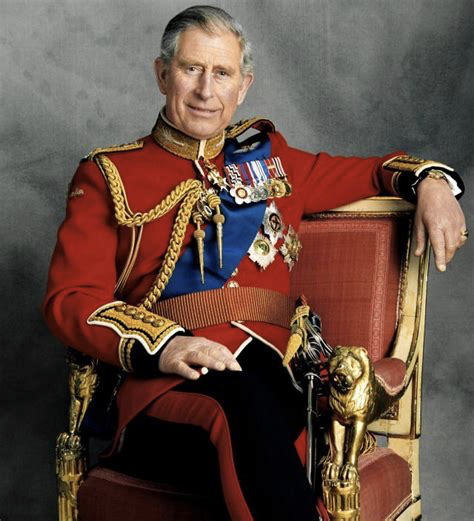
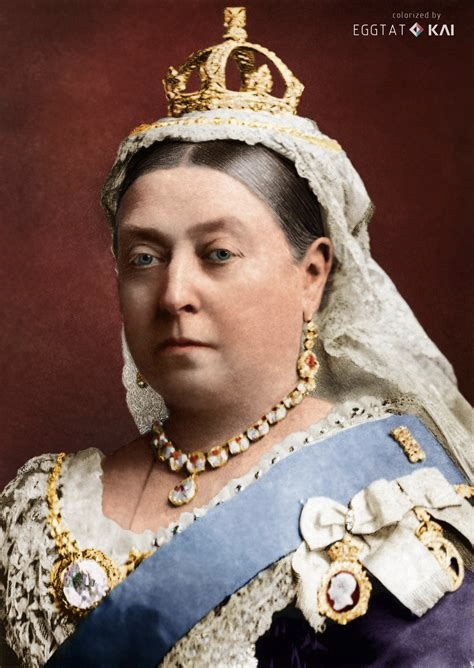
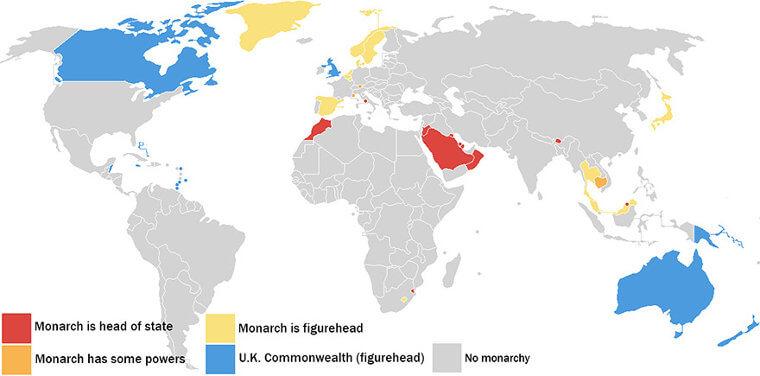
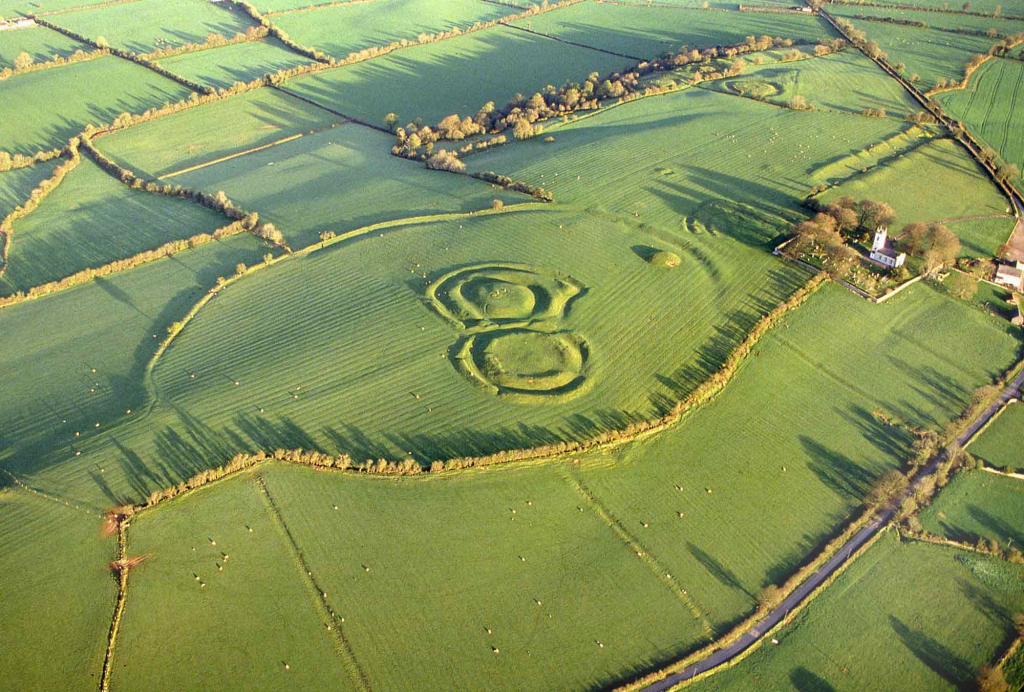
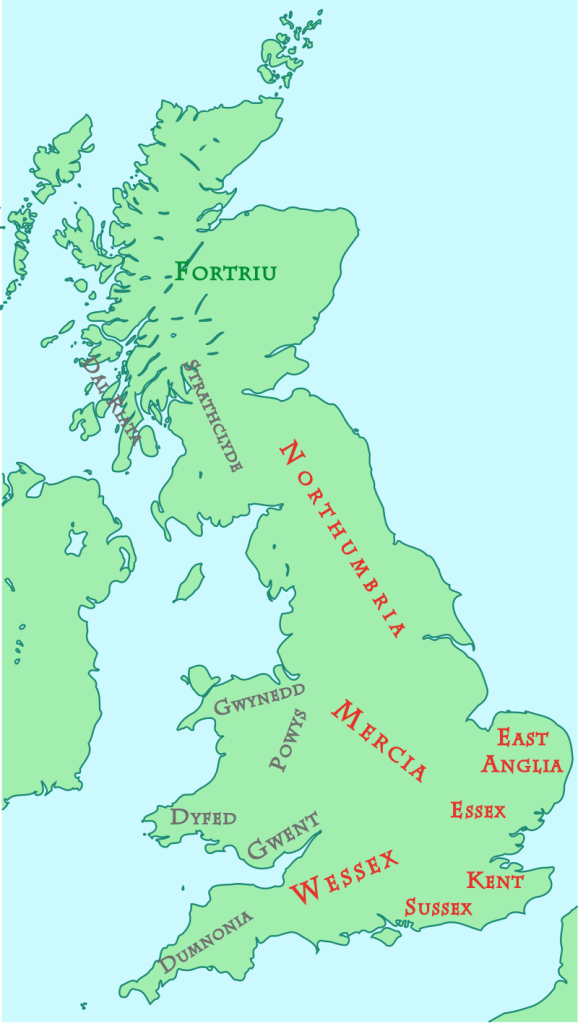
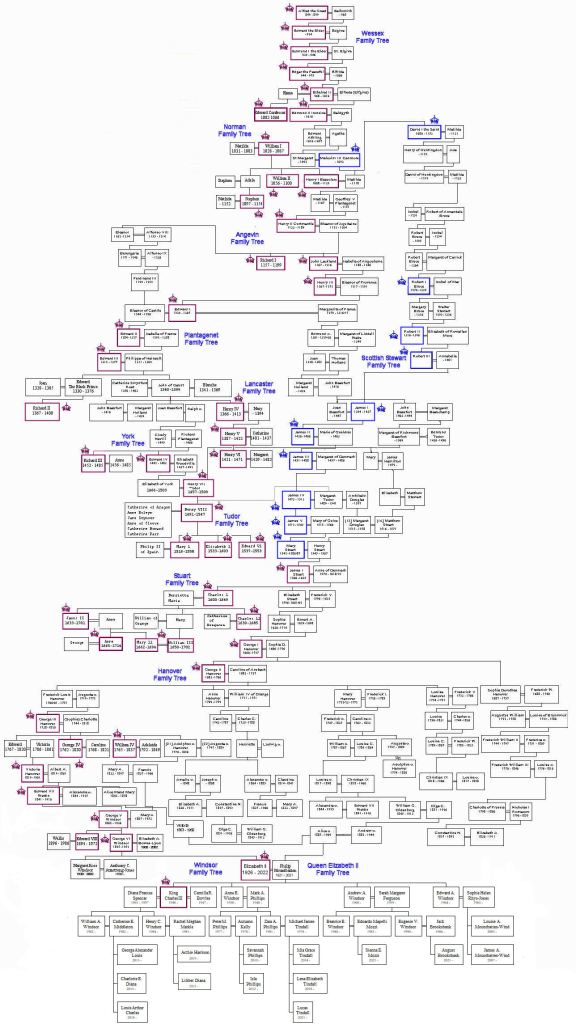
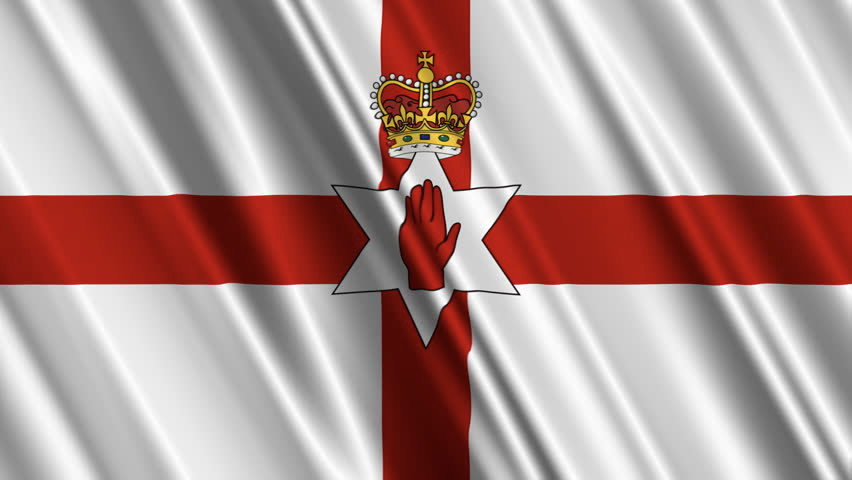
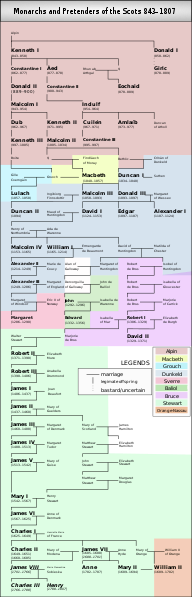
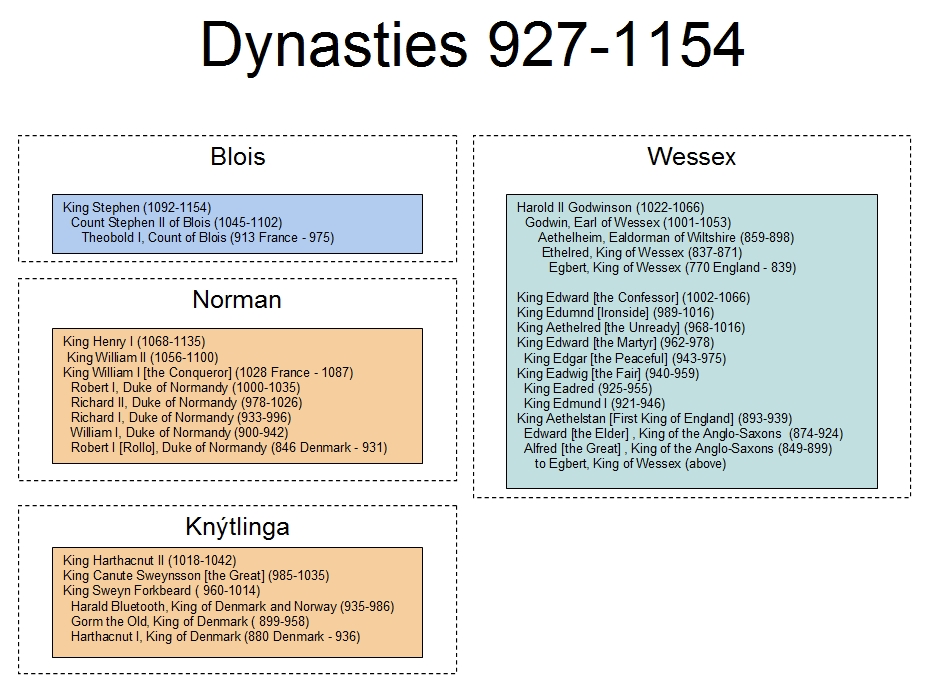
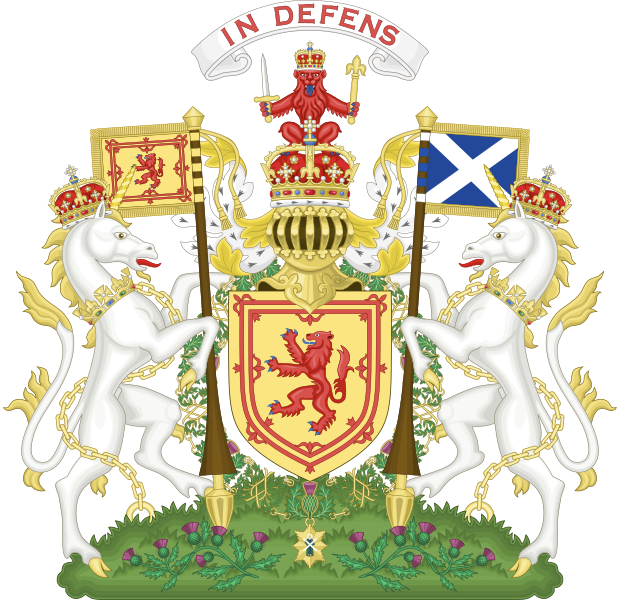
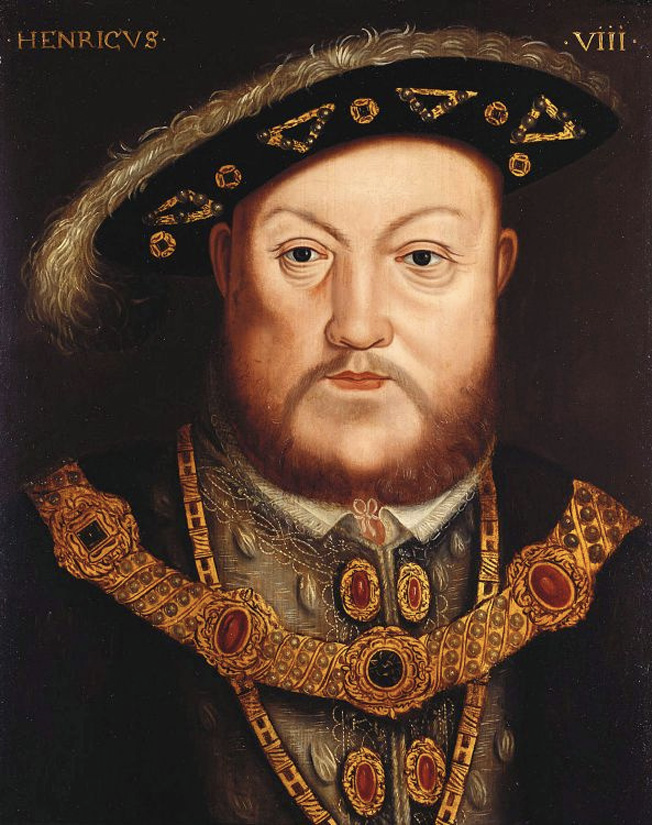
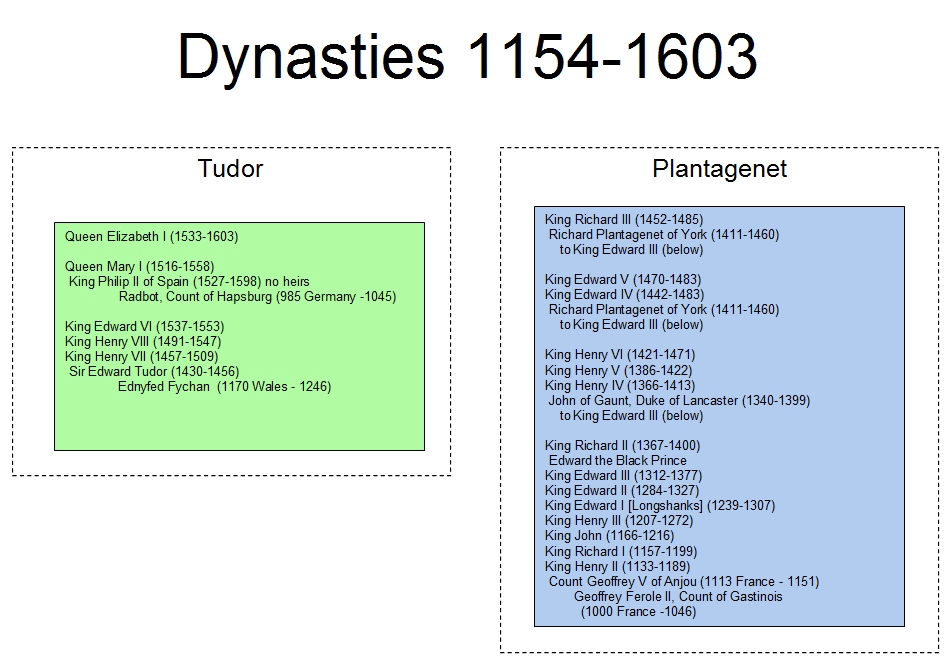
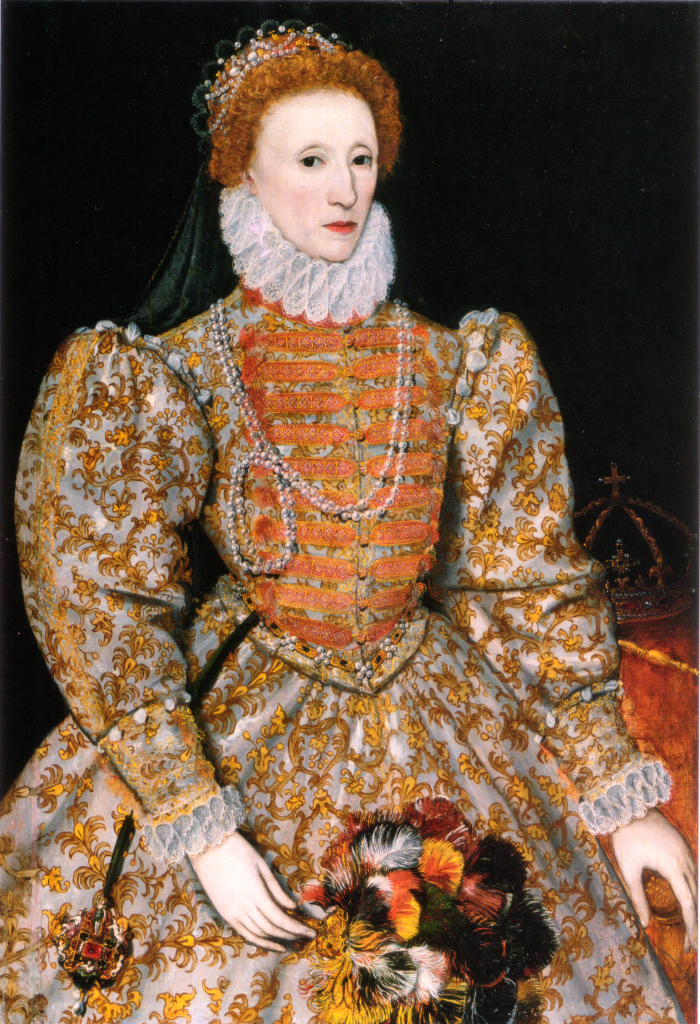
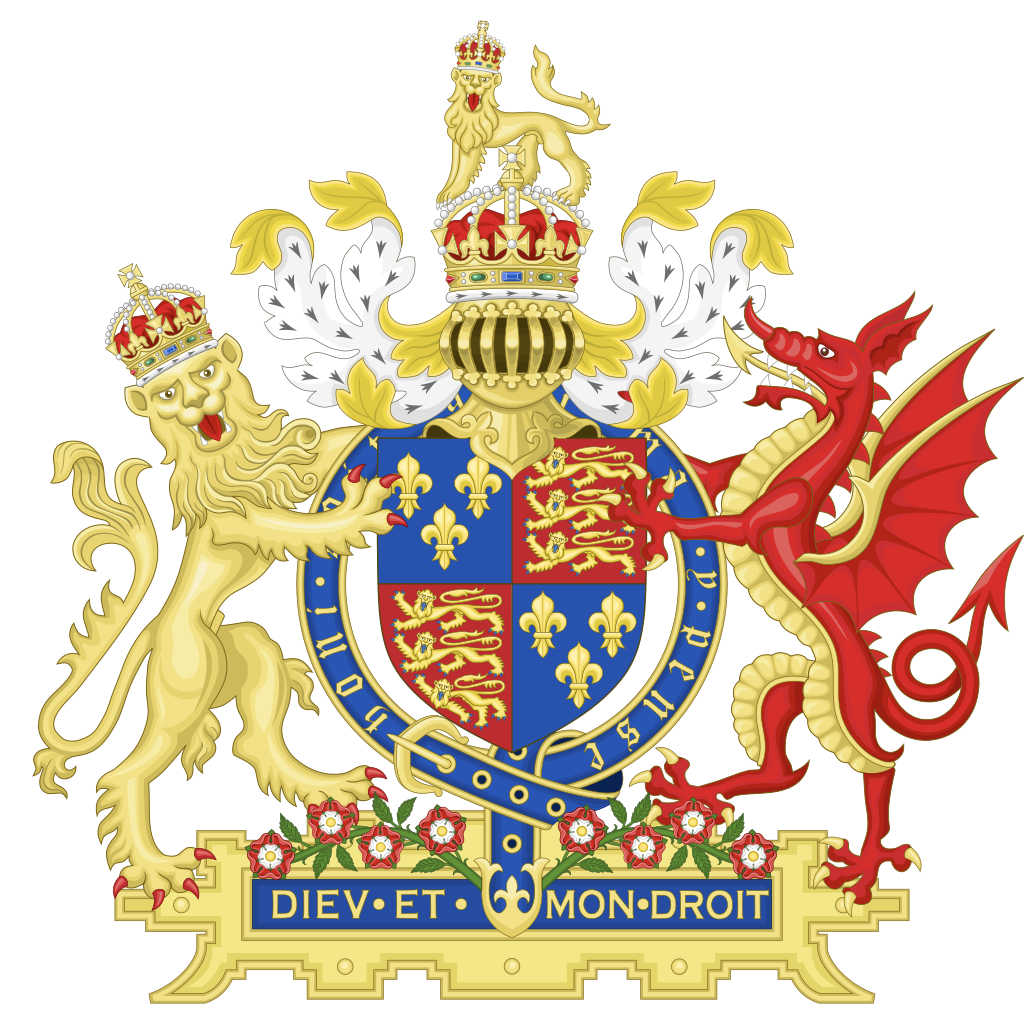
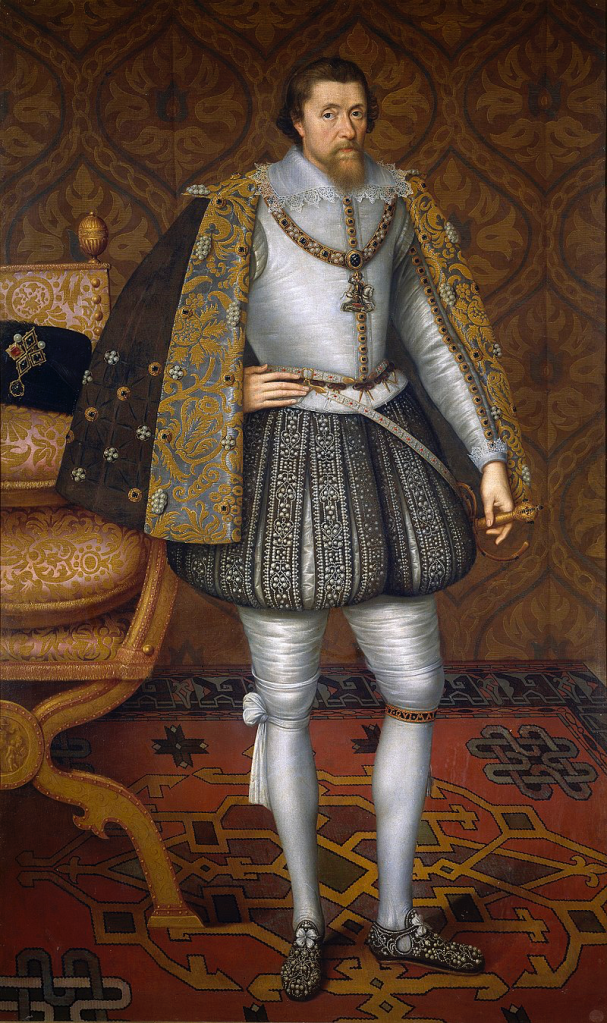
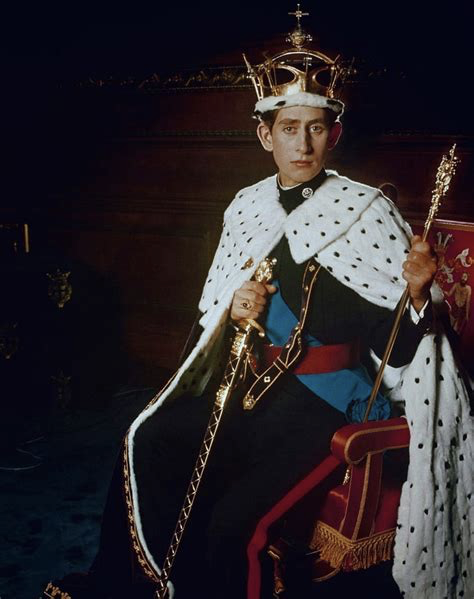
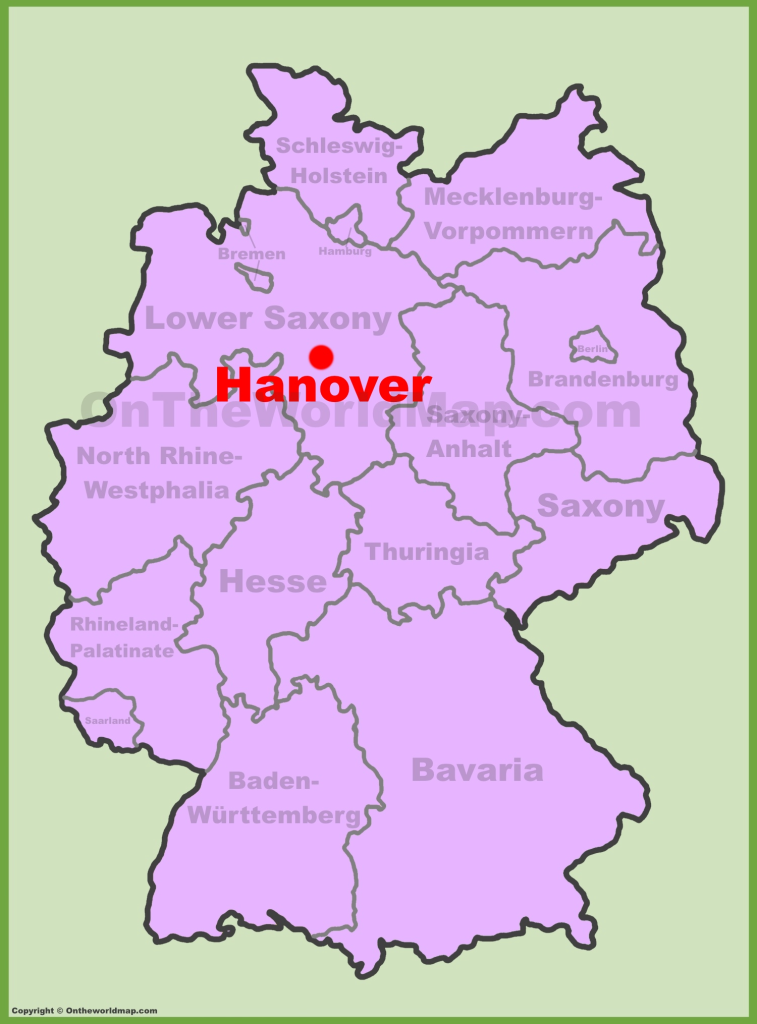
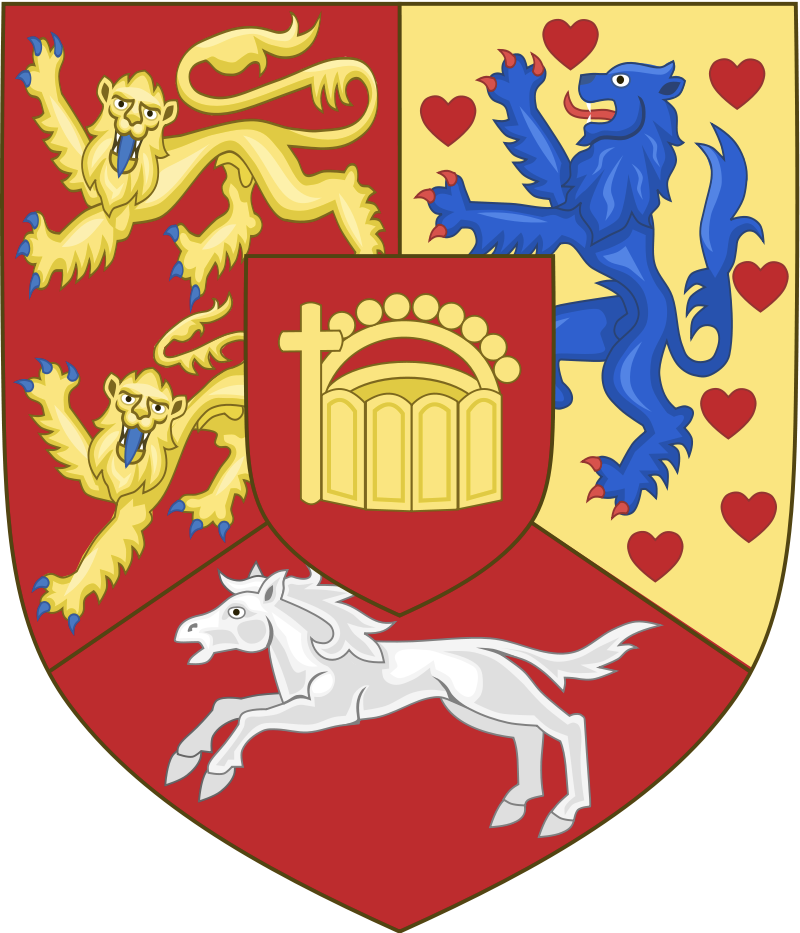
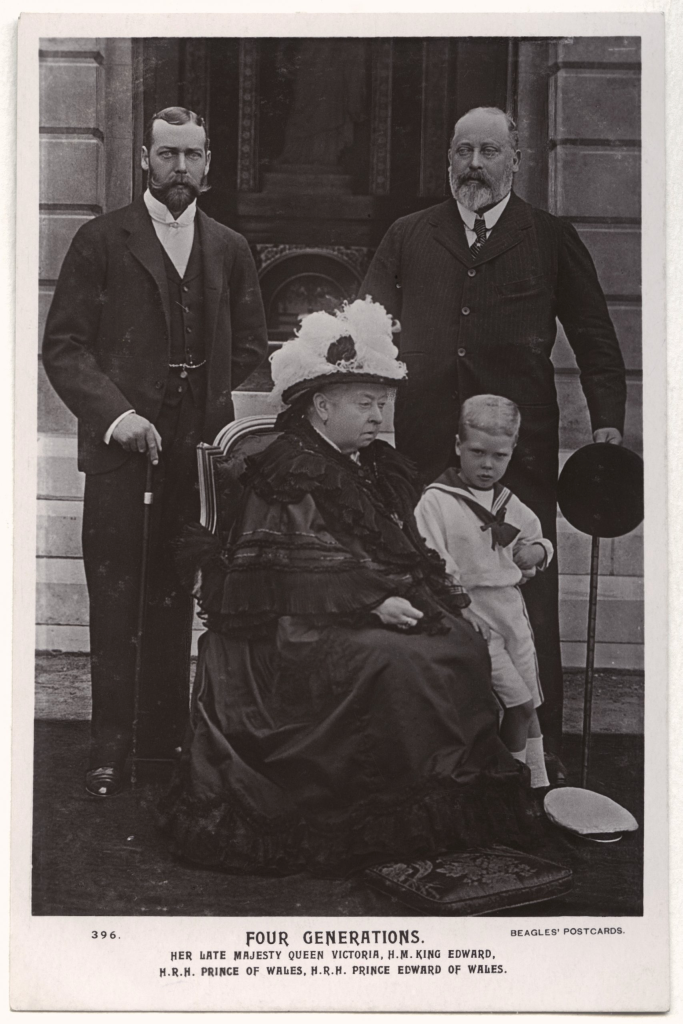
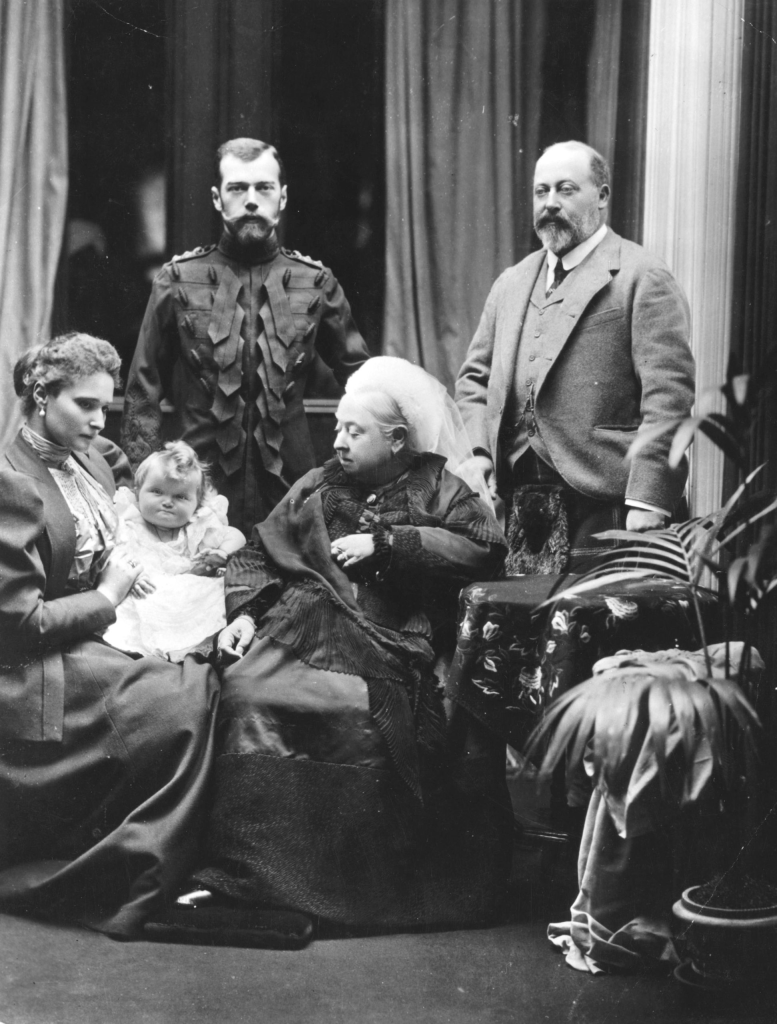
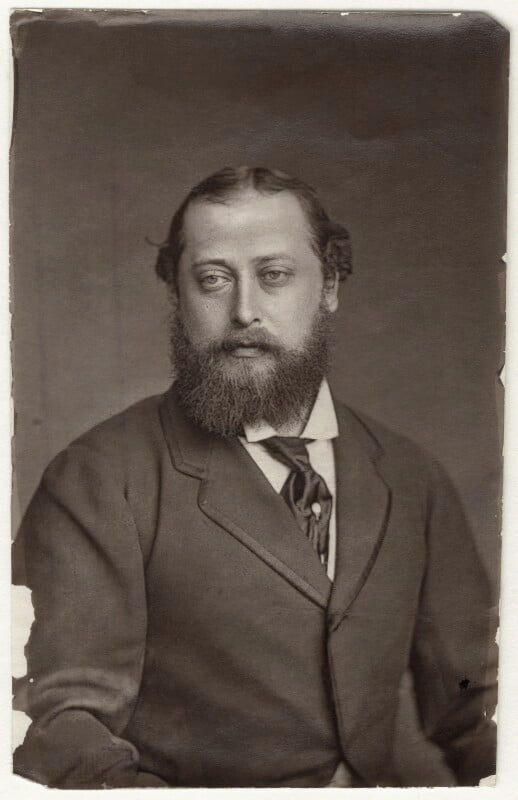
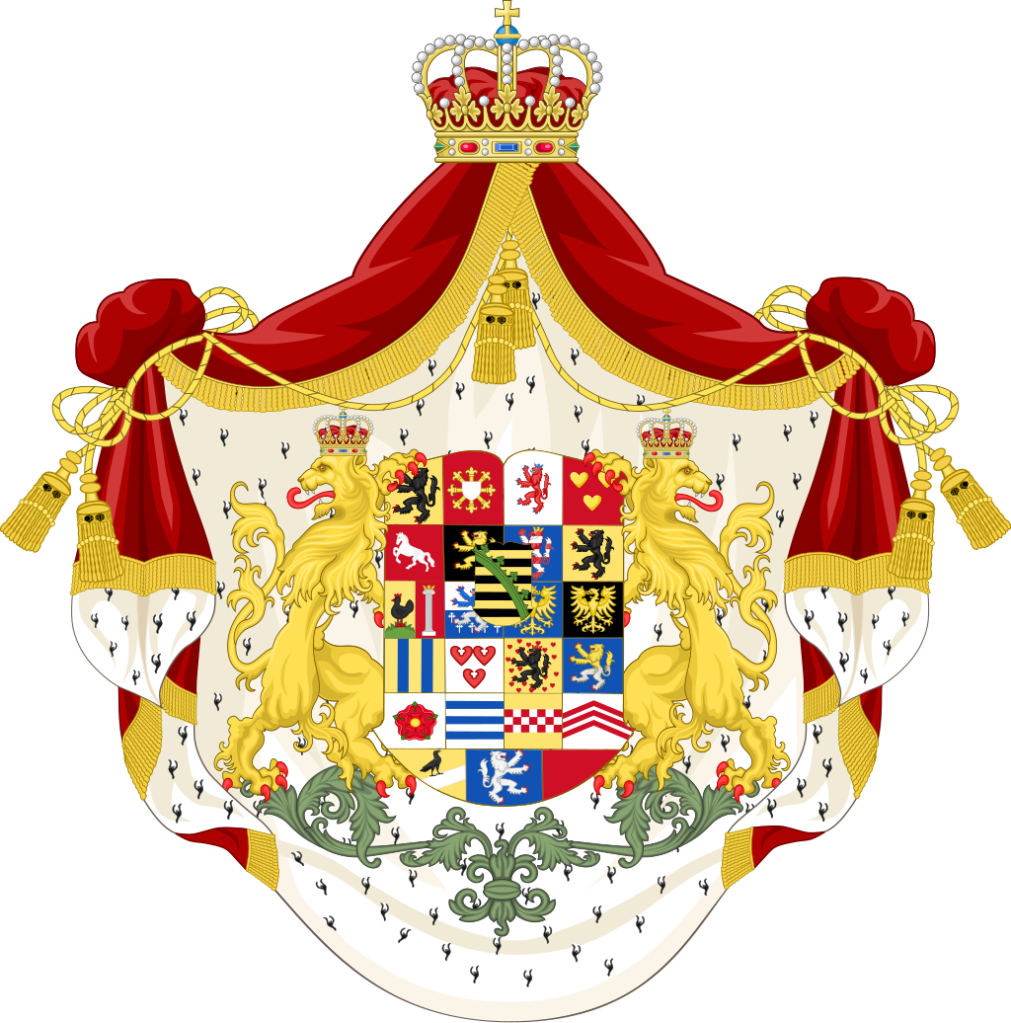
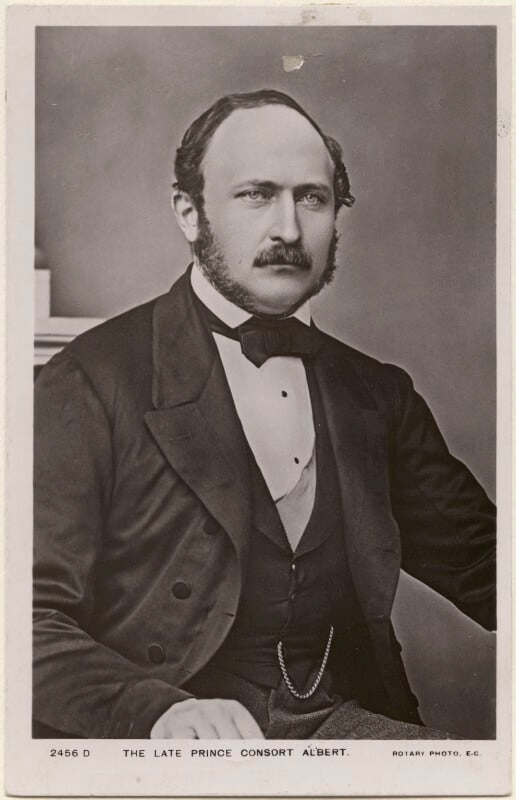
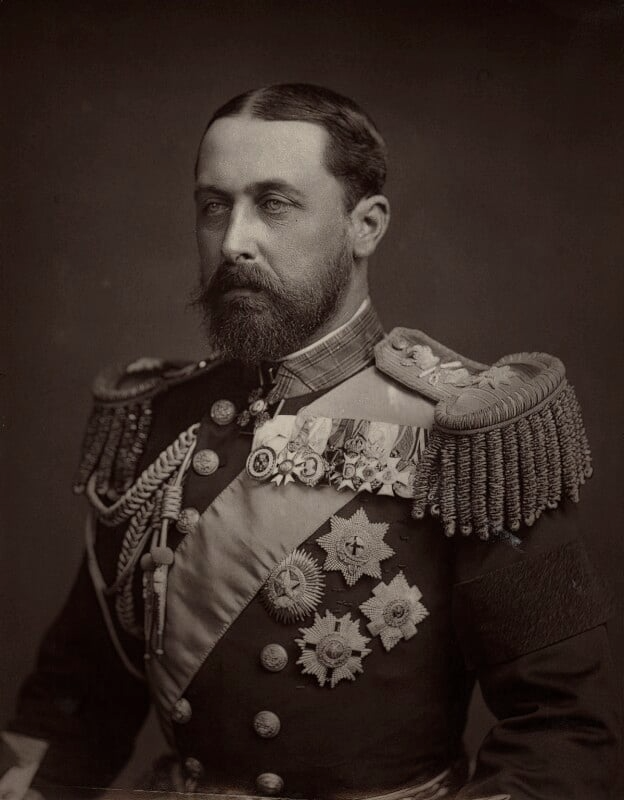
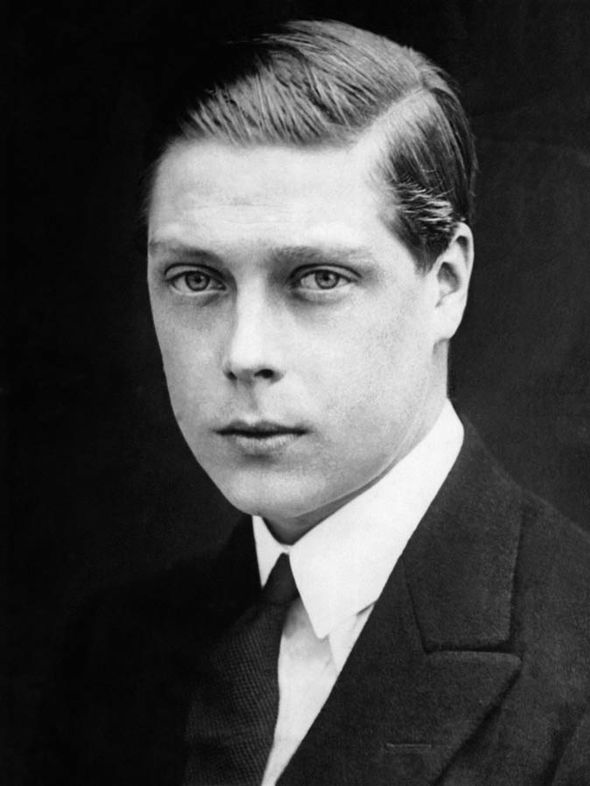
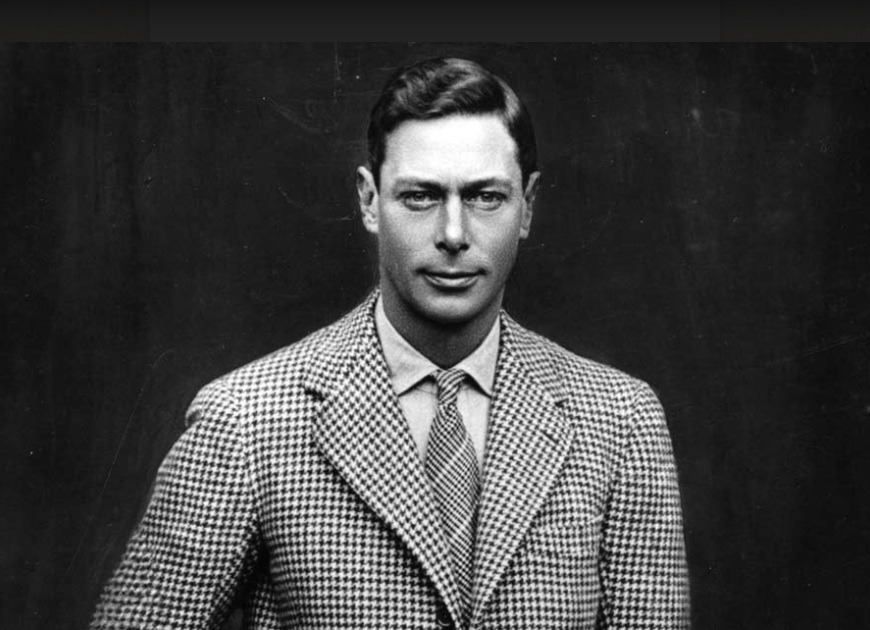
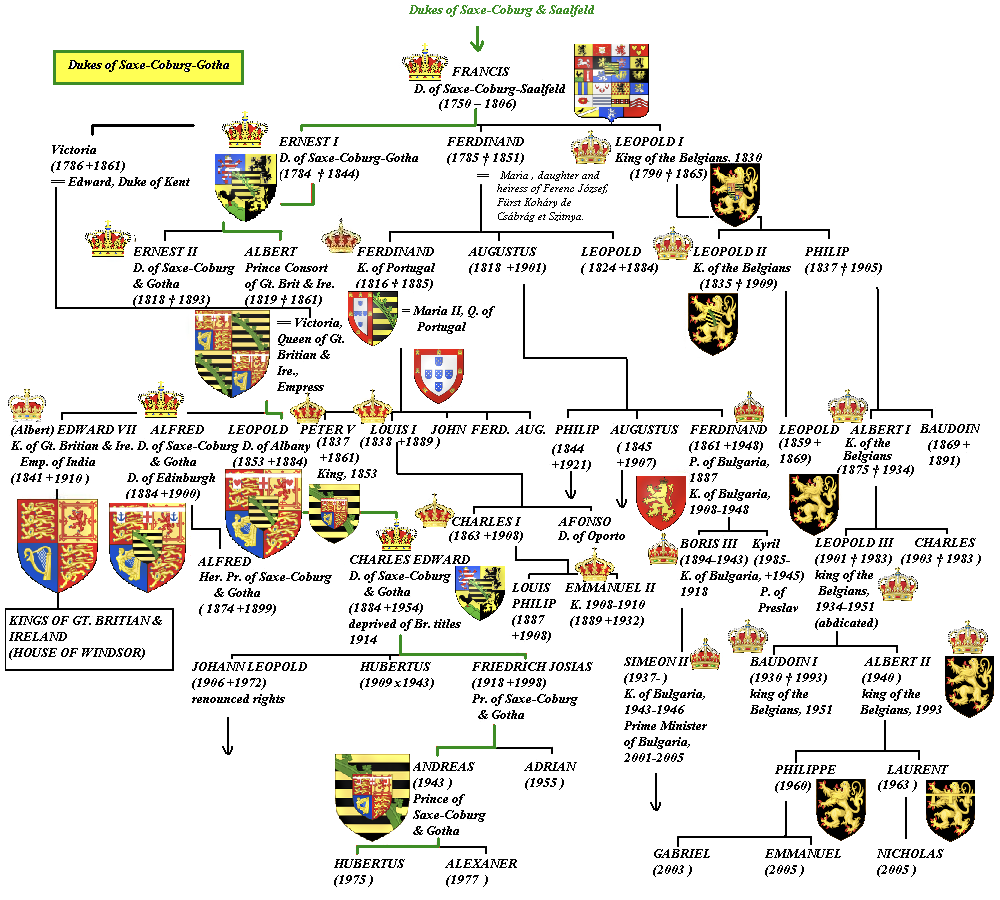
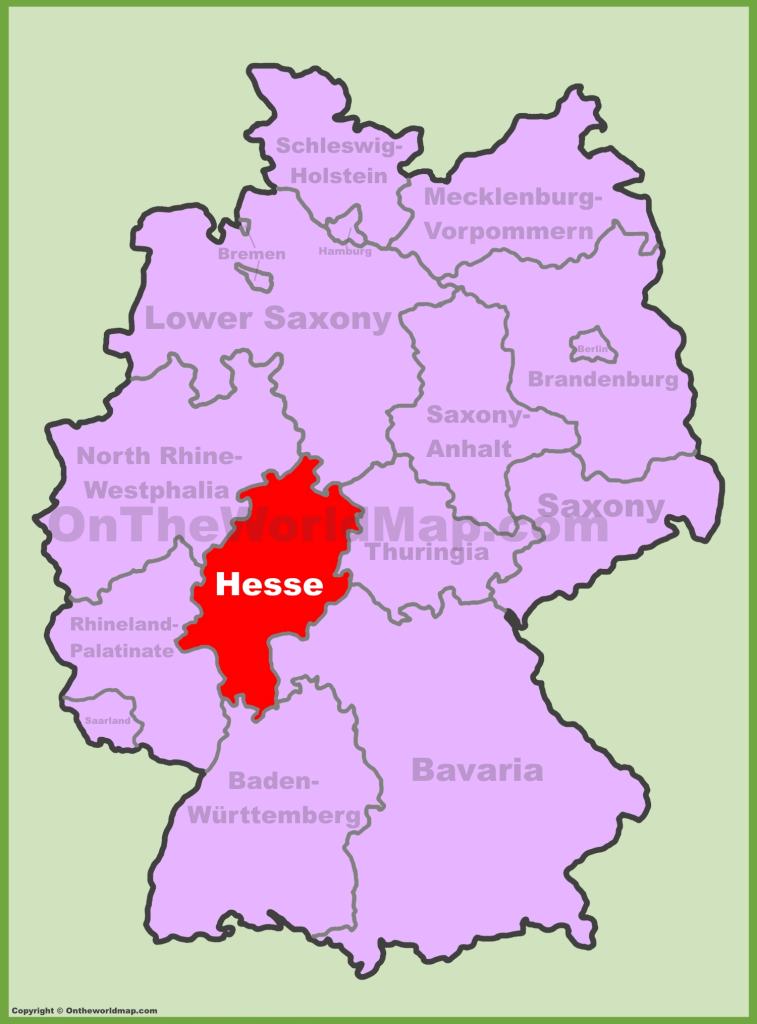
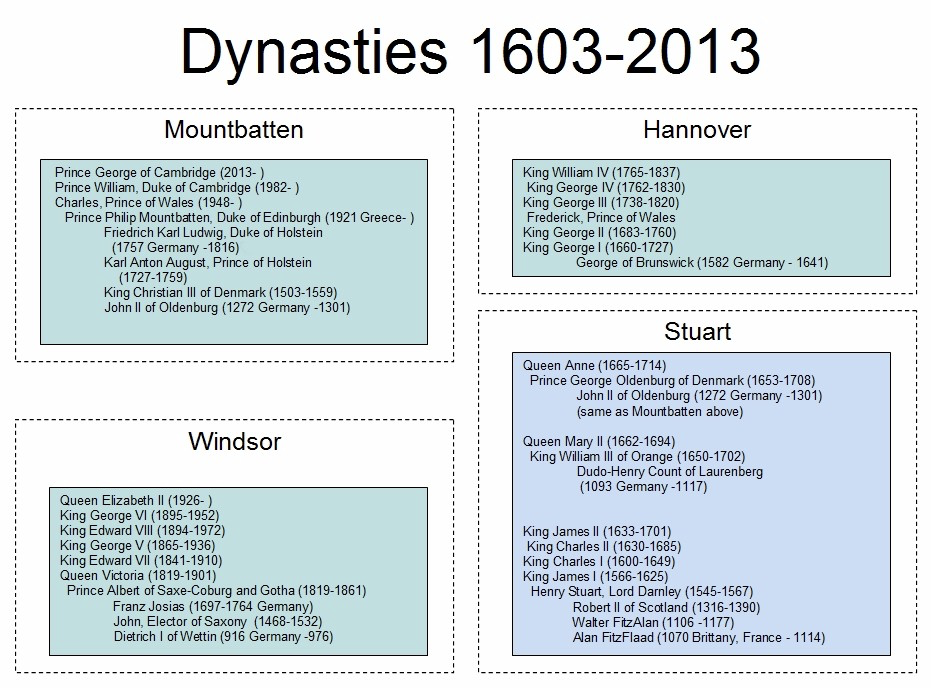
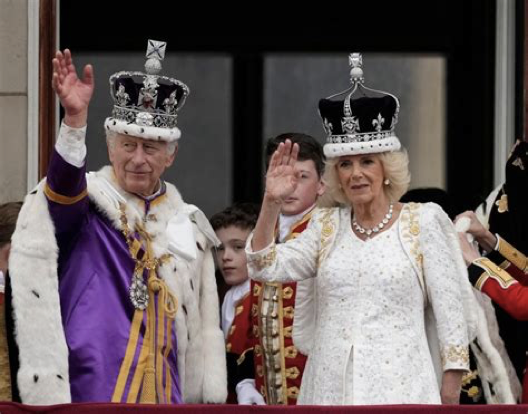
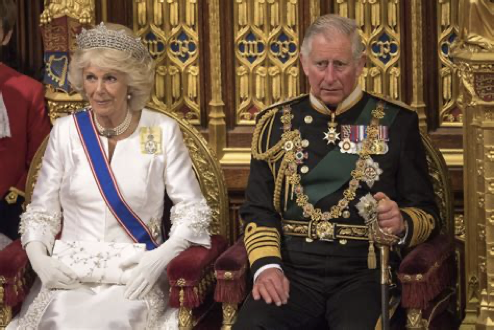
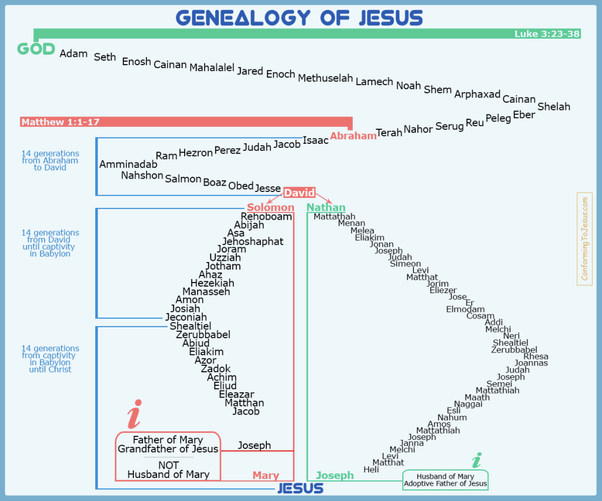
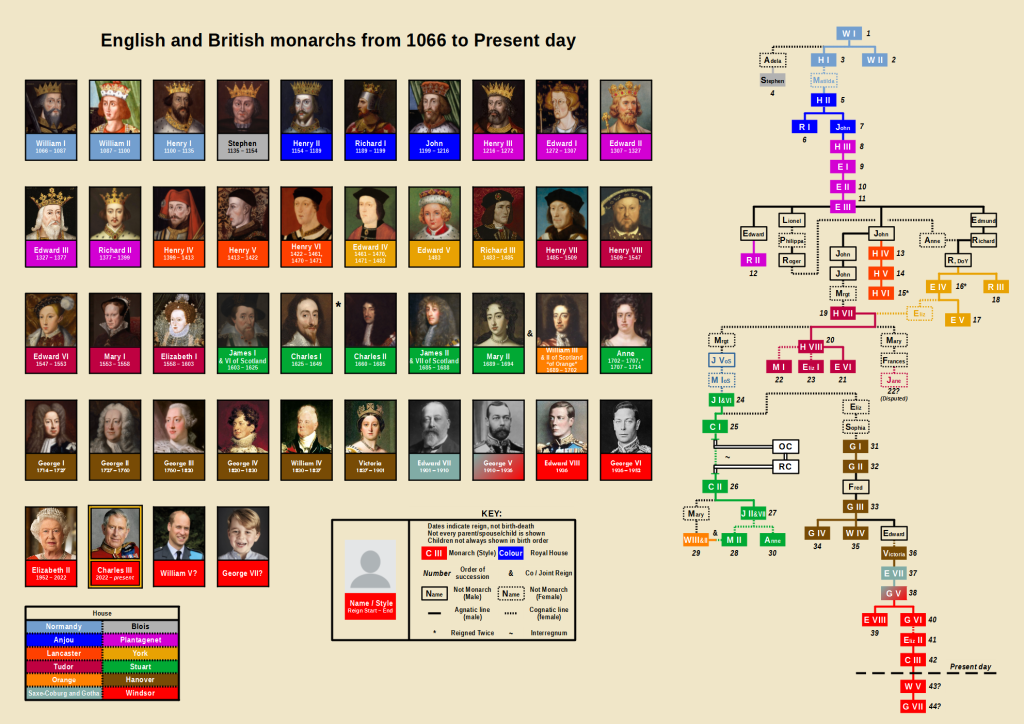
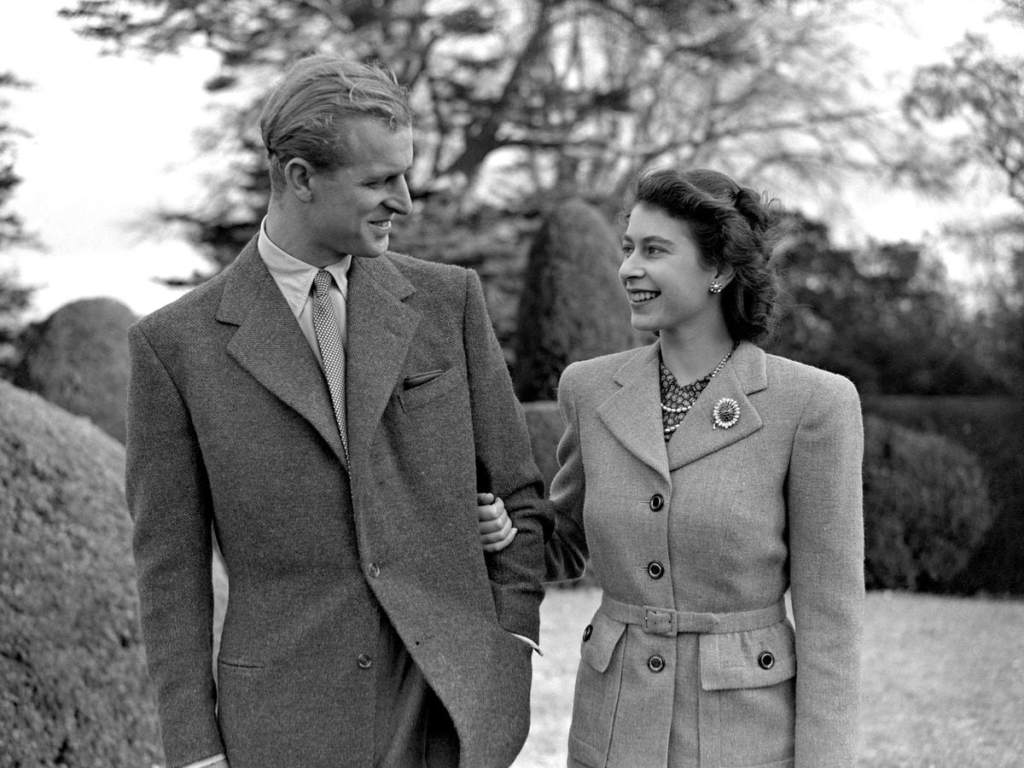
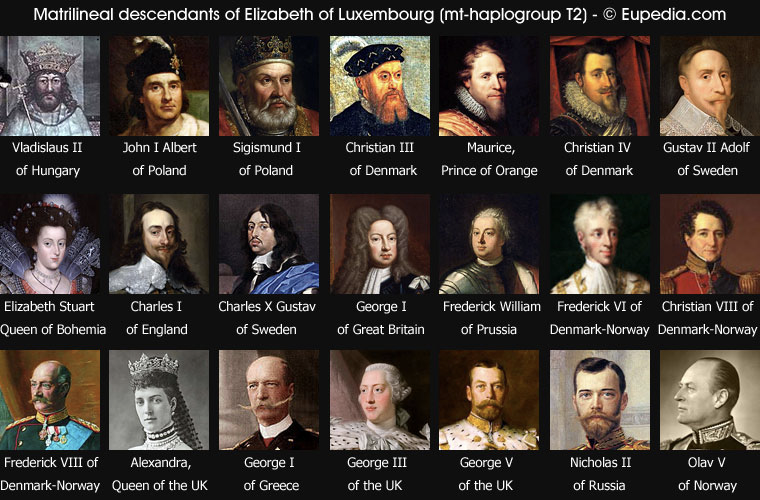
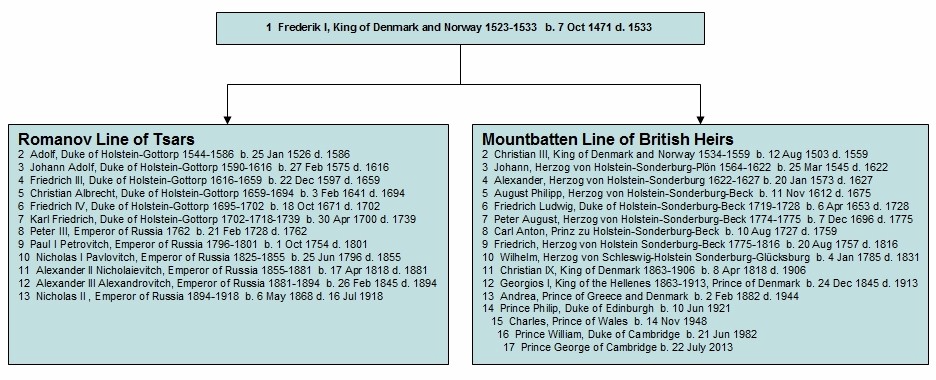
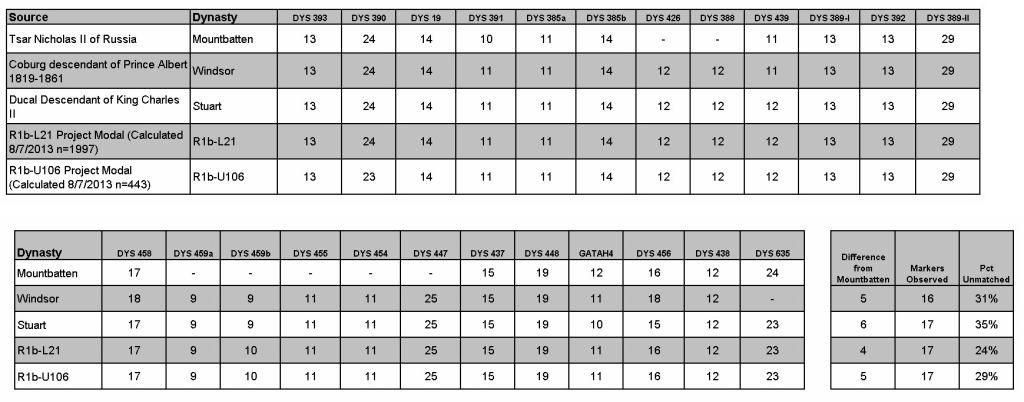
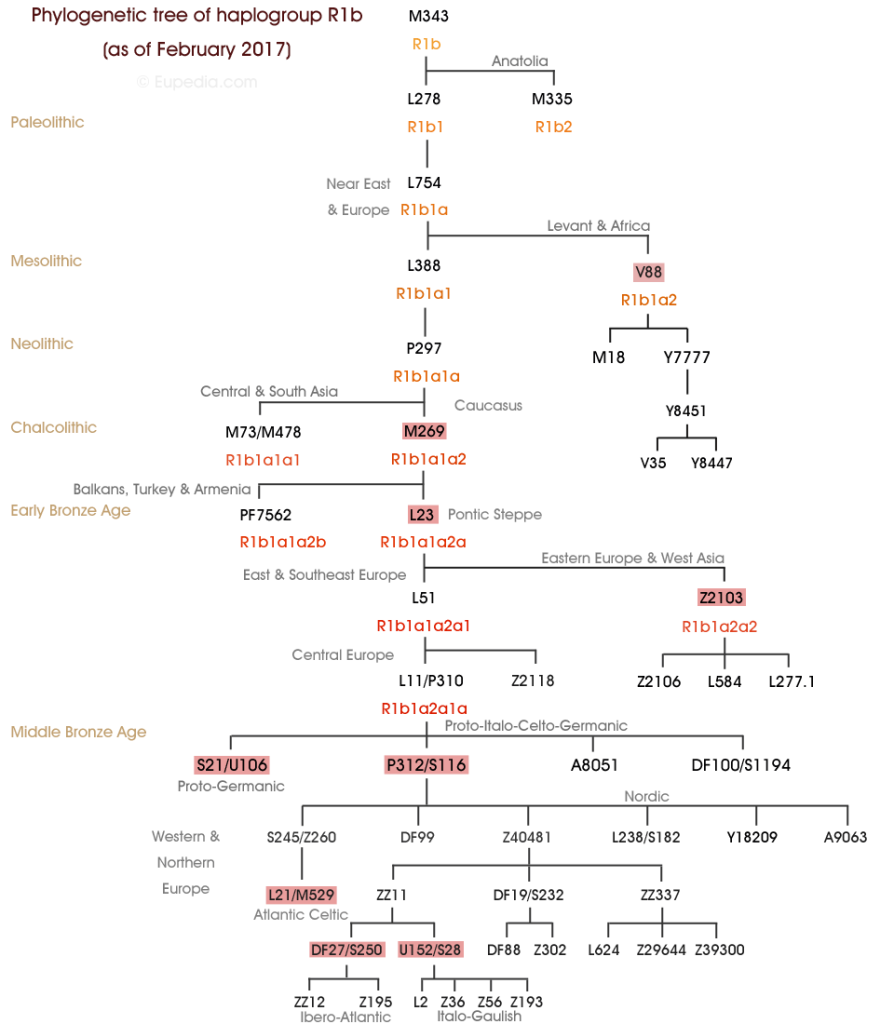
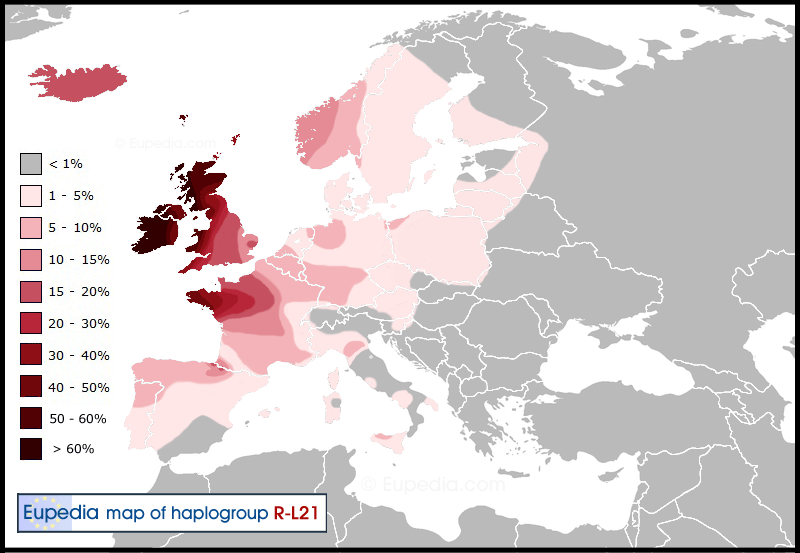
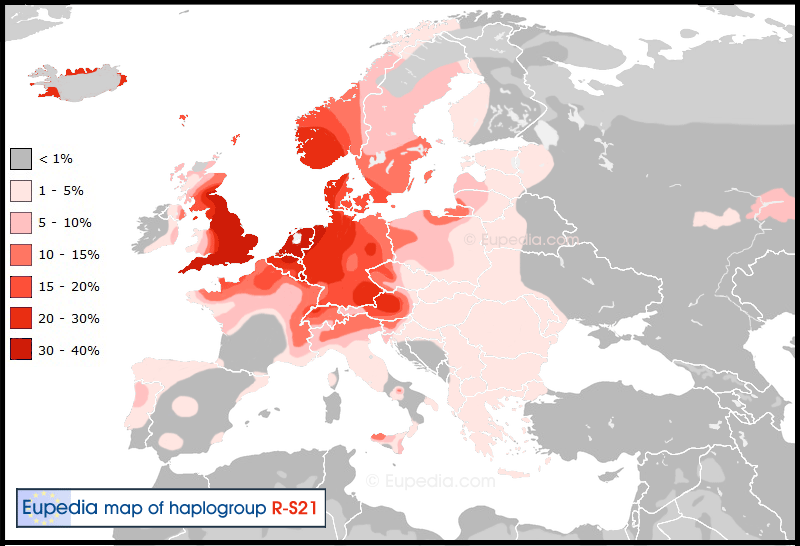
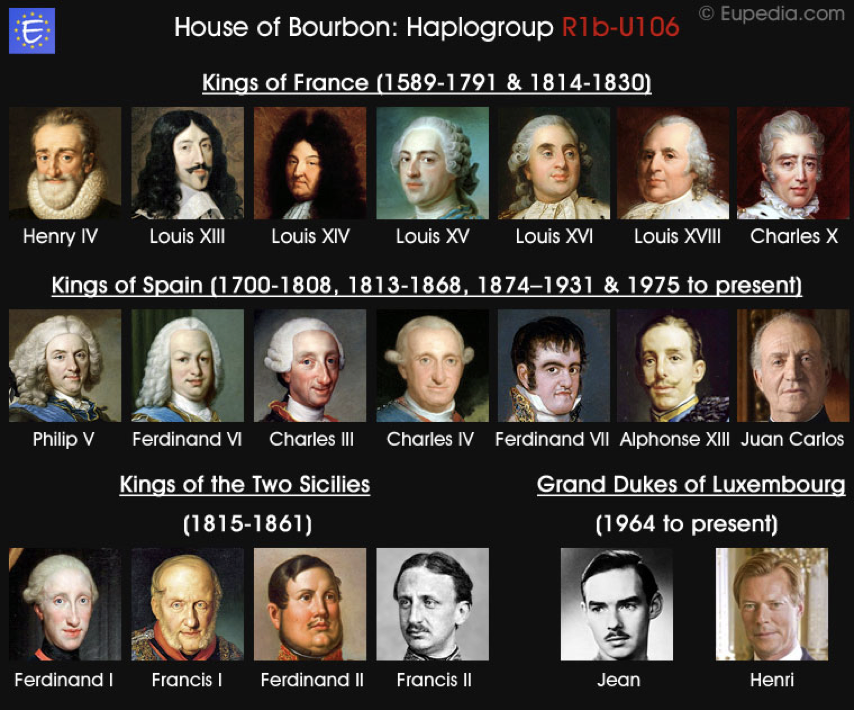
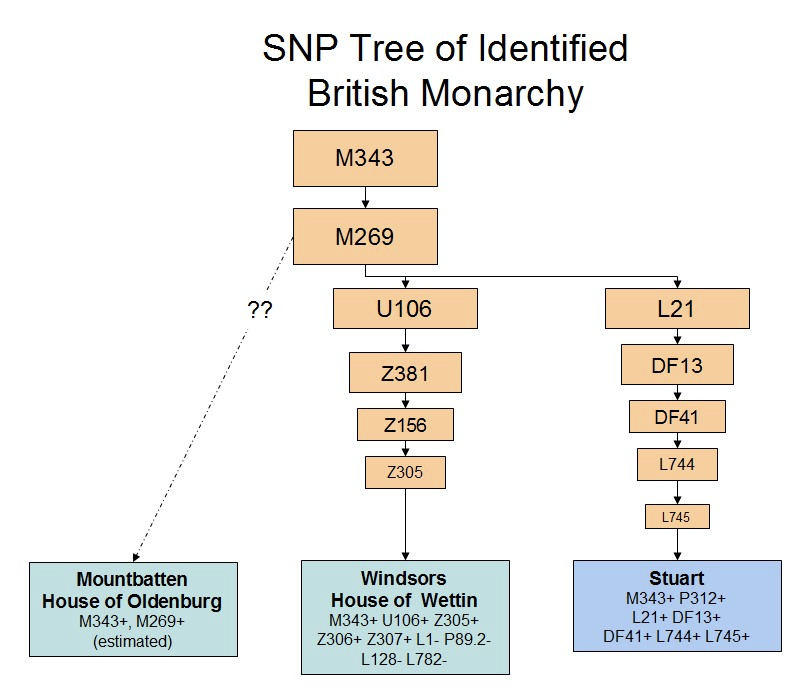
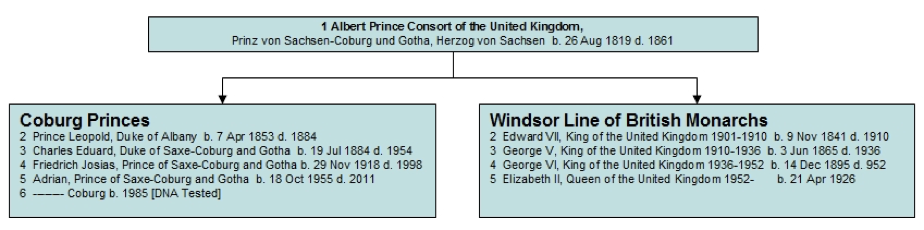
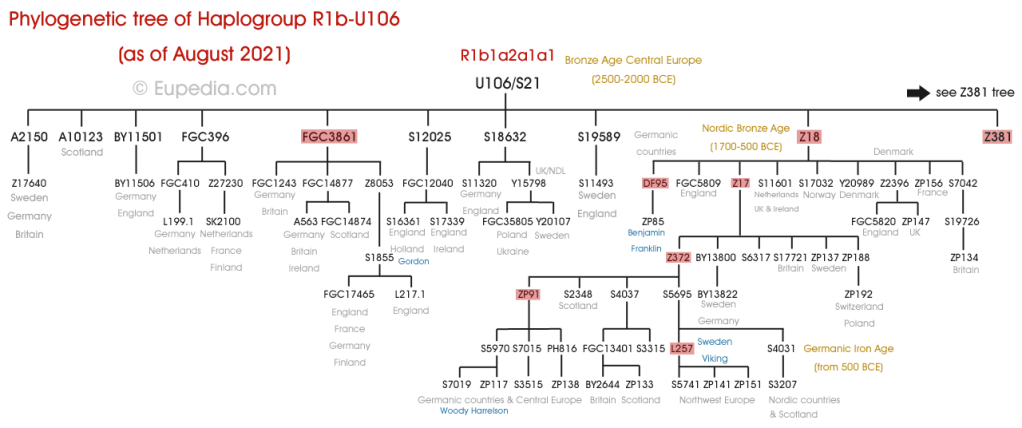
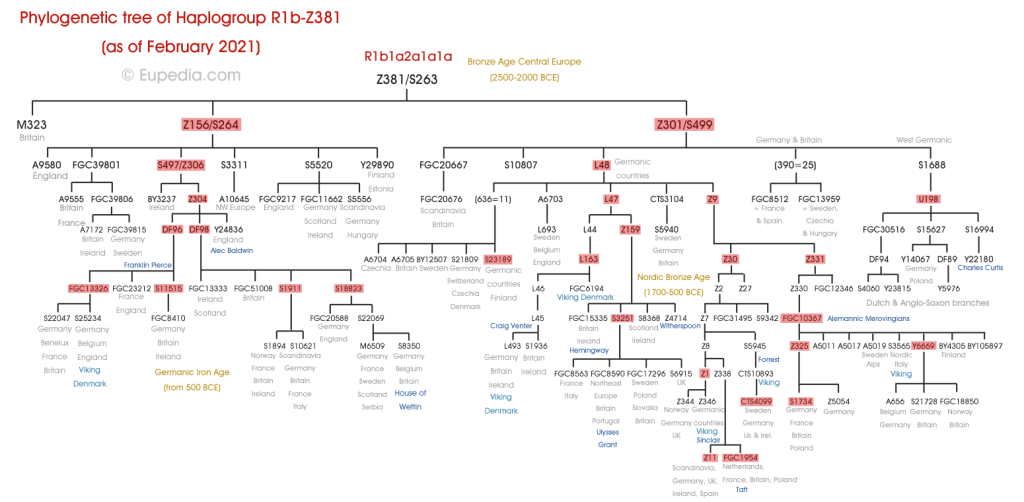
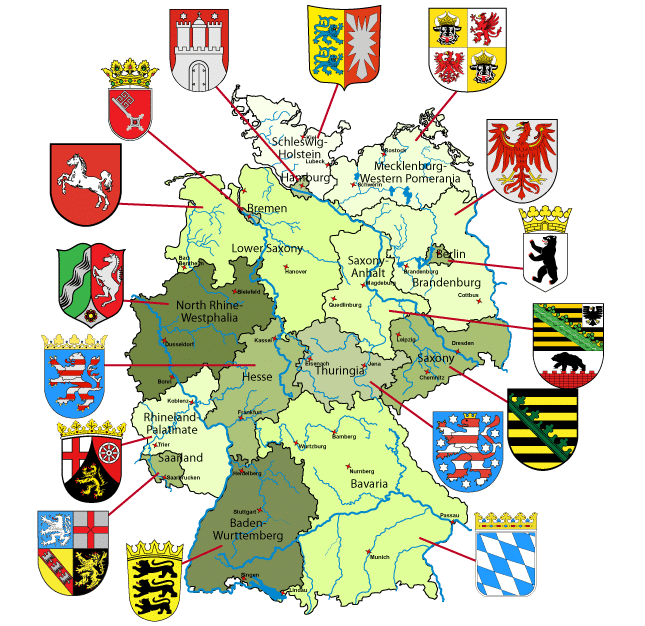
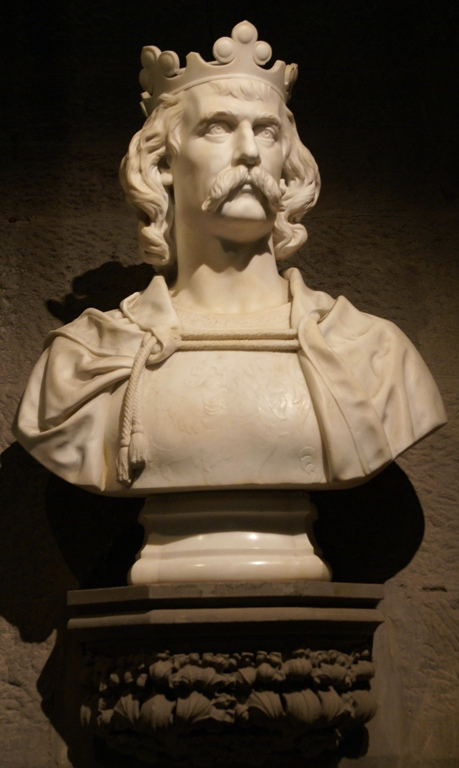
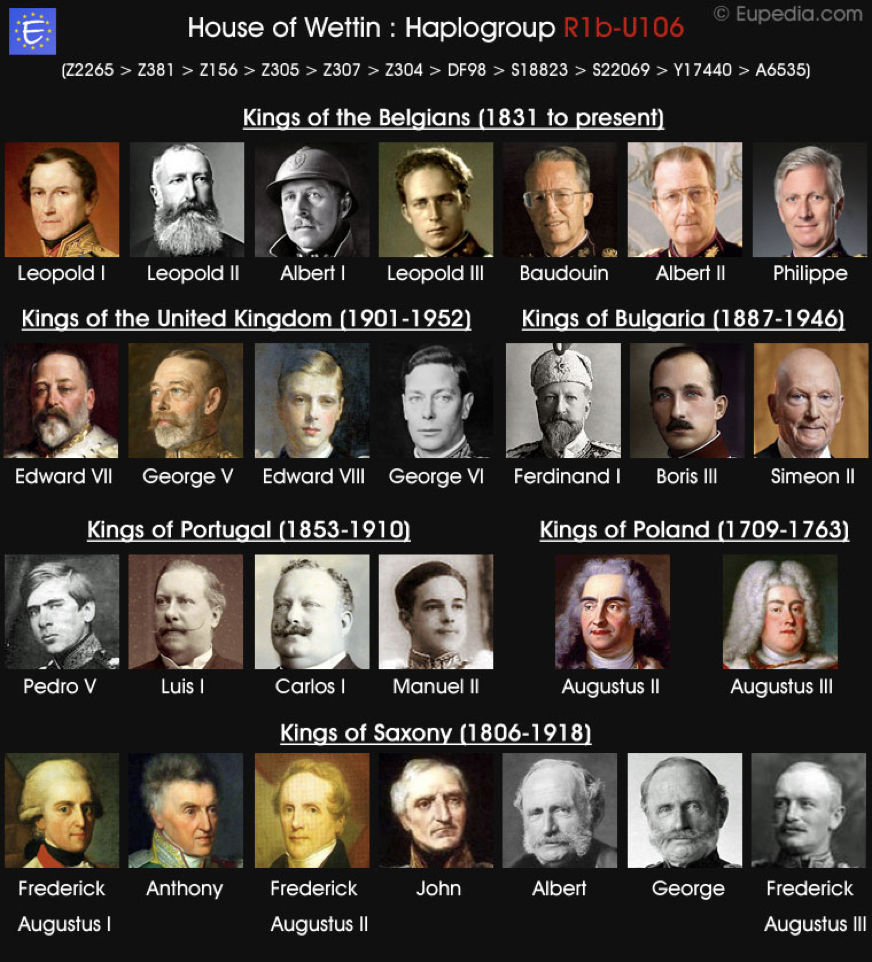
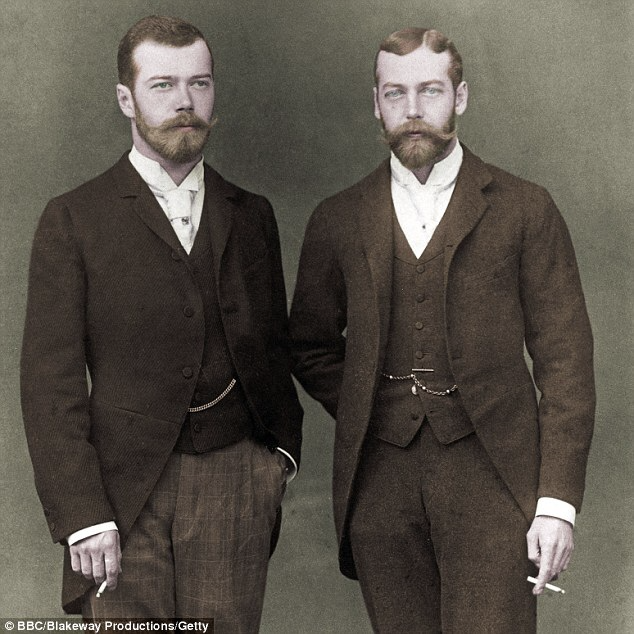
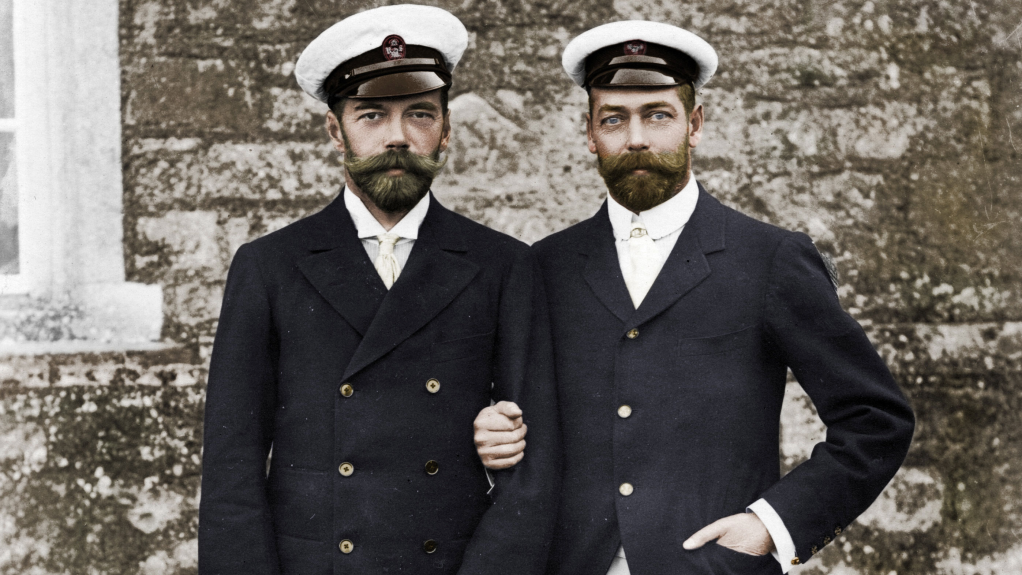
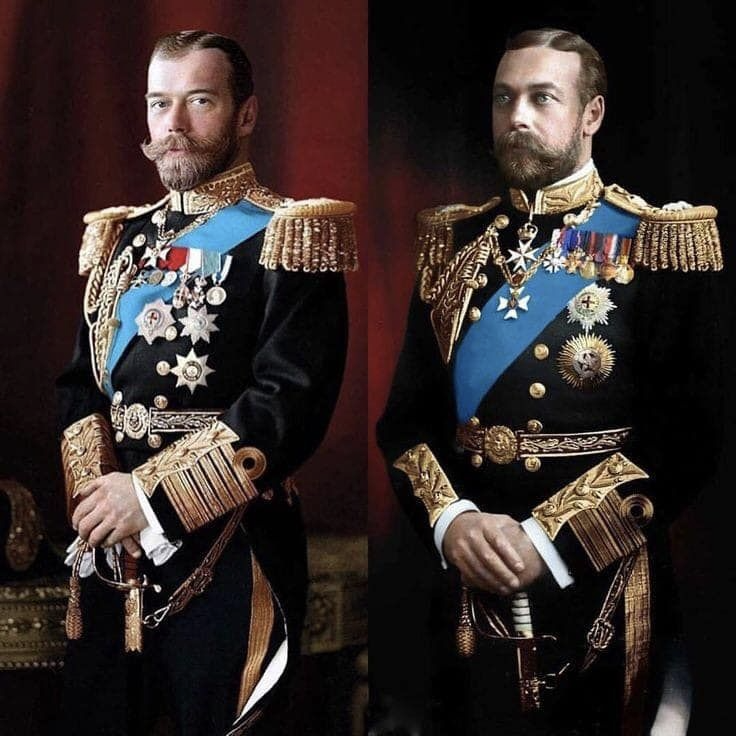
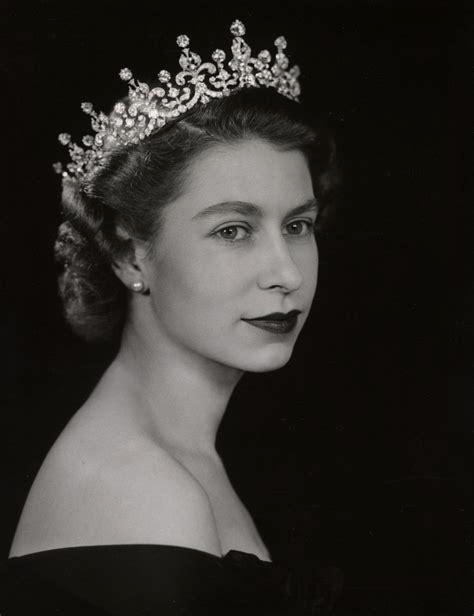
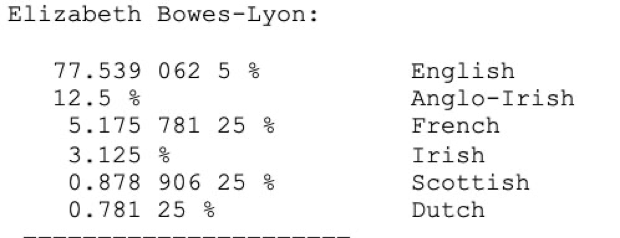
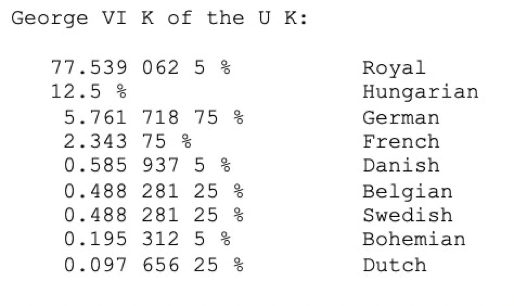
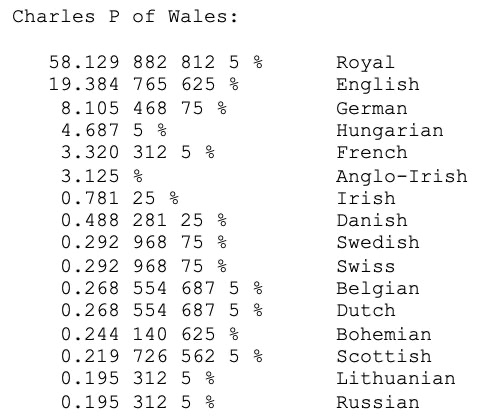
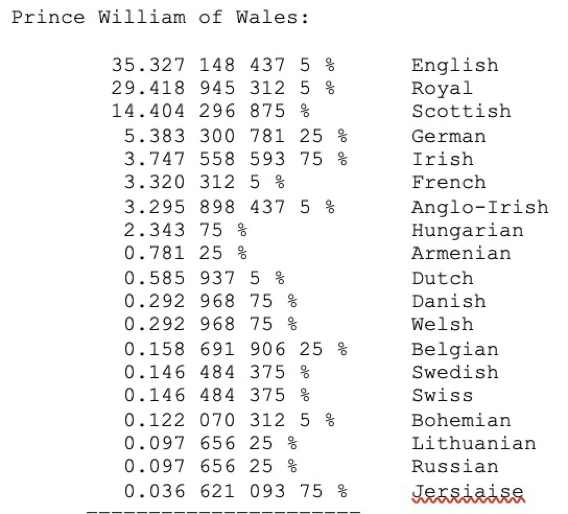
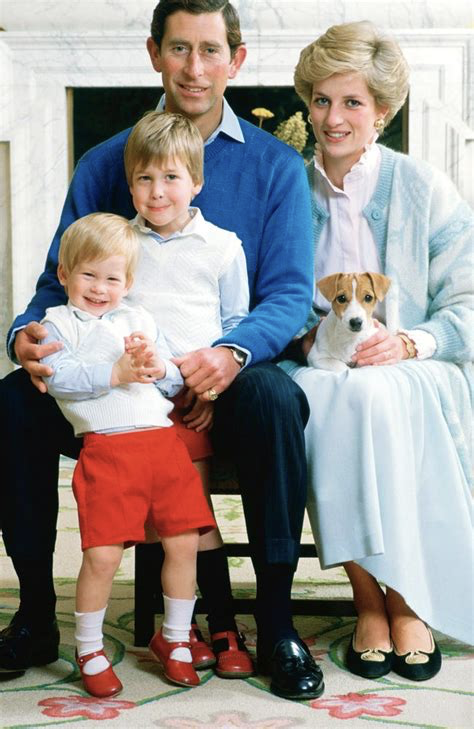
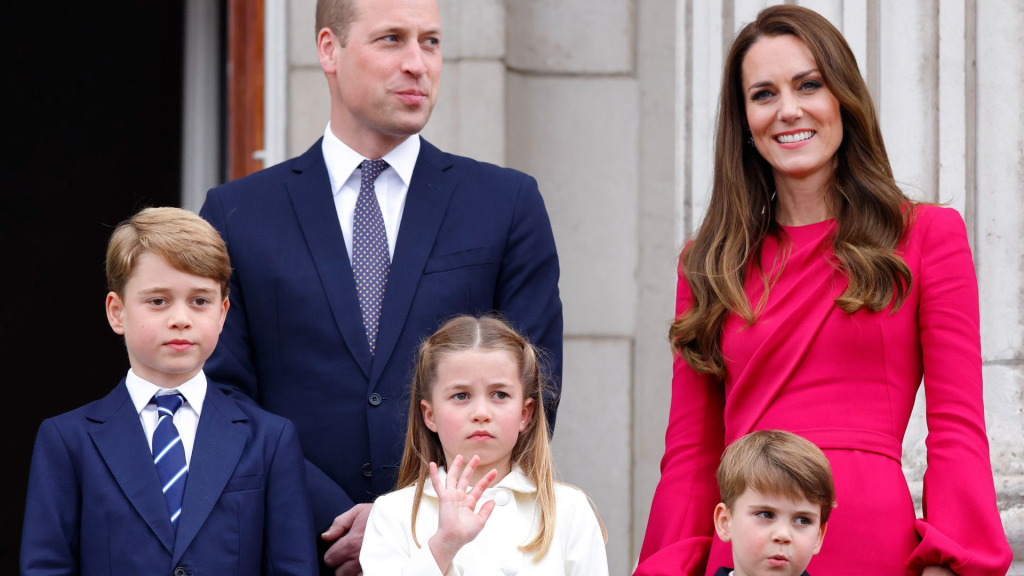
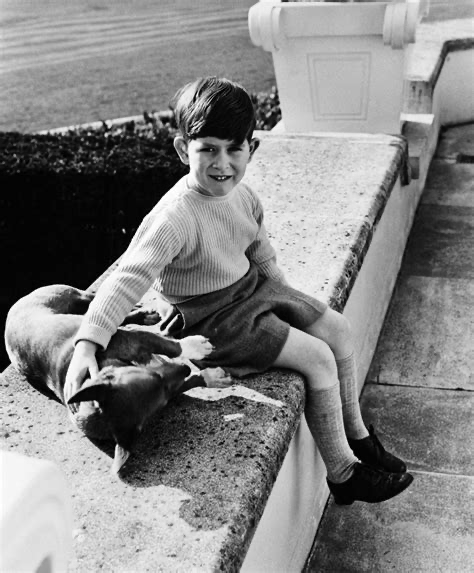
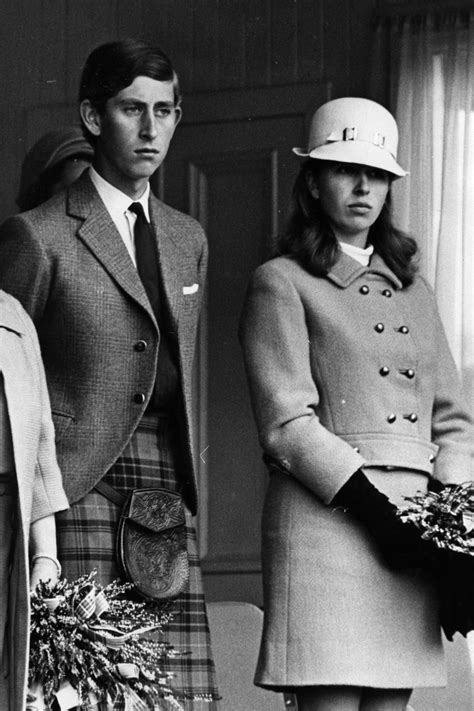
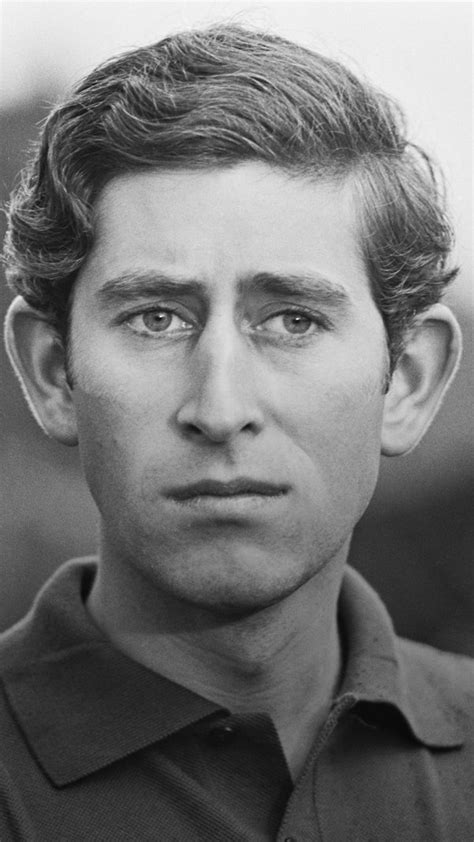
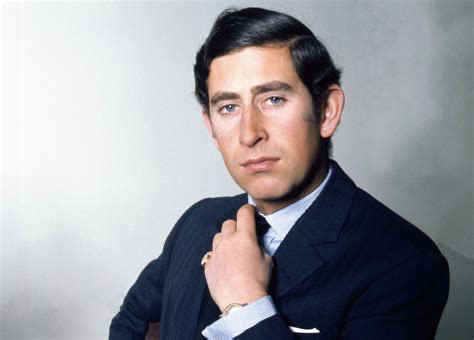
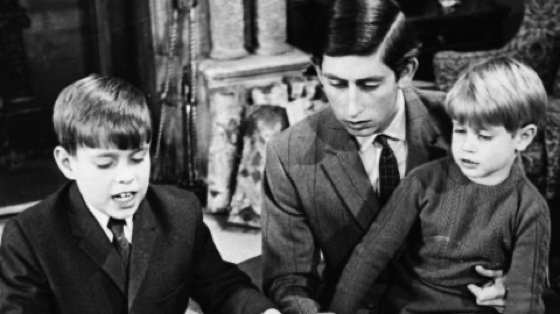
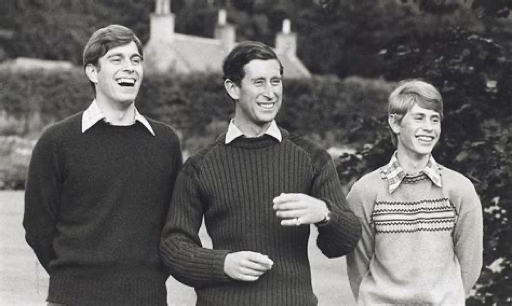
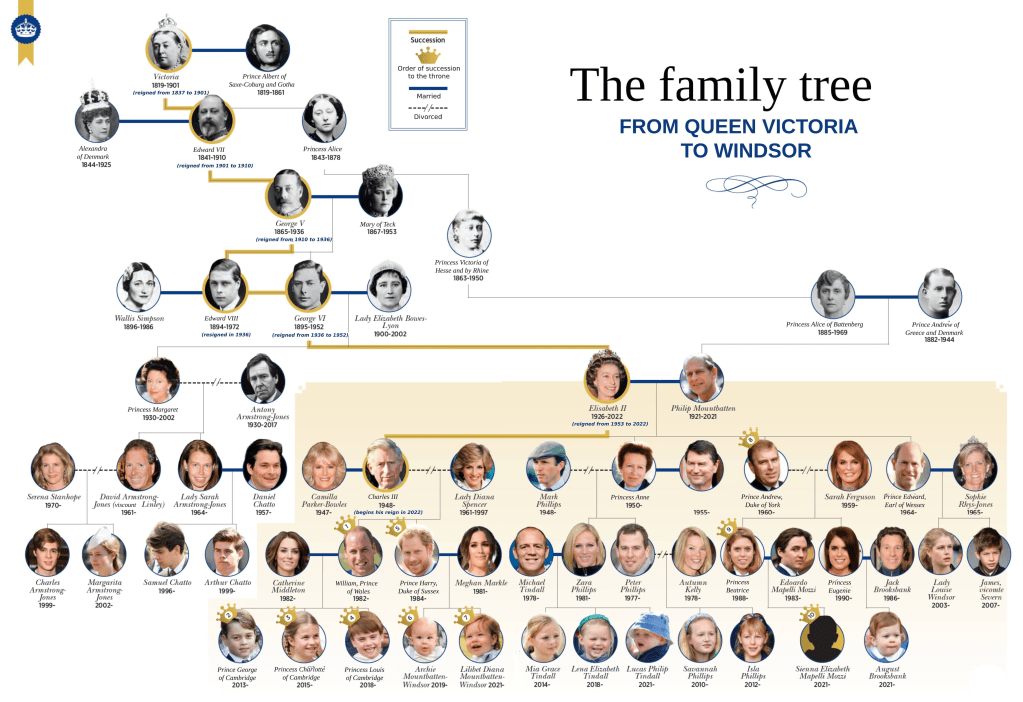
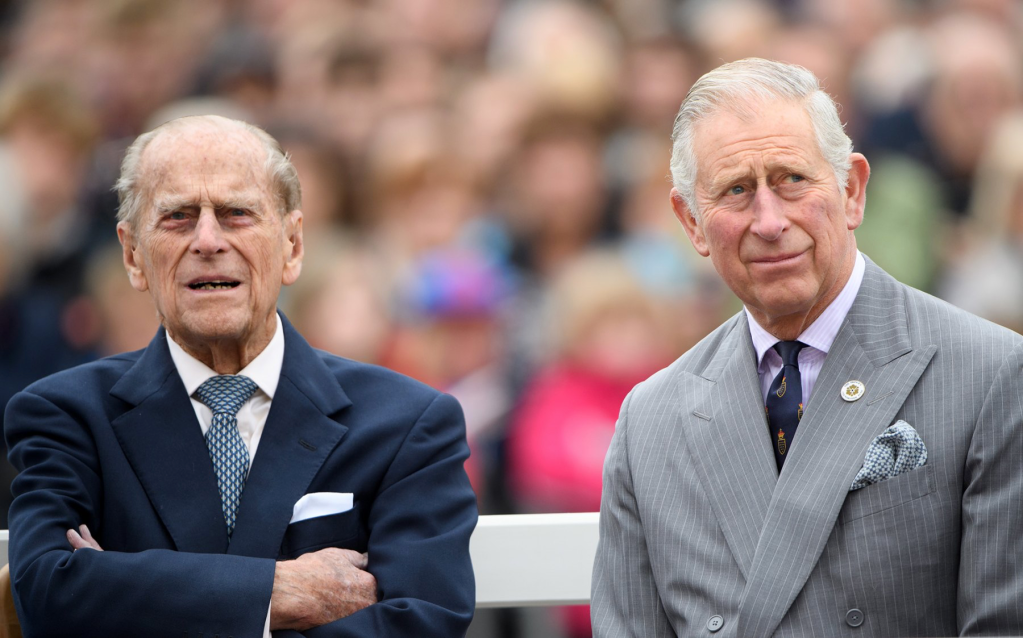
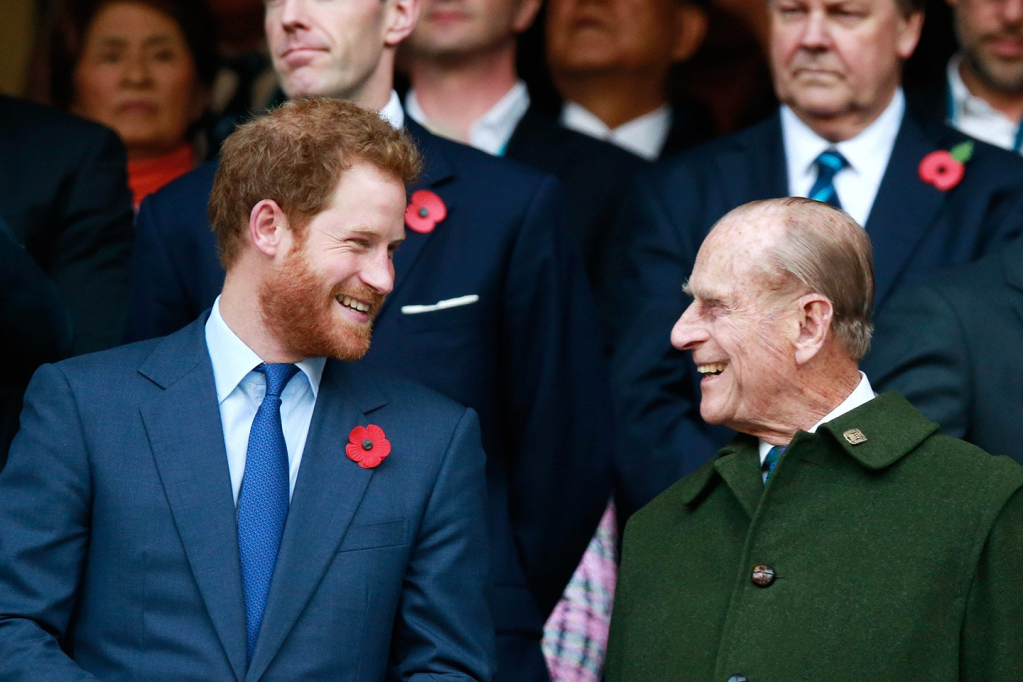
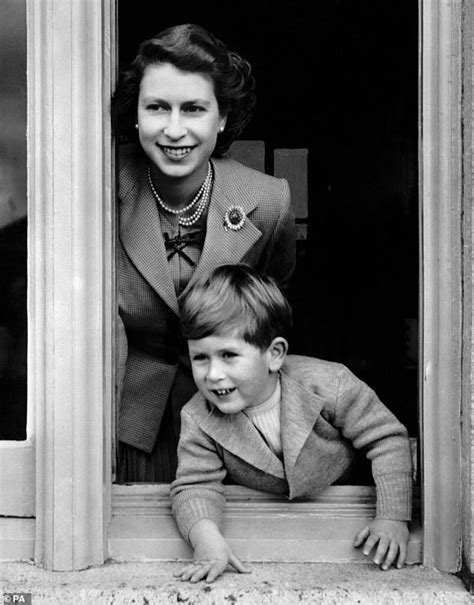
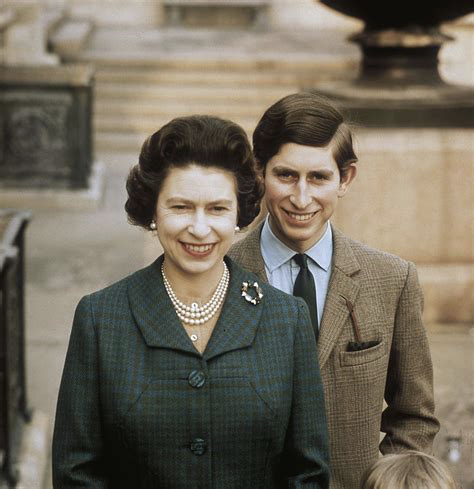
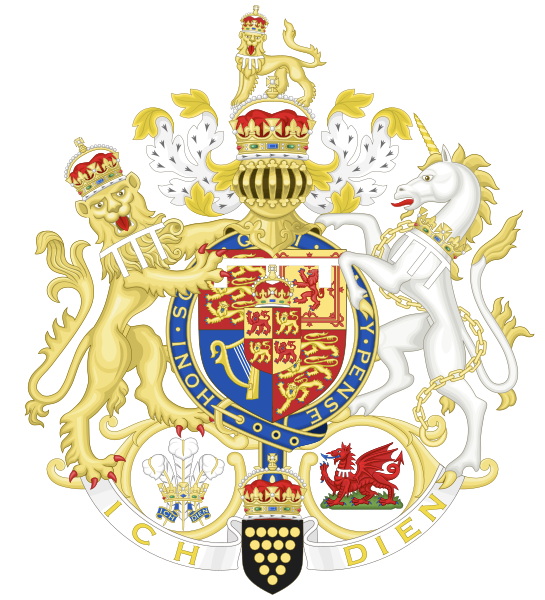
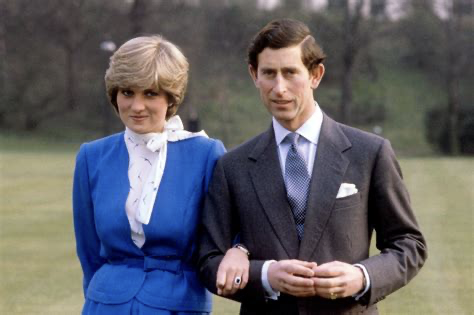
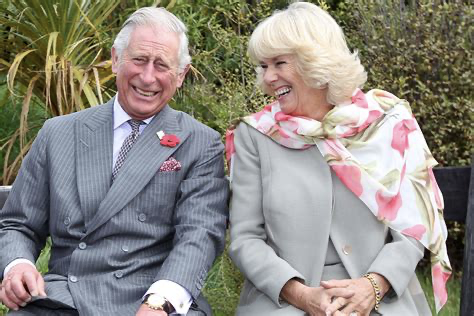

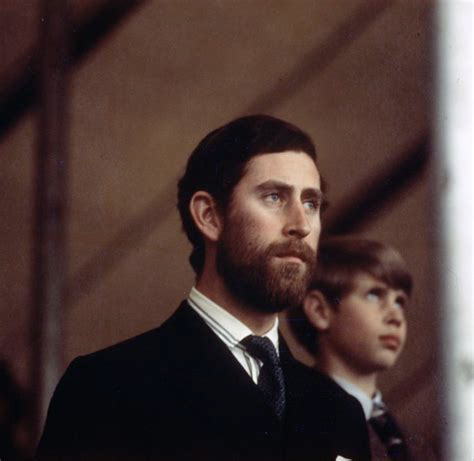
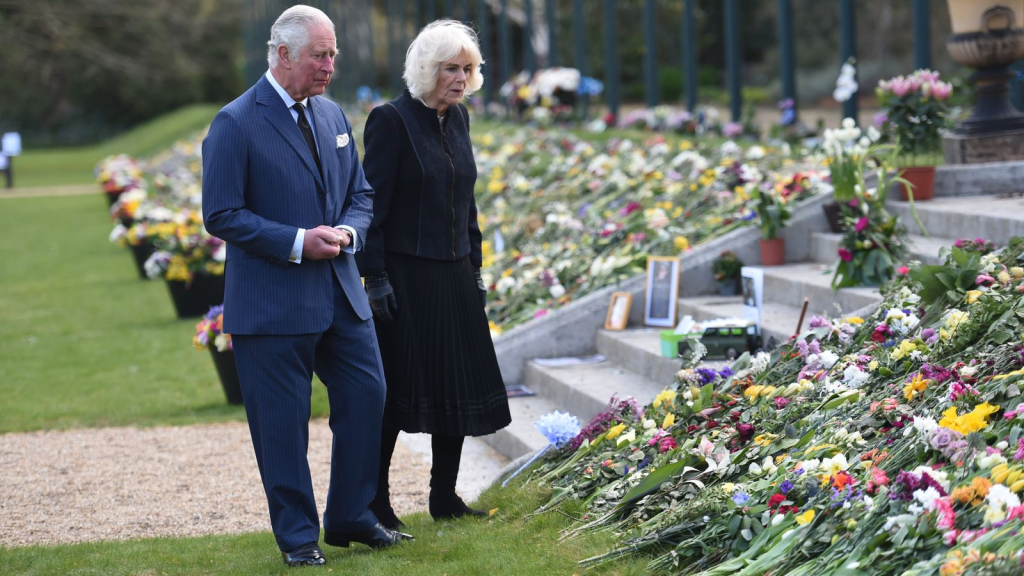





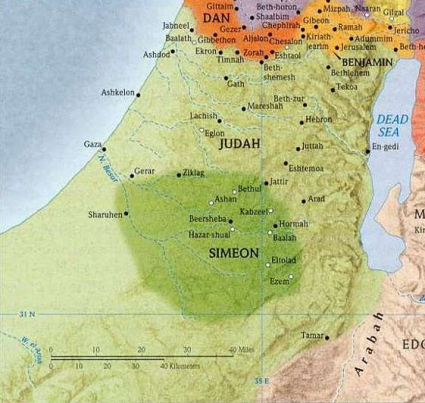


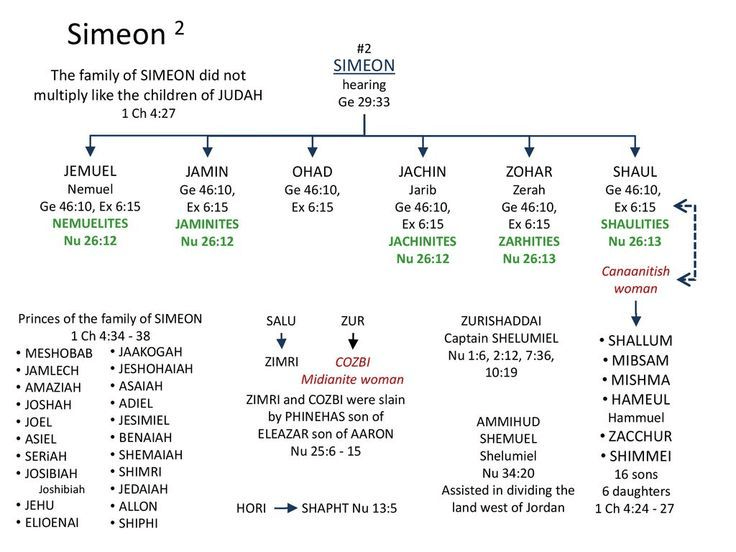




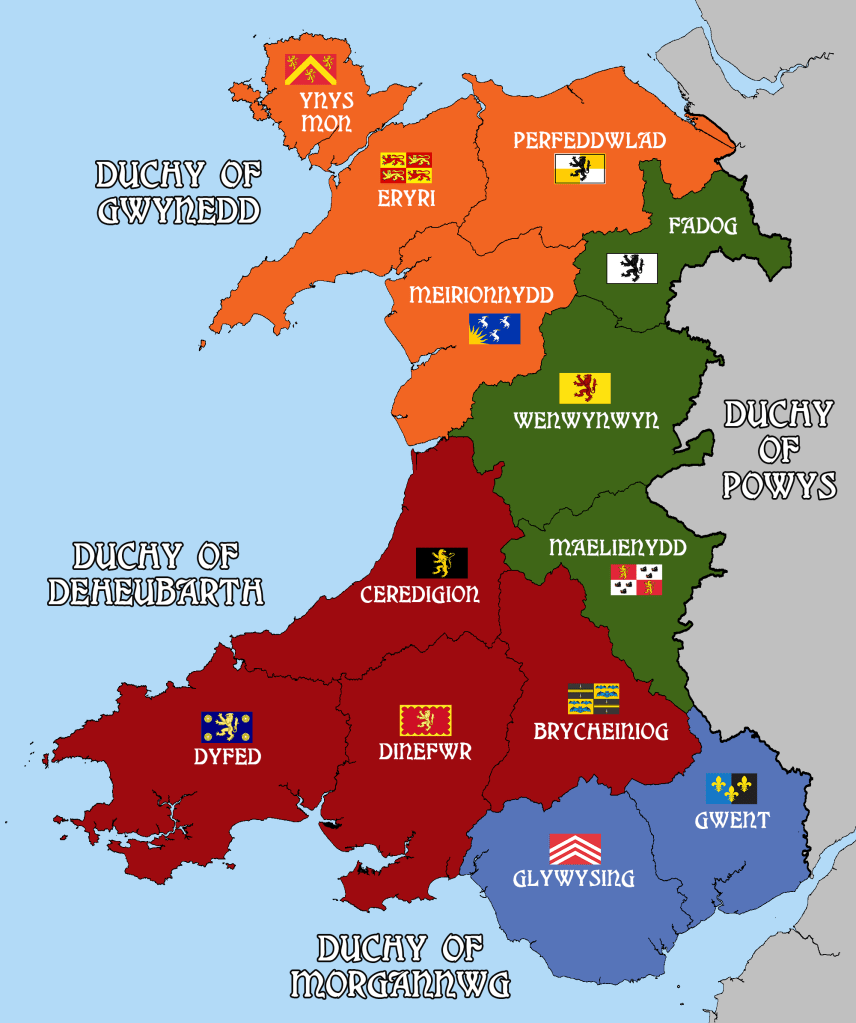




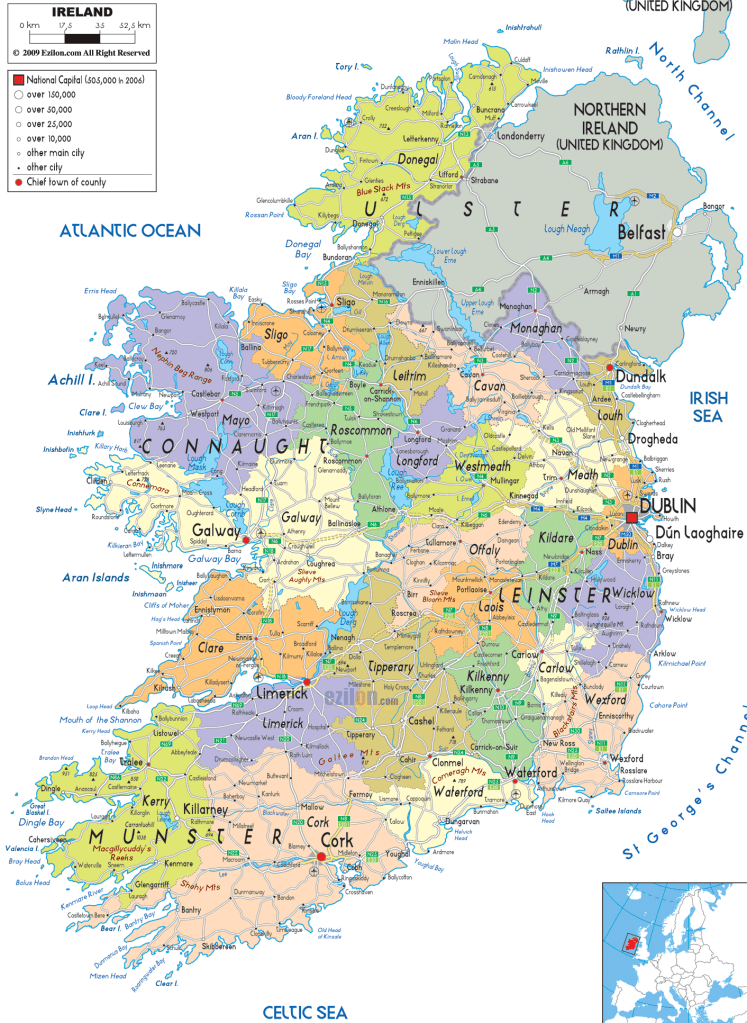




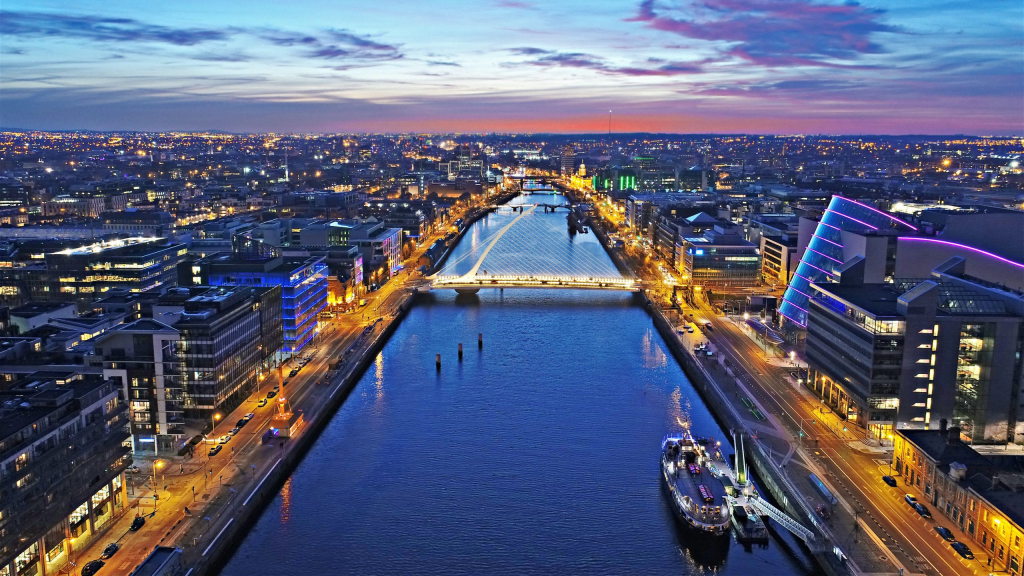


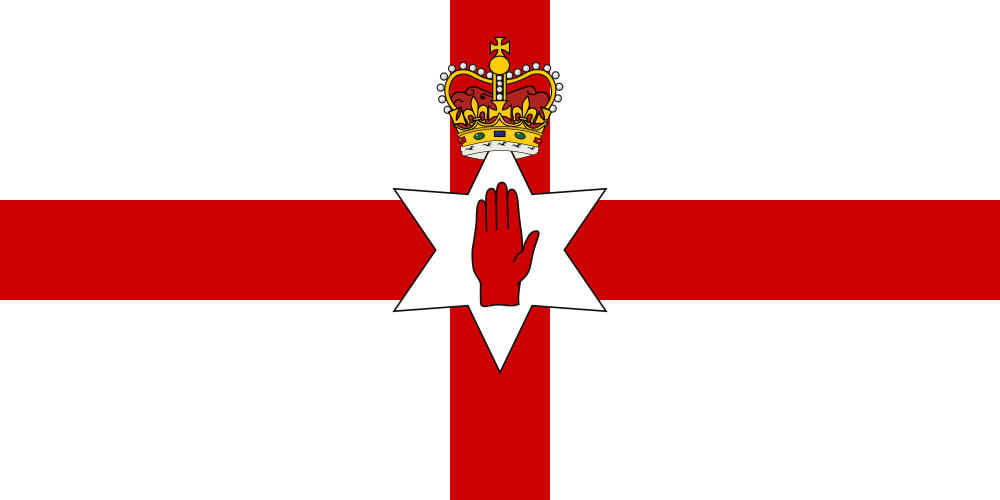
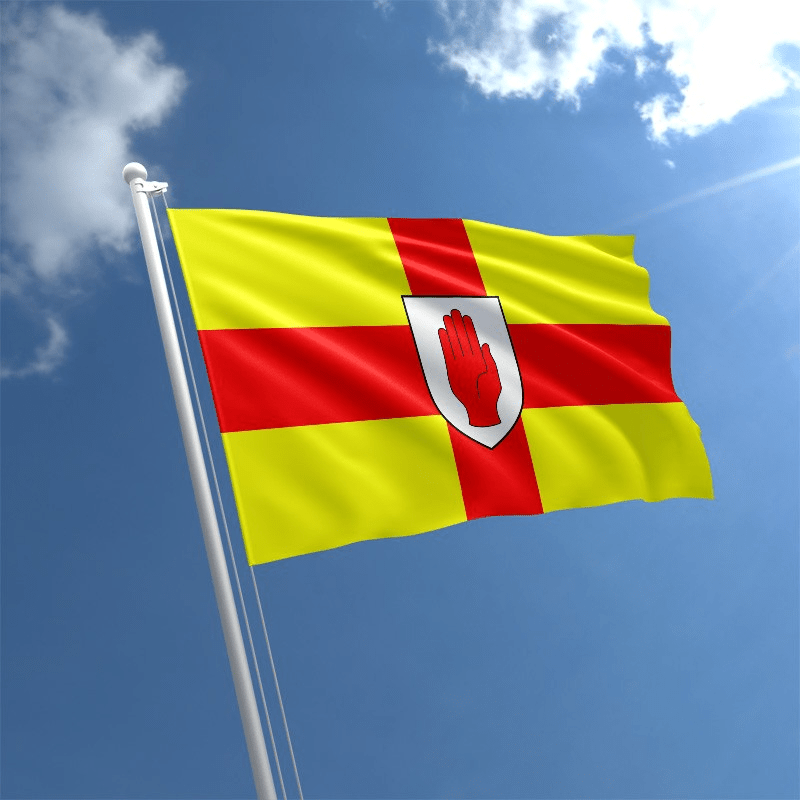


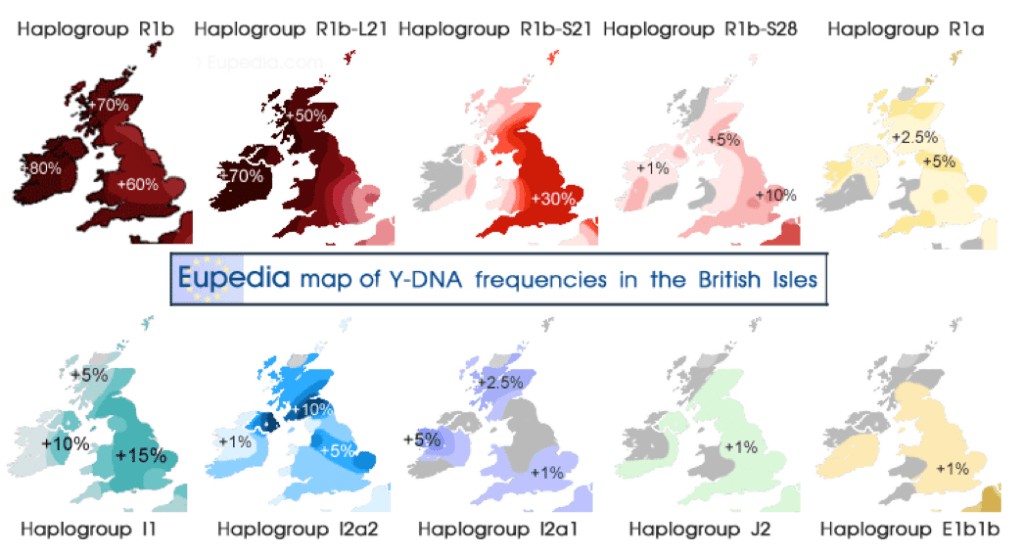
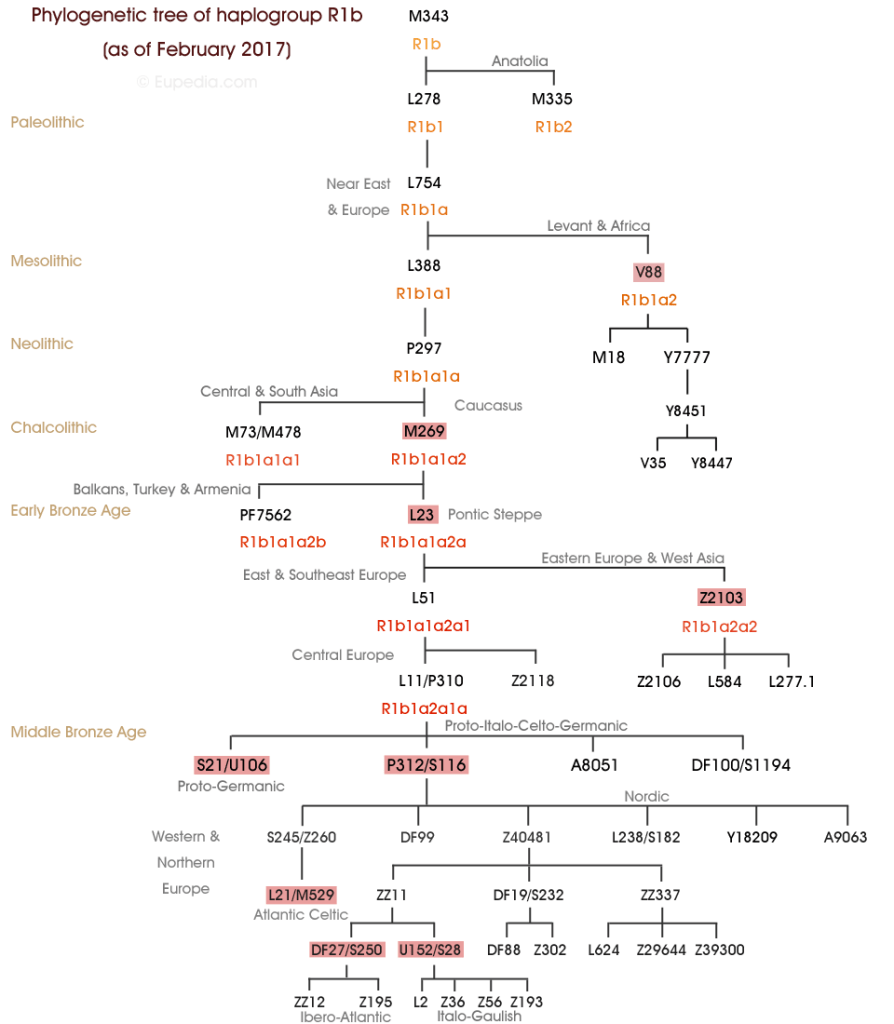
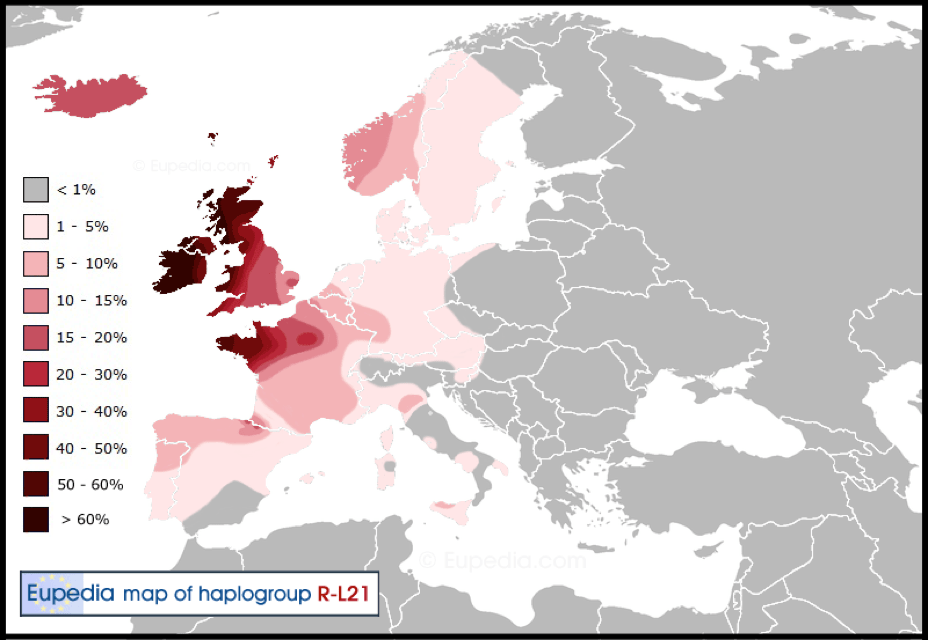


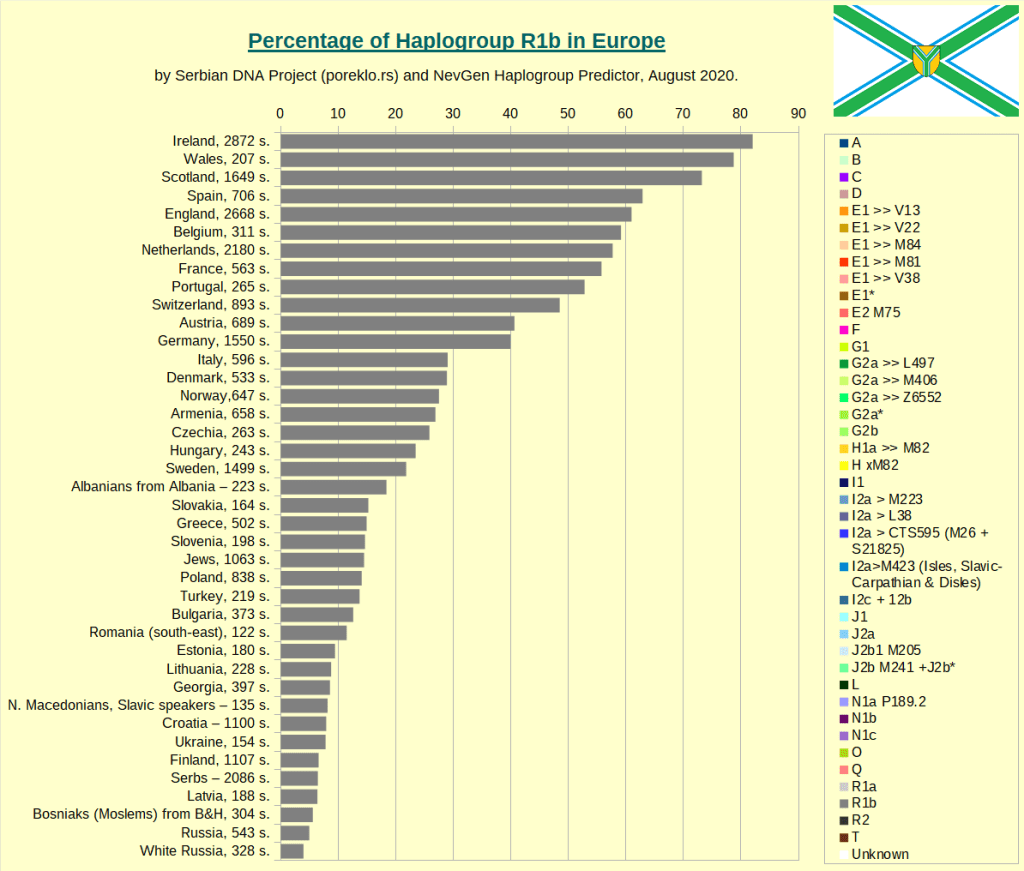
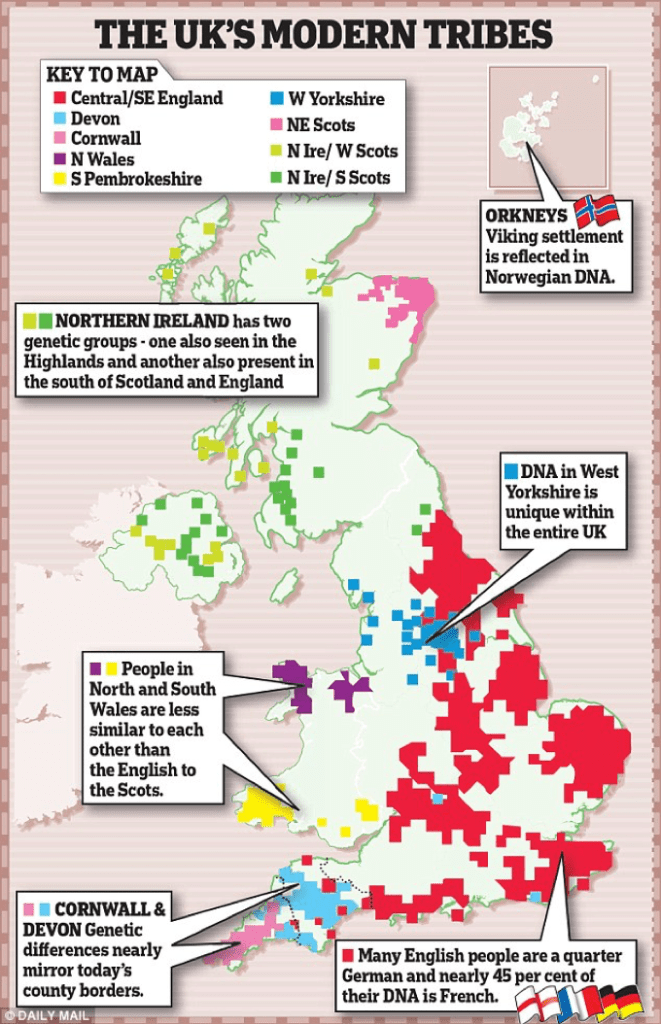
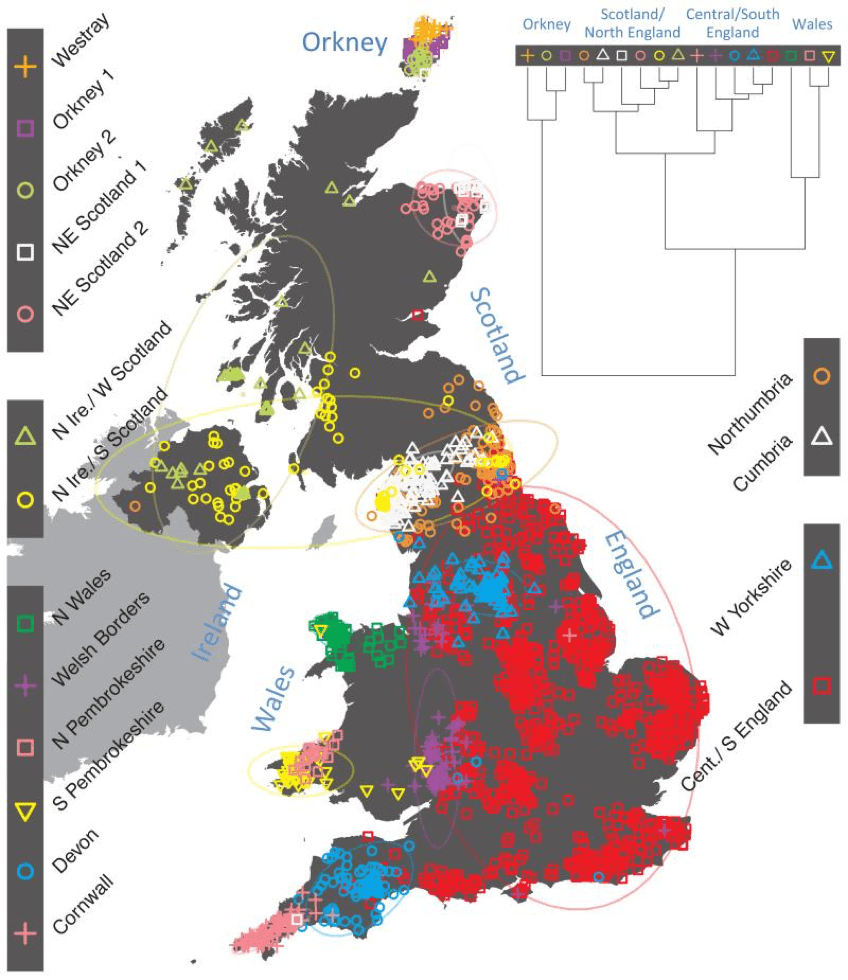




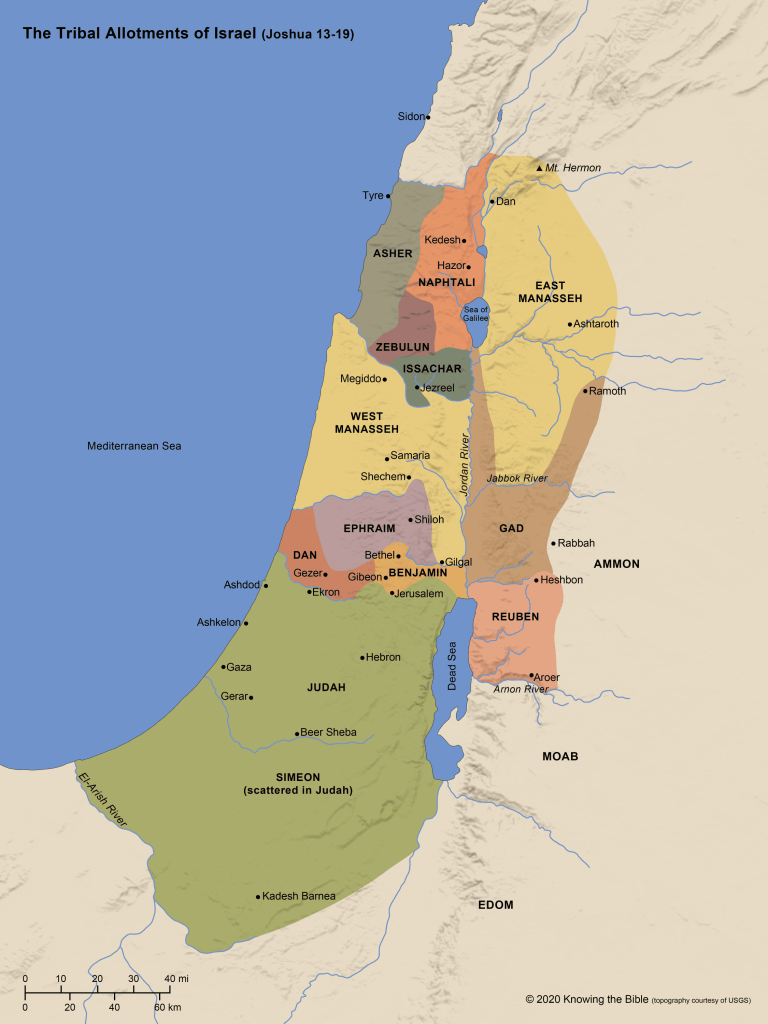

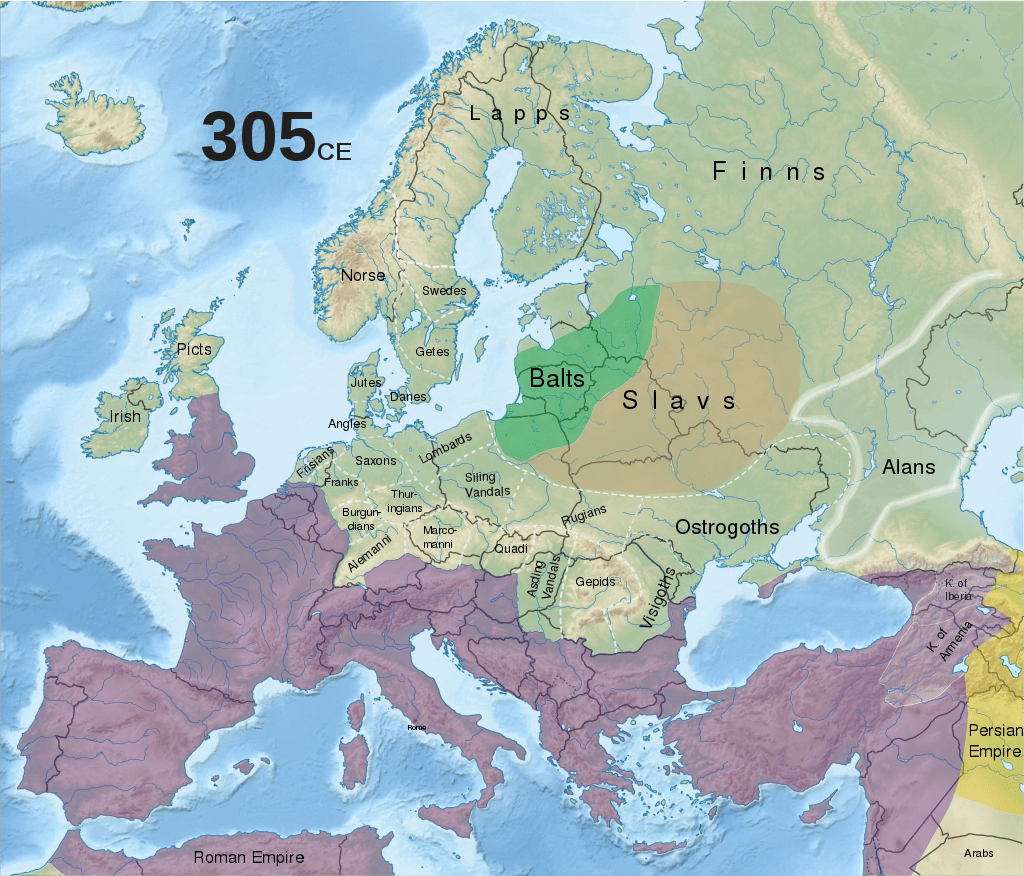

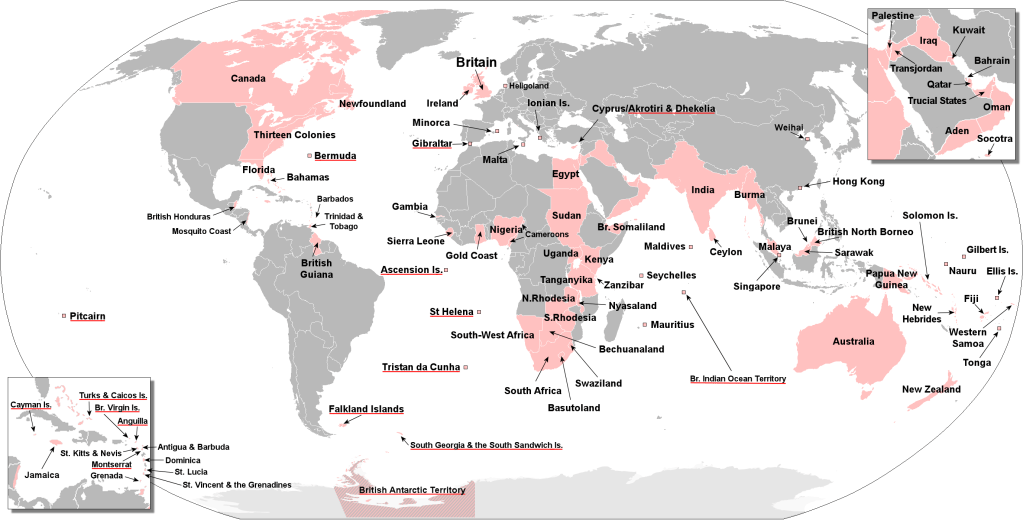


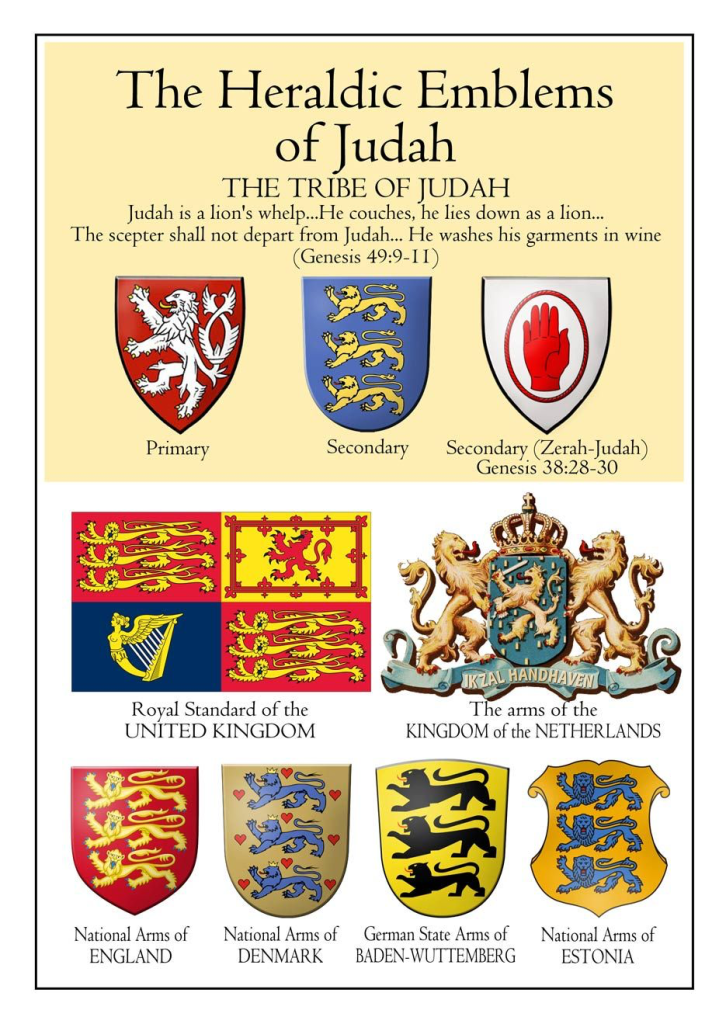






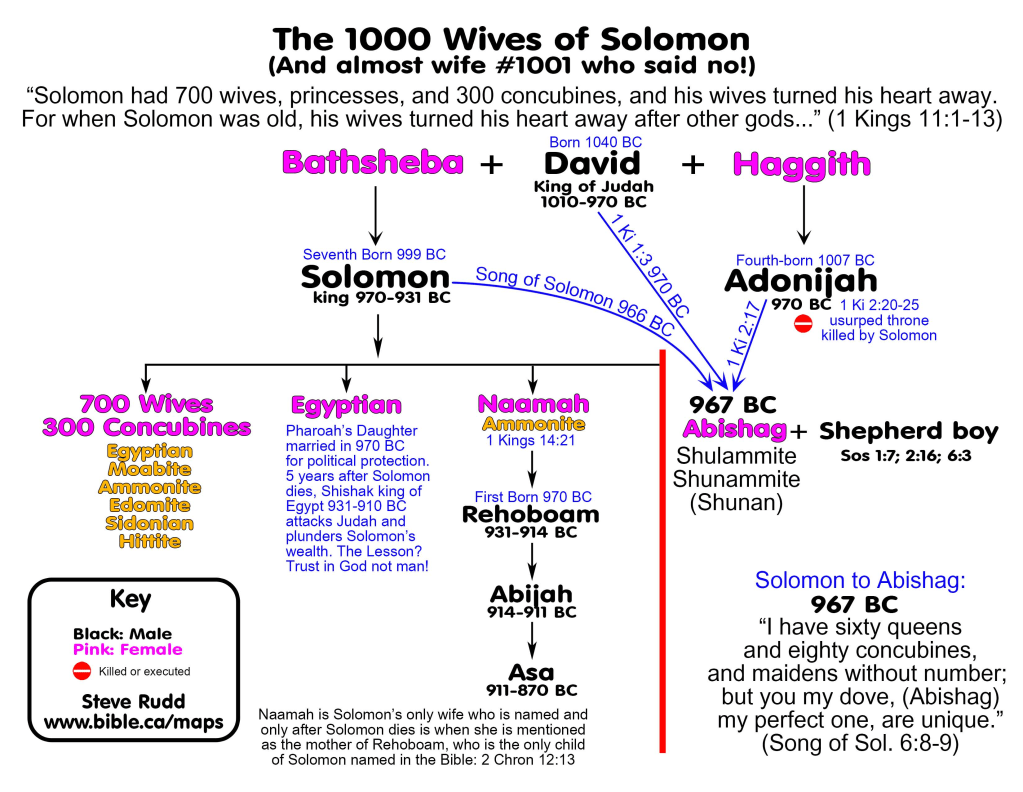


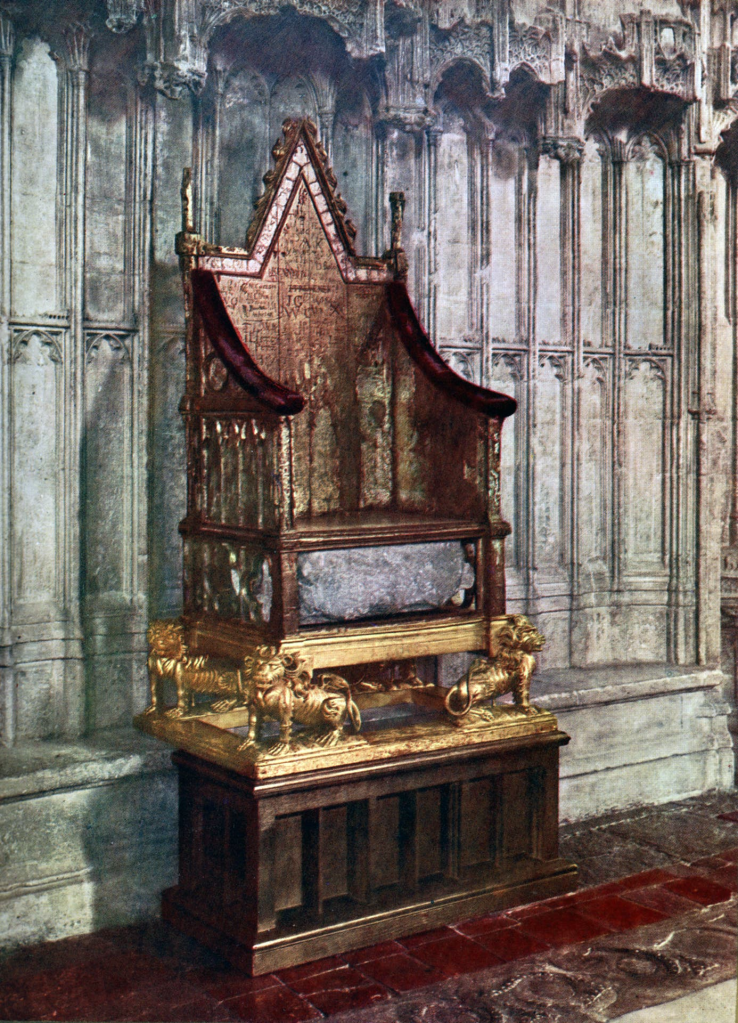

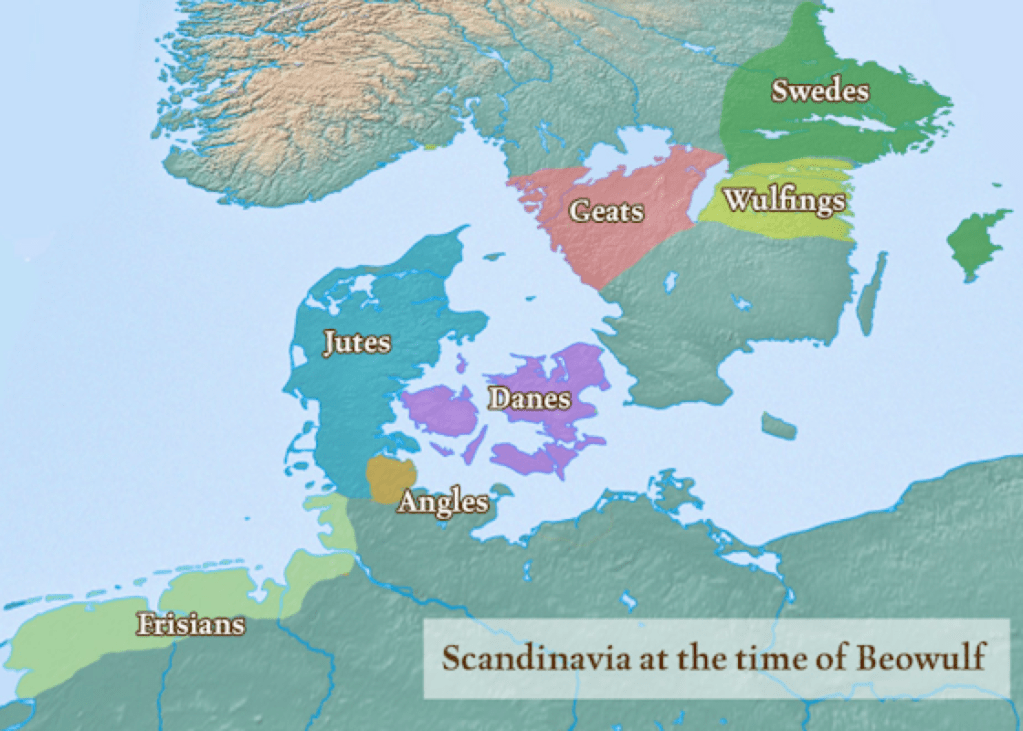


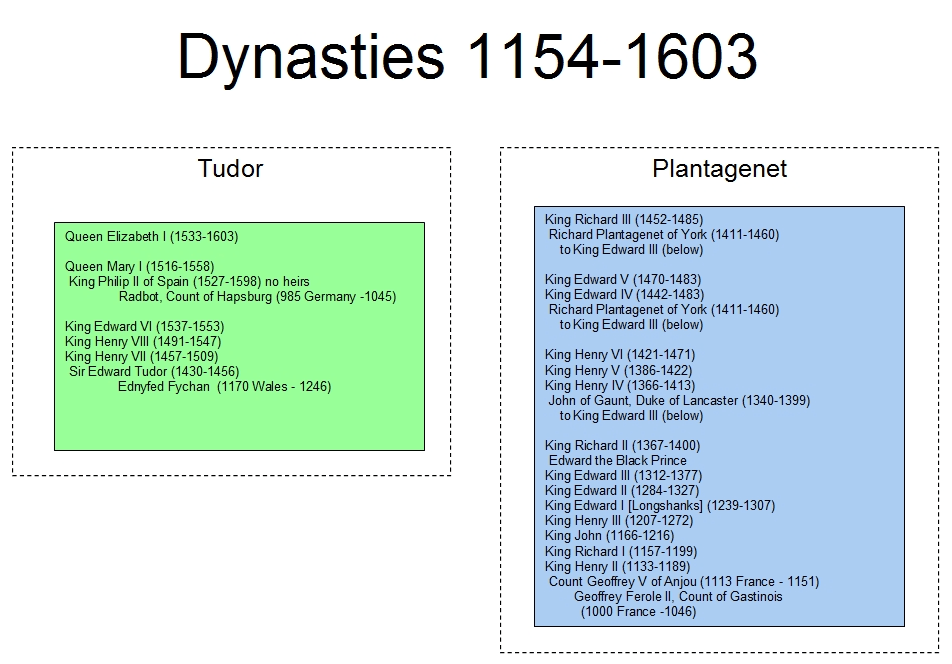

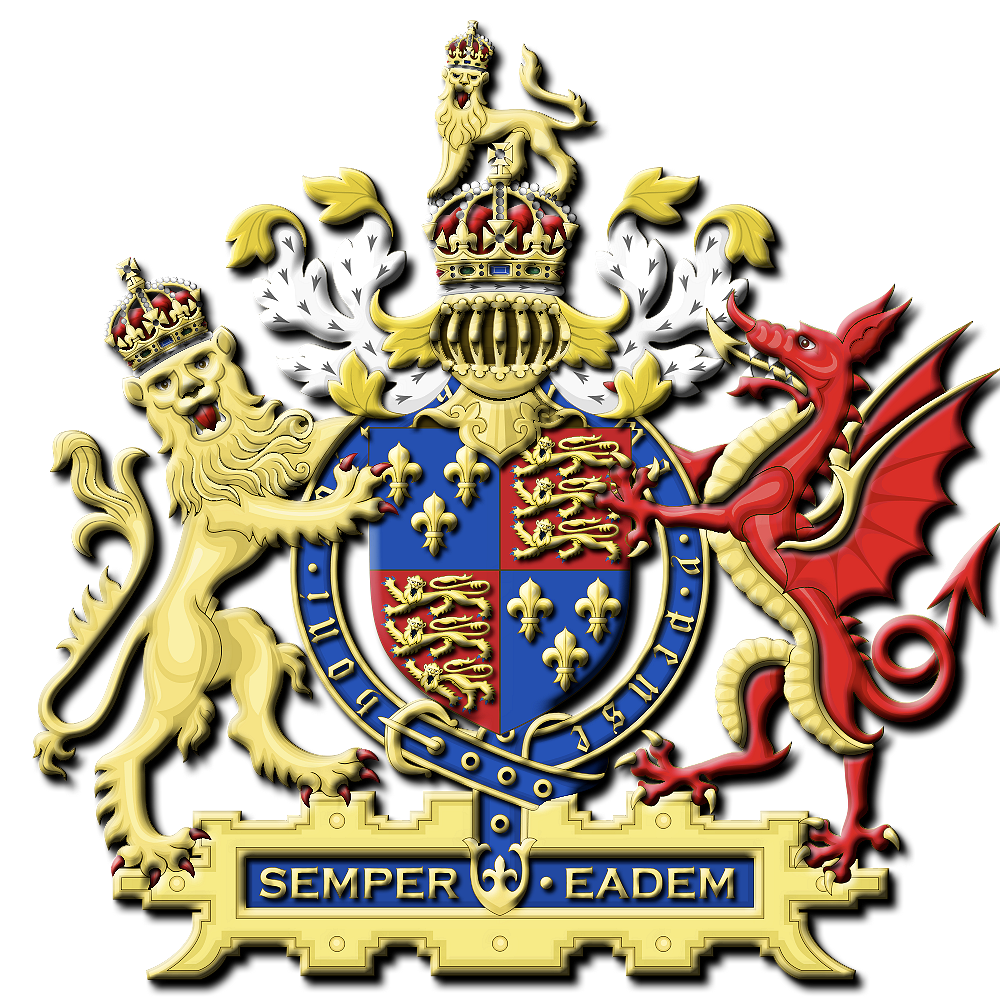

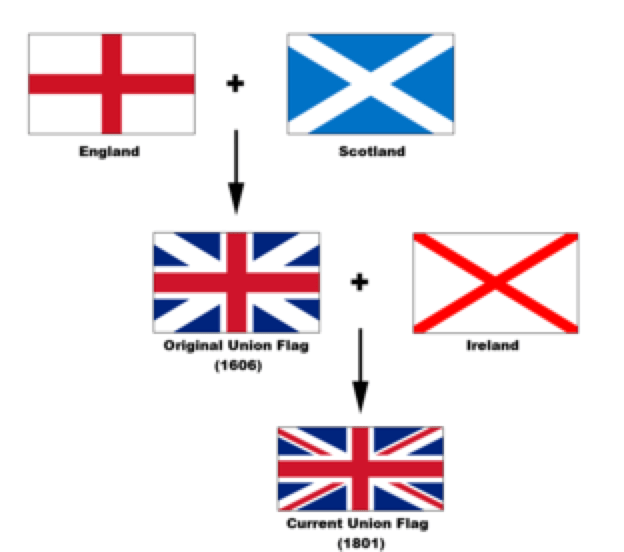



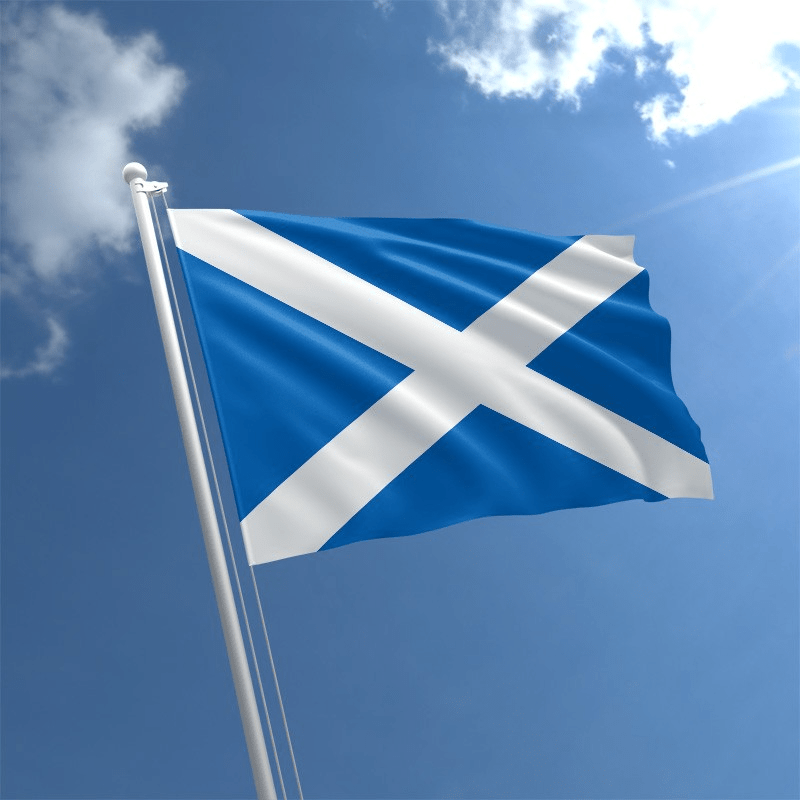


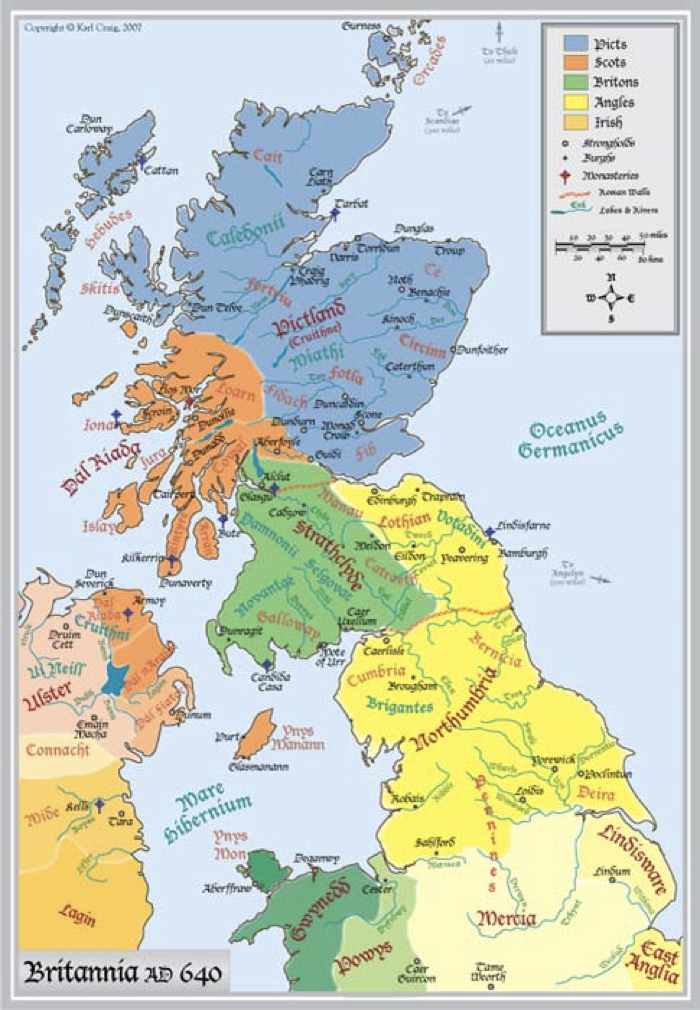

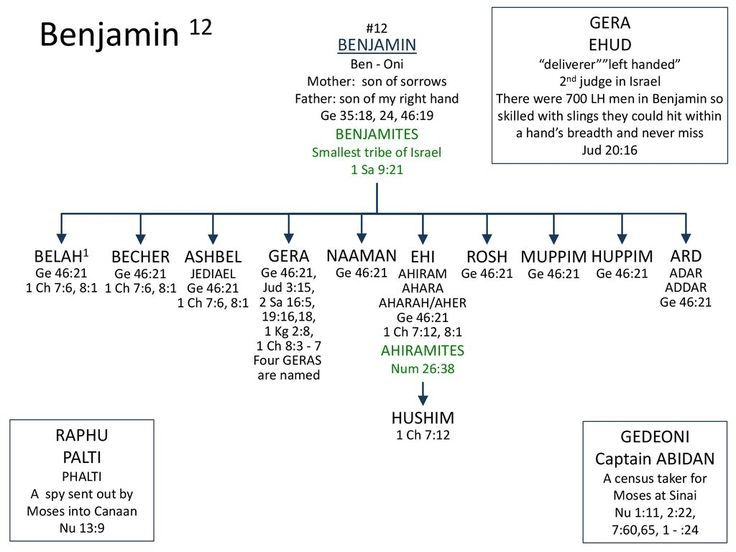

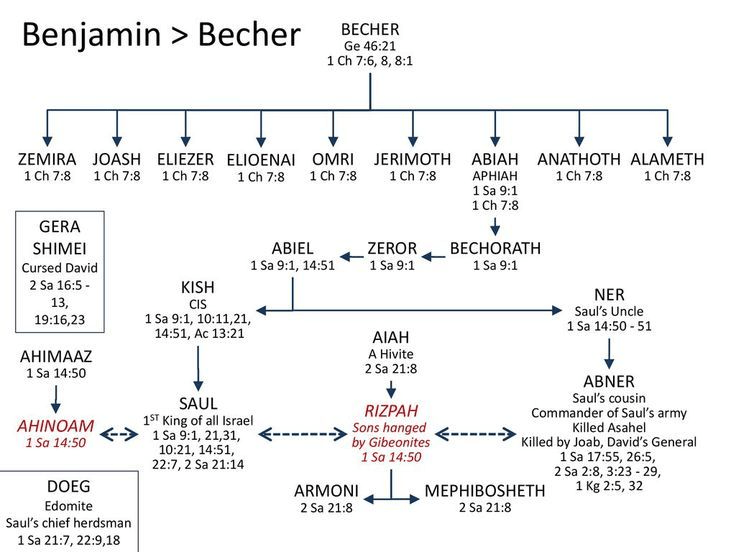


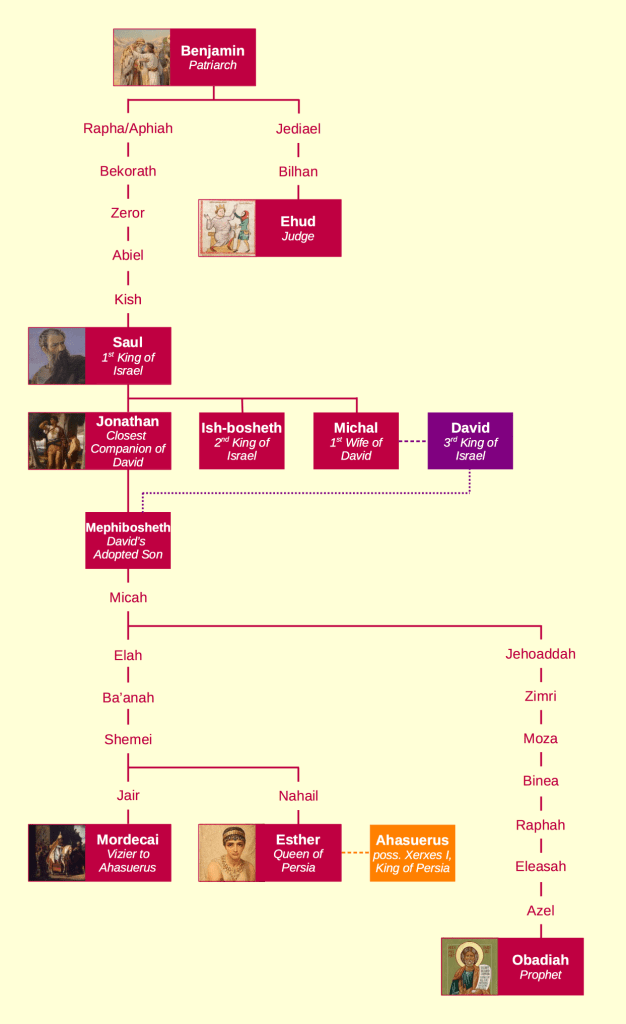
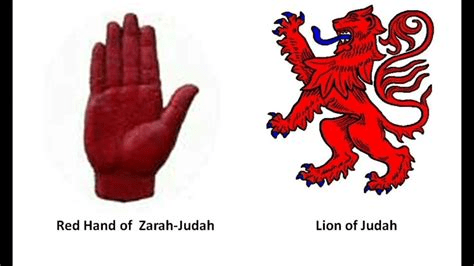










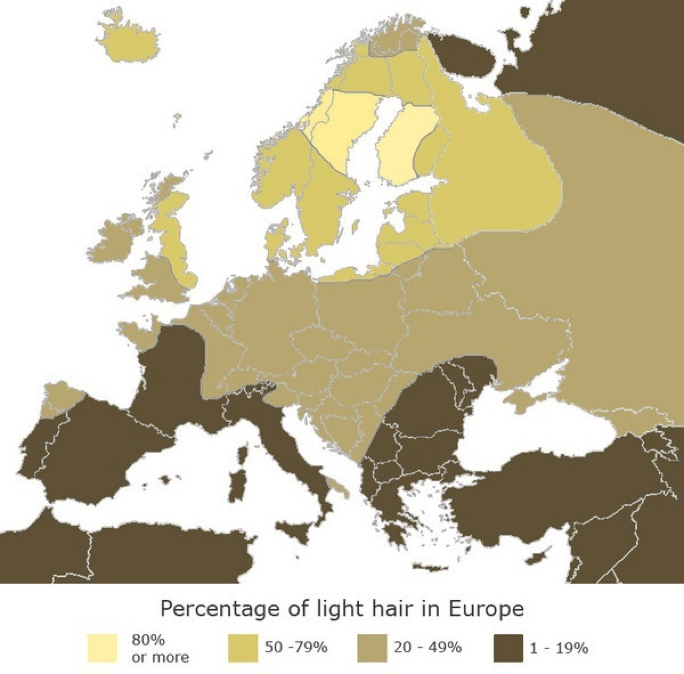


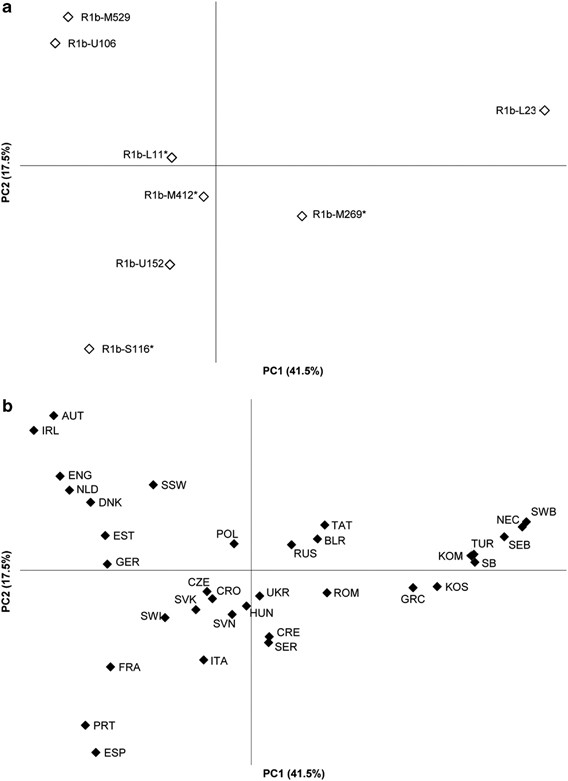

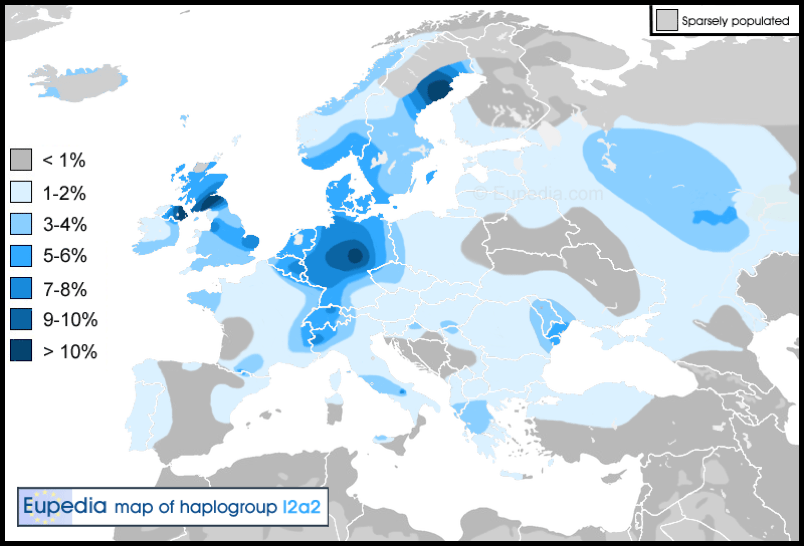


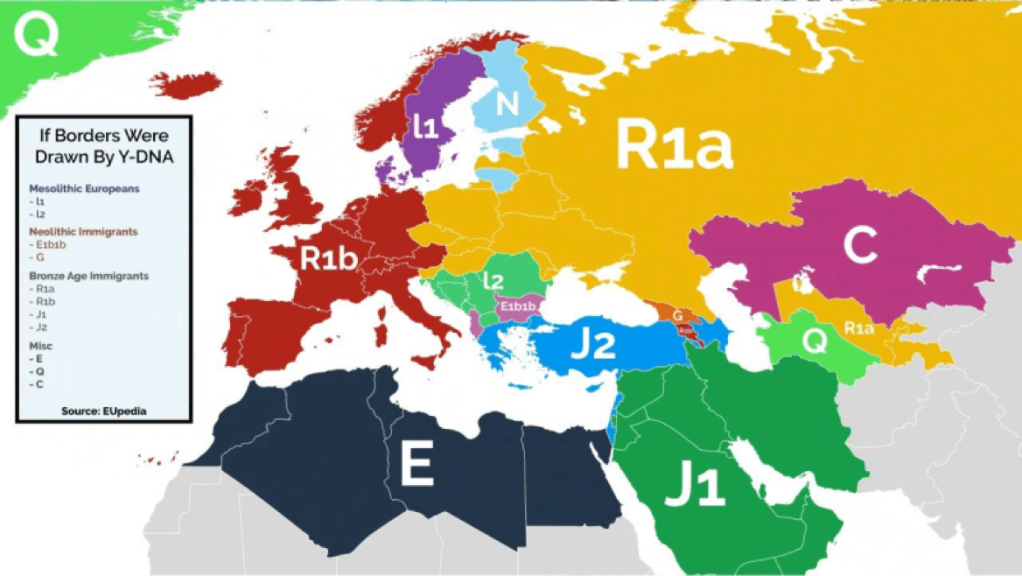


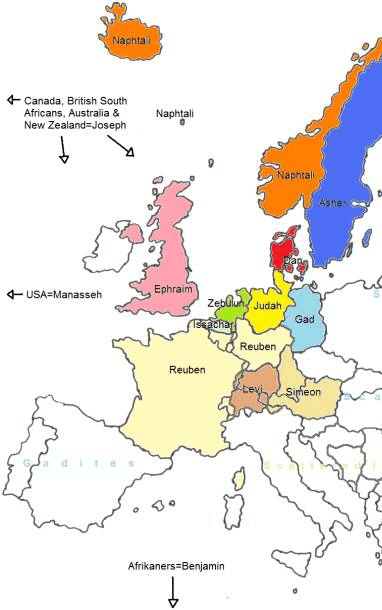
 The Lightkeeper